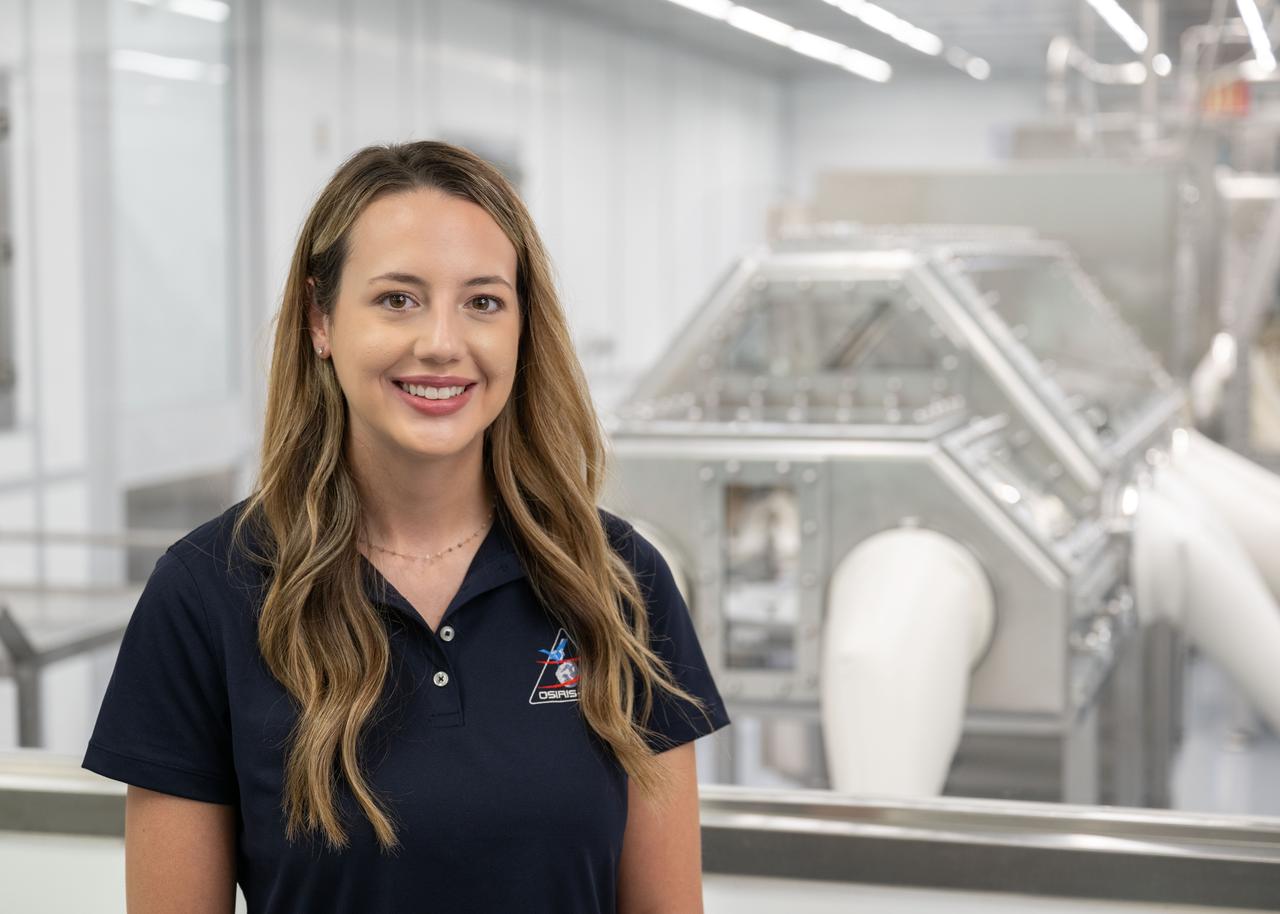
Portrait of Julia Plummer, OSIRIS-REx astromaterials processor from the Astromaterials Research and Exploration Science (ARES) division at NASA's Johnson Space Center in Houston. Plummer is seen in front of the OSIRIS-REx cleanroom at Johnson. Credit: NASA/James Blair

Portrait of Jannatul Ferdous, OSIRIS-REx astromaterials processor from the Astromaterials Research and Exploration Science (ARES) division at NASA's Johnson Space Center in Houston. Ferdous is seen in front of the OSIRIS-REx cleanroom at Johnson. Credit: NASA/James Blair
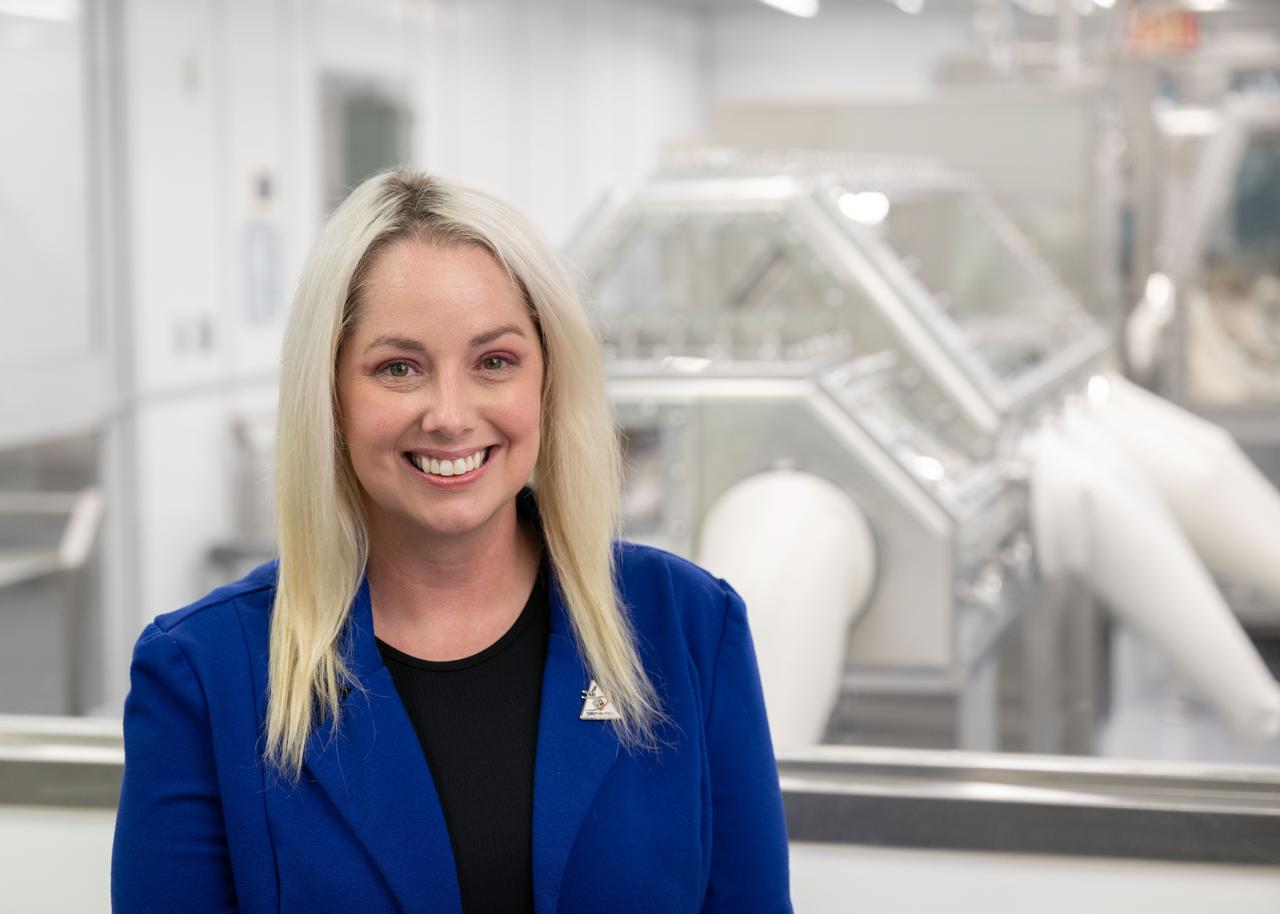
Portrait of Rachel Funk, OSIRIS-REx astromaterials processor from the Astromaterials Research and Exploration Science (ARES) division at NASA's Johnson Space Center in Houston. Funk is seen in front of the OSIRIS-REx cleanroom at Johnson. Credit: NASA/James Blair
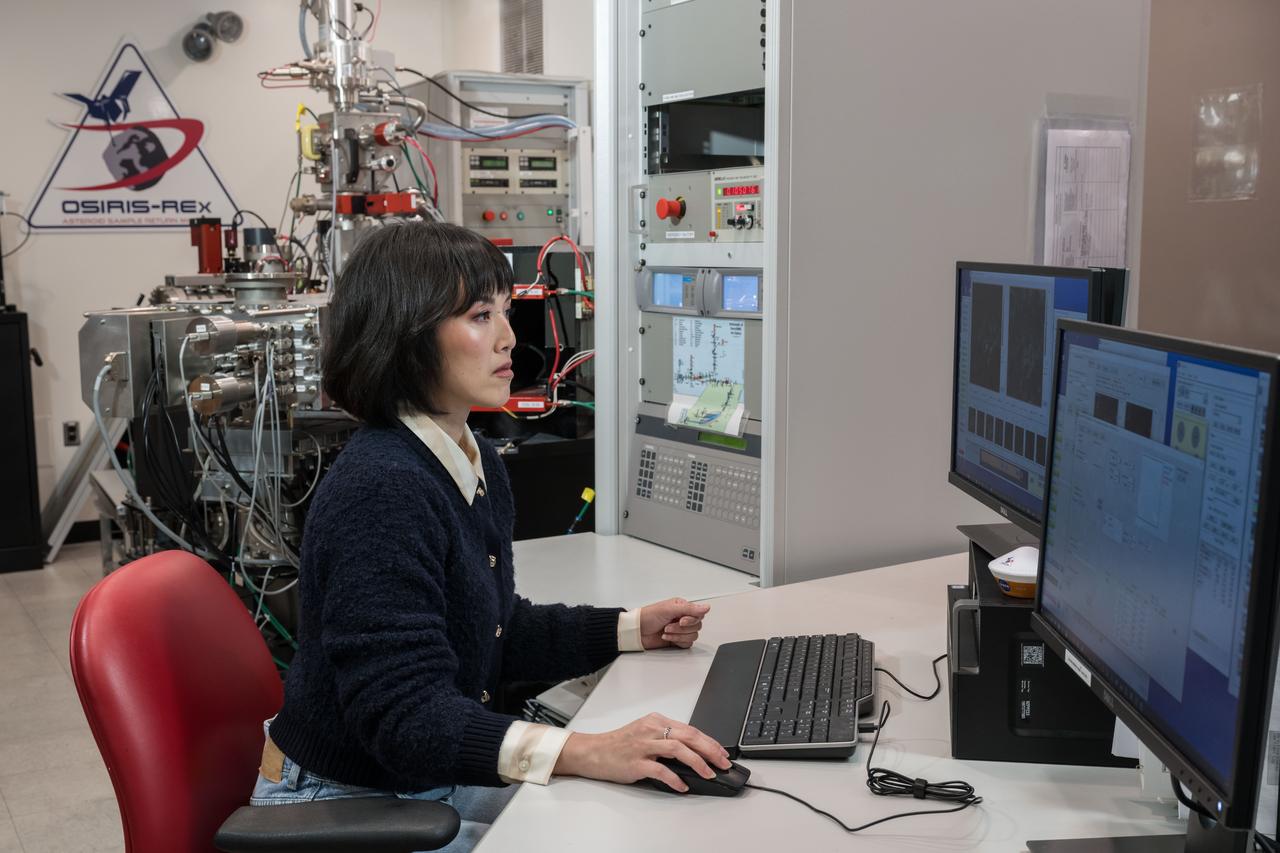
Ann Nguyen, co-lead author of a new paper that gives insights into the diverse origin of asteroid Bennu’s “parent” asteroid works alongside the NanoSIMS 50L (nanoscale secondary ion mass spectrometry) ion microprobe in the Astromaterials Research and Exploration Science Division at NASA’s Johnson Space Center in Houston.
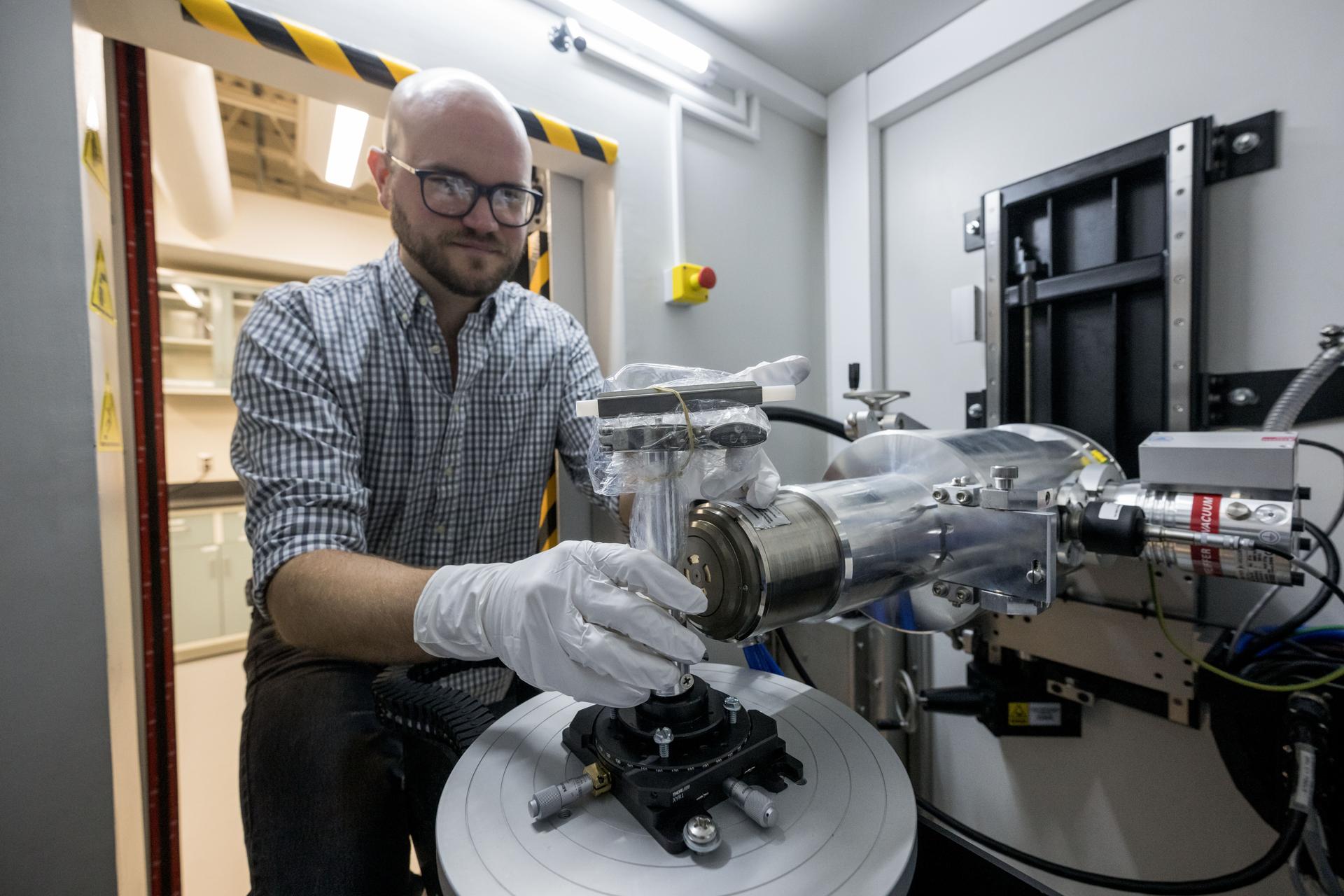
jsc2024e076997 --- Scott Eckley, X-ray scientist within NASA Johnson Space Center’s Astromaterials Research and Exploration Science (ARES), demonstrates the process for placing a container holding a piece of asteroid material in an X-Ray Computed Tomography (XCT) machine. XCT scans let researchers image particles through airtight containers and visualize a rock’s shape and internal structure without damaging the sample. Credit: NASA/Robert Markowitz
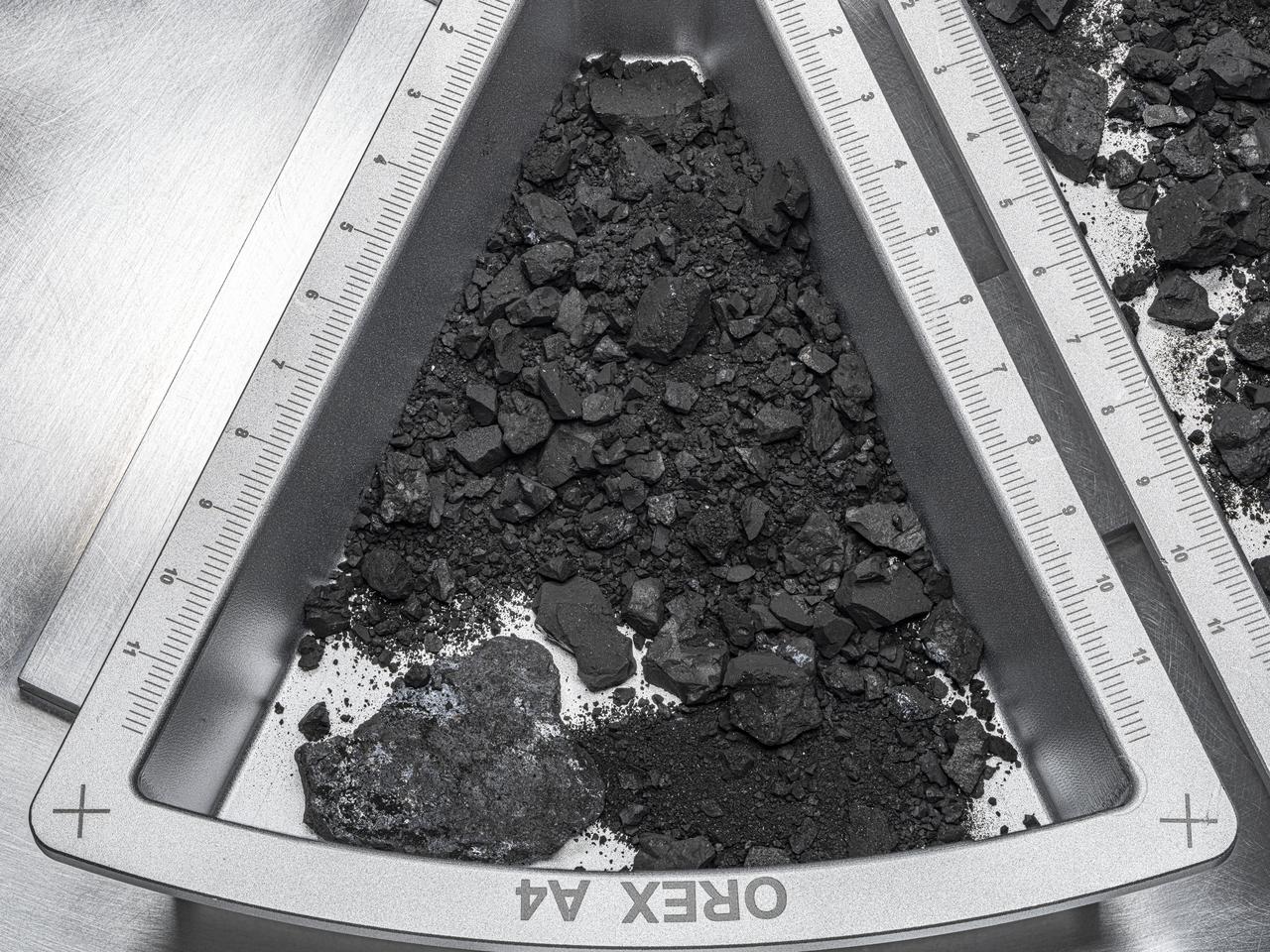
A top-down view of one of the containers holding rocks and dust from asteroid Bennu, with hardware scale marked in centimeters. Erika Blumenfeld, creative lead for the Advanced Imaging and Visualization of Astromaterials (AIVA) and Joe Aebersold, AIVA project management lead, captured this picture using manual high-resolution precision photography and a semi-automated focus stacking procedure. The result is a sample image that can be zoomed in on to show extreme detail. Credit: NASA/Erika Blumenfeld and Joseph Aebersold

A top-down view of the OSIRIS-REx Touch-and-Go-Sample-Acquisition-Mechanism (TAGSAM) head with the lid removed, revealing the remainder of the asteroid sample inside. Erika Blumenfeld, creative lead for the Advanced Imaging and Visualization of Astromaterials (AIVA) and Joe Aebersold, project management lead, captured this picture using manual high-resolution precision photography and a semi-automated focus stacking procedure. The result is an image that can be zoomed in on to show extreme detail of the sample. The remaining sample material includes dust and rocks up to about .4 in (one cm) in size. Credit: NASA/Erika Blumenfeld & Joseph Aebersold
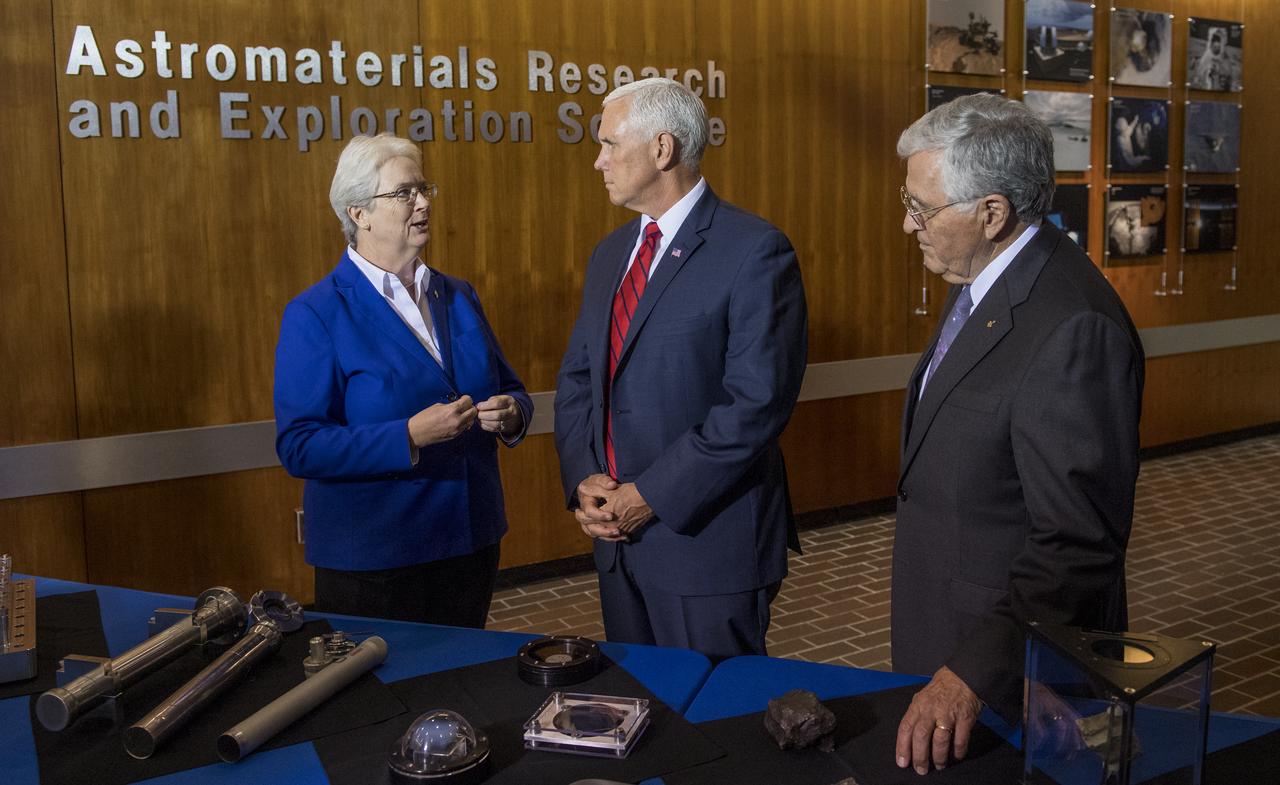
Acting director of the Exploration Integration and Science Directorate and Chief Scientist at NASA's Johnson Space Center Dr. Eileen Stansbery, right, is seen with Vice President Mike Pence and Apollo 17 astronaut and geologist Dr. Harrison Schmitt in the Astromaterials Curation Laboratory at NASA's Johnson Space Center, Thursday, Aug. 23, 2018 in Houston, Texas. Photo Credit: (NASA/Joel Kowsky)
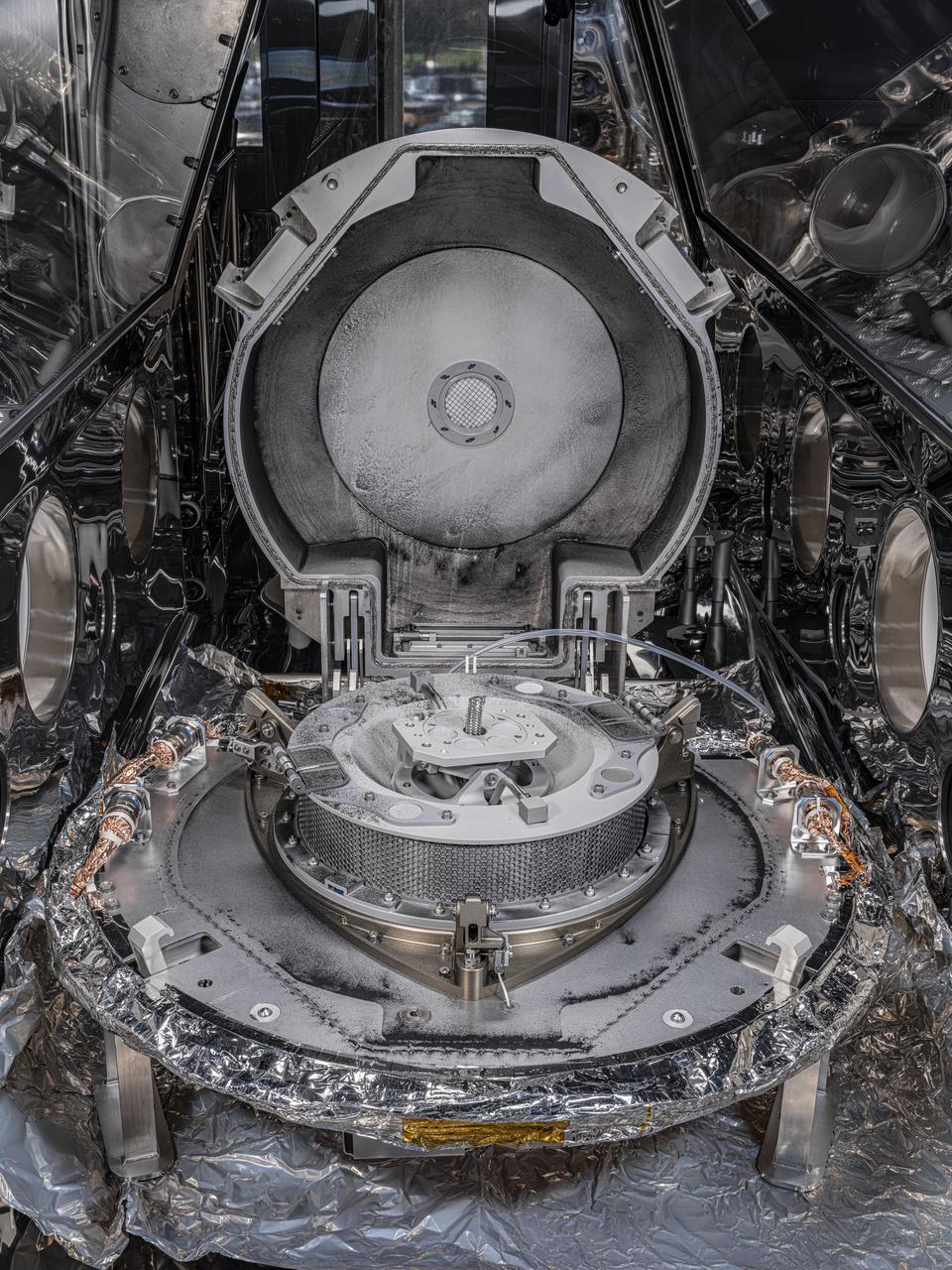
A view of the OSIRIS-REx sample canister with the lid removed, revealing the Touch and Go Sample Acquisition Mechanism (TAGSAM) inside. When astromaterials processors removed the canister lid, they discovered a coating of fine asteroid dust and sand-sized particles covering the inside of the lid and on the top of the avionics deck. The round portion in the center of the lower part of the canister is the TAGSAM that was used to collect pristine material from asteroid Bennu in 2020. The spacecraft delivered the sample return capsule to Earth on Sept. 24, 2023. OSIRIS-REx is the first U.S. mission to collect a sample from an asteroid. Scientists hope the Bennu sample will reveal whether asteroids that collided with Earth billions of years ago thereby delivered water and other ingredients for life to our planet. Credits: Photo credit: NASA/Erika Blumenfeld & Joseph Aebersold Image Capture: Created using manual high-resolution precision photography and semi-automated focus stacking procedure.
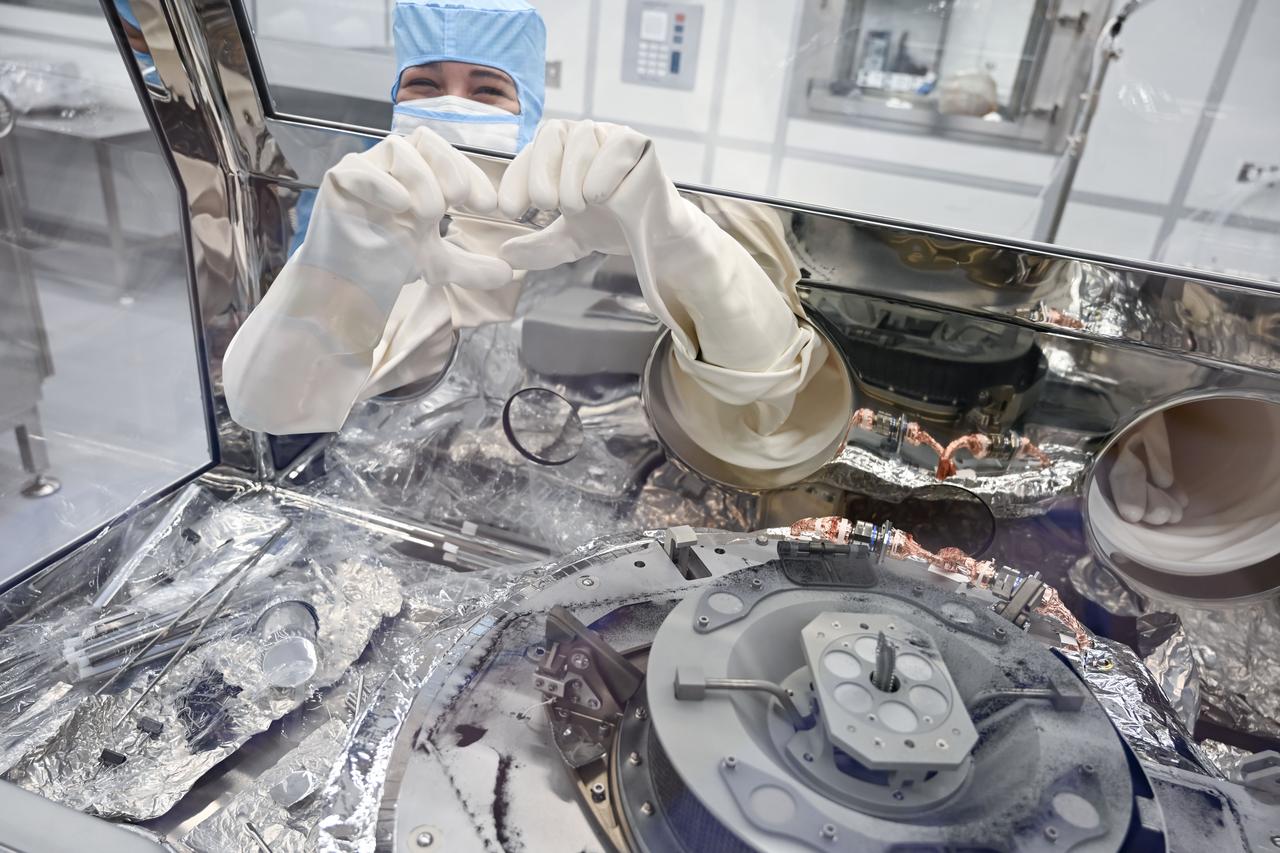
Astromaterials processor Mari Montoya shows a hand heart while working in the OSIRIS-REx canister glovebox at NASA’s Johnson Space Center in Houston. Montoya was sweeping asteroid material on the avionics deck of the OSIRIS-REx canister and was so deep in concentration that she didn’t realize the dust had formed the shape of a heart until her teammate on the other side of the glovebox pointed it out.
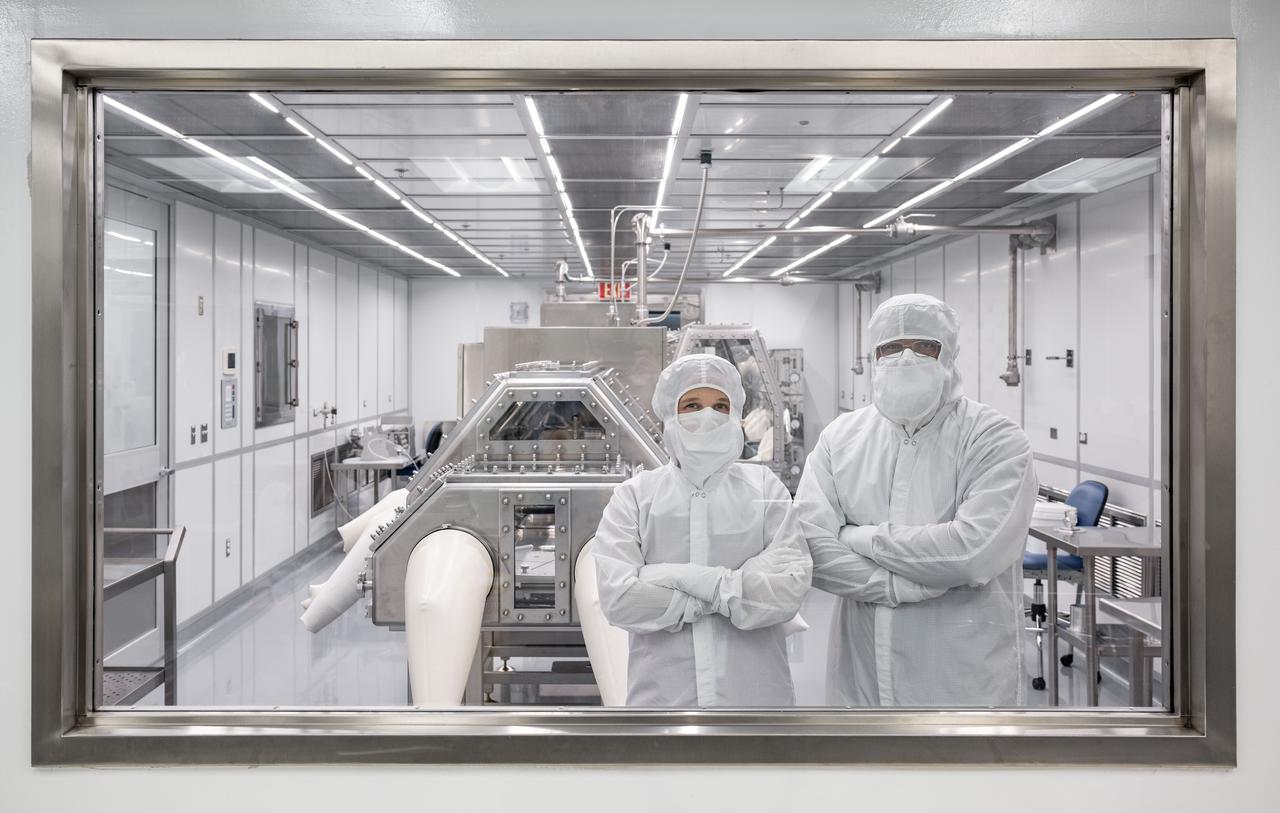
OSIRIS-REx curator Nicole Lunning, left, and deputy curator Christopher Snead stand inside the OSIRIS-REx cleanroom at NASA's Johnson Space Center in Houston. Immediately behind them is the Touch-and-Go Sample Acquisition Mechanism (TAGSAM) head glovebox in which the Astromaterials Research and Exploration (ARES) curation engineers and astromaterials processors carefully disassembled the TAGSAM head to collect the asteroid material from within. Credit: NASA/James Blair
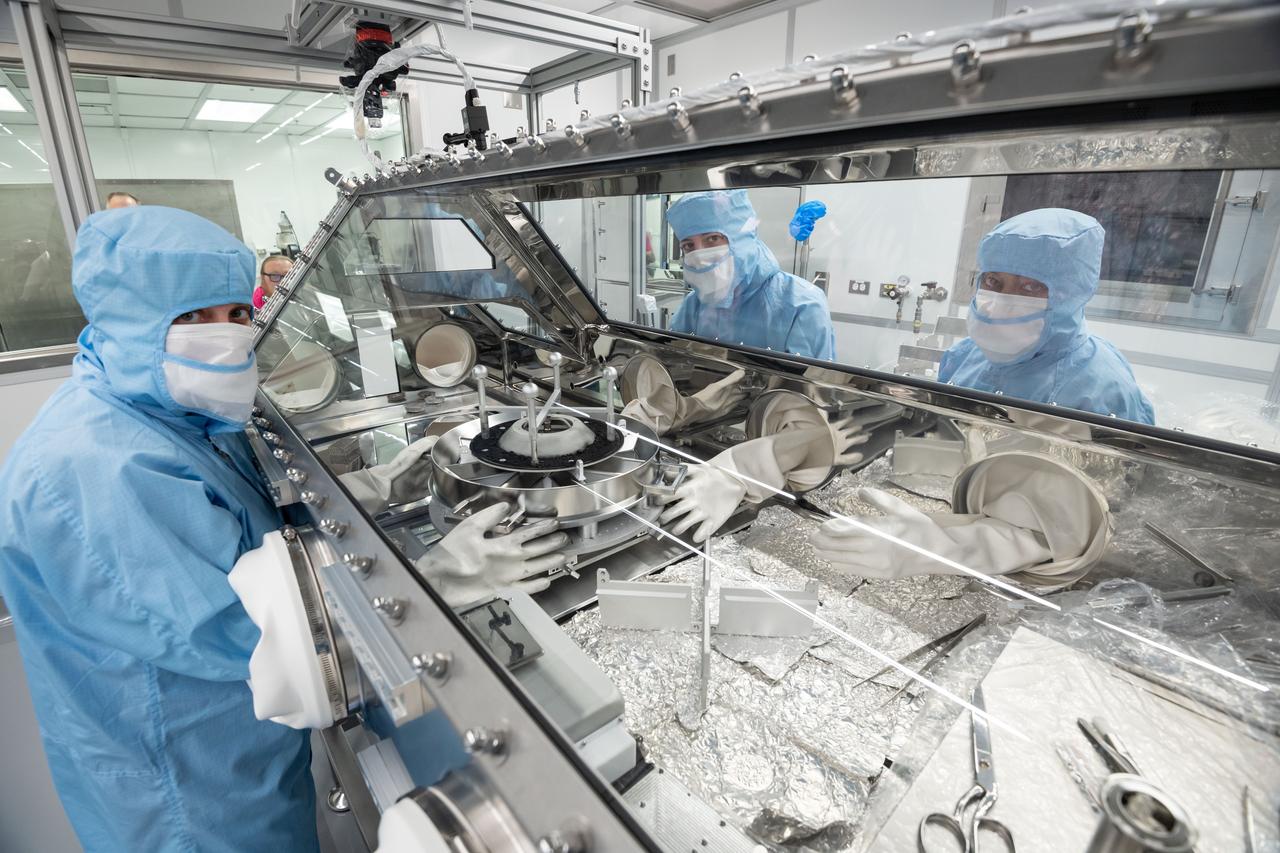
jsc2024e008542 - Curation team members from the Astromaterials Research and Exploration Science (ARES) division at NASA’s Johnson Space Center in Houston perform a pour maneuver to distribute the remaining asteroid sample material from the OSIRIS-REx Touch-and-Go Sample Acquisition Mechanism (TAGSAM) head into sample containers. From left, astromaterials processors Rachel Funk, top right, Julia Plummer, bottom right, Jannatul Ferdous.
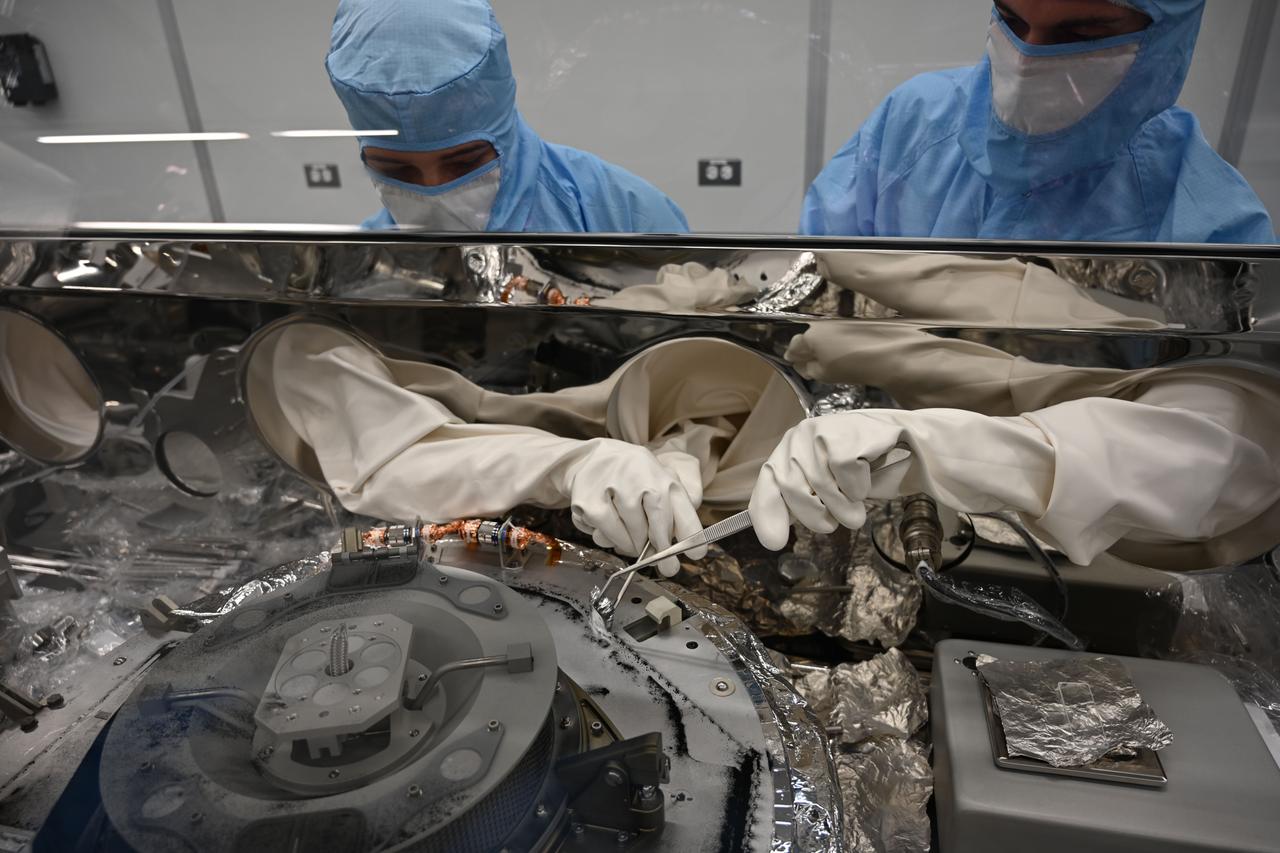
Astromaterials processors Mari Montoya, left, and Curtis Calva, right, use tools to collect asteroid particles from the base of the OSIRIS-REx science canister. Credit: NASA
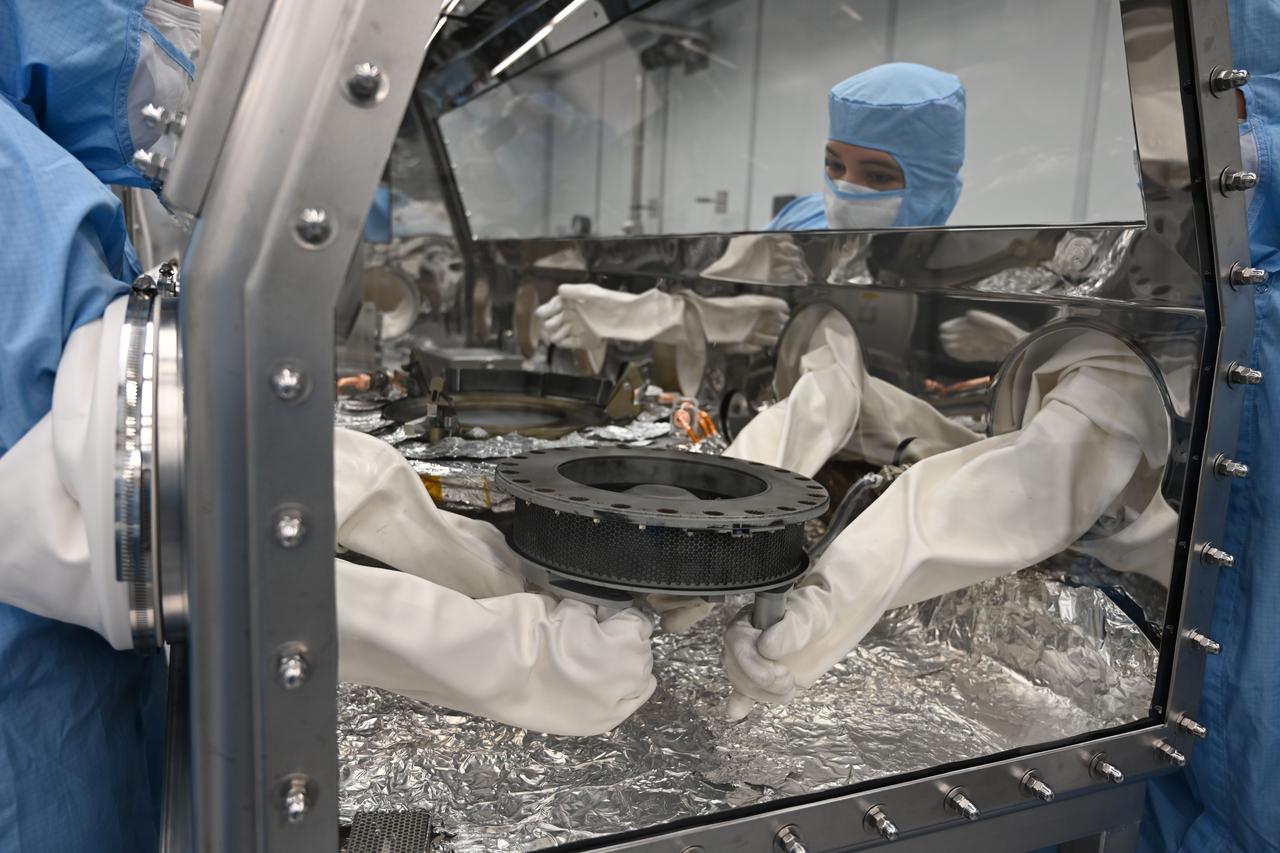
Astromaterials processor Mari Montoya and OSIRIS-REx curation team members set the TAGSAM (Touch and Go Sample Acquisition Mechanism) down in the canister glovebox after removing it from the canister base and flipping it over. Credit: NASA/ Kimberly Allums
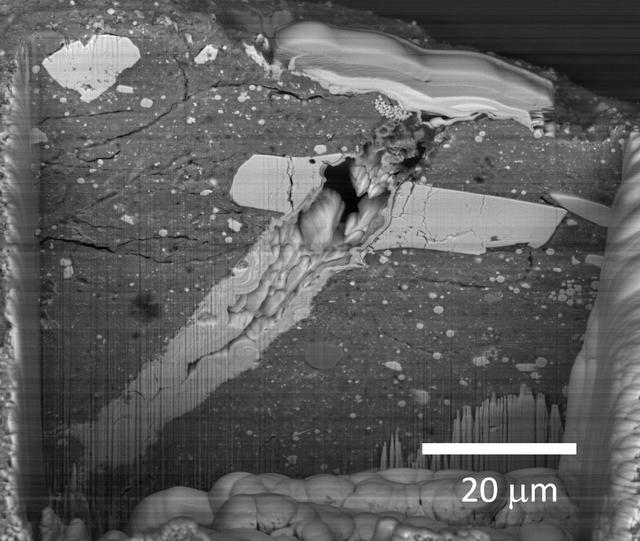
A scanning electron microscope image of a micrometeorite impact crater in a particle of asteroid Bennu material. Scientists found microscopic craters and tiny splashes of once-molten rock – known as impact melts – on the surfaces of samples, signs that the asteroid was bombarded by micrometeorites.
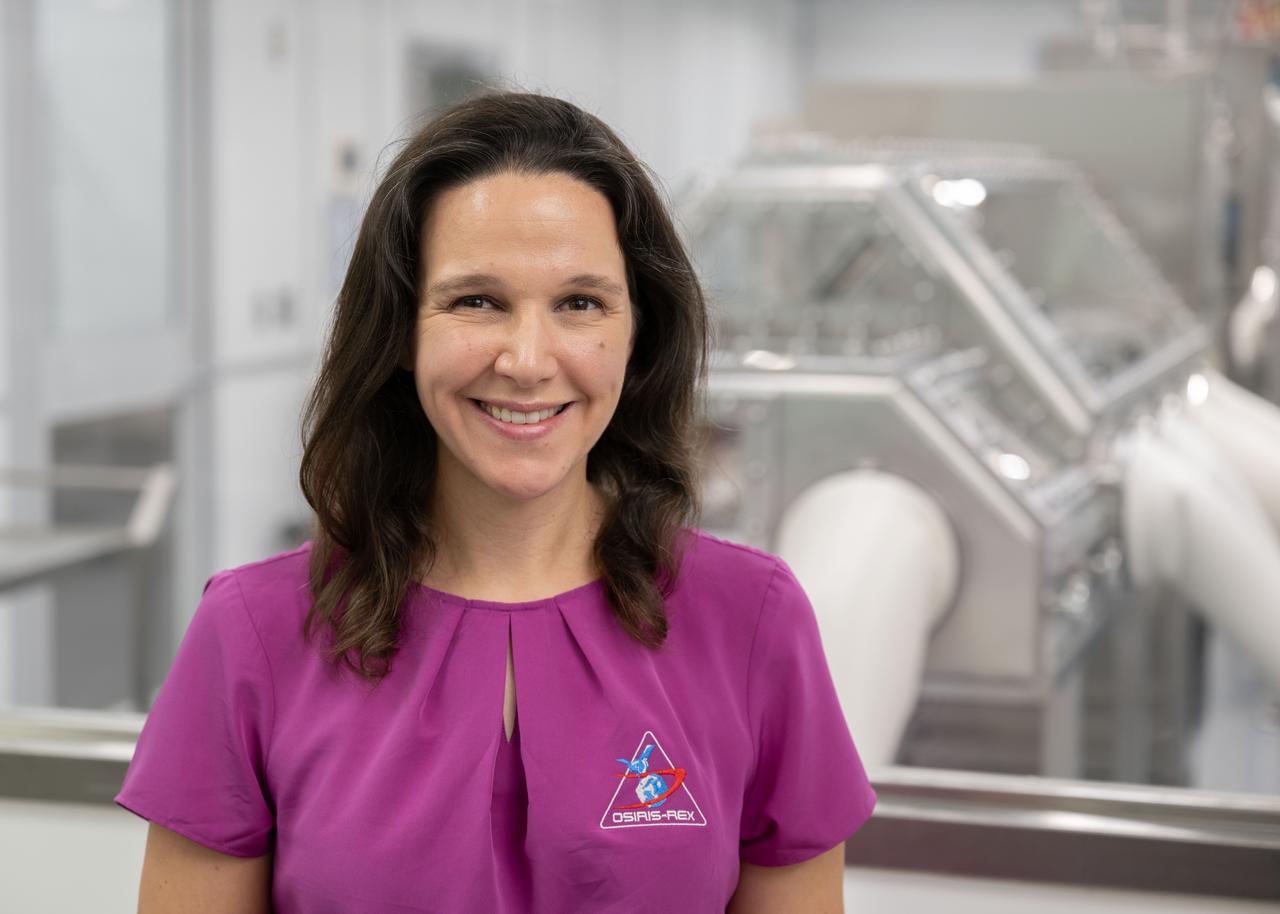
Portrait of Nicole Lunning, OSIRIS-REx sample curator within the Astromaterials Research and Exploration Science (ARES) division of NASA Johnson Space Center. Lunning is seen in front of the OSIRIS-REx cleanroom at Johnson. NASA’s OSIRIS-REx, the first U.S. mission to collect a sample from an asteroid, delivered rocks and dust from asteroid Bennu to Earth on Sept. 24, 2023.
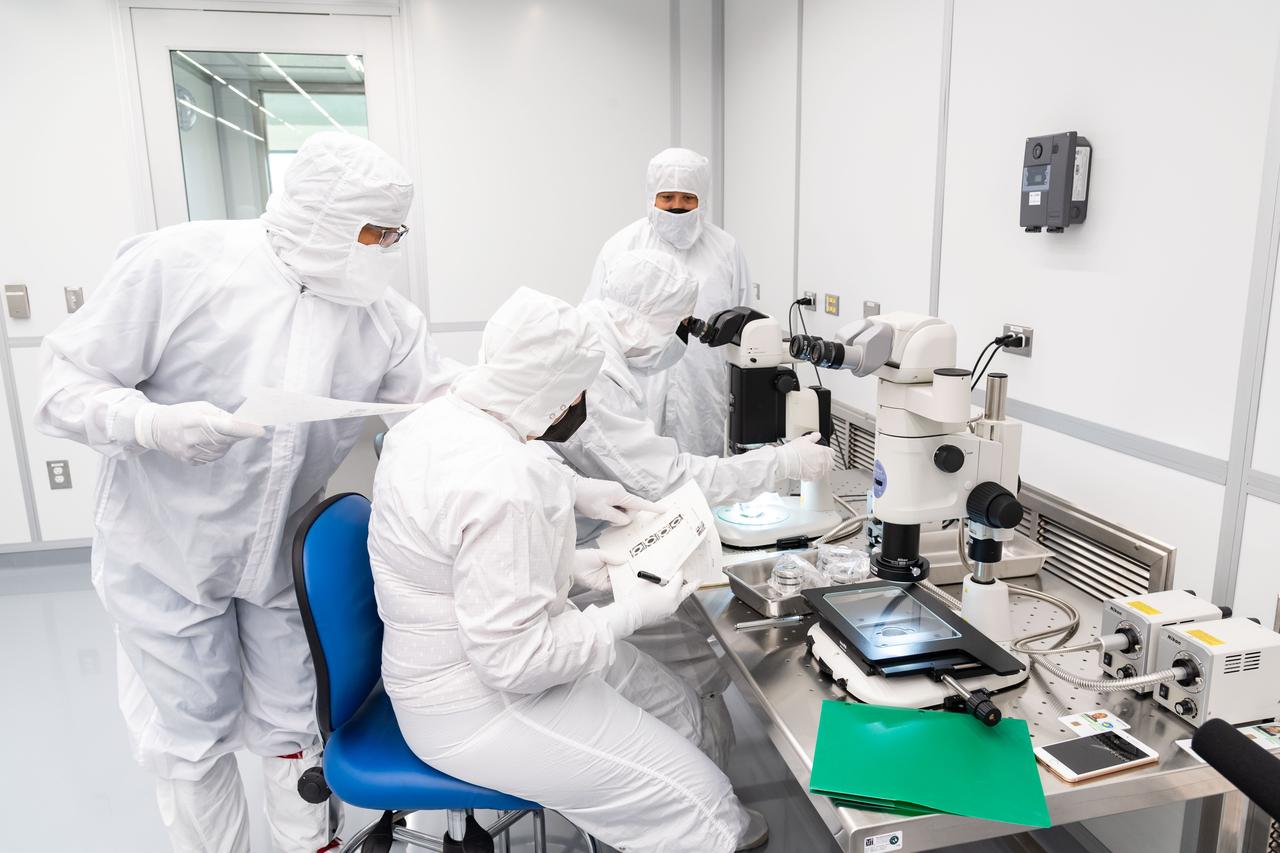
Scientists in the Astromaterials Research and Exploration Science (ARES) Division at NASA’s Johnson Space Center study samples retrieved by the Japan Aerospace Exploration Agency’s (JAXA) Hayabusa2 spacecraft and returned to Earth in late 2020. JAXA shared a portion of the samples with NASA, and in exchange, NASA will provide JAXA a percentage of a sample of asteroid Bennu, when the agency’s OSIRIS-REx spacecraft returns to Earth from the space rock in 2023. Photo Date: November 30, 2021. Location: Bldg. 31, H2 Clean Room. Photographer: Robert Markowitz
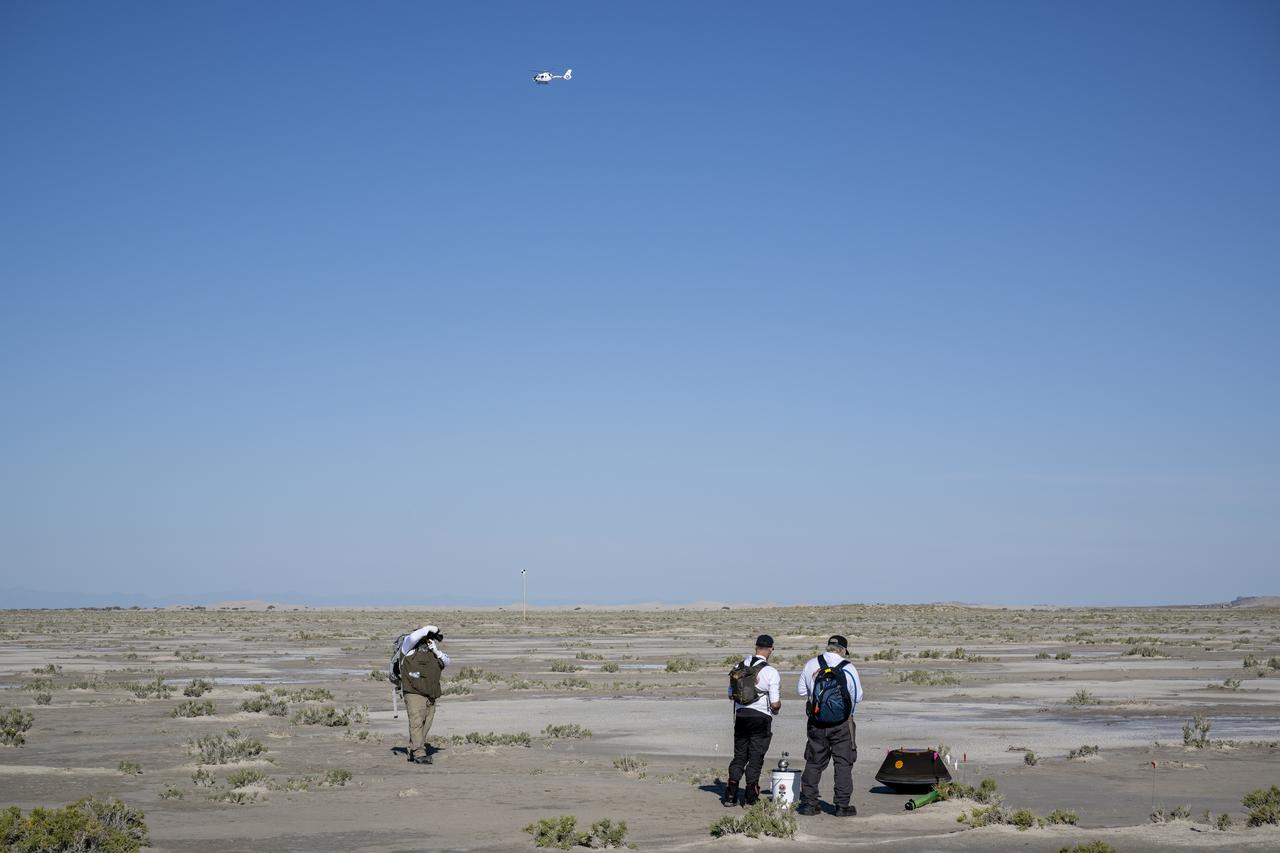
From left to right, NASA Astromaterials Curator Francis McCubbin, University of Arizona OSIRIS-REx Principal Investigator Dante Lauretta, and NASA Sample Return Capsule Science Lead Scott Sandford collect science data, Sunday, Sept. 24, 2023, shortly after the sample return capsule from NASA’s OSIRIS-REx mission landed at the Department of Defense's Utah Test and Training Range. The sample was collected from the asteroid Bennu in October 2020 by NASA’s OSIRIS-REx spacecraft. Photo Credit: (NASA/Keegan Barber)
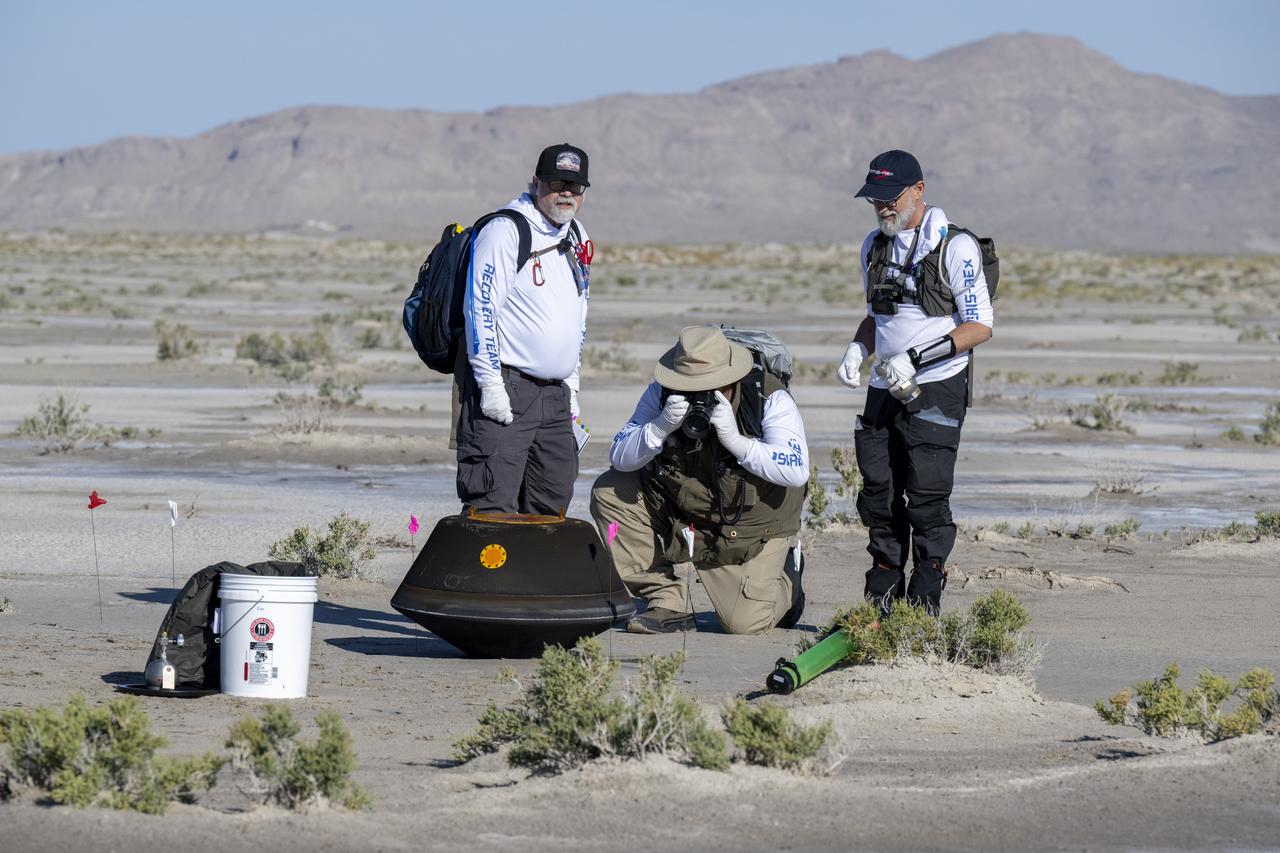
From left to right, NASA Sample Return Capsule Science Lead Scott Sandford, NASA Astromaterials Curator Francis McCubbin, and University of Arizona OSIRIS-REx Principal Investigator Dante Lauretta, collect science data, Sunday, Sept. 24, 2023, shortly after the sample return capsule from NASA’s OSIRIS-REx mission landed at the Department of Defense's Utah Test and Training Range. The sample was collected from the asteroid Bennu in October 2020 by NASA’s OSIRIS-REx spacecraft. Photo Credit: (NASA/Keegan Barber)
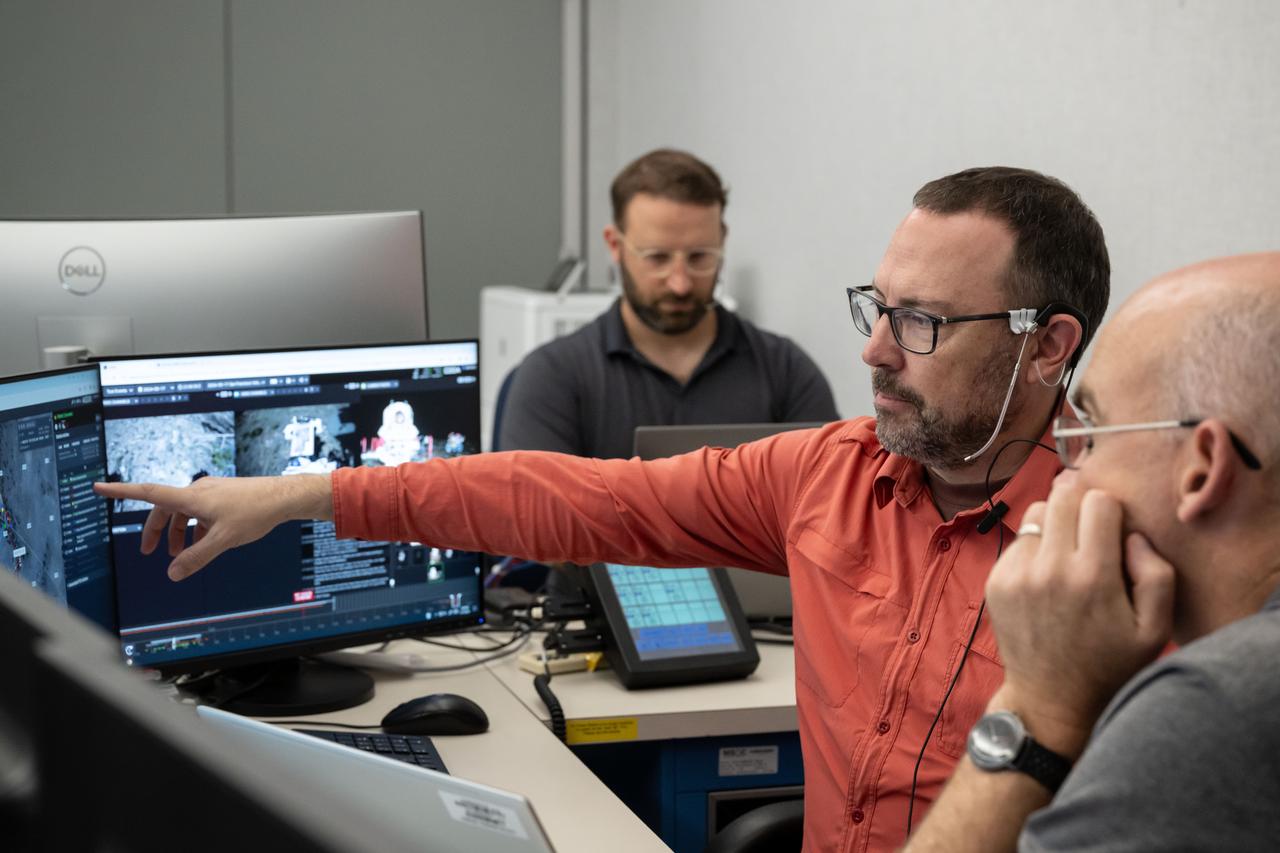
Ben Feist, software engineer on the Extravehicular Activity Mission System Software (EMSS) team, uses the suite of software he and other members of the Astromaterials Research and Exploration Science (ARES) division at NASA's Johnson Space Center in Houston developed to plan and monitor spacewalks. The JETT 5 field test was the first time this software was fully integrated into a simulated mission, supporting both science and mission control operations. JETT 5 was a week-long field test conducted in the lunar-like landscape of the San Francisco Volcanic Field near Flagstaff, Arizona, with a team of flight controllers and scientists at Johnson monitoring and guiding the activities. Credit: NASA/Helen Arase Vargas

A view of the TAGSAM (Touch and Go Sample Acquisition Mechanism) from above, showing the Mylar flap with a pile of asteroid material resting on it. This image was created using manual high-resolution precision photography and semi-automated focus stacking procedure. Created using manual high-resolution precision photography and semi-automated focus stacking procedure. Credit: NASA/Erika Blumenfeld & Joseph Aebersold
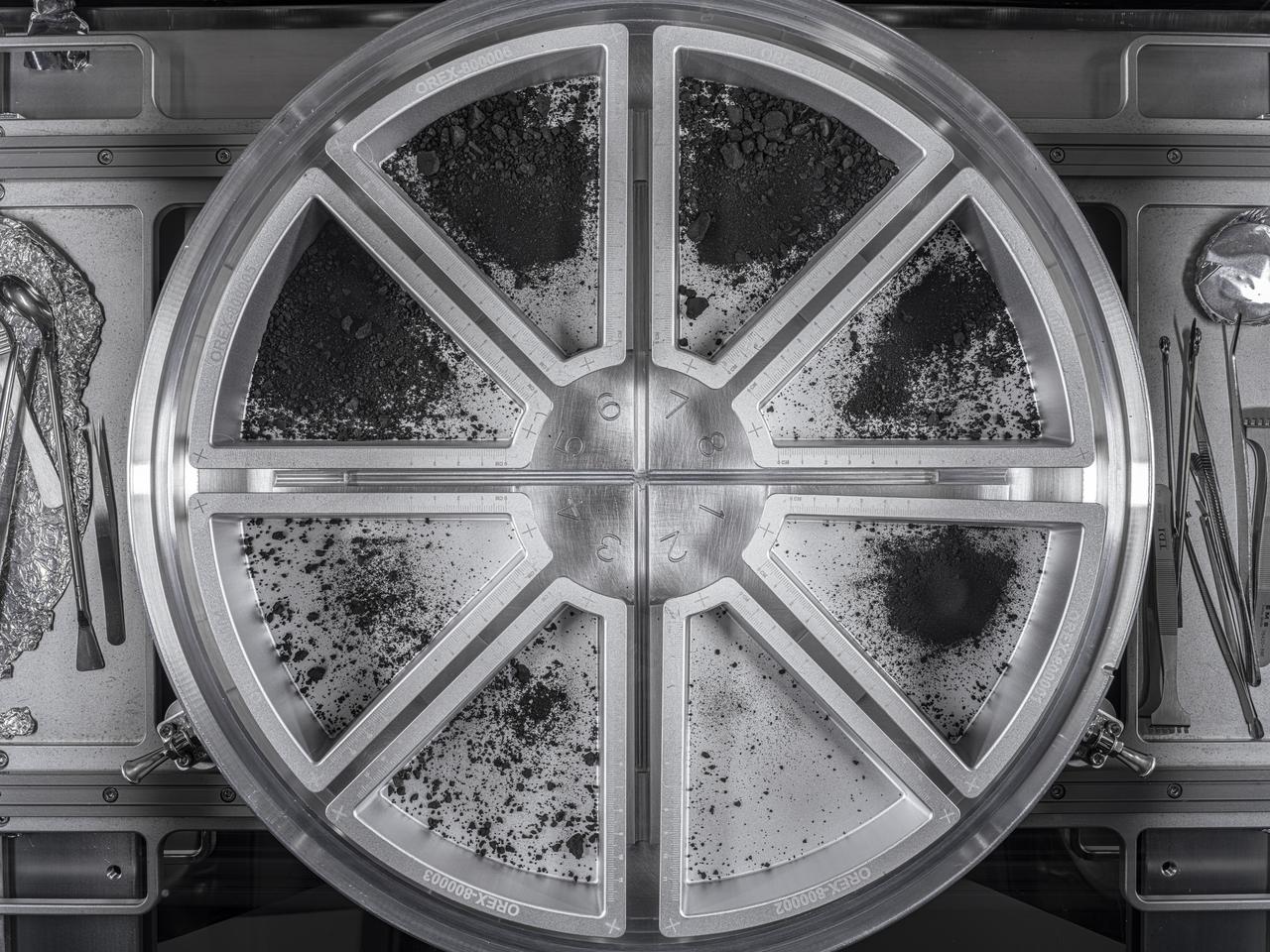
A view of eight sample trays containing the final material from asteroid Bennu. The dust and rocks were poured into the trays from the top plate of the Touch-and-Go Sample Acquisition Mechanism (TAGSAM) head. 51.2 grams were collected from this pour, bringing the final mass of asteroid sample to 121.6 grams. Credit: NASA/Erika Blumenfeld & Joseph Aebersold
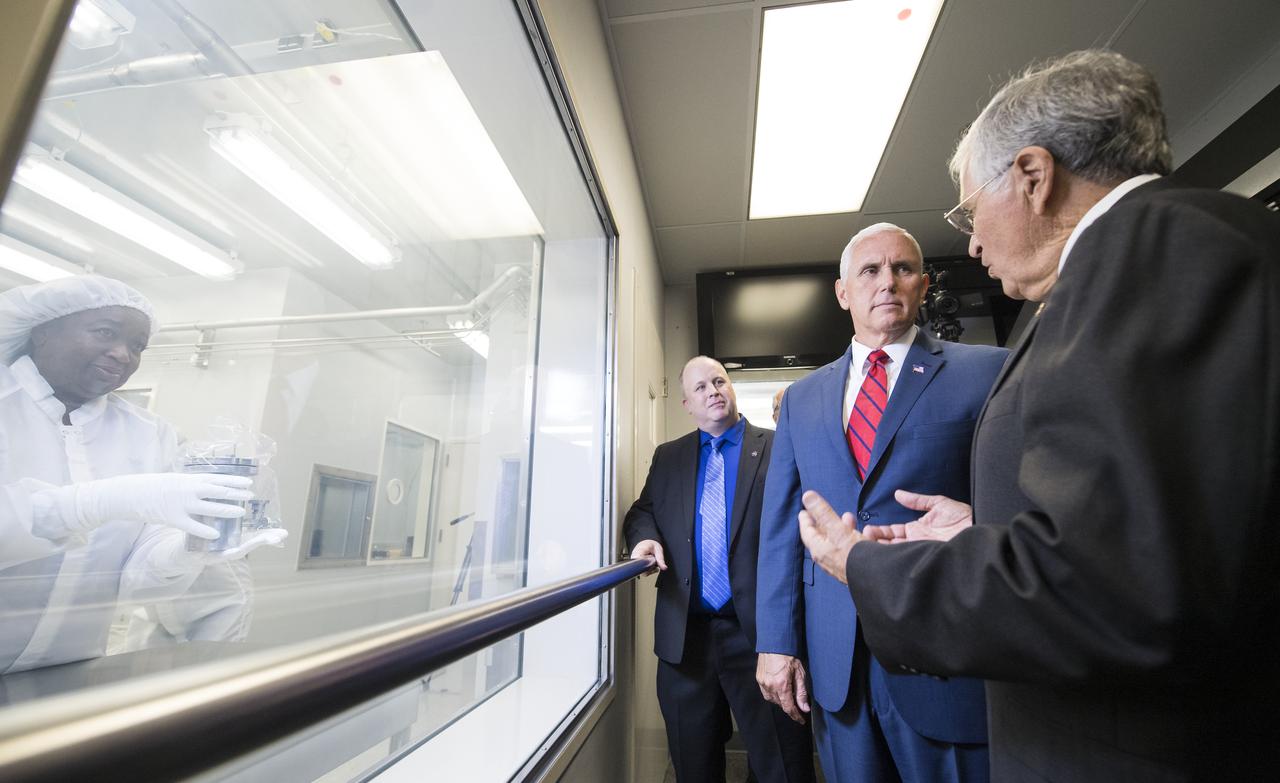
Vice President Mike Pence, center, views Sample 15014, which was collected during Apollo 15 with NASA's Apollo Sample Curator Ryan Zeigler, left, and Apollo 17 astronaut and geologist Dr. Harrison Schmitt, right, in Lunar Curation Laboratory at NASA's Johnson Space Center, Thursday, Aug. 23, 2018 in Houston, Texas. Sample 15014 is one of nine samples out of the 2,196 collected during the Apollo missions that was sealed inside its container on the Moon and still containes gasses from the Moon. Photo Credit: (NASA/Joel Kowsky)
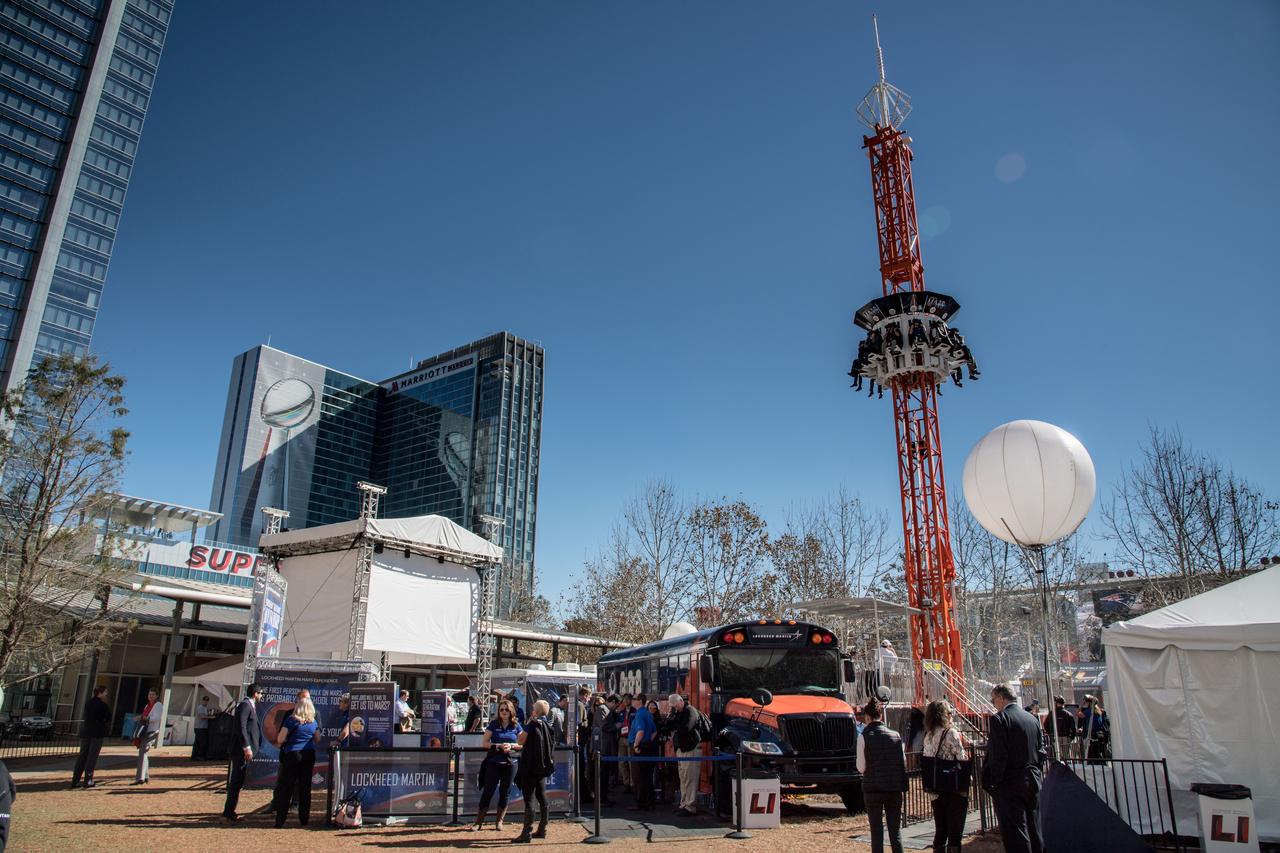
jsc2017e011393 (01/30/2017) --- Space exploration will feature prominently at Super Bowl LIVE, a nine-day fan festival running Jan. 28 through Feb. 5 on Discovery Green, Houston Texas where 100,000 visitors are expected each day. NASA is collaborating with the Houston Super Bowl Host Committee, which is the fan festival organizer, to share NASA’s contributions with the Houston community and to the nation. At NASA's Future Flight, the primary attraction at the free fan festival, riders will take a trip to Mars and back using virtual reality goggles on a 90-foot drop tower ride. Visitors also will get a chance to see several NASA assets that have been transported to downtown Houston for the activities. These assets include: the Orion mockup used for water recovery testing, Space Exploration Vehicle (SEV /Rover), the Driven to Explore mobile exhibit, Mars Science Laboratory – Curiosity Rover - replica, Robonaut 1 (Centaur configuration), EMU space suit presentation unit, Arctic meteorite and astromaterials display, and the Mark III advanced space suit photo-op. Several of NASA’s industry partners sponsoring Future Flight will also have assets on display, and a replica of the James Webb Space Telescope will be located near but not inside the activities on Discovery Green. NASA and industry partner volunteers will be staffing the Future Flight area. NASA PHOTOGRAPHER: Bill Stafford