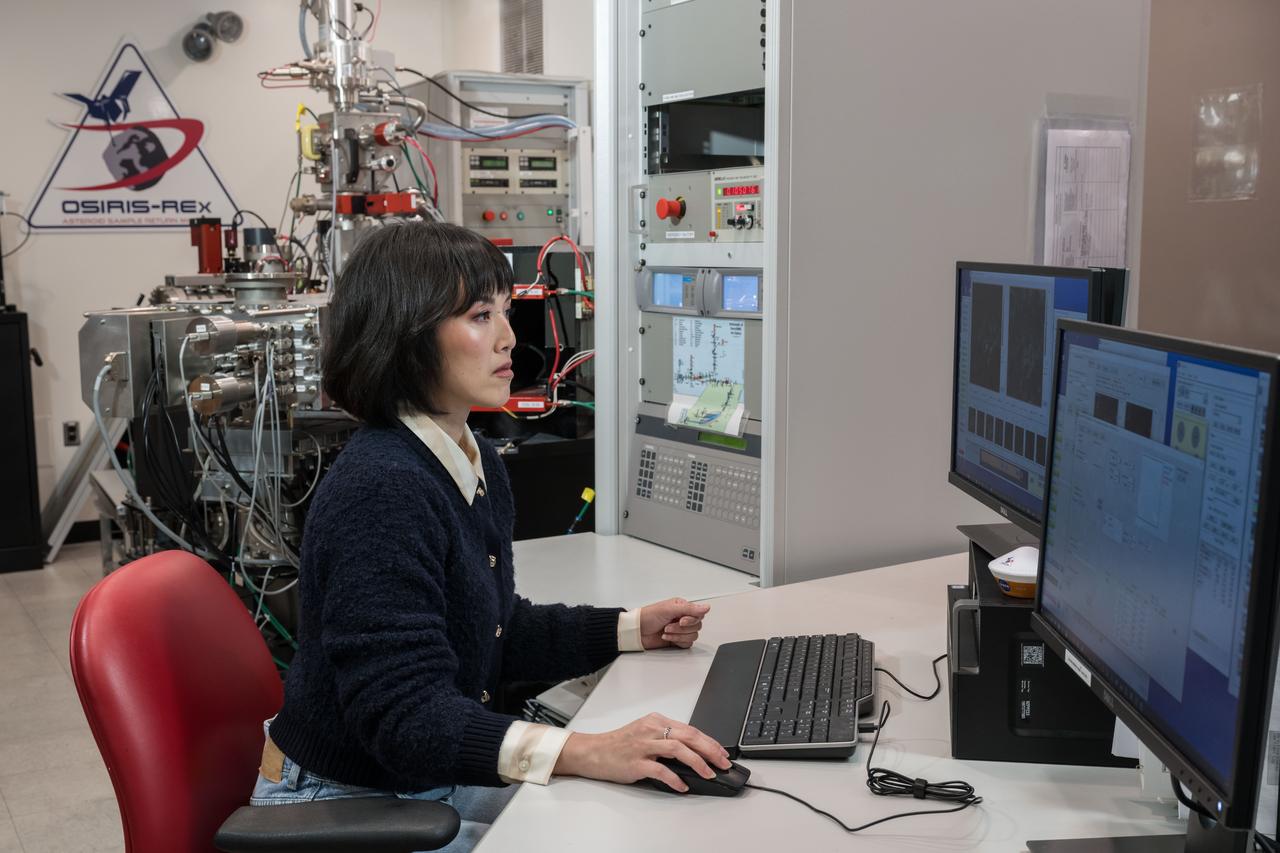
Ann Nguyen, co-lead author of a new paper that gives insights into the diverse origin of asteroid Bennu’s “parent” asteroid works alongside the NanoSIMS 50L (nanoscale secondary ion mass spectrometry) ion microprobe in the Astromaterials Research and Exploration Science Division at NASA’s Johnson Space Center in Houston.
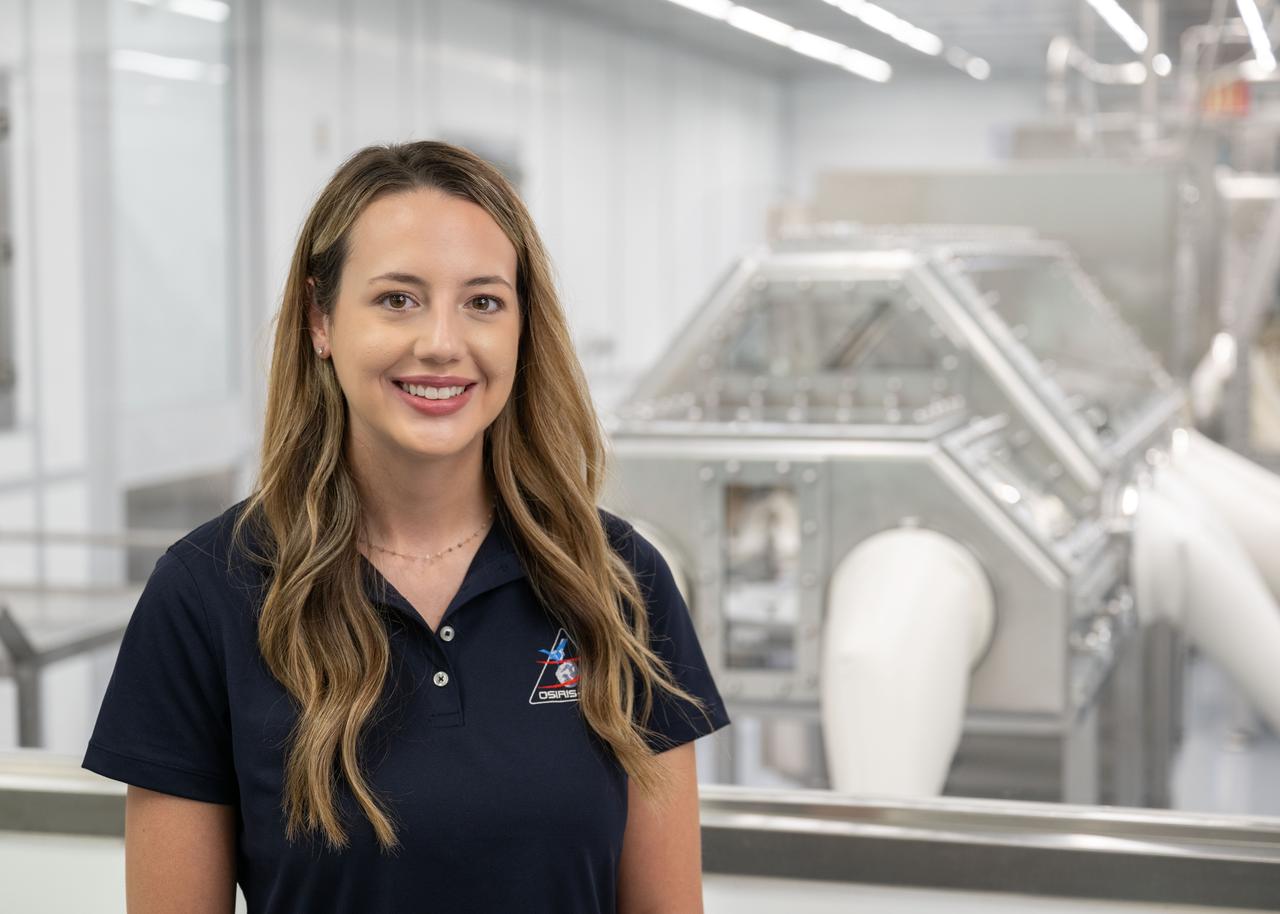
Portrait of Julia Plummer, OSIRIS-REx astromaterials processor from the Astromaterials Research and Exploration Science (ARES) division at NASA's Johnson Space Center in Houston. Plummer is seen in front of the OSIRIS-REx cleanroom at Johnson. Credit: NASA/James Blair

Portrait of Jannatul Ferdous, OSIRIS-REx astromaterials processor from the Astromaterials Research and Exploration Science (ARES) division at NASA's Johnson Space Center in Houston. Ferdous is seen in front of the OSIRIS-REx cleanroom at Johnson. Credit: NASA/James Blair
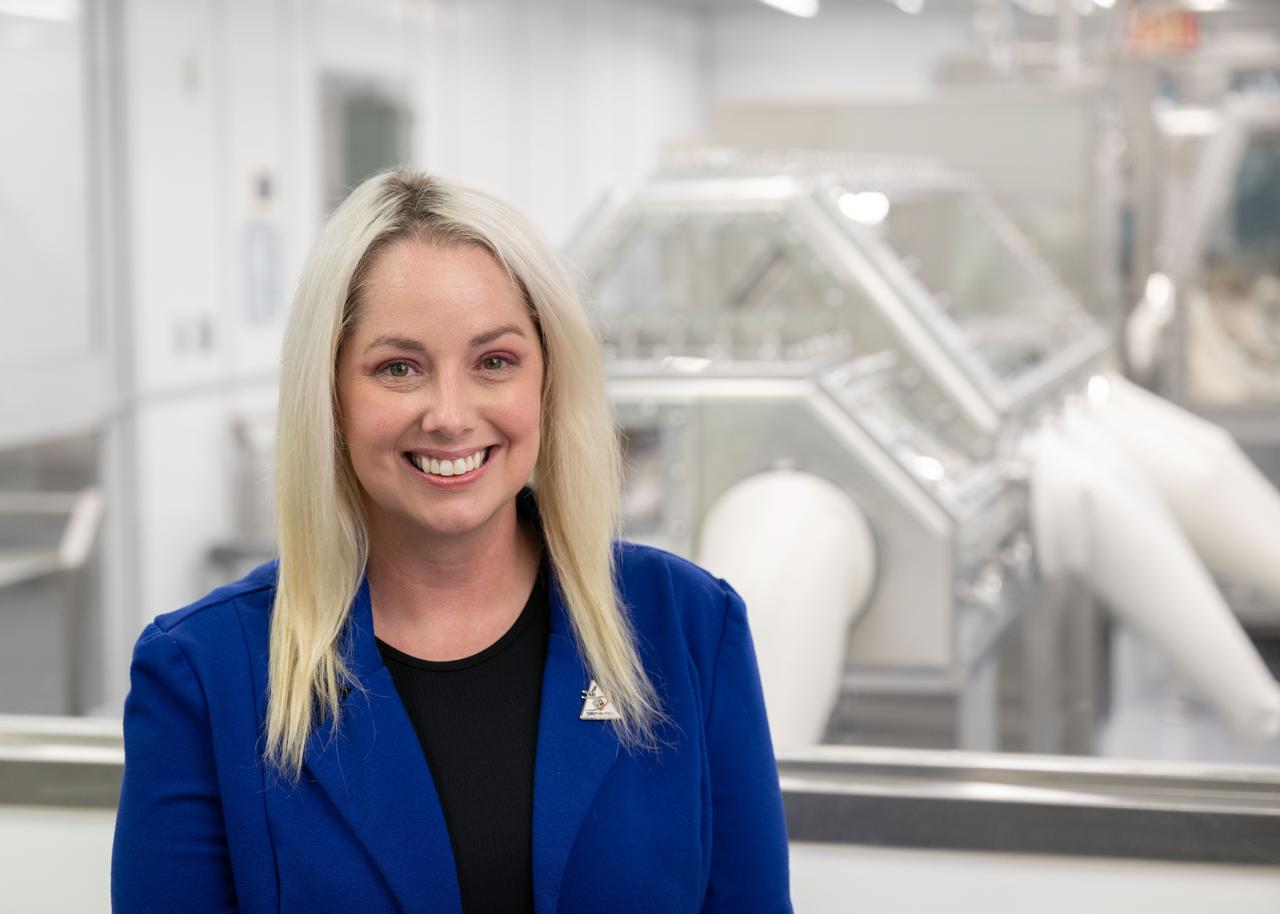
Portrait of Rachel Funk, OSIRIS-REx astromaterials processor from the Astromaterials Research and Exploration Science (ARES) division at NASA's Johnson Space Center in Houston. Funk is seen in front of the OSIRIS-REx cleanroom at Johnson. Credit: NASA/James Blair
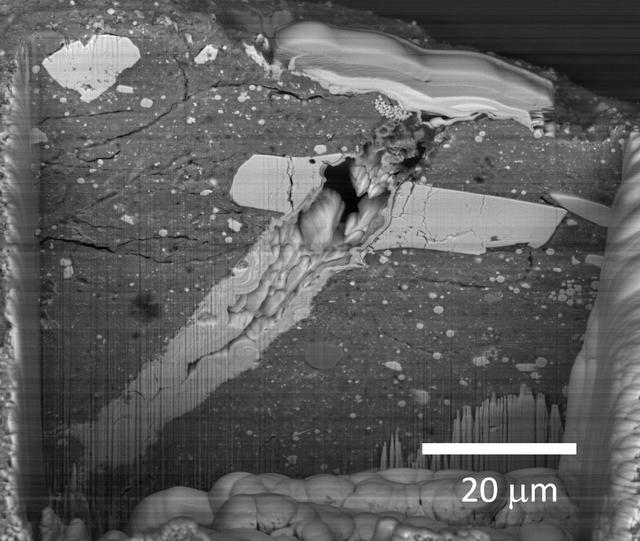
A scanning electron microscope image of a micrometeorite impact crater in a particle of asteroid Bennu material. Scientists found microscopic craters and tiny splashes of once-molten rock – known as impact melts – on the surfaces of samples, signs that the asteroid was bombarded by micrometeorites.
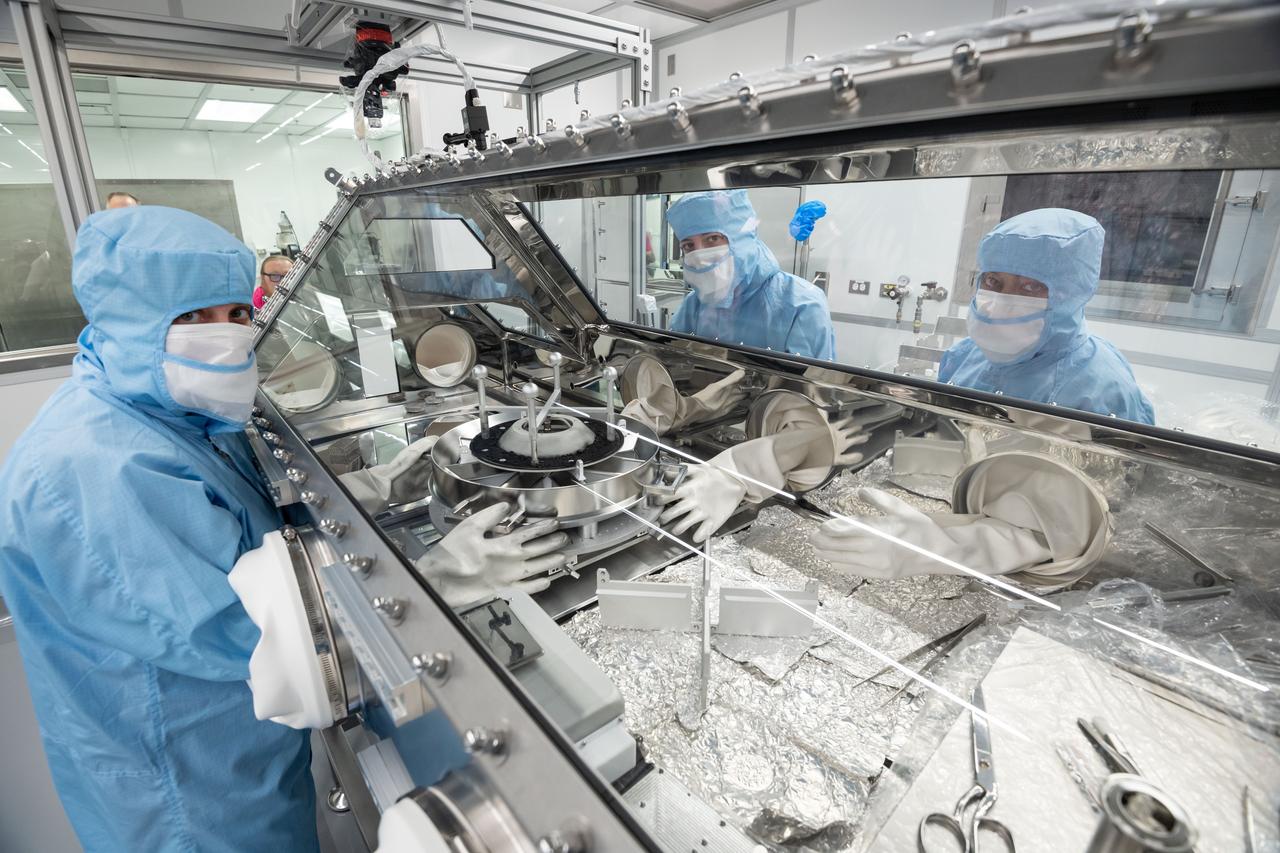
jsc2024e008542 - Curation team members from the Astromaterials Research and Exploration Science (ARES) division at NASA’s Johnson Space Center in Houston perform a pour maneuver to distribute the remaining asteroid sample material from the OSIRIS-REx Touch-and-Go Sample Acquisition Mechanism (TAGSAM) head into sample containers. From left, astromaterials processors Rachel Funk, top right, Julia Plummer, bottom right, Jannatul Ferdous.
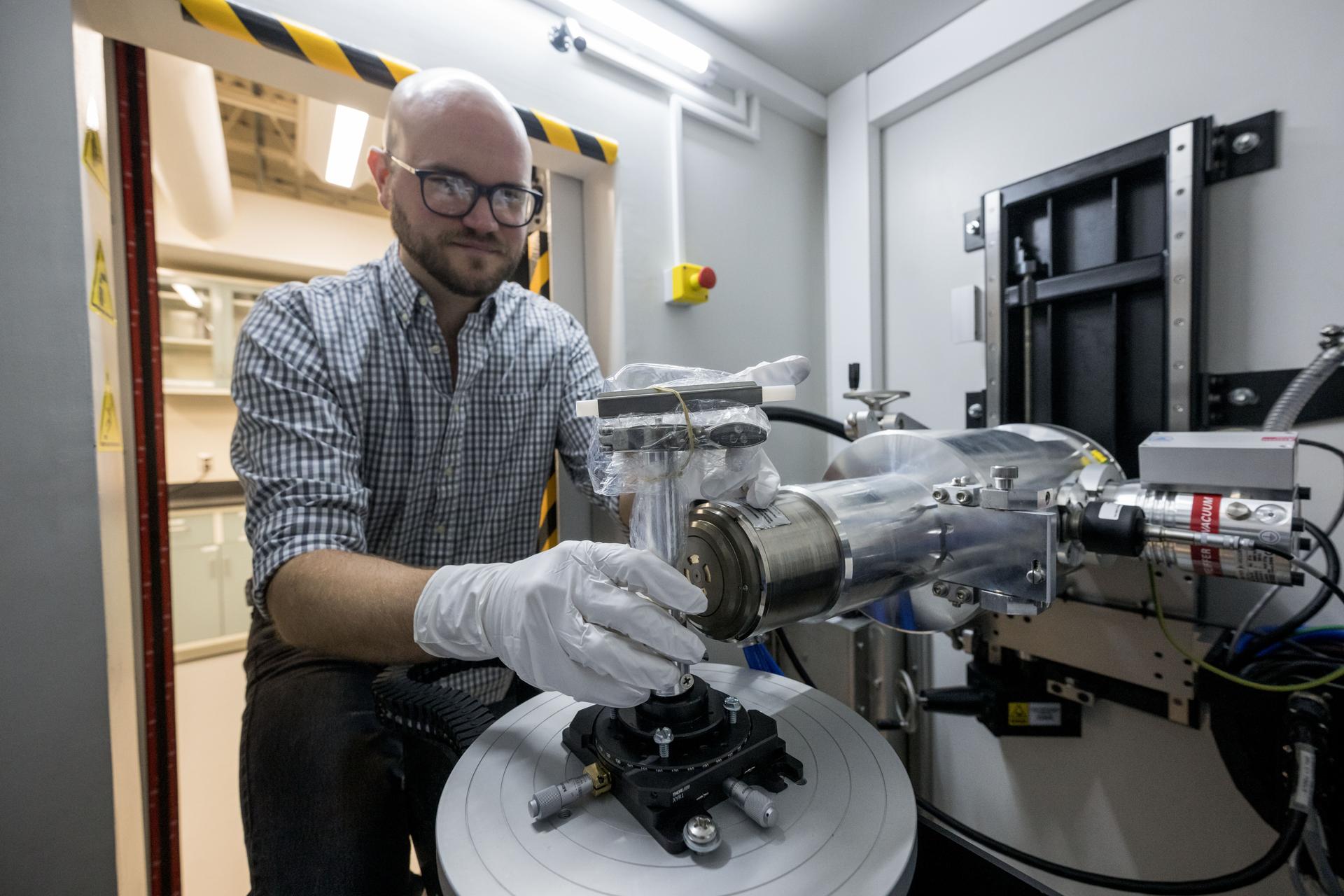
jsc2024e076997 --- Scott Eckley, X-ray scientist within NASA Johnson Space Center’s Astromaterials Research and Exploration Science (ARES), demonstrates the process for placing a container holding a piece of asteroid material in an X-Ray Computed Tomography (XCT) machine. XCT scans let researchers image particles through airtight containers and visualize a rock’s shape and internal structure without damaging the sample. Credit: NASA/Robert Markowitz
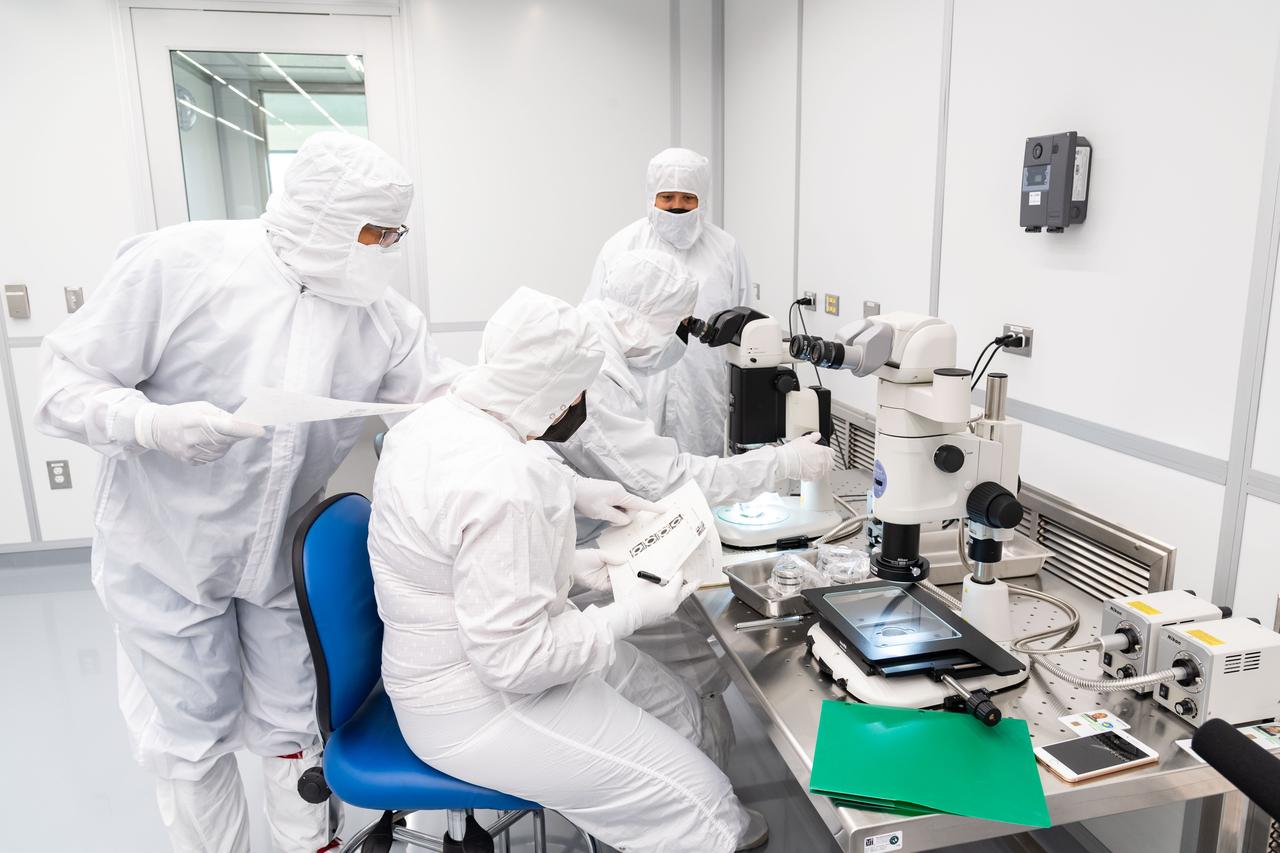
Scientists in the Astromaterials Research and Exploration Science (ARES) Division at NASA’s Johnson Space Center study samples retrieved by the Japan Aerospace Exploration Agency’s (JAXA) Hayabusa2 spacecraft and returned to Earth in late 2020. JAXA shared a portion of the samples with NASA, and in exchange, NASA will provide JAXA a percentage of a sample of asteroid Bennu, when the agency’s OSIRIS-REx spacecraft returns to Earth from the space rock in 2023. Photo Date: November 30, 2021. Location: Bldg. 31, H2 Clean Room. Photographer: Robert Markowitz
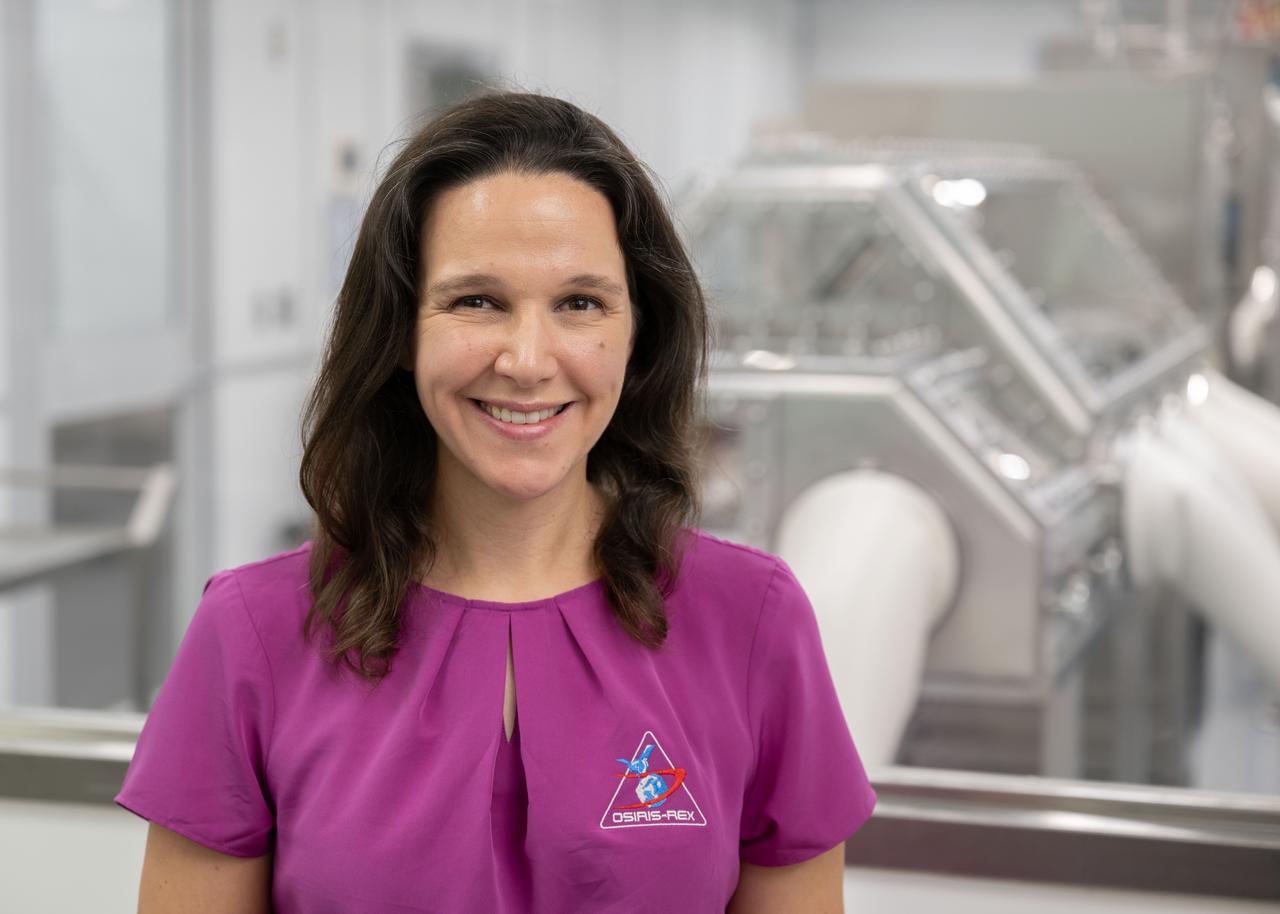
Portrait of Nicole Lunning, OSIRIS-REx sample curator within the Astromaterials Research and Exploration Science (ARES) division of NASA Johnson Space Center. Lunning is seen in front of the OSIRIS-REx cleanroom at Johnson. NASA’s OSIRIS-REx, the first U.S. mission to collect a sample from an asteroid, delivered rocks and dust from asteroid Bennu to Earth on Sept. 24, 2023.
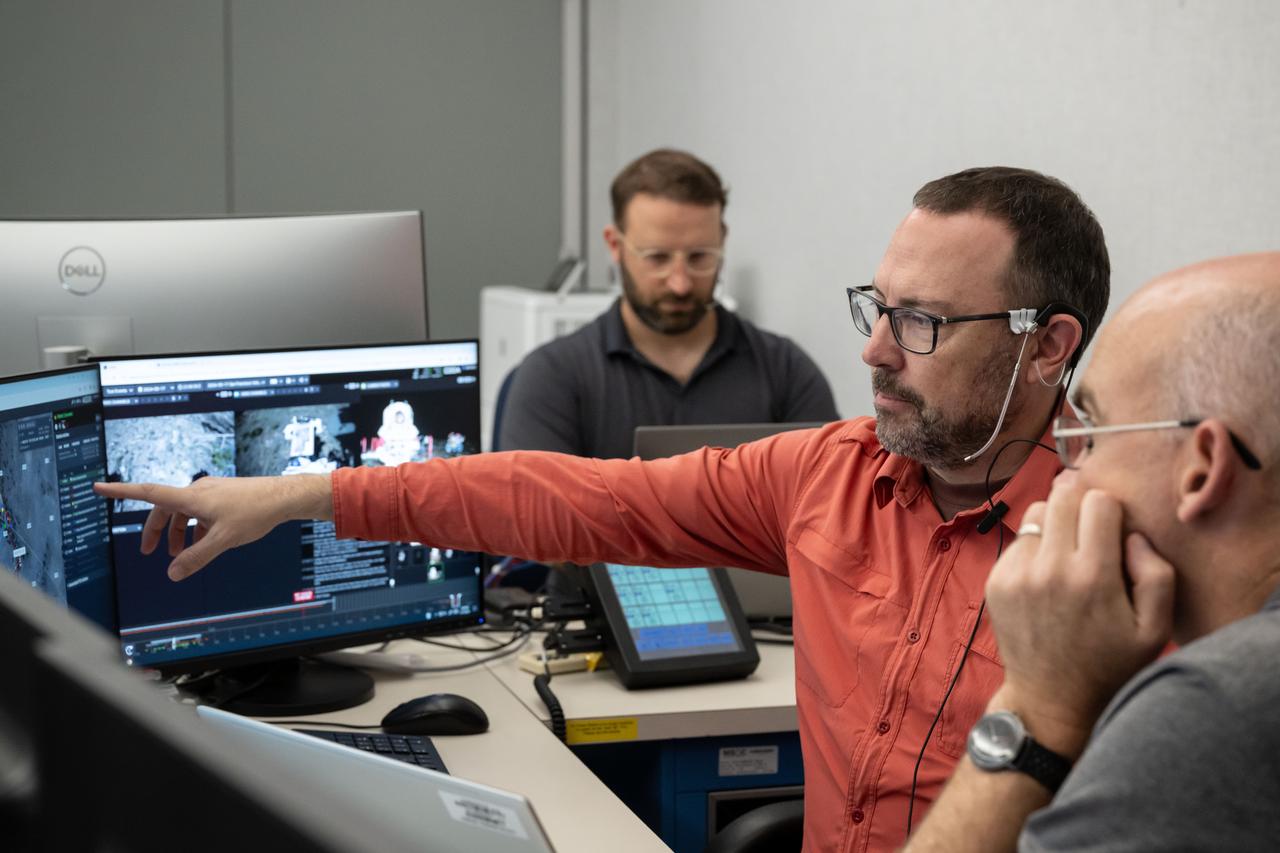
Ben Feist, software engineer on the Extravehicular Activity Mission System Software (EMSS) team, uses the suite of software he and other members of the Astromaterials Research and Exploration Science (ARES) division at NASA's Johnson Space Center in Houston developed to plan and monitor spacewalks. The JETT 5 field test was the first time this software was fully integrated into a simulated mission, supporting both science and mission control operations. JETT 5 was a week-long field test conducted in the lunar-like landscape of the San Francisco Volcanic Field near Flagstaff, Arizona, with a team of flight controllers and scientists at Johnson monitoring and guiding the activities. Credit: NASA/Helen Arase Vargas