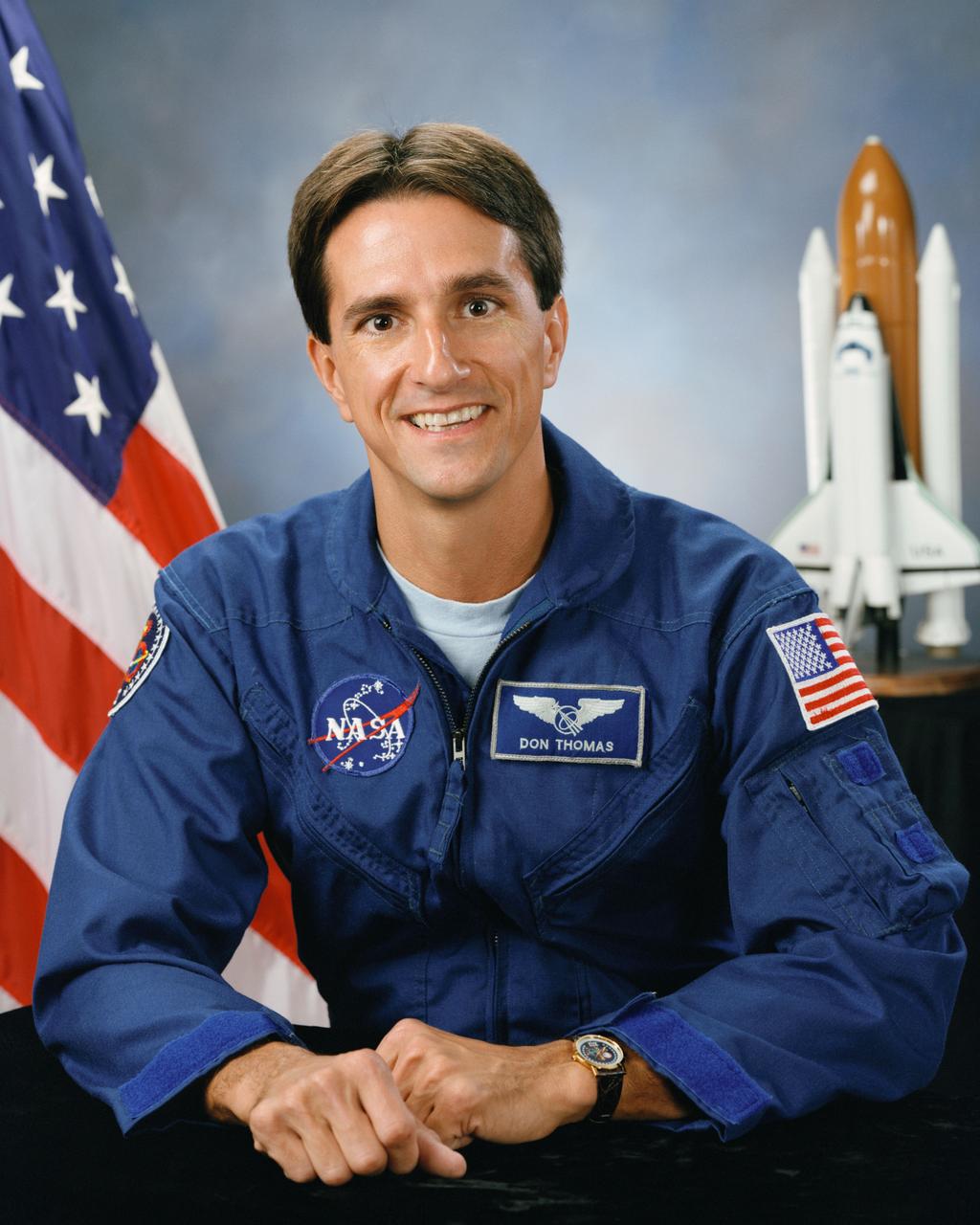
S91-48165 (3 Oct 1991) --- Astronaut Donald A. Thomas.
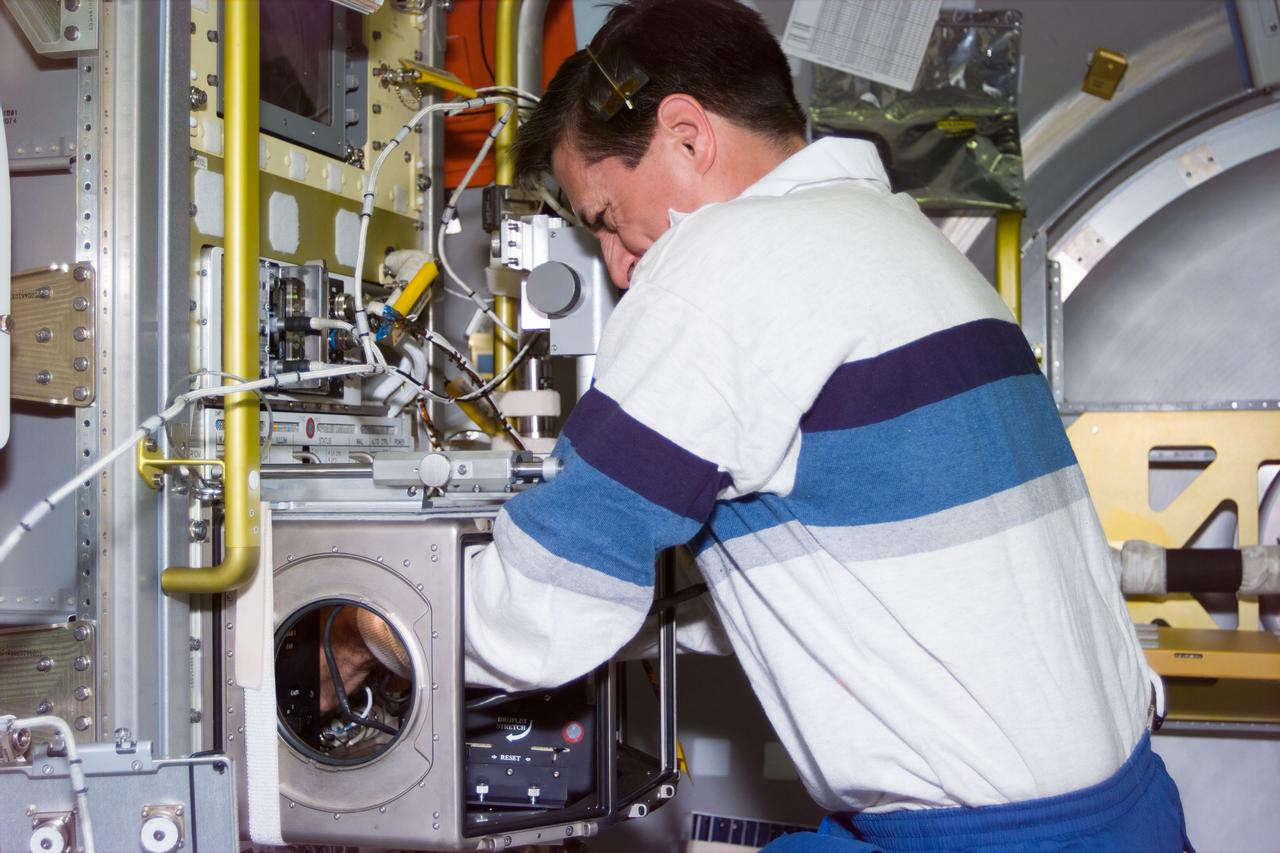
S94-E-5046 (July 1997) --- Astronaut Donald Thomas, mission specialist, sets up an experiment in the glovebox onboard the Spacelab science module. Thomas joins four other NASA astronauts and two payload specialists who are supporting the Microgravity Science Laboratory (MSL-1) mission aboard the Space Shuttle Columiba.
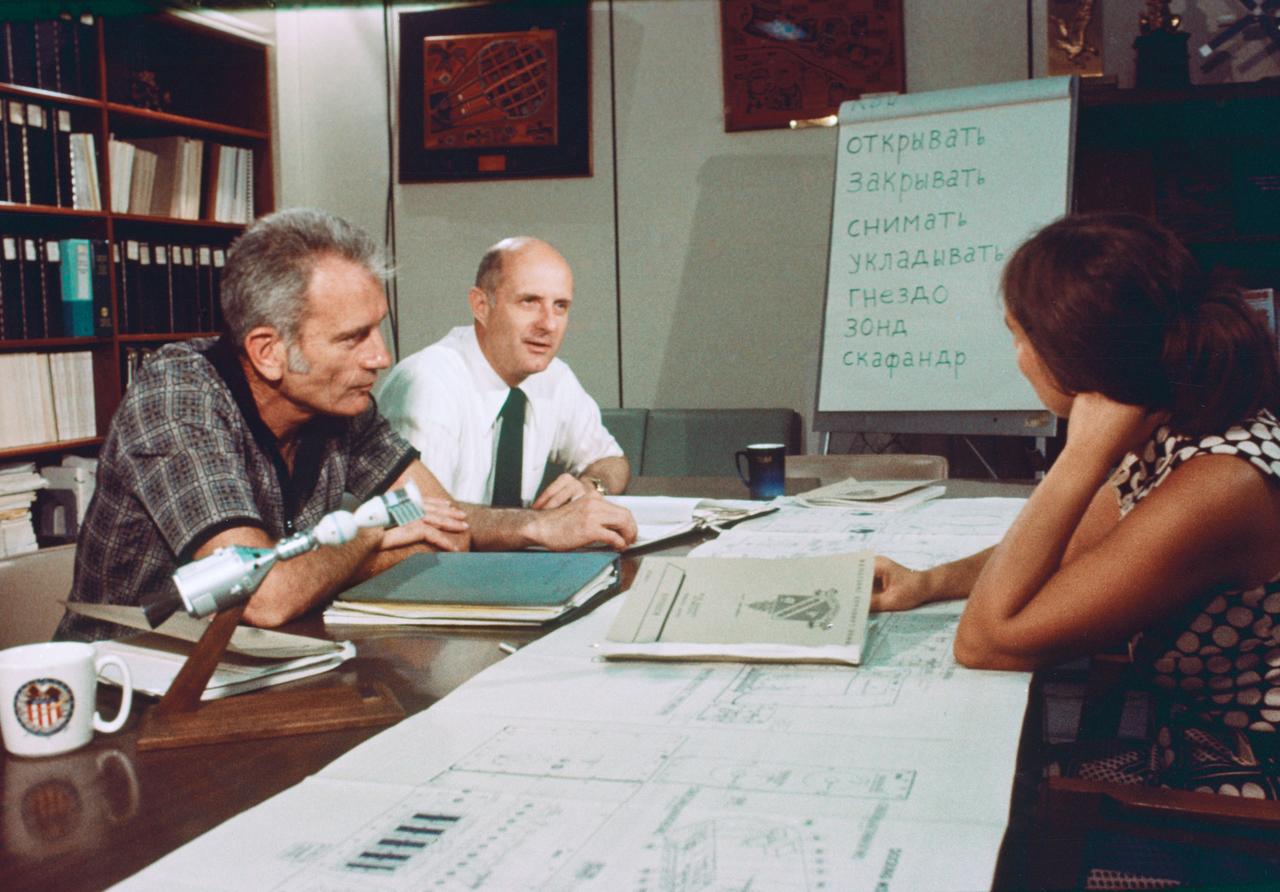
Apollo Soyuz Test Project (ASTP) astronauts Donald K. Slayton, docking module pilot; and Thomas P. Stafford, commander are photographed during ASTP Russian language class.

S94-E-5001 (5 July 1997) --- Astronaut Donald Thomas, mission specialist, uses a microscope at the glovebox onboard the Space Shuttle Columbia's Spacelab Module during flight day five activities.
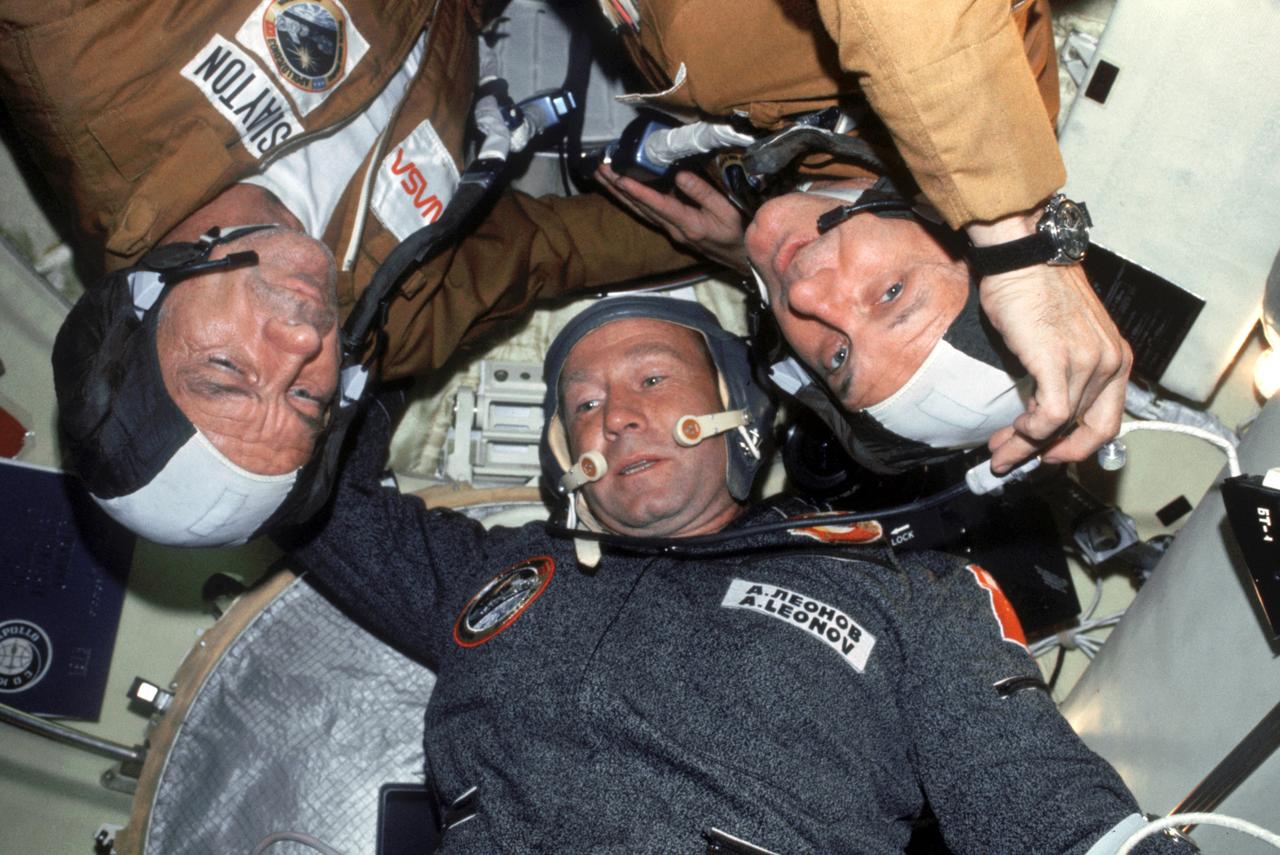
AST-05-301 (17-19 July 1975) --- Astronaut Donald K. Slayton, cosmonaut Aleksey A. Leonov and astronaut Thomas P. Stafford are photographed in the Soviet Soyuz during the Apollo-Soyuz Test Project docking mission in Earth orbit. This picture was taken with a 35mm camera.
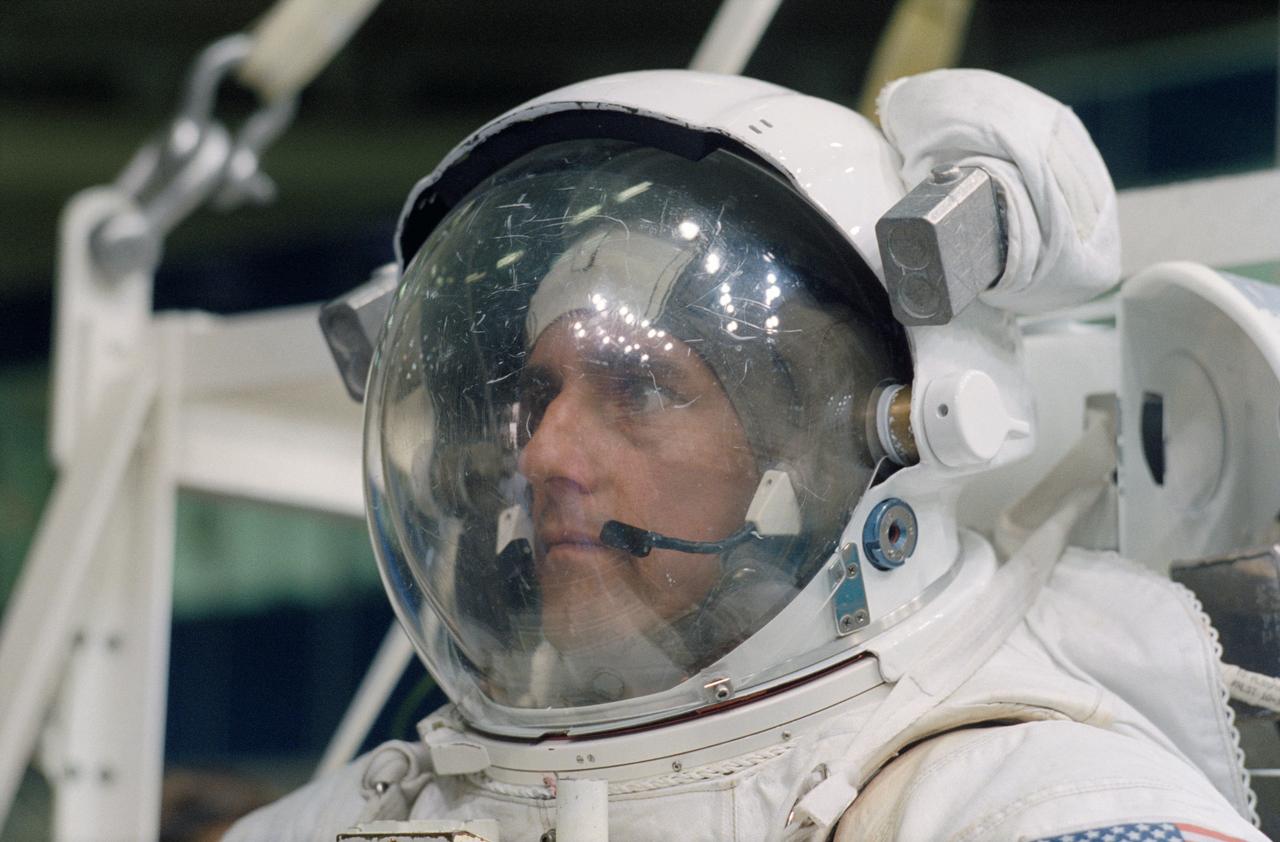
S94-29978 (8 March 1994) --- Astronaut Donald A. Thomas, mission specialist, prepares to be lowered into a 25-feet deep pool at the Johnson Space Center's (JSC) Weightless Environment Training Facility (WET-F). Astronauts Thomas and Leroy Chiao were about to be submerged and made to be neutrally buoyant in order to rehearse several contingency tasks that would require a spacewalk. No spacewalks are scheduled for the International Microgravity Laboratory (IML-2).
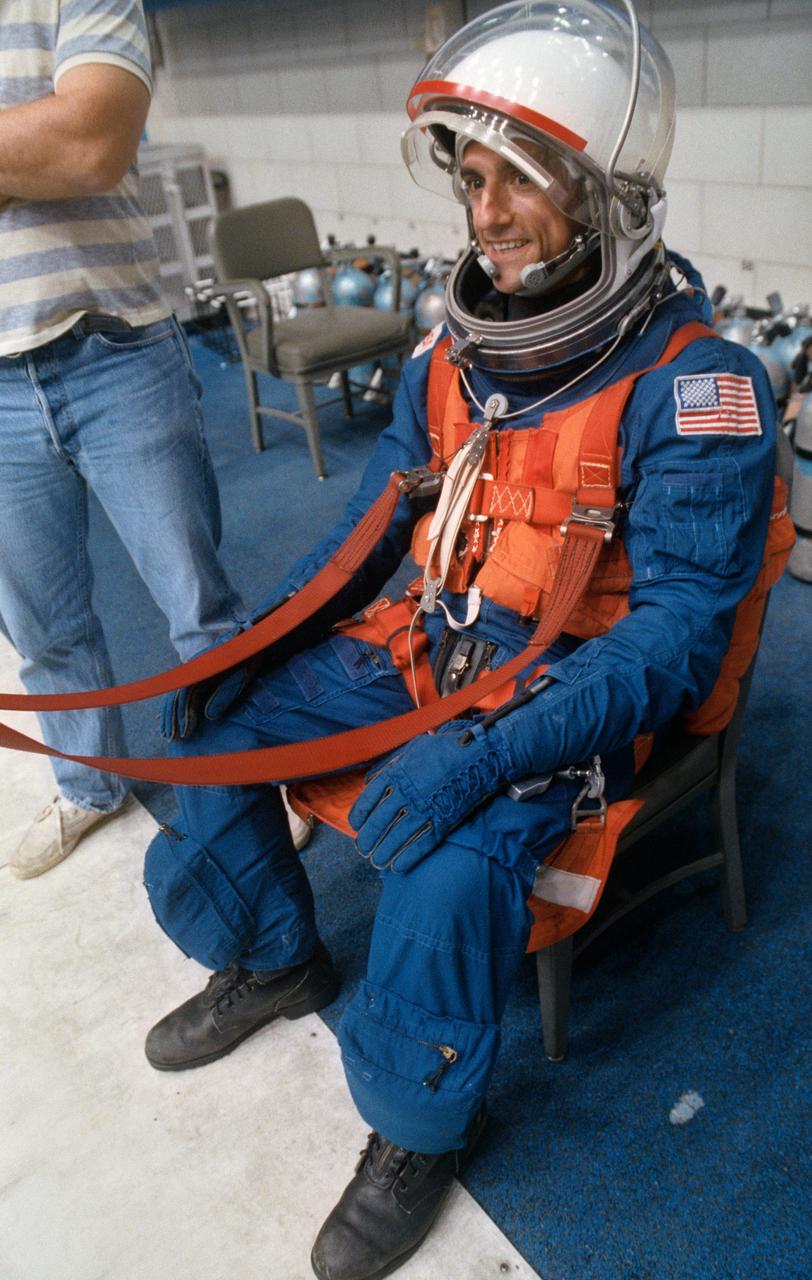
S93-43113 (Nov 1993) --- Astronaut Donald A. Thomas, mission specialist, is pictured during a bailout training session at the Johnson Space Center's (JSC) Weightless Environment Test Facility (WET-F). Thomas was joined by five other NASA astronauts and a Japanese payload specialist for the training session. The crew will spend approximately two weeks aboard the Space Shuttle Columbia next year in support of the second International Microgravity Laboratory (IML-2) mission.
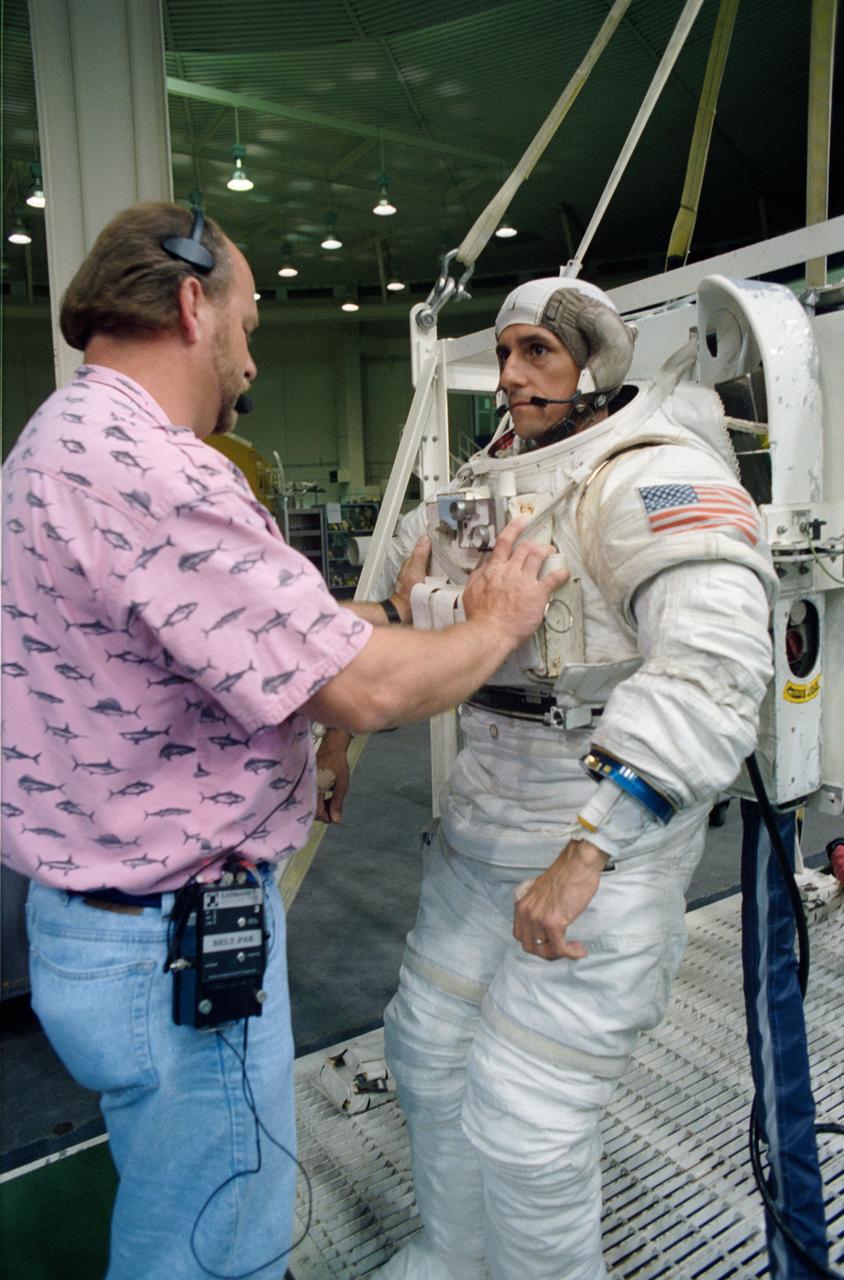
S94-29981 (8 March 1994) --- Astronaut Donald A. Thomas, mission specialist, awaits his helmet as he prepares to be lowered into a 25-feet deep pool at the Johnson Space Center's (JSC) Weightless Environment Training Facility (WET-F). Astronauts Thomas and Leroy Chiao were about to be submerged and made to be neutrally buoyant in order to rehearse several contingency tasks that would require a spacewalk. No spacewalks are scheduled for the International Microgravity Laboratory (IML-2).
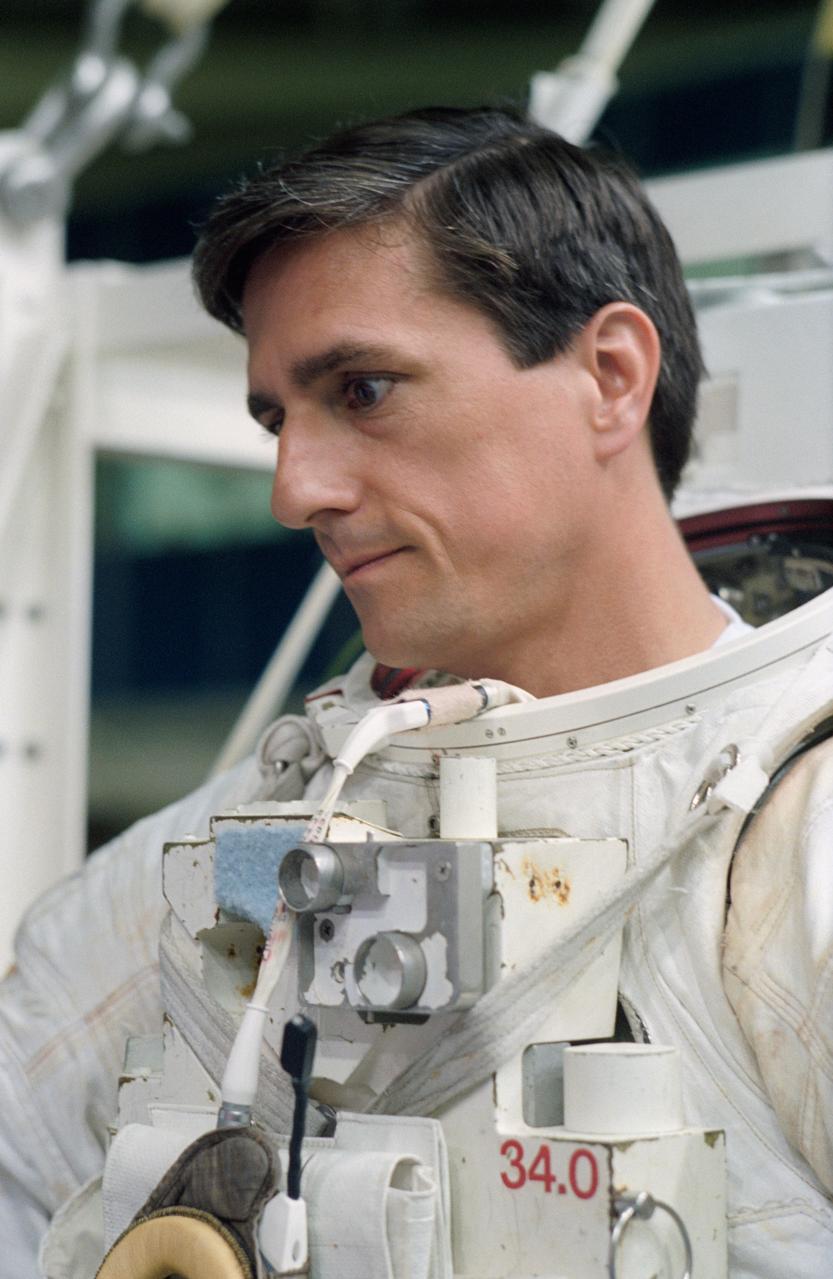
S94-29976 (8 March 1994) --- Astronaut Donald A. Thomas, mission specialist, awaits his helmet as he prepares to be lowered into a 25-feet deep pool at the Johnson Space Center's (JSC) Weightless Environment Training Facility (WET-F). Astronauts Thomas and Leroy Chiao were about to be submerged and made to be neutrally buoyant in order to rehearse several contingency tasks that would require a spacewalk. No spacewalks are scheduled for the International Microgravity Laboratory (IML-2).
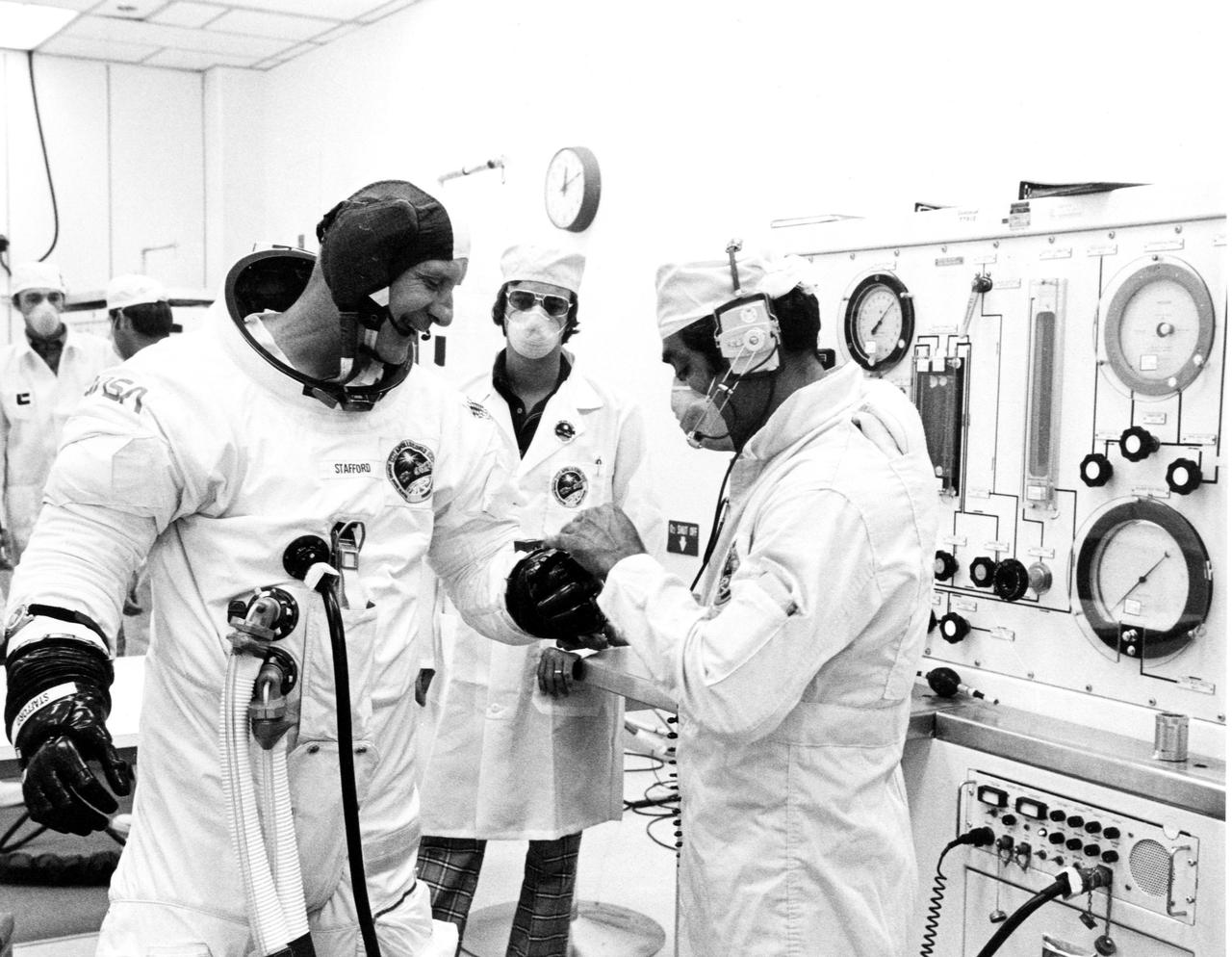
KENNEDY SPACE CENTER, FLA. -- A suit technician helps ASTP astronaut Thomas Stafford don his pressure suit. After suitup, Stafford and crewmen Vance Brand and Donald Slayton walked to the transfer van for the trip to the launch pad.
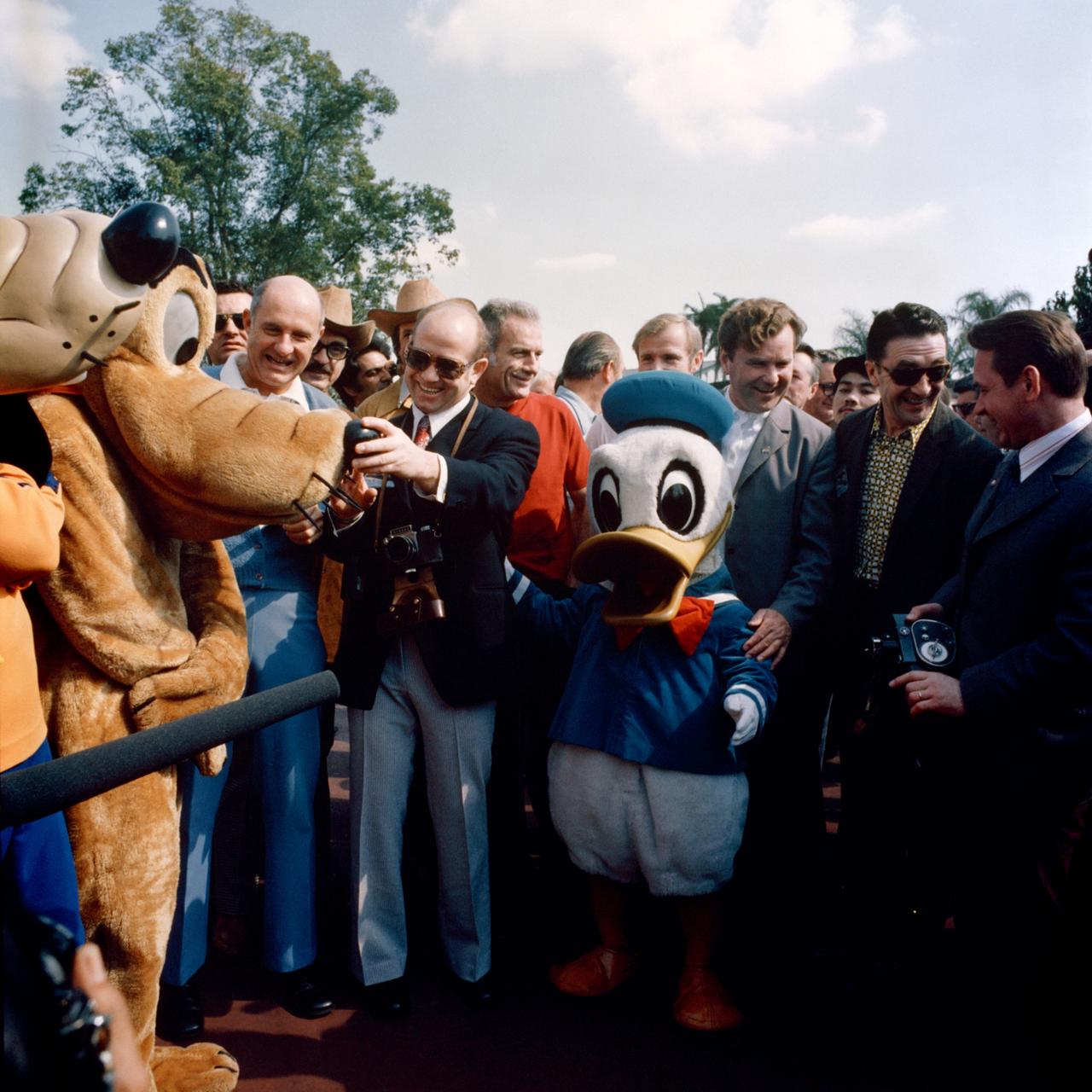
S75-24114 (8-10 Feb. 1975) --- Two Walt Disney comic cartoon characters, Donald Duck and Pluto, were on hand to greet a group of Apollo-Soyuz Test Project (ASTP) crewmen on their arrival at Disney World near Orlando. From left, are interpreter K. S. Samofal, interpreter Nicholas Timacheff, cosmonaut Vladimir A. Shatalov, astronaut Vance D. Brand, astronaut Donald K. Slayton, cosmonaut Aleksey A. Leonov (squeezing Pluto's nose) and astronaut Thomas P. Stafford. The astronauts and cosmonauts were in Florida for a three-day inspection tour of NASA's Kennedy Space Center where they looked over ASTP launch facilities and flight hardware.
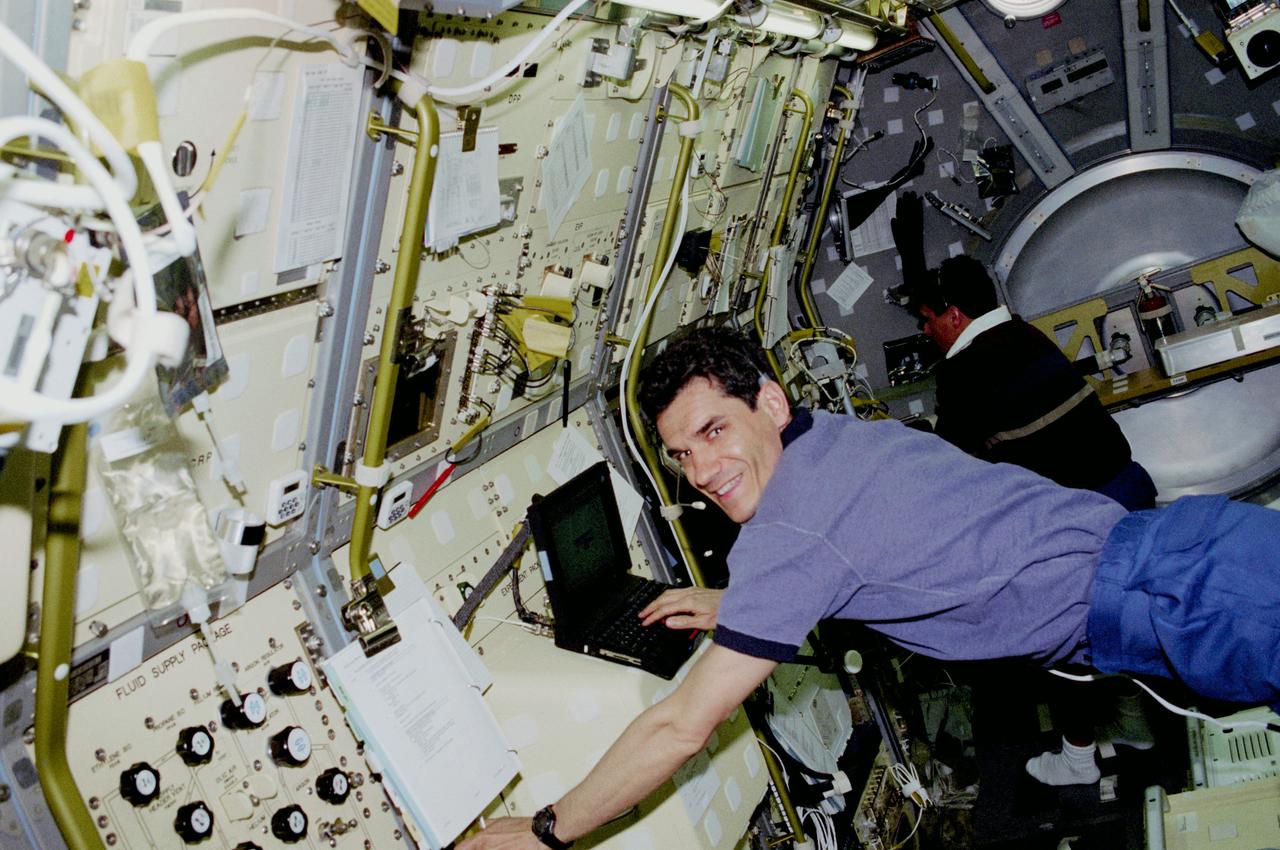
STS083-302-005 (4-8 April 1997) --- Payload specialist Gregory T. Linteris enters data on the progress of a Microgravity Sciences Laboratory (MSL-1) experiment on a lap top computer aboard the Spacelab Science Module while astronaut Donald A. Thomas, mission specialist, checks an experiment in the background. Linteris and Thomas, along with four other NASA astronauts and a second payload specialist supporting the Microgravity Sciences Laboratory (MSL-1) mission were less than a fourth of the way through a scheduled 16-day flight when a power problem cut short their planned stay.
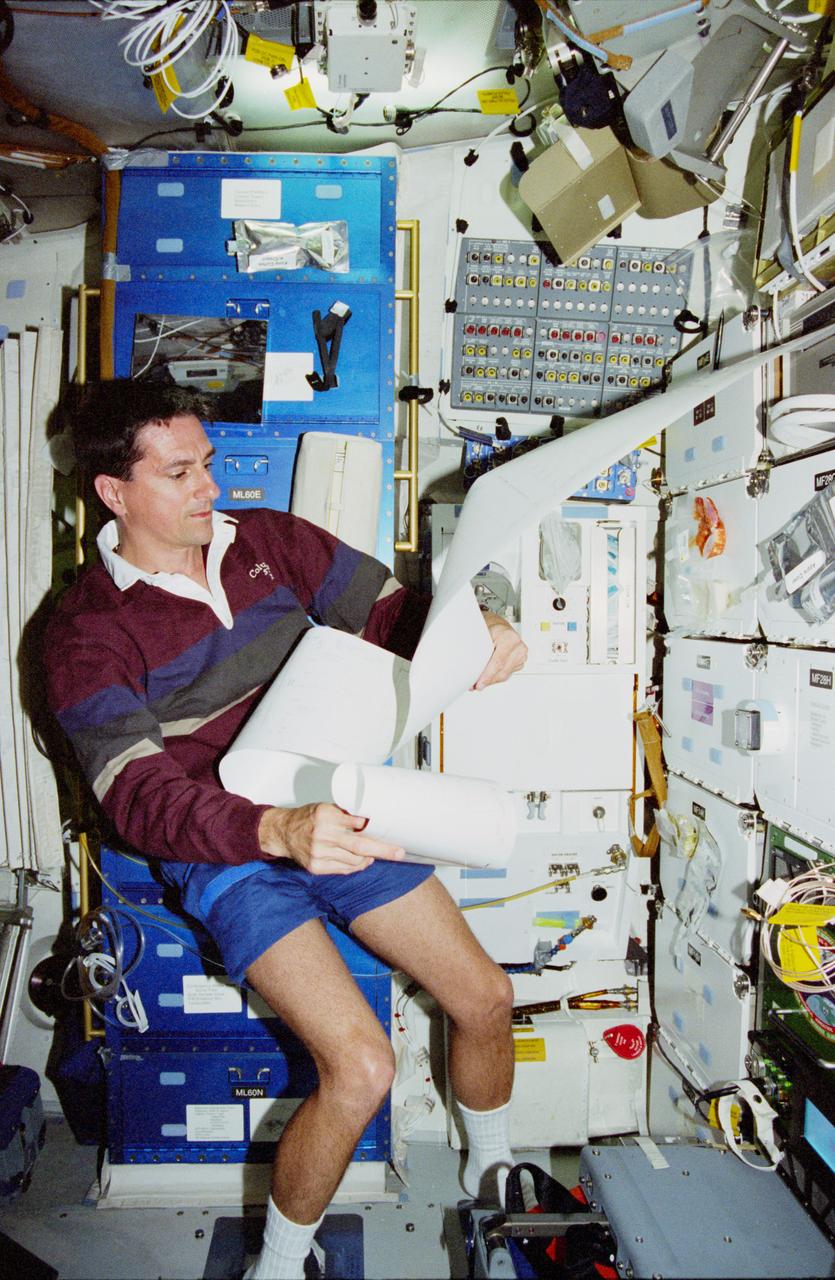
STS083-309-003 (4-8 April 1997) --- Astronaut Donald A. Thomas, mission specialist, checks a fresh delivery of messages from ground controllers onboard the Earth-orbiting Space Shuttle Columbia. The Thermal Impulse Imaging System (TIPS) is located on the mid deck of Columbia. Thomas, along with four other NASA astronauts and two payload specialists supporting the Microgravity Sciences Laboratory (MSL-1) mission were less than a fourth of the way through a scheduled 16-day flight when a power problem cut short their planned stay.
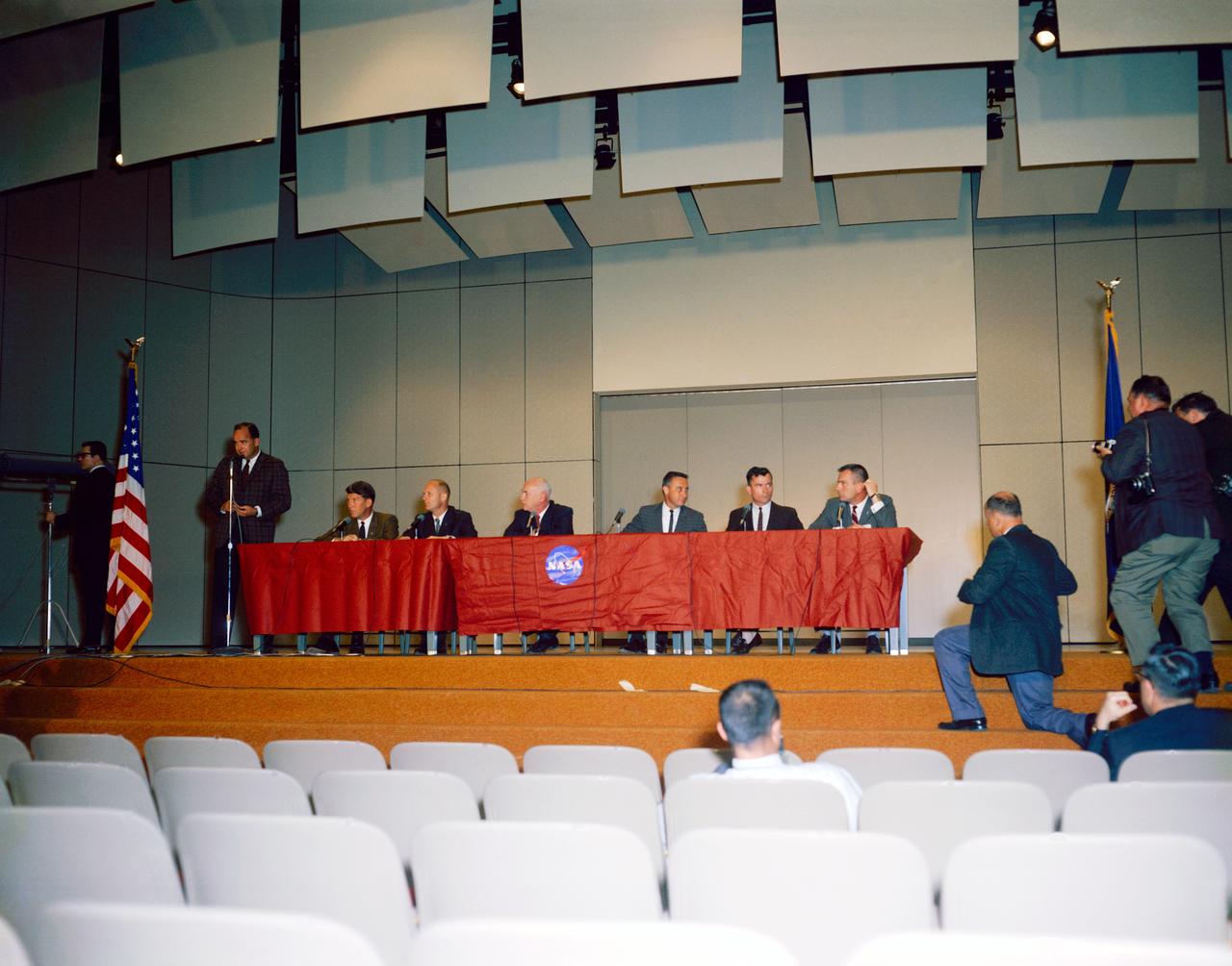
S64-19466 (13 April 1964) --- A press conference was held in the Bldg. 1 auditorium at the NASA Manned Spacecraft Center to announce the first Gemini astronaut selections. Shown left to right are Paul Haney, MSC Public Affairs Officer (standing); astronauts Walter Schirra and Thomas Stafford; Dr. Robert Gilruth, director of MSC; astronauts Virgil Grissom and John Young; and Donald K. Slayton, assistant director of Flight Crew Operations at MSC.
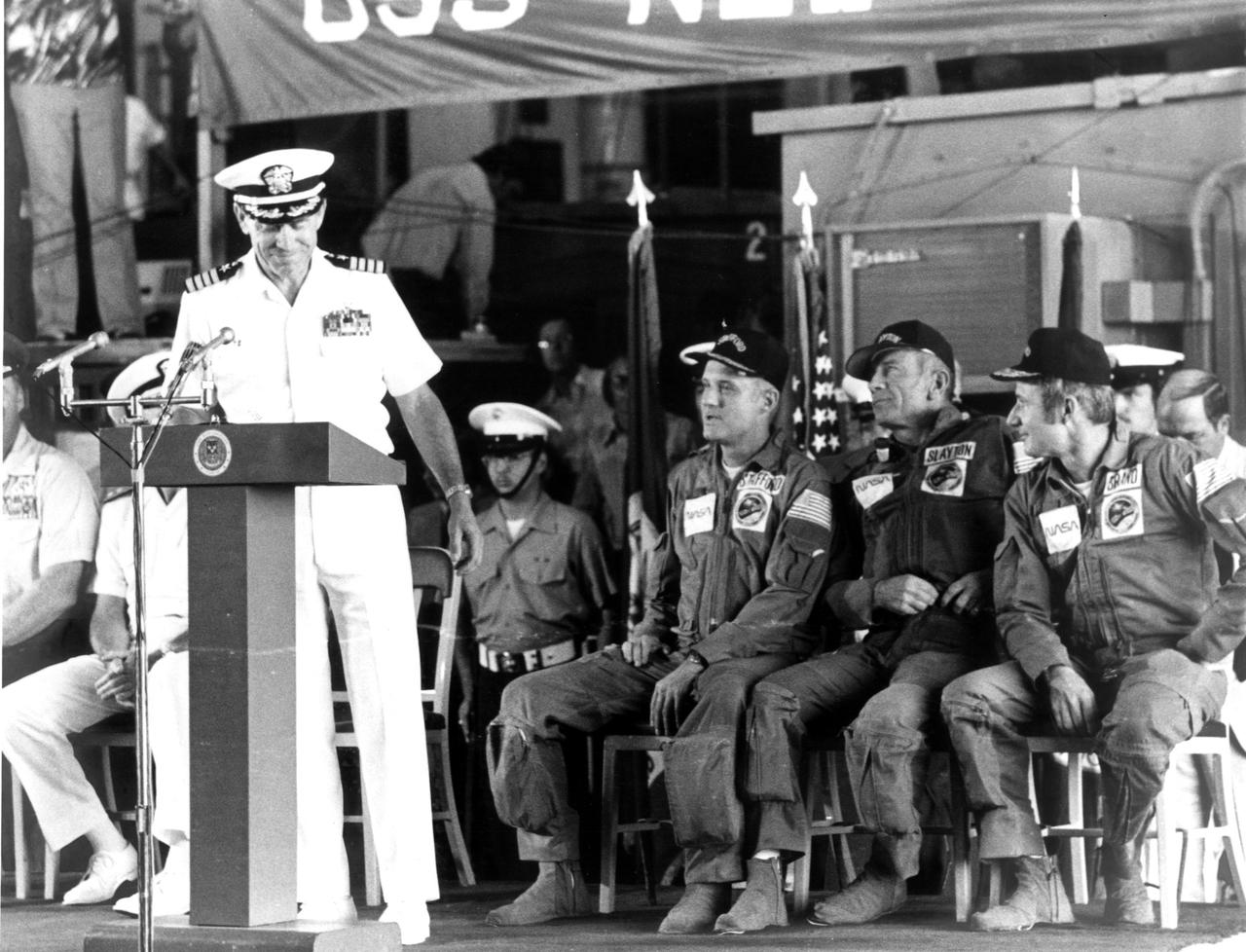
KENNEDY SPACE CENTER, FLA. -- The Commanding Officer of the USS New Orleans, Captain Ralph E. Neiger, welcomes aboard ASTP astronauts Thomas Stafford, Donald Slayton and Vance Brand. The astronauts splashed down in the Pacific Ocean west of Hawaii at 5:18 p.m. today, ending the nine-day ASTP mission. Themission was highlighted by the rendezvous and docking with a Soviet Soyuz spacecraft in Earth orbit.
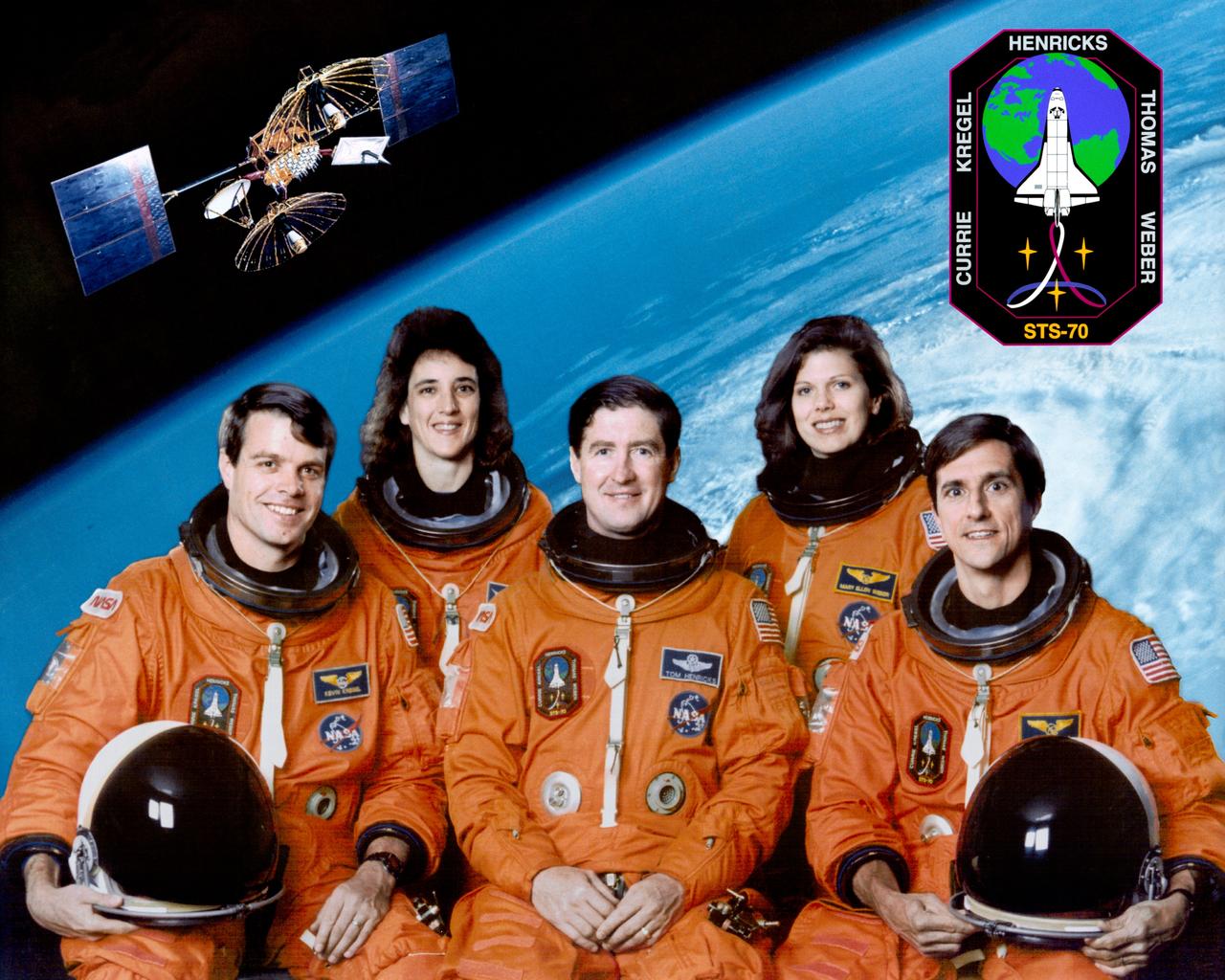
STS070-S-002 (May 1995) --- These five NASA astronauts are in training for the STS-70 mission aboard the Space Shuttle Discovery. Left to right are astronauts Kevin R. Kregel, Nancy J. Currie, Terence T. (Tom) Henricks, Mary Ellen Weber and Donald A. Thomas. Henricks and Kregel are commander and pilot, respectively. The other three are mission specialists. Among the tasks they are expected to perform is the deployment of another satellite in the network of the Tracking and Data Relay Satellite System (TDRSS).
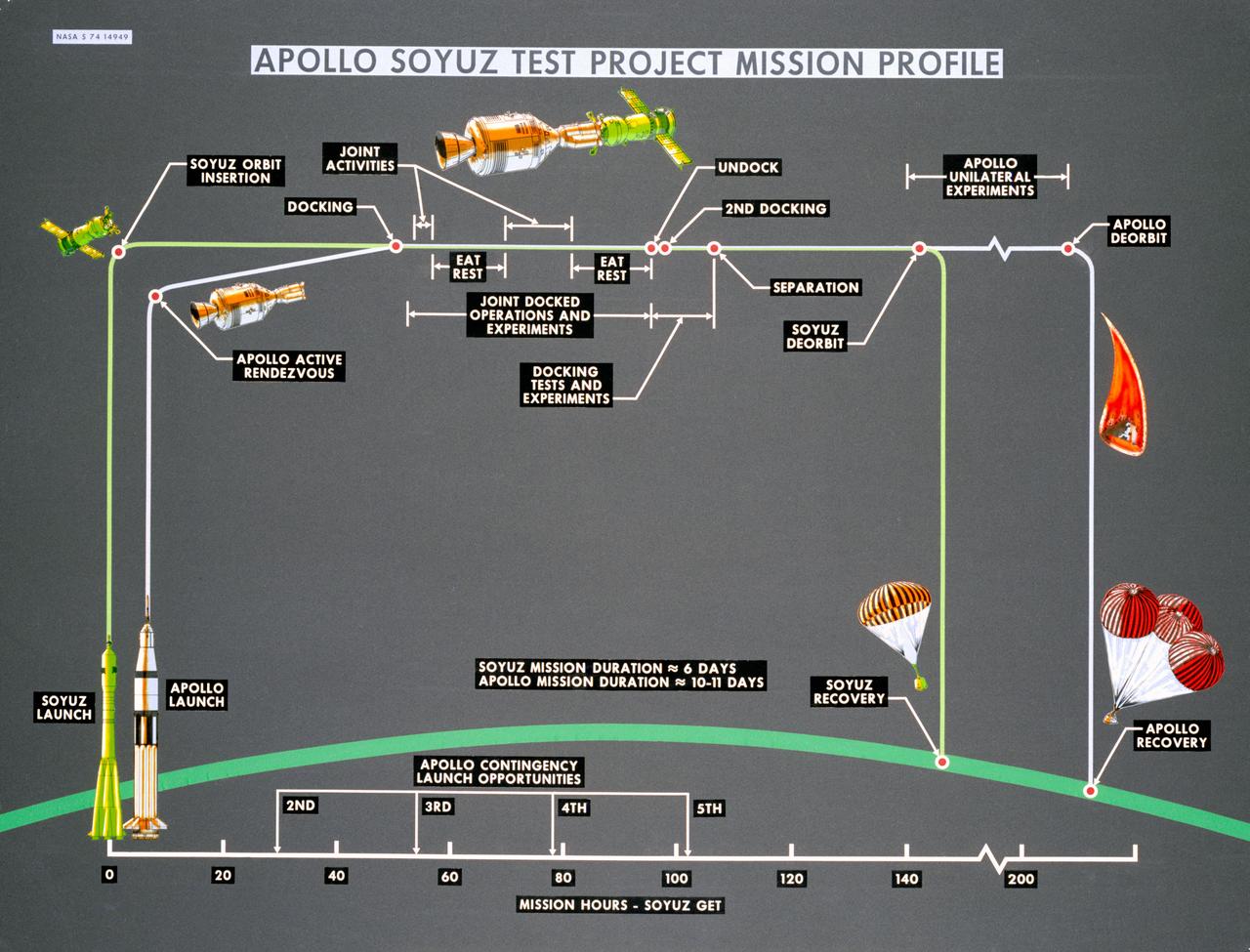
S74-14949 (October 1974) --- Artist?s drawings and call-outs depict phases of the joint U.S.-USSR Apollo-Soyuz Test Project, an Earth-orbital mission which will feature rendezvous and docking of the respective spacecraft of the two nations. ASTP crewmen for the USSR include Aleksey A. Leonov and Valeriy N. Kubasov. The astronaut team includes astronauts Thomas P. Stafford, Vance D. Brand and Donald K. Slayton. The mission is scheduled to take place in summer 1975.
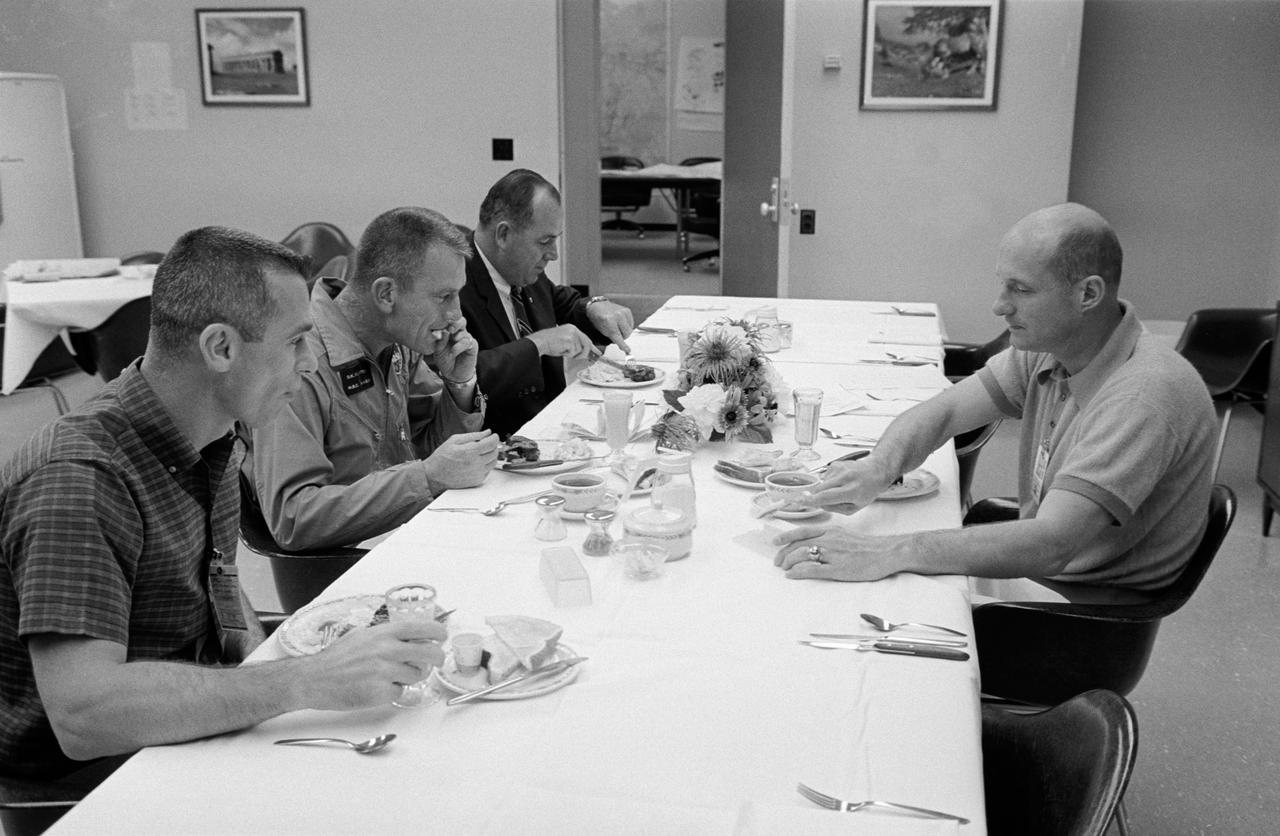
S66-34069 (3 June 1966) --- Gemini-9A prime crew enjoy a breakfast of steak and eggs on the morning of the Gemini-9A launch. Left to right, are astronaut Eugene A. Cernan, pilot; Donald K. Slayton, MSC Director of Flight Crew Operations; Charles Buckley, KSC Security; and astronaut Thomas P. Stafford, command pilot. Photo credit: NASA
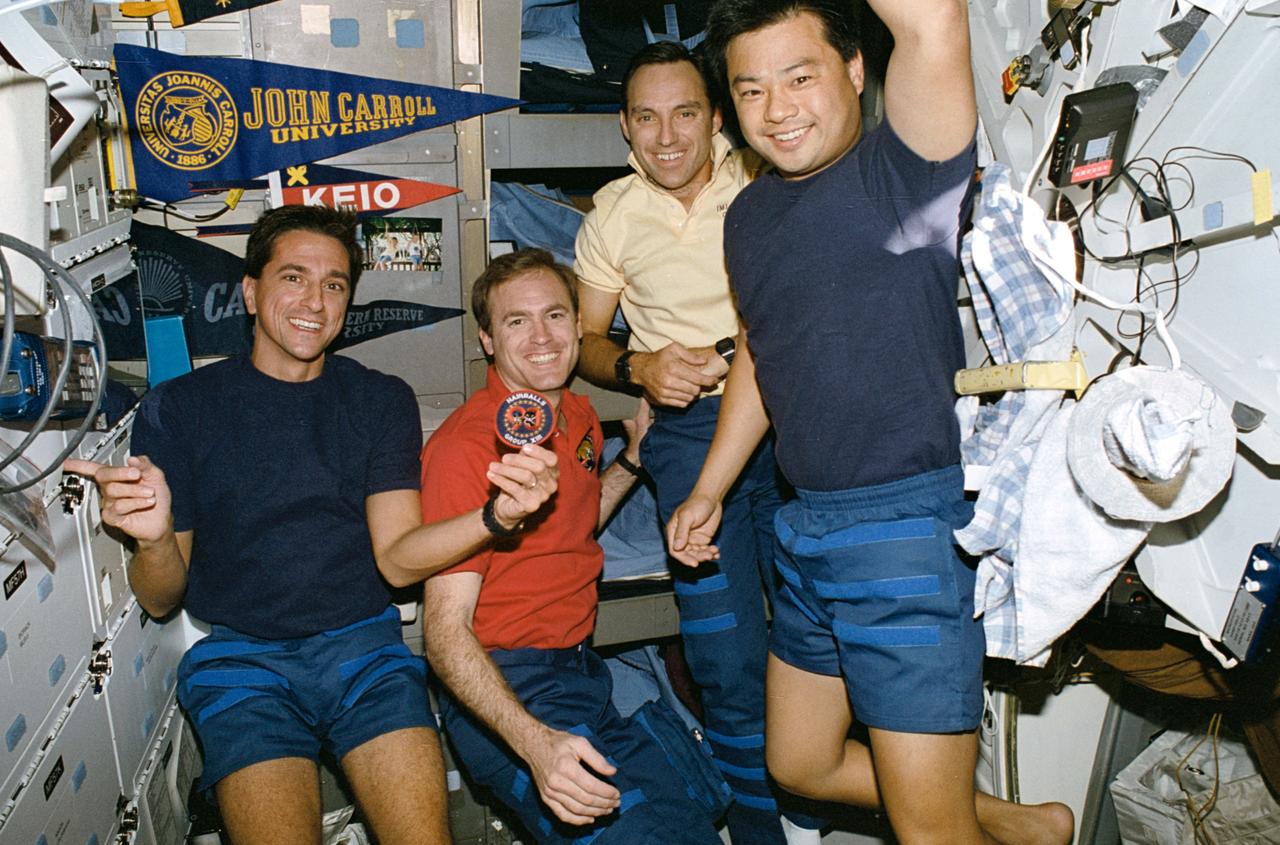
STS065-18-022 (8-23 July 1994) --- During off-duty time on the Space Shuttle Columbia's mid-deck, four members of the crew, from the 1990 (thirteenth) astronaut class, display their group's insignia. The "hairballs" pictured, (left to right) are astronauts Donald A. Thomas, James D. Halsell, Jr., Carl E. Walz and Leroy Chiao.
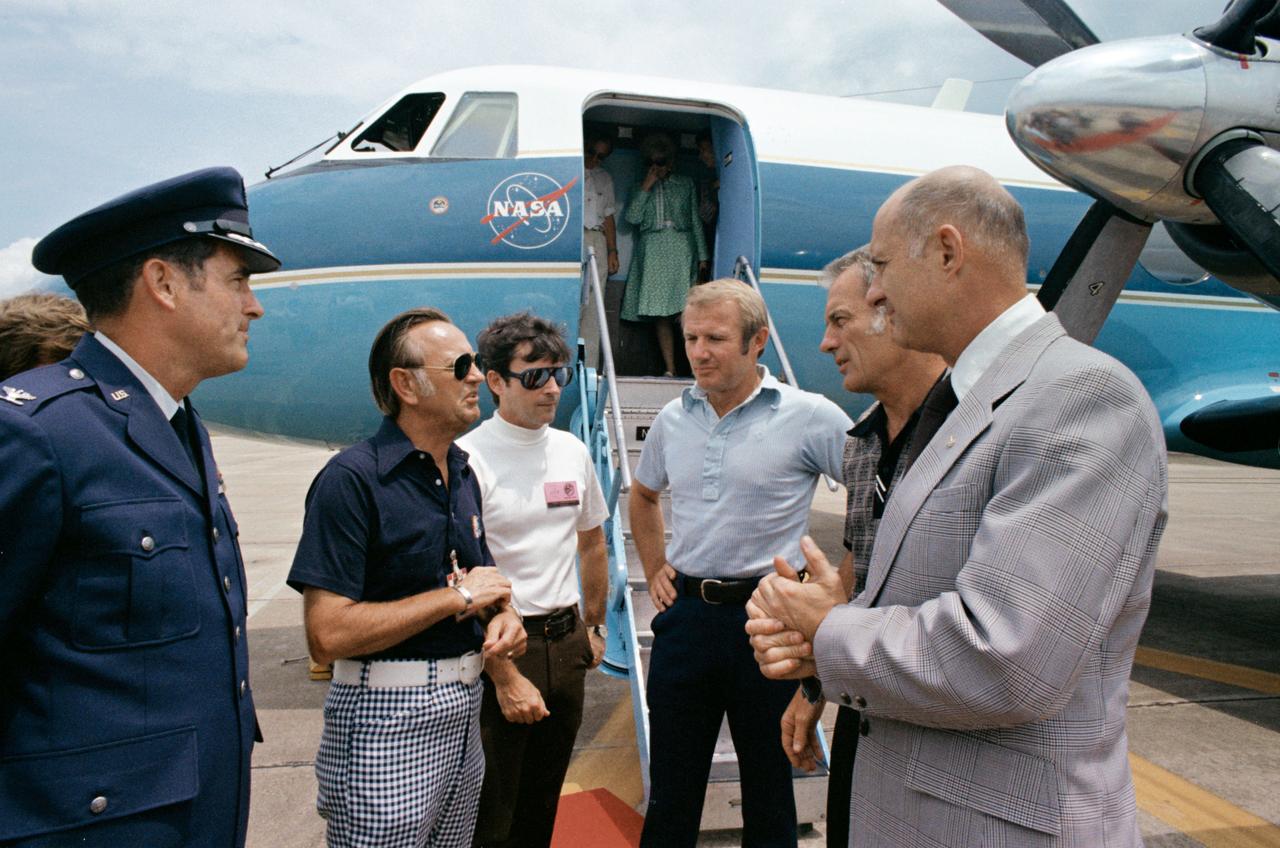
S75-30109 (10 Aug. 1975) --- Dr. Christopher C. Kraft Jr. (second from left), JSC Director, chats with the three ASTP crewmen on the runway at Ellington Air Force Base after their arrival home from the Pacific recovery area. The six men are, left to right, Col. Donald Robinson, EAFB commander; Dr. Kraft; astronaut John W. Young, Chief of the Astronaut Office at JSC; astronaut Vance D. Brand, command module pilot of the crew; astronaut Donald K. Slayton, docking module pilot of the crew; and astronaut Thomas P. Stafford, crew commander. This picture was taken prior to the official welcoming ceremonies. The crewmen?s wives are still aboard the plane. Medical treatment in Hawaii delayed the return of the crew to JSC. They suffered a pulmonary irritation from inhalation of a toxic gas minutes before splashdown on July 24, 1975.
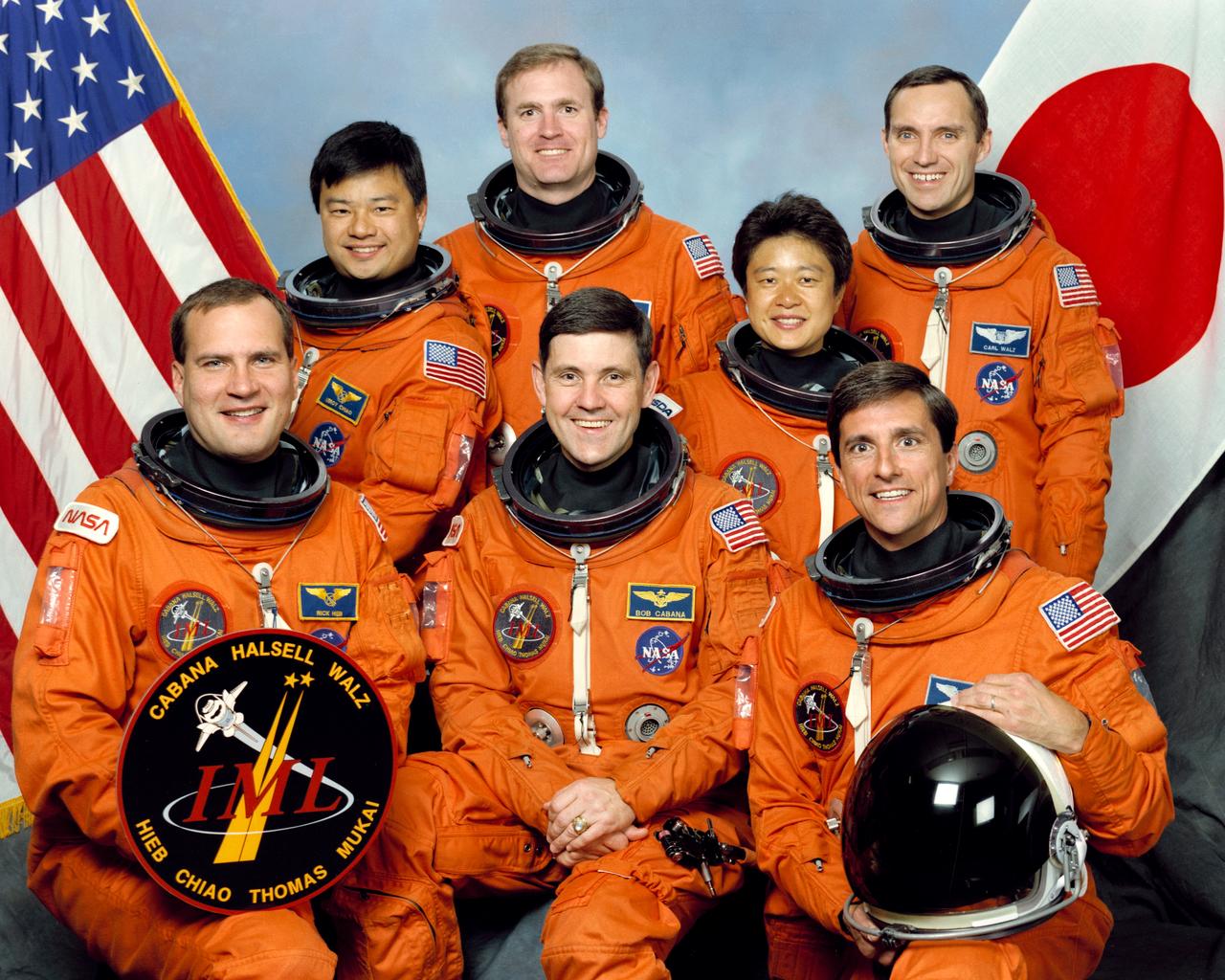
STS065-S-002 (April 1994) --- Six NASA astronauts and a Japanese payload specialist take a break from training to pose for their crew portrait. Left to right are Richard J. Hieb, Leroy Chiao, James D. Halsell Jr., Robert D. Cabana, Dr. Chiaki Mukai, Donald A. Thomas and Carl E. Walz. Cabana is mission commander, and Halsell has been assigned as pilot. Hieb is payload commander, with Walz, Thomas and Chiao serving as mission specialist. Dr. Mukai represents the National Space Development Agency (NASDA) of Japan as payload specialist on the International Microgravity Laboratory (IML) mission.
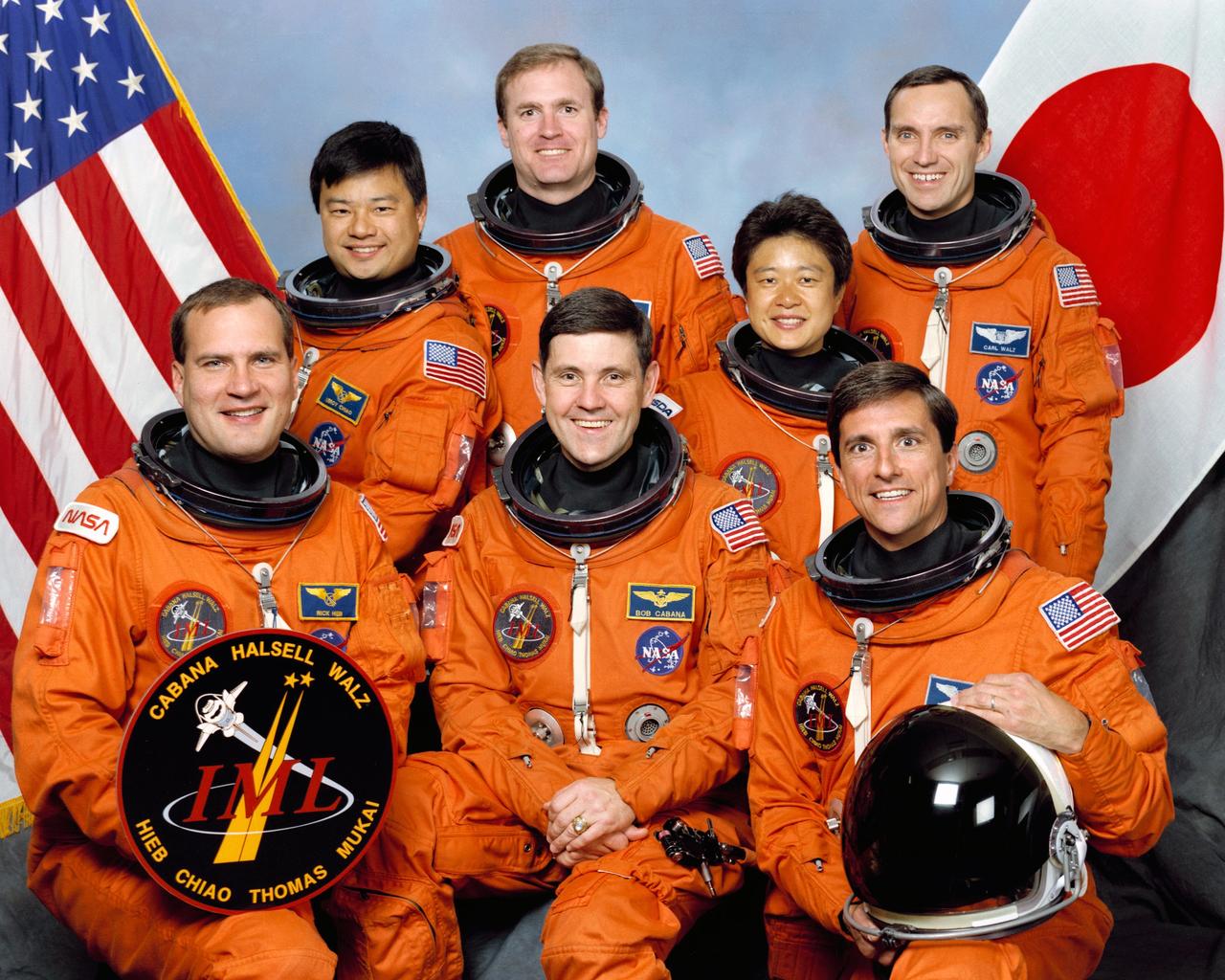
JOHNSON SPACE CENTER, Houston, Texas -- -- STS065(S)002 -- STS-65 Official Crew Portrait --- Six NASA astronauts and a Japanese payload specialist take a break from STS-65 training to pose for their crew portrait. Left to right are Richard J. Hieb, Leroy Chiao, James D. Halsell Jr., Robert D. Cabana, Dr. Chiaki Mukai, Donald A. Thomas and Carl E. Walz. Cabana is mission commander, and Halsell has been assigned as pilot. Hieb is payload commander, with Walz, Thomas and Chiao serving as mission specialists. Dr. Mukai represents the National Space Development Agency (NASDA) of Japan as payload specialist on the International Microgravity Laboratory (IML) mission.
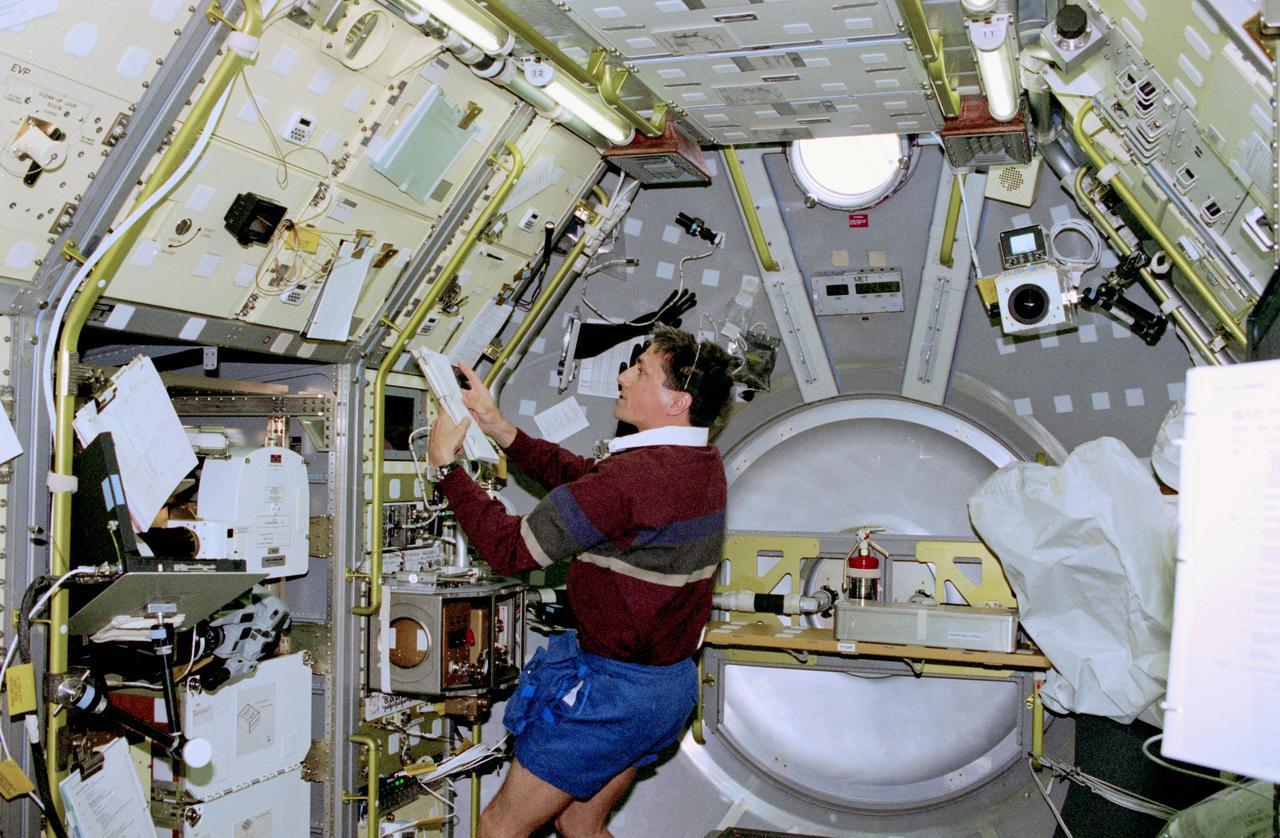
STS083-302-002 (4-8 April 1997) --- At the MidDeck Glove Box (MGBX), astronaut Donald A. Thomas, mission specialist, prepares to conduct the Internal Flows in Free Drops (IFFD) experiment. The IFFD is meant to study drops of several liquids, including water, water/glycerin and silicon oil. Flows within the drops and shape and stability are studied under varying acoustic pressure. The MGBX is the overall facility that holds experiments on materials that are not approved for study in the open Spacelab environment.
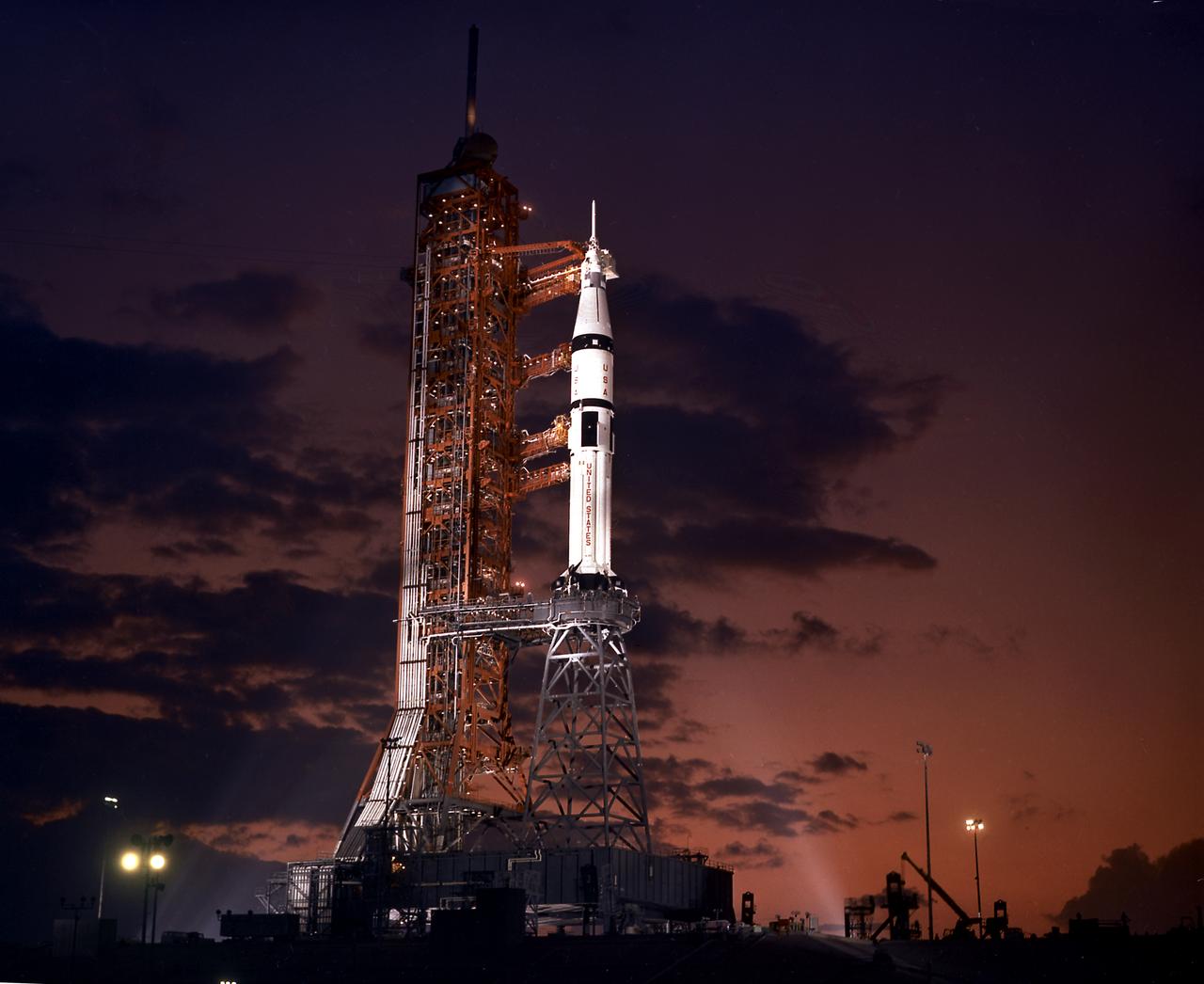
SA-210 Apollo-Soyuz Test Project (ASTP) awaits the launch scheduled on July 15, 1975 on the launch pad at the Kennedy Space Center, the ASTP mission with astronauts Thomas Stafford, Vance Brand, and Donald "Deke" Slayton. The Saturn IB, developed under the direction of the Marshall Space Flight Center (MSFC), launched five manned Earth-orbital missions between 1968 and 1975: Apollo 7, Skylab 2, Skylab 3, Skylab 4, and the Apollo-Soyuz Test Project .
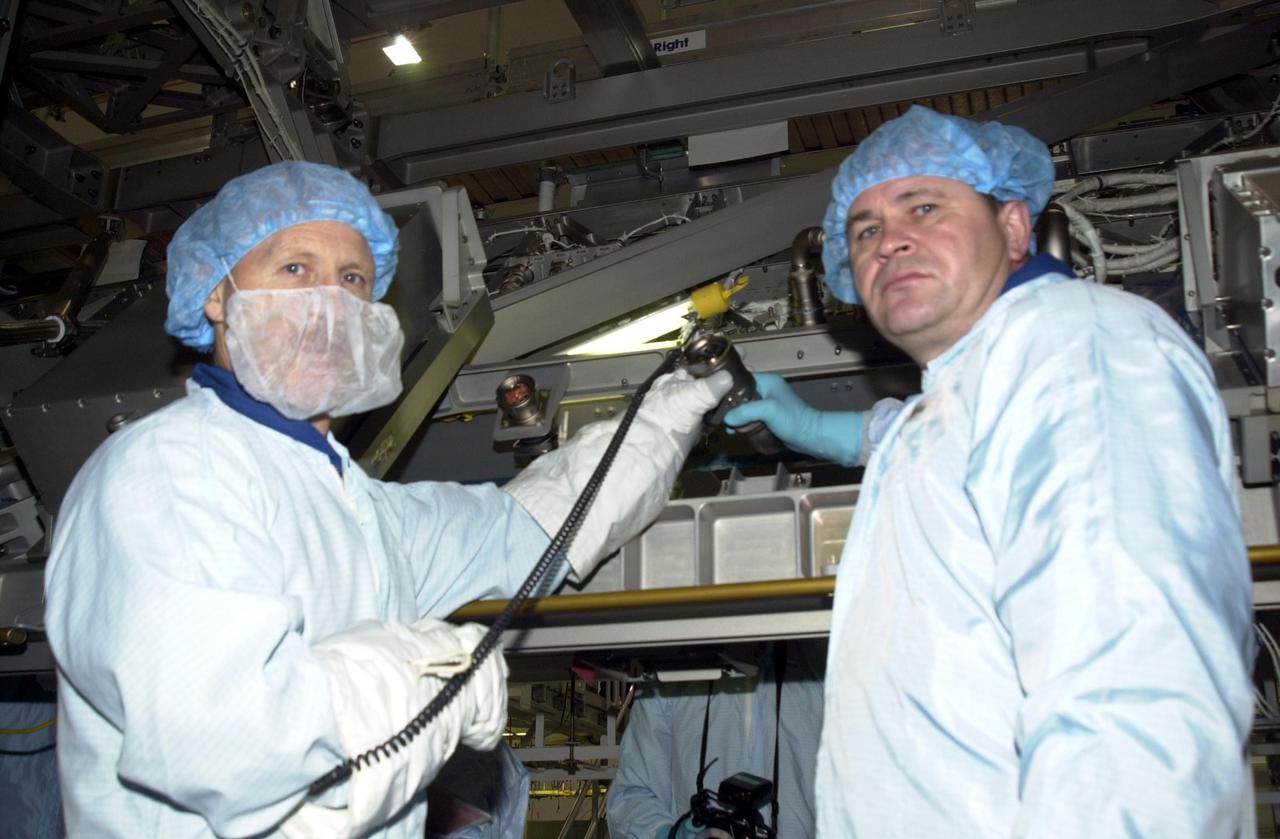
KENNEDY SPACE CENTER, FLA. -- Members of the Expedition 6 crew look over equipment they will be handling during their residency on the International Space Station. At left is Commander Ken Bowersox; at right is cosmonaut Nikolai Budarin. The third crew member (not shown) is astronaut Donald Thomas. The Expedition 6 crew is attached to mission STS-113, scheduled to launch in September 2002.
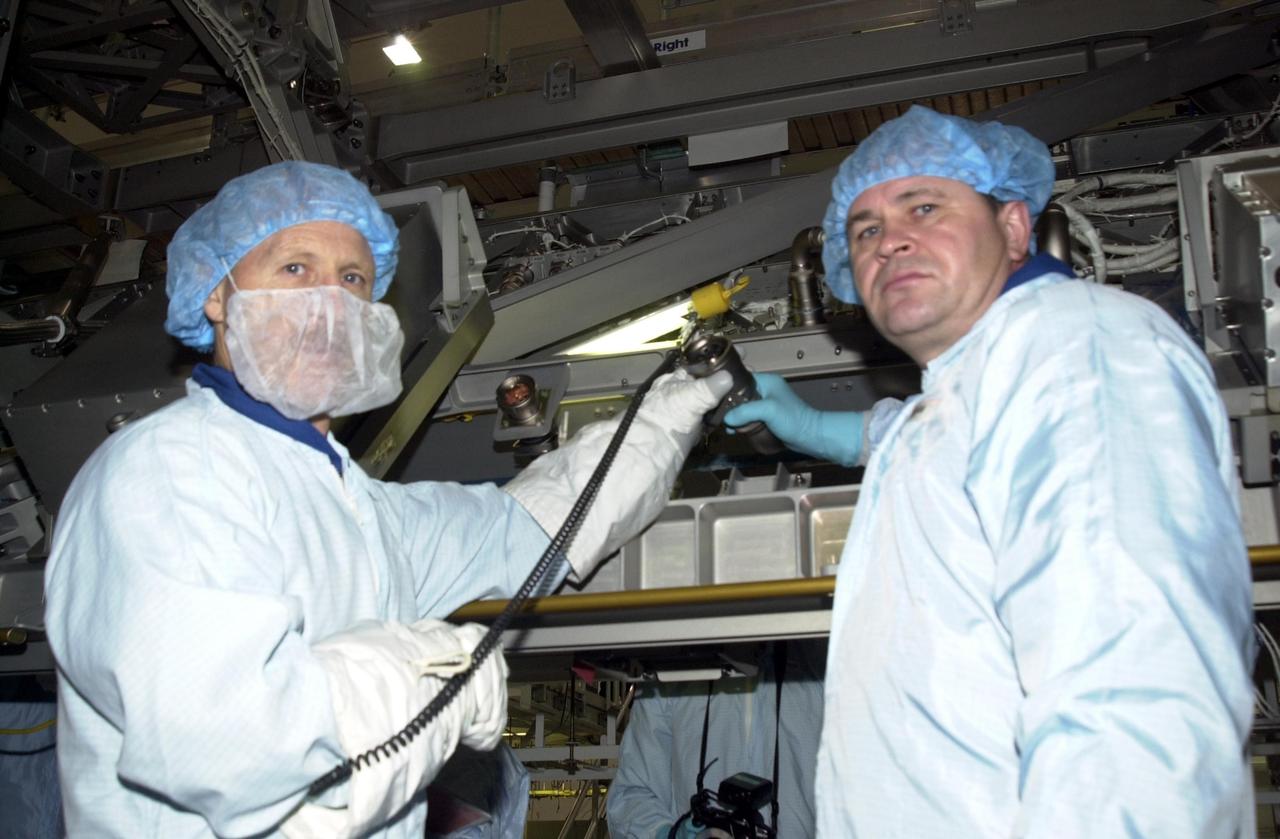
KENNEDY SPACE CENTER, FLA. -- Members of the Expedition 6 crew look over equipment they will be handling during their residency on the International Space Station. At left is Commander Ken Bowersox; at right is cosmonaut Nikolai Budarin. The third crew member (not shown) is astronaut Donald Thomas. The Expedition 6 crew is attached to mission STS-113, scheduled to launch in September 2002.
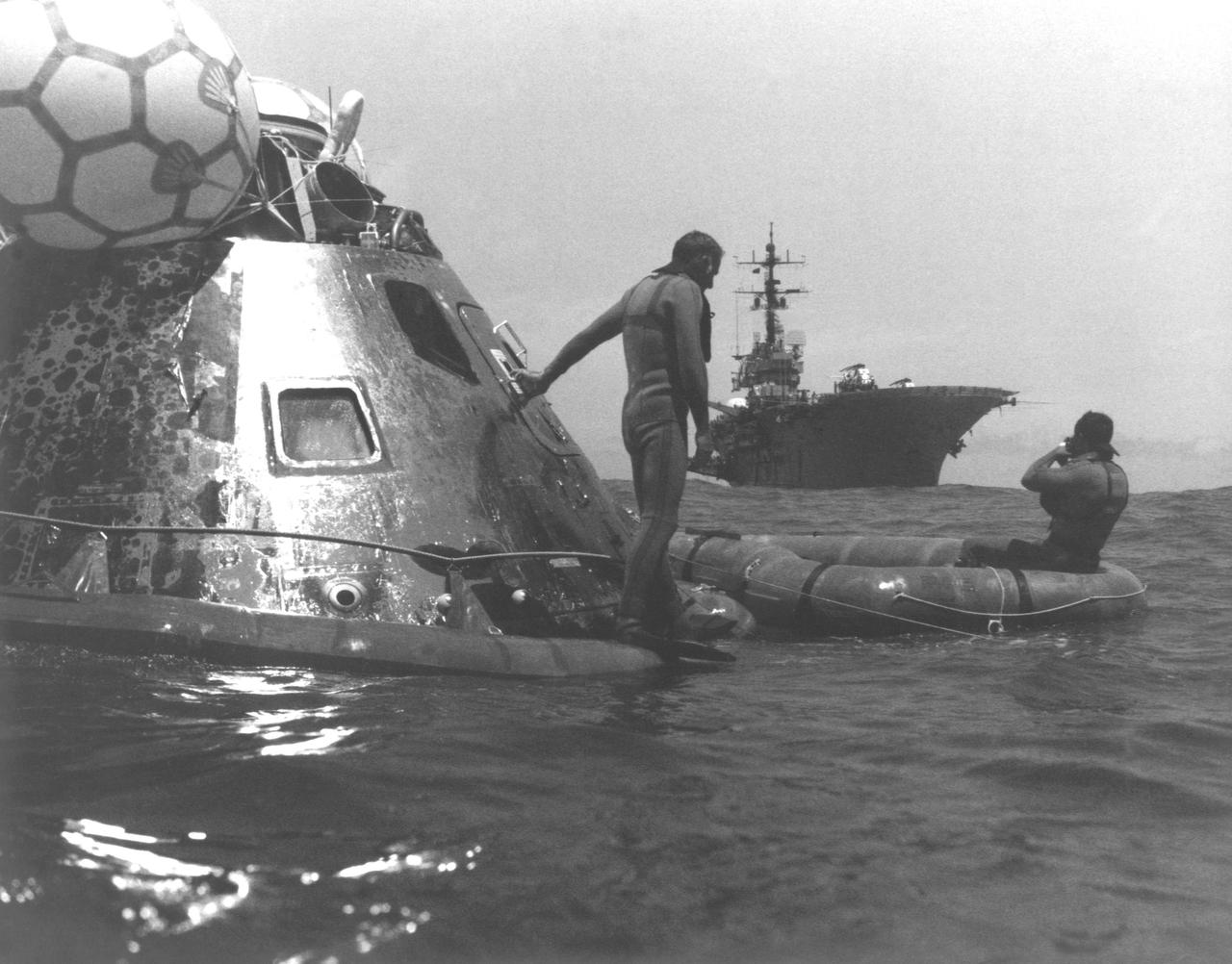
KENNEDY SPACE CENTER, FLA. -- Members of the Pacific Recovery Task Force secure the ASTP Apollo spacecraft as the USS New Orleans approaches to pick up the spacecraft and astronauts Thomas Stafford, Vance Brand and Donald Slayton. The Apollo splashed down in the Pacific Ocean, west of Hawaii, at 5:18 p.m., ending the nine-day joint US_USSR space mission.
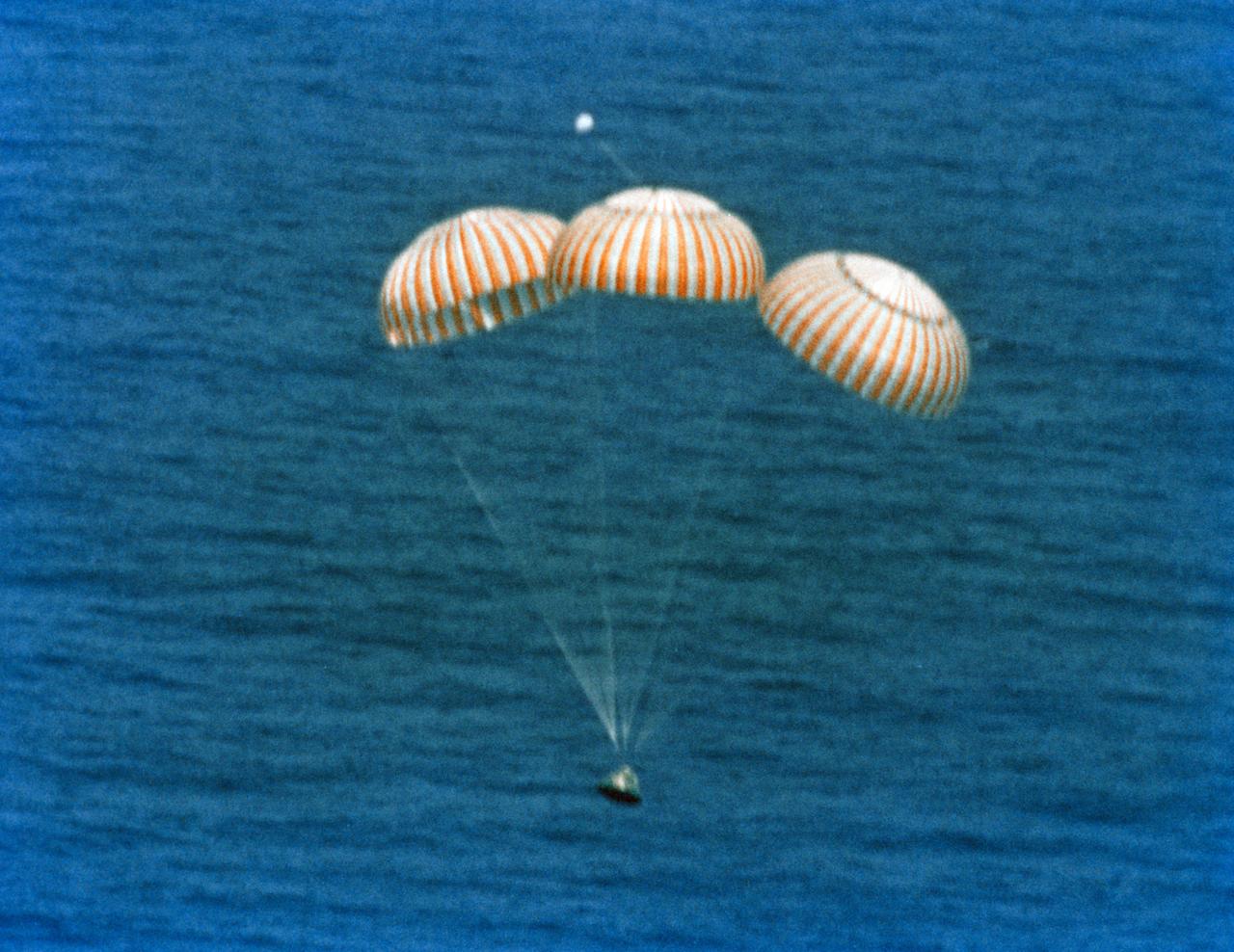
S75-29719 (24 July 1975) --- The ASTP Apollo Command Module, with astronauts Thomas P. Stafford, Vance D. Brand and Donald K. Slayton aboard, nears a touchdown in the Central Pacific Ocean to conclude the historic joint U.S.-USSR Apollo-Soyuz Test Project docking mission in Earth orbit. The spacecraft splashed down in the Hawaiian Islands area at 4:18 p.m. (CDT), July 24, 1975.
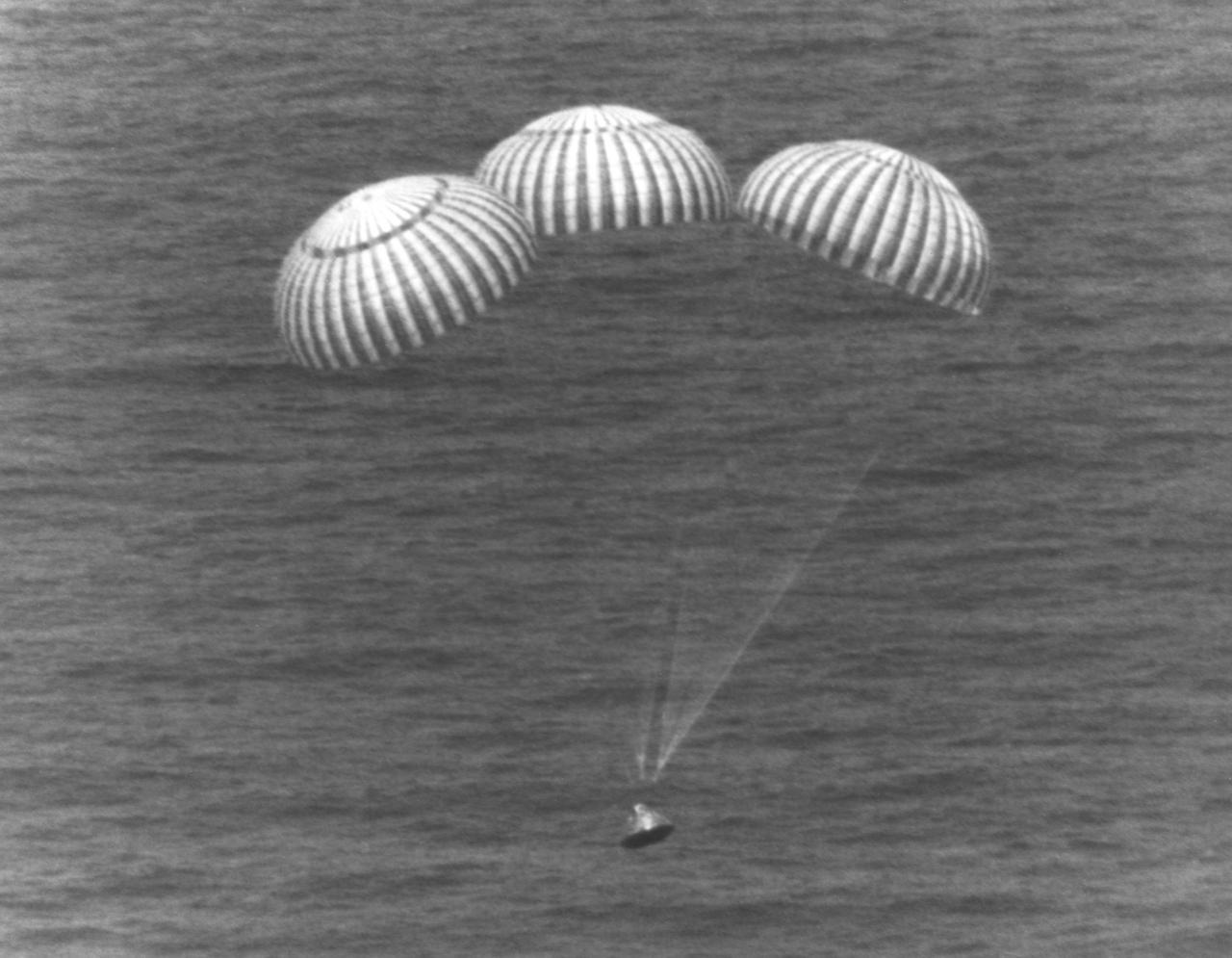
KENNEDY SPACE CENTER, FLA. -- The three main parachutes lower the ASTP Apollo Command Module into the Pacific Ocean west of Hawaii. The splashdown at 5:18 p.m. ended the nine-day mission for ASTP astronauts Thomas Stafford, Vance Brand and Donald Slayton. The Apollo was picked up by the USS New Orleans after which the crewmen participated in ceremonies on the ship's deck.
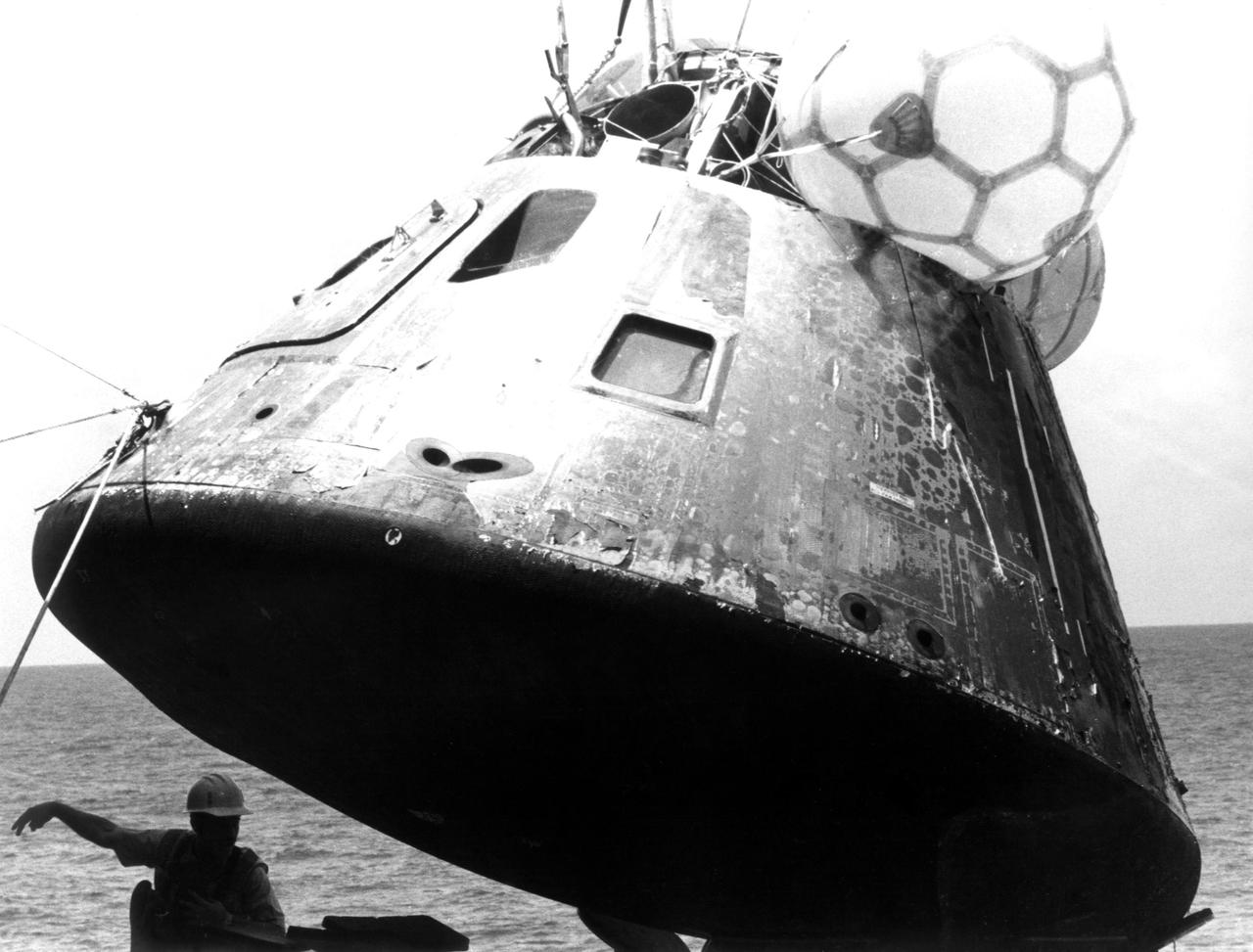
KENNEDY SPACE CENTER, FLA. -- The ASTP Apollo Command Module is lowered onto the deck of the USS New Orleans following splashdown in the Pacific Ocean, west of Hawaii, at 5:18 p.m. today. Once aboard the ship, the ASTP astronauts Thomas Stafford, Vance Brand, and Donald Slayton emerged from the spacecraft and participated in ceremonies during which they spoke by telephone to President Gerald Ford. The splashdown ended the crew's historic nine-day mission, highlighted by their rendezvous and docking with a Soviet Soyuz spacecraft while in Earth orbit.
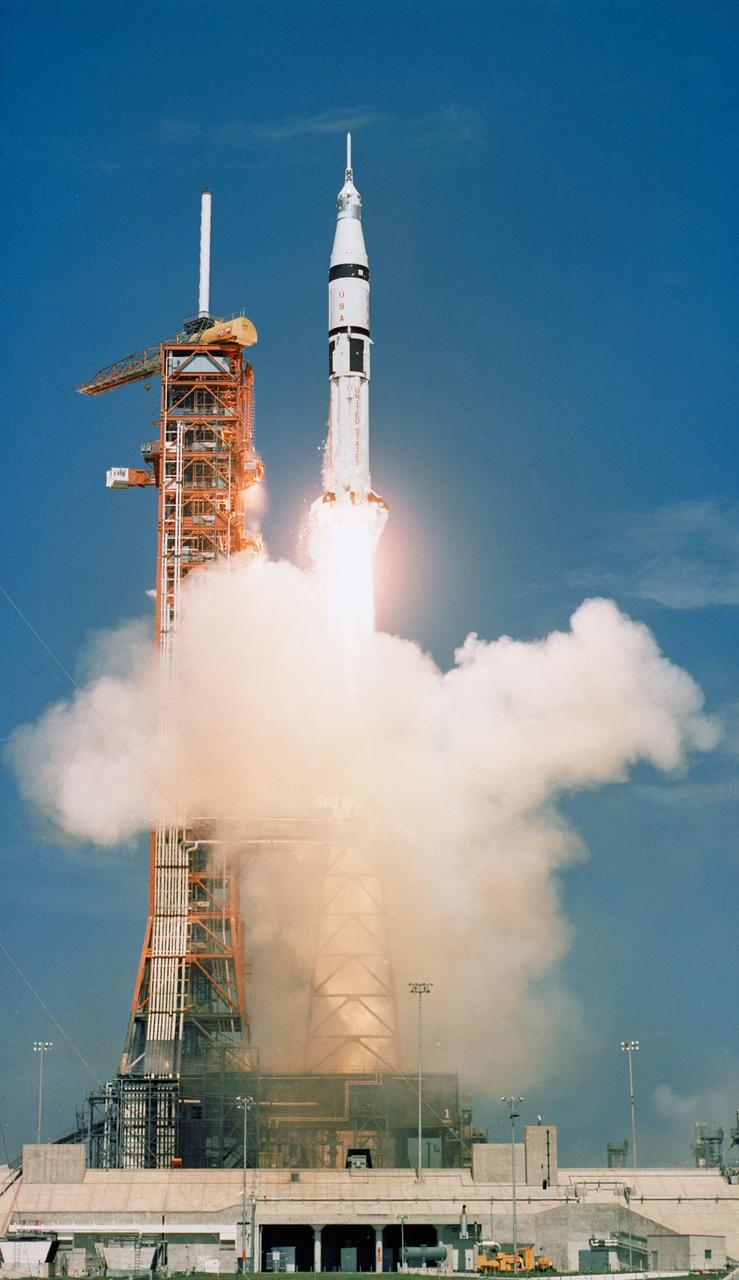
S75-28550 (15 July 1975) --- The Apollo-Soyuz Test Project's (ASTP) NASA Apollo/Saturn 1B space vehicle is launched from Pad B, Launch Complex 39, Kennedy Space Center (KSC), Florida, at 3:50 p.m. (EDT), July 15, 1975, to begin Apollo's catch-up journey toward the already Earth-orbiting Soviet Soyuz spacecraft. Aboard the Apollo spacecraft were astronauts Thomas P. Stafford, Vance D. Brand and Donald K. (Deke) Slayton.
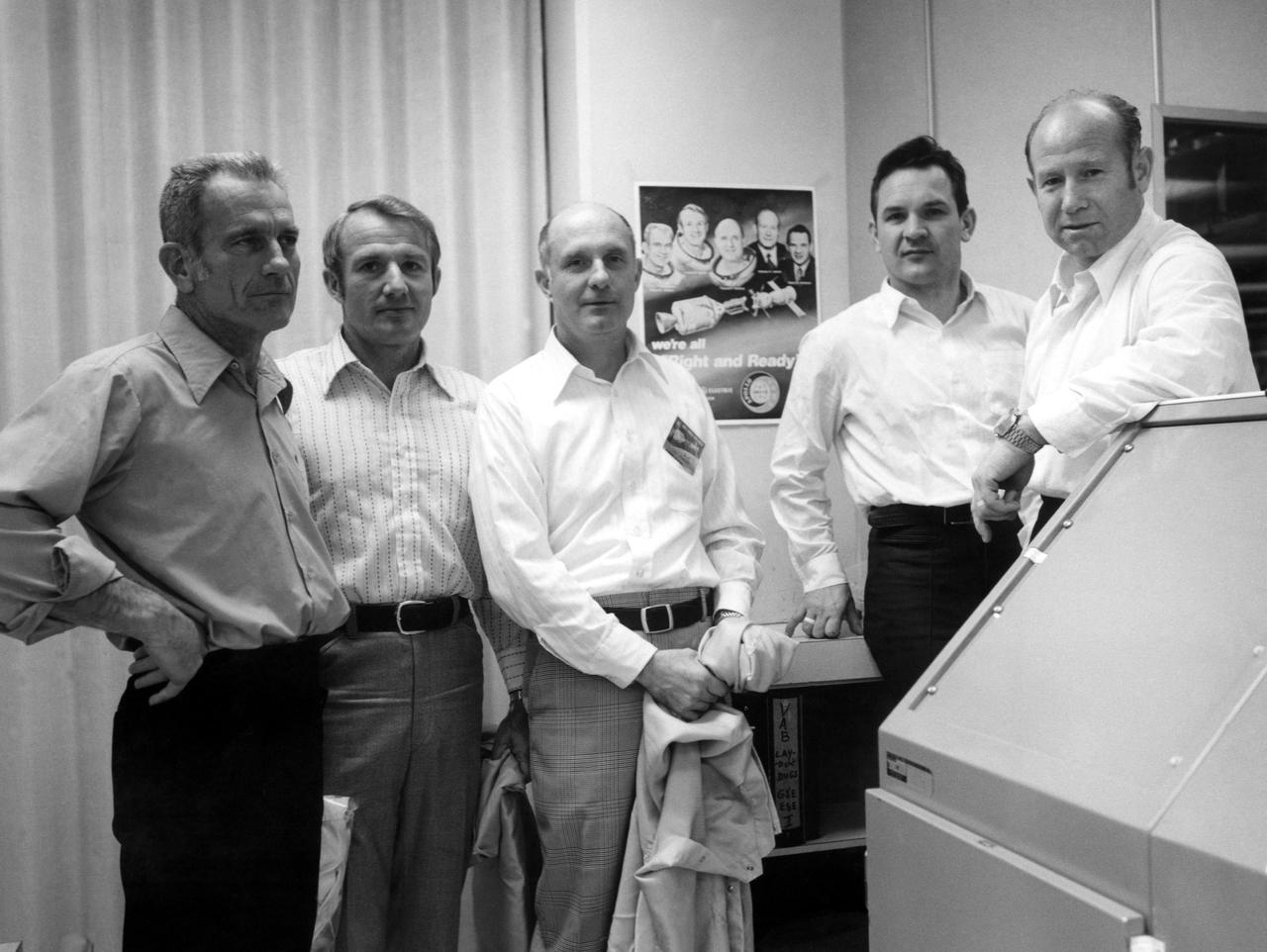
KENNEDY SPACE CENTER, FLA. -- Soviet Cosmonaut tour of KSC. United States, Soviet Union, prime crews for Apollo Soyuz Test Project inspect spacecraft checkout facilities in Manned Spacecraft Operations Building ACE Station. From left are astronauts Donald K. Slayton, Vance D. Brand and Thomas P. Stafford; cosmonauts Valeriy Kubasov and Aleksey Leonov.
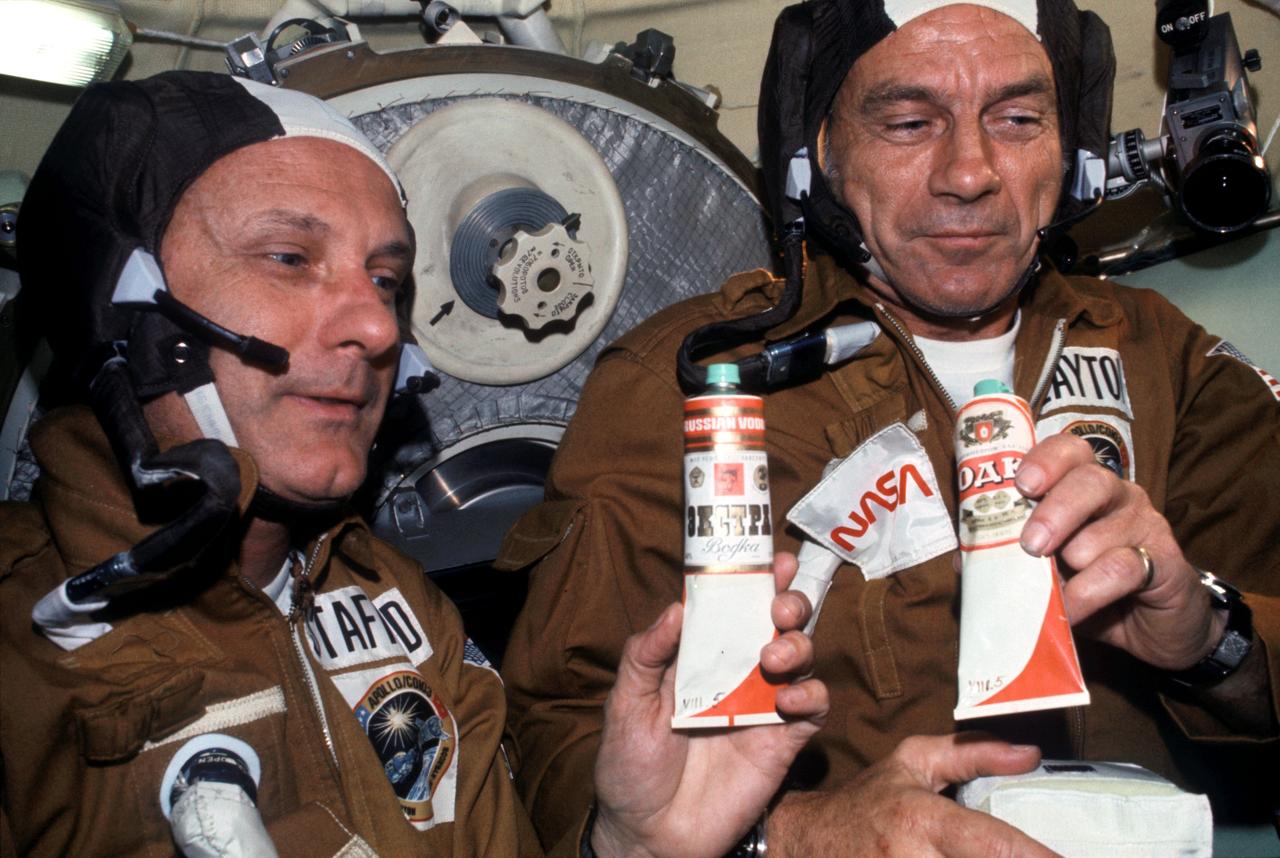
AST-03-175 (17-19 July 1975) --- Astronauts Thomas P. Stafford (left) and Donald K. Slayton hold containers of Soviet space food in the Soyuz Orbital Module during the joint U.S.-USSR Apollo-Soyuz Test Project docking mission in Earth orbit. The containers hold borsch (beet soup) over which vodka labels have been pasted. This was the crews' way of toasting each other.
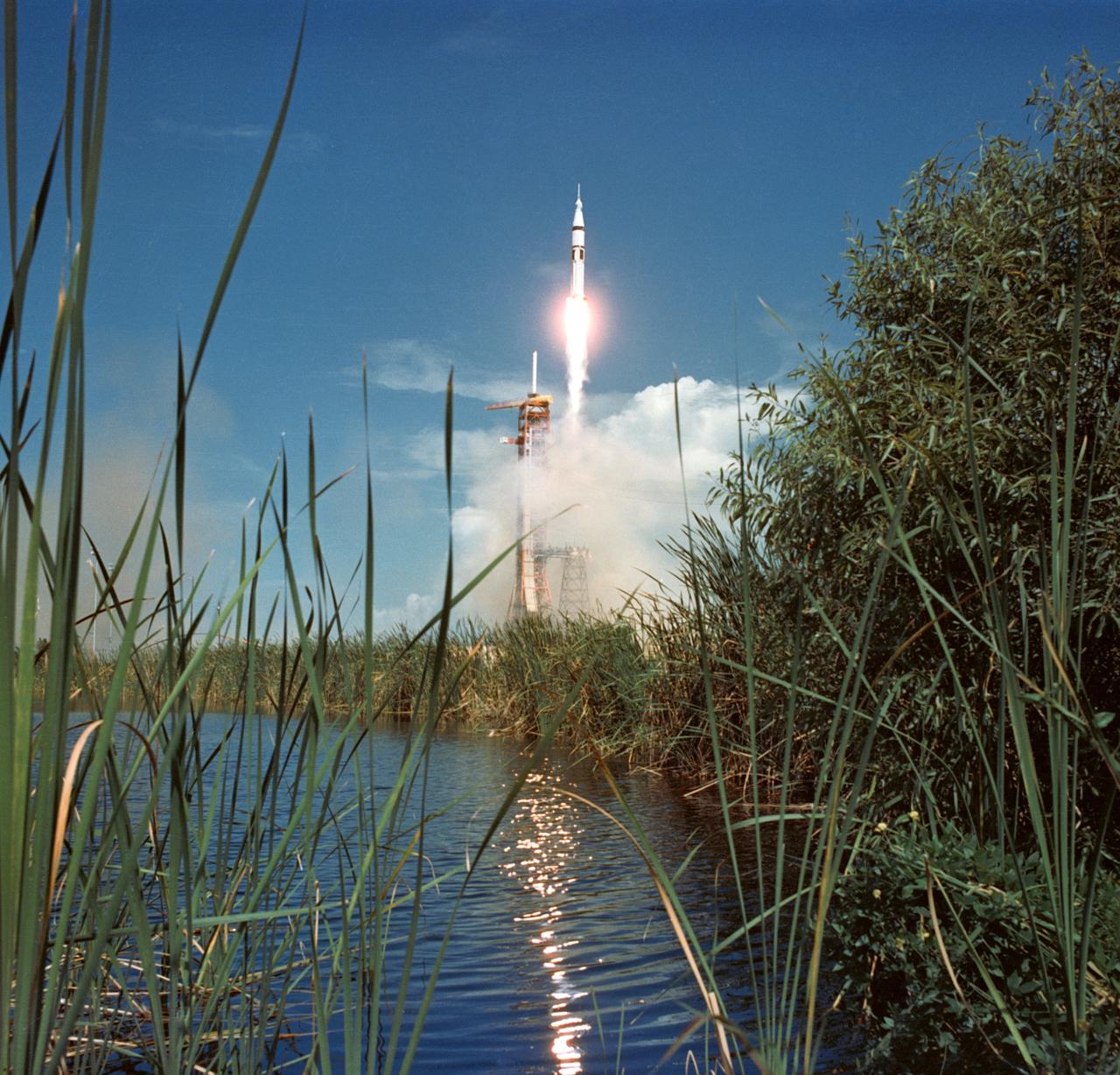
S75-28547 (15 July 1975) --- The Apollo-Soyuz Test Project's (ASTP) NASA Apollo/Saturn 1B space vehicle is launched from Pad B, Launch Complex 39, Kennedy Space Center (KSC), Florida, at 3:50 p.m. (EDT), July 15, 1975, to begin Apollo's catch-up journey toward the already Earth-orbiting Soviet Soyuz spacecraft. Aboard the Apollo spacecraft were astronauts Thomas P. Stafford, Vance D. Brand and Donald K. (Deke) Slayton.
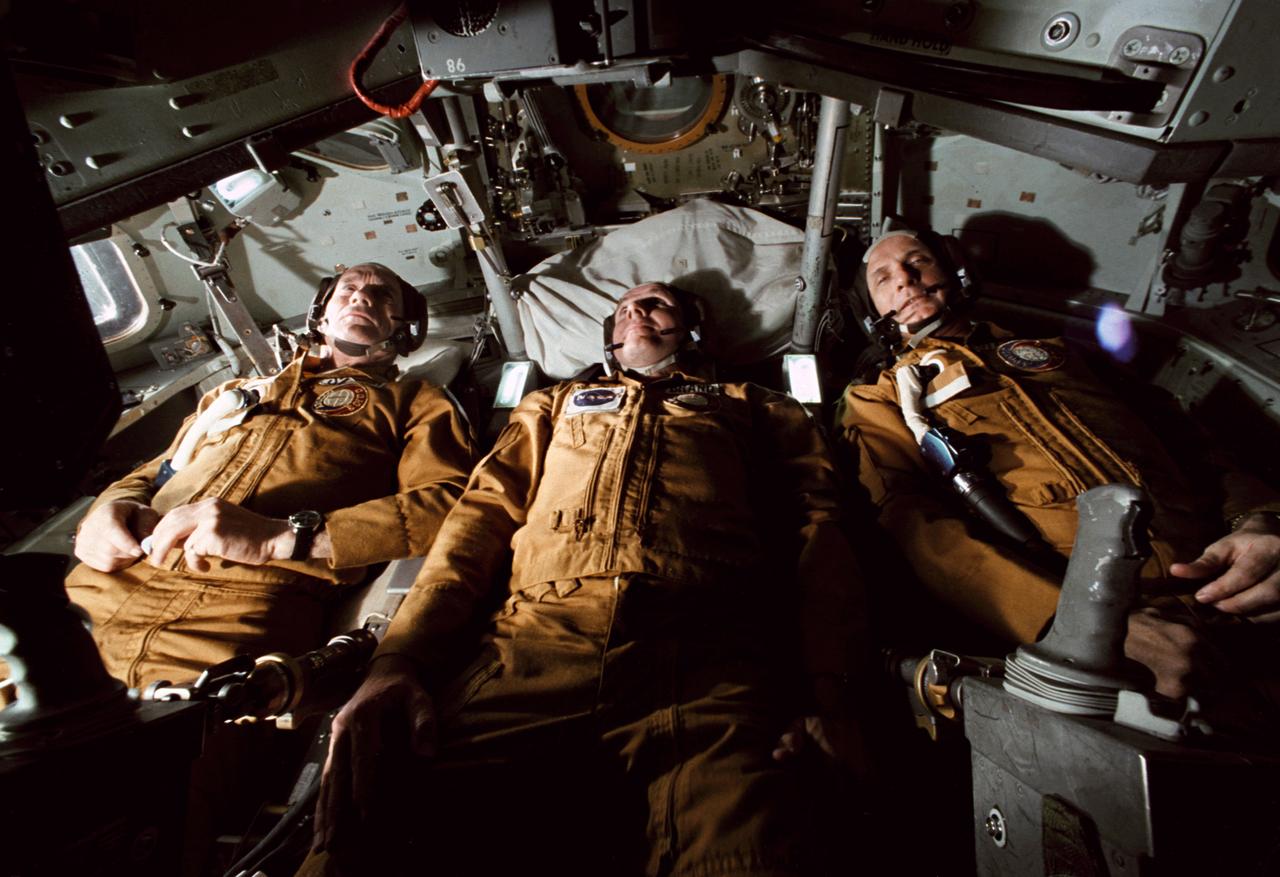
S75-22747 (25 Feb. 1975) --- An interior view of the Apollo Command Module trainer in Building 35 showing the three American ASTP prime crewmen lying in their couches during Apollo-Soyuz Test Project training at NASA's Johnson Space Center. They are, left to right, astronauts Donald K. Slayton, docking module pilot; Vance D. Brand, command module pilot; and Thomas P. Stafford, commander.
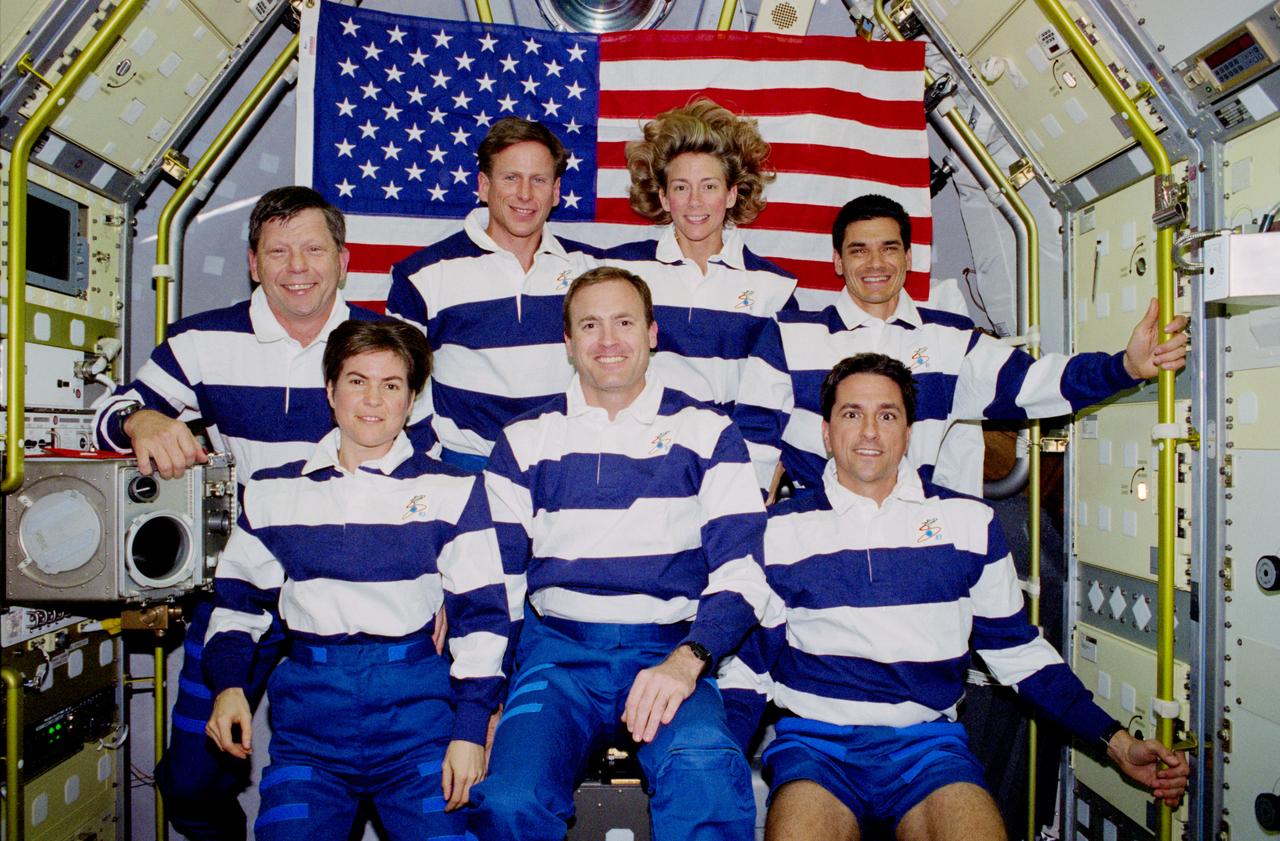
STS083-325-004 (4-8 April 1997) --- Five NASA astronauts and two payload specialists pose for the traditional inflight crew portrait during a Microgravity Science Laboratory 1 (MSL-1) shift changeover in the Spacelab Module aboard the Space Shuttle Columbia. In front (from the left) are astronauts Janice E. Voss, James D. Halsell, Jr. and Donald A. Thomas. From left to right in the rear are Roger K. Crouch, along with astronauts Michael L. Gernhardt and Susan L. Still, and Gregory T. Linteris. Crouch and Linteris are payload specialists.
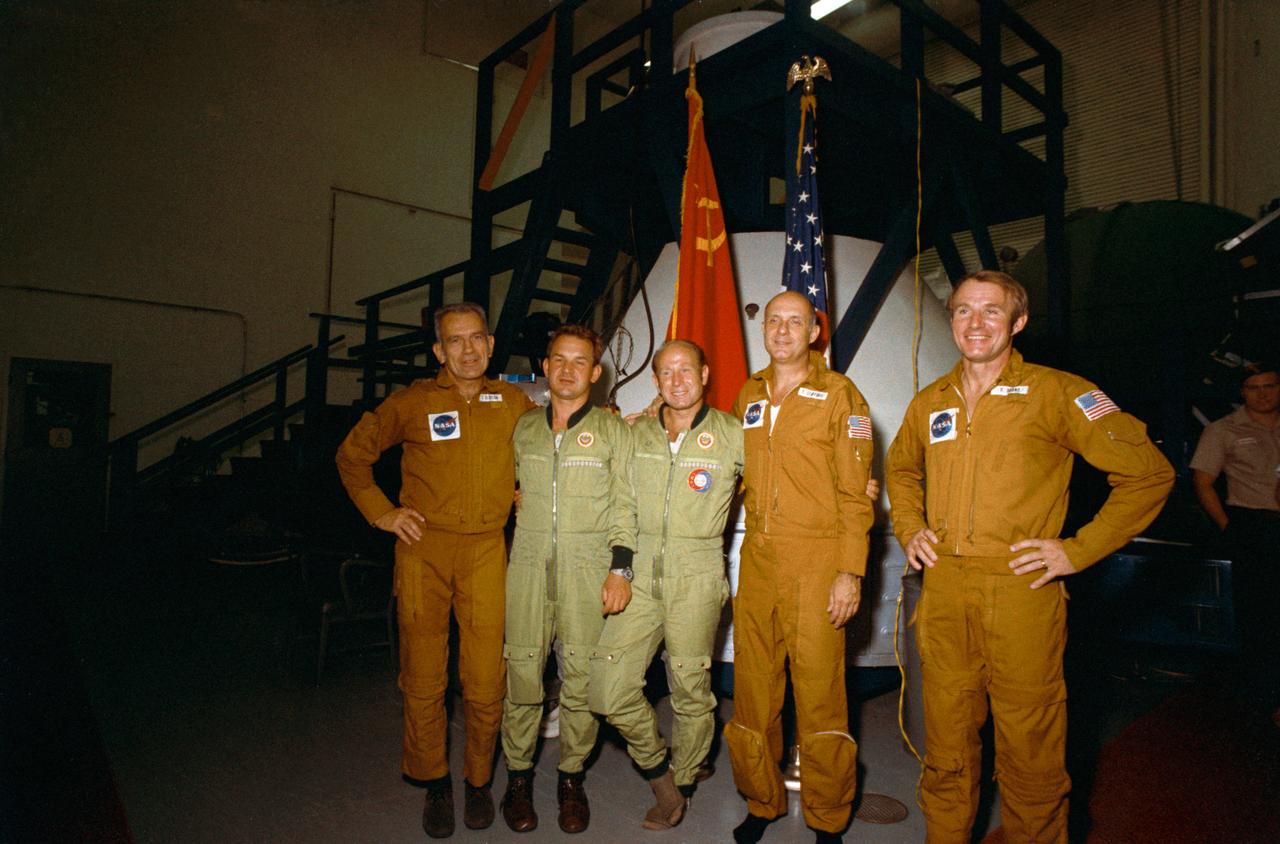
S74-28811 (23 Sept. 1974) --- The five prime crewmen of the joint U.S.-USSR Apollo-Soyuz Test Project mission are photographed in the Flight Crew Training Facility, Building 35, at the Johnson Space Center during ASTP crew training activity. They are, left to right, astronaut Donald K. Slayton, docking module pilot of the American crew; cosmonaut Valeriy N. Kubasov, engineer on the Soviet crew; cosmonaut Aleksey A. Leonov, commander of the Soviet crew; astronaut Thomas P. Stafford, commander of the American crew; and astronaut Vance D. Brand, command module pilot of the American crew.
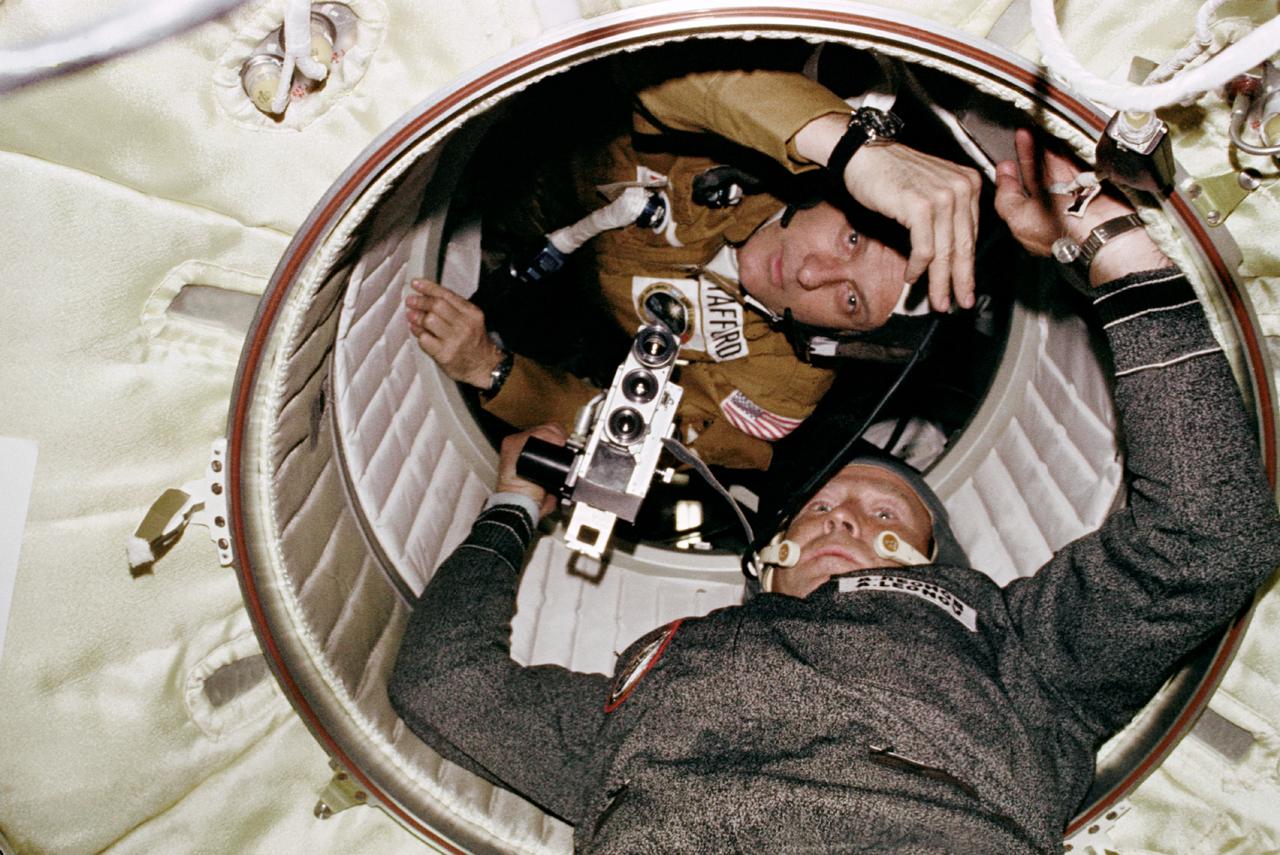
AST-03-191 (17-19 July 1975) --- Astronaut Thomas P. Stafford and cosmonaut Aleksei A. Leonov are seen at the hatchway leading from the Apollo Docking Module (DM) to the Soyuz Orbital Module (OM) during the joint U.S.-USSR Apollo Soyuz Test Project (ASTP) docking mission in Earth orbit. Cosmonaut Leonov is in the OM and astronaut Stafford is in the DM. Leonov holds a camera. The Apollo crew consisted of astronauts Stafford, commander; Donald K. "Deke" Slayton, docking module pilot; Vance D. Brand, command module pilot. The Soyuz 19 crew consisted of cosmonauts Leonov, command pilot; and Valeri N. Kubasov, flight engineer.
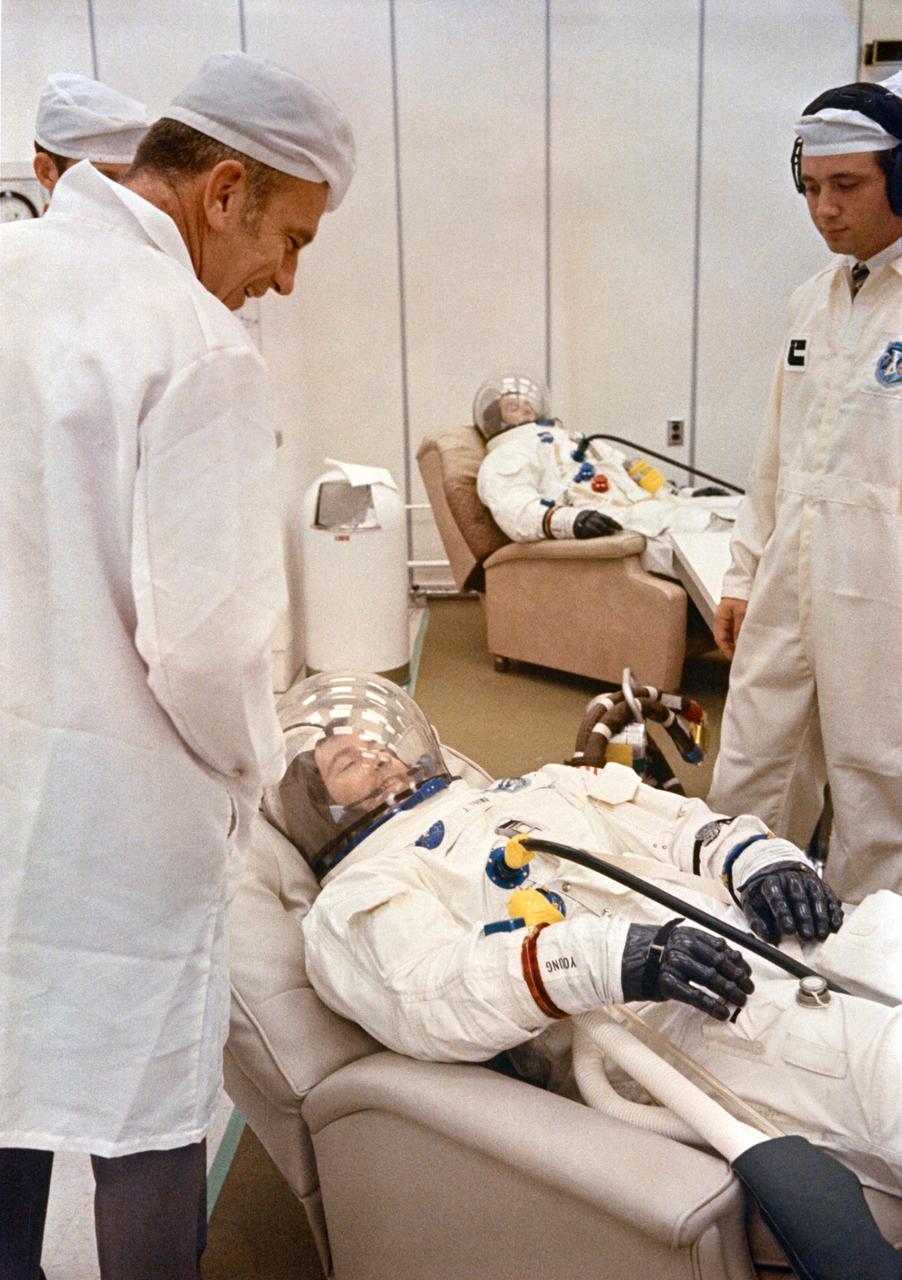
S69-34482 (18 May 1969) --- Astronaut John W. Young, Apollo 10 command module pilot, jokes with Donald K. Slayton (standing left), director of Flight Crew Operations, Manned Spacecraft Center, during Apollo 10 suiting up operations. On couch in background is astronaut Eugene A. Cernan, lunar module pilot. Astronauts Young; Cernan; and Thomas P. Stafford, commander, rode a transfer van from the Manned Spacecraft Operations Building over to Pad B, Launch Complex 39 where their spacecraft awaited them. Liftoff was at 12:49 p.m. (EDT), May 18, 1969.
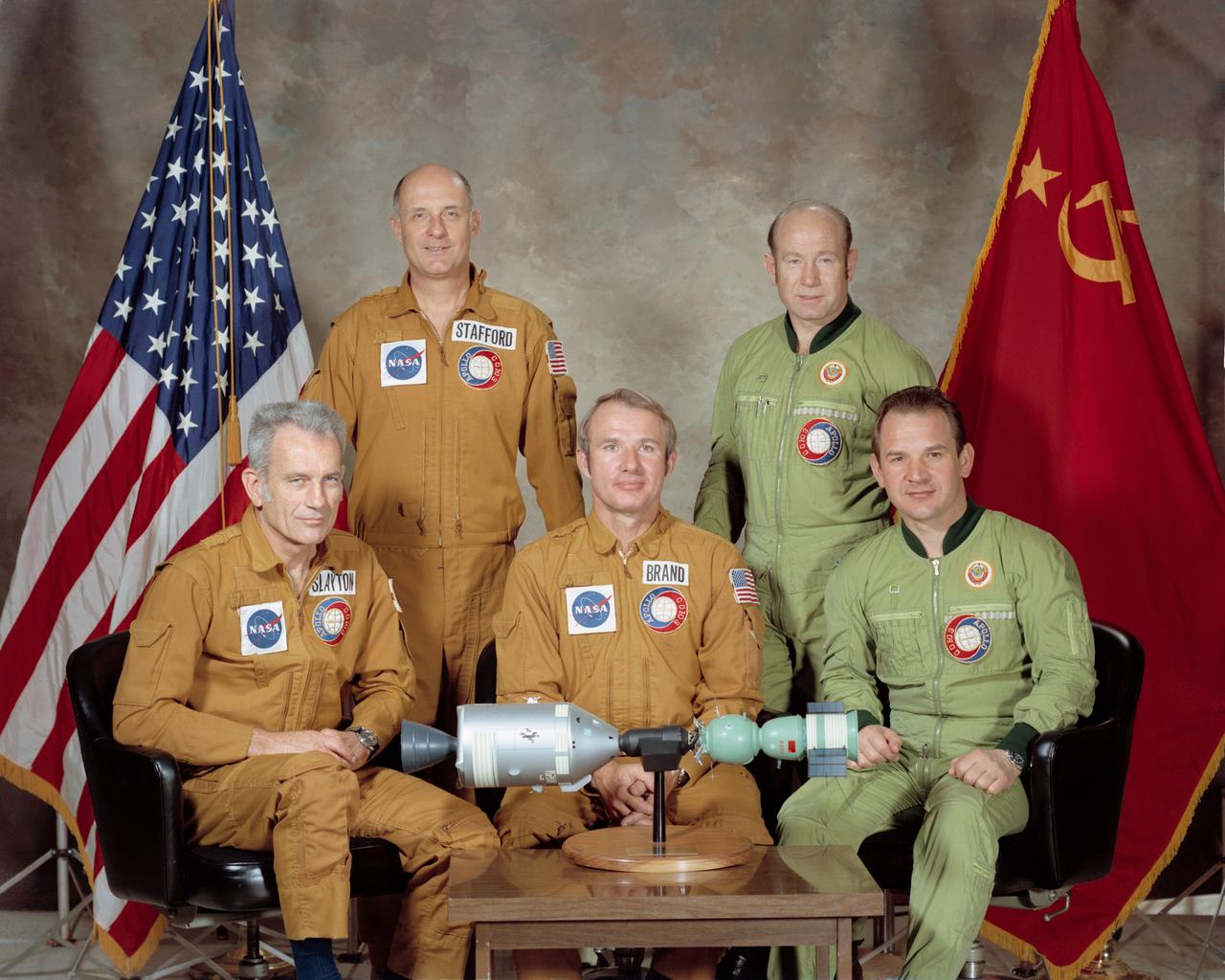
S75-22410 (March 1975) --- These five men compose the two prime crews of the joint United States-USSR Apollo-Soyuz Test Project (ASTP) docking mission in Earth orbit scheduled for July 1975. They are astronaut Thomas P. Stafford (standing on left), commander of the American crew; cosmonaut Aleksey A. Leonov (standing on right), commander of the Soviet crew; astronaut Donald K. Slayton (seated on left), docking module pilot of the American crew; astronaut Vance D. Brand (seated center), command module pilot of the American crew; and cosmonaut Valeriy N. Kubasov (seated on right), engineer on the Soviet crew.
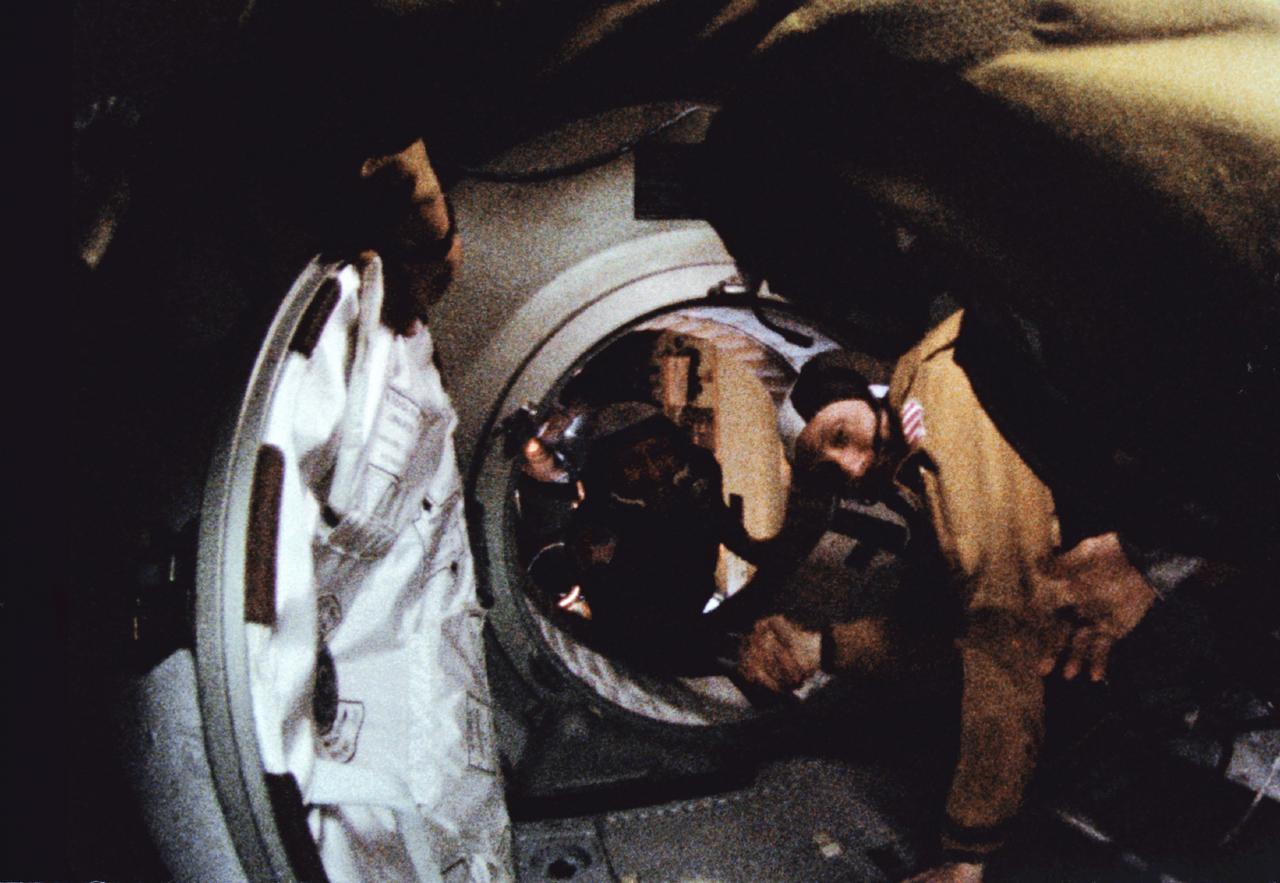
S75-29432 (17 July 1975) --- Astronaut Thomas P. Stafford (in foreground) and cosmonaut Aleksei A. Leonov make their historic handshake in space on July 17, 1975 during the joint U.S.-USSR Apollo Soyuz Test Project (ASTP) docking mission in Earth orbit. This picture was reproduced from a frame of 16mm motion picture film. The American and Soviet spacecraft were joined together in space for approximately 47 hours on July 17th, 18th, 19th, 1975. The Apollo crew consisted of astronauts Thomas P. Stafford, commander; Donald K. "Deke" Slayton, docking module pilot; Vance D. Brand, command module pilot. The Soyuz 19 crew consisted of cosmonauts Aleksei A. Leonov, command pilot; and Valeri N. Kubasov, flight engineer.
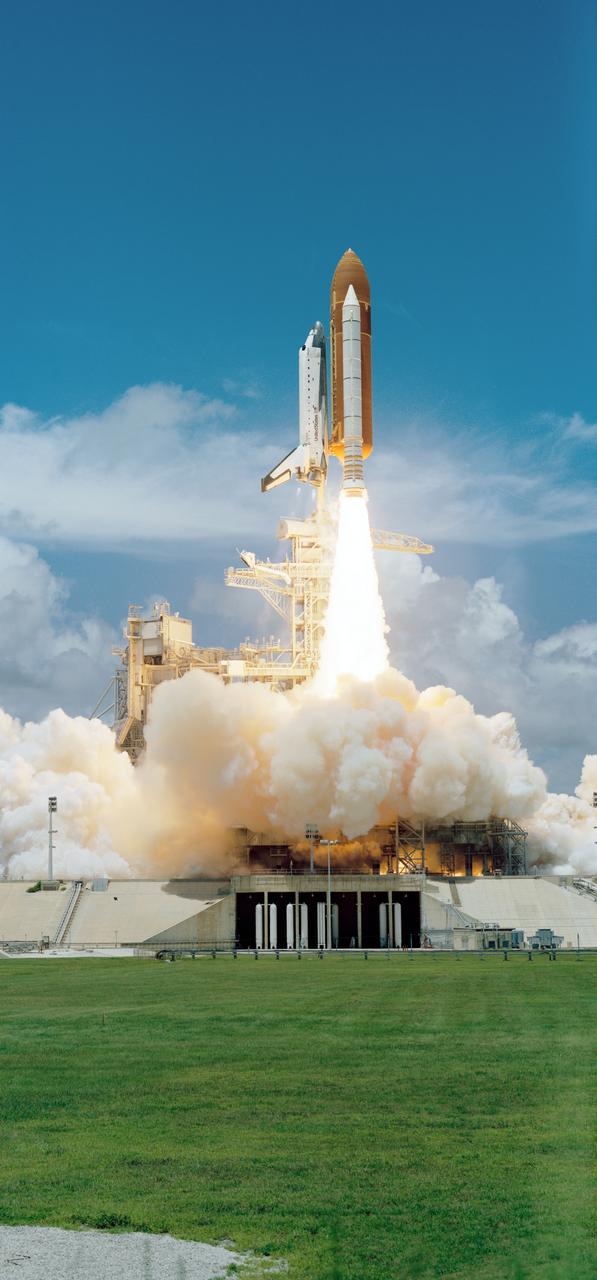
STS065-S-048 (8 July 1994) --- The Space Shuttle Columbia, with six NASA astronauts and a Japanese payload specialist aboard, heads toward Earth-orbit. A short time later, the crew began setting up the science module for two weeks of experimentation in support of the second International Microgravity Laboratory (IML-2). Launch occurred at 12:43 p.m. (EDT), July 8, 1994. Onboard were astronauts Robert D. Cabana, James D. Halsell, Jr., Richard J. Hieb, Carl E. Walz, Leroy Chiao, and Donald A. Thomas along with NASDA payload specialist Dr. Chiaki Mukai.
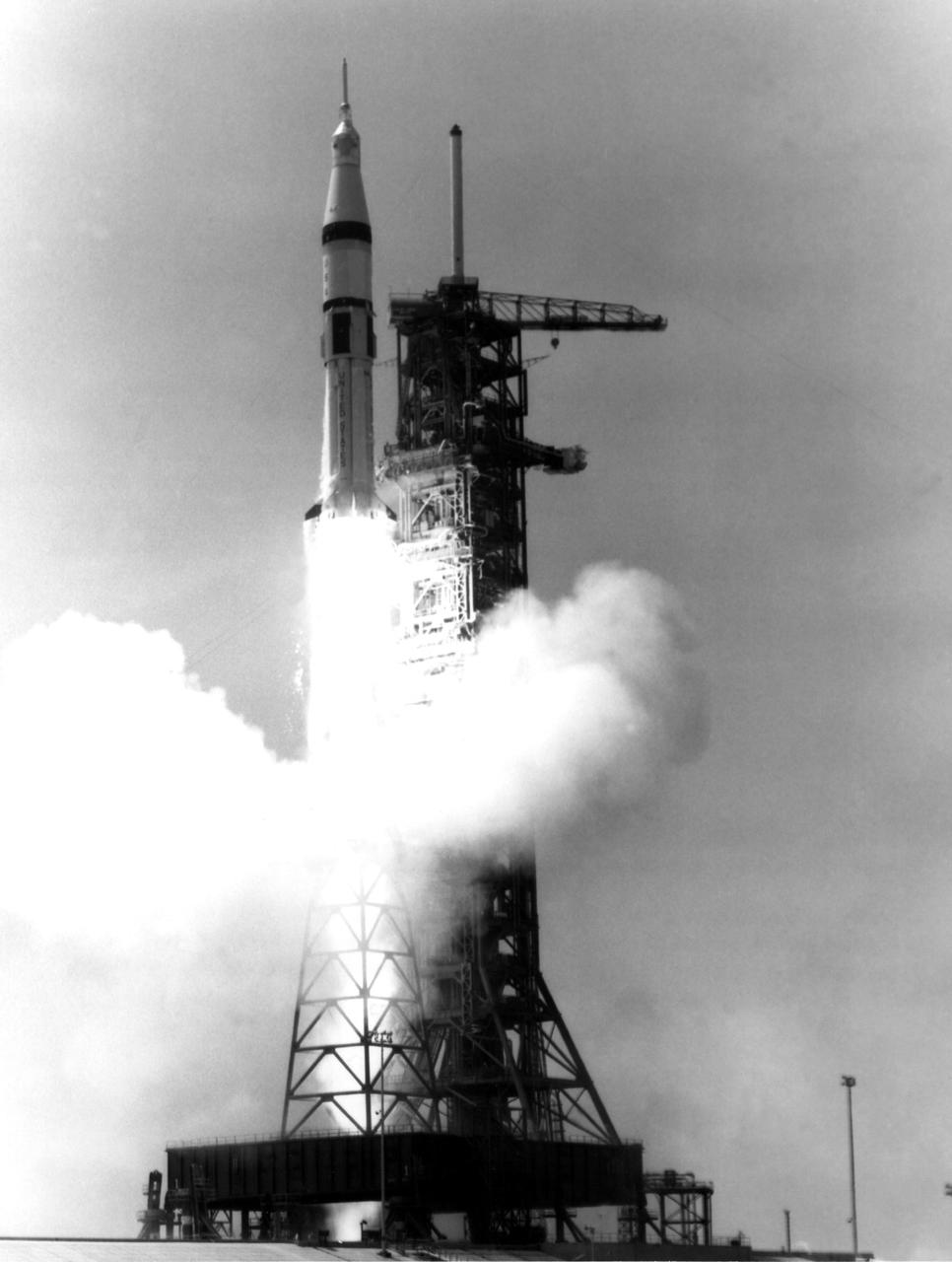
KENNEDY SPACE CENTER, FLA. -- The Apollo Soyuz Test Project Saturn IB launch vehicle thundered away from KSC's Launch Complex 39B at 3:50 p.m. today. Aboard the Apollo Command Module were ASTP astronauts Thomas Stafford, Vance Brand and Donald Slayton. The astronauts will rendezvous and dock with a Soyuz spacecraft, launched this morning from the Baykonur launch facility in the Soviet Union, carrying Soviet cosmonauts Aleksey Leonov and Valeriy Kubasov. The ASTP launches mark the first time that manned spacecraft of two nations have met in space for joint engineering and scientific investigations.
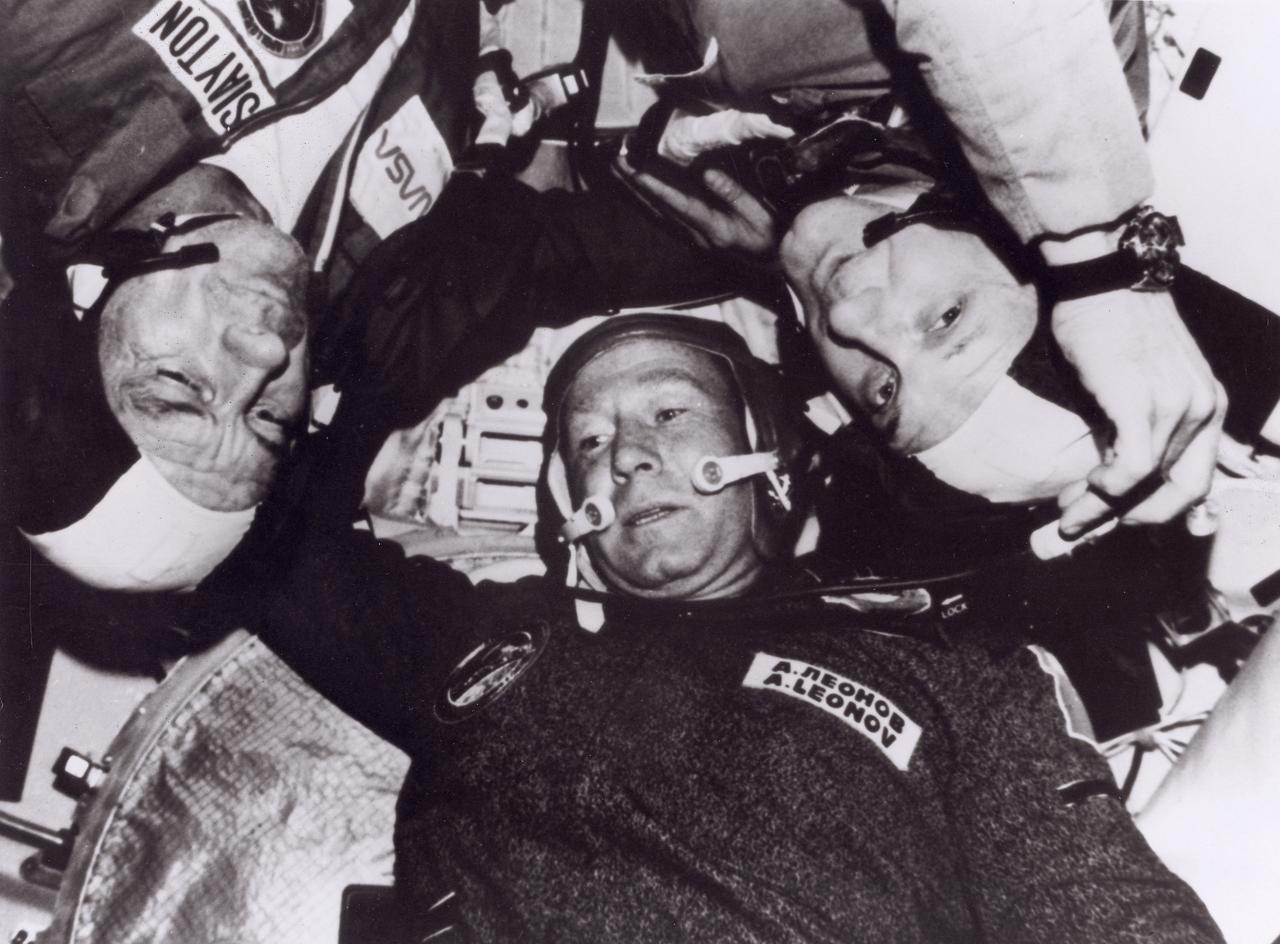
The final launch of a Saturn rocket came on July 15, 1975 as part of the Apollo-Soyuz Test Project. Earlier that day, a Russian Soyuz spacecraft lifted off its launch pad at a Soviet launch site carrying three cosmonauts. Seven and one-half hours later, the U.S. Apollo spacecraft was launched with its crew of American astronauts. Rendezvous and docking of the two ships were accomplished on July 17. The two ships remained docked for two days, conducting joint experiments and exchanging national mementos. In this photograph, astronauts Donald Slayton and Thomas Stafford chat with cosmonaut Alexei Leonov during their visit to the Soyuz Orbital Module.
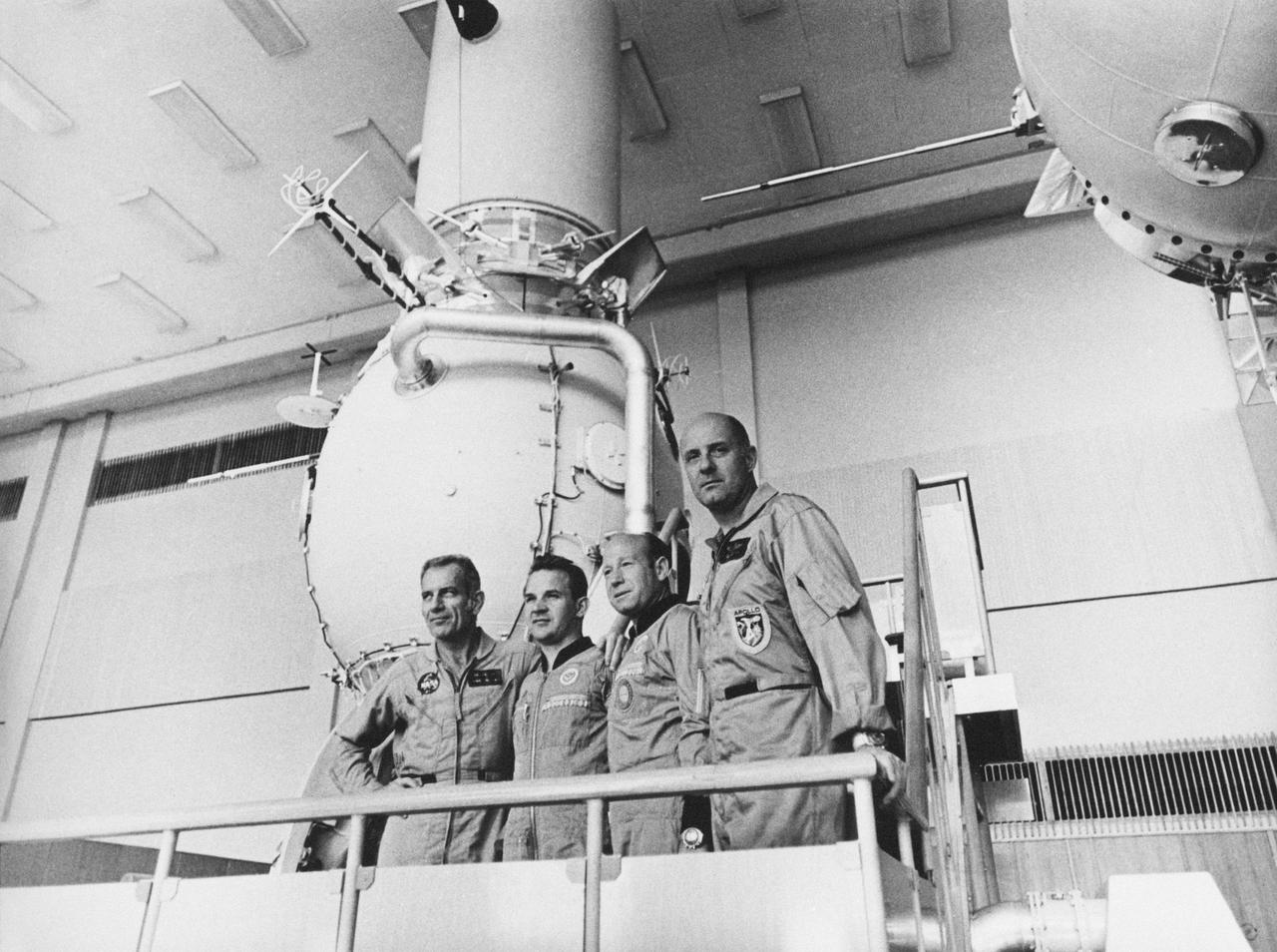
S74-25259 (June 1974) --- Four crewmen of the joint U.S.-USSR Apollo-Soyuz Test Project mission are photographed beside a Soyuz spacecraft trainer during ASTP crew training activity at the Cosmonaut Training Center (Star City) near Moscow. They are, left to right, astronaut Donald K. Slayton, docking module pilot of the American ASTP prime crew; cosmonaut Valeriy N. Kubasov, engineer of the Soviet ASTP first (prime) crew; cosmonaut Aleksey A. Leonov, commander of the Soviet ASTP first (prime) crew; and astronaut Thomas P. Stafford, commander of the American ASTP prime crew.
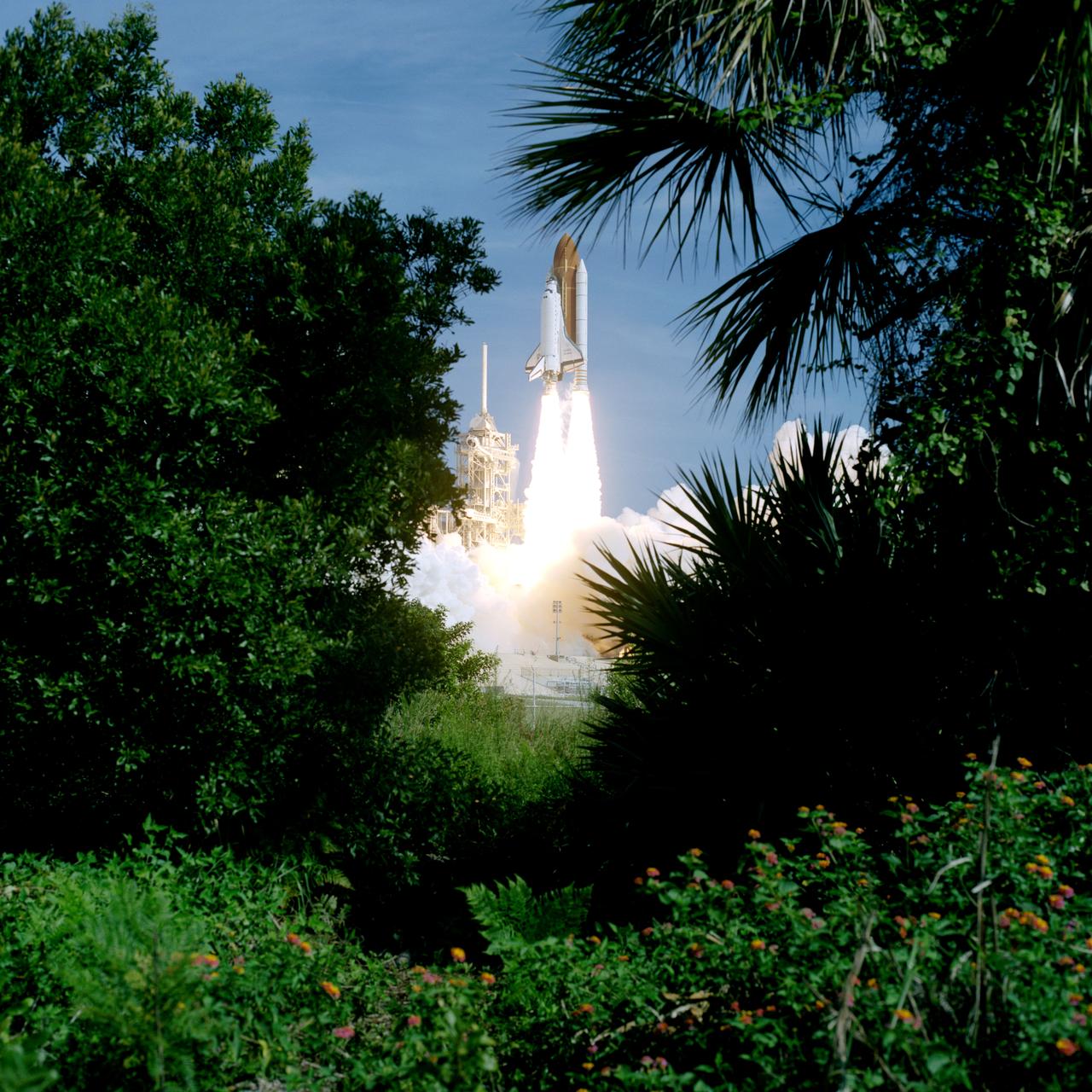
STS070-S-003 (13 JULY 1995) --- Framed by Florida foliage, the Space Shuttle Discovery begins its 21st Spaceflight. Five NASA astronauts and a Tracking and Data Relay Satellite (TDRS) were aboard for the liftoff, which occurred at 9:41:55 a.m. (EDT), July 13, 1995 from Launch Pad 39B. Onboard were astronauts Terence T. (Tom) Henricks, Kevin R. Kregel, Nancy J. Curie, Donald A. Thomas and Mary Ellen Weber. This mission also marks the maiden flight of the new Block I Space Shuttle Main Engine configuration designed to increase engine performance as well as safety and reliability.

KENNEDY SPACE CENTER, FLA. - Greeted by cheers from wellwishers at KSC and eager for their ventur into space on the Microgrvity Science Laboratory-1 (MSL-1) mission, the STS-83 astronauts depart the Operations and Checkout Building on their way to Launch Pad 39A. Leading the seven-member crew is Mission Commander James D. Halsell Jr. Behind Halsell and to his right is Pilot Susan L. Still. Behind Still is Payload Commander Janice Voss, with Mission Specialist Donald A. Thomas to her left. Behind Thomas, in order, are Mission Specialist Michael L. Gernhardt and Payload Specialists Roger K. Crouch and Gregory T. Linteris. During the scheduled 16-day STS-83 mission, the MSL-1 will be used to test some of the hardware, facilities and procedures that are planned for use on the International Space Station while the flight crew conducts combustion, protein crystal growth and materials processing experiments. Also onboard is the Hitchhiker Cryogenic Flexible Diode (CRYOFD) experiment payload, which is attched to the right side of Columbia's payload bay.
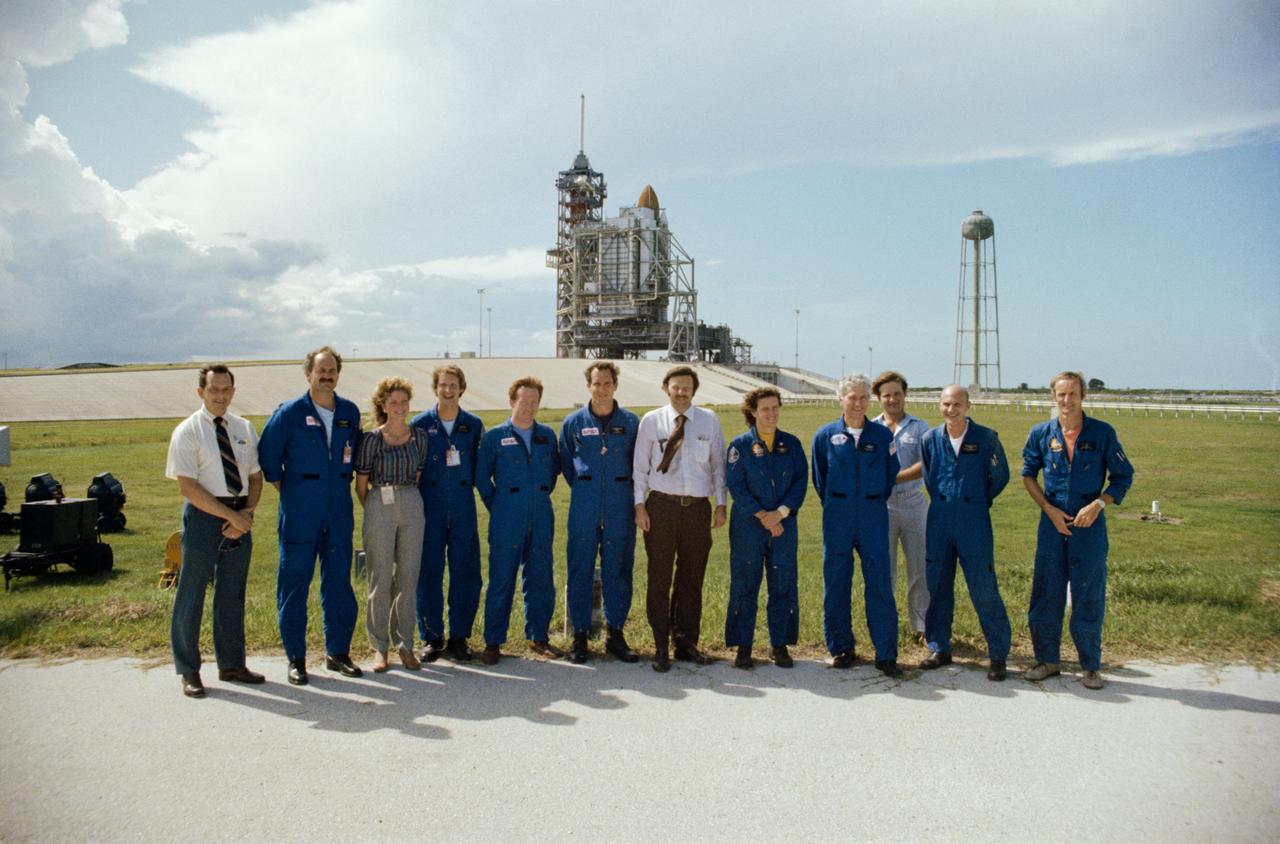
S82-32201 (29 May 1982) --- Members of the JSC astronaut corps, vehicle integration test team (VITT) and other personnel pose for a photograph at the completion of a countdown demonstration test (CDDT) at Launch Pad 39A, Kennedy Space Center (KSC). The participants are, from the left, Wilbur J. Etbauer, engineer with the VITT; mission specialist-astronaut James D. Van Hoften; Terri Stanford, engineer from JSC's flight operations directorate; mission specialist-astronaut Steven A. Hawley; astronaut Richard N. Richards; astronaut Michael J. Smith; Richard W. Nygren, head of the VITT; mission specialist-astronaut Kathryn D. Sullivan; astronaut Henry W. Hartsfield Jr., STS-4 pilot; Mark Haynes, a co-op student participating with the VITT; astronaut Thomas K. Mattingly II, STS-4 commander; and astronaut Donald E. Williams. Photo credit: NASA
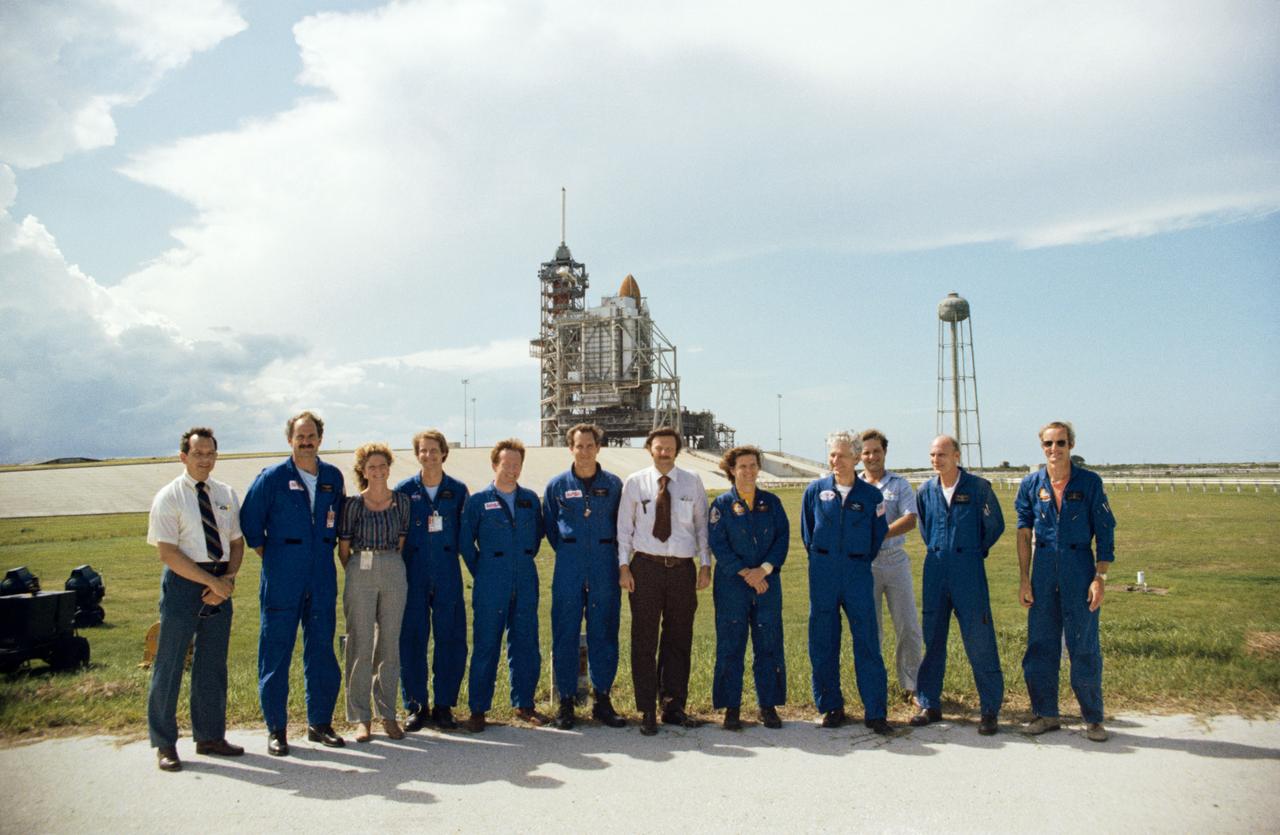
S82-32200 (29 May 1982) --- Members of the JSC astronaut corps, STS-4 vehicle integration test team (VITT) and other personnel pose for a photograph at the completion of a countdown demonstration test (CDDT) at Launch Pad 39A, Kennedy Space Center (KSC). The participants are, from the left, Wilbur J. Etbauer, engineer with the VITT; mission specialist-astronaut James D. van Hoften; Terry Stanford, engineer from JSC's flight operations directorate; mission specialist-astronaut Steven A. Hawley; astronaut Richard N. Richards; astronaut Michael J. Smith; Richard W. Nygren, head of the VITT; mission specialist-astronaut Kathryn D. Sullivan; astronaut Henry W. Hartsfield Jr.,STS-4 pilot; Mary Haynes, a co-op student participating with the VITT; astronaut Thomas K. Mattingly II, STS-4 commander; and astronaut Donald E. Williams. Photo credit: NASA
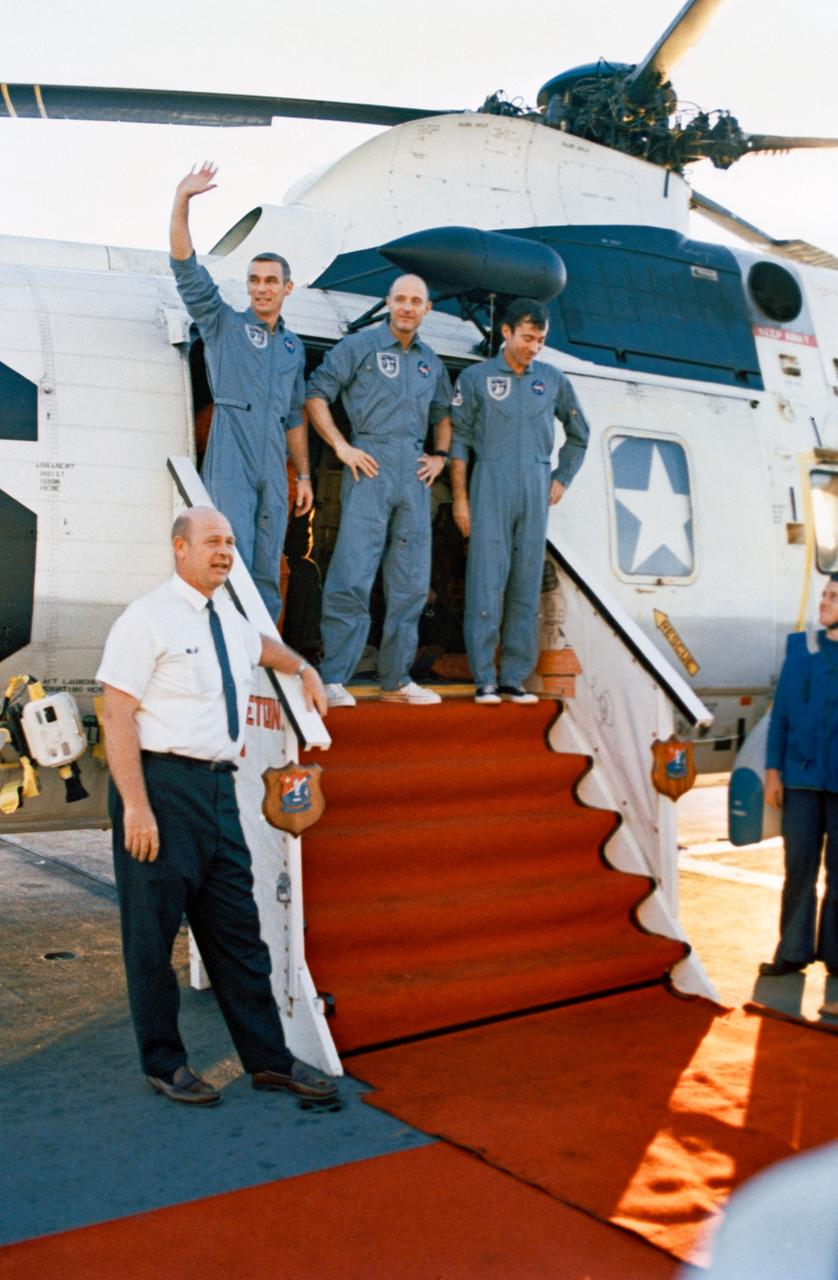
S69-36593 (26 May 1969) --- The Apollo 10 astronauts Thomas P. Stafford (center), John W. Young (left) and Eugene A. Cernan (waving) are greeted by Donald E. Stullken (lower left) of the Manned Space Center's (MSC) recovery operations team. The Apollo 10 crew splashed down in the South Pacific recovery area to conclude a successful eight-day lunar orbit mission. Splashdown occurred at 11:53 a.m. (CDT), May 26, 1969, about 400 miles east of American Samoa and about four miles from the prime recovery ship, USS Princeton.
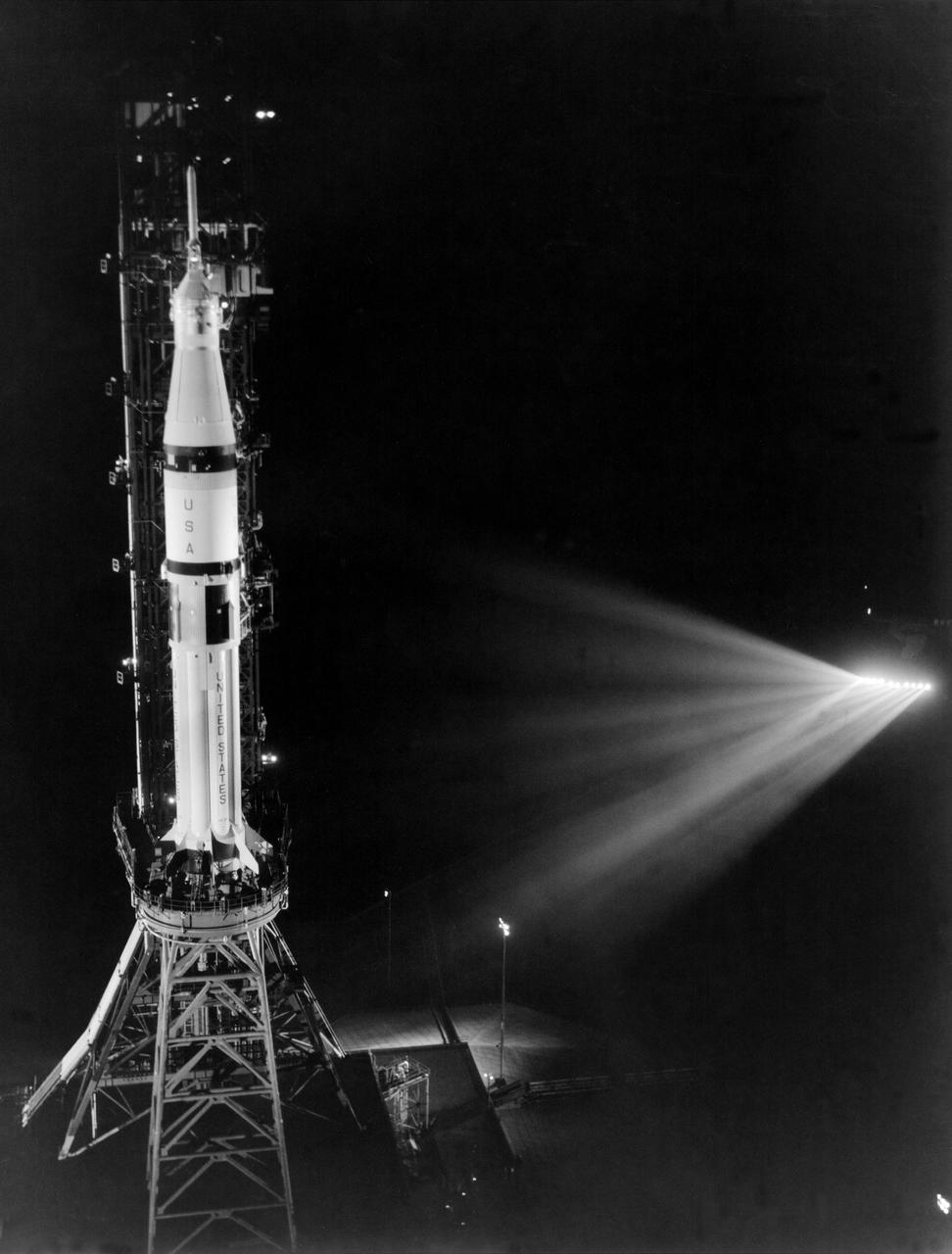
KENNEDY SPACE CENTER, FLA. -- As seen from the Mobile Service Structure as it is being rolled back to its park site, the ASTP Saturn IB launch vehicle sits on its pedestal during the Countdown Demonstration Test. The test is a step-by-step dress rehearsal for the July 15 mission, which culminates with a simulated T-zero and launch with the stages of the rocket fueled as they will be on launch day. Following the simulated launch, the propellants will be offloaded. The terminal portion of the test will be repeated tomorrow with the ASTP astronauts Thomas Stafford, Vance Brand and Donald Slayton aboard the spacecraft.
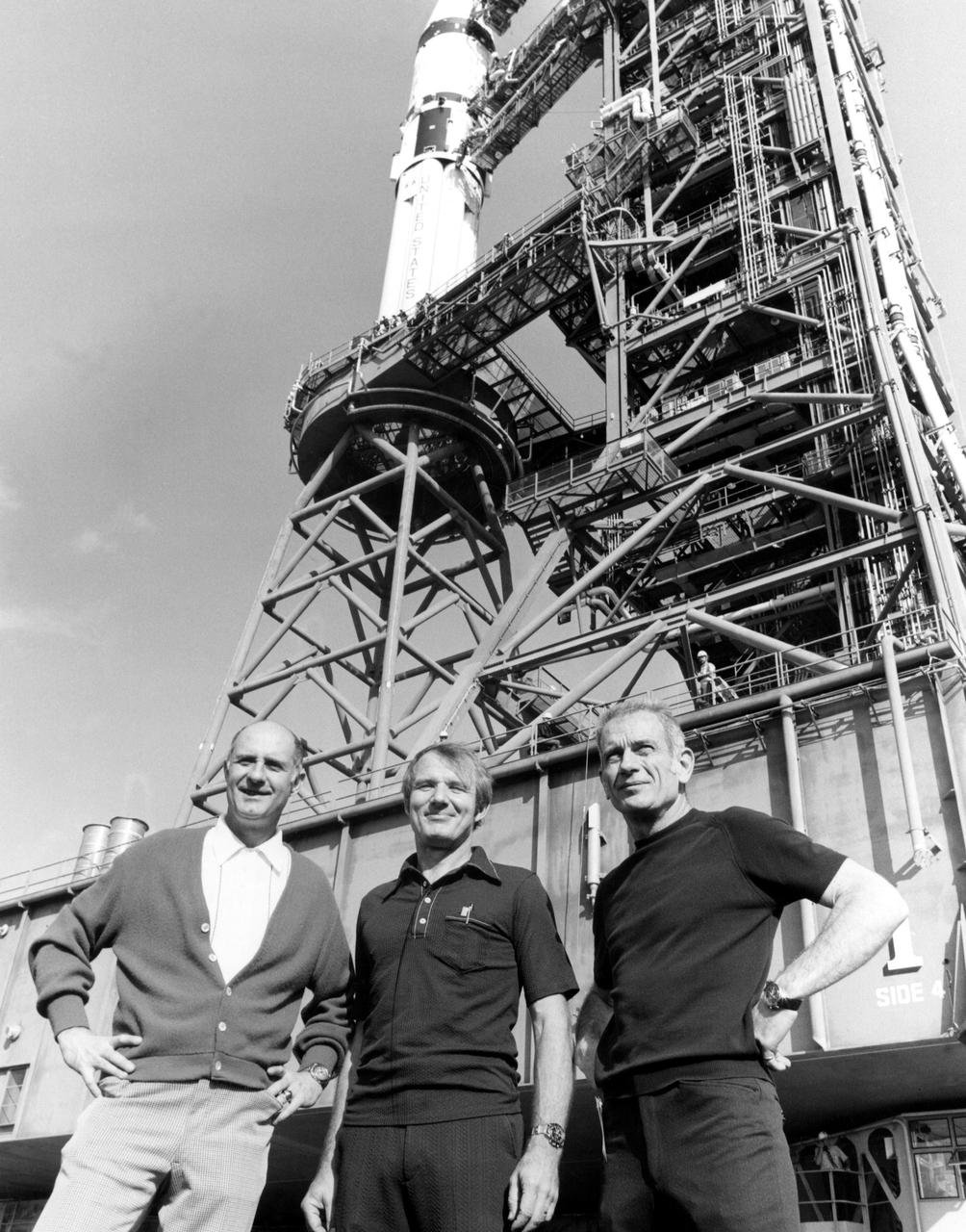
KENNEDY SPACE CENTER, FLA. -- U.S. astronauts Thomas Stafford (left), Vance Brand (center) and Donald Slayton pose in front of their Apollo Soyuz Test Project space vehicle during rollout ceremonies at KSC. The 224-foot-tall Saturn IB launch vehicle began its five-mile journey from the Vehicle Assembly Building to Complex 39's Pad at 8 a.m. The ASTP launch is scheduled for 3:50 p.m. EDT on July 15. During the mission the U.S. Apollo spacecraft will rendezvous and dock with the Soviet Soyuz spacecraft. It will be history's first international manned space flight.
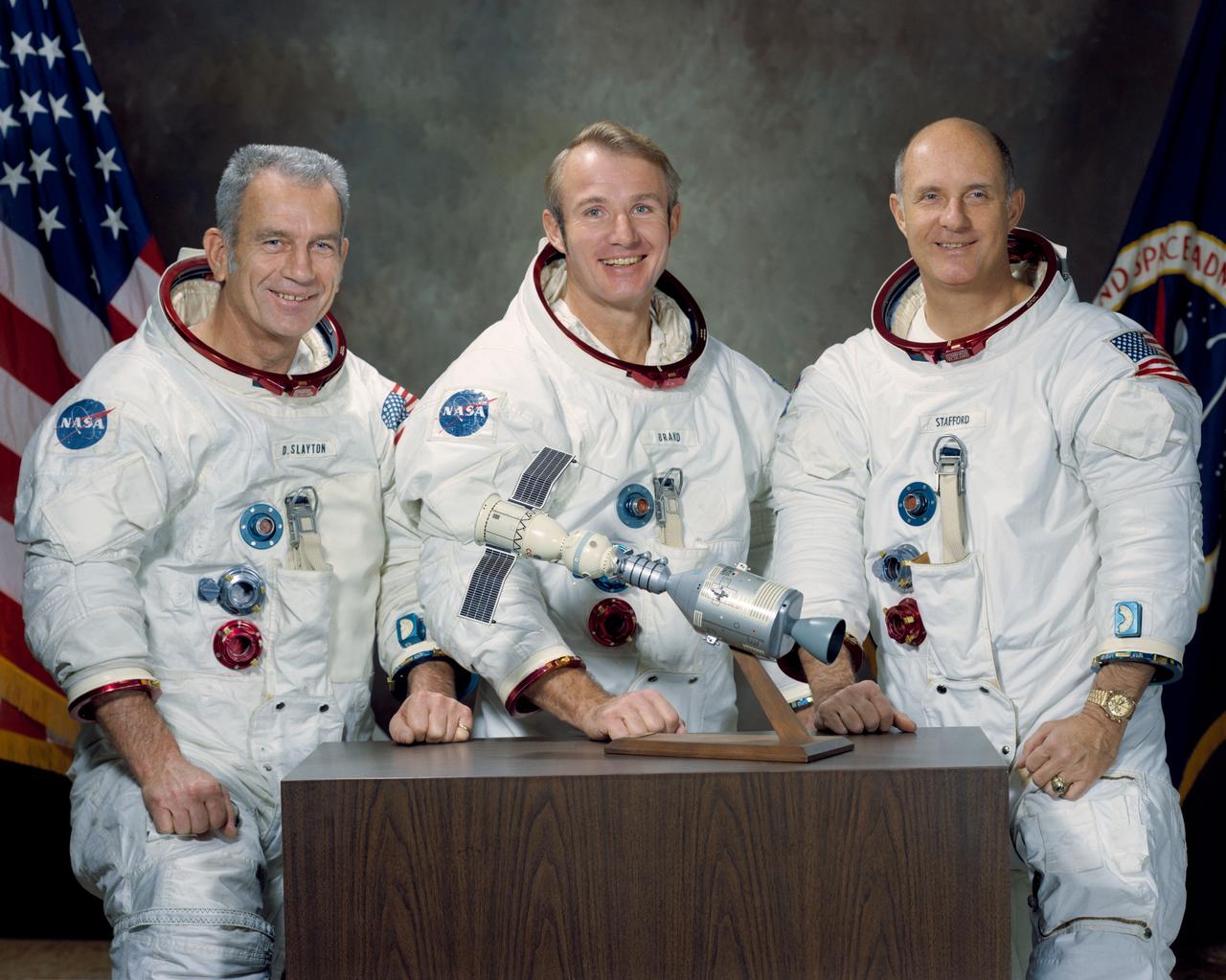
S74-15241 (January 1974) --- These three NASA astronauts are the United States flight crew for the 1975 Apollo-Soyuz Test Project (ASTP) mission. The prime crew members for the joint United States - Soviet Union spaceflight are, left to right, Donald K. Slayton, docking module pilot; Vance D. Brand, command module pilot; and Thomas P. Stafford, commander. The American and Soviet crews will visit one another?s spacecraft while the Soyuz and Apollo are docked in Earth orbit for a maximum of two days. The ASTP mission is designed to test equipment and techniques that will establish international crew rescue capability in space, as well as permit future cooperative scientific missions.
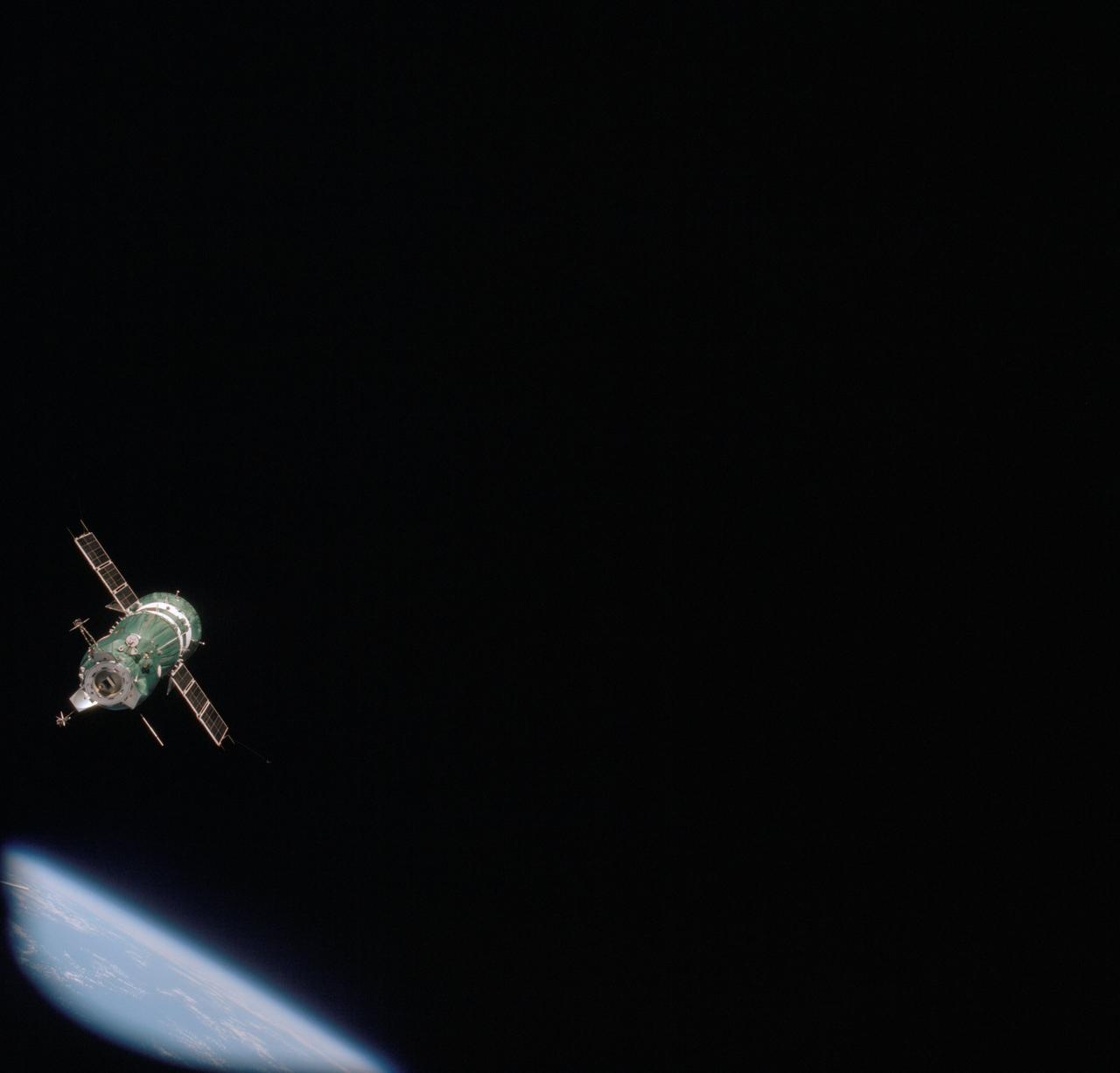
AST-09-572 (17-18 July 1975) --- The Soviet Soyuz 19 spacecraft is photographed from the American Apollo spacecraft during the joint U.S.-USSR Apollo-Soyuz Test Project (ASTP) docking mission in Earth orbit. Earth is visible in the lower left corner. This picture was taken with a 70mm camera. The Apollo crew consisted of astronauts Thomas P. Stafford, commander; Donald K. "Deke" Slayton, docking module pilot; and Vance D. Brand, command module pilot. The Soyuz 19 crew consisted of cosmonauts Aleksei A. Leonov, command pilot; and Valeri N. Kubasov, flight engineer.
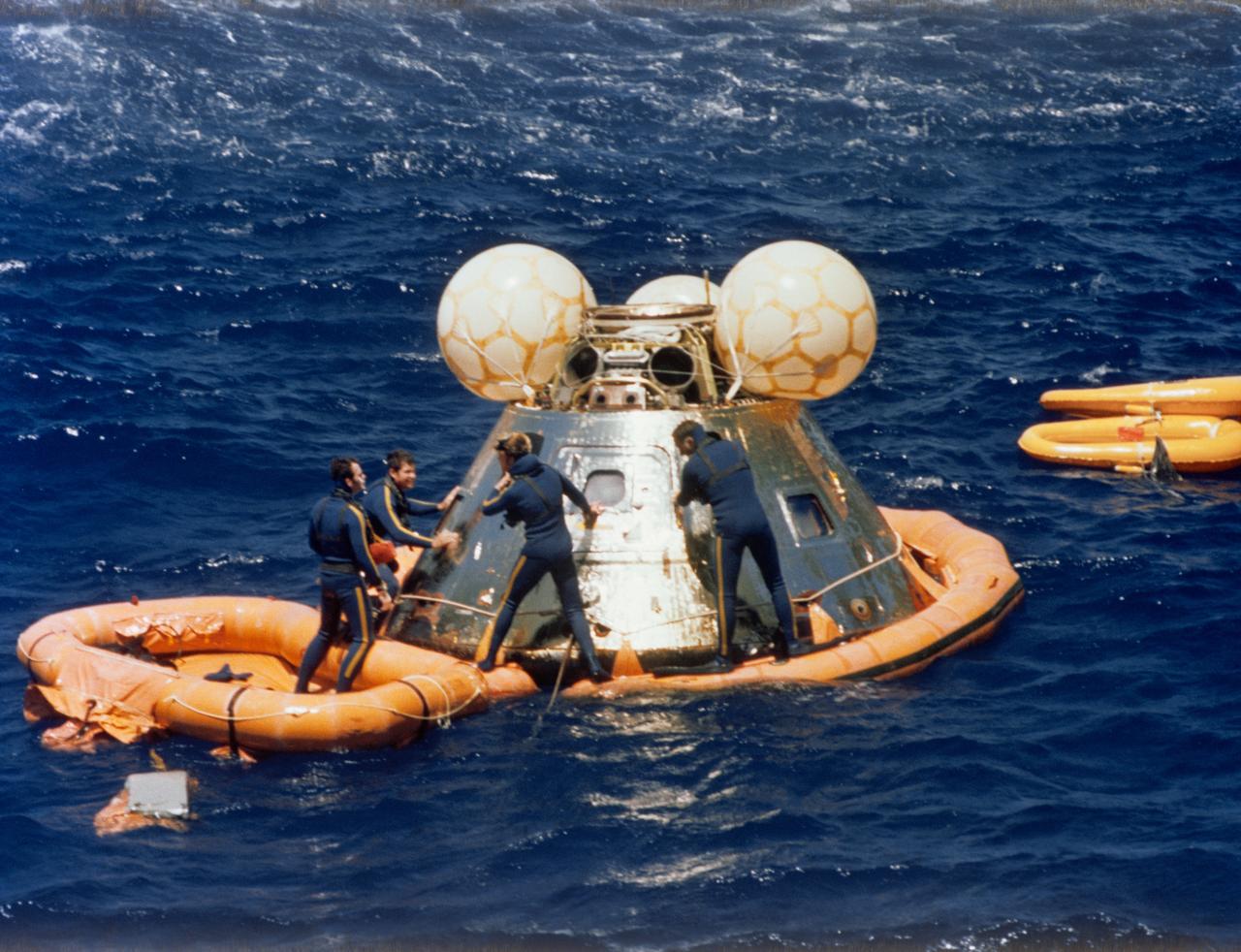
S75-29715 (24 July 1975) --- A team of U.S. Navy swimmers assists with the recovery of the ASTP Apollo Command Module following its splashdown in the Central Pacific Ocean to conclude the historic joint U.S.-USSR Apollo-Soyuz Test Project docking mission in Earth orbit. The swimmers have already attached a flotation collar to the spacecraft. The CM touched down in the Hawaiian Islands area at 4:18 p.m. (CDT), July 24, 1975. The crewmen, astronauts Thomas P. Stafford, Vance D. Brand and Donald K. Slayton, remained in the CM until it was hoisted aboard the prime recovery ship, the USS New Orleans.
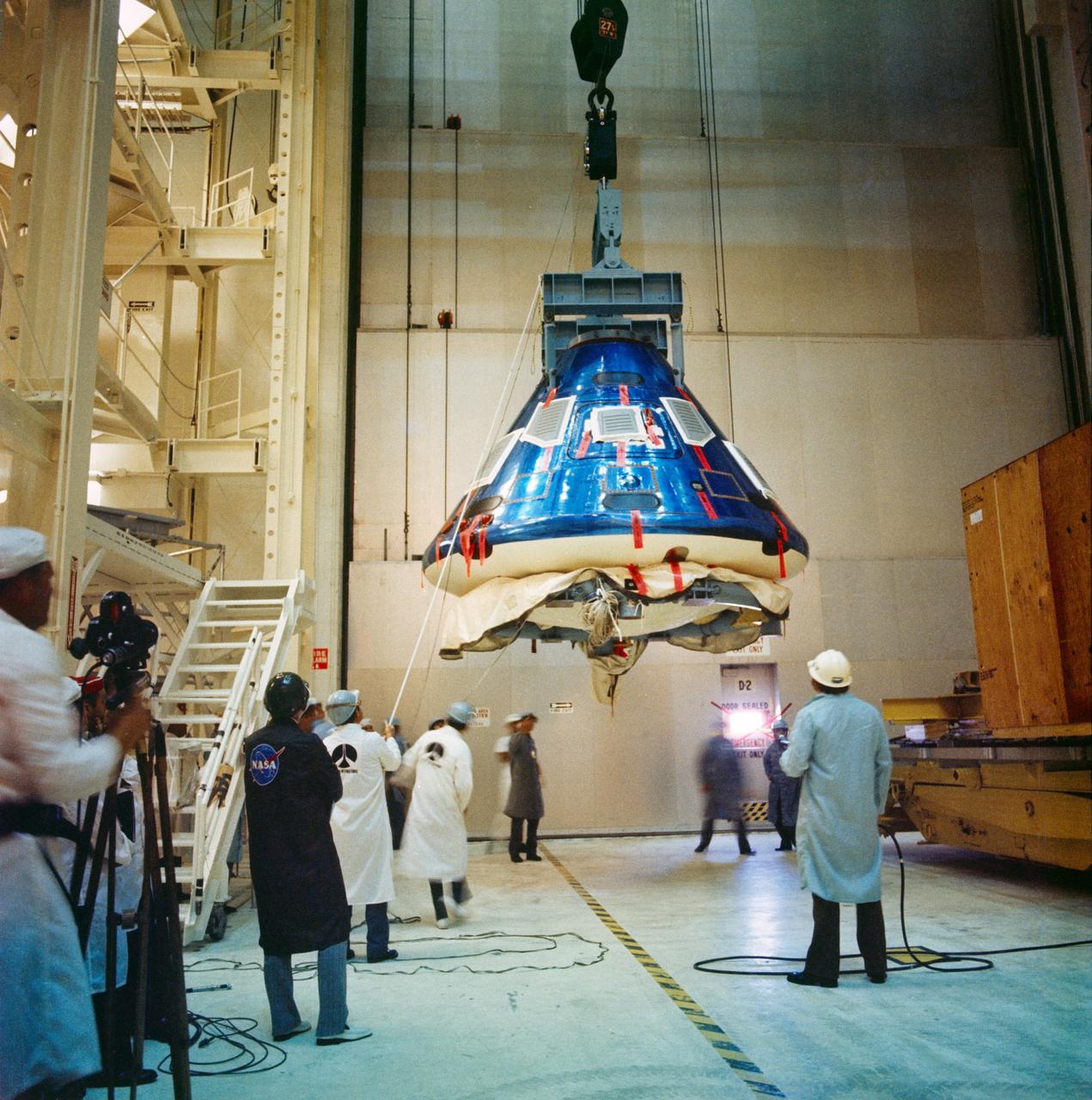
S74-32049 (8 Sept. 1974) --- The Apollo Command Module for the Apollo-Soyuz Test Project mission goes through receiving, inspection and checkout procedures in the Manned Spacecraft Operations Building at the Kennedy Space Center. The spacecraft had just arrived by air from the Rockwell International plant at Downey, California. The Apollo spacecraft (Command Module, Service Module and Docking Module), with astronauts Thomas P. Stafford, Vance D. Brand and Donald K. Slayton aboard, will dock in Earth orbit with a Soviet Soyuz spacecraft during the joint U.S.-USSR ASTP flight scheduled for July 1975. The Soviet and American crews will visit one another?s spacecraft.
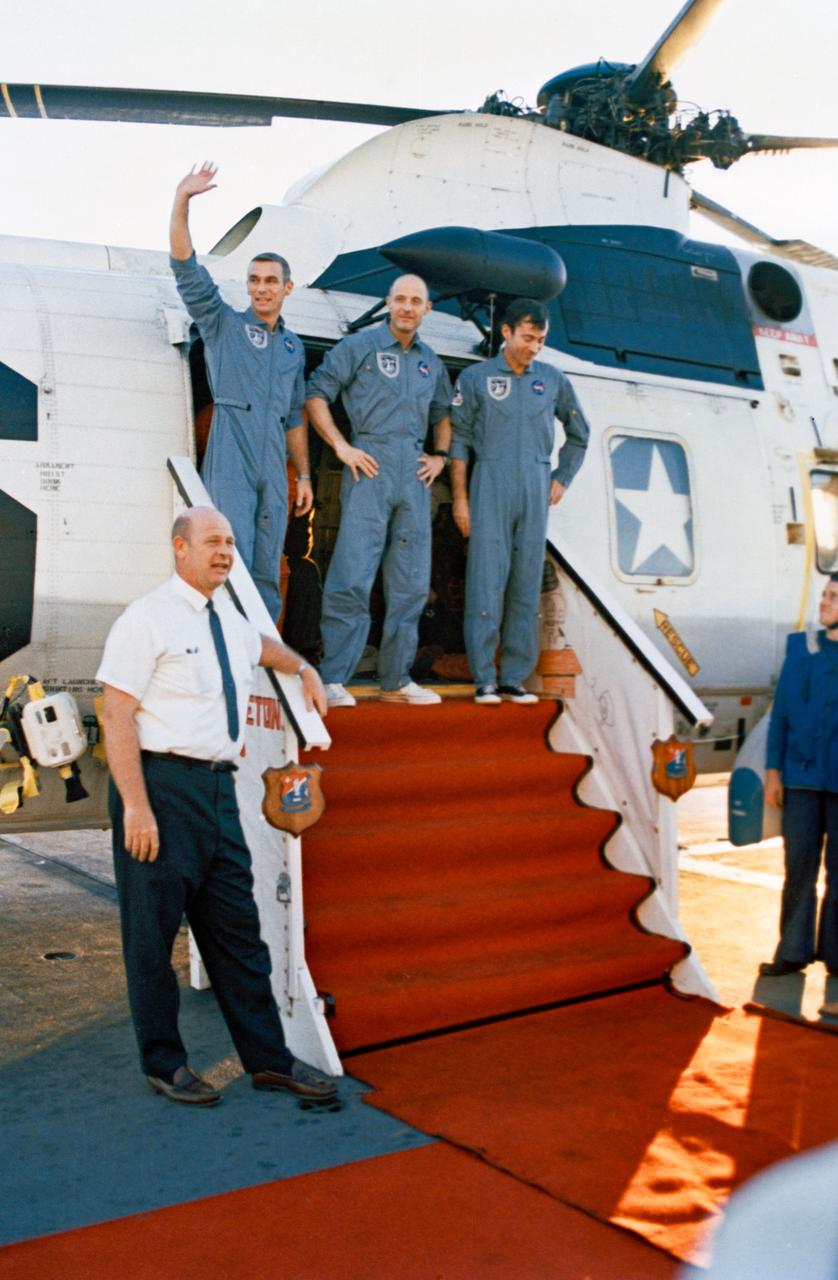
S69-36593 (26 May 1969) --- The Apollo 10 astronauts Thomas P. Stafford (center), John W. Young (left) and Eugene A. Cernan (waving) are greeted by Donald E. Stullken (lower left) of the Manned Space Center's (MSC) recovery operations team. The Apollo 10 crew splashed down in the South Pacific recovery area to conclude a successful eight-day lunar orbit mission. Splashdown occurred at 11:53 a.m. (CDT), May 26, 1969, about 400 miles east of American Samoa and about four miles from the prime recovery ship, USS Princeton.

STS070-329-022 (13-22 JULY 1995)--- Astronaut Donald A. Thomas, mission specialist, prepares to activate the Microcapsules in Space (MIS-B) experiment on the space shuttle Discovery?s middeck. MIS-B is an Army project to improve the understanding of microencapsulated drug technology and demonstrate the feasibility of producing pharmaceutical microcapsules in the weightlessness of space. This is the second flight of the experiment, which originally flew on STS-53 in 1992. Microcapsules are tiny spheres about 50 to 100 micrometers in diameter (about the thickness of a strand of human hair). They are used to develop high-performance chemical products and innovative pharmaceuticals such as time-release prescriptions. The drug used in the MIS experiments was ampicillin.
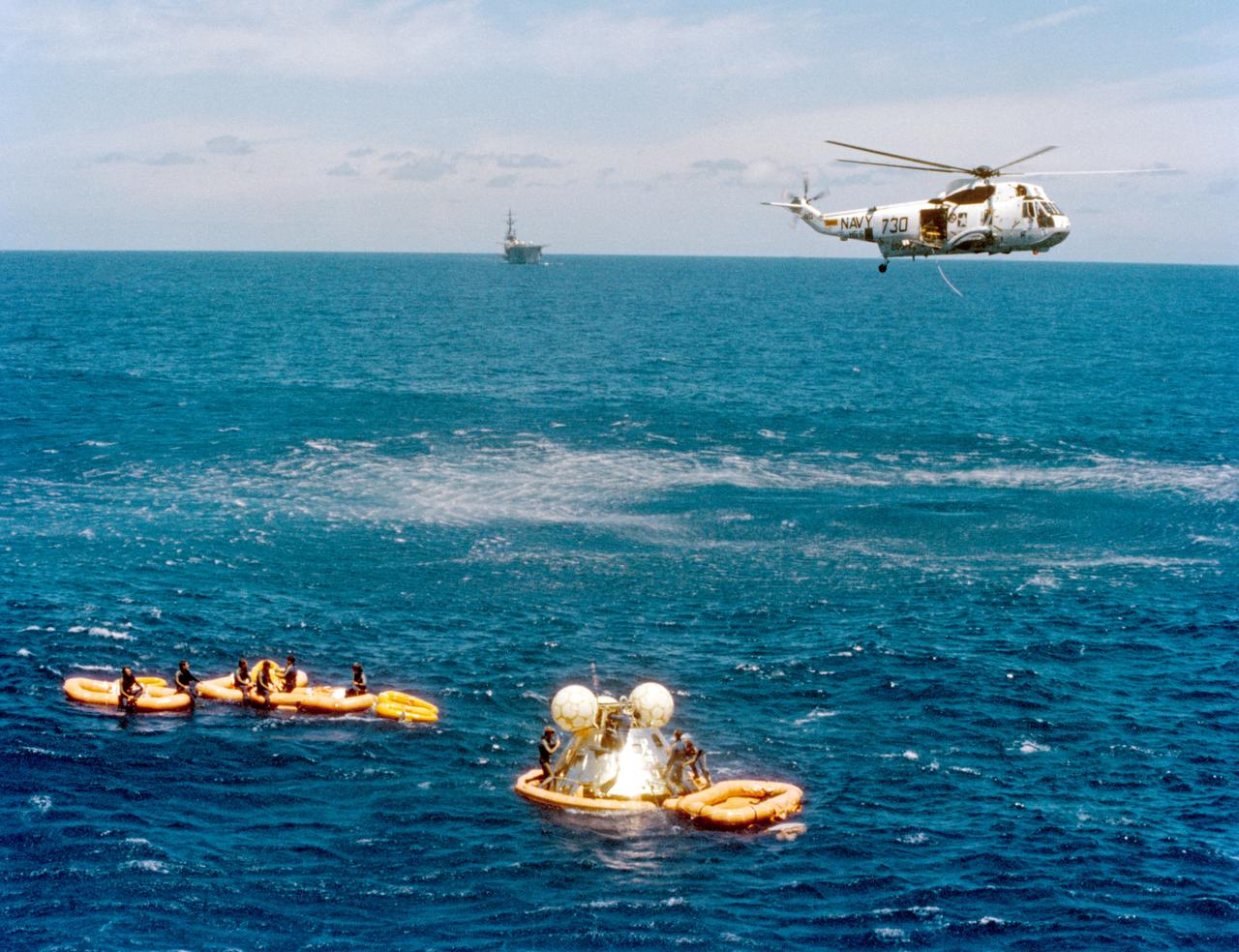
S75-29717 (24 July 1975) --- The ASTP Apollo Command Module, with astronauts Thomas P. Stafford, Vance D. Brand and Donald K. Slayton still inside, awaits pickup by the prime recovery ship, the USS New Orleans, following splashdown in the Central Pacific Ocean to conclude the historic joint U.S.-USSR Apollo-Soyuz Test Project docking mission in Earth orbit. The CM touchdown occurred in the Hawaiian Islands area at 4:18 p.m. (CDT), July 24, 1975. A team of U.S. Navy swimmers assists with the recovery operations. A recovery helicopter hovers overhead.
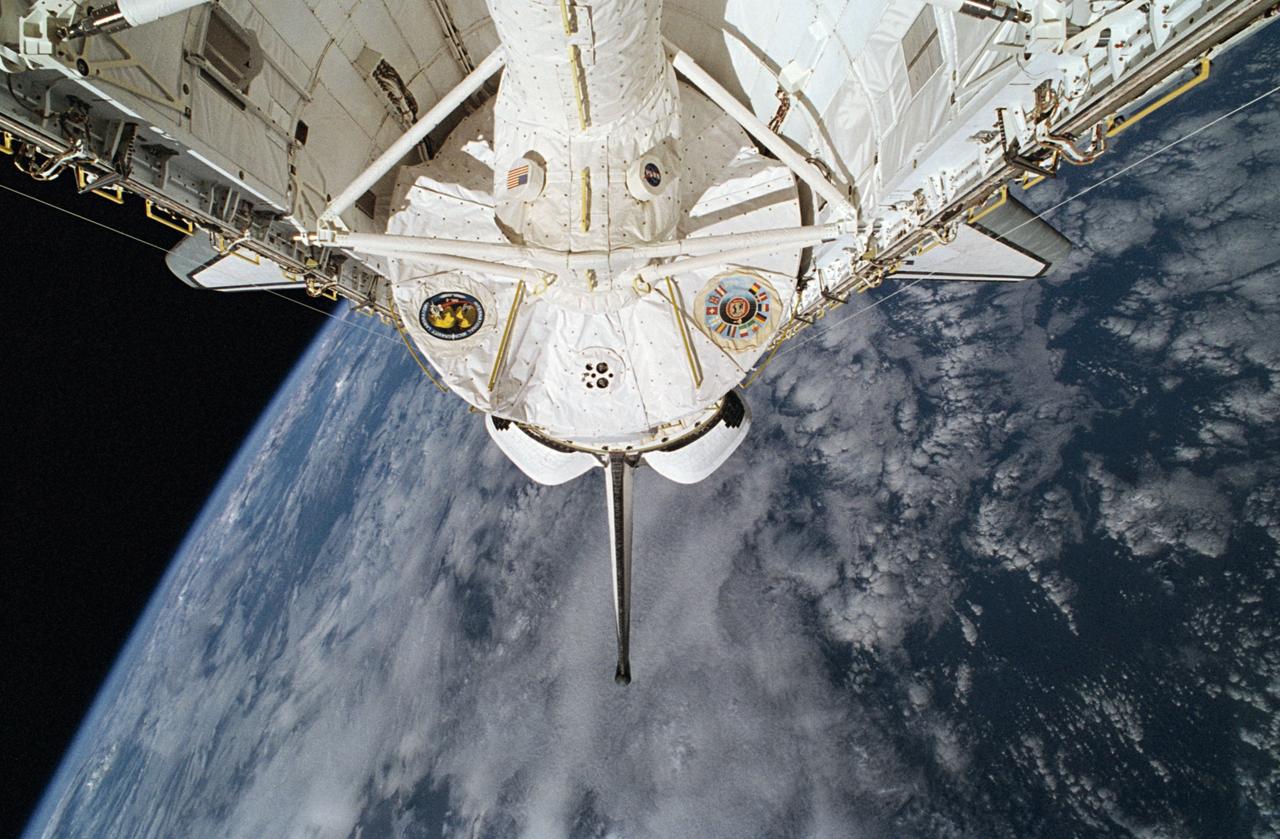
STS065-34-016 (8-23 July 1994) --- Clouds over the ocean form the backdrop for this scene of the International Microgravity Laboratory (IML-2) science module in the Space Shuttle Columbia's cargo bay during the two-week mission. Part of the tunnel that served as passageway for the seven crew members to and from the lab is seen in center foreground. Onboard Columbia were astronauts Robert D. Cabana, James D. Halsell, Jr., Richard J. Hieb, Carl E. Walz, Donald A. Thomas and Leroy Chiao, along with (NASDA) Japanese payload specialist Dr. Chiaki Naito-Mukai.
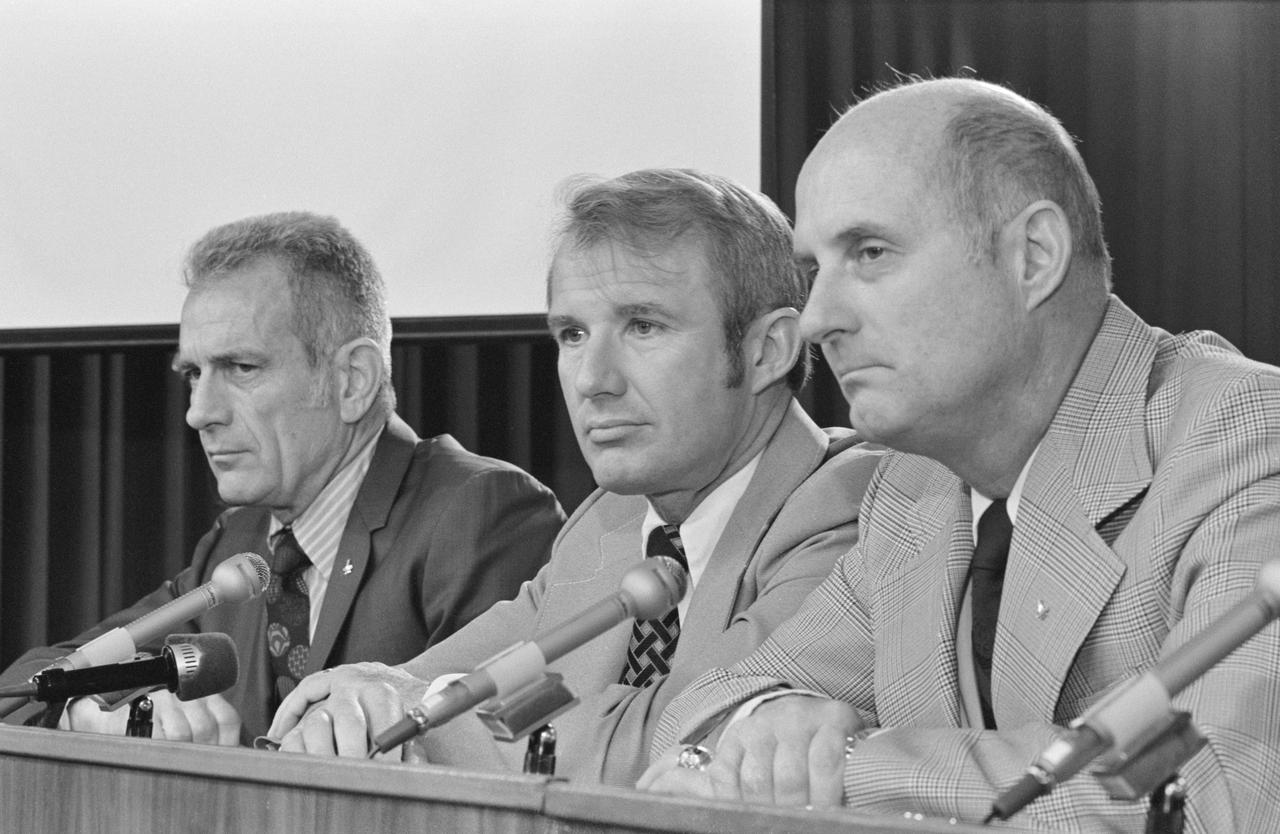
S75-26573 (14 May 1975) --- The three members of the American ASTP prime crew participate in an Apollo-Soyuz Test Project press conference conducted on May 14, 1975 in the Building 2 briefing room at NASA's Johnson Space Center. They are, left to right, Donald K. Slayton, docking module pilot; Vance D. Brand, command module pilot; and Thomas P. Stafford, commander. The astronauts discussed with the news media their recent ASTP joint training session in the Soviet Union, and the crew?s tour of the USSR?s Baikonur launch complex in Kazakhstan.
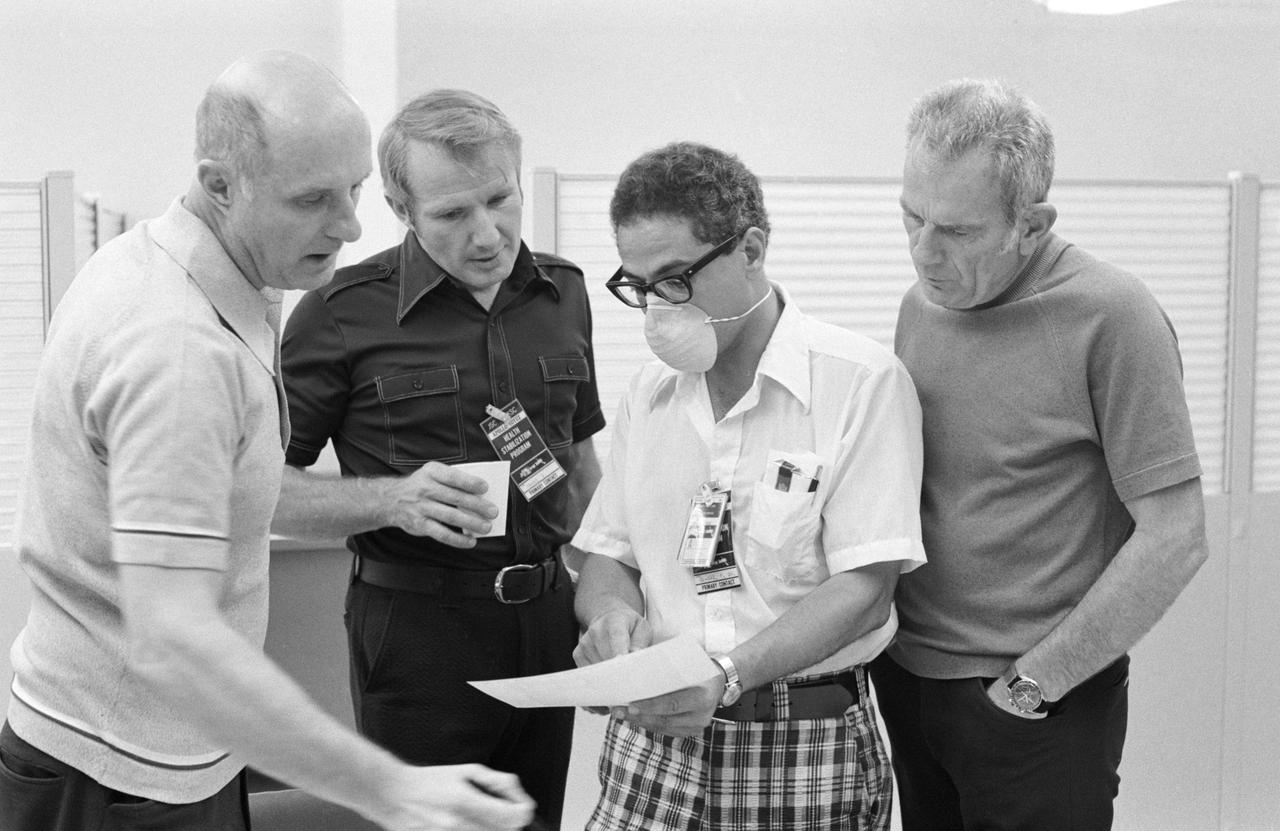
S75-28229 (8 July 1975) --- The three American ASTP prime crew astronauts participate in a photography mission briefing in Building 5 with Dr. Farouk El-Baz (wearing face mask) during Apollo-Soyuz Test Project preflight activity at NASA's Johnson Space Center. They are, left to right, Thomas P. Stafford, commander; Vance D. Brand, command module pilot; Dr. El-Baz; and Donald K. Slayton, docking module pilot. Dr. El-Baz is with the Center for Earth and Planetary Studies, National Air and Space Museum, Smithsonian Institution. The face mask is to protect the crewmen from possible exposure to disease prior to launch time. Photo credit: NASA
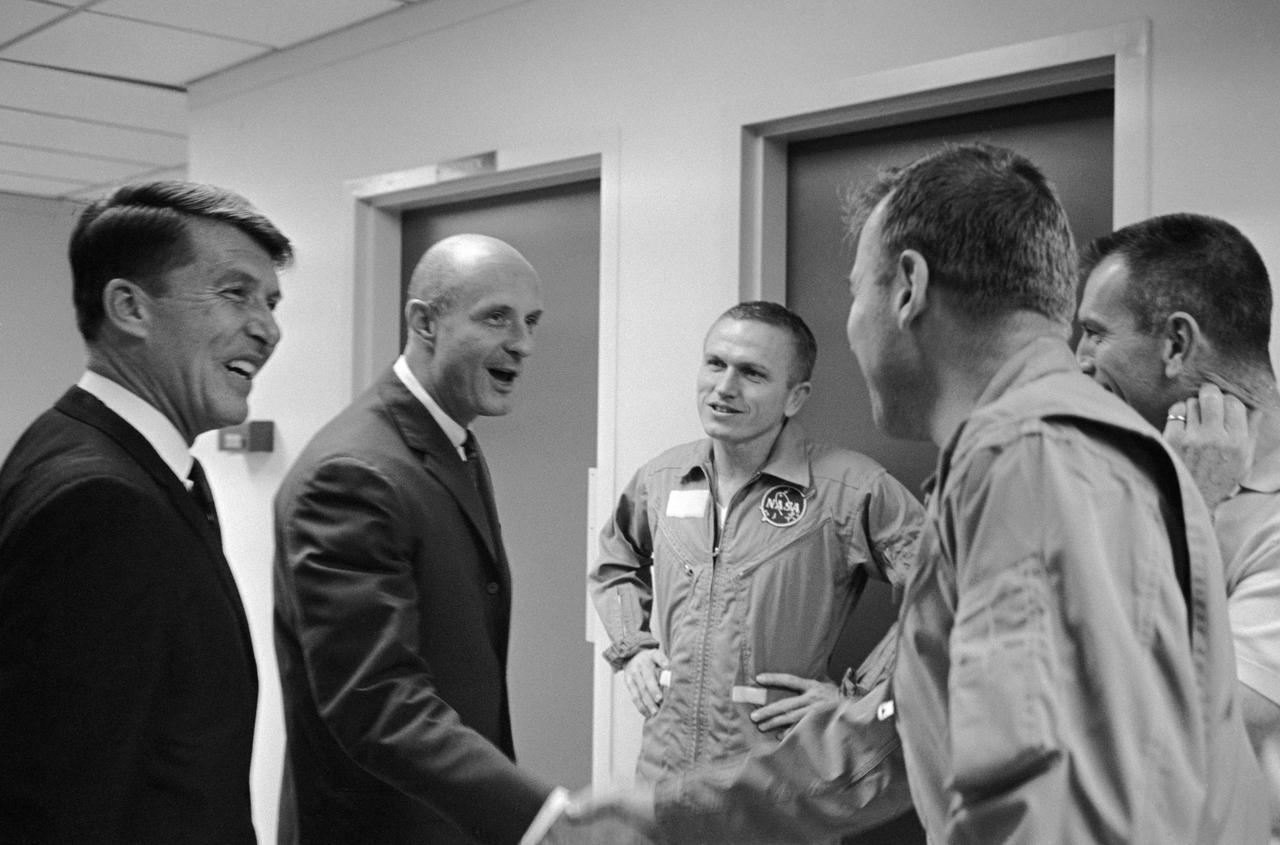
S65-66728 (19 Dec. 1965) --- This happy round of handshakes took place in the Manned Spacecraft Operations Building crew quarters, Merritt Island, as the Gemini-6 crew (left) welcomed the Gemini-7 crew back to the Kennedy Space Center. Left to right, are astronauts Walter M. Schirra Jr., Gemini-6 command pilot; Thomas P. Stafford, Gemini-6 pilot; Frank Borman, Gemini-7 command pilot; James A. Lovell Jr., Gemini-7 pilot; and Donald K. Slayton (partially hidden behind Lovell), assistant director for Flight Crew Operations, Manned Spacecraft Center, Houston. Photo credit: NASA
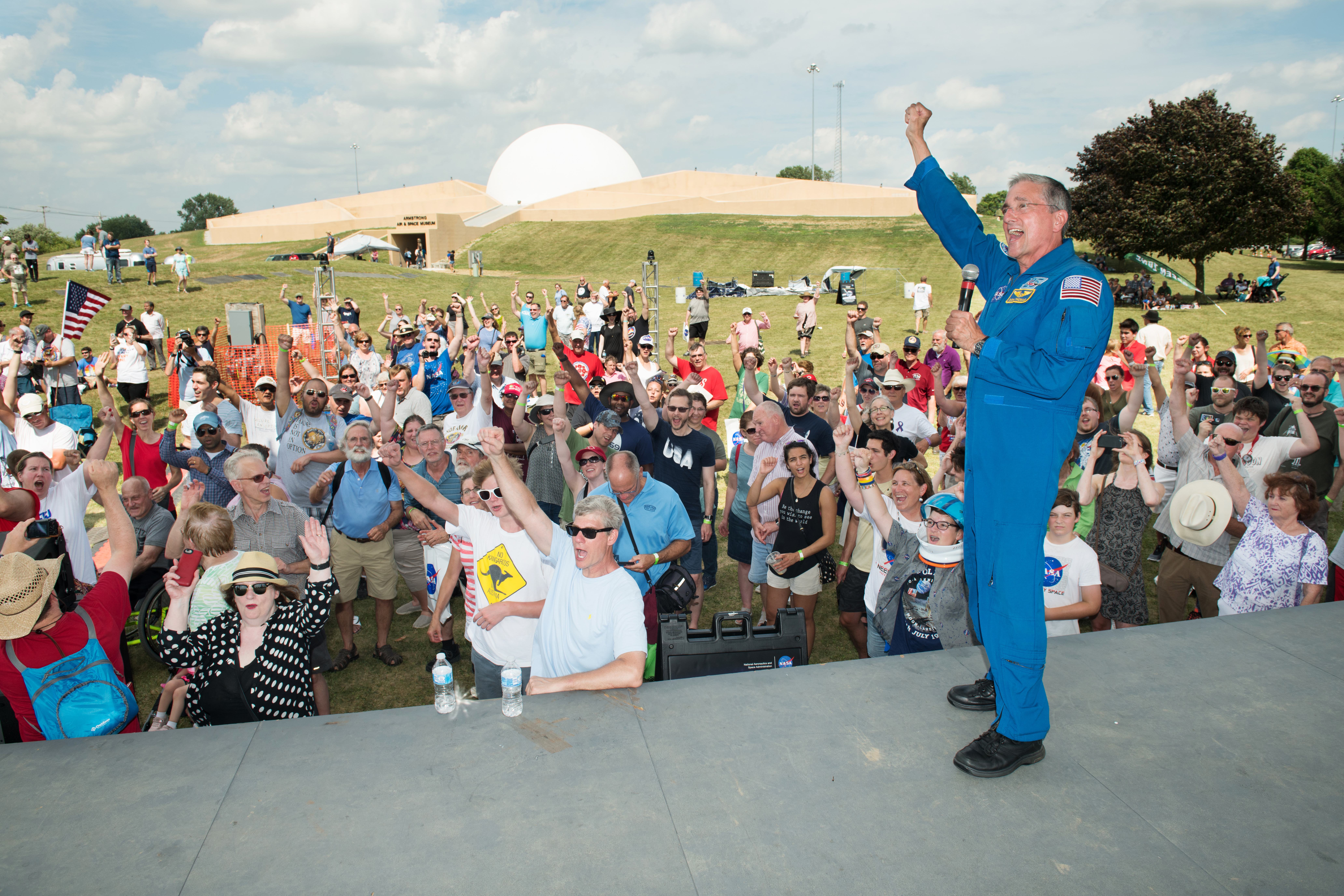
Astronaut Don Thomas and the crowd cheer at the moment of the Apollo 11 touchdown on the Moon during a replay of the 1969 television broadcast at the Summer Moon Festival, Wapakoneta, Ohio, Apollo 11 Moon Landing 50th Anniversary

S63-00562 (February 1963) --- Portrait of astronaut groups 1 and 2. The original seven Mercury astronauts selected by NASA in April 1959, are seated (left to right): L. Gordon Cooper Jr., Virgil I. Grissom, M. Scott Carpenter, Water M. Schirra Jr., John H. Glenn Jr., Alan B. Shepard Jr., and Donald K. Slayton. The second group of NASA astronauts, which were named in September 1962, are standing (left to right): Edward H. White II, James A. McDivitt, John W. Young, Elliot M. See Jr., Charles Conrad Jr., Frank Borman, Neil A. Armstrong, Thomas P. Stafford, and James A. Lovell Jr. Photo credit: NASA or National Aeronautics and Space Administration
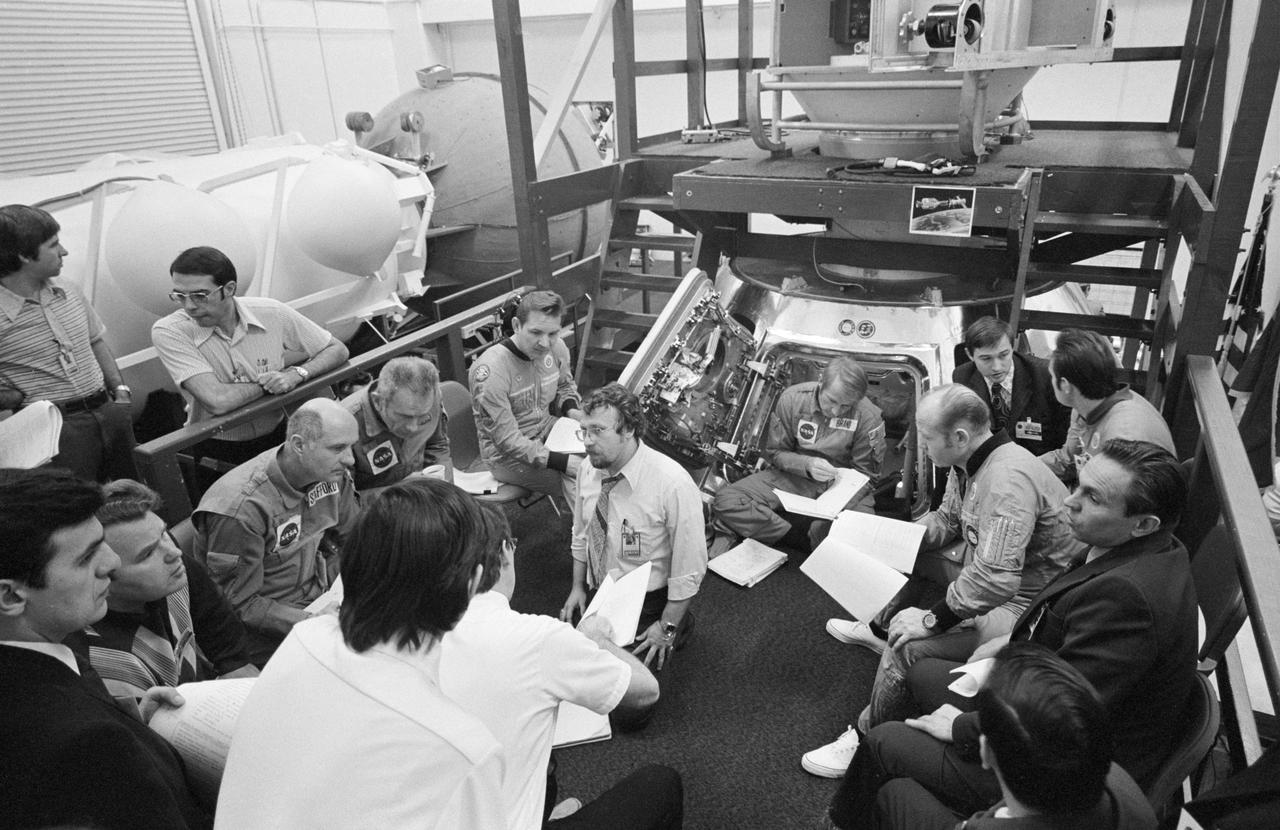
S75-21599 (12 Feb. 1975) --- Six Apollo-Soyuz Test Project crewmen participate in joint crew training in Building 35 at the Johnson Space Center. They are (wearing flight suits), left to right, astronaut Thomas P. Stafford, commander of the American ASTP prime crew; astronaut Donald K. Slayton, docking module pilot on Stafford?s crew; cosmonaut Valeriy N. Kubasov, engineer on the Soviet ASTP first (prime) crew; astronaut Vance D. Brand, command module pilot on Stafford?s crew; cosmonaut Aleksey A. Leonov, commander of the Soviet ASTP first (prime) crew; and cosmonaut Vladimir A. Dzhanibekov, commander of the Soviet ASTP third (backup) crew. Brand is seated next to the hatch of the Apollo Command Module trainer. This picture was taken during a ?walk-through? of the first day?s activities in Earth orbit. The other men are interpreters and training personnel.
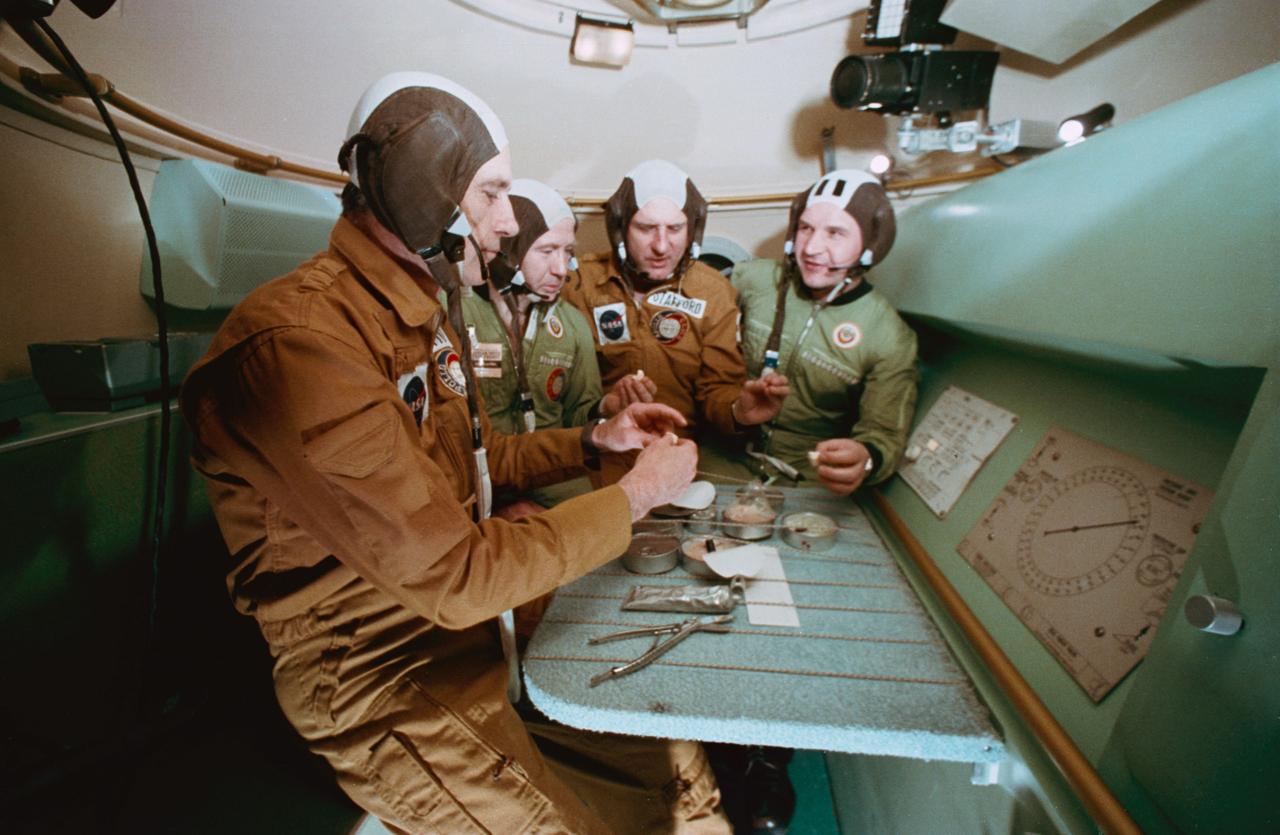
S75-22770 (25 Feb. 1975) --- Two American ASTP prime crewmen have a meal with the Soviet ASTP first (prime) crewmen during Apollo-Soyuz Test Project joint crew training at NASA's Johnson Space Center. The four are inside the Soyuz orbital module mock-up in Building 35. They are, left to right, astronaut Donald K. Slayton, docking module pilot of the American crew; cosmonaut Aleksey A. Leonov, commander of the Soviet crew; astronaut Thomas P. Stafford, commander of the American crew; and cosmonaut Valeriy N. Kubasov, engineer on the Soviet crew. The training session simulated activities on the second day in Earth orbit. During the actual mission the other American crewmen, astronaut Vance D. Brand, command module pilot, would be in the Command Module.
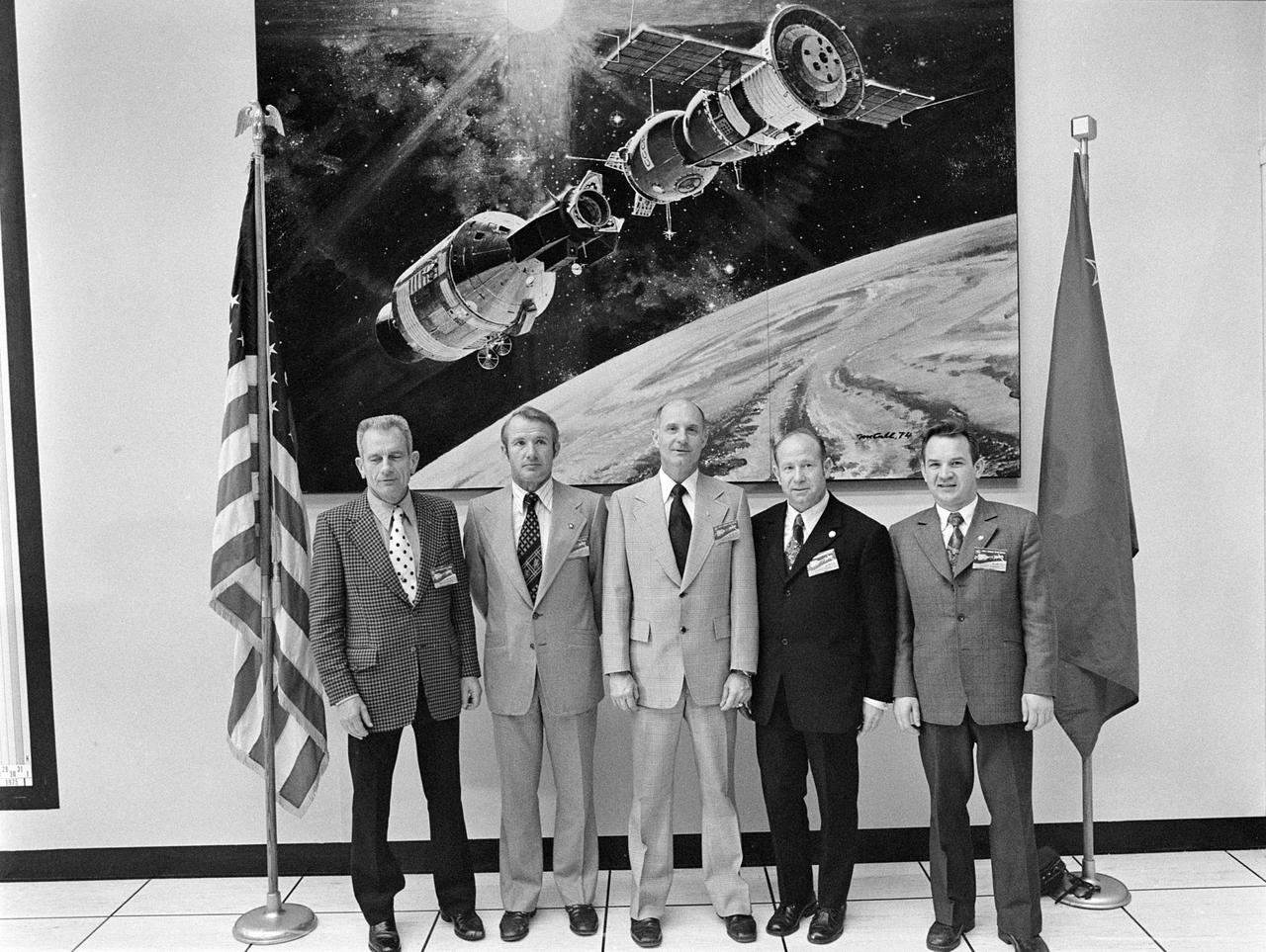
S75-24030 (8-10 Feb. 1975) --- The five prime crew members of the Apollo-Soyuz Test Project (ASTP) mission pose for a group photograph while at NASA's Kennedy Space Center (KSC) for a three-day inspection tour. They are, left to right, astronaut Donald K. (Deke) Slayton, docking module pilot of the American crew; astronaut Vance D. Brand, command module pilot of the American crew; astronaut Thomas P. Stafford, commander of the American crew; cosmonaut Aleksey A. Leonov, commander of the Soviet crew; and cosmonaut Valeriy N. Kubasov, engineer of the Soviet crew. They were at KSC to look over launch facilities and flight hardware. They are standing in front of artist Robert McCall?s painting of an ASTP docking in Earth orbit.
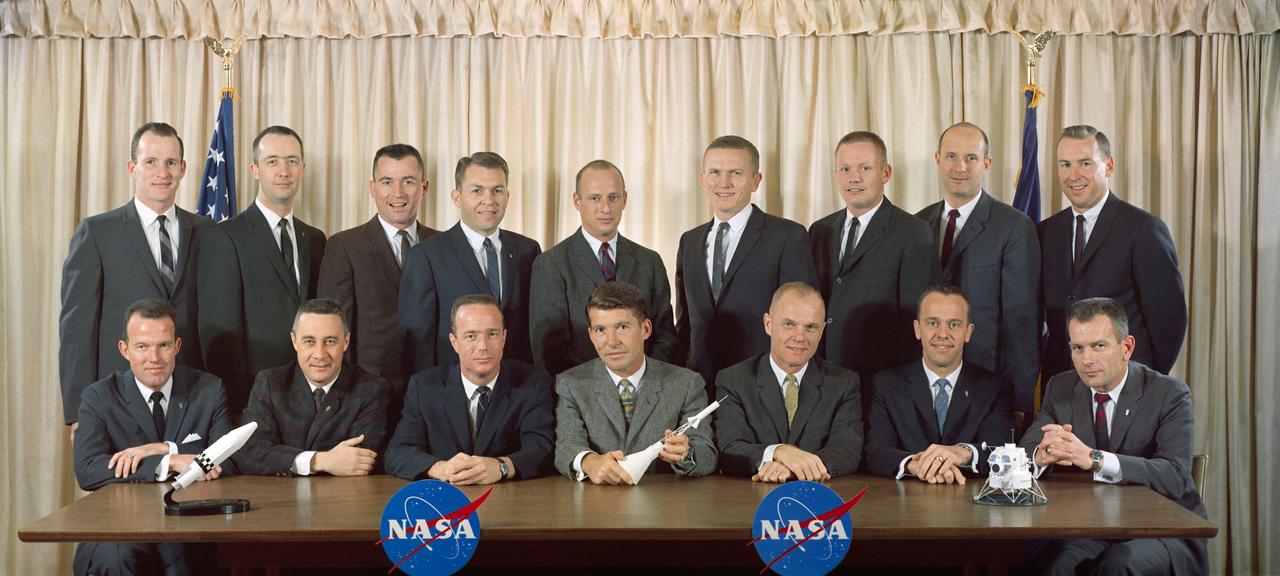
S63-01419 (1963) --- The first two groups of astronauts selected by the National Aeronautics and Space Administration (NASA). The original seven Mercury astronauts, selected in April 1959, are seated left to right, L. Gordon Cooper Jr., Virgil I. Grissom, M. Scott Carpenter, Walter M. Schirra Jr., John H. Glenn Jr., Alan B. Shepard Jr. and Donald K. Slayton. The second group of NASA astronauts, named in September 1962 are, standing left to right, Edward H. White II, James A. McDivitt, John W. Young, Elliot M. See Jr., Charles Conrad Jr., Frank Borman, Neil A. Armstrong, Thomas P. Stafford and James A. Lovell Jr. Photo credit: NASA
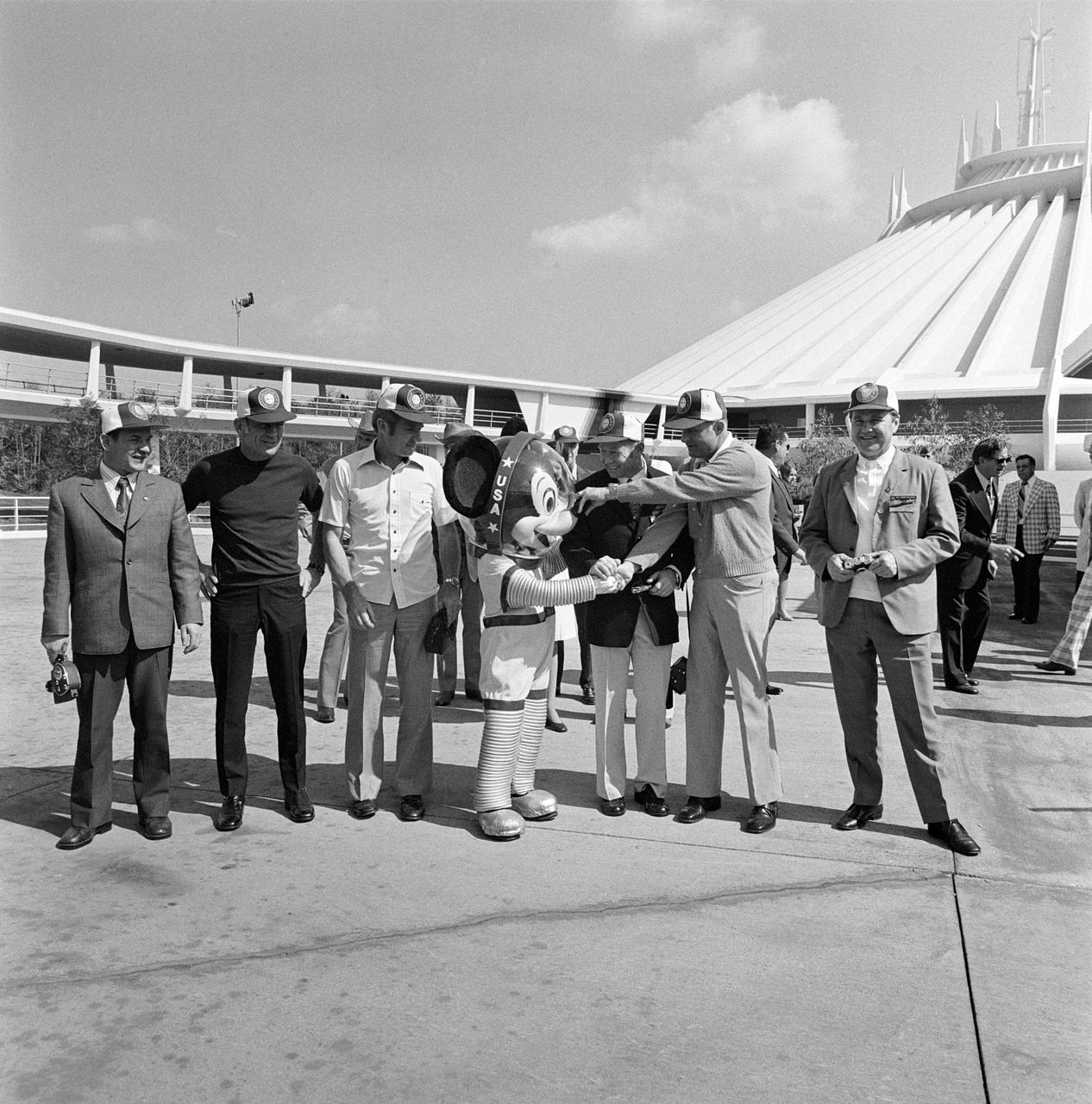
S75-24052 (8-10 Feb. 1975) --- A space-suited Mickey Mouse character welcomes the prime crewmen of the Apollo-Soyuz Test Project mission to Florida?s Disney World near Orlando. The crewmen made a side-trip to Disney World during a three-day inspection tour of NASA's Kennedy Space Center. The crewmen were at KSC to look over launch facilities and flight hardware. Receiving the jovial Disney World welcome are, left to right, cosmonaut Valeriy N. Kubasov, engineer on the Soviet crew; astronaut Donald K. Slayton, docking module pilot of the American crew; astronaut Vance D. Brand, command module pilot of the American crew; cosmonaut Aleksey A. Leonov, commander of the Soviet crew; astronaut Thomas P. Stafford, commander of the American crew; and cosmonaut Vladimir A. Shatalov, Chief of Cosmonaut Training for the USSR.
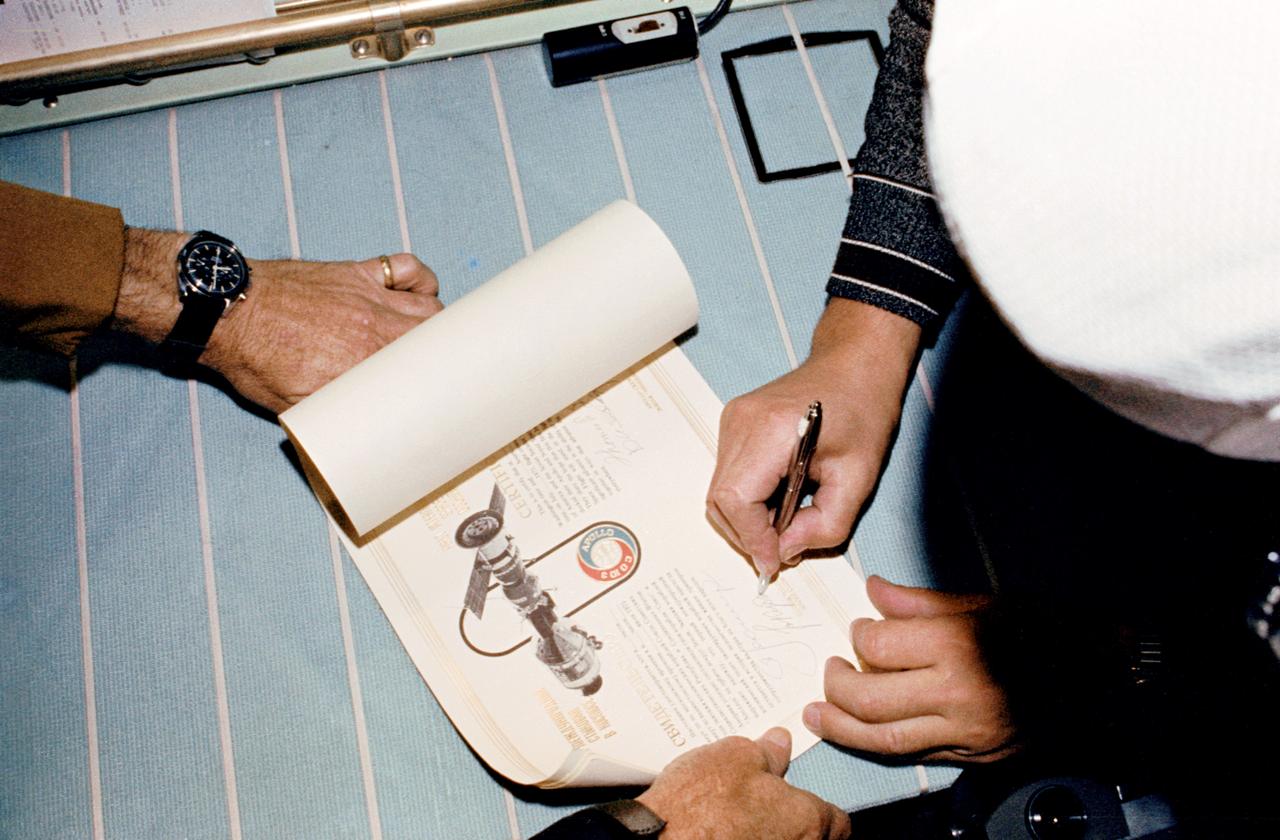
AST-03-171 (17 July 1975) --- The hands of cosmonaut Valerly N. Kubasov are seen as the ASTP engineer adds his name to the signature on the Soviet side of the official joint certificate marking an historical moment during the rendezvous day of the Apollo-Soyuz Test Project. The left hand of astronaut Donald K. Slayton, NASA's docking module pilot, is seen at left. The certificate had earlier been signed by astronauts Thomas P. Stafford, American crew commander; Slayton and cosmonaut Aleksey A. Leonov, Soviet crew commander, and it awaits the signature of astronaut Vance D. Brand, NASA's command module pilot who remained in the CM while the others signed in the Soviet Orbital Module of the Soyuz.
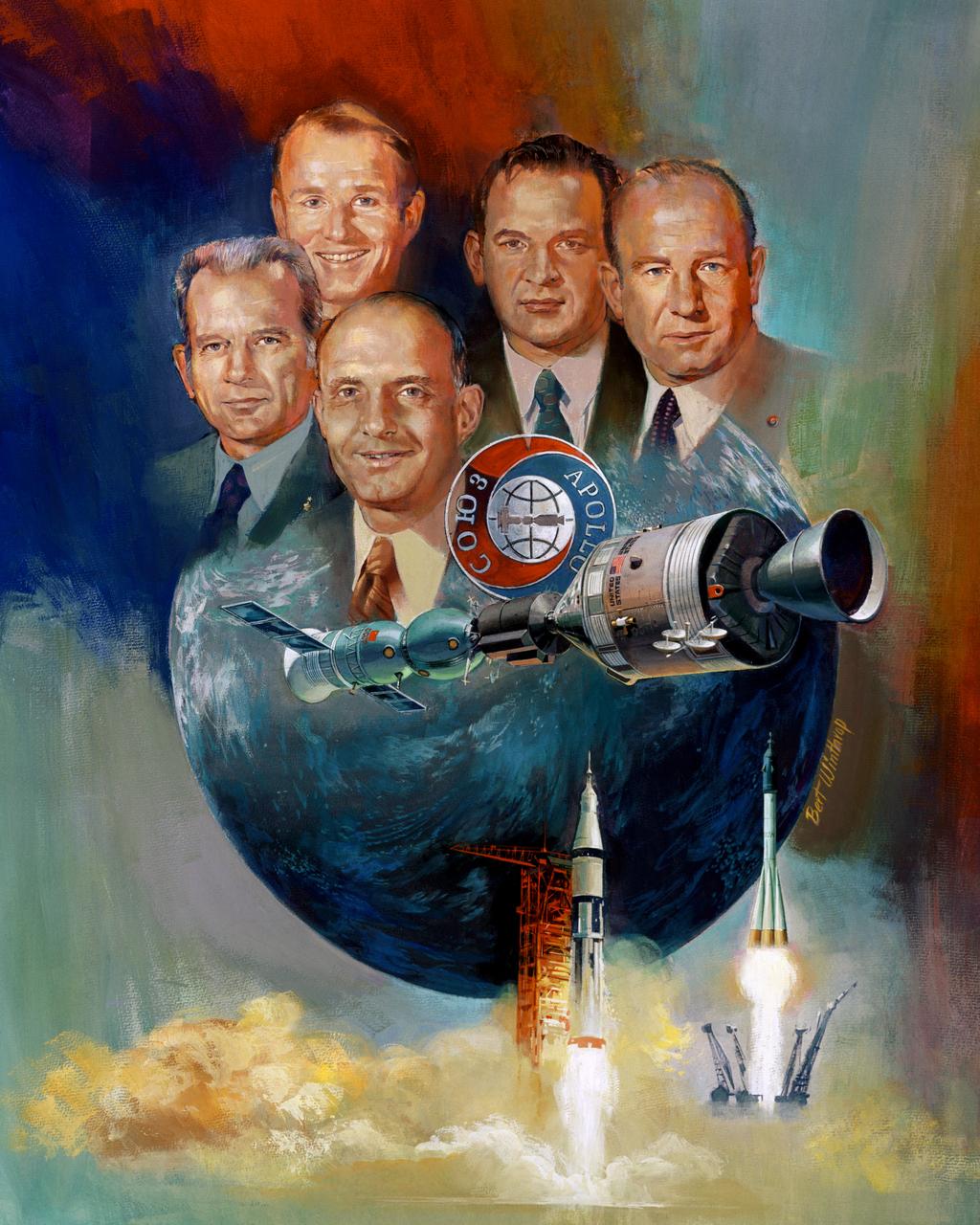
S75-25941 (April 1975) --- An Apollo-Soyuz Test Project (ASTP) symbolic painting by artist Bert Winthrop of Rockwell International Space Division, Downey, California. The artwork is composed of the ASTP mission insignia, the docked Apollo-Soyuz spacecraft, and portraits of the five ASTP prime crewmen, all superimposed against Earth's sphere in the center of the picture. The launches of both the American ASTP space vehicle (on left) and the Soviet ASTP space vehicle are depicted in the lower right corner. The five crewmen are, clockwise from the ASTP emblem, astronaut Thomas P. Stafford, commander of the American crew; astronaut Donald K. Slayton, docking module pilot of the American crew; astronaut Vance D. Brand, command module pilot of the American crew; cosmonaut Valeriy N. Kubasov, engineer on the Soviet crew; and cosmonaut Aleksey A. Leonov, commander of the Soviet crew. The joint U.S.-USSR ASTP docking mission in Earth orbit is scheduled for July 1975.
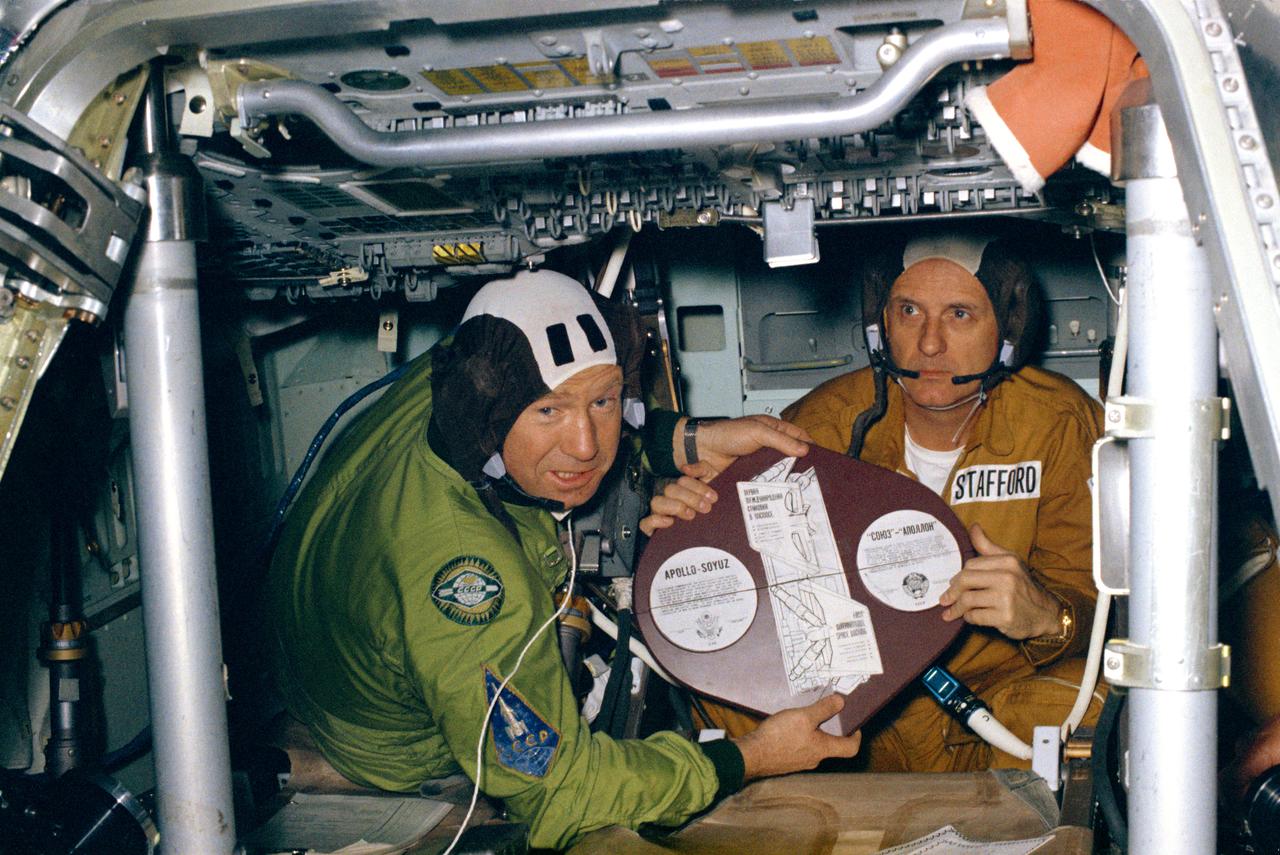
S75-25823 (February 1975) --- Cosmonaut Aleksei A. Leonov (left) and astronaut Thomas P. Stafford display the Apollo Soyuz Test Project (ASTP) commemorative plaque. The two commanders, of their respective crews, are in the Apollo Command Module (CM) trainer at Building 35 at NASA's Johnson Space Center (JSC). Two plaques divided into four quarters each will be flown on the ASTP mission. The American ASTP Apollo crew will carry the four United States quarter pieces aboard Apollo; and the Soviet ASTP Soyuz 19 crew will carry the four USSR quarter sections aboard Soyuz. The eight quarter pieces will be joined together to form two complete commemorative plaques after the two spacecraft rendezvous and dock in Earth orbit. One complete plaque then will be returned to Earth by the astronauts; and the other complete plaque will be brought back by the cosmonauts. The plaque is written in both English and Russian. The Apollo crew will consist of astronauts Thomas P. Stafford, commander; Donald K. "Deke" Slayton, docking module pilot; Vance D. Brand, command module pilot. The Soyuz 19 crew will consist of cosmonauts Aleksei A. Leonov, command pilot; and Valeri N. Kubasov, flight engineer.

STS065-214-037 (8-23 July 1994) --- Ready to begin one of her busy twelve hour shifts, payload specialist Dr. Chiaki Naito-Mukai enters the International Microgravity Laboratory (IML-2) science module in the cargo bay via the tunnel connecting it to the Space Shuttle Columbia's cabin. Dr. Mukai joined six NASA astronauts for more than two weeks of experimenting in Earth orbit. This photo was among the first released by NASA following IML-2. Also onboard were NASA astronauts Robert D. Cabana, James D. Halsell, Jr., Richard J. Hieb, Carl E. Walz, Donald A. Thomas and Leroy Chiao. Dr. Mukai represented the National Space Development Agency (NASDA) of Japan.
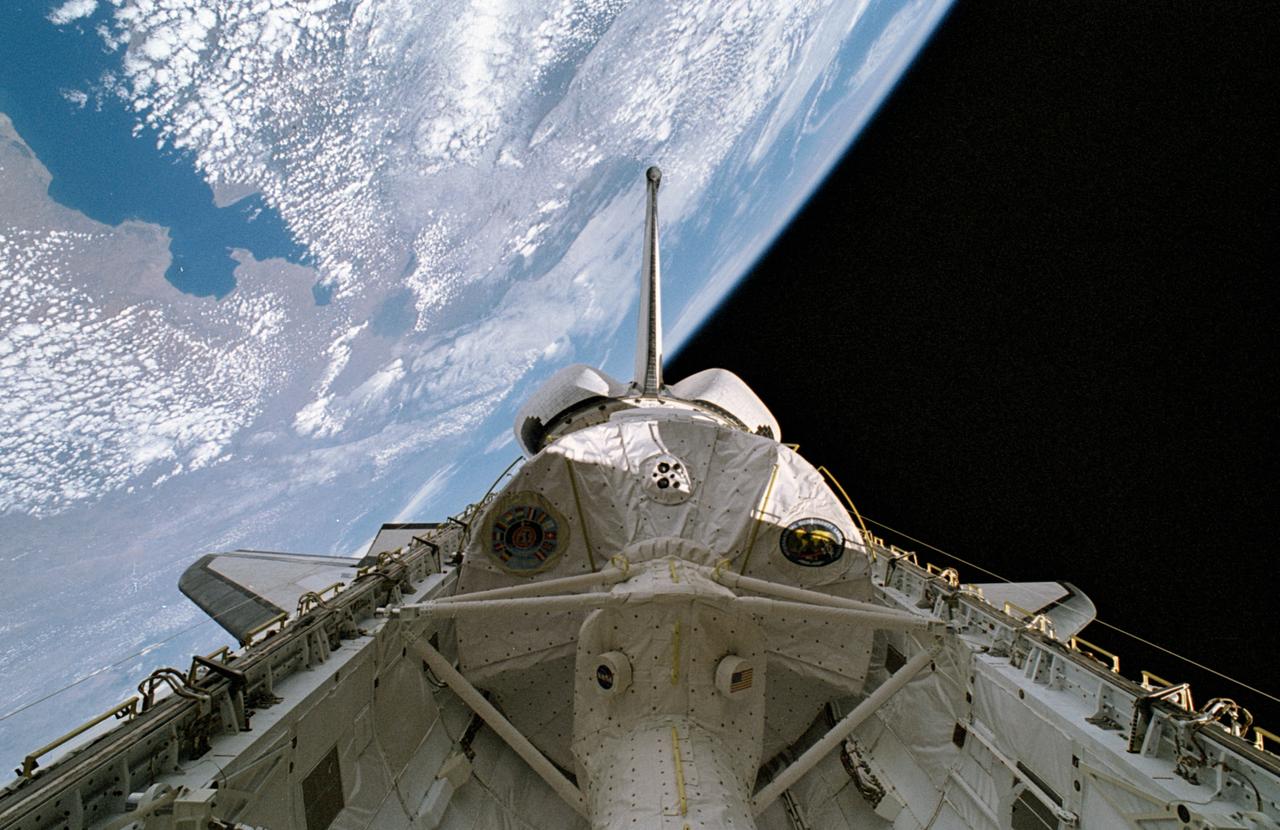
STS065-42-017 (8-23 July 1994) --- This 35mm panorama shows the science module, for the second International Microgravity Laboratory (IML-2) and the Space Shuttle Columbia's cargo bay, backdropped against the darkness of space over part of Africa, on Earth's horizon. Lake Nyasa in Malawi can easily be delineated. Also visible are part of the country of Mozambique and the Indian Ocean. Six NASA astronauts and a Japanese payload specialist spent more than two weeks of experimenting in Earth-orbit. Onboard were NASA astronauts Robert D. Cabana, James D. Halsell, Jr., Richard J. Hieb, Carl E. Walz, Donald A. Thomas and Leroy Chiao along with payload specialist Dr. Chiaki Mukai, representing the National Space Development Agency (NASDA) of Japan.
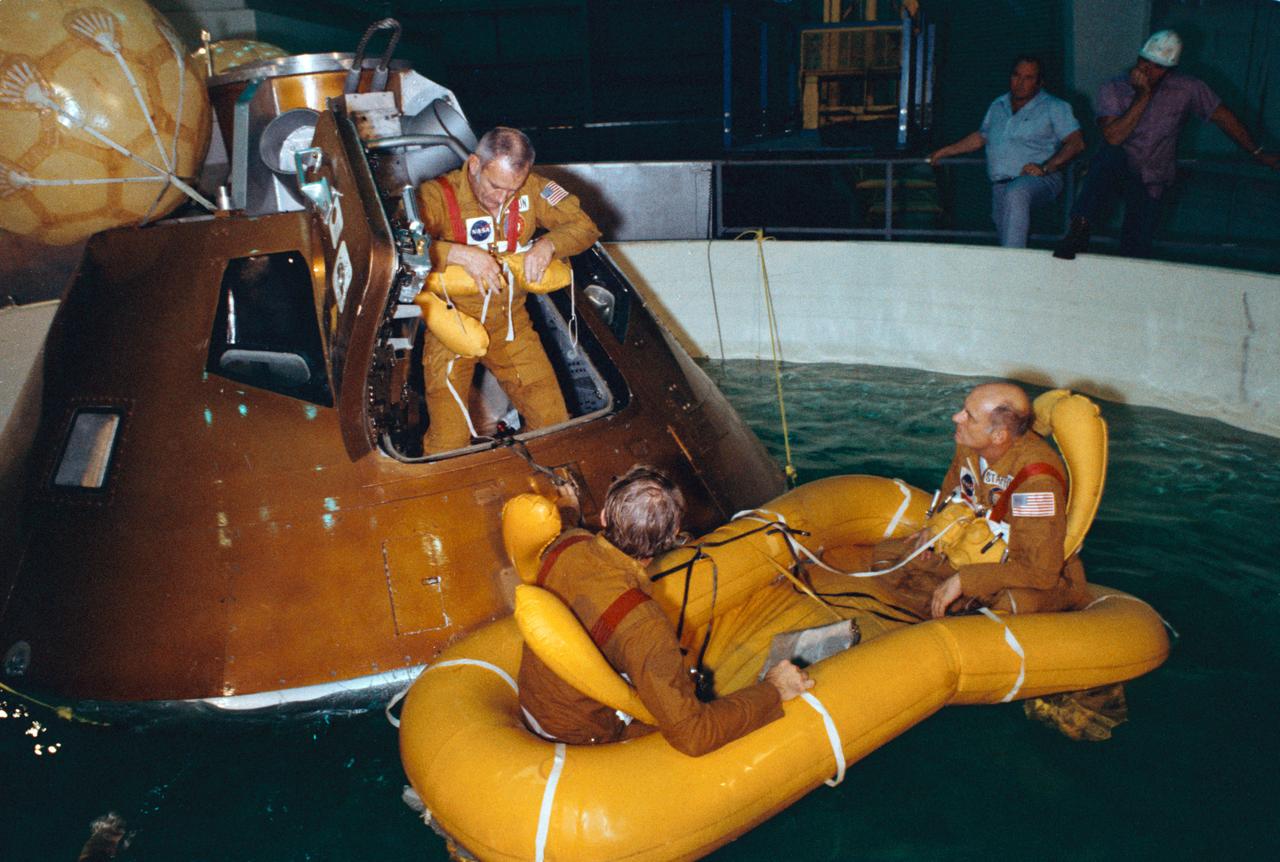
S75-23431 (8 March 1975) --- Astronaut Donald K. Slayton attaches his life preserver as he egresses an Apollo Command Module trainer in a water tank in Building 260 during water egress training at NASA's Johnson Space Center. The crewmen exit through the hatch when the CM is in this stable I (apex up) position; and they egress through the tunnel when the CM is in a stable II (apex down) position. Astronauts Vance D. Brand (on left) and Thomas P. Stafford have already egressed the trainer and are seated in a three-man life raft. This training session was part of the preparations for the joint U.S.-USSR Apollo-Soyuz Test Project docking mission in Earth orbit scheduled for July 1975. These three men compose the American ASTP prime crew. Stafford is the commander, Brand is the command module pilot, and Slayton is the docking module pilot.
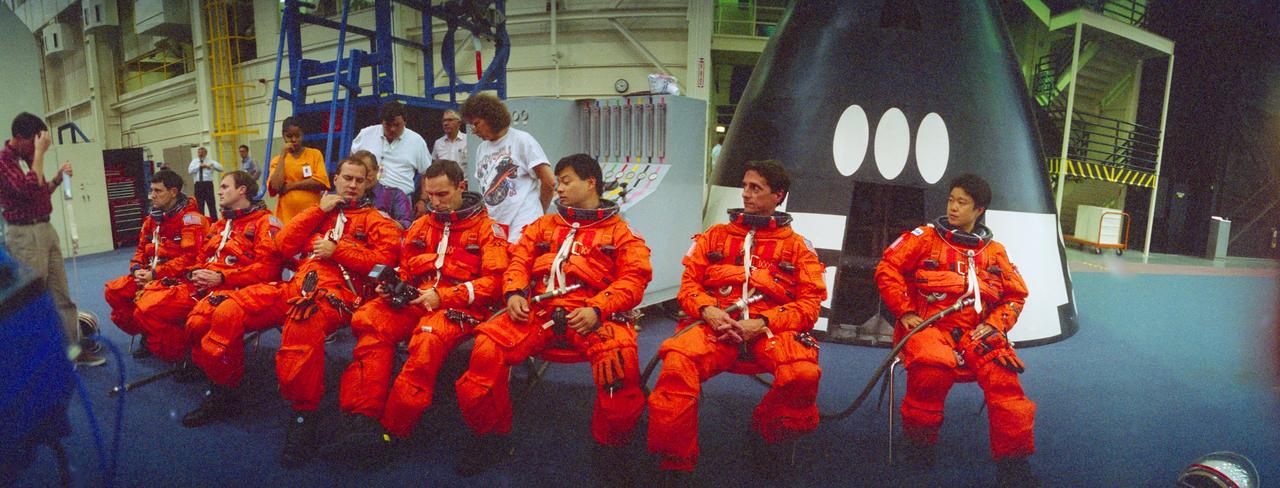
S94-31388 (25 Mar 1994) --- Six NASA astronauts and a Japanese payload specialist listen to a briefing by a crew training staffer. From the left are astronauts Robert D. Cabana, mission commander; James D. Halsell Jr., pilot; Richard J. Hieb, payload commander; and Carl E. Walz, Leroy Chiao and Donald A. Thomas, all mission specialists; along with Dr. Chiaki Mukai, payload specialist. Dr. Mukai represents the National Space Development Agency (NASDA) of Japan. The STS-65 crew was in the Johnson Space Center's (JSC) Shuttle mockup and integration laboratory for crew egress training. The full fuselage trainer, used for the rehearsals, is just out of frame. The seven-member crew will support the International Microgravity Laboratory (IML-2) mission aboard the Space Shuttle Columbia later this year.
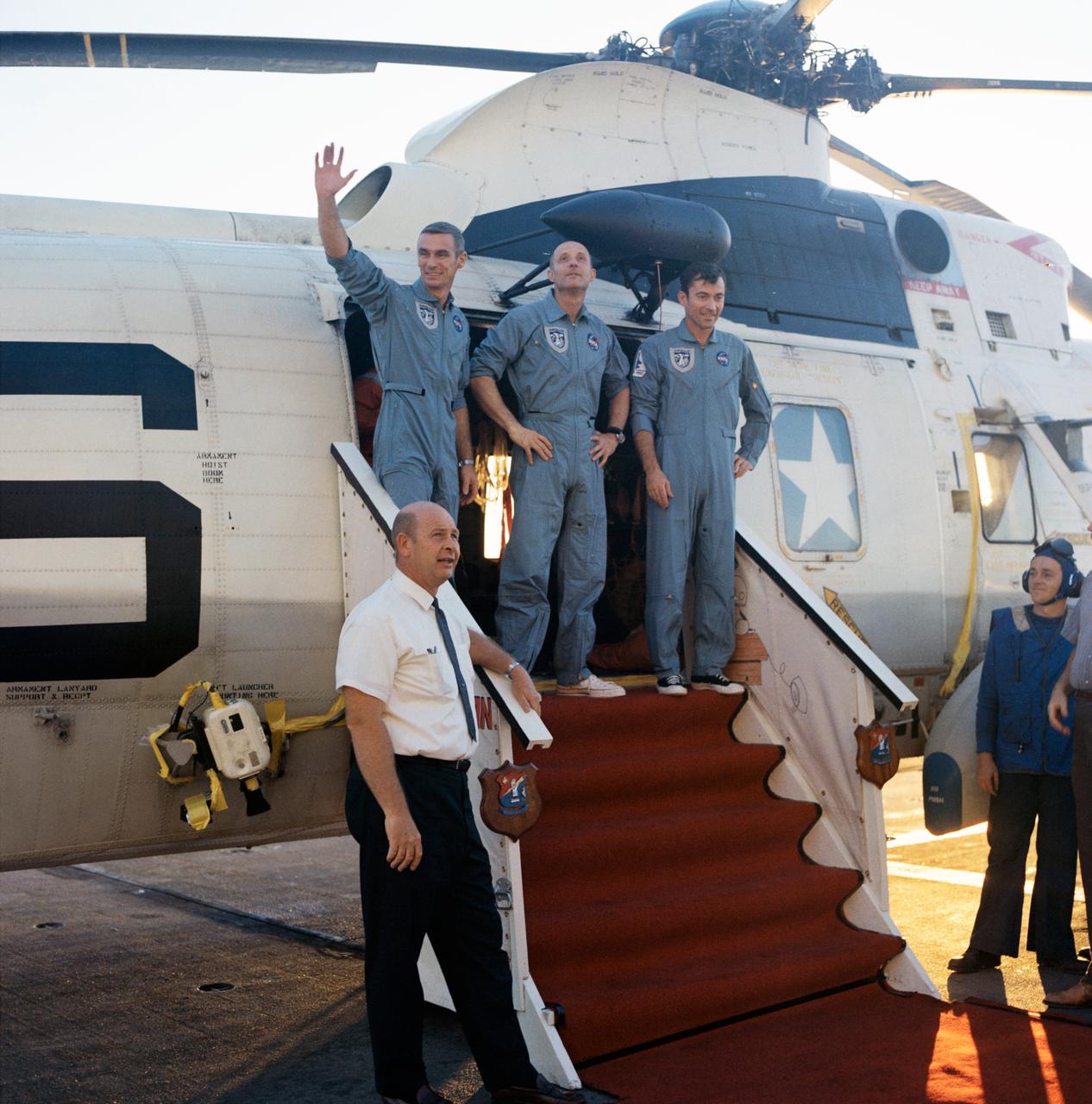
S69-20544 (26 May 1969) --- The Apollo 10 crewmembers arrive aboard the USS Princeton as they step from a helicopter to receive a red-carpet welcome. Left to right, are astronauts Eugene A. Cernan, lunar module pilot; Thomas P. Stafford, commander; and John W. Young, command module pilot. Splashdown occurred at 11:35 a.m. (CDT), May 26, 1969, in the South Pacific about 400 miles east of American Samoa, and about four miles from the USS Princeton, to conclude a successful eight-day lunar orbit mission. Standing in left foreground is Dr. Donald E. Stullken, chief, Recovery Operations Branch, Landing and Recovery Division, Manned Spacecraft Center.
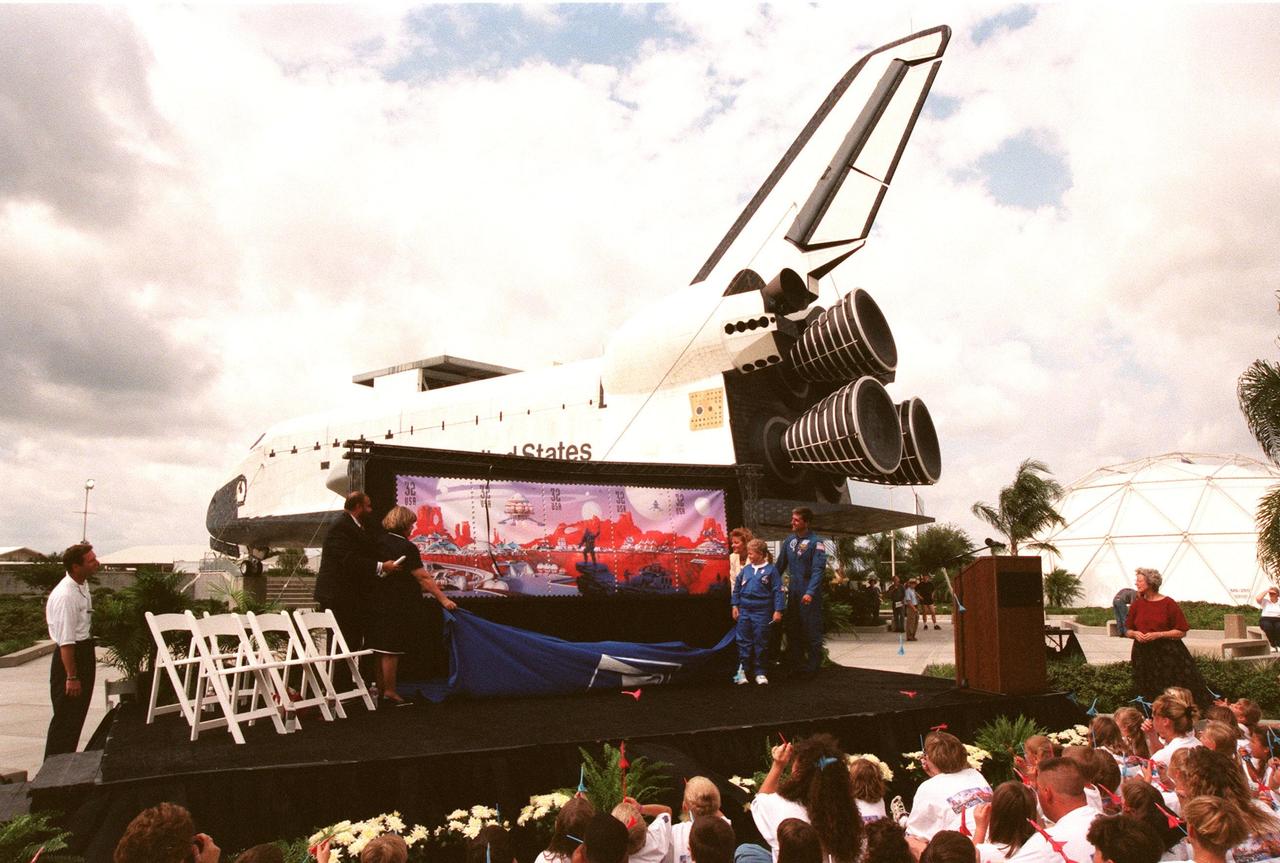
The U.S. Postal Service unveils its newest series of stamps, Space Discovery, at the KSC Visitor Complex. The event coincided with NASA's 40th anniversary on this date. Participating in the unveiling are (left to right) Barry Ziehl, U.S. Postal Service; JoAnn Morgan, KSC associate director of advanced development and shuttle upgrades; Karla Corcoran, Postal Service inspector general; Kristene A. Graves, a student from Lewis Carroll Elementary School ; and Dr. Donald Thomas, astronaut and veteran of four Shuttle missions. Behind them is the mockup of an orbiter. During the ceremony, Kristene read her essay "My Stamp Adventure" that she had written for an area-wide contest for the event. The stamps were designed by renowned aerospace artist Attila Heija. The strip of five individual stamps together make up a futuristic scene complete with space vehicles, a futuristic space city, and space explorers. The stamps are available nationwide beginning Oct. 1
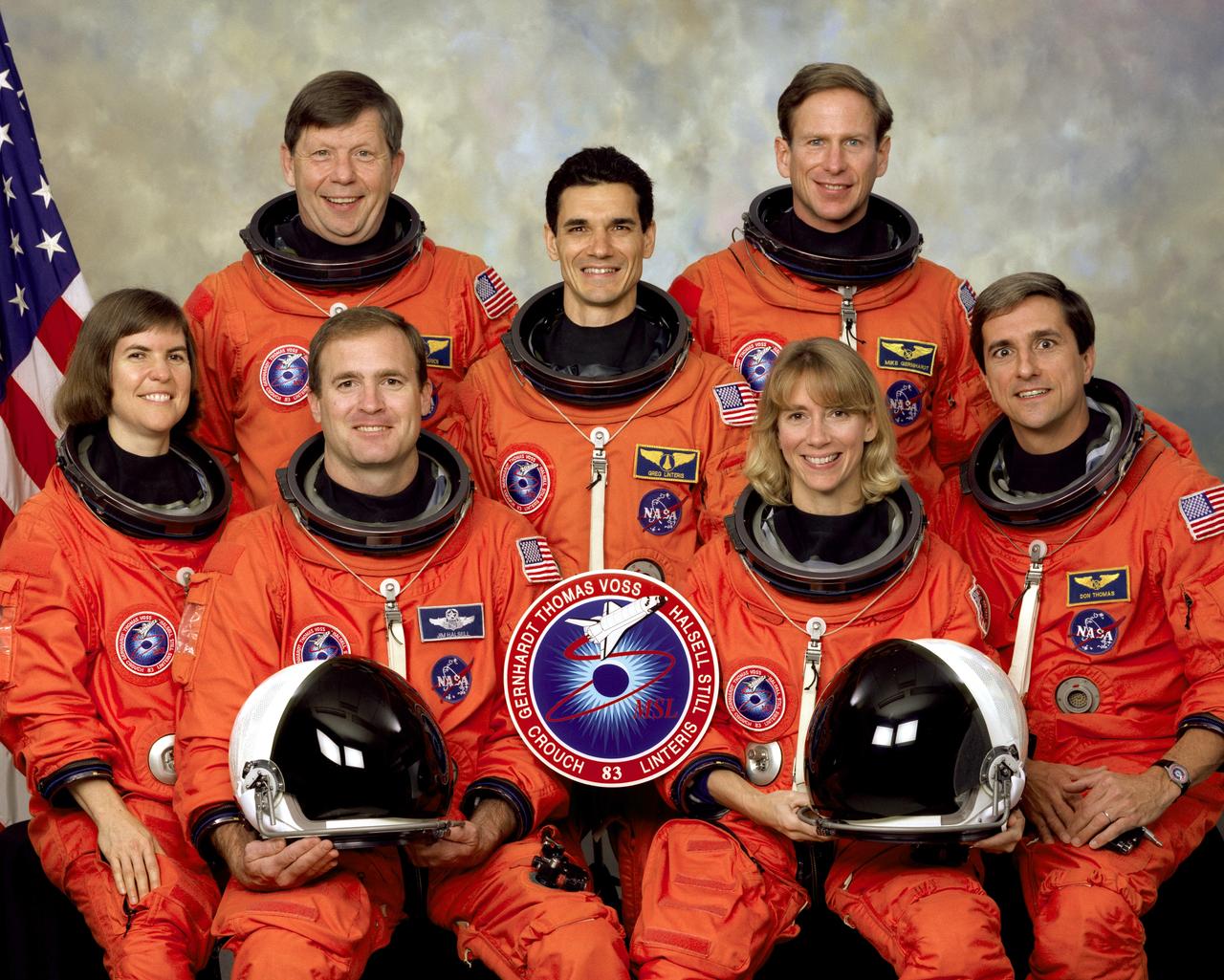
Five NASA astronauts and two scientists comprised the crew for the STS-83 mission in support of the first Microgravity Sciences Laboratory 1 (MSL-1). Pictured on the front row (left to right) are Janice E. Voss, payload commander; James D. Halsell, commander; Susan L. Still, pilot; and Donald A. Thomas, mission specialist. On the back row (left to right) are payload specialists Roger K. Crouch, and Gregory T. Linteris; and Michael L. Gernhardt, mission specialist. Dr. Crouch and Dr. Linteris are experts in several disciplines treated on MSL-1. STS-83 launched aboard the Space Shuttle Columbia on April 4, 1997. The five launched again in July 1997 for the STS-94 mission.
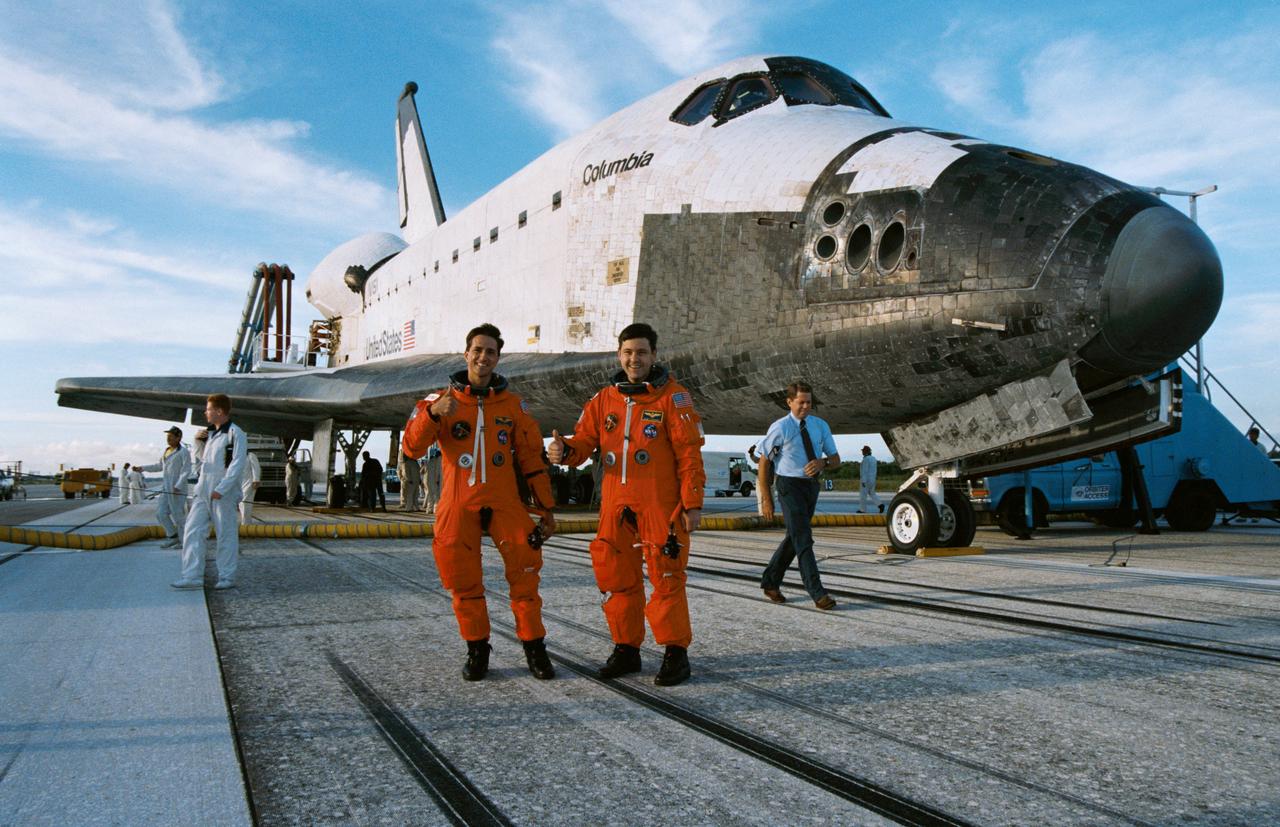
STS-65 Commander Robert D. Cabana (right) and Mission Specialist Donald A. Thomas, wearing launch and entry suits (LESs), signal mission success with a "thumbs up" gesture as they stand in front of Columbia, Orbiter Vehicle (OV) 102. The two crewmembers are all smiles after OV-102's landing at the Kennedy Space Center (KSC) Shuttle Landing Facility (SLF). The two, along with four other NASA astronauts and a Japanese payload specialist, had just broken a Shuttle duration record as they ran almost 18 hours over two weeks in space in support of the International Microgravity Laboratory 2 (IML-2) mission. Landing occurred at 6:38 am (Eastern Daylight Time (EDT)). Mission duration was 14 days, 17 hours and 56 minutes. In the background, KSC personnel conduct postflight servicing of the vehicle.
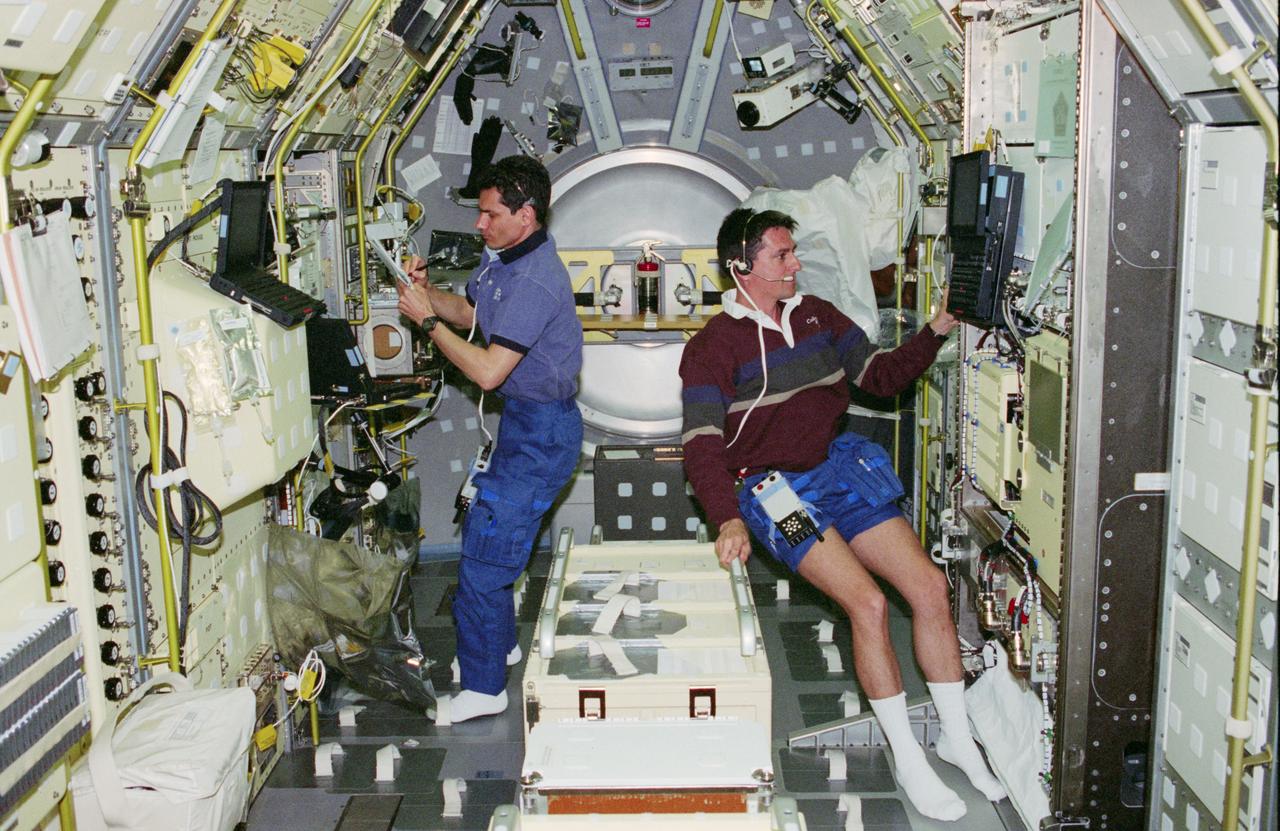
STS083-312-031 (4-8 April 1997) --- Payload specialist Gregory T. Linteris (left) is seen at the Mid Deck Glove Box (MGBX), while astronaut Donald A. Thomas, mission specialist, works at the Expedite the Processing of Experiments to Space Station (EXPRESS) rack. MGBX is a facility that allows scientists the capability of doing tests on hardware and materials that are not approved to be handled in the open Spacelab. It is equipped with photographic, video and data recording capability, allowing a complete record of experiment operations. Experiments performed on STS-83 were Bubble Drop Nonlinear Dynamics and Fiber Supported Droplet Combustion. EXPRESS is designed to provide accommodations for Sub-rack payloads on Space Station. For STS-83, it held two payloads. The Physics of Hard Colloidal Spheres (PHaSE) and ASTRO-Plant Generic Bioprocessing Apparatus (ASTRO-PGBA), a facility with light and atmospheric controls which supports plant growth for commercial research.
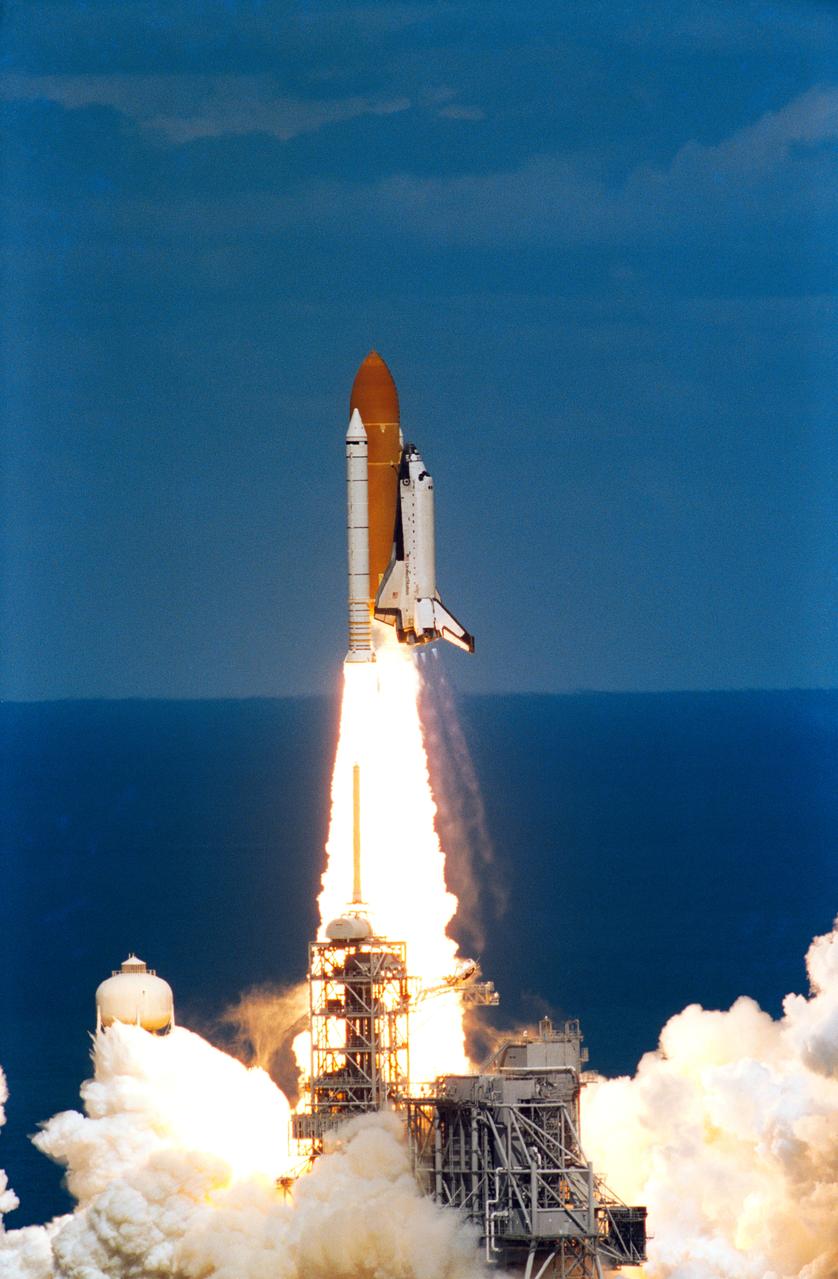
STS083-S-003 (4 April 1997)--- With the Atlantic Ocean in the background, the Space Shuttle Columbia heads toward Earth-orbit from Launch Pad 39A at 2:20:32 p.m. (EST), April 4, 1997, from the Kennedy Space Center (KSC). Onboard the spacecraft to support the Microgravity Science Laboratory 1 (MSL-1) mission were astronauts James D. Halsell, commander; Susan L. Still, pilot; Janice E. Voss, payload commander; Michael L. Gernhardt and Donald A. Thomas, both mission specialists; along with payload specialists Roger K. Crouch and Gregory T. Linteris. A problem with a fuel cell caused the crew to cut the mission short and return to Earth on April 8, 1997.
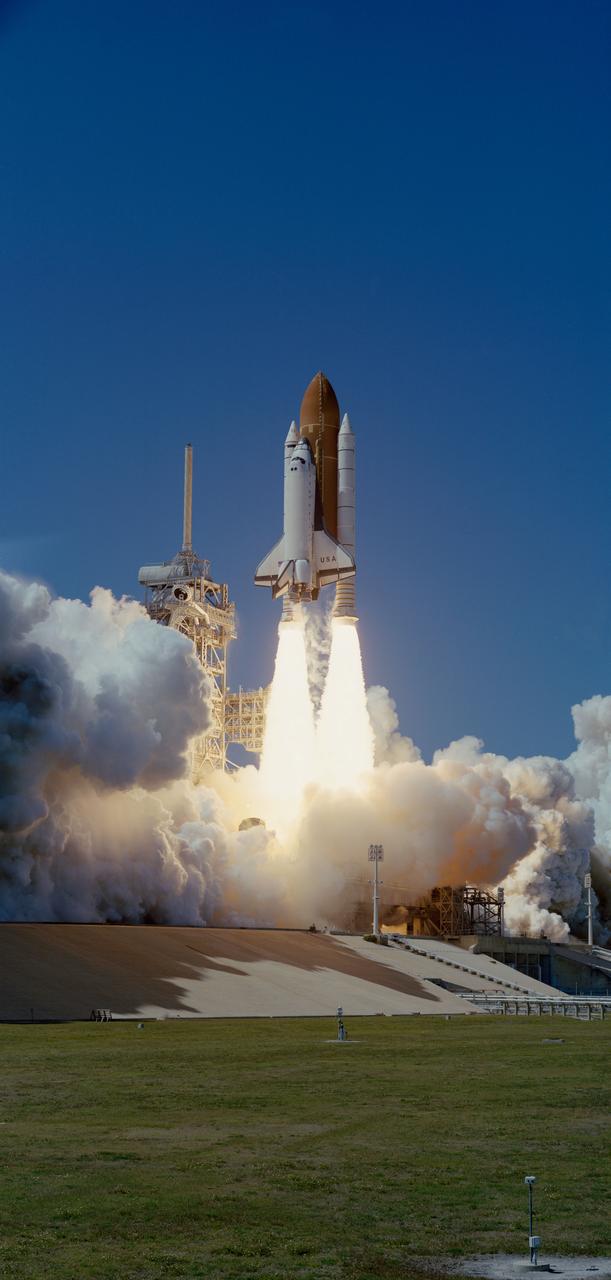
STS083-S-007 (4 April 1997)--- The Space Shuttle Columbia heads toward Earth-orbit from Launch Pad 39A at 2:20:32 p.m. (EST), April 4, 1997, at the Kennedy Space Center (KSC). Onboard the spacecraft to support the Microgravity Science Laboratory 1 (MSL-1) mission were astronauts James D. Halsell, commander; Susan L. Still, pilot; Janice E. Voss, payload commander; Michael L. Gernhardt and Donald A. Thomas, both mission specialists; along with payload specialists Roger K. Crouch and Gregory T. Linteris. A problem with a fuel cell caused the crew to cut the mission short and return to Earth on April 8, 1997.
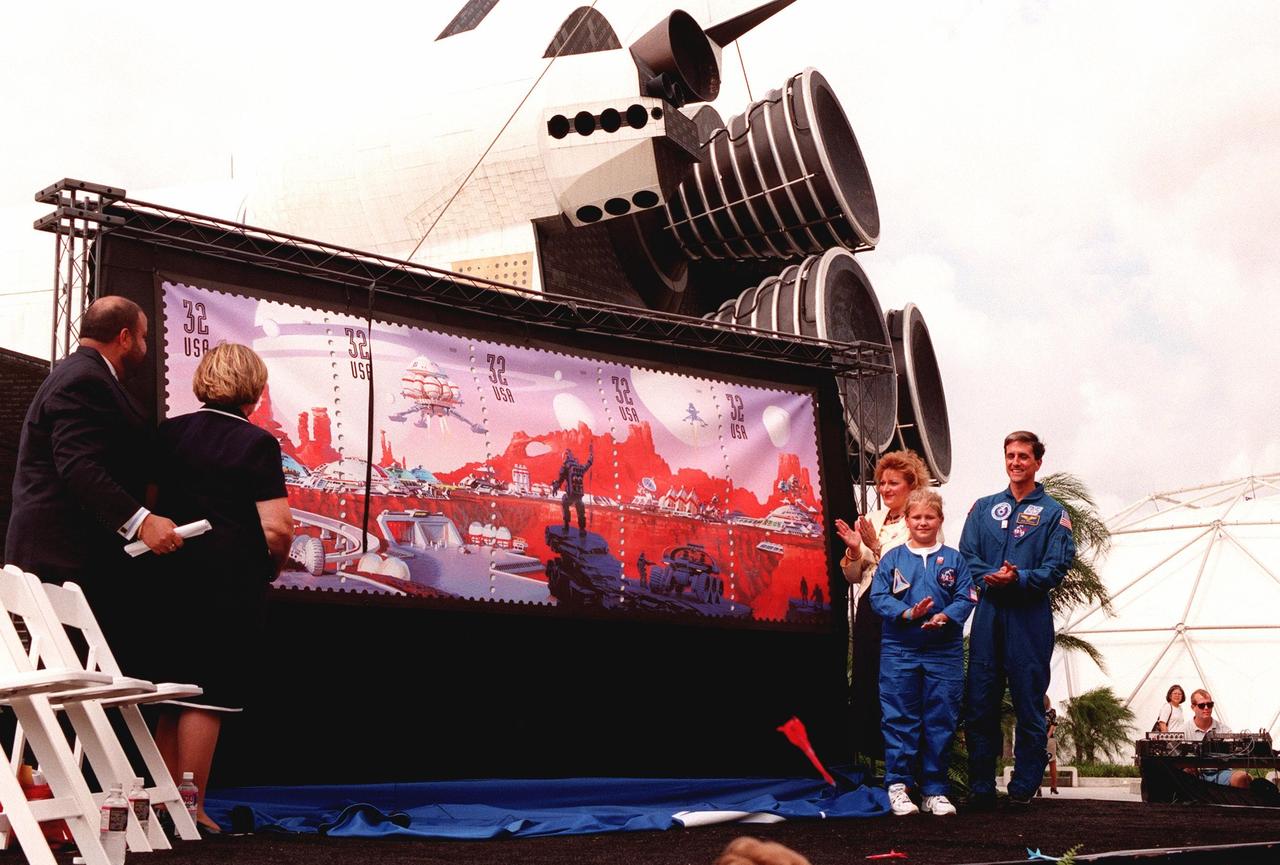
Applauding the unveiling of the U.S. Postal Service's newest series of stamps, Space Discovery, are are (left to right) Barry Ziehl, U.S. Postal Service; JoAnn Morgan, KSC associate director of advanced development and shuttle upgrades; Karla Corcoran, Postal Service inspector general; Kristene A. Graves, a student from Lewis Carroll Elementary School; and Dr. Donald Thomas, astronaut and veteran of four Shuttle missions. During the ceremony, Kristene read her essay "My Stamp Adventure" that she had written for an area-wide contest for the event. The unveiling took place at the KSC Visitor Complex and coincided with NASA's 40th anniversary on this date. Behind the large display can be seen the mockup of an orbiter. The stamps were designed by renowned aerospace artist Attila Heija. The strip of five individual stamps together make up a futuristic scene complete with space vehicles, a futuristic space city, and space explorers. The stamps are available nationwide beginning Oct. 1
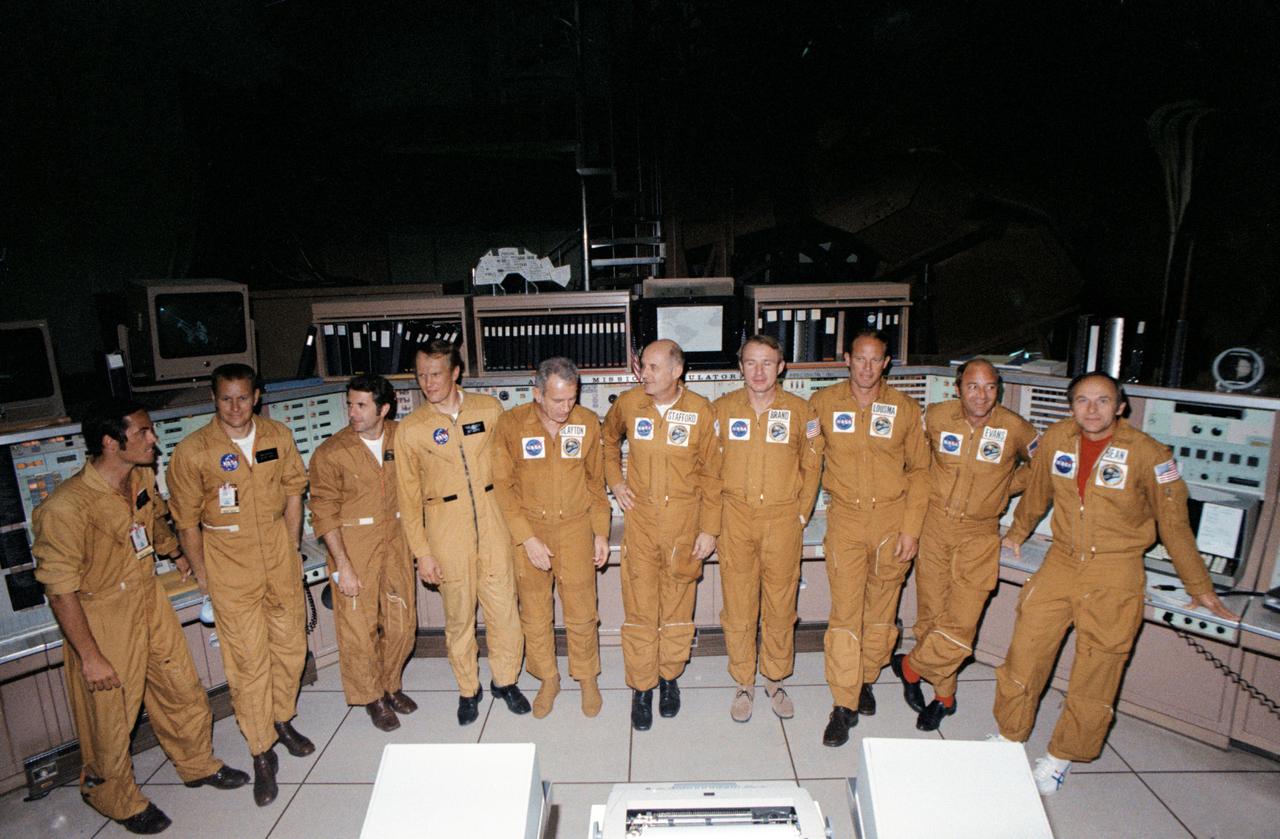
S75-28361 (9 July 1975) --- These ten American astronauts compose the U.S. prime crew, the backup crew and the crew support team for the joint U.S.-USSR Apollo-Soyuz Test Project docking mission in Earth orbit. They are, left to right, Robert L. Crippen, support team; Robert F. Overmyer, support team; Richard H. Truly, support team; Karol J. Bobko, support team; Donald K. Slayton, prime crew docking module pilot; Thomas P. Stafford, prime crew commander; Vance D. Brand, prime crew command module pilot; Jack R. Lousma, backup crew docking module pilot; Ronald E. Evans, backup crew command module pilot; and Alan L. Bean, backup crew commander. They are photographed by the Apollo Mission Simulator console in Building 5 at NASA's Johnson Space Center.
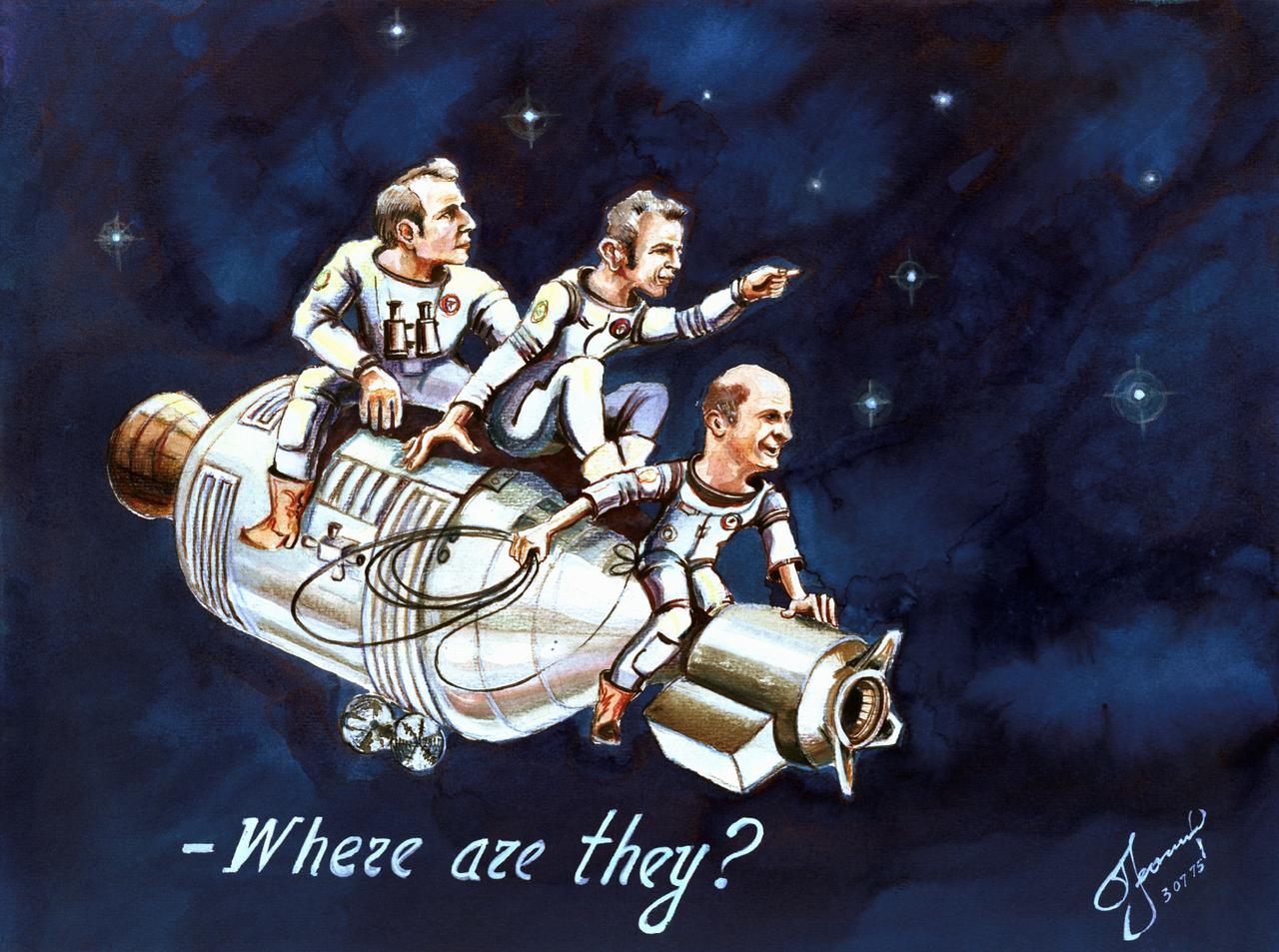
S75-28504 (17 July 1975) --- The American ASTP crewmen search the skies for the Soviet Soyuz spacecraft in this humorous artwork by cosmonaut Aleksey A. Leonov. Astronauts Vance D. Brand, Donald K. Slayton and Thomas P. Stafford (left to right) sit astride the Apollo spacecraft and Docking Module ready to lasso Soyuz. The cartoon humorously depicts the approaching historic event of an American spacecraft rendezvousing and docking in Earth orbit with a USSR spacecraft, scheduled today (July 17, 1975). Aboard Soyuz are Leonov, crew commander, and his fellow cosmonaut, Valeriy N. Kubasov. Stafford is the Apollo crew commander. The U.S. and USSR crewmen will visit each other's spacecraft while the Apollo and Soyuz are docked in Earth orbit for two days. Leonov, an accomplished artist, specializes in paintings on space subjects. He has a number of paintings on public exhibit in his native land.
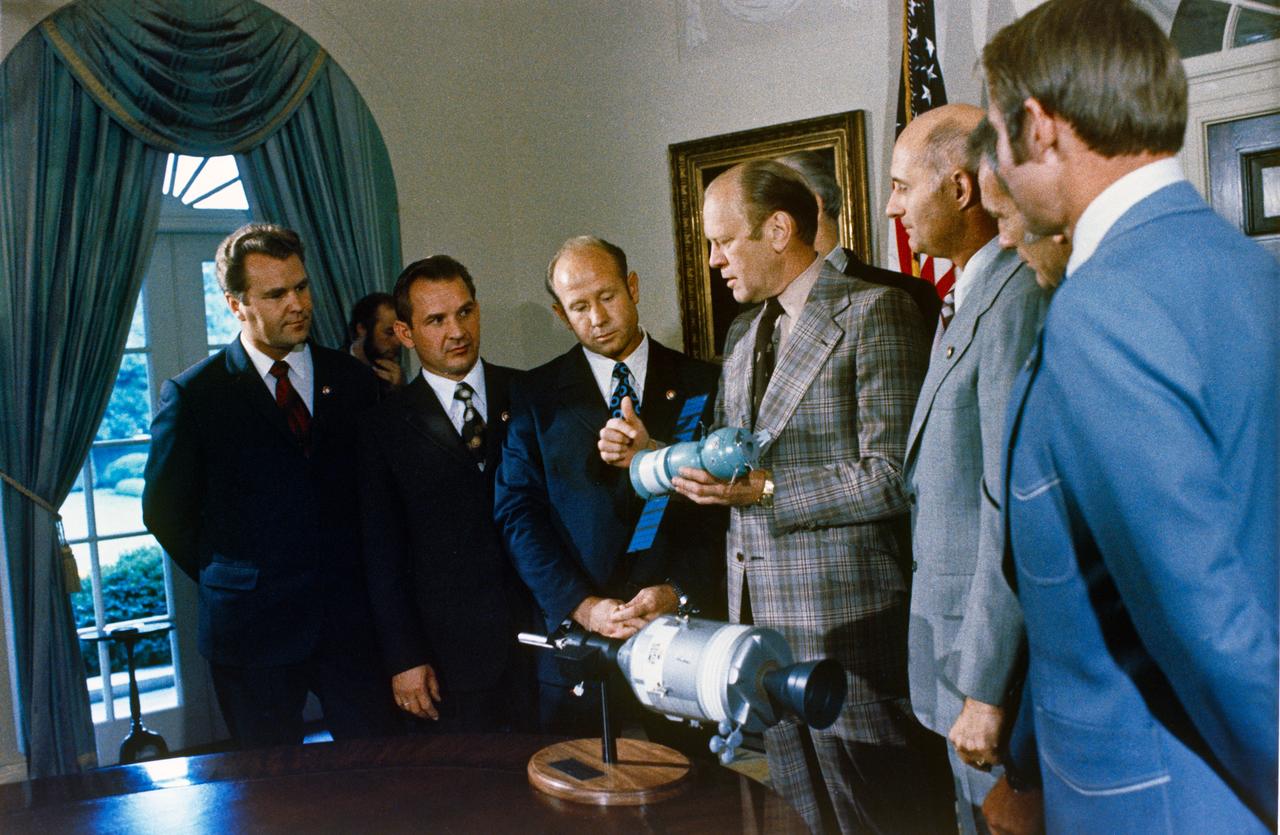
S74-29892 (7 Sept. 1974) --- President Gerald R. Ford removes the Soviet Soyuz spacecraft model from a model set depicting the 1975 Apollo-Soyuz Test Project, an Earth orbital docking and rendezvous mission involving crewmen from the U.S. and USSR, who visited Mr. Ford at the White House. The cosmonauts and astronauts are, left to right, Vladimir A. Shatalov, Chief, Cosmonaut Training; Valeriy N. Kubasov, ASTP Soviet engineer; Aleksey A. Leonov, ASTP Soviet crew commander; Thomas P. Stafford, ASTP American crew commander; Donald K. Slayton, American crew?s docking module pilot; and Vance D. Brand, command module pilot for the U.S. team. Dr. George M. Low, Deputy Administrator, National Aeronautics and Space Administration, is partially obscured behind Mr. Ford.
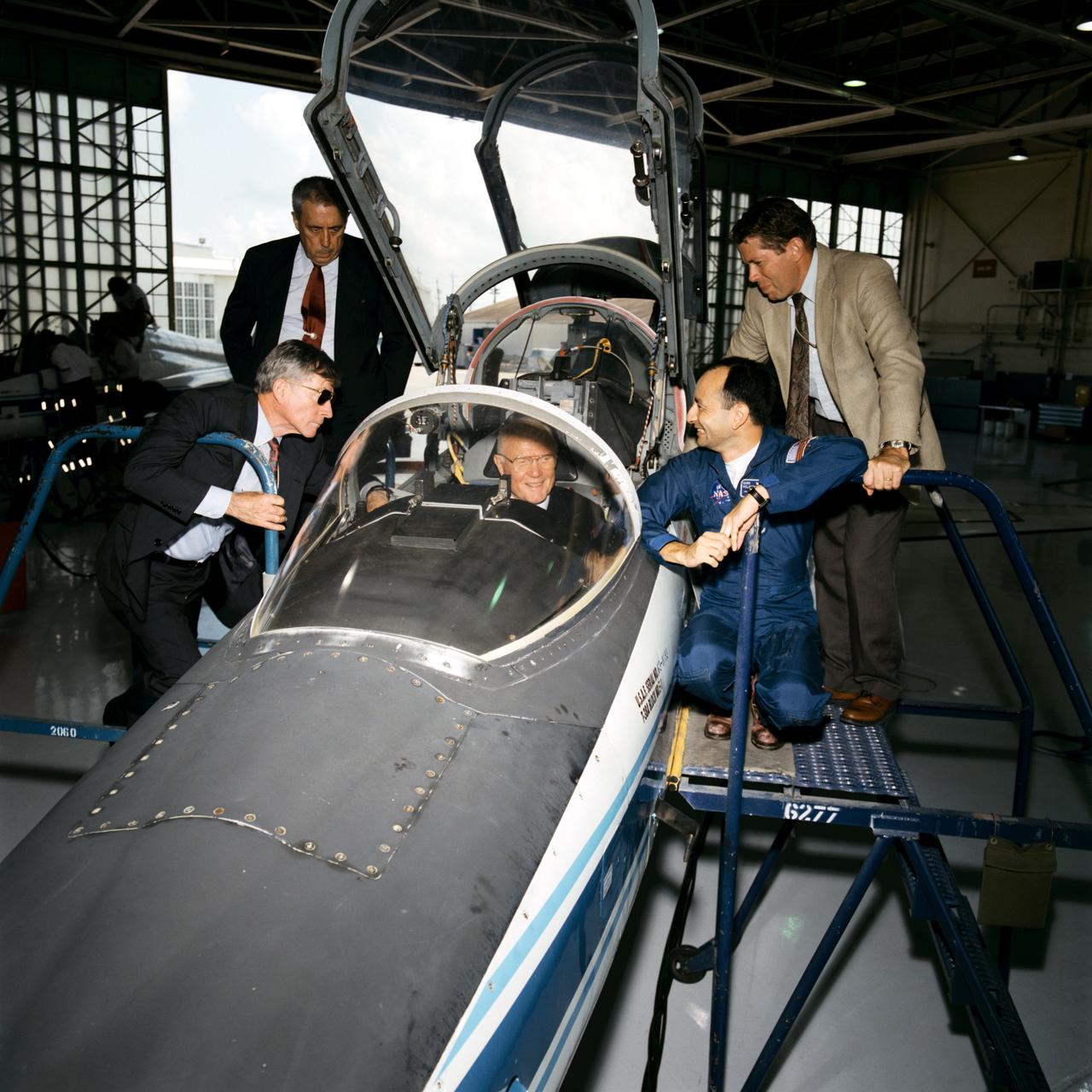
Senator John Glenn visit to Johnson Space Center (JSC). Views of Glenn sitting in cockpit of T-38 in Hangar 276 with John Young, George Abbey, David Leestma and Mark Polansky observing (11150). An engineer explains SPIFEX experiment hardware to Abby, Young and Glenn in Bldg 13 (11151, 11153). Glenn talks with astronaut Terrence T. Henricks and employees in Bldg 9C, Virtual reality lab (11152). Lunch in Bldg 17 Flight Crew support division with Dr. Ellen Baker, Robert "Hoot" Gibson and John Glenn (11154). Linda Godwin, Robert Cabana, Abbey, Young, Baker, Gibson and Glenn at lunch (11155). Astronaut Mark Lee shows Glenn and his aide how to use the virtural reality helmets (11156-7). Glenn shakes the hand of Franklin Chang-Diaz with his plasma rocket in the background in the Sonny Carter Training Facility (SCTF) (11158). Glenn in the Manipulator Development Facility (MDF) Remote Manipulator System (RMS) station mock-up in Bldg 9A with Abbey, Young and aide (11159, 11186). Glenn signs a book for Thomas D. Jones as Frederick Sturckow and Linda Godwin look on (11160). Glenn inside visual-vestibular trainer in Bldg 9B (11161). In conference room meeting with astronaut corps in Bldg 4S, Glenn shakes Robert Cabana's hand (11162). John Glenn and John Young pose for a group shot with Bldg 17 Food lab personnel (11163). Glenn thanks the food lab personnel (11164). Glenn visits Bldg 5 Fixed Base (FB) middeck simulator with astronauts Terrence Henricks and Mary Ellen Weber (11165). Glenn with Charles T. Bourland (11166). STS-70 crew Donald Thomas, Terrence Henricks, Mary Ellen Weber, Nancy Currie and Kevin Kregel with Glenn's advisor (11167). STS-70 crew Thomas, Henricks, Weber, Currie and Kregel with John Glenn (11175). Glenn with Thomas, Kregel, Weber, Henricks and trainer (11176-7). David J. Homan assists Glenn's aide with virtual reality goggles (11168) and Glenn (11174). John Young in Bldg 9C equilibrium trainer (11169). Glenn with Carl Walz in flight deck mock-up of MDF in Bldg 9NE (11170, 11187). Young, Abbey, aides, Glenn and Walz examine helium balloon in MDF (11171-2). Chang-Diaz shows Glenn's tour group the plasma rocket (11173). Glenn's presentation to astronaut corps (11178-81, 11184-5). Glenn is presented with framed picture of Sonny Carter Training Facility (SCTF) (11182) and framed picture of space station (11183).
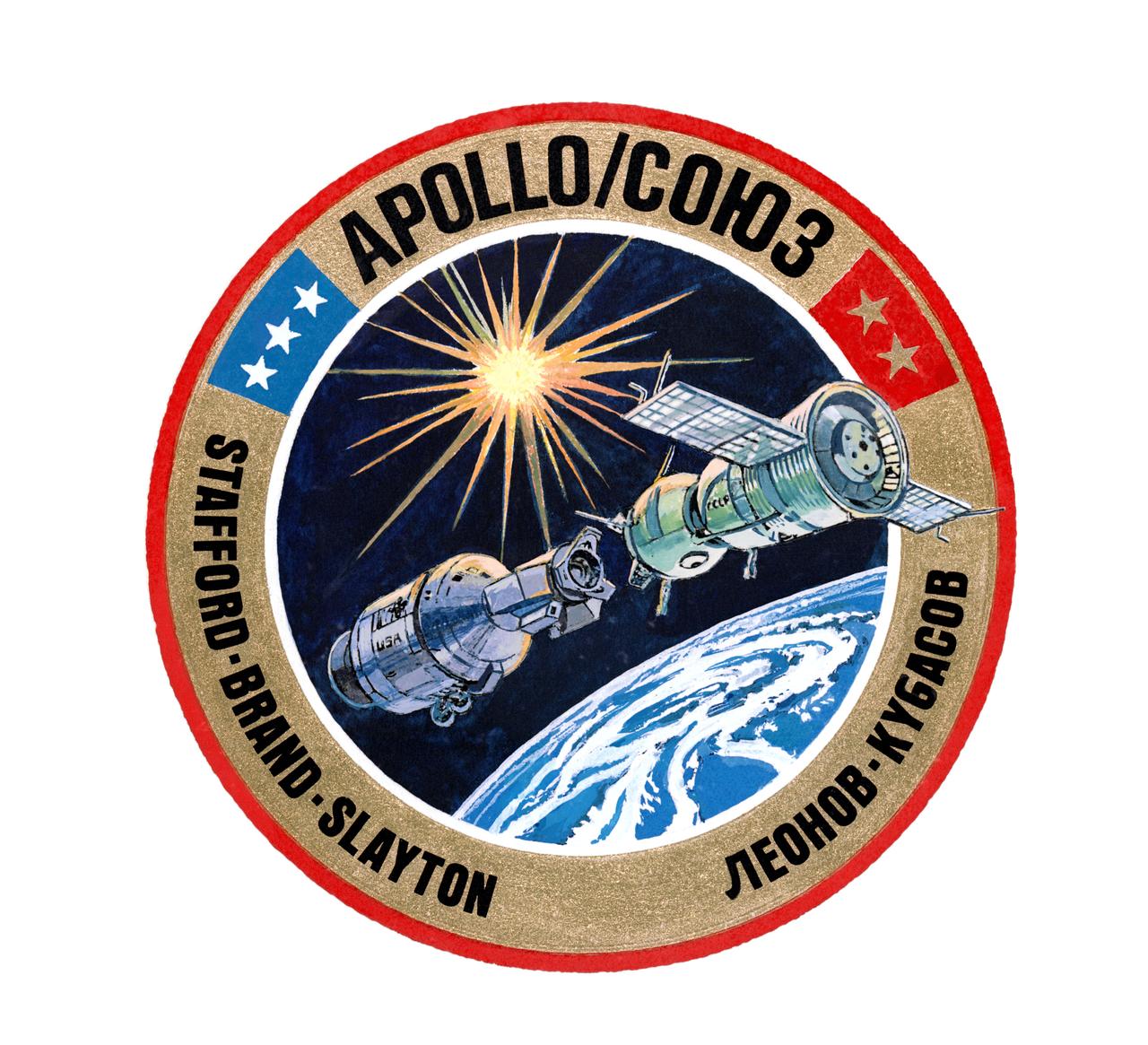
S75-20361 (27 Feb. 1975) --- This is the American crew insignia of the joint United States-USSR Apollo-Soyuz Test Project (ASTP) scheduled to take place in July 1975. Of circular design, the insignia has a colorful border area, outlined in red, with the names of the five crew members and the words Apollo in English and Soyuz in Russian around an artist?s concept of the Apollo and Soyuz spacecraft about to dock in Earth orbit. The bright sun and the blue and white Earth are in the background. The white stars on the blue background represent American astronauts Thomas P. Stafford, commander; Vance D. Brand, command module pilot; and Donald (Deke) K. Slayton, docking module pilot. The dark gold stars on the red background represent Soviet cosmonauts Aleksey A. Leonov, commander, and Valeriy N. Kubasov, engineer. Soyuz and Apollo will be launched separately from the USSR and United States, and will dock and remain together for as long as two days. The three Apollo astronauts will enter Soyuz and the two Soviet cosmonauts will visit the Apollo spacecraft via a docking module. The Russian word ?soyuz? means ?union? in English.
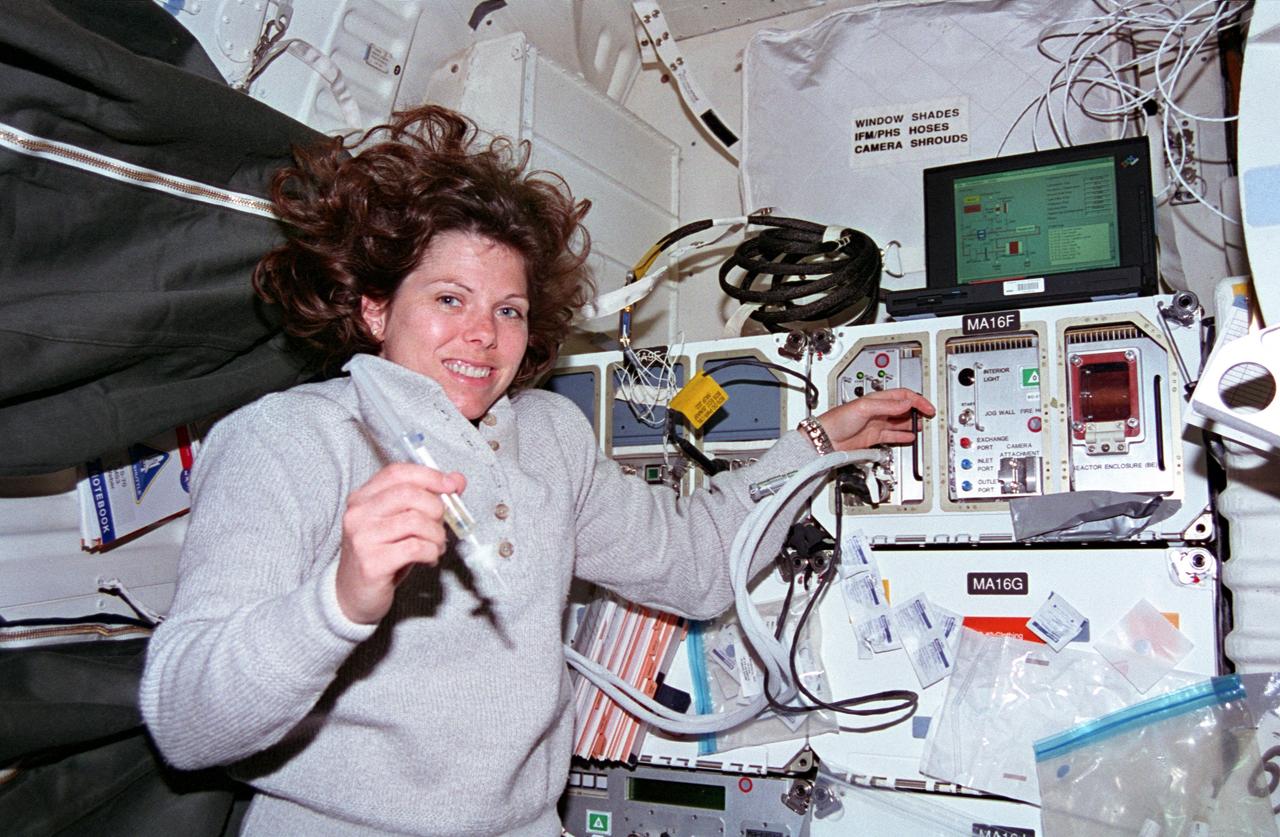
STS070-301-025 (13-22 July 1995) --- Astronaut Mary Ellen Weber works with a syringe related to the Bioreactor Development System (BDS). The almost weightless state of space travel provides life science researchers with the opportunity to grow cells into three-dimensional tissue pieces that are not achievable using conventional tissue culture methods on Earth. At specified times during the STS-70 mission, crew members injected color producing substances to document fluid movement in the reactor, and various-sized beads to estimate the tissue size that could be supported in the Bioreactor. The photo was among NASA's first release of still photography from the STS-70 mission. The mission was launched from the Kennedy Space Center (KSC) on July 13, 1995, and ended when Discovery landed on Runway 33 there on July 22, 1995. The crew members were astronauts Terence T. (Tom) Henricks, commander; Kevin R. Kregel, pilot; and Donald A. Thomas, Nancy J. Currie and Weber, all mission specialists.
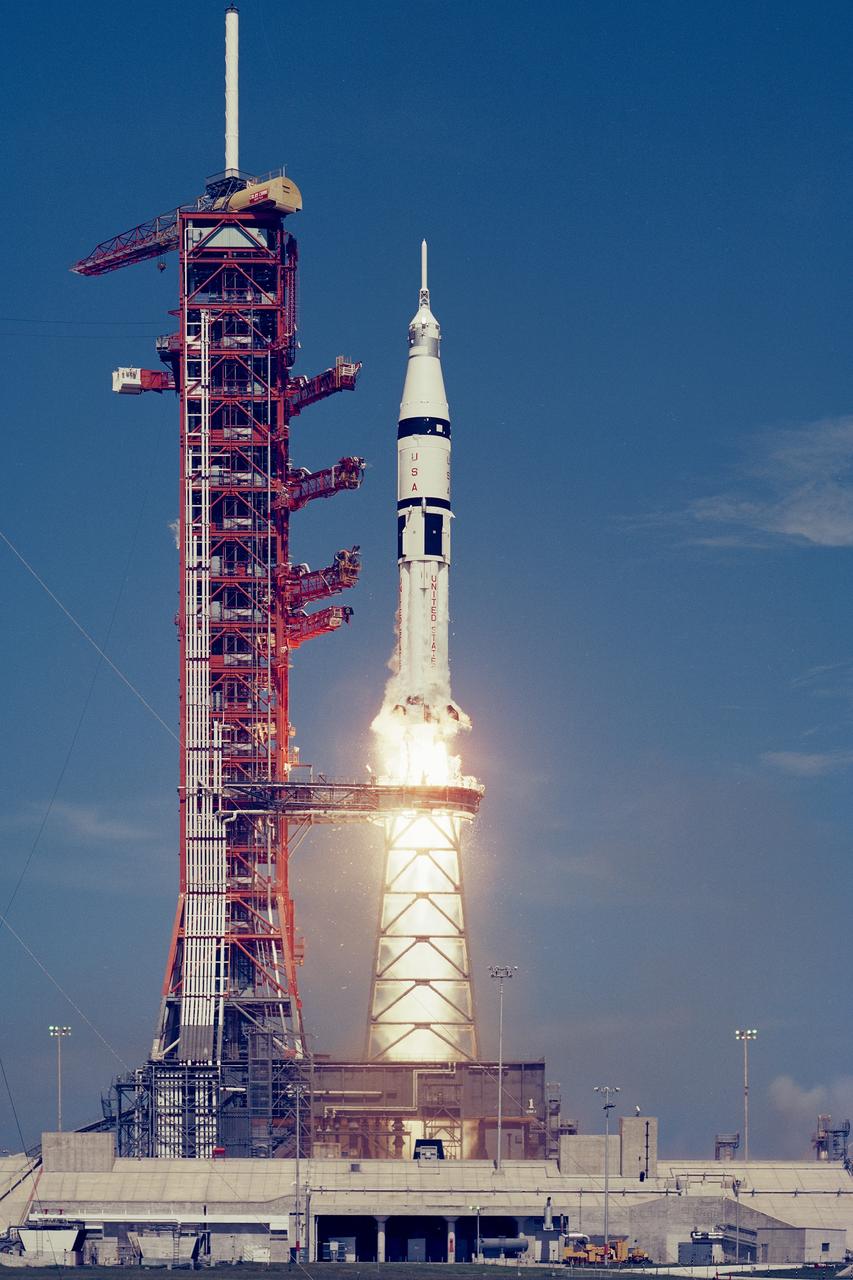
CAPE CANAVERAL, Fla. – The Apollo Soyuz Test Project Saturn IB launch vehicle thundered away from KSC’s Launch Complex 39B at 3:50 p.m. today. Aboard the Apollo Command Module were ASTP Astronauts Thomas Stafford, Vance Brand and Donald Slayton. The astronauts will rendezvous and dock with a Soyuz spacecraft, launched this morning from the Baikonur launch facility in the Soviet Union, carrying Soviet cosmonauts Aleksey Leonov and Valeriy Kubasov. The first international crewed spaceflight was a joint U.S.-U.S.S.R. rendezvous and docking mission. The Apollo-Soyuz Test Project, or ASTP, took its name from the spacecraft employed: the American Apollo and the Soviet Soyuz. The three-man Apollo crew lifted off from Kennedy Space Center aboard a Saturn IB rocket on July 15, 1975, to link up with the Soyuz that had launched a few hours earlier. A cylindrical docking module served as an airlock between the two spacecraft for transfer of the crew members. Photo credit: NASA
![CAPE CANAVERAL, Fla. – ASTP prime crewmen Donald Slayton, Thomas Stafford and Vance Brand pose with their Saturn IB launch vehicle following the Countdown Demonstration Test [CDDT], a step-by-step dress rehearsal for their July 15 launch. During the “wet” portion of the test, conducted yesterday, the stages of the launch vehicle were fueled as they will be on launch day. The fuels were off loaded and the terminal portion of the count repeated today with the astronauts aboard the vehicle. The first international crewed spaceflight was a joint U.S.-U.S.S.R. rendezvous and docking mission. The Apollo-Soyuz Test Project, or ASTP, took its name from the spacecraft employed: the American Apollo and the Soviet Soyuz. The three-man Apollo crew lifted off from Kennedy Space Center aboard a Saturn IB rocket on July 15, 1975, to link up with the Soyuz that had launched a few hours earlier. A cylindrical docking module served as an airlock between the two spacecraft for transfer of the crew members. Photo credit: NASA](https://images-assets.nasa.gov/image/KSC-75PC-0330/KSC-75PC-0330~medium.jpg)
CAPE CANAVERAL, Fla. – ASTP prime crewmen Donald Slayton, Thomas Stafford and Vance Brand pose with their Saturn IB launch vehicle following the Countdown Demonstration Test [CDDT], a step-by-step dress rehearsal for their July 15 launch. During the “wet” portion of the test, conducted yesterday, the stages of the launch vehicle were fueled as they will be on launch day. The fuels were off loaded and the terminal portion of the count repeated today with the astronauts aboard the vehicle. The first international crewed spaceflight was a joint U.S.-U.S.S.R. rendezvous and docking mission. The Apollo-Soyuz Test Project, or ASTP, took its name from the spacecraft employed: the American Apollo and the Soviet Soyuz. The three-man Apollo crew lifted off from Kennedy Space Center aboard a Saturn IB rocket on July 15, 1975, to link up with the Soyuz that had launched a few hours earlier. A cylindrical docking module served as an airlock between the two spacecraft for transfer of the crew members. Photo credit: NASA
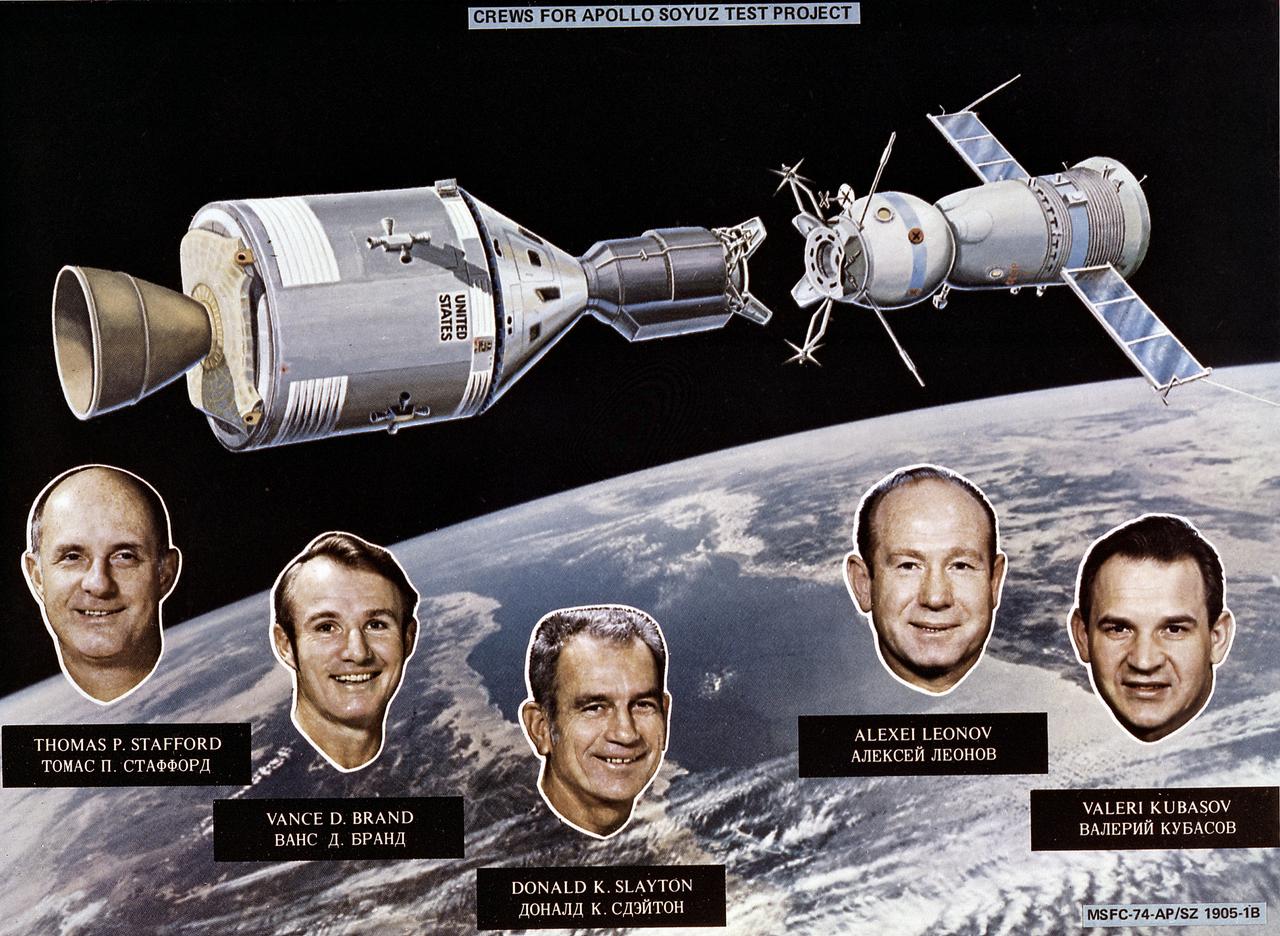
This artist's concept depicts the Apollo-Soyuz Test Project (ASTP) with insets of photographs of three U.S. astronauts (Thomas Stafford, Vance Brand, and Donald Slayton) and two U.S.S.R. cosmonauts (Alexei Leonov and Valeri Kubasov). The objective of the ASTP mission was to accomplish the first docking of a standardized international system, the U.S.'s Apollo spacecraft and the U.S.S.R.'s Soyuz spacecraft, in space. The Soyuz spacecraft was launched from the Baikonur Cosmodrome near Tyuratam in the Kazakh, Soviet Socialist Republic, at 8:20 a.m. (EDT) on July 15, 1975. The Apollo spacecraft was launched from Launch Complex 39B, Kennedy Space Center, Florida, at 3:50 p.m. (EDT) on July 15, 1975. The Primary objectives of the ASTP were achieved. They performed spacecraft rendezvous, docking and undocking, conducted intervehicular crew transfer, and demonstrated the interaction of U.S. and U.S.S.R. control centers and spacecraft crews. The mission marked the last use of a Saturn launch vehicle. The Marshall Space Flight Center was responsible for development and sustaining engineering of the Saturn IB launch vehicle during the mission.
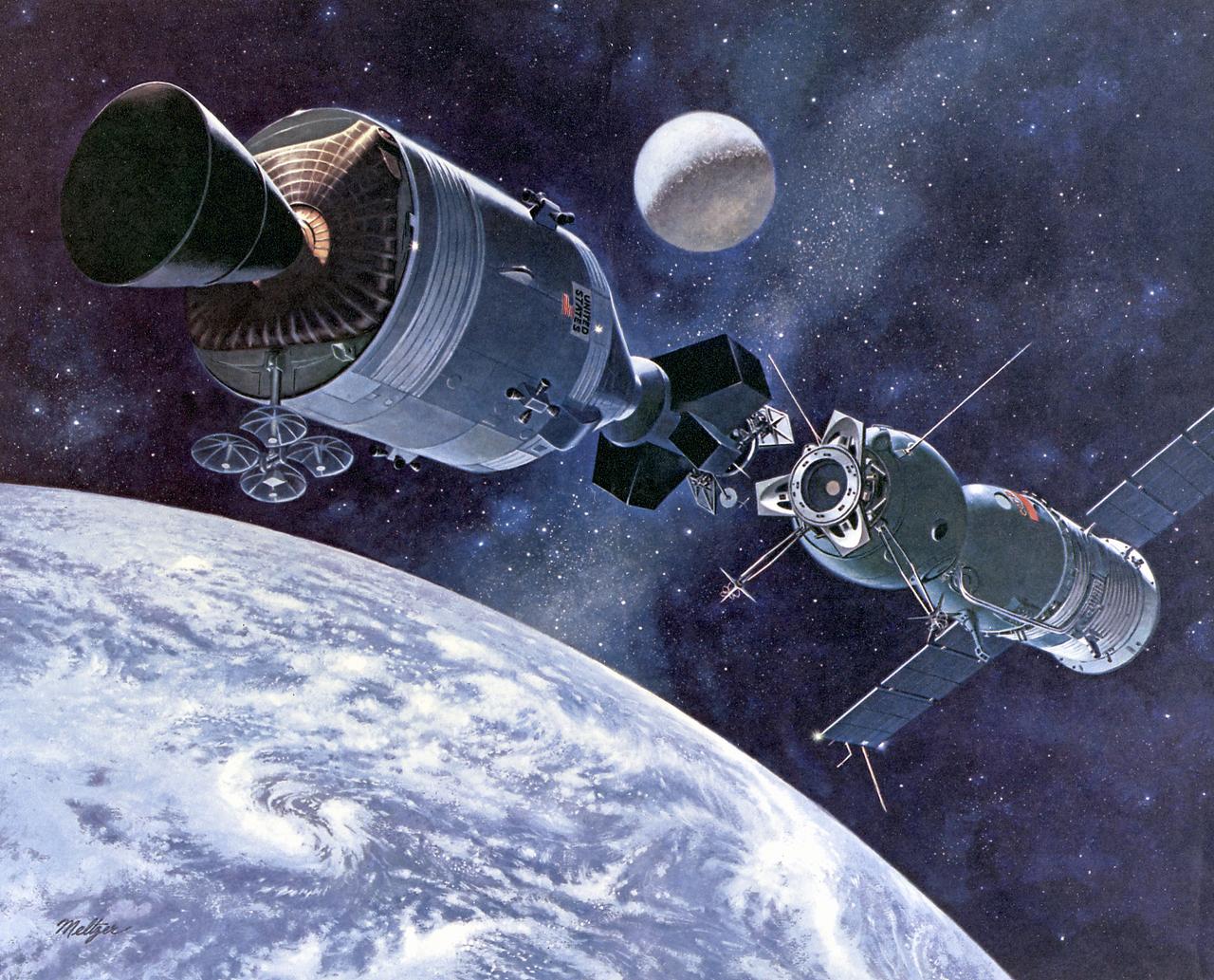
This artist's concept depicts the Apollo-Soyuz Test Project (ASTP), the first international docking of the U.S.'s Apollo spacecraft and the U.S.S.R.'s Soyuz spacecraft in space. The objective of the ASTP mission was to provide the basis for a standardized international system for docking of marned spacecraft. The Soyuz spacecraft, with Cosmonauts Alexei Leonov and Valeri Kubasov aboard, was launched from the Baikonur Cosmodrome near Tyuratam in the Kazakh, Soviet Socialist Republic, at 8:20 a.m. (EDT) on July 15, 1975. The Apollo spacecraft, with Astronauts Thomas Stafford, Vance Brand, and Donald Slayton aboard, was launched from Launch Complex 39B, Kennedy Space Center, Florida, at 3:50 p.m. (EDT) on July 15, 1975. The Primary objectives of the ASTP were achieved. They performed spacecraft rendezvous, docking and undocking, conducted intervehicular crew transfer, and demonstrated the interaction of U.S. and U.S.S.R. control centers and spacecraft crews. The mission marked the last use of a Saturn launch vehicle. The Marshall Space Flight Center was responsible for development and sustaining engineering of the Saturn IB launch vehicle during the mission.
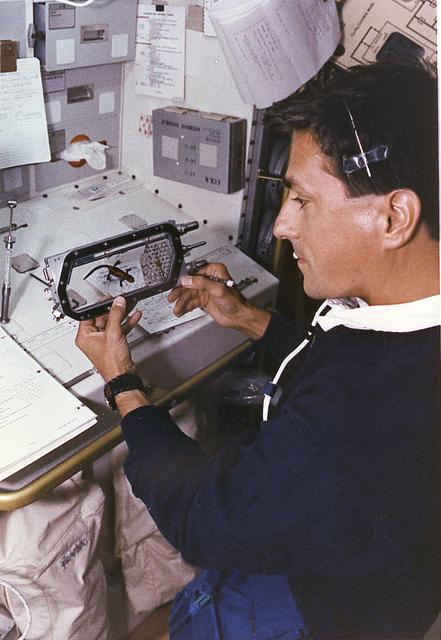
Astronaut Donald Thomas conducts the Fertilization and Embryonic Development of Japanese Newt in Space (AstroNewt) experiment at the Aquatic Animal Experiment Unit (AAEU) inside the International Microgravity Laboratory-2 (IML-2) science module. The AstroNewt experiment aims to know the effects of gravity on the early developmental process of fertilized eggs using a unique aquatic animal, the Japanese red-bellied newt. The newt egg is a large single cell at the begirning of development. The Japanese newt mates in spring and autumn. In late autumn, female newts enter hibernation with sperm in their body cavity and in spring lay eggs and fertilized them with the stored sperm. The experiment takes advantage of this feature of the newt. Groups of newts were sent to the Kennedy Space Center and kept in hibernation until the mission. The AAEU cassettes carried four newts aboard the Space Shuttle. Two newts in one cassette are treated by hormone injection on the ground to simulate egg laying. The other two newts are treated on orbit by the crew. The former group started maturization of eggs before launch. The effects of gravity on that early process were differentiated by comparison of the two groups. The IML-2 was the second in a series of Spacelab flights designed to conduct research by the international science community in a microgravity environment. Managed by the Marshall Space Flight Center, the IML-2 was launch on July 8, 1994 aboard the STS-65 Space Shuttle Orbiter Columbia mission.
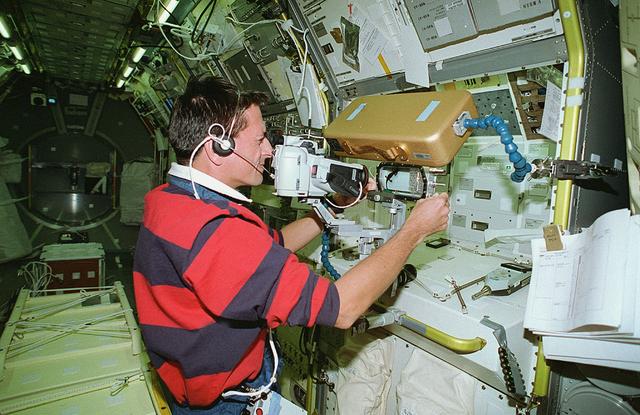
Astronaut Donald Thomas conducts the Fertilization and Embryonic Development of Japanese Newt in Space (AstroNewt) experiment at the Aquatic Animal Experiment Unit (AAEU) inside the International Microgravity Laboratory-2 (IML-2) science module. The AstroNewt experiment aims to know the effects of gravity on the early developmental process of fertilized eggs using a unique aquatic animal, the Japanese red-bellied newt. The newt egg is a large single cell at the begirning of development. The Japanese newt mates in spring and autumn. In late autumn, female newts enter hibernation with sperm in their body cavity and in spring lay eggs and fertilize them with the stored sperm. The experiment takes advantage of this feature of the newt. Groups of newts were sent to the Kennedy Space Center and kept in hibernation until the mission. The AAEU cassettes carried four newts aboard the Space Shuttle. Two newts in one cassette are treated by hormone injection on the ground to simulate egg laying. The other two newts are treated on orbit by the crew. The former group started maturization of eggs before launch. The effects of gravity on that early process were differentiated by comparison of the two groups. The IML-2 was the second in a series of Spacelab flights designed to conduct research by the international science community in a microgravity environment. Managed by the Marshall Space Flight Center, the IML-2 was launched on July 8, 1994 aboard the STS-65 Space Shuttle mission, Orbiter Columbia.
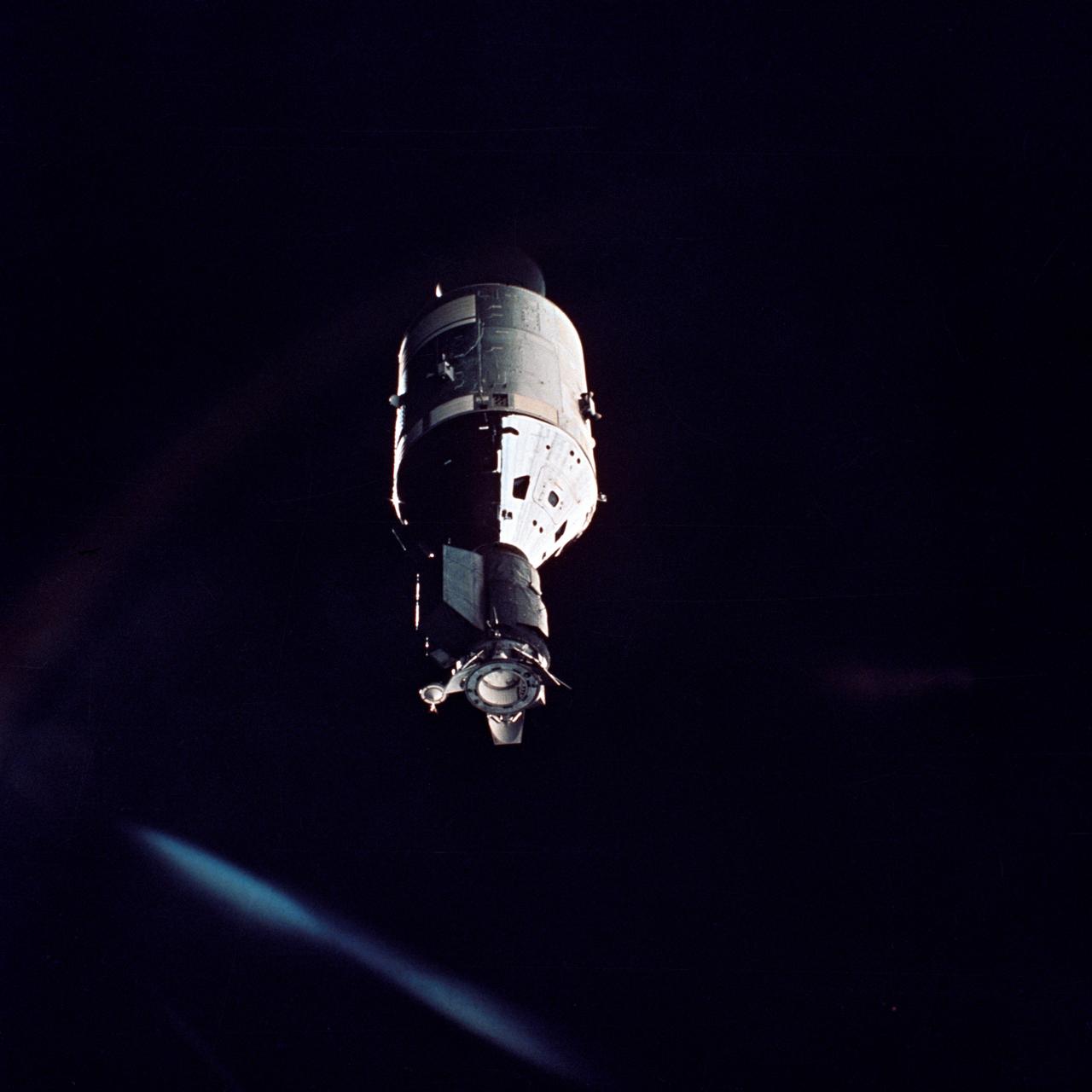
AST-32-2686 (17-19 July 1975) --- The American Apollo spacecraft as seen in Earth orbit from the Soviet Soyuz 19 spacecraft during the joint U.S.-USSR Apollo Soyuz Test Project (ASTP) mission. The Command and Service Module (CSM) and Docking Module (DM) are contrasted against a black-sky background. Light reflected in the camera streaks the image. Note the docking mechanism and docking target on the DM. On the left the bell-shaped engine nozzle of the service propulsion system protrudes from the rear of the Service Module (SM). The American and Soviet spacecraft were joined together in space for approximately 47 hours on July 17, 18, 19, 1975. This picture was furnished by the USSR in an exchange of photography taken during the ASTP flight. The Apollo crew consisted of astronauts Thomas P. Stafford, commander; Donald K. "Deke" Slayton, docking module pilot; and Vance D. Brand, command module pilot. The Soyuz 19 crew consisted of cosmonauts Aleksei A. Leonov, command pilot; and Valeri N. Kubasov, flight engineer.
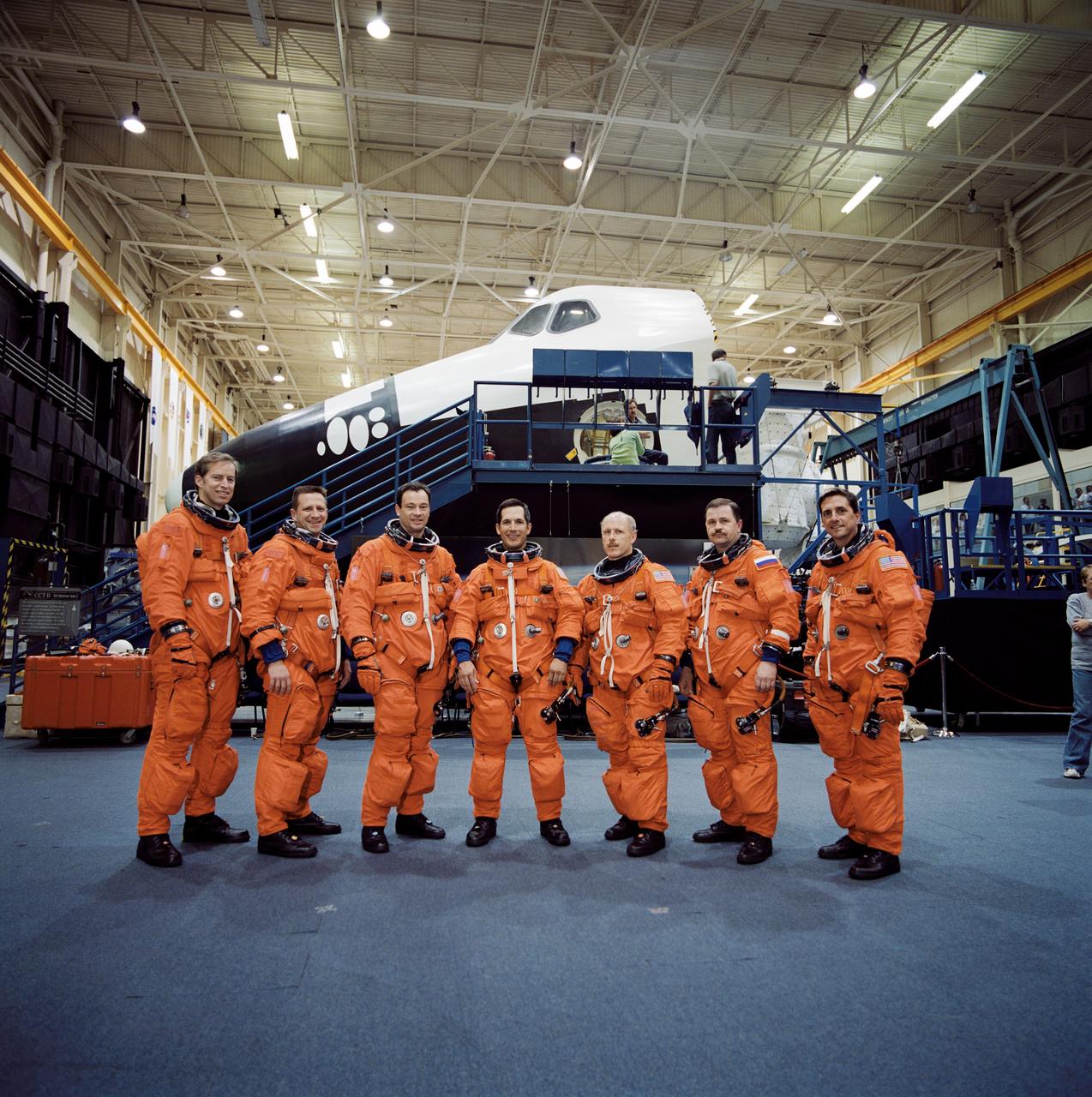
Pictured is the crew for the Shuttle Endeavor STS-113 mission snapped during a training session in the Space Vehicle Mockup Facility at the Johnson Space Center. From the left are Astronauts James D. Wetherbee, STS-113 mission commander; Christopher J. (Gus) Loria, pilot; Michael E. Lopez-Alegria and John B. Herrington, mission specialists; Kerneth D. Bowersox, Expedition Six mission commander; Cosmonaut Nikloai M. Budarin and astronaut Donald A. Thomas, Expedition Six Flight Engineers. The 16th American assembly flight and 112th overall American flight to the International Space Station (ISS), STS-113 mission objectives included the delivery of the Expedition Six Crew to the ISS, the return of Expedition Five back to Earth, and the installation and activation of the Port 1 Integrated Truss Assembly (P1). The first major component installed on the left side of the Station, the P1 truss provides an additional three External Thermal Control System radiators. Weighing in at 27,506 pounds, the P1 truss is 45 feet (13.7 meters) long, 15 feet (4.6 meters) wide, and 13 feet (4 meters) high. Three space walks, aided by the use of the Robotic Manipulator Systems of both the Shuttle and the Station, were performed in the installation of P1. Also, more than 2,500 pounds (1,134 kilograms) of cargo were transferred between the Shuttle and Station. The Space Shuttle Orbiter Endeavor launched on November 23, 2002 from Kennedy's launch pad 39A and returned 11 days later on December 4, 2002.