S71-52275 (1971) --- Astronaut Edward G. Gibson. Photo credit: NASA
Portrait of Astronaut Edward G. Gibson
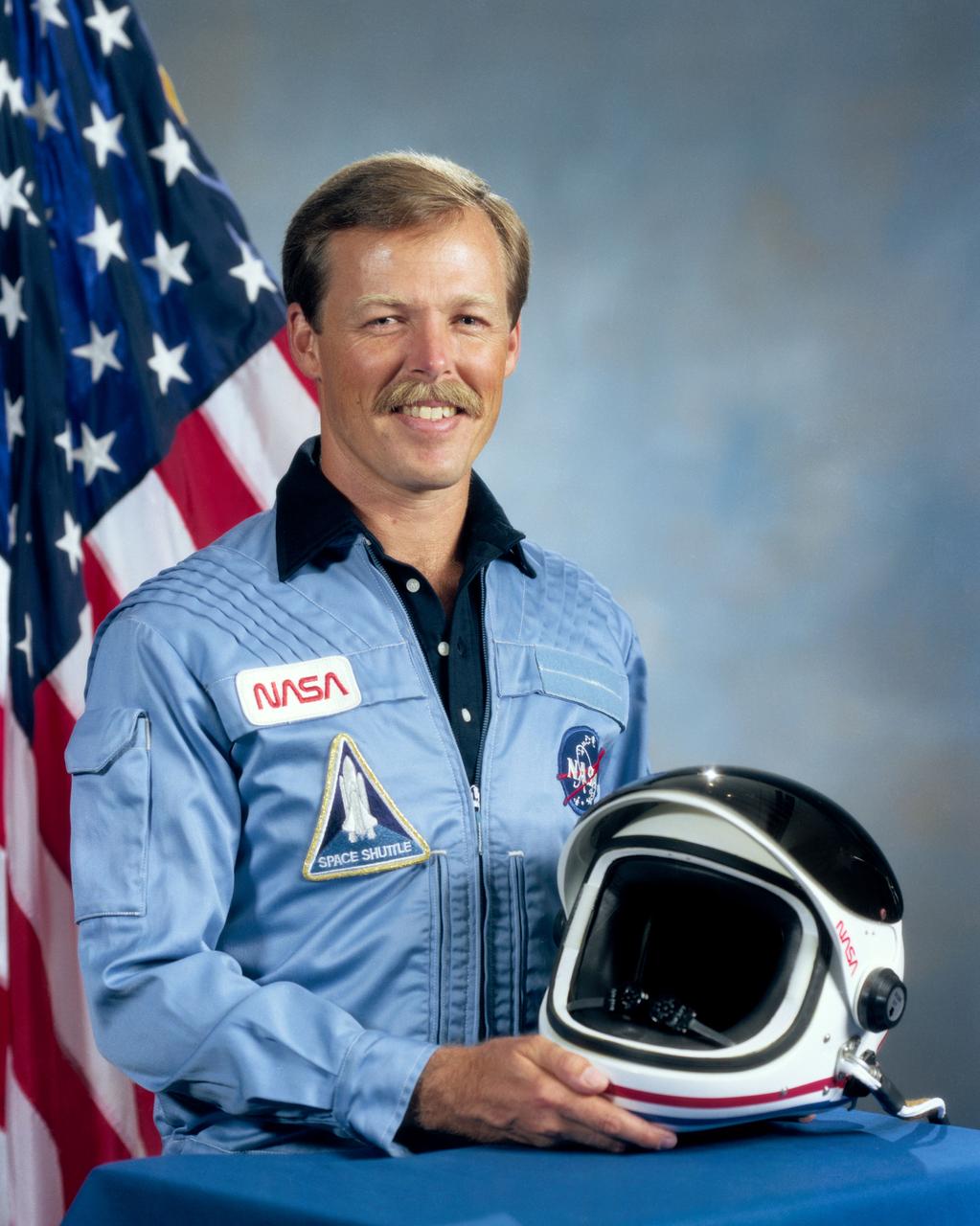
S84-42271 (24 Sept. 1984) --- Astronaut Robert L. Gibson.
Official Portrait - Astronaut Robert L. "Hoot" Gibson
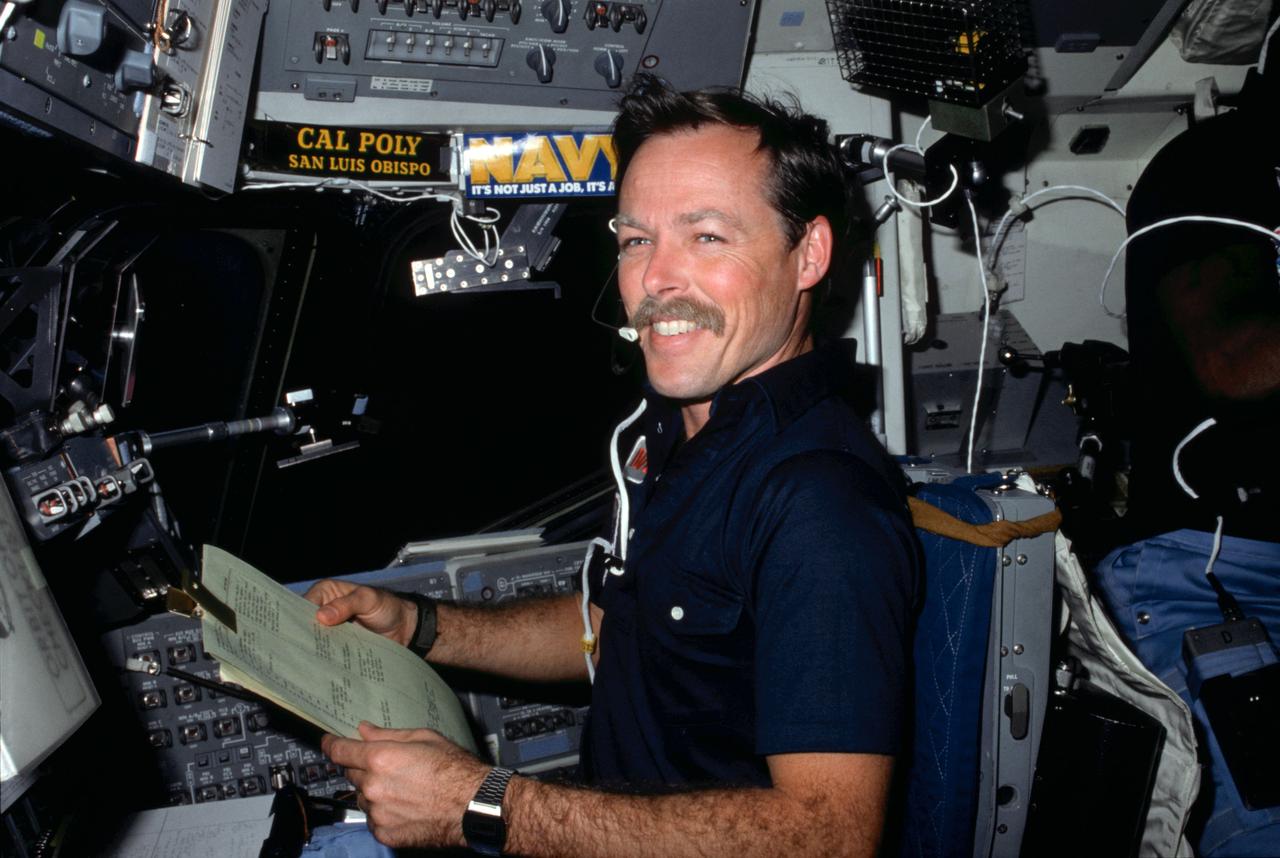
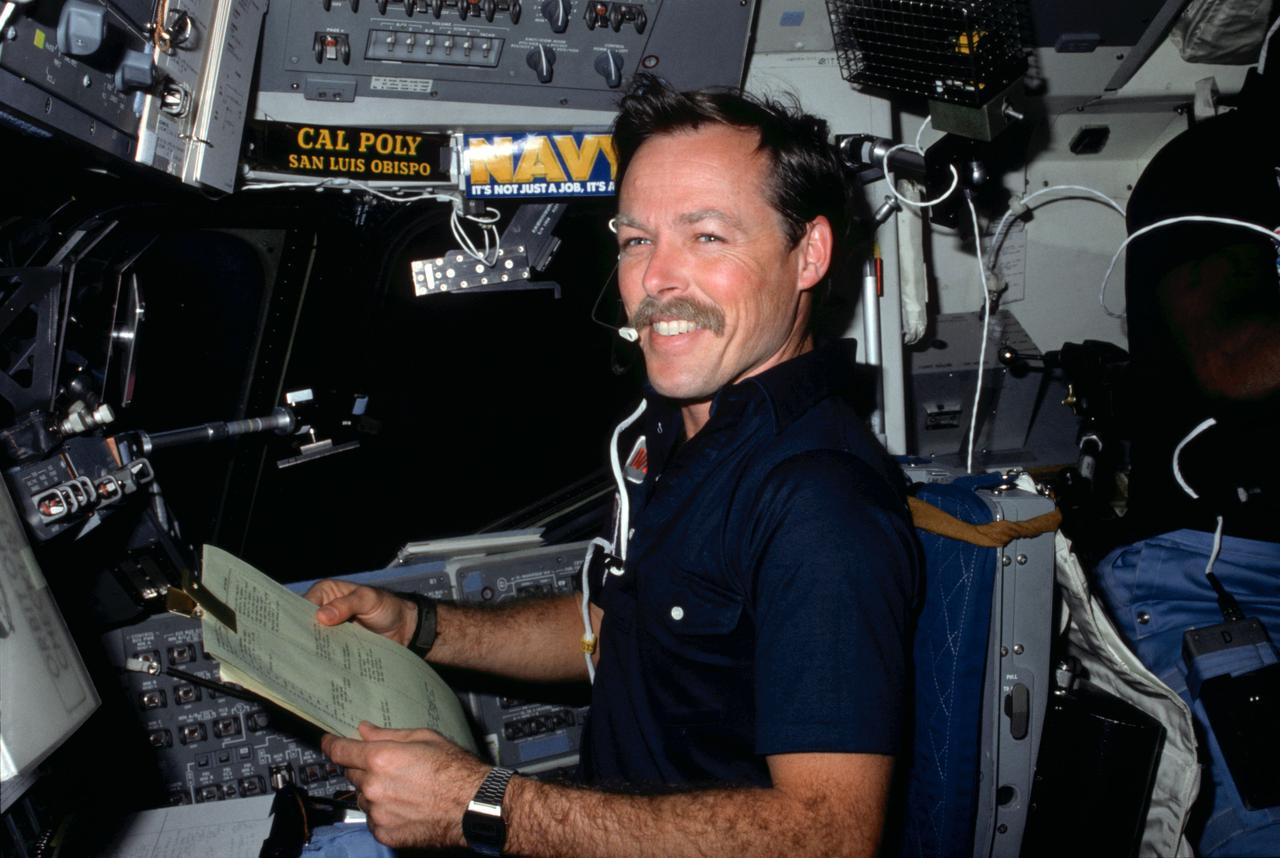
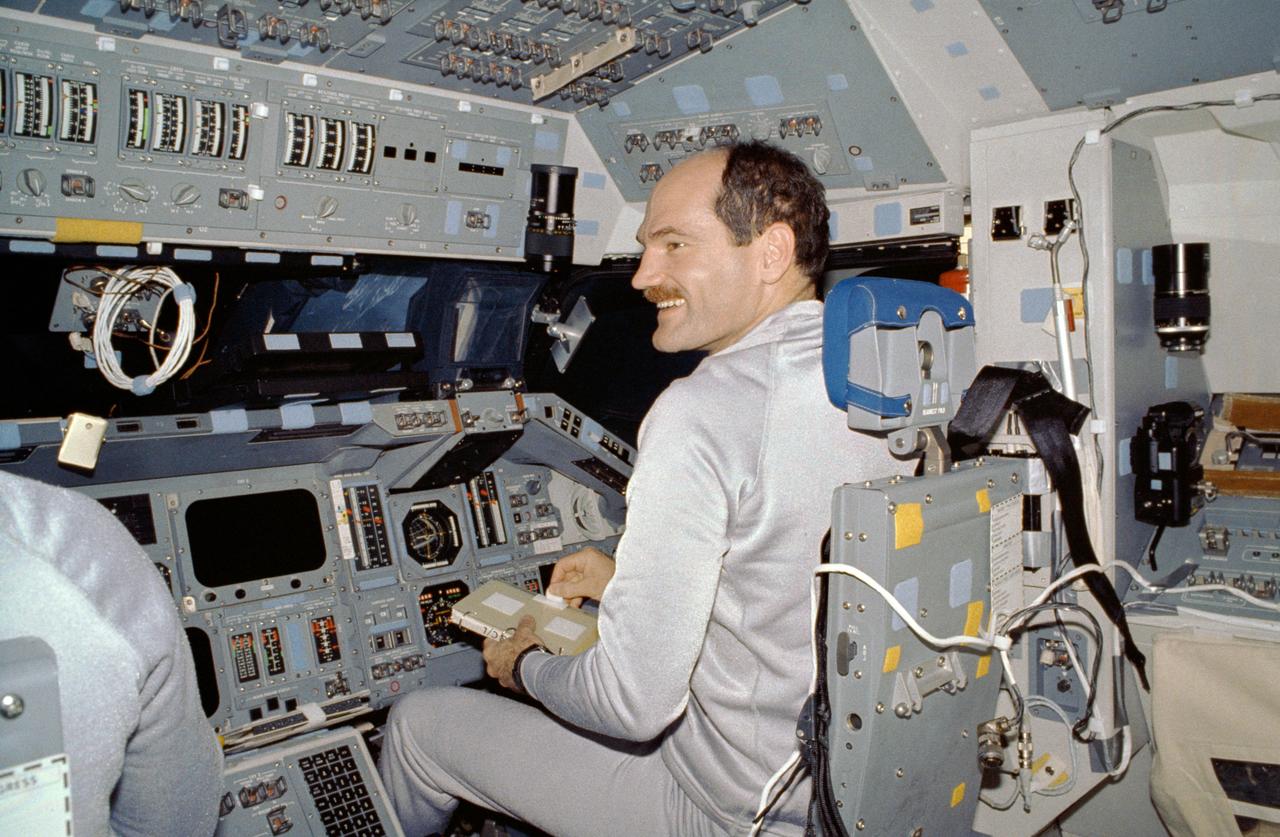
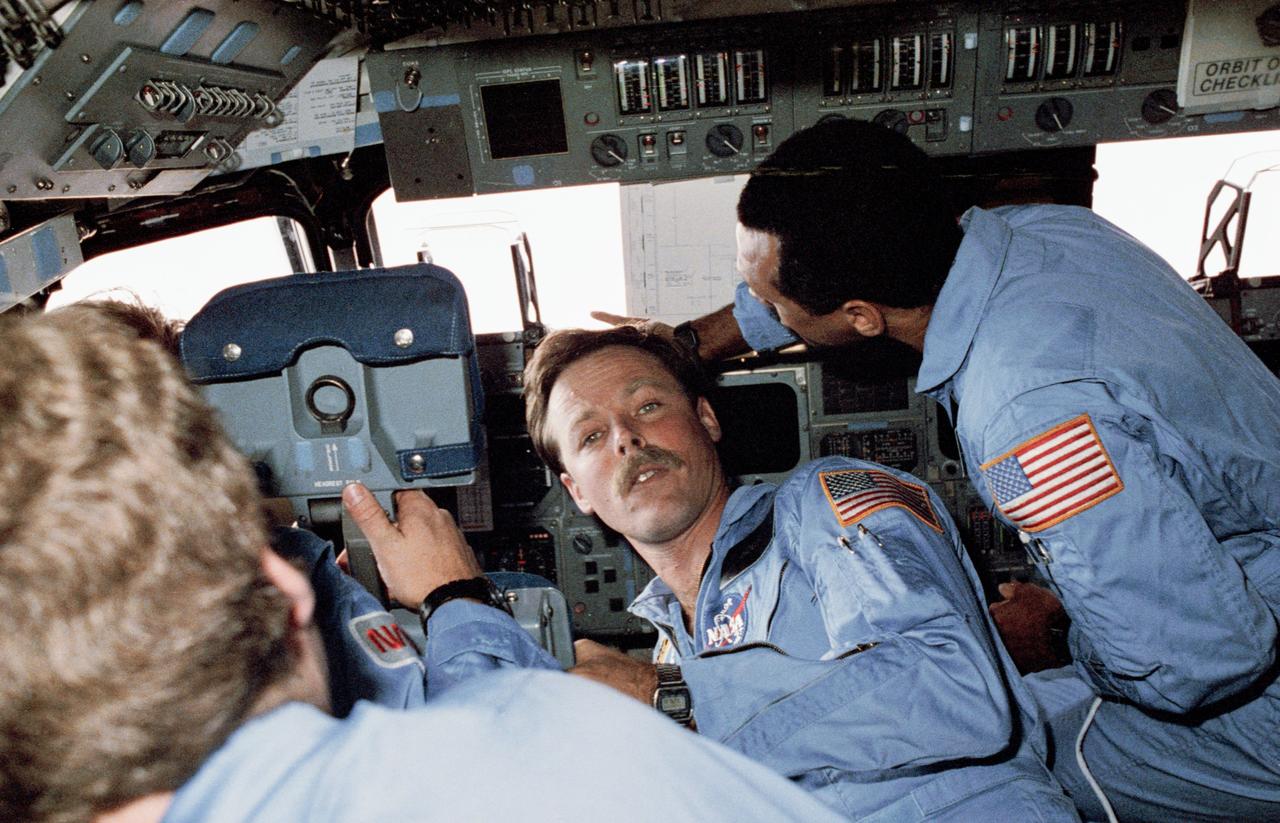
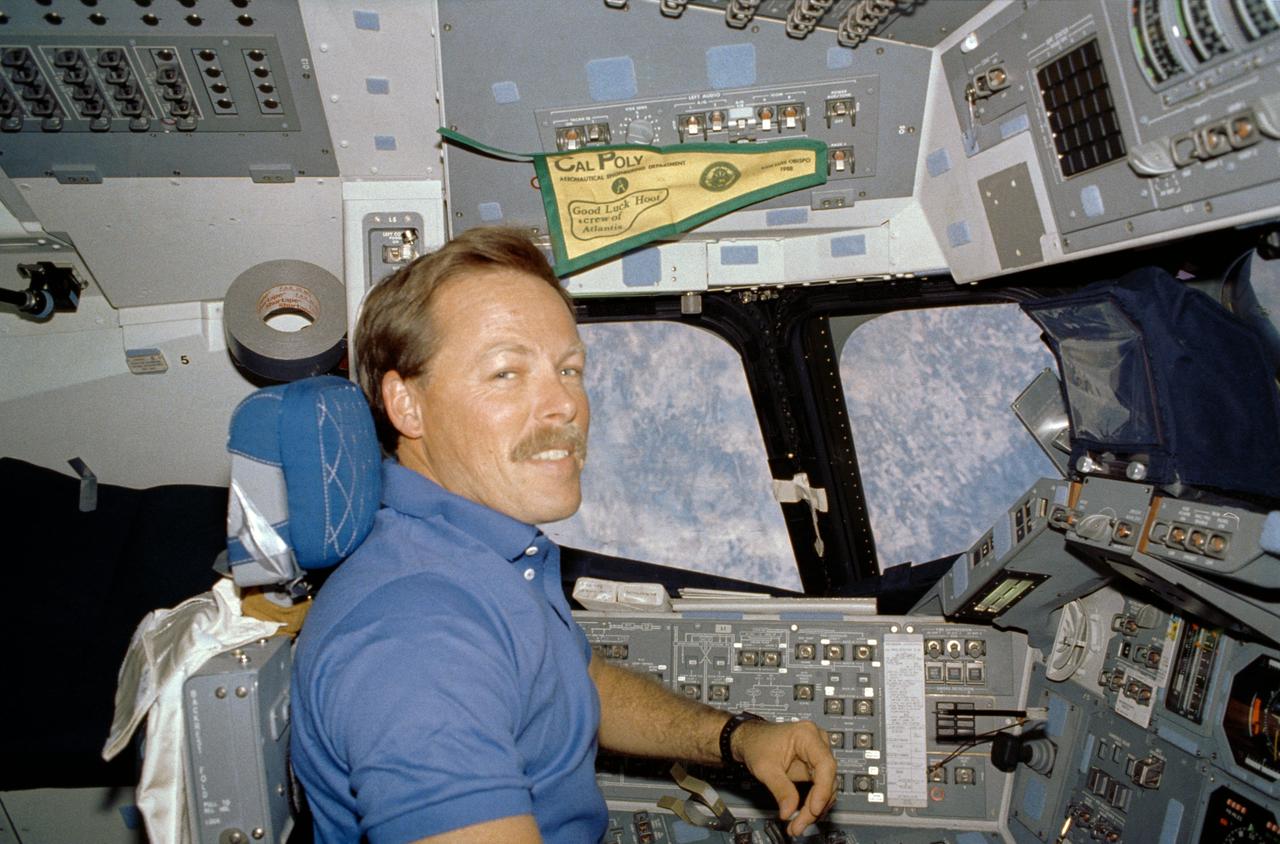
S84-27027 (3-11 Feb 1984) --- Astronaut Robert L. Gibson, STS-41B pilot, reviews some teleprinter copy on the flight deck's starboard station during the eight-day STS-41B Space Shuttle mission. Four other astronauts share the Challenger with Gibson.  They are astronauts Vance D.  Brand, commander; and Ronald E. McNair, Bruce McCandless II and Robert L.  Stewart, all mission specialists.  The photograph was taken from the commander's station with a 35mm camera.
Astronaut Gibson on flight deck starboard station
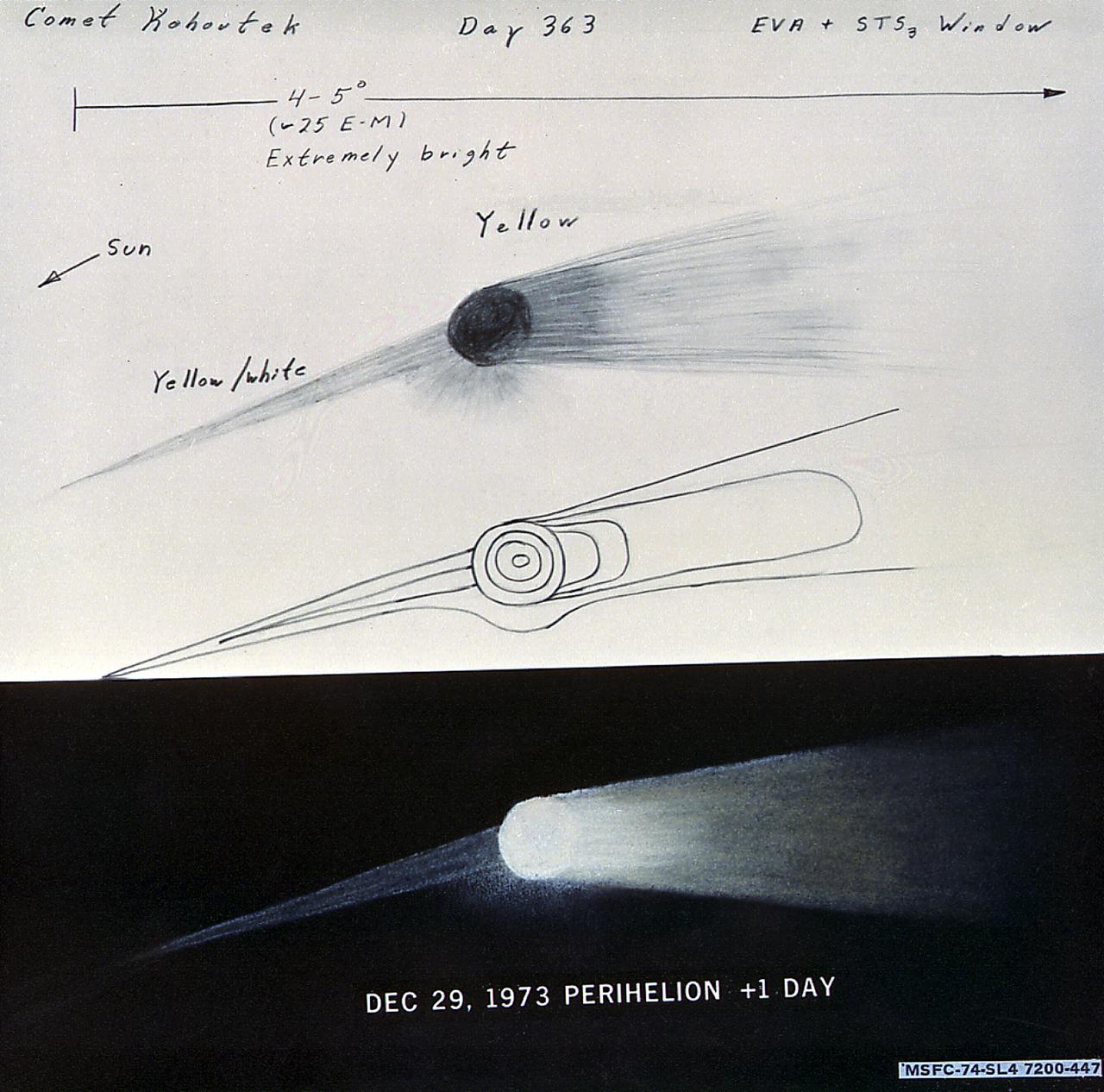
This pencil sketch of the Comet Kohoutek made by Skylab-4 astronaut Edward Gibson illustrates the crew's collective impressions of the comet's appearance on December 29, 1973. An early discovery of a large comet in an orbit that would reach close to the Sun at the end of 1973 prompted NASA to initiate Operation Kohoutek, a program to coordinate widespread observations of the comet from ground observatories, aircraft, balloons, rockets, unmarned satellites, and Skylab.
Skylab
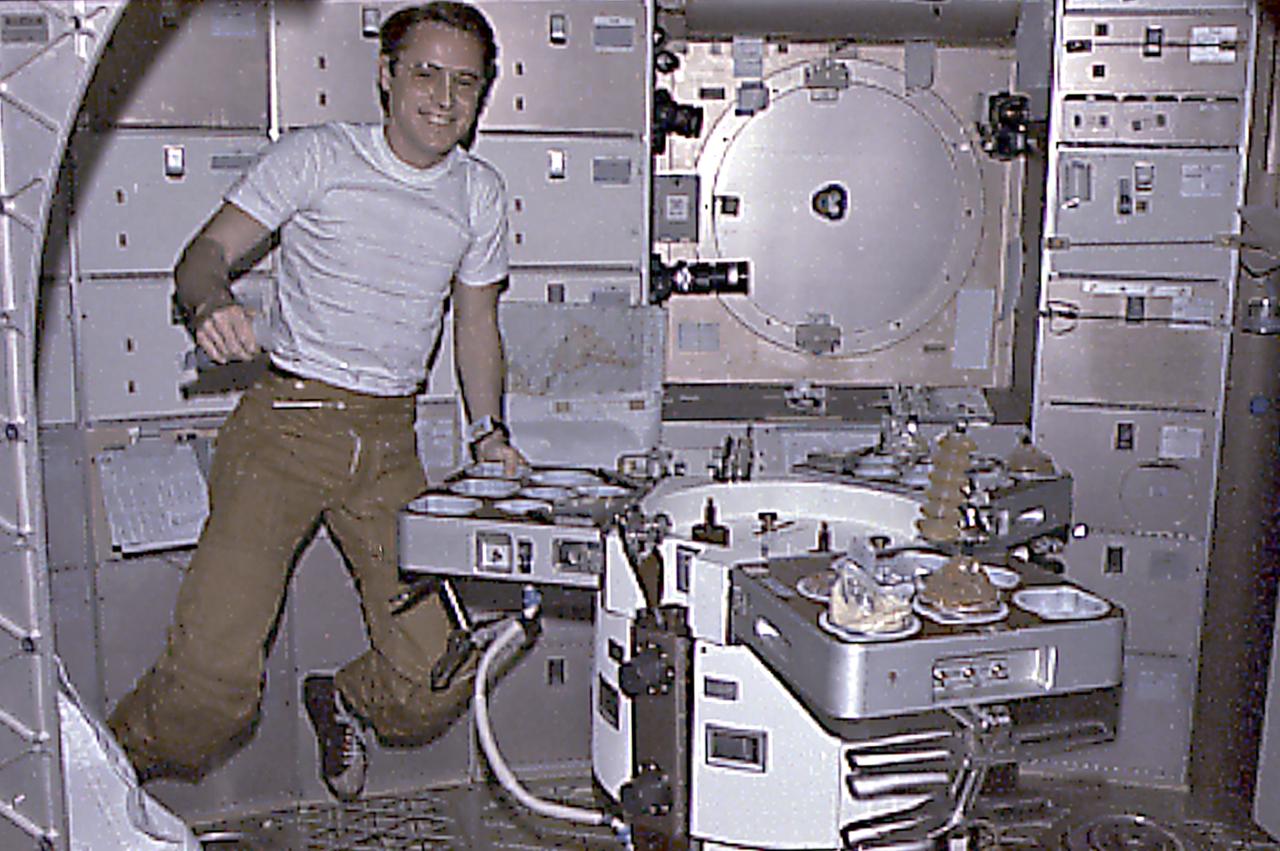
SL4-150-5074 (February 1974) --- Scientist-astronaut Edward G. Gibson, science pilot for the Skylab 4 mission, demonstrates the effects of zero-gravity as he sails through airlock module hatch. Photo credit: NASA
Astronaut Edward Gibson sails through airlock module hatch
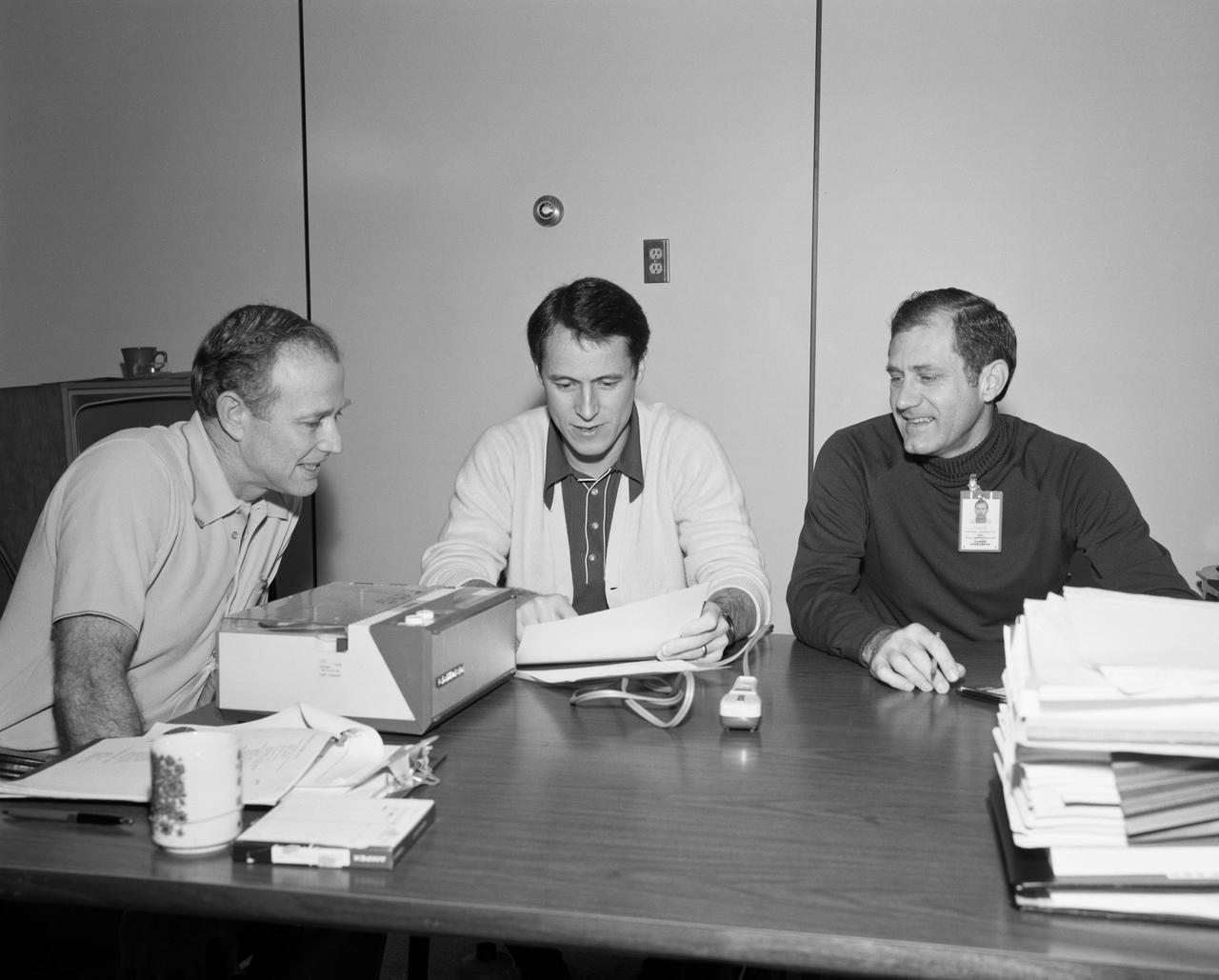
S73-32837 (10 Sept. 1973) --- Scientist-astronaut Edward G. Gibson, seated, and astronaut William R. Pogue discuss a mission procedure at the Apollo Telescope Mount (ATM) display and control panel mock-up in the one-G trainer for the Multiple Docking Adapter (MDA) at Johnson Space Center. Photo credit: NASA
Astronauts Gibson and Pogue at Apollo Telescope Mount display/control panel
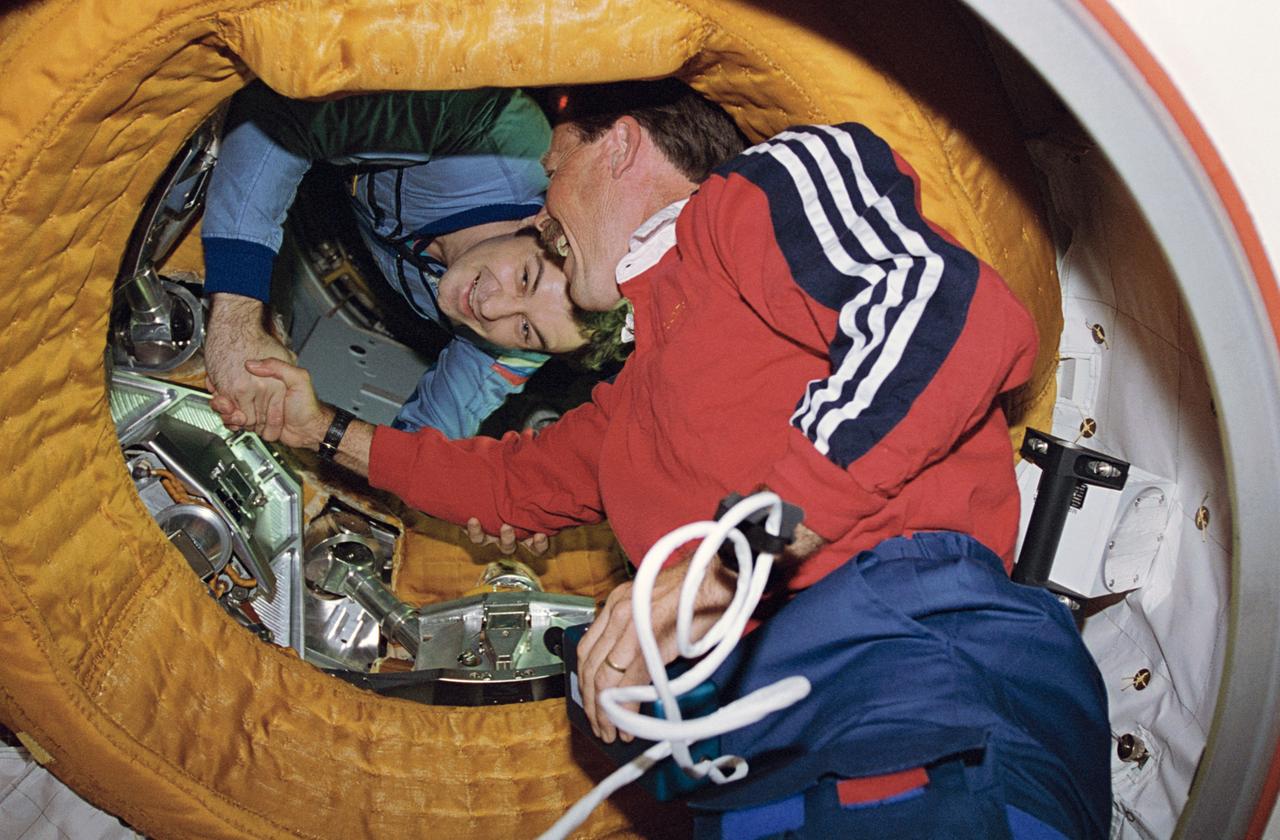
STS071-118-004 (29 June 1995) --- Astronaut Robert L. Gibson, STS-71 commander, shakes the hand of cosmonaut Vladimir N. Dezhurov, Mir-18 commander. The historic handshake took place two and half weeks prior to the 20th anniversary of a similar in-space greeting between cosmonauts and astronauts participating in the Apollo-Soyuz Test Project (ASTP). On July 17, 1975, astronaut Thomas P. Stafford, NASA's ASTP commander, greeted his counterpart, Aleksey A. Leonov in a docking tunnel linking the Soyuz and Apollo spacecraft.
Astronaut Gibson and Comonaut Dezhurov shake hands
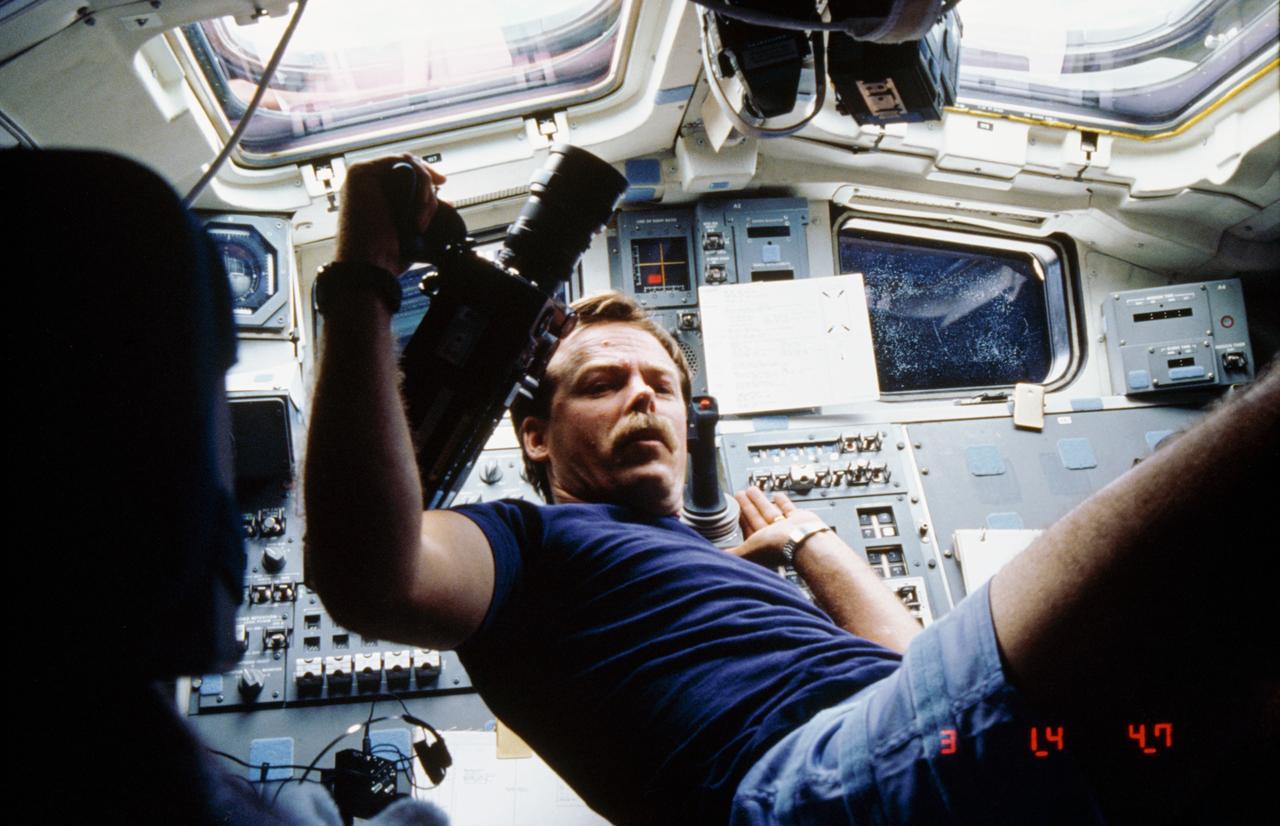
61C-07-030 (15 Jan 1986) --- Astronaut Robert L. Gibson, STS 61-C mission commander, partially floats on the aft flight deck of the earth-orbiting Space Shuttle Columbia while preparing to use a motion picture camera.  The windows overlooking the cargo bay are visible in the background.
Astronaut Robert Gibson prepares to use motion picture camera
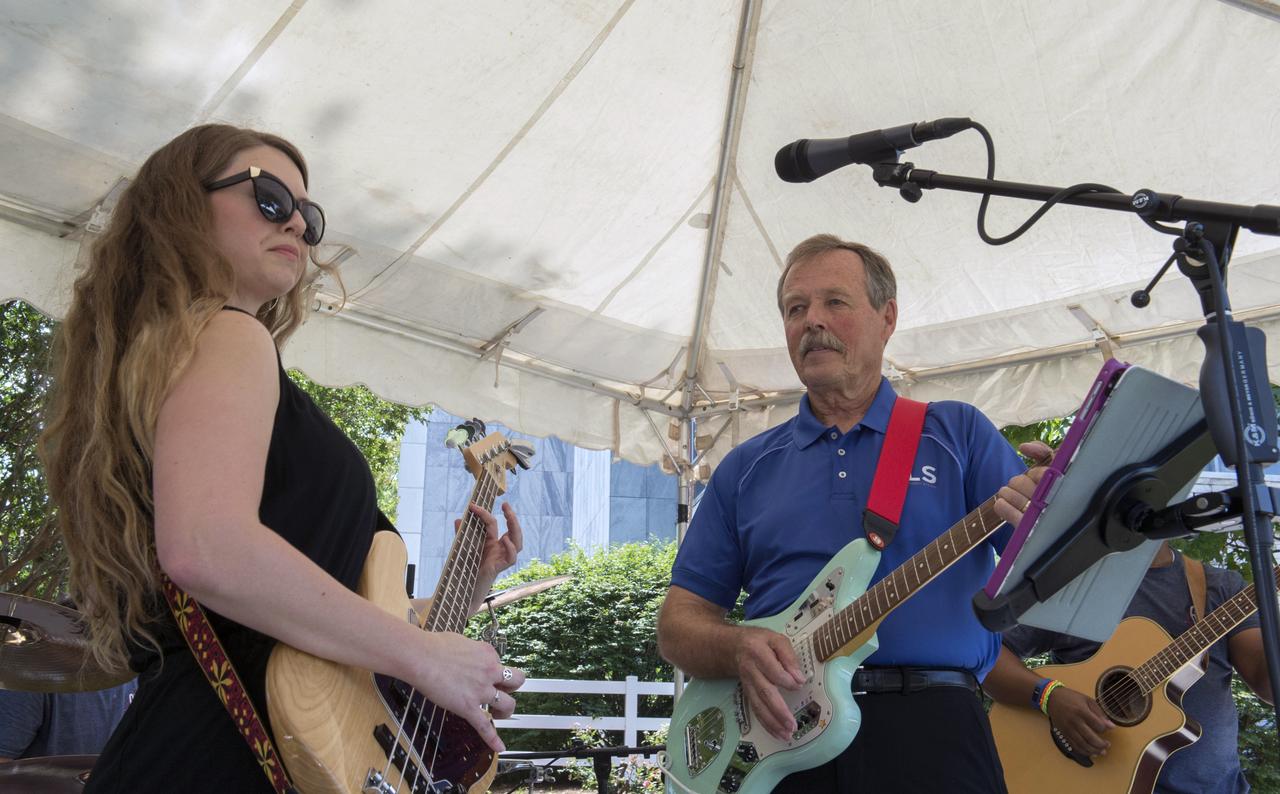
NASA in the Park on June 16 in Huntsville featured more than 60 exhibits and demonstrations by NASA experts, as well as performances by Marshall musicians, educational opportunities, games and hands-on activities for all ages.  Astronaut Hoot Gibson and Nina Ricks of the band “Just Like Grady” entertained audiences at NASA in the Park.
NASA in the Park, 2018
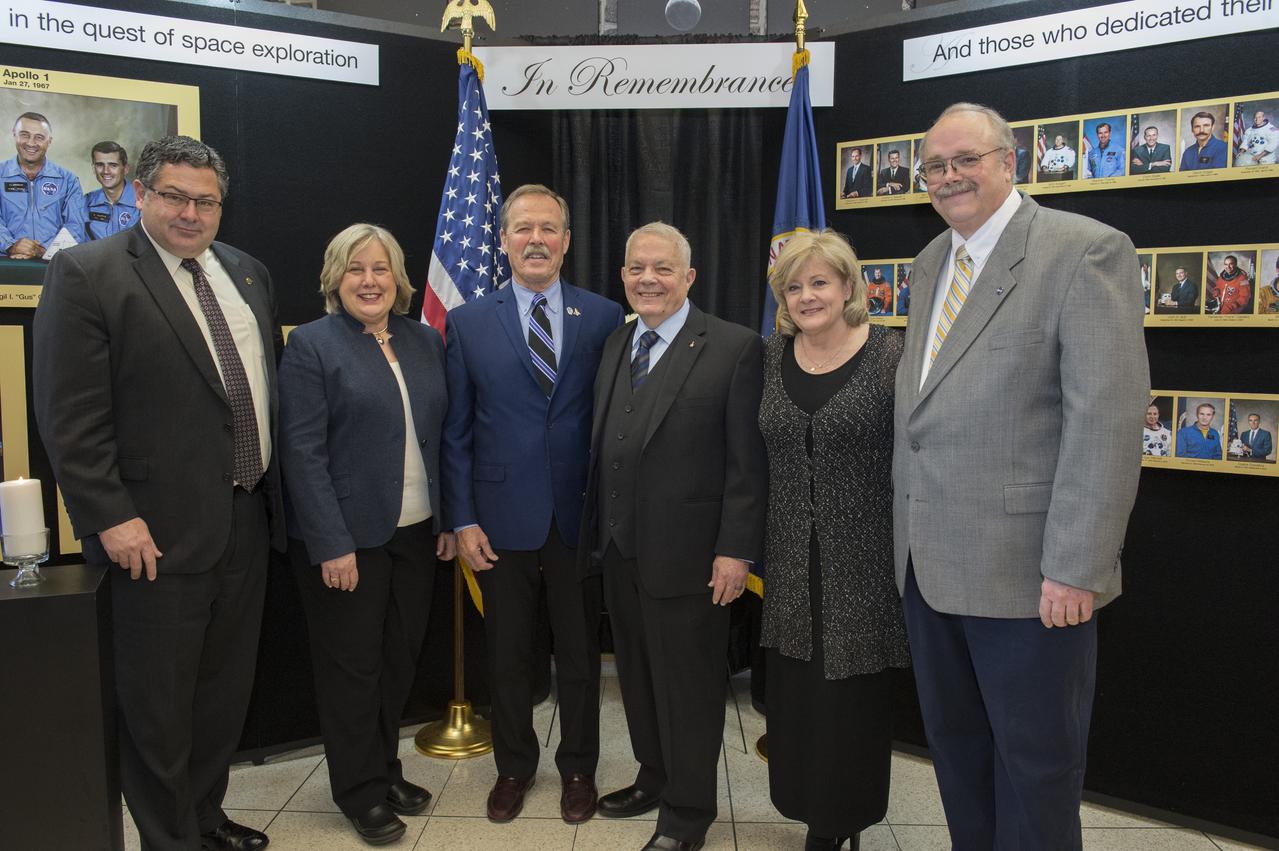
Participants in Marshall Space Flight Center’s annual “Day of Remembrance are, from left to right, MSFC Director Todd May, retired astronaut Jan Davis, retired astronaut Robert “Hoot” Gibson, retired astronaut Robert Stewart, MSFC Deputy Director Jody singer, and Director of Safety and Mission Assurance Rick Burt.
MSFC Annual Day of Remembrance ceremony
 Johnny Stephenson, Director of the Office of Strategic Analysis and Communications, addresses guests and employees at the Marshall Space Flight Center’s annual “Day of Remembrance” honoring those astronauts who have passed away. Looking on, from left, are Rick Burt, Marshall Safety and Mission Assurance Directorate director; Marshall Center Director Todd May; and former NASA astronauts retired Army Brig. Gen. Robert Stewart; former Marshall Deputy Director Jan Davis; and Robert "Hoot" Gibson.
MSFC Annual Day of Remembrance ceremony
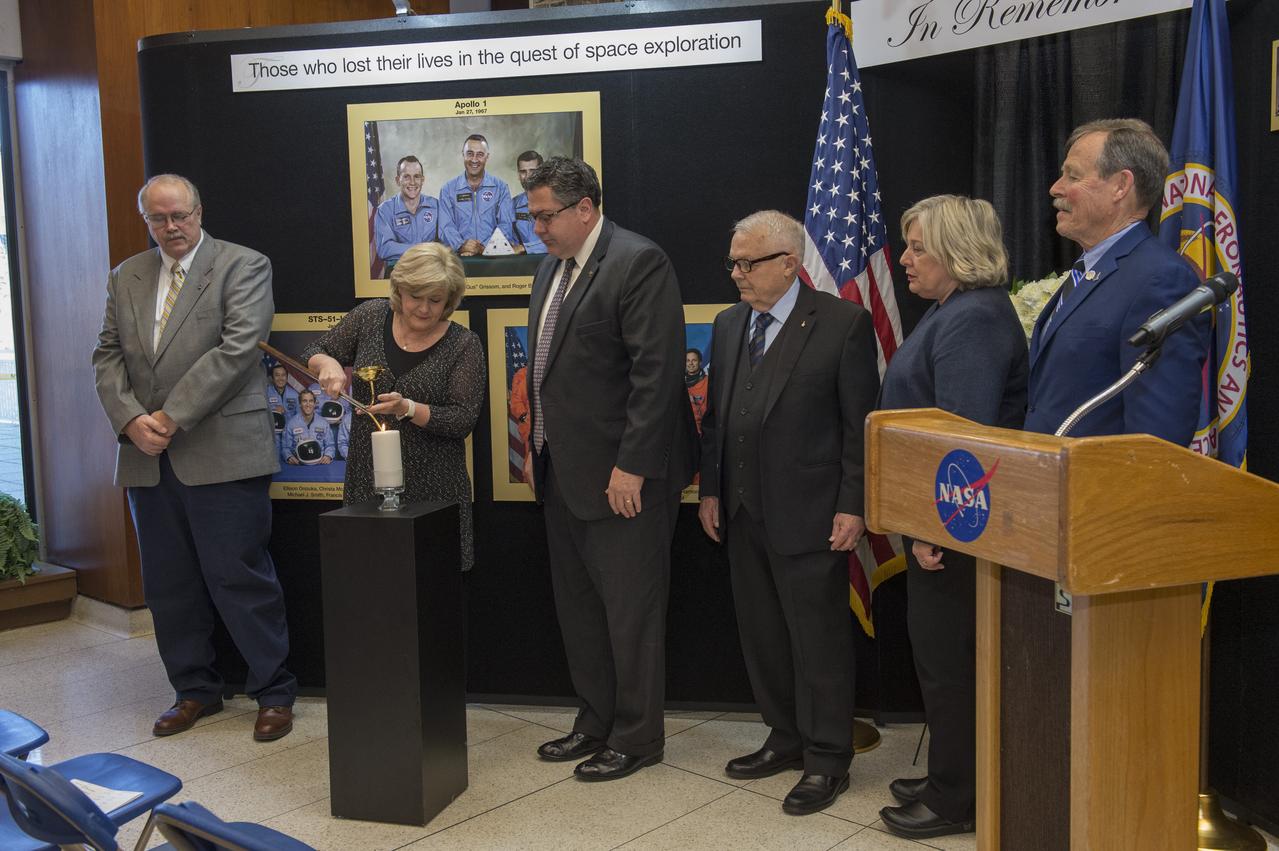
Jody Singer, Marshall deputy director, lights a candle in honor of colleagues who lost their lives in purist of space exploration during Marshall's Day of Remembrance ceremony. Looking on, from left, are Rick Burt, Marshall Safety and Mission Assurance Directorate director; Marshall Center Director Todd May; and former NASA astronauts retired Army Brig. Gen. Robert Stewart; former Marshall Deputy Director Jan Davis; and Robert "Hoot" Gibson.
MSFC Annual Day of Remembrance ceremony
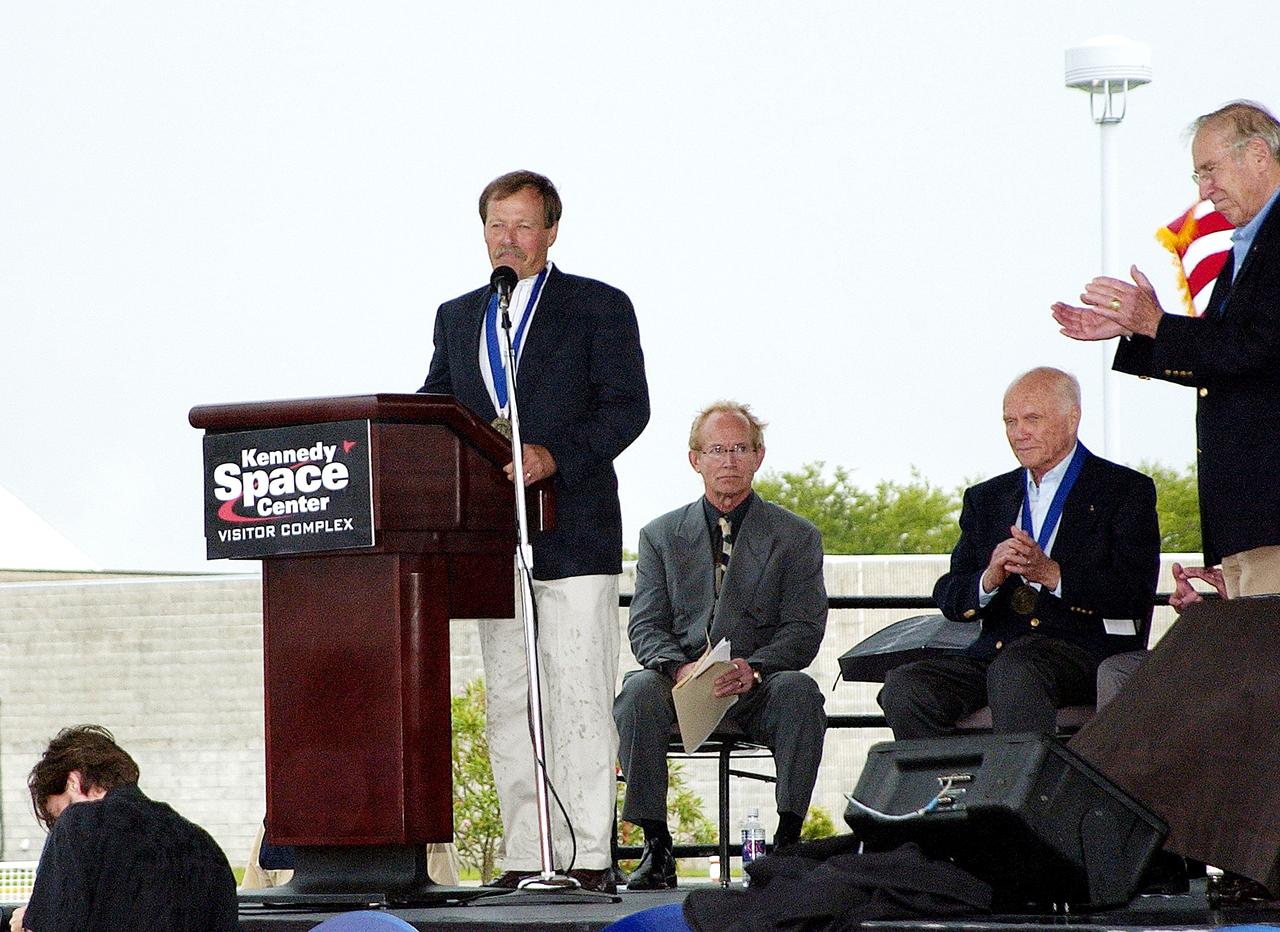
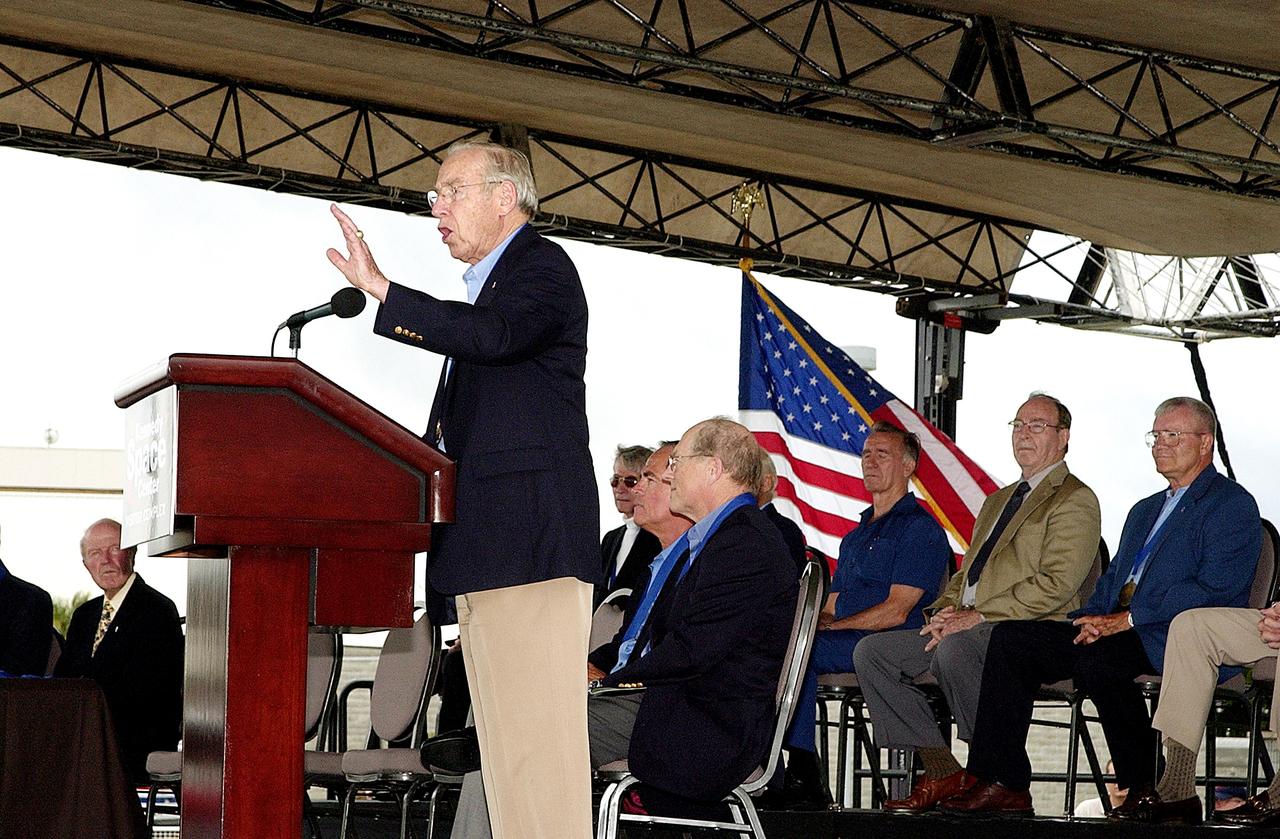
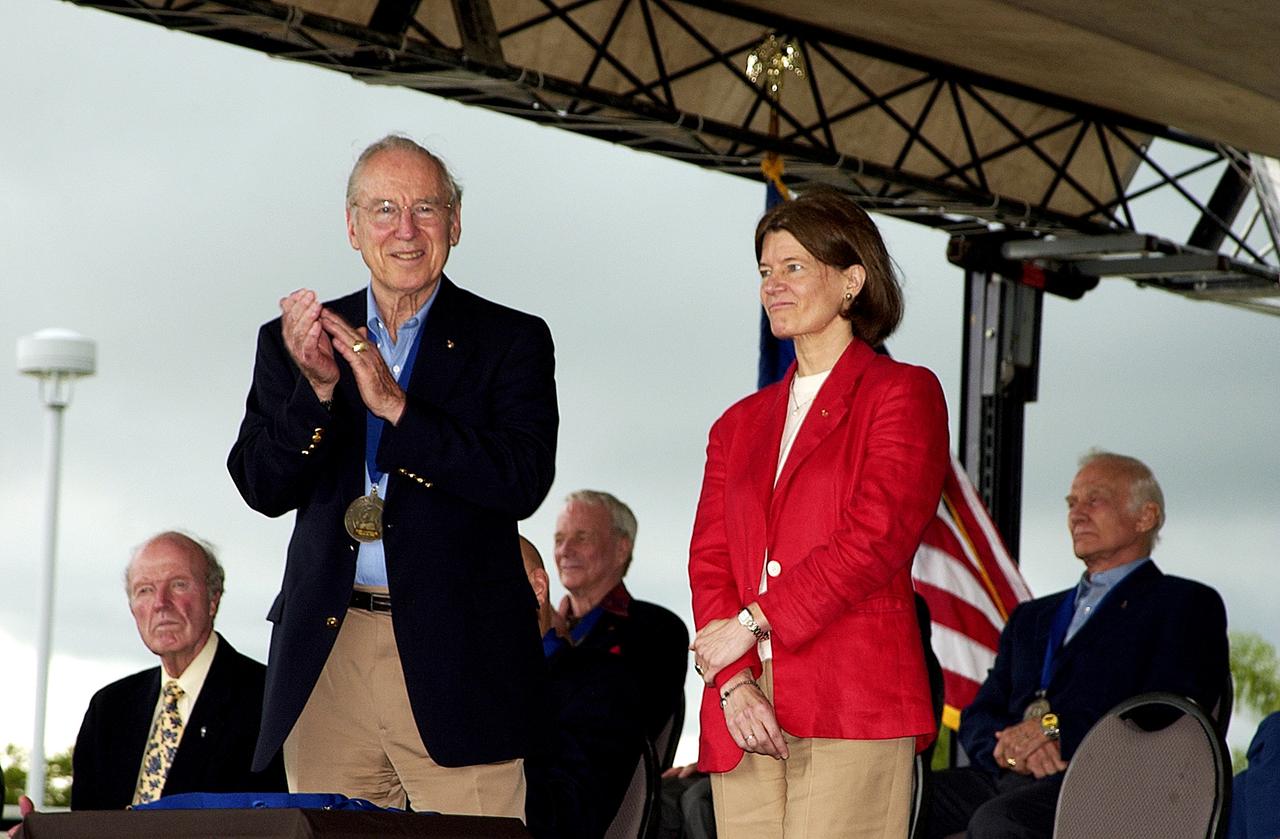
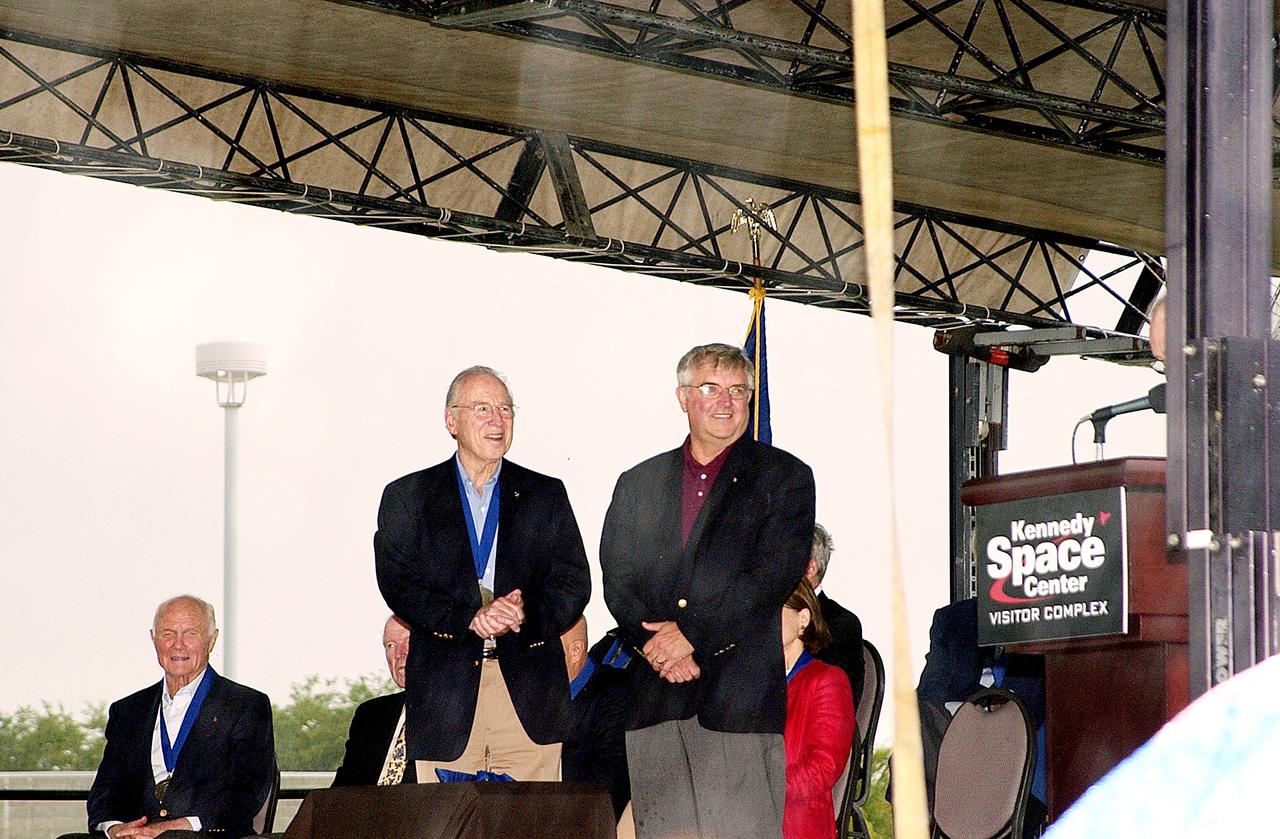
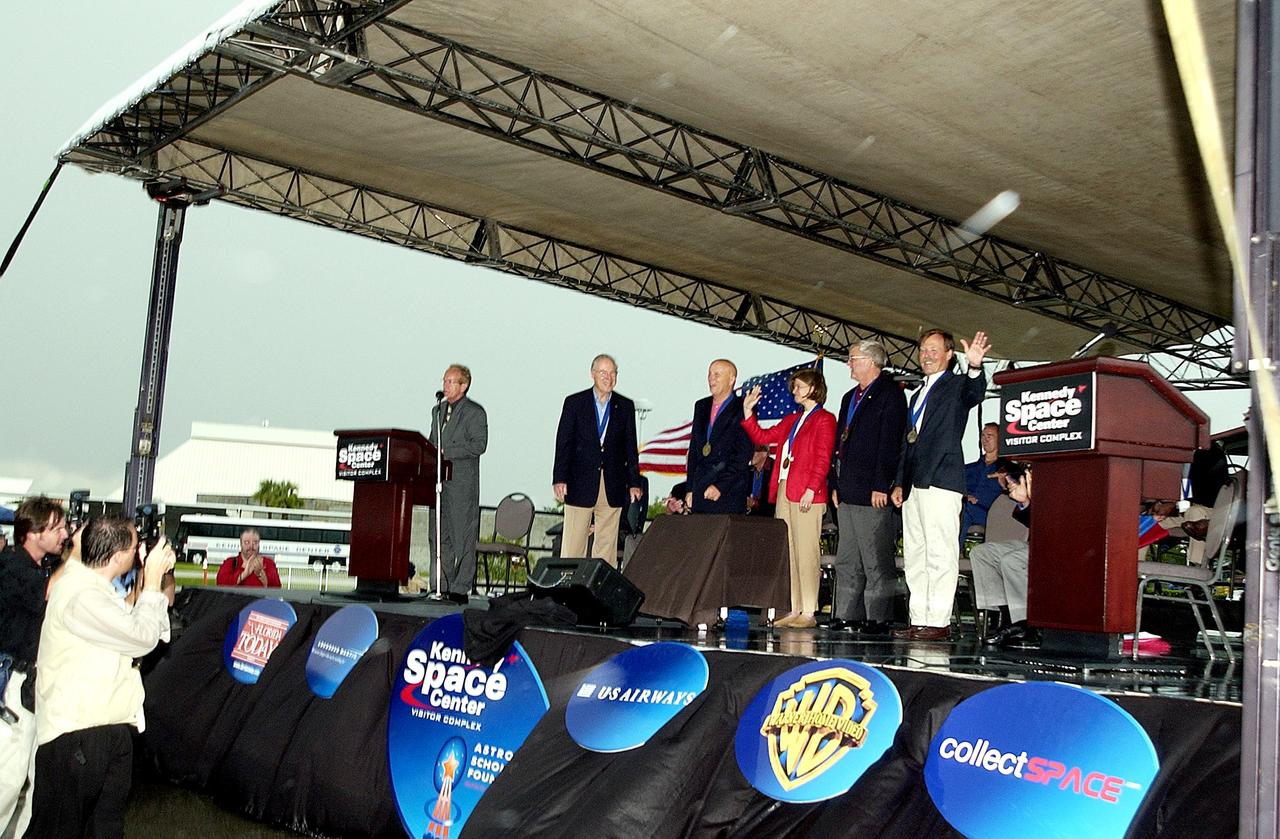
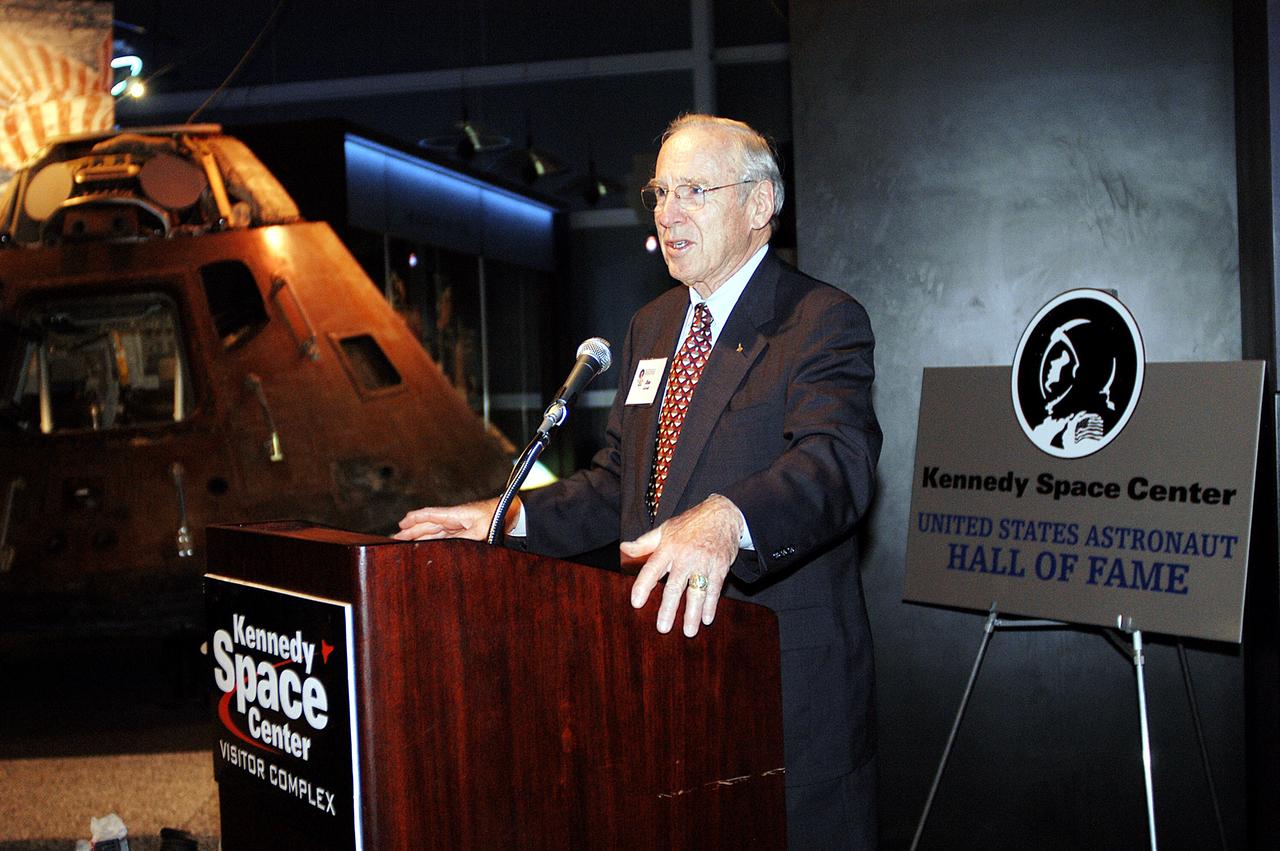
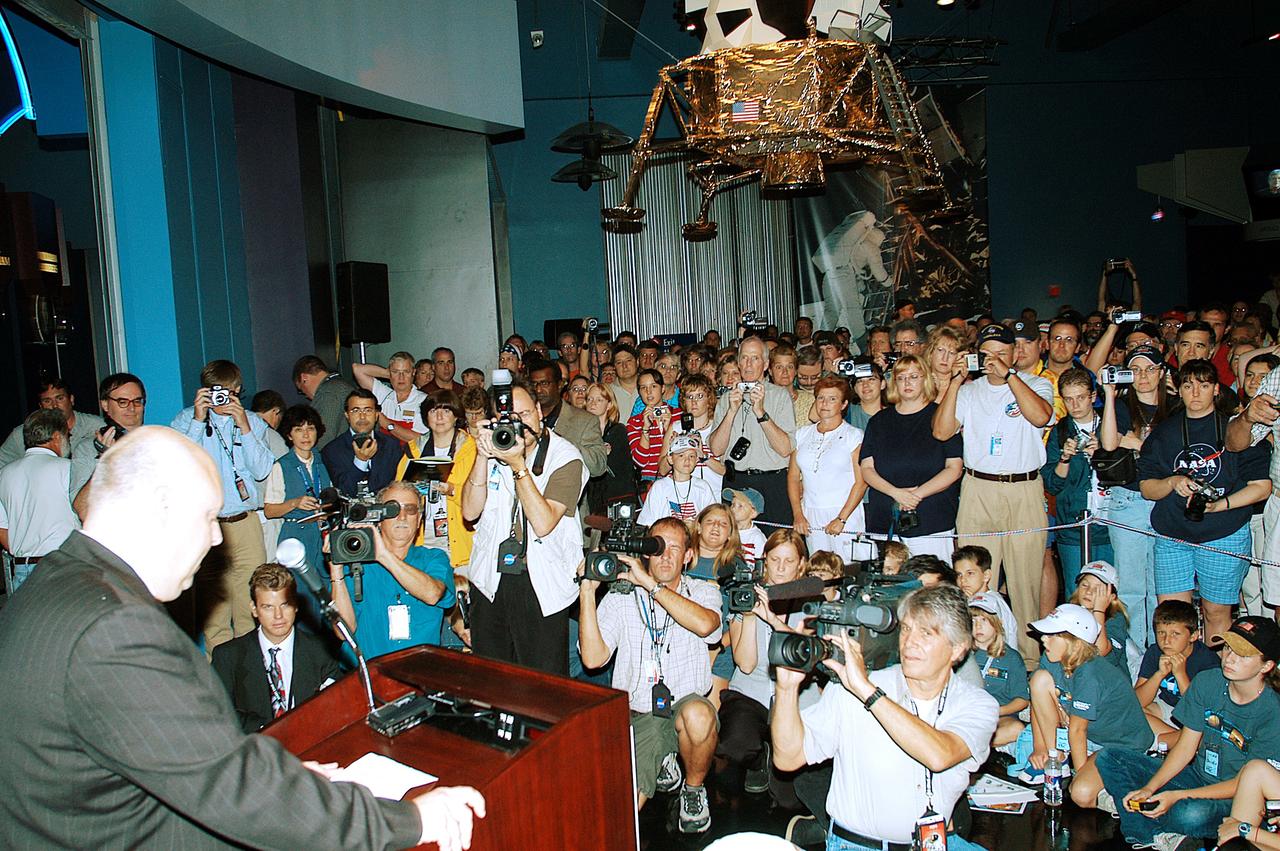
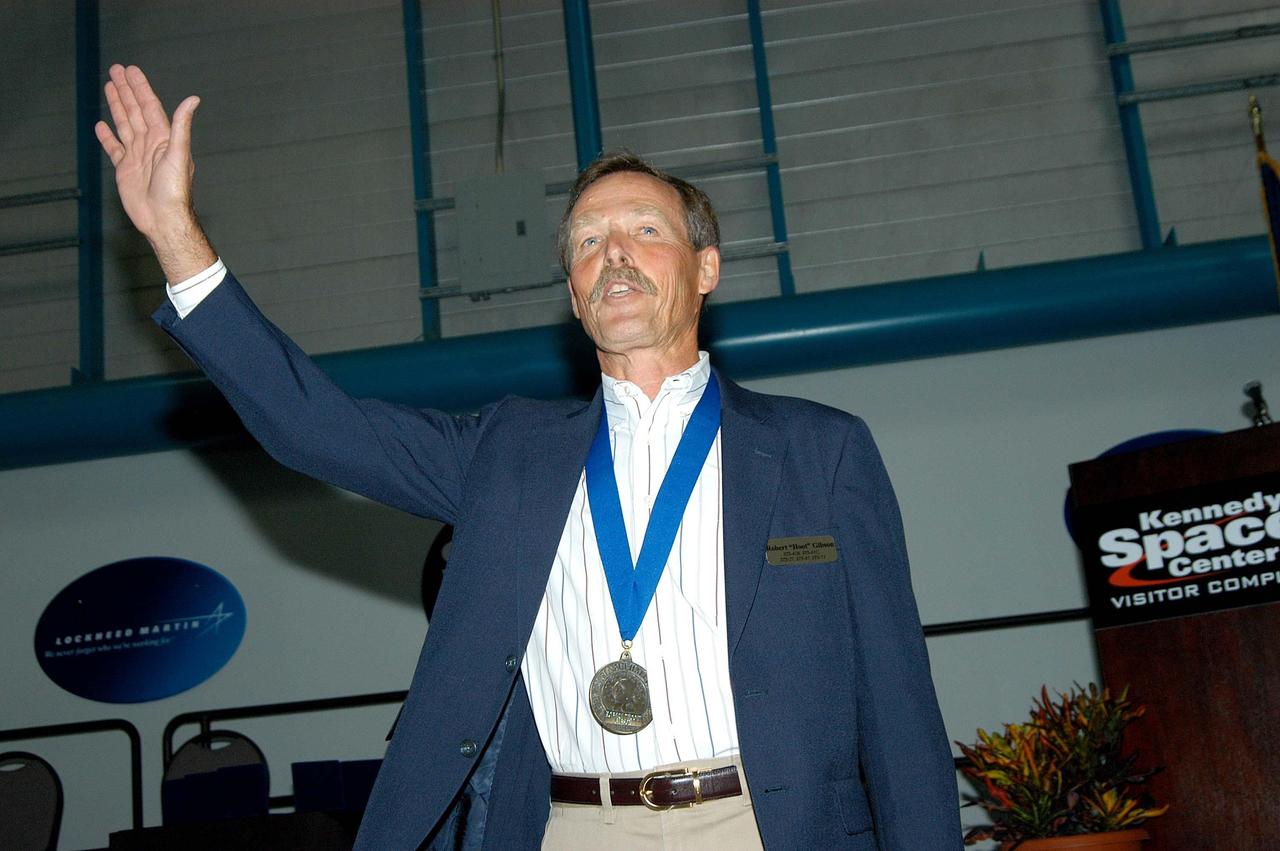
KENNEDY SPACE CENTER, FLA. -  At the KSC Visitor Complex, former astronaut Robert "Hoot" Gibson (at podium) addresses the audience at his induction ceremony into the U.S. Astronaut Hall of Fame. Also standing is former astronaut James A. Lovell.  Seated on the dais, from left, are actor and Master of Ceremonies Lance Henriksen and former astronaut John H. Glenn.  Also being inducted with Gibson are Space Shuttle astronauts Daniel Brandenstein, Story Musgrave, and Sally K. Ride. Conceived by six of the Mercury Program astronauts, the U.S. Astronaut Hall of Fame opened in 1990 to provide a place where space travelers could be remembered for their participation and accomplishments in the U.S. space program. The four new inductees join 48 previously honored astronauts from the ranks of the Gemini, Apollo, Skylab, Apollo-Soyuz, and Space Shuttle programs.
KENNEDY SPACE CENTER, FLA. - At the KSC Visitor Complex, former astronaut Robert "Hoot" Gibson (at podium) addresses the audience at his induction ceremony into the U.S. Astronaut Hall of Fame. Also standing is former astronaut James A. Lovell. Seated on the dais, from left, are actor and Master of Ceremonies Lance Henriksen and former astronaut John H. Glenn. Also being inducted with Gibson are Space Shuttle astronauts Daniel Brandenstein, Story Musgrave, and Sally K. Ride. Conceived by six of the Mercury Program astronauts, the U.S. Astronaut Hall of Fame opened in 1990 to provide a place where space travelers could be remembered for their participation and accomplishments in the U.S. space program. The four new inductees join 48 previously honored astronauts from the ranks of the Gemini, Apollo, Skylab, Apollo-Soyuz, and Space Shuttle programs.
KENNEDY SPACE CENTER, FLA. -  At the KSC Visitor Complex, former astronaut James Lovell makes the opening remarks at the induction ceremony of four Space Shuttle astronauts into the U.S. Astronaut Hall of Fame. Being inducted are Daniel Brandenstein, Robert "Hoot" Gibson, Story Musgrave, and Sally Ride. Conceived by six of the Mercury Program astronauts, the U.S. Astronaut Hall of Fame opened in 1990 to provide a place where space travelers could be remembered for their participation and accomplishments in the U.S. space program. The four new inductees join 48 previously honored astronauts from the ranks of the Gemini, Apollo, Skylab, Apollo-Soyuz, and Space Shuttle programs.
KENNEDY SPACE CENTER, FLA. - At the KSC Visitor Complex, former astronaut James Lovell makes the opening remarks at the induction ceremony of four Space Shuttle astronauts into the U.S. Astronaut Hall of Fame. Being inducted are Daniel Brandenstein, Robert "Hoot" Gibson, Story Musgrave, and Sally Ride. Conceived by six of the Mercury Program astronauts, the U.S. Astronaut Hall of Fame opened in 1990 to provide a place where space travelers could be remembered for their participation and accomplishments in the U.S. space program. The four new inductees join 48 previously honored astronauts from the ranks of the Gemini, Apollo, Skylab, Apollo-Soyuz, and Space Shuttle programs.
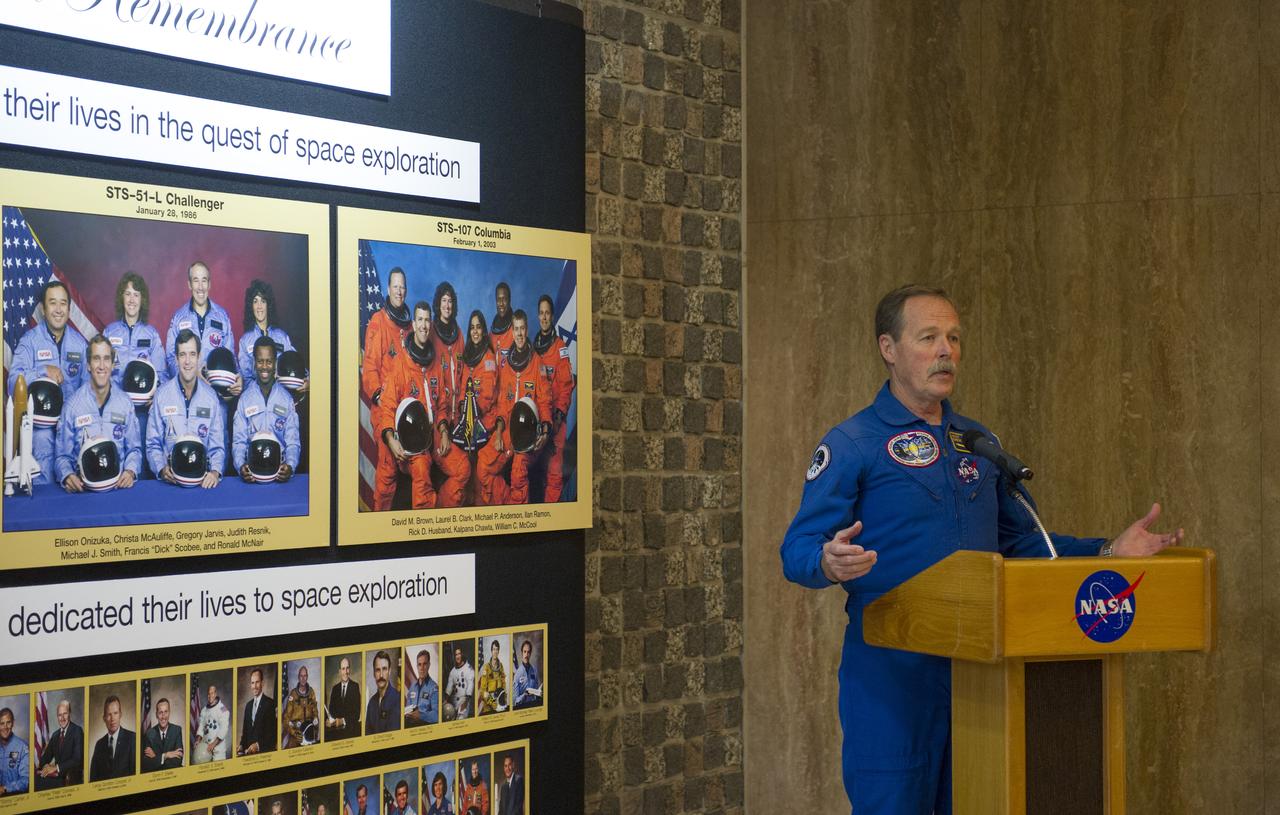
RETIRED NASA ASTRONAUT ROBERT LEE (HOOT) GIBSON DELIVERS COMMENTS AT ANNUAL DAY OF REMEMBRANCE EVENT
2015 Day of Remembrance
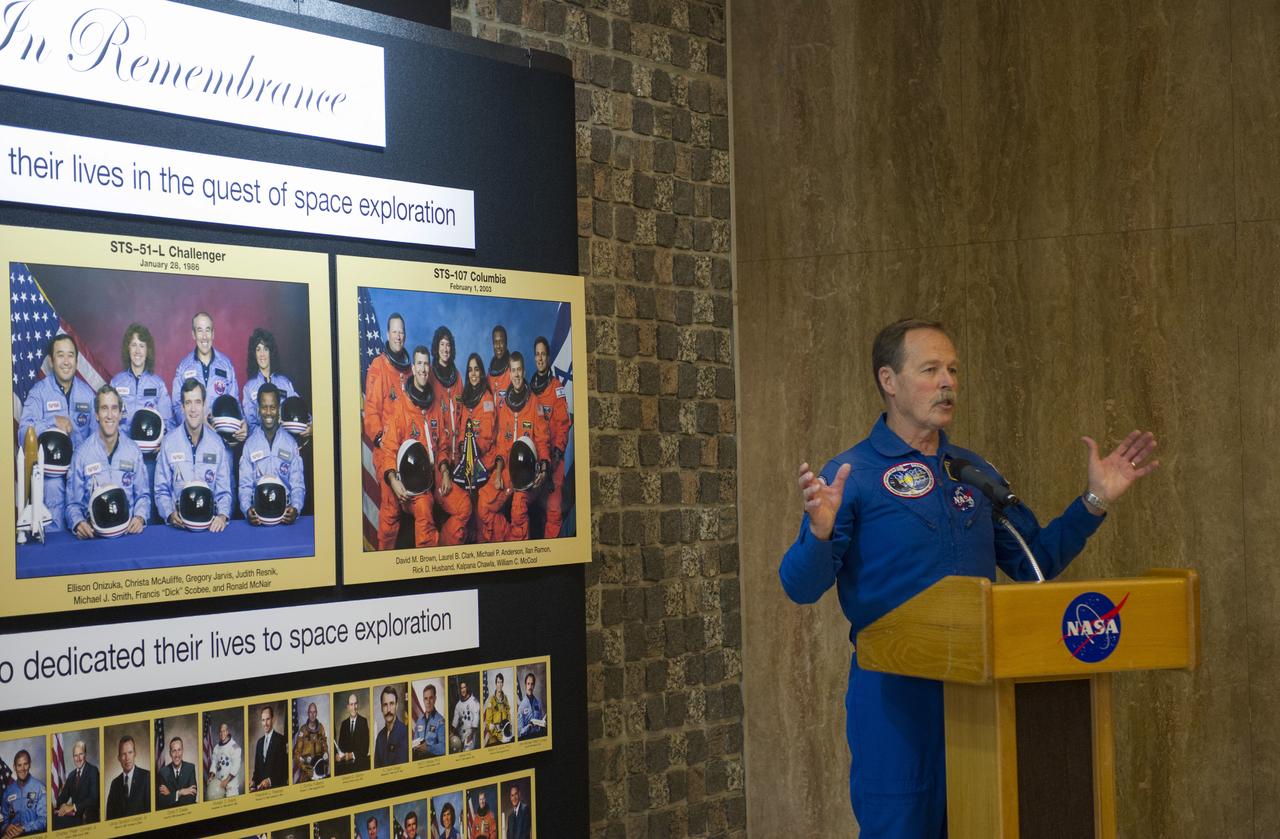
RETIRED NASA ASTRONAUT ROBERT LEE (HOOT) GIBSON DELIVERS COMMENTS AT ANNUAL DAY OF REMEMBRANCE EVENT
2015 Day of Remembrance
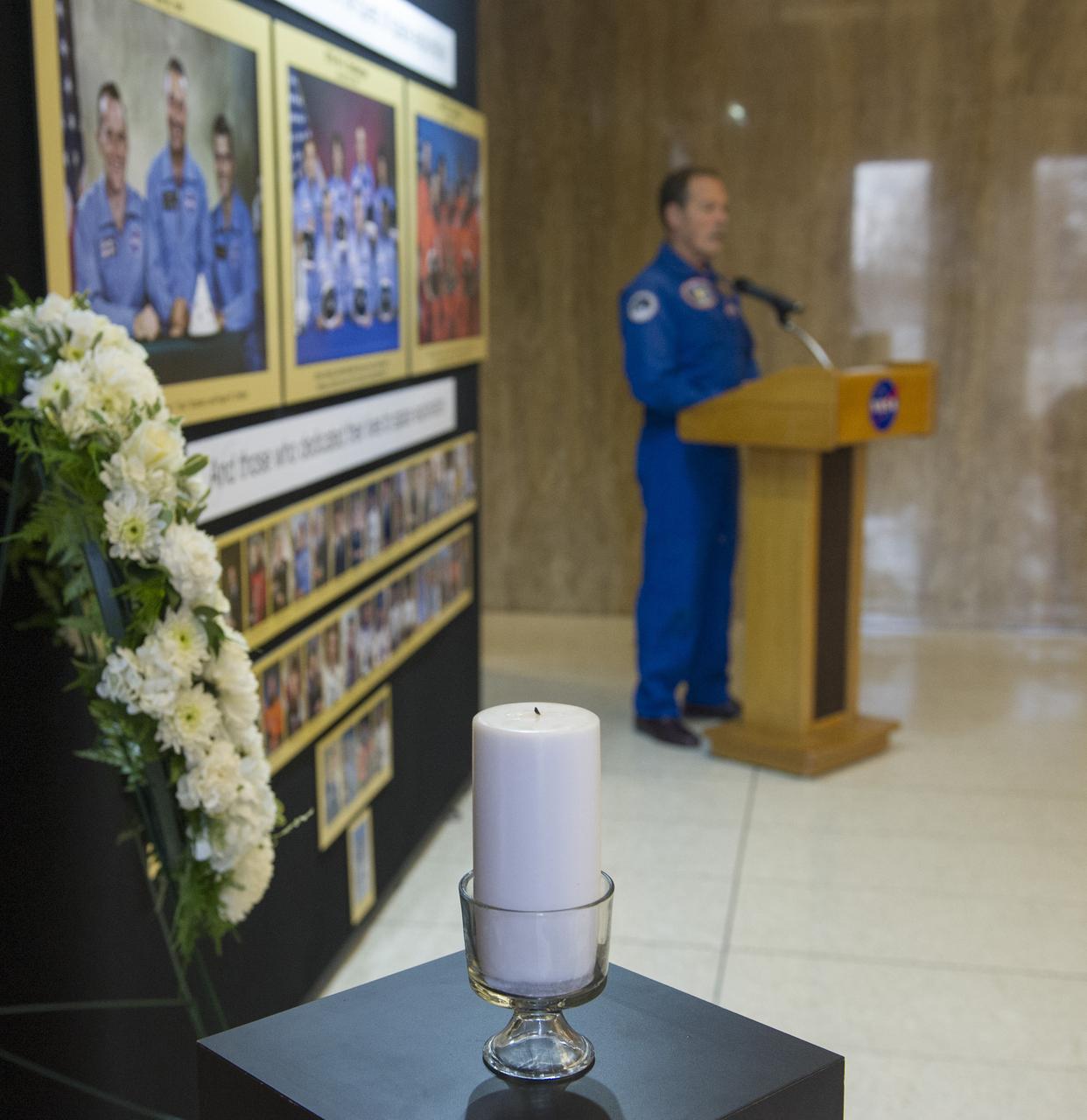
RETIRED NASA ASTRONAUT ROBERT LEE (HOOT) GIBSON DELIVERS COMMENTS AT ANNUAL DAY OF REMEMBRANCE EVENT
2015 Day of Remembrance
KENNEDY SPACE CENTER, FLA. -  Center Director and former astronaut Roy D. Bridges, Jr., (left) shakes hands with former astronaut James Lovell following a ribbon cutting ceremony officially opening the U.S. Astronaut Hall of Fame as part of the Kennedy Space Center Visitor Complex.  Invited guests and dignitaries look on, such as, from left, former astronauts Edward G. Gibson, Edgar D. Mitchell, Jack R. Lousma, Frederick H. (Rick) Hauck, and Buzz Aldrin (far right).  The ceremony was held in conjunction with the induction of four Space Shuttle astronauts into the Hall of Fame including Daniel Brandenstein, Robert "Hoot" Gibson, Story Musgrave, and Sally Ride.  Conceived by six of the Mercury Program astronauts, the U.S. Astronaut Hall of Fame opened in 1990 to provide a place where space travelers could be remembered for their participation and accomplishments in the U.S. space program.  The four new inductees join 48 previously honored astronauts from the ranks of the Gemini, Apollo, Skylab, Apollo-Soyuz, and Space Shuttle programs.
KENNEDY SPACE CENTER, FLA. - Center Director and former astronaut Roy D. Bridges, Jr., (left) shakes hands with former astronaut James Lovell following a ribbon cutting ceremony officially opening the U.S. Astronaut Hall of Fame as part of the Kennedy Space Center Visitor Complex. Invited guests and dignitaries look on, such as, from left, former astronauts Edward G. Gibson, Edgar D. Mitchell, Jack R. Lousma, Frederick H. (Rick) Hauck, and Buzz Aldrin (far right). The ceremony was held in conjunction with the induction of four Space Shuttle astronauts into the Hall of Fame including Daniel Brandenstein, Robert "Hoot" Gibson, Story Musgrave, and Sally Ride. Conceived by six of the Mercury Program astronauts, the U.S. Astronaut Hall of Fame opened in 1990 to provide a place where space travelers could be remembered for their participation and accomplishments in the U.S. space program. The four new inductees join 48 previously honored astronauts from the ranks of the Gemini, Apollo, Skylab, Apollo-Soyuz, and Space Shuttle programs.
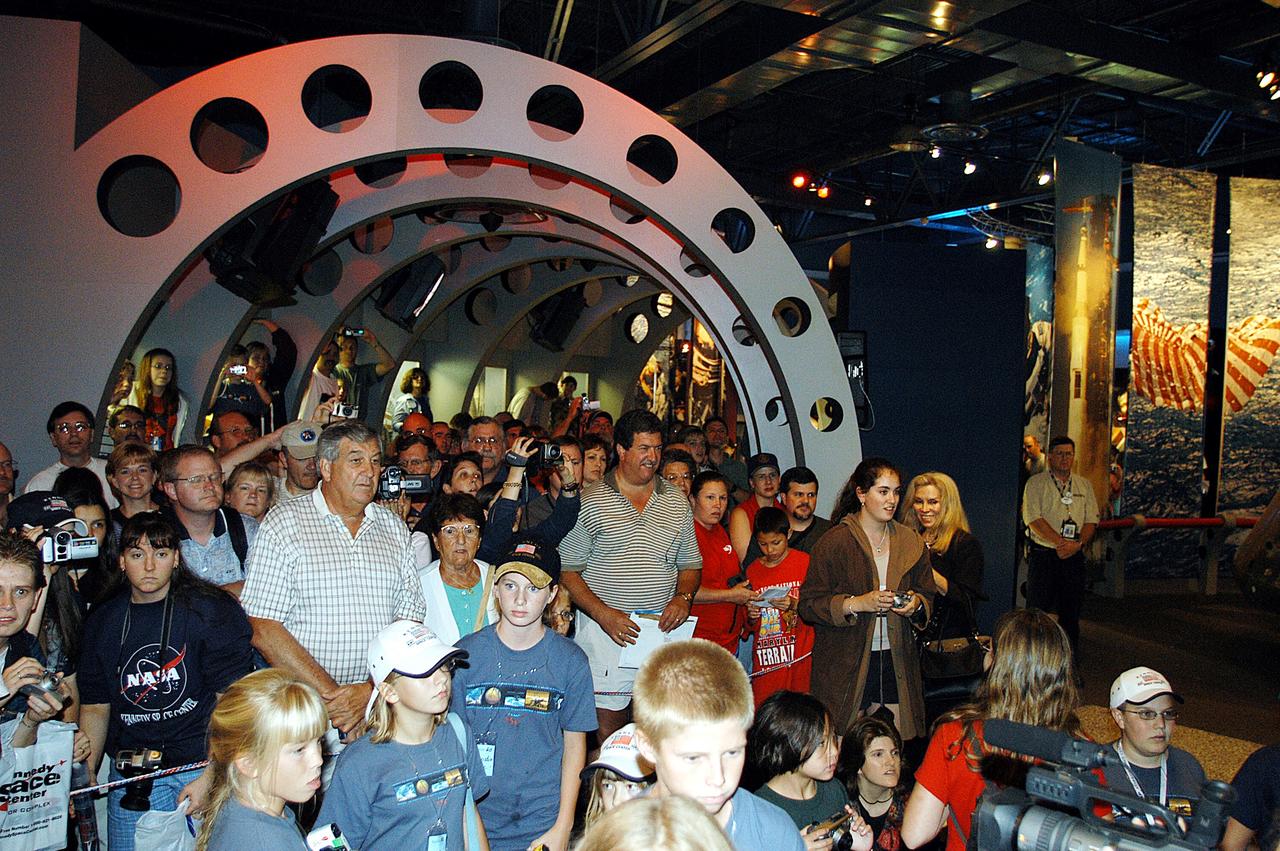
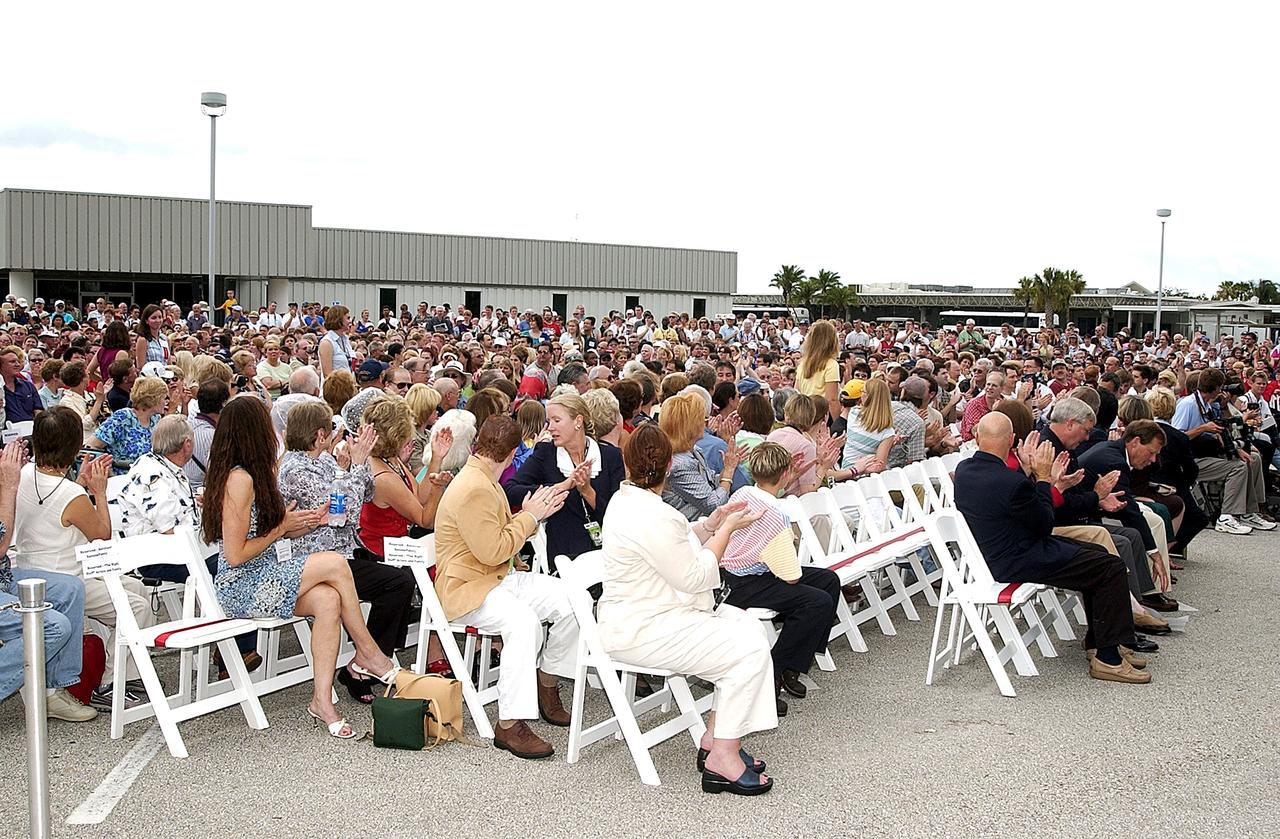
KENNEDY SPACE CENTER, FLA. -  Hundreds of guests attend a ribbon cutting ceremony officially opening the U.S. Astronaut Hall of Fame as part of the Kennedy Space Center Visitor Complex. The ceremony was held in conjunction with the induction of four Space Shuttle astronauts into the Hall of Fame including Daniel Brandenstein, Robert "Hoot" Gibson, Story Musgrave, and Sally Ride. Conceived by six of the Mercury Program astronauts, the U.S. Astronaut Hall of Fame opened in 1990 to provide a place where space travelers could be remembered for their participation and accomplishments in the U.S. space program. The four new inductees join 48 previously honored astronauts from the ranks of the Gemini, Apollo, Skylab, Apollo-Soyuz, and Space Shuttle programs.
KENNEDY SPACE CENTER, FLA. - Hundreds of guests attend a ribbon cutting ceremony officially opening the U.S. Astronaut Hall of Fame as part of the Kennedy Space Center Visitor Complex. The ceremony was held in conjunction with the induction of four Space Shuttle astronauts into the Hall of Fame including Daniel Brandenstein, Robert "Hoot" Gibson, Story Musgrave, and Sally Ride. Conceived by six of the Mercury Program astronauts, the U.S. Astronaut Hall of Fame opened in 1990 to provide a place where space travelers could be remembered for their participation and accomplishments in the U.S. space program. The four new inductees join 48 previously honored astronauts from the ranks of the Gemini, Apollo, Skylab, Apollo-Soyuz, and Space Shuttle programs.
41B-07-230 (S84-27027) (3-11 February 1984) ---Astronaut Robert L. Gibson, 41-B pilot, reviews some teleprinter copy on the flight deck?s starboard station during the eight-day 41-B Space Shuttle mission.  Four other astronauts share the Challenger with Gibson.  They are Astronauts Vance D. Brand, commander; and Ronald E. McNair, Bruce McCandless II and Robert L. Stewart, all mission specialists.  The photograph was taken from the commander?s station with a 35mm camera.
Crewmember activities in the flight deck
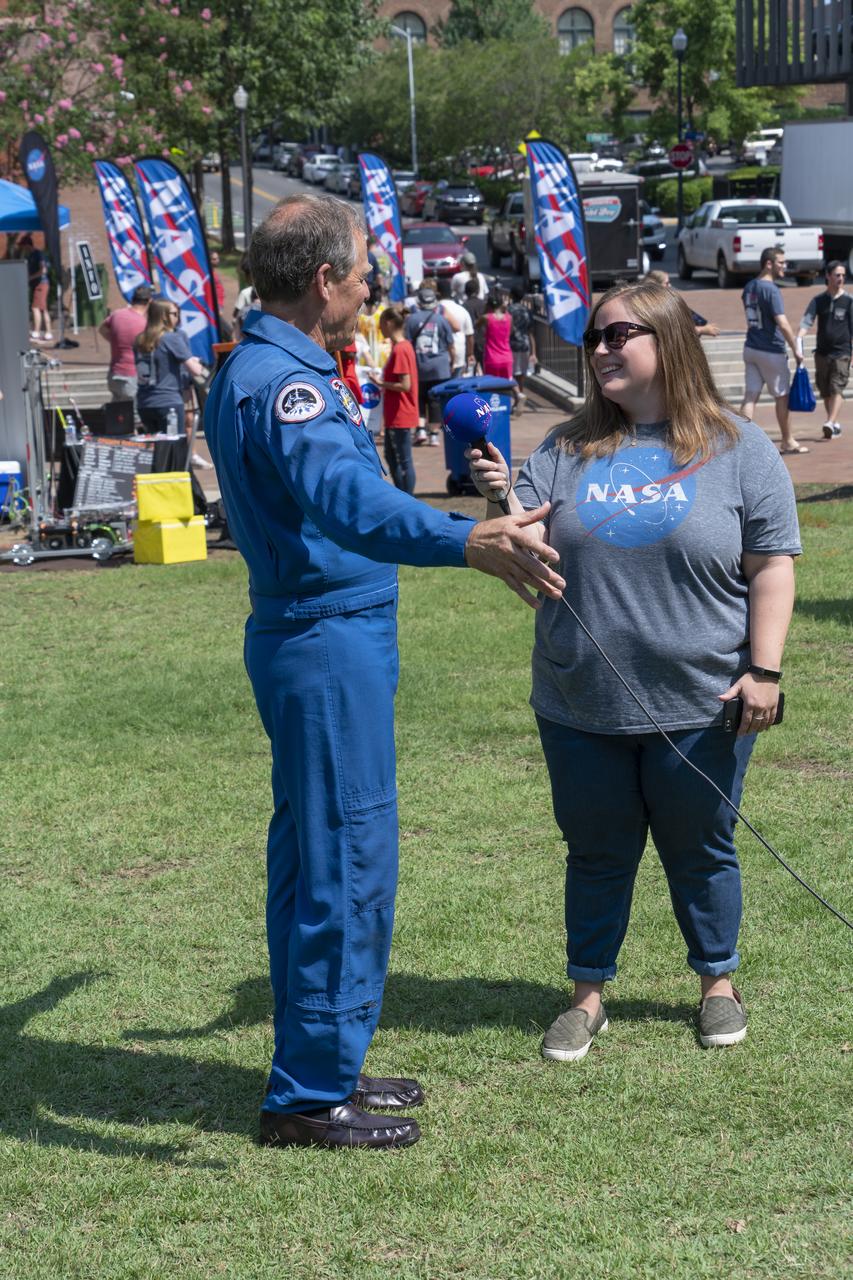
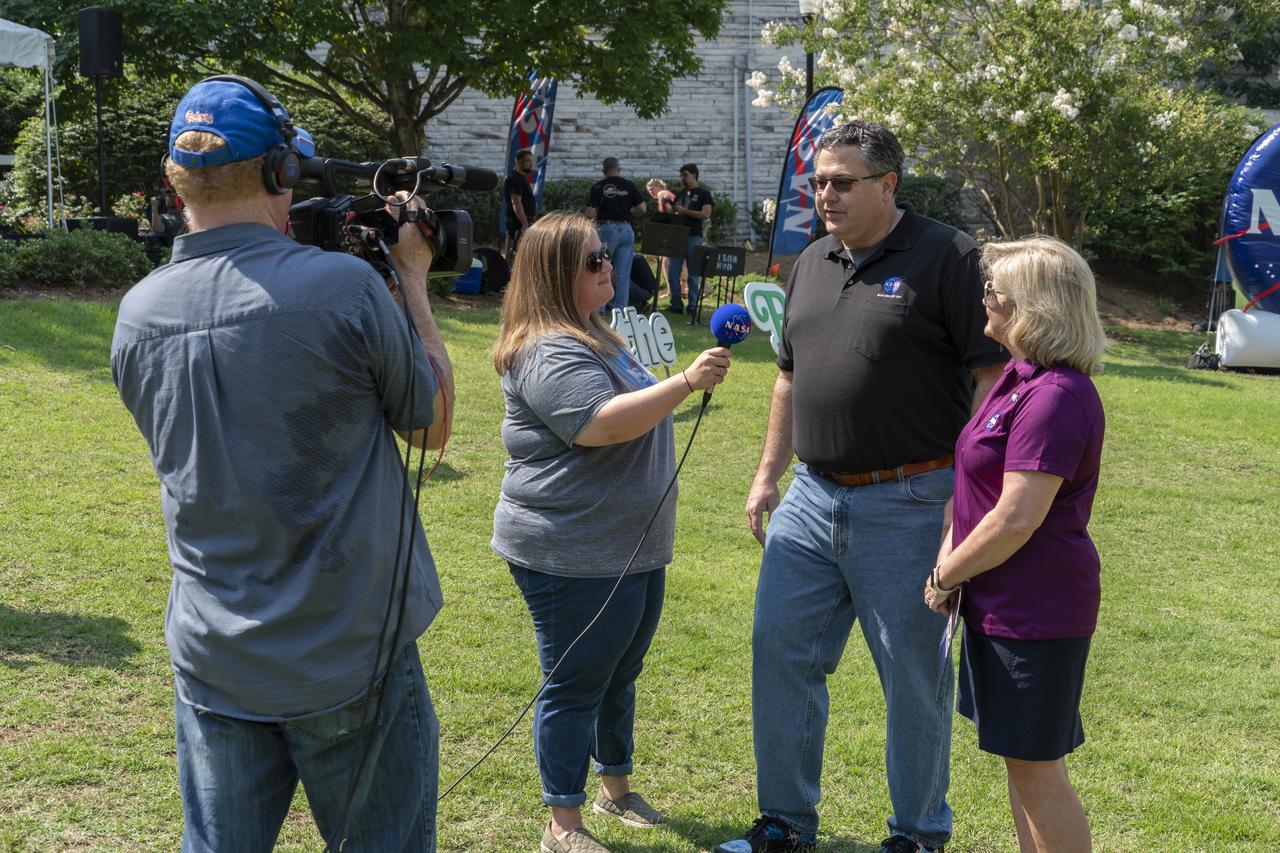
NASA's Marshall Space Flight Center showcased it's various projects for the public in Huntsville, Alabama's Big Spring Park. Exhibits were displayed by all of the various directorates of the Center with employee volunteers explaining all aspects of their projects. Adding to the festivities was the attendance of retired NASA astronaut Robert "Hoot" Gibson. NASA Public Affairs employee Jena Row interviews retired NASA Astronaut Robert “Hoot” Gibson at NASA Day in the Park.
2018 NASA in the Park Celebration
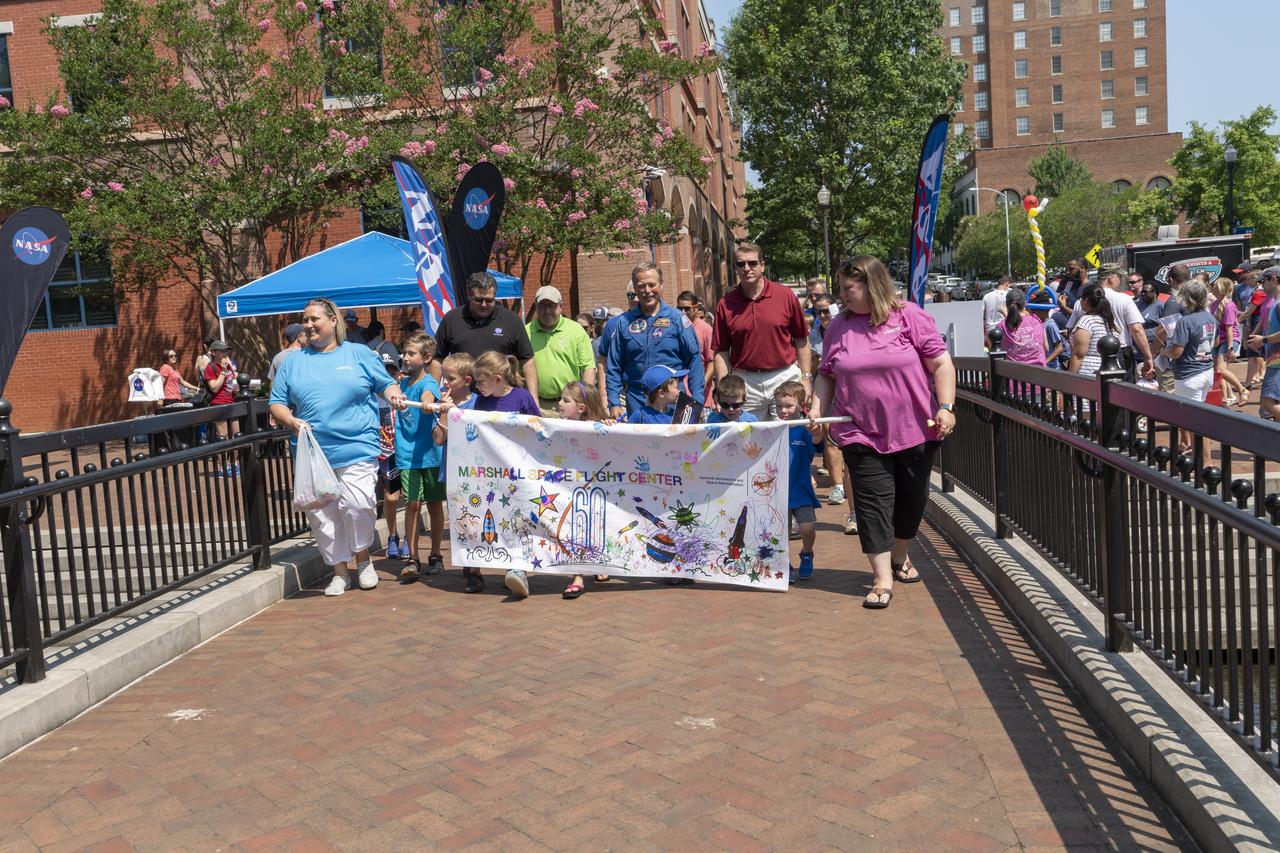
NASA's Marshall Space Flight Center showcased it's various projects for the public in Huntsville, Alabama's Big Spring Park. Exhibits were displayed by all of the various directorates of the Center with employee volunteers explaining all aspects of their projects. Adding to the festivities was the attendance of retired NASA astronaut Robert "Hoot" Gibson. The children’s parade at NASA Day in the Park is led by center director Todd May, Chad Emerson, and Retired astronaut Robert “Hoot” Gibson.
2018 NASA in the Park Celebration
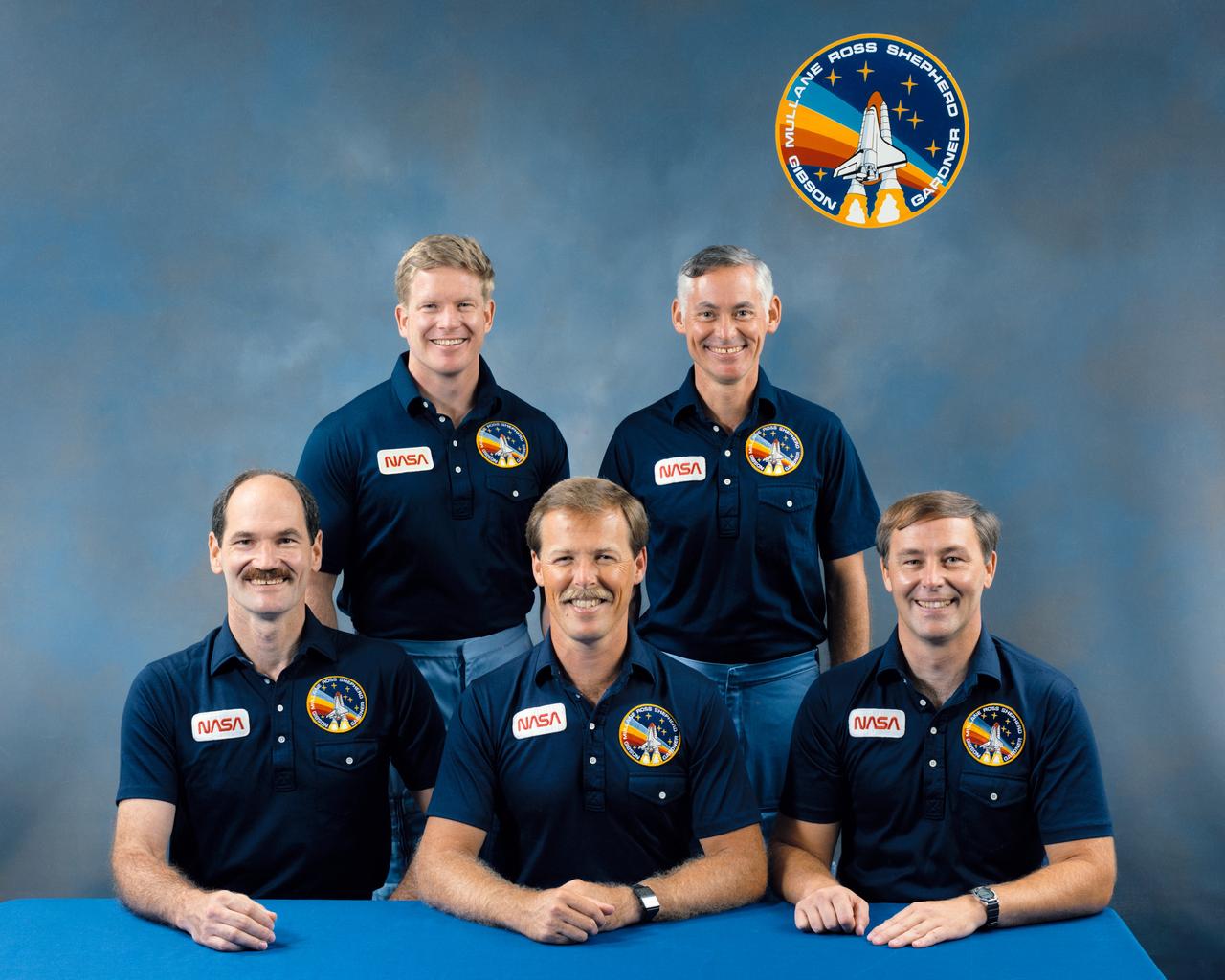
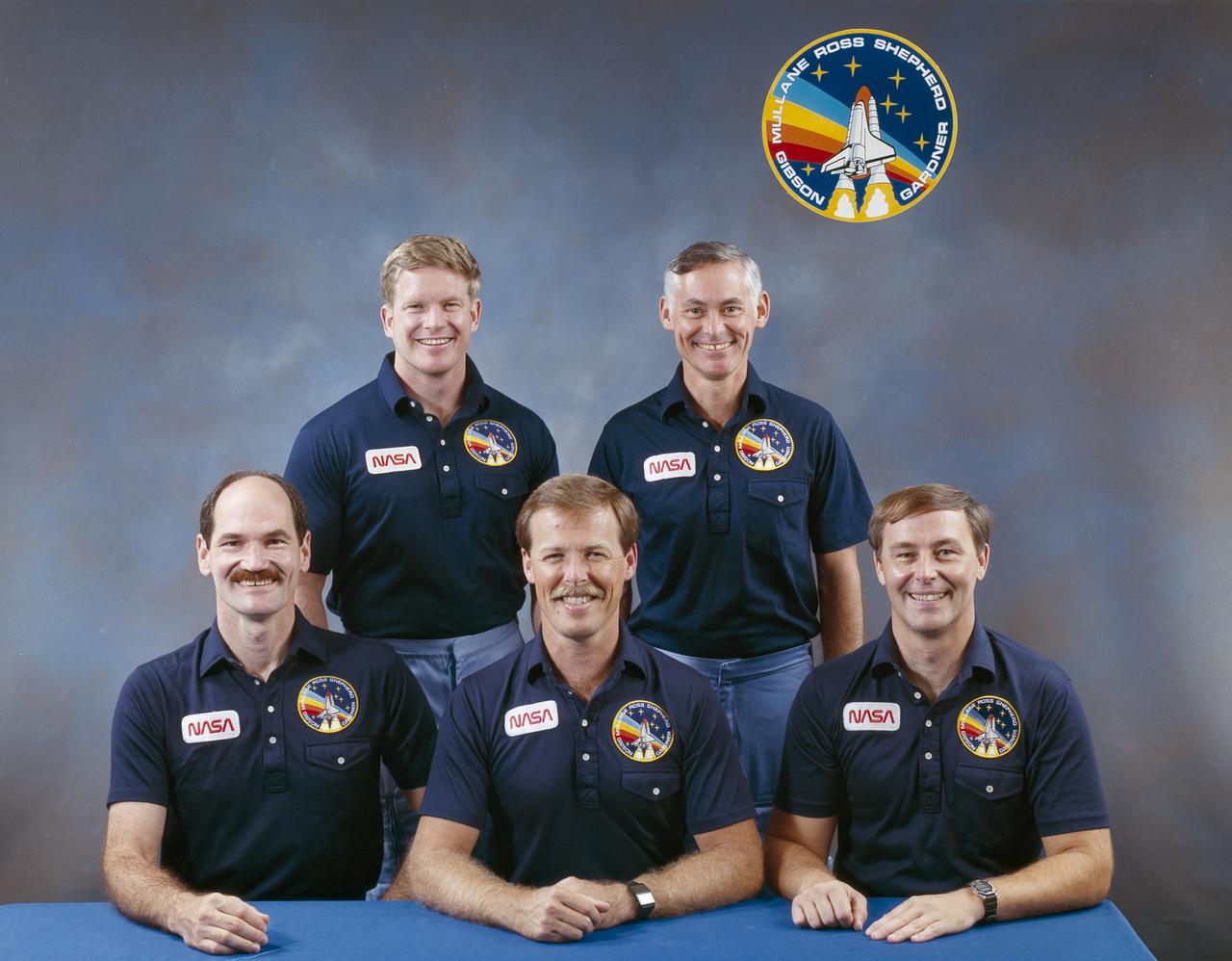
S88-45002 (August 1988) --- These five astronauts will fly aboard the Space Shuttle Atlantis for the STS-27 mission. They are (seated left to right) astronauts Guy S. Gardner, Robert L. Gibson and Jerry L. Ross; and (standing, left to right) William M. Shepherd and Richard M. (Mike) Mullane. Gibson is commander; Gardner, pilot; and the other three will serve as mission specialists.
STS-27 ATLANTIS - ORBITER VEHICLE(OV)-104 - OFFICIAL CREW PORTRAIT
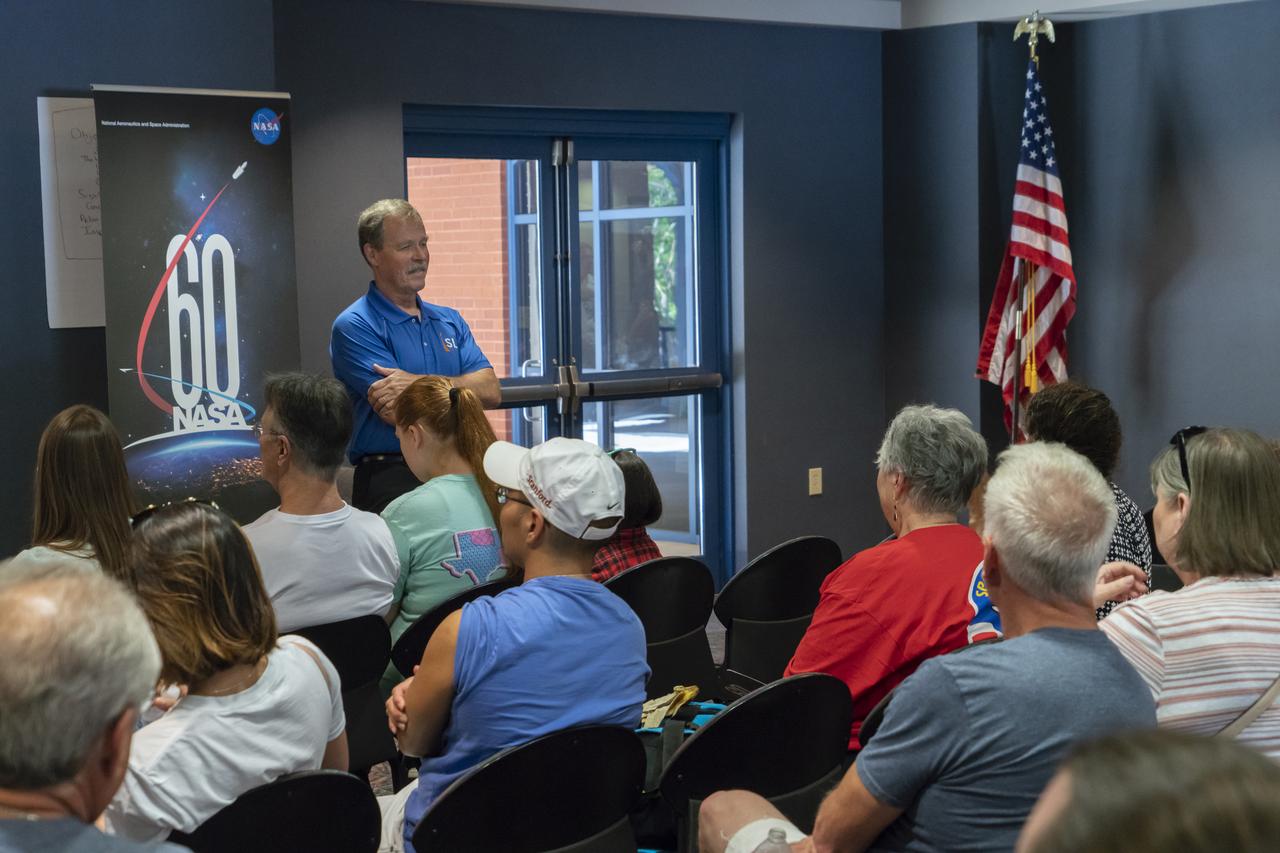
NASA's Marshall Space Flight Center showcased it's various projects for the public in Huntsville, Alabama's Big Spring Park. Exhibits were displayed by all of the various directorates of the Center with employee volunteers explaining all aspects of their projects. Adding to the festivities was the attendance of retired NASA astronaut Robert "Hoot" Gibson. “Hoot” Gibson reminisces about his history as an astronaut and takes questions from the audience at NASA Day in the Park.
2018 NASA in the Park Celebration
NASA's Marshall Space Flight Center showcased it's various projects for the public in Huntsville, Alabama's Big Spring Park. Exhibits were displayed by all of the various directorates of the Center with employee volunteers explaining all aspects of their projects. Adding to the festivities was the attendance of retired NASA astronaut Robert "Hoot" Gibson. “Hoot” Gibson reminisces about his history as an astronaut and takes questions from the audience at NASA Day in the Park.
2018 NASA in the Park Celebration
KENNEDY SPACE CENTER, FLA. -  At the KSC Visitor Complex, former astronaut James A. Lovell (standing left) greets former astronaut Story Musgrave (standing right) at his induction ceremony into the U.S. Astronaut Hall of Fame. Also seated on the dais are, from left, former astronaut and Senator John H. Glenn, astronaut and Associate Director (Technical) of the Johnson Space Center John W. Young, and former astronaut Buzz Aldrin, all previously inducted into the Hall of Fame. Being inducted with Musgrave are Space Shuttle astronauts Daniel Brandenstein, Robert "Hoot" Gibson, and Sally Ride. Conceived by six of the Mercury Program astronauts, the U.S. Astronaut Hall of Fame opened in 1990 to provide a place where space travelers could be remembered for their participation and accomplishments in the U.S. space program. The four new inductees join 48 previously honored astronauts from the ranks of the Gemini, Apollo, Skylab, Apollo-Soyuz, and Space Shuttle programs.
KENNEDY SPACE CENTER, FLA. - At the KSC Visitor Complex, former astronaut James A. Lovell (standing left) greets former astronaut Story Musgrave (standing right) at his induction ceremony into the U.S. Astronaut Hall of Fame. Also seated on the dais are, from left, former astronaut and Senator John H. Glenn, astronaut and Associate Director (Technical) of the Johnson Space Center John W. Young, and former astronaut Buzz Aldrin, all previously inducted into the Hall of Fame. Being inducted with Musgrave are Space Shuttle astronauts Daniel Brandenstein, Robert "Hoot" Gibson, and Sally Ride. Conceived by six of the Mercury Program astronauts, the U.S. Astronaut Hall of Fame opened in 1990 to provide a place where space travelers could be remembered for their participation and accomplishments in the U.S. space program. The four new inductees join 48 previously honored astronauts from the ranks of the Gemini, Apollo, Skylab, Apollo-Soyuz, and Space Shuttle programs.
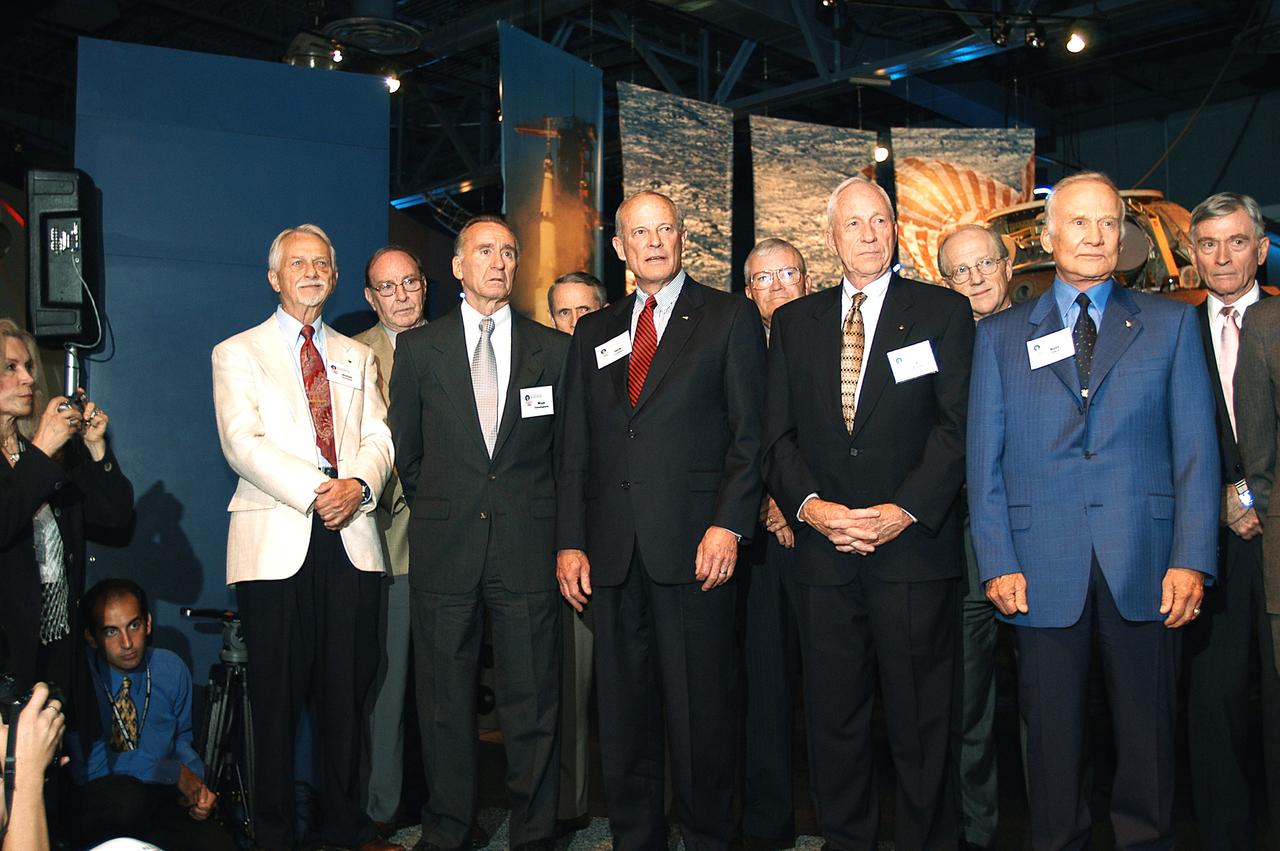
KENNEDY SPACE CENTER, FLA. -  A group of current and former U.S. astronauts are introduced to the audience at a ribbon cutting ceremony officially opening the U.S. Astronaut Hall of Fame as part of the Kennedy Space Center Visitor Complex.  In the front row, from left, are Owen K. Garriott, Walter Cunningham, Jack R. Lousma, Alfred M. Worden, and Buzz Aldrin.  In the back row, from left, are Edgar D. Mitchell, Edward G. Gibson, Fred W. Haise, Frederick H. (Rick) Hauck, and John W. Young.  The ceremony was held in conjunction with the induction of four Space Shuttle astronauts into the Hall of Fame including Daniel Brandenstein, Robert "Hoot" Gibson, Story Musgrave, and Sally Ride.  Conceived by six of the Mercury Program astronauts, the U.S. Astronaut Hall of Fame opened in 1990 to provide a place where space travelers could be remembered for their participation and accomplishments in the U.S. space program.  The four new inductees join 48 previously honored astronauts from the ranks of the Gemini, Apollo, Skylab, Apollo-Soyuz, and Space Shuttle programs.
KENNEDY SPACE CENTER, FLA. - A group of current and former U.S. astronauts are introduced to the audience at a ribbon cutting ceremony officially opening the U.S. Astronaut Hall of Fame as part of the Kennedy Space Center Visitor Complex. In the front row, from left, are Owen K. Garriott, Walter Cunningham, Jack R. Lousma, Alfred M. Worden, and Buzz Aldrin. In the back row, from left, are Edgar D. Mitchell, Edward G. Gibson, Fred W. Haise, Frederick H. (Rick) Hauck, and John W. Young. The ceremony was held in conjunction with the induction of four Space Shuttle astronauts into the Hall of Fame including Daniel Brandenstein, Robert "Hoot" Gibson, Story Musgrave, and Sally Ride. Conceived by six of the Mercury Program astronauts, the U.S. Astronaut Hall of Fame opened in 1990 to provide a place where space travelers could be remembered for their participation and accomplishments in the U.S. space program. The four new inductees join 48 previously honored astronauts from the ranks of the Gemini, Apollo, Skylab, Apollo-Soyuz, and Space Shuttle programs.
S74-17456 (3 Feb. 1974) --- Scientist-astronaut Edward G. Gibson has just egressed the Skylab EVA hatchway in this frame taken from a roll of movie film exposed by a 16mm Maurer camera. Astronaut Gerald P. Carr, Skylab 4 commander, took this picture during the final Skylab extravehicular activity (EVA) which took place on Feb. 3, 1974. Carr was above on the Apollo Telescope Mount (ATM) when he shot this frame of Gibson. Note Carr's umbilical/tether line extending from inside the space station up toward the camera. Astronaut William R. Pogue, Skylab 4 pilot, remained inside the space station during the EVA by Carr and Gibson. Photo credit: NASA
SKYLAB IV - INFLIGHT
KENNEDY SPACE CENTER, FLA. -  At the KSC Visitor Complex, former astronaut Robert L. Crippen (standing right) congratulates former astronaut Sally K. Ride at her induction ceremony into the U.S. Astronaut Hall of Fame. Also standing is former astronaut James A. Lovell.  Seated on the dais, from left, are former astronauts Gordon Cooper, Scott Carpenter, Buzz Aldrin, Walter Cunningham, Edgar B. Mitchell, and Fred W. Haise, all previously inducted into the Hall of Fame. Being inducted with Ride are Space Shuttle astronauts Daniel Brandenstein, Robert "Hoot" Gibson, and Story Musgrave. Conceived by six of the Mercury Program astronauts, the U.S. Astronaut Hall of Fame opened in 1990 to provide a place where space travelers could be remembered for their participation and accomplishments in the U.S. space program. The four new inductees join 48 previously honored astronauts from the ranks of the Gemini, Apollo, Skylab, Apollo-Soyuz, and Space Shuttle programs.
KENNEDY SPACE CENTER, FLA. - At the KSC Visitor Complex, former astronaut Robert L. Crippen (standing right) congratulates former astronaut Sally K. Ride at her induction ceremony into the U.S. Astronaut Hall of Fame. Also standing is former astronaut James A. Lovell. Seated on the dais, from left, are former astronauts Gordon Cooper, Scott Carpenter, Buzz Aldrin, Walter Cunningham, Edgar B. Mitchell, and Fred W. Haise, all previously inducted into the Hall of Fame. Being inducted with Ride are Space Shuttle astronauts Daniel Brandenstein, Robert "Hoot" Gibson, and Story Musgrave. Conceived by six of the Mercury Program astronauts, the U.S. Astronaut Hall of Fame opened in 1990 to provide a place where space travelers could be remembered for their participation and accomplishments in the U.S. space program. The four new inductees join 48 previously honored astronauts from the ranks of the Gemini, Apollo, Skylab, Apollo-Soyuz, and Space Shuttle programs.
KENNEDY SPACE CENTER, FLA. -  At the KSC Visitor Complex, former astronaut John H. Glenn (at podium) presents former astronaut Robert "Hoot" Gibson (standing right) at his induction ceremony into the U.S. Astronaut Hall of Fame. Also standing is former astronaut James A. Lovell.  Seated on the dais, from left, are actor and Master of Ceremonies Lance Henriksen (left), and former astronauts Sally K. Ride and Daniel Brandenstein (right), both inducted into the Hall of Fame today. Also being inducted is Space Shuttle astronaut Story Musgrave. Conceived by six of the Mercury Program astronauts, the U.S. Astronaut Hall of Fame opened in 1990 to provide a place where space travelers could be remembered for their participation and accomplishments in the U.S. space program. The four new inductees join 48 previously honored astronauts from the ranks of the Gemini, Apollo, Skylab, Apollo-Soyuz, and Space Shuttle programs.
KENNEDY SPACE CENTER, FLA. - At the KSC Visitor Complex, former astronaut John H. Glenn (at podium) presents former astronaut Robert "Hoot" Gibson (standing right) at his induction ceremony into the U.S. Astronaut Hall of Fame. Also standing is former astronaut James A. Lovell. Seated on the dais, from left, are actor and Master of Ceremonies Lance Henriksen (left), and former astronauts Sally K. Ride and Daniel Brandenstein (right), both inducted into the Hall of Fame today. Also being inducted is Space Shuttle astronaut Story Musgrave. Conceived by six of the Mercury Program astronauts, the U.S. Astronaut Hall of Fame opened in 1990 to provide a place where space travelers could be remembered for their participation and accomplishments in the U.S. space program. The four new inductees join 48 previously honored astronauts from the ranks of the Gemini, Apollo, Skylab, Apollo-Soyuz, and Space Shuttle programs.
KENNEDY SPACE CENTER, FLA. -  At the KSC Visitor Complex, former astronaut Frederick H. (Rick) Hauck (standing right) congratulates former astronaut Daniel Brandenstein (standing center) at his induction ceremony into the U.S. Astronaut Hall of Fame. Also standing is former astronaut James A. Lovell.  Seated on the dais, from left, are former astronauts John H. Glenn and Gordon Cooper, both previously inducted into the Hall of Fame. Being inducted with Brandenstein are Space Shuttle astronauts Robert "Hoot" Gibson, Story Musgrave, and Sally K. Ride. Conceived by six of the Mercury Program astronauts, the U.S. Astronaut Hall of Fame opened in 1990 to provide a place where space travelers could be remembered for their participation and accomplishments in the U.S. space program. The four new inductees join 48 previously honored astronauts from the ranks of the Gemini, Apollo, Skylab, Apollo-Soyuz, and Space Shuttle programs.
KENNEDY SPACE CENTER, FLA. - At the KSC Visitor Complex, former astronaut Frederick H. (Rick) Hauck (standing right) congratulates former astronaut Daniel Brandenstein (standing center) at his induction ceremony into the U.S. Astronaut Hall of Fame. Also standing is former astronaut James A. Lovell. Seated on the dais, from left, are former astronauts John H. Glenn and Gordon Cooper, both previously inducted into the Hall of Fame. Being inducted with Brandenstein are Space Shuttle astronauts Robert "Hoot" Gibson, Story Musgrave, and Sally K. Ride. Conceived by six of the Mercury Program astronauts, the U.S. Astronaut Hall of Fame opened in 1990 to provide a place where space travelers could be remembered for their participation and accomplishments in the U.S. space program. The four new inductees join 48 previously honored astronauts from the ranks of the Gemini, Apollo, Skylab, Apollo-Soyuz, and Space Shuttle programs.
KENNEDY SPACE CENTER, FLA. -  At the KSC Visitor Complex, former astronaut Robert L. Crippen (right) presents former astronaut Sally K. Ride (standing center) at her induction ceremony into the U.S. Astronaut Hall of Fame. Also standing is former astronaut James A. Lovell.  Seated on the dais are, from left, former astronauts John H. Glenn, Gordon Cooper, Buzz Aldrin, and Walter Cunningham, all previously inducted into the Hall of Fame. Being inducted with Ride are Space Shuttle astronauts Daniel Brandenstein, Robert "Hoot" Gibson, and Story Musgrave. Conceived by six of the Mercury Program astronauts, the U.S. Astronaut Hall of Fame opened in 1990 to provide a place where space travelers could be remembered for their participation and accomplishments in the U.S. space program. The four new inductees join 48 previously honored astronauts from the ranks of the Gemini, Apollo, Skylab, Apollo-Soyuz, and Space Shuttle programs.
KENNEDY SPACE CENTER, FLA. - At the KSC Visitor Complex, former astronaut Robert L. Crippen (right) presents former astronaut Sally K. Ride (standing center) at her induction ceremony into the U.S. Astronaut Hall of Fame. Also standing is former astronaut James A. Lovell. Seated on the dais are, from left, former astronauts John H. Glenn, Gordon Cooper, Buzz Aldrin, and Walter Cunningham, all previously inducted into the Hall of Fame. Being inducted with Ride are Space Shuttle astronauts Daniel Brandenstein, Robert "Hoot" Gibson, and Story Musgrave. Conceived by six of the Mercury Program astronauts, the U.S. Astronaut Hall of Fame opened in 1990 to provide a place where space travelers could be remembered for their participation and accomplishments in the U.S. space program. The four new inductees join 48 previously honored astronauts from the ranks of the Gemini, Apollo, Skylab, Apollo-Soyuz, and Space Shuttle programs.
KENNEDY SPACE CENTER, FLA. -  At the KSC Visitor Complex, former astronaut Daniel Brandenstein (standing right) is presented to the audience at his induction ceremony into the U.S. Astronaut Hall of Fame. Also standing is former astronaut James A. Lovell.  Seated on the dais, from left, are former astronauts John H. Glenn and Gordon Cooper, both previously inducted into the Hall of Fame. Being inducted with Brandenstein are Space Shuttle astronauts Robert "Hoot" Gibson, Story Musgrave, and Sally K. Ride. Conceived by six of the Mercury Program astronauts, the U.S. Astronaut Hall of Fame opened in 1990 to provide a place where space travelers could be remembered for their participation and accomplishments in the U.S. space program. The four new inductees join 48 previously honored astronauts from the ranks of the Gemini, Apollo, Skylab, Apollo-Soyuz, and Space Shuttle programs.
KENNEDY SPACE CENTER, FLA. - At the KSC Visitor Complex, former astronaut Daniel Brandenstein (standing right) is presented to the audience at his induction ceremony into the U.S. Astronaut Hall of Fame. Also standing is former astronaut James A. Lovell. Seated on the dais, from left, are former astronauts John H. Glenn and Gordon Cooper, both previously inducted into the Hall of Fame. Being inducted with Brandenstein are Space Shuttle astronauts Robert "Hoot" Gibson, Story Musgrave, and Sally K. Ride. Conceived by six of the Mercury Program astronauts, the U.S. Astronaut Hall of Fame opened in 1990 to provide a place where space travelers could be remembered for their participation and accomplishments in the U.S. space program. The four new inductees join 48 previously honored astronauts from the ranks of the Gemini, Apollo, Skylab, Apollo-Soyuz, and Space Shuttle programs.
KENNEDY SPACE CENTER, FLA. -  At the KSC Visitor Complex, former astronaut James A. Lovell (standing left) applauds former astronaut Sally K. Ride at her induction ceremony into the U.S. Astronaut Hall of Fame. Seated on the dais, from left, are former astronauts Gordon Cooper, Scott Carpenter, and  Buzz Aldrin, all previously inducted into the Hall of Fame. Being inducted with Ride are Space Shuttle astronauts Daniel Brandenstein, Robert "Hoot" Gibson, and Story Musgrave. Conceived by six of the Mercury Program astronauts, the U.S. Astronaut Hall of Fame opened in 1990 to provide a place where space travelers could be remembered for their participation and accomplishments in the U.S. space program. The four new inductees join 48 previously honored astronauts from the ranks of the Gemini, Apollo, Skylab, Apollo-Soyuz, and Space Shuttle programs.
KENNEDY SPACE CENTER, FLA. - At the KSC Visitor Complex, former astronaut James A. Lovell (standing left) applauds former astronaut Sally K. Ride at her induction ceremony into the U.S. Astronaut Hall of Fame. Seated on the dais, from left, are former astronauts Gordon Cooper, Scott Carpenter, and Buzz Aldrin, all previously inducted into the Hall of Fame. Being inducted with Ride are Space Shuttle astronauts Daniel Brandenstein, Robert "Hoot" Gibson, and Story Musgrave. Conceived by six of the Mercury Program astronauts, the U.S. Astronaut Hall of Fame opened in 1990 to provide a place where space travelers could be remembered for their participation and accomplishments in the U.S. space program. The four new inductees join 48 previously honored astronauts from the ranks of the Gemini, Apollo, Skylab, Apollo-Soyuz, and Space Shuttle programs.
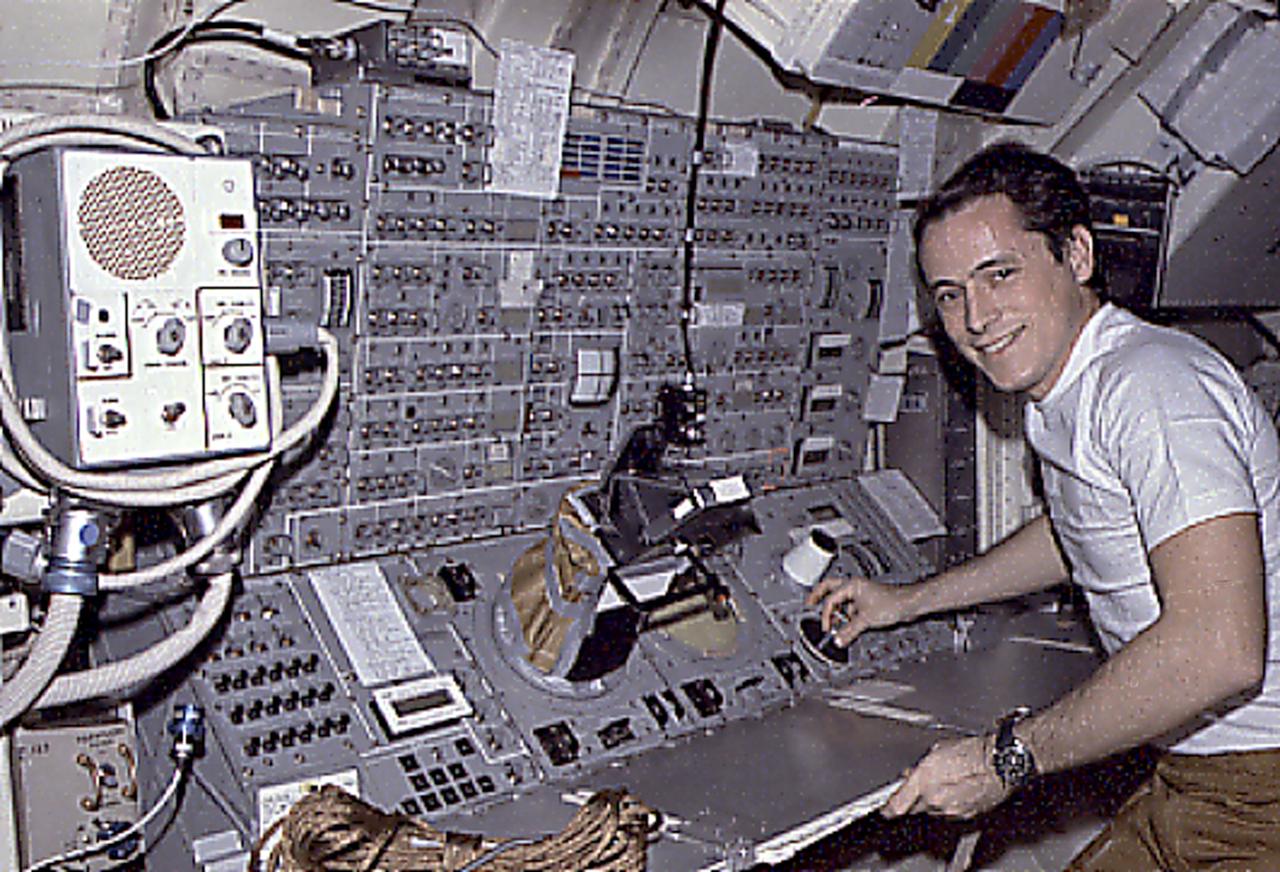
S74-17306 (5 Dec. 1973) --- Scientist-astronaut Edward G. Gibson, Skylab 4 science pilot, stands at the Apollo Telescope Mount (ATM) console in the Multiple Docking Adapter (MDA) of the Skylab space station cluster in Earth orbit. This picture was taken with a hand-held 35mm Nikon camera. The ATM console was one of the busiest areas of the space station during the 84-day third manned Skylab mission, as Comet Kohoutek and solar activity were closely followed by the ATM and monitored by the crewmen from the ATM console. As Gibson demonstrated during a television transmission on Dec. 5, 1973, the ATM console controls several instruments on the solar telescope. Joining Gibson for the record-setting Skylab 4 mission were astronauts Gerald P. Carr, commander, and William R. Pogue, pilot. Photo credit: NASA
Skylab (SL)-4 - Inflight (Crew)
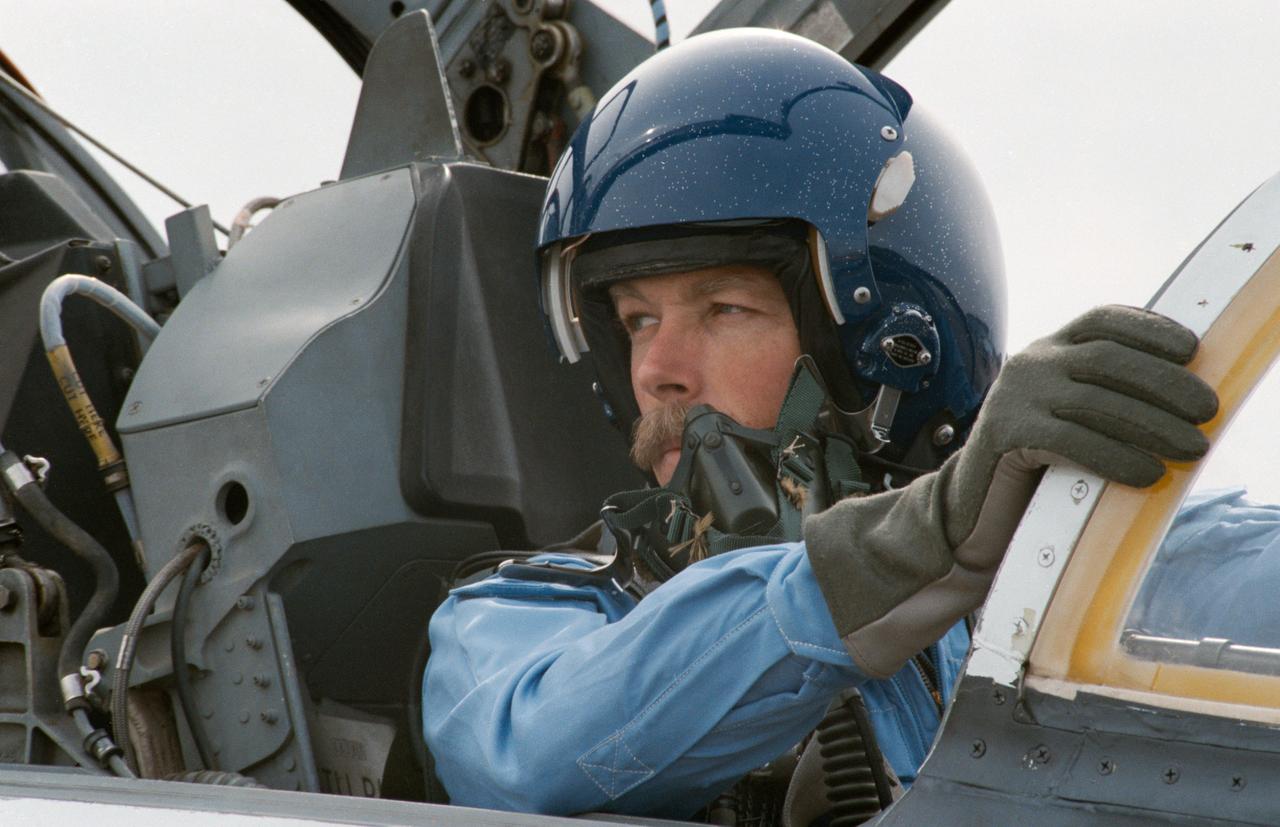
S84-26243 (31 Jan 1984) ---  Astronaut Robert L. Gibson, one of five 41-B crewmembers, prepares to leave Houston?s Ellington Base in a T-38 jet aircraft en route to Florida and the Kennedy Space Center, site of February 3?s launch of the Challenger.  Gibson, along with two other members of this crew, began training at JSC in July in 1978.  He will be joined by Astronauts Vance D. Brand, commander; and Bruce McCandless II, Ronald E. McNair and Robert L. Stewart, all mission specialists.  Brand and McCandless came aboard as NASA astronauts in April 1966.
PREFLIGHT (DEPARTURE) - STS-11/41B - ELLINGTON AFB (EAFB), TX
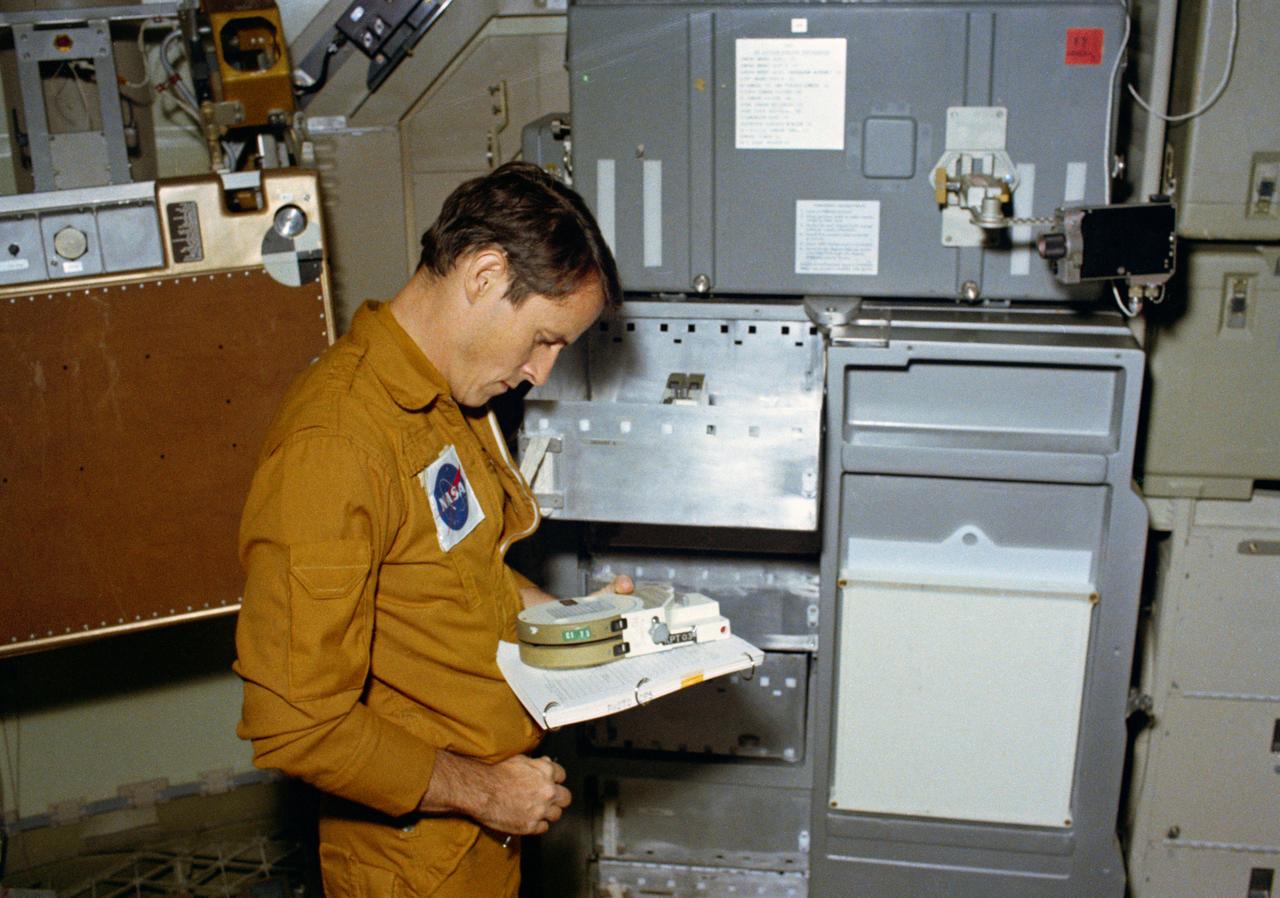
S73-32840 (10 Sept. 1973) --- Scientist-astronaut Edward G. Gibson, Skylab 4 science pilot, turns on a switch on the control box of the S190B camera, one of the components of the Earth Resources Experiments Package (EREP). The single lens Earth Terrain Camera takes five-inch photographs. Behind Gibson is the stowed suit of astronaut Gerald P. Carr, commander for the third manned mission. The crew's other member is astronaut William R. Pogue, pilot. The training exercise took place in the Orbital Workshop one-G trainer at Johnson Space Center. Photo credit: NASA
SKYLAB (SL)-4 - CREW TRAINING (ORBITAL WORKSHOP [OWS]) - JSC
STS027-15-022d (2-6 Dec. 1988) --- Astronaut Robert L. Gibson at the commander's station on the flight deck of the Earth-orbiting space shuttle Atlantis during STS-27. Photo credit: NASA
s27-15-022d
KENNEDY SPACE CENTER, FLA. -  At the KSC Visitor Complex, past and present recipients of college scholarships awarded by the Astronaut Scholarship Foundation stand up to be recognized by the audience.  The occasion was the induction ceremony of four Space Shuttle astronauts into the U.S. Astronaut Hall of Fame, including Daniel Brandenstein, Robert "Hoot" Gibson, Story Musgrave, and Sally K. Ride. The Foundation awards 17 scholarships annually, each worth $8,500, to students interested in studying science and engineering.  Since 1984, more than $1.7 million in scholarship funds have been awarded.
KENNEDY SPACE CENTER, FLA. - At the KSC Visitor Complex, past and present recipients of college scholarships awarded by the Astronaut Scholarship Foundation stand up to be recognized by the audience. The occasion was the induction ceremony of four Space Shuttle astronauts into the U.S. Astronaut Hall of Fame, including Daniel Brandenstein, Robert "Hoot" Gibson, Story Musgrave, and Sally K. Ride. The Foundation awards 17 scholarships annually, each worth $8,500, to students interested in studying science and engineering. Since 1984, more than $1.7 million in scholarship funds have been awarded.
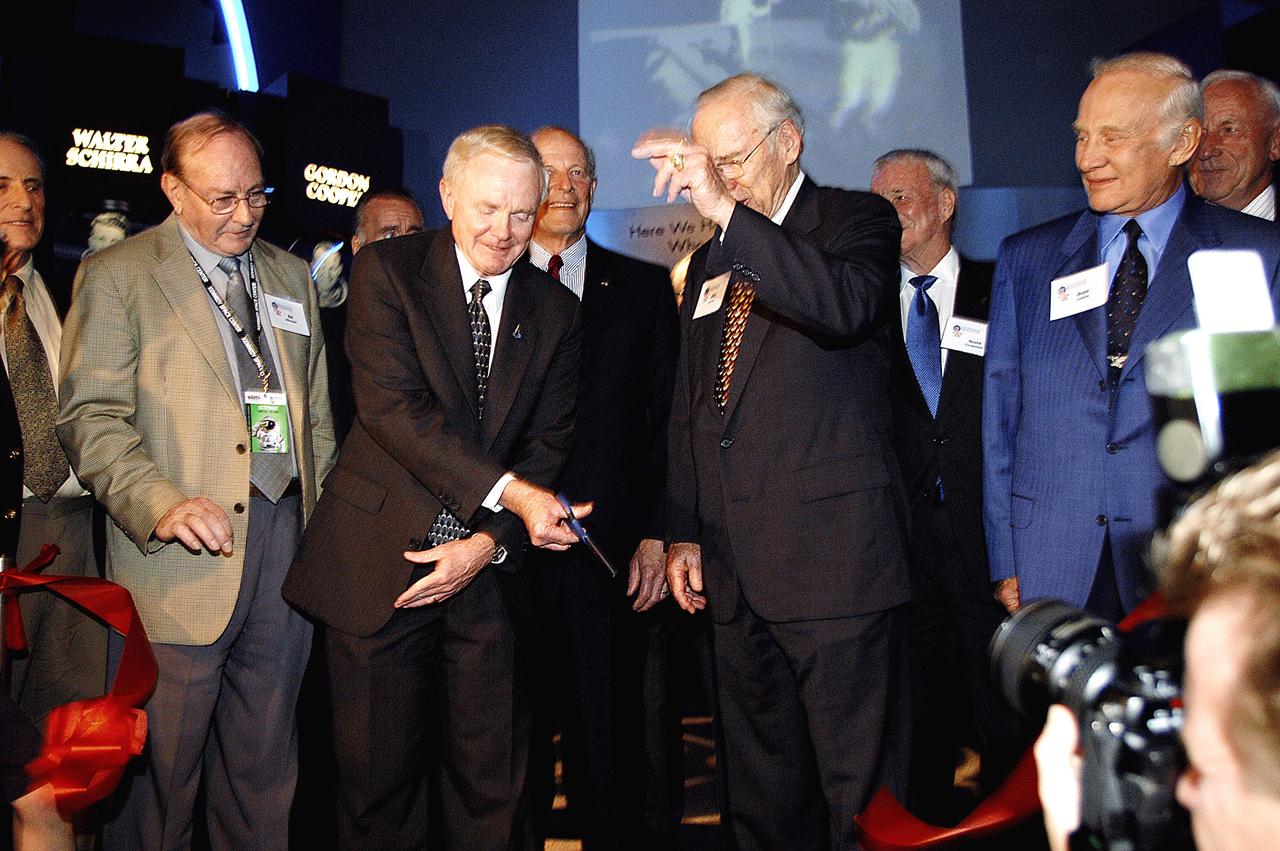
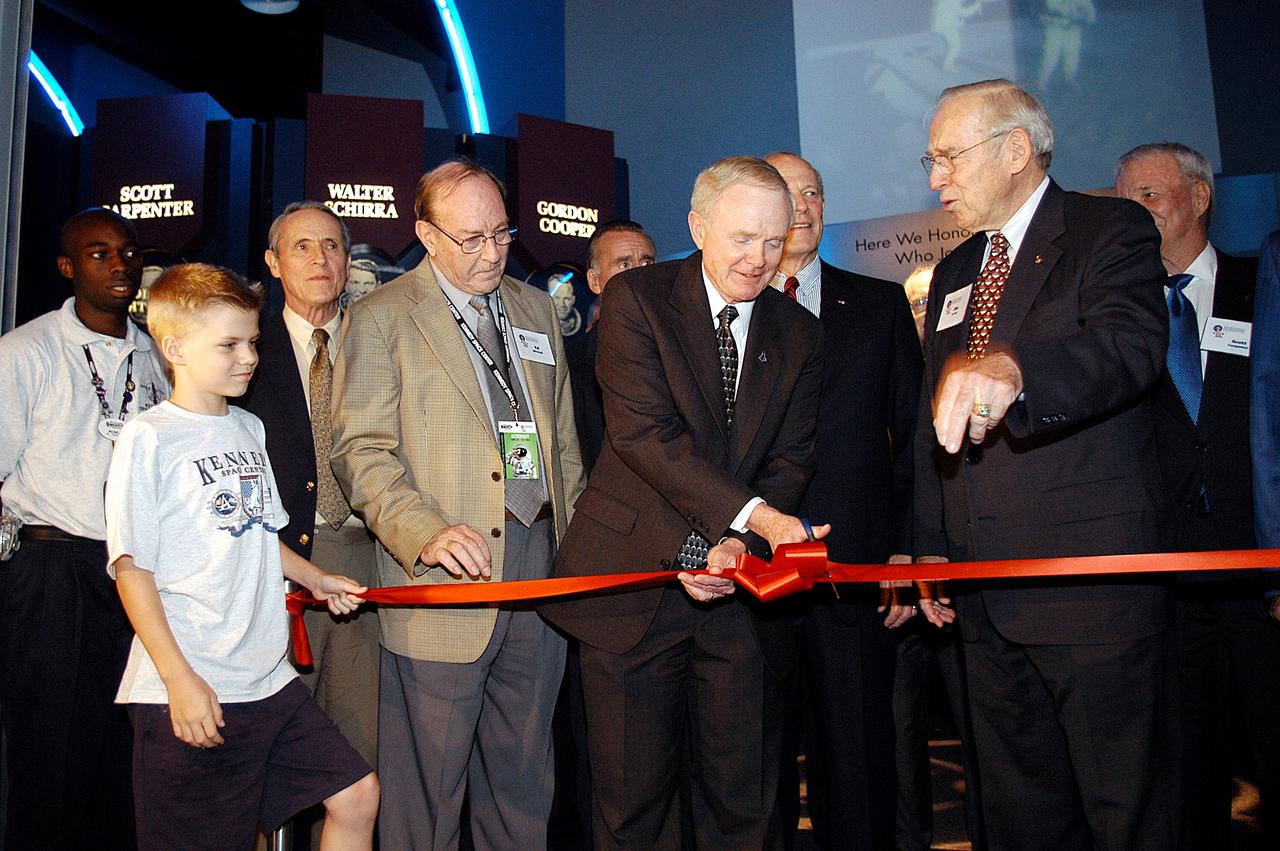
KENNEDY SPACE CENTER, FLA. -  Center Director and former astronaut Roy D. Bridges, Jr., (holding scissors) cuts the ribbon at a ceremony officially opening the U.S. Astronaut Hall of Fame as part of the Kennedy Space Center Visitor Complex.  Invited guests and dignitaries look on, such as former astronauts Edgar D. Mitchell on Bridges' left and James Lovell (hand up) and Buzz Aldrin on his right.  The ceremony was held in conjunction with the induction of four Space Shuttle astronauts into the Hall of Fame including Daniel Brandenstein, Robert "Hoot" Gibson, Story Musgrave, and Sally Ride.  Conceived by six of the Mercury Program astronauts, the U.S. Astronaut Hall of Fame opened in 1990 to provide a place where space travelers could be remembered for their participation and accomplishments in the U.S. space program.  The four new inductees join 48 previously honored astronauts from the ranks of the Gemini, Apollo, Skylab, Apollo-Soyuz, and Space Shuttle programs.
KENNEDY SPACE CENTER, FLA. - Center Director and former astronaut Roy D. Bridges, Jr., (holding scissors) cuts the ribbon at a ceremony officially opening the U.S. Astronaut Hall of Fame as part of the Kennedy Space Center Visitor Complex. Invited guests and dignitaries look on, such as former astronauts Edgar D. Mitchell on Bridges' left and James Lovell (hand up) and Buzz Aldrin on his right. The ceremony was held in conjunction with the induction of four Space Shuttle astronauts into the Hall of Fame including Daniel Brandenstein, Robert "Hoot" Gibson, Story Musgrave, and Sally Ride. Conceived by six of the Mercury Program astronauts, the U.S. Astronaut Hall of Fame opened in 1990 to provide a place where space travelers could be remembered for their participation and accomplishments in the U.S. space program. The four new inductees join 48 previously honored astronauts from the ranks of the Gemini, Apollo, Skylab, Apollo-Soyuz, and Space Shuttle programs.
KENNEDY SPACE CENTER, FLA. -  Center Director and former astronaut Roy D. Bridges, Jr., (holding scissors) cuts the ribbon at a ceremony officially opening the U.S. Astronaut Hall of Fame as part of the Kennedy Space Center Visitor Complex.  Invited guests and dignitaries look on, such as former astronauts Edgar D. Mitchell on Bridges' left and James Lovell on his right.  The ceremony was held in conjunction with the induction of four Space Shuttle astronauts into the Hall of Fame including Daniel Brandenstein, Robert "Hoot" Gibson, Story Musgrave, and Sally Ride.  Conceived by six of the Mercury Program astronauts, the U.S. Astronaut Hall of Fame opened in 1990 to provide a place where space travelers could be remembered for their participation and accomplishments in the U.S. space program.  The four new inductees join 48 previously honored astronauts from the ranks of the Gemini, Apollo, Skylab, Apollo-Soyuz, and Space Shuttle programs.
KENNEDY SPACE CENTER, FLA. - Center Director and former astronaut Roy D. Bridges, Jr., (holding scissors) cuts the ribbon at a ceremony officially opening the U.S. Astronaut Hall of Fame as part of the Kennedy Space Center Visitor Complex. Invited guests and dignitaries look on, such as former astronauts Edgar D. Mitchell on Bridges' left and James Lovell on his right. The ceremony was held in conjunction with the induction of four Space Shuttle astronauts into the Hall of Fame including Daniel Brandenstein, Robert "Hoot" Gibson, Story Musgrave, and Sally Ride. Conceived by six of the Mercury Program astronauts, the U.S. Astronaut Hall of Fame opened in 1990 to provide a place where space travelers could be remembered for their participation and accomplishments in the U.S. space program. The four new inductees join 48 previously honored astronauts from the ranks of the Gemini, Apollo, Skylab, Apollo-Soyuz, and Space Shuttle programs.
S73-32839 (10 Sept. 1973) --- Scientist-astronaut Edward G. Gibson, science pilot for the third manned Skylab mission (Skylab 4), enters a notation in a manual while seated at the control and display panel for the Apollo Telescope Mount (ATM) during simulations inside the one-G trainer for the Multiple Docking Adapter (MDA) at the Johnson Space Center (JSC). Dr. Gibson will be joined by astronauts Gerald P. Carr, commander, and William R. Pogue, pilot, when the Skylab 4 mission begins in November 1973. Photo credit: NASA
SKYLAB (SL)-4 - CREW TRAINING (ORBITAL WORKSHOP [OWS]) - JSC
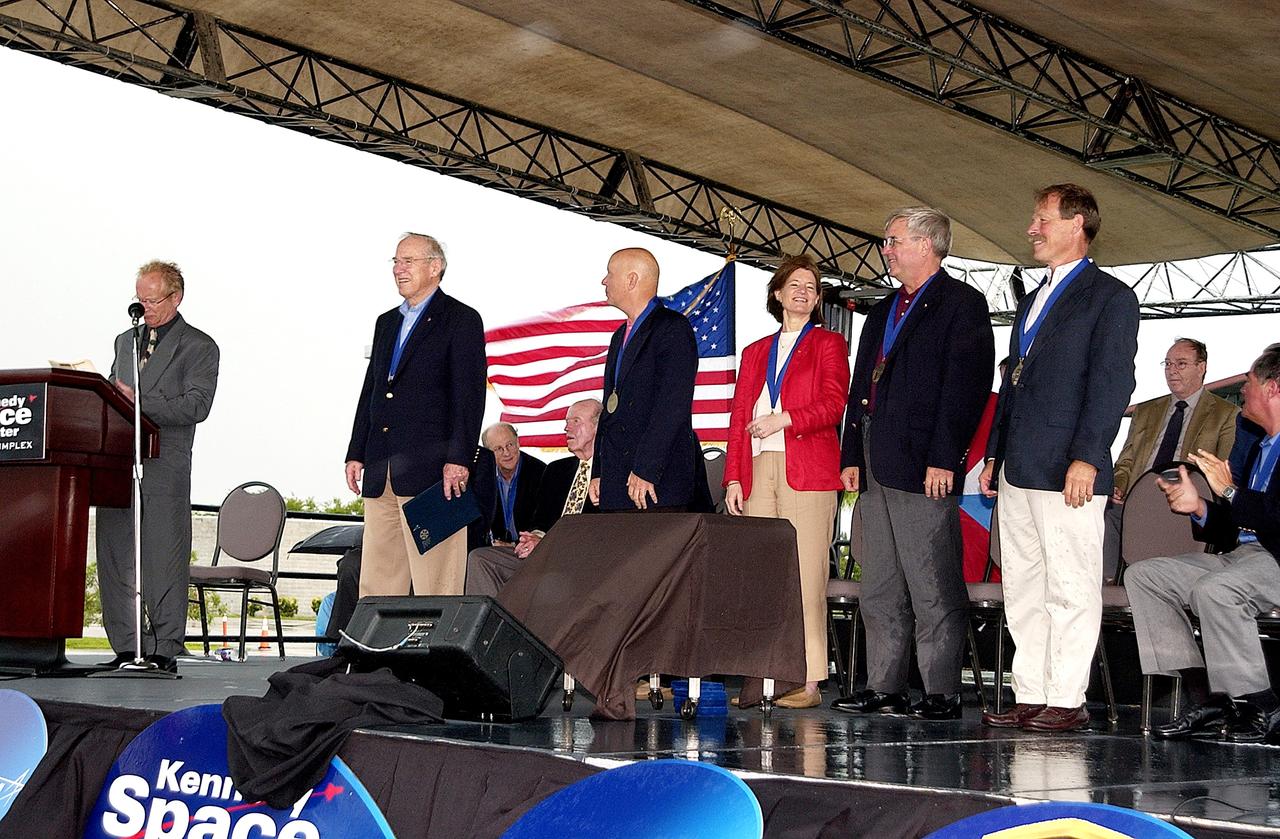
KENNEDY SPACE CENTER, FLA. -  At the KSC Visitor Complex, actor and Master of Ceremonies Lance Henriksen (at podium) introduces four newly inducted Space Shuttle astronauts to the audience at their induction ceremony into the U.S. Astronaut Hall of Fame. From left center, they are Story Musgrave, Sally K. Ride, Daniel Brandenstein, and Robert "Hoot" Gibson. Also standing, left, is former astronaut James A. Lovell.  Conceived by six of the Mercury Program astronauts, the U.S. Astronaut Hall of Fame opened in 1990 to provide a place where space travelers could be remembered for their participation and accomplishments in the U.S. space program. The four new inductees join 48 previously honored astronauts from the ranks of the Gemini, Apollo, Skylab, Apollo-Soyuz, and Space Shuttle programs.
KENNEDY SPACE CENTER, FLA. - At the KSC Visitor Complex, actor and Master of Ceremonies Lance Henriksen (at podium) introduces four newly inducted Space Shuttle astronauts to the audience at their induction ceremony into the U.S. Astronaut Hall of Fame. From left center, they are Story Musgrave, Sally K. Ride, Daniel Brandenstein, and Robert "Hoot" Gibson. Also standing, left, is former astronaut James A. Lovell. Conceived by six of the Mercury Program astronauts, the U.S. Astronaut Hall of Fame opened in 1990 to provide a place where space travelers could be remembered for their participation and accomplishments in the U.S. space program. The four new inductees join 48 previously honored astronauts from the ranks of the Gemini, Apollo, Skylab, Apollo-Soyuz, and Space Shuttle programs.
KENNEDY SPACE CENTER, FLA. -  At the KSC Visitor Complex, actor and Master of Ceremonies Lance Henriksen (at podium) introduces four newly inducted Space Shuttle astronauts to the audience at their induction ceremony into the U.S. Astronaut Hall of Fame. From left center, they are Story Musgrave, Sally K. Ride, Daniel Brandenstein, and Robert "Hoot" Gibson. Also standing, left, is former astronaut James A. Lovell.  Conceived by six of the Mercury Program astronauts, the U.S. Astronaut Hall of Fame opened in 1990 to provide a place where space travelers could be remembered for their participation and accomplishments in the U.S. space program. The four new inductees join 48 previously honored astronauts from the ranks of the Gemini, Apollo, Skylab, Apollo-Soyuz, and Space Shuttle programs.
KENNEDY SPACE CENTER, FLA. - At the KSC Visitor Complex, actor and Master of Ceremonies Lance Henriksen (at podium) introduces four newly inducted Space Shuttle astronauts to the audience at their induction ceremony into the U.S. Astronaut Hall of Fame. From left center, they are Story Musgrave, Sally K. Ride, Daniel Brandenstein, and Robert "Hoot" Gibson. Also standing, left, is former astronaut James A. Lovell. Conceived by six of the Mercury Program astronauts, the U.S. Astronaut Hall of Fame opened in 1990 to provide a place where space travelers could be remembered for their participation and accomplishments in the U.S. space program. The four new inductees join 48 previously honored astronauts from the ranks of the Gemini, Apollo, Skylab, Apollo-Soyuz, and Space Shuttle programs.
KENNEDY SPACE CENTER, FLA. -  Former astronaut James Lovell addresses the audience at a ribbon cutting ceremony officially opening the U.S. Astronaut Hall of Fame as part of the Kennedy Space Center Visitor Complex.  The ceremony was held in conjunction with the induction of four Space Shuttle astronauts into the Hall of Fame including Daniel Brandenstein, Robert "Hoot" Gibson, Story Musgrave, and Sally Ride.  Conceived by six of the Mercury Program astronauts, the U.S. Astronaut Hall of Fame opened in 1990 to provide a place where space travelers could be remembered for their participation and accomplishments in the U.S. space program.  The four new inductees join 48 previously honored astronauts from the ranks of the Gemini, Apollo, Skylab, Apollo-Soyuz, and Space Shuttle programs.
KENNEDY SPACE CENTER, FLA. - Former astronaut James Lovell addresses the audience at a ribbon cutting ceremony officially opening the U.S. Astronaut Hall of Fame as part of the Kennedy Space Center Visitor Complex. The ceremony was held in conjunction with the induction of four Space Shuttle astronauts into the Hall of Fame including Daniel Brandenstein, Robert "Hoot" Gibson, Story Musgrave, and Sally Ride. Conceived by six of the Mercury Program astronauts, the U.S. Astronaut Hall of Fame opened in 1990 to provide a place where space travelers could be remembered for their participation and accomplishments in the U.S. space program. The four new inductees join 48 previously honored astronauts from the ranks of the Gemini, Apollo, Skylab, Apollo-Soyuz, and Space Shuttle programs.
STS027-10-020a (2-6 Dec. 1988) --- Astronaut Guy S. Gardner, STS-27 pilot, converses with astronaut Robert L. Gibson (almost totally out of view at left) commander, as the two are seated at their respective stations on the flight deck of the Earth-orbiting space shuttle Atlantis. Photo credit: NASA
s27-10-020a
This Skylab-4 mission onboard photograph shows Astronaut Ed Gibson at the complex control and display console for the Apollo Telescope Mount solar telescopes located in the Skylab Multiple Docking Adapter. Astronauts watched the Sun, and photographed and recorded the solar activities, such as the birth of a solar flare.
Skylab
KENNEDY SPACE CENTER, FLA. -  Daniel LeBlanc, chief operating officer of Delaware North Companies Parks and Resorts at KSC, makes the opening remarks to hundreds of guests and media representatives attending a ribbon cutting ceremony officially opening the U.S. Astronaut Hall of Fame as part of the Kennedy Space Center Visitor Complex.  The ceremony was held in conjunction with the induction of four Space Shuttle astronauts into the Hall of Fame including Daniel Brandenstein, Robert "Hoot" Gibson, Story Musgrave, and Sally Ride.  Conceived by six of the Mercury Program astronauts, the U.S. Astronaut Hall of Fame opened in 1990 to provide a place where space travelers could be remembered for their participation and accomplishments in the U.S. space program.  The four new inductees join 48 previously honored astronauts from the ranks of the Gemini, Apollo, Skylab, Apollo-Soyuz, and Space Shuttle programs.
KENNEDY SPACE CENTER, FLA. - Daniel LeBlanc, chief operating officer of Delaware North Companies Parks and Resorts at KSC, makes the opening remarks to hundreds of guests and media representatives attending a ribbon cutting ceremony officially opening the U.S. Astronaut Hall of Fame as part of the Kennedy Space Center Visitor Complex. The ceremony was held in conjunction with the induction of four Space Shuttle astronauts into the Hall of Fame including Daniel Brandenstein, Robert "Hoot" Gibson, Story Musgrave, and Sally Ride. Conceived by six of the Mercury Program astronauts, the U.S. Astronaut Hall of Fame opened in 1990 to provide a place where space travelers could be remembered for their participation and accomplishments in the U.S. space program. The four new inductees join 48 previously honored astronauts from the ranks of the Gemini, Apollo, Skylab, Apollo-Soyuz, and Space Shuttle programs.
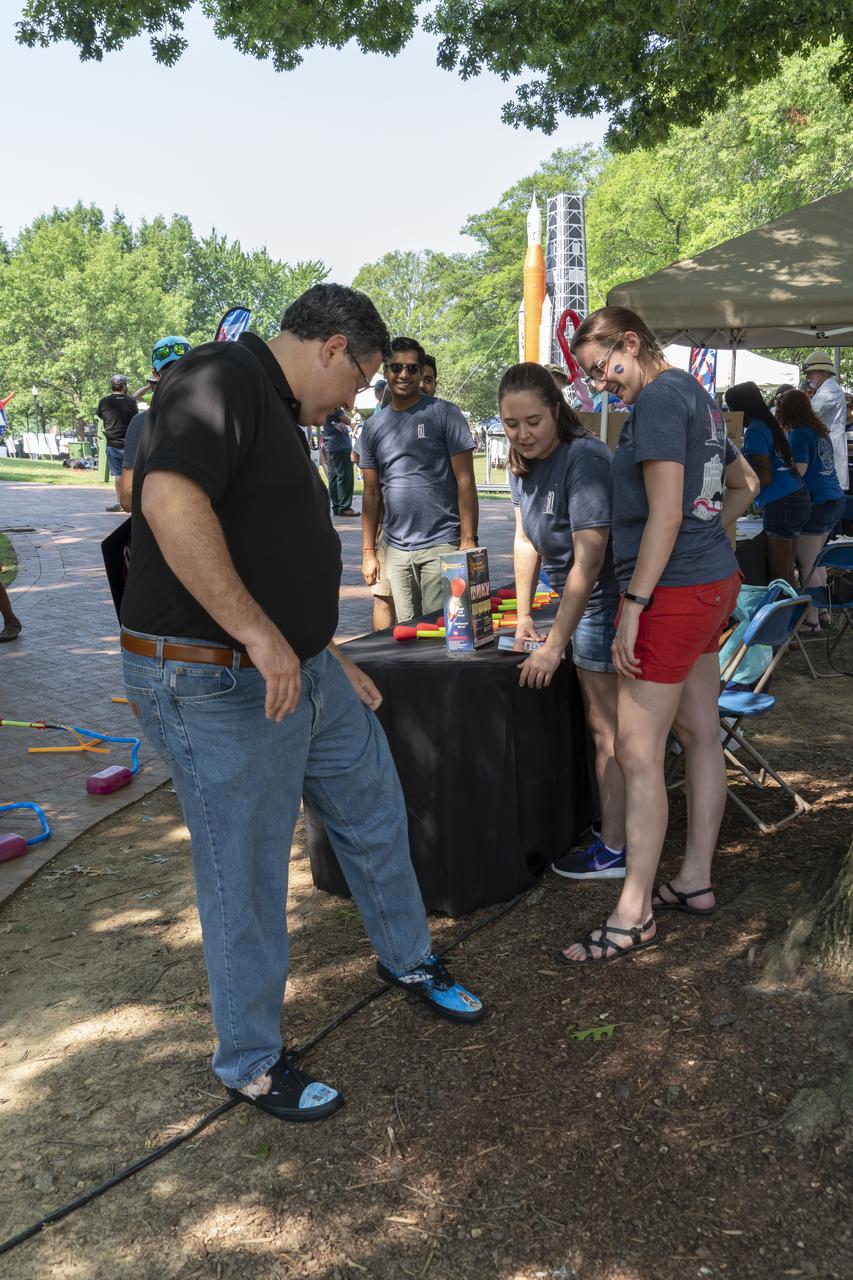
NASA's Marshall Space Flight Center showcased it's various projects for the public in Huntsville, Alabama's Big Spring Park. Exhibits were displayed by all of the various directorates of the Center with employee volunteers explaining all aspects of their projects. Adding to the festivities was the attendance of retired NASA astronaut Robert "Hoot" Gibson.
2018 NASA in the Park Celebration
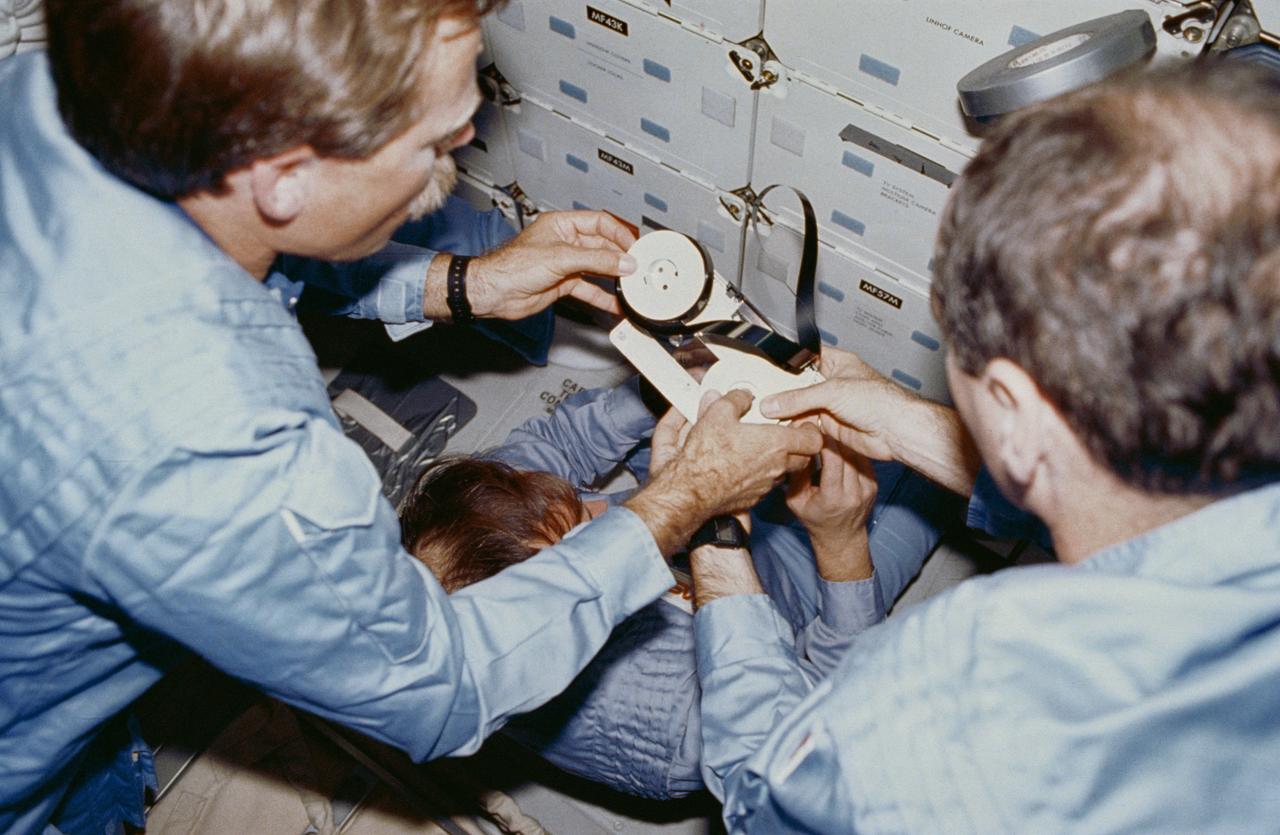
STS027-05-020 (2-6 Dec. 1988) --- In the foreground, astronauts Robert L. Gibson (left) and Guy S. Gardner, commander and pilot, respectively, for the STS-27 mission, repair a 3/4-inch video reel on the middeck of the Earth-orbiting space shuttle Atlantis. Photo credit: NASA
STS-27 Atlantis, OV-104, crewmembers repair 3/4 inch video reel on middeck
NASA's Marshall Space Flight Center showcased it's various projects for the public in Huntsville, Alabama's Big Spring Park. Exhibits were displayed by all of the various directorates of the Center with employee volunteers explaining all aspects of their projects. Adding to the festivities was the attendance of retired NASA astronaut Robert "Hoot" Gibson.
2018 NASA in the Park Celebration
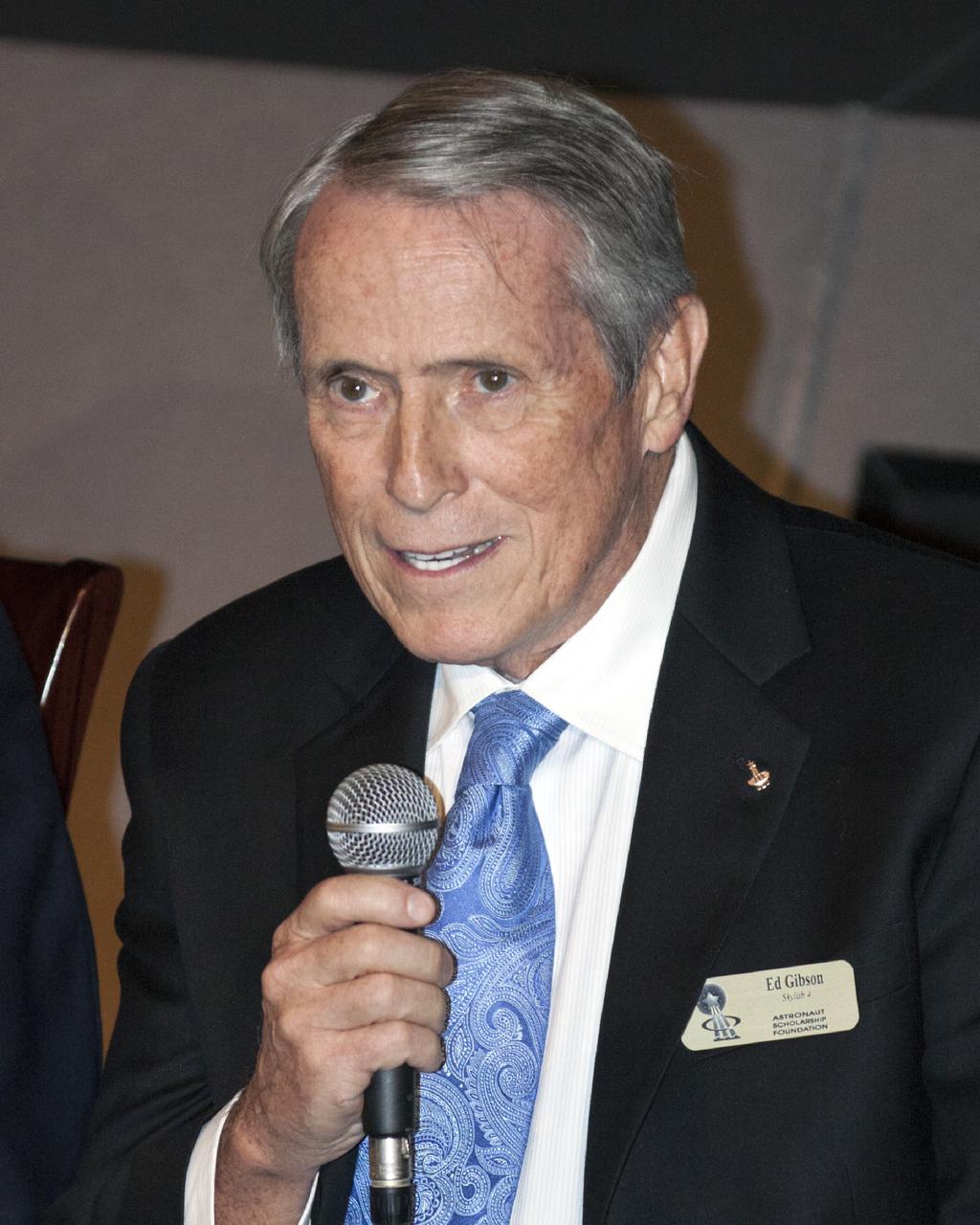
CAPE CANAVERAL, Fla. – At the Kennedy Space Center's Apollo/Saturn V Center, former NASA astronaut Edward Gibson speaks to guests at the Astronaut Scholarship Foundation's event celebrating the 40th anniversary of Skylab. Gibson served as science pilot on Skylab 4, the third piloted mission to the space station.      The gala commemorating the 40th anniversary of Skylab included six of the nine astronauts who flew missions to America's first space station. The orbiting laboratory was launched unpiloted from Kennedy on May 14, 1973. Between May 25, 1973 and Feb. 8, 1974, crews of three spent 28, 59 and 84 days living and working in low-Earth orbit aboard the station. For more information, visit http://www.nasa.gov/mission_pages/skylab/ Photo credit: NASA/Kim Shiflett
KSC-2013-3129
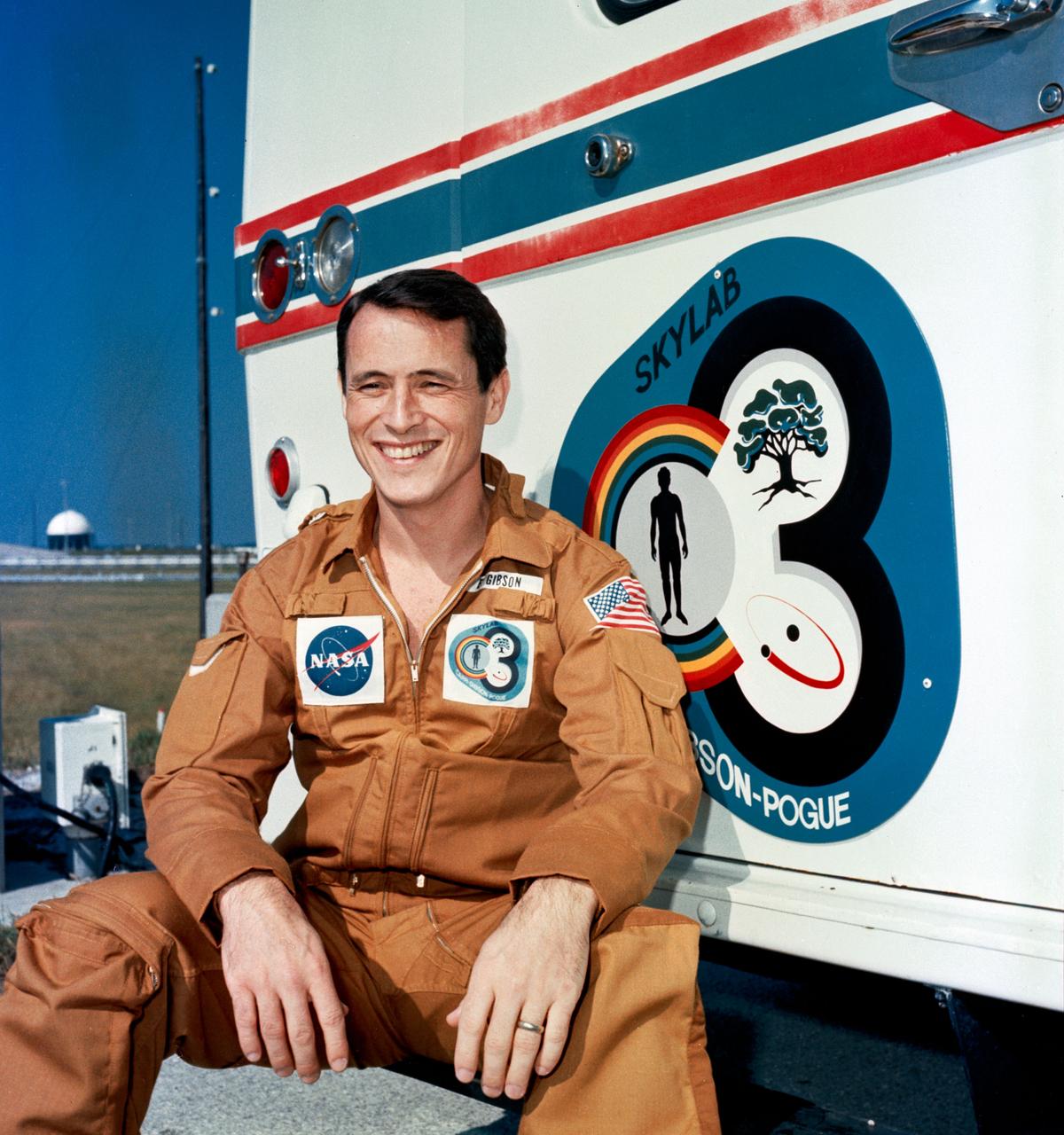
S73-36903 (8 Nov. 1973) --- Scientist-astronaut Edward G. Gibson, Skylab 4 science pilot, relaxes on the running board of the transfer van during a visit to the Skylab 4/Saturn 1B space vehicle at Pad B, Launch Complex 39, Kennedy Space Center, Florida. On the morning of the launch the transfer van will transport astronauts Gibson; Gerald P. Carr, commander; and William R. Pogue, pilot, from the suiting building to Pad B. Skylab 4, the third and last visit to the Skylab space station in Earth orbit, will return additional information on the Earth and sun, as well as provide a favorable location from which to observe the recently discovered Comet Kohoutek. Photo credit: NASA
SKYLAB IV - PRELAUNCH (KSC)
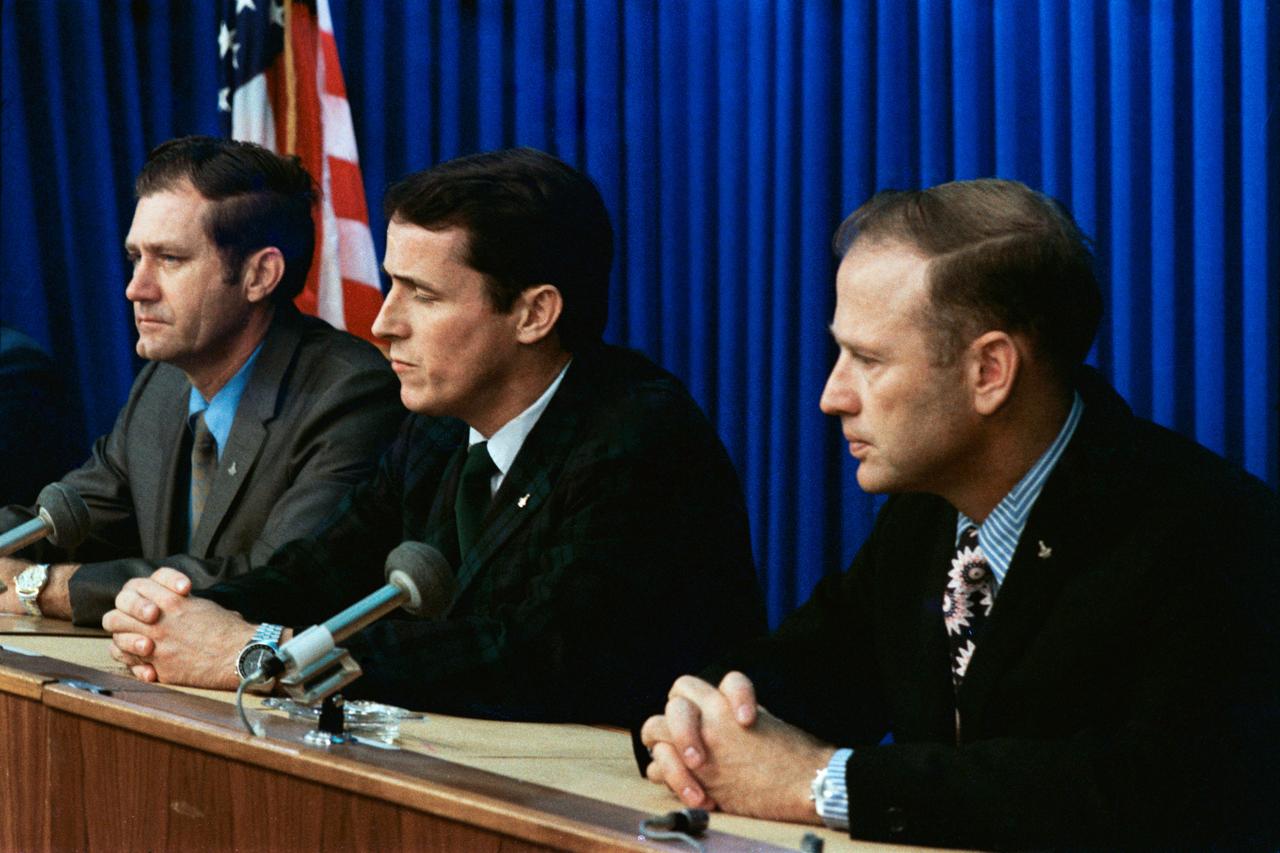
S74-17735 (February 1974) --- The three crewmen of the third manned Skylab mission (Skylab 4) look over their notes for their upcoming post-mission press conference at Johnson Space Center. They are, from left to right, astronaut Gerald P. Carr, commander; scientist-astronaut Edward G. Gibson, science pilot; and astronaut William R. Pogue, pilot. The three astronauts spent 84 days aboard the Skylab space station cluster in Earth orbit. Photo credit: NASA
Skylab IV - Prelaunch (Crew)
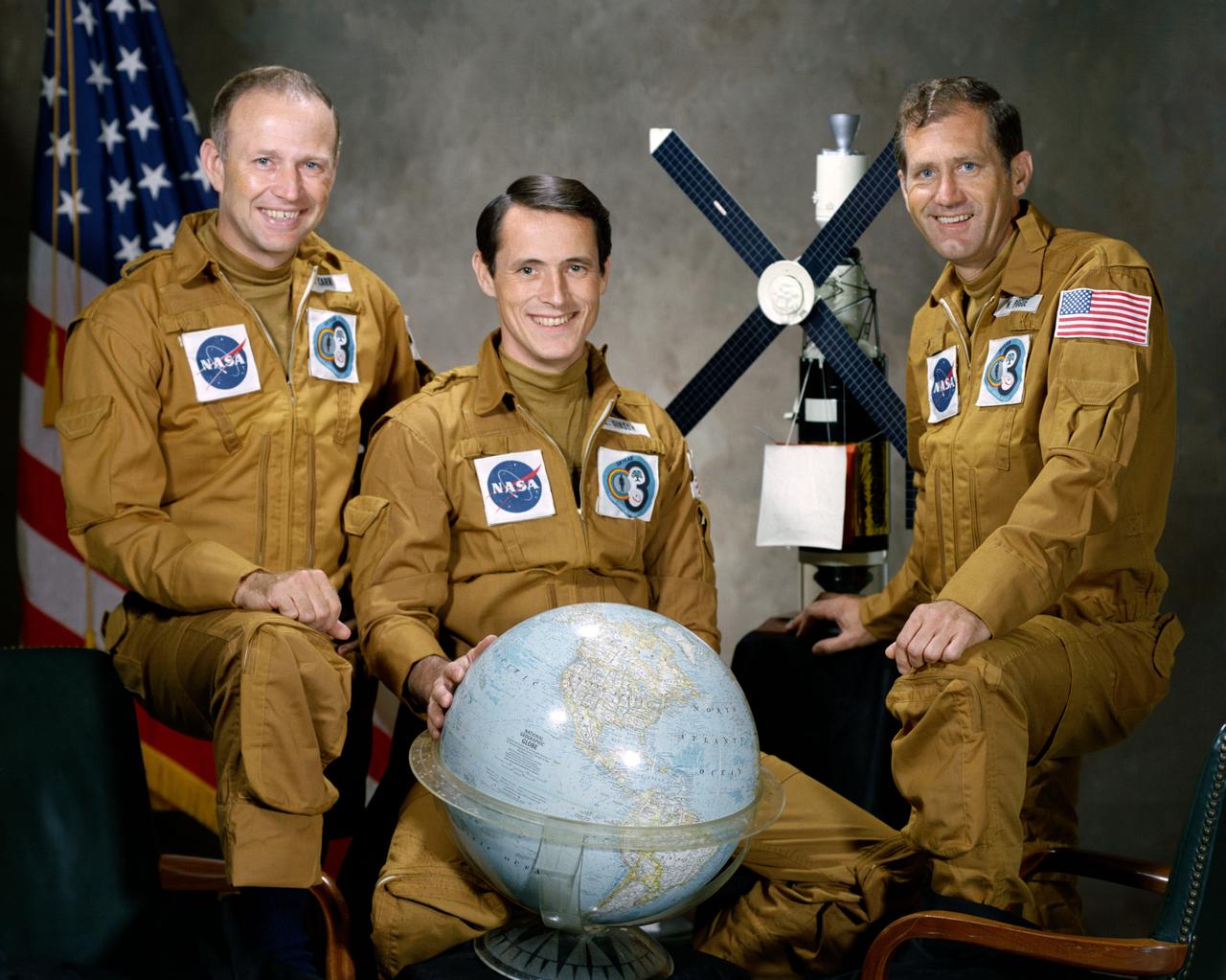
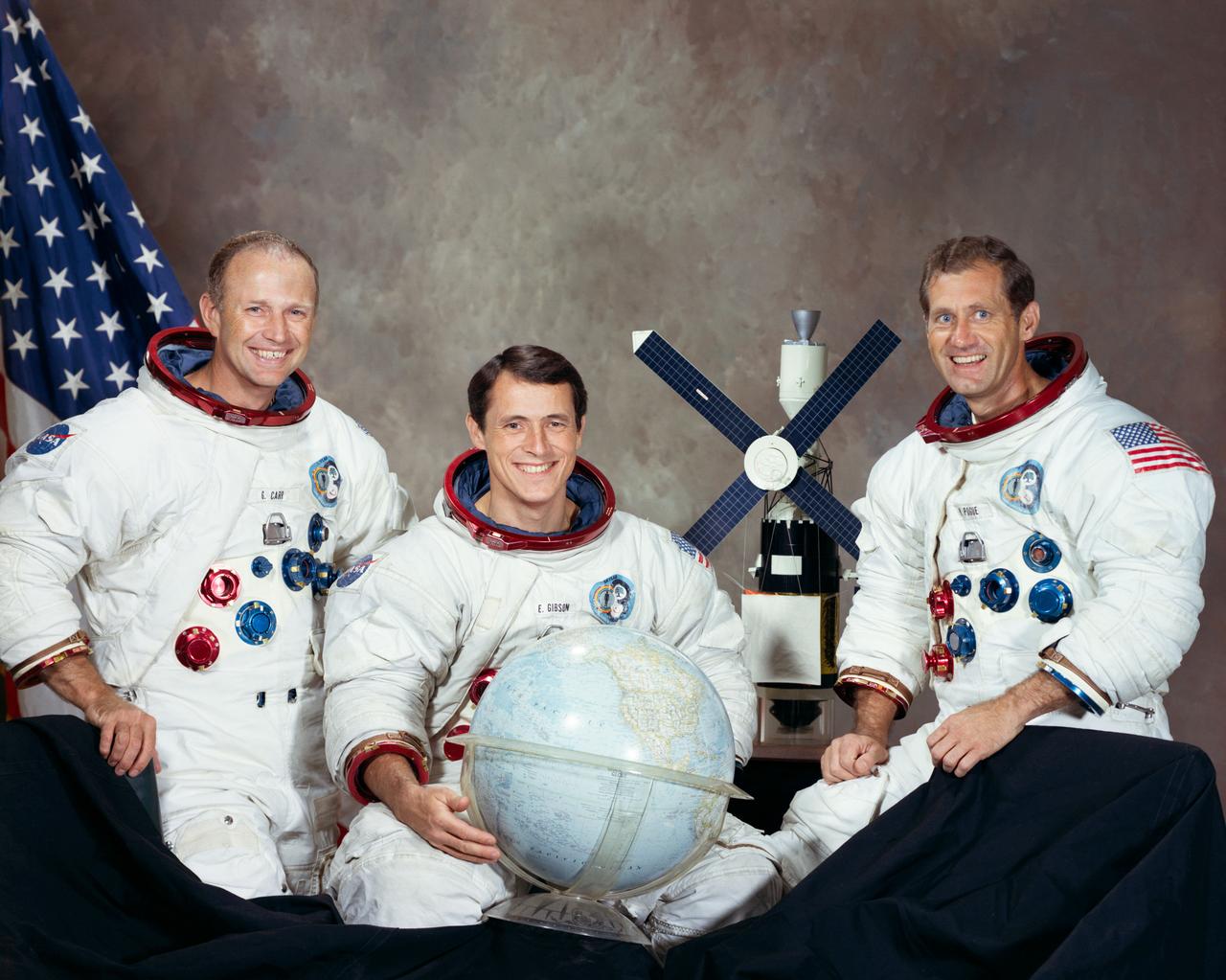
S73-33206 (August 1973) --- These three men are the prime crew for the Skylab 4 mission. Pictured in their Skylab spacesuits with a globe and a model of the Skylab space station are, left to right, astronaut Gerald P. Carr, commander; scientist-astronaut Edward G. Gibson, science pilot; and astronaut William R. Pogue, pilot. Photo credit: NASA
SKYLAB IV - CREW PORTRAITS
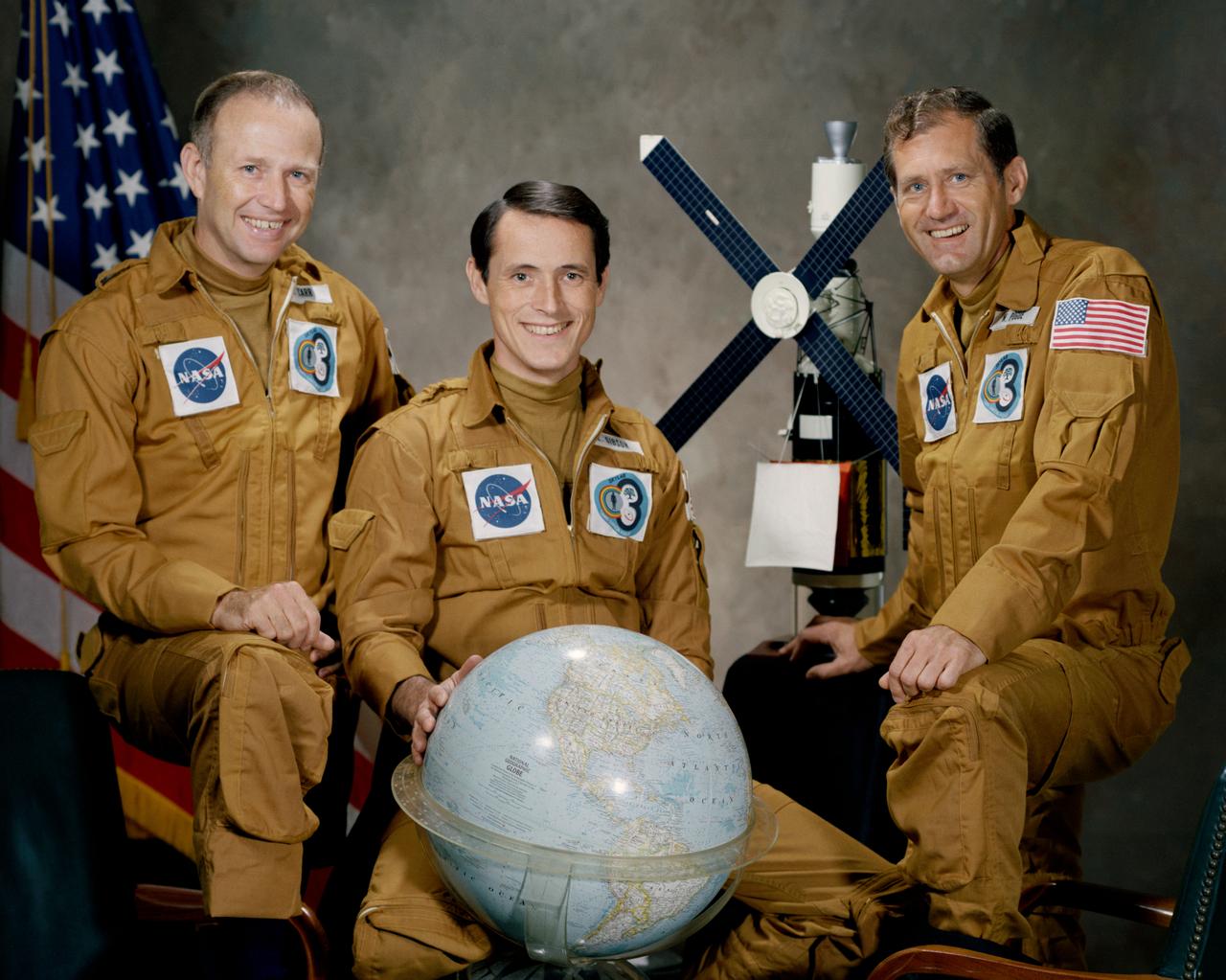
S73-33207 (August 1973) --- These three men are the prime crew for the Skylab 4 mission. Pictured in their Skylab spacesuits with a globe and a model of the Skylab space station are, left to right, astronaut Gerald P. Carr, commander; scientist-astronaut Edward G. Gibson, science pilot; and astronaut William R. Pogue, pilot. Photo credit: NASA
SKYLAB (SL)-4 - CREW PORTRAIT
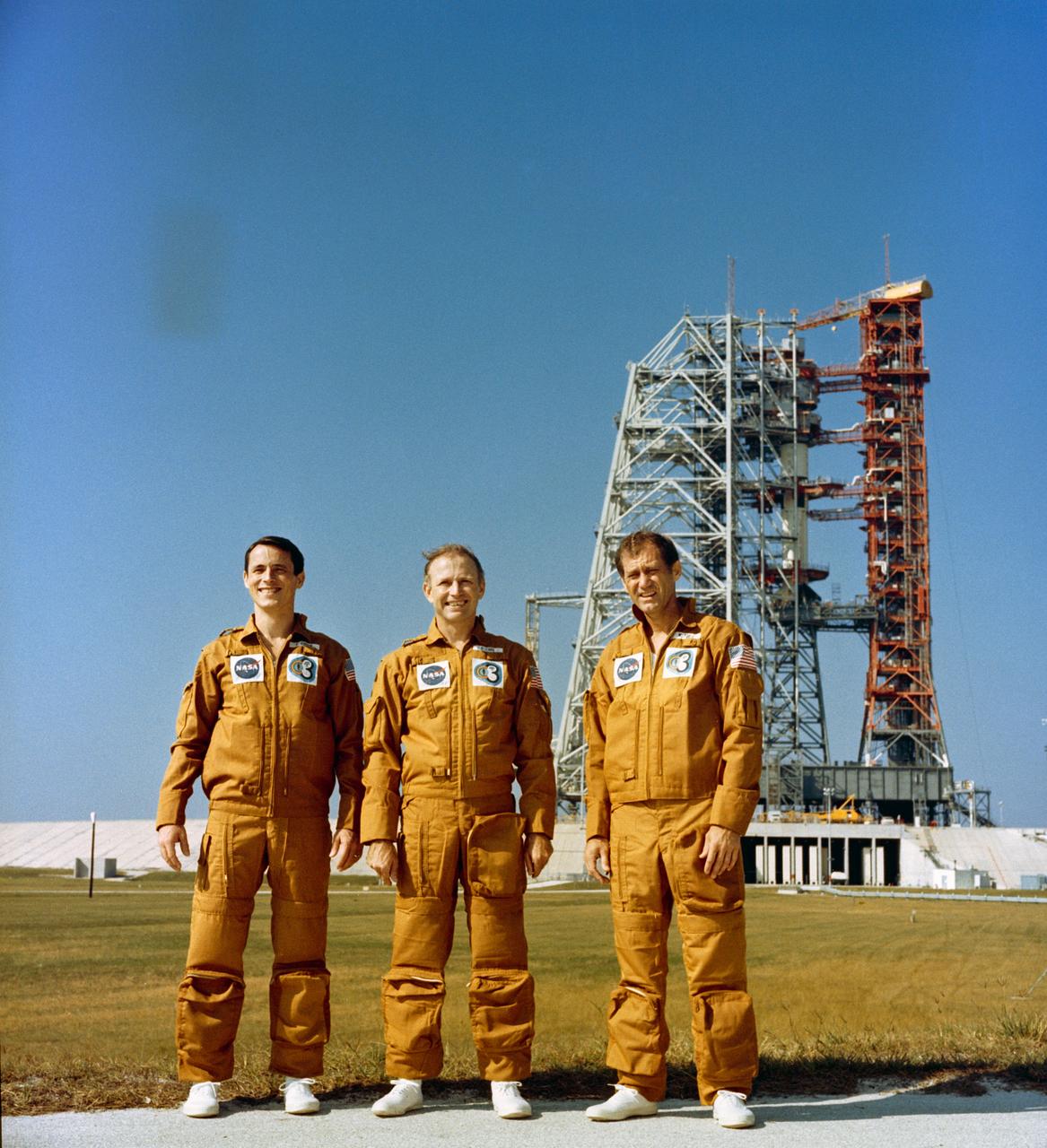
S73-36904 (8 Nov. 1973) --- The three members of the Skylab 4 crew are photographed standing near Pad B, Launch Complex 39, Kennedy Space Cneter, Florida, during the preflight activity. They are, left to right, scientist-astronaut Edward G. Gibson, science pilot; astronaut Gerald P. Carr, commander; and astronaut William R. Pogue, pilot. Photo credit: NASA
SKYLAB IV - PRELAUNCH (KSC)
S73-33208 (August 1973) --- These three men are the prime crewmen for the Skylab 4 mission. Pictured in their flight suits with a globe and a model of the Skylab space station are, left to right, astronaut Gerald P. Carr, commander; scientist-astronaut Edward G. Gibson, science pilot; and astronaut William R. Pogue, pilot. Photo credit: NASA
Skylab 4 crew portrait
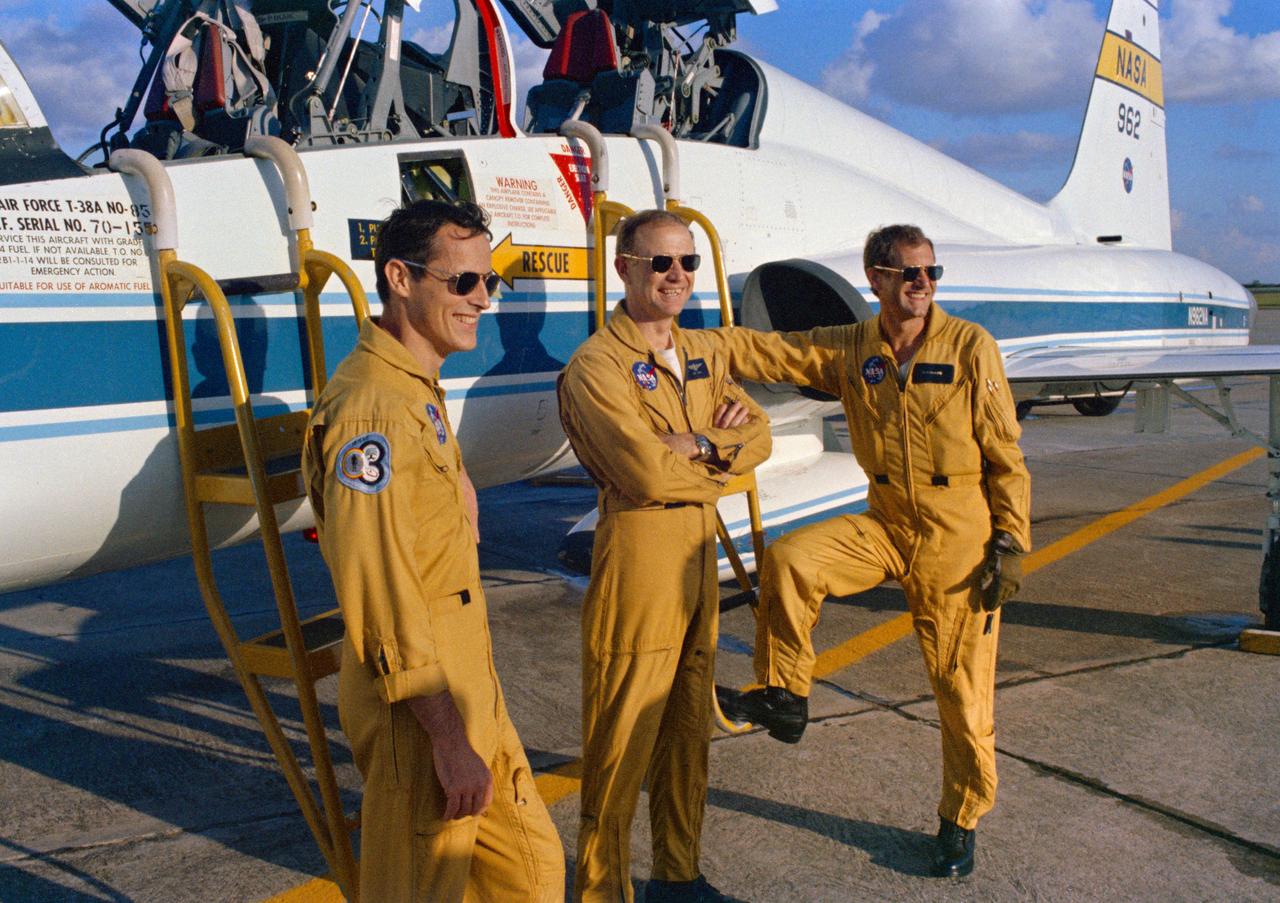
S73-36766 (November 1973) --- The prime crewmen of the third manned Skylab mission (Skylab 4) pause at a USAF T-38A jet at Ellington Air Force Base, Texas before flying to Kennedy Space Center (KSC) at Cape Canaveral, Florida. Skylab 4 crewmen are astronaut Gerald P. Carr, center, commander; scientist-astronaut Edward G. Gibson, science pilot, left; and astronaut William R. Pogue, pilot. Photo credit: NASA
Skylab 4 crewmen at Ellington AFB before flying to Kennedy Space Center
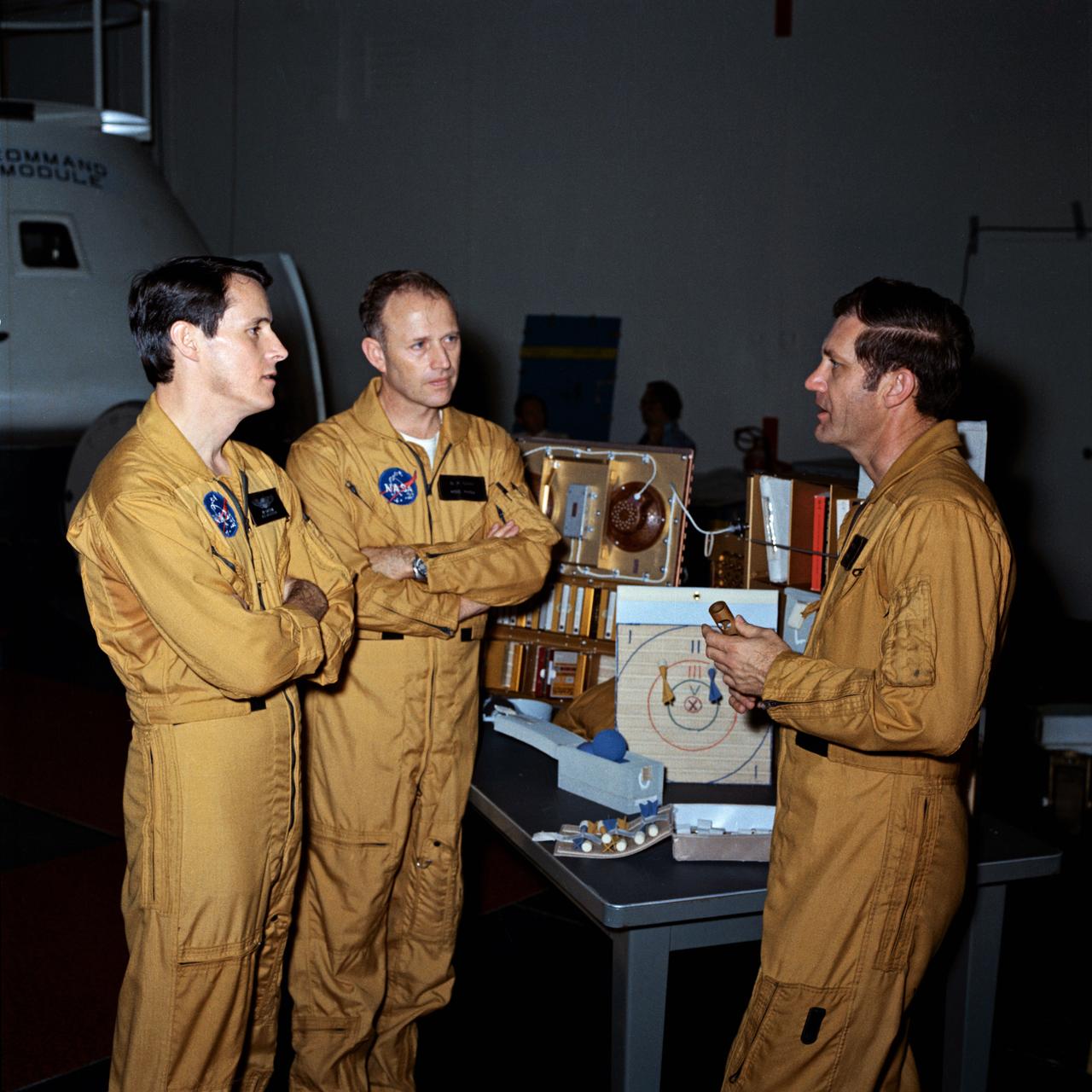
S72-17494 (19 Jan. 1972) --- These three men make up the crew of the Skylab 4 mission. They are, left to right, scientist-astronaut Edward G. Gibson, science pilot; astronaut Gerald P. Carr, commander; and astronaut William R. Pogue, pilot. They were photographed and interviewed during an "open house" press day in the realistic atmosphere of Skylab mock-up and trainers in the Mission Simulation and Training facility at the Manned Spacecraft Center. Photo credit: NASA
Skylab (SL)-4 Astronauts - "Open House" Press Day - SL Mockup - MSC
61C-21-009 (12-17 Jan 1986) --- Four members of the seven-man STS 61-C crew aboard the Columbia convene at the commander's station during the five-day mission which kicks off a busy 1986 for the Space Transportation System (STS).  Astronaut Robert L. Gibson (center frame), mission commander, is surrounded by (l.-r.).  Astronaut Steven A. Hawley, mission specialist, an unidentified crewmember (only partially visible) and astronaut Charles F. Bolden, pilot.
Four STS 61-C crewmembers gather at the commander's station
S72-46702 (December 1972) --- The three members of the prime crew of the third of three scheduled manned Skylab missions (Skylab 4) appear before a gathering of news media representatives at a press conference held at the Manned Spacecraft Center. They are, left to right, astronaut William R. Pogue, pilot; scientist-astronaut Edward G. Gibson, science pilot; and astronaut Gerald P. Carr, commander. Photo credit: NASA
Skylab 4 press conference
SL3-113-1587 (July-September 1973) --- This photograph is an illustration of the humorous side of the Skylab 3 crew. This dummy was left behind in the Skylab space station by the Skylab 3 crew to be found by the Skylab 4 crew. The dummy is dressed in a flight suit and propped upon the bicycle ergometer. The name tag indicated that it represents William R. Pogue, Skylab pilot. The dummy for Gerald P. Carr, Skylab 4 commander, was placed in the Lower Body Negative Pressure Device. The dummy representing Edward G. Gibson was left in the waste compartment. Astronauts Alan L. Bean, Owen K. Garriott and Jack R. Lousma were the Skylab 3 crewmen. Gibson is the Skylab 4 science pilot. Photo credit: NASA
Dummy left behind by Skylab 3 crew for the Skylab 4 crew
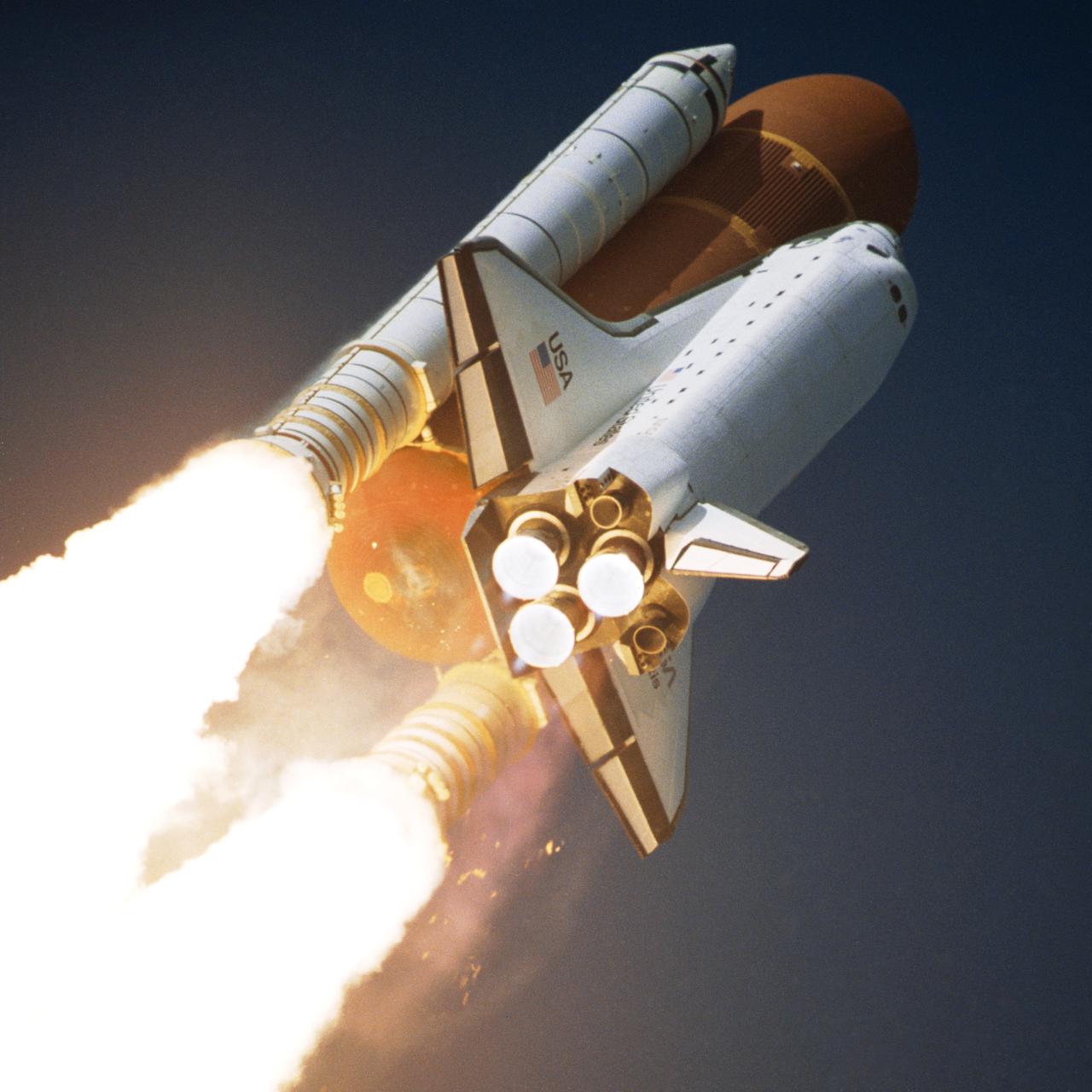
STS027-S-003 (2 Dec. 1988) --- The Space Shuttle Atlantis and its five-man crew of astronauts are launched from Kennedy Space Center?s Pad 39B at 9:30 a.m. (EST), Dec. 2, 1988. Onboard the Department of Defense ? dedicated mission are astronauts Robert L. Gibson, Guy S. Gardner, Jerry L. Ross, Richard M. (Mike) Mullane and Williams M. Shepherd.
s27-s-003
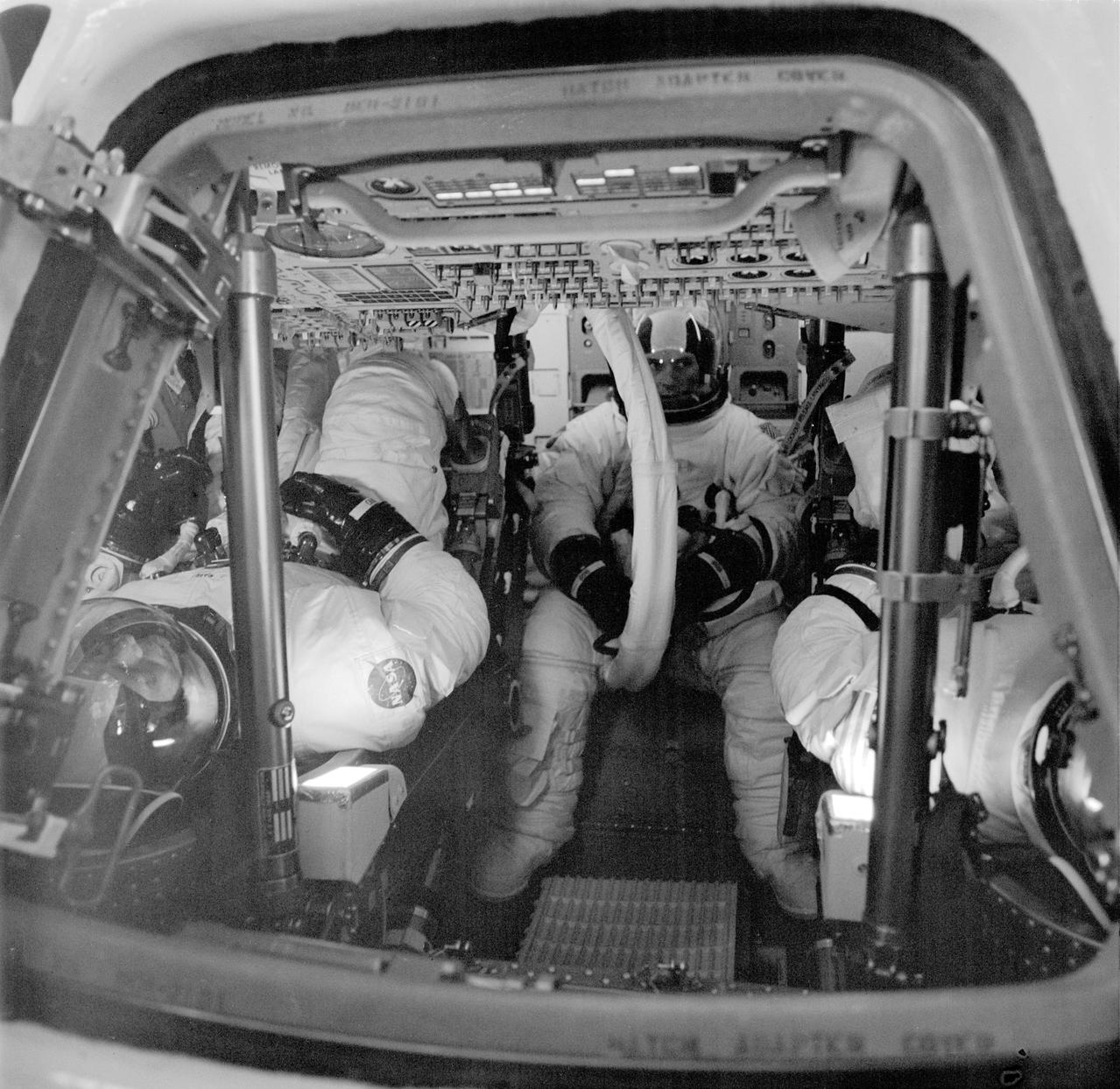
S73-34094 (6 Aug. 1973) --- The Skylab 4 crewmen, fully suited, are seated inside their Command Module, which has been undergoing high altitude chamber test runs at the Kennedy Space Center (KSC) after being considered as a possible rescue vehicle, if needed, for the Skylab 3 crewmen. Facing the camera is scientist-astronaut Edward G. Gibson, science pilot. Astronauts Gerald P. Carr, right, commander, and William R. Pogue, pilot, are also pictured. Photo credit: NASA
SKYLAB IV - CREW TRAINING (KSC)
S84-27155 (11 Feb 1984) --- The first Space Shuttle landing in Florida was recorded just moments prior to touchdown on the long landing facility of the Kennedy Space Center.  Patches of fog were sighted near the round, but they were not a factor in the landing.  Along with Astronaut Vance D. Brand, crew commander at Challenger?s controls, also onboard were Astronaut Robert L. Gibson, pilot; and Bruce McCandless II, Robert L. Stewart and  Ronald E. McNair, all mission specialists.
Aerial view of the Challenger making approach for landing at KSC
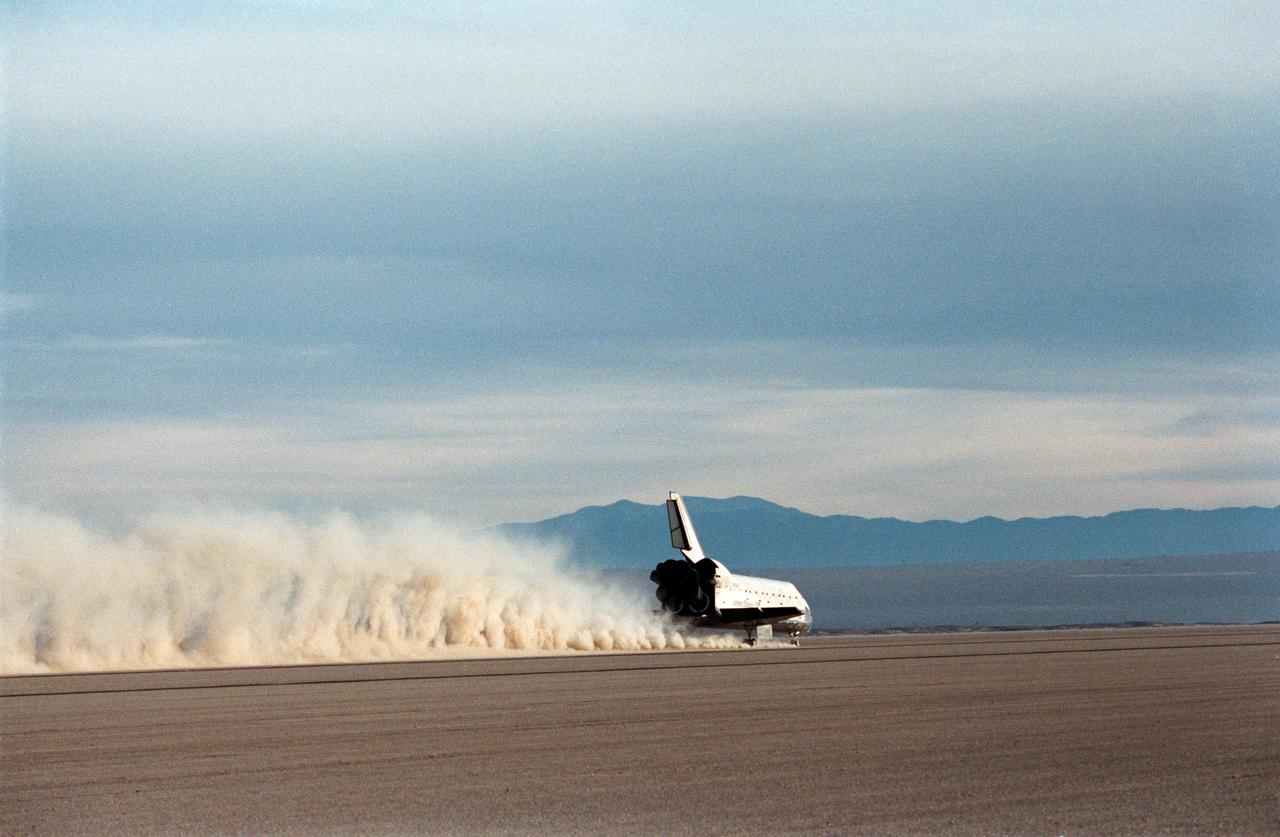
STS027-S-012 (6 Dec. 1988) --- A 70mm camera records the landing of the Space Shuttle Atlantis on Rogers Dry Lake Bed near the Dryden Flight Research Facility in California. The wheels of the vehicle came to a stop at 3:36:53 p.m. (PST), marking the completion of a successful mission which involved five veteran NASA astronauts. Onboard for the four-day flight were astronauts Robert L. Gibson, Guy S. Gardner, Jerry L. Ross, Richard M. (Mike) Mullane and William M. Shepherd.
STS-27 Atlantis, OV-104, lands at Edwards Air Force Base (EAFB), California
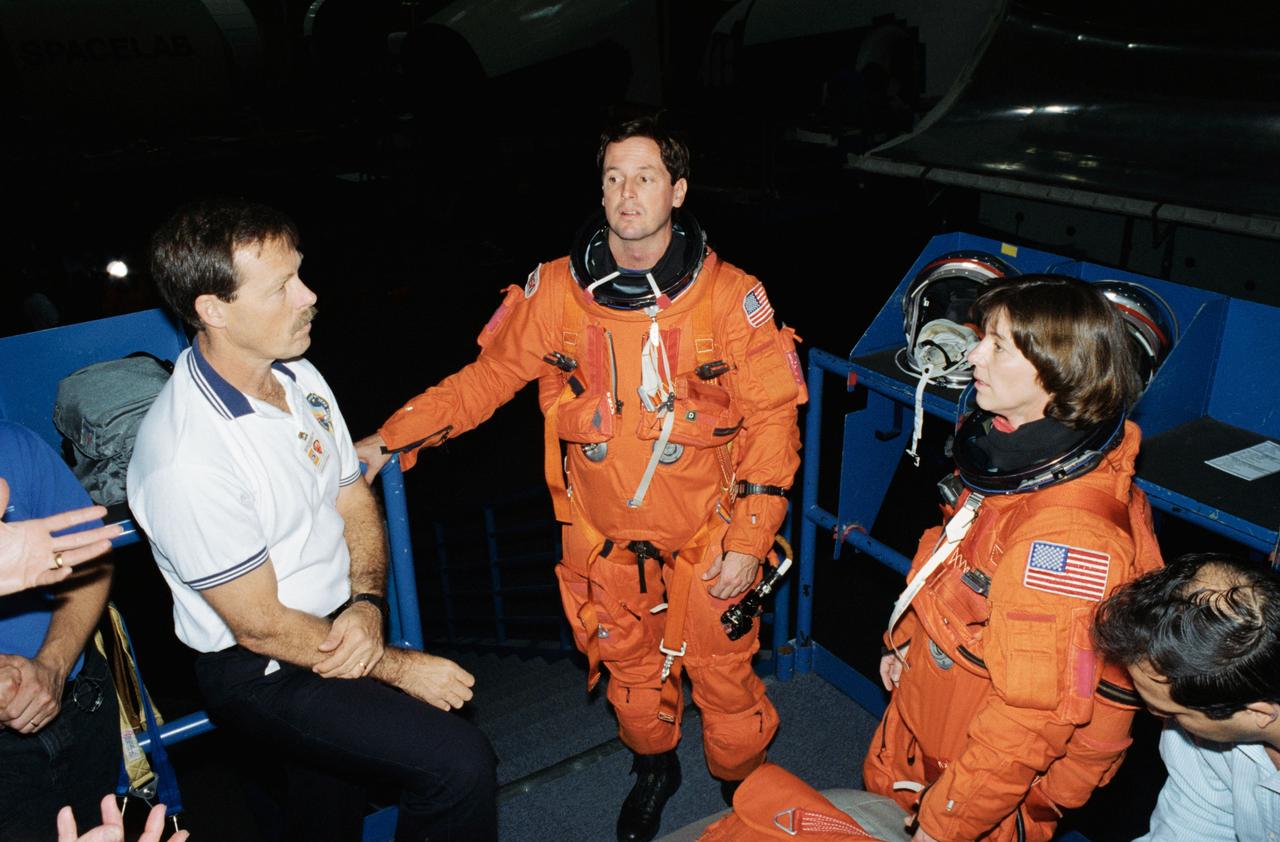
S94-47065 (18 Oct 1994) --- Astronaut Robert L. Gibson (left), STS-71 mission commander, converses with two crew mates prior to emergency egress training in the Systems Integration Facility at the Johnson Space Center (JSC).  Astronauts Bonnie J. Dunbar and Gregory J. Harbaugh are attired in training versions of the partial pressure launch and entry space suits.
STS-71 astronauts before egress training
STS027-S-071 (2 Dec. 1988) --- The Space Shuttle Atlantis and its five-man crew of astronauts are launched from Kennedy Space Center?s Pad 39B at 9:30 a.m. (EST), Dec. 2, 1988.  Onboard the Department of Defense?dedicated mission are astronauts Robert L. Gibson, Guy S. Gardner, Jerry L. Ross, Richard M. (Mike) Mullane and Williams M. Shepherd.
s27-s-071
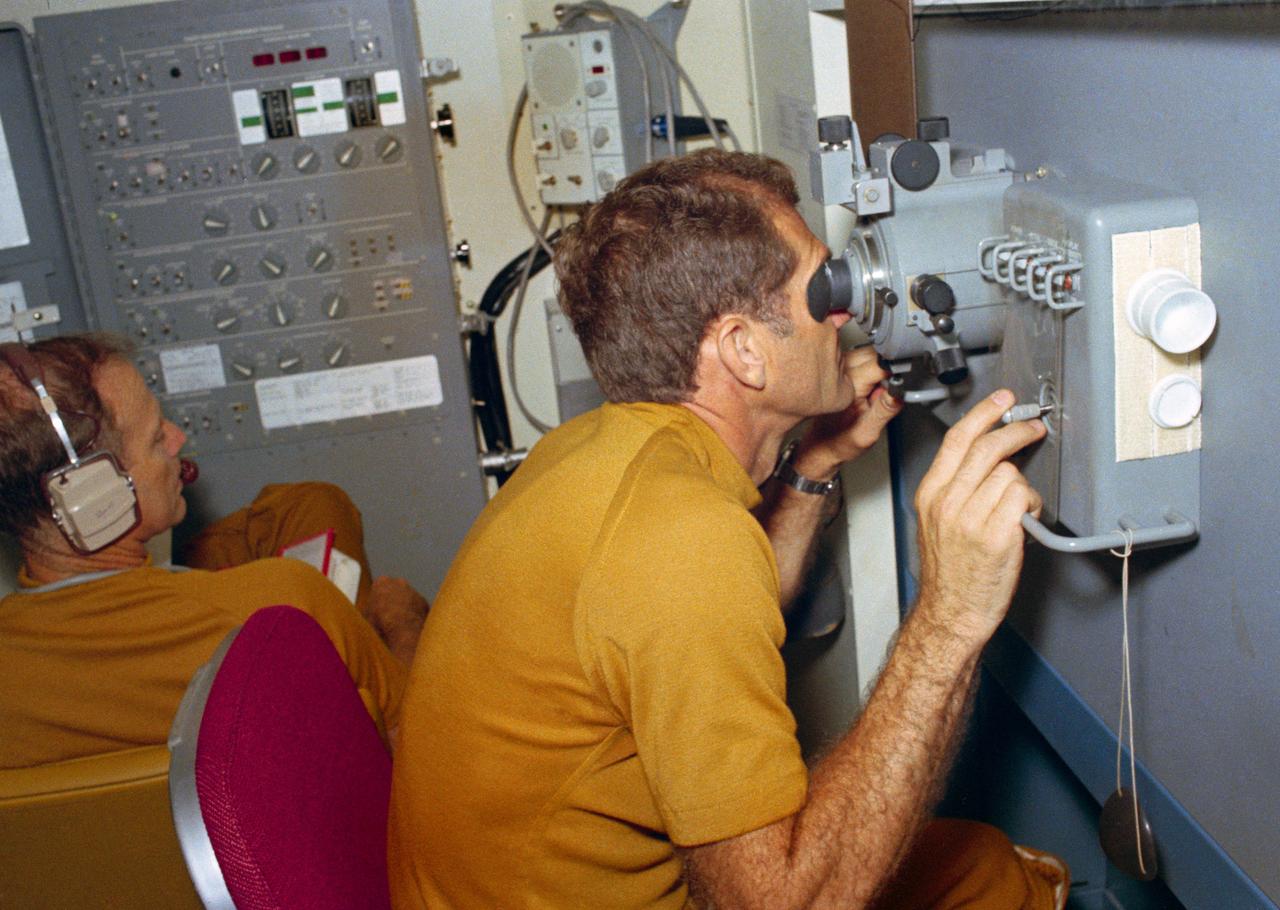
S73-32854 (10 Sept. 1973) --- Astronaut William R. Pogue, Skylab 4 pilot, uses the Skylab Viewfinder Tracking System (S191 experiment) during a training exercise in the Multiple Docking Adapter (MDA) one-G trainer at Johnson Space Center. In the background is astronaut Gerald P. Carr, seated at the control panel for the Earth Resources Experiments Package (EREP). Carr is Skylab 4 crew commander, and Gibson is science pilot. Photo credit: NASA
Astronaut William Pogue using Skylab Viewfinder Tracking System experiment
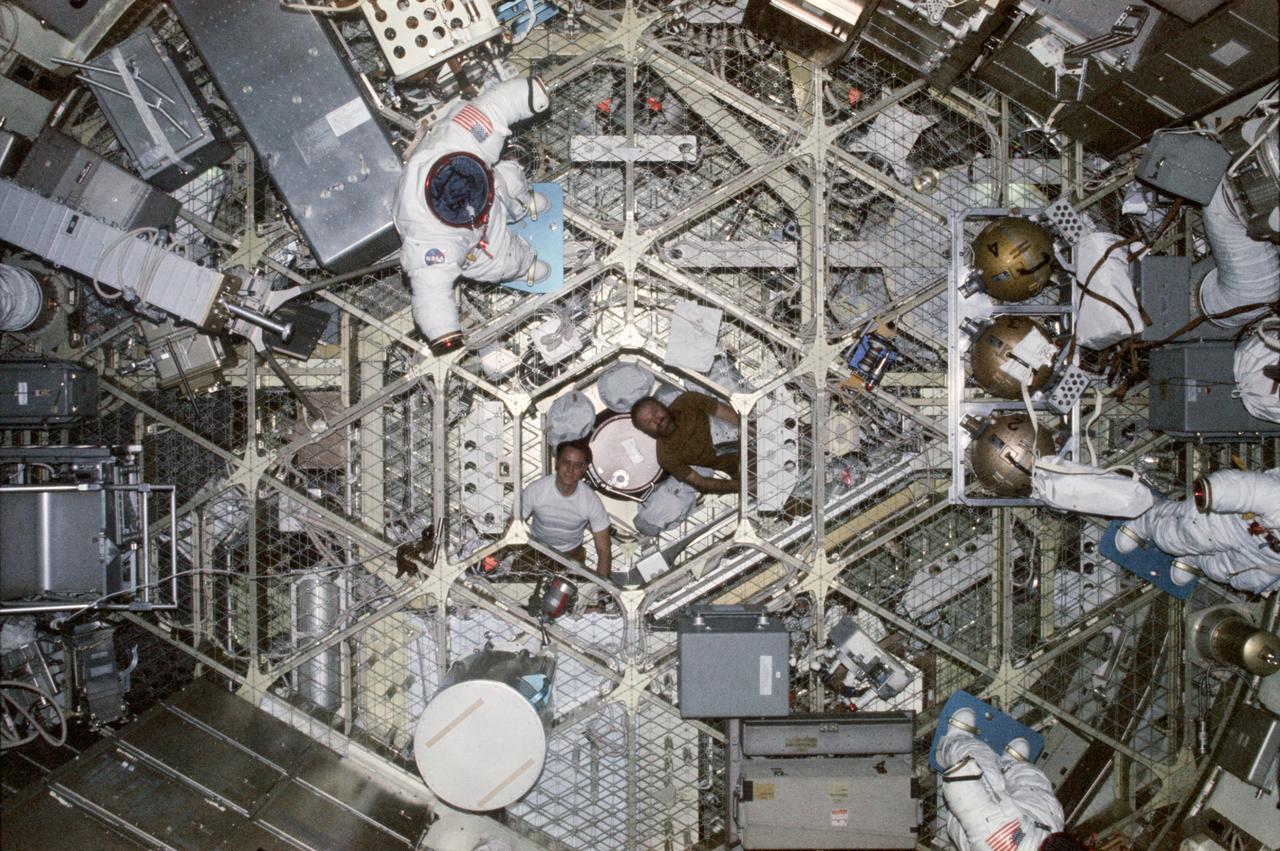
SL4-150-5062 (January 1974) --- A 35mm camera, operated by astronaut William R. Pogue, Skylab 4 pilot, recorded this wide scene of his Skylab 4 crewmates on the other end of the orbital workshop. Astronauts Jerry P. Carr (right), commander, and Edward G. Gibson, science pilot, pose for the snapshot. Also in the frame are parts of three Extravehicular Mobility Unit (EMU) spacesuits, used on several EVA sessions during the third manning of the Skylab space station. Photo credit: NASA
View from airlock hatch looking down length of Orbiting Workshop
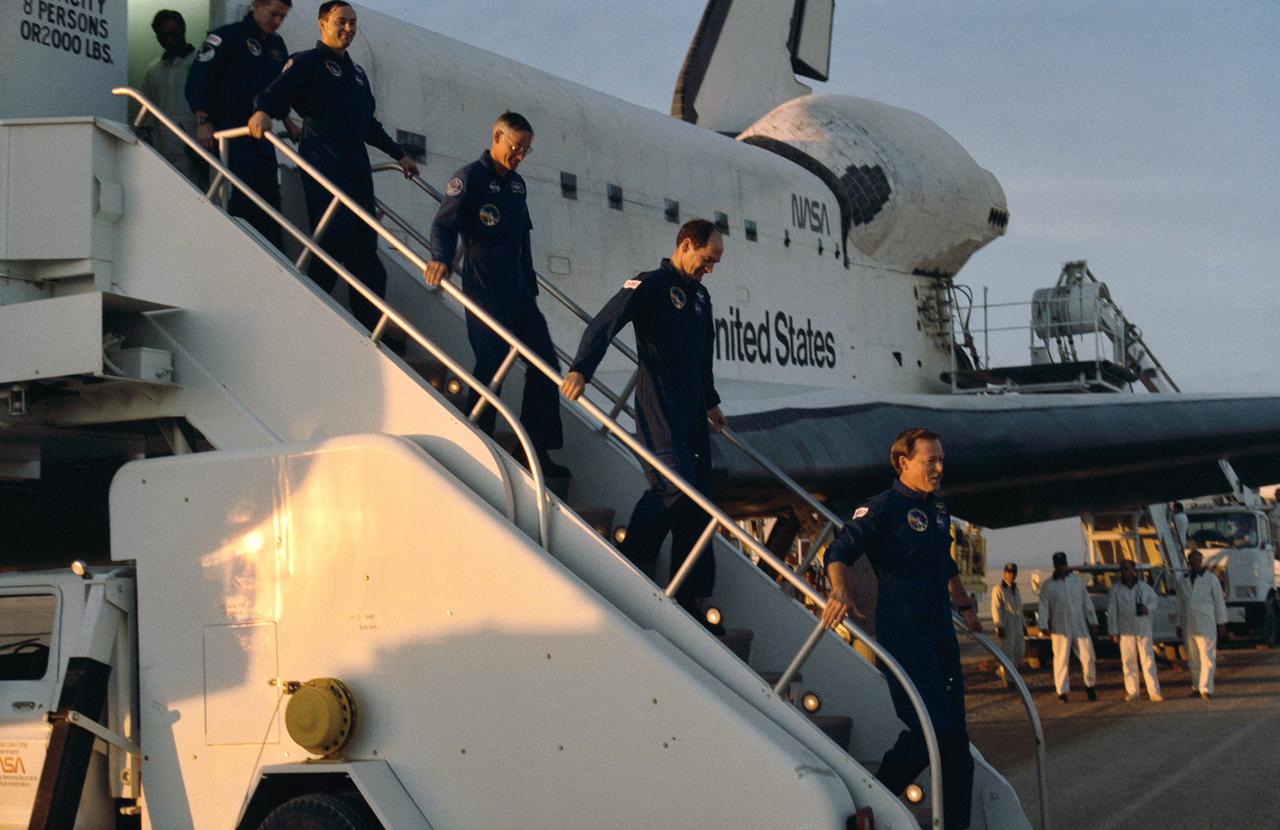
STS027-S-020 (6 Dec 1988) --- The five astronauts who were aboard Atlantis for its return to flight leave their spacecraft after almost 4 1/2 days in space. From bottom to top are Astronauts Robert L. Gibson, mission commander; Guy S. Gardner, pilot; and Richard M. (Mike) Mullane, Jerry L. Ross and William M. Shepherd, mission specialists. Atlantis touched down on Rogers Dry Lake Bed at 3:36 p.m. (PST), Dec. 6, 1988.
STS-27 crew egresses Atlantis, OV-104, at Edwards Air Force Base, California
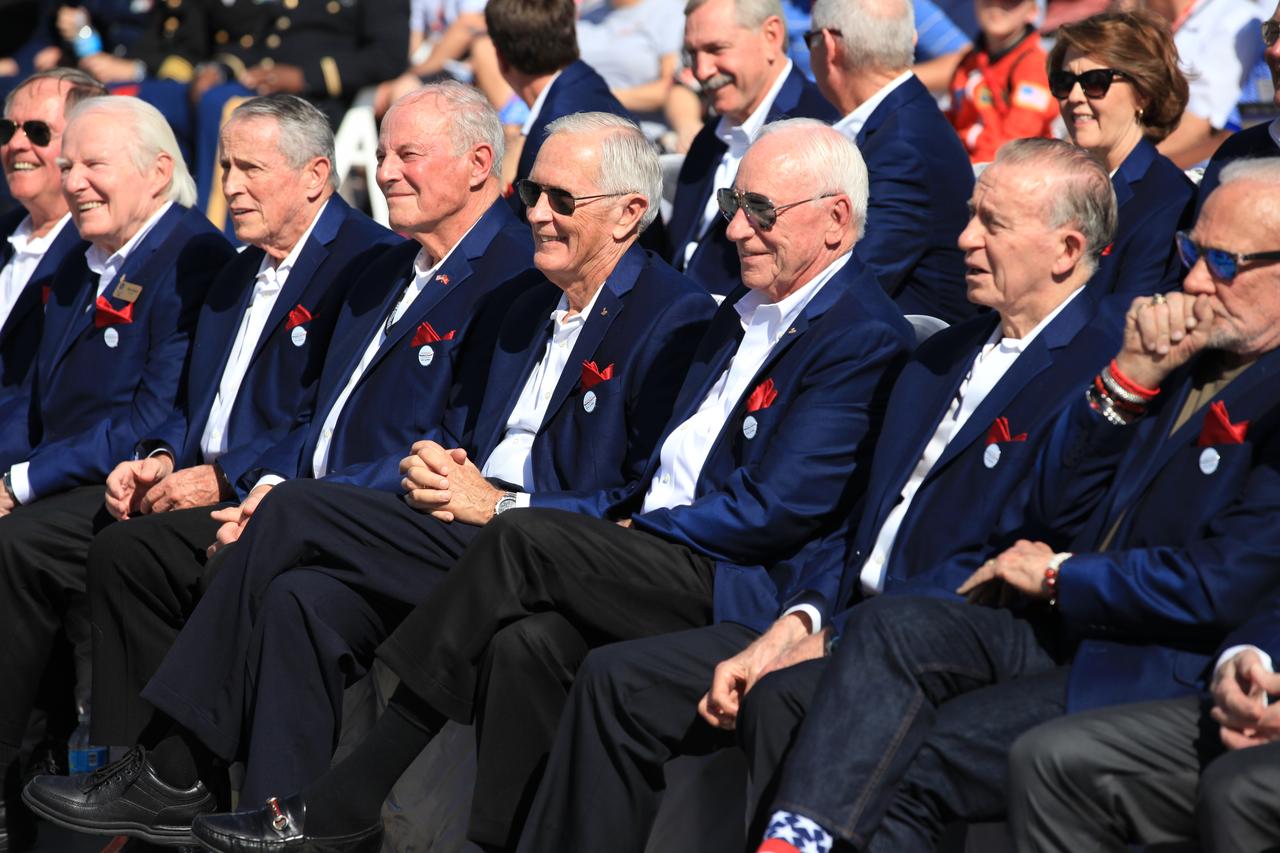
Members of the U.S. Astronaut Hall of Fame listen to speakers during the opening of the Heroes and Legends attraction at the Kennedy Space Center Visitor Complex. From the left are: Bob Crippen, Vance Brand, Ed Gibson, Jack Lousma, Charlie Duke, Al Worden, Walt Cunningham and Buzz Aldrin. The new facility includes the U.S. Astronaut Hall of Fame and looks back to the pioneering efforts of Mercury, Gemini and Apollo. It sets the stage by providing the background and context for space exploration and the legendary men and women who pioneered the nation's journey into space.
Heroes and Legends Ribbon Cutting Ceremony
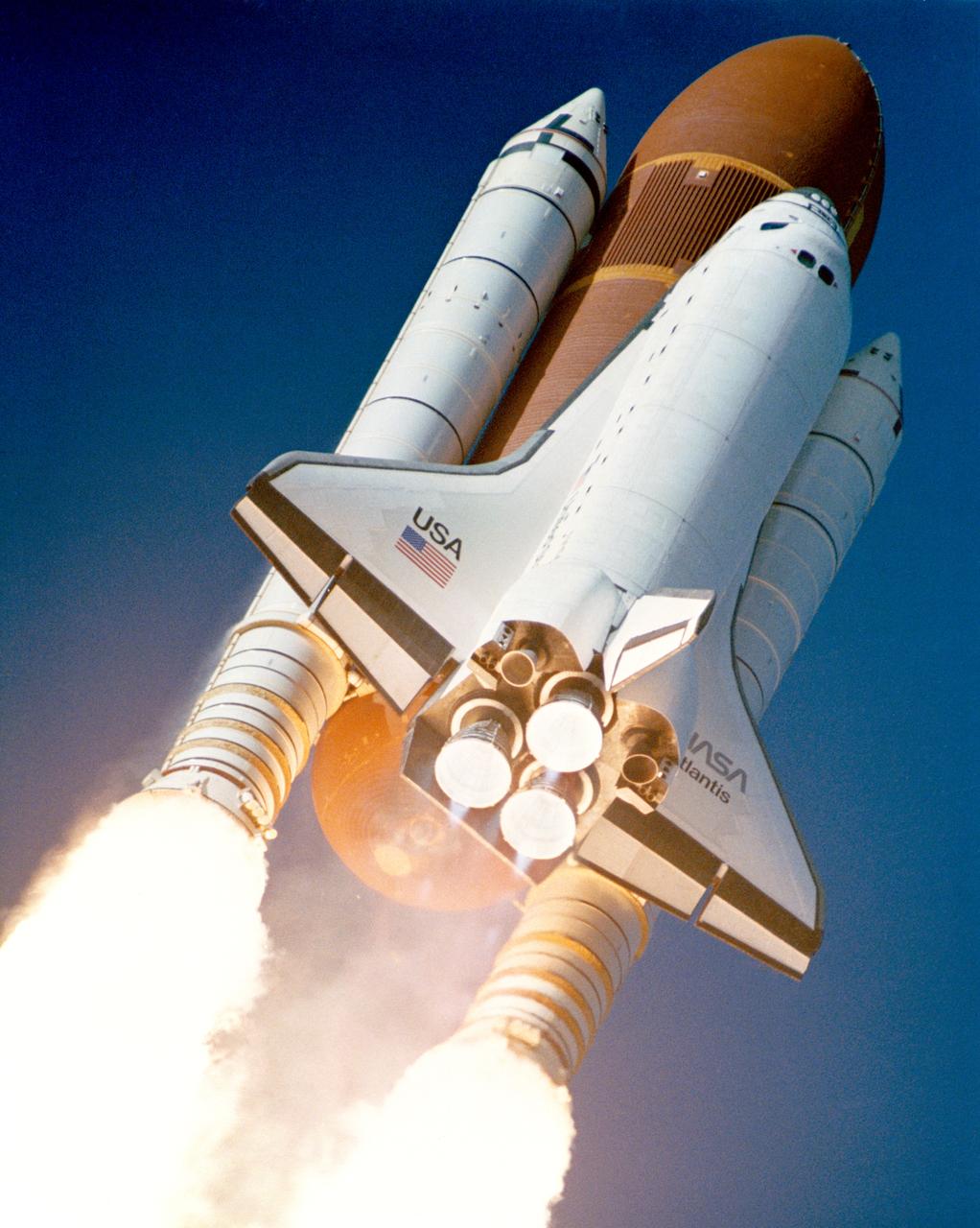
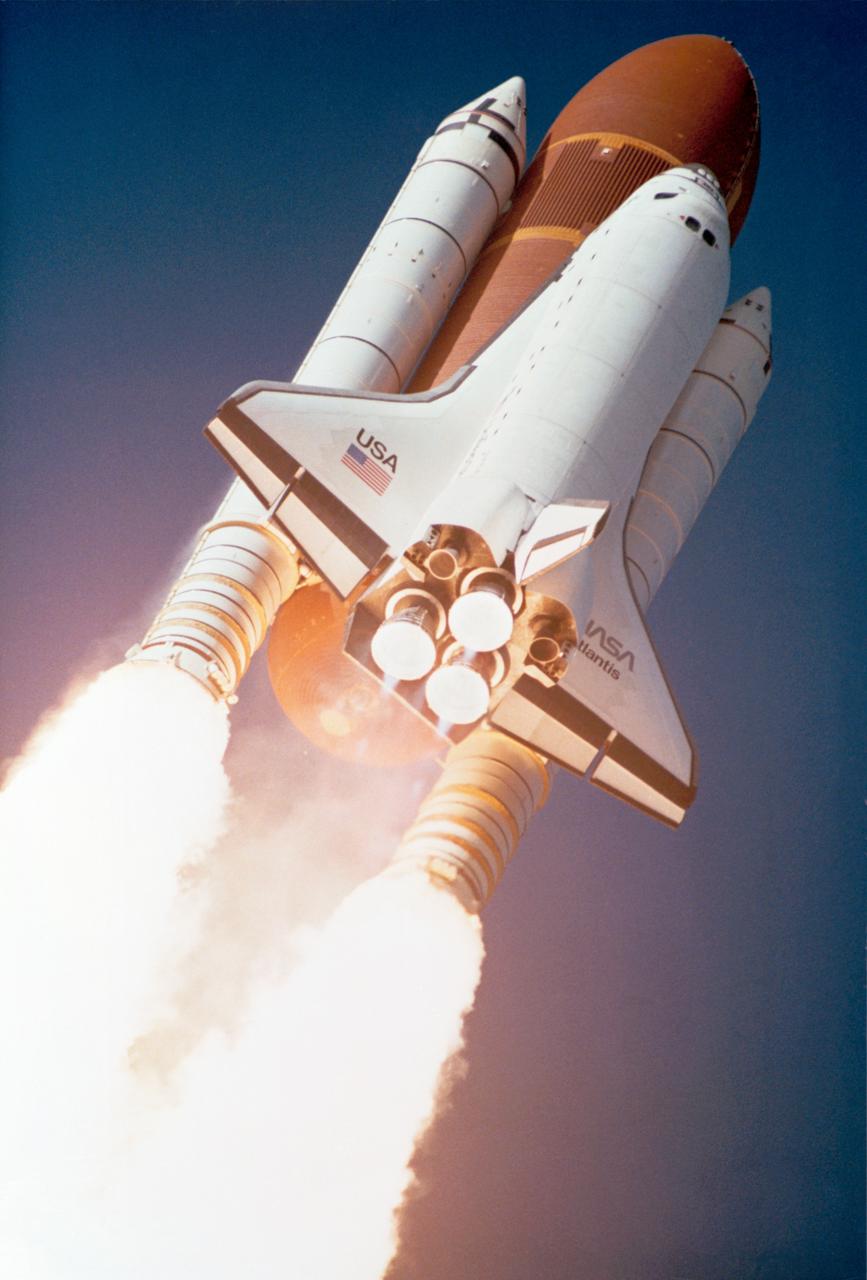
S88-55870 (2 Dec. 1988) --- The space shuttle Atlantis and its five-man crew of astronauts are launched from Kennedy Space Center?s Pad 39B at 9:30 a.m. (EST), Dec. 2, 1988. Onboard the Department of Defense?dedicated mission are astronauts Robert L. Gibson, Guy S. Gardner, Jerry L. Ross, Richard M. (Mike) Mullane and Williams M. Shepherd. Photo credit: NASA
STS-27 Atlantis, Orbiter Vehicle (OV) 104, liftoff
KENNEDY SPACE CENTER, FLA. --  Former astronaut Ed Gibson acknowledges the warm response to his introduction as a previous inductee into the U.S. Astronaut Hall of Fame.  He and other  Hall of Fame members were present for the induction of five new space program heroes into the U.S. Astronaut Hall of Fame: Richard O. Covey, commander of the Hubble Space Telescope repair mission; Norman E. Thagard, the first American to occupy Russia’s Mir space station; the late Francis R. "Dick" Scobee, commander of the ill-fated 1986 Challenger mission; Kathryn D. Sullivan, the first American woman to walk in space; and Frederick D. Gregory, the first African-American to command a space mission and the current NASA deputy administrator. Gibson orbited the Earth for 84 days during the final manned flight of the Skylab Space Station in 1973 and 1974.  The induction ceremony was held at the Apollo/Saturn V Center at KSC.  The U.S. Astronaut Hall of Fame opened in 1990 to provide a place where space travelers could be remembered for their participation and accomplishments in the U.S. space program. The five inductees join 52 previously honored astronauts from the ranks of the Gemini, Apollo, Skylab, Apollo-Soyuz, and Space Shuttle programs.
KSC-04pd1017
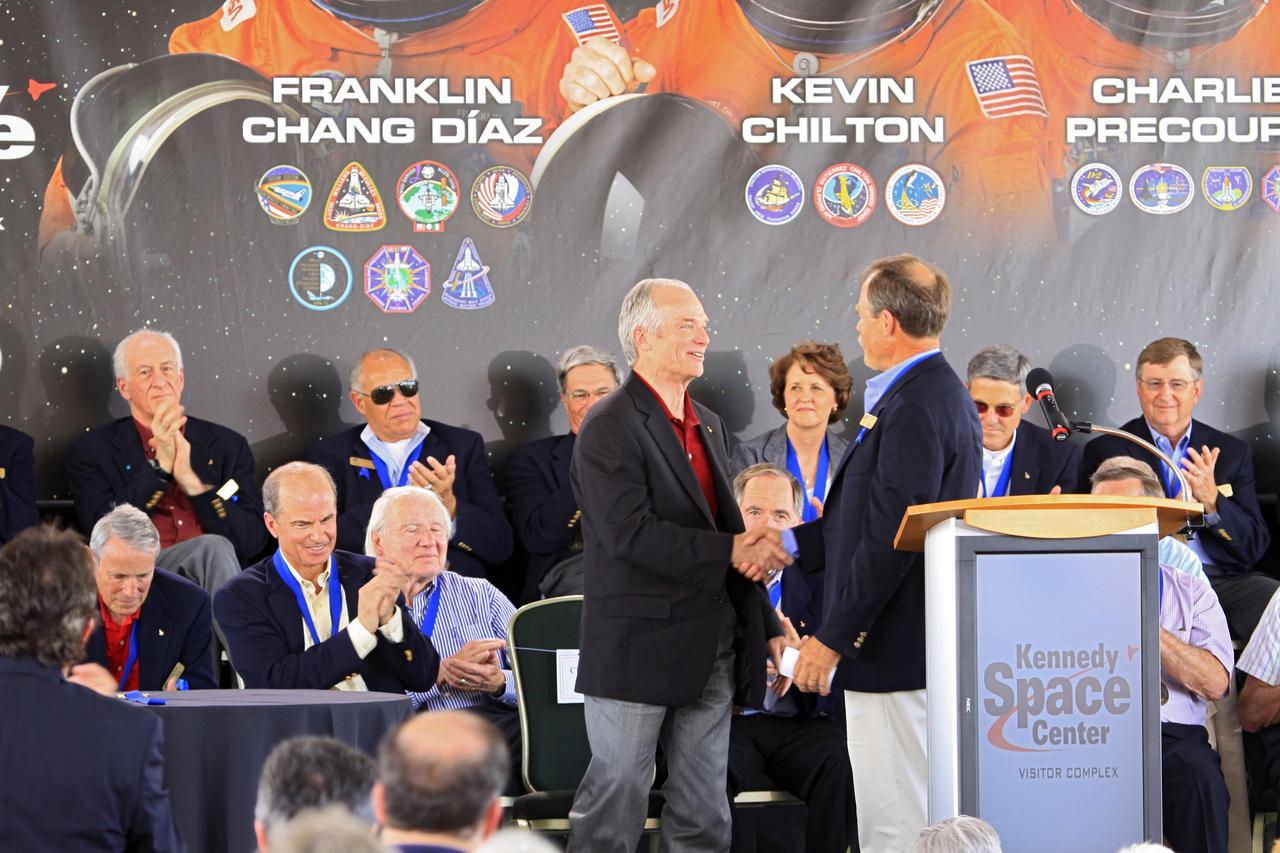
CAPE CANAVERAL, Fla. – At NASA’s Kennedy Space Center Visitor Complex in Florida, shuttle astronaut and Hall of Famer Robert “Hoot” Gibson, at right, greets shuttle astronaut and U.S Astronaut Hall of Fame Class of 2012 inductee Charlie Precourt. Shuttle astronauts Franklin Chang Diaz and Kevin Chilton also were inducted into the Hall of Fame.    The year’s inductees were selected by a committee of current Hall of Fame astronauts, former NASA officials, historians and journalists. The selection process is administered by the Astronaut Scholarship Foundation. Photo credit: NASA/Jim Grossmann
KSC-2012-2730
CAPE CANAVERAL, Fla. – Former NASA astronauts Gerald P. Carr, left, and Edward G. Gibson place a wreath on an easel during a ceremony to honor former NASA astronaut William R. Pogue at the United States Astronaut Hall of Fame at the Kennedy Space Center Visitor Complex. In the background is a painting by former NASA astronaut Alan Bean. Col. Pogue, pilot on NASA's Skylab 4 mission in 1973-74, died March 3. He was 84 years old. Skylab 4 was the third and final manned visit to the Skylab orbital workshop, launched Nov. 16, 1973, and concluded Feb. 8, 1974. At 84 days, 1 hour and 15 minutes, Skylab 4 was the longest manned space flight to that date. Pogue was accompanied on the record-setting 34.5-million-mile flight by Commander Carr and science-pilot Gibson. They conducted dozens of experiments and science demonstrations during their 1,214 orbits of Earth. Pogue logged 13 hours and 31 minutes in two spacewalks outside the orbital workshop. For more information, visit http://www.nasa.gov/content/skylab-4-pilot-william-pogue-dies. Photo credit: NASA/Kim Shiflett
Wreath for Bill Pogue Memorial
CAPE CANAVERAL, Fla. – From left, former NASA astronauts Robert Cabana, Gerald P. Carr and Edward G. Gibson pay their respects to former NASA astronaut William R. Pogue during a wreath laying ceremony at the United States Astronaut Hall of Fame at the Kennedy Space Center Visitor Complex. Cabana now is the director of Kennedy Space Center. In the background is a painting by former NASA astronaut Alan Bean. Col. Pogue, pilot on NASA's Skylab 4 mission in 1973-74, died March 3. He was 84 years old. Skylab 4 was the third and final manned visit to the Skylab orbital workshop, launched Nov. 16, 1973, and concluded Feb. 8, 1974. At 84 days, 1 hour and 15 minutes, Skylab 4 was the longest manned space flight to that date. Pogue was accompanied on the record-setting 34.5-million-mile flight by Commander Carr and science-pilot Gibson. They conducted dozens of experiments and science demonstrations during their 1,214 orbits of Earth. Pogue logged 13 hours and 31 minutes in two spacewalks outside the orbital workshop. For more information, visit http://www.nasa.gov/content/skylab-4-pilot-william-pogue-dies. Photo credit: NASA/Kim Shiflett
Wreath for Bill Pogue Memorial
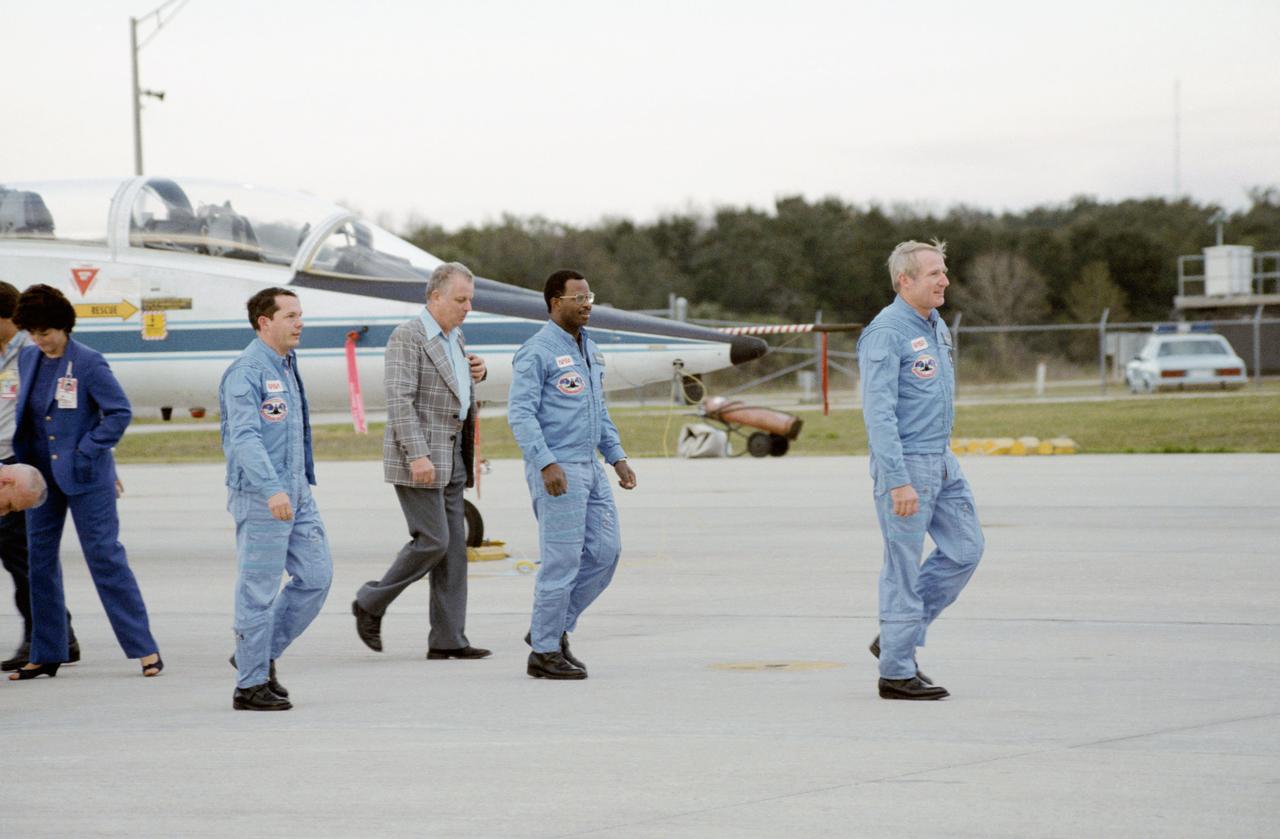
S84-26935 (31 Jan 1984) --- Three members of the STS 41-B astronaut crew arrive in Florida following a brief T-38 flight from Houston.  Leading the crew from the flight line is Astronaut Vance D. Brand (right), crew commander.  Following behind (in blue flight suits) are Astronauts Ronald E. McNair (center) and Robert L. Stewart (both mission specialists.  They were met by Terry White (pictured), JSC public information industrial relations manager.  Not pictured are Astronauts Robert L. Gibson, pilot; and Bruce McCandless II, mission specialist.  Launch is scheduled for February 3, 1983.
STS 41-B astronaut crew members arrive in Florida
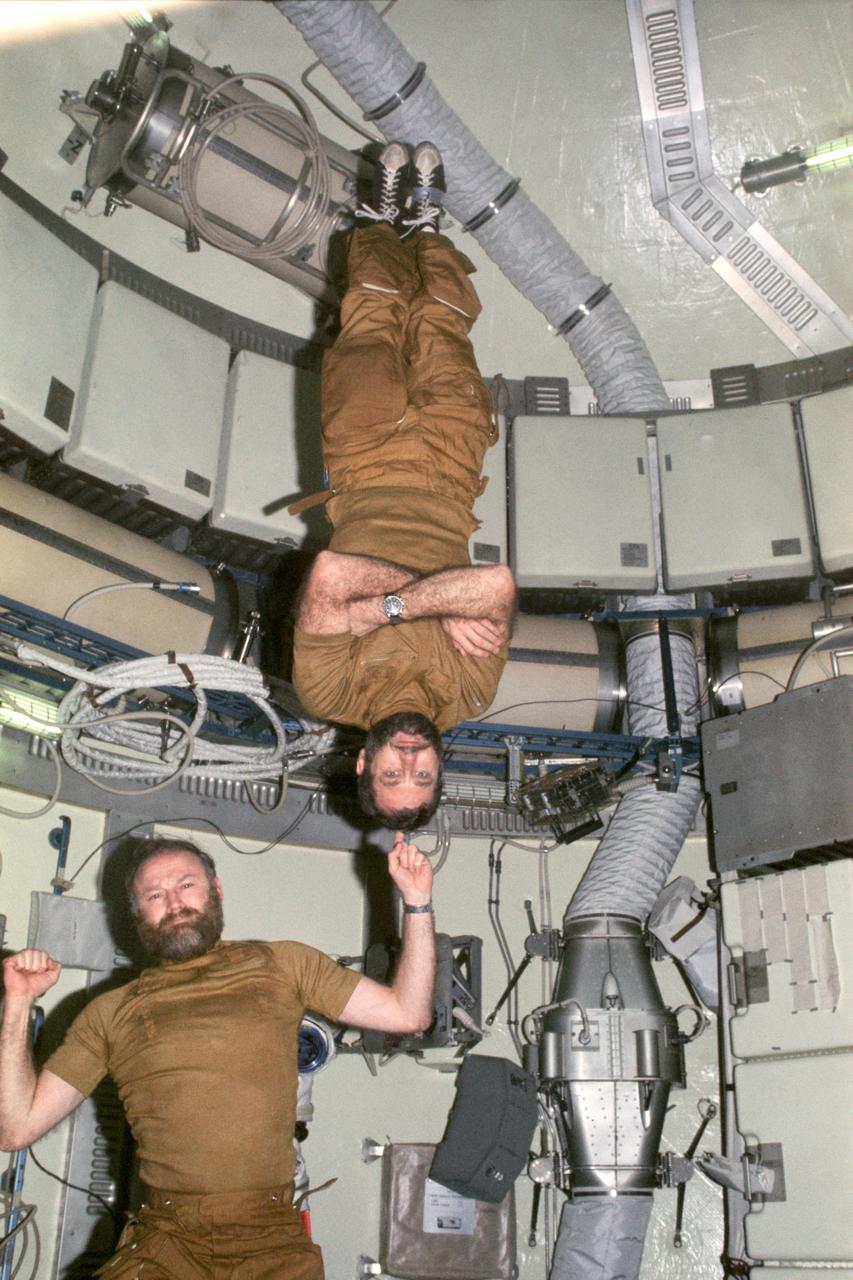
SL4-150-5080 (16 Nov. 1973-8 Feb. 1974) --- Two of the three Skylab 4 (third manning) astronauts exhibit the "magic" that can be accomplished in the weightlessness of space. Astronaut Gerald D. Carr, mission commander, uses his index finger to suspend astronaut William R. Pogue, pilot, in the Orbital Workshop (OWS). The two "wizards" completed almost three months aboard the Earth-orbiting Skylab space station, plenty of time to grow these full beards. The photograph was taken with a 35mm camera by astronaut Edward G. Gibson, science pilot. Photo credit: NASA
Astronauts Carr and Pogue demonstrate weight training in zero-gravity
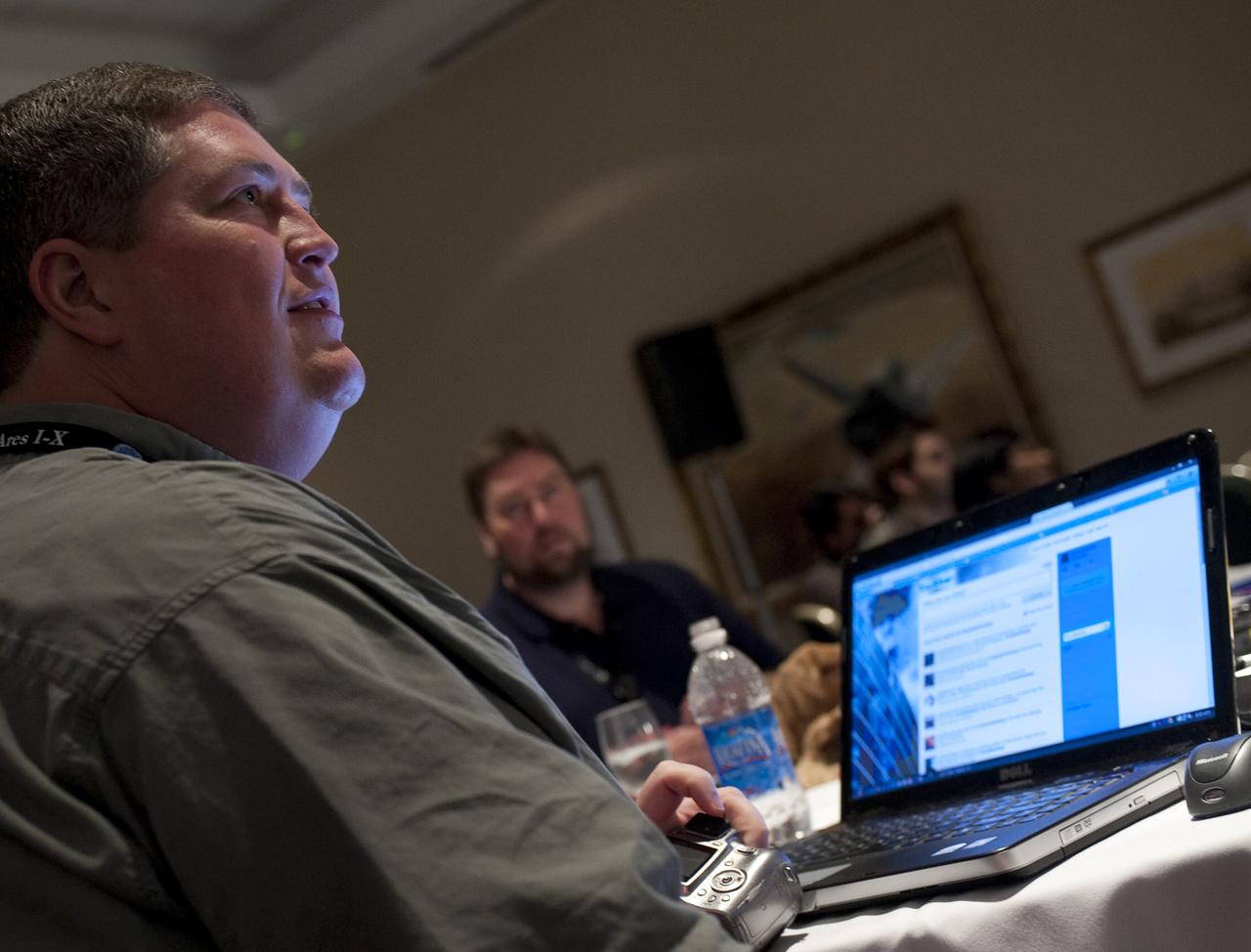
Twitter user Dave Gibson from Lawrenceville, GA, who goes by the twitter name @davecgibson, listens to a guest speaker during a two-day NASA Tweetup event held at NASA's Kennedy Space Center in Cape Canaveral, Fla, Sunday, Nov. 15, 2009. NASA Twitter followers in attendance will have the opportunity to take a tour of NASA's Kennedy Space Center, view the STS-129 space shuttle launch and speak with shuttle technicians, engineers, astronauts and managers.  Photo Credit: (NASA/Carla Cioffi)
STS-129 Tweetup
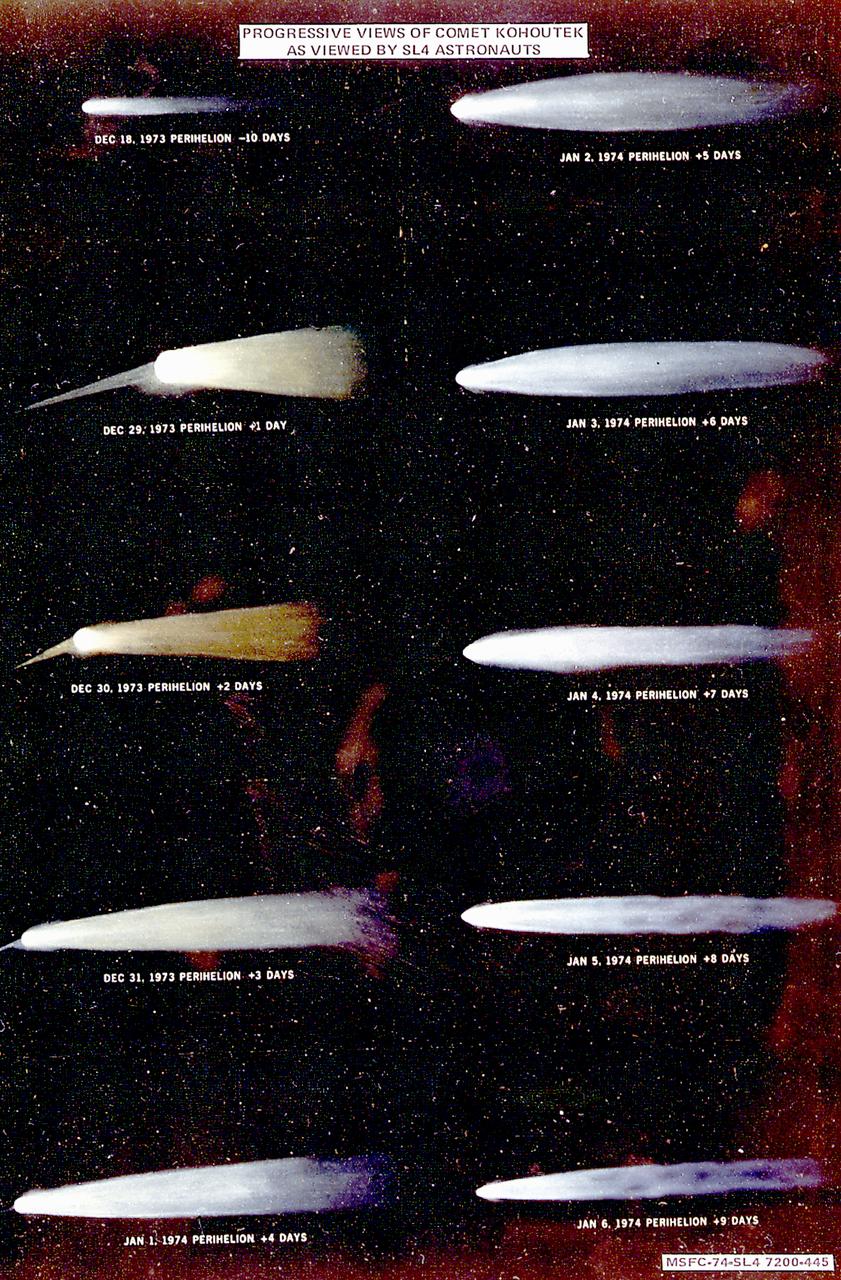
This montage is an artist's conception of progressive views of the Comet Kohoutek based on sketches and a description by Skylab-4 astronaut Edward Gibson. An early discovery of a large comet in an orbit that would reach close to the Sun at the end of 1973 prompted NASA to initiate Operation Kohoutek, a program to coordinate widespread observations of the comet from ground observatories, aircraft, balloons, rockets, unmarned satellites, and Skylab.
Skylab
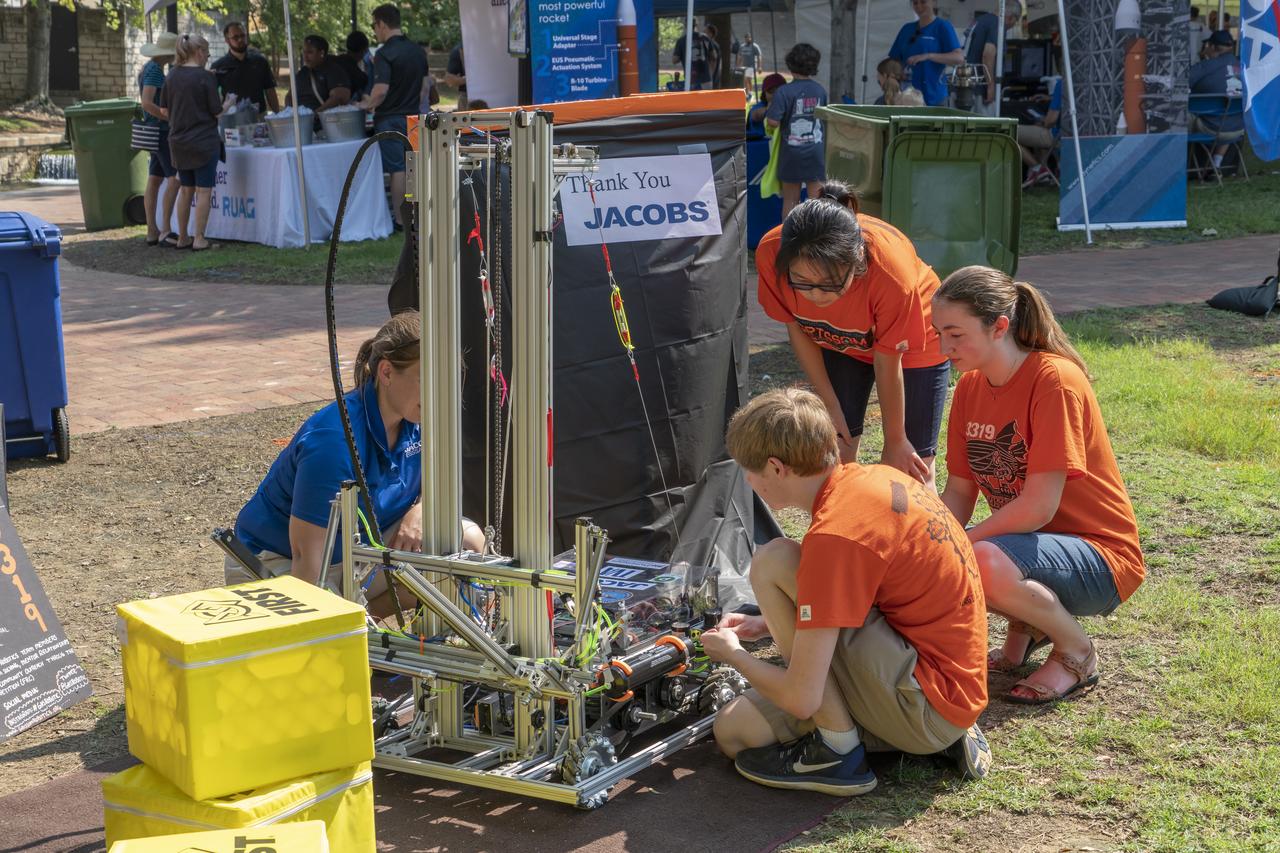
NASA's Marshall Space Flight Center showcased it's various projects for the public in Huntsville, Alabama's Big Spring Park. Exhibits were displayed by all of the various directorates of the Center with employee volunteers explaining all aspects of their projects. Adding to the festivities was the attendance of retired NASA astronaut Robert "Hoot" Gibson. Students from Huntsville’s Grissom High School display their robot.
2018 NASA in the Park Celebration
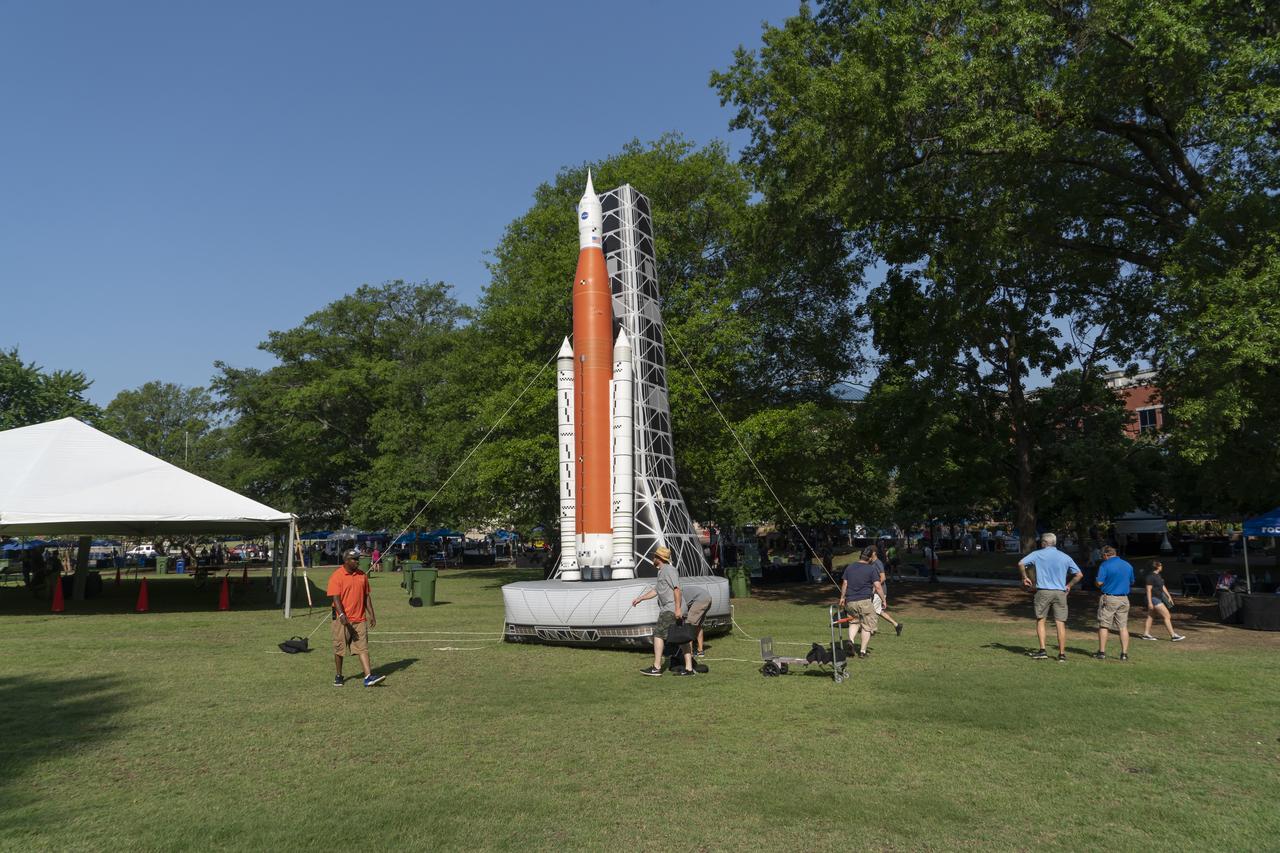
NASA's Marshall Space Flight Center showcased it's various projects for the public in Huntsville, Alabama's Big Spring Park. Exhibits were displayed by all of the various directorates of the Center with employee volunteers explaining all aspects of their projects. Adding to the festivities was the attendance of retired NASA astronaut Robert "Hoot" Gibson. Marshall Model Shop employees inflate and place the SLS model.
2018 NASA in the Park Celebration
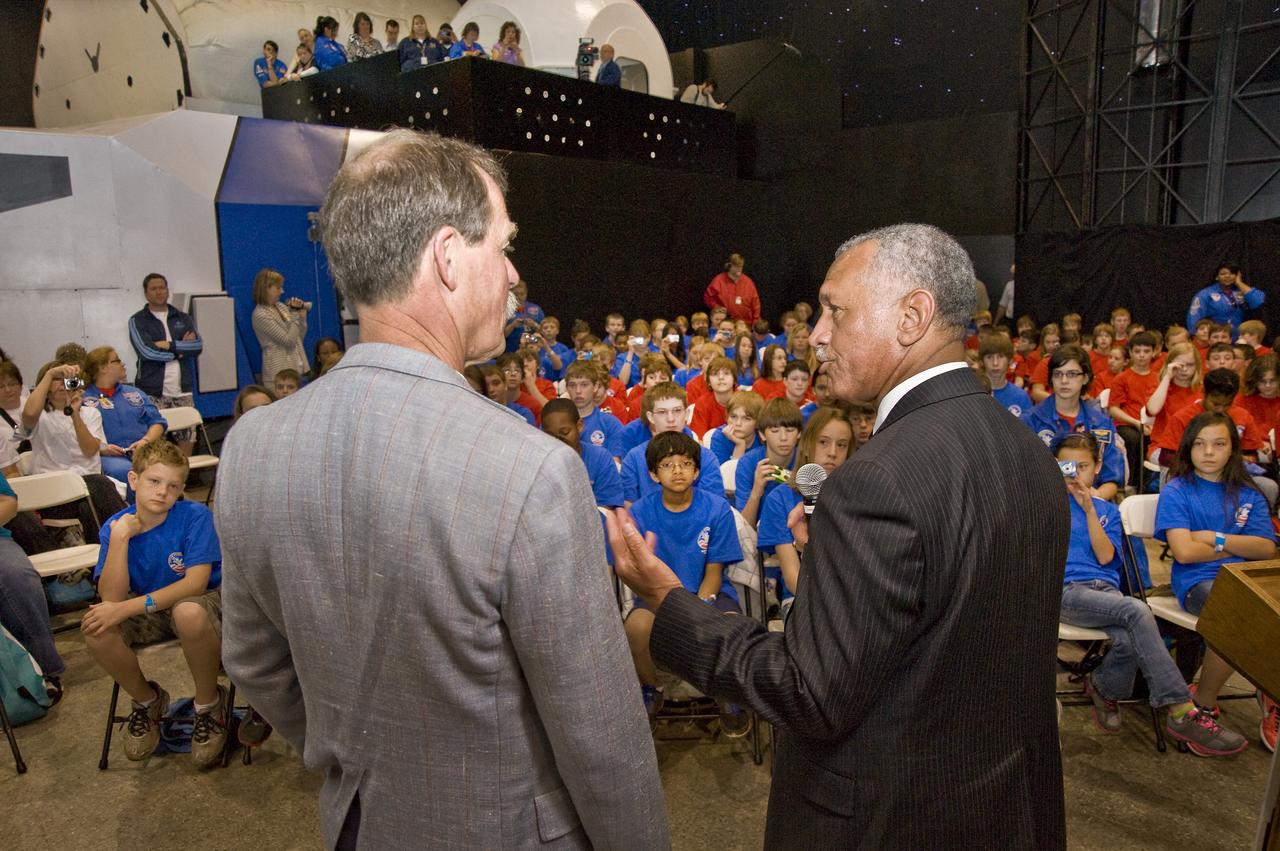
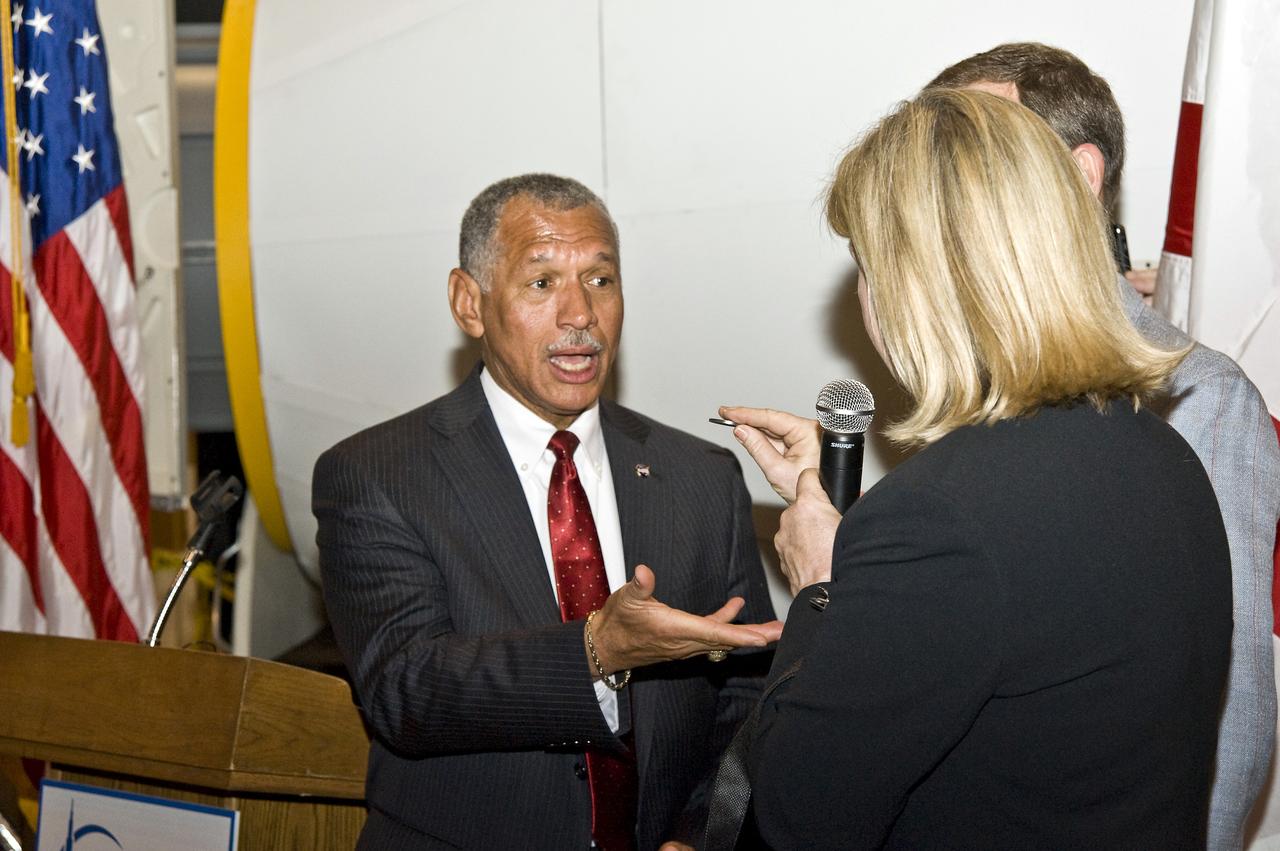
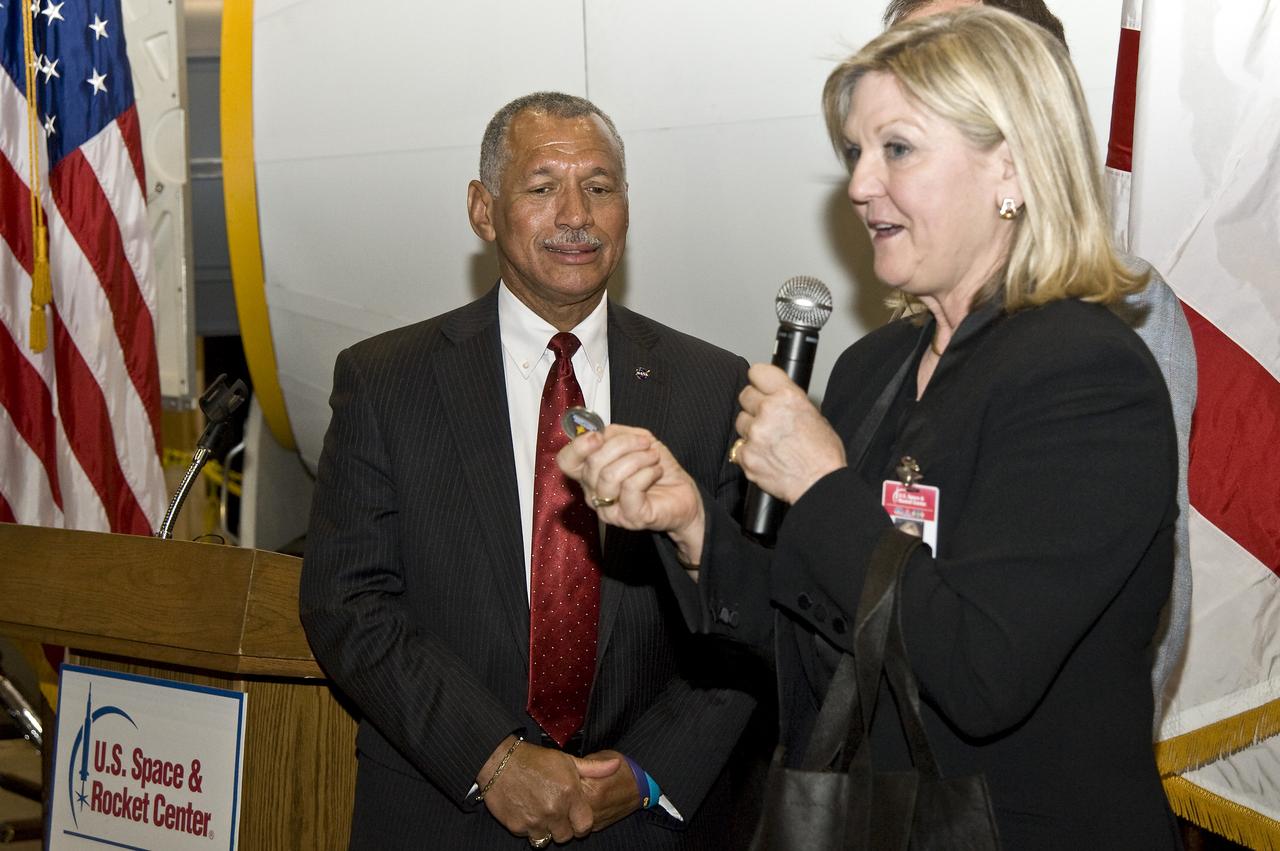
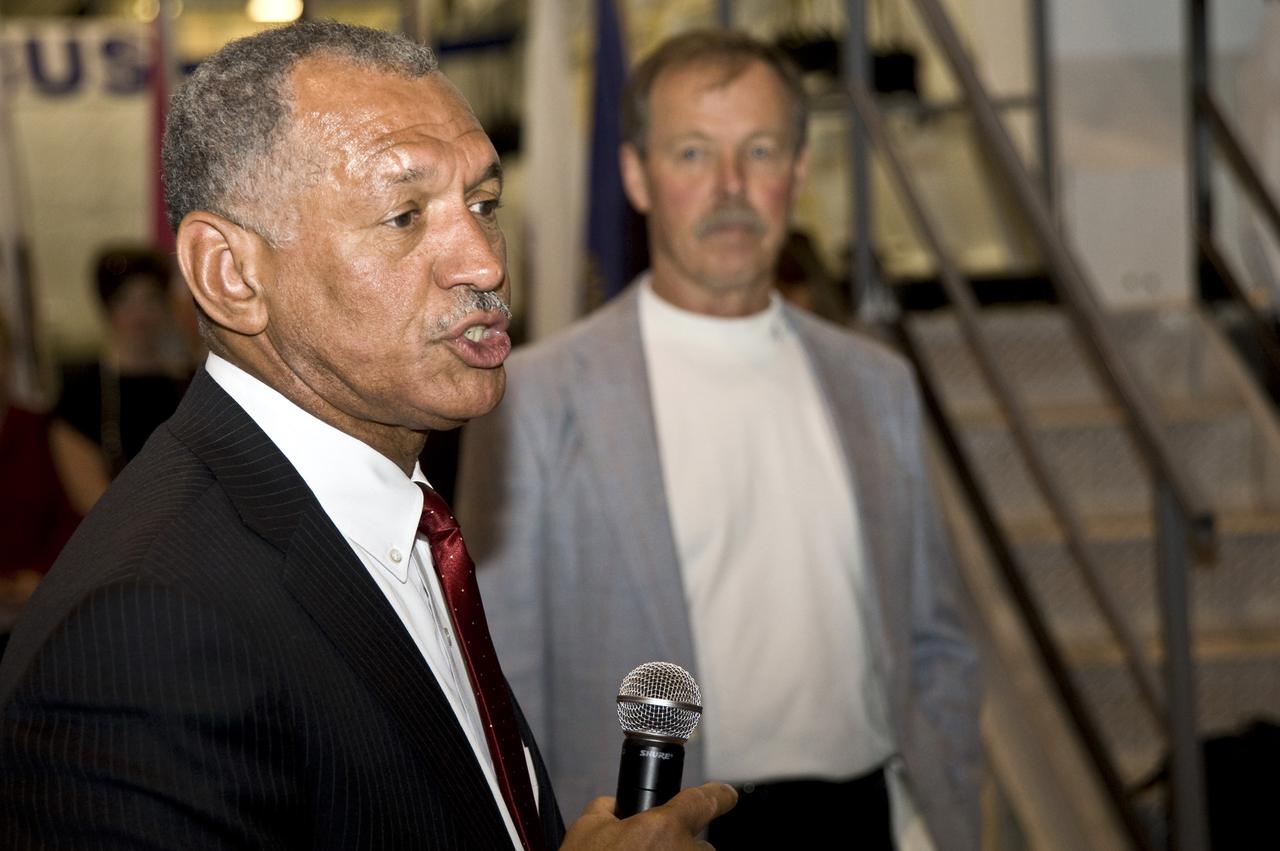
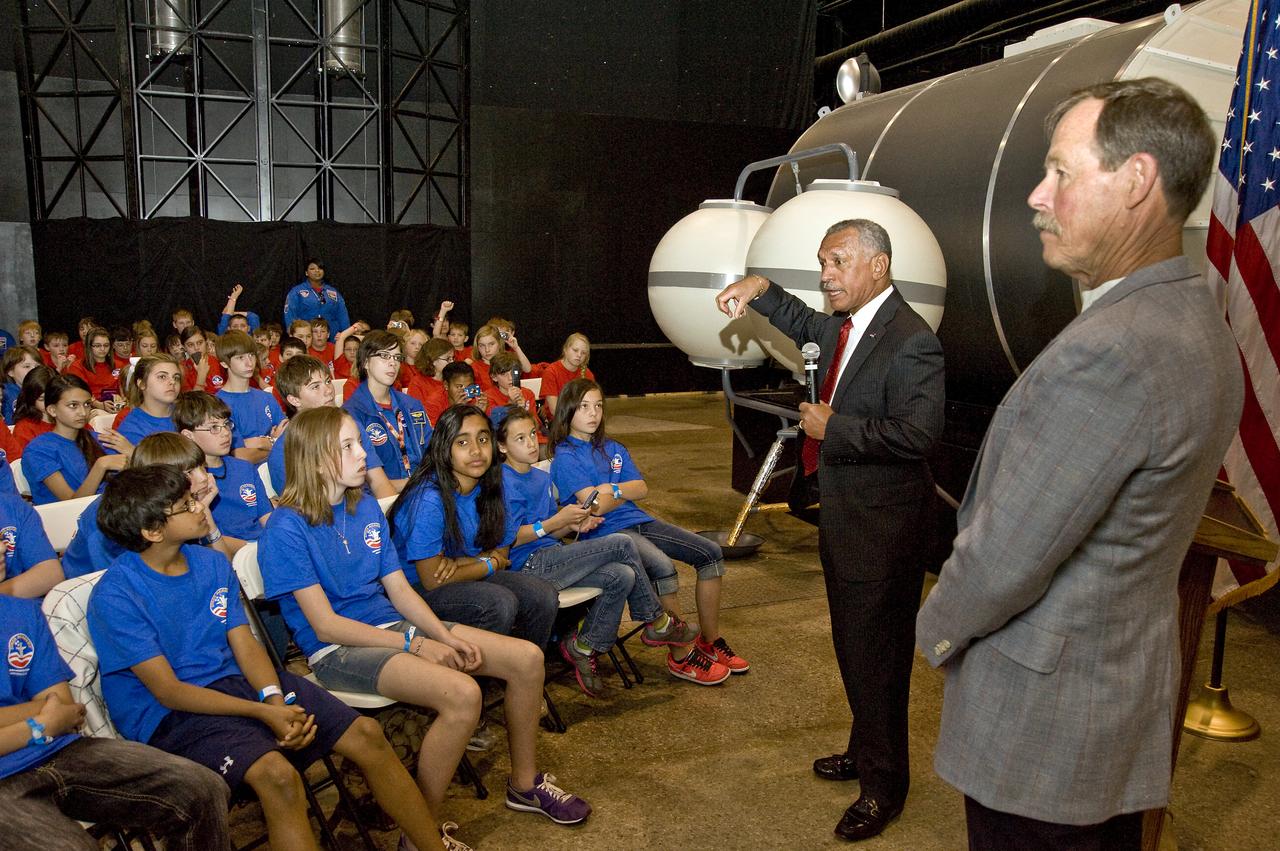
CHARLES BOLDEN NASA ADMINISTRATOR TOURING AND SPEAKING AT THE US. SPACE AND ROCKET CENTER, HUNTSVILLE, ALABAMA. ACCOMPANYING ADMINISTRATOR BOLDEN ARE DR. DEBORAH BARNHART, CEO OF THE USSARC, ROBERT LIGHTFOOT, CENTER DIRECTOR OF MARSHALL SPACE FLIGHT CENTER AND RETIRED NASA ASTRONAUT ROBERT LEE “HOOT” GIBSON, ADMINISTRATOR BOLDEN’S FIRST SPACE FLIGHT COMMANDER.
1100397
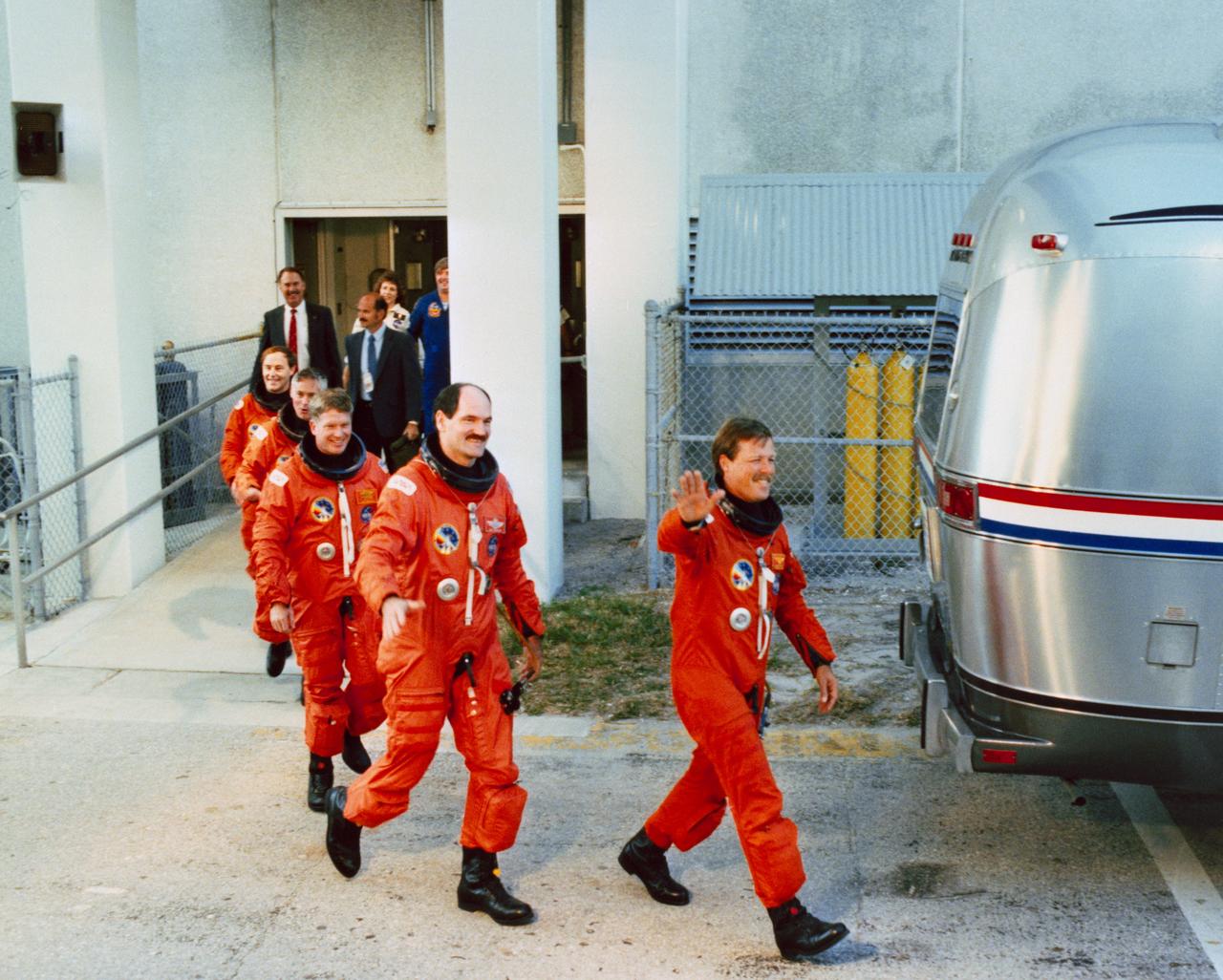
S88-53244 (14 Nov 1988) --- The crewmembers for STS-27 leave the operations and checkout (O&C) building en route to a transfer van that will take them to Launch Pad 39B for their terminal countdown demonstration test. From the front to the rear are astronauts Robert L. Gibson, Guy S. Gardner, William M. Shepherd, Richard M. (Mike) Mullane and Jerry L. Ross.
STS-27 Atlantis, OV-104, terminal countdown demonstration test (TCDT) at KSC
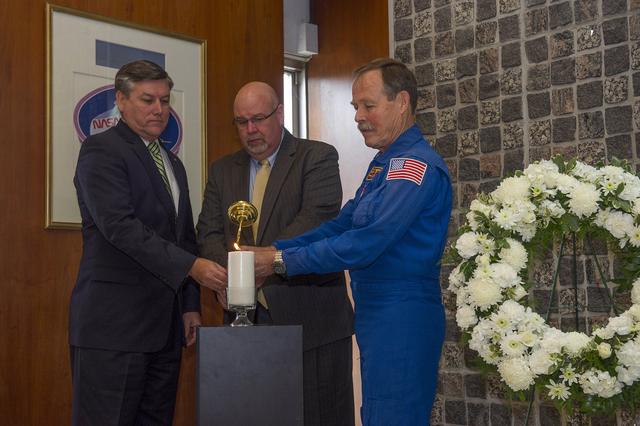
LIGHTING A MEMORIAL CANDLE DURING THE JAN. 29 DAY OF REMEMBRANCE OBSERVANCE AT NASA'S MARSHALL SPACE FLIGHT CENTER ARE, FROM LEFT, PATRICK SCHEUERMANN, MARSHALL DIRECTOR; JOHN HONEYCUTT, DEPUTY MANAGER OF THE SPACE LAUNCH SYSTEM; AND RETIRED ASTRONAUT ROBERT “HOOT” GIBSON. THE CEREMONY IN BUILDING 4200 PAID TRIBUTE TO THE CREWS OF APOLLO 1 AND SPACE SHUTTLES CHALLENGER AND COLUMBIA, AS WELL AS OTHER NASA COLLEAGUES.
2015 Day of Remembrance
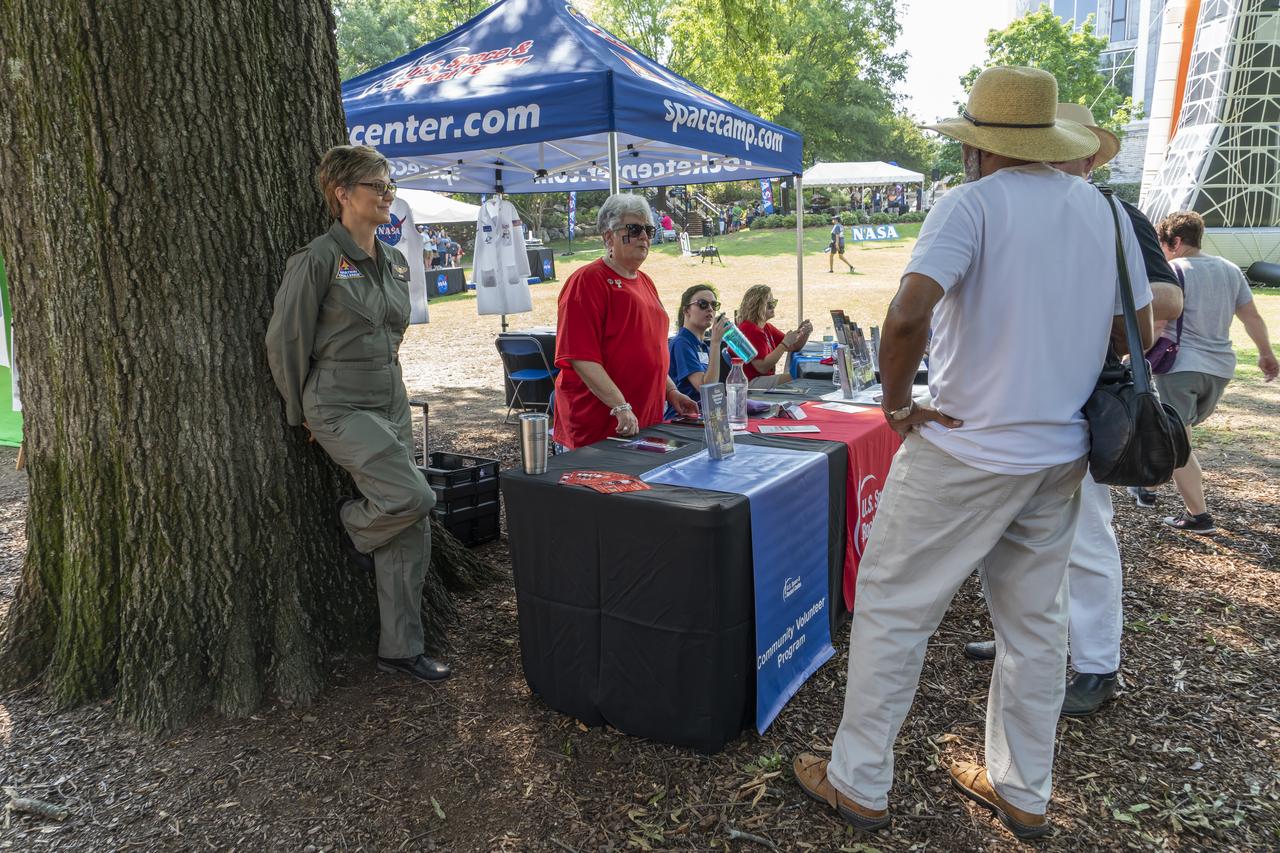
NASA's Marshall Space Flight Center showcased it's various projects for the public in Huntsville, Alabama's Big Spring Park. Exhibits were displayed by all of the various directorates of the Center with employee volunteers explaining all aspects of their projects. Adding to the festivities was the attendance of retired NASA astronaut Robert "Hoot" Gibson. U.S. Space and Rocket Center volunteers greet visitors to NASA in the Park.
2018 NASA in the Park Celebration
CHARLES BOLDEN NASA ADMINISTRATOR TOURING AND SPEAKING AT THE US. SPACE AND ROCKET CENTER, HUNTSVILLE, ALABAMA. ACCOMPANYING ADMINISTRATOR BOLDEN ARE DR. DEBORAH BARNHART, CEO OF THE USSARC, ROBERT LIGHTFOOT, CENTER DIRECTOR OF MARSHALL SPACE FLIGHT CENTER AND RETIRED NASA ASTRONAUT ROBERT LEE “HOOT” GIBSON, ADMINISTRATOR BOLDEN’S FIRST SPACE FLIGHT COMMANDER.
1100391
The STS-27 crew portrait features 5 astronauts.  Seated, left to right, are Jerry L. Ross, mission specialist; Guy S. Gardner, pilot; and Robert L. Gibson, commander. On the back row, left to right, are mission specialists Richard M. Mullane, and William M. Shepherd. Launched aboard the Space Shuttle Atlantis on December 2, 1988 at 9:30:34 am (EST), the STS-27 mission was the third mission dedicated to the Department of Defense (DOD).
Space Shuttle Projects
CHARLES BOLDEN NASA ADMINISTRATOR TOURING AND SPEAKING AT THE US. SPACE AND ROCKET CENTER, HUNTSVILLE, ALABAMA. ACCOMPANYING ADMINISTRATOR BOLDEN ARE DR. DEBORAH BARNHART, CEO OF THE USSARC, ROBERT LIGHTFOOT, CENTER DIRECTOR OF MARSHALL SPACE FLIGHT CENTER AND RETIRED NASA ASTRONAUT ROBERT LEE “HOOT” GIBSON, ADMINISTRATOR BOLDEN’S FIRST SPACE FLIGHT COMMANDER.
1100398
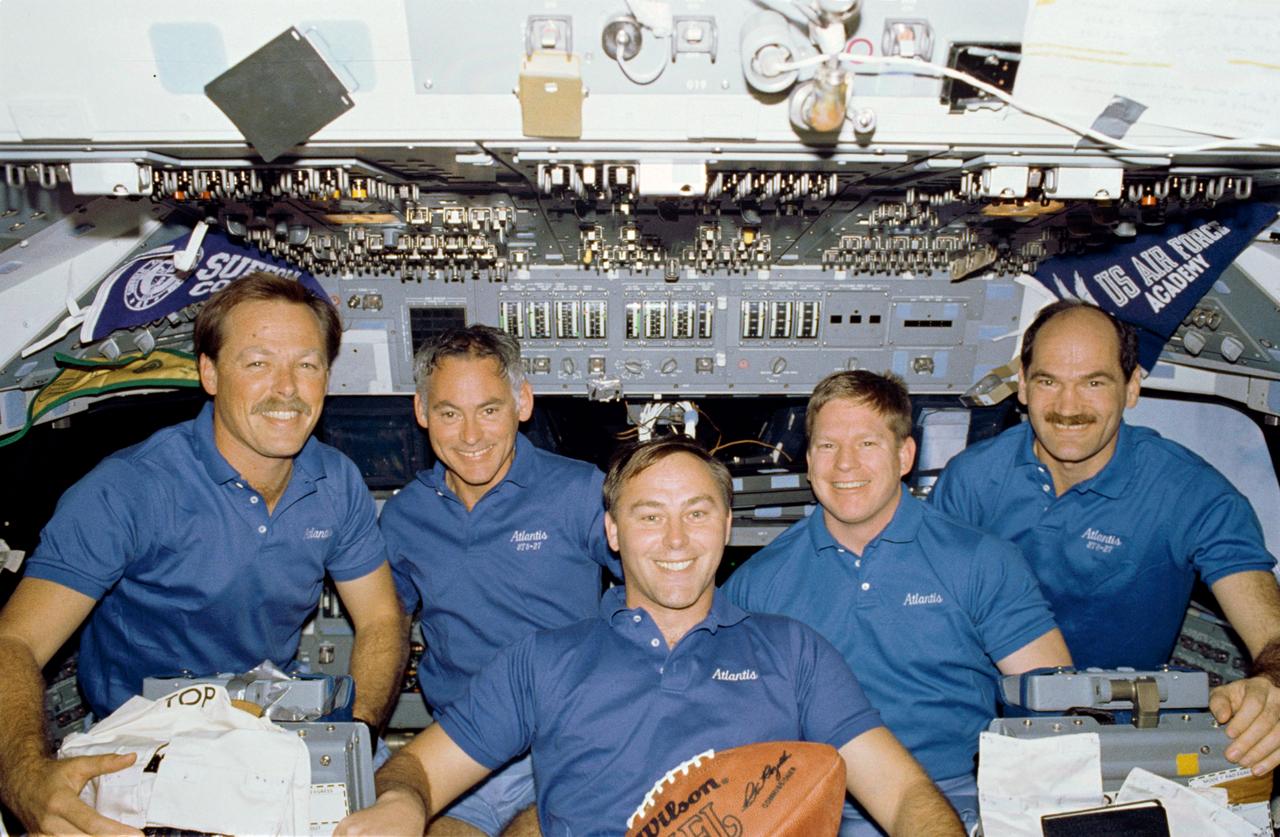
STS027-11-012 (2-6 Dec. 1988) --- The crew members for the STS-27 space flight pose on the flight deck of the Earth-orbiting space shuttle Atlantis with a football free-floating in the foreground. Left to right are astronauts Robert L. Gibson, commander; Richard M. (Mike) Mullane, Jerry L. Ross and William M. Shepherd, mission specialists; and Guy S. Gardner, pilot. The football was later presented to the National Football League (NFL) at halftime of the Super Bowl in Miami. Photo credit: NASA
STS-27 crew poses for inflight portrait on forward flight deck with football
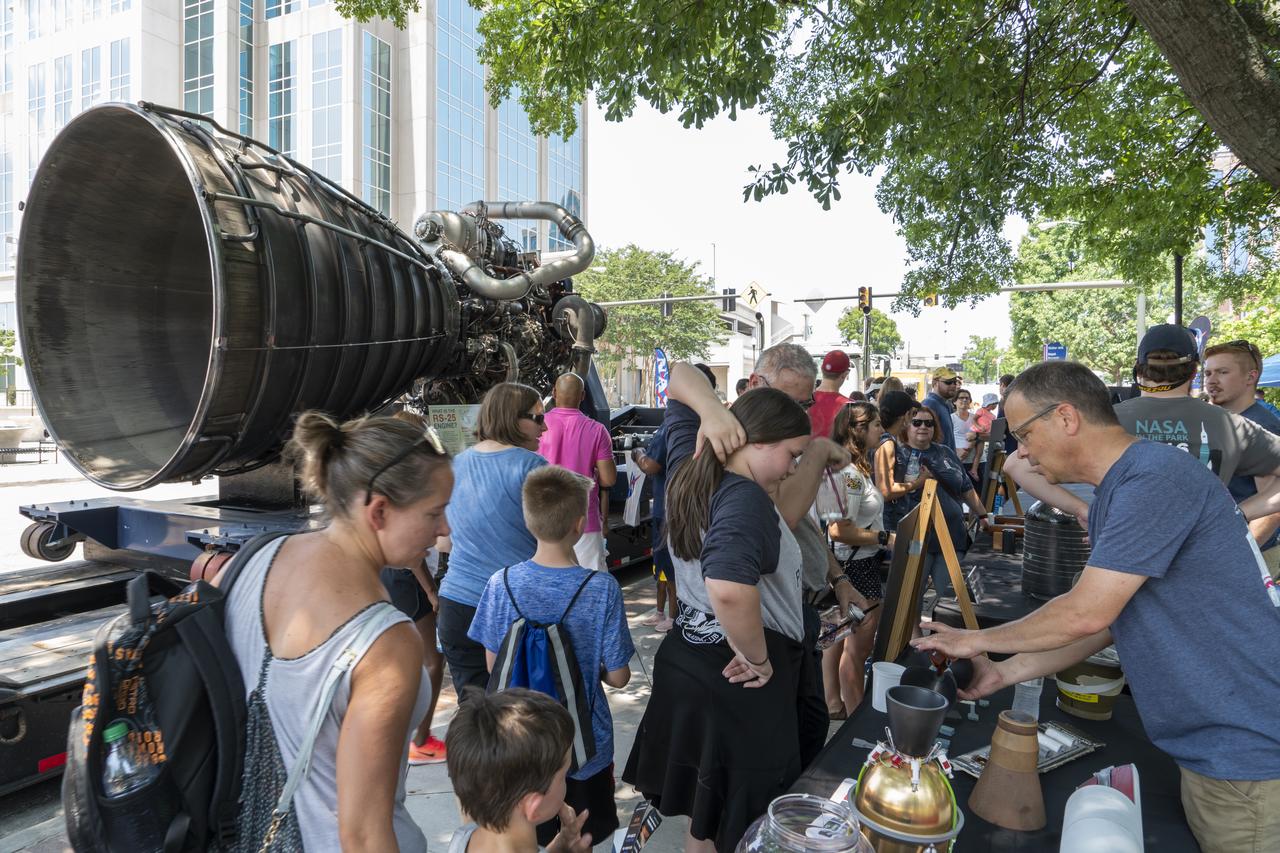
NASA's Marshall Space Flight Center showcased it's various projects for the public in Huntsville, Alabama's Big Spring Park. Exhibits were displayed by all of the various directorates of the Center with employee volunteers explaining all aspects of their projects. Adding to the festivities was the attendance of retired NASA astronaut Robert "Hoot" Gibson. With a RS-25 engine in the background, NASA employees and volunteers demonstrate NASA technology at NASA in the Park.
2018 NASA in the Park Celebration
DISCUSSING THEIR EXPERIENCES AND MEMORIES WITH THE MARSHALL TEAM AT THE 40TH ANNIVERSARY CELEBRATION OF SKYLAB JAN. 31 ARE, FROM LEFT, FORMER SKYLAB ASTRONAUTS ED GIBSON, SKYLAB 4 SCIENCE POLOT; PAUL WEITZ, SKYLAB 2 PILOT; WILLIAM POGUE, SKYLAB 4 PILOT; GERALD CARR, SKYLAB 4 COMMANDER; AND JOSEPH KERWIN, SKYLAB 2 SCIENCE PILOT
1300045
CHARLES BOLDEN NASA ADMINISTRATOR TOURING AND SPEAKING AT THE US. SPACE AND ROCKET CENTER, HUNTSVILLE, ALABAMA. ACCOMPANYING ADMINISTRATOR BOLDEN ARE DR. DEBORAH BARNHART, CEO OF THE USSARC, ROBERT LIGHTFOOT, CENTER DIRECTOR OF MARSHALL SPACE FLIGHT CENTER AND RETIRED NASA ASTRONAUT ROBERT LEE “HOOT” GIBSON, ADMINISTRATOR BOLDEN’S FIRST SPACE FLIGHT COMMANDER.
1100395
S66-65248 (November 1966) --- Five scientist-astronauts whose selection was announced by the National Aeronautics and Space Administration on June 29, 1969. Front row, left to right, are P. Curtis Michel,(physicist); Harrison H. Schmitt (astrogeologist); and Joseph F. Kerwin (physician). Back row, left to right, are Owen K. Garriott (physicist); and Edward G. Gibson (physicist). Photo credit: NASA or National Aeronautics and Space Administration
Portrait - Scientist/Astronaut Group - MSC
S84-27154 (11 Feb 1984) --- The first Space Shuttle landing on the Kennedy Space Center?s landing facility was recorded by a ground camera on February 11, 1984.  A T-38 chase plane trails the Challenger.  The nose gear has not yet touched down in this scene.  Aboard the spacecraft were Astronauts Vance D. Brand, commander; Robert L. Gibson, pilot; and Bruce McCandless II, Ronald R. McNair and Robert L. Stewart, all mission specialists.
Views of the Challenger landing at Kennedy to end shuttle mission 41-B
CHARLES BOLDEN NASA ADMINISTRATOR TOURING AND SPEAKING AT THE US. SPACE AND ROCKET CENTER, HUNTSVILLE, ALABAMA. ACCOMPANYING ADMINISTRATOR BOLDEN ARE DR. DEBORAH BARNHART, CEO OF THE USSARC, ROBERT LIGHTFOOT, CENTER DIRECTOR OF MARSHALL SPACE FLIGHT CENTER AND RETIRED NASA ASTRONAUT ROBERT LEE “HOOT” GIBSON, ADMINISTRATOR BOLDEN’S FIRST SPACE FLIGHT COMMANDER.
1100392
NASA's Marshall Space Flight Center showcased it's various projects for the public in Huntsville, Alabama's Big Spring Park. Exhibits were displayed by all of the various directorates of the Center with employee volunteers explaining all aspects of their projects. Adding to the festivities was the attendance of retired NASA astronaut Robert "Hoot" Gibson. Dr. Osborn, magician and balloon wizard, greets volunteers for NASA in the Park.
2018 NASA in the Park Celebration
 NASA's Marshall Space Flight Center showcased it's various projects for the public in Huntsville, Alabama's Big Spring Park. Exhibits were displayed by all of the various directorates of the Center with employee volunteers explaining all aspects of their projects. Adding to the festivities was the attendance of retired NASA astronaut Robert "Hoot" Gibson. Oscar the Robot greets volunteers at NASA Day in the Park.
2018 NASA in the Park Celebration