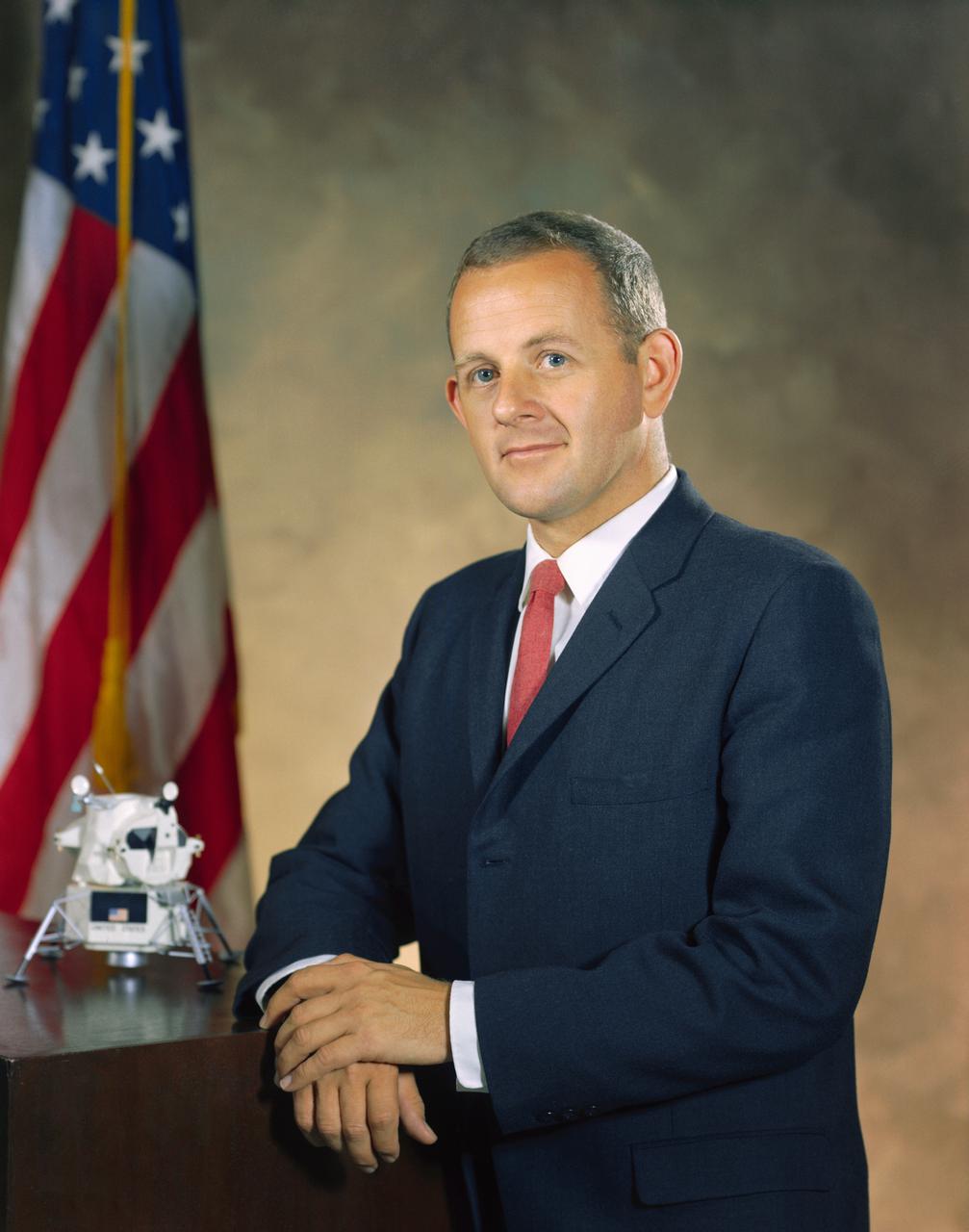
Official portrait of Philip K. Chapman
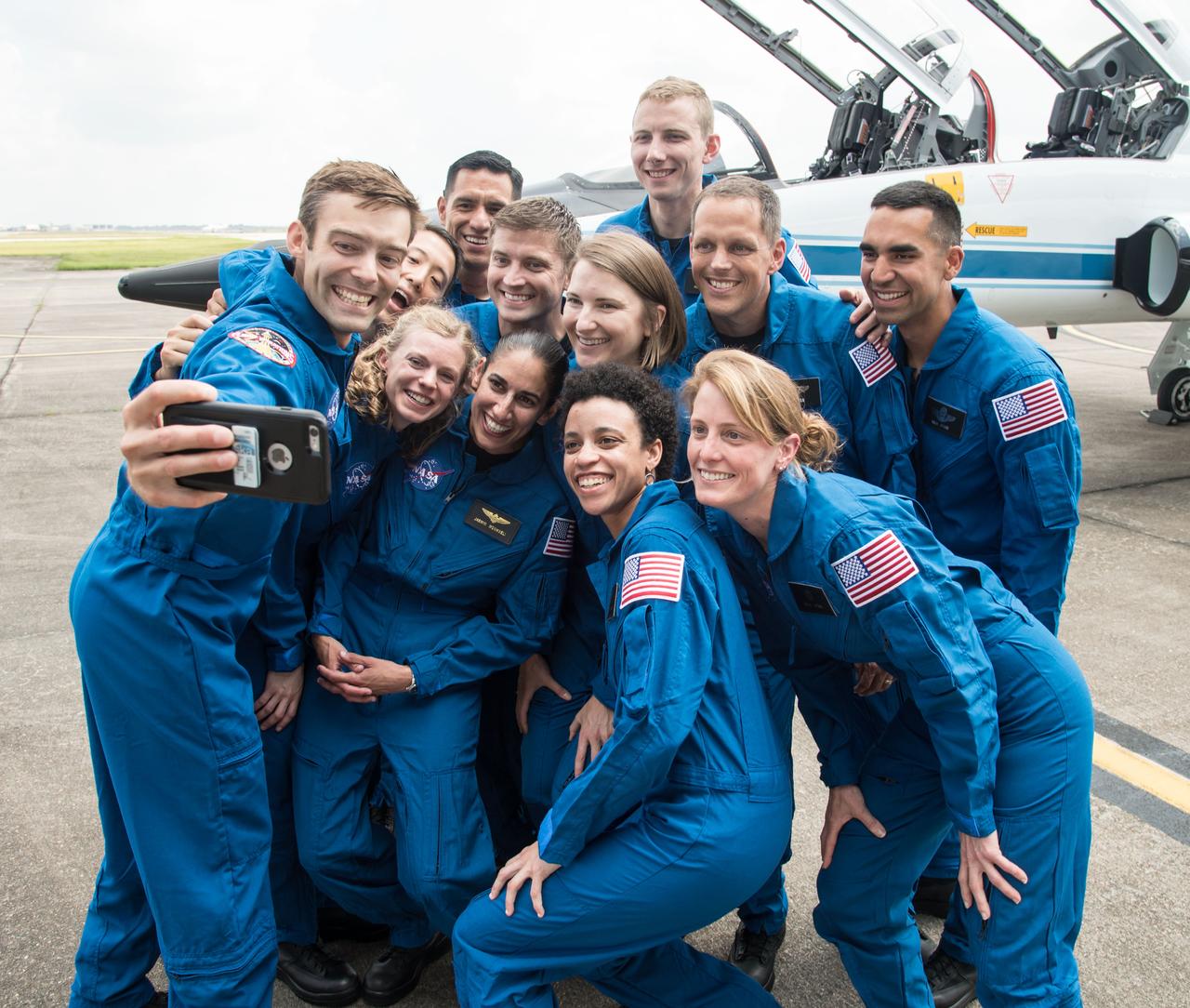
jsc2017e067273 (June 6, 2017) --- NASA’s 2017 Astronaut Candidate Class stopped for a group photo while getting fitted for flight suits at Ellington Airport near NASA’s Johnson Space Center in Houston, Texas.
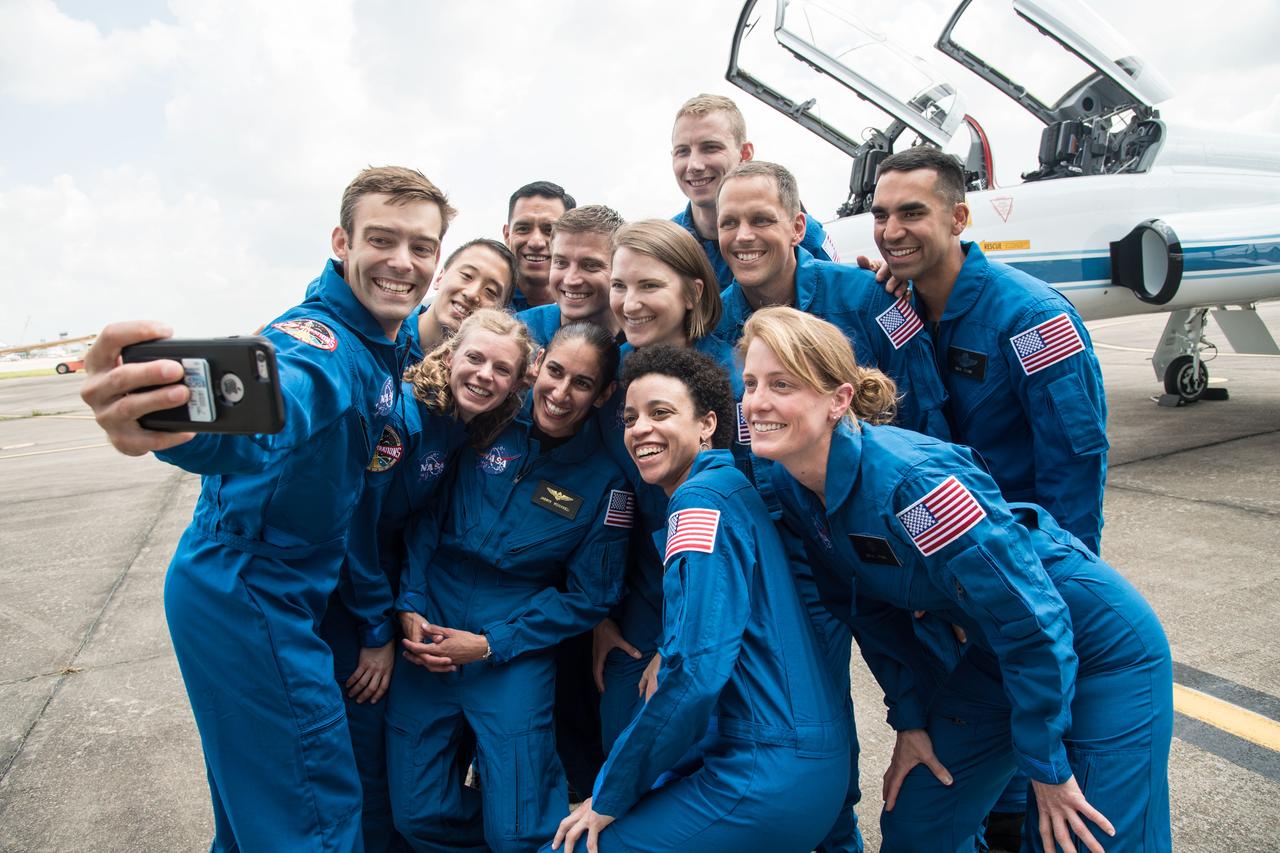
jsc2017e067274 (June 6, 2017) --- NASA’s 2017 Astronaut Candidate Class stopped for a group photo while getting fitted for flight suits at Ellington Airport near NASA’s Johnson Space Center in Houston, Texas.
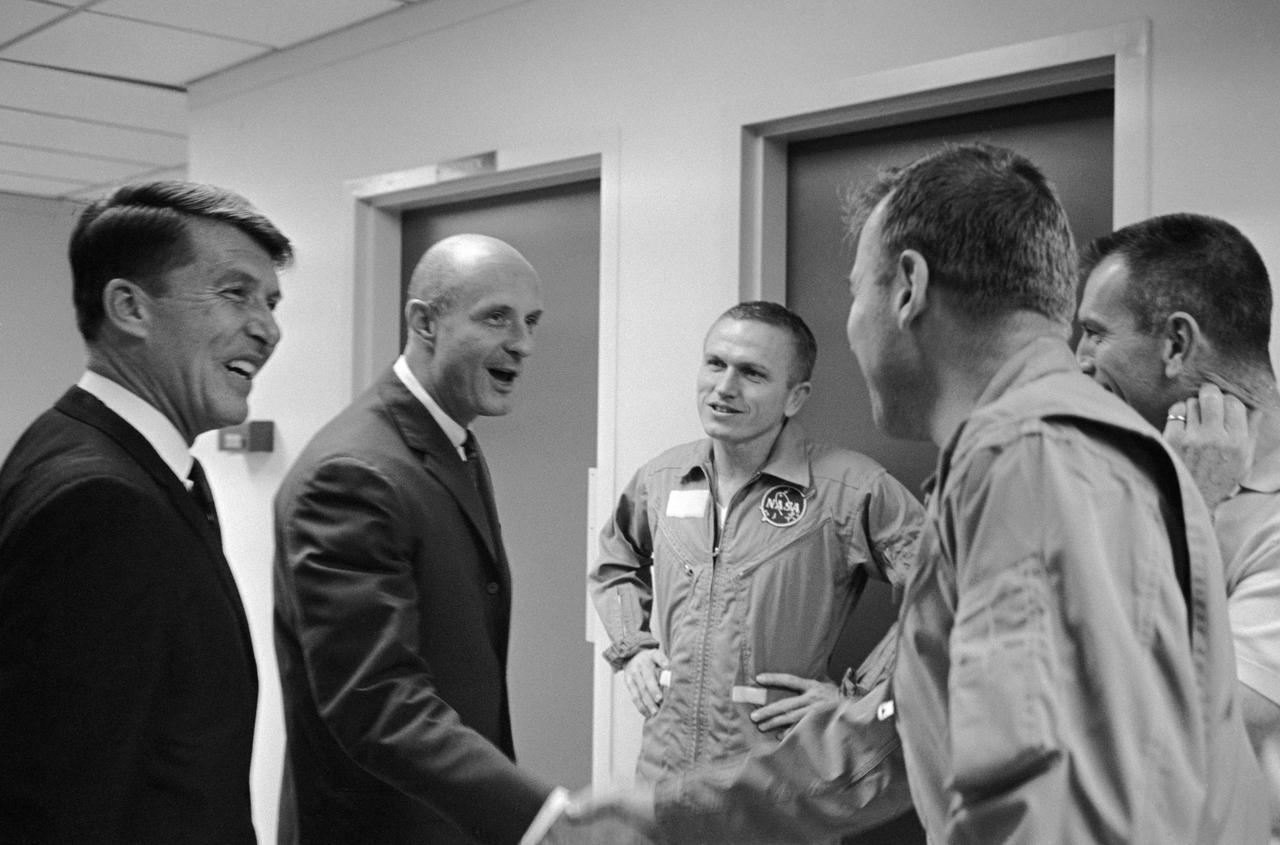
S65-66728 (19 Dec. 1965) --- This happy round of handshakes took place in the Manned Spacecraft Operations Building crew quarters, Merritt Island, as the Gemini-6 crew (left) welcomed the Gemini-7 crew back to the Kennedy Space Center. Left to right, are astronauts Walter M. Schirra Jr., Gemini-6 command pilot; Thomas P. Stafford, Gemini-6 pilot; Frank Borman, Gemini-7 command pilot; James A. Lovell Jr., Gemini-7 pilot; and Donald K. Slayton (partially hidden behind Lovell), assistant director for Flight Crew Operations, Manned Spacecraft Center, Houston. Photo credit: NASA
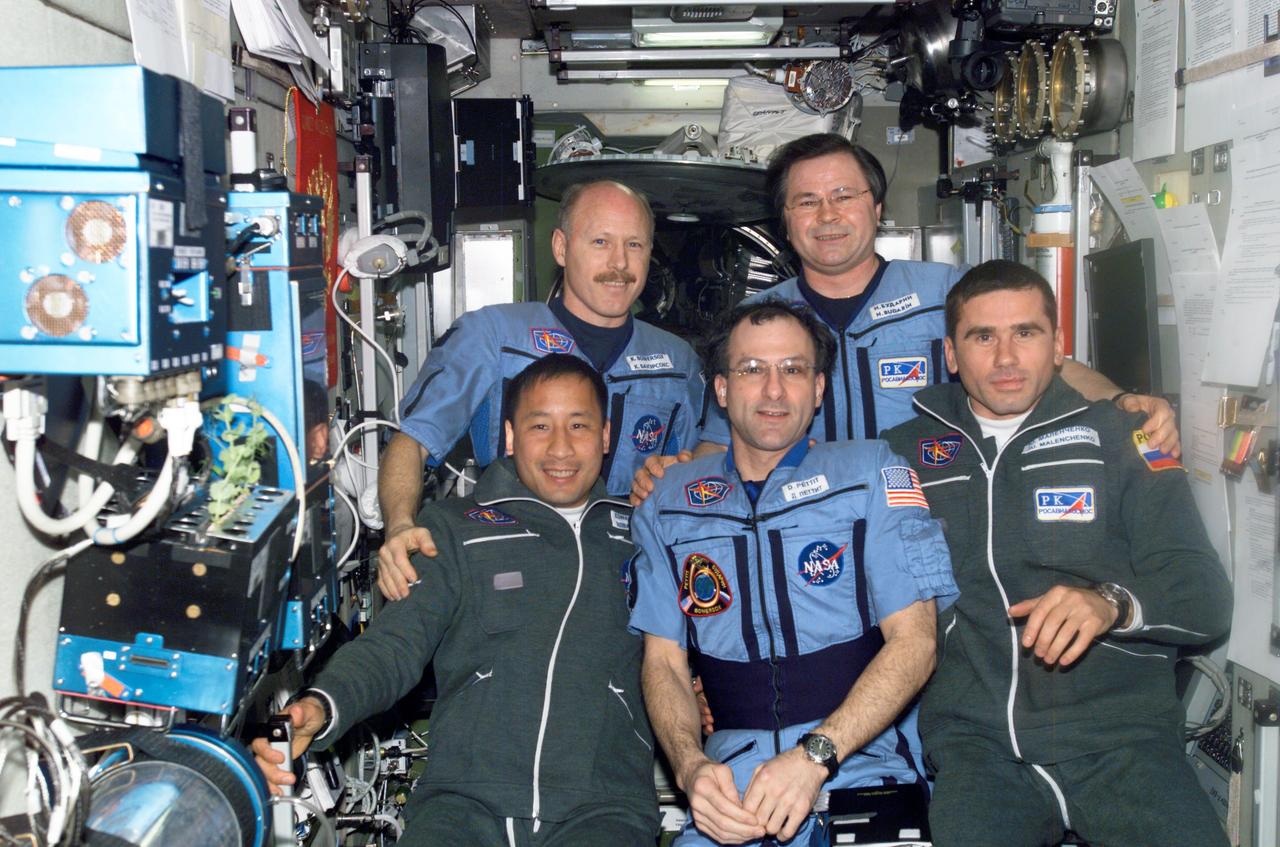
ISS006-E-50609 (28 April 2003) --- The Expedition 6 and 7 crews pose for a group photo in the Zvezda Service Module on the International Space Station (ISS). From the left (front row) are astronauts Edward T. Lu, Expedition 7 NASA ISS science officer and flight engineer; Donald R. Pettit, Expedition 6 NASA ISS science officer; and cosmonaut Yuri I. Malenchenko, Expedition 7 mission commander. From the left (back row) are astronaut Kenneth D. Bowersox, Expedition 6 mission commander, and cosmonaut Nikolai M. Budarin, Expedition 6 flight engineer. Budarin and Malenchenko represent Rosaviakosmos.
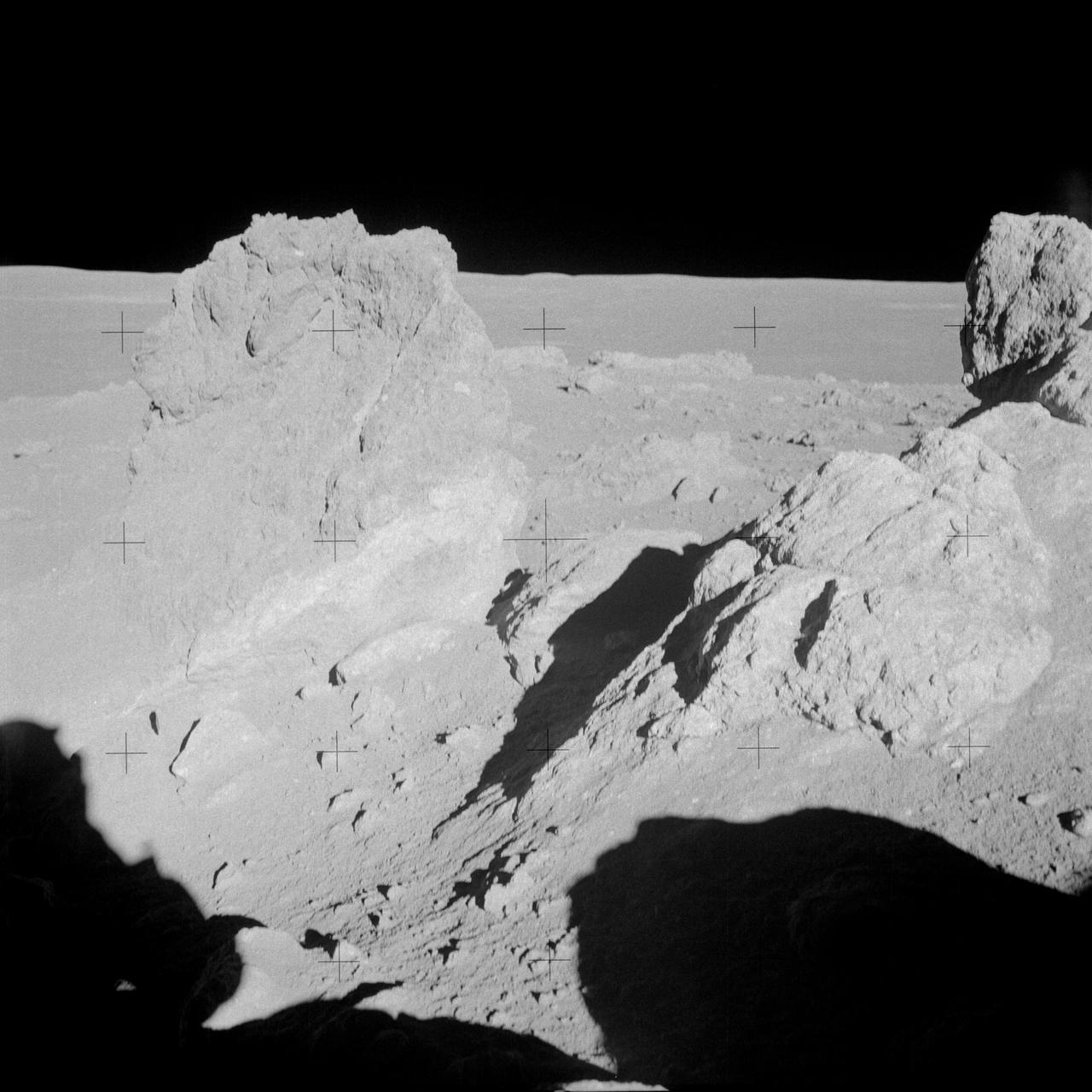
AS14-68-9449 (6 Feb. 1971) --- A close-up view of a group of large boulders near the rim of Cone Crater photographed by the Apollo 14 astronauts during their second extravehicular activity (EVA). While astronauts Alan B. Shepard Jr., commander, and Edgar D. Mitchell, lunar module pilot, descended in the LM to explore the moon, astronaut Stuart A. Roosa, command module pilot, remained with the Command and Service Modules (CSM) in lunar orbit.
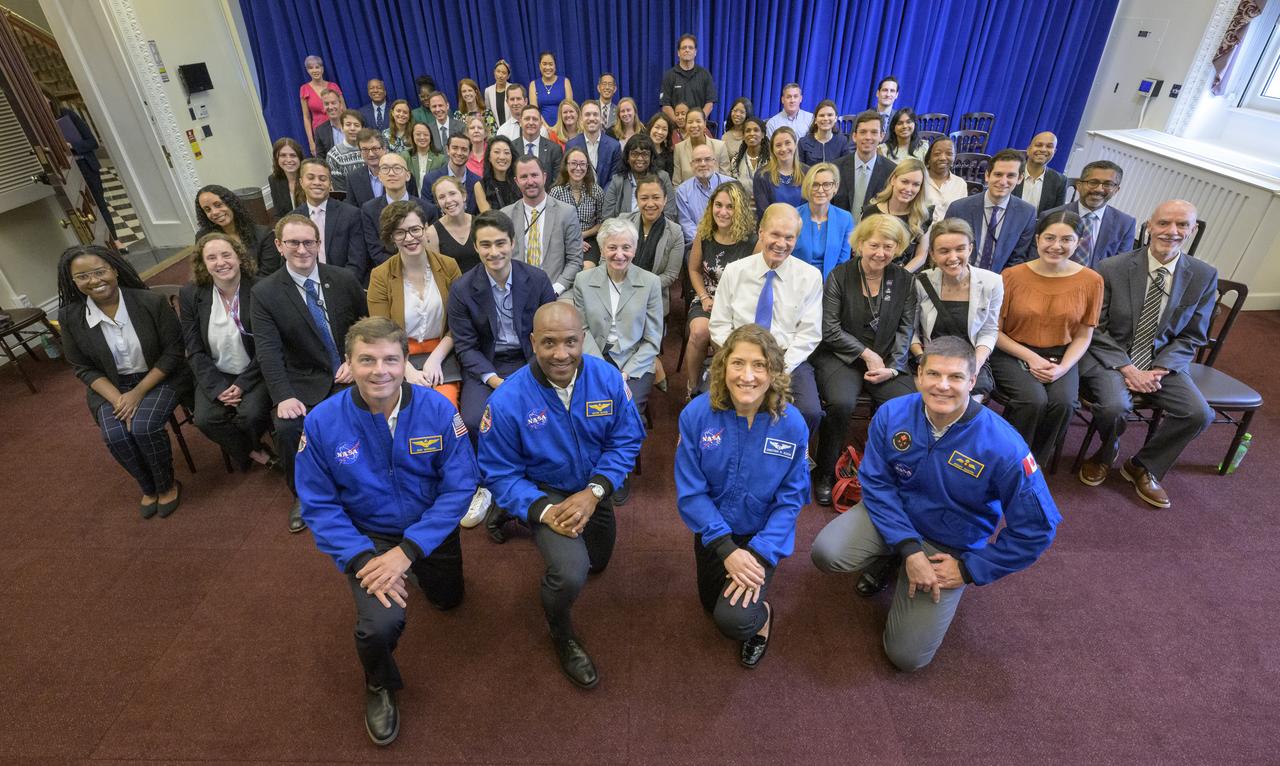
The Artemis II crew, NASA astronauts Reid Wiseman, left, Victor Glover, Christina Koch, and Canadian Space Agency (CSA) astronaut Jeremy Hansen, right, pose for a group photograph with White House staff after a briefing, Thursday, June 6, 2024, at the Eisenhower Executive Office Building in Washington. Photo Credit: (NASA/Bill Ingalls)
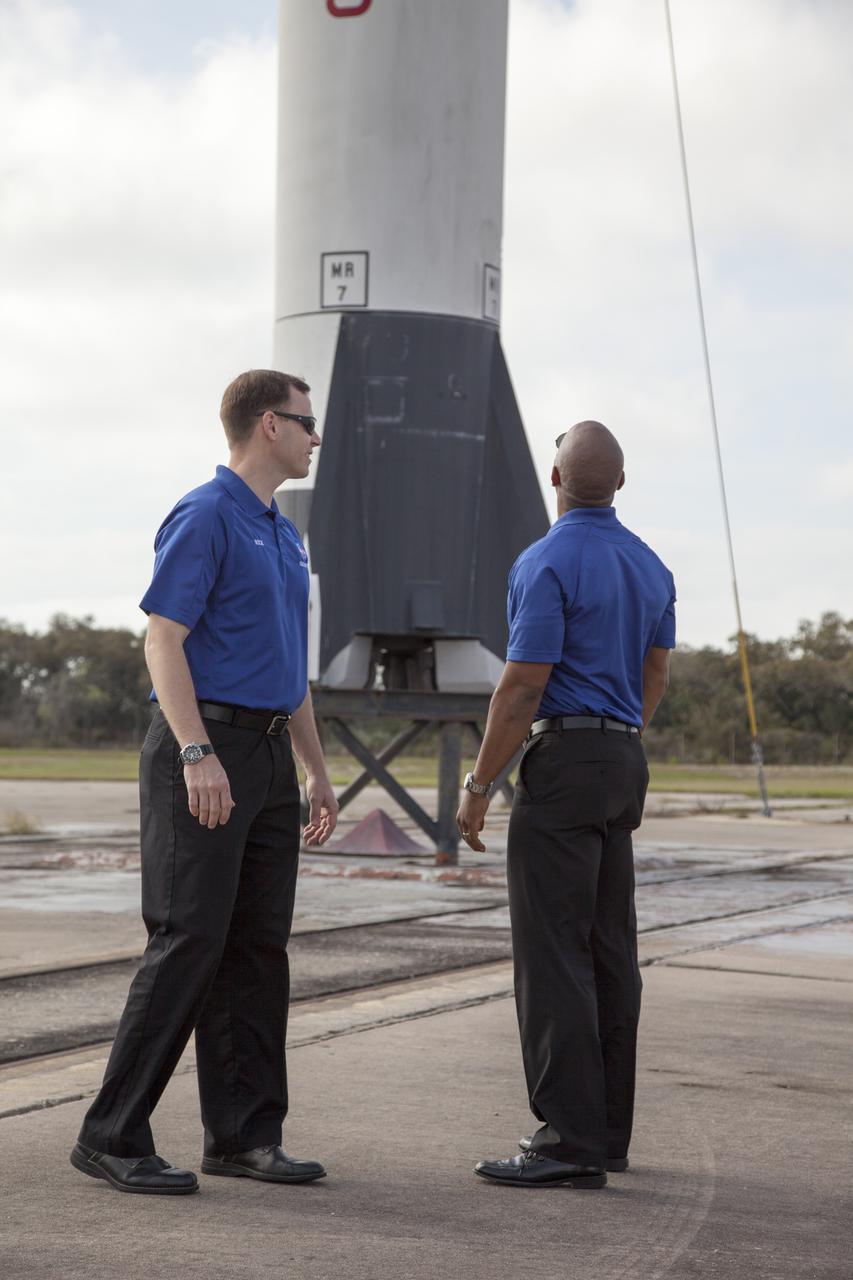
CAPE CANAVERAL, Fla. – NASA astronaut candidates Tyler "Nick" Hague, left, and Victor Glover visit Complex 5/6 at Cape Canaveral Air Force Station in Florida, adjacent to NASA's Kennedy Space Center. The launch pad is the place where Mercury astronaut Alan Shepard lifted off in 196 to become America's first man in space. The astronaut class of 2013 was selected by NASA after an extensive year-and-a-half search. The new group will help the agency push the boundaries of exploration and travel to new destinations in the solar system. To learn more about the astronaut class of 2013, visit: http://www.nasa.gov/astronauts/2013astroclass.html Photo credit: NASA/Frankie Martin
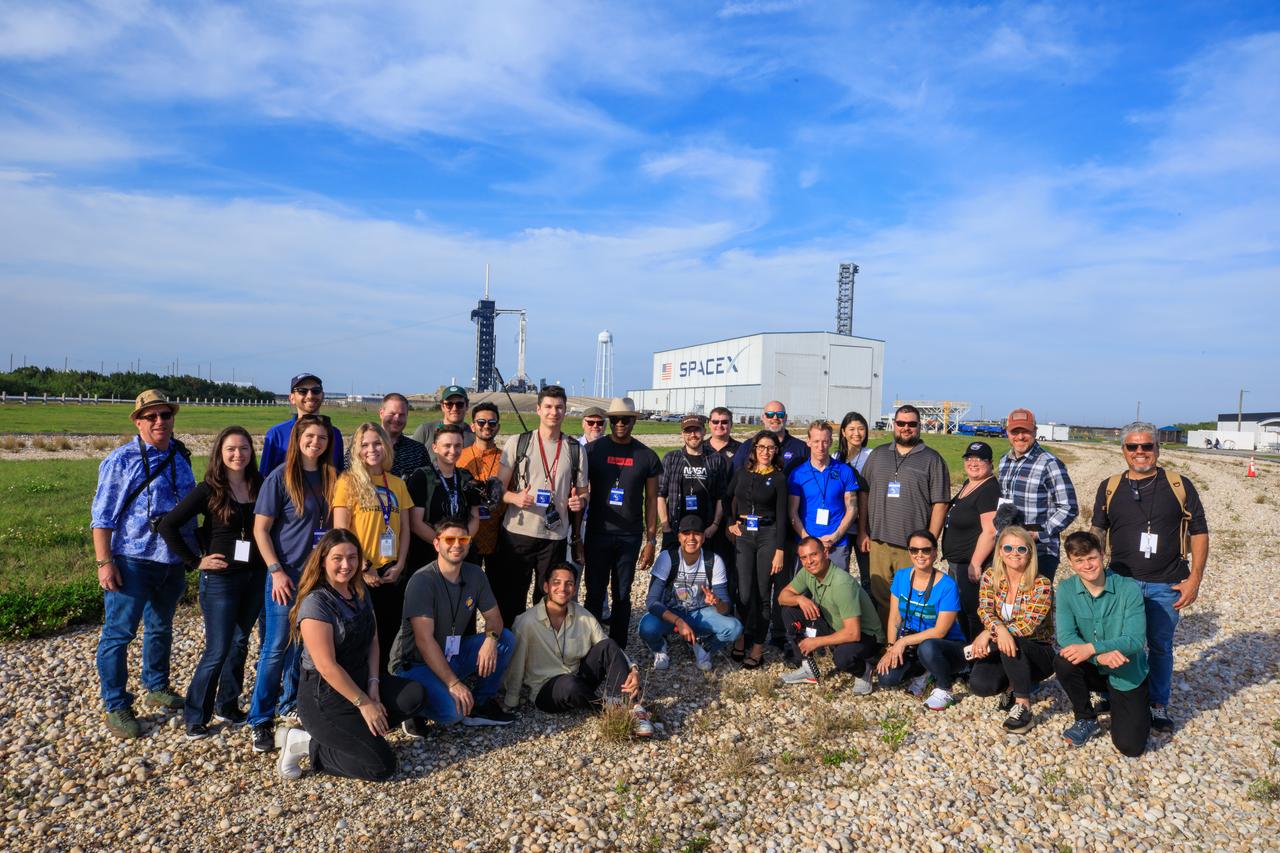
Digital content creators pause for a group photo on the crawlerway leading to Launch Complex 39A at NASA’s Kennedy Space Center in Florida during a NASA Social event on Feb. 24, 2023 for the SpaceX Crew-6 launch. The SpaceX Falcon 9 rocket, carrying the Dragon spacecraft Endeavour for NASA’s Crew-6 mission to the International Space Station lifted off at 12:34 a.m. EST on March 2, 2023, carrying NASA astronauts Stephen Bowen, spacecraft commander, and Warren Hoburg, pilot, along with mission specialists Sultan Alneyadi, UAE (United Arab Emirates) astronaut, and Andrey Fedyaev, Roscosmos cosmonaut. Crew-6 was the sixth crew rotation mission with SpaceX to the station, and the seventh flight of Dragon with people as part of the agency’s Commercial Crew Program.
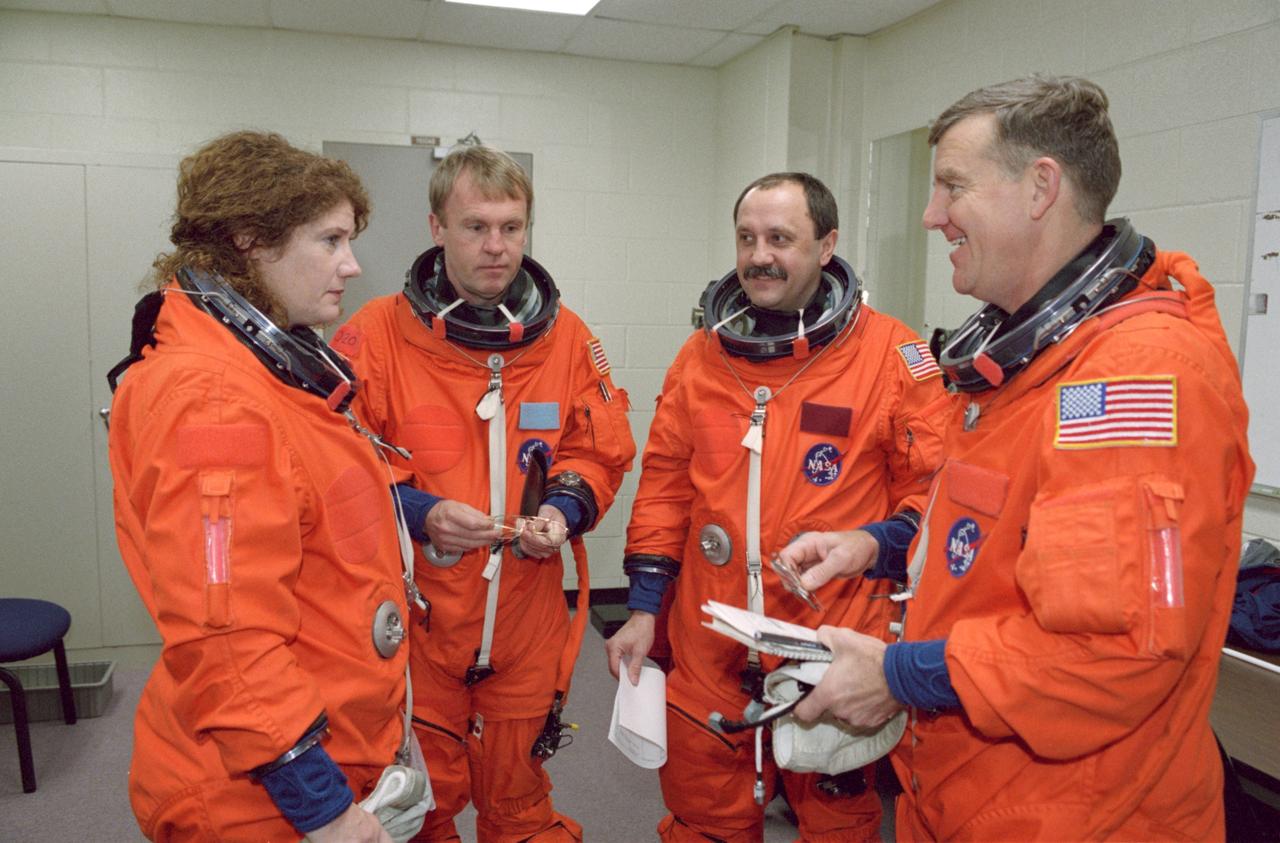
JSC2000-07449 (6 December 2000) --- Astronaut Andrew S.W. Thomas (second left), STS-102 mission specialist, chats with the Expedition Two crew members prior to a simulation exercise in the Systems Integration Facility at the Johnson Space Center. The station crew members are, from left, astronaut Susan J. Helms, cosmonaut Yury V. Usachev and astronaut James S. Voss. Usachev is commander for the second station crew, which will replace the initial group onboard the outpost. The three station crew members will accompany the STS-102 crew aboard the Space Shuttle Discovery to the outpost in March of next year.
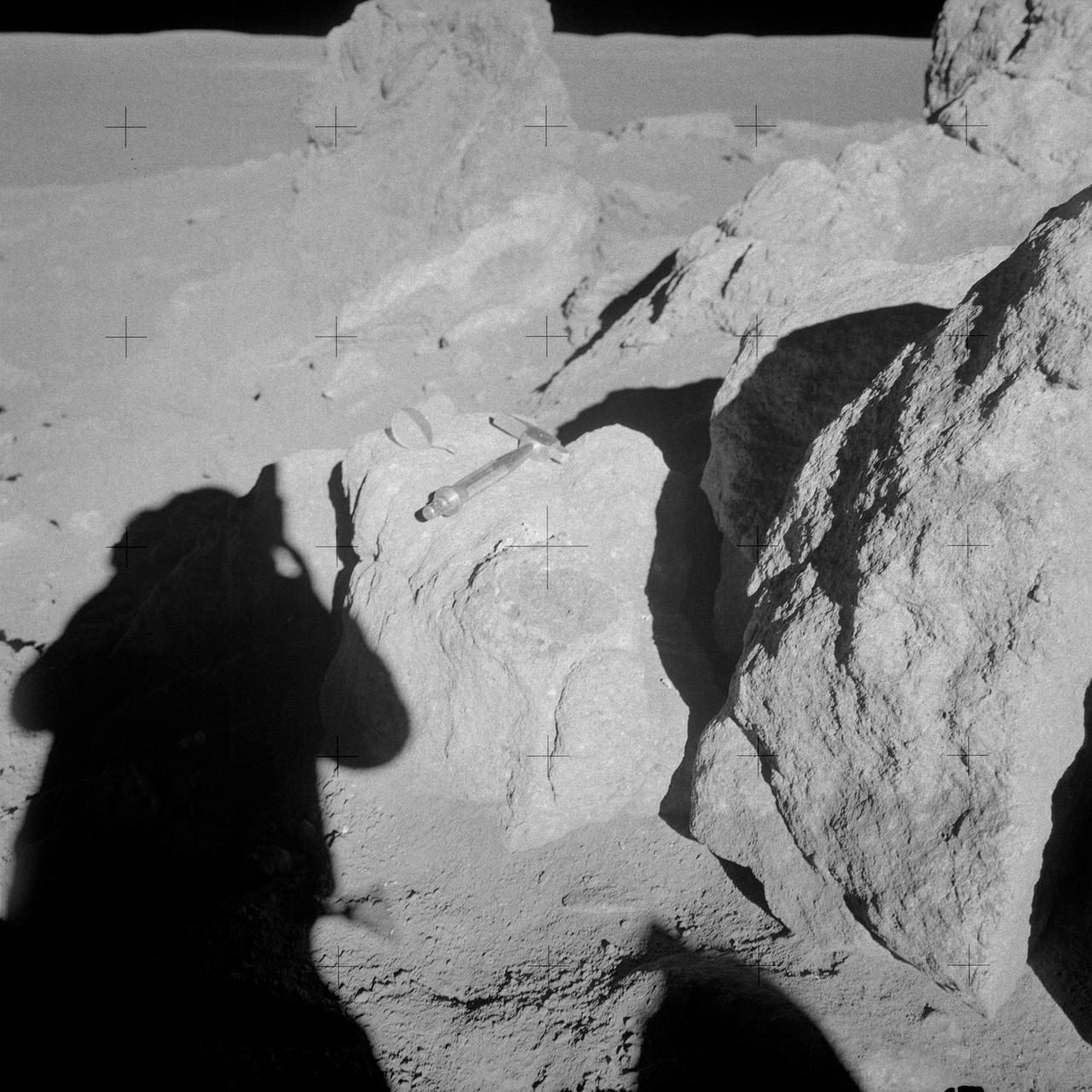
AS14-68-9453 (6 Feb. 1971) --- Astronaut Edgar D. Mitchell, lunar module pilot, whose shadow is in the foreground, photographs a group of large boulders near the rim of Cone Crater. An interesting feature is the white and brown rock in the boulder. Mitchell removed a sample where the hammer is lying. While astronauts Alan B. Shepard Jr., commander, and Mitchell descended in the Lunar Module (LM) "Antares" to explore the Fra Mauro region of the moon, astronaut Stuart A. Roosa, command module pilot, remained with the Command and Service Modules (CSM) "Kitty Hawk" in lunar orbit.
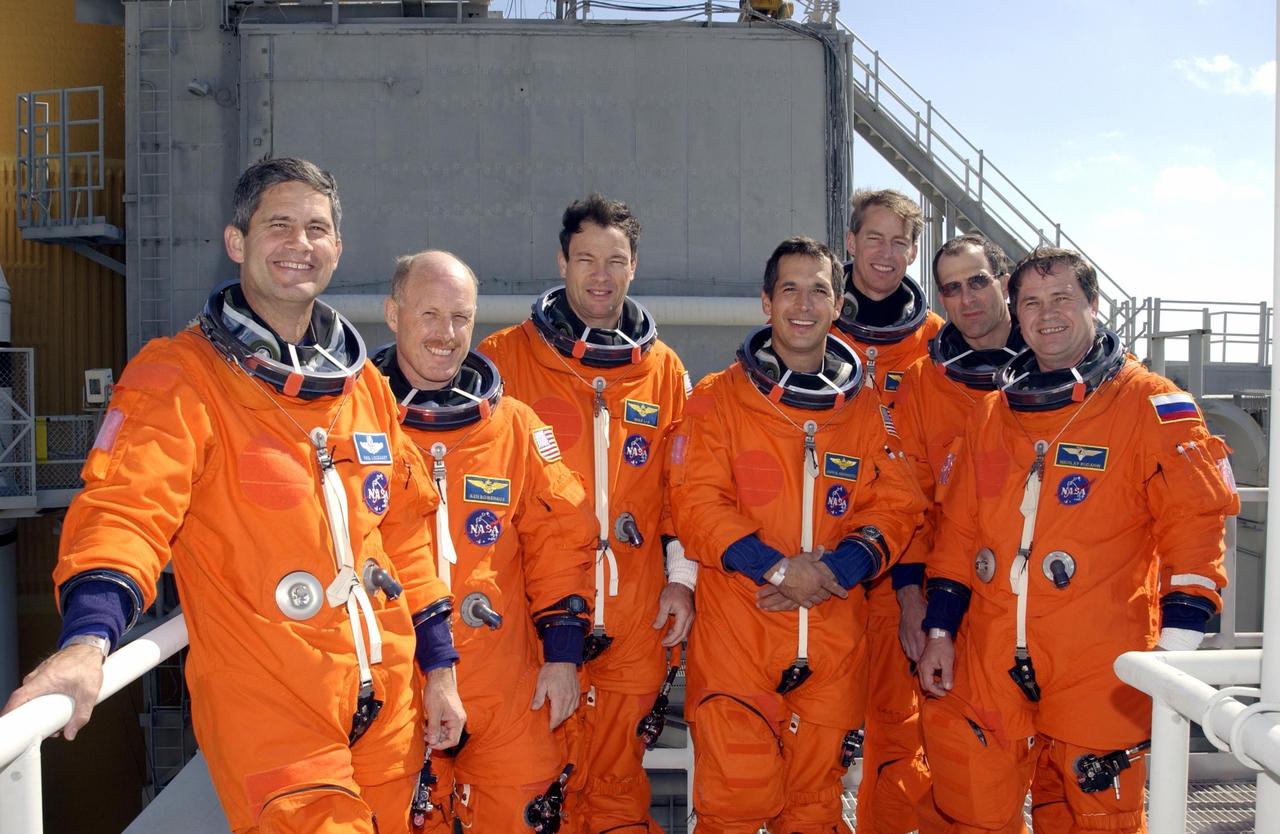
KENNEDY SPACE CENTER, FLA. -- The crews of Mission STS-113 gather for a group photograph on the 195-foot level of the Fixed Service Structure on Launch Pad 39A. From left are STS-113 Pilot Paul Lockhart; Expedition 6 Commander Ken Bowersox; STS-113 Mission Specialists Michael Lopez-Alegria and John Herrington, and Commander James Wetherbee; Expedition 6 astronaut Donald Pettit and cosmonaut Nikolai Budarin. They have been participating in emergency egress training, part of Terminal Countdown Demonstration Test activities in preparation for their launch. The 16th assembly flight to the International Space Station, STS-113 will carry the Port 1 (P1) truss aboard Space Shuttle Endeavour, as well as Expedition 6, who will replace Expedition 5 on the Station. The mission is scheduled to launch Nov. 10, 2002.
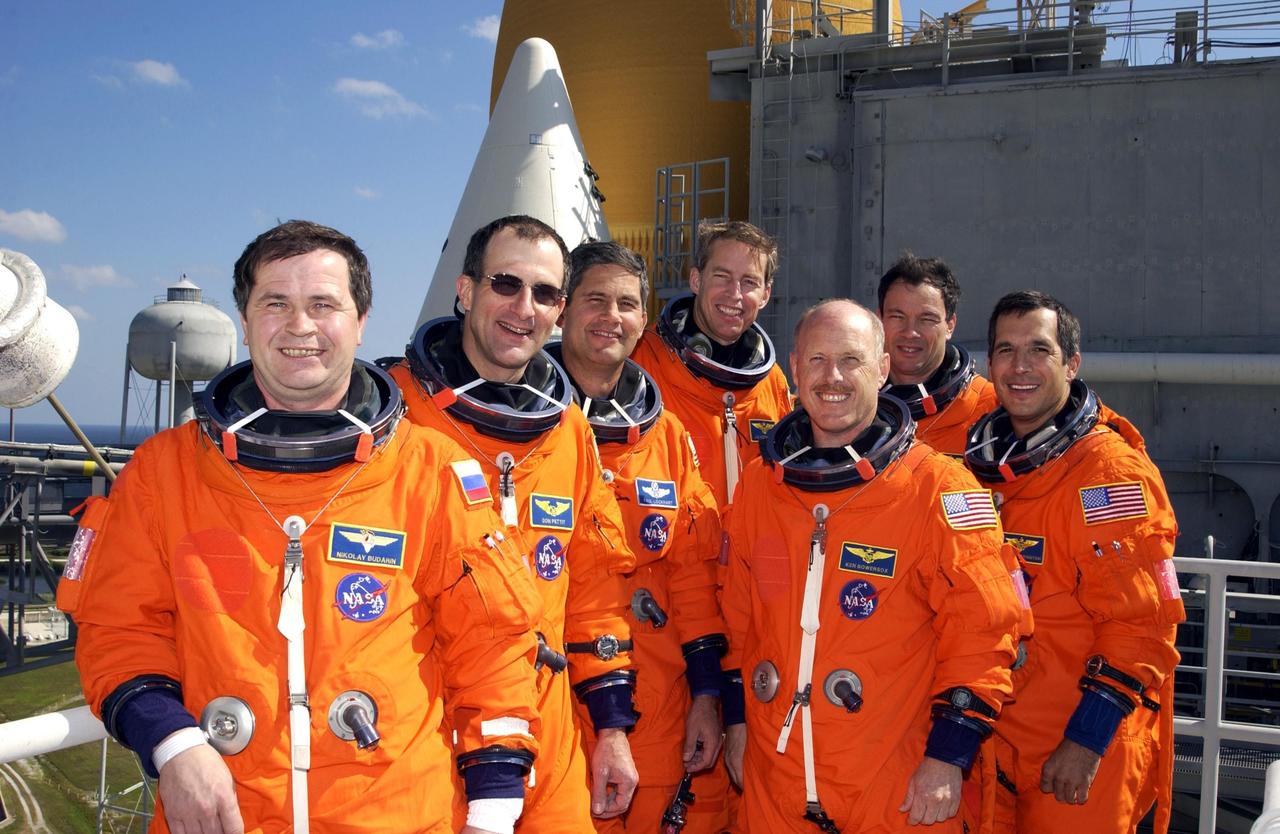
KENNEDY SPACE CENTER, FLA. -- The crews of Mission STS-113 gather for a group photograph on the 195-foot level of the Fixed Service Structure on Launch Pad 39A. From left are Expedition 6 cosmonaut Nikolai Budarin and astronaut Donald Pettit; STS-113 Pilot Paul Lockhart and Commander James Wetherbee; Expedition 6 Commander Ken Bowersox; STS-113 Mission Specialists Michael Lopez-Alegria and John Herrington. They have been participating in emergency egress training, part of Terminal Countdown Demonstration Test activities in preparation for their launch. The 16th assembly flight to the International Space Station, STS-113 will carry the Port 1 (P1) truss aboard Space Shuttle Endeavour, as well as Expedition 6, who will replace Expedition 5 on the Station. The mission is scheduled to launch Nov. 10, 2002.
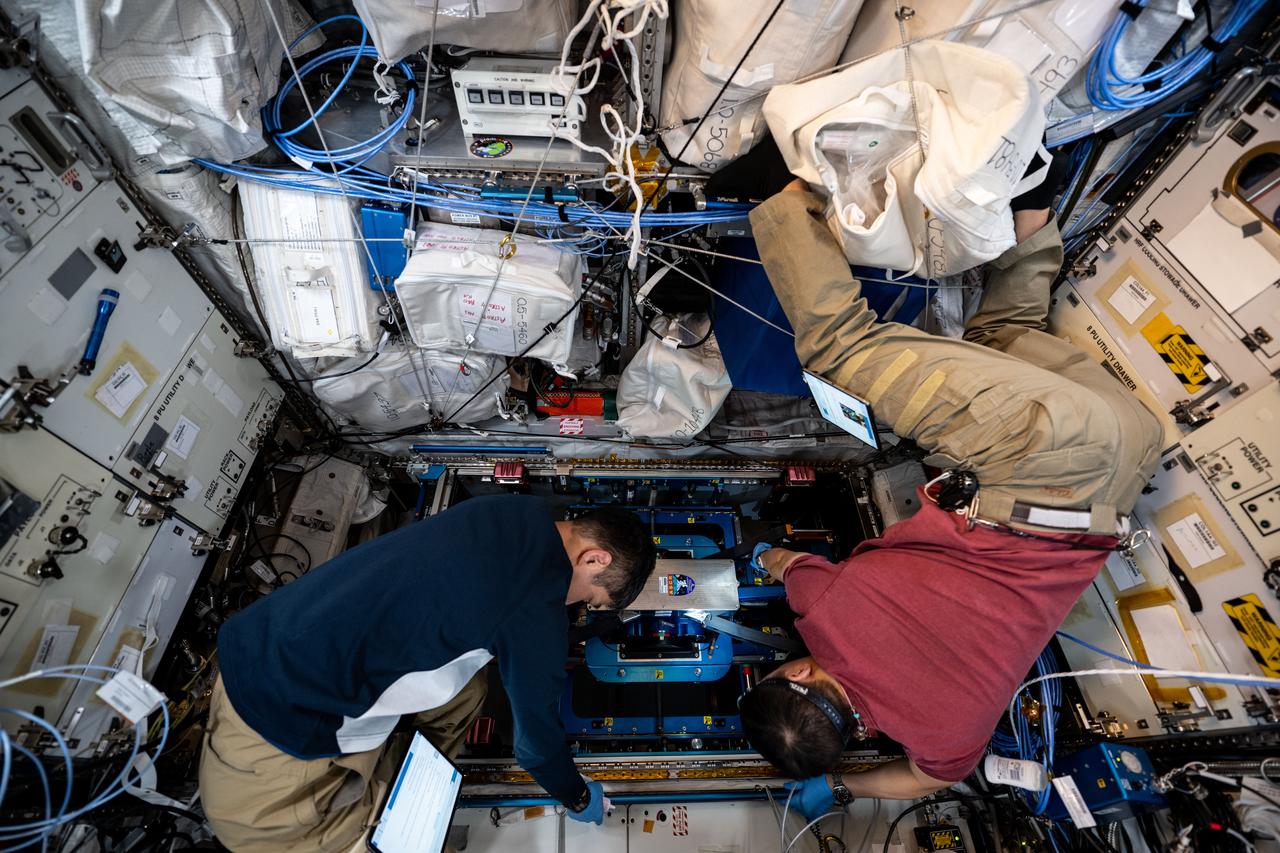
iss073e0177115 (6/9/2025) --- NASA astronaut Jonny Kim and JAXA (Japan Aerospace Exploration Agency) astronaut Takuya Onishi work on a vibration isolation system for the new European Enhanced Exploration Exercise Device (E4D) on the International Space Station. The E4D combines resistive and aerobic capabilities in a small footprint, important for future long-term exploration missions. Once the device is operating, researchers plan to acquire and evaluate data on its function and feedback from multiple crew members. The system adds new exercises to the current portfolio, such as targeting muscle groups essential for activities like leaving a spacecraft after landing.
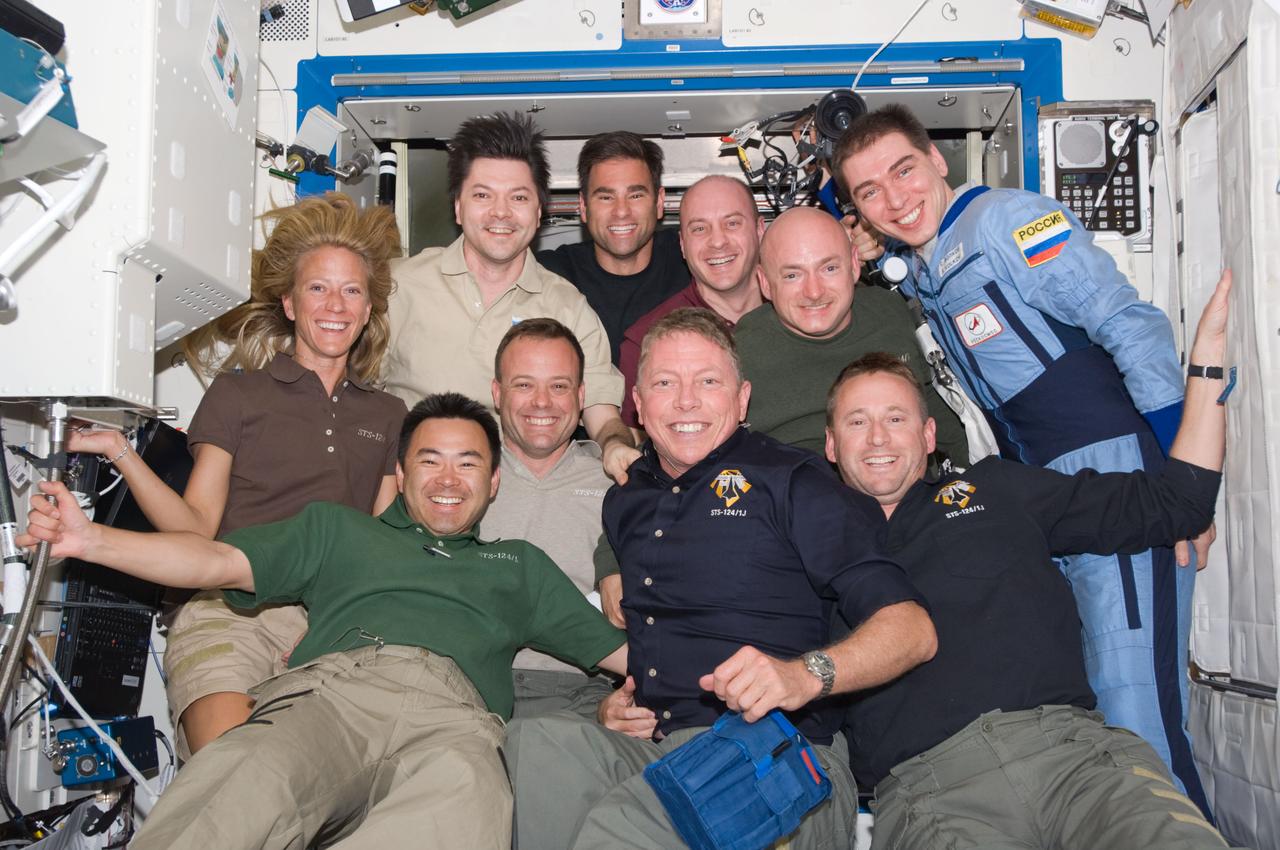
S124-E-007004 (6 June 2008) --- The STS-124 and Expedition 17 crewmembers pose for a group portrait in the Destiny laboratory of the International Space Station while Space Shuttle Discovery is docked with the station. From the left (front row) are NASA astronaut Karen Nyberg, Japan Aerospace Exploration Agency astronaut Akihiko Hoshide, NASA astronauts Ron Garan, Mike Fossum, all STS-124 mission specialists; and Ken Ham, STS-124 pilot. From the left (back row) are Russian Federal Space Agency cosmonaut Oleg Kononenko, NASA astronaut Greg Chamitoff, both Expedition 17 flight engineers; astronaut Garrett Reisman, STS-124 mission specialist; Mark Kelly, STS-124 commander; and Russian Federal Space Agency cosmonaut Sergei Volkov, Expedition 17 commander. Reisman, who joined the station's crew in March, is being replaced by Chamitoff, who arrived at the station with the STS-124 crew.
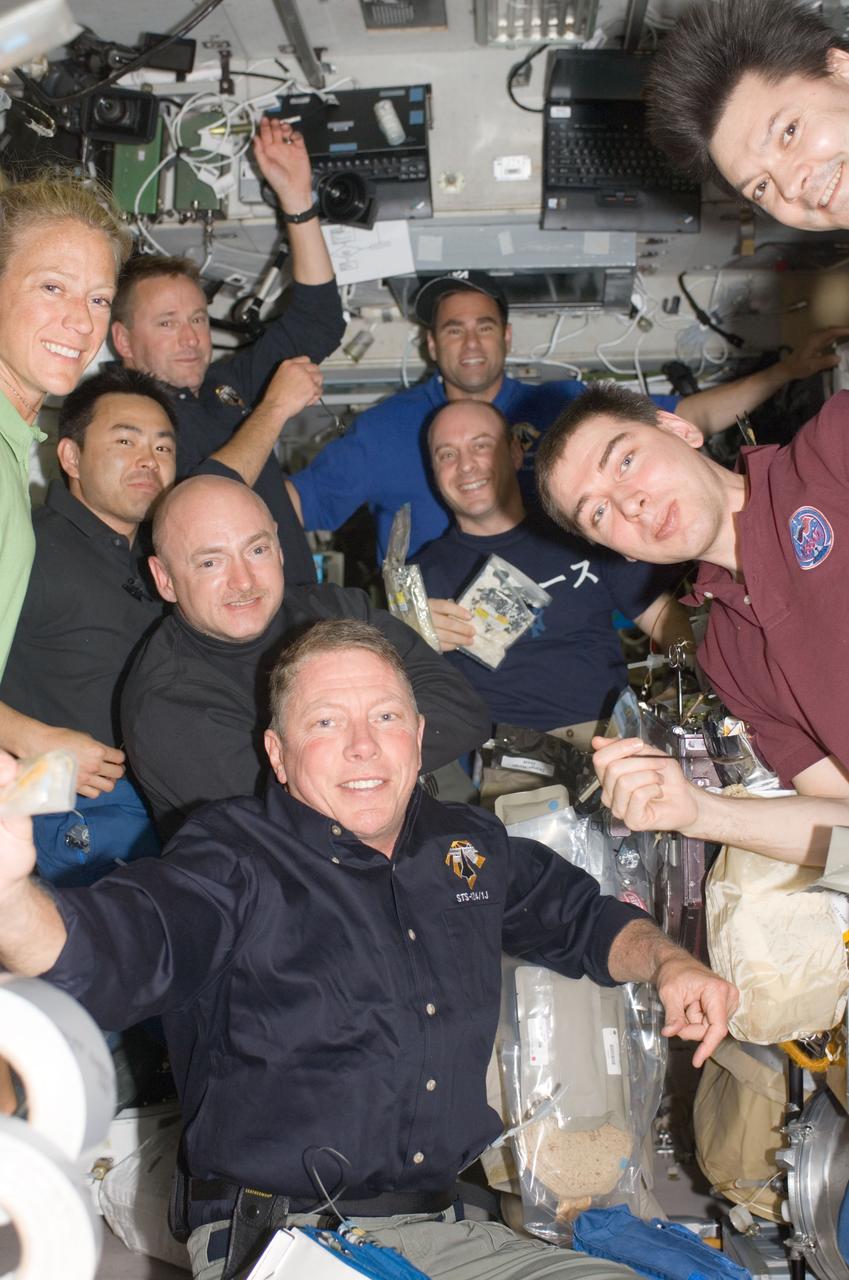
S124-E-006671 (6 June 2008) --- Nine of ten astronauts and cosmonauts currently sharing work on the International Space Station squeeze into an informal group portrait during mealtime on the Zvezda service module. Astronaut Mike Fossum, STS-124 mission specialist, is in center foreground. Pictured clockwise from his position are astronauts Mark Kelly, shuttle commander; Akihiko Hoshide, mission specialist; Karen Nyberg, mission specialist; Ken Ham, pilot; and Greg Chamitoff, Expedition 17 flight engineer; along with cosmonauts Oleg Kononenko, station flight engineer; and Sergei Volkov, station commander; and astronaut Garrett Reisman, STS-124 mission specialist. Not pictured is astronaut Ron Garan, STS-124 mission specialist.
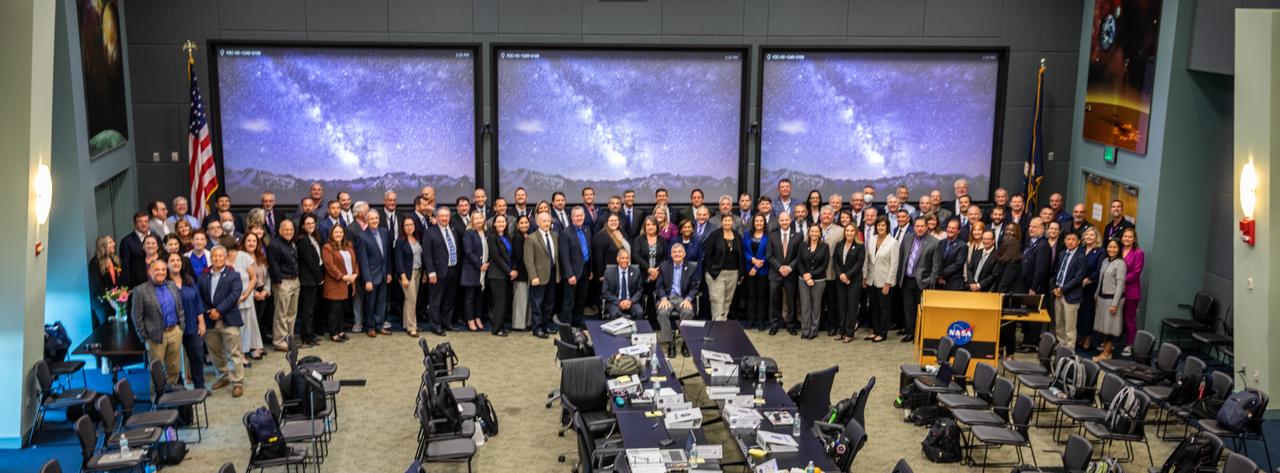
NASA, Boeing, and United Launch Alliance leadership gather for a group photo on Thursday, April 25, 2024, at the agency’s Kennedy Space Center in Florida on the second and final day of a Flight Test Readiness Review for the agency’s Boeing Crew Flight Test to the International Space Station. As part of the agency’s Commercial Crew Program, NASA astronauts Butch Wilmore and Suni Williams are the first to launch aboard Boeing’s Starliner spacecraft atop an Atlas V rocket from Space Launch Complex-41 at Cape Canaveral Space Force Station in Florida. Liftoff is scheduled for 10:34 p.m. ET on Monday, May 6.
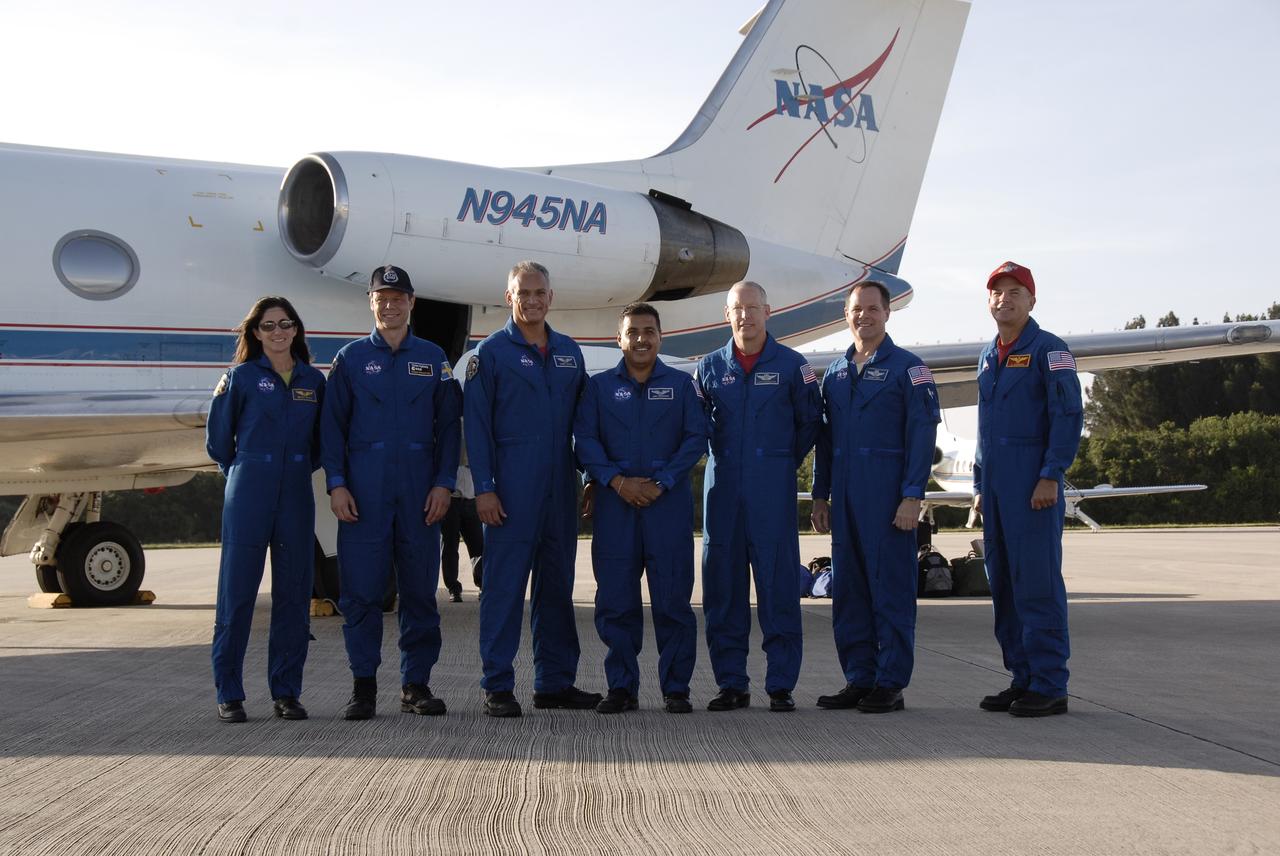
CAPE CANAVERAL, Fla. – The astronauts for space shuttle Discovery’s STS-128 mission pose for a group portrait following their arrival at Kennedy Space Center’s Shuttle Landing Facility at 6:34 p.m. EDT in a NASA Shuttle Training Aircraft. From left are Mission Specialists Nicole Stott who will remain on the International Space Station as flight engineer for Expedition 20, Swedish astronaut Christer Fuglesang of the European Space Agency, John "Danny" Olivas, Jose Hernandez, and Patrick Forrester; Pilot Kevin Ford; and Commander Rick Sturckow. The crew has returned to Kennedy to prepare for launch on Aug. 25 at 1:36 a.m. EDT. The 13-day mission will deliver a new crew member and 33,000 pounds of equipment to the International Space Station. The equipment includes science and storage racks, a freezer to store research samples, a new sleeping compartment and the COLBERT treadmill. Photo credit: NASA/Kim Shiflett
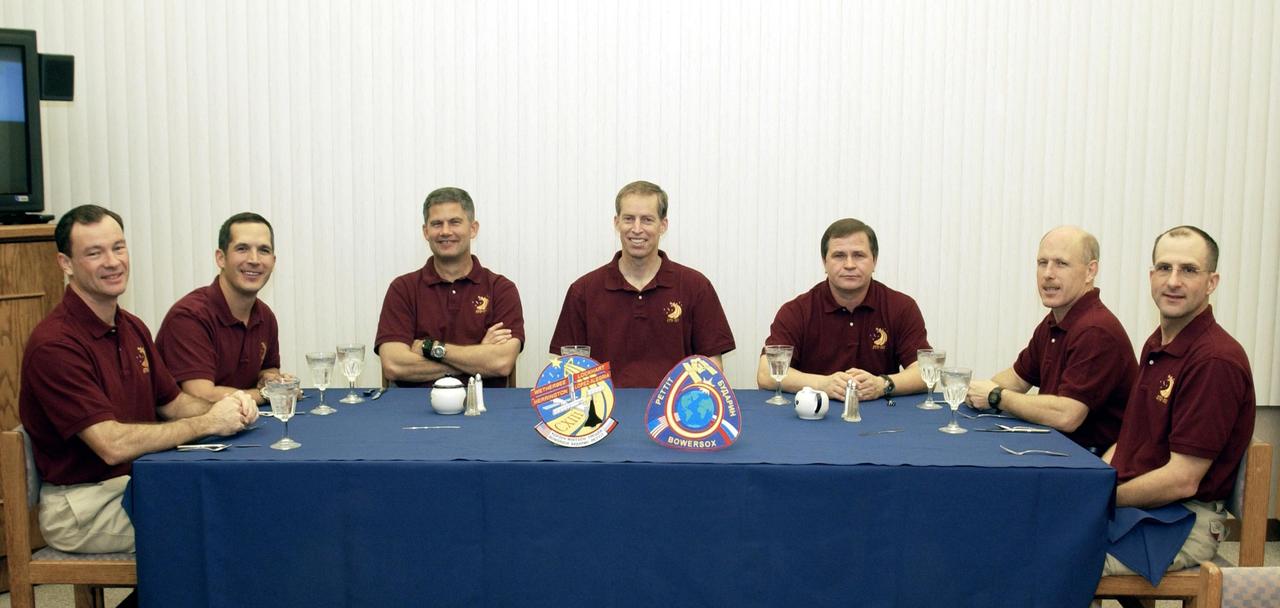
KENNEDY SPACE CENTER, FLA. -- The STS-113 crew pause after a meal for a group photo. From left are Mission Specialists Michael Lopez-Alegria and John Herrington, Pilot Paul Lockhart and Commander James Wetherbee; plus the Expedition 6 crew, Nikolai Budarin, Commander Ken Bowersox and Donald Pettit. On mission STS-113, the astronauts will deliver the Port 1 (P1) Integrated Truss Structure to the International Space Station. During the seven days Endeavour will be docked to the Station, three spacewalks will be performed dedicated to connecting the P1 truss to the port side of the S0 truss, already in place on the Station. This mission marks the 16th Shuttle flight to the International Space Station and the fifth Shuttle mission this year. Mission STS-113 is the 19th flight of the orbiter Endeavour and the 112th flight overall in NASA's Space Shuttle program.

KENNEDY SPACE CENTER, FLA. -- Dressed in their launch and entry suits, the space shuttle Atlantis STS-122 crew poses for a group portrait in front of the astronaut van as they leave the Operations and Checkout Building for Launch Pad 39A. From left are Mission Specialists Leopold Eyharts, Stanley Love, Hans Schlegel, Rex Walheim, and Leland Melvin; Pilot Alan Poindexter; and Commander Steve Frick. Eyharts and Schlegel are with the European Space Agency. Eyharts will remain on the International Space Station as a flight engineer for Expedition 16 following the STS-122 mission. The STS-122 crew is preparing for a simulated launch countdown aboard Atlantis, part of terminal countdown demonstration test, or TCDT, activities at NASA's Kennedy Space Center. The TCDT is a dress rehearsal for launch and also provides astronauts and ground crews with equipment familiarization and emergency egress training. On mission STS-122, Atlantis will deliver the Columbus module to the International Space Station. The European Space Agency's largest single contribution to the station, Columbus is a multifunctional, pressurized laboratory that will be permanently attached to U.S. Node 2, called Harmony. The laboratory will expand the research facilities aboard the station, providing crew members and scientists from around the world the ability to conduct a variety of experiments in the physical, materials and life sciences. Launch is targeted for Dec. 6. Photo credit: NASA/Kim Shiflett
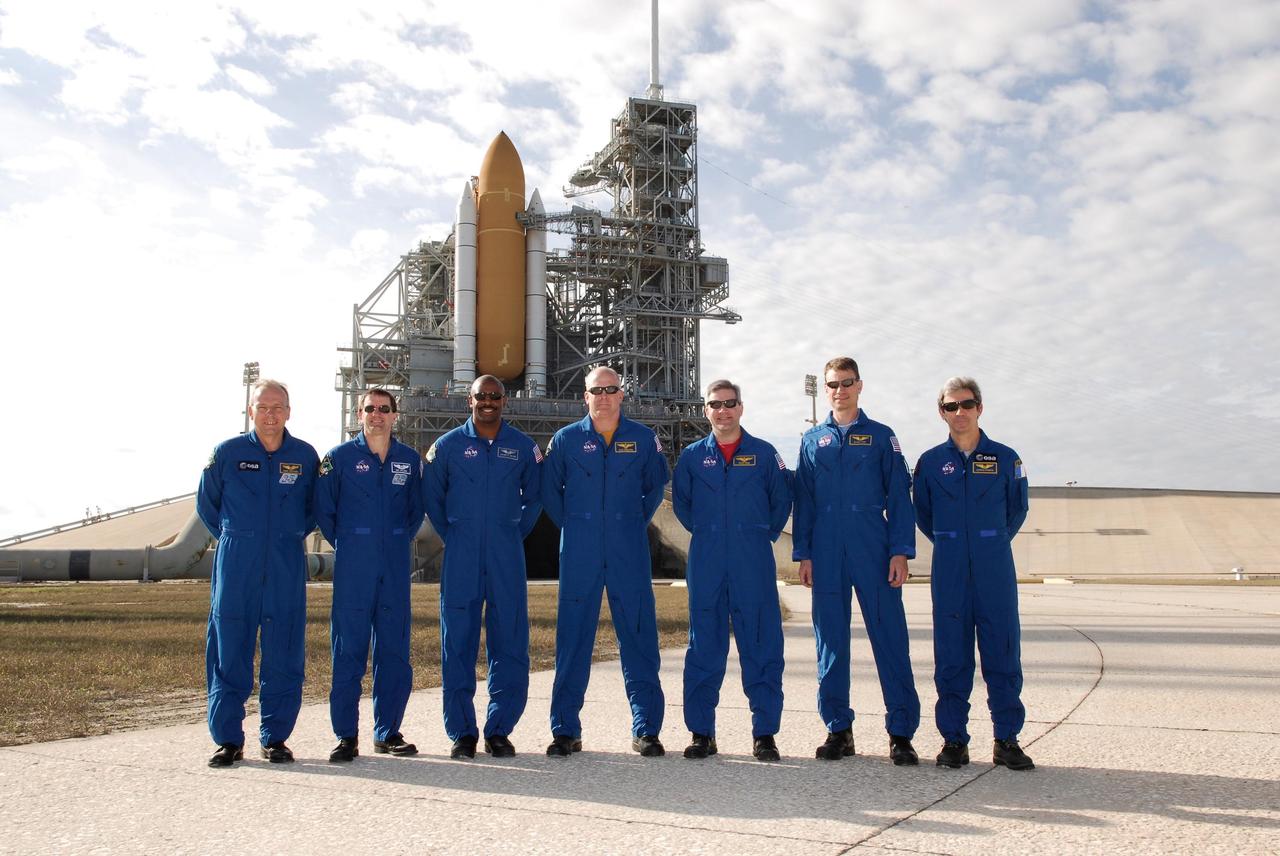
KENNEDY SPACE CENTER, FLA. -- The space shuttle Atlantis STS-122 crew poses for a group portrait at Launch Pad 39A as Atlantis undergoes final preparations for launch behind them. From left are Mission Specialists Hans Schlegel, Rex Walheim and Leland Melvin; Pilot Alan Poindexter; Commander Steve Frick; and Mission Specialists Stanley Love and Leopold Eyharts. Schlegel and Eyharts are with the European Space Agency. Eyharts will remain on the International Space Station as a flight engineer for Expedition 16 following the STS-122 mission. The STS-122 crew is at NASA's Kennedy Space Center to take part in terminal countdown demonstration test, or TCDT, activities, a standard part of launch preparations. The TCDT provides astronauts and ground crews with equipment familiarization, emergency egress training and a simulated launch countdown. On mission STS-122, Atlantis will deliver the European Space Agency's Columbus module to the International Space Station. Columbus is a multifunctional, pressurized laboratory that will be permanently attached to U.S. Node 2, called Harmony, and will expand the research facilities aboard the station. Launch is targeted for Dec. 6. Photo credit: NASA/Kim Shiflett
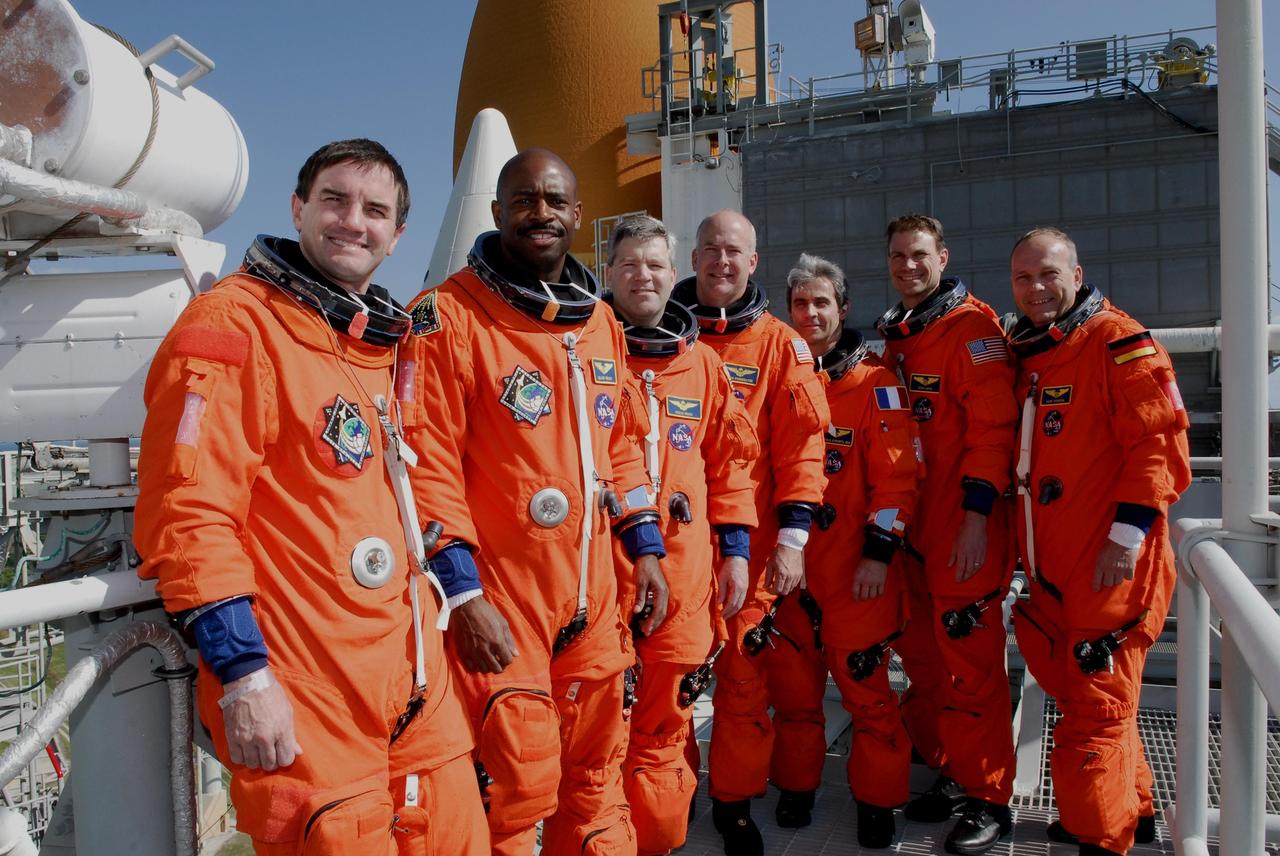
KENNEDY SPACE CENTER, FLA. -- Members of space shuttle Atlantis' STS-122 crew pose for a group portrait in front of Atlantis' external tank following a simulated launch countdown at Launch Pad 39A. From left are Mission Specialists Rex Walheim and Leland Melvin; Commander Steve Frick; Pilot Alan Poindexter; and Mission Specialists Leopold Eyharts, Stanley Love and Hans Schlegel. Schlegel and Eyharts are with the European Space Agency. Eyharts will remain on the International Space Station as a flight engineer for Expedition 16 following the STS-122 mission. The exercise is part of terminal countdown demonstration test, or TCDT, activities at NASA's Kennedy Space Center. The TCDT is a dress rehearsal for launch and also provides astronauts and ground crews with equipment familiarization and emergency egress training. On mission STS-122, Atlantis will deliver the Columbus module to the International Space Station. The European Space Agency's largest single contribution to the station, Columbus is a multifunctional, pressurized laboratory that will be permanently attached to U.S. Node 2, called Harmony. The laboratory will expand the research facilities aboard the station, providing crew members and scientists from around the world the ability to conduct a variety of experiments in the physical, materials and life sciences. Atlantis' launch is targeted for Dec. 6. Photo credit: NASA/Kim Shiflett
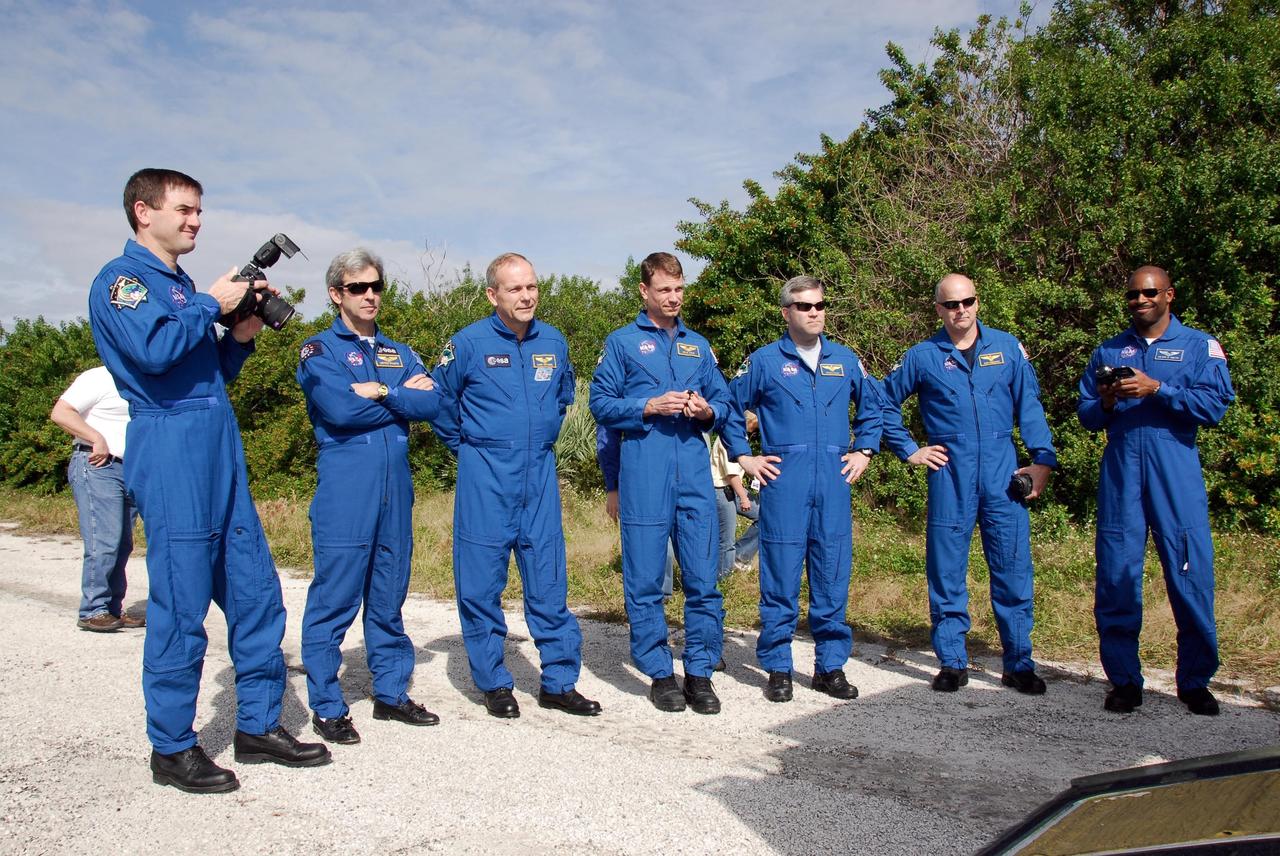
KENNEDY SPACE CENTER, FLA. -- The STS-122 crew poses for a group portrait near Launch Pad 39B during a training session on the operation of the M-113 armored personnel carrier. An M-113 will be available to transport the crew to safety in the event of an emergency on the pad before their launch. From left are Mission Specialists Rex Walheim, Leopold Eyharts and Hans Schlegel of the European Space Agency, Stanley Love; Commander Steve Frick; Pilot Alan Poindexter; and Mission Specialist Leland Melvin. The crew is participating in Terminal Countdown Demonstration Test activities, a standard part of launch preparations. The TCDT provides astronauts and ground crews with equipment familiarization, emergency egress training and a simulated launch countdown. On mission STS-122, Atlantis will deliver the European Space Agency's Columbus module to the International Space Station. Columbus is a multifunctional, pressurized laboratory that will be permanently attached to U.S. Node 2, called Harmony, and will expand the research facilities aboard the station. Launch is targeted for Dec. 6. Photo credit: NASA/Kim Shiflett
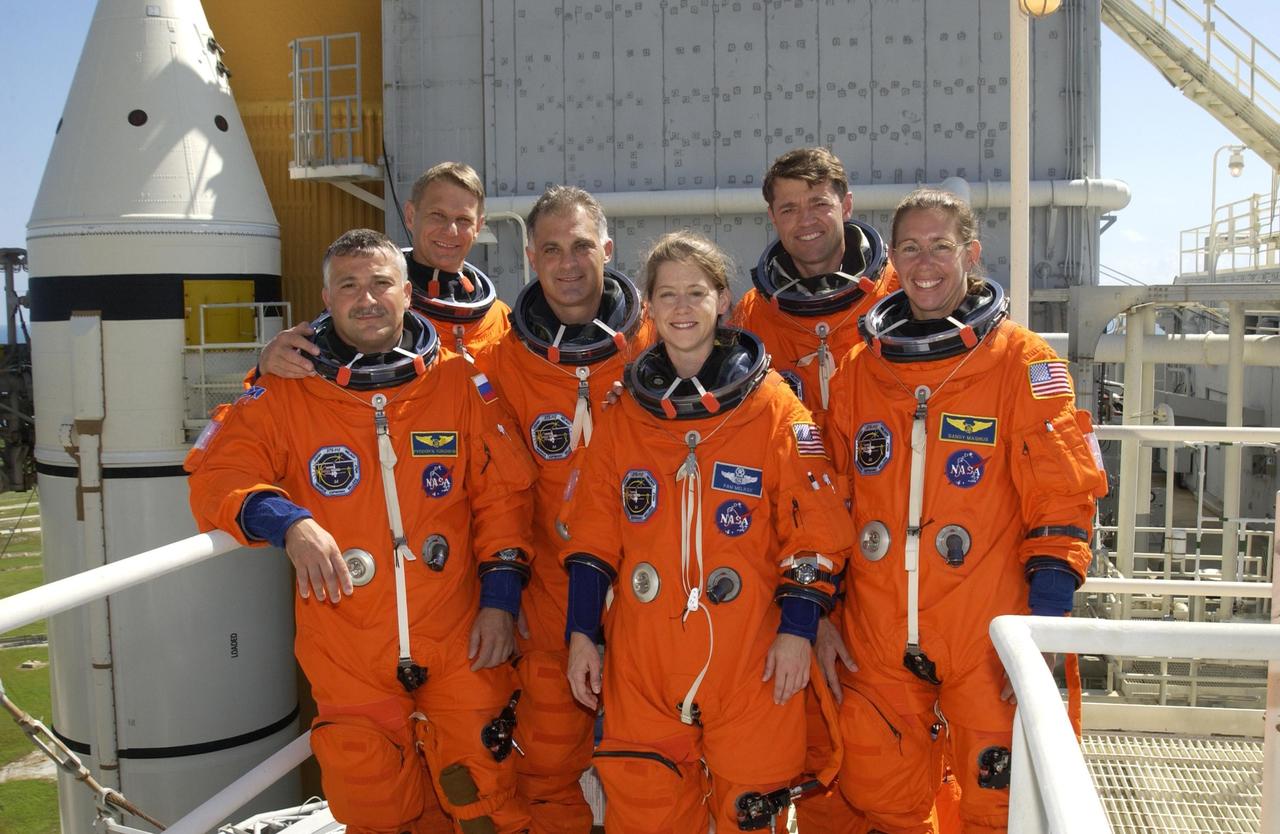
KENNEDY SPACE CENTER, FLA. - The STS-112 crew gathers for a group photo on the 215-foot level of the Fixed Service Structure. From left are Mission Specialists Fyodor Yurchikhin, Piers Sellers and David Wolf; Pilot Pamela Melroy; Commander Jeffrey Ashby; and Mission Specialist Sandra Magnus. Behind them at left is seen one of the white solid rocket boosters and the orange external tank on Space Shuttle Atlantis. Mission STS-112 is scheduled to launch no earlier than Oct. 2, between 2 and 6 p.m. EDT. STS-112 is the 15th assembly mission to the International Space Station. Atlantis will be carrying the S1 Integrated Truss Structure, the first starboard truss segment, to be attached to the central truss segment, S0, and the Crew and Equipment Translation Aid (CETA) Cart A. The CETA is the first of two human-powered carts that will ride along the ISS railway, providing mobile work platforms for future spacewalking astronauts. The 11-day mission is expected to conclude with a landing at KSC Oct. 13.
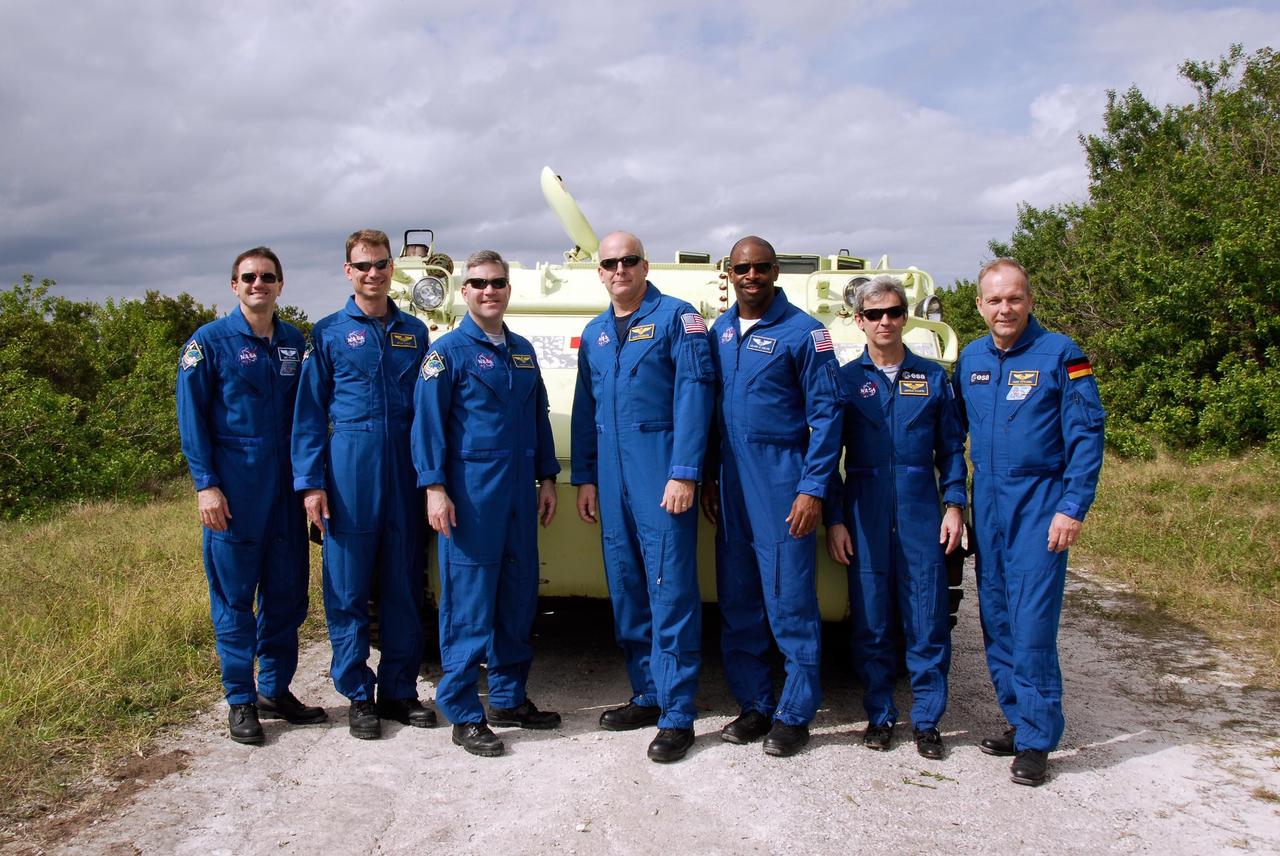
KENNEDY SPACE CENTER, FLA. -- The STS-122 crew poses for a group portrait near Launch Pad 39B following a training session on the operation of the M-113 armored personnel carrier. An M-113 will be available to transport the crew to safety in the event of an emergency on the pad before their launch. From left are Mission Specialists Rex Walheim and Stanley Love; Commander Steve Frick; Pilot Alan Poindexter; and Mission Specialists Leland Melvin, Leopold Eyharts and Hans Schlegel. Eyharts and Schlegel are with the European Space Agency. Eyharts will remain on the International Space Station as a flight engineer for Expedition 16 following the STS-122 mission. The crew is participating in Terminal Countdown Demonstration Test activities, a standard part of launch preparations. The TCDT provides astronauts and ground crews with equipment familiarization, emergency egress training and a simulated launch countdown. On mission STS-122, Atlantis will deliver the European Space Agency's Columbus module to the International Space Station. Columbus is a multifunctional, pressurized laboratory that will be permanently attached to U.S. Node 2, called Harmony, and will expand the research facilities aboard the station. Launch is targeted for Dec. 6. Photo credit: NASA/Kim Shiflett

KENNEDY SPACE CENTER, FLA. -- At the slidewire basket landing on Launch Pad 39A, the space shuttle Atlantis STS-122 crew poses for a group photo following a press conference. From left are Commander Steve Frick; Pilot Alan Poindexter; and Mission Specialists Leland Melvin, Rex Walheim, Hans Schlegel, Stanley Love and Leopold Eyharts. Schlegel and Eyharts are with the European Space Agency. Eyharts will remain on the International Space Station as a flight engineer for Expedition 16 following the STS-122 mission. The STS-122 crew is at NASA's Kennedy Space Center to take part in terminal countdown demonstration test, or TCDT, activities, a standard part of launch preparations. The TCDT provides astronauts and ground crews with equipment familiarization, emergency egress training and a simulated launch countdown. On mission STS-122, Atlantis will deliver the European Space Agency's Columbus module to the International Space Station. Columbus is a multifunctional, pressurized laboratory that will be permanently attached to U.S. Node 2, called Harmony, and will expand the research facilities aboard the station. Launch is targeted for Dec. 6. Photo credit: NASA/Kim Shiflett
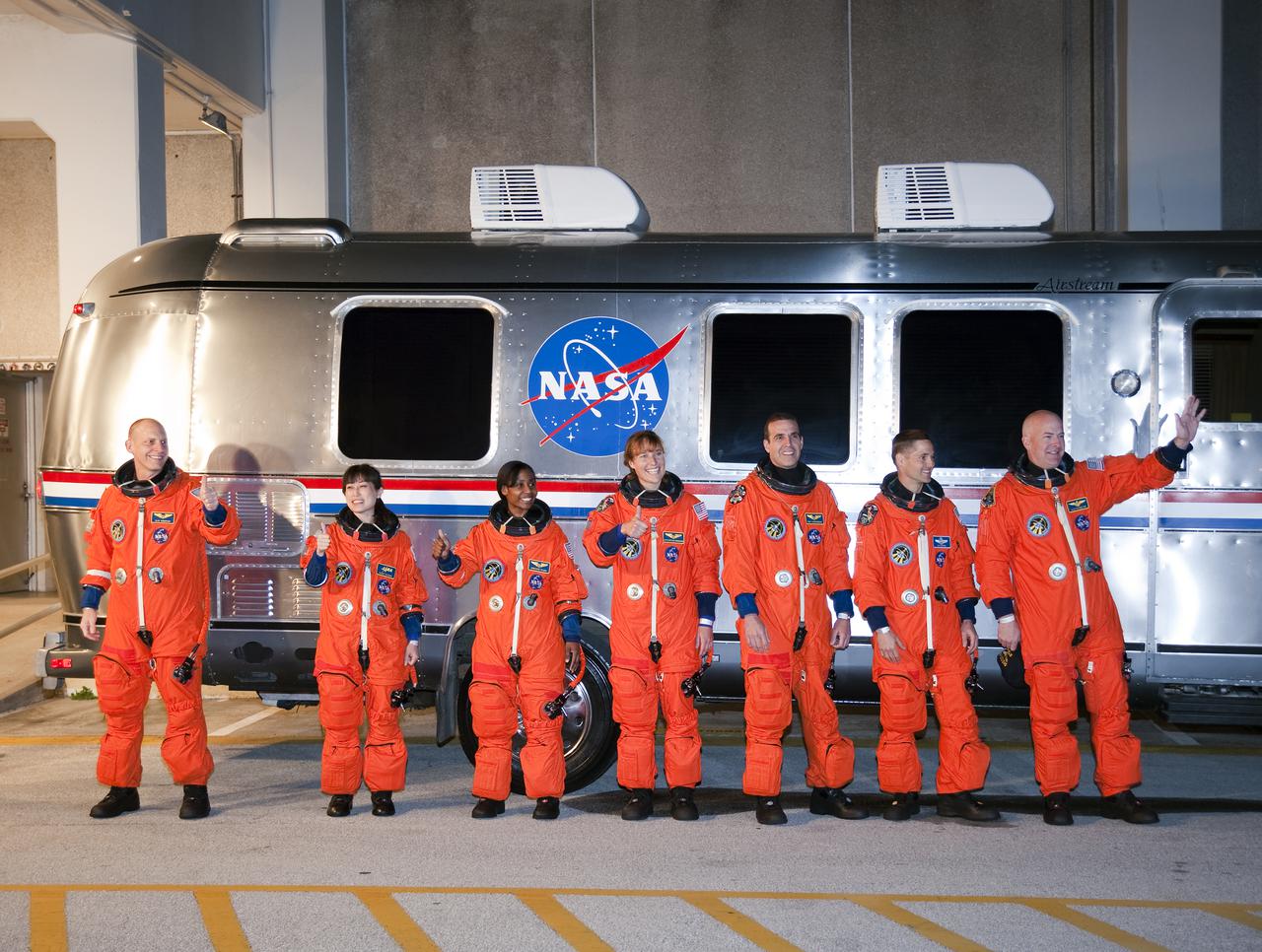
CAPE CANAVERAL, Fla. - At NASA's Kennedy Space Center in Florida, the astronauts on space shuttle Discovery's STS-131 crew, dressed in their orange launch-and-entry suits, pause for a group portrait in front of the Astrovan that will transport them to Launch Pad 39A. From left are Mission Specialists Clayton Anderson, Naoko Yamazaki of the Japan Aerospace Exploration Agency, Stephanie Wilson, Dorothy Metcalf-Lindenburger and Rick Mastracchio; Pilot James P. Dutton Jr.; and Commander Alan Poindexter. Liftoff of the STS-131 mission is set for 6:21 a.m. EDT on April 5. On STS-131, the seven-member crew will deliver the multi-purpose logistics module Leonardo, filled with supplies, a new crew sleeping quarters and science racks that will be transferred to the International Space Station's laboratories. The crew also will switch out a gyroscope on the station’s truss, install a spare ammonia storage tank and retrieve a Japanese experiment from the station’s exterior. STS-131 is the 33rd shuttle mission to the station and the 131st shuttle mission overall. For information on the STS-131 mission and crew, visit http:__www.nasa.gov_mission_pages_shuttle_shuttlemissions_sts131_index.html. Photo credit: NASA_Kim Shiflett
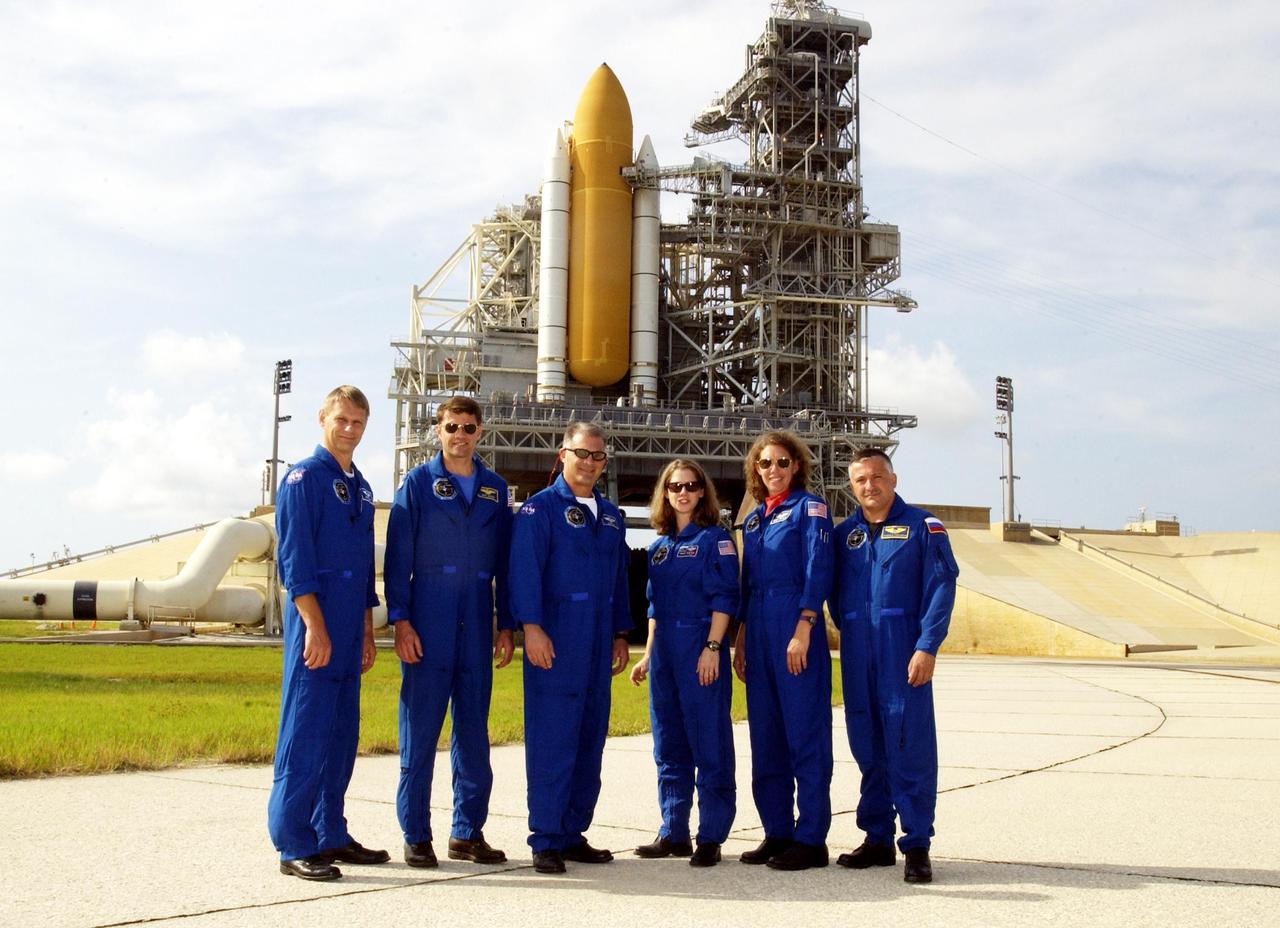
KENNEDY SPACE CENTER, FLA. -- During Terminal Countdown Demonstration Test activities, the STS-112 crew poses for a group photo near the launch pad where Space Shuttle Atlantis waits for launch. Standing left to right are Mission Specialist Piers Sellers, Commander Jeffrey Ashby, Mission Specialist David Wolf, Pilot Pamela Melroy, and Mission Specialists Sandra Magnus and Fyodor Yurchikhin, who is with the Russian Space Agency. The TCDT includes emergency egress training and a simulated launch countdown. Mission STS-112 aboard Space Shuttle Atlantis is scheduled to launch no earlier than Oct. 2, between 2 and 6 p.m. EDT. STS-112 is the 15th assembly mission to the International Space Station. Atlantis will be carrying the S1 Integrated Truss Structure, the first starboard truss segment, to be attached to the central truss segment, S0, and the Crew and Equipment Translation Aid (CETA) Cart A. The CETA is the first of two human-powered carts that will ride along the ISS railway, providing mobile work platforms for future spacewalking astronauts.
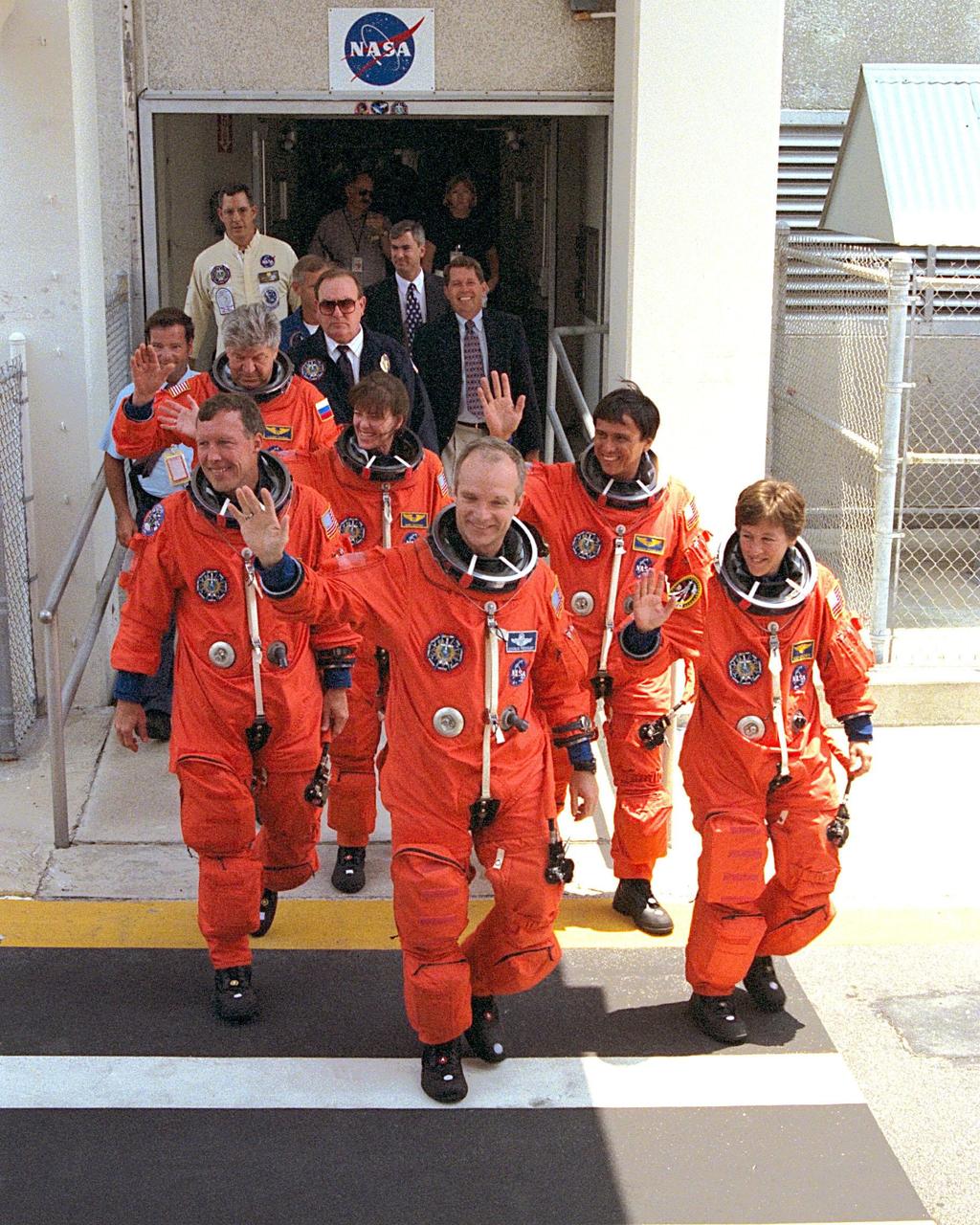
With an enthusiastic crowd of KSC workers wishing them a safe journey, the STS-91 crew walks out from the crew quarters in the Operations and Checkout (O&C) Building for their trip to Launch Pad 39A. Leading the group to the Astrovan are Mission Commander Charles J. Precourt (left) and Mission Specialist Wendy B. Lawrence. Pilot Dominic L. Gorie is directly behind Precourt, while Mission Specialists Franklin R. Chang-Diaz, Janet Lynn Kavandi and Valery Victorovitch Ryumin are behind Lawrence. STS-91 is scheduled to be launched on June 2 with a launch window opening around 6:10 p.m. EDT. The mission will feature the ninth and final Shuttle docking with the Russian space station Mir, the first Mir docking for Discovery, the first on-orbit test of the Alpha Magnetic Spectrometer (AMS), and the first flight of the new Space Shuttle super lightweight external tank. Astronaut Andrew S. W. Thomas will be returning to Earth as a STS-91 crew member after living more than four months aboard Mir
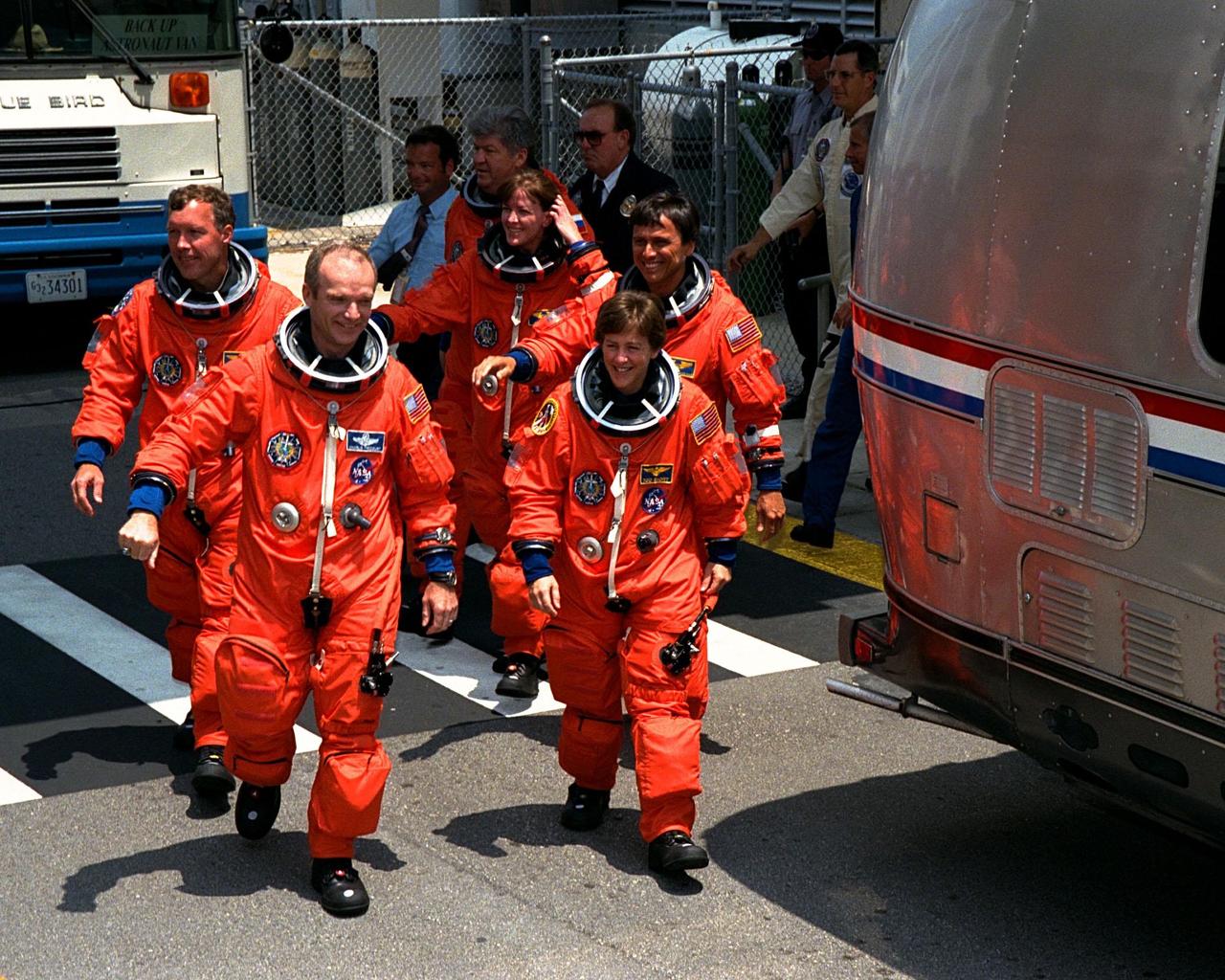
With an enthusiastic crowd of KSC workers wishing them a safe journey, the STS-91 crew walks out from the crew quarters in the Operations and Checkout (O&C) Building for their trip to Launch Pad 39A. Leading the group to the Astrovan are Mission Commander Charles J. Precourt (left) and Mission Specialist Wendy B. Lawrence. Pilot Dominic L. Gorie is directly behind Precourt, while Mission Specialists Franklin R. Chang-Diaz, Janet Lynn Kavandi and Valery Victorovitch Ryumin are behind Lawrence. STS-91 is scheduled to be launched on June 2 with a launch window opening around 6:10 p.m. EDT. The mission will feature the ninth and final Shuttle docking with the Russian space station Mir, the first Mir docking for Discovery, the first on-orbit test of the Alpha Magnetic Spectrometer (AMS), and the first flight of the new Space Shuttle super lightweight external tank. Astronaut Andrew S. W. Thomas will be returning to Earth as a STS-91 crew member after living more than four months aboard Mir
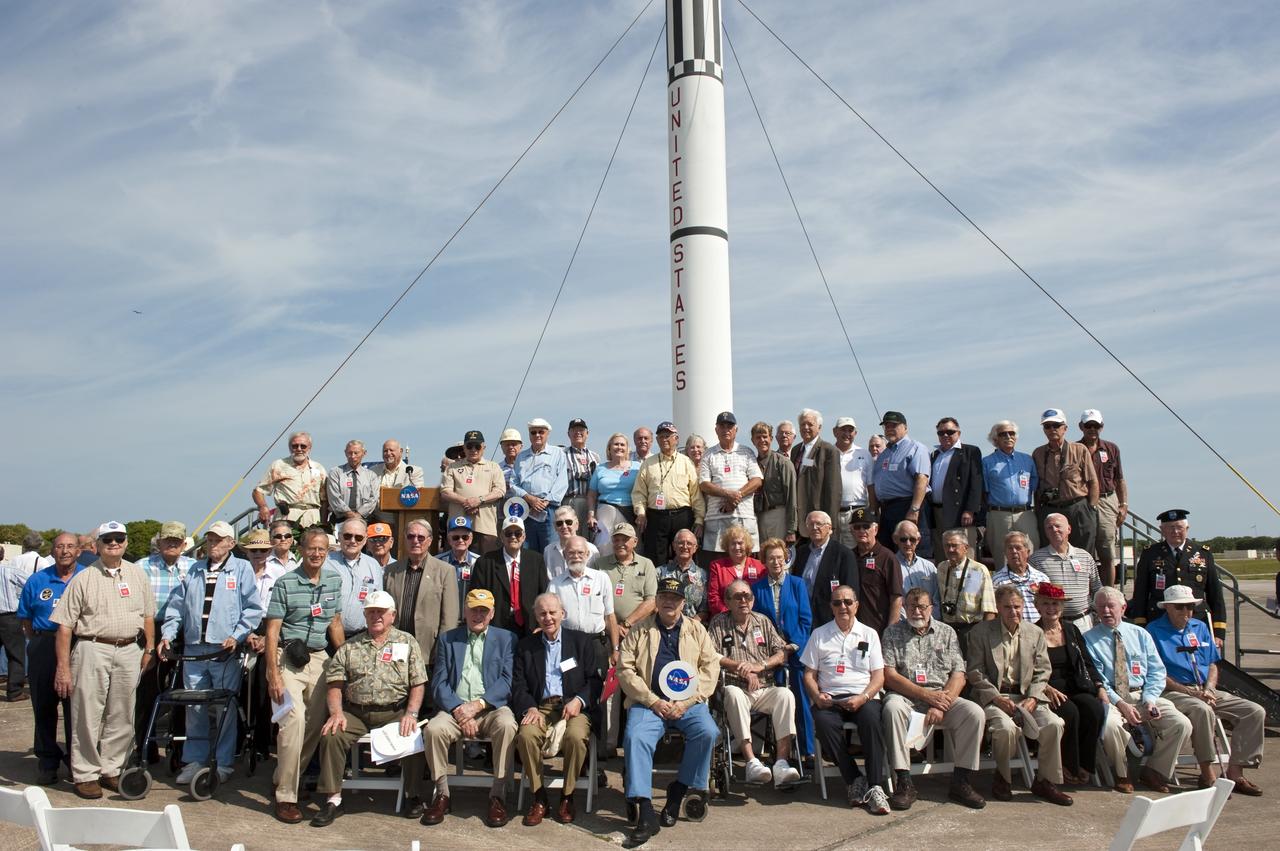
CAPE CANAVERAL, Fla. -- More than 200 workers from the original Mercury program pose for a group photo in front of a replica of a Mercury-Redstone rocket during a celebration at Complex 5/6 on Cape Canaveral Air Force Station in Florida. The celebration was held at the launch site of the first U.S. manned spaceflight May 5, 1961, to mark the 50th anniversary of the flight. Fifty years ago, astronaut Alan Shepard lifted off inside the Mercury capsule, "Freedom 7," atop an 82-foot-tall Mercury-Redstone rocket at 9:34 a.m. EST, sending him on a remarkably successful, 15-minute suborbital flight. The event was attended by more than 200 workers from the original Mercury program and included a re-creation of Shepard's flight and recovery, as well as a tribute to his contributions as a moonwalker on the Apollo 14 lunar mission. For more information, visit www.nasa.gov/topics/history/milestones/index.html. Photo credit: NASA/Kim Shiflett
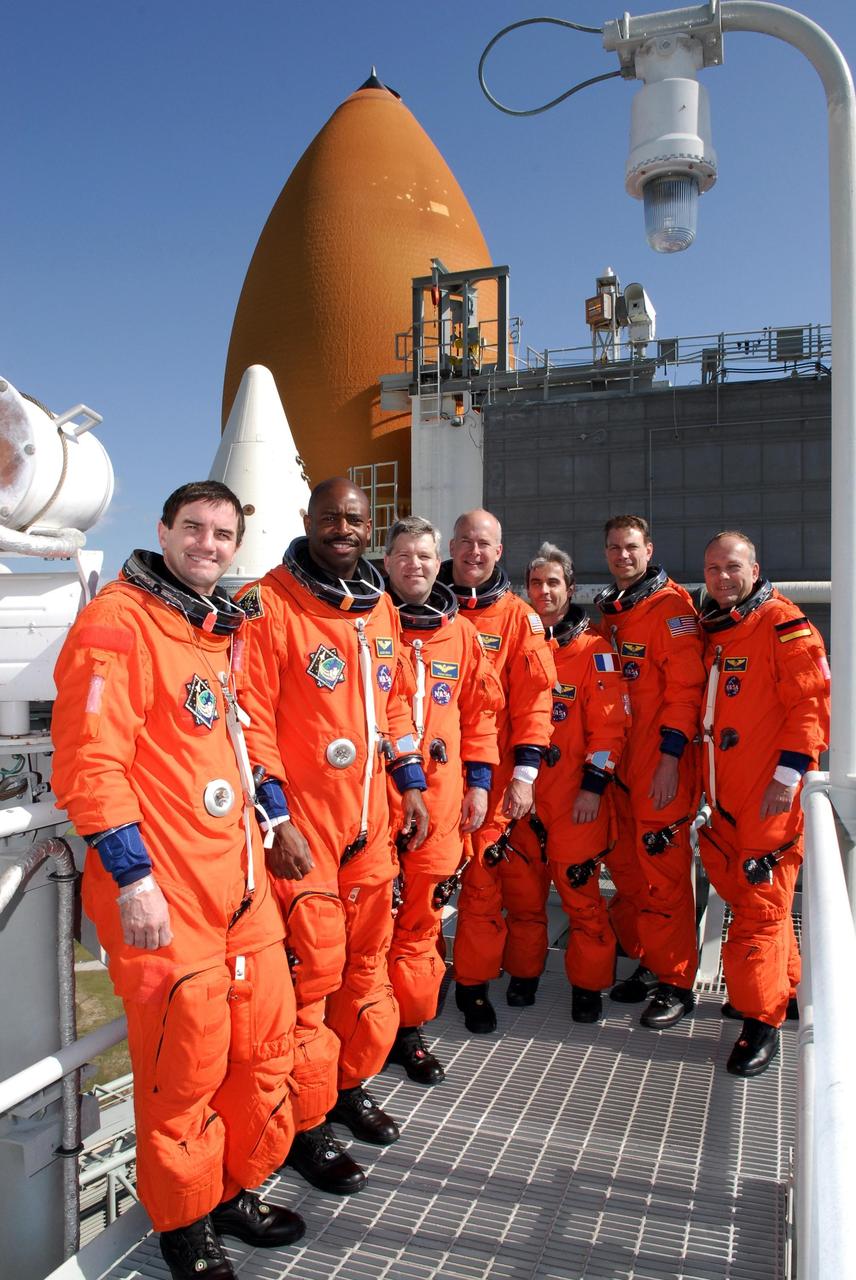
KENNEDY SPACE CENTER, FLA. -- Members of space shuttle Atlantis' STS-122 crew pose for a group portrait with the tip of Atlantis' external tank in the background following a simulated launch countdown at Launch Pad 39A. From left are Mission Specialists Rex Walheim and Leland Melvin; Commander Steve Frick; Pilot Alan Poindexter; and Mission Specialists Leopold Eyharts, Stanley Love and Hans Schlegel. Schlegel and Eyharts are with the European Space Agency. Eyharts will remain on the International Space Station as a flight engineer for Expedition 16 following the STS-122 mission. The exercise is part of terminal countdown demonstration test, or TCDT, activities at NASA's Kennedy Space Center. The TCDT is a dress rehearsal for launch and also provides astronauts and ground crews with equipment familiarization and emergency egress training. On mission STS-122, Atlantis will deliver the Columbus module to the International Space Station. The European Space Agency's largest single contribution to the station, Columbus is a multifunctional, pressurized laboratory that will be permanently attached to U.S. Node 2, called Harmony. The laboratory will expand the research facilities aboard the station, providing crew members and scientists from around the world the ability to conduct a variety of experiments in the physical, materials and life sciences. Atlantis' launch is targeted for Dec. 6. Photo credit: NASA/Kim Shiflett
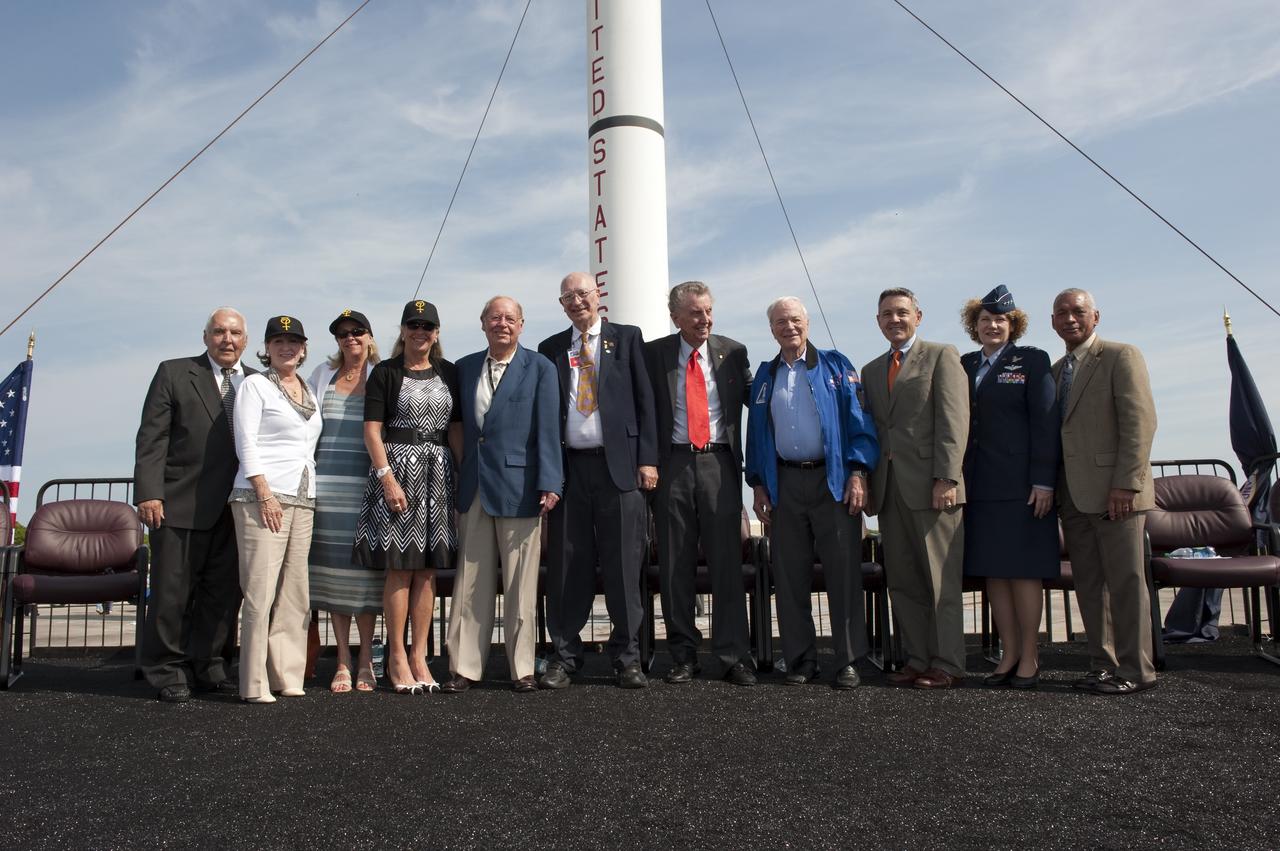
CAPE CANAVERAL, Fla. -- Program participants pose for a group photo in front of a replica of a Mercury-Redstone rocket during a celebration at Complex 5/6 on Cape Canaveral Air Force Station in Florida. From left are Hugh Harris, former director of Public Affairs at Kennedy Space Center; Alice Wackermann, Julie Jenkins and Laura Churchley, daughters of astronaut Alan Shepard; Jack King, former chief, Public Information Office, Marshall Space Flight Center; Bob Moser, former chief test conductor for the Mercury-Redstone launches; NBC reporter Jay Barbree; Mercury astronaut Scott Carpenter; Kennedy Space Center Director Bob Cabana; Lieutenant General Susan J. Helms, commander of the 14th Air Force and former astronaut; and NASA Administrator Charlie Bolden. The celebration was held at the launch site of the first U.S. manned spaceflight May 5, 1961, to mark the 50th anniversary of the flight. Fifty years ago, astronaut Alan Shepard lifted off inside the Mercury capsule, "Freedom 7," atop an 82-foot-tall Mercury-Redstone rocket at 9:34 a.m. EST, sending him on a remarkably successful, 15-minute suborbital flight. The event was attended by more than 200 workers from the original Mercury program and included a re-creation of Shepard's flight and recovery, as well as a tribute to his contributions as a moonwalker on the Apollo 14 lunar mission. For more information, visit www.nasa.gov/topics/history/milestones/index.html. Photo credit: NASA/Kim Shiflett
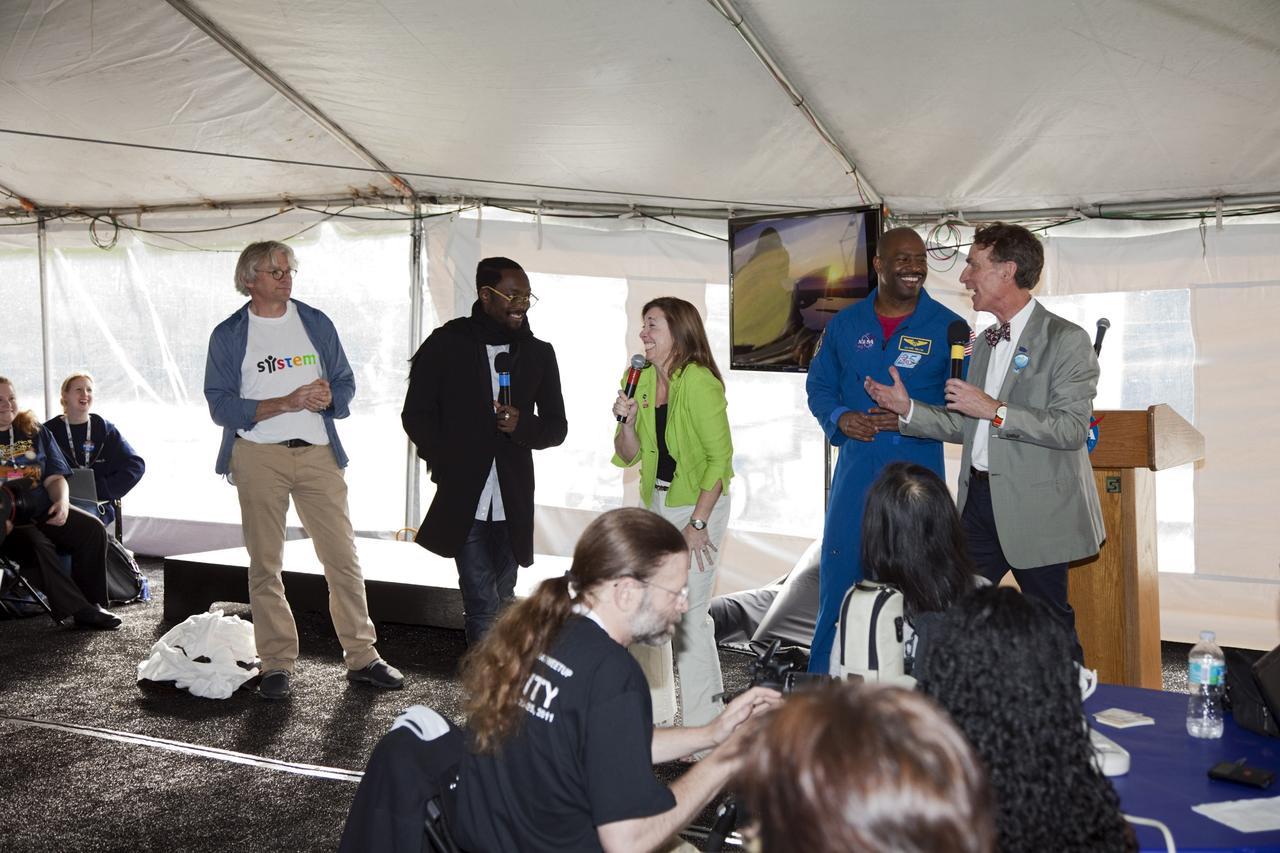
CAPE CANAVERAL, Fla. – From left, Lars Perkins, chair of the Education and Public Outreach Committee of the NASA Advisory Council; Will.i.am, entertainer and member of the pop group The Black Eyed Peas; NASA Deputy Administrator Lori Garver; former astronaut Leland Melvin, NASA associate administrator for Education; and television personality Bill Nye the Science Guy share a light moment with the participants of a NASA Tweetup in a tent set up at NASA Kennedy Space Center's Press Site in Florida during prelaunch activities for the agency’s Mars Science Laboratory (MSL) launch. Participants in the Tweetup are given the opportunity to listen to agency briefings, tour locations on the center normally off limits to visitors, and get a close-up view of Space Launch Complex-41 on Cape Canaveral Air Force Station. The tweeters will share their experiences with followers through the social networking site Twitter. The MSL mission will pioneer precision landing technology and a sky-crane touchdown to place a car-sized rover, Curiosity, near the foot of a mountain inside Gale Crater on Aug. 6, 2012. During a nearly two-year prime mission after landing, the rover will investigate whether the region has ever offered conditions favorable for microbial life, including the chemical ingredients for life. Liftoff of MSL aboard a United Launch Alliance Atlas V rocket from pad 41 is planned during a launch window which extends from 10:02 a.m. to 11:45 a.m. EST on Nov. 26. For more information, visit http://www.nasa.gov/msl. Photo credit: NASA/Frankie Martin