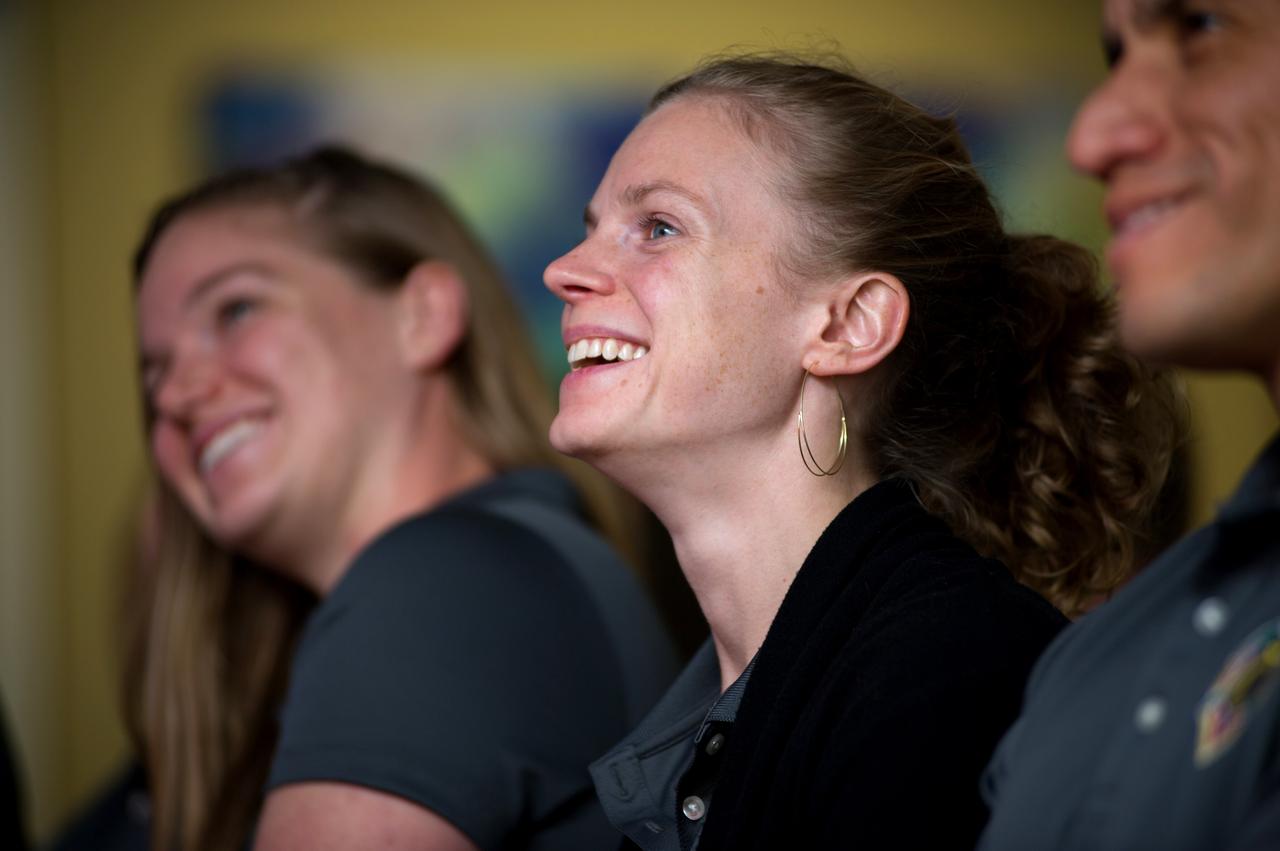
NASA Astronaut Class 22 tours Goddard Space Flight Center
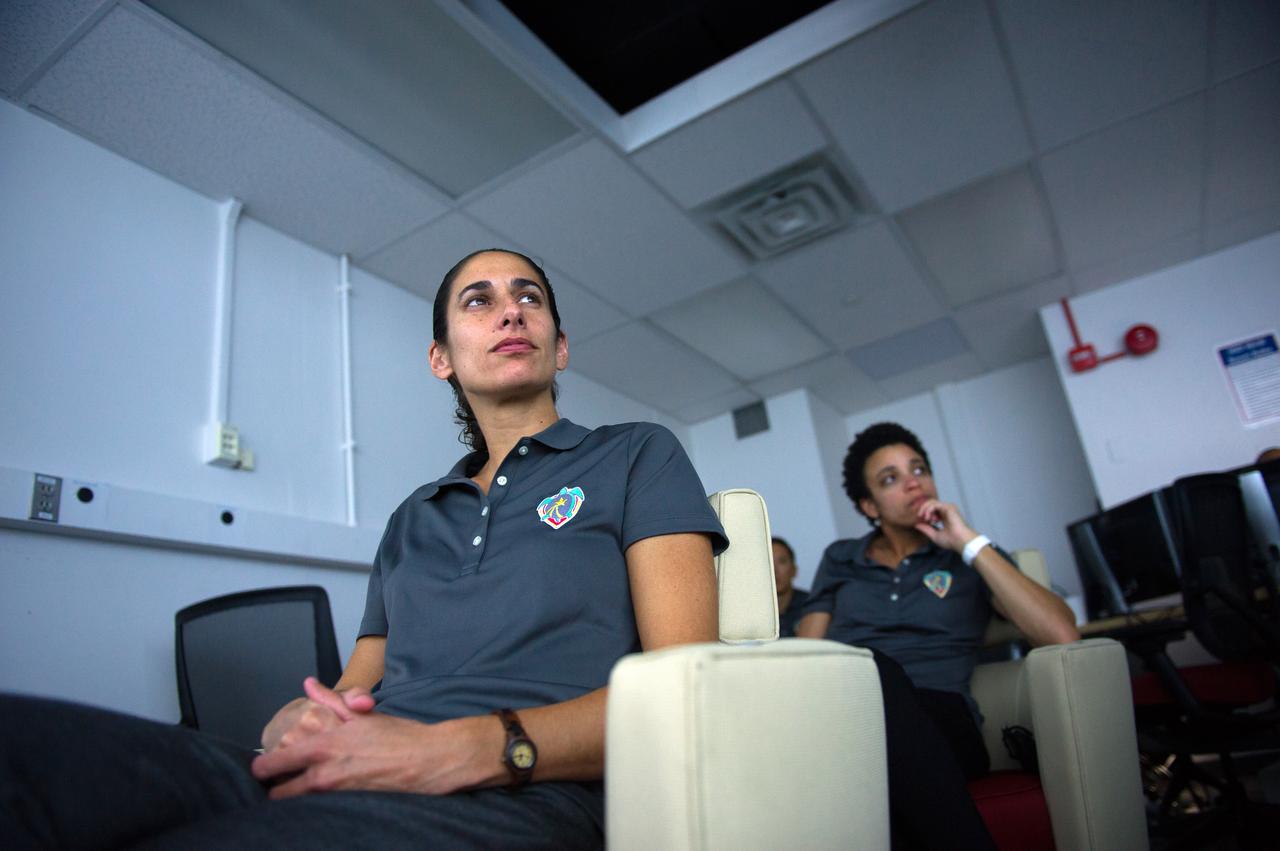
NASA Astronaut Class 22 tours Goddard Space Flight Center
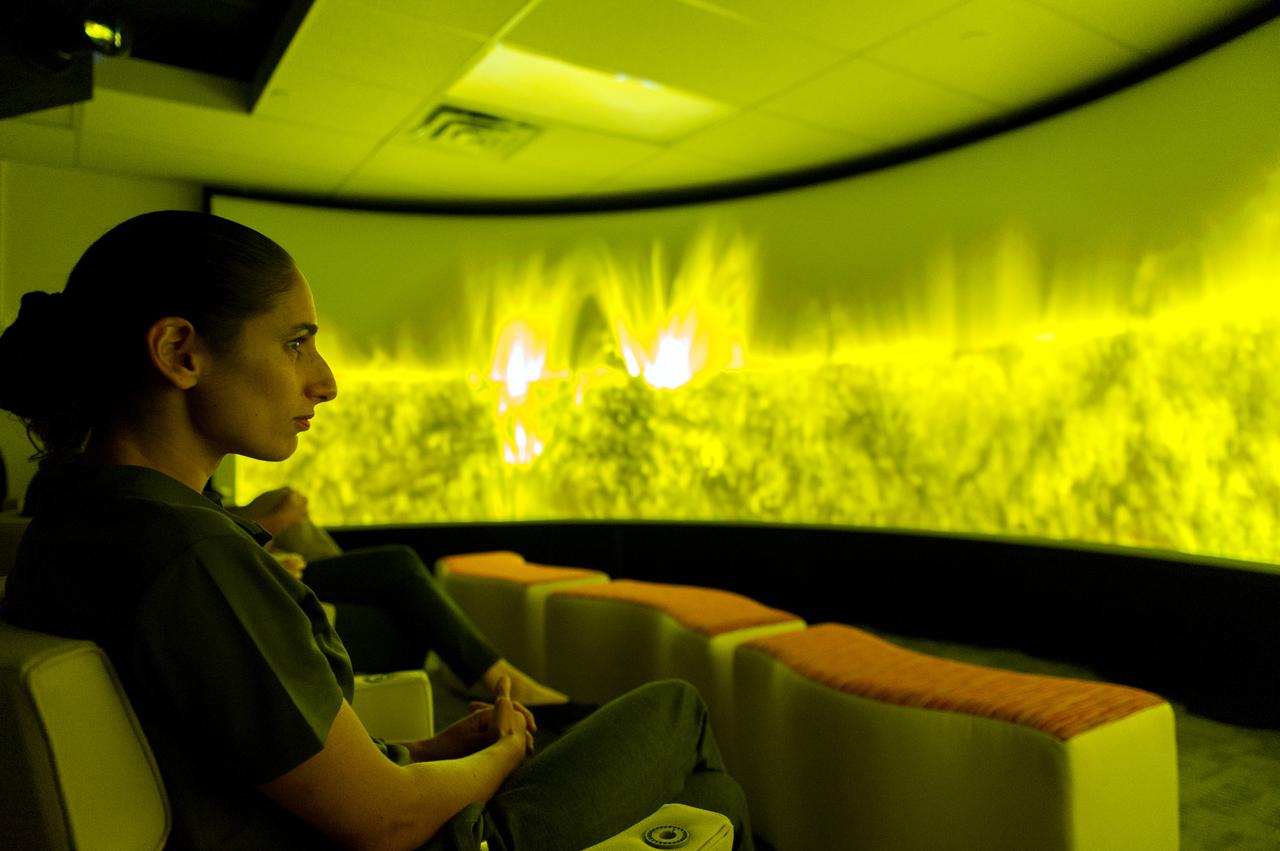
NASA Astronaut Class 22 tours Goddard Space Flight Center
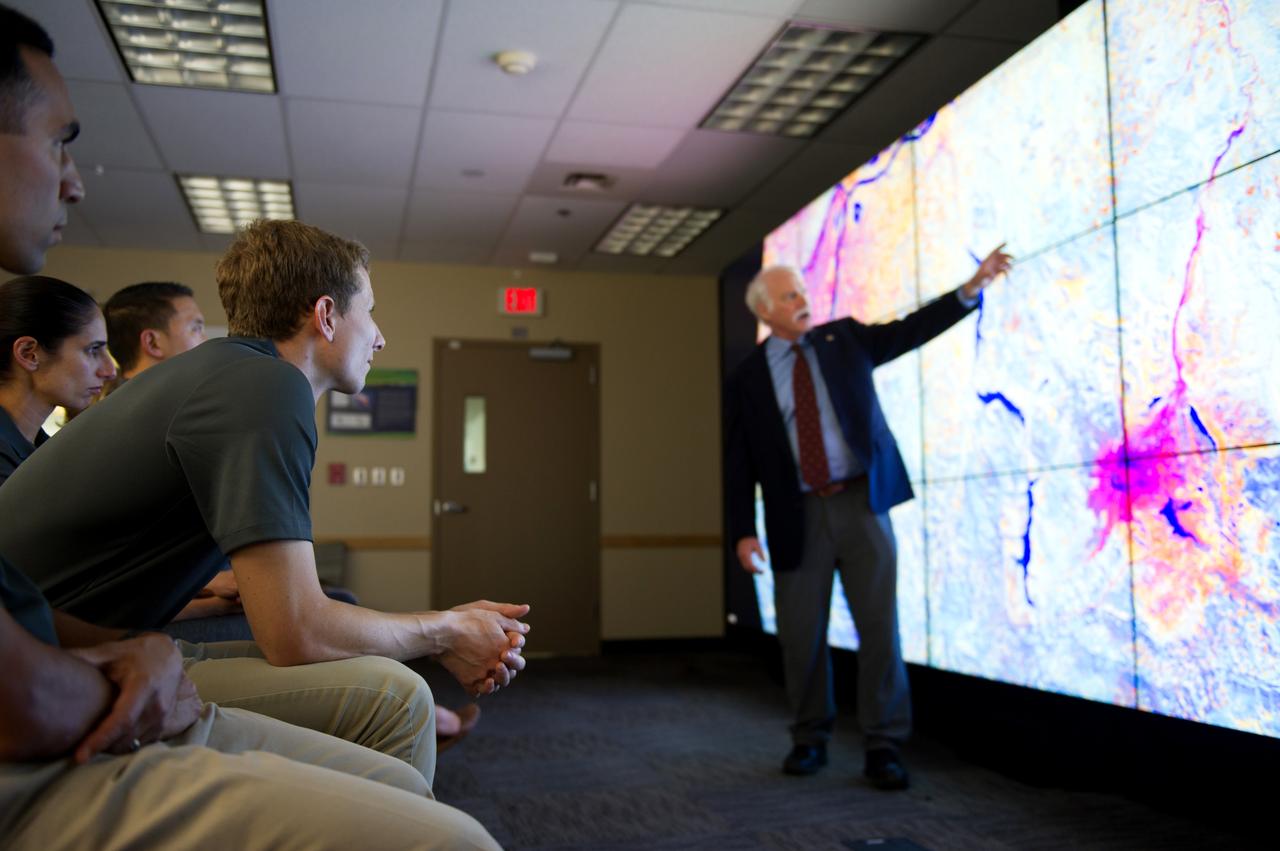
NASA Astronaut Class 22 tours Goddard Space Flight Center
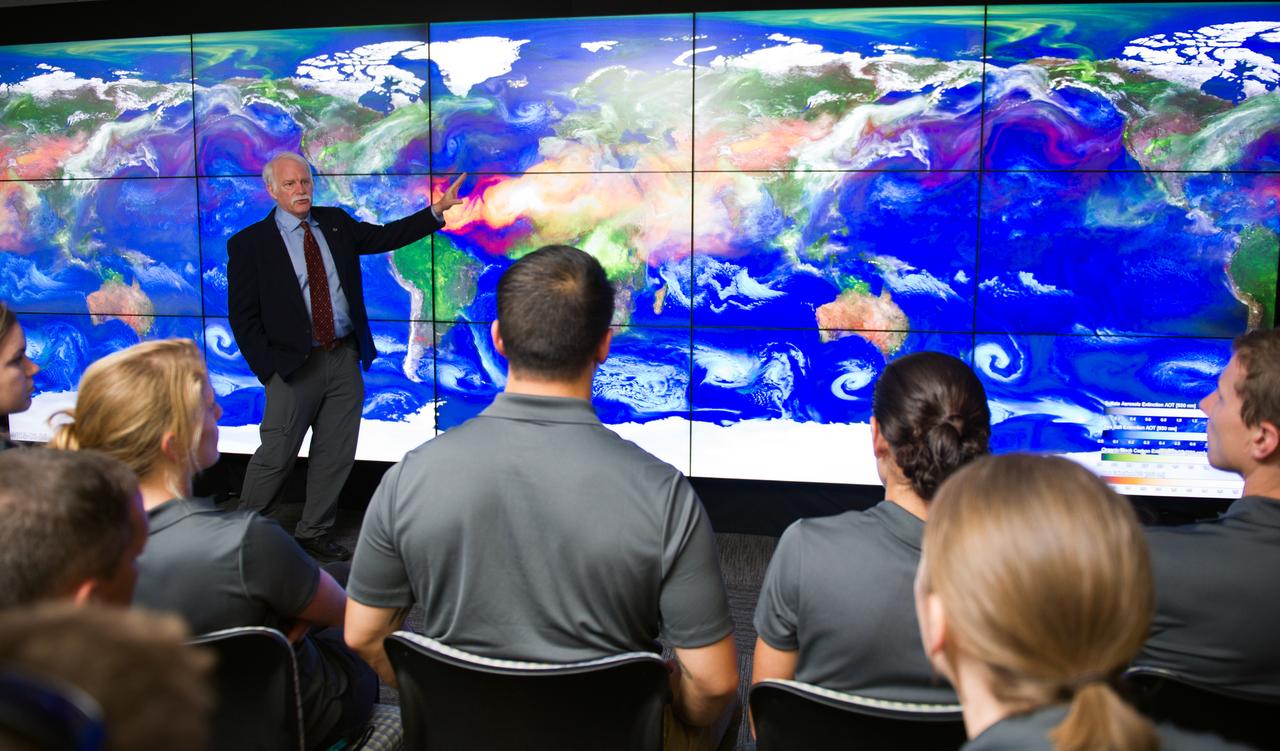
NASA Astronaut Class 22 tours Goddard Space Flight Center
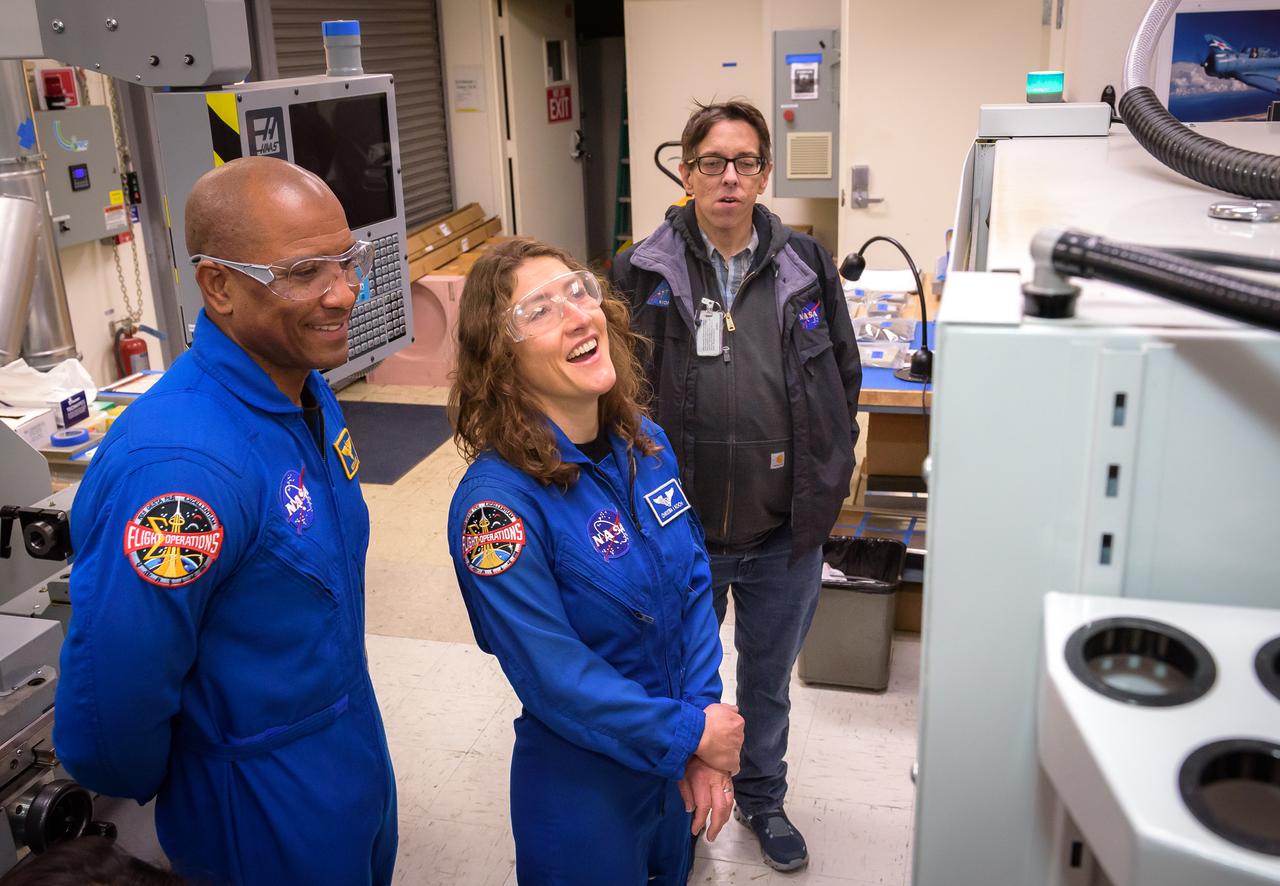
NASA astronauts Victor J. Glover, left, and Christina Koch, with Joe Mach as they tour STAR Labs, N238
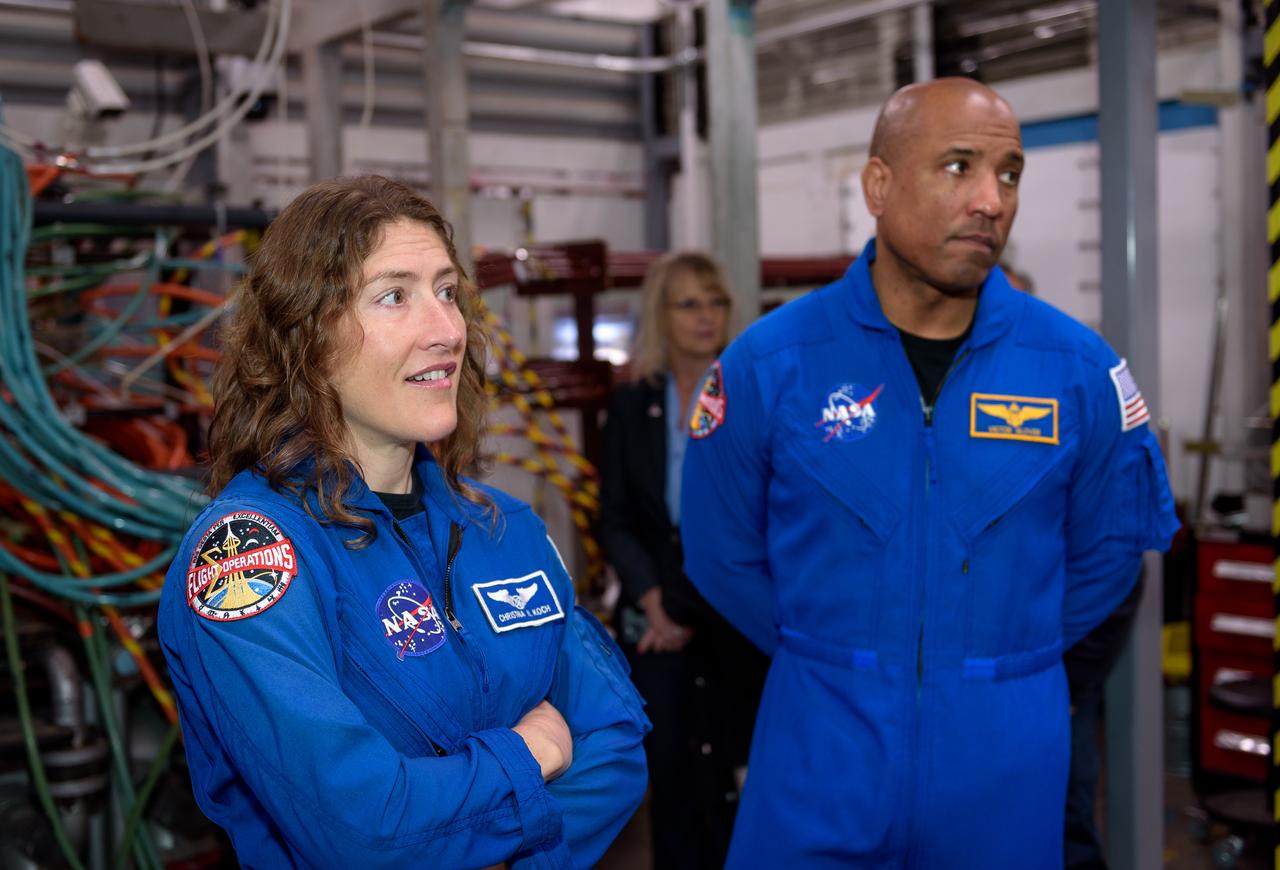
NASA astronauts Victor J. Glover and Christina Koch tour the Ames Arc Jet Complex, N238.

NASA astronaut Barry "Butch" Wilmore, at left, tours Boeing's Commercial Crew and Cargo Processing Facility (C3PF) on Oct. 25, 2018, at NASA's Kennedy Space Center in Florida. Boeing's CST-100 Starliner will launch on its first uncrewed flight test on a United Launch Alliance Atlas V rocket. The Starliner is being developed and manufactured in partnership with NASA's Commercial Crew Program to return human spaceflight capabilities to the U.S.

NASA astronaut Barry "Butch" Wilmore, center, tours Boeing's Commercial Crew and Cargo Processing Facility (C3PF) on Oct. 25, 2018, at NASA's Kennedy Space Center in Florida. Boeing's CST-100 Starliner will launch on its first uncrewed flight test on a United Launch Alliance Atlas V rocket. The Starliner is being developed and manufactured in partnership with NASA's Commercial Crew Program to return human spaceflight capabilities to the U.S.
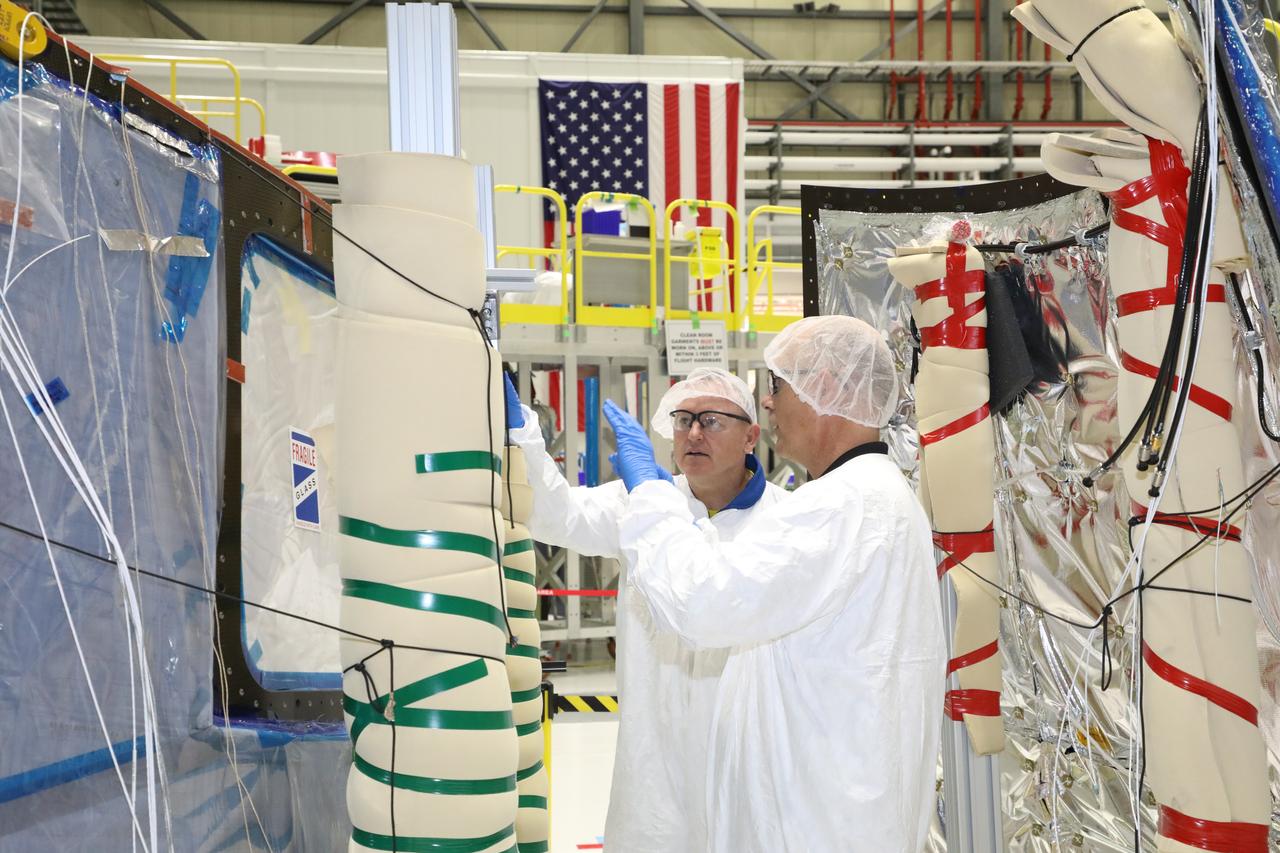
NASA astronaut Barry "Butch" Wilmore, at left, tours Boeing's Commercial Crew and Cargo Processing Facility (C3PF) on Oct. 25, 2018, at NASA's Kennedy Space Center in Florida. Boeing's CST-100 Starliner will launch on its first uncrewed flight test on a United Launch Alliance Atlas V rocket. The Starliner is being developed and manufactured in partnership with NASA's Commercial Crew Program to return human spaceflight capabilities to the U.S.
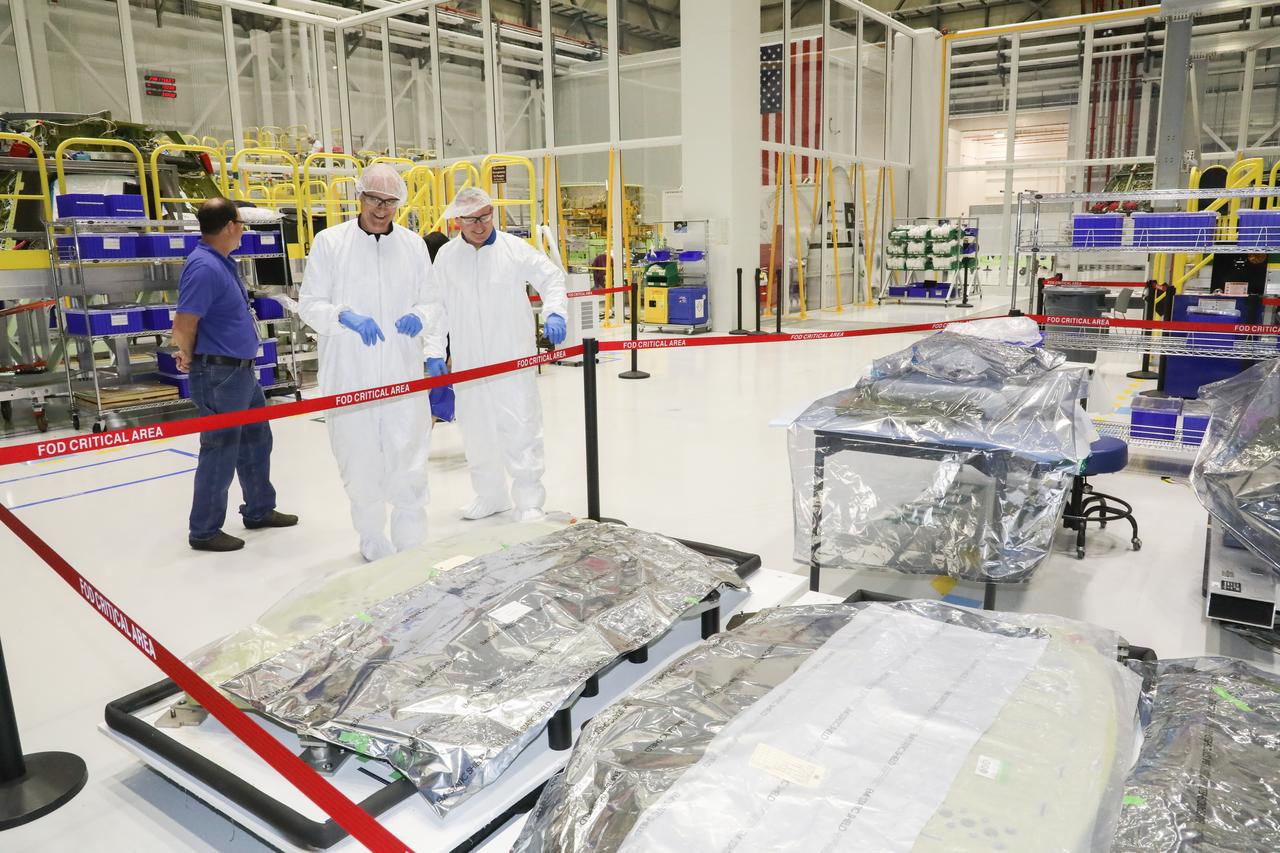
NASA astronaut Barry "Butch" Wilmore, center, tours Boeing's Commercial Crew and Cargo Processing Facility (C3PF) on Oct. 25, 2018, at NASA's Kennedy Space Center in Florida. Boeing's CST-100 Starliner will launch on its first uncrewed flight test on a United Launch Alliance Atlas V rocket. The Starliner is being developed and manufactured in partnership with NASA's Commercial Crew Program to return human spaceflight capabilities to the U.S.
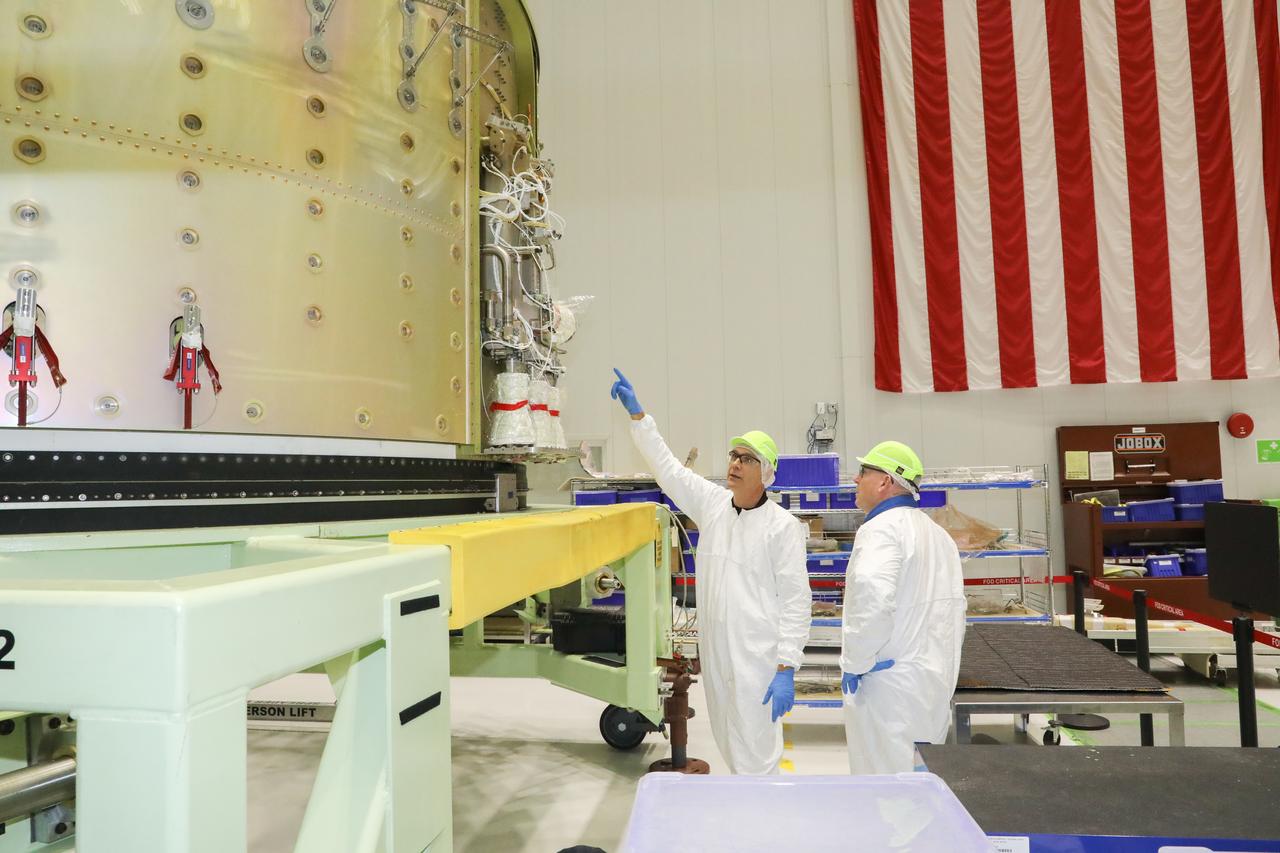
NASA astronaut Barry "Butch" Wilmore, at right, tours Boeing's Commercial Crew and Cargo Processing Facility (C3PF) on Oct. 25, 2018, at NASA's Kennedy Space Center in Florida. Boeing's CST-100 Starliner will launch on its first uncrewed flight test on a United Launch Alliance Atlas V rocket. The Starliner is being developed and manufactured in partnership with NASA's Commercial Crew Program to return human spaceflight capabilities to the U.S.
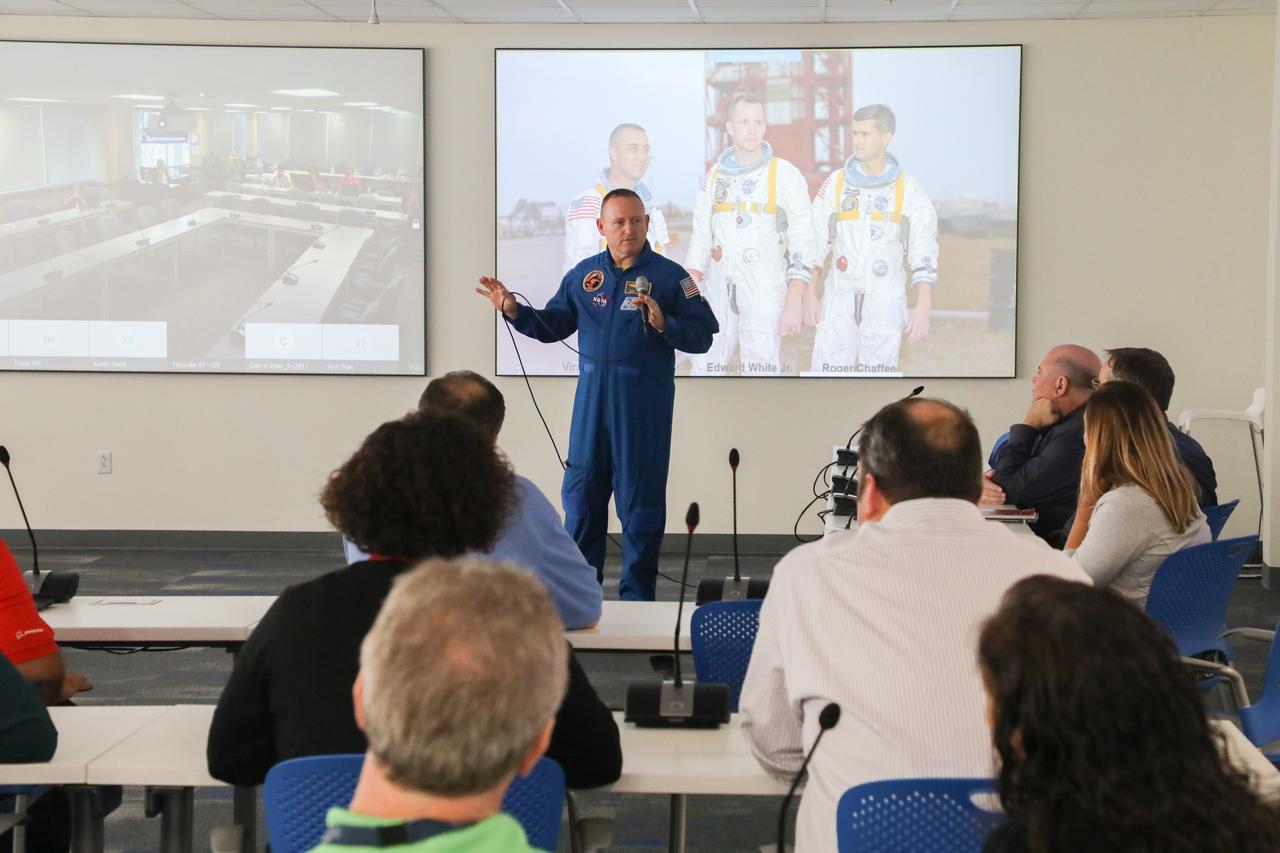
NASA astronaut Barry "Butch" Wilmore, speaks to workers during a tour of Boeing's Commercial Crew and Cargo Processing Facility (C3PF) on Oct. 25, 2018, at NASA's Kennedy Space Center in Florida. Boeing's CST-100 Starliner will launch on its first uncrewed flight test on a United Launch Alliance Atlas V rocket. The Starliner is being developed and manufactured in partnership with NASA's Commercial Crew Program to return human spaceflight capabilities to the U.S.
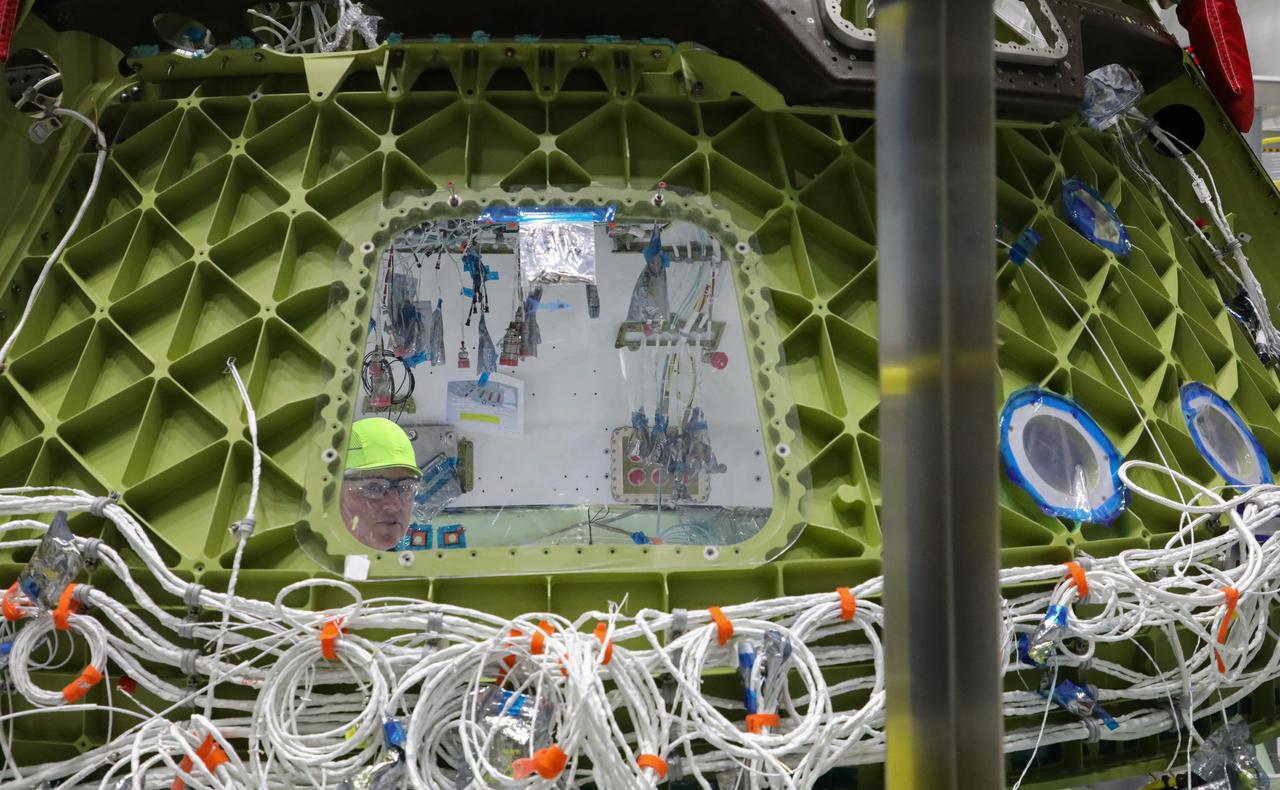
NASA astronaut Barry "Butch" Wilmore, center, tours Boeing's Commercial Crew and Cargo Processing Facility (C3PF) on Oct. 25, 2018, at NASA's Kennedy Space Center in Florida. Wilmore is looking over Boeing's CST-100 Starliner that will launch on its first uncrewed flight test on a United Launch Alliance Atlas V rocket. The Starliner is being developed and manufactured in partnership with NASA's Commercial Crew Program to return human spaceflight capabilities to the U.S.
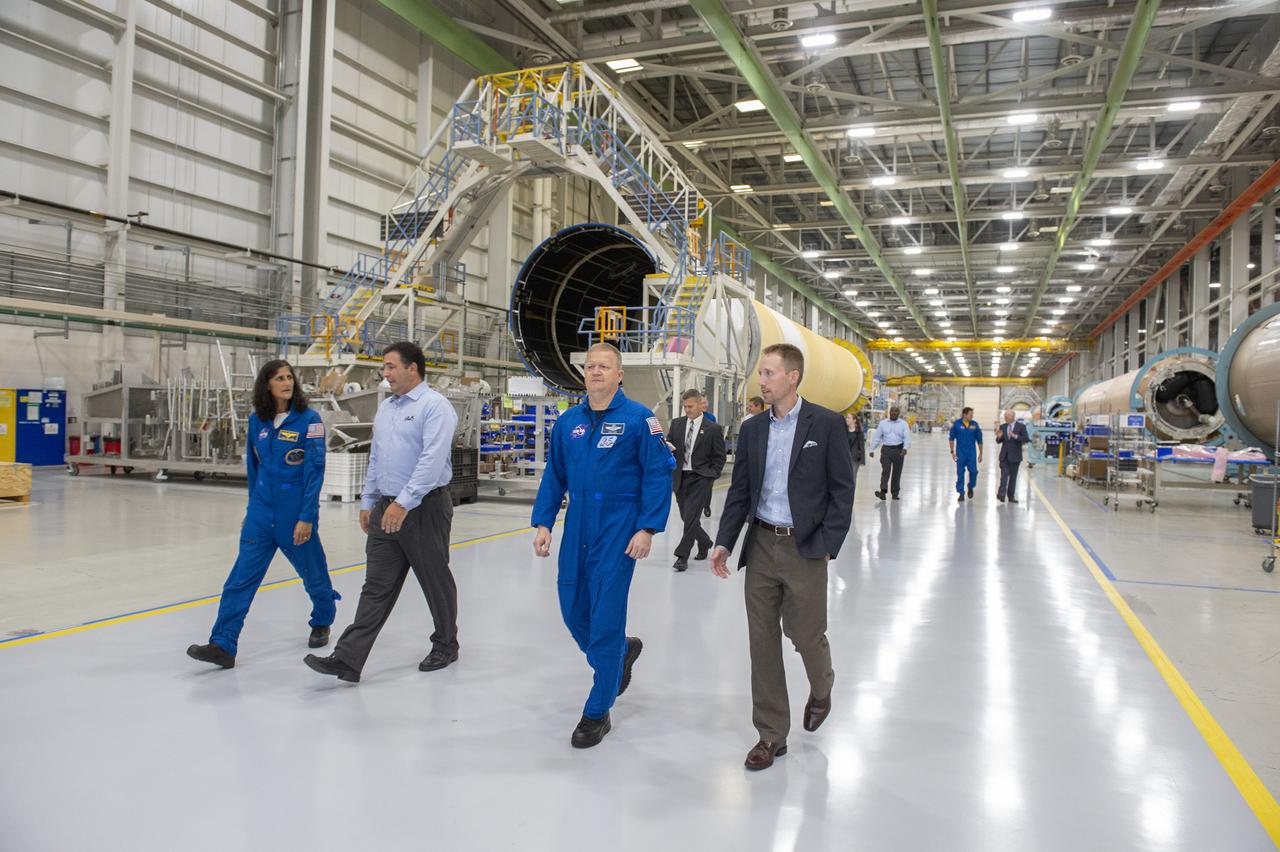
Commercial Crew astronauts toured the United Launch Alliance factory in Decatur, Alabama, on July 17, 2018. They viewed hardware to be used for upcoming commercial crew missions. At far left is Suni Williams, second from right is Eric Boe. Behind them, at right, is Josh Cassada.
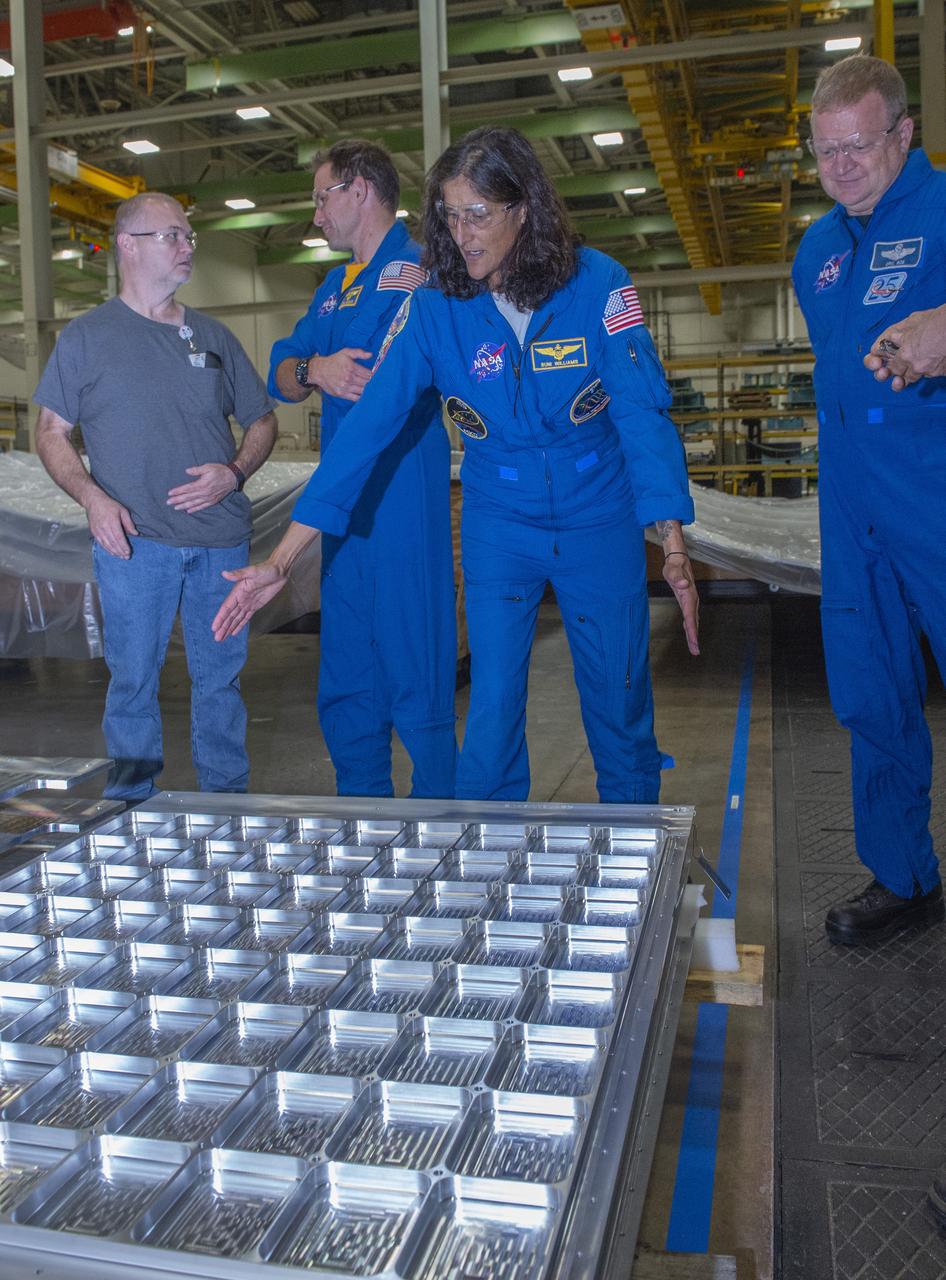
Commercial Crew astronauts toured the United Launch Alliance factory in Decatur, Alabama, on July 17, 2018. Viewing hardware to be used for upcoming commercial crew missions are, second from left, Josh Cassada, Suni Williams and Eric Boe.
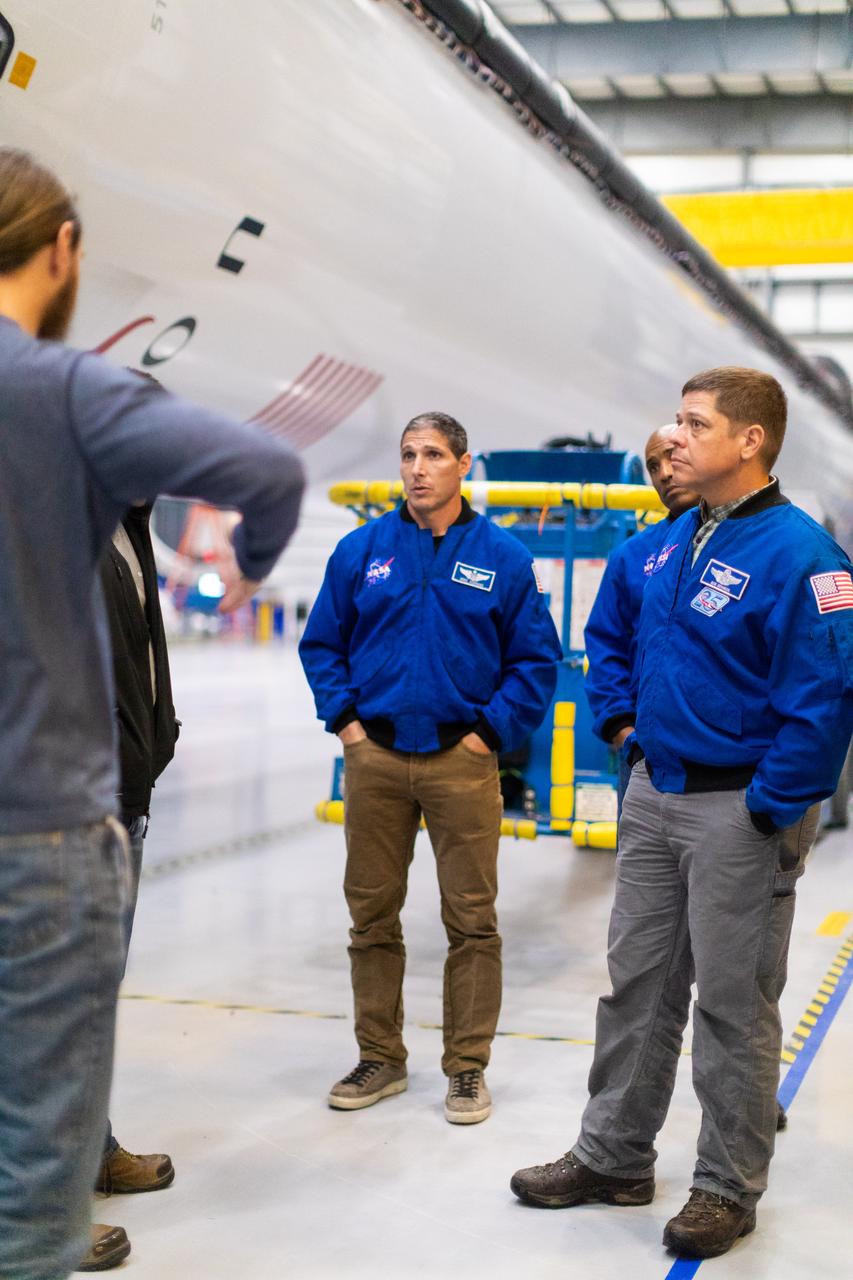
NASA astronauts who will be the first humans to fly aboard SpaceX's Crew Dragon spacecraft recently toured the company's Rocket Development Test Facility in McGregor, Texas, on Oct. 16, 2018. Astronauts Bob Behnken, far right, and Doug Hurley are set to crew SpaceX's Demo-2 flight test in June 2019, which will be the first flight of Crew Dragon with people onboard. Astronauts Victor Glover, behind Behnken, and Mike Hopkins, at left, will crew SpaceX's first regular mission to the International Space Station, following Demo-2 and NASA's certification of SpaceX commercial crew systems.
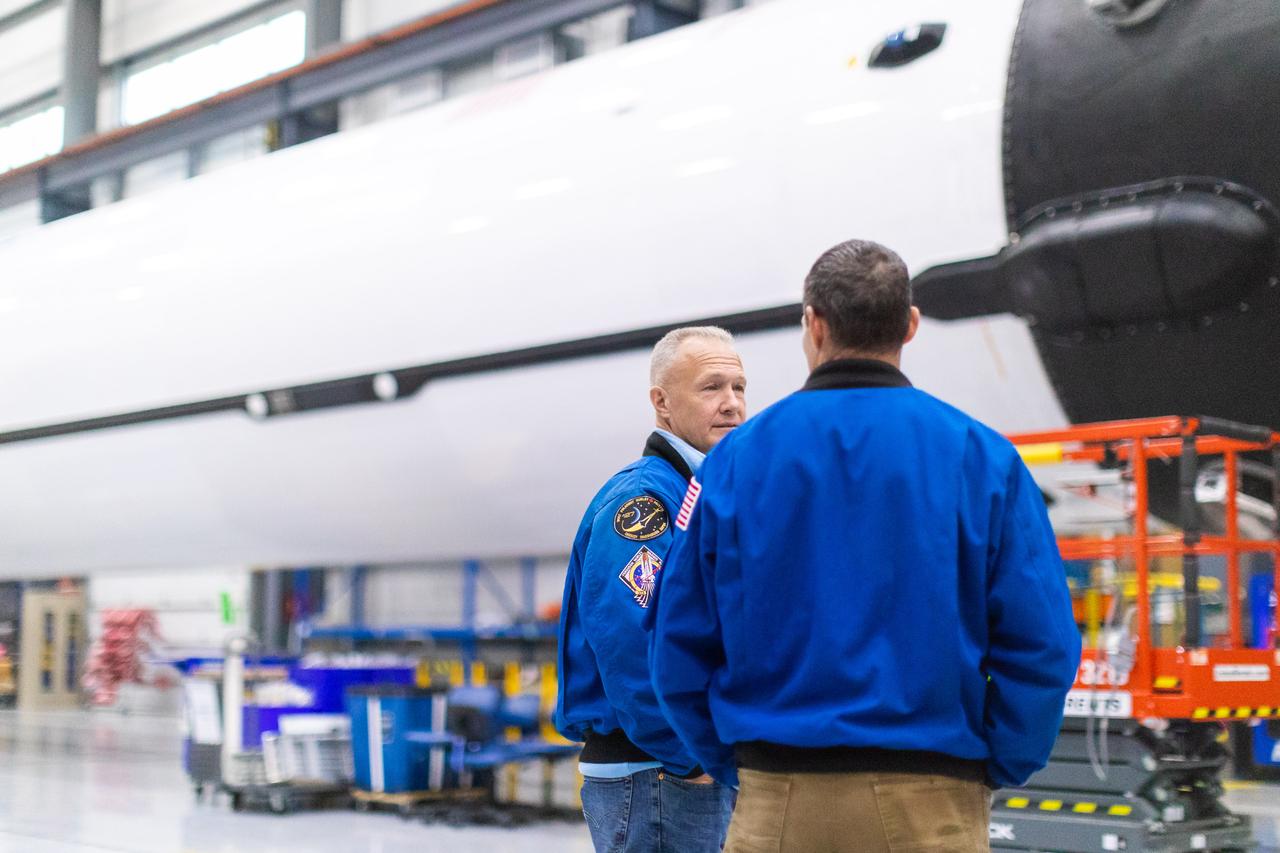
NASA astronauts who will be the first humans to fly aboard SpaceX's Crew Dragon spacecraft recently toured the company's Rocket Development Test Facility in McGregor, Texas, on Oct. 16, 2018. Astronauts Bob Behnken, and Doug Hurley, at left, are set to crew SpaceX's Demo-2 flight test in June 2019, which will be the first flight of Crew Dragon with people onboard. Astronauts Victor Glover, and Mike Hopkins, at right, will crew SpaceX's first regular mission to the International Space Station, following Demo-2 and NASA's certification of SpaceX commercial crew systems.
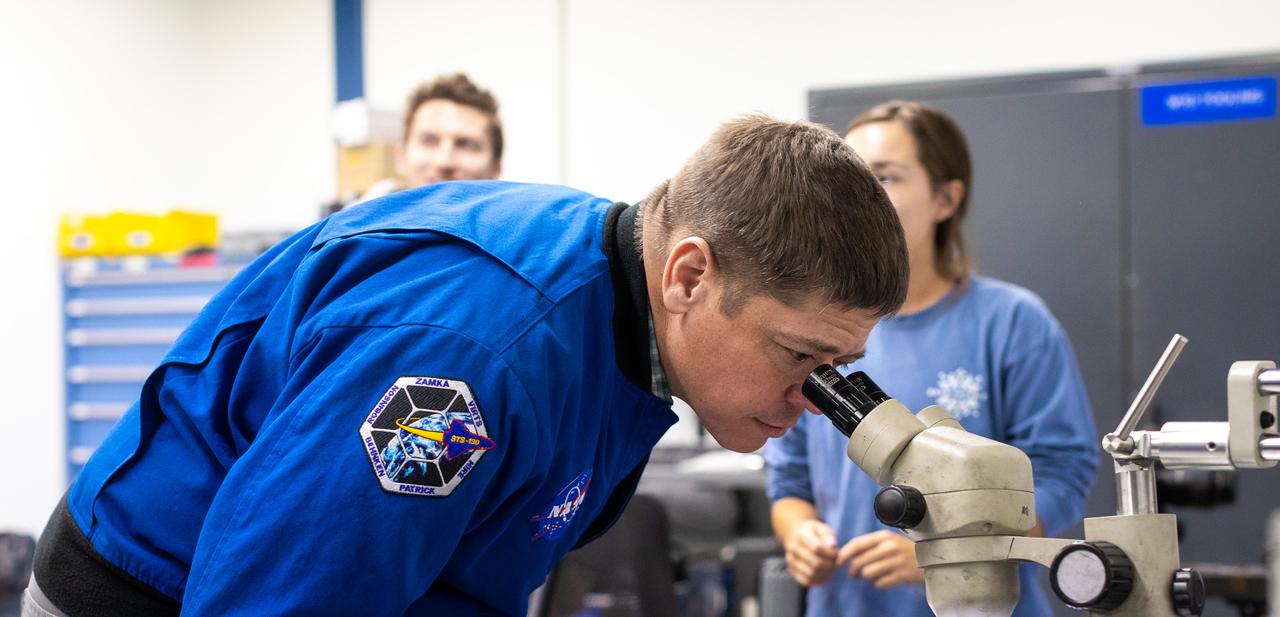
NASA astronauts who will be the first humans to fly aboard SpaceX's Crew Dragon spacecraft recently toured the company's Rocket Development Test Facility in McGregor, Texas, on Oct. 16, 2018. Astronauts Bob Behnken, pictured, and Doug Hurley are set to crew SpaceX's Demo-2 flight test in June 2019, which will be the first flight of Crew Dragon with people onboard. Astronauts Victor Glover and Mike Hopkins will crew SpaceX's first regular mission to the International Space Station, following Demo-2 and NASA's certification of SpaceX commercial crew systems.

NASA astronauts who will be the first humans to fly aboard SpaceX's Crew Dragon spacecraft recently toured the company's Rocket Development Test Facility in McGregor, Texas, on Oct. 16, 2018. Astronauts Bob Behnken and Doug Hurley are set to crew SpaceX's Demo-2 flight test in June 2019, which will be the first flight of Crew Dragon with people onboard. Astronauts Victor Glover, pictured, and Mike Hopkins will crew SpaceX's first regular mission to the International Space Station, following Demo-2 and NASA's certification of SpaceX commercial crew systems.

NASA astronauts who will be the first humans to fly aboard SpaceX's Crew Dragon spacecraft recently toured the company's Rocket Development Test Facility in McGregor, Texas, on Oct. 16, 2018. Astronauts Bob Behnken, second from left, and Doug Hurley are set to crew SpaceX's Demo-2 flight test in June 2019, which will be the first flight of Crew Dragon with people onboard. Astronauts Victor Glover, far right, and Mike Hopkins, at left, will crew SpaceX's first regular mission to the International Space Station, following Demo-2 and NASA's certification of SpaceX commercial crew systems.
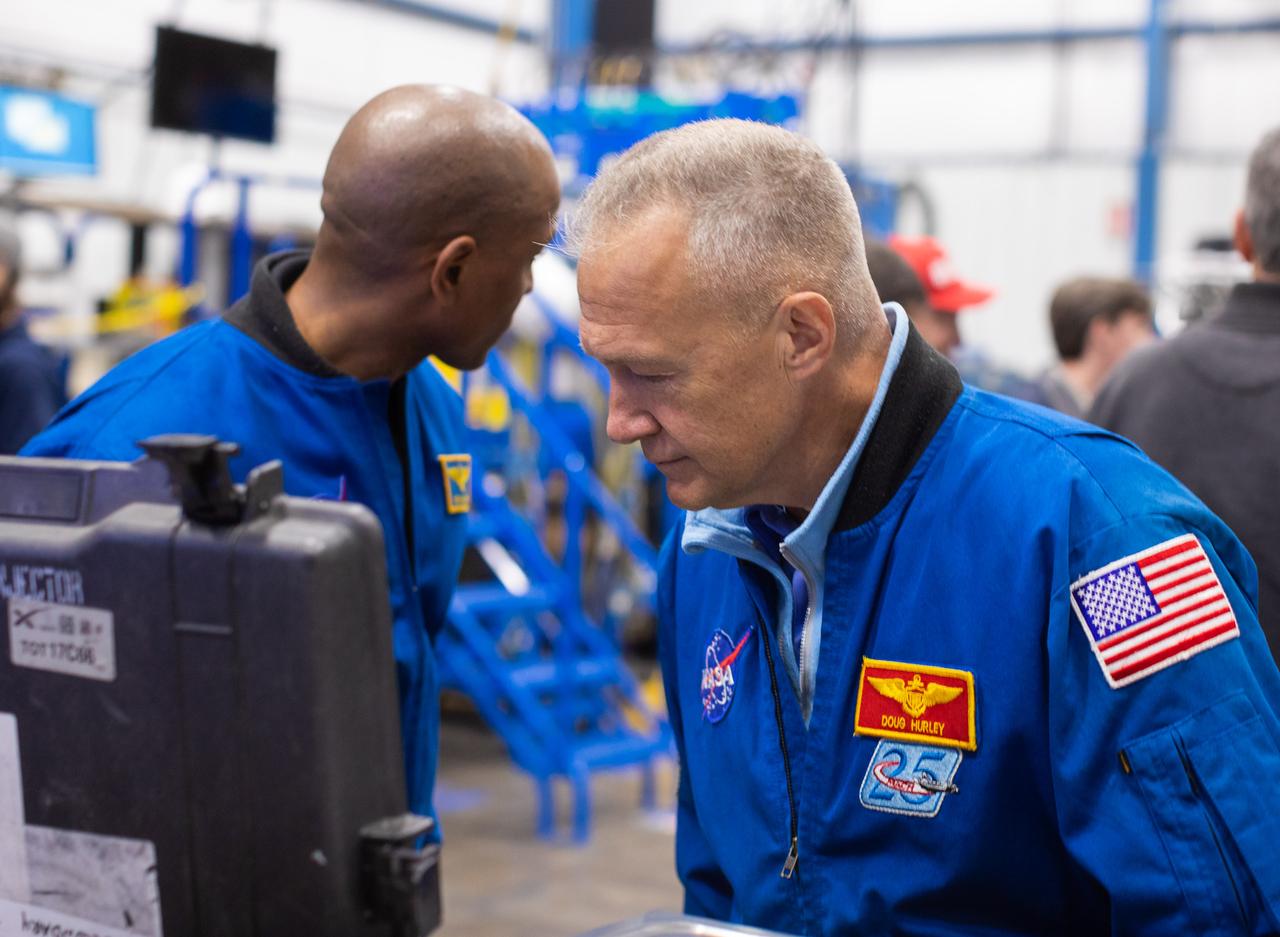
NASA astronauts who will be the first humans to fly aboard SpaceX's Crew Dragon spacecraft recently toured the company's Rocket Development Test Facility in McGregor, Texas, on Oct. 16, 2018. Astronauts Bob Behnken and Doug Hurley, pictured at right, are set to crew SpaceX's Demo-2 flight test in June 2019, which will be the first flight of Crew Dragon with people onboard. Astronauts Victor Glover, pictured at left, and Mike Hopkins will crew SpaceX's first regular mission to the International Space Station, following Demo-2 and NASA's certification of SpaceX commercial crew systems.

NASA astronauts who will be the first humans to fly aboard SpaceX's Crew Dragon spacecraft recently toured the company's Rocket Development Test Facility in McGregor, Texas, on Oct. 16, 2018. Astronauts Bob Behnken, at right, and Doug Hurley are set to crew SpaceX's Demo-2 flight test in June 2019, which will be the first flight of Crew Dragon with people onboard. Astronauts Victor Glover, behind Behnken, and Mike Hopkins, at left, will crew SpaceX's first regular mission to the International Space Station, following Demo-2 and NASA's certification of SpaceX commercial crew systems.

NASA astronauts who will be the first humans to fly aboard SpaceX's Crew Dragon spacecraft recently toured the company's Rocket Development Test Facility in McGregor, Texas, on Oct. 16, 2018. Astronauts Bob Behnken and Doug Hurley are set to crew SpaceX's Demo-2 flight test in June 2019, which will be the first flight of Crew Dragon with people onboard. Astronauts Victor Glover, pictured, and Mike Hopkins will crew SpaceX's first regular mission to the International Space Station, following Demo-2 and NASA's certification of SpaceX commercial crew systems.

NASA astronauts who will be the first humans to fly aboard SpaceX's Crew Dragon spacecraft recently toured the company's Rocket Development Test Facility in McGregor, Texas, on Oct. 16, 2018. Astronauts Bob Behnken, at left, and Doug Hurley, at right, are set to crew SpaceX's Demo-2 flight test in June 2019, which will be the first flight of Crew Dragon with people onboard. Astronauts Victor Glover and Mike Hopkins will crew SpaceX's first regular mission to the International Space Station, following Demo-2 and NASA's certification of SpaceX commercial crew systems.
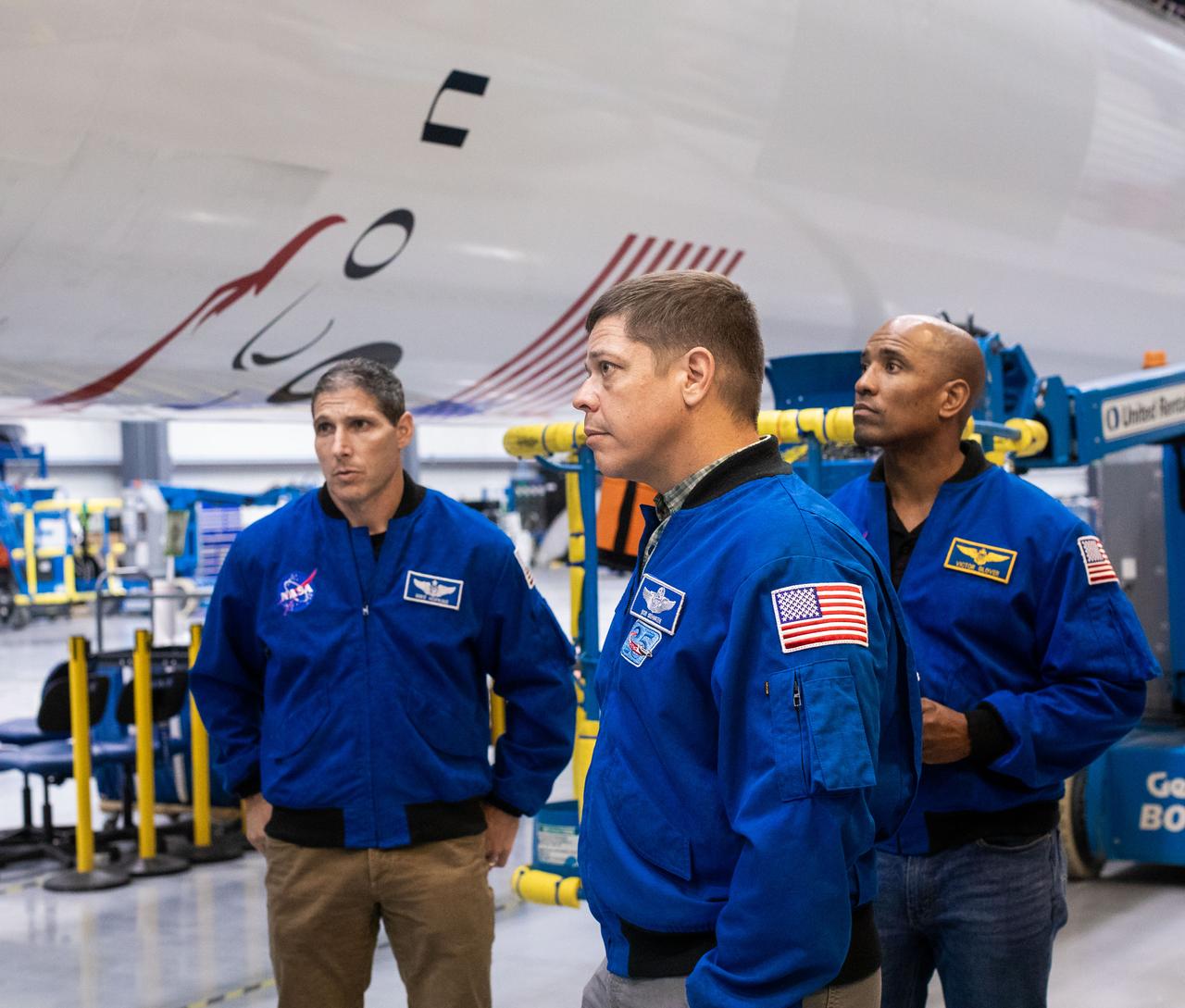
NASA astronauts who will be the first humans to fly aboard SpaceX's Crew Dragon spacecraft recently toured the company's Rocket Development Test Facility in McGregor, Texas, on Oct. 16, 2018. Astronauts Bob Behnken, center, and Doug Hurley are set to crew SpaceX's Demo-2 flight test in June 2019, which will be the first flight of Crew Dragon with people onboard. Astronauts Victor Glover, far right, and Mike Hopkins, at left, will crew SpaceX's first regular mission to the International Space Station, following Demo-2 and NASA's certification of SpaceX commercial crew systems.
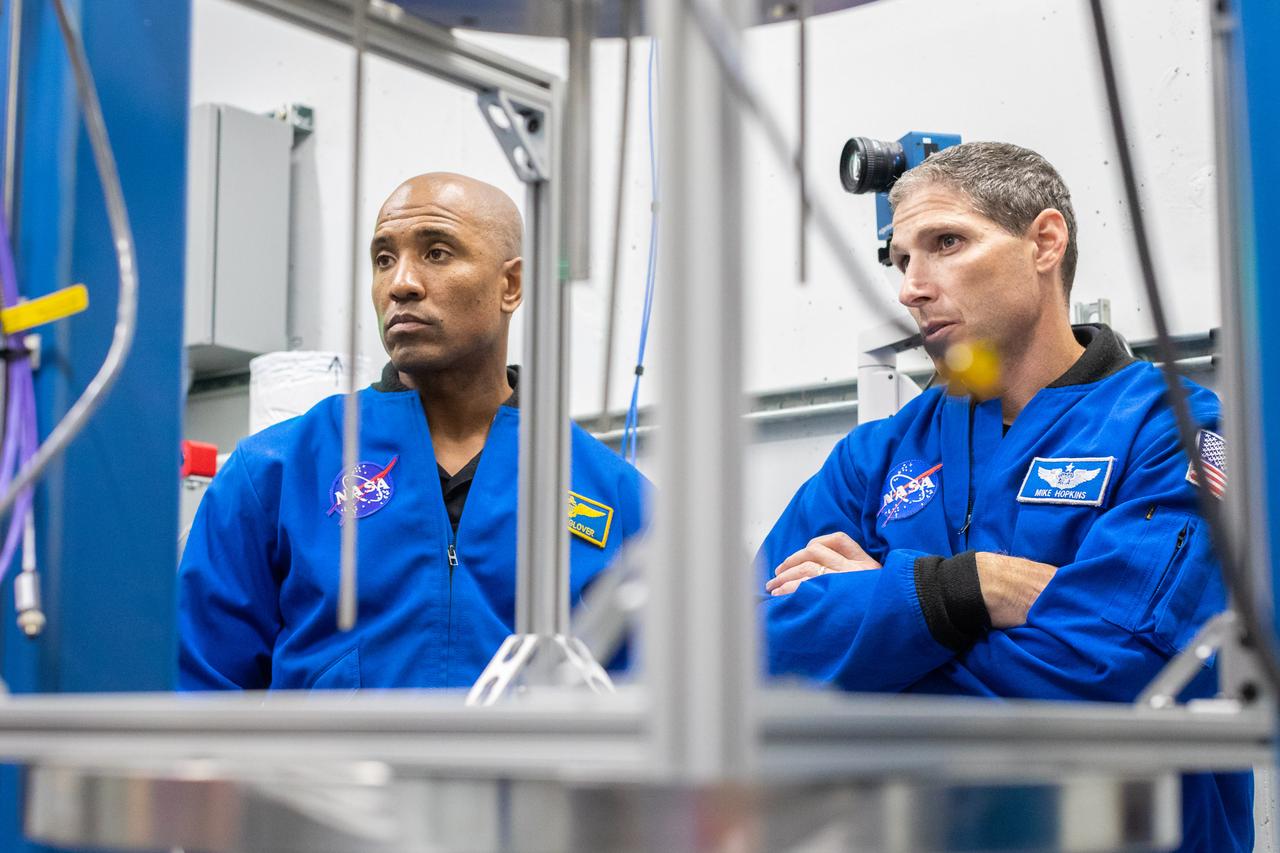
NASA astronauts who will be the first humans to fly aboard SpaceX's Crew Dragon spacecraft recently toured the company's Rocket Development Test Facility in McGregor, Texas, on Oct. 16, 2018. Astronauts Bob Behnken and Doug Hurley are set to crew SpaceX's Demo-2 flight test in June 2019, which will be the first flight of Crew Dragon with people onboard. Astronauts Victor Glover, at left, and Mike Hopkins, at right, will crew SpaceX's first regular mission to the International Space Station, following Demo-2 and NASA's certification of SpaceX commercial crew systems.

NASA astronauts who will be the first humans to fly aboard SpaceX's Crew Dragon spacecraft recently toured the company's Rocket Development Test Facility in McGregor, Texas, on Oct. 16, 2018. Astronauts Bob Behnken, and Doug Hurley, at left, are set to crew SpaceX's Demo-2 flight test in June 2019, which will be the first flight of Crew Dragon with people onboard. Astronauts Victor Glover, and Mike Hopkins, at right, will crew SpaceX's first regular mission to the International Space Station, following Demo-2 and NASA's certification of SpaceX commercial crew systems.
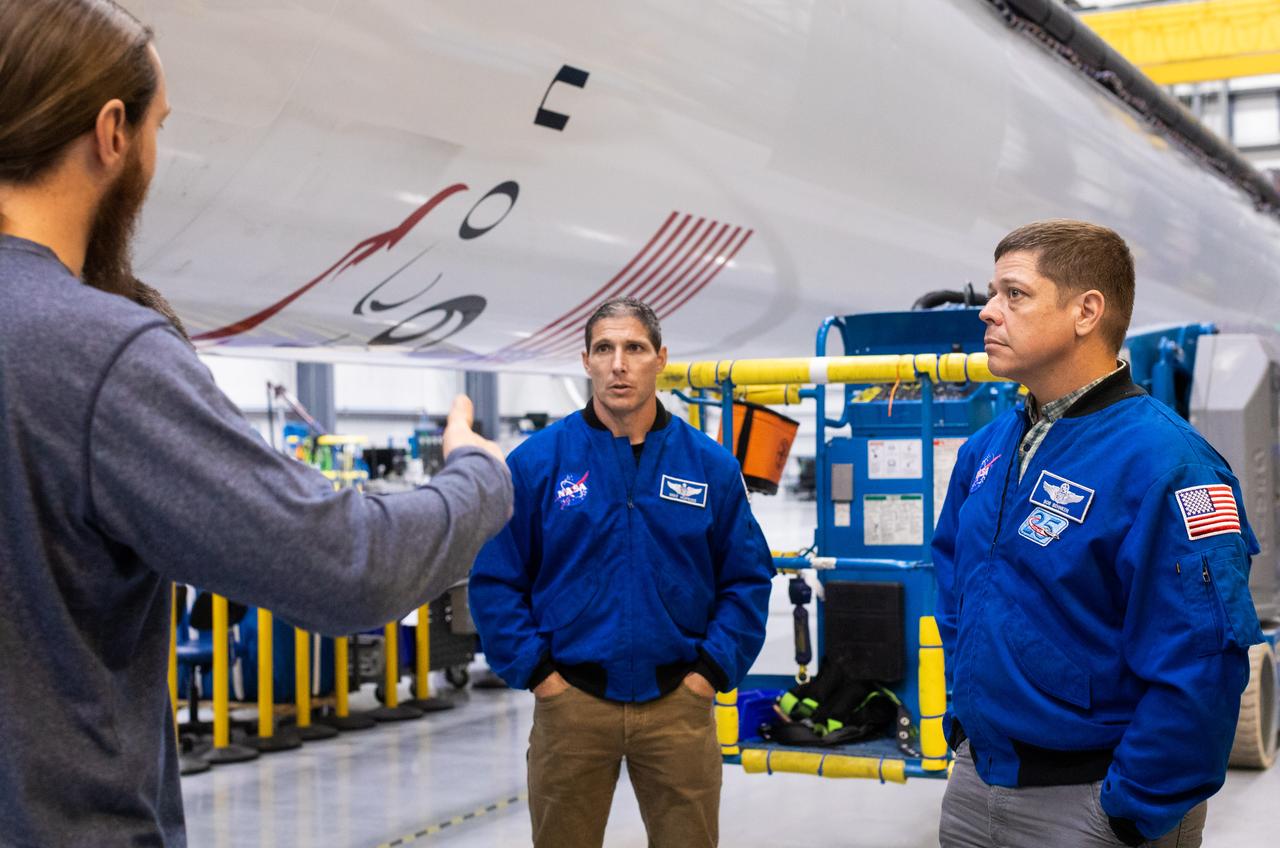
NASA astronauts who will be the first humans to fly aboard SpaceX's Crew Dragon spacecraft recently toured the company's Rocket Development Test Facility in McGregor, Texas, on Oct. 16, 2018. Astronauts Bob Behnken, at right, and Doug Hurley are set to crew SpaceX's Demo-2 flight test in June 2019, which will be the first flight of Crew Dragon with people onboard. Astronauts Victor Glover, and Mike Hopkins, at left, will crew SpaceX's first regular mission to the International Space Station, following Demo-2 and NASA's certification of SpaceX commercial crew systems.
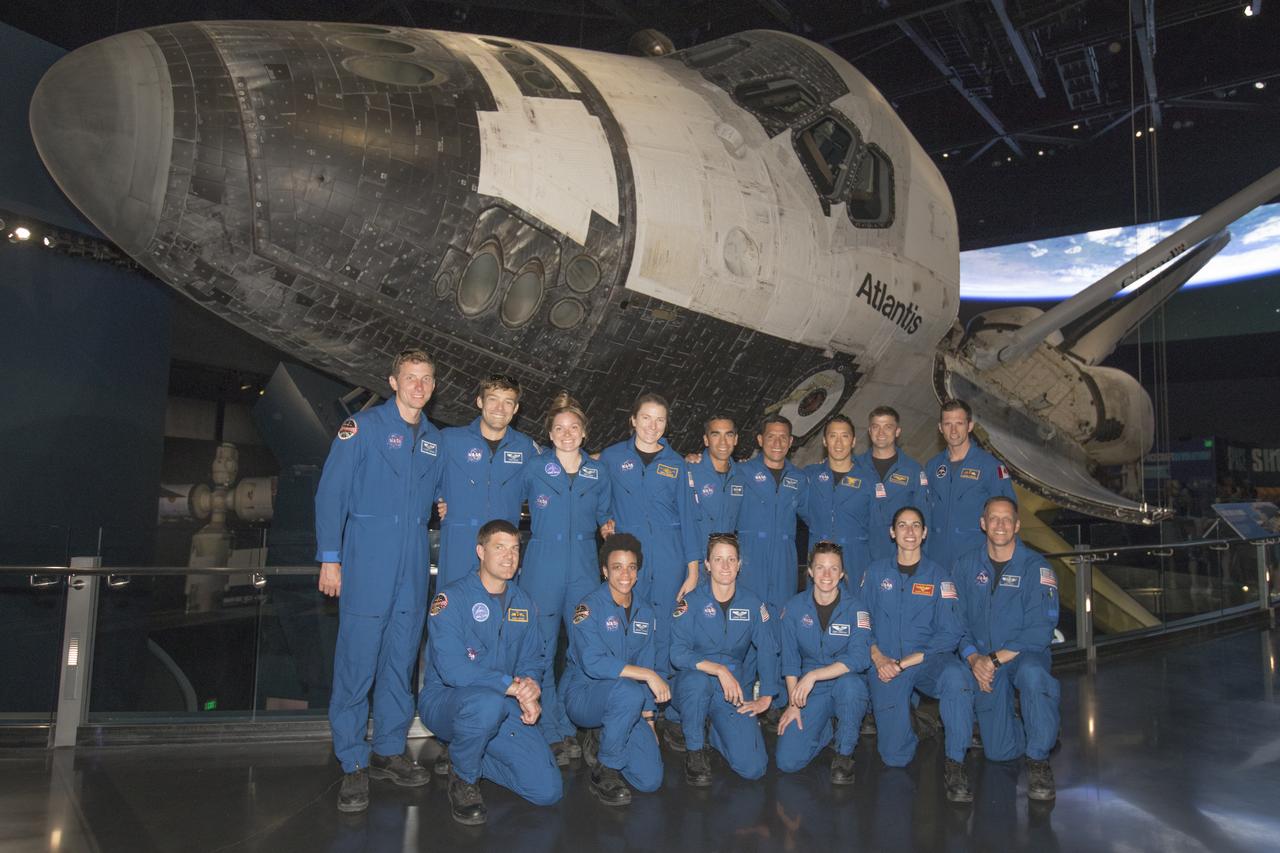
The 2017 class of astronaut candidates toured the Kennedy Space Center Visitor Complex and viewed exhibits, including Space Shuttle Atlantis, during a familiarization tour of facilities at NASA's Kennedy Space Center in Florida. The candidates toured center facilities, including the Neil Armstrong Operations and Checkout Building high bay; Launch Control Center, Launch Pad 39B and the Space Station Processing Facility. They also toured Boeing's Commercial Crew and Cargo Facility, United Launch Alliance's Space Launch Complex 41 at Cape Canaveral Air Force Station, and SpaceX's Launch Pad 39A at Kennedy. The candidates will spend about two years getting to know the space station systems and learning how to spacewalk, speak Russian, control the International Space Station's robotic arm and fly T-38s, before they're eligible to be assigned to a mission.
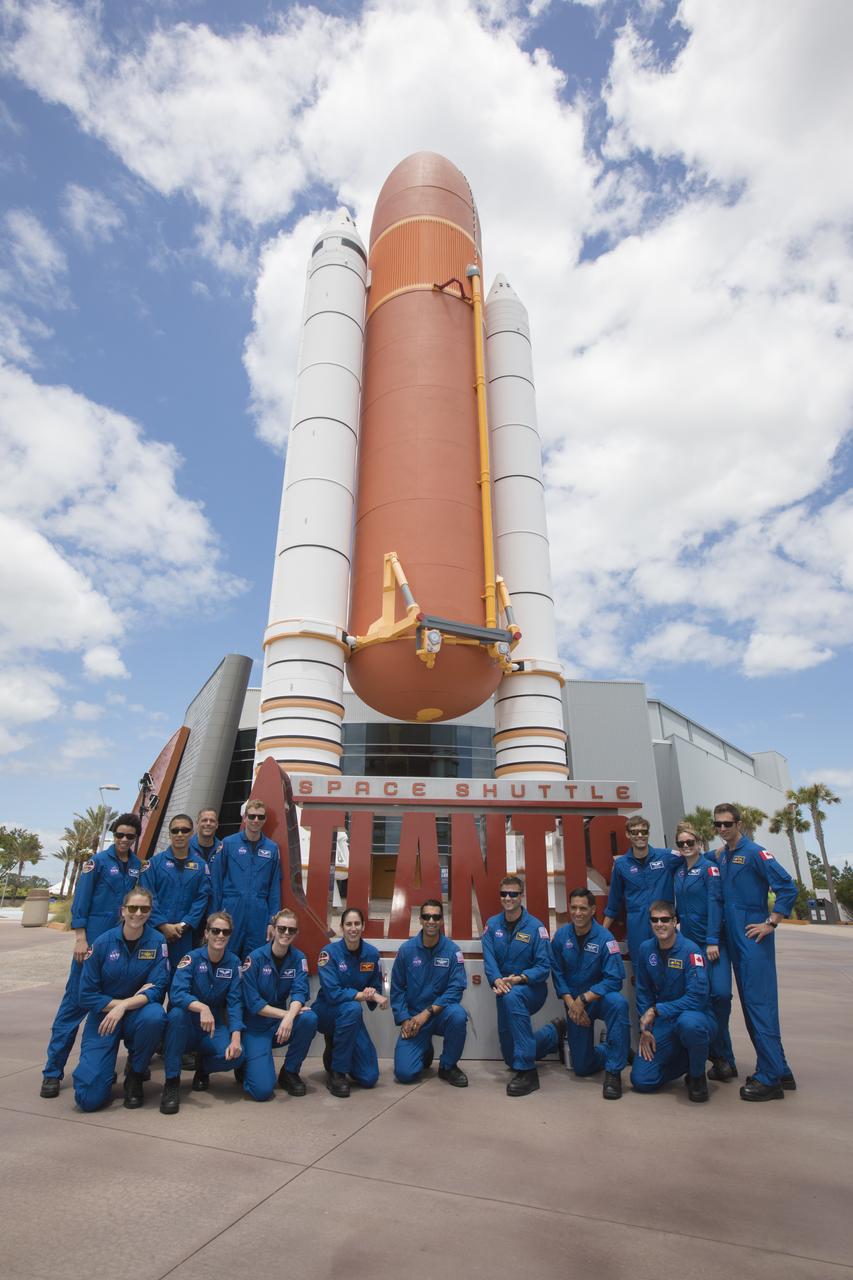
The 2017 class of astronaut candidates toured the Kennedy Space Center Visitor Complex and viewed exhibits, including Space Shuttle Atlantis, during a familiarization tour of facilities at NASA's Kennedy Space Center in Florida. The candidates toured center facilities, including the Neil Armstrong Operations and Checkout Building high bay; Launch Control Center, Launch Pad 39B and the Space Station Processing Facility. They also toured Boeing's Commercial Crew and Cargo Facility, United Launch Alliance's Space Launch Complex 41 at Cape Canaveral Air Force Station, and SpaceX's Launch Pad 39A at Kennedy. The candidates will spend about two years getting to know the space station systems and learning how to spacewalk, speak Russian, control the International Space Station's robotic arm and fly T-38s, before they're eligible to be assigned to a mission.
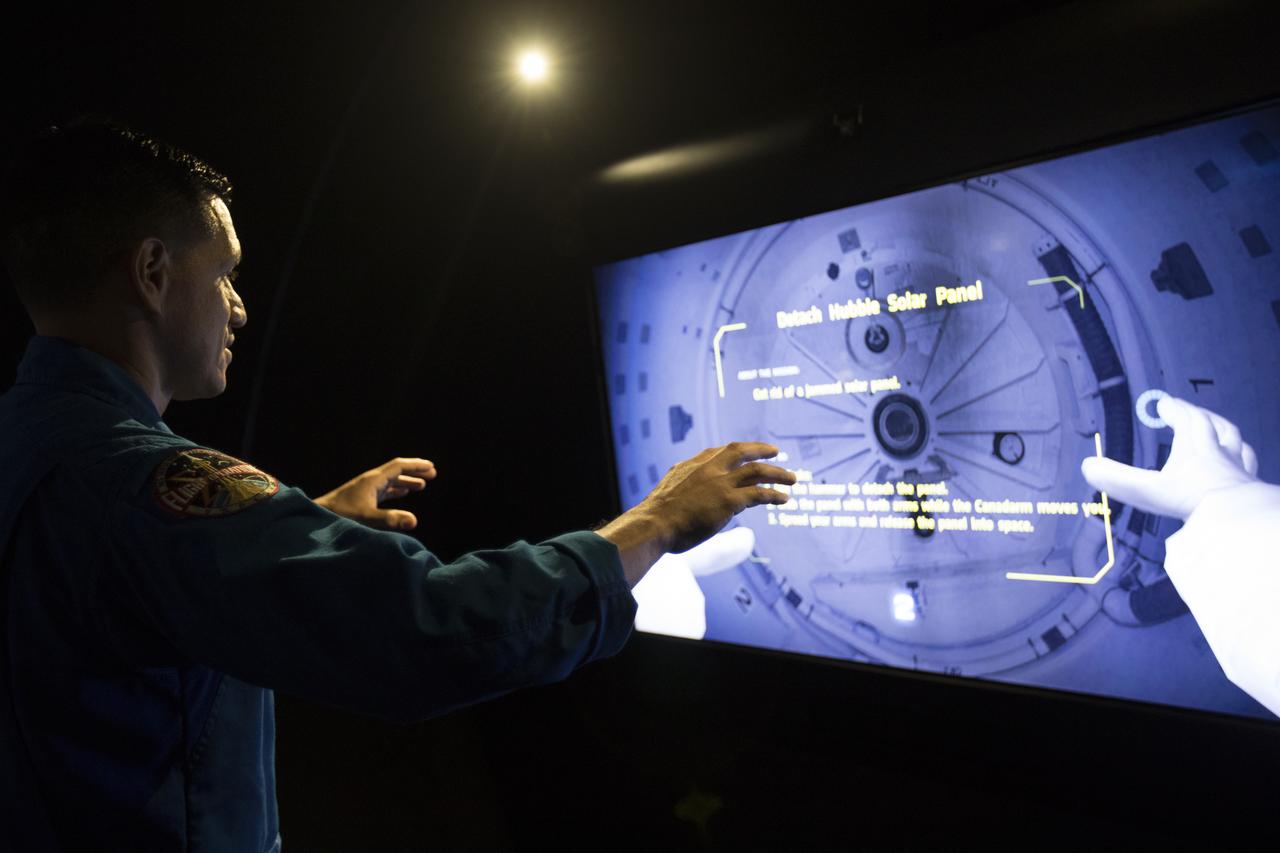
The 2017 class of astronaut candidates toured the Kennedy Space Center Visitor Complex and viewed exhibits, including Space Shuttle Atlantis, during a familiarization tour of facilities at NASA's Kennedy Space Center in Florida. The candidates toured center facilities, including the Neil Armstrong Operations and Checkout Building high bay; Launch Control Center, Launch Pad 39B and the Space Station Processing Facility. They also toured Boeing's Commercial Crew and Cargo Facility, United Launch Alliance's Space Launch Complex 41 at Cape Canaveral Air Force Station, and SpaceX's Launch Pad 39A at Kennedy. The candidates will spend about two years getting to know the space station systems and learning how to spacewalk, speak Russian, control the International Space Station's robotic arm and fly T-38s, before they're eligible to be assigned to a mission.
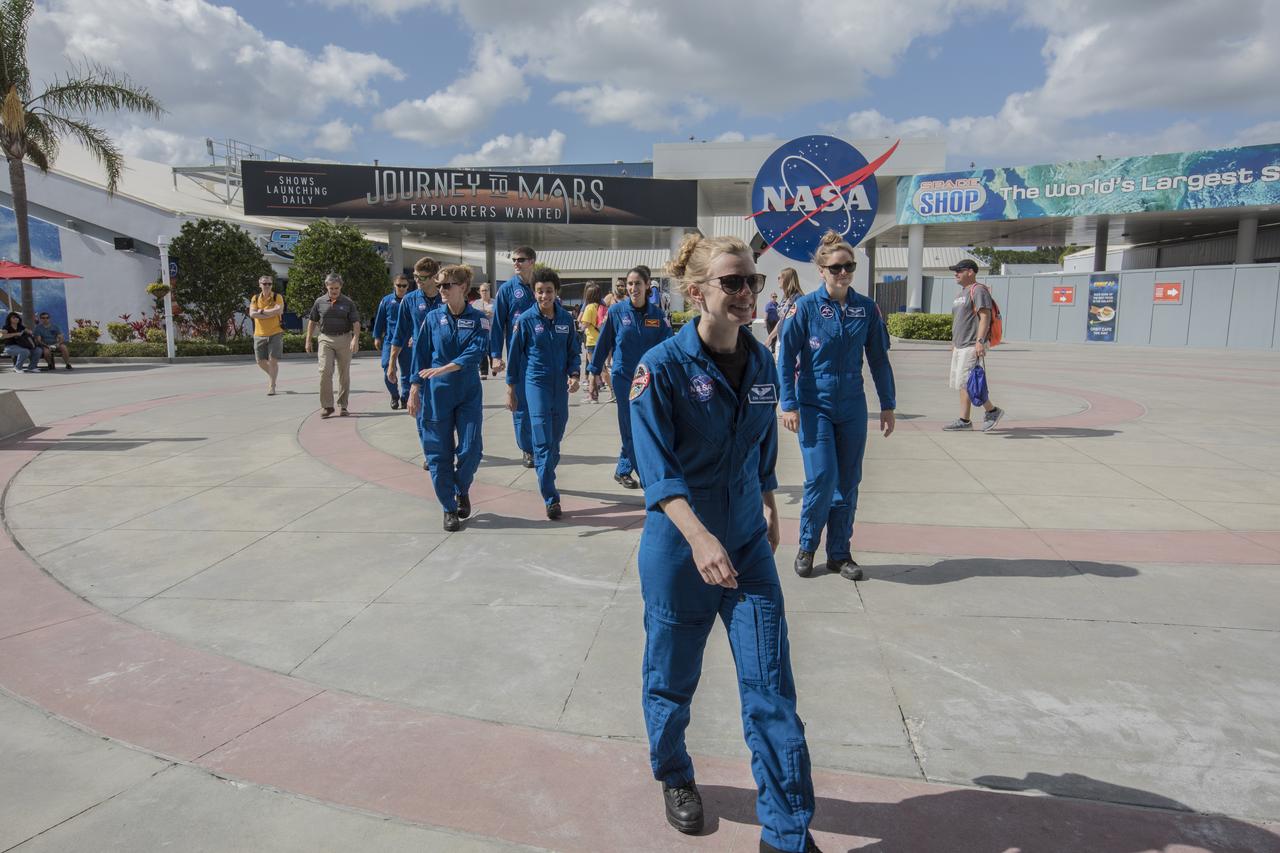
The 2017 class of astronaut candidates toured the Kennedy Space Center Visitor Complex and viewed exhibits, including Space Shuttle Atlantis, during a familiarization tour of facilities at NASA's Kennedy Space Center in Florida. The candidates toured center facilities, including the Neil Armstrong Operations and Checkout Building high bay; Launch Control Center, Launch Pad 39B and the Space Station Processing Facility. They also toured Boeing's Commercial Crew and Cargo Facility, United Launch Alliance's Space Launch Complex 41 at Cape Canaveral Air Force Station, and SpaceX's Launch Pad 39A at Kennedy. The candidates will spend about two years getting to know the space station systems and learning how to spacewalk, speak Russian, control the International Space Station's robotic arm and fly T-38s, before they're eligible to be assigned to a mission.
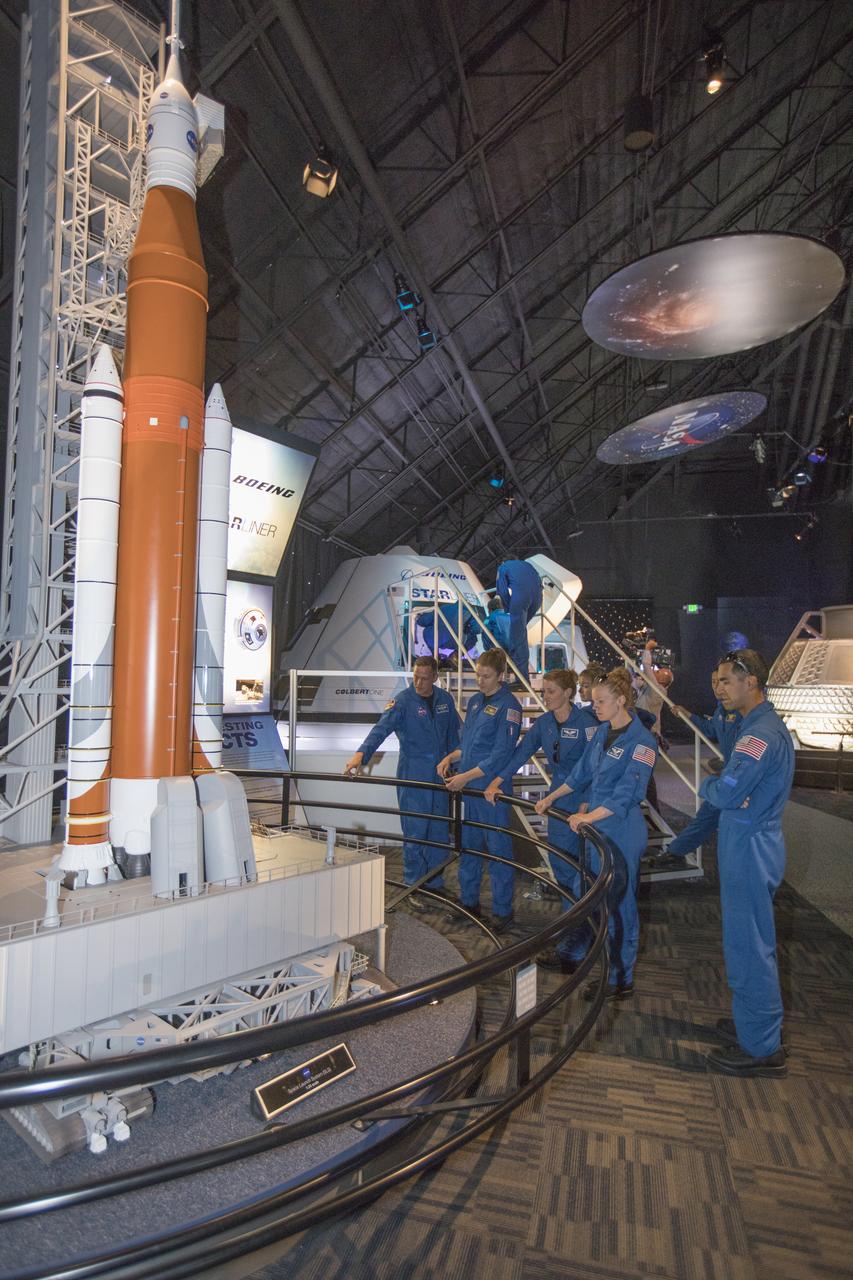
The 2017 class of astronaut candidates toured the Kennedy Space Center Visitor Complex and viewed exhibits, including Space Shuttle Atlantis, during a familiarization tour of facilities at NASA's Kennedy Space Center in Florida. The candidates toured center facilities, including the Neil Armstrong Operations and Checkout Building high bay; Launch Control Center, Launch Pad 39B and the Space Station Processing Facility. They also toured Boeing's Commercial Crew and Cargo Facility, United Launch Alliance's Space Launch Complex 41 at Cape Canaveral Air Force Station, and SpaceX's Launch Pad 39A at Kennedy. The candidates will spend about two years getting to know the space station systems and learning how to spacewalk, speak Russian, control the International Space Station's robotic arm and fly T-38s, before they're eligible to be assigned to a mission.
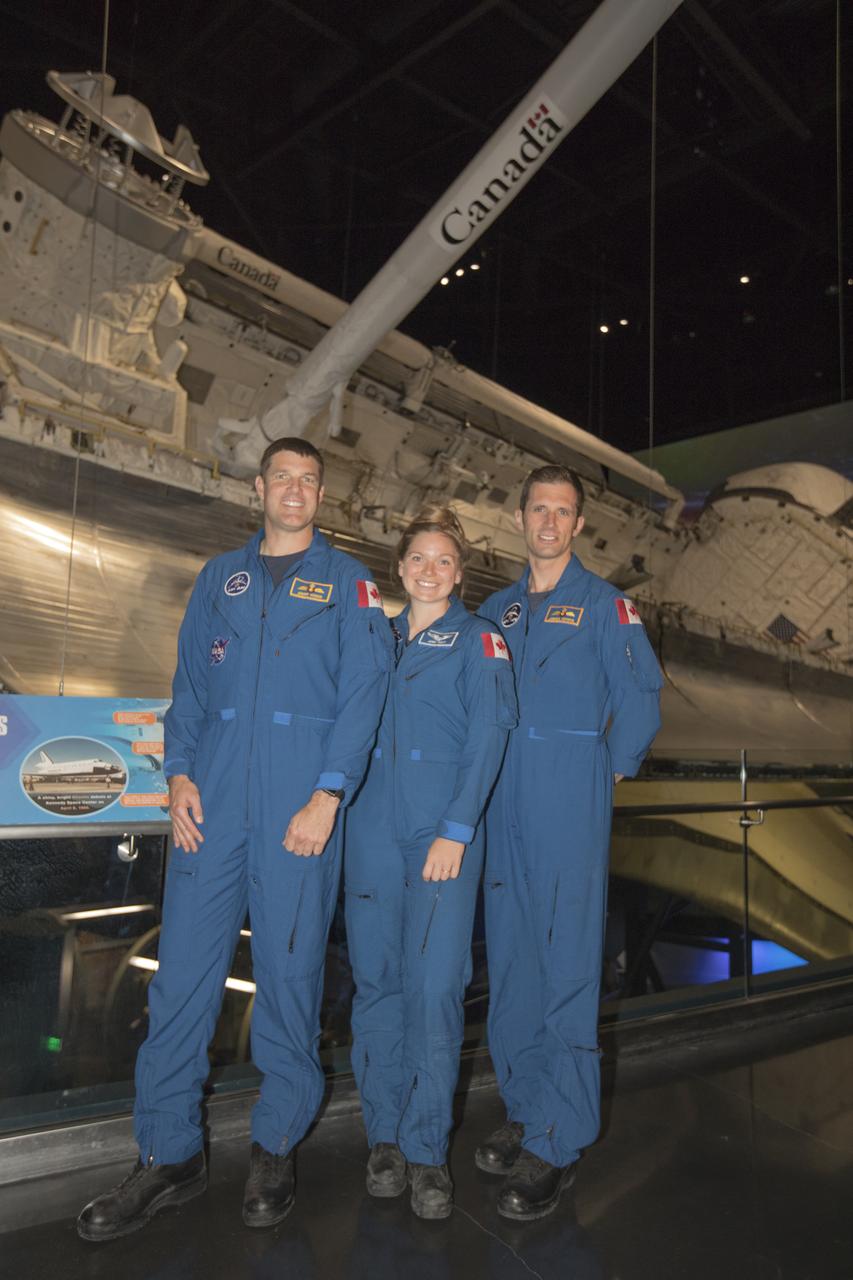
The 2017 class of astronaut candidates toured the Kennedy Space Center Visitor Complex and viewed exhibits, including Space Shuttle Atlantis, during a familiarization tour of facilities at NASA's Kennedy Space Center in Florida. The candidates toured center facilities, including the Neil Armstrong Operations and Checkout Building high bay; Launch Control Center, Launch Pad 39B and the Space Station Processing Facility. They also toured Boeing's Commercial Crew and Cargo Facility, United Launch Alliance's Space Launch Complex 41 at Cape Canaveral Air Force Station, and SpaceX's Launch Pad 39A at Kennedy. The candidates will spend about two years getting to know the space station systems and learning how to spacewalk, speak Russian, control the International Space Station's robotic arm and fly T-38s, before they're eligible to be assigned to a mission.
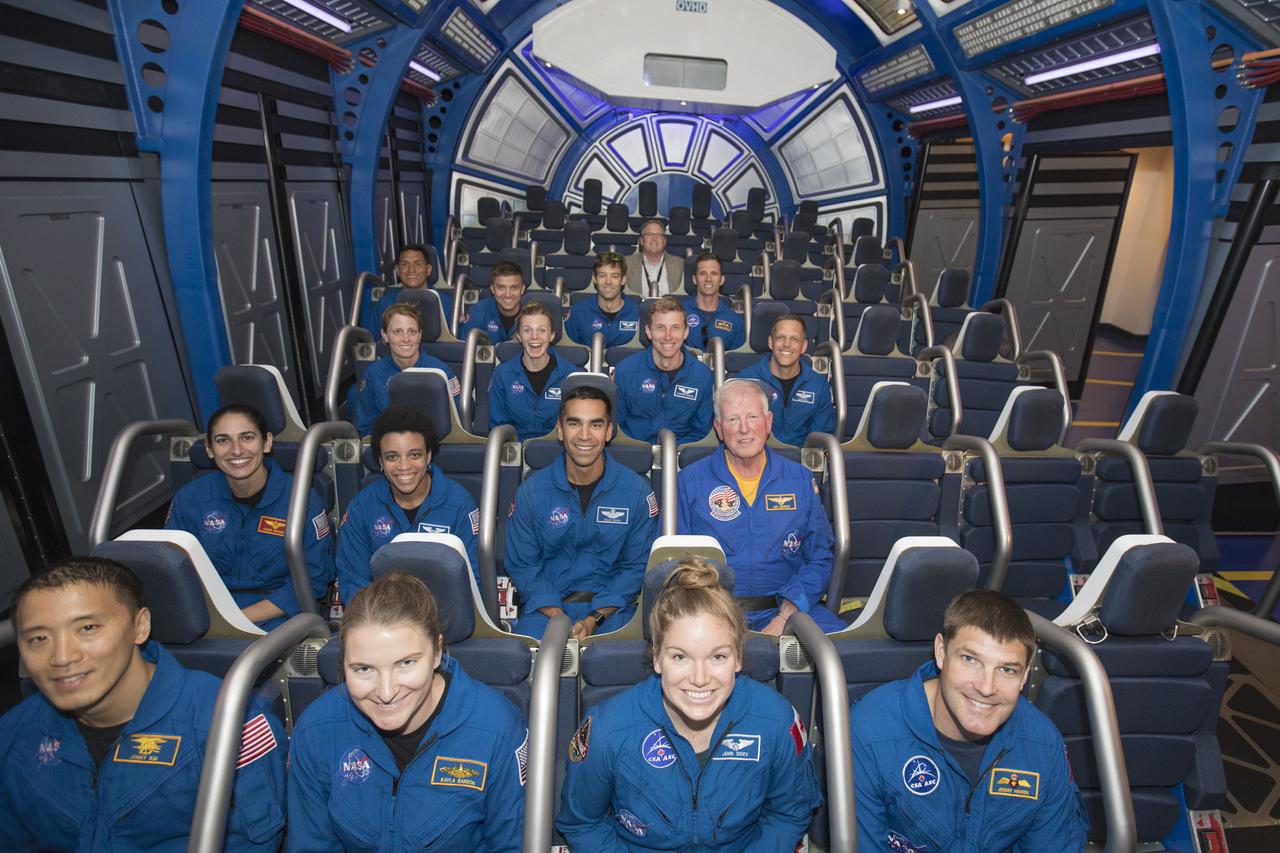
The 2017 class of astronaut candidates toured the Kennedy Space Center Visitor Complex and viewed exhibits, including Space Shuttle Atlantis, during a familiarization tour of facilities at NASA's Kennedy Space Center in Florida. The candidates toured center facilities, including the Neil Armstrong Operations and Checkout Building high bay; Launch Control Center, Launch Pad 39B and the Space Station Processing Facility. They also toured Boeing's Commercial Crew and Cargo Facility, United Launch Alliance's Space Launch Complex 41 at Cape Canaveral Air Force Station, and SpaceX's Launch Pad 39A at Kennedy. The candidates will spend about two years getting to know the space station systems and learning how to spacewalk, speak Russian, control the International Space Station's robotic arm and fly T-38s, before they're eligible to be assigned to a mission.
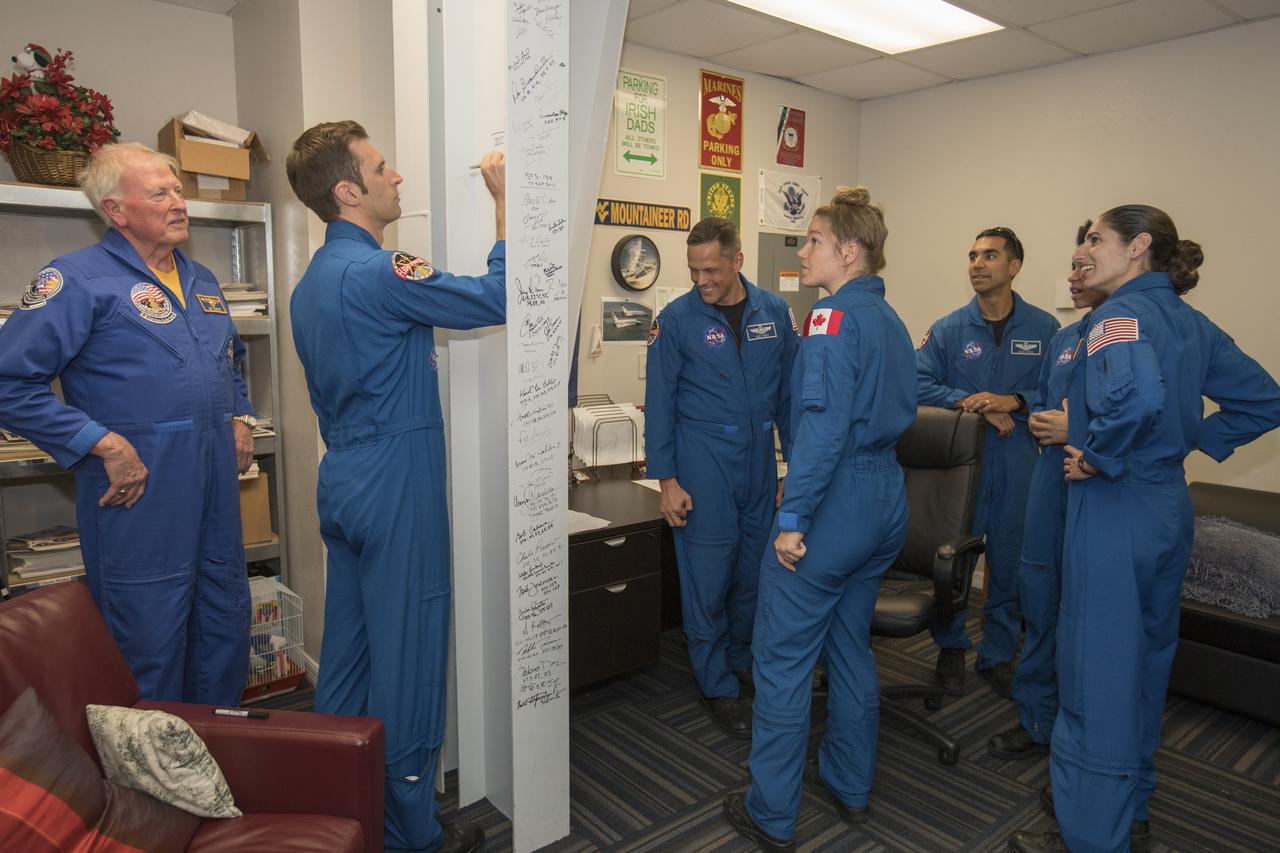
The 2017 class of astronaut candidates toured the Kennedy Space Center Visitor Complex and viewed exhibits, including Space Shuttle Atlantis, during a familiarization tour of facilities at NASA's Kennedy Space Center in Florida. The candidates toured center facilities, including the Neil Armstrong Operations and Checkout Building high bay; Launch Control Center, Launch Pad 39B and the Space Station Processing Facility. They also toured Boeing's Commercial Crew and Cargo Facility, United Launch Alliance's Space Launch Complex 41 at Cape Canaveral Air Force Station, and SpaceX's Launch Pad 39A at Kennedy. The candidates will spend about two years getting to know the space station systems and learning how to spacewalk, speak Russian, control the International Space Station's robotic arm and fly T-38s, before they're eligible to be assigned to a mission.
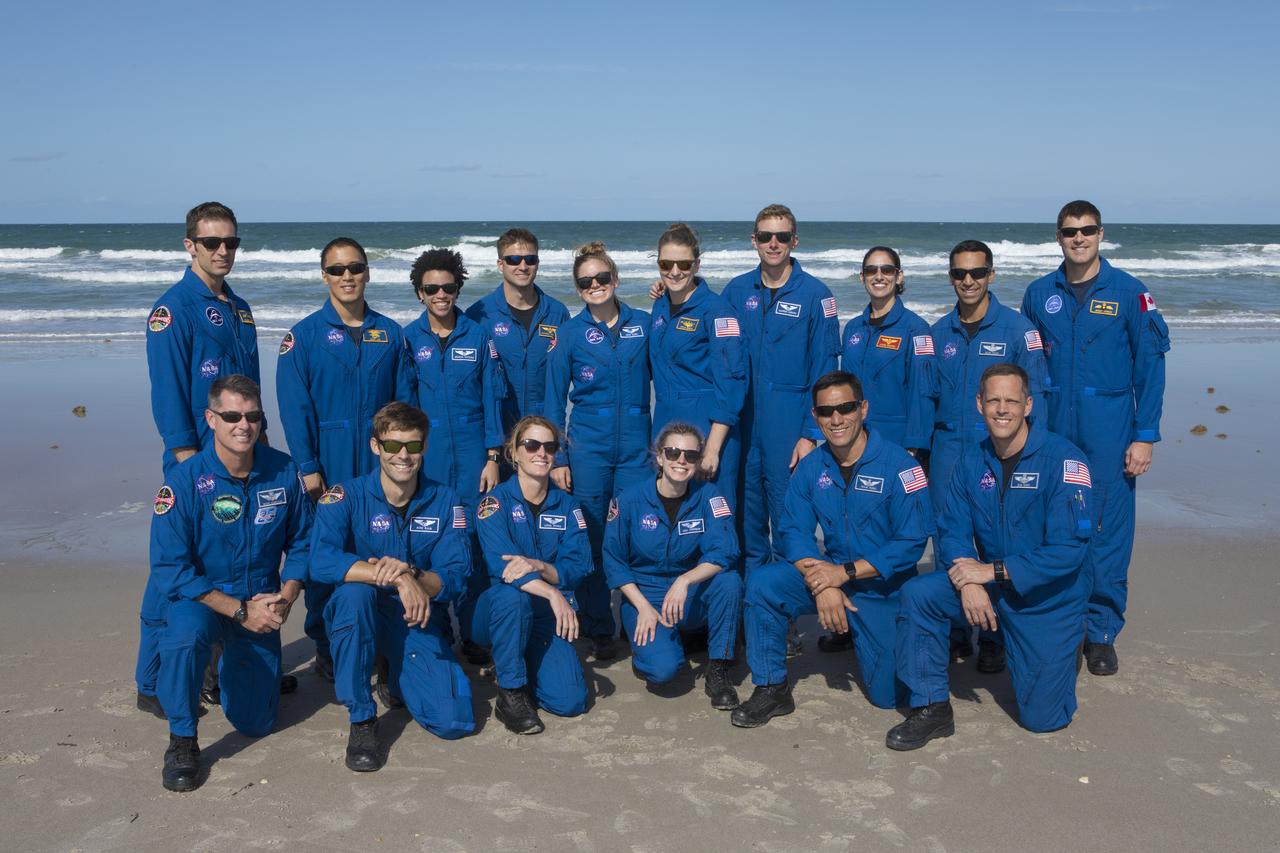
Members of the 2017 class of astronaut candidates pause for a group photo on the beach after a familiarization tour of the Beach House at NASA's Kennedy Space Center in Florida. The candidates toured center facilities, including the Vehicle Assembly Building, Launch Control Center, Neil Armstrong Operations and Checkout Building high bay, Launch Pad 39B and the Space Station Processing Facility. They also toured Boeing's Commercial Crew and Cargo Facility, United Launch Alliance's Space Launch Complex 41 at Cape Canaveral Air Force Station, and SpaceX's Launch Pad 39A at Kennedy. The candidates will spend about two years getting to know the space station systems and learning how to spacewalk, speak Russian, control the International Space Station's robotic arm and fly T-38s, before they're eligible to be assigned to a mission.
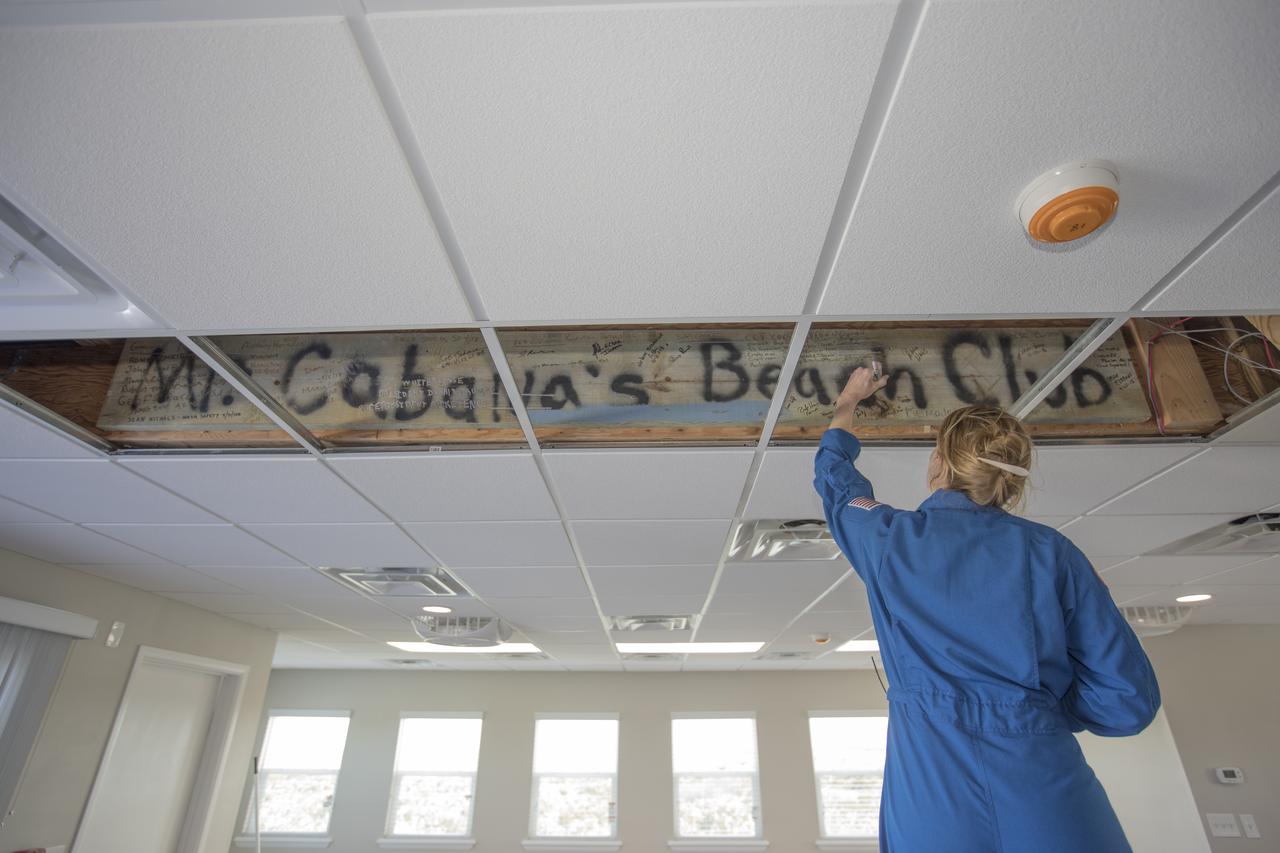
A members of the 2017 class of astronaut candidates signs her name to a wooden sign inside the Beach House during a familiarization tour at NASA's Kennedy Space Center in Florida. The candidates toured center facilities, including the Vehicle Assembly Building, Launch Control Center, Neil Armstrong Operations and Checkout Building high bay, Launch Pad 39B and the Space Station Processing Facility. They also toured Boeing's Commercial Crew and Cargo Facility, United Launch Alliance's Space Launch Complex 41 at Cape Canaveral Air Force Station, and SpaceX's Launch Pad 39A at Kennedy. The candidates will spend about two years getting to know the space station systems and learning how to spacewalk, speak Russian, control the International Space Station's robotic arm and fly T-38s, before they're eligible to be assigned to a mission.
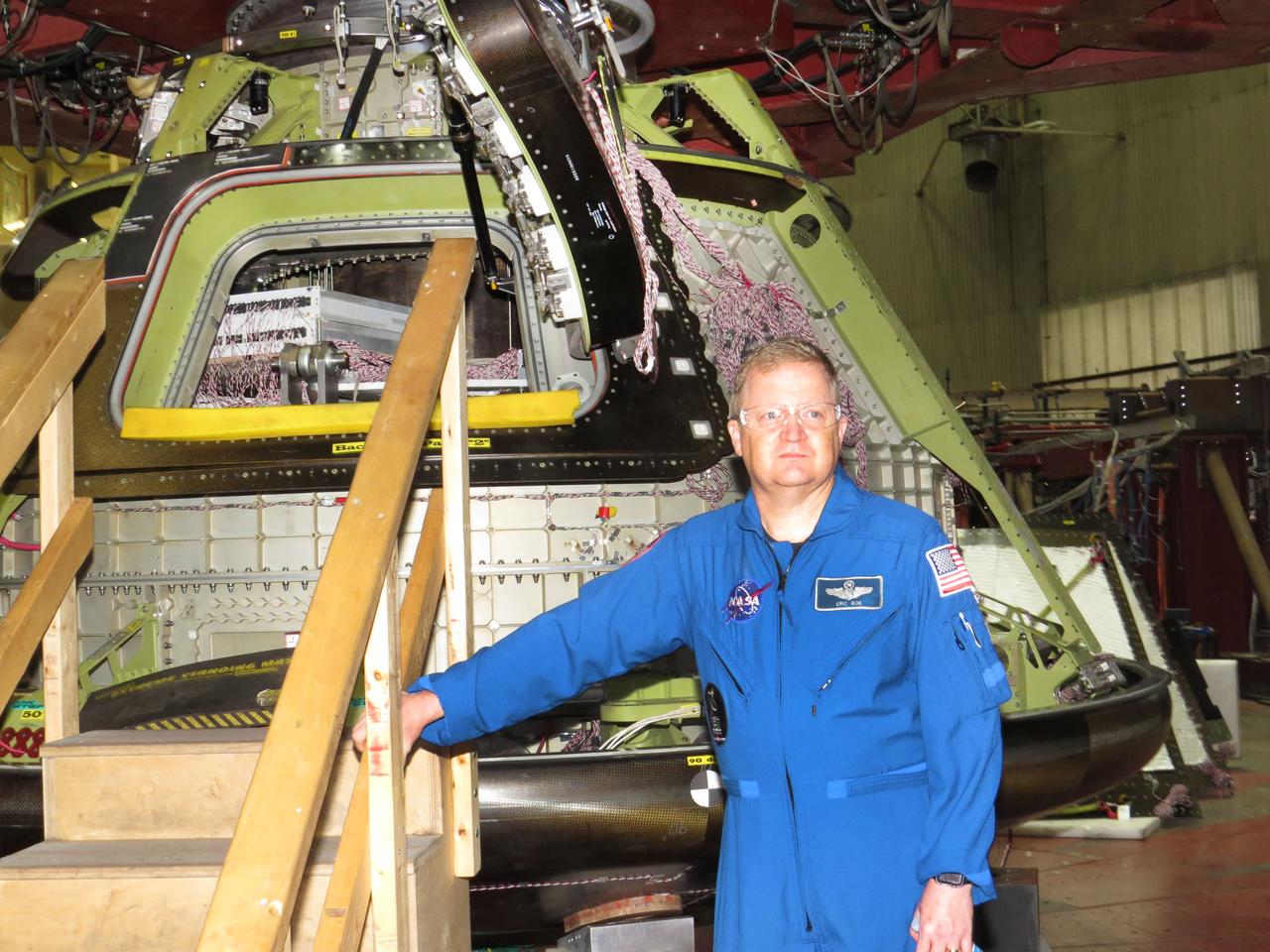
NASA astronaut Eric Boe poses during a recent tour of two spacecraft testing facilities in southern California. Boe, along with Boeing astronaut Chris Ferguson and NASA astronaut Nicole Mann, will fly on Boeing’s CST-100 Starliner in an upcoming crew flight test to the International Space Station. During trips to El Segundo and Huntington Beach, the astronauts met with employees who conduct the structural and environmental testing on the spacecraft built to return human spaceflight launch capability to the U.S.
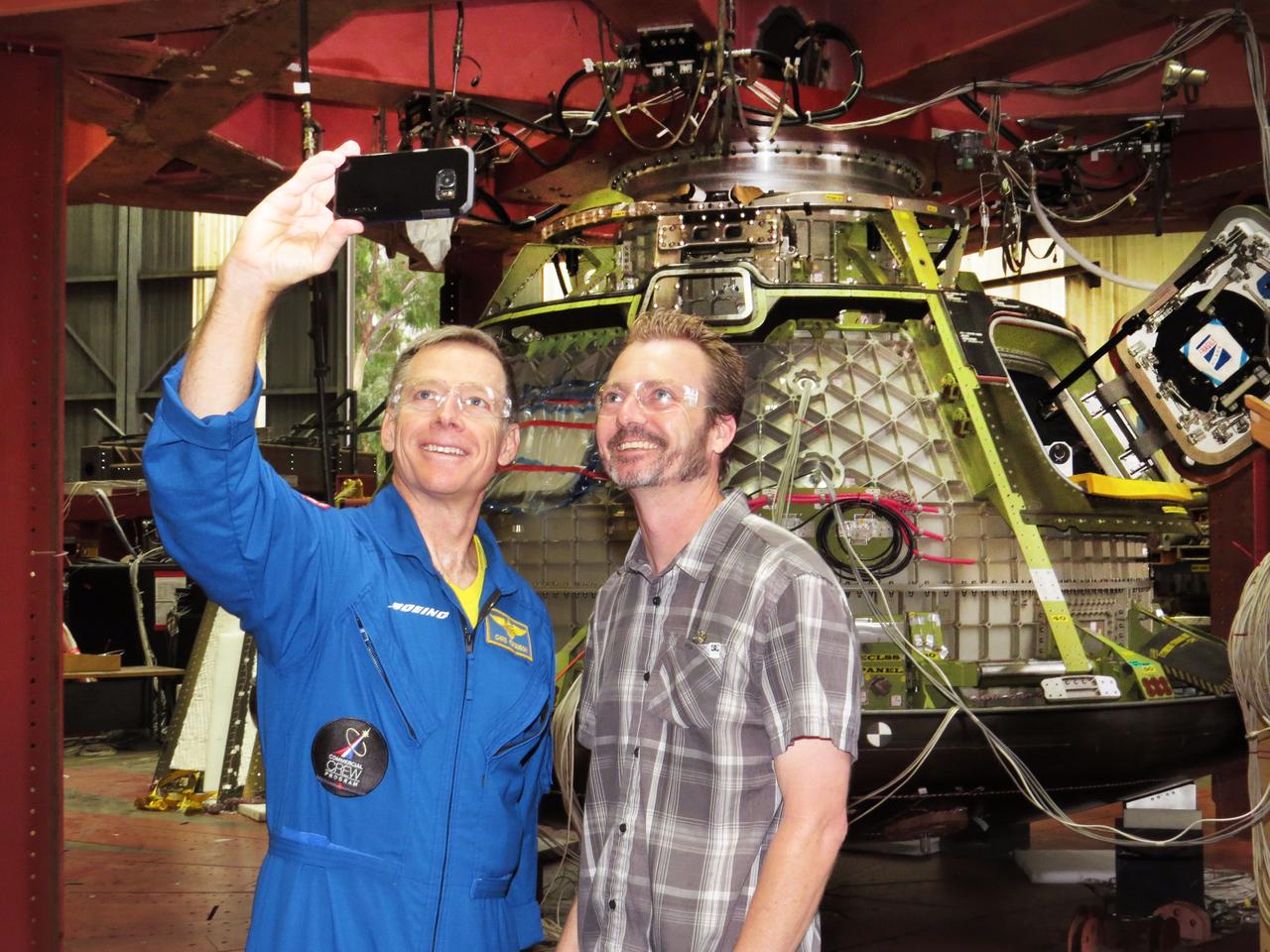
Boeing astronaut Chris Ferguson takes a selfie during a recent tour of spacecraft testing facilities in southern California. Ferguson, along with NASA astronauts Nicole Mann and Eric Boe, will fly on Boeing’s CST-100 Starliner in an upcoming crew flight test to the International Space Station. During trips to El Segundo and Huntington Beach, the astronauts met with employees who conduct the structural and environmental testing on the spacecraft built to return human spaceflight launch capability to the U.S.
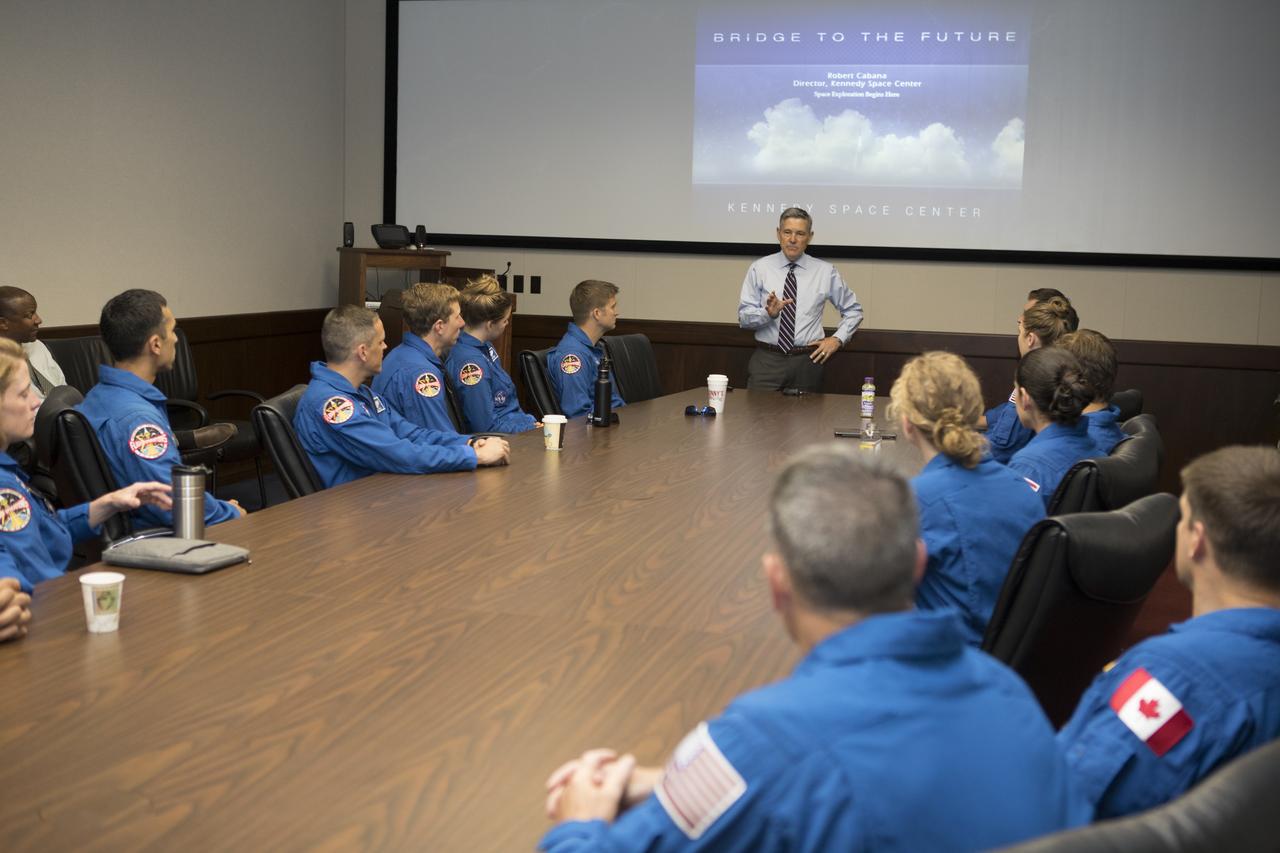
The 2017 class of astronaut candidates listen to NASA Kennedy Space Center Director Bob Cabana, standing, during their tour and familiarization with the center. The candidates toured center facilities, including the Vehicle Assembly Building, Launch Control Center, Neil Armstrong Operations and Checkout Building, Launch Pad 39B, and the Space Station Processing Facility. They also toured Boeing's Commercial Crew and Cargo Facility, United Launch Alliance's Space Launch Complex 41 at Cape Canaveral Air Force Station, and SpaceX's Launch Pad 39A at Kennedy. The candidates will spend about two years getting to know the space station systems and learning how to spacewalk, speak Russian, control the International Space Station's robotic arm and fly T-38s, before they're eligible to be assigned to a mission.
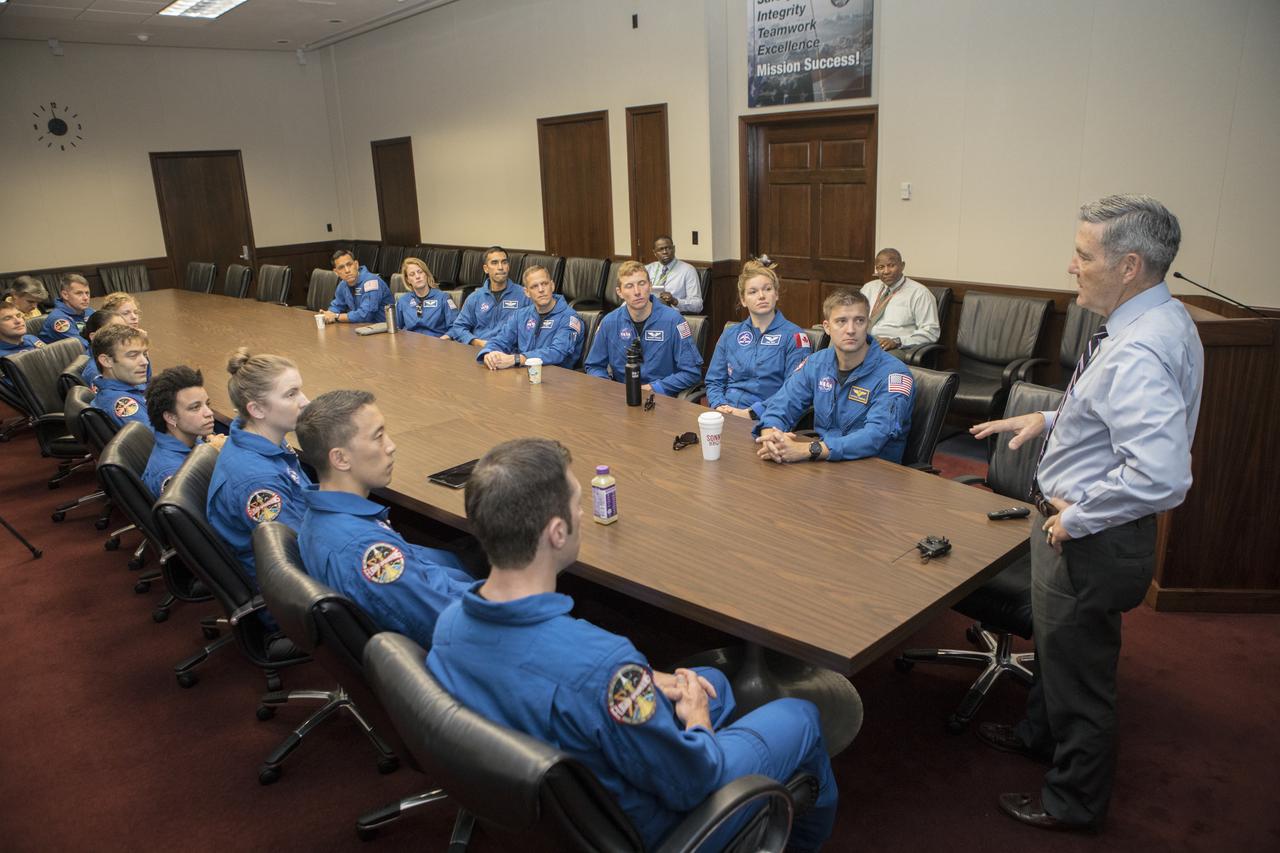
The 2017 class of astronaut candidates listen to NASA Kennedy Space Center Director Bob Cabana, far right, during their tour and familiarization with the center. Sitting behind the candidates, at right is Kelvin Manning, Kennedy associate director. The candidates toured center facilities, including the Vehicle Assembly Building, Launch Control Center, Neil Armstrong Operations and Checkout Building, Launch Pad 39B, and the Space Station Processing Facility. They also toured Boeing's Commercial Crew and Cargo Facility, United Launch Alliance's Space Launch Complex 41 at Cape Canaveral Air Force Station, and SpaceX's Launch Pad 39A at Kennedy. The candidates will spend about two years getting to know the space station systems and learning how to spacewalk, speak Russian, control the International Space Station's robotic arm and fly T-38s, before they're eligible to be assigned to a mission.

Commercial Crew astronauts Chris Ferguson, Nicole Mann and Eric Boe recently toured spacecraft testing facilities in El Segundo and Huntington Beach, Calif. All three astronauts will fly on Boeing’s CST-100 Starliner in an upcoming crew flight test to the International Space Station. Environmental qualification testing in El Segundo ensures the spacecraft can withstand the extreme environments of space. Structural testing in Huntington Beach confirms the spacecraft can withstand the pressures it will experience during flight.
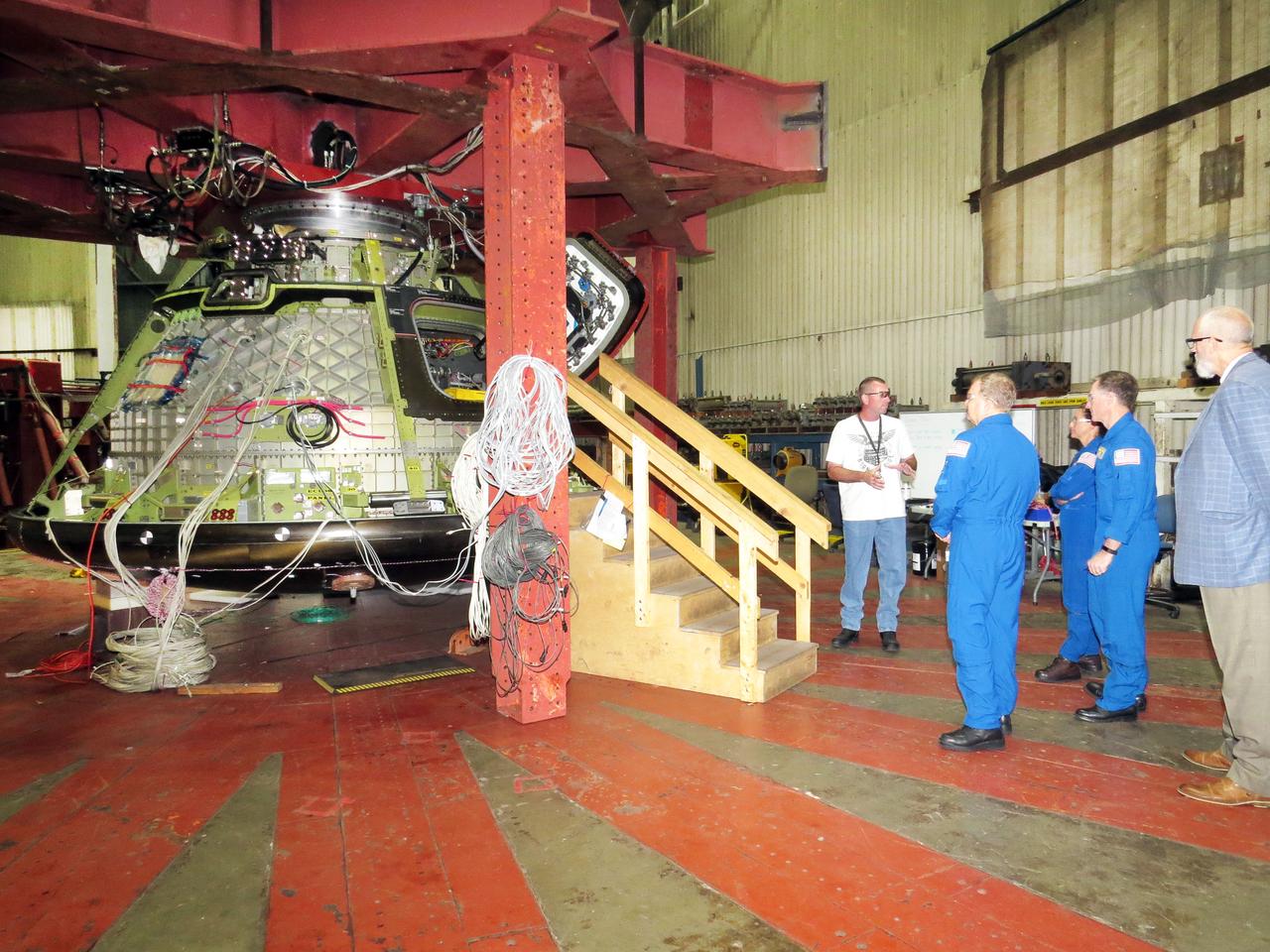
Commercial Crew astronauts Chris Ferguson, Nicole Mann and Eric Boe recently toured spacecraft testing facilities in El Segundo and Huntington Beach, Calif. All three astronauts will fly on Boeing’s CST-100 Starliner in an upcoming crew flight test to the International Space Station. Environmental qualification testing in El Segundo ensures the spacecraft can withstand the extreme environments of space. Structural testing in Huntington Beach confirms the spacecraft can withstand the pressures it will experience during flight.
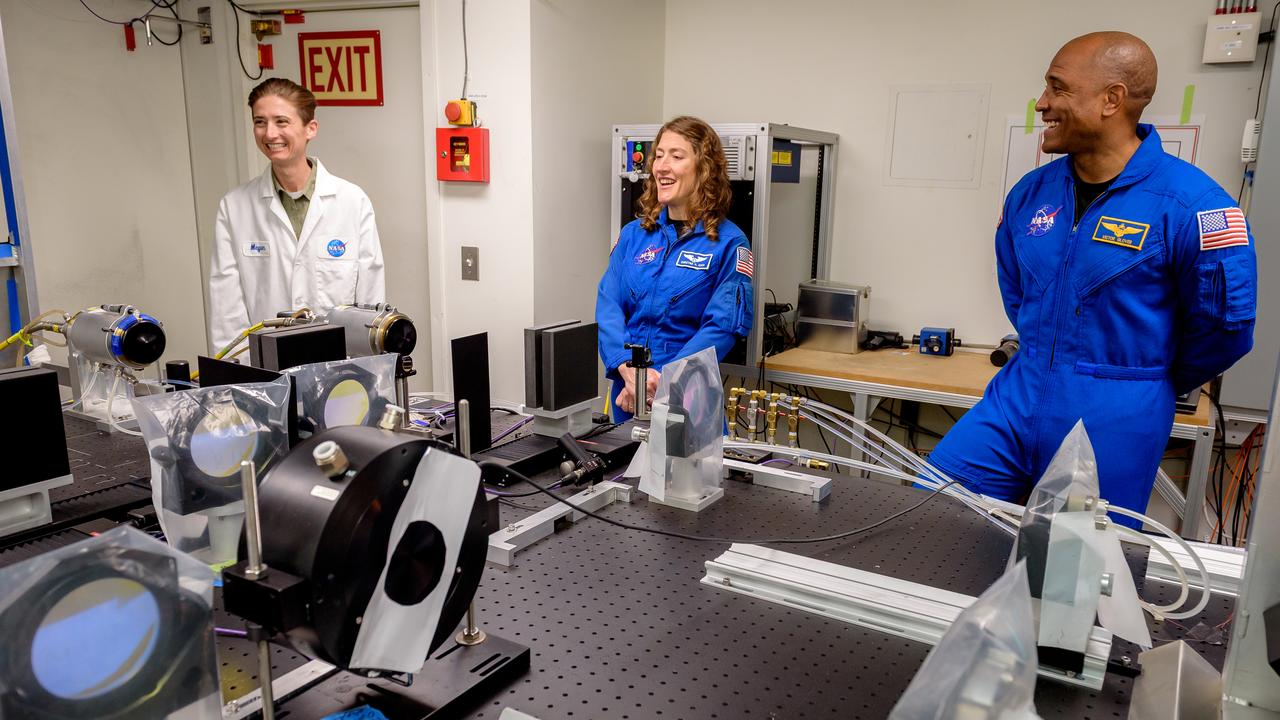
Megan MacDonald, left, leads NASA astronauts Christina Koch and Victor J. Glover, right, on a tour of the Laser Enhanced Arc Jet Facility (LEAF) laboratory, in N238. The LEAF laser augments the hypersonic shock heating experienced by a test sample during an arc jet test and provides improved test simulation quality by supplying an intense source of optical heating while the arc jet flow provides shock-driven convective heating.
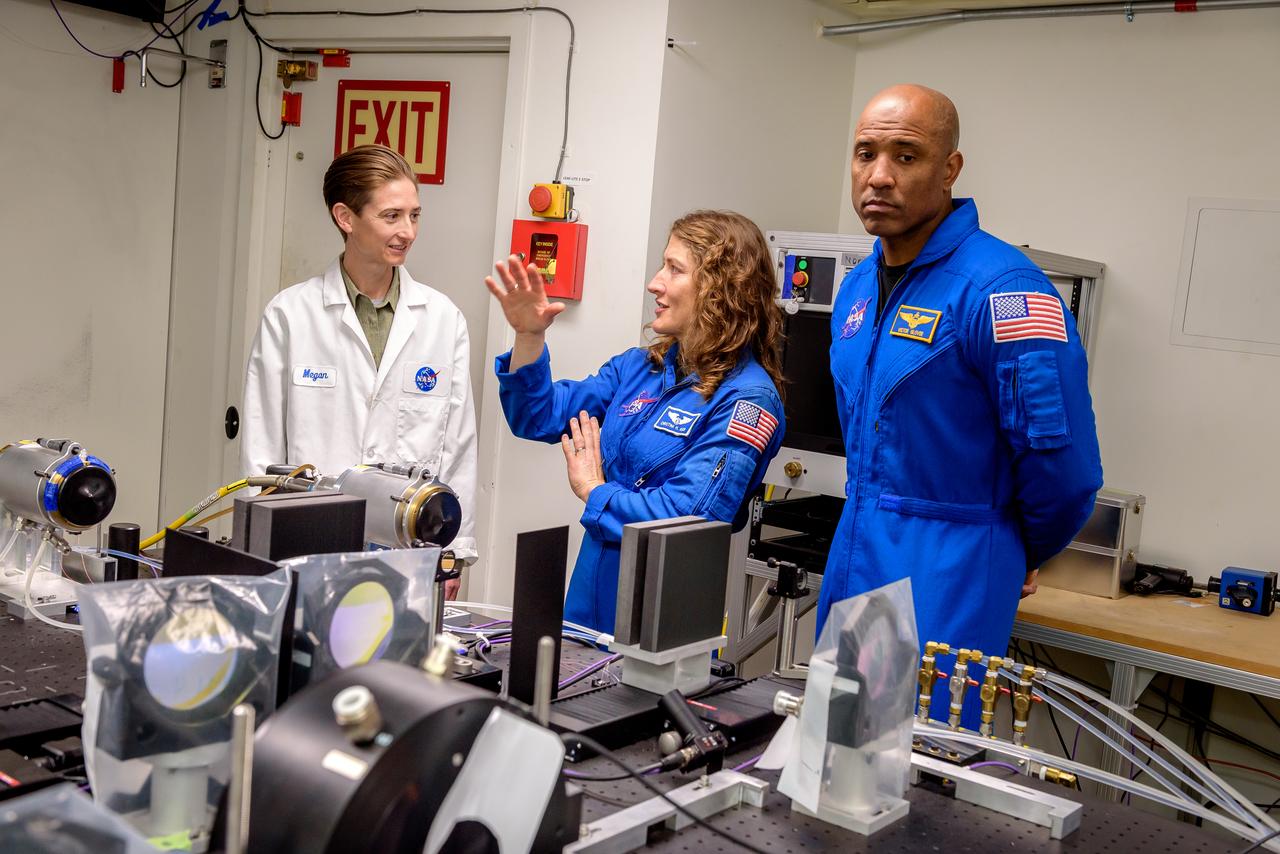
Megan MacDonald, left, leads NASA astronauts Christina Koch and Victor J. Glover, right, on a tour of the Laser Enhanced Arc Jet Facility (LEAF) laboratory, in N238. The LEAF laser augments the hypersonic shock heating experienced by a test sample during an arc jet test and provides improved test simulation quality by supplying an intense source of optical heating while the arc jet flow provides shock-driven convective heating.
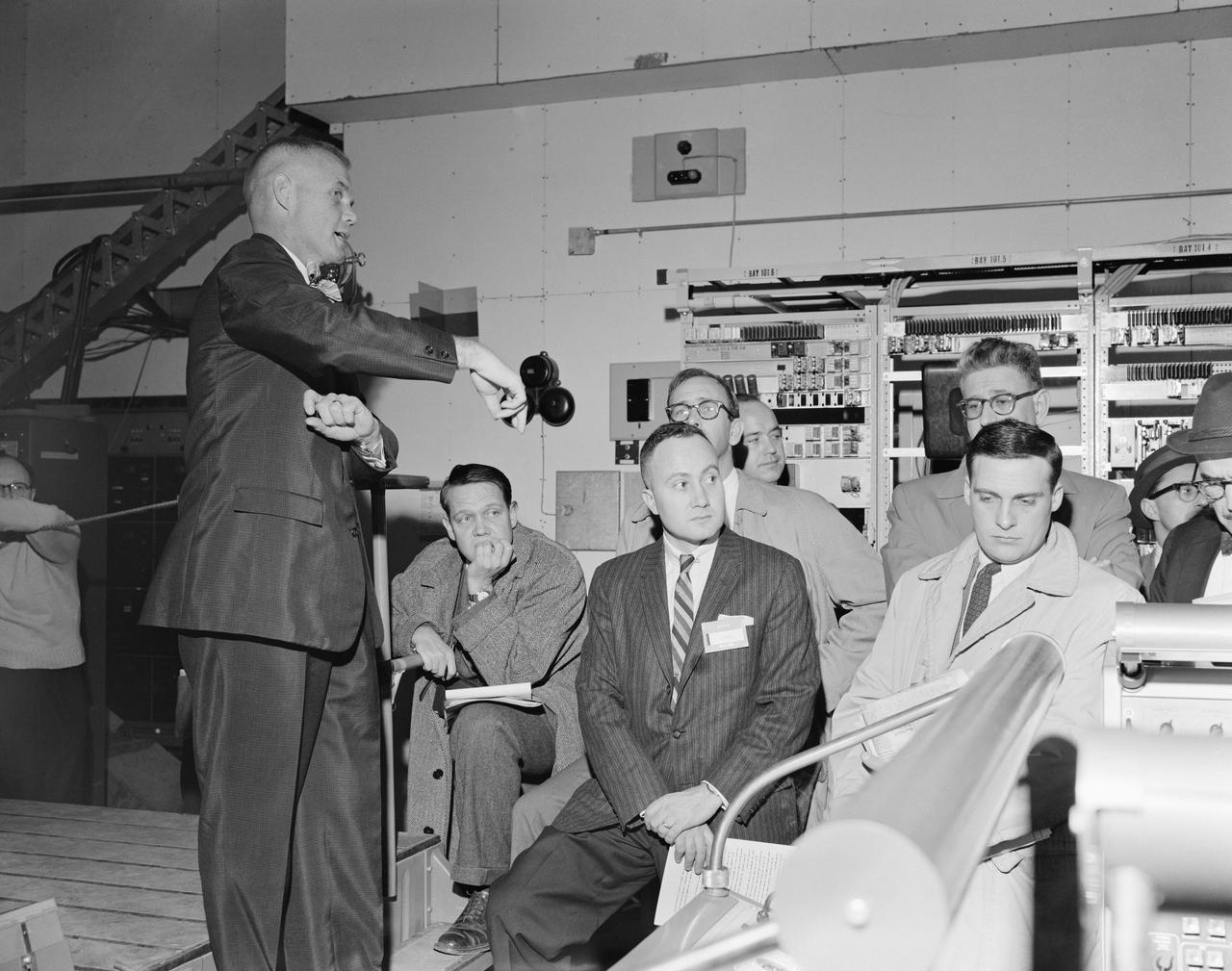
M61-00041 (January 1961) --- Astronaut John Glenn and news media representatives are pictured during a press conference and spacecraft familiarization tour of Cape Canaveral, Florida. Photo credit: NASA
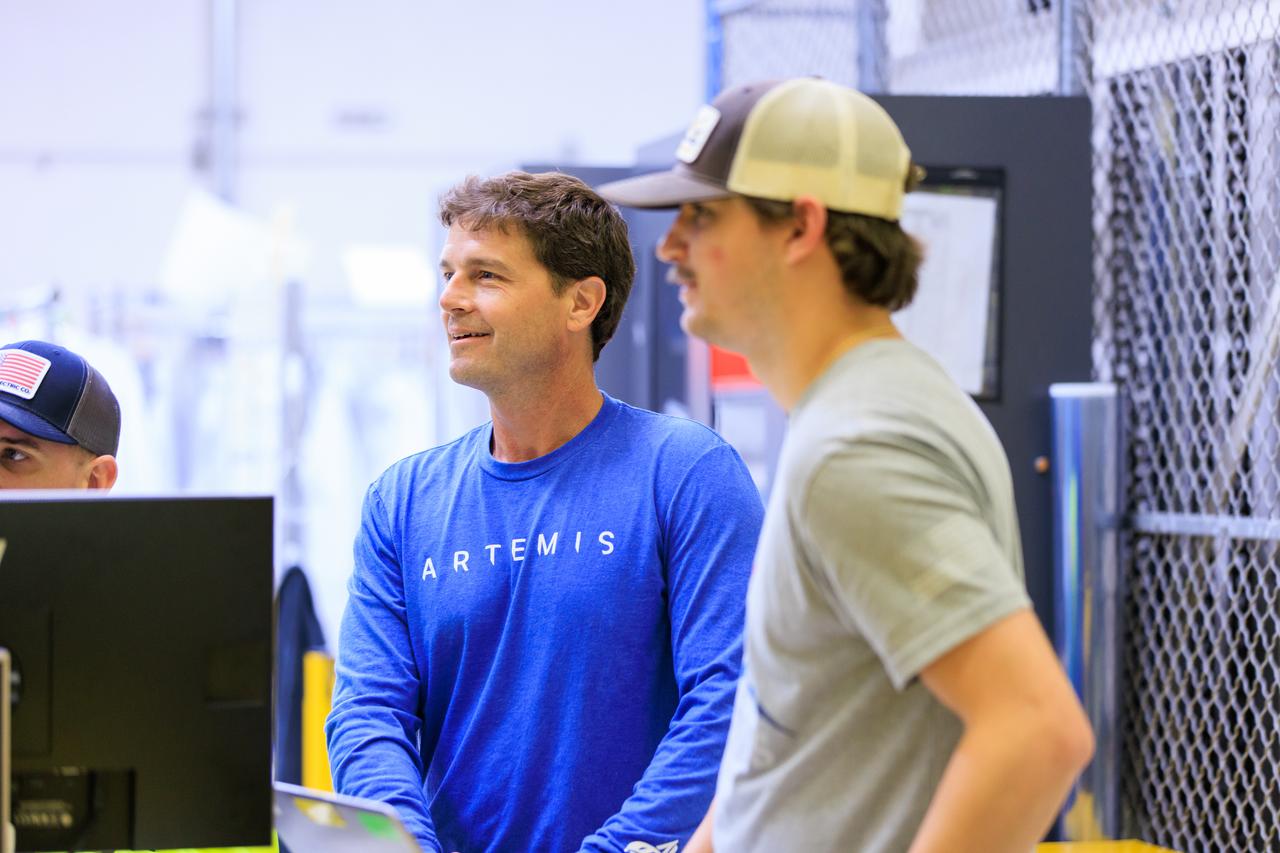
NASA’s Artemis II mission Commander Reid Wiseman visits the Neil A. Armstrong Operations and Checkout Building at the agency’s Kennedy Space Center in Florida, on March 15, 2024. Along with fellow crew member, Artemis II Mission Specialist Jeremy Hansen, the astronauts toured the facility with their families and viewed the Orion crew module that will take them, along with Victor Glover, pilot; and Christina Hammock Koch, mission specialist; around the Moon and back during the Artemis II mission.
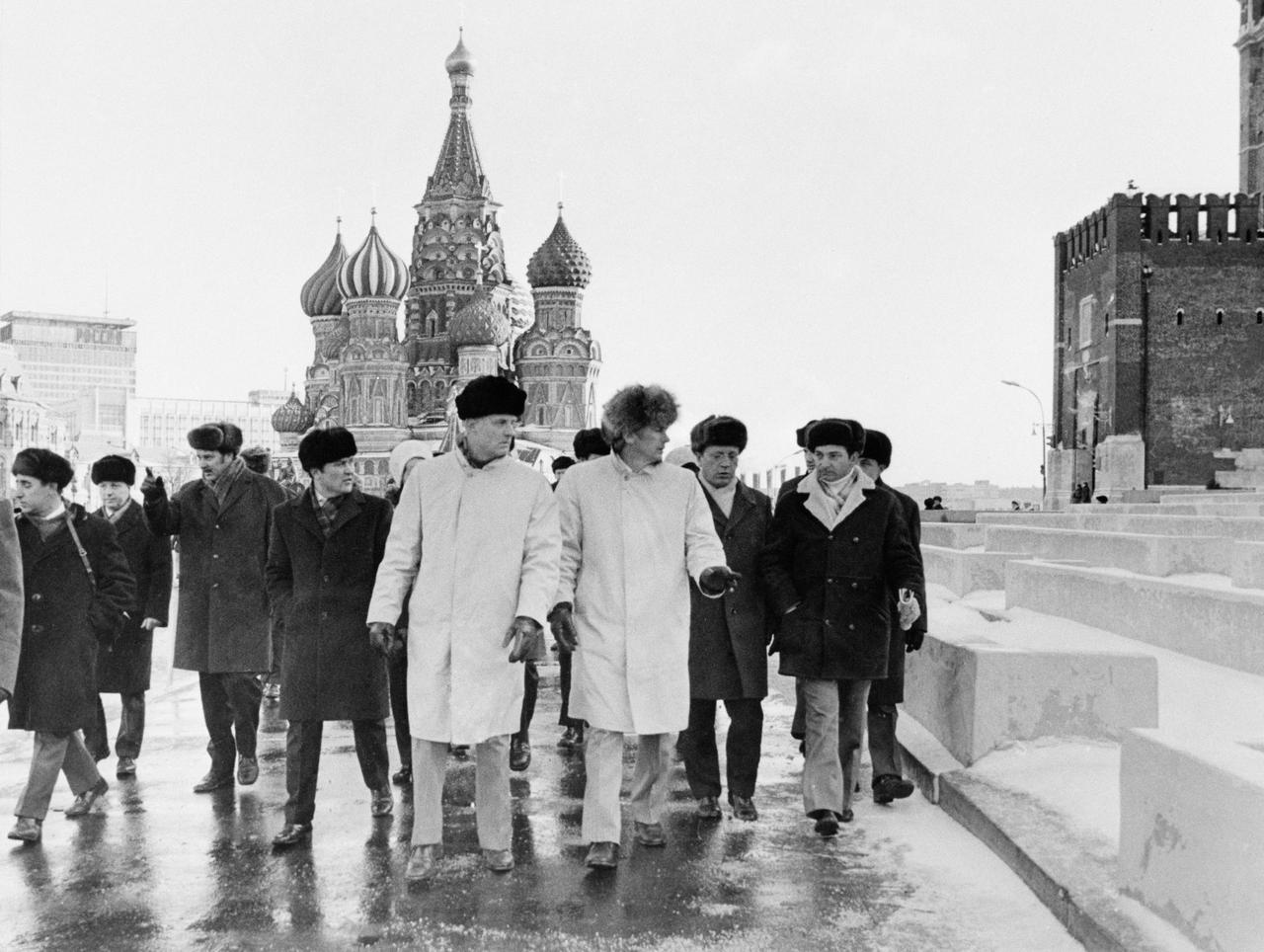
S74-20831 (November 1973) --- A group of astronauts and their cosmonaut hosts are photographed sightseeing on Red Square in the heart of Moscow during a tour of the Soviet capital. The Americans were in the USSR to participate in Apollo-Soyuz Test Project familiarization training on the Soyuz systems at the Cosmonaut Training Center (Star City) near Moscow. Astronaut Thomas P. Stafford (light coat, black cap), commander of the American ASTP crew, was head of the U.S. delegation to Star City. Astronaut Eugene A. Cernan (on Stafford?s left, light coat) is the Special Assistant to the American Technical Director of ASTP. The sightseeing group is walking in the direction of Lenin?s Mausoleum. The structure in the background is the Cathedral of the Intercession (St. Basil?s) Museum. The historic Kremlin complex is to the right. PHOTO COURTESY: USSR ACADEMY OF SCIENCES
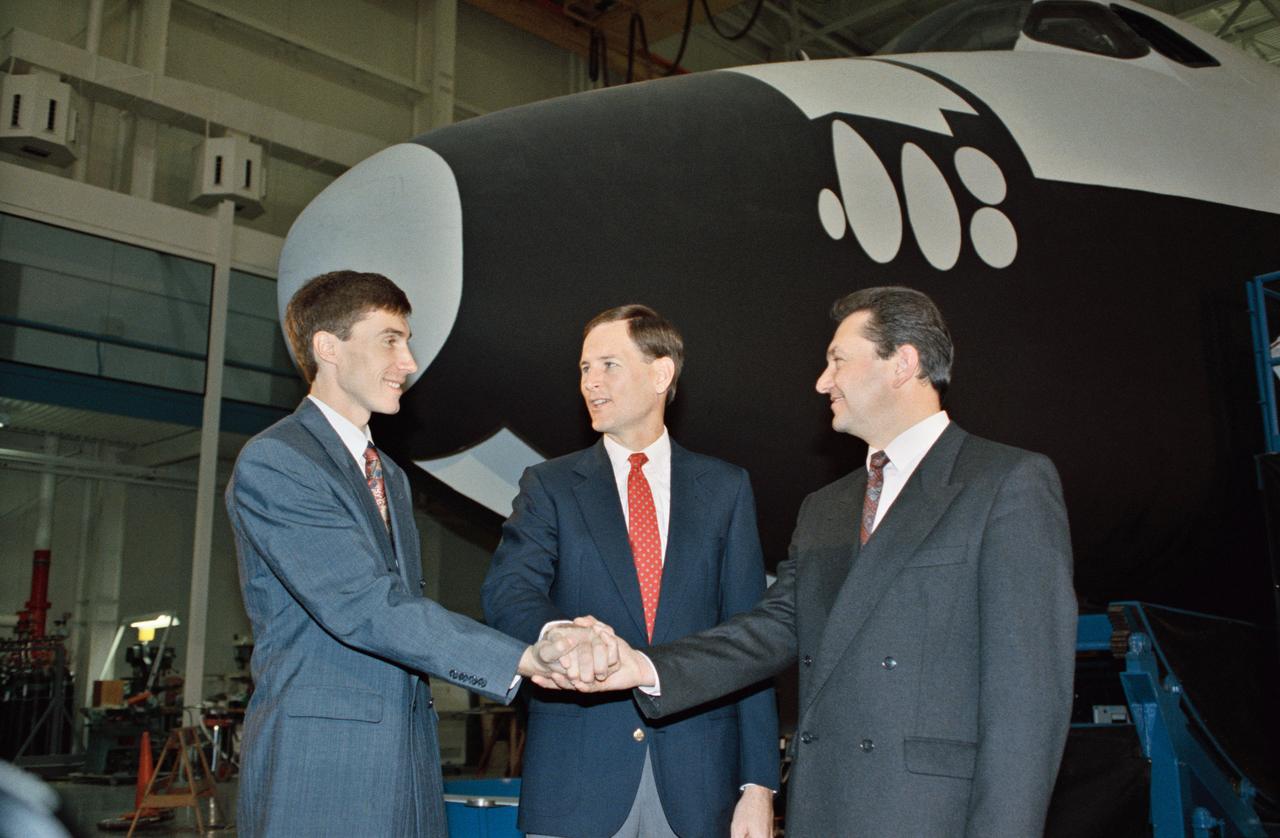
S92-49715 (10 Nov 1992) --- Russian cosmonauts Sergei Krikalev (left), and Vladimir Titov (right) share a team handshake with Kenneth L. Reightler, STS-60 pilot. The cosmonauts toured the Space Shuttle mockup and integration laboratory, in which they will undergo a great deal of training in preparation for the mission. One of the two will later be named as prime payload specialist and the second will serve as his alternate. The six person crew, to be led by astronaut Charles F. Bolden, mission commander, will man the Space Shuttle Discovery for the scheduled eight-day flight.
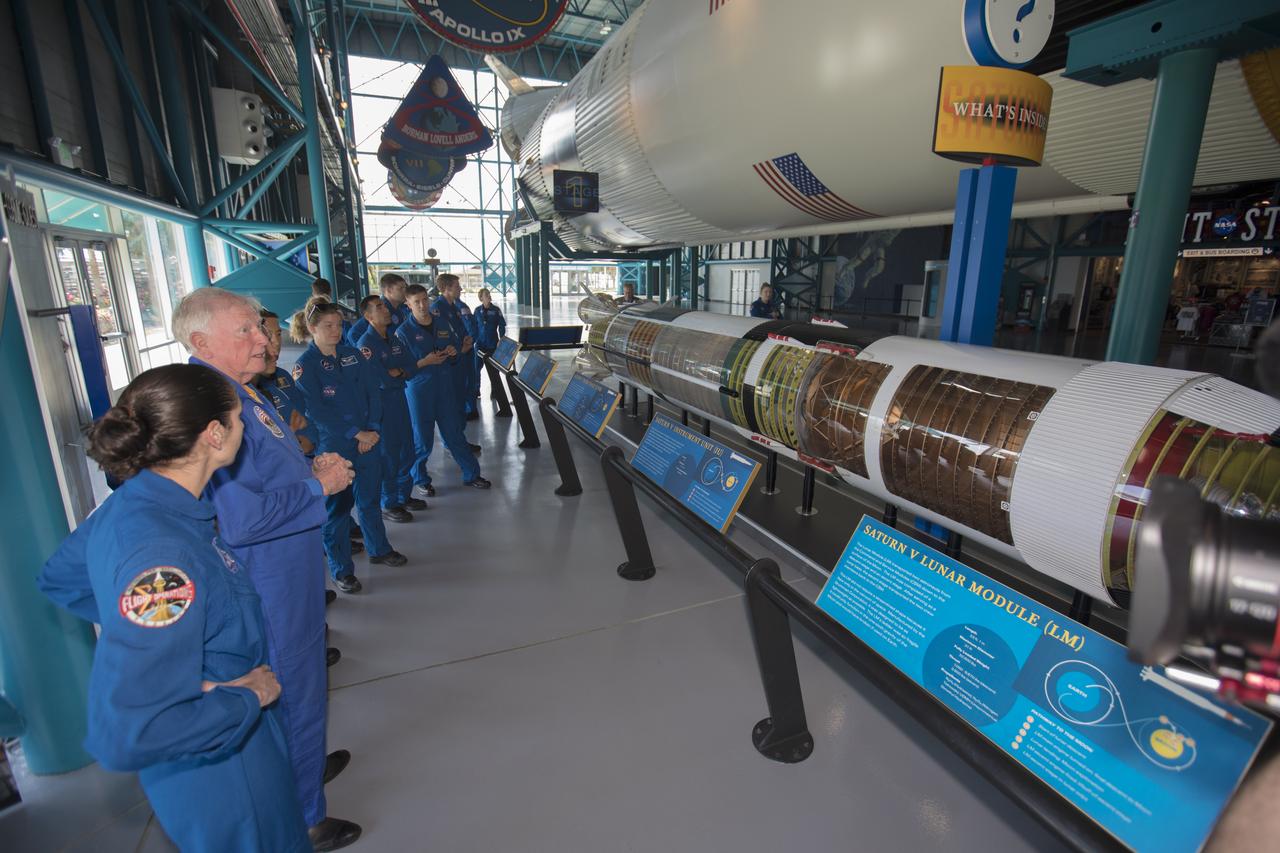
The 2017 class of astronaut candidates are inside the Saturn V Center at the Kennedy Space Center Visitor Complex near NASA's Kennedy Space Center in Florida. The candidates toured center facilities, including the Neil Armstrong Operations and Checkout Building high bay; the Launch Control Center, Launch Pad 39B, and the Vehicle Assembly Building. They also toured Boeing's Commercial Crew and Cargo Facility, United Launch Alliance's Space Launch Complex 41 at Cape Canaveral Air Force Station, and SpaceX's Launch Pad 39A at Kennedy. The candidates will spend about two years getting to know the space station systems and learning how to spacewalk, speak Russian, control the International Space Station's robotic arm and fly T-38s, before they're eligible to be assigned to a mission.
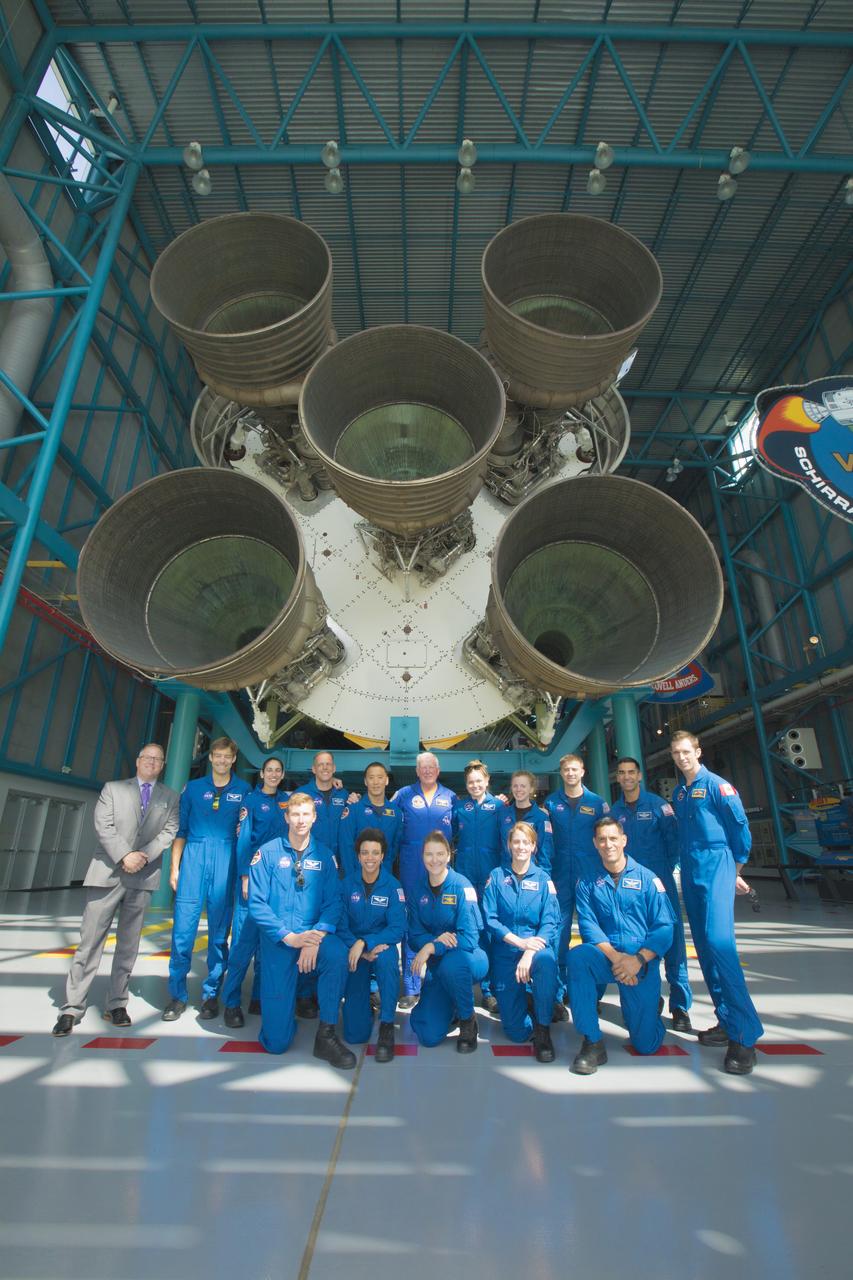
The 2017 class of astronaut candidates are inside the Saturn V Center at the Kennedy Space Center Visitor Complex near NASA's Kennedy Space Center in Florida. The candidates toured center facilities, including the Neil Armstrong Operations and Checkout Building high bay; the Launch Control Center, Launch Pad 39B, and the Vehicle Assembly Building. They also toured Boeing's Commercial Crew and Cargo Facility, United Launch Alliance's Space Launch Complex 41 at Cape Canaveral Air Force Station, and SpaceX's Launch Pad 39A at Kennedy. The candidates will spend about two years getting to know the space station systems and learning how to spacewalk, speak Russian, control the International Space Station's robotic arm and fly T-38s, before they're eligible to be assigned to a mission.
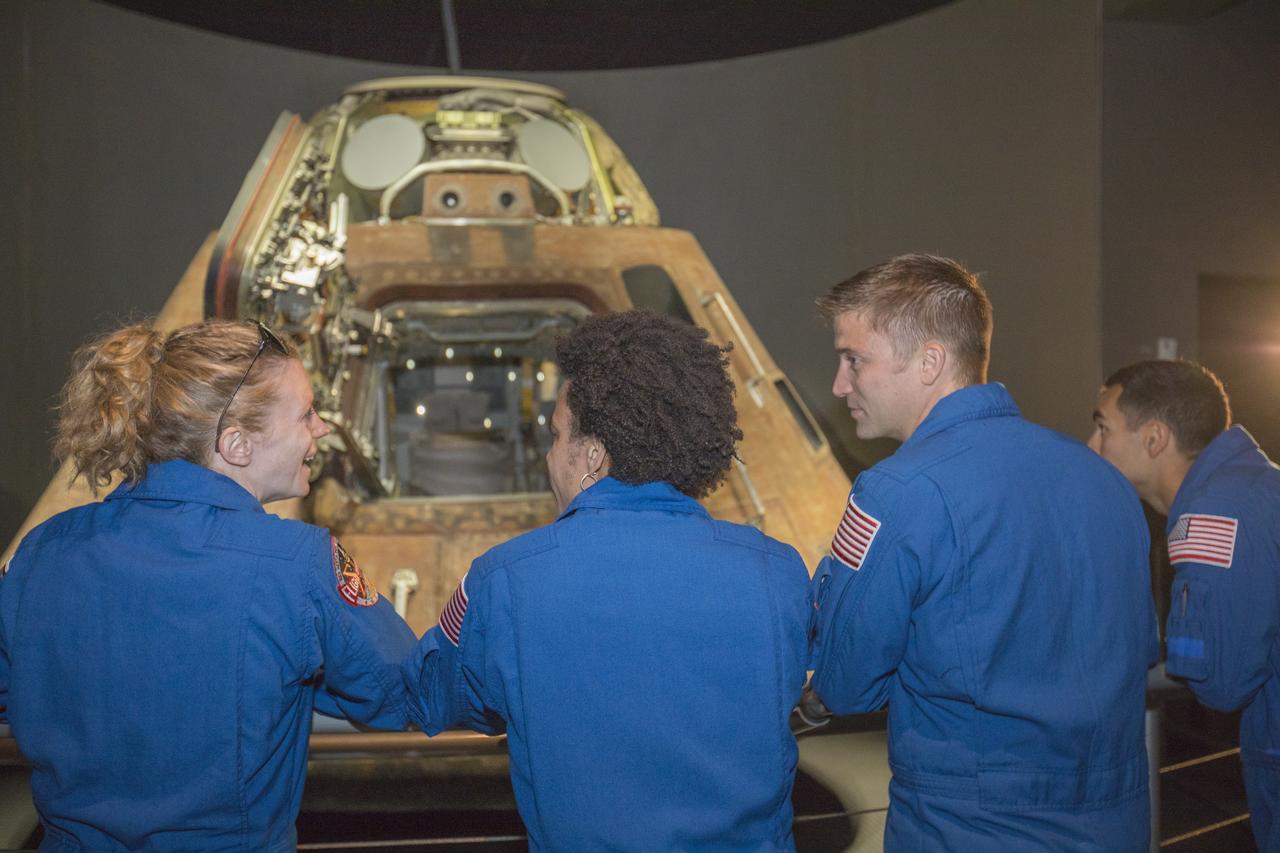
The 2017 class of astronaut candidates are inside the Saturn V Center at the Kennedy Space Center Visitor Complex near NASA's Kennedy Space Center in Florida. The candidates toured center facilities, including the Neil Armstrong Operations and Checkout Building high bay; the Launch Control Center, Launch Pad 39B, and the Vehicle Assembly Building. They also toured Boeing's Commercial Crew and Cargo Facility, United Launch Alliance's Space Launch Complex 41 at Cape Canaveral Air Force Station, and SpaceX's Launch Pad 39A at Kennedy. The candidates will spend about two years getting to know the space station systems and learning how to spacewalk, speak Russian, control the International Space Station's robotic arm and fly T-38s, before they're eligible to be assigned to a mission.

Apollo 11 astronaut Buzz Aldrin and tour guide Mary Ann Harness check out models of the Ares 1 and Ares 5 space vehicles during Aldrin's tour of NASA Dryden.

The 2017 class of astronaut candidates pause for a group photograph on the deck of the mobile launcher during a familiarization tour at NASA's Kennedy Space Center in Florida. The candidates toured center facilities, including the Neil Armstrong Operations and Checkout Building high bay; the Launch Control Center, Launch Pad 39B, and the Vehicle Assembly Building. They also toured Boeing's Commercial Crew and Cargo Facility, United Launch Alliance's Space Launch Complex 41 at Cape Canaveral Air Force Station, and SpaceX's Launch Pad 39A at Kennedy. The candidates will spend about two years getting to know the space station systems and learning how to spacewalk, speak Russian, control the International Space Station's robotic arm and fly T-38s, before they're eligible to be assigned to a mission.
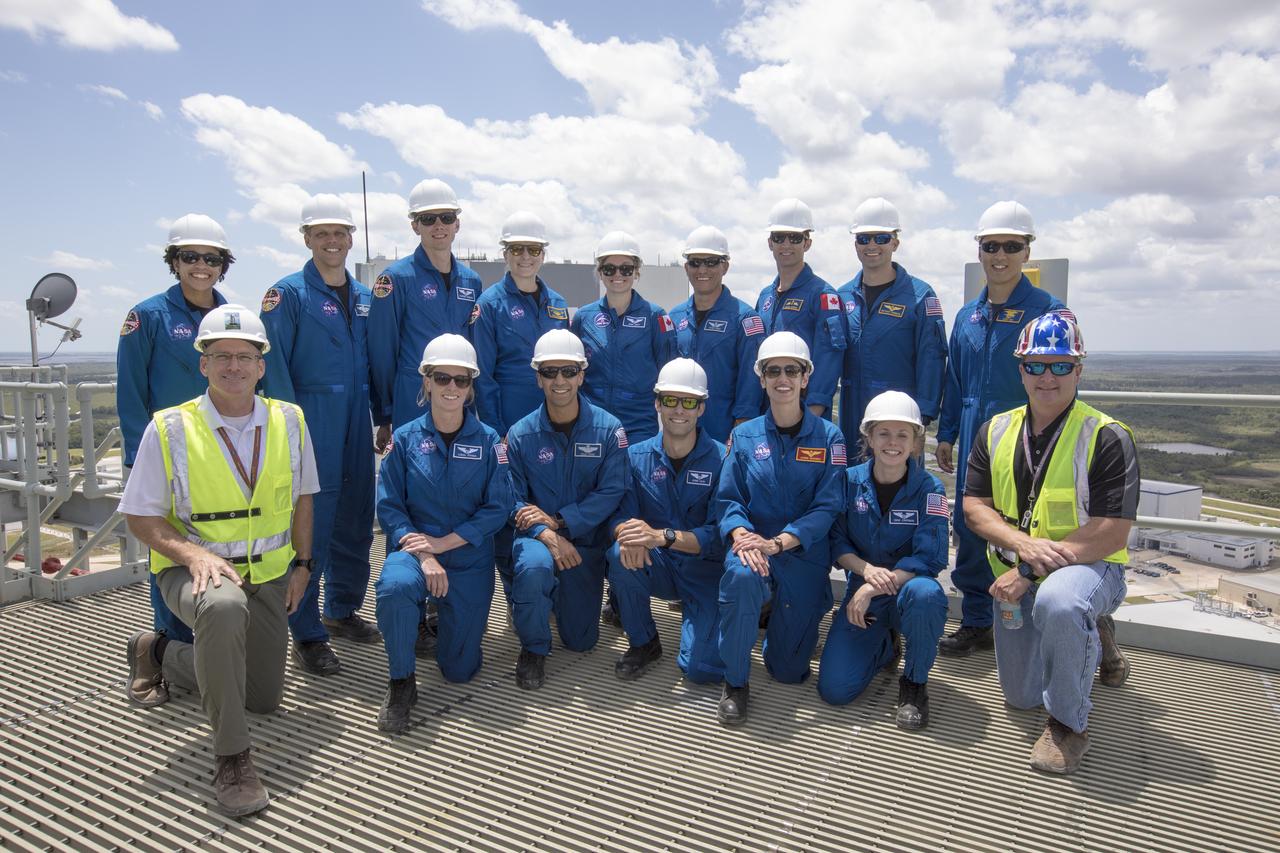
The 2017 class of astronaut candidates pause for a group photograph on the deck of the mobile launcher during a familiarization tour at NASA's Kennedy Space Center in Florida. The candidates toured center facilities, including the Neil Armstrong Operations and Checkout Building high bay; the Launch Control Center, Launch Pad 39B and the Vehicle Assembly Building. They also toured Boeing's Commercial Crew and Cargo Facility, United Launch Alliance's Space Launch Complex 41 at Cape Canaveral Air Force Station, and SpaceX's Launch Pad 39A at Kennedy. The candidates will spend about two years getting to know the space station systems and learning how to spacewalk, speak Russian, control the International Space Station's robotic arm and fly T-38s, before they're eligible to be assigned to a mission.
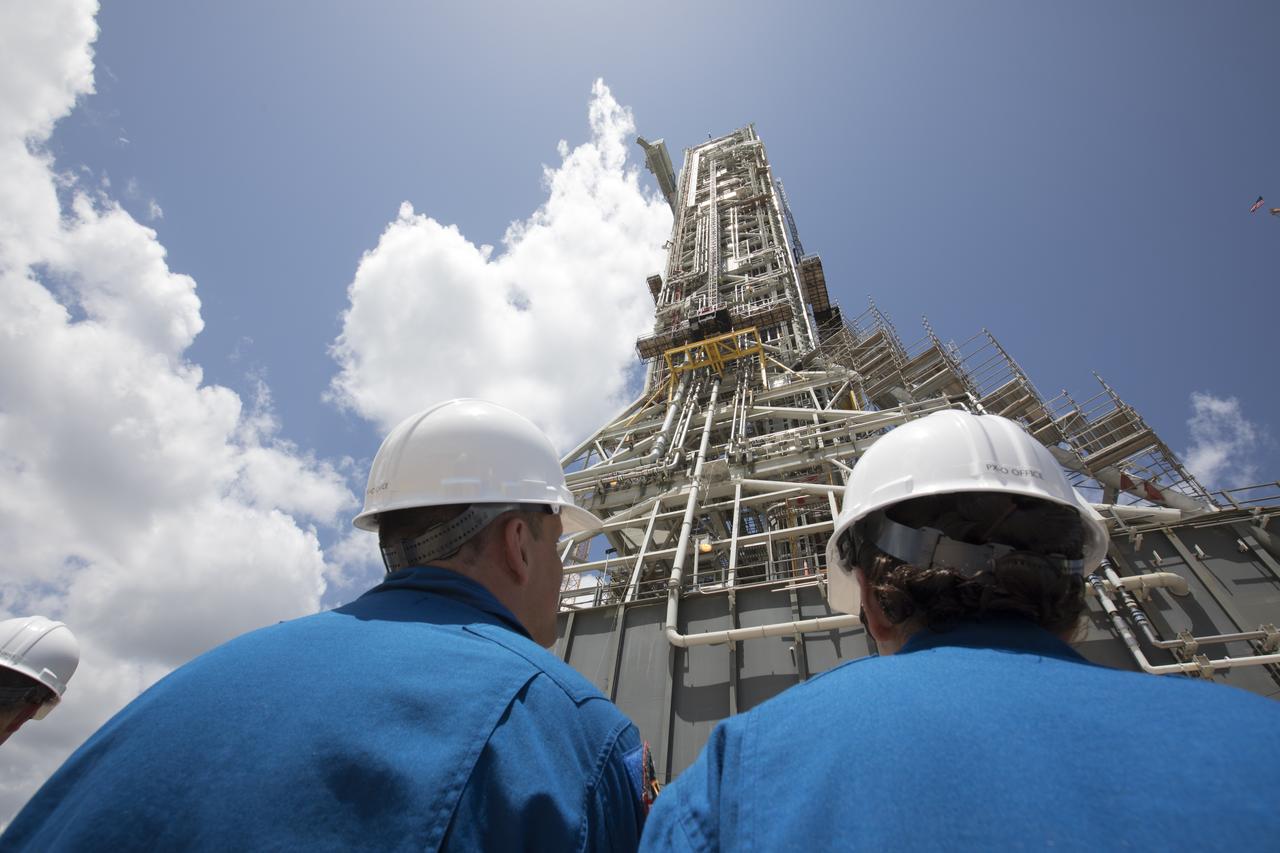
The 2017 class of astronaut candidates get a close-up view of the mobile launcher during a familiarization tour at NASA's Kennedy Space Center in Florida. The candidates toured center facilities, including the Neil Armstrong Operations and Checkout Building high bay; the Launch Control Center, Launch Pad 39B, and the Vehicle Assembly Building. They also toured Boeing's Commercial Crew and Cargo Facility, United Launch Alliance's Space Launch Complex 41 at Cape Canaveral Air Force Station, and SpaceX's Launch Pad 39A at Kennedy. The candidates will spend about two years getting to know the space station systems and learning how to spacewalk, speak Russian, control the International Space Station's robotic arm and fly T-38s, before they're eligible to be assigned to a mission.
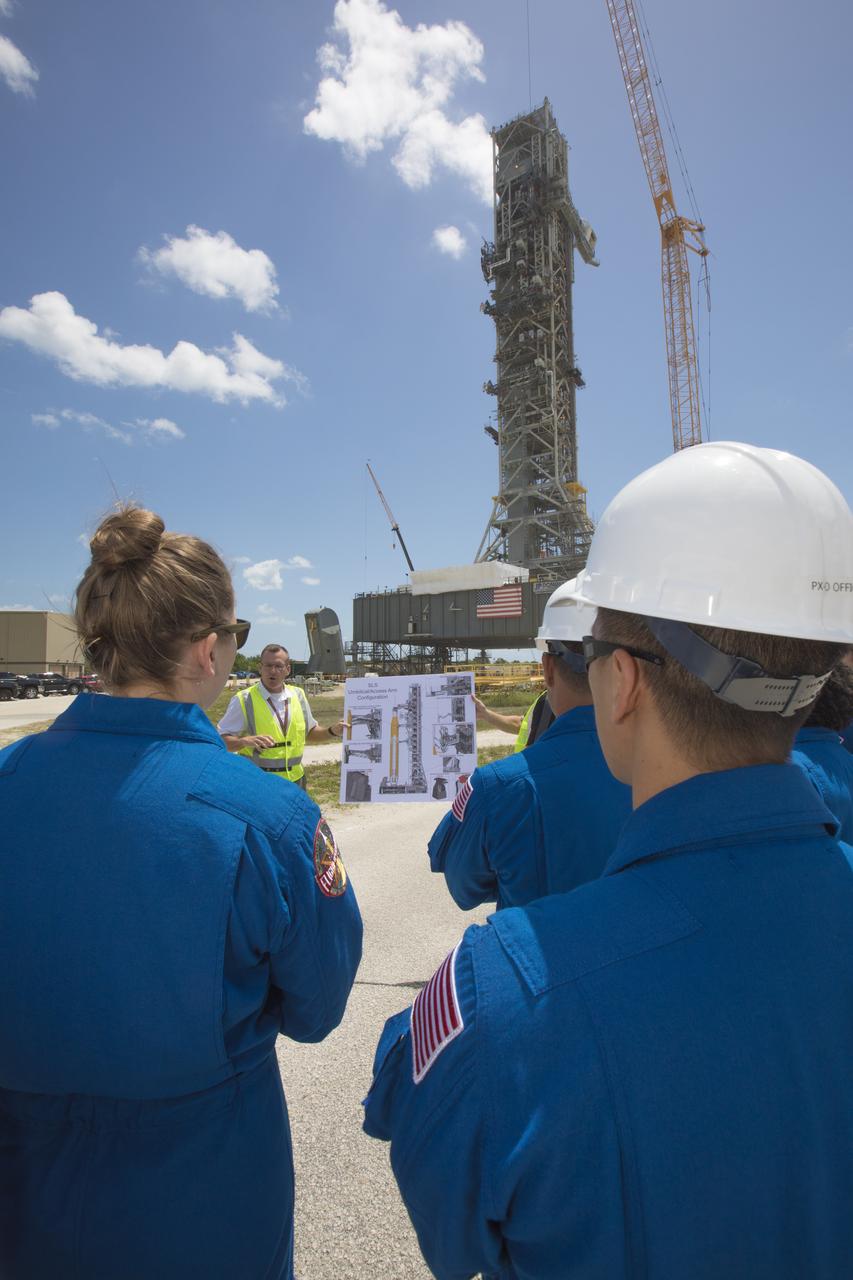
The 2017 class of astronaut candidates view the mobile launcher during a familiarization tour at NASA's Kennedy Space Center in Florida. The candidates toured center facilities, including the Neil Armstrong Operations and Checkout Building high bay; the Launch Control Center, Launch Pad 39B, and the Vehicle Assembly Building. They also toured Boeing's Commercial Crew and Cargo Facility, United Launch Alliance's Space Launch Complex 41 at Cape Canaveral Air Force Station, and SpaceX's Launch Pad 39A at Kennedy. The candidates will spend about two years getting to know the space station systems and learning how to spacewalk, speak Russian, control the International Space Station's robotic arm and fly T-38s, before they're eligible to be assigned to a mission.
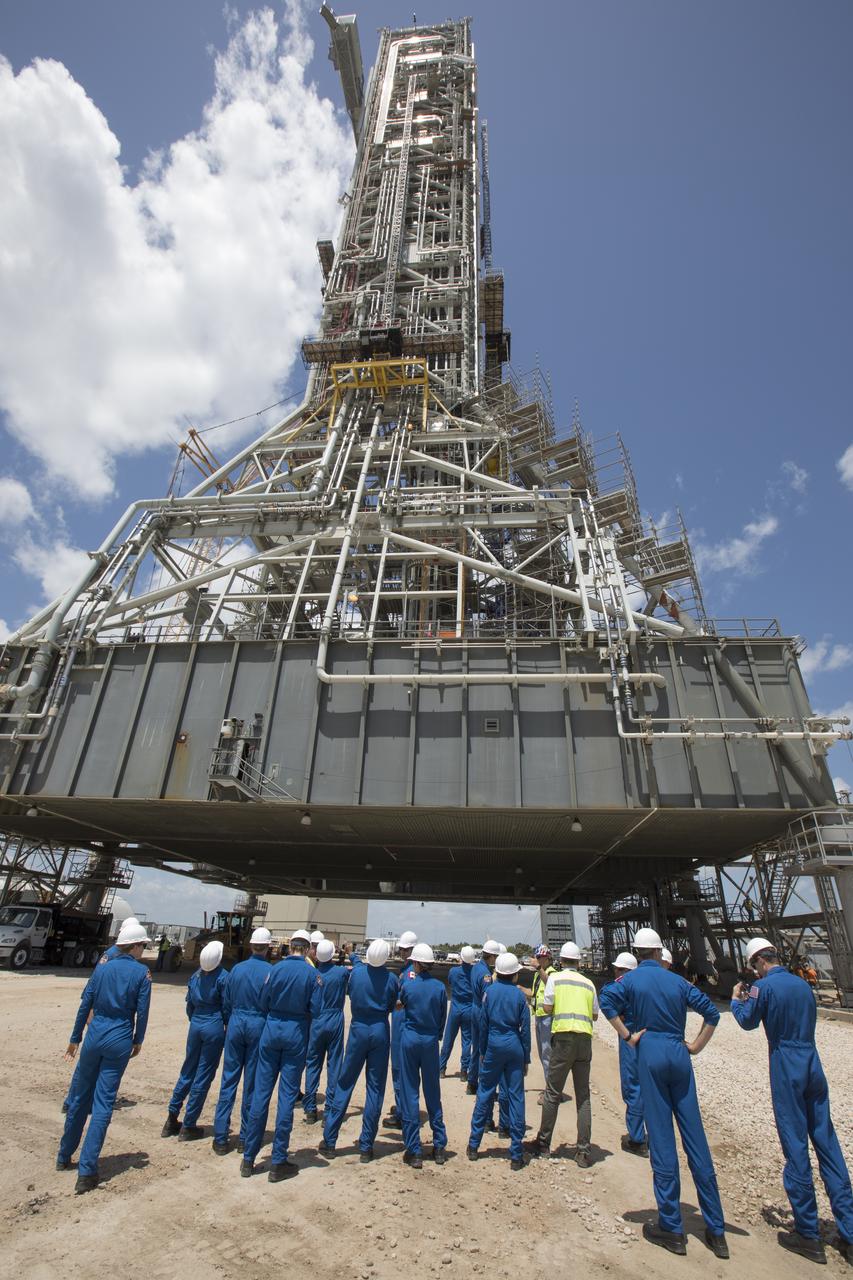
The 2017 class of astronaut candidates get a close-up view of the mobile launcher during a familiarization tour at NASA's Kennedy Space Center in Florida. The candidates toured center facilities, including the Neil Armstrong Operations and Checkout Building high bay; the Launch Control Center, Launch Pad 39B, and the Vehicle Assembly Building. They also toured Boeing's Commercial Crew and Cargo Facility, United Launch Alliance's Space Launch Complex 41 at Cape Canaveral Air Force Station, and SpaceX's Launch Pad 39A at Kennedy. The candidates will spend about two years getting to know the space station systems and learning how to spacewalk, speak Russian, control the International Space Station's robotic arm and fly T-38s, before they're eligible to be assigned to a mission.
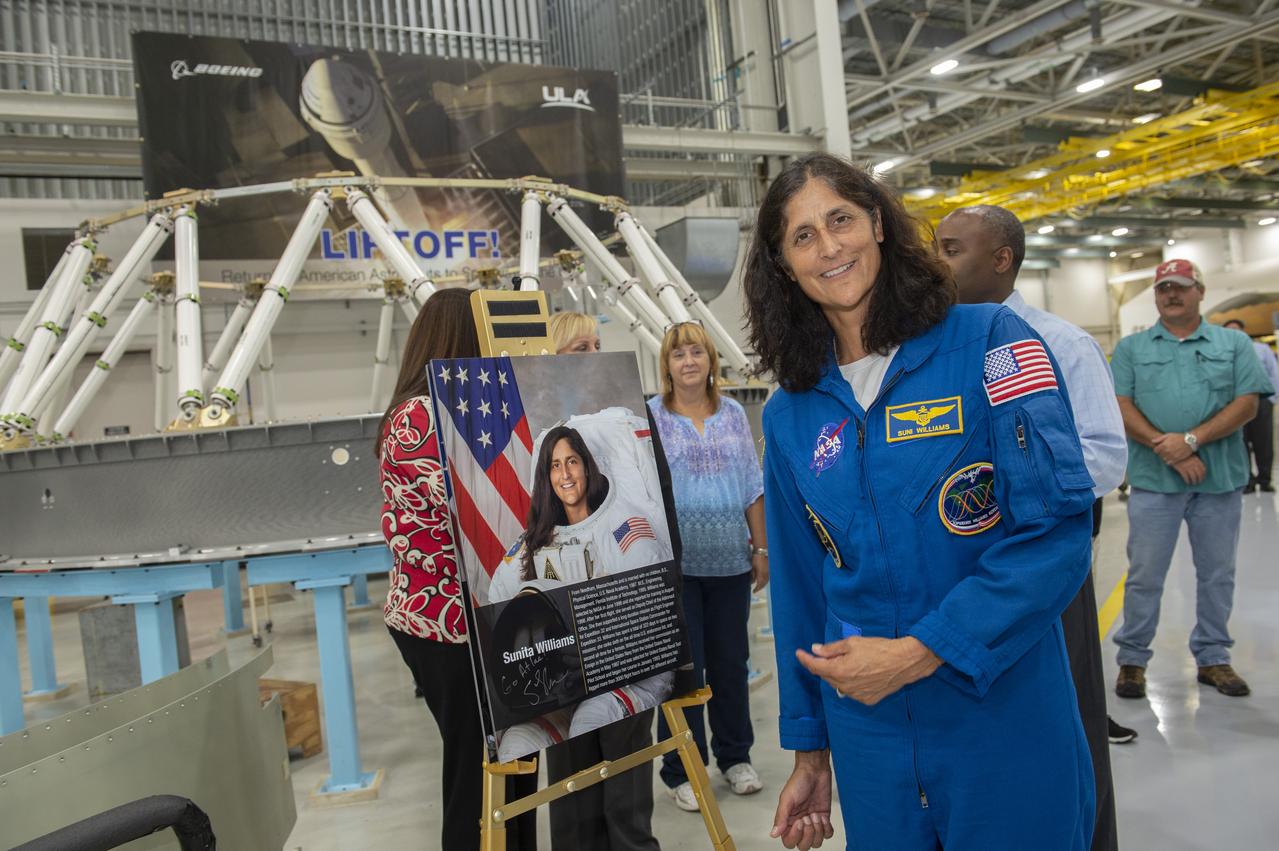
Astronaut Suni Williams poses with a poster of herself as she tours ULA facility in Decatur, Al
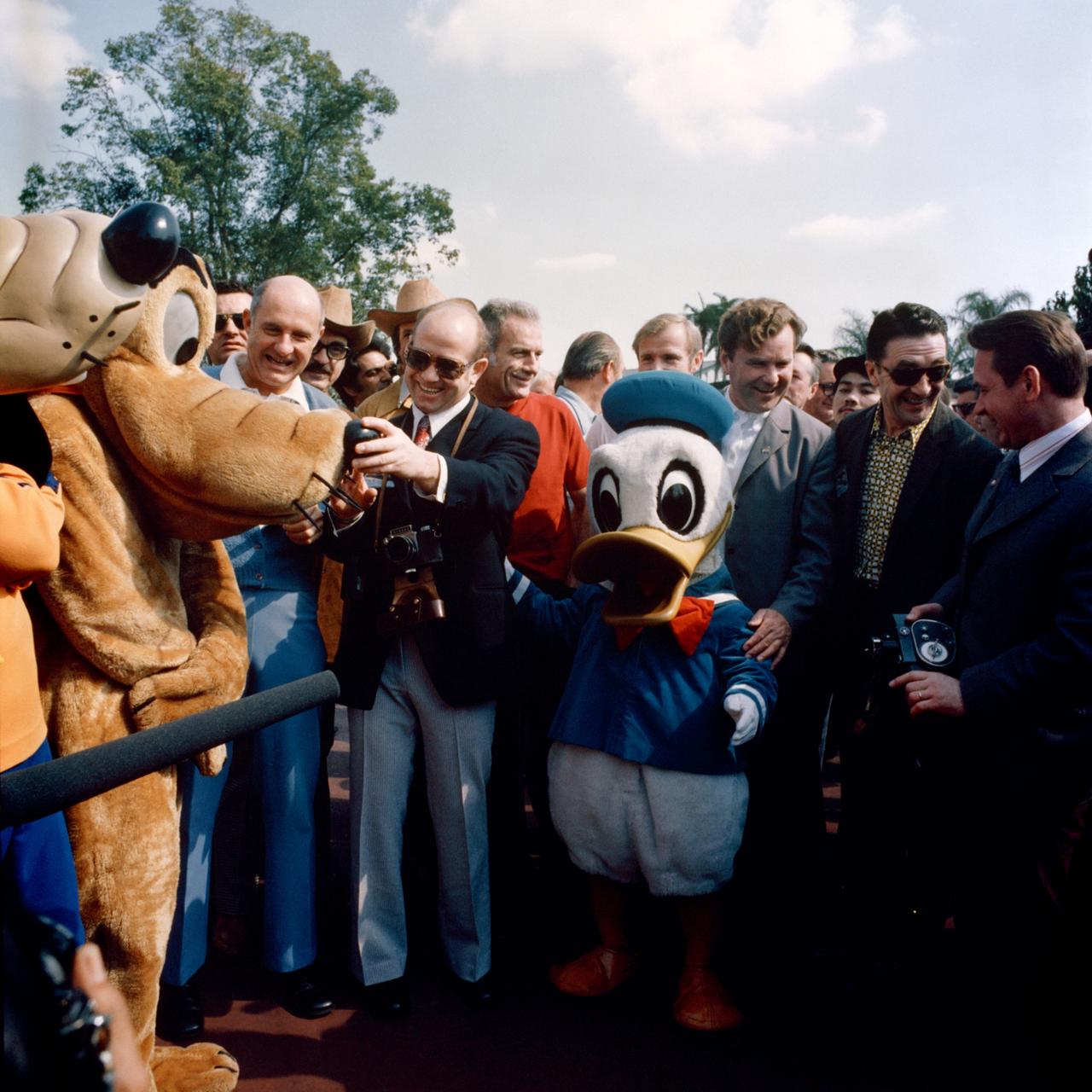
S75-24114 (8-10 Feb. 1975) --- Two Walt Disney comic cartoon characters, Donald Duck and Pluto, were on hand to greet a group of Apollo-Soyuz Test Project (ASTP) crewmen on their arrival at Disney World near Orlando. From left, are interpreter K. S. Samofal, interpreter Nicholas Timacheff, cosmonaut Vladimir A. Shatalov, astronaut Vance D. Brand, astronaut Donald K. Slayton, cosmonaut Aleksey A. Leonov (squeezing Pluto's nose) and astronaut Thomas P. Stafford. The astronauts and cosmonauts were in Florida for a three-day inspection tour of NASA's Kennedy Space Center where they looked over ASTP launch facilities and flight hardware.
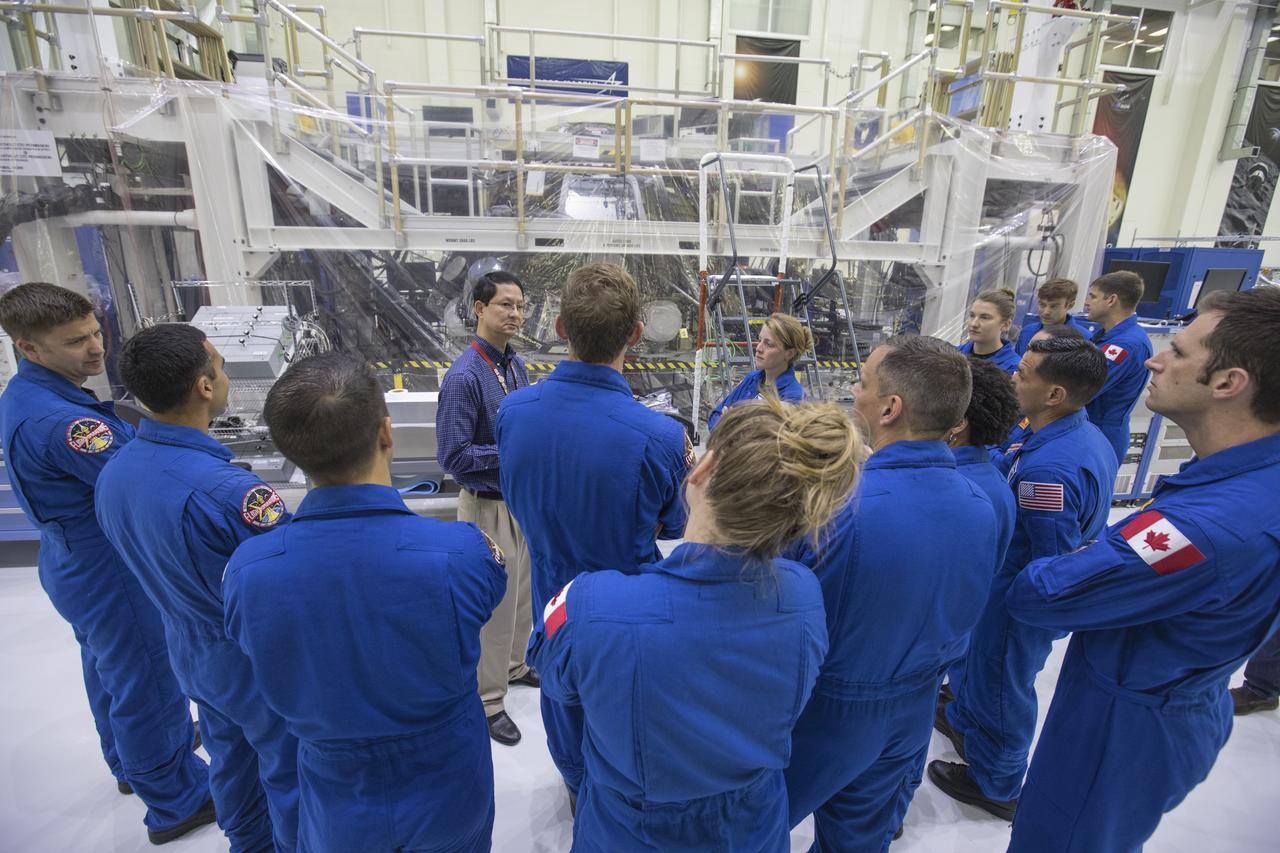
The 2017 class of astronaut candidates tour the Neil Armstrong Operations and Checkout Building high bay during a familiarization tour at NASA's Kennedy Space Center in Florida. In front, at right, is Glenn Chin, deputy manager, Orion Production Operations Office. The candidates toured center facilities, including the Vehicle Assembly Building; Launch Control Center, Launch Pad 39B and the Space Station Processing Facility. They also toured Boeing's Commercial Crew and Cargo Facility, and United Launch Alliance's Space Launch Complex 41 at Cape Canaveral Air Force Station. The candidates will spend about two years getting to know the space station systems and learning how to spacewalk, speak Russian, control the International Space Station's robotic arm and fly T-38s, before they're eligible to be assigned to a mission.

Project Scientist Natasha Haveman (right) shows NASA astronauts Jessica Watkins and Stan Love microgreens grown in the Plant Processing Area inside the Space Systems Processing Facility at NASA’s Kennedy Space Center in Florida during a tour on Tuesday, May 12, 2026. Watkins and NASA astronaut Luke Delaney, along with CSA (Canadian Space Agency) astronaut Joshua Kutryk, and Roscosmos cosmonaut Sergey Teteryatnikov (not pictured), are part of NASA's SpaceX Crew-13 mission to the International Space Station and will explore the possibility of growing crops outside of the station’s Veggie chamber – one of two enclosed areas currently used to grow crops on the orbiting laboratory.

From left, Project Scientist Natasha Haveman and NASA astronauts Luke Delaney and Stan Love view microgreens during a tour of the Plant Processing Area inside the Space Systems Processing Facility at NASA’s Kennedy Space Center in Florida on Tuesday, May 12, 2026. Delaney, NASA astronaut Jessica Watkins, and CSA (Canadian Space Agency) astronaut Joshua Kutryk, along with Roscosmos cosmonaut Sergey Teteryatnikov (not pictured), are part of NASA's SpaceX Crew-13 mission to the International Space Station and will explore the possibility of growing crops outside of the station’s Veggie chamber – one of two enclosed areas currently used to grow crops on the orbiting laboratory.

From left, Trent Smith, a senior leader of the NASA Kennedy Space Crop Production team, welcomes NASA astronaut Jessica Watkins, CSA (Canadian Space Agency) astronaut Joshua Kutryk, and NASA astronaut Luke Delaney to the Plant Processing Area inside the Space Systems Processing Facility at NASA’s Kennedy Space Center in Florida for a tour of the facility on Tuesday, May 12, 2026. Watkins, Delaney, and Kutryk, along with Roscosmos cosmonaut Sergey Teteryatnikov (not pictured), are part of NASA's SpaceX Crew-13 mission to the International Space Station and will explore the possibility of growing crops outside of the station’s Veggie chamber – one of two enclosed areas currently used to grow crops on the orbiting laboratory.
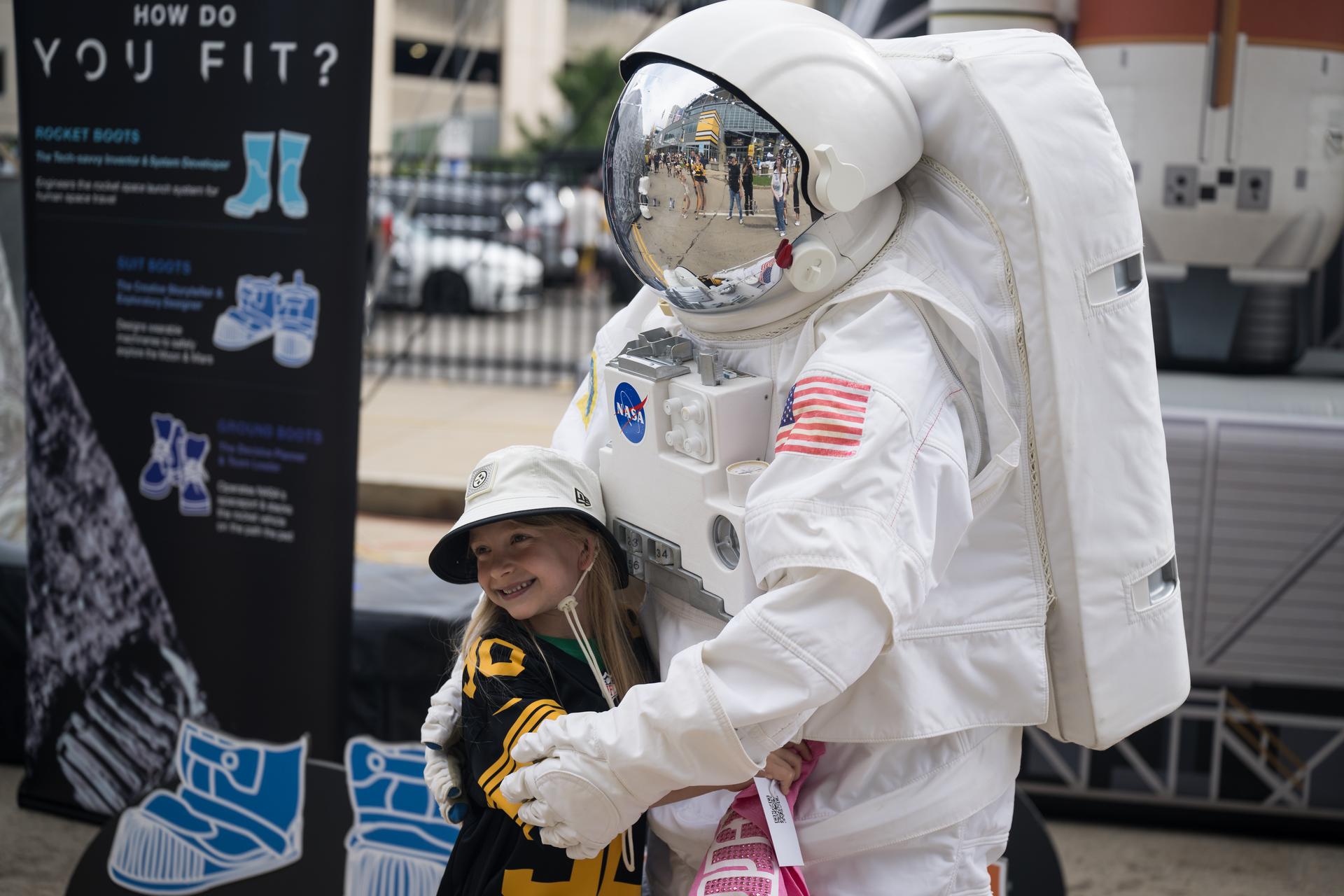
A young fan poses for a photo with the astronaut in the NASA Experience Zone at an NFL game between the Pittsburgh Steelers and the Atlanta Falcons at Acrisure Stadium, Sunday, Sept. 13, 2026, in Pittsburgh, Pennsylvania. NASA’s engagement at NFL games is part of the agency's Inspiration Tour, aimed at strengthening connections between NASA and its partners and showcasing innovation in air and space in the lead up to the MAX POWER aerospace technology expo and airshow at the agency's Kennedy Space Center in early November. Photo Credit: (NASA/Aubrey Gemignani)
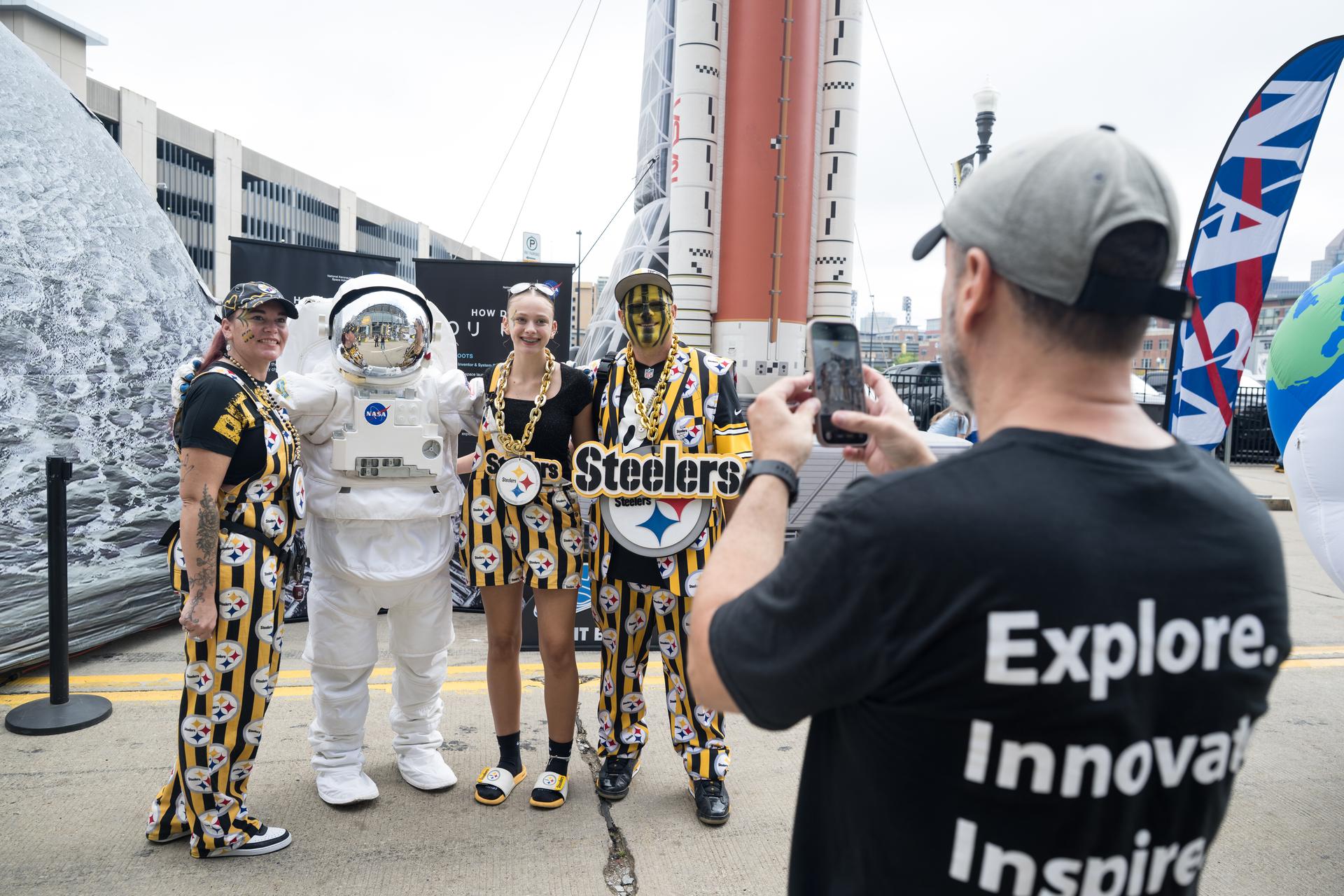
Fans pose for a photo with an astronaut in the NASA Experience Zone at an NFL game between the Pittsburgh Steelers and the Atlanta Falcons at Acrisure Stadium, Sunday, Sept. 13, 2026, in Pittsburgh, Pennsylvania. NASA’s engagement at NFL games is part of the agency's Inspiration Tour, aimed at strengthening connections between NASA and its partners and showcasing innovation in air and space in the lead up to the MAX POWER aerospace technology expo and airshow at the agency's Kennedy Space Center in early November. Photo Credit: (NASA/Aubrey Gemignani)
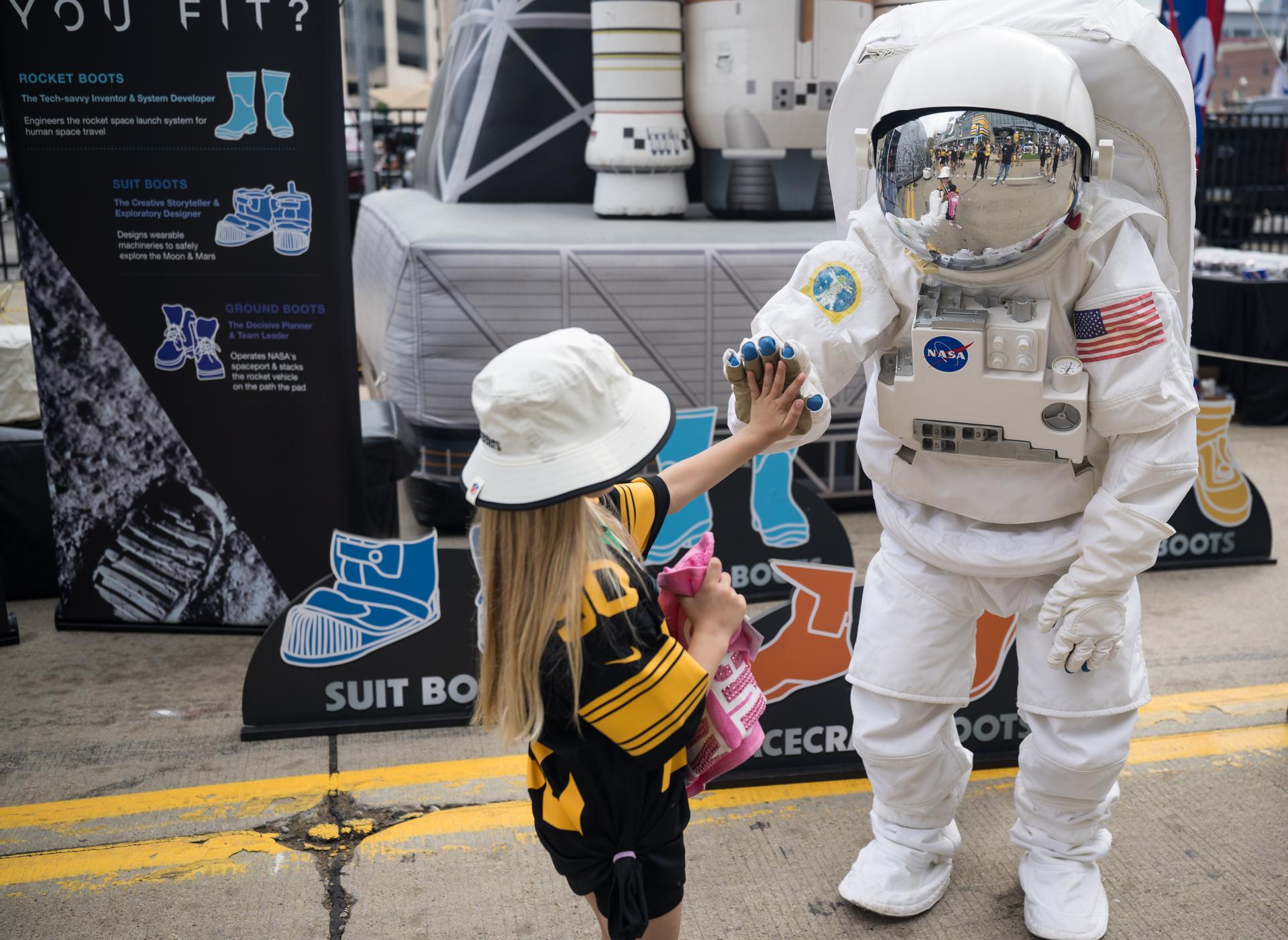
A young fan high fives the astronaut in the NASA Experience Zone at an NFL game between the Pittsburgh Steelers and the Atlanta Falcons at Acrisure Stadium, Sunday, Sept. 13, 2026, in Pittsburgh, Pennsylvania. NASA’s engagement at NFL games is part of the agency's Inspiration Tour, aimed at strengthening connections between NASA and its partners and showcasing innovation in air and space in the lead up to the MAX POWER aerospace technology expo and airshow at the agency's Kennedy Space Center in early November. Photo Credit: (NASA/Aubrey Gemignani)
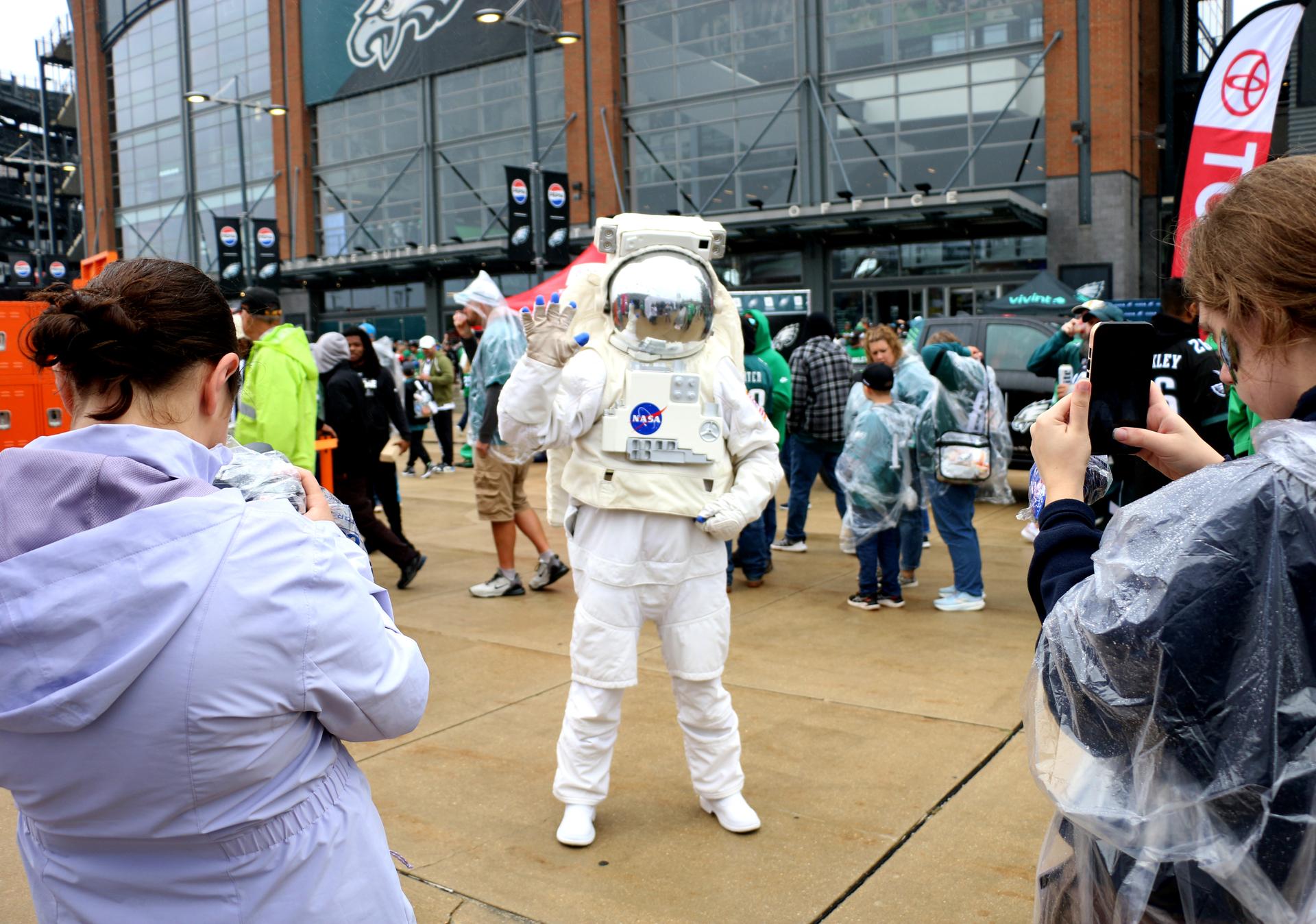
Fans take photos of the astronaut at the NASA activation at the NFL game between the Philadelphia Eagles and the Los Angeles Rams at Lincoln Financial Field on Sunday, Oct. 4, 2026, in Philadelphia. NASA’s engagement at NFL games is part of the agency's Inspiration Tour, aimed at strengthening connections between NASA and its partners and showcasing innovation in air and space in the lead up to the MAX POWER aerospace technology expo and airshow at the agency's Kennedy Space Center in early November. Photo Credit: (NASA/Thalia Patrinos)
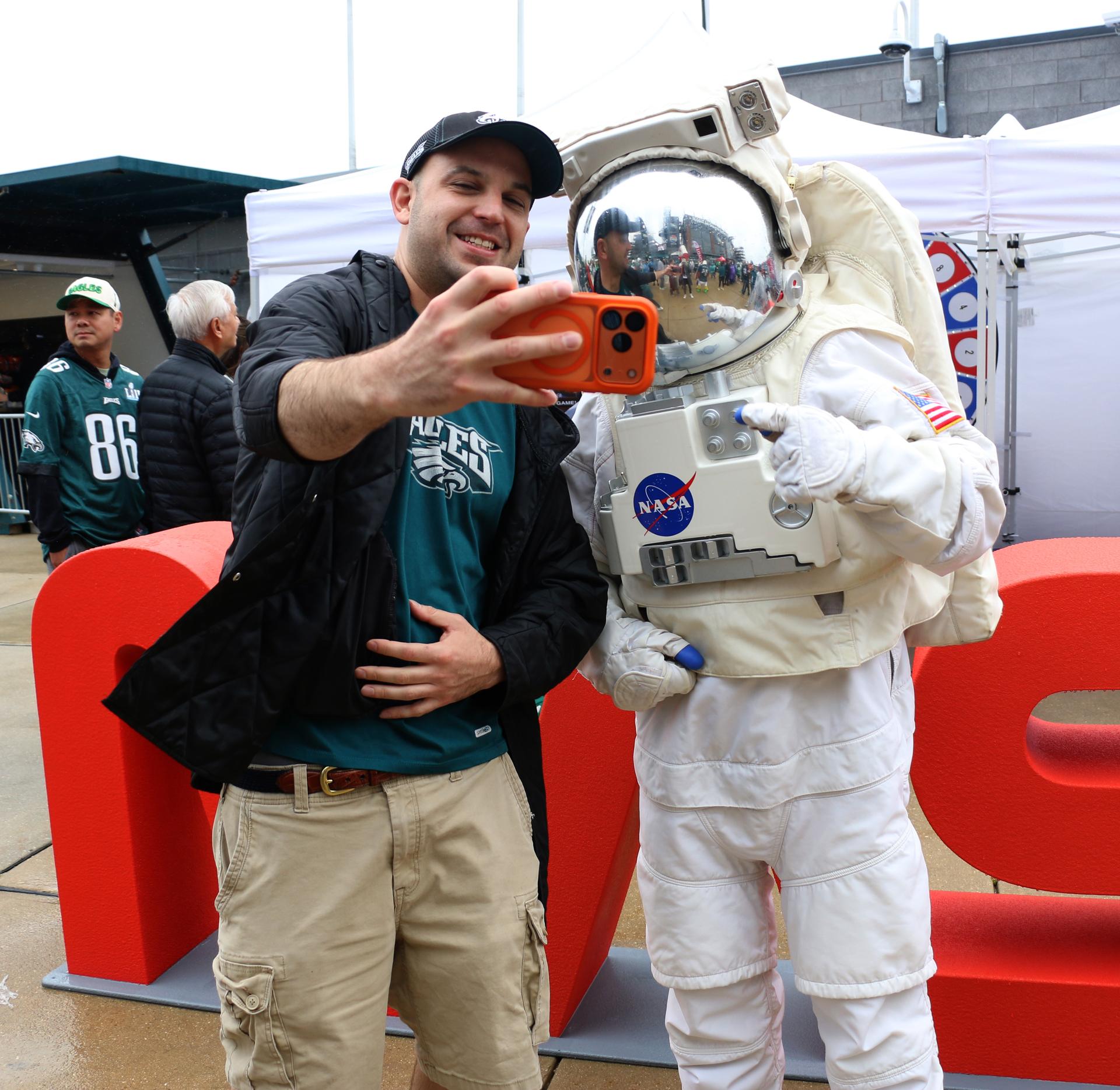
A fan takes a selfie with the astronaut at the NASA activation at the NFL game between the Philadelphia Eagles and the Los Angeles Rams at Lincoln Financial Field on Sunday, Oct. 4, 2026, in Philadelphia. NASA’s engagement at NFL games is part of the agency's Inspiration Tour, aimed at strengthening connections between NASA and its partners and showcasing innovation in air and space in the lead up to the MAX POWER aerospace technology expo and airshow at the agency's Kennedy Space Center in early November. Photo Credit: (NASA/Thalia Patrinos)
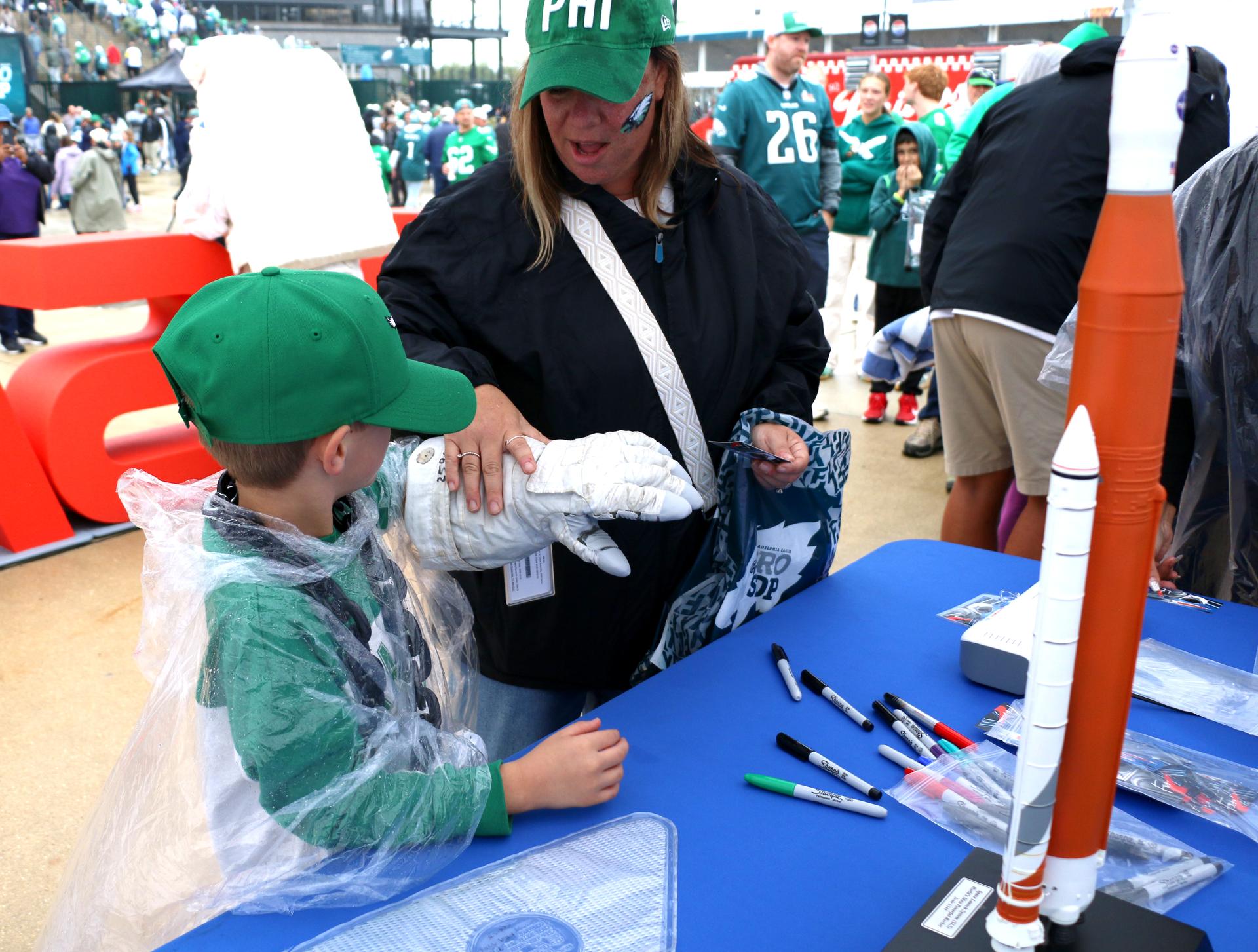
Two fans try on an astronaut glove at the NASA activation at the NFL game between the Philadelphia Eagles and the Los Angeles Rams at Lincoln Financial Field on Sunday, Oct. 4, 2026, in Philadelphia. NASA’s engagement at NFL games is part of the agency's Inspiration Tour, aimed at strengthening connections between NASA and its partners and showcasing innovation in air and space in the lead up to the MAX POWER aerospace technology expo and airshow at the agency's Kennedy Space Center in early November. Photo Credit: (NASA/Thalia Patrinos)
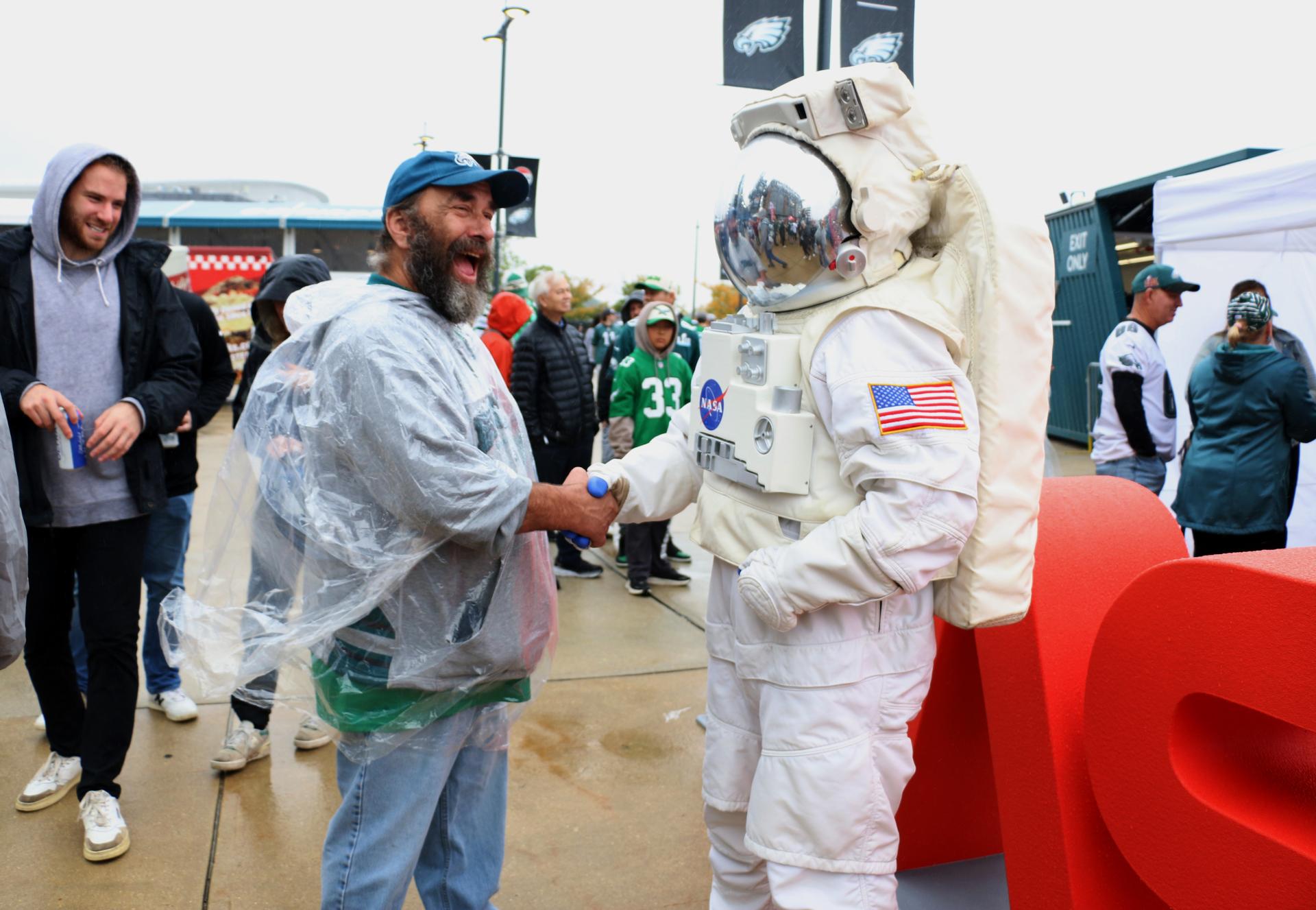
A fan greets the astronaut at the NASA activation at the NFL game between the Philadelphia Eagles and the Los Angeles Rams at Lincoln Financial Field on Sunday, Oct. 4, 2026, in Philadelphia. NASA’s engagement at NFL games is part of the agency's Inspiration Tour, aimed at strengthening connections between NASA and its partners and showcasing innovation in air and space in the lead up to the MAX POWER aerospace technology expo and airshow at the agency's Kennedy Space Center in early November. Photo Credit: (NASA/Thalia Patrinos)
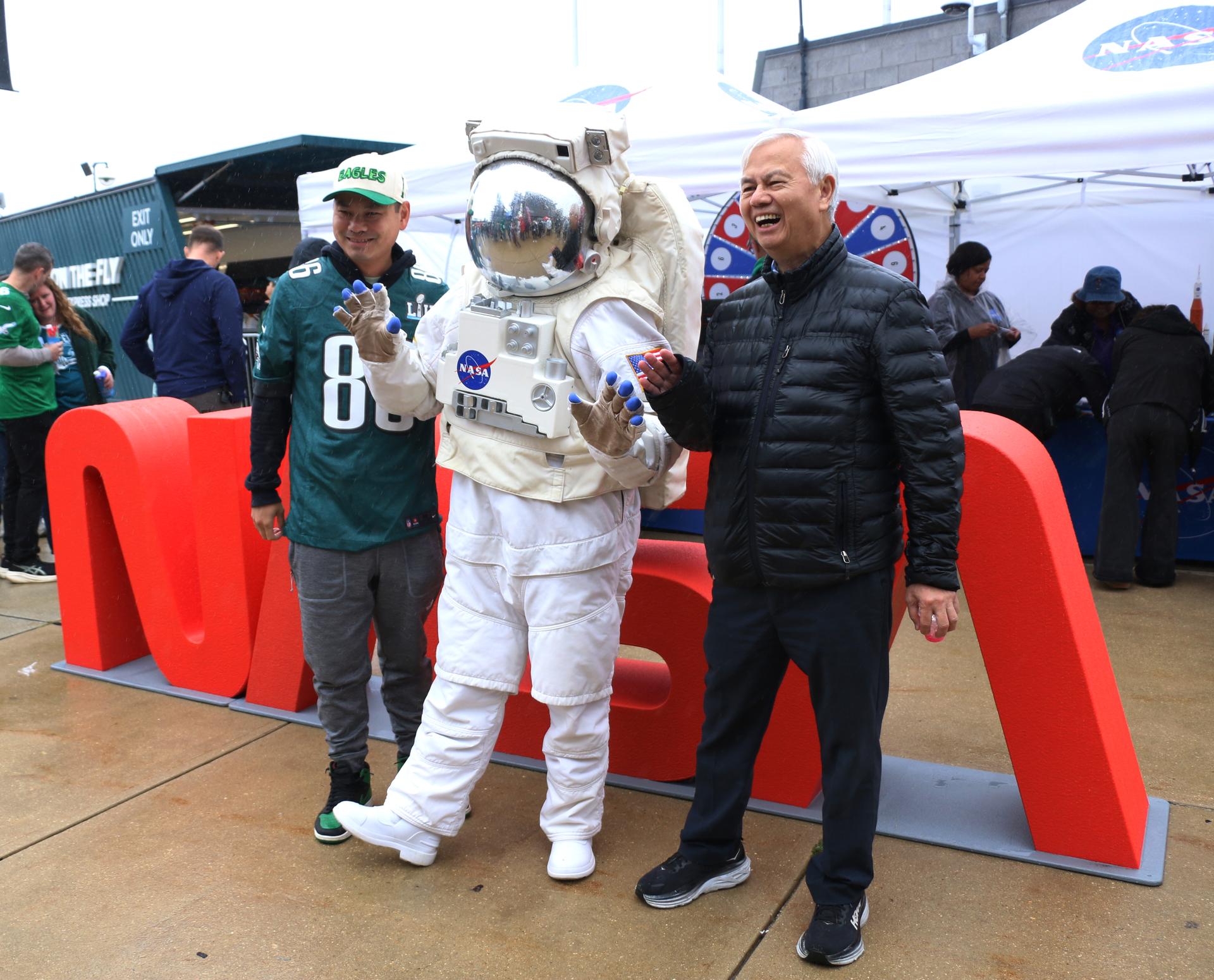
Fans pose with the astronaut at the NASA activation at the NFL game between the Philadelphia Eagles and the Los Angeles Rams at Lincoln Financial Field on Sunday, Oct. 4, 2026, in Philadelphia. NASA’s engagement at NFL games is part of the agency's Inspiration Tour, aimed at strengthening connections between NASA and its partners and showcasing innovation in air and space in the lead up to the MAX POWER aerospace technology expo and airshow at the agency's Kennedy Space Center in early November. Photo Credit: (NASA/Thalia Patrinos)
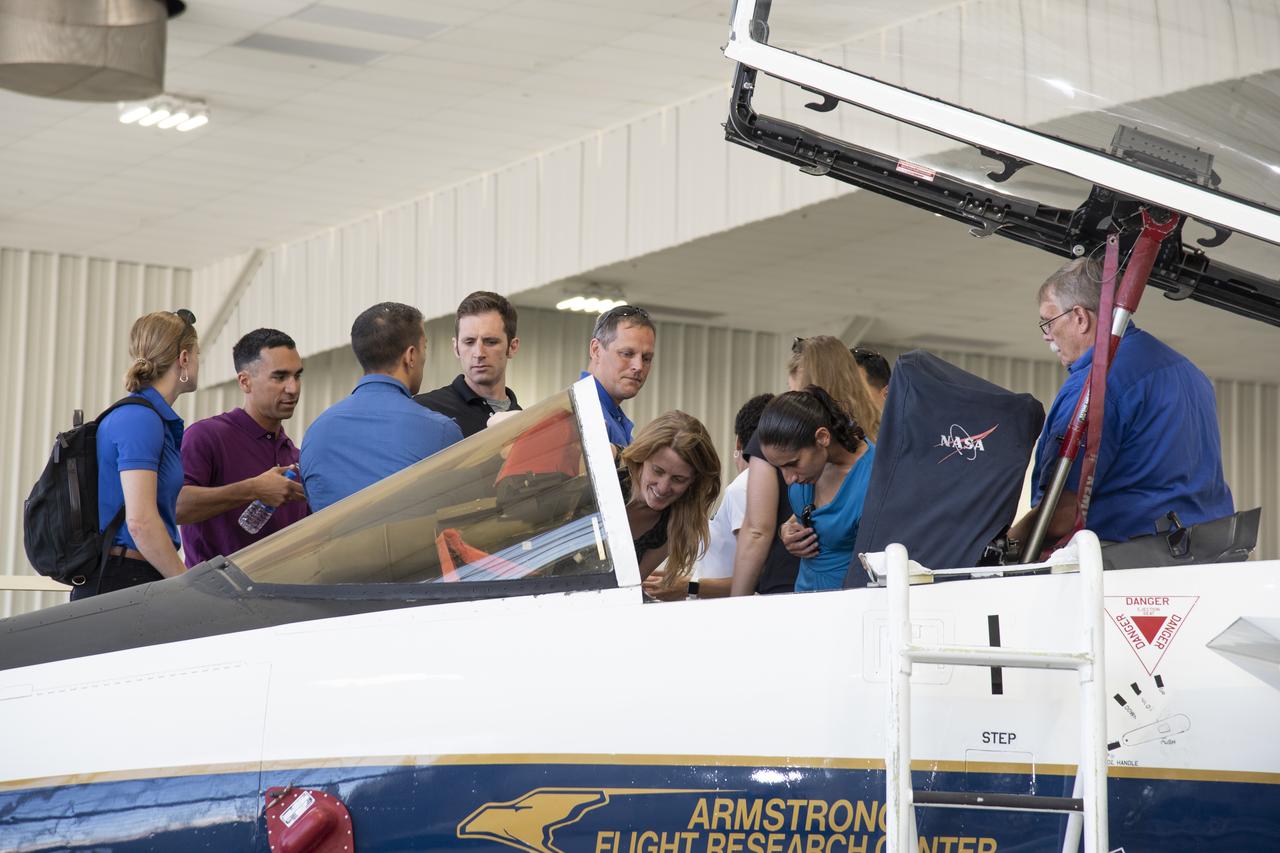
NASA's 2017 astronaut candidates toured aircraft hangar at Armstrong Flight Research Center, in Southern California where they checked out a F-15 cockpit. The center is using its fleet of supersonic research support aircraft for sonic boom research, including the F-15, which will fly in tandem with the X-59 QueSST during early flight test stages, and the F-18, which is conducting supersonic research in support of the overall mission.
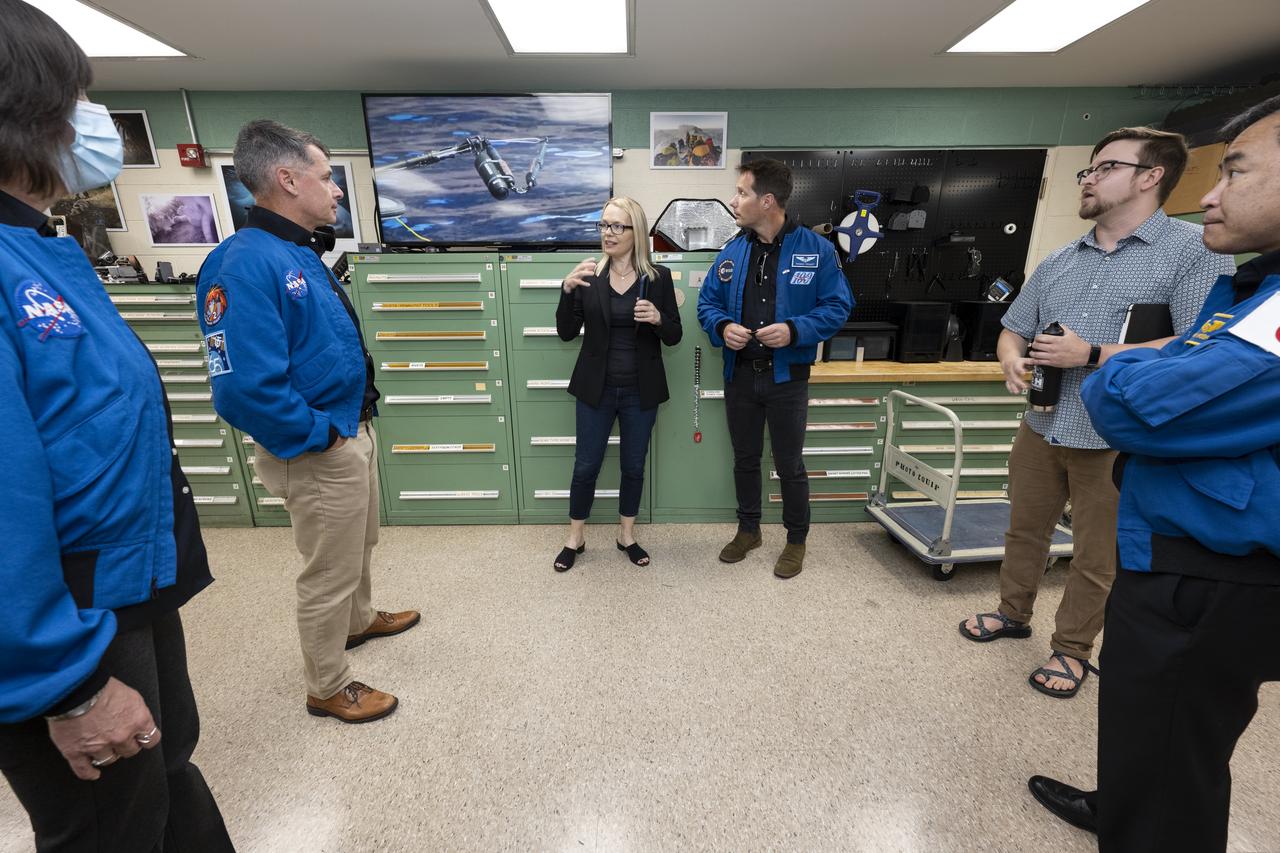
Executive Producer Betsy Forhan speaks with NASA’s SpaceX Crew-2 astronauts during a tour of the Photo Engineering Department, Tuesday, June 7, 2022, at National Geographic Headquarters in Washington. Kimbrough, McArthur, Hoshide, and Pesquet completed the second crew rotation mission to the International Space Station as part of the agency’s Commercial Crew Program and spent 198 days aboard the orbiting laboratory as part of Expeditions 65 and 66. Photo Credit: (NASA/Keegan Barber)
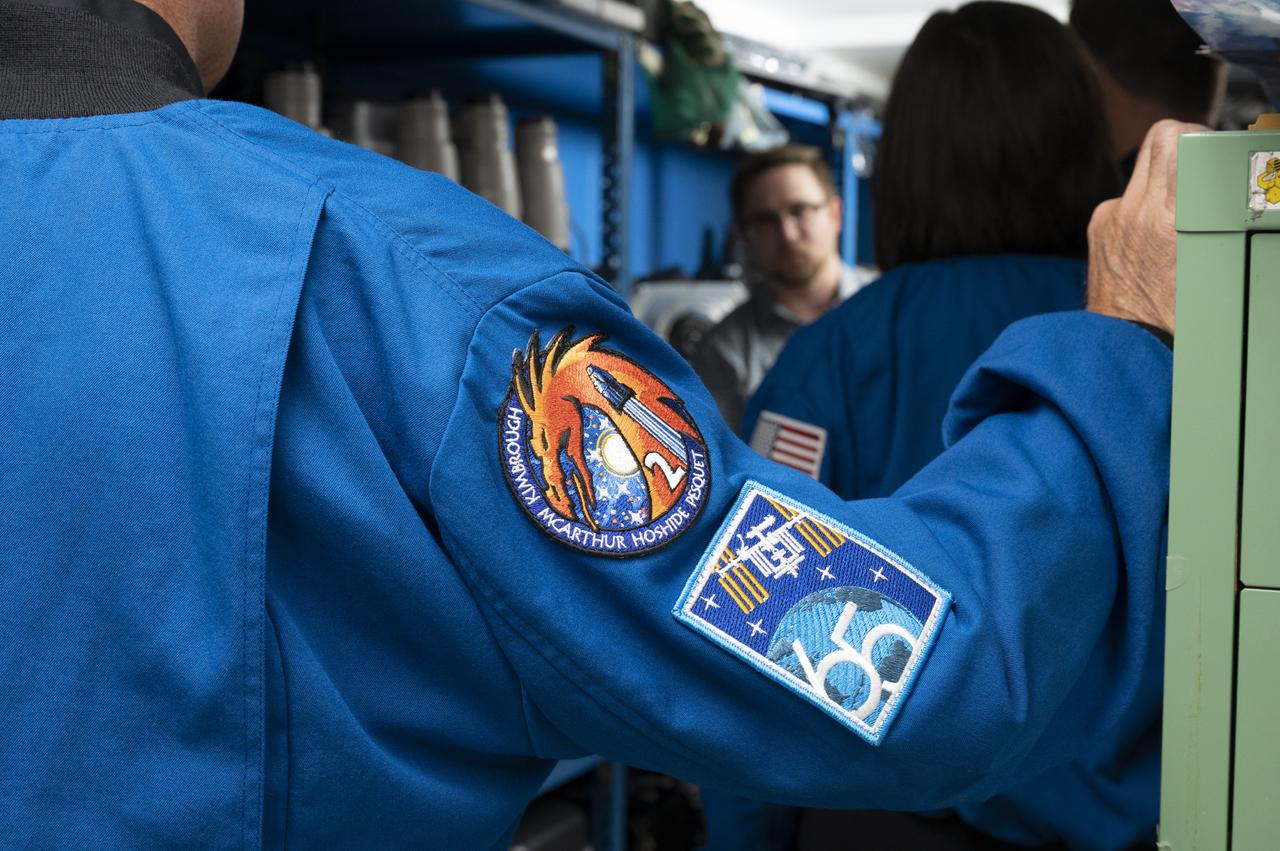
Photo Engineer Tom O’Brien speaks with NASA’s SpaceX Crew-2 astronauts during a tour of the Photo Engineering Department, Tuesday, June 7, 2022, at National Geographic Headquarters in Washington. Kimbrough, McArthur, Hoshide, and Pesquet completed the second crew rotation mission to the International Space Station as part of the agency’s Commercial Crew Program and spent 198 days aboard the orbiting laboratory as part of Expeditions 65 and 66. Photo Credit: (NASA/Keegan Barber)
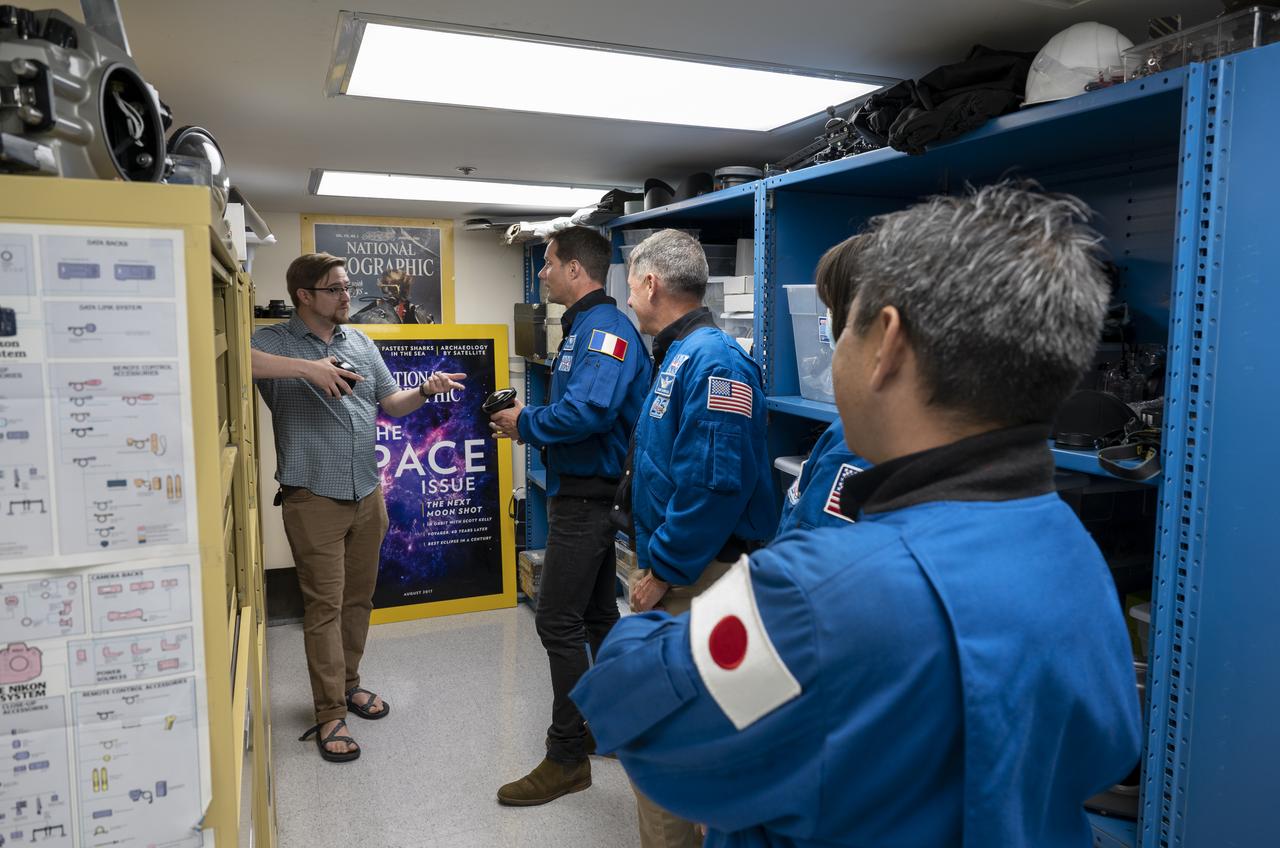
Photo Engineer Tom O’Brien speaks with NASA’s SpaceX Crew-2 astronauts during a tour of the Photo Engineering Department, Tuesday, June 7, 2022, at National Geographic Headquarters in Washington. Kimbrough, McArthur, Hoshide, and Pesquet completed the second crew rotation mission to the International Space Station as part of the agency’s Commercial Crew Program and spent 198 days aboard the orbiting laboratory as part of Expeditions 65 and 66. Photo Credit: (NASA/Keegan Barber)
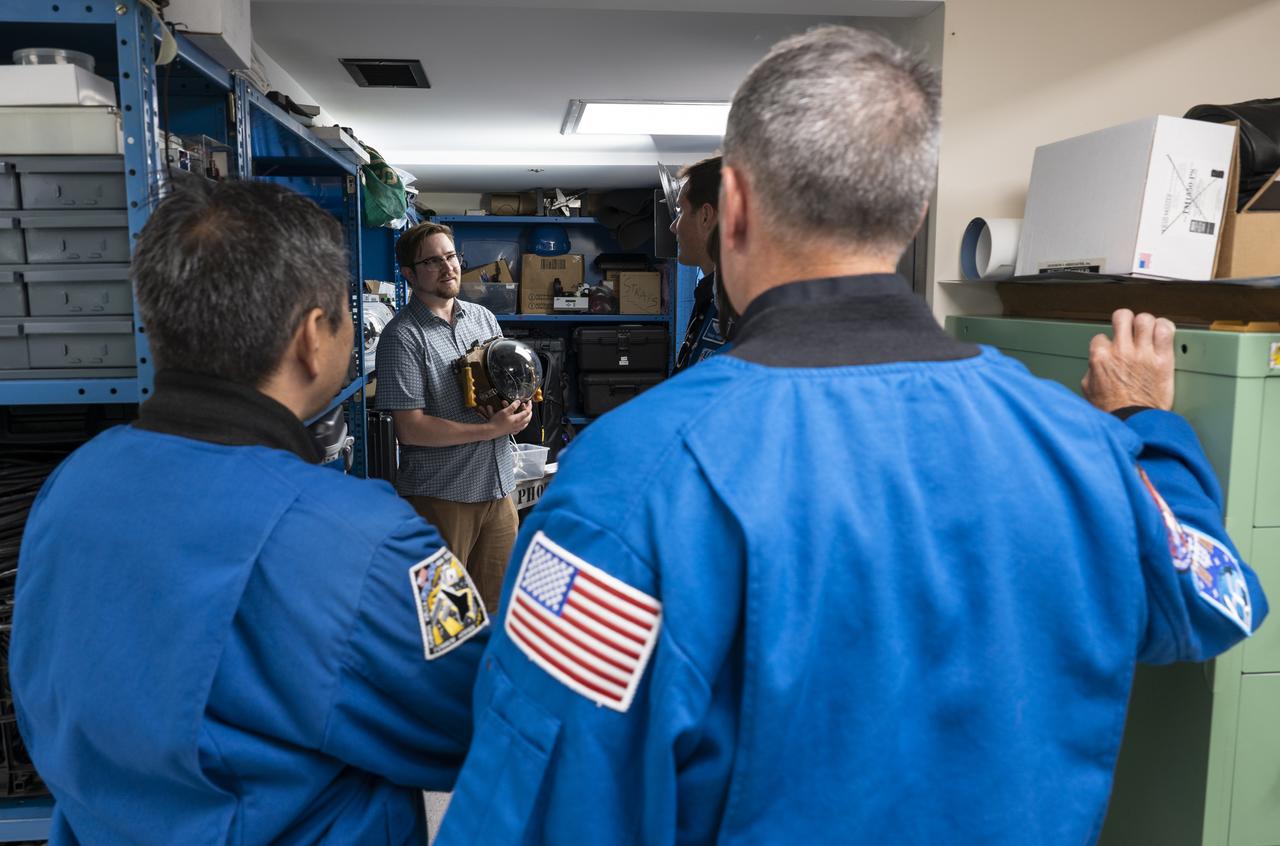
Photo Engineer Tom O’Brien speaks with NASA’s SpaceX Crew-2 astronauts during a tour of the Photo Engineering Department, Tuesday, June 7, 2022, at National Geographic Headquarters in Washington. Kimbrough, McArthur, Hoshide, and Pesquet completed the second crew rotation mission to the International Space Station as part of the agency’s Commercial Crew Program and spent 198 days aboard the orbiting laboratory as part of Expeditions 65 and 66. Photo Credit: (NASA/Keegan Barber)
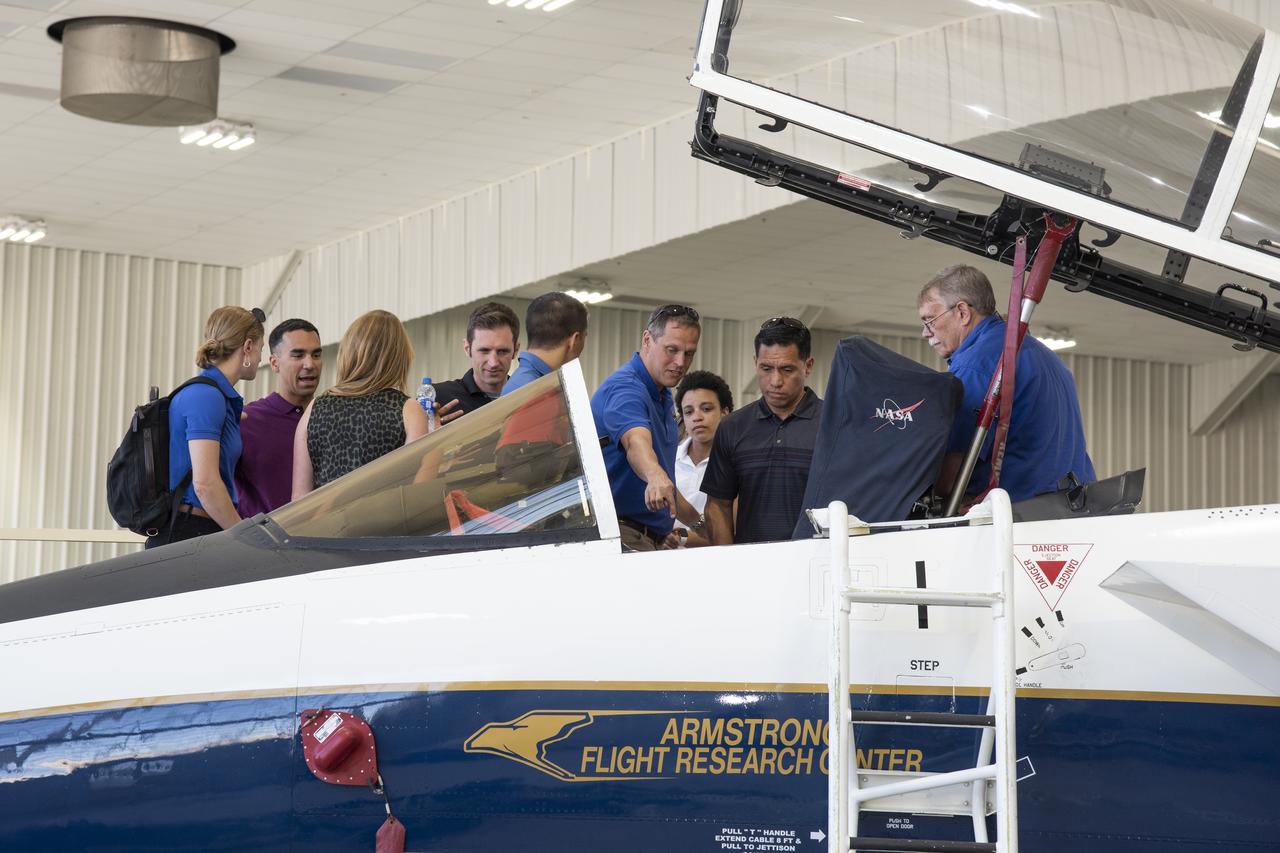
NASA’s 2017 astronaut candidates toured aircraft hangar at Armstrong Flight Research Center, in Southern California where they checked out a F-15 cockpit. The center is using its fleet of supersonic research support aircraft for sonic boom research, including the F-15, which will fly in tandem with the X-59 QueSST during early flight test stages, and the F-18, which is conducting supersonic research in support of the overall mission.
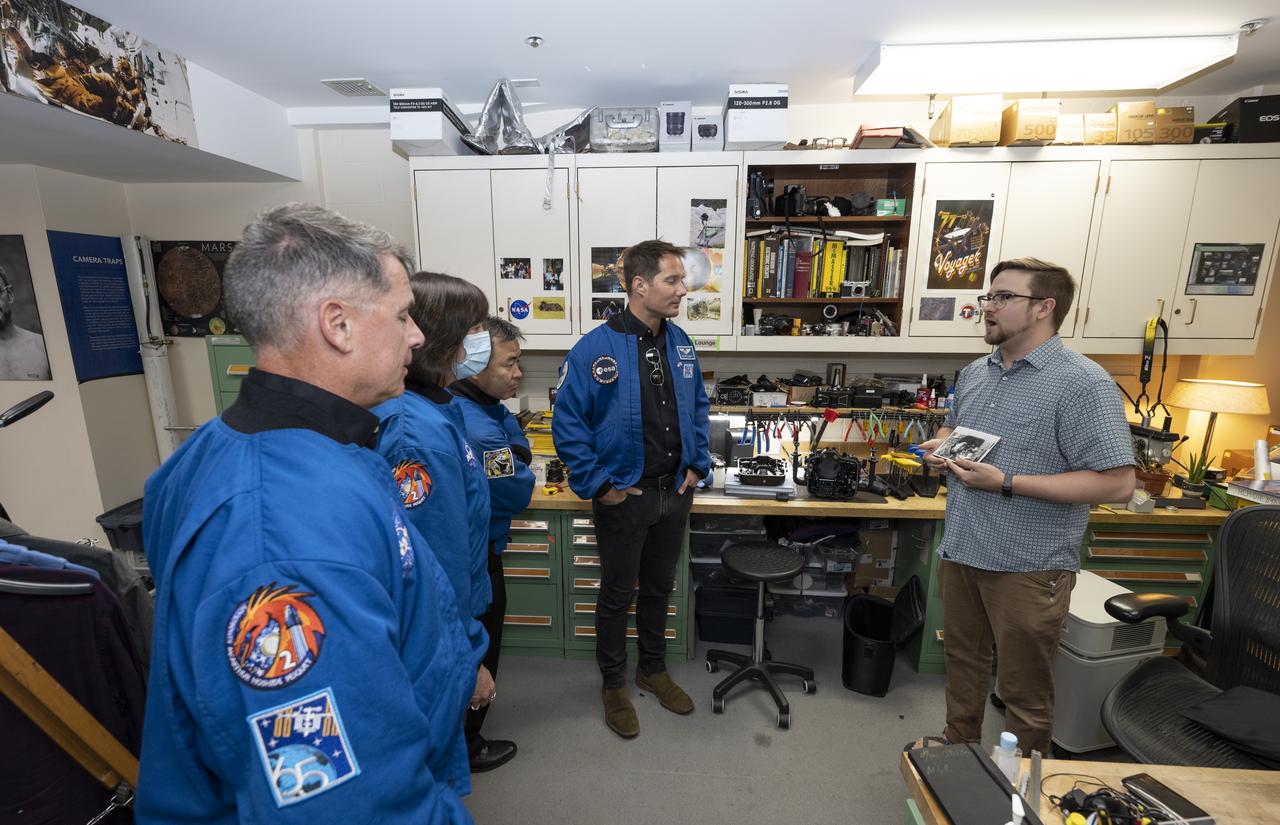
Photo Engineer Tom O’Brien speaks with NASA’s SpaceX Crew-2 astronauts during a tour of the Photo Engineering Department, Tuesday, June 7, 2022, at National Geographic Headquarters in Washington. Kimbrough, McArthur, Hoshide, and Pesquet completed the second crew rotation mission to the International Space Station as part of the agency’s Commercial Crew Program and spent 198 days aboard the orbiting laboratory as part of Expeditions 65 and 66. Photo Credit: (NASA/Keegan Barber)
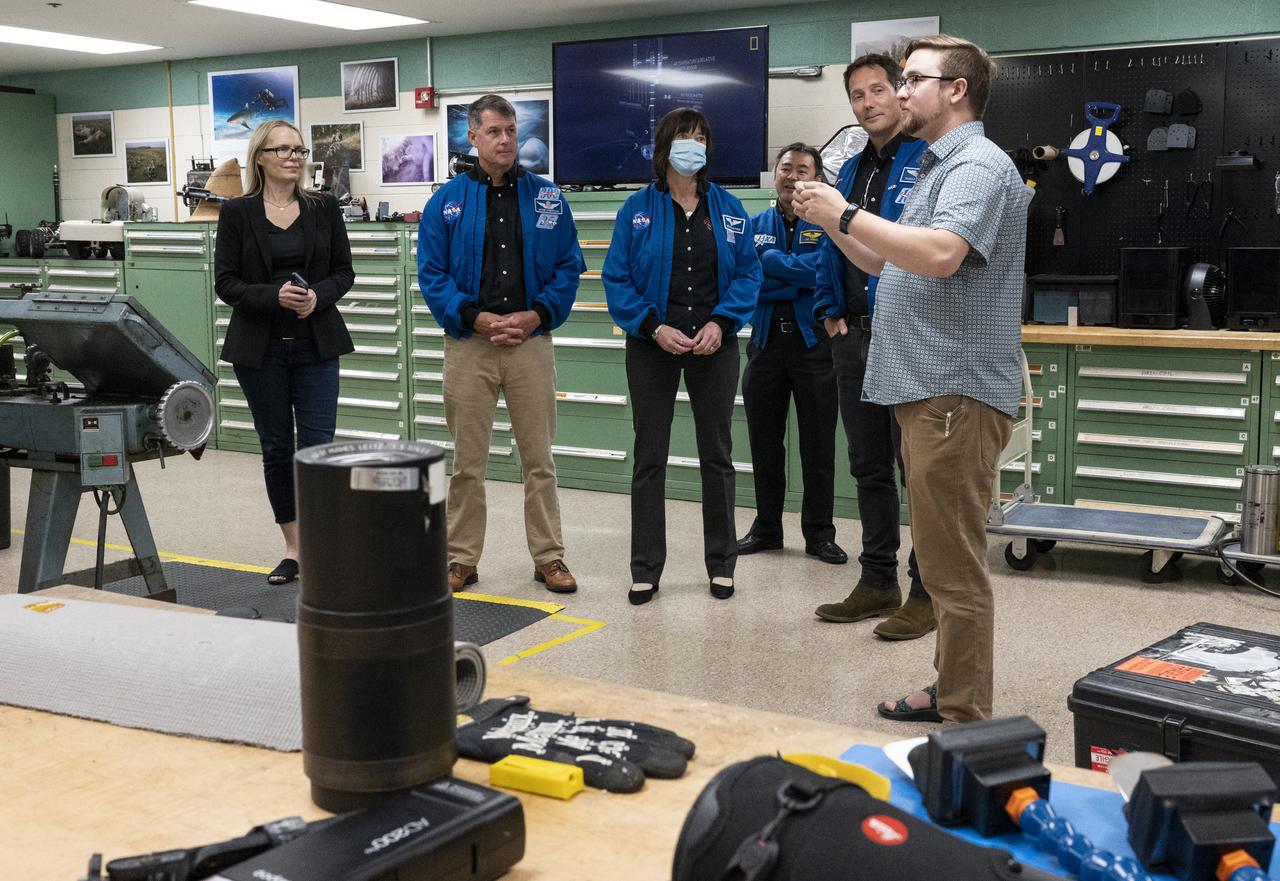
Photo Engineer Tom O’Brien speaks with NASA’s SpaceX Crew-2 astronauts during a tour of the Photo Engineering Department, Tuesday, June 7, 2022, at National Geographic Headquarters in Washington. Kimbrough, McArthur, Hoshide, and Pesquet completed the second crew rotation mission to the International Space Station as part of the agency’s Commercial Crew Program and spent 198 days aboard the orbiting laboratory as part of Expeditions 65 and 66. Photo Credit: (NASA/Keegan Barber)
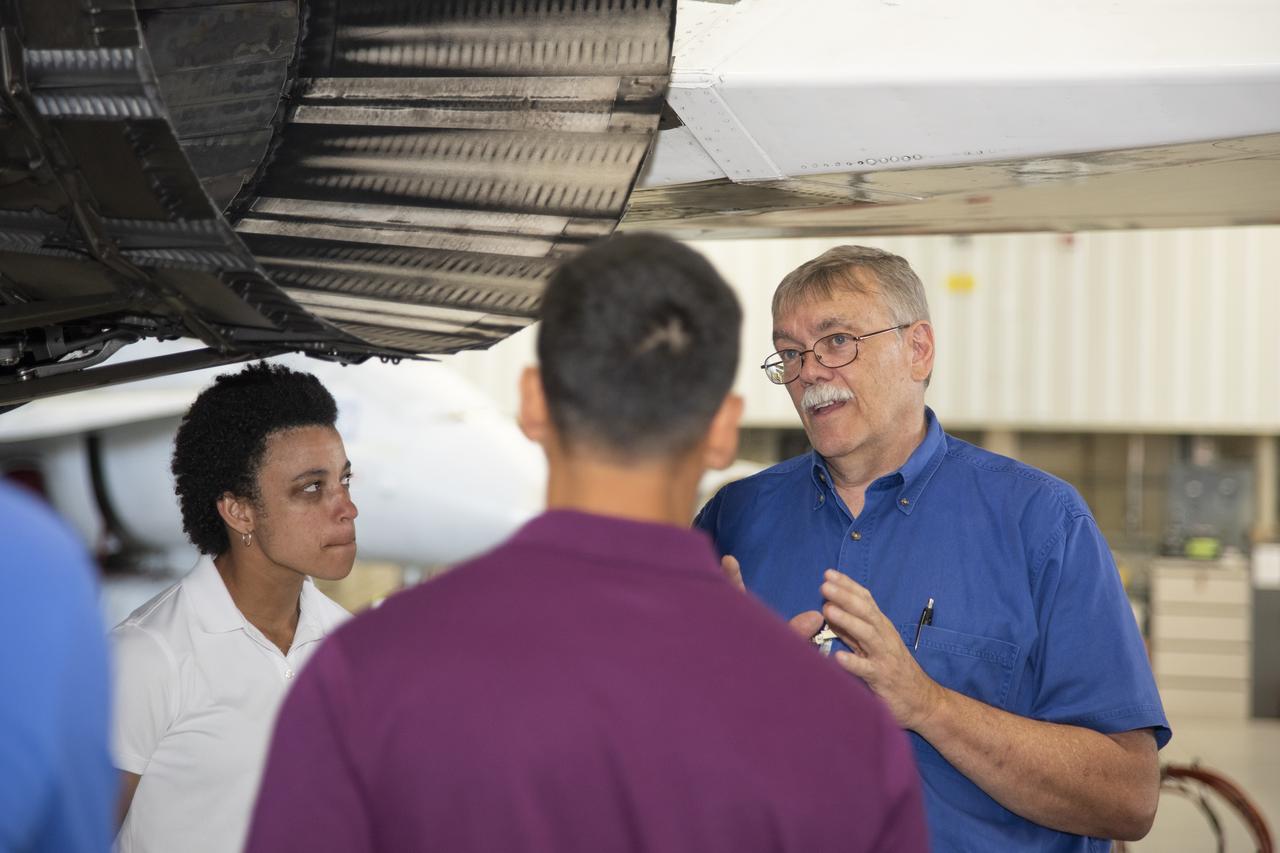
NASA's 2017 astronaut candidates toured aircraft hangar at Armstrong Flight Research Center, in Southern California where Crew Chief Tom Grindle talks with (L to R) Jessica Watkins and Raja Chari near engine nozzle of F-15 jet. The F-15 will fly in tandem with the X-59 QueSST during early flight test stages for the X-59 development.
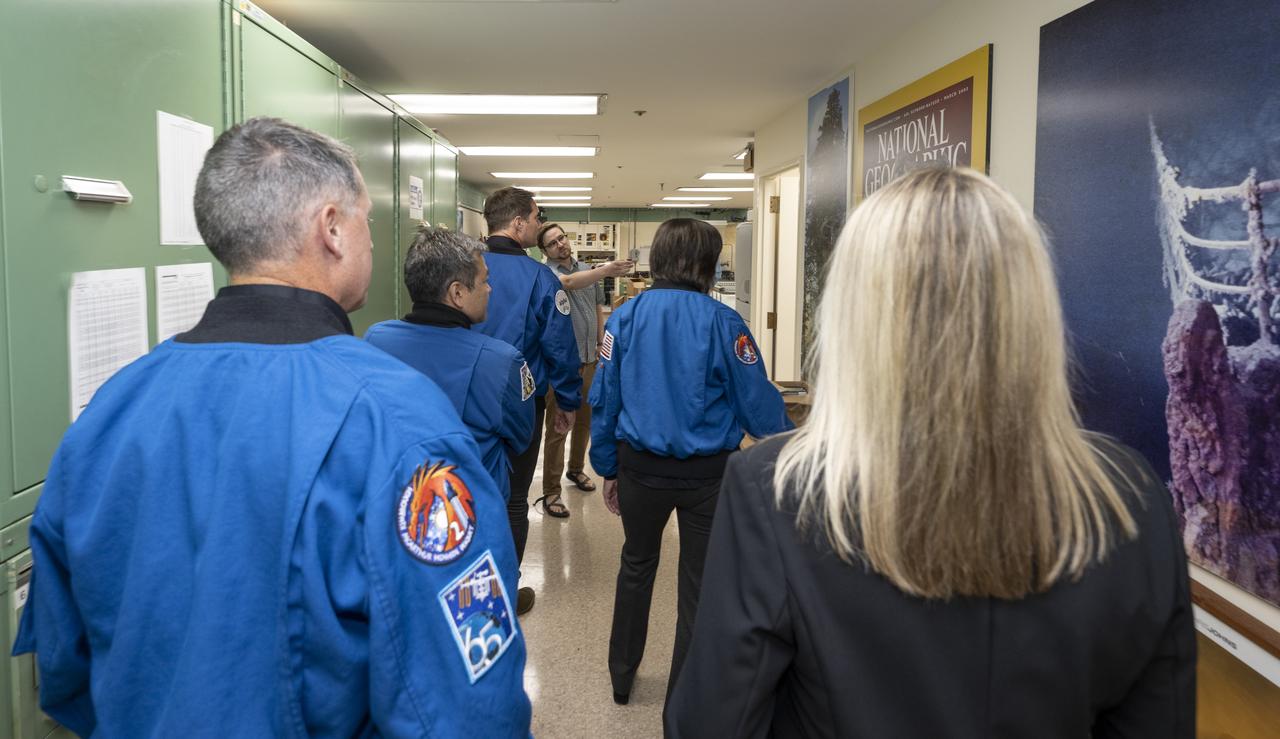
Photo Engineer Tom O’Brien speaks with NASA’s SpaceX Crew-2 astronauts during a tour of the Photo Engineering Department, Tuesday, June 7, 2022, at National Geographic Headquarters in Washington. Kimbrough, McArthur, Hoshide, and Pesquet completed the second crew rotation mission to the International Space Station as part of the agency’s Commercial Crew Program and spent 198 days aboard the orbiting laboratory as part of Expeditions 65 and 66. Photo Credit: (NASA/Keegan Barber)
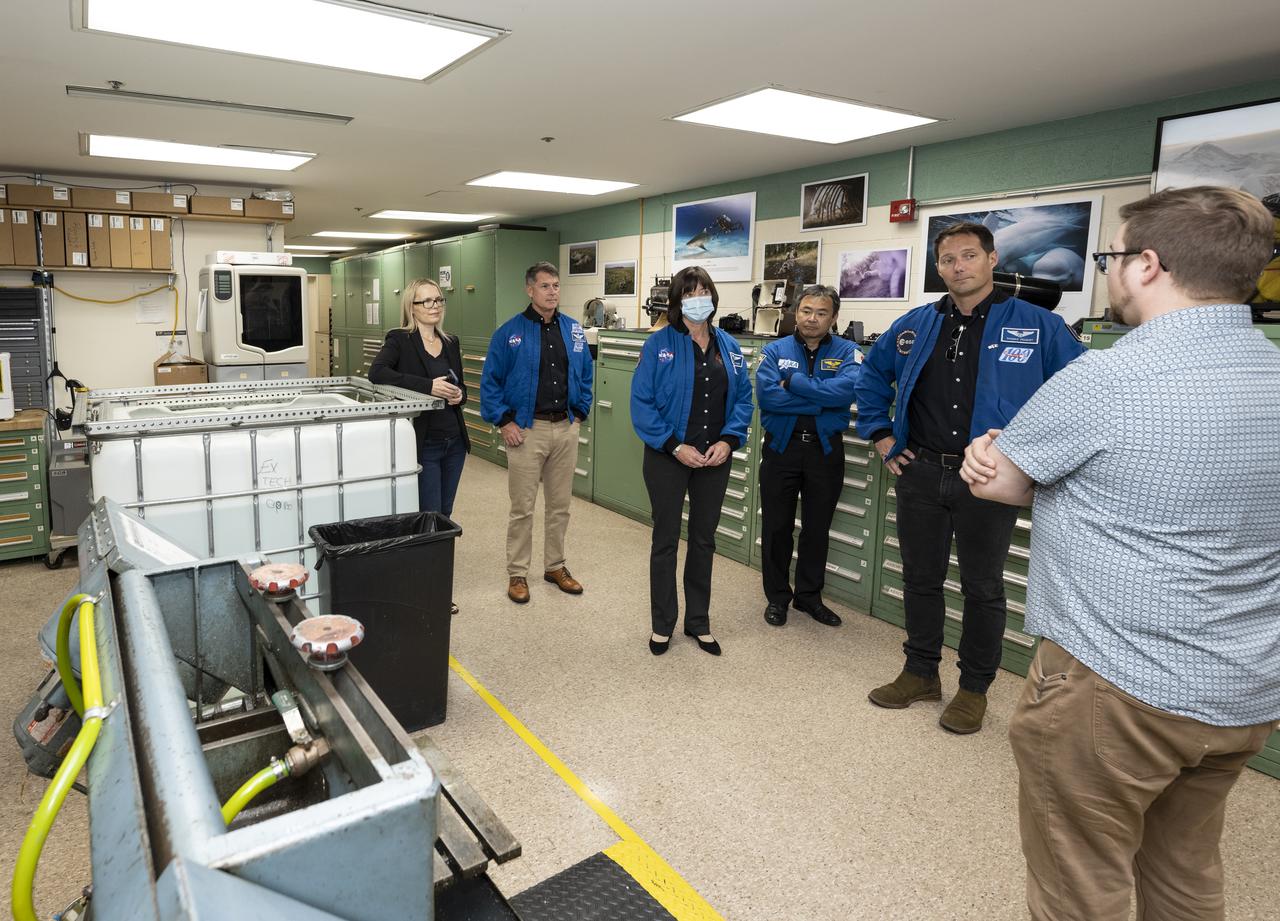
Photo Engineer Tom O’Brien speaks with NASA’s SpaceX Crew-2 astronauts during a tour of the Photo Engineering Department, Tuesday, June 7, 2022, at National Geographic Headquarters in Washington. Kimbrough, McArthur, Hoshide, and Pesquet completed the second crew rotation mission to the International Space Station as part of the agency’s Commercial Crew Program and spent 198 days aboard the orbiting laboratory as part of Expeditions 65 and 66. Photo Credit: (NASA/Keegan Barber)

Photo Engineer Tom O’Brien speaks with NASA’s SpaceX Crew-2 astronauts during a tour of the Photo Engineering Department, Tuesday, June 7, 2022, at National Geographic Headquarters in Washington. Kimbrough, McArthur, Hoshide, and Pesquet completed the second crew rotation mission to the International Space Station as part of the agency’s Commercial Crew Program and spent 198 days aboard the orbiting laboratory as part of Expeditions 65 and 66. Photo Credit: (NASA/Keegan Barber)
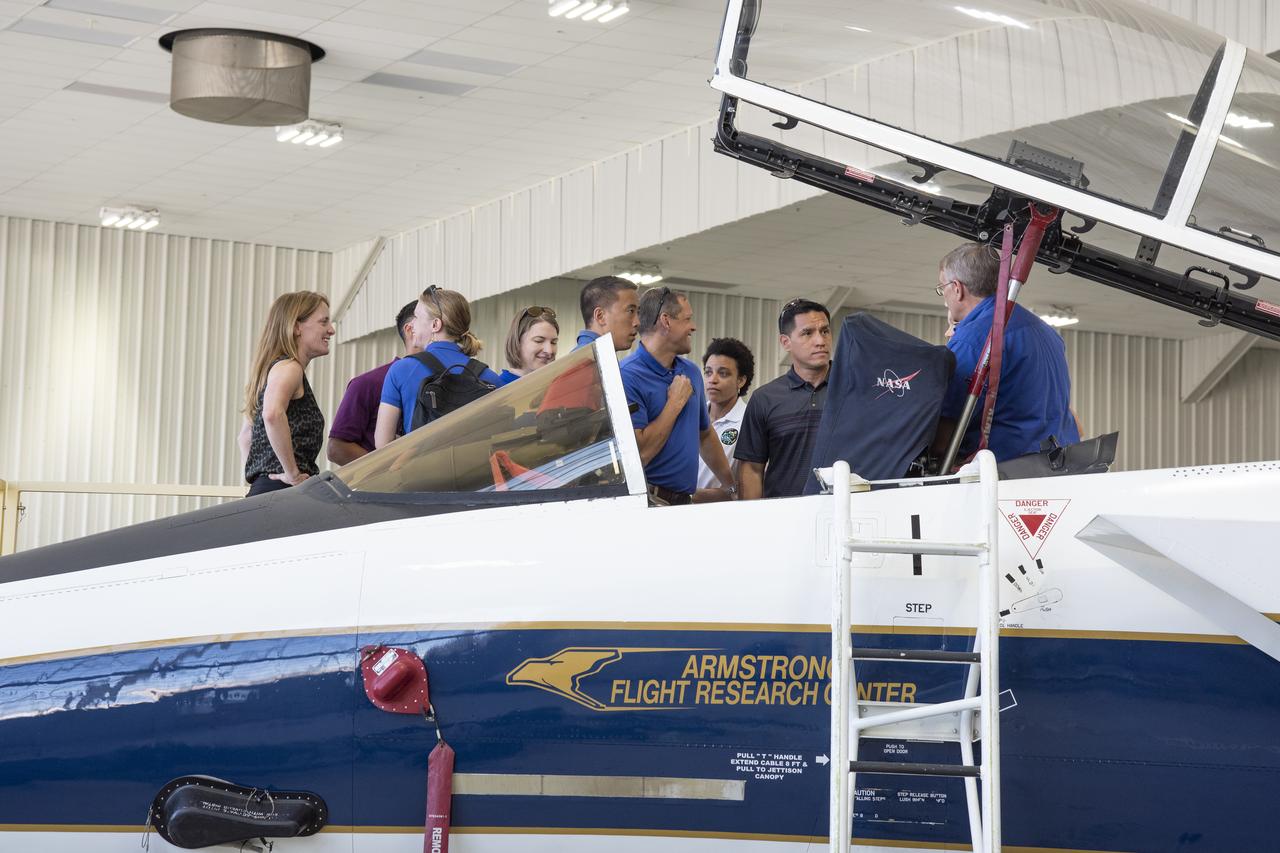
NASA's 2017 astronaut candidates toured aircraft hangar at Armstrong Flight Research Center, in Southern California where they checked out a F-15 cockpit. The center is using its fleet of supersonic research support aircraft for sonic boom research, including the F-15, which will fly in tandem with the X-59 QueSST during early flight test stages, and the F-18, which is conducting supersonic research in support of the overall mission.

From left, Project Scientist Natasha Haveman and NASA astronauts Jessica Watkins, Stan Love, and Luke Delaney, along with CSA (Canadian Space Agency) astronaut Joshua Kutryk, view crops grown in the Plant Processing Area inside the Space Systems Processing Facility at NASA’s Kennedy Space Center in Florida during a tour on Tuesday, May 12, 2026. Watkins, Delaney, and Kutryk, along with Roscosmos cosmonaut Sergey Teteryatnikov (not pictured), are part of NASA's SpaceX Crew-13 mission to the International Space Station and will explore the possibility of growing crops outside of the station’s Veggie chamber – one of two enclosed areas currently used to grow crops on the orbiting laboratory.
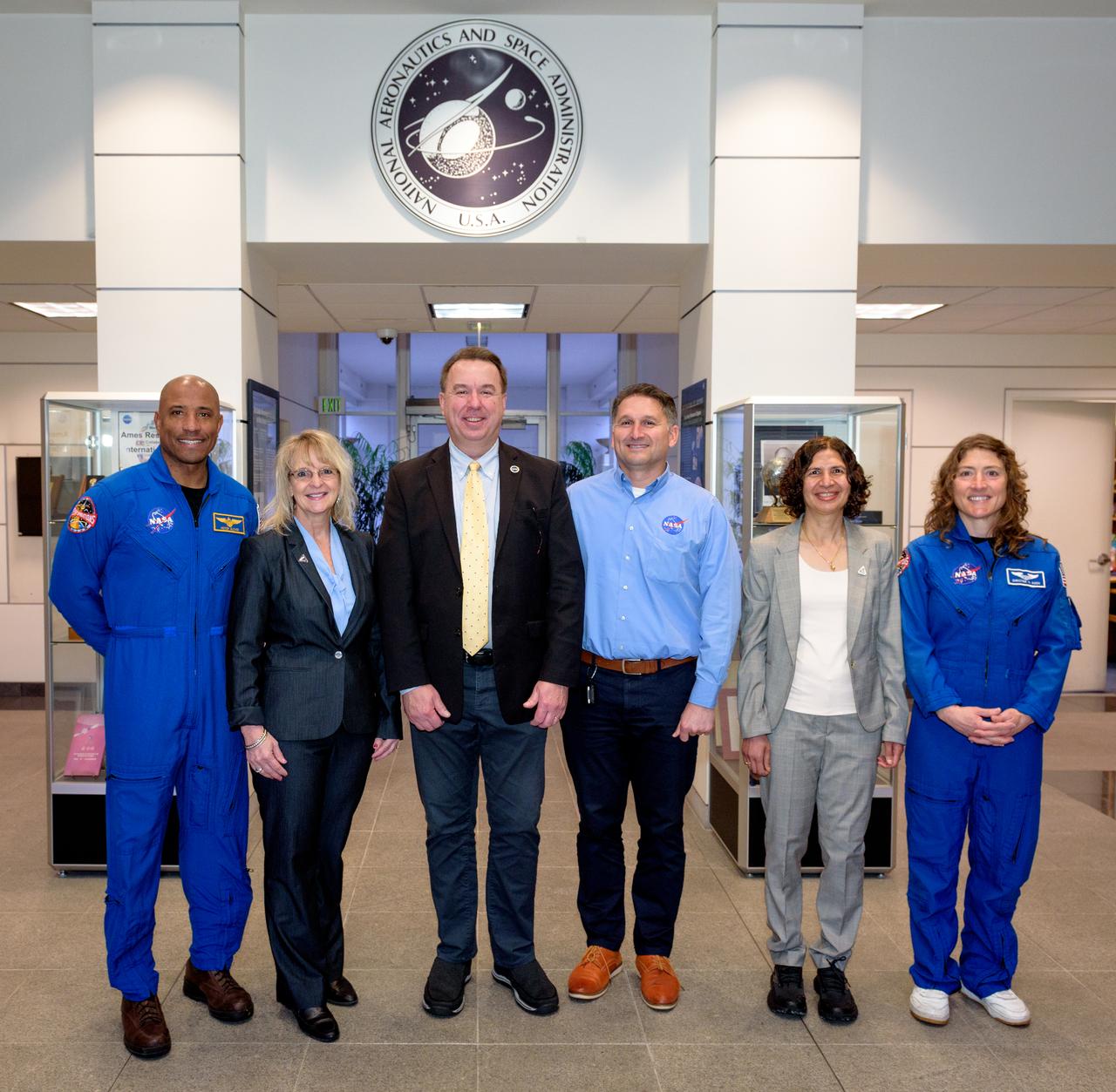
NASA astronaut Victor J. Glover, left, Orion Deputy Program Manager Debbie Korth, Deputy Center Director David Korsmeyer, Luis Saucedo, Parul Agrawal, and NASA astronaut Christina Koch, left, in the lobby of N200.
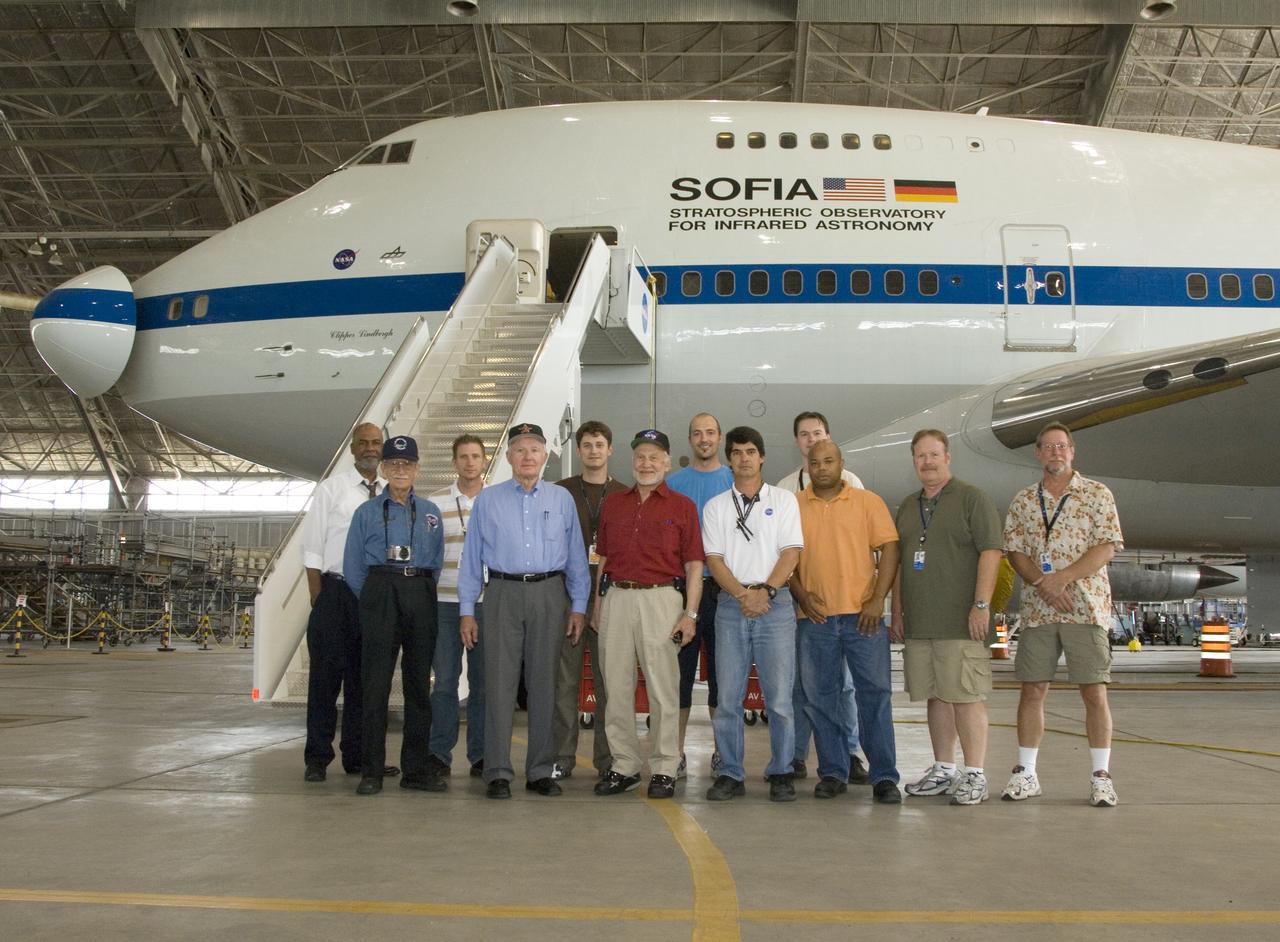
Members of the SOFIA infrared observatory support team gather around Apollo 11 astronaut Buzz Aldrin (in red shirt) during Aldrin's tour of NASA Dryden.
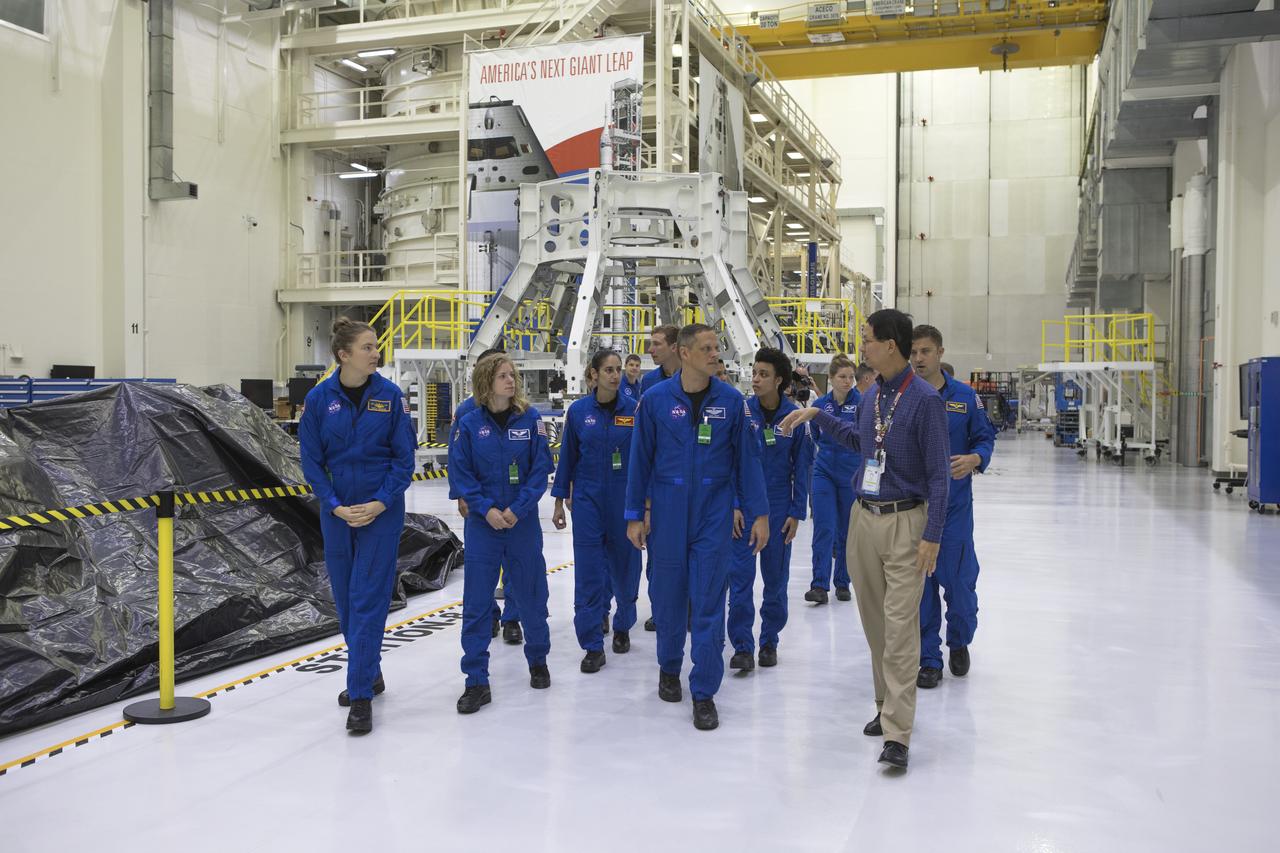
The 2017 class of astronaut candidates are inside the Neil Armstrong Operations and Checkout Building high bay during a familiarization tour of facilities at NASA's Kennedy Space Center in Florida. The candidates toured center facilities, including the Launch Control Center, Launch Pad 39B, the Vehicle Assembly Building and the Space Station Processing Facility. They also toured Boeing's Commercial Crew and Cargo Facility, United Launch Alliance's Space Launch Complex 41 at Cape Canaveral Air Force Station, and SpaceX's Launch Pad 39A at Kennedy. The candidates will spend about two years getting to know the space station systems and learning how to spacewalk, speak Russian, control the International Space Station's robotic arm and fly T-38s, before they're eligible to be assigned to a mission.
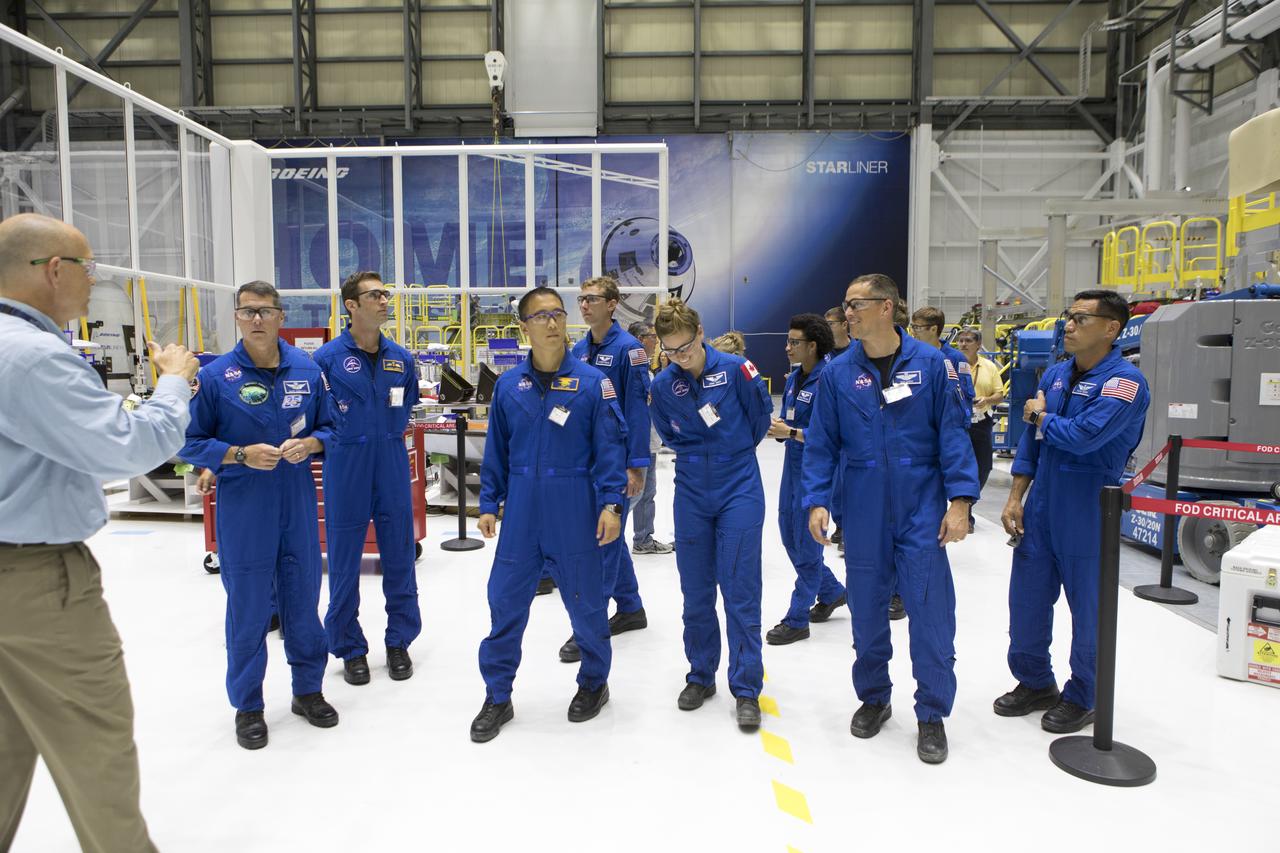
The 2017 class of astronaut candidates tour Boeing's Commercial Crew and Cargo Facility at NASA's Kennedy Space Center in Florida on May 1. They are at the center for a familiarization tour of facilities, including the Neil Armstrong Operations and Checkout Building high bay; the Launch Control Center, Launch Complex 39B, and the Vehicle Assembly Building. They also toured United Launch Alliance's Space Launch Complex 41 at Cape Canaveral Air Force Station, and SpaceX's Launch Complex 39A at Kennedy. The candidates will spend about two years getting to know the space station systems and learning how to spacewalk, speak Russian, control the International Space Station's robotic arm and fly T-38s, before they're eligible to be assigned to a mission.
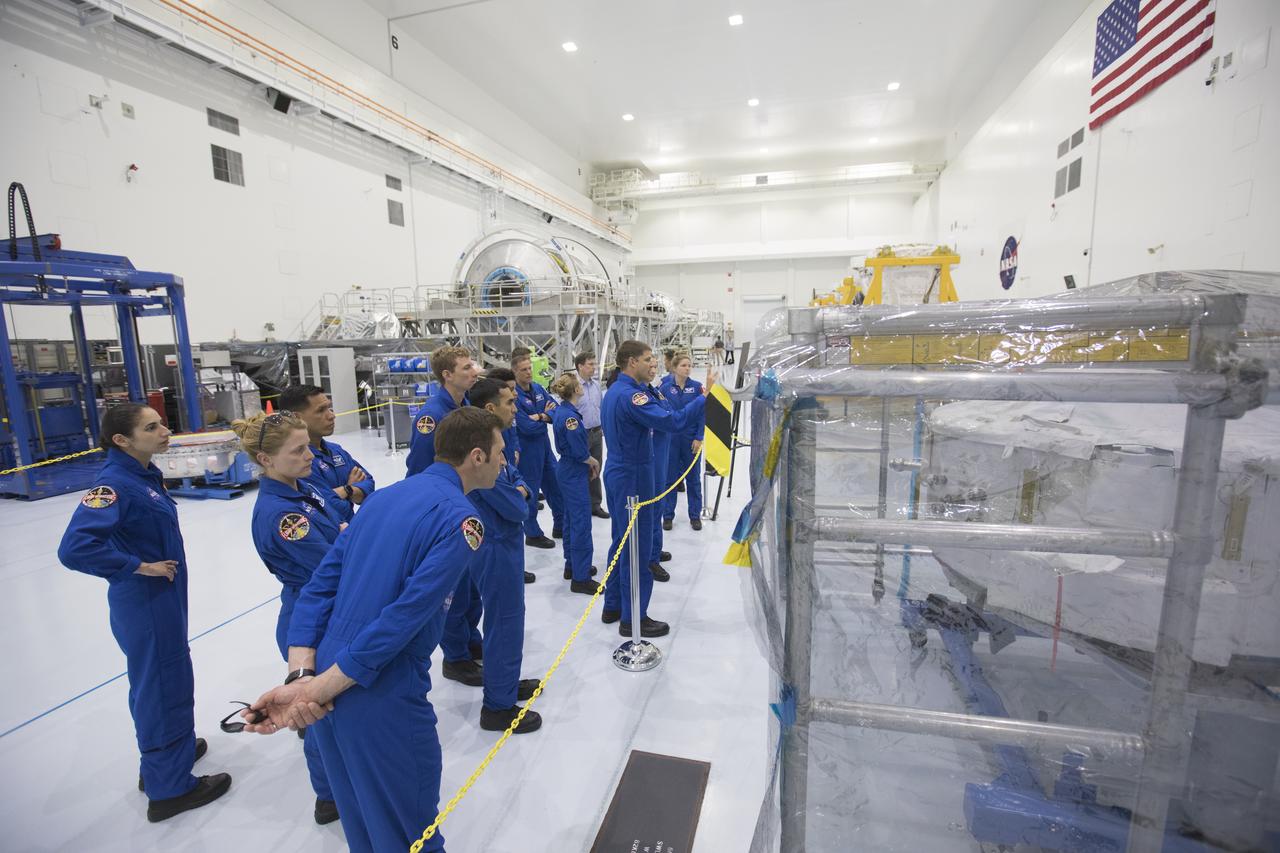
The 2017 class of astronaut candidates are inside the Space Station Processing Facility high bay during a familiarization tour of facilities at NASA's Kennedy Space Center in Florida. The candidates toured center facilities, including the Neil Armstrong Operations and Checkout Building high bay; the Launch Control Center, Launch Pad 39B, and the Vehicle Assembly Building. They also toured Boeing's Commercial Crew and Cargo Facility, United Launch Alliance's Space Launch Complex 41 at Cape Canaveral Air Force Station, and SpaceX's Launch Pad 39A at Kennedy. The candidates will spend about two years getting to know the space station systems and learning how to spacewalk, speak Russian, control the International Space Station's robotic arm and fly T-38s, before they're eligible to be assigned to a mission.
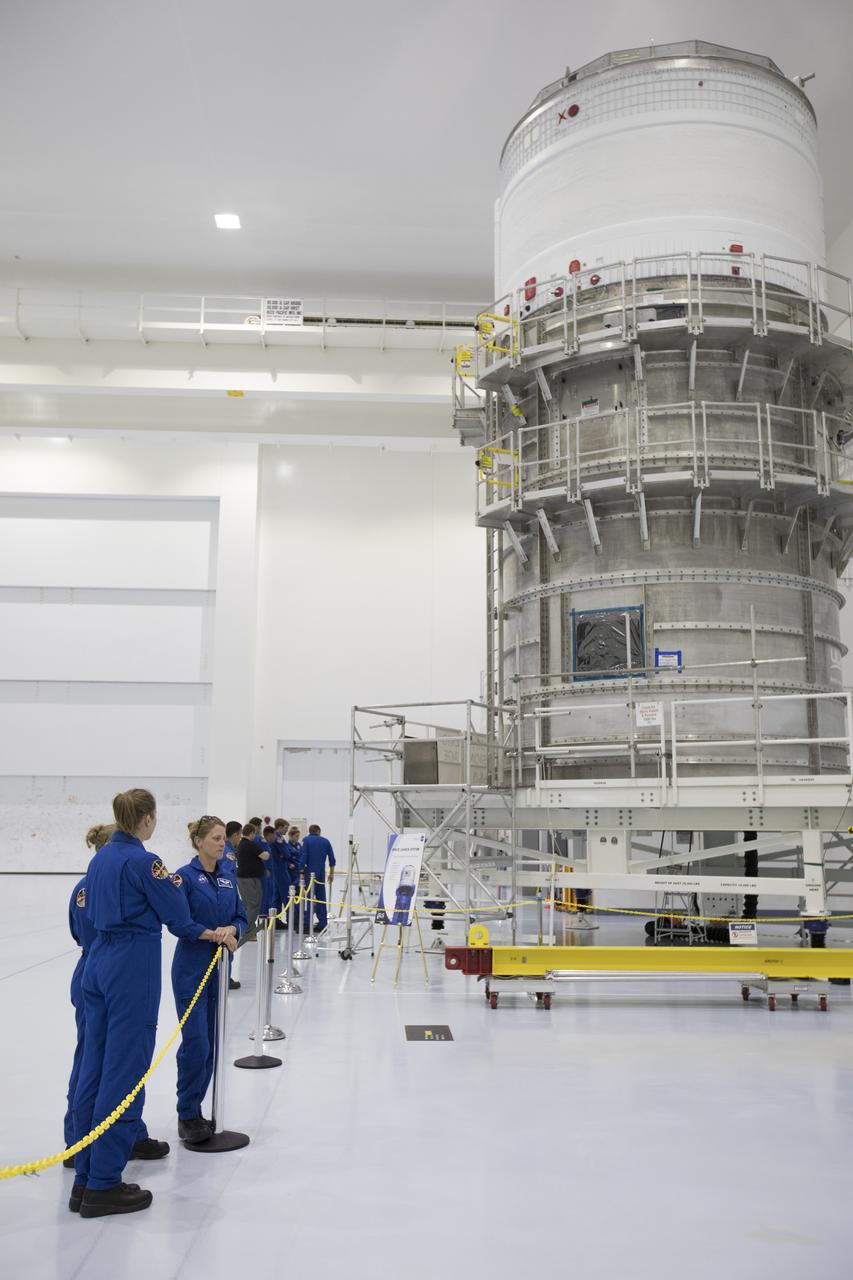
The 2017 class of astronaut candidates are inside the Space Station Processing Facility high bay during a familiarization tour of facilities at NASA's Kennedy Space Center in Florida. They are viewing the Interim Cryogenic Propulsion System for NASA's Space Launch System rocket. The candidates toured center facilities, including the Neil Armstrong Operations and Checkout Building high bay; the Launch Control Center, Launch Pad 39B, and the Vehicle Assembly Building. They also toured Boeing's Commercial Crew and Cargo Facility, United Launch Alliance's Space Launch Complex 41 at Cape Canaveral Air Force Station, and SpaceX's Launch Pad 39A at Kennedy. The candidates will spend about two years getting to know the space station systems and learning how to spacewalk, speak Russian, control the International Space Station's robotic arm and fly T-38s, before they're eligible to be assigned to a mission.
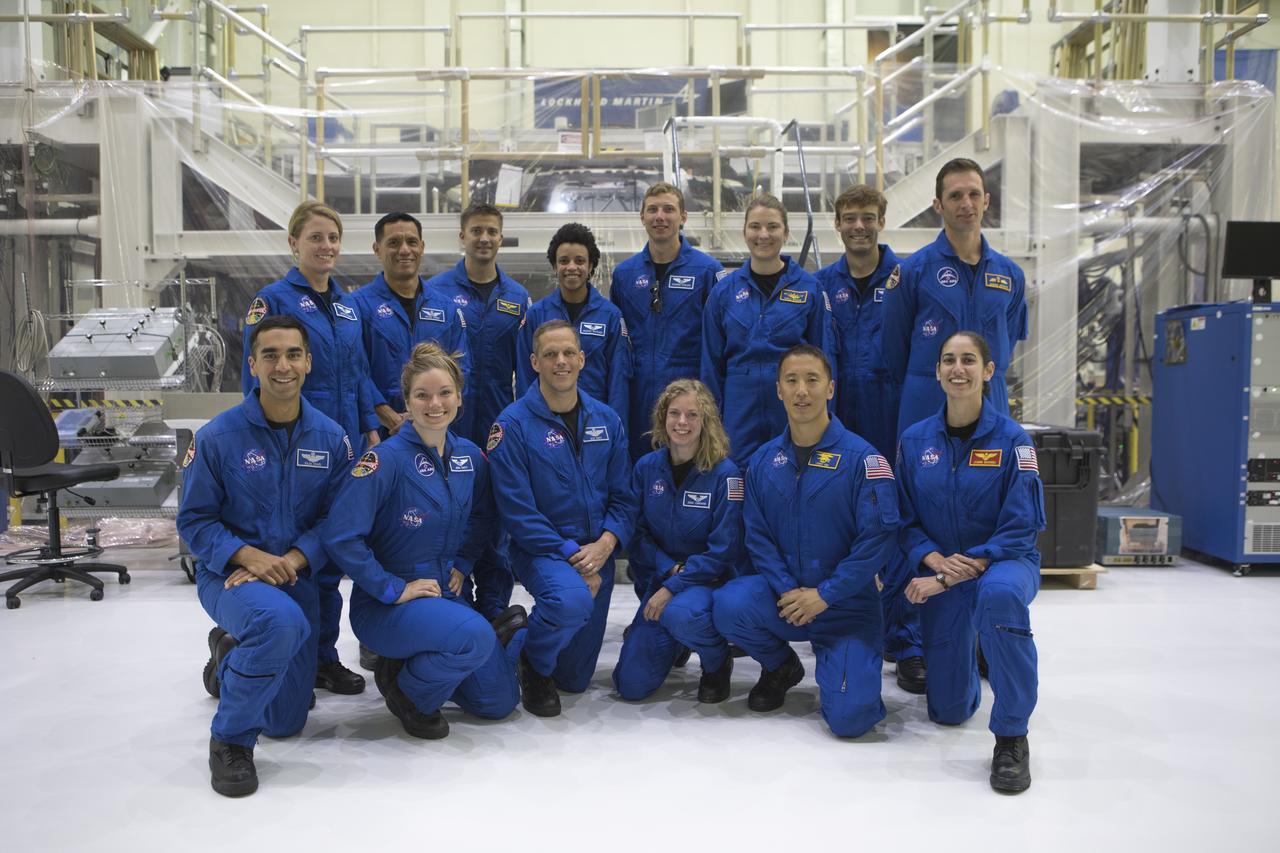
The 2017 class of astronaut candidates pause for a group photograph inside the Neil Armstrong Operations and Checkout Building high bay during a familiarization tour at NASA's Kennedy Space Center in Florida. The candidates toured center facilities, including the Vehicle Assembly Building, Launch Control Center, Launch Pad 39B, and the Space Station Processing Facility. They also toured Boeing's Commercial Crew and Cargo Facility, and United Launch Alliance's Space Launch Complex 41 at Cape Canaveral Air Force Station. The candidates will spend about two years getting to know the space station systems and learning how to spacewalk, speak Russian, control the International Space Station's robotic arm and fly T-38s, before they're eligible to be assigned to a mission.
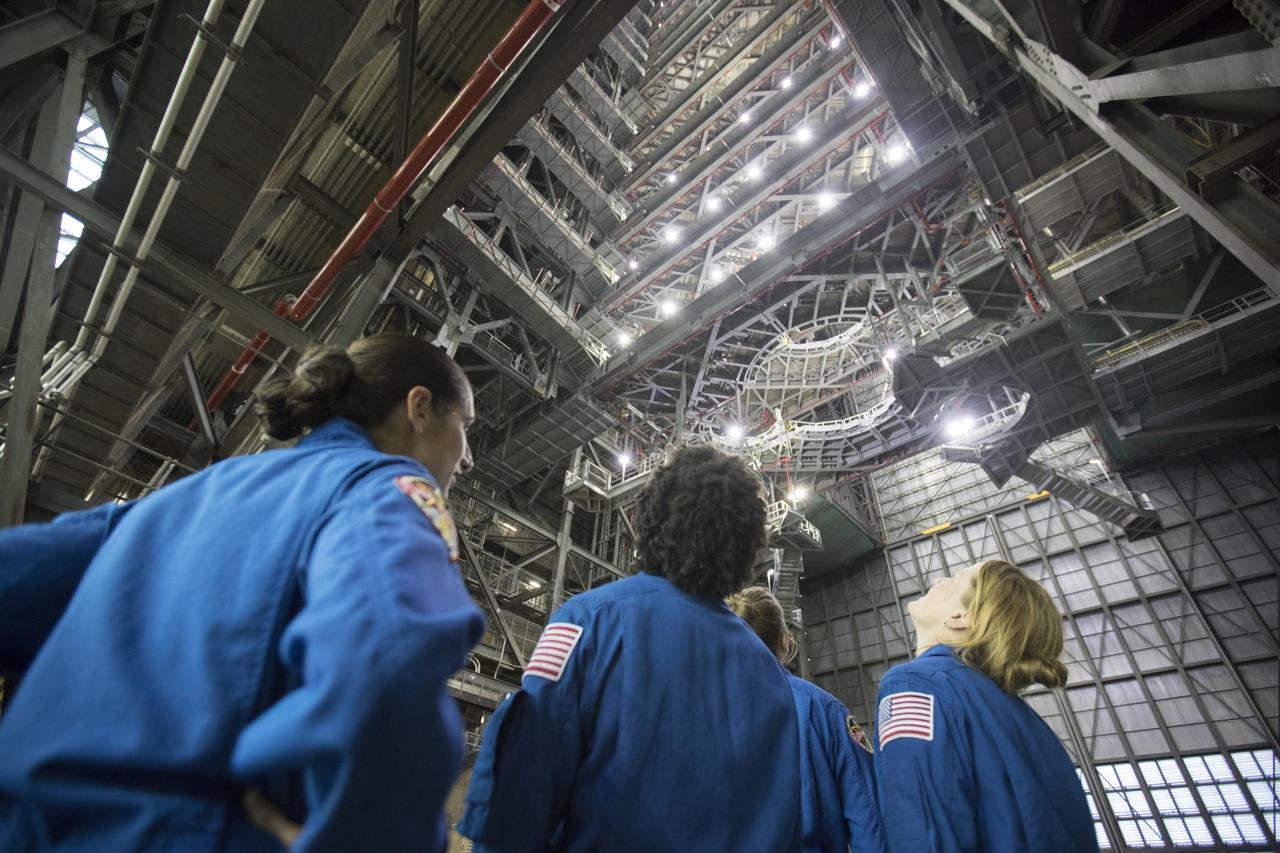
Members of the 2017 class of astronaut candidates view the new work platforms in High Bay 3 of the Vehicle Assembly Building during a familiarization tour at NASA's Kennedy Space Center in Florida. The candidates toured center facilities, including the Neil Armstrong Operations and Checkout Building high bay, Launch Control Center, Launch Pad 39B, and the Space Station Processing Facility. They also toured Boeing's Commercial Crew and Cargo Facility, United Launch Alliance's Space Launch Complex 41 at Cape Canaveral Air Force Station, and SpaceX's Launch Pad 39A at Kennedy. The candidates will spend about two years getting to know the space station systems and learning how to spacewalk, speak Russian, control the International Space Station's robotic arm and fly T-38s, before they're eligible to be assigned to a mission.
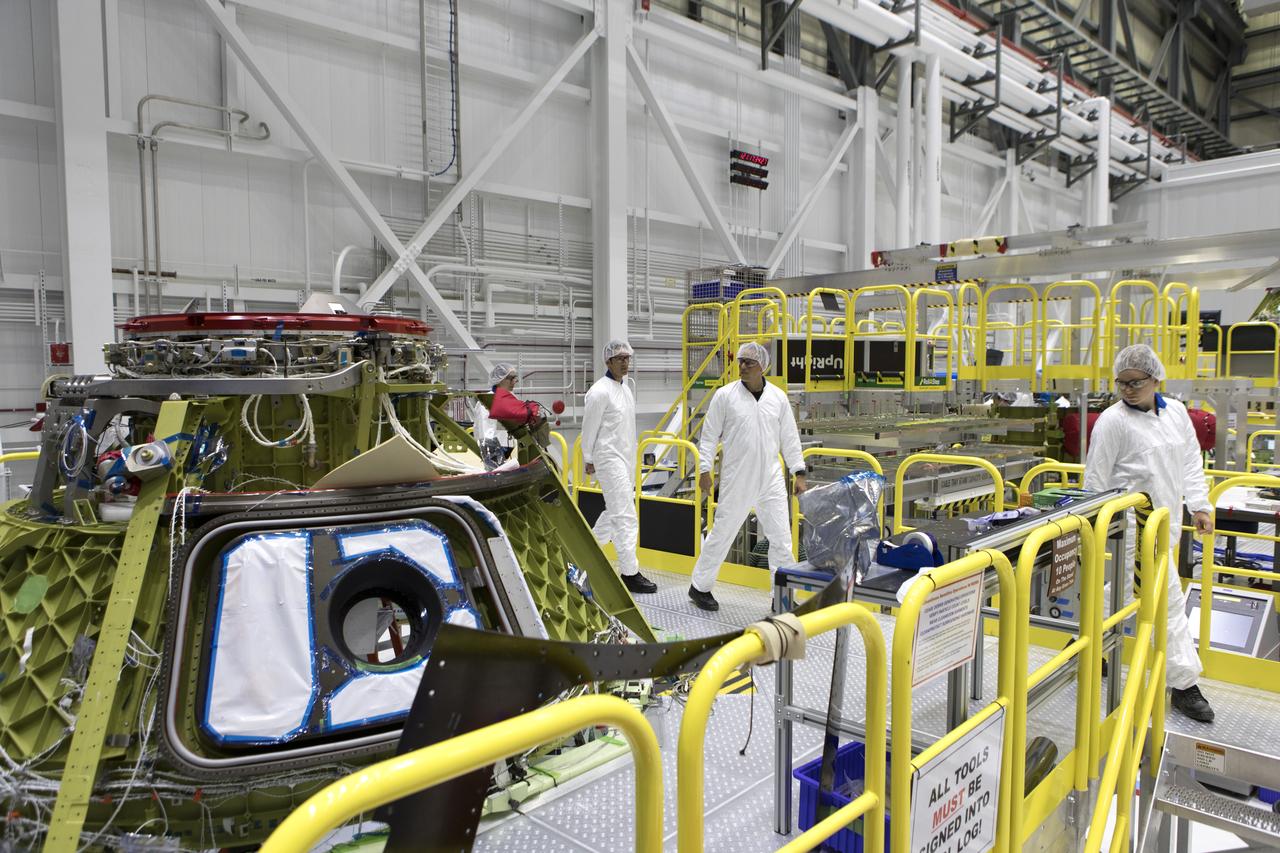
The 2017 class of astronaut candidates tour Boeing's Commercial Crew and Cargo Facility at NASA's Kennedy Space Center in Florida on May 1. They are at the center for a familiarization tour of facilities, including the Neil Armstrong Operations and Checkout Building high bay; the Launch Control Center, Launch Complex 39B, and the Vehicle Assembly Building. They also toured United Launch Alliance's Space Launch Complex 41 at Cape Canaveral Air Force Station, and SpaceX's Launch Complex 39A at Kennedy. The candidates will spend about two years getting to know the space station systems and learning how to spacewalk, speak Russian, control the International Space Station's robotic arm and fly T-38s, before they're eligible to be assigned to a mission.
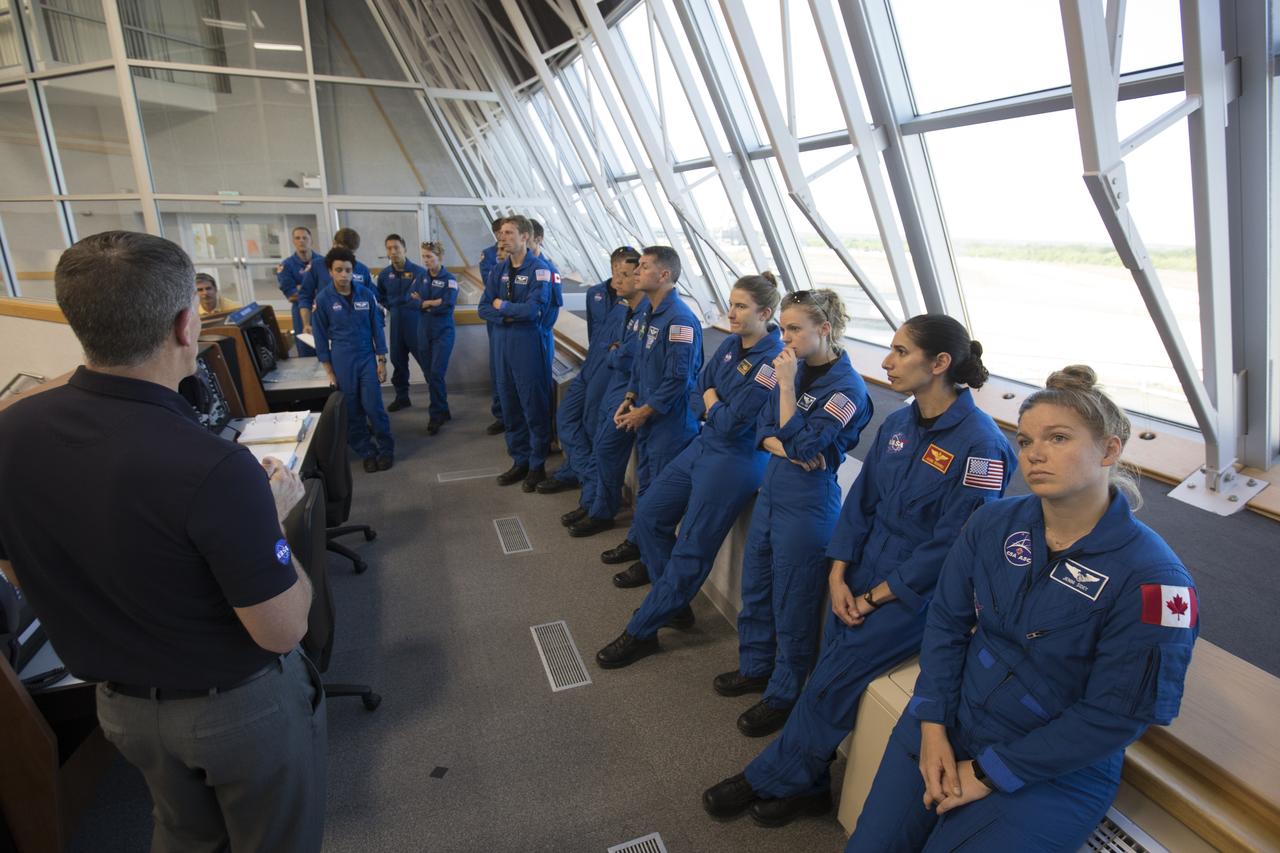
Member of the 2017 class of astronaut candidates are in Firing Room 1 inside the Launch Control Center during a familiarization tour at NASA's Kennedy Space Center in Florida. The candidates toured center facilities, including the Vehicle Assembly Building, Launch Pad 39B, the Neil Armstrong Operations and Checkout Building high bay and the Space Station Processing Facility. They also toured Boeing's Commercial Crew and Cargo Facility, United Launch Alliance's Space Launch Complex 41 at Cape Canaveral Air Force Station, and SpaceX's Launch Pad 39A at Kennedy. The candidates will spend about two years getting to know the space station systems and learning how to spacewalk, speak Russian, control the International Space Station's robotic arm and fly T-38s, before they're eligible to be assigned to a mission.
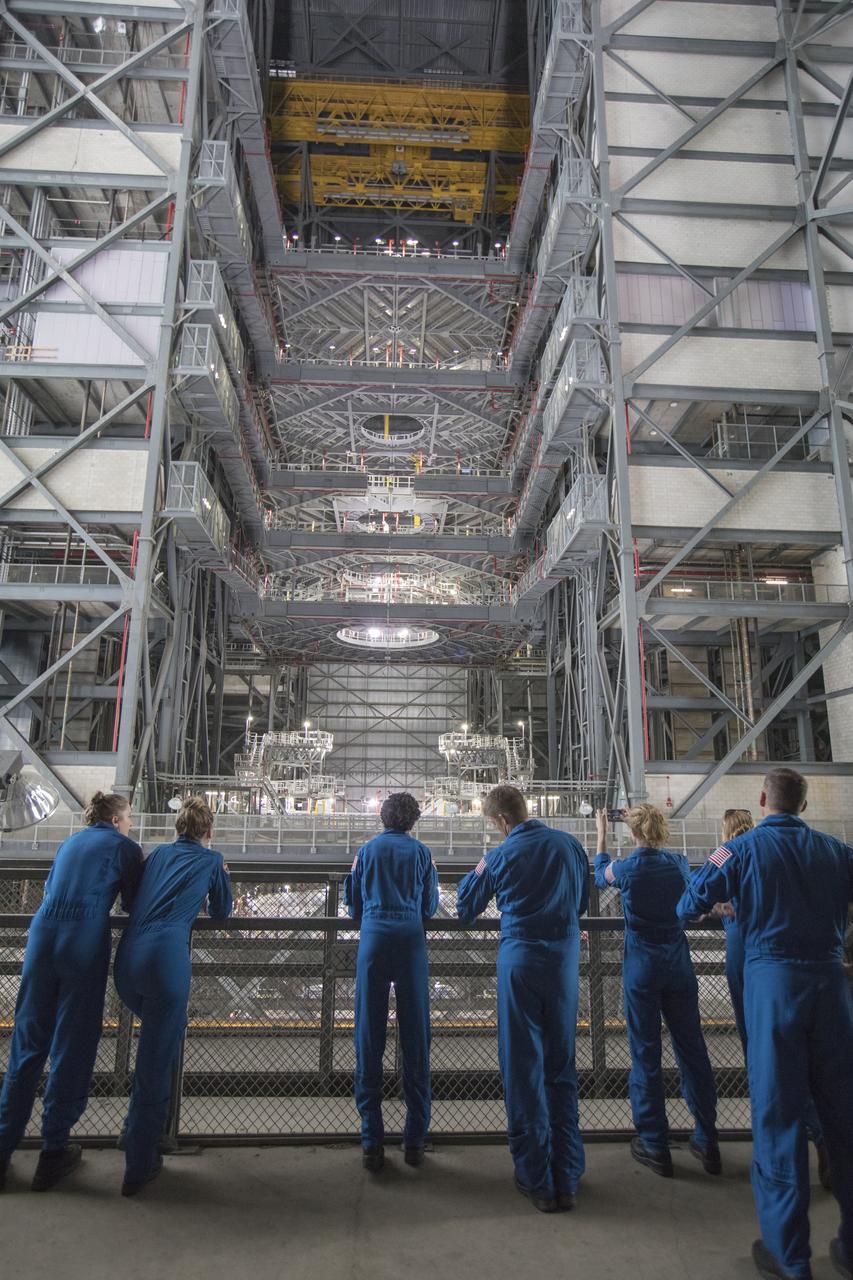
The 2017 class of astronaut candidates view the new work platforms in High Bay 3 of the Vehicle Assembly Building during a familiarization tour at NASA's Kennedy Space Center in Florida. The candidates toured center facilities, including the Neil Armstrong Operations and Checkout Building high bay; Launch Control Center, Launch Pad 39B, and the Space Station Processing Facility. They also toured Boeing's Commercial Crew and Cargo Facility, United Launch Alliance's Space Launch Complex 41 at Cape Canaveral Air Force Station, and Space Launch Complex 39A at Kennedy. The candidates will spend about two years getting to know the space station systems and learning how to spacewalk, speak Russian, control the International Space Station's robotic arm and fly T-38s, before they're eligible to be assigned to a mission.
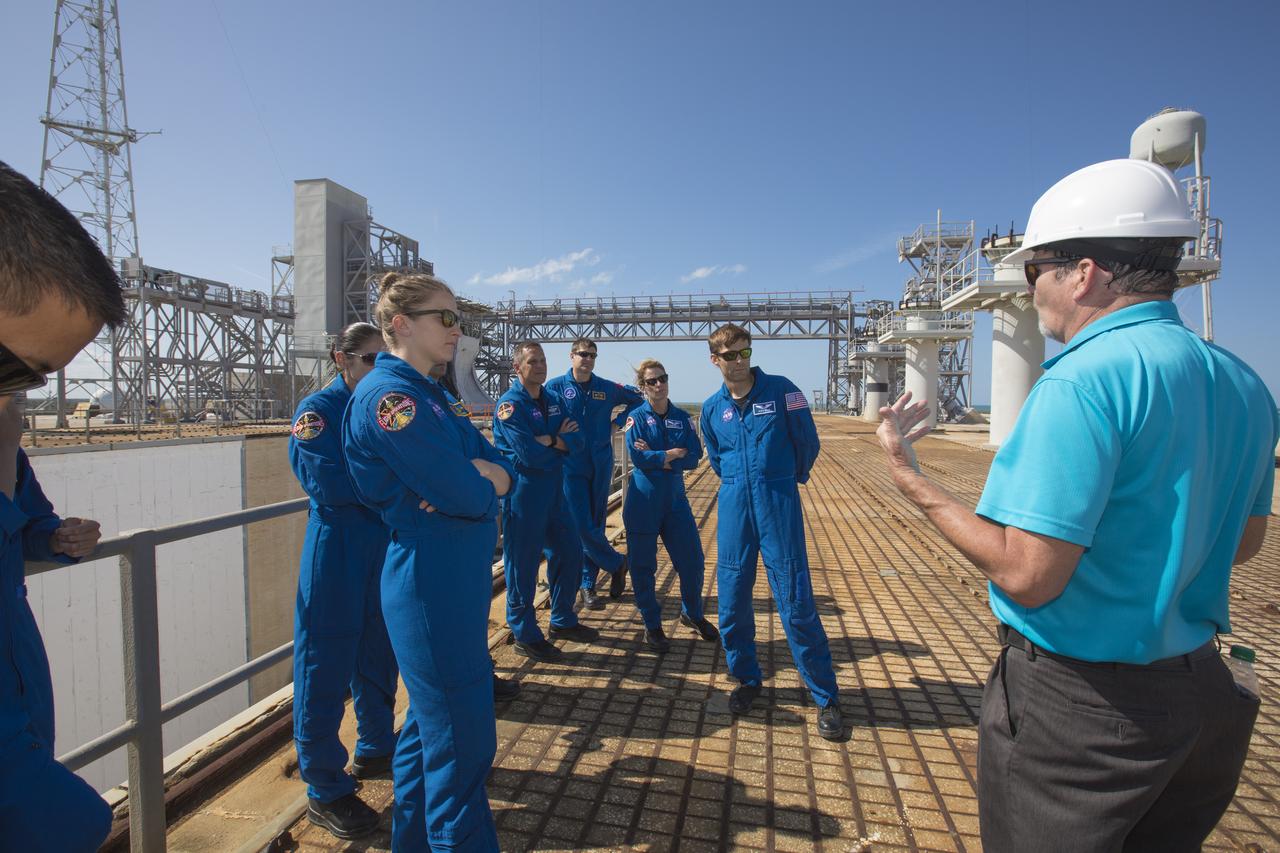
Members of the 2017 class of astronaut candidates are on the surface of Launch Pad 39B during a familiarization tour of facilities at NASA's Kennedy Space Center in Florida. The candidates toured center facilities, including the Vehicle Assembly Building, Launch Control Center, Neil Armstrong Operations and Checkout Building high bay and the Space Station Processing Facility. They also toured Boeing's Commercial Crew and Cargo Facility, United Launch Alliance's Space Launch Complex 41 at Cape Canaveral Air Force Station, and SpaceX's Launch Pad 39A at Kennedy. The candidates will spend about two years getting to know the space station systems and learning how to spacewalk, speak Russian, control the International Space Station's robotic arm and fly T-38s, before they're eligible to be assigned to a mission.