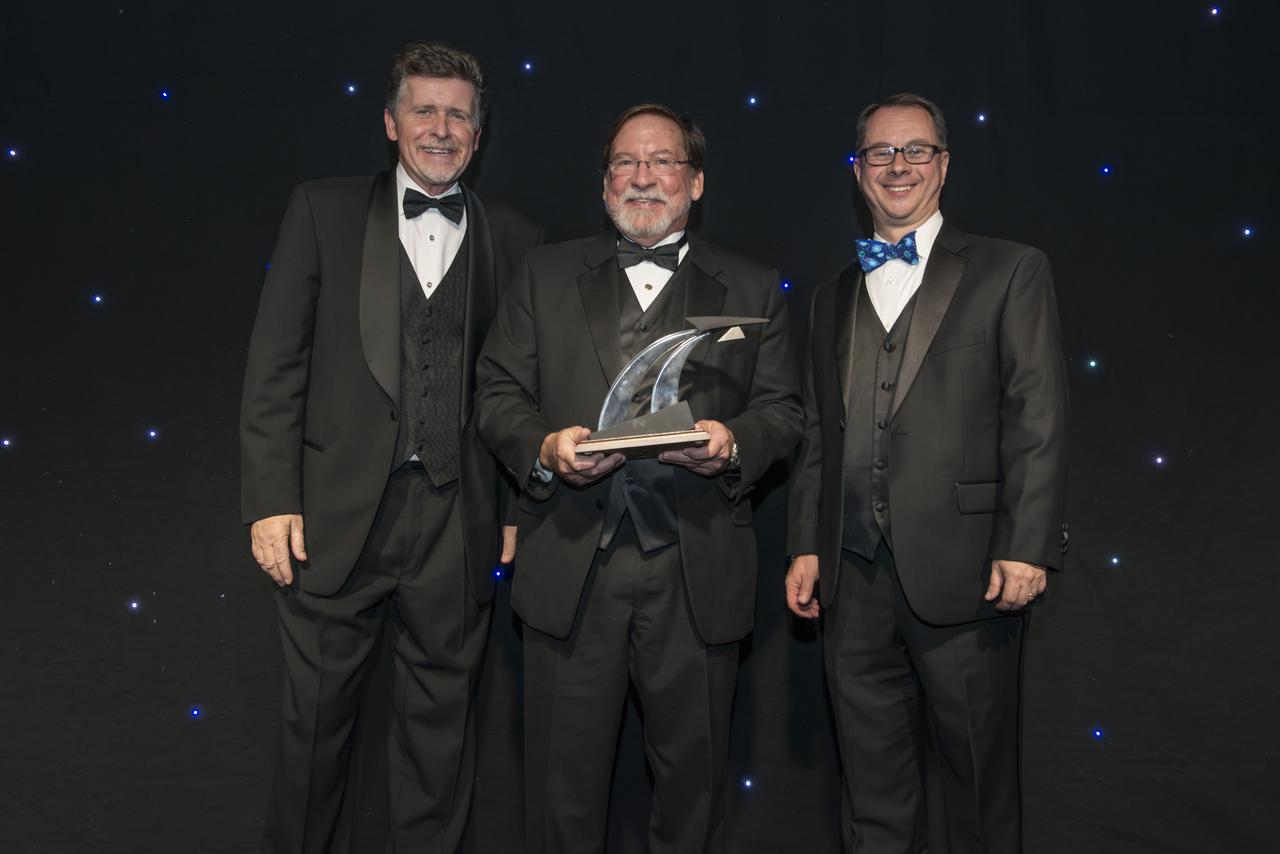
The annual Dr. Wernher Von Braun Memorial Dinner was held at the U.S. Space and Rocket Center's Davidson Center on October 26, 2017 with Keynote speaker General John Hyten, Commander of U.S. Strategic Command. Emcee was Mark Larson of Mark Larson Media Services, Inc. Dr. Wernher Von Braun Memorial Scholarships were presented to 8 college students by the National Space Club. Educator of the Year was awarded to Tammy Thorpe; Community Service award was presented to Huntsville, Al. Mayor Tommy Battle. The Communications Award was presented to retired astronaut Dr. Mike Massimino. The Distinguished Science Award was presented to Dr. Martin Weisskopf. The Astronautics Engineer Award was presented to Douglas R. Cooke. The Dr. Wernher Von Braun Space Flight Trophy was presented to Robert Lightfoot.
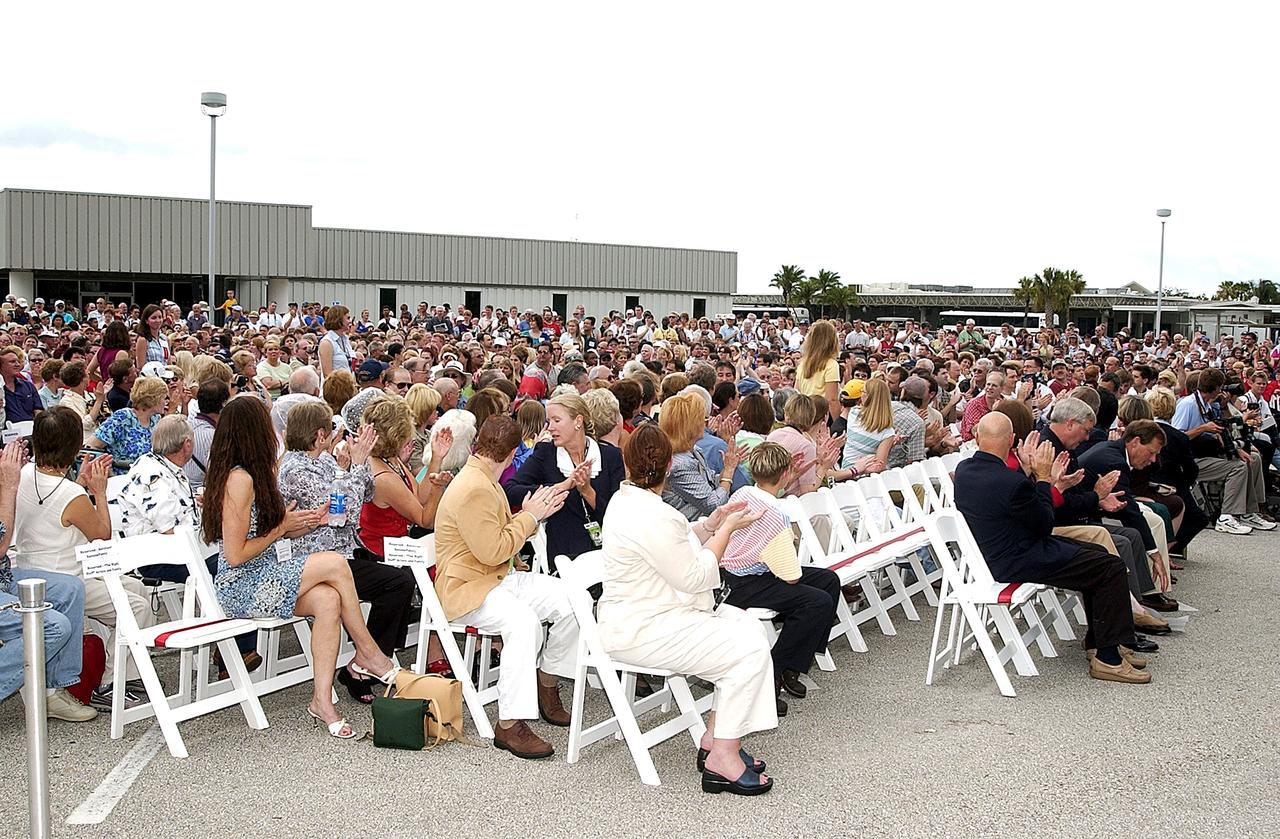
KENNEDY SPACE CENTER, FLA. - At the KSC Visitor Complex, past and present recipients of college scholarships awarded by the Astronaut Scholarship Foundation stand up to be recognized by the audience. The occasion was the induction ceremony of four Space Shuttle astronauts into the U.S. Astronaut Hall of Fame, including Daniel Brandenstein, Robert "Hoot" Gibson, Story Musgrave, and Sally K. Ride. The Foundation awards 17 scholarships annually, each worth $8,500, to students interested in studying science and engineering. Since 1984, more than $1.7 million in scholarship funds have been awarded.
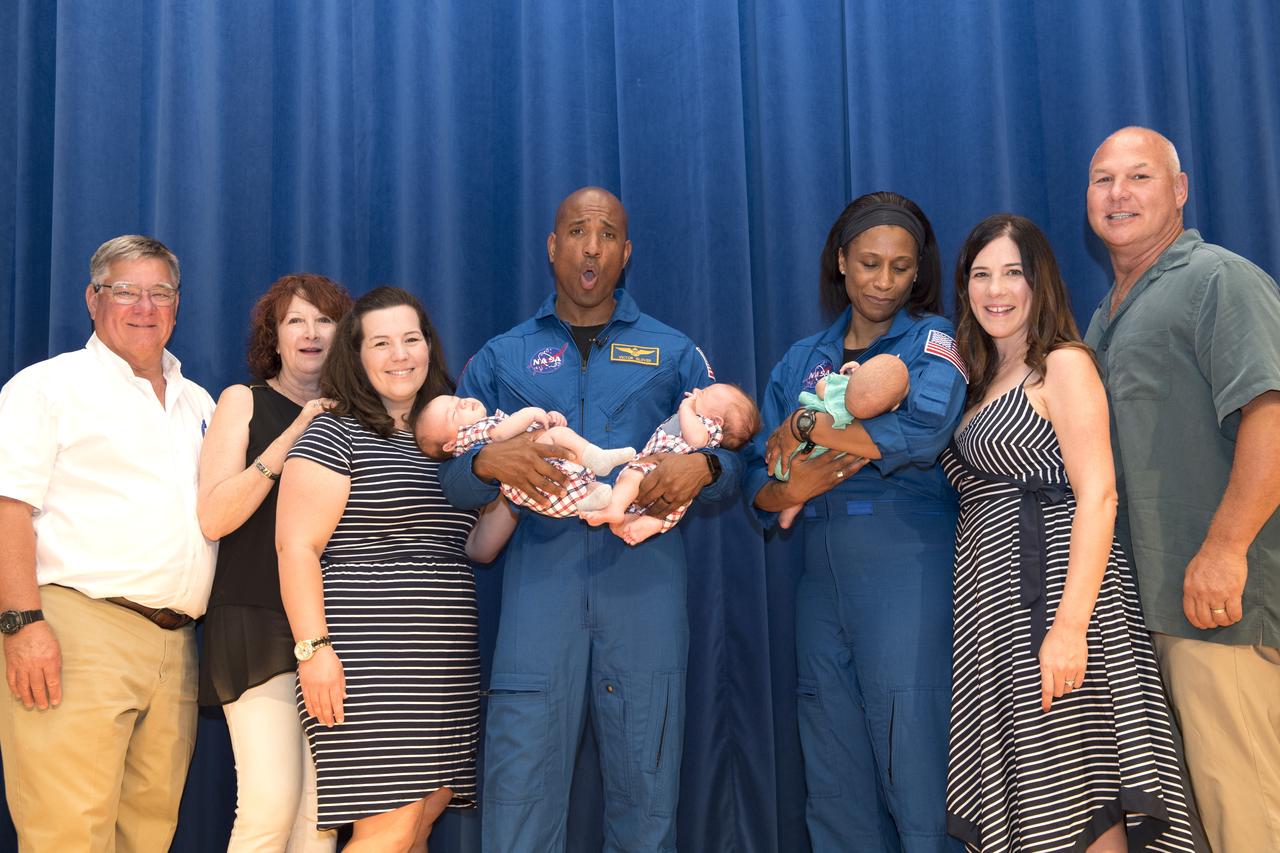
Astronauts Victor Glover and Jeanette Epps presented Silver Snoopy Awards at Stennis Space Center on June 27, including to NASA engineer Katie Carr Kopeso, who accepted the award with her ever-expanding family
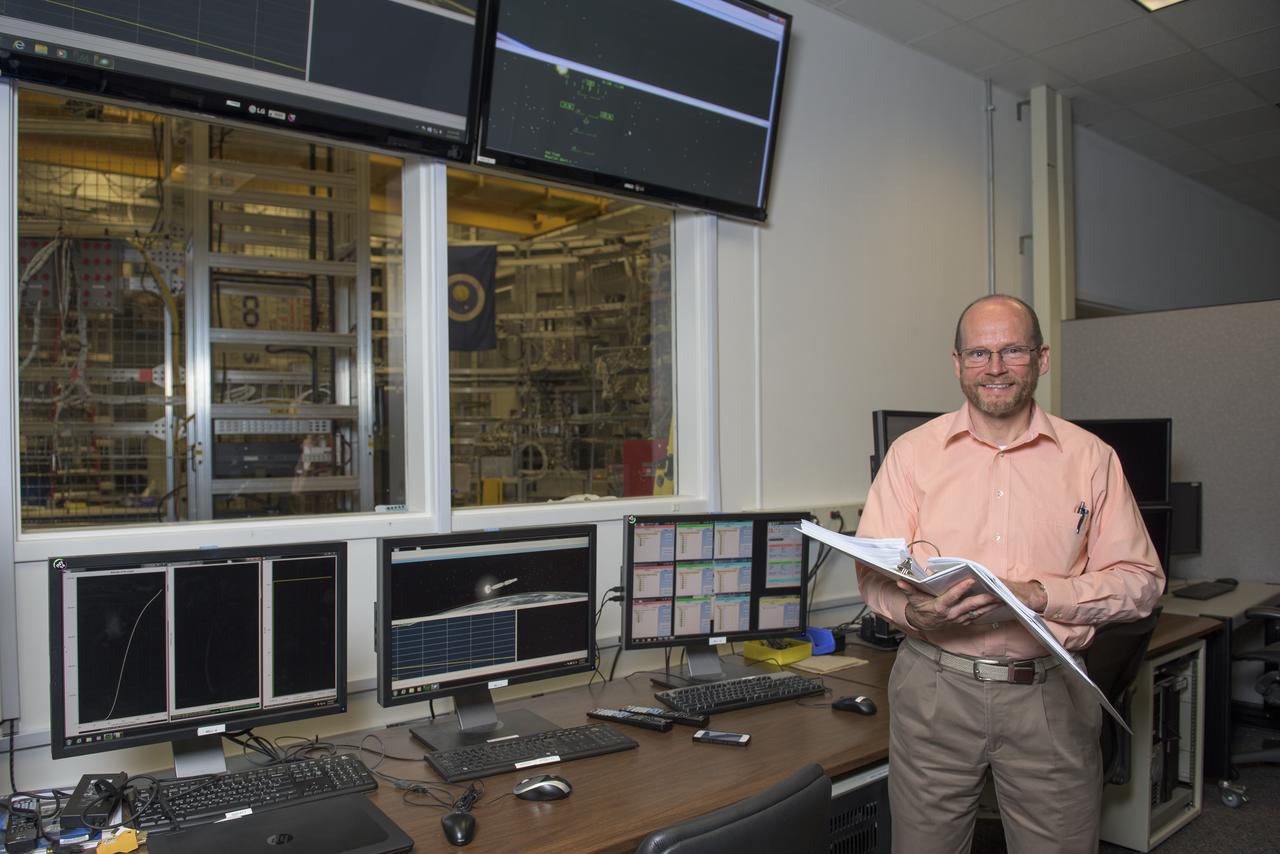
John Hanson, Alternate Lead Systems Engineer in the Spacecraft and Vehicle Systems department of the Engineering Directorate at MSFC has been honored by the American Institute of Aeronautics and Astronautics (AIAA) with the 2016 De Florez Award for flight simulation
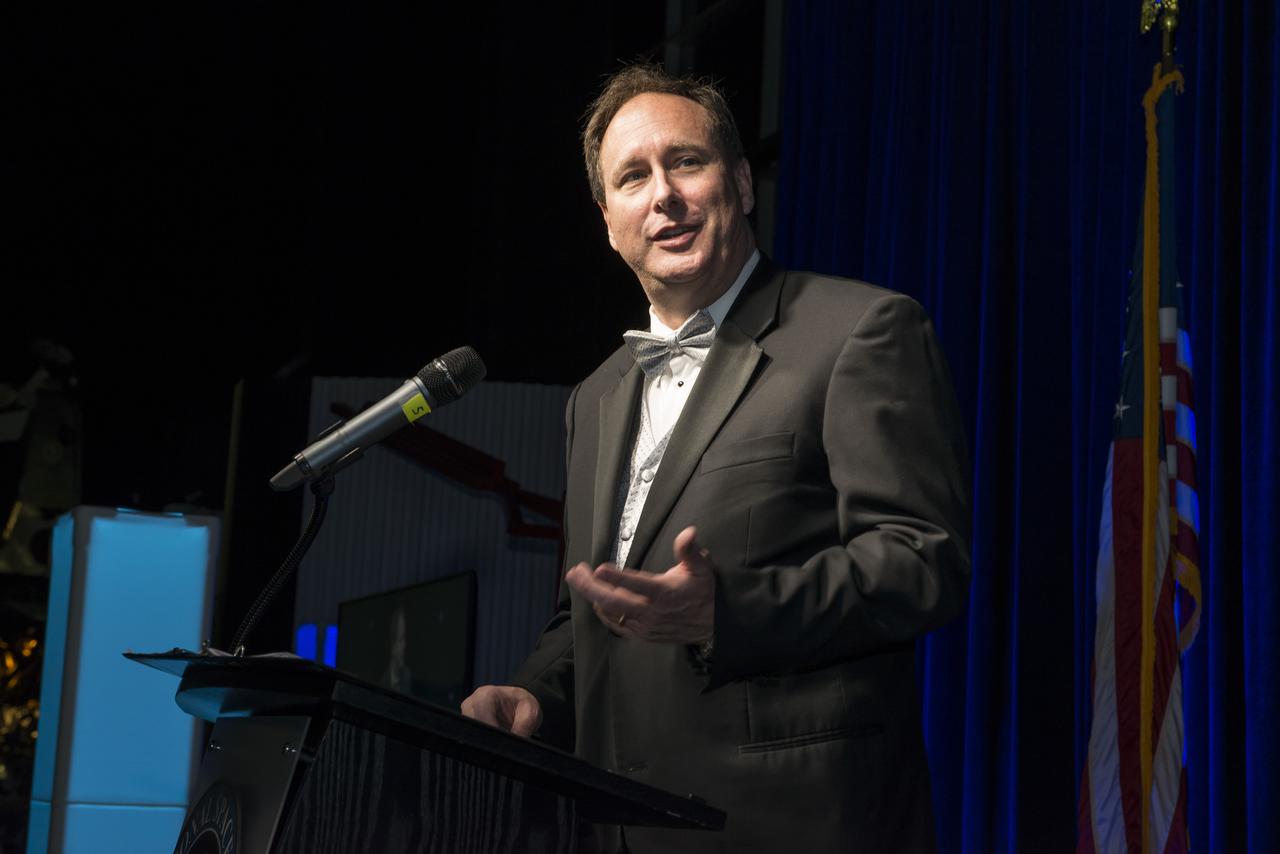
The annual Dr. Wernher Von Braun Memorial Dinner was held at the U.S. Space and Rocket Center's Davidson Center on October 26, 2017 with Keynote speaker General John Hyten, Commander of U.S. Strategic Command. Emcee was Mark Larson of Mark Larson Media Services, Inc. Dr. Wernher Von Braun Memorial Scholarships were presented to 8 college students by the National Space Club. Educator of the Year was awarded to Tammy Thorpe; Community Service award was presented to Huntsville, Al. Mayor Tommy Battle. The Communications Award was presented to retired astronaut Dr. Mike Massimino. The Distinguished Science Award was presented to Dr. Martin Weisskopf. The Astronautics Engineer Award was presented to Douglas R. Cooke. The Dr. Wernher Von Braun Space Flight Trophy was presented to Robert Lightfoot.
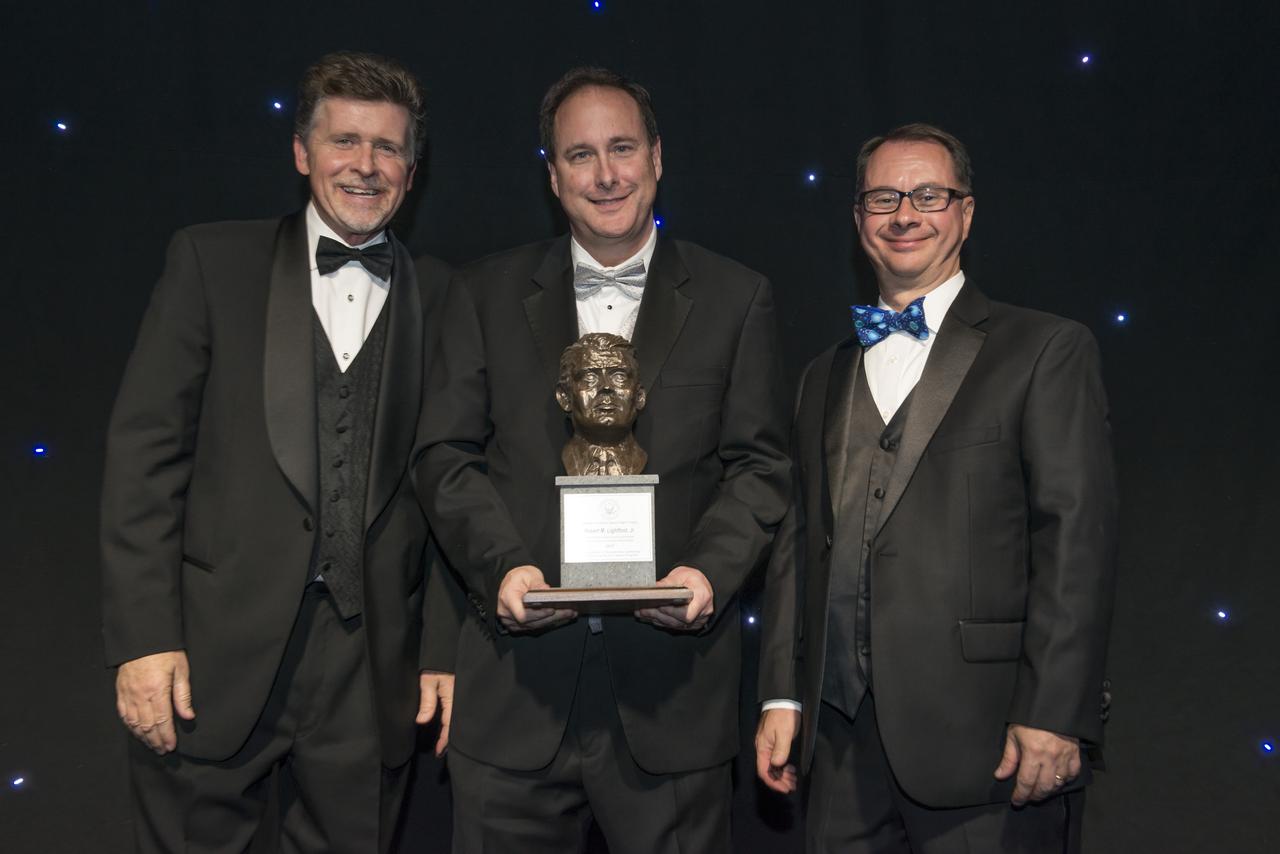
The annual Dr. Wernher Von Braun Memorial Dinner was held at the U.S. Space and Rocket Center's Davidson Center on October 26, 2017 with Keynote speaker General John Hyten, Commander of U.S. Strategic Command. Emcee was Mark Larson of Mark Larson Media Services, Inc. Dr. Wernher Von Braun Memorial Scholarships were presented to 8 college students by the National Space Club. Educator of the Year was awarded to Tammy Thorpe; Community Service award was presented to Huntsville, Al. Mayor Tommy Battle. The Communications Award was presented to retired astronaut Dr. Mike Massimino. The Distinguished Science Award was presented to Dr. Martin Weisskopf. The Astronautics Engineer Award was presented to Douglas R. Cooke. The Dr. Wernher Von Braun Space Flight Trophy was presented to Robert Lightfoot.
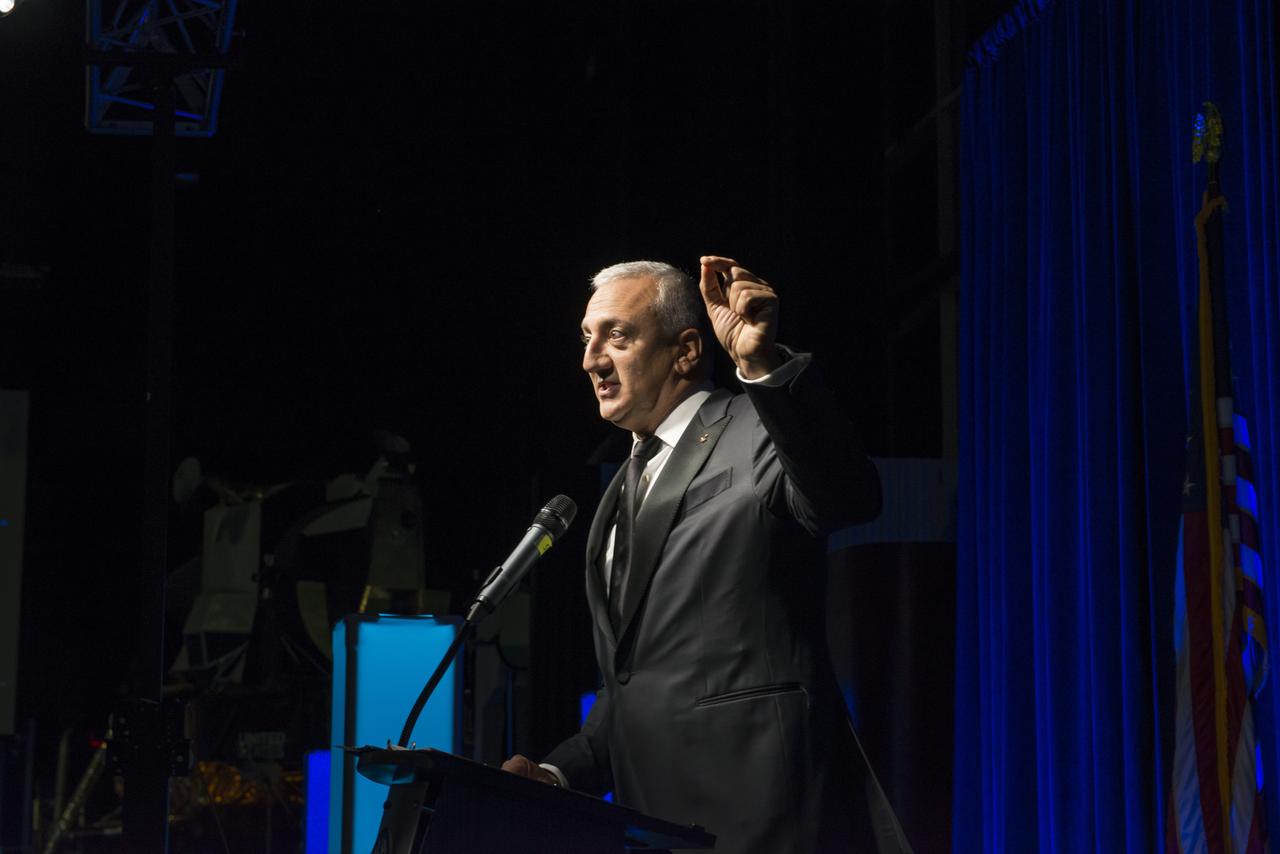
The annual Dr. Wernher Von Braun Memorial Dinner was held at the U.S. Space and Rocket Center's Davidson Center on October 26, 2017 with Keynote speaker General John Hyten, Commander of U.S. Strategic Command. Emcee was Mark Larson of Mark Larson Media Services, Inc. Dr. Wernher Von Braun Memorial Scholarships were presented to 8 college students by the National Space Club. Educator of the Year was awarded to Tammy Thorpe; Community Service award was presented to Huntsville, Al. Mayor Tommy Battle. The Communications Award was presented to retired astronaut Dr. Mike Massimino. The Distinguished Science Award was presented to Dr. Martin Weisskopf. The Astronautics Engineer Award was presented to Douglas R. Cooke. The Dr. Wernher Von Braun Space Flight Trophy was presented to Robert Lightfoot.
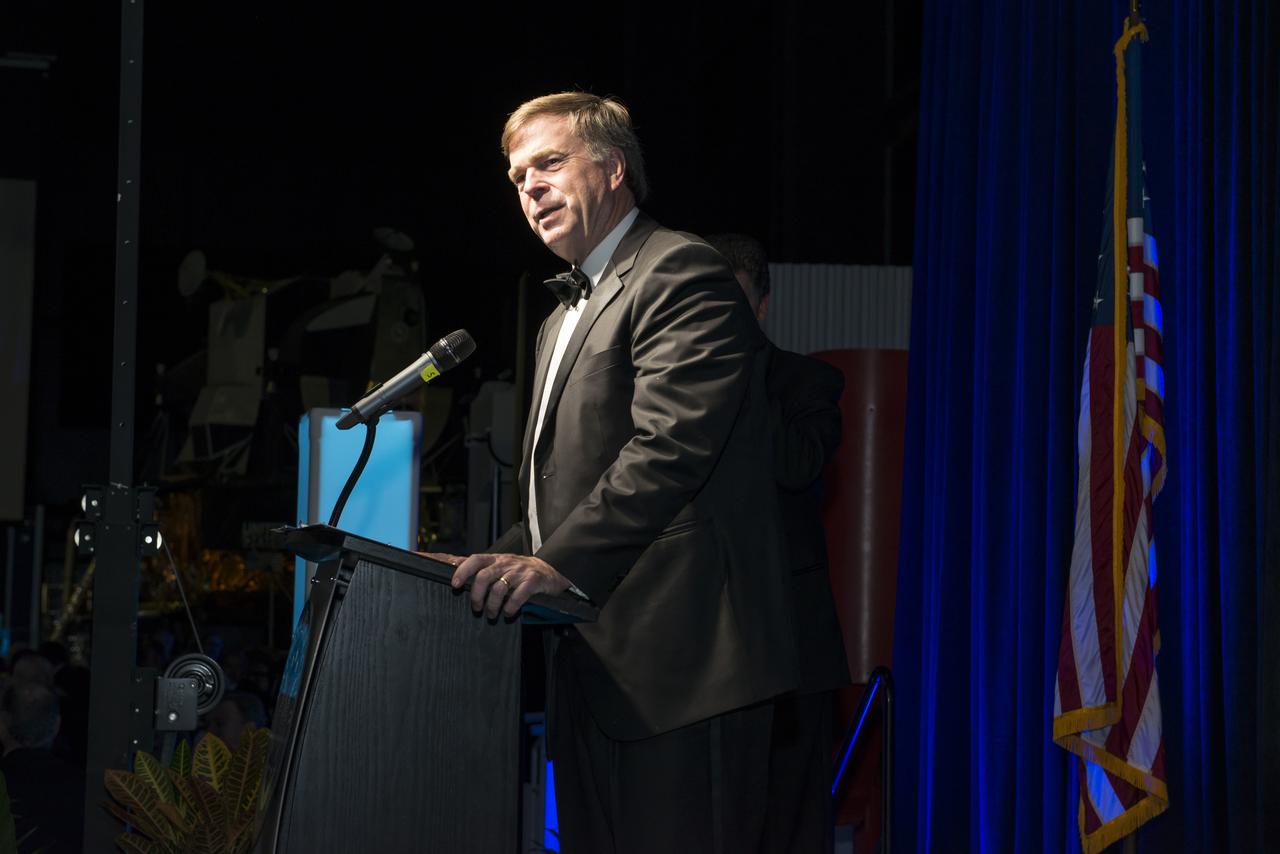
The annual Dr. Wernher Von Braun Memorial Dinner was held at the U.S. Space and Rocket Center's Davidson Center on October 26, 2017 with Keynote speaker General John Hyten, Commander of U.S. Strategic Command. Emcee was Mark Larson of Mark Larson Media Services, Inc. Dr. Wernher Von Braun Memorial Scholarships were presented to 8 college students by the National Space Club. Educator of the Year was awarded to Tammy Thorpe; Community Service award was presented to Huntsville, Al. Mayor Tommy Battle. The Communications Award was presented to retired astronaut Dr. Mike Massimino. The Distinguished Science Award was presented to Dr. Martin Weisskopf. The Astronautics Engineer Award was presented to Douglas R. Cooke. The Dr. Wernher Von Braun Space Flight Trophy was presented to Robert Lightfoot.
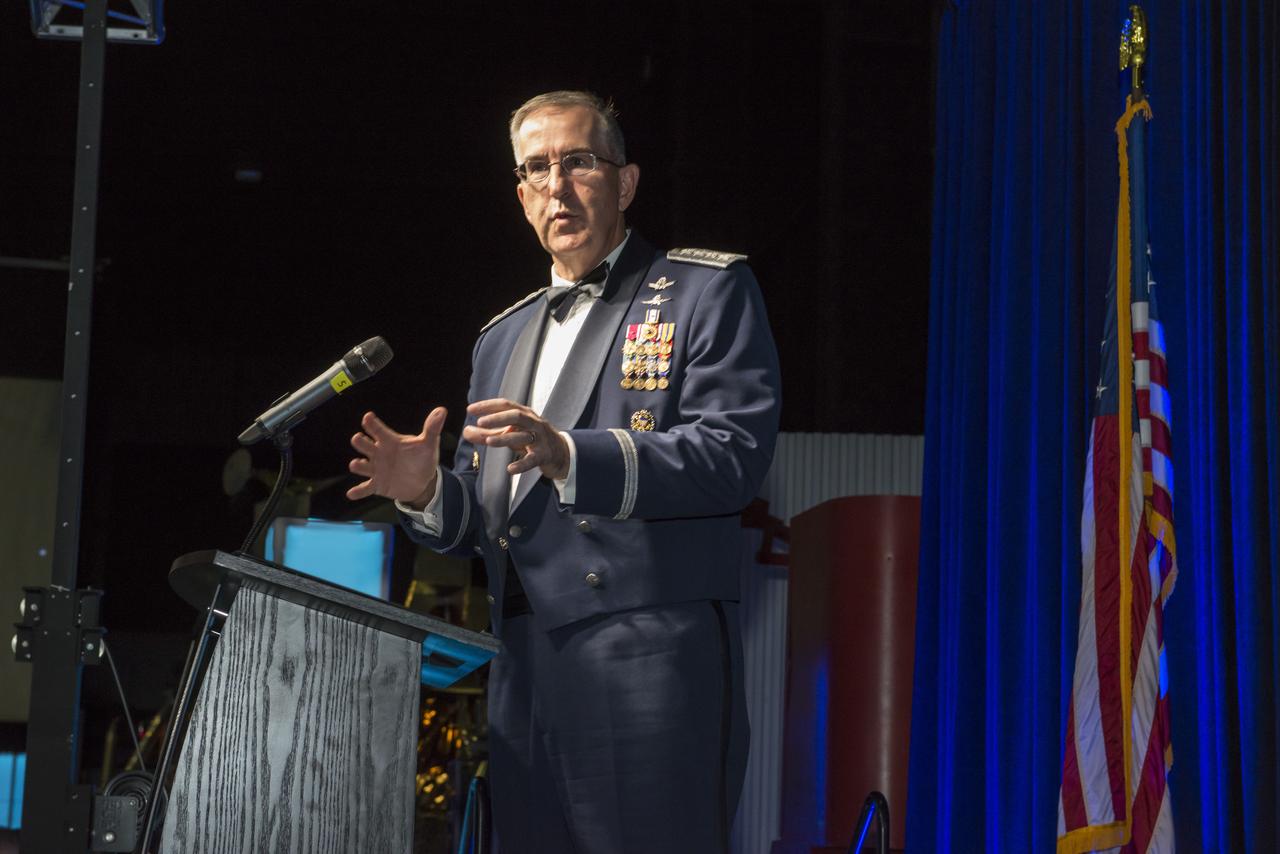
The annual Dr. Wernher Von Braun Memorial Dinner was held at the U.S. Space and Rocket Center's Davidson Center on October 26, 2017 with Keynote speaker General John Hyten, Commander of U.S. Strategic Command. Emcee was Mark Larson of Mark Larson Media Services, Inc. Dr. Wernher Von Braun Memorial Scholarships were presented to 8 college students by the National Space Club. Educator of the Year was awarded to Tammy Thorpe; Community Service award was presented to Huntsville, Al. Mayor Tommy Battle. The Communications Award was presented to retired astronaut Dr. Mike Massimino. The Distinguished Science Award was presented to Dr. Martin Weisskopf. The Astronautics Engineer Award was presented to Douglas R. Cooke. The Dr. Wernher Von Braun Space Flight Trophy was presented to Robert Lightfoot.
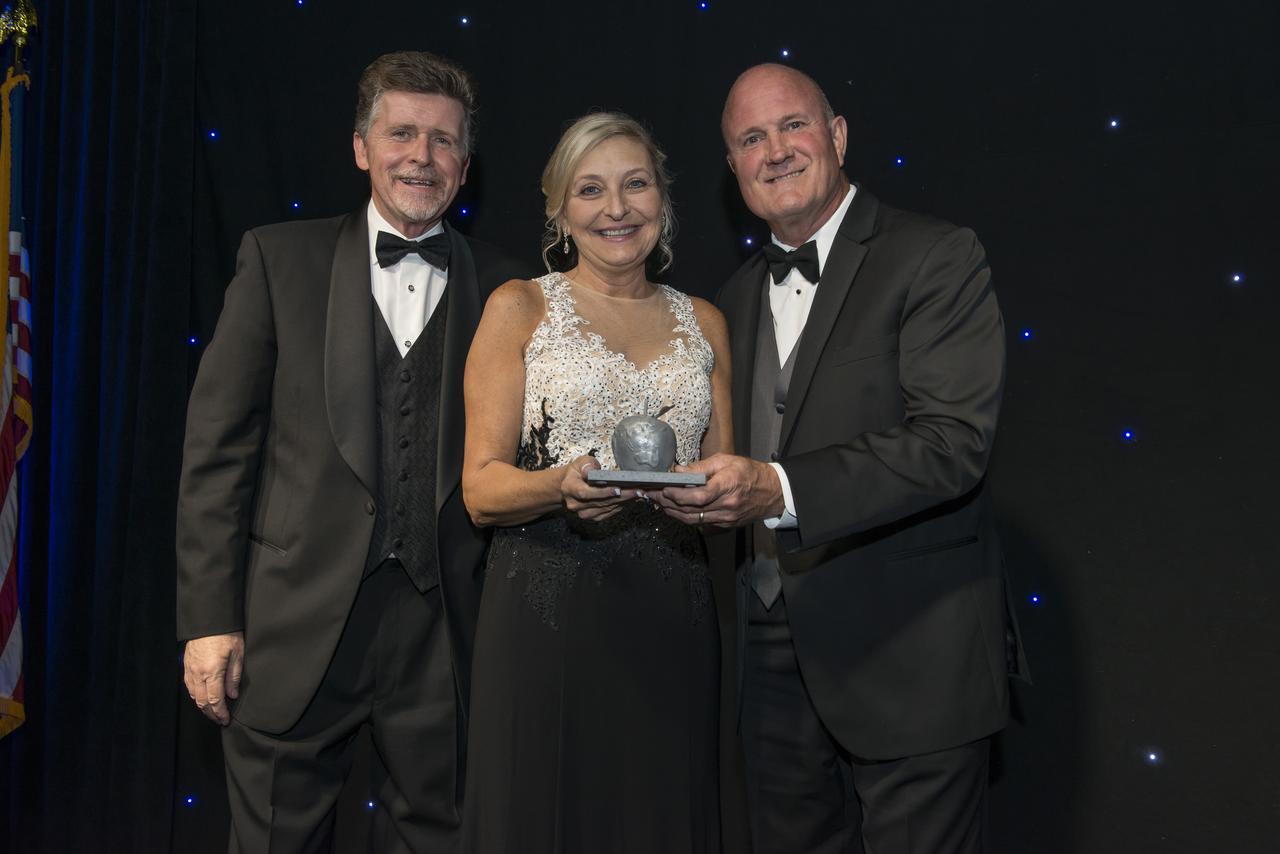
The annual Dr. Wernher Von Braun Memorial Dinner was held at the U.S. Space and Rocket Center's Davidson Center on October 26, 2017 with Keynote speaker General John Hyten, Commander of U.S. Strategic Command. Emcee was Mark Larson of Mark Larson Media Services, Inc. Dr. Wernher Von Braun Memorial Scholarships were presented to 8 college students by the National Space Club. Educator of the Year was awarded to Tammy Thorpe; Community Service award was presented to Huntsville, Al. Mayor Tommy Battle. The Communications Award was presented to retired astronaut Dr. Mike Massimino. The Distinguished Science Award was presented to Dr. Martin Weisskopf. The Astronautics Engineer Award was presented to Douglas R. Cooke. The Dr. Wernher Von Braun Space Flight Trophy was presented to Robert Lightfoot.
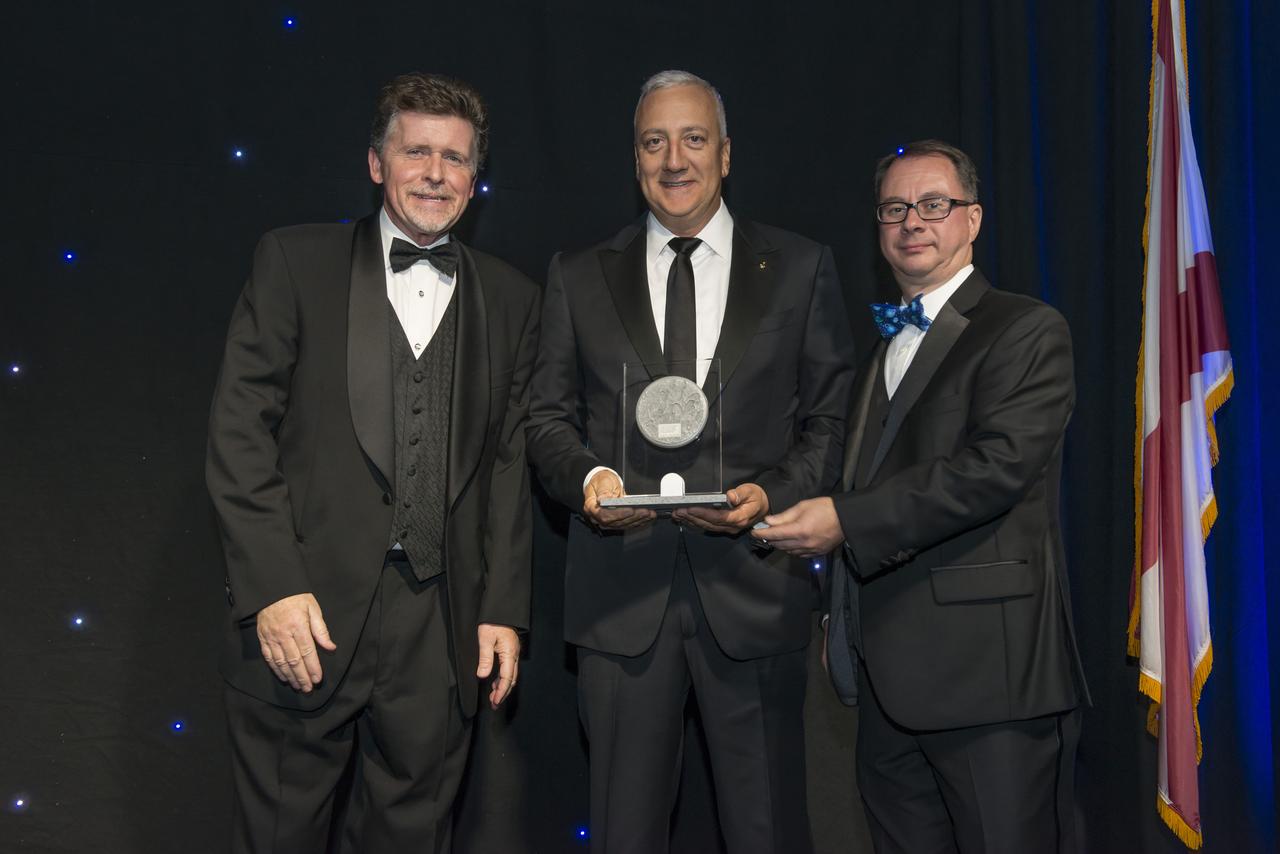
The annual Dr. Wernher Von Braun Memorial Dinner was held at the U.S. Space and Rocket Center's Davidson Center on October 26, 2017 with Keynote speaker General John Hyten, Commander of U.S. Strategic Command. Emcee was Mark Larson of Mark Larson Media Services, Inc. Dr. Wernher Von Braun Memorial Scholarships were presented to 8 college students by the National Space Club. Educator of the Year was awarded to Tammy Thorpe; Community Service award was presented to Huntsville, Al. Mayor Tommy Battle. The Communications Award was presented to retired astronaut Dr. Mike Massimino. The Distinguished Science Award was presented to Dr. Martin Weisskopf. The Astronautics Engineer Award was presented to Douglas R. Cooke. The Dr. Wernher Von Braun Space Flight Trophy was presented to Robert Lightfoot.
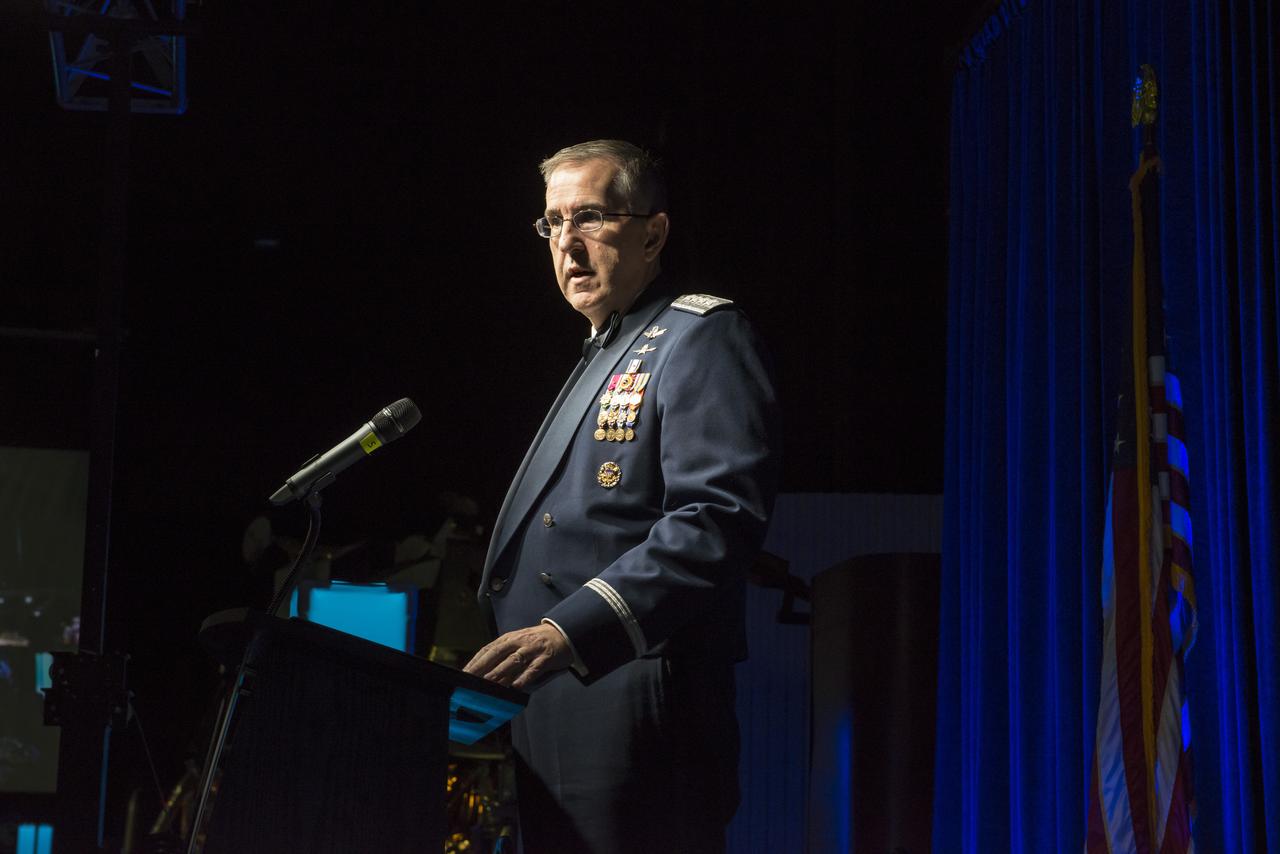
The annual Dr. Wernher Von Braun Memorial Dinner was held at the U.S. Space and Rocket Center's Davidson Center on October 26, 2017 with Keynote speaker General John Hyten, Commander of U.S. Strategic Command. Emcee was Mark Larson of Mark Larson Media Services, Inc. Dr. Wernher Von Braun Memorial Scholarships were presented to 8 college students by the National Space Club. Educator of the Year was awarded to Tammy Thorpe; Community Service award was presented to Huntsville, Al. Mayor Tommy Battle. The Communications Award was presented to retired astronaut Dr. Mike Massimino. The Distinguished Science Award was presented to Dr. Martin Weisskopf. The Astronautics Engineer Award was presented to Douglas R. Cooke. The Dr. Wernher Von Braun Space Flight Trophy was presented to Robert Lightfoot.
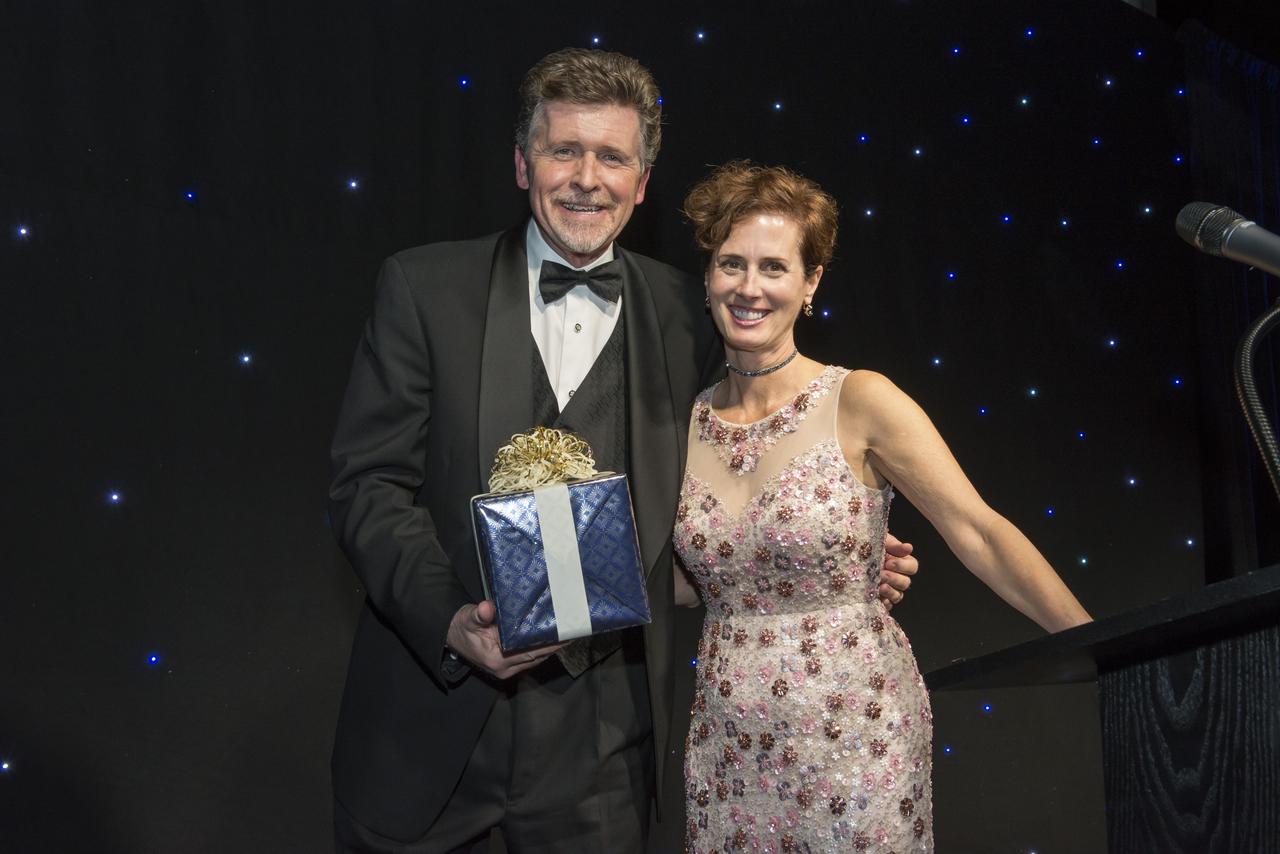
The annual Dr. Wernher Von Braun Memorial Dinner was held at the U.S. Space and Rocket Center's Davidson Center on October 26, 2017 with Keynote speaker General John Hyten, Commander of U.S. Strategic Command. Emcee was Mark Larson of Mark Larson Media Services, Inc. Dr. Wernher Von Braun Memorial Scholarships were presented to 8 college students by the National Space Club. Educator of the Year was awarded to Tammy Thorpe; Community Service award was presented to Huntsville, Al. Mayor Tommy Battle. The Communications Award was presented to retired astronaut Dr. Mike Massimino. The Distinguished Science Award was presented to Dr. Martin Weisskopf. The Astronautics Engineer Award was presented to Douglas R. Cooke. The Dr. Wernher Von Braun Space Flight Trophy was presented to Robert Lightfoot.

The annual Dr. Wernher Von Braun Memorial Dinner was held at the U.S. Space and Rocket Center's Davidson Center on October 26, 2017 with Keynote speaker General John Hyten, Commander of U.S. Strategic Command. Emcee was Mark Larson of Mark Larson Media Services, Inc. Dr. Wernher Von Braun Memorial Scholarships were presented to 8 college students by the National Space Club. Educator of the Year was awarded to Tammy Thorpe; Community Service award was presented to Huntsville, Al. Mayor Tommy Battle. The Communications Award was presented to retired astronaut Dr. Mike Massimino. The Distinguished Science Award was presented to Dr. Martin Weisskopf. The Astronautics Engineer Award was presented to Douglas R. Cooke. The Dr. Wernher Von Braun Space Flight Trophy was presented to Robert Lightfoot.
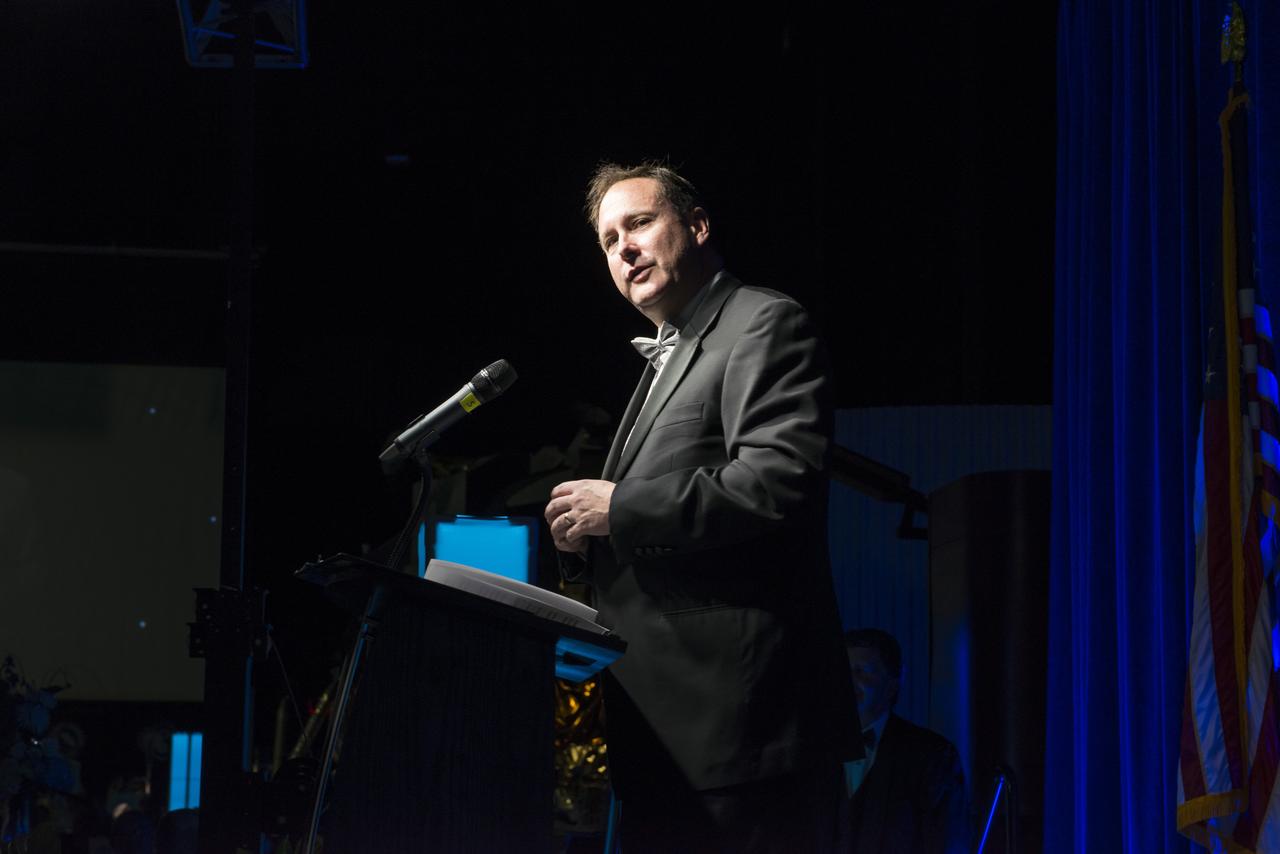
The annual Dr. Wernher Von Braun Memorial Dinner was held at the U.S. Space and Rocket Center's Davidson Center on October 26, 2017 with Keynote speaker General John Hyten, Commander of U.S. Strategic Command. Emcee was Mark Larson of Mark Larson Media Services, Inc. Dr. Wernher Von Braun Memorial Scholarships were presented to 8 college students by the National Space Club. Educator of the Year was awarded to Tammy Thorpe; Community Service award was presented to Huntsville, Al. Mayor Tommy Battle. The Communications Award was presented to retired astronaut Dr. Mike Massimino. The Distinguished Science Award was presented to Dr. Martin Weisskopf. The Astronautics Engineer Award was presented to Douglas R. Cooke. The Dr. Wernher Von Braun Space Flight Trophy was presented to Robert Lightfoot.
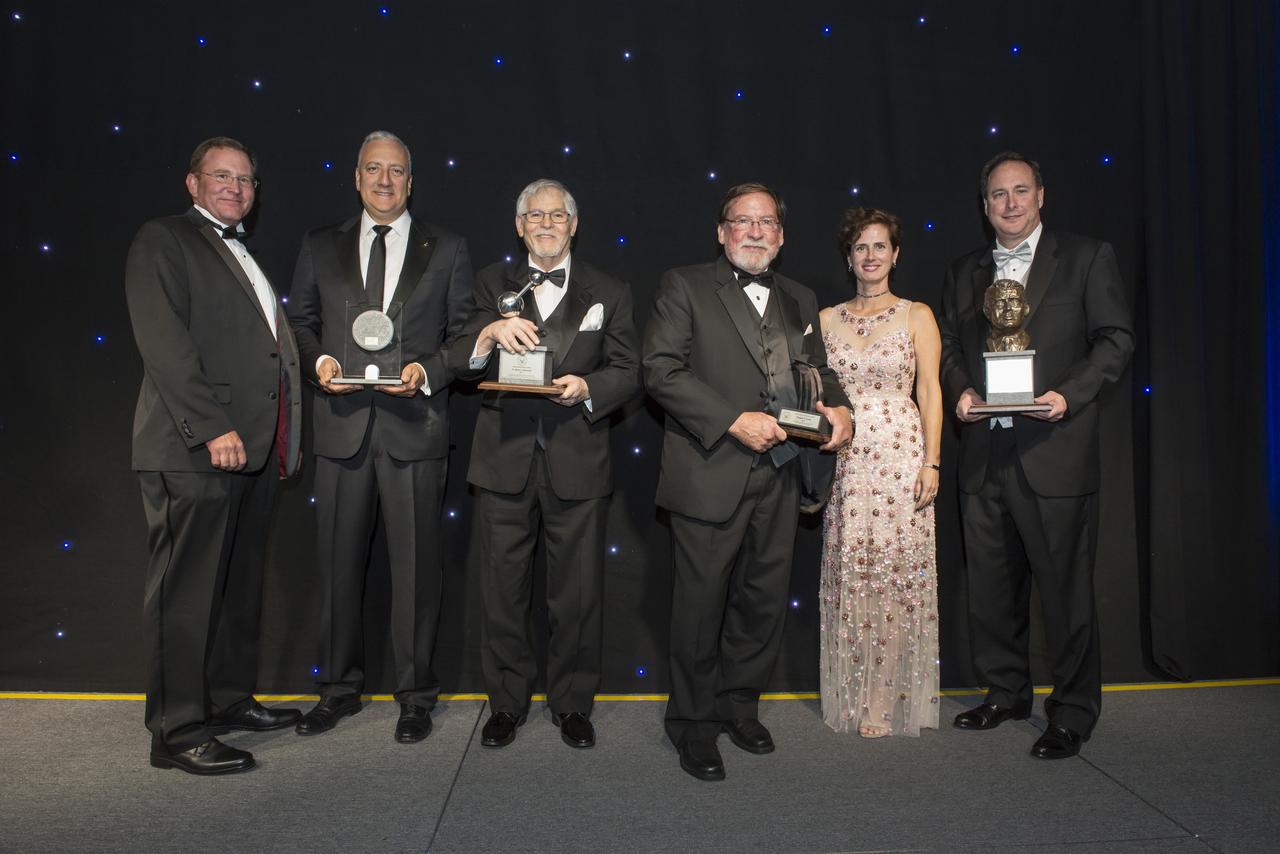
The annual Dr. Wernher Von Braun Memorial Dinner was held at the U.S. Space and Rocket Center's Davidson Center on October 26, 2017 with Keynote speaker General John Hyten, Commander of U.S. Strategic Command. Emcee was Mark Larson of Mark Larson Media Services, Inc. Dr. Wernher Von Braun Memorial Scholarships were presented to 8 college students by the National Space Club. Educator of the Year was awarded to Tammy Thorpe; Community Service award was presented to Huntsville, Al. Mayor Tommy Battle. The Communications Award was presented to retired astronaut Dr. Mike Massimino. The Distinguished Science Award was presented to Dr. Martin Weisskopf. The Astronautics Engineer Award was presented to Douglas R. Cooke. The Dr. Wernher Von Braun Space Flight Trophy was presented to Robert Lightfoot.
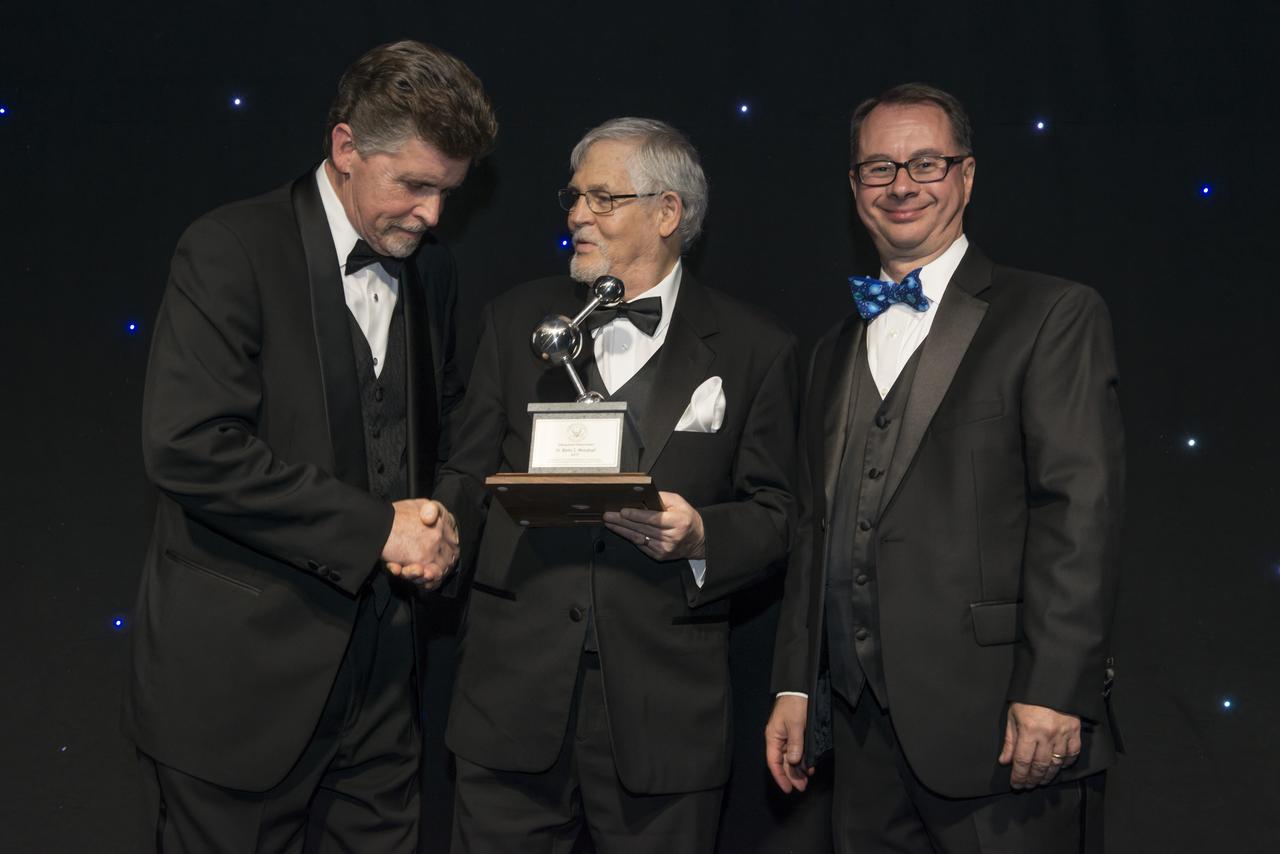
The annual Dr. Wernher Von Braun Memorial Dinner was held at the U.S. Space and Rocket Center's Davidson Center on October 26, 2017 with Keynote speaker General John Hyten, Commander of U.S. Strategic Command. Emcee was Mark Larson of Mark Larson Media Services, Inc. Dr. Wernher Von Braun Memorial Scholarships were presented to 8 college students by the National Space Club. Educator of the Year was awarded to Tammy Thorpe; Community Service award was presented to Huntsville, Al. Mayor Tommy Battle. The Communications Award was presented to retired astronaut Dr. Mike Massimino. The Distinguished Science Award was presented to Dr. Martin Weisskopf. The Astronautics Engineer Award was presented to Douglas R. Cooke. The Dr. Wernher Von Braun Space Flight Trophy was presented to Robert Lightfoot.
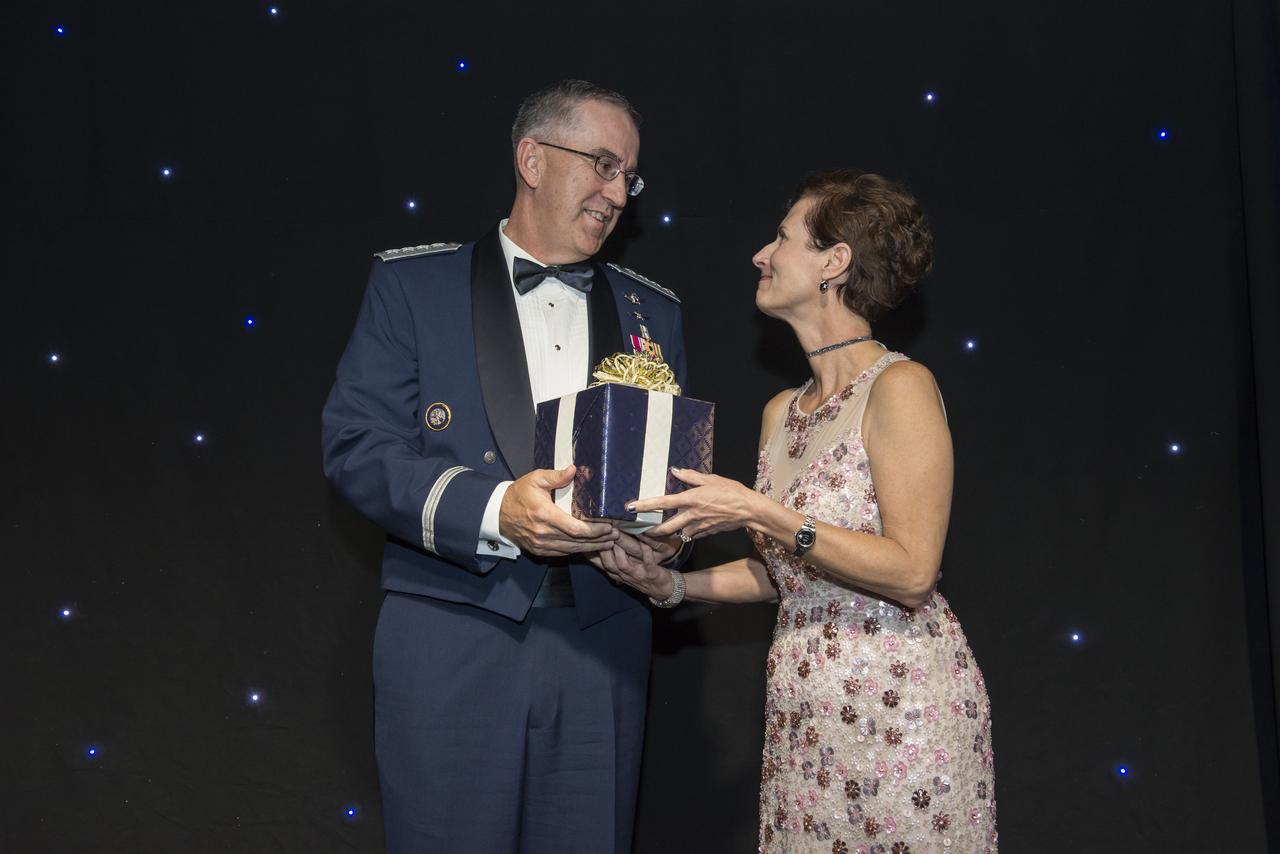
The annual Dr. Wernher Von Braun Memorial Dinner was held at the U.S. Space and Rocket Center's Davidson Center on October 26, 2017 with Keynote speaker General John Hyten, Commander of U.S. Strategic Command. Emcee was Mark Larson of Mark Larson Media Services, Inc. Dr. Wernher Von Braun Memorial Scholarships were presented to 8 college students by the National Space Club. Educator of the Year was awarded to Tammy Thorpe; Community Service award was presented to Huntsville, Al. Mayor Tommy Battle. The Communications Award was presented to retired astronaut Dr. Mike Massimino. The Distinguished Science Award was presented to Dr. Martin Weisskopf. The Astronautics Engineer Award was presented to Douglas R. Cooke. The Dr. Wernher Von Braun Space Flight Trophy was presented to Robert Lightfoot.
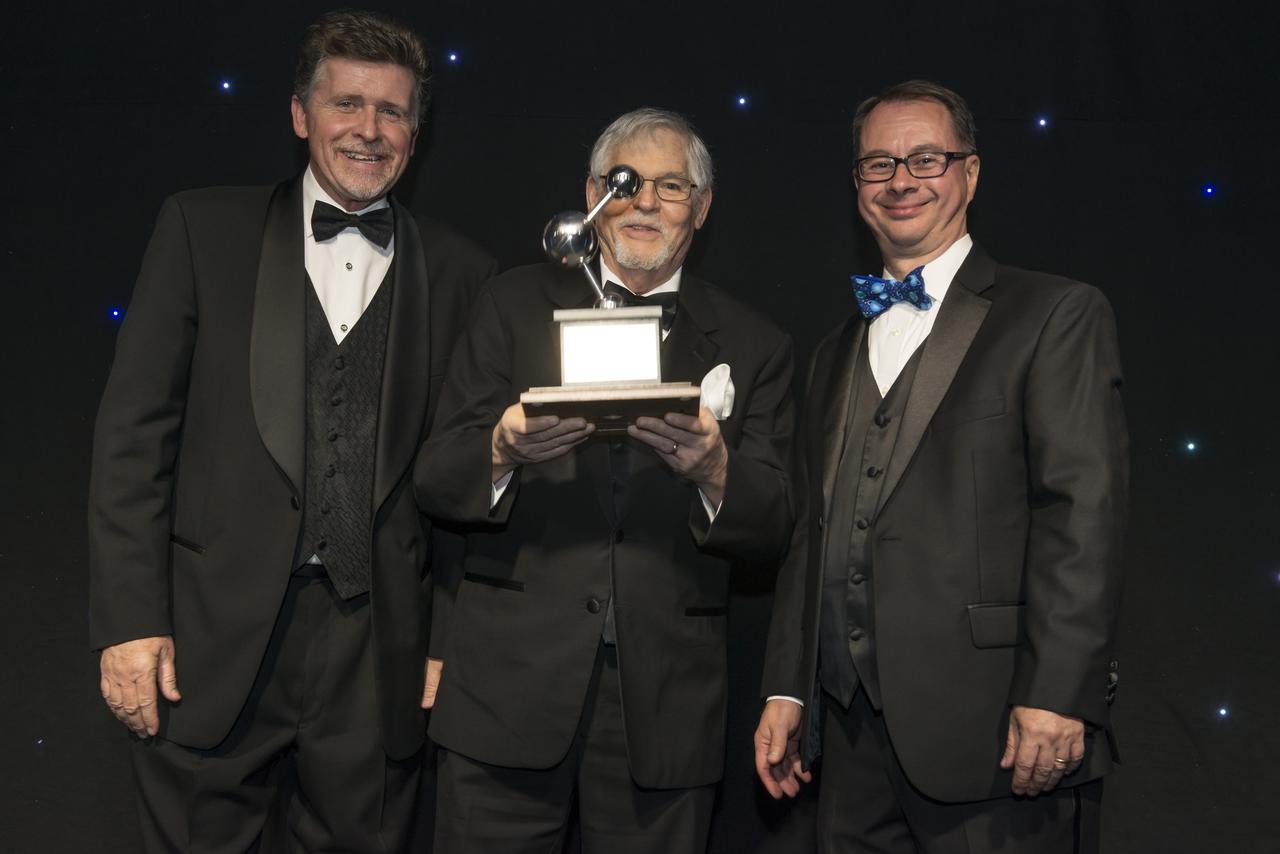
The annual Dr. Wernher Von Braun Memorial Dinner was held at the U.S. Space and Rocket Center's Davidson Center on October 26, 2017 with Keynote speaker General John Hyten, Commander of U.S. Strategic Command. Emcee was Mark Larson of Mark Larson Media Services, Inc. Dr. Wernher Von Braun Memorial Scholarships were presented to 8 college students by the National Space Club. Educator of the Year was awarded to Tammy Thorpe; Community Service award was presented to Huntsville, Al. Mayor Tommy Battle. The Communications Award was presented to retired astronaut Dr. Mike Massimino. The Distinguished Science Award was presented to Dr. Martin Weisskopf. The Astronautics Engineer Award was presented to Douglas R. Cooke. The Dr. Wernher Von Braun Space Flight Trophy was presented to Robert Lightfoot.
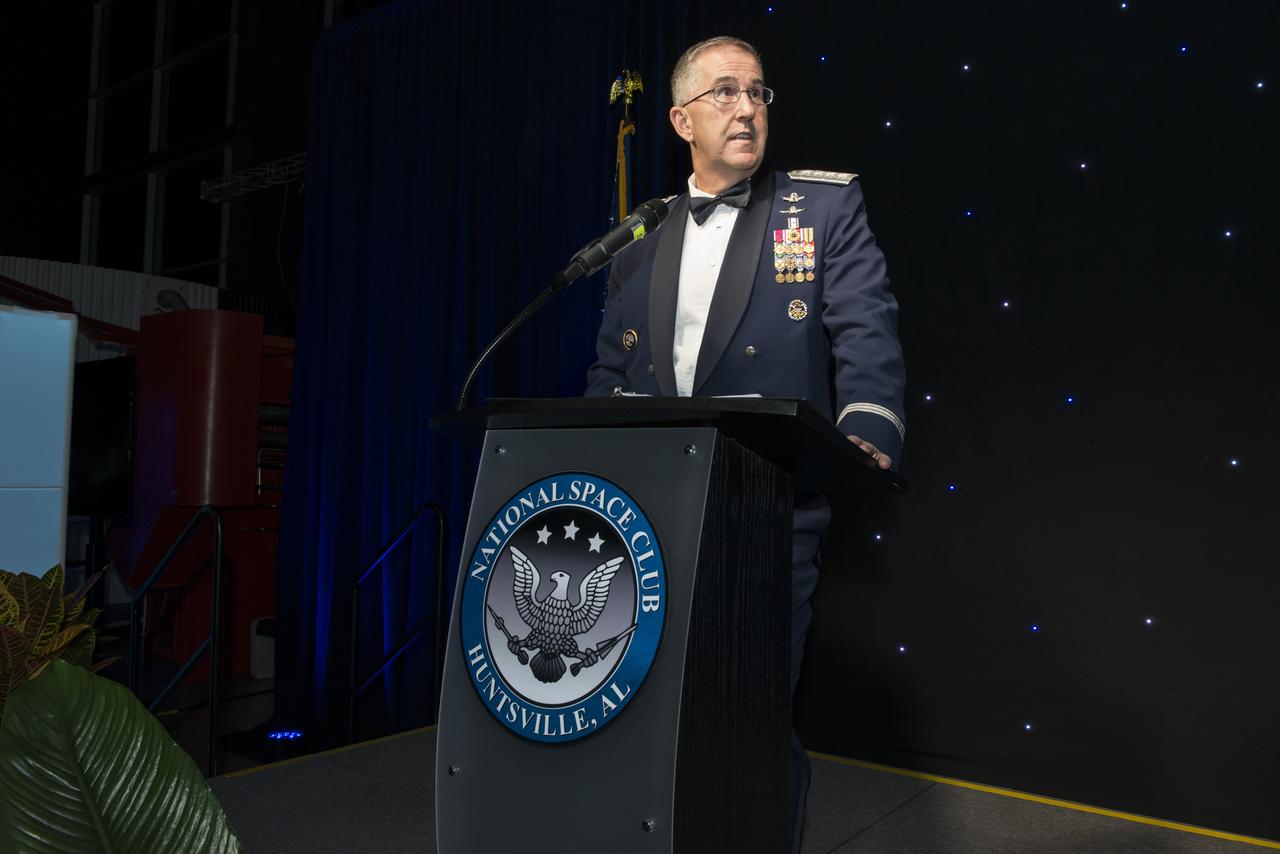
The annual Dr. Wernher Von Braun Memorial Dinner was held at the U.S. Space and Rocket Center's Davidson Center on October 26, 2017 with Keynote speaker General John Hyten, Commander of U.S. Strategic Command. Emcee was Mark Larson of Mark Larson Media Services, Inc. Dr. Wernher Von Braun Memorial Scholarships were presented to 8 college students by the National Space Club. Educator of the Year was awarded to Tammy Thorpe; Community Service award was presented to Huntsville, Al. Mayor Tommy Battle. The Communications Award was presented to retired astronaut Dr. Mike Massimino. The Distinguished Science Award was presented to Dr. Martin Weisskopf. The Astronautics Engineer Award was presented to Douglas R. Cooke. The Dr. Wernher Von Braun Space Flight Trophy was presented to Robert Lightfoot.
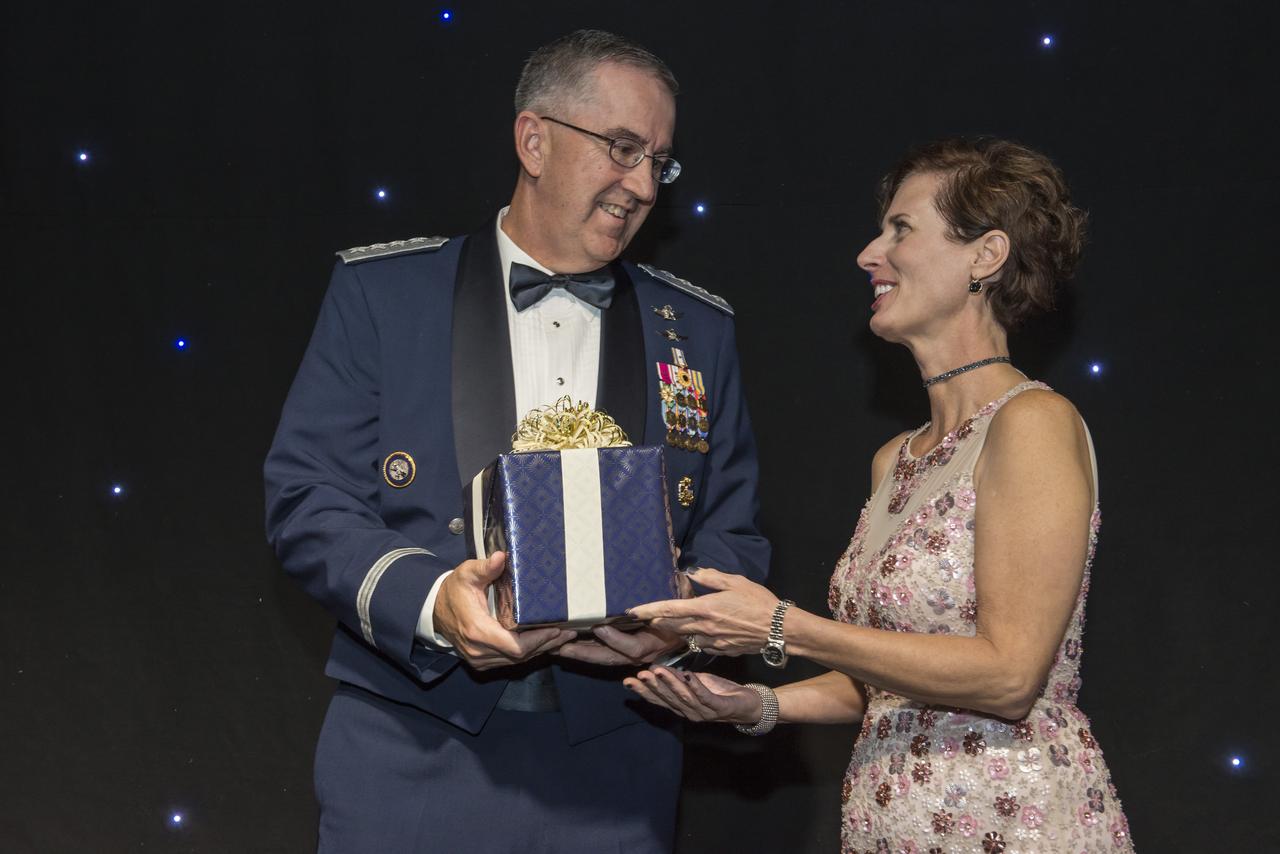
The annual Dr. Wernher Von Braun Memorial Dinner was held at the U.S. Space and Rocket Center's Davidson Center on October 26, 2017 with Keynote speaker General John Hyten, Commander of U.S. Strategic Command. Emcee was Mark Larson of Mark Larson Media Services, Inc. Dr. Wernher Von Braun Memorial Scholarships were presented to 8 college students by the National Space Club. Educator of the Year was awarded to Tammy Thorpe; Community Service award was presented to Huntsville, Al. Mayor Tommy Battle. The Communications Award was presented to retired astronaut Dr. Mike Massimino. The Distinguished Science Award was presented to Dr. Martin Weisskopf. The Astronautics Engineer Award was presented to Douglas R. Cooke. The Dr. Wernher Von Braun Space Flight Trophy was presented to Robert Lightfoot.
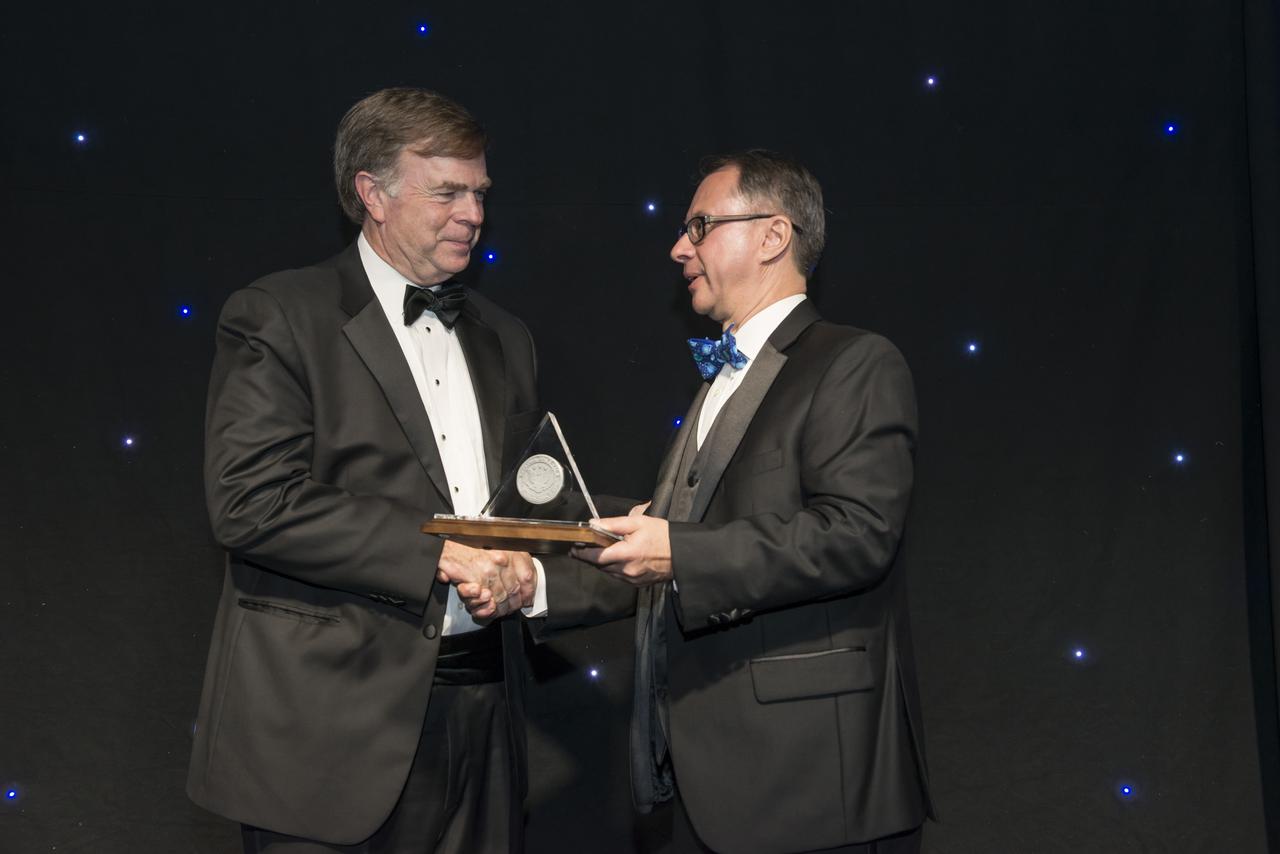
The annual Dr. Wernher Von Braun Memorial Dinner was held at the U.S. Space and Rocket Center's Davidson Center on October 26, 2017 with Keynote speaker General John Hyten, Commander of U.S. Strategic Command. Emcee was Mark Larson of Mark Larson Media Services, Inc. Dr. Wernher Von Braun Memorial Scholarships were presented to 8 college students by the National Space Club. Educator of the Year was awarded to Tammy Thorpe; Community Service award was presented to Huntsville, Al. Mayor Tommy Battle. The Communications Award was presented to retired astronaut Dr. Mike Massimino. The Distinguished Science Award was presented to Dr. Martin Weisskopf. The Astronautics Engineer Award was presented to Douglas R. Cooke. The Dr. Wernher Von Braun Space Flight Trophy was presented to Robert Lightfoot.
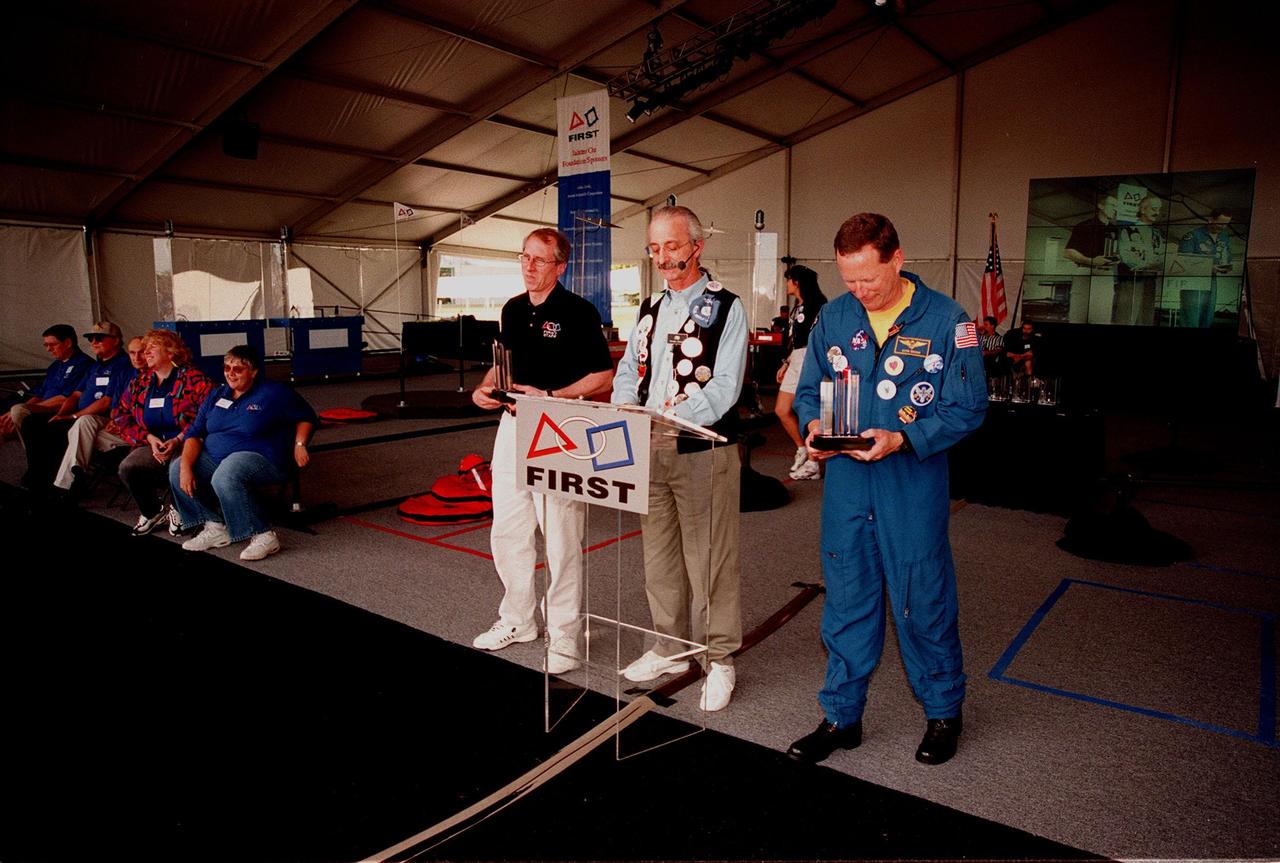
Kicking off the award ceremony at the 1999 FIRST Southeastern Regional robotic competition held at KSC are David Brown, Executive Director of FIRST; Woody Flowers, national advisor for FIRST; and astronaut David Brown. FIRST is a nonprofit organization, For Inspiration and Recognition of Science and Technology, that sponsors the event pitting gladiator robots against each other in an athletic-style competition. The FIRST robotics competition is designed to provide students with a hands-on, inside look at engineering and other professional careers, pairing high school students with engineer mentors and corporations. The regional event comprised 27 teams. Along with the championship award, which went to high school teams in Miami and San German, Puerto Rico, 15 other awards were presented
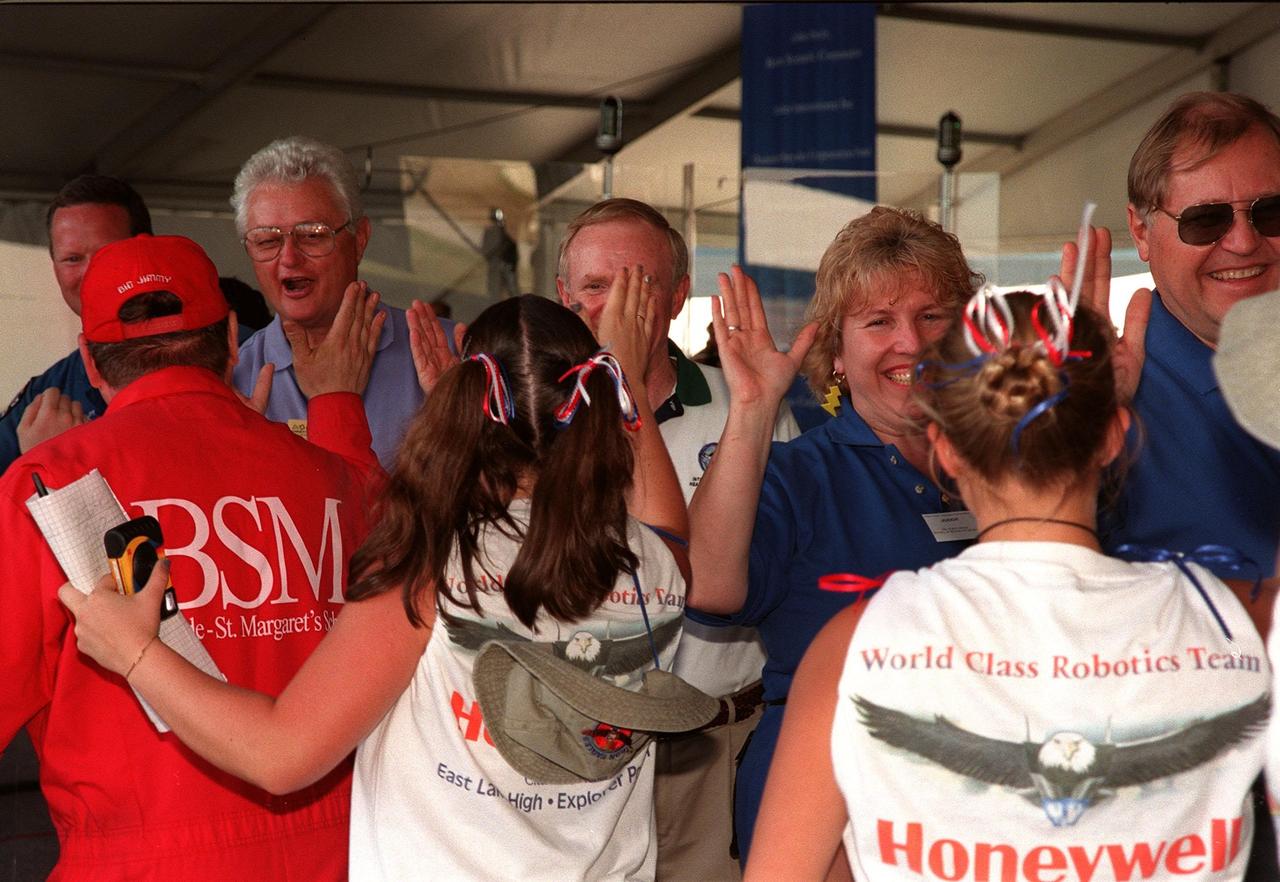
At the award ceremony for the 1999 FIRST Southeastern Regional robotic competition held at KSC, one of the winning teams, from Ocoee, Fla., is greeted by (left to right) astronaut David Brown, Deputy Director for Launch and Payload Processing Loren Shriver, Center Director Roy Bridges, and two unidentified judges. FIRST is a nonprofit organization, For Inspiration and Recognition of Science and Technology, that sponsors the event pitting gladiator robots against each other in an athletic-style competition. The FIRST robotics competition is designed to provide students with a hands-on, inside look at engineering and other professional careers, pairing high school students with engineer mentors and corporations. The regional event comprised 27 teams. Along with the championship award, which went to high school teams from Miami and San German, Puerto Rico, 15 other awards were presented
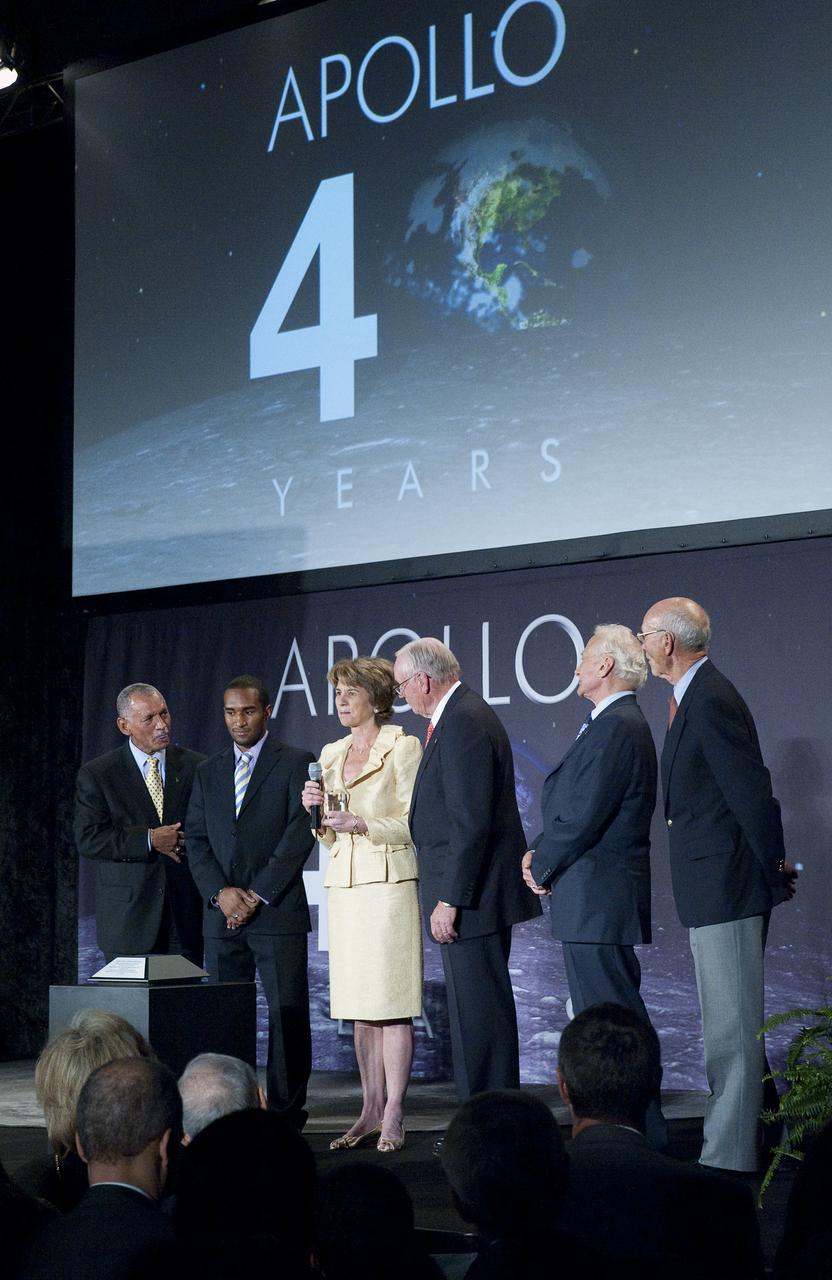
From left, NASA Administrator Charles Bolden, Rice University Electrical and Engineering Student Max Paul, Former Maryland Lieutenant Governor and niece of President John F. Kennedy, Kathleen Kennedy Townsend, Apollo 11 Astronauts, Neil Armstrong, Buzz Aldrin and Michael Collins all pose for a photograph in front of the NASA Ambassador of Exploration Award given posthumously to President John F. Kennedy and accepted on behalf of the Kennedy family by Townsend at the Apollo 40th anniversary celebration held at the National Air and Space Museum, Monday, July 20, 2009 in Washington. The award will be on permanent display at Rice University at the request of the Kennedy family. Photo Credit: (NASA/Carla Cioffi)
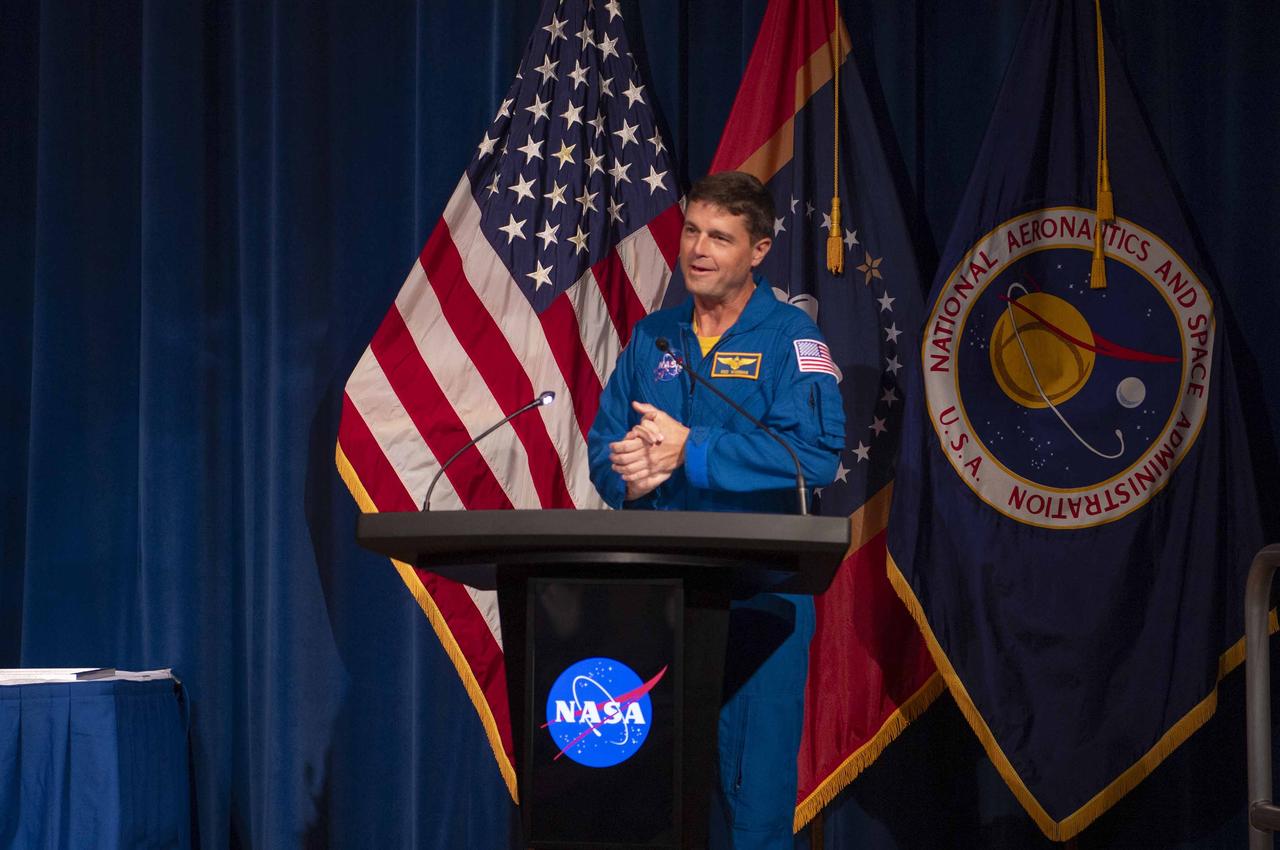
NASA astronaut Reid Wiseman speaks to employees and guests before presenting the Silver Snoopy awards on Aug. 21 at NASA’s Stennis Space Center. The Silver Snoopy is the astronauts’ personal award and is presented to less than 1 percent of the total NASA workforce annually. Wiseman will be one of four astronauts flying around the Moon on Artemis II, the first crewed mission on NASA’s path toward long-term scientific lunar exploration. The 10-day flight will test NASA’s foundational human deep space exploration capabilities, the agency’s powerful SLS (Space Launch System) rocket, and the Orion spacecraft for the first time with astronauts. The RS-25 engines helping to power SLS were tested at NASA Stennis.
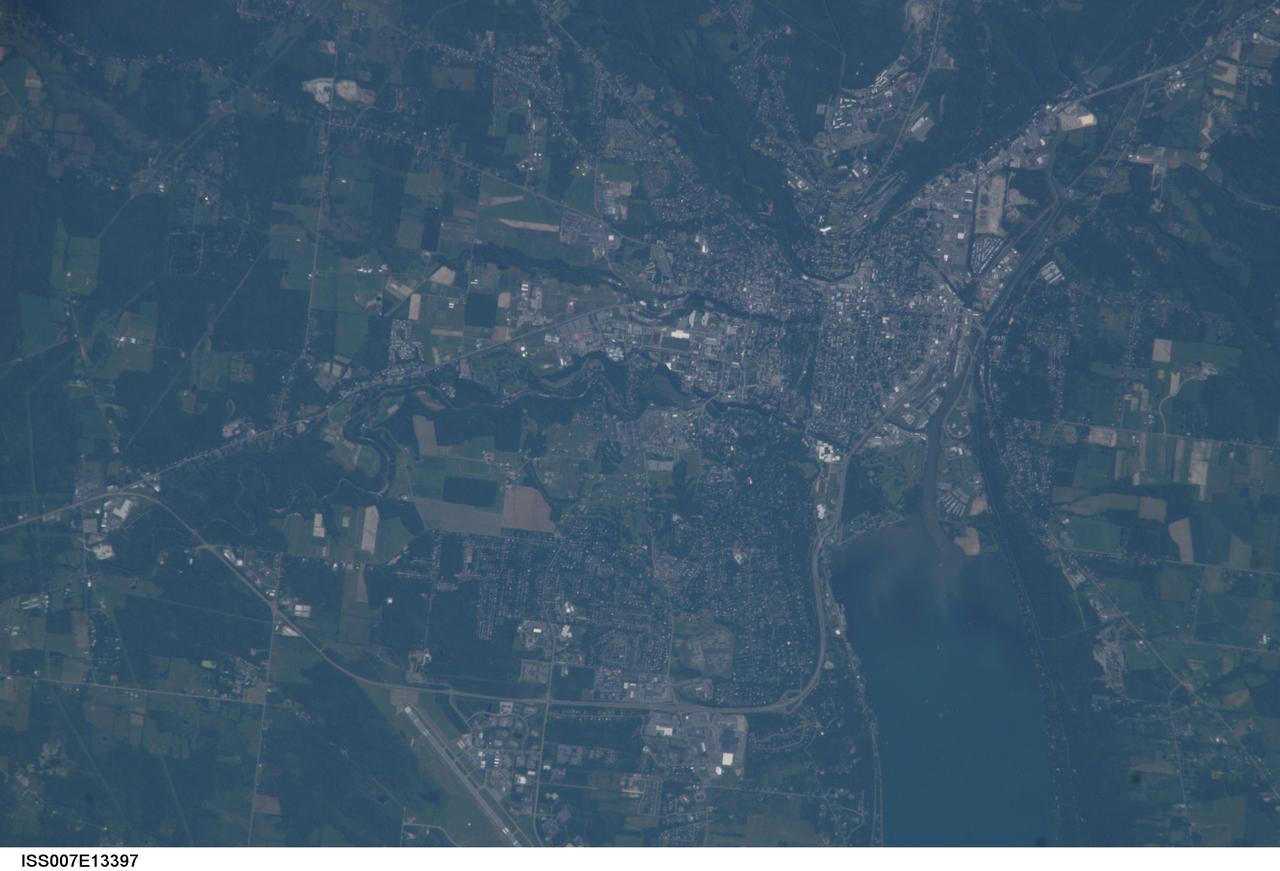
ISS007-E-13397 (24 August 2003) --- This view of Ithaca, New York was taken by one of the Expedition 7 crewmembers onboard the International Space Station (ISS). Ithaca is the home of Cornell University, where astronaut Edward T. Lu, NASA ISS science officer and flight engineer, received a Bachelor of Science degree in electrical engineering and the Cornell University Presidential Scholar award.
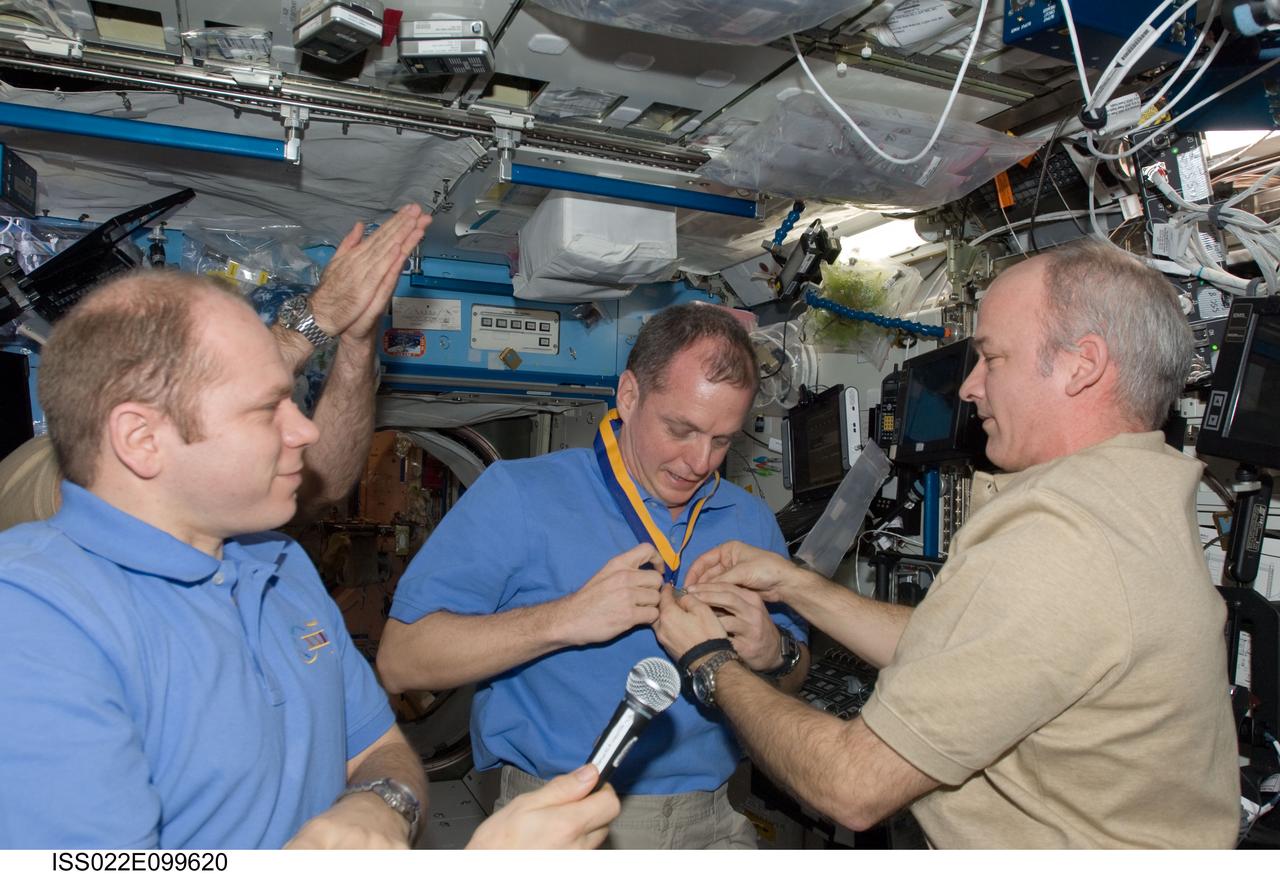
ISS022-E-099620 (17 March 2010) --- NASA astronaut Jeffrey Williams (right), Expedition 22 commander, presents the Army aviator award of St. Michael to fellow Army officer T.J. Creamer (center), Expedition 22/23 flight engineer, prior to the start of the ceremony of Changing-of-Command from Expedition 22 to Expedition 23. Russian cosmonaut Oleg Kotov, Expedition 22 flight engineer and Expedition 23 commander, holds a microphone at left.
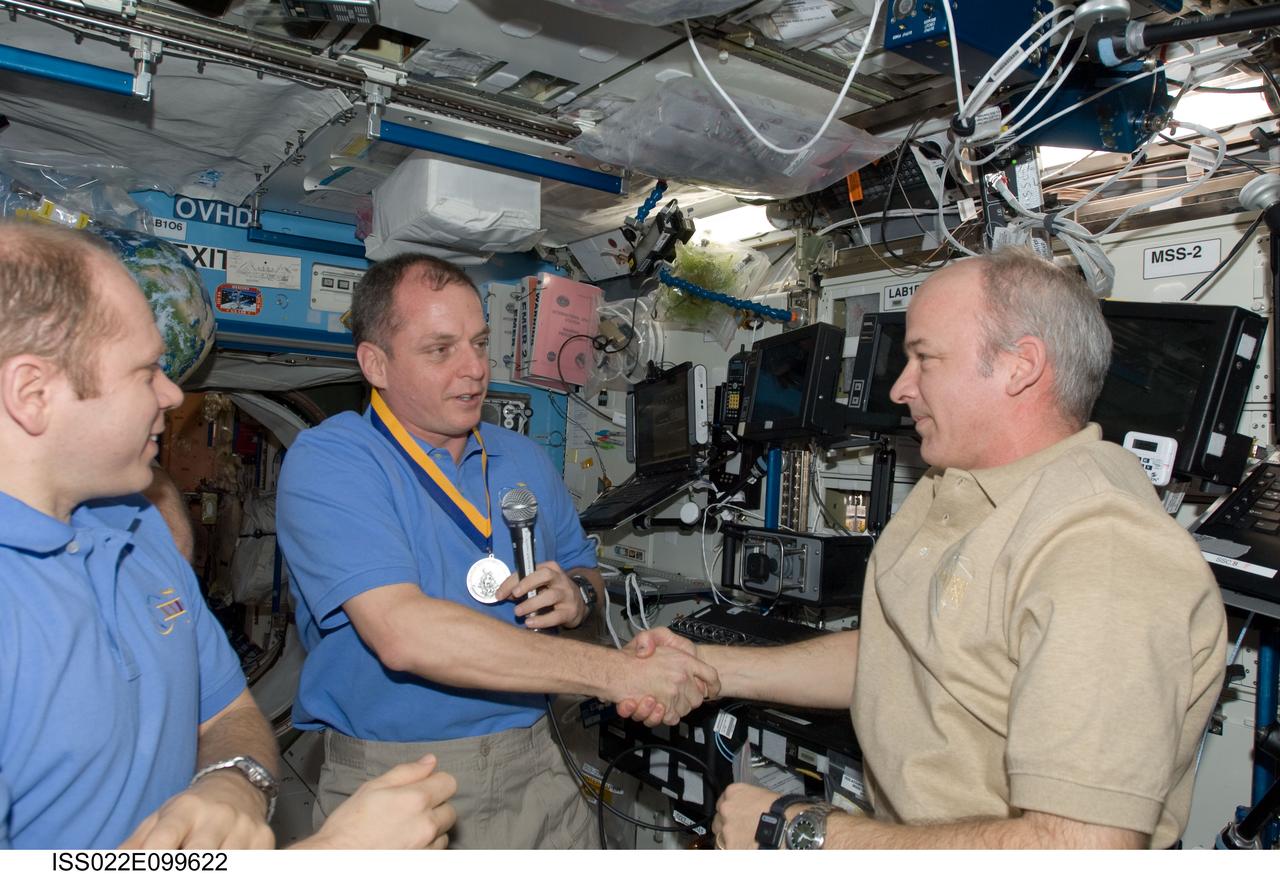
ISS022-E-099622 (17 March 2010) --- NASA astronaut Jeffrey Williams (right), Expedition 22 commander, presents the Army aviator award of St. Michael to fellow Army officer T.J. Creamer (center), Expedition 22/23 flight engineer, prior to the start of the ceremony of Changing-of-Command from Expedition 22 to Expedition 23. Russian cosmonaut Oleg Kotov, Expedition 22 flight engineer and Expedition 23 commander, is at left.
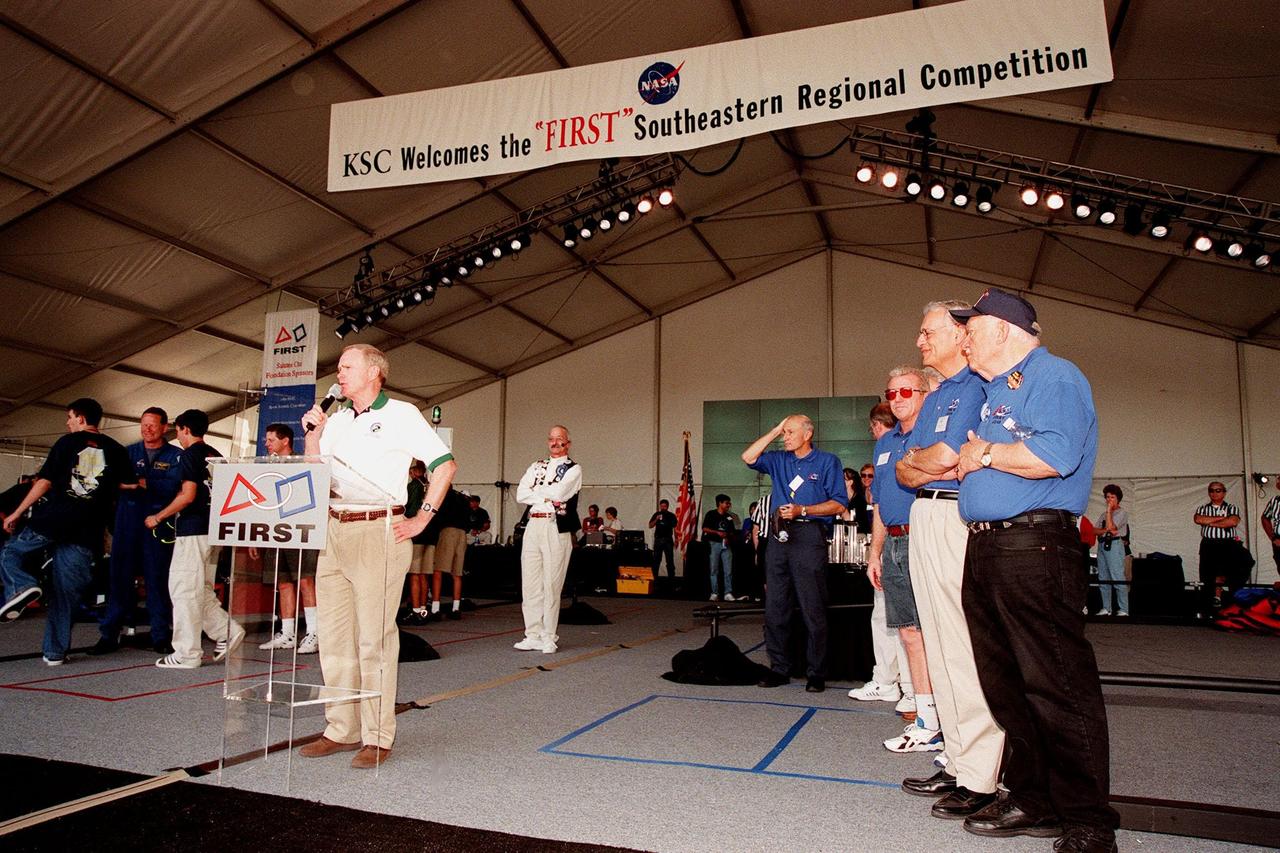
At the award ceremony for the 1999 FIRST Southeastern Regional robotic competition held at KSC, Center Director Roy Bridges addresses the teams, encouraging them to continue their interest in engineering. Directly behind him (left) are Woody Flowers, national advisor to FIRST, and (right) former KSC Director of Shuttle Processing Robert Sieck, who served as one of the judges. At the far left, students gather around astronaut David Brown, who was present during the two days of matches. At right are other judges, including Deputy Director for Launch and Payload Processing Loren Shriver (third from right). FIRST is a nonprofit organization, For Inspiration and Recognition of Science and Technology, that sponsors the event pitting gladiator robots against each other in an athletic-style competition. The FIRST robotics competition is designed to provide students with a hands-on, inside look at engineering and other professional careers, pairing high school students with engineer mentors and corporations. The regional event comprised 27 teams. Along with the championship award, which went to high school teams in Miami and San German, Puerto Rico, 15 other awards were presented
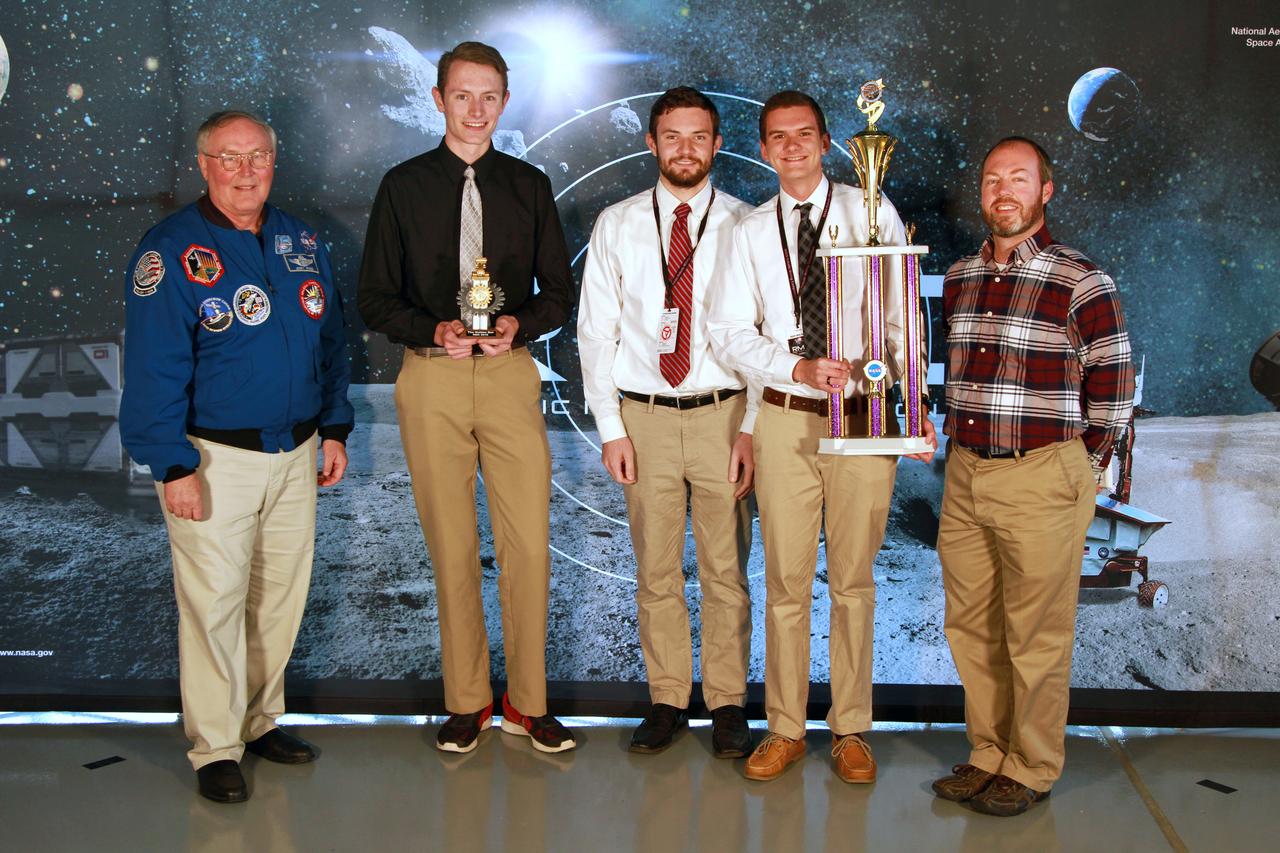
NASA's 9th Annual Robotic Mining Competition concludes with an awards ceremony May 18, 2018, at the Apollo/Saturn V Center at the Kennedy Space Center Visitor Complex in Florida. The University of Alabama Team Astrobotics received the Efficient Use of Communications Power Award. At left is retired NASA astronaut Jerry Ross. At right is Kurt Leucht, a NASA engineer in Swamp Works and event emcee. More than 40 student teams from colleges and universities around the U.S. participated in the competition, May 14-18, by using their mining robots to dig in a supersized sandbox filled with BP-1, or simulated lunar soil, gravel and rocks, and participate in other competition requirements. The Robotic Mining Competition is a NASA Human Exploration and Operations Mission Directorate project designed to encourage students in science, technology, engineering and math, or STEM fields. The project provides a competitive environment to foster innovative ideas and solutions that could be used on NASA's deep space missions.

Ronnie Rigney (r), chief of the Propulsion Test Office in the Project Directorate at Stennis Space Center, stands with agency colleagues to receive the prestigious American Institute of Aeronautics and Astronautics George M. Low Space Transportation Award on Sept. 12. Rigney accepted the award on behalf of the NASA and contractor team at Stennis for their support of the Space Shuttle Program that ended last summer. From 1975 to 2009, Stennis Space Center tested every main engine used to power 135 space shuttle missions. Stennis continued to provide flight support services through the end of the Space Shuttle Program in July 2011. The center also supported transition and retirement of shuttle hardware and assets through September 2012. The 2012 award was presented to the space shuttle team 'for excellence in the conception, development, test, operation and retirement of the world's first and only reusable space transportation system.' Joining Rigney for the award ceremony at the 2012 AIAA Conference in Pasadena, Calif., were: (l to r) Allison Zuniga, NASA Headquarters; Michael Griffin, former NASA administrator; Don Noah, Johnson Space Center in Houston; Steve Cash, Marshall Space Flight Center in Huntsville, Ala.; and Pete Nickolenko, Kennedy Space Center in Florida.

Ronnie Rigney (r), chief of the Propulsion Test Office in the Project Directorate at Stennis Space Center, stands with agency colleagues to receive the prestigious American Institute of Aeronautics and Astronautics George M. Low Space Transportation Award on Sept. 12. Rigney accepted the award on behalf of the NASA and contractor team at Stennis for their support of the Space Shuttle Program that ended last summer. From 1975 to 2009, Stennis Space Center tested every main engine used to power 135 space shuttle missions. Stennis continued to provide flight support services through the end of the Space Shuttle Program in July 2011. The center also supported transition and retirement of shuttle hardware and assets through September 2012. The 2012 award was presented to the space shuttle team 'for excellence in the conception, development, test, operation and retirement of the world's first and only reusable space transportation system.' Joining Rigney for the award ceremony at the 2012 AIAA Conference in Pasadena, Calif., were: (l to r) Allison Zuniga, NASA Headquarters; Michael Griffin, former NASA administrator; Don Noah, Johnson Space Center in Houston; Steve Cash, Marshall Space Flight Center in Huntsville, Ala.; and Pete Nickolenko, Kennedy Space Center in Florida.
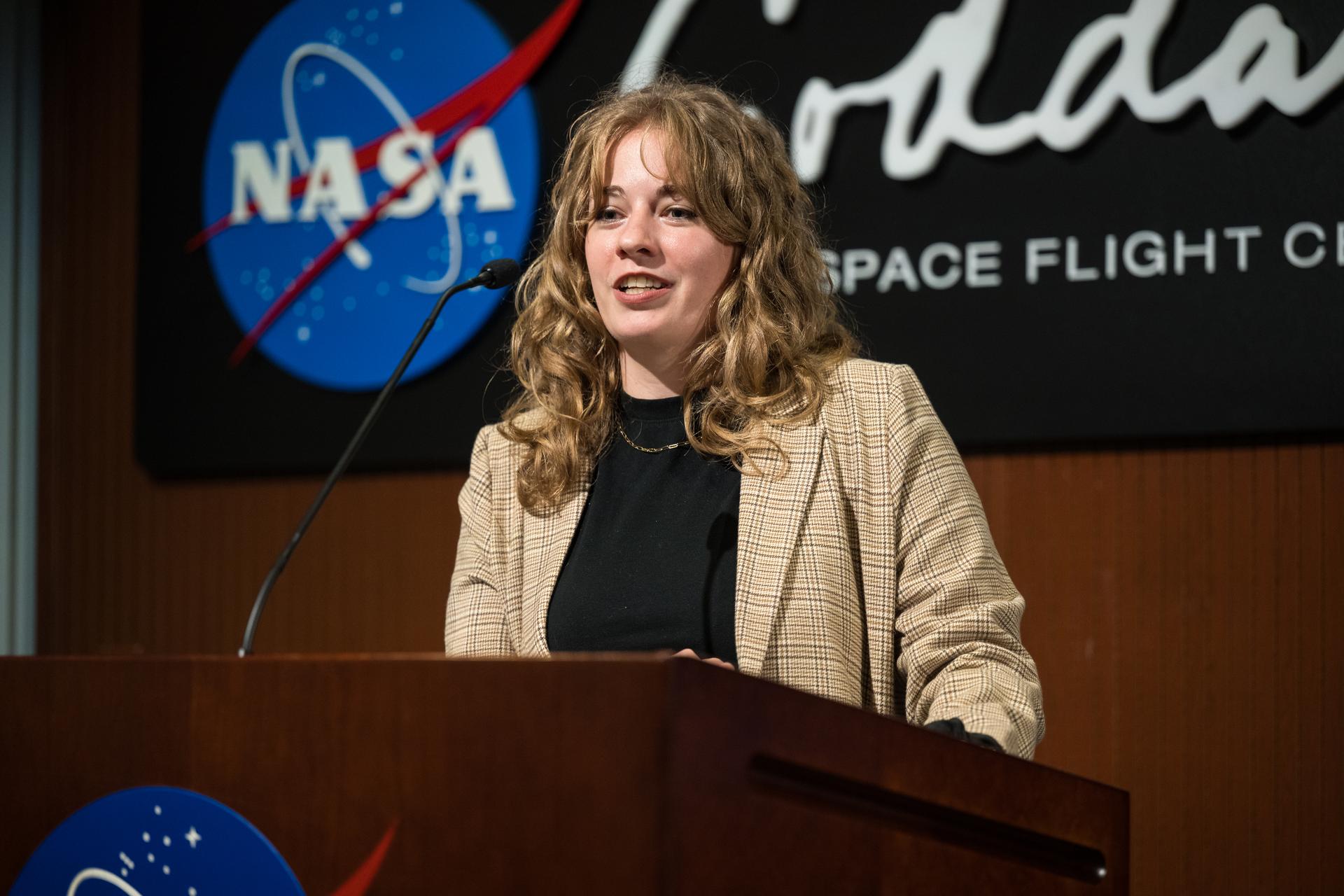
NASA Space Flight Awareness Backup Lead for Goddard Space Flight Center, Amelia Haymes, provides remarks before NASA astronauts Don Pettit and Nick Hague present NASA Range Operations Contract Engineer Manager at Wallops Flight Facility, Joseph Jimmerson, with a Silver Snoopy award, Wednesday, Sept. 17, 2025, at NASA’s Goddard Space Flight Center in Greenbelt, Md. Pettit and Hague served as part of Expedition 72 onboard the International Space Station. Photo Credit: (NASA/Aubrey Gemignani)
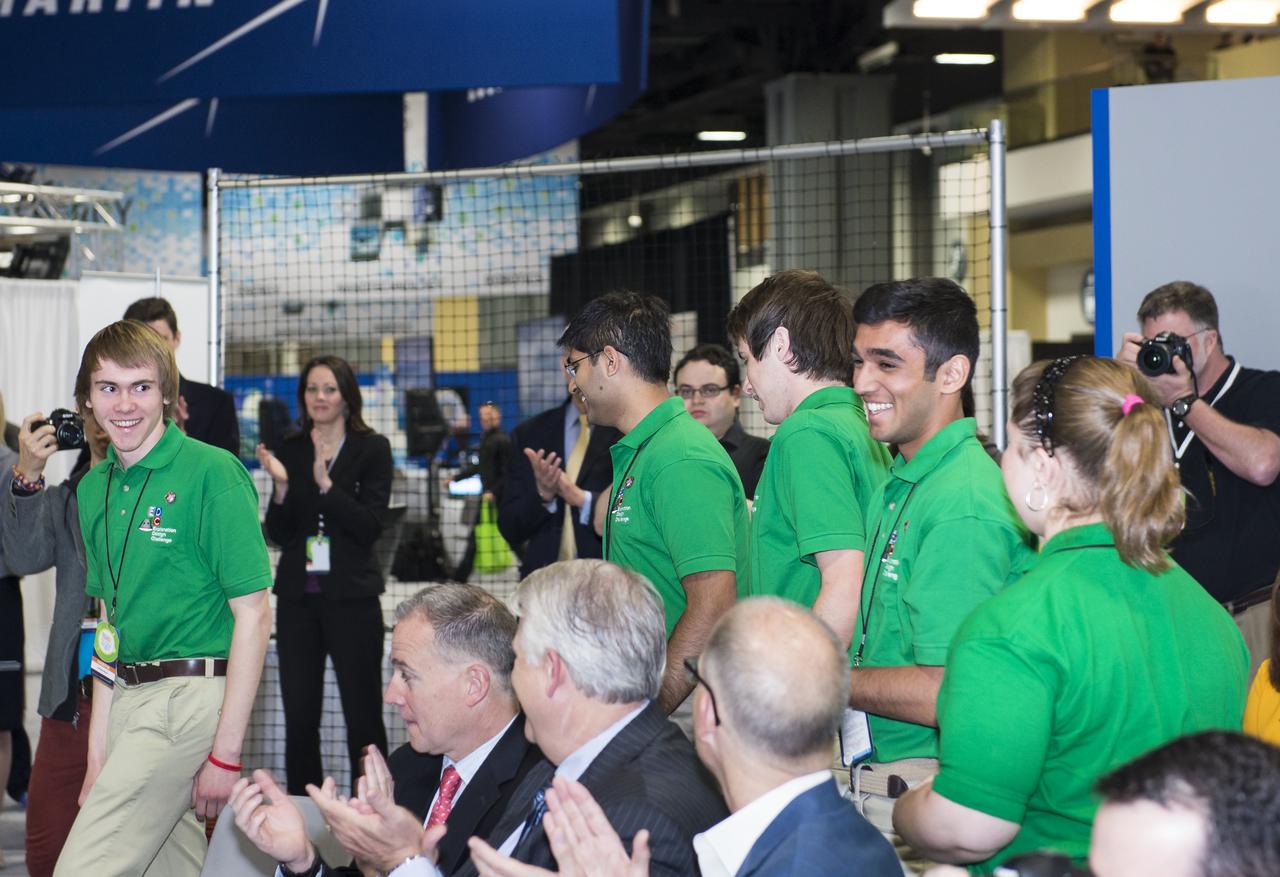
After announcing that Team ARES won the Exploration Design Challenge, NASA Administrator, Charles Bolden and CEO, Marillyn Hewson invite the team up to the stage to receive their award. The goal of the Exploration Design Challenge was for students to research and design ways to protect astronauts from space radiation.Team ARES's design will be built and flown aboard the Orion/EFT-1. The USA Science and Engineering Festival is taking place at the Washington Convention Center in Washington, DC on April 26 and 27, 2014. Photo Credit: (NASA/Aubrey Gemignani)
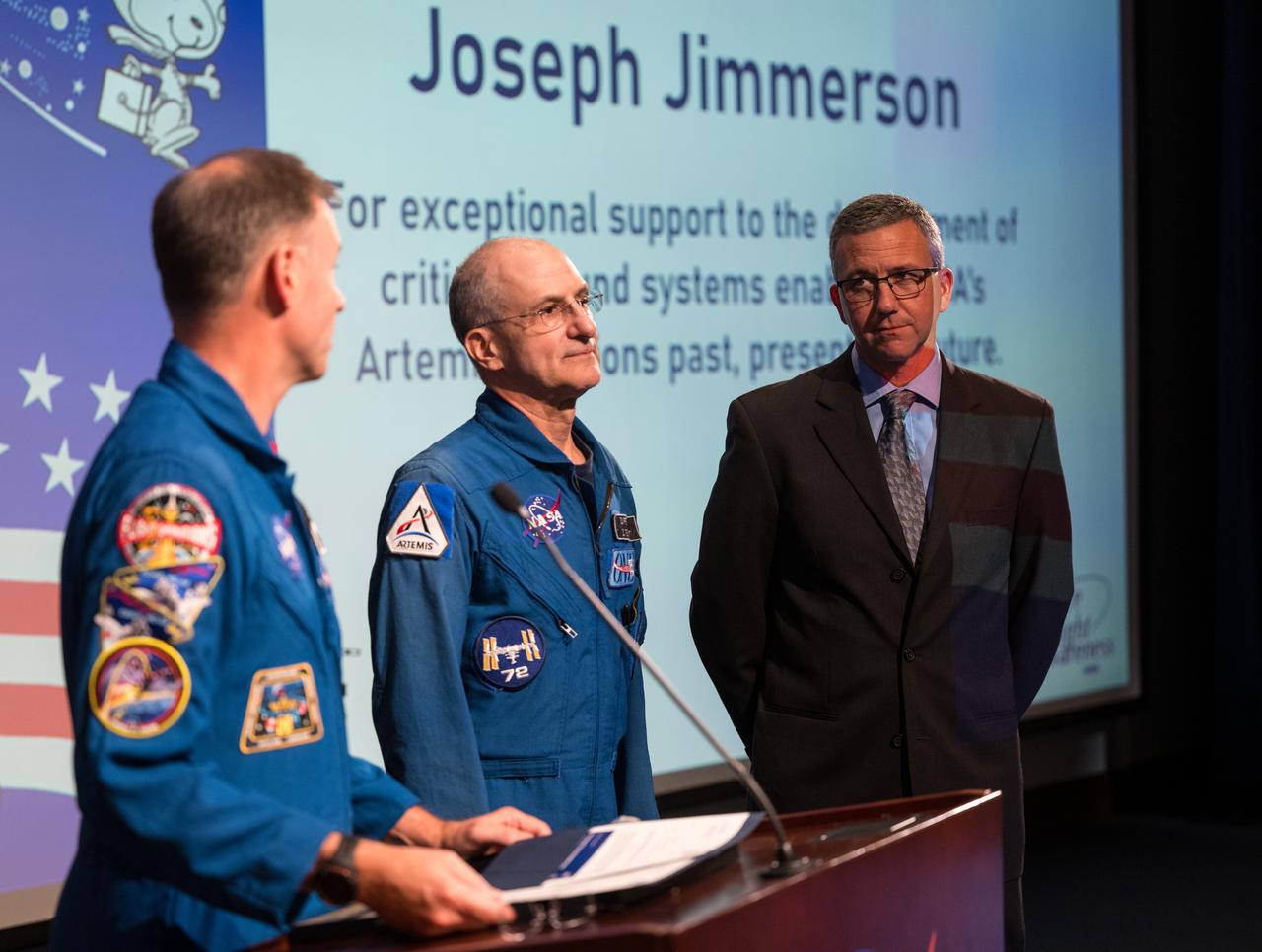
NASA astronauts Don Pettit and Nick Hague present NASA Range Operations Contract Engineer Manager at Wallops Flight Facility, Joseph Jimmerson, with a Silver Snoopy award, Wednesday, Sept. 17, 2025, at NASA’s Goddard Space Flight Center in Greenbelt, Md. Pettit and Hague served as part of Expedition 72 onboard the International Space Station. Photo Credit: (NASA/Aubrey Gemignani)
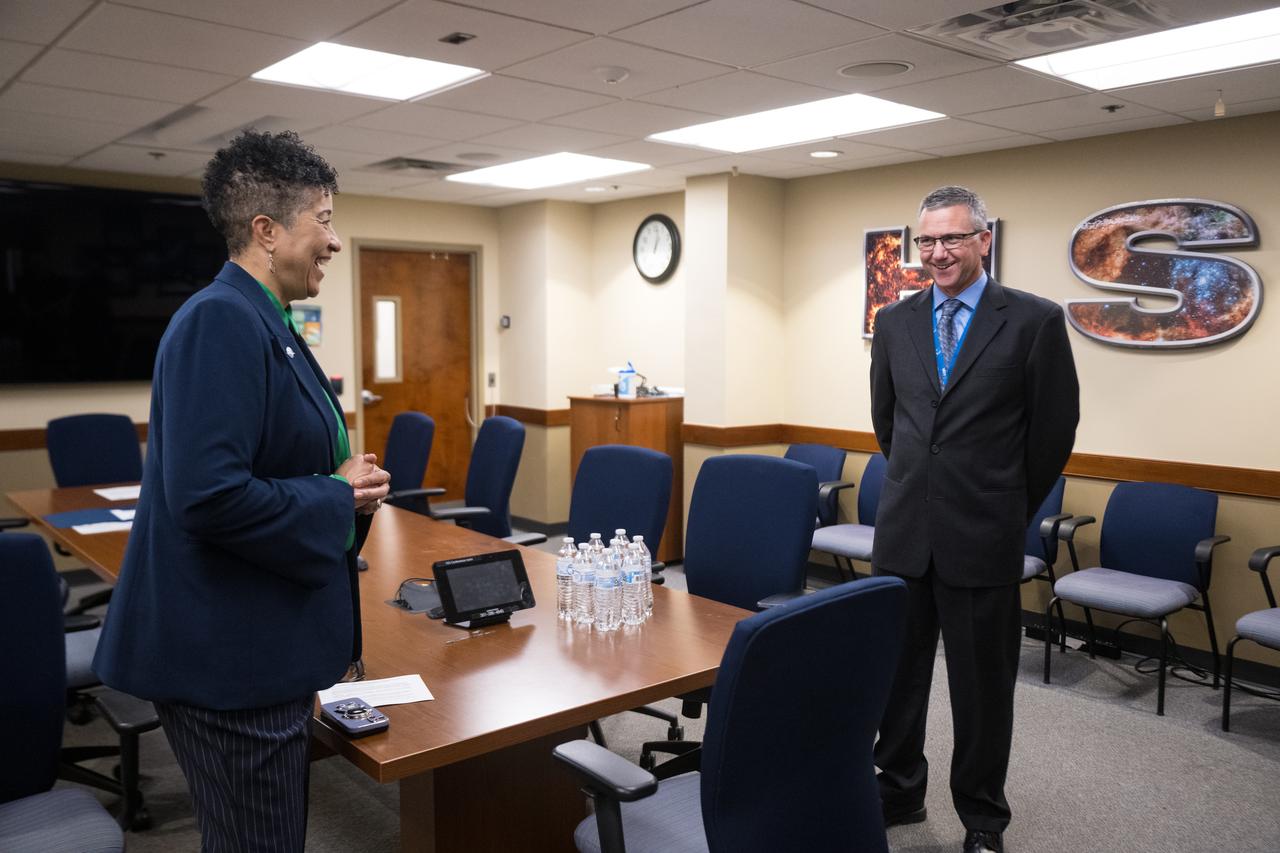
Cynthia Simmons, acting center director of NASA's Goddard Space Flight Center, congratulates NASA Range Operations Contract Engineer Manager at Wallops Flight Facility, Joseph Jimmerson, on his selection for the Silver Snoopy award, Wednesday, Sept. 17, 2025, at NASA’s Goddard Space Flight Center in Greenbelt, Md. Expedition 72 crew members, NASA astronauts Don Pettit and Nick Hague presented the Silver Snoopy to Jimmerson. Photo Credit: (NASA/Aubrey Gemignani)
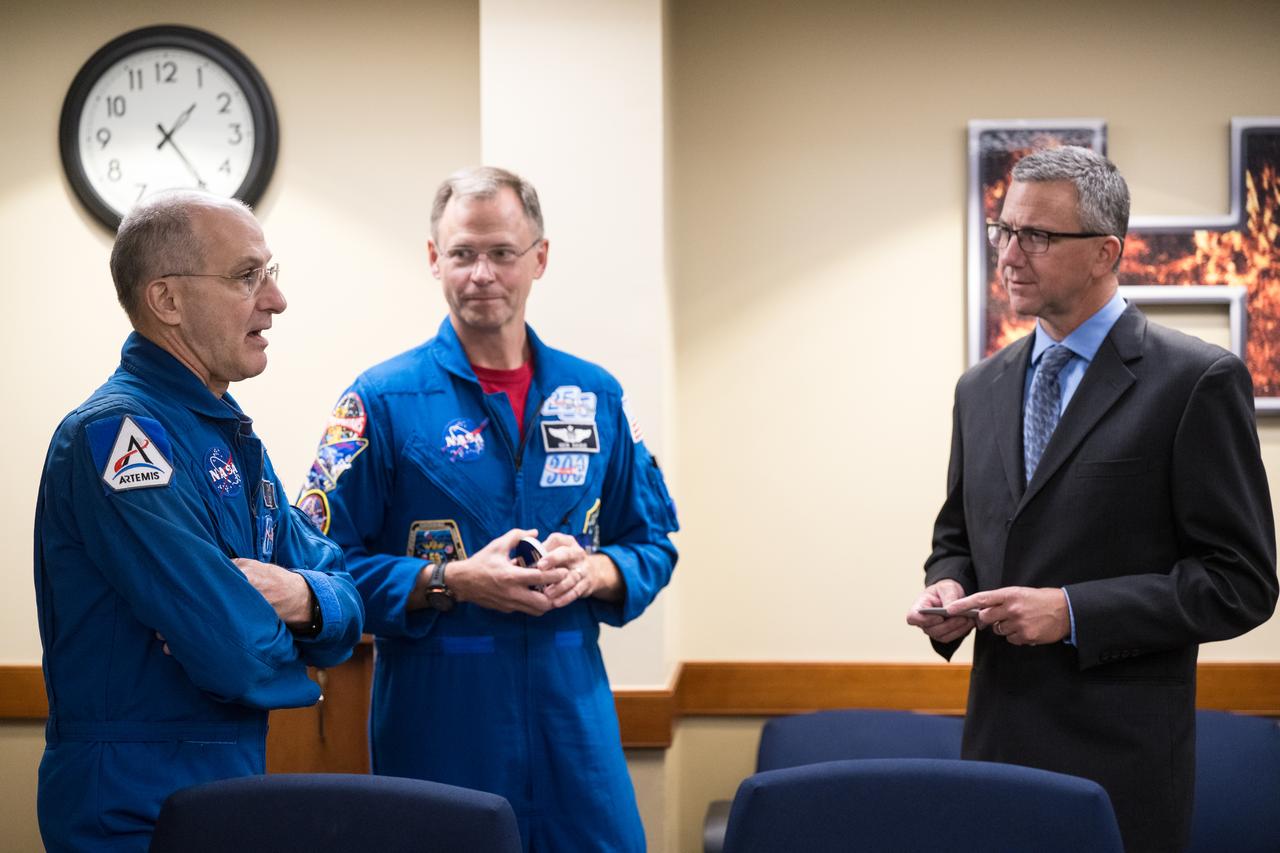
NASA astronauts Don Pettit and Nick Hague speak with NASA Range Operations Contract Engineer Manager at Wallops Flight Facility, Joseph Jimmerson, before a Silver Snoopy award event, Wednesday, Sept. 17, 2025, at NASA’s Goddard Space Flight Center in Greenbelt, Md. Pettit and Hague served as part of Expedition 72 onboard the International Space Station. Photo Credit: (NASA/Aubrey Gemignani)
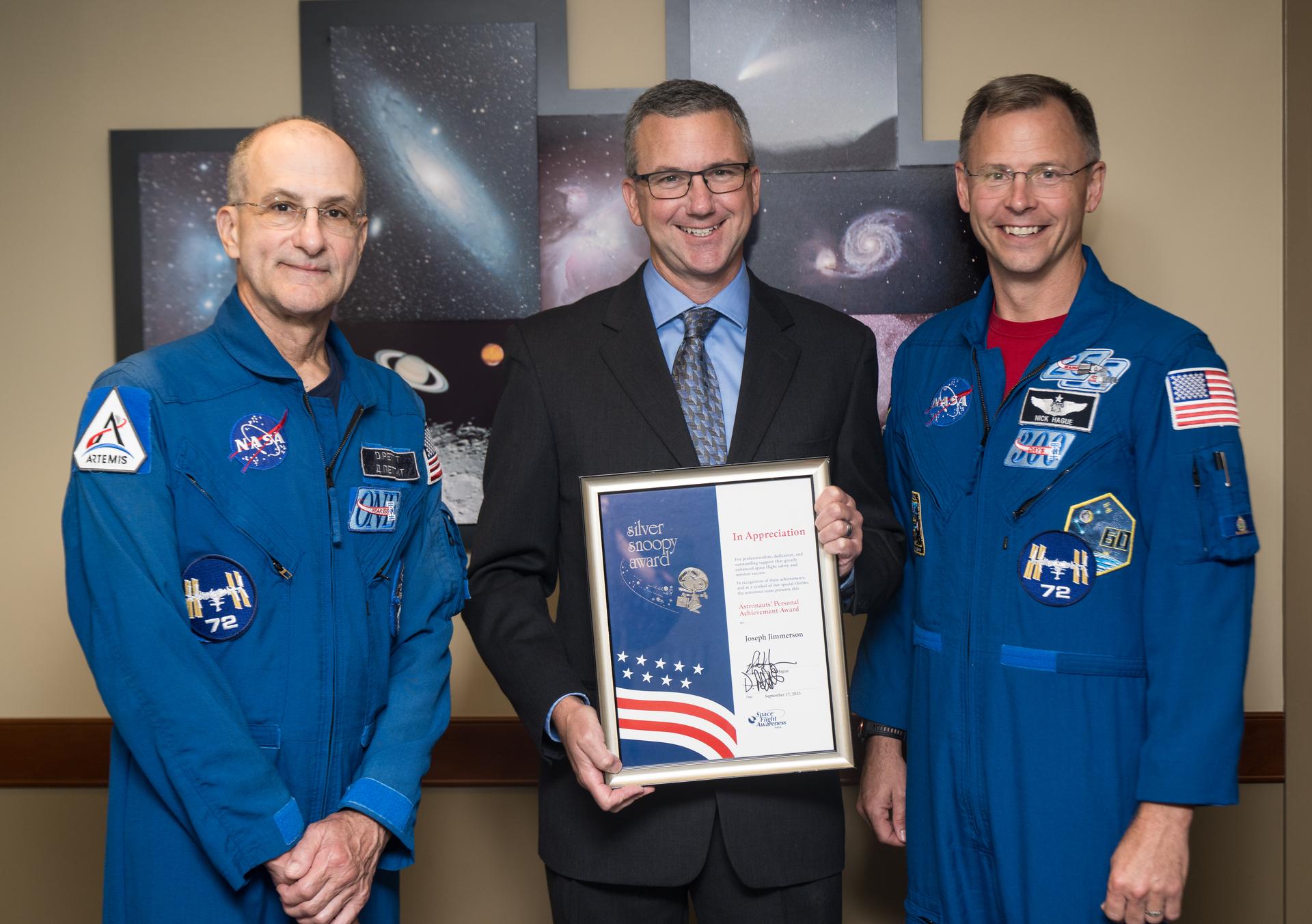
NASA astronauts Don Pettit, left, and Nick Hague, right, pose for a photo with NASA Range Operations Contract Engineer Manager at Wallops Flight Facility, Joseph Jimmerson, at his Silver Snoopy award presentation event, Wednesday, Sept. 17, 2025, at NASA’s Goddard Space Flight Center in Greenbelt, Md. Pettit and Hague served as part of Expedition 72 onboard the International Space Station. Photo Credit: (NASA/Aubrey Gemignani)
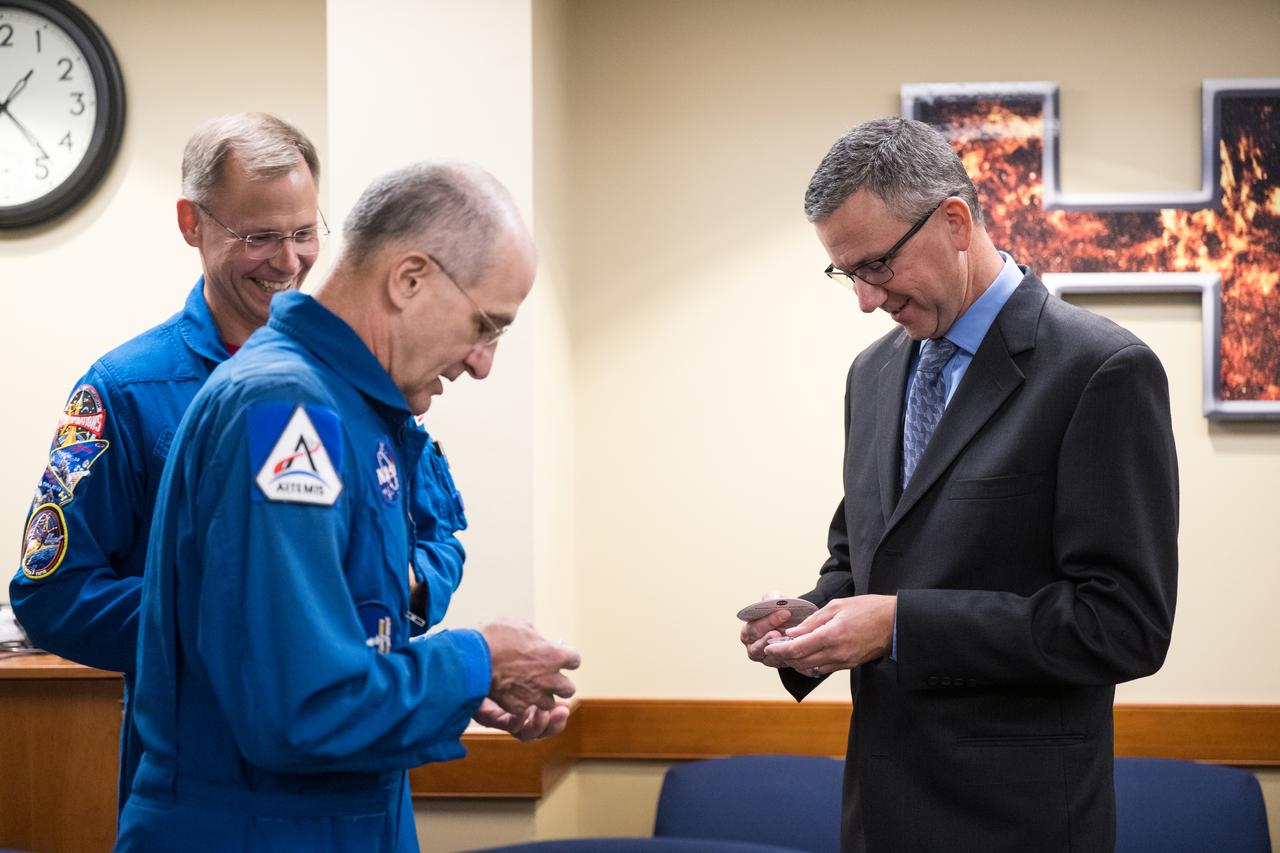
NASA astronauts Nick Hague and Don Pettit give NASA Range Operations Contract Engineer Manager at Wallops Flight Facility, Joseph Jimmerson, stickers and pins from their mission before a Silver Snoopy award presentation, Wednesday, Sept. 17, 2025, at NASA’s Goddard Space Flight Center in Greenbelt, Md. Pettit and Hague served as part of Expedition 72 onboard the International Space Station. Photo Credit: (NASA/Aubrey Gemignani)
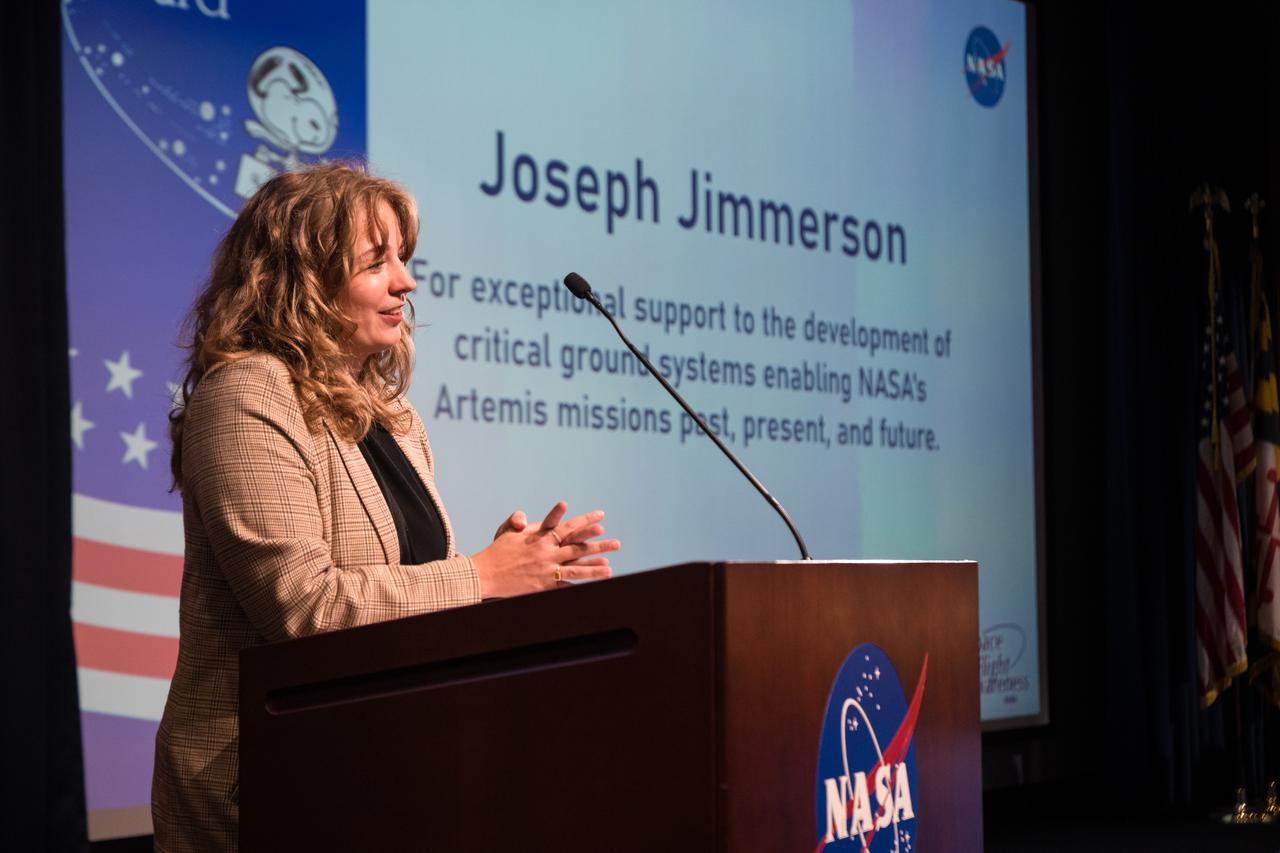
NASA Space Flight Awareness Backup Lead for Goddard Space Flight Center, Amelia Haymes, provides remarks after NASA astronauts Don Pettit and Nick Hague presented NASA Range Operations Contract Engineer Manager at Wallops Flight Facility, Joseph Jimmerson, with a Silver Snoopy award, Wednesday, Sept. 17, 2025, at NASA’s Goddard Space Flight Center in Greenbelt, Md. Pettit and Hague served as part of Expedition 72 onboard the International Space Station. Photo Credit: (NASA/Aubrey Gemignani)
NASA's 9th Annual Robotic Mining Competition concludes with an awards ceremony May 18, 2018, at the Apollo/Saturn V Center at the Kennedy Space Center Visitor Complex in Florida. The University of Alabama Team Astrobotics received first place in the On-Site Mining Award. At left is retired NASA astronaut Jerry Ross. At right is Rob Mueller, lead mining judge. More than 40 student teams from colleges and universities around the U.S. participated in the competition, May 14-18, by using their mining robots to dig in a supersized sandbox filled with BP-1, or simulated lunar soil, gravel and rocks, and participate in other competition requirements. The Robotic Mining Competition is a NASA Human Exploration and Operations Mission Directorate project designed to encourage students in science, technology, engineering and math, or STEM fields. The project provides a competitive environment to foster innovative ideas and solutions that could be used on NASA's deep space missions.
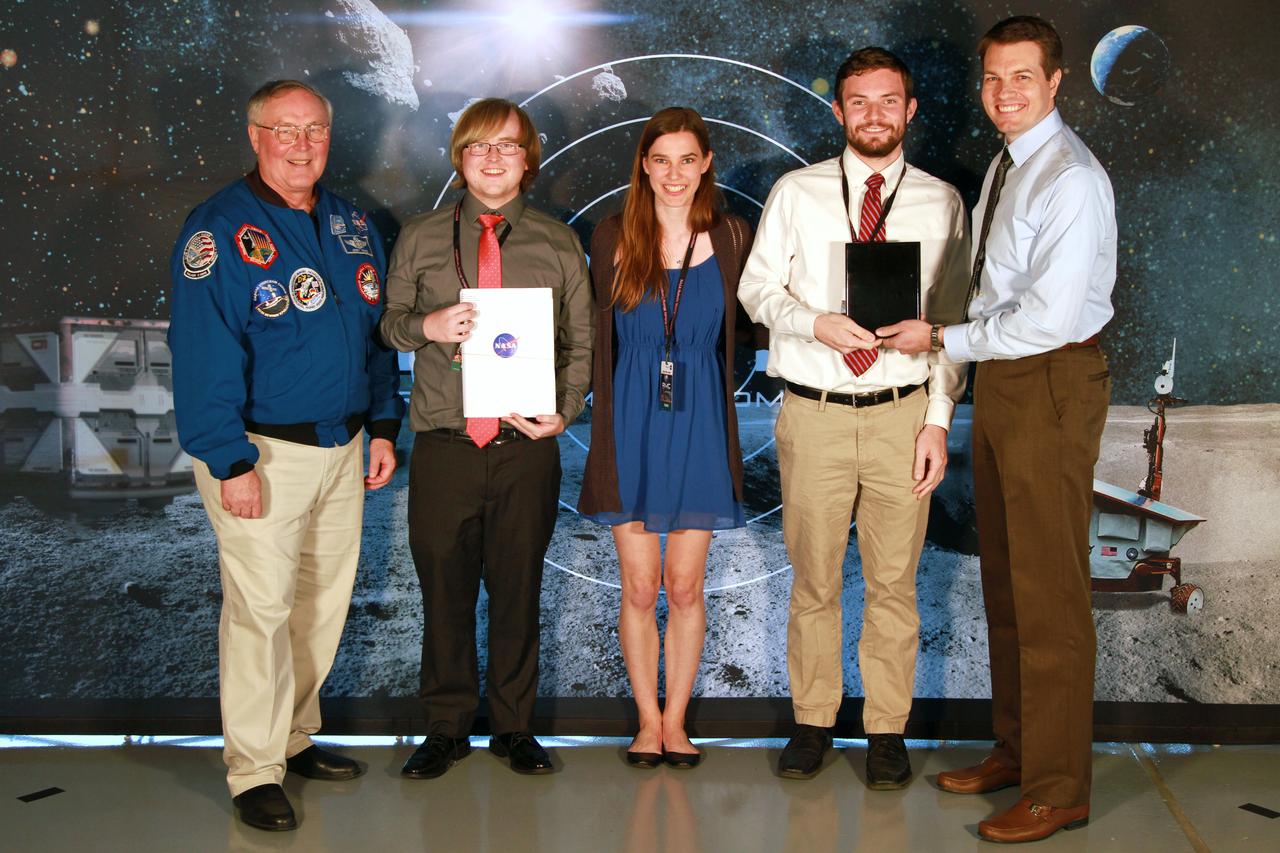
NASA's 9th Annual Robotic Mining Competition concludes with an awards ceremony May 18, 2018, at the Apollo/Saturn V Center at the Kennedy Space Center Visitor Complex in Florida. The University of Alabama Team Astrobotics received third place in the Slide Presentation and Demonstration award category. At left is retired NASA astronaut Jerry Ross. At right is Daniel Hull, lead presentation judge. More than 40 student teams from colleges and universities around the U.S. participated in the competition, May 14-18, by using their mining robots to dig in a supersized sandbox filled with BP-1, or simulated lunar soil, gravel and rocks, and participate in other competition requirements. The Robotic Mining Competition is a NASA Human Exploration and Operations Mission Directorate project designed to encourage students in science, technology, engineering and math, or STEM fields. The project provides a competitive environment to foster innovative ideas and solutions that could be used on NASA's deep space missions.
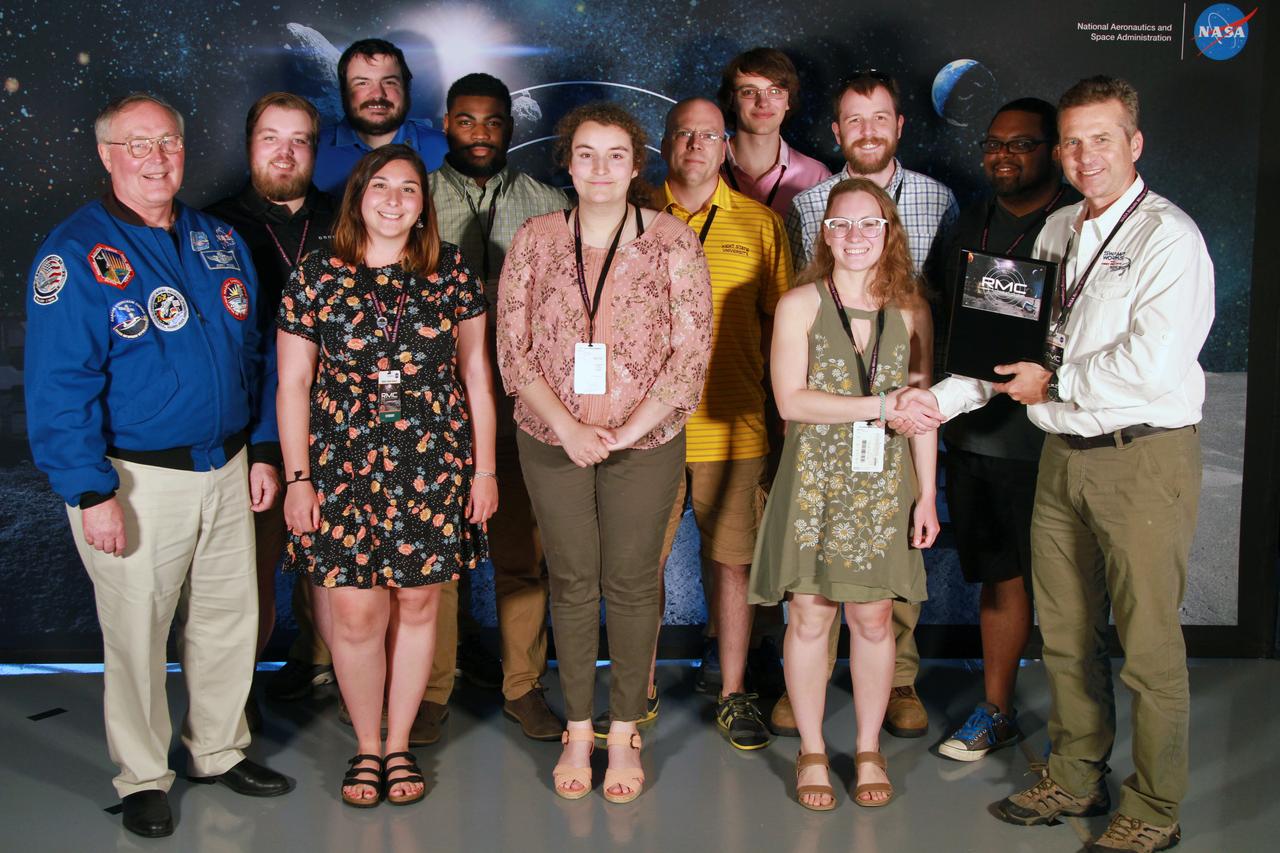
NASA's 9th Annual Robotic Mining Competition concludes with an awards ceremony May 18, 2018, at the Apollo/Saturn V Center at the Kennedy Space Center Visitor Complex in Florida. The team from Kent State University received third place in the On-Site Mining Award. At left is retired NASA astronaut Jerry Ross. At right is Rob Mueller, lead mining judge. More than 40 student teams from colleges and universities around the U.S. participated in the competition, May 14-18, by using their mining robots to dig in a supersized sandbox filled with BP-1, or simulated lunar soil, gravel and rocks, and participate in other competition requirements. The Robotic Mining Competition is a NASA Human Exploration and Operations Mission Directorate project designed to encourage students in science, technology, engineering and math, or STEM fields. The project provides a competitive environment to foster innovative ideas and solutions that could be used on NASA's deep space missions.
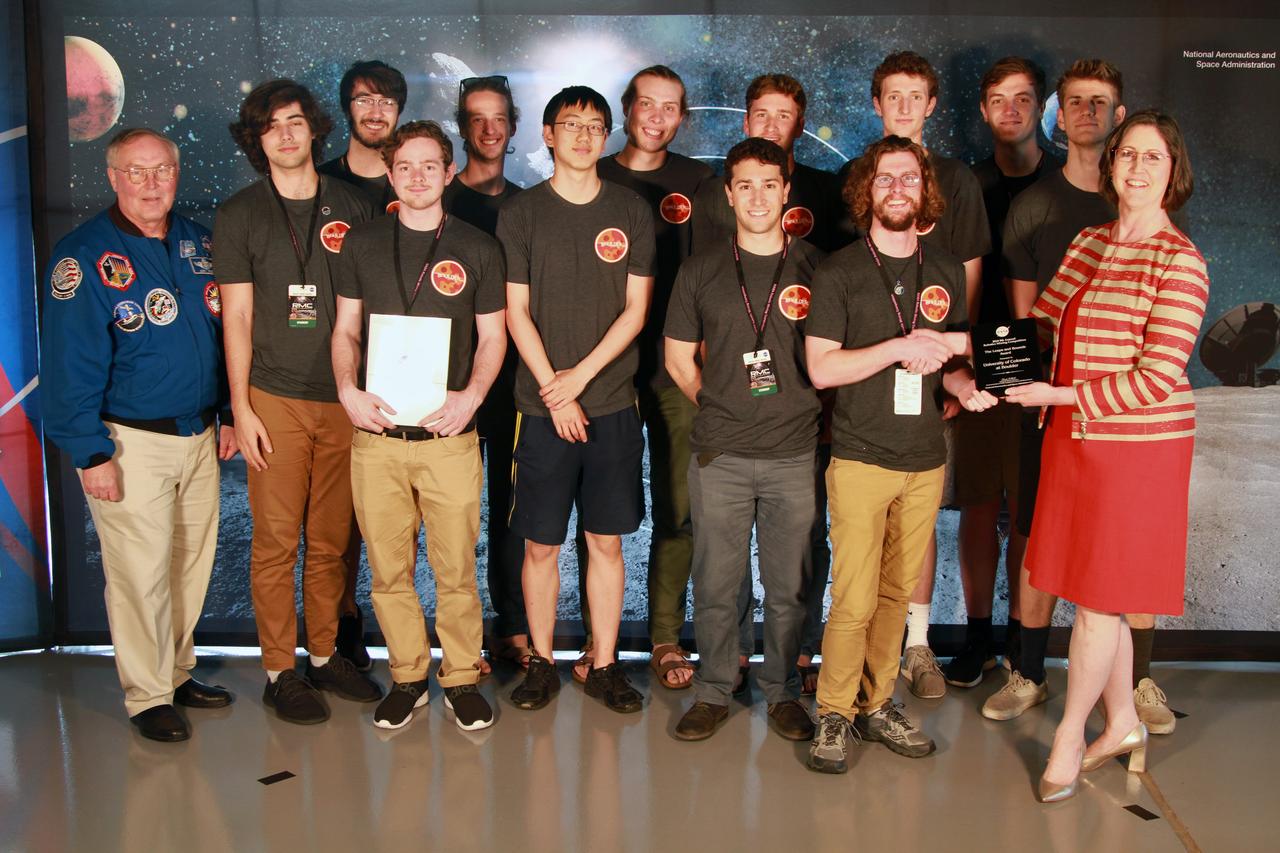
NASA's 9th Annual Robotic Mining Competition concludes with an awards ceremony May 18, 2018, at the Apollo/Saturn V Center at the Kennedy Space Center Visitor Complex in Florida. The team from the University of Colorado Boulder received the Leaps and Bounds Award for the most improvement in their Systems Engineering Paper. At left is retired NASA astronaut Jerry Ross. At right is Jonette Stecklein, lead systems engineering paper judge. More than 40 student teams from colleges and universities around the U.S. participated in the competition, May 14-18, by using their mining robots to dig in a supersized sandbox filled with BP-1, or simulated lunar soil, gravel and rocks, and participate in other competition requirements. The Robotic Mining Competition is a NASA Human Exploration and Operations Mission Directorate project designed to encourage students in science, technology, engineering and math, or STEM fields. The project provides a competitive environment to foster innovative ideas and solutions that could be used on NASA's deep space missions.
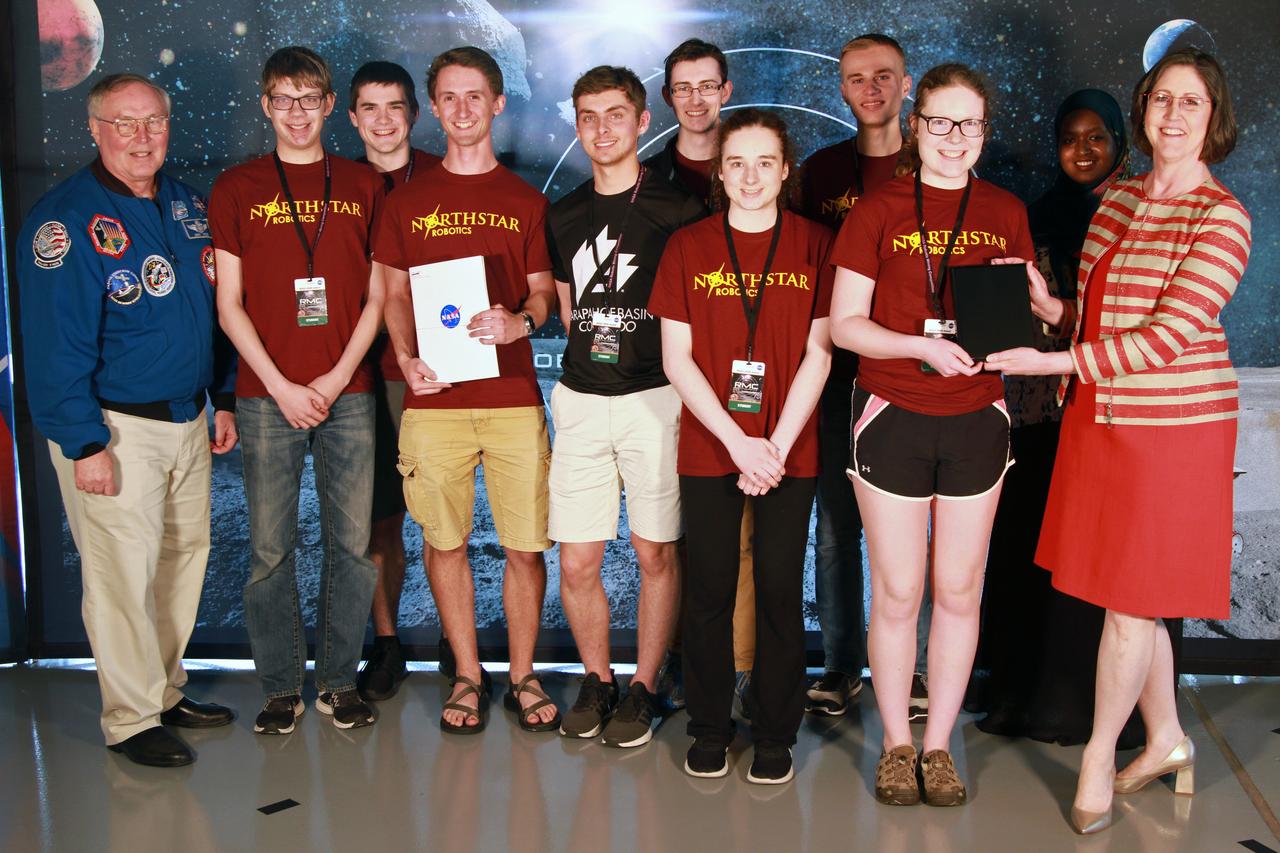
NASA's 9th Annual Robotic Mining Competition concludes with an awards ceremony May 18, 2018, at the Apollo/Saturn V Center at the Kennedy Space Center Visitor Complex in Florida. Team Northstar Robotics from the University of Minnesota - Twin Cities received an honorable mention award for their Systems Engineering Paper. At left is retired NASA astronaut Jerry Ross. At right is Jonette Stecklein, lead systems engineering paper judge. More than 40 student teams from colleges and universities around the U.S. participated in the competition, May 14-18, by using their mining robots to dig in a supersized sandbox filled with BP-1, or simulated lunar soil, gravel and rocks, and participate in other competition requirements. The Robotic Mining Competition is a NASA Human Exploration and Operations Mission Directorate project designed to encourage students in science, technology, engineering and math, or STEM fields. The project provides a competitive environment to foster innovative ideas and solutions that could be used on NASA's deep space missions.
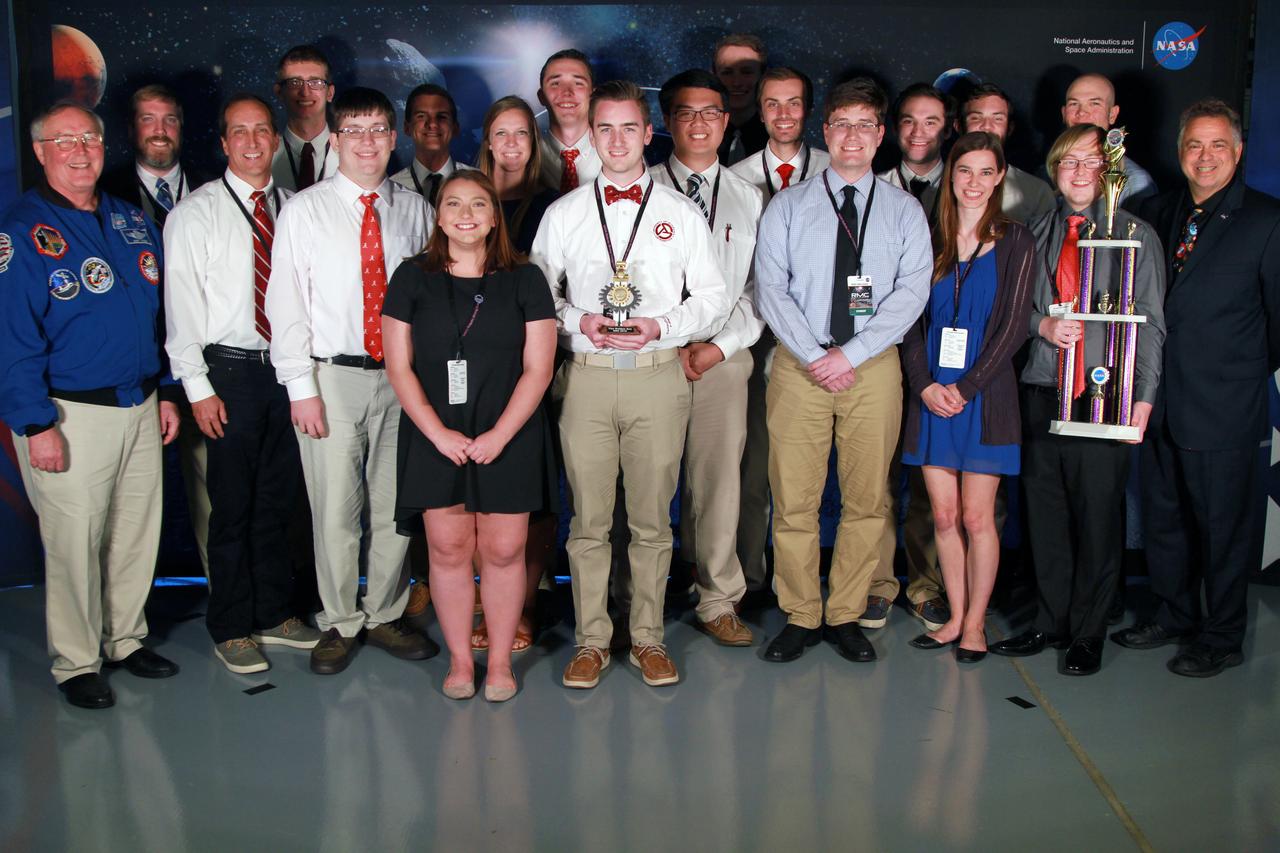
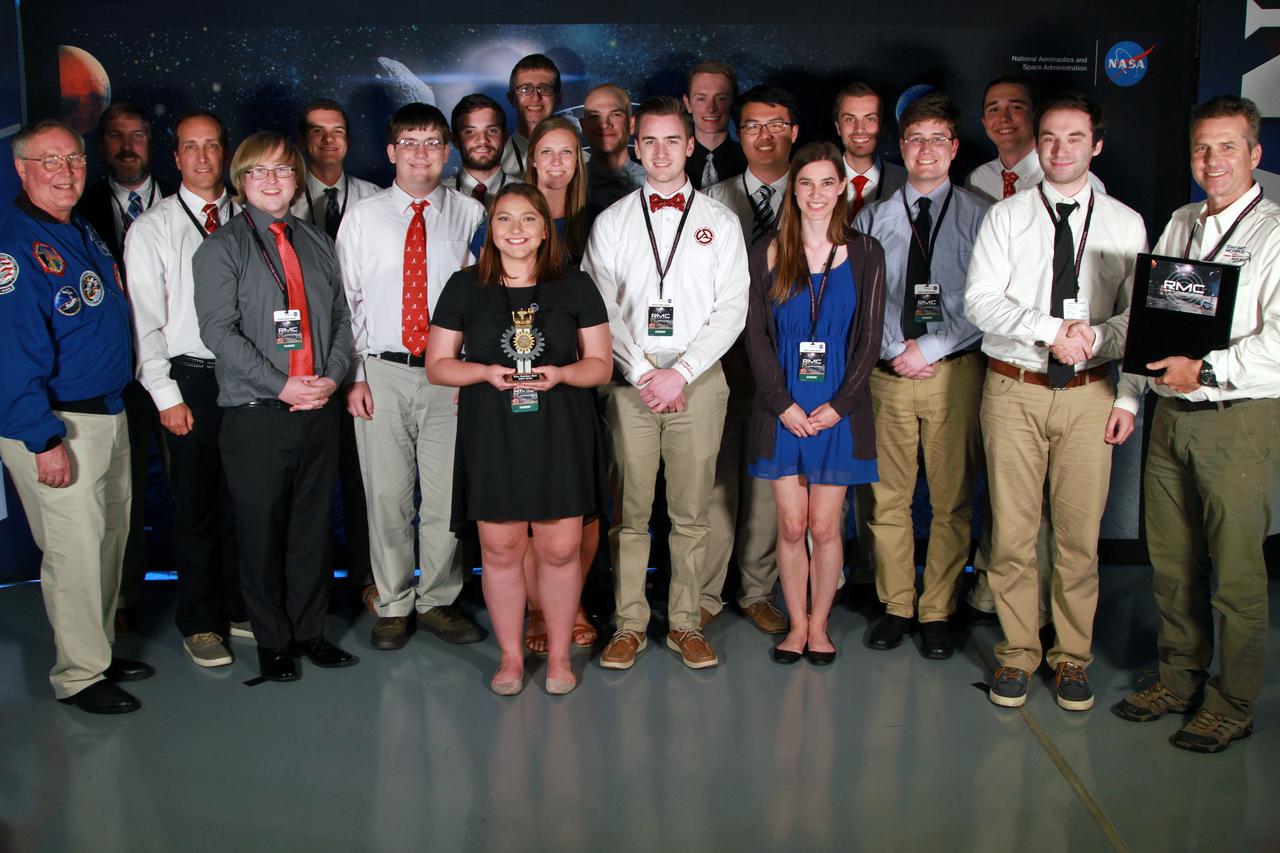
NASA's 9th Annual Robotic Mining Competition concludes with an awards ceremony May 18, 2018, at the Apollo/Saturn V Center at the Kennedy Space Center Visitor Complex in Florida. The University of Alabama Team Astrobotics received the top award, the Joe Kosmo Award for Excellence, which is given to the team that scores the most points during the competition. At far left in front is retired NASA astronaut Jerry Ross. At far right is Richard Johanboeke, NASA education specialist and project manager for the Robotic Mining Competition. More than 40 student teams from colleges and universities around the U.S. participated in the competition, May 14-18, by using their mining robots to dig in a supersized sandbox filled with BP-1, or simulated lunar soil, gravel and rocks, and participate in other competition requirements. The Robotic Mining Competition is a NASA Human Exploration and Operations Mission Directorate project designed to encourage students in science, technology, engineering and math, or STEM fields. The project provides a competitive environment to foster innovative ideas and solutions that could be used on NASA's deep space missions.
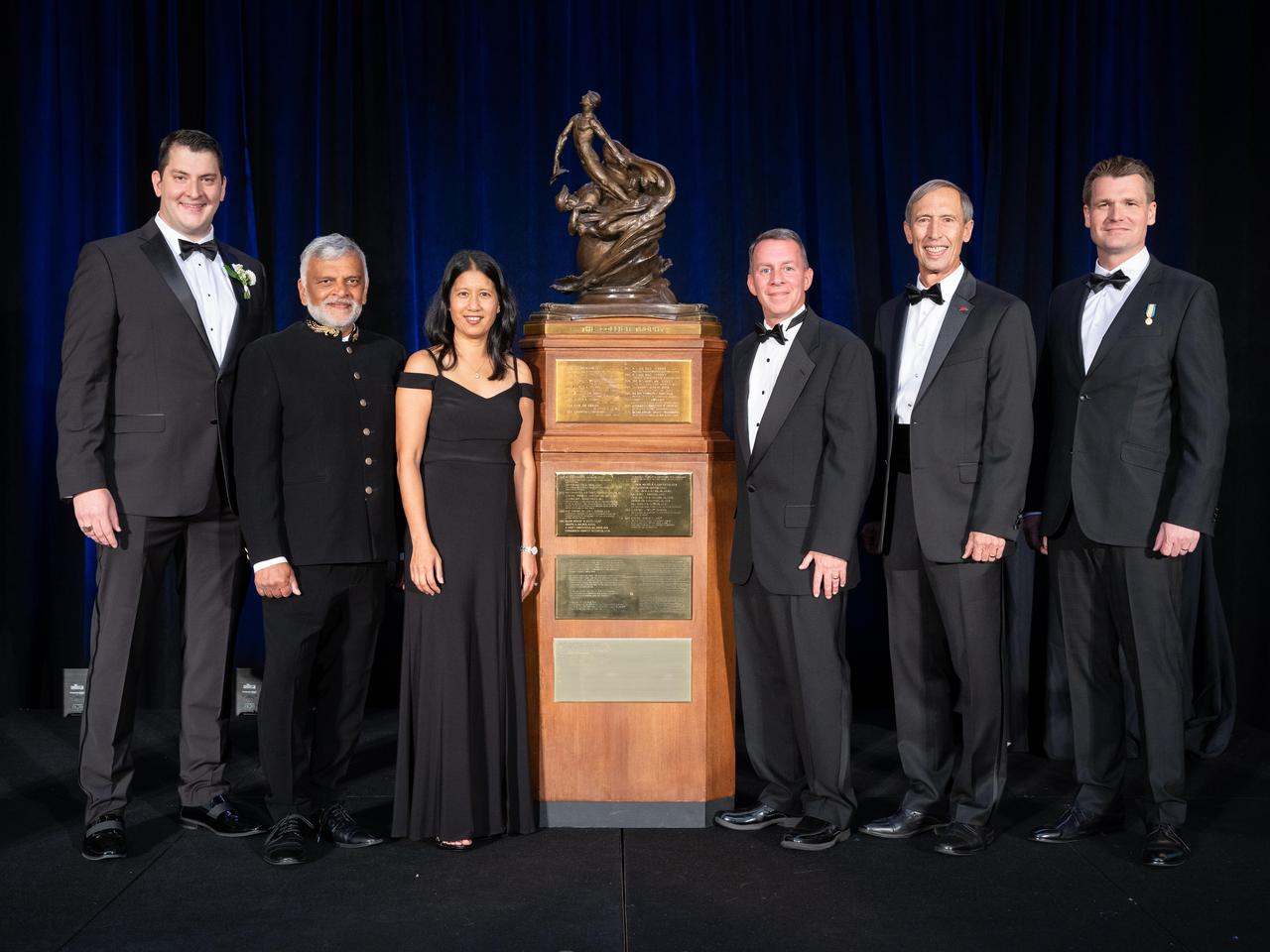
Members of NASA's Ingenuity Mars Helicopter team stand next to the Collier Trophy during the Robert J. Collier Dinner in Washington on June 9, 2022. The team was awarded the 2021 Collier Trophy "for the first powered, controlled flight of an aircraft on another planet, thereby opening the skies of Mars and other worlds for future scientific discovery and exploration," the award citation states. From left to right: Teddy Tzanetos, Ingenuity team lead at NASA's Jet Propulsion Laboratory; Bob Balaram, Ingenuity emeritus chief engineer at JPL; MiMi Aung, former Ingenuity project manager at JPL; Bobby Braun, former director for Planetary Science at JPL; Larry James, deputy director at JPL; Håvard Grip, Ingenuity chief pilot at JPL. This historic trophy – which is on permanent display at the Smithsonian Air and Space Museum in Washington – is awarded annually by the National Aeronautic Association "for the greatest achievement in aeronautics or astronautics in America, with respect to improving the performance, efficiency, and safety of air or space vehicles, the value of which has been thoroughly demonstrated by actual use during the preceding year." https://photojournal.jpl.nasa.gov/catalog/PIA25323
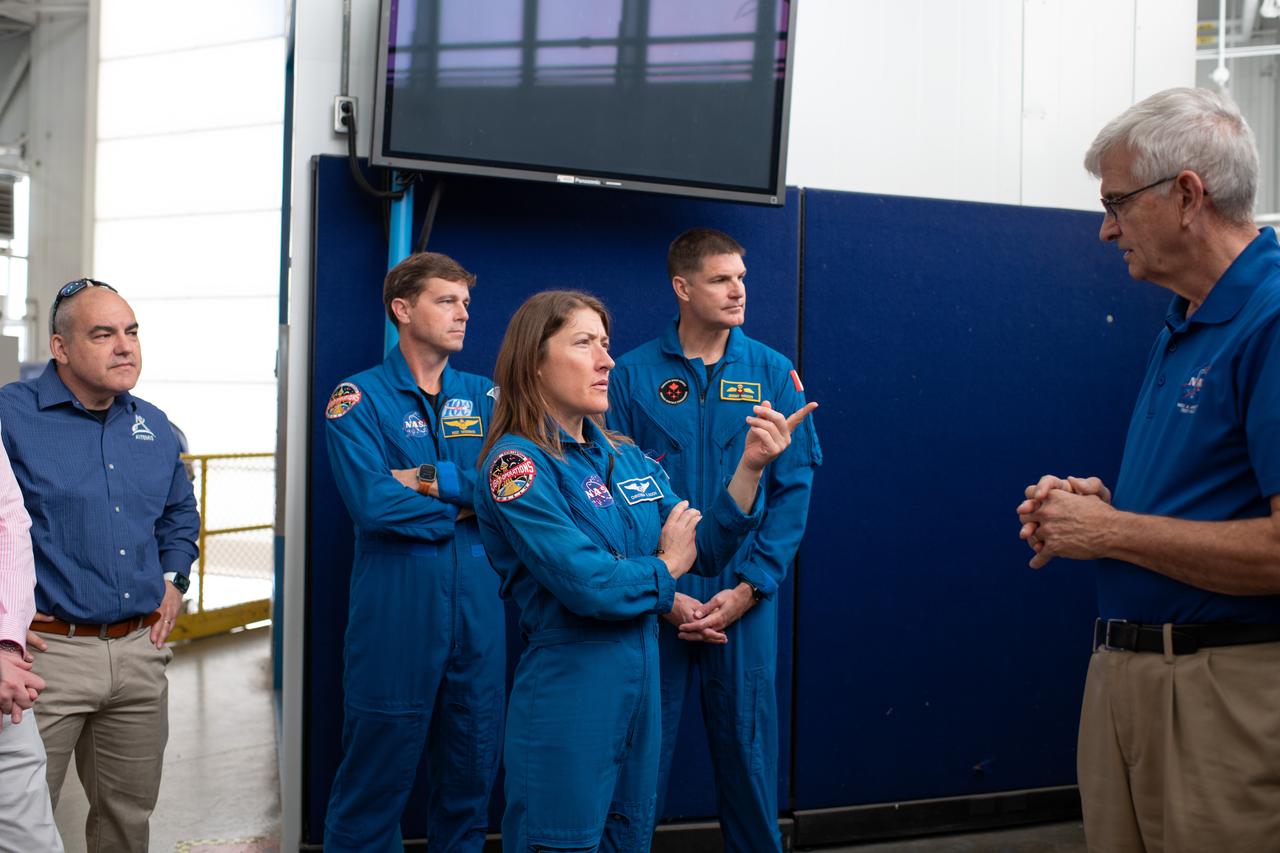
Tours were given of the In Space Propulsion Facility (ISP) in Sandusky, OH at Neil Armstrong Test Facility. NASA’s Facility is the world’s only high altitude test facility capable of full-scale rocket engine and launch vehicle system level tests. The facility supports mission profile thermal vacuum simulation and engine firing. Employees meet three of the four astronauts who will venture around the Moon on Artemis II, the first crewed flight paving the way for future lunar surface missions. Commander Reid Wiseman and Mission Specialists Christina Koch and Jeremy Hansen will be on hand to discuss their upcoming mission and participate in a Question and Answer session with employees afterward. Hansen is an astronaut with the Canadian Space Agency. Victor Glover, the pilot and fourth crew member, will not be present. Awards were given to employees that participated in Orion for Artemis I.
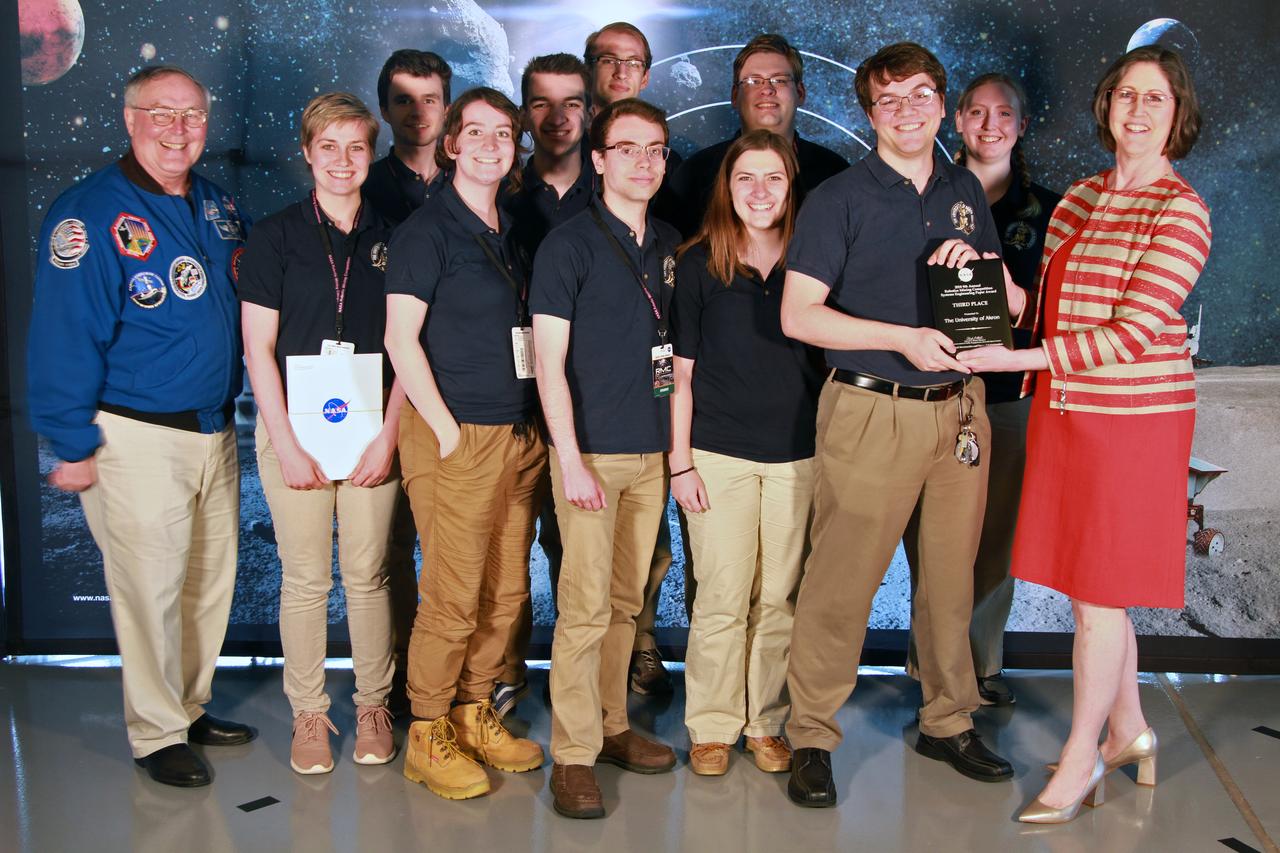
NASA's 9th Annual Robotic Mining Competition concludes with an awards ceremony May 18, 2018, at the Apollo/Saturn V Center at the Kennedy Space Center Visitor Complex in Florida. The team from The University of Akron received third place for their Systems Engineering Paper. At left is retired NASA astronaut Jerry Ross. At right is Jonette Stecklein, lead systems engineering paper judge. More than 40 student teams from colleges and universities around the U.S. participated in the competition, May 14-18, by using their mining robots to dig in a supersized sandbox filled with BP-1, or simulated lunar soil, gravel and rocks, and participate in other competition requirements. The Robotic Mining Competition is a NASA Human Exploration and Operations Mission Directorate project designed to encourage students in science, technology, engineering and math, or STEM fields. The project provides a competitive environment to foster innovative ideas and solutions that could be used on NASA's deep space missions.
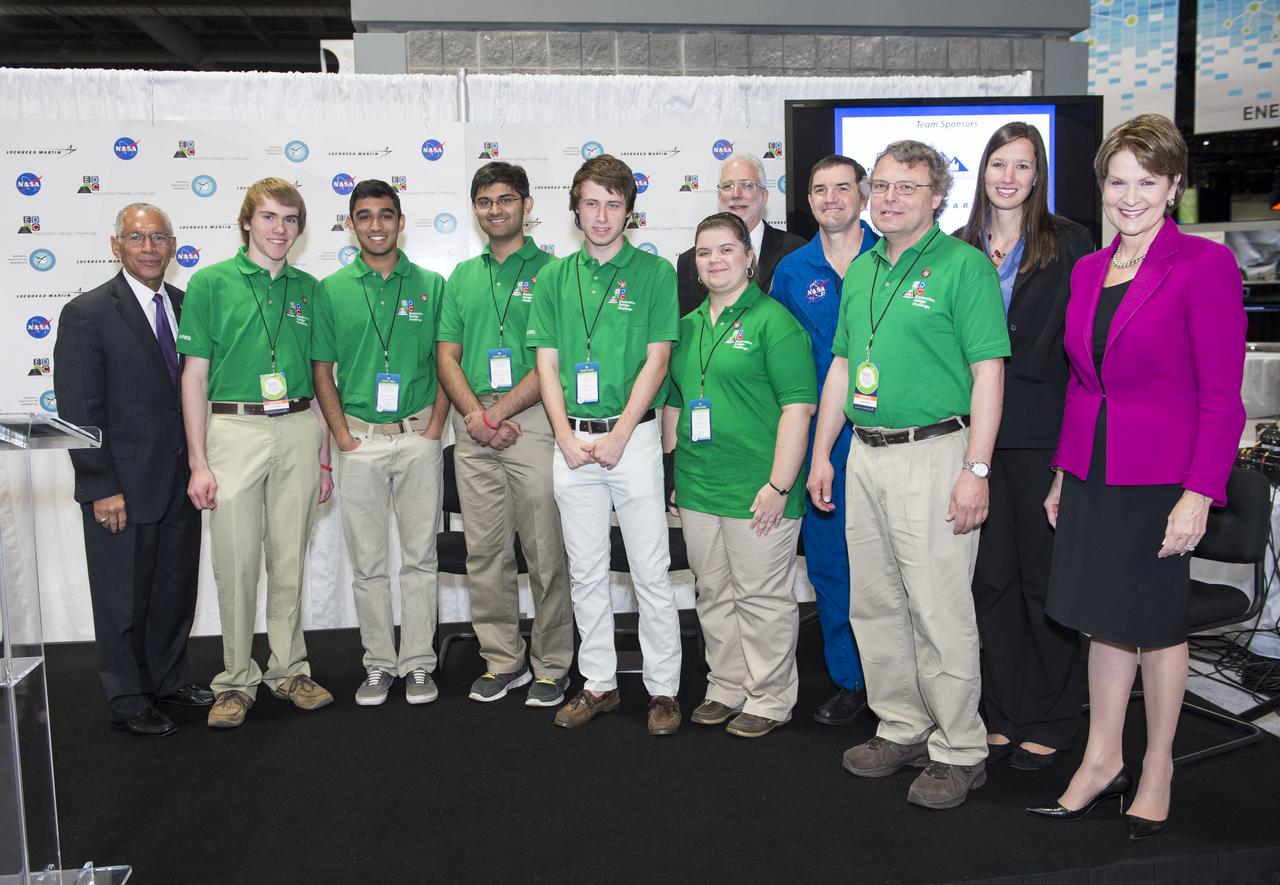
NASA’s Administrator, Charles Bolden (left), President/CEO of Lockheed Martin, Marillyn Hewson (right), and astronaut Rex Walheim (back row) pose for a group photo with the winning high school team in the Exploration Design Challenge. Team ARES from the Governors School for Science and Technology in Hampton, Va. won the challenge with their radiation shield design, which will be built and flown aboard the Orion/EFT-1. The award was announced at the USA Science and Engineering Festival on April 25, 2014 at the Washington Convention Center. Photo Credit: (NASA/Aubrey Gemignani)
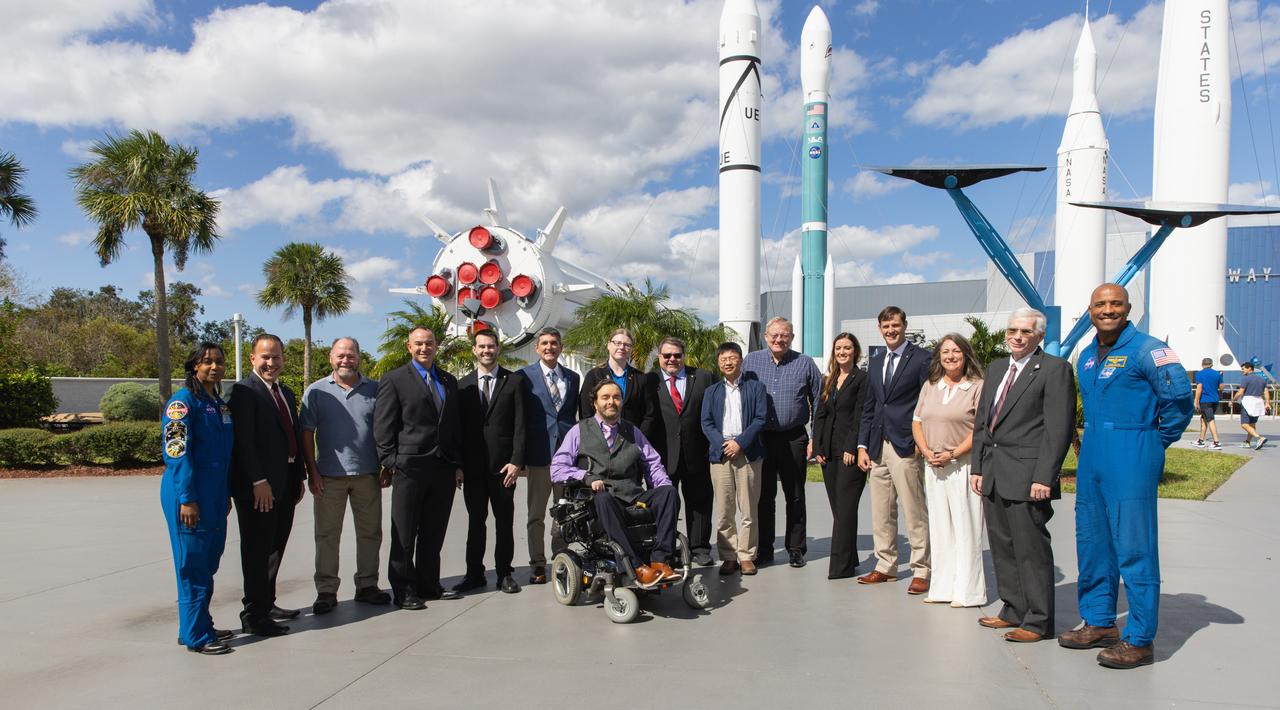
NASA astronauts Stephanie Wilson and Victor Glover pose with recipients of the Silver Snoopy award after the ceremony on Thursday, Oct. 17, at the Kennedy Space Center Visitor Complex in Florida. From left to right, those photographed include Wilson; Marcos Otero-Cruz, Defense Contract Management Agency; Mark Burton, Jacobs Technology; Kevin Vega, NASA Engineering; John Posey, NASA Engineering; Miles Ashley, NASA Engineering; Jamie Szafran, NASA Engineering; Paul Kuracz, NASA Engineering; Wilson Zheng, Jacobs Technology; Mark Dykstra, Defense Contract Management Agency; Elizabeth Cook, Safety and Mission Assurance; Dean Kendall, Jacobs Technology; Connie Lehan, NASA Engineering; Paul Janes, Jacobs Technology; Glover; and in front, Salim Nasser, NASA Engineering. The Silver Snoopy is part of NASA’s Space Flight Awareness Program, which recognizes outstanding job performances and contributions by civil servants and contract employees. It focuses on excellence in quality and safety in support of human spaceflight.
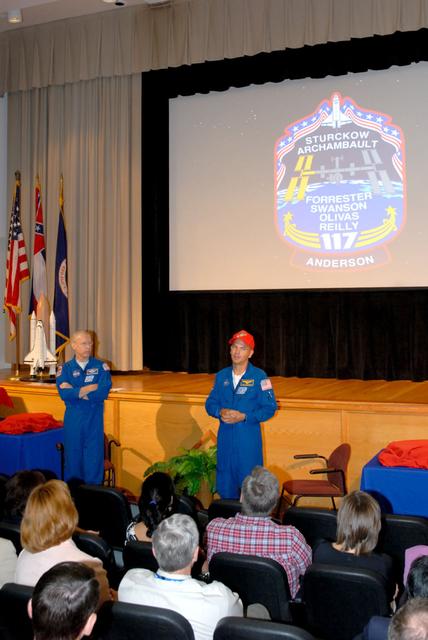
Astronauts Rick Sturckow (right) and Pat Forrester make a presentation Aug. 2 at NASA Stennis Space Center near Bay St. Louis, Miss., about their recent space shuttle mission, STS-117. Sturckow and Forrester thanked employees for the reliability and safe performance of the space shuttle's main engines, which are all tested and proved flight-worthy at SSC. The astronauts delivered a video of their mission's highlights, held a question-and-answer session, met one-on-one with employees and presented two Silver Snoopy awards during their visit. The STS-117 mission, which launched June 8, delivered a truss segment and a set of U.S. solar arrays, batteries and associated equipment to the International Space Station. Sturckow commanded the mission; Forrester was a mission specialist who performed two of STS-117's four spacewalks.
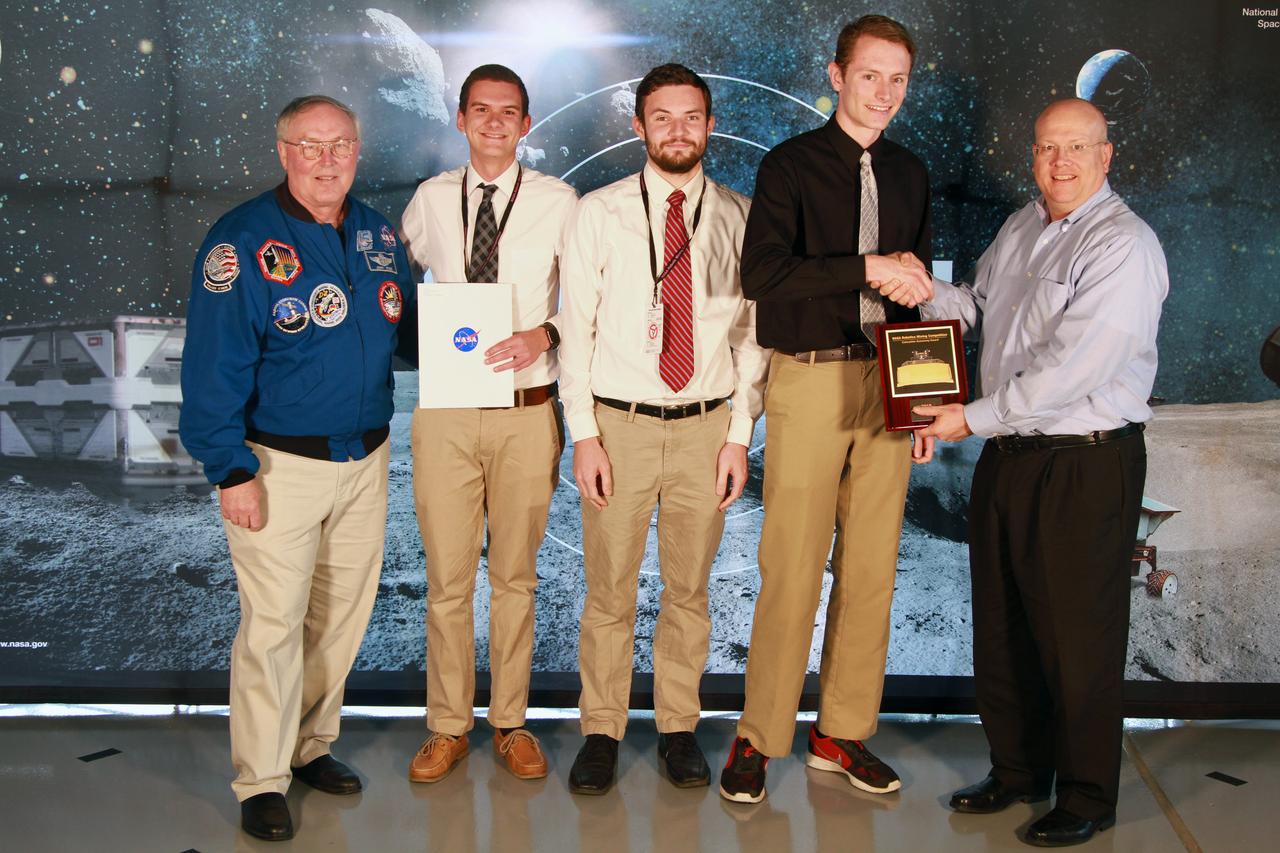
NASA's 9th Annual Robotic Mining Competition concludes with an awards ceremony May 18, 2018, at the Apollo/Saturn V Center at the Kennedy Space Center Visitor Complex in Florida. The team from North Dakota State University in collaboration with James Madison University received second place in the Caterpillar Award for Autonomy. At left is retired NASA astronaut Jerry Ross. At right is Eric Reiners, program manager with the Innovation & Technology Development Division of Caterpillar Inc. More than 40 student teams from colleges and universities around the U.S. participated in the competition, May 14-18, by using their mining robots to dig in a supersized sandbox filled with BP-1, or simulated lunar soil, gravel and rocks, and participate in other competition requirements. The Robotic Mining Competition is a NASA Human Exploration and Operations Mission Directorate project designed to encourage students in science, technology, engineering and math, or STEM fields. The project provides a competitive environment to foster innovative ideas and solutions that could be used on NASA's deep space missions.
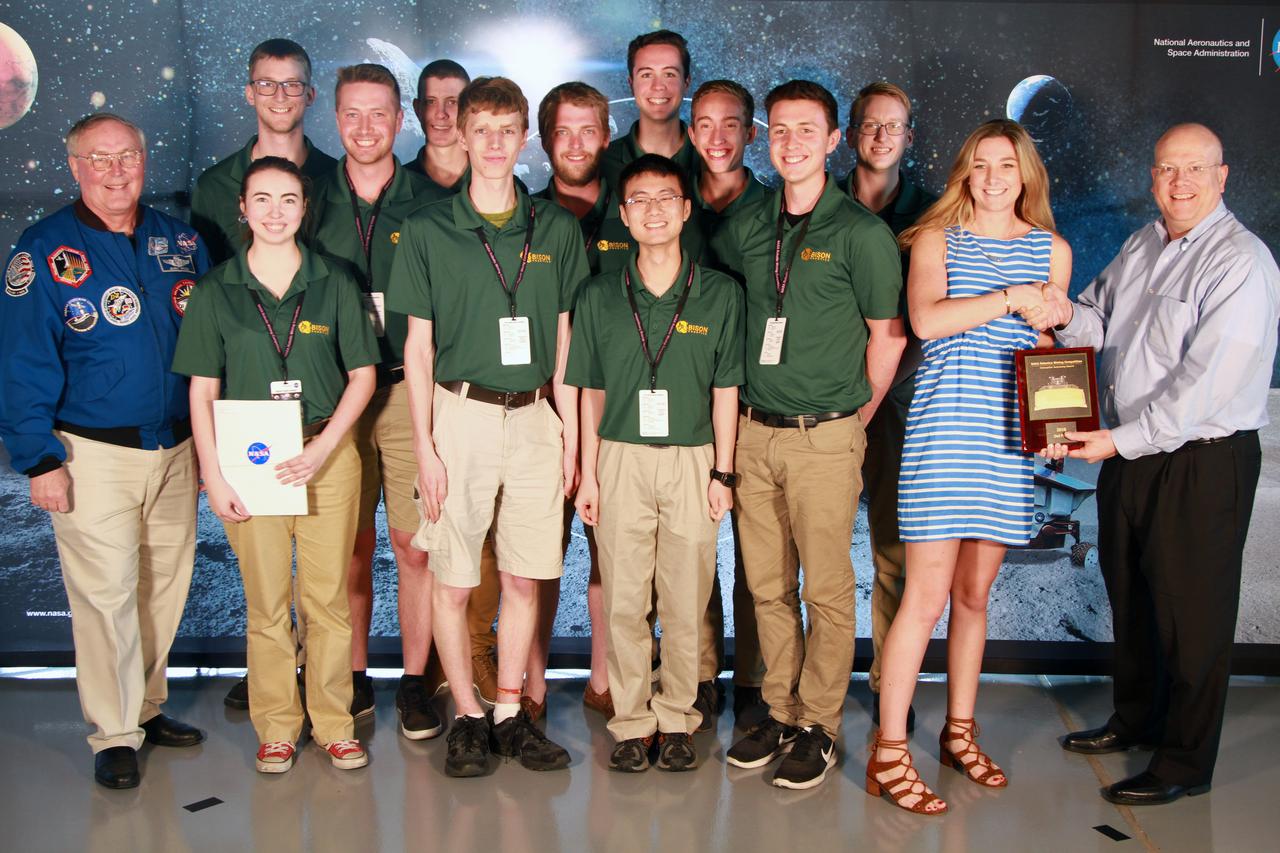
NASA's 9th Annual Robotic Mining Competition concludes with an awards ceremony May 18, 2018, at the Apollo/Saturn V Center at the Kennedy Space Center Visitor Complex in Florida. The University of Alabama Team Astrobotics received first place in the Caterpillar Award for Autonomy. At left is retired NASA astronaut Jerry Ross. At right is Eric Reiners, program manager with the Innovation & Technology Development Division of Caterpillar Inc. More than 40 student teams from colleges and universities around the U.S. participated in the competition, May 14-18, by using their mining robots to dig in a supersized sandbox filled with BP-1, or simulated lunar soil, gravel and rocks, and participate in other competition requirements. The Robotic Mining Competition is a NASA Human Exploration and Operations Mission Directorate project designed to encourage students in science, technology, engineering and math, or STEM fields. The project provides a competitive environment to foster innovative ideas and solutions that could be used on NASA's deep space missions.
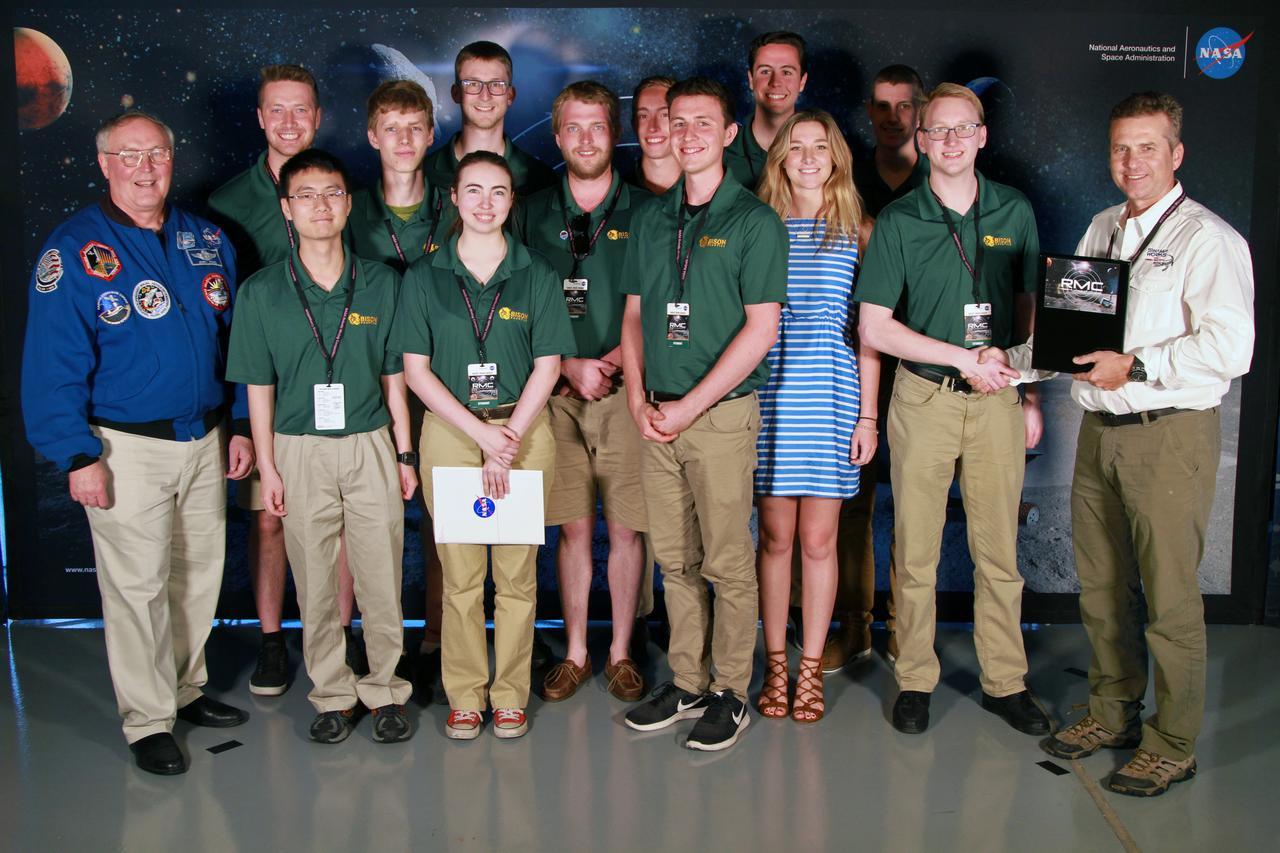
NASA's 9th Annual Robotic Mining Competition concludes with an awards ceremony May 18, 2018, at the Apollo/Saturn V Center at the Kennedy Space Center Visitor Complex in Florida. The team from North Dakota University in collaboration with James Madison University received second place in the On-Site Mining Award. At left is retired NASA astronaut Jerry Ross. At right is Rob Mueller, lead mining judge. More than 40 student teams from colleges and universities around the U.S. participated in the competition, May 14-18, by using their mining robots to dig in a supersized sandbox filled with BP-1, or simulated lunar soil, gravel and rocks, and participate in other competition requirements. The Robotic Mining Competition is a NASA Human Exploration and Operations Mission Directorate project designed to encourage students in science, technology, engineering and math, or STEM fields. The project provides a competitive environment to foster innovative ideas and solutions that could be used on NASA's deep space missions.
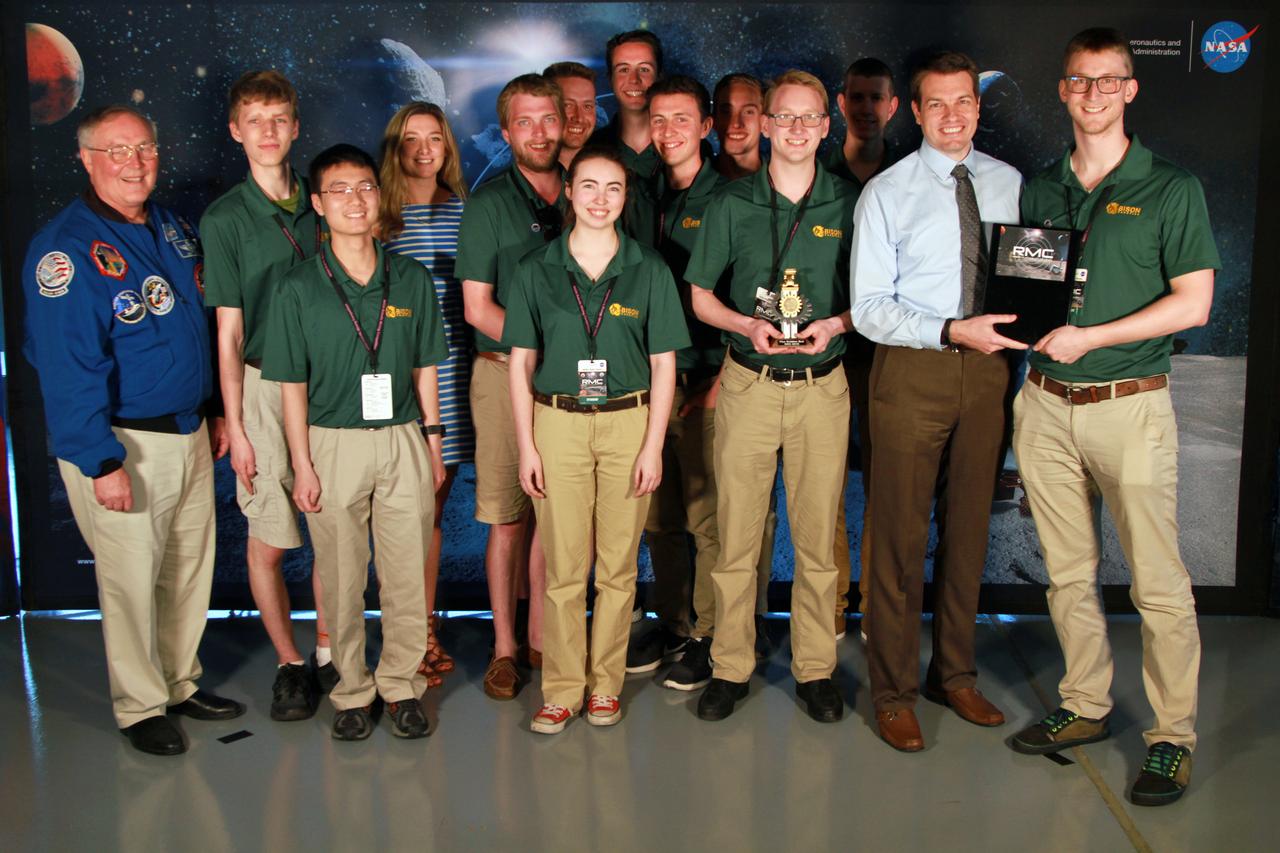
NASA's 9th Annual Robotic Mining Competition concludes with an awards ceremony May 18, 2018, at the Apollo/Saturn V Center at the Kennedy Space Center Visitor Complex in Florida. The team from North Dakota University in collaboration with James Madison University received first place in the Slide Presentation and Demonstration award category. At left is retired NASA astronaut Jerry Ross. At right is Daniel Hull, lead presentation judge. More than 40 student teams from colleges and universities around the U.S. participated in the competition, May 14-18, by using their mining robots to dig in a supersized sandbox filled with BP-1, or simulated lunar soil, gravel and rocks, and participate in other competition requirements. The Robotic Mining Competition is a NASA Human Exploration and Operations Mission Directorate project designed to encourage students in science, technology, engineering and math, or STEM fields. The project provides a competitive environment to foster innovative ideas and solutions that could be used on NASA's deep space missions.
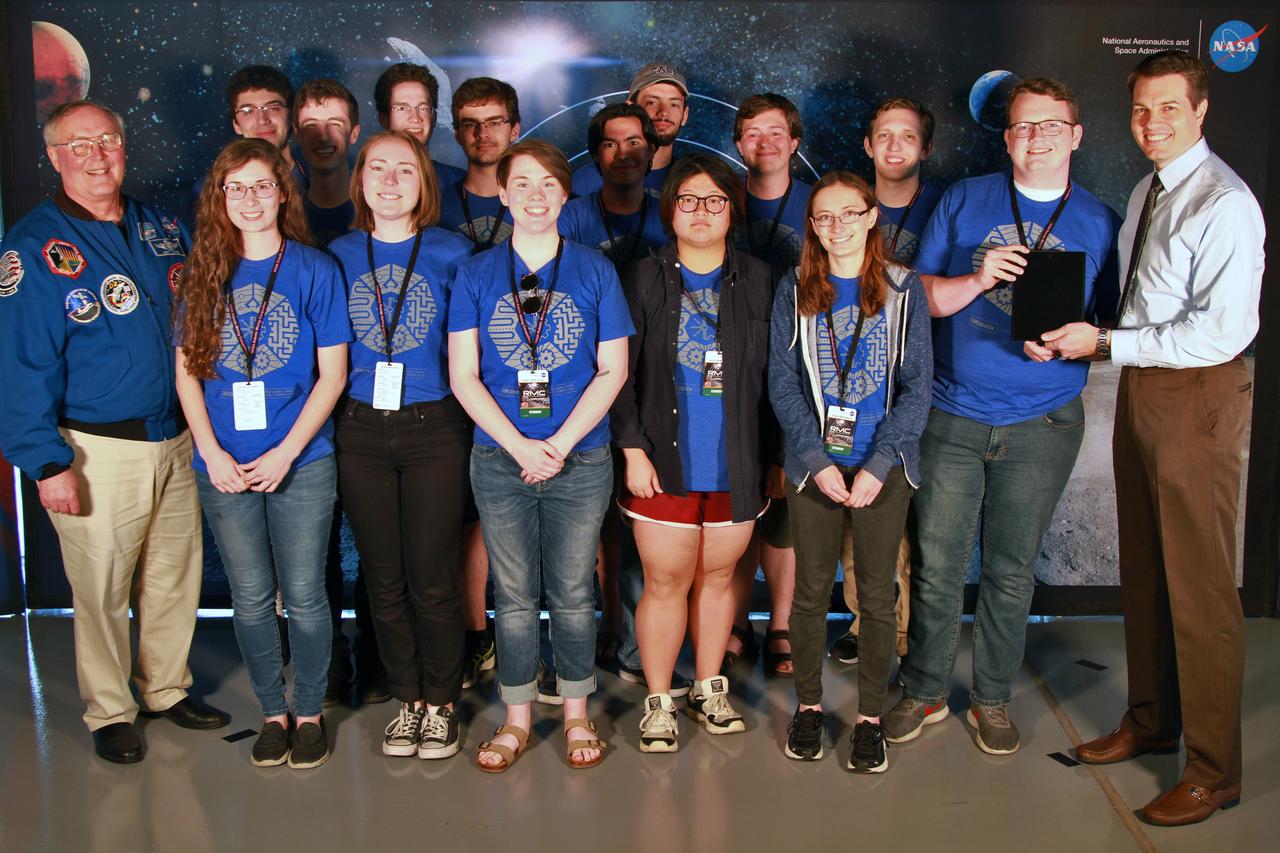
NASA's 9th Annual Robotic Mining Competition concludes with an awards ceremony May 18, 2018, at the Apollo/Saturn V Center at the Kennedy Space Center Visitor Complex in Florida. The team from Case Western Reserve University received third place in the Slide Presentation and Demonstration award category. At left is retired NASA astronaut Jerry Ross. At right is Daniel Hull, lead presentation judge. More than 40 student teams from colleges and universities around the U.S. participated in the competition, May 14-18, by using their mining robots to dig in a supersized sandbox filled with BP-1, or simulated lunar soil, gravel and rocks, and participate in other competition requirements. The Robotic Mining Competition is a NASA Human Exploration and Operations Mission Directorate project designed to encourage students in science, technology, engineering and math, or STEM fields. The project provides a competitive environment to foster innovative ideas and solutions that could be used on NASA's deep space missions.
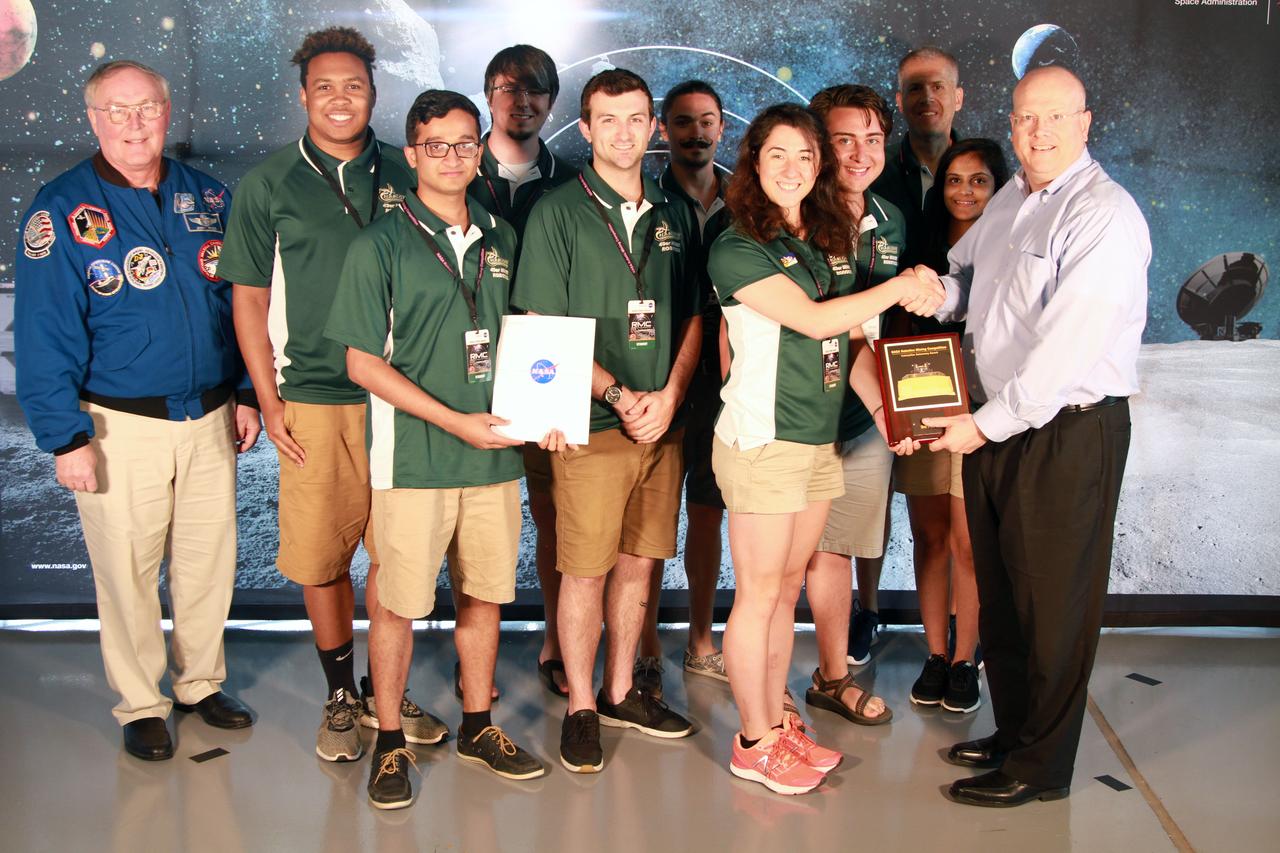
NASA's 9th Annual Robotic Mining Competition concludes with an awards ceremony May 18, 2018, at the Apollo/Saturn V Center at the Kennedy Space Center Visitor Complex in Florida. The team from the University of North Carolina at Charlotte received third place in the Caterpillar Award for Autonomy. At left is retired NASA astronaut Jerry Ross. At right is Eric Reiners, program manager with the Innovation & Technology Development Division of Caterpillar Inc. More than 40 student teams from colleges and universities around the U.S. participated in the competition, May 14-18, by using their mining robots to dig in a supersized sandbox filled with BP-1, or simulated lunar soil, gravel and rocks, and participate in other competition requirements. The Robotic Mining Competition is a NASA Human Exploration and Operations Mission Directorate project designed to encourage students in science, technology, engineering and math, or STEM fields. The project provides a competitive environment to foster innovative ideas and solutions that could be used on NASA's deep space missions.
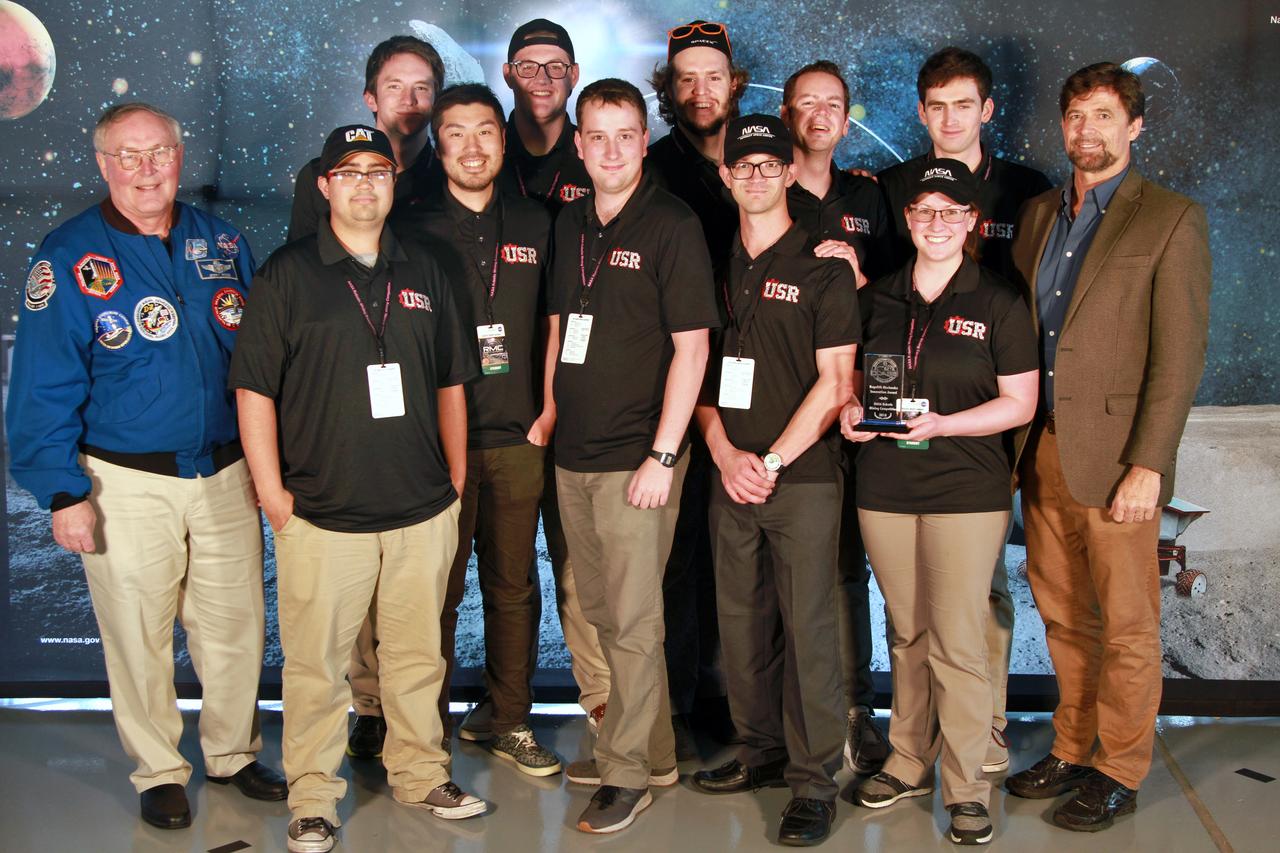
NASA's 9th Annual Robotic Mining Competition concludes with an awards ceremony May 18, 2018, at the Apollo/Saturn V Center at the Kennedy Space Center Visitor Complex in Florida. The Utah Student Robotics team from The University of Utah received The Regolith Mechanics Award for the best example of a real granular innovation that identified a specific regolith mechanics problem and intentionally improved their robot design to deal with it. At left is retired NASA astronaut Jerry Ross. At right is Phil Metzger, mining judge. More than 40 student teams from colleges and universities around the U.S. participated in the competition, May 14-18, by using their mining robots to dig in a supersized sandbox filled with BP-1, or simulated lunar soil, gravel and rocks, and participate in other competition requirements. The Robotic Mining Competition is a NASA Human Exploration and Operations Mission Directorate project designed to encourage students in science, technology, engineering and math, or STEM fields. The project provides a competitive environment to foster innovative ideas and solutions that could be used on NASA's deep space missions.
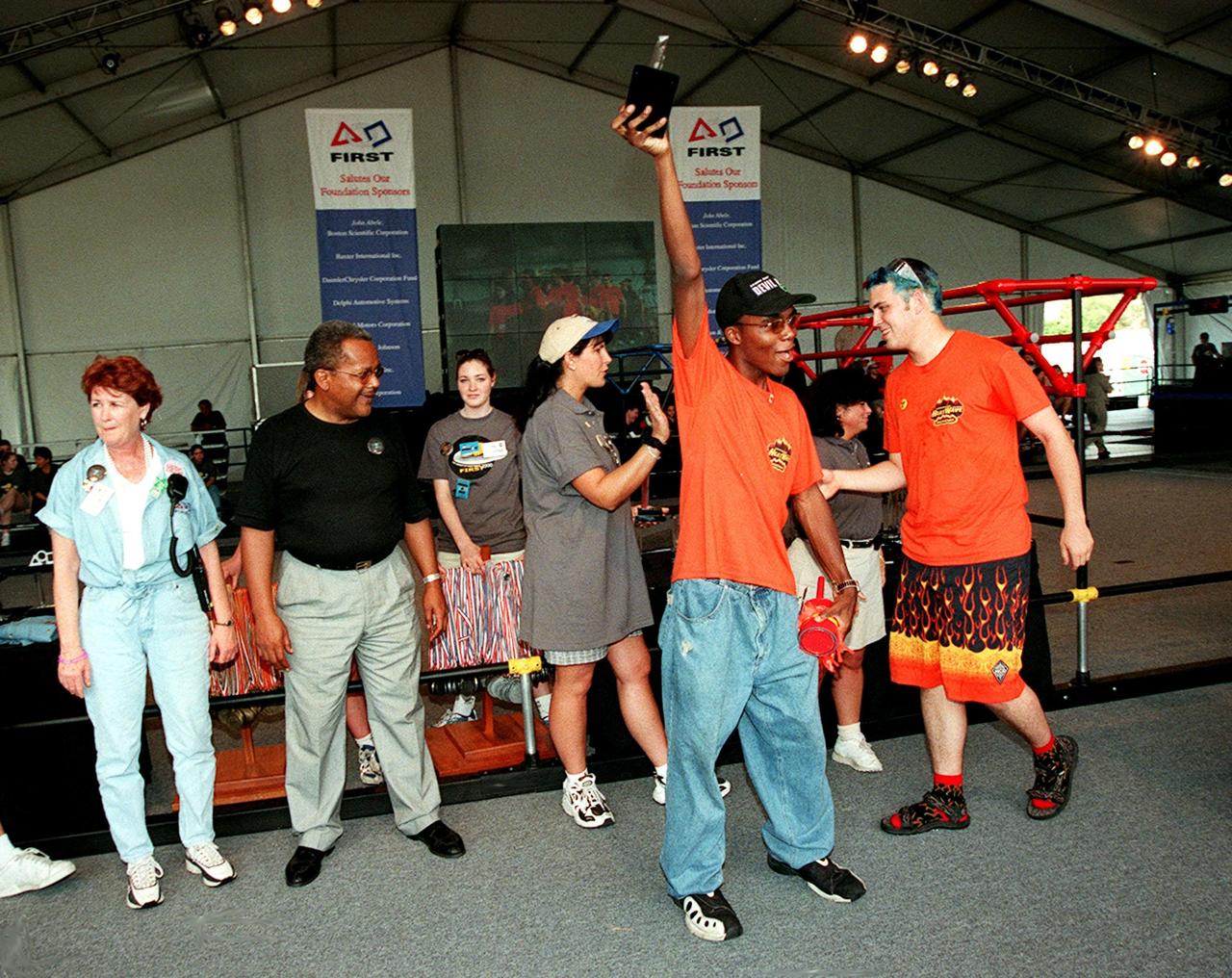
Members of the team known as Heatwave, from St. Petersburg, Fla., are excited after receiving an award at the FIRST (For Inspiration and Recognition of Science and Technology) Southeast Regional competition held at the KSC Visitor Complex. At left are Carol Cavanaugh, Public Affairs, and Nap Carroll, chief financial officer, Kennedy Space Center. Heatwave came in second for the final competition, plus received awards for Number One Seed, Best Offensive round, and the DaimlerChrysler Team Spirit. Teams of high school students from all over the country tested the limits of their imagination using robots they designed, with the support of business and engineering professionals and corporate sponsors, to compete in a technological battle against other schools' robots. Of the 30 high school teams competing at the Southeast Regional event, 16 were Florida teams co-sponsored by NASA and KSC contractors. Local high schools participating are Astronaut, Bayside, Cocoa Beach, Eau Gallie, Melbourne, Melbourne Central Catholic, Palm Bay, Rockledge, Satellite, and Titusville
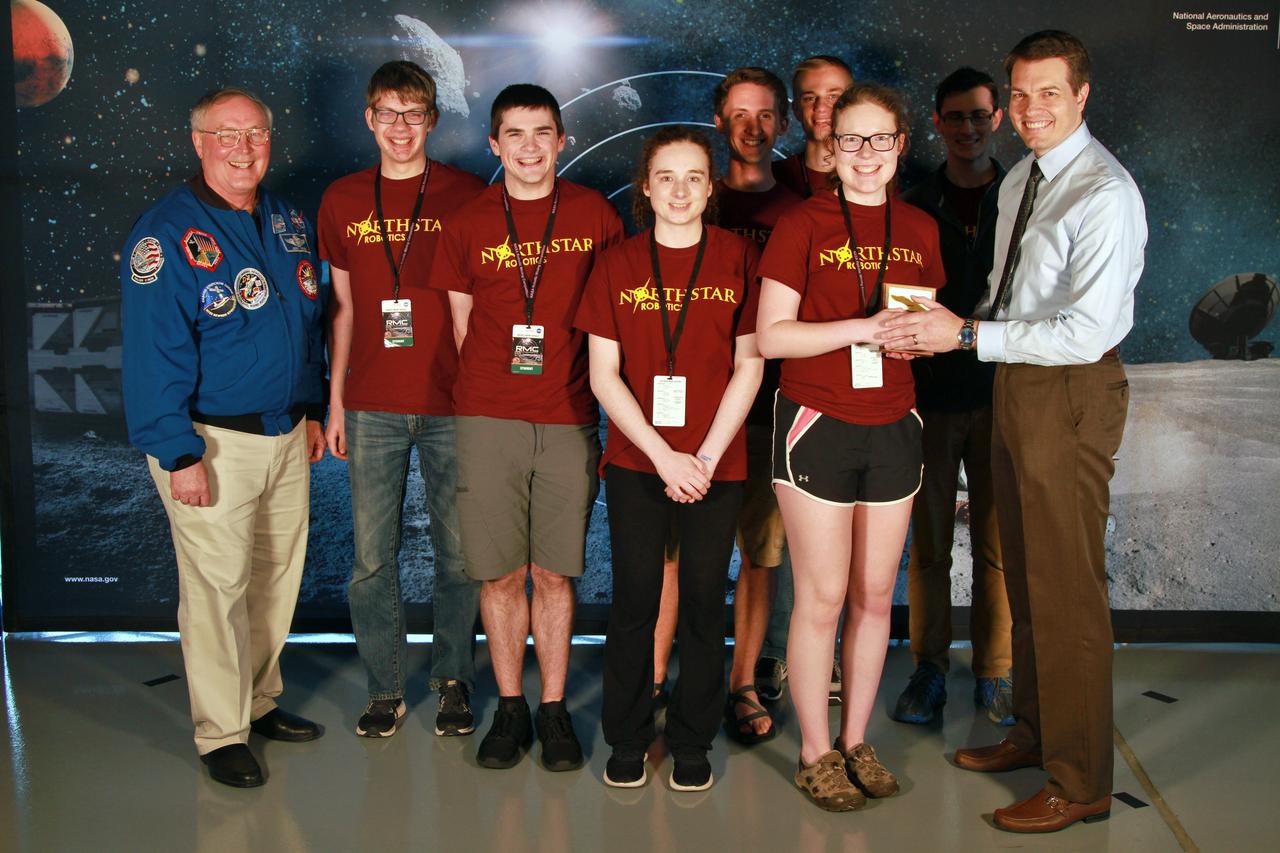
NASA's 9th Annual Robotic Mining Competition concludes with an awards ceremony May 18, 2018, at the Apollo/Saturn V Center at the Kennedy Space Center Visitor Complex in Florida. Team Northstar Robotics from the University of Minnesota - Twin Cities received the Golden E-Stop Award for their robot's safety system. At left is retired NASA astronaut Jerry Ross. At right is Daniel Hull, lead presentation judge. More than 40 student teams from colleges and universities around the U.S. participated in the competition, May 14-18, by using their mining robots to dig in a supersized sandbox filled with BP-1, or simulated lunar soil, gravel and rocks, and participate in other competition requirements. The Robotic Mining Competition is a NASA Human Exploration and Operations Mission Directorate project designed to encourage students in science, technology, engineering and math, or STEM fields. The project provides a competitive environment to foster innovative ideas and solutions that could be used on NASA's deep space missions.
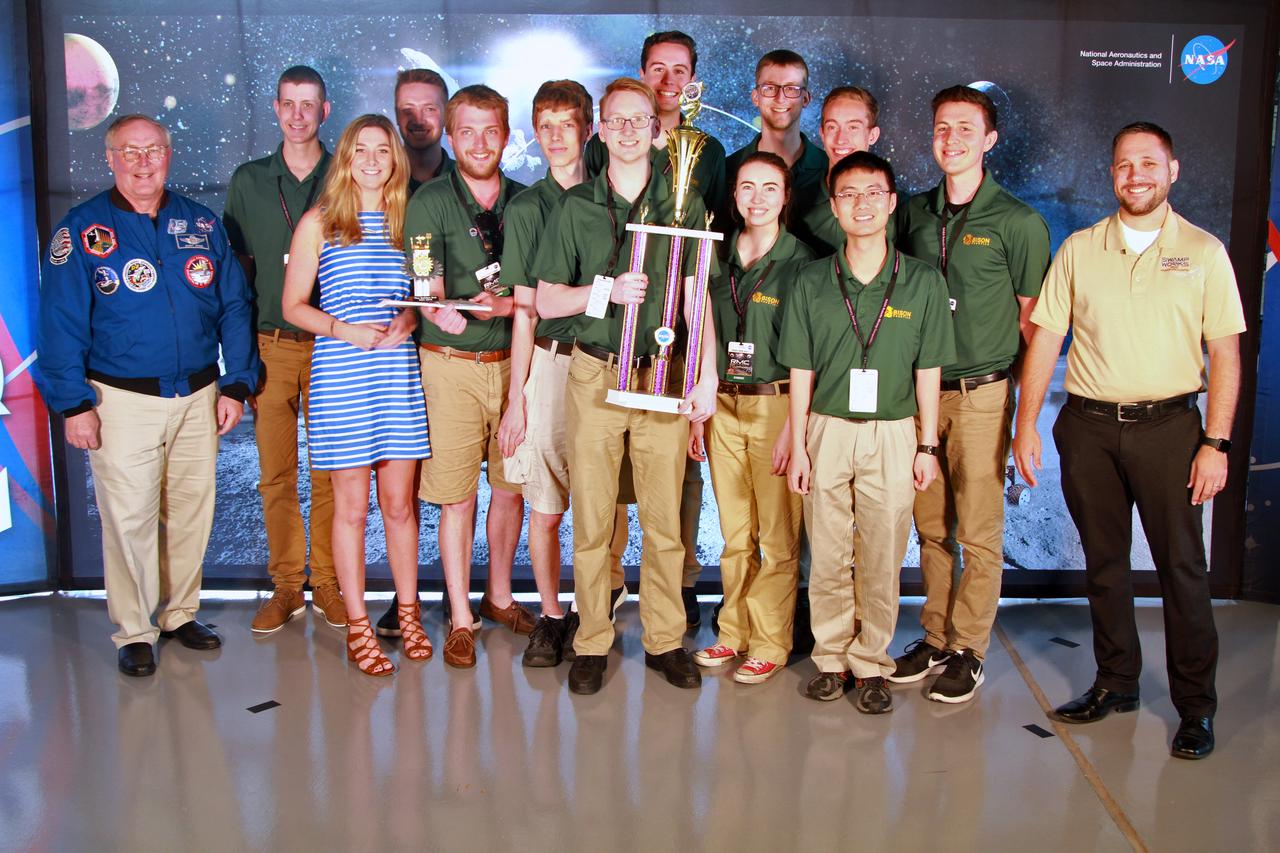
NASA's 9th Annual Robotic Mining Competition concludes with an awards ceremony May 18, 2018, at the Apollo/Saturn V Center at the Kennedy Space Center Visitor Complex in Florida. The team from North Dakota State University in collaboration with James Madison University received the IEEE Judges' Innovation Award for the most innovative design of a mining robot. At left is retired NASA astronaut Jerry Ross. At right is Michael Johansen, mining judge. More than 40 student teams from colleges and universities around the U.S. participated in the competition, May 14-18, by using their mining robots to dig in a supersized sandbox filled with BP-1, or simulated lunar soil, gravel and rocks, and participate in other competition requirements. The Robotic Mining Competition is a NASA Human Exploration and Operations Mission Directorate project designed to encourage students in science, technology, engineering and math, or STEM fields. The project provides a competitive environment to foster innovative ideas and solutions that could be used on NASA's deep space missions.
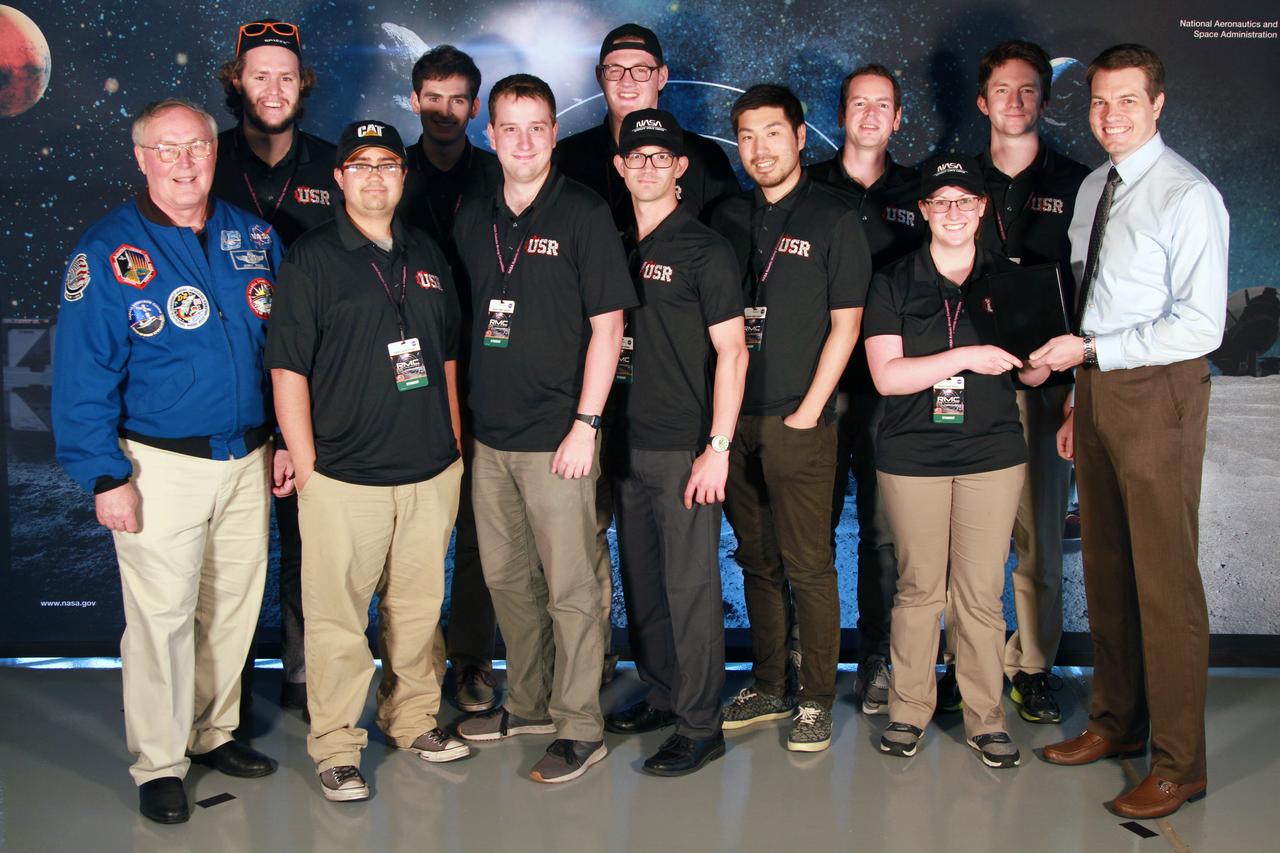
NASA's 9th Annual Robotic Mining Competition concludes with an awards ceremony May 18, 2018, at the Apollo/Saturn V Center at the Kennedy Space Center Visitor Complex in Florida. The Utah Student Robotics team from The University of Utah received second place in the Slide Presentation and Demonstration award category. At left is retired NASA astronaut Jerry Ross. At right is Daniel Hull, lead presentation judge. More than 40 student teams from colleges and universities around the U.S. participated in the competition, May 14-18, by using their mining robots to dig in a supersized sandbox filled with BP-1, or simulated lunar soil, gravel and rocks, and participate in other competition requirements. The Robotic Mining Competition is a NASA Human Exploration and Operations Mission Directorate project designed to encourage students in science, technology, engineering and math, or STEM fields. The project provides a competitive environment to foster innovative ideas and solutions that could be used on NASA's deep space missions.
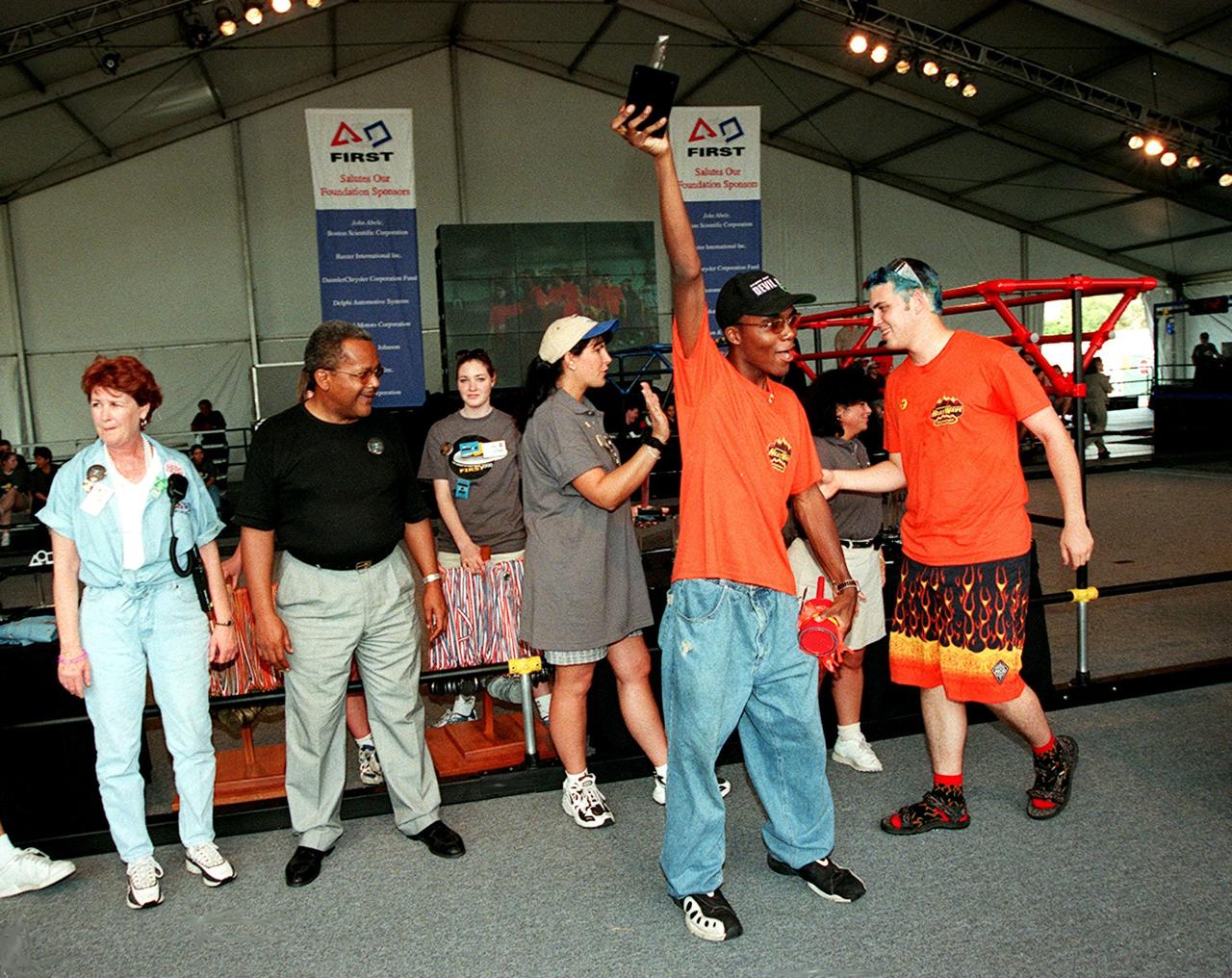
Members of the team known as Heatwave, from St. Petersburg, Fla., are excited after receiving an award at the FIRST (For Inspiration and Recognition of Science and Technology) Southeast Regional competition held at the KSC Visitor Complex. At left are Carol Cavanaugh, Public Affairs, and Nap Carroll, chief financial officer, Kennedy Space Center. Heatwave came in second for the final competition, plus received awards for Number One Seed, Best Offensive round, and the DaimlerChrysler Team Spirit. Teams of high school students from all over the country tested the limits of their imagination using robots they designed, with the support of business and engineering professionals and corporate sponsors, to compete in a technological battle against other schools' robots. Of the 30 high school teams competing at the Southeast Regional event, 16 were Florida teams co-sponsored by NASA and KSC contractors. Local high schools participating are Astronaut, Bayside, Cocoa Beach, Eau Gallie, Melbourne, Melbourne Central Catholic, Palm Bay, Rockledge, Satellite, and Titusville
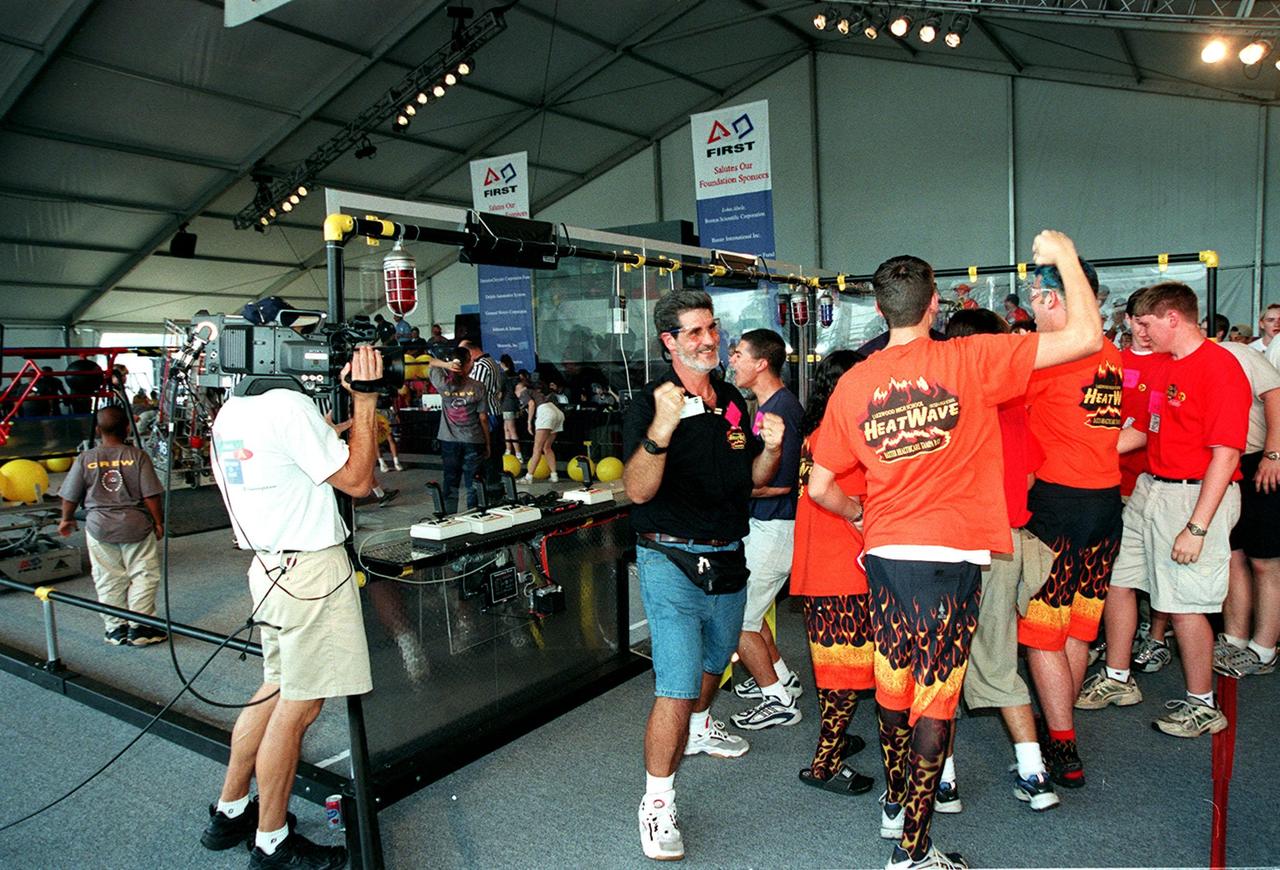
The team known as Heatwave, from St. Petersburg, Fla., celebrates after their win at the FIRST (For Inspiration and Recognition of Science and Technology) Southeast Regional competition held at the KSC Visitor Complex. They came in second for the final competition, plus received awards for Number One Seed, Best Offensive round, and the DaimlerChrysler Team Spirit. Teams of high school students from all over the country tested the limits of their imagination using robots they designed, with the support of business and engineering professionals and corporate sponsors, to compete in a technological battle against other schools' robots. Of the 30 high school teams competing at the Southeast Regional event, 16 were Florida teams co-sponsored by NASA and KSC contractors. Local high schools participating are Astronaut, Bayside, Cocoa Beach, Eau Gallie, Melbourne, Melbourne Central Catholic, Palm Bay, Rockledge, Satellite, and Titusville
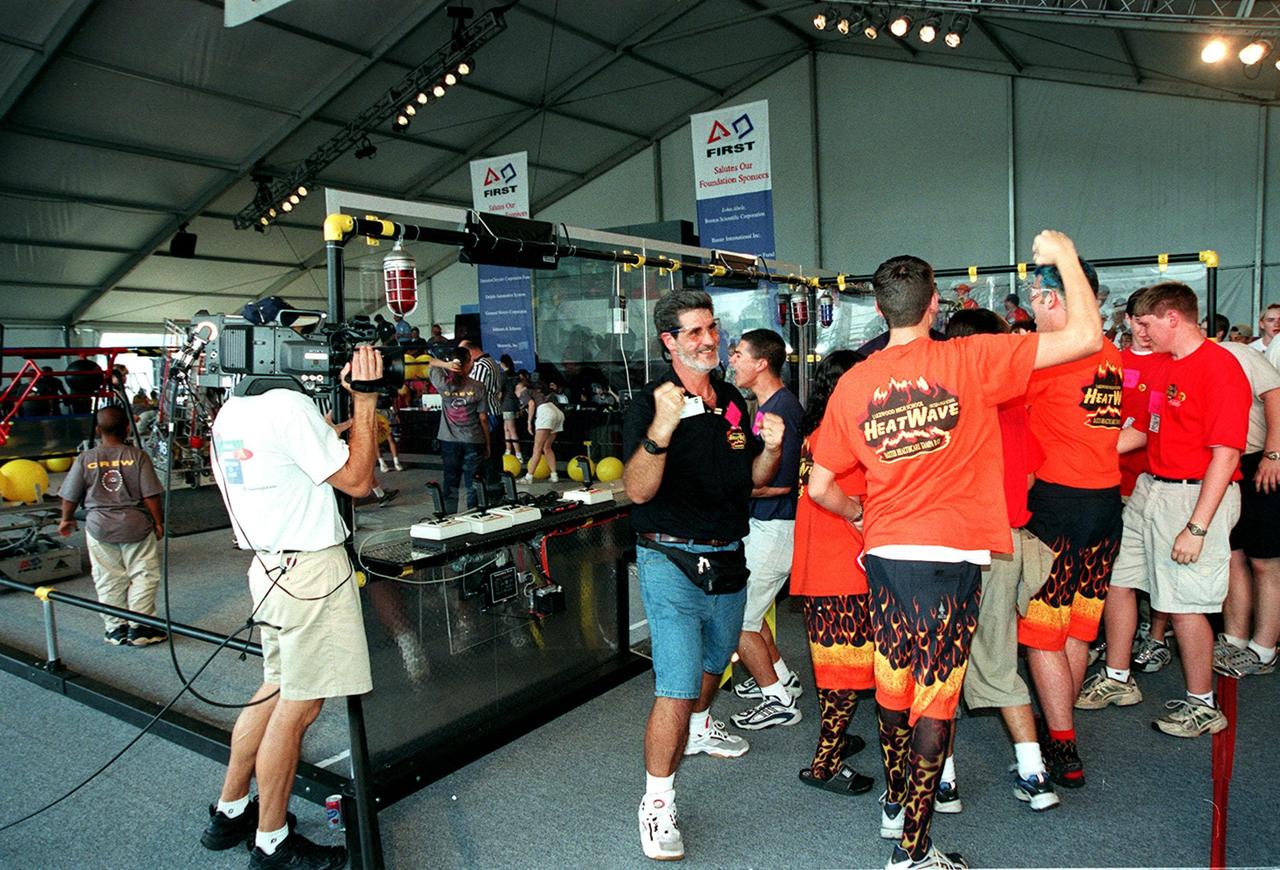
The team known as Heatwave, from St. Petersburg, Fla., celebrates after their win at the FIRST (For Inspiration and Recognition of Science and Technology) Southeast Regional competition held at the KSC Visitor Complex. They came in second for the final competition, plus received awards for Number One Seed, Best Offensive round, and the DaimlerChrysler Team Spirit. Teams of high school students from all over the country tested the limits of their imagination using robots they designed, with the support of business and engineering professionals and corporate sponsors, to compete in a technological battle against other schools' robots. Of the 30 high school teams competing at the Southeast Regional event, 16 were Florida teams co-sponsored by NASA and KSC contractors. Local high schools participating are Astronaut, Bayside, Cocoa Beach, Eau Gallie, Melbourne, Melbourne Central Catholic, Palm Bay, Rockledge, Satellite, and Titusville
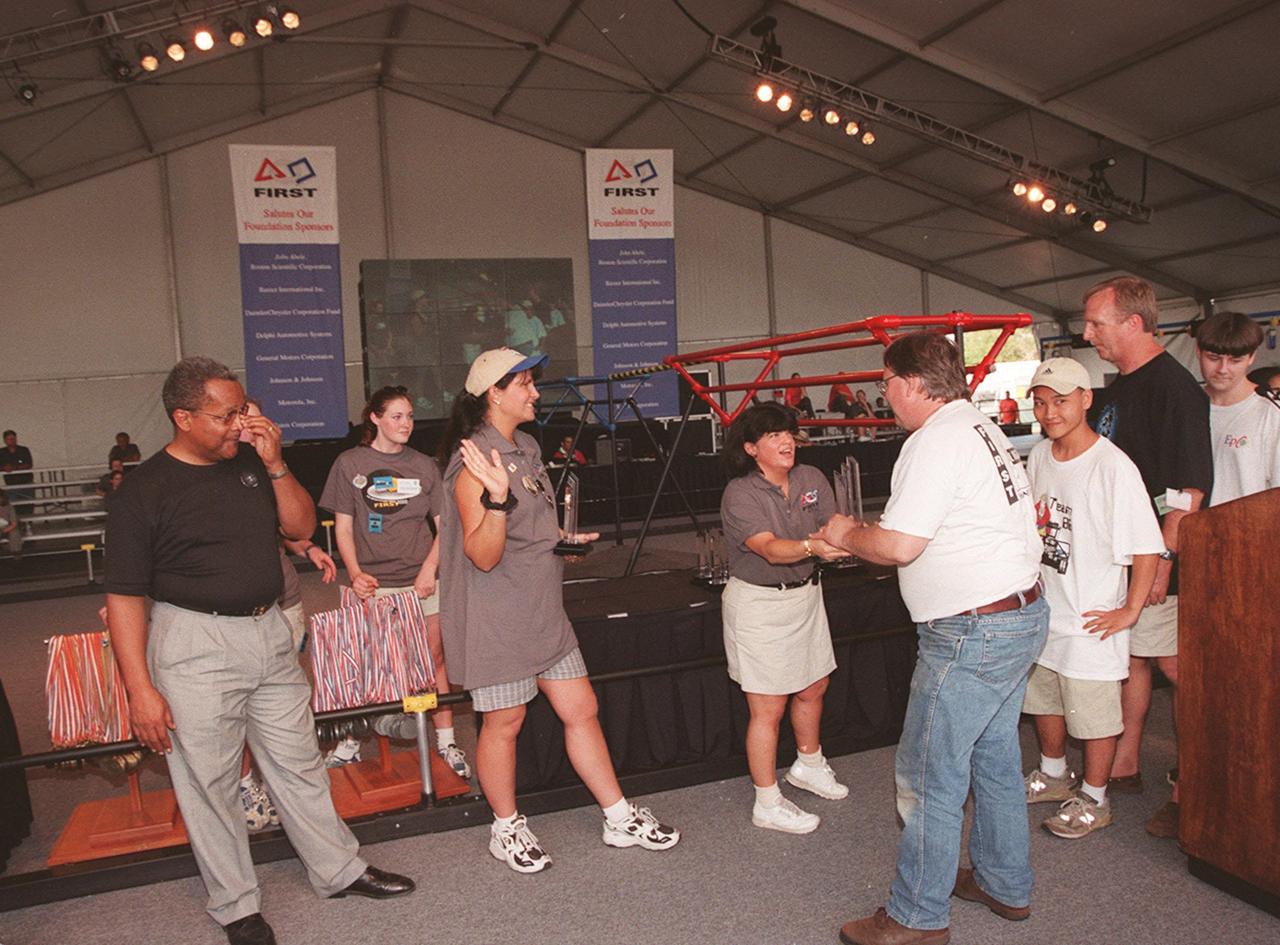
After the finals of the FIRST (For Inspiration and Recognition of Science and Technology) Southeast Regional competition, Team 86 from Jacksonville, Fla., receives from the FIRST crew an award for Best Play of the Day. At left is Nap Carroll, chief financial officer, Kennedy Space Center. The event was held at the Kennedy Space Center Visitor Complex. Teams of high school students from all over the country tested the limits of their imagination using robots they designed, with the support of business and engineering professionals and corporate sponsors, to compete in a technological battle against other schools' robots. Of the 30 high school teams competing at the Southeast Regional event, 16 were Florida teams co-sponsored by NASA and KSC contractors. Local high schools participating are Astronaut, Bayside, Cocoa Beach, Eau Gallie, Melbourne, Melbourne Central Catholic, Palm Bay, Rockledge, Satellite, and Titusville
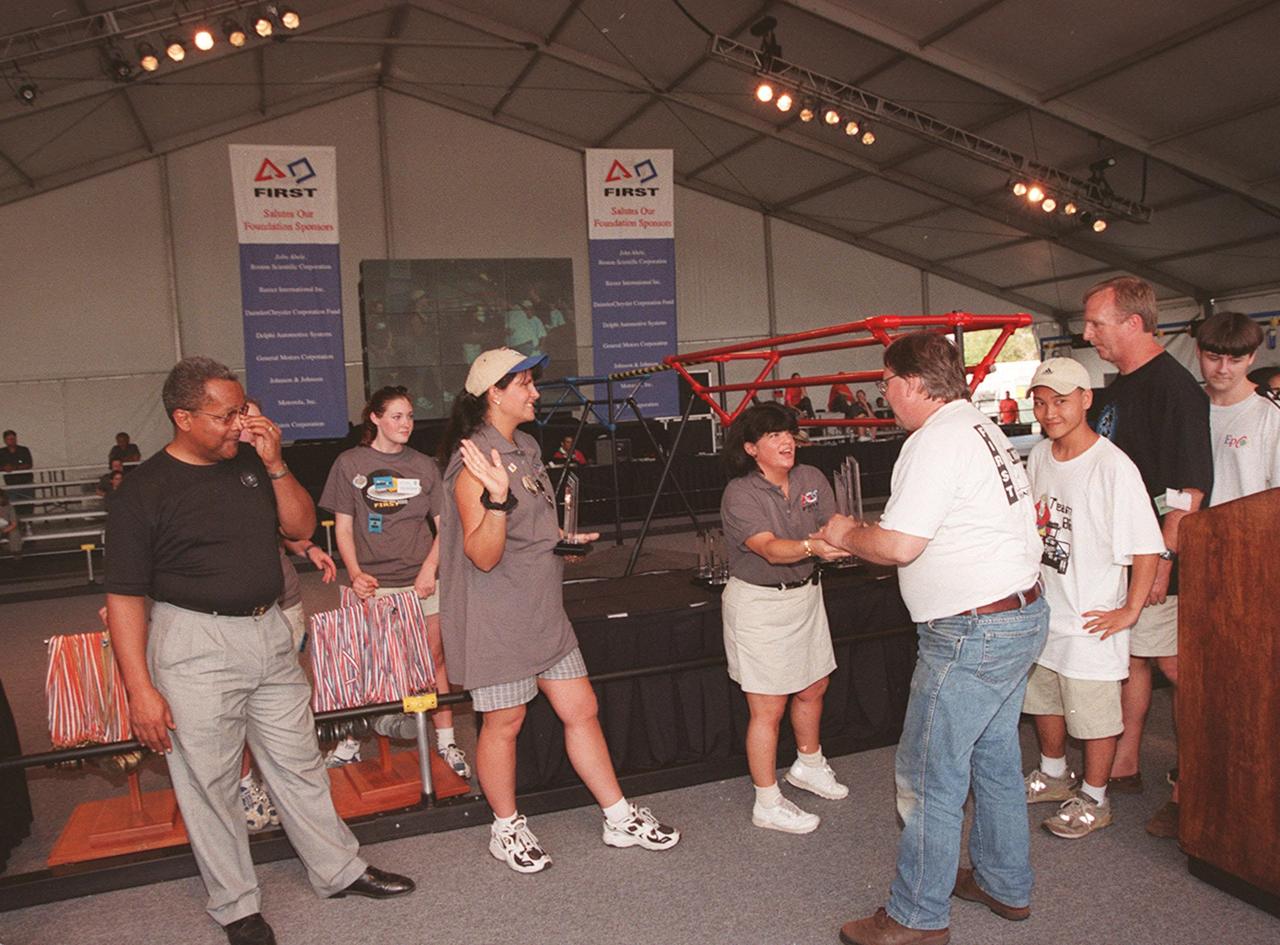
After the finals of the FIRST (For Inspiration and Recognition of Science and Technology) Southeast Regional competition, Team 86 from Jacksonville, Fla., receives from the FIRST crew an award for Best Play of the Day. At left is Nap Carroll, chief financial officer, Kennedy Space Center. The event was held at the Kennedy Space Center Visitor Complex. Teams of high school students from all over the country tested the limits of their imagination using robots they designed, with the support of business and engineering professionals and corporate sponsors, to compete in a technological battle against other schools' robots. Of the 30 high school teams competing at the Southeast Regional event, 16 were Florida teams co-sponsored by NASA and KSC contractors. Local high schools participating are Astronaut, Bayside, Cocoa Beach, Eau Gallie, Melbourne, Melbourne Central Catholic, Palm Bay, Rockledge, Satellite, and Titusville
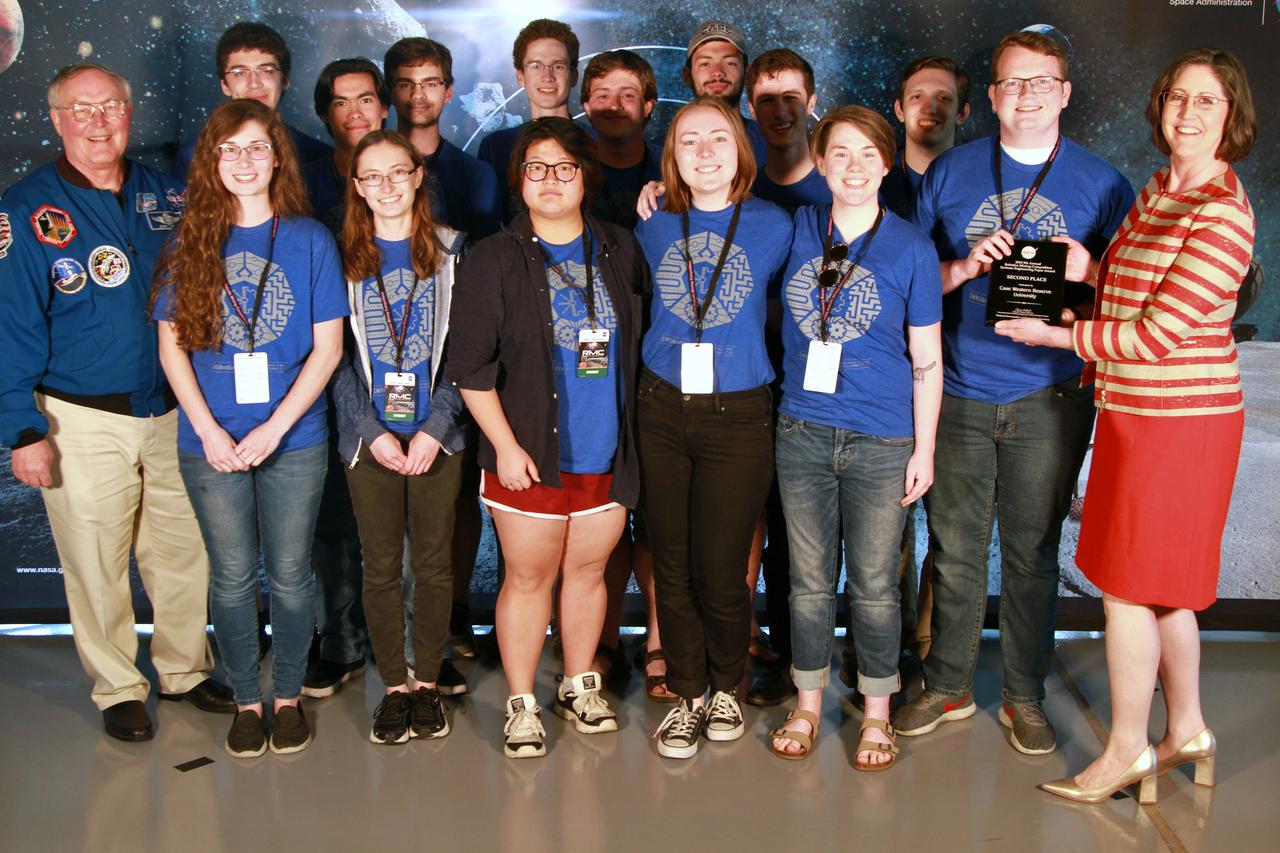
NASA's 9th Annual Robotic Mining Competition concludes with an awards ceremony May 18, 2018, at the Apollo/Saturn V Center at the Kennedy Space Center Visitor Complex in Florida. The team from Case Western Reserve University received second place for their Systems Engineering Paper. At left is retired NASA astronaut Jerry Ross. At right is Jonette Stecklein, lead systems engineering paper judge. More than 40 student teams from colleges and universities around the U.S. participated in the competition, May 14-18, by using their mining robots to dig in a supersized sandbox filled with BP-1, or simulated lunar soil, gravel and rocks, and participate in other competition requirements. The Robotic Mining Competition is a NASA Human Exploration and Operations Mission Directorate project designed to encourage students in science, technology, engineering and math, or STEM fields. The project provides a competitive environment to foster innovative ideas and solutions that could be used on NASA's deep space missions.
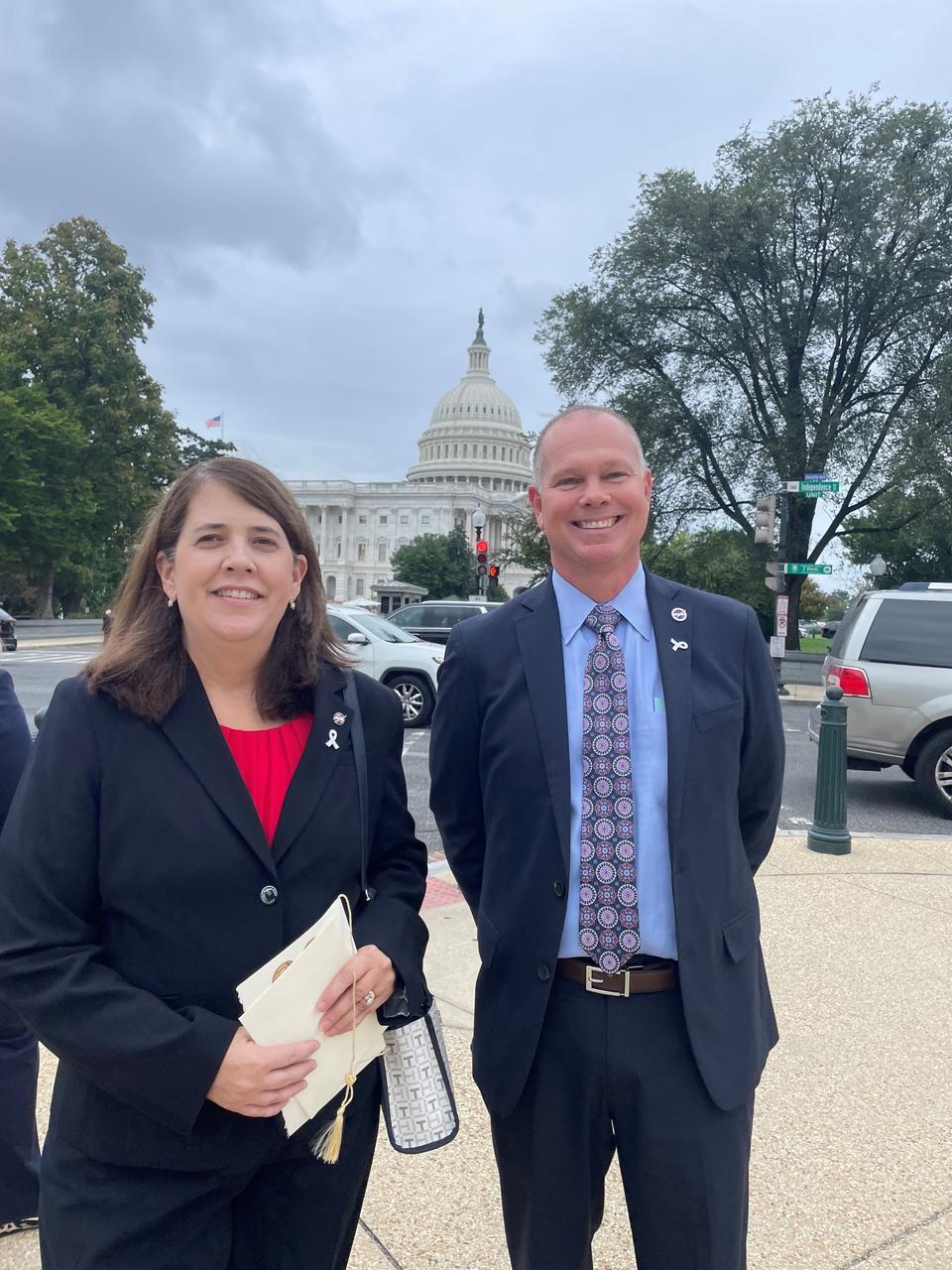
NASA Stennis Deputy Director Christine Powell, left, and NASA Stennis Director John Bailey stand near the United States Capitol during a visit to Washington, D.C. on Sept. 18. It marked the first visit to Capitol Hill for the leaders from NASA’s Stennis Space Center near Bay St. Louis, Mississippi, since being named to their current roles. Following conversations with Mississippi and Louisiana congressional representatives and staffers, Bailey and Powell attended the Hidden Figures Congressional Gold Medal ceremony. The awards recognized the women who contributed to the U.S. space race, including the NASA mathematicians who helped land the first astronauts on the Moon under the agency’s Apollo Program. NASA Stennis, established in the 1960s, tested first and second stages of the Saturn V rocket for Apollo missions to the Moon. The south Mississippi NASA center continues supporting the NASA mission by testing engines and stages to help power the agency’s Artemis campaign to return astronauts to the Moon and beyond.
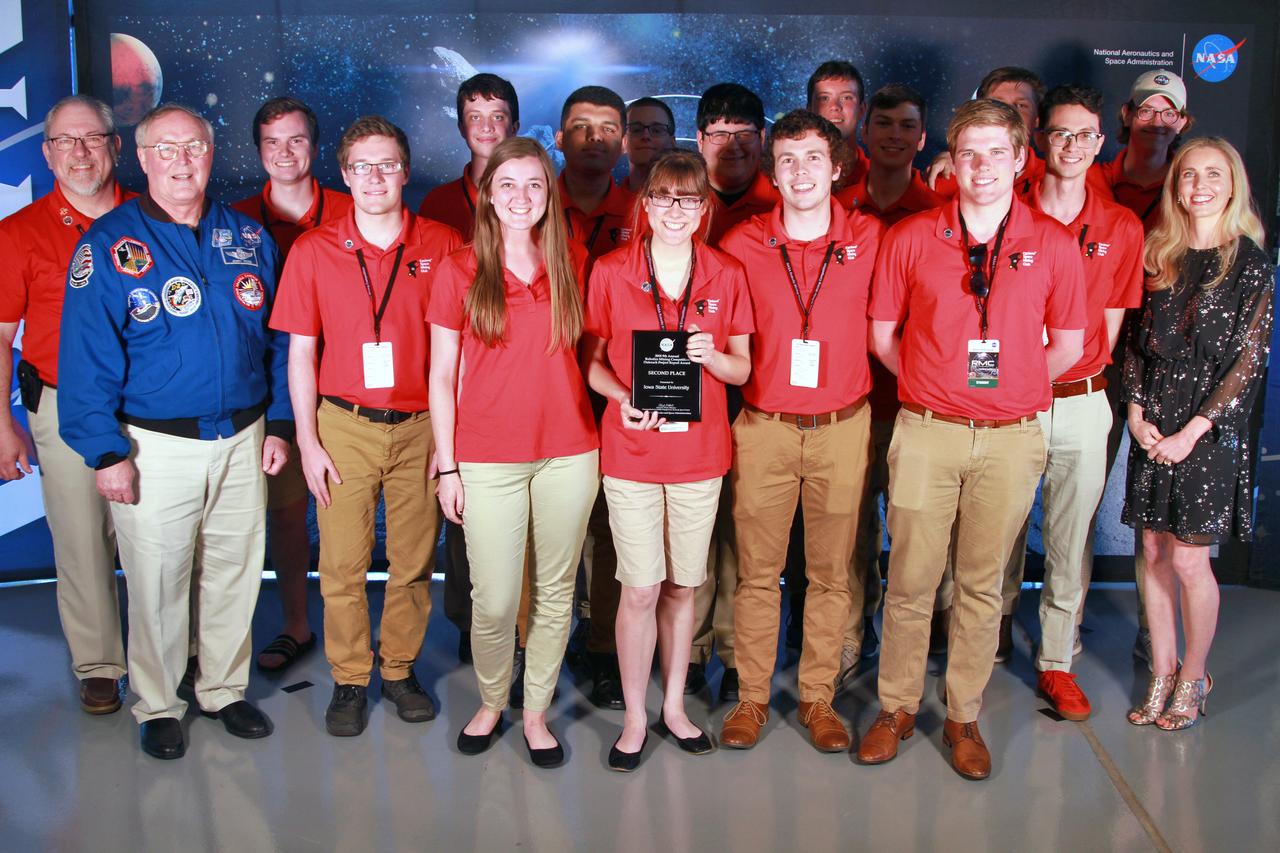
NASA's 9th Annual Robotic Mining Competition concludes with an awards ceremony May 18, 2018, at the Apollo/Saturn V Center at the Kennedy Space Center Visitor Complex in Florida. The team from Iowa State University received second place in the Outreach Project category. At left is retired NASA astronaut Jerry Ross. At right is Bethanne Hull, NASA Education specialist and lead Outreach Project judge. More than 40 student teams from colleges and universities around the U.S. participated in the competition, May 14-18, by using their mining robots to dig in a supersized sandbox filled with BP-1, or simulated lunar soil, gravel and rocks, and participate in other competition requirements. The Robotic Mining Competition is a NASA Human Exploration and Operations Mission Directorate project designed to encourage students in science, technology, engineering and math, or STEM fields. The project provides a competitive environment to foster innovative ideas and solutions that could be used on NASA's deep space missions.
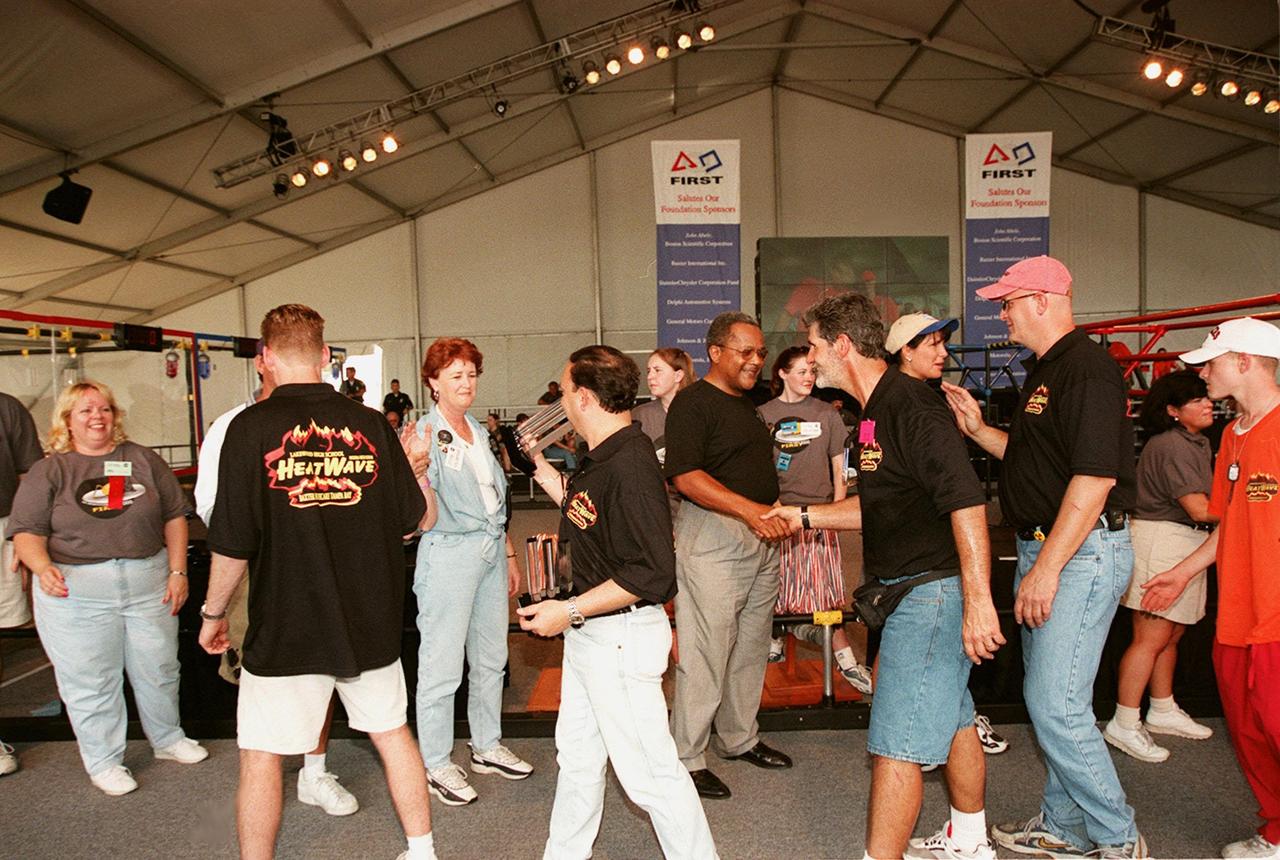
Adult members of the team known as Heatwave, from St. Petersburg, Fla., get "high fives" from Nap Carroll (center), chief financial officer, Kennedy Space Center, and other officials of the FIRST (For Inspiration and Recognition of Science and Technology) Southeast Regional competition held at the KSC Visitor Complex. Heatwave came in second for the final competition, plus received awards for Number One Seed, Best Offensive round, and the DaimlerChrysler Team Spirit. Teams of high school students from all over the country tested the limits of their imagination using robots they designed, with the support of business and engineering professionals and corporate sponsors, to compete in a technological battle against other schools' robots. Of the 30 high school teams competing at the Southeast Regional event, 16 were Florida teams co-sponsored by NASA and KSC contractors. Local high schools participating are Astronaut, Bayside, Cocoa Beach, Eau Gallie, Melbourne, Melbourne Central Catholic, Palm Bay, Rockledge, Satellite, and Titusvill
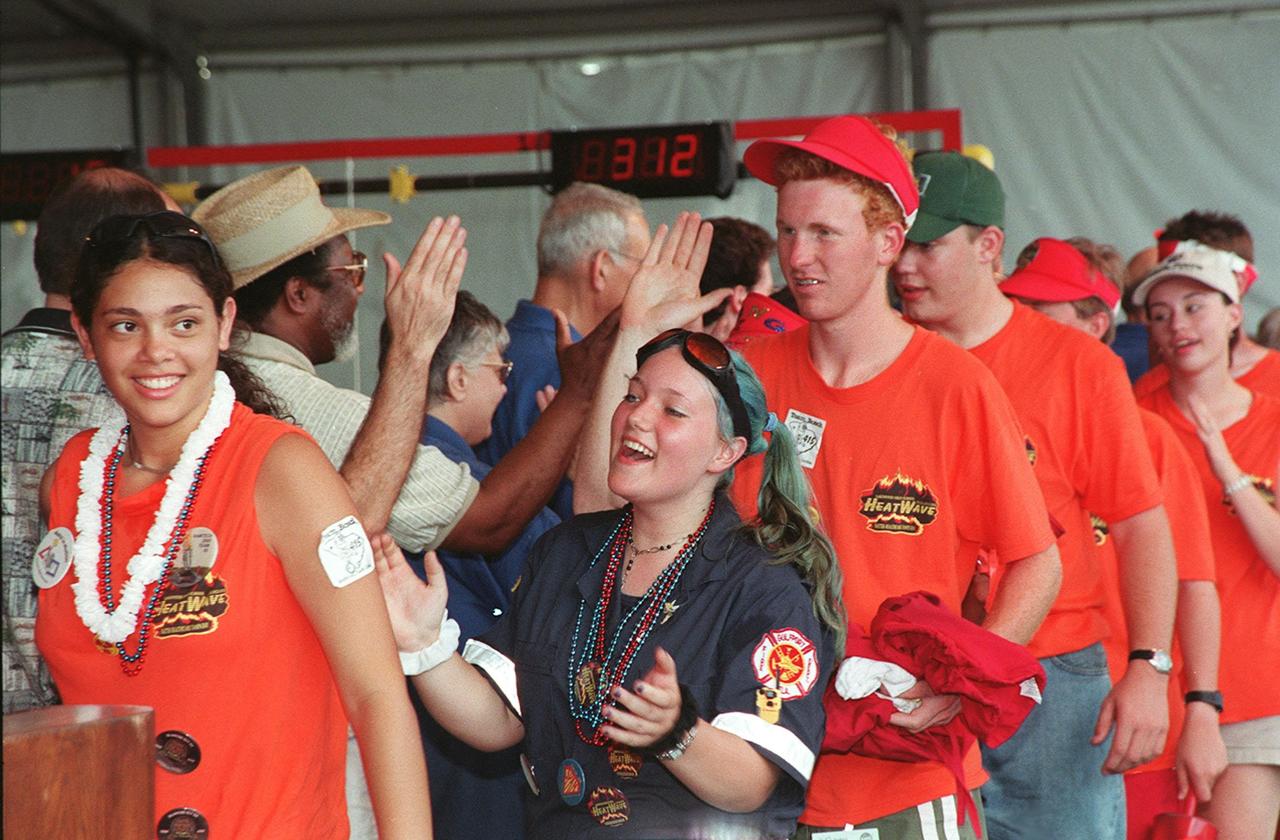
Members of the team known as Heatwave, from St. Petersburg, Fla., get "high fives" from Jim Jennings (wearing a straw hat), KSC's deputy director for Business Operations, during closing ceremonies for the FIRST (For Inspiration and Recognition of Science and Technology) Southeast Regional competition held at the KSC Visitor Complex. Heatwave came in second for the final competition, plus received awards for Number One Seed, Best Offensive round, and the DaimlerChrysler Team Spirit. Teams of high school students from all over the country tested the limits of their imagination using robots they designed, with the support of business and engineering professionals and corporate sponsors, to compete in a technological battle against other schools' robots. Of the 30 high school teams competing at the Southeast Regional event, 16 were Florida teams co-sponsored by NASA and KSC contractors. Local high schools participating are Astronaut, Bayside, Cocoa Beach, Eau Gallie, Melbourne, Melbourne Central Catholic, Palm Bay, Rockledge, Satellite, and Titusville
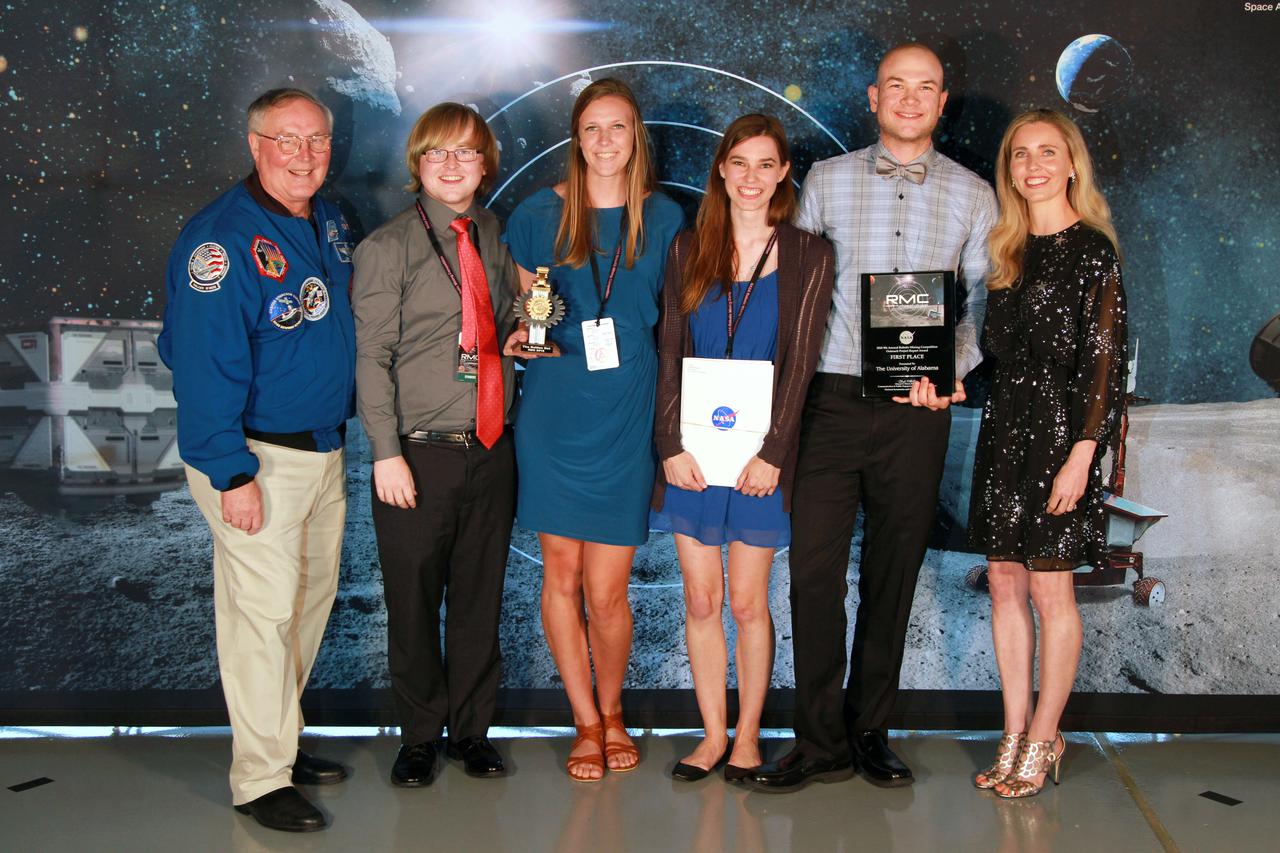
NASA's 9th Annual Robotic Mining Competition concludes with an awards ceremony May 18, 2018, at the Apollo/Saturn V Center at the Kennedy Space Center Visitor Complex in Florida. The University of Alabama Team Astrobotics received first place in the Outreach Project category. At left is retired NASA astronaut Jerry Ross. At right is Bethanne Hull, NASA Education specialist and lead Outreach Project judge. More than 40 student teams from colleges and universities around the U.S. participated in the competition, May 14-18, by using their mining robots to dig in a supersized sandbox filled with BP-1, or simulated lunar soil, gravel and rocks, and participate in other competition requirements. The Robotic Mining Competition is a NASA Human Exploration and Operations Mission Directorate project designed to encourage students in science, technology, engineering and math, or STEM fields. The project provides a competitive environment to foster innovative ideas and solutions that could be used on NASA's deep space missions.
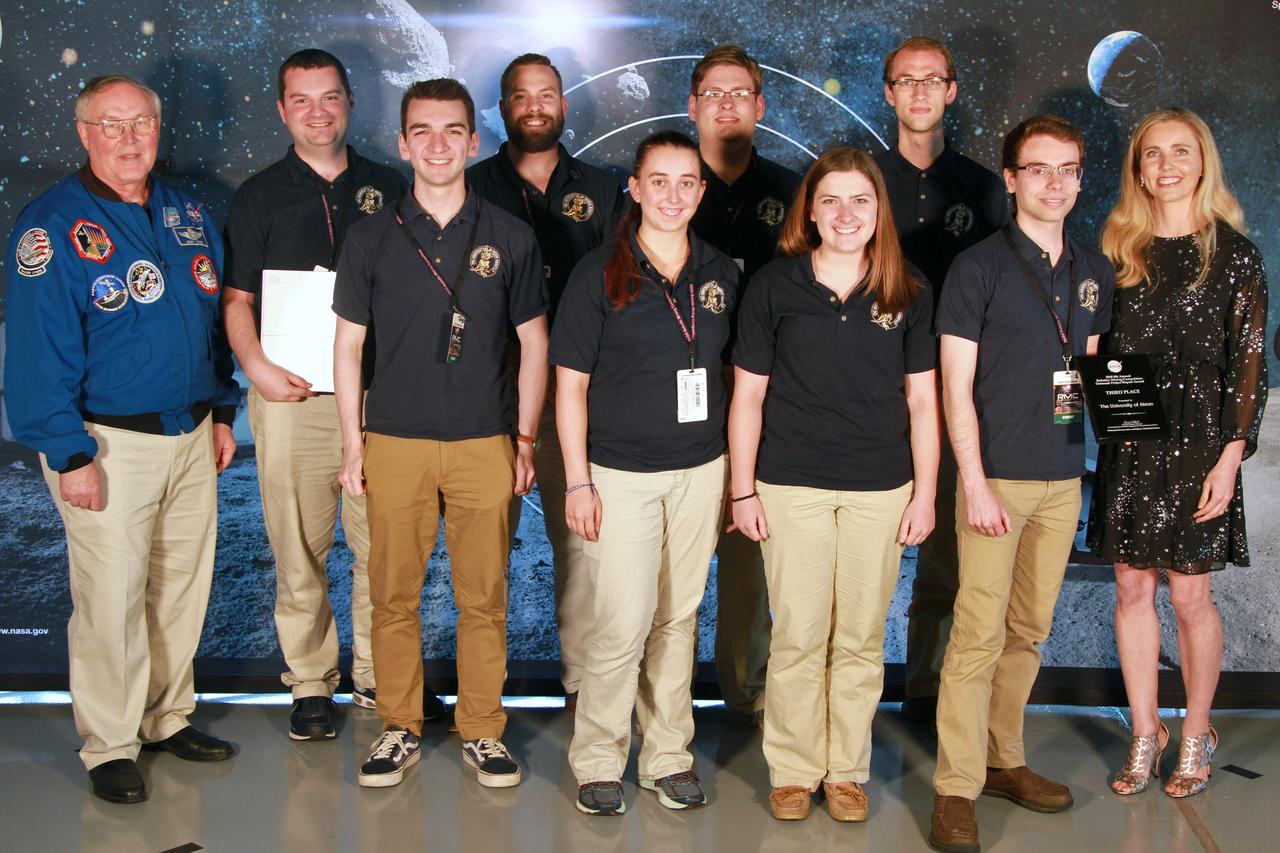
NASA's 9th Annual Robotic Mining Competition concludes with an awards ceremony May 18, 2018, at the Apollo/Saturn V Center at the Kennedy Space Center Visitor Complex in Florida. The team from The University of Akron received third place in the Outreach Project category. At left is retired NASA astronaut Jerry Ross. At right is Bethanne Hull, NASA Education specialist and lead Outreach Project judge. More than 40 student teams from colleges and universities around the U.S. participated in the competition, May 14-18, by using their mining robots to dig in a supersized sandbox filled with BP-1, or simulated lunar soil, gravel and rocks, and participate in other competition requirements. The Robotic Mining Competition is a NASA Human Exploration and Operations Mission Directorate project designed to encourage students in science, technology, engineering and math, or STEM fields. The project provides a competitive environment to foster innovative ideas and solutions that could be used on NASA's deep space missions.
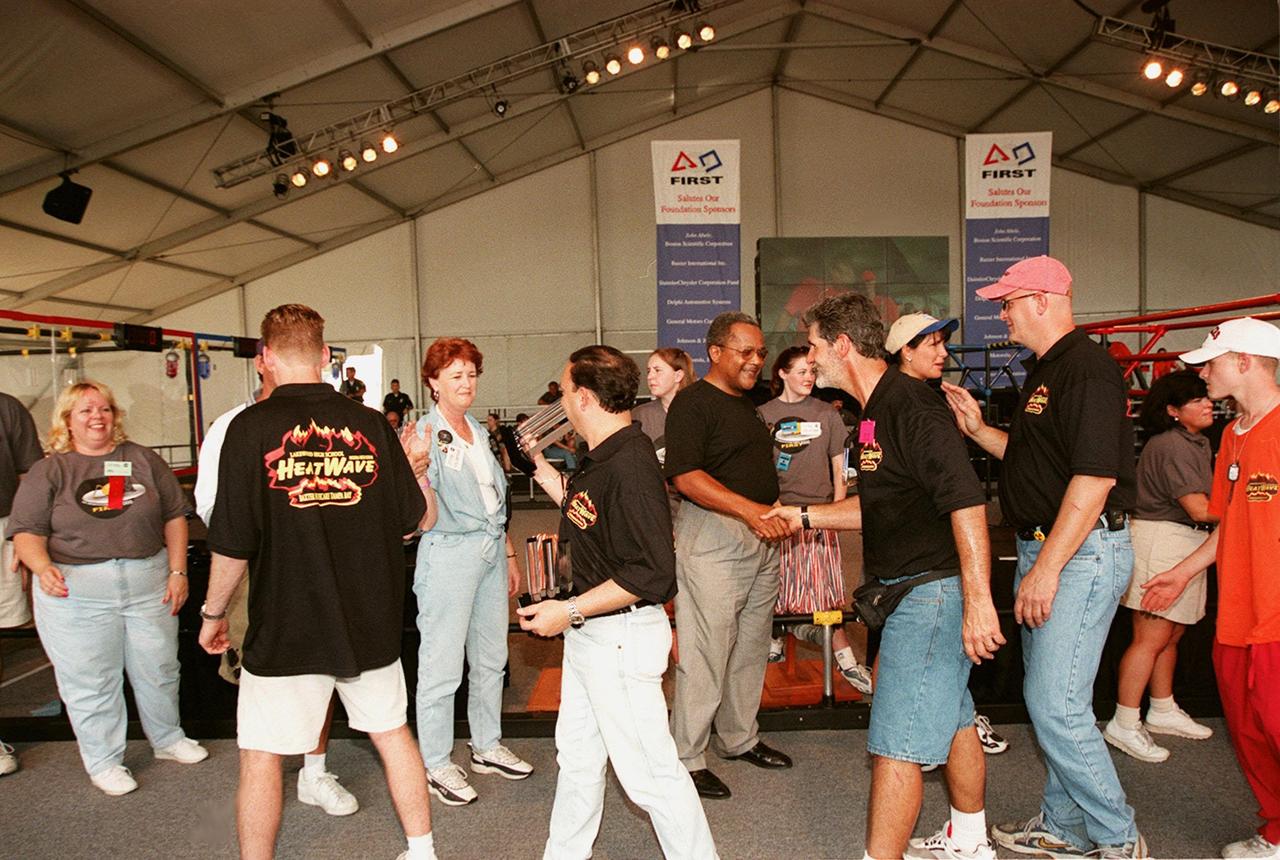
Adult members of the team known as Heatwave, from St. Petersburg, Fla., get "high fives" from Nap Carroll (center), chief financial officer, Kennedy Space Center, and other officials of the FIRST (For Inspiration and Recognition of Science and Technology) Southeast Regional competition held at the KSC Visitor Complex. Heatwave came in second for the final competition, plus received awards for Number One Seed, Best Offensive round, and the DaimlerChrysler Team Spirit. Teams of high school students from all over the country tested the limits of their imagination using robots they designed, with the support of business and engineering professionals and corporate sponsors, to compete in a technological battle against other schools' robots. Of the 30 high school teams competing at the Southeast Regional event, 16 were Florida teams co-sponsored by NASA and KSC contractors. Local high schools participating are Astronaut, Bayside, Cocoa Beach, Eau Gallie, Melbourne, Melbourne Central Catholic, Palm Bay, Rockledge, Satellite, and Titusvill
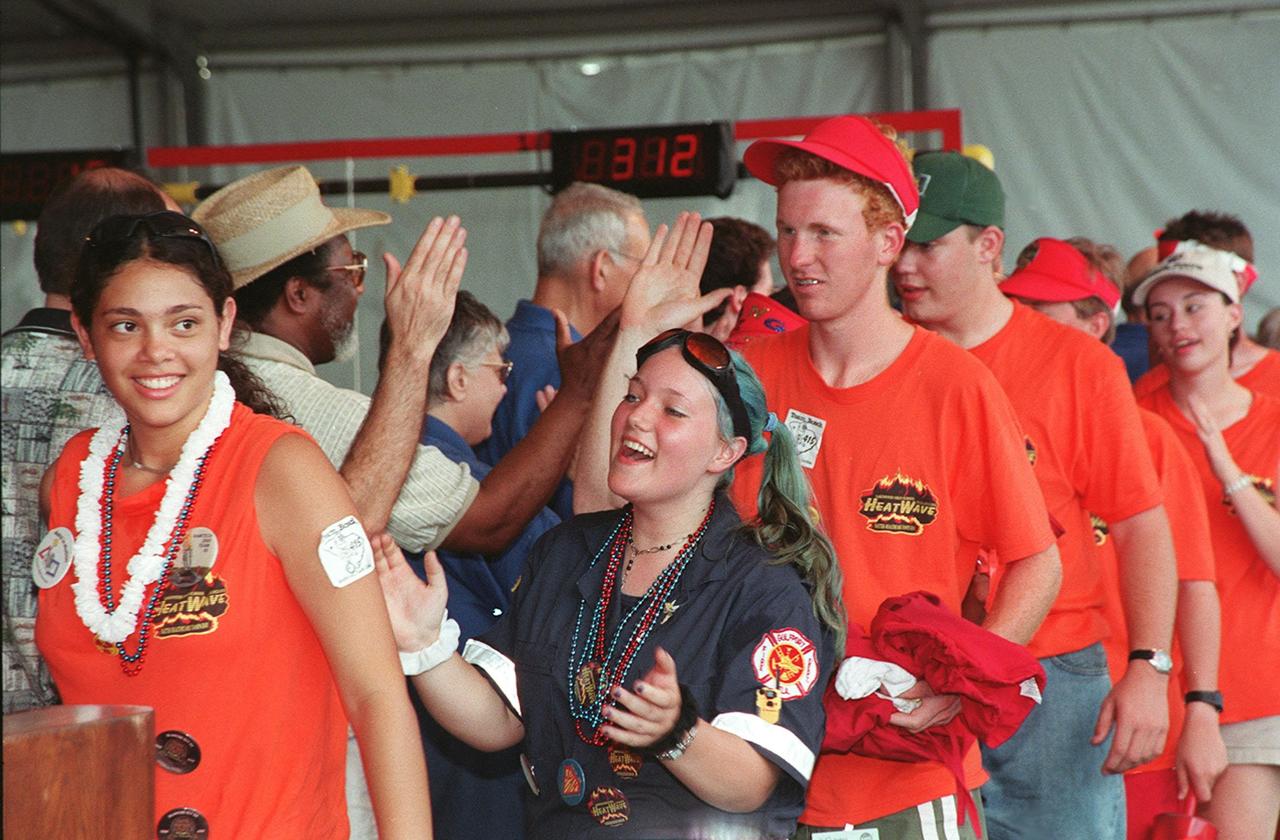
Members of the team known as Heatwave, from St. Petersburg, Fla., get "high fives" from Jim Jennings (wearing a straw hat), KSC's deputy director for Business Operations, during closing ceremonies for the FIRST (For Inspiration and Recognition of Science and Technology) Southeast Regional competition held at the KSC Visitor Complex. Heatwave came in second for the final competition, plus received awards for Number One Seed, Best Offensive round, and the DaimlerChrysler Team Spirit. Teams of high school students from all over the country tested the limits of their imagination using robots they designed, with the support of business and engineering professionals and corporate sponsors, to compete in a technological battle against other schools' robots. Of the 30 high school teams competing at the Southeast Regional event, 16 were Florida teams co-sponsored by NASA and KSC contractors. Local high schools participating are Astronaut, Bayside, Cocoa Beach, Eau Gallie, Melbourne, Melbourne Central Catholic, Palm Bay, Rockledge, Satellite, and Titusville