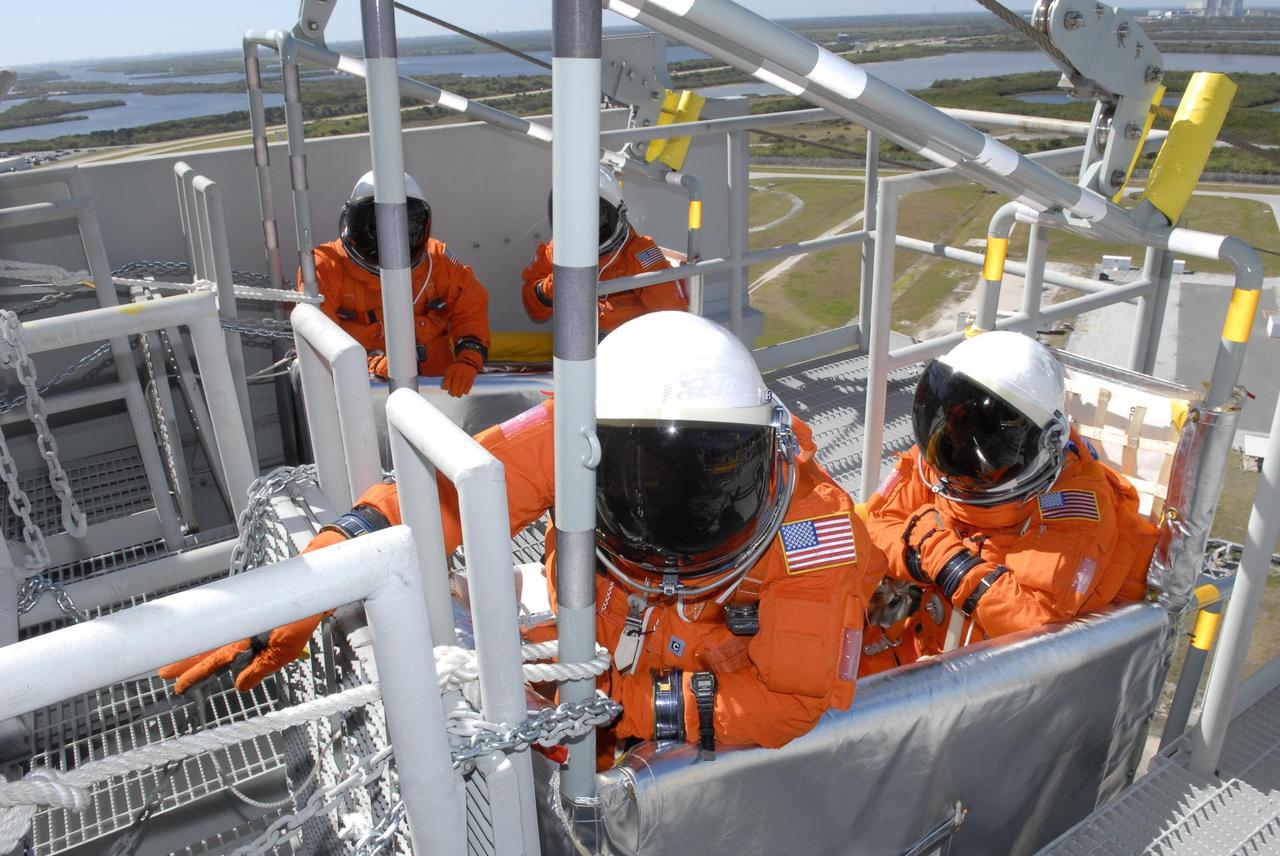
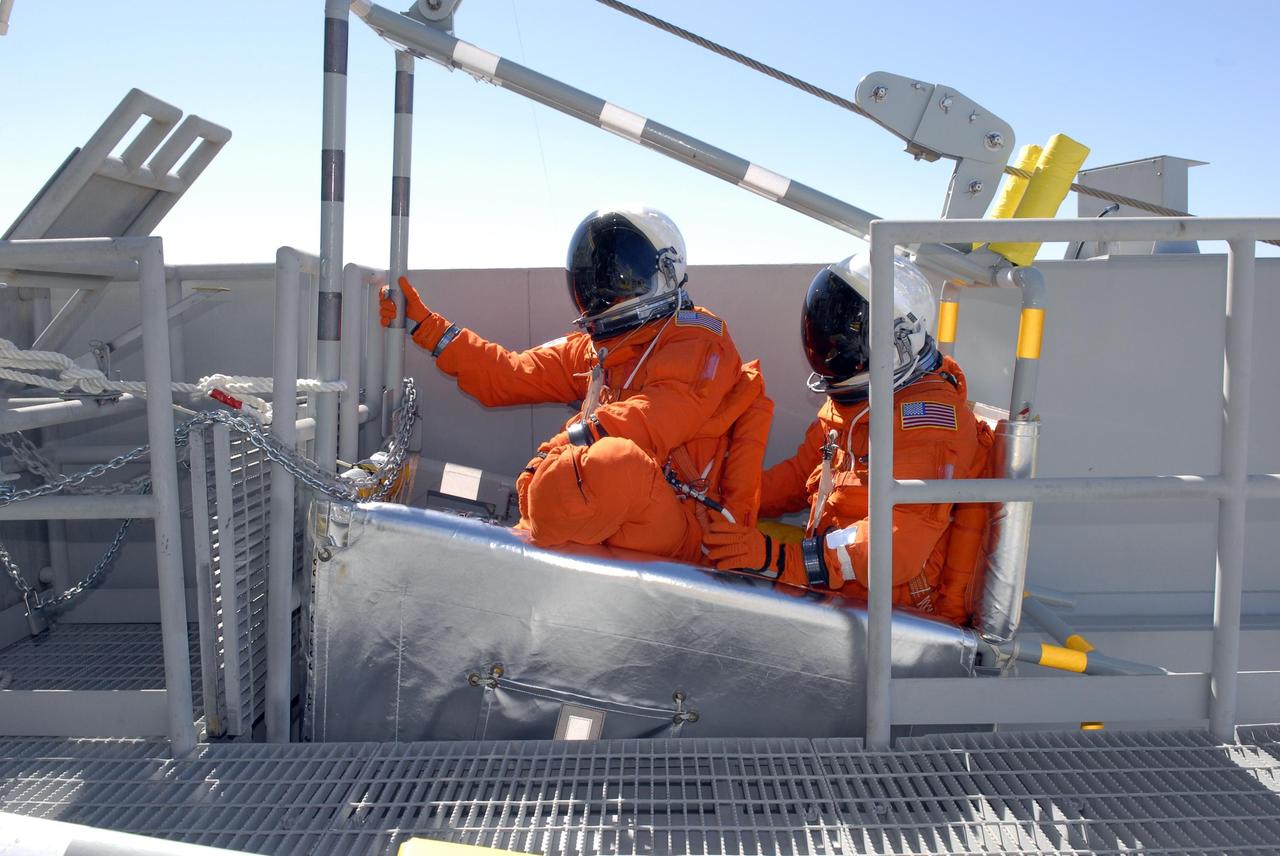
KENNEDY SPACE CENTER, FLA. -- From the 195-foot level of the fixed service structure on Launch Pad 39A, STS-117 Mission Specialists Patrick Forrester (front) and Steven Swanson sit in a slidewire basket, part of the emergency egress system. They and other crew members are practicing the emergency egress procedure to get off the pad, part of the prelaunch preparations known as terminal countdown demonstration test (TCDT). The TCDT also includes M-113 armored personnel carrier training and payload familiarization. The STS-117 mission is No. 21 to the International Space Station. Mission payloads aboard Atlantis include the S3/S4 integrated truss structure, a third set of solar arrays and batteries. The crew of six astronauts will install the truss to continue assembly of the station. Launch is scheduled for no earlier than March 15. Photo credit: NASA/Kim Shiflett.
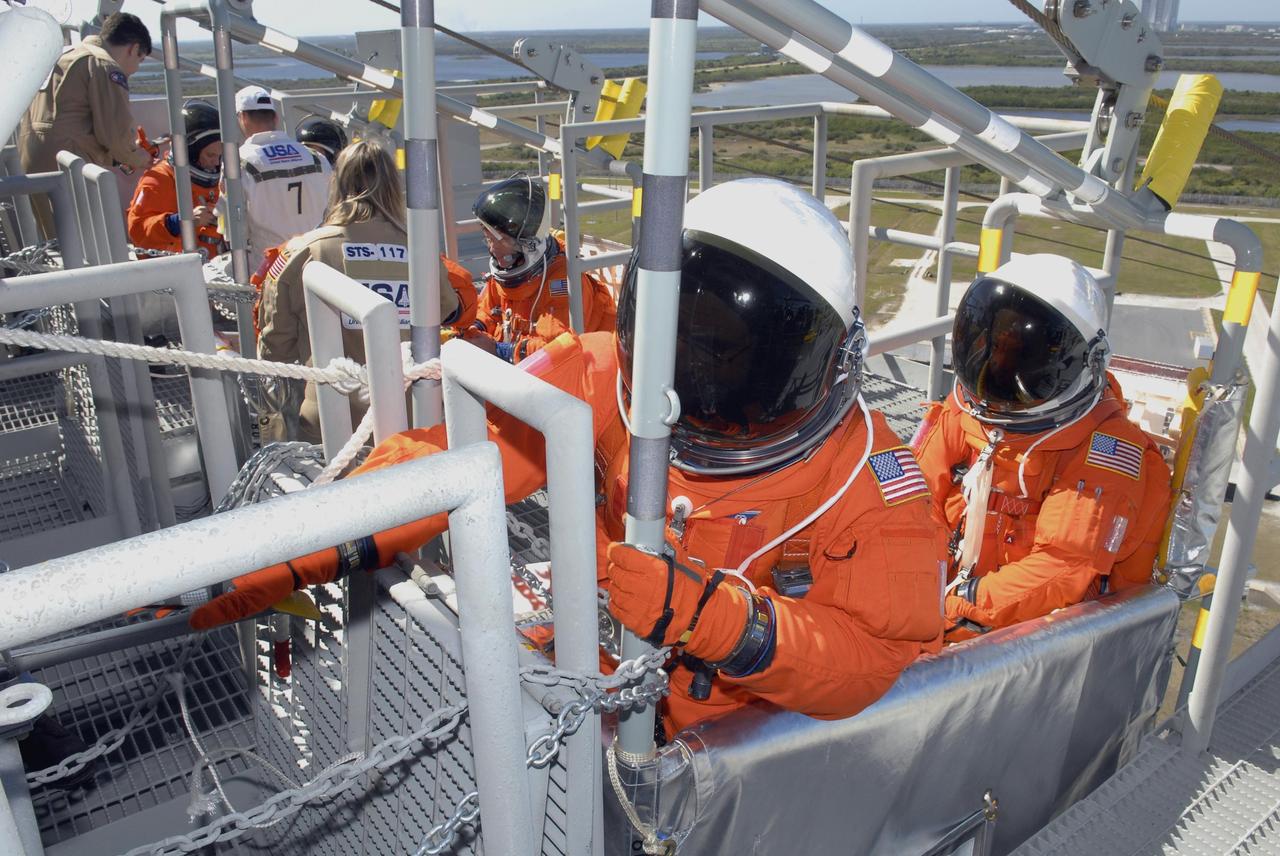
KENNEDY SPACE CENTER, FLA. -- From the 195-foot level of the fixed service structure on Launch Pad 39A, STS-117 Pilot Lee Archambault (front) and Commander Rick Sturckow sit in a slidewire basket, part of the emergency egress system. They and other crew members are practicing the emergency egress procedure to get off the pad, part of the prelaunch preparations known as terminal countdown demonstration test. The TCDT also includes M-113 armored personnel carrier training and payload familiarization. The STS-117 mission is No. 21 to the International Space Station. Mission payloads aboard Atlantis include the S3/S4 integrated truss structure, a third set of solar arrays and batteries. The crew of six astronauts will install the truss to continue assembly of the station. Launch is scheduled for no earlier than March 15. Photo credit: NASA/Kim Shiflett.
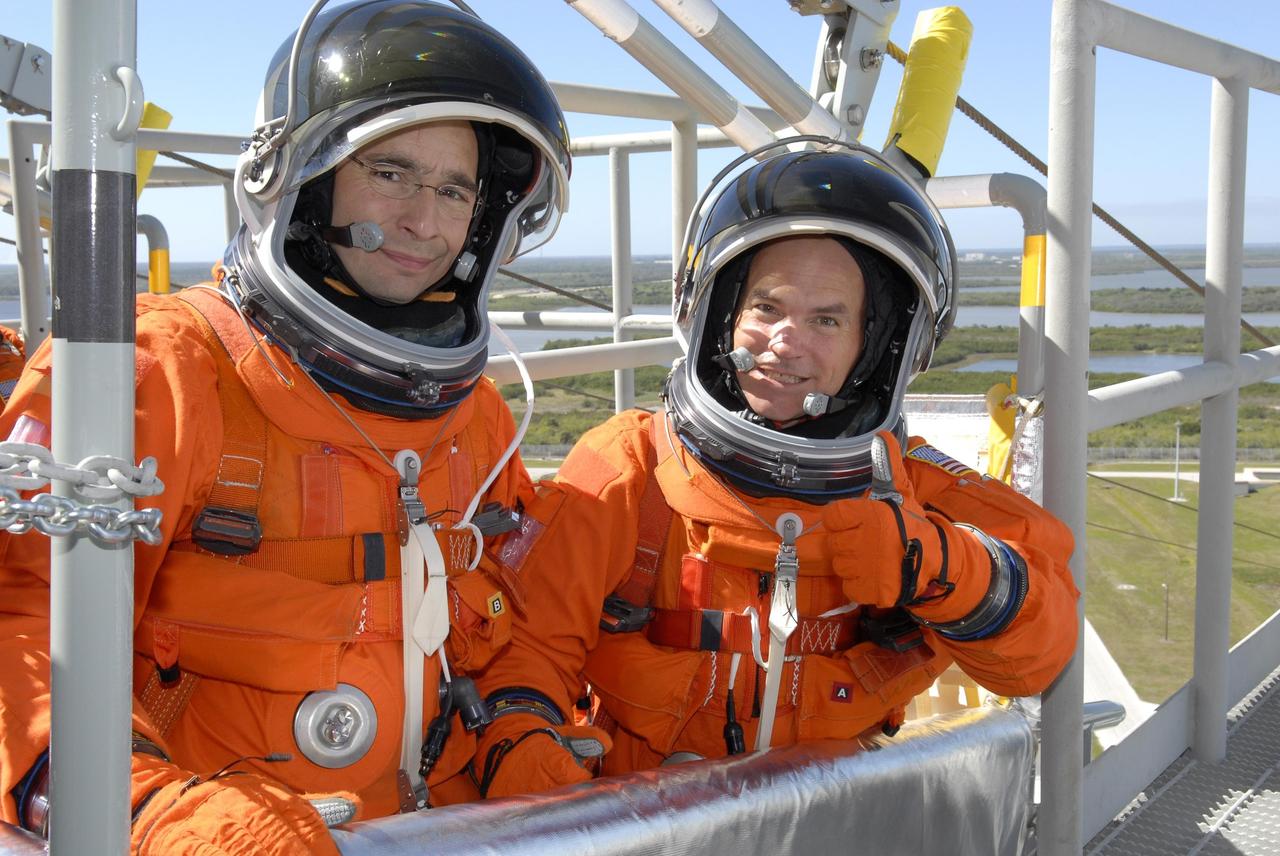
KENNEDY SPACE CENTER, FLA. -- Mission STS-117 Commander Rick Sturckow (right) gives a thumbs up after he and Pilot Lee Archambault practice emergency egress procedures in a slidewire basket at the 195-foot level of the fixed service structure on Launch Pad 39A. They and other crew members are practicing the emergency egress procedure to get off the pad, part of the prelaunch preparations known as terminal countdown demonstration test (TCDT). The TCDT also includes M-113 armored personnel carrier training and payload familiarization. The STS-117 mission is No. 21 to the International Space Station. Mission payloads aboard Atlantis include the S3/S4 integrated truss structure, a third set of solar arrays and batteries. The crew of six astronauts will install the truss to continue assembly of the station. Launch is scheduled for no earlier than March 15. Photo credit: NASA/Kim Shiflett.
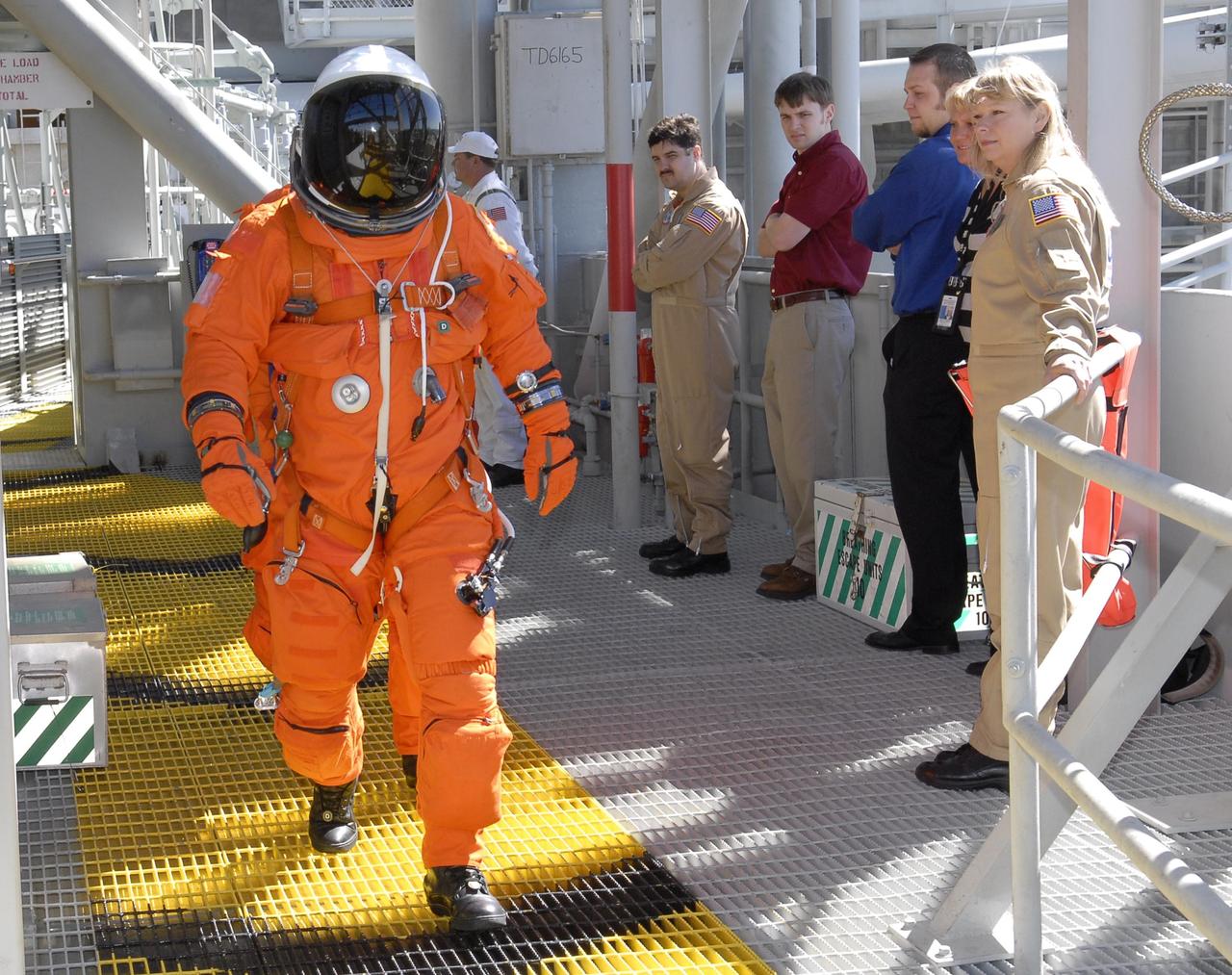
KENNEDY SPACE CENTER, FLA. -- On the 195-foot level of the fixed service structure on Launch Pad 39A, STS-117 Mission Specialists Steven Swanson and Patrick Forrester (directly behind him) head for the slidewire baskets. They and other crew members are practicing the emergency egress procedure to get off the pad, part of the prelaunch preparations known as terminal countdown demonstration test (TCDT). The TCDT also includes M-113 armored personnel carrier training and payload familiarization. The STS-117 mission is No. 21 to the International Space Station. Mission payloads aboard Atlantis include the S3/S4 integrated truss structure, a third set of solar arrays and batteries. The crew of six astronauts will install the truss to continue assembly of the station. Launch is scheduled for no earlier than March 15. Photo credit: NASA/Kim Shiflett.
KENNEDY SPACE CENTER, FLA. -- From the 195-foot level of the fixed service structure on Launch Pad 39A, STS-117 Mission Specialists Danny Olivas (front) and James Reilly sit in a slidewire basket, part of the emergency egress system. They and other crew members are practicing the emergency egress procedure to get off the pad, part of the prelaunch preparations known as terminal countdown demonstration test (TCDT). The TCDT also includes M-113 armored personnel carrier training and payload familiarization. The STS-117 mission is No. 21 to the International Space Station. Mission payloads aboard Atlantis include the S3/S4 integrated truss structure, a third set of solar arrays and batteries. The crew of six astronauts will install the truss to continue assembly of the station. Launch is scheduled for no earlier than March 15. Photo credit: NASA/Kim Shiflett.
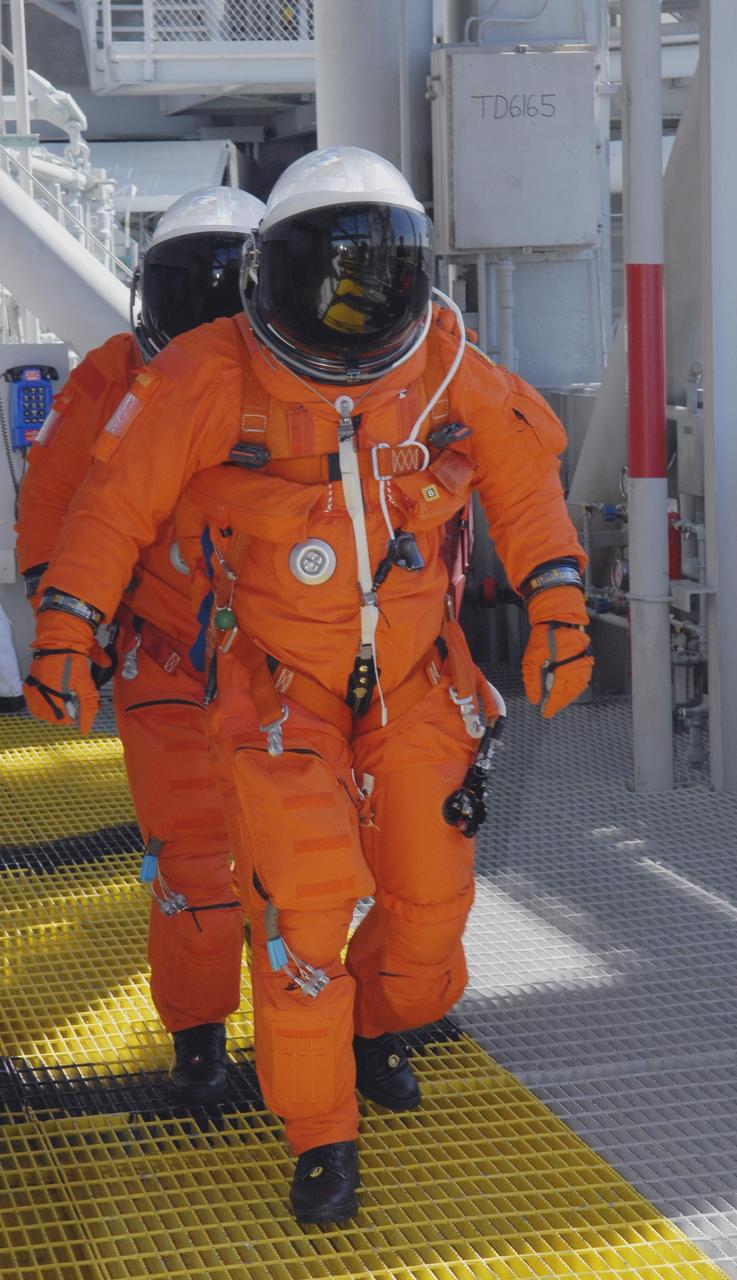
KENNEDY SPACE CENTER, FLA. -- On the 195-foot level of the fixed service structure on Launch Pad 39A, STS-117 Pilot Lee Archambault (front) and Commander Rick Sturckow head for the slidewire baskets. They and other crew members are practicing the emergency egress procedure to get off the pad, part of the prelaunch preparations known as terminal countdown demonstration test (TCDT). The TCDT also includes M-113 armored personnel carrier training and payload familiarization. The STS-117 mission is No. 21 to the International Space Station. Mission payloads aboard Atlantis include the S3/S4 integrated truss structure, a third set of solar arrays and batteries. The crew of six astronauts will install the truss to continue assembly of the station. Launch is scheduled for no earlier than March 15. Photo credit: NASA/Kim Shiflett.
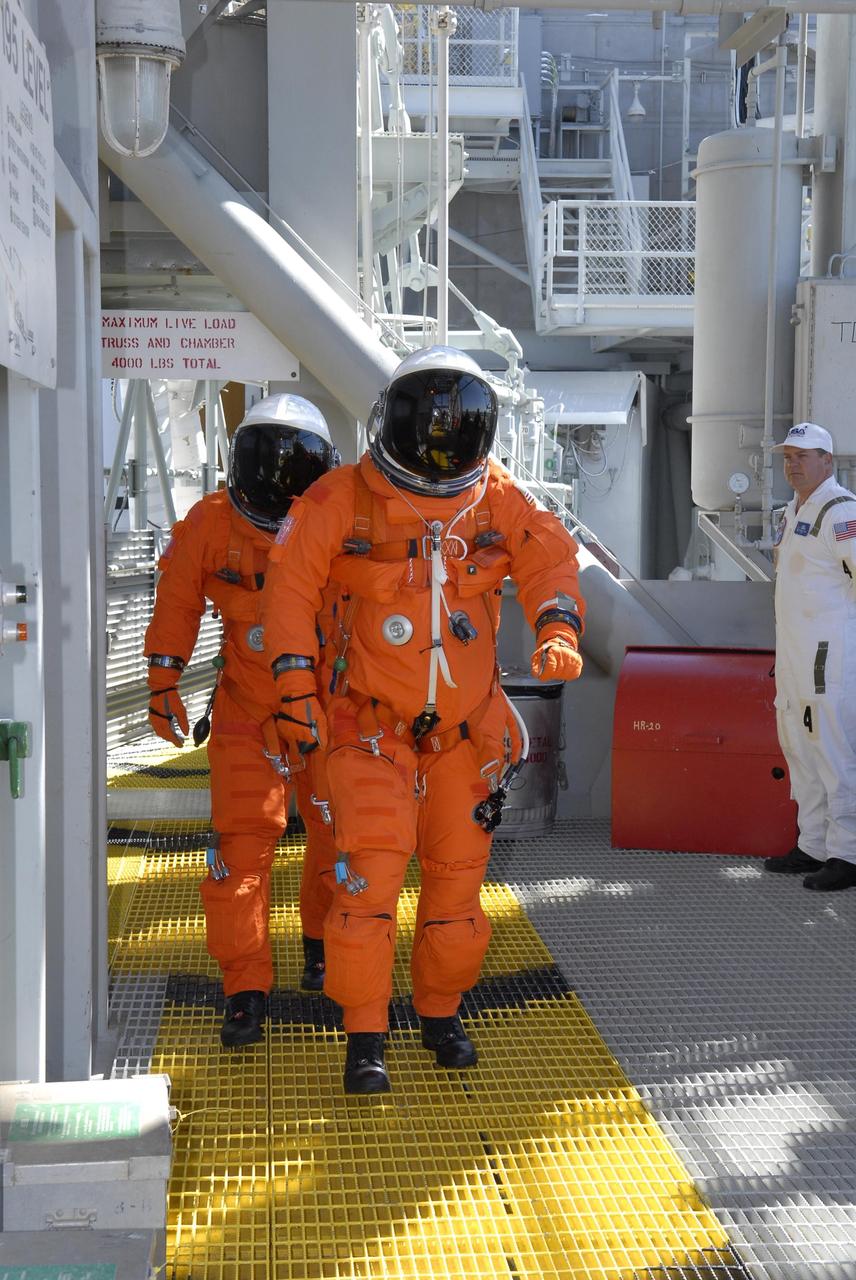
KENNEDY SPACE CENTER, FLA. -- On the 195-foot level of the fixed service structure on Launch Pad 39A, STS-117 Mission Specialists James Reilly (front) and Danny Olivas head for the slidewire baskets. They and other crew members are practicing the emergency egress procedure to get off the pad, part of the prelaunch preparations known as terminal countdown demonstration test (TCDT). The TCDT also includes M-113 armored personnel carrier training and payload familiarization. The STS-117 mission is No. 21 to the International Space Station. Mission payloads aboard Atlantis include the S3/S4 integrated truss structure, a third set of solar arrays and batteries. The crew of six astronauts will install the truss to continue assembly of the station. Launch is scheduled for no earlier than March 15. Photo credit: NASA/Kim Shiflett.
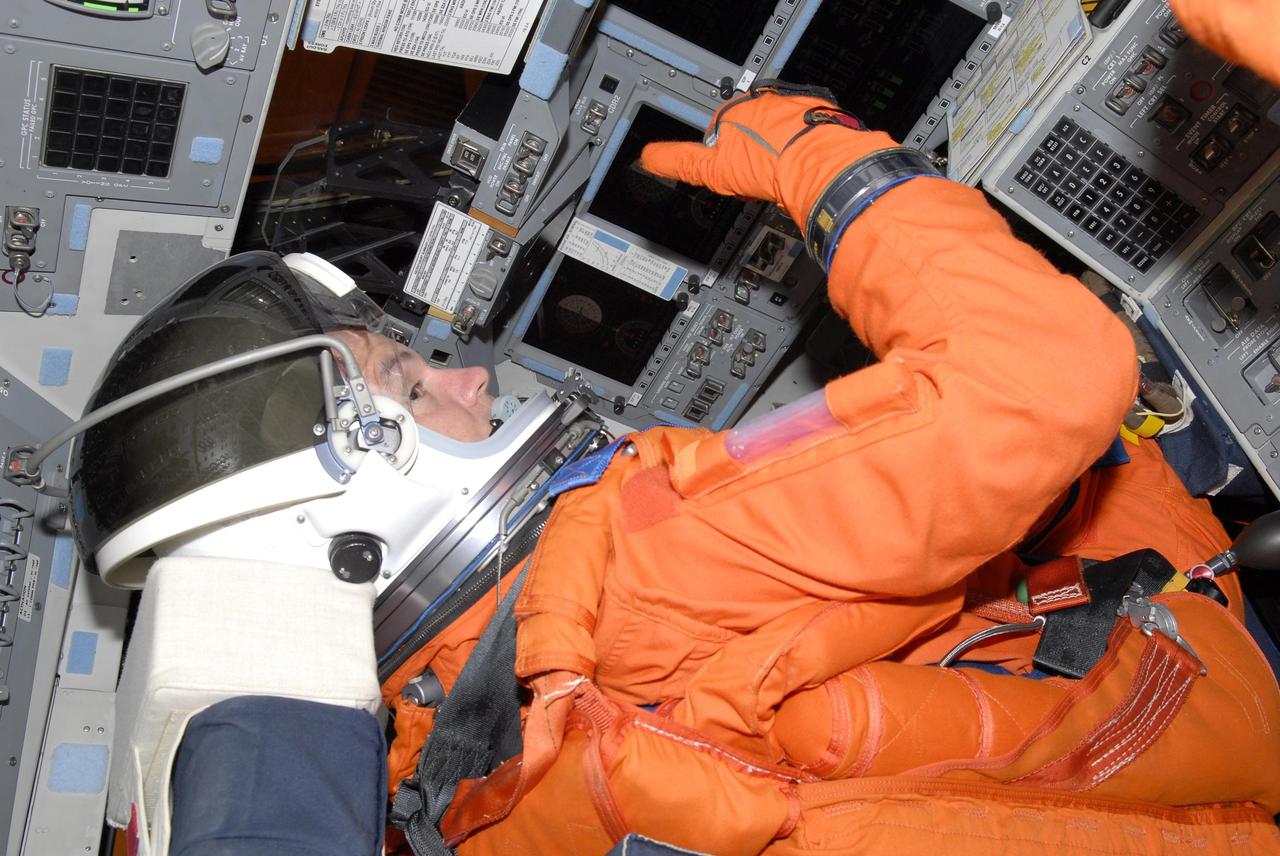
KENNEDY SPACE CENTER, FLA. -- Mission STS-117 Commander Rick Sturckow sits in the cockpit of Space Shuttle Atlantis at Launch Pad 39A to participate in a simulated launch countdown that is part of the prelaunch preparations known as terminal demonstration countdown test (TCDT). The TCDT also includes M-113 armored personnel carrier training and payload familiarization. The STS-117 mission is No. 21 to the International Space Station. Mission payloads aboard Atlantis include the S3/S4 integrated truss structure, a third set of solar arrays and batteries. The crew of six astronauts will install the truss to continue assembly of the station. Launch is scheduled for no earlier than March 15. Photo credit: NASA/Kim Shiflett.
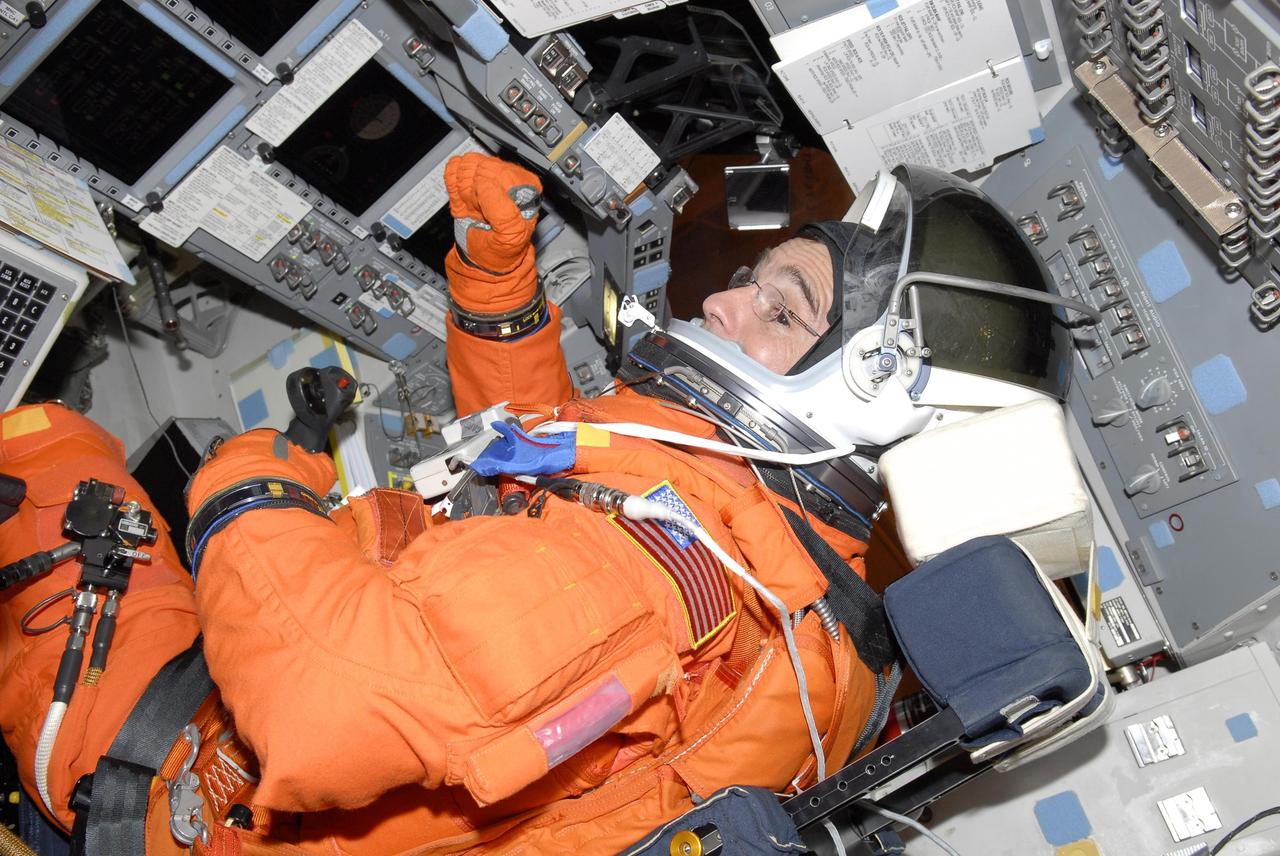
KENNEDY SPACE CENTER, FLA. -- Mission STS-117 Pilot Lee Archambault sits in the cockpit of Space Shuttle Atlantis at Launch Pad 39A to participate in a simulated launch countdown that is part of the prelaunch preparations known as terminal countdown demonstration test (TCDT). The TCDT also includes M-113 armored personnel carrier training and payload familiarization. The STS-117 mission is No. 21 to the International Space Station. Mission payloads aboard Atlantis include the S3/S4 integrated truss structure, a third set of solar arrays and batteries. The crew of six astronauts will install the truss to continue assembly of the station. Launch is scheduled for no earlier than March 15. Photo credit: NASA/Kim Shiflett.
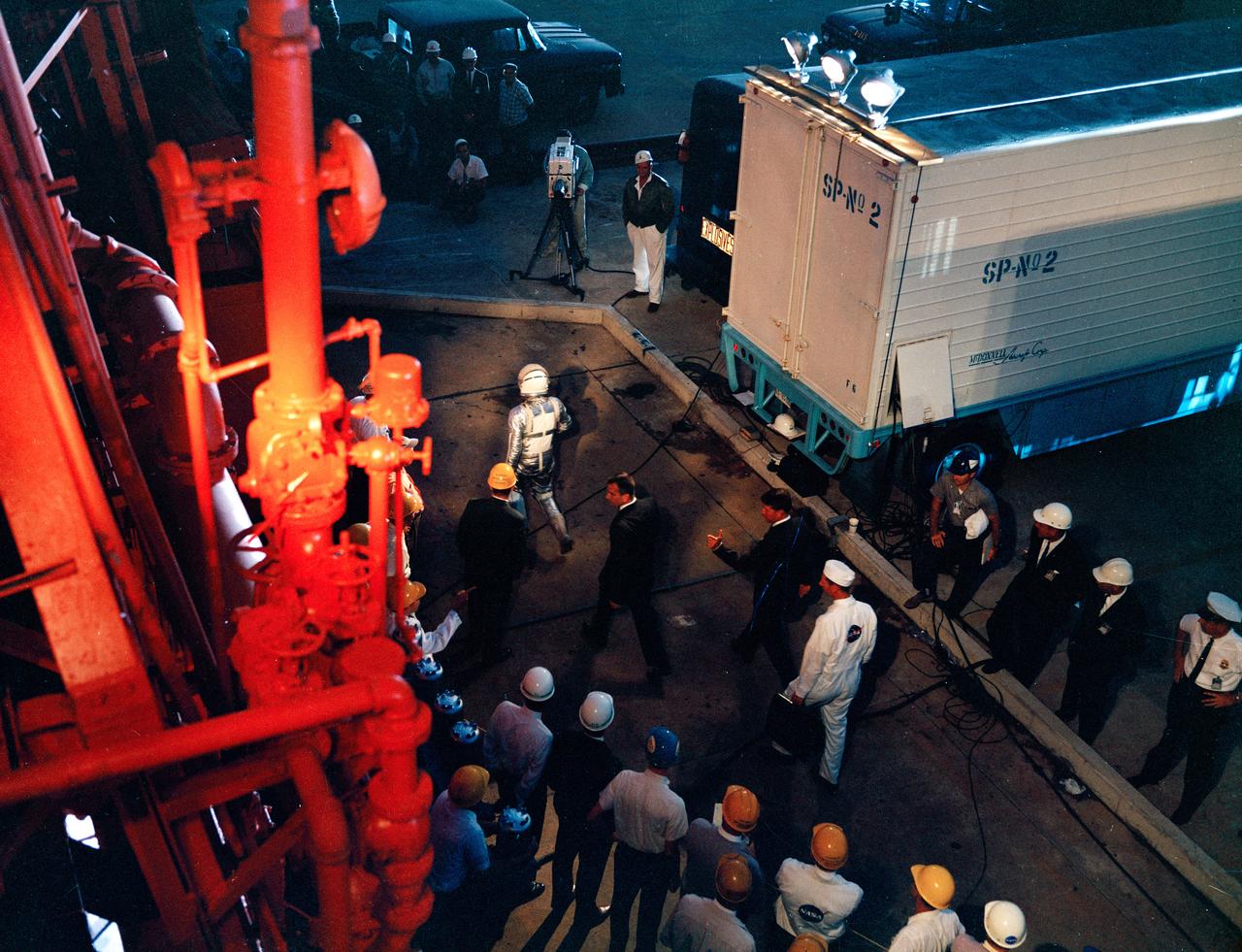
S63-07632 (15 May 1963) --- Astronaut L. Gordon Cooper Jr. leaves the transfer van for the launch pad and the beginning of the Mercury-Atlas 9 (MA-9) flight on May 15, 1963. Photo credit: NASA
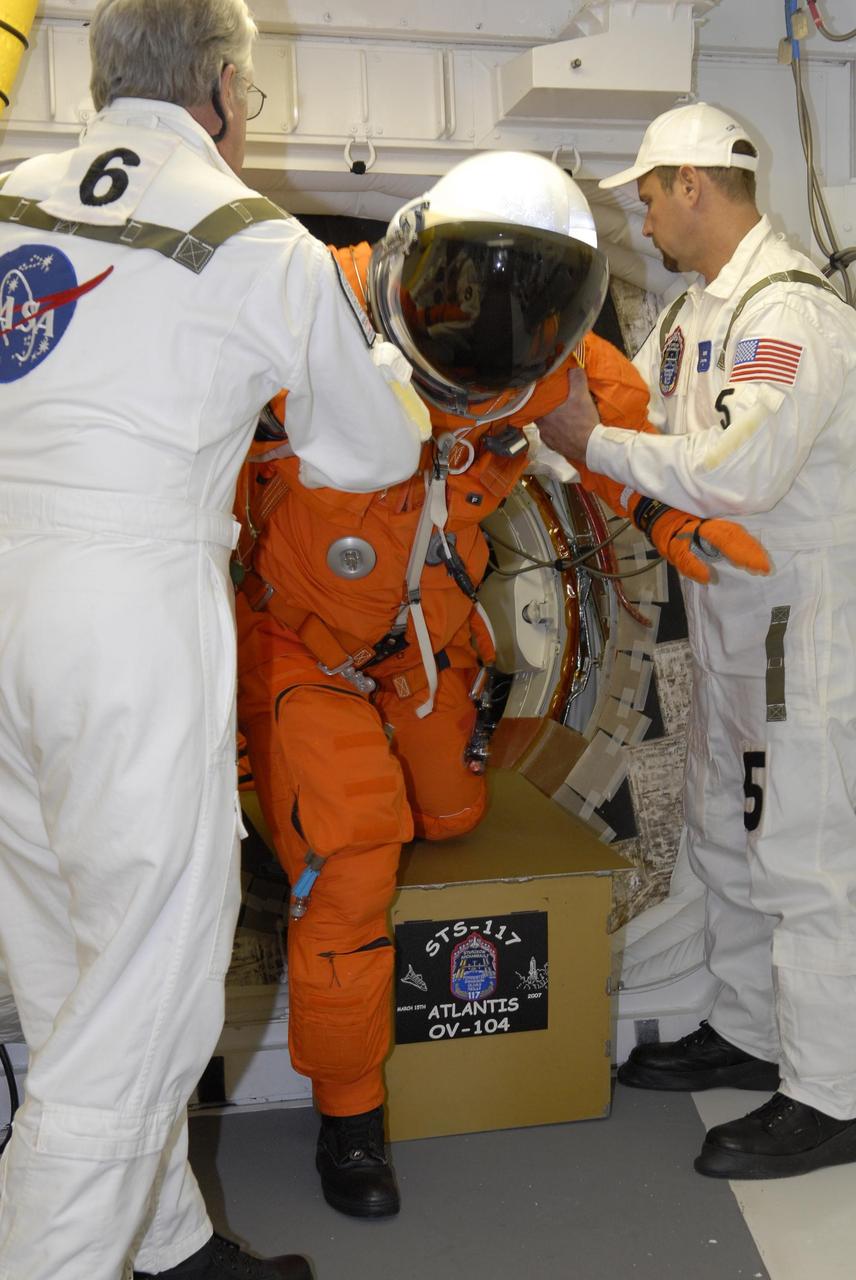
KENNEDY SPACE CENTER, FLA. -- Mission STS-117 Mission Specialist James Reilly egresses from Space Shuttle Atlantis at Launch Pad 39A after participating in a simulated launch countdown that is part of the prelaunch preparations known as terminal demonstration countdown test (TCDT). The TCDT also includes M-113 armored personnel carrier training and payload familiarization. The STS-117 mission is No. 21 to the International Space Station. Mission payloads aboard Atlantis include the S3/S4 integrated truss structure, a third set of solar arrays and batteries. The crew of six astronauts will install the truss to continue assembly of the station. Launch is scheduled for no earlier than March 15. Photo credit: NASA/Kim Shiflett.
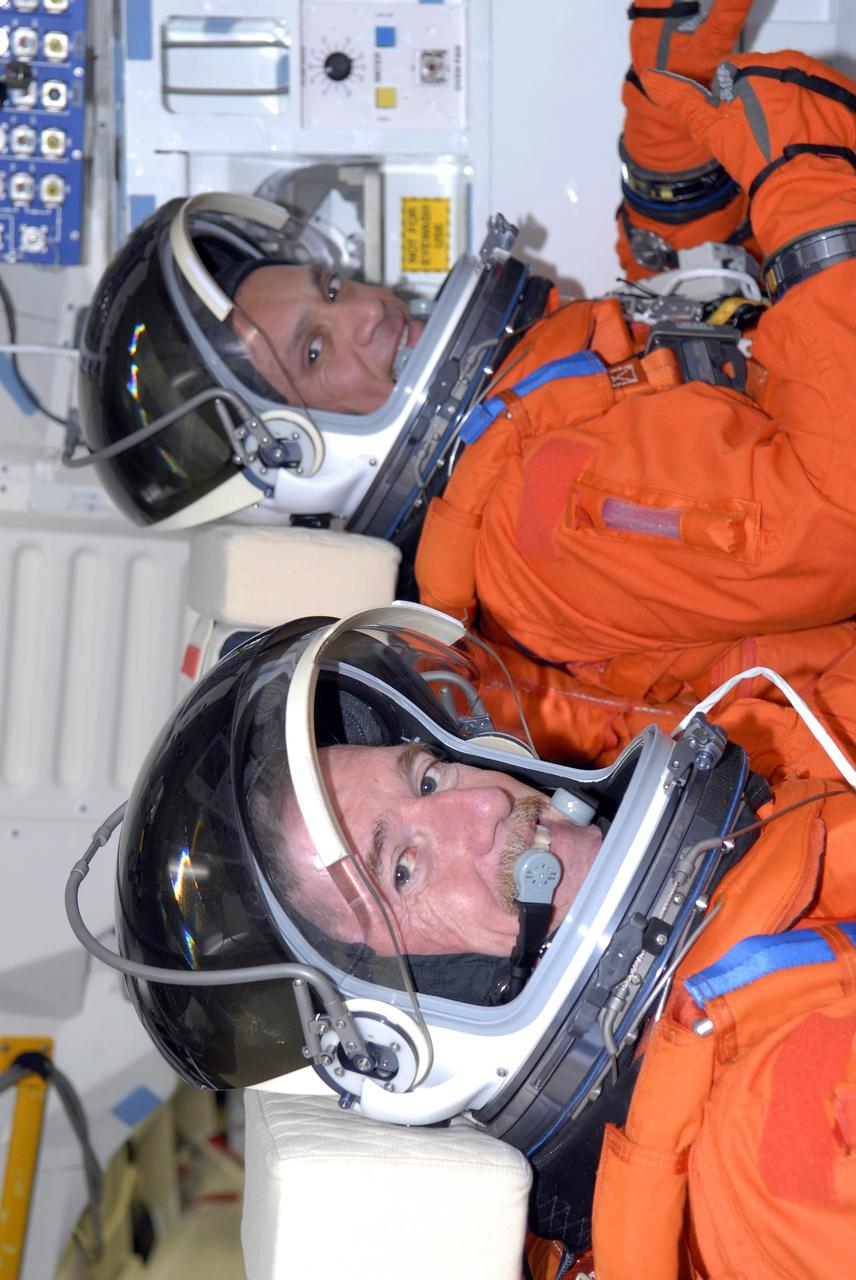
KENNEDY SPACE CENTER, FLA. -- Mission STS-117 Mission Specialists James Reilly (left) and Danny Olivas sit in the mid-deck of Space Shuttle Atlantis at Launch Pad 39A to participate in a simulated launch countdown that is part of the prelaunch preparations known as terminal countdown demonstration test (TCDT). The TCDT also includes M-113 armored personnel carrier training and payload familiarization. The STS-117 mission is No. 21 to the International Space Station. Mission payloads aboard Atlantis include the S3/S4 integrated truss structure, a third set of solar arrays and batteries. The crew of six astronauts will install the truss to continue assembly of the station. Launch is scheduled for no earlier than March 15. Photo credit: NASA/Kim Shiflett.
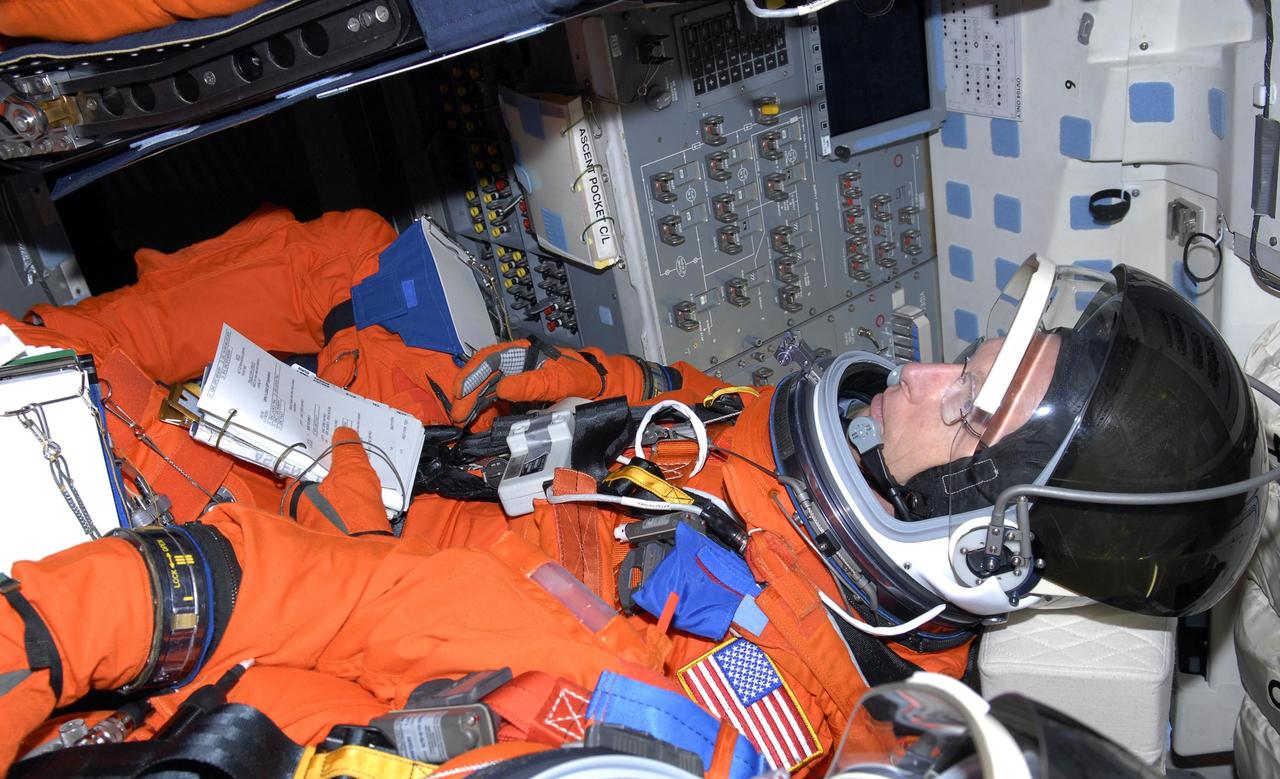
KENNEDY SPACE CENTER, FLA. -- Mission STS-117 Mission Specialist Patrick Forrester sits inside Space Shuttle Atlantis at Launch Pad 39A to participate in a simulated launch countdown that is part of the prelaunch preparations known as the terminal countdown demonstration test (TCDT).The TCDT also includes M-113 armored personnel carrier training and payload familiarization. The STS-117 mission is No. 21 to the International Space Station. Mission payloads aboard Atlantis include the S3/S4 integrated truss structure, a third set of solar arrays and batteries. The crew of six astronauts will install the truss to continue assembly of the station. Launch is scheduled for no earlier than March 15. Photo credit: NASA/Kim Shiflett.

KENNEDY SPACE CENTER, FLA. -- Mission STS-117 Mission Specialist Steven Swanson sits inside Space Shuttle Atlantis at Launch Pad 39A to participate in a simulated launch countdown that is part of the prelaunch preparations known as terminal demonstration countdown test (TCDT). The TCDT also includes M-113 armored personnel carrier training and payload familiarization. The STS-117 mission is No. 21 to the International Space Station. Mission payloads aboard Atlantis include the S3/S4 integrated truss structure, a third set of solar arrays and batteries. The crew of six astronauts will install the truss to continue assembly of the station. Launch is scheduled for no earlier than March 15. Photo credit: NASA/Kim Shiflett.
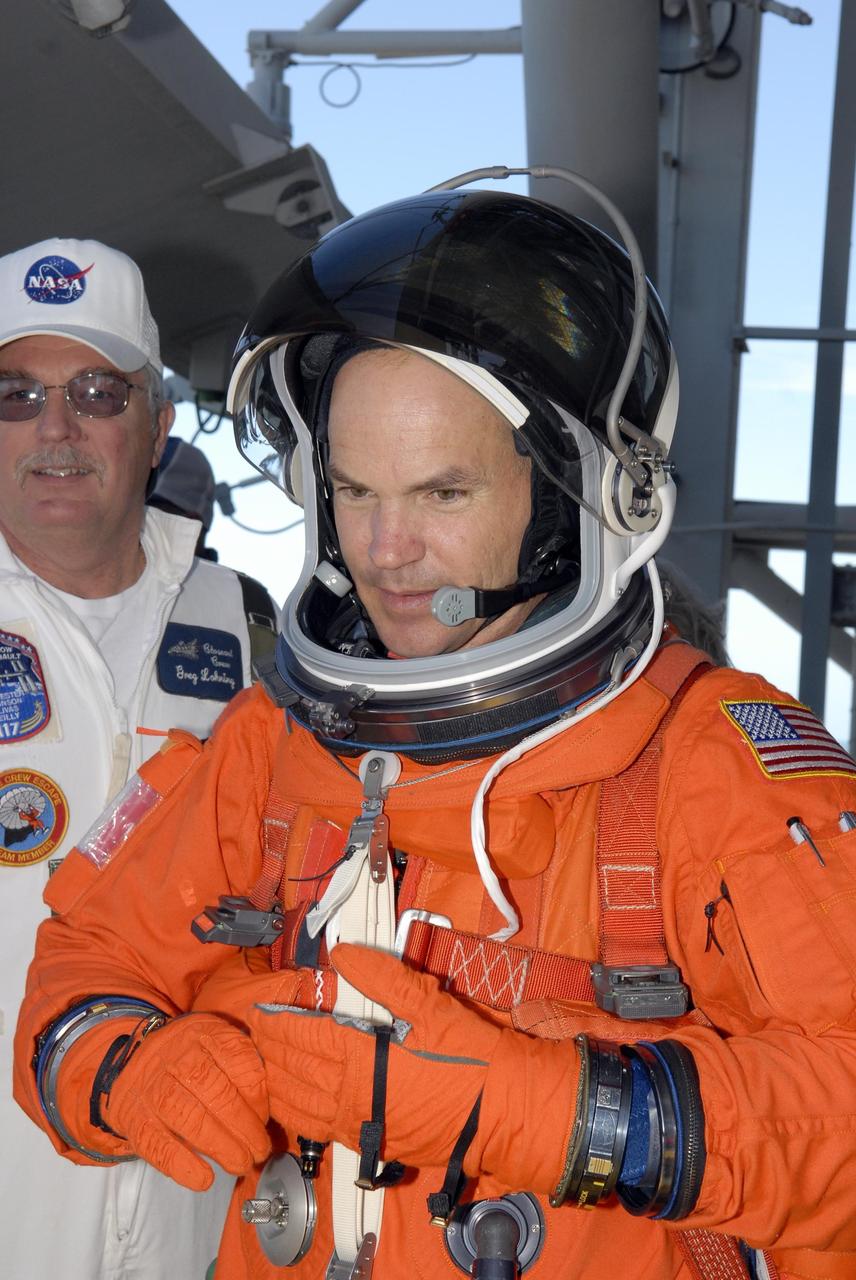
KENNEDY SPACE CENTER, FLA. -- Mission STS-117 Commander Rick Sturckow completes emergency egress procedures at the 195-foot level of the fixed service structure on Launch Pad 39A during the prelaunch preparations known as terminal countdown demonstration test (TCDT). The TCDT also includes M-113 armored personnel carrier training and payload familiarization. The STS-117 mission is No. 21 to the International Space Station. Mission payloads aboard Atlantis include the S3/S4 integrated truss structure, a third set of solar arrays and batteries. The crew of six astronauts will install the truss to continue assembly of the station. Launch is scheduled for no earlier than March 15. Photo credit: NASA/Kim Shiflett.
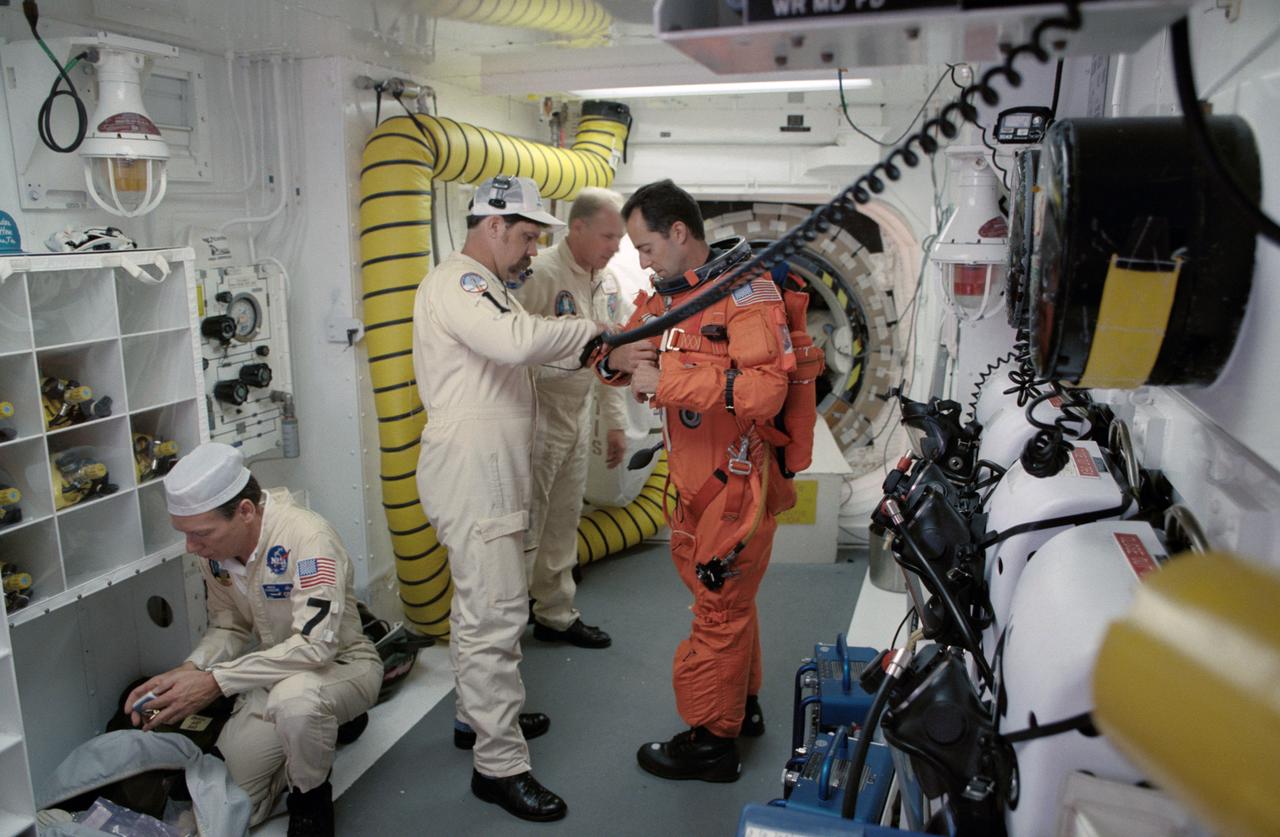
STS066-S-003 (3 November 1994) --- In the white room at Launch Pad 39B, Jean-Francois Clervoy, mission specialist representing European Space Agency (ESA), is assisted with his partial pressure launch/entry suit (LES) by close-out crew members Travis Thompson and Danny Wyatt (background). At noon on November 3, 1994, the ESA astronaut joined five NASA astronauts for launch aboard the Space Shuttle Atlantis. The six astronauts went on to spend 11-days in Earth-orbit in support of the Atmospheric Laboratory for Applications and Science (ATLAS-3) mission.
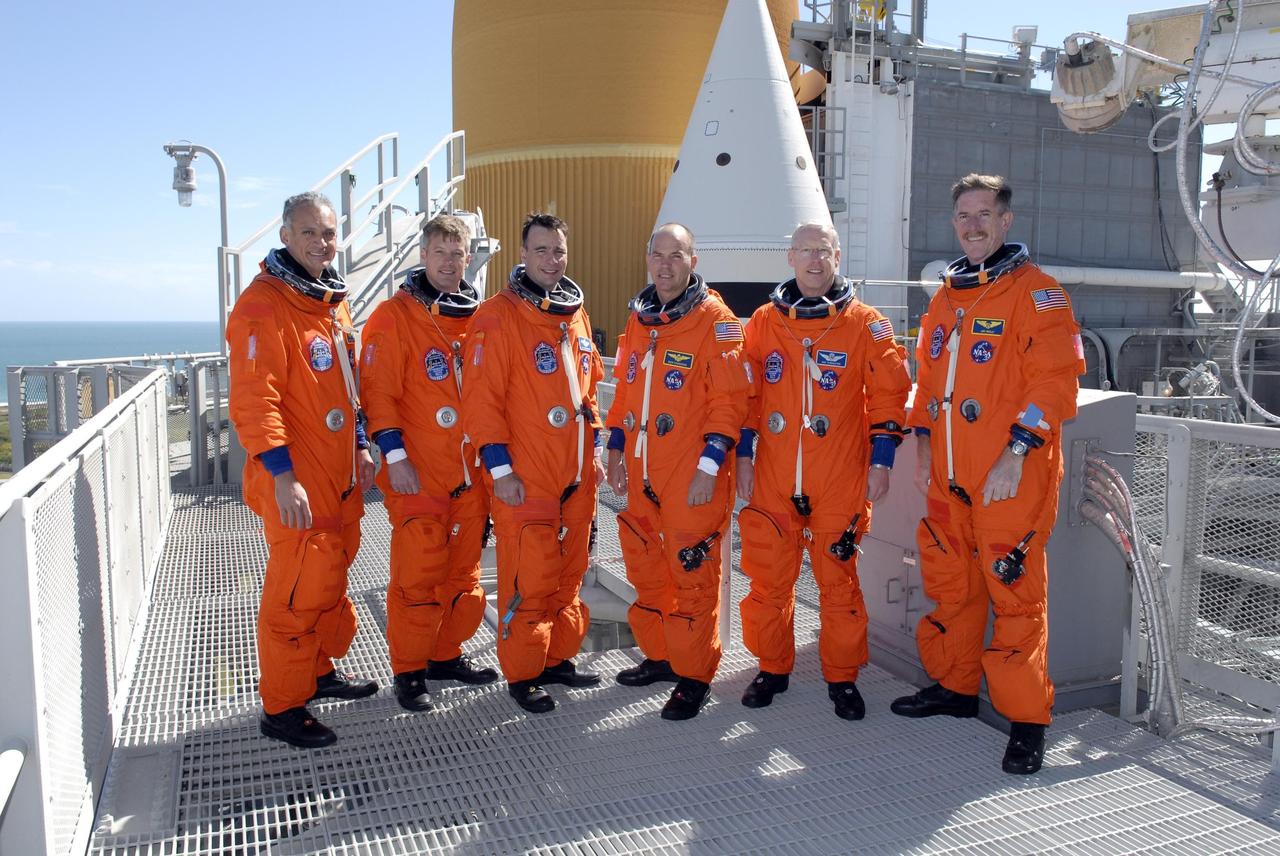
KENNEDY SPACE CENTER, FLA. -- On the 215-foot level of the fixed service structure on Launch Pad 39A, Mission STS-117 crew members gather for a photo near the solid rocket boosters and external tank of Space Shuttle Atlantis. They have just completed a simulated launch countdown and emergency egress from the orbiter, part of the terminal countdown demonstration test (TCDT). From left are Mission Specialists Danny Olivas and Steven Swanson, Pilot Lee Archambault, Commander Rick Sturckow, and Mission Specialists Patrick Forrester and James Reilly. The TCDT also includes M-113 armored personnel carrier training and payload familiarization. The STS-117 mission is No. 21 to the International Space Station. Mission payloads aboard Atlantis include the S3/S4 integrated truss structure, a third set of solar arrays and batteries. The crew of six astronauts will install the truss to continue assembly of the station. Launch is scheduled for no earlier than March 15. Photo credit: NASA/Kim Shiflett.
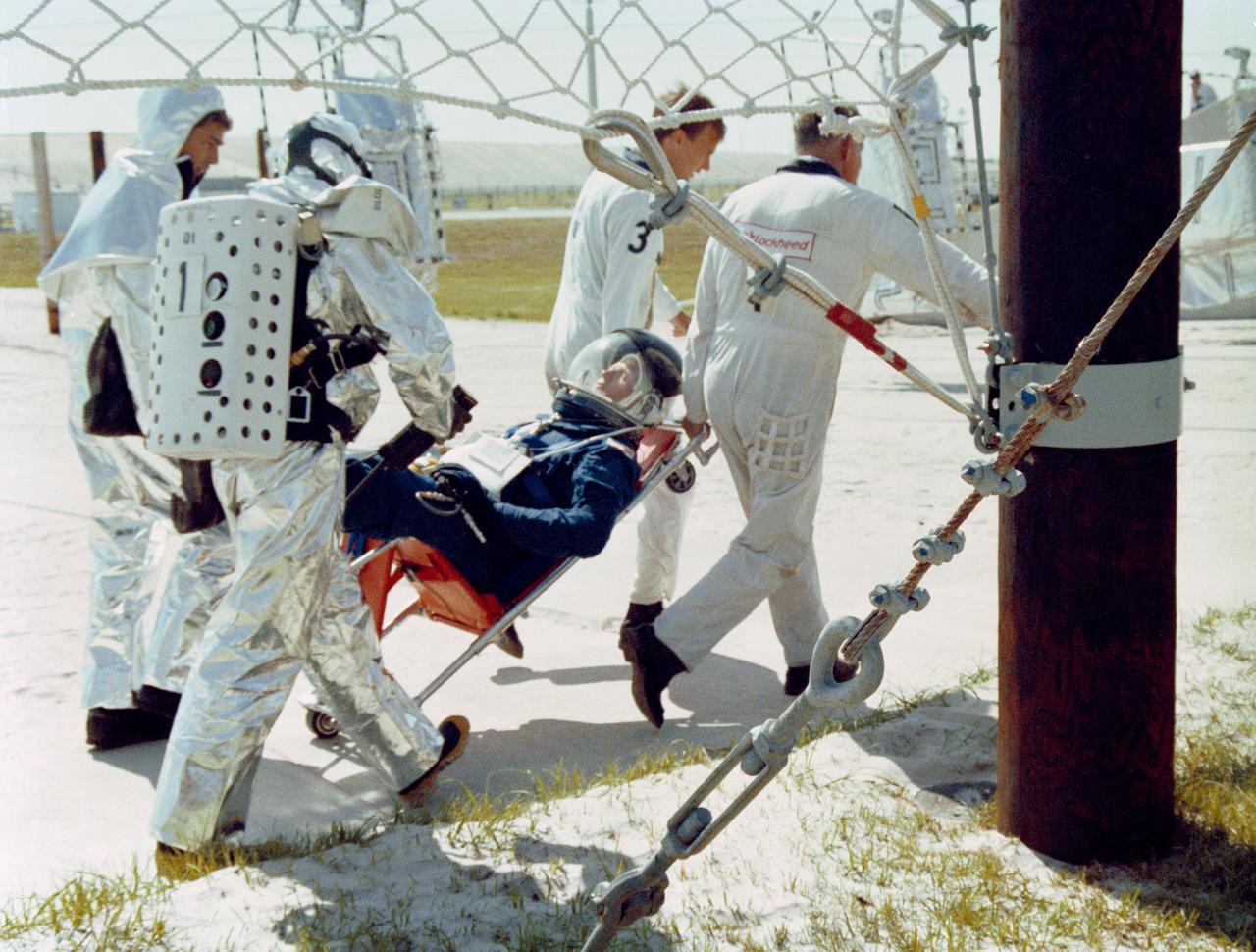
S88-40898 (4 May 1988) --- Astronauts, members of the orbiter close-out crew and fire and rescue personnel participate in a simulated emergency egress exercise near the slide wire termination point bunker at Launch Pad 39B. The simulated exercise was performed to familiarize personnel with evacuation routes as well as emergency equipment and procedures. Reasons for conducting the emergency exercises include the need to validate recent post-Challenger upgrades to the launch pad's emergency escape system and the new procedures developed in preparation for STS-26. (NOTE: The astronaut pictured and many of the others who participated in the exercises are not members of STS-26 prime crew).
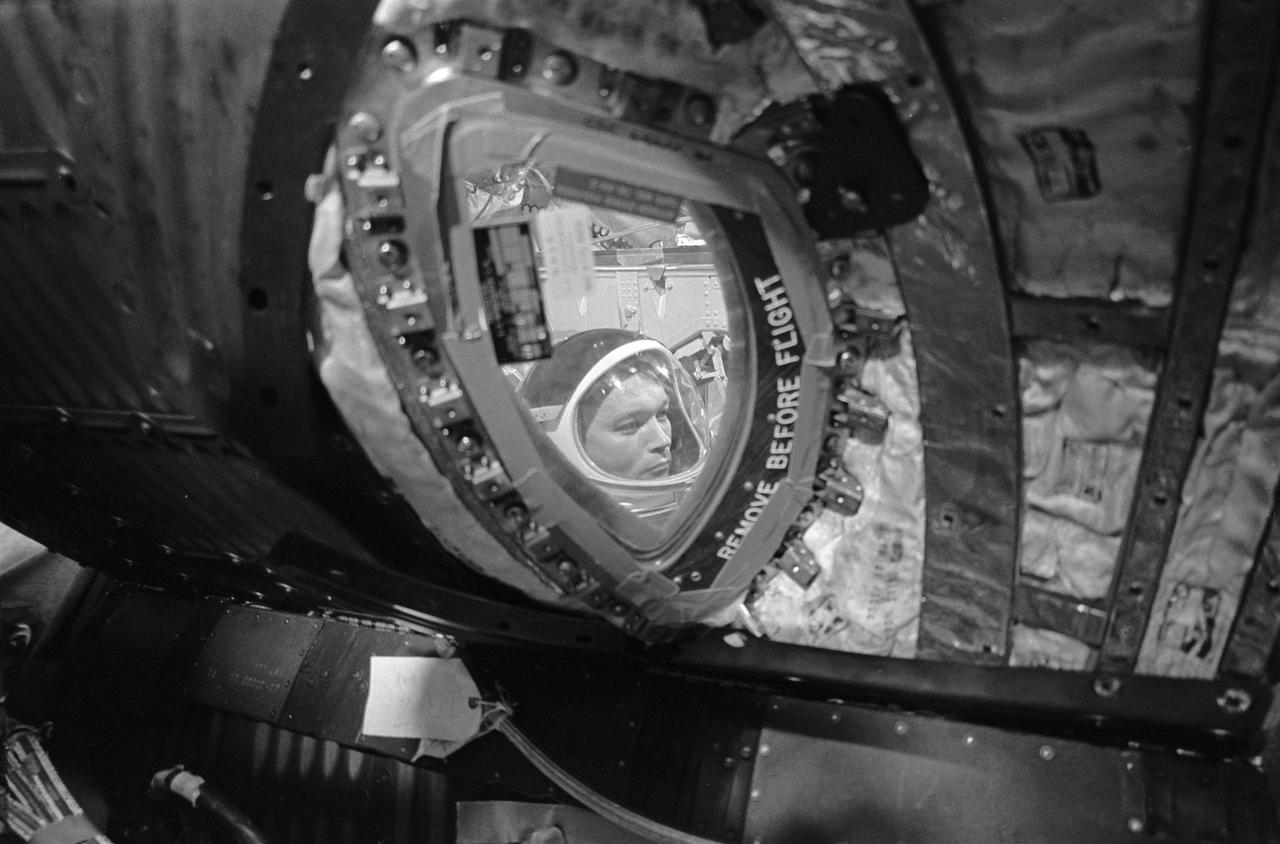
S66-42704 (12 July 1966) --- Astronaut Michael Collins, prime crew pilot for the Gemini-10 spaceflight, is seen through a hatch in the spacecraft during a Simultaneous Launch Demonstration in the White Room atop Pad 19, Cape Kennedy, Florida. Photo credit: NASA
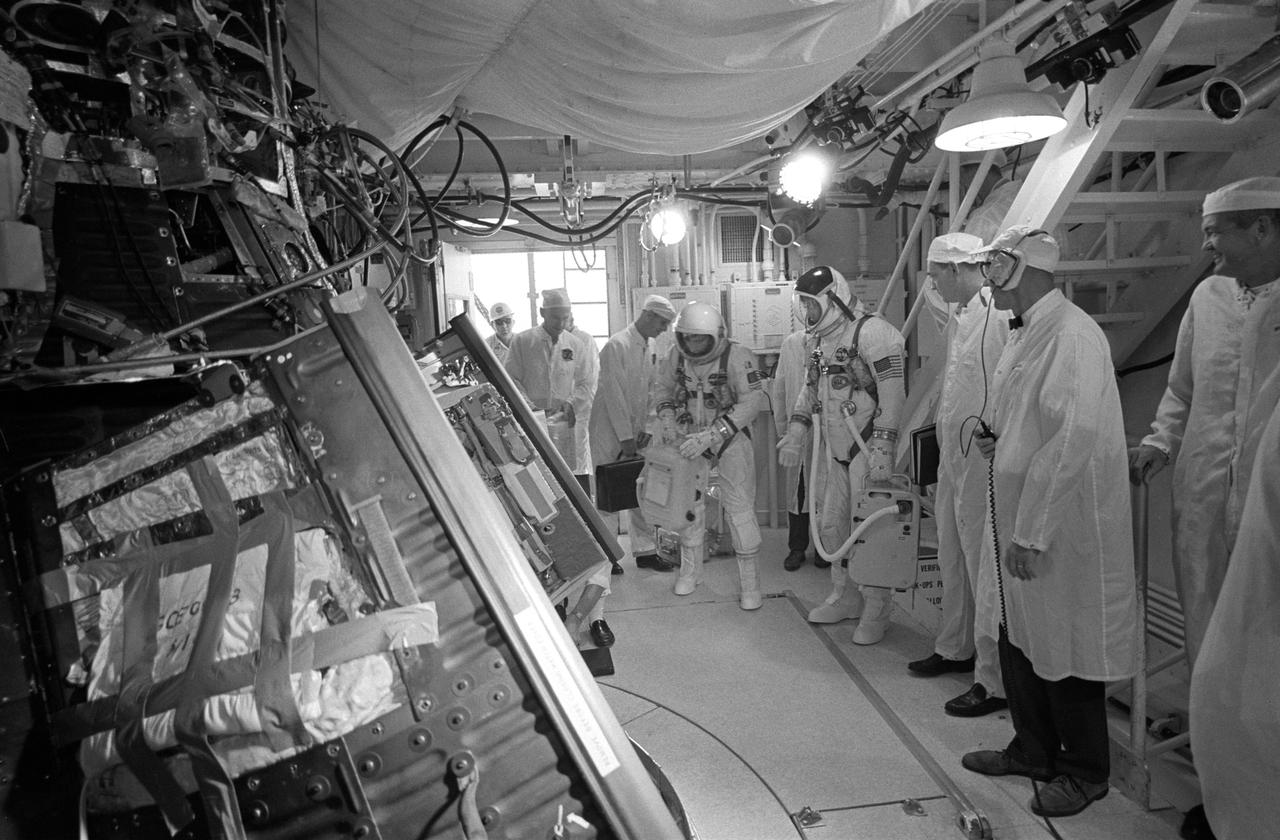
S66-42702 (12 July 1966) --- Gemini-10 prime crew, astronauts John W. Young (left), command pilot, and Michael Collins (right), pilot, check equipment in the White Room atop Pad 19 where they participated in a Simultaneous Launch Demonstration. Photo credit: NASA
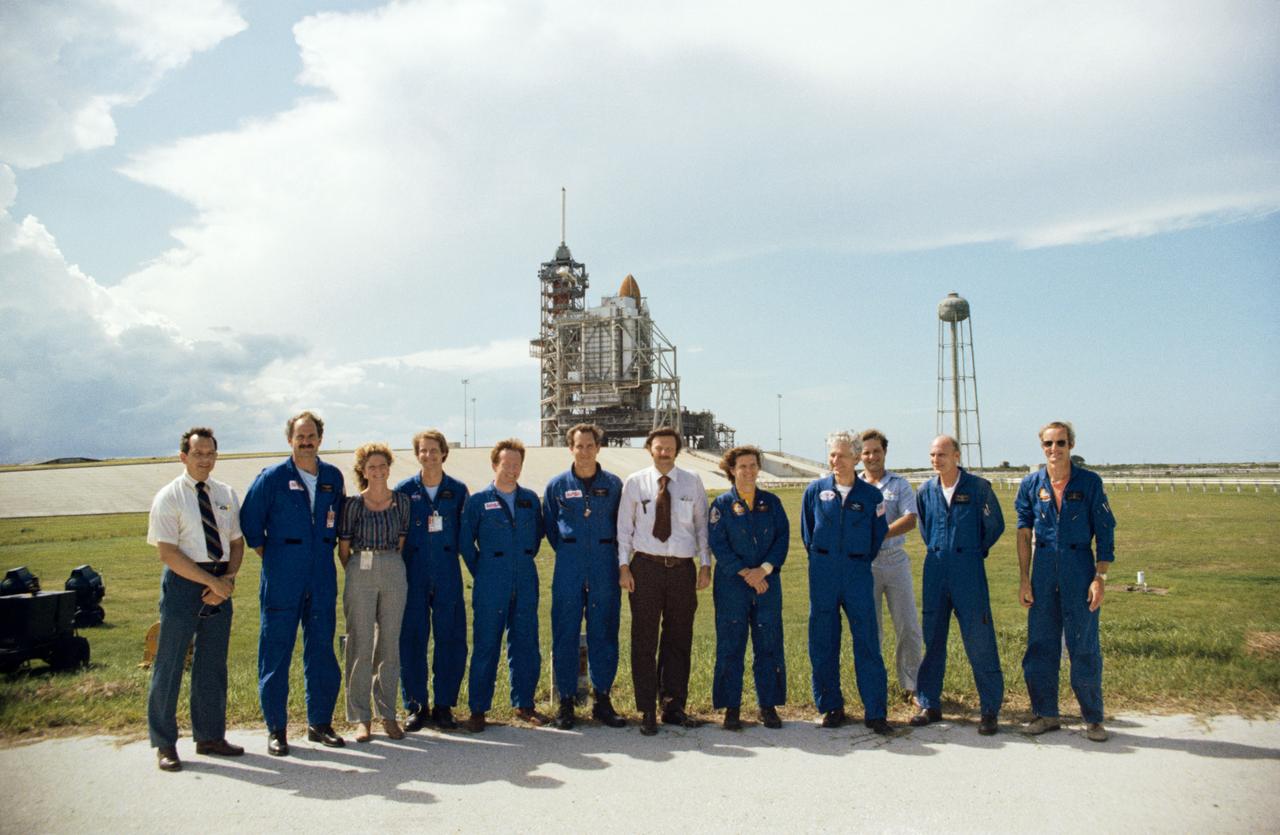
S82-32200 (29 May 1982) --- Members of the JSC astronaut corps, STS-4 vehicle integration test team (VITT) and other personnel pose for a photograph at the completion of a countdown demonstration test (CDDT) at Launch Pad 39A, Kennedy Space Center (KSC). The participants are, from the left, Wilbur J. Etbauer, engineer with the VITT; mission specialist-astronaut James D. van Hoften; Terry Stanford, engineer from JSC's flight operations directorate; mission specialist-astronaut Steven A. Hawley; astronaut Richard N. Richards; astronaut Michael J. Smith; Richard W. Nygren, head of the VITT; mission specialist-astronaut Kathryn D. Sullivan; astronaut Henry W. Hartsfield Jr.,STS-4 pilot; Mary Haynes, a co-op student participating with the VITT; astronaut Thomas K. Mattingly II, STS-4 commander; and astronaut Donald E. Williams. Photo credit: NASA
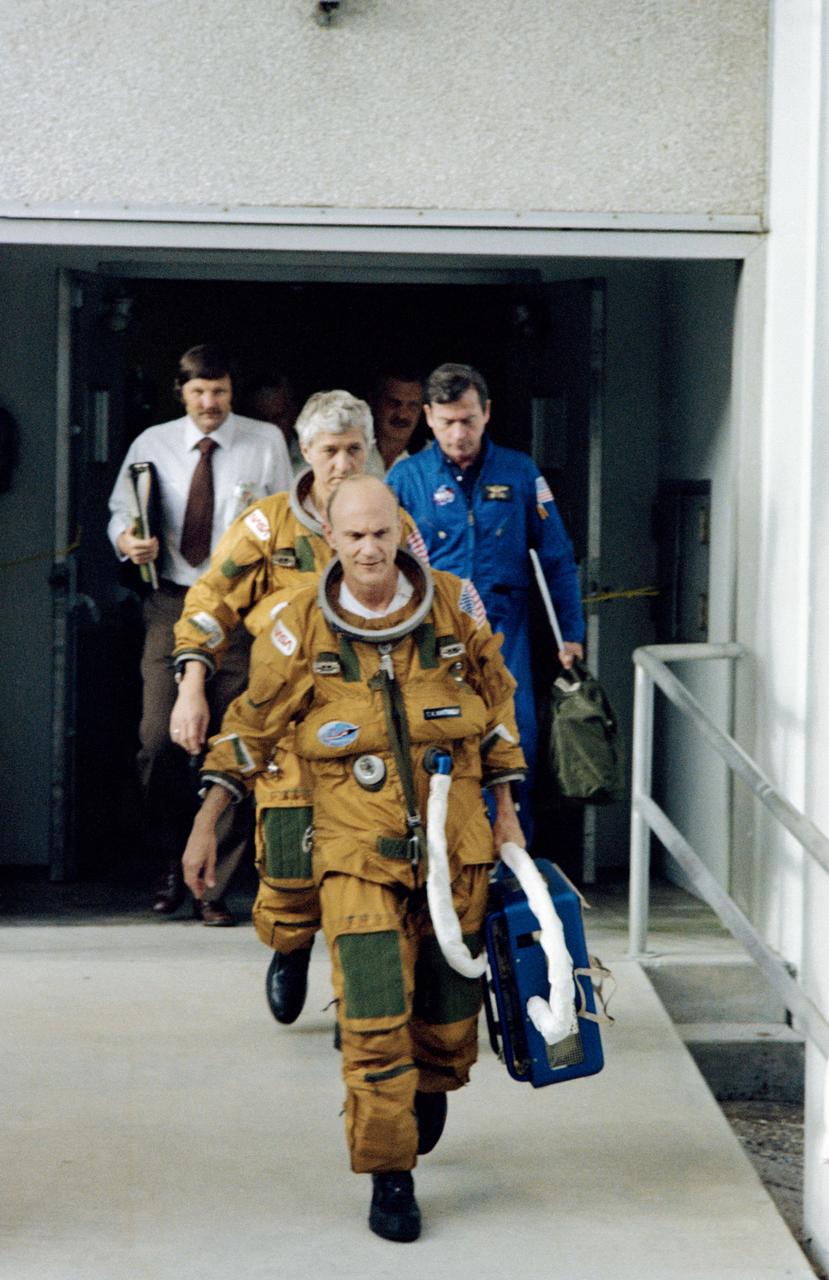
S82-32202 (29 May 1982) --- Astronauts Thomas K. (Ken) Mattingly II, center foreground, and Henry W. Hartsfield Jr., both wearing pressure garments, leave the operations and checkout building at KSC to board a special van that will take them to Launch Pad 39A for a rehearsal for their liftoff. Accompanying the pair are astronaut John W. Young (blue flight suit), chief of the astronaut office at JSC; Richard W. Nygren of the vehicle integration test team (VITT); and James O. Schlosser, space suit engineer. Photo credit: NASA
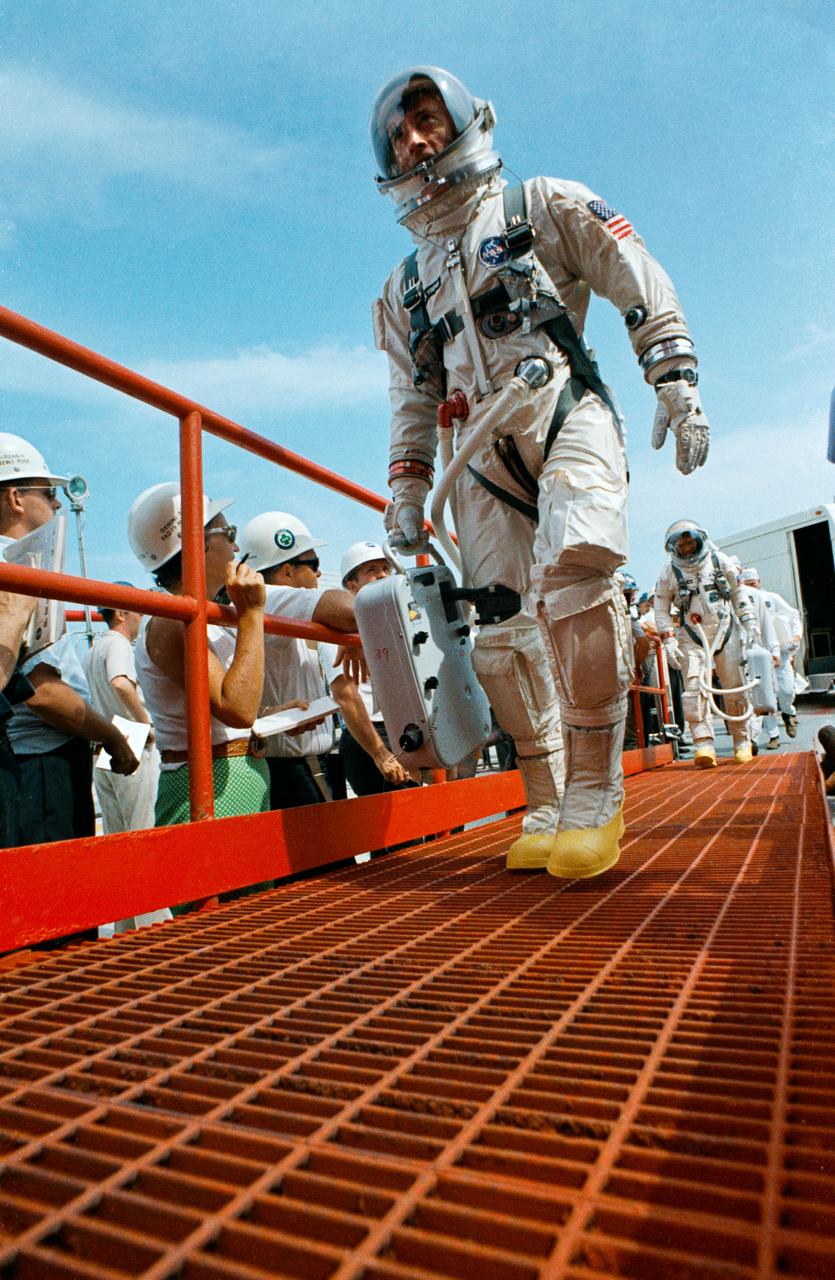
S66-42754 (18 July 1966) --- Astronauts John W. Young (leading), command pilot, and Michael Collins, pilot, walk up the ramp at Pad 19 after arriving from the Launch Complex 16 suiting trailer during the prelaunch countdown. Moments later they entered the elevator which took them to the white room and the waiting Gemini-10 spacecraft. Liftoff was at 5:20 p.m. (EST), July 18, 1966. Photo credit: NASA
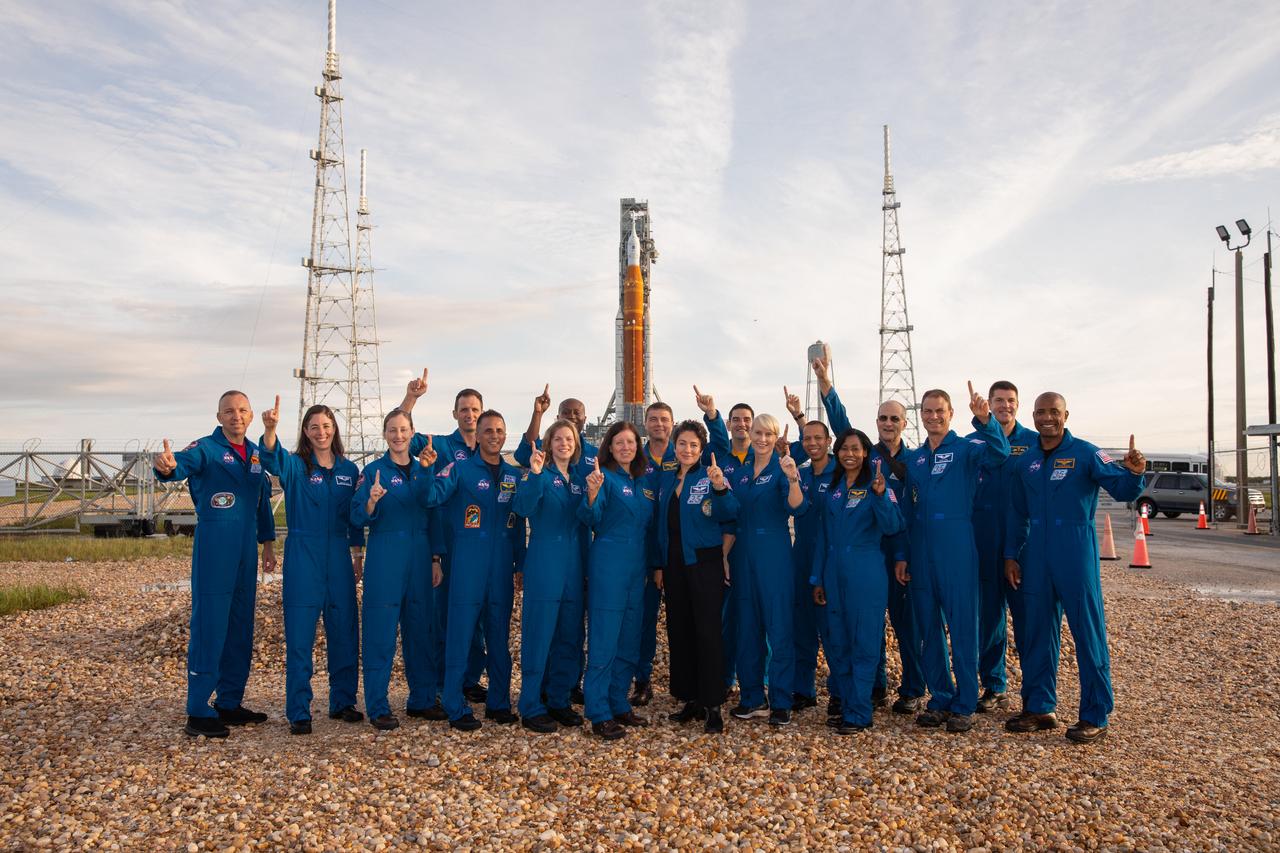
Astronauts and astronaut candidates from NASA and the Canadian Space Agency pose for a photograph in front of NASA’s Artemis I Space Launch System and Orion spacecraft atop the mobile launcher on the pad at Launch Complex 39B on Aug. 28, 2022. The astronauts are, from left to right: Randy Bresnik, NASA astronaut; Christina Birch, NASA astronaut candidate; Jessica Wittner, NASA astronaut candidate; Joshua Kutryk, Canadian Space Agency astronaut; Joe Acaba, NASA astronaut; Zena Cardman, NASA astronaut; Andre Douglas, NASA astronaut candidate; Shannon Walker, NASA astronaut; Reid Wiseman, NASA astronaut; Jessica Meir, NASA astronaut; Jack Hathaway, NASA astronaut candidate; Kate Rubins, NASA astronaut; Chris Williams, NASA astronaut candidate; Stephanie Wilson, NASA astronaut; Don Pettit, NASA astronaut; Stan Love, NASA astronaut; Jeremy Hansen, Canadian Space Agency astronaut; Victor Glover, NASA astronaut. Artemis I is scheduled to launch Aug. 29, at 8:33 a.m. EDT. The first in a series of increasingly complex missions, Artemis I will provide a foundation for human deep space exploration and demonstrate our commitment and capability to extend human presence to the Moon and beyond. The primary goal of Artemis I is to thoroughly test the integrated systems before crewed missions by operating the spacecraft in a deep space environment, testing Orion’s heat shield, and recovering the crew module after reentry, descent, and splashdown.
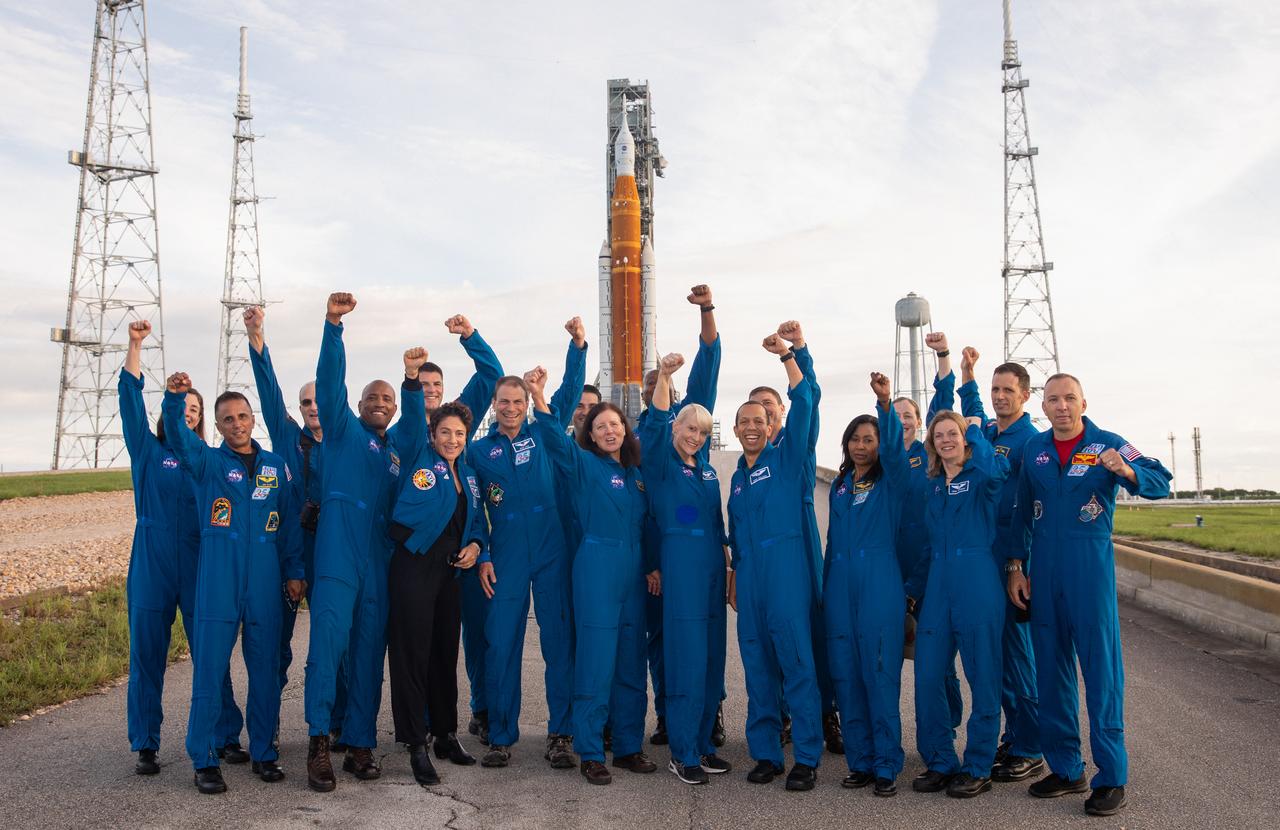
Astronauts and astronaut candidates from NASA and the Canadian Space Agency pose for a photograph in front of NASA’s Artemis I Space Launch System and Orion spacecraft atop the mobile launcher on the pad at Launch Complex 39B on Aug. 28, 2022. The astronauts are, from left to right: Christina Birch, NASA astronaut candidate; Joe Acaba, NASA astronaut; Don Pettit, NASA astronaut; Victor Glover, NASA astronaut; Jeremy Hansen, Canadian Space Agency astronaut; Jessica Meir, NASA astronaut; Stan Love, NASA astronaut; Jack Hathaway, NASA astronaut candidate; Shannon Walker, NASA astronaut; Andre Douglas, NASA astronaut candidate; Kate Rubins, NASA astronaut; Chris Williams, NASA astronaut candidate; Reid Wiseman, NASA astronaut; Stephanie Wilson, NASA astronaut; Jessica Wittner, NASA astronaut candidate; Zena Cardman, NASA astronaut; Joshua Kutryk, Canadian Space Agency astronaut; Randy Bresnik, NASA astronaut. Artemis I is scheduled to launch Aug. 29, at 8:33 a.m. EDT. The first in a series of increasingly complex missions, Artemis I will provide a foundation for human deep space exploration and demonstrate our commitment and capability to extend human presence to the Moon and beyond. The primary goal of Artemis I is to thoroughly test the integrated systems before crewed missions by operating the spacecraft in a deep space environment, testing Orion’s heat shield, and recovering the crew module after reentry, descent, and splashdown.
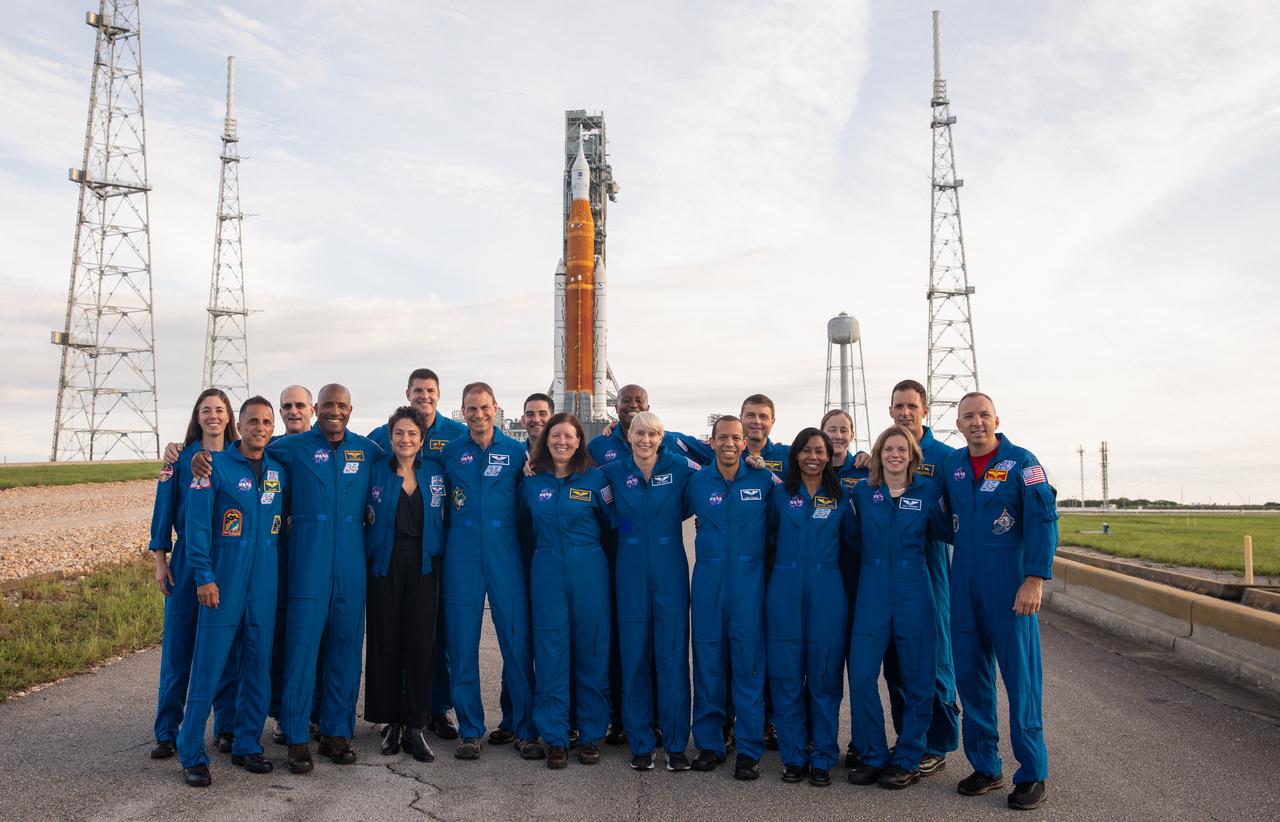
Astronauts and astronaut candidates from NASA and the Canadian Space Agency pose for a photograph in front of NASA’s Artemis I Space Launch System and Orion spacecraft atop the mobile launcher on the pad at Launch Complex 39B on Aug. 28, 2022. The astronauts are, from left to right: Christina Birch, NASA astronaut candidate; Joe Acaba, NASA astronaut; Don Pettit, NASA astronaut; Victor Glover, NASA astronaut; Jessica Meir, NASA astronaut; Jeremy Hansen, Canadian Space Agency astronaut; Stan Love, NASA astronaut; Jack Hathaway, NASA astronaut candidate; Shannon Walker, NASA astronaut; Andre Douglas, NASA astronaut candidate; Kate Rubins, NASA astronaut; Chris Williams, NASA astronaut candidate; Reid Wiseman, NASA astronaut; Stephanie Wilson, NASA astronaut; Jessica Wittner, NASA astronaut candidate; Zena Cardman, NASA astronaut; Joshua Kutryk, Canadian Space Agency astronaut; Randy Bresnik, NASA astronaut. Artemis I is scheduled to launch Aug. 29, at 8:33 a.m. EDT. The first in a series of increasingly complex missions, Artemis I will provide a foundation for human deep space exploration and demonstrate our commitment and capability to extend human presence to the Moon and beyond. The primary goal of Artemis I is to thoroughly test the integrated systems before crewed missions by operating the spacecraft in a deep space environment, testing Orion’s heat shield, and recovering the crew module after reentry, descent, and splashdown.
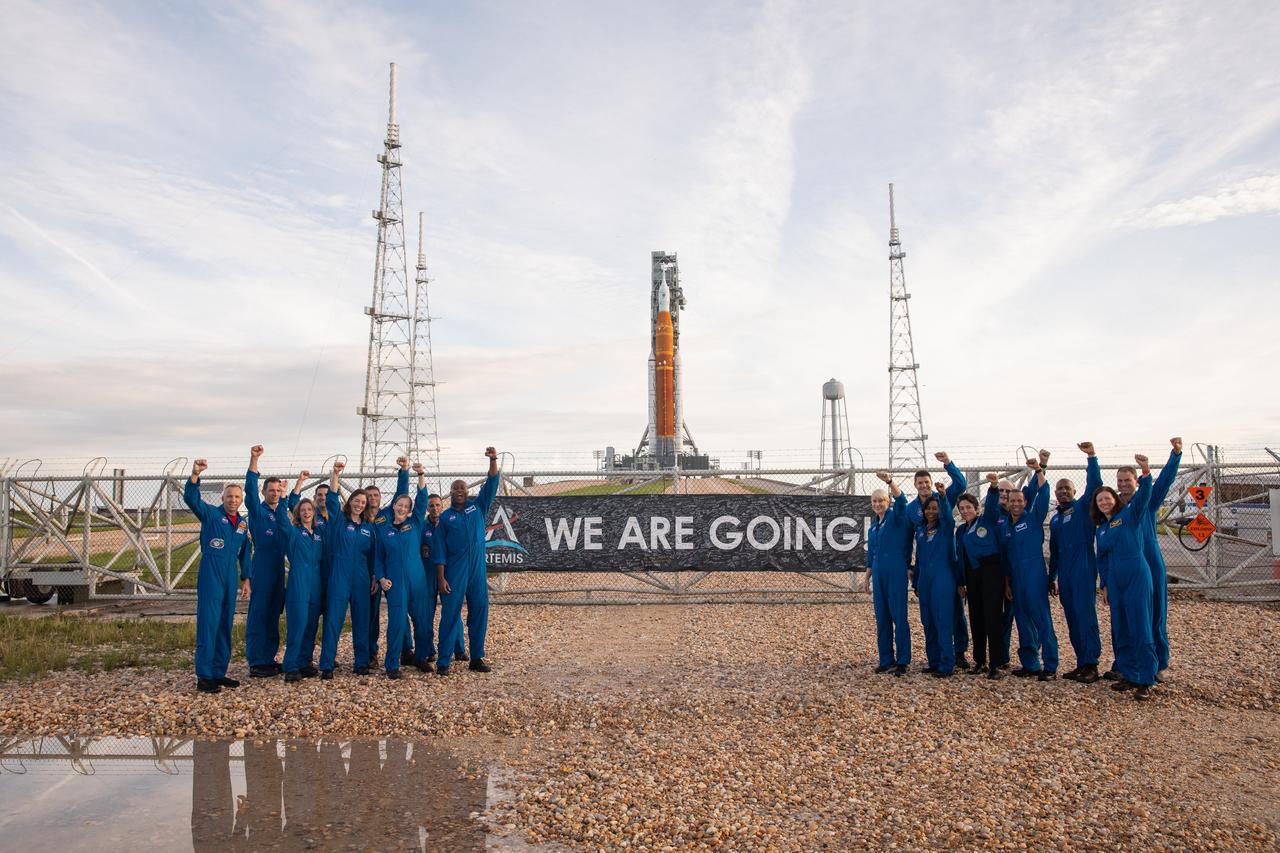
Astronauts and astronaut candidates from NASA and the Canadian Space Agency pose for a photograph in front of NASA’s Artemis I Space Launch System and Orion spacecraft atop the mobile launcher on the pad at Launch Complex 39B on Aug. 28, 2022. The astronauts are, from left to right: Randy Bresnik, NASA astronaut; Joshua Kutryk, Canadian Space Agency astronaut; Zena Cardman, NASA astronaut; Jack Hathaway, NASA astronaut candidate; Christina Birch, NASA astronaut candidate; Reid Wiseman, NASA astronaut; Jessica Wittner, NASA astronaut candidate; Joe Acaba, NASA astronaut; Andre Douglas, NASA astronaut candidate; Kate Rubins, NASA astronaut; Jeremy Hansen, Canadian Space Agency astronaut; Stephanie Wilson, NASA astronaut; Jessica Meir, NASA astronaut; Don Pettit, NASA astronaut; Chris Williams, NASA astronaut candidate; Victor Glover, NASA astronaut; Shannon Walker, NASA astronaut; Stan Love, NASA astronaut. Artemis I is scheduled to launch Aug. 29, at 8:33 a.m. EDT. The first in a series of increasingly complex missions, Artemis I will provide a foundation for human deep space exploration and demonstrate our commitment and capability to extend human presence to the Moon and beyond. The primary goal of Artemis I is to thoroughly test the integrated systems before crewed missions by operating the spacecraft in a deep space environment, testing Orion’s heat shield, and recovering the crew module after reentry, descent, and splashdown.
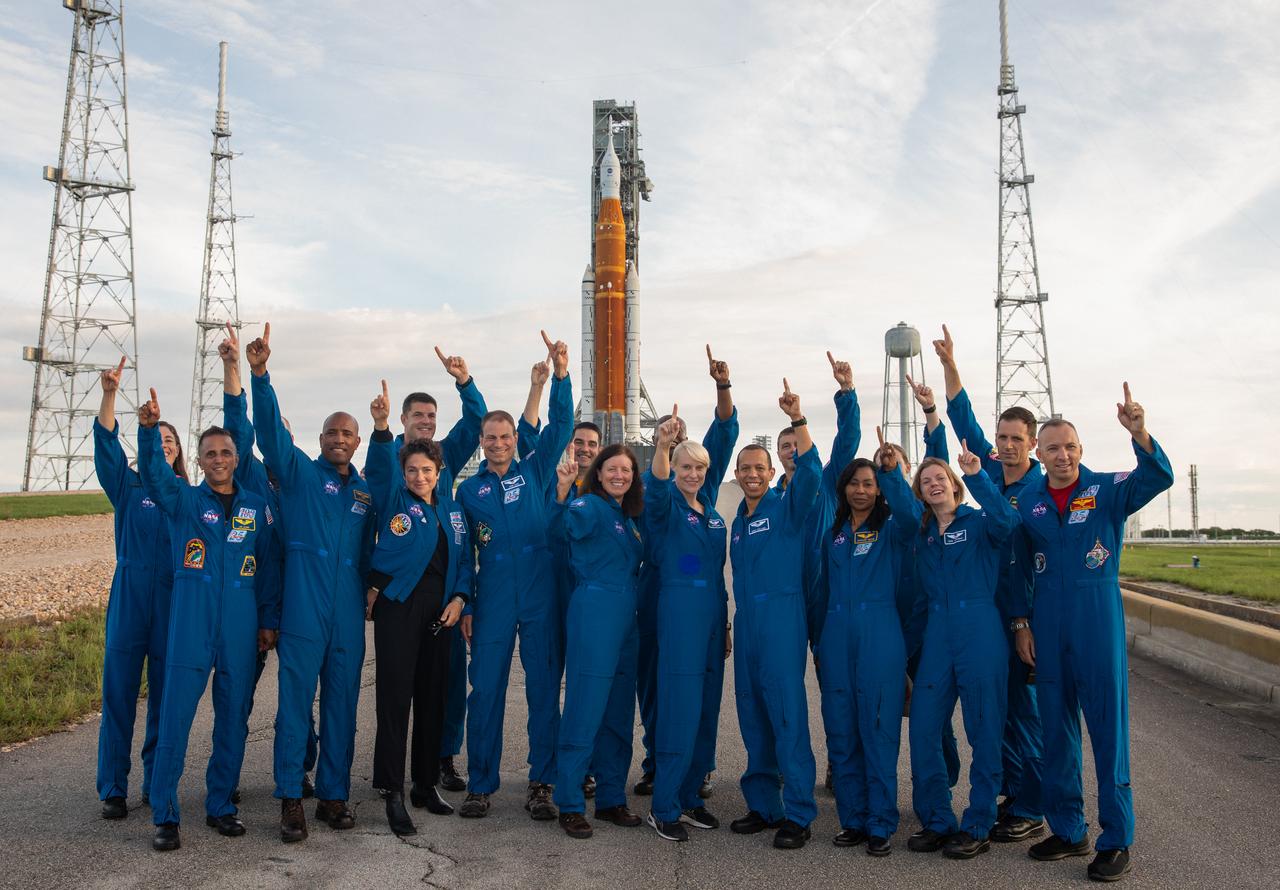
Astronauts and astronaut candidates from NASA and the Canadian Space Agency pose for a photograph in front of NASA’s Artemis I Space Launch System and Orion spacecraft atop the mobile launcher on the pad at Launch Complex 39B on Aug. 28, 2022. The astronauts are, from left to right: Christina Birch, NASA astronaut candidate; Joe Acaba, NASA astronaut; Don Pettit, NASA astronaut; Victor Glover, NASA astronaut; Jeremy Hansen, Canadian Space Agency astronaut; Jessica Meir, NASA astronaut; Stan Love, NASA astronaut; Jack Hathaway, NASA astronaut candidate; Shannon Walker, NASA astronaut; Andre Douglas, NASA astronaut candidate; Kate Rubins, NASA astronaut; Chris Williams, NASA astronaut candidate; Reid Wiseman, NASA astronaut; Stephanie Wilson, NASA astronaut; Jessica Wittner, NASA astronaut candidate; Zena Cardman, NASA astronaut; Joshua Kutryk, Canadian Space Agency astronaut; Randy Bresnik, NASA astronaut. Artemis I is scheduled to launch Aug. 29, at 8:33 a.m. EDT. The first in a series of increasingly complex missions, Artemis I will provide a foundation for human deep space exploration and demonstrate our commitment and capability to extend human presence to the Moon and beyond. The primary goal of Artemis I is to thoroughly test the integrated systems before crewed missions by operating the spacecraft in a deep space environment, testing Orion’s heat shield, and recovering the crew module after reentry, descent, and splashdown.
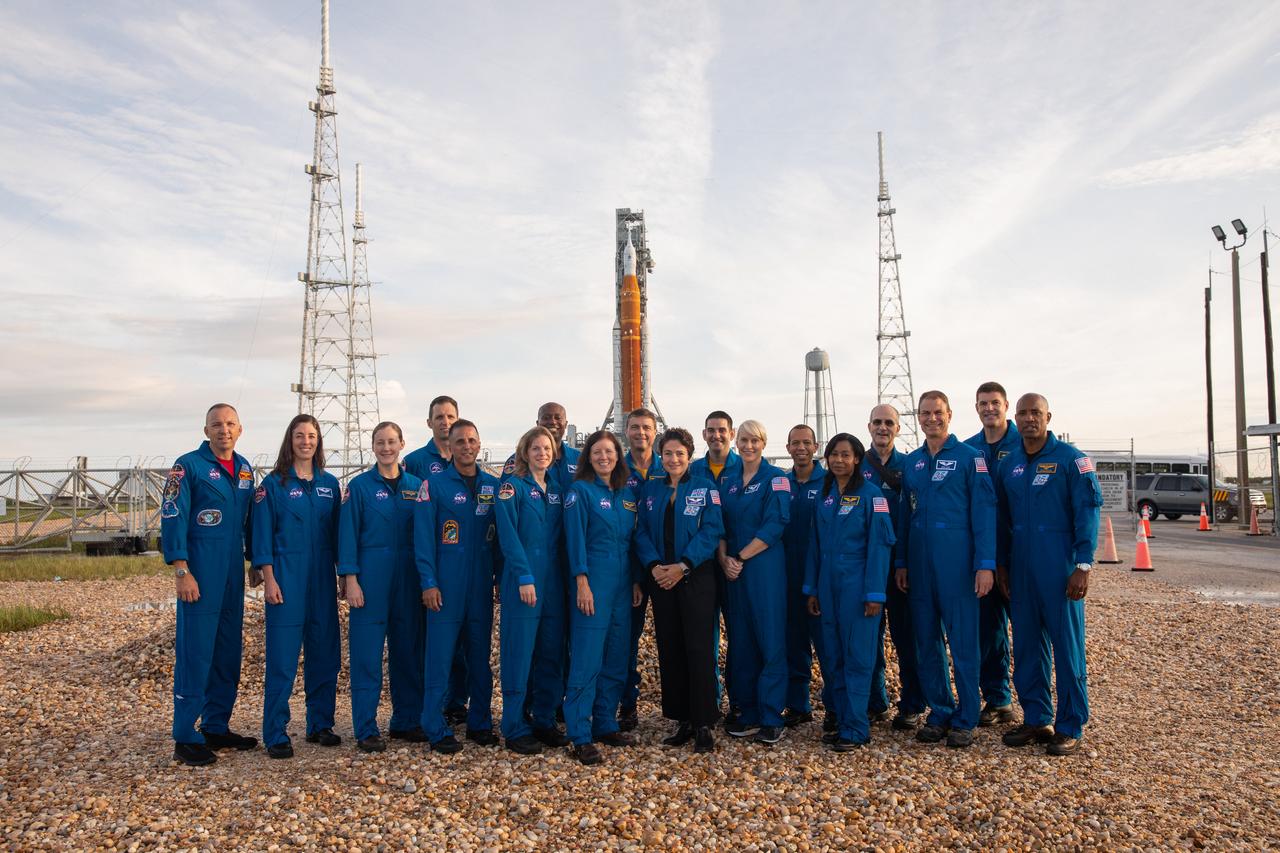
Astronauts and astronaut candidates from NASA and the Canadian Space Agency pose for a photograph in front of NASA’s Artemis I Space Launch System and Orion spacecraft atop the mobile launcher on the pad at Launch Complex 39B on Aug. 28, 2022. The astronauts are, from left to right: Randy Bresnik, NASA astronaut; Christina Birch, NASA astronaut candidate; Jessica Wittner, NASA astronaut candidate; Joshua Kutryk, Canadian Space Agency astronaut; Joe Acaba, NASA astronaut; Zena Cardman, NASA astronaut; Andre Douglas, NASA astronaut candidate; Shannon Walker, NASA astronaut; Reid Wiseman, NASA astronaut; Jessica Meir, NASA astronaut; Jack Hathaway, NASA astronaut candidate; Kate Rubins, NASA astronaut; Chris Williams, NASA astronaut candidate; Stephanie Wilson, NASA astronaut; Don Pettit, NASA astronaut; Stan Love, NASA astronaut; Jeremy Hansen, Canadian Space Agency astronaut; Victor Glover, NASA astronaut. Artemis I is scheduled to launch Aug. 29, at 8:33 a.m. EDT. The first in a series of increasingly complex missions, Artemis I will provide a foundation for human deep space exploration and demonstrate our commitment and capability to extend human presence to the Moon and beyond. The primary goal of Artemis I is to thoroughly test the integrated systems before crewed missions by operating the spacecraft in a deep space environment, testing Orion’s heat shield, and recovering the crew module after reentry, descent, and splashdown.
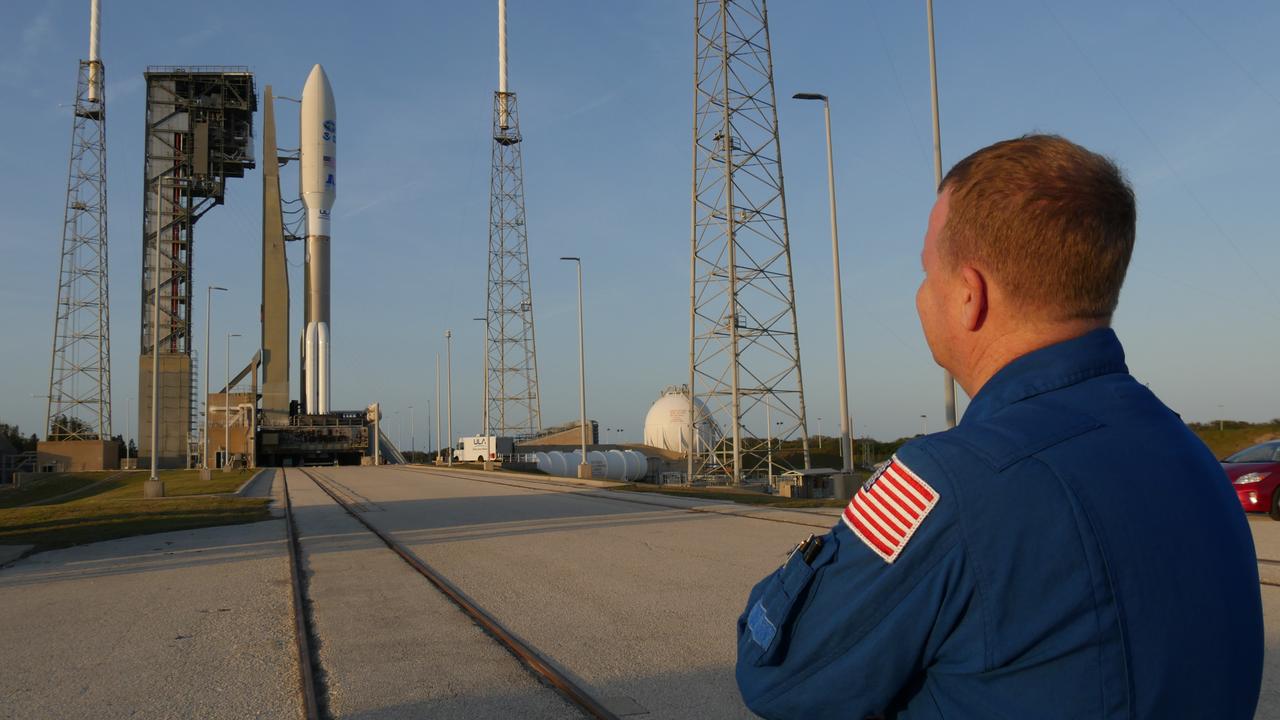
NASA astronaut Eric Boe, one of four astronauts working with the agency’s Commercial Crew Program, had the opportunity to check out the Crew Access Tower at Space Launch Complex 41 (SLC-41) Wednesday with a United Launch Alliance Atlas V on the pad. Boe, along with launch operations engineers from NASA, Boeing, and ULA, climbed the launch pad tower to evaluate lighting and spotlights after dark. The survey helped ensure crew members will have acceptable visibility as they prepare to launch aboard Boeing’s Starliner spacecraft on the Crew Flight Test to the International Space Station targeted for later this year.
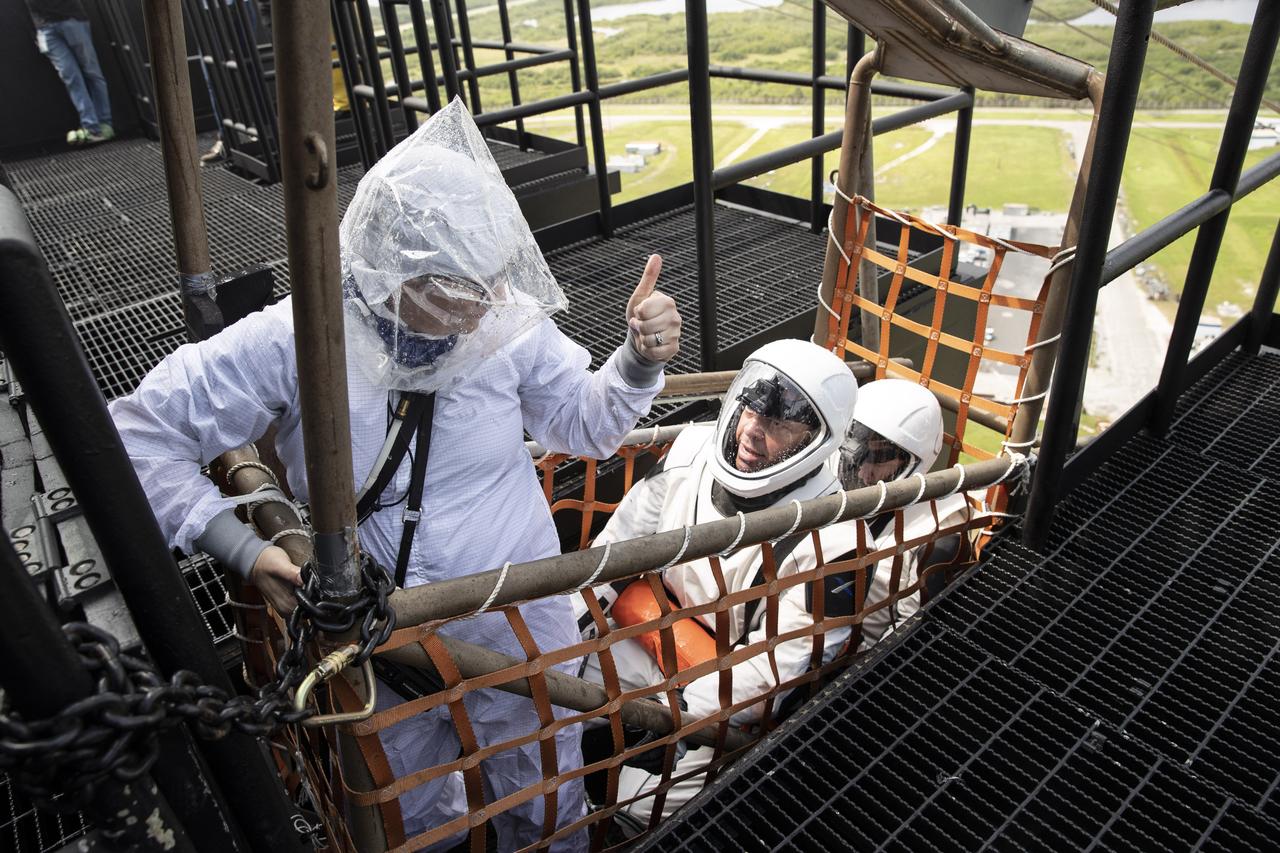
NASA and SpaceX conducted a formal verification of the company’s emergency escape system on Sept. 18, 2019, at Kennedy Space Center’s Launch Complex 39A in Florida. From left, NASA astronauts Shannon Walker and Bob Behnken participated in the exercise to verify the crew can safely and quickly evacuate from the launch pad in the unlikely event of an emergency before liftoff of SpaceX’s first crewed flight test, called Demo-2. At tower level on the pad, Walker and Behnken practiced loading into a slidewire basket and simulating an emergency escape to ground level. As Boeing and SpaceX begin to make regular flights to the International Space Station for NASA’s Commercial Crew Program, the agency will continue to advance its mission to go beyond low-Earth orbit and establish a human presence on the Moon with the ultimate goal of sending astronauts to Mars.
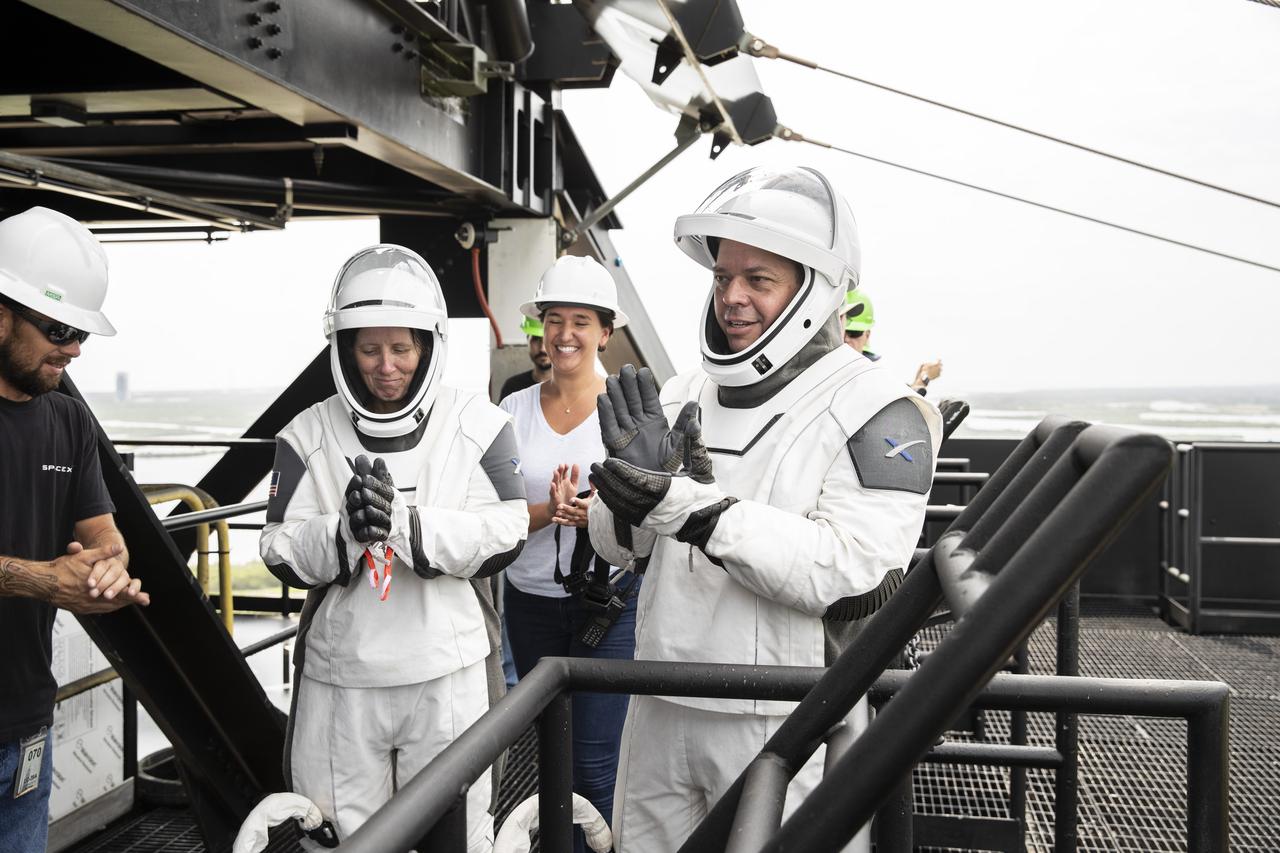
NASA and SpaceX conducted a formal verification of the company’s emergency escape system on Sept. 18, 2019, at Kennedy Space Center’s Launch Complex 39A in Florida. From left, NASA astronauts Shannon Walker and Bob Behnken participated in the exercise to verify the crew can safely and quickly evacuate from the launch pad in the unlikely event of an emergency before liftoff of SpaceX’s first crewed flight test, called Demo-2. At tower level on the pad, Walker and Behnken practiced loading into slidewire baskets and simulating an emergency escape to ground level. As Boeing and SpaceX begin to make regular flights to the International Space Station for NASA’s Commercial Crew Program, the agency will continue to advance its mission to go beyond low-Earth orbit and establish a human presence on the Moon with the ultimate goal of sending astronauts to Mars.
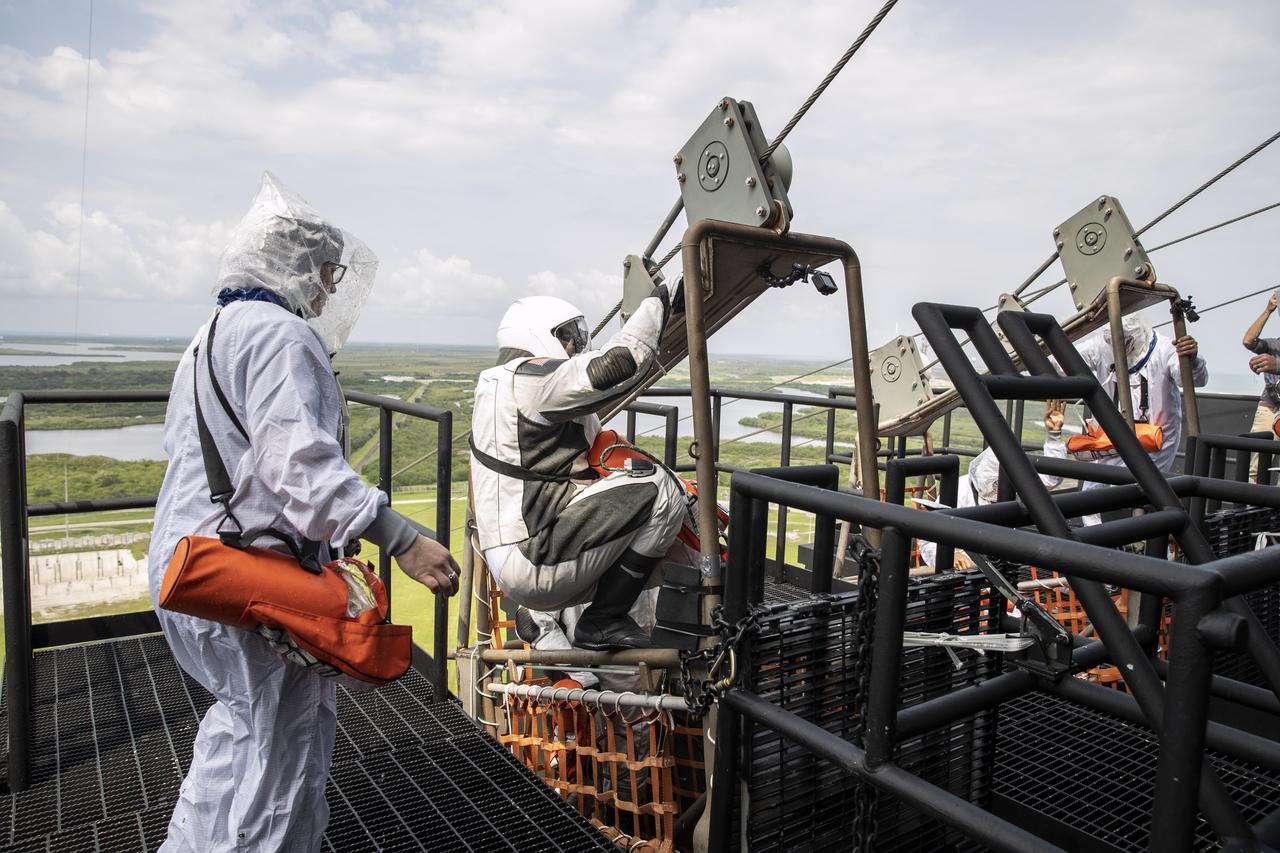
NASA and SpaceX conducted a formal verification of the company’s emergency escape system on Sept. 18, 2019, at Kennedy Space Center’s Launch Complex 39A in Florida. NASA astronauts Shannon Walker and Bob Behnken participated in the exercise to verify the crew can safely and quickly evacuate from the launch pad in the unlikely event of an emergency before liftoff of SpaceX’s first crewed flight test, called Demo-2. At tower level on the pad, Behnken practiced loading into a slidewire basket and simulating an emergency escape to ground level. As Boeing and SpaceX begin to make regular flights to the International Space Station for NASA’s Commercial Crew Program, the agency will continue to advance its mission to go beyond low-Earth orbit and establish a human presence on the Moon with the ultimate goal of sending astronauts to Mars.
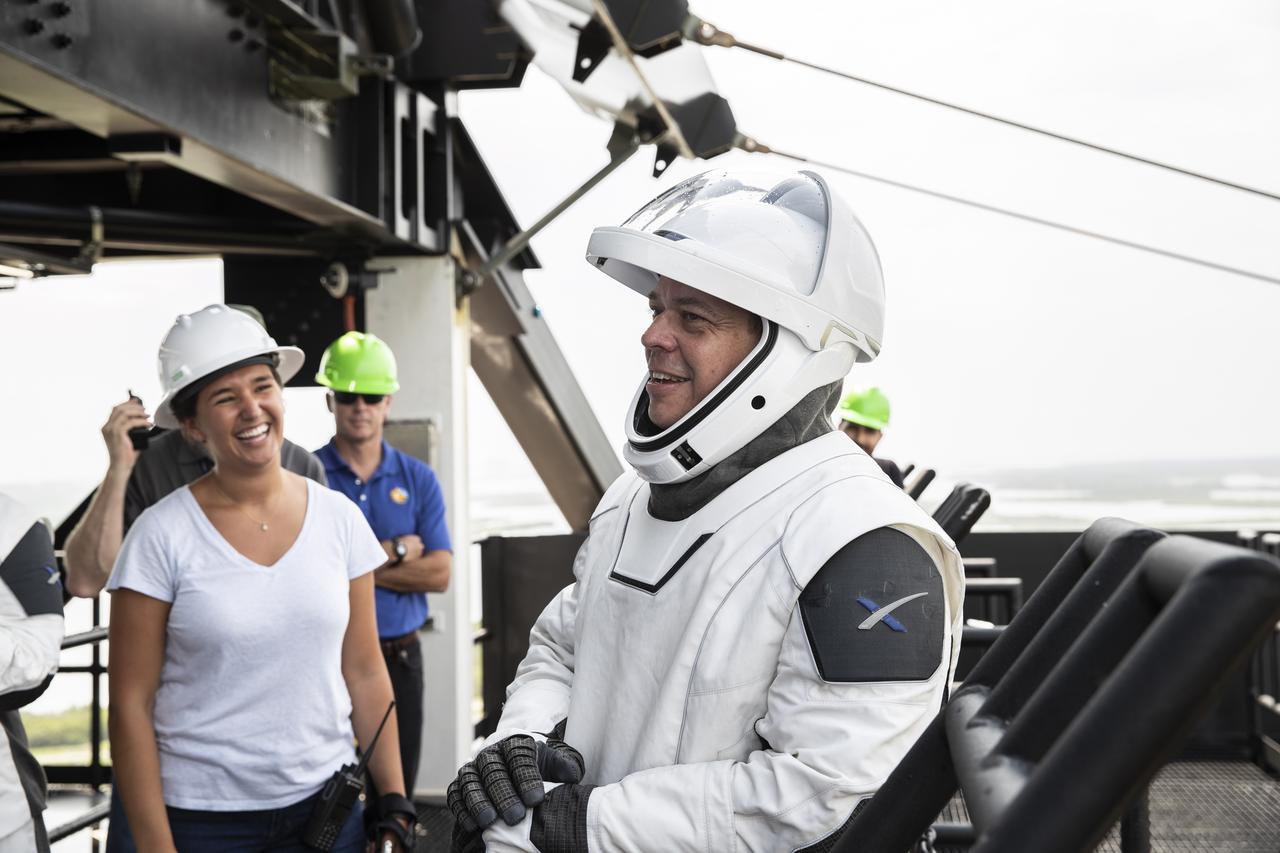
NASA and SpaceX conducted a formal verification of the company’s emergency escape system on Sept. 18, 2019, at Kennedy Space Center’s Launch Complex 39A in Florida. NASA astronaut Bob Behnken participated in the exercise to verify the crew can safely and quickly evacuate from the launch pad in the unlikely event of an emergency before liftoff of SpaceX’s first crewed flight test, called Demo-2. At tower level on the pad, Behnken practiced loading into a slidewire basket and simulating an emergency escape to ground level. As Boeing and SpaceX begin to make regular flights to the International Space Station for NASA’s Commercial Crew Program, the agency will continue to advance its mission to go beyond low-Earth orbit and establish a human presence on the Moon with the ultimate goal of sending astronauts to Mars.
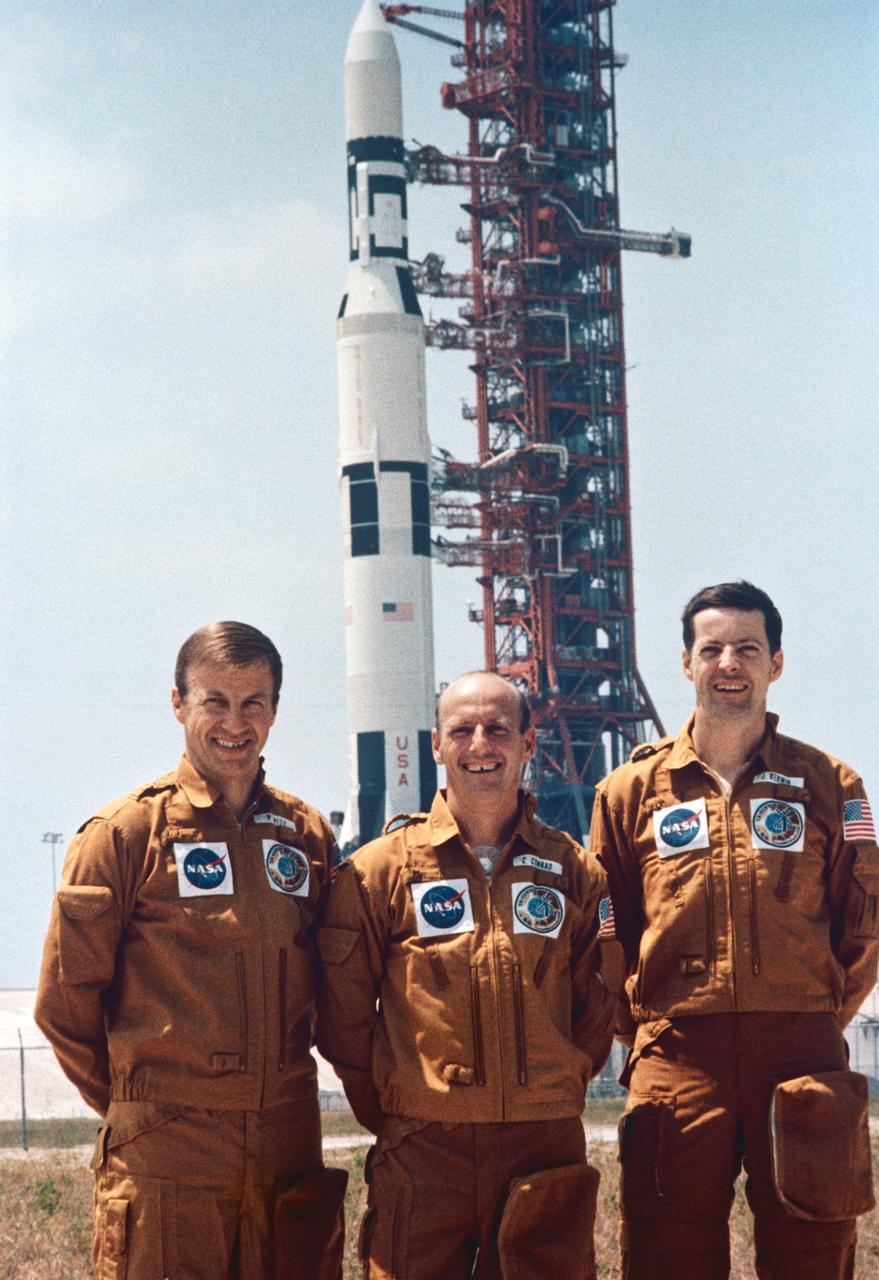
S73-25902 (4 May 1973) --- The three prime crew members of the first manned Skylab mission (Skylab 2) are photographed at Launch Complex 39, Kennedy Space Center, during preflight activity. They are, left to right, astronaut Paul J. Weitz, pilot; astronaut Charles Conrad Jr., commander; and scientist-astronaut Joseph P. Kerwin, science pilot. In the background is the Skylab 1/Saturn V space vehicle with its Skylab space station payload on Pad A. Photo credit: NASA
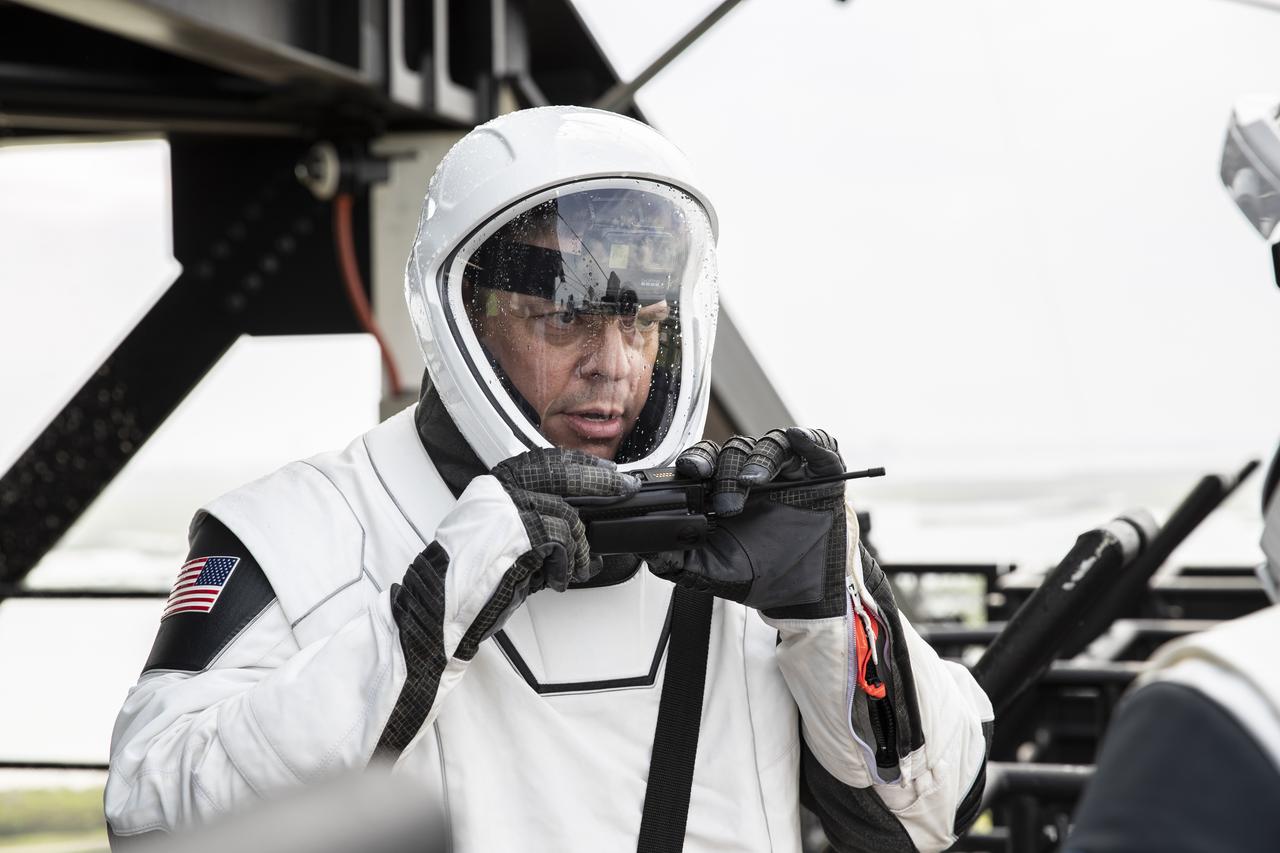
NASA and SpaceX conducted a formal verification of the company’s emergency escape system on Sept. 18, 2019, at Kennedy Space Center’s Launch Complex 39A in Florida. NASA astronaut Bob Behnken participated in the exercise to verify the crew can safely and quickly evacuate from the launch pad in the unlikely event of an emergency before liftoff of SpaceX’s first crewed flight test, called Demo-2. As Boeing and SpaceX begin to make regular flights to the International Space Station for NASA’s Commercial Crew Program, the agency will continue to advance its mission to go beyond low-Earth orbit and establish a human presence on the Moon with the ultimate goal of sending astronauts to Mars.
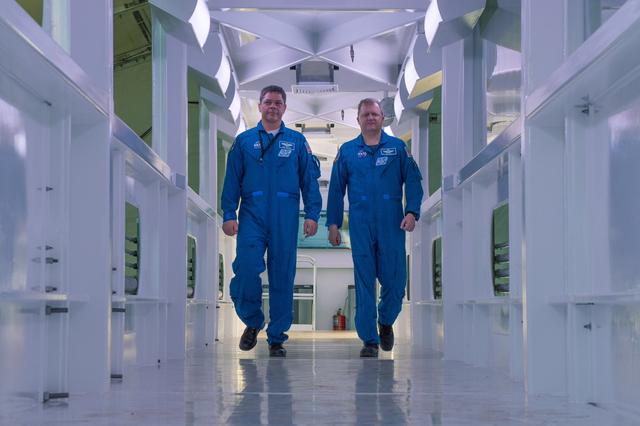
Astronauts Bob Behnken, left, and Eric Boe walk down the Crew Access Arm being built by SpaceX for Launch Complex 39A at NASA’s Kennedy Space Center in Florida. The access arm will be installed on the launch pad, providing a bridge between the launch tower it’s the Fixed Service Structure, as noted below, and SpaceX’s Dragon 2 spacecraft for astronauts flying to the International Space Station on the company’s Falcon 9 rocket as part of NASA’s Commercial Crew Program. The access arm is being readied for installation in early 2018. It will be installed 70 feet higher than the former space shuttle access arm on the launch pad’s Fixed Service Structure. SpaceX continues to modify the historic launch site from its former space shuttle days, removing more than 500,000 pounds of steel from the pad structure, including the Rotating Service Structure that was once used for accessing the payload bay of the shuttle. SpaceX also is using the modernized site to launch commercial payloads, as well as cargo resupply missions to and from the International Space Station for NASA. The first SpaceX launch from the historic Apollo and space shuttle site was this past February. NASA’s Commercial Crew Program is working with private companies, Boeing and SpaceX, with a goal of once again flying people to and from the International Space Station, launching from the United States.
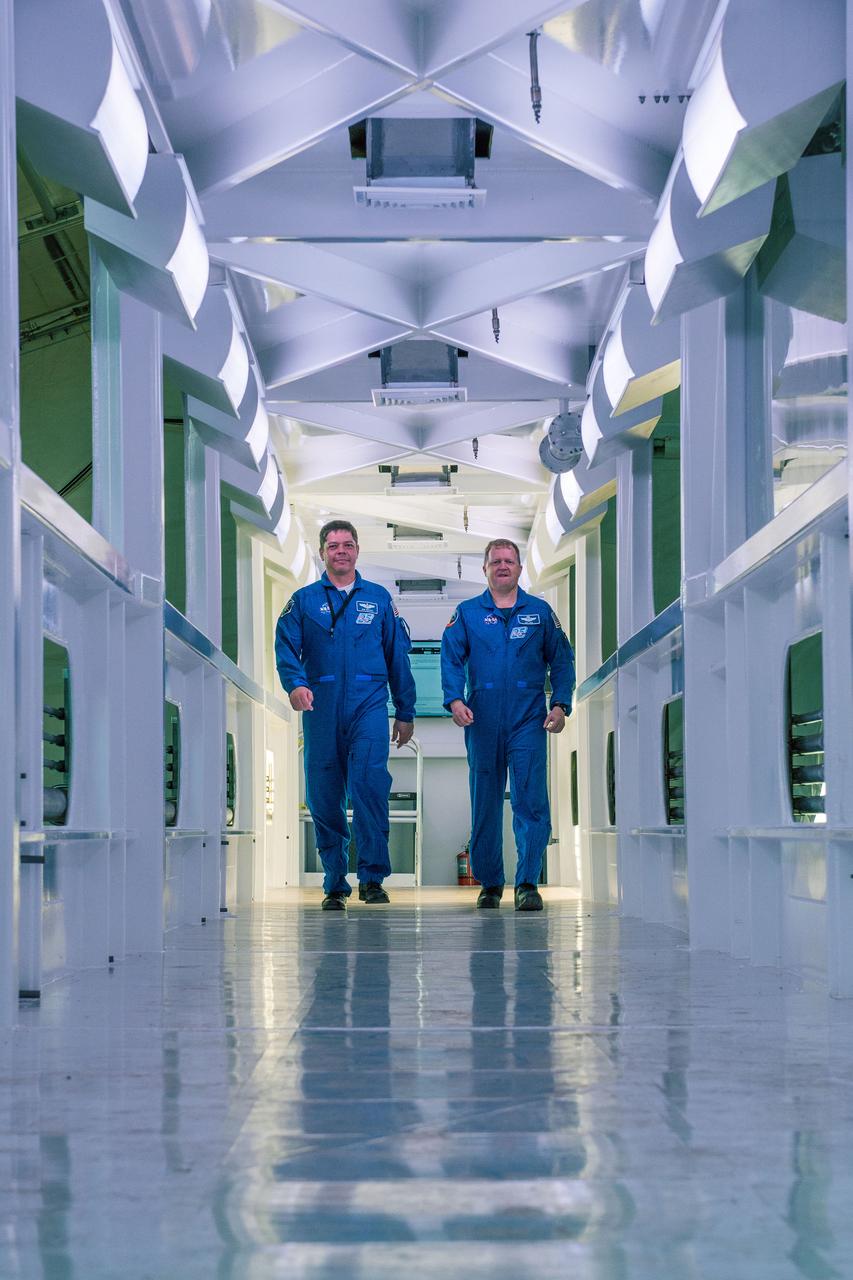
Astronauts Bob Behnken, left, and Eric Boe walk down the Crew Access Arm being built by SpaceX for Launch Complex 39A at NASA’s Kennedy Space Center in Florida. The access arm will be installed on the launch pad, providing a bridge between the launch tower it’s the Fixed Service Structure, as noted below, and SpaceX’s Dragon 2 spacecraft for astronauts flying to the International Space Station on the company’s Falcon 9 rocket as part of NASA’s Commercial Crew Program. The access arm is being readied for installation in early 2018. It will be installed 70 feet higher than the former space shuttle access arm on the launch pad’s Fixed Service Structure. SpaceX continues to modify the historic launch site from its former space shuttle days, removing more than 500,000 pounds of steel from the pad structure, including the Rotating Service Structure that was once used for accessing the payload bay of the shuttle. SpaceX also is using the modernized site to launch commercial payloads, as well as cargo resupply missions to and from the International Space Station for NASA. The first SpaceX launch from the historic Apollo and space shuttle site was this past February. NASA’s Commercial Crew Program is working with private companies, Boeing and SpaceX, with a goal of once again flying people to and from the International Space Station, launching from the United States.
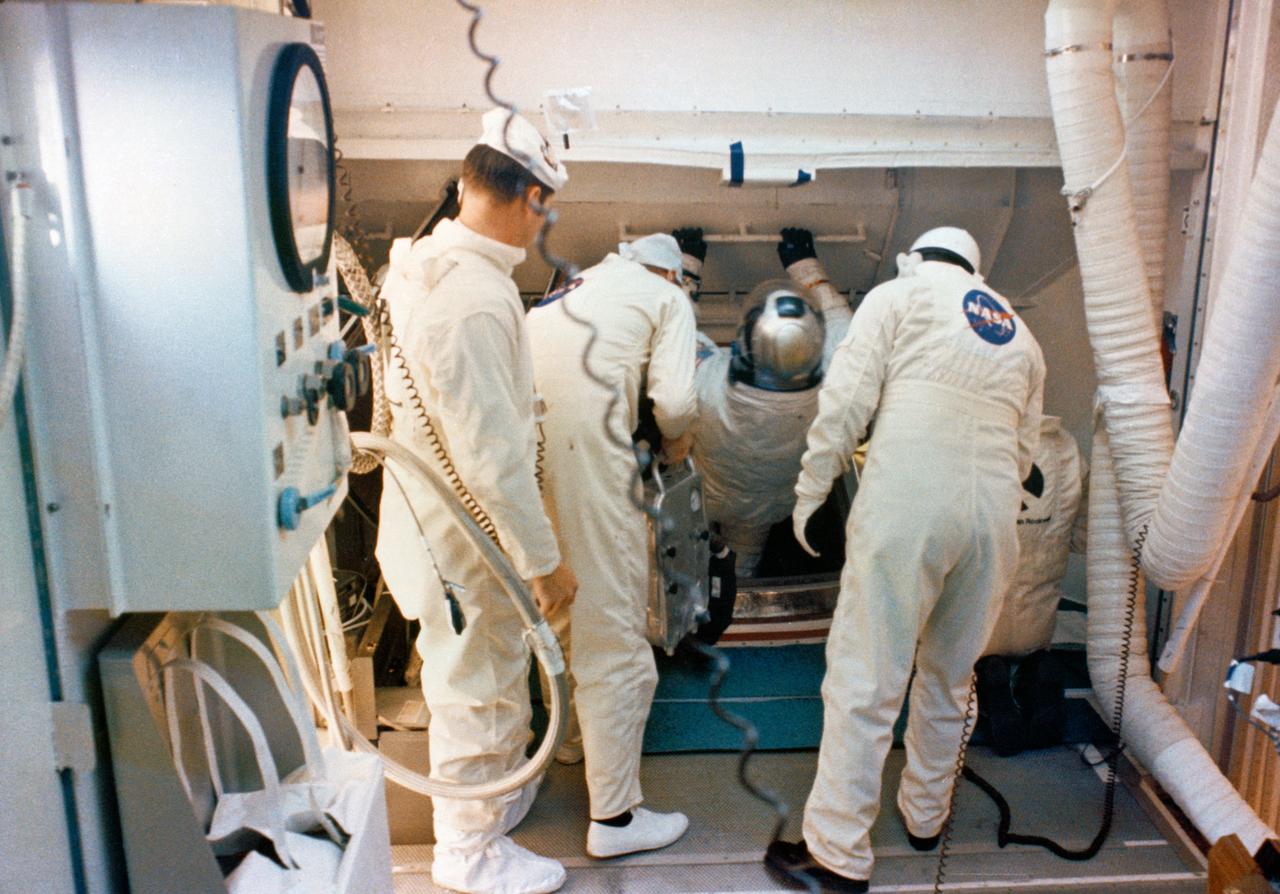
S69-25488 (23 Feb. 1969) --- Interior view of the White Room at Pad A, Launch Complex 39, Kennedy Space Center (KSC), during an Apollo 9 Countdown Demonstration Test (CDDT). Astronauts James A. McDivitt, commander; David R. Scott, command module pilot; and Russell L. Schweickart, lunar module pilot, were participating in a dress rehearsal in preparation for their scheduled 10-day Earth-orbital space mission.
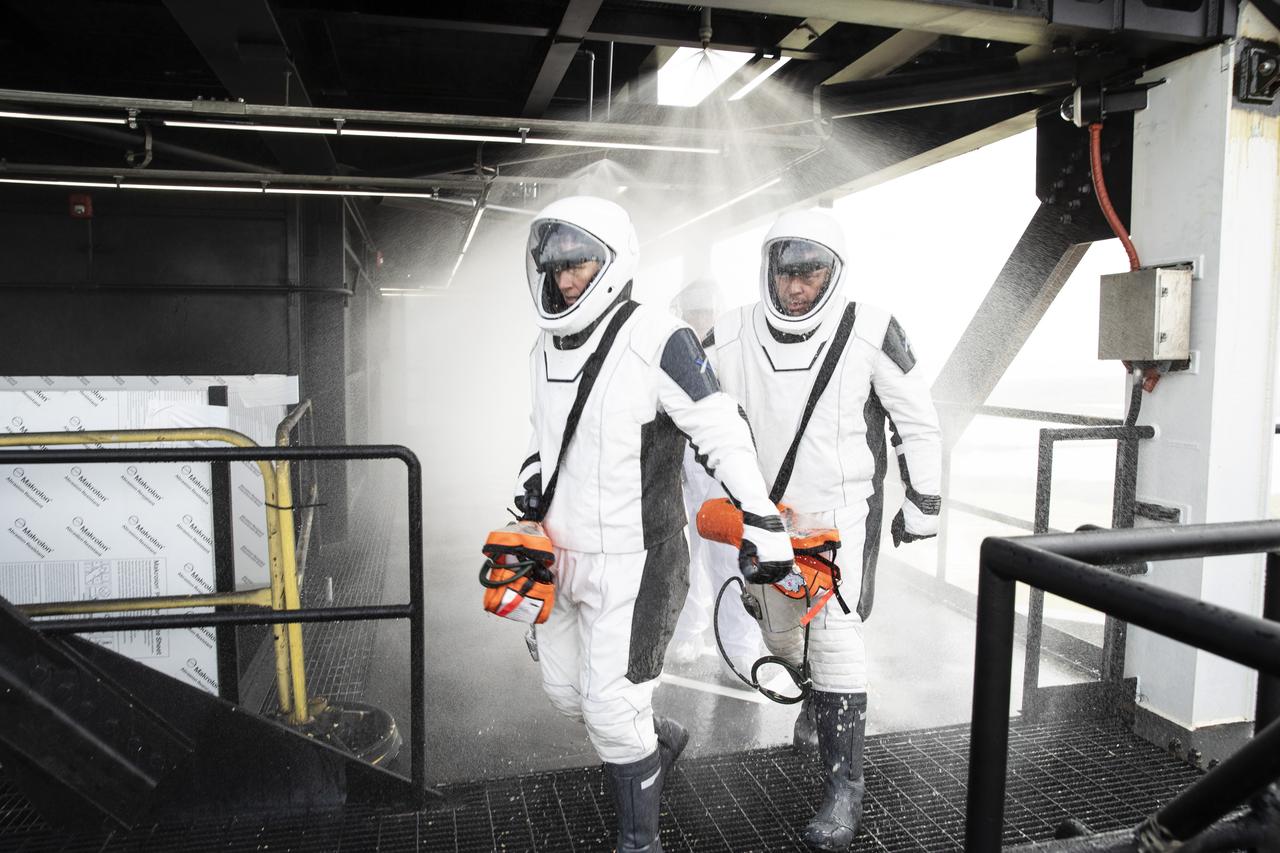
NASA and SpaceX conducted a formal verification of the company’s emergency escape system on Sept. 18, 2019, at Kennedy Space Center’s Launch Complex 39A in Florida. NASA astronauts Shannon Walker, in front, and Bob Behnken participated in the exercise to verify the crew can safely and quickly evacuate from the launch pad in the unlikely event of an emergency before liftoff of SpaceX’s first crewed flight test, called Demo-2. During the escape verification, Walker and Behnken pass through the water deluge system on the 265-foot level of the crew access tower. As Boeing and SpaceX begin to make regular flights to the International Space Station for NASA’s Commercial Crew Program, the agency will continue to advance its mission to go beyond low-Earth orbit and establish a human presence on the Moon with the ultimate goal of sending astronauts to Mars.
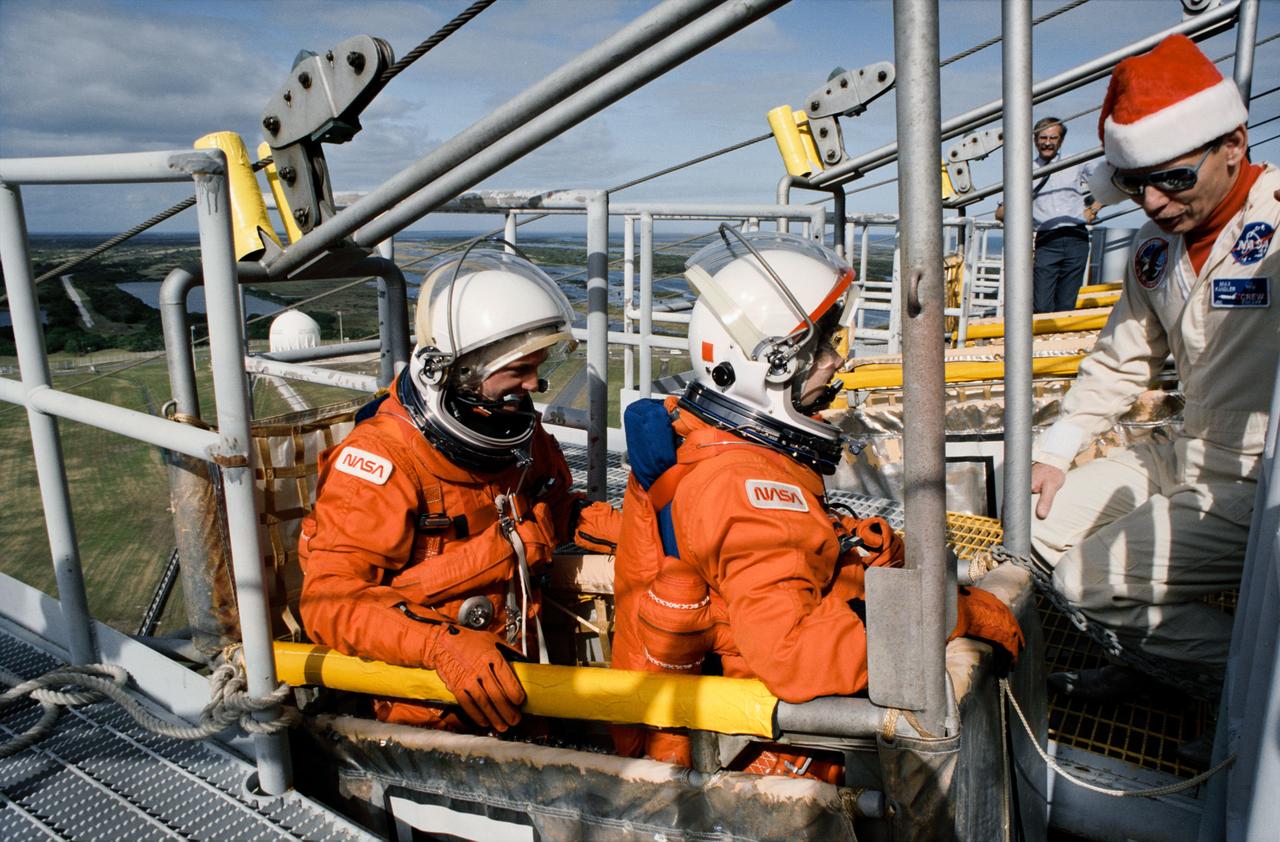
S93-25030 (15 Dec 1992) --- Two astronauts assigned to fly aboard Endeavour for the STS-54 mission are briefed on the slidewire escape system at the launch pad. Pictured in the slidewire litter are astronauts Gregory J. Harbaugh (left) and Susan J. Helms, mission specialists. They are assisted by Max Kandler of Lockheed, Houston. All five crewmembers are in Florida this week to participate in countdown demonstration tests.
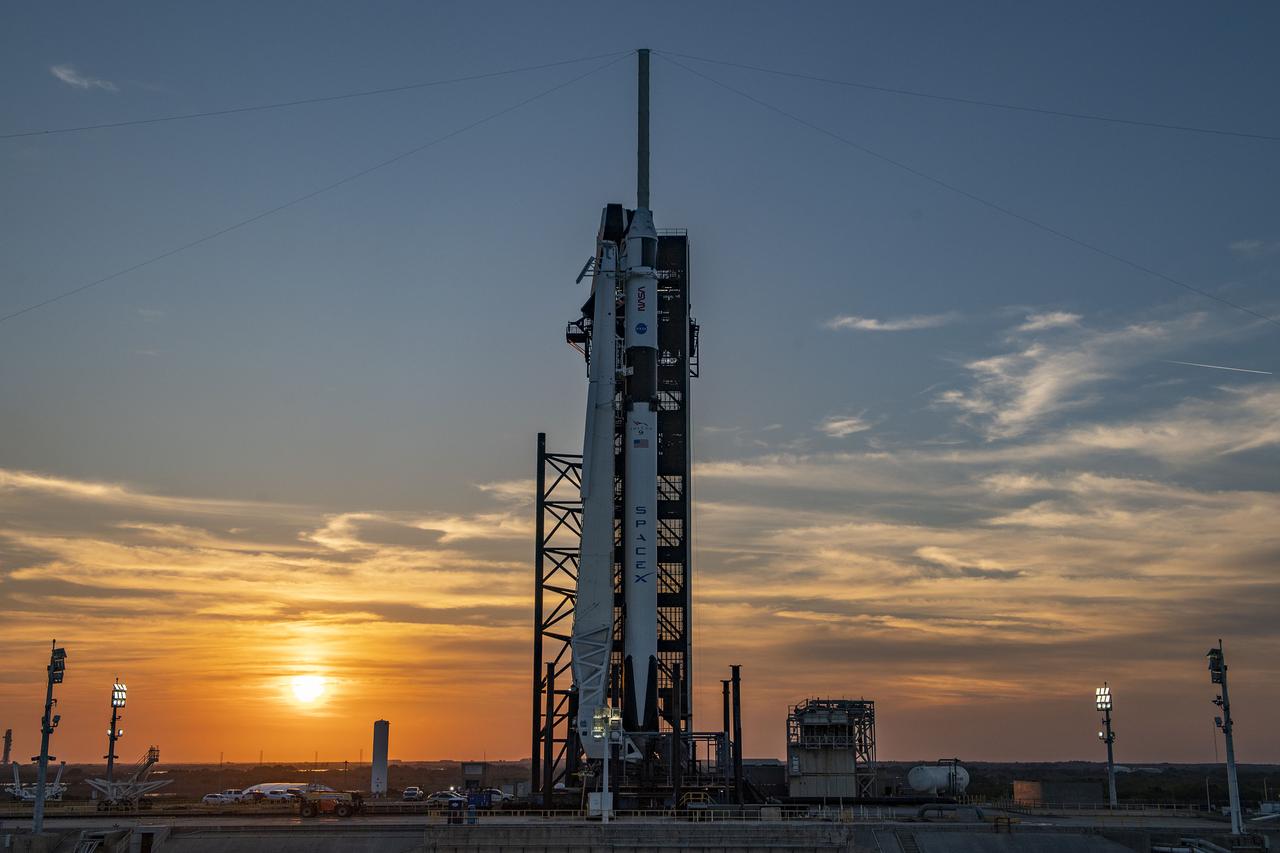
A colorful sunset serves as the backdrop for SpaceX’s Falcon 9 rocket and Dragon spacecraft Endeavour on the pad at Launch Complex 39A at Kennedy Space Center in Florida on Feb. 23, 2023, for NASA’s SpaceX Crew-6 mission. NASA astronauts Stephen Bowen, spacecraft commander, and Warren “Woody” Hoburg, pilot, along with mission specialists Sultan Alneyadi, UAE (United Arab Emirates) astronaut, and Andrey Fedyaev, Roscosmos cosmonaut, are slated to launch to the International Space Station at 1:45 a.m. EST on Feb. 27 from Launch Complex 39A. Crew-6 is the sixth crew rotation mission with SpaceX to the station, and the seventh flight of Dragon with people as part of the agency’s Commercial Crew Program.
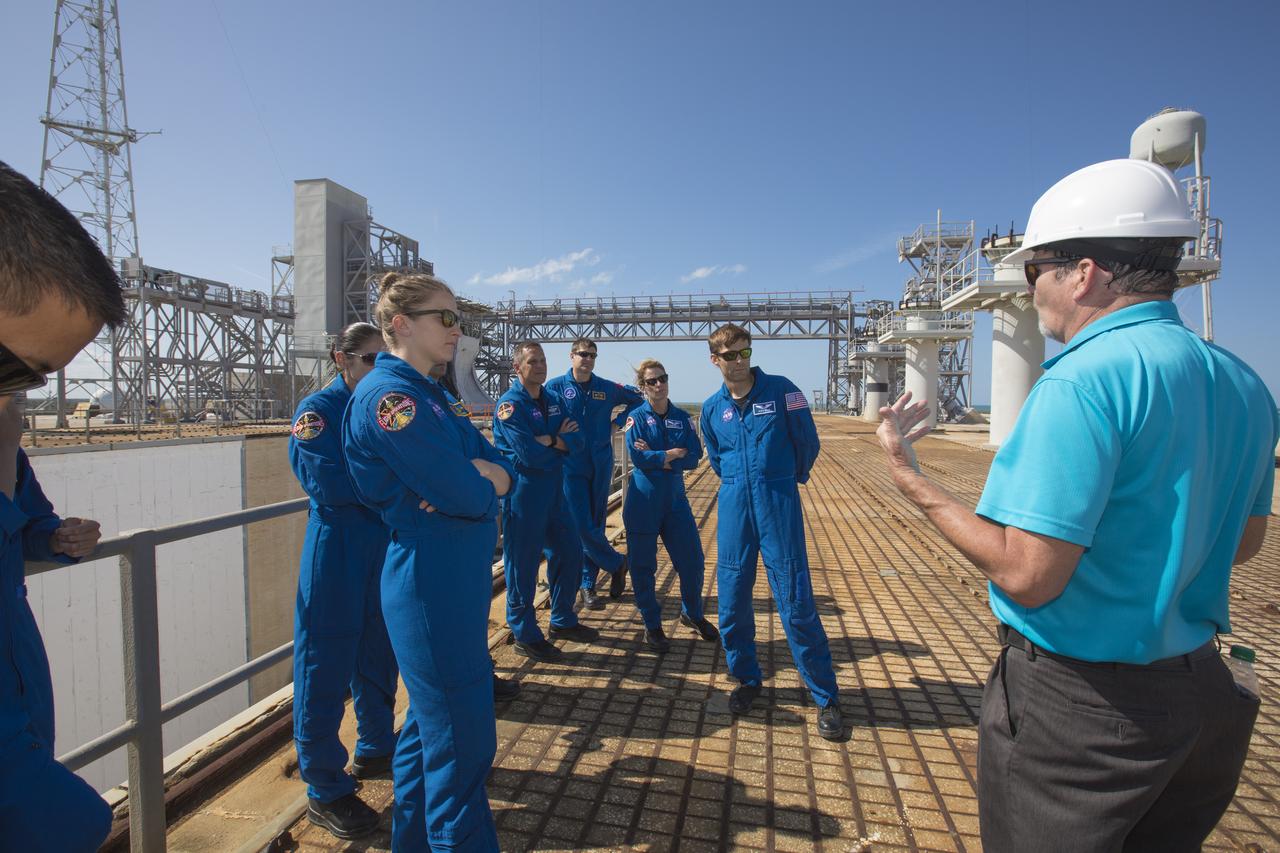
Members of the 2017 class of astronaut candidates are on the surface of Launch Pad 39B during a familiarization tour of facilities at NASA's Kennedy Space Center in Florida. The candidates toured center facilities, including the Vehicle Assembly Building, Launch Control Center, Neil Armstrong Operations and Checkout Building high bay and the Space Station Processing Facility. They also toured Boeing's Commercial Crew and Cargo Facility, United Launch Alliance's Space Launch Complex 41 at Cape Canaveral Air Force Station, and SpaceX's Launch Pad 39A at Kennedy. The candidates will spend about two years getting to know the space station systems and learning how to spacewalk, speak Russian, control the International Space Station's robotic arm and fly T-38s, before they're eligible to be assigned to a mission.
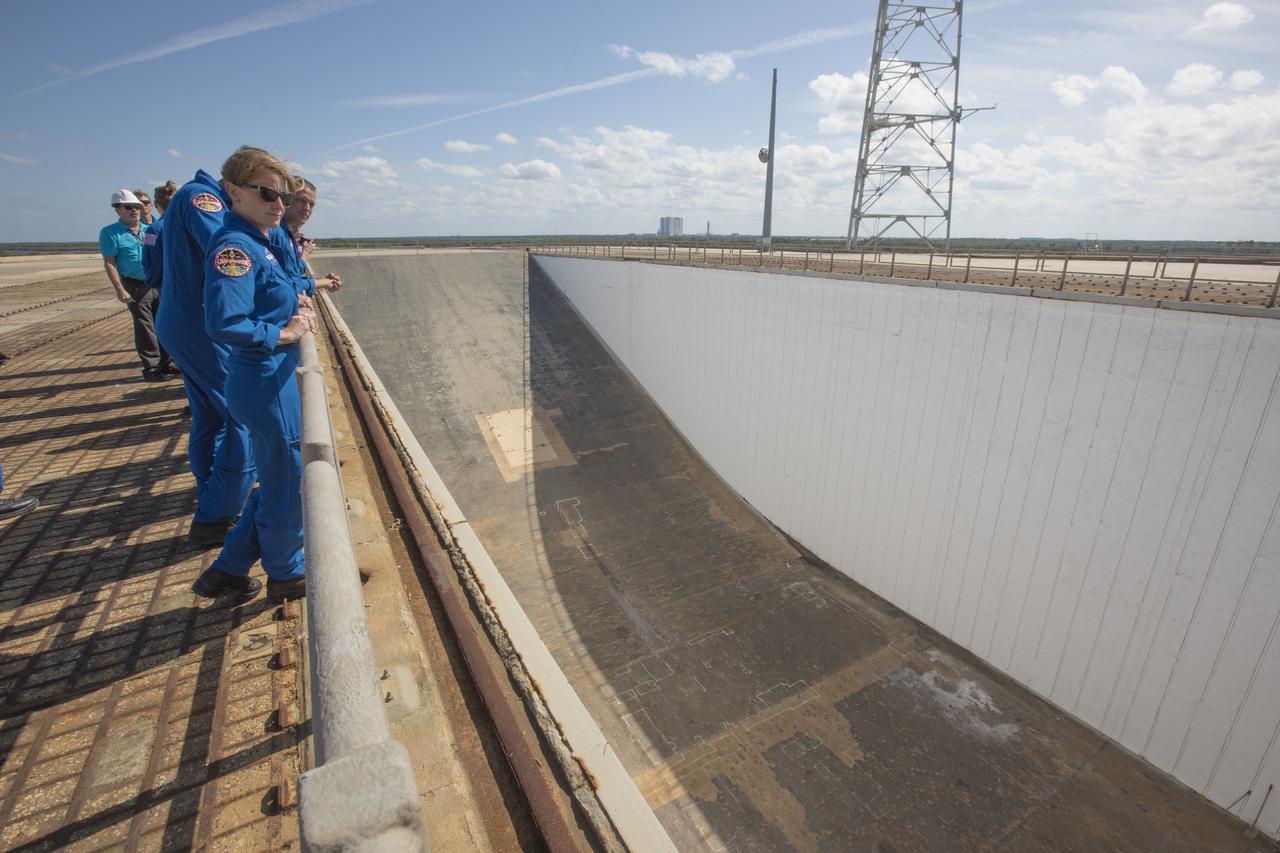
Members of the 2017 class of astronaut candidates view the flame trench at Launch Pad 39B during a familiarization tour of facilities at NASA's Kennedy Space Center in Florida. The candidates toured center facilities, including the Vehicle Assembly Building, Launch Control Center, Neil Armstrong Operations and Checkout Building high bay and the Space Station Processing Facility. They also toured Boeing's Commercial Crew and Cargo Facility, United Launch Alliance's Space Launch Complex 41 at Cape Canaveral Air Force Station, and SpaceX's Launch Pad 39A at Kennedy. The candidates will spend about two years getting to know the space station systems and learning how to spacewalk, speak Russian, control the International Space Station's robotic arm and fly T-38s, before they're eligible to be assigned to a mission.
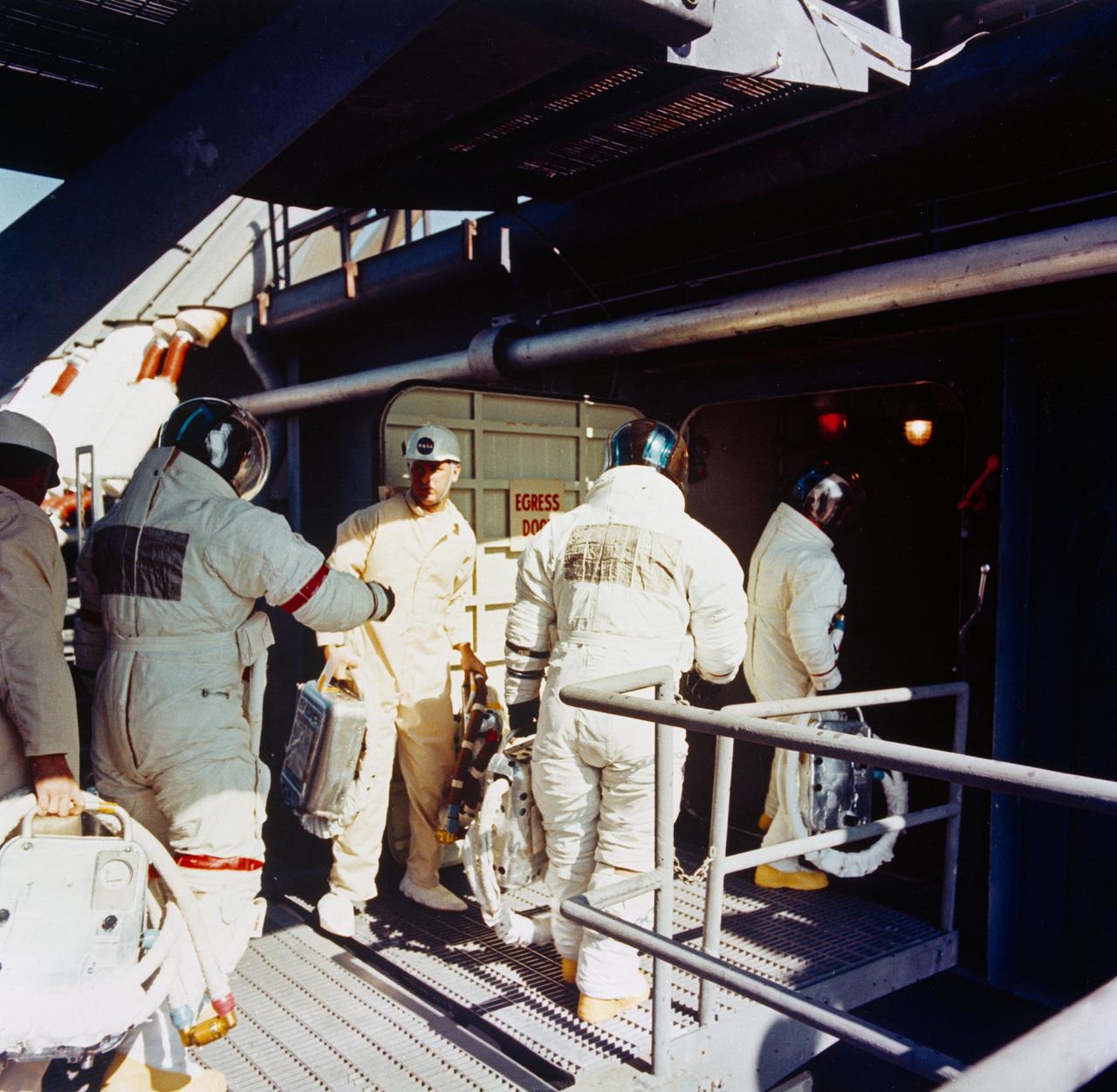
S71-16635 (31 Jan. 1971) --- The three Apollo 14 astronauts arrive at the White Room atop Pad A, Launch Complex 39, during the Apollo 14 prelaunch countdown. Apollo 14, with Alan B. Shepard Jr., commander; Stuart A. Roosa, command module pilot; and Edgar D. Mitchell, lunar module pilot, aboard was launched at 4:03:02 p.m. (EST), Jan. 31, 1971, on a lunar landing mission. Note identifying bands on the sleeve and leg of Shepard. Standing in the center foreground is astronaut Thomas P. Stafford, chief of the MSC Astronaut Office.
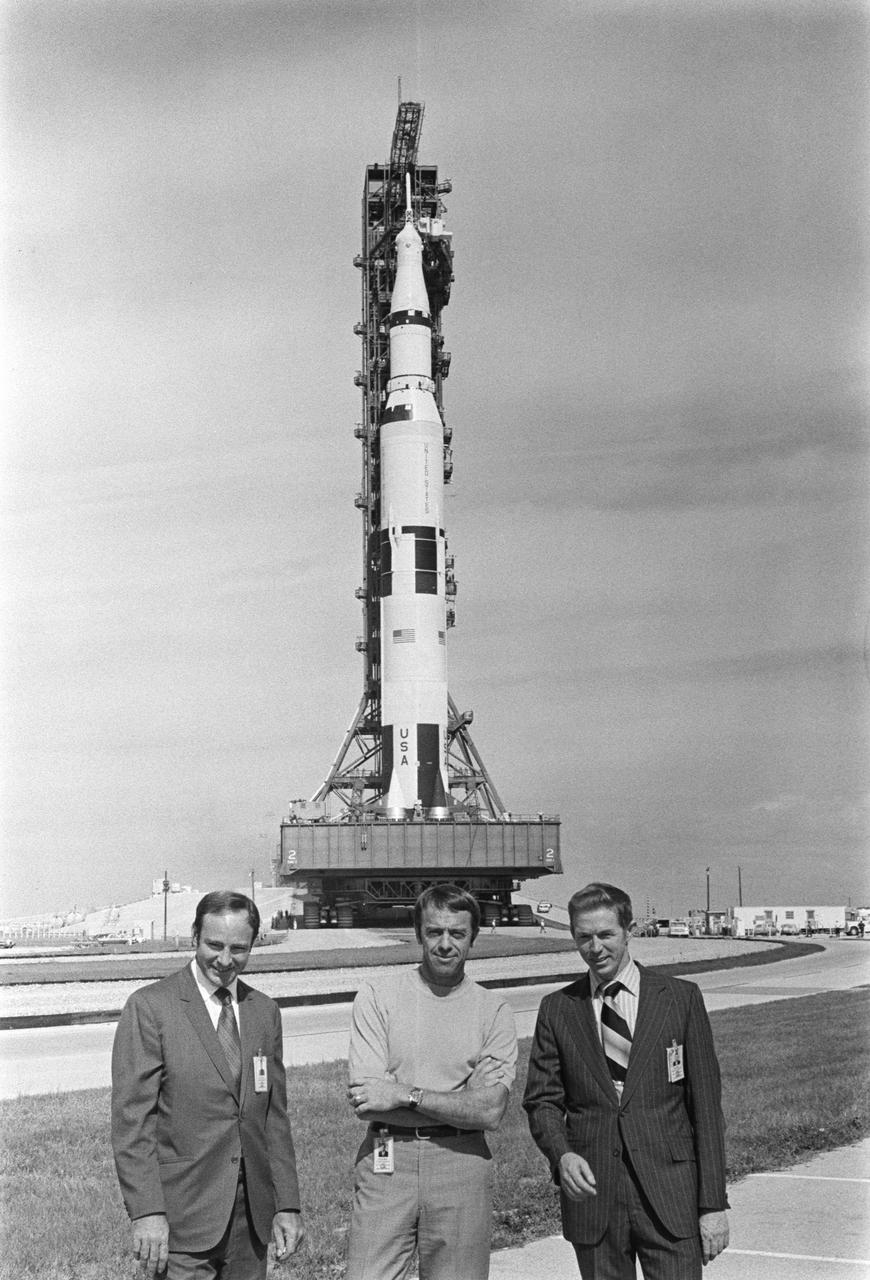
S70-55689 (9 Nov. 1970) --- The Apollo 14 (Spacecraft 110/Lunar Module 8/Saturn 509) space vehicle arrives at Pad A, Launch Complex 39, during the Apollo 14 roll out from the Kennedy Space Center's Vehicle Assembly Building. The Saturn V stack and its mobile launch tower atop a huge crawler-transporter. The three members of the Apollo 14 prime crew are in the foreground. They are (left to right) astronauts Edgar D. Mitchell, lunar module pilot; Alan B. Shepard Jr., commander; and Stuart A. Roosa, command module pilot.
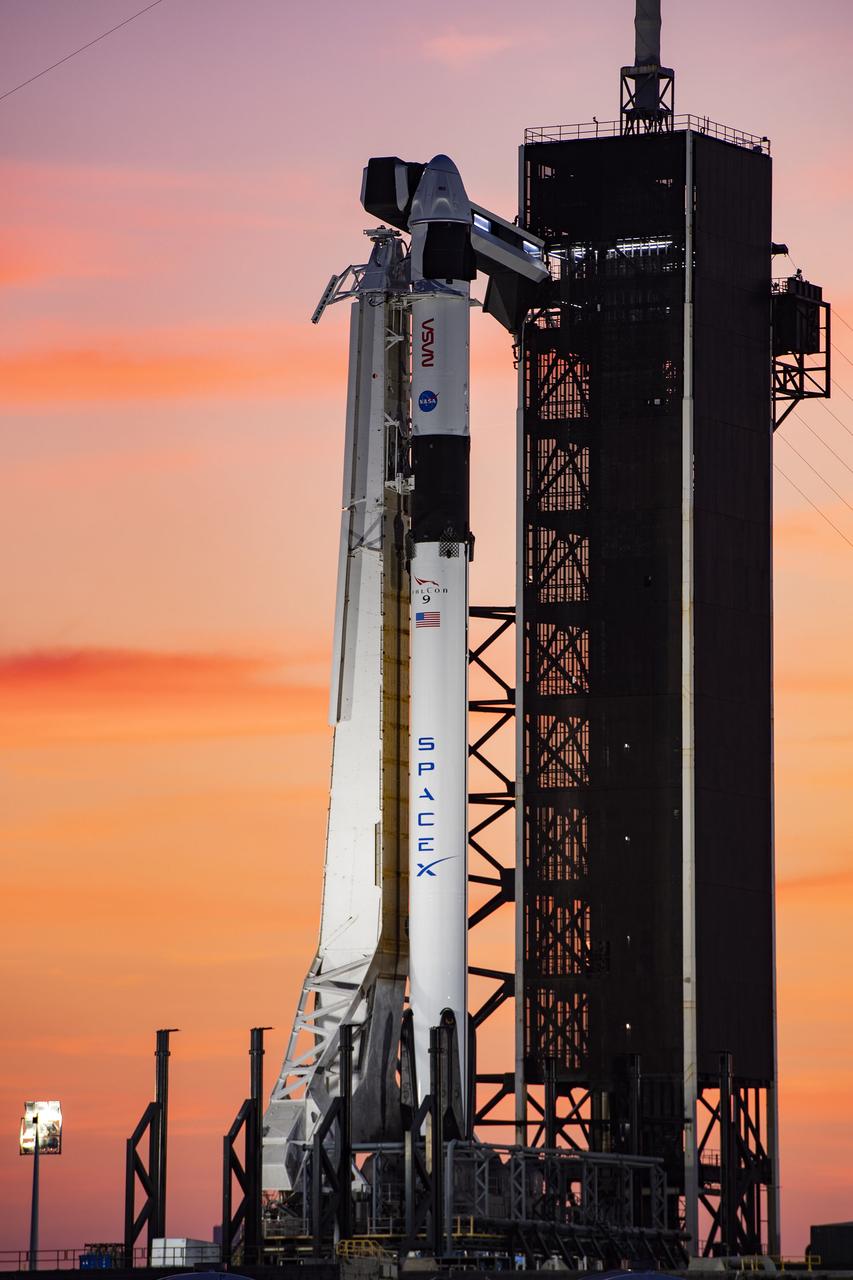
A colorful sunset serves as the backdrop for SpaceX’s Falcon 9 rocket and Dragon spacecraft Endeavour on the pad at Launch Complex 39A at Kennedy Space Center in Florida on Feb. 23, 2023, for NASA’s SpaceX Crew-6 mission. The crew access arm has been moved into position at the Dragon spacecraft. NASA astronauts Stephen Bowen, spacecraft commander, and Warren “Woody” Hoburg, pilot, along with mission specialists Sultan Alneyadi, UAE (United Arab Emirates) astronaut, and Andrey Fedyaev, Roscosmos cosmonaut, are slated to launch to the International Space Station at 1:45 a.m. EST on Feb. 27 from Launch Complex 39A. Crew-6 is the sixth crew rotation mission with SpaceX to the station, and the seventh flight of Dragon with people as part of the agency’s Commercial Crew Program.
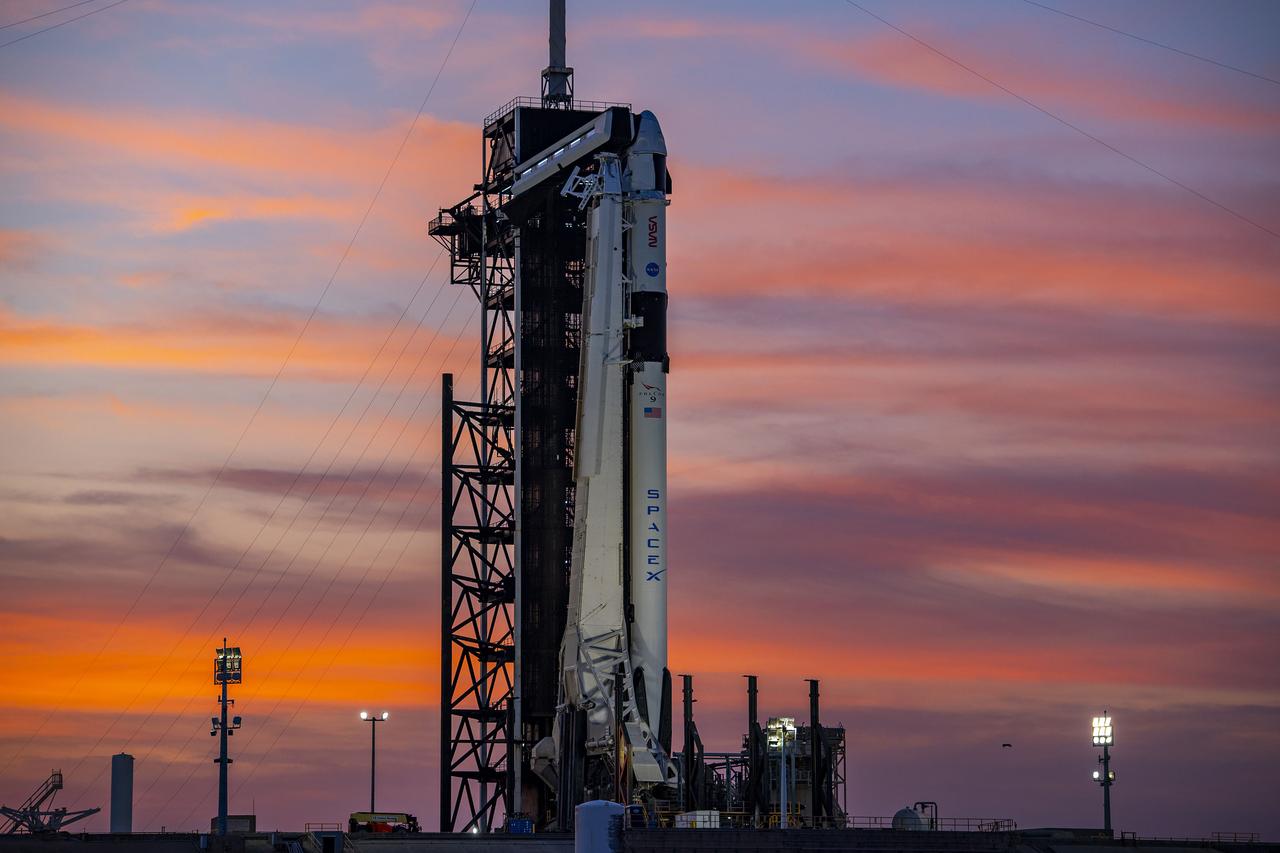
A colorful sunset serves as the backdrop for SpaceX’s Falcon 9 rocket and Dragon spacecraft Endeavour on the pad at Launch Complex 39A at Kennedy Space Center in Florida on Feb. 23, 2023, for NASA’s SpaceX Crew-6 mission. The crew access arm has been moved into position at the Dragon spacecraft. NASA astronauts Stephen Bowen, spacecraft commander, and Warren “Woody” Hoburg, pilot, along with mission specialists Sultan Alneyadi, UAE (United Arab Emirates) astronaut, and Andrey Fedyaev, Roscosmos cosmonaut, are slated to launch to the International Space Station at 1:45 a.m. EST on Feb. 27 from Launch Complex 39A. Crew-6 is the sixth crew rotation mission with SpaceX to the station, and the seventh flight of Dragon with people as part of the agency’s Commercial Crew Program.
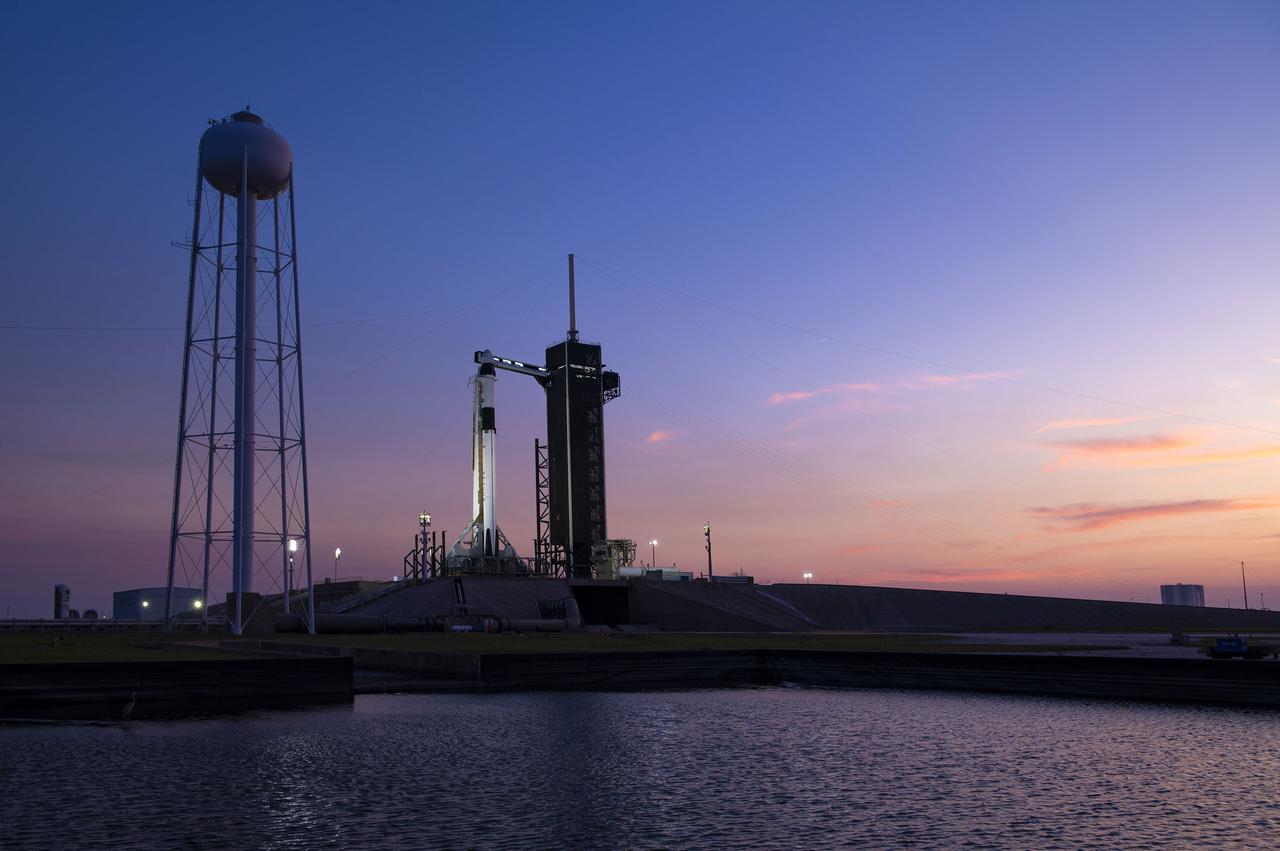
A colorful sunset serves as the backdrop for SpaceX’s Falcon 9 rocket and Dragon spacecraft Endeavour on the pad at Launch Complex 39A at Kennedy Space Center in Florida on Feb. 23, 2023, for NASA’s SpaceX Crew-6 mission. The crew access arm has been moved into position at the Dragon spacecraft. NASA astronauts Stephen Bowen, spacecraft commander, and Warren “Woody” Hoburg, pilot, along with mission specialists Sultan Alneyadi, UAE (United Arab Emirates) astronaut, and Andrey Fedyaev, Roscosmos cosmonaut, are slated to launch to the International Space Station at 1:45 a.m. EST on Feb. 27 from Launch Complex 39A. Crew-6 is the sixth crew rotation mission with SpaceX to the station, and the seventh flight of Dragon with people as part of the agency’s Commercial Crew Program.
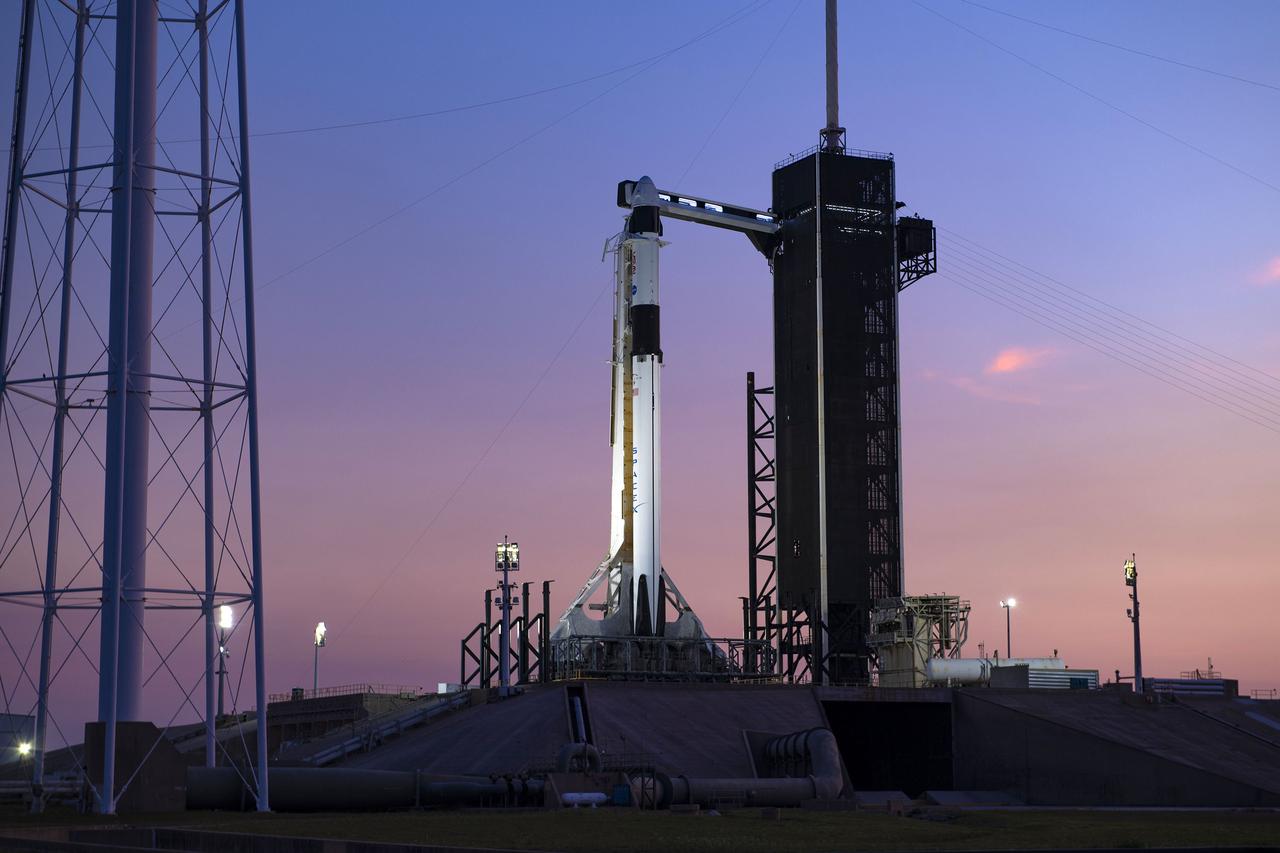
A colorful sunset serves as the backdrop for SpaceX’s Falcon 9 rocket and Dragon spacecraft Endeavour on the pad at Launch Complex 39A at Kennedy Space Center in Florida on Feb. 23, 2023, for NASA’s SpaceX Crew-6 mission. The crew access arm has been moved into position at the Dragon spacecraft. NASA astronauts Stephen Bowen, spacecraft commander, and Warren “Woody” Hoburg, pilot, along with mission specialists Sultan Alneyadi, UAE (United Arab Emirates) astronaut, and Andrey Fedyaev, Roscosmos cosmonaut, are slated to launch to the International Space Station at 1:45 a.m. EST on Feb. 27 from Launch Complex 39A. Crew-6 is the sixth crew rotation mission with SpaceX to the station, and the seventh flight of Dragon with people as part of the agency’s Commercial Crew Program.
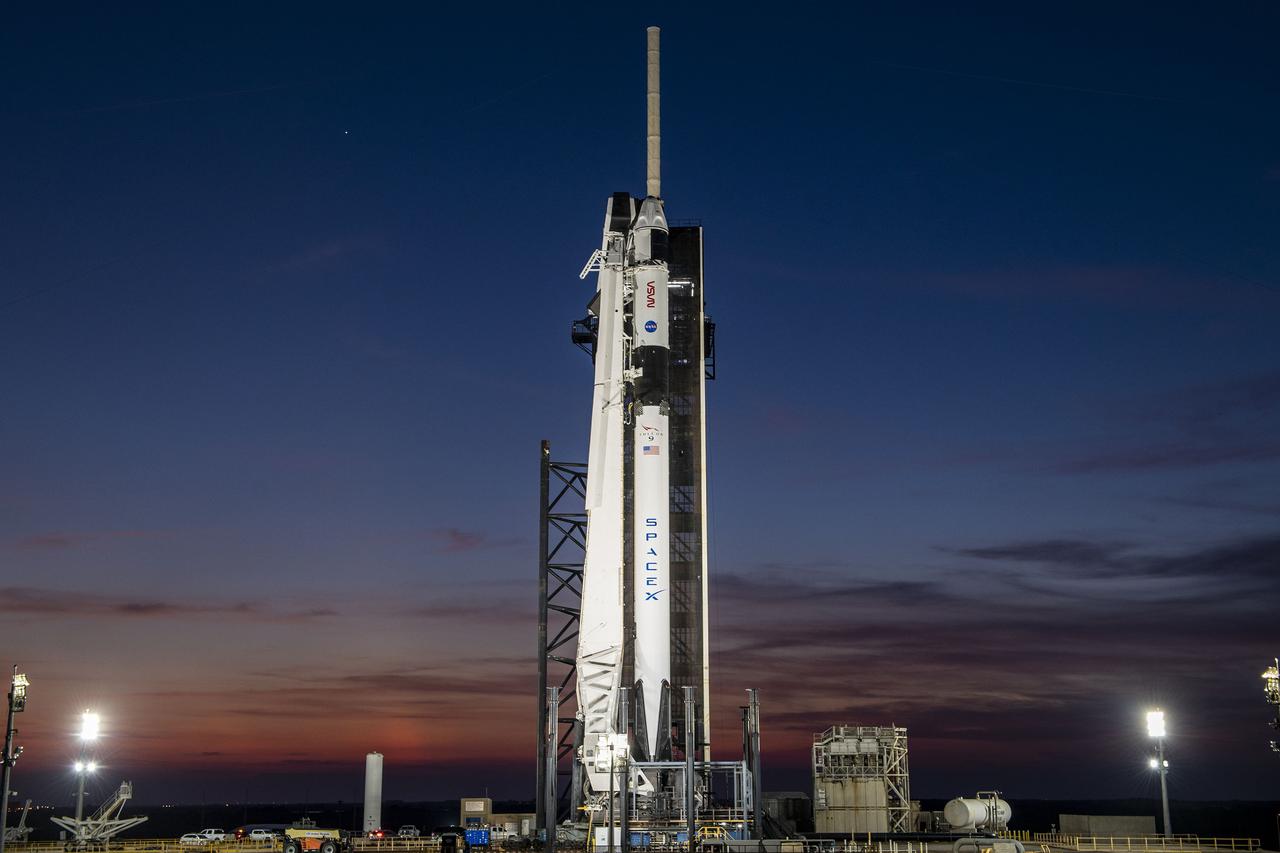
A colorful sunset serves as the backdrop for SpaceX’s Falcon 9 rocket and Dragon spacecraft Endeavour on the pad at Launch Complex 39A at Kennedy Space Center in Florida on Feb. 23, 2023, for NASA’s SpaceX Crew-6 mission. The crew access arm has been moved into position at the Dragon spacecraft. NASA astronauts Stephen Bowen, spacecraft commander, and Warren “Woody” Hoburg, pilot, along with mission specialists Sultan Alneyadi, UAE (United Arab Emirates) astronaut, and Andrey Fedyaev, Roscosmos cosmonaut, are slated to launch to the International Space Station at 1:45 a.m. EST on Feb. 27 from Launch Complex 39A. Crew-6 is the sixth crew rotation mission with SpaceX to the station, and the seventh flight of Dragon with people as part of the agency’s Commercial Crew Program.
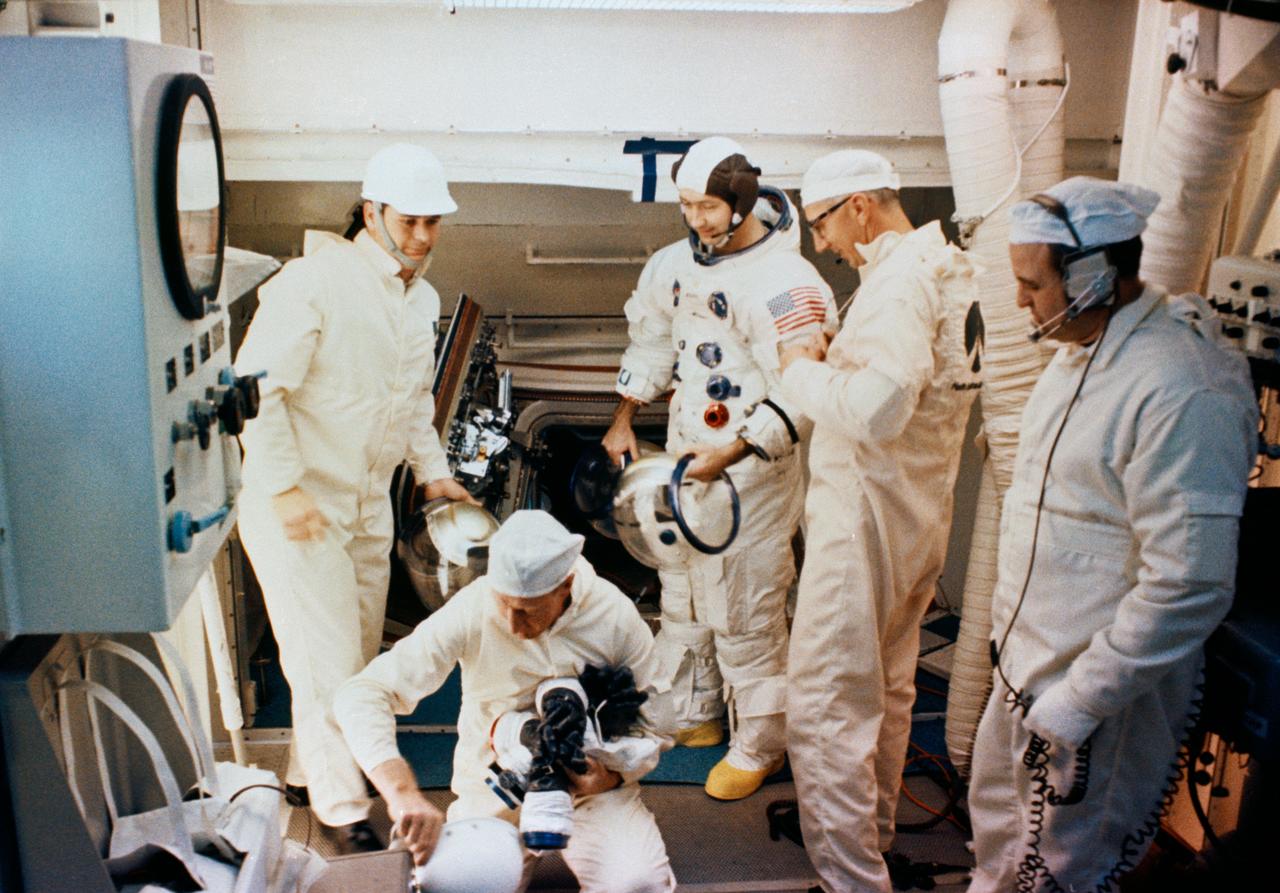
S69-25884 (23 Feb. 1969) --- Interior view of the white room atop Pad A, Launch Complex 39, Kennedy Space Center, during Apollo 9 Countdown Demonstration Test activity. Standing next to spacecraft hatch is astronaut James A. McDivitt, commander. Also, taking part in the training exercise were astronauts David R. Scott, command module pilot; and Russell L. Schweickart, lunar module pilot. The Apollo 9 mission will evaluate spacecraft lunar module systems performance during manned Earth-orbital flight. Apollo 9 will be the second manned Saturn V mission.
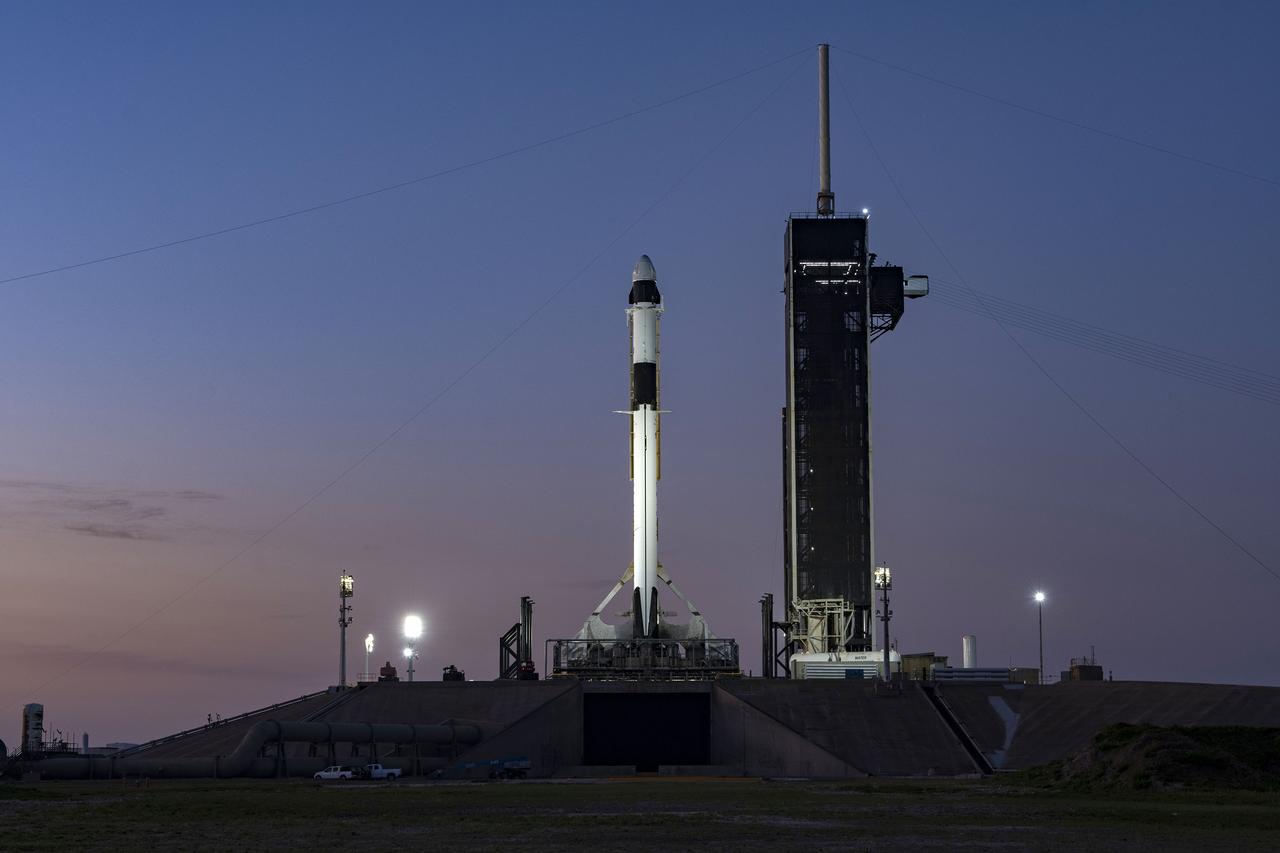
The SpaceX Falcon 9 rocket with Dragon spacecraft Endeavour is secured on the pad at Launch Complex 39A at Kennedy Space Center in Florida on Feb. 22, 2023, for NASA’s SpaceX Crew-6 mission. NASA astronauts Stephen Bowen, spacecraft commander, and Warren “Woody” Hoburg, pilot, along with mission specialists Sultan Alneyadi, UAE (United Arab Emirates) astronaut, and Andrey Fedyaev, Roscosmos cosmonaut, are slated to launch to the International Space Station at 1:45 a.m. EST on Feb. 27 from Launch Complex 39A. Crew-6 is the sixth crew rotation mission with SpaceX to the station, and the seventh flight of Dragon with people as part of the agency’s Commercial Crew Program.
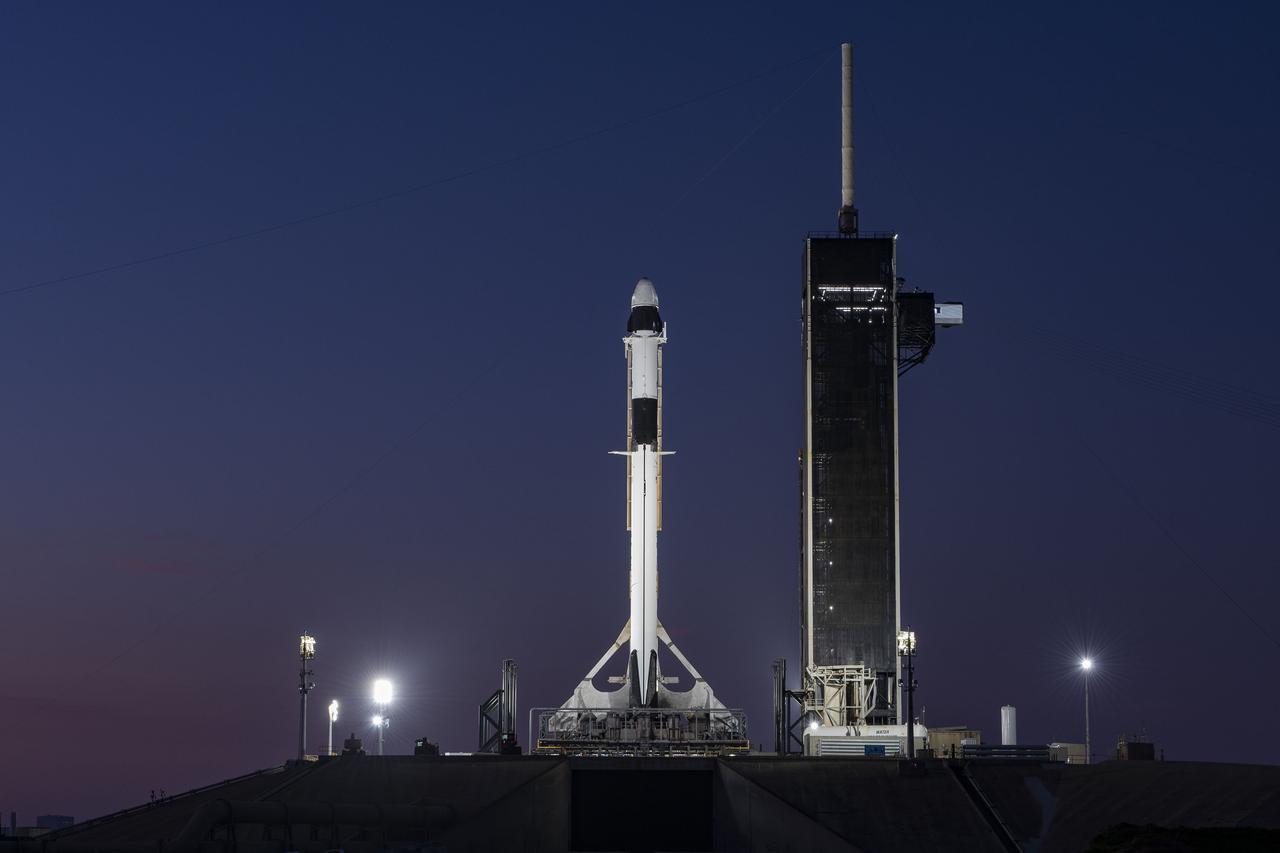
The SpaceX Falcon 9 rocket with Dragon spacecraft Endeavour is secured on the pad at Launch Complex 39A at Kennedy Space Center in Florida on Feb. 22, 2023, for NASA’s SpaceX Crew-6 mission. NASA astronauts Stephen Bowen, spacecraft commander, and Warren “Woody” Hoburg, pilot, along with mission specialists Sultan Alneyadi, UAE (United Arab Emirates) astronaut, and Andrey Fedyaev, Roscosmos cosmonaut, are slated to launch to the International Space Station at 1:45 a.m. EST on Feb. 27 from Launch Complex 39A. Crew-6 is the sixth crew rotation mission with SpaceX to the station, and the seventh flight of Dragon with people as part of the agency’s Commercial Crew Program.

KENNEDY SPACE CENTER, FLA. - STS-79 Commander William F. Readdy arrives at KSC's Shuttle Landing Facility with five fellow astronauts, ready to participate in the Terminal Countdown Demonstration Test (TCDT). The TCDT is a dress rehearsal for launch for the flight crew and launch team. Over the next several days, the astronauts will take part in training exercises at the launch pad that will culminate in a simulated launch countdown. The Space Shuttle Atlantis is being prepared for liftoff on STS-79 around Sept. 12.
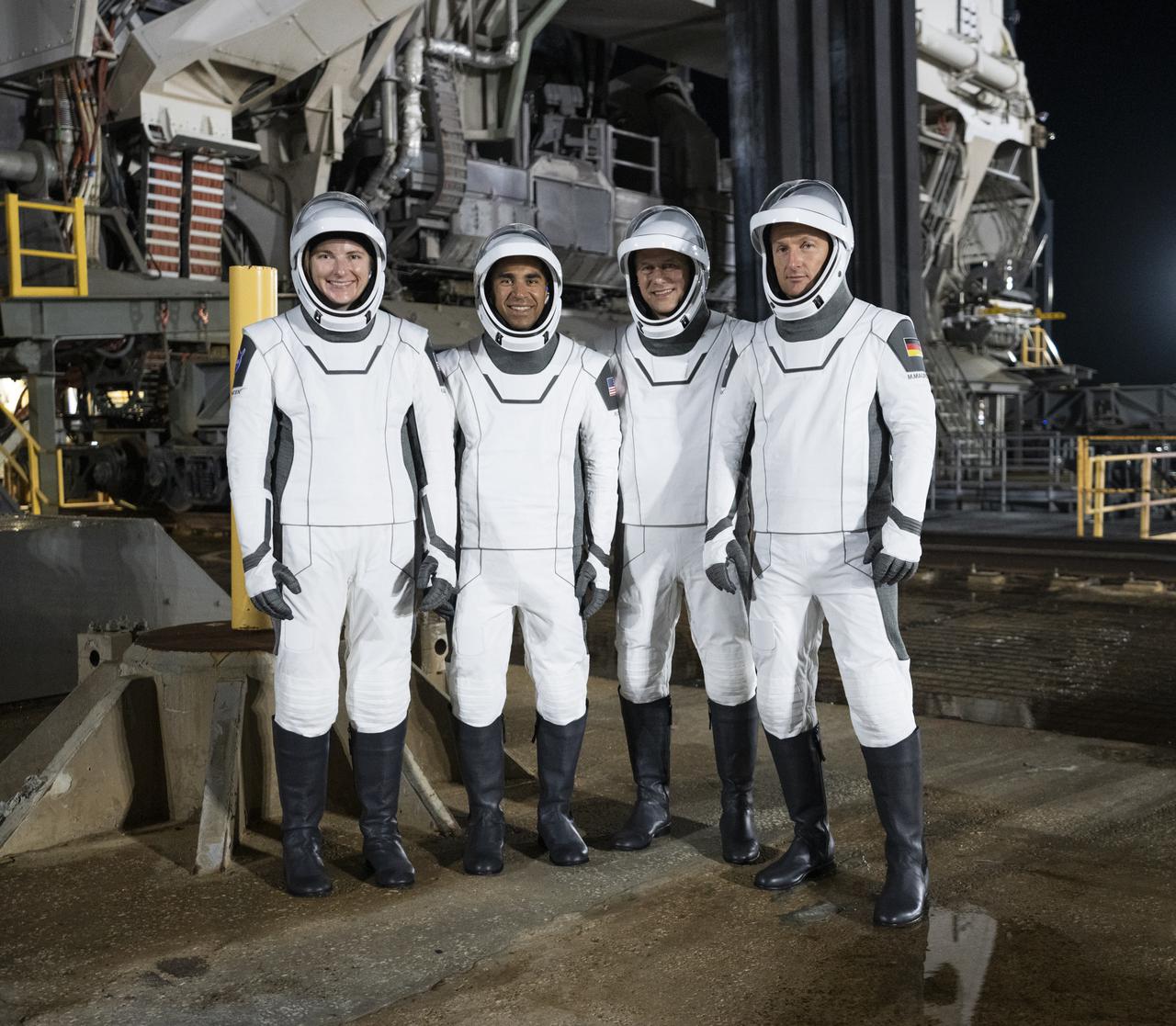
NASA’s SpaceX Crew-3 astronauts participate in a countdown dress rehearsal at the agency’s Kennedy Space Center in Florida on Oct. 28, 2021, to prepare for the upcoming Crew-3 launch. The astronauts are at Launch Pad 39A with the Falcon 9 and Crew Dragon behind them during the rehearsal. From left are NASA astronauts Kayla Barron, Raja Chari, Crew-3 commander, and Tom Marshburn, and European Space Agency astronaut Matthias Maurer. The four-person crew will launch aboard the Crew Dragon atop the Falcon 9 on Oct. 31 to the International Space Station. Launch is targeted for 2:21 a.m. EDT from Pad 39A. Crew-3 is the third crew rotation flight to the space station for NASA’s Commercial Crew Program, and the first flight of a new Crew Dragon spacecraft.
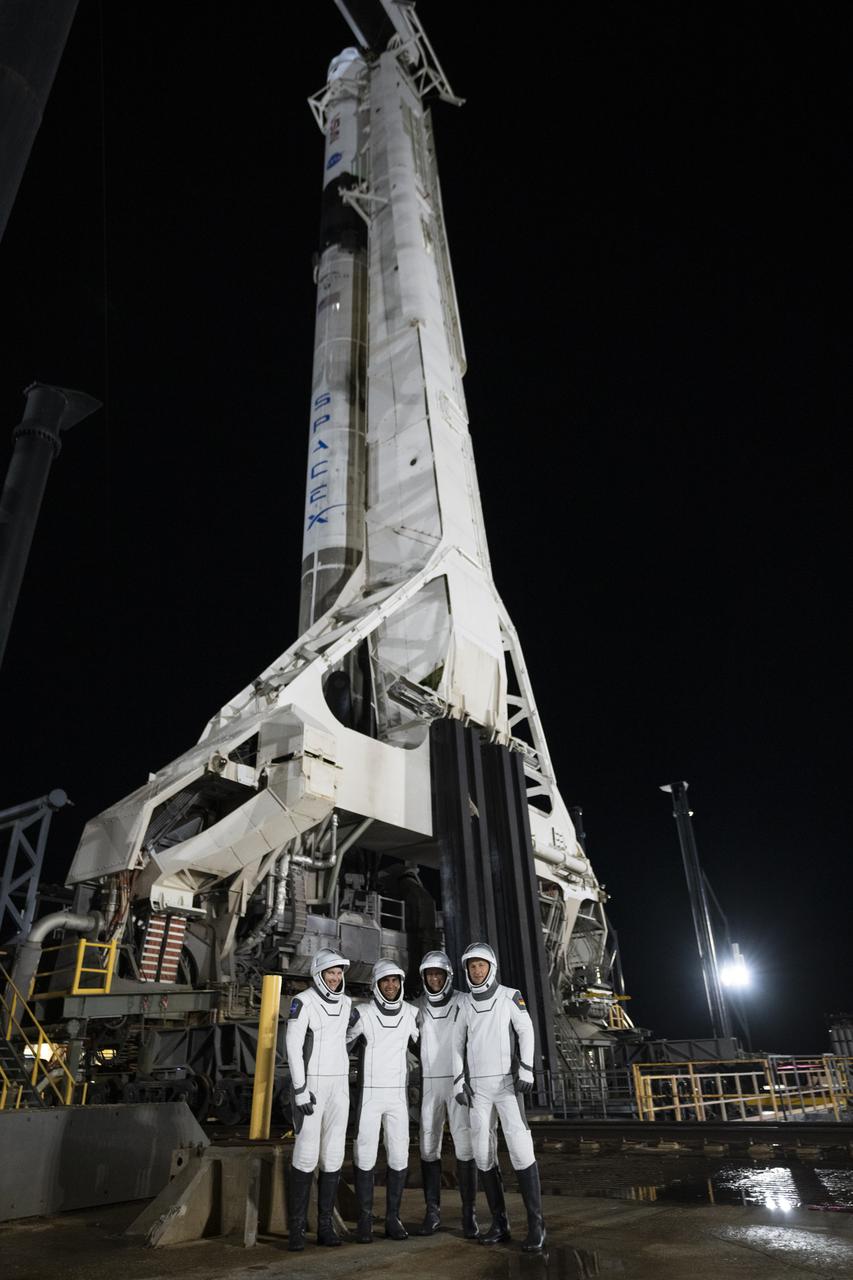
NASA’s SpaceX Crew-3 astronauts participate in a countdown dress rehearsal at the agency’s Kennedy Space Center in Florida on Oct. 28, 2021, to prepare for the upcoming Crew-3 launch. The astronauts are at Launch Pad 39A with the Falcon 9 and Crew Dragon behind them during the rehearsal. From left are NASA astronauts Kayla Barron, Raja Chari, Crew-3 commander, and Tom Marshburn, and European Space Agency astronaut Matthias Maurer. The four-person crew will launch aboard the Crew Dragon atop the Falcon 9 on Oct. 31 to the International Space Station. Launch is targeted for 2:21 a.m. EDT from Pad 39A. Crew-3 is the third crew rotation flight to the space station for NASA’s Commercial Crew Program, and the first flight of a new Crew Dragon spacecraft.
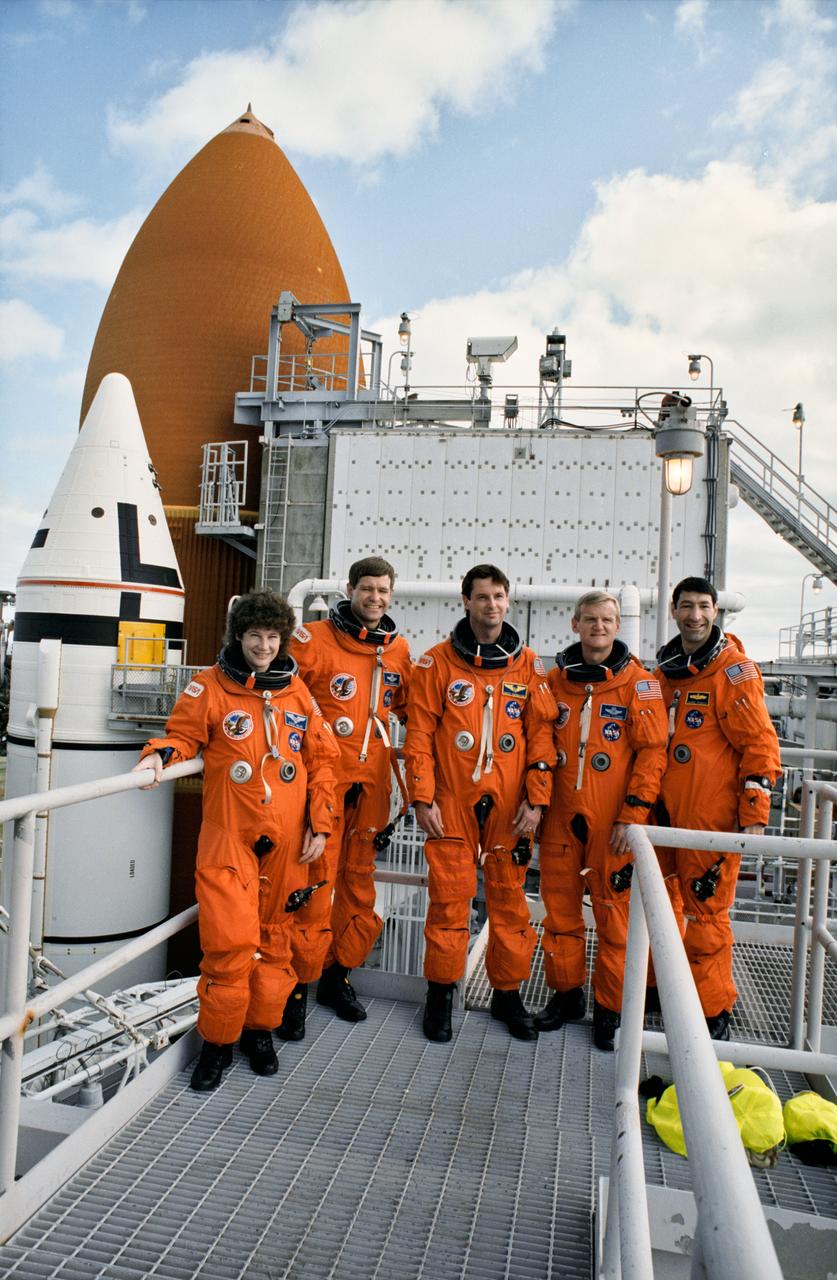
S93-25028 (15 Dec 1992) --- Astronauts assigned to fly aboard Endeavour pose near the Shuttle during a break in countdown demonstration tests. Left to right are Susan J. Helms, Donald R. McMonagle, Gregory J. Harbaugh, John H. Casper and Mario Runco Jr.
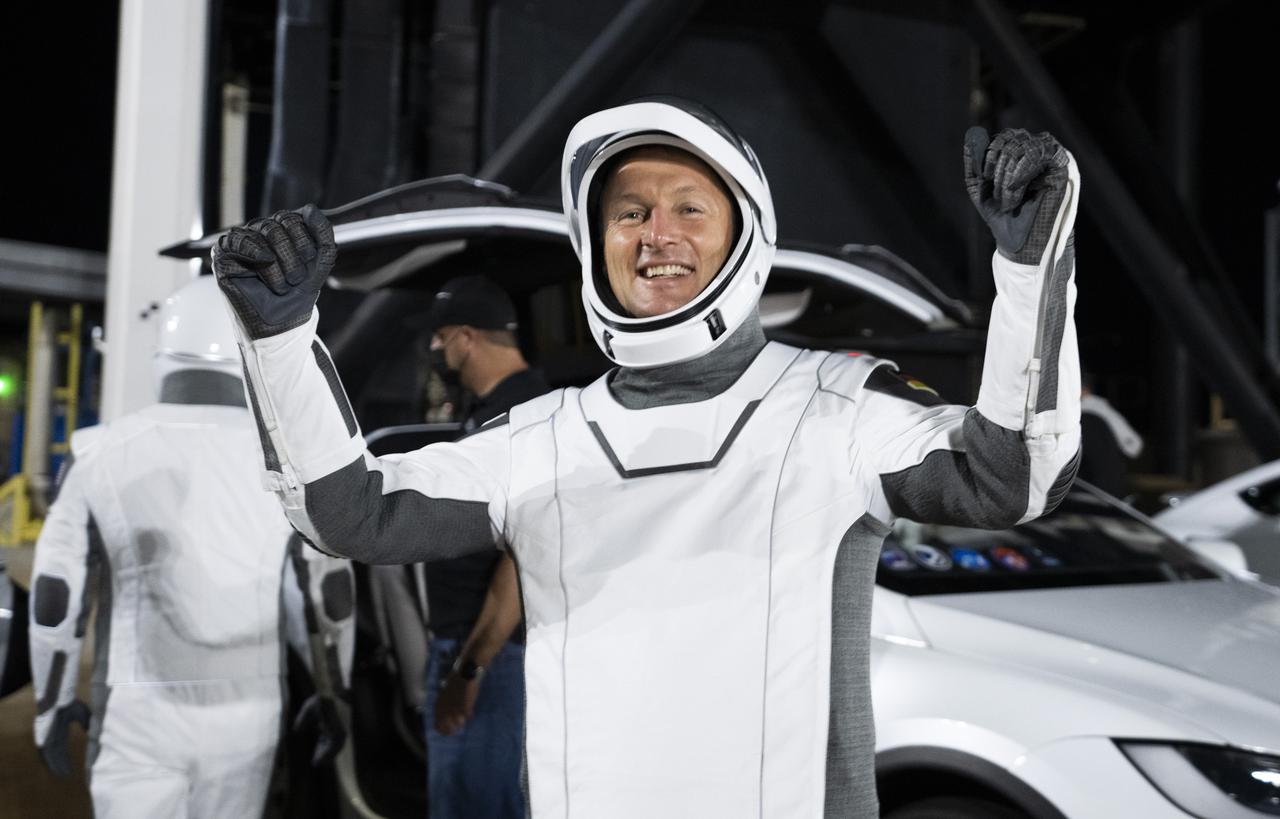
NASA’s SpaceX Crew-3 astronauts participate in a countdown dress rehearsal at the agency’s Kennedy Space Center in Florida on Oct. 28, 2021, to prepare for the upcoming Crew-3 launch. The astronauts are at the Neil Armstrong Operations and Checkout Building as they prepare to enter the Tesla cars for the trip to Launch Pad 39A during the rehearsal. In view is European Space Agency astronaut Matthias Maurer. The four-person crew will launch aboard the Crew Dragon atop the Falcon 9 on Oct. 31 to the International Space Station. Launch is targeted for 2:21 a.m. EDT from Pad 39A. Crew-3 is the third crew rotation flight to the space station for NASA’s Commercial Crew Program, and the first flight of a new Crew Dragon spacecraft.
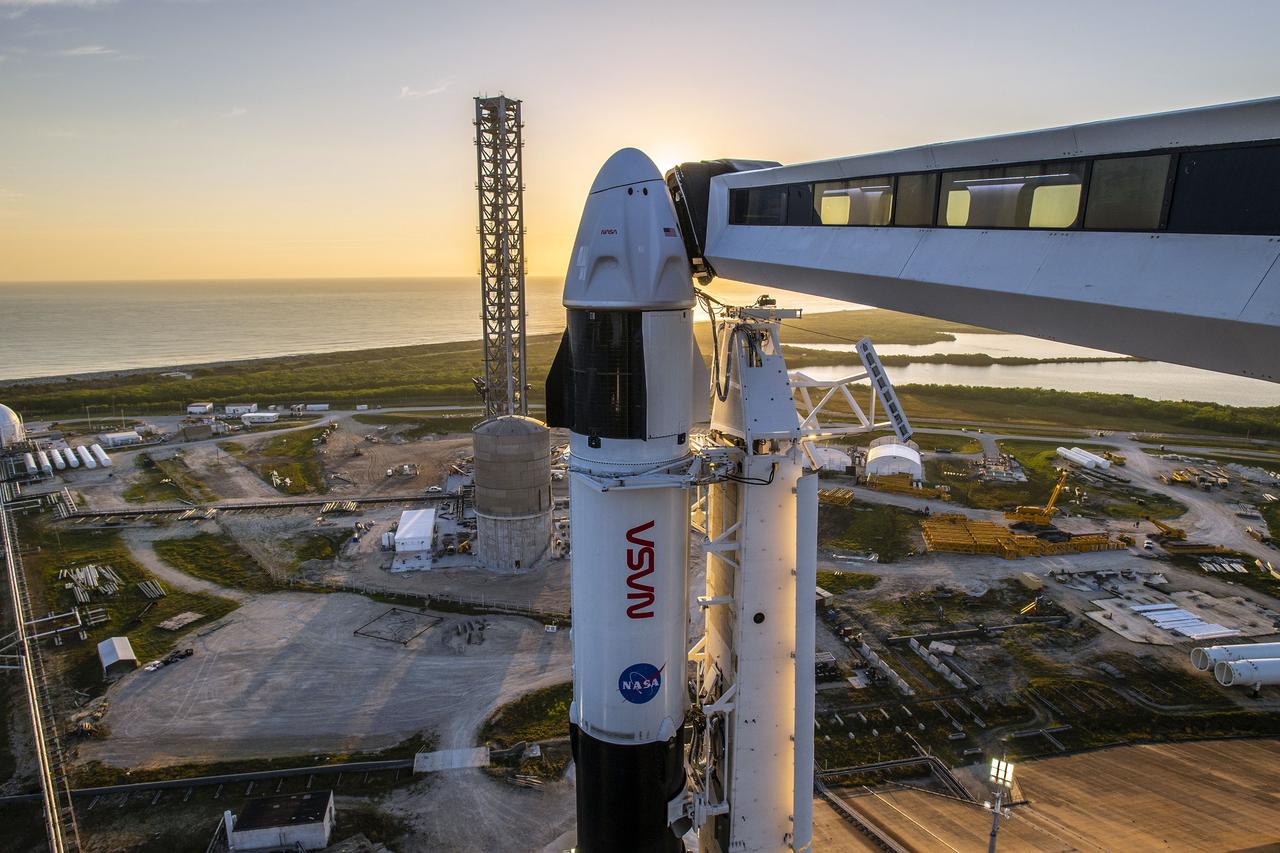
The SpaceX Falcon 9 rocket with Dragon spacecraft Endeavour is secured on the pad at Launch Complex 39A at Kennedy Space Center in Florida on Feb. 22, 2023, for NASA’s SpaceX Crew-6 mission. The crew access arm has been moved into position at the Dragon spacecraft. NASA astronauts Stephen Bowen, spacecraft commander, and Warren “Woody” Hoburg, pilot, along with mission specialists Sultan Alneyadi, UAE (United Arab Emirates) astronaut, and Andrey Fedyaev, Roscosmos cosmonaut, are slated to launch to the International Space Station at 1:45 a.m. EST on Feb. 27 from Launch Complex 39A. Crew-6 is the sixth crew rotation mission with SpaceX to the station, and the seventh flight of Dragon with people as part of the agency’s Commercial Crew Program.
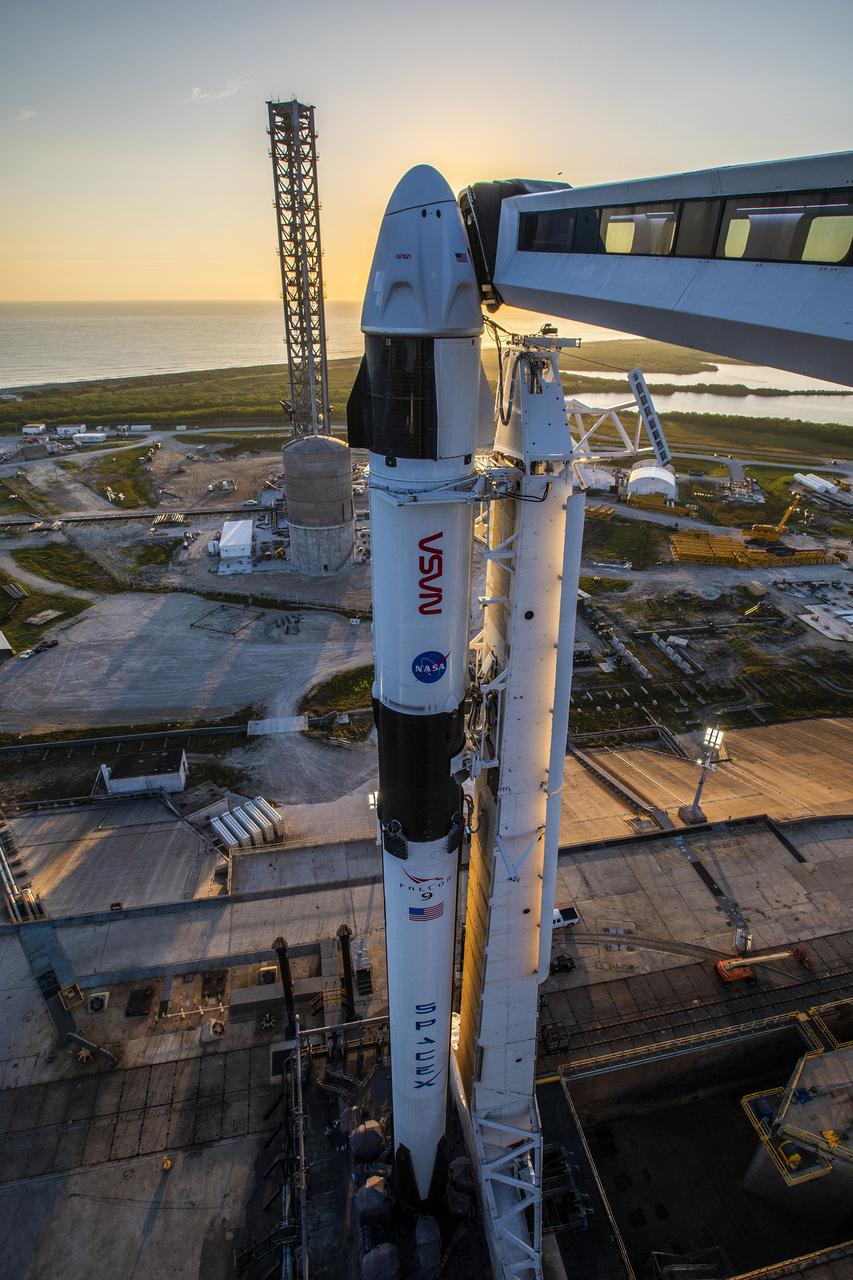
The SpaceX Falcon 9 rocket with Dragon spacecraft Endeavour is secured on the pad at Launch Complex 39A at Kennedy Space Center in Florida on Feb. 22, 2023, for NASA’s SpaceX Crew-6 mission. The crew access arm has been moved into position at the Dragon spacecraft. NASA astronauts Stephen Bowen, spacecraft commander, and Warren “Woody” Hoburg, pilot, along with mission specialists Sultan Alneyadi, UAE (United Arab Emirates) astronaut, and Andrey Fedyaev, Roscosmos cosmonaut, are slated to launch to the International Space Station at 1:45 a.m. EST on Feb. 27 from Launch Complex 39A. Crew-6 is the sixth crew rotation mission with SpaceX to the station, and the seventh flight of Dragon with people as part of the agency’s Commercial Crew Program.
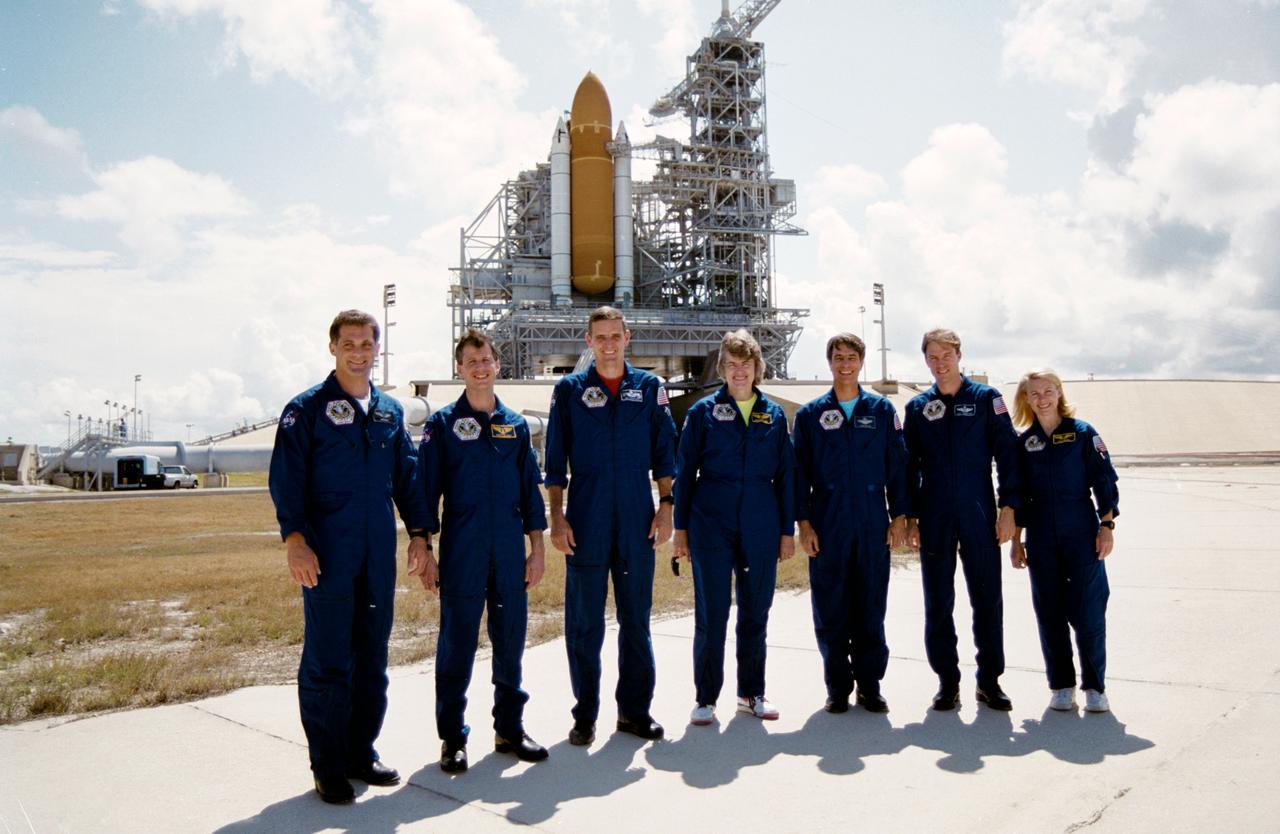
S93-45003 (20 Sept 1993) --- Posing for a crew portrait, in front of the Space Shuttle Columbia at Launch Pad 39B, are the seven STS-58 astronauts. They are, left to right, David A. Wolf, mission specialist; Martin J. Fettman, payload specialist; William S. McArthur and Shannon W. Lucid, mission specialists; John E. Blaha, mission commander; Richard A. Searfoss, pilot; and Rhea Seddon, payload commander. The crew was in Florida for the Terminal Countdown Demonstration Test (CDDT) in preparation for next month's launch aboard Columbia. (Kennedy Space Center Photo ID: KSC-93-PC-1253)
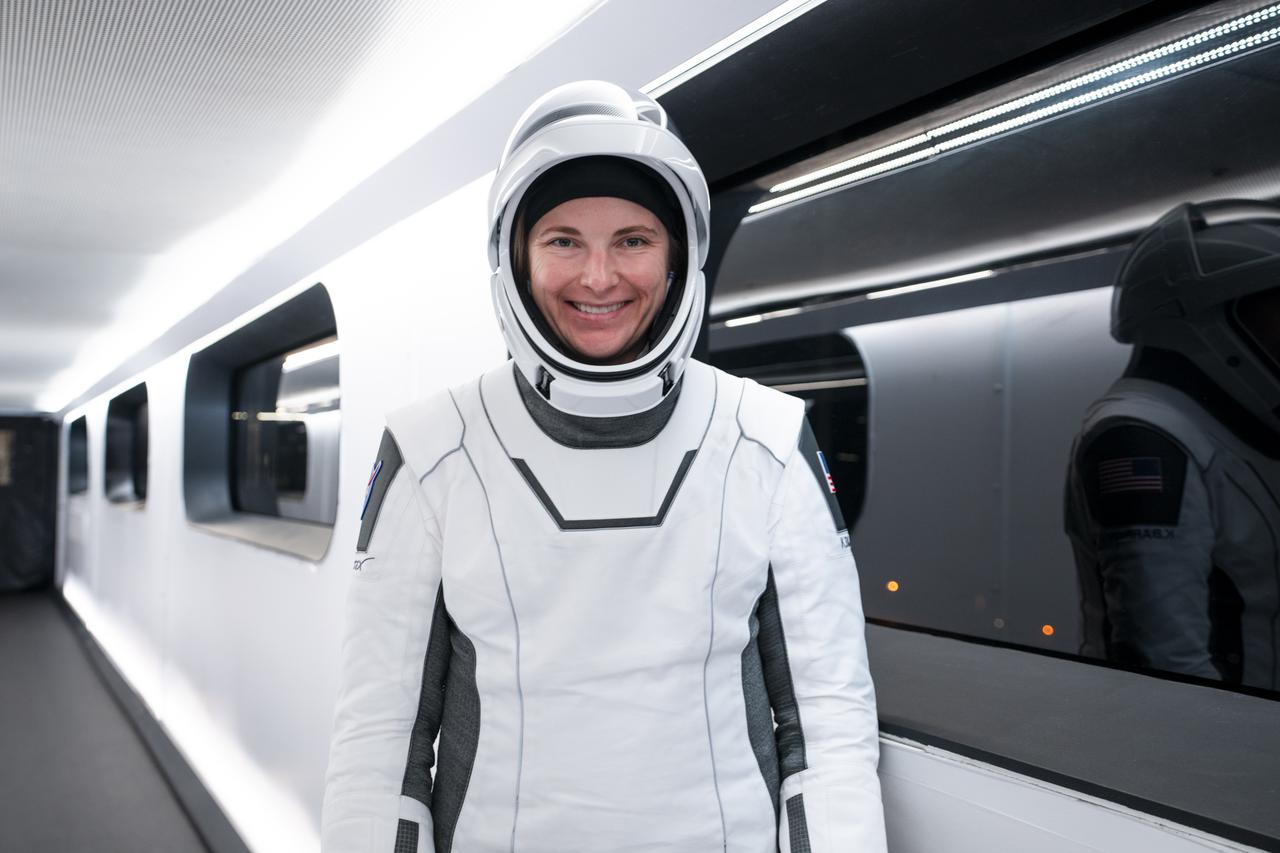
NASA’s SpaceX Crew-3 astronauts participate in a countdown dress rehearsal at the agency’s Kennedy Space Center in Florida on Oct. 28, 2021, to prepare for the upcoming Crew-3 launch. NASA astronaut Kayla Barron, dressed in her SpaceX spacesuit, is inside the crew access arm leading to the company’s Crew Dragon spacecraft during the rehearsal. The four-person crew will launch aboard the Crew Dragon atop the Falcon 9 on Oct. 31 to the International Space Station. Launch is targeted for 2:21 a.m. EDT from Pad 39A. Crew-3 is the third crew rotation flight to the space station for NASA’s Commercial Crew Program, and the first flight of a new Crew Dragon spacecraft.
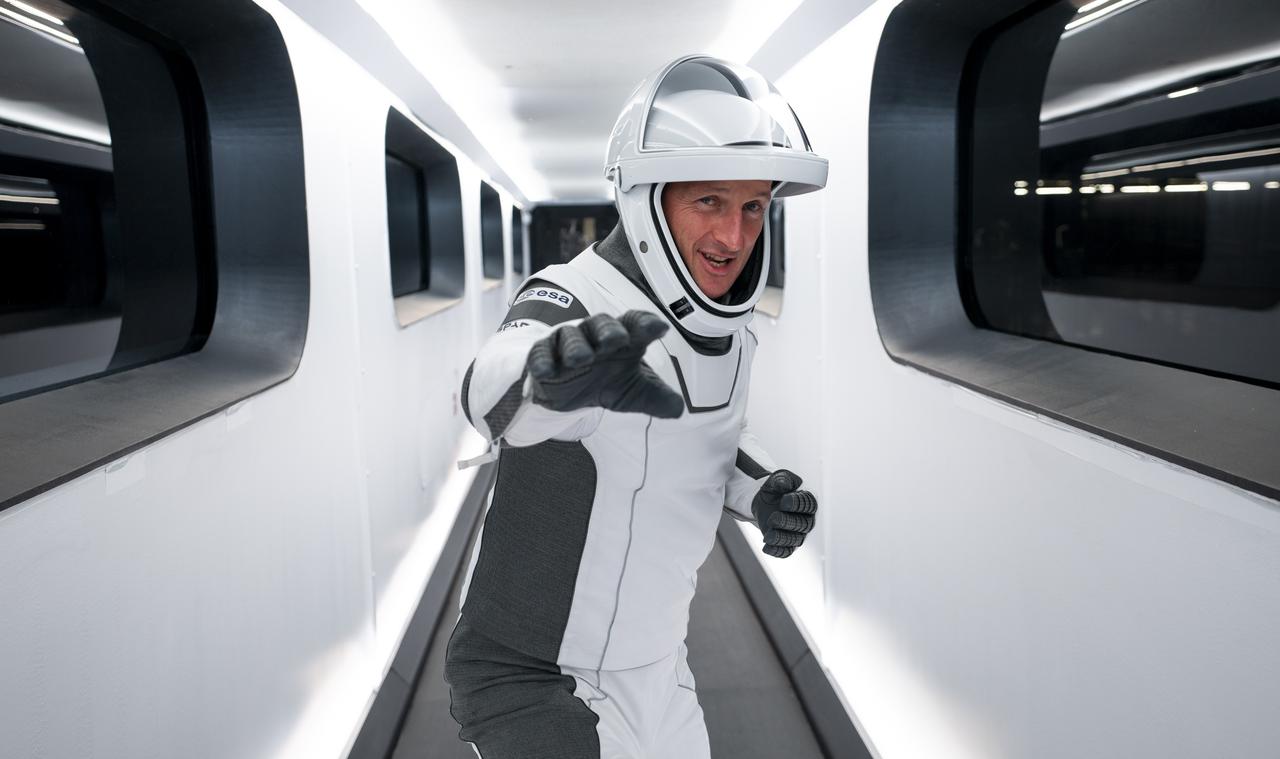
NASA’s SpaceX Crew-3 astronauts participate in a countdown dress rehearsal at the agency’s Kennedy Space Center in Florida on Oct. 28, 2021, to prepare for the upcoming Crew-3 launch. Matthias Maurer, with the European Space Agency, is inside the crew access arm leading to the company’s Crew Dragon spacecraft during the rehearsal. The four-person crew will launch aboard the Crew Dragon atop the Falcon 9 on Oct. 31 to the International Space Station. Launch is targeted for 2:21 a.m. EDT from Pad 39A. Crew-3 is the third crew rotation flight to the space station for NASA’s Commercial Crew Program, and the first flight of a new Crew Dragon spacecraft.

A SpaceX Falcon 9 rocket, with the company's Crew Dragon spacecraft atop, sits on the pad at Launch Complex 39A at NASA’s Kennedy Space Center in Florida on April 8, 2022, in preparation for the Axiom Mission 1 (Ax-1) liftoff. Commander Michael López-Alegría of Spain and the United States, Pilot Larry Connor of the United States, and Mission Specialists Eytan Stibbe of Israel, and Mark Pathy of Canada are aboard the flight to the International Space Station. The Ax-1 mission is the first private astronaut mission to the space station.
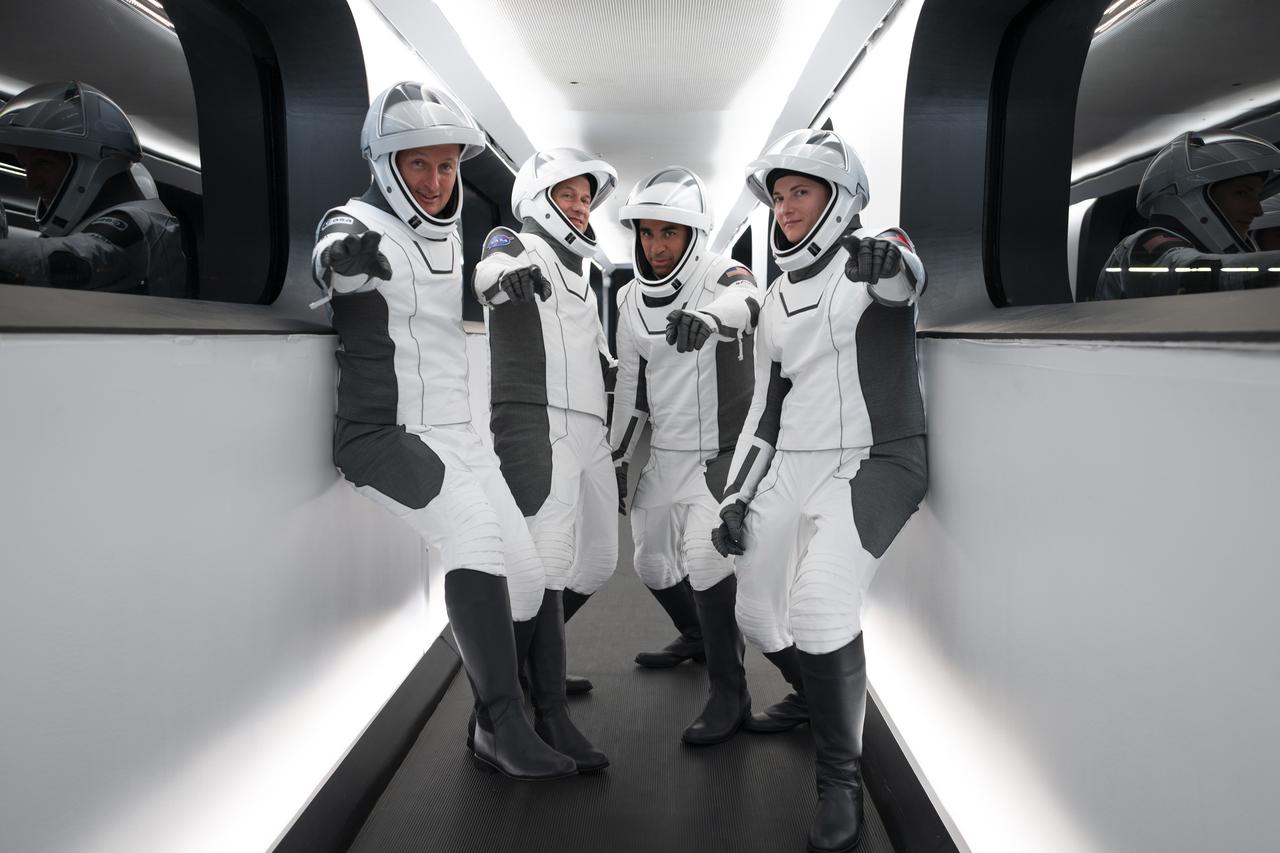
NASA’s SpaceX Crew-3 astronauts participate in a countdown dress rehearsal at the agency’s Kennedy Space Center in Florida on Oct. 28, 2021, to prepare for the upcoming Crew-3 launch. From left are Matthias Maurer, with the European Space Agency, and NASA astronauts Tom Marshburn, Raja Chari, Crew-3 commander, and Kayla Barron. They are inside the crew access arm leading to the company’s Crew Dragon spacecraft during the rehearsal. The four-person crew will launch aboard the Crew Dragon atop the Falcon 9 on Oct. 31 to the International Space Station. Launch is targeted for 2:21 a.m. EDT from Pad 39A. Crew-3 is the third crew rotation flight to the space station for NASA’s Commercial Crew Program, and the first flight of a new Crew Dragon spacecraft.
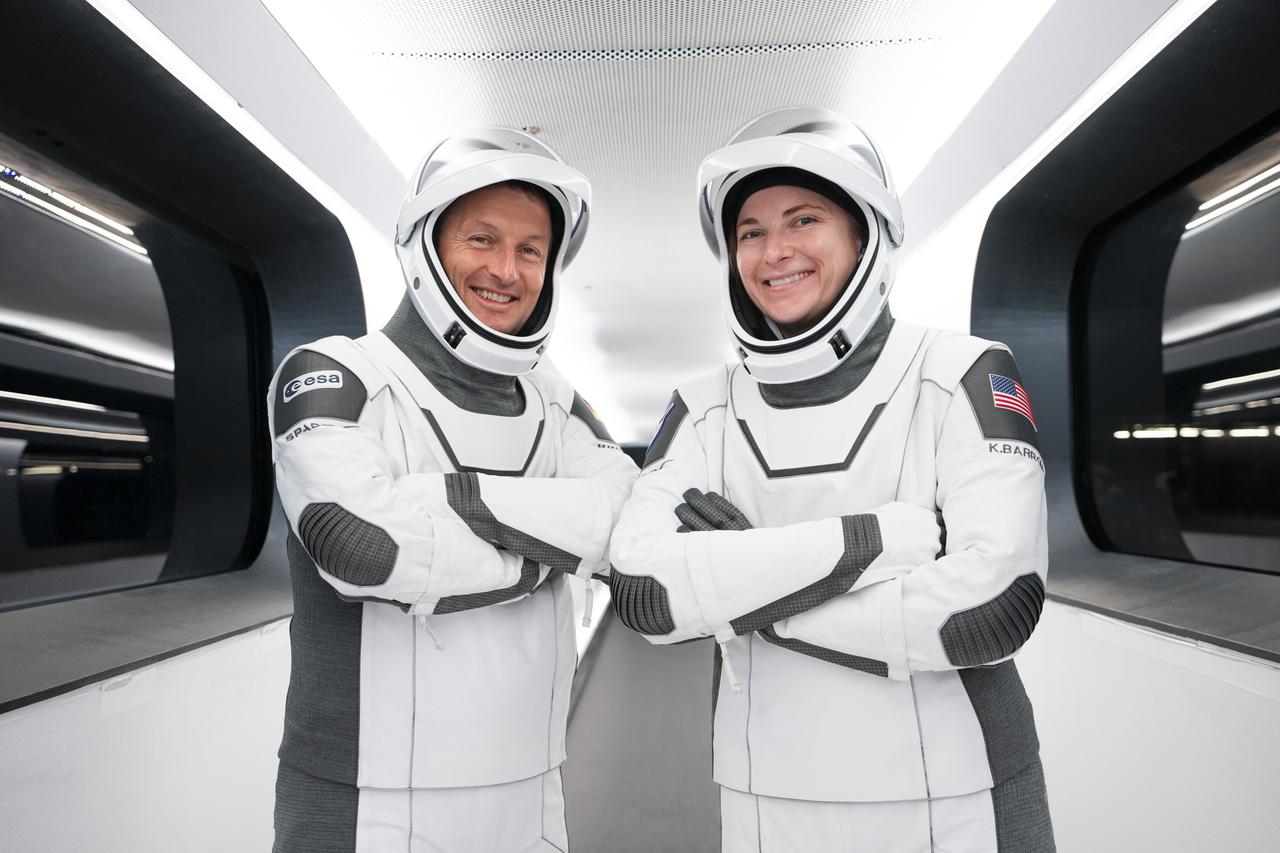
NASA’s SpaceX Crew-3 astronauts participate in a countdown dress rehearsal at the agency’s Kennedy Space Center in Florida on Oct. 28, 2021, to prepare for the upcoming Crew-3 launch. At left is Matthias Maurer, with the European Space Agency (ESA), and NASA astronaut Kayla Barron. They are inside the crew access arm leading to the company’s Crew Dragon spacecraft during the rehearsal. The four-person crew will launch aboard the Crew Dragon atop the Falcon 9 on Oct. 31 to the International Space Station. Launch is targeted for 2:21 a.m. EDT from Pad 39A. Crew-3 is the third crew rotation flight to the space station for NASA’s Commercial Crew Program, and the first flight of a new Crew Dragon spacecraft.
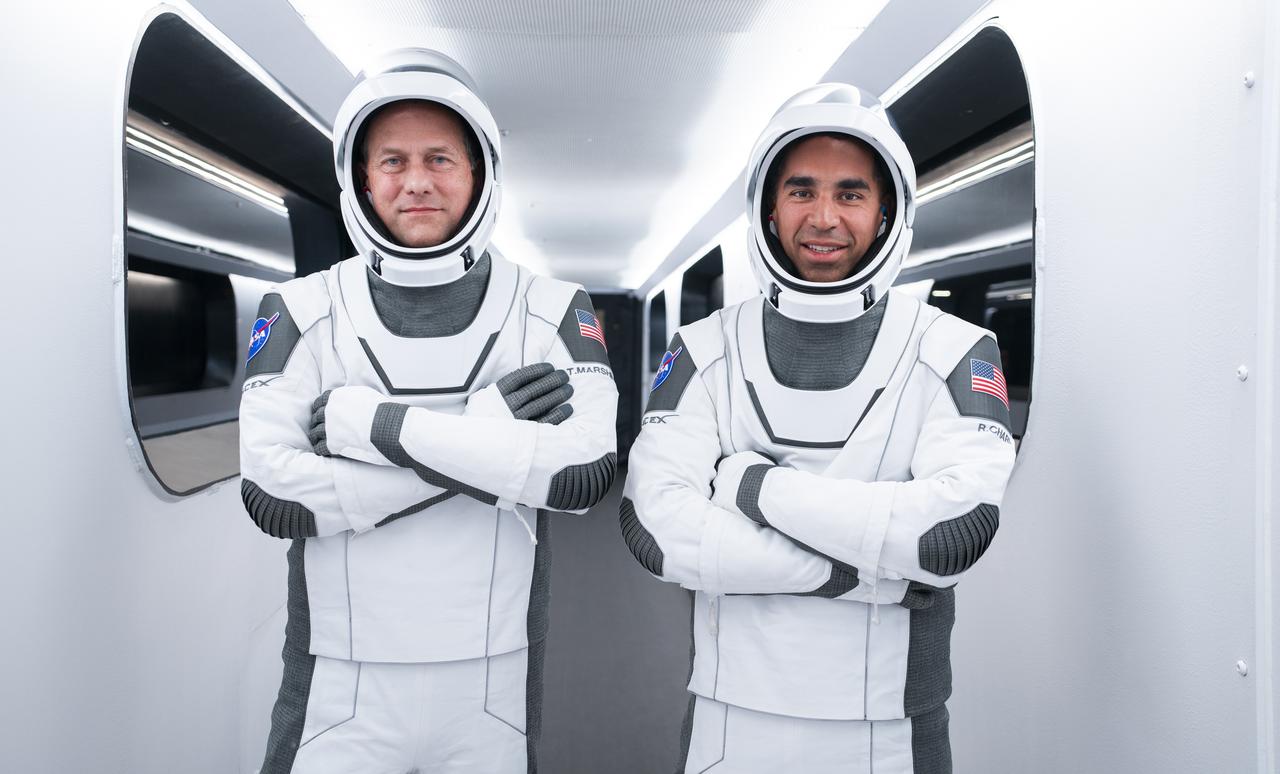
NASA’s SpaceX Crew-3 astronauts participate in a countdown dress rehearsal at the agency’s Kennedy Space Center in Florida on Oct. 28, 2021, to prepare for the upcoming Crew-3 launch. From left are NASA astronauts Tom Marshburn, pilot, and Raja Chari, Crew-3 commander. They are inside the crew access arm leading to the company’s Crew Dragon spacecraft during the rehearsal. The four-person crew will launch aboard the Crew Dragon atop the Falcon 9 on Oct. 31 to the International Space Station. Launch is targeted for 2:21 a.m. EDT from Pad 39A. Crew-3 is the third crew rotation flight to the space station for NASA’s Commercial Crew Program, and the first flight of a new Crew Dragon spacecraft.
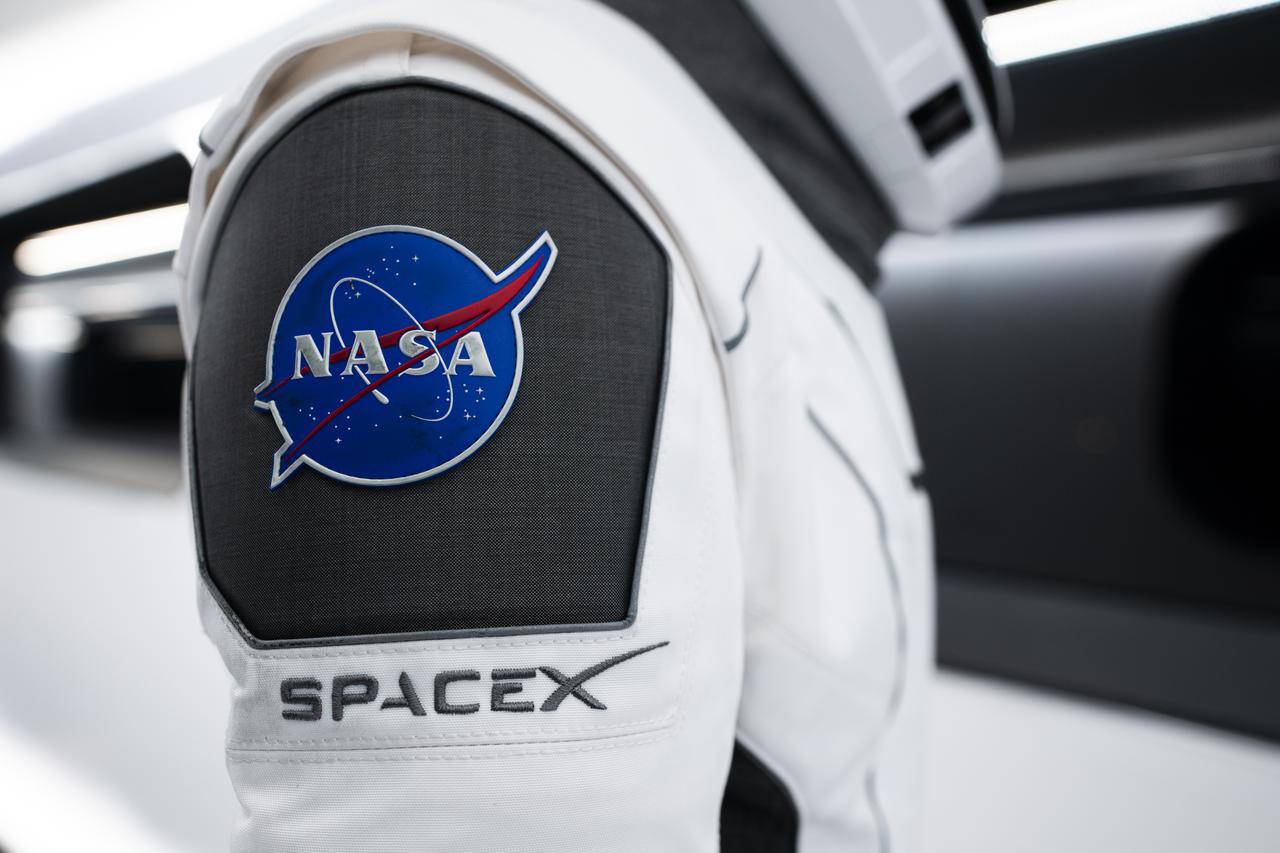
NASA’s SpaceX Crew-3 astronauts participate in a countdown dress rehearsal at the agency’s Kennedy Space Center in Florida on Oct. 28, 2021, to prepare for the upcoming Crew-3 launch. In this view is a close-up of the NASA and SpaceX embroidered emblems on the SpaceX spacesuit worn by NASA astronaut Kayla Barron. Barron is inside the crew access arm leading to the company’s Crew Dragon spacecraft during the rehearsal. The four-person crew will launch aboard the Crew Dragon atop the Falcon 9 on Oct. 31 to the International Space Station. Launch is targeted for 2:21 a.m. EDT from Pad 39A. Crew-3 is the third crew rotation flight to the space station for NASA’s Commercial Crew Program, and the first flight of a new Crew Dragon spacecraft.
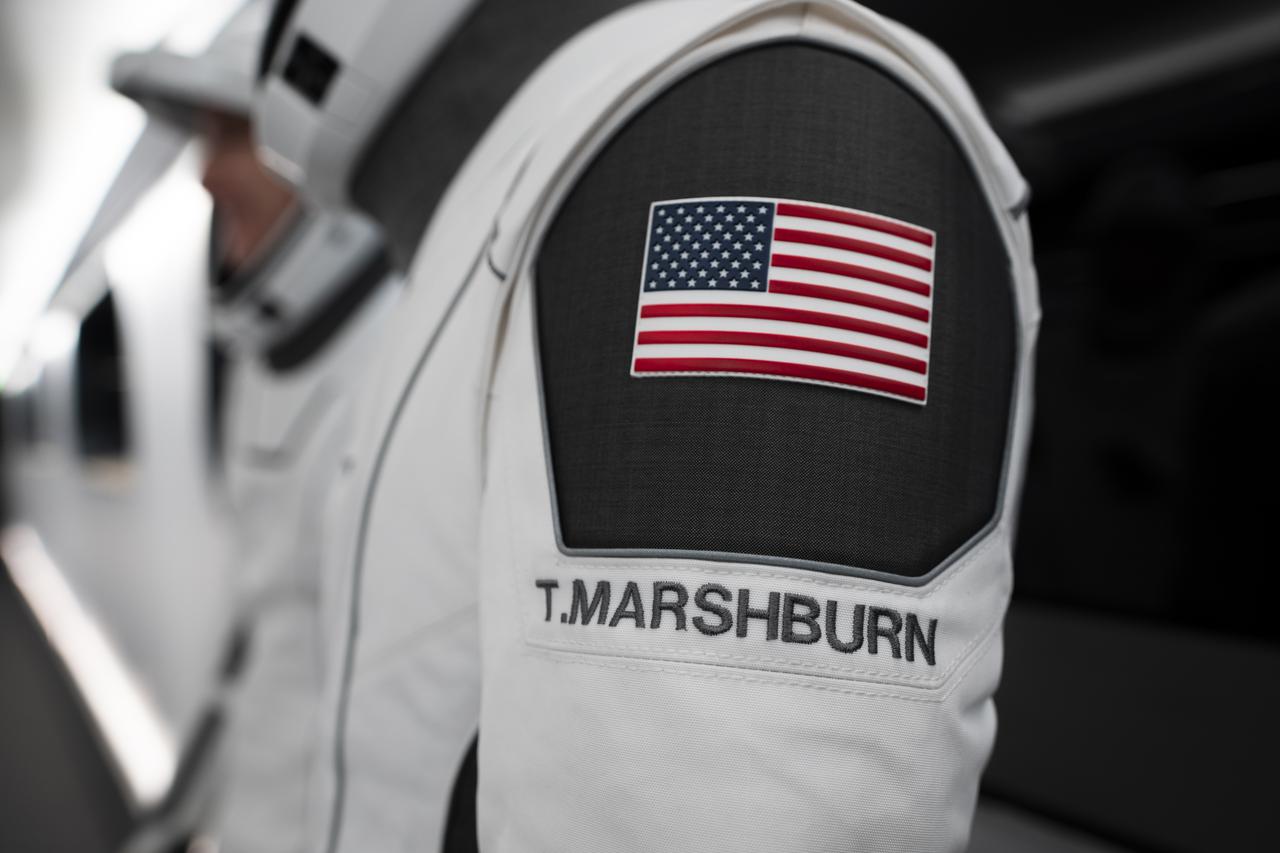
NASA’s SpaceX Crew-3 astronauts participate in a countdown dress rehearsal at the agency’s Kennedy Space Center in Florida on Oct. 28, 2021, to prepare for the upcoming Crew-3 launch. NASA astronaut Tom Marshburn, wearing a SpaceX spacesuit, is inside the crew access arm leading to the company’s Crew Dragon spacecraft during the rehearsal. Marshburn’ s spacesuit is embroidered with his name and the American flag. The four-person crew will launch aboard the Crew Dragon atop the Falcon 9 on Oct. 31 to the International Space Station. Launch is targeted for 2:21 a.m. EDT from Pad 39A. Crew-3 is the third crew rotation flight to the space station for NASA’s Commercial Crew Program, and the first flight of a new Crew Dragon spacecraft.
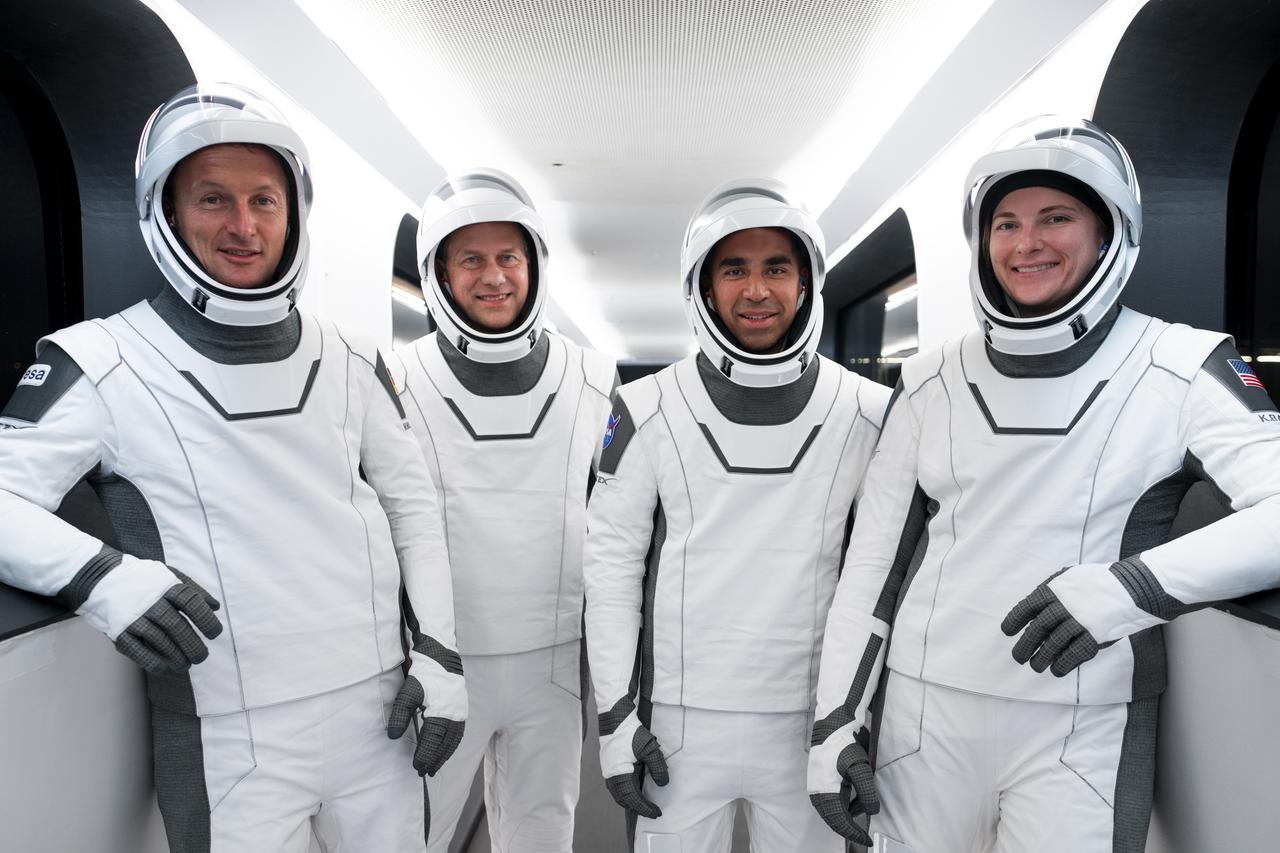
NASA’s SpaceX Crew-3 astronauts participate in a countdown dress rehearsal at the agency’s Kennedy Space Center in Florida on Oct. 28, 2021, to prepare for the upcoming Crew-3 launch. From left are Matthias Maurer, with the European Space Agency, and NASA astronauts Tom Marshburn, Raja Chari, Crew-3 commander, and Kayla Barron. They are inside the crew access arm leading to the company’s Crew Dragon spacecraft during the rehearsal. The four-person crew will launch aboard the Crew Dragon atop the Falcon 9 on Oct. 31 to the International Space Station. Launch is targeted for 2:21 a.m. EDT from Pad 39A. Crew-3 is the third crew rotation flight to the space station for NASA’s Commercial Crew Program, and the first flight of a new Crew Dragon spacecraft.
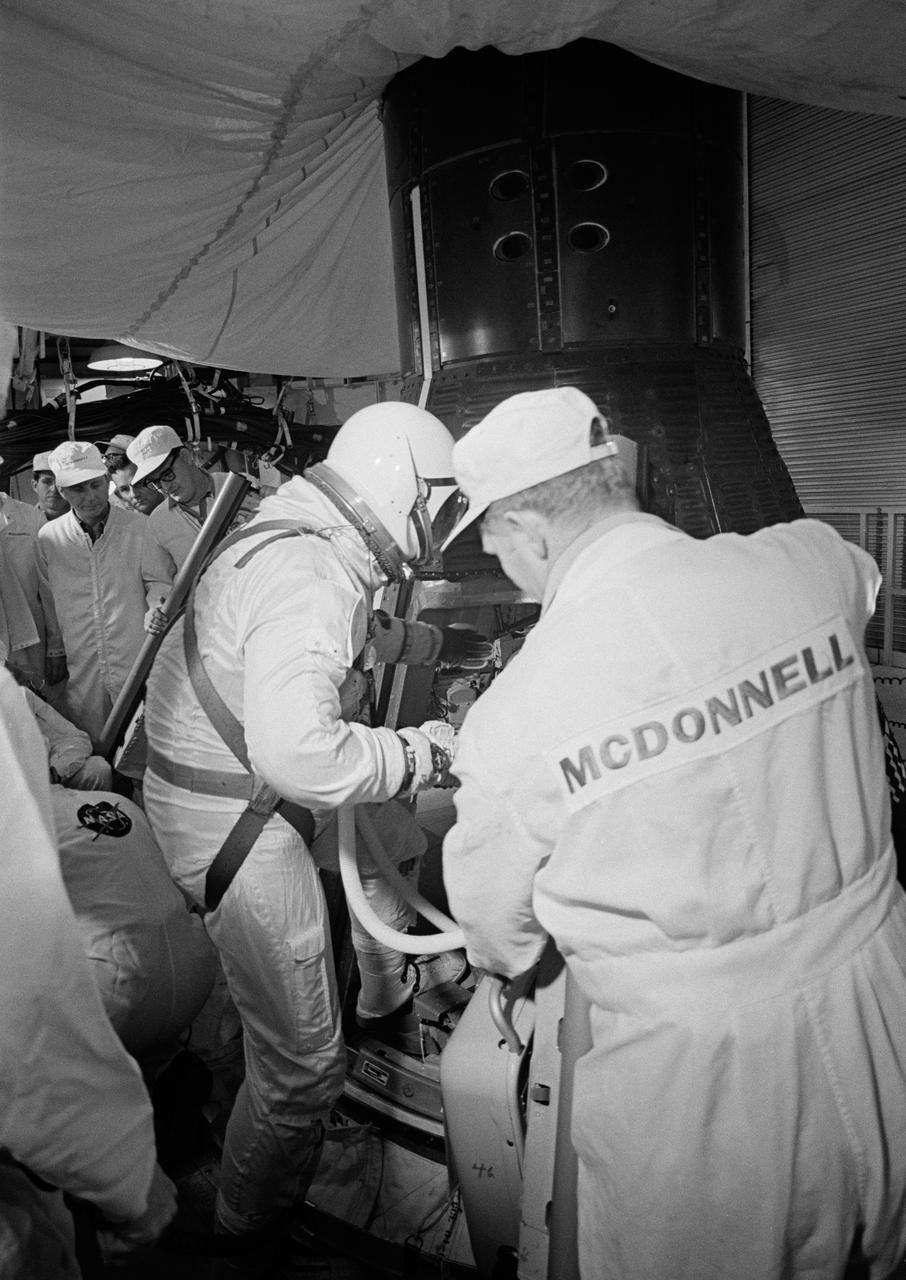
S65-20604 (23 March 1965) --- Astronaut John W. Young, the pilot of the Gemini-Titan 3 three-orbit mission, is assisted by a McDonnell Aircraft Corp. engineer as he enters the Gemini spacecraft in the white room atop the Gemini launch vehicle.
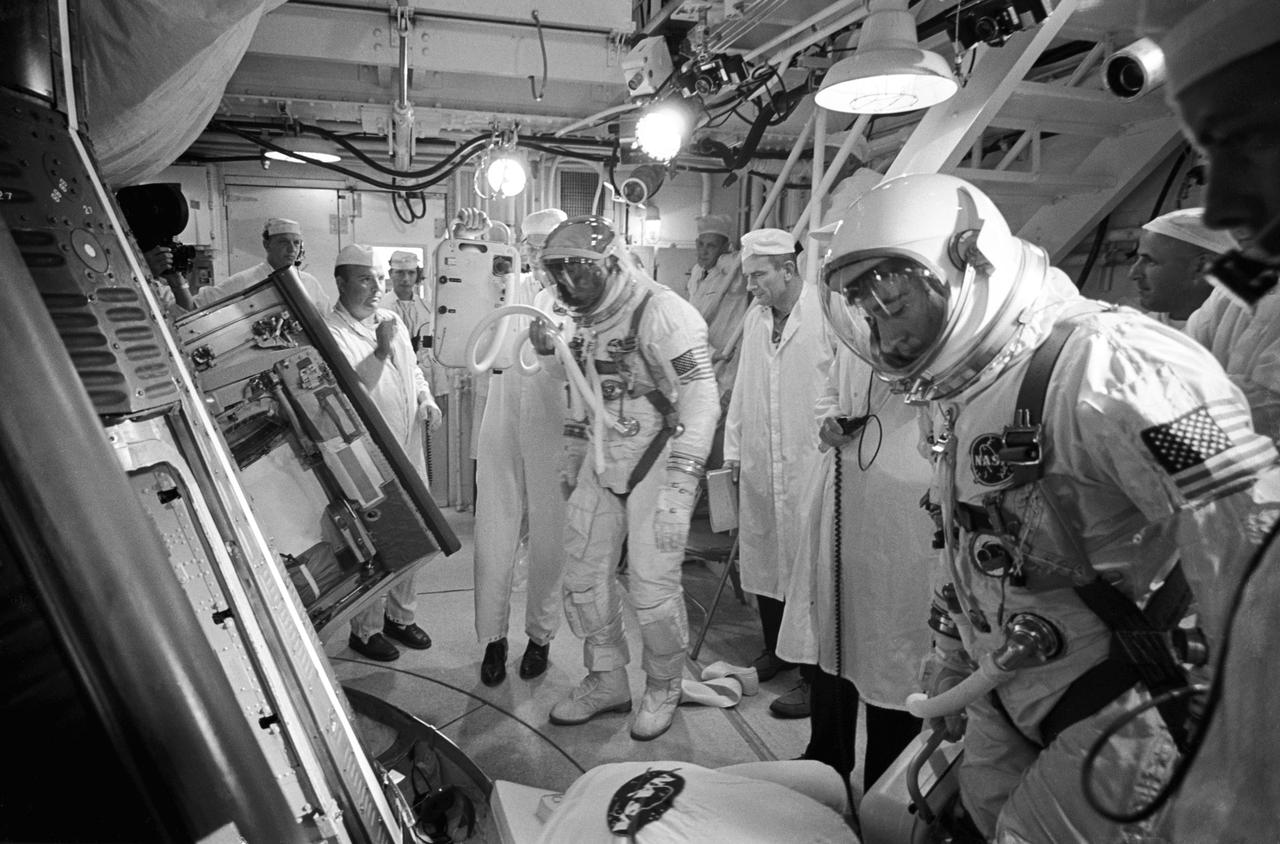
S66-42737 (18 July 1966) --- In the White Room atop the Gemini launch vehicle, astronauts Michael Collins (left), pilot, and John W. Young (right), command pilot, prepare to enter the Gemini-10 spacecraft. Engineers and technicians stand by to assist in the insertion. Photo credit: NASA
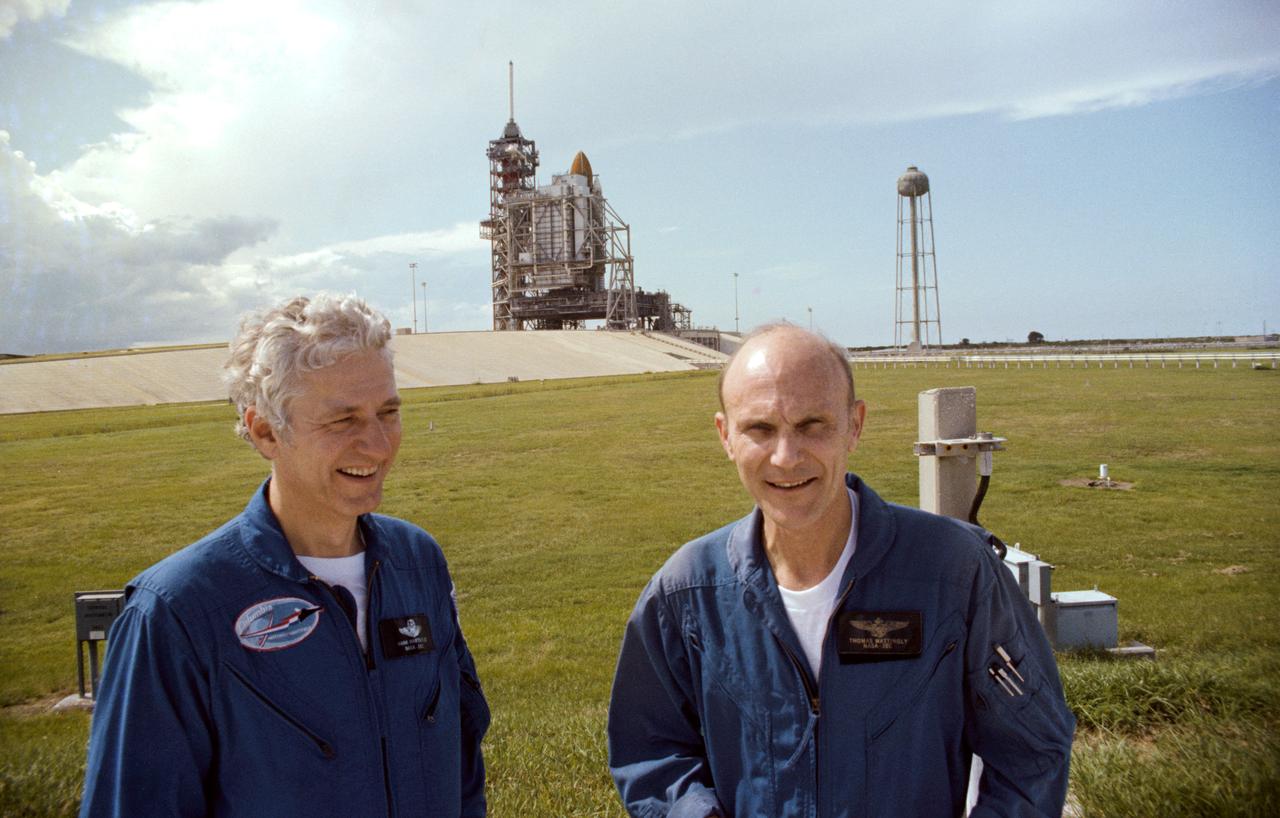
Astronauts Thomas K. Mattingly, II., right, and Henry Hartsfield, Jr. pose for news photographers in front of the Space Shuttle vehicle during break in the countdown demonstration test (CDDT) for STS-4.

View of Astronaut Virgil I. Grissom through spacecraft window prior to launch of Gemini-Titan 3 mission.
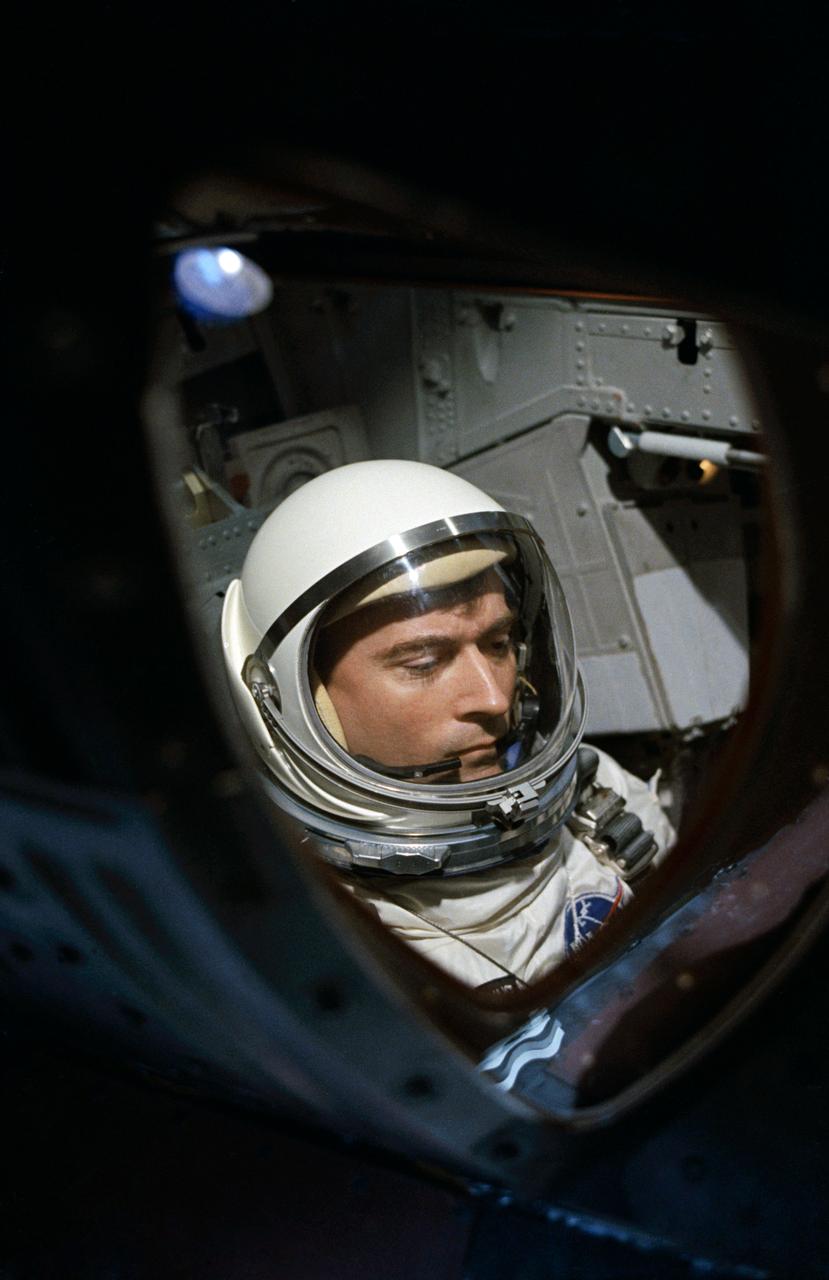
View of Astronaut John W. Young through spacecraft window prior to launch of Gemini-Titan 3 mission.
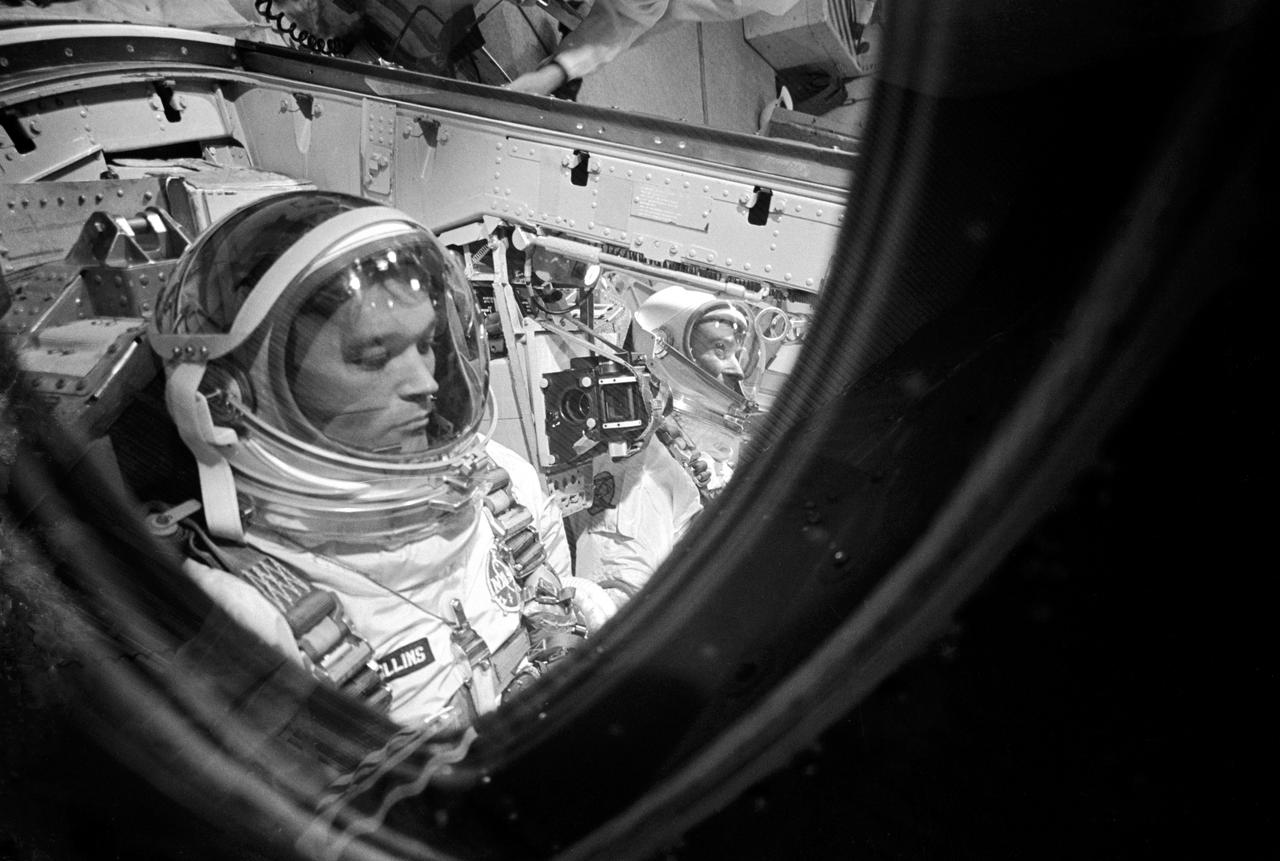
S66-46477 (18 July 1966) --- Close-up of astronaut Michael Collins, Gemini-10 pilot, making final adjustments and checks in the Gemini spacecraft during prelaunch countdown. In right background is astronaut John W. Young, command pilot. Photo credit: NASA
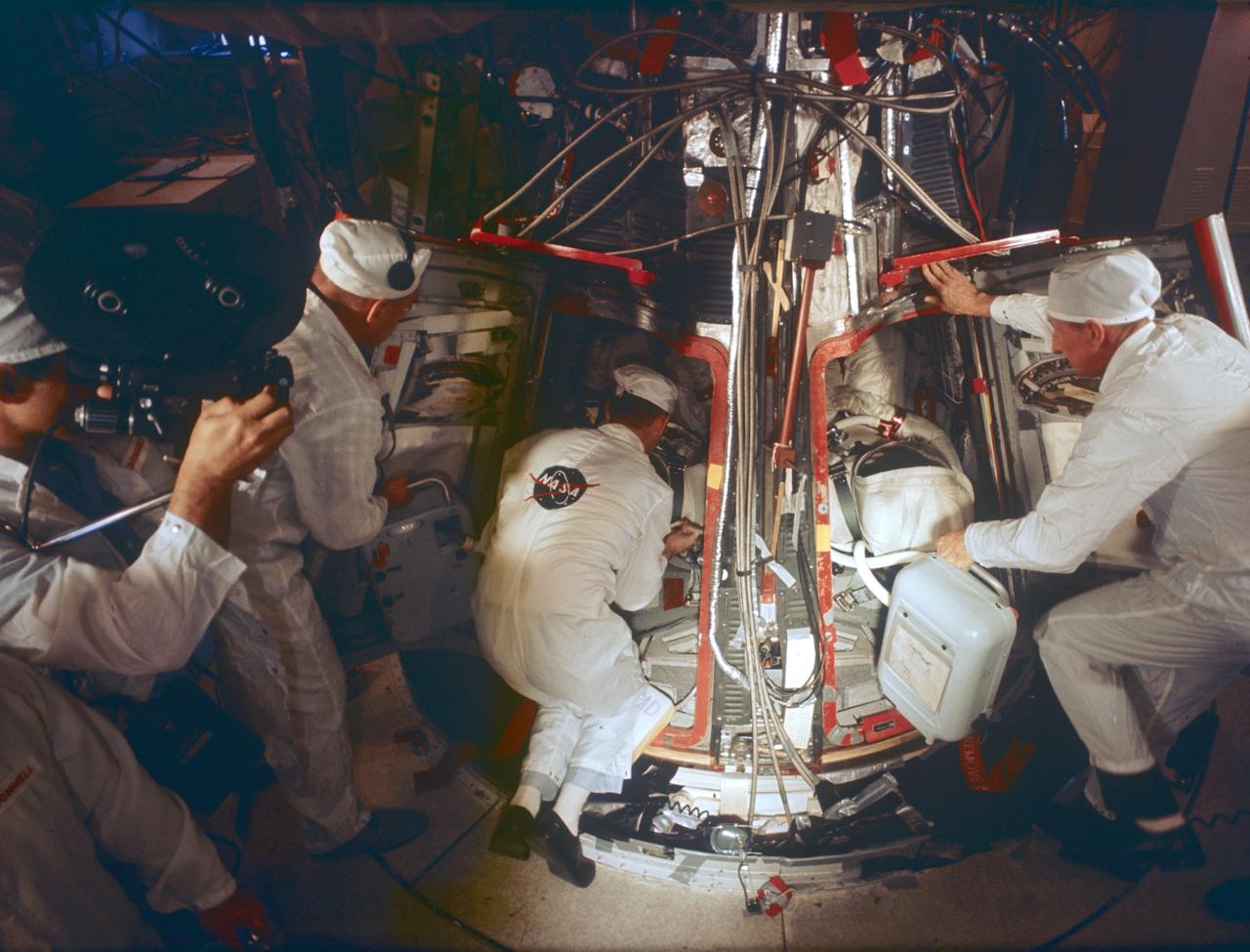
S65-61835 (15 Nov. 1965) --- Technicians assist the prime crew for the Gemini-7 spaceflight in systems checks inside their spacecraft in the White Room atop Pad 19. Prime crew members are astronauts Frank Borman (left, inside spacecraft), command pilot, and James A. Lovell Jr. (right, inside spacecraft), pilot. They wear the new light-weight spacesuit planned for use during their 14-day mission. Photo credit: NASA
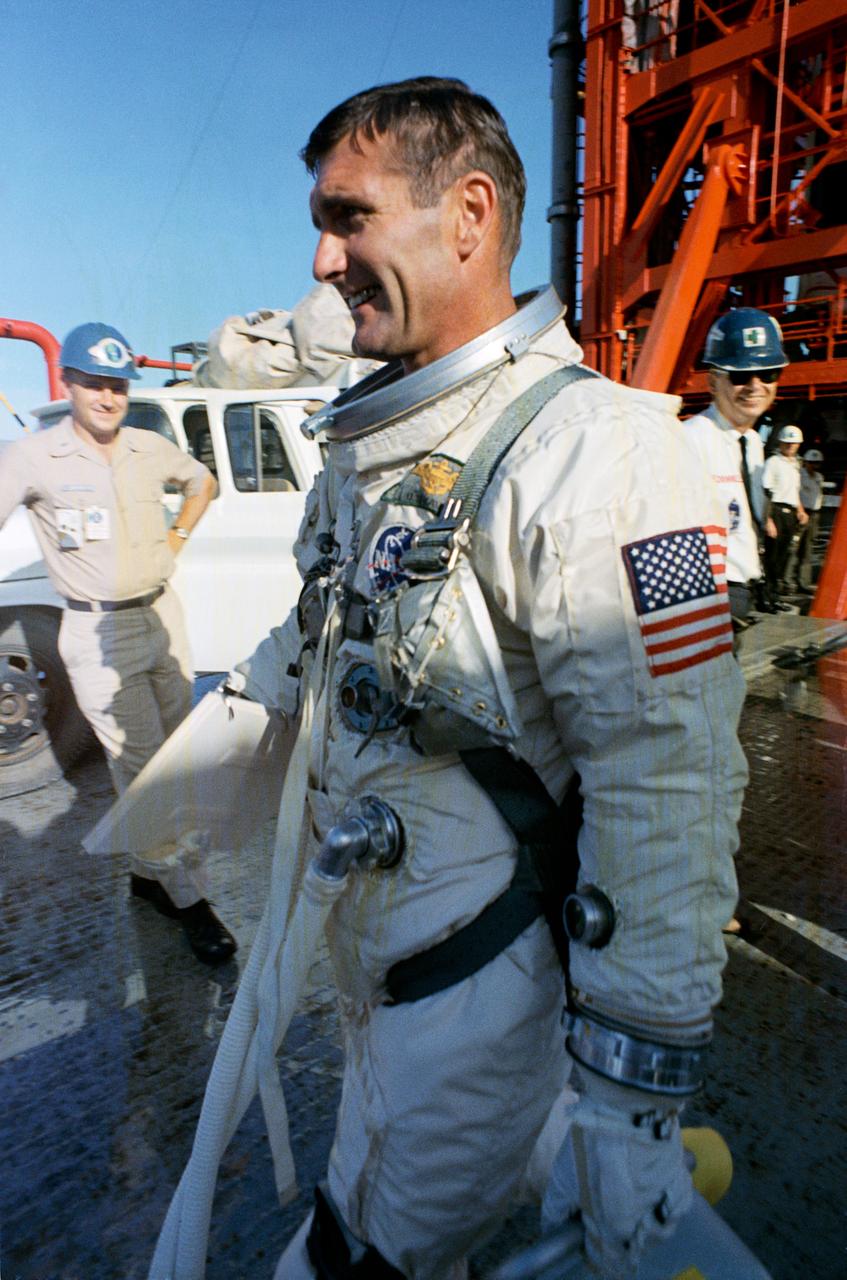
S66-50775 (10 Sept. 1966) --- Astronaut Richard F. Gordon Jr., pilot, walks away from Pad 19 following postponement of the Gemini-11 spaceflight. The mission was rescheduled for Sept. 12, 1966. Photo credit: NASA

NASA’s SpaceX Crew-3 astronauts participate in a countdown dress rehearsal at the agency’s Kennedy Space Center in Florida on Oct. 28, 2021, to prepare for the upcoming Crew-3 launch. Matthias Maurer, with the European Space Agency, is inside the crew access arm leading to the company’s Crew Dragon spacecraft during the rehearsal. He is wearing a SpaceX spacesuit with his name and the German flag embroidered on it. The four-person crew will launch aboard the Crew Dragon atop the Falcon 9 on Oct. 31 to the International Space Station. Launch is targeted for 2:21 a.m. EDT from Pad 39A. Crew-3 is the third crew rotation flight to the space station for NASA’s Commercial Crew Program, and the first flight of a new Crew Dragon spacecraft.
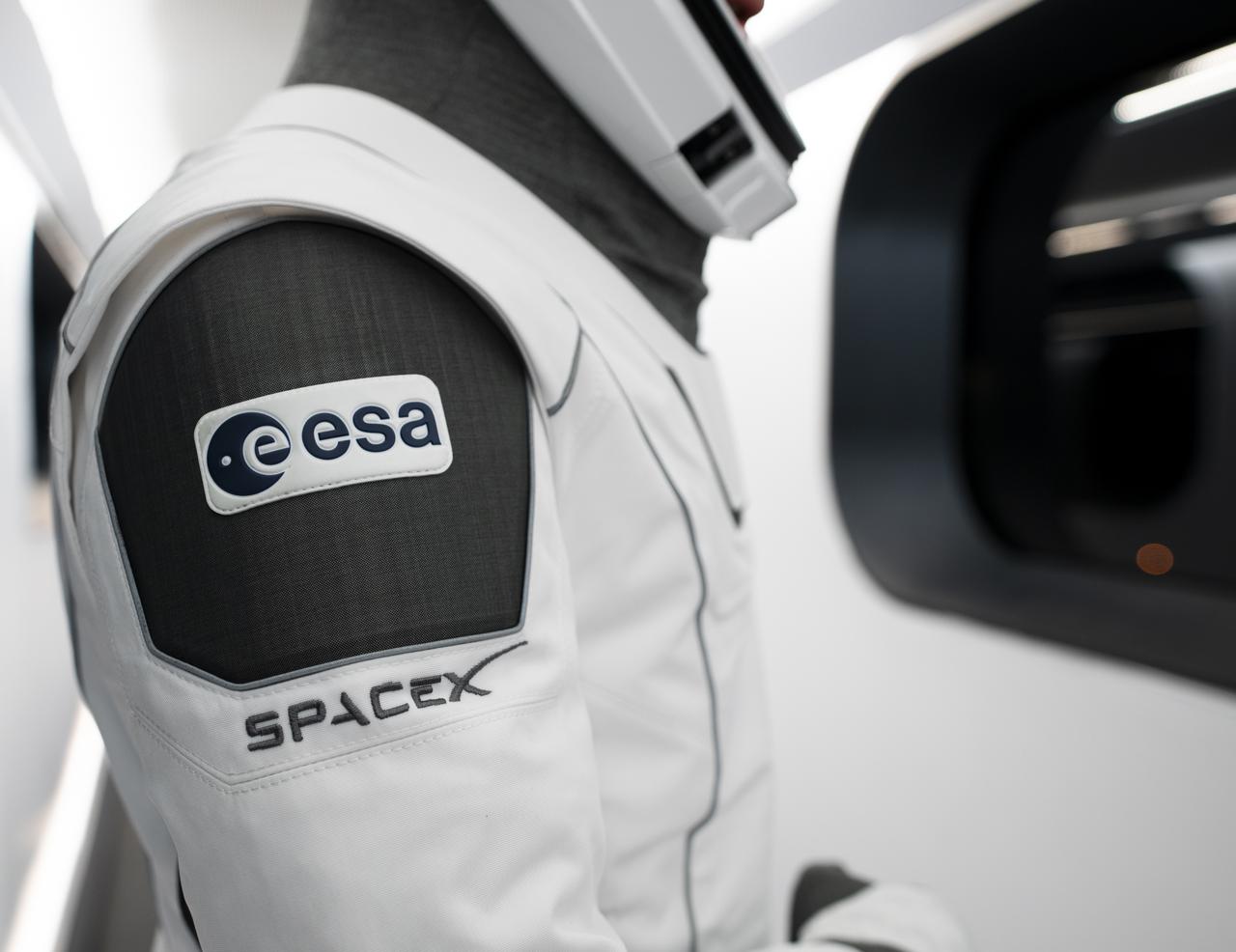
NASA’s SpaceX Crew-3 astronauts participate in a countdown dress rehearsal at the agency’s Kennedy Space Center in Florida on Oct. 28, 2021, to prepare for the upcoming Crew-3 launch. Matthias Maurer, with the European Space Agency (ESA), is inside the crew access arm leading to the company’s Crew Dragon spacecraft during the rehearsal. Maurer’s SpaceX spacesuit is embroidered with the ESA and SpaceX emblems. The four-person crew will launch aboard the Crew Dragon atop the Falcon 9 on Oct. 31 to the International Space Station. Launch is targeted for 2:21 a.m. EDT from Pad 39A. Crew-3 is the third crew rotation flight to the space station for NASA’s Commercial Crew Program, and the first flight of a new Crew Dragon spacecraft.
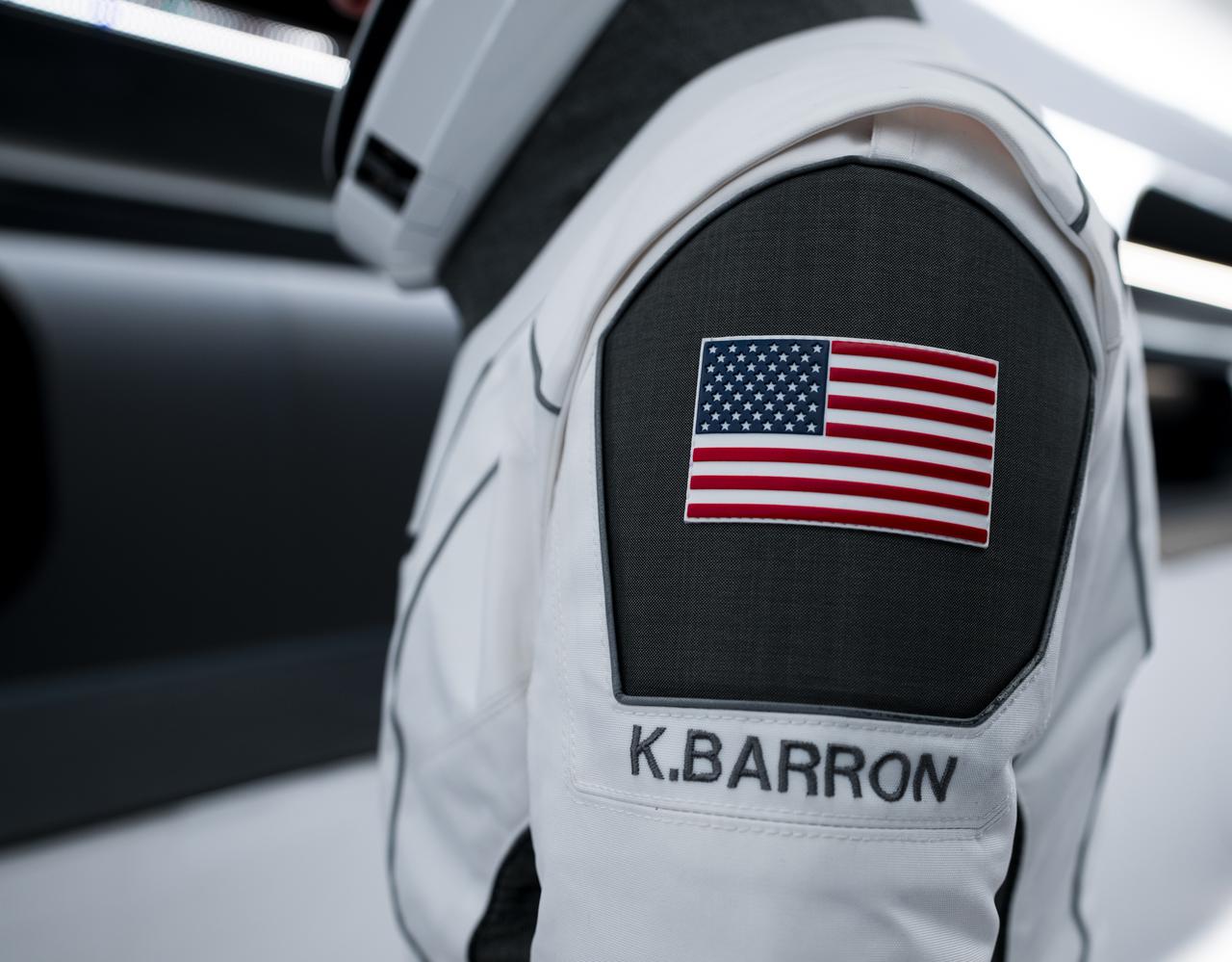
NASA’s SpaceX Crew-3 astronauts participate in a countdown dress rehearsal at the agency’s Kennedy Space Center in Florida on Oct. 28, 2021, to prepare for the upcoming Crew-3 launch. In this view is a close-up of the American flag and Kayla Barron’s name embroidered on the SpaceX spacesuit she is wearing. Barron is inside the crew access arm leading to the company’s Crew Dragon spacecraft during the rehearsal. The four-person crew will launch aboard the Crew Dragon atop the Falcon 9 on Oct. 31 to the International Space Station. Launch is targeted for 2:21 a.m. EDT from Pad 39A. Crew-3 is the third crew rotation flight to the space station for NASA’s Commercial Crew Program, and the first flight of a new Crew Dragon spacecraft.
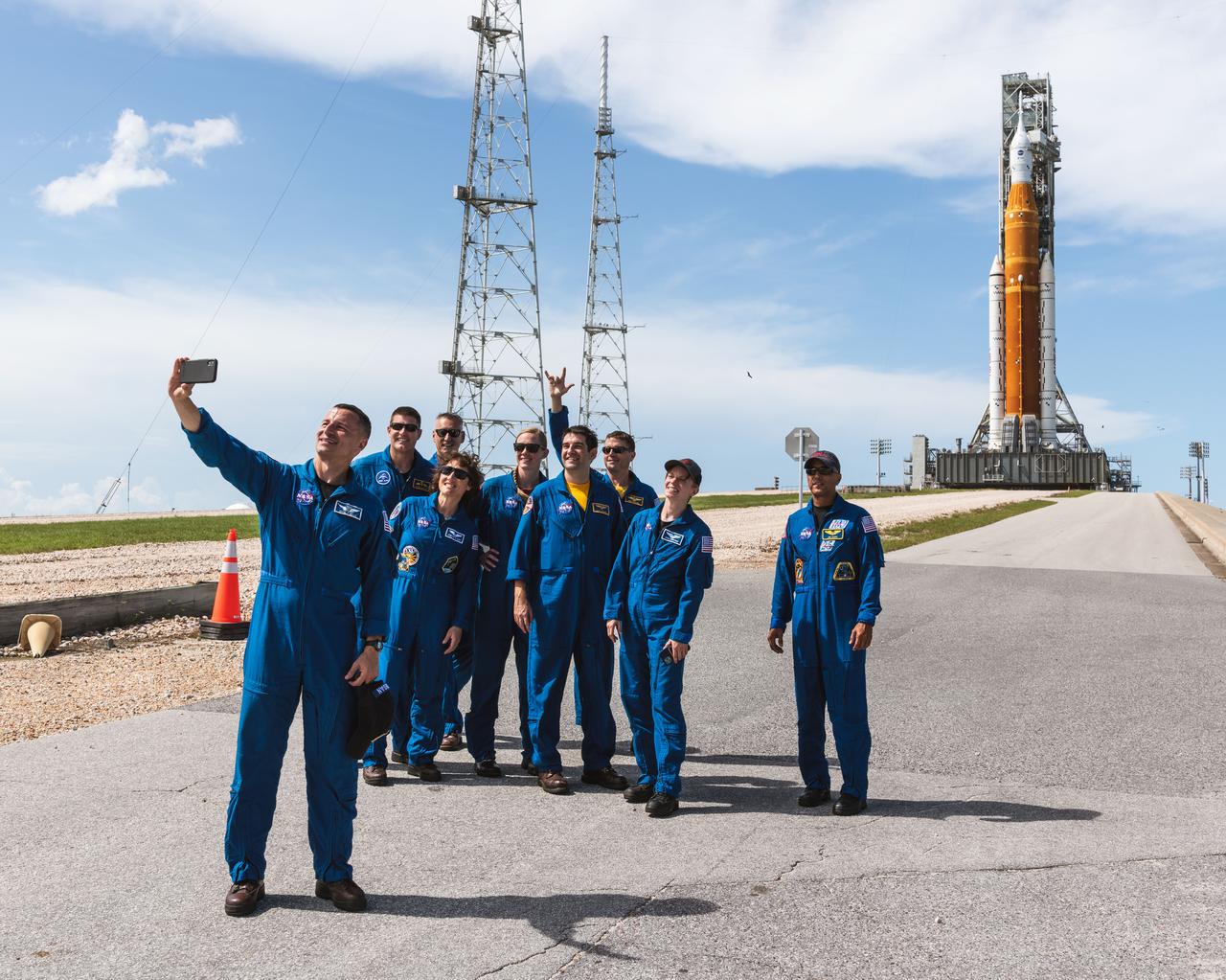
Astronauts and astronaut candidates pose for a photo at the Launch Pad 39B after arriving in their T-38 jets in support of Artemis I launch operations at NASA's Kennedy Space Center in Florida. Photographed: NASA Astronauts Reid Wiseman, Christina Koch, Drew Morgan , Zena Cardman, Joe Acaba, NASA Astronaut Candidates Nicole Ayers, Jack Hathaway, Canadian Space Agency Astronaut Jeremy Hansen, and NASA Pilot Chris Condon, with the Space Launch System on Launch Pad 39B. Credit: NASA/Josh Valcarcel

S90-27594 (November 1989) --- Manley L. "Sonny" Carter Jr., STS-33 mission specialist, wearing a Launch and Entry Suit (LES), poses in front of the space shuttle Discovery, Orbiter Vehicle (OV) 103 at the Kennedy Space Center (KSC) Launch Complex Pad 39B, at the 195 feet level elevator entrance at Pad 39B. Visible in the background is the catwalk to OV-103's side hatch and the Atlantic Ocean. Note: Carter died April 5, 1991 at age 43, in a civil aviation accident.
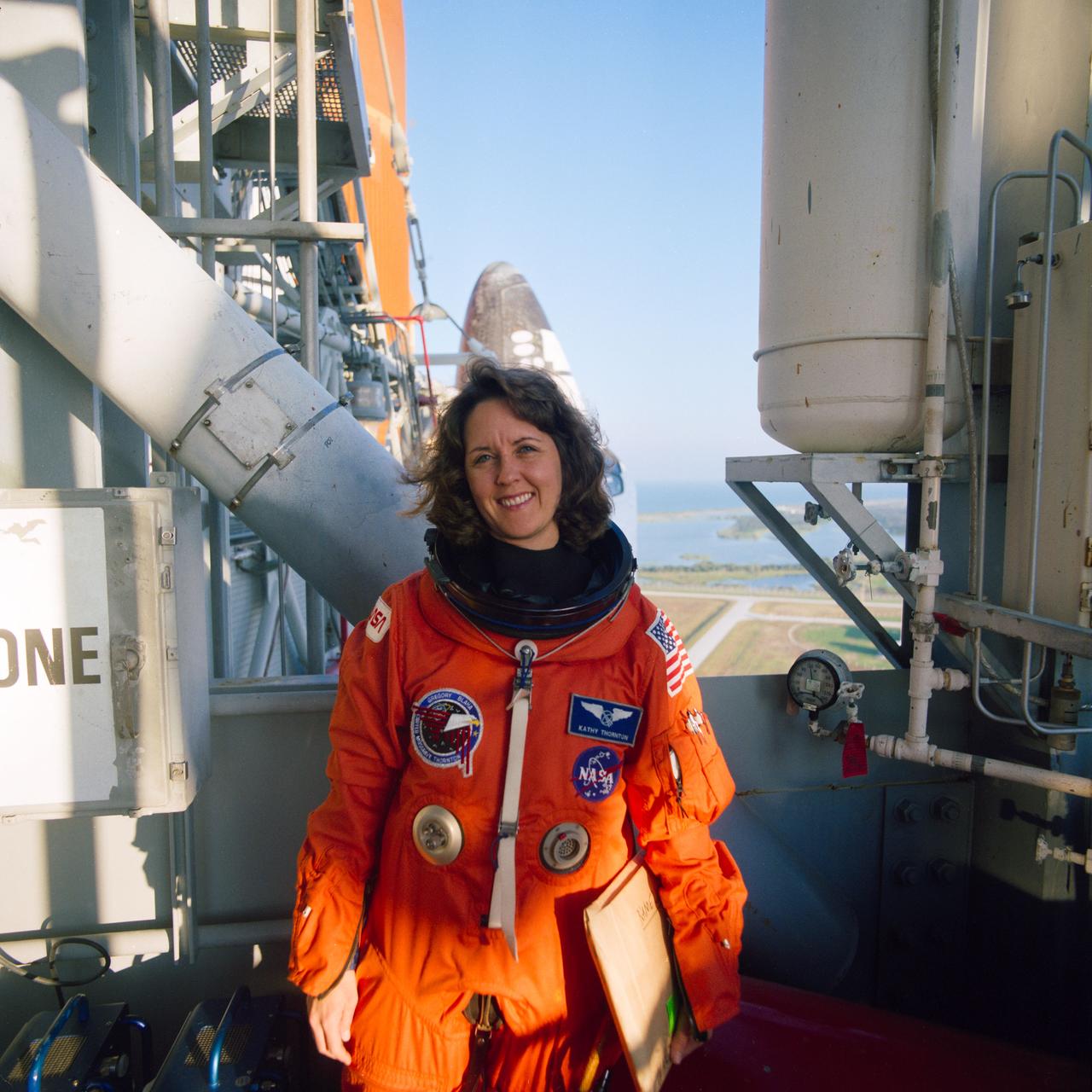
STS-33 Mission Specialist (MS) Kathryn C. Thornton, wearing launch and entry suit (LES) and holding file folder, poses in front of Discovery, Orbiter Vehicle (OV) 103, at the 195 ft level elevator entrance at Kennedy Space Center (KSC) Launch Complex (LC) Pad 39B. Visible in the background is the catwalk to OV-103's side hatch and the Atlantic Ocean.
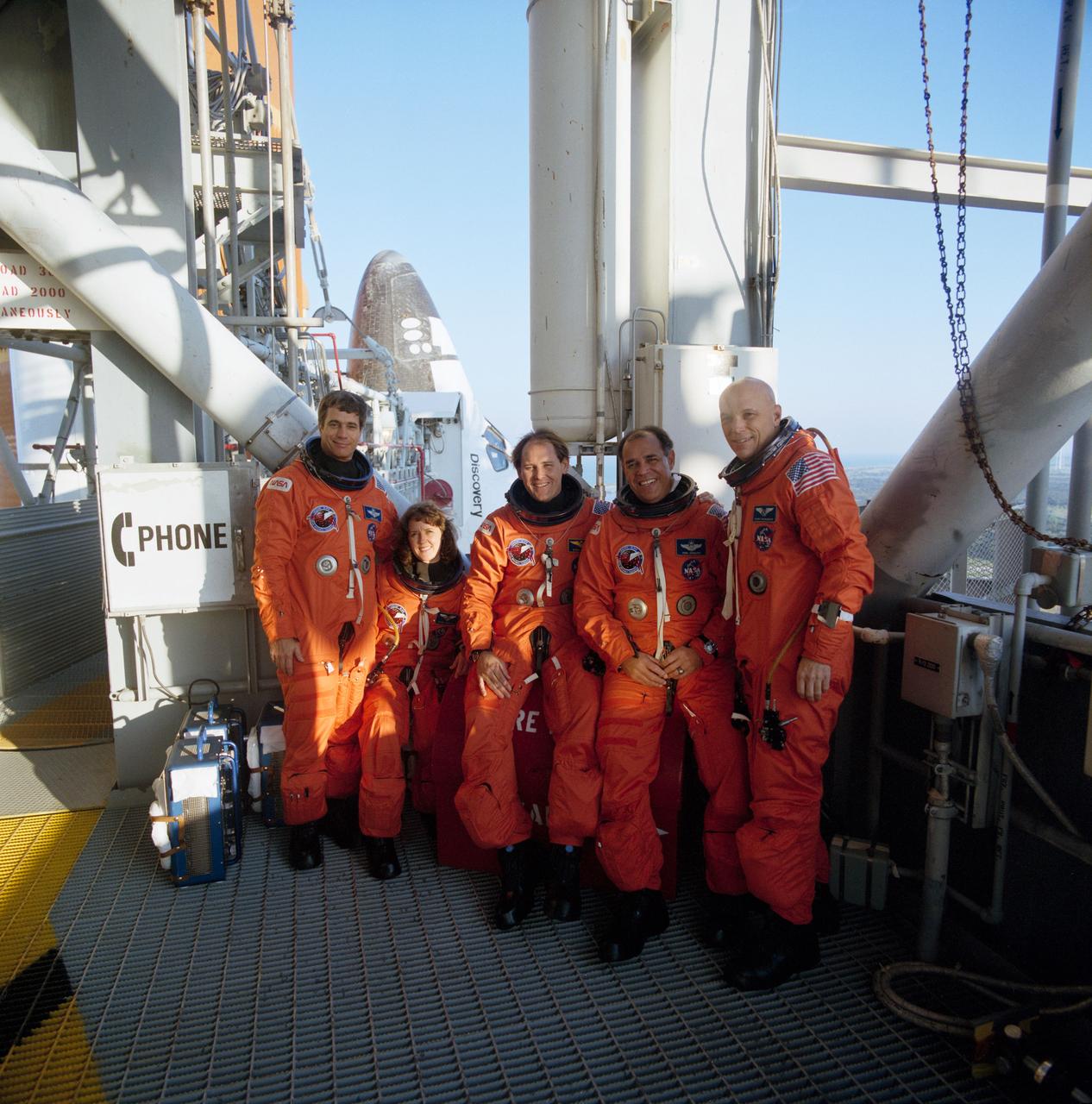
S90-27591 (23 Jan 1990) --- STS-33 crewmembers, wearing launch and entry suit (LES), take a break from training activities to pose for group portrait in front of Discovery, Orbiter Vehicle (OV) 103, at the 195 ft level elevator entrance at Kennedy Space Center (KSC) Launch Complex (LC) Pad 39B. Left to right are Pilot John E. Blaha, Mission Specialist (MS) Kathryn C. Thornton, MS Manley L. Carter, Jr, Commander Frederick D. Gregory, and MS F. Story Musgrave. Visible in the background is the catwalk to OV-103's side hatch.
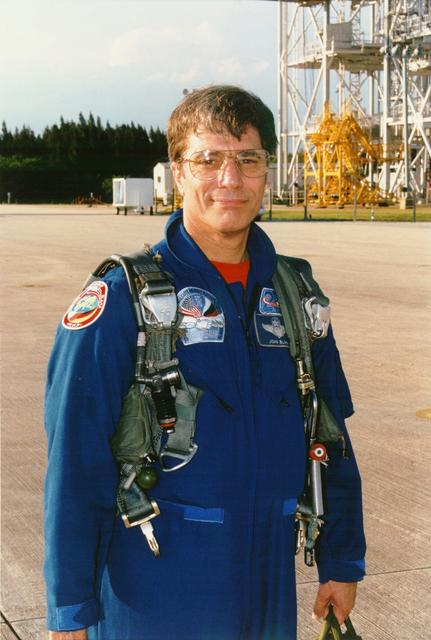
KENNEDY SPACE CENTER, FLA. - STS-79 Mission Specialist John E. Blaha arrives at KSC's Shuttle Landing Facility with five fellow astronauts, ready to participate in the Terminal Countdown Demonstration Test (TCDT). The TCDT is a dress rehearsal for launch for the flight crew and launch team. Over the next several days, the astronauts will take part in training exercises at the launch pad that will culminate in a simulated launch countdown. The Space Shuttle Atlantis is being prepared for liftoff around Sept. 12 on STS-79, the fourth docking between the U.S. Shuttle and Russian Space Station Mir. During the approximately nine-day flight, Blaha will change places with fellow spaceflight veteran Shannon Lucid, who is wrapping up a record-setting stay on Mir. Blaha will remain aboard the Station for about four months, returning to Earth in January 1997 withthe crew of Shuttle Mission STS-81.
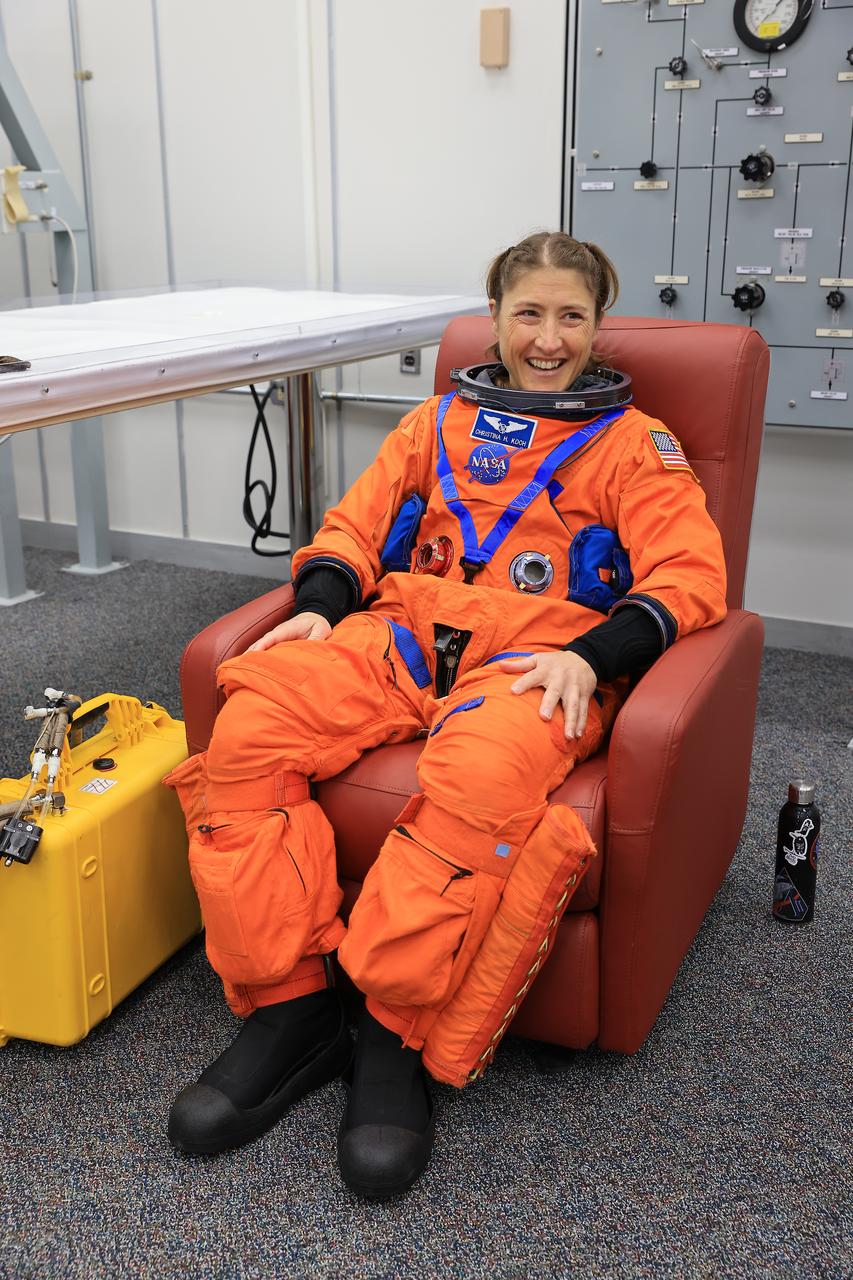
NASA astronaut Christina Koch, Artemis II mission specialist, smiles during suit-up operations inside the Neil A. Armstrong Operations and Checkout Building at NASA’s Kennedy Space Center in Florida on Monday, Aug. 11, 2025. During a two-day operation, the Artemis II team practiced night-run demonstrations of different launch day scenarios like suit-up operations, walk-out, and arriving at the launch pad for the Artemis II test flight. Through the Artemis campaign, NASA will send astronauts to explore the Moon for scientific discovery, economic benefits, and to build the foundation for the first crewed missions to Mars – for the benefit of all.
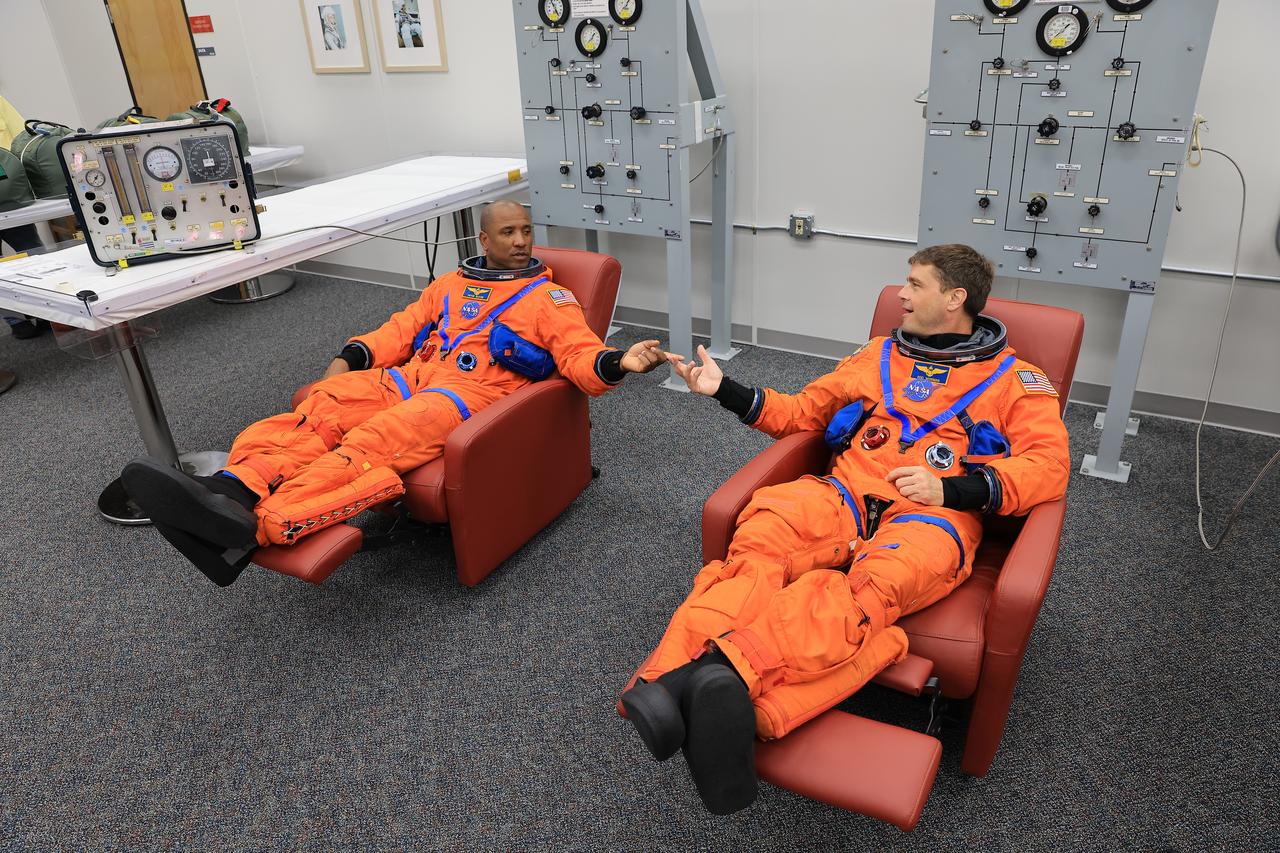
From left to right, NASA astronauts Victor Glover, Artemis II pilot and Reid Wiseman, Artemis II commander, conduct suit-up operations inside the Neil A. Armstrong Operations and Checkout Building at NASA’s Kennedy Space Center in Florida on Monday, Aug. 11, 2025. During a two-day operation, the Artemis II team practiced night-run demonstrations of different launch day scenarios like suit-up operations, walk-out, and arriving at the launch pad for the Artemis II test flight. Through the Artemis campaign, NASA will send astronauts to explore the Moon for scientific discovery, economic benefits, and to build the foundation for the first crewed missions to Mars – for the benefit of all.
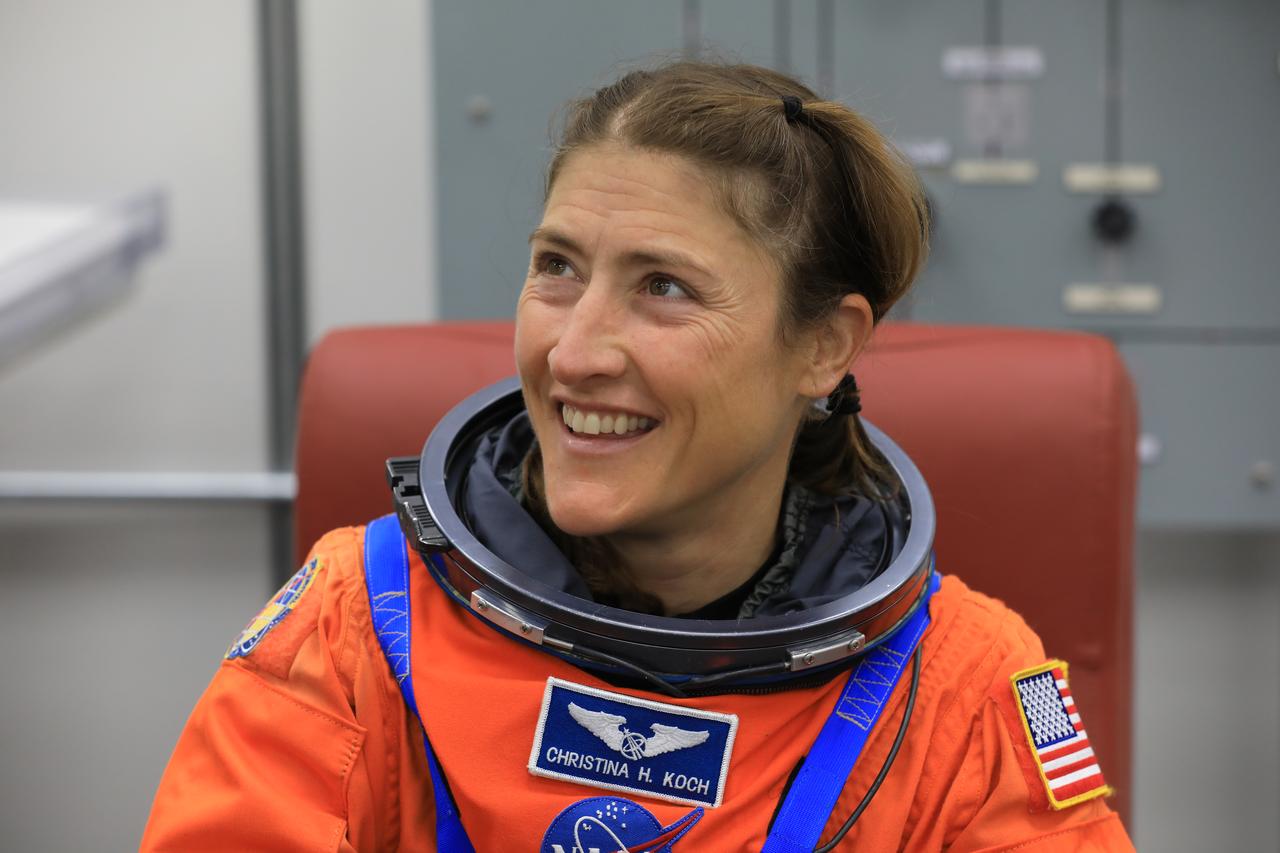
NASA astronaut Christina Koch, Artemis II mission specialist, smiles during suit-up operations inside the Neil A. Armstrong Operations and Checkout Building at NASA’s Kennedy Space Center in Florida on Monday, Aug. 11, 2025. During a two-day operation, the Artemis II team practiced night-run demonstrations of different launch day scenarios like suit-up operations, walk-out, and arriving at the launch pad for the Artemis II test flight. Through the Artemis campaign, NASA will send astronauts to explore the Moon for scientific discovery, economic benefits, and to build the foundation for the first crewed missions to Mars – for the benefit of all.
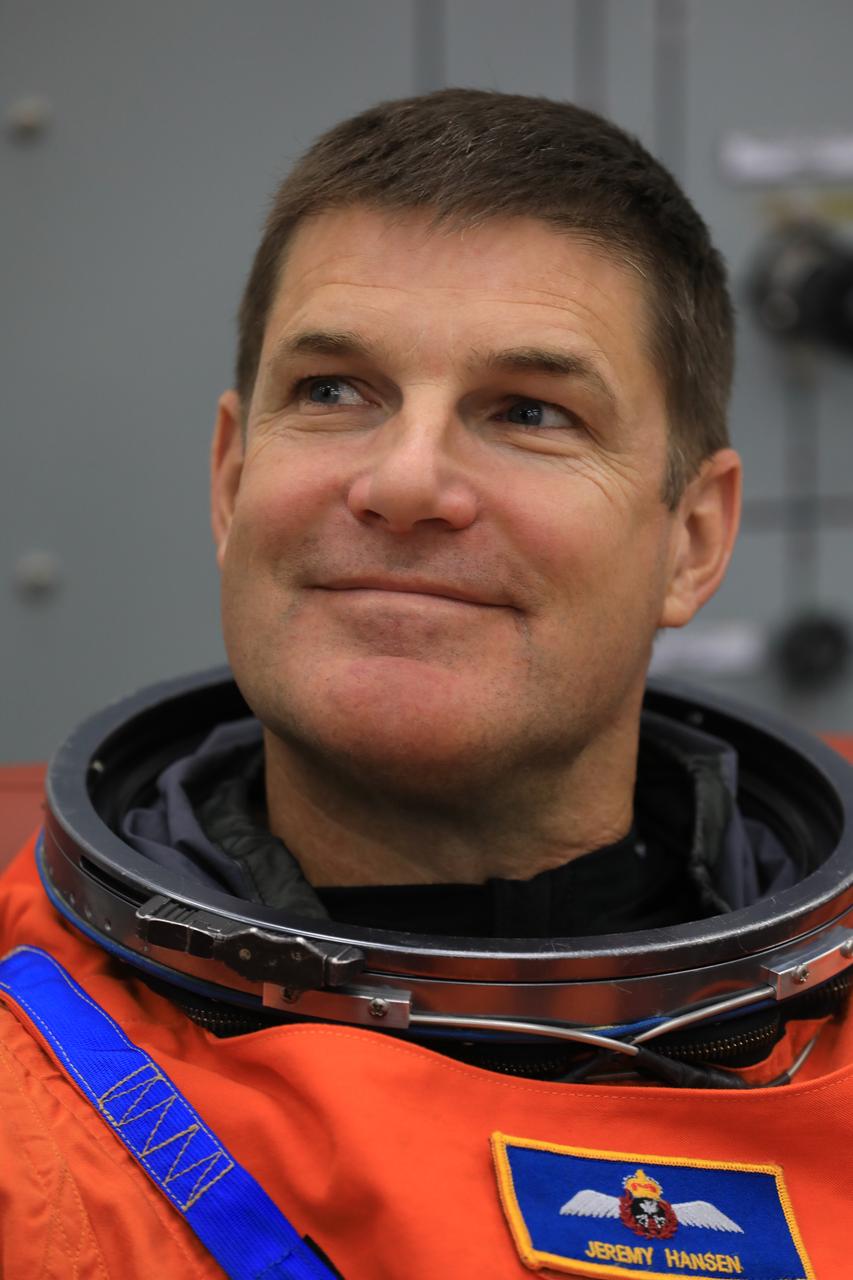
CSA (Canadian Space Agency) astronaut Jeremy Hansen, Artemis II mission specialist, smiles during suit-up operations inside the Neil A. Armstrong Operations and Checkout Building at NASA’s Kennedy Space Center in Florida on Monday, Aug. 11, 2025. During a two-day operation, the Artemis II team practiced night-run demonstrations of different launch day scenarios like suit-up operations, walk-out, and arriving at the launch pad for the Artemis II test flight. Through the Artemis campaign, NASA will send astronauts to explore the Moon for scientific discovery, economic benefits, and to build the foundation for the first crewed missions to Mars – for the benefit of all.
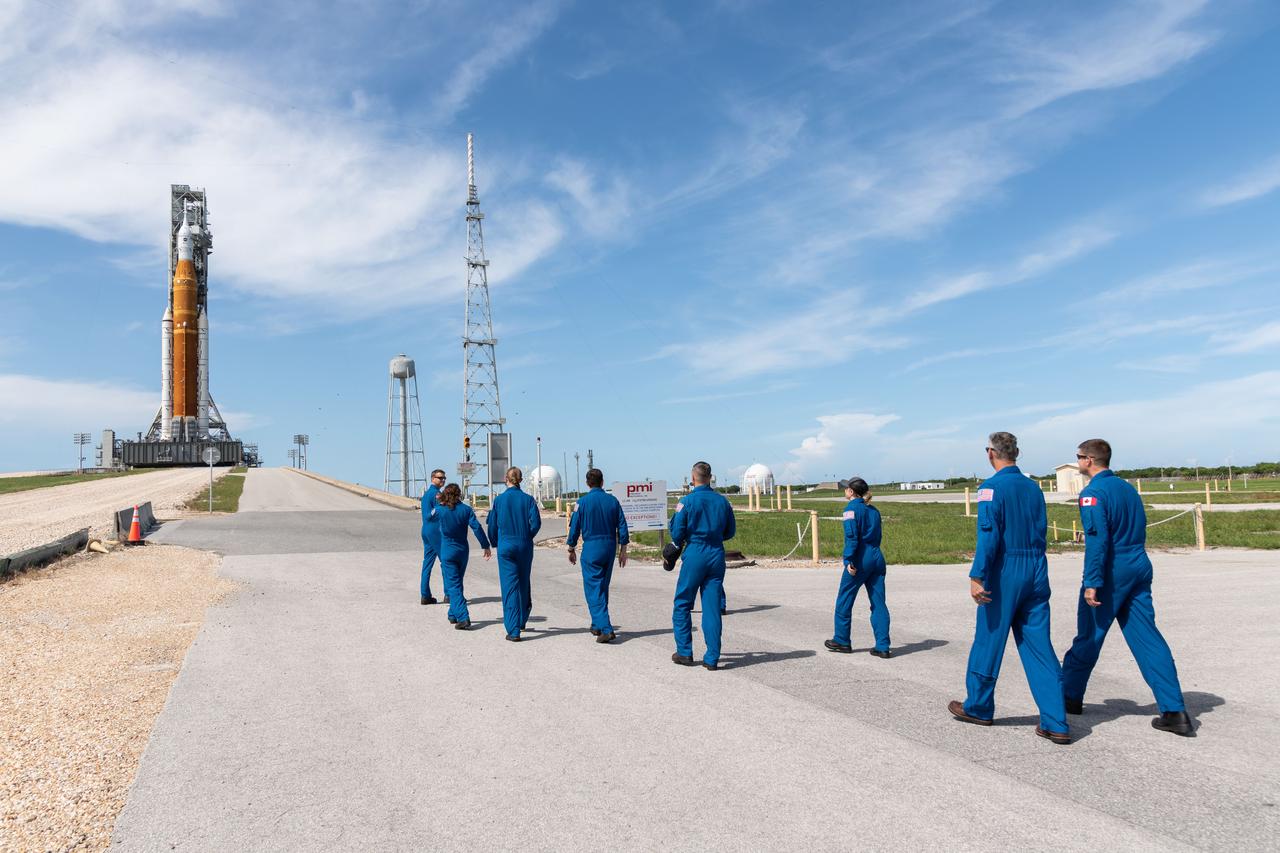
Astronauts and astronaut candidates walk towards the Space Launch System rocket and Orion spacecraft at Launch Pad 39B after arriving in their T-38 jets in support of Artemis I launch operations at NASA's Kennedy Space Center in Florida. Photographed: NASA Astronauts Reid Wiseman, Christina Koch, Drew Morgan , Zena Cardman, NASA Astronaut Candidates Nicole Ayers, Jack Hathaway, Canadian Space Agency Astronaut Jeremy Hansen, and NASA Pilot Chris Condon, with the Space Launch System on Launch Pad 39B. Credit: NASA/Josh Valcarcel
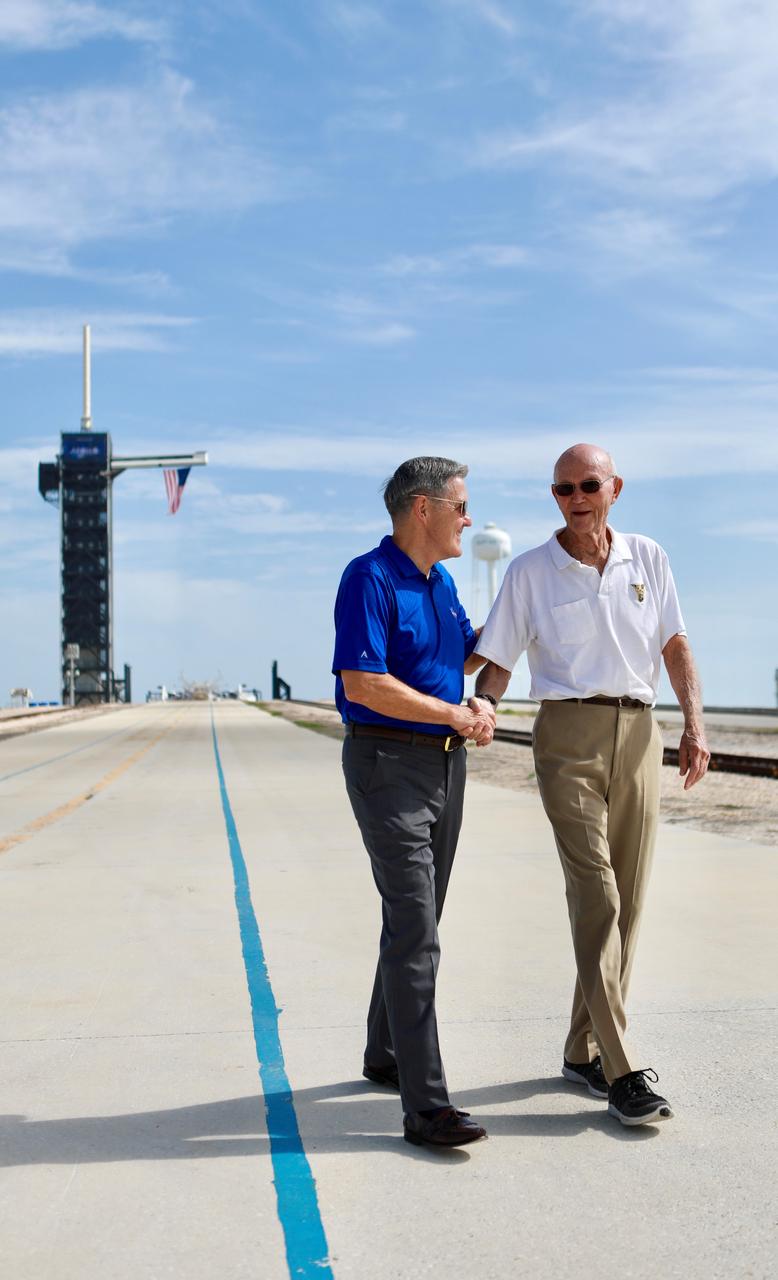
On the 50th anniversary of the Apollo 11 launch, July 16, 2019, astronaut Michael Collins, right, speaks to Kennedy Space Center Director Bob Cabana at Launch Complex 39A, about the moments leading up to launch at 9:32 a.m. on July 16, 1969, and what it was like to be the first to land on the Moon.
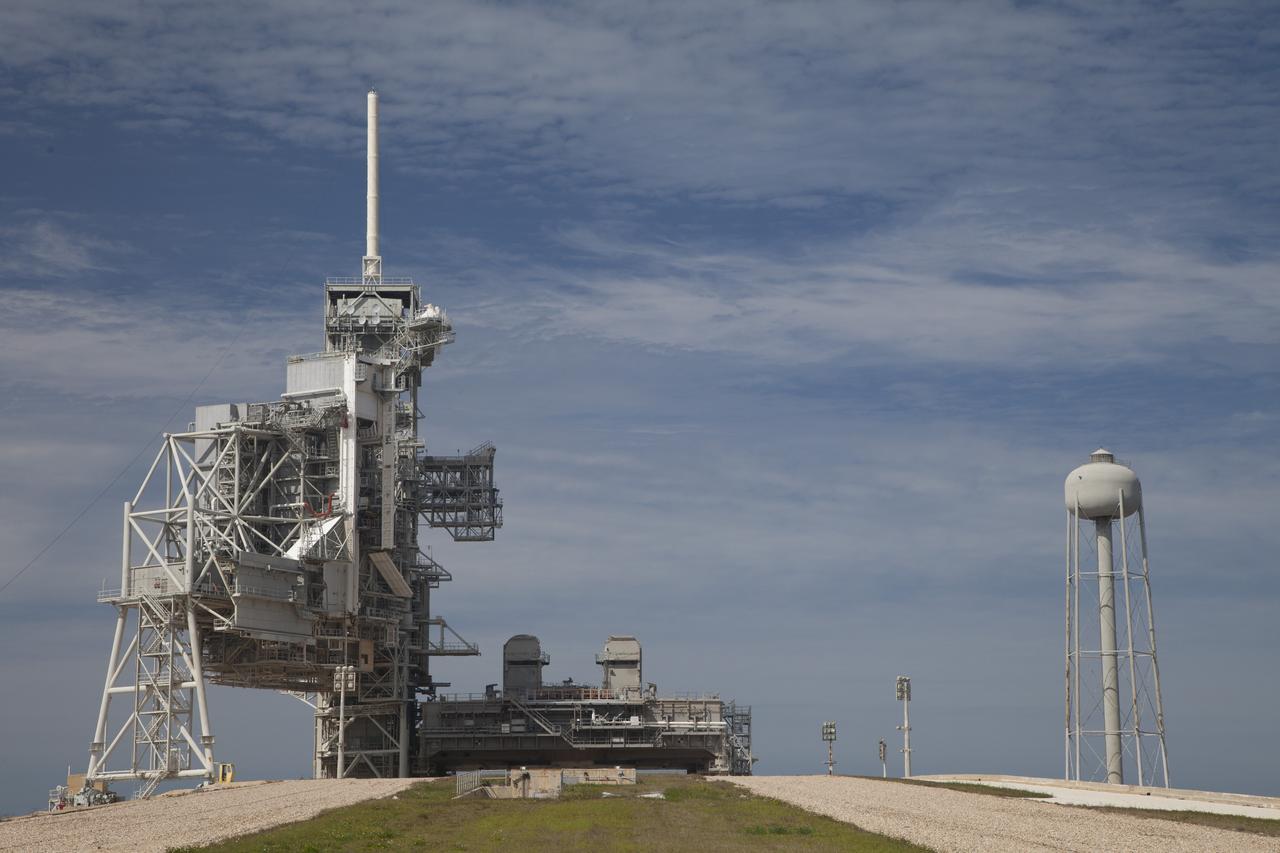
CAPE CANAVERAL, Fla. -- Launch pad 39A looks much like it did after the liftoff of STS-135, the final space shuttle mission, on July 8, 2011. The mobile launcher platform remains in place next to the fixed service structure and rotating service structure. Located at NASA's Kennedy Space Center in Florida, pad 39A was originally built for the Apollo/Saturn V rockets that launched American astronauts on their historic journeys to the moon and later modified to support the 30-year shuttle program. Both launch pad 39A and 39B pad 39A was originally built for the Apollo/Saturn V rockets that launched American astronauts on their historic journeys to the moon and later modified to support the 30-year shuttle program. To learn more about Launch Pad 39A visit: http://www.nasa.gov/mission_pages/shuttle/launch/launch-complex39-toc.html Photo credit: NASA/Dan Casper
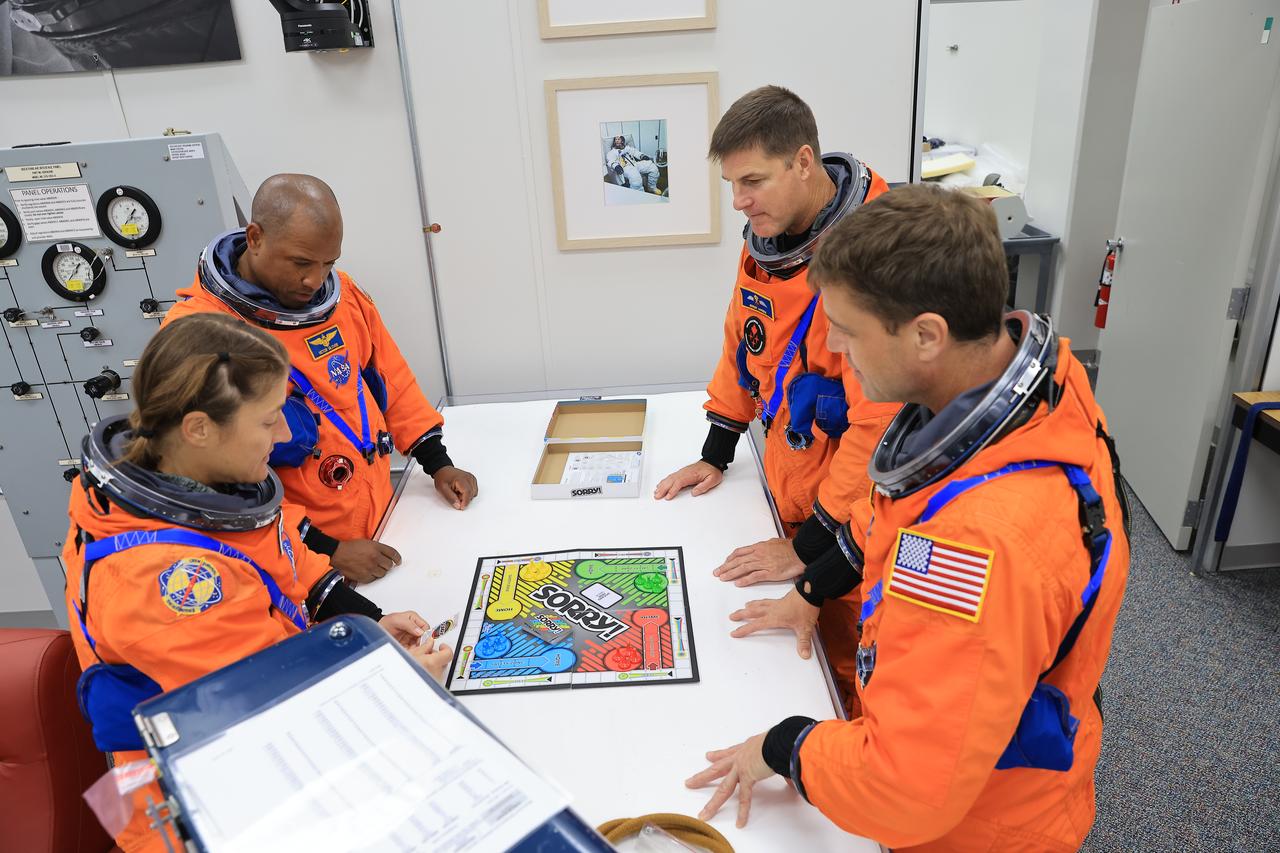
From left to right, NASA astronauts Christina Koch, Artemis II mission specialist; Reid Wiseman, Artemis II commander; Victor Glover, Artemis II pilot; and Artemis II mission specialist and CSA (Canadian Space Agency) astronaut Jeremy Hansen play the board game “Sorry” inside the Neil A. Armstrong Operations and Checkout Building at NASA’s Kennedy Space Center in Florida on Monday, Aug. 11, 2025. During launch day, NASA flight crews have a tradition of playing a board or card game before leaving the crew quarters ahead of launch until the commander loses so that the commander burns off all his or her bad luck before the flight. During a two-day operation, the Artemis II team practiced night-run demonstrations of different launch day scenarios like suit-up operations, walk-out, and arriving at the launch pad for the Artemis II test flight.
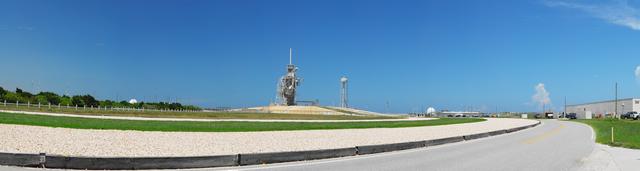
CAPE CANAVERAL, Fla. -- As NASA's Kennedy Space Center in Florida, Launch Pad 39A is seen from the Saturn Causeway. On launch day, space shuttle astronauts ride to their launch pad and spacecraft in NASA's silver Astrovan. Along the way, they pass the Vehicle Assembly Building, Launch Control Center and Press Site. Adjacent to the road is the crawlerway, which is the route shuttles take to Kennedy's Launch Complex 39 launch pads on top of a crawler-transporter. Photo credit: NASA/Frankie Martin
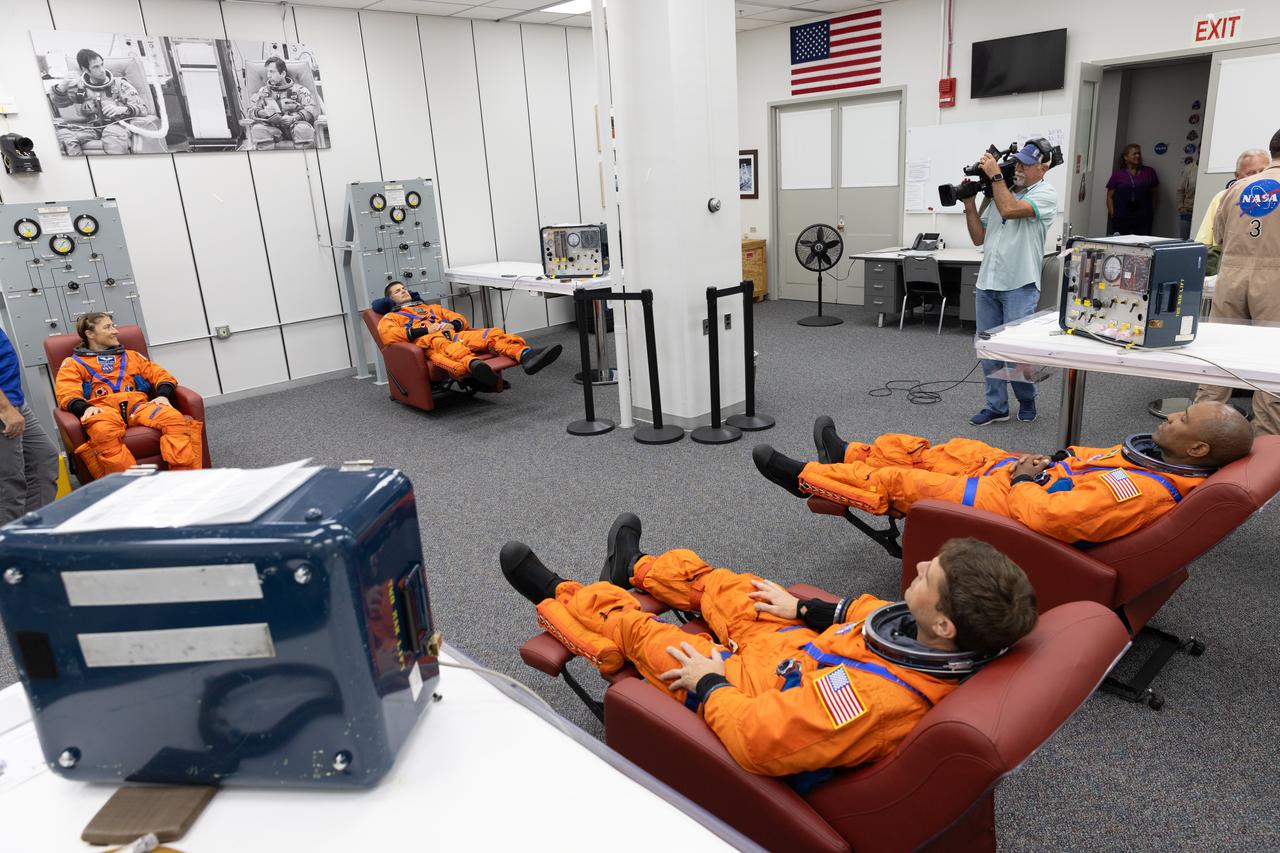
From left to right, NASA astronauts Christina Koch, Artemis II mission specialist; Reid Wiseman, Artemis II commander; Victor Glover, Artemis II pilot; and Artemis II mission specialist and CSA (Canadian Space Agency) astronaut Jeremy Hansen conduct suit-up operations inside the Neil A. Armstrong Operations and Checkout Building at NASA’s Kennedy Space Center in Florida on Monday, Aug. 11, 2025. During a two-day operation, the Artemis II team practiced night-run demonstrations of different launch day scenarios like suit-up operations, walk-out, and arriving at the launch pad for the Artemis II test flight. Through the Artemis campaign, NASA will send astronauts to explore the Moon for scientific discovery, economic benefits, and to build the foundation for the first crewed missions to Mars – for the benefit of all.
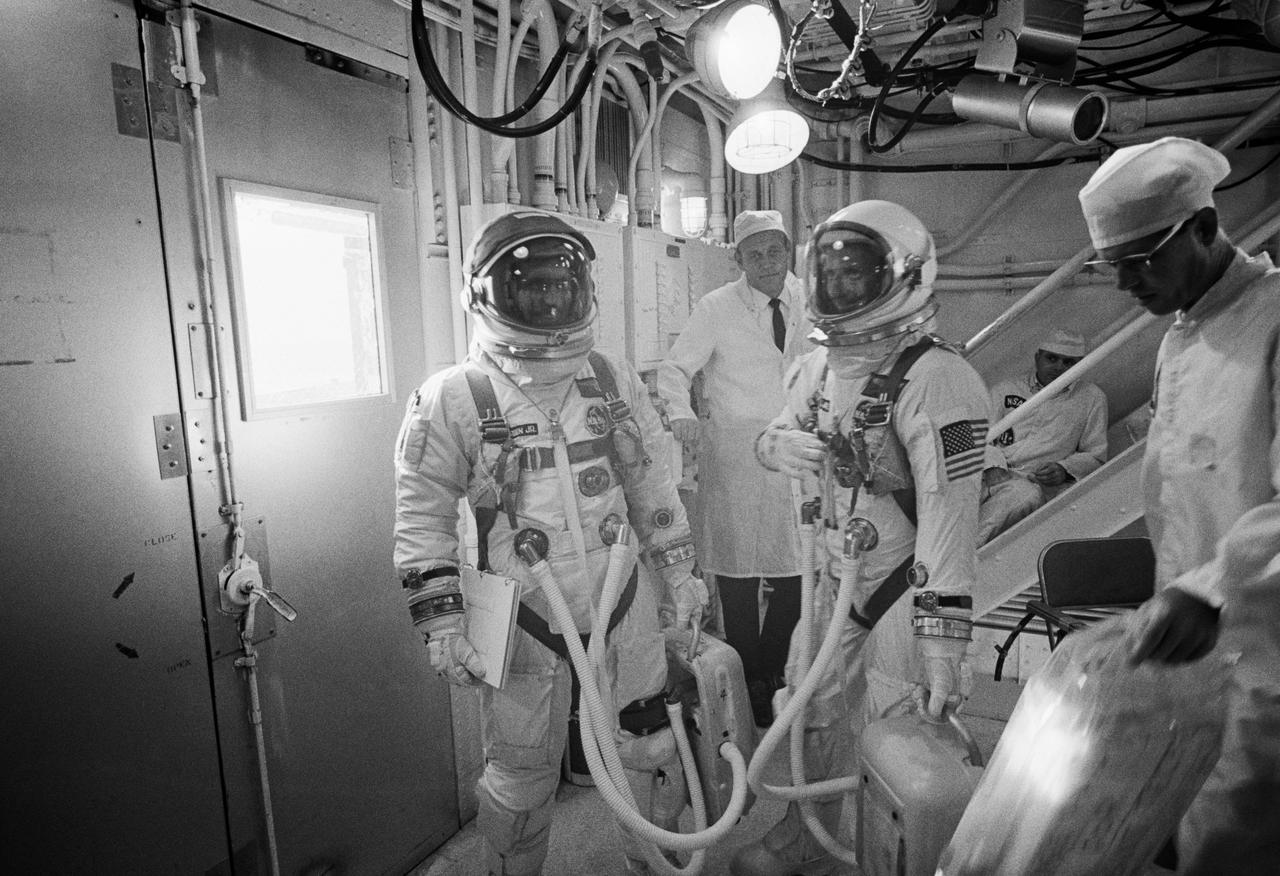
S66-57967 (10 Sept. 1966) --- Gemini-11 prime crew, astronauts Charles Conrad Jr. (right), command pilot, and Richard F. Gordon Jr. (left), pilot, prepare to enter the Gemini-11 spacecraft in the White Room atop Pad 19. Photo credit: NASA
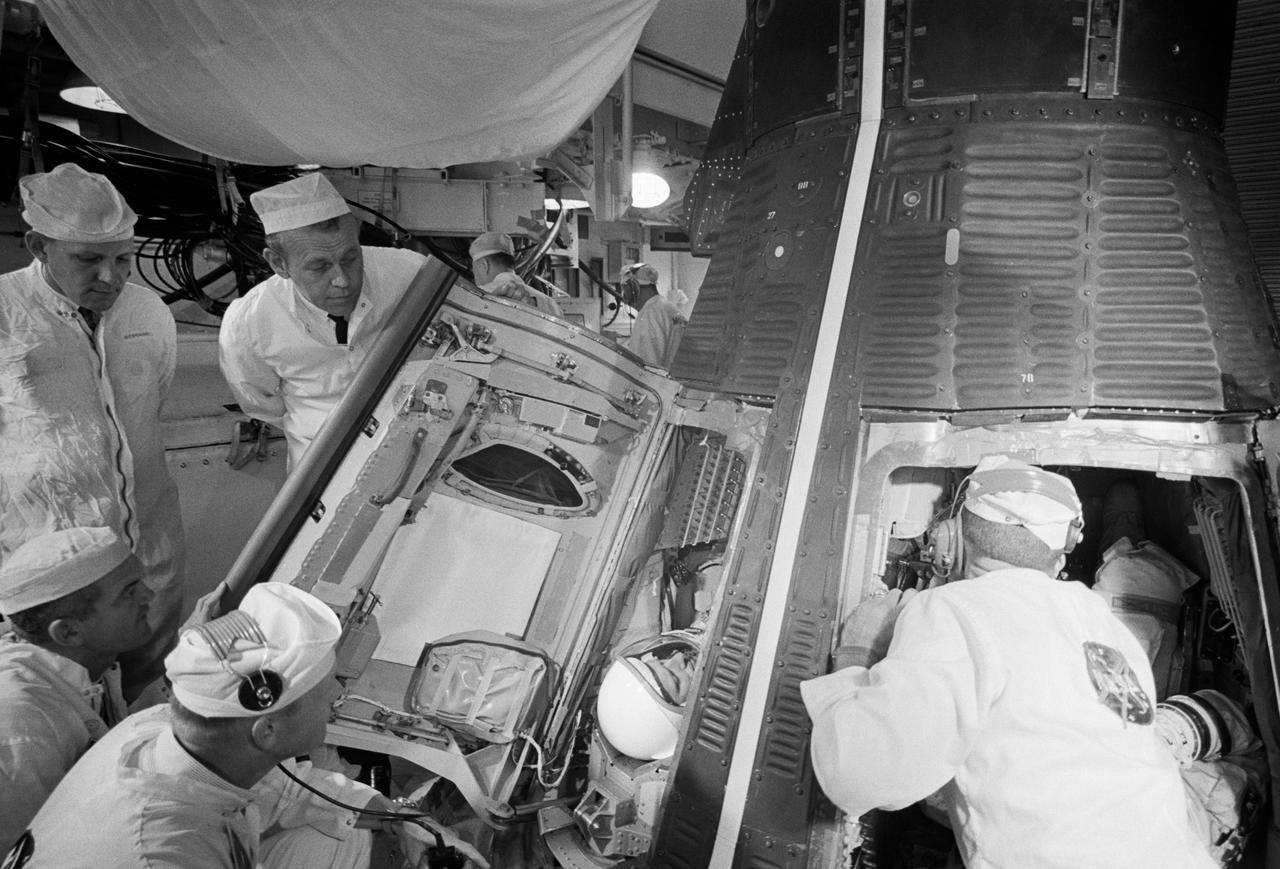
S66-56177 (10 Sept. 1966) --- Technicians in the White Room atop Pad 19 prepare to close hatches on the Gemini-11 spacecraft during prelaunch countdown. Inside the spacecraft are astronauts Charles Conrad Jr., command pilot, and Richard F. Gordon Jr., pilot. Photo credit: NASA
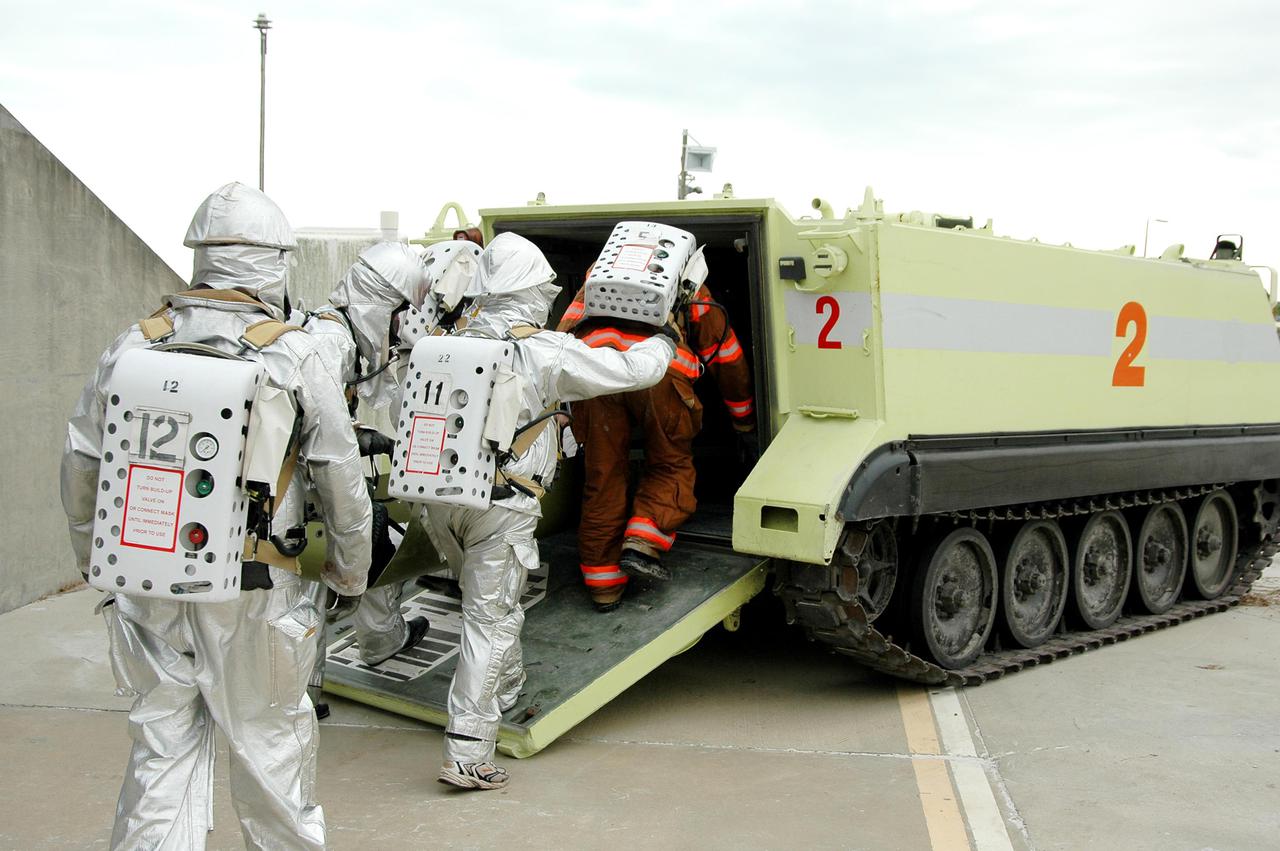
KENNEDY SPACE CENTER, FLA. - During a simulated launch countdown_emergency simulation on Launch Pad 39A, the rescue team helps astronaut-suited workers climb into an M-113 armored personnel carrier for transport away from the pad. The four-hour exercise simulated normal launch countdown operations, with the added challenge of a fictitious event causing an evacuation of the vehicle and launch pad. It tested the team’s rescue approaches on the Fixed Service Structure, slidewire basket evacuation, triage care and transportation of injured personnel to hospitals, as well as communications and coordination.