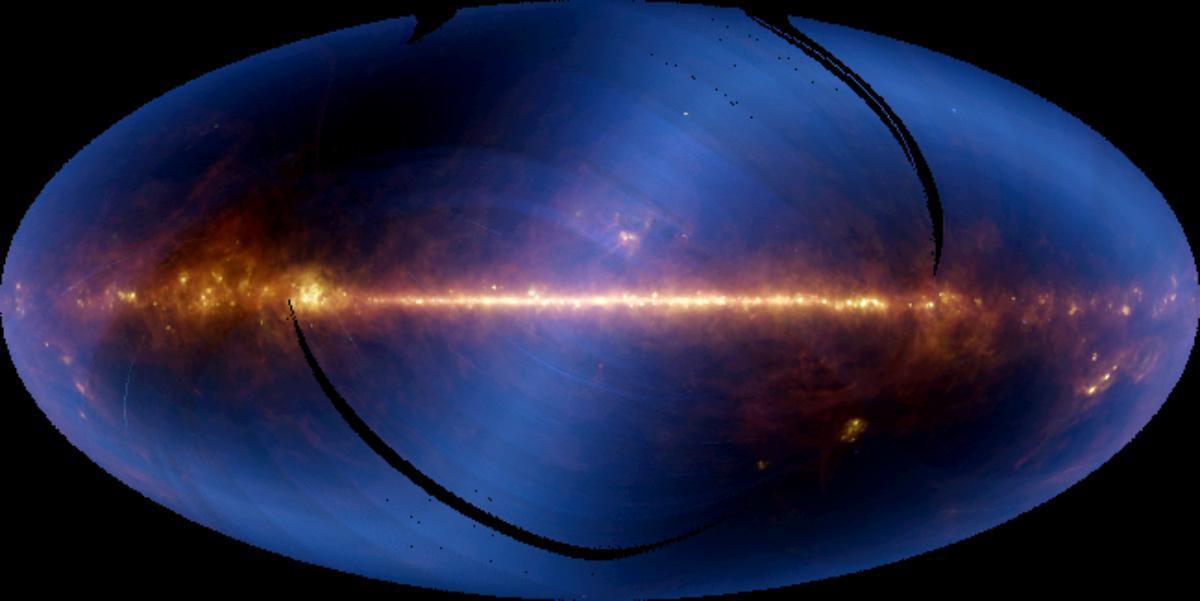
Nearly the entire sky, as seen in infrared wavelengths and projected at one-half degree resolution, is shown in this image, assembled from six months of data from the NASA Infrared Astronomical Satellite, or IRAS.
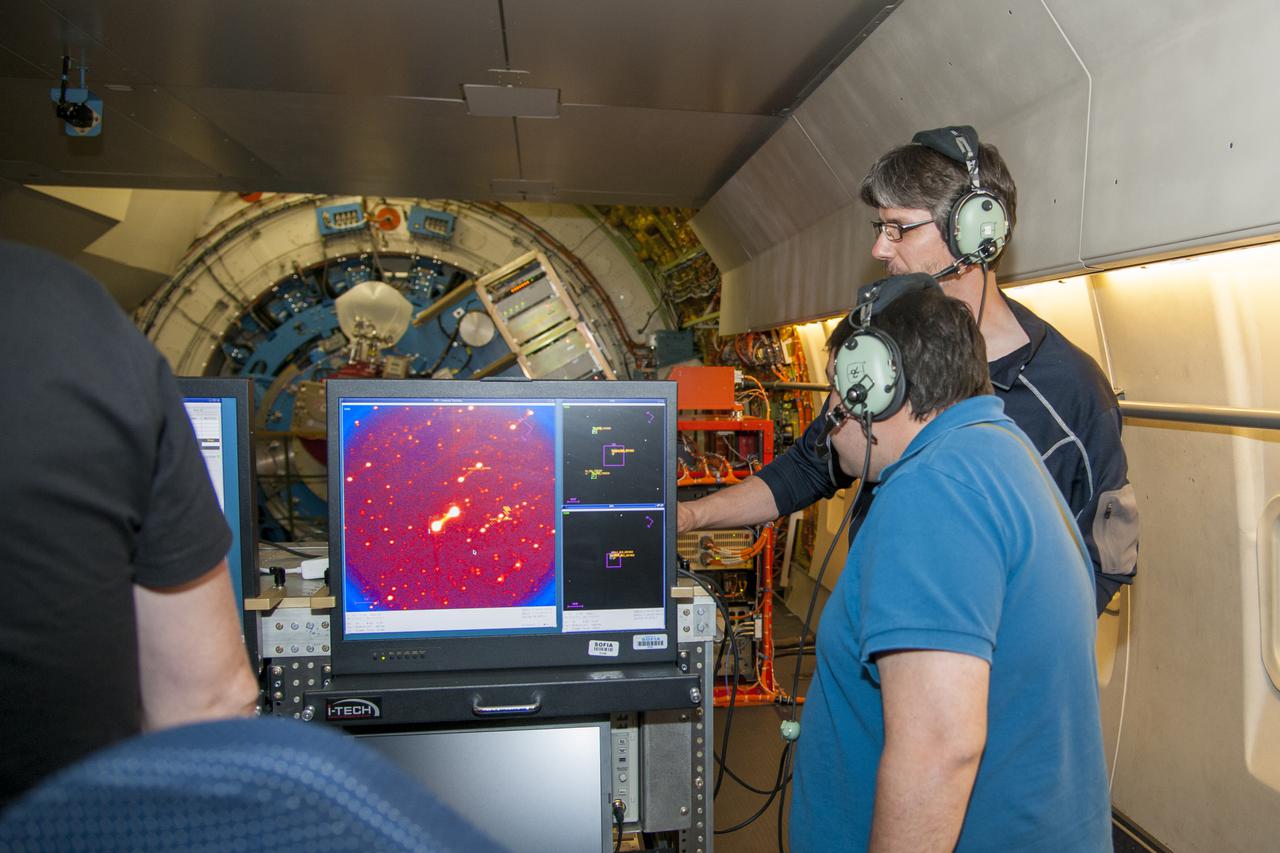
Astronomers smile while looking at data from SOFIA’s telescope.
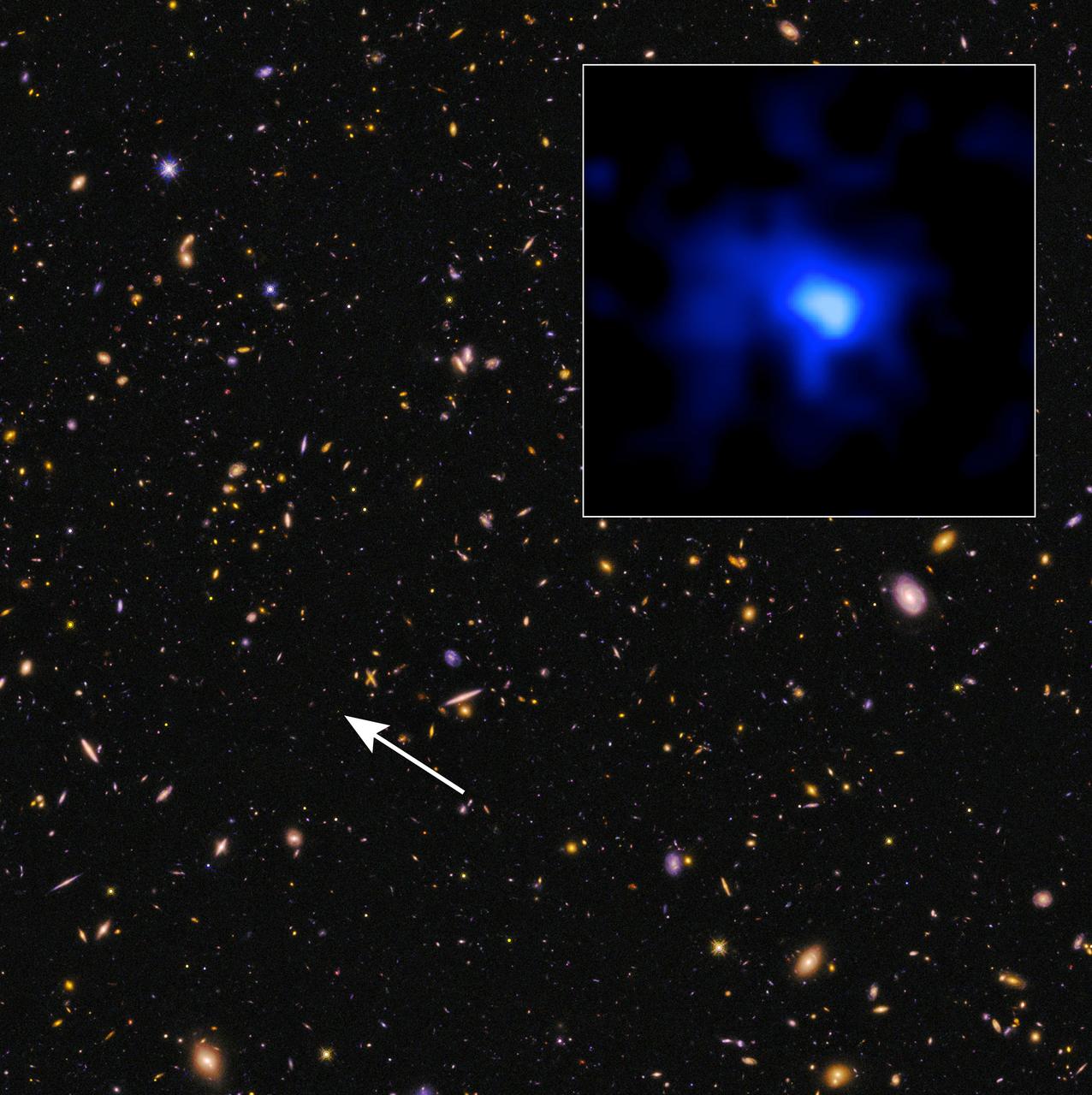
This is a Hubble Space Telescope image of the farthest spectroscopically confirmed galaxy observed to date (inset). It was identified in this Hubble image of a field of galaxies in the CANDELS survey (Cosmic Assembly Near-infrared Deep Extragalactic Legacy Survey). NASA’s Spitzer Space Telescope also observed the unique galaxy. The W. M. Keck Observatory was used to obtain a spectroscopic redshift (z=7.7), extending the previous redshift record. Measurements of the stretching of light, or redshift, give the most reliable distances to other galaxies. This source is thus currently the most distant confirmed galaxy known, and it appears to also be one of the brightest and most massive sources at that time. The galaxy existed over 13 billion years ago. The near-infrared light image of the galaxy (inset) has been colored blue as suggestive of its young, and hence very blue, stars. The CANDELS field is a combination of visible-light and near-infrared exposures. Read more: <a href="http://www.nasa.gov/feature/goddard/astronomers-set-a-new-galaxy-distance-record" rel="nofollow">www.nasa.gov/feature/goddard/astronomers-set-a-new-galaxy...</a> Credits: NASA, ESA, P. Oesch (Yale U.) <b><a href="http://www.nasa.gov/audience/formedia/features/MP_Photo_Guidelines.html" rel="nofollow">NASA image use policy.</a></b> <b><a href="http://www.nasa.gov/centers/goddard/home/index.html" rel="nofollow">NASA Goddard Space Flight Center</a></b> enables NASA’s mission through four scientific endeavors: Earth Science, Heliophysics, Solar System Exploration, and Astrophysics. Goddard plays a leading role in NASA’s accomplishments by contributing compelling scientific knowledge to advance the Agency’s mission. <b>Follow us on <a href="http://twitter.com/NASAGoddardPix" rel="nofollow">Twitter</a></b> <b>Like us on <a href="http://www.facebook.com/pages/Greenbelt-MD/NASA-Goddard/395013845897?ref=tsd" rel="nofollow">Facebook</a></b> <b>Find us on <a href="http://instagrid.me/nasagoddard/?vm=grid" rel="nofollow">Instagram</a></b>
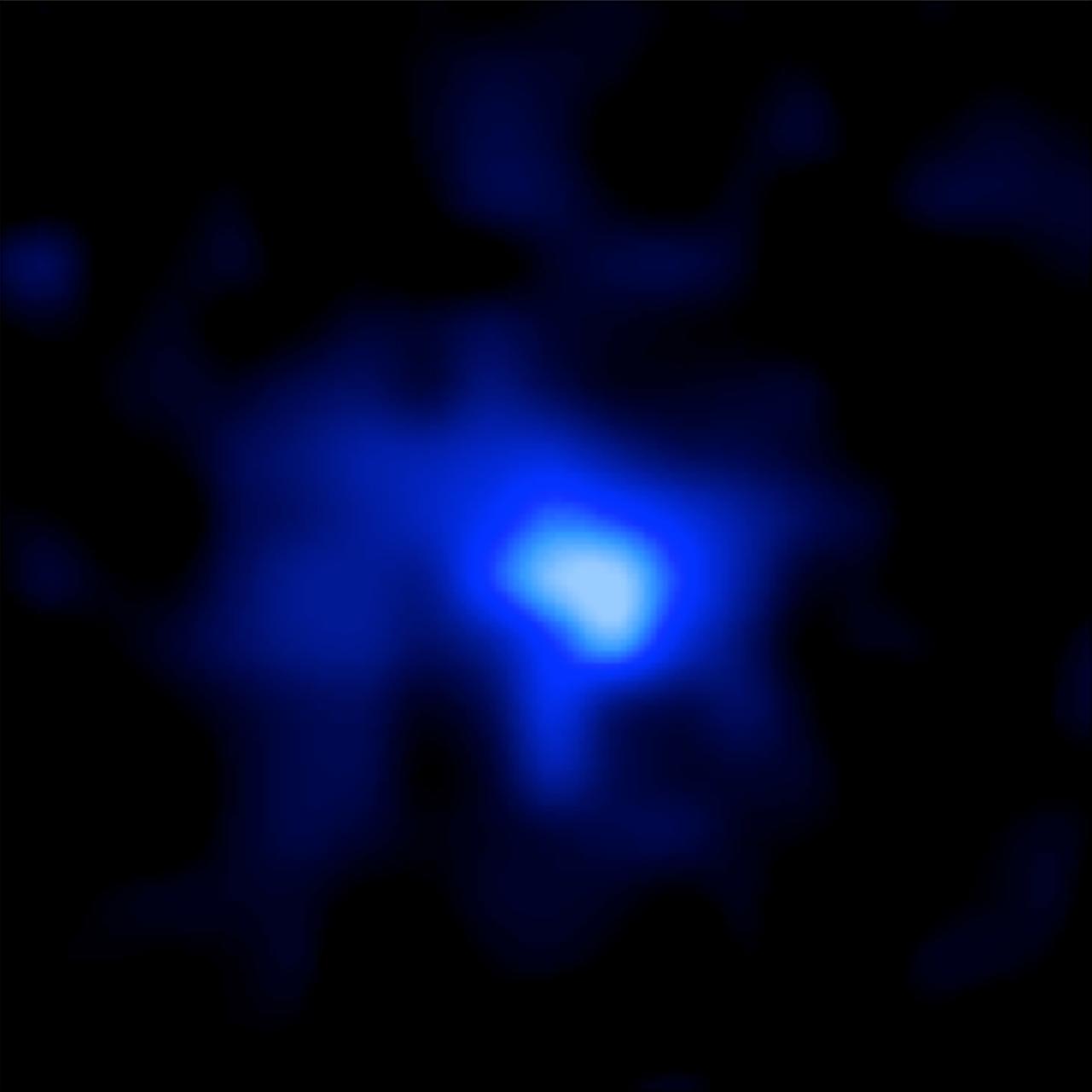
This is a Hubble Space Telescope image of the farthest spectroscopically confirmed galaxy observed to date (inset). It was identified in this Hubble image of a field of galaxies in the CANDELS survey (Cosmic Assembly Near-infrared Deep Extragalactic Legacy Survey). NASA’s Spitzer Space Telescope also observed the unique galaxy. The W. M. Keck Observatory was used to obtain a spectroscopic redshift (z=7.7), extending the previous redshift record. Measurements of the stretching of light, or redshift, give the most reliable distances to other galaxies. This source is thus currently the most distant confirmed galaxy known, and it appears to also be one of the brightest and most massive sources at that time. The galaxy existed over 13 billion years ago. The near-infrared light image of the galaxy (inset) has been colored blue as suggestive of its young, and hence very blue, stars. The CANDELS field is a combination of visible-light and near-infrared exposures. Read more: <a href="http://www.nasa.gov/feature/goddard/astronomers-set-a-new-galaxy-distance-record" rel="nofollow">www.nasa.gov/feature/goddard/astronomers-set-a-new-galaxy...</a> Credits: NASA, ESA, P. Oesch (Yale U.) <b><a href="http://www.nasa.gov/audience/formedia/features/MP_Photo_Guidelines.html" rel="nofollow">NASA image use policy.</a></b> <b><a href="http://www.nasa.gov/centers/goddard/home/index.html" rel="nofollow">NASA Goddard Space Flight Center</a></b> enables NASA’s mission through four scientific endeavors: Earth Science, Heliophysics, Solar System Exploration, and Astrophysics. Goddard plays a leading role in NASA’s accomplishments by contributing compelling scientific knowledge to advance the Agency’s mission. <b>Follow us on <a href="http://twitter.com/NASAGoddardPix" rel="nofollow">Twitter</a></b> <b>Like us on <a href="http://www.facebook.com/pages/Greenbelt-MD/NASA-Goddard/395013845897?ref=tsd" rel="nofollow">Facebook</a></b> <b>Find us on <a href="http://instagrid.me/nasagoddard/?vm=grid" rel="nofollow">Instagram</a></b>

Nearly all black holes come in one of two sizes: stellar mass black holes that weigh up to a few dozen times the mass of our sun or supermassive black holes ranging from a million to several billion times the sun’s mass. Astronomers believe that medium-sized black holes between these two extremes exist, but evidence has been hard to come by, with roughly a half-dozen candidates described so far. A team led by astronomers at the University of Maryland and NASA’s Goddard Space Flight Center has found evidence for a new intermediate-mass black hole about 5,000 times the mass of the sun. The discovery adds one more candidate to the list of potential medium-sized black holes, while strengthening the case that these objects do exist. The team reported its findings in the September 21, 2015 online edition of Astrophysical Journal Letters. This image, taken with the European Southern Observatory’s Very Large Telescope, shows the central region of galaxy NGC1313. This galaxy is home to the ultraluminous X-ray source NCG1313X-1, which astronomers have now determined to be an intermediate-mass black hole candidate. NGC1313 is 50,000 light-years across and lies about 14 million light-years from the Milky Way in the southern constellation Reticulum. Read more: <a href="http://www.nasa.gov/feature/goddard/astronomers-identify-a-new-mid-size-black-hole" rel="nofollow">www.nasa.gov/feature/goddard/astronomers-identify-a-new-m...</a> Image credit: European Southern Observatory #nasagoddard #blackhole #space <b><a href="http://www.nasa.gov/audience/formedia/features/MP_Photo_Guidelines.html" rel="nofollow">NASA image use policy.</a></b> <b><a href="http://www.nasa.gov/centers/goddard/home/index.html" rel="nofollow">NASA Goddard Space Flight Center</a></b> enables NASA’s mission through four scientific endeavors: Earth Science, Heliophysics, Solar System Exploration, and Astrophysics. Goddard plays a leading role in NASA’s accomplishments by contributing compelling scientific knowledge to advance the Agency’s mission. <b>Follow us on <a href="http://twitter.com/NASAGoddardPix" rel="nofollow">Twitter</a></b> <b>Like us on <a href="http://www.facebook.com/pages/Greenbelt-MD/NASA-Goddard/395013845897?ref=tsd" rel="nofollow">Facebook</a></b> <b>Find us on <a href="http://instagrid.me/nasagoddard/?vm=grid" rel="nofollow">Instagram</a></b>
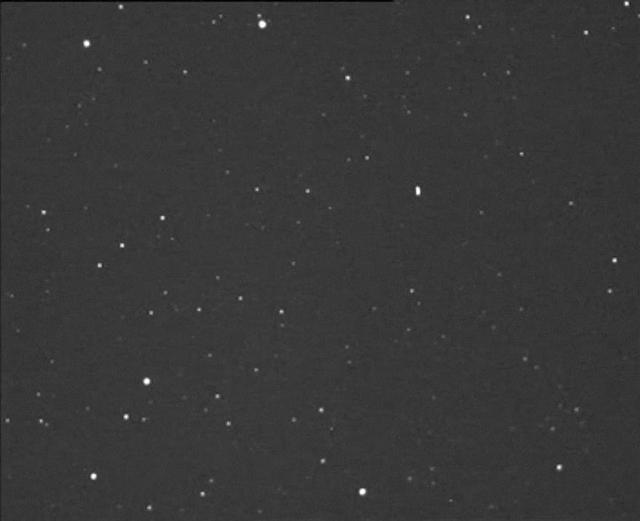
This set of images from the La Sagra Sky Survey, operated by the Astronomical Observatory of Mallorca in Spain, shows the passage of asteroid 2012 DA14 shortly after its closest, and safe, approach to Earth.
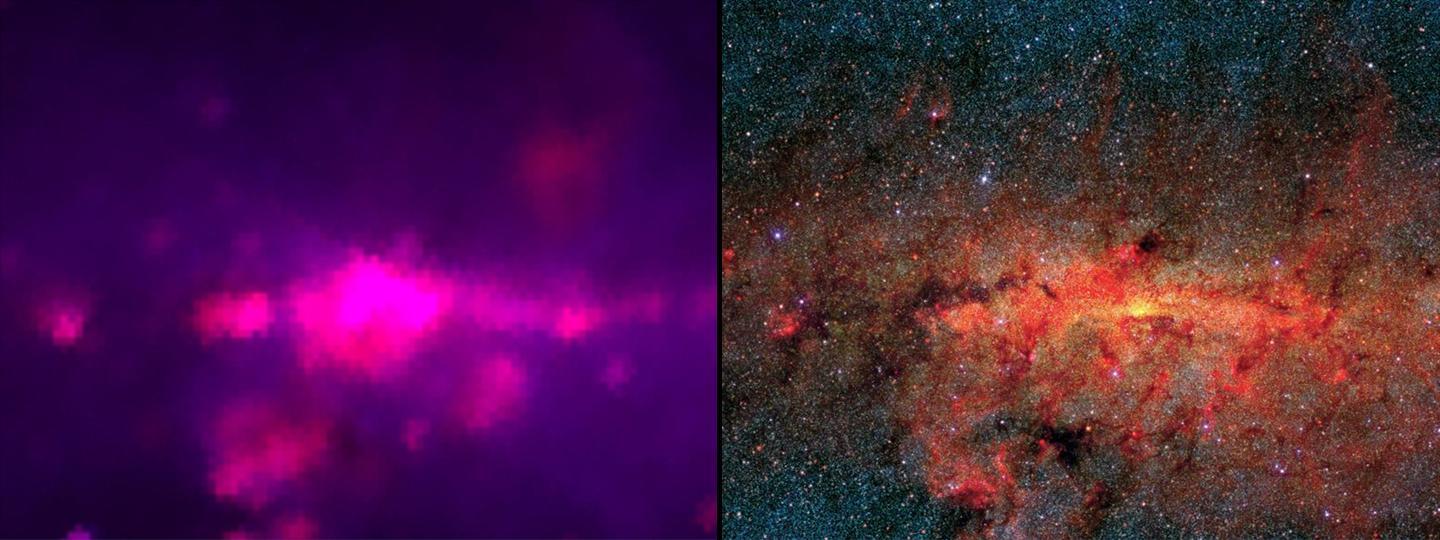
The image on the left shows an infrared view of the center of our Milky Way galaxy as seen by the 1983 Infrared Astronomical Satellite, which surveyed the whole sky with only 62 pixels. The image on the right shows an infrared view similar to what NASA
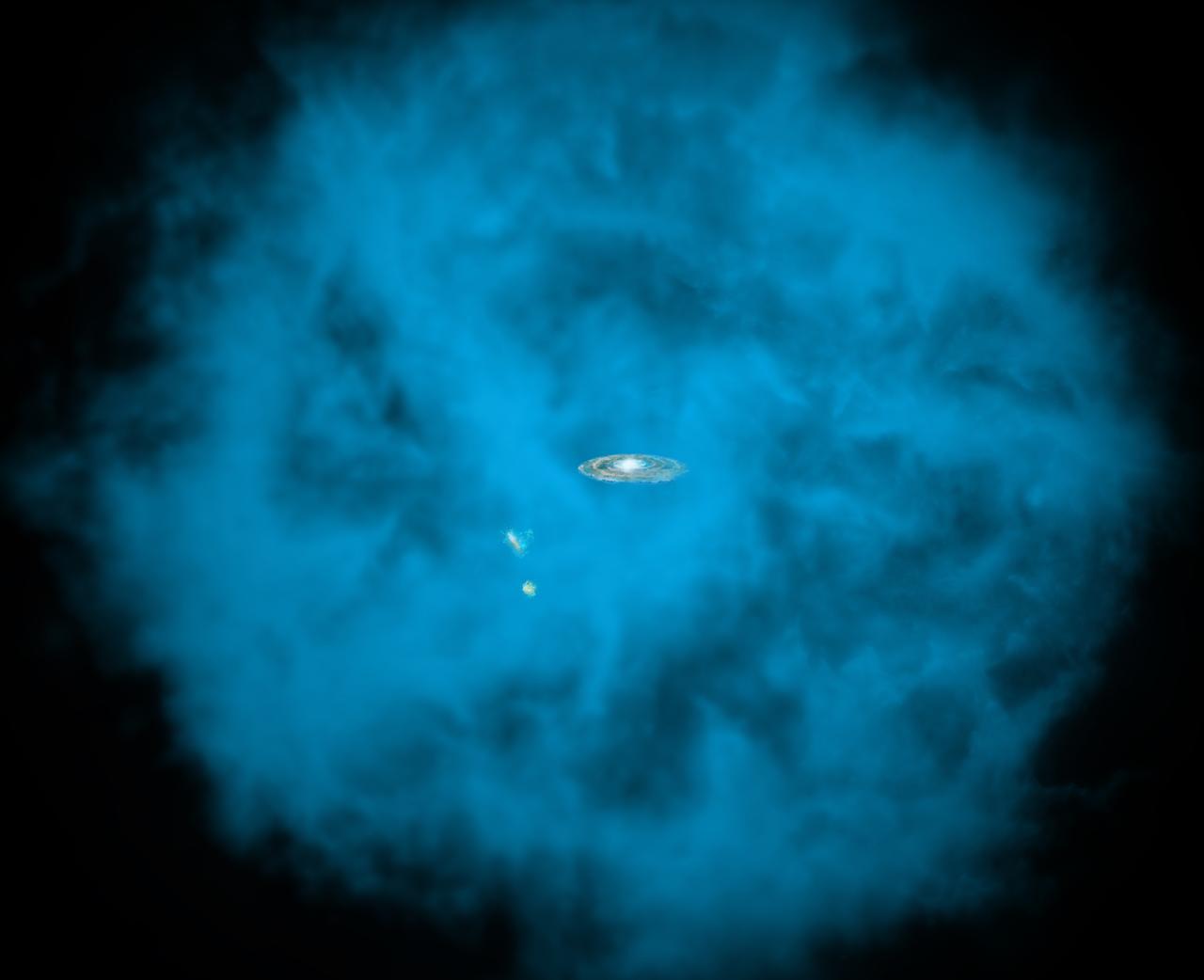
Our Milky Way galaxy and its small companions are surrounded by a giant halo of million-degree gas (seen in blue in this artists' rendition) that is only visible to X-ray telescopes in space. University of Michigan astronomers discovered that this massive hot halo spins in the same direction as the Milky Way disk and at a comparable speed. Read more: <a href="http://go.nasa.gov/29VgLdK" rel="nofollow">go.nasa.gov/29VgLdK</a> Credit: NASA/CXC/M.Weiss/Ohio State/A Gupta et al <b><a href="http://www.nasa.gov/audience/formedia/features/MP_Photo_Guidelines.html" rel="nofollow">NASA image use policy.</a></b> <b><a href="http://www.nasa.gov/centers/goddard/home/index.html" rel="nofollow">NASA Goddard Space Flight Center</a></b> enables NASA’s mission through four scientific endeavors: Earth Science, Heliophysics, Solar System Exploration, and Astrophysics. Goddard plays a leading role in NASA’s accomplishments by contributing compelling scientific knowledge to advance the Agency’s mission. <b>Follow us on <a href="http://twitter.com/NASAGoddardPix" rel="nofollow">Twitter</a></b> <b>Like us on <a href="http://www.facebook.com/pages/Greenbelt-MD/NASA-Goddard/395013845897?ref=tsd" rel="nofollow">Facebook</a></b> <b>Find us on <a href="http://instagrid.me/nasagoddard/?vm=grid" rel="nofollow">Instagram</a></b>
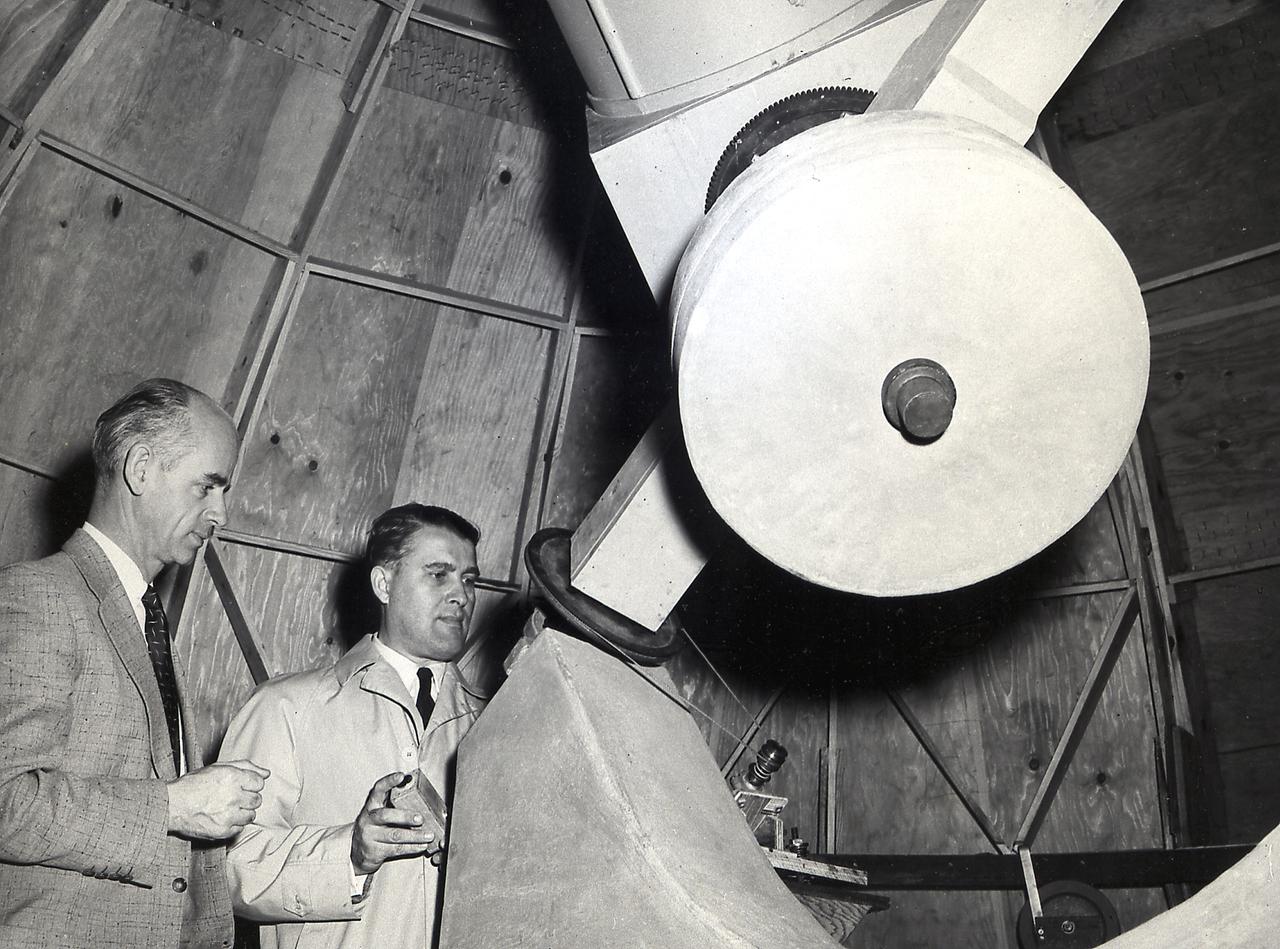
Dr. von Braun and Dr. Ernst Stuhlinger at the Observatory of the Rocket City Astronomical Association in 1956.
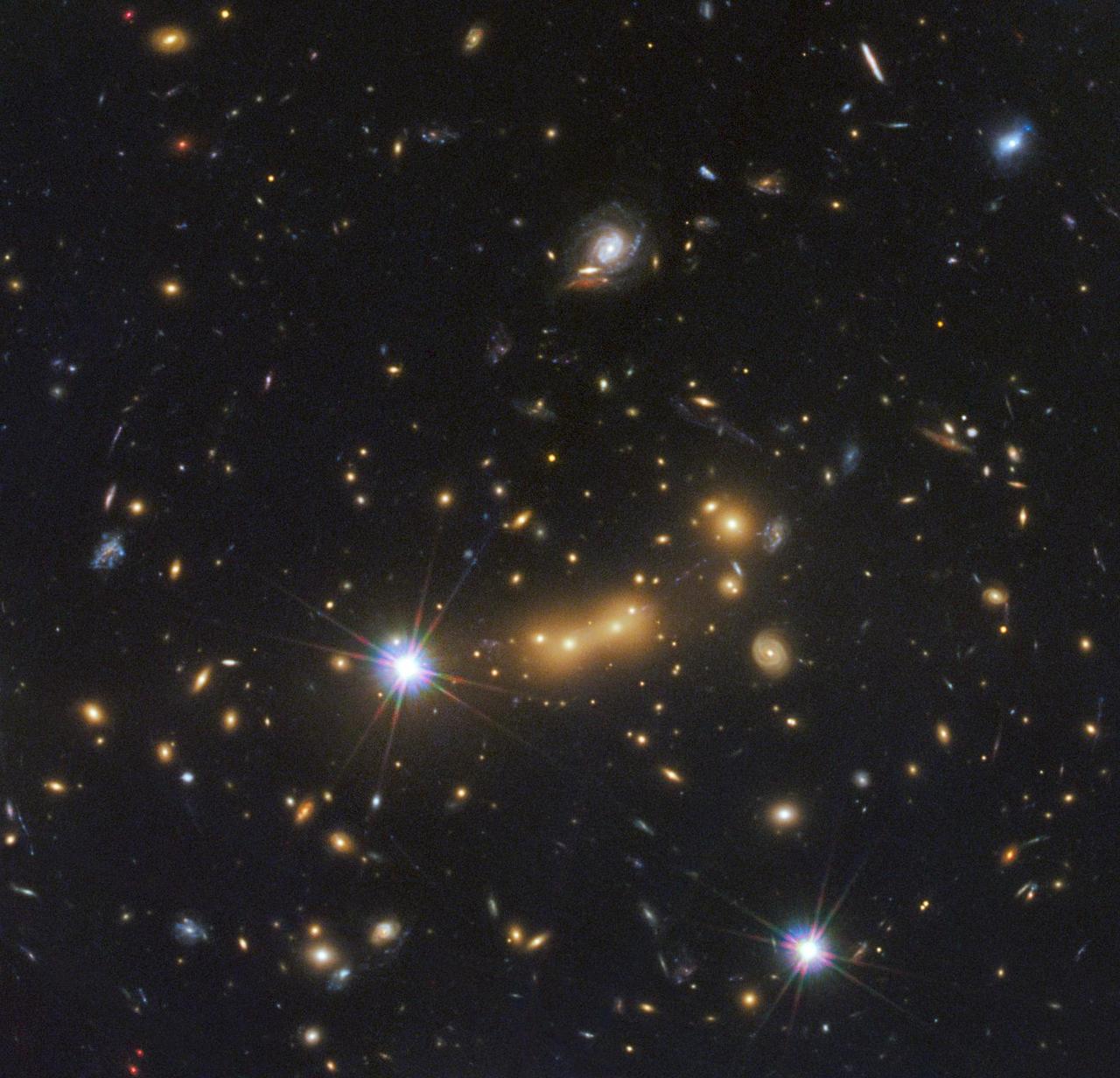
In this Hubble observation, astronomers used the massive galaxy cluster MACS J0647+7015 as the giant cosmic telescope. The bright yellow galaxies near the center of the image are cluster members.

To view a video of this story go to: <a href="http://www.flickr.com/photos/gsfc/8448332724">www.flickr.com/photos/gsfc/8448332724</a> Working with astronomical image processors at the Space Telescope Science Institute in Baltimore, Md., renowned astro-photographer Robert Gendler has taken science data from the Hubble Space Telescope (HST) archive and combined it with his own ground-based observations to assemble a photo illustration of the magnificent spiral galaxy M106. Gendler retrieved archival Hubble images of M106 to assemble a mosaic of the center of the galaxy. He then used his own and fellow astro-photographer Jay GaBany's observations of M106 to combine with the Hubble data in areas where there was less coverage, and finally, to fill in the holes and gaps where no Hubble data existed. The center of the galaxy is composed almost entirely of HST data taken by the Advanced Camera for Surveys, Wide Field Camera 3, and Wide Field Planetary Camera 2 detectors. The outer spiral arms are predominantly HST data colorized with ground-based data taken by Gendler's and GaBany's 12.5-inch and 20-inch telescopes, located at very dark remote sites in New Mexico. The image also reveals the optical component of the "anomalous arms" of M106, seen here as red, glowing hydrogen emission. To read more go to: <a href="http://www.nasa.gov/mission_pages/hubble/science/m106.html" rel="nofollow">www.nasa.gov/mission_pages/hubble/science/m106.html</a> Credit: NASA, ESA, the Hubble Heritage Team (STScI/AURA), R. Gendler (for the Hubble Heritage Team), and G. Bacon (STScI) <b><a href="http://www.nasa.gov/audience/formedia/features/MP_Photo_Guidelines.html" rel="nofollow">NASA image use policy.</a></b> <b><a href="http://www.nasa.gov/centers/goddard/home/index.html" rel="nofollow">NASA Goddard Space Flight Center</a></b> enables NASA’s mission through four scientific endeavors: Earth Science, Heliophysics, Solar System Exploration, and Astrophysics. Goddard plays a leading role in NASA’s accomplishments by contributing compelling scientific knowledge to advance the Agency’s mission. <b>Follow us on <a href="http://twitter.com/NASA_GoddardPix" rel="nofollow">Twitter</a></b> <b>Like us on <a href="http://www.facebook.com/pages/Greenbelt-MD/NASA-Goddard/395013845897?ref=tsd" rel="nofollow">Facebook</a></b> <b>Find us on <a href="http://instagrid.me/nasagoddard/?vm=grid" rel="nofollow">Instagram</a></b>

STS054-97-018 (13-19 Jan 1993) --- The STS-54 crew used a handheld 70mm camera to record this view of the constellation Orion. Five astronauts spent six days aboard the Space Shuttle Endeavour in Earth orbit.
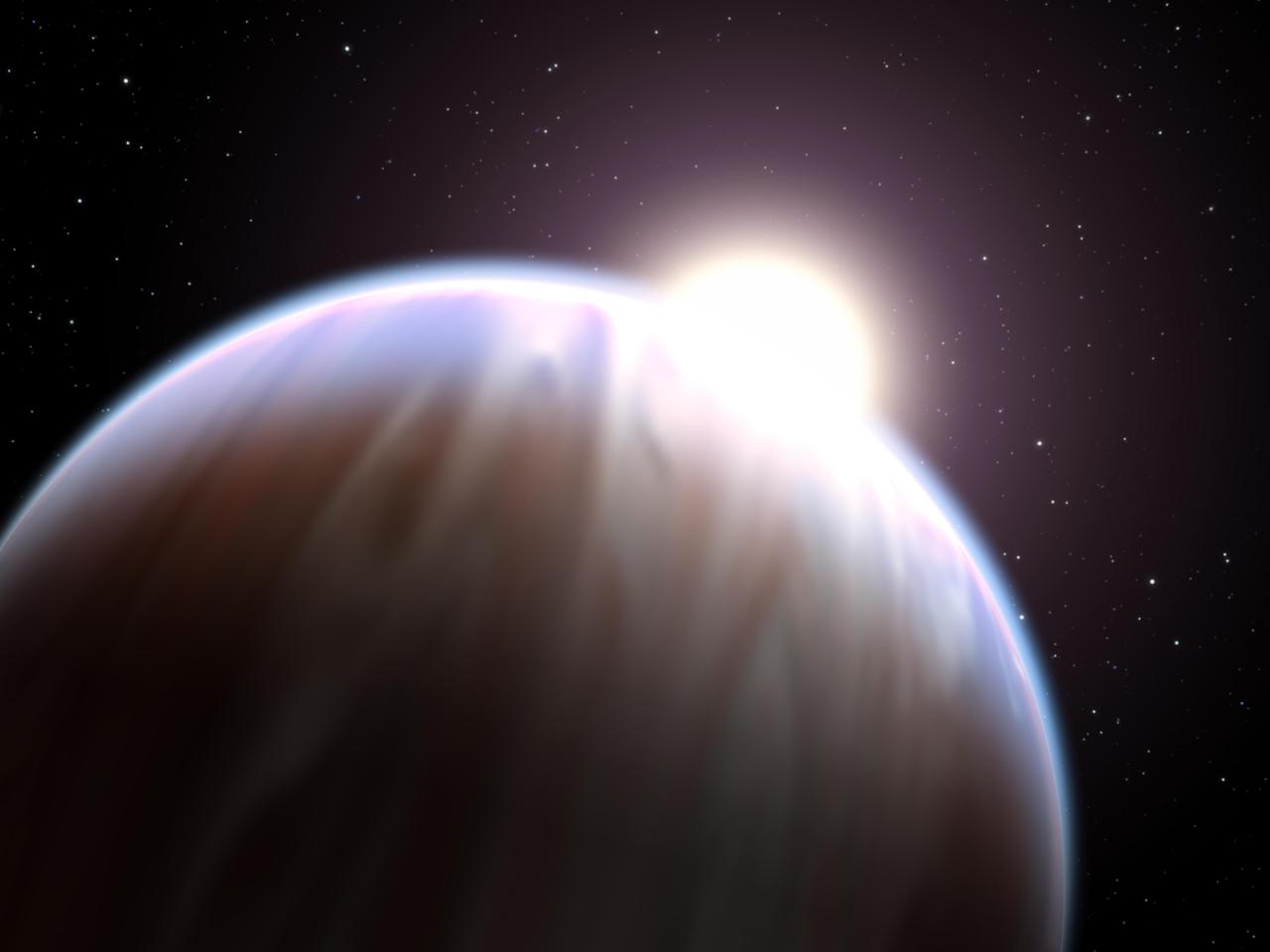
A team of astronomers has made the first detection ever of an organic molecule in the atmosphere of a Jupiter-sized planet orbiting another star. The breakthrough was made with NASA Hubble Space Telescope.
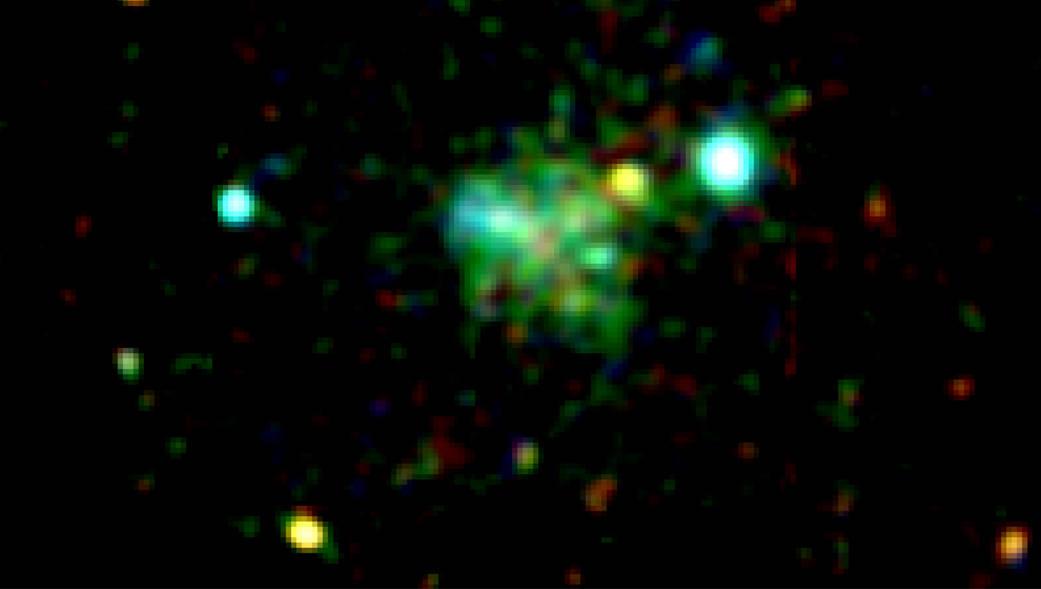
Astronomers have discovered a vast cloud of high-energy particles called a wind nebula around a rare ultra-magnetic neutron star, or magnetar, for the first time. The find offers a unique window into the properties, environment and outburst history of magnetars, which are the strongest magnets in the universe. A neutron star is the crushed core of a massive star that ran out of fuel, collapsed under its own weight, and exploded as a supernova. Each one compresses the equivalent mass of half a million Earths into a ball just 12 miles (20 kilometers) across, or about the length of New York's Manhattan Island. Neutron stars are most commonly found as pulsars, which produce radio, visible light, X-rays and gamma rays at various locations in their surrounding magnetic fields. When a pulsar spins these regions in our direction, astronomers detect pulses of emission, hence the name. Read more: <a href="http://go.nasa.gov/28PVUop" rel="nofollow">go.nasa.gov/28PVUop</a> Credit: ESA/XMM-Newton/Younes et al. 2016 <b><a href="http://go.nasa.gov/28KYHxv" rel="nofollow">NASA image use policy.</a></b> <b><a href="http://go.nasa.gov/28KYKsS" rel="nofollow">NASA Goddard Space Flight Center</a></b> enables NASA’s mission through four scientific endeavors: Earth Science, Heliophysics, Solar System Exploration, and Astrophysics. Goddard plays a leading role in NASA’s accomplishments by contributing compelling scientific knowledge to advance the Agency’s mission. <b>Follow us on <a href="http://go.nasa.gov/28KYVo7" rel="nofollow">Twitter</a></b> <b>Like us on <a href="http://go.nasa.gov/28KYGcx" rel="nofollow">Facebook</a></b> <b>Find us on <a href="http://go.nasa.gov/28KYGtf" rel="nofollow">Instagram</a></b>

Caption: Glowing a dark magenta, the newly discovered exoplanet GJ 504b weighs in with about four times Jupiter's mass, making it the lowest-mass planet ever directly imaged around a star like the sun. Credit: NASA/Goddard/S. Wiessinger Using infrared data from the Subaru Telescope in Hawaii, an international team of astronomers has imaged a giant planet around the bright star GJ 504. Several times the mass of Jupiter and similar in size, the new world, dubbed GJ 504b, is the lowest-mass planet ever detected around a star like the sun using direct imaging techniques. "If we could travel to this giant planet, we would see a world still glowing from the heat of its formation with a color reminiscent of a dark cherry blossom, a dull magenta," said Michael McElwain, a member of the discovery team at NASA's Goddard Space Flight Center in Greenbelt, Md. "Our near-infrared camera reveals that its color is much more blue than other imaged planets, which may indicate that its atmosphere has fewer clouds." Read more: <a href="http://1.usa.gov/15Ba6fI" rel="nofollow">1.usa.gov/15Ba6fI</a> <b><a href="http://www.nasa.gov/audience/formedia/features/MP_Photo_Guidelines.html" rel="nofollow">NASA image use policy.</a></b> <b><a href="http://www.nasa.gov/centers/goddard/home/index.html" rel="nofollow">NASA Goddard Space Flight Center</a></b> enables NASA’s mission through four scientific endeavors: Earth Science, Heliophysics, Solar System Exploration, and Astrophysics. Goddard plays a leading role in NASA’s accomplishments by contributing compelling scientific knowledge to advance the Agency’s mission. <b>Follow us on <a href="http://twitter.com/NASA_GoddardPix" rel="nofollow">Twitter</a></b> <b>Like us on <a href="http://www.facebook.com/pages/Greenbelt-MD/NASA-Goddard/395013845897?ref=tsd" rel="nofollow">Facebook</a></b> <b>Find us on <a href="http://instagram.com/nasagoddard?vm=grid" rel="nofollow">Instagram</a></b>

NASA image release Oct. 6, 2011 This is an image of the star HR 8799 taken by Hubble's Near Infrared Camera and Multi-Object Spectrometer (NICMOS) in 1998. A mask within the camera (coronagraph) blocks most of the light from the star. In addition, software has been used to digitally subtract more starlight. Nevertheless, scattered light from HR 8799 dominates the image, obscuring the faint planets. Object Name: HR 8799 Image Type: Astronomical Credit: NASA, ESA, and R. Soummer (STScI) To read more go to: <a href="http://www.nasa.gov/mission_pages/hubble/science/elusive-planets.html" rel="nofollow">www.nasa.gov/mission_pages/hubble/science/elusive-planets...</a> <b><a href="http://www.nasa.gov/audience/formedia/features/MP_Photo_Guidelines.html" rel="nofollow">NASA image use policy.</a></b> <b><a href="http://www.nasa.gov/centers/goddard/home/index.html" rel="nofollow">NASA Goddard Space Flight Center</a></b> enables NASA’s mission through four scientific endeavors: Earth Science, Heliophysics, Solar System Exploration, and Astrophysics. Goddard plays a leading role in NASA’s accomplishments by contributing compelling scientific knowledge to advance the Agency’s mission. <b>Follow us on <a href="http://twitter.com/NASA_GoddardPix" rel="nofollow">Twitter</a></b> <b>Like us on <a href="http://www.facebook.com/pages/Greenbelt-MD/NASA-Goddard/395013845897?ref=tsd" rel="nofollow">Facebook</a></b> <b>Find us on <a href="http://instagrid.me/nasagoddard/?vm=grid" rel="nofollow">Instagram</a></b>
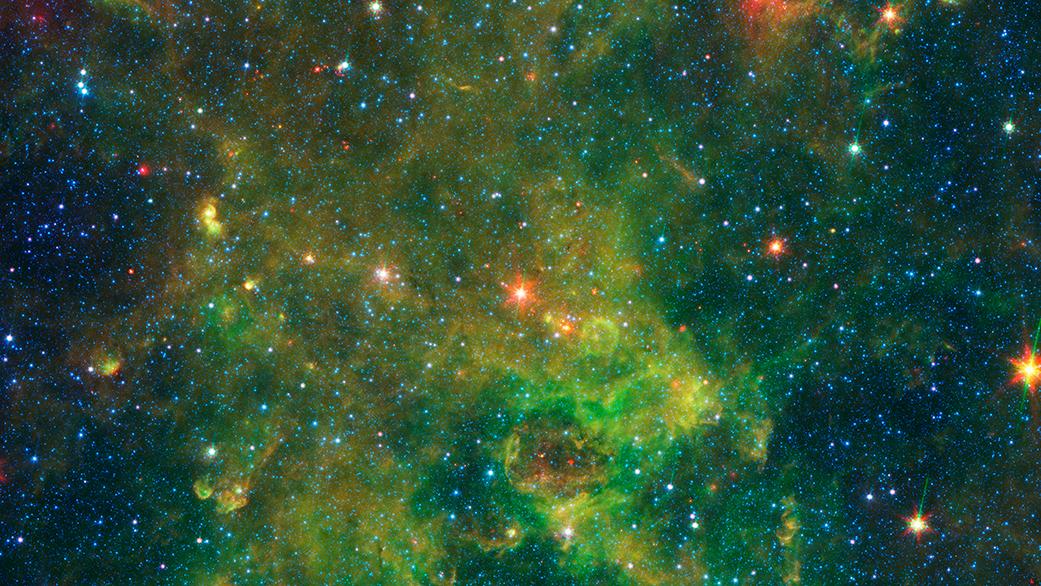
An age-defying star designated as IRAS 19312+1950 exhibits features characteristic of a very young star and a very old star. The object stands out as extremely bright inside a large, chemically rich cloud of material, as shown in this image from NASA’s Spitzer Space Telescope. A NASA-led team of scientists thinks the star – which is about 10 times as massive as our sun and emits about 20,000 times as much energy – is a newly forming protostar. That was a big surprise because the region had not been known as a stellar nursery before. But the presence of a nearby interstellar bubble, which indicates the presence of a recently formed massive star, also supports this idea. Read more: <a href="http://go.nasa.gov/2bMza9d" rel="nofollow">go.nasa.gov/2bMza9d</a> Image Credit: NASA/JPL-Caltech
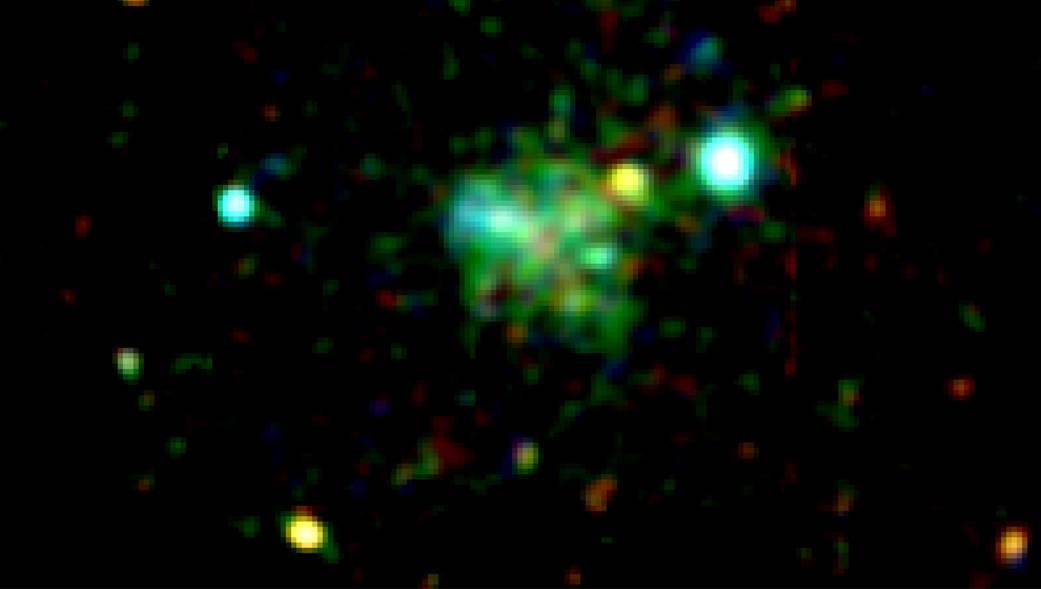
Astronomers have discovered a vast cloud of high-energy particles called a wind nebula around a rare ultra-magnetic neutron star, or magnetar, for the first time. The find offers a unique window into the properties, environment and outburst history of magnetars, which are the strongest magnets in the universe. A neutron star is the crushed core of a massive star that ran out of fuel, collapsed under its own weight, and exploded as a supernova. Each one compresses the equivalent mass of half a million Earths into a ball just 12 miles (20 kilometers) across, or about the length of New York's Manhattan Island. Neutron stars are most commonly found as pulsars, which produce radio, visible light, X-rays and gamma rays at various locations in their surrounding magnetic fields. When a pulsar spins these regions in our direction, astronomers detect pulses of emission, hence the name. Credit: ESA/XMM-Newton/Younes et al. 2016
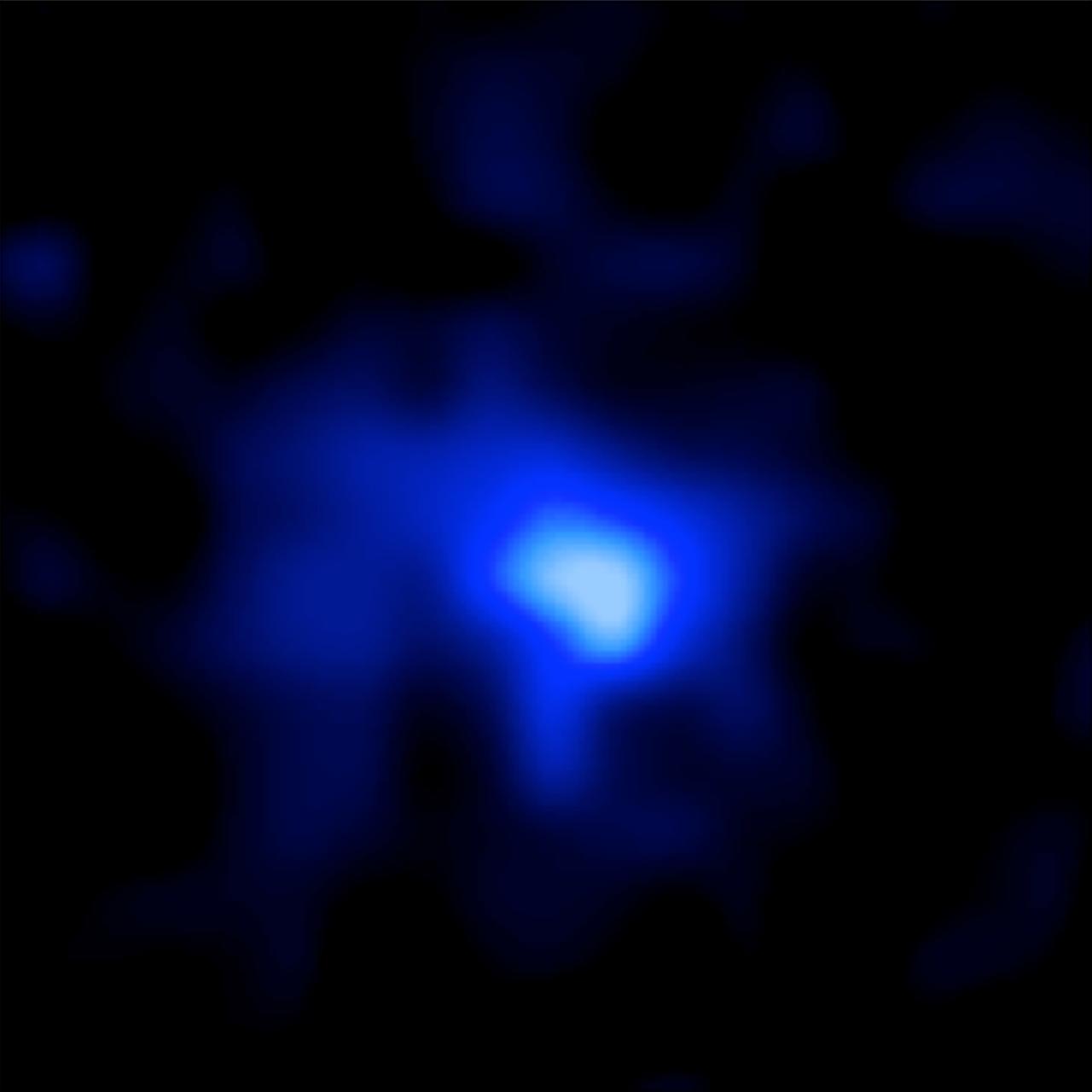
This is a Hubble Space Telescope image of the farthest spectroscopically confirmed galaxy observed to date (inset). It was identified in this Hubble image of a field of galaxies in the CANDELS survey (Cosmic Assembly Near-infrared Deep Extragalactic Legacy Survey). NASA’s Spitzer Space Telescope also observed the unique galaxy. The W. M. Keck Observatory was used to obtain a spectroscopic redshift (z=7.7), extending the previous redshift record. Measurements of the stretching of light, or redshift, give the most reliable distances to other galaxies. This source is thus currently the most distant confirmed galaxy known, and it appears to also be one of the brightest and most massive sources at that time. The galaxy existed over 13 billion years ago. The near-infrared light image of the galaxy (inset) has been colored blue as suggestive of its young, and hence very blue, stars. The CANDELS field is a combination of visible-light and near-infrared exposures. Credits: NASA, ESA, P. Oesch (Yale U.)

Southwest Research Institute astronomer Dan Durda checks the alignment of the SWUIS-A Xybion digital camera mounted in the rear cockpit of a NASA Dryden F/A-18B before taking off on an astronomy mission.
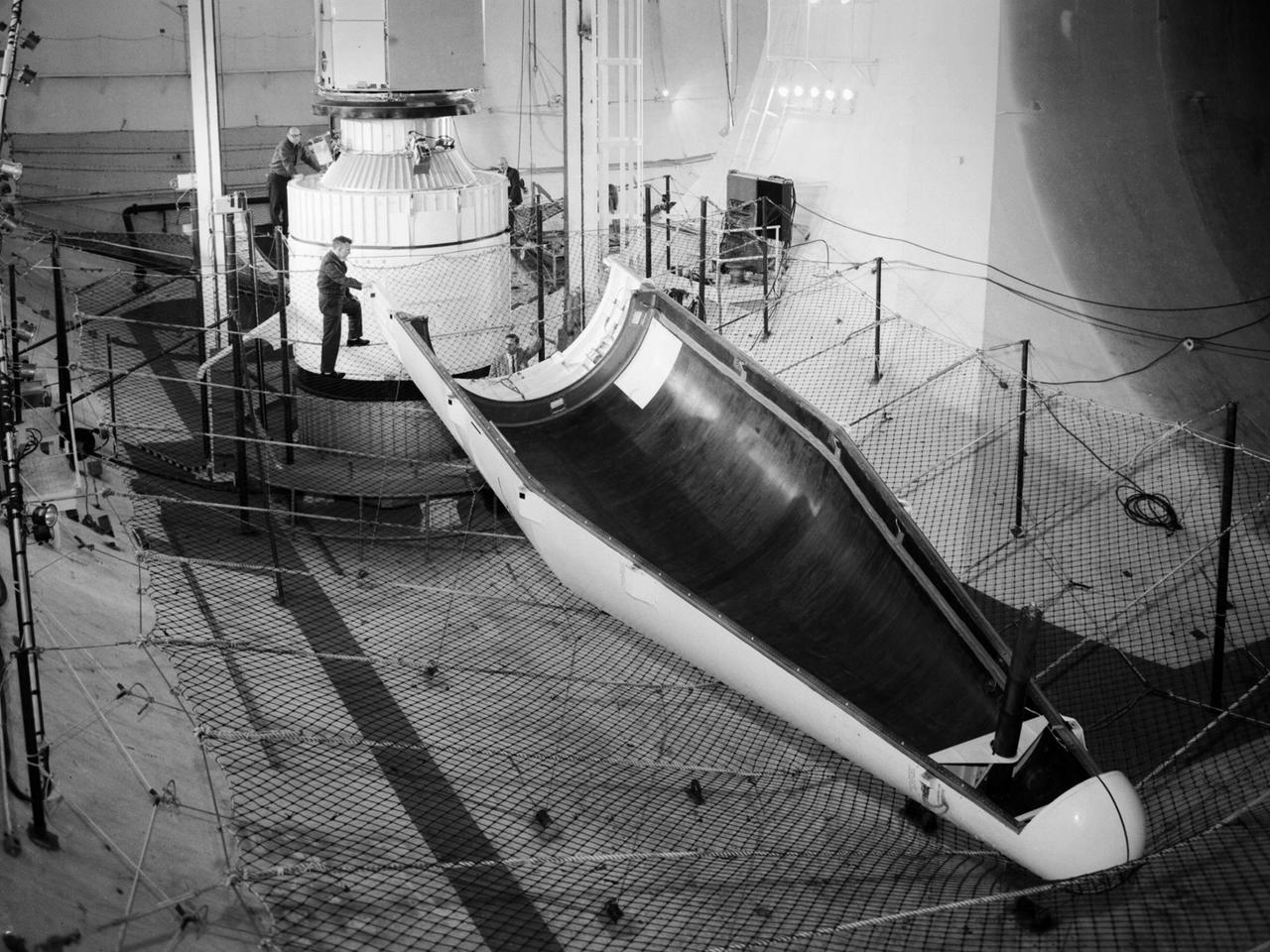
Researchers at the National Aeronautics and Space Administration (NASA) Lewis Research Center conducted a series of shroud jettison tests for the second Orbiting Astronomical Observatory (OAO-2) in the Space Power Chambers during April 1968. The Orbiting Astronomical Observatory satellites were designed by Goddard Space Flight Center to study and retrieve ultraviolet data on stars and galaxies which earthbound and atmospheric telescopes could not view due to ozone absorption. The shroud jettison system was tested in the Space Power Chambers. In 1961, NASA Lewis management decided to convert its Altitude Wind Tunnel into two large test chambers and later renamed it the Space Power Chambers. The conversion, which took over two years, included removing the tunnel’s internal components and inserting bulkheads to seal off the new chambers. The larger chamber, seen here, could simulate altitudes of 100,000 feet. These chambers were used for a variety of tests on the Centaur second-stage rocket until the early 1970s. The first OAO mission in 1965 failed due to problems with the satellite. OAO-2 would be launched on an Atlas/Centaur with a modified Agena shroud. The new shroud was 18 feet longer than the normal Centaur payload shrouds. This new piece of hardware was successfully qualified during three tests at 90,000 feet altitude in the Space Power Chambers in April 1968. For the first time, x-rays were used to verify the payload clearance once the shroud was sealed. OAO-2 was launched on December 7, 1968 and proved to be an extremely successful mission.

Ground-based astronomers will be playing a vital role in NASA Juno mission. Images from the amateur astronomy community are needed to help the JunoCam instrument team predict what features will be visible when the camera images are taken.
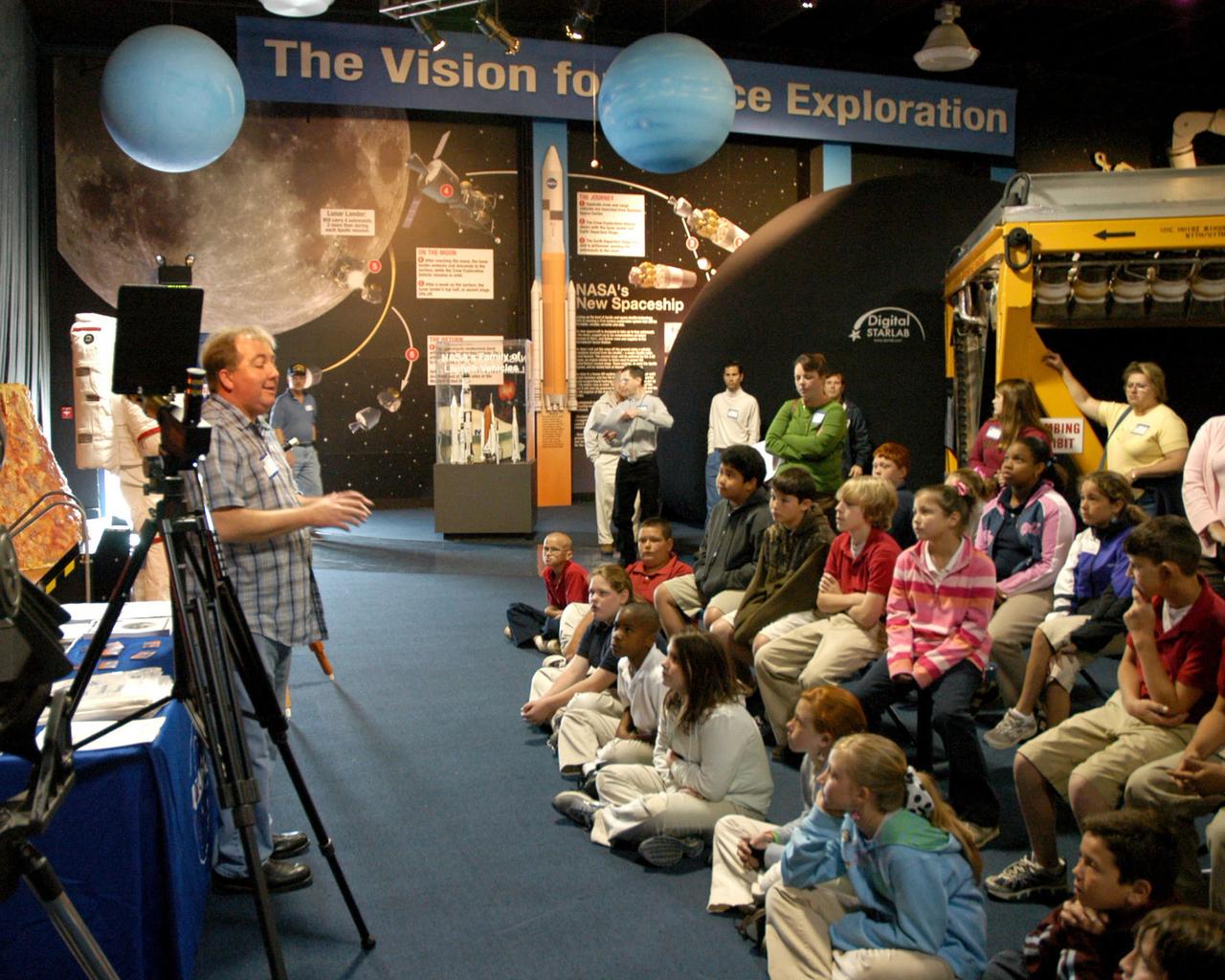
Michael Sandras, a member of the Pontchartrain Astronomical Society, explains his solar telescope to students of Second Street in Bay St. Louis, Hancock County and Nicholson elementary schools in StenniSphere's Millennium Hall on April 10. The students participated in several hands-on activities at Stennis Space Center's Sun-Earth Day celebration.
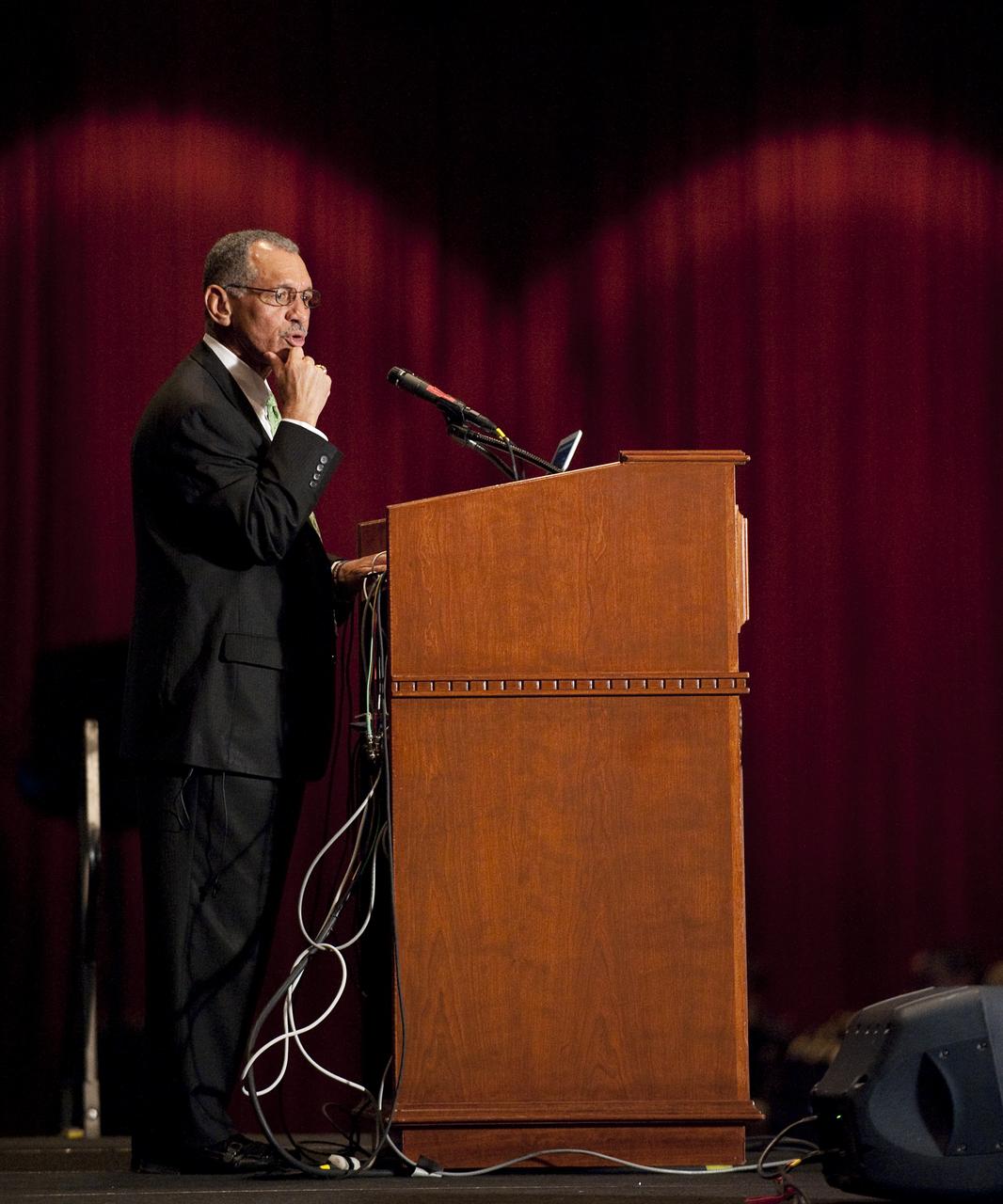
NASA Administrator Charles Bolden speaks at the 215th meeting of the American Astronomical Society (AAS) in Washington on Tuesday, Jan. 5, 2009. Throughout the meeting, NASA research and mission highlights will be presented from missions that include Kepler, the Spitzer Space Telescope, the Hubble Space Telescope, and the newly launched Wide-field Infrared Survey Explorer, or WISE. Photo Credit: (NASA/Bill Ingalls)
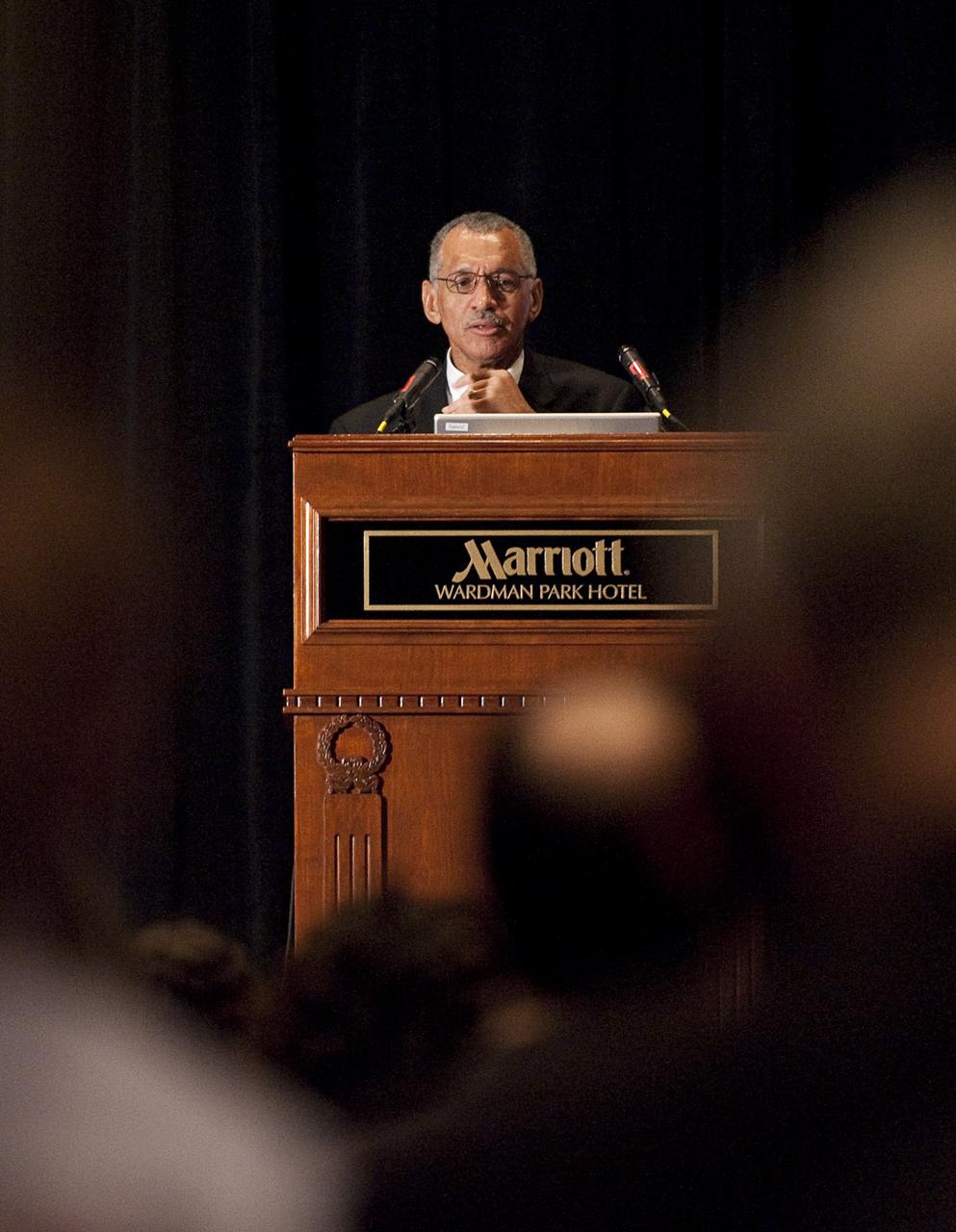
NASA Administrator Charles Bolden speaks at the 215th meeting of the American Astronomical Society (AAS) in Washington on Tuesday, Jan. 5, 2009. Throughout the meeting, NASA research and mission highlights will be presented from missions that include Kepler, the Spitzer Space Telescope, the Hubble Space Telescope, and the newly launched Wide-field Infrared Survey Explorer, or WISE. Photo Credit: (NASA/Bill Ingalls)

NASA Administrator Charles Bolden speaks at the 215th meeting of the American Astronomical Society (AAS) in Washington on Tuesday, Jan. 5, 2009. Throughout the meeting, NASA research and mission highlights will be presented from missions that include Kepler, the Spitzer Space Telescope, the Hubble Space Telescope, and the newly launched Wide-field Infrared Survey Explorer, or WISE. Photo Credit: (NASA/Bill Ingalls)
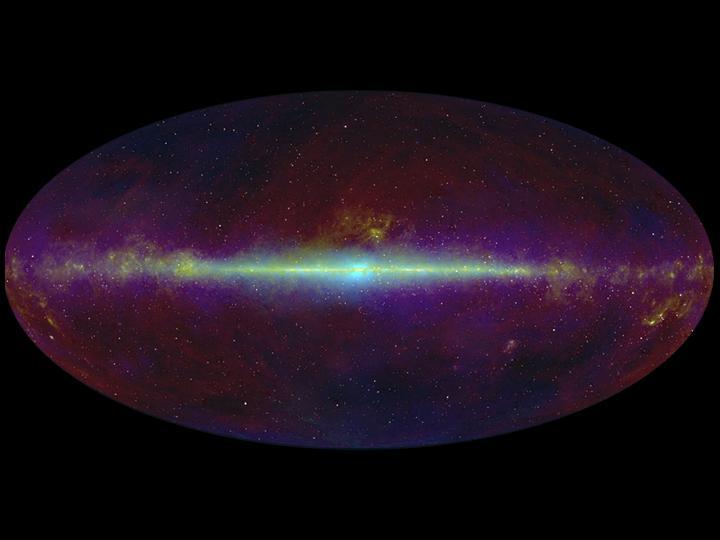
This infrared view of the whole sky highlights the flat plane of our Milky Way galaxy line across middle of image. NASA WISE, will take a similar infrared census of the whole sky, only with much improved resolution and sensitivity.
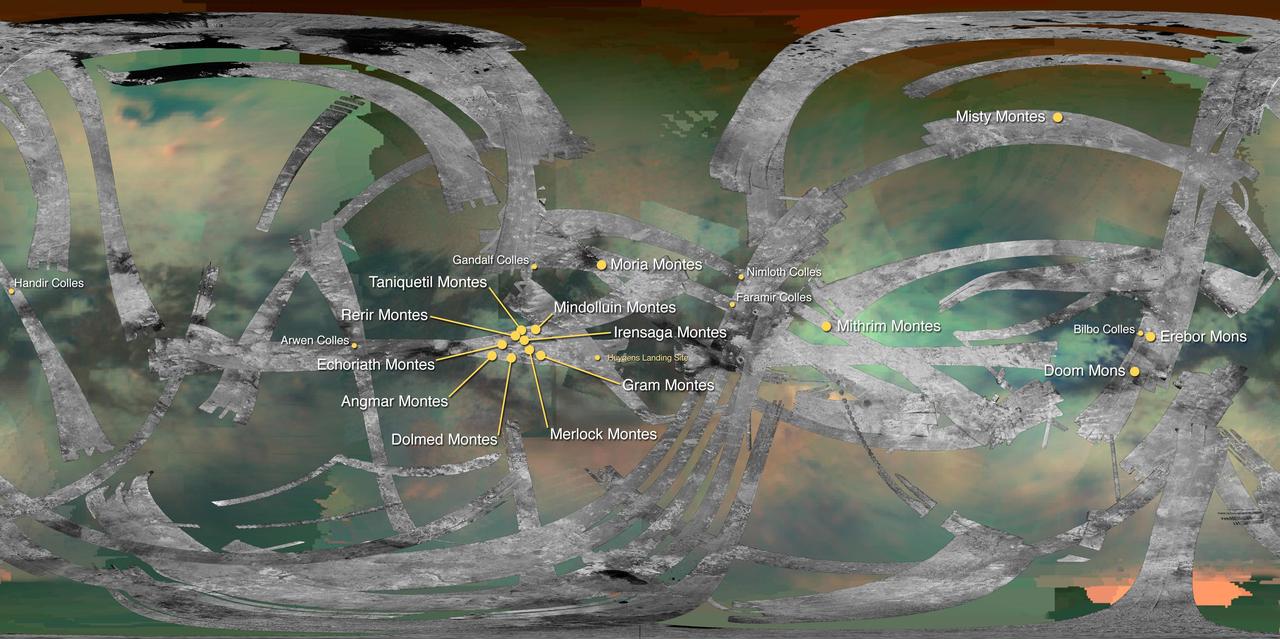
This map of Saturn moon Titan identifies the locations of mountains that have been named by the International Astronomical Union.
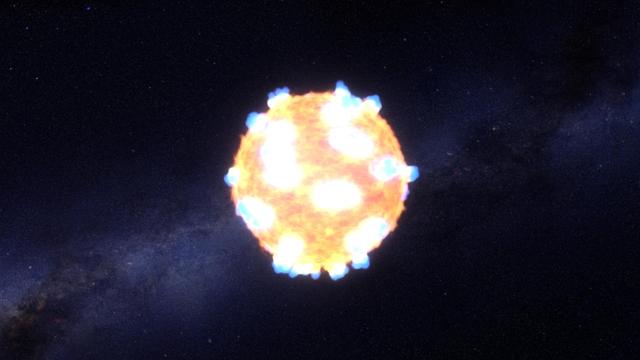
The brilliant flash of an exploding star shockwave -- what astronomers call the hock breakout -- is illustrated in artist concept based on NASA Kepler.
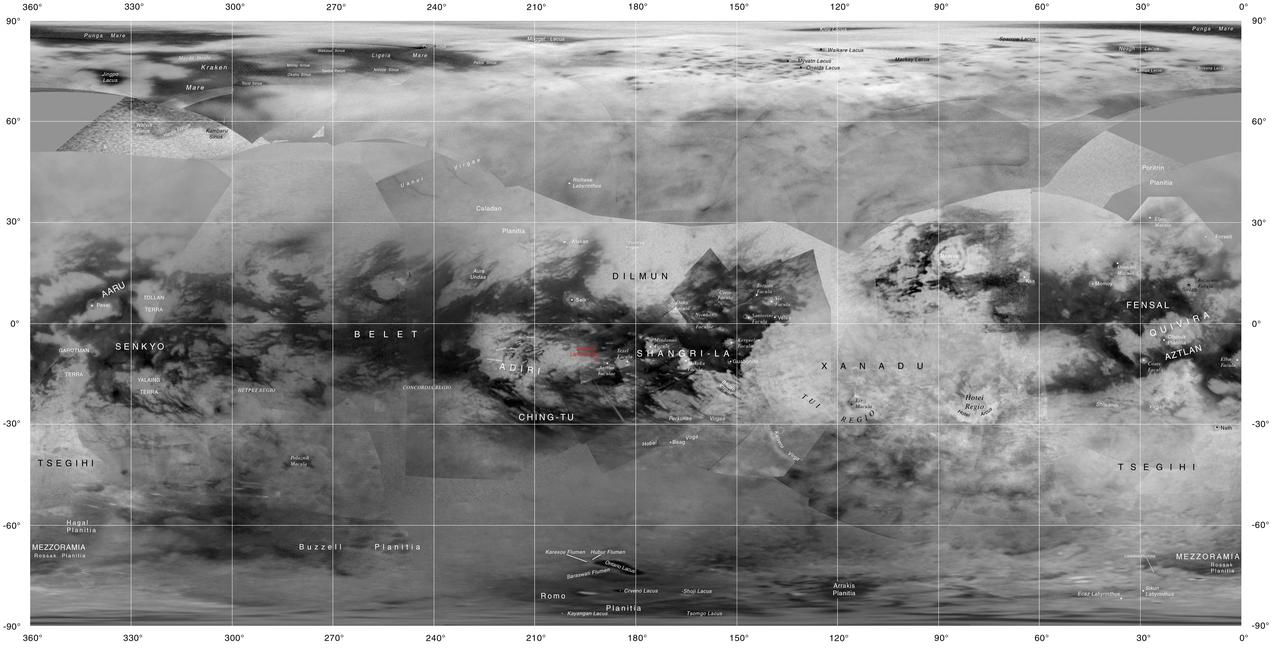
This map of Titan shows the names of many (but not all) features on the Saturnian moon that have been approved by the International Astronomical Union. This map was produced by the USGS Astrogeology Science Center for the International Astronomical Union (IAU) Working Group for Planetary System Nomenclature. http://photojournal.jpl.nasa.gov/catalog/PIA20713

This plot tells astronomers that a fifth planet is in orbit around the star 55 Cancri, making the star the record-holder for hosting the most known exoplanets.
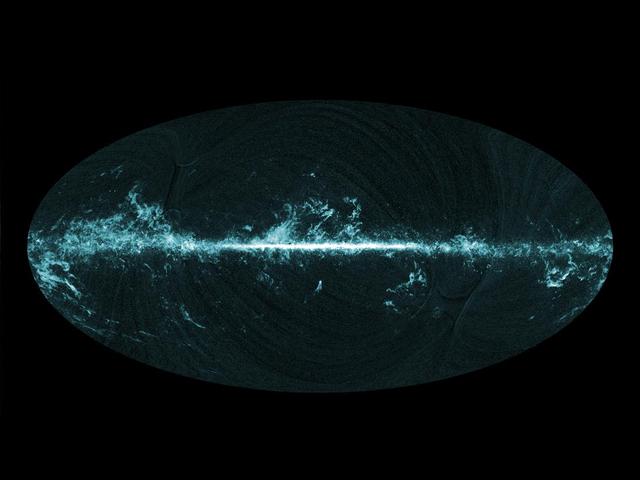
This all-sky image shows the distribution of carbon monoxide CO, a molecule used by astronomers to trace molecular clouds across the sky, as seen by Planck.
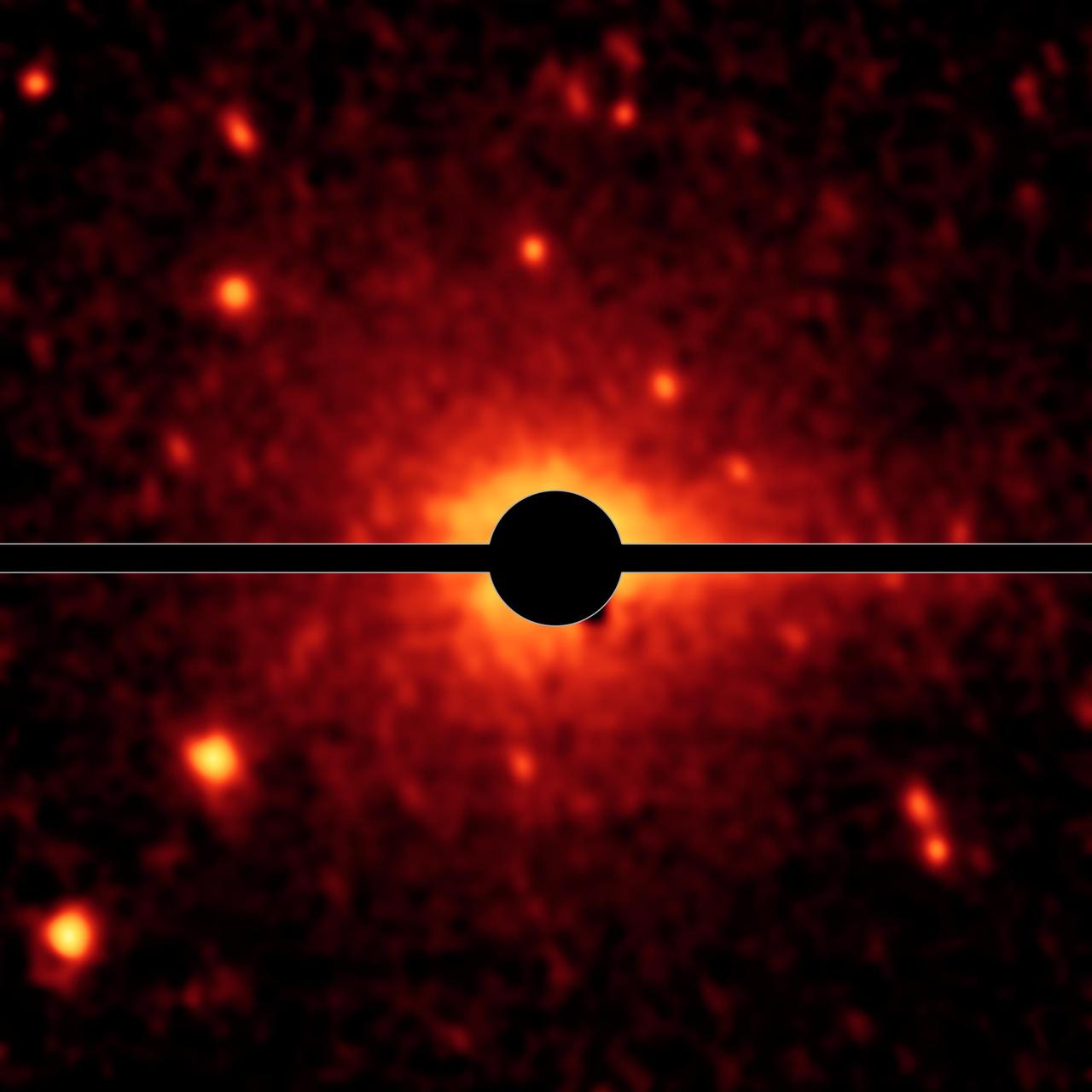
With the help of NASA Spitzer Space Telescope, astronomers have discovered that what was thought to be a large asteroid called Don Quixote is in fact a comet.
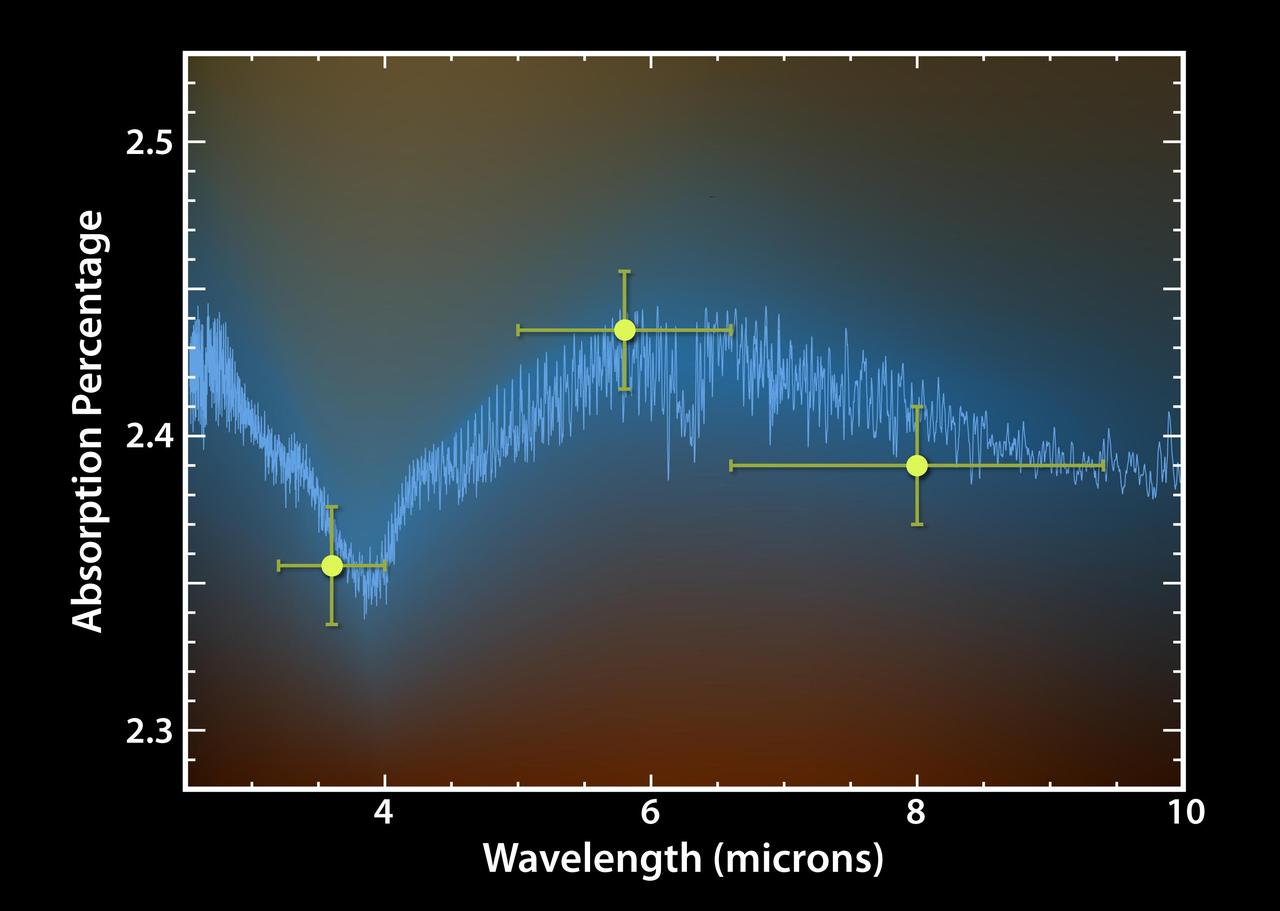
This plot of data from NASA Spitzer Space Telescope tells astronomers that a toasty gas exoplanet, or a planet beyond our solar system, contains water vapor.
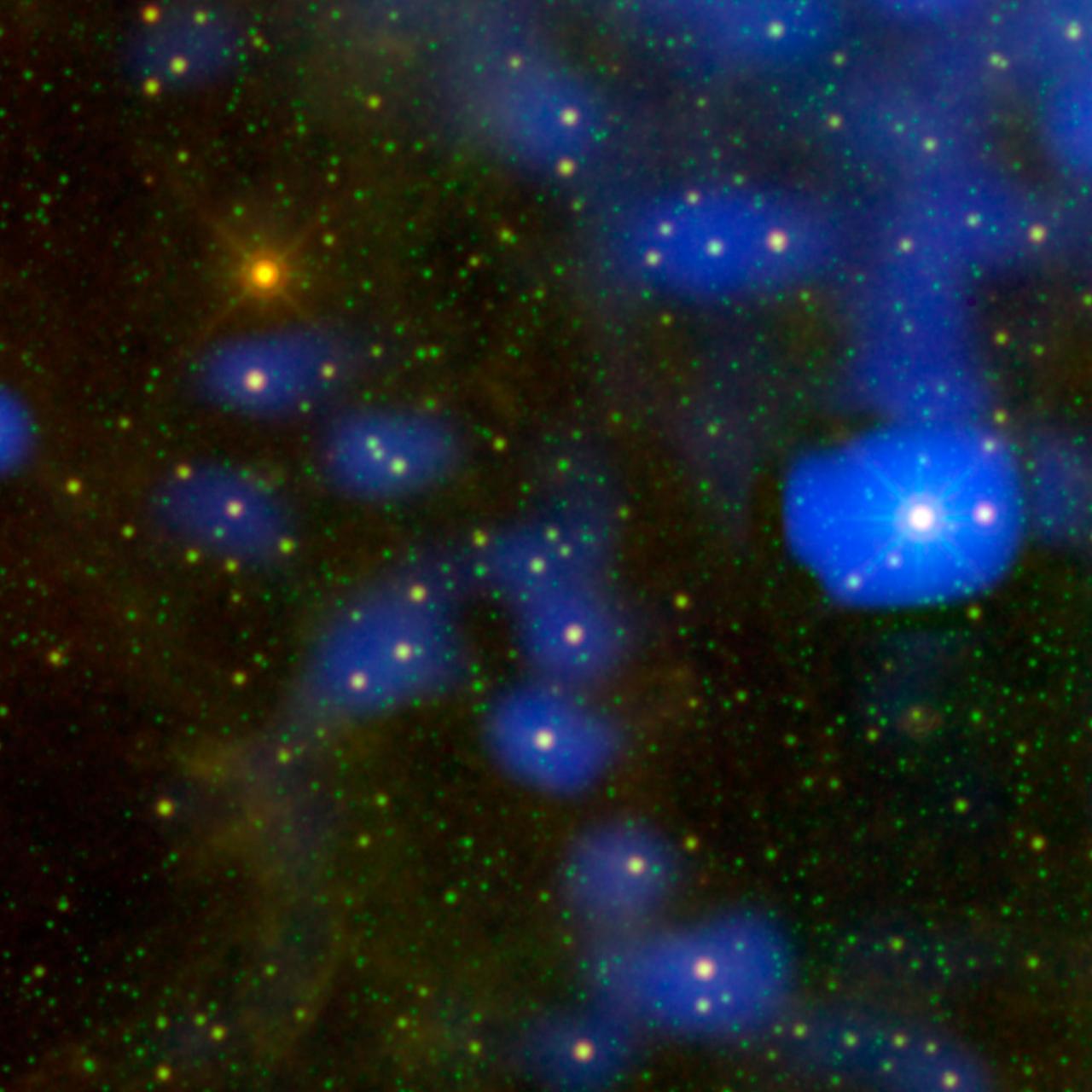
It a dust bunny of cosmic proportions. Astronomers used images from NASA WISE to locate an aging star shedding loads of dust orange dot at upper left.
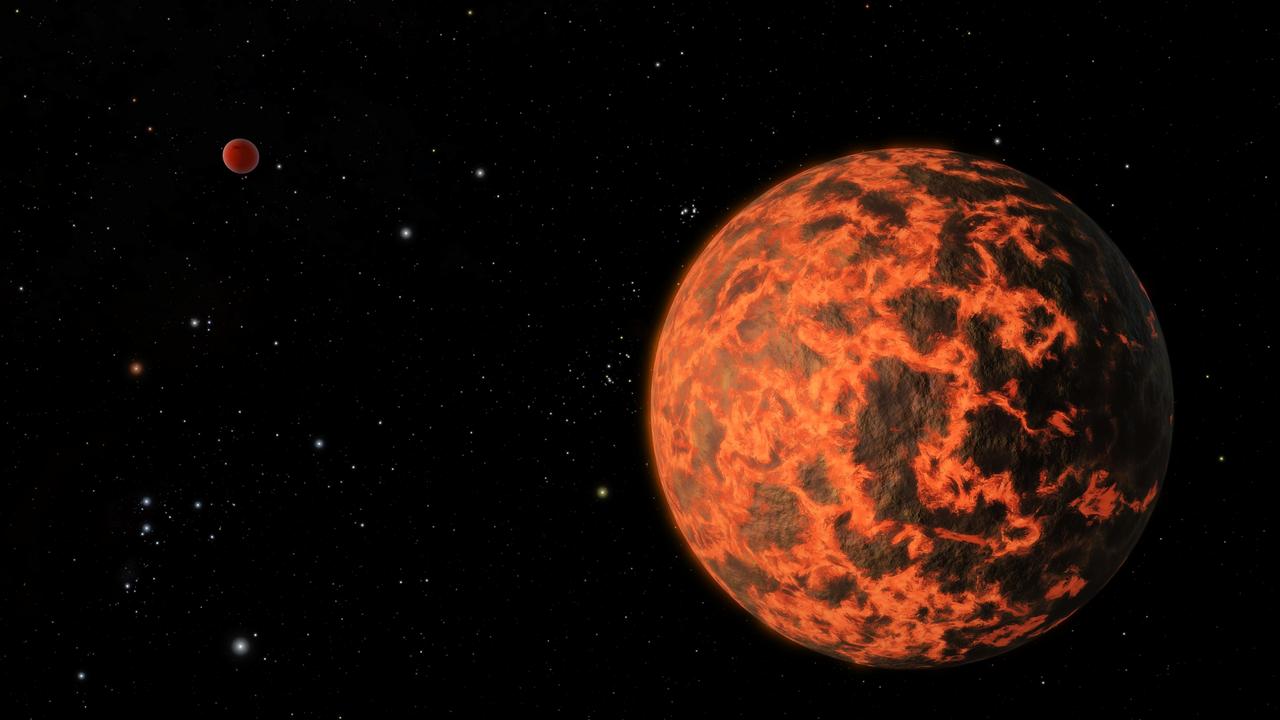
Astronomers using NASA Spitzer Space Telescope have detected what they believe is an alien world just two-thirds the size of Earth -- one of the smallest on record.

Astronomers using NASA Spitzer Space Telescope found evidence that such quasar winds might have forged these dusty particles in the very early universe.

Using NASA Spitzer Space Telescope, astronomers have, for the first time, found signatures of silicate crystals around a newly forming protostar in the constellation of Orion.

Astronomers using NASA Hubble Space Telescope have found a spiral galaxy that may rotate in the opposite direction from what was expected.
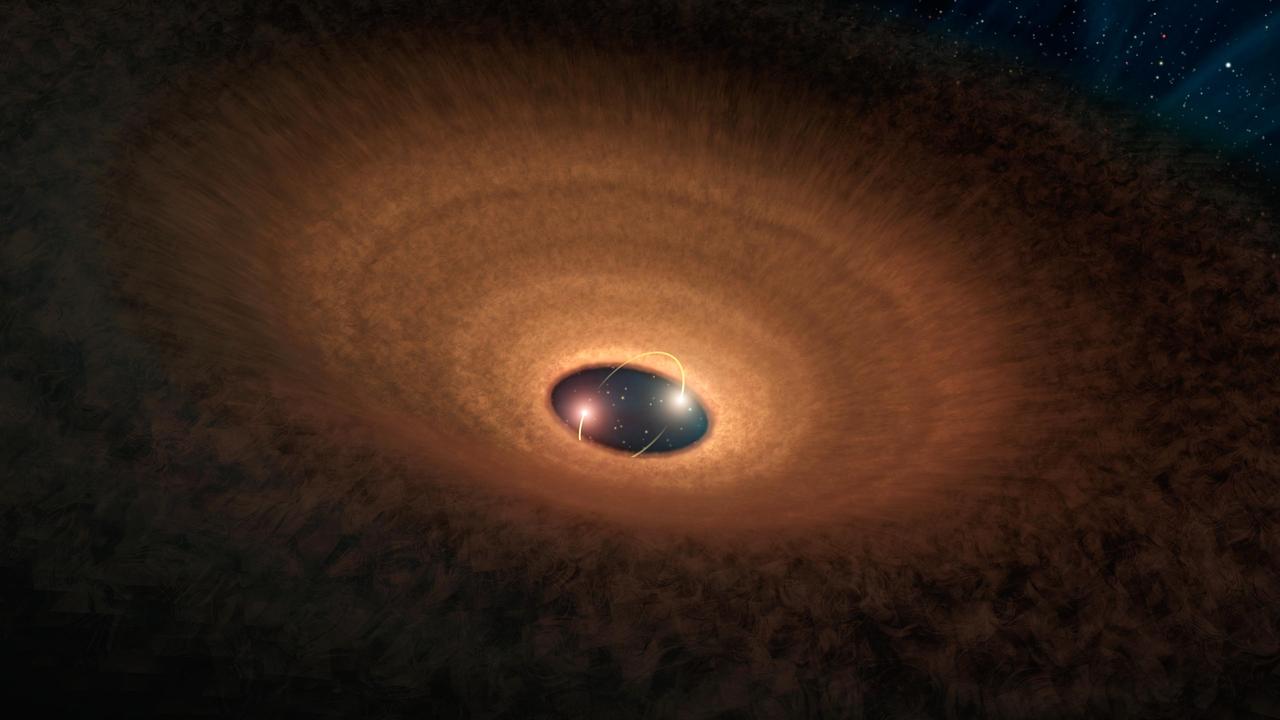
In this artist impression, a pair of stars peeks out from a tilted disk twirling around them, allowing astronomers to monitor their blinking pattern.
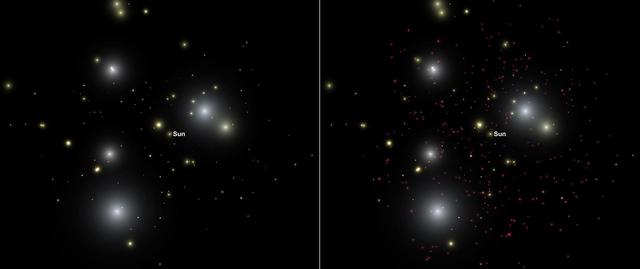
Astronomers think there are roughly as many brown dwarfs as regular stars like our sun, but brown dwarfs are often too cool to find using visible light.

NASA Wide-field Infrared Survey Explorer, or WISE, helped lead astronomers to what appears to be a new example of a dancing black hole duo.

Astronomers have discovered two gas giant planets orbiting stars in the Beehive cluster, a collection of about 1,000 tightly packed stars.

This graphic illuminates the process by which astronomers using NASA Spitzer Space Telescope have, for the first time, detected the light from a super Earth planet.
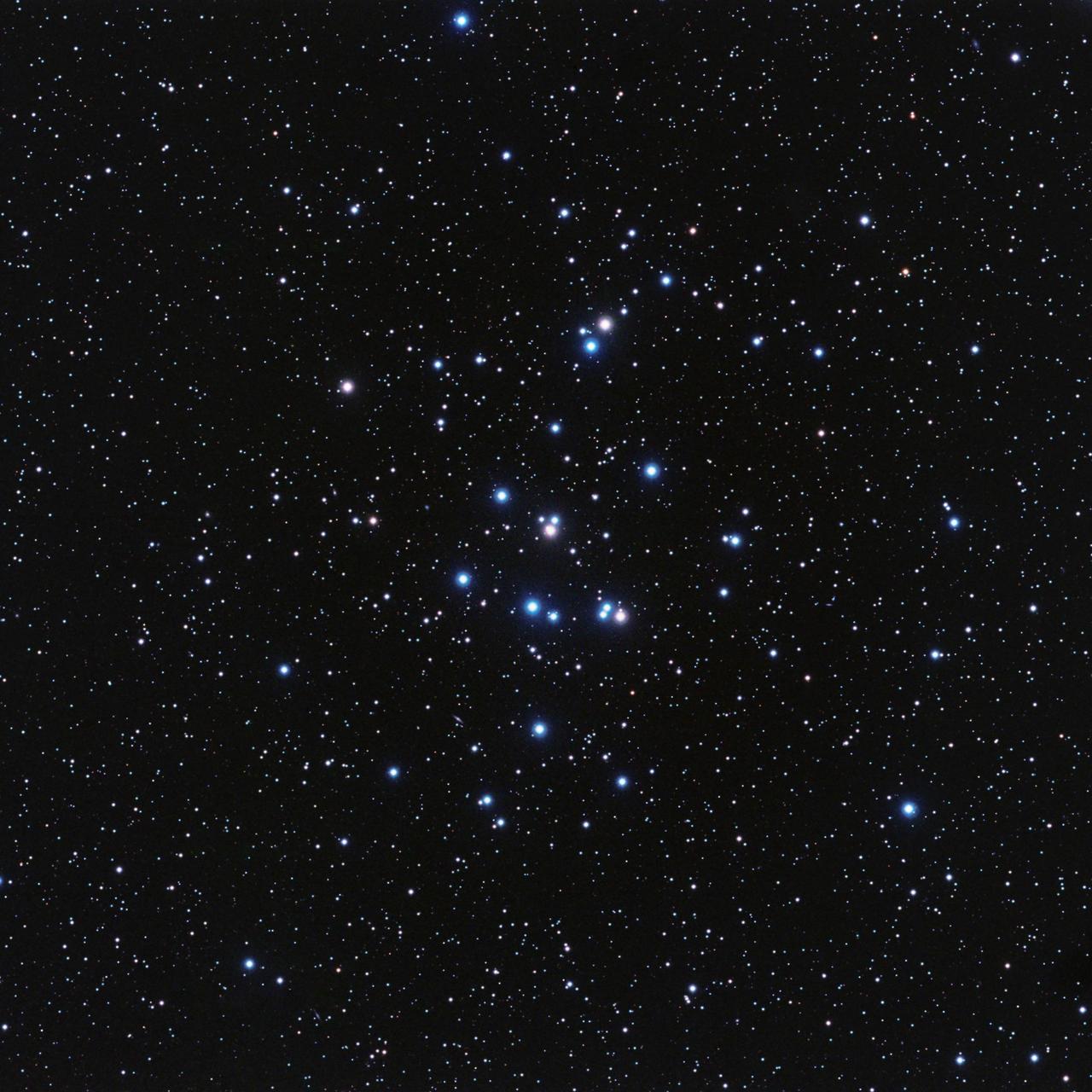
This image of the Beehive star cluster points out the location of its first known planets, Pr0201b and Pr0211b, or, as astronomers call them, the first b in the Beehive.

In this image, an artistic version of a hot Jupiter inspired by computer simulations has been inserted into a photo showing a Spitzer researcher, Heather Knutson, in a laboratory.
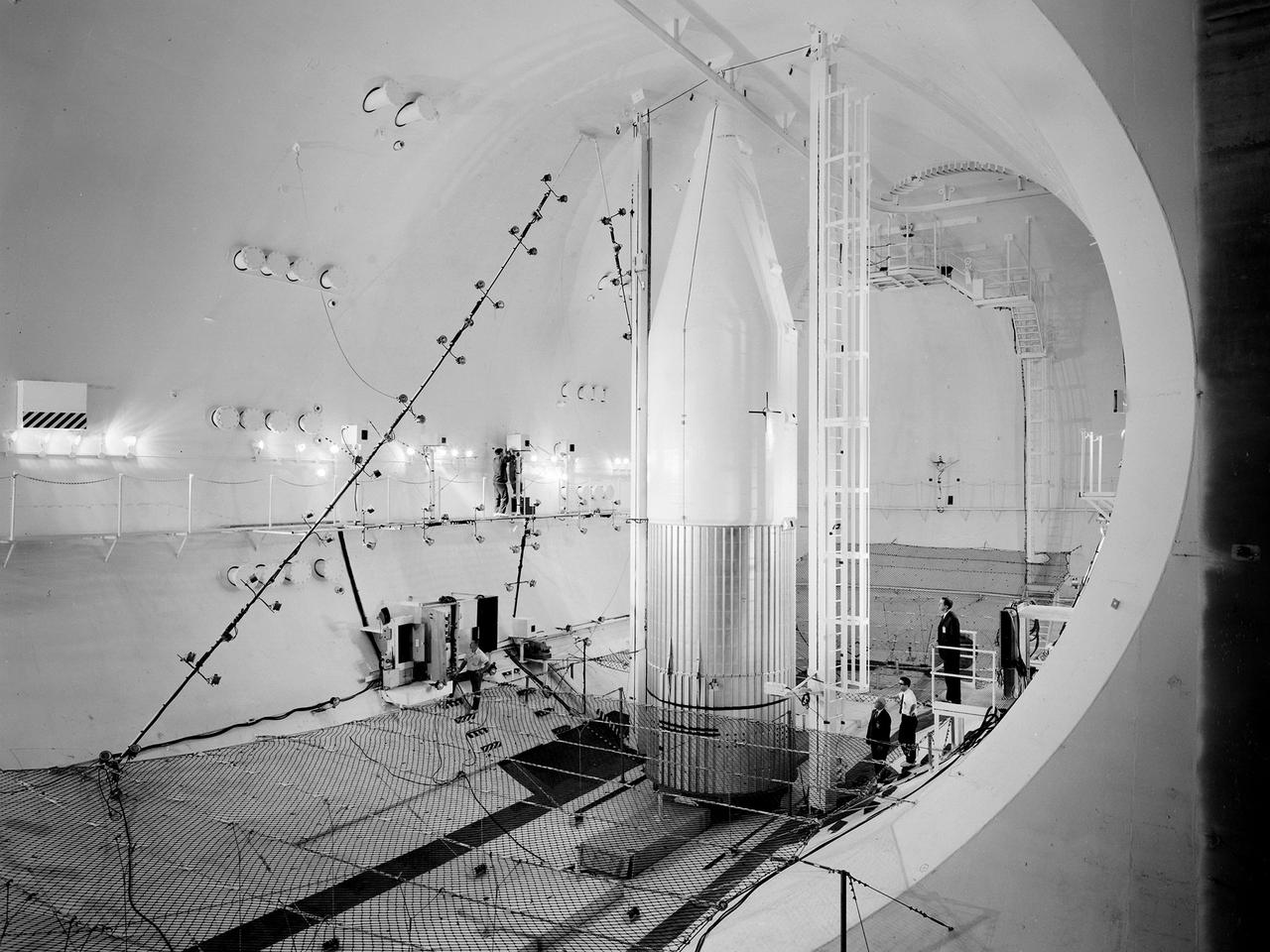
Preparations for a shroud jettison test for the Orbiting Astronomical Observatory-1 (OAO-1) satellite in the Space Power Chambers facility at the National Aeronautics and Space Administration (NASA) Lewis Research Center. The satellite was to be launched on an Atlas-Agena rocket in the spring of 1966. The 3900-pound payload was the heaviest ever attempted by Agena. The satellite was the first of three equipped with powerful telescopes to study ultraviolet data from specific stars and galaxies. In-depth observations were not possible from Earth-bound telescopes because of the filtering and distortion of the atmosphere. The OAO-1 satellite was wider in diameter than the Agena stage, so a new clamshell shroud was created to enclose both the satellite and the Agena. The clamshell shroud consisted of three sections that enclosed both the Agena and OAO-1: a fiberglass nose fairing and aluminum mid and aft fairings. The upper two fairings separated when the Atlas engines stopped, and the aft fairing fell away with the Atlas upon separation from the upper stages The large altitude tank in the Space Power Chambers could simulate altitudes up to 100,000 feet. Three shroud jettison tests were run in July 1965 and the first week of August at a simulated altitude of 20 miles. The April 8, 1966 launch from Cape Canaveral went smoothly, but the OAO-1 satellite failed after only 90 minutes due to a battery failure.
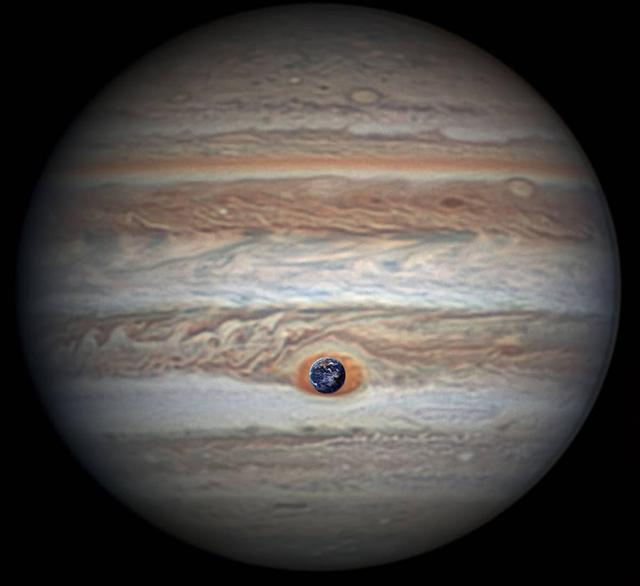
Measuring in at 10,159 miles (16,350 kilometers) in width (as of April 3, 2017) Jupiter's Great Red Spot is 1.3 times as wide as Earth. This composite image was generated by combining NASA imagery of Earth with an image of Jupiter taken by astronomer Christopher Go. This composite image was generated by combining NASA imagery of Earth with an image of Jupiter taken by astronomer Christopher Go. https://photojournal.jpl.nasa.gov/catalog/PIA21774

These thermal images show a hot south pole on the planet Neptune. These warmer temperatures provide an avenue for methane to escape out of the deep atmosphere. The images were obtained with the Very Large Telescope in Chile Sept. 1 and 2, 2006.
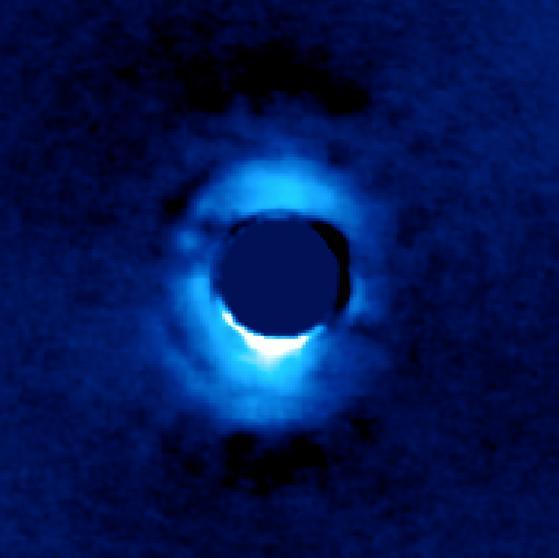
This image shows the dusty disk of planetary material surrounding the young star HD 141569, located 380 light-years away from Earth. It was taken using the vortex coronagraph on the W.M. Keck Observatory. The vortex suppressed light from the star in the center, revealing light from the innermost ring of planetary material around the star (blue). The disk around the star, made of olivine particles, extends from 23 to 70 astronomical units from the star. By comparison, Uranus is over 19 astronomical units from our sun, and Neptune about 30 astronomical units. One astronomical unit is the distance between Earth and our sun. http://photojournal.jpl.nasa.gov/catalog/PIA21090
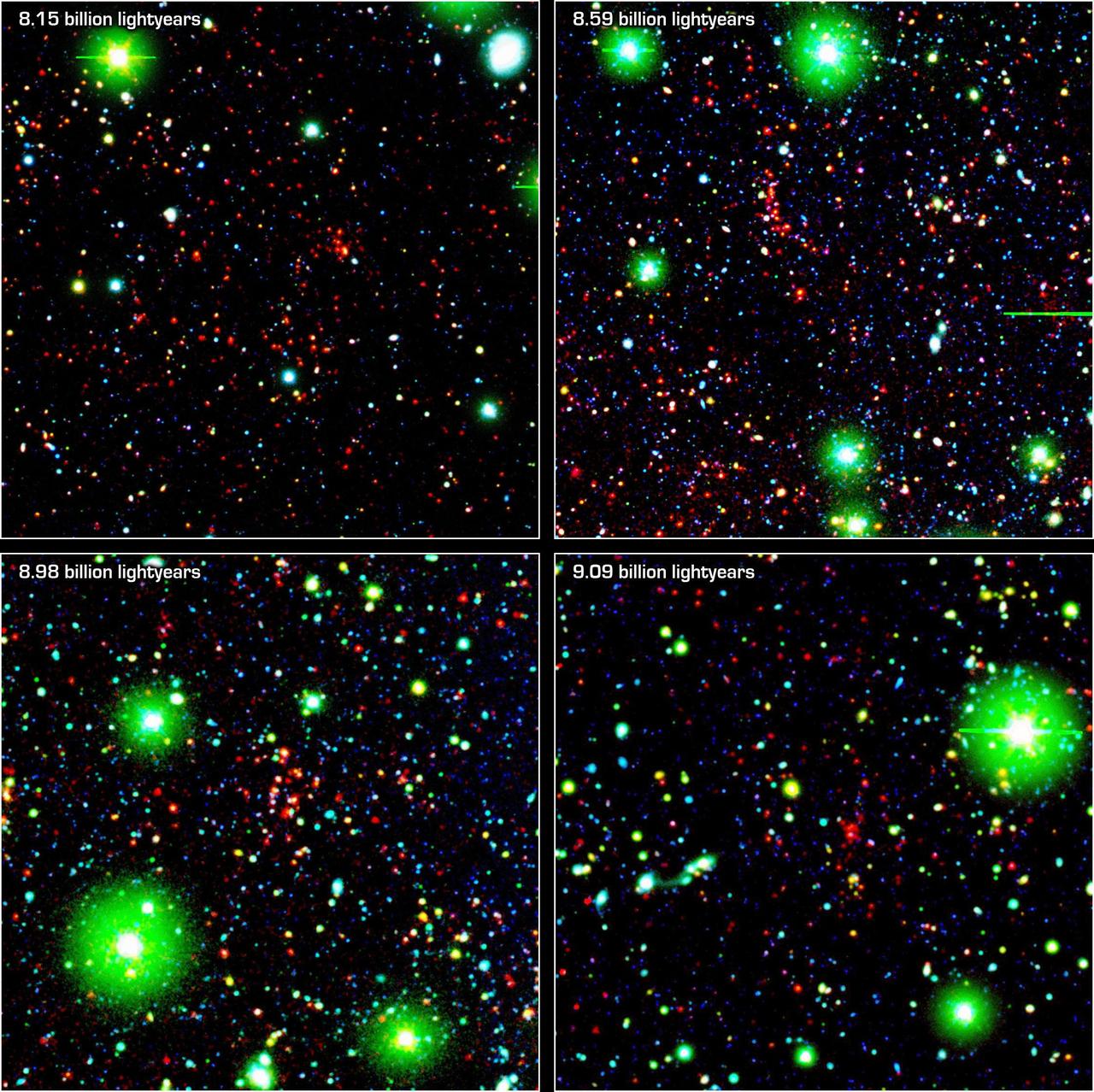
Like great friends, galaxies stick together. Astronomers using NASA Spitzer Space Telescope have spotted a handful of great galactic pals bonding back when the universe was a mere 4.6 billion years old.
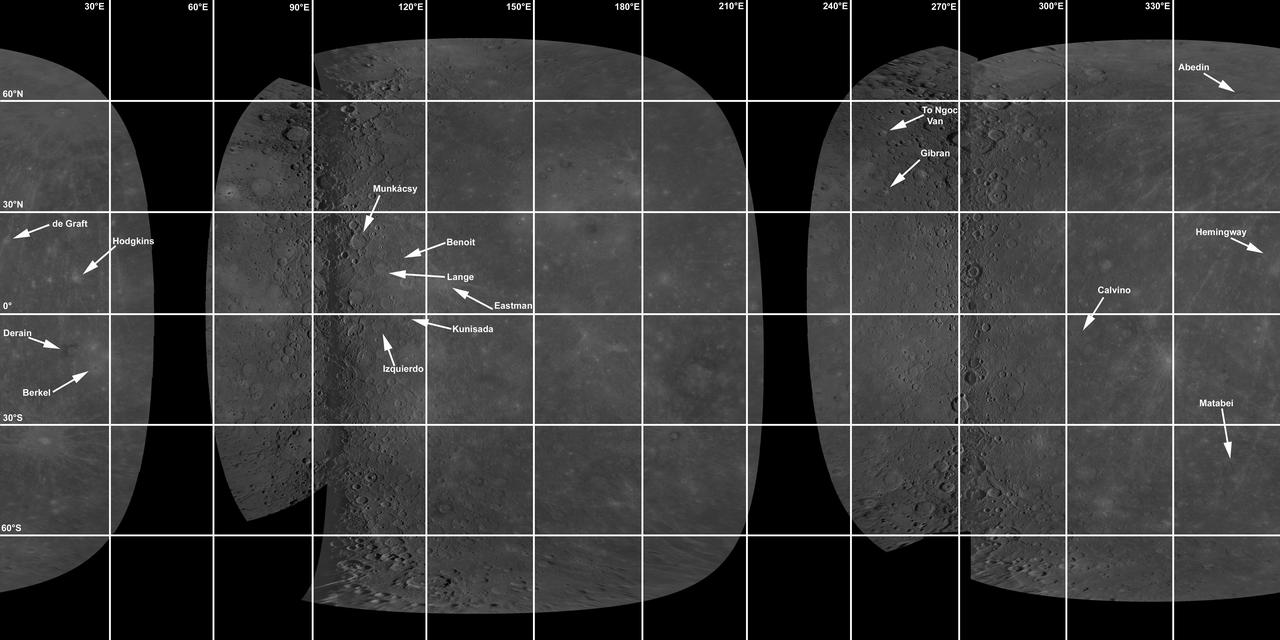
The International Astronomical Union recently approved names for 16 impact craters on Mercury. Several of the craters are from areas seen for the first time at close range by MESSENGER during its second Mercury flyby.

This artist conception shows a binary-star, or two-star, system, called HD 113766, where astronomers suspect a rocky Earth-like planet is forming around one of the stars.
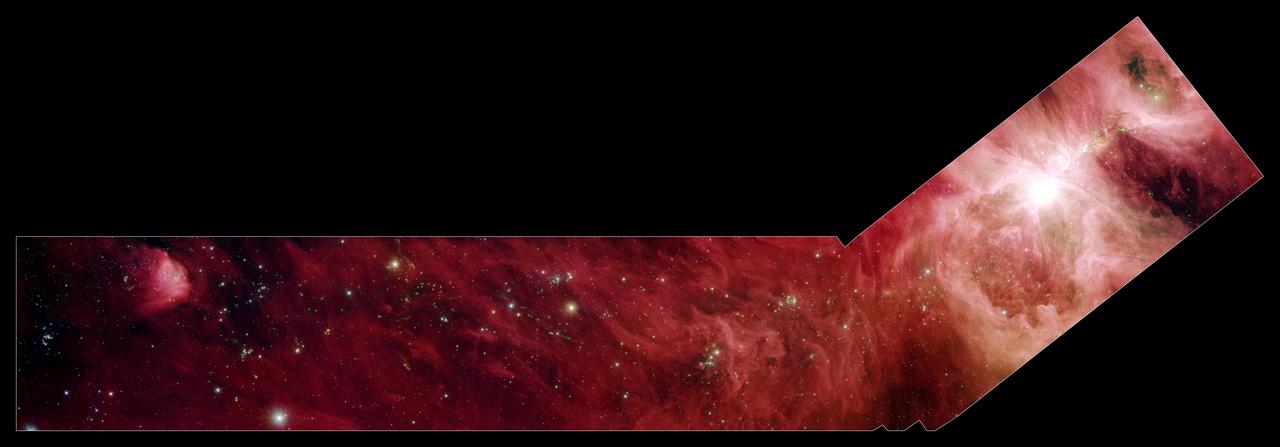
This image composite shows a part of the Orion constellation surveyed by NASA Spitzer Space Telescope. The shape of the main image was designed by astronomers to roughly follow the shape of Orion cloud A, an enormous star-making factory.
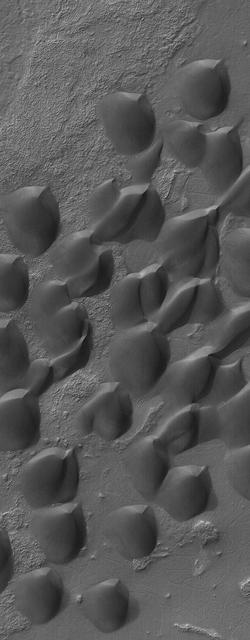
This MOC image shows dark sand dunes, formed by winds blowing from the southwest lower left, in Wirtz Crater. The crater is named for Carl Wilhelm Wirtz , a German astronomer

This diagram illustrates how astronomers using NASA Spitzer Space Telescope can capture the elusive spectra of hot-Jupiter planets. Spectra are an object light spread apart into its basic components, or wavelengths.
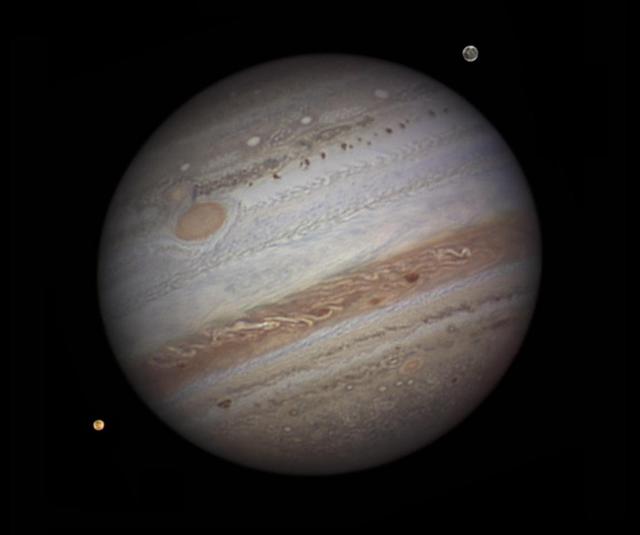
Ground-based astronomers will be playing a vital role in NASA Juno mission. Images from the amateur astronomy community are needed to help the JunoCam instrument team predict what features will be visible when the camera images are taken.
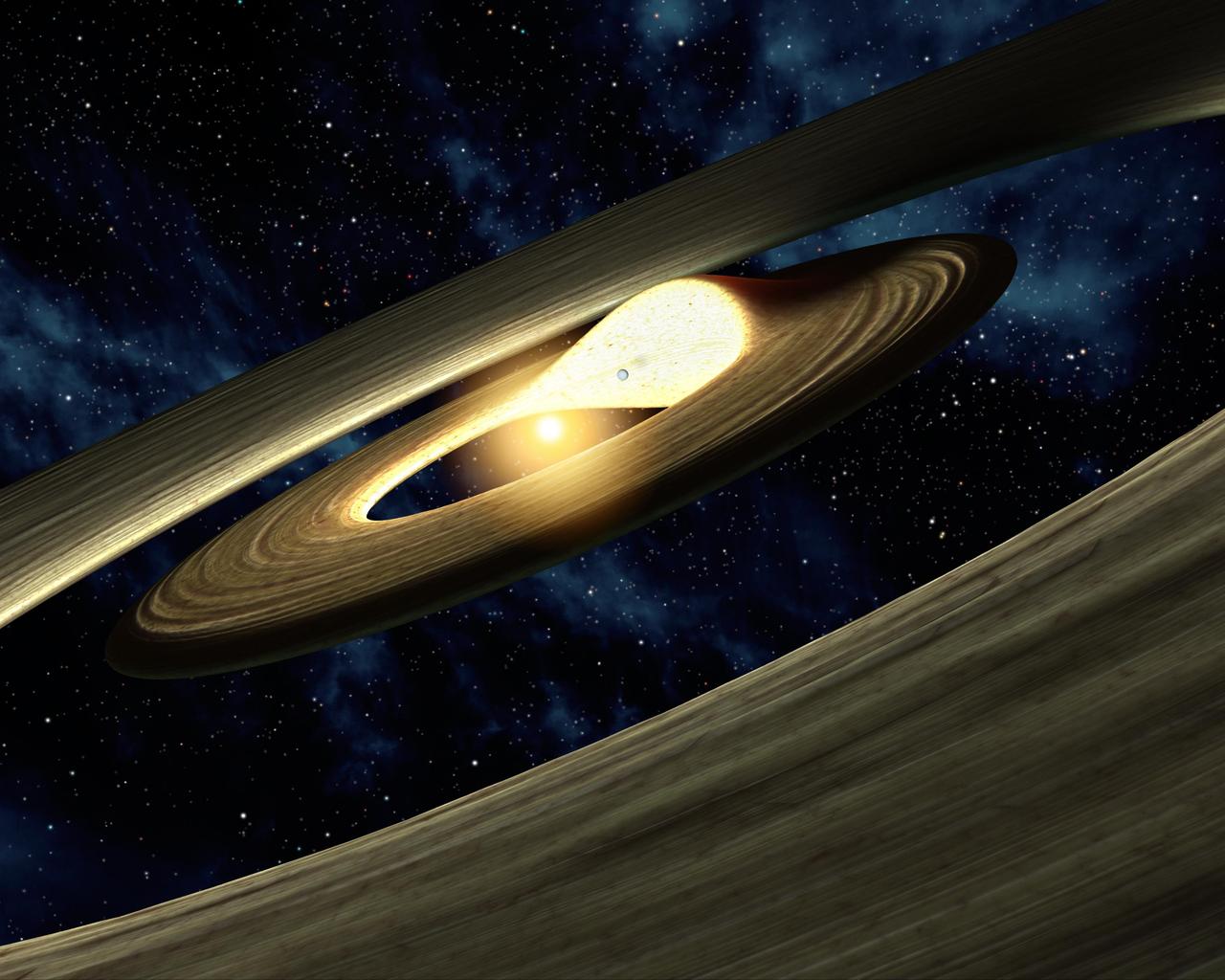
This artist conception shows a lump of material in a swirling, planet- forming disk. Astronomers using NASA Spitzer Space Telescope found evidence that either another star or a planet could be pushing planetary material together, as illustrated here.
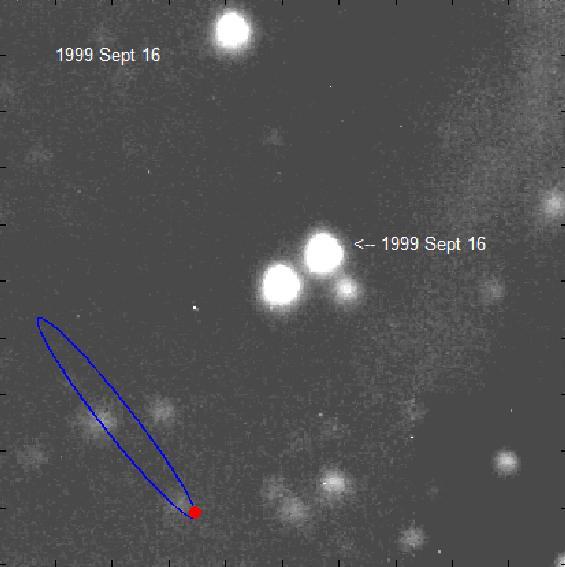
This image shows the star VB 10 moving across the sky over a period of nine years. Astronomers nabbed a planet circling this star using a method called astrometry -- the first successful application of the method to planet hunting.
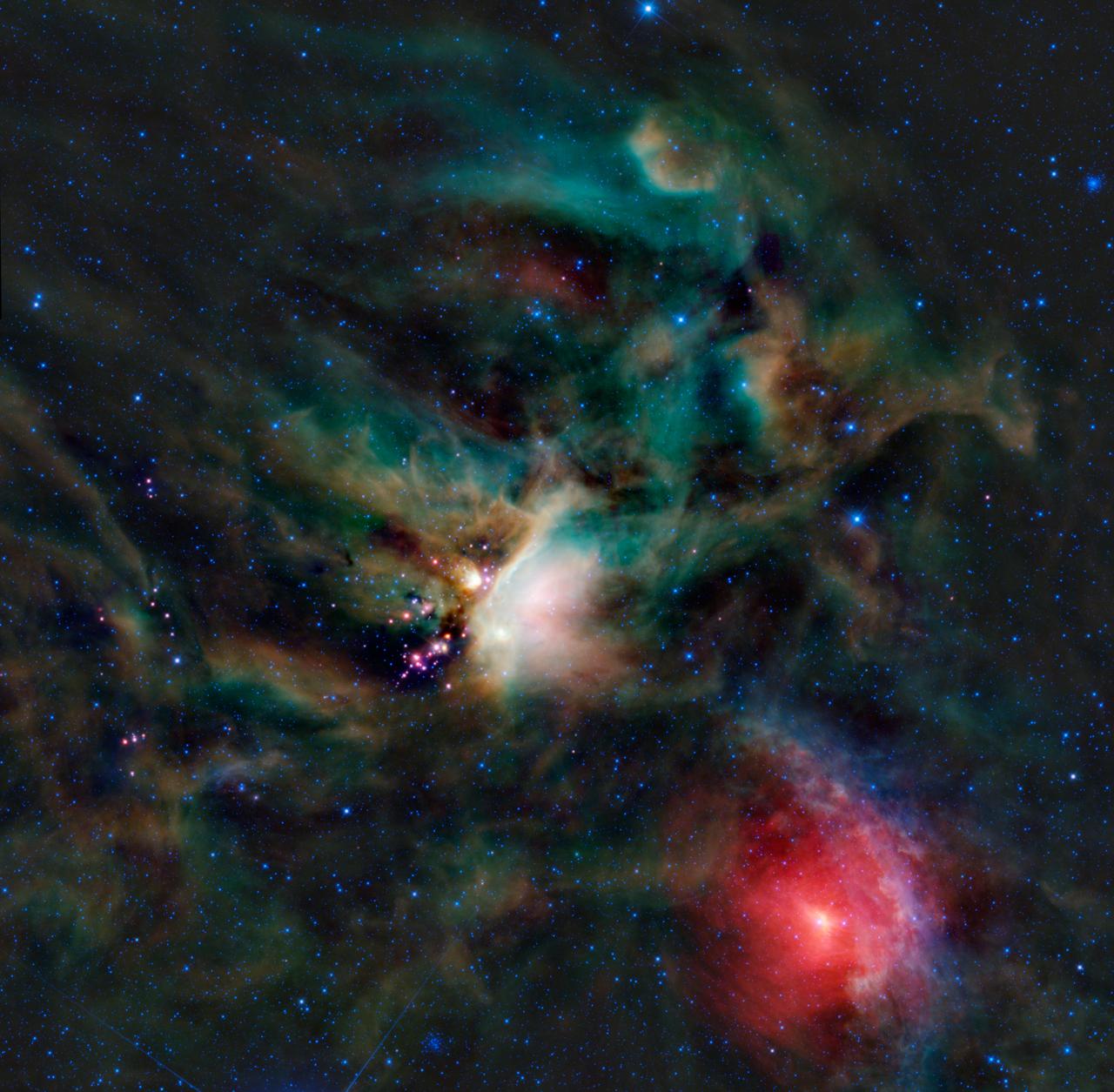
A rich collection of colorful astronomical objects is revealed in this picturesque image of the Rho Ophiuchi cloud complex from NASA Wide-field Infrared Explorer; the cloud is found rising above the plane of the Milky Way in the night sky.

Astronomers have discovered a massive cluster of young galaxies forming in the distant universe. The growing galactic metropolis is known as COSMOS-AzTEC3. This image was taken Japan Subaru telescope atop Mauna Kea in Hawaii.

Astronomers using NASA Hubble Space Telescope stumbled upon a mysterious object that grudgingly yielded clues to its identity. The object is classified as a planetary nebula, the glowing remains of a dying, lightweight star.
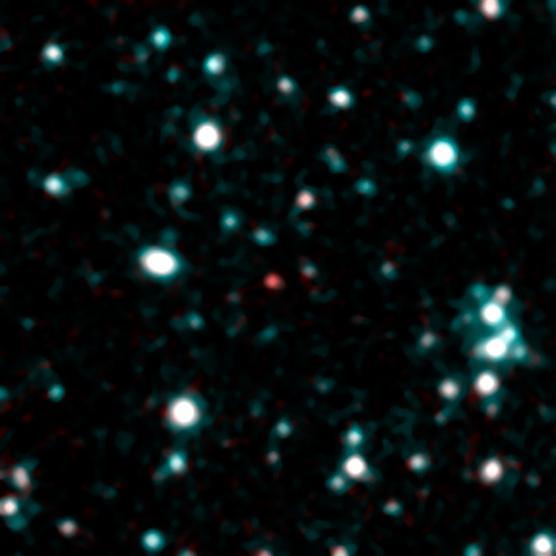
This image from NASA Spitzer Space Telescope using infrared light shows what astronomers think is one of the coldest brown dwarfs discovered so far red dot in middle of frame.
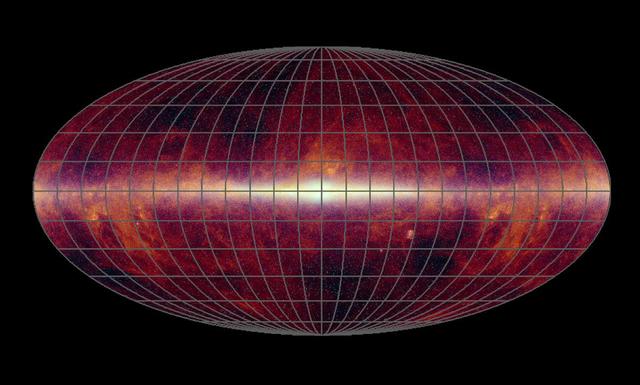
This image is an all-sky infrared map consisting of data taken by previous missions: the Infrared Astronomical Satellite; NASA Cosmic Background Explorer; and the Two-Micron All-Sky Survey.

A growing black hole, called a quasar, is seen at the center of a faraway galaxy in this artist concept. Astronomers using NASA Spitzer and Chandra space telescopes discovered swarms of similar quasars hiding in dusty galaxies in the distant universe.
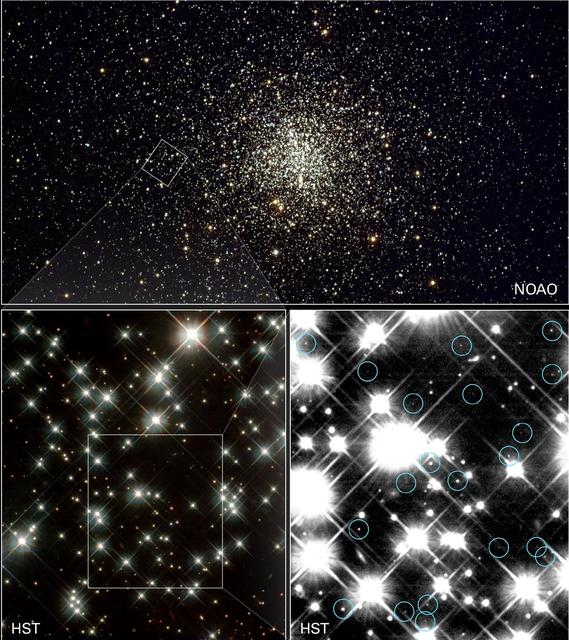
Peering deep inside a cluster of several hundred thousand stars, NASA Hubble Space Telescope has uncovered the oldest burned-out stars in our Milky Way Galaxy, giving astronomers a fresh reading on the age of the universe.
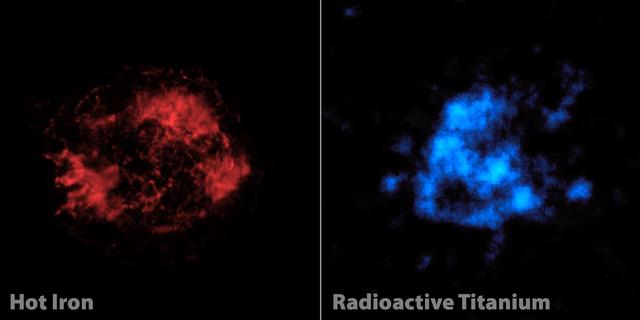
When astronomers first looked at images of a supernova remnant called Cassiopeia A, captured by NASA NuSTAR. The mystery of Cassiopeia A Cas A, a massive star that exploded in a supernova more than 11,000 years ago continues to confound scientists.

This infrared image from NASA Spitzer Space Telescope shows the Helix nebula, a cosmic starlet often photographed by amateur astronomers for its vivid colors and eerie resemblance to a giant eye.
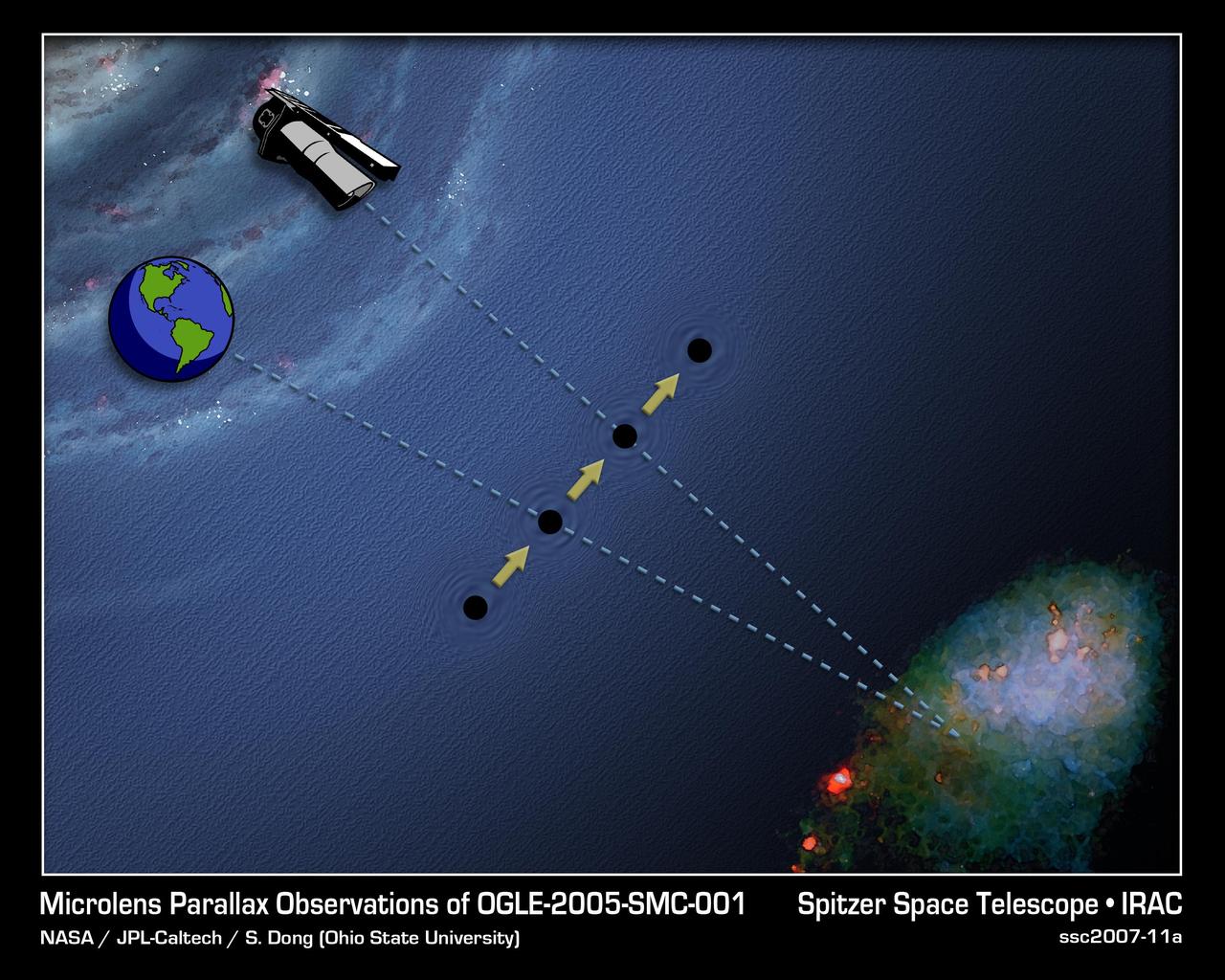
Using the unique orbit of NASA Spitzer Space Telescope and a depth-perceiving trick called parallax, astronomers have determined the distance to an invisible Milky Way object called OGLE-2005-SMC-001.

This graphic illustrates where astronomers at last found oxygen molecules in space -- near the star-forming core of the Orion nebula. The squiggly lines, or spectra, reveal the signatures of oxygen molecules, detected by ESA Hershel Space Observatory.
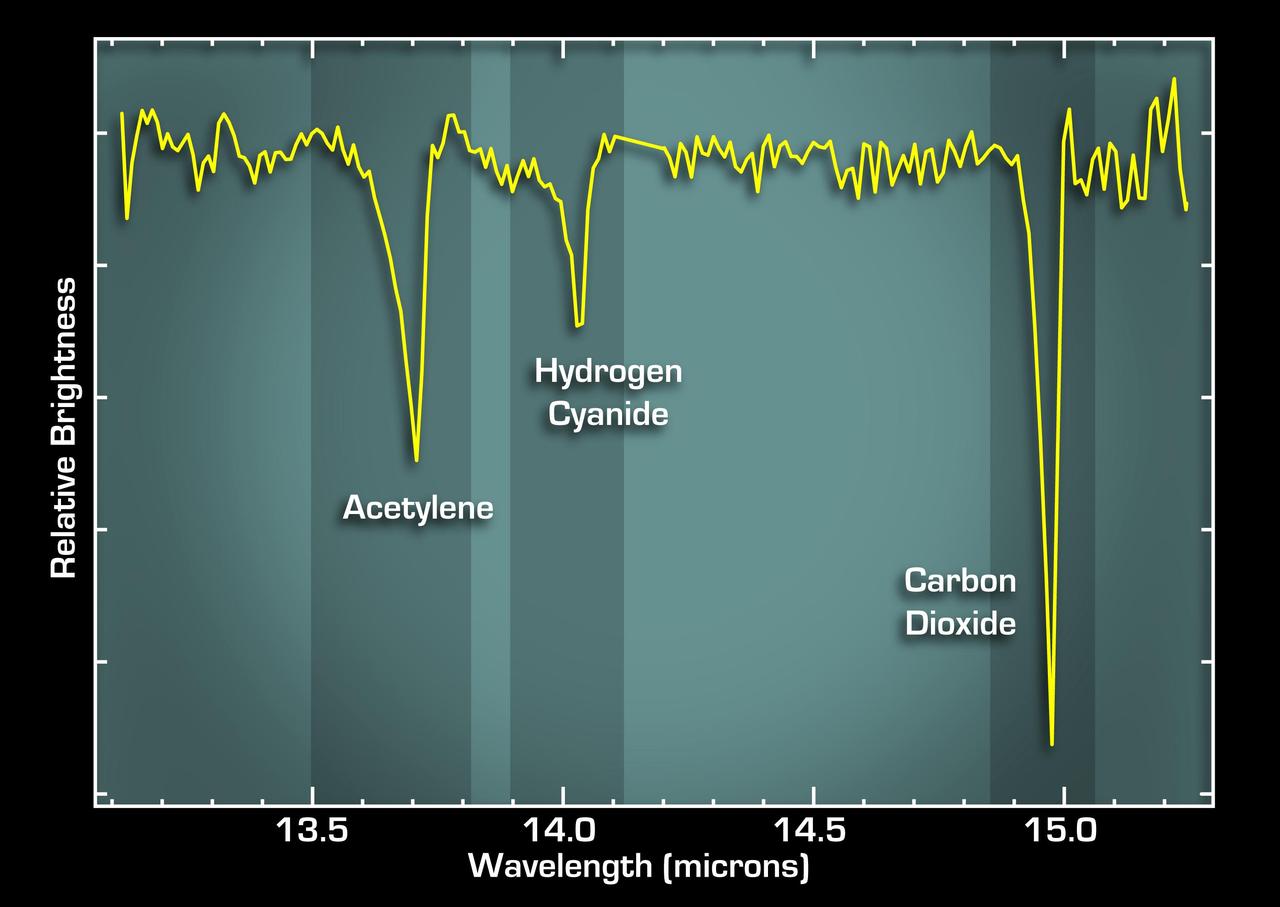
This graph, or spectrum, from NASA Spitzer Space Telescope tells astronomers that some of the most basic ingredients of DNA and protein are concentrated in a dusty planet-forming disk circling a young sun-like star called IRS 46.

Using NASA Herschel Space Observatory, astronomers have discovered that comet Hartley 2 possesses a ratio of heavy water to light, or normal, water that matches what found in Earth oceans.
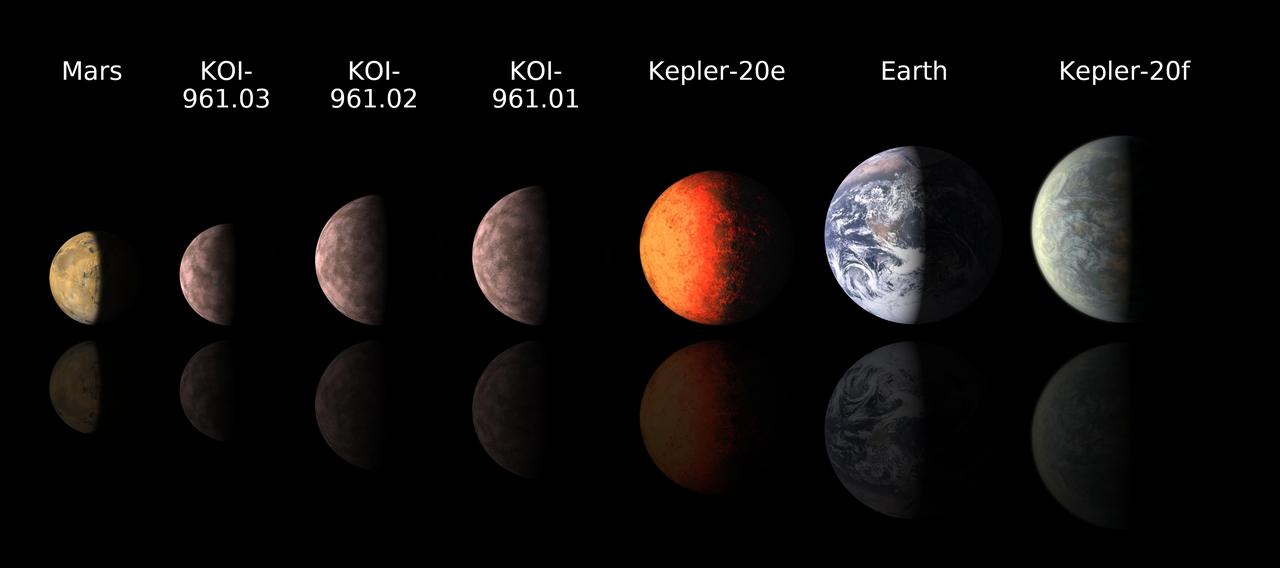
Astronomers using data from NASA Kepler mission and ground-based telescopes recently discovered the three smallest exoplanets known to circle another star, called KOI-961.01, KOI-961.02 and KOI-961.03.
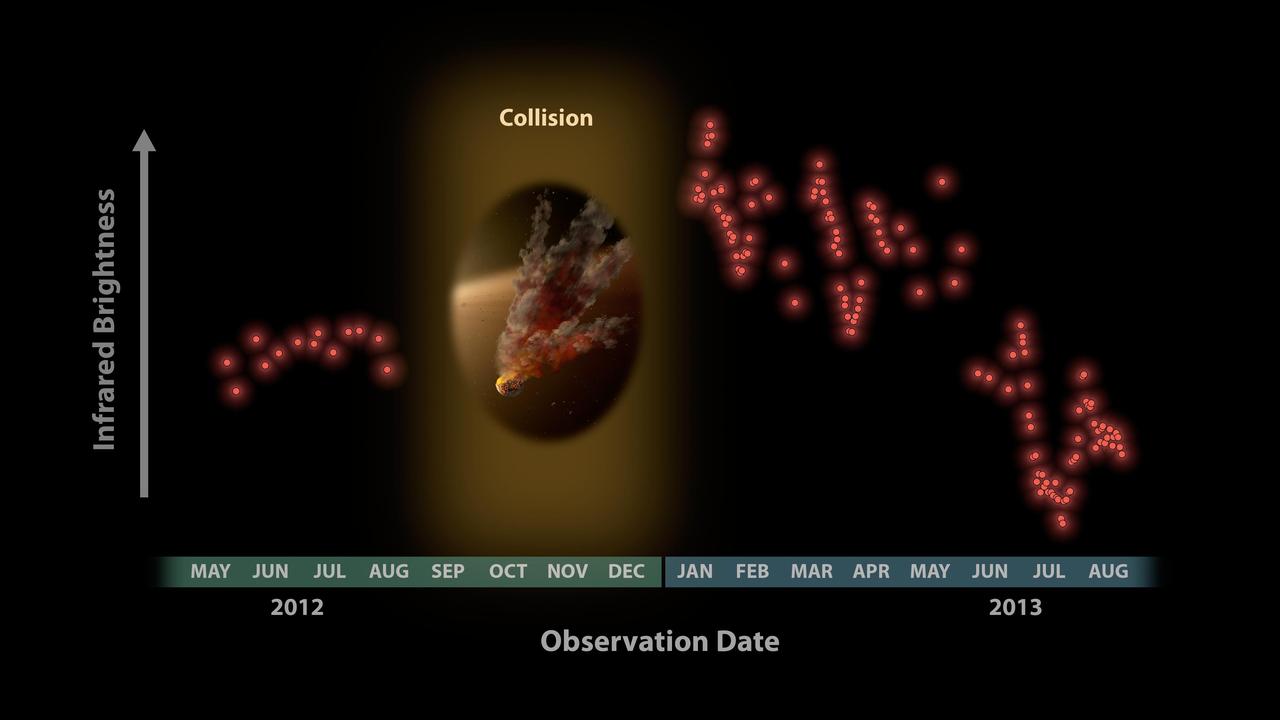
Astronomers were surprised to see these data from NASA Spitzer Space Telescope in January 2013, showing a huge eruption of dust around a star called NGC 2547-ID8.
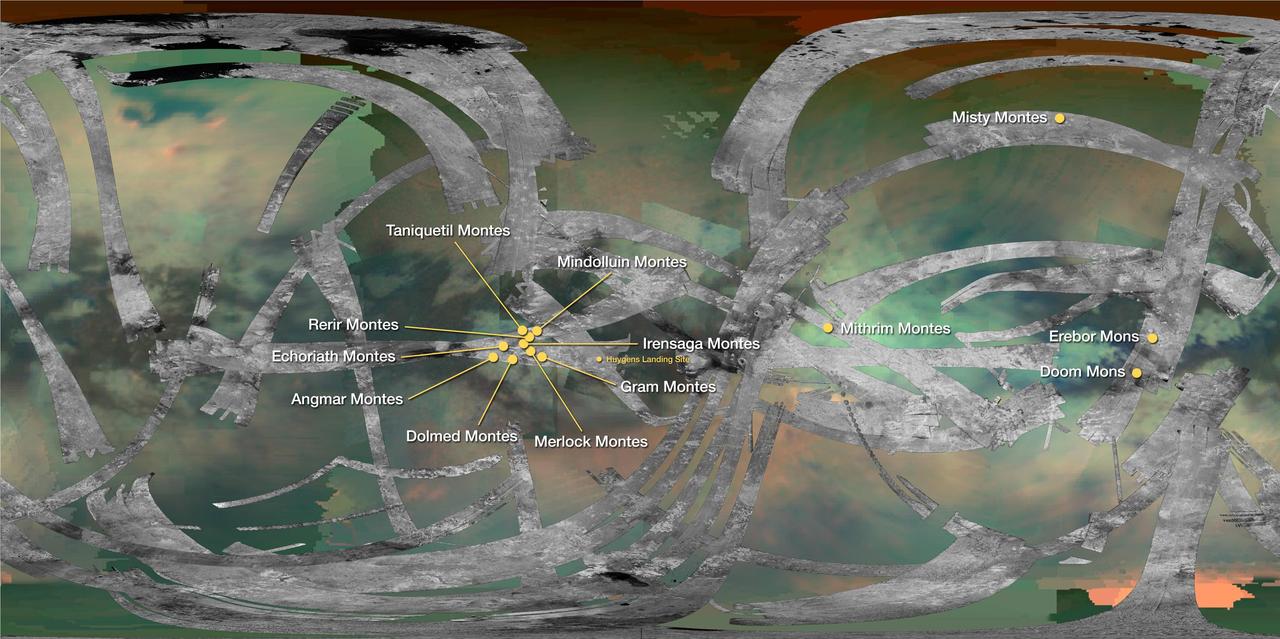
This map of Saturn moon Titan identifies the locations of mountains named by the International Astronomical Union. By convention, mountains on Titan are named for mountains from Middle-earth, the fictional setting in fantasy novels by J.R.R. Tolkien.
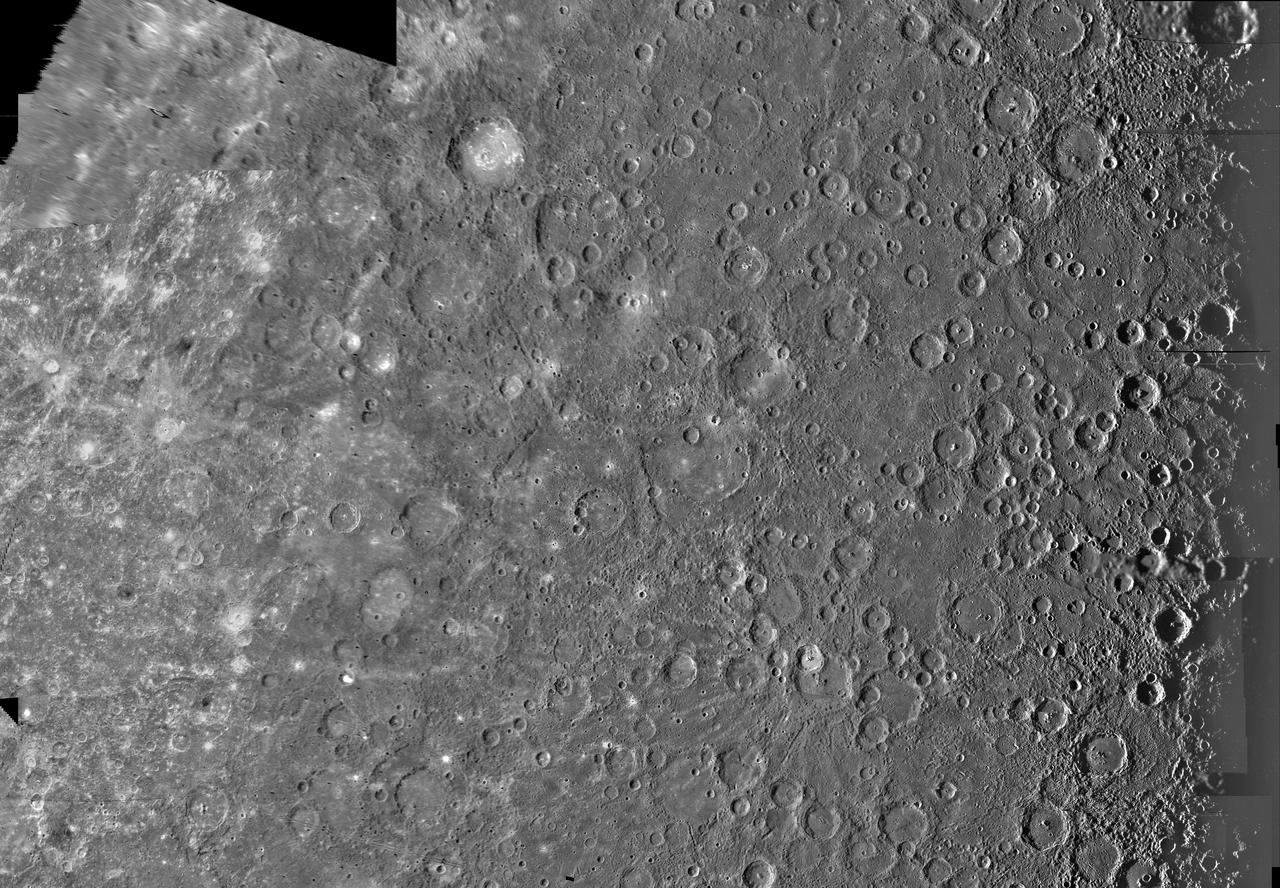
The Kuiper Quadrangle was named in memory of Dr. Gerard Kuiper, an imaging team member, and well-known astronomer, of NASA Mariner 10 Venus/Mercury. The Kuiper crater is seen left of center in this image.
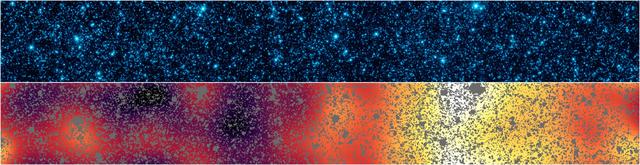
Astronomers have uncovered patterns of light that appear to be from the first stars and galaxies that formed in the universe. The light patterns were hidden within a strip of sky observed by NASA Spitzer Space Telescope.
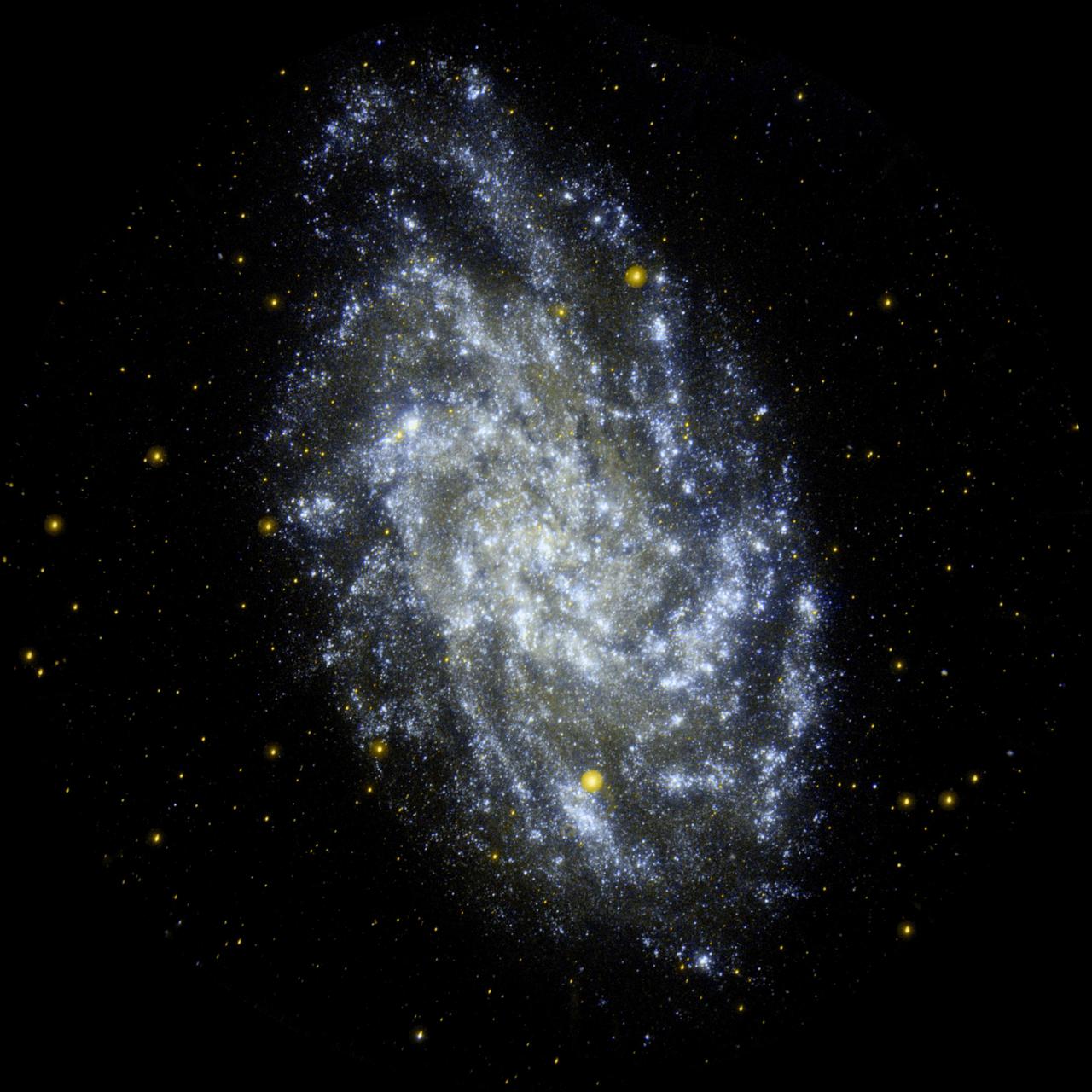
This image from NASA Galaxy Evolution Explorer shows M33, the Triangulum Galaxy, is a perennial favorite of amateur and professional astronomers alike, due to its orientation and relative proximity to us.
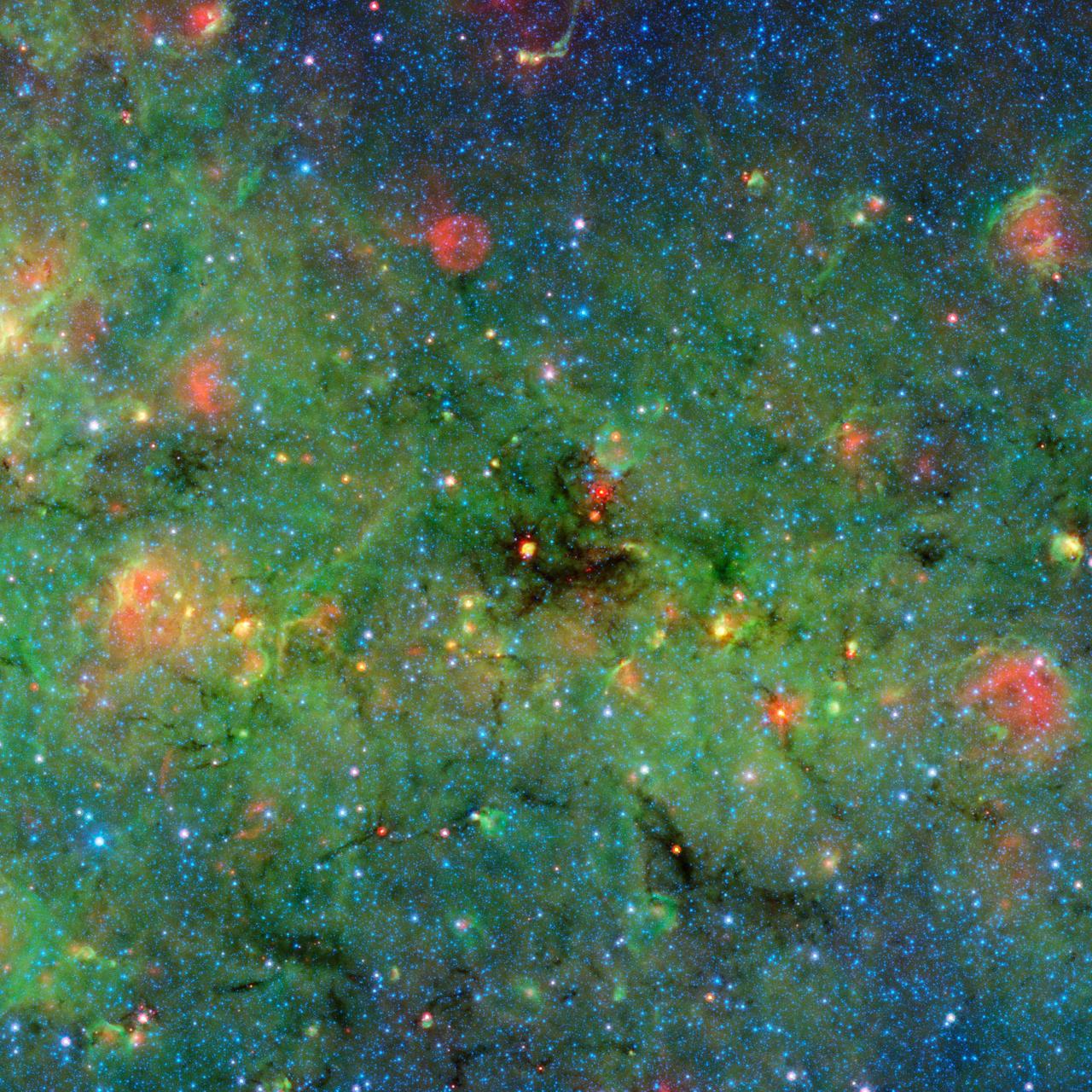
Astronomers have found cosmic clumps so dark, dense and dusty that they throw the deepest shadows ever recorded. A large cloud looms in the center of this image of the galactic plane from NASA Spitzer Space Telescope.
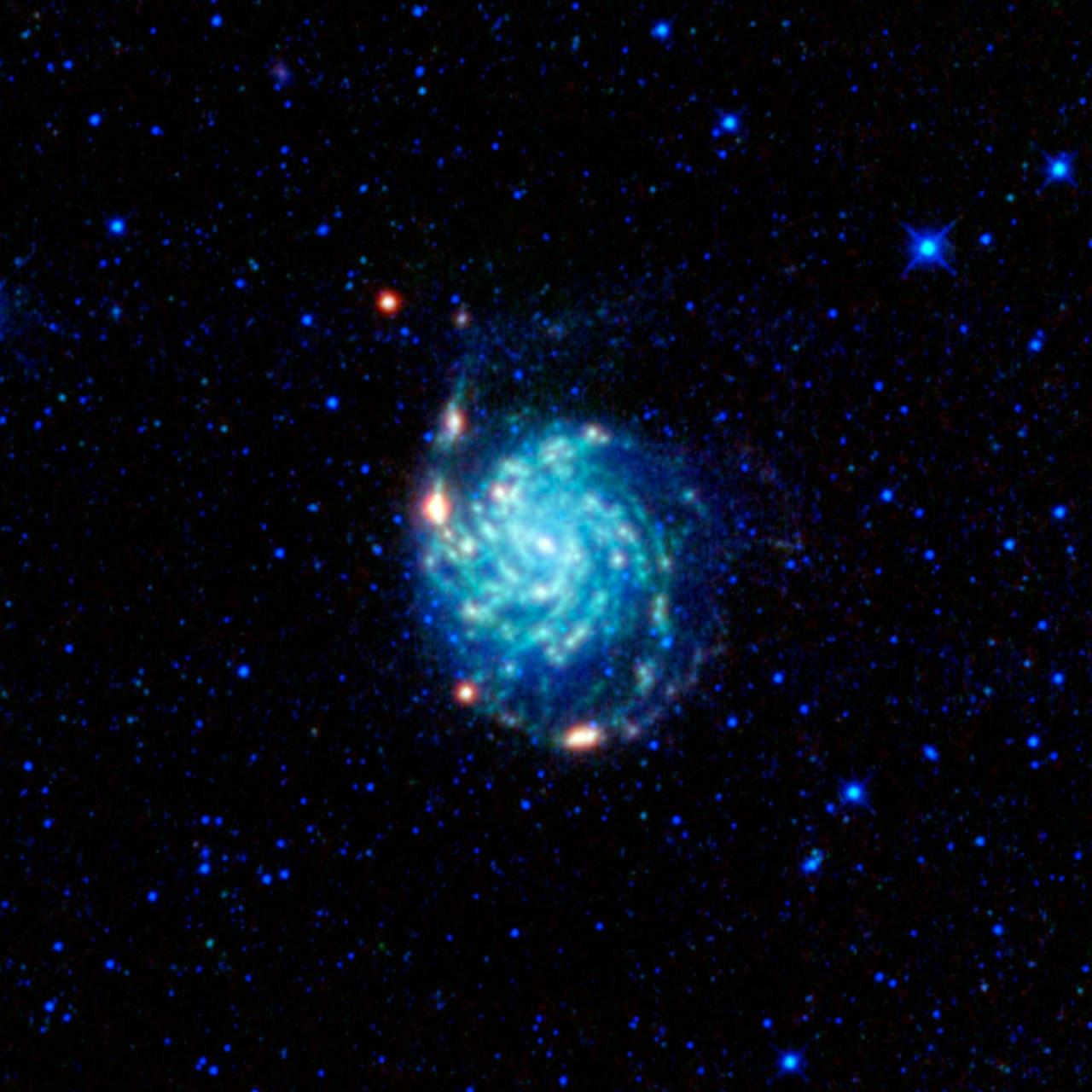
A large spiral galaxy dominates this view from NASA Wide-field Infrared Survey Explorer. The galaxy, often called the Pinwheel galaxy, was designated object 101 in astronomer Charles Messier catalog of fuzzy things in the sky that are not comets.
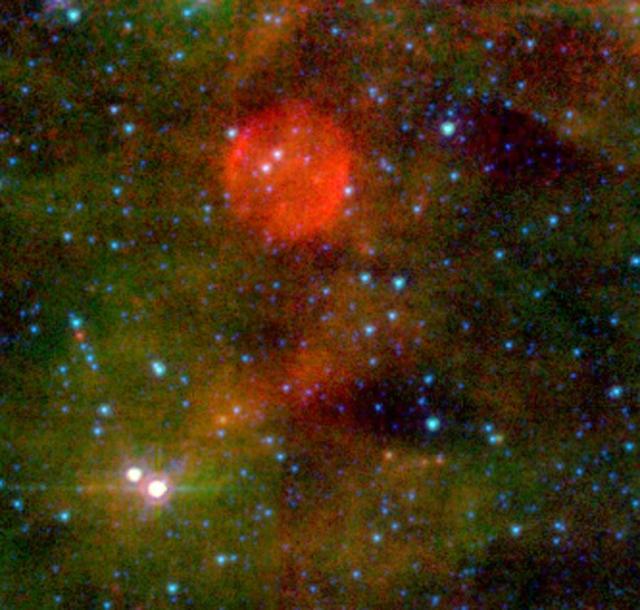
NASA Spitzer Space Telescope caught a glimpse of the Cepheus constellation, thirty thousand light-years away; astronomers think theyve found a massive star whose death barely made a peep.
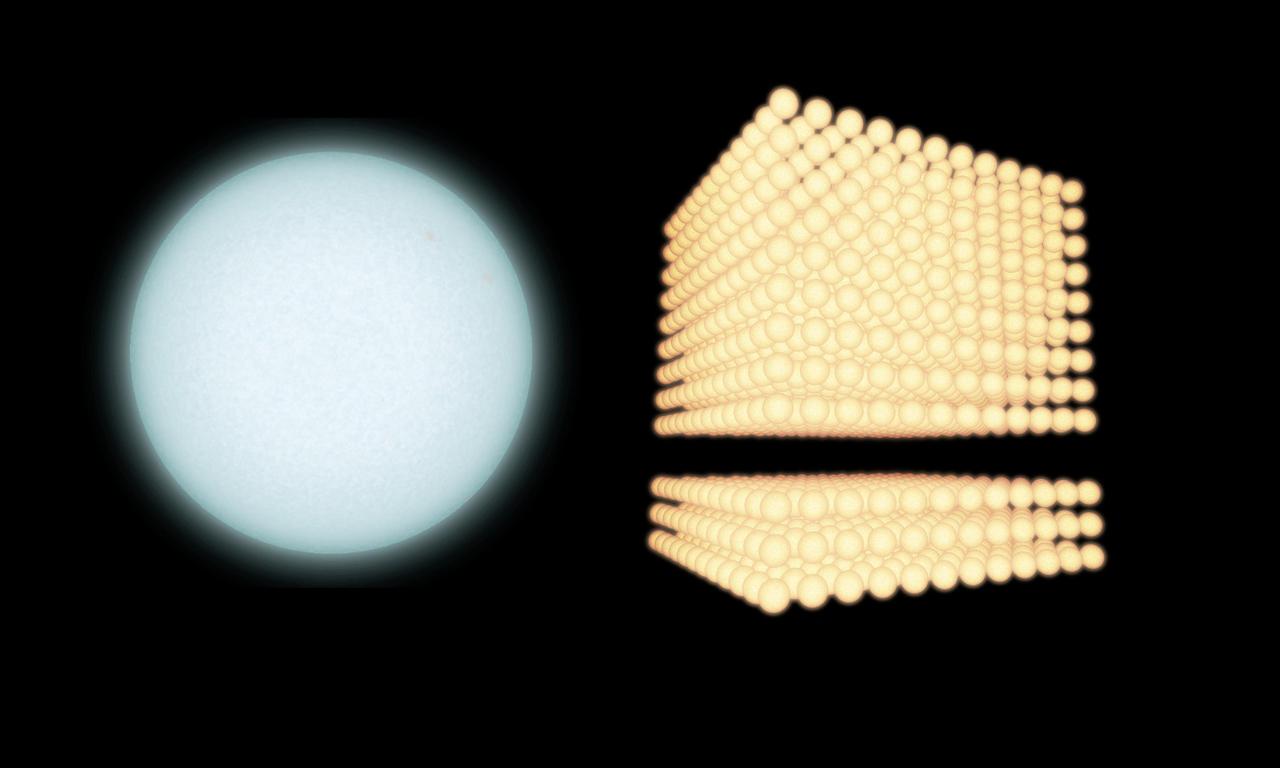
NASA Galaxy Evolution Explorer spacecraft and Cerro Tololo Inter-American Observatory combined data making this diagram illustratrating the extent to which astronomers have been underestimating the proportion of small to big stars in certain galaxies.
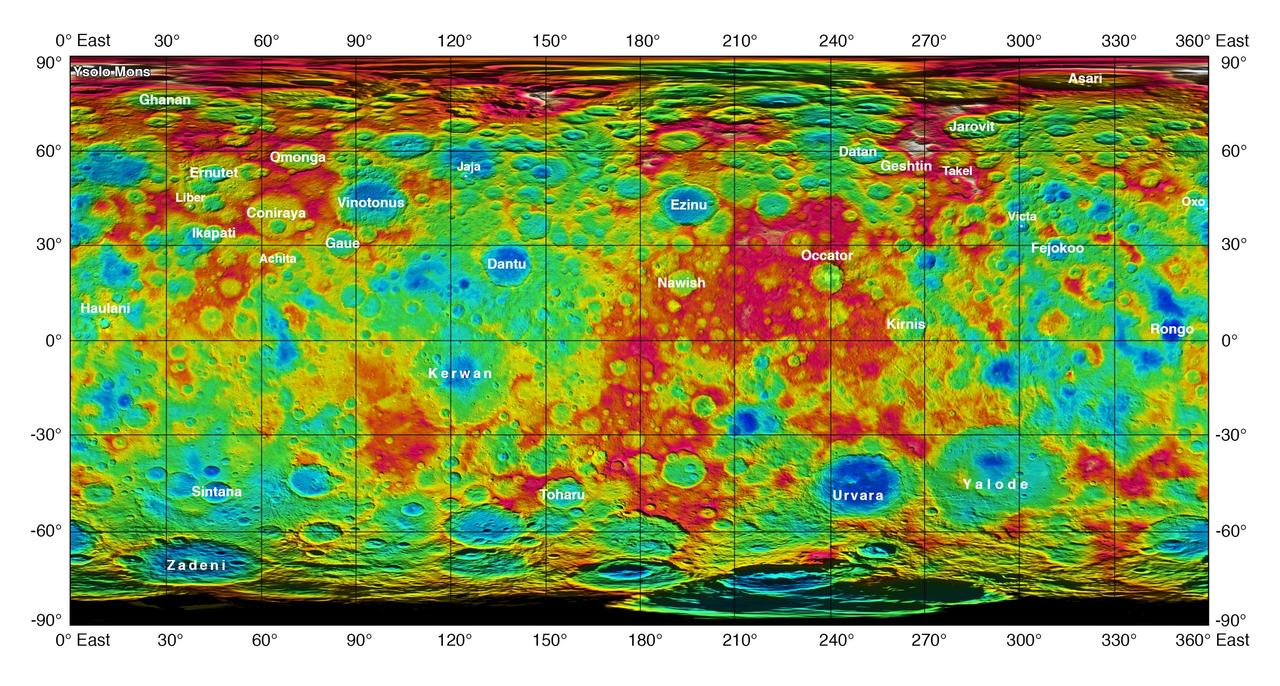
This color-coded map from NASA Dawn mission shows the highs and lows of topography on the surface of dwarf planet Ceres. It is labeled with names of features approved by the International Astronomical Union. http://photojournal.jpl.nasa.gov/catalog/PIA19974
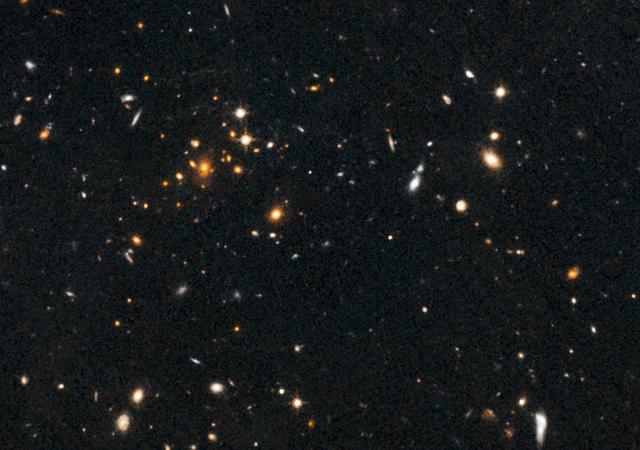
Astronomers using NASA Hubble Space Telescope have found a puzzling arc of light behind an extremely massive cluster of galaxies residing 10 billion light-years away.
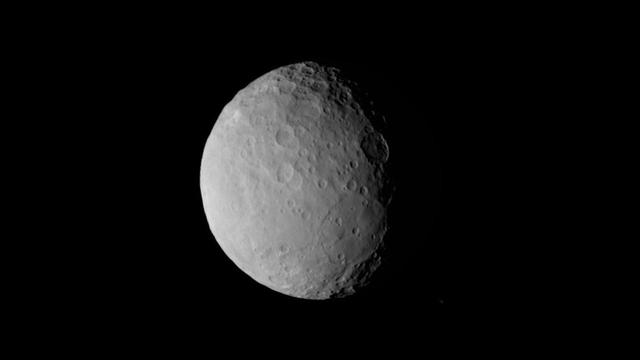
Some might see a pancake, and others a sand dollar, in this new image from NASA Dawn mission. Astronomers are puzzling over a mysterious large circular feature located south of the equator and slightly to the right of center in this view.
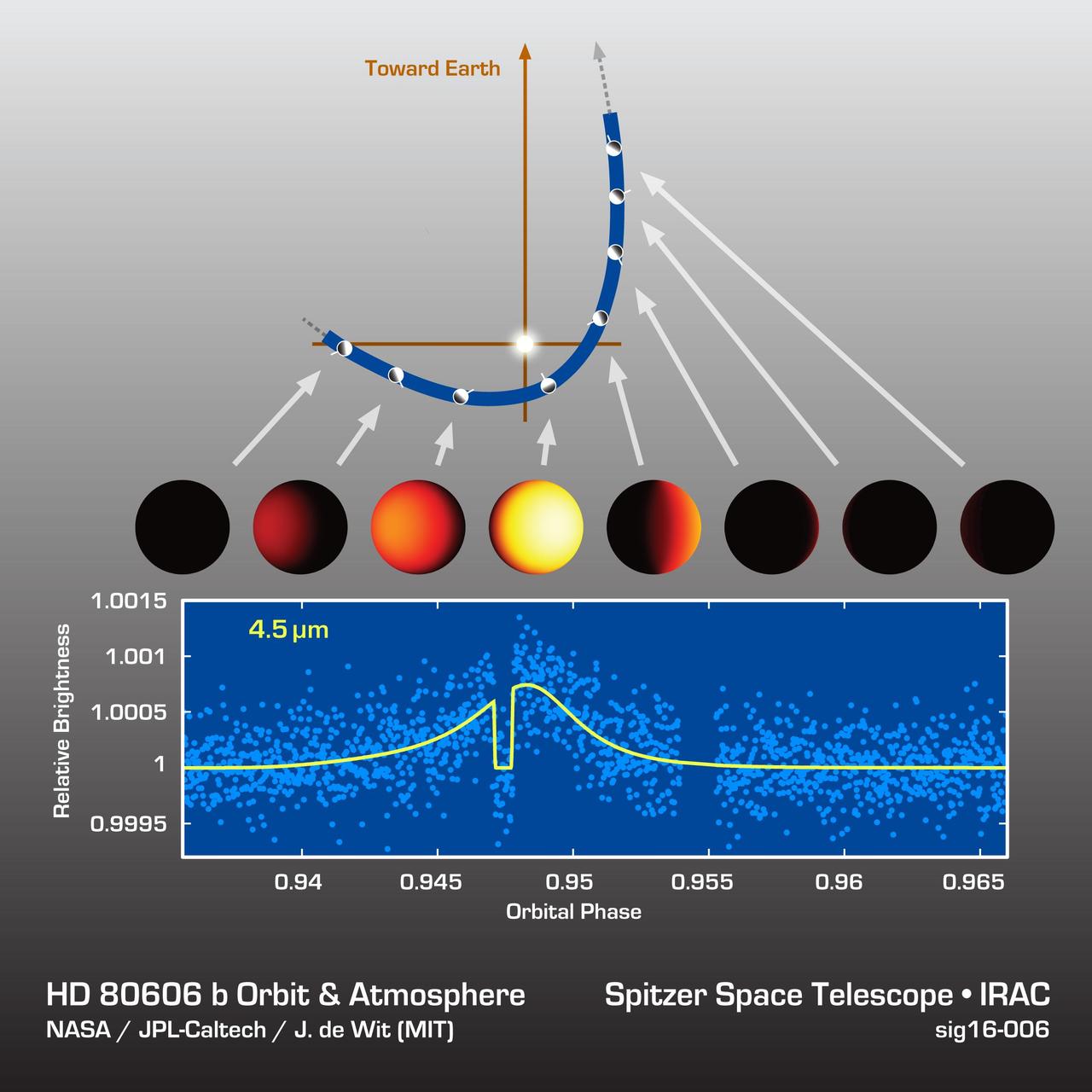
Astronomers watched an exoplanet called HD 80606b heat up and cool off during its sizzling-hot orbit around its star. The results are shown in this data plot from NASA Spitzer Space Telescope.
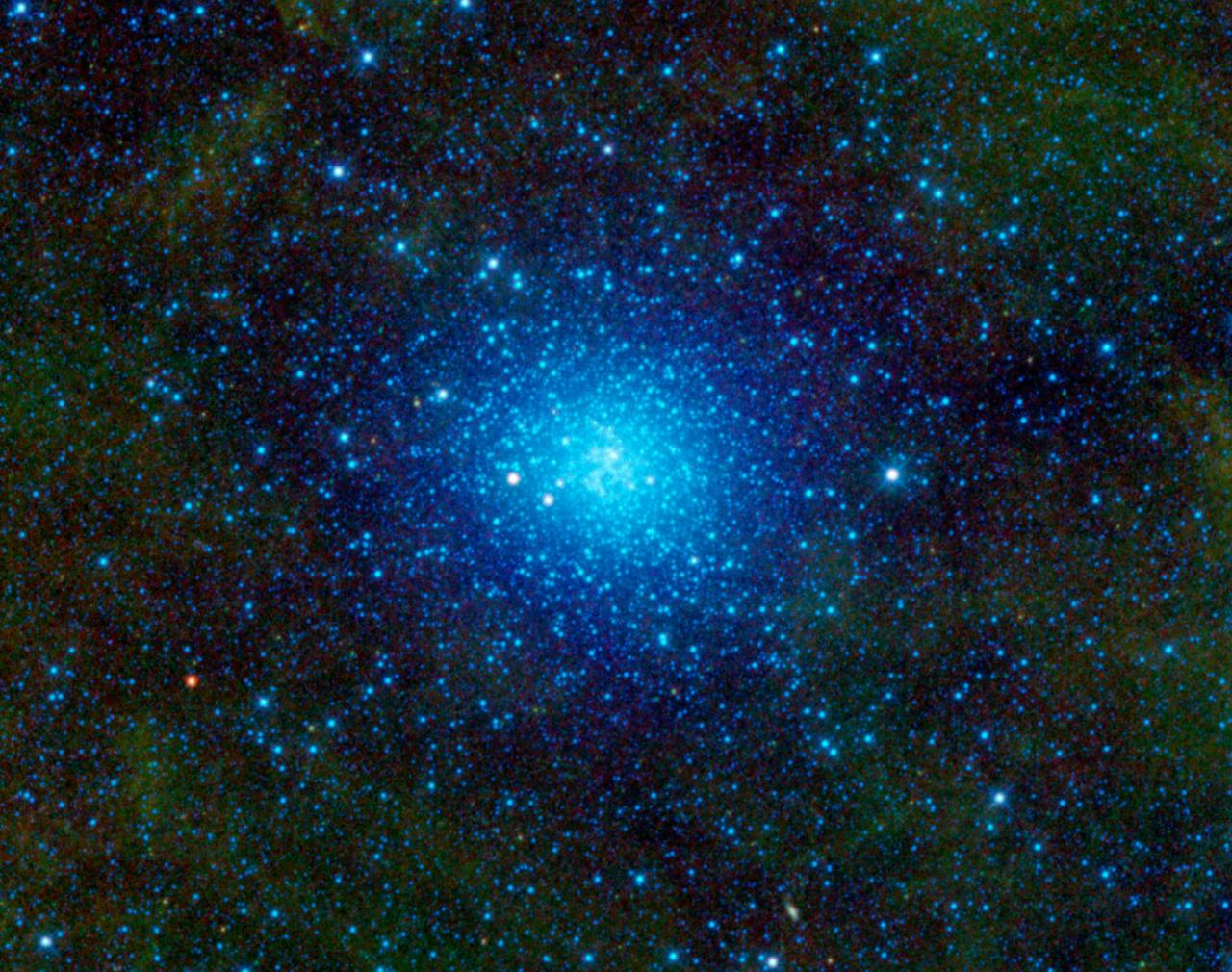
NASA Wide-field Infrared Survey Explorer has captured a favorite observing target of amateur astronomers, Omega Centauri. This celestial cluster of stars can be found in the constellation Centaurus.

This artist illustration shows a planetary disk left that weighs the equivalent of 50 Jupiter-mass planets. It demonstrates a first-of-its-kind feat from astronomers using the Herschel space observatory.

Astronomers have discovered some of the youngest stars ever seen thanks to the Herschel space observatory; dense envelopes of gas and dust surround the fledging stars known as protostars, make their detection difficult until now.
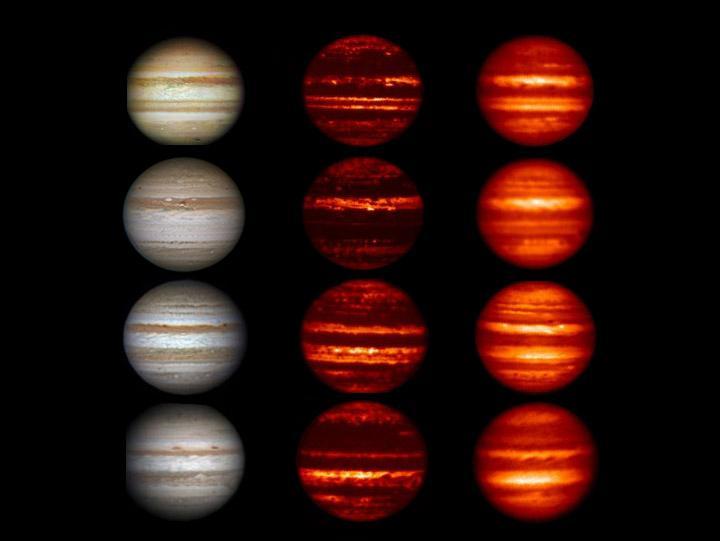
In these images obtained by amateur astronomers, Jupiter can be seen losing a brown-colored belt south of the equator called the South Equatorial Belt SEB from 2009 to 2010.
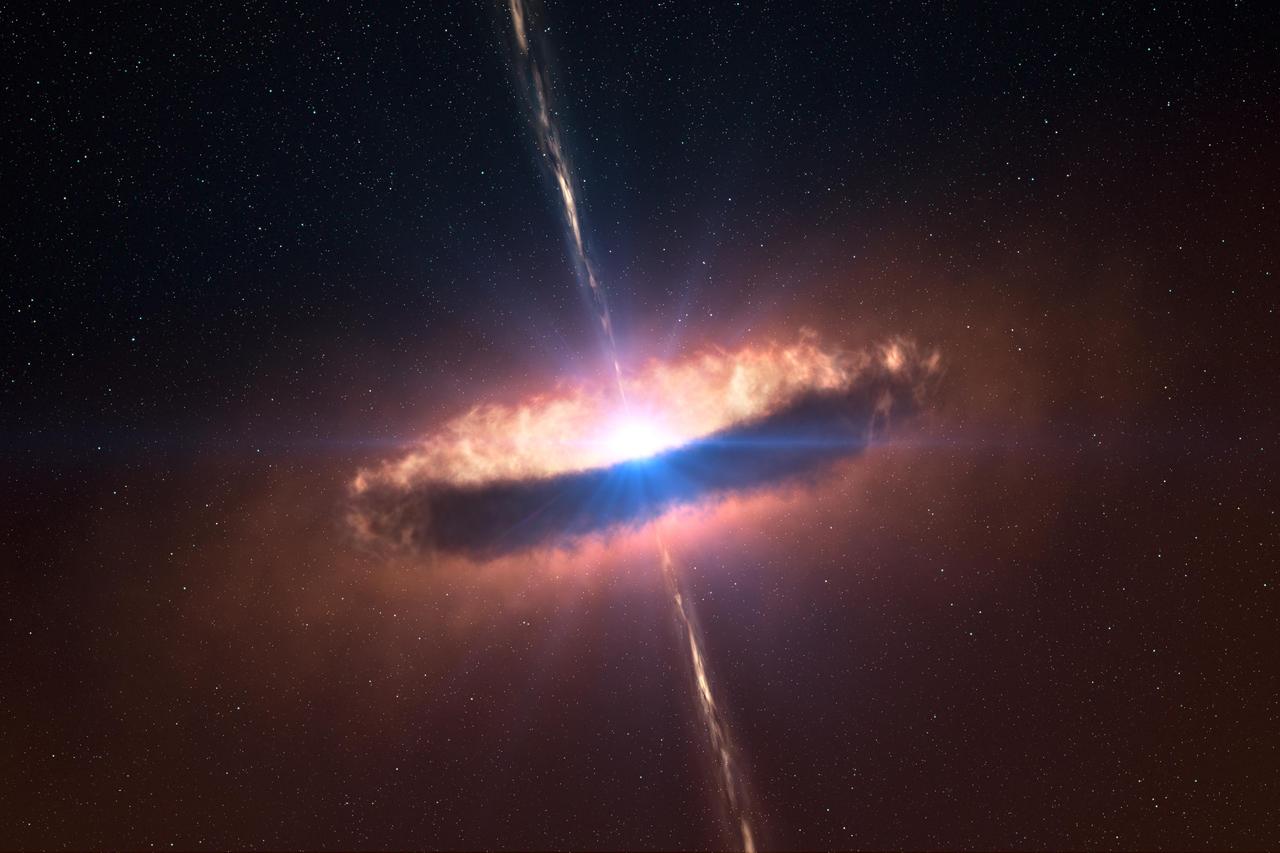
Astronomers have obtained the first clear look at a dusty disk closely encircling a massive baby star; this artist concept shows what such a massive disk might look like.

Astronomers have found that stars are forming more rapidly in the center of a distant galaxy cluster than at its edges, which is completely reversed from galaxy clusters seen in the local universe.
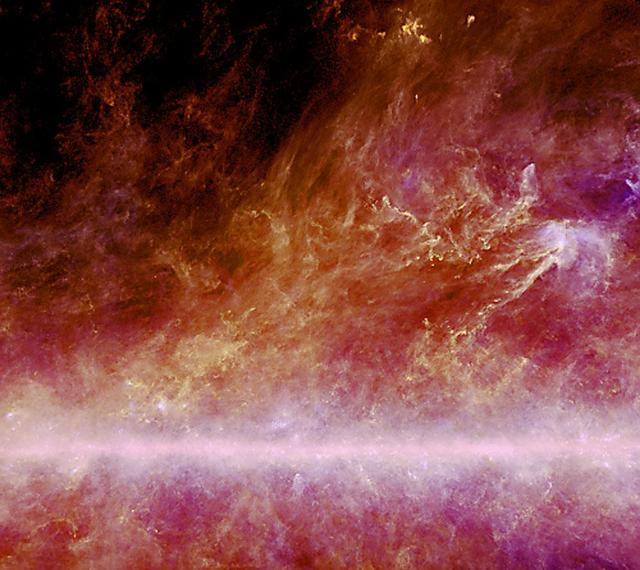
This three-color combination constructed from ESA Planck two highest frequency channels and an image obtained with the NASA Infrared Astronomical Satellite shows local dust structures within 500 light-years of the sun.

This computer-simulated image shows gas from a tidally shredded star falling into a black hole. Astronomers observed the flare in ultraviolet light using NASA Galaxy Evolution Explorer.
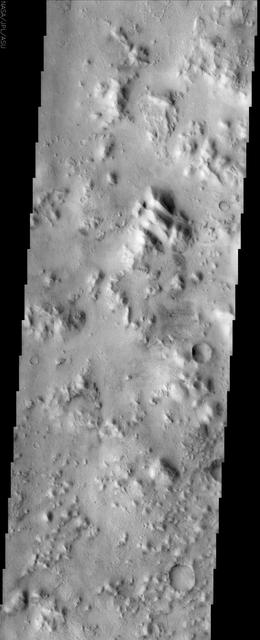
The Cerberus feature, imaged here by NASA Mars Odyssey, is a dark region at the southeastern edge of the huge Elysium Mons volcanic complex that was visible to early astronomers because it was a distinctive dark spot on a large bright region of Mars.
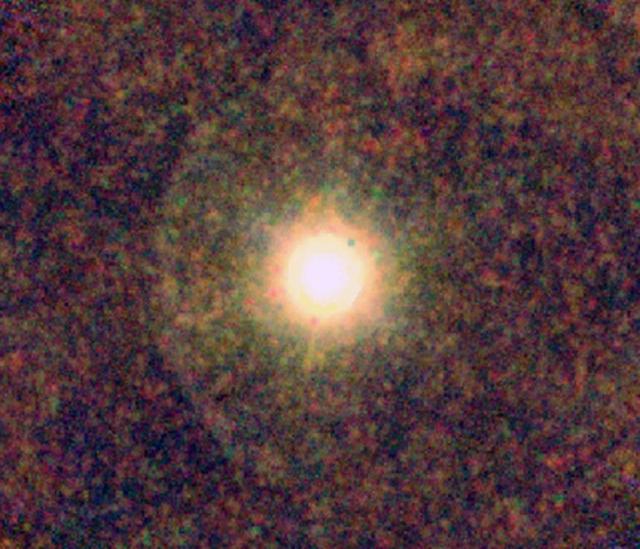
This ESA Herschel image shows IRC+10216, also known as CW Leonis, a star rich in carbon where astronomers were surprised to find water. This color-coded image shows the star, surrounded by a clumpy envelope of dust.

Astronomers using NASA Hubble Space Telescope have found a bow shock around a very young star in the nearby Orion nebula, an intense star-forming region of gas and dust.
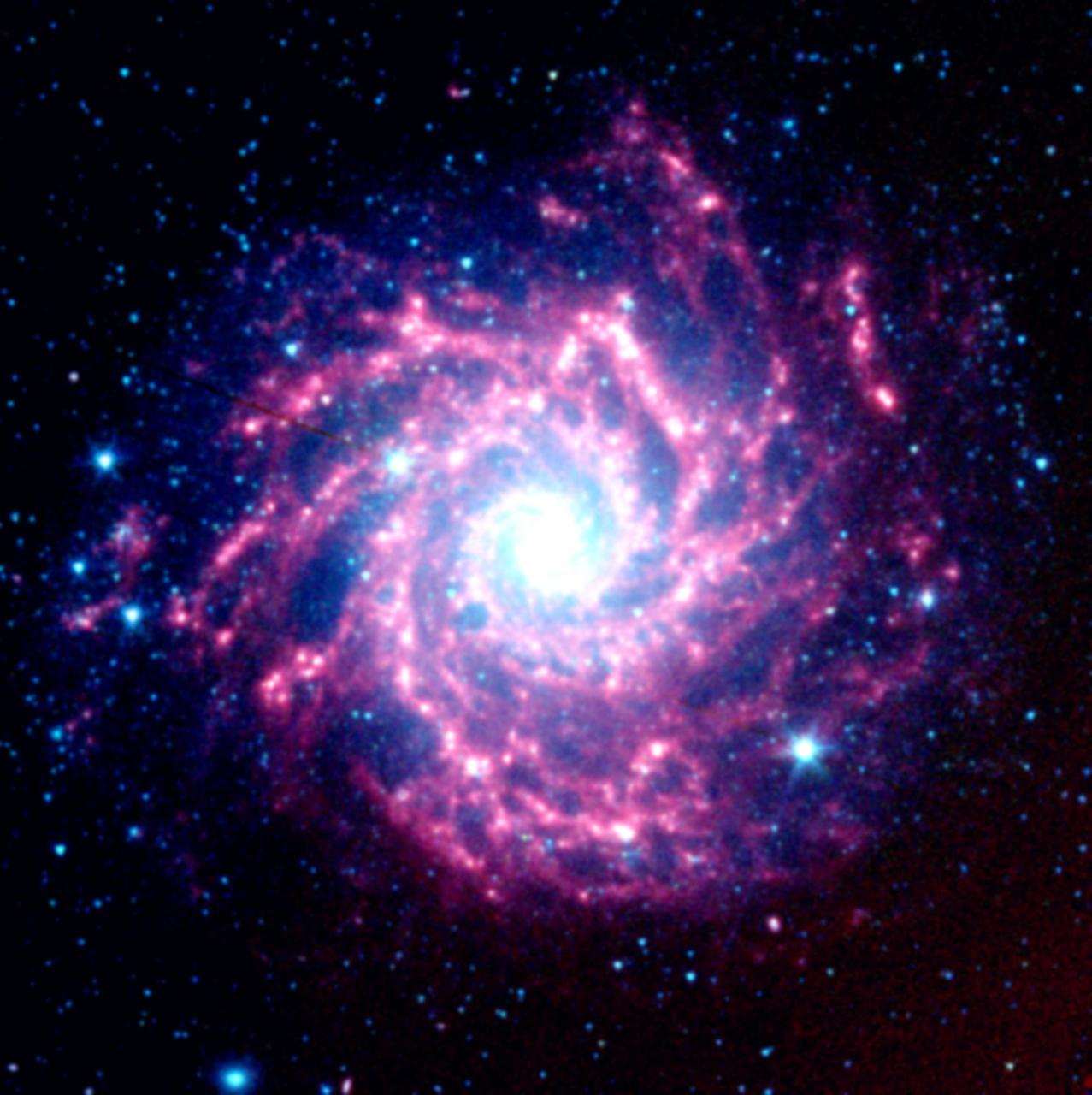
Astronomers using NASA Spitzer Space Telescope have spotted a dust factory 30 million light-years away in the spiral galaxy M74. The factory is located at the scene of a massive star explosive death, or supernova.
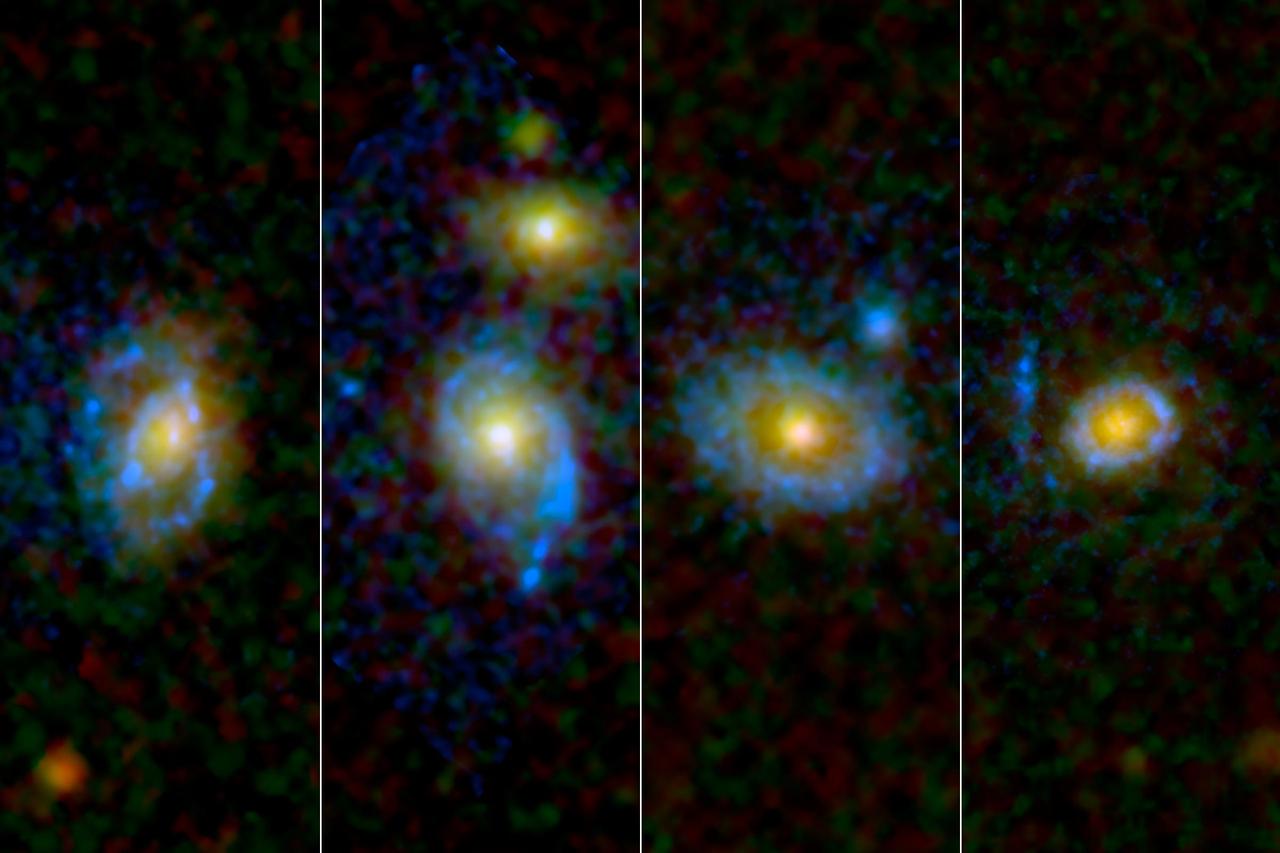
Astronomers have found unexpected rings and arcs of ultraviolet light around a selection of galaxies, four of which are shown here as viewed by NASA and the European Space Agency Hubble Space Telescope.

Andromeda galaxy from Infrared Astronomical Satellite (ref; 83-HC-316)