
At Astrotech Space Operations, workers look over the integrated THEMIS spacecraft before spin-balance testing. THEMIS consists of five identical probes, the largest number of scientific satellites ever launched into orbit aboard a single rocket. This unique constellation of satellites will resolve the tantalizing mystery of what causes the spectacular sudden brightening of the aurora borealis and aurora australis - the fiery skies over the Earth's northern and southern polar regions. THEMIS is scheduled to launch Feb. 15 from Cape Canaveral Air Force Station.
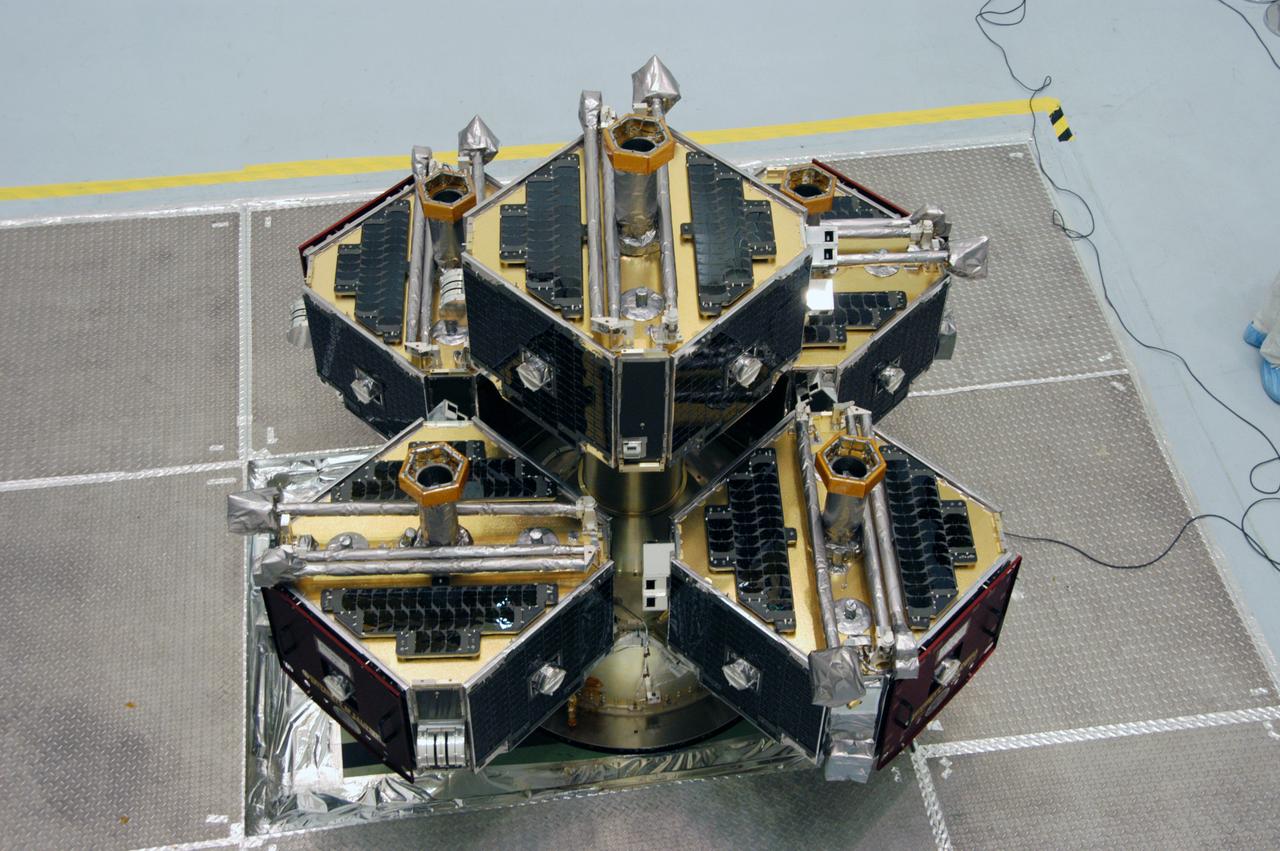
At Astrotech Space Operations, the integrated THEMIS spacecraft is ready for spin-balance testing. THEMIS consists of five identical probes, the largest number of scientific satellites ever launched into orbit aboard a single rocket. This unique constellation of satellites will resolve the tantalizing mystery of what causes the spectacular sudden brightening of the aurora borealis and aurora australis - the fiery skies over the Earth's northern and southern polar regions. THEMIS is scheduled to launch Feb. 15 from Cape Canaveral Air Force Station.
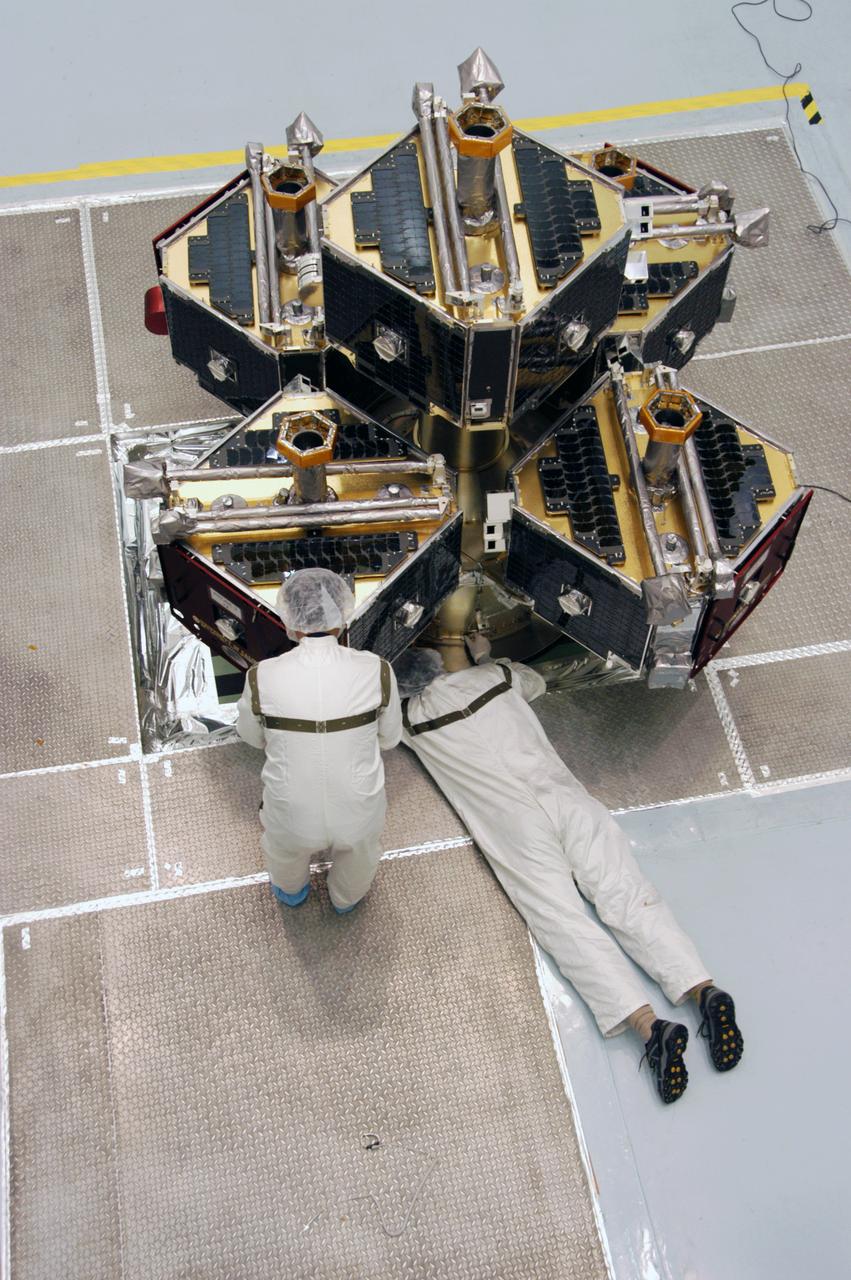
At Astrotech Space Operations, workers prepare the integrated THEMIS spacecraft for spin-balance testing. THEMIS consists of five identical probes, the largest number of scientific satellites ever launched into orbit aboard a single rocket. This unique constellation of satellites will resolve the tantalizing mystery of what causes the spectacular sudden brightening of the aurora borealis and aurora australis - the fiery skies over the Earth's northern and southern polar regions. THEMIS is scheduled to launch Feb. 15 from Cape Canaveral Air Force Station.
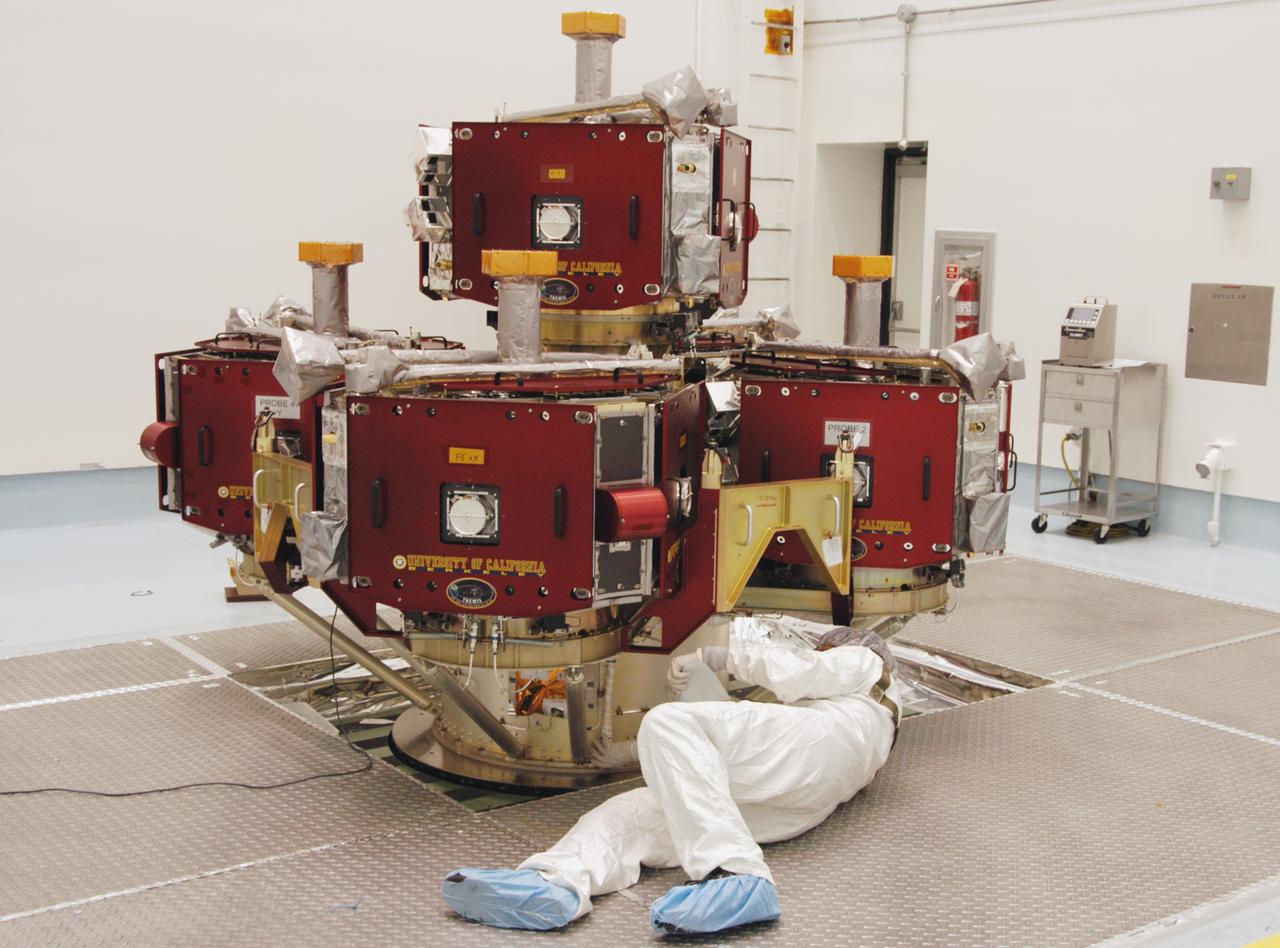
In the Hazardous Processing Facility at Astrotech Space Operations, a worker checks data on the integrated THEMIS spacecraft sitting on the spin table. THEMIS consists of five identical probes, the largest number of scientific satellites ever launched into orbit aboard a single rocket. This unique constellation of satellites will resolve the tantalizing mystery of what causes the spectacular sudden brightening of the aurora borealis and aurora australis - the fiery skies over the Earth's northern and southern polar regions. THEMIS is scheduled to launch Feb. 15 from Cape Canaveral Air Force Station.
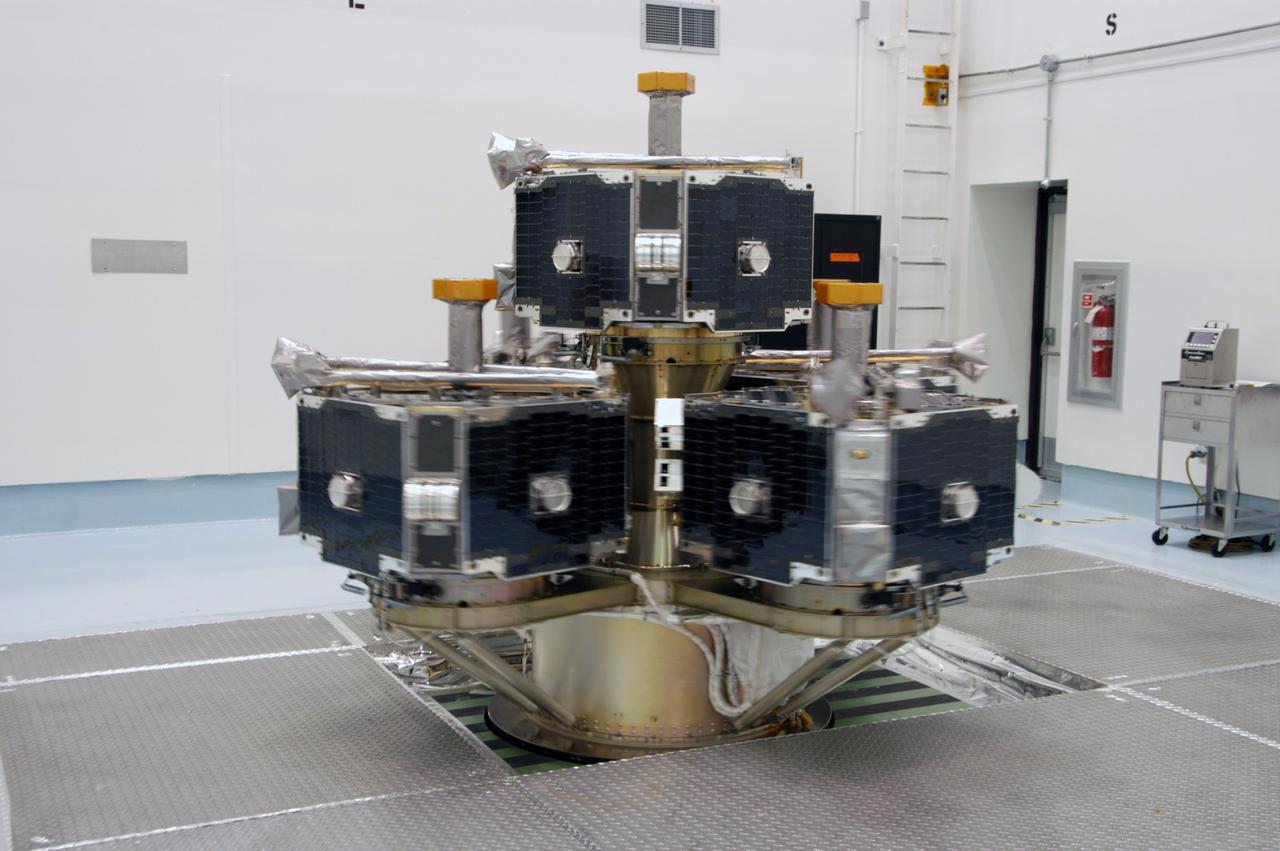
At Astrotech Space Operations, the integrated THEMIS spacecraft is spinning on the spin table, part of spin-balance testing. THEMIS consists of five identical probes, the largest number of scientific satellites ever launched into orbit aboard a single rocket. This unique constellation of satellites will resolve the tantalizing mystery of what causes the spectacular sudden brightening of the aurora borealis and aurora australis - the fiery skies over the Earth's northern and southern polar regions. THEMIS is scheduled to launch Feb. 15 from Cape Canaveral Air Force Station.
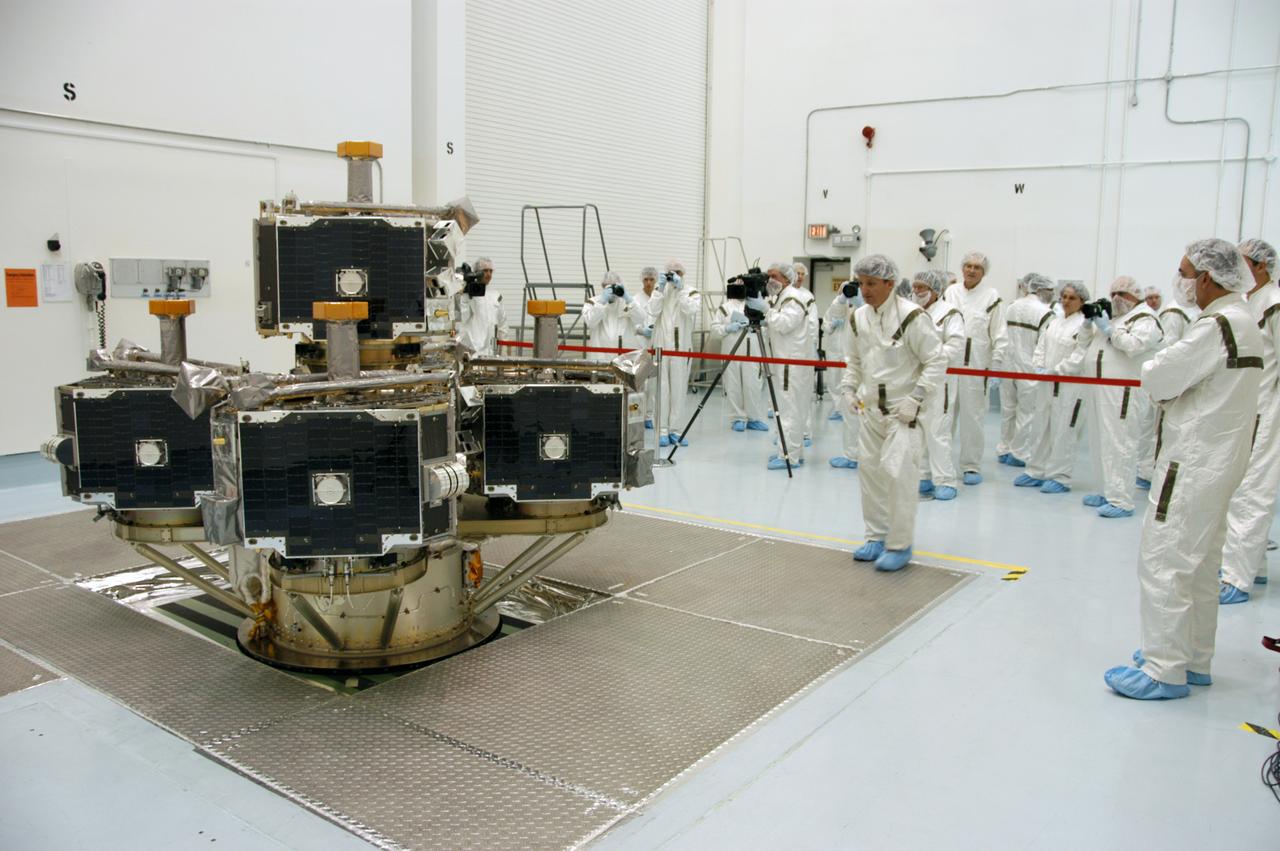
At Astrotech Space Operations, the media are dressed in clean room, or bunny, suits to photograph the integrated THEMIS spacecraft. THEMIS consists of five identical probes, the largest number of scientific satellites ever launched into orbit aboard a single rocket. This unique constellation of satellites will resolve the tantalizing mystery of what causes the spectacular sudden brightening of the aurora borealis and aurora australis - the fiery skies over the Earth's northern and southern polar regions. THEMIS is scheduled to launch Feb. 15 from Cape Canaveral Air Force Station.
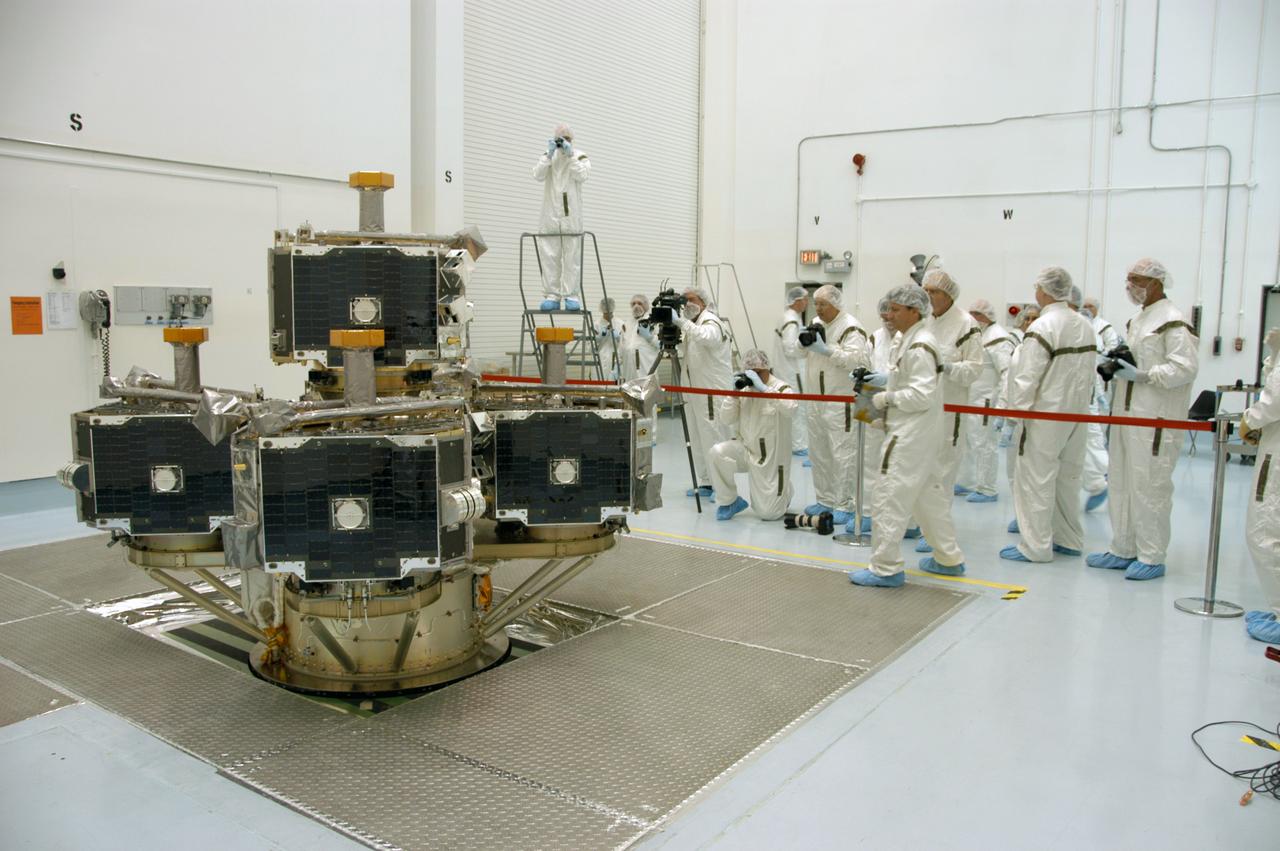
At Astrotech Space Operations, the media are dressed in clean room, or bunny, suits to photograph the integrated THEMIS spacecraft. THEMIS consists of five identical probes, the largest number of scientific satellites ever launched into orbit aboard a single rocket. This unique constellation of satellites will resolve the tantalizing mystery of what causes the spectacular sudden brightening of the aurora borealis and aurora australis - the fiery skies over the Earth's northern and southern polar regions. THEMIS is scheduled to launch Feb. 15 from Cape Canaveral Air Force Station.
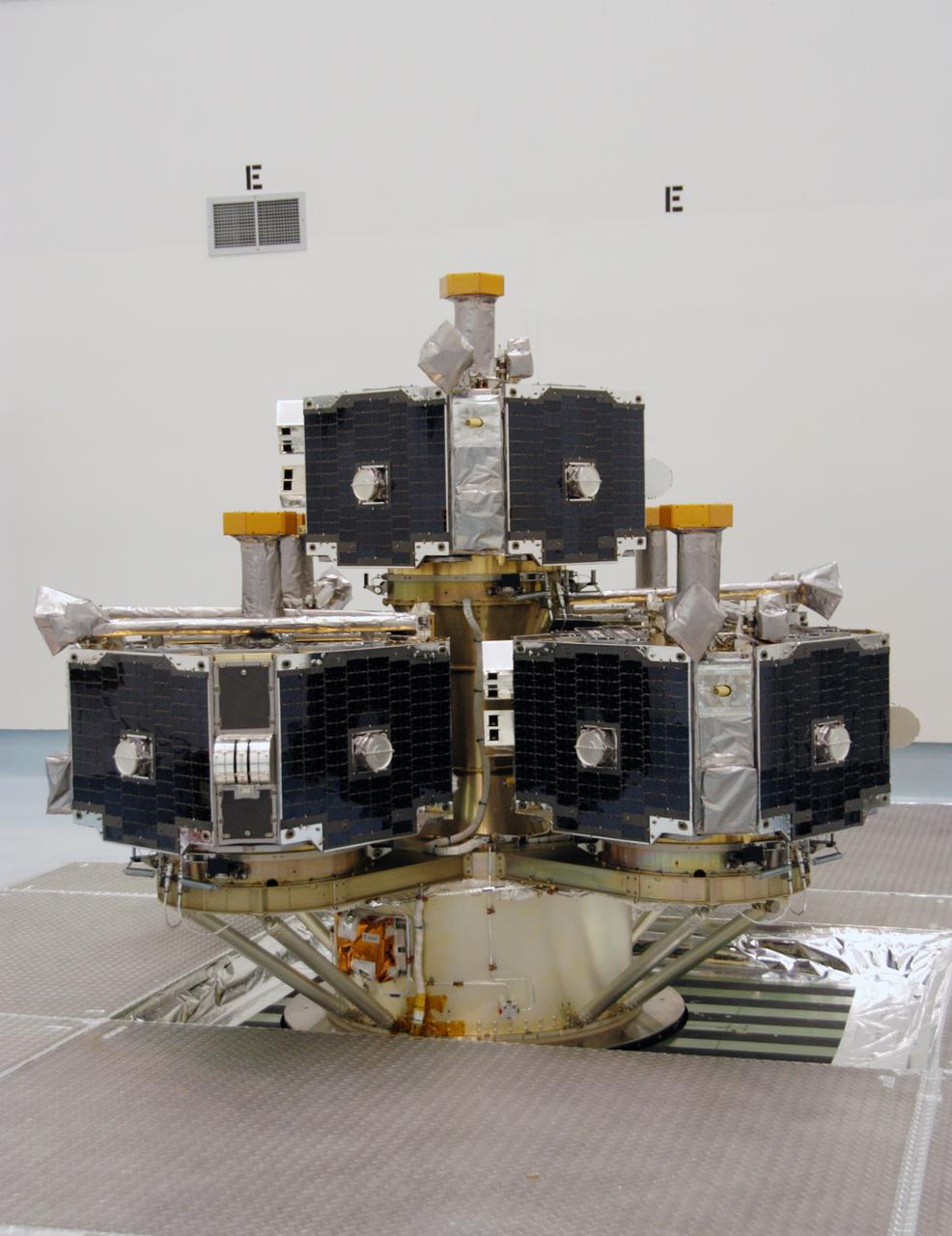
At Astrotech Space Operations, the integrated THEMIS spacecraft is on ready for spin-balance testing. THEMIS consists of five identical probes, the largest number of scientific satellites ever launched into orbit aboard a single rocket. This unique constellation of satellites will resolve the tantalizing mystery of what causes the spectacular sudden brightening of the aurora borealis and aurora australis - the fiery skies over the Earth's northern and southern polar regions. THEMIS is scheduled to launch Feb. 15 from Cape Canaveral Air Force Station.
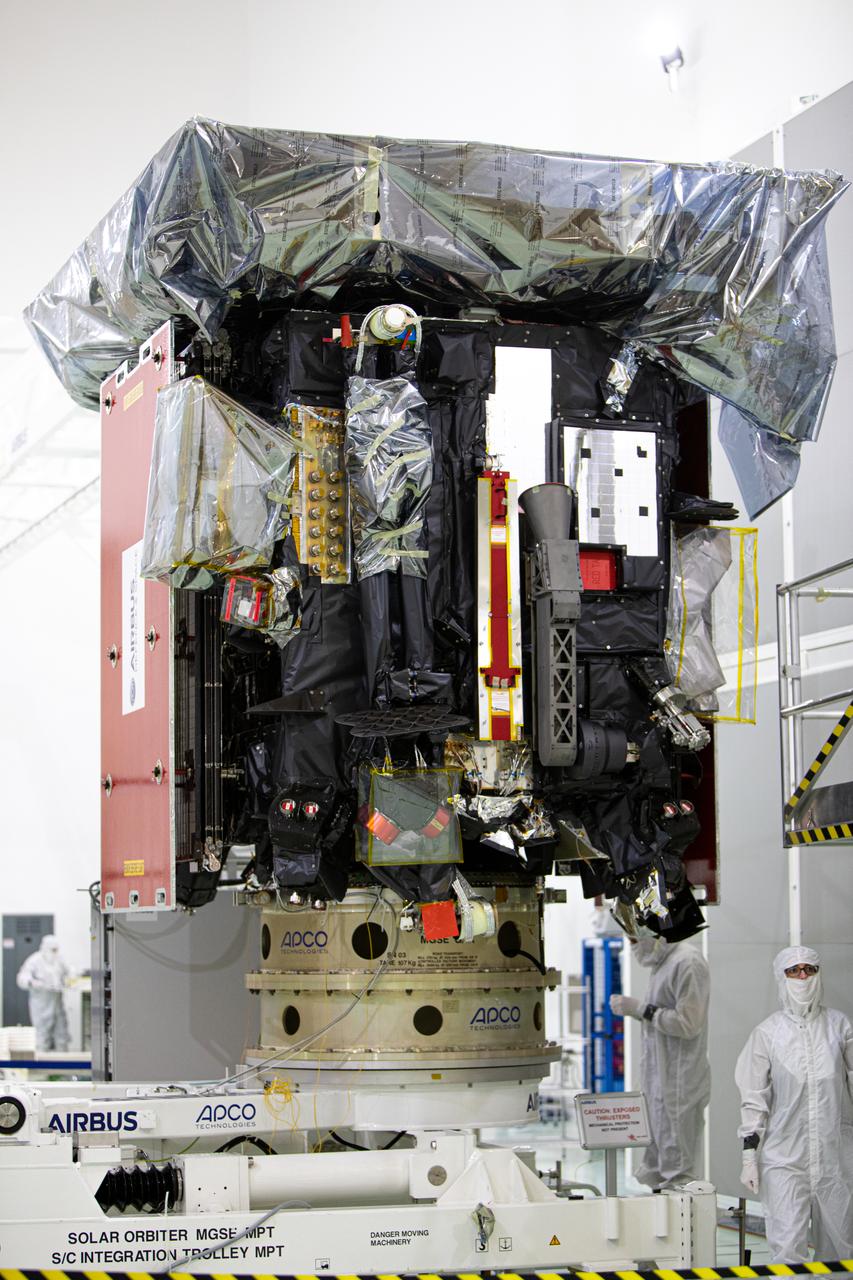
Members of the media were given the opportunity to view and photograph the Solar Orbiter spacecraft up close inside the Astrotech Space Operations payload processing facility in Titusville, Florida, on Dec. 16, 2019. Representatives from NASA’s Launch Services Program (LSP), the European Space Agency (ESA), United Launch Alliance (ULA), Airbus Defence and Space, and NASA’s Goddard Space Flight Center provided an overview of the mission, spacecraft and launch vehicle. Solar Orbiter is a space mission of international collaboration between ESA and NASA, and the spacecraft has been developed by Airbus. The mission will study the Sun and how it can affect the space environment throughout the solar system, and it also will provide the first images of the Sun’s poles. Solar Orbiter is scheduled to launch from Cape Canaveral Air Force Station’s Space Launch Complex 41 aboard a ULA Atlas V rocket at 11:27 p.m. EST on Feb. 5, 2020. LSP will manage the launch.
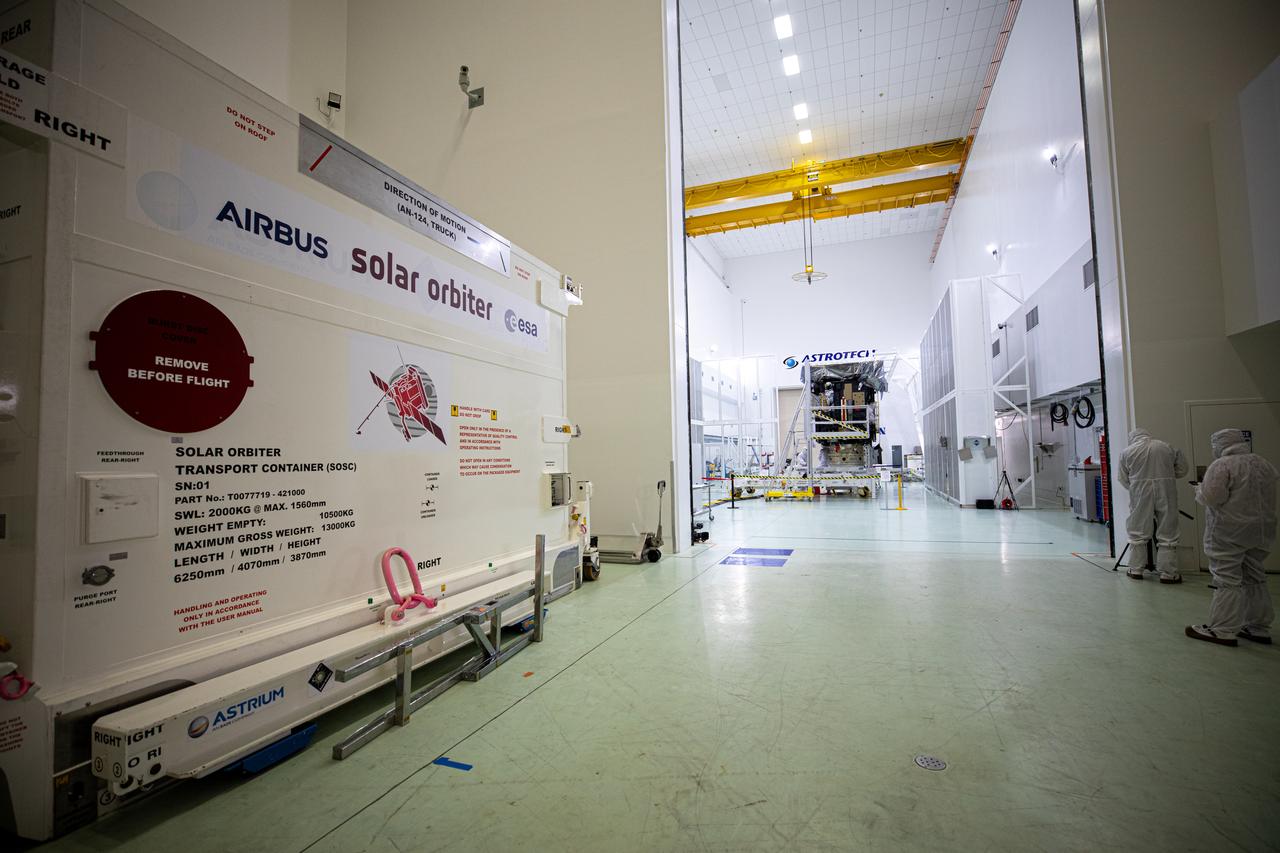
Members of the media were given the opportunity to view and photograph the Solar Orbiter spacecraft up close inside the Astrotech Space Operations payload processing facility in Titusville, Florida, on Dec. 16, 2019. Representatives from NASA’s Launch Services Program (LSP), the European Space Agency (ESA), United Launch Alliance (ULA), Airbus Defence and Space, and NASA’s Goddard Space Flight Center provided an overview of the mission, spacecraft and launch vehicle. Solar Orbiter is a space mission of international collaboration between ESA and NASA, and the spacecraft has been developed by Airbus. The mission will study the Sun and how it can affect the space environment throughout the solar system, and it also will provide the first images of the Sun’s poles. Solar Orbiter is scheduled to launch from Cape Canaveral Air Force Station’s Space Launch Complex 41 aboard a ULA Atlas V rocket at 11:27 p.m. EST on Feb. 5, 2020. LSP will manage the launch.
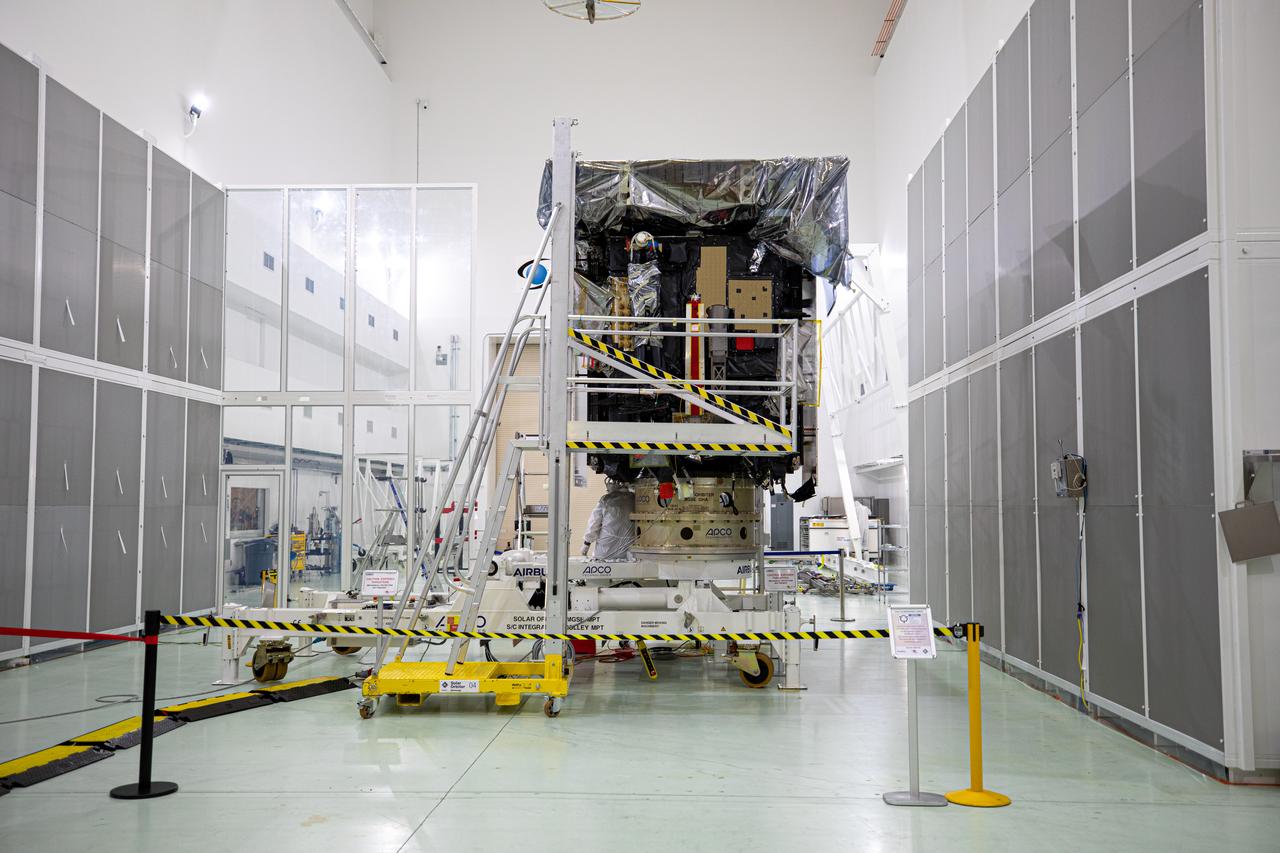
Members of the media were given the opportunity to view and photograph the Solar Orbiter spacecraft up close inside the Astrotech Space Operations payload processing facility in Titusville, Florida, on Dec. 16, 2019. Representatives from NASA’s Launch Services Program (LSP), the European Space Agency (ESA), United Launch Alliance (ULA), Airbus Defence and Space, and NASA’s Goddard Space Flight Center provided an overview of the mission, spacecraft and launch vehicle. Solar Orbiter is a space mission of international collaboration between ESA and NASA, and the spacecraft has been developed by Airbus. The mission will study the Sun and how it can affect the space environment throughout the solar system, and it also will provide the first images of the Sun’s poles. Solar Orbiter is scheduled to launch from Cape Canaveral Air Force Station’s Space Launch Complex 41 aboard a ULA Atlas V rocket at 11:27 p.m. EST on Feb. 5, 2020. LSP will manage the launch.
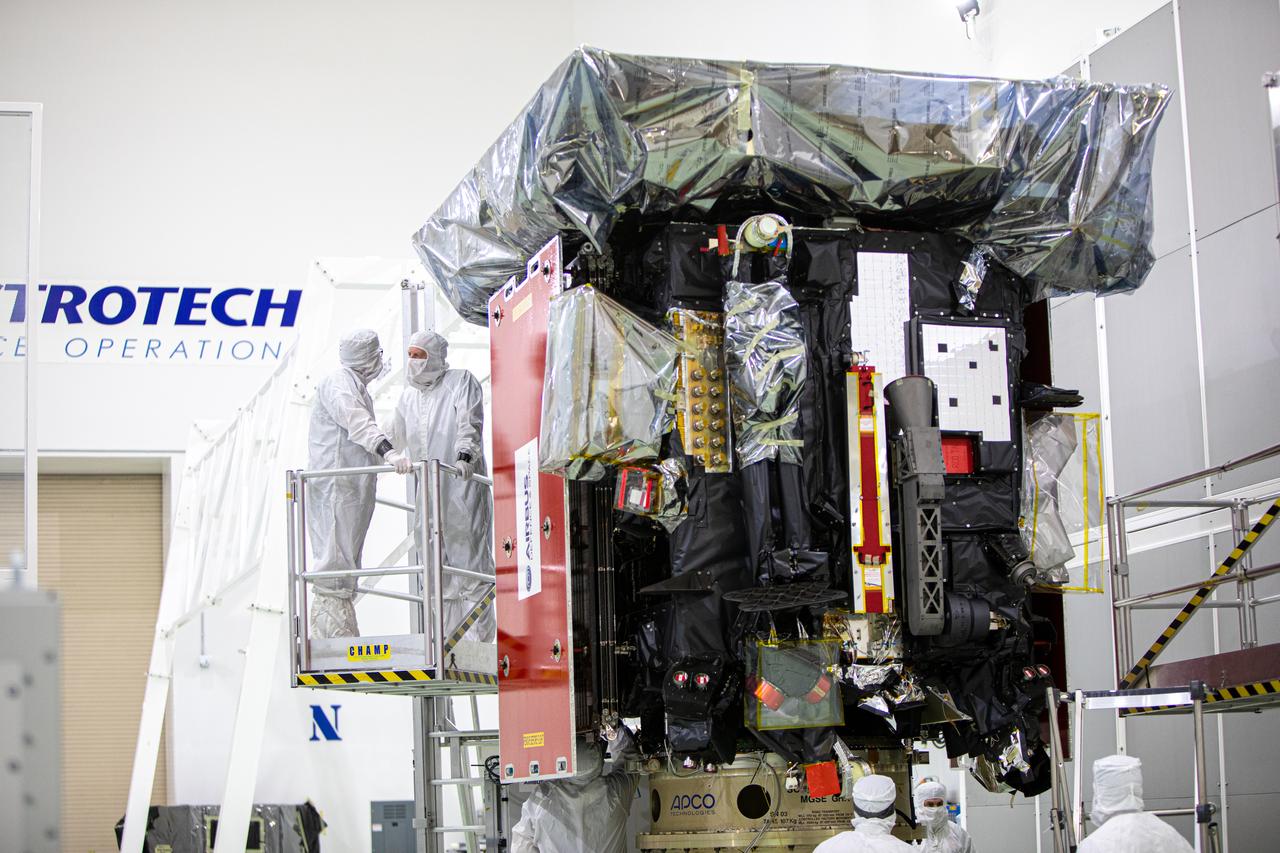
Members of the European Space Agency (ESA)/Airbus Defence and Space Solar Orbiter team inspect the Solar Orbiter spacecraft inside the Astrotech Space Operations payload processing facility in Titusville, Florida, on Dec. 16, 2019. On this day, media personnel were given the opportunity to view and photograph the spacecraft up close. Representatives from NASA’s Launch Services Program (LSP), ESA, United Launch Alliance (ULA), Airbus, and NASA’s Goddard Space Flight Center provided an overview of the mission, spacecraft and launch vehicle. Solar Orbiter is a space mission of international collaboration between ESA and NASA, and the spacecraft has been developed by Airbus. The mission will study the Sun and how it can affect the space environment throughout the solar system, and it also will provide the first images of the Sun’s poles.
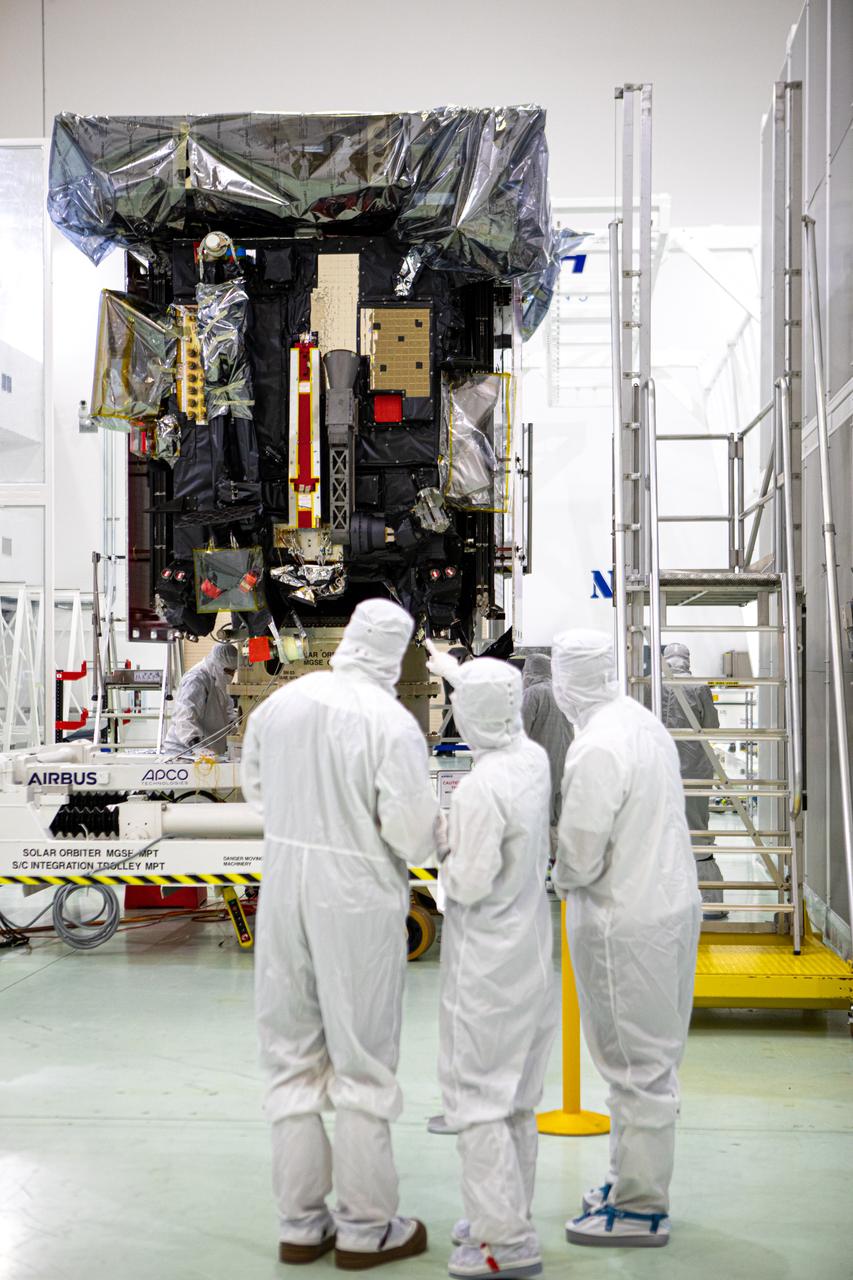
Members of the media were given the opportunity to view and photograph the Solar Orbiter spacecraft up close inside the Astrotech Space Operations payload processing facility in Titusville, Florida, on Dec. 16, 2019. Representatives from NASA’s Launch Services Program (LSP), the European Space Agency (ESA), United Launch Alliance (ULA), Airbus Defence and Space, and NASA’s Goddard Space Flight Center provided an overview of the mission, spacecraft and launch vehicle. Solar Orbiter is a space mission of international collaboration between ESA and NASA, and the spacecraft has been developed by Airbus. The mission will study the Sun and how it can affect the space environment throughout the solar system, and it also will provide the first images of the Sun’s poles. Solar Orbiter is scheduled to launch from Cape Canaveral Air Force Station’s Space Launch Complex 41 aboard a ULA Atlas V rocket at 11:27 p.m. EST on Feb. 5, 2020. LSP will manage the launch.
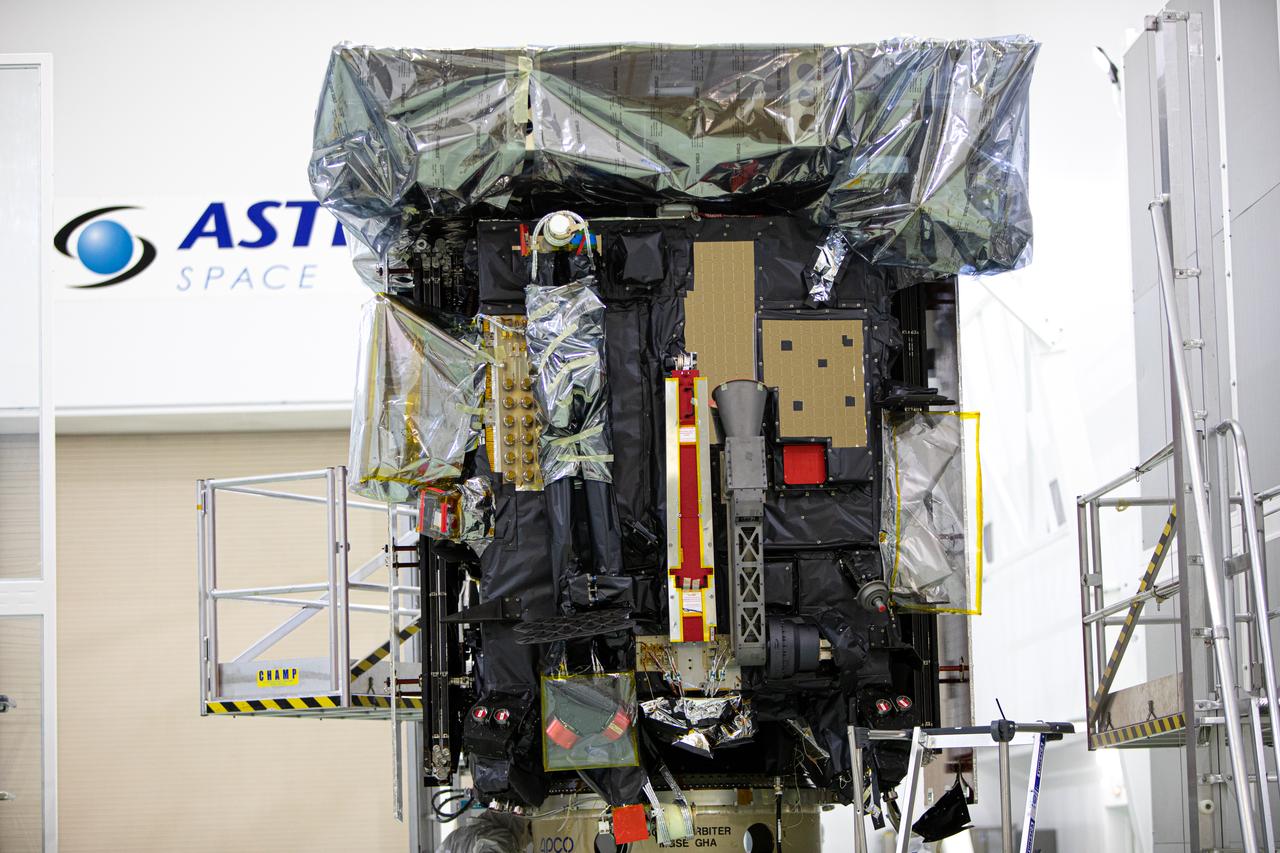
Members of the media were given the opportunity to view and photograph the Solar Orbiter spacecraft up close inside the Astrotech Space Operations payload processing facility in Titusville, Florida, on Dec. 16, 2019. Representatives from NASA’s Launch Services Program (LSP), the European Space Agency (ESA), United Launch Alliance (ULA), Airbus Defence and Space, and NASA’s Goddard Space Flight Center provided an overview of the mission, spacecraft and launch vehicle. Solar Orbiter is a space mission of international collaboration between ESA and NASA, and the spacecraft has been developed by Airbus. The mission will study the Sun and how it can affect the space environment throughout the solar system, and it also will provide the first images of the Sun’s poles. Solar Orbiter is scheduled to launch from Cape Canaveral Air Force Station’s Space Launch Complex 41 aboard a ULA Atlas V rocket at 11:27 p.m. EST on Feb. 5, 2020. LSP will manage the launch.
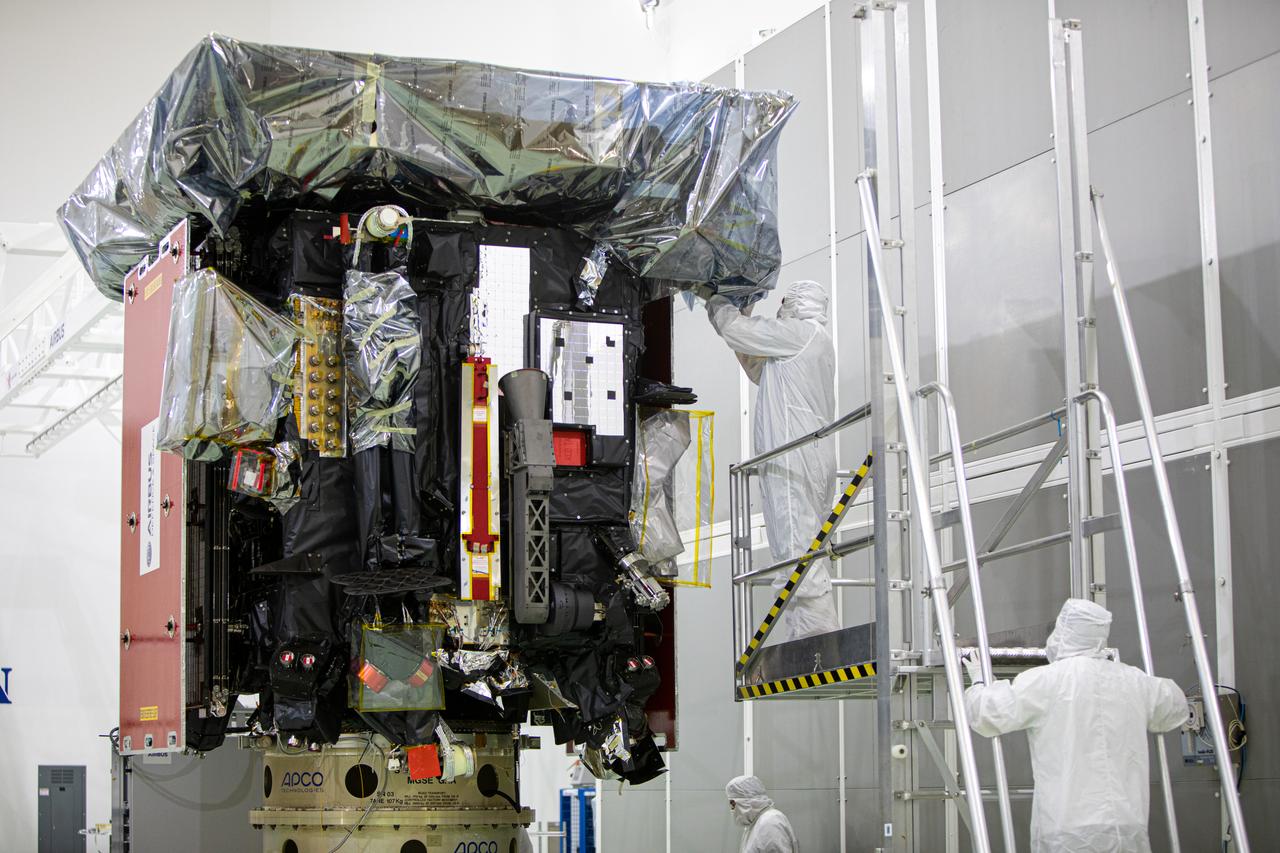
Members of the media were given the opportunity to view and photograph the Solar Orbiter spacecraft up close inside the Astrotech Space Operations payload processing facility in Titusville, Florida, on Dec. 16, 2019. Representatives from NASA’s Launch Services Program (LSP), the European Space Agency (ESA), United Launch Alliance (ULA), Airbus Defence and Space, and NASA’s Goddard Space Flight Center provided an overview of the mission, spacecraft and launch vehicle. Solar Orbiter is a space mission of international collaboration between ESA and NASA, and the spacecraft has been developed by Airbus. The mission will study the Sun and how it can affect the space environment throughout the solar system, and it also will provide the first images of the Sun’s poles. Solar Orbiter is scheduled to launch from Cape Canaveral Air Force Station’s Space Launch Complex 41 aboard a ULA Atlas V rocket at 11:27 p.m. EST on Feb. 5, 2020. LSP will manage the launch.
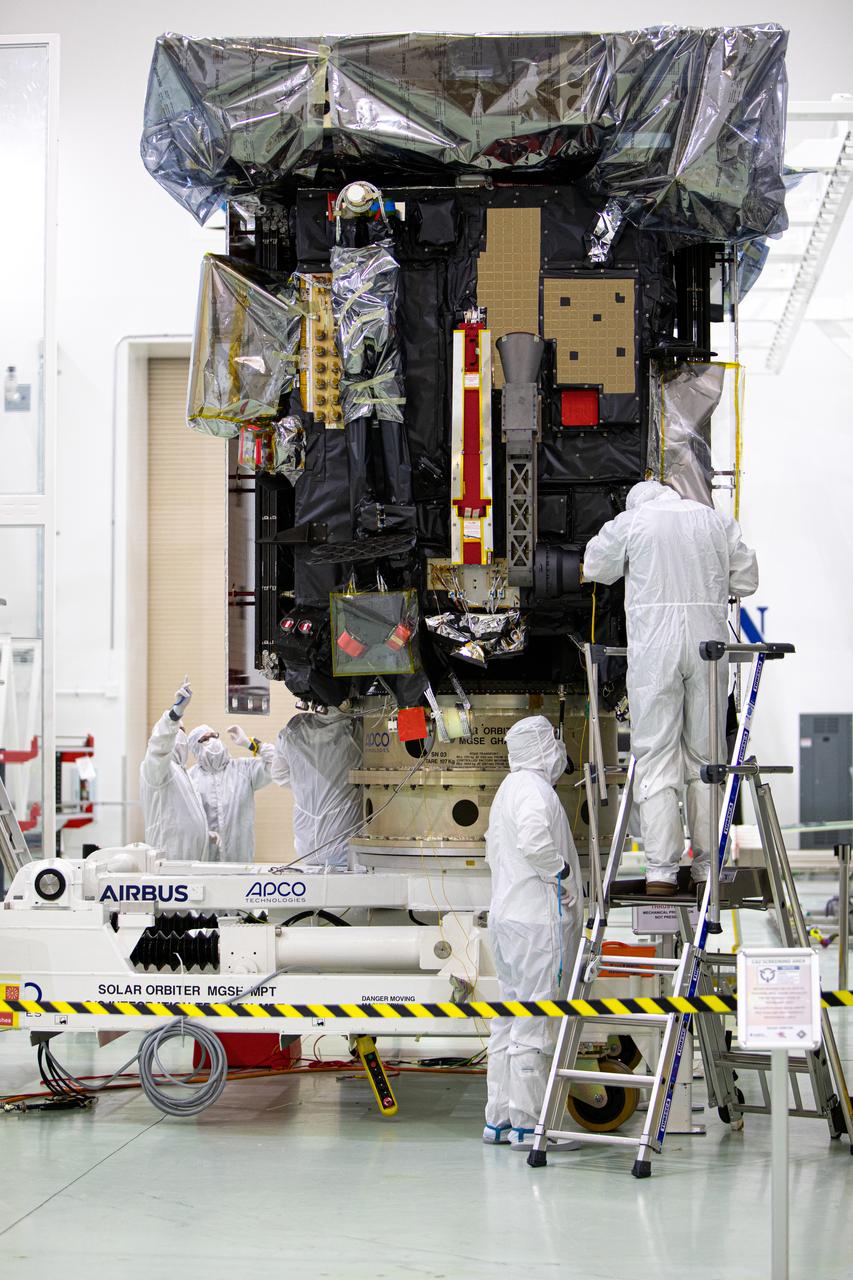
Members of the media were given the opportunity to view and photograph the Solar Orbiter spacecraft up close inside the Astrotech Space Operations payload processing facility in Titusville, Florida, on Dec. 16, 2019. Representatives from NASA’s Launch Services Program (LSP), the European Space Agency (ESA), United Launch Alliance (ULA), Airbus Defence and Space, and NASA’s Goddard Space Flight Center provided an overview of the mission, spacecraft and launch vehicle. Solar Orbiter is a space mission of international collaboration between ESA and NASA, and the spacecraft has been developed by Airbus. The mission will study the Sun and how it can affect the space environment throughout the solar system, and it also will provide the first images of the Sun’s poles. Solar Orbiter is scheduled to launch from Cape Canaveral Air Force Station’s Space Launch Complex 41 aboard a ULA Atlas V rocket at 11:27 p.m. EST on Feb. 5, 2020. LSP will manage the launch.
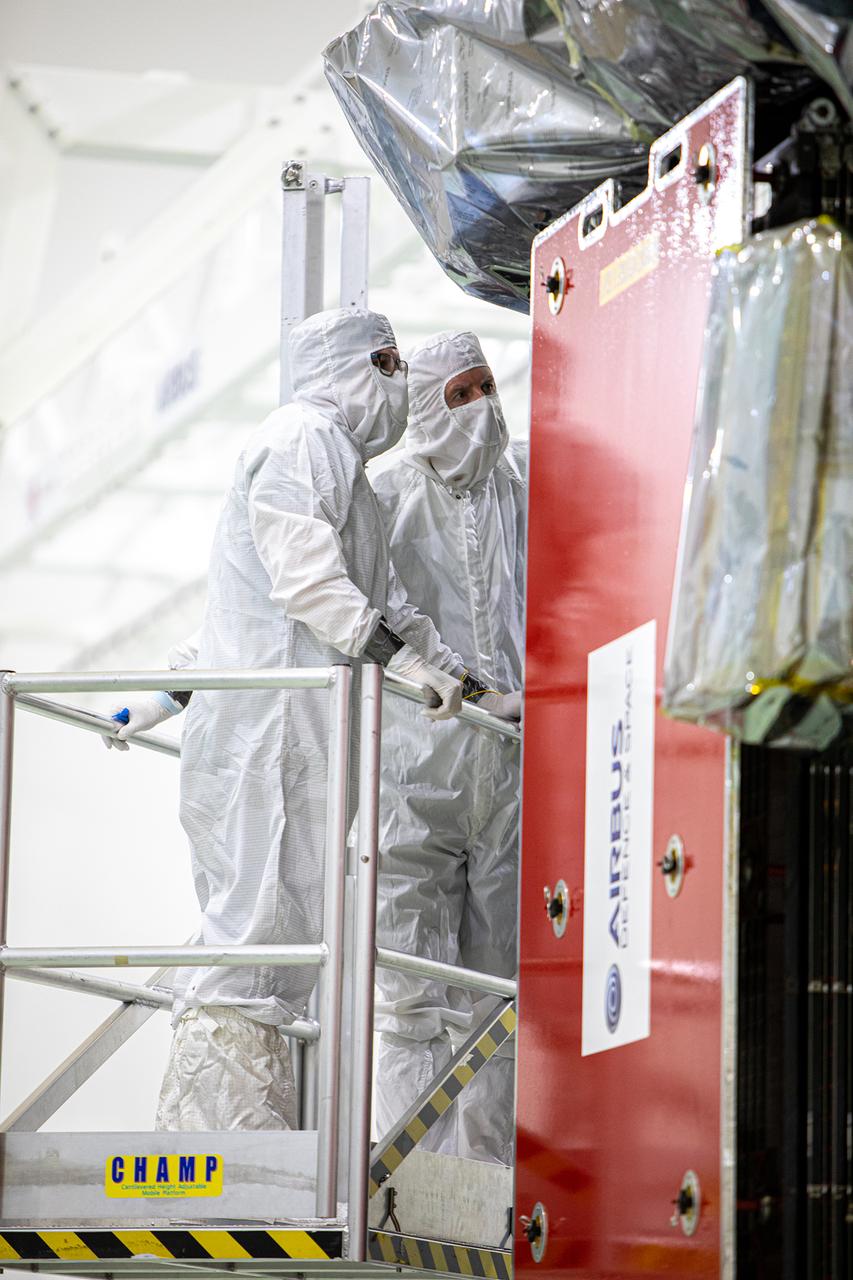
Members of the European Space Agency (ESA)/Airbus Defence and Space Solar Orbiter team inspect the Solar Orbiter spacecraft inside the Astrotech Space Operations payload processing facility in Titusville, Florida, on Dec. 16, 2019. On this day, media personnel were given the opportunity to view and photograph the spacecraft up close. Representatives from NASA’s Launch Services Program (LSP), ESA, United Launch Alliance (ULA), Airbus, and NASA’s Goddard Space Flight Center provided an overview of the mission, spacecraft and launch vehicle. Solar Orbiter is a space mission of international collaboration between ESA and NASA, and the spacecraft has been developed by Airbus. The mission will study the Sun and how it can affect the space environment throughout the solar system, and it also will provide the first images of the Sun’s poles.
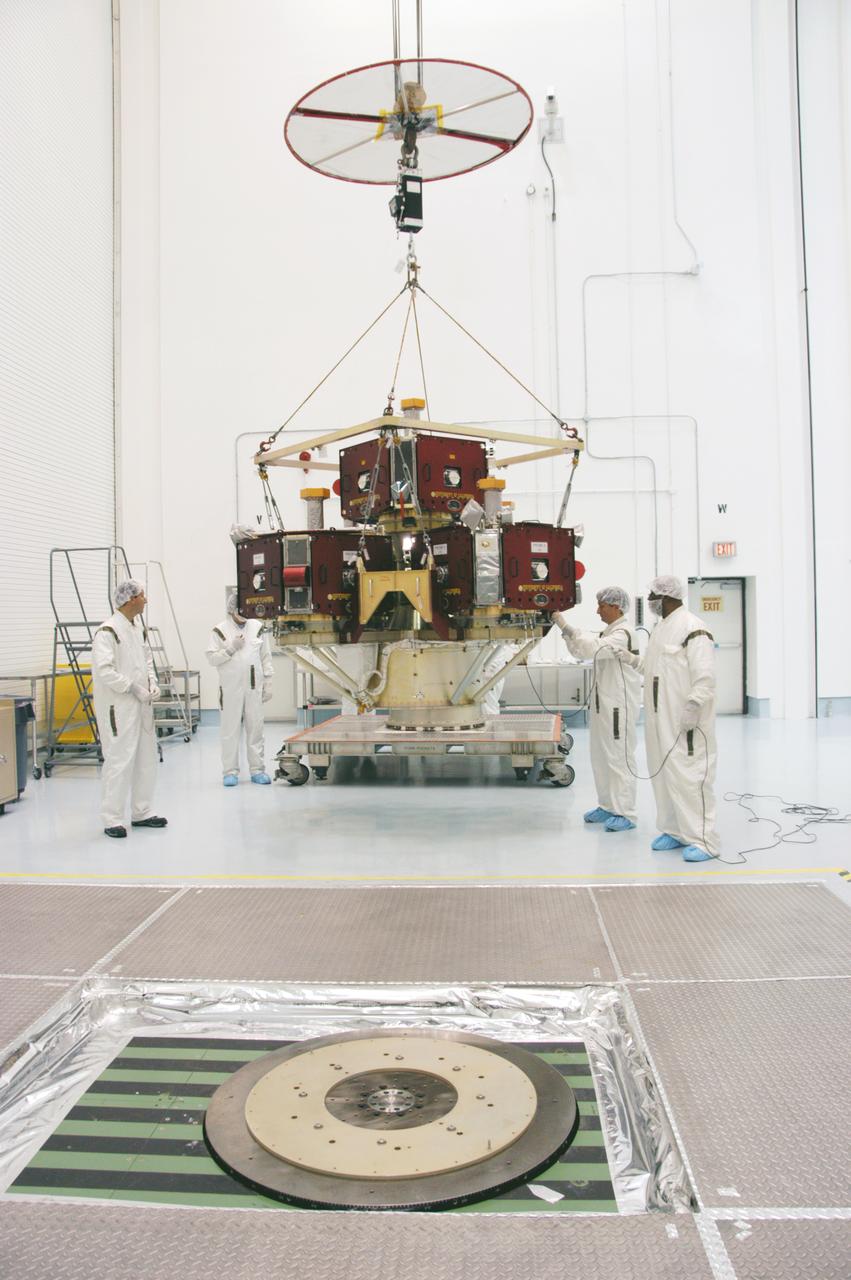
In the Hazardous Processing Facility at Astrotech Space Operations, workers get ready to move the integrated THEMIS spacecraft to the spin table in the foreground. There it will undergo spin-balance testing. THEMIS consists of five identical probes, the largest number of scientific satellites ever launched into orbit aboard a single rocket. This unique constellation of satellites will resolve the tantalizing mystery of what causes the spectacular sudden brightening of the aurora borealis and aurora australis - the fiery skies over the Earth's northern and southern polar regions. THEMIS is scheduled to launch Feb. 15 from Cape Canaveral Air Force Station.
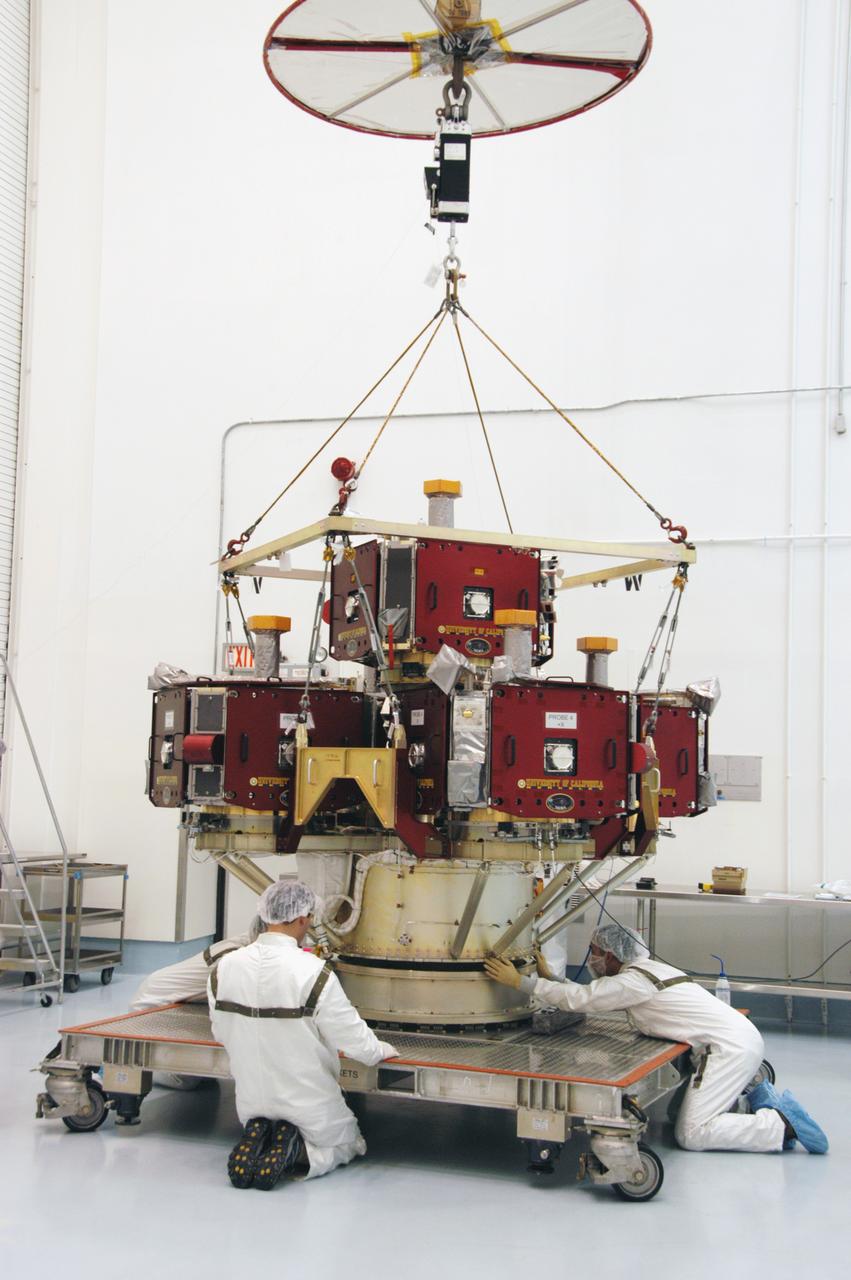
In the Hazardous Processing Facility at Astrotech Space Operations, workers attach an overhead crane to the integrated THEMIS spacecraft. The carrier is being moved to a spin table for spin-balance testing. THEMIS consists of five identical probes, the largest number of scientific satellites ever launched into orbit aboard a single rocket. This unique constellation of satellites will resolve the tantalizing mystery of what causes the spectacular sudden brightening of the aurora borealis and aurora australis - the fiery skies over the Earth's northern and southern polar regions. THEMIS is scheduled to launch Feb. 15 from Cape Canaveral Air Force Station.
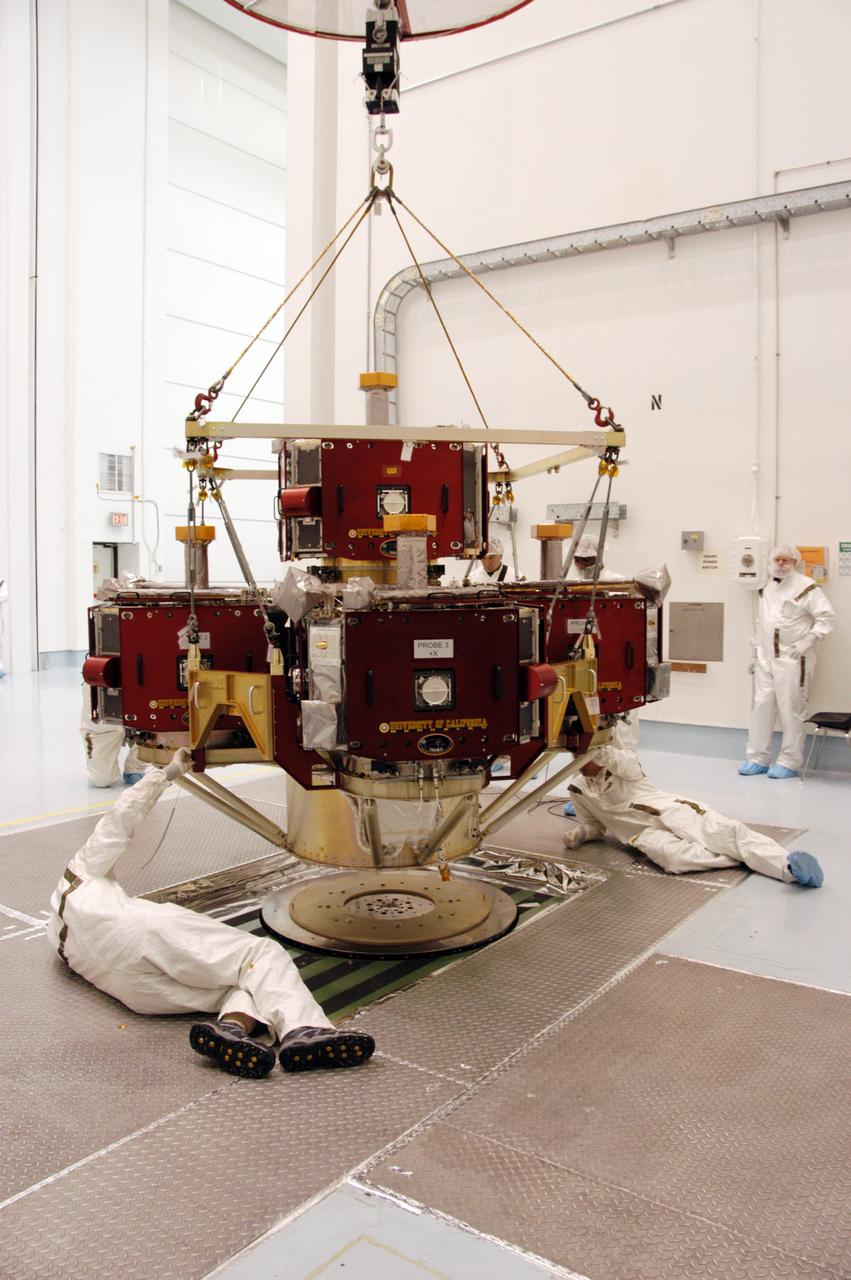
In the Hazardous Processing Facility at Astrotech Space Operations, workers guide the integrated THEMIS spacecraft onto the spin table in the foreground. There it will undergo spin-balance testing. THEMIS consists of five identical probes, the largest number of scientific satellites ever launched into orbit aboard a single rocket. This unique constellation of satellites will resolve the tantalizing mystery of what causes the spectacular sudden brightening of the aurora borealis and aurora australis - the fiery skies over the Earth's northern and southern polar regions. THEMIS is scheduled to launch Feb. 15 from Cape Canaveral Air Force Station.
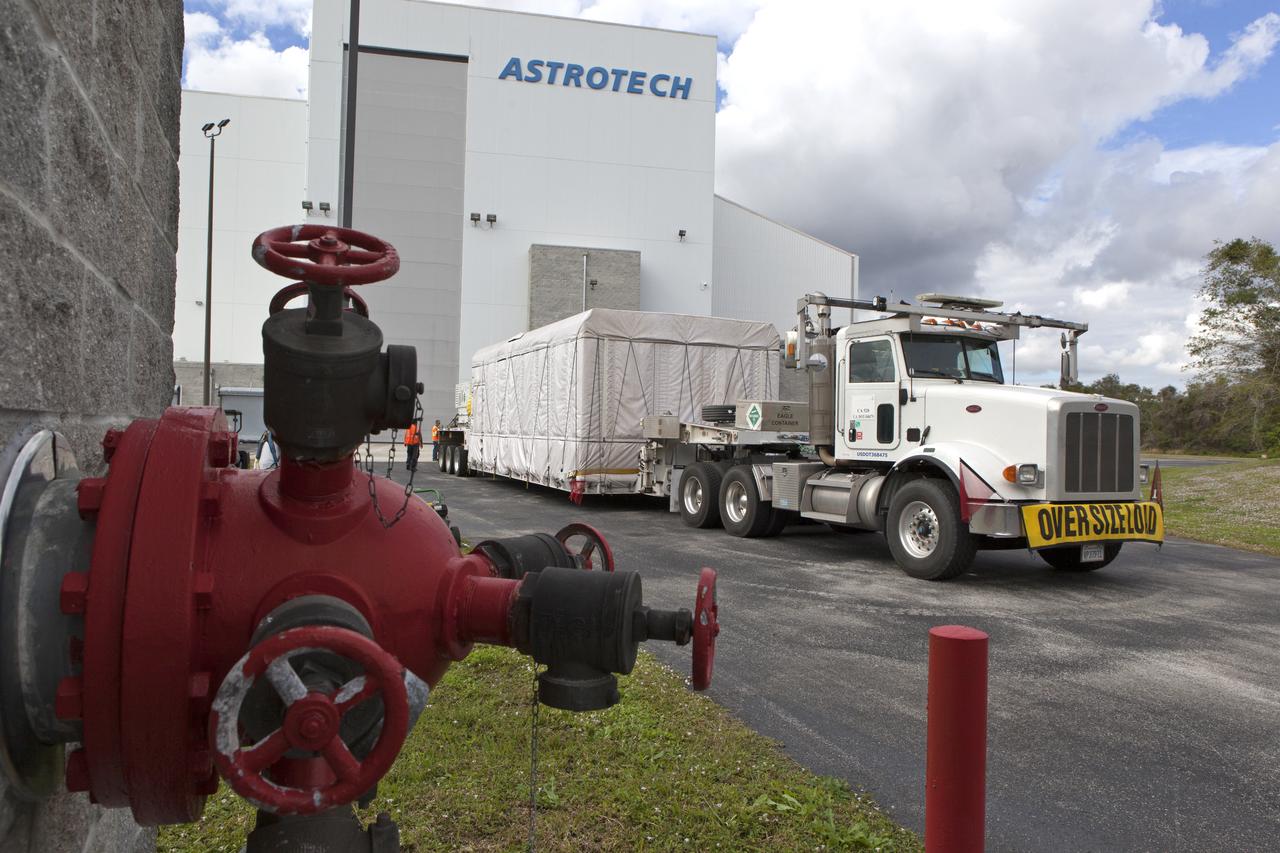
NOAA's Geostationary Operation Environmental Satellite-S (GOES-S) arrives at Astrotech Space Operations in Titusville, Florida, to prepare it for launch. The facility is located near NASA's Kennedy Space Center. GOES-S is the second in a series of four advanced geostationary weather satellites. The GOES-R series - consisting of the GOES-R, GOES-S, GOES-T and GOES-U spacecraft - will significantly improve the detection and observation of environmental phenomena that directly affect public safety, protection of property and the nation's economic health and prosperity. GOES-S is slated to launch March 1, 2018 aboard a United Launch Alliance Atlas V rocket from Cape Canaveral Air Force Station in Florida.
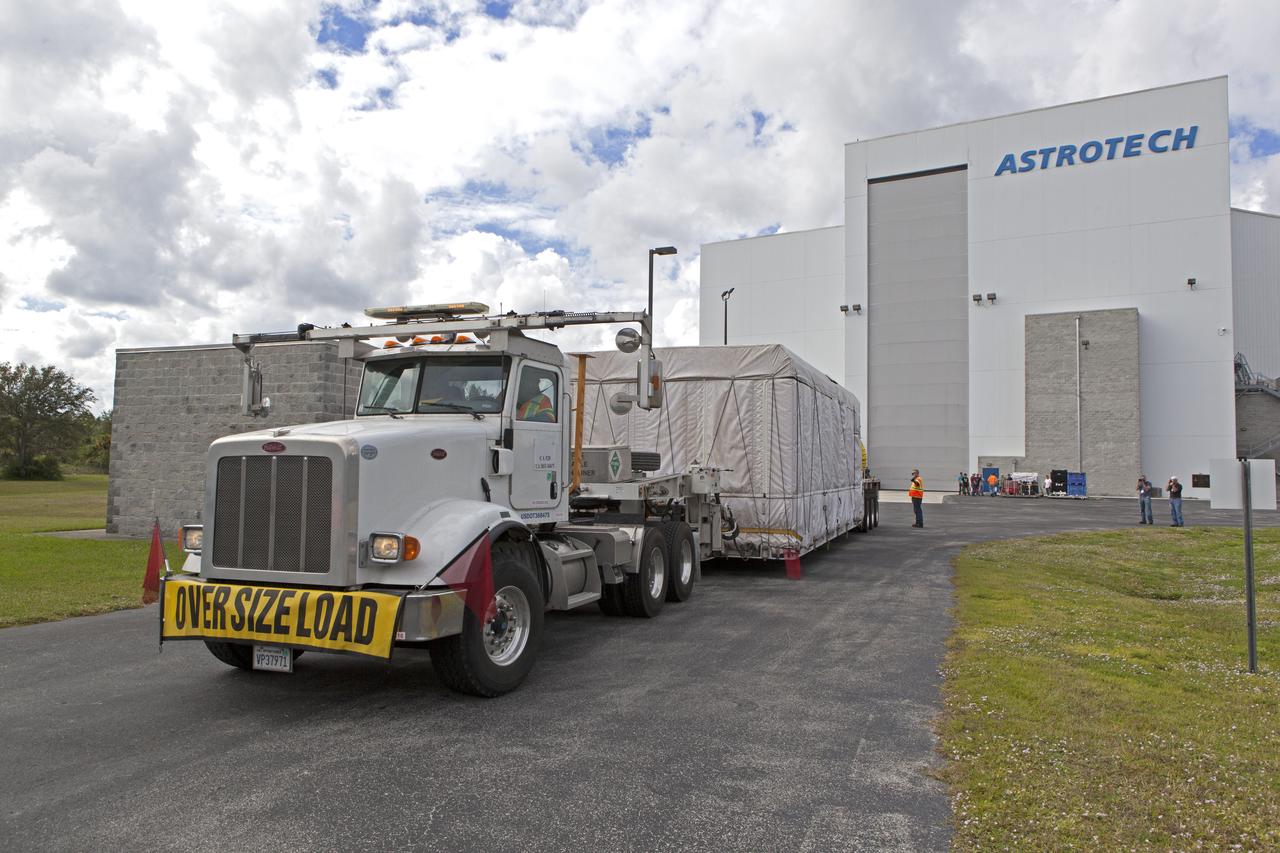
NOAA's Geostationary Operation Environmental Satellite-S (GOES-S) arrives at Astrotech Space Operations in Titusville, Florida, to prepare it for launch. The facility is located near NASA's Kennedy Space Center. GOES-S is the second in a series of four advanced geostationary weather satellites. The GOES-R series - consisting of the GOES-R, GOES-S, GOES-T and GOES-U spacecraft - will significantly improve the detection and observation of environmental phenomena that directly affect public safety, protection of property and the nation's economic health and prosperity. GOES-S is slated to launch March 1, 2018 aboard a United Launch Alliance Atlas V rocket from Cape Canaveral Air Force Station in Florida.
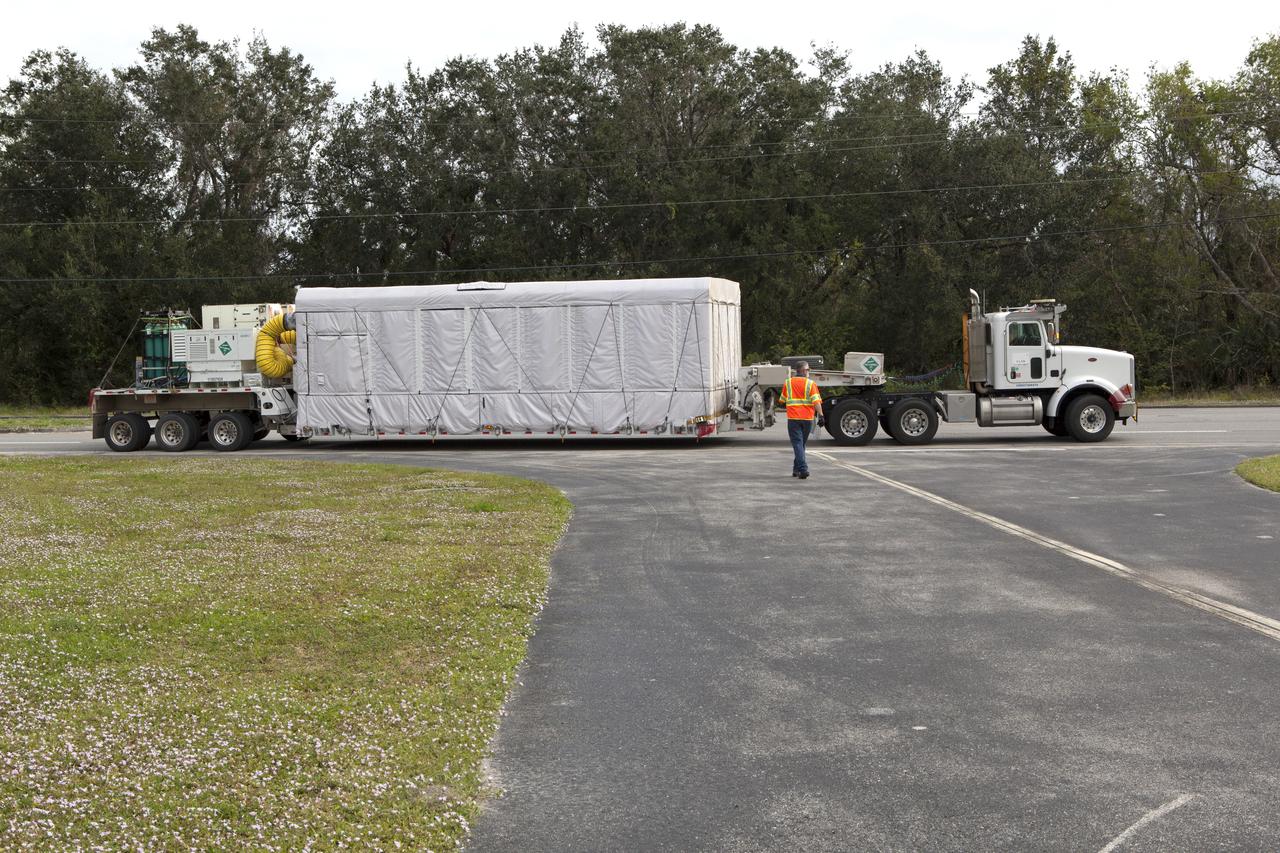
NOAA's Geostationary Operation Environmental Satellite-S (GOES-S) arrives at Astrotech Space Operations in Titusville, Florida, to prepare it for launch. The facility is located near NASA's Kennedy Space Center. GOES-S is the second in a series of four advanced geostationary weather satellites. The GOES-R series - consisting of the GOES-R, GOES-S, GOES-T and GOES-U spacecraft - will significantly improve the detection and observation of environmental phenomena that directly affect public safety, protection of property and the nation's economic health and prosperity. GOES-S is slated to launch March 1, 2018 aboard a United Launch Alliance Atlas V rocket from Cape Canaveral Air Force Station in Florida.
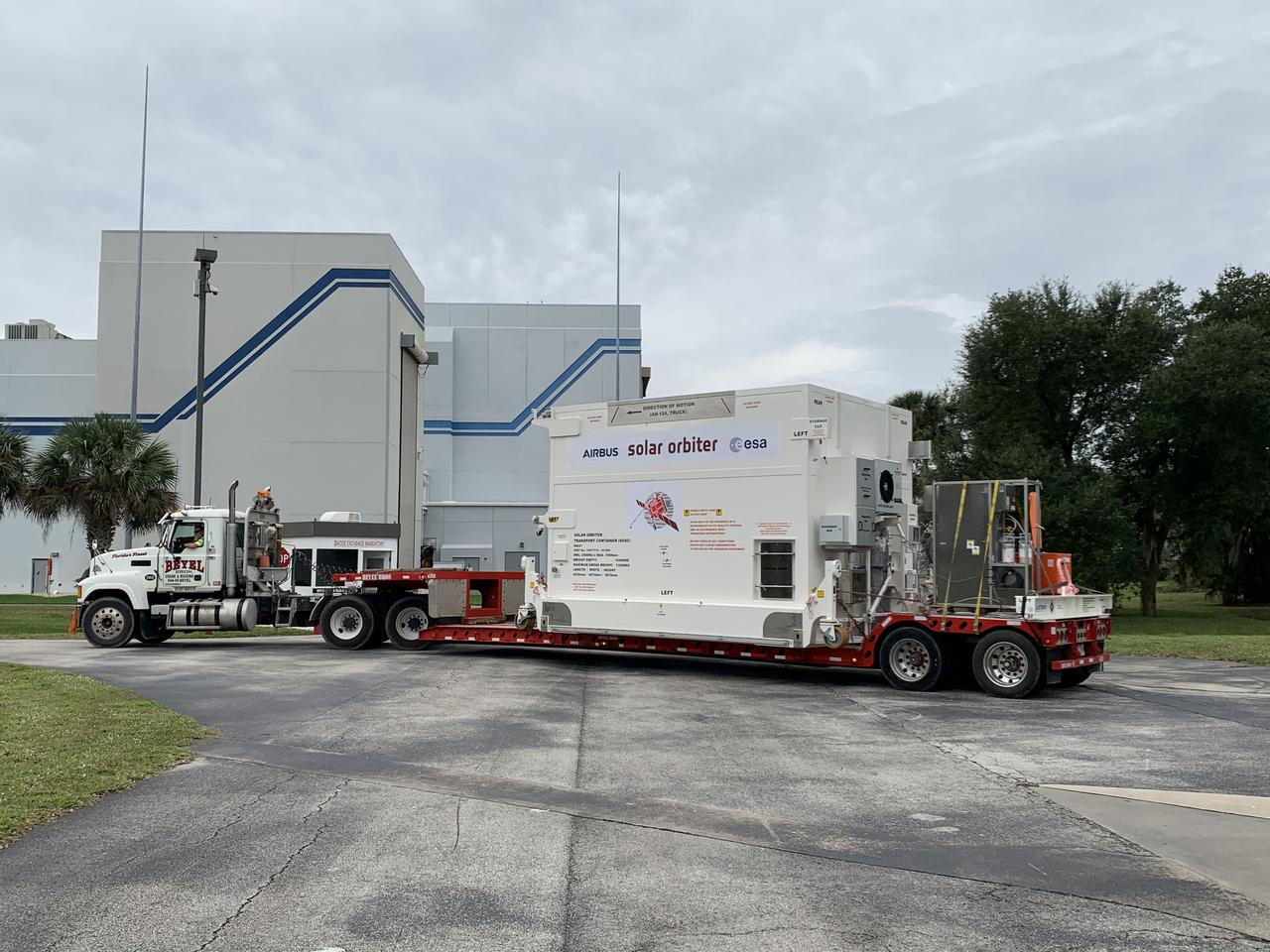
The Solar Orbiter spacecraft is transferred between buildings as it undergoes prelaunch processing at the Astrotech Space Operations facility in Titusville, Florida. Solar Orbiter aims to study the Sun, its outer atmosphere and solar wind, and will provide the first images of the Sun’s poles. Solar Orbiter is a space mission of international collaboration between ESA (European Space Agency) and NASA. The spacecraft has been developed by Airbus. NASA’s Launch Services Program based at Kennedy Space Center in Florida is managing the launch. Liftoff is scheduled for Feb. 5, 2020, from Cape Canaveral Air Force Station aboard a United Launch Alliance Atlas V rocket.
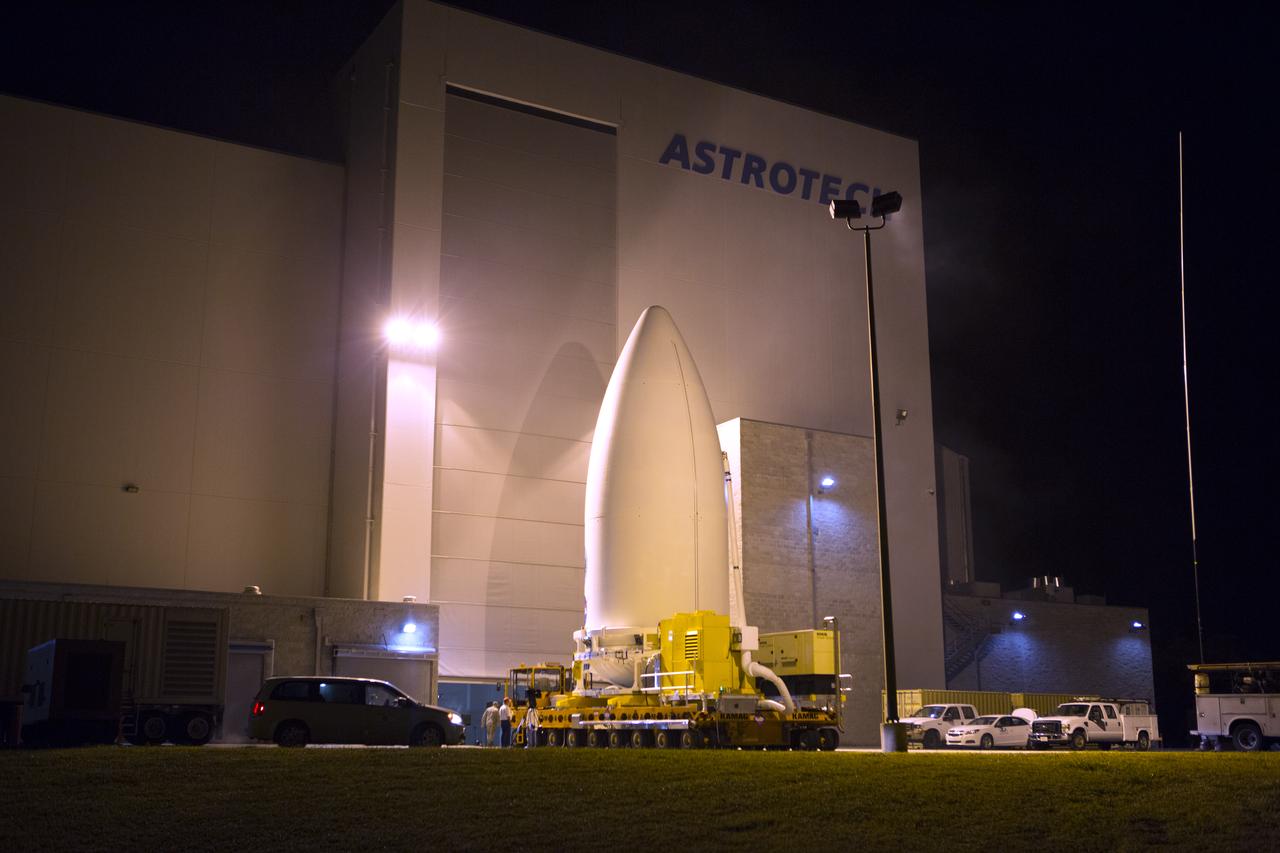
Enclosed in its payload fairing, NOAA's Geostationary Operational Environmental Satellite (GOES-R) departs from the Astrotech payload processing facility in Titusville, Florida, near NASA's Kennedy Space Center. GOES-R will be transported to the Vertical Integration Facility at Space Launch Complex 41 at Cape Canaveral Air Force Station. The satellite will launch aboard a United Launch Alliance Atlas V rocket in November. GOES-R is the first satellite in a series of next-generation NOAA GOES Satellites.
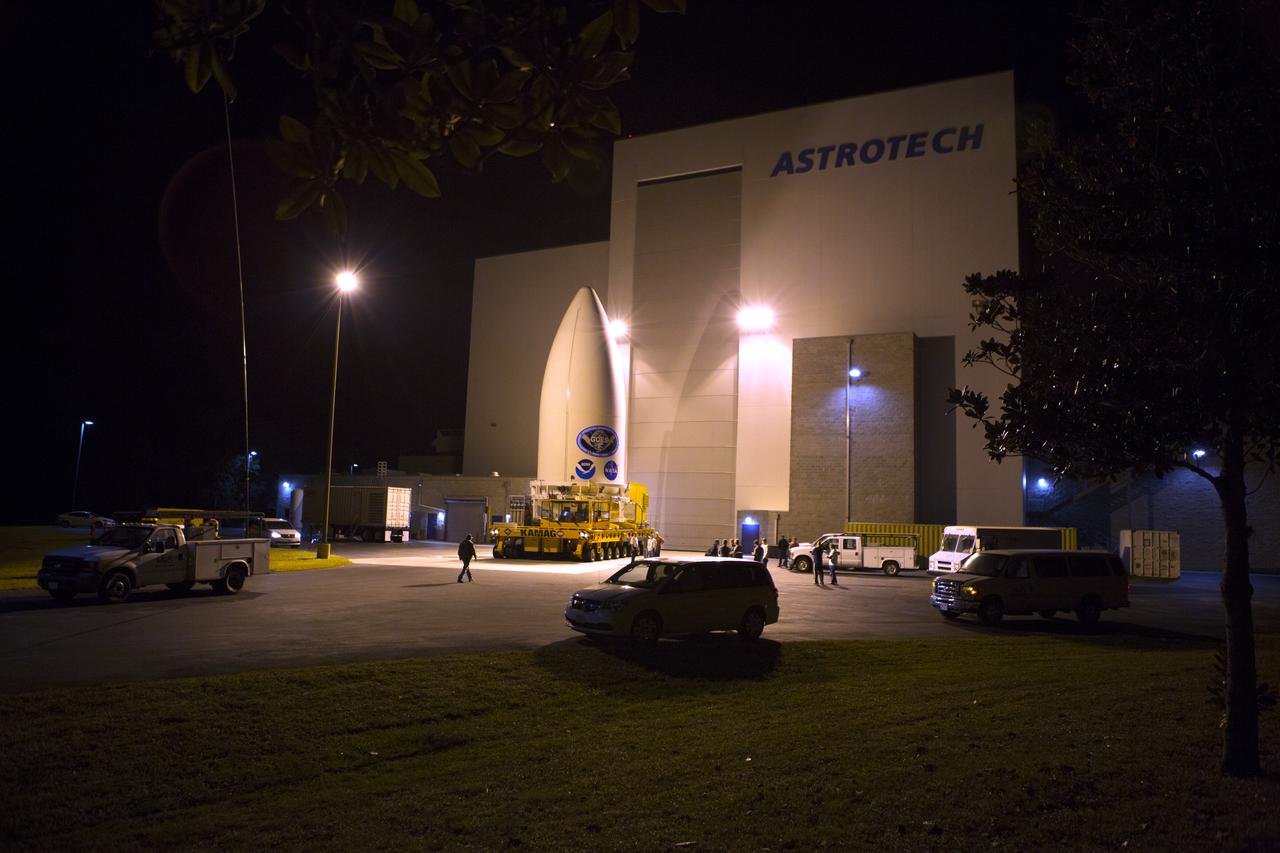
Enclosed in its payload fairing, NOAA's Geostationary Operational Environmental Satellite (GOES-R) departs from the Astrotech payload processing facility in Titusville, Florida, near NASA's Kennedy Space Center. GOES-R will be transported to the Vertical Integration Facility at Space Launch Complex 41 at Cape Canaveral Air Force Station. The satellite will launch aboard a United Launch Alliance Atlas V rocket in November. GOES-R is the first satellite in a series of next-generation NOAA GOES Satellites.
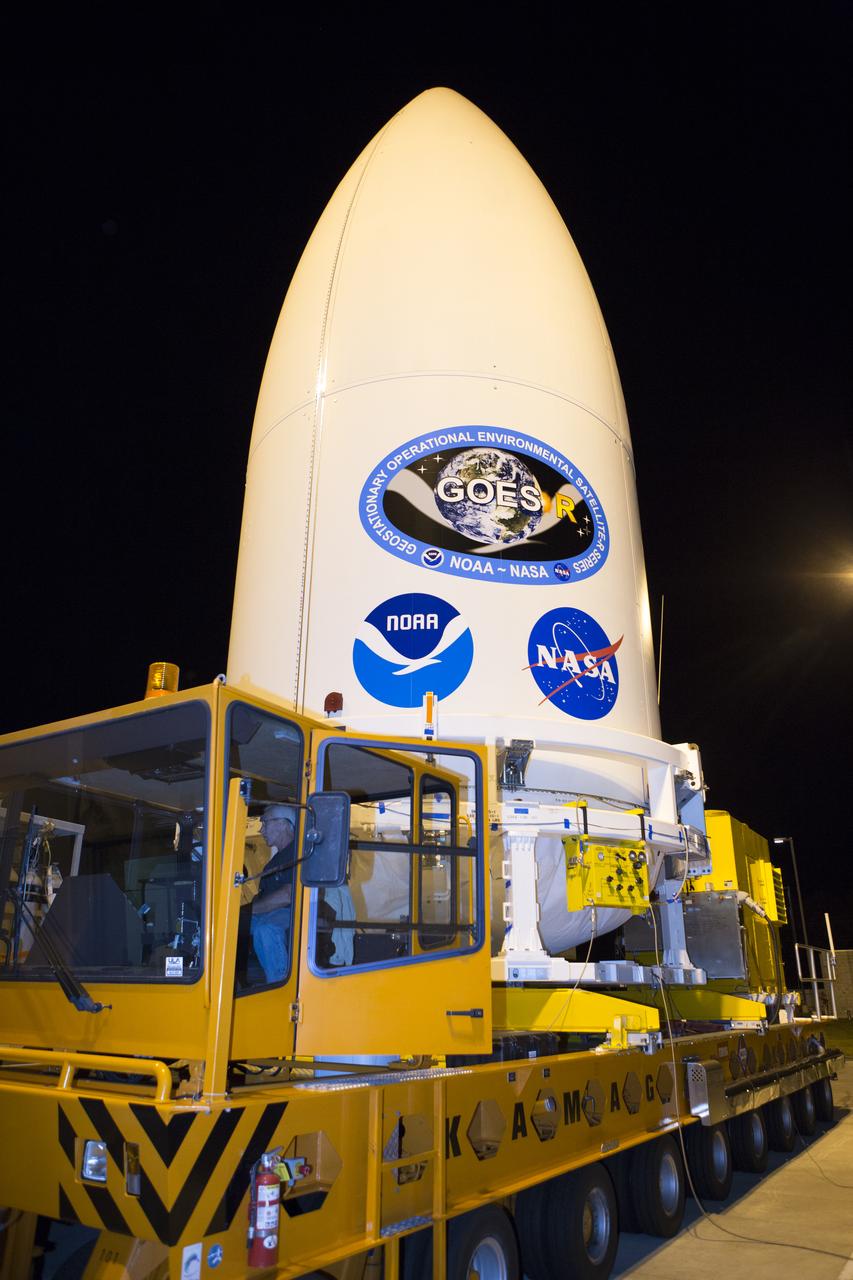
Enclosed in its payload fairing, NOAA's Geostationary Operational Environmental Satellite (GOES-R) departs from the Astrotech payload processing facility in Titusville, Florida, near NASA's Kennedy Space Center. GOES-R will be transported to the Vertical Integration Facility at Space Launch Complex 41 at Cape Canaveral Air Force Station. The satellite will launch aboard a United Launch Alliance Atlas V rocket in November. GOES-R is the first satellite in a series of next-generation NOAA GOES Satellites.
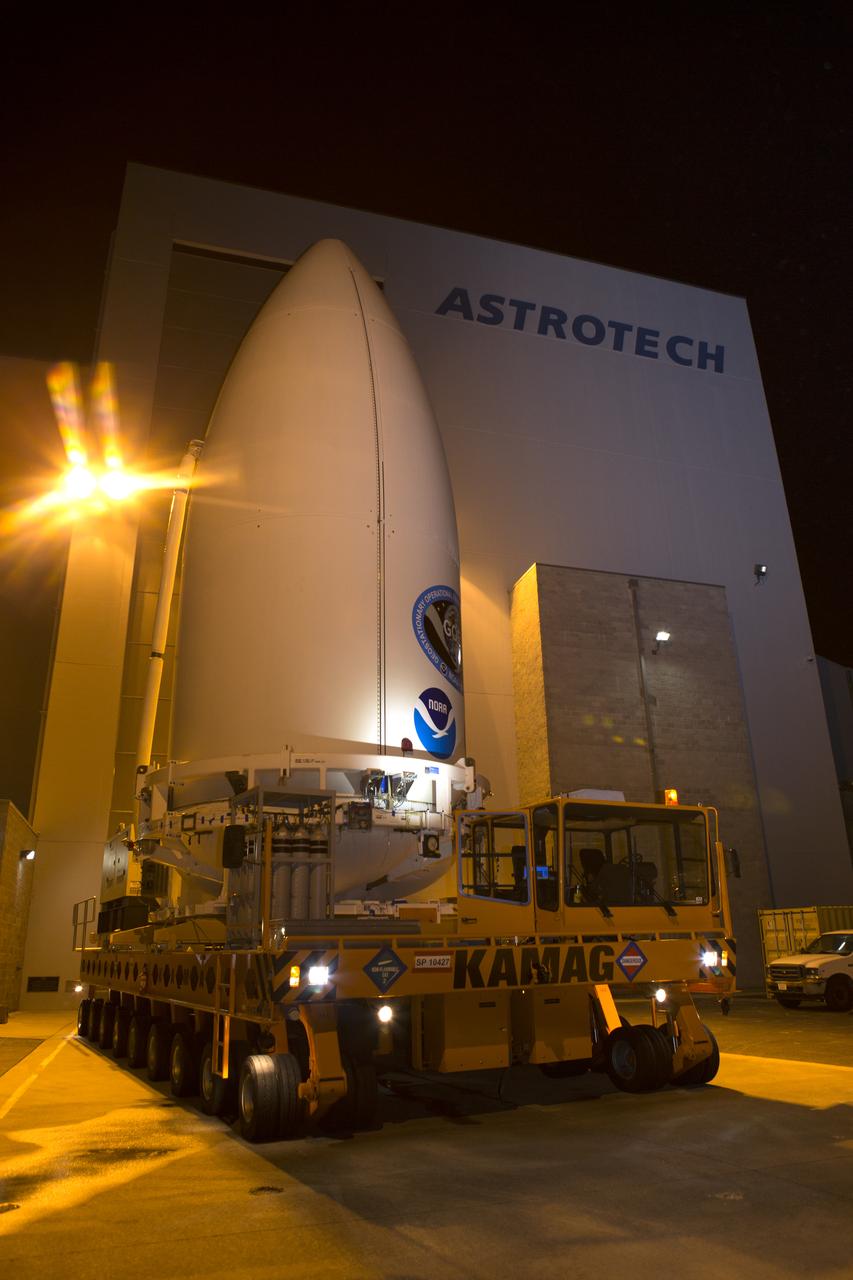
Enclosed in its payload fairing, NOAA's Geostationary Operational Environmental Satellite (GOES-R) departs from the Astrotech payload processing facility in Titusville, Florida, near NASA's Kennedy Space Center. GOES-R will be transported to the Vertical Integration Facility at Space Launch Complex 41 at Cape Canaveral Air Force Station. The satellite will launch aboard a United Launch Alliance Atlas V rocket in November. GOES-R is the first satellite in a series of next-generation NOAA GOES Satellites.
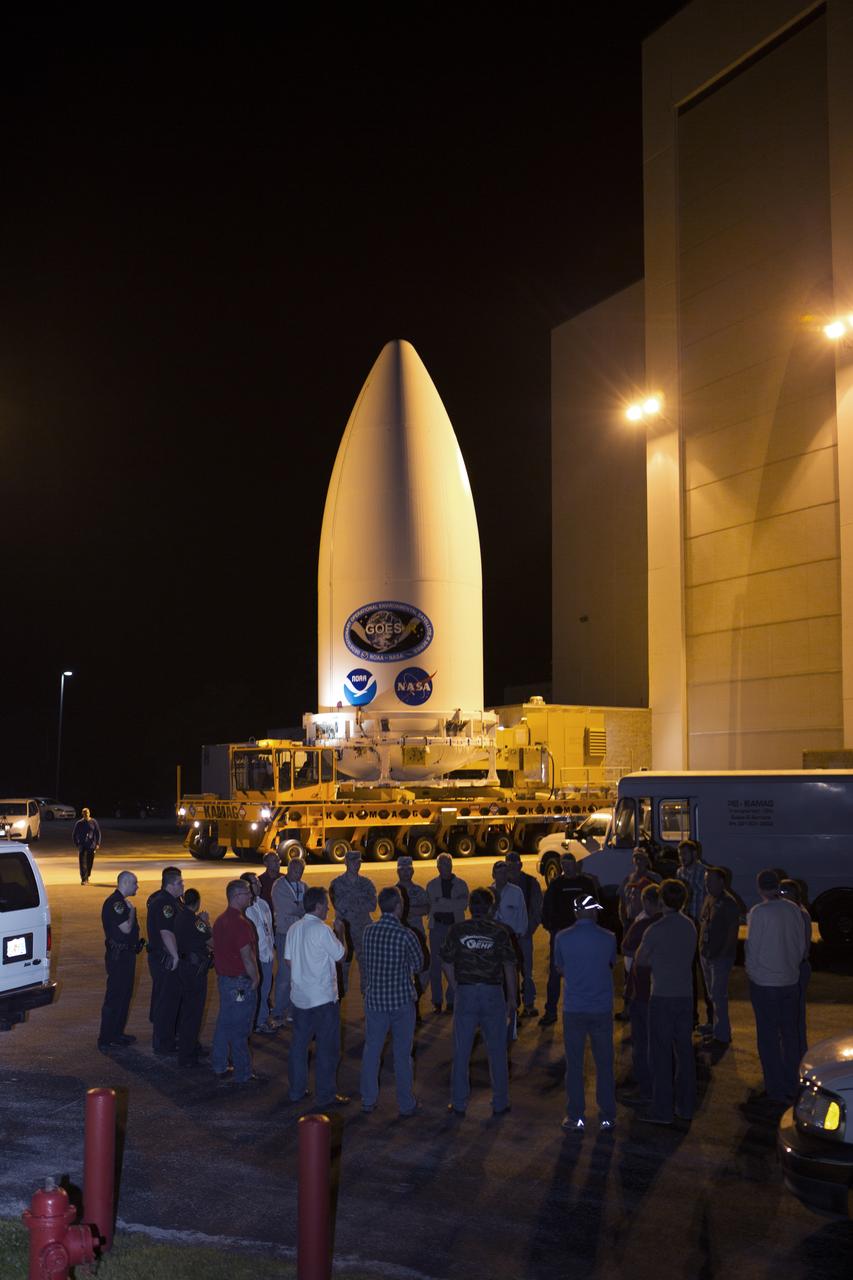
Enclosed in its payload fairing, NOAA's Geostationary Operational Environmental Satellite (GOES-R) departs from the Astrotech payload processing facility in Titusville, Florida, near NASA's Kennedy Space Center. GOES-R will be transported to the Vertical Integration Facility at Space Launch Complex 41 at Cape Canaveral Air Force Station. The satellite will launch aboard a United Launch Alliance Atlas V rocket in November. GOES-R is the first satellite in a series of next-generation NOAA GOES Satellites.
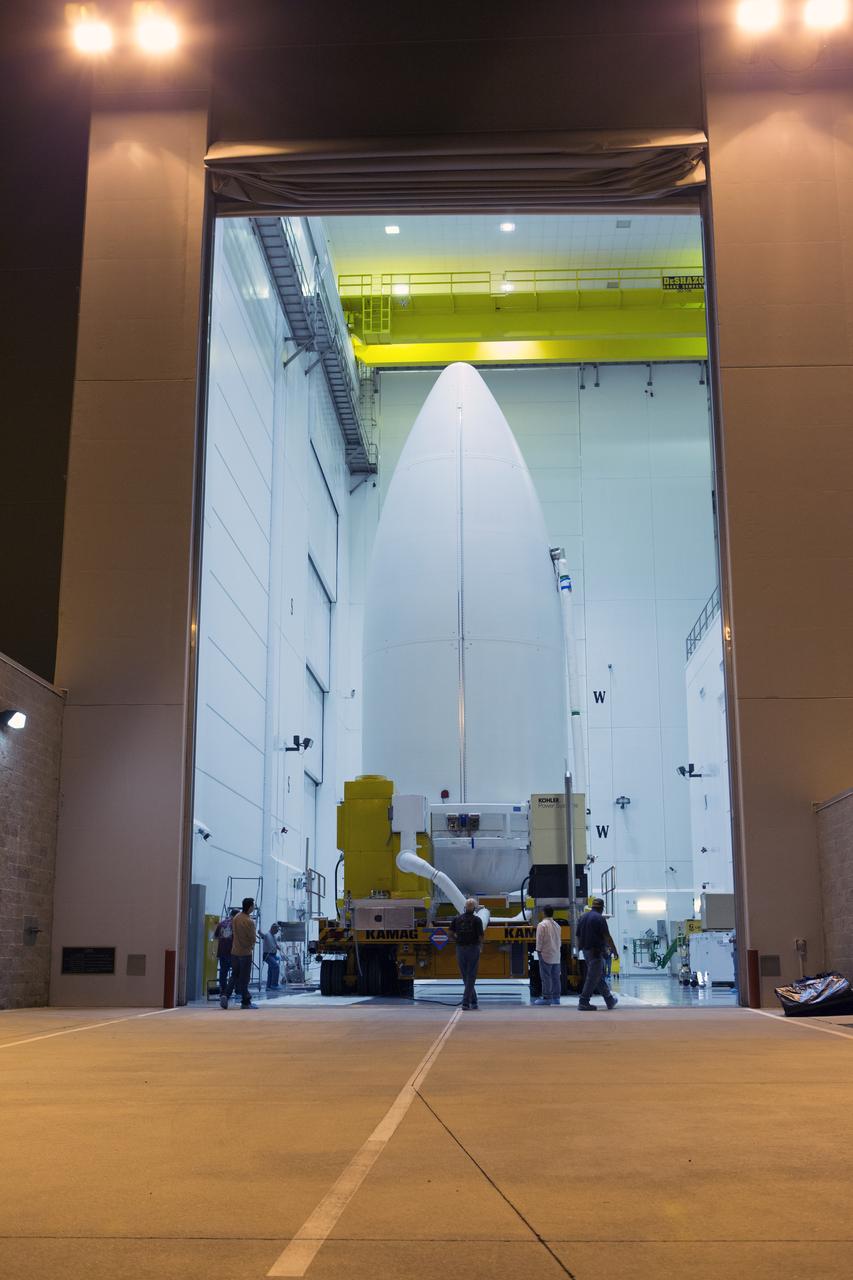
Enclosed in its payload fairing, NOAA's Geostationary Operational Environmental Satellite (GOES-R) is moved out of the Astrotech payload processing facility in Titusville, Florida, near NASA's Kennedy Space Center. GOES-R will be transported to the Vertical Integration Facility at Space Launch Complex 41 at Cape Canaveral Air Force Station. The satellite will launch aboard a United Launch Alliance Atlas V rocket in November. GOES-R is the first satellite in a series of next-generation NOAA GOES Satellites.
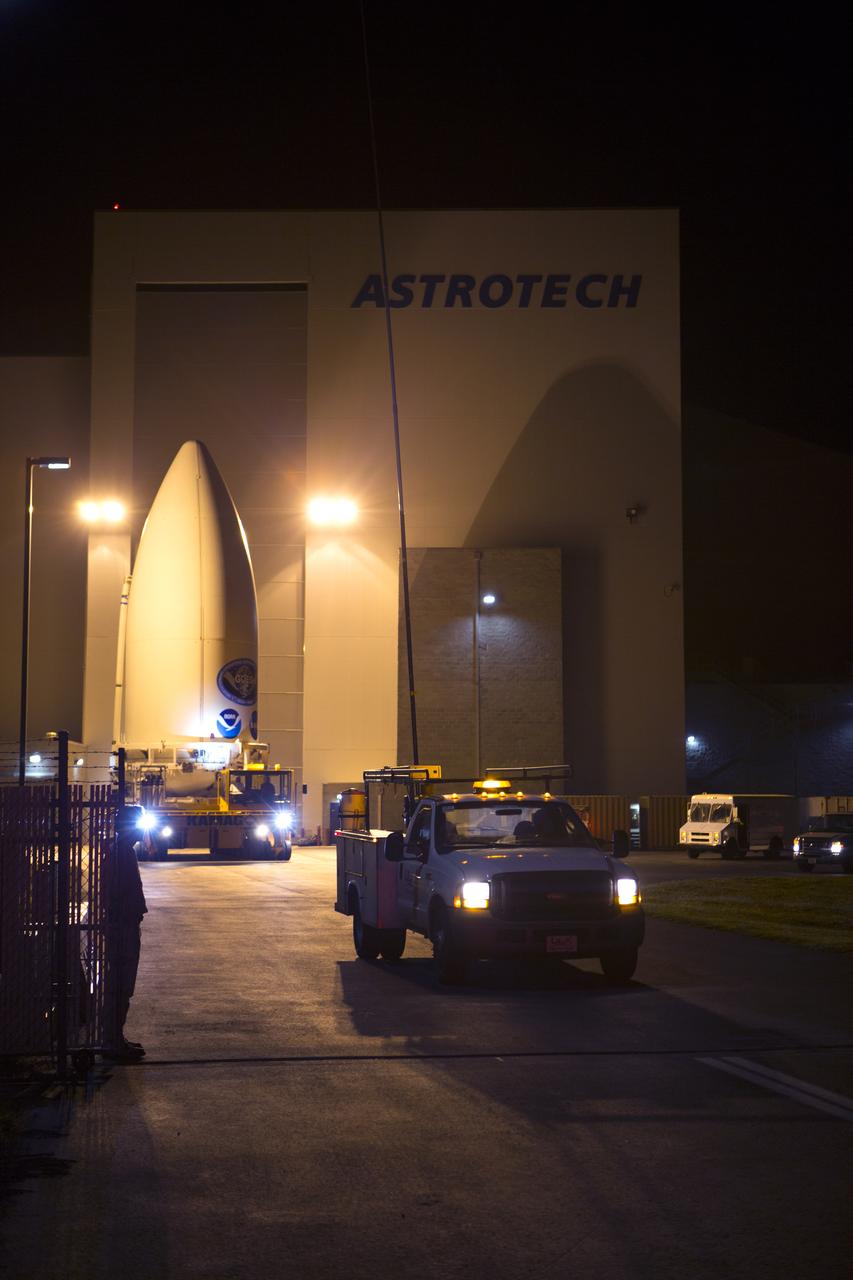
Enclosed in its payload fairing, NOAA's Geostationary Operational Environmental Satellite (GOES-R) departs from the Astrotech payload processing facility in Titusville, Florida, near NASA's Kennedy Space Center. GOES-R will be transported to the Vertical Integration Facility at Space Launch Complex 41 at Cape Canaveral Air Force Station. The satellite will launch aboard a United Launch Alliance Atlas V rocket in November. GOES-R is the first satellite in a series of next-generation NOAA GOES Satellites.
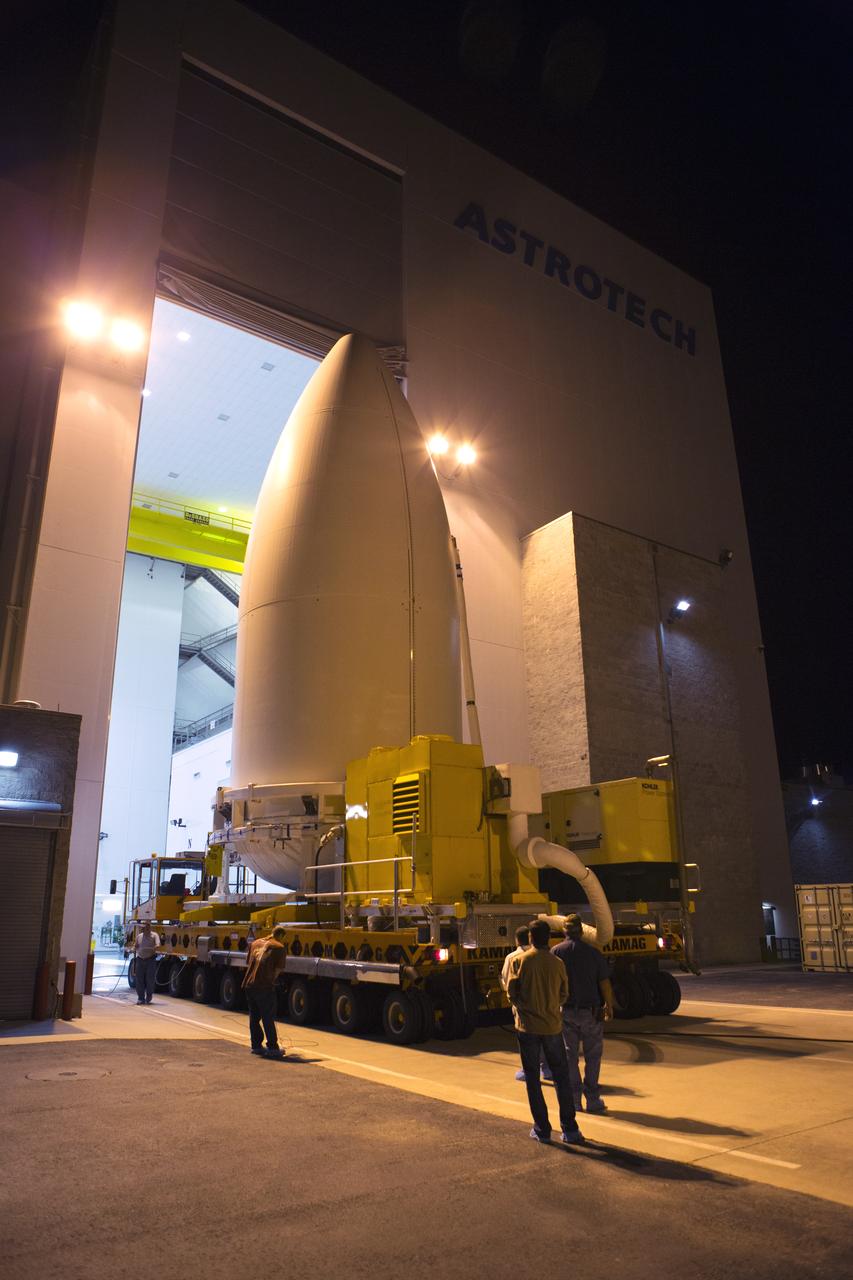
Enclosed in its payload fairing, NOAA's Geostationary Operational Environmental Satellite (GOES-R) emerges from the Astrotech payload processing facility in Titusville, Florida, near NASA's Kennedy Space Center. GOES-R will be transported to the Vertical Integration Facility at Space Launch Complex 41 at Cape Canaveral Air Force Station. The satellite will launch aboard a United Launch Alliance Atlas V rocket in November. GOES-R is the first satellite in a series of next-generation NOAA GOES Satellites.
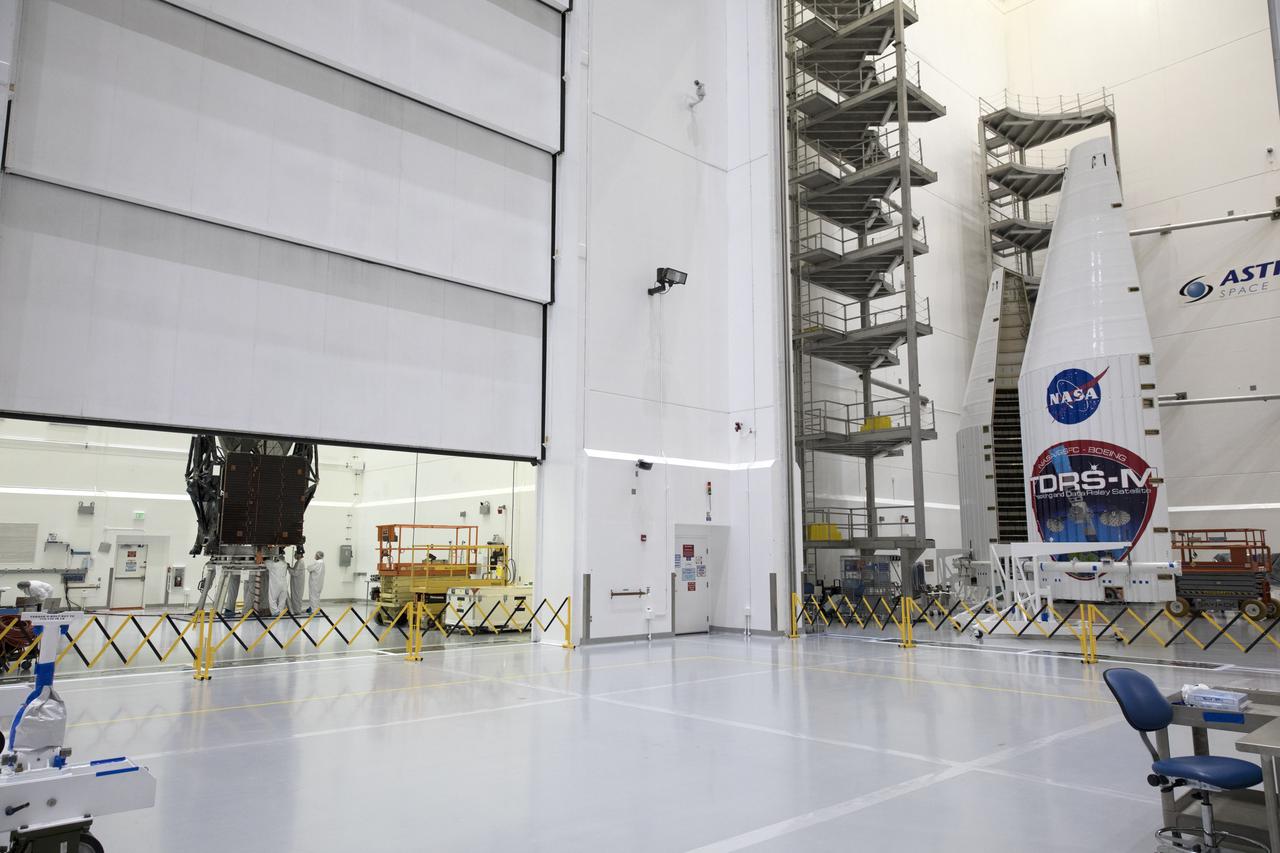
Inside the Astrotech facility in Titusville, Florida, NASA's Tracking and Data Relay Satellite, TDRS-M, is undergoing final checkouts in a test cell behind a large door. The spacecraft soon will be encapsulated in its payload fairing, seen on the right. TDRS-M is the latest spacecraft destined for the agency's constellation of communications satellites that allows nearly continuous contact with orbiting spacecraft ranging from the International Space Station and Hubble Space Telescope to the array of scientific observatories. Liftoff atop a United Launch Alliance Atlas V rocket is scheduled to take place from Space Launch Complex 41 at Cape Canaveral Air Force Station at 9:02 a.m. EDT Aug. 3, 2017.
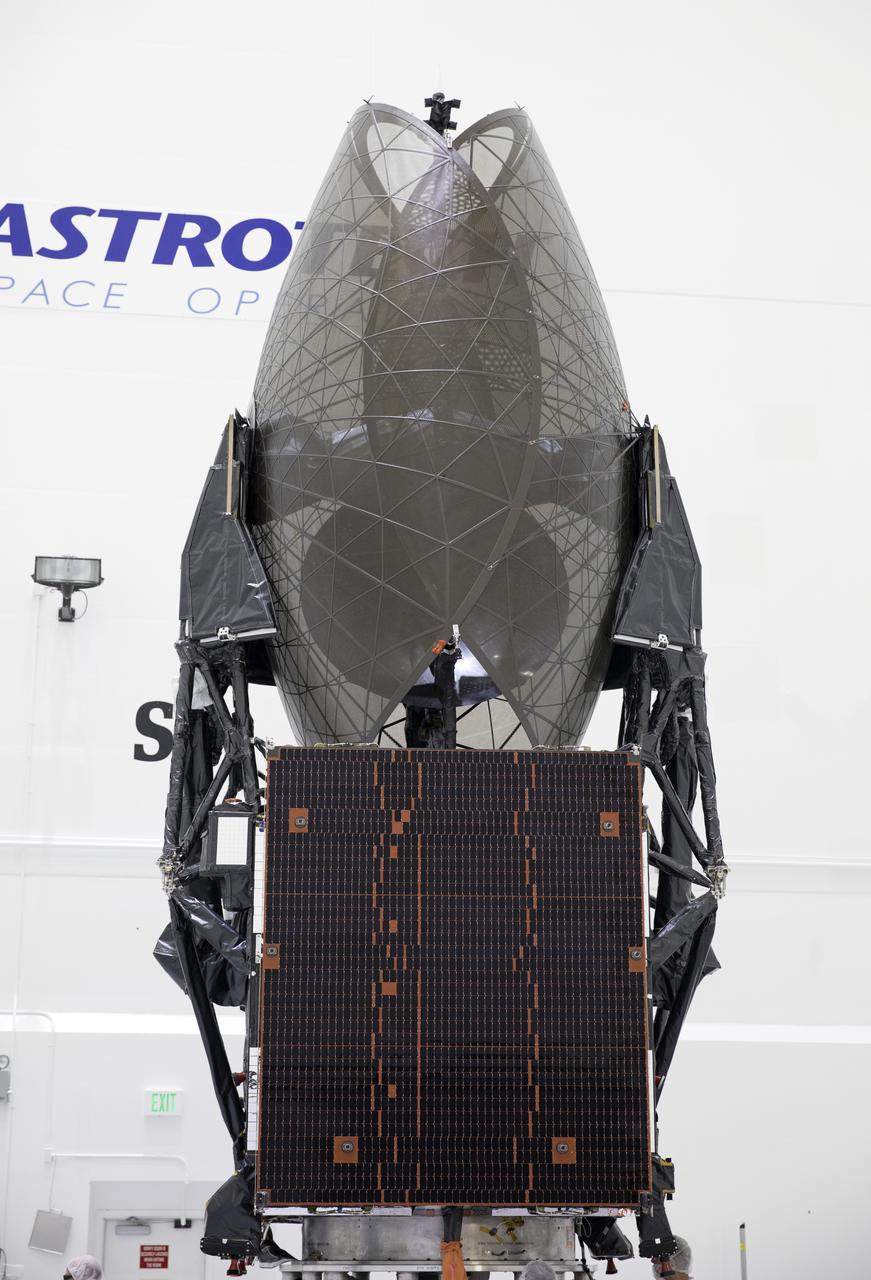
Inside the Astrotech facility in Titusville, Florida, NASA's Tracking and Data Relay Satellite, TDRS-M, is undergoing final checkouts prior to encapsulation in its payload fairing. TDRS-M is the latest spacecraft destined for the agency's constellation of communications satellites that allows nearly continuous contact with orbiting spacecraft ranging from the International Space Station and Hubble Space Telescope to the array of scientific observatories. Liftoff atop a United Launch Alliance Atlas V rocket is scheduled to take place from Space Launch Complex 41 at Cape Canaveral Air Force Station at 9:02 a.m. EDT Aug. 3, 2017.
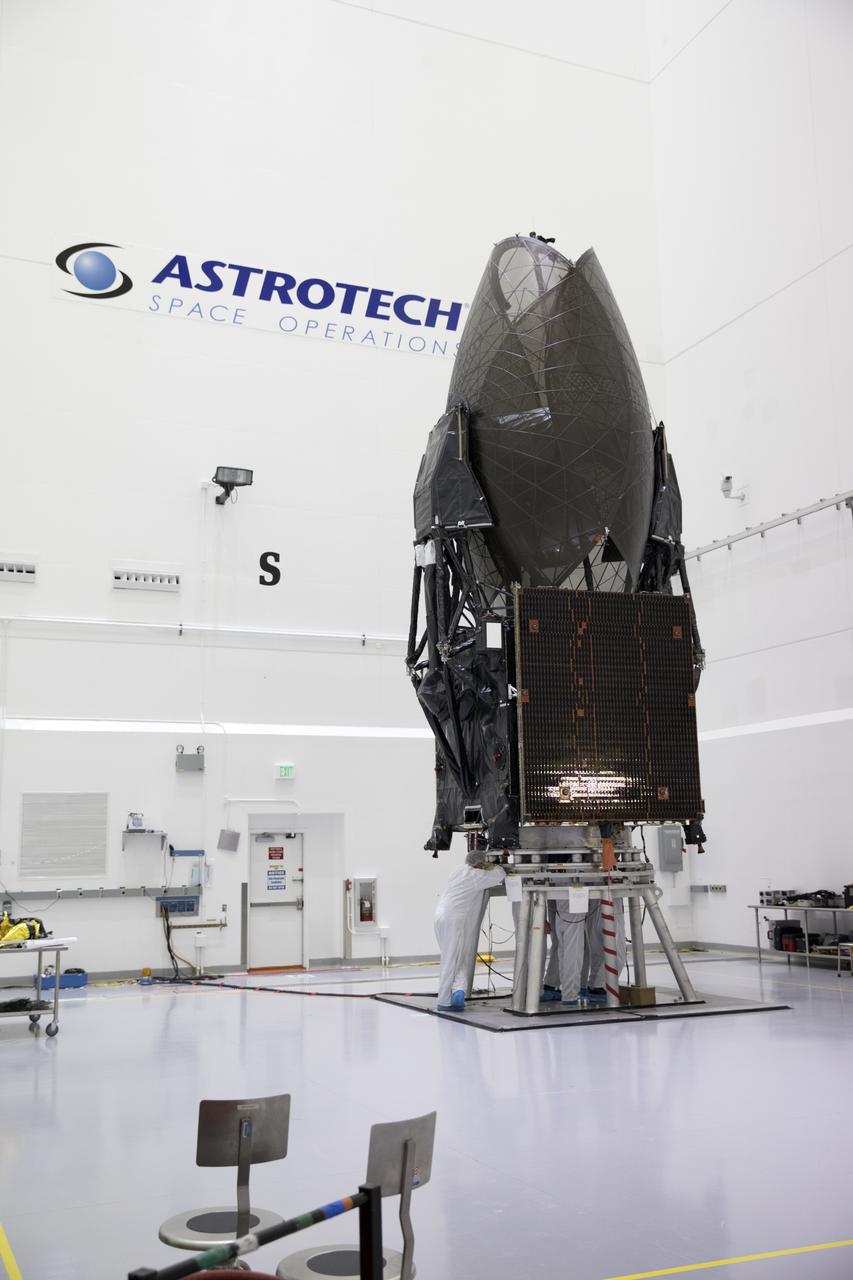
Inside the Astrotech facility in Titusville, Florida, NASA's Tracking and Data Relay Satellite, TDRS-M, is undergoing final checkouts prior to encapsulation in its payload fairing. TDRS-M is the latest spacecraft destined for the agency's constellation of communications satellites that allows nearly continuous contact with orbiting spacecraft ranging from the International Space Station and Hubble Space Telescope to the array of scientific observatories. Liftoff atop a United Launch Alliance Atlas V rocket is scheduled to take place from Space Launch Complex 41 at Cape Canaveral Air Force Station at 9:02 a.m. EDT Aug. 3, 2017.
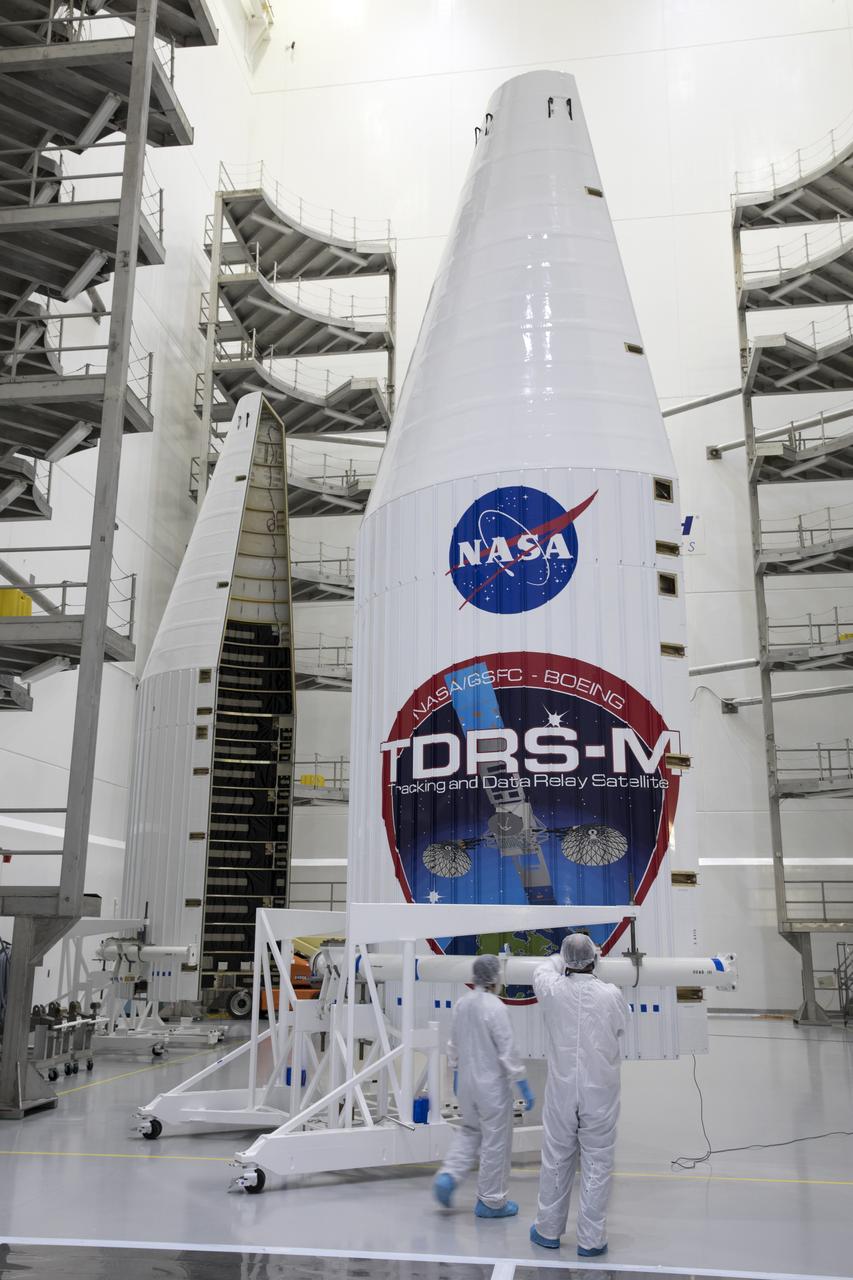
Inside the Astrotech facility in Titusville, Florida, the payload fairing for NASA's Tracking and Data Relay Satellite, TDRS-M, is inspected prior to encapsulating the spacecraft. TDRS-M is the latest spacecraft destined for the agency's constellation of communications satellites that allows nearly continuous contact with orbiting spacecraft ranging from the International Space Station and Hubble Space Telescope to the array of scientific observatories. Liftoff atop a United Launch Alliance Atlas V rocket is scheduled to take place from Space Launch Complex 41 at Cape Canaveral Air Force Station at 9:02 a.m. EDT Aug. 3, 2017.
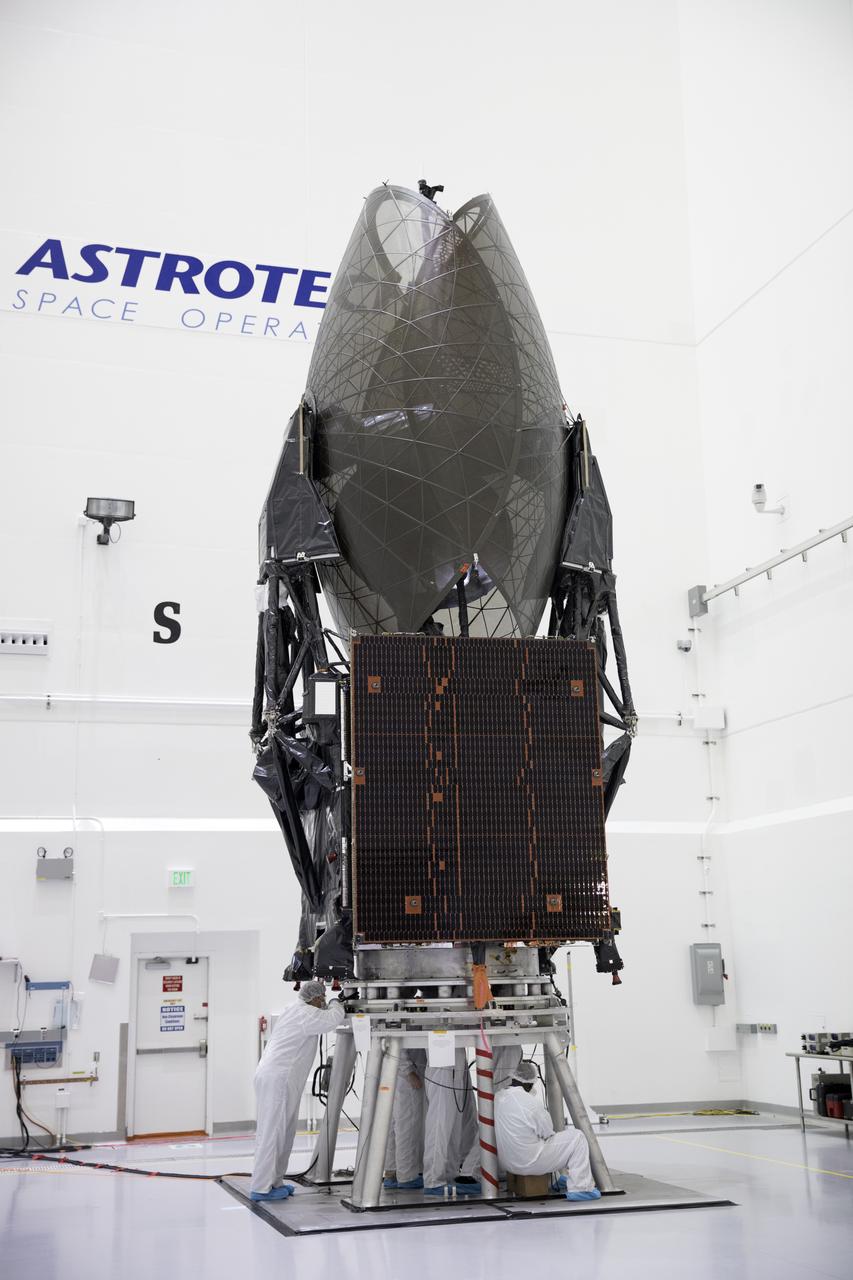
Inside the Astrotech facility in Titusville, Florida, NASA's Tracking and Data Relay Satellite, TDRS-M, is undergoing final checkouts prior to encapsulation in its payload fairing. TDRS-M is the latest spacecraft destined for the agency's constellation of communications satellites that allows nearly continuous contact with orbiting spacecraft ranging from the International Space Station and Hubble Space Telescope to the array of scientific observatories. Liftoff atop a United Launch Alliance Atlas V rocket is scheduled to take place from Space Launch Complex 41 at Cape Canaveral Air Force Station at 9:02 a.m. EDT Aug. 3, 2017.
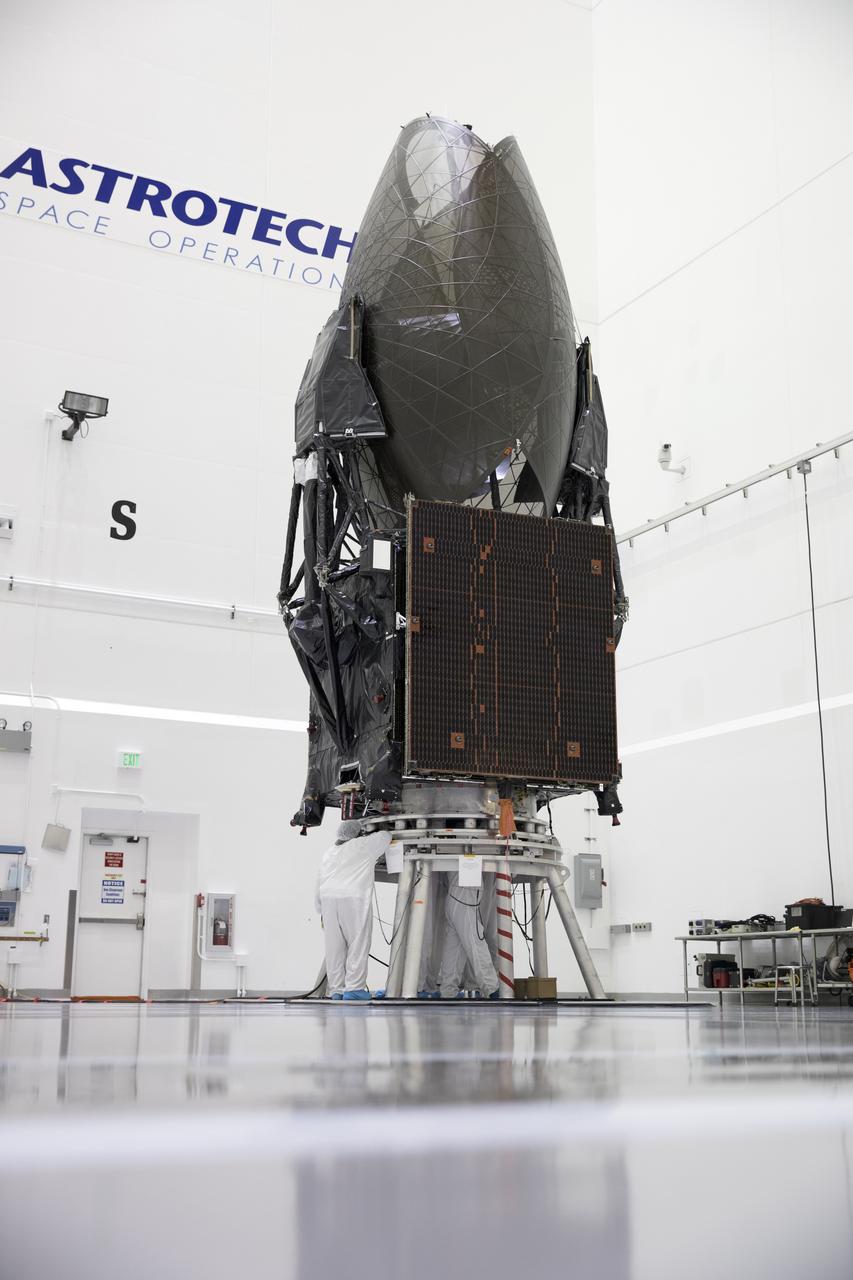
Inside the Astrotech facility in Titusville, Florida, NASA's Tracking and Data Relay Satellite, TDRS-M, is undergoing final checkouts prior to encapsulation in its payload fairing. TDRS-M is the latest spacecraft destined for the agency's constellation of communications satellites that allows nearly continuous contact with orbiting spacecraft ranging from the International Space Station and Hubble Space Telescope to the array of scientific observatories. Liftoff atop a United Launch Alliance Atlas V rocket is scheduled to take place from Space Launch Complex 41 at Cape Canaveral Air Force Station at 9:02 a.m. EDT Aug. 3, 2017.
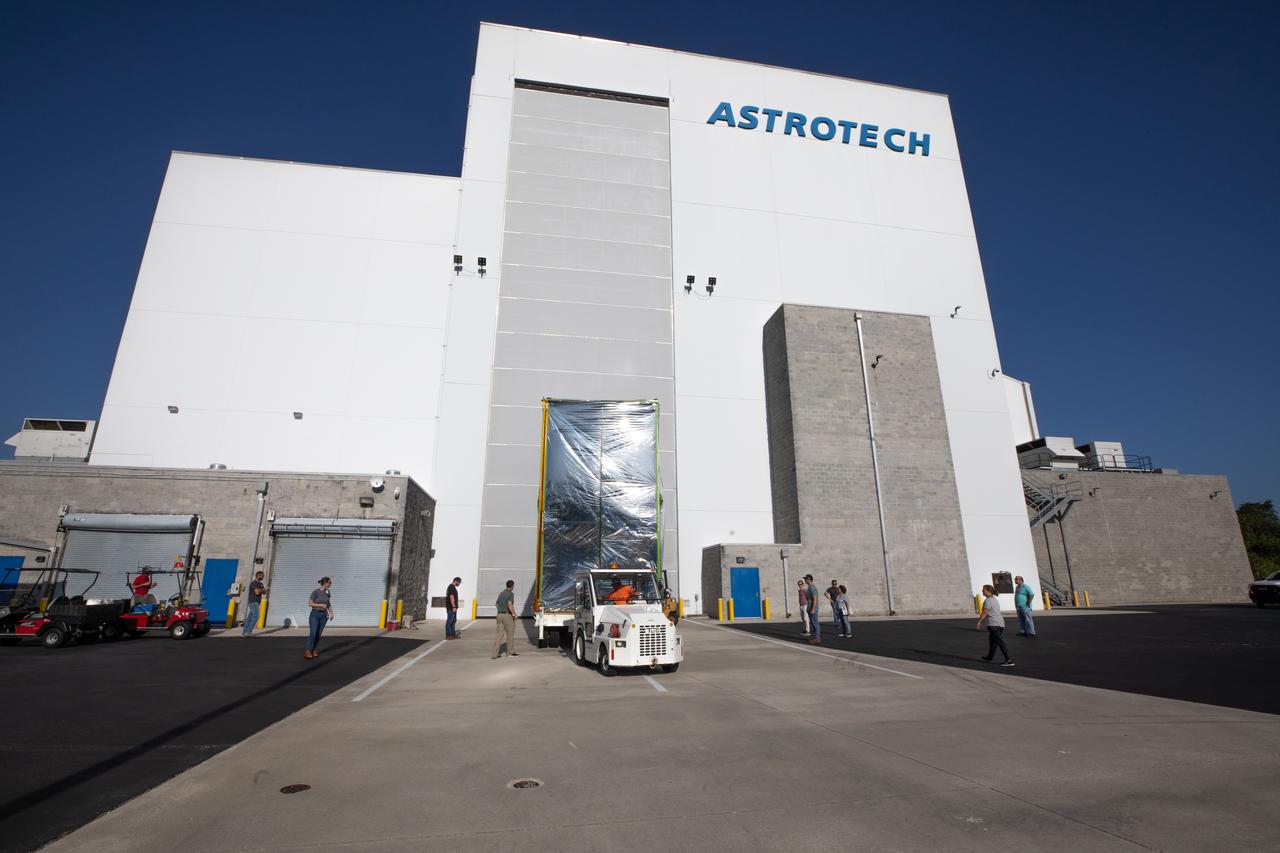
NASA’s Psyche spacecraft, secured for transport, arrived at the entrance to Building 9 at the Astrotech Space Operations Facility near the agency’s Kennedy Space Center in Florida on Aug. 14, 2023. Psyche will explore its namesake, a metal-rich asteroid orbiting the Sun between Mars and Jupiter. Psyche has NASA’s Deep Space Optical Communications (DSOC) technology demonstration onboard the spacecraft. DSOC will be the agency's first demonstration of optical communication beyond the Moon. Psyche will launch atop a SpaceX Falcon Heavy rocket from Launch Complex 39A at Kennedy. Launch is targeted for Oct. 5, 2023.
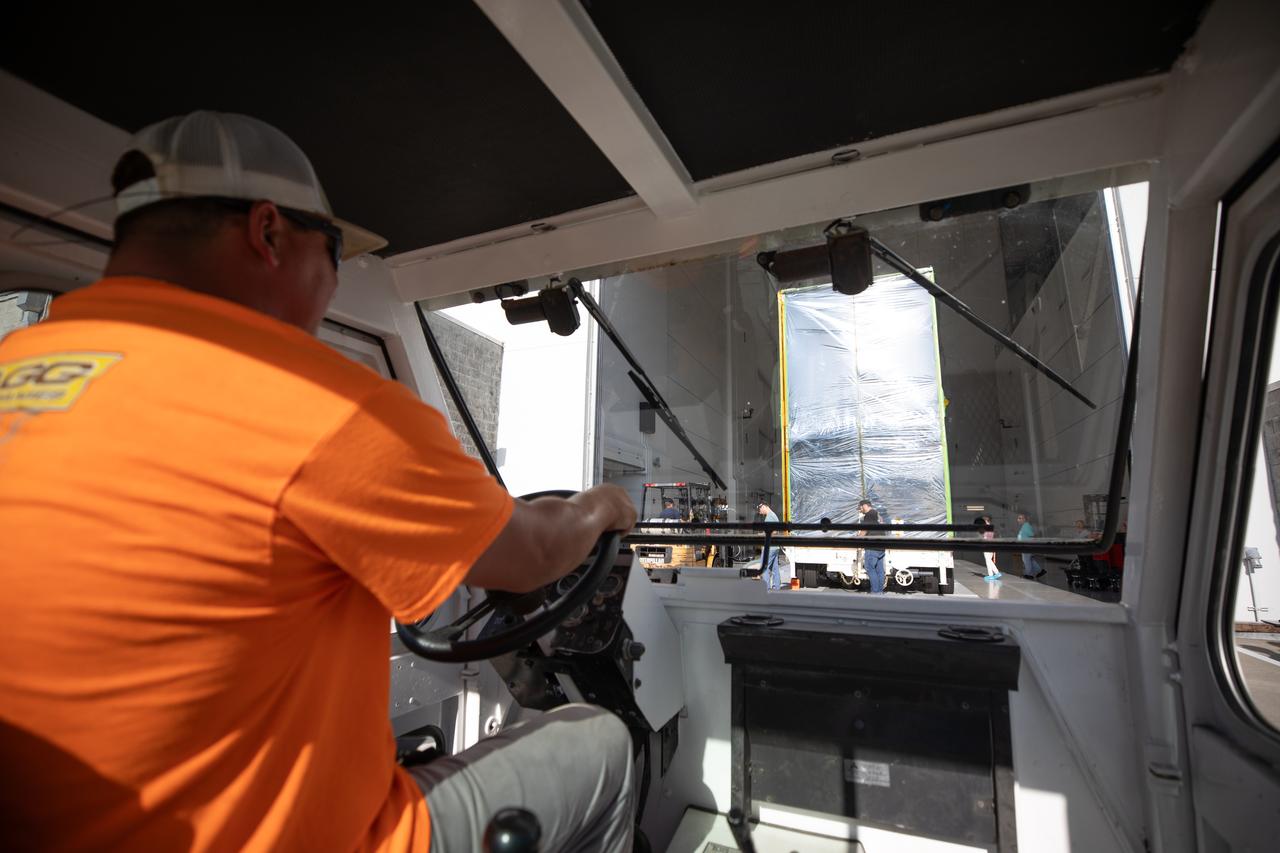
A driver uses a transport vehicle to move NASA’s Psyche spacecraft, secured for transport, into the entrance of Building 9 at the Astrotech Space Operations Facility near the agency’s Kennedy Space Center in Florida on Aug. 14, 2023. Psyche will explore its namesake, a metal-rich asteroid orbiting the Sun between Mars and Jupiter. Psyche has NASA’s Deep Space Optical Communications (DSOC) technology demonstration onboard the spacecraft. DSOC will be the agency's first demonstration of optical communication beyond the Moon. Psyche will launch atop a SpaceX Falcon Heavy rocket from Launch Complex 39A at Kennedy. Launch is targeted for Oct. 5, 2023.
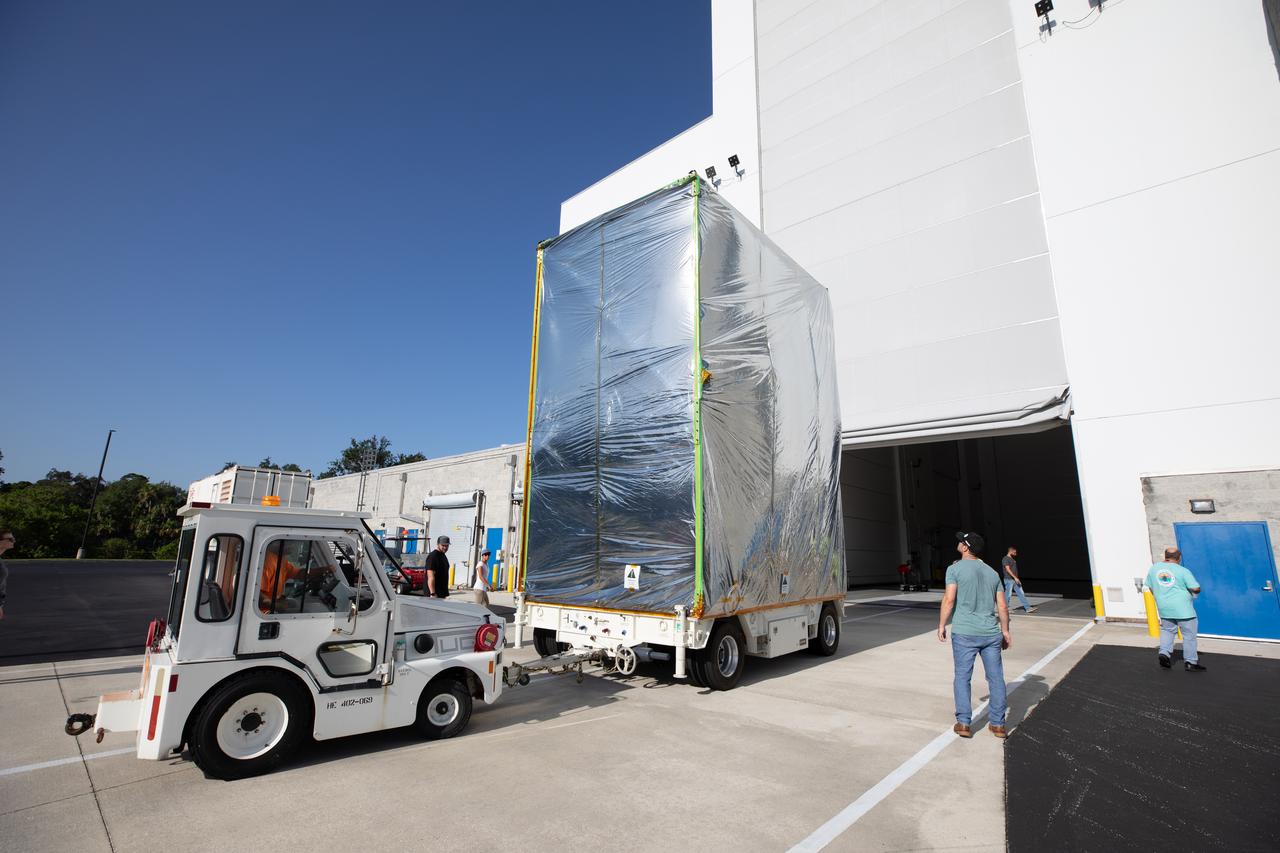
Technicians open the high bay door to Building 9 at the Astrotech Space Operations Facility near NASA’s Kennedy Space Center in Florida to allow entrance for the agency’s Psyche spacecraft, secured for transport, on Aug. 14, 2023. Psyche will explore its namesake, a metal-rich asteroid orbiting the Sun between Mars and Jupiter. Psyche has NASA’s Deep Space Optical Communications (DSOC) technology demonstration onboard the spacecraft. DSOC will be the agency's first demonstration of optical communication beyond the Moon. Psyche will launch atop a SpaceX Falcon Heavy rocket from Launch Complex 39A at Kennedy. Launch is targeted for Oct. 5, 2023.
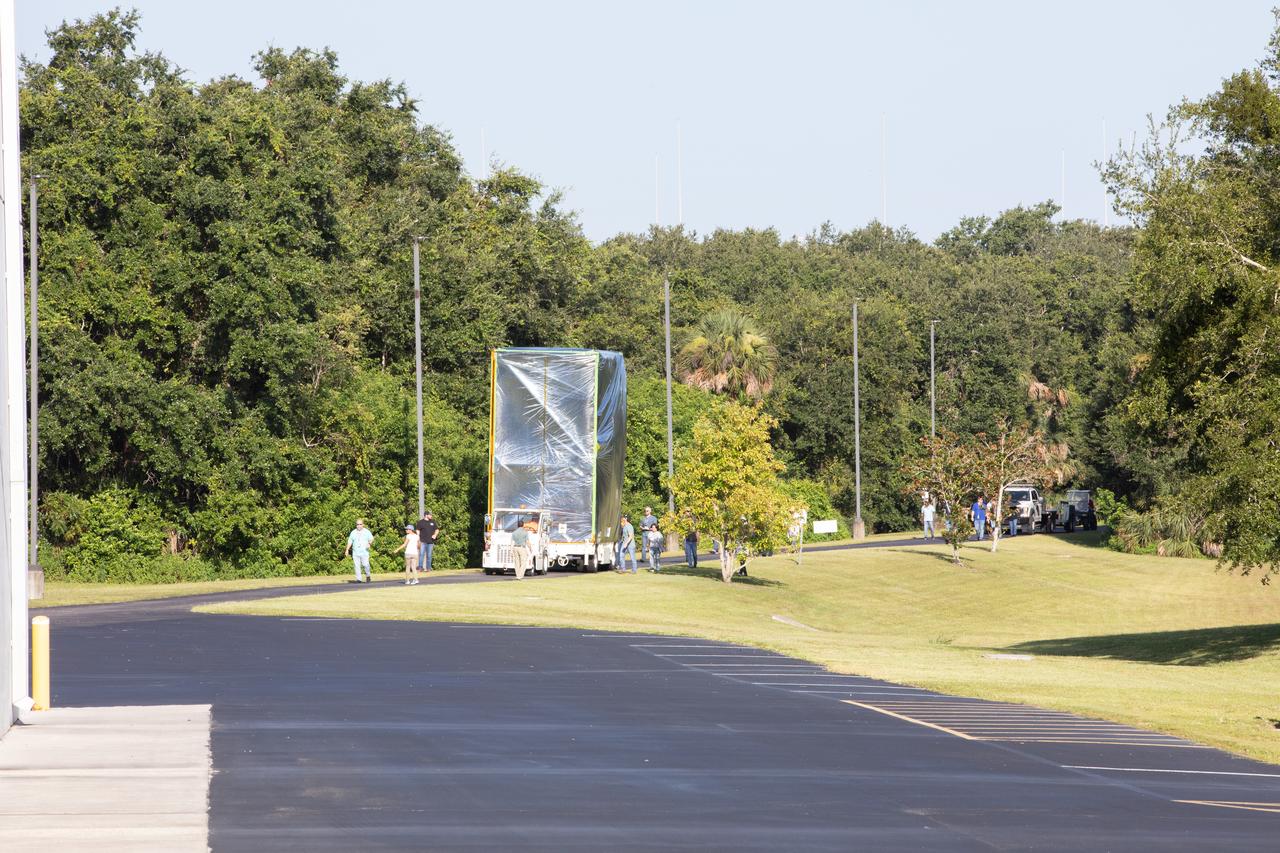
Technicians and engineers moved NASA’s Psyche spacecraft along the road to Building 9 at the Astrotech Space Operations Facility near the agency’s Kennedy Space Center in Florida on Aug. 14, 2023. Psyche will explore its namesake, a metal-rich asteroid orbiting the Sun between Mars and Jupiter. Psyche has NASA’s Deep Space Optical Communications (DSOC) technology demonstration onboard the spacecraft. DSOC will be the agency's first demonstration of optical communication beyond the Moon. Psyche will launch atop a SpaceX Falcon Heavy rocket from Launch Complex 39A at Kennedy. Launch is targeted for Oct. 5, 2023.
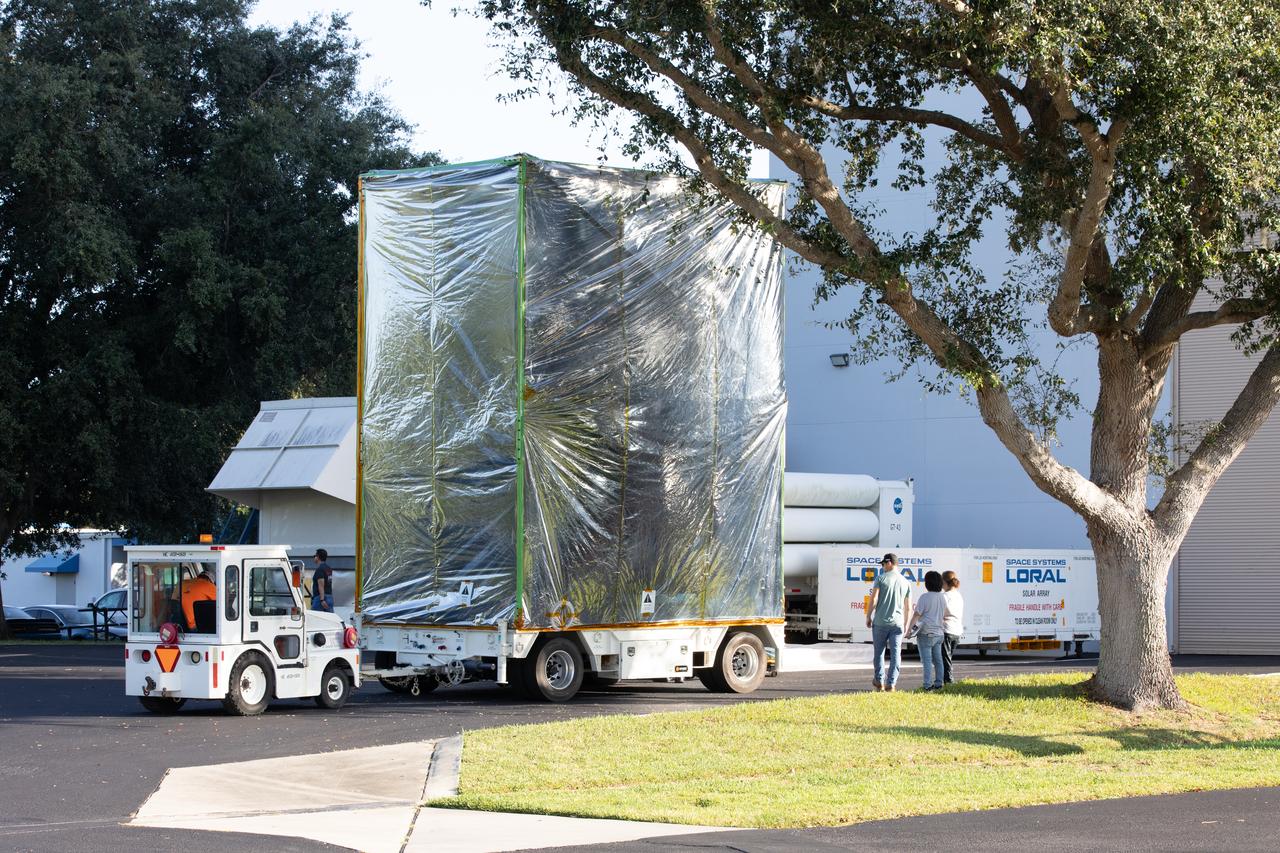
Technicians moved NASA’s Psyche spacecraft, secured for transport, to Building 9 at the Astrotech Space Operations Facility near the agency’s Kennedy Space Center in Florida on Aug. 14, 2023. Psyche will explore its namesake, a metal-rich asteroid orbiting the Sun between Mars and Jupiter. Psyche has NASA’s Deep Space Optical Communications (DSOC) technology demonstration onboard the spacecraft. DSOC will be the agency's first demonstration of optical communication beyond the Moon. Psyche will launch atop a SpaceX Falcon Heavy rocket from Launch Complex 39A at Kennedy. Launch is targeted for Oct. 5, 2023.
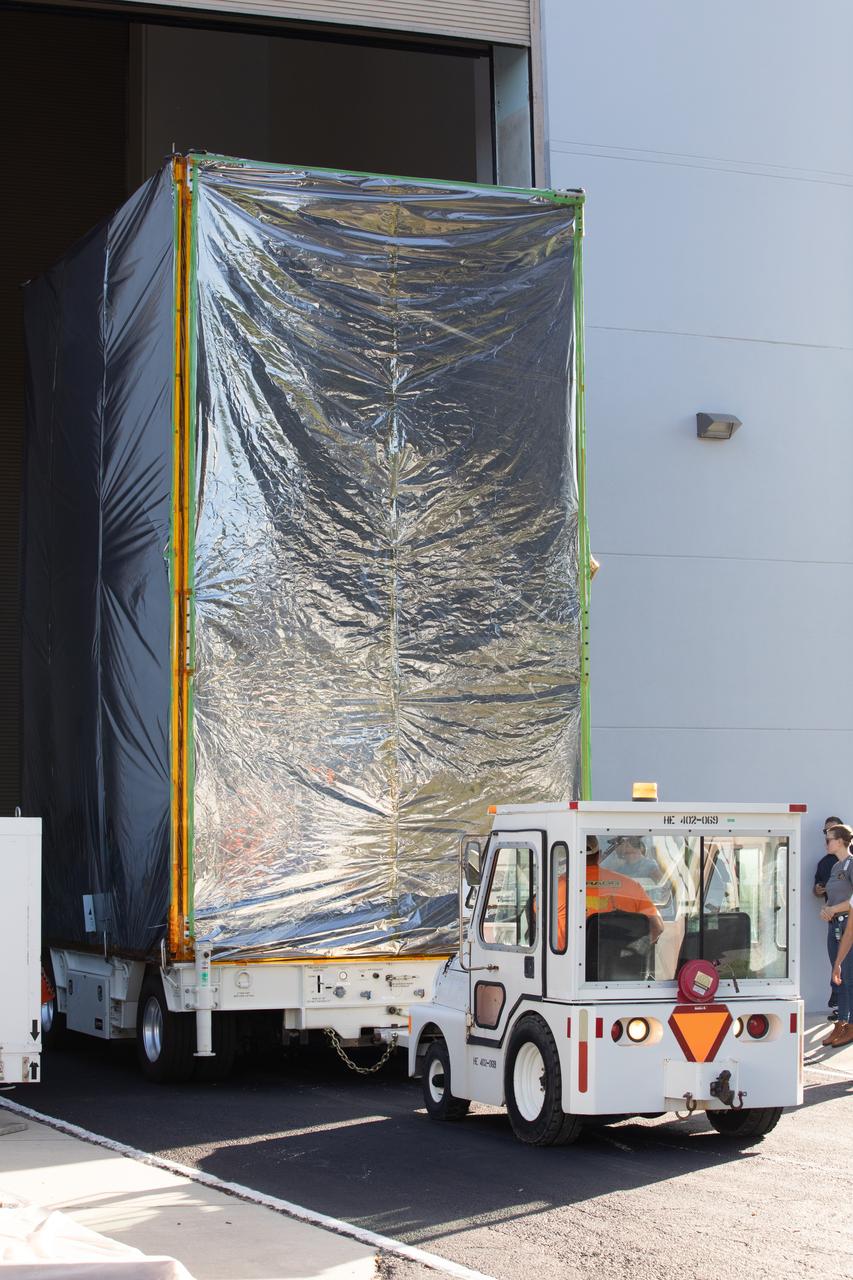
Technicians moved NASA’s Psyche spacecraft, secured for transport, to Building 9 at the Astrotech Space Operations Facility near the agency’s Kennedy Space Center in Florida on Aug. 14, 2023. Psyche will explore its namesake, a metal-rich asteroid orbiting the Sun between Mars and Jupiter. Psyche has NASA’s Deep Space Optical Communications (DSOC) technology demonstration onboard the spacecraft. DSOC will be the agency's first demonstration of optical communication beyond the Moon. Psyche will launch atop a SpaceX Falcon Heavy rocket from Launch Complex 39A at Kennedy. Launch is targeted for Oct. 5, 2023.
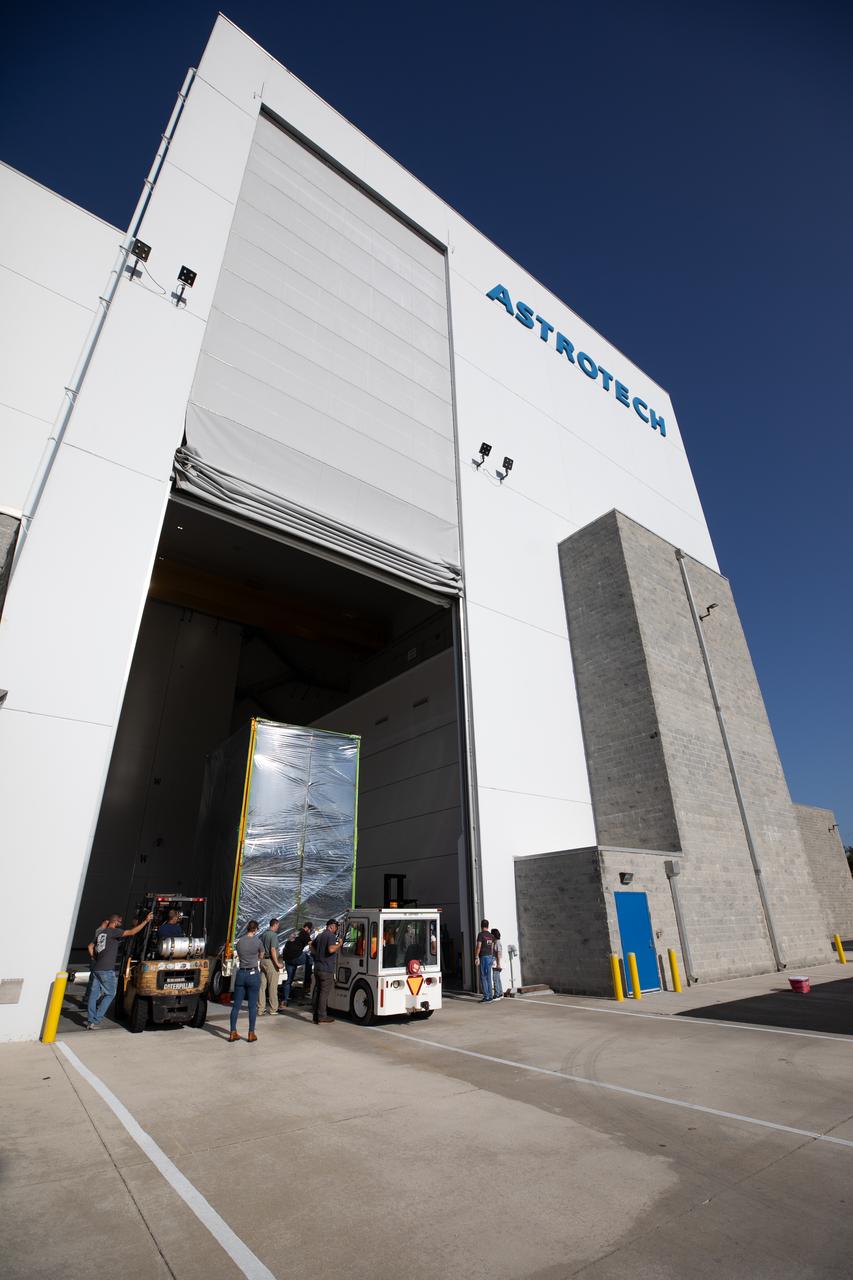
Technicians moved NASA’s Psyche spacecraft, secured for transport, into the entrance of Building 9 at the Astrotech Space Operations Facility near the agency’s Kennedy Space Center in Florida on Aug. 14, 2023. Psyche will explore its namesake, a metal-rich asteroid orbiting the Sun between Mars and Jupiter. Psyche has NASA’s Deep Space Optical Communications (DSOC) technology demonstration onboard the spacecraft. DSOC will be the agency's first demonstration of optical communication beyond the Moon. Psyche will launch atop a SpaceX Falcon Heavy rocket from Launch Complex 39A at Kennedy. Launch is targeted for Oct. 5, 2023.
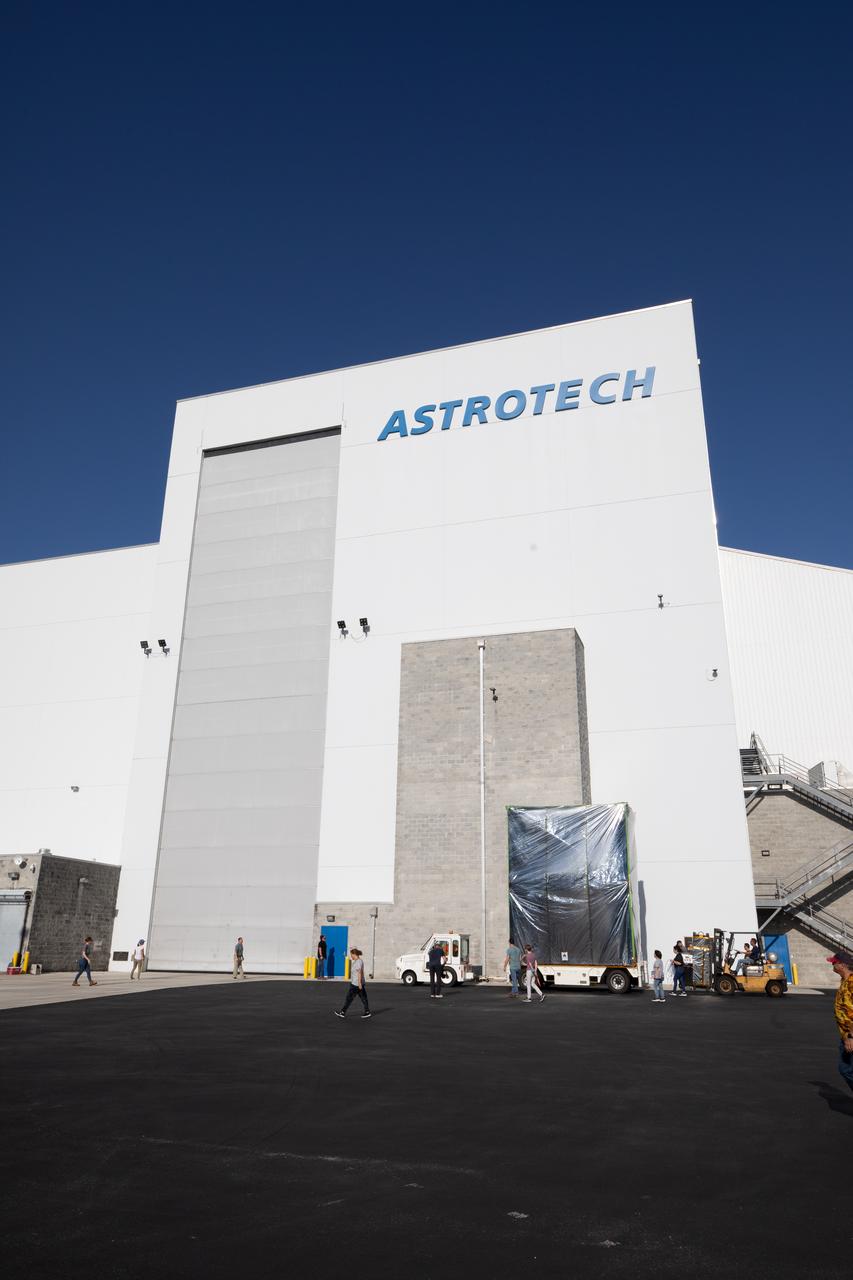
NASA’s Psyche spacecraft, secured for transport, arrived at the entrance to Building 9 at the Astrotech Space Operations Facility near the agency’s Kennedy Space Center in Florida on Aug. 14, 2023. Psyche will explore its namesake, a metal-rich asteroid orbiting the Sun between Mars and Jupiter. Psyche has NASA’s Deep Space Optical Communications (DSOC) technology demonstration onboard the spacecraft. DSOC will be the agency's first demonstration of optical communication beyond the Moon. Psyche will launch atop a SpaceX Falcon Heavy rocket from Launch Complex 39A at Kennedy. Launch is targeted for Oct. 5, 2023.
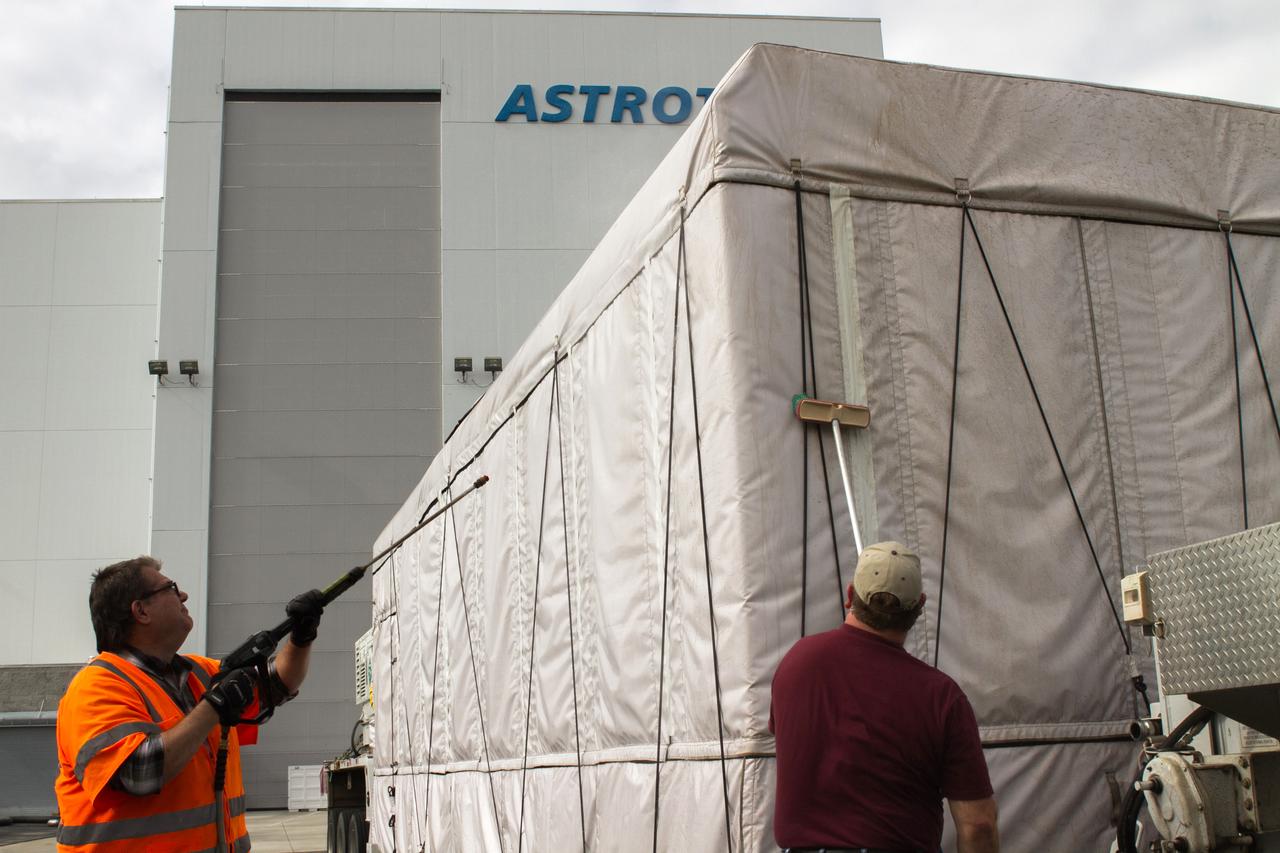
NOAA's Geostationary Operation Environmental Satellite-S (GOES-S) arrives at Astrotech Space Operations in Titusville, Florida, to prepare it for launch. The facility is located near NASA's Kennedy Space Center. GOES-S is the second in a series of four advanced geostationary weather satellites. The GOES-R series - consisting of the GOES-R, GOES-S, GOES-T and GOES-U spacecraft - will significantly improve the detection and observation of environmental phenomena that directly affect public safety, protection of property and the nation's economic health and prosperity. GOES-S is slated to launch March 1, 2018 aboard a United Launch Alliance Atlas V rocket from Cape Canaveral Air Force Station in Florida.
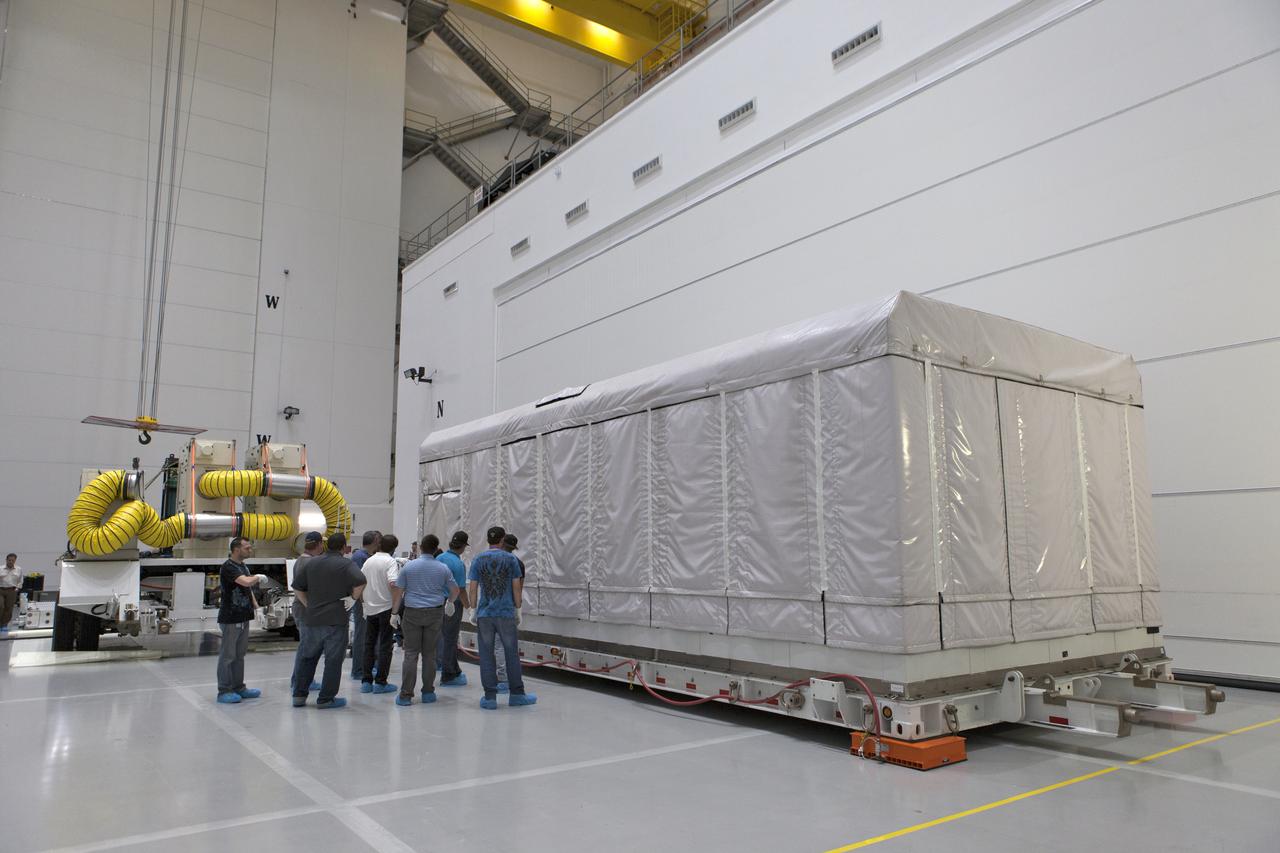
NOAA's Geostationary Operation Environmental Satellite-S (GOES-S) arrives inside Astrotech Space Operations in Titusville, Florida, to prepare it for launch. The facility is located near NASA's Kennedy Space Center. GOES-S is the second in a series of four advanced geostationary weather satellites. The GOES-R series - consisting of the GOES-R, GOES-S, GOES-T and GOES-U spacecraft - will significantly improve the detection and observation of environmental phenomena that directly affect public safety, protection of property and the nation's economic health and prosperity. GOES-S is slated to launch March 1, 2018 aboard a United Launch Alliance Atlas V rocket from Cape Canaveral Air Force Station in Florida.
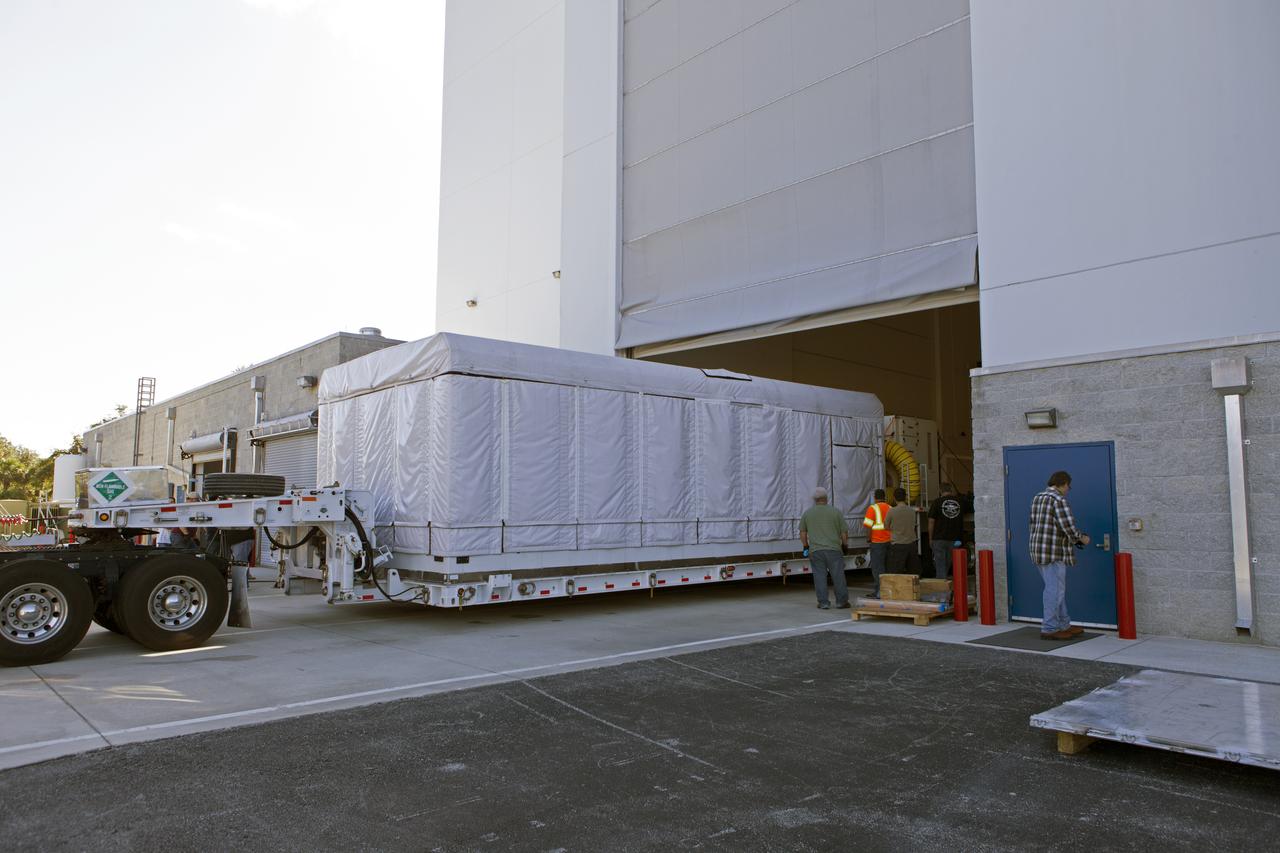
NOAA's Geostationary Operation Environmental Satellite-S (GOES-S) arrives at Astrotech Space Operations in Titusville, Florida, to prepare it for launch. The facility is located near NASA's Kennedy Space Center. GOES-S is the second in a series of four advanced geostationary weather satellites. The GOES-R series - consisting of the GOES-R, GOES-S, GOES-T and GOES-U spacecraft - will significantly improve the detection and observation of environmental phenomena that directly affect public safety, protection of property and the nation's economic health and prosperity. GOES-S is slated to launch March 1, 2018 aboard a United Launch Alliance Atlas V rocket from Cape Canaveral Air Force Station in Florida.
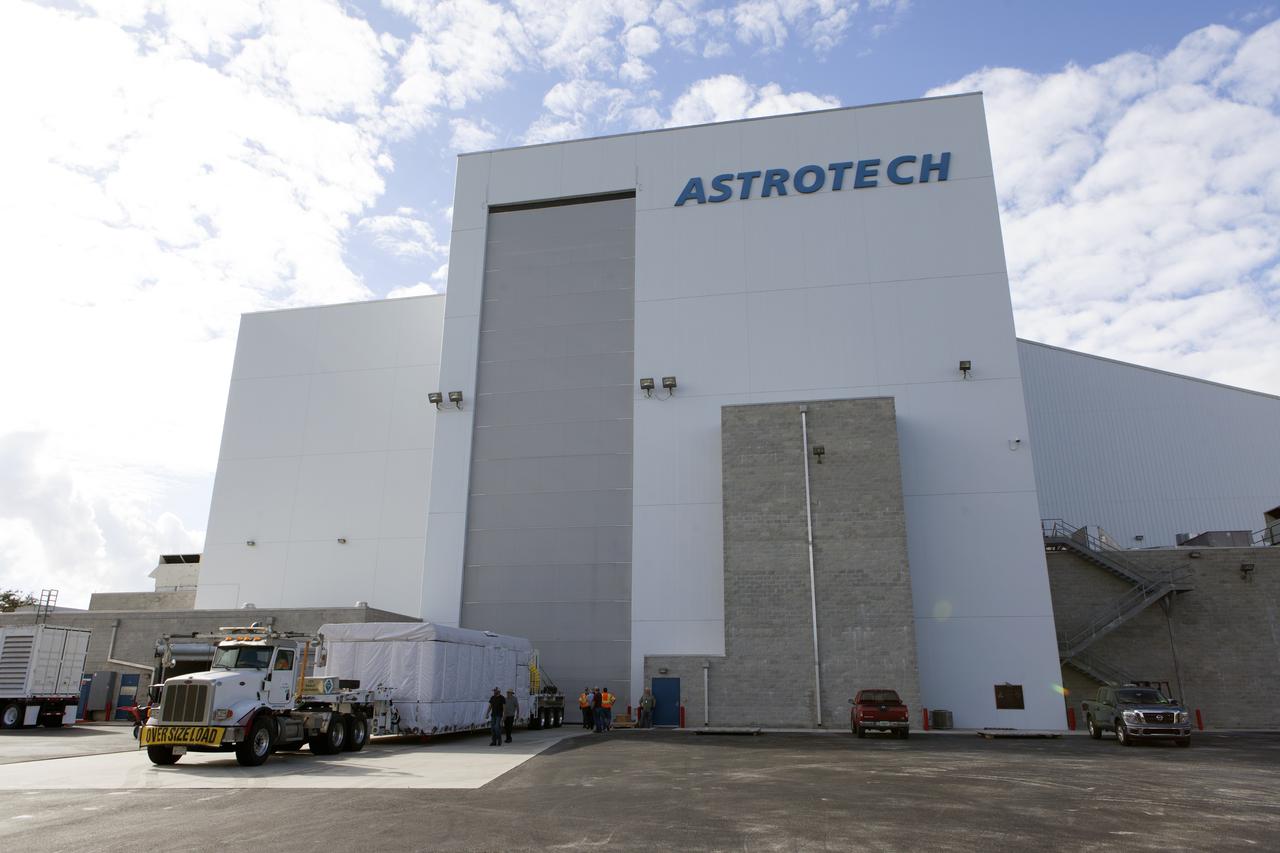
NOAA's Geostationary Operation Environmental Satellite-S (GOES-S) arrives at Astrotech Space Operations in Titusville, Florida, to prepare it for launch. The facility is located near NASA's Kennedy Space Center. GOES-S is the second in a series of four advanced geostationary weather satellites. The GOES-R series - consisting of the GOES-R, GOES-S, GOES-T and GOES-U spacecraft - will significantly improve the detection and observation of environmental phenomena that directly affect public safety, protection of property and the nation's economic health and prosperity. GOES-S is slated to launch March 1, 2018 aboard a United Launch Alliance Atlas V rocket from Cape Canaveral Air Force Station in Florida.
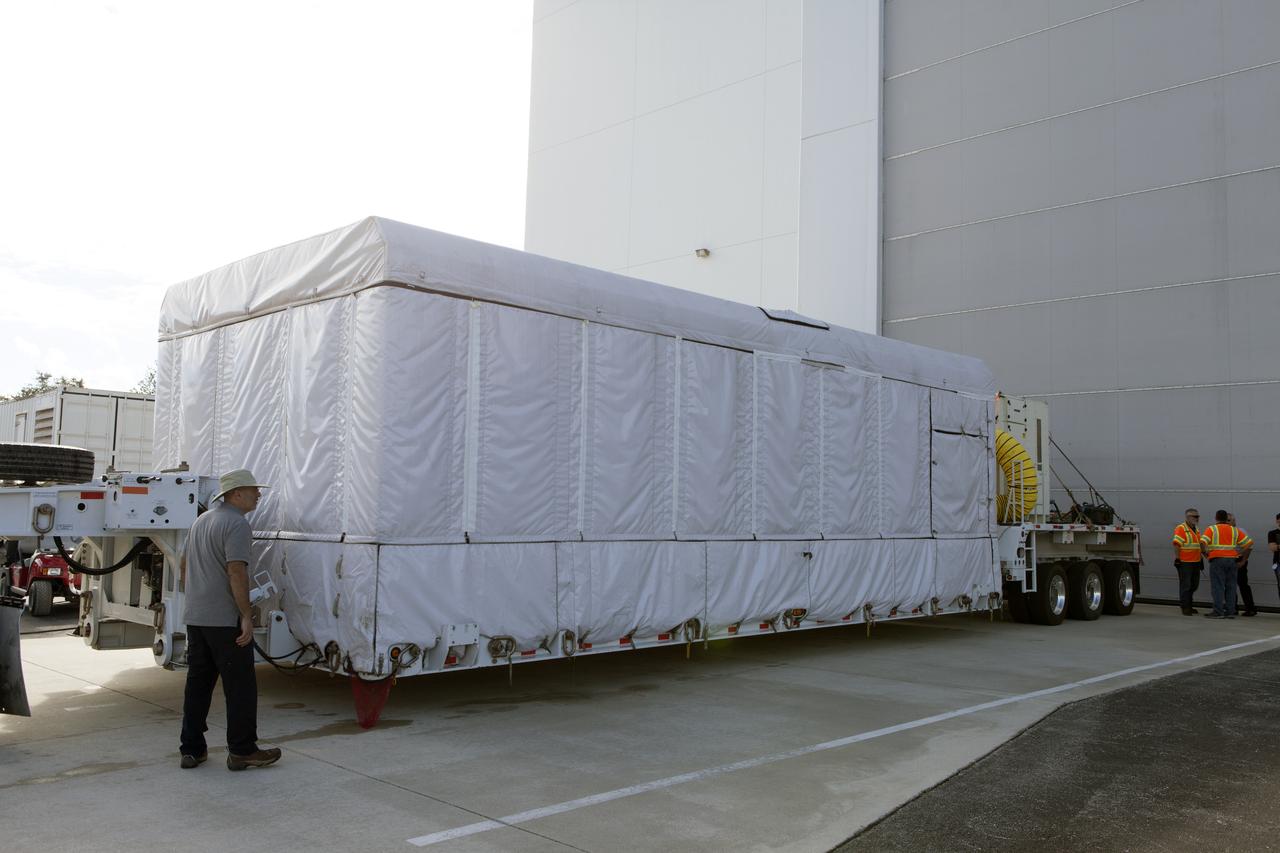
NOAA's Geostationary Operation Environmental Satellite-S (GOES-S) arrives at Astrotech Space Operations in Titusville, Florida, to prepare it for launch. The facility is located near NASA's Kennedy Space Center. GOES-S is the second in a series of four advanced geostationary weather satellites. The GOES-R series - consisting of the GOES-R, GOES-S, GOES-T and GOES-U spacecraft - will significantly improve the detection and observation of environmental phenomena that directly affect public safety, protection of property and the nation's economic health and prosperity. GOES-S is slated to launch March 1, 2018 aboard a United Launch Alliance Atlas V rocket from Cape Canaveral Air Force Station in Florida.
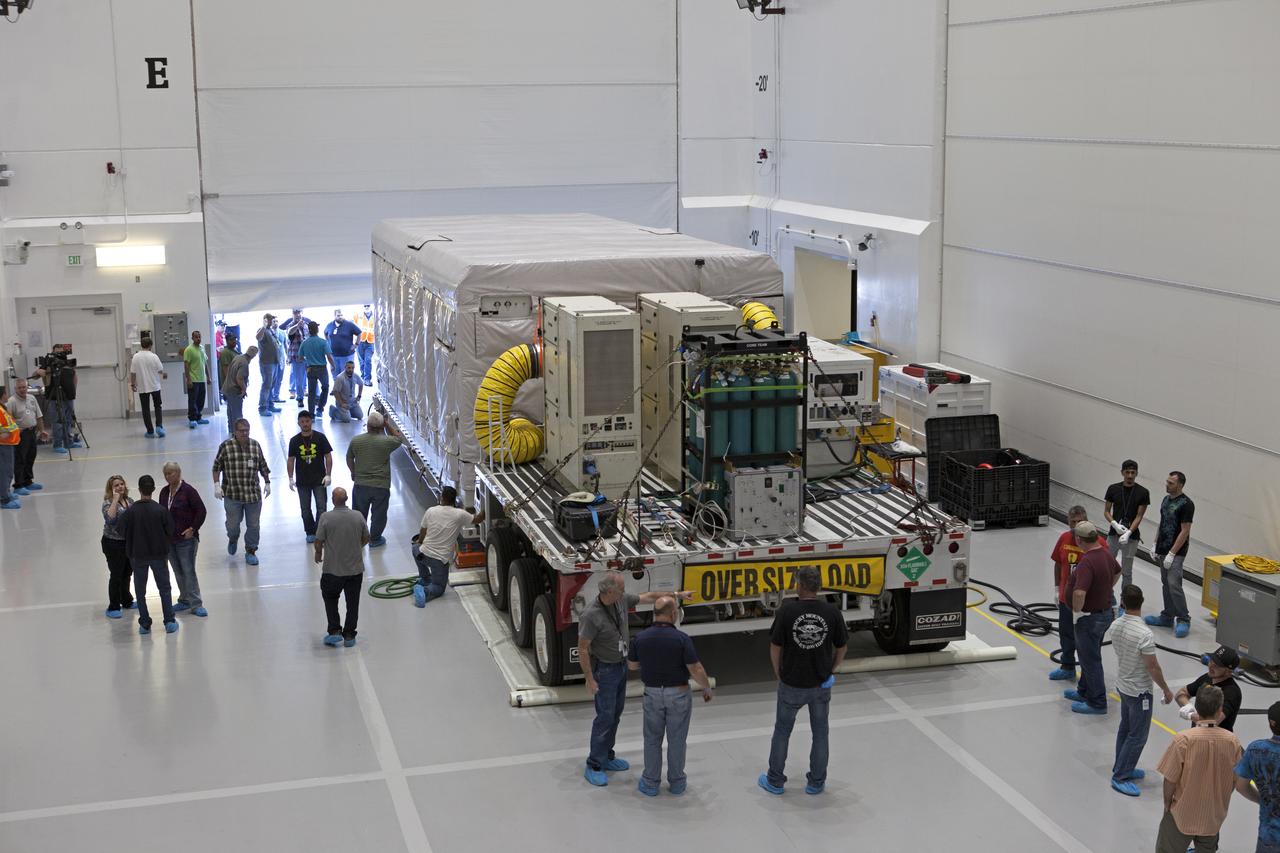
NOAA's Geostationary Operation Environmental Satellite-S (GOES-S) arrives inside Astrotech Space Operations in Titusville, Florida, to prepare it for launch. The facility is located near NASA's Kennedy Space Center. GOES-S is the second in a series of four advanced geostationary weather satellites. The GOES-R series - consisting of the GOES-R, GOES-S, GOES-T and GOES-U spacecraft - will significantly improve the detection and observation of environmental phenomena that directly affect public safety, protection of property and the nation's economic health and prosperity. GOES-S is slated to launch March 1, 2018 aboard a United Launch Alliance Atlas V rocket from Cape Canaveral Air Force Station in Florida.
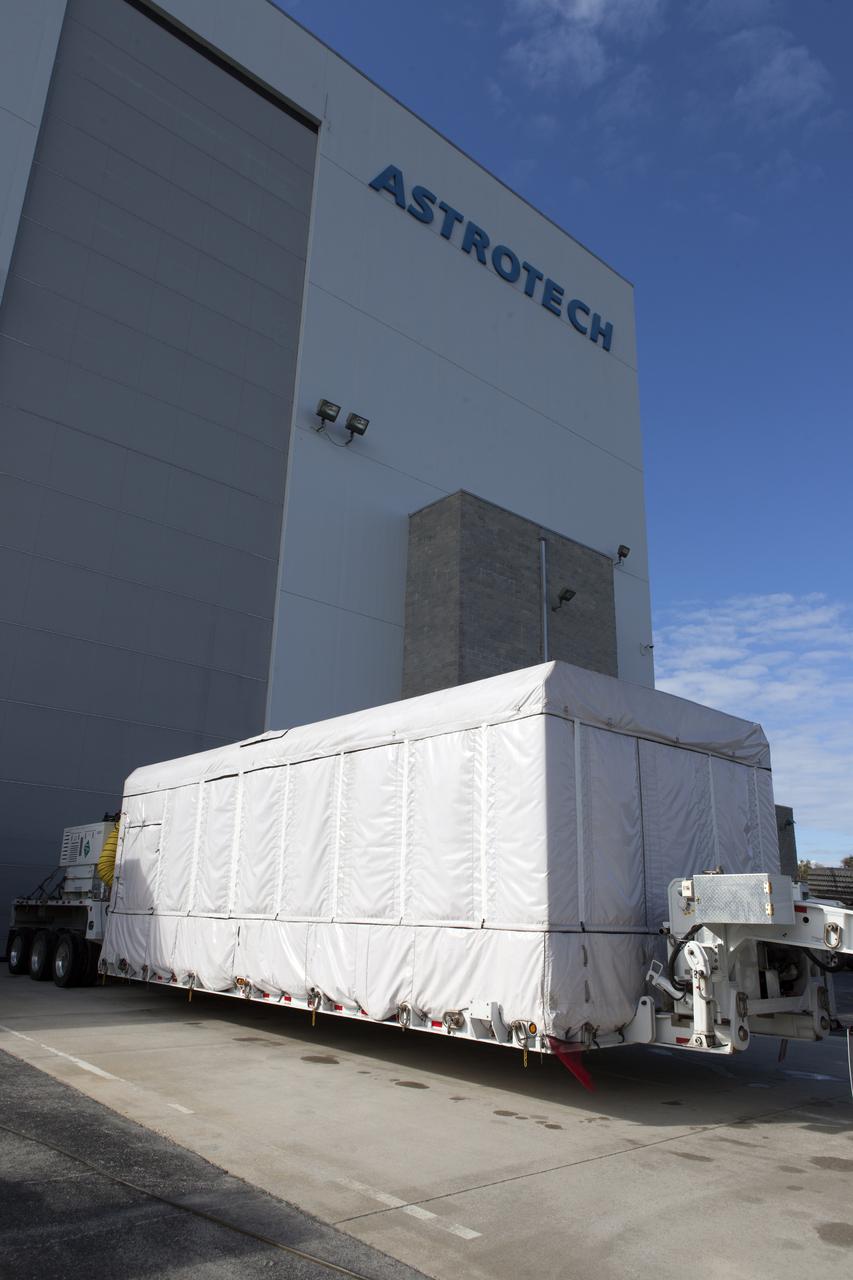
NOAA's Geostationary Operation Environmental Satellite-S (GOES-S) arrives at Astrotech Space Operations in Titusville, Florida, to prepare it for launch. The facility is located near NASA's Kennedy Space Center. GOES-S is the second in a series of four advanced geostationary weather satellites. The GOES-R series - consisting of the GOES-R, GOES-S, GOES-T and GOES-U spacecraft - will significantly improve the detection and observation of environmental phenomena that directly affect public safety, protection of property and the nation's economic health and prosperity. GOES-S is slated to launch March 1, 2018 aboard a United Launch Alliance Atlas V rocket from Cape Canaveral Air Force Station in Florida.
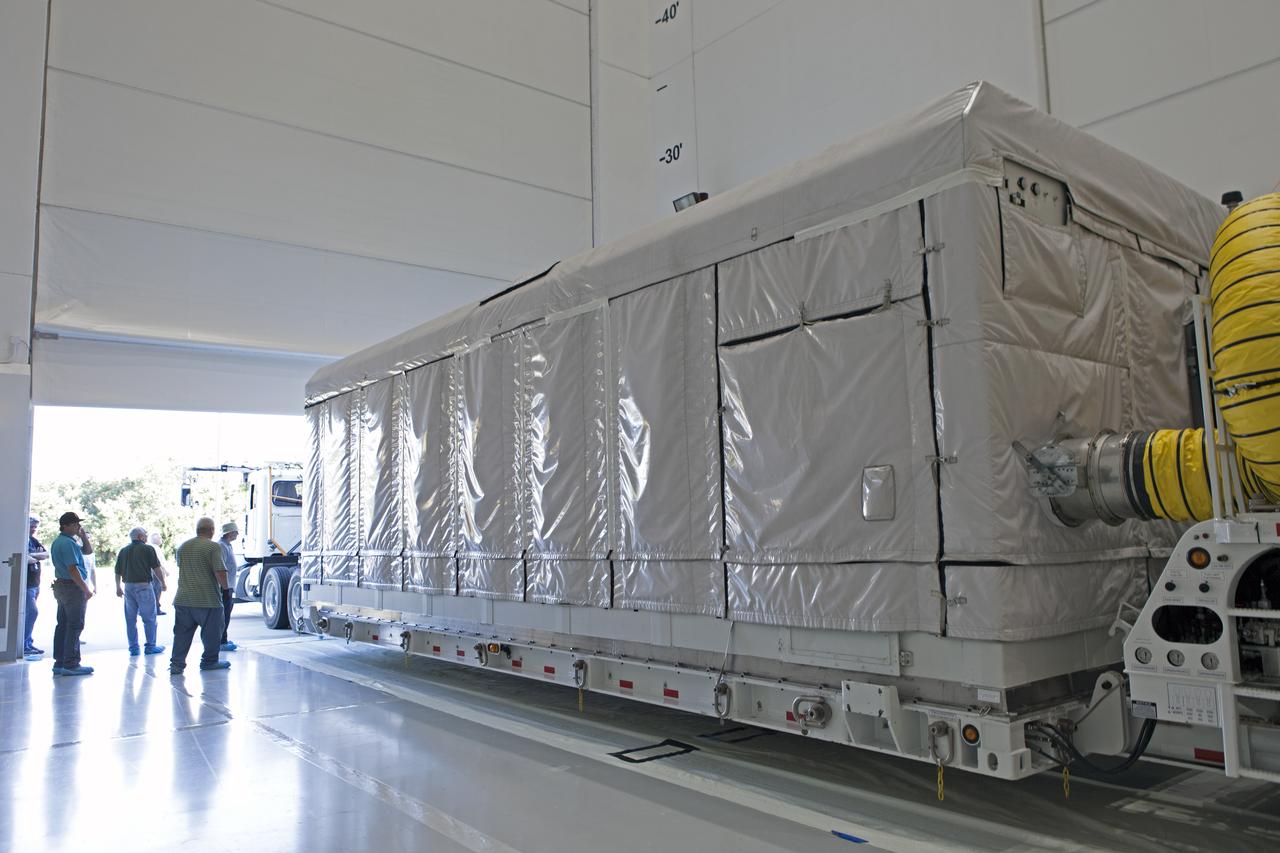
NOAA's Geostationary Operation Environmental Satellite-S (GOES-S) arrives at Astrotech Space Operations in Titusville, Florida, to prepare it for launch. The facility is located near NASA's Kennedy Space Center. GOES-S is the second in a series of four advanced geostationary weather satellites. The GOES-R series - consisting of the GOES-R, GOES-S, GOES-T and GOES-U spacecraft - will significantly improve the detection and observation of environmental phenomena that directly affect public safety, protection of property and the nation's economic health and prosperity. GOES-S is slated to launch March 1, 2018 aboard a United Launch Alliance Atlas V rocket from Cape Canaveral Air Force Station in Florida.
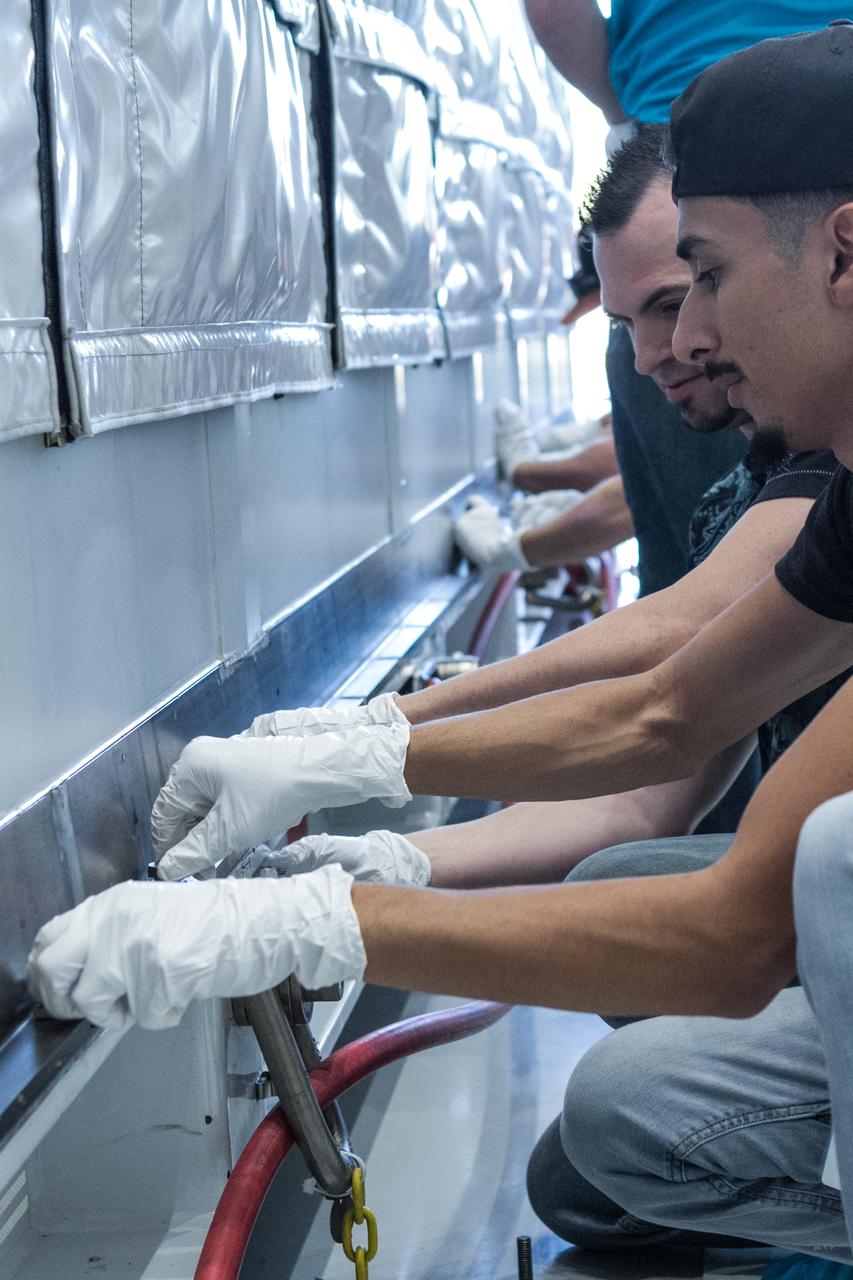
At Astrotech Space Operations in Titusville, Florida, technicians and engineers prepare to remove NOAA's Geostationary Operation Environmental Satellite-S (GOES-S) from its shipping container. GOES-S is the second in a series of four advanced geostationary weather satellites. The GOES-R series - consisting of the GOES-R, GOES-S, GOES-T and GOES-U spacecraft - will significantly improve the detection and observation of environmental phenomena that directly affect public safety, protection of property and the nation's economic health and prosperity. GOES-S is slated to launch March 1, 2018 aboard a United Launch Alliance Atlas V rocket from Cape Canaveral Air Force Station in Florida.
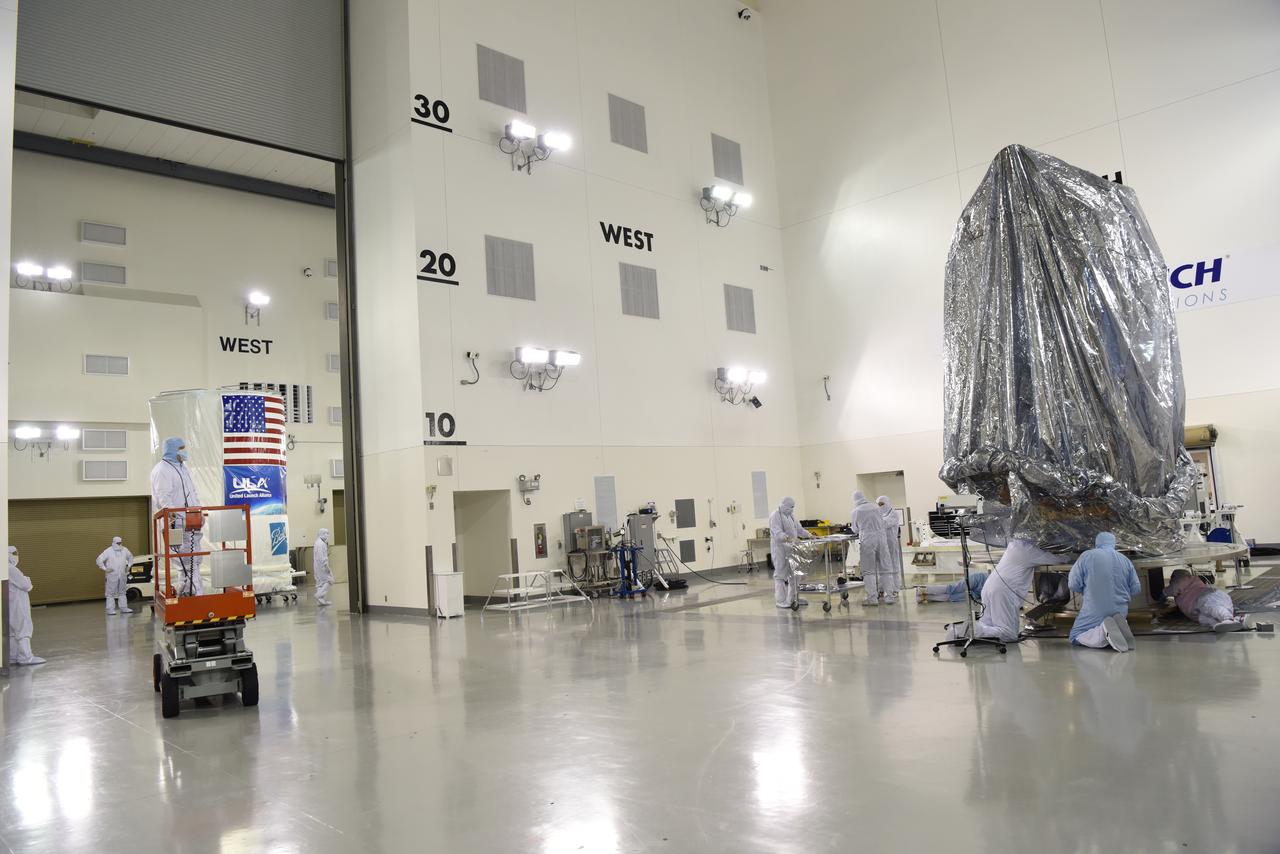
JPSS-1 Spacecraft Canning and Lift to Transport Trailer at the Astrotech facility located at Vandenberg Air Force Station in California.
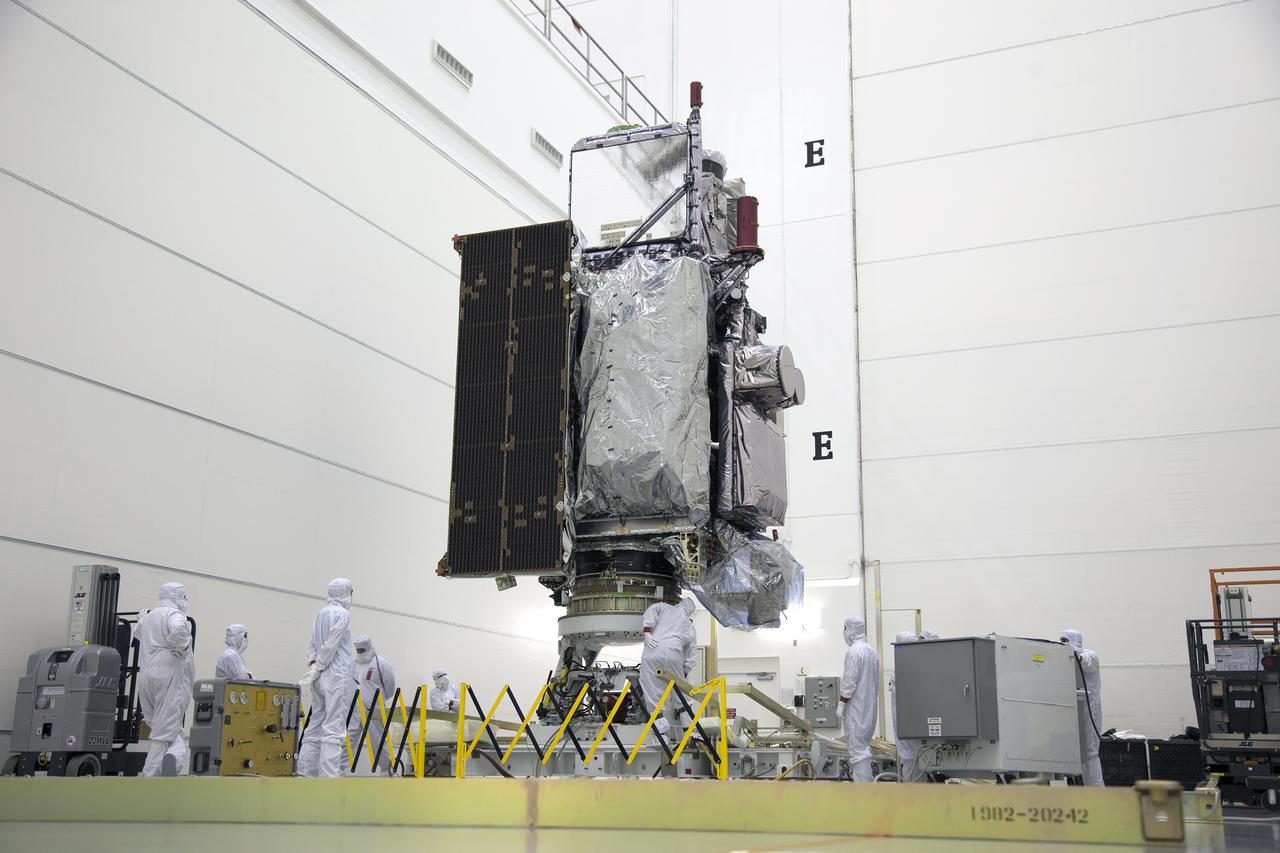
The GOES-R spacecraft stands vertically inside the Astrotech payload processing facility in Titusville, Florida near NASA’s Kennedy Space Center. GOES-R will be the first satellite in a series of next-generation NOAA Geostationary Operational Environmental Satellites. The spacecraft is to launch aboard a United Launch Alliance Atlas V rocket in November.
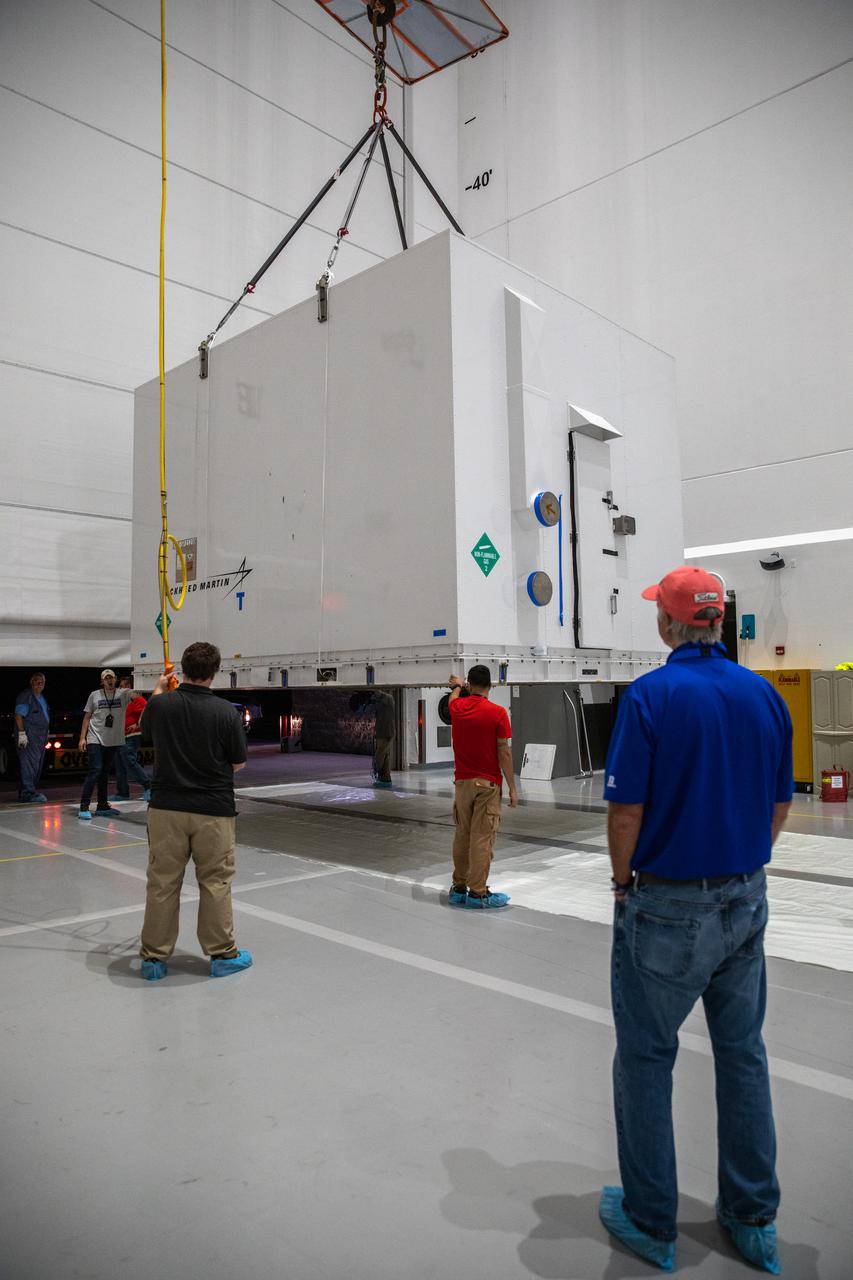
The shipping container holding NASA's Lucy spacecraft arrives at Astrotech Space Operations payload processing facility in Titusville, Florida on July 30, 2021. The facility, located near NASA's Kennedy Space Center, is where the Lucy spacecraft will undergo processing before its scheduled launch on a United Launch Alliance (ULA) Atlas V rocket from Cape Canaveral Space Force Station on October 16, 2021. The Lucy mission will be the first space mission to explore a diverse population of small bodies known as the Jupiter Trojan asteroids. The launch is being managed by NASA's Launch Services Program based at Kennedy, America's premier multi-user spaceport.
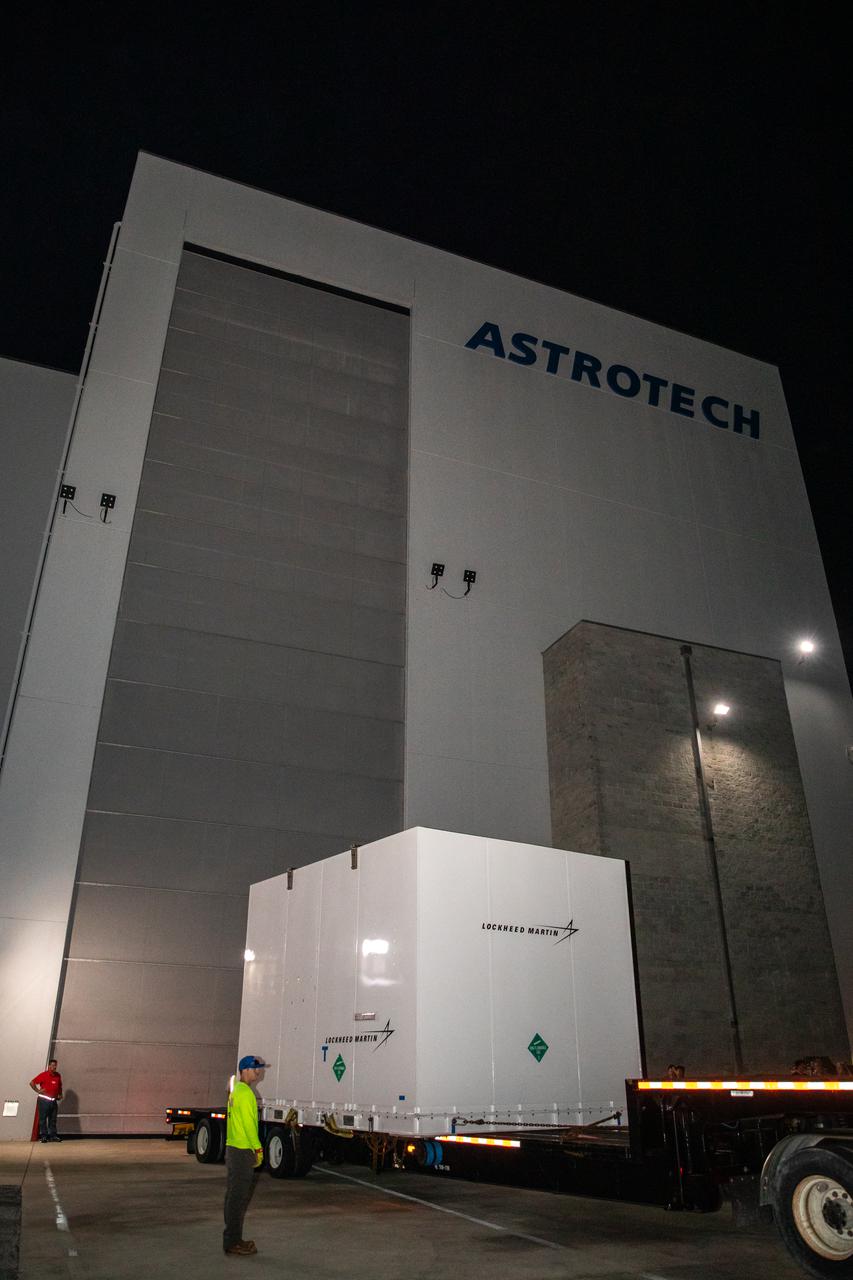
The shipping container holding NASA's Lucy spacecraft arrives at Astrotech Space Operations payload processing facility in Titusville, Florida on July 30, 2021. The facility, located near NASA's Kennedy Space Center, is where the Lucy spacecraft will undergo processing before its scheduled launch on a United Launch Alliance (ULA) Atlas V rocket from Cape Canaveral Space Force Station on October 16, 2021. The Lucy mission will be the first space mission to explore a diverse population of small bodies known as the Jupiter Trojan asteroids. The launch is being managed by NASA's Launch Services Program based at Kennedy, America's premier multi-user spaceport.
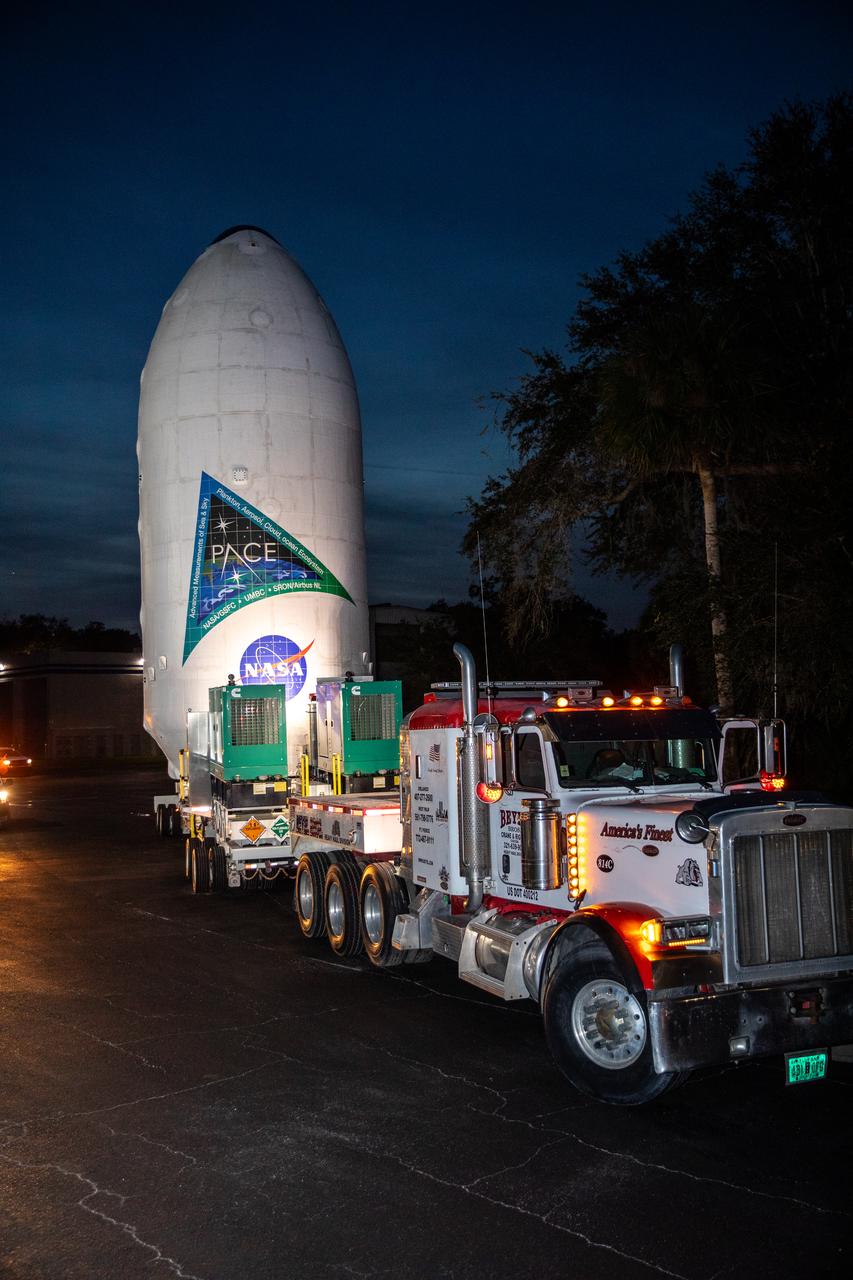
NASA’s PACE (Plankton, Aerosol, Cloud, ocean Ecosystem) spacecraft encapsulated inside SpaceX’s Falcon 9 payload fairings is transported from the Astrotech Space Operations Facility near the agency’s Kennedy Space Center in Florida to Space Launch Complex 40 at Cape Canaveral Space Force Station on Thursday, Feb. 1, 2024, to be mated with a SpaceX Falcon 9 in preparation for liftoff set for no earlier than 1:33 a.m. EST on Tuesday, Feb. 6, 2024. PACE is NASA’s newest earth-observing satellite that will help increase our understanding of Earth’s oceans, atmosphere, and climate by delivering hyperspectral observations of microscopic marine organisms called phytoplankton as well new data on clouds and aerosols.
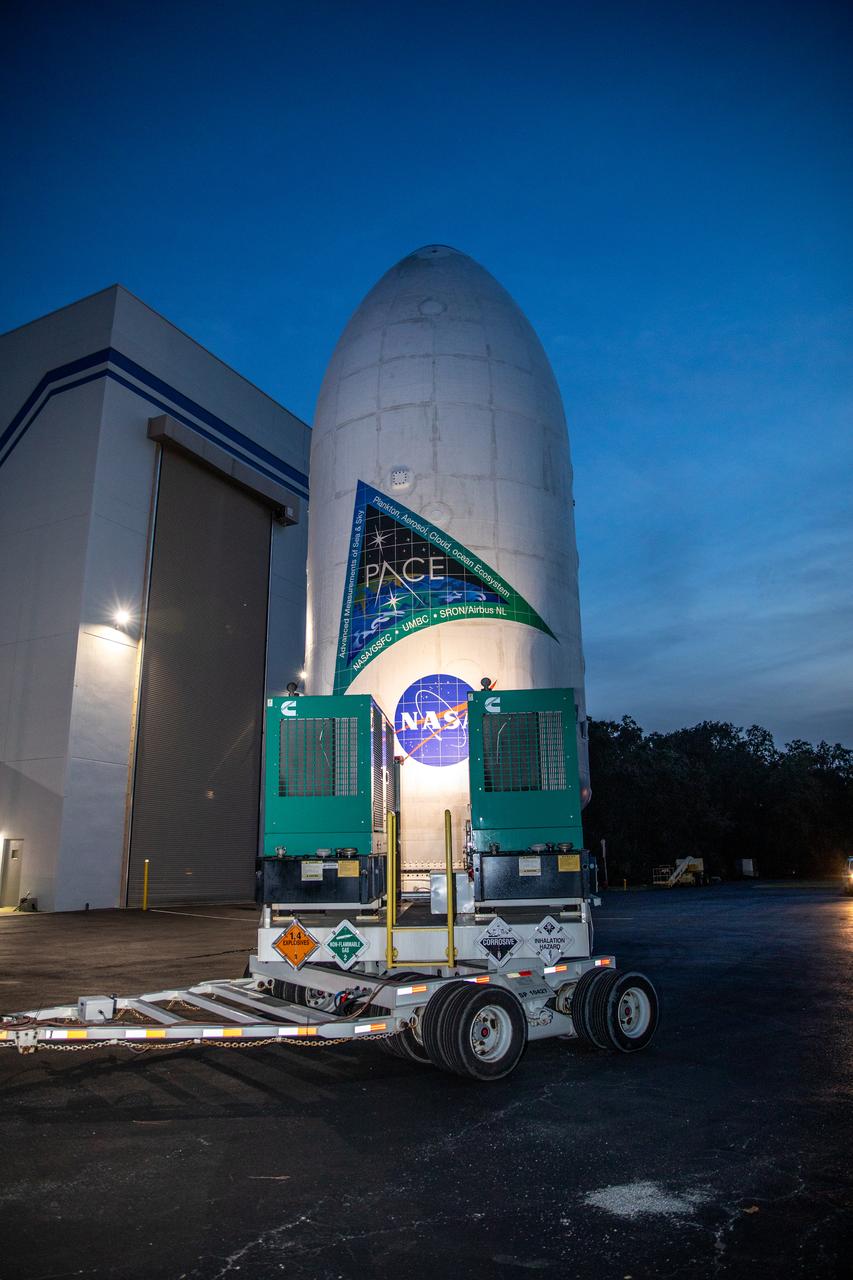
NASA’s PACE (Plankton, Aerosol, Cloud, ocean Ecosystem) spacecraft encapsulated inside SpaceX’s Falcon 9 payload fairings is transported from the Astrotech Space Operations Facility near the agency’s Kennedy Space Center in Florida to Space Launch Complex 40 at Cape Canaveral Space Force Station on Thursday, Feb. 1, 2024, to be mated with a SpaceX Falcon 9 in preparation for liftoff set for no earlier than 1:33 a.m. EST on Tuesday, Feb. 6, 2024. PACE is NASA’s newest earth-observing satellite that will help increase our understanding of Earth’s oceans, atmosphere, and climate by delivering hyperspectral observations of microscopic marine organisms called phytoplankton as well new data on clouds and aerosols.
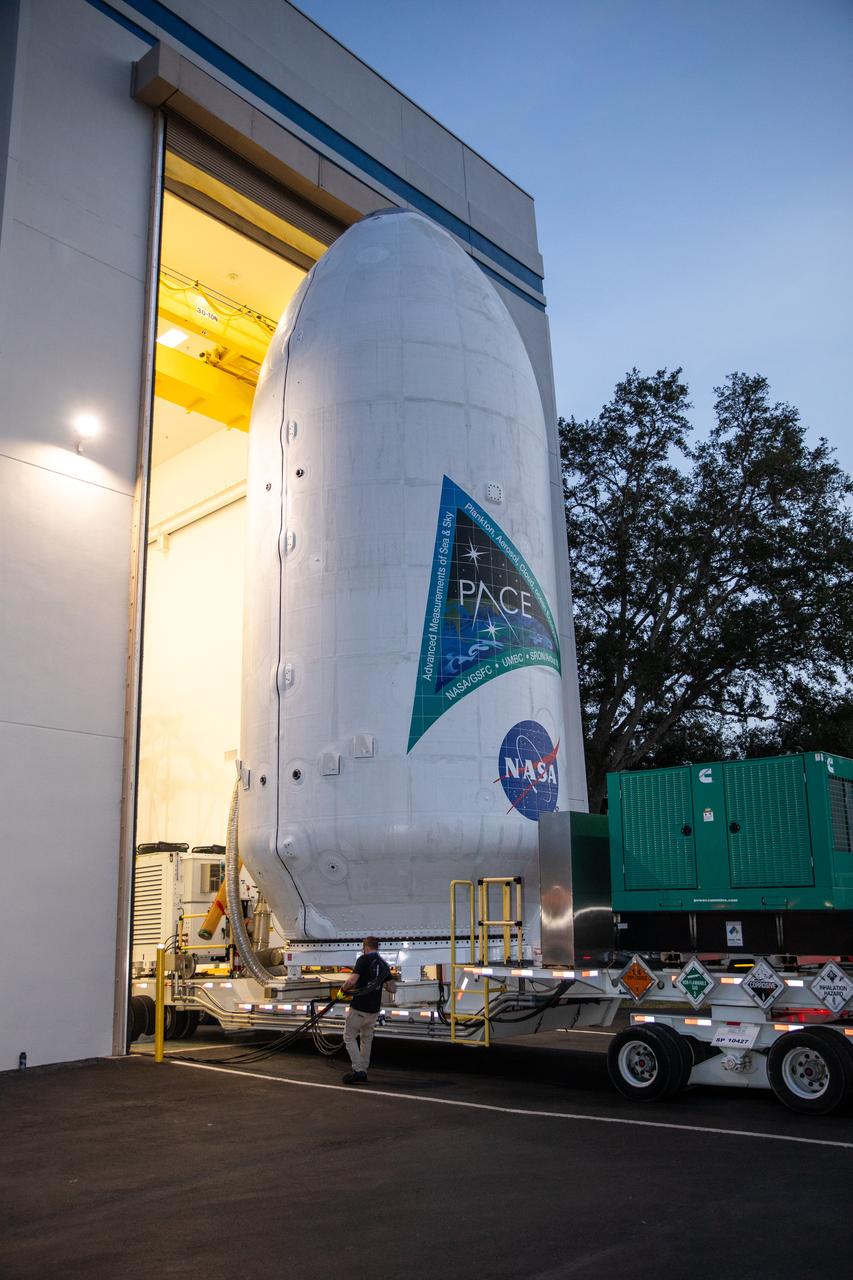
NASA’s PACE (Plankton, Aerosol, Cloud, ocean Ecosystem) spacecraft encapsulated inside SpaceX’s Falcon 9 payload fairings is transported from the Astrotech Space Operations Facility near the agency’s Kennedy Space Center in Florida to Space Launch Complex 40 at Cape Canaveral Space Force Station on Thursday, Feb. 1, 2024, to be mated with a SpaceX Falcon 9 in preparation for liftoff set for no earlier than 1:33 a.m. EST on Tuesday, Feb. 6, 2024. PACE is NASA’s newest earth-observing satellite that will help increase our understanding of Earth’s oceans, atmosphere, and climate by delivering hyperspectral observations of microscopic marine organisms called phytoplankton as well new data on clouds and aerosols.
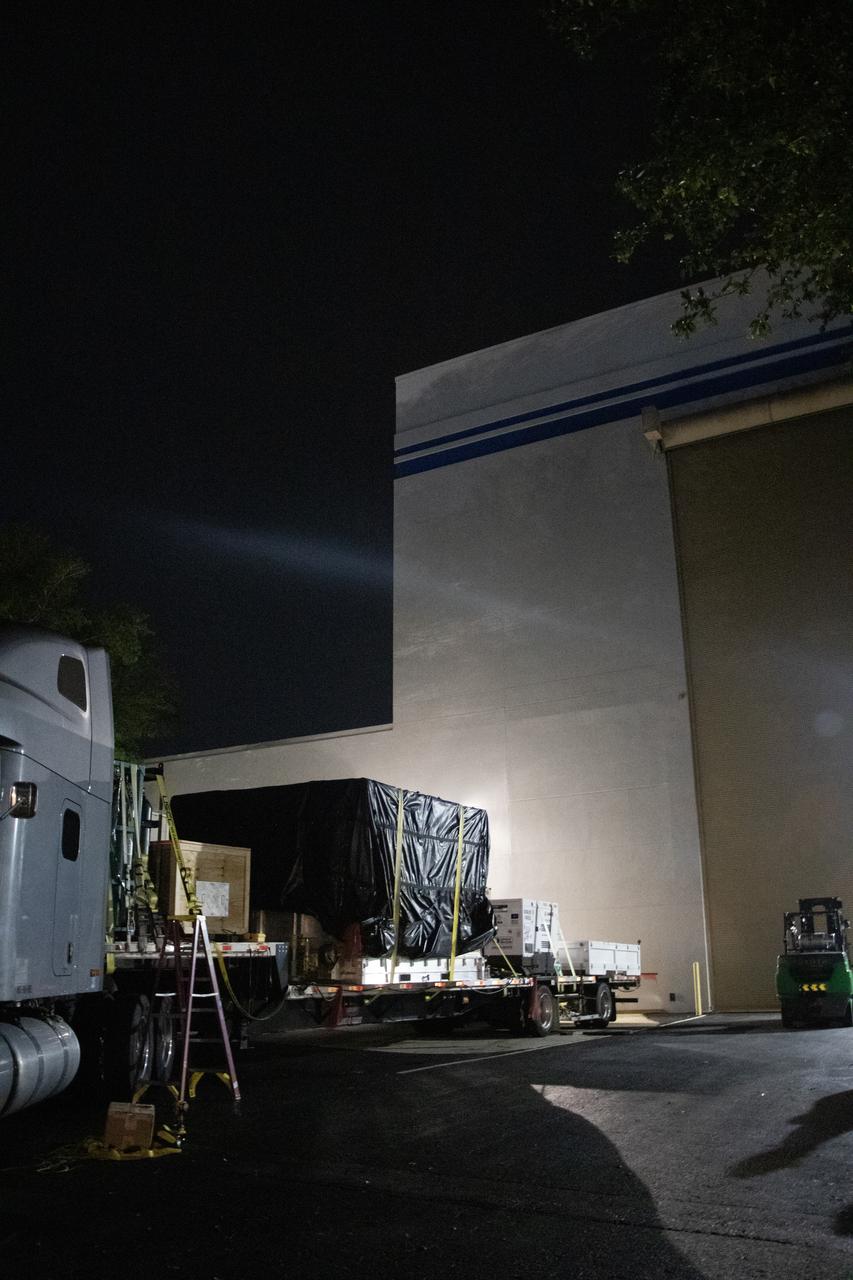
The transport carrier containing NASA’s IMAP (Interstellar Mapping and Acceleration Probe) arrives Saturday, May 10, 2025 at the Astrotech Space Operations Facility near the agency’s Kennedy Space Center in Florida where it will undergo checkout operations, fueling, and encapsulation. IMAP will study how the Sun shapes the boundaries of the heliosphere, the bubble protecting around our solar system. IMAP is targeting launch this fall aboard a SpaceX Falcon 9 rocket from Launch Complex 39A at NASA Kennedy.
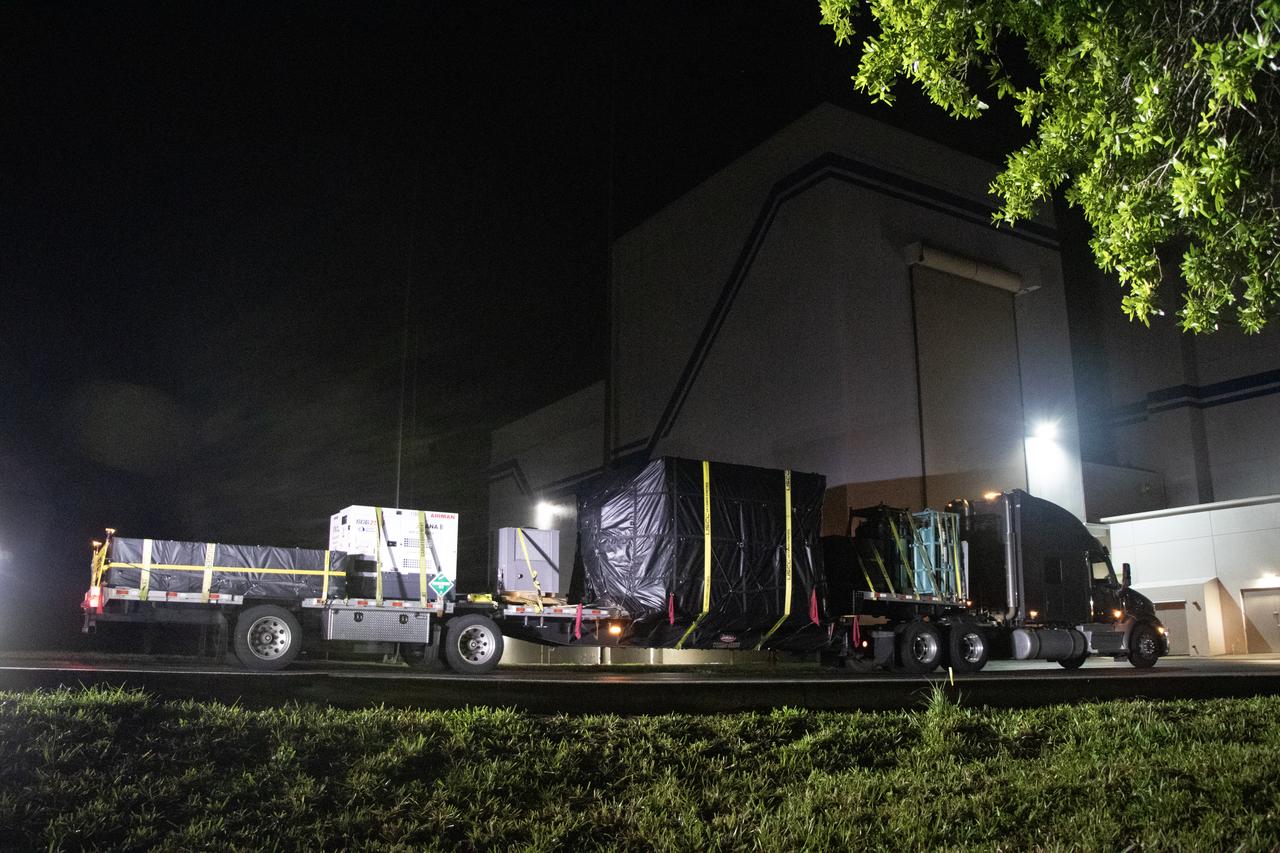
The transport carrier containing NASA’s IMAP (Interstellar Mapping and Acceleration Probe) arrives Saturday, May 10, 2025 at the Astrotech Space Operations Facility near the agency’s Kennedy Space Center in Florida where it will undergo checkout operations, fueling, and encapsulation. IMAP will study how the Sun shapes the boundaries of the heliosphere, the bubble protecting around our solar system. IMAP is targeting launch this fall aboard a SpaceX Falcon 9 rocket from Launch Complex 39A at NASA Kennedy.
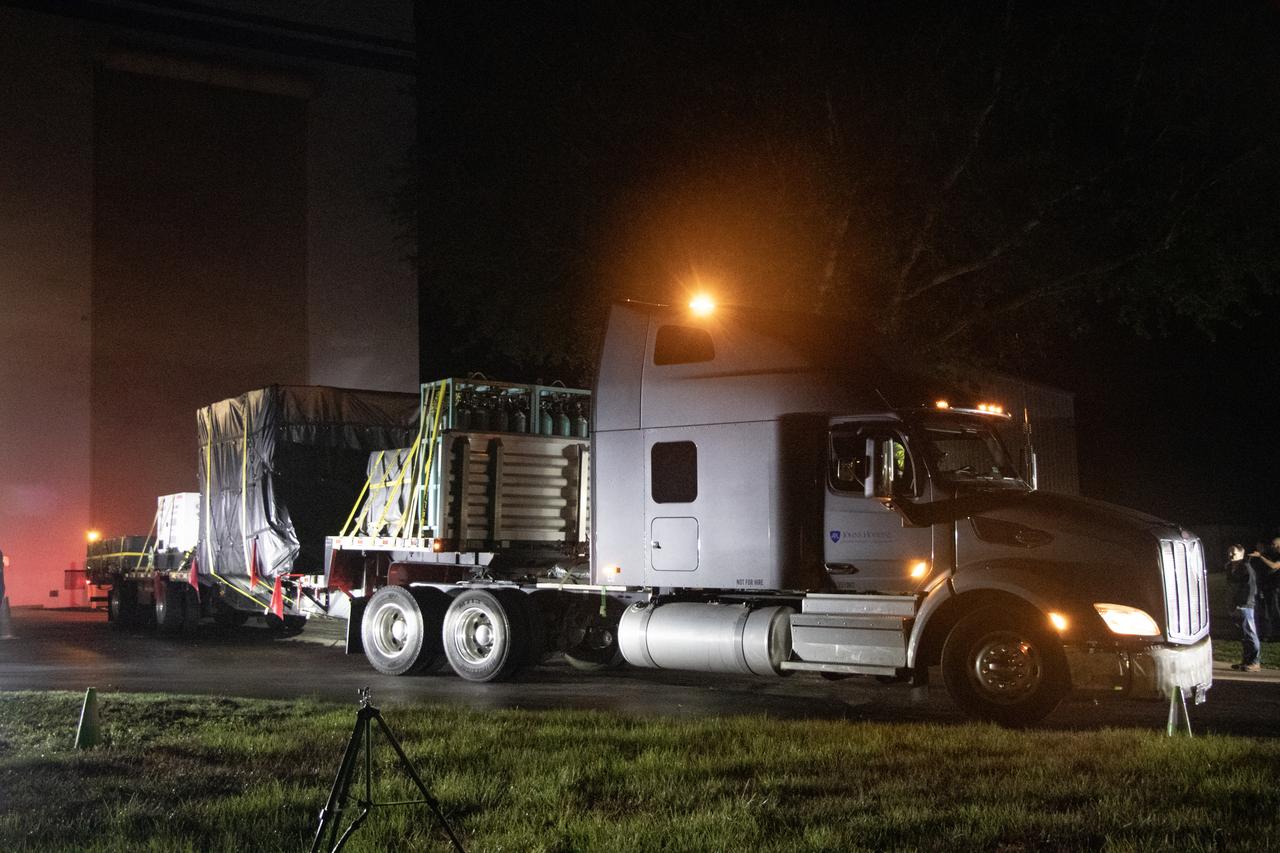
The transport carrier containing NASA’s IMAP (Interstellar Mapping and Acceleration Probe) arrives Saturday, May 10, 2025 at the Astrotech Space Operations Facility near the agency’s Kennedy Space Center in Florida where it will undergo checkout operations, fueling, and encapsulation. IMAP will study how the Sun shapes the boundaries of the heliosphere, the bubble protecting around our solar system. IMAP is targeting launch this fall aboard a SpaceX Falcon 9 rocket from Launch Complex 39A at NASA Kennedy.
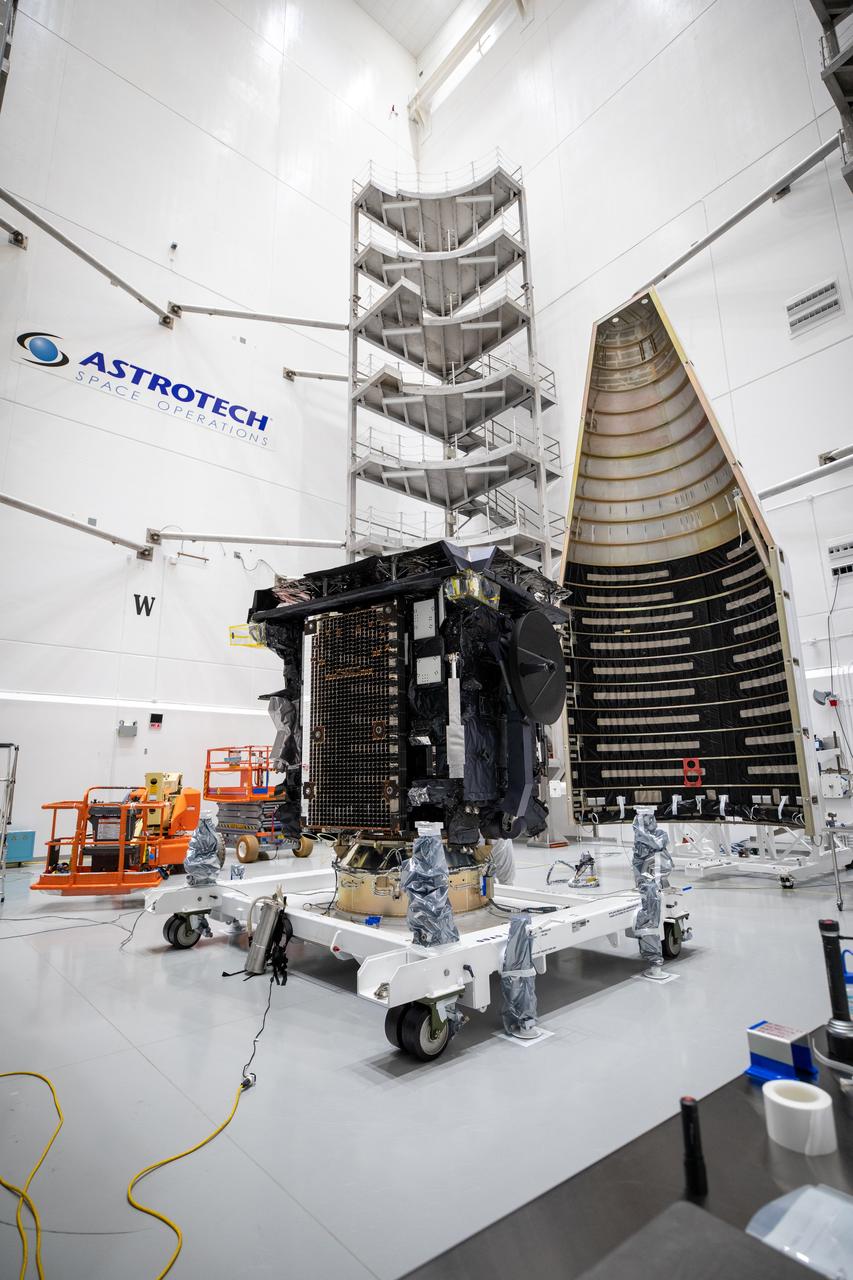
One half of a United Launch Alliance Atlas V payload fairing is positioned for installation around the Solar Orbiter spacecraft inside the Astrotech Space Operations facility in Titusville, Florida, on Jan. 20, 2020. The fairing provides a protective, aerodynamic covering to the payload inside during the early minutes of ascent. Solar Orbiter is an international cooperative mission between ESA (European Space Agency) and NASA. The mission aims to study the Sun, its outer atmosphere and solar wind. The spacecraft will provide the first images of the Sun’s poles. NASA’s Launch Services Program based at Kennedy Space Center in Florida is managing the launch. The spacecraft has been developed by Airbus Defence and Space. Solar Orbiter will launch aboard an Atlas V rocket from Space Launch Complex 41 at Cape Canaveral Air Force Station in Florida. Liftoff is scheduled for Feb. 5, 2020.
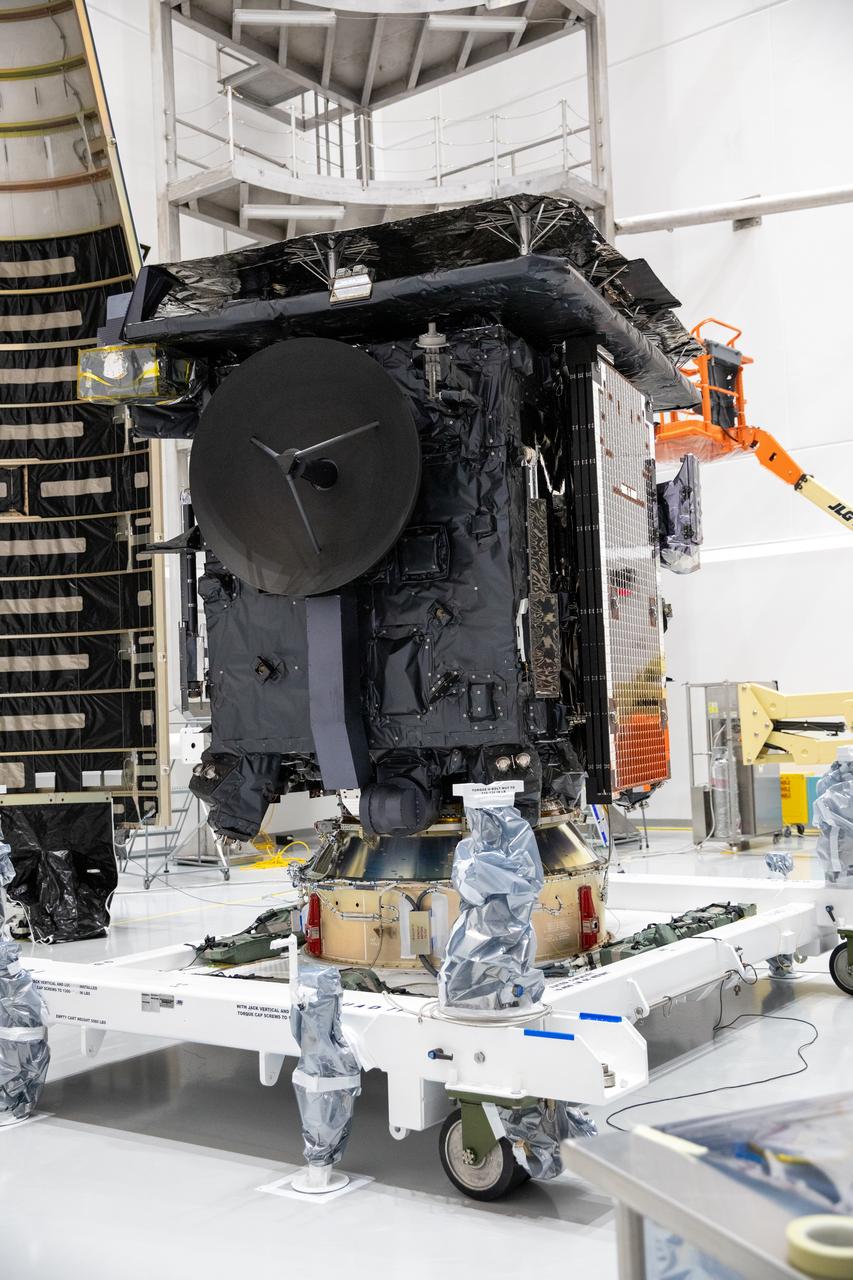
The Solar Orbiter spacecraft is prepared for encapsulation in the United Launch Alliance Atlas V payload fairing inside the Astrotech Space Operations facility in Titusville, Florida, on Jan. 20, 2020. The fairing provides a protective, aerodynamic cover to the payload inside during the early minutes of ascent. Solar Orbiter is an international cooperative mission between ESA (European Space Agency) and NASA. The mission aims to study the Sun, its outer atmosphere and solar wind. The spacecraft will provide the first images of the Sun’s poles. NASA’s Launch Services Program based at Kennedy Space Center in Florida is managing the launch. The spacecraft has been developed by Airbus Defence and Space. Solar Orbiter will launch aboard an Atlas V rocket from Space Launch Complex 41 at Cape Canaveral Air Force Station in Florida. Liftoff is scheduled for Feb. 5, 2020.
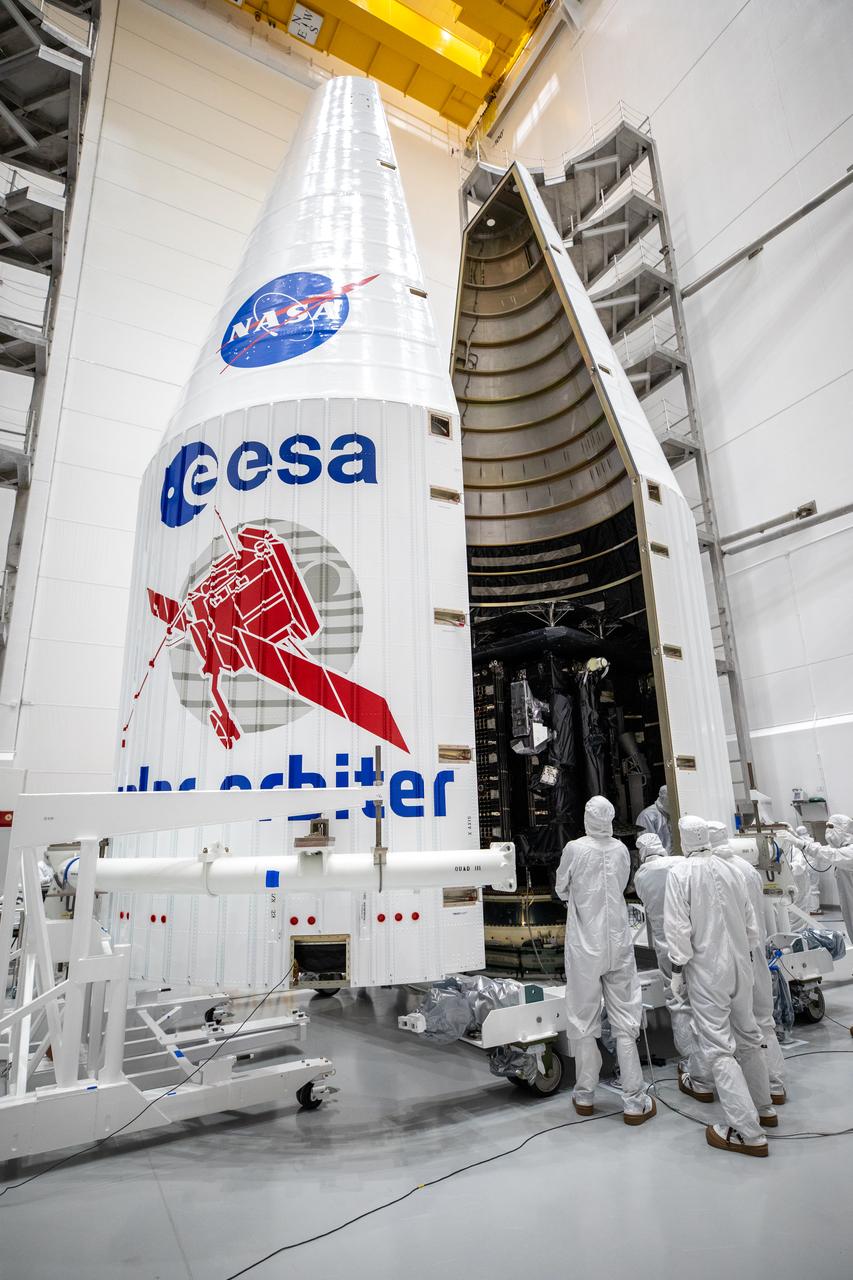
Both halves of a United Launch Alliance Atlas V payload fairing come together around the Solar Orbiter spacecraft inside the Astrotech Space Operations facility in Titusville, Florida, on Jan. 20, 2020. The fairing provides a protective, aerodynamic cover to the payload inside during the early minutes of ascent. Solar Orbiter is an international cooperative mission between ESA (European Space Agency) and NASA. The mission aims to study the Sun, its outer atmosphere and solar wind. The spacecraft will provide the first images of the Sun’s poles. NASA’s Launch Services Program based at Kennedy Space Center in Florida is managing the launch. The spacecraft has been developed by Airbus Defence and Space. Solar Orbiter will launch aboard an Atlas V rocket from Space Launch Complex 41 at Cape Canaveral Air Force Station in Florida. Liftoff is scheduled for Feb. 5, 2020.
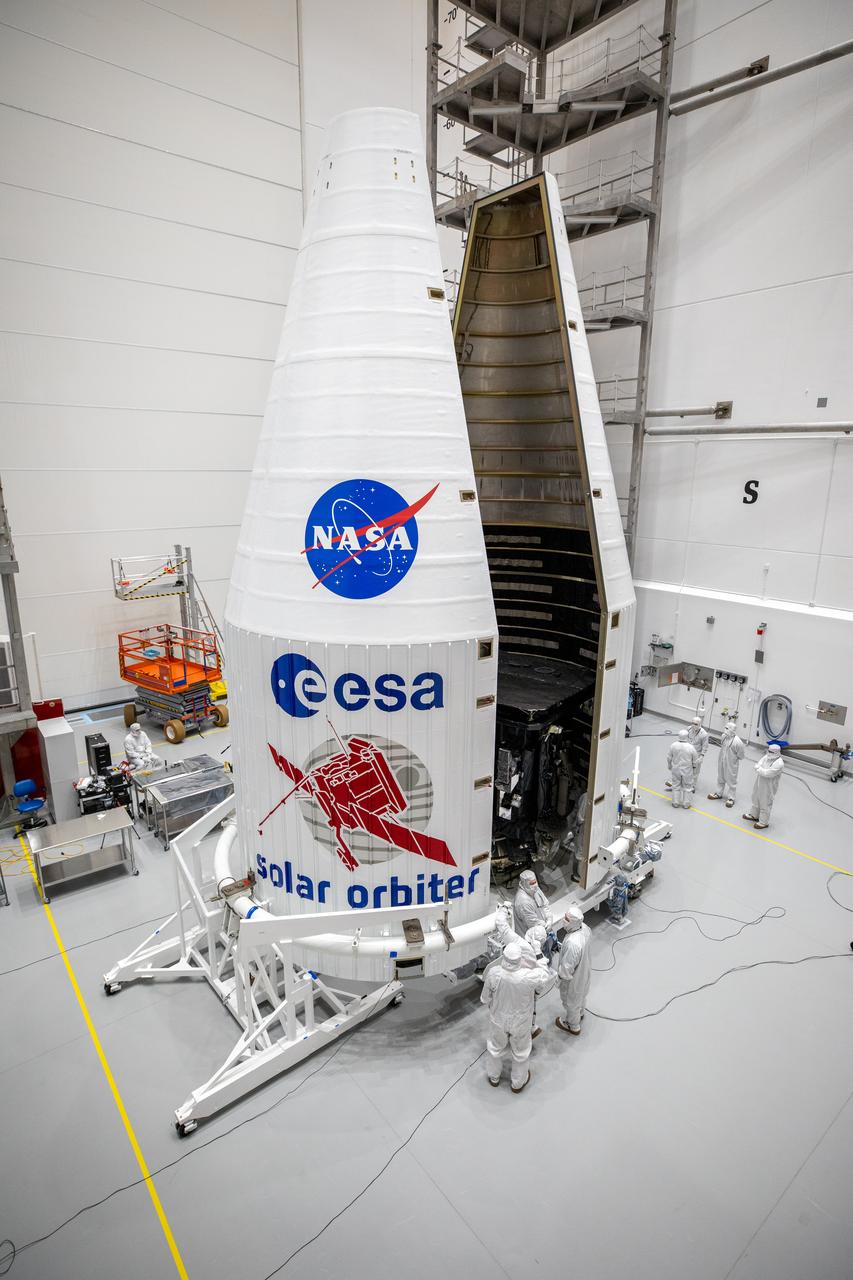
Both halves of a United Launch Alliance Atlas V payload fairing come together around the Solar Orbiter spacecraft inside the Astrotech Space Operations facility in Titusville, Florida, on Jan. 20, 2020. The fairing provides a protective, aerodynamic cover to the payload inside during the early minutes of ascent. Solar Orbiter is an international cooperative mission between ESA (European Space Agency) and NASA. The mission aims to study the Sun, its outer atmosphere and solar wind. The spacecraft will provide the first images of the Sun’s poles. NASA’s Launch Services Program based at Kennedy Space Center in Florida is managing the launch. The spacecraft has been developed by Airbus Defence and Space. Solar Orbiter will launch aboard an Atlas V rocket from Space Launch Complex 41 at Cape Canaveral Air Force Station in Florida. Liftoff is scheduled for Feb. 5, 2020.
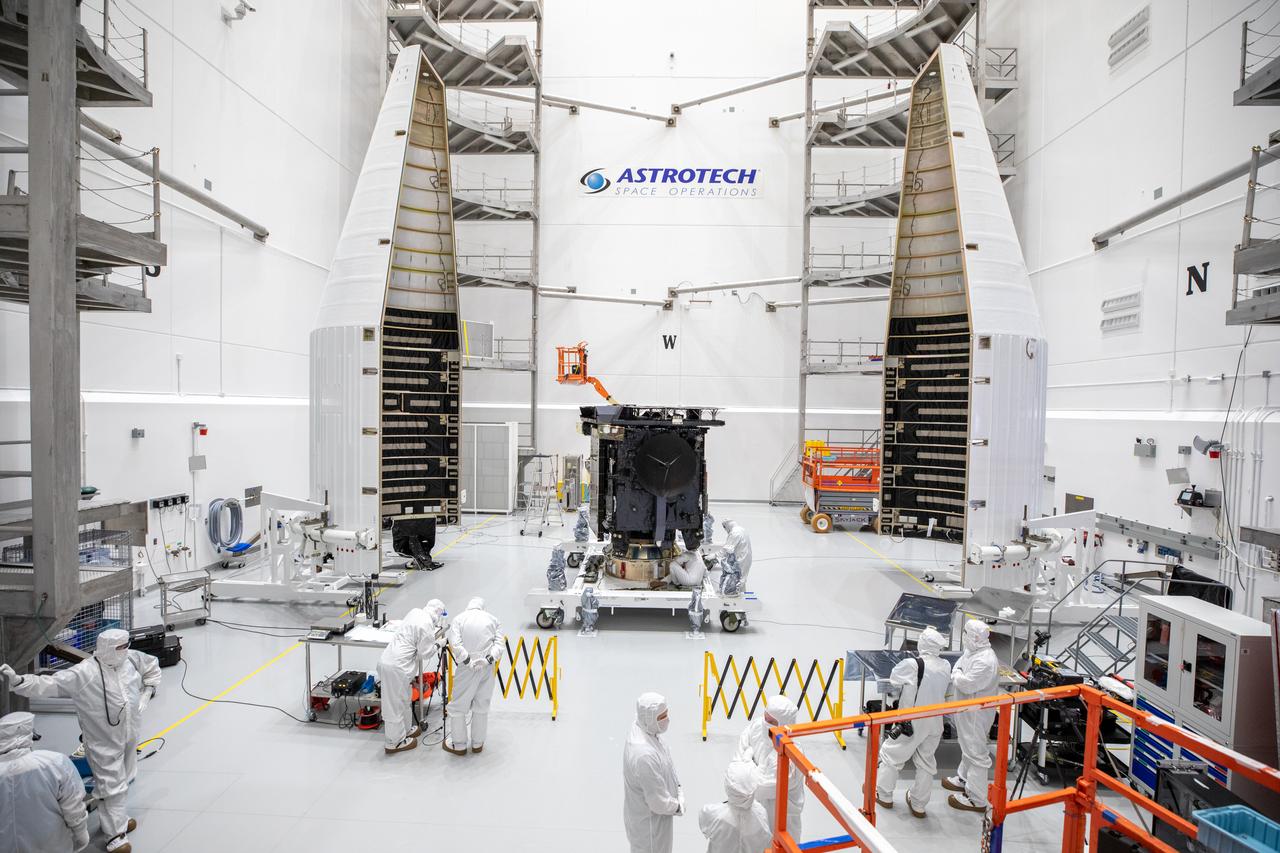
Both halves of a United Launch Alliance Atlas V payload fairing are positioned for installation around the Solar Orbiter spacecraft inside the Astrotech Space Operations facility in Titusville, Florida, on Jan. 20, 2020. The fairing provides a protective, aerodynamic covering to the payload inside during the early minutes of ascent. Solar Orbiter is an international cooperative mission between ESA (European Space Agency) and NASA. The mission aims to study the Sun, its outer atmosphere and solar wind. The spacecraft will provide the first images of the Sun’s poles. NASA’s Launch Services Program based at Kennedy Space Center in Florida is managing the launch. The spacecraft has been developed by Airbus Defence and Space. Solar Orbiter will launch aboard an Atlas V rocket from Space Launch Complex 41 at Cape Canaveral Air Force Station in Florida. Liftoff is scheduled for Feb. 5, 2020.
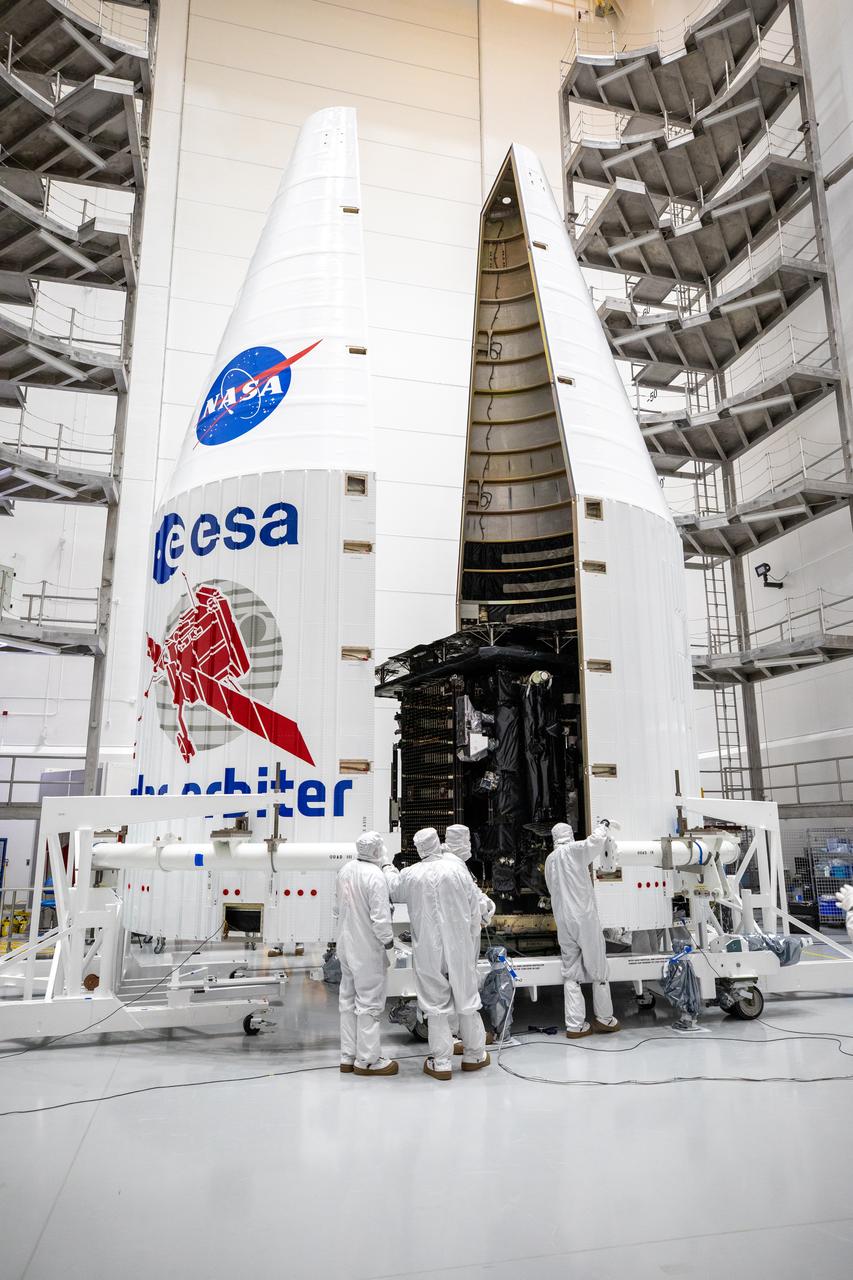
Both halves of a United Launch Alliance Atlas V payload fairing come together around the Solar Orbiter spacecraft inside the Astrotech Space Operations facility in Titusville, Florida, on Jan. 20, 2020. The fairing provides a protective, aerodynamic cover to the payload inside during the early minutes of ascent. Solar Orbiter is an international cooperative mission between ESA (European Space Agency) and NASA. The mission aims to study the Sun, its outer atmosphere and solar wind. The spacecraft will provide the first images of the Sun’s poles. NASA’s Launch Services Program based at Kennedy Space Center in Florida is managing the launch. The spacecraft has been developed by Airbus Defence and Space. Solar Orbiter will launch aboard an Atlas V rocket from Space Launch Complex 41 at Cape Canaveral Air Force Station in Florida. Liftoff is scheduled for Feb. 5, 2020.
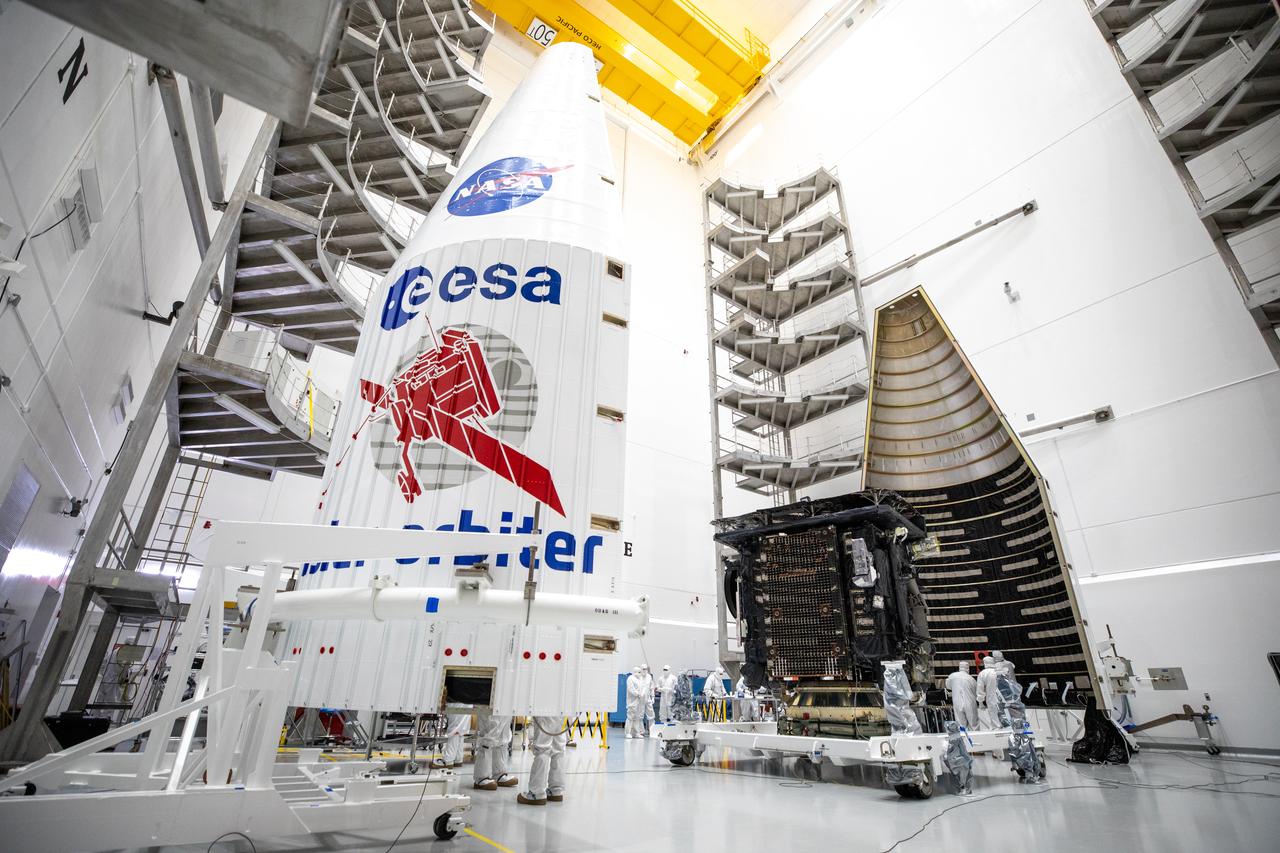
Both halves of a United Launch Alliance Atlas V payload fairing are positioned for installation around the Solar Orbiter spacecraft inside the Astrotech Space Operations facility in Titusville, Florida, on Jan. 20, 2020. The fairing provides a protective, aerodynamic covering to the payload inside during the early minutes of ascent. Solar Orbiter is an international cooperative mission between ESA (European Space Agency) and NASA. The mission aims to study the Sun, its outer atmosphere and solar wind. The spacecraft will provide the first images of the Sun’s poles. NASA’s Launch Services Program based at Kennedy Space Center in Florida is managing the launch. The spacecraft has been developed by Airbus Defence and Space. Solar Orbiter will launch aboard an Atlas V rocket from Space Launch Complex 41 at Cape Canaveral Air Force Station in Florida. Liftoff is scheduled for Feb. 5, 2020.
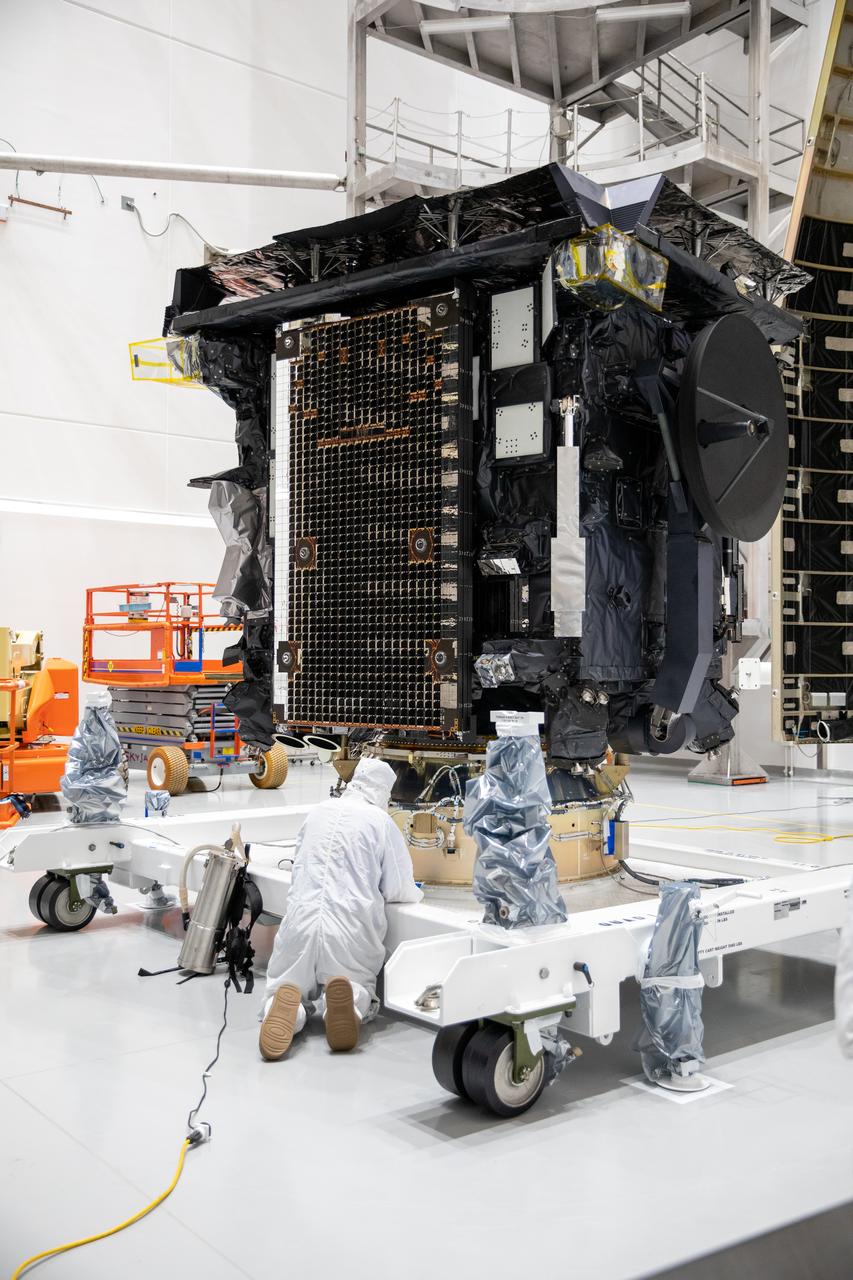
The Solar Orbiter spacecraft is prepared for encapsulation in the United Launch Alliance Atlas V payload fairing inside the Astrotech Space Operations facility in Titusville, Florida, on Jan. 20, 2020. The fairing provides a protective, aerodynamic cover to the payload inside during the early minutes of ascent. Solar Orbiter is an international cooperative mission between ESA (European Space Agency) and NASA. The mission aims to study the Sun, its outer atmosphere and solar wind. The spacecraft will provide the first images of the Sun’s poles. NASA’s Launch Services Program based at Kennedy Space Center in Florida is managing the launch. The spacecraft has been developed by Airbus Defence and Space. Solar Orbiter will launch aboard an Atlas V rocket from Space Launch Complex 41 at Cape Canaveral Air Force Station in Florida. Liftoff is scheduled for Feb. 5, 2020.
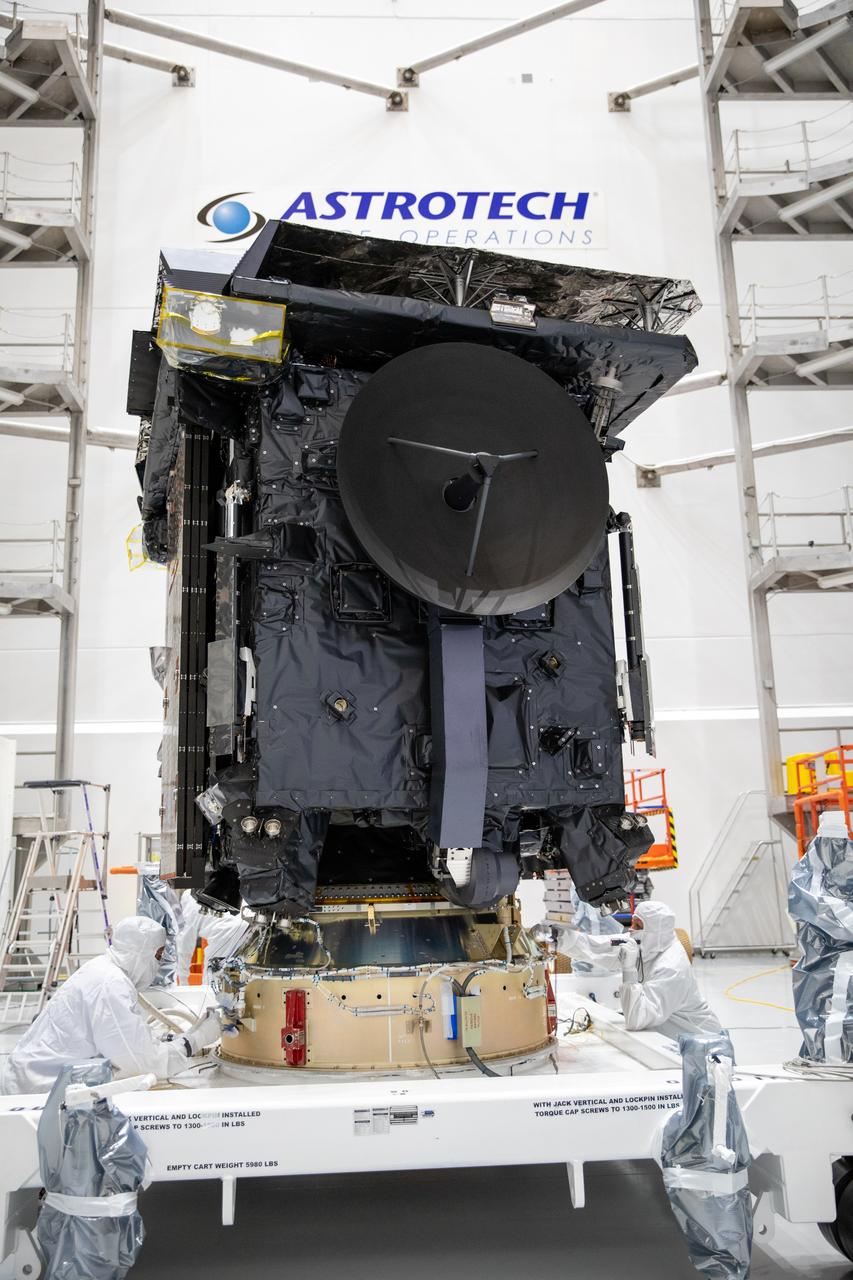
The Solar Orbiter spacecraft is prepared for encapsulation in the United Launch Alliance Atlas V payload fairing inside the Astrotech Space Operations facility in Titusville, Florida, on Jan. 20, 2020. The fairing provides a protective, aerodynamic cover to the payload inside during the early minutes of ascent. Solar Orbiter is an international cooperative mission between ESA (European Space Agency) and NASA. The mission aims to study the Sun, its outer atmosphere and solar wind. The spacecraft will provide the first images of the Sun’s poles. NASA’s Launch Services Program based at Kennedy Space Center in Florida is managing the launch. The spacecraft has been developed by Airbus Defence and Space. Solar Orbiter will launch aboard an Atlas V rocket from Space Launch Complex 41 at Cape Canaveral Air Force Station in Florida. Liftoff is scheduled for Feb. 5, 2020.
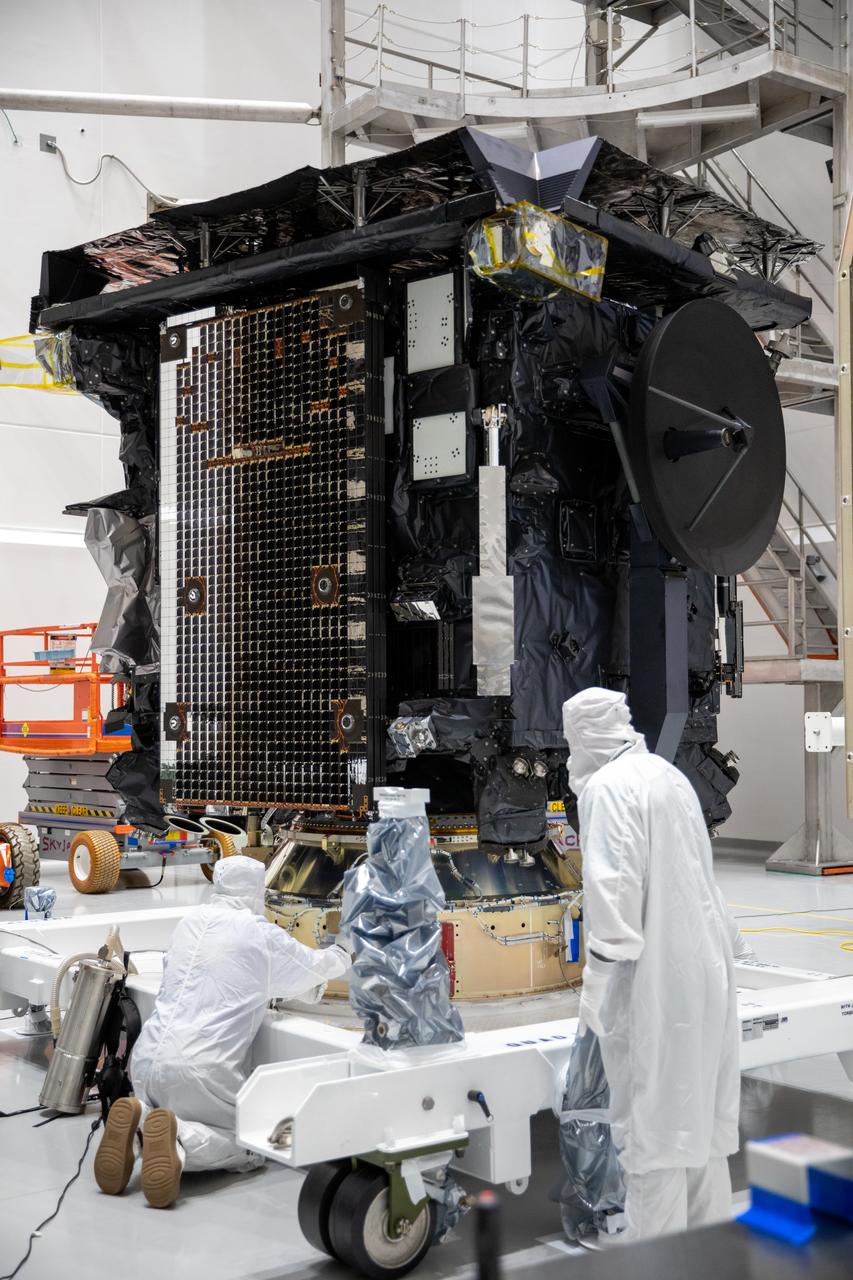
The Solar Orbiter spacecraft is prepared for encapsulation in the United Launch Alliance Atlas V payload fairing inside the Astrotech Space Operations facility in Titusville, Florida, on Jan. 20, 2020. The fairing provides a protective, aerodynamic cover to the payload inside during the early minutes of ascent. Solar Orbiter is an international cooperative mission between ESA (European Space Agency) and NASA. The mission aims to study the Sun, its outer atmosphere and solar wind. The spacecraft will provide the first images of the Sun’s poles. NASA’s Launch Services Program based at Kennedy Space Center in Florida is managing the launch. The spacecraft has been developed by Airbus Defence and Space. Solar Orbiter will launch aboard an Atlas V rocket from Space Launch Complex 41 at Cape Canaveral Air Force Station in Florida. Liftoff is scheduled for Feb. 5, 2020.
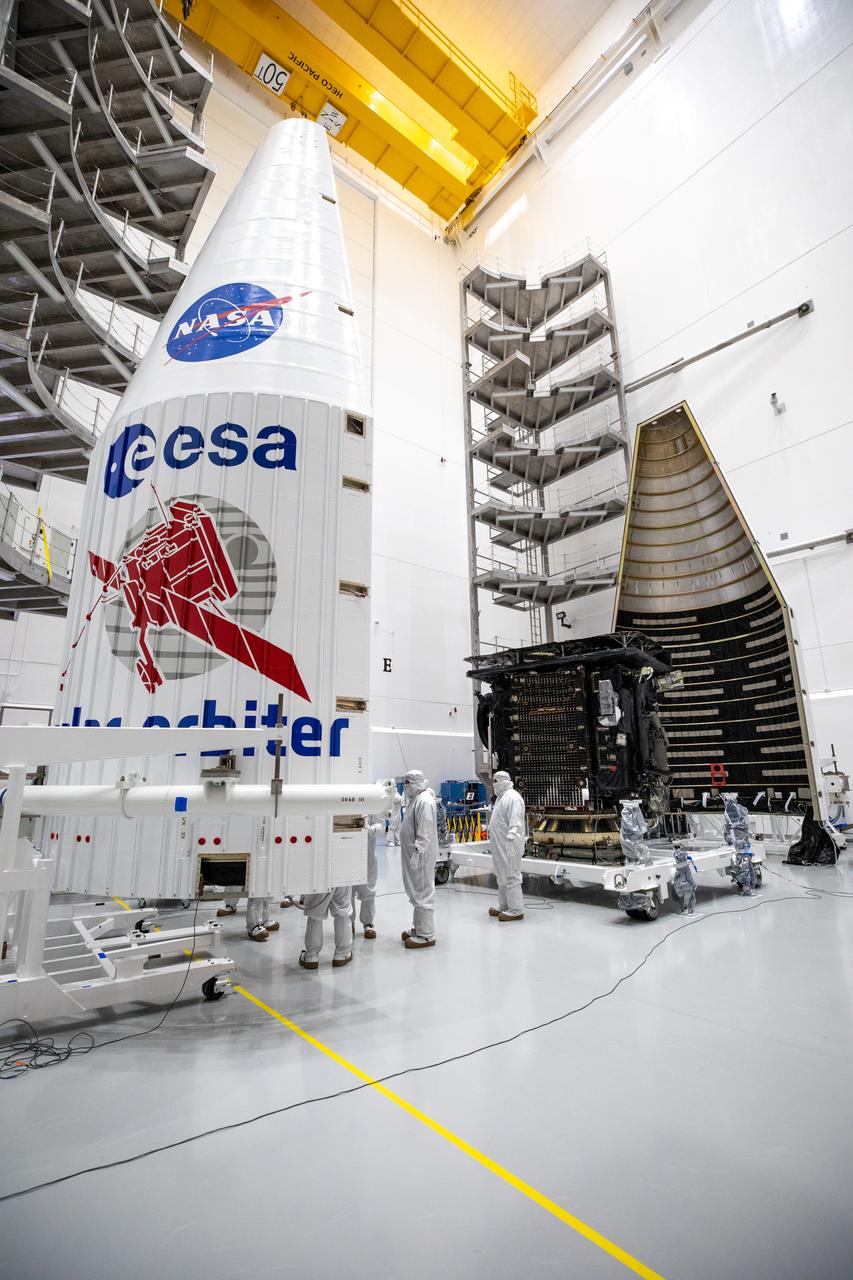
Both halves of a United Launch Alliance Atlas V payload fairing are positioned for installation around the Solar Orbiter spacecraft inside the Astrotech Space Operations facility in Titusville, Florida, on Jan. 20, 2020. The fairing provides a protective, aerodynamic covering to the payload inside during the early minutes of ascent. Solar Orbiter is an international cooperative mission between ESA (European Space Agency) and NASA. The mission aims to study the Sun, its outer atmosphere and solar wind. The spacecraft will provide the first images of the Sun’s poles. NASA’s Launch Services Program based at Kennedy Space Center in Florida is managing the launch. The spacecraft has been developed by Airbus Defence and Space. Solar Orbiter will launch aboard an Atlas V rocket from Space Launch Complex 41 at Cape Canaveral Air Force Station in Florida. Liftoff is scheduled for Feb. 5, 2020.
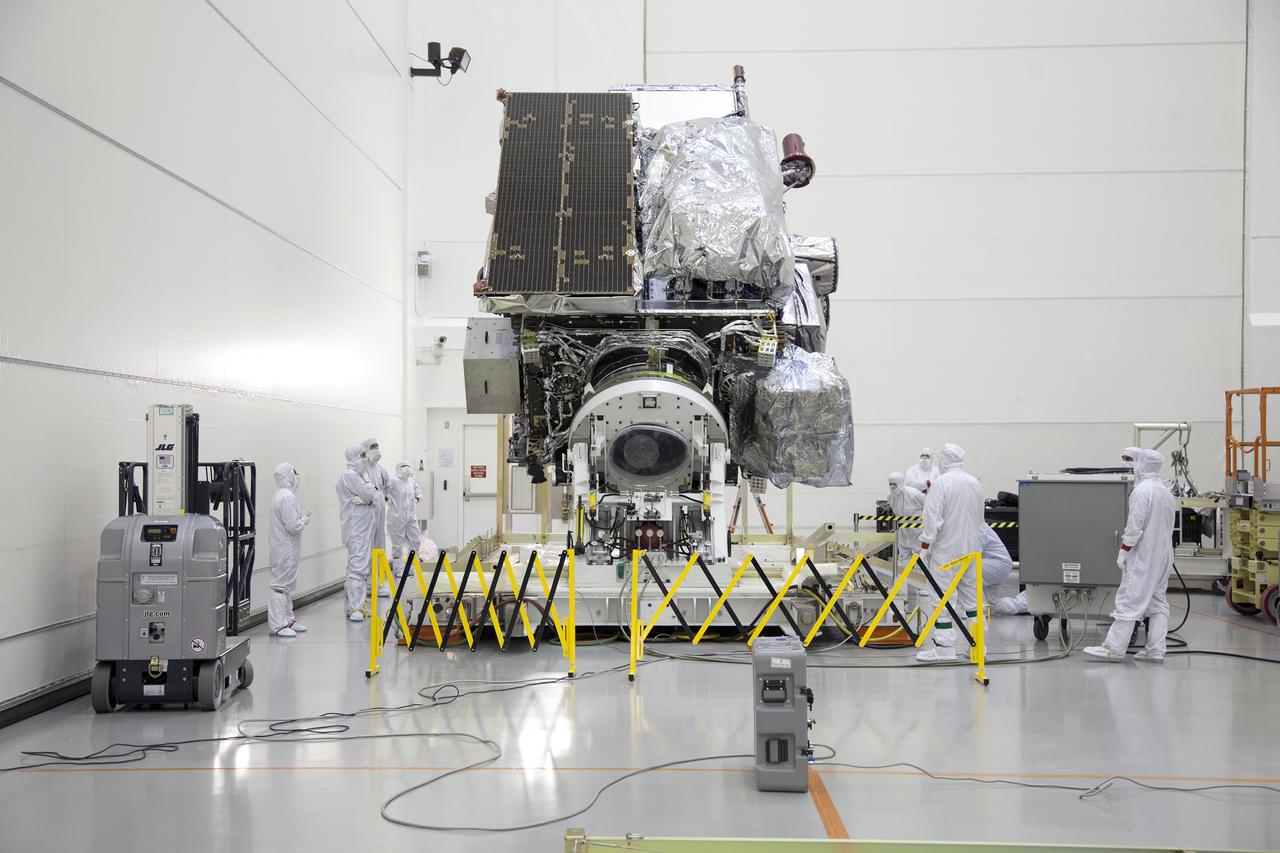
Team members monitor progress as the GOES-R spacecraft is lifted from horizontal to vertical inside the Astrotech payload processing facility in Titusville, Florida near NASA’s Kennedy Space Center. GOES-R will be the first satellite in a series of next-generation NOAA Geostationary Operational Environmental Satellites. The spacecraft is to launch aboard a United Launch Alliance Atlas V rocket in November.
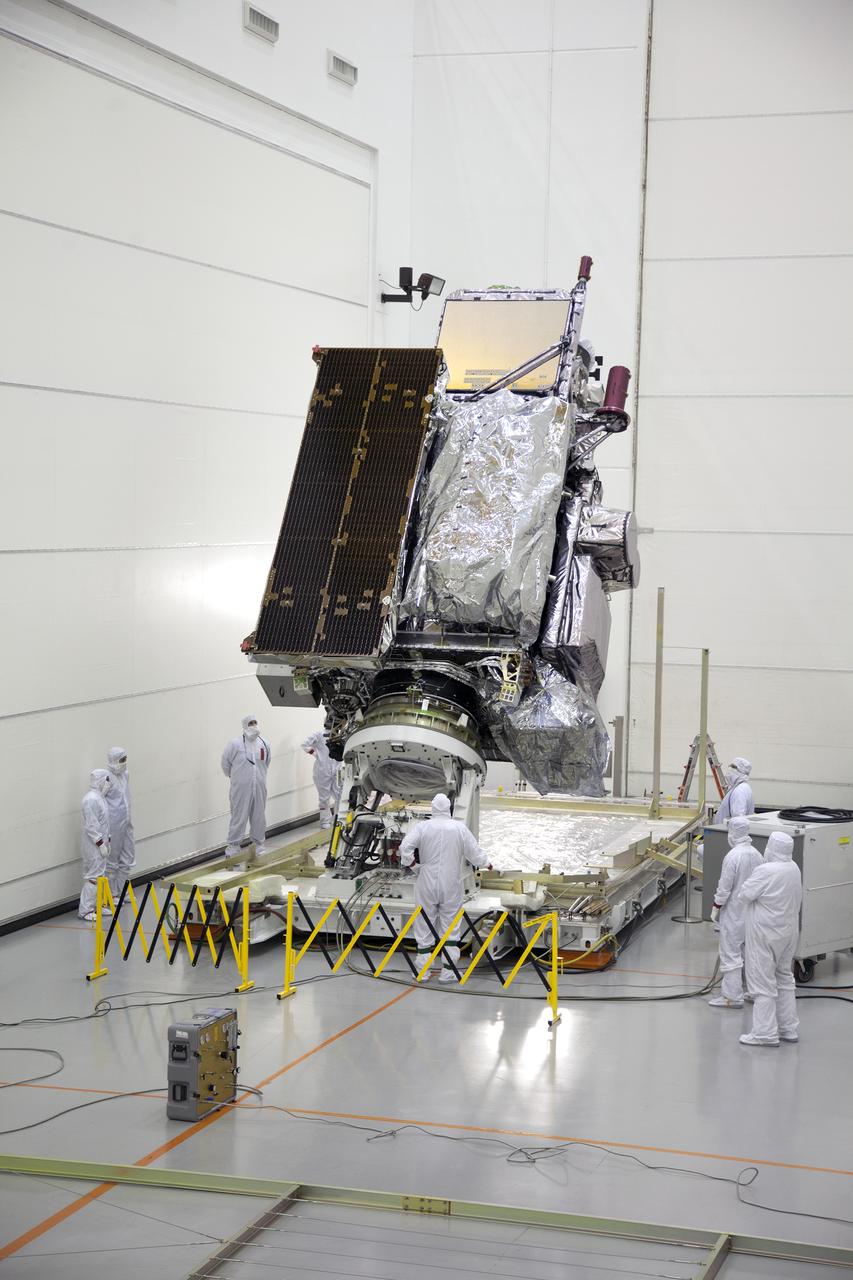
Team members monitor progress as the GOES-R spacecraft is raised to vertical inside the Astrotech payload processing facility in Titusville, Florida near NASA’s Kennedy Space Center. GOES-R will be the first satellite in a series of next-generation NOAA Geostationary Operational Environmental Satellites. The spacecraft is to launch aboard a United Launch Alliance Atlas V rocket in November.
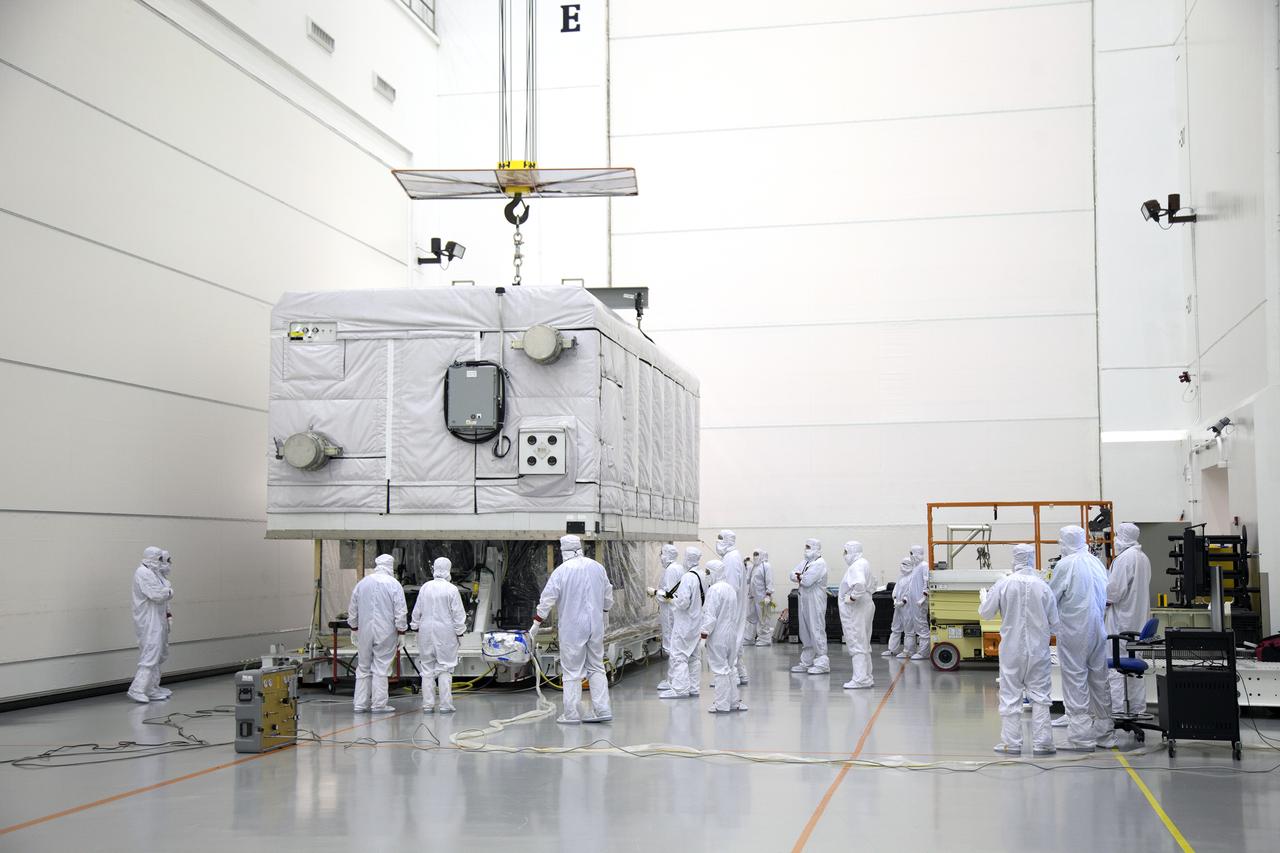
The shipping container is lifted off the GOES-R spacecraft inside the Astrotech payload processing facility in Titusville, Florida near NASA’s Kennedy Space Center. GOES-R will be the first satellite in a series of next-generation NOAA Geostationary Operational Environmental Satellites. The spacecraft is to launch aboard a United Launch Alliance Atlas V rocket in November.
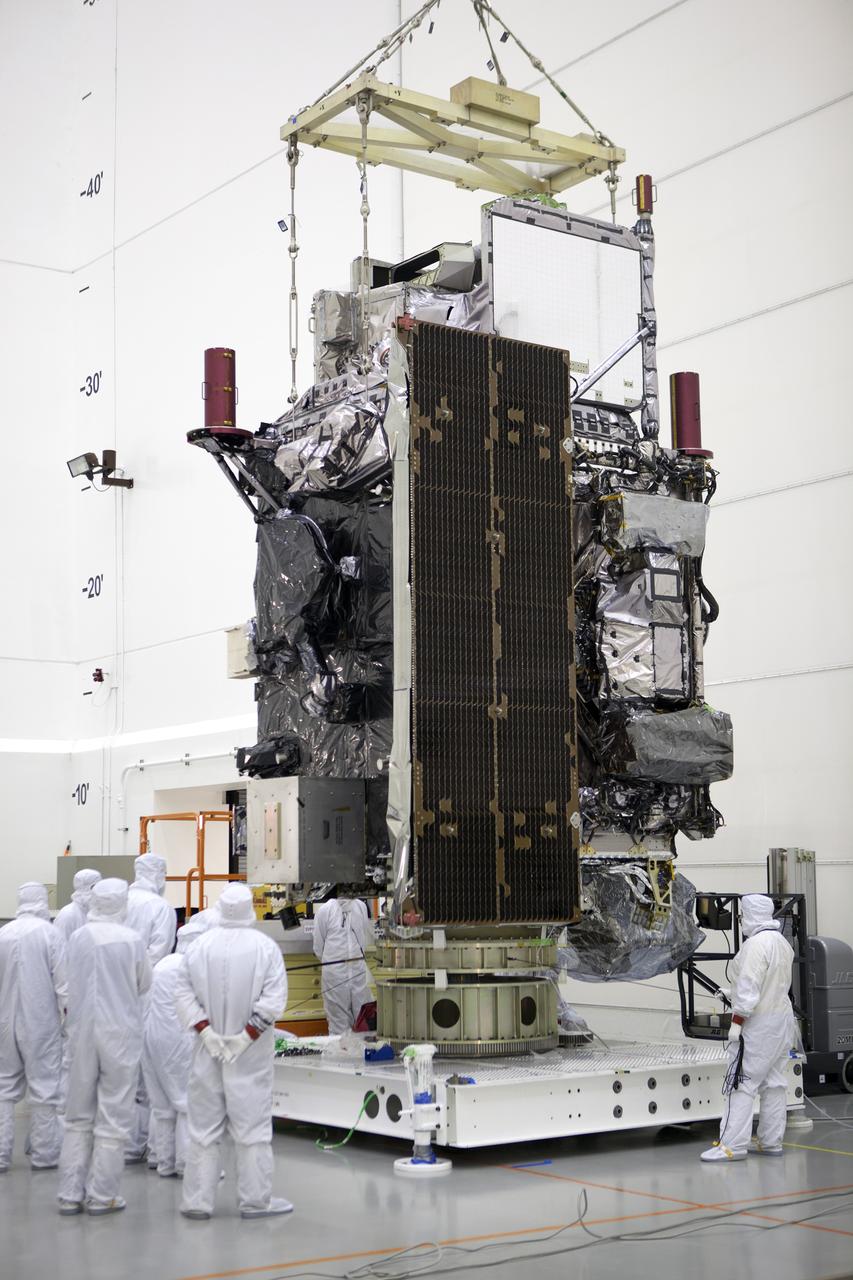
Team members monitor progress as an overhead crane lowers the GOES-R spacecraft into its work stand inside the Astrotech payload processing facility in Titusville, Florida near NASA’s Kennedy Space Center. GOES-R will be the first satellite in a series of next-generation NOAA Geostationary Operational Environmental Satellites. The spacecraft is to launch aboard a United Launch Alliance Atlas V rocket in November.
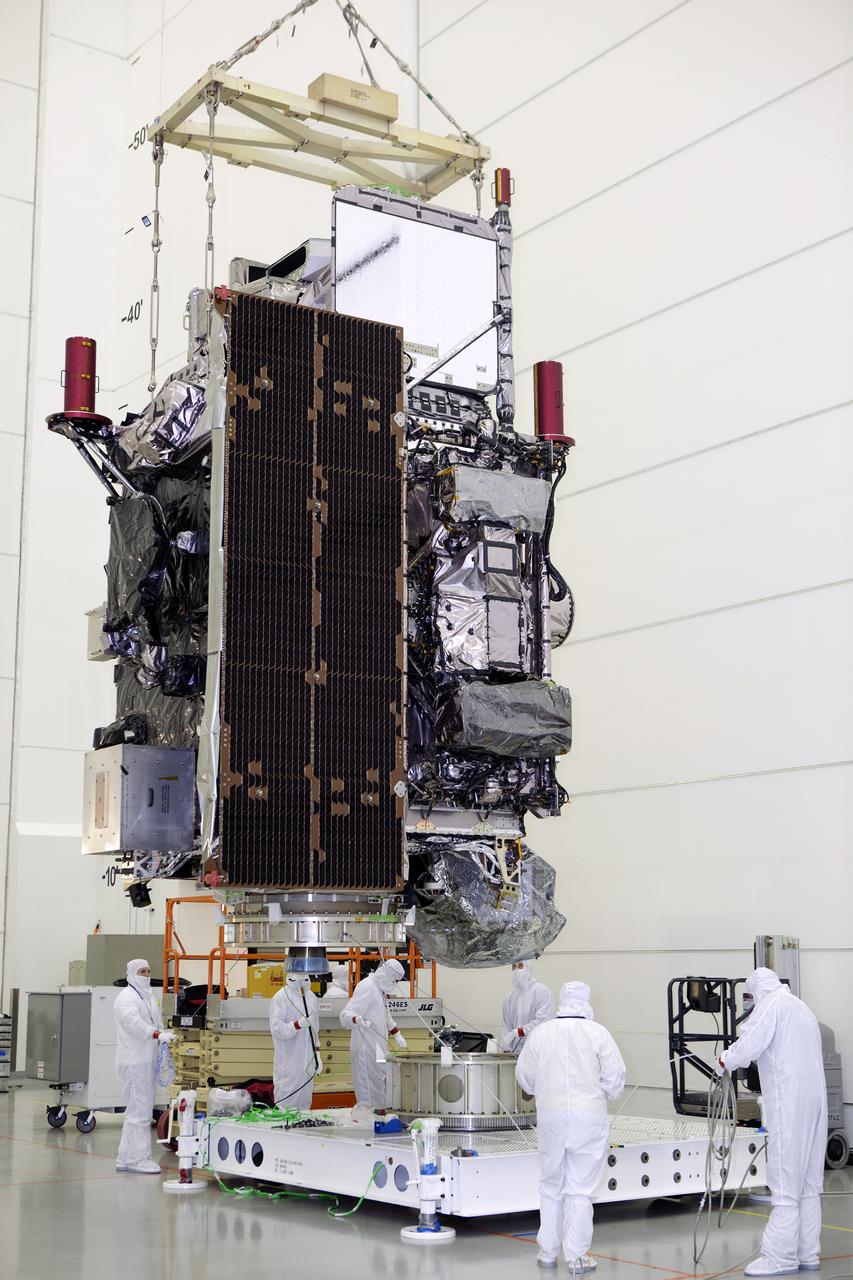
Team members monitor progress as an overhead crane lowers the GOES-R spacecraft toward its work stand inside the Astrotech payload processing facility in Titusville, Florida near NASA’s Kennedy Space Center. GOES-R will be the first satellite in a series of next-generation NOAA Geostationary Operational Environmental Satellites. The spacecraft is to launch aboard a United Launch Alliance Atlas V rocket in November.
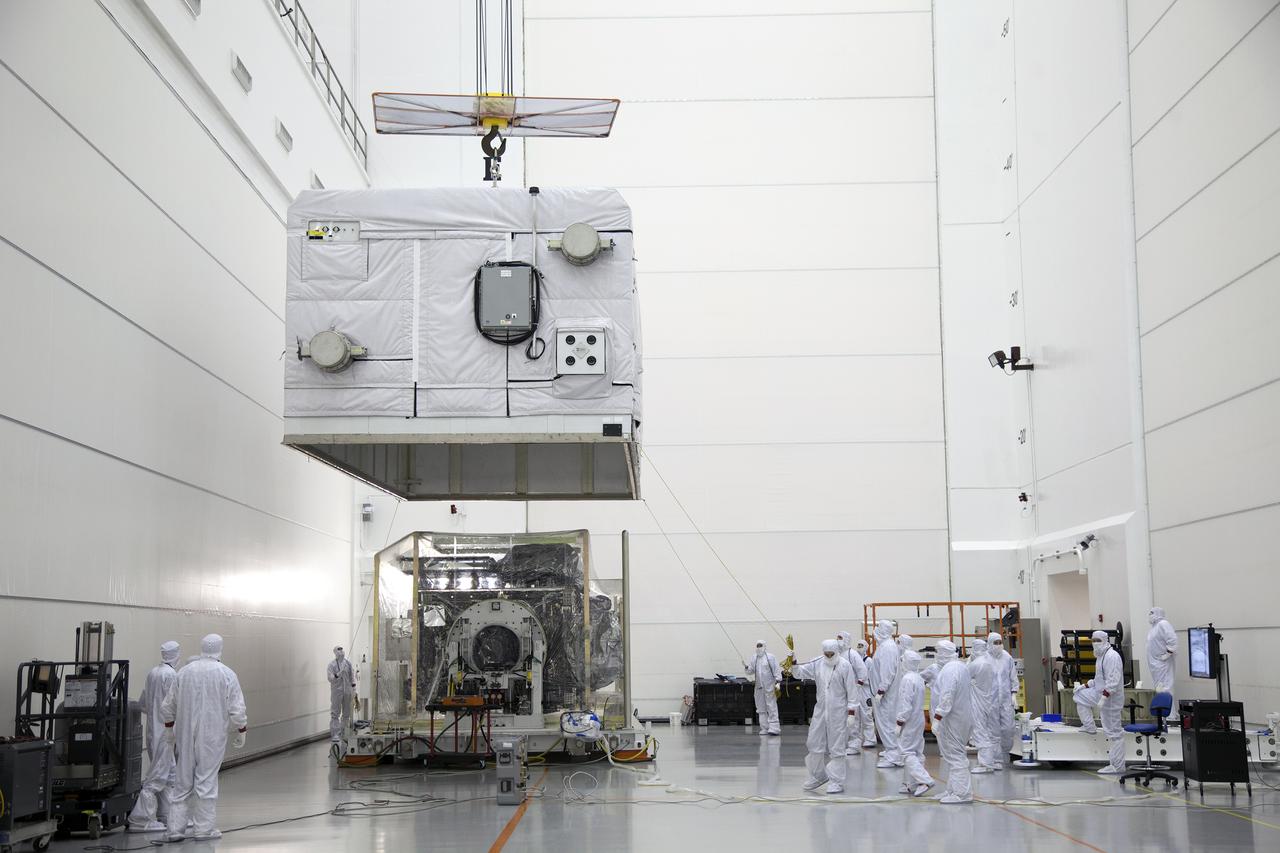
The shipping container is lifted off the GOES-R spacecraft inside the Astrotech payload processing facility in Titusville, Florida near NASA’s Kennedy Space Center. GOES-R will be the first satellite in a series of next-generation NOAA Geostationary Operational Environmental Satellites. The spacecraft is to launch aboard a United Launch Alliance Atlas V rocket in November.
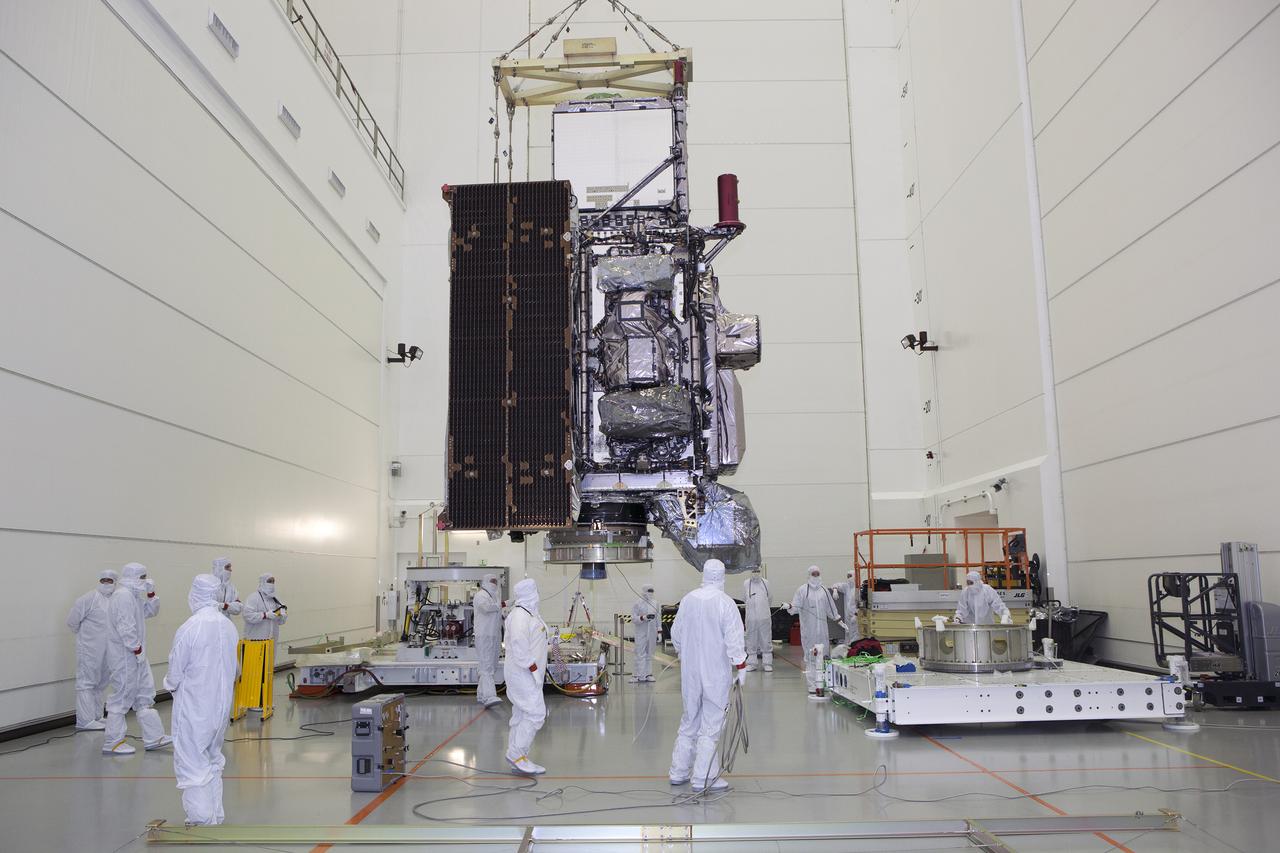
An overhead crane moves the GOES-R spacecraft toward its work stand inside the Astrotech payload processing facility in Titusville, Florida near NASA’s Kennedy Space Center. GOES-R will be the first satellite in a series of next-generation NOAA Geostationary Operational Environmental Satellites. The spacecraft is to launch aboard a United Launch Alliance Atlas V rocket in November.
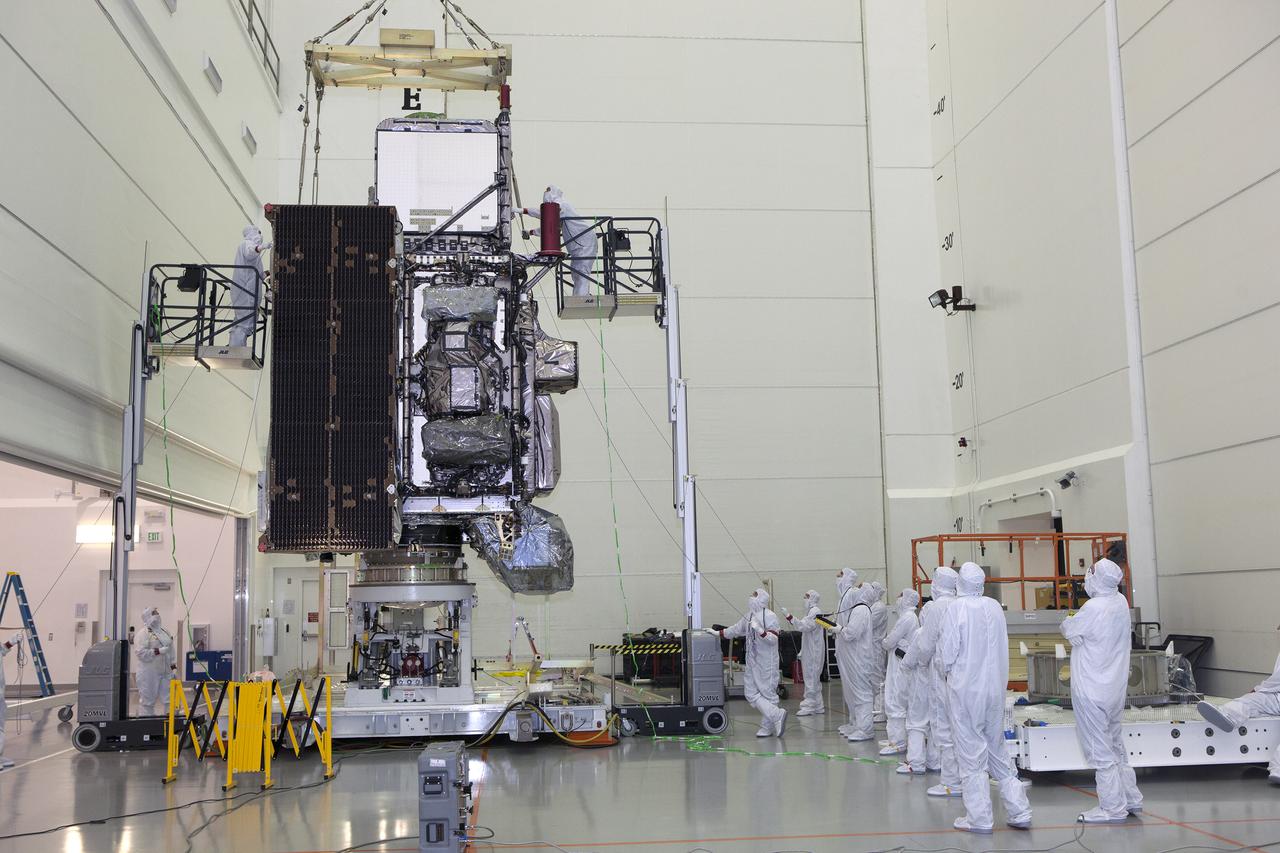
An overhead crane lifts the GOES-R spacecraft to move it into its work stand inside the Astrotech payload processing facility in Titusville, Florida near NASA’s Kennedy Space Center. GOES-R will be the first satellite in a series of next-generation NOAA Geostationary Operational Environmental Satellites. The spacecraft is to launch aboard a United Launch Alliance Atlas V rocket in November.
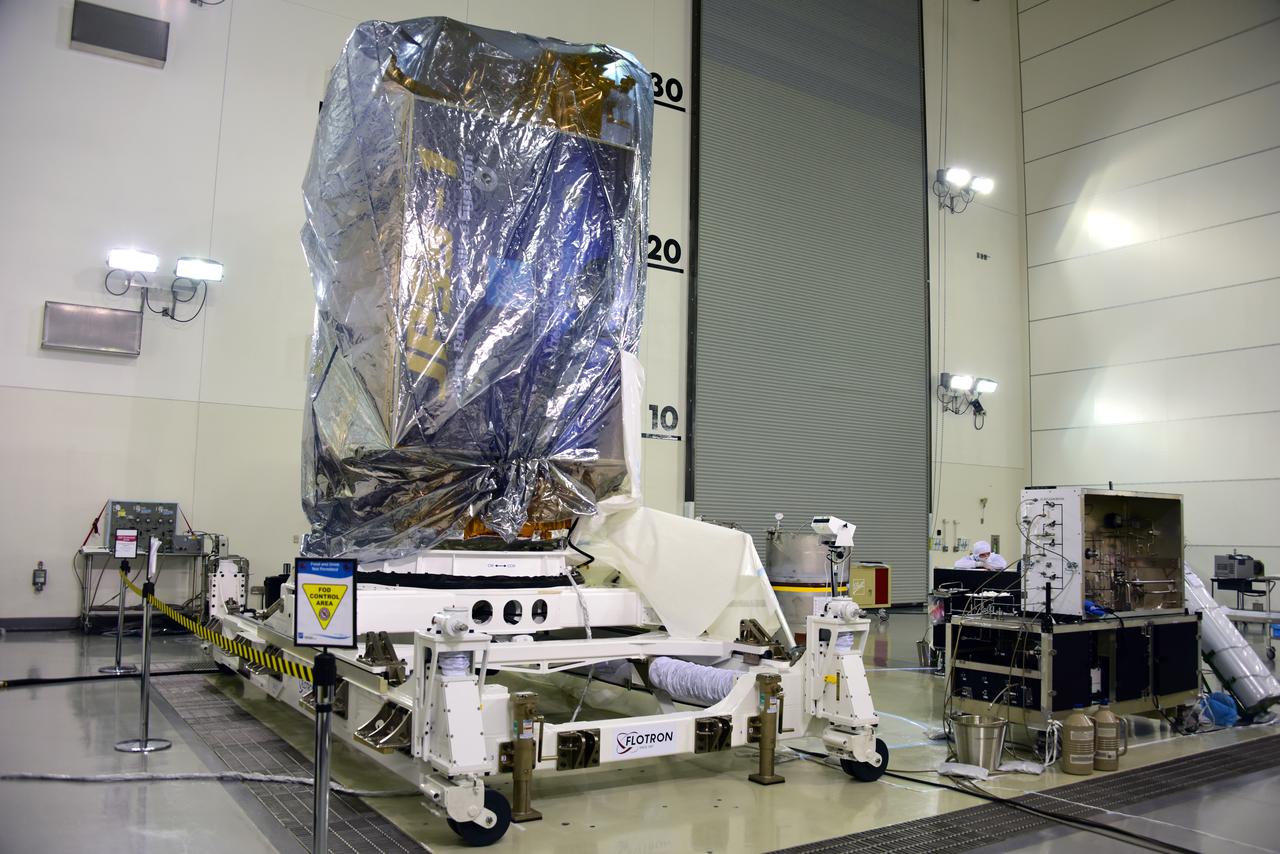
NOAA's Joint Polar Satellite System-1, or JPSS-1, remains wrapped in a protective covering after removal from its shipping container at the Astrotech Processing Facility at Vandenberg Air Force Base in California. The spacecraft is being prepared for its upcoming liftoff aboard a United Launch Alliance Delta II rocket from Vandenberg's Space Launch Complex-2W. JPSS-1 is the first in a series four next-generation environmental satellites in a collaborative program between NOAA and NASA.
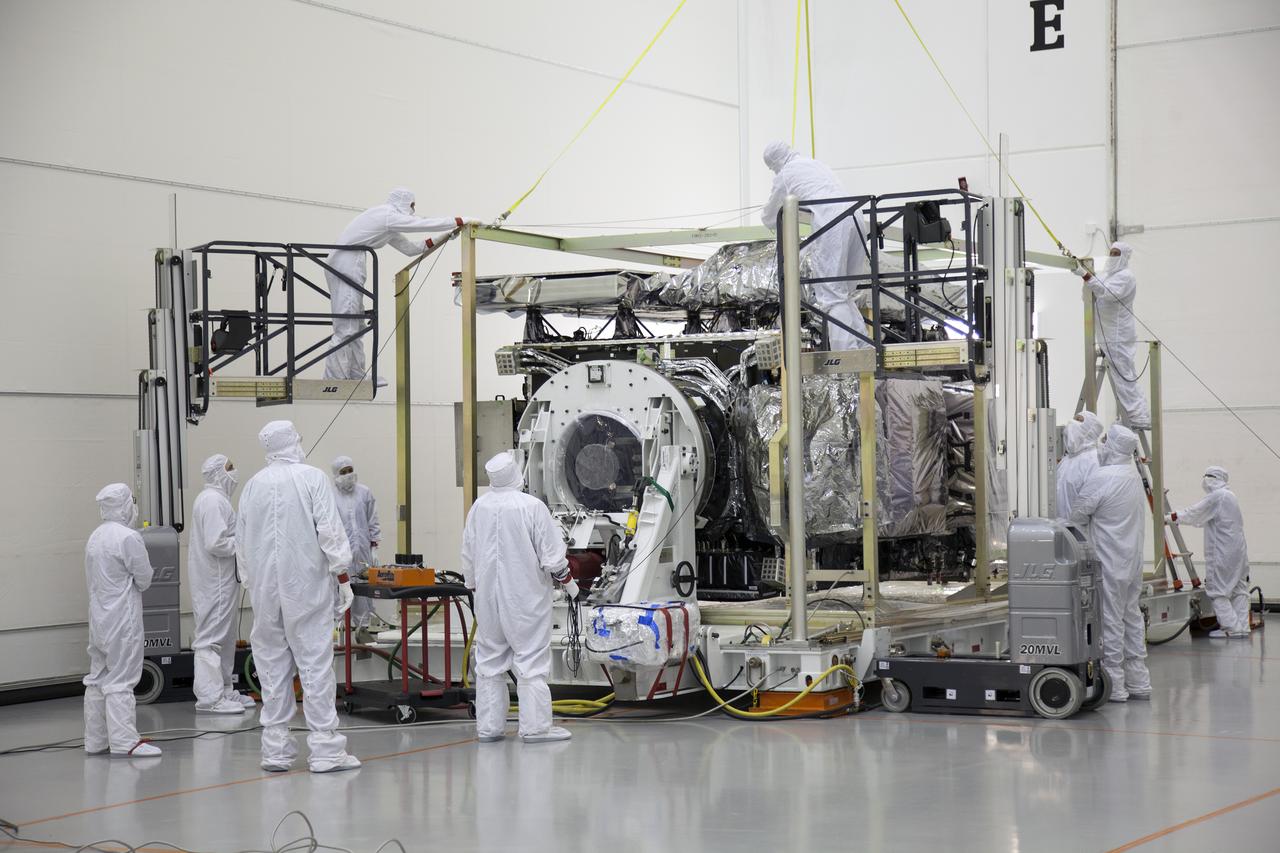
The GOES-R spacecraft is revealed following its uncrating inside the Astrotech payload processing facility in Titusville, Florida near NASA’s Kennedy Space Center. GOES-R will be the first satellite in a series of next-generation NOAA Geostationary Operational Environmental Satellites. The spacecraft is to launch aboard a United Launch Alliance Atlas V rocket in November.
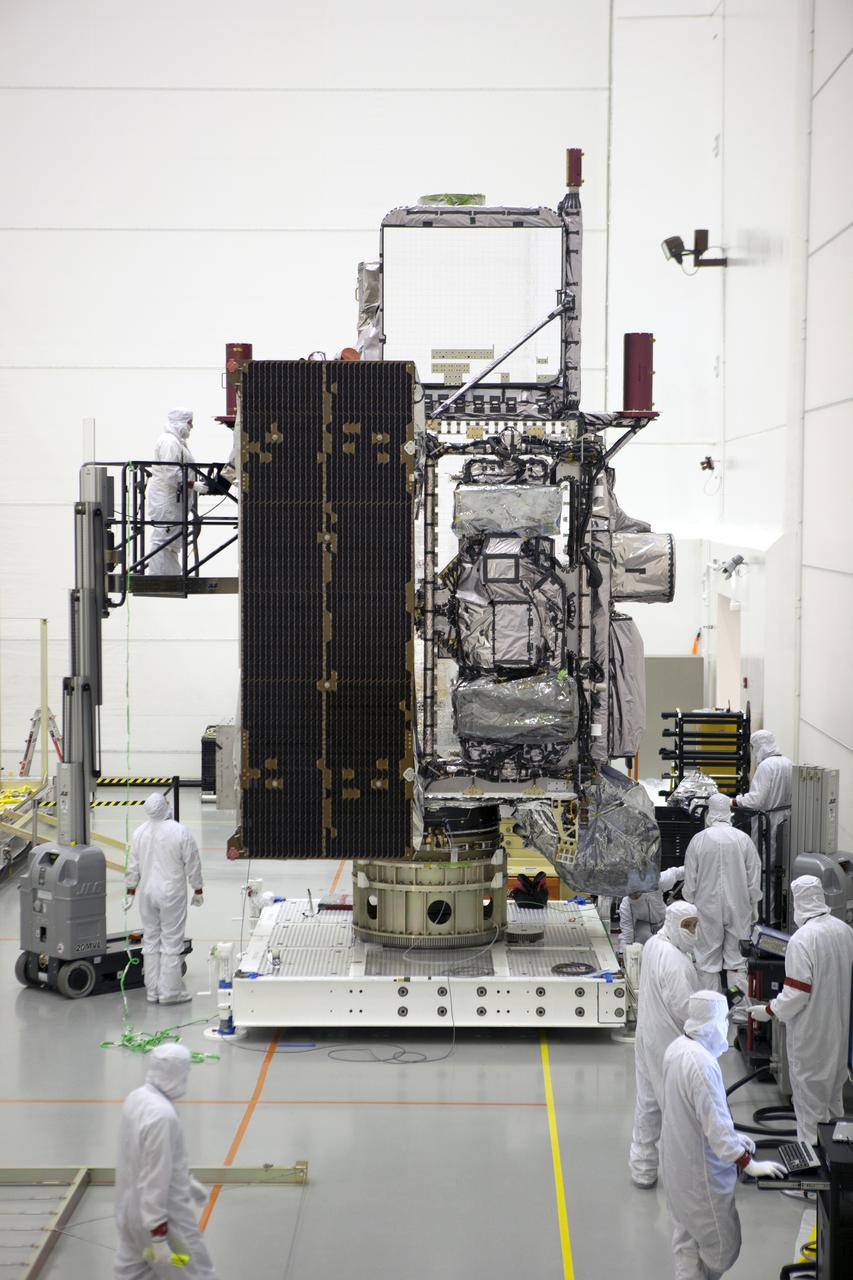
The GOES-R spacecraft is secured on its work stand inside the Astrotech payload processing facility in Titusville, Florida near NASA’s Kennedy Space Center. GOES-R will be the first satellite in a series of next-generation NOAA Geostationary Operational Environmental Satellites. The spacecraft is to launch aboard a United Launch Alliance Atlas V rocket in November.
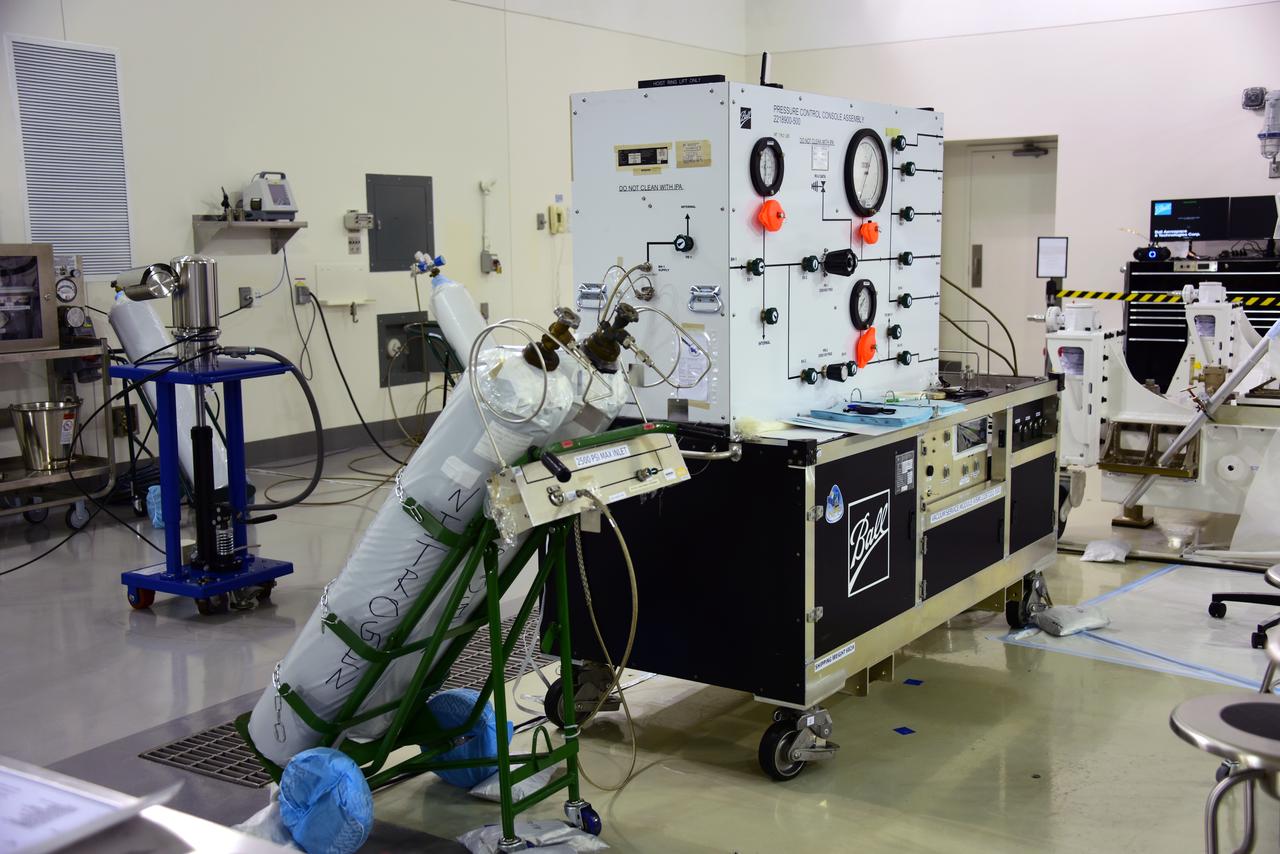
Equipment is set up for the processing of NOAA's Joint Polar Satellite System-1, or JPSS-1, inside the Astrotech Processing Facility at Vandenberg Air Force Base in California. The spacecraft is being prepared for its upcoming liftoff aboard a United Launch Alliance Delta II rocket from Vandenberg's Space Launch Complex-2W. JPSS-1 is the first in a series four next-generation environmental satellites in a collaborative program between NOAA and NASA.
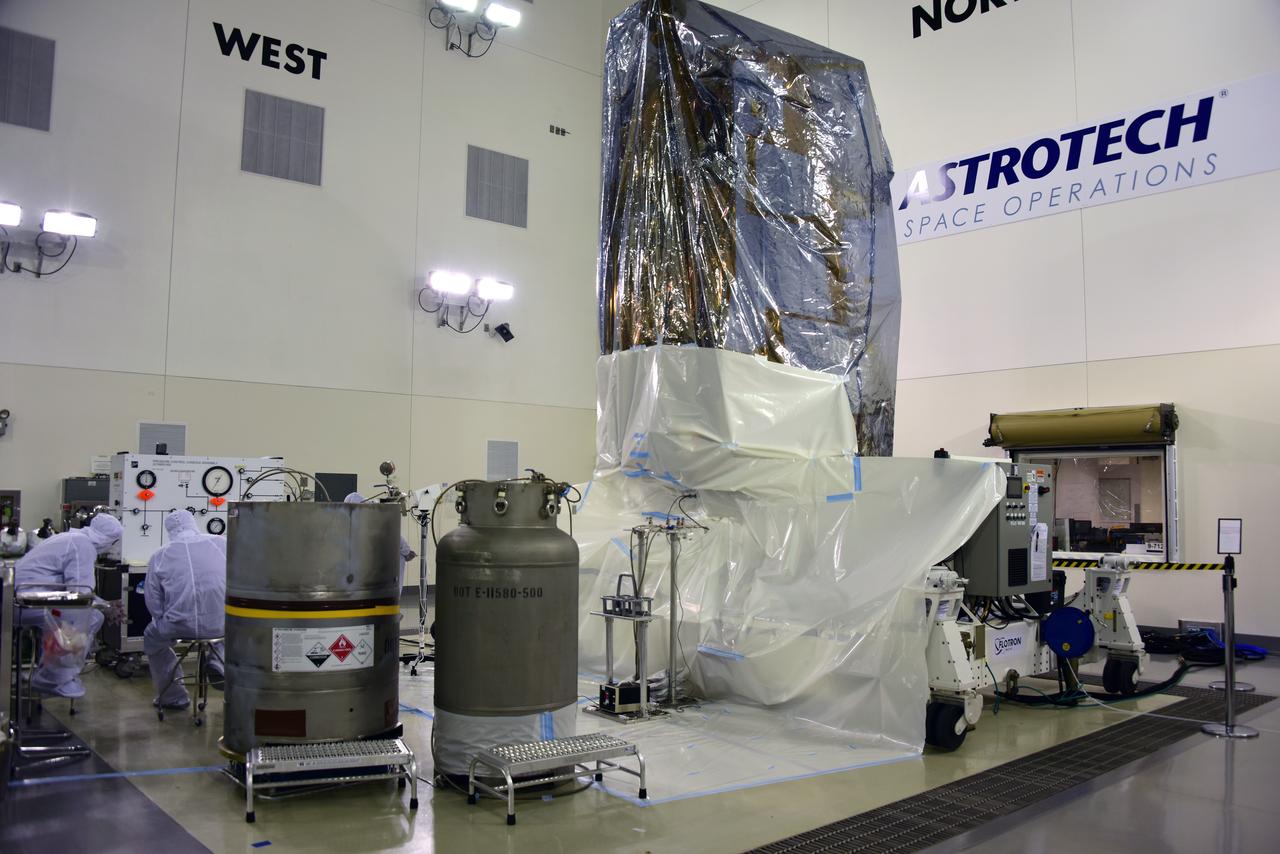
NOAA's Joint Polar Satellite System-1, or JPSS-1, remains wrapped in a protective covering after removal from its shipping container at the Astrotech Processing Facility at Vandenberg Air Force Base in California. The spacecraft is being prepared for its upcoming liftoff aboard a United Launch Alliance Delta II rocket from Vandenberg's Space Launch Complex-2W. JPSS-1 is the first in a series four next-generation environmental satellites in a collaborative program between NOAA and NASA.
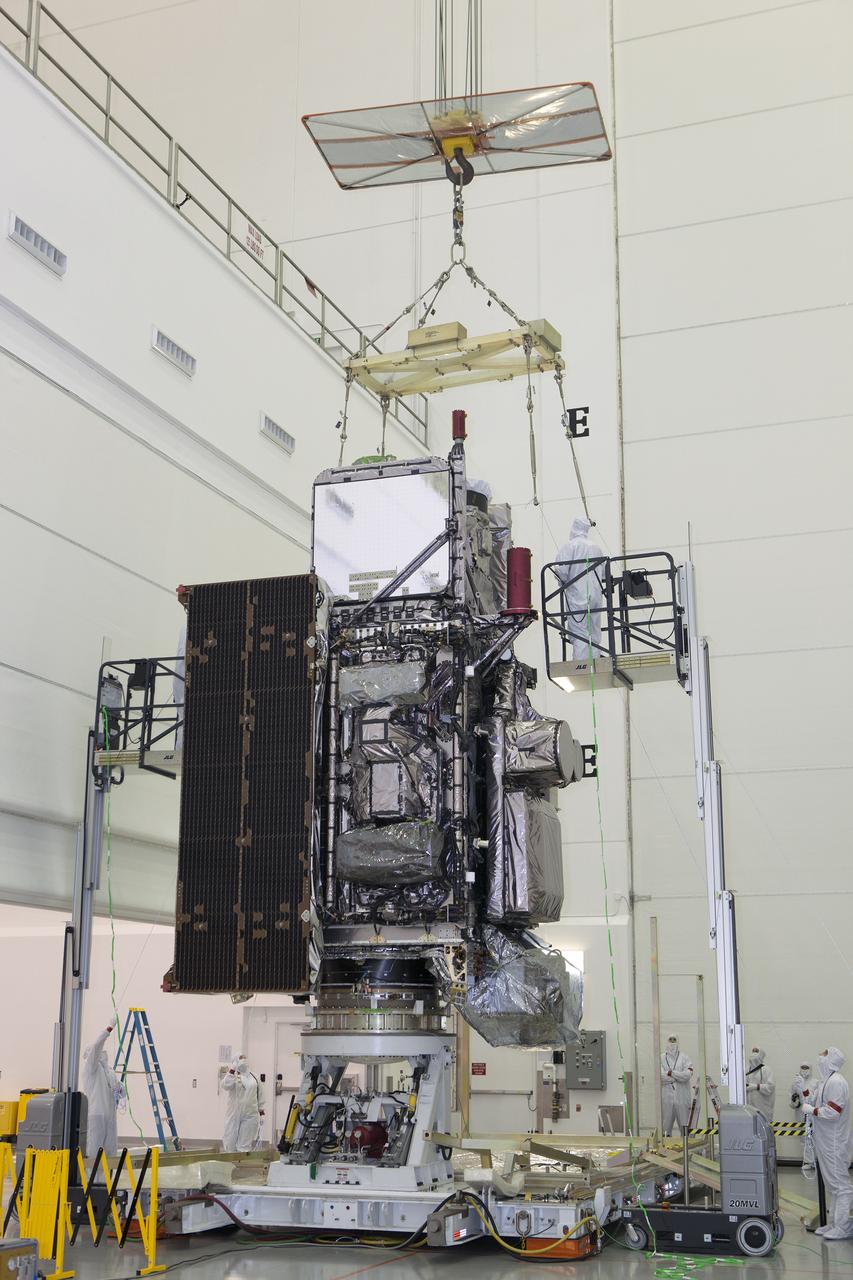
An overhead crane is positioned to move the GOES-R spacecraft into its work stand inside the Astrotech payload processing facility in Titusville, Florida near NASA’s Kennedy Space Center. GOES-R will be the first satellite in a series of next-generation NOAA Geostationary Operational Environmental Satellites. The spacecraft is to launch aboard a United Launch Alliance Atlas V rocket in November.
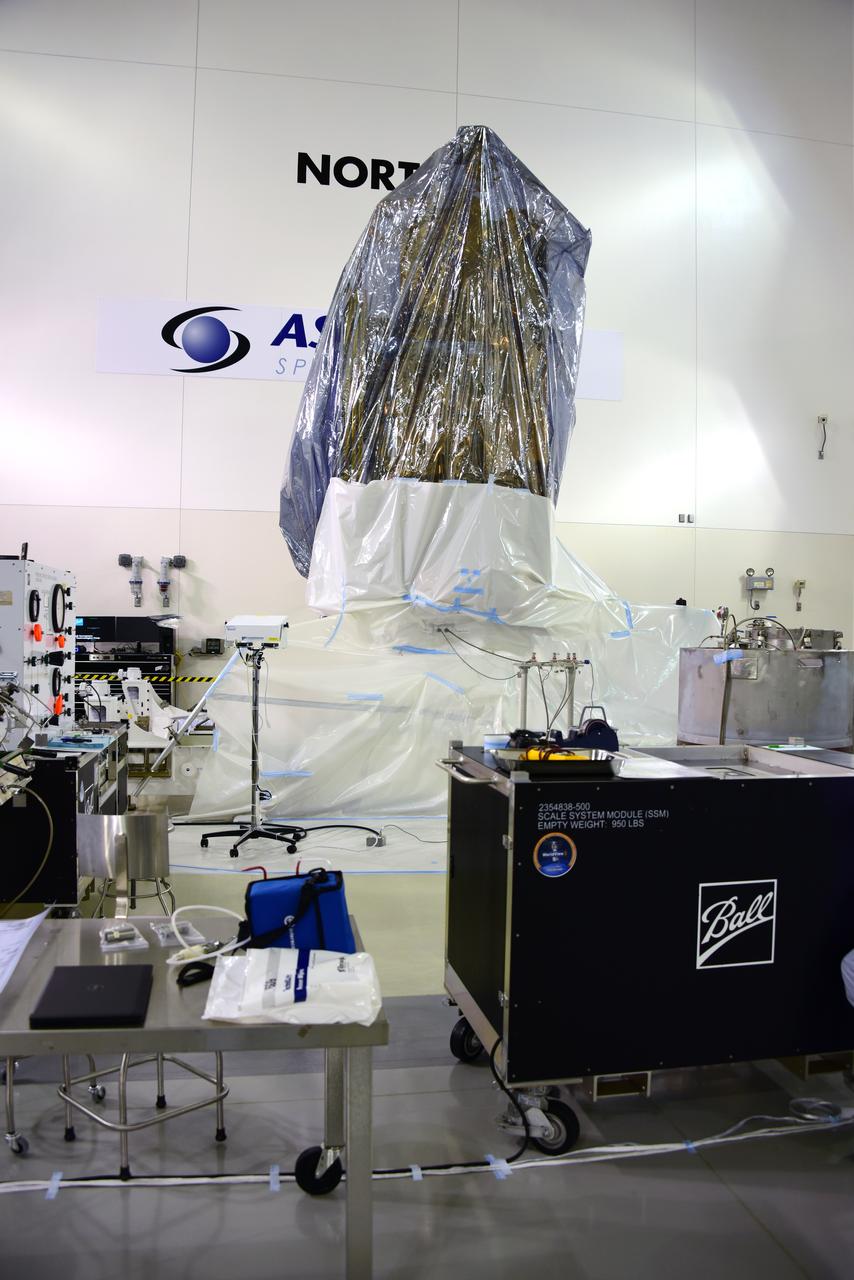
Equipment is set up for the processing of NOAA's Joint Polar Satellite System-1, or JPSS-1, inside the Astrotech Processing Facility at Vandenberg Air Force Base in California. The spacecraft is being prepared for its upcoming liftoff aboard a United Launch Alliance Delta II rocket from Vandenberg's Space Launch Complex-2W. JPSS-1 is the first in a series four next-generation environmental satellites in a collaborative program between NOAA and NASA.
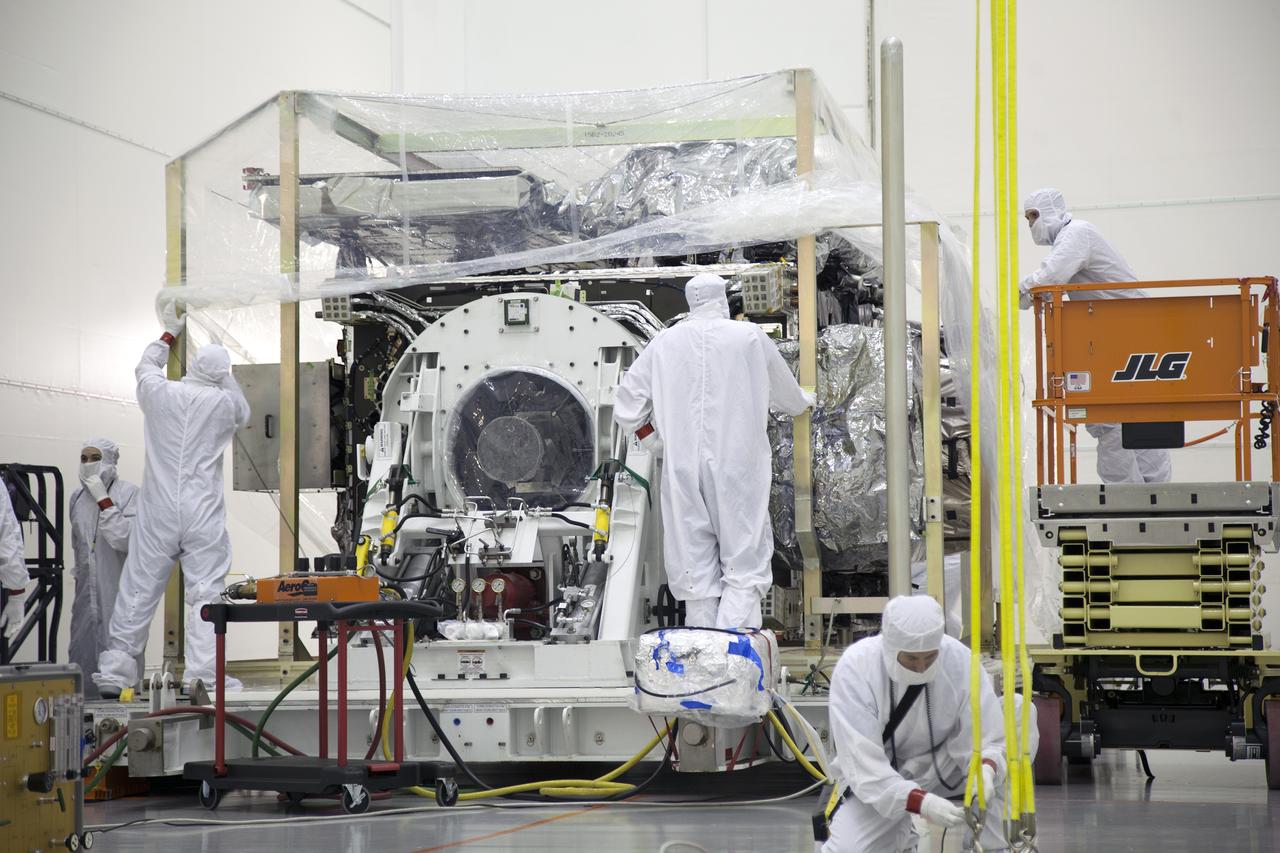
Team members remove a protective plastic covering from the GOES-R spacecraft inside the Astrotech payload processing facility in Titusville, Florida near NASA’s Kennedy Space Center. GOES-R will be the first satellite in a series of next-generation NOAA Geostationary Operational Environmental Satellites. The spacecraft is to launch aboard a United Launch Alliance Atlas V rocket in November.
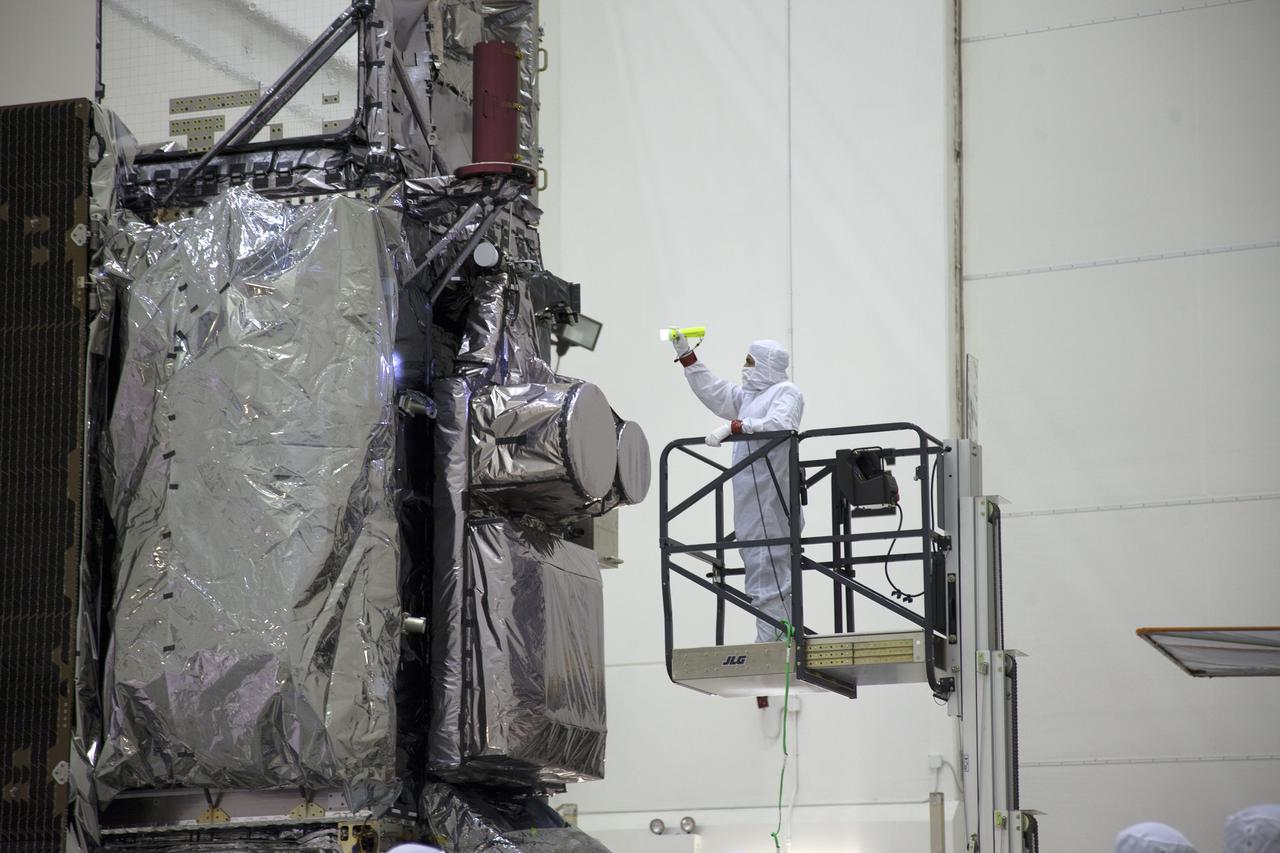
The GOES-R spacecraft is inspected after being uncrated and raised to vertical inside the Astrotech payload processing facility in Titusville, Florida near NASA’s Kennedy Space Center. GOES-R will be the first satellite in a series of next-generation NOAA Geostationary Operational Environmental Satellites. The spacecraft is to launch aboard a United Launch Alliance Atlas V rocket in November.
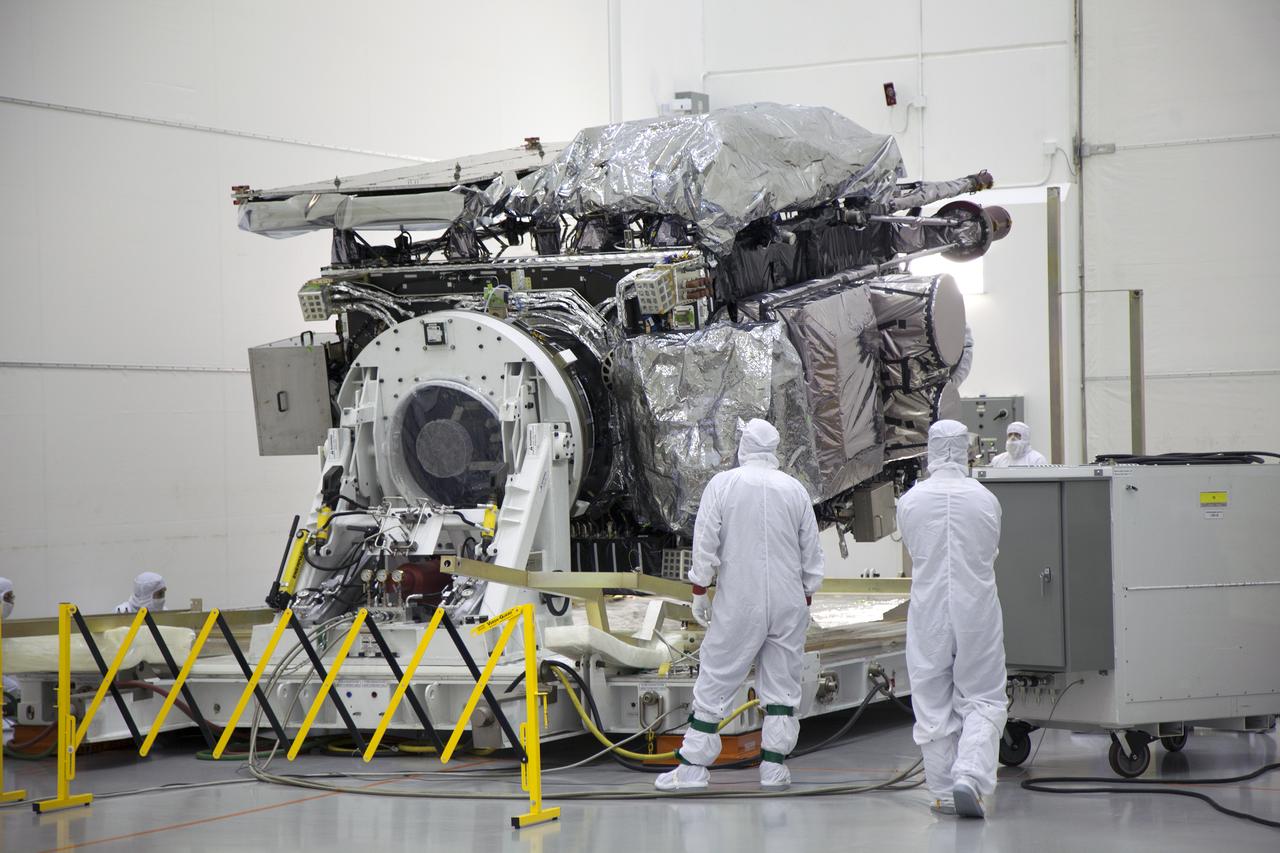
Team members monitor progress as the GOES-R spacecraft is lifted from horizontal to vertical inside the Astrotech payload processing facility in Titusville, Florida near NASA’s Kennedy Space Center. GOES-R will be the first satellite in a series of next-generation NOAA Geostationary Operational Environmental Satellites. The spacecraft is to launch aboard a United Launch Alliance Atlas V rocket in November.
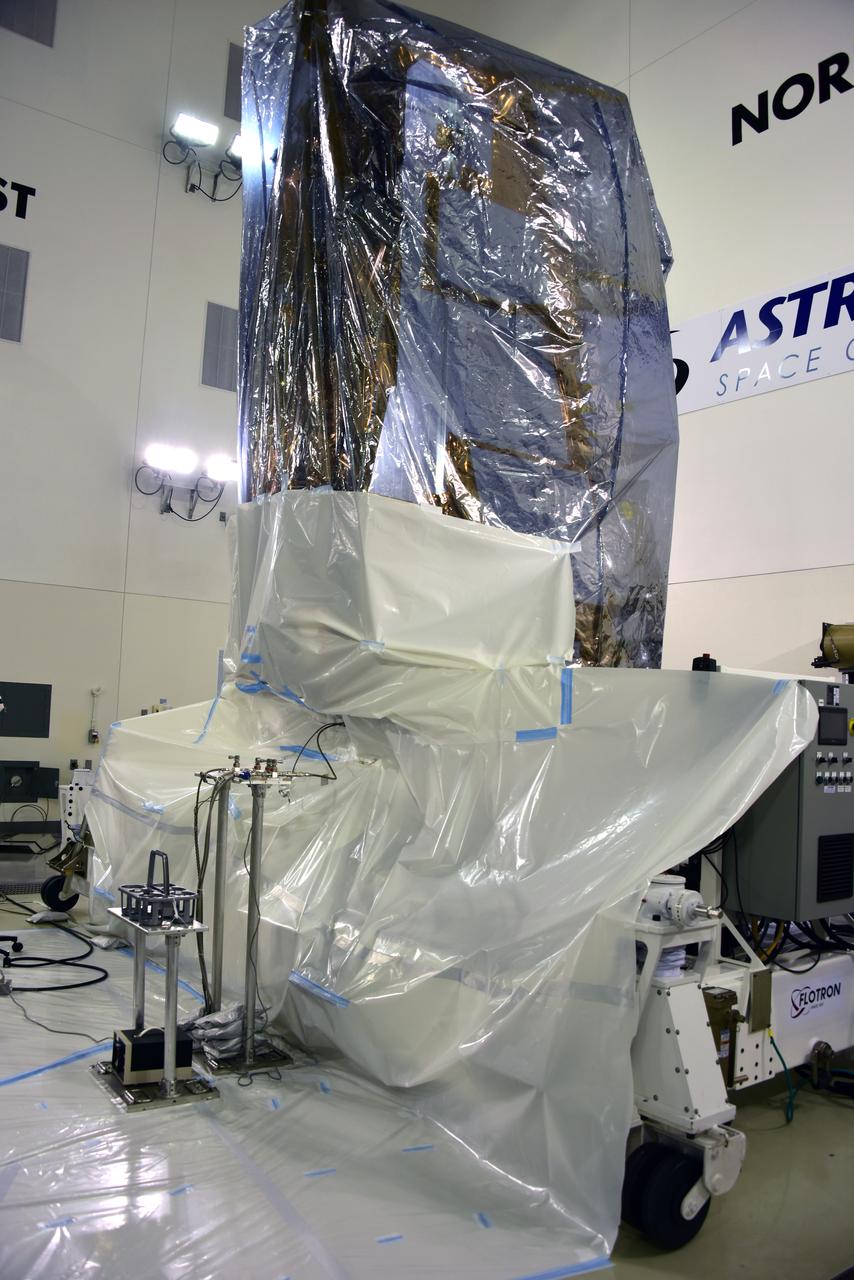
NOAA's Joint Polar Satellite System-1, or JPSS-1, remains wrapped in a protective covering after removal from its shipping container at the Astrotech Processing Facility at Vandenberg Air Force Base in California. The spacecraft is being prepared for its upcoming liftoff aboard a United Launch Alliance Delta II rocket from Vandenberg's Space Launch Complex-2W. JPSS-1 is the first in a series four next-generation environmental satellites in a collaborative program between NOAA and NASA.
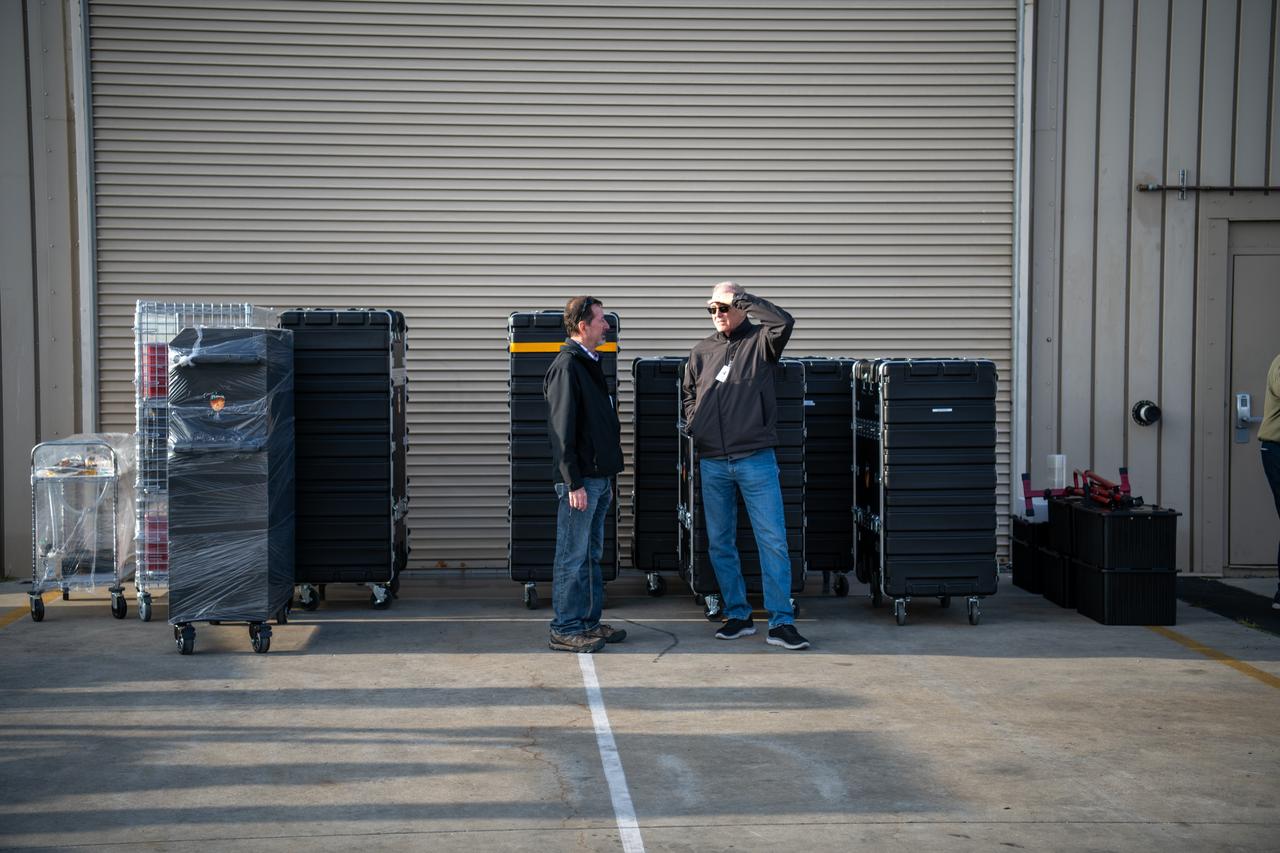
NASA’s four PUNCH (Polarimeter to Unify the Corona and Heliosphere) satellites arrive at Astrotech Space Operations located inside Vandenberg Space Force Base in California on Saturday, Jan. 18, 2025. The four satellites of PUNCH will make 3D observations of the Sun’s corona to learn how the mass and energy becomes solar wind. PUNCH, along with NASA’s SPHEREx (Spectro-Photometer for the History of the Universe, Epoch of Reionization and Ices Explorer), a space telescope, will launch aboard a SpaceX Falcon 9 rocket in late February 2025.
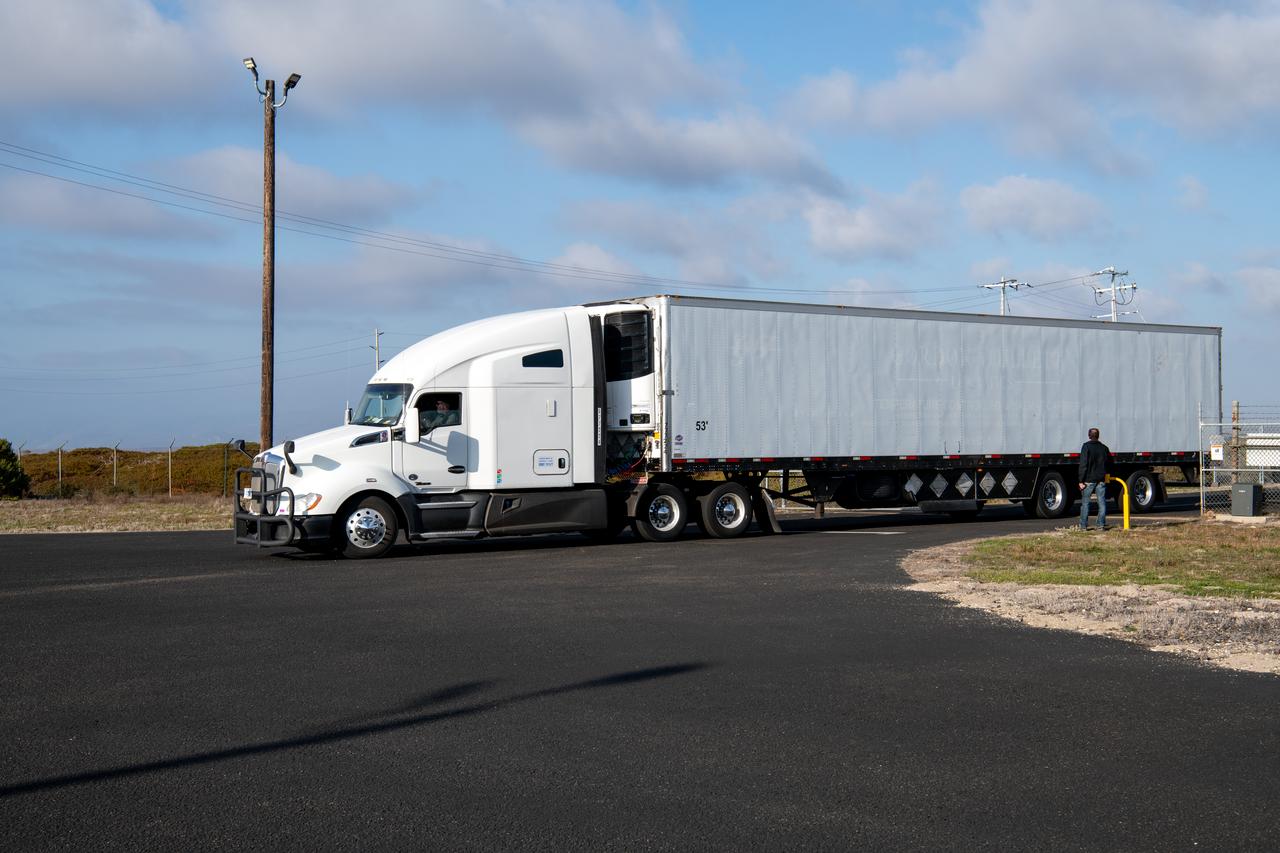
A transport truck carrying four small satellites of NASA’s PUNCH (Polarimeter to Unify the Corona and Heliosphere) arrives at Astrotech Space Operations located inside Vandenberg Space Force Base in California on Saturday, Jan. 18, 2025. PUNCH will make 3D observations of the Sun’s corona to learn how the mass and energy becomes solar wind. PUNCH, along with NASA’s SPHEREx (Spectro-Photometer for the History of the Universe, Epoch of Reionization and Ices Explorer), a space telescope, will launch aboard a SpaceX Falcon 9 rocket in late February 2025.
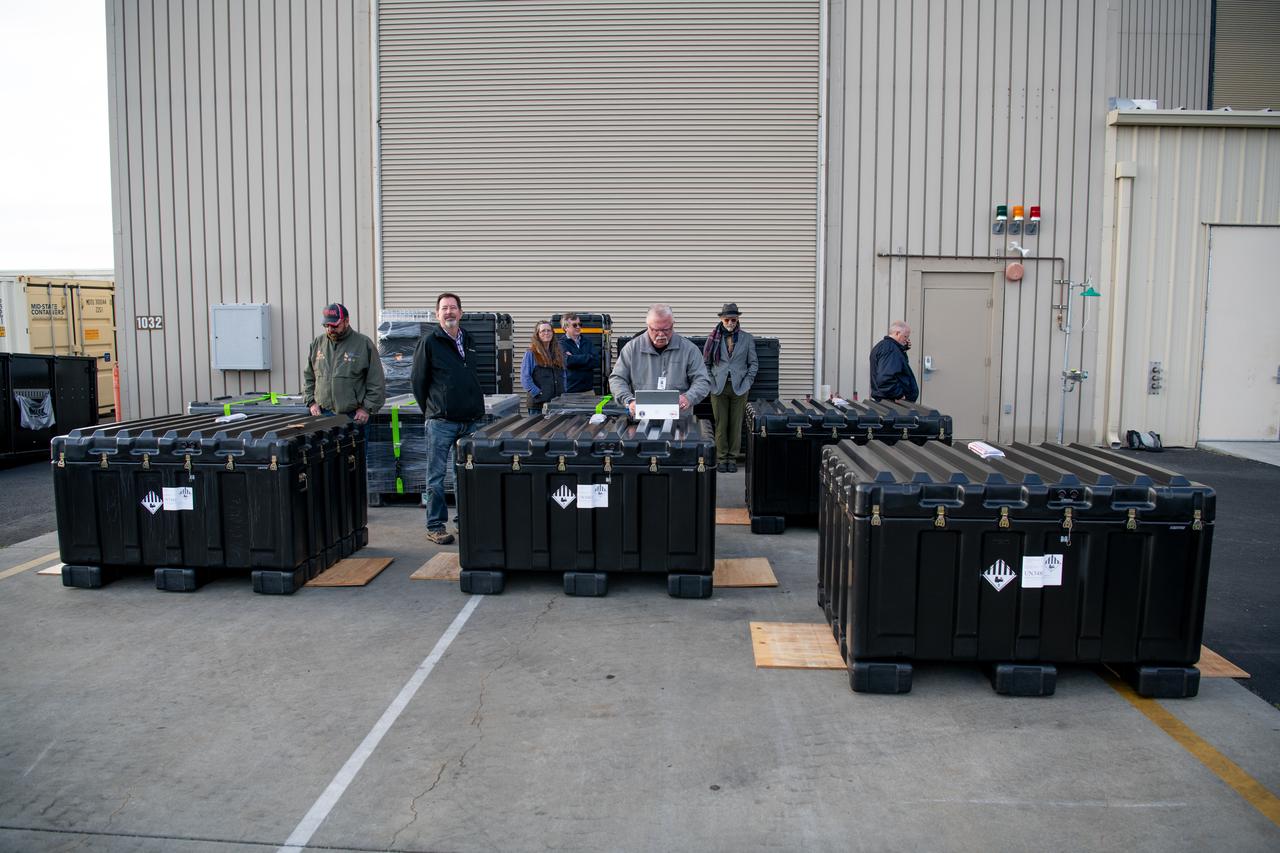
NASA’s four PUNCH (Polarimeter to Unify the Corona and Heliosphere) satellites arrive at Astrotech Space Operations located inside Vandenberg Space Force Base in California on Saturday, Jan. 18, 2025. The four satellites of PUNCH will make 3D observations of the Sun’s corona to learn how the mass and energy becomes solar wind. PUNCH, along with NASA’s SPHEREx (Spectro-Photometer for the History of the Universe, Epoch of Reionization and Ices Explorer), a space telescope, will launch aboard a SpaceX Falcon 9 rocket in late February 2025.
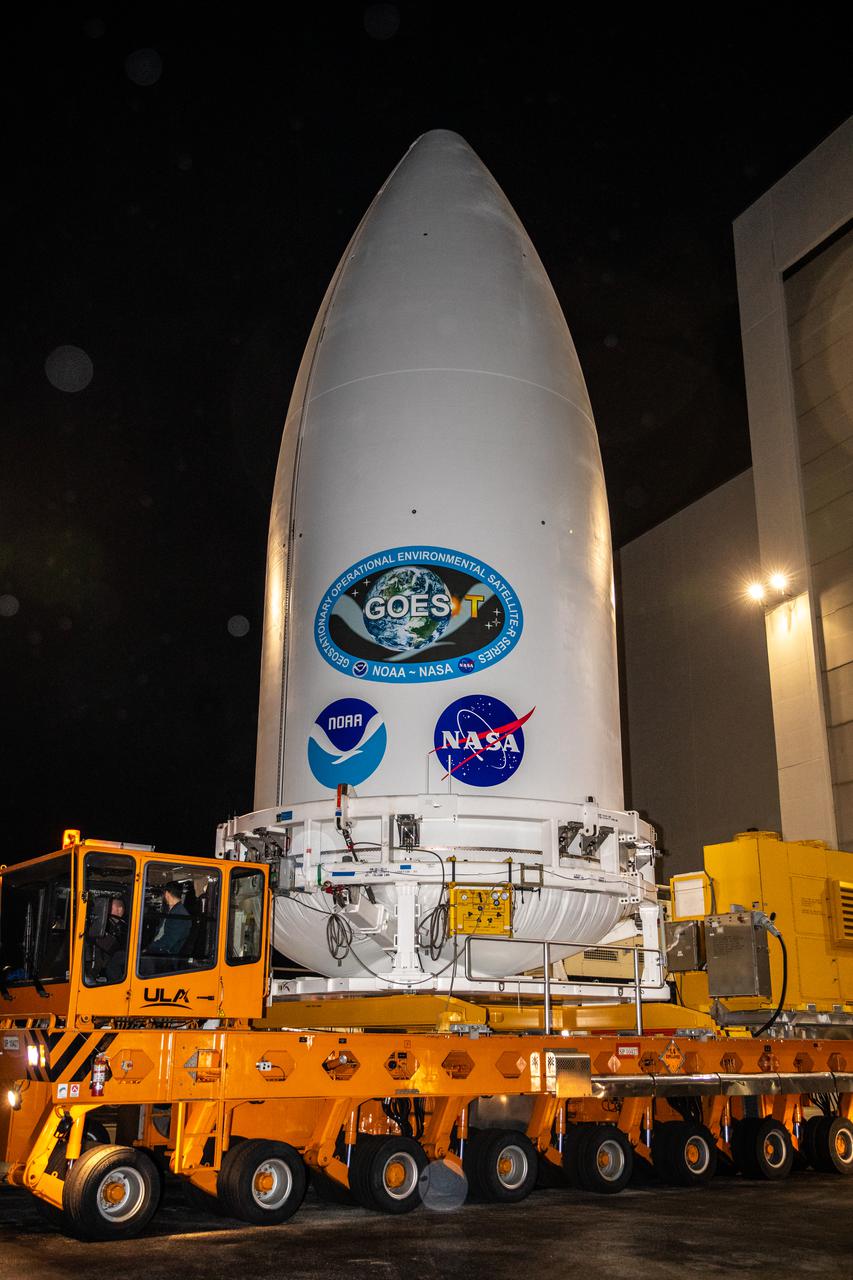
The National Oceanic and Atmospheric Administration’s (NOAA) Geostationary Operational Environmental Satellite-T (GOES-T), enclosed in its payload fairing, exits the Astrotech Space Operations facility in Titusville, Florida, for its trip to the Vertical Integration Facility at Space Launch Complex 41 at Cape Canaveral Space Force Station in Florida on Feb. 17, 2022. The satellite will be lifted up inside the integration facility and secured to the United Launch Alliance Atlas V 541 rocket. GOES-T is scheduled to launch atop the Atlas V rocket from SLC-41 on March 1, 2022, at 4:38 p.m. GOES-T is the third satellite in the GOES-R series that will continue to help meteorologists observe and predict local weather events that affect public safety. The launch is being managed by NASA’s Launch Services Program based at Kennedy Space Center in Florida, America’s multi-user spaceport.
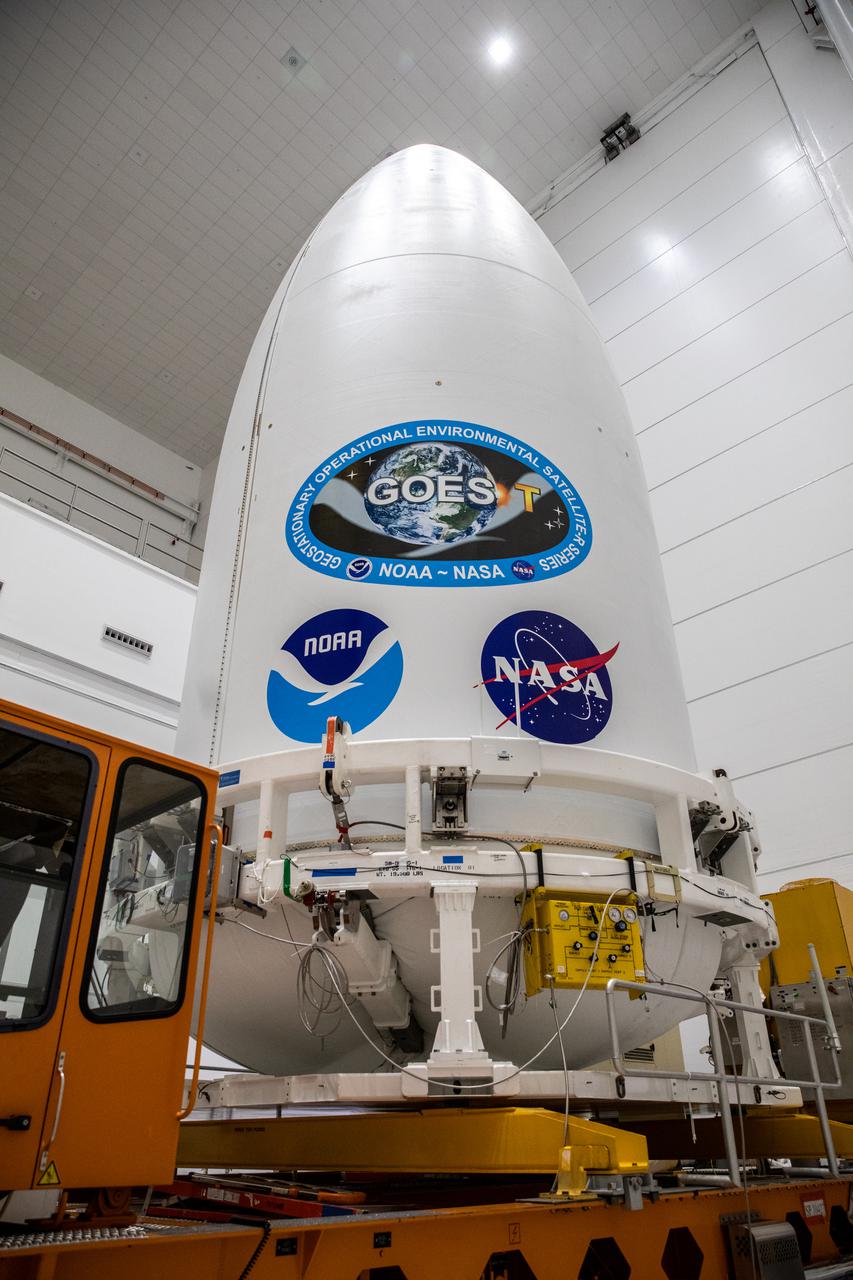
The National Oceanic and Atmospheric Administration’s (NOAA) Geostationary Operational Environmental Satellite-T (GOES-T), enclosed in its payload fairing, is prepared for its move from the Astrotech Space Operations facility in Titusville, Florida, to the Vertical Integration Facility at Space Launch Complex 41 at Cape Canaveral Space Force Station in Florida on Feb. 17, 2022. The satellite will be lifted up inside the integration facility and secured to the United Launch Alliance Atlas V 541 rocket. GOES-T is scheduled to launch atop the Atlas V rocket from SLC-41 on March 1, 2022, at 4:38 p.m. GOES-T is the third satellite in the GOES-R series that will continue to help meteorologists observe and predict local weather events that affect public safety. The launch is being managed by NASA’s Launch Services Program based at Kennedy Space Center in Florida, America’s multi-user spaceport.