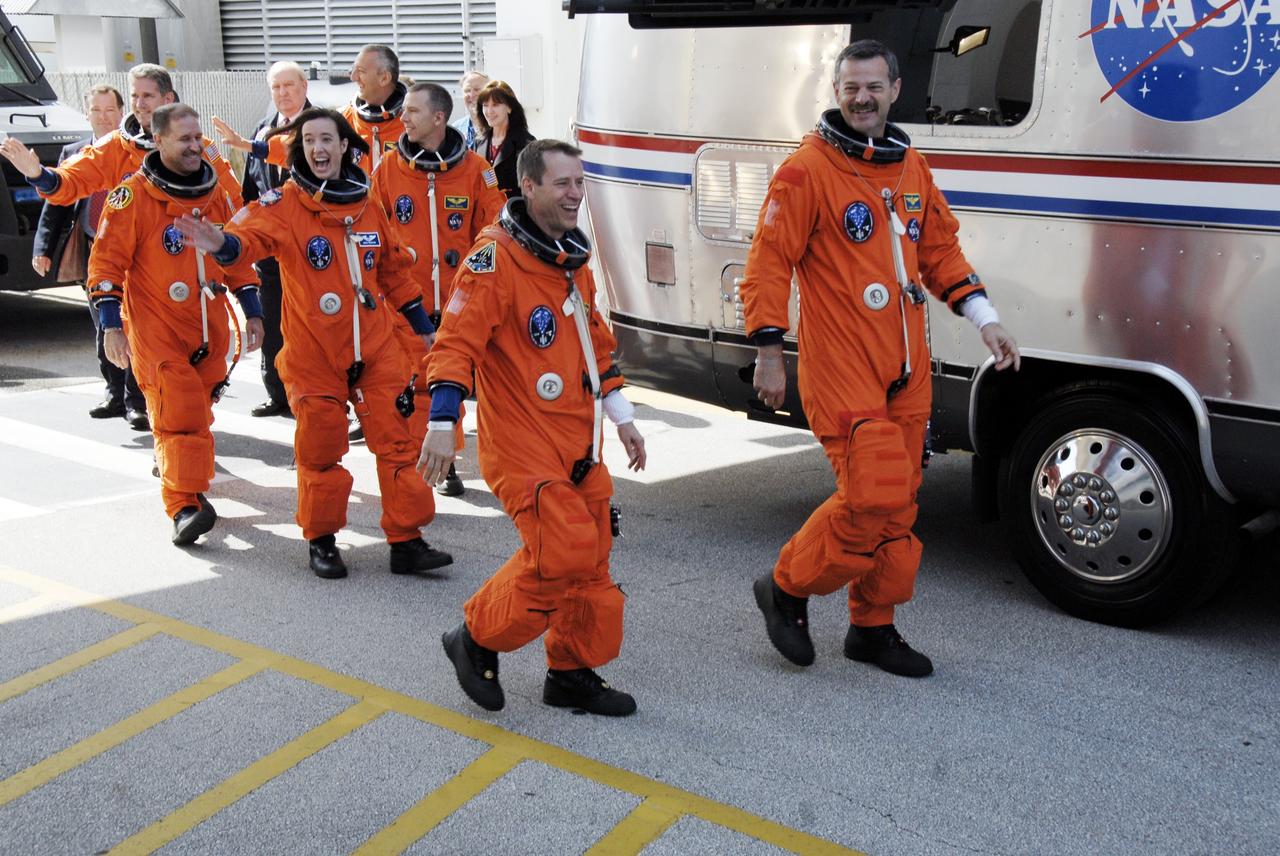
CAPE CANAVERAL, Fla. – STS-125 crew members head for the Astrovan outside the Operations and Checkout Building at NASA's Kennedy Space Center in Florida. The Astrovan will take them to Launch Pad 39A for liftoff of space shuttle Atlantis on the STS-125 mission to service NASA's Hubble Space Telescope. From left are Mission Specialists Michael Good, John Grunsfeld, Megan McArthur, Mike Massimino and Andrew Feustel, Pilot Gregory C. Johnson and Commander Scott Altman. Atlantis' 11-day flight will include five spacewalks to refurbish and upgrade the telescope with state-of-the-art science instruments that will expand Hubble's capabilities and extend its operational lifespan through at least 2014. The payload includes a Wide Field Camera 3, fine guidance sensor and the Cosmic Origins Spectrograph. Launch of Atlantis is scheduled for 2:01 p.m. May 11 EDT. Photo credit: NASA/Kim Shiflett
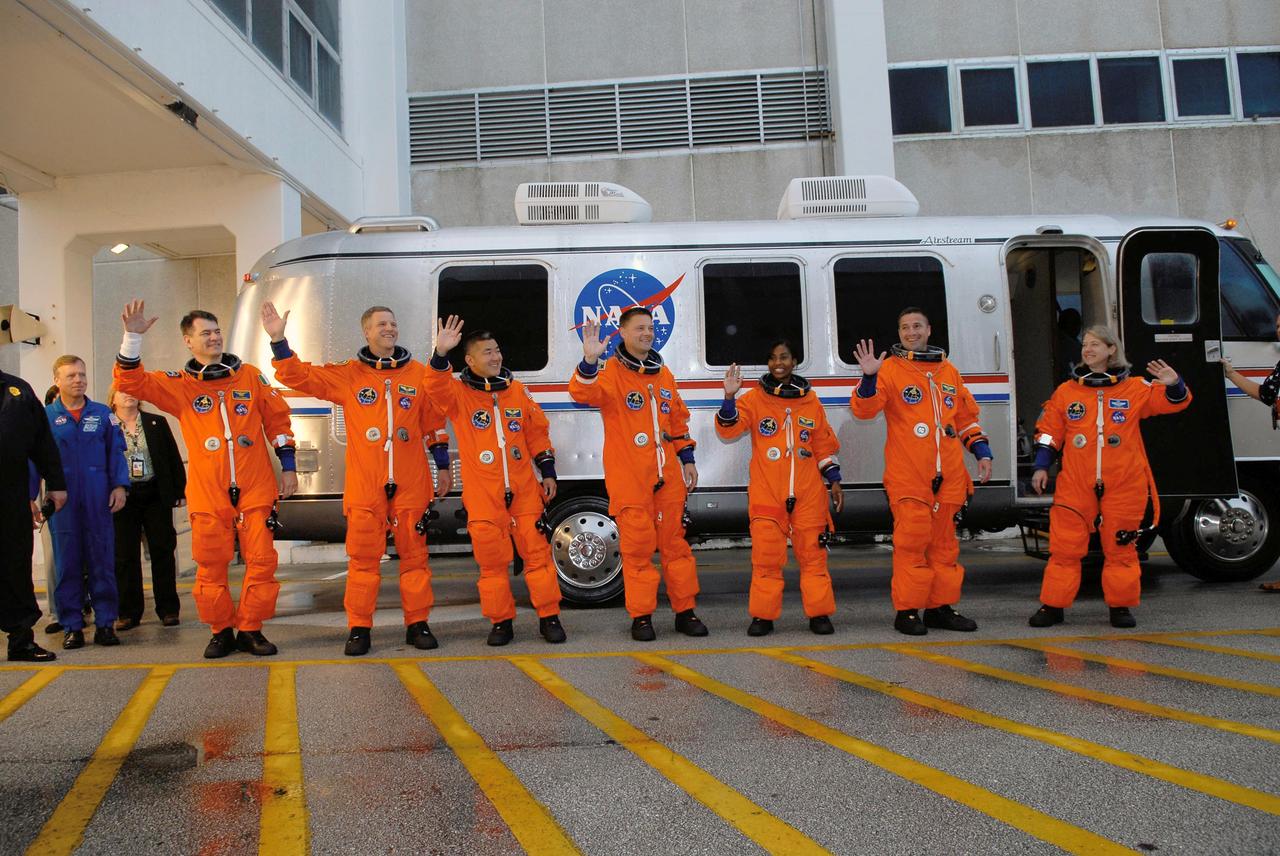
STS120-S-007 (23 Oct. 2007) --- After suiting up, the STS-120 crewmembers take a moment to wave to spectators prior to boarding the Astrovan, which will take them to launch pad 39A at Kennedy Space Center. From the right are astronauts Pam Melroy, commander; George Zamka, pilot; Stephanie Wilson, Doug Wheelock, Daniel Tani, Scott Parazynski and European Space Agency's (ESA) Paolo Nespoli, all mission specialists. Discovery will link up with the International Space Station on Thursday, Oct. 25, to begin a joint mission to continue construction by delivering the Italian-built U.S. Node 2, called Harmony. During the 14-day mission, the crew will install Harmony and move the P6 solar arrays to their permanent position and deploy them.
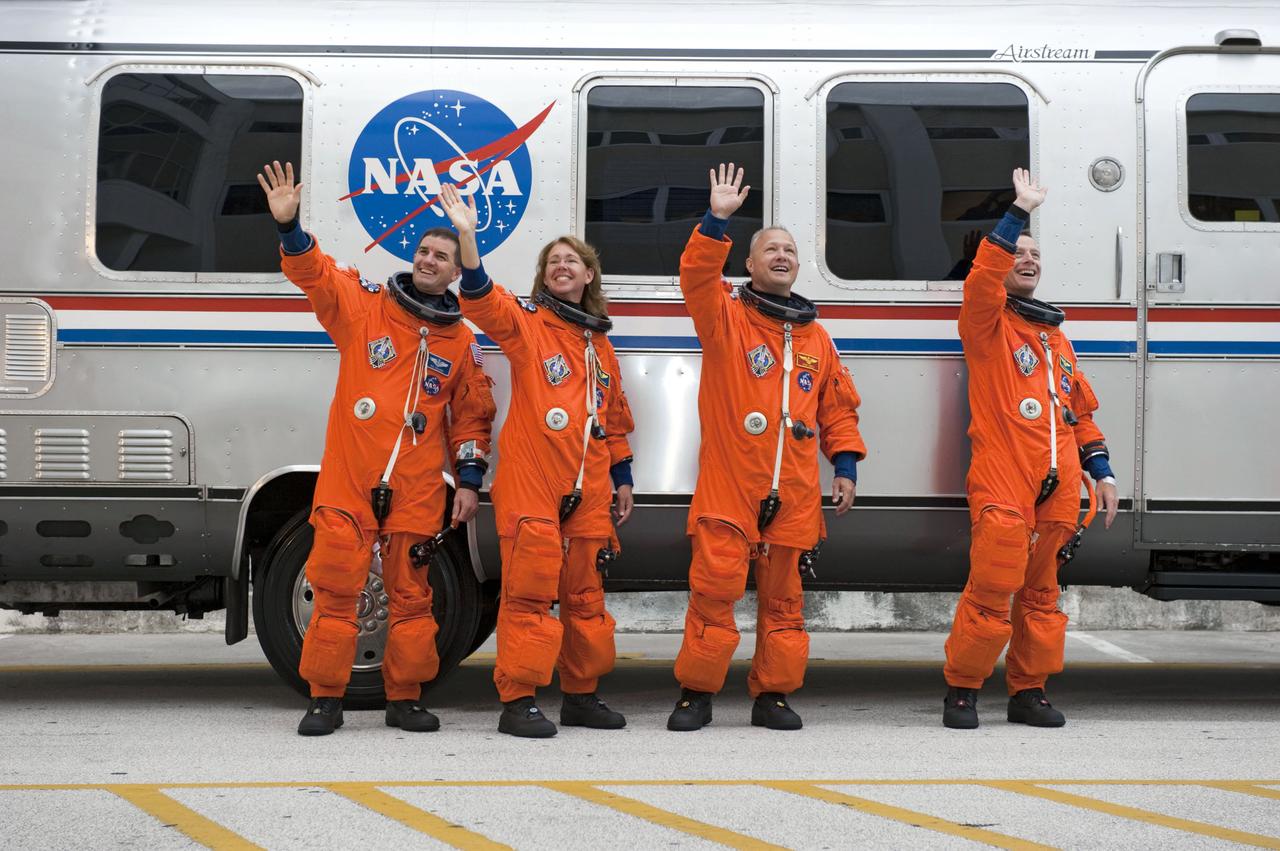
STS135-S-025 (8 July 2011) --- After suiting up, the STS-135 crew members pause alongside the Astrovan to wave farewell to onlookers before heading for launch pad 39A for the launch of space shuttle Atlantis on the STS-135 mission. From the right are NASA astronauts Chris Ferguson, commander; Doug Hurley, pilot; Sandy Magnus and Rex Walheim, both mission specialists. Atlantis is scheduled to lift off at 11:26 a.m. (EDT) on July 8 for its mission to the International Space Station. STS-135 will deliver the Raffaello multi-purpose logistics module packed with supplies and spare parts for the orbiting outpost. Atlantis also will fly the Robotic Refueling Mission experiment that will investigate the potential for robotically refueling existing satellites in orbit. In addition, Atlantis will return with a failed ammonia pump module to help NASA better understand the failure mechanism and improve pump designs for future systems. STS-135 will be the 33rd flight of Atlantis, the 37th shuttle mission to the space station, and the 135th and final mission of NASA's Space Shuttle Program. Photo credit: NASA
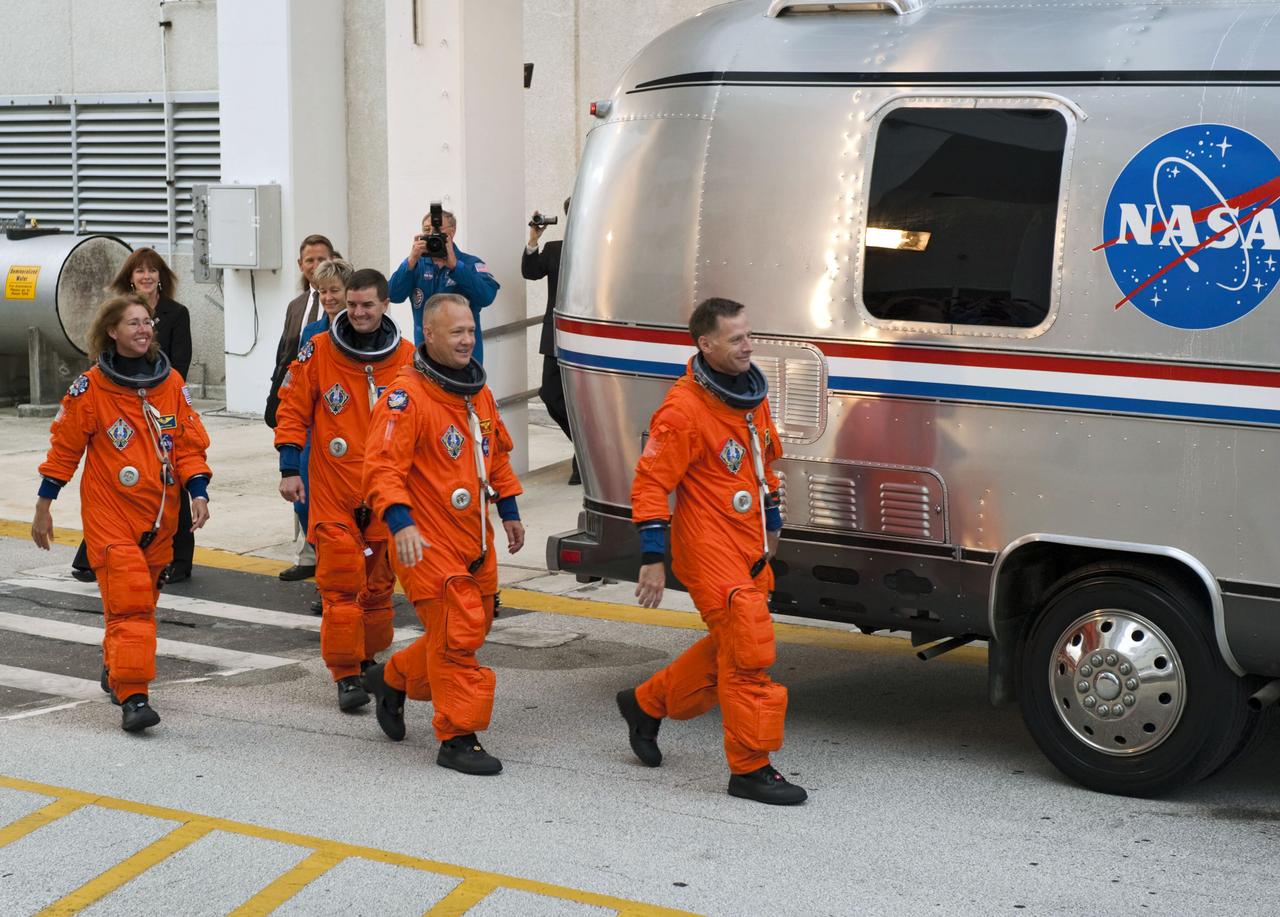
STS135-S-024 (8 July 2011) --- After suiting up, the STS-135 crew members exit the Operations and Checkout Building to board the Astrovan, which will take them to launch pad 39A for the launch of space shuttle Atlantis on the STS-135 mission. From the right are NASA astronauts Chris Ferguson, commander; Doug Hurley, pilot; Rex Walheim and Sandy Magnus, both mission specialists. Atlantis is scheduled to lift off at 11:26 a.m. (EDT) on July 8 for its mission to the International Space Station. STS-135 will deliver the Raffaello multi-purpose logistics module packed with supplies and spare parts for the orbiting outpost. Atlantis also will fly the Robotic Refueling Mission experiment that will investigate the potential for robotically refueling existing satellites in orbit. In addition, Atlantis will return with a failed ammonia pump module to help NASA better understand the failure mechanism and improve pump designs for future systems. STS-135 will be the 33rd flight of Atlantis, the 37th shuttle mission to the space station, and the 135th and final mission of NASA's Space Shuttle Program. Photo credit: NASA
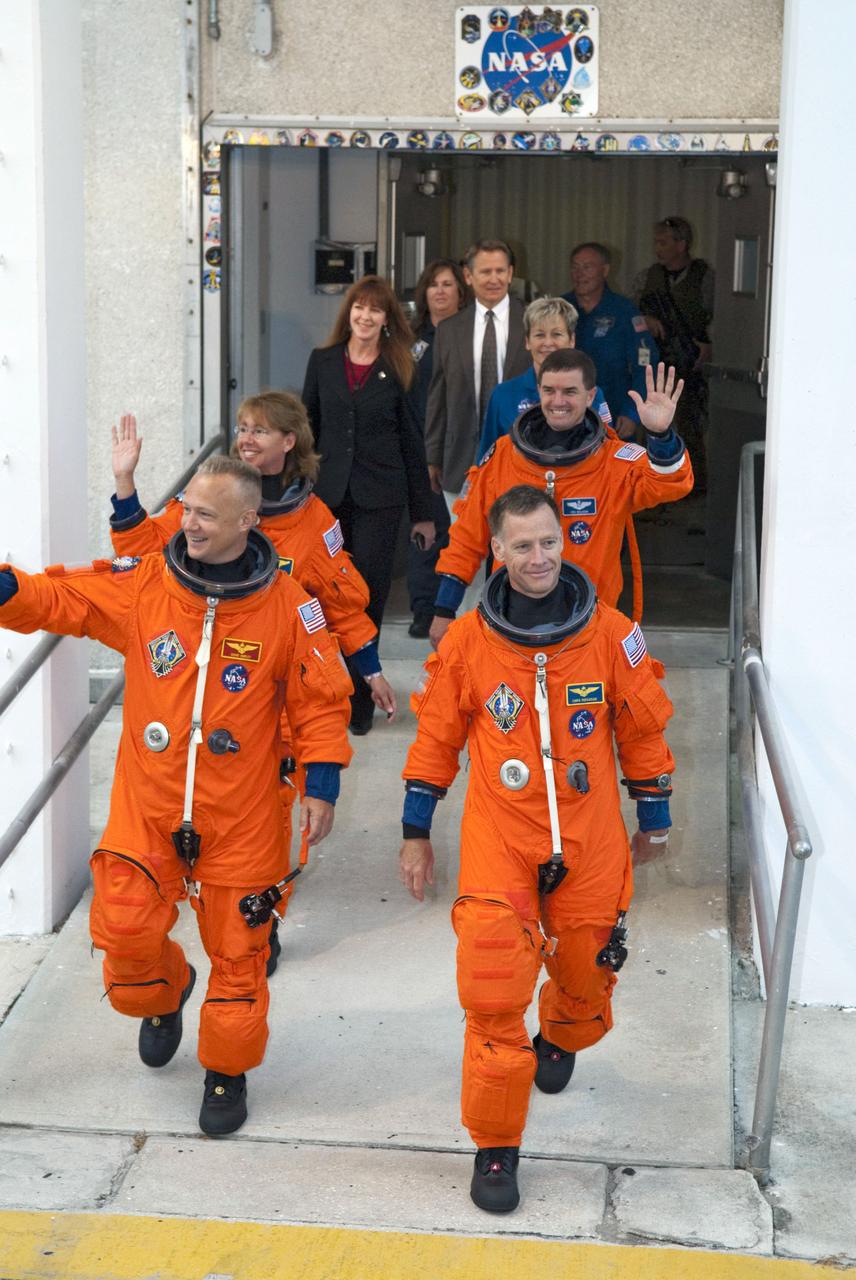
STS135-S-023 (8 July 2011) --- After suiting up, the STS-135 crew members exit the Operations and Checkout Building to board the Astrovan, which will take them to launch pad 39A for the launch of space shuttle Atlantis on the STS-135 mission. On the right (front to back) are NASA astronauts Chris Ferguson, commander; and Rex Walheim, mission specialist. On the left (front to back) are NASA astronauts Doug Hurley, pilot; and Sandy Magnus, mission specialist. Atlantis is scheduled to lift off at 11:26 a.m. (EDT) on July 8 for its mission to the International Space Station. STS-135 will deliver the Raffaello multi-purpose logistics module packed with supplies and spare parts for the orbiting outpost. Atlantis also will fly the Robotic Refueling Mission experiment that will investigate the potential for robotically refueling existing satellites in orbit. In addition, Atlantis will return with a failed ammonia pump module to help NASA better understand the failure mechanism and improve pump designs for future systems. STS-135 will be the 33rd flight of Atlantis, the 37th shuttle mission to the space station, and the 135th and final mission of NASA's Space Shuttle Program. Photo credit: NASA
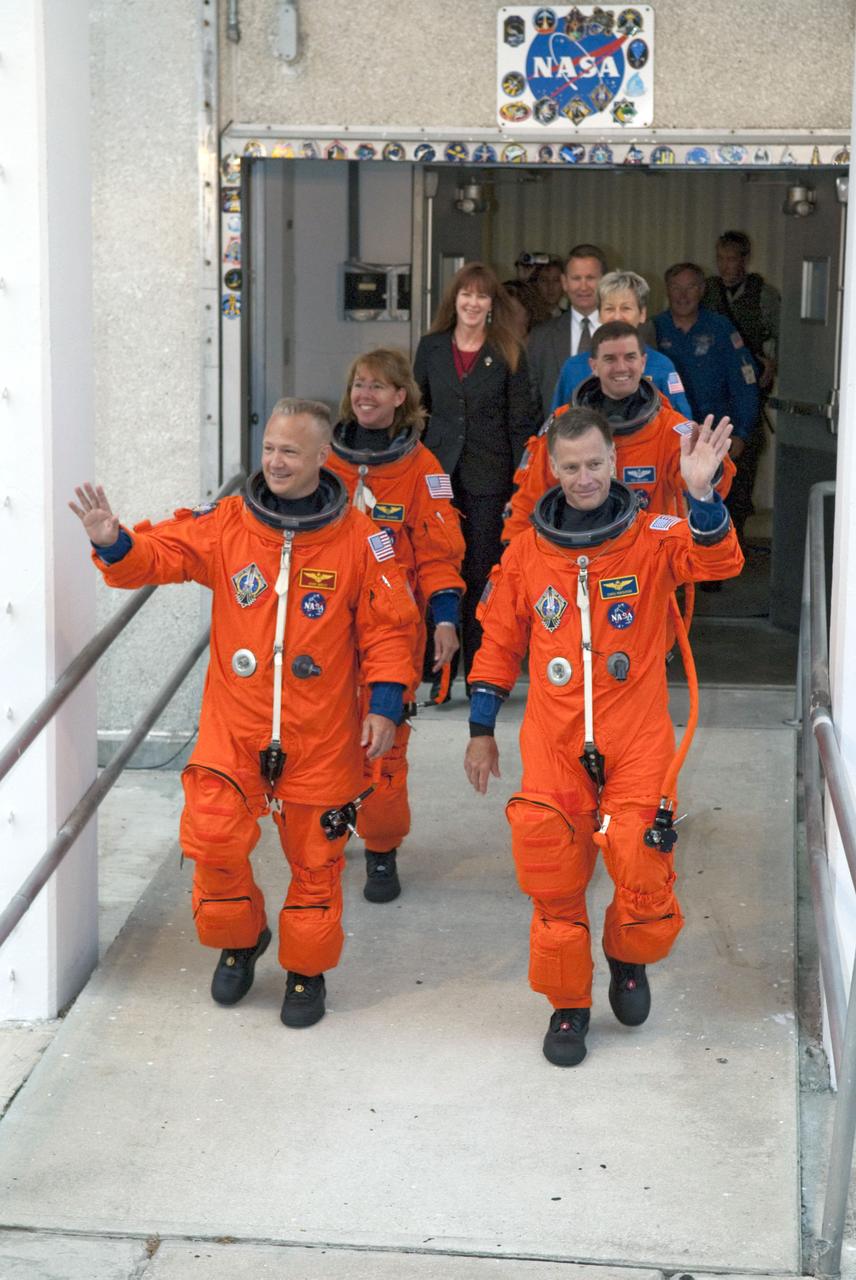
STS135-S-022 (8 July 2011) --- After suiting up, the STS-135 crew members exit the Operations and Checkout Building to board the Astrovan, which will take them to launch pad 39A for the launch of space shuttle Atlantis on the STS-135 mission. On the right (front to back) are NASA astronauts Chris Ferguson, commander; and Rex Walheim, mission specialist. On the left (front to back) are NASA astronauts Doug Hurley, pilot; and Sandy Magnus, mission specialist. Atlantis is scheduled to lift off at 11:26 a.m. (EDT) on July 8 for its mission to the International Space Station. STS-135 will deliver the Raffaello multi-purpose logistics module packed with supplies and spare parts for the orbiting outpost. Atlantis also will fly the Robotic Refueling Mission experiment that will investigate the potential for robotically refueling existing satellites in orbit. In addition, Atlantis will return with a failed ammonia pump module to help NASA better understand the failure mechanism and improve pump designs for future systems. STS-135 will be the 33rd flight of Atlantis, the 37th shuttle mission to the space station, and the 135th and final mission of NASA's Space Shuttle Program. Photo credit: NASA
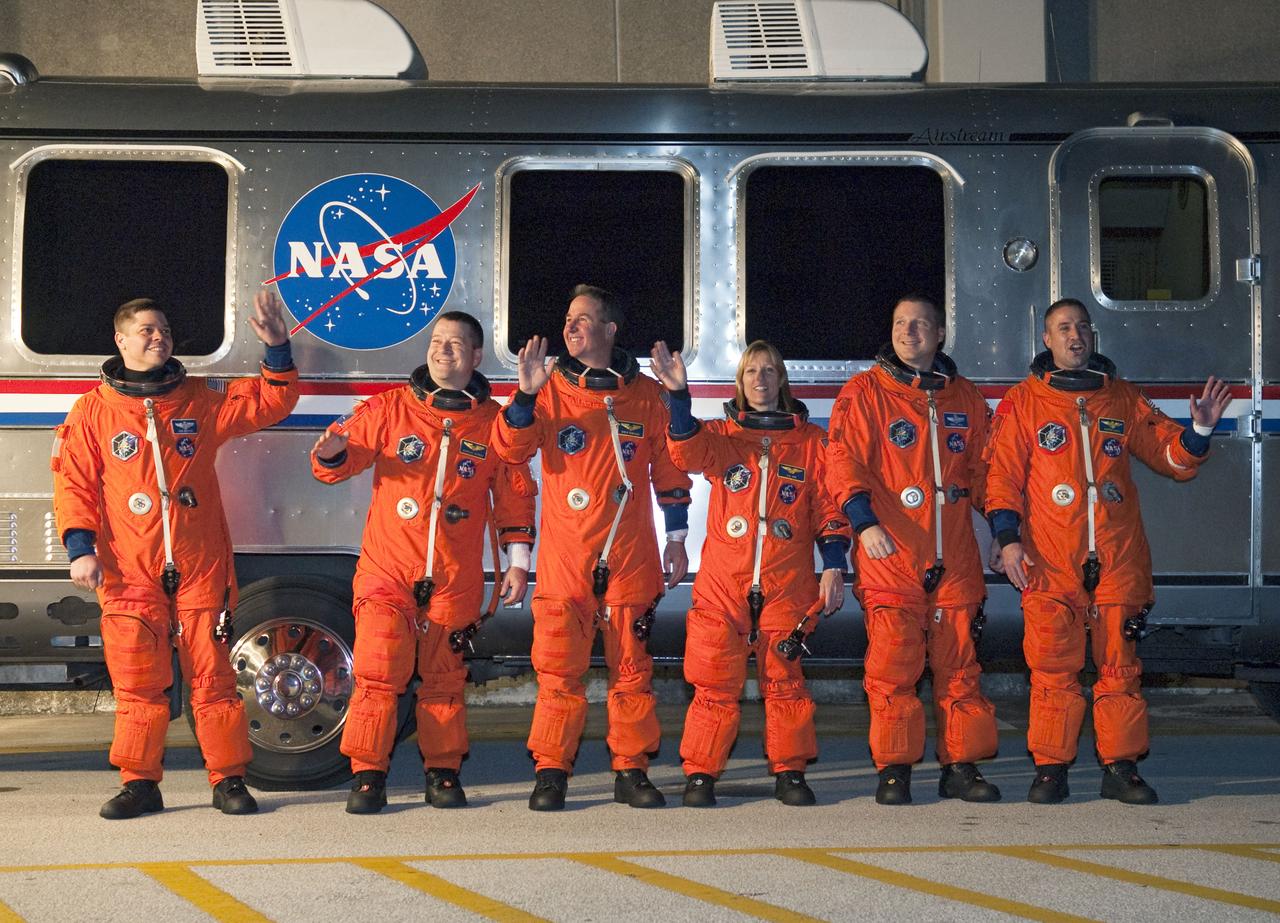
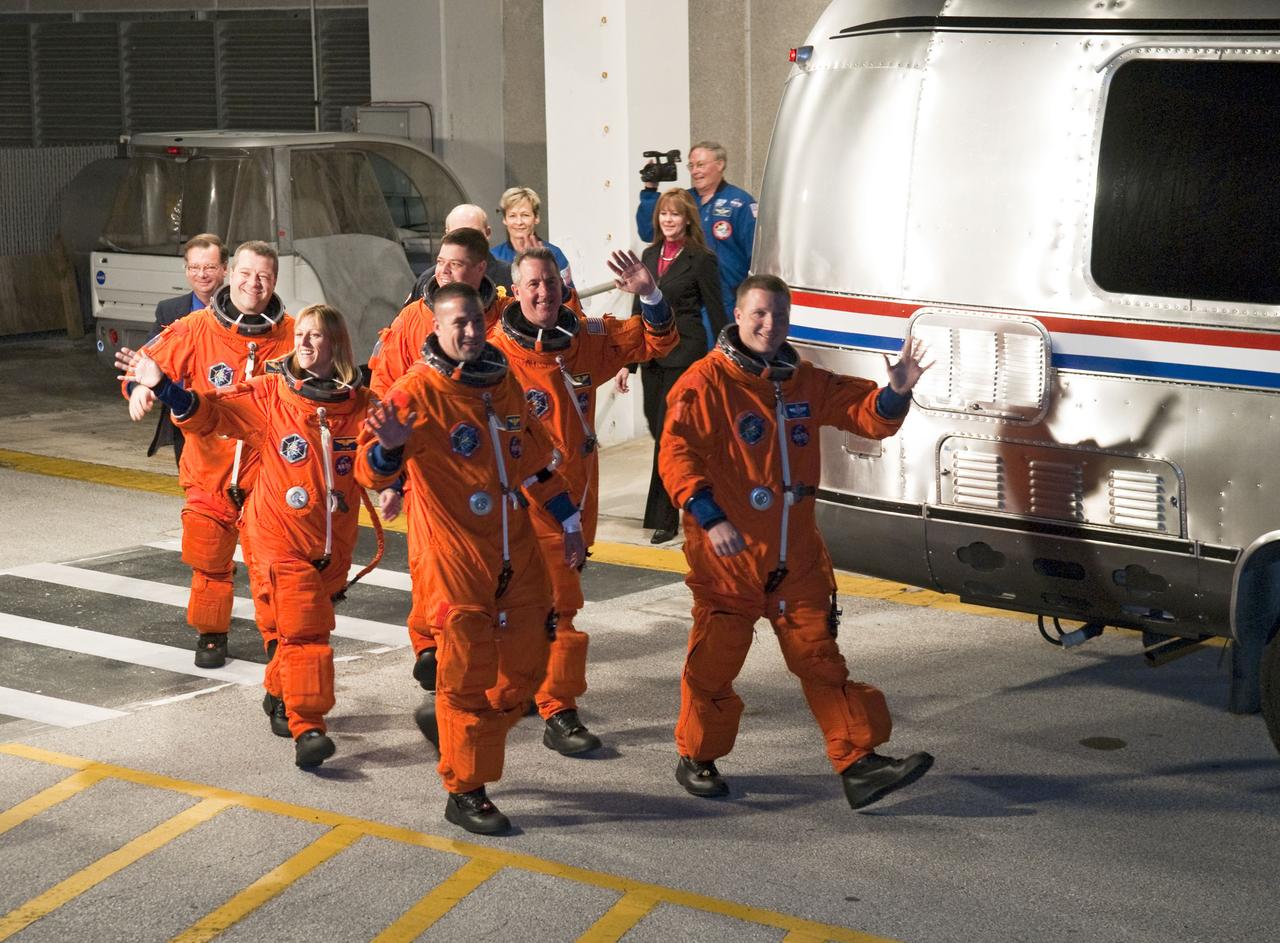
STS130-S-016 (8 Feb. 2010) --- After suiting up, the STS-130 crew members pause alongside the Astrovan to wave farewell to onlookers before heading for launch pad 39A for the launch of space shuttle Endeavour on the STS-130 mission. From the right are NASA astronauts George Zamka, commander; Terry Virts, pilot; Kathryn Hire, Stephen Robinson, Nicholas Patrick and Robert Behnken, all mission specialists. This is the second launch attempt for Endeavour's STS-130 crew. The first attempt on Feb. 7 was scrubbed due to unfavorable weather. The primary payload for the STS-130 mission to the International Space Station is the Tranquility node, a pressurized module that will provide additional room for crew members and many of the station's life support and environmental control systems. Attached to one end of Tranquility is the Cupola module, a unique work area with six windows on its sides and one on top. The Cupola resembles a circular bay window and will provide a vastly improved view of the station's exterior. The multi-directional view will allow the crew to monitor spacewalks and docking operations, as well as provide a spectacular view of Earth and other celestial objects. The module was built in Turin, Italy, by Thales Alenia Space for the European Space Agency. Endeavour's launch is set for Feb. 8, 2010, at 4:14 a.m. (EST).
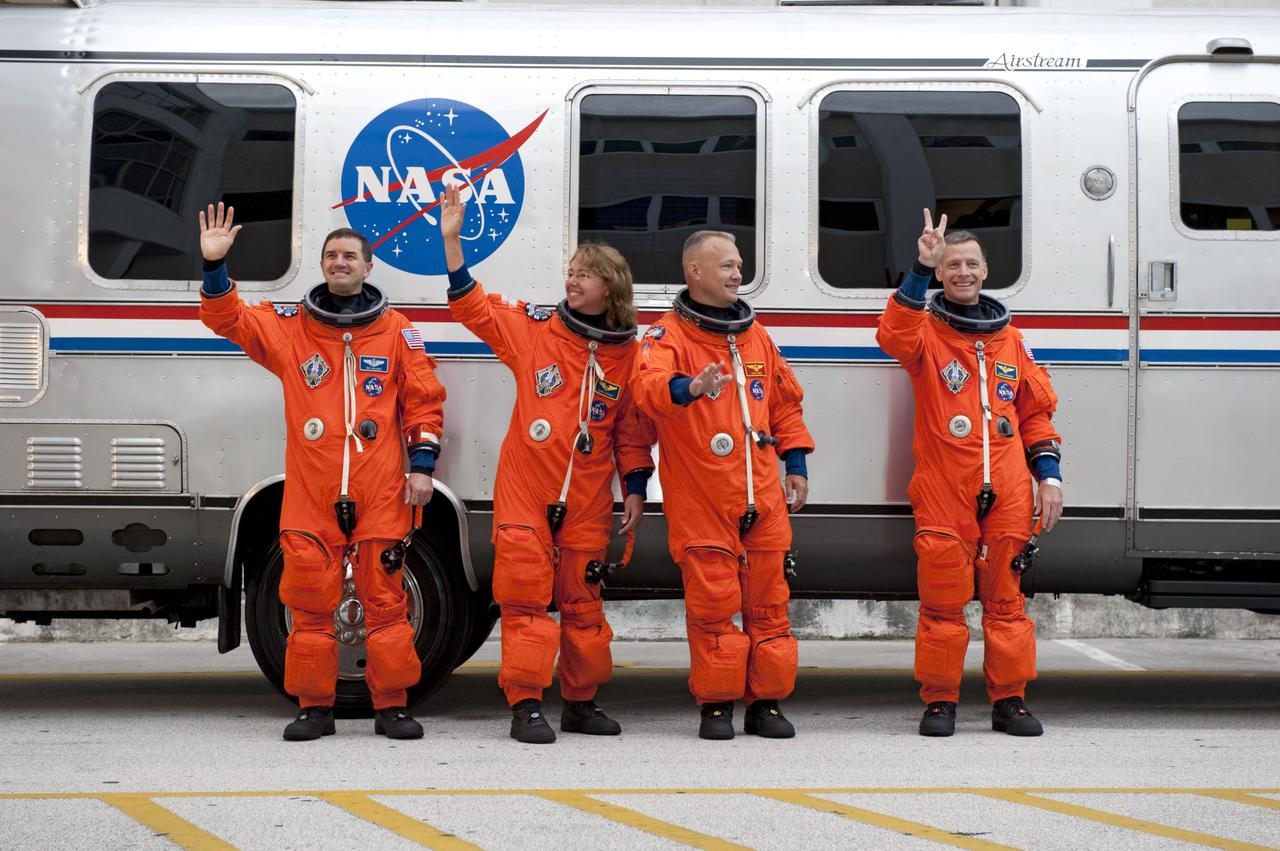
STS135-S-026 (8 July 2011) --- After suiting up, the STS-135 crew members pause alongside the Astrovan to wave farewell to onlookers before heading for launch pad 39A for the launch of space shuttle Atlantis on the STS-135 mission. From the right are NASA astronauts Chris Ferguson, commander; Doug Hurley, pilot; Sandy Magnus and Rex Walheim, both mission specialists. Atlantis is scheduled to lift off at 11:26 a.m. (EDT) on July 8 for its mission to the International Space Station. STS-135 will deliver the Raffaello multi-purpose logistics module packed with supplies and spare parts for the orbiting outpost. Atlantis also will fly the Robotic Refueling Mission experiment that will investigate the potential for robotically refueling existing satellites in orbit. In addition, Atlantis will return with a failed ammonia pump module to help NASA better understand the failure mechanism and improve pump designs for future systems. STS-135 will be the 33rd flight of Atlantis, the 37th shuttle mission to the space station, and the 135th and final mission of NASA's Space Shuttle Program. Photo credit: NASA
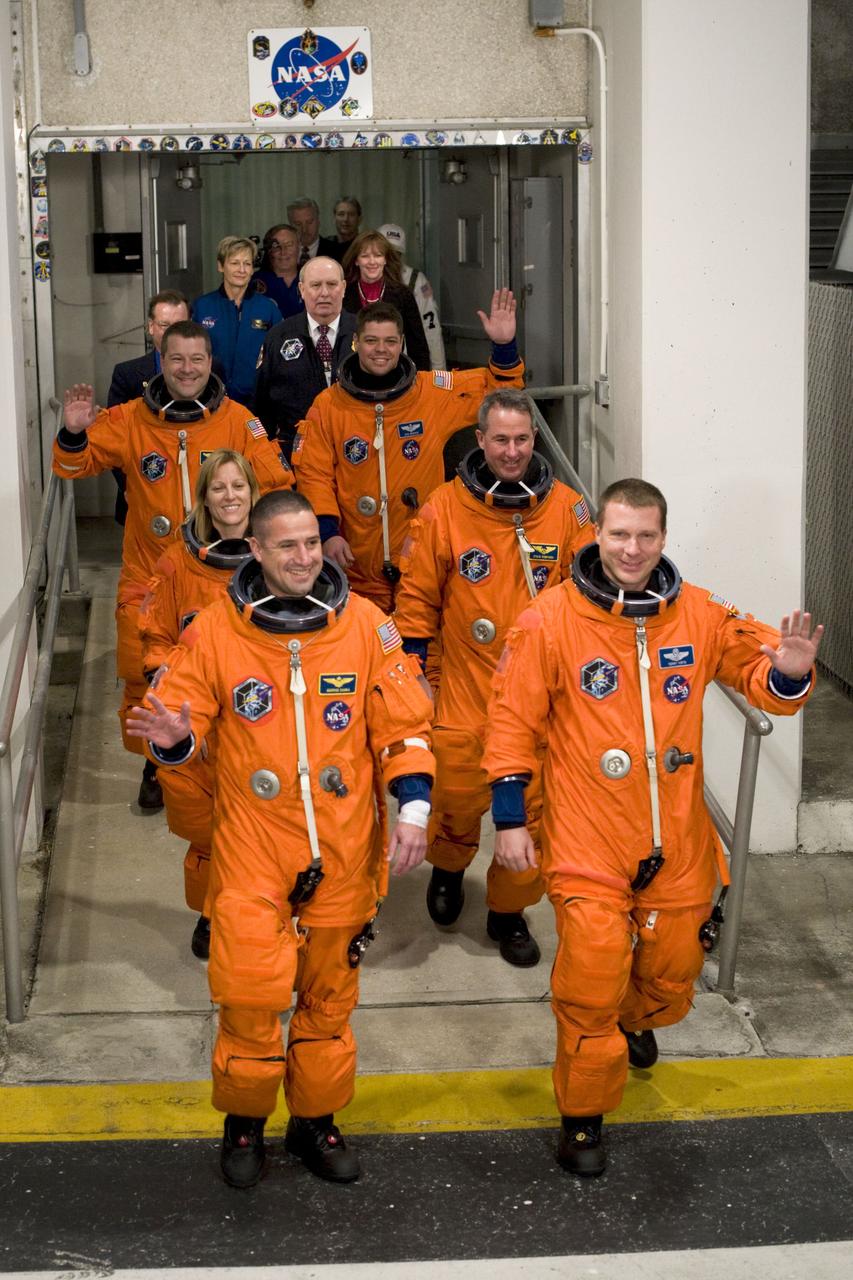
STS130-S-015 (8 Feb. 2010) --- After suiting up, the STS-130 crew members exit the Operations and Checkout Building to board the Astrovan, which will take them to launch pad 39A for the launch of space shuttle Endeavour on the STS-130 mission. On the left (front to back) are NASA astronauts George Zamka, commander; Kathryn Hire and Nicholas Patrick, both mission specialists. On the right (front to back) are NASA astronauts Terry Virts, pilot; Stephen Robinson and Robert Behnken, both mission specialists. This is the second launch attempt for Endeavour's STS-130 crew. The first attempt on Feb. 7 was scrubbed due to unfavorable weather. The primary payload for the STS-130 mission to the International Space Station is the Tranquility node, a pressurized module that will provide additional room for crew members and many of the station's life support and environmental control systems. Attached to one end of Tranquility is the Cupola module, a unique work area with six windows on its sides and one on top. The Cupola resembles a circular bay window and will provide a vastly improved view of the station's exterior. The multi-directional view will allow the crew to monitor spacewalks and docking operations, as well as provide a spectacular view of Earth and other celestial objects. The module was built in Turin, Italy, by Thales Alenia Space for the European Space Agency. Endeavour's launch is set for Feb. 8, 2010, at 4:14 a.m. (EST).
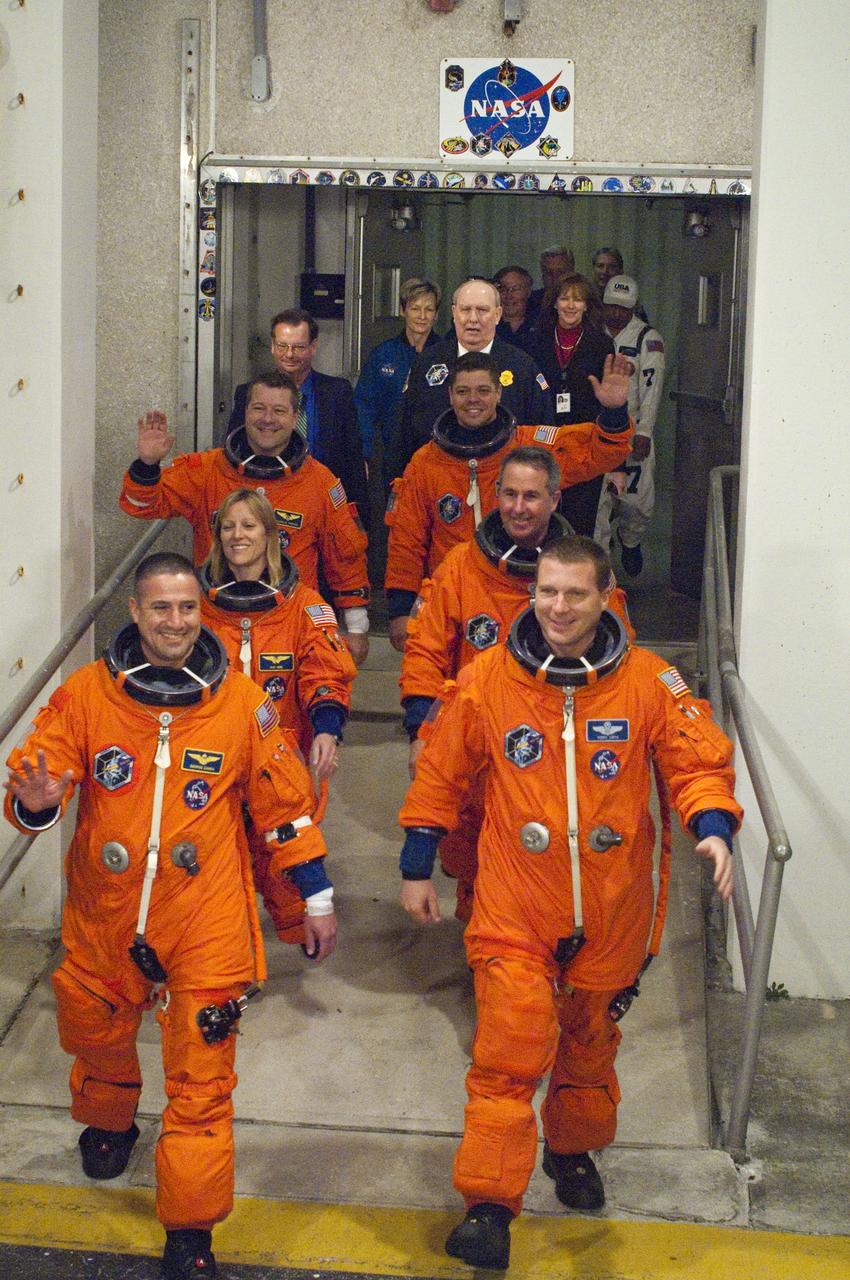
STS130-S-014 (8 Feb. 2010) --- After suiting up, the STS-130 crew members exit the Operations and Checkout Building to board the Astrovan, which will take them to launch pad 39A for the launch of space shuttle Endeavour on the STS-130 mission. On the left (front to back) are NASA astronauts George Zamka, commander; Kathryn Hire and Nicholas Patrick, both mission specialists. On the right (front to back) are NASA astronauts Terry Virts, pilot; Stephen Robinson and Robert Behnken, both mission specialists. This is the second launch attempt for Endeavour's STS-130 crew. The first attempt on Feb. 7 was scrubbed due to unfavorable weather. The primary payload for the STS-130 mission to the International Space Station is the Tranquility node, a pressurized module that will provide additional room for crew members and many of the station's life support and environmental control systems. Attached to one end of Tranquility is the Cupola module, a unique work area with six windows on its sides and one on top. The Cupola resembles a circular bay window and will provide a vastly improved view of the station's exterior. The multi-directional view will allow the crew to monitor spacewalks and docking operations, as well as provide a spectacular view of Earth and other celestial objects. The module was built in Turin, Italy, by Thales Alenia Space for the European Space Agency. Endeavour's launch is set for Feb. 8, 2010, at 4:14 a.m. (EST).
STS130-S-013 (8 Feb. 2010) --- After suiting up, the STS-130 crew members exit the Operations and Checkout Building to board the Astrovan, which will take them to launch pad 39A for the launch of space shuttle Endeavour on the STS-130 mission. On the left (front to back) are NASA astronauts George Zamka, commander; Kathryn Hire and Nicholas Patrick, both mission specialists. On the right (front to back) are NASA astronauts Terry Virts, pilot; Stephen Robinson and Robert Behnken, both mission specialists. This is the second launch attempt for Endeavour's STS-130 crew. The first attempt on Feb. 7 was scrubbed due to unfavorable weather. The primary payload for the STS-130 mission to the International Space Station is the Tranquility node, a pressurized module that will provide additional room for crew members and many of the station's life support and environmental control systems. Attached to one end of Tranquility is the Cupola module, a unique work area with six windows on its sides and one on top. The Cupola resembles a circular bay window and will provide a vastly improved view of the station's exterior. The multi-directional view will allow the crew to monitor spacewalks and docking operations, as well as provide a spectacular view of Earth and other celestial objects. The module was built in Turin, Italy, by Thales Alenia Space for the European Space Agency. Endeavour's launch is set for Feb. 8, 2010, at 4:14 a.m. (EST).
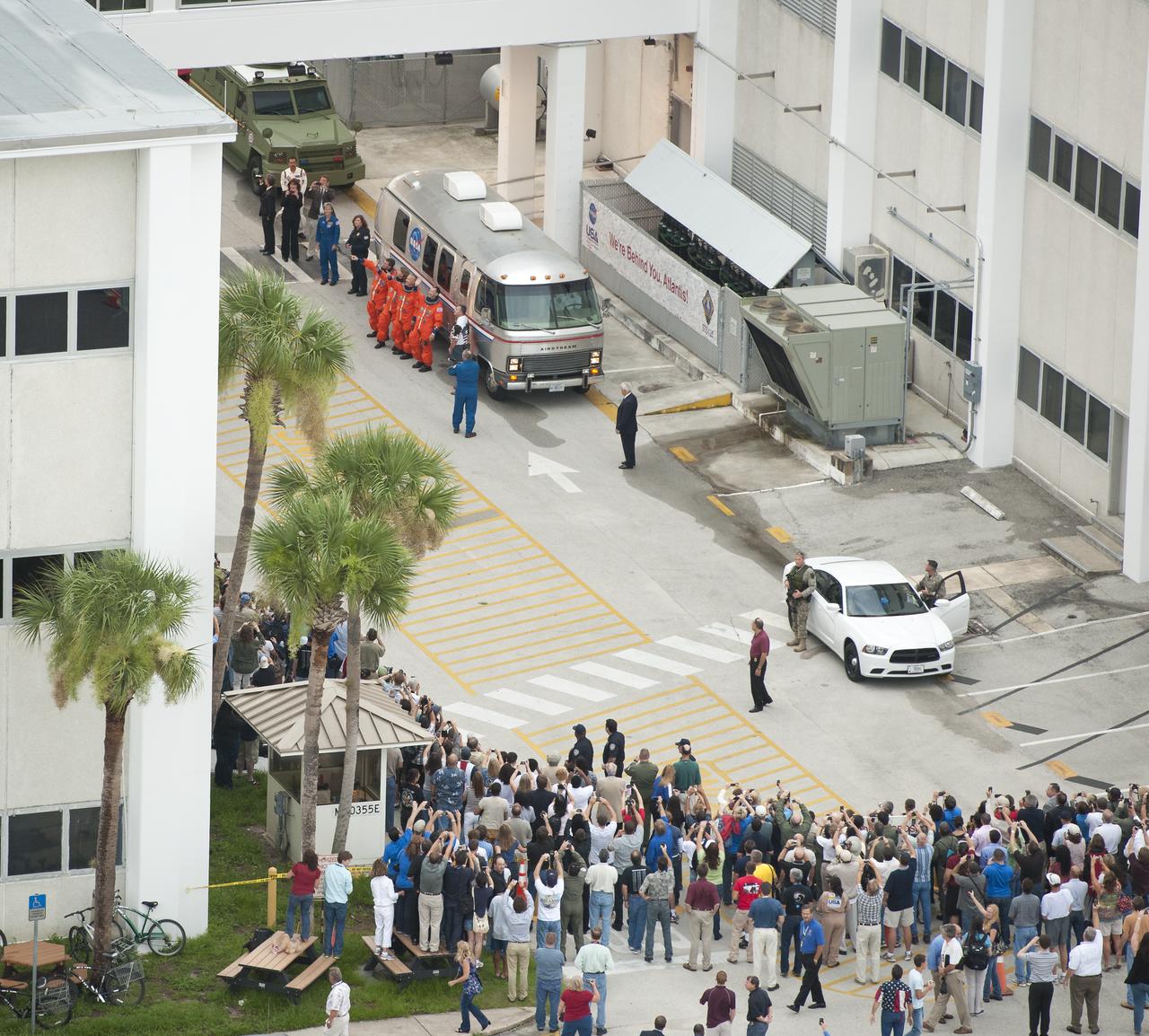
The STS-135 crew; Chris Ferguson, commander; Doug Hurley, pilot; Rex Walheim and Sandy Magnus, both mission specialists stop and pose for photographers before boarding the Astrovan that will take them to launch pad 39A for the launch of the space shuttle Atlantis on Friday, July 8, 2011 at the NASA Kennedy Space Center in Cape Canaveral, Fla. The launch of Atlantis, STS-135, is the final flight of the shuttle program, a 12-day mission to the International Space Station. Photo Credit: (NASA/Bill Ingalls)
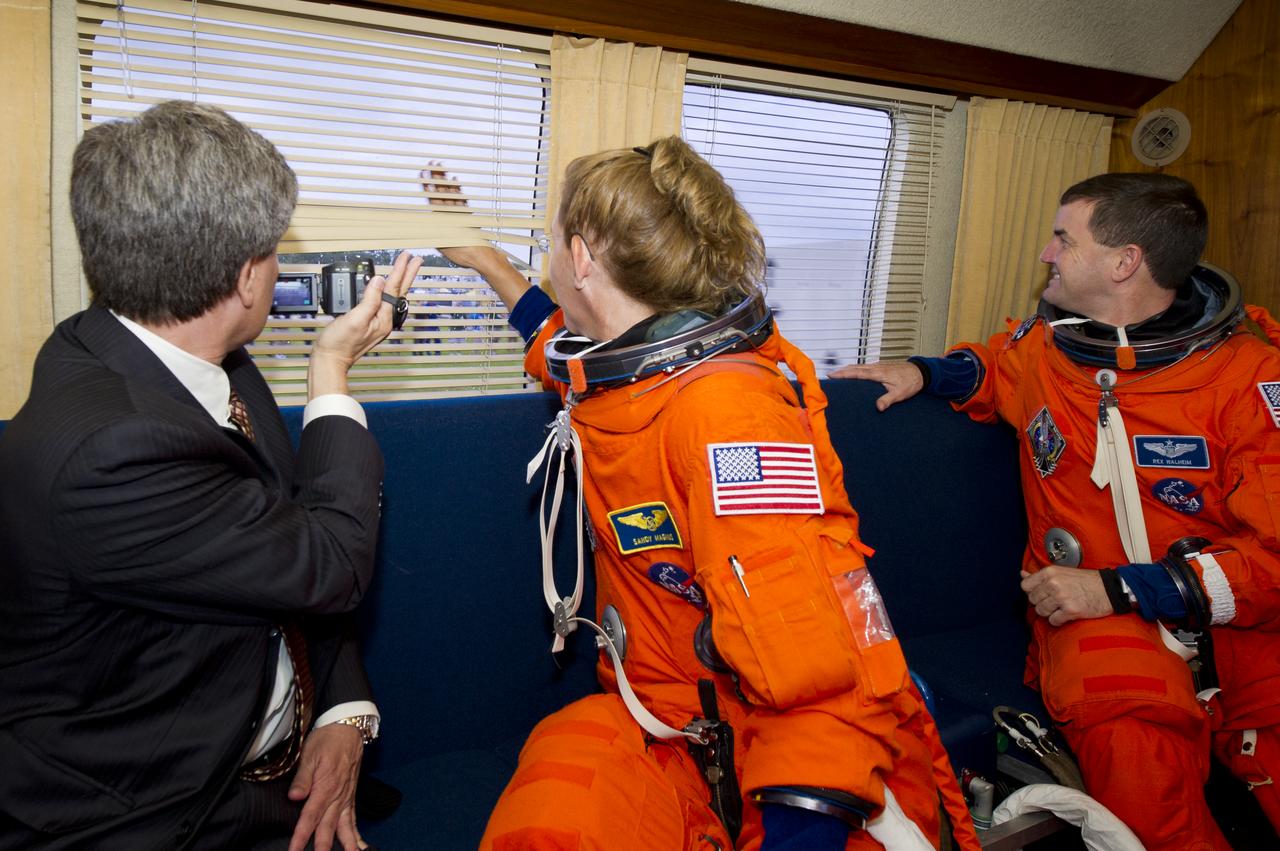
James Branson of United Space Alliance, far left; Sandra Magnus, STS-135 mission specialist and Rex Walheim, STS-135 mission specialist, far right, are seen in the Astrovan as they ride to launch pad 39A to board space shuttle Atlantis on Friday, July 8, 2011, at the Kennedy Space Center in Cape Canaveral, Fla. The launch of Atlantis, STS-135, is the final flight of the shuttle program, a 12-day mission to the International Space Station. Photo Credit: (NASA/Jerry Ross)

Crowds are seen out the front window of the Astrovan carrying the STS-135 crew as it departs the NASA Kennedy Space Center, Operations and Checkout Building for launch pad 39A, on Friday, July 8, 2011 in Cape Canaveral, Fla. The launch of Atlantis, STS-135, is the final flight of the shuttle program, a 12-day mission to the International Space Station. Photo Credit: (NASA/Jerry Ross)
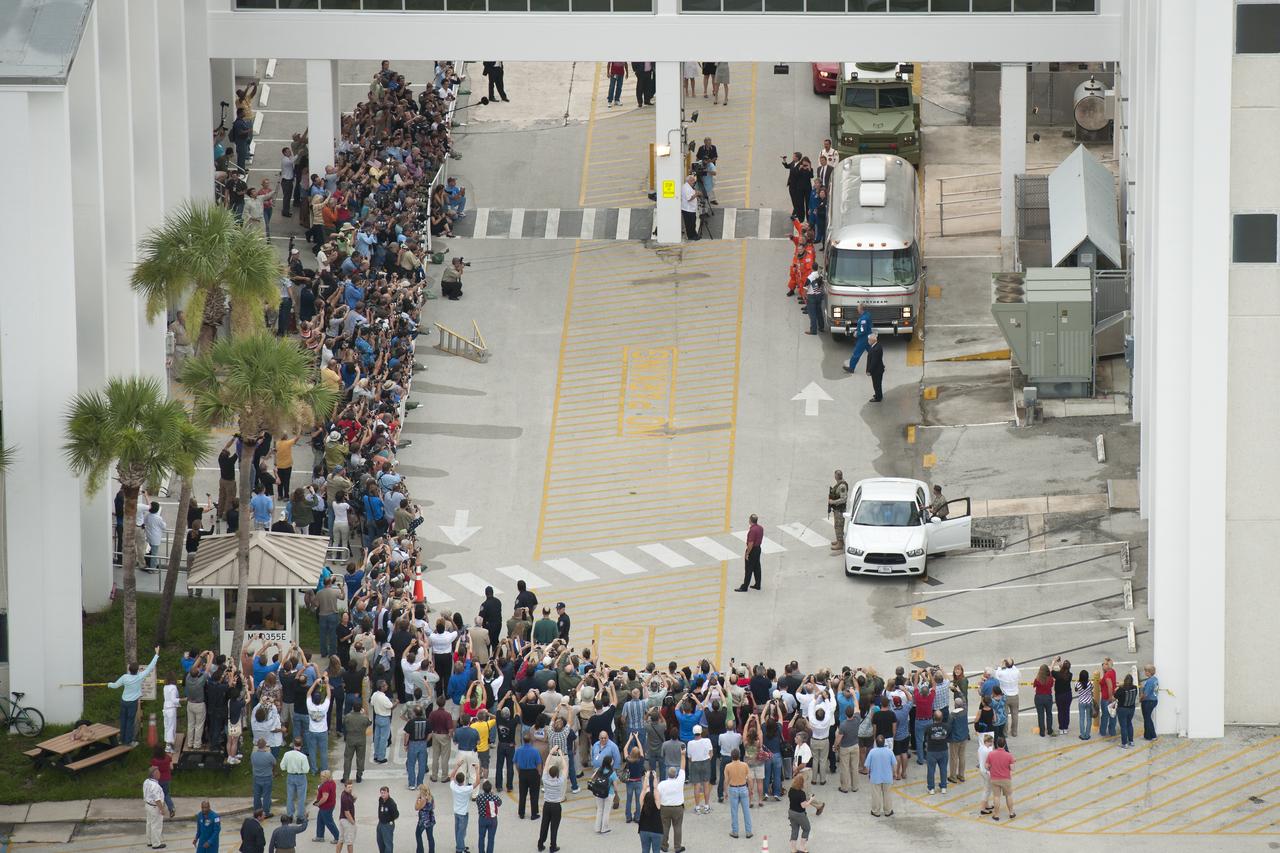
The STS-135 crew; Chris Ferguson, commander; Doug Hurley, pilot; Rex Walheim and Sandy Magnus, both mission specialists stop and pose for photographers before boarding the Astrovan that will take them to launch pad 39A for the launch of the space shuttle Atlantis on Friday, July 8, 2011 at the NASA Kennedy Space Center in Cape Canaveral, Fla. The launch of Atlantis, STS-135, is the final flight of the shuttle program, a 12-day mission to the International Space Station. Photo Credit: (NASA/Bill Ingalls)
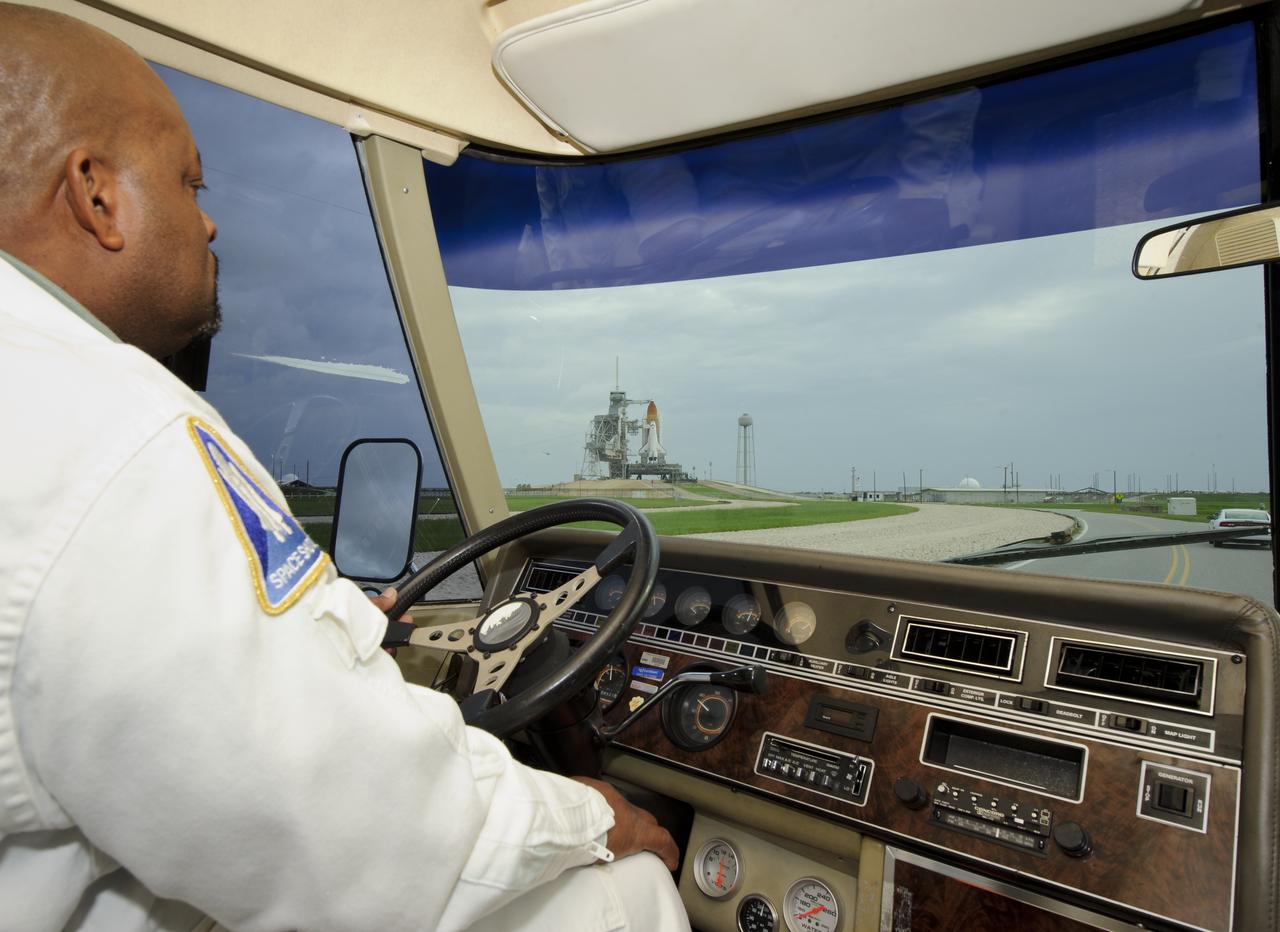
Hiawatha Brown, Heavy Equipment Operator for United Space Alliance (USA), approaches launch pad 39A at the NASA Kennedy Space Center as he drives the Astrovan carrying the STS-135 crew on Friday July 8, 2011 in Cape Canaveral, Fla. The Astrovan is a modified 1983 Airstream and has been in use to carry crews to the launch pads since 1984. A close look at the odometer shows it has a little more than 26,521 miles at the time of this photo. The launch of Atlantis, STS-135, is the final flight of the shuttle program, a 12-day mission to the International Space Station. Photo Credit: (NASA/Jerry Ross)
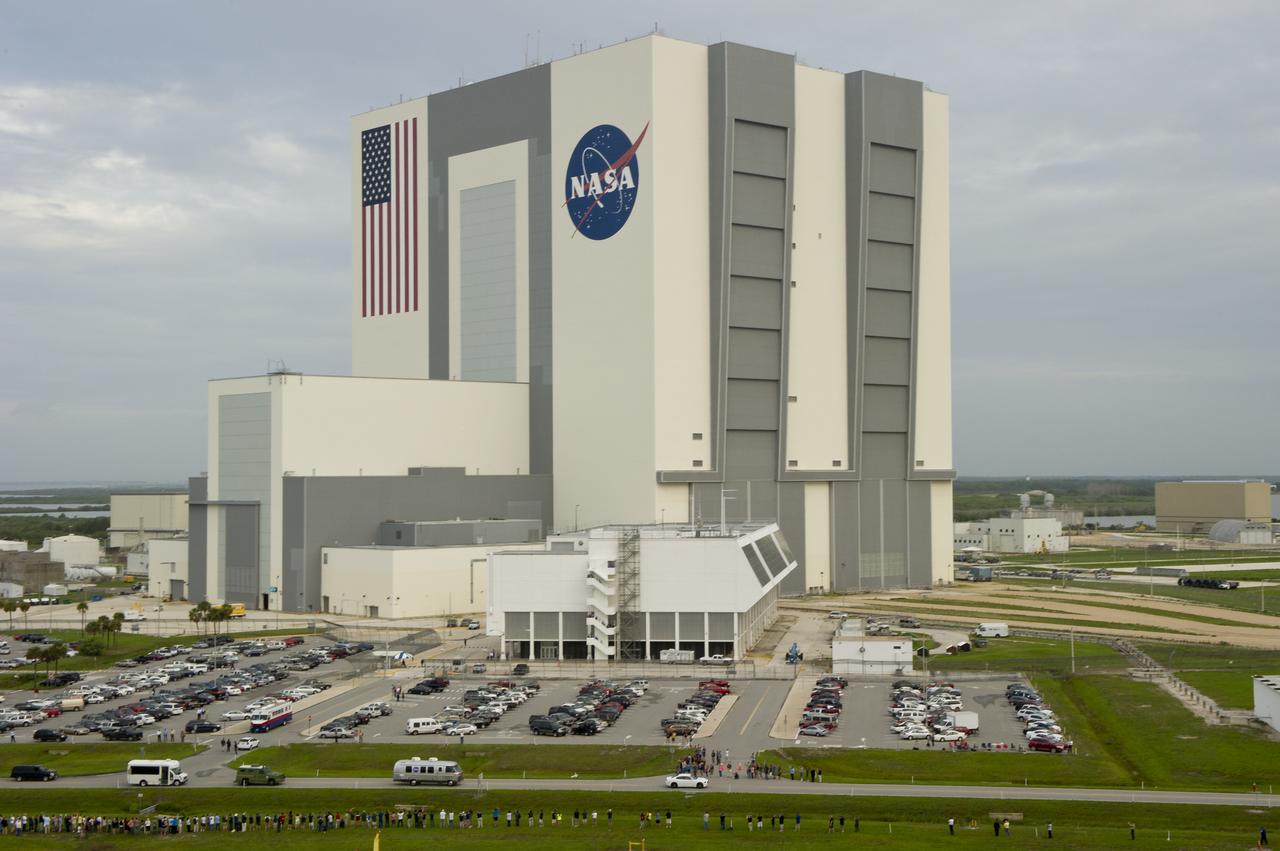
The Astrovan carrying the STS-135 crew; Chris Furgeson, commander, Doug Hurley, pilot, and mission specialists Rex Walheim and Sandy Mangus, rolls past the Vehicle Assembly Building (VAB) and Launch Control Center (LCC), on its way to launch pad 39a and space shuttle Atlantis, Friday, July 8, 2011, at Kennedy Space Center in Cape Canaveral, Fla. The launch of Atlantis, STS-135, is the final flight of the shuttle program, a 12-day mission to the International Space Station. Photo Credit: (NASA/Bill Ingalls)
The Astrovan carrying the STS-135 crew; Chris Furgeson, commander, Doug Hurley, pilot, and mission specialists Rex Walheim and Sandy Mangus, rolls toward launch pad 39a and space shuttle Atlantis, Friday, July 8, 2011, at Kennedy Space Center in Cape Canaveral, Fla. The launch of Atlantis, STS-135, is the final flight of the shuttle program, a 12-day mission to the International Space Station. Photo Credit: (NASA/Bill Ingalls)
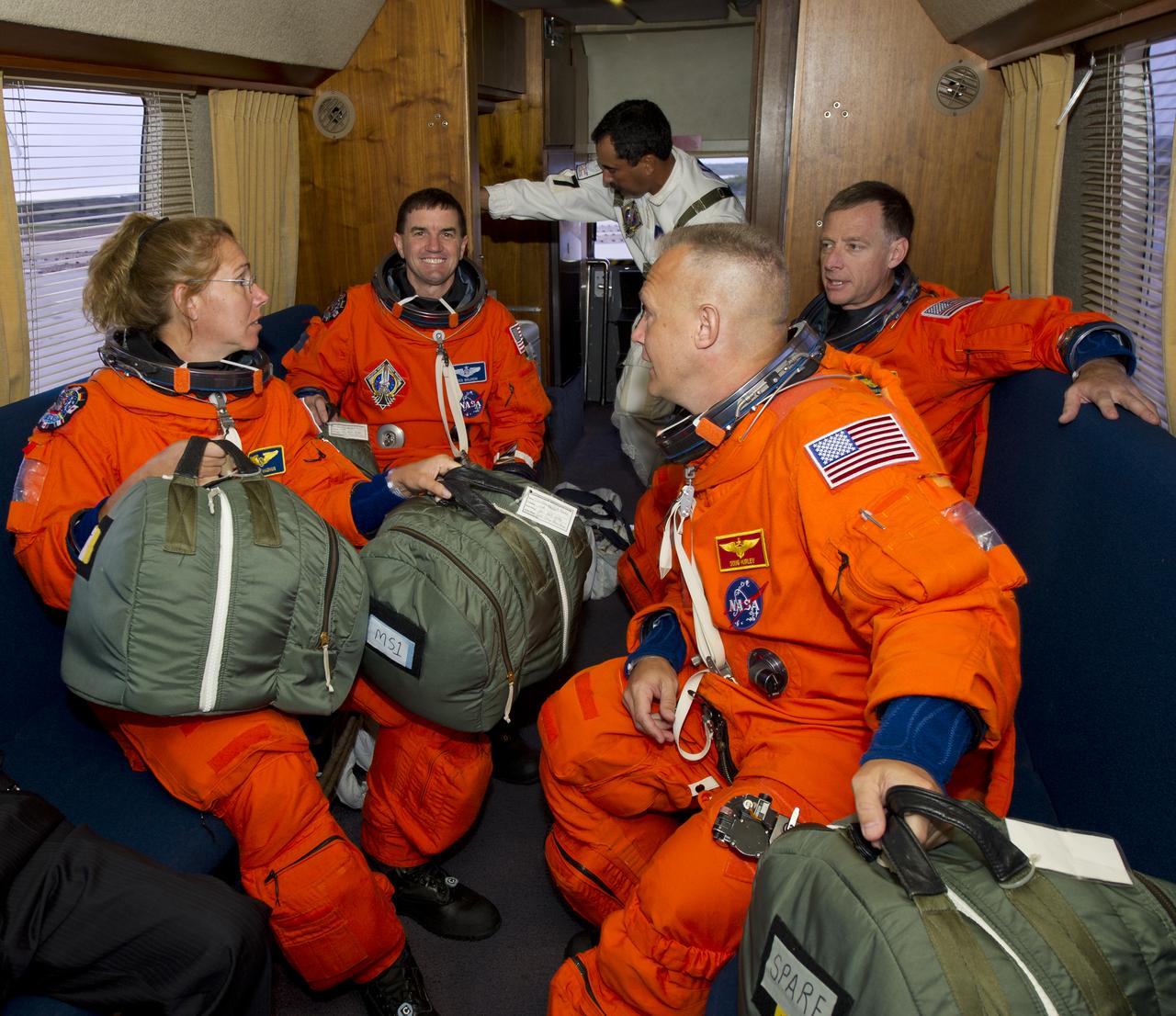
The STS-135 crew, clockwise: Sandra Magnus, mission specialist; Rex Walheim, mission specialist; Chris Ferguson, commander and Doug Hurley, pilot are seen in the Astrovan as they ride to launch pad 39A to board space shuttle Atlantis on Friday, July 8, 2011, at the Kennedy Space Center in Cape Canaveral, Fla. The launch of Atlantis, STS-135, is the final flight of the shuttle program, a 12-day mission to the International Space Station. Photo Credit: (NASA/Jerry Ross)
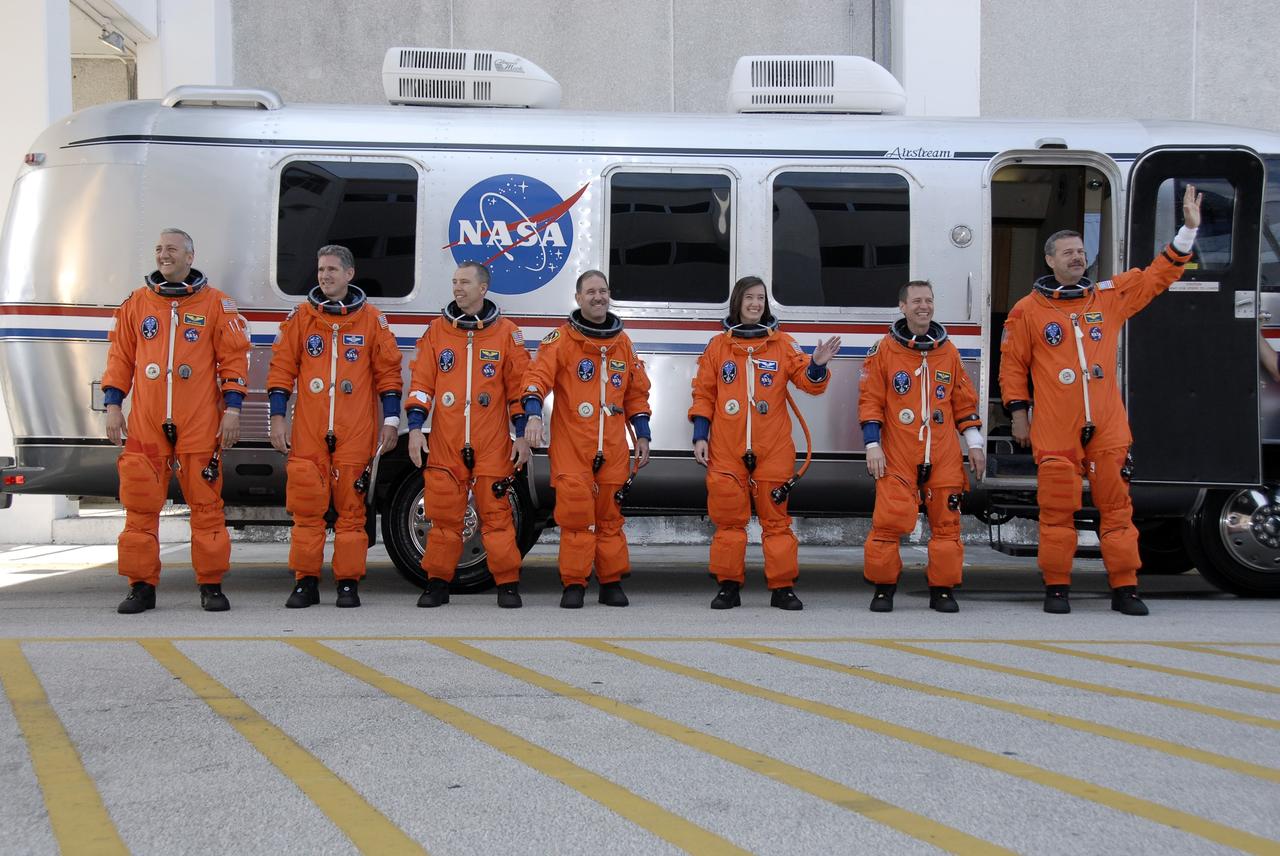
CAPE CANAVERAL, Fla. – STS-125 crew members acknowledge the spectators who have gathered to wish them well on their mission aboard space shuttle Atlantis to service NASA's Hubble Space Telescope. From left are Mission Specialists Mike Massimino, Michael Good, Andrew Feustel, John Grunsfeld and Megan McArthur, Pilot Gregory C. Johnson and Commander Scott Altman. Atlantis' 11-day flight will include five spacewalks to refurbish and upgrade the telescope with state-of-the-art science instruments that will expand Hubble's capabilities and extend its operational lifespan through at least 2014. The payload includes a Wide Field Camera 3, fine guidance sensor and the Cosmic Origins Spectrograph. Launch of Atlantis is scheduled for 2:01 p.m. May 11 EDT. Photo credit: NASA/Kim Shiflett
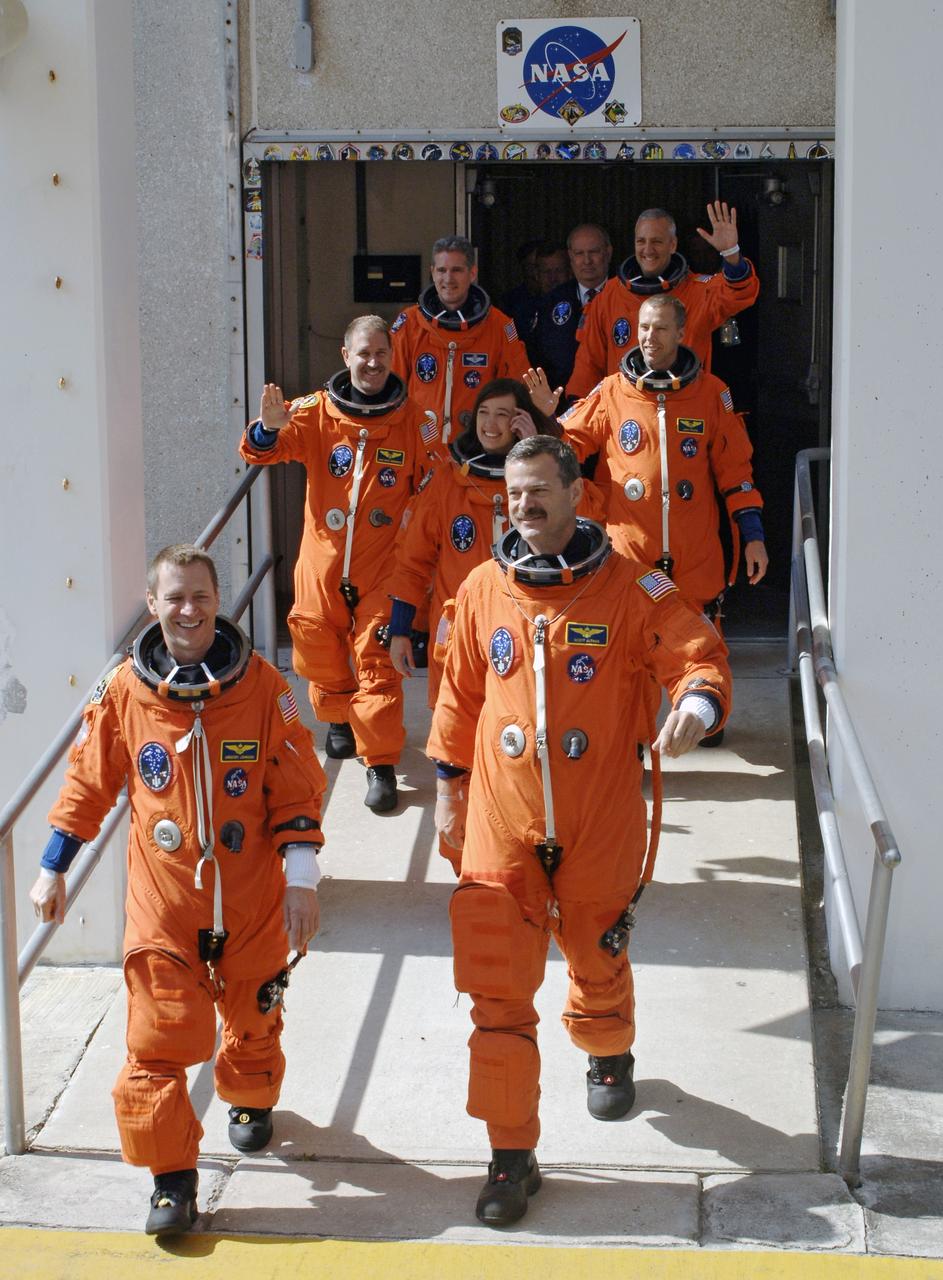
CAPE CANAVERAL, Fla. – STS-125 crew members eagerly stride from the Operations and Checkout Building at NASA's Kennedy Space Center in Florida to make the trip to Launch Pad 39A for liftoff of space shuttle Atlantis on the STS-125 mission to service NASA's Hubble Space Telescope. On the left, front to back, are Pilot Gregory C. Johnson and Mission Specialists John Grunsfeld and Michael Good. On the right, front to back, are Commander Scott Altman and Mission Specialists Megan McArthur, Andrew Feustel and Mike Massimino. Atlantis' 11-day flight will include five spacewalks to refurbish and upgrade the telescope with state-of-the-art science instruments that will expand Hubble's capabilities and extend its operational lifespan through at least 2014. The payload includes a Wide Field Camera 3, fine guidance sensor and the Cosmic Origins Spectrograph. Launch of Atlantis is scheduled for 2:01 p.m. May 11 EDT. Photo credit: NASA/Kim Shiflett
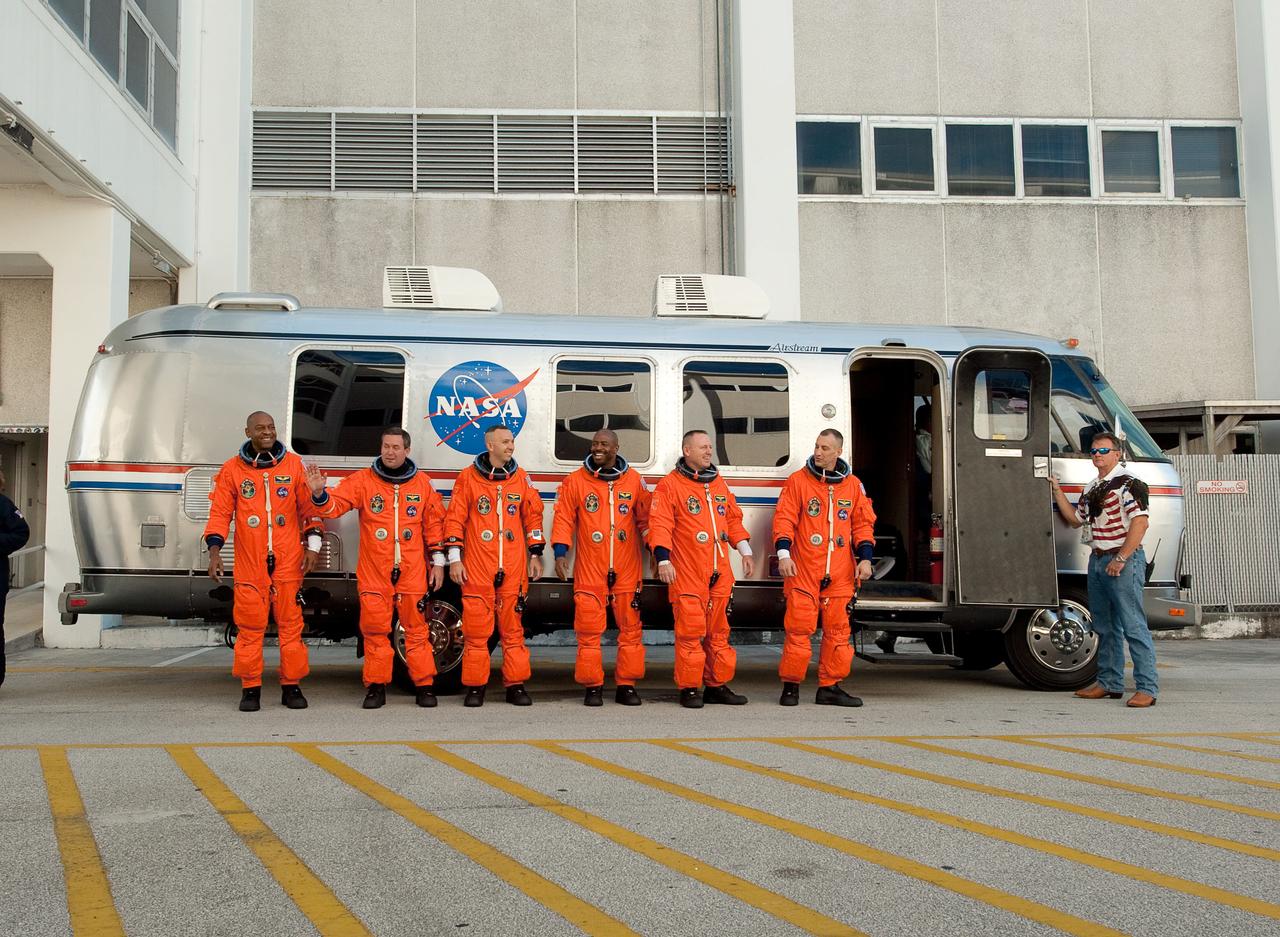
STS-129 crew members, from left, Robert Satcher, Mike Foreman, Randy Bresnik, Leland Melvin, Pilot Barry Wilmore, and Mission Commander Charlie Hobaugh stop and pose for a photograph before getting into the astrovan and heading to launch pad 39a at the NASA Kennedy Space Center in Cape Canaveral, Fl on Monday, Nov. 16, 2009. Photo Credit: (NASA/Bill Ingalls)
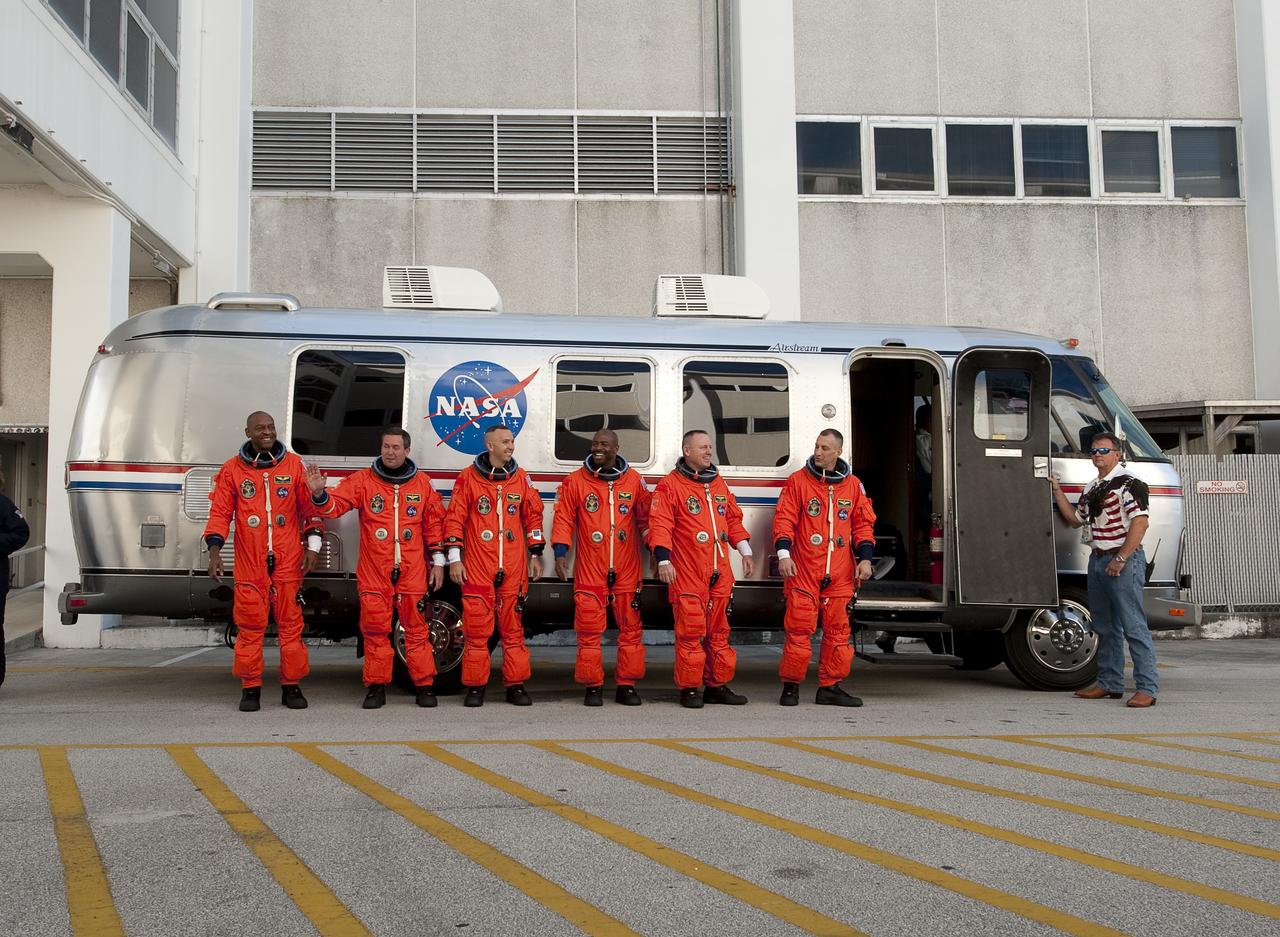
STS-129 crew members, from left, Robert Satcher, Mike Foreman, Randy Bresnik, Leland Melvin, Pilot Barry Wilmore, and Mission Commander Charlie Hobaugh stop and pose for a photograph before getting into the astrovan and heading to launch pad 39a at the NASA Kennedy Space Center in Cape Canaveral, Fl on Monday, Nov. 16, 2009. Photo Credit: (NASA/Bill Ingalls)
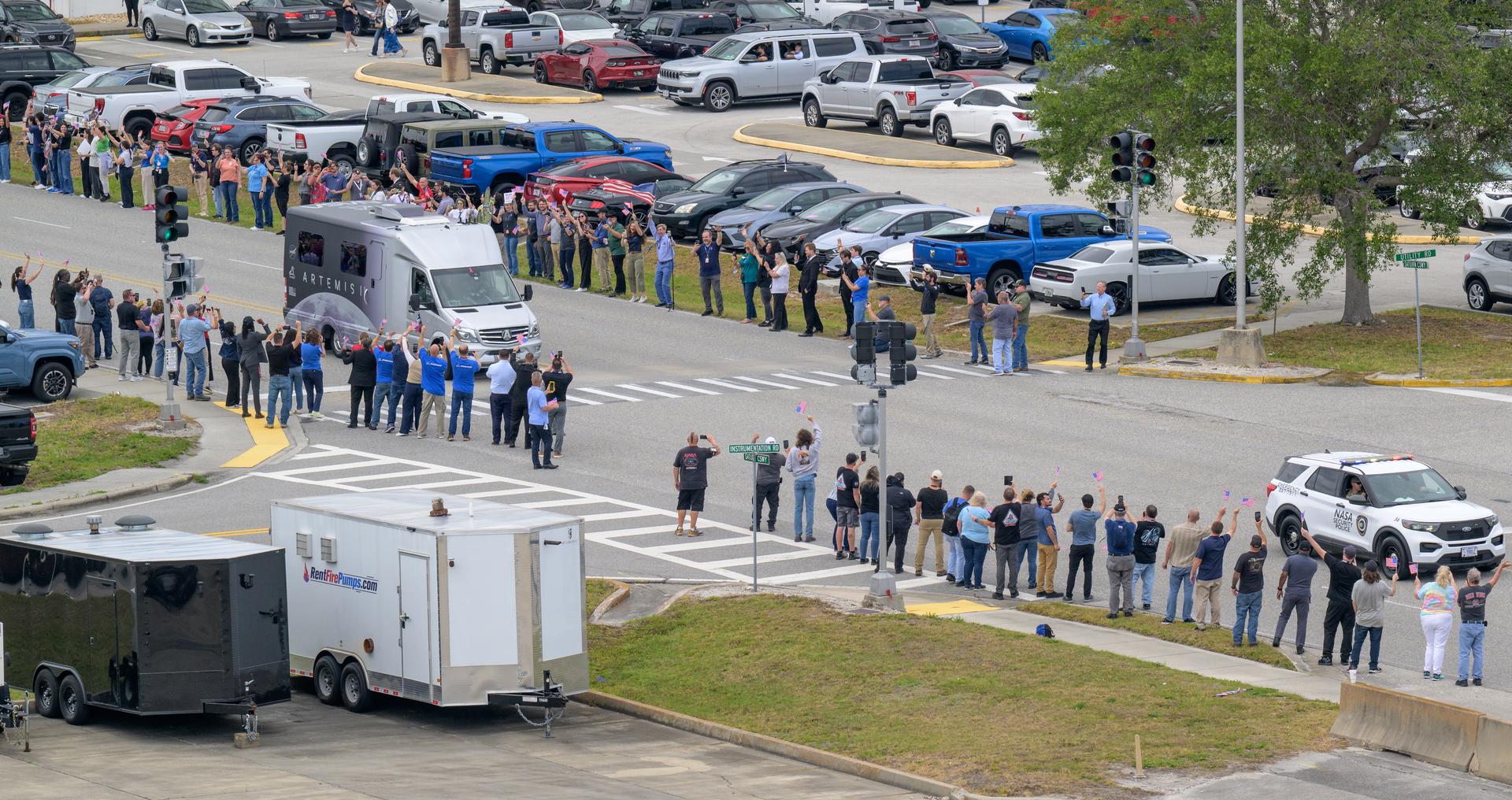
The astrovan with NASA astronauts Reid Wiseman, commander; Victor Glover, pilot; Christina Koch, mission specialist; and CSA (Canadian Space Agency) astronaut Jeremy Hansen, mission specialist drives by NASA employees on the way to the launch pad ahead of the crew boarding their Orion spacecraft atop NASA’s Space Launch System (SLS) rocket at Launch Complex 39B, Wednesday, April 1, 2026, at NASA’s Kennedy Space Center in Florida. NASA’s Artemis II mission will take Wiseman, Glover, Koch, and Hansen on a 10-day journey around the Moon and back aboard their Orion spacecraft from Launch Complex 39B, with a two hour launch window opening at 6:24pm EDT. Photo Credit: (NASA/Bill Ingalls)
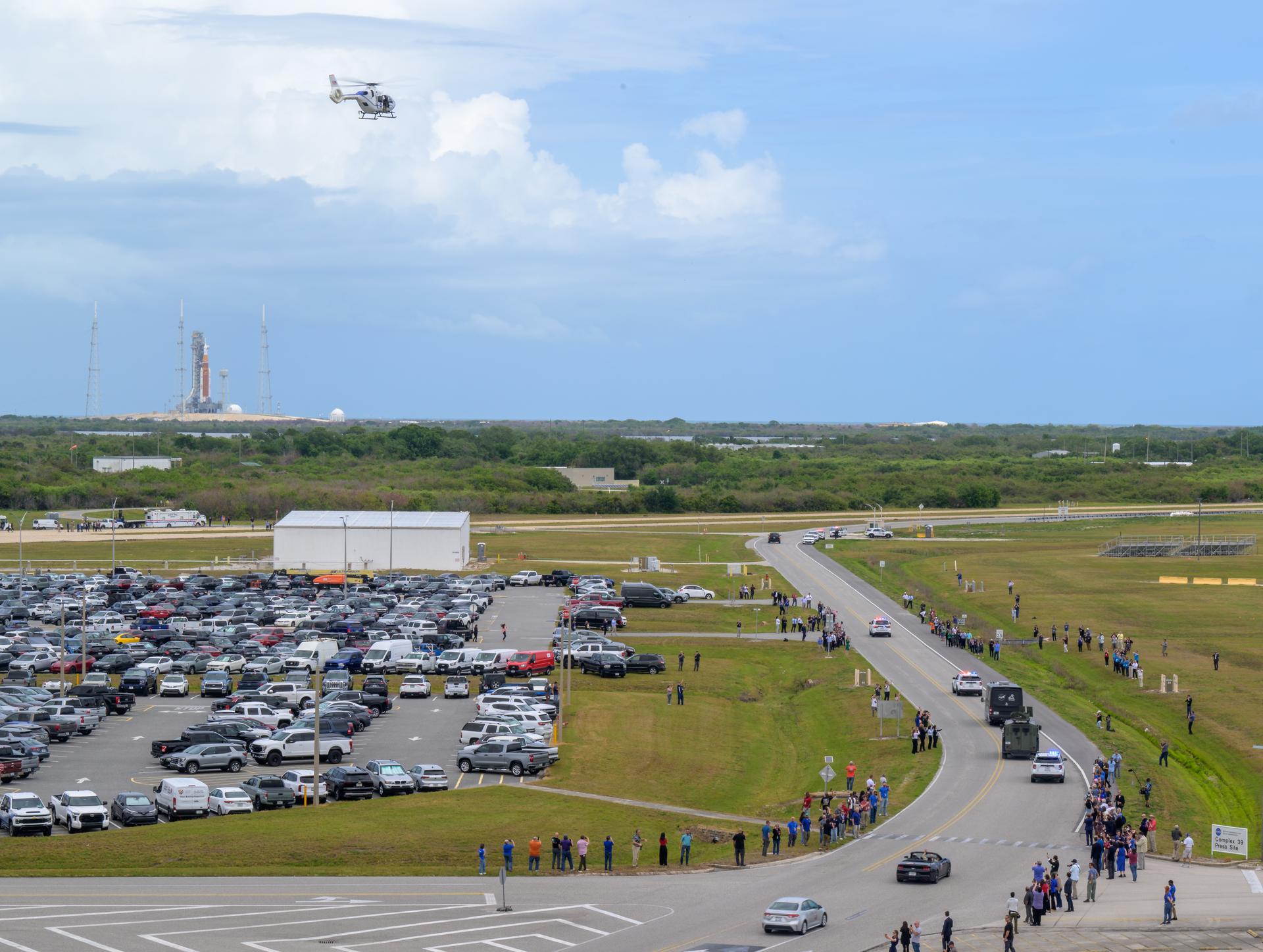
The astrovan with NASA astronauts Reid Wiseman, commander; Victor Glover, pilot; Christina Koch, mission specialist; and CSA (Canadian Space Agency) astronaut Jeremy Hansen, mission specialist drives to the launch pad ahead of the crew boarding their Orion spacecraft atop NASA’s Space Launch System (SLS) rocket at Launch Complex 39B, Wednesday, April 1, 2026, at NASA’s Kennedy Space Center in Florida. NASA’s Artemis II mission will take Wiseman, Glover, Koch, and Hansen on a 10-day journey around the Moon and back aboard their Orion spacecraft from Launch Complex 39B, with a two hour launch window opening at 6:24pm EDT. Photo Credit: (NASA/Bill Ingalls)
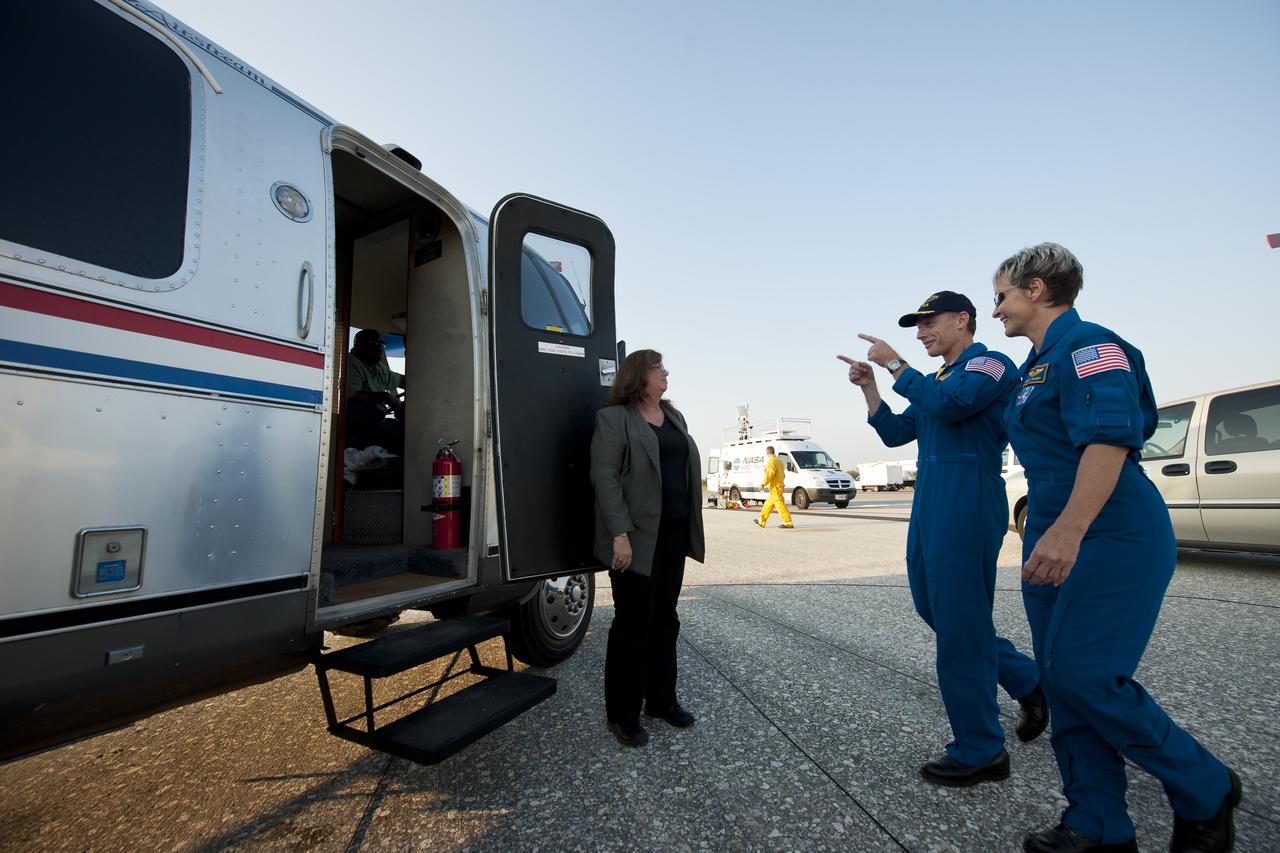
NASA Chief of the Astronaut Office Peggy Whitson, right, walks with STS-135 Commander Chris Ferguson as he prepares to board the astrovan at the NASA's Kennedy Space Center Shuttle Landing Facility (SLF) shortly after he and the rest of the STS-135 crew landed in space shuttle Atlantis, completing a 13-day mission to the International Space Station (ISS) and the final flight of the Space Shuttle Program, early Thursday morning, July 21, 2011, in Cape Canaveral, Fla. Overall, Atlantis spent 307 days in space and traveled nearly 126 million miles during its 33 flights. Atlantis, the fourth orbiter built, launched on its first mission on Oct. 3, 1985. Photo Credit: (NASA/Bill Ingalls)
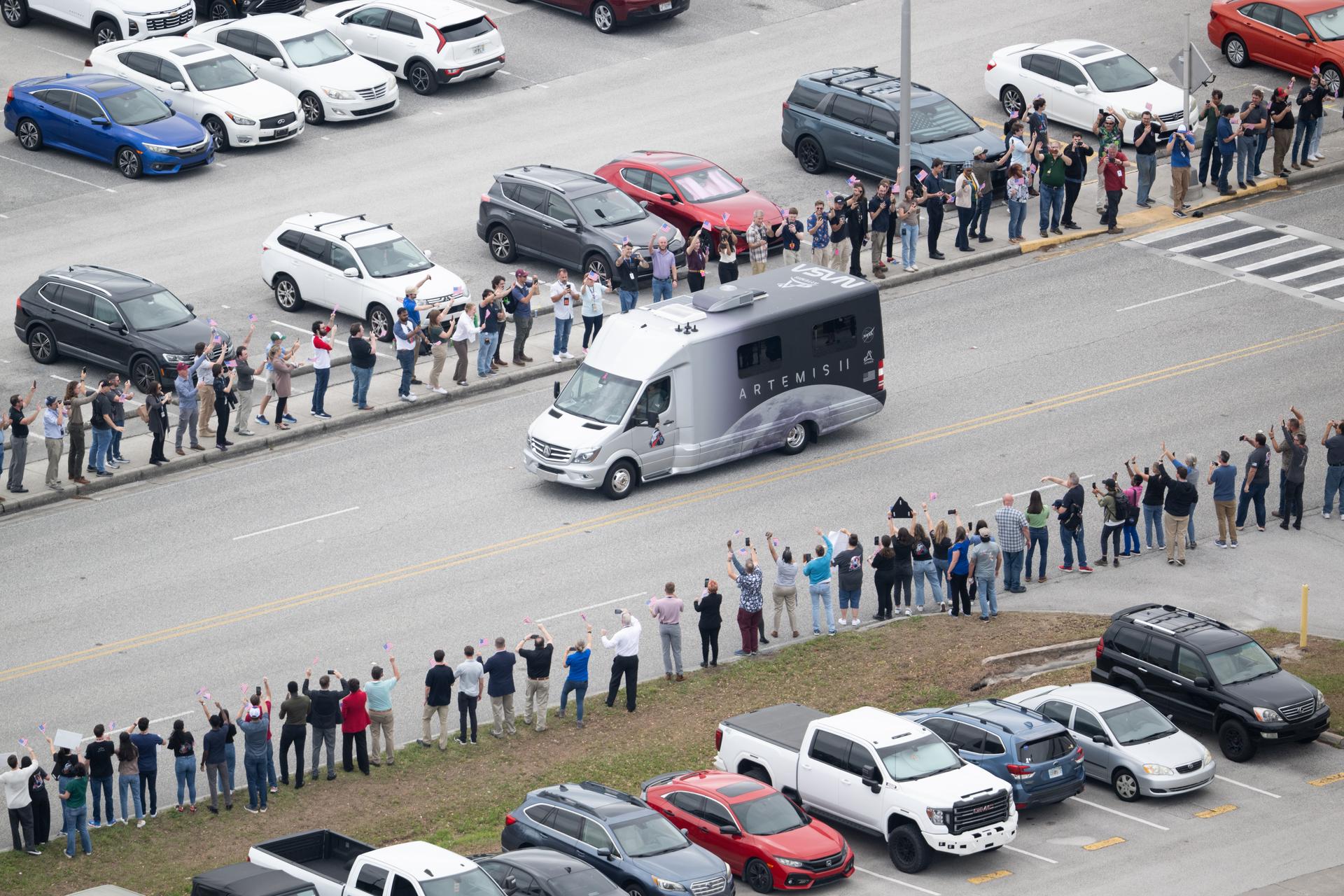
The astrovan with NASA astronauts Reid Wiseman, commander; Victor Glover, pilot; Christina Koch, mission specialist; and CSA (Canadian Space Agency) astronaut Jeremy Hansen, mission specialist, drives by the Vehicle Assembly Building towards Launch Complex 39B ahead of the crew boarding their Orion spacecraft atop NASA’s Space Launch System (SLS) rocket, Wednesday, April 1, 2026, at NASA’s Kennedy Space Center in Florida. NASA’s Artemis II mission will take Wiseman, Glover, Koch, and Hansen on a 10-day journey around the Moon and back aboard SLS rocket and Orion spacecraft from Launch Complex 39B, with a two hour launch window opening at 6:24 p.m. EDT. Photo Credit: (NASA/Joel Kowsky)
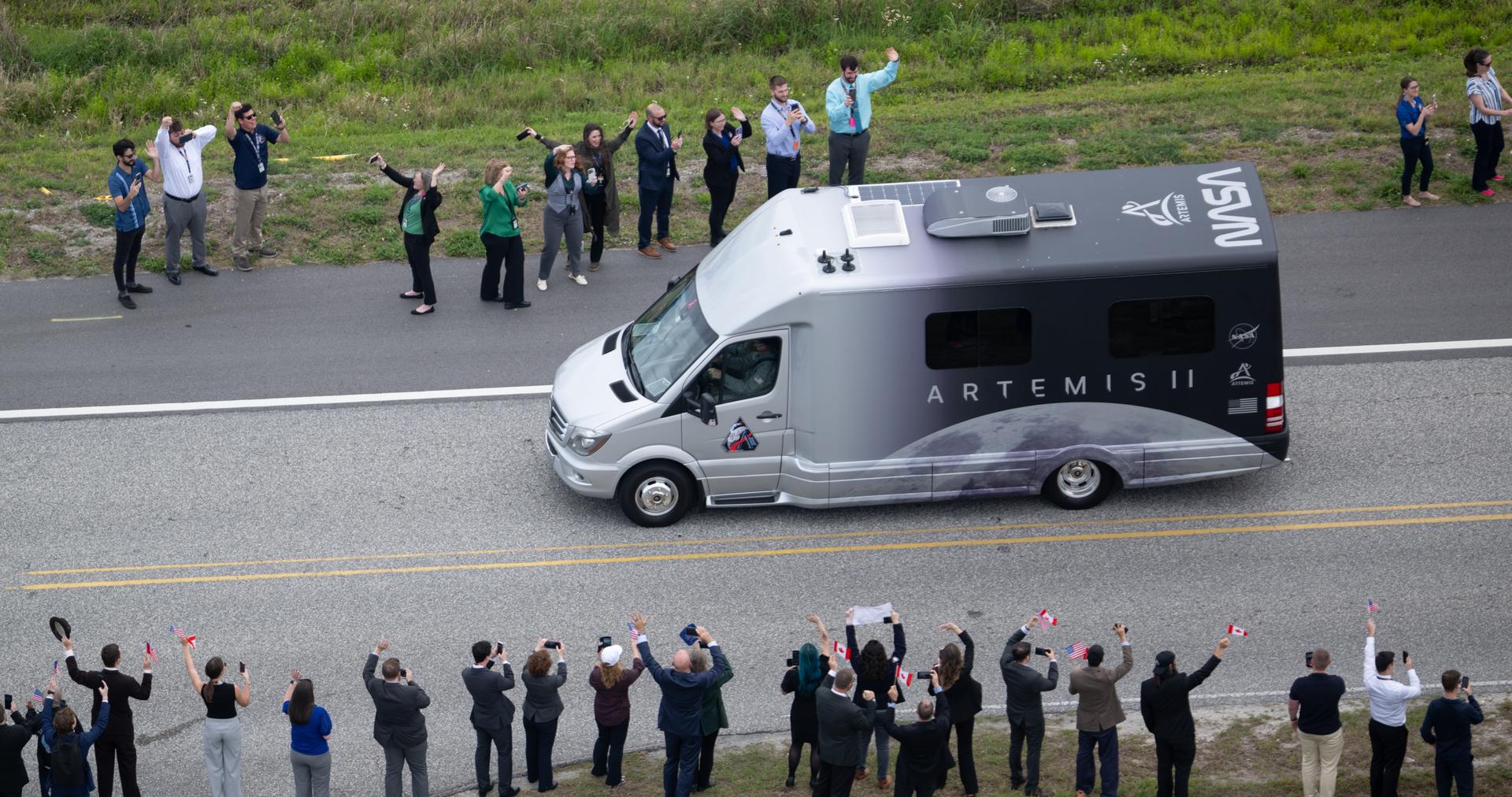
The astrovan with NASA astronauts Reid Wiseman, commander; Victor Glover, pilot; Christina Koch, mission specialist; and CSA (Canadian Space Agency) astronaut Jeremy Hansen, mission specialist, drives by the Vehicle Assembly Building towards Launch Complex 39B ahead of the crew boarding their Orion spacecraft atop NASA’s Space Launch System (SLS) rocket, Wednesday, April 1, 2026, at NASA’s Kennedy Space Center in Florida. NASA’s Artemis II mission will take Wiseman, Glover, Koch, and Hansen on a 10-day journey around the Moon and back aboard SLS rocket and Orion spacecraft from Launch Complex 39B, with a two hour launch window opening at 6:24 p.m. EDT. Photo Credit: (NASA/Joel Kowsky)
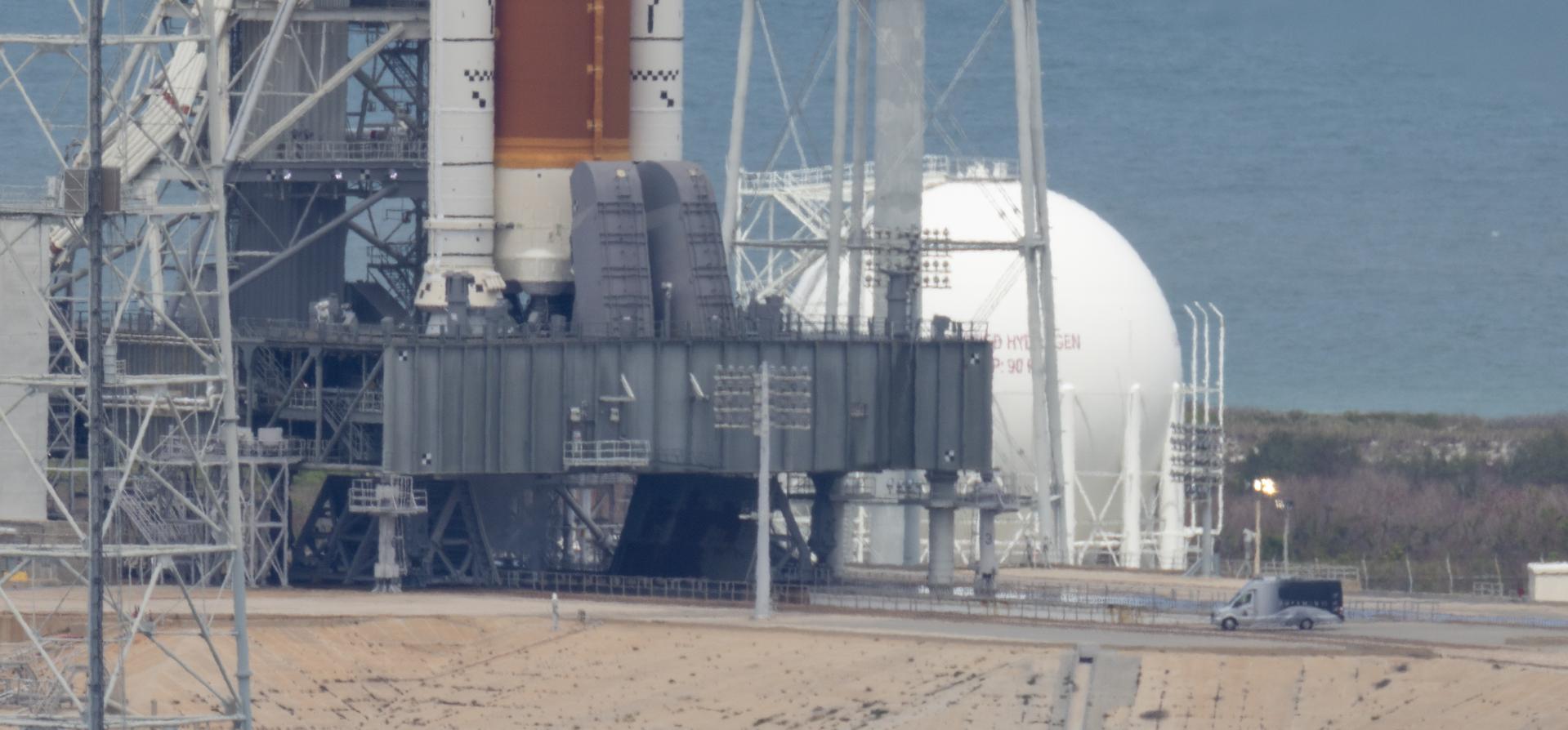
The astrovan with NASA astronauts Reid Wiseman, commander; Victor Glover, pilot; Christina Koch, mission specialist; and CSA (Canadian Space Agency) astronaut Jeremy Hansen, mission specialist, arrives at Launch Complex 39B ahead of the crew boarding their Orion spacecraft atop NASA’s Space Launch System (SLS) rocket, Wednesday, April 1, 2026, at NASA’s Kennedy Space Center in Florida. NASA’s Artemis II mission will take Wiseman, Glover, Koch, and Hansen on a 10-day journey around the Moon and back aboard SLS rocket and Orion spacecraft from Launch Complex 39B, with a two hour launch window opening at 6:24 p.m. EDT. Photo Credit: (NASA/Joel Kowsky)
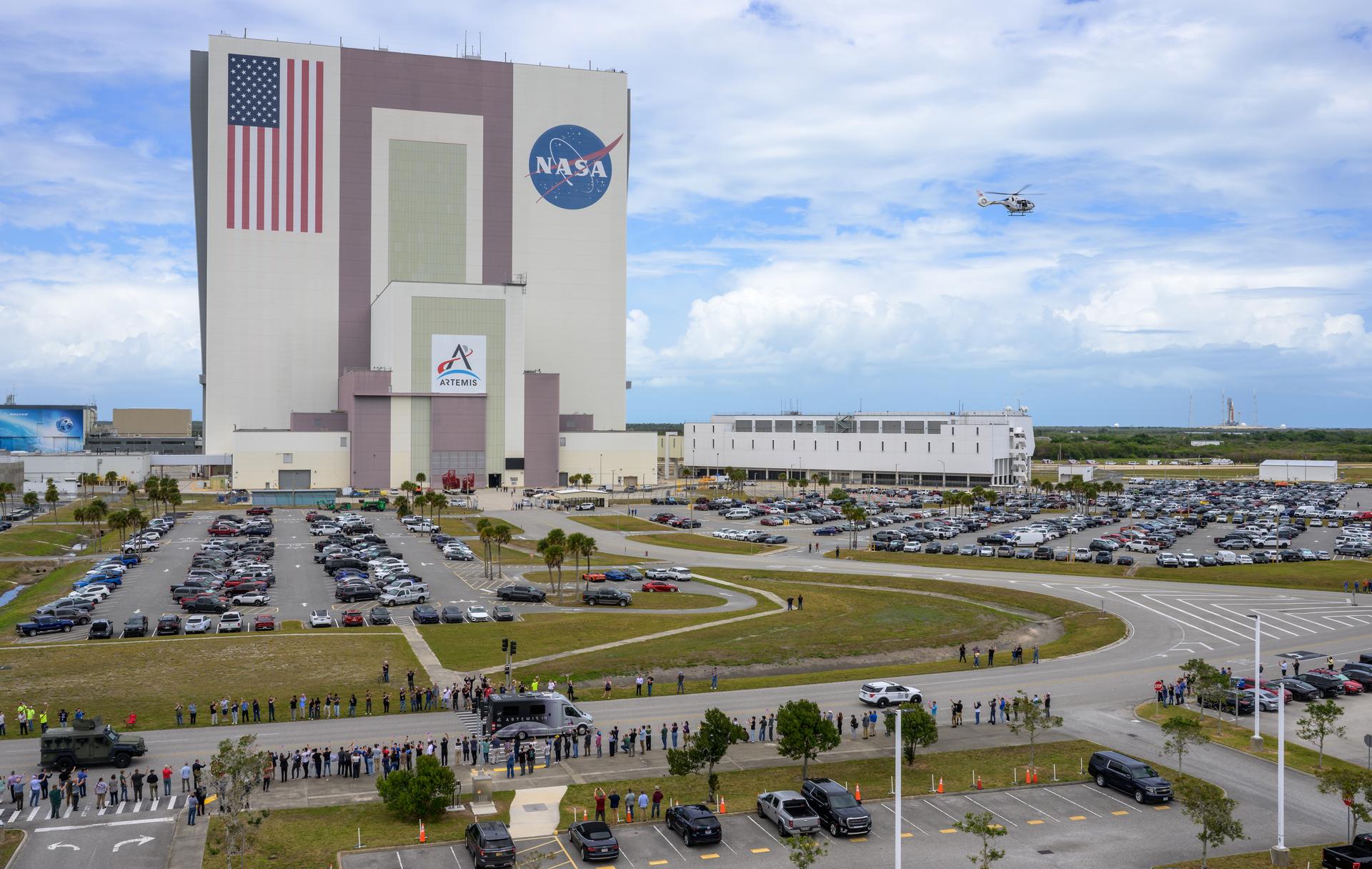
The astrovan with NASA astronauts Reid Wiseman, commander; Victor Glover, pilot; Christina Koch, mission specialist; and CSA (Canadian Space Agency) astronaut Jeremy Hansen, mission specialist drives by the Vehicle Assembly Building (VAB) to the launch pad ahead of the crew boarding their Orion spacecraft atop NASA’s Space Launch System (SLS) rocket at Launch Complex 39B, Wednesday, April 1, 2026, at NASA’s Kennedy Space Center in Florida. NASA’s Artemis II mission will take Wiseman, Glover, Koch, and Hansen on a 10-day journey around the Moon and back aboard their Orion spacecraft from Launch Complex 39B, with a two hour launch window opening at 6:24pm EDT. Photo Credit: (NASA/Bill Ingalls)
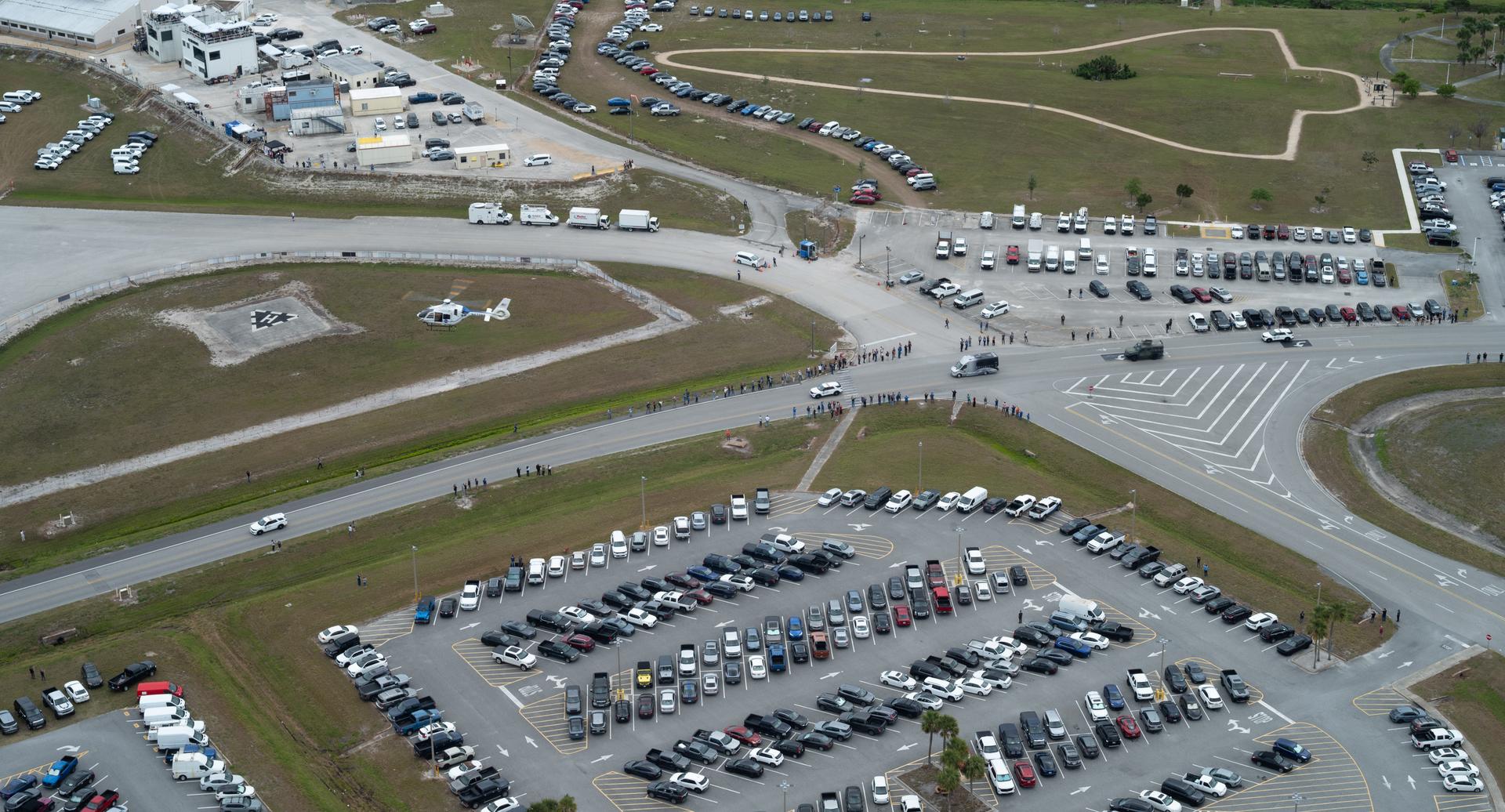
The astrovan with NASA astronauts Reid Wiseman, commander; Victor Glover, pilot; Christina Koch, mission specialist; and CSA (Canadian Space Agency) astronaut Jeremy Hansen, mission specialist, drives by the Vehicle Assembly Building towards Launch Complex 39B ahead of the crew boarding their Orion spacecraft atop NASA’s Space Launch System (SLS) rocket, Wednesday, April 1, 2026, at NASA’s Kennedy Space Center in Florida. NASA’s Artemis II mission will take Wiseman, Glover, Koch, and Hansen on a 10-day journey around the Moon and back aboard SLS rocket and Orion spacecraft from Launch Complex 39B, with a two hour launch window opening at 6:24 p.m. EDT. Photo Credit: (NASA/Joel Kowsky)
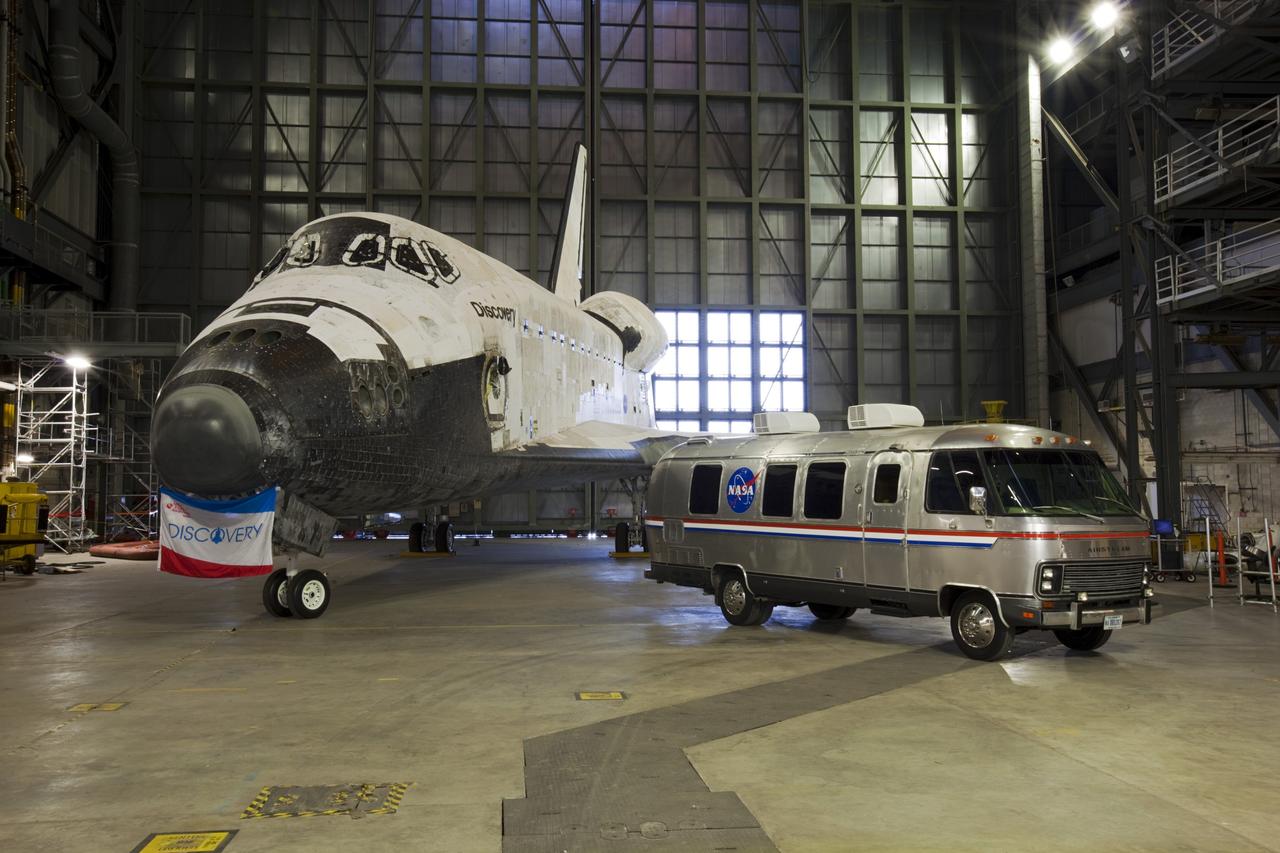
CAPE CANAVERAL, Fla. – In the Vehicle Assembly Building, or VAB, at NASA’s Kennedy Space Center in Florida, space shuttle Discovery sits in high bay 4 with the Astrovan alongside. The Astrovan was used to transport astronauts to Launch Complex 39 for space shuttle missions. The Astrovan is being displayed for Kennedy Space Center Visitor Complex guests who take the VAB tour. During the Space Shuttle Program’s transition and retirement processing, Discovery was prepared for display at Smithsonian’s National Air and Space Museum, Steven F. Udvar-Hazy Center in Chantilly, Va. Discovery is scheduled to be transported atop a NASA Shuttle Carrier Aircraft modified 747 jet to Dulles International Airport in Virginia on April 17 and then moved to the Smithsonian for permanent public display on April 19. For more information, visit http://www.nasa.gov/shuttle. Photo credit: NASA/Jim Grossmann
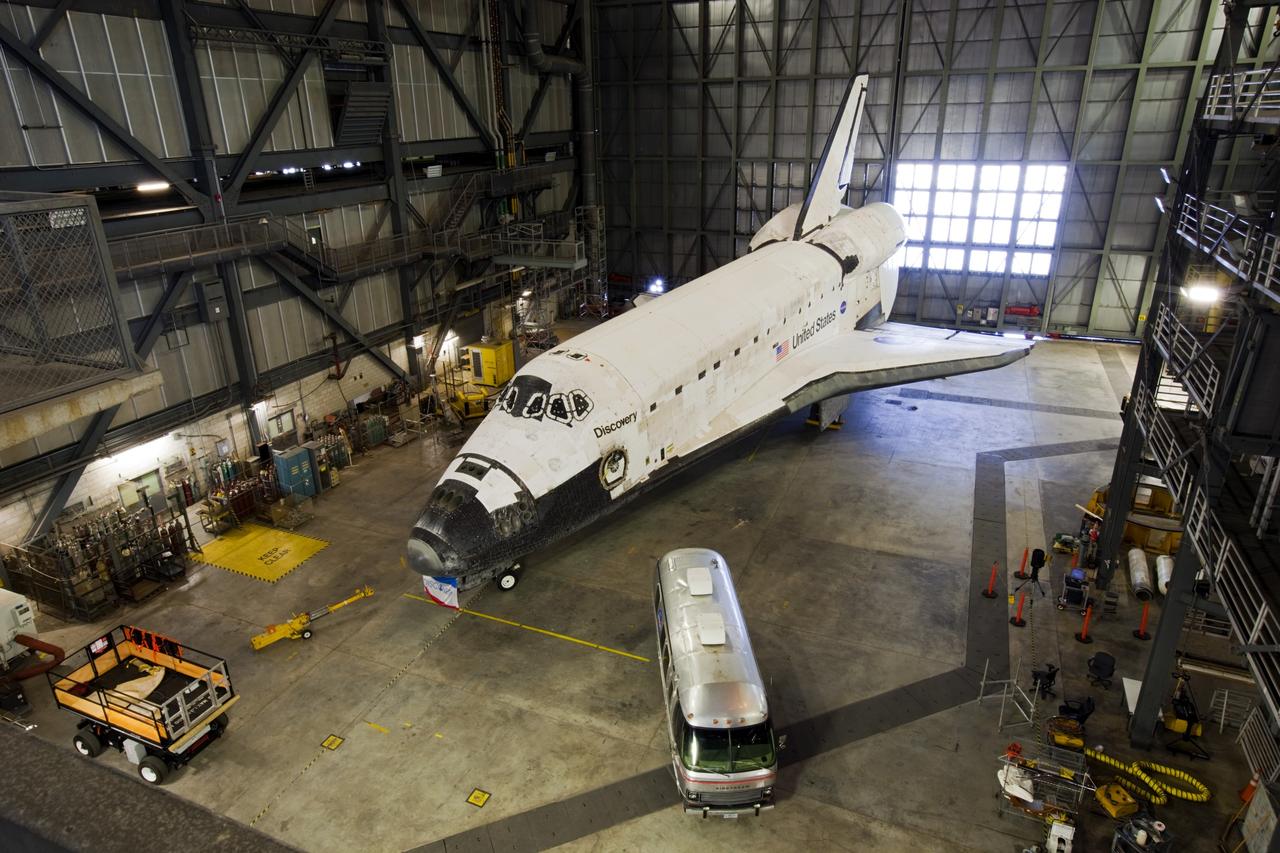
CAPE CANAVERAL, Fla. – Inside the Vehicle Assembly Building, or VAB, at NASA’s Kennedy Space Center in Florida, an overhead view shows space shuttle Discovery in high bay 4 with the Astrovan alongside. The Astrovan was used to transport astronauts to Launch Complex 39 for space shuttle missions. The Astrovan is being displayed for Kennedy Space Center Visitor Complex guests who take the VAB tour. During the Space Shuttle Program’s transition and retirement processing, Discovery was prepared for display at Smithsonian’s National Air and Space Museum, Steven F. Udvar-Hazy Center in Chantilly, Va. Discovery is scheduled to be transported atop a NASA Shuttle Carrier Aircraft modified 747 jet to Dulles International Airport in Virginia on April 17 and then moved to the Smithsonian for permanent public display on April 19. For more information, visit http://www.nasa.gov/shuttle. Photo credit: NASA/Jim Grossmann
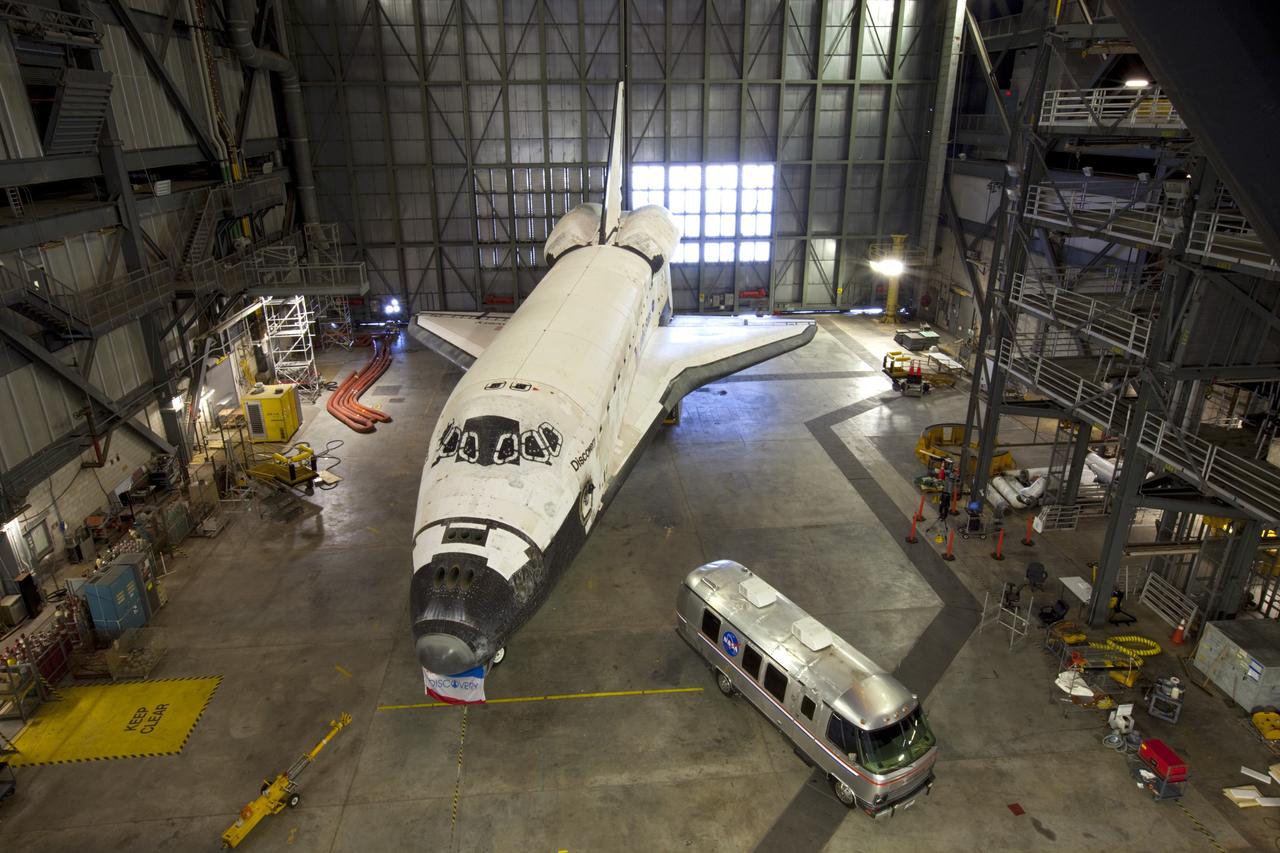
CAPE CANAVERAL, Fla. – Inside the Vehicle Assembly Building, or VAB, at NASA’s Kennedy Space Center in Florida, an overhead view shows space shuttle Discovery in high bay 4 with the Astrovan alongside. The Astrovan was used to transport astronauts to Launch Complex 39 for space shuttle missions. The Astrovan is being displayed for Kennedy Space Center Visitor Complex guests who take the VAB tour. During the Space Shuttle Program’s transition and retirement processing, Discovery was prepared for display at Smithsonian’s National Air and Space Museum, Steven F. Udvar-Hazy Center in Chantilly, Va. Discovery is scheduled to be transported atop a NASA Shuttle Carrier Aircraft modified 747 jet to Dulles International Airport in Virginia on April 17 and then moved to the Smithsonian for permanent public display on April 19. For more information, visit http://www.nasa.gov/shuttle. Photo credit: NASA/Jim Grossmann
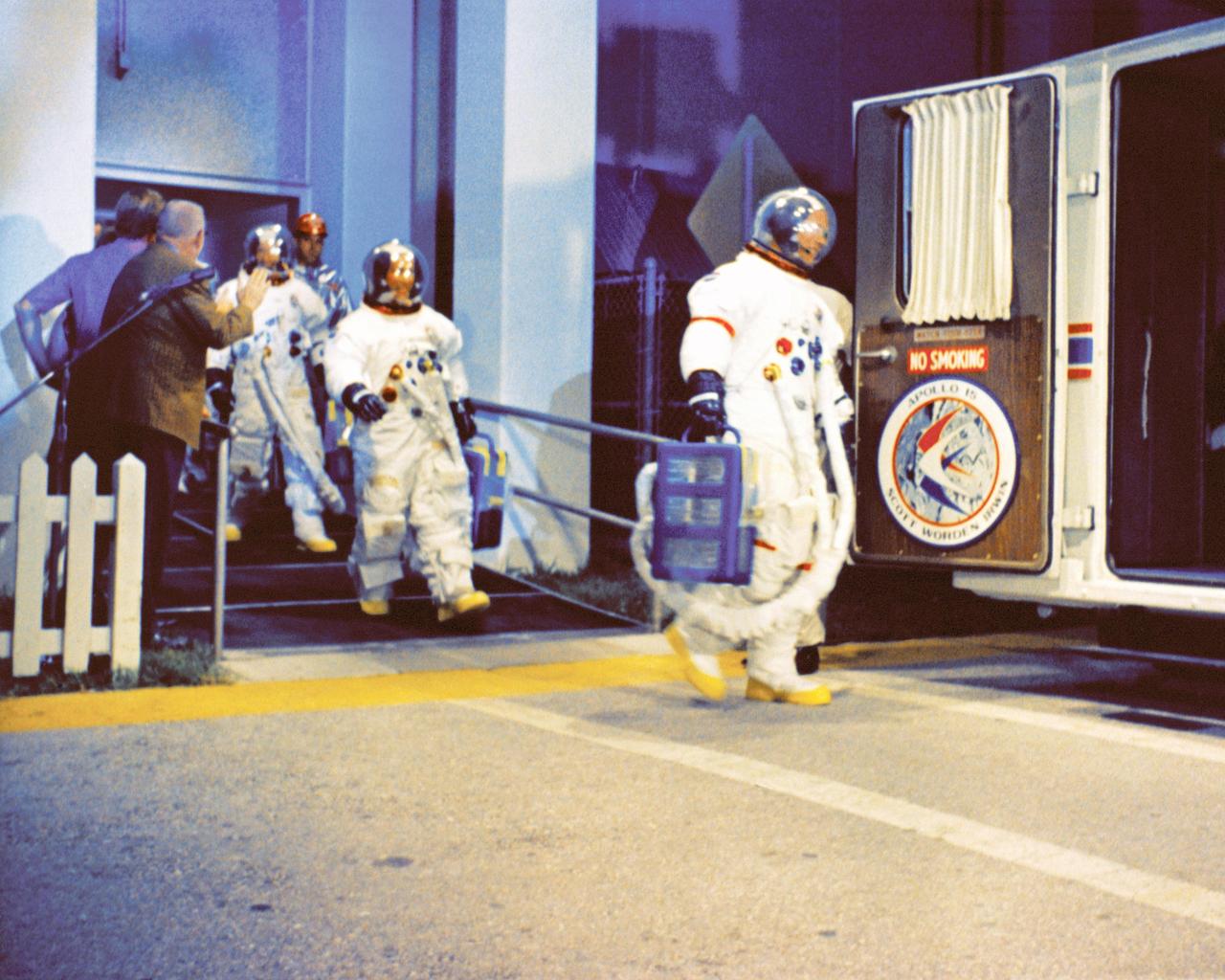
CAPE CANAVERAL, Fla. – The Apollo 15 crew walks out of the Operations and Checkout Building at NASA's Kennedy Space Center before climbing into the Astrovan for the ride out to the launch pad for their flight to the moon. Photo credit: NASA
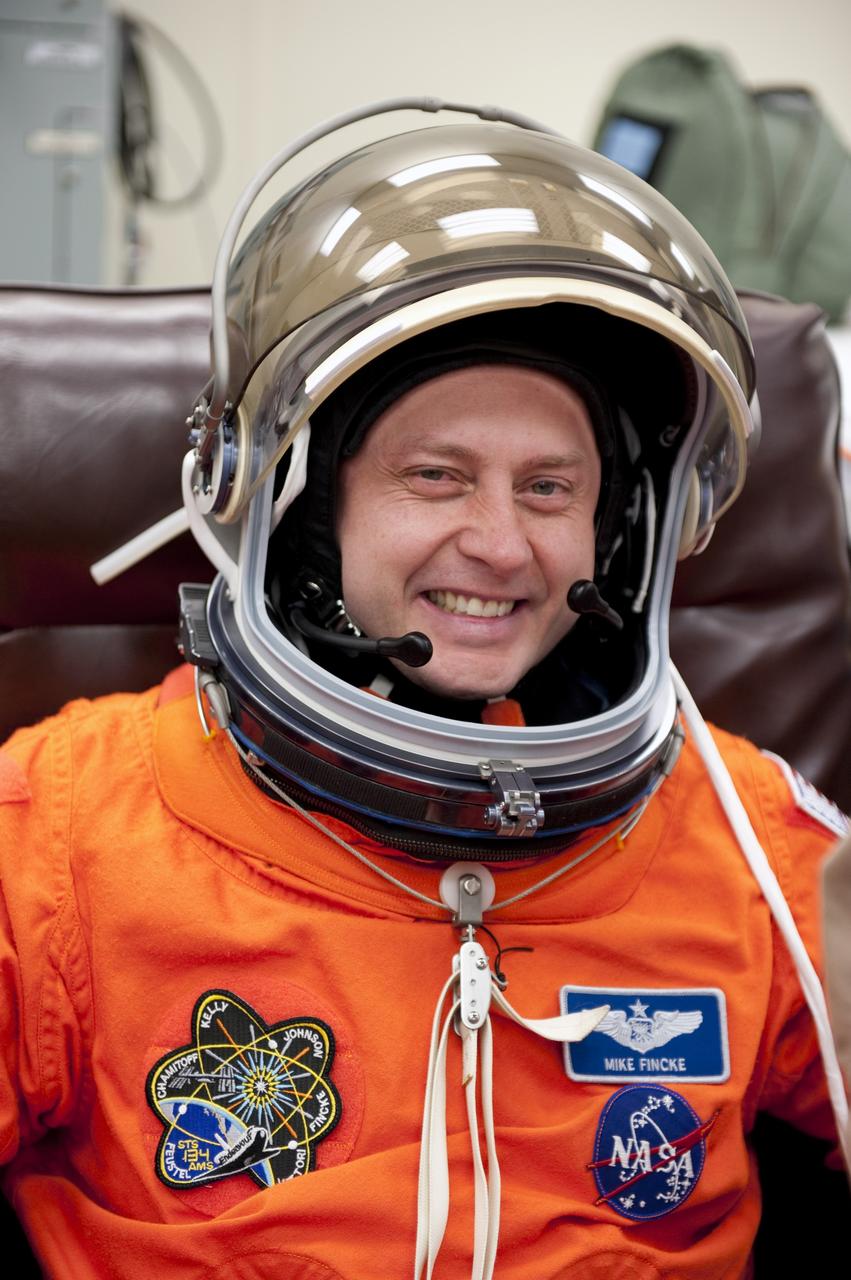
CAPE CANAVERAL, Fla. -- During a simulated launch countdown, STS-134 Mission Specialist Michael Fincke checks the fit of his helmet in the Operations and Checkout Building at NASA's Kennedy Space Center in Florida. Next, Fincke and his crewmates will walk out to the waiting Astrovan. As part of the Terminal Countdown Demonstration Test (TCDT), the crew members will ride to the pad in their silver Astrovan and strap into space shuttle Endeavour to practice the steps that will be taken on launch day. Endeavour's six crew members are targeted to launch April 19 at 7:48 p.m. EDT. They will deliver the Express Logistics Carrier-3, Alpha Magnetic Spectrometer-2 (AMS), a high-pressure gas tank, additional spare parts for the Dextre robotic helper and micrometeoroid debris shields to the International Space Station. This will be the final spaceflight for Endeavour. For more information visit, www.nasa.gov/mission_pages/shuttle/shuttlemissions/sts134/index.html. Photo credit: NASA/Kim Shiflett
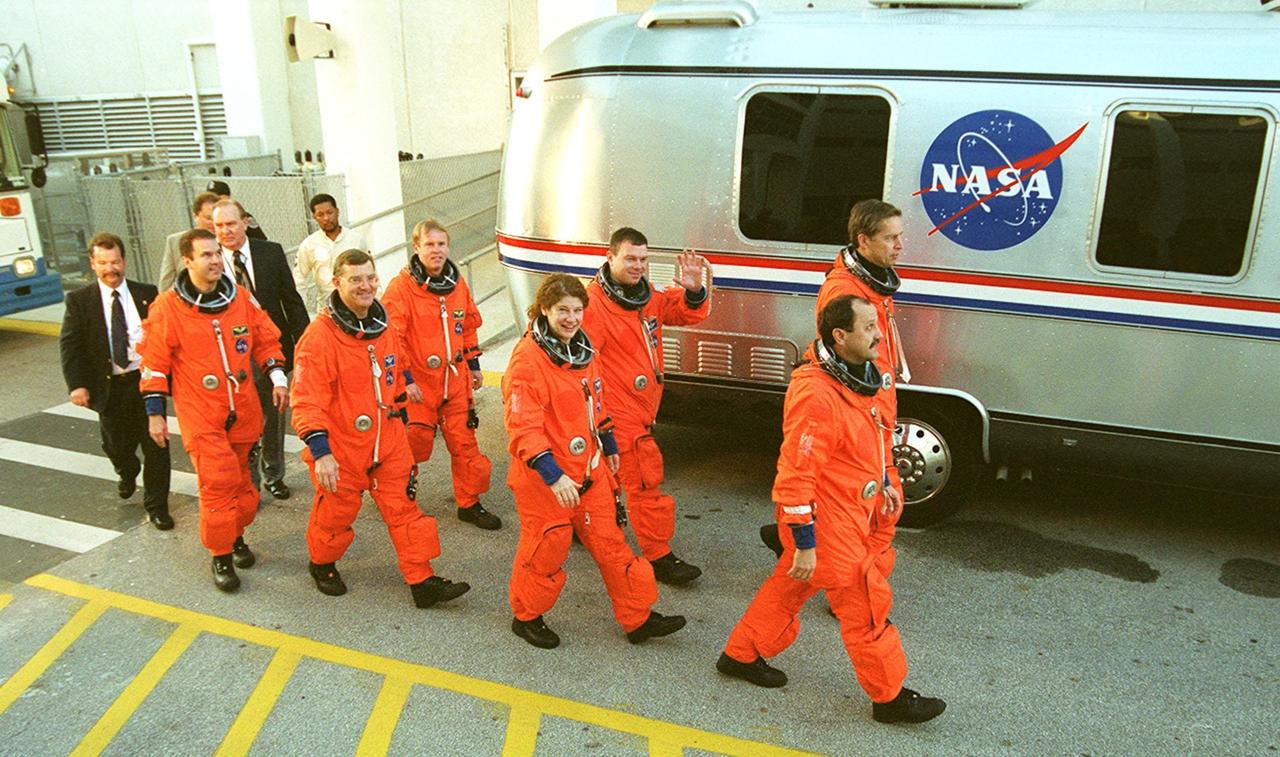
The STS-102 crew heads to the silver Astrovan after leaving the Operations and Checkout Building. In front, left to right, are Mission Specialists Paul Richards, James Voss, Susan Helms and Yury Usachev. Behind then are Mission Specialist Andrew Thomas, Pilot James Kelly and Commander James Wetherbee. Voss, Helms and Usachev are the Expedition Two crew, going to the International Space Station for their four-month rotation. The Astrovan will take the crew to Launch Pad 39B for a simulated countdown, part of Terminal Countdown Demonstration Test activities. STS-102 is the eighth construction flight to the Space Station, with Space Shuttle Discovery carrying the Multi-Purpose Logistics Module Leonardo. In addition, Expedition One will return to Earth with Discovery. Launch on mission STS-102 is scheduled for March 8
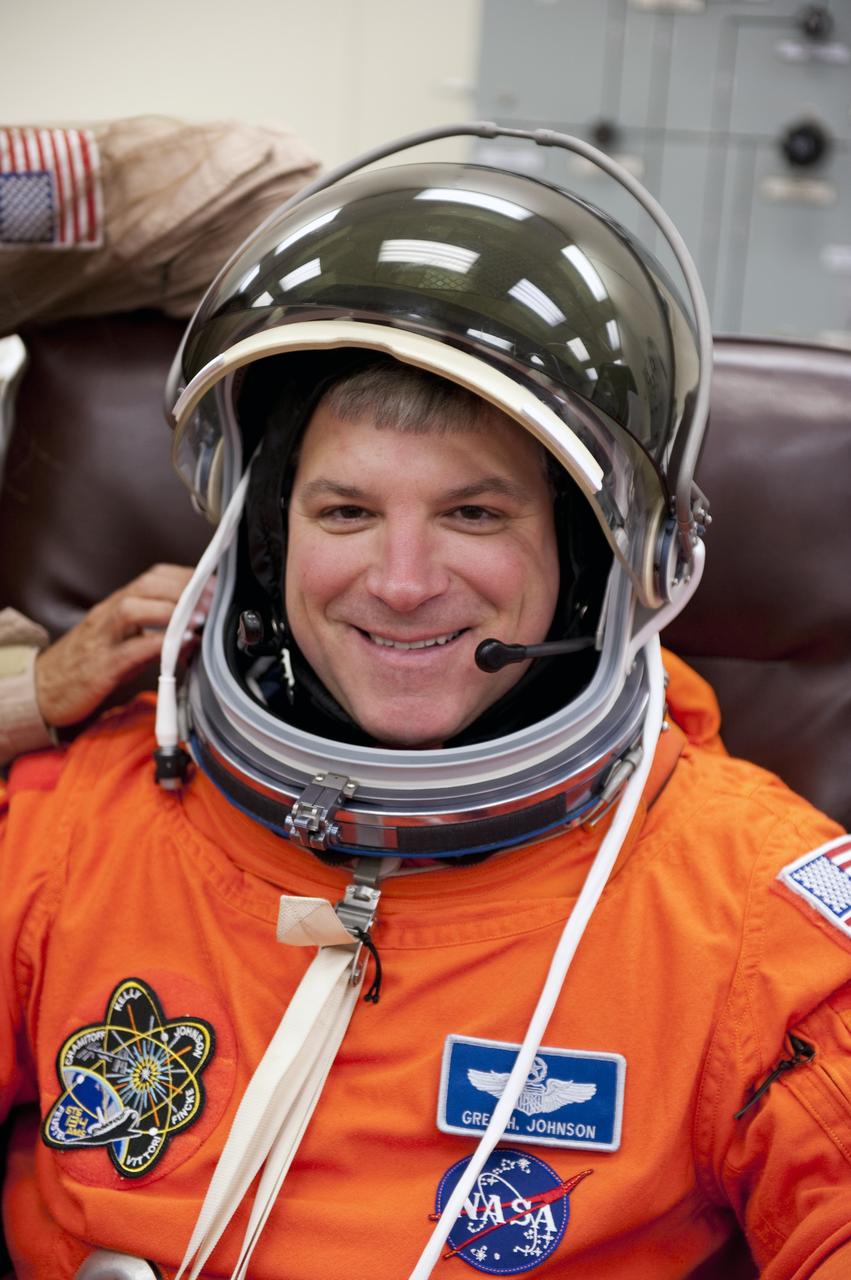
CAPE CANAVERAL, Fla. -- During a simulated launch countdown, STS-134 Pilot Greg H. Johnson checks the fit of his helmet in the Operations and Checkout Building at NASA's Kennedy Space Center in Florida. Next, Johnson and his crewmates will walk out to the waiting Astrovan. As part of the Terminal Countdown Demonstration Test (TCDT), the crew members will ride to the pad in their silver Astrovan and strap into space shuttle Endeavour to practice the steps that will be taken on launch day. Endeavour's six crew members are targeted to launch April 19 at 7:48 p.m. EDT. They will deliver the Express Logistics Carrier-3, Alpha Magnetic Spectrometer-2 (AMS), a high-pressure gas tank, additional spare parts for the Dextre robotic helper and micrometeoroid debris shields to the International Space Station. This will be the final spaceflight for Endeavour. For more information visit, www.nasa.gov/mission_pages/shuttle/shuttlemissions/sts134/index.html. Photo credit: NASA/Kim Shiflett
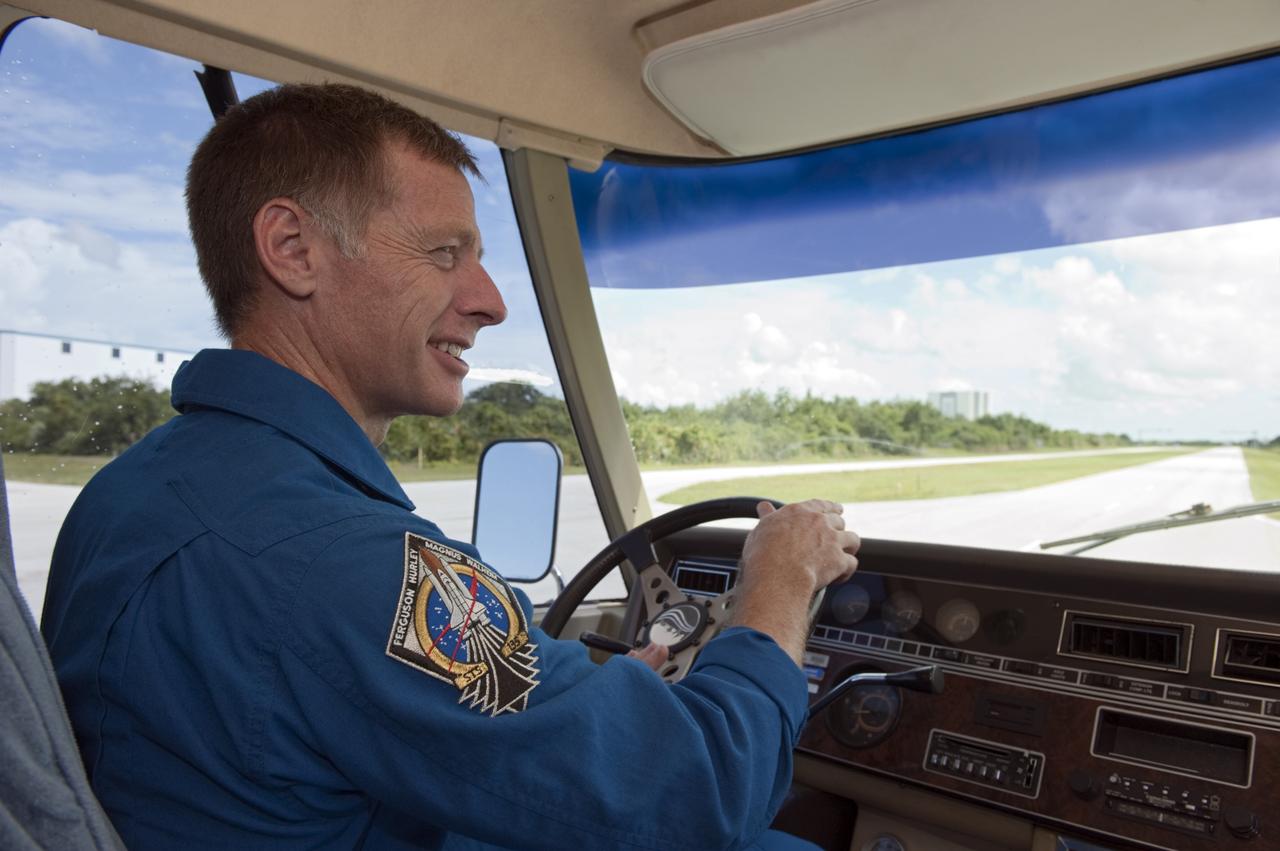
CAPE CANAVERAL, Fla. – STS-135 Commander Chris Ferguson settles in the driver's seat of NASA’s silver Astrovan. Since 1984, the Astrovan, a modified Airstream motor home, has carried shuttle crew members to the launch pads. Ferguson, along with Pilot Doug Hurley and Mission Specialist Sandra Magnus, was at the center for the traditional post-flight crew return presentation. STS-135 Mission Specialist Rex Walheim was unable to attend the Kennedy event. In July 2011, Atlantis and its crew delivered to the International Space Station the Raffaello multi-purpose logistics module packed with more than 9,400 pounds of spare parts, equipment and supplies that will sustain station operations for the next year. STS-135 was the 33rd and final flight for Atlantis and the final mission of the Space Shuttle Program. For more information, visit www.nasa.gov/mission_pages/shuttle/shuttlemissions/sts135/index.html. Photo credit: NASA/Kim Shiflett
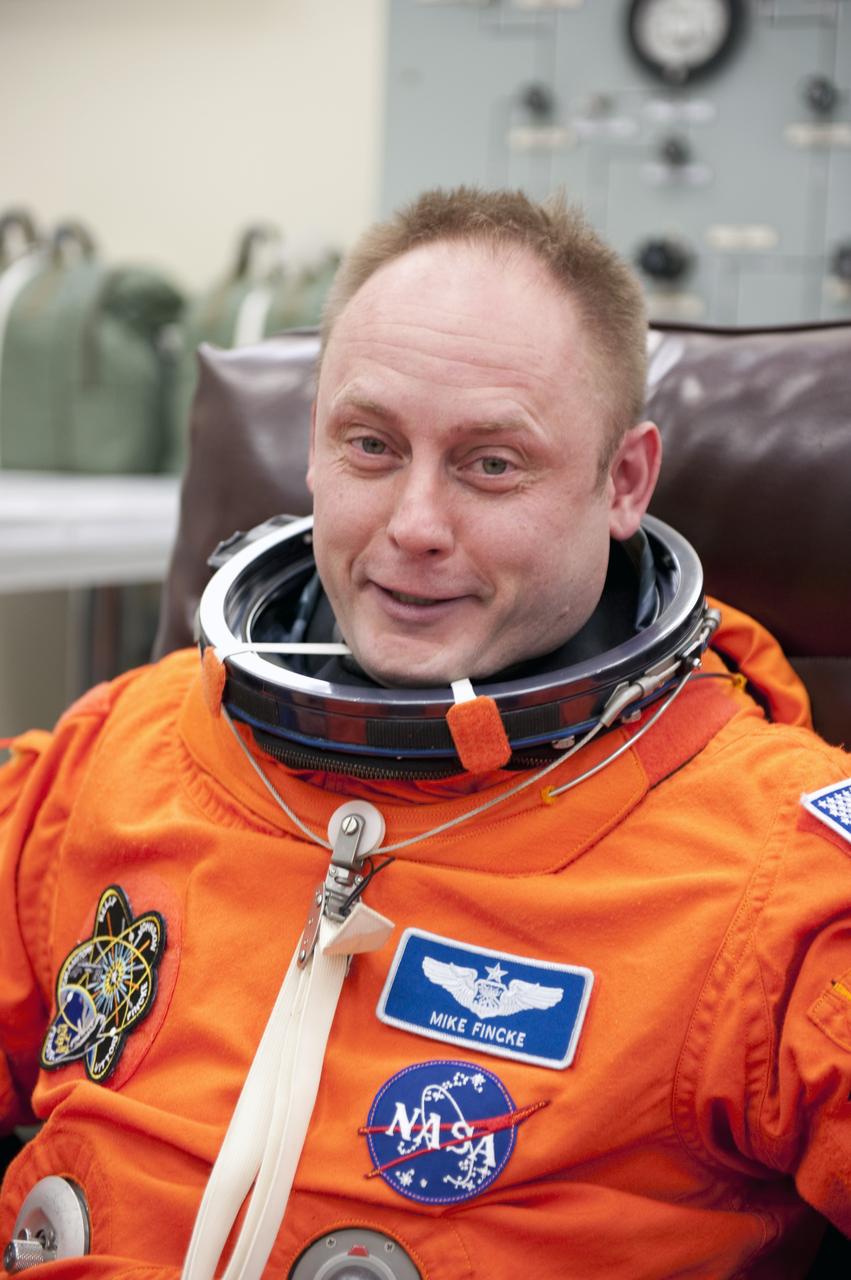
CAPE CANAVERAL, Fla. -- During a simulated launch countdown, STS-134 Mission Specialist Michael Fincke checks the fit of his bright-orange, launch-and-entry suit in the Operations and Checkout Building at NASA's Kennedy Space Center in Florida. Next, Fincke and his crewmates will walk out to the waiting Astrovan. As part of the Terminal Countdown Demonstration Test (TCDT), the crew members will ride to the pad in their silver Astrovan and strap into space shuttle Endeavour to practice the steps that will be taken on launch day. Endeavour's six crew members are targeted to launch April 19 at 7:48 p.m. EDT. They will deliver the Express Logistics Carrier-3, Alpha Magnetic Spectrometer-2 (AMS), a high-pressure gas tank, additional spare parts for the Dextre robotic helper and micrometeoroid debris shields to the International Space Station. This will be the final spaceflight for Endeavour. For more information visit, www.nasa.gov/mission_pages/shuttle/shuttlemissions/sts134/index.html. Photo credit: NASA/Kim Shiflett
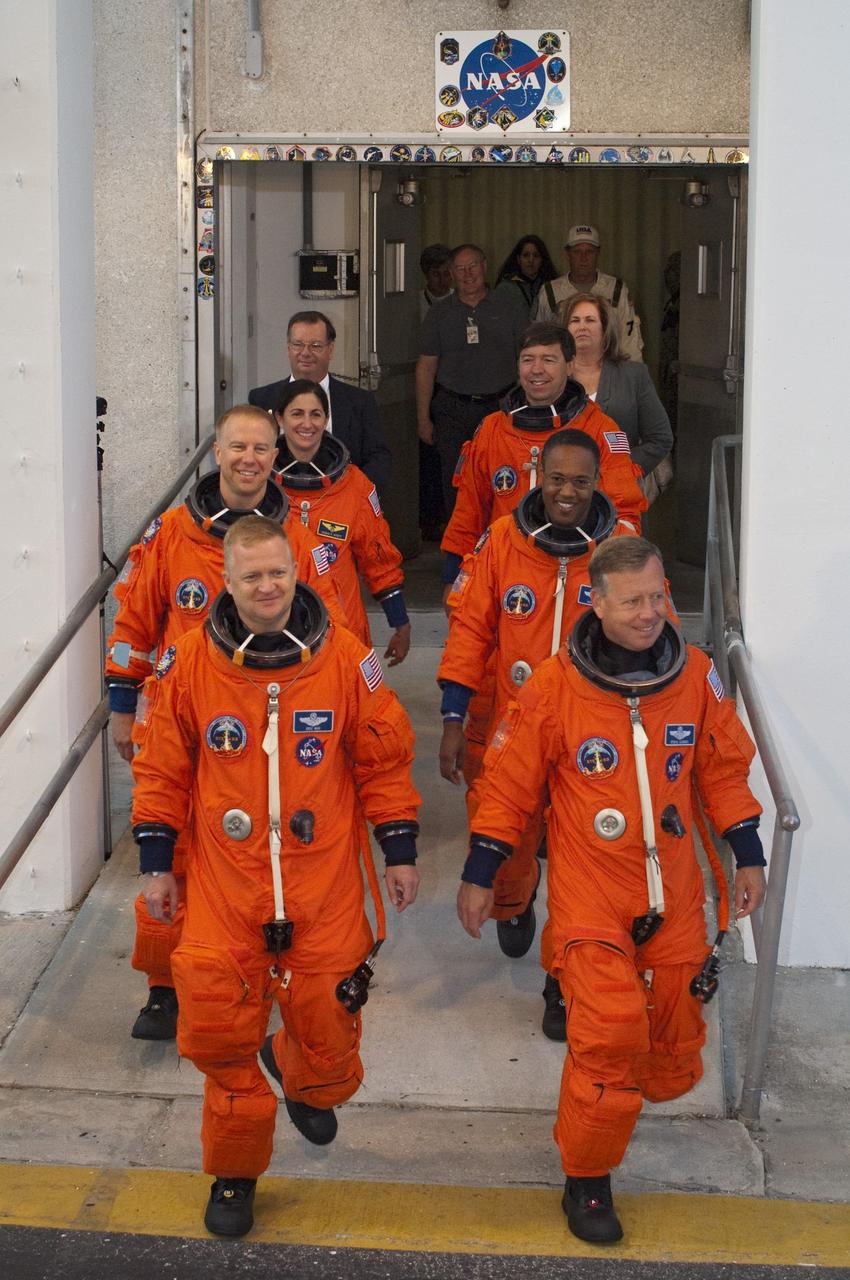
CAPE CANAVERAL, Fla. -- During a simulated launch countdown, the STS-133 crew walks out of the Operations and Checkout Building to the waiting Astrovan at NASA's Kennedy Space Center in Florida. As part of the Terminal Countdown Demonstration Test (TCDT), the crew members ride to the pad in their silver Astrovan and strap into space shuttle Discovery to practice the steps that will be taken on launch day. Discovery and its STS-133 crew will deliver the Permanent Multipurpose Module, packed with supplies and critical spare parts, as well as Robonaut 2, the dexterous humanoid astronaut helper, to the International Space Station. Launch is targeted for Nov. 1 at 4:40 p.m. For more information on the STS-133 mission, visit www.nasa.gov/mission_pages/shuttle/shuttlemissions/sts133/. Photo credit: NASA/Kim Shiflett
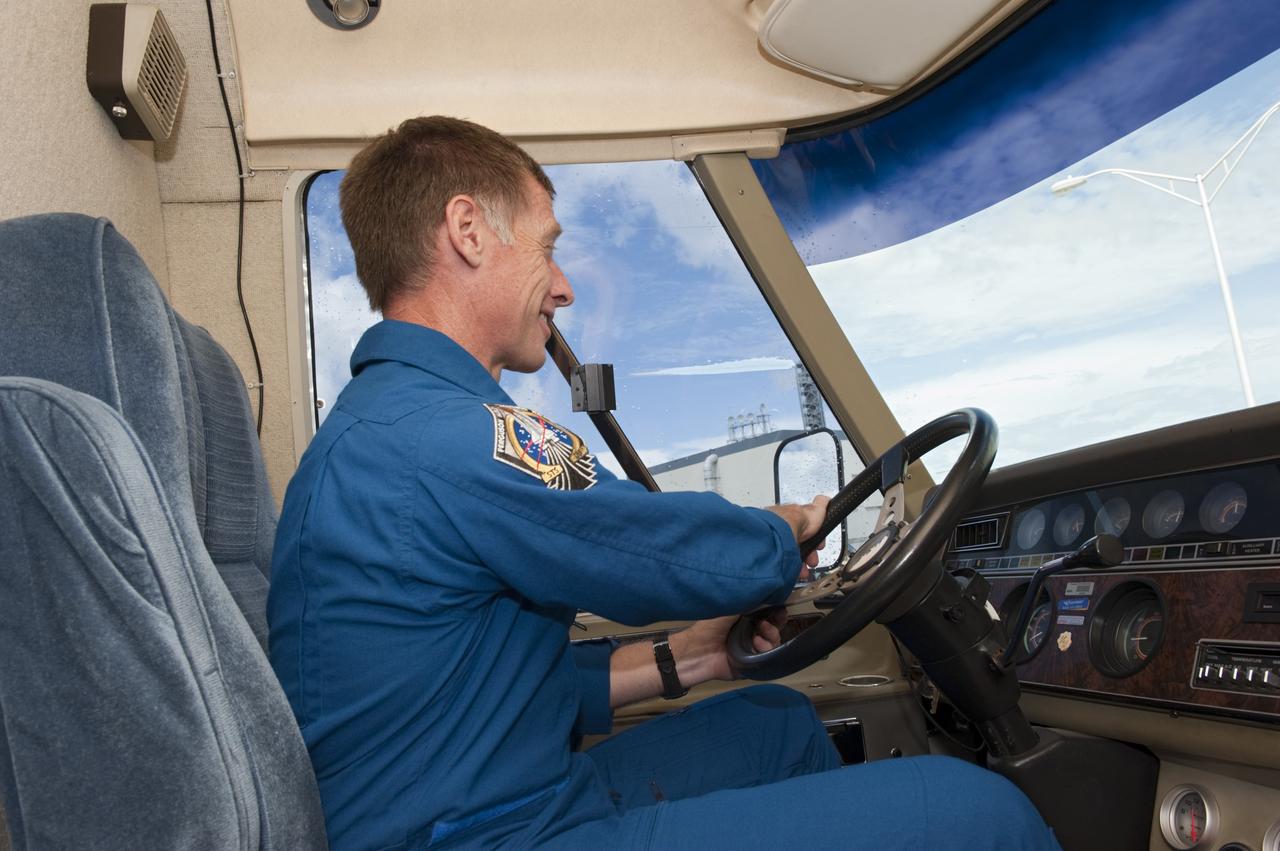
CAPE CANAVERAL, Fla. – STS-135 Commander Chris Ferguson settles in the driver's seat of NASA’s silver Astrovan. Since 1984, the Astrovan, a modified Airstream motor home, has carried shuttle crew members to the launch pads. Ferguson, along with Pilot Doug Hurley and Mission Specialist Sandra Magnus, was at the center for the traditional post-flight crew return presentation. STS-135 Mission Specialist Rex Walheim was unable to attend the Kennedy event. In July 2011, Atlantis and its crew delivered to the International Space Station the Raffaello multi-purpose logistics module packed with more than 9,400 pounds of spare parts, equipment and supplies that will sustain station operations for the next year. STS-135 was the 33rd and final flight for Atlantis and the final mission of the Space Shuttle Program. For more information, visit www.nasa.gov/mission_pages/shuttle/shuttlemissions/sts135/index.html. Photo credit: NASA/Kim Shiflett
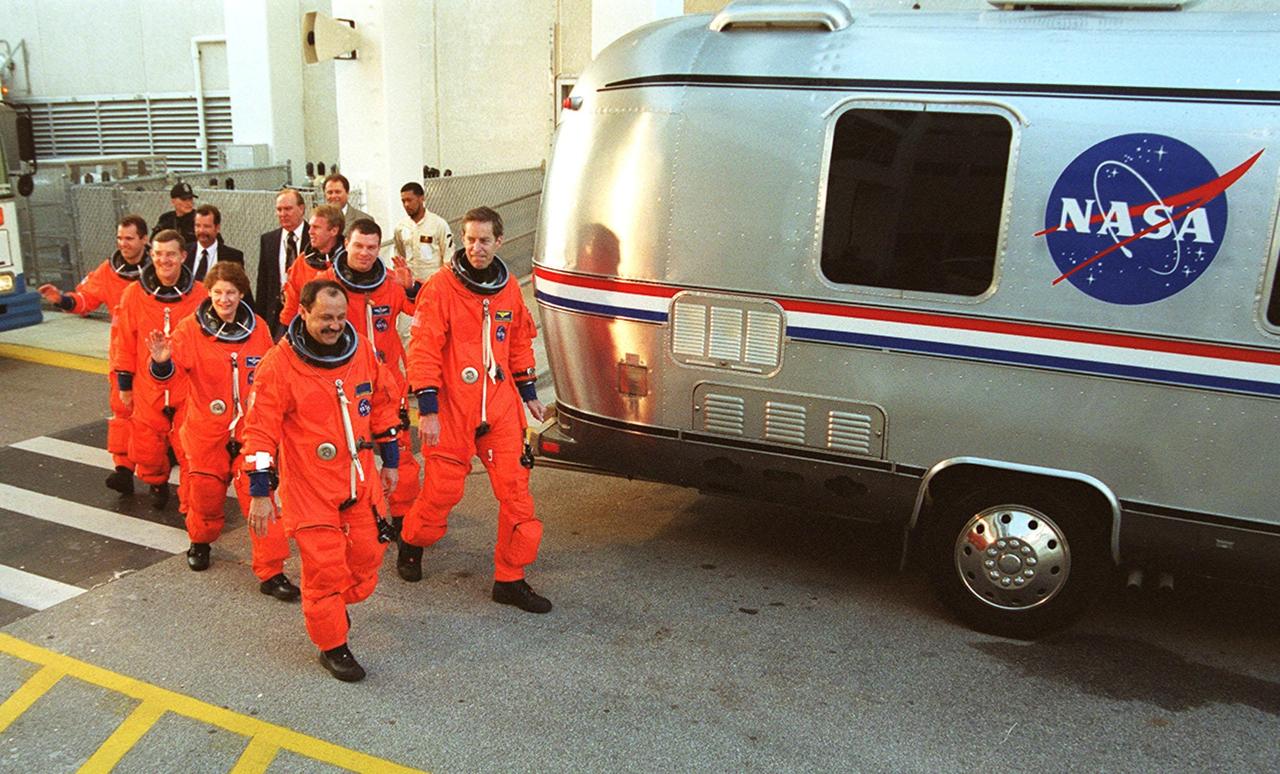
The STS-102 crew heads to the silver Astrovan after leaving the Operations and Checkout Building. In front are Mission Specialist Yury Usachev (left) and Commander James Wetherbee; second are Mission Specialist Susan Helms and Pilot James Kelly; third, Mission Specialists James Voss and Andrew Thomas; and last, Mission Specialist Paul Richards. Voss, Helms and Usachev are the Expedition Two crew, going to the International Space Station for their four-month rotation. The Astrovan will take the crew to Launch Pad 39B for a simulated countdown, part of Terminal Countdown Demonstration Test activities. STS-102 is the eighth construction flight to the Space Station, with Space Shuttle Discovery carrying the Multi-Purpose Logistics Module Leonardo. In addition, Expedition One will return to Earth with Discovery. Launch on mission STS-102 is scheduled for March 8
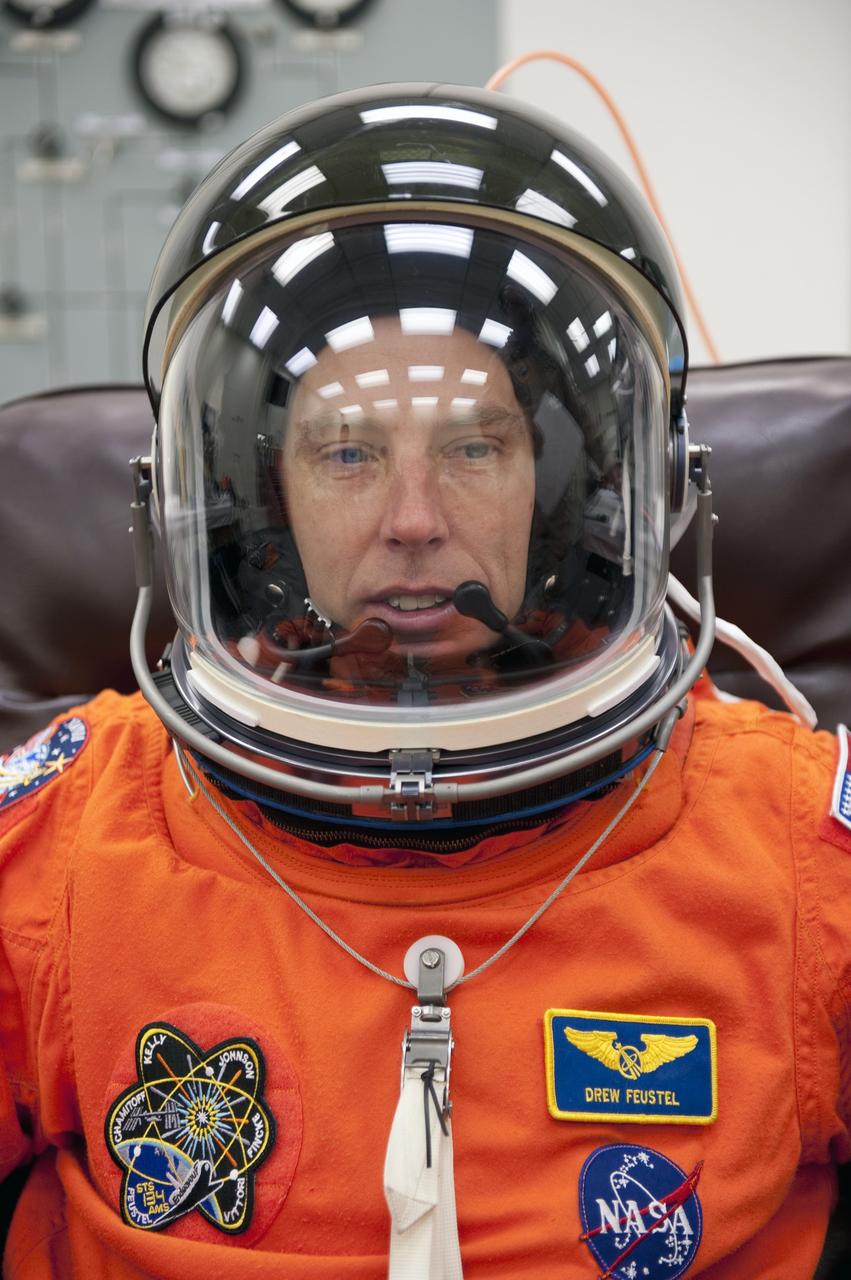
CAPE CANAVERAL, Fla. -- During a simulated launch countdown, STS-134 Mission Specialist Andrew Feustel checks the fit of his helmet in the Operations and Checkout Building at NASA's Kennedy Space Center in Florida. Next, Feustel and his crewmates will walk out to the waiting Astrovan. As part of the Terminal Countdown Demonstration Test (TCDT), the crew members will ride to the pad in their silver Astrovan and strap into space shuttle Endeavour to practice the steps that will be taken on launch day. Endeavour's six crew members are targeted to launch April 19 at 7:48 p.m. EDT. They will deliver the Express Logistics Carrier-3, Alpha Magnetic Spectrometer-2 (AMS), a high-pressure gas tank, additional spare parts for the Dextre robotic helper and micrometeoroid debris shields to the International Space Station. This will be the final spaceflight for Endeavour. For more information visit, www.nasa.gov/mission_pages/shuttle/shuttlemissions/sts134/index.html. Photo credit: NASA/Kim Shiflett
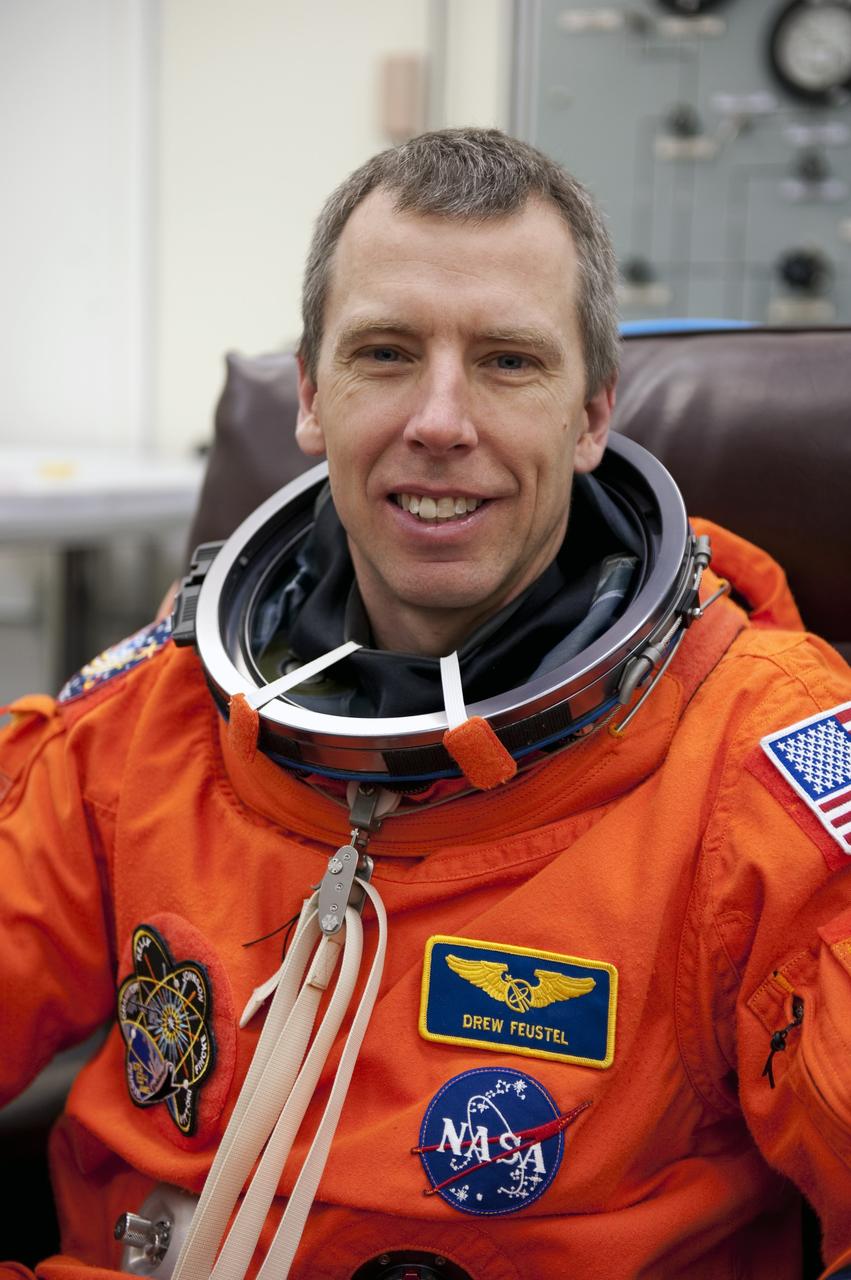
CAPE CANAVERAL, Fla. -- During a simulated launch countdown, STS-134 Mission Specialist Andrew Feustel checks the fit of his bright-orange, launch-and-entry suit in the Operations and Checkout Building at NASA's Kennedy Space Center in Florida. Next, Feustel and his crewmates will walk out to the waiting Astrovan. As part of the Terminal Countdown Demonstration Test (TCDT), the crew members will ride to the pad in their silver Astrovan and strap into space shuttle Endeavour to practice the steps that will be taken on launch day. Endeavour's six crew members are targeted to launch April 19 at 7:48 p.m. EDT. They will deliver the Express Logistics Carrier-3, Alpha Magnetic Spectrometer-2 (AMS), a high-pressure gas tank, additional spare parts for the Dextre robotic helper and micrometeoroid debris shields to the International Space Station. This will be the final spaceflight for Endeavour. For more information visit, www.nasa.gov/mission_pages/shuttle/shuttlemissions/sts134/index.html. Photo credit: NASA/Kim Shiflett

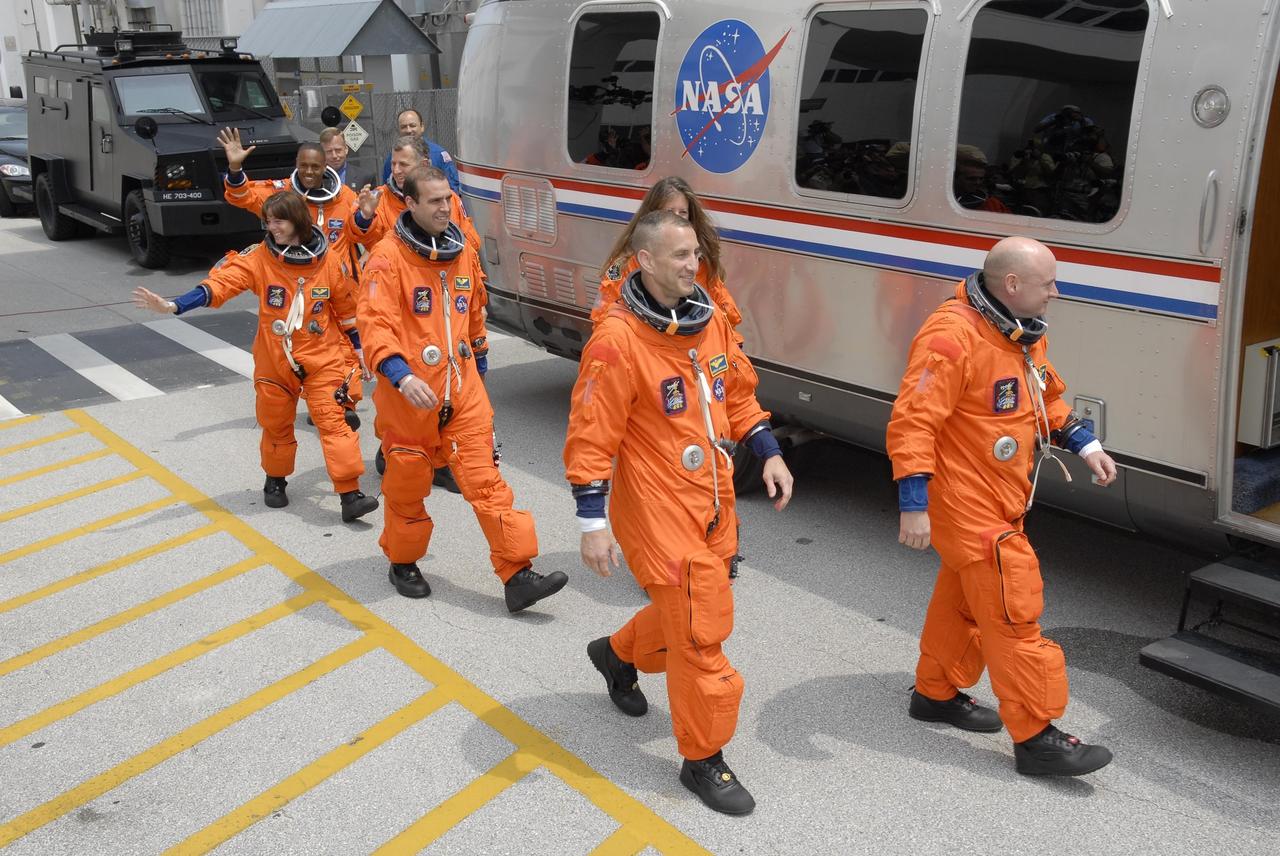
CAPE CANAVERAL, Fla. -- The STS-124 crew pauses in front of the Astrovan for photographers before getting on board the Astrovan for the ride to Launch Pad 39A at NASA's Kennedy Space Center. The crew is taking part in a simulated launch countdown. From left are Mission Specialists Greg Chamitoff, Akihiko Hoshide, Mike Fossum, Ron Garan and Karen Nyberg, Pilot Ken Ham, and Commander Mark Kelly. The simulation is part of the launch dress rehearsal called the terminal countdown demonstration test. TCDT provides astronauts and ground crews with an opportunity to participate in various simulated countdown activities, including equipment familiarization and emergency training. On the STS-124 mission, the crew will deliver and install the Japanese Experiment Module – Pressurized Module and Japanese Remote Manipulator System. Discovery's launch is targeted for May 31. Photo credit: NASA/Kim Shiflett
KENNEDY SPACE CENTER, FLA. -- The STS-118 crew waves to spectators as they head for the Astrovan. From left are Mission Specialists Alvin Drew, Barbara R. Morgan, Dave Williams and Rick Mastracchio, Pilot Charlie Hobaugh, Mission Specialist Tracy Caldwell and Commander Scott Kelly. The Astrovan will take them to Launch Pad 39A for final suit preparations before climbing into Space Shuttle Endeavour for launch at 6:36 p.m. EDT. The STS-118 mission is the 22nd shuttle flight to the International Space Station. It will continue space station construction by delivering a third starboard truss segment, S5, and other payloads such as the SPACEHAB module and the external stowage platform 3. The 11-day mission may be extended to as many as 14 depending on the test of the Station-to-Shuttle Power Transfer System that will allow the docked shuttle to draw electrical power from the station and extend its visits to the orbiting lab. NASA/Kim Shiflett
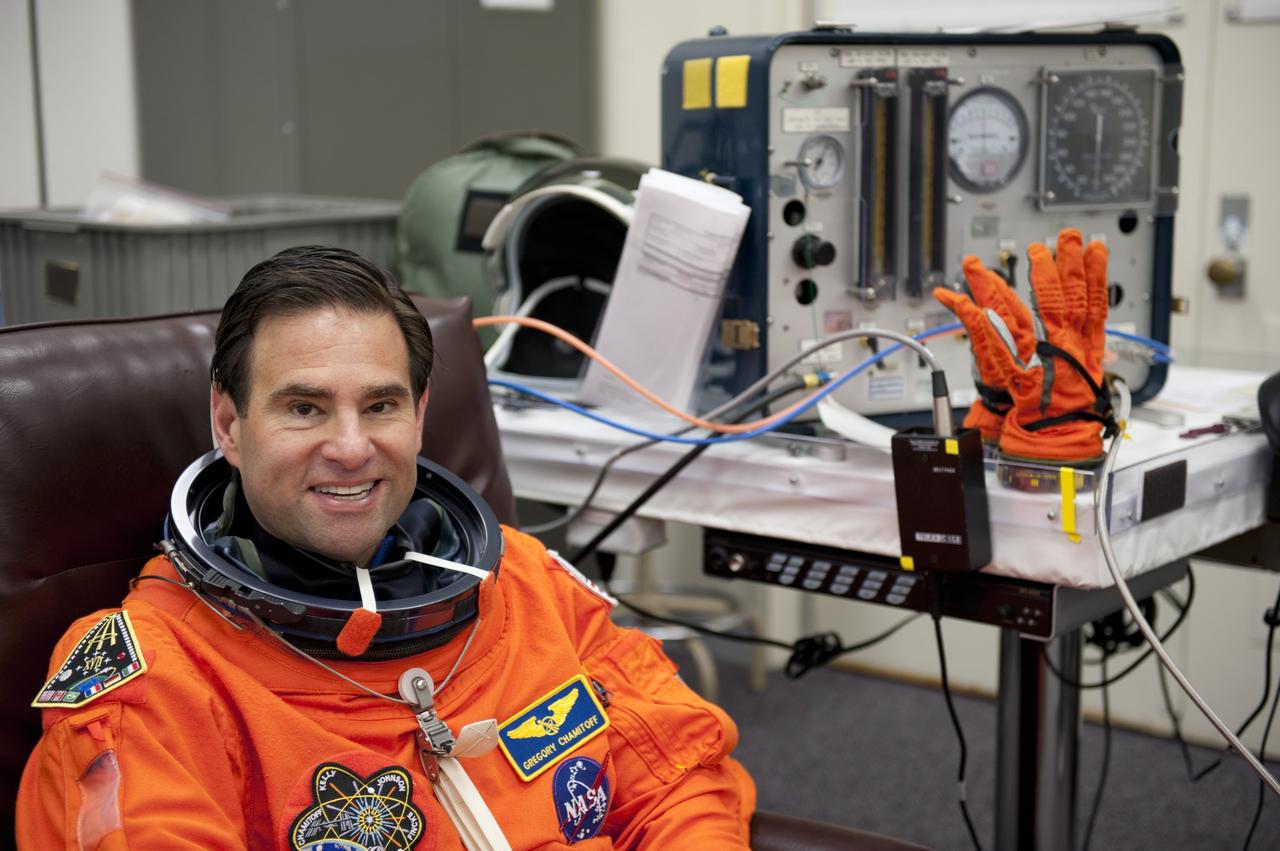
CAPE CANAVERAL, Fla. -- During a simulated launch countdown, STS-134 Mission Specialist Greg Chamitoff checks the fit of his bright-orange, launch-and-entry suit in the Operations and Checkout Building at NASA's Kennedy Space Center in Florida. Next, Chamitoff and his crewmates will walk out to the waiting Astrovan. As part of the Terminal Countdown Demonstration Test (TCDT), the crew members will ride to the pad in their silver Astrovan and strap into space shuttle Endeavour to practice the steps that will be taken on launch day. Endeavour's six crew members are targeted to launch April 19 at 7:48 p.m. EDT. They will deliver the Express Logistics Carrier-3, Alpha Magnetic Spectrometer-2 (AMS), a high-pressure gas tank, additional spare parts for the Dextre robotic helper and micrometeoroid debris shields to the International Space Station. This will be the final spaceflight for Endeavour. For more information visit, www.nasa.gov/mission_pages/shuttle/shuttlemissions/sts134/index.html. Photo credit: NASA/Kim Shiflett
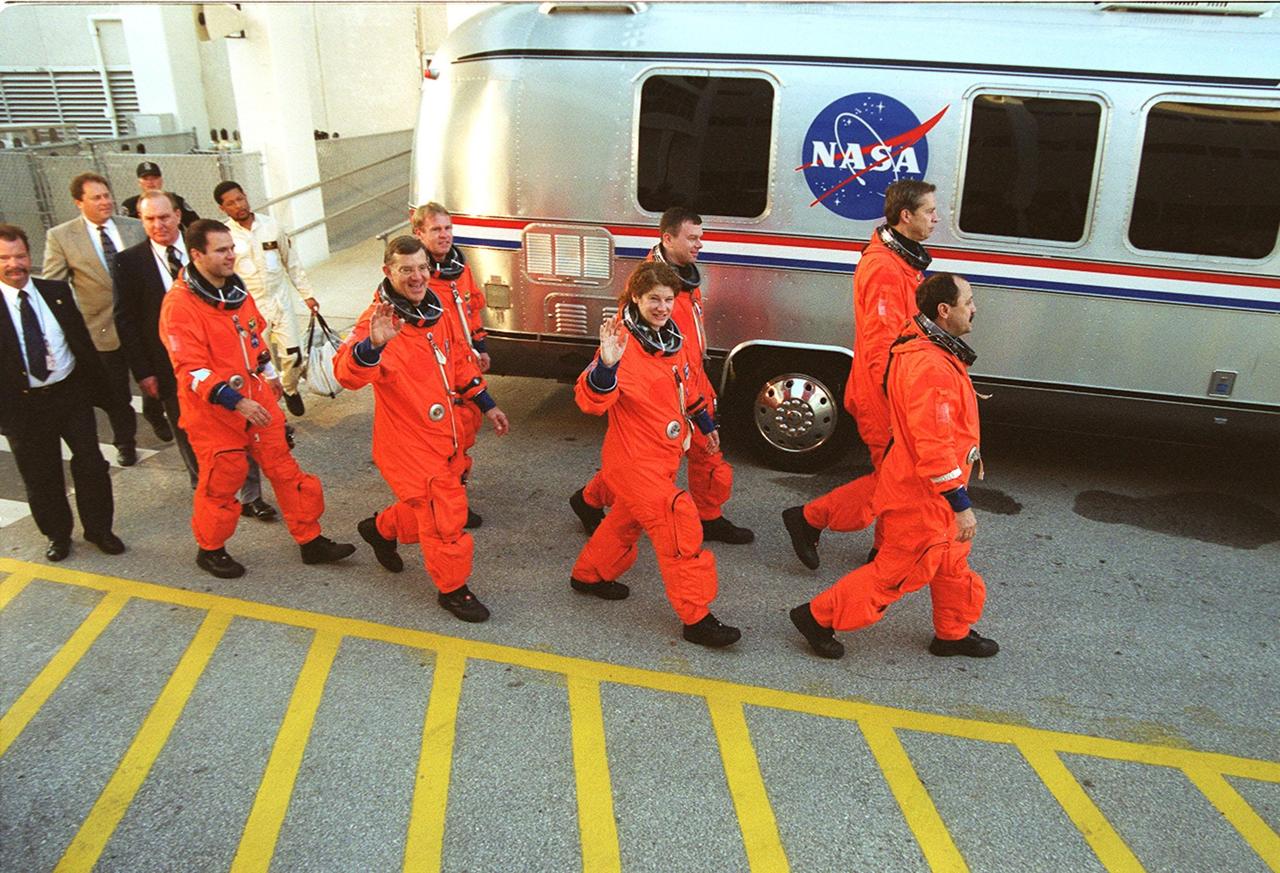
Waving to media and bystanders, the STS-102 crew strides to the silver Astrovan after leaving the Operations and Checkout Building. In front, left to right, are Mission Specialists Paul Richards, James Voss, Susan Helms and Yury Usachev. Behind then are Mission Specialist Andrew Thomas, Pilot James Kelly and Commander James Wetherbee. Voss, Helms and Usachev are the Expedition Two crew, going to the International Space Station for their four-month rotation. The Astrovan will take the crew to Launch Pad 39B for a simulated countdown, part of Terminal Countdown Demonstration Test activities. STS-102 is the eighth construction flight to the Space Station, with Space Shuttle Discovery carrying the Multi-Purpose Logistics Module Leonardo. In addition, Expedition One will return to Earth with Discovery. Launch on mission STS-102 is scheduled for March 8

CAPE CANAVERAL, Fla. -- During a simulated launch countdown, STS-134 Mission Specialist Roberto Vittori, with the European Space Agency, checks the fit of his helmet in the Operations and Checkout Building at NASA's Kennedy Space Center in Florida. Next, Vittori and his crewmates will walk out to the waiting Astrovan. As part of the Terminal Countdown Demonstration Test (TCDT), the crew members will ride to the pad in their silver Astrovan and strap into space shuttle Endeavour to practice the steps that will be taken on launch day. Endeavour's six crew members are targeted to launch April 19 at 7:48 p.m. EDT. They will deliver the Express Logistics Carrier-3, Alpha Magnetic Spectrometer-2 (AMS), a high-pressure gas tank, additional spare parts for the Dextre robotic helper and micrometeoroid debris shields to the International Space Station. This will be the final spaceflight for Endeavour. For more information visit, www.nasa.gov/mission_pages/shuttle/shuttlemissions/sts134/index.html. Photo credit: NASA/Kim Shiflett
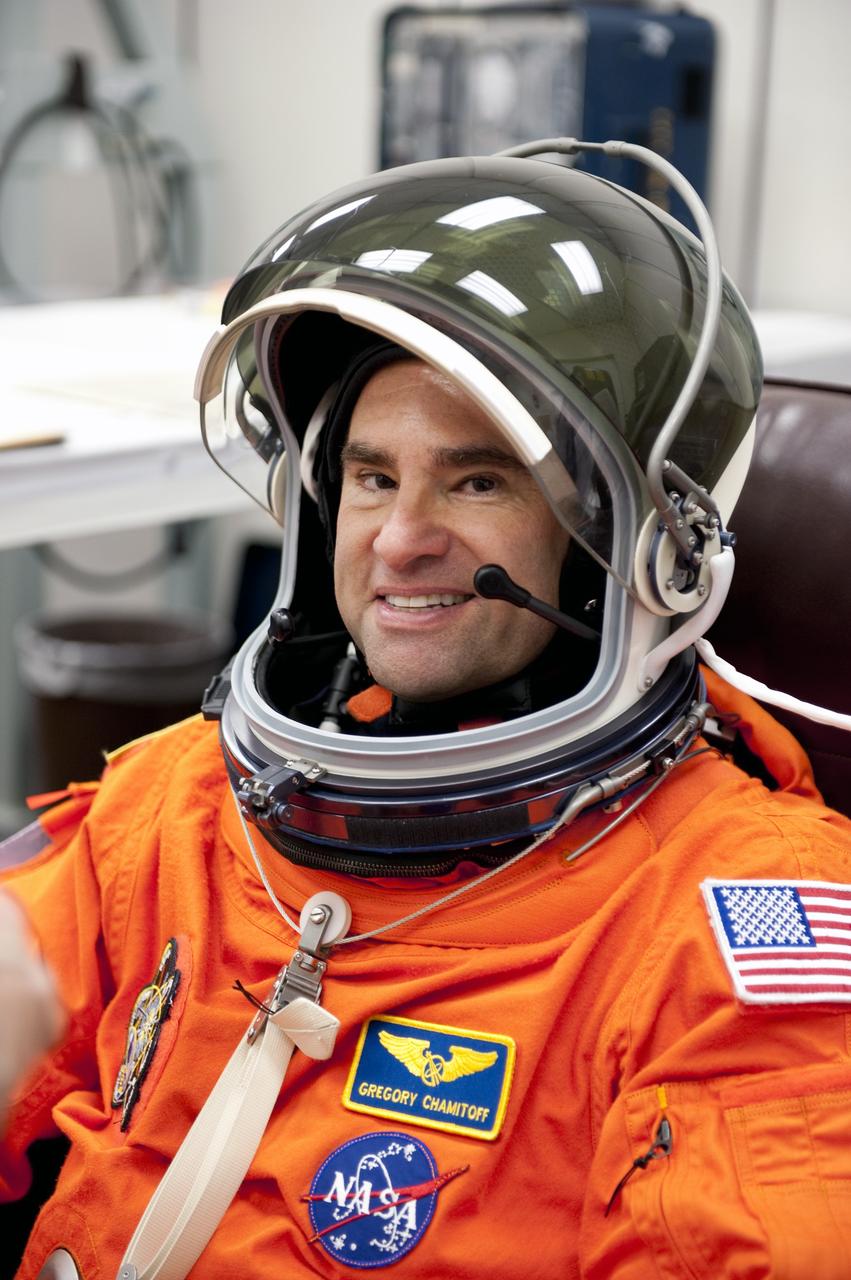
CAPE CANAVERAL, Fla. -- During a simulated launch countdown, STS-134 Mission Specialist Greg Chamitoff checks the fit of his helmet in the Operations and Checkout Building at NASA's Kennedy Space Center in Florida. Next, Chamitoff and his crewmates will walk out to the waiting Astrovan. As part of the Terminal Countdown Demonstration Test (TCDT), the crew members will ride to the pad in their silver Astrovan and strap into space shuttle Endeavour to practice the steps that will be taken on launch day. Endeavour's six crew members are targeted to launch April 19 at 7:48 p.m. EDT. They will deliver the Express Logistics Carrier-3, Alpha Magnetic Spectrometer-2 (AMS), a high-pressure gas tank, additional spare parts for the Dextre robotic helper and micrometeoroid debris shields to the International Space Station. This will be the final spaceflight for Endeavour. For more information visit, www.nasa.gov/mission_pages/shuttle/shuttlemissions/sts134/index.html. Photo credit: NASA/Kim Shiflett
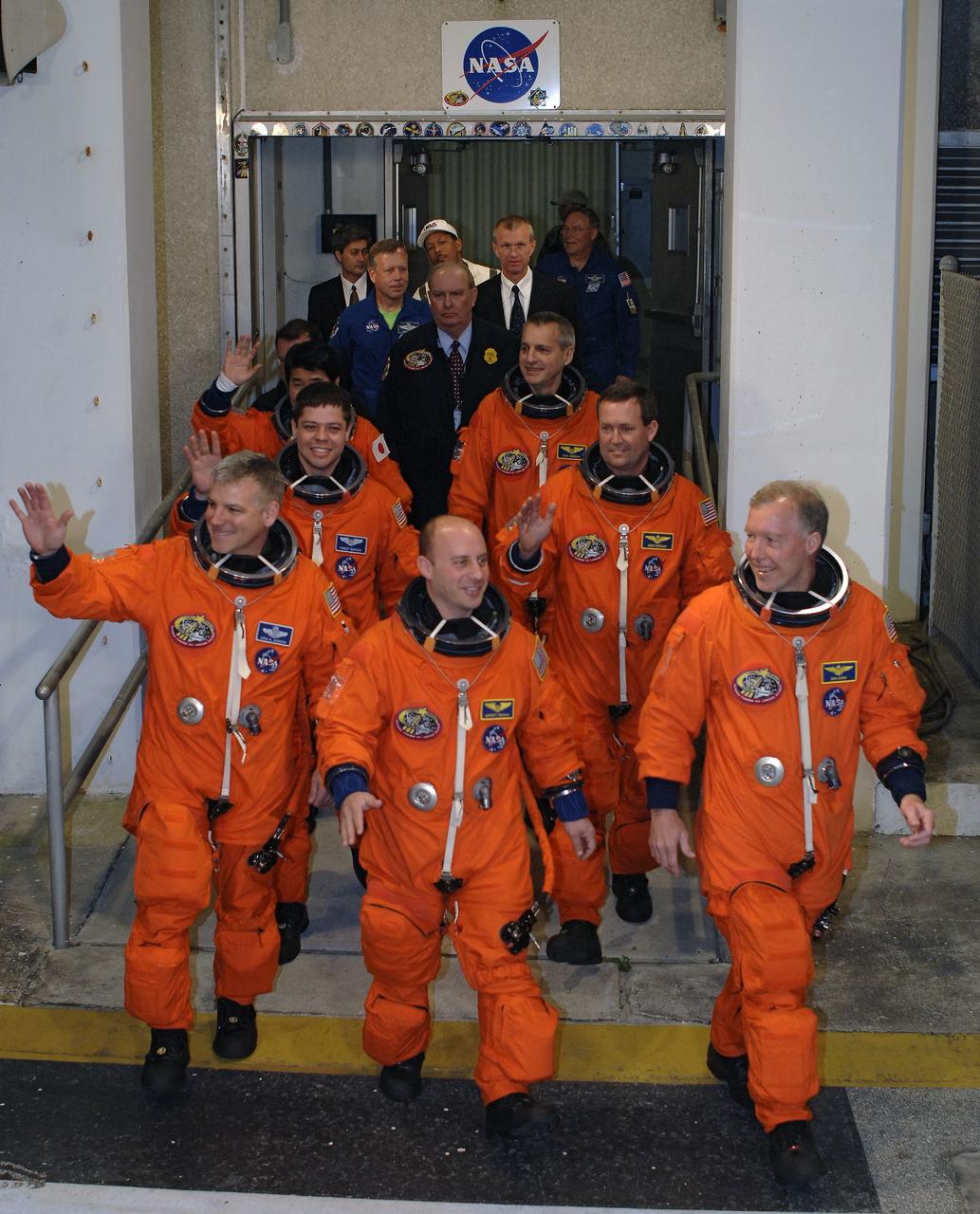
KENNEDY SPACE CENTER, FLA. -- Space shuttle Endeavour's STS-123 crew eagerly exits the Operations and Checkout Building on its way to the waiting Astrovan. On the right, front to back, are Commander Dominic Gorie and Mission Specialists Mike Foreman and Rick Linnehan. On the left, front to back, are Mission Specialists Garrett Reisman, Pilot Gregory H. Johnson and Mission Specialists Robert L. Behnken and Takao Doi of the Japan Aerospace Exploration Agency. Reisman will remain on the International Space Station as a flight engineer. The Astrovan will take the crew to Launch Pad 39A for liftoff. The crew will make a record-breaking 16-day mission to the International Space Station. On STS-123, Endeavour and its crew will deliver the first section of the Japan Aerospace Exploration Agency's Kibo laboratory and the Canadian Space Agency's two-armed robotic system, Dextre. Launch is scheduled for 2:28 a.m. EDT March 11. Photo credit: NASA/Kim Shiflett
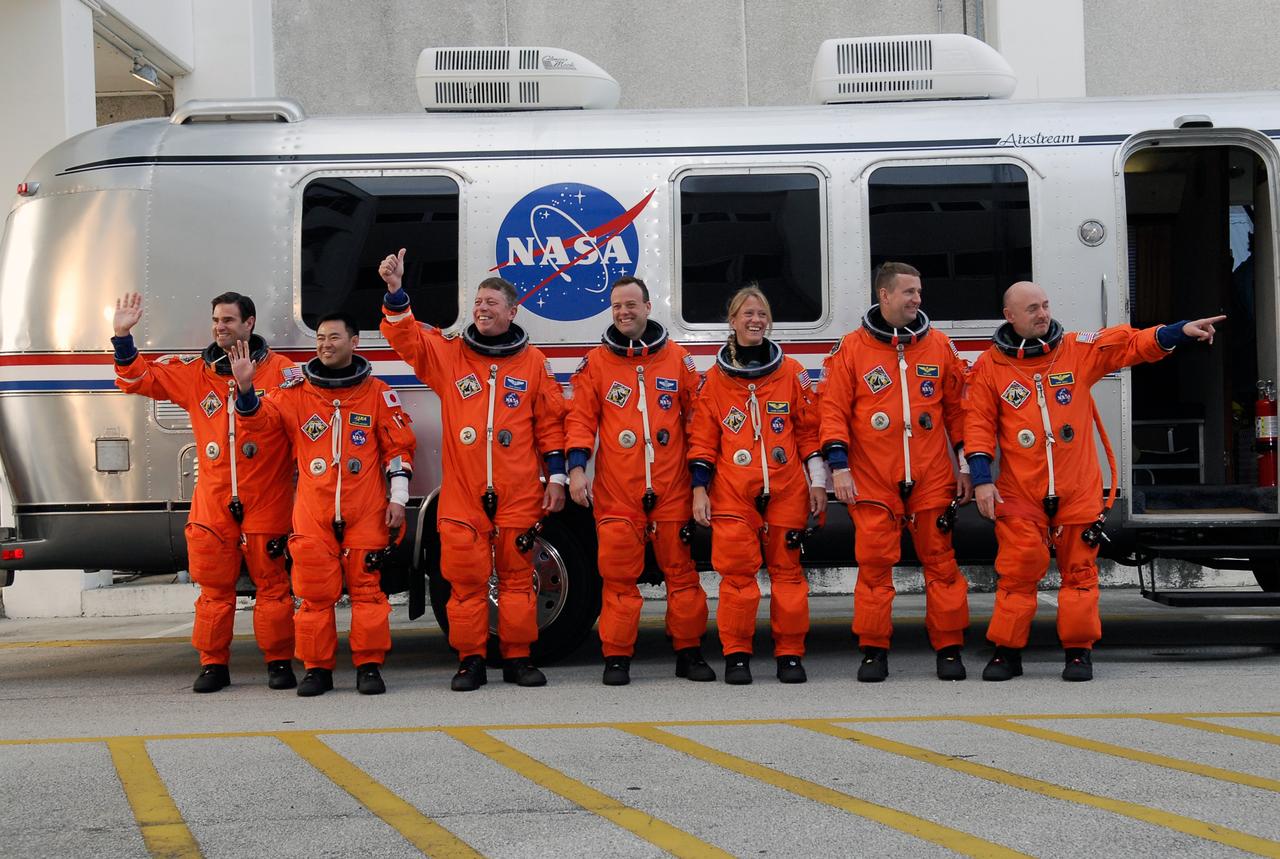
CAPE CANAVERAL, Fla. -- The STS-124 crew pauses in front of the Astrovan to greet spectators before getting on board the Astrovan for the ride to Launch Pad 39A at NASA's Kennedy Space Center. The crew is taking part in a simulated launch countdown. From left are Mission Specialists Greg Chamitoff, Akihiko Hoshide, Mike Fossum, Ron Garan and Karen Nyberg, Pilot Ken Ham, and Commander Mark Kelly. The simulation is part of the launch dress rehearsal called the terminal countdown demonstration test. TCDT provides astronauts and ground crews with an opportunity to participate in various simulated countdown activities, including equipment familiarization and emergency training. On the STS-124 mission, the crew will deliver and install the Japanese Experiment Module – Pressurized Module and Japanese Remote Manipulator System. Discovery's launch is targeted for May 31. Photo credit: NASA/Kim Shiflett
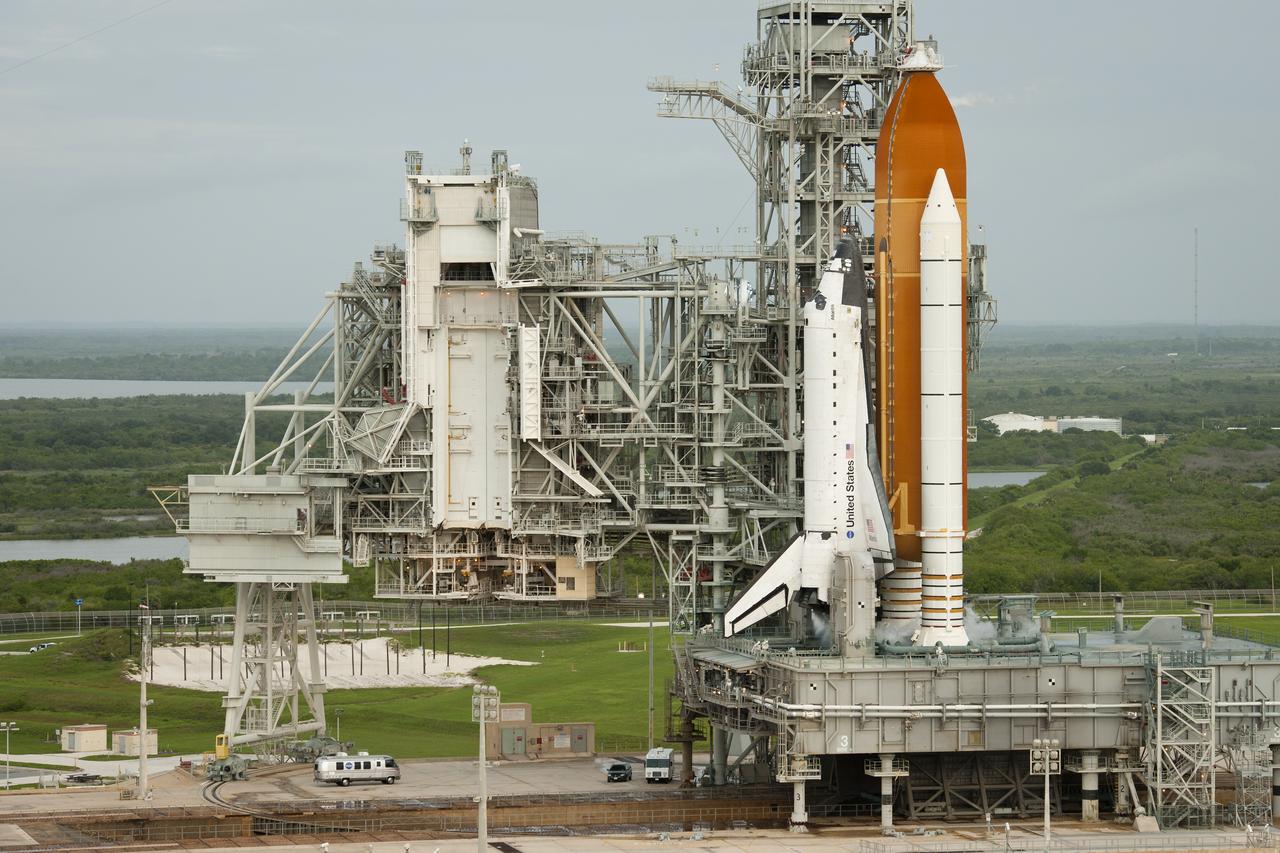
The Astrovan carrying the STS-135 crew; Chris Ferguson, commander, Doug Hurley, pilot, and mission specialists Rex Walheim and Sandy Mangus, arrives at launch pad 39A and space shuttle Atlantis, Friday, July 8, 2011, at Kennedy Space Center in Cape Canaveral, Fla. The launch of Atlantis, STS-135, is the final flight of the shuttle program, a 12-day mission to the International Space Station. Photo Credit: (NASA/Bill Ingalls)
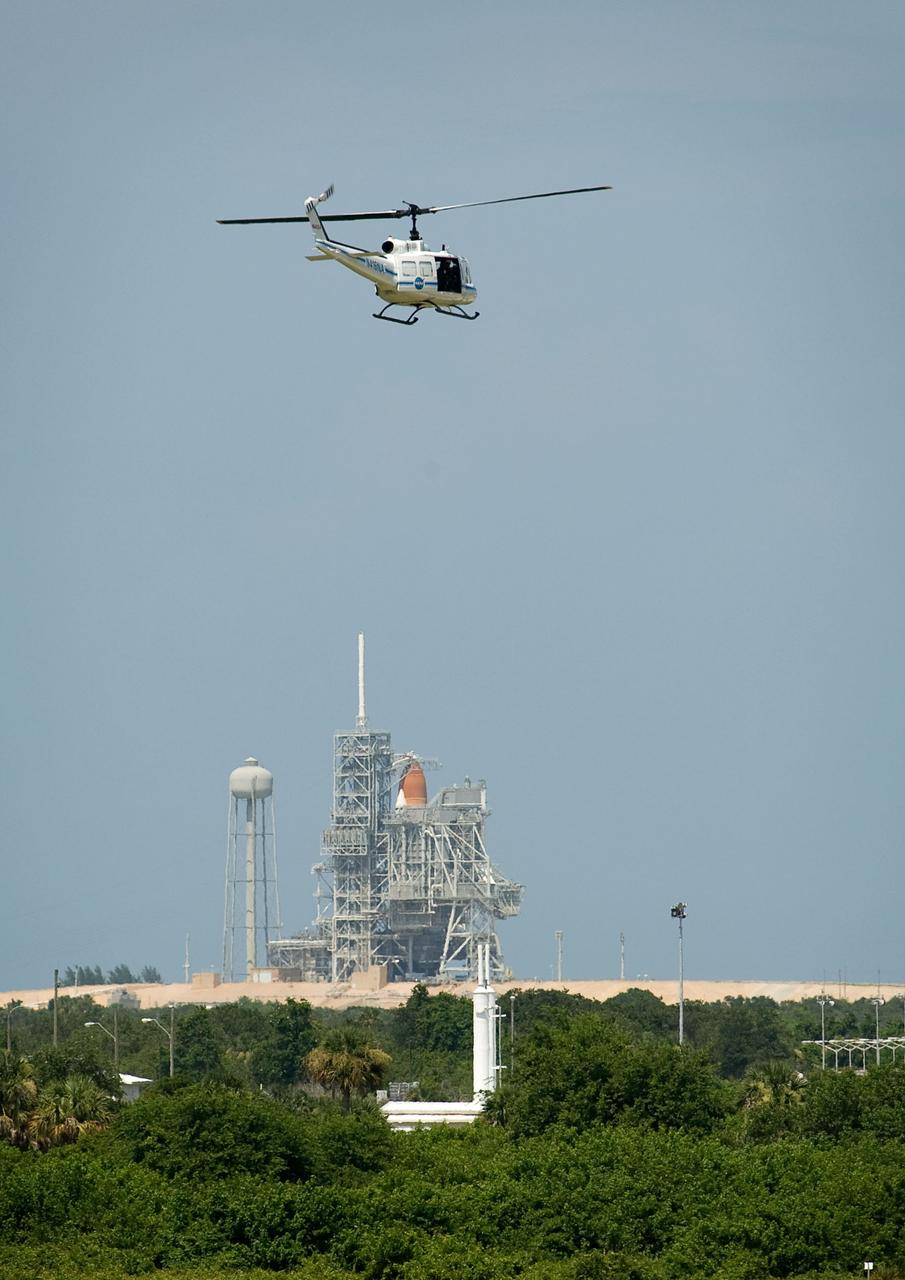
A NASA Security helicopter watches over the Astrovan as it takes the crew of STS-127 to the space shuttle Endeavour at pad 39a at NASA's Kennedy Space Center in Cape Canaveral, Florida, Saturday, July 12, 2009. Endeavour is set to launch at 7:13p.m. EDT with the crew of STS-127 and start a 16-day mission that will feature five spacewalks and complete construction of the Japan Aerospace Exploration Agency's Kibo laboratory. Photo Credit: (NASA/Bill Ingalls)
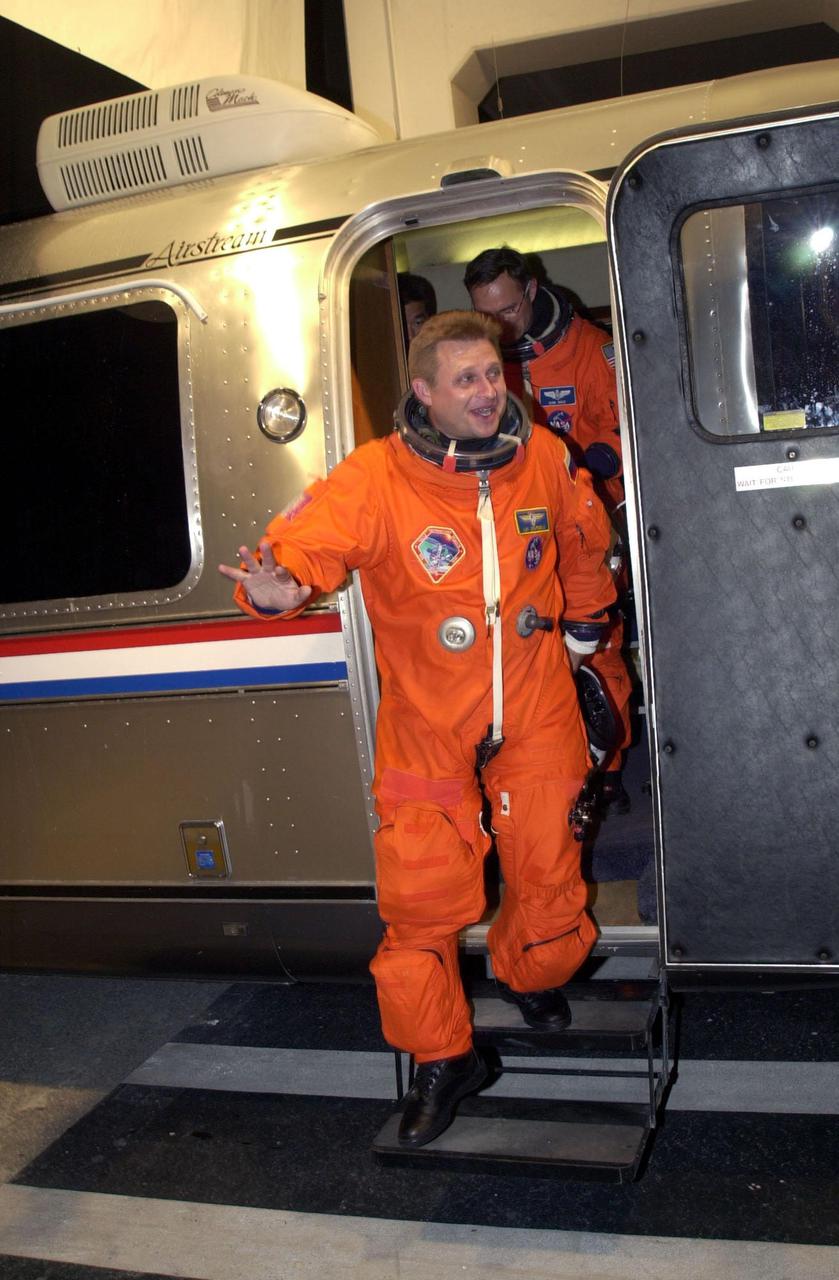
KENNEDY SPACE CENTER, Fla. -- Expedition 4 Commander Yuri Onufrienko steps down from the Astrovan after returning from Space Shuttle Endeavour. The launch of STS-108 was delayed by one day Dec. 4, 2001, due to poor weather at Kennedy. Space Shuttle Endeavour is now scheduled to lift off at 5:19 p.m. EST (2219 GMT) Dec. 5
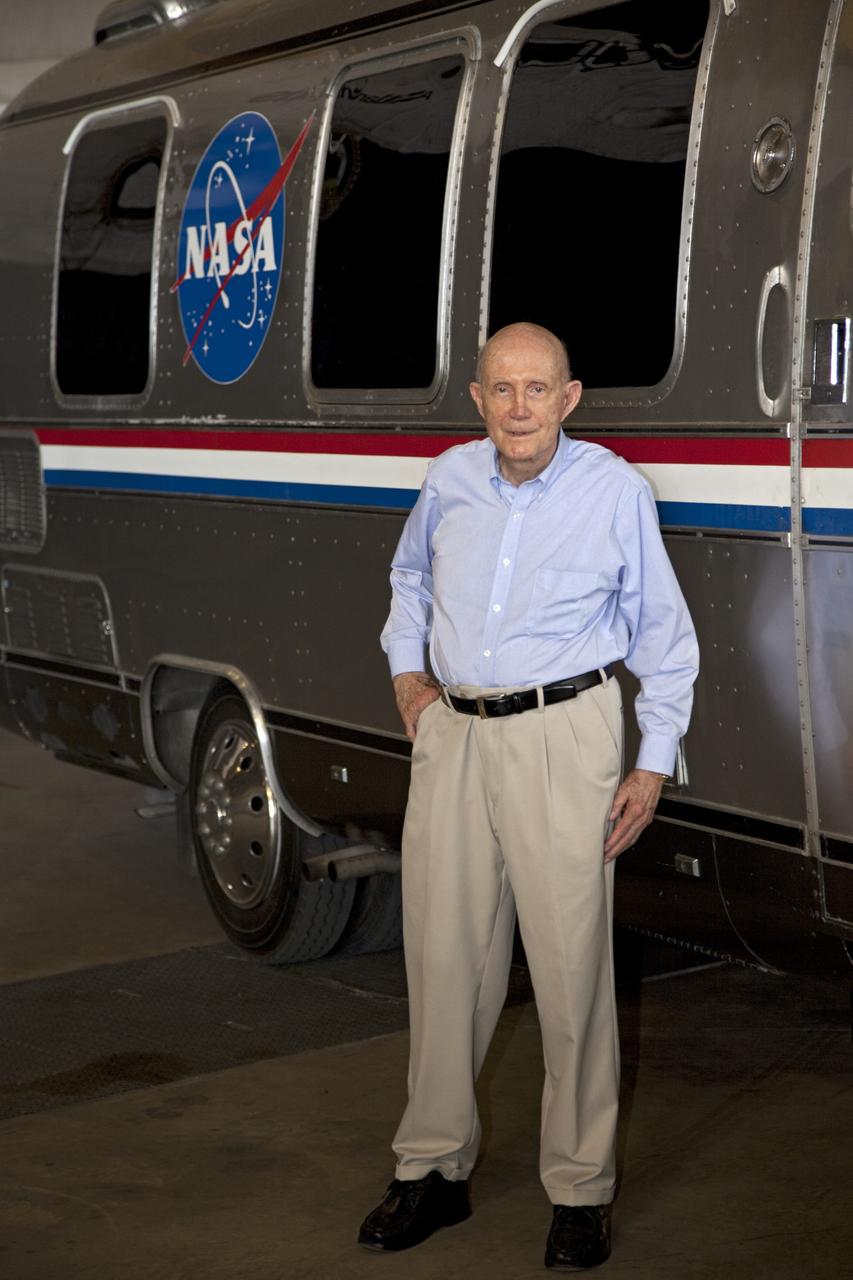
CAPE CANAVERAL, Fla. – Lt. Gen. Thomas P. Stafford, former astronaut and Air Force test pilot, stands near the Astrovan and space shuttle Atlantis inside the Vehicle Assembly Building at NASA's Kennedy Space Center in Florida. Stafford flew two Gemini missions, commanded Apollo 10 and commanded the Apollo-Soyuz test mission during his NASA career. Photo credit: NASA/Frankie Martin
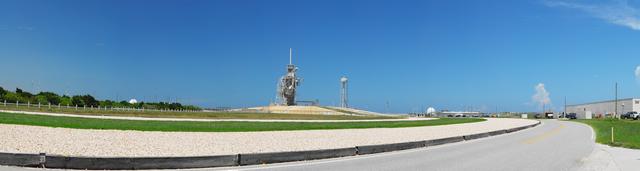
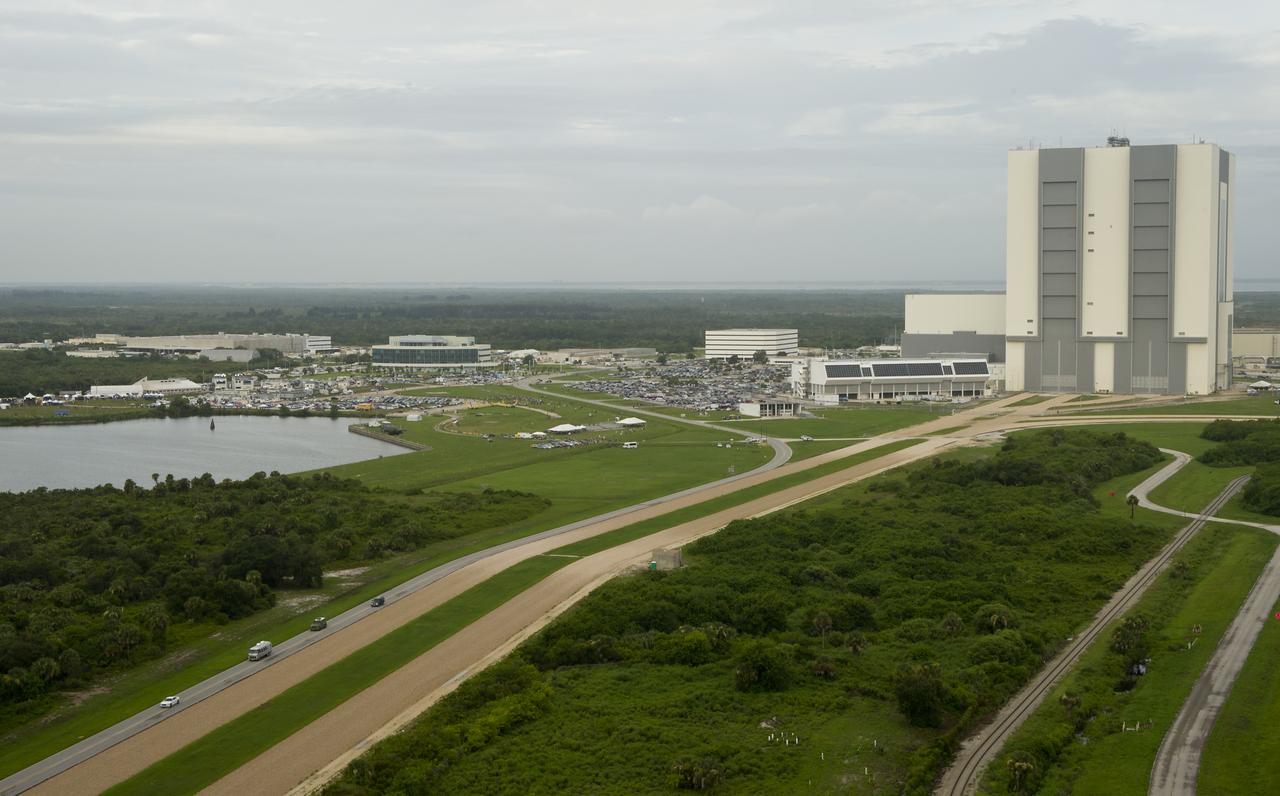
CAPE CANAVERAL, Fla. -- As NASA's Kennedy Space Center in Florida, Launch Pad 39A is seen from the Saturn Causeway. On launch day, space shuttle astronauts ride to their launch pad and spacecraft in NASA's silver Astrovan. Along the way, they pass the Vehicle Assembly Building, Launch Control Center and Press Site. Adjacent to the road is the crawlerway, which is the route shuttles take to Kennedy's Launch Complex 39 launch pads on top of a crawler-transporter. Photo credit: NASA/Frankie Martin
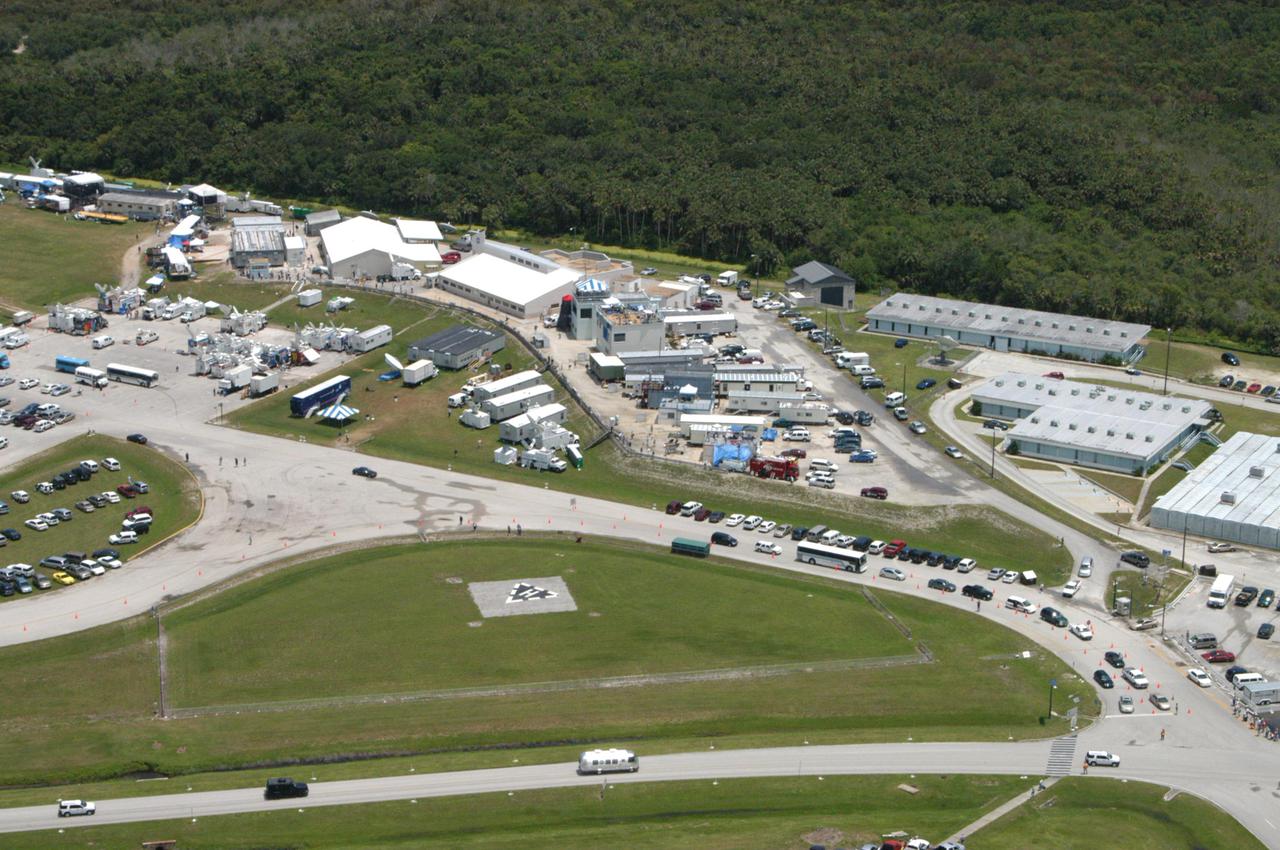
KENNEDY SPACE CENTER, FLA. - The Astrovan (on the road at the bottom center of photo), carrying the STS-114 crew, drives back from Launch Pad 39B after the scrub of the Return to Flight mission. The scrub was called due to a faulty sensor reading in the External Tank. The center of the photo shows the NASA News Center surrounded by trailers, satellite trucks and vehicles of the media covering the historic launch.
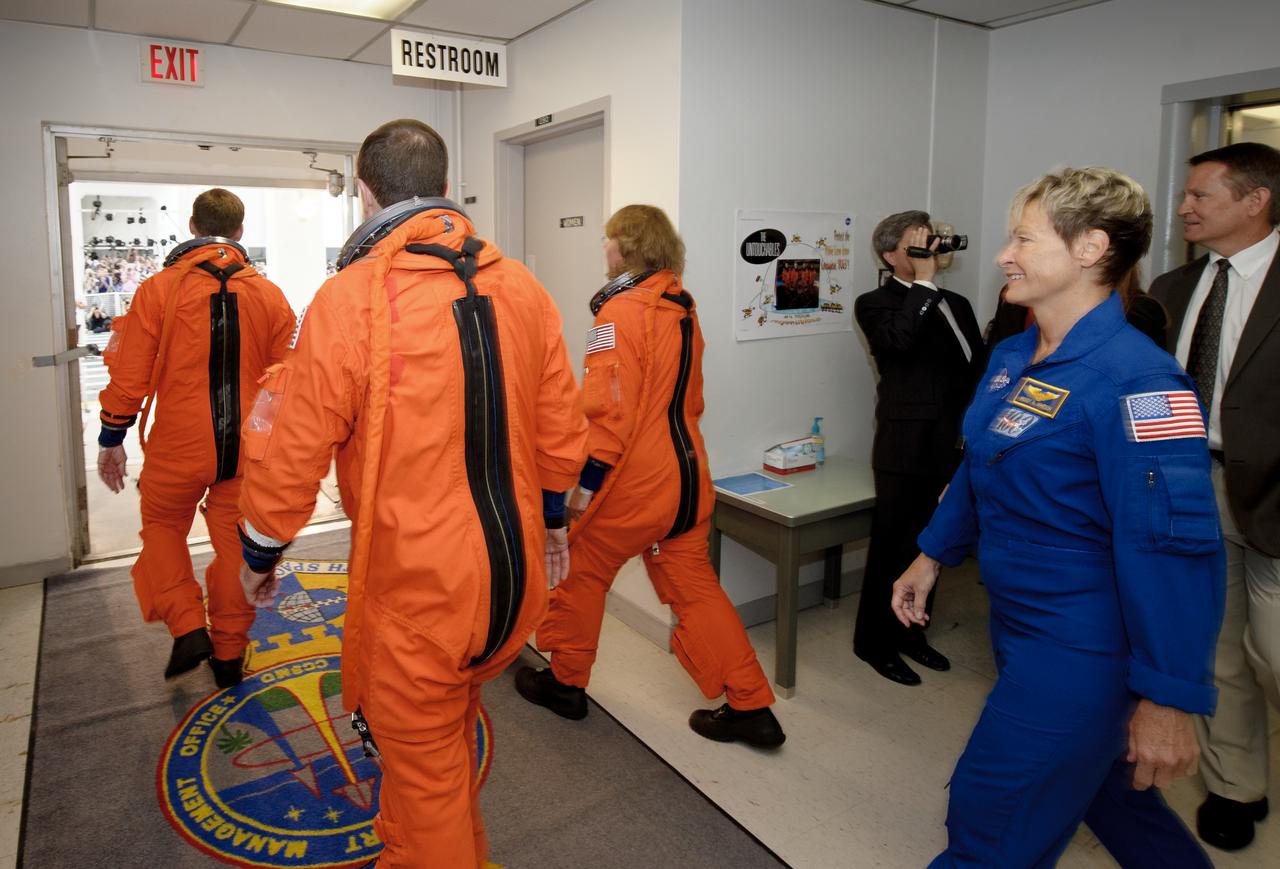
The crew of STS-135 is seen as they depart the NASA Kennedy Space Center, Operations and Checkout Building and get into the Astrovan for launch pad 39A, on Friday, July 8, 2011 in Cape Canaveral, Fla. The launch of Atlantis, STS-135, is the final flight of the shuttle program, a 12-day mission to the International Space Station. Photo Credit: (NASA/Jerry Ross)
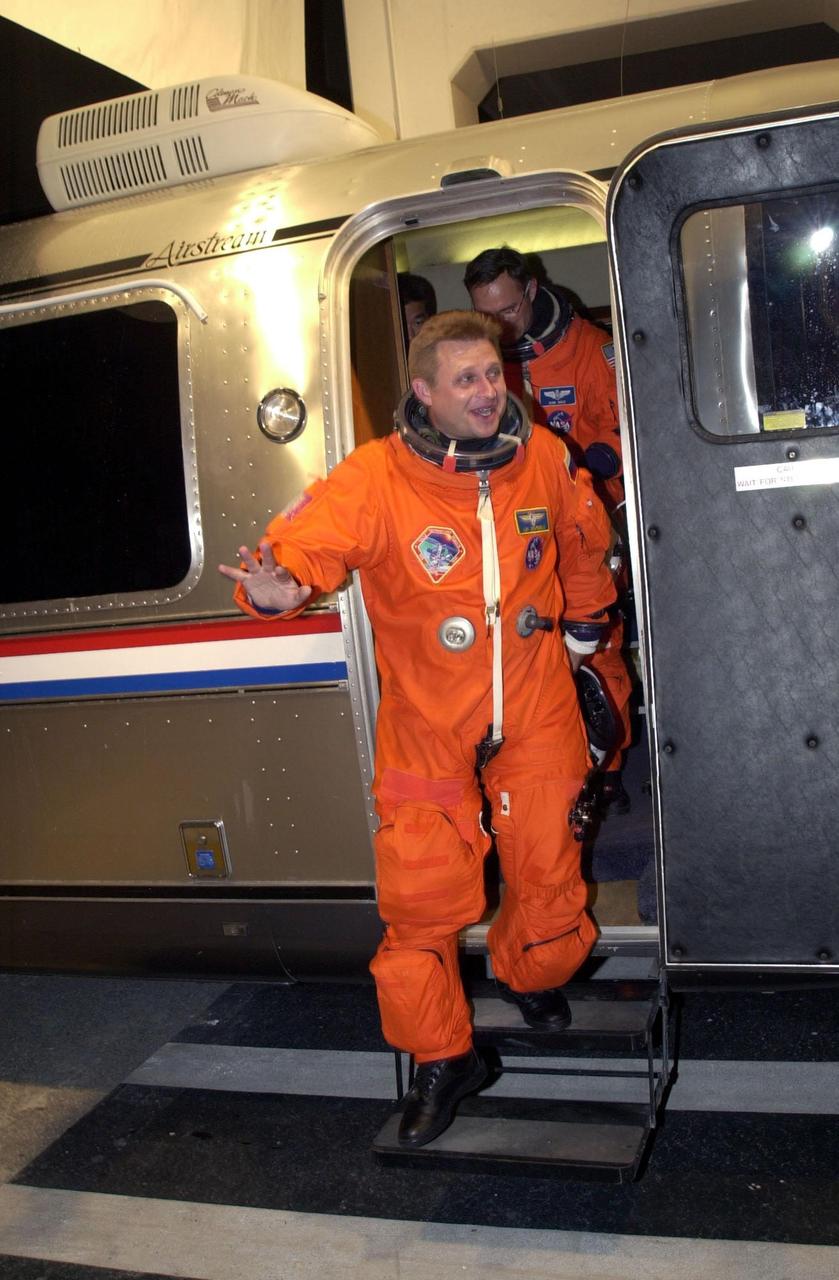
KENNEDY SPACE CENTER, Fla. -- Expedition 4 Commander Yuri Onufrienko steps down from the Astrovan after returning from Space Shuttle Endeavour. The launch of STS-108 was delayed by one day Dec. 4, 2001, due to poor weather at Kennedy. Space Shuttle Endeavour is now scheduled to lift off at 5:19 p.m. EST (2219 GMT) Dec. 5
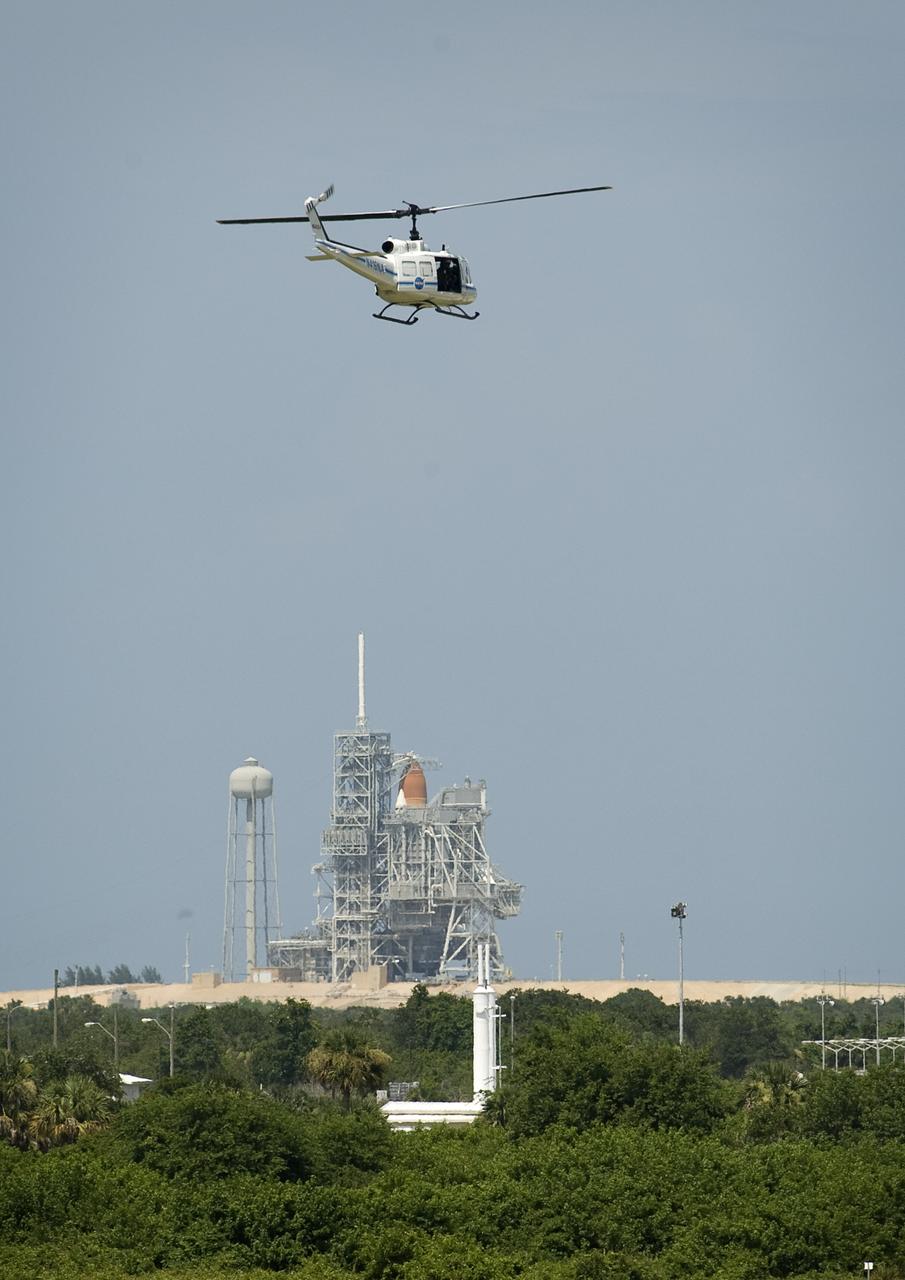
A NASA Security helicopter watches over the Astrovan as it takes the crew of STS-127 to the space shuttle Endeavour at pad 39a at NASA's Kennedy Space Center in Cape Canaveral, Florida, Sunday, July 12, 2009. Endeavour is set to launch at 7:13p.m. EDT with the crew of STS-127 and start a 16-day mission that will feature five spacewalks and complete construction of the Japan Aerospace Exploration Agency's Kibo laboratory. Photo Credit: (NASA/Bill Ingalls)
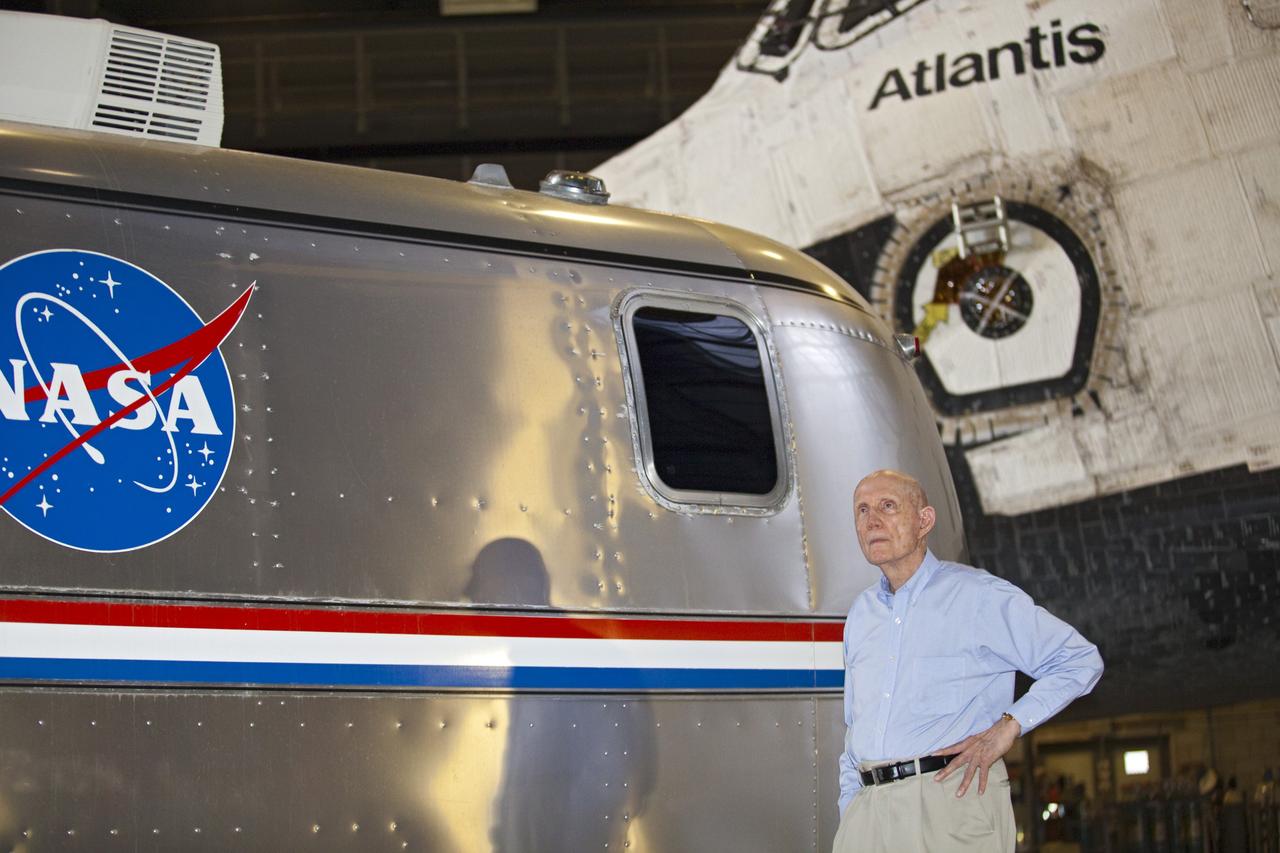
CAPE CANAVERAL, Fla. – Lt. Gen. Thomas P. Stafford, former astronaut and Air Force test pilot, stands near the Astrovan and space shuttle Atlantis inside the Vehicle Assembly Building at NASA's Kennedy Space Center in Florida. Stafford flew two Gemini missions, commanded Apollo 10 and commanded the Apollo-Soyuz test mission during his NASA career. Photo credit: NASA/Frankie Martin
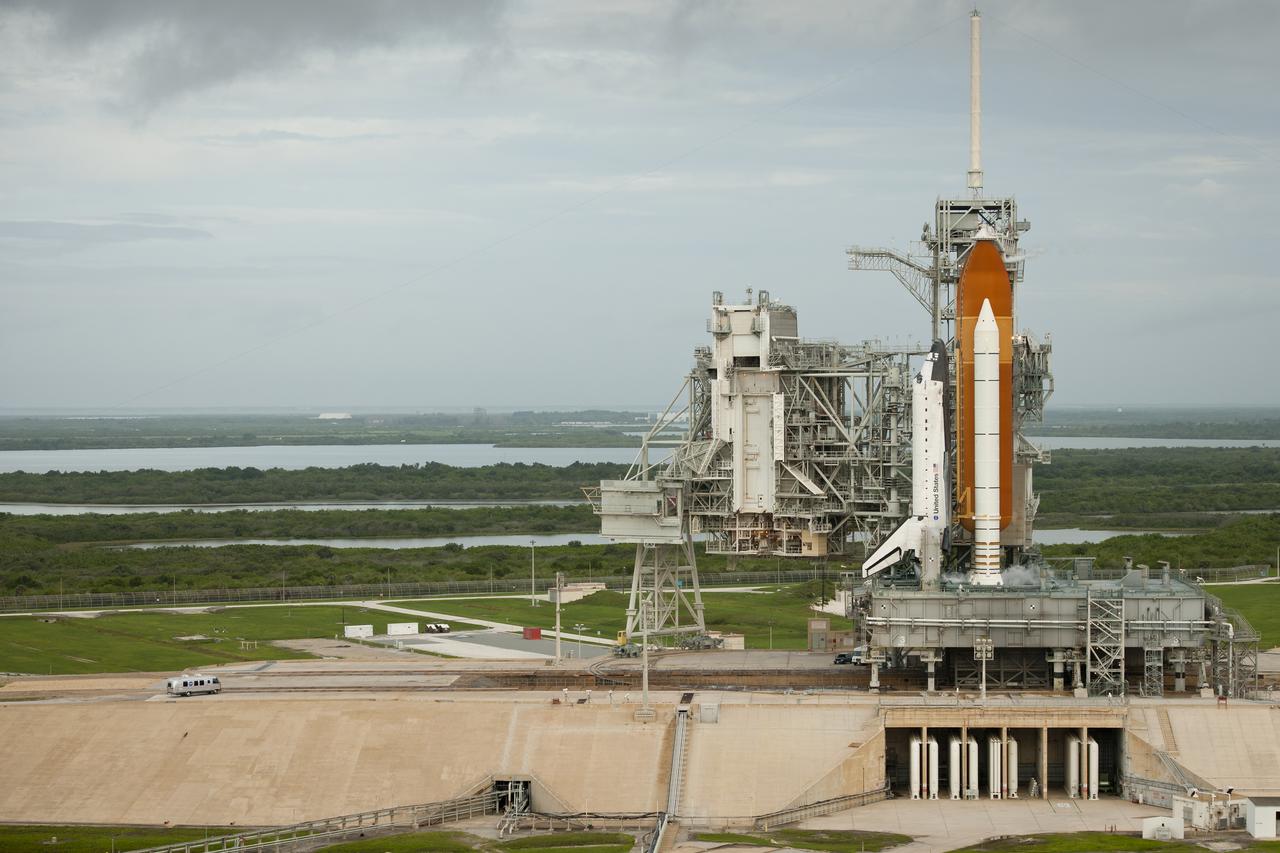
The Astrovan carrying the STS-135 crew; Chris Ferguson, commander, Doug Hurley, pilot, and mission specialists Rex Walheim and Sandy Mangus, arrives at launch pad 39A and space shuttle Atlantis, Friday, July 8, 2011, at Kennedy Space Center in Cape Canaveral, Fla. The launch of Atlantis, STS-135, is the final flight of the shuttle program, a 12-day mission to the International Space Station. Photo Credit: (NASA/Bill Ingalls)
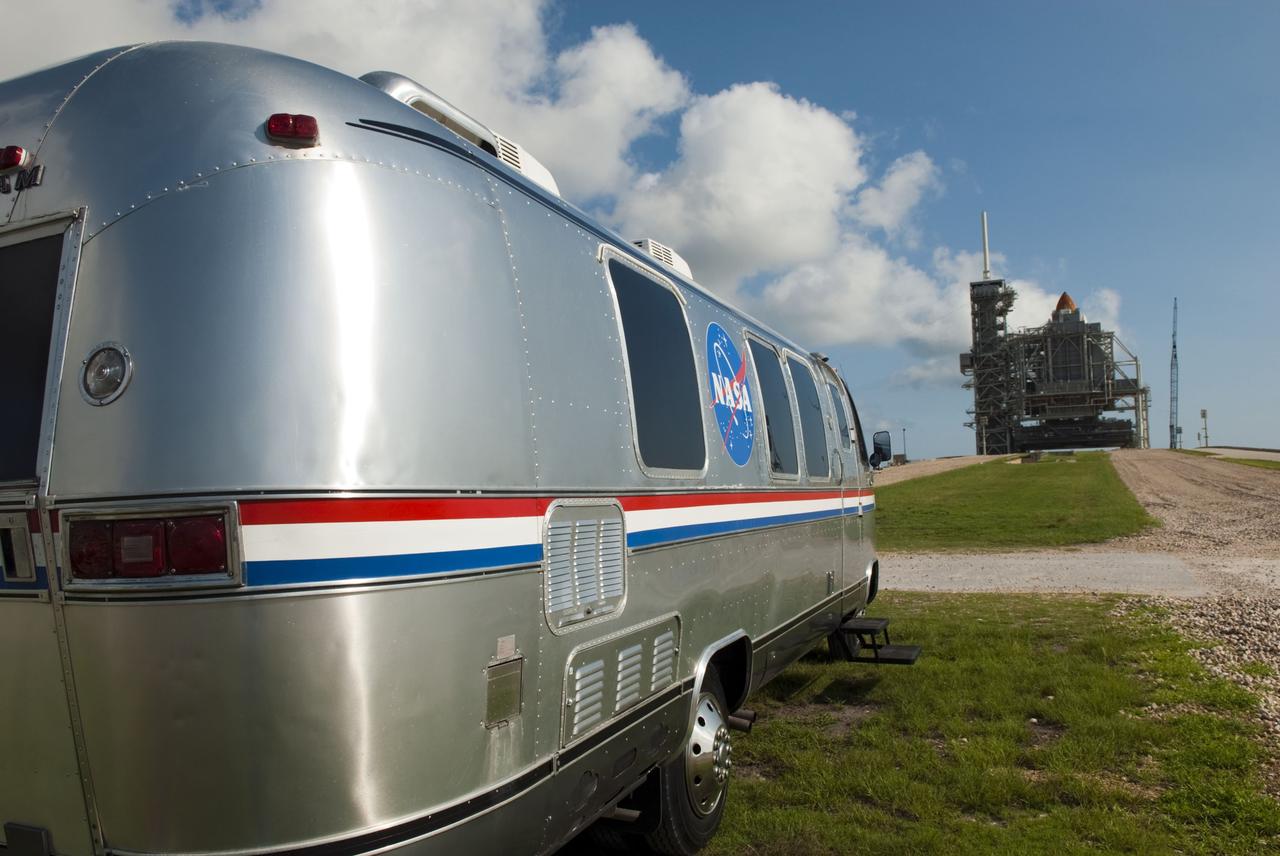
CAPE CANAVERAL, Fla. -- NASA's silver Astrovan is parked below Launch Pad 39A at NASA's Kennedy Space Center in Florida after delivering space shuttle Atlantis' STS-135 crew members to the pad to participate in a launch countdown simulation exercise. The Astrovan will return the astronauts to the Operations and Checkout Building at the end of their training. As part of the Terminal Countdown Demonstration Test (TCDT), the crew members are strapped into their seats on Atlantis to practice the steps that will be taken on launch day. Shuttle Atlantis and its crew are targeted to lift off July 8, taking with them the Raffaello multi-purpose logistics module packed with supplies and spare parts to the International Space Station. The STS-135 mission also will fly a system to investigate the potential for robotically refueling existing satellites and return a failed ammonia pump module to help NASA better understand the failure mechanism and improve pump designs for future systems. STS-135 will be the 33rd flight of Atlantis, the 37th shuttle mission to the space station, and the 135th and final mission of NASA's Space Shuttle Program. For more information visit, www.nasa.gov/mission_pages/shuttle/shuttlemissions/sts135/index.html. Photo credit: NASA/Jim Grossmann
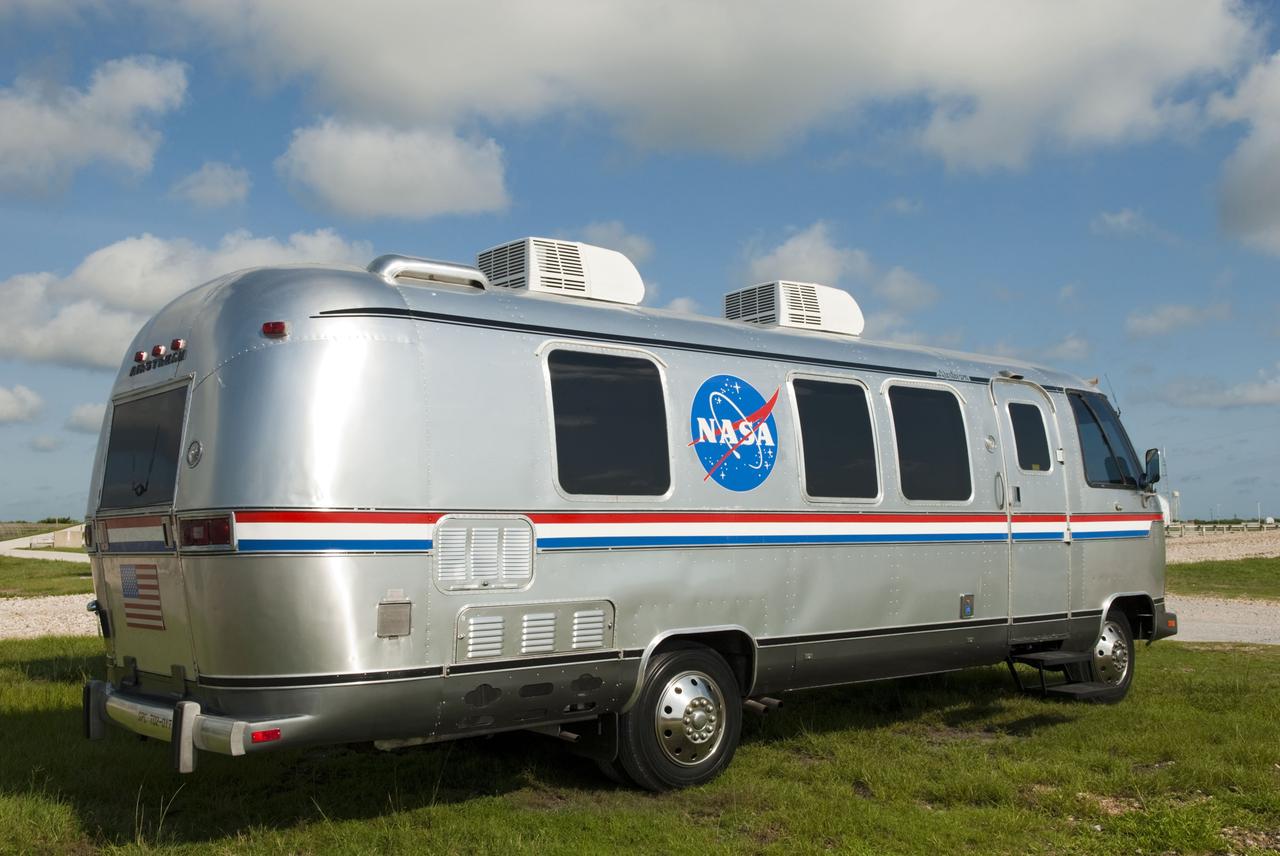
CAPE CANAVERAL, Fla. -- NASA's silver Astrovan is parked below Launch Pad 39A at NASA's Kennedy Space Center in Florida after delivering space shuttle Atlantis' STS-135 crew members to the pad to participate in a launch countdown simulation exercise. The Astrovan will return the astronauts to the Operations and Checkout Building at the end of their training. As part of the Terminal Countdown Demonstration Test (TCDT), the crew members are strapped into their seats on Atlantis to practice the steps that will be taken on launch day. Shuttle Atlantis and its crew are targeted to lift off July 8, taking with them the Raffaello multi-purpose logistics module packed with supplies and spare parts to the International Space Station. The STS-135 mission also will fly a system to investigate the potential for robotically refueling existing satellites and return a failed ammonia pump module to help NASA better understand the failure mechanism and improve pump designs for future systems. STS-135 will be the 33rd flight of Atlantis, the 37th shuttle mission to the space station, and the 135th and final mission of NASA's Space Shuttle Program. For more information visit, www.nasa.gov/mission_pages/shuttle/shuttlemissions/sts135/index.html. Photo credit: NASA/Jim Grossmann
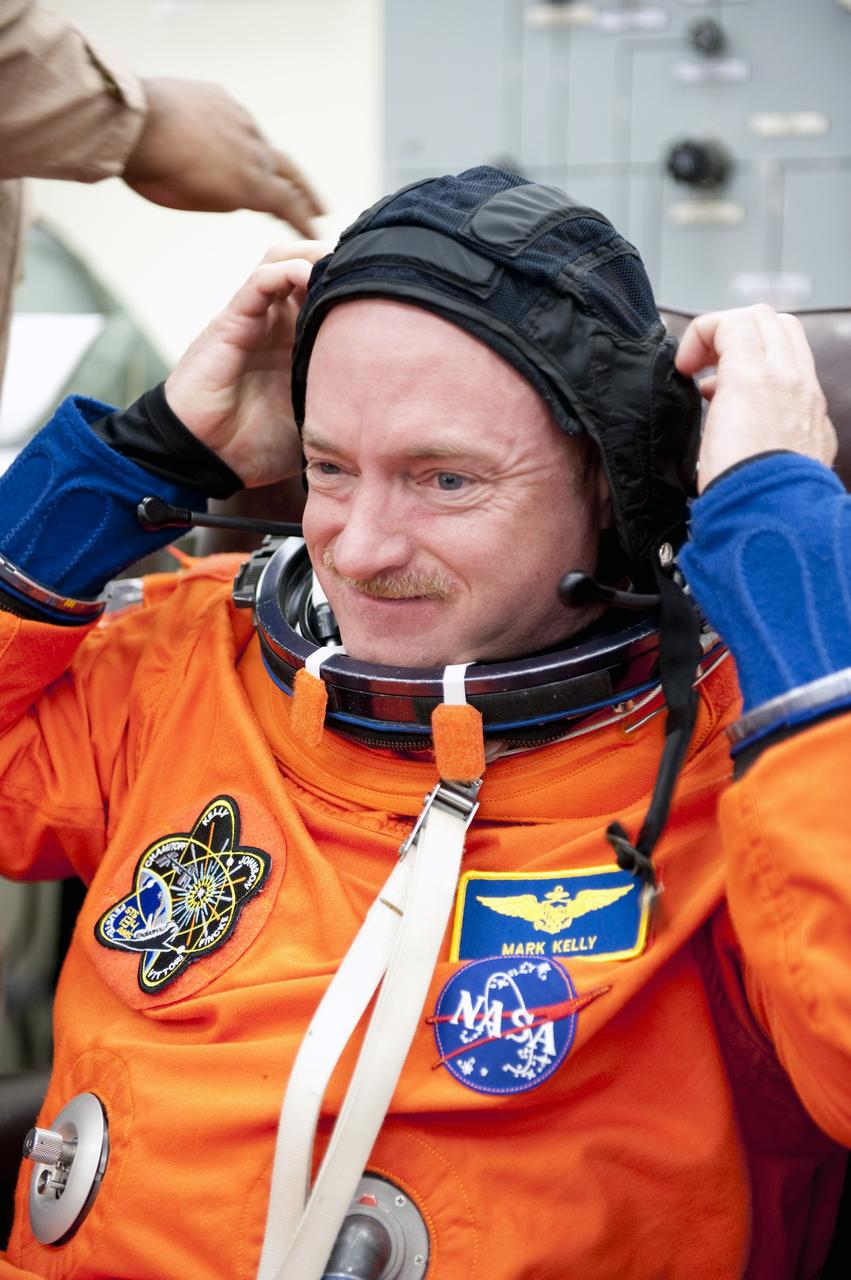
CAPE CANAVERAL, Fla. -- During a simulated launch countdown, STS-134 Commander Mark Kelly checks the fit of his bright-orange, launch-and-entry suit and communications cap in the Operations and Checkout Building at NASA's Kennedy Space Center in Florida. Next, Kelly and his crewmates will walk out to the waiting Astrovan. As part of the Terminal Countdown Demonstration Test (TCDT), the crew members will ride to the pad in their silver Astrovan and strap into space shuttle Endeavour to practice the steps that will be taken on launch day. Endeavour's six crew members are targeted to launch April 19 at 7:48 p.m. EDT. They will deliver the Express Logistics Carrier-3, Alpha Magnetic Spectrometer-2 (AMS), a high-pressure gas tank, additional spare parts for the Dextre robotic helper and micrometeoroid debris shields to the International Space Station. This will be the final spaceflight for Endeavour. For more information visit, www.nasa.gov/mission_pages/shuttle/shuttlemissions/sts134/index.html. Photo credit: NASA/Kim Shiflett
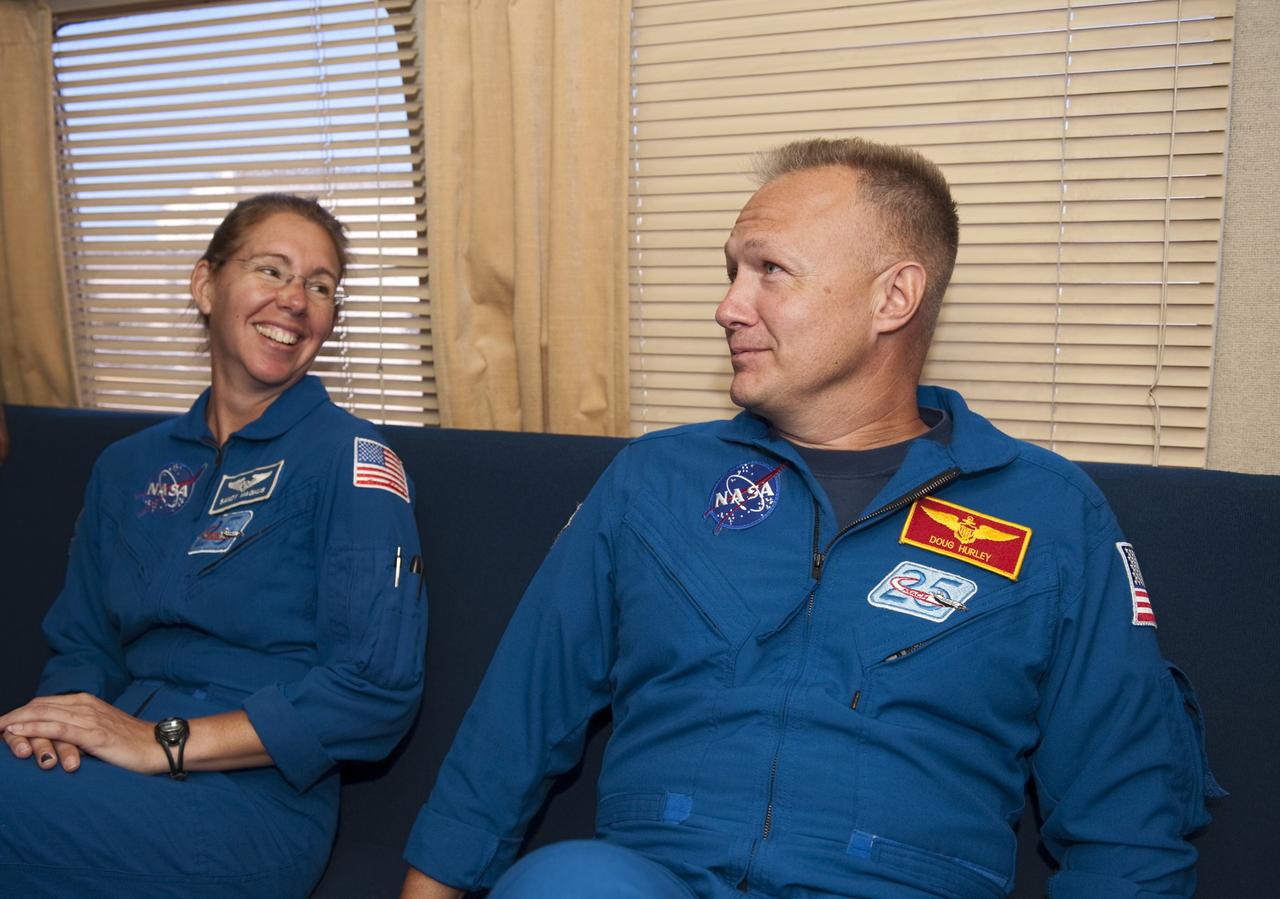
CAPE CANAVERAL, Fla. – Astronauts from Space Shuttle Atlantis’ STS-135 mission travel inside NASA’s silver Astrovan. From left are Mission Specialist Sandra Magnus and Pilot Doug Hurley. Since 1984, the Astrovan, a modified Airstream motor home, has carried shuttle crew members to the launch pads. The astronauts, along with Commander Chris Ferguson, were at the center for the traditional post-flight crew return presentation. STS-135 Mission Specialist Rex Walheim was unable to attend the Kennedy event. In July 2011, Atlantis and its crew delivered to the International Space Station the Raffaello multi-purpose logistics module packed with more than 9,400 pounds of spare parts, equipment and supplies that will sustain station operations for the next year. STS-135 was the 33rd and final flight for Atlantis and the final mission of the Space Shuttle Program. For more information, visit www.nasa.gov/mission_pages/shuttle/shuttlemissions/sts135/index.html. Photo credit: NASA/Kim Shiflett
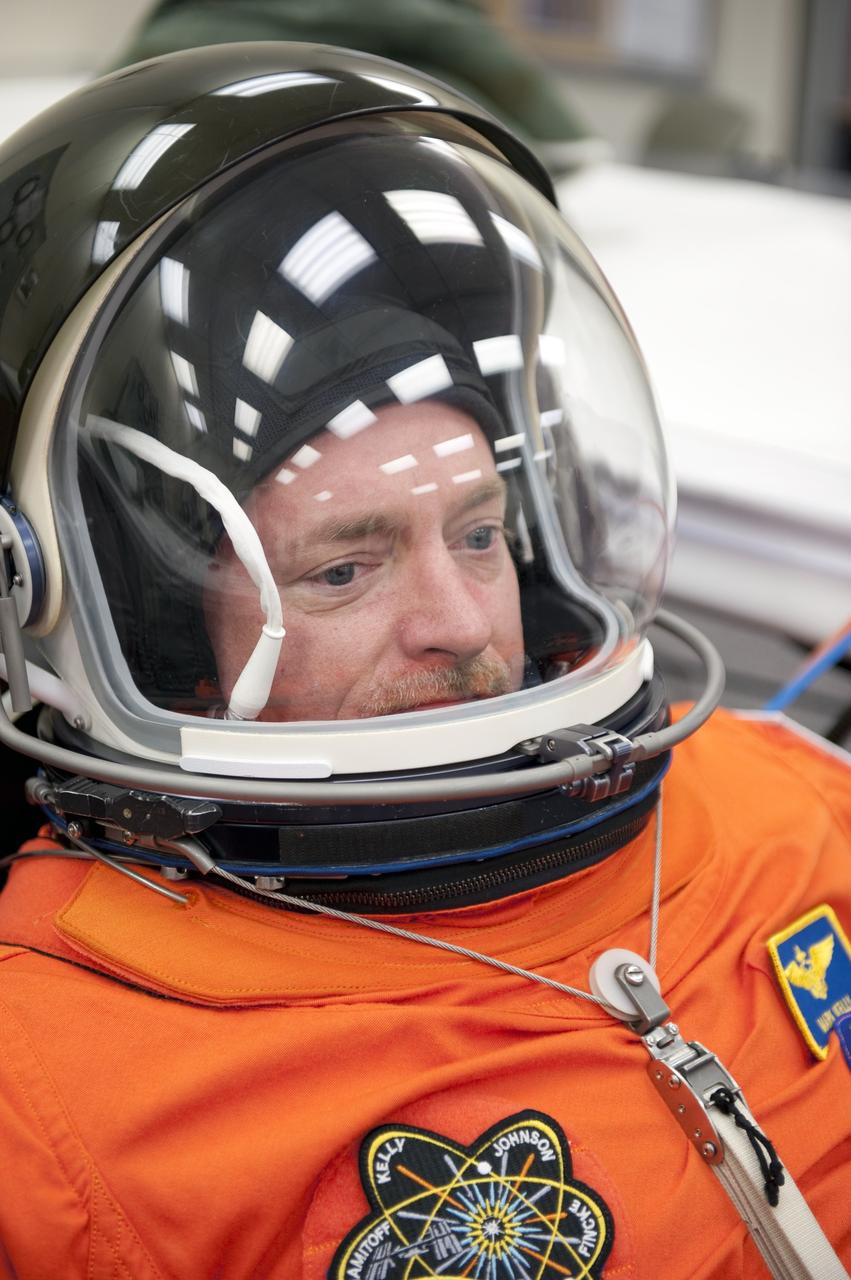
CAPE CANAVERAL, Fla. -- During a simulated launch countdown, STS-134 Commander Mark Kelly checks the fit of his bright-orange, launch-and-entry suit and communications cap in the Operations and Checkout Building at NASA's Kennedy Space Center in Florida. Next, Kelly and his crewmates will walk out to the waiting Astrovan. As part of the Terminal Countdown Demonstration Test (TCDT), the crew members will ride to the pad in their silver Astrovan and strap into space shuttle Endeavour to practice the steps that will be taken on launch day. Endeavour's six crew members are targeted to launch April 19 at 7:48 p.m. EDT. They will deliver the Express Logistics Carrier-3, Alpha Magnetic Spectrometer-2 (AMS), a high-pressure gas tank, additional spare parts for the Dextre robotic helper and micrometeoroid debris shields to the International Space Station. This will be the final spaceflight for Endeavour. For more information visit, www.nasa.gov/mission_pages/shuttle/shuttlemissions/sts134/index.html. Photo credit: NASA/Kim Shiflett
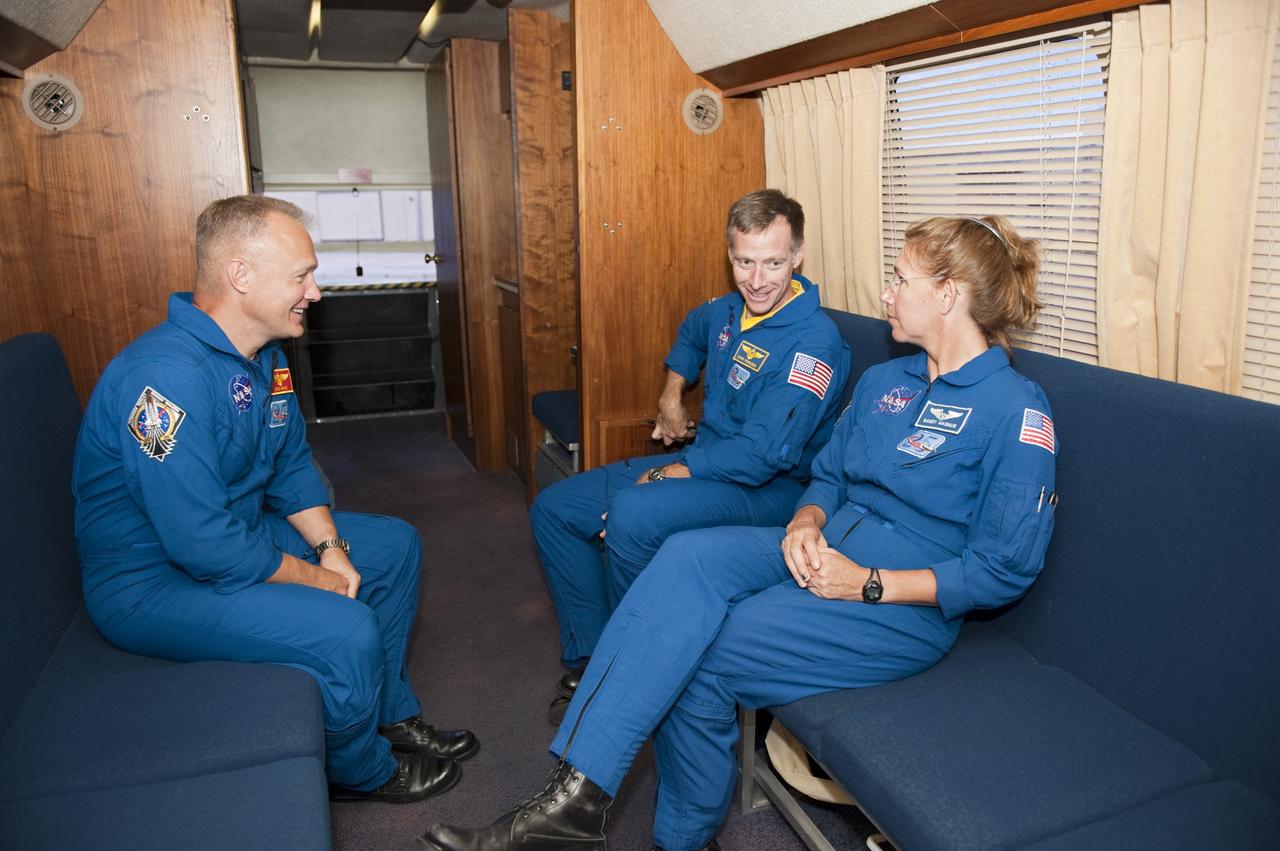
CAPE CANAVERAL, Fla. – Astronauts from Space Shuttle Atlantis’ STS-135 mission travel inside NASA’s silver Astrovan. Seated on the right are Commander Chris Ferguson and Mission Specialist Sandra Magnus while facing opposite is Pilot Doug Hurley. Since 1984, the Astrovan, a modified Airstream motor home, has carried shuttle crew members to the launch pads. The astronauts were at the center for the traditional post-flight crew return presentation. STS-135 Mission Specialist Rex Walheim was unable to attend the Kennedy event. In July 2011, Atlantis and its crew delivered to the International Space Station the Raffaello multi-purpose logistics module packed with more than 9,400 pounds of spare parts, equipment and supplies that will sustain station operations for the next year. STS-135 was the 33rd and final flight for Atlantis and the final mission of the Space Shuttle Program. For more information, visit www.nasa.gov/mission_pages/shuttle/shuttlemissions/sts135/index.html. Photo credit: NASA/Kim Shiflett
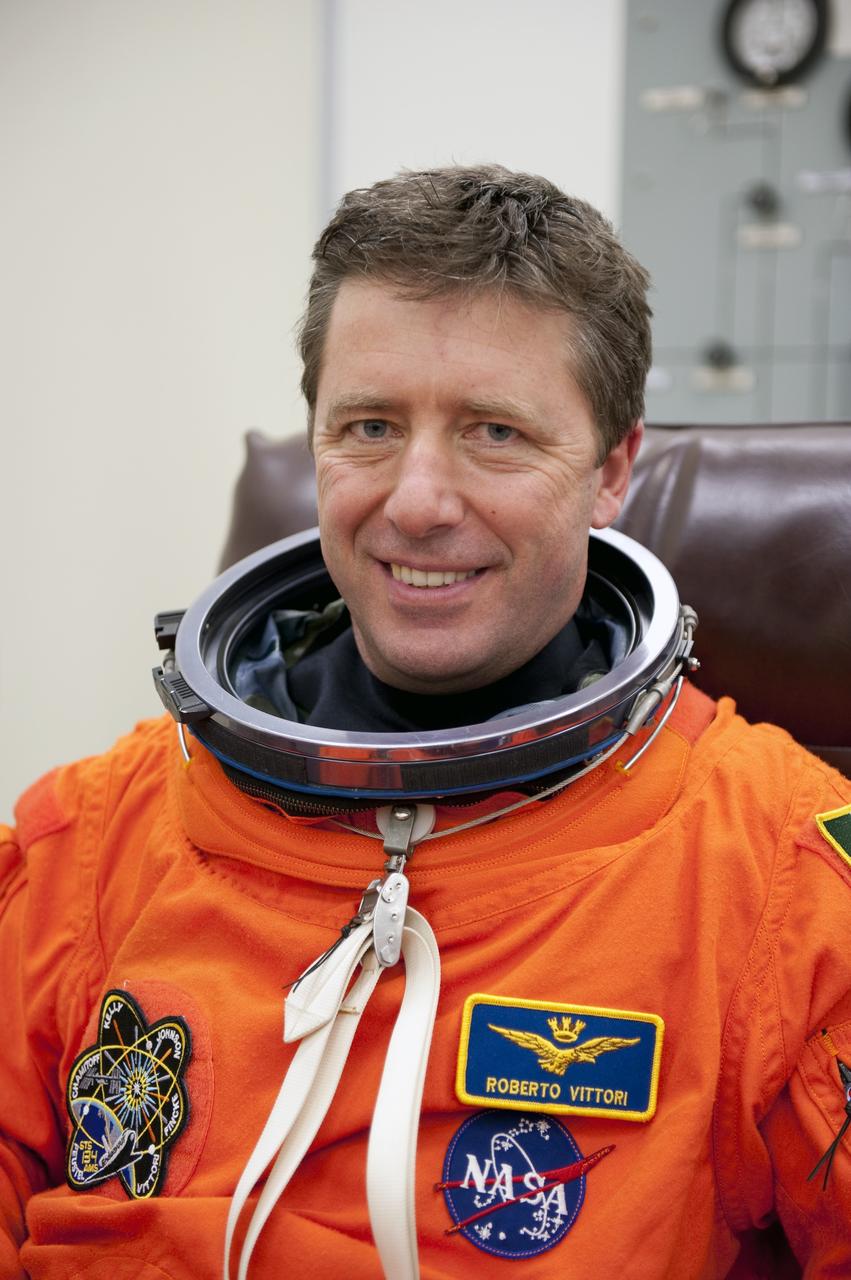
CAPE CANAVERAL, Fla. -- During a simulated launch countdown, STS-134 Mission Specialist Roberto Vittori, with the European Space Agency, checks the fit of his bright-orange, launch-and-entry suit in the Operations and Checkout Building at NASA's Kennedy Space Center in Florida. Next, Vittori and his crewmates will walk out to the waiting Astrovan. As part of the Terminal Countdown Demonstration Test (TCDT), the crew members will ride to the pad in their silver Astrovan and strap into space shuttle Endeavour to practice the steps that will be taken on launch day. Endeavour's six crew members are targeted to launch April 19 at 7:48 p.m. EDT. They will deliver the Express Logistics Carrier-3, Alpha Magnetic Spectrometer-2 (AMS), a high-pressure gas tank, additional spare parts for the Dextre robotic helper and micrometeoroid debris shields to the International Space Station. This will be the final spaceflight for Endeavour. For more information visit, www.nasa.gov/mission_pages/shuttle/shuttlemissions/sts134/index.html. Photo credit: NASA/Kim Shiflett
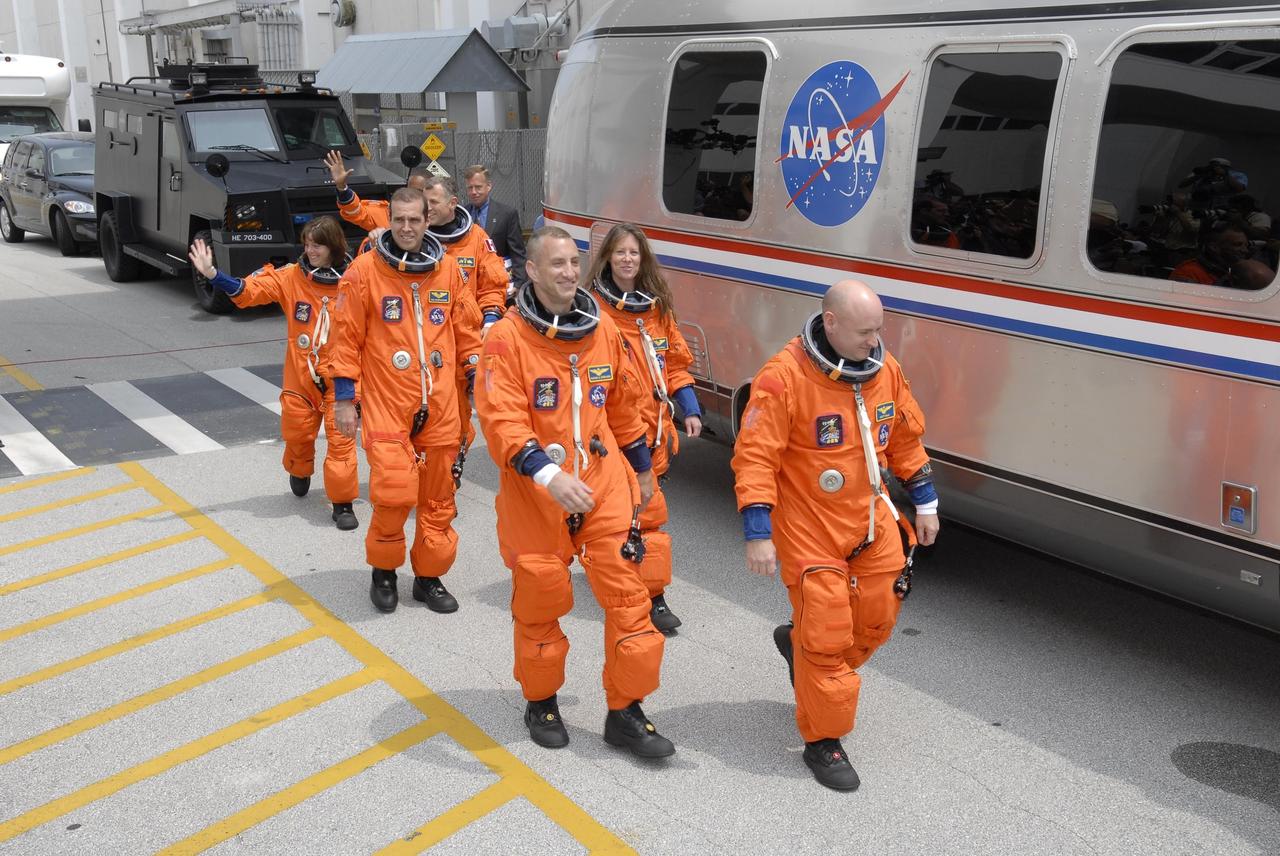
KENNEDY SPACE CENTER, FLA. -- The suited STS-118 crew moves quickly to the Astrovan after leaving the Operations and Checkout Building. From left are Mission Specialists Barbara R. Morgan, Rick Mastracchio and Dave Williams, Pilot Charlie Hobaugh, Mission Specialist Tracy Caldwell and Commander Scott Kelly. Behind Williams is Mission Specialist Alvin Drew. The Astrovan will take them to Launch Pad 39A for final suit preparations before climbing into Space Shuttle Endeavour for launch at 6:36 p.m. EDT. The STS-118 mission is the 22nd shuttle flight to the International Space Station. It will continue space station construction by delivering a third starboard truss segment, S5, and other payloads such as the SPACEHAB module and the external stowage platform 3. The 11-day mission may be extended to as many as 14 depending on the test of the Station-to-Shuttle Power Transfer System that will allow the docked shuttle to draw electrical power from the station and extend its visits to the orbiting lab. NASA/Kim Shiflett
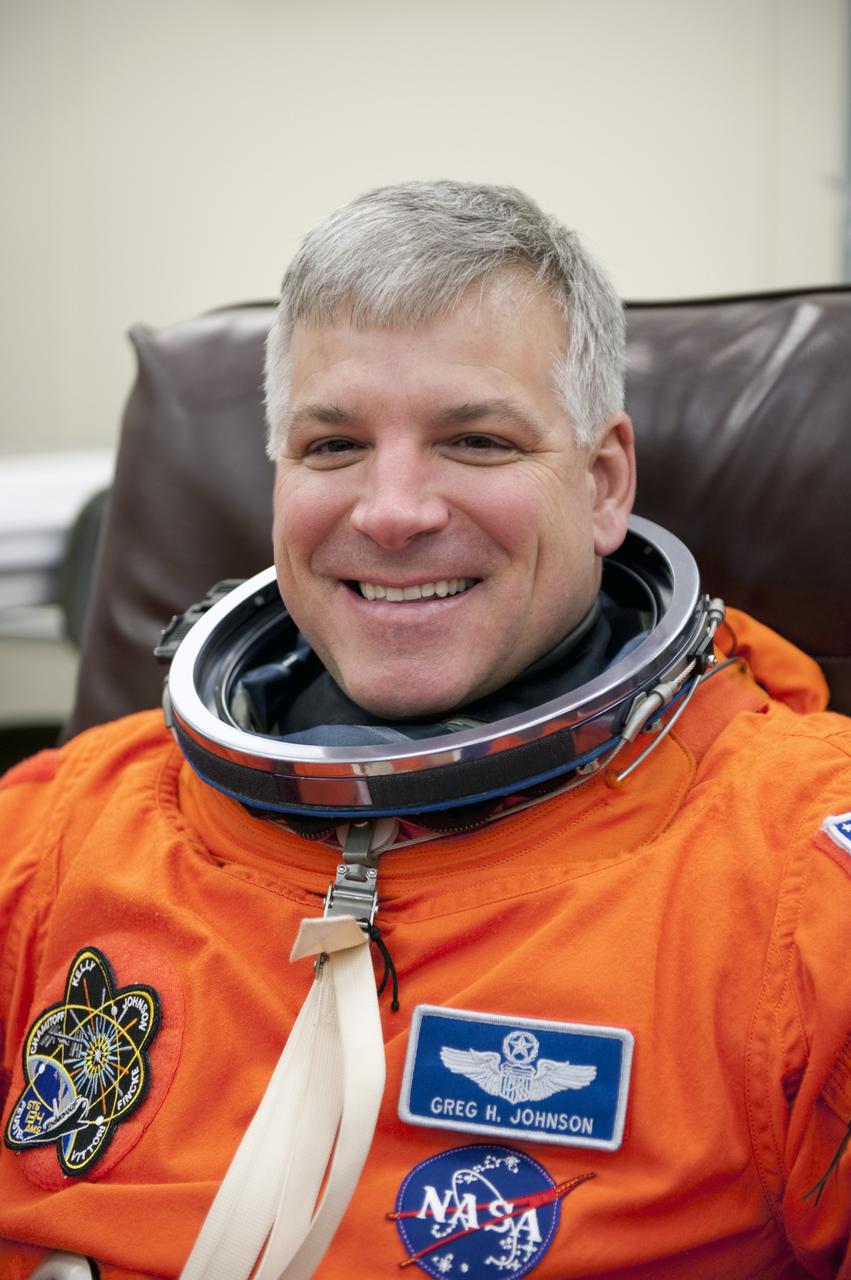
CAPE CANAVERAL, Fla. -- During a simulated launch countdown, STS-134 Commander Pilot Greg H. Johnson checks the fit of his bright-orange, launch-and-entry suit in the Operations and Checkout Building at NASA's Kennedy Space Center in Florida. Next, Johnson and his crewmates will walk out to the waiting Astrovan. As part of the Terminal Countdown Demonstration Test (TCDT), the crew members will ride to the pad in their silver Astrovan and strap into space shuttle Endeavour to practice the steps that will be taken on launch day. Endeavour's six crew members are targeted to launch April 19 at 7:48 p.m. EDT. They will deliver the Express Logistics Carrier-3, Alpha Magnetic Spectrometer-2 (AMS), a high-pressure gas tank, additional spare parts for the Dextre robotic helper and micrometeoroid debris shields to the International Space Station. This will be the final spaceflight for Endeavour. For more information visit, www.nasa.gov/mission_pages/shuttle/shuttlemissions/sts134/index.html. Photo credit: NASA/Kim Shiflett
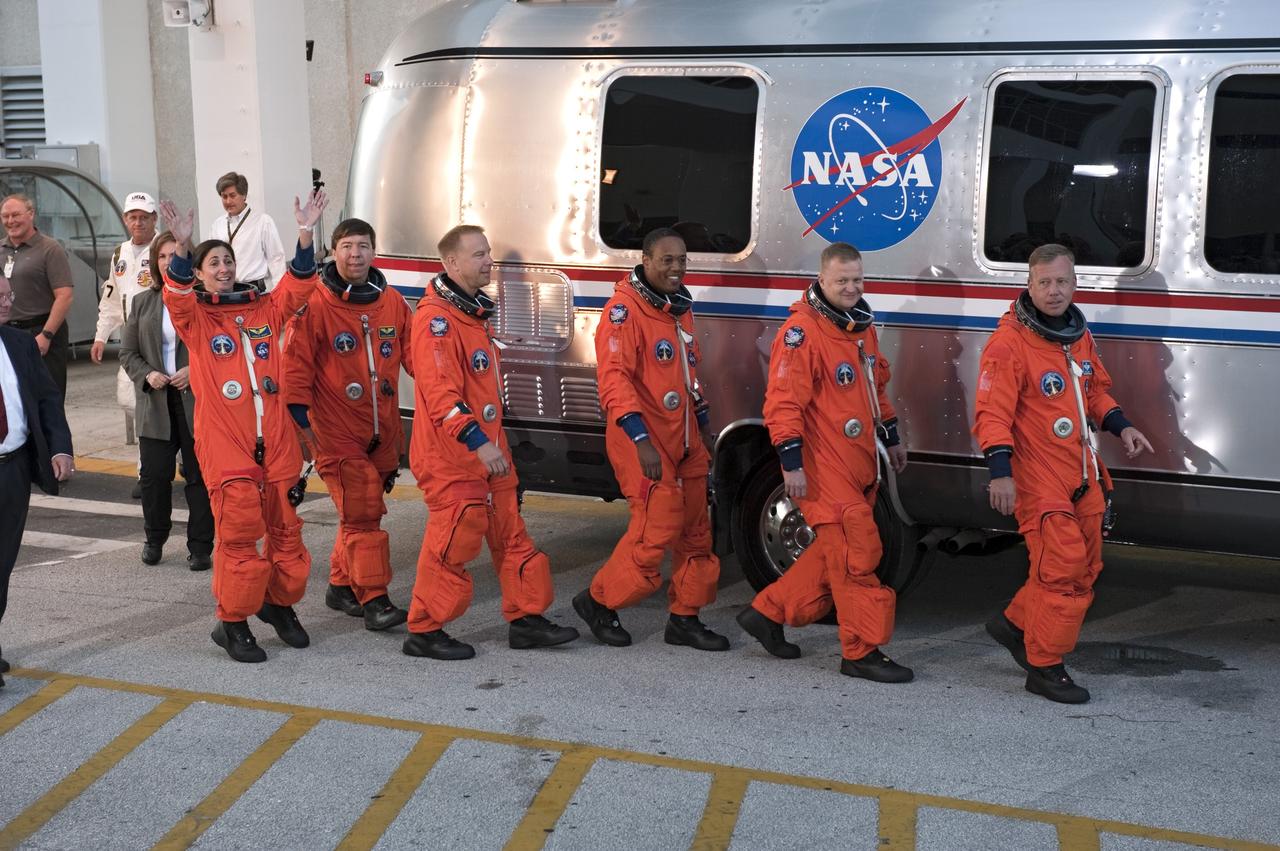
CAPE CANAVERAL, Fla. -- During a simulated launch countdown, the STS-133 crew walks out of the Operations and Checkout Building to the waiting Astrovan at NASA's Kennedy Space Center in Florida. From left are Mission Specialists Nicole Stott, Michael Barratt, Tim Kopra and Alvin Drew, Pilot Eric Boe, and Commander Steve Lindsey. Stott, a former Kennedy employee, waves to workers who are cheering for her. As part of the Terminal Countdown Demonstration Test (TCDT), the crew members ride to the pad in their silver Astrovan and strap into space shuttle Discovery to practice the steps that will be taken on launch day. Discovery and its STS-133 crew will deliver the Permanent Multipurpose Module, packed with supplies and critical spare parts, as well as Robonaut 2, the dexterous humanoid astronaut helper, to the International Space Station. Launch is targeted for Nov. 1 at 4:40 p.m. For more information on the STS-133 mission, visit www.nasa.gov/mission_pages/shuttle/shuttlemissions/sts133/. Photo credit: NASA/Kim Shiflett
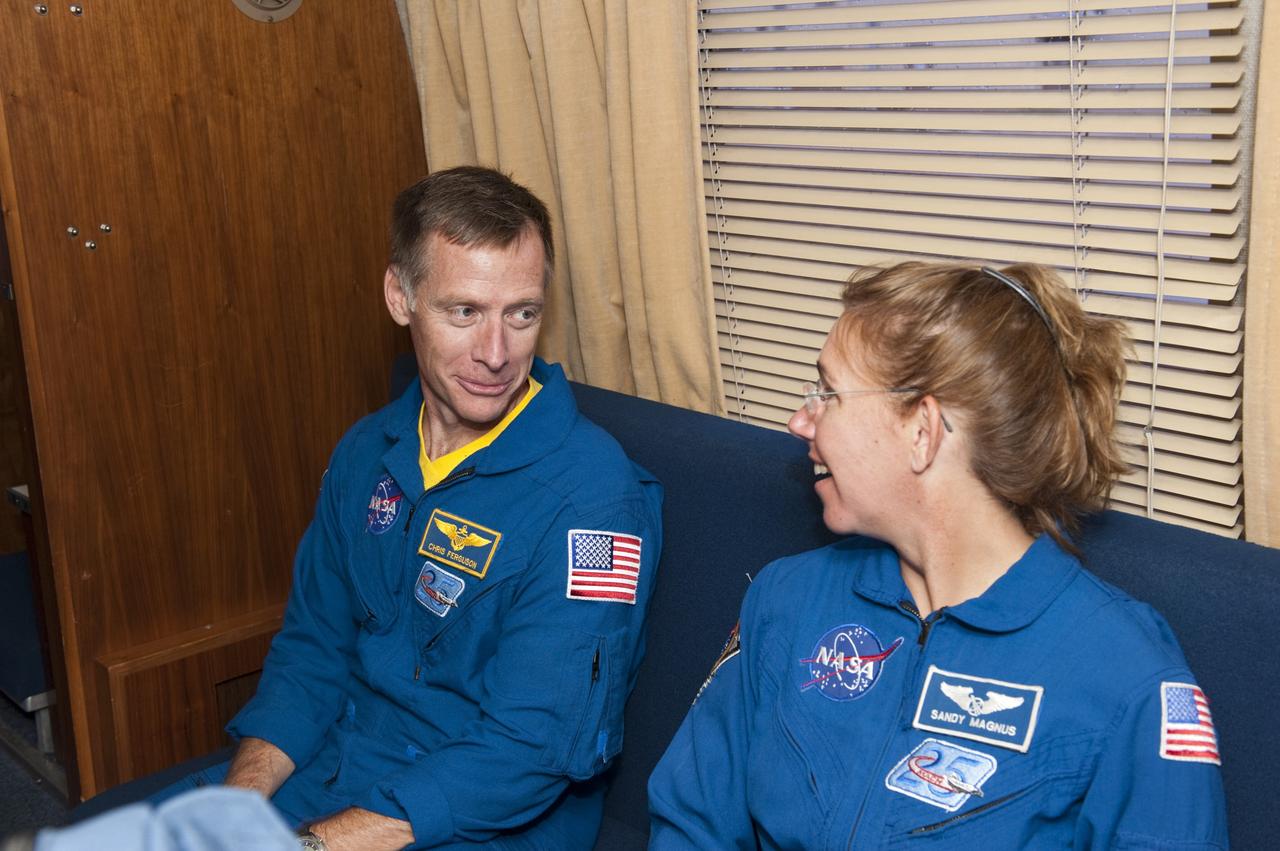
CAPE CANAVERAL, Fla. – Astronauts from Space Shuttle Atlantis’ STS-135 mission travel inside NASA’s silver Astrovan. From left are Commander Chris Ferguson and Mission Specialist Sandra Magnus. Since 1984, the Astrovan, a modified Airstream motor home, has carried shuttle crew members to the launch pads. The astronauts, along with Pilot Doug Hurley were at the center for the traditional post-flight crew return presentation. STS-135 Mission Specialist Rex Walheim was unable to attend the Kennedy event. In July 2011, Atlantis and its crew delivered to the International Space Station the Raffaello multi-purpose logistics module packed with more than 9,400 pounds of spare parts, equipment and supplies that will sustain station operations for the next year. STS-135 was the 33rd and final flight for Atlantis and the final mission of the Space Shuttle Program. For more information, visit www.nasa.gov/mission_pages/shuttle/shuttlemissions/sts135/index.html. Photo credit: NASA/Kim Shiflett
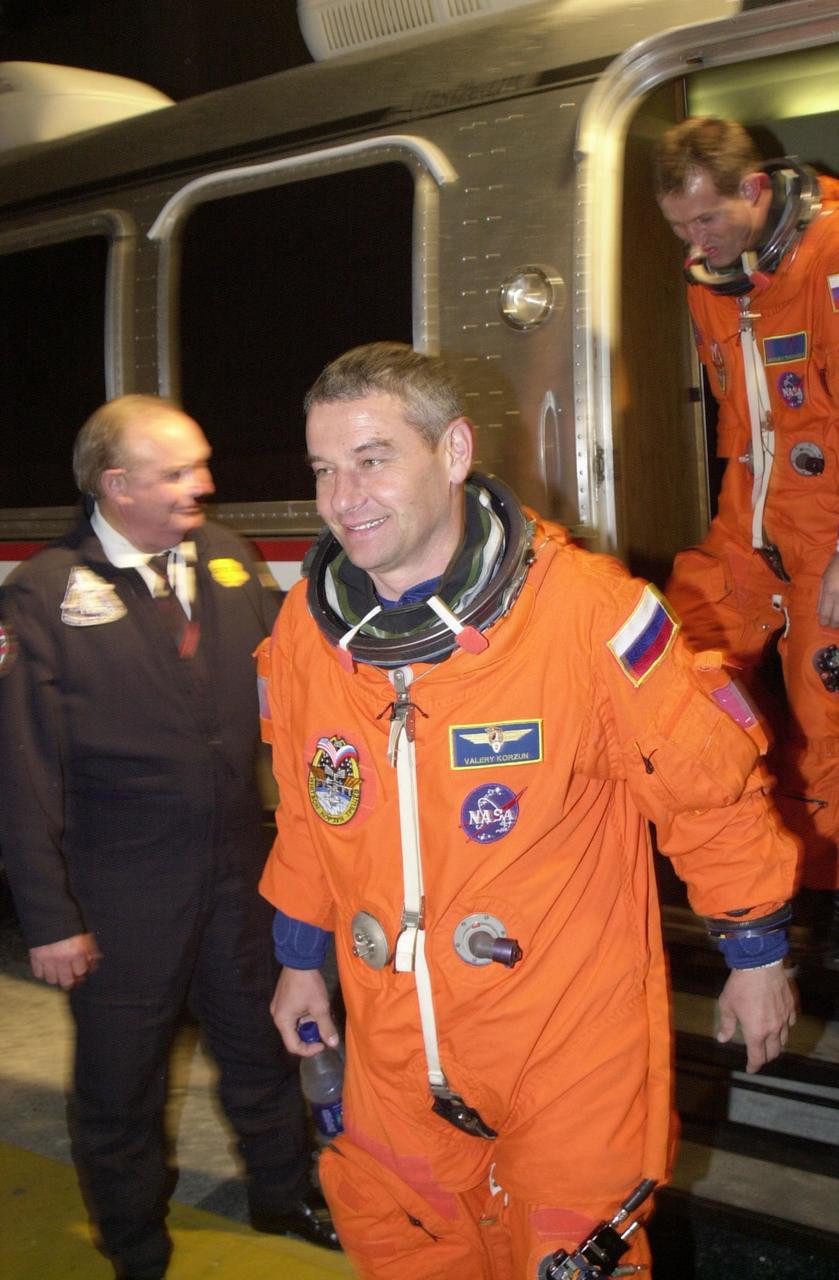
KENNEDY SPACE CENTER, FLA. -- Expedition 5 Commander Valery Korzun (RSA) steps down from the Astrovan outside the crew quarters at the Operations and Checkout Building after returning from Space Shuttle Endeavour at Launch Pad 39A. The launch of STS-111 was scrubbed due to poor weather at KSC. STS-111 is the second Utilization Flight to the International Space Station, carrying the Multi-Purpose Logistics Module Leonardo, the Mobile Base System (MBS), and a replacement wrist/roll joint for the Canadarm 2. Also on board will be the Expedition Five crew who will replace Expedition Four on the Station. Launch is rescheduled for May 31 at 7:22 p.m. EDT
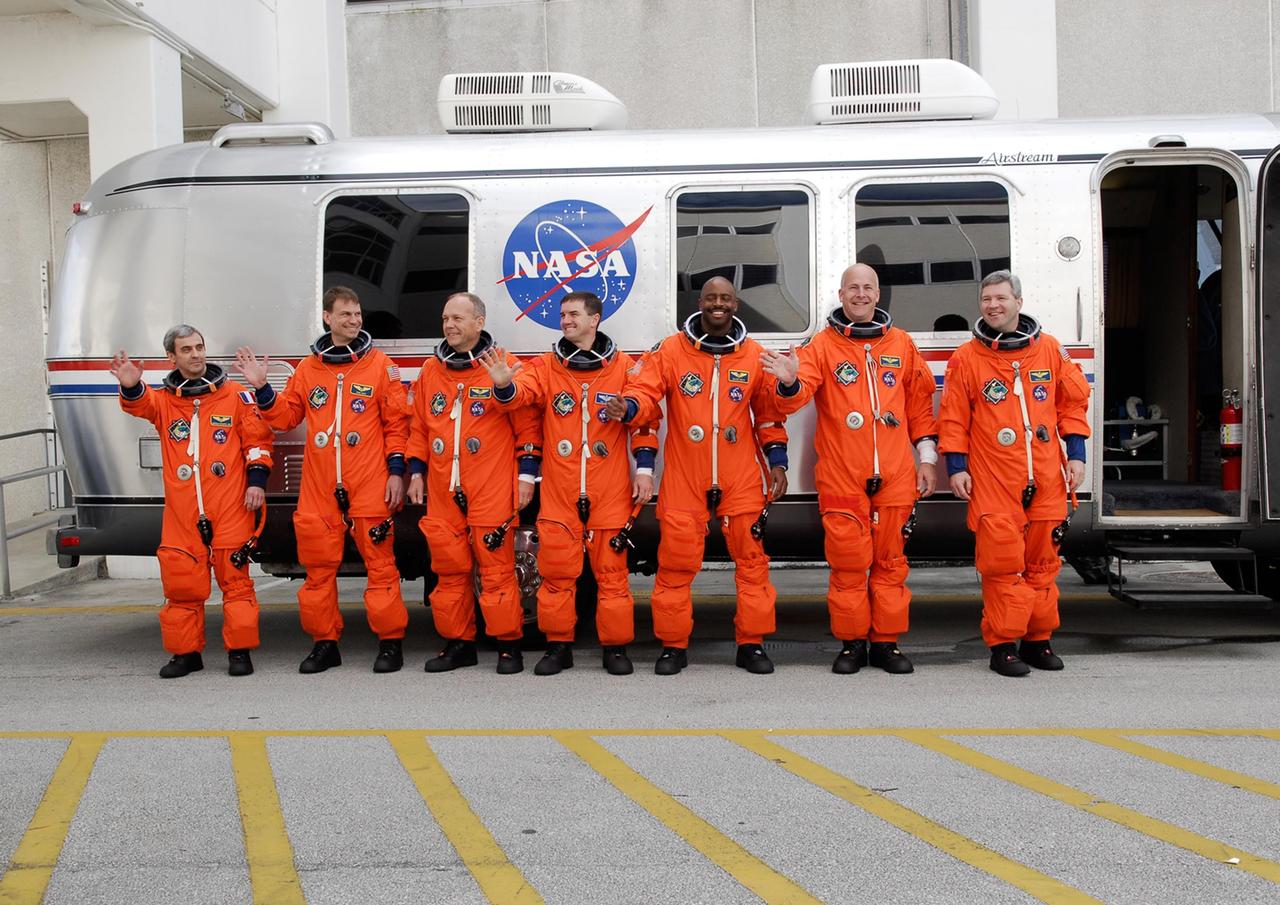
KENNEDY SPACE CENTER, FLA. -- The STS-122 crew pauses alongside the Astrovan to wave farewell to onlookers before heading for Launch Pad 39A for the launch of space shuttle Atlantis on the STS-122 mission. From left are Mission Specialists Leopold Eyharts, Stanley Love, Hans Schlegel, Rex Walheim and Leland Melvin, Pilot Alan Poindexter and Commander Steve Frick. The launch will be the third attempt for Atlantis since December 2007 to carry the European Space Agency's Columbus laboratory to the International Space Station. During the 11-day mission, the crew's prime objective is to attach the laboratory to the Harmony module, adding to the station's size and capabilities. Photo credit: NASA/Kim Shiflett
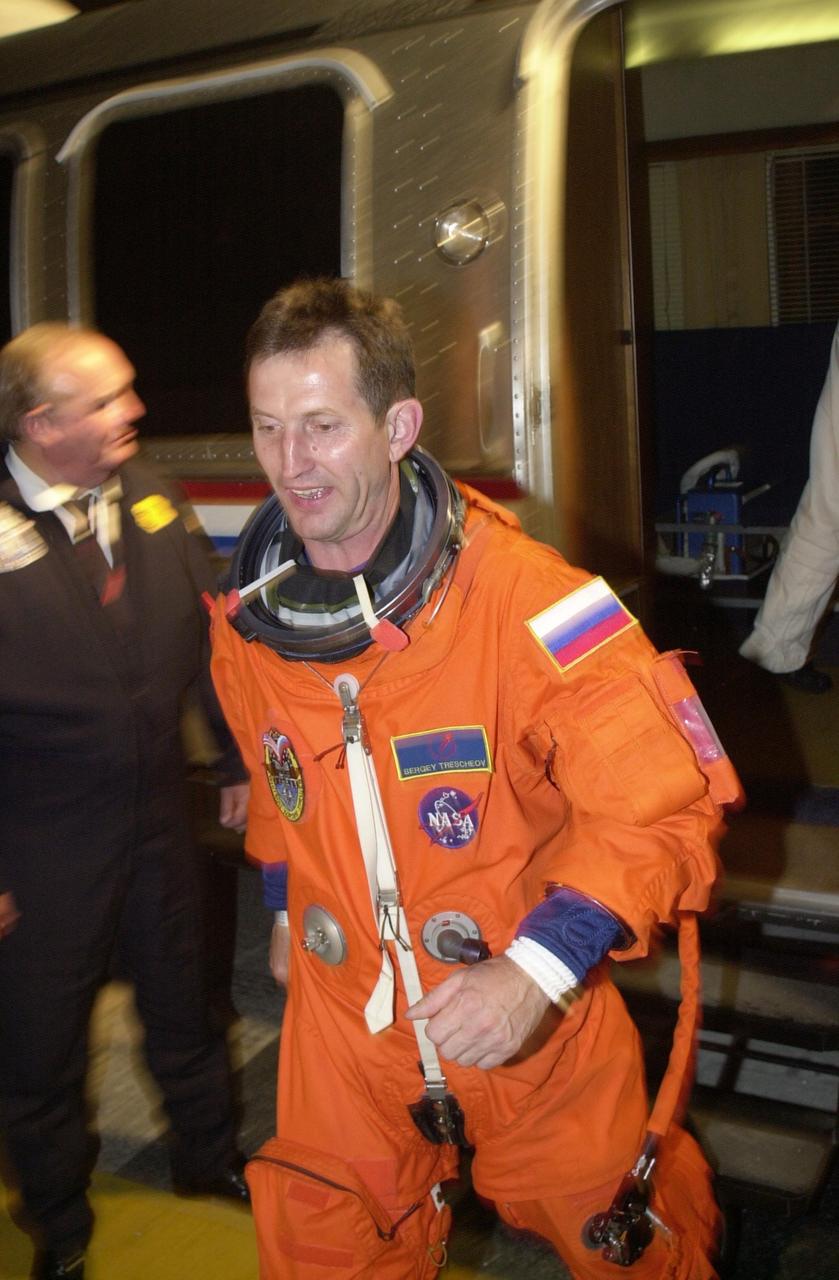
KENNEDY SPACE CENTER, FLA. -- Expedition 5 cosmonaut Sergei Treschev (RSA) steps down from the Astrovan outside the crew quarters at the Operations and Checkout Building after returning from Space Shuttle Endeavour at Launch Pad 39A. The launch of STS-111 was scrubbed due to poor weather at KSC. STS-111 is the second Utilization Flight to the International Space Station, carrying the Multi-Purpose Logistics Module Leonardo, the Mobile Base System (MBS), and a replacement wrist/roll joint for the Canadarm 2. Also on board will be the Expedition Five crew who will replace Expedition Four on the Station. Launch is rescheduled for May 31 at 7:22 p.m. EDT
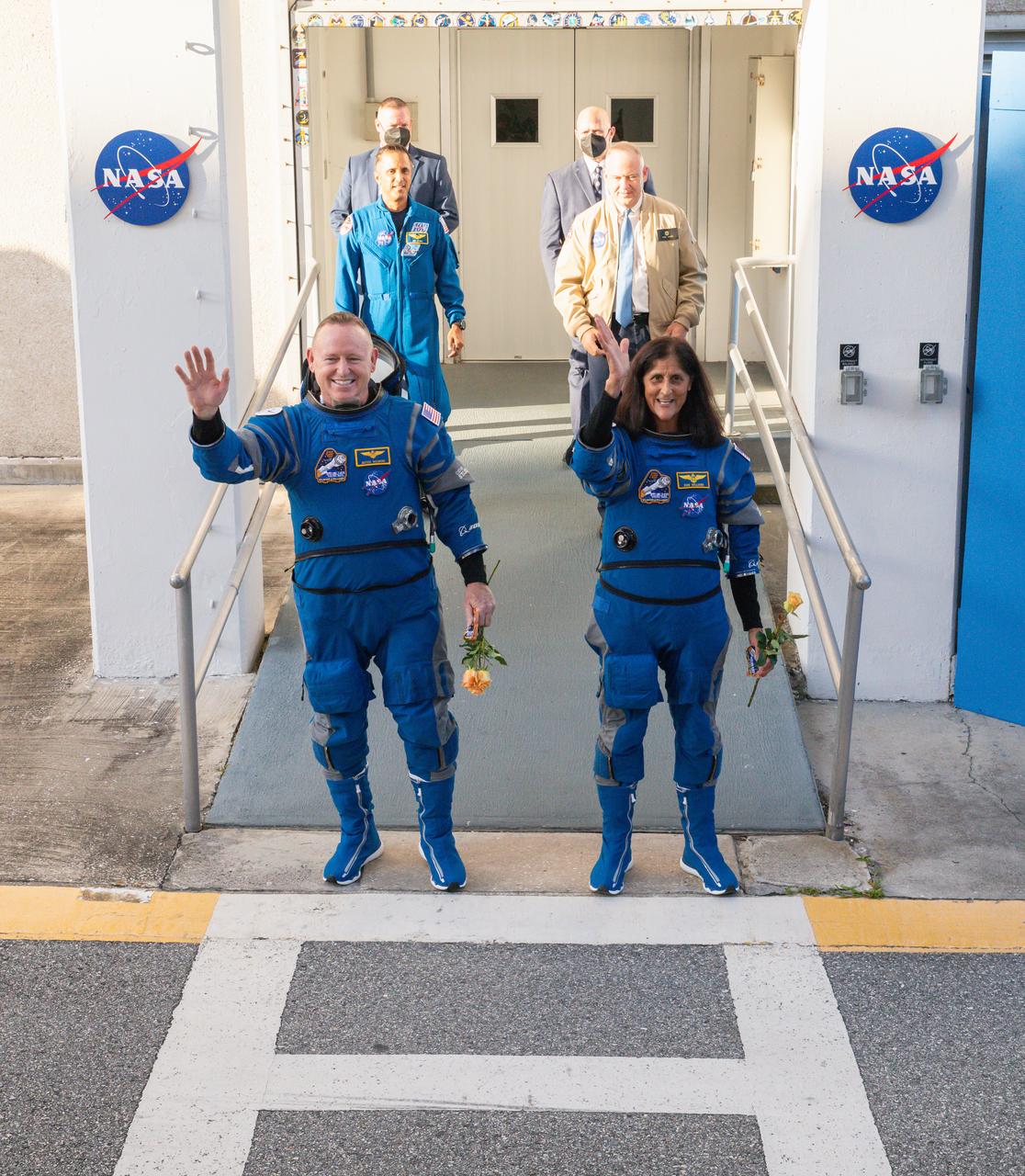
NASA’s Boeing Crew Flight Test astronauts Butch Wilmore and Suni Williams walk out of the Neil A. Armstrong Operations and Checkout Building on Wednesday, June 5, 2024, at the agency’s Kennedy Space Center in Florida. The crew members are on their way to load up into Boeing’s Astrovan for the trip to the launch pad of Space Launch Complex-41 at nearby Cape Canaveral Space Force Station, where they will launch to the International Space Station aboard Boeing’s Starliner spacecraft atop a United Launch Alliance Atlas V rocket at 10:52 a.m. EDT.

Greeted by cheers from wellwishers at KSC and eager for their venture into space on the fifth Shuttle-Mir docking mission, the STS-81 astronauts depart the Operations and Checkout Building and board the Astrovan for their 25-minute trip to Launch Pad 39B. Leading the six-member crew is Mission Commander Michael A. Baker, followed by Pilot Brent W. Jett, Jr. Behind them are Mission Specialists John M. Grunsfeld, Jerry Linenger, Peter J. K. "Jeff" Wisoff, and Marsha S. Ivins. Once at the pad, they will take their positions in the crew cabin of the Space Shuttle Atlantis to await a liftoff during a seven-minute window that will open at 4:27 a.m. EST, January 12
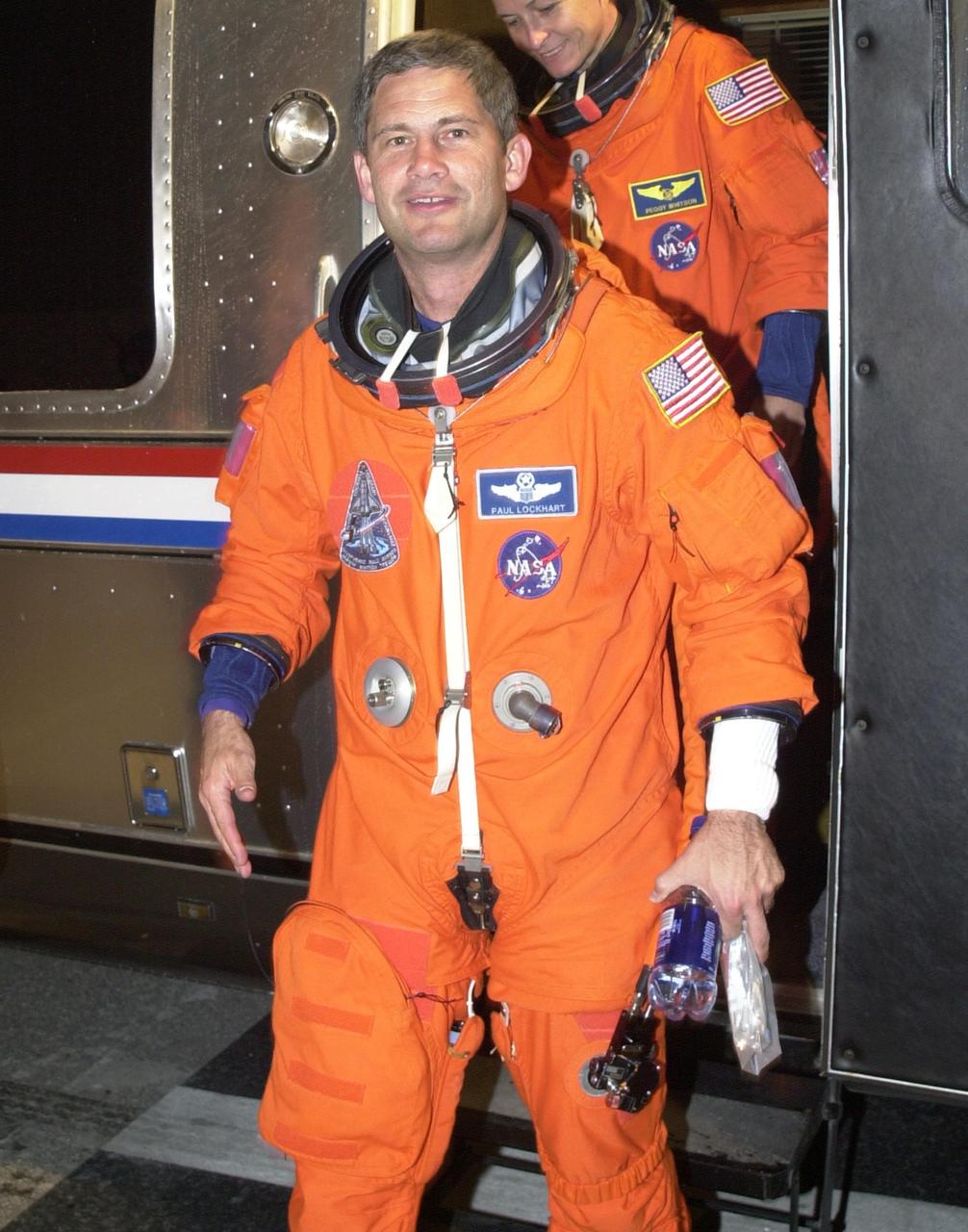
KENNEDY SPACE CENTER, FLA. - STS-111 Pilot Paul Lockhart steps down from the Astrovan outside the crew quarters at the Operations and Checkout Building after returning from Space Shuttle Endeavour at Launch Pad 39A. The launch of STS-111 was scrubbed due to poor weather at KSC. STS-111 is the second Utilization Flight to the International Space Station, carrying the Multi-Purpose Logistics Module Leonardo, the Mobile Base System (MBS), and a replacement wrist/roll joint for the Canadarm 2. Also on board will be the Expedition Five crew who will replace Expedition Four on the Station. Launch is rescheduled for May 31 at 7:22 p.m. EDT

KENNEDY SPACE CENTER, FLA. -- The STS-122 crew members greet onlookers as they head for the Astrovan and their ride to Launch Pad 39A for the launch of space shuttle Atlantis on the STS-122 mission. From left are Mission Specialists Leland Melvin, Stanley Love and Leopold Eyharts, Pilot Alan Poindexter, Mission Specialists Hans Schlegel and Rex Walheim, and Commander Steve Frick. The launch will be the third attempt for Atlantis since December 2007 to carry the European Space Agency's Columbus laboratory to the International Space Station. During the 11-day mission, the crew's prime objective is to attach the laboratory to the Harmony module, adding to the station's size and capabilities. Photo credit: NASA/Kim Shiflett
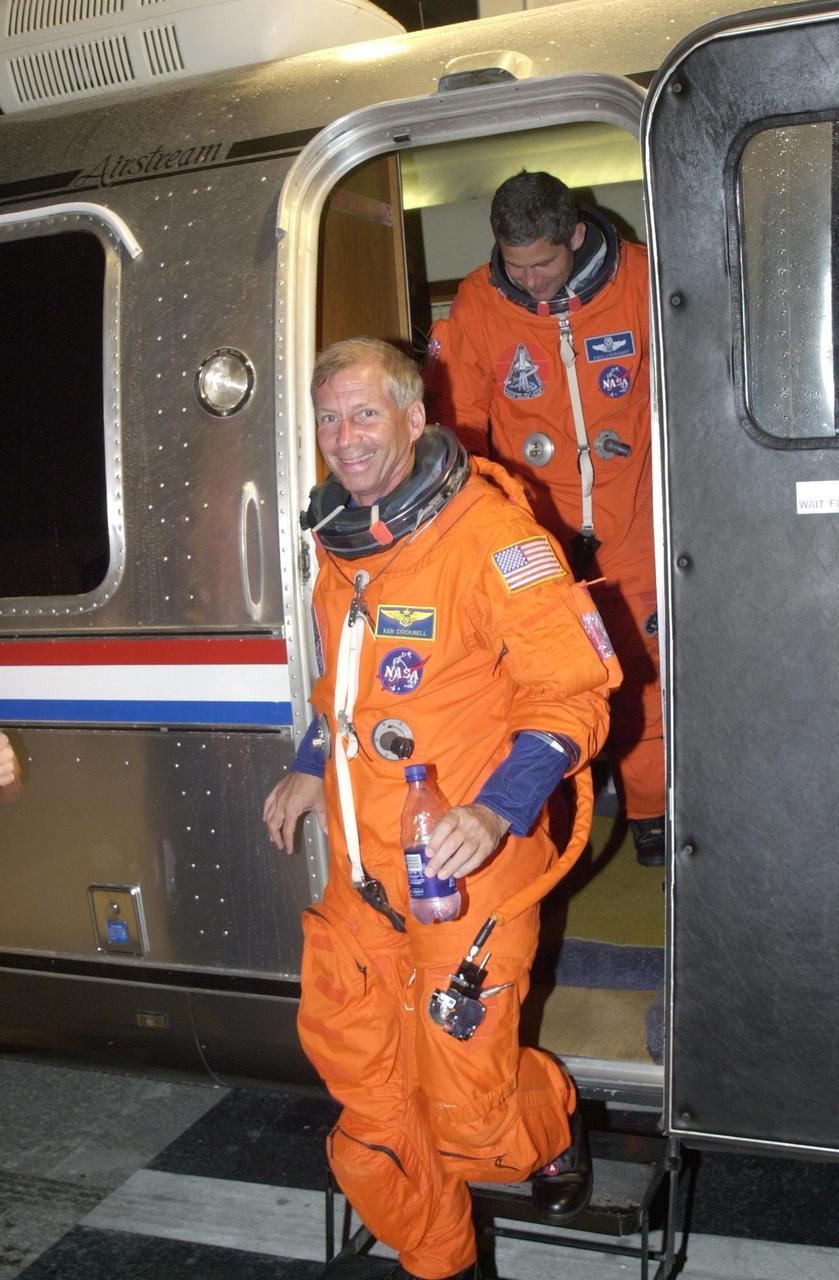
KENNEDY SPACE CENTER, FLA. - STS-111 Commander Kenneth Cockrell and Pilot Paul Lockhart step down from the Astrovan outside the crew quarters at the Operations and Checkout Building after returning from Space Shuttle Endeavour at Launch Pad 39A. The launch of STS-111 was scrubbed due to poor weather at KSC. STS-111 is the second Utilization Flight to the International Space Station, carrying the Multi-Purpose Logistics Module Leonardo, the Mobile Base System (MBS), and a replacement wrist/roll joint for the Canadarm 2. Also on board will be the Expedition Five crew who will replace Expedition Four on the Station. Launch is rescheduled for May 31 at 7:22 p.m. EDT
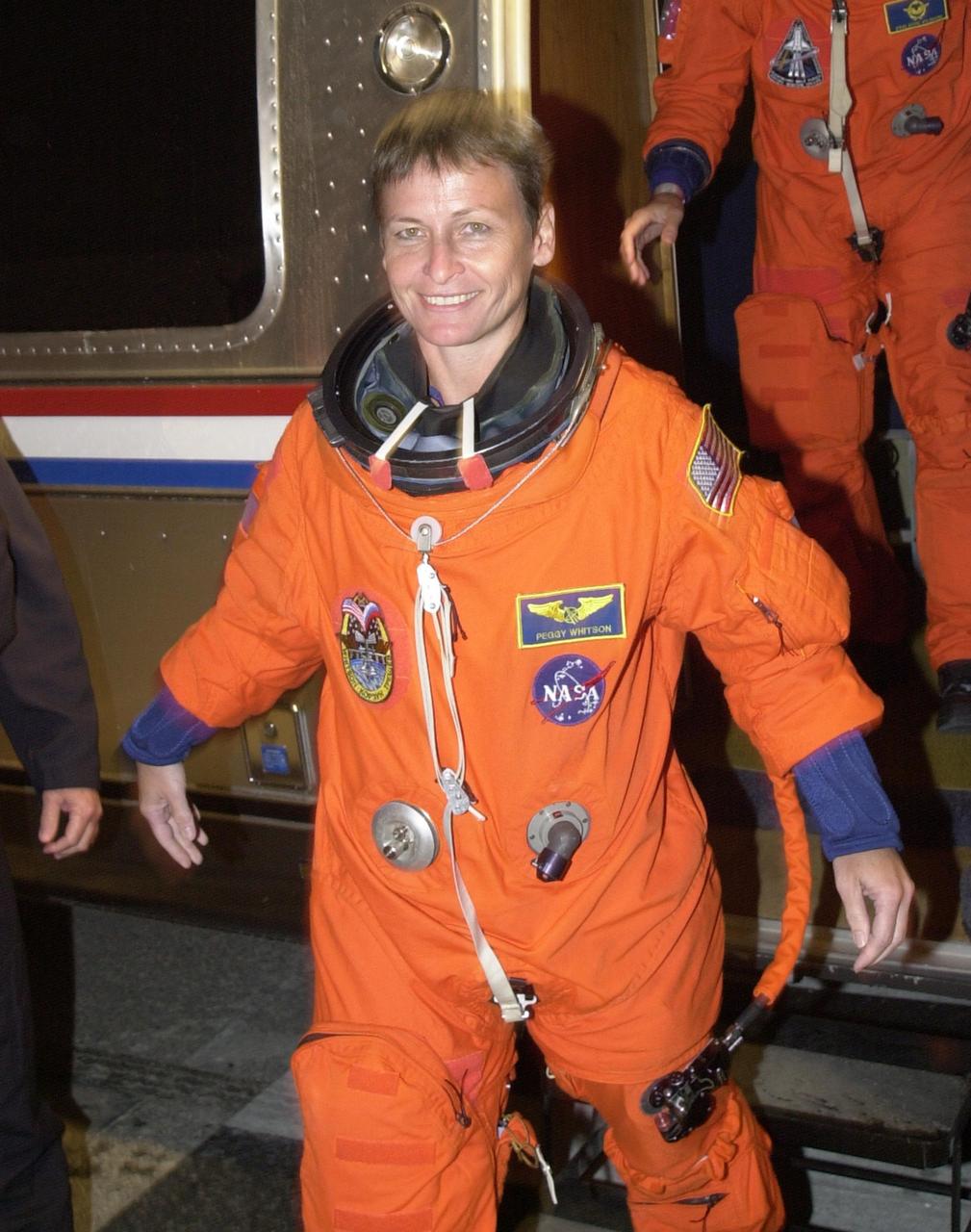
KENNEDY SPACE CENTER, FLA. - Expedition 5 astronaut Peggy Whitson steps down from the Astrovan outside the crew quarters at the Operations and Checkout Building after returning from Space Shuttle Endeavour at Launch Pad 39A. The launch of STS-111 was scrubbed due to poor weather at KSC. STS-111 is the second Utilization Flight to the International Space Station, carrying the Multi-Purpose Logistics Module Leonardo, the Mobile Base System (MBS), and a replacement wrist/roll joint for the Canadarm 2. Also on board will be the Expedition Five crew who will replace Expedition Four on the Station. Launch is rescheduled for May 31 at 7:22 p.m. EDT
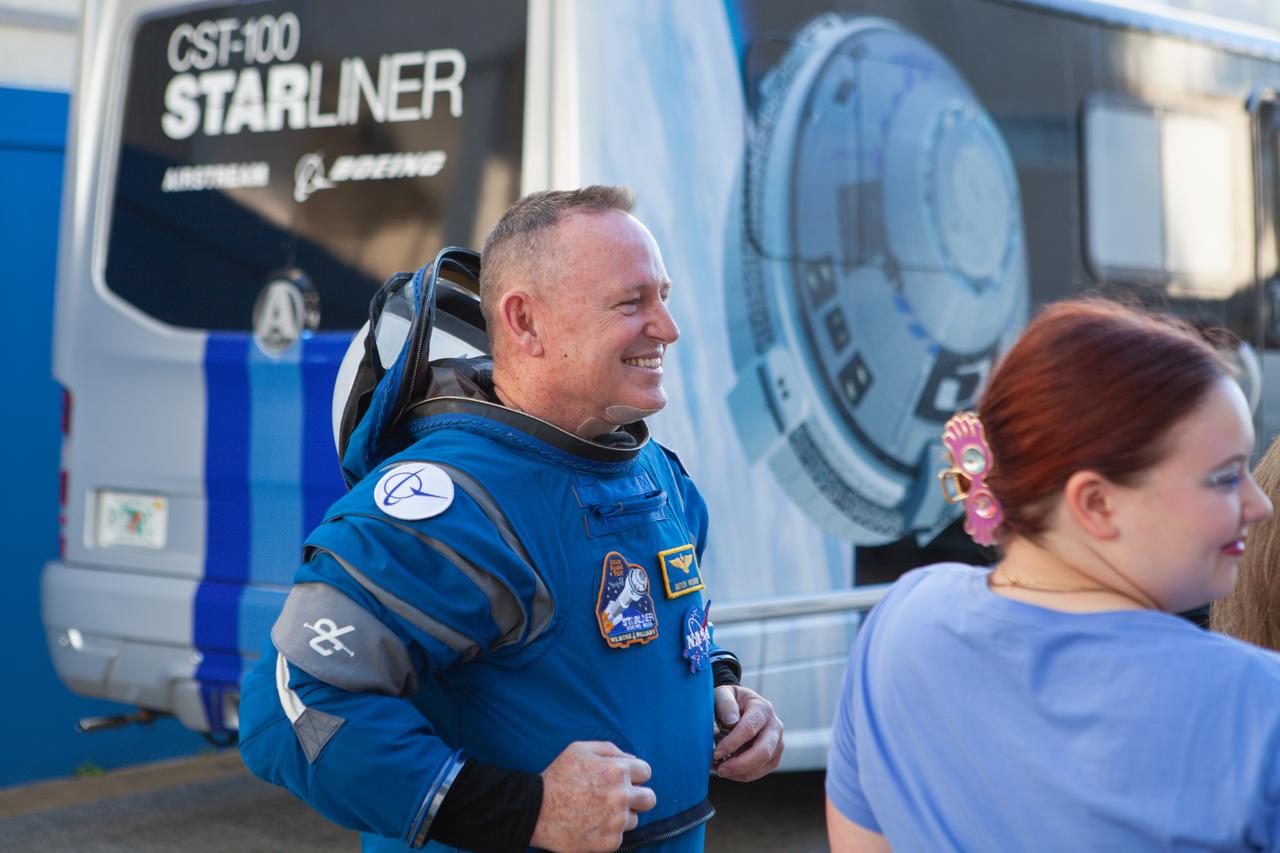
NASA’s Boeing Crew Flight Test astronaut Butch Wilmore says goodbye to friends and family upon exiting the Neil A. Armstrong Operations and Checkout Building at NASA’s Kennedy Space Center in Florida on Wednesday, June 5, 2024. Wilmore, accompanied by NASA astronaut Suni Williams, is preparing to load up into Boeing’s Astrovan for the trip to the launch pad of Space Launch Complex-41 at nearby Cape Canaveral Space Force Station, where the duo will launch to the International Space Station aboard Boeing’s Starliner spacecraft atop a United Launch Alliance Atlas V rocket at 10:52 a.m. EDT.
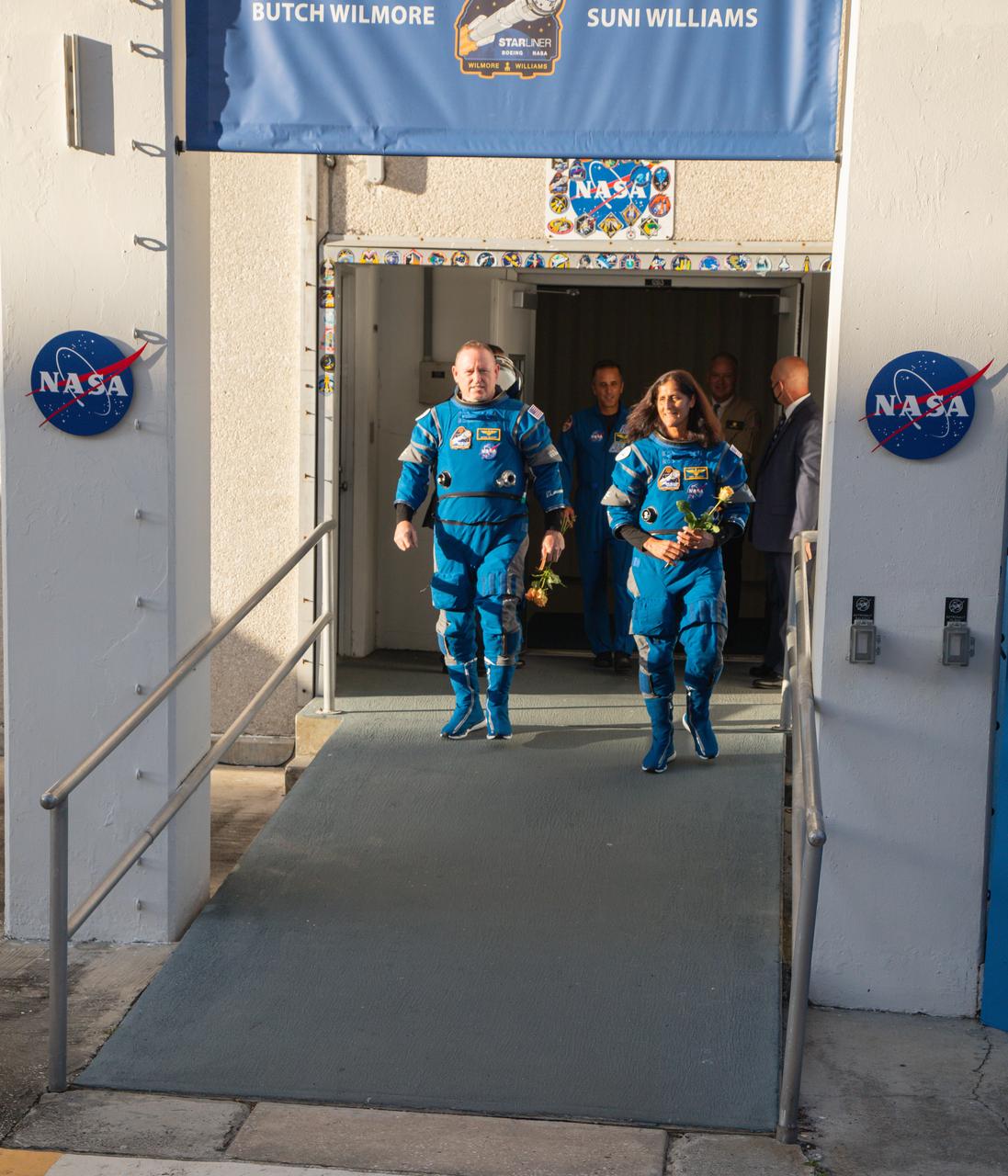
NASA’s Boeing Crew Flight Test astronauts Butch Wilmore and Suni Williams walk out of the Neil A. Armstrong Operations and Checkout Building on Wednesday, June 5, 2024, at the agency’s Kennedy Space Center in Florida. The crew members are on their way to load up into Boeing’s Astrovan for the trip to the launch pad of Space Launch Complex-41 at nearby Cape Canaveral Space Force Station, where they will launch to the International Space Station aboard Boeing’s Starliner spacecraft atop a United Launch Alliance Atlas V rocket at 10:52 a.m. EDT.
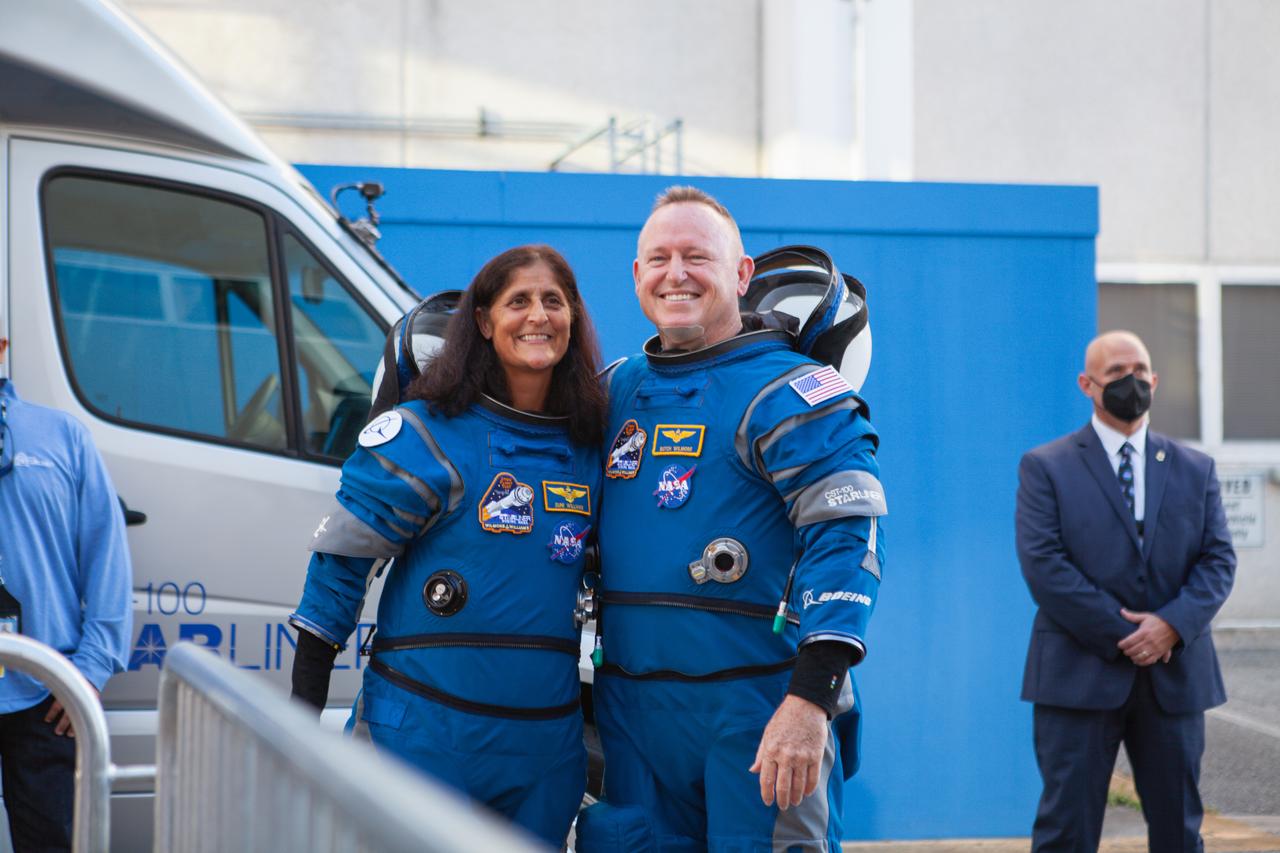
NASA’s Boeing Crew Flight Test astronauts Butch Wilmore and Suni Williams say goodbye to friends and family upon exiting the Neil A. Armstrong Operations and Checkout Building at NASA’s Kennedy Space Center in Florida on Wednesday, June 5, 2024. The crew members are on their way to load up into Boeing’s Astrovan for the trip to the launch pad of Space Launch Complex-41 at nearby Cape Canaveral Space Force Station, where they will launch to the International Space Station aboard Boeing’s Starliner spacecraft atop a United Launch Alliance Atlas V rocket at 10:52 a.m. EDT.
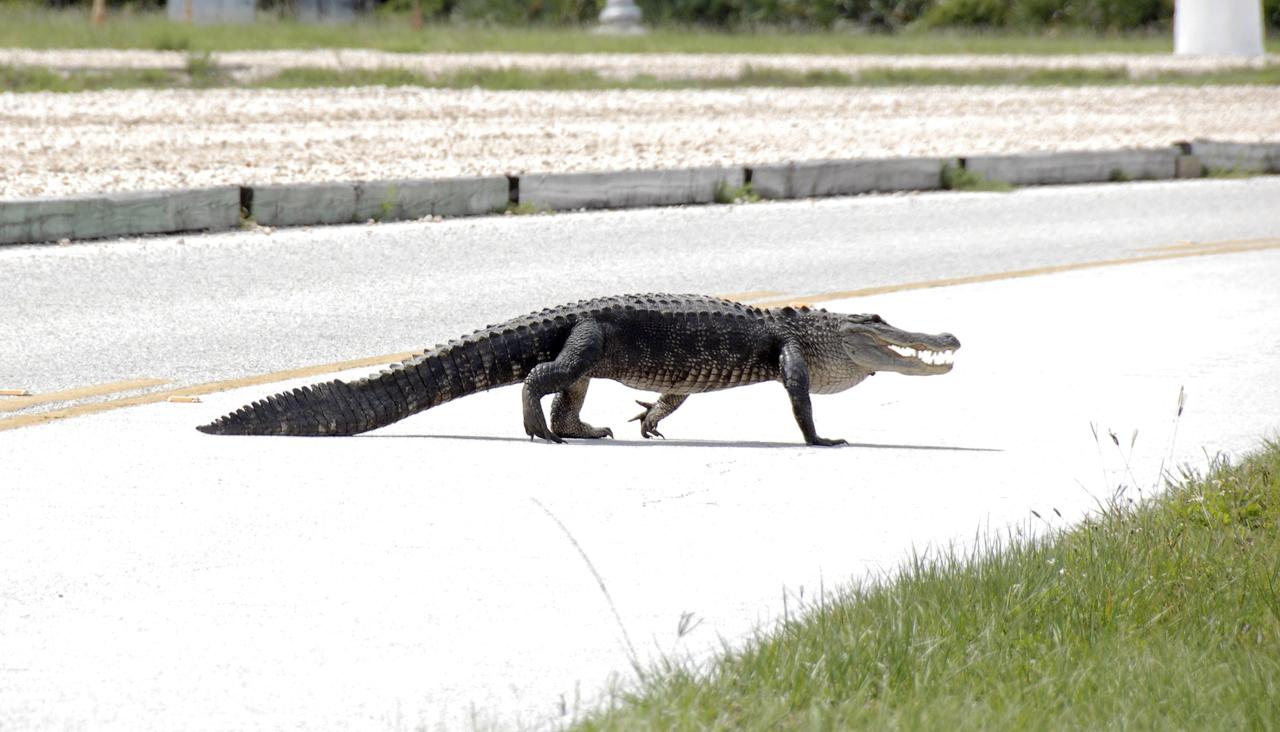
CAPE CANAVERAL, Fla. – Taking a mid-day stroll, an alligator crosses the Saturn Causeway at NASA's Kennedy Space Center in Florida in front of the Astrovan with STS-127 crew members aboard. The crew was on its way to Launch Pad 39A for a simulated launch countdown, part of the terminal countdown demonstration test. Alligators can be spotted in the drainage canals and other waters surrounding Kennedy. They occasionally venture onto roads seeking new environs or mates. The center shares a boundary with the Merritt Island Wildlife Nature Refuge, which is a habitat for more than 310 species of birds, 25 mammals, 117 fishes and 65 amphibians and reptiles. Photo credit: NASA/Kim Shiflett
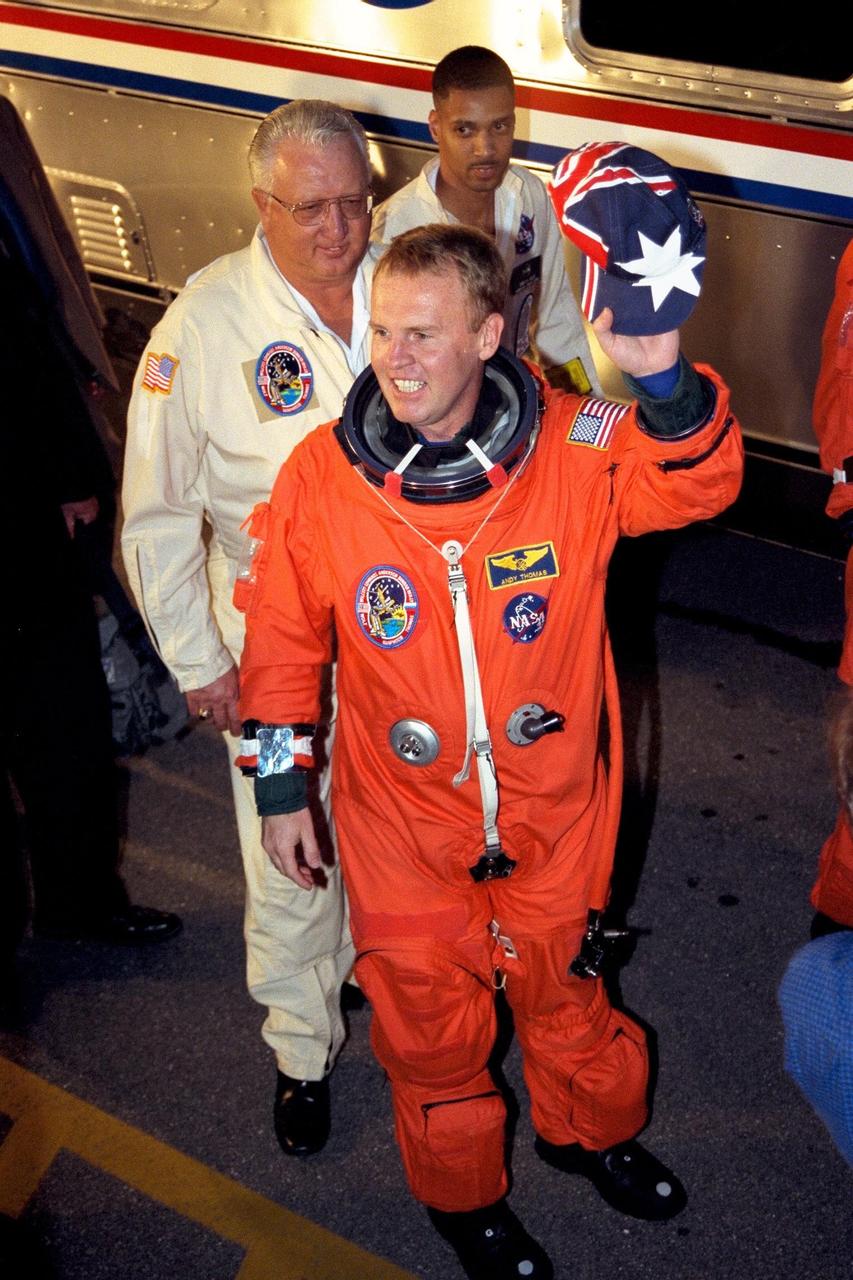
STS-89 Mission Specialist Andrew Thomas, Ph.D., smiles and waves his Australian hat to the crowd outside of the Operations and Checkout Building at KSC as he heads toward the Astrovan that will transport him to Launch Pad 39A. There, the Space Shuttle Endeavour awaits to take the STS-89 crew to Russia’s Mir space station, where Dr. Thomas, who was born and educated in South Australia, will succeed David Wolf, M.D. STS-89, slated for a 9:48 p.m. EST liftoff Jan. 22, is the eighth docking with the Russian Space Station Mir, the first Mir docking for Endeavour (all previous dockings were made by Atlantis), and the first launch of 1998

KENNEDY SPACE CENTER, FLA. -- STS-111 Mission Specialist Philippe Perrin (CNES) steps down from the Astrovan outside the crew quarters at the Operations and Checkout Building after returning from Space Shuttle Endeavour at Launch Pad 39A. The launch of STS-111 was scrubbed due to poor weather at KSC. STS-111 is the second Utilization Flight to the International Space Station, carrying the Multi-Purpose Logistics Module Leonardo, the Mobile Base System (MBS), and a replacement wrist/roll joint for the Canadarm 2. Also on board will be the Expedition Five crew who will replace Expedition Four on the Station. Launch is rescheduled for May 31 at 7:22 p.m. EDT
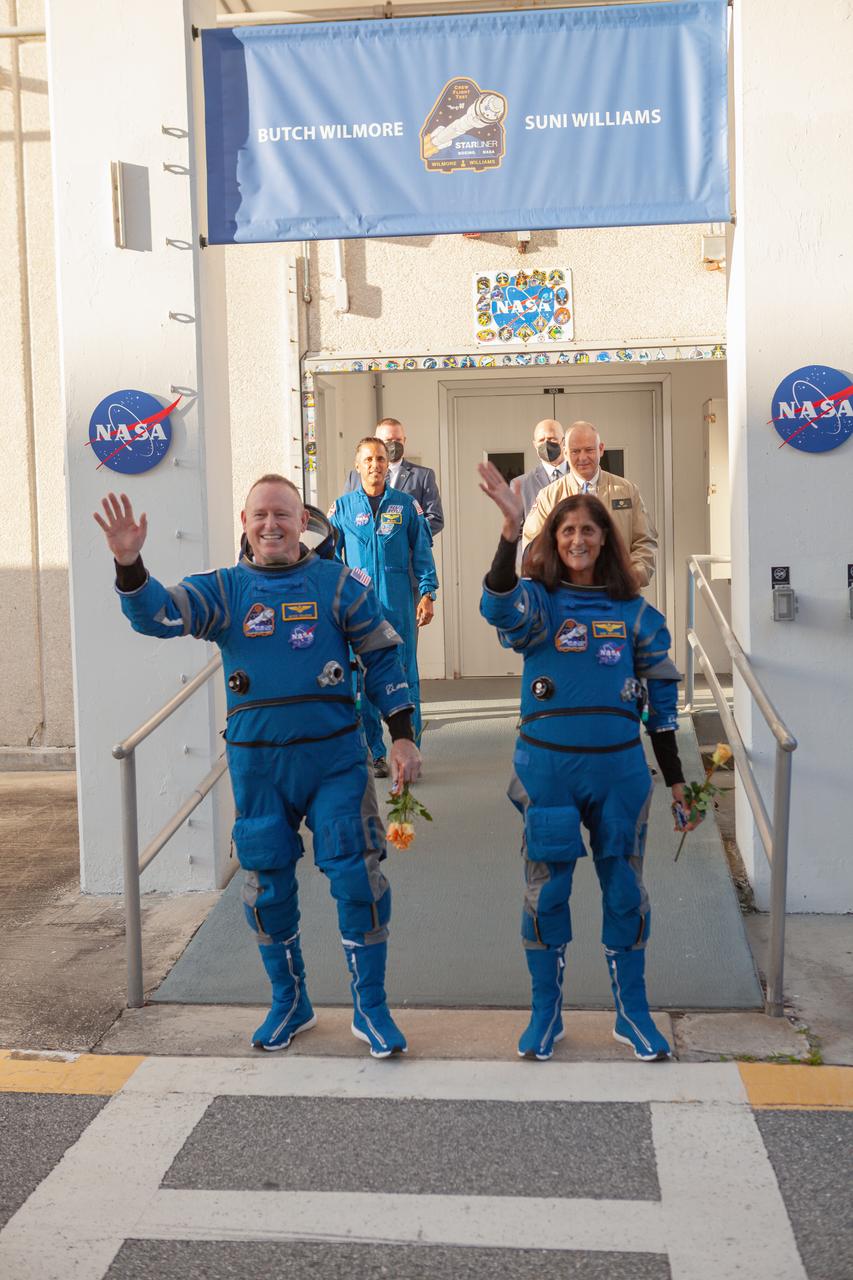
NASA’s Boeing Crew Flight Test astronauts Butch Wilmore and Suni Williams wave goodbye to friends and family upon exiting the Neil A. Armstrong Operations and Checkout Building at NASA’s Kennedy Space Center in Florida on Wednesday, June 5, 2024. The crew members are on their way to load up into Boeing’s Astrovan for the trip to the launch pad of Space Launch Complex-41 at nearby Cape Canaveral Space Force Station, where they will launch to the International Space Station aboard Boeing’s Starliner spacecraft atop a United Launch Alliance Atlas V rocket at 10:52 a.m. EDT.
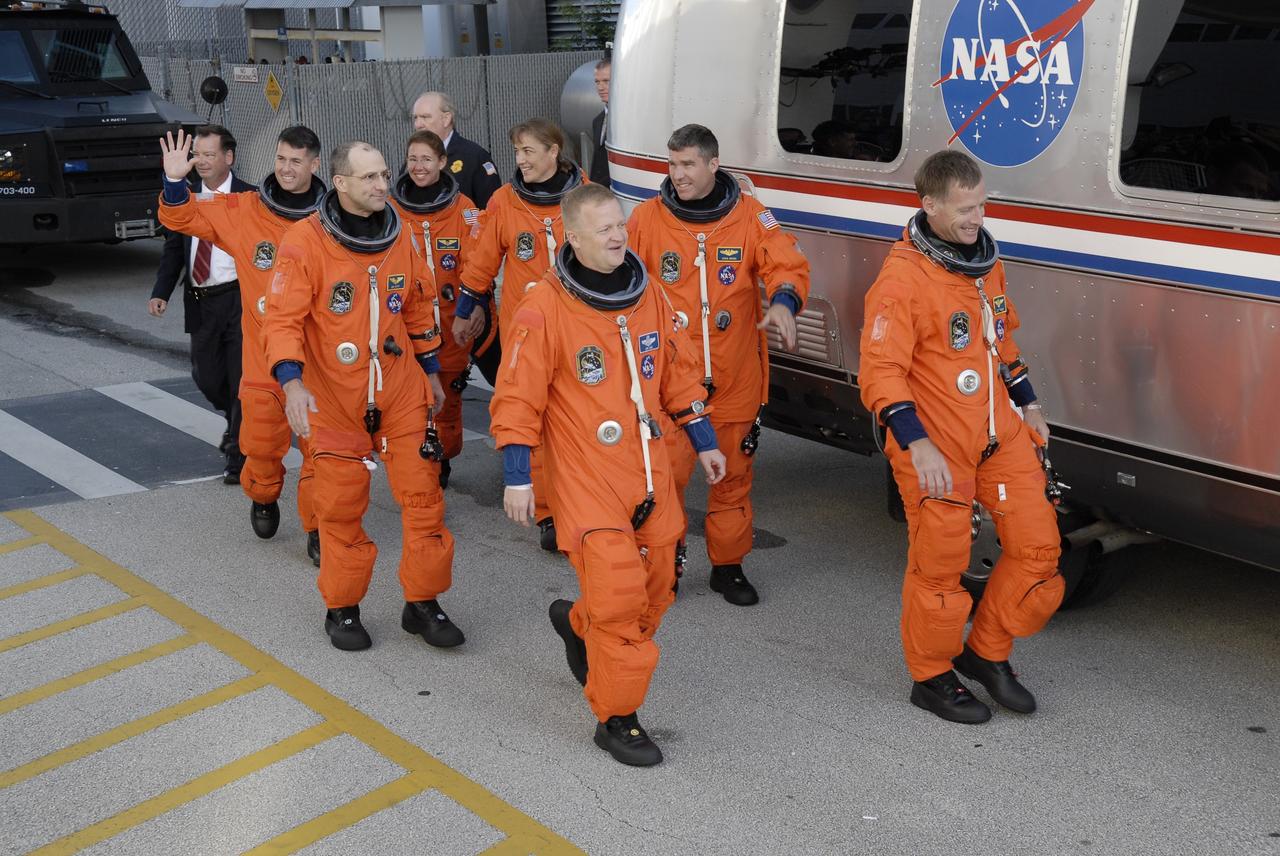
CAPE CANAVERAL, Fla. – Crew members for space shuttle Endeavour's STS-126 mission eagerly walk to the Astrovan that will take them to Launch Pad 39A. From left are Mission Specialists Shane Kimbrough, Donald Pettit, Sandra Magnus and Heidemarie Stefanyshyn-Piper, Pilot Eric Boe, Mission Specialist Steve Bowen and Commander Chris Ferguson. STS-126 is the 124th space shuttle flight and the 27th flight to the International Space Station. The mission will feature four spacewalks and work that will prepare the space station to house six crew members for long- duration missions. Liftoff is scheduled for 7:55 p.m. EST Nov. 14. Photo credit: NASA/Kim Shiflett
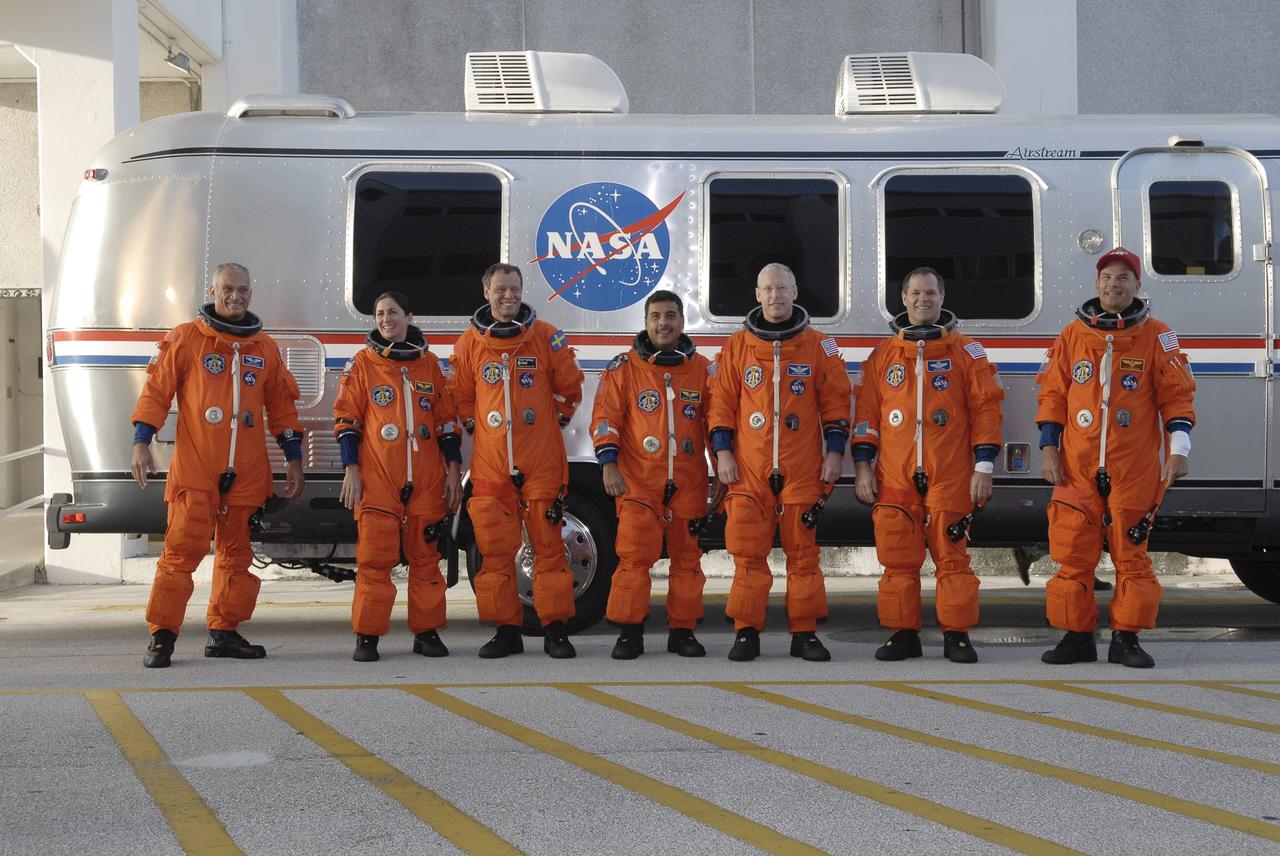
CAPE CANAVERAL, Fla. – The suited STS-128 crew members pause for a photo in front of the Astrovan before heading to NASA Kennedy Space Center's Launch Pad 39A and a simulated launch countdown. From left are Mission Specialists Danny Olivas, Nicole Stott, Christer Fuglesang, Jose Hernandez and Patrick Forrester, Pilot Kevin Ford and Commander Rick Sturckow. The countdown is the culmination of terminal countdown demonstration test activities to prepare the STS-128 crew for launch on space shuttle Discovery's STS-128 mission. Discovery will deliver 33,000 pounds of equipment to the station, including science and storage racks, a freezer to store research samples, a new sleeping compartment and the COLBERT treadmill. Launch is targeted for late August. Photo credit: NASA/Kim Shiflett
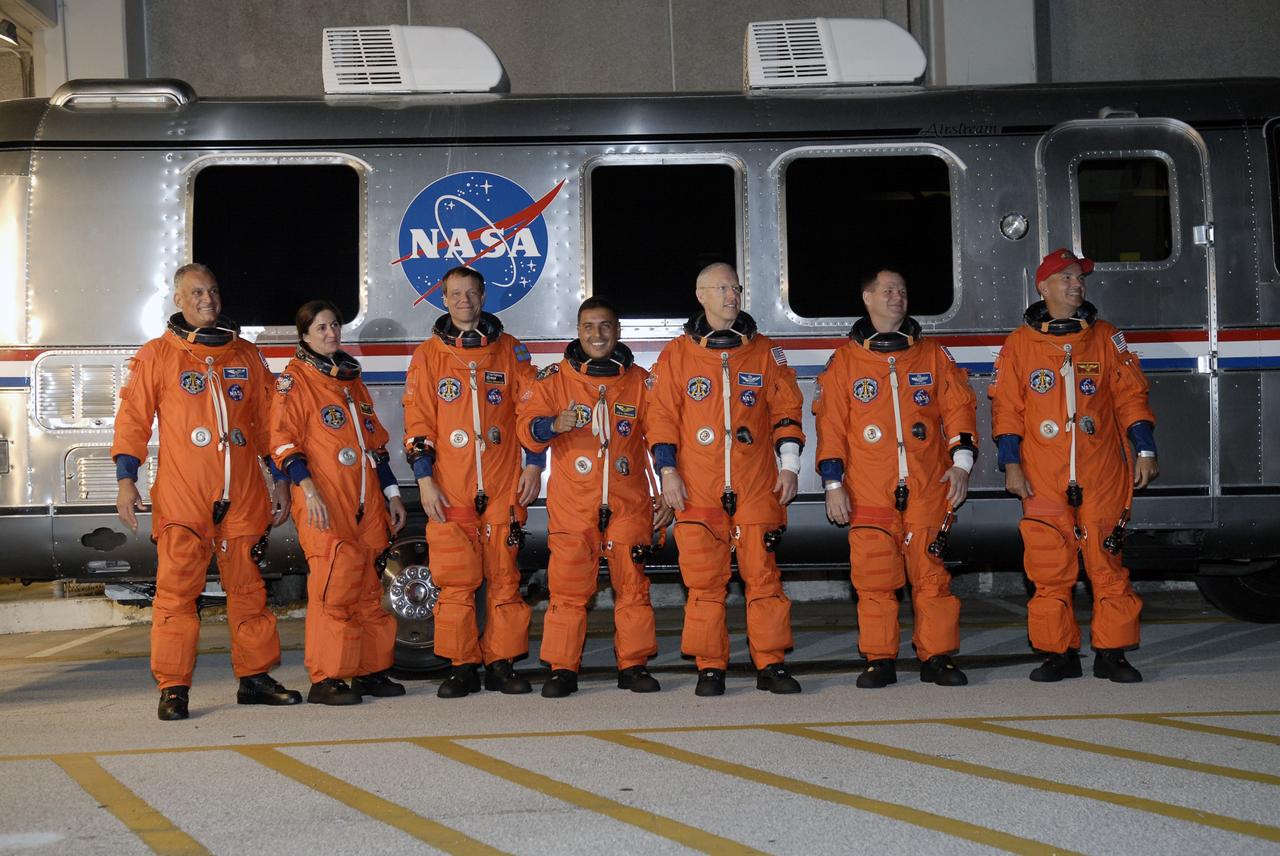
CAPE CANAVERAL, Fla. – The STS-128 crew members pause in front of the Astrovan that will take them to Launch Pad 39A. From left are Mission Specialists Danny Olivas, Nicole Stott, Christer Fuglesang, Jose Hernandez and Patrick Forrester, Pilot Kevin Ford and Commander Rick Sturckow. At the pad, the astronauts will complete their suitup and enter space shuttle Discovery for the 1:36 a.m. EDT liftoff. The 13-day mission will deliver more than 7 tons of supplies, science racks and equipment, as well as additional environmental hardware to sustain six crew members on the International Space Station. The equipment includes a freezer to store research samples, a new sleeping compartment and the COLBERT treadmill. The mission is the 128th in the Space Shuttle Program, the 37th flight of Discovery and the 30th station assembly flight. Photo credit: NASA/Kim Shiflett
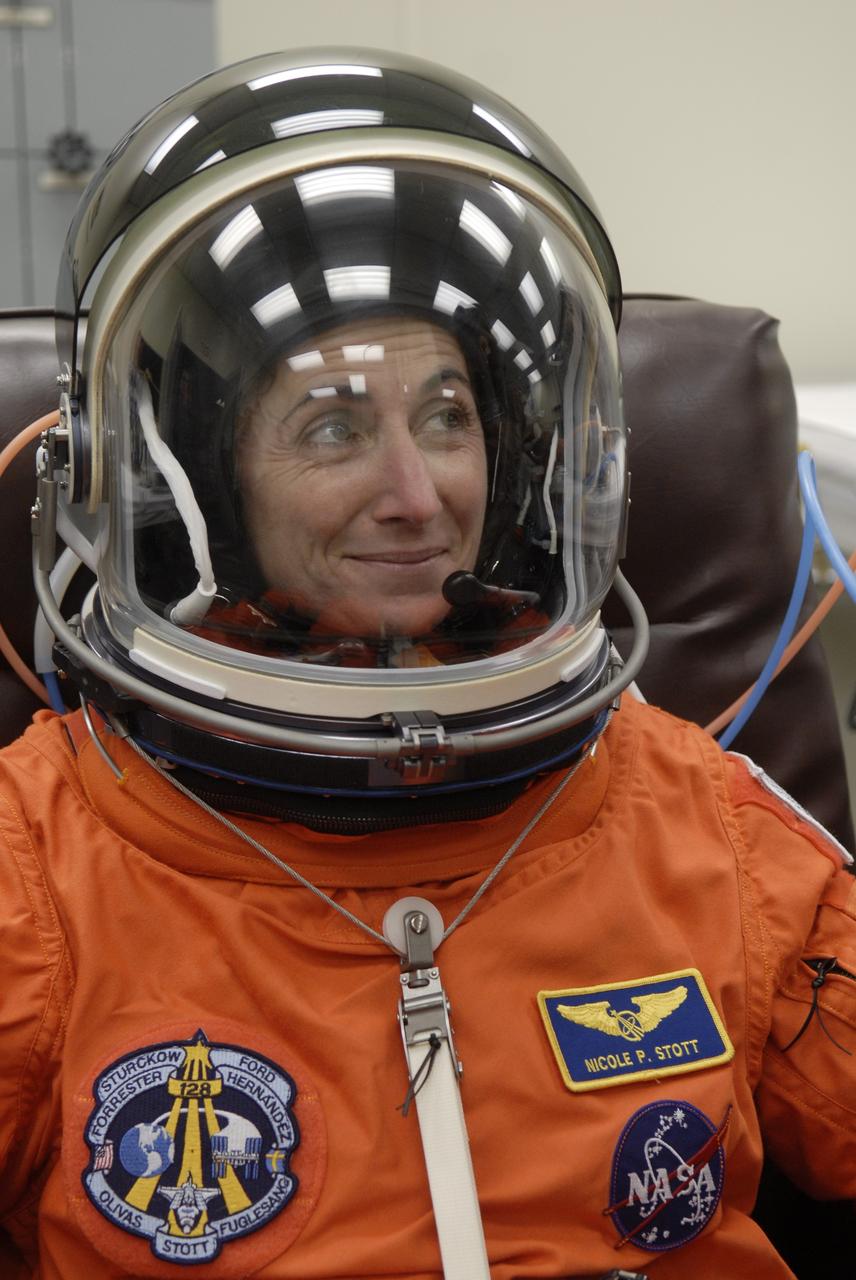
CAPE CANAVERAL, Fla. – In the Operations and Checkout Building at NASA's Kennedy Space Center in Florida, STS-128 crew members put on their launch-and-entry suits before heading to the Astrovan for the 3.4-mile drive to Launch Pad 39A. There, crew members will complete their suitup and enter space shuttle Discovery for the 1:36 a.m. EDT liftoff. Seen here is Mission Specialist Nicole Stott, checking communications in her helmet. The 13-day mission will deliver more than 7 tons of supplies, science racks and equipment, as well as additional environmental hardware to sustain six crew members on the International Space Station. The equipment includes a freezer to store research samples, a new sleeping compartment and the COLBERT treadmill. The mission is the 128th in the Space Shuttle Program, the 37th flight of Discovery and the 30th station assembly flight. Photo credit: NASA/Kim Shiflett
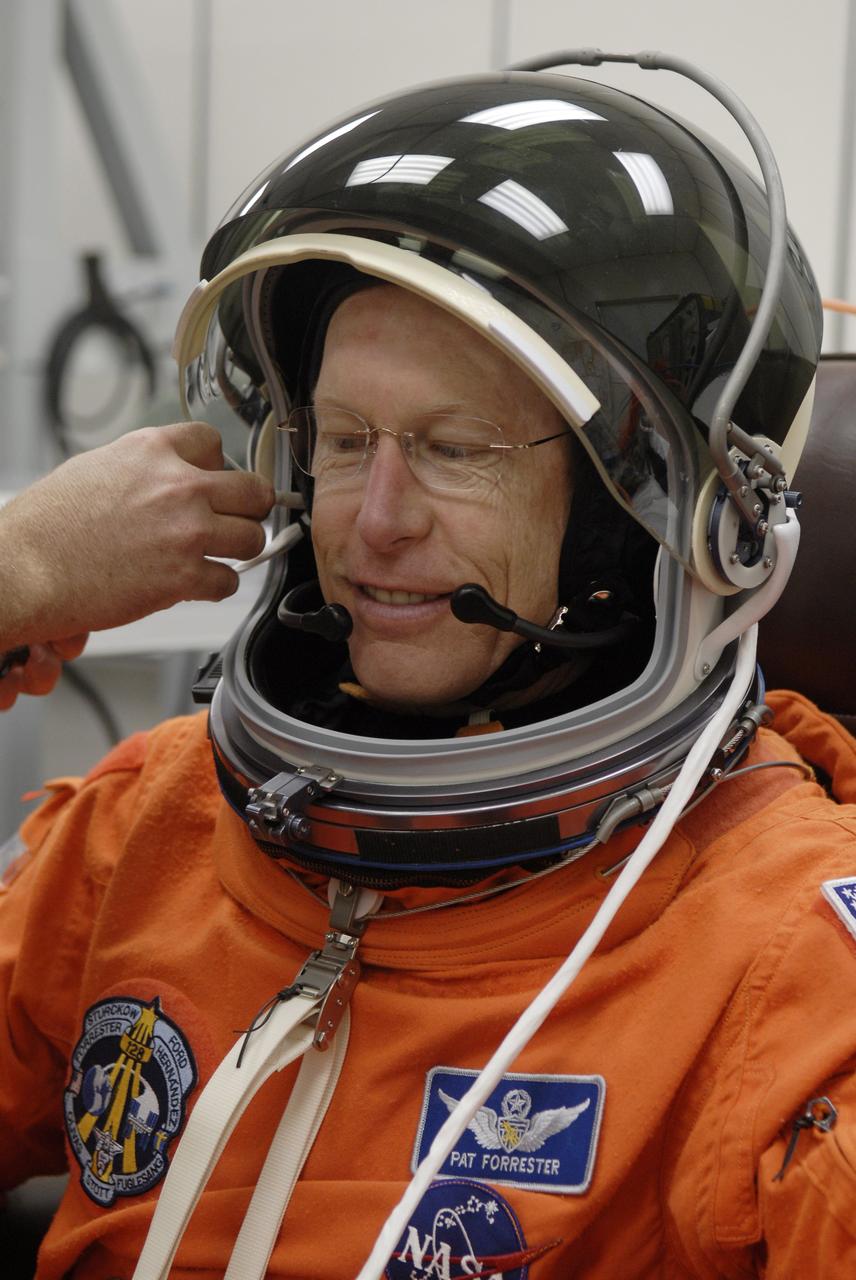
CAPE CANAVERAL, Fla. – In the Operations and Checkout Building at NASA's Kennedy Space Center in Florida, STS-128 crew members put on their launch-and-entry suits before heading to the Astrovan for the 3.4-mile drive to Launch Pad 39A. There, crew members will complete their suitup and enter space shuttle Discovery for the 1:36 a.m. EDT liftoff. Seen here, Mission Specialist Patrick Forrester has his helmet communications system connected. The 13-day mission will deliver more than 7 tons of supplies, science racks and equipment, as well as additional environmental hardware to sustain six crew members on the International Space Station. The equipment includes a freezer to store research samples, a new sleeping compartment and the COLBERT treadmill. The mission is the 128th in the Space Shuttle Program, the 37th flight of Discovery and the 30th station assembly flight. Photo credit: NASA/Kim Shiflett
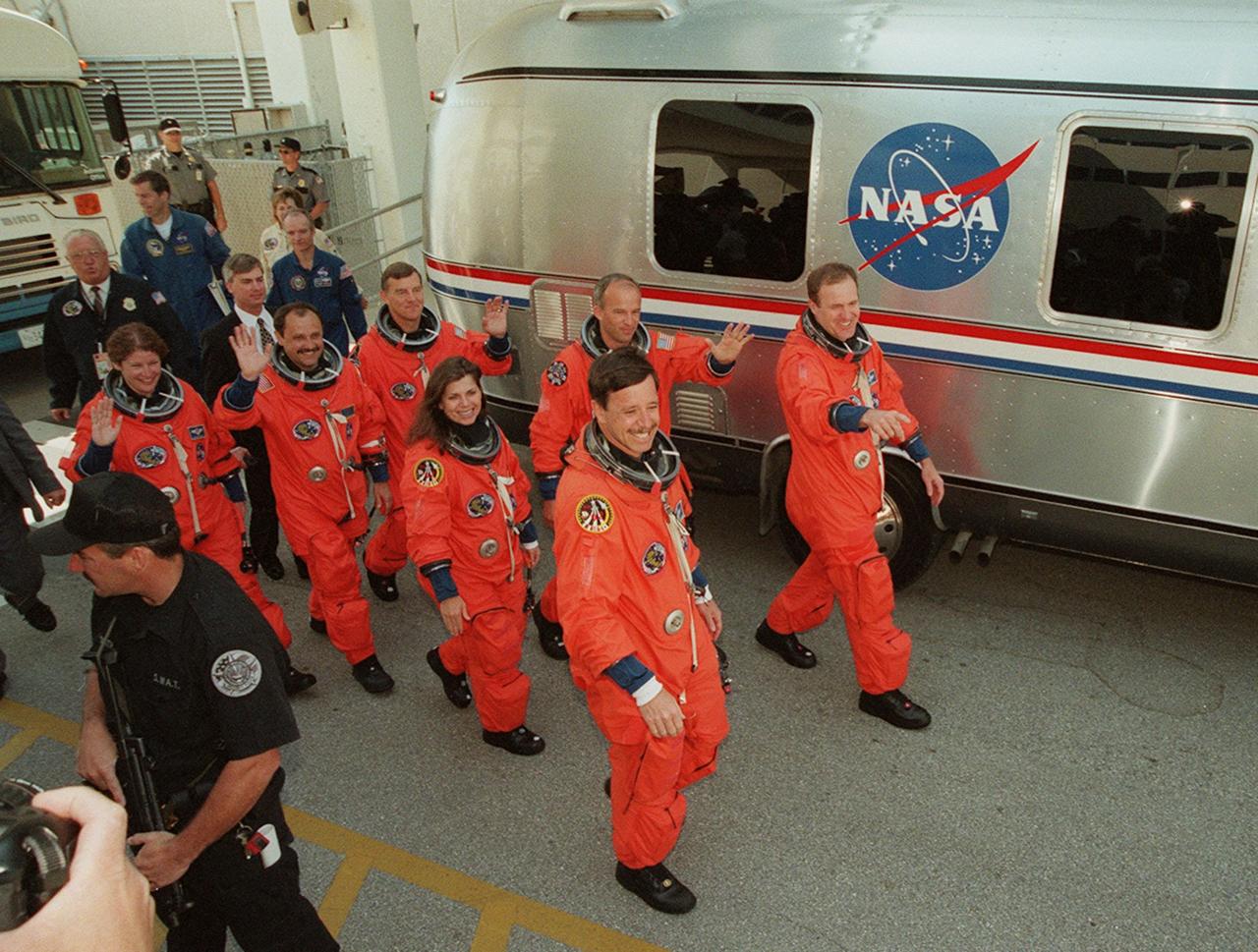
Smiling and waving to onlookers, the STS-101 crew eagerly walk to the waiting Astrovan that will take them to Launch Pad 39A a third time for launch of Space Shuttle Atlantis. From left are Mission Specialists Susan J. Helms, Yury Usachev of Russia, James S. Voss, Mary Ellen Weber and Jeffrey N. Williams; Pilot Scott J. Horowitz; and Commander James D. Halsell Jr. (pointing). The previous two launch attempts were scrubbed due to high cross winds at the Shuttle Landing Facility. The mission will take the crew to the International Space Station to deliver logistics and supplies and to prepare the Station for the arrival of the Zvezda Service Module, expected to be launched by Russia in July 2000. Also, the crew will conduct one space walk. This is the third assembly flight to the Space Station. After the 10-day mission, Atlantis is expected to land at KSC May 6 at about 12:03 p.m. EDT
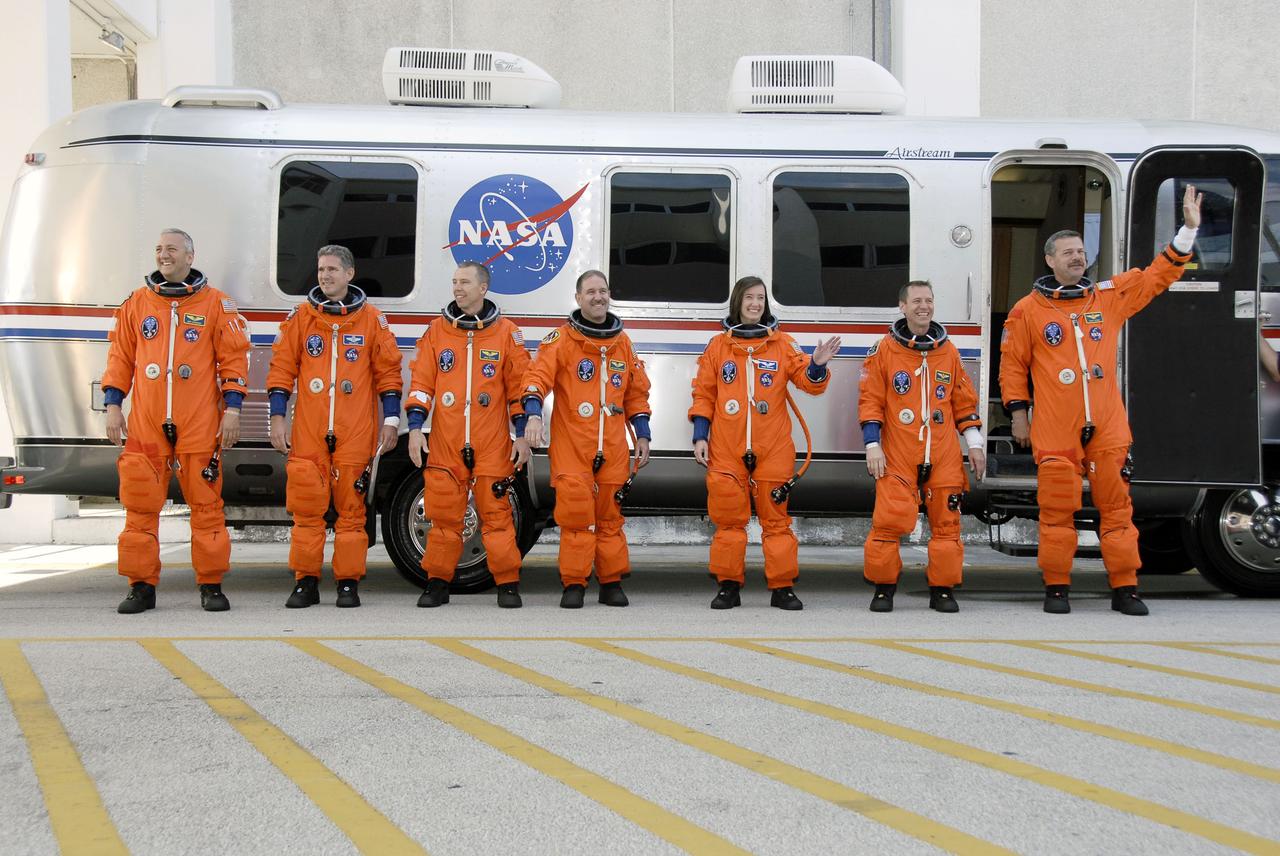
STS125-S-011 (11 May 2009) --- After suiting up, the STS-125 crewmembers pause alongside the Astrovan to wave farewell to onlookers before heading for launch pad 39A for the launch of Space Shuttle Atlantis on the STS-125 mission to service the Hubble Space Telescope. From the right are Scott Altman, commander; Gregory C. Johnson, pilot; Megan McArthur, John Grunsfeld, Andrew Feustel, Michael Good and Mike Massimino, all mission specialists. Atlantis' 11-day flight will include five spacewalks to refurbish and upgrade the telescope with state-of-the-art science instruments that will expand Hubble's capabilities and extend its operational lifespan through at least 2014. The payload includes Wide Field Camera 3, fine guidance sensor and the Cosmic Origins Spectrograph. Launch of Atlantis is scheduled for 2:01 p.m. May 11 EDT.
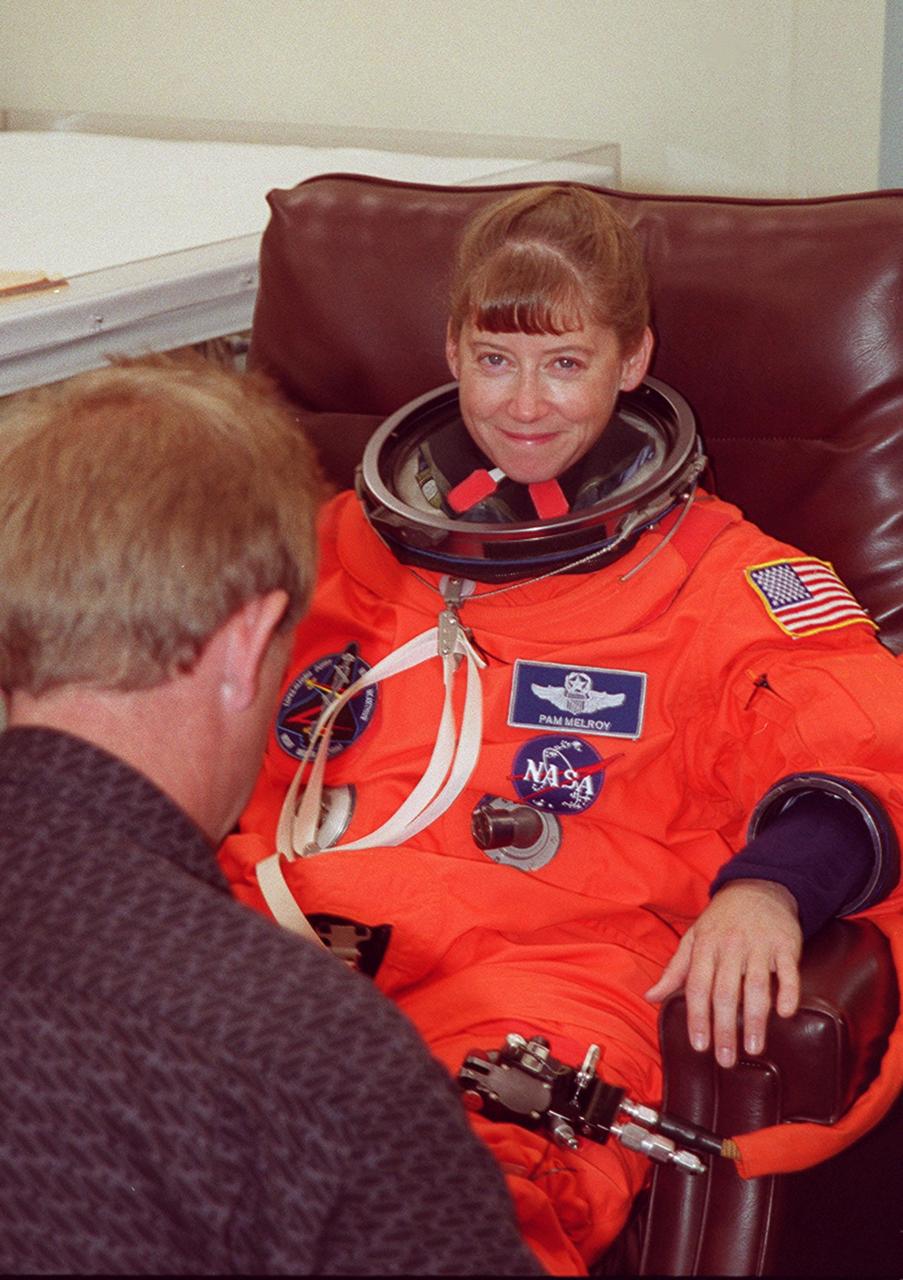
In the Operations and Checkout Building, STS-92 Pilot Pamela Ann Melroy smiles during suit check before heading out to the Astrovan for the ride to Launch Pad 39A. During the 11-day mission to the International Space Station, four extravehicular activities (EVAs), or spacewalks, are planned for construction. The payload includes the Integrated Truss Structure Z-1 and the third Pressurized Mating Adapter. The Z-1 truss is the first of 10 that will become the backbone of the Space Station, eventually stretching the length of a football field. PMA-3 will provide a Shuttle docking port for solar array installation on the sixth Station flight and Lab installation on the seventh Station flight. Launch is scheduled for 7:17 p.m. EDT. Landing is expected Oct. 22 at 2:10 p.m. EDT

KENNEDY SPACE CENTER, Fla. -- The STS-108 crew leads the way to the Astrovan for a ride to Launch Pad 39B for a simulated launch countdown. They are followed by the Expedition 4 crew. From front to back, left and right, are Pilot Mark E. Kelly and Commander Dominic L. Gorie; Mission Specialists Daniel M. Tani and Linda A. Godwin; Expedition 4 Commander Yuri Onufrienko; astronauts Daniel W. Bursch and Carl E. Walz. The simulated countdown is part of Terminal Countdown Demonstration Test activities, which have also included emergency exit training from the orbiter. Launch of Space Shuttle Endeavour on mission STS-108 is scheduled for Nov. 29 at 7:44 p.m. EST