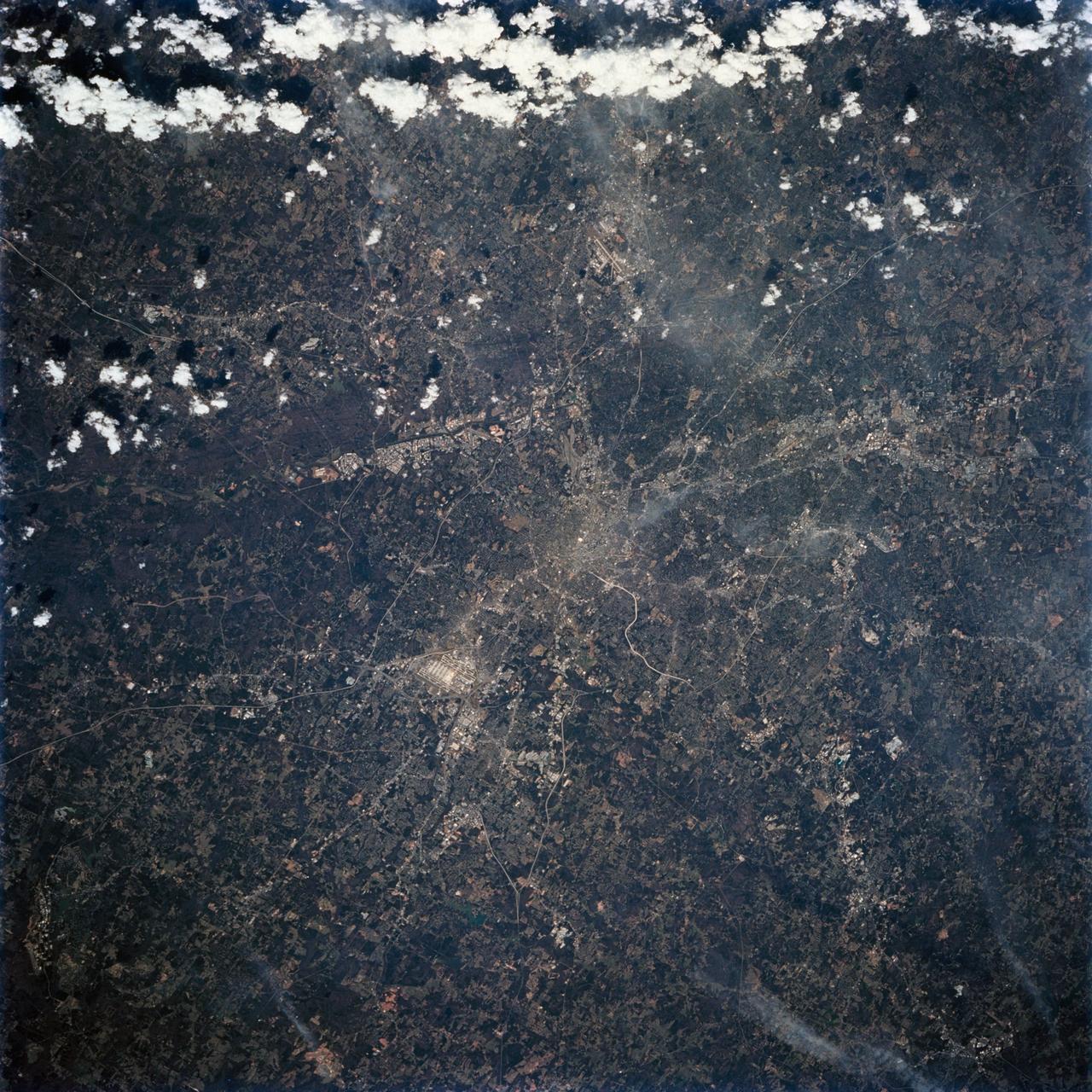
STS062-85-147 (4-18 March 1994) --- Hartsfield Atlanta International Airport is visible to the south of Atlanta, situated near the center of the photograph. Dobbins Air Force Base and the city of Marietta can also be seen to the north of Atlanta in this south-looking low-oblique view. The complex system of transportation routes and interstate highways surrounding and traversing Atlanta can also be seen in the photograph. The white dot near the center of the photograph is the Georgia Dome, a major sports and entertainment complex in downtown Atlanta. Atlanta is the cultural, industrial, transportation, financial and commercial center of the South. It has one of the busies air traffic hubs in the United States. A major aircraft assembly plant is located north of Atlanta in Marietta. The Stone Mountain Memorial, with its enormous relief carvings of Confederate figures, is located east of Atlanta and is visible on the photograph.
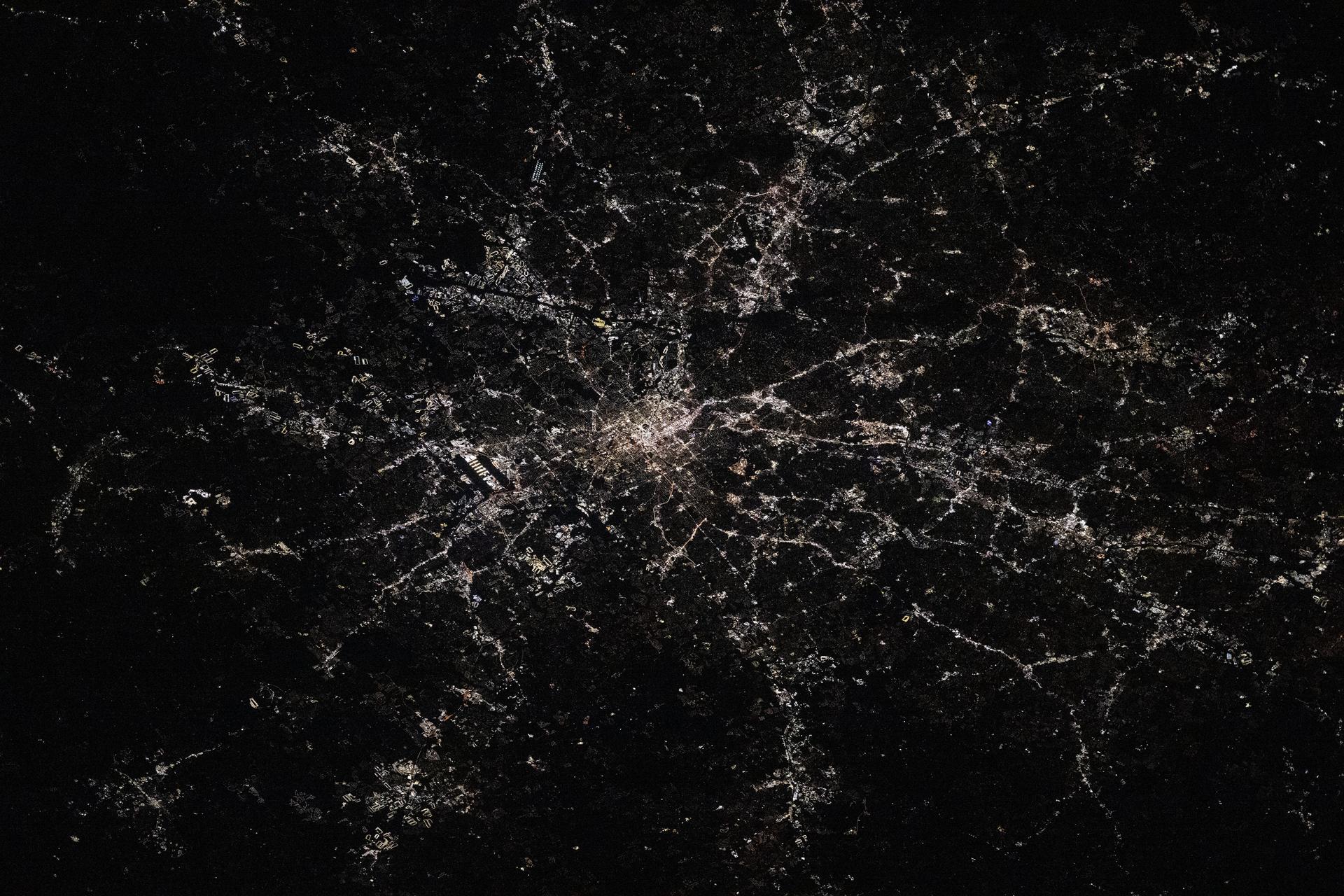
iss073e0982081 (Oct. 25, 2025) --- Atlanta, Georgia—home to the world's busiest airport, Hartsfield-Jackson Atlanta International Airport (center left), which handles over 107 million passengers annually—is pictured at approximately 2:20 a.m. local time from the International Space Station as it orbited 261 miles above North America. Atlanta is also nicknamed the "City in a Forest," with approximately 48% of its area covered in trees.
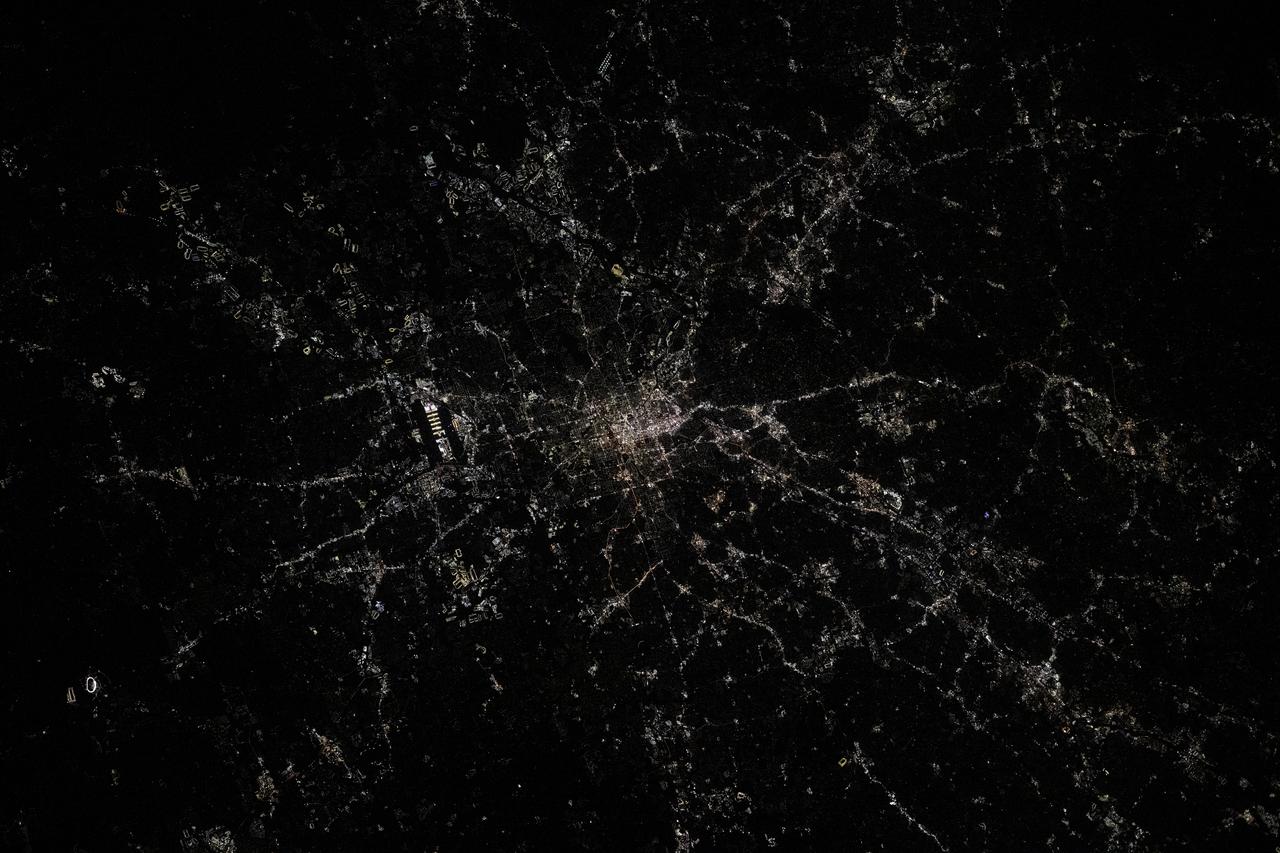
iss073e0433580 (June 27, 2025) --- Atlanta, Georgia, also known as the "City in a Forest" almost half covered by trees, and home to the busiest airport in the world, Hartsfield-Jackson Atlanta International Airport (center left), is pictured at approximately 6:19 a.m. local time from the International Space Station as it orbited 260 miles above the southern United States.
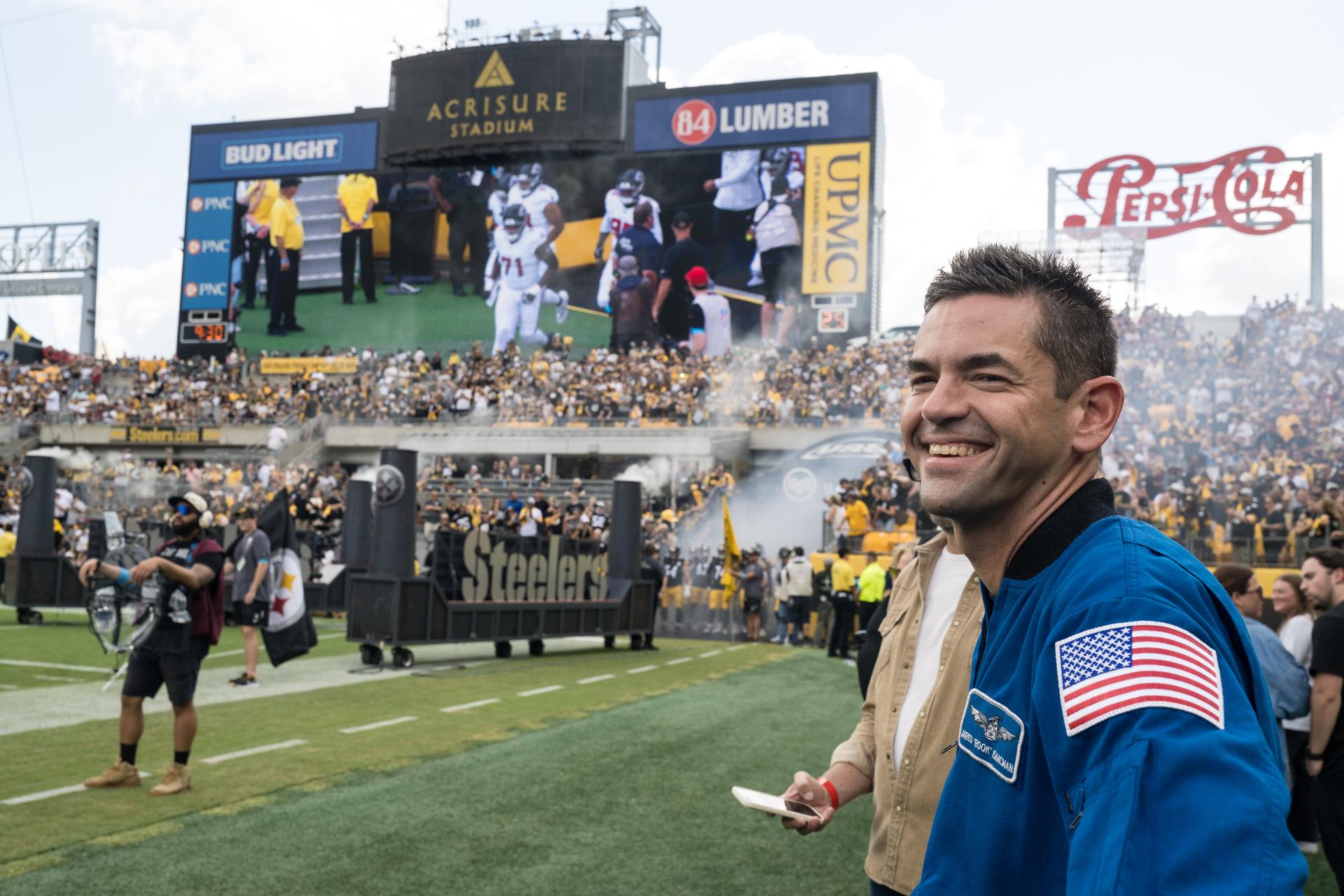
NASA Administrator Jared Isaacman watches the entrance of the Atlanta Falcons at an NFL game between the Pittsburgh Steelers and the Atlanta Falcons at Acrisure Stadium, Sunday, Sept. 13, 2026, in Pittsburgh, Pennsylvania. NASA’s engagement at NFL games is part of the agency's Inspiration Tour, aimed at strengthening connections between NASA and its partners and showcasing innovation in air and space in the lead up to the MAX POWER aerospace technology expo and airshow at the agency's Kennedy Space Center in early November. Photo Credit: (NASA/Aubrey Gemignani)
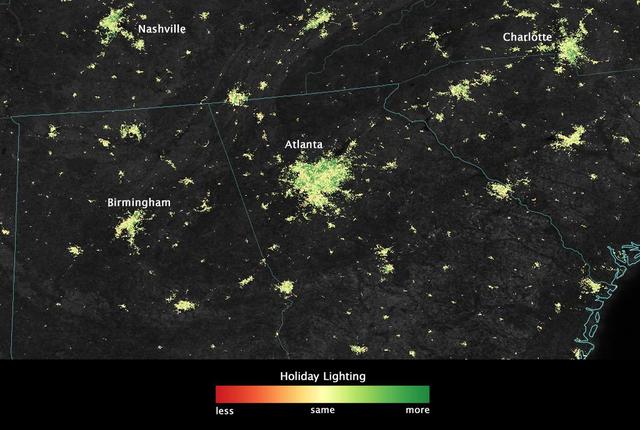
City lights shine brighter during the holidays in the United States when compared with the rest of the year, as shown using a new analysis of daily data from the NASA-NOAA Suomi NPP satellite. Dark green pixels are areas where lights are 50 percent brighter, or more, during December. Because snow reflects so much light, the researchers could only analyze snow-free cities. They focused on the U.S. West Coast from San Francisco and Los Angeles, and cities south of a rough imaginary line from St. Louis to Washington, D.C. Credit: Jesse Allen, NASA’s Earth Observatory Read more: <a href="http://www.nasa.gov/content/goddard/satellite-sees-holiday-lights-brighten-cities." rel="nofollow">www.nasa.gov/content/goddard/satellite-sees-holiday-light...</a>.<b><a href="http://www.nasa.gov/audience/formedia/features/MP_Photo_Guidelines.html" rel="nofollow">NASA image use policy.</a></b> <b><a href="http://www.nasa.gov/centers/goddard/home/index.html" rel="nofollow">NASA Goddard Space Flight Center</a></b> enables NASA’s mission through four scientific endeavors: Earth Science, Heliophysics, Solar System Exploration, and Astrophysics. Goddard plays a leading role in NASA’s accomplishments by contributing compelling scientific knowledge to advance the Agency’s mission. <b>Follow us on <a href="http://twitter.com/NASAGoddardPix" rel="nofollow">Twitter</a></b> <b>Like us on <a href="http://www.facebook.com/pages/Greenbelt-MD/NASA-Goddard/395013845897?ref=tsd" rel="nofollow">Facebook</a></b> <b>Find us on <a href="http://instagram.com/nasagoddard?vm=grid" rel="nofollow">Instagram</a></b>
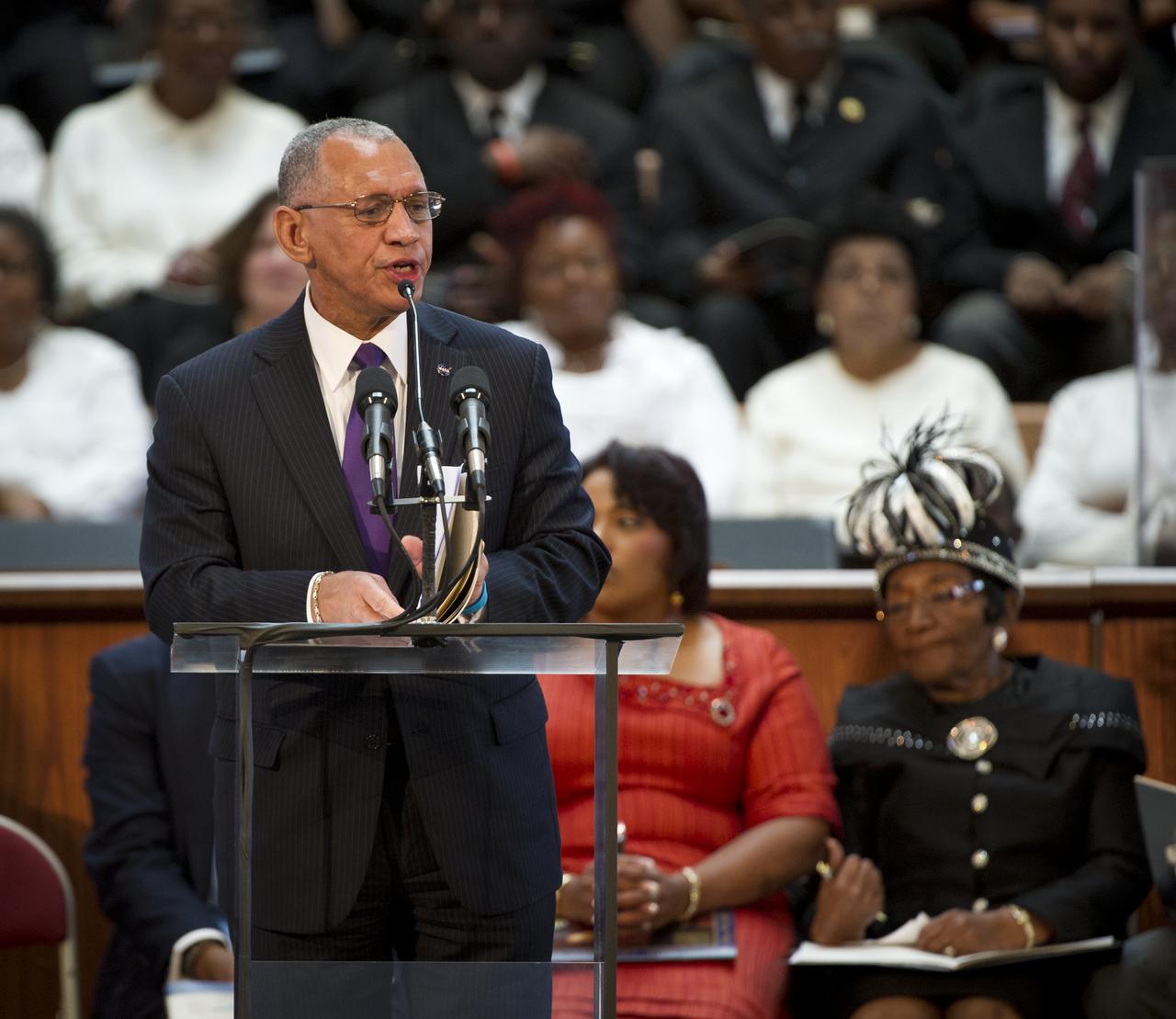
NASA Administrator Charles Bolden speaks and delivers greetings from President Obama at the 44th annual Martin Luther King, Jr. Commemorative Service on Monday, Jan. 16, 2012 at Ebenezer Baptist Church in Atlanta. Photo Credit: (NASA/Bill Ingalls)
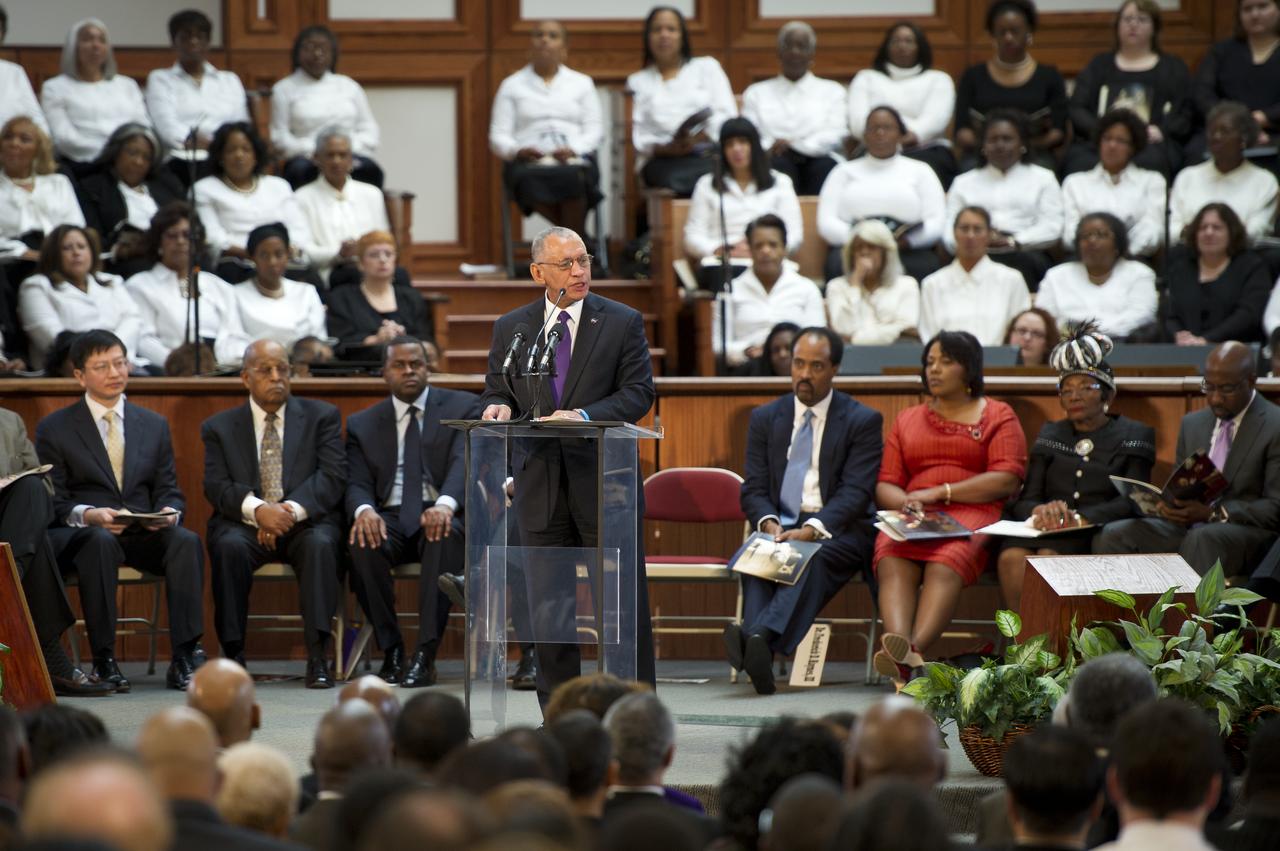
NASA Administrator Charles Bolden speaks and delivers greetings from President Obama at the 44th annual Martin Luther King, Jr. Commemorative Service on Monday, Jan. 16, 2012 at Ebenezer Baptist Church in Atlanta. Photo Credit: (NASA/Bill Ingalls)
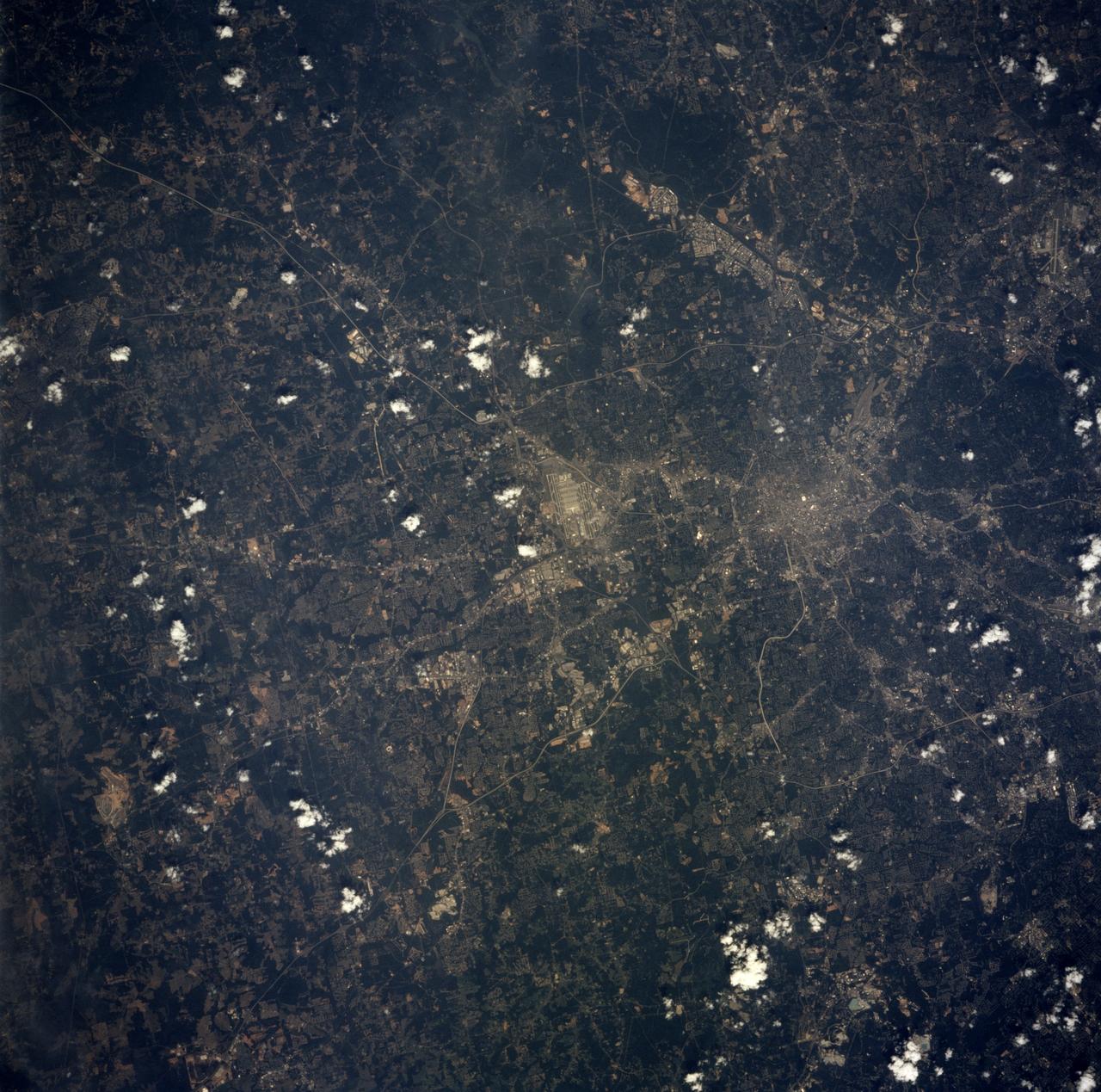
STS078-751-076 (20 June-7 July 1996) --- Metropolitan Atlanta, Georgia, host area for 1996 Summer Olympics was captured on film by one of the crew members using a 70mm handheld camera. Hartsfield Atlanta International Airport is visible to the south of Atlanta, near the center of the photograph. Dobbins Air Force Base and a portion of the city of Marietta can also be seen to the north of Atlanta in the upper left hand corner. The complex system of transportation routes and interstate highways is seen surrounding and traversing Atlanta. The white dot near the center of the city is the Georgia Dome, a major sports and entertainment complex in downtown Atlanta. Atlanta is the cultural, industrial, transportation, financial, and commercial center of the South. It has one of the busiest air traffic hubs in the United States. A major aircraft assembly plant is located north of Atlanta in Marietta. The Stone Mountain Memorial, with its enormous relief carvings of Confederate figures, is located east of Atlanta and is visible on the photograph.
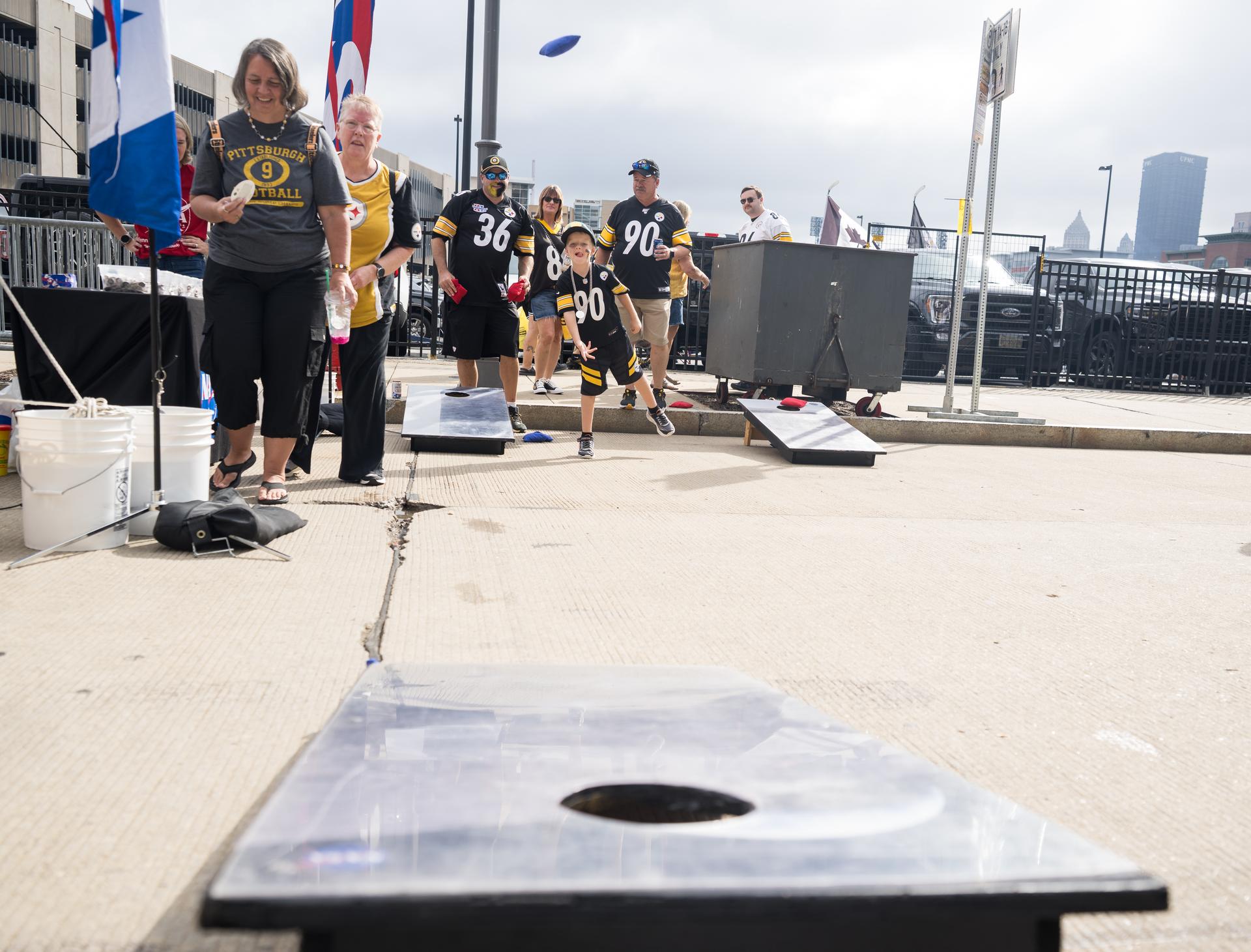
Fans play corn hole in the NASA Experience Zone at an NFL game between the Pittsburgh Steelers and the Atlanta Falcons at Acrisure Stadium, Sunday, Sept. 13, 2026, in Pittsburgh, Pennsylvania. NASA’s engagement at NFL games is part of the agency's Inspiration Tour, aimed at strengthening connections between NASA and its partners and showcasing innovation in air and space in the lead up to the MAX POWER aerospace technology expo and airshow at the agency's Kennedy Space Center in early November. Photo Credit: (NASA/Aubrey Gemignani)
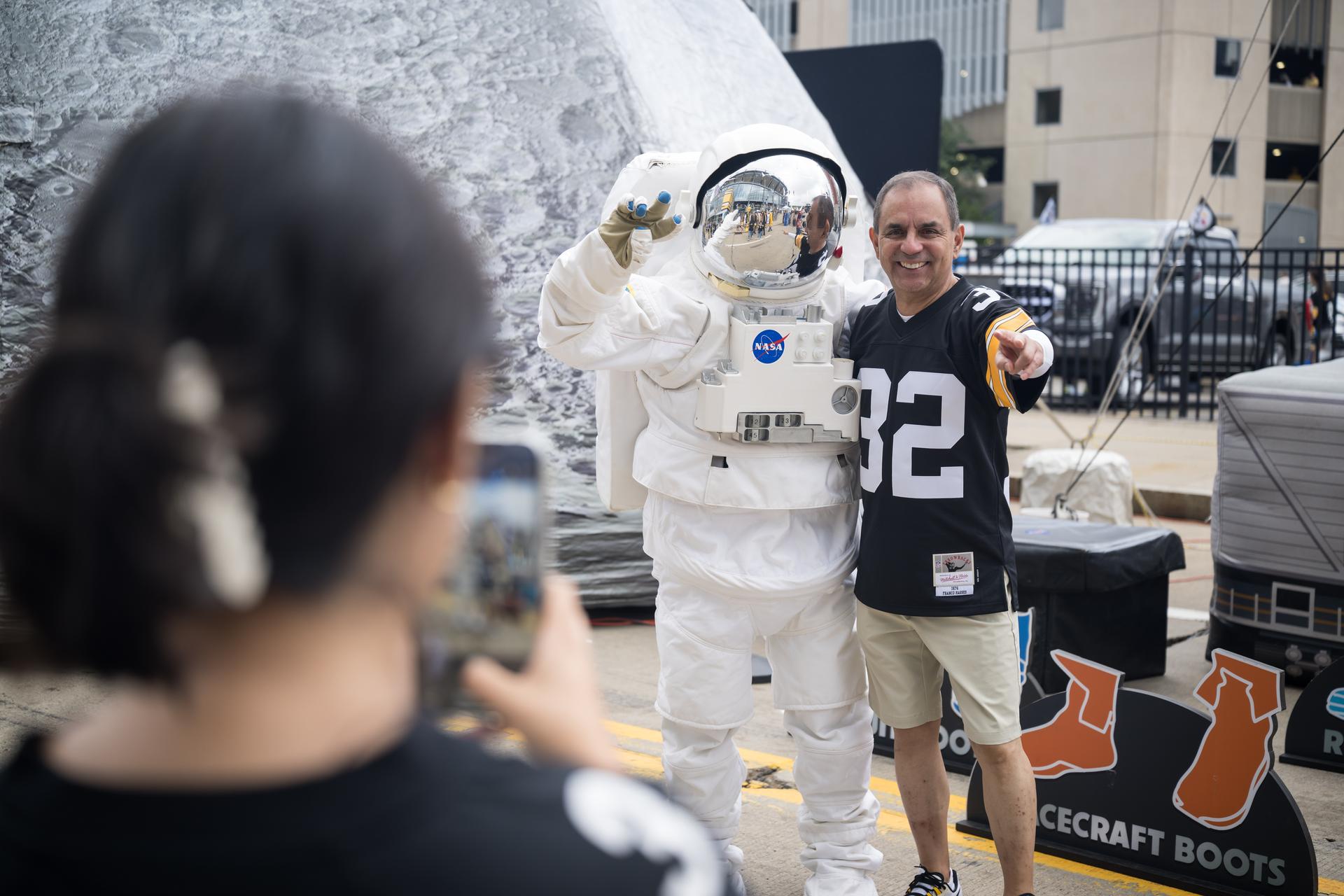
Fans pose for a photo with the astronaut in the NASA Experience Zone at an NFL game between the Pittsburgh Steelers and the Atlanta Falcons at Acrisure Stadium, Sunday, Sept. 13, 2026, in Pittsburgh, Pennsylvania. NASA’s engagement at NFL games is part of the agency's Inspiration Tour, aimed at strengthening connections between NASA and its partners and showcasing innovation in air and space in the lead up to the MAX POWER aerospace technology expo and airshow at the agency's Kennedy Space Center in early November. Photo Credit: (NASA/Aubrey Gemignani)
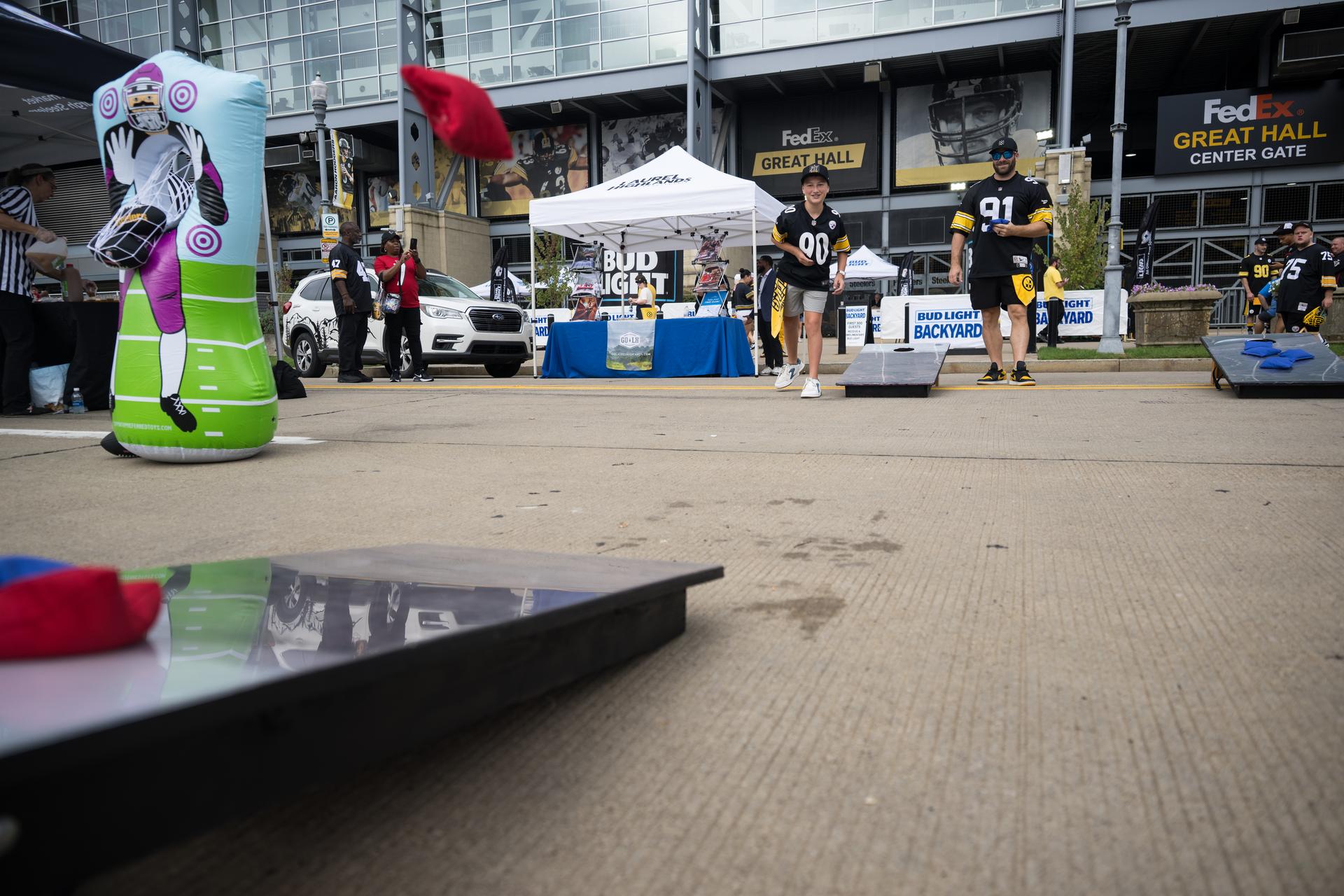
Fans play corn hole in the NASA Experience Zone at an NFL game between the Pittsburgh Steelers and the Atlanta Falcons at Acrisure Stadium, Sunday, Sept. 13, 2026, in Pittsburgh, Pennsylvania. NASA’s engagement at NFL games is part of the agency's Inspiration Tour, aimed at strengthening connections between NASA and its partners and showcasing innovation in air and space in the lead up to the MAX POWER aerospace technology expo and airshow at the agency's Kennedy Space Center in early November. Photo Credit: (NASA/Aubrey Gemignani)
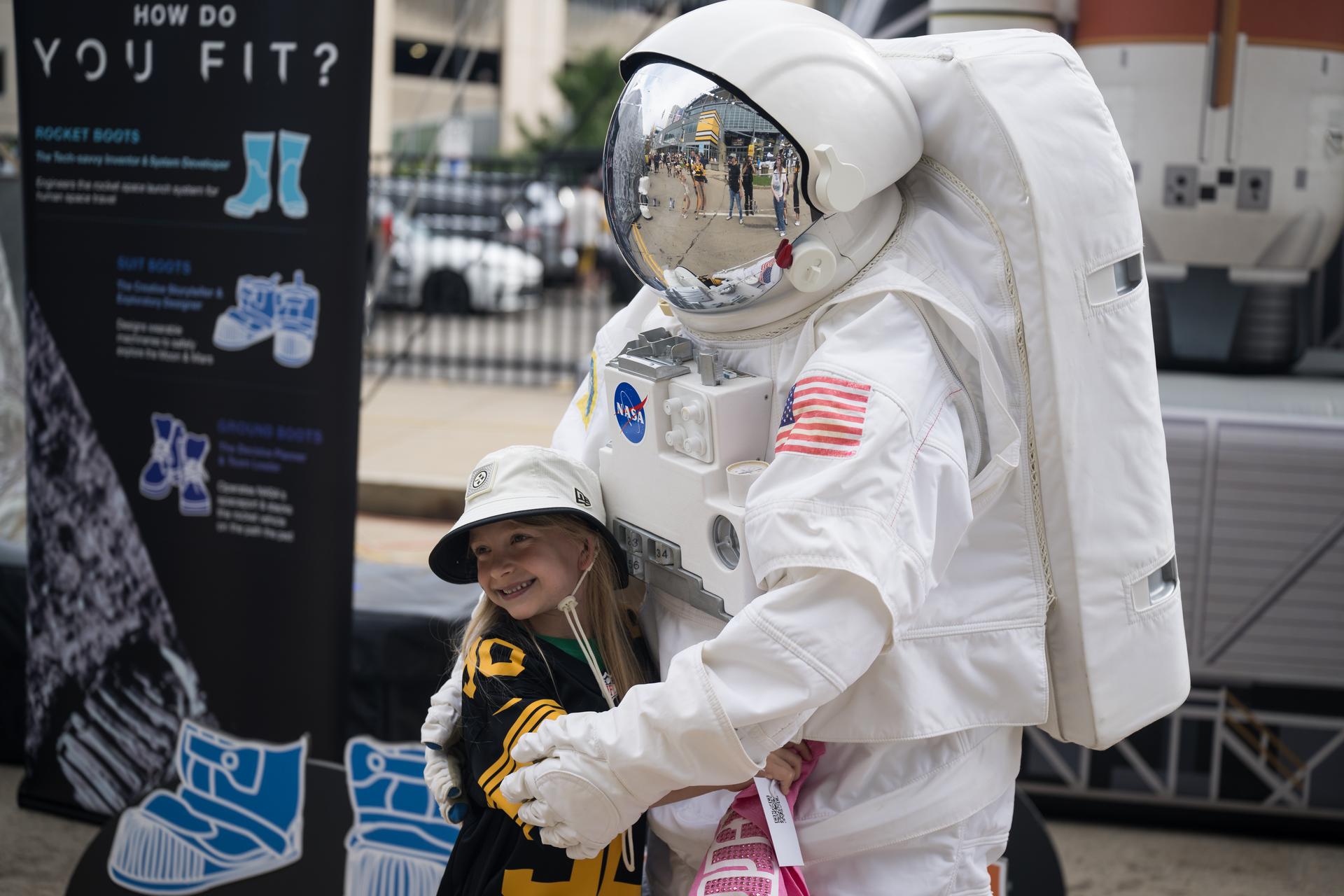
A young fan poses for a photo with the astronaut in the NASA Experience Zone at an NFL game between the Pittsburgh Steelers and the Atlanta Falcons at Acrisure Stadium, Sunday, Sept. 13, 2026, in Pittsburgh, Pennsylvania. NASA’s engagement at NFL games is part of the agency's Inspiration Tour, aimed at strengthening connections between NASA and its partners and showcasing innovation in air and space in the lead up to the MAX POWER aerospace technology expo and airshow at the agency's Kennedy Space Center in early November. Photo Credit: (NASA/Aubrey Gemignani)
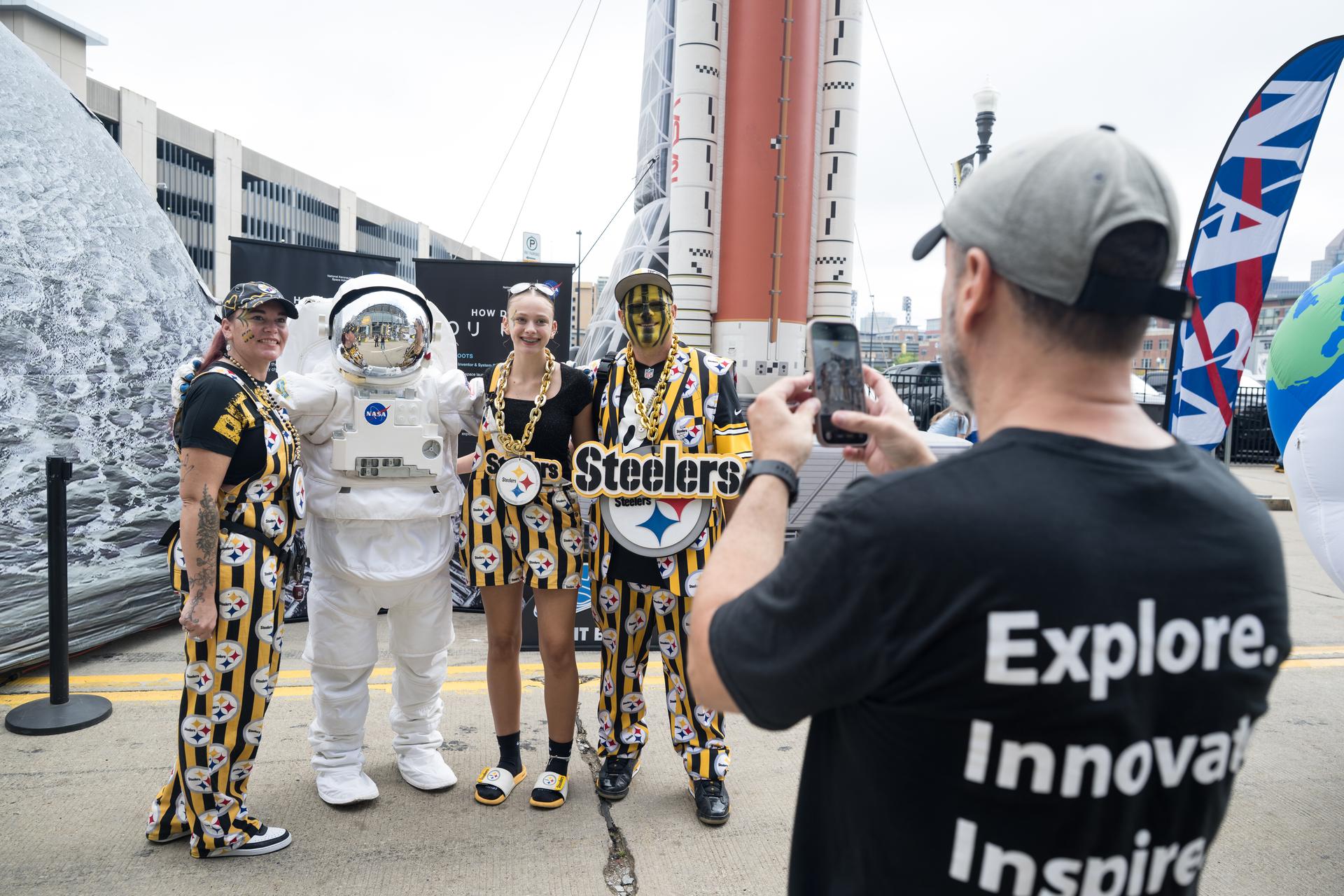
Fans pose for a photo with an astronaut in the NASA Experience Zone at an NFL game between the Pittsburgh Steelers and the Atlanta Falcons at Acrisure Stadium, Sunday, Sept. 13, 2026, in Pittsburgh, Pennsylvania. NASA’s engagement at NFL games is part of the agency's Inspiration Tour, aimed at strengthening connections between NASA and its partners and showcasing innovation in air and space in the lead up to the MAX POWER aerospace technology expo and airshow at the agency's Kennedy Space Center in early November. Photo Credit: (NASA/Aubrey Gemignani)
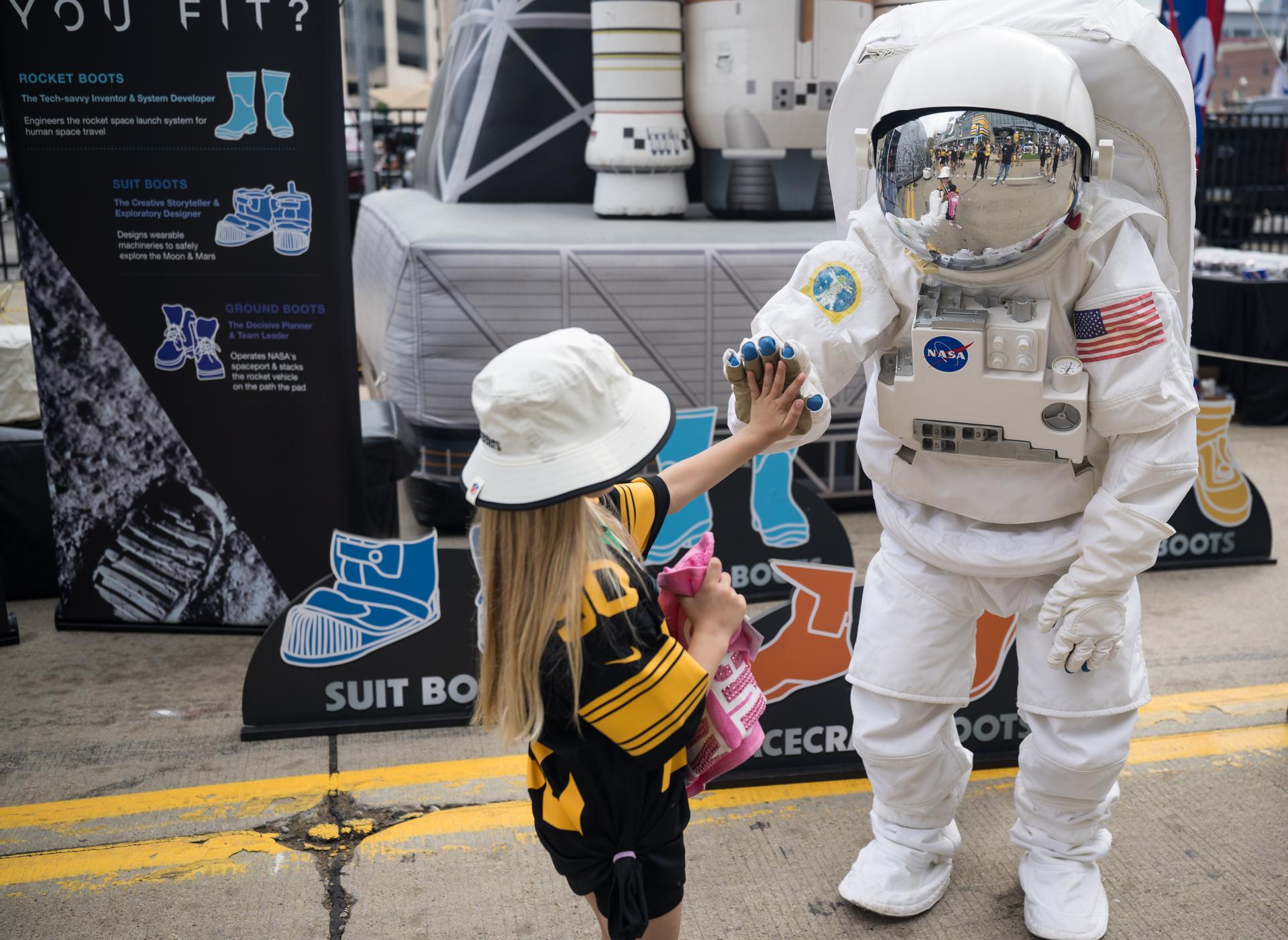
A young fan high fives the astronaut in the NASA Experience Zone at an NFL game between the Pittsburgh Steelers and the Atlanta Falcons at Acrisure Stadium, Sunday, Sept. 13, 2026, in Pittsburgh, Pennsylvania. NASA’s engagement at NFL games is part of the agency's Inspiration Tour, aimed at strengthening connections between NASA and its partners and showcasing innovation in air and space in the lead up to the MAX POWER aerospace technology expo and airshow at the agency's Kennedy Space Center in early November. Photo Credit: (NASA/Aubrey Gemignani)
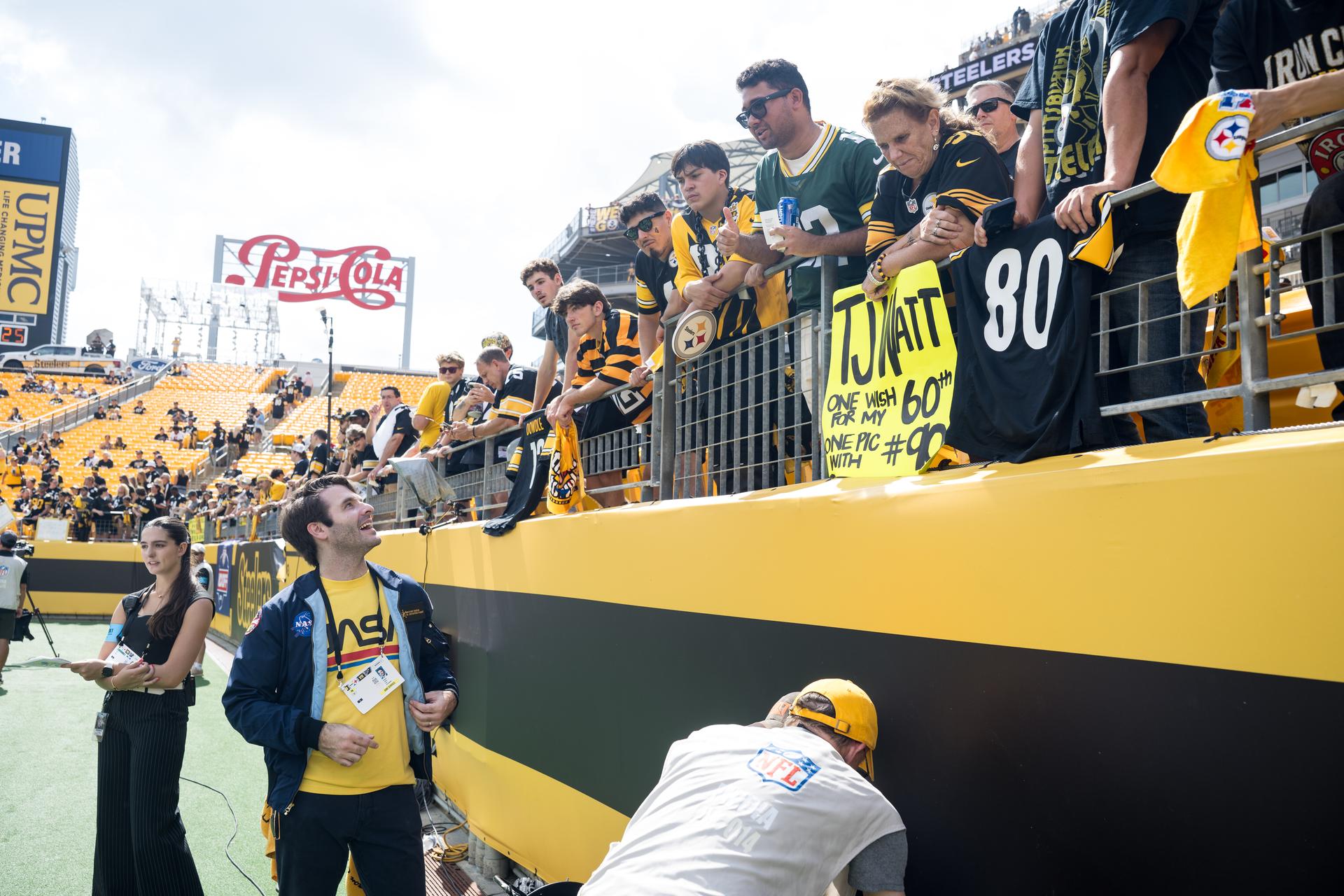
Anthony Vareha, NASA Flight Director, greets fans at an NFL game between the Pittsburgh Steelers and the Atlanta Falcons at Acrisure Stadium, Sunday, Sept. 13, 2026, in Pittsburgh, Pennsylvania. NASA’s engagement at NFL games is part of the agency's Inspiration Tour, aimed at strengthening connections between NASA and its partners and showcasing innovation in air and space in the lead up to the MAX POWER aerospace technology expo and airshow at the agency's Kennedy Space Center in early November. Photo Credit: (NASA/Aubrey Gemignani)
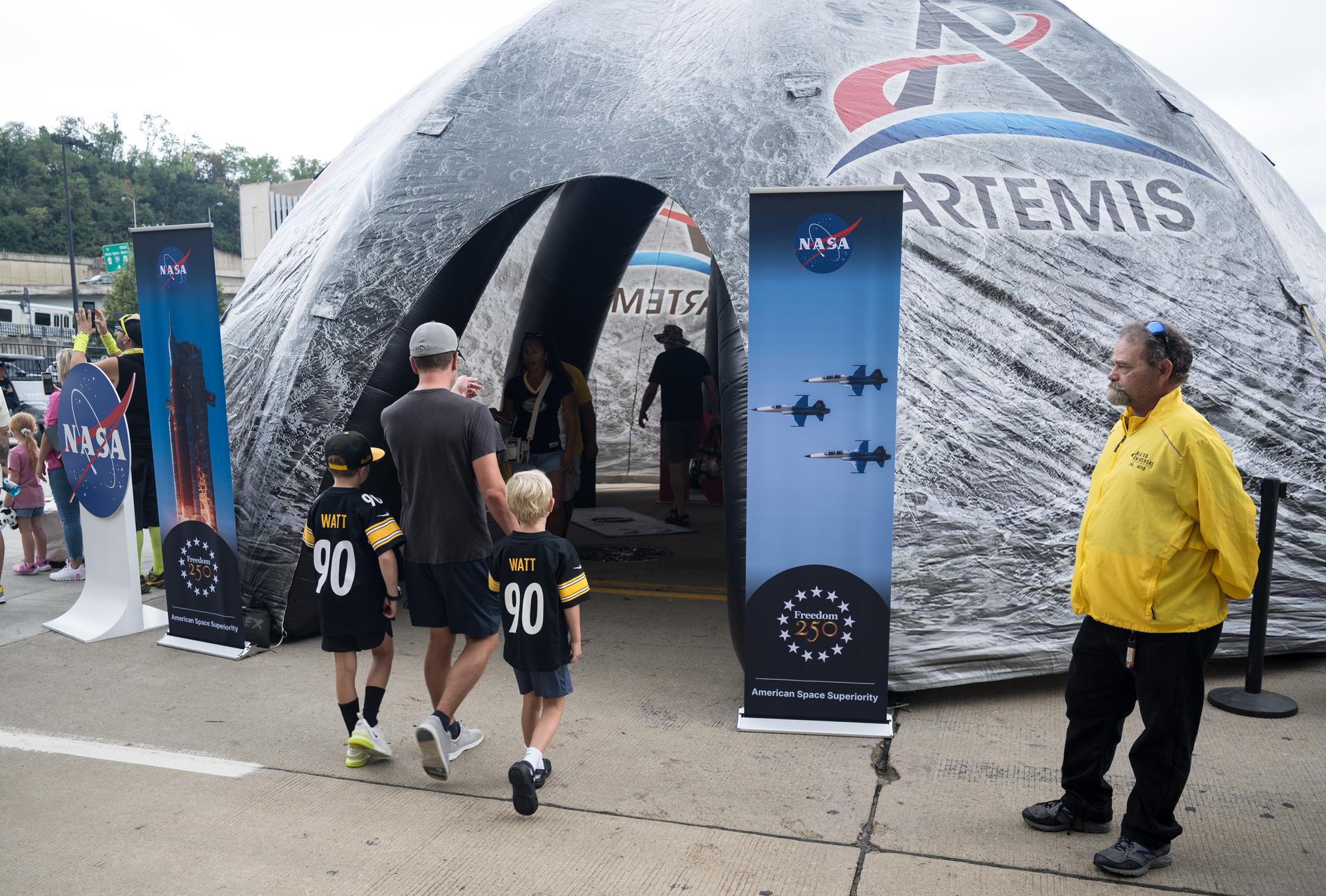
Fans enter the NASA Experience Zone at an NFL game between the Pittsburgh Steelers and the Atlanta Falcons at Acrisure Stadium, Sunday, Sept. 13, 2026, in Pittsburgh, Pennsylvania. NASA’s engagement at NFL games is part of the agency's Inspiration Tour, aimed at strengthening connections between NASA and its partners and showcasing innovation in air and space in the lead up to the MAX POWER aerospace technology expo and airshow at the agency's Kennedy Space Center in early November. Photo Credit: (NASA/Aubrey Gemignani)
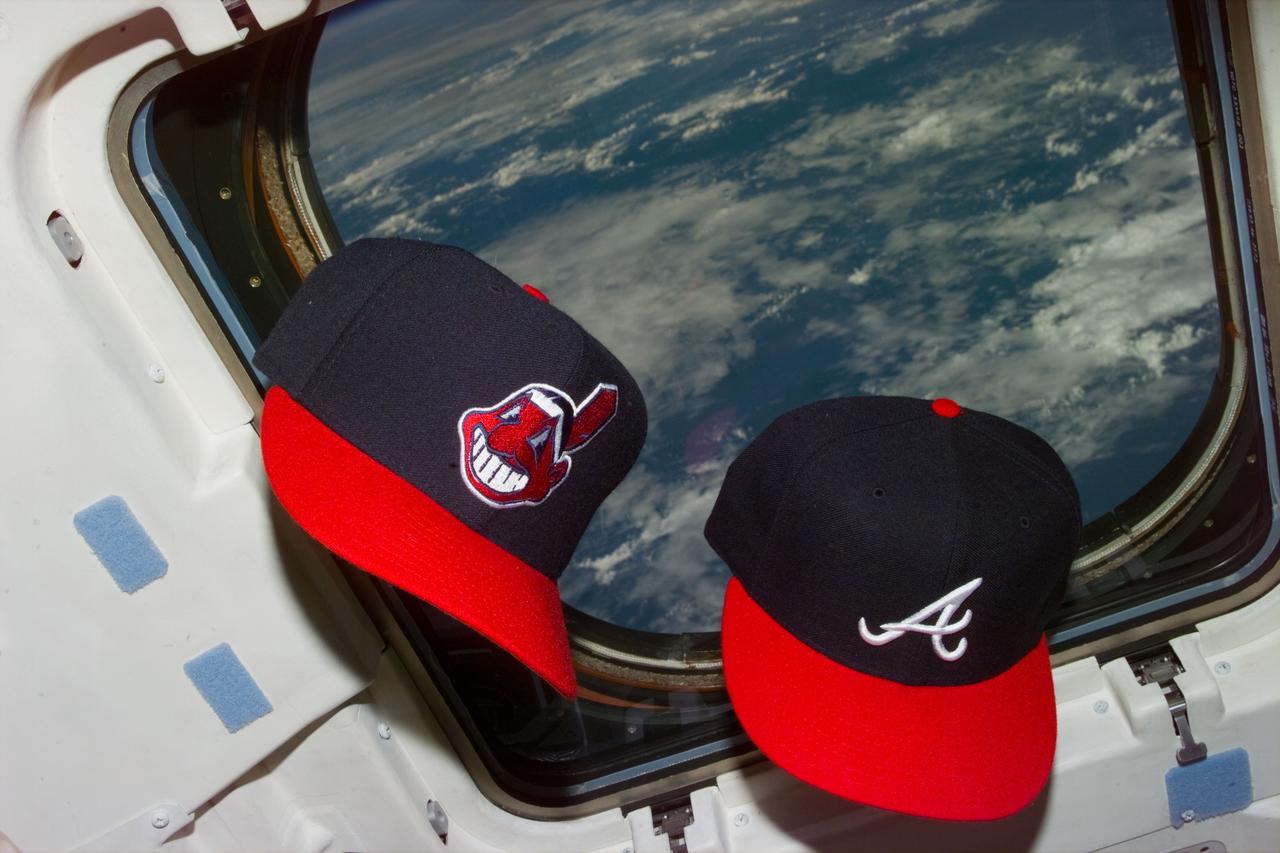
STS073-E-5135 (26 Oct. 1995) --- Baseball caps from the two 1995 World Series representative franchises float near the cabin windows of the Earth-orbiting space shuttle Columbia, with the Earth in the background. The American League champion Cleveland Indians and their National League counterpart Atlanta Braves were engaged in a scheduled best-of-seven World Series throughout the first portion of the scheduled 16-day mission in space. Off-duty crewmembers came out of a rest period to set up the scene in tribute to the October classic. The crew will continue working in shifts around the clock on a diverse assortment of United States Microgravity Laboratory (USML-2) experiments located in the science module. Fields of study include fluid physics, materials science, biotechnology, combustion science and commercial space processing technologies. The frame was exposed with an Electronic Still Camera (ESC).
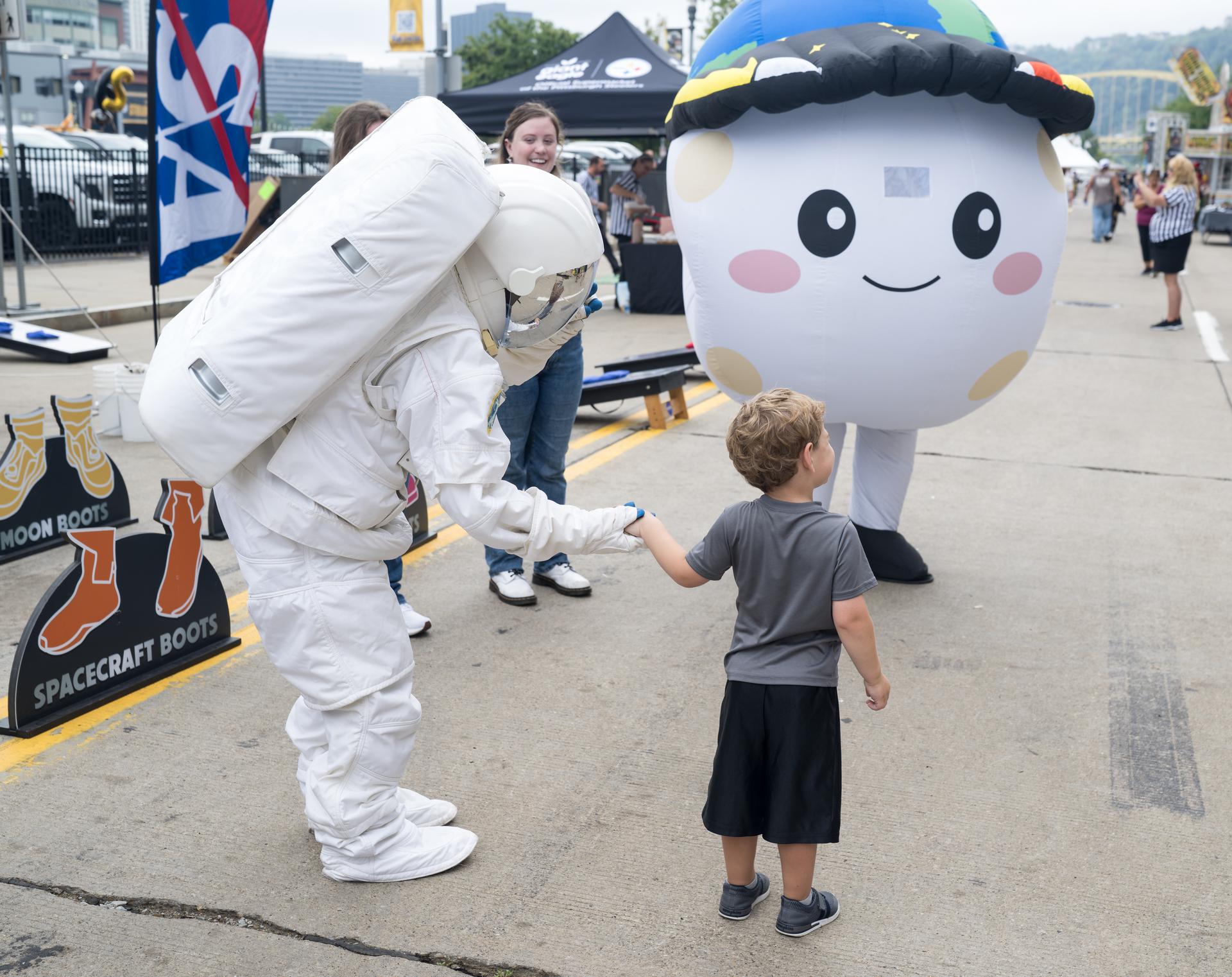
A young fan holds hands with an astronaut while Rise, the zero gravity indicator from the Artemis II mission stands by in the NASA Experience Zone at an NFL game between the Pittsburgh Steelers and the Atlanta Falcons at Acrisure Stadium, Sunday, Sept. 13, 2026, in Pittsburgh, Pennsylvania. NASA’s engagement at NFL games is part of the agency's Inspiration Tour, aimed at strengthening connections between NASA and its partners and showcasing innovation in air and space in the lead up to the MAX POWER aerospace technology expo and airshow at the agency's Kennedy Space Center in early November. Photo Credit: (NASA/Aubrey Gemignani)
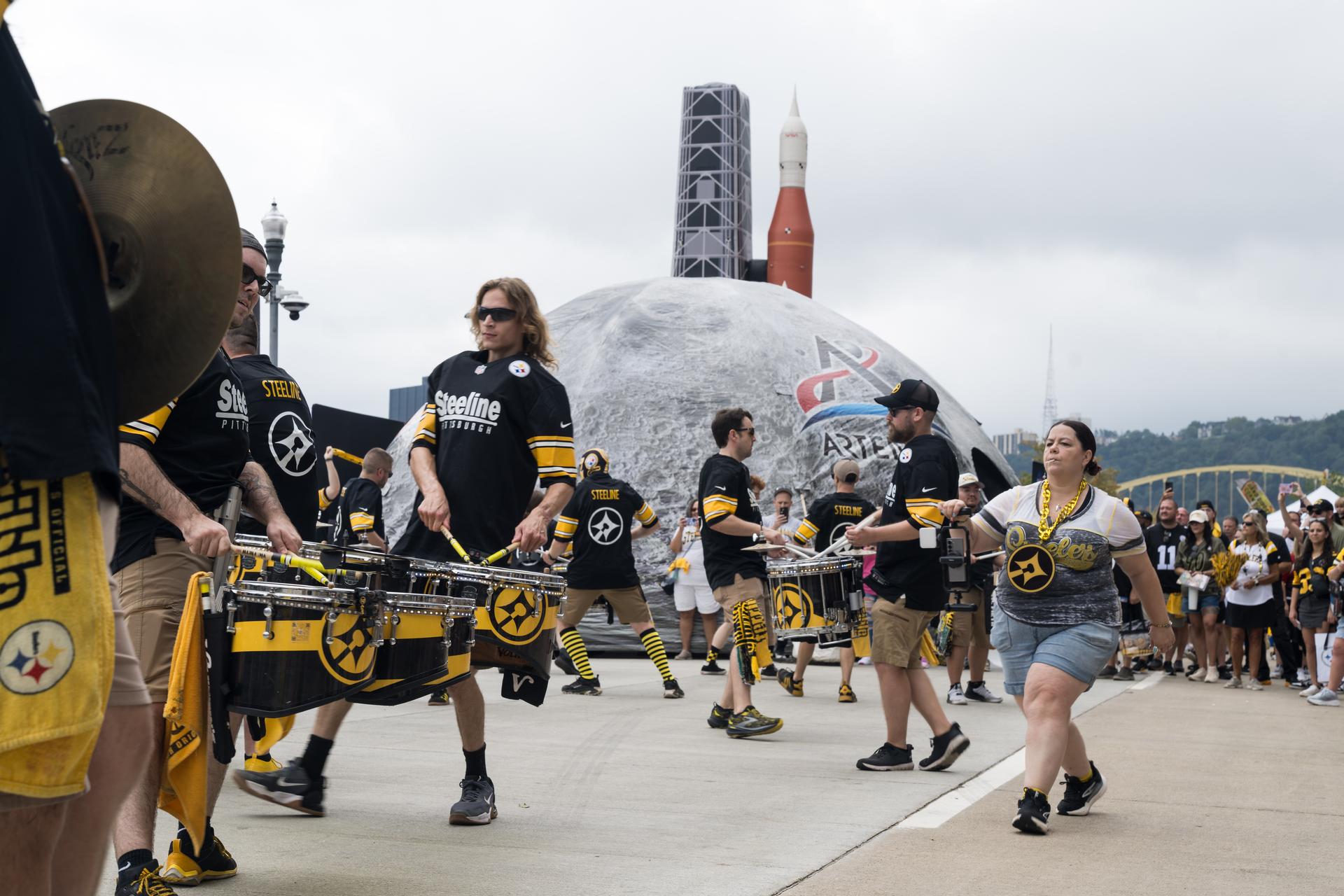
Pittsburgh Steeline, the independent, professional drumline that performs at Pittsburgh Steelers games performs in front of the NASA Experience Zone at an NFL game between the Pittsburgh Steelers and the Atlanta Falcons at Acrisure Stadium, Sunday, Sept. 13, 2026, in Pittsburgh, Pennsylvania. NASA’s engagement at NFL games is part of the agency's Inspiration Tour, aimed at strengthening connections between NASA and its partners and showcasing innovation in air and space in the lead up to the MAX POWER aerospace technology expo and airshow at the agency's Kennedy Space Center in early November. Photo Credit: (NASA/Aubrey Gemignani)
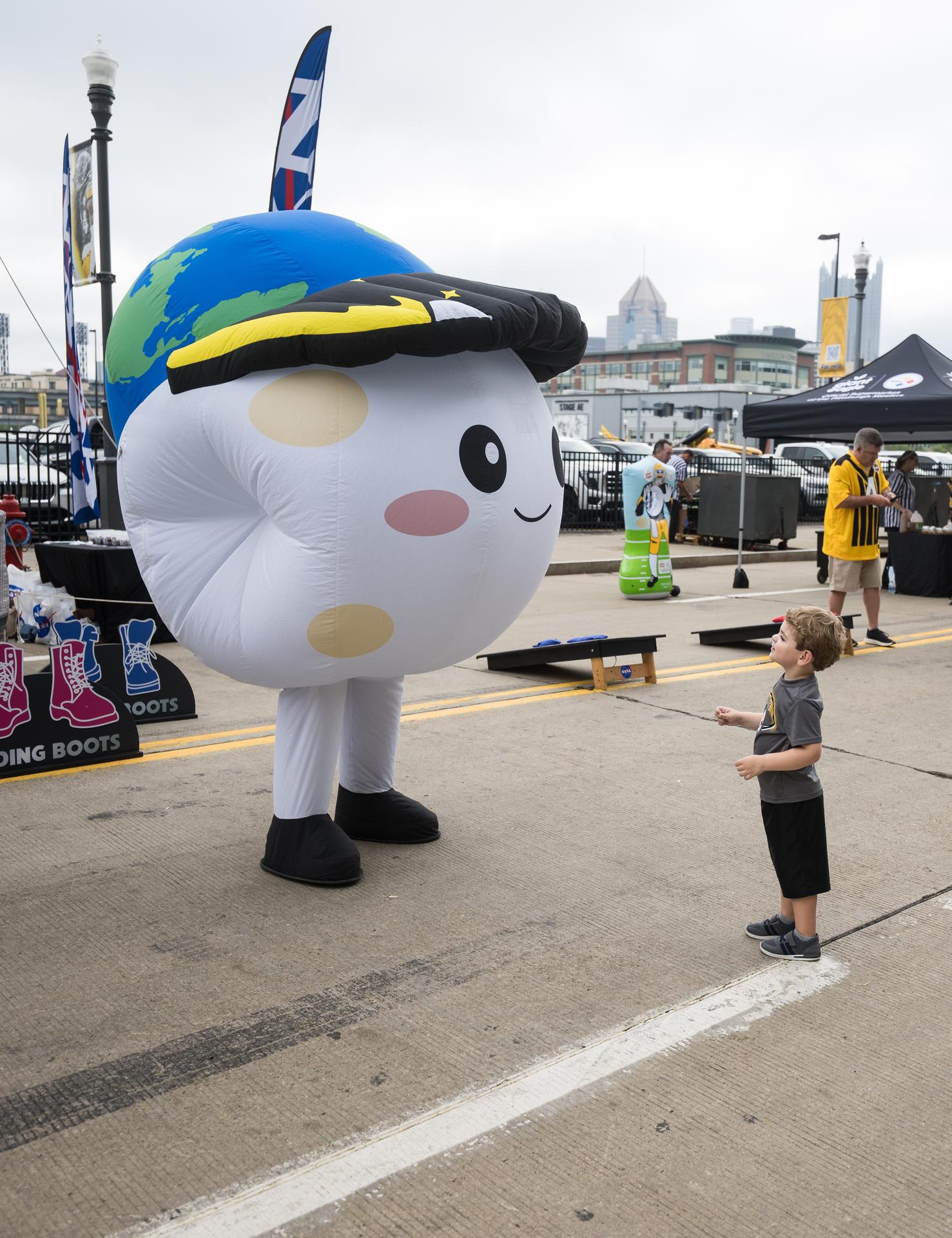
A young fan meets Rise, the zero gravity indicator for the Artemis II mission, in the NASA Experience Zone at an NFL game between the Pittsburgh Steelers and the Atlanta Falcons at Acrisure Stadium, Sunday, Sept. 13, 2026, in Pittsburgh, Pennsylvania. NASA’s engagement at NFL games is part of the agency's Inspiration Tour, aimed at strengthening connections between NASA and its partners and showcasing innovation in air and space in the lead up to the MAX POWER aerospace technology expo and airshow at the agency's Kennedy Space Center in early November. Photo Credit: (NASA/Aubrey Gemignani)
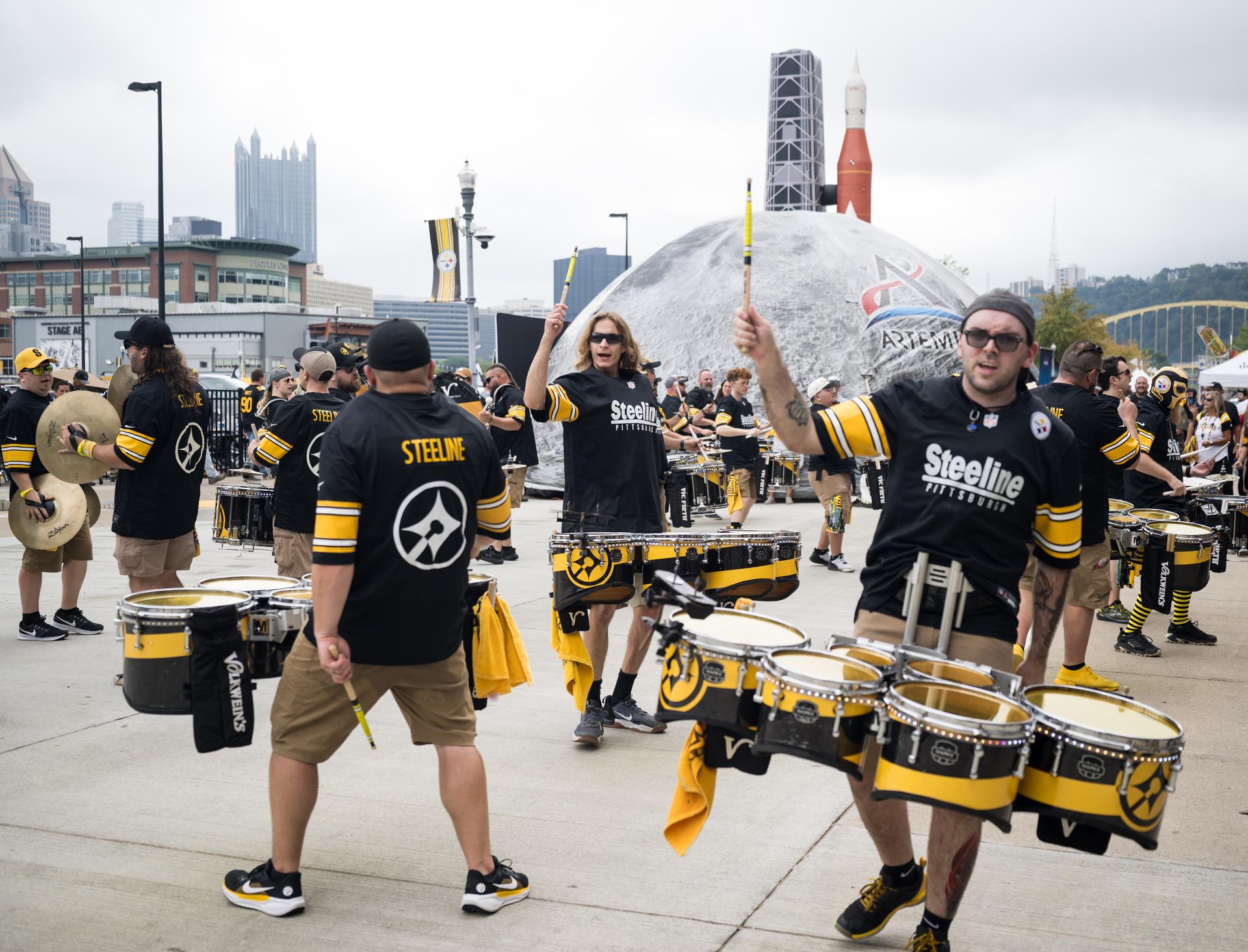
Pittsburgh Steeline, the independent, professional drumline that performs at Pittsburgh Steelers games performs in front of the NASA Experience Zone at an NFL game between the Pittsburgh Steelers and the Atlanta Falcons at Acrisure Stadium, Sunday, Sept. 13, 2026, in Pittsburgh, Pennsylvania. NASA’s engagement at NFL games is part of the agency's Inspiration Tour, aimed at strengthening connections between NASA and its partners and showcasing innovation in air and space in the lead up to the MAX POWER aerospace technology expo and airshow at the agency's Kennedy Space Center in early November. Photo Credit: (NASA/Aubrey Gemignani)
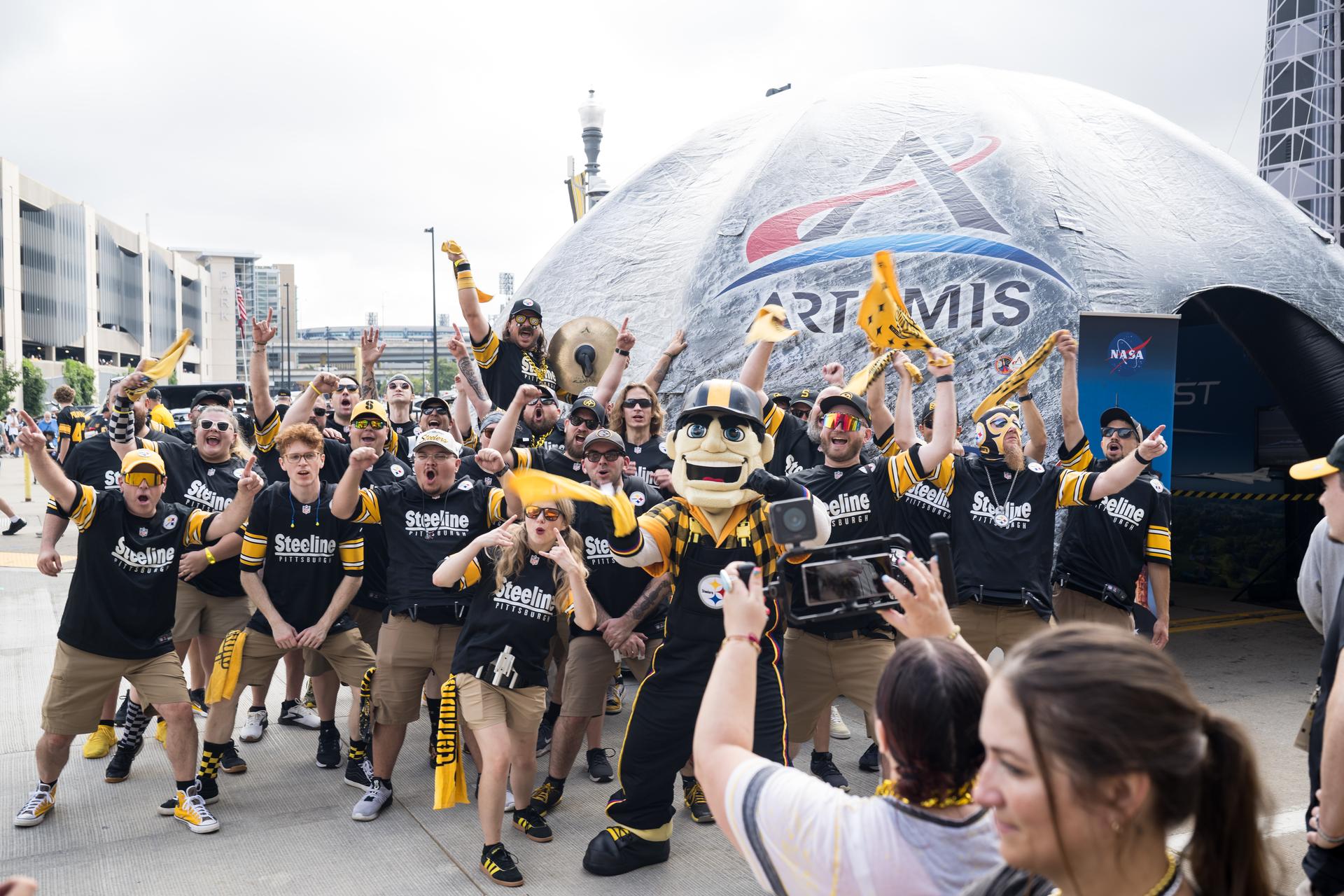
Pittsburgh Steeline, the independent, professional drumline that performs at Pittsburgh Steelers games is seen outside the NASA Experience Zone at an NFL game between the Pittsburgh Steelers and the Atlanta Falcons at Acrisure Stadium, Sunday, Sept. 13, 2026, in Pittsburgh, Pennsylvania. NASA’s engagement at NFL games is part of the agency's Inspiration Tour, aimed at strengthening connections between NASA and its partners and showcasing innovation in air and space in the lead up to the MAX POWER aerospace technology expo and airshow at the agency's Kennedy Space Center in early November. Photo Credit: (NASA/Aubrey Gemignani)
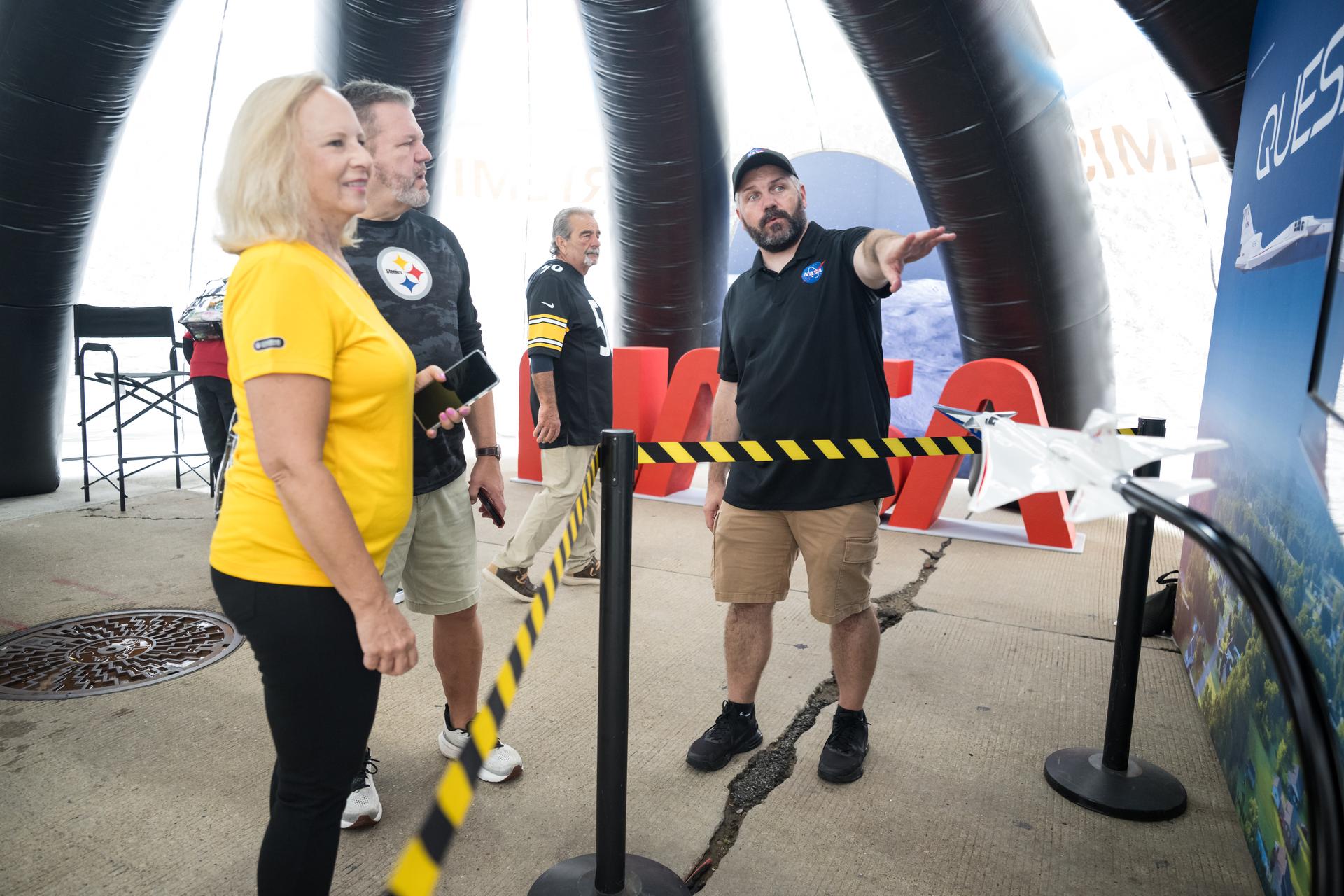
Fans learn about the X-59 supersonic aircraft at the NASA Experience Zone at an NFL game between the Pittsburgh Steelers and the Atlanta Falcons at Acrisure Stadium, Sunday, Sept. 13, 2026, in Pittsburgh, Pennsylvania. NASA’s engagement at NFL games is part of the agency's Inspiration Tour, aimed at strengthening connections between NASA and its partners and showcasing innovation in air and space in the lead up to the MAX POWER aerospace technology expo and airshow at the agency's Kennedy Space Center in early November. Photo Credit: (NASA/Aubrey Gemignani)

Fans collect NASA pins outside the NASA Experience Zone at an NFL game between the Pittsburgh Steelers and the Atlanta Falcons at Acrisure Stadium, Sunday, Sept. 13, 2026, in Pittsburgh, Pennsylvania. NASA’s engagement at NFL games is part of the agency's Inspiration Tour, aimed at strengthening connections between NASA and its partners and showcasing innovation in air and space in the lead up to the MAX POWER aerospace technology expo and airshow at the agency's Kennedy Space Center in early November. Photo Credit: (NASA/Aubrey Gemignani)
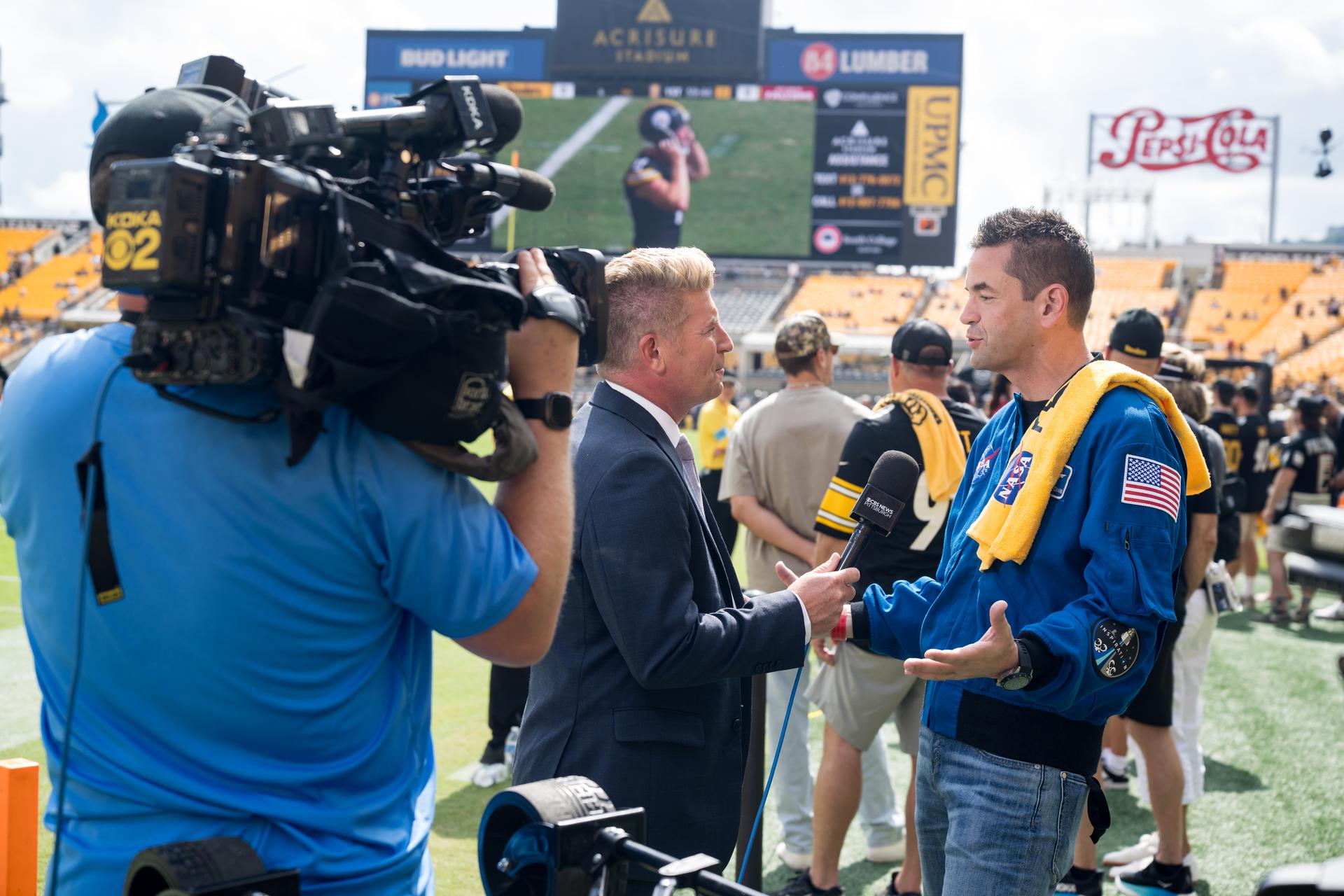
NASA Administrator Jared Isaacman is interviewed by media at an NFL game between the Pittsburgh Steelers and the Atlanta Falcons at Acrisure Stadium, Sunday, Sept. 13, 2026, in Pittsburgh, Pennsylvania. NASA’s engagement at NFL games is part of the agency's Inspiration Tour, aimed at strengthening connections between NASA and its partners and showcasing innovation in air and space in the lead up to the MAX POWER aerospace technology expo and airshow at the agency's Kennedy Space Center in early November. Photo Credit: (NASA/Aubrey Gemignani)
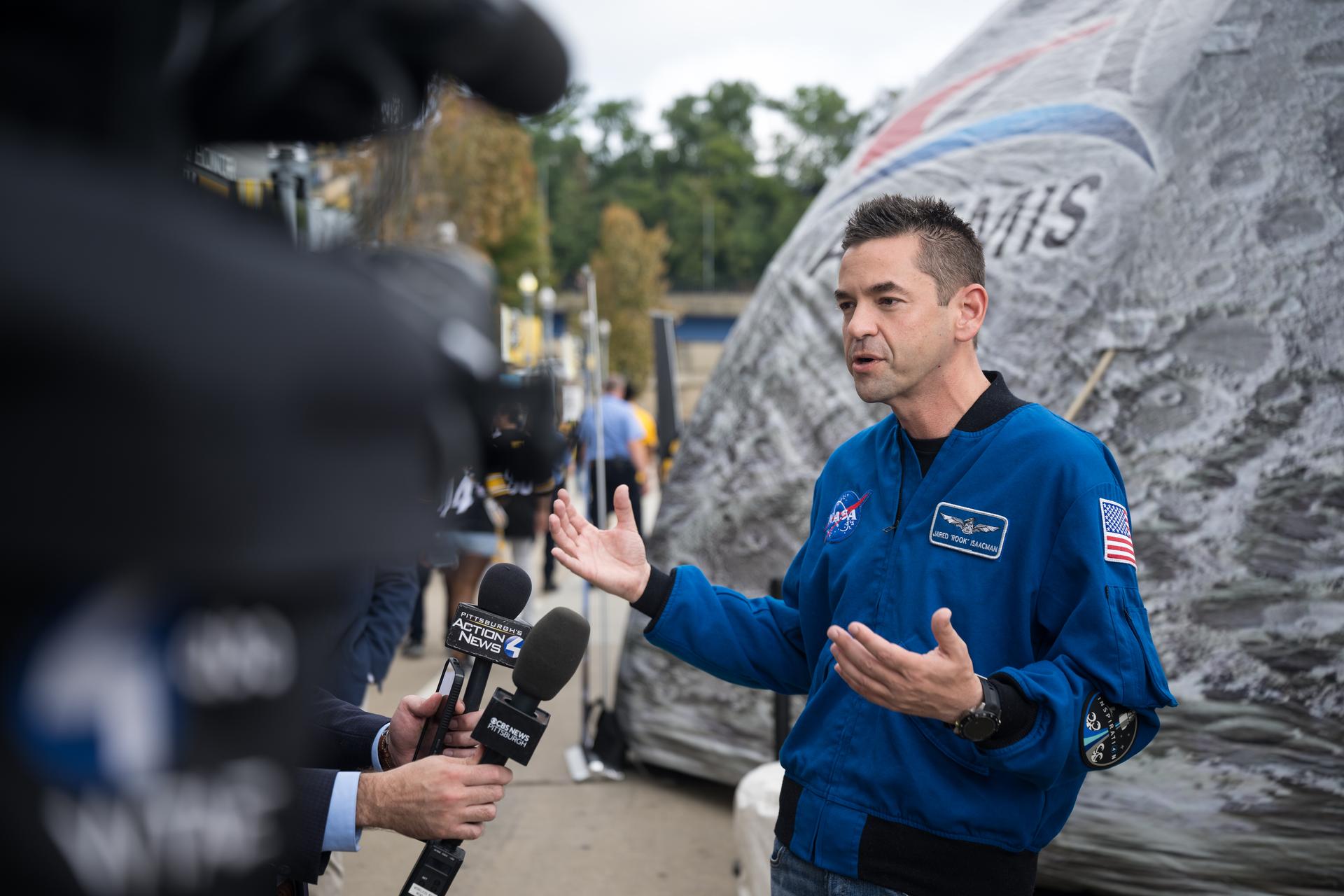
NASA Administrator Jared Isaacman is interviewed by media outside the NASA Experience Zone at an NFL game between the Pittsburgh Steelers and the Atlanta Falcons at Acrisure Stadium, Sunday, Sept. 13, 2026, in Pittsburgh, Pennsylvania. NASA’s engagement at NFL games is part of the agency's Inspiration Tour, aimed at strengthening connections between NASA and its partners and showcasing innovation in air and space in the lead up to the MAX POWER aerospace technology expo and airshow at the agency's Kennedy Space Center in early November. Photo Credit: (NASA/Aubrey Gemignani)
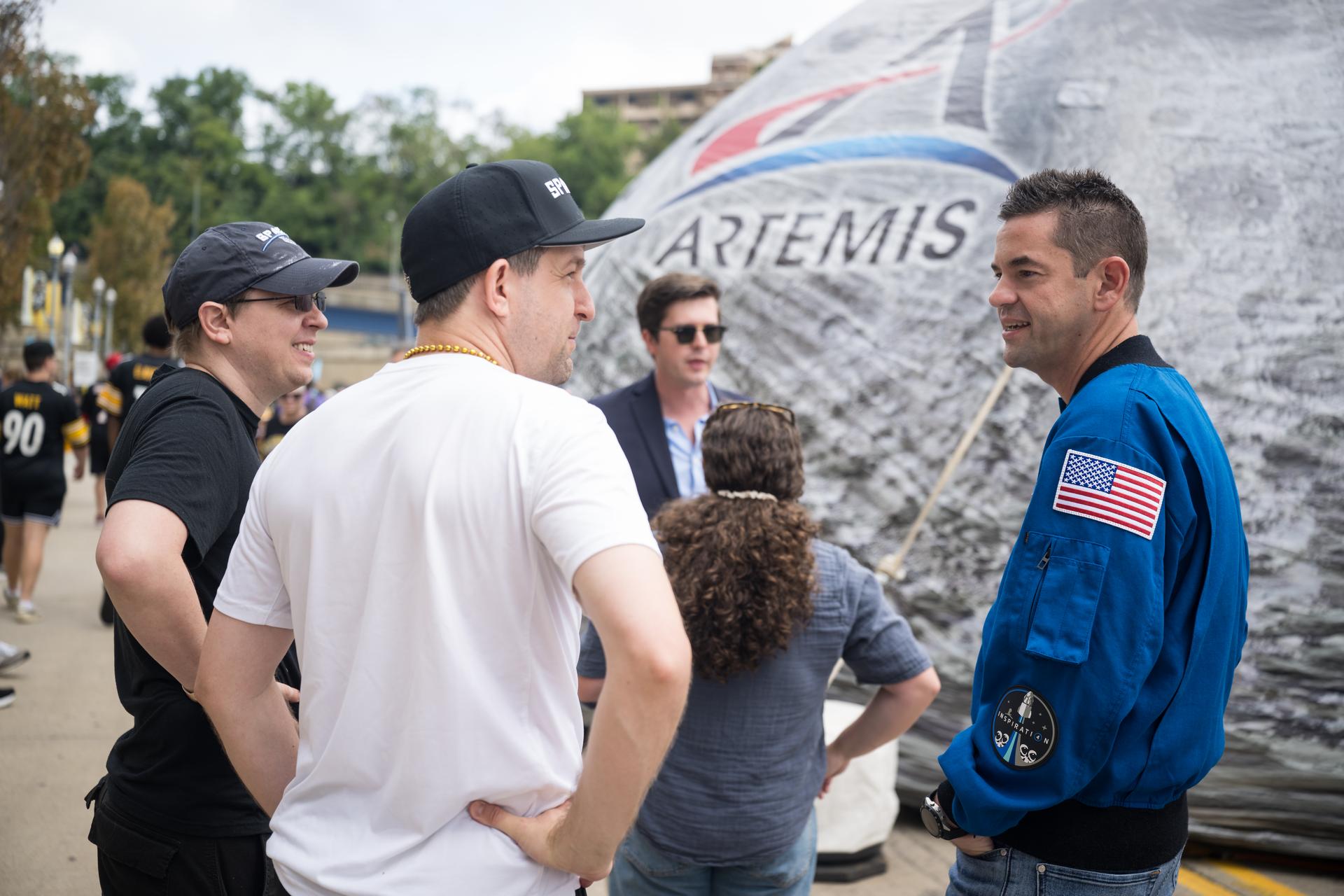
NASA Administrator Jared Isaacman greets fans outside the NASA Experience Zone at an NFL game between the Pittsburgh Steelers and the Atlanta Falcons at Acrisure Stadium, Sunday, Sept. 13, 2026, in Pittsburgh, Pennsylvania. NASA’s engagement at NFL games is part of the agency's Inspiration Tour, aimed at strengthening connections between NASA and its partners and showcasing innovation in air and space in the lead up to the MAX POWER aerospace technology expo and airshow at the agency's Kennedy Space Center in early November. Photo Credit: (NASA/Aubrey Gemignani)
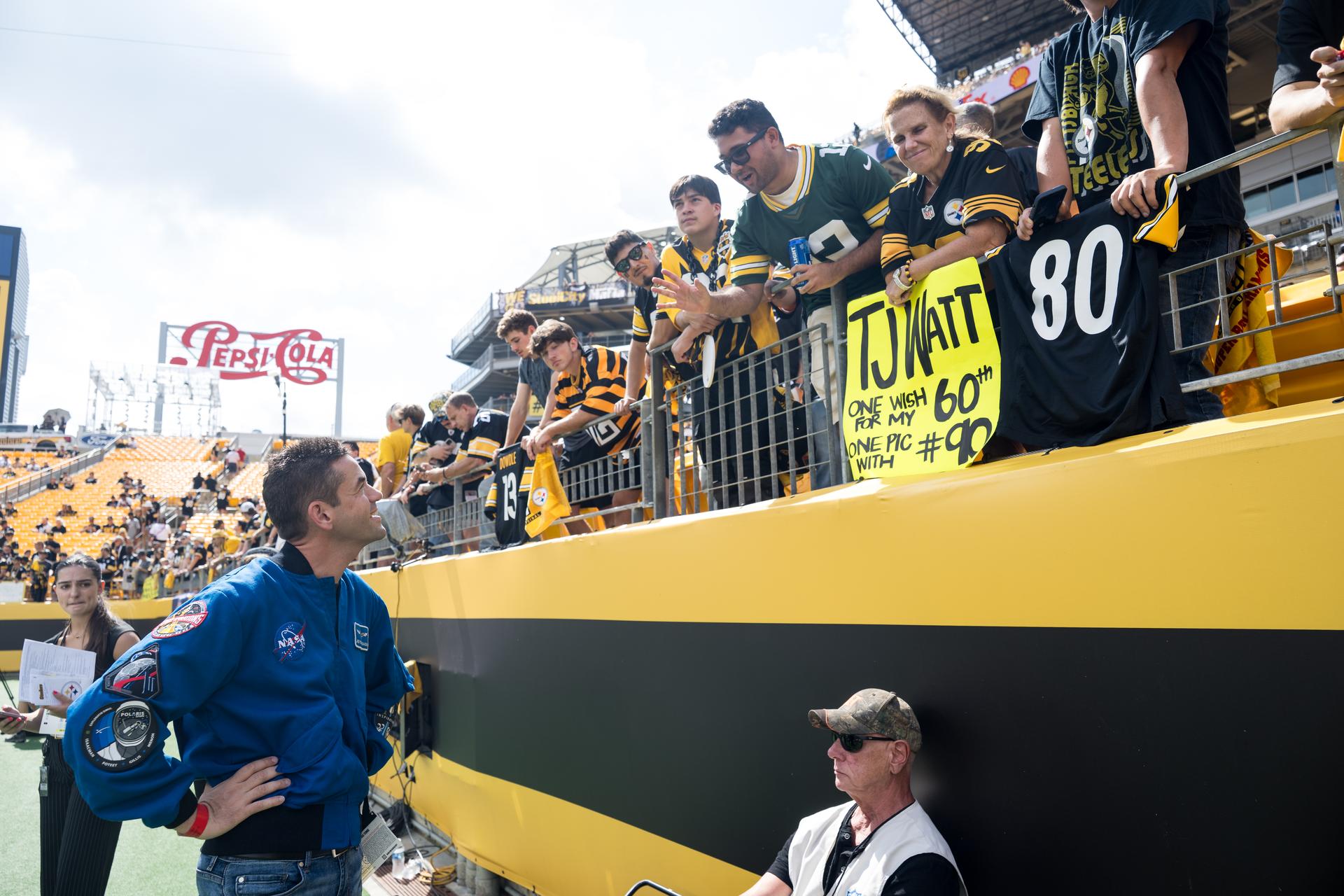
NASA Administrator Jared Isaacman greets fans at an NFL game between the Pittsburgh Steelers and the Atlanta Falcons at Acrisure Stadium, Sunday, Sept. 13, 2026, in Pittsburgh, Pennsylvania. NASA’s engagement at NFL games is part of the agency's Inspiration Tour, aimed at strengthening connections between NASA and its partners and showcasing innovation in air and space in the lead up to the MAX POWER aerospace technology expo and airshow at the agency's Kennedy Space Center in early November. Photo Credit: (NASA/Aubrey Gemignani)
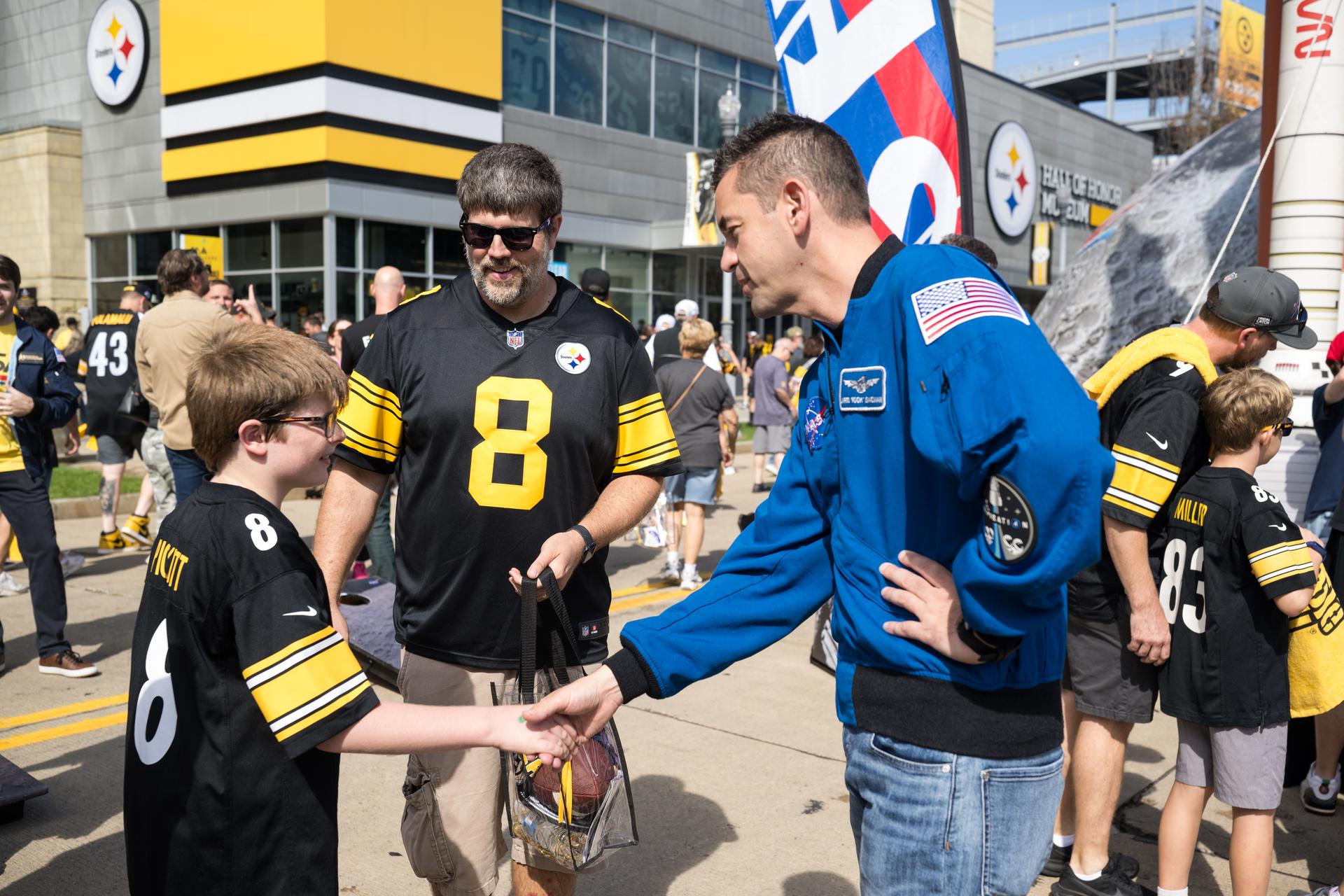
NASA Administrator Jared Isaacman greets fans outside the NASA Experience Zone at an NFL game between the Pittsburgh Steelers and the Atlanta Falcons at Acrisure Stadium, Sunday, Sept. 13, 2026, in Pittsburgh, Pennsylvania. NASA’s engagement at NFL games is part of the agency's Inspiration Tour, aimed at strengthening connections between NASA and its partners and showcasing innovation in air and space in the lead up to the MAX POWER aerospace technology expo and airshow at the agency's Kennedy Space Center in early November. Photo Credit: (NASA/Aubrey Gemignani)
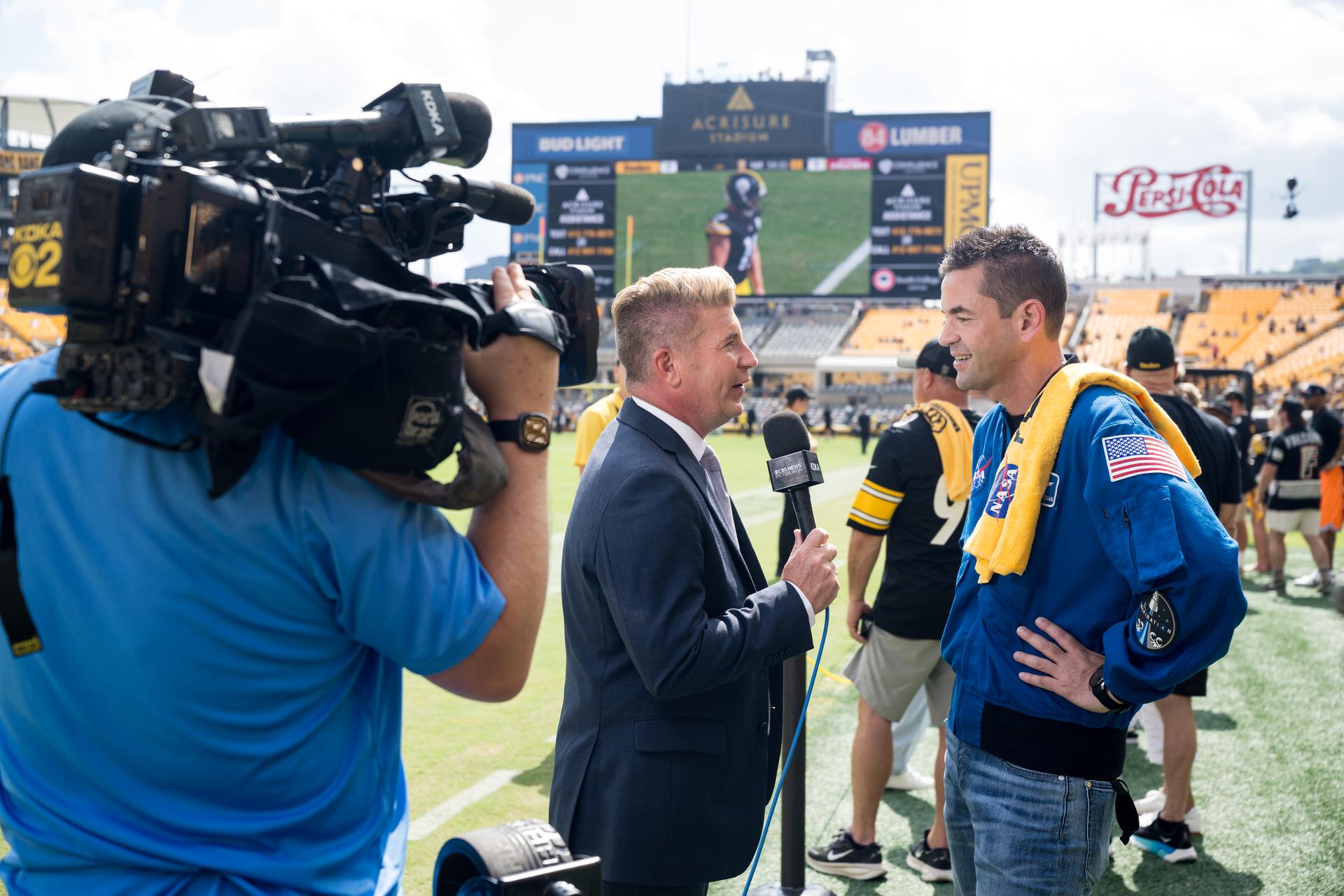
NASA Administrator Jared Isaacman is interviewed by media at an NFL game between the Pittsburgh Steelers and the Atlanta Falcons at Acrisure Stadium, Sunday, Sept. 13, 2026, in Pittsburgh, Pennsylvania. NASA’s engagement at NFL games is part of the agency's Inspiration Tour, aimed at strengthening connections between NASA and its partners and showcasing innovation in air and space in the lead up to the MAX POWER aerospace technology expo and airshow at the agency's Kennedy Space Center in early November. Photo Credit: (NASA/Aubrey Gemignani)
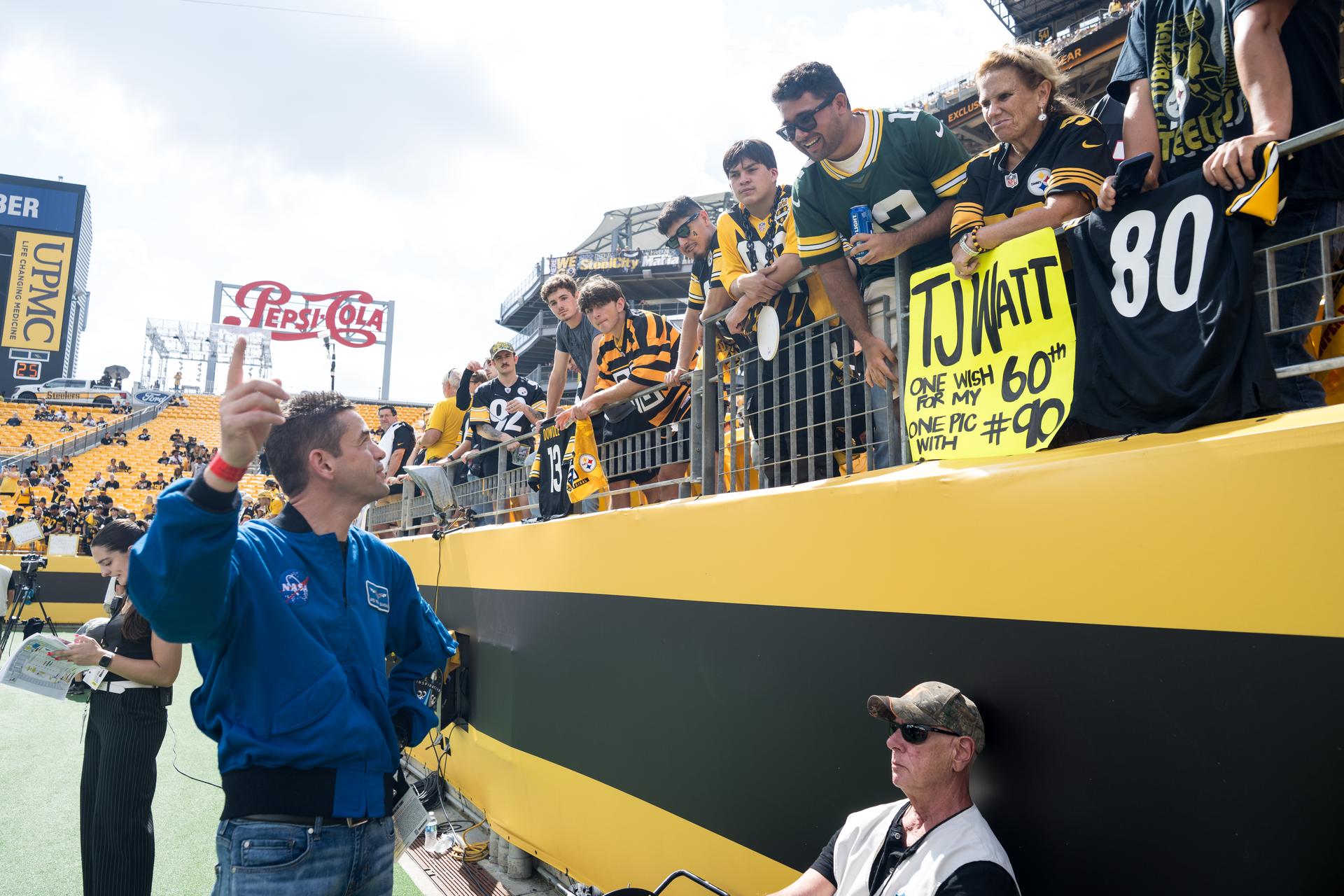
NASA Administrator Jared Isaacman greets fans at an NFL game between the Pittsburgh Steelers and the Atlanta Falcons at Acrisure Stadium, Sunday, Sept. 13, 2026, in Pittsburgh, Pennsylvania. NASA’s engagement at NFL games is part of the agency's Inspiration Tour, aimed at strengthening connections between NASA and its partners and showcasing innovation in air and space in the lead up to the MAX POWER aerospace technology expo and airshow at the agency's Kennedy Space Center in early November. Photo Credit: (NASA/Aubrey Gemignani)
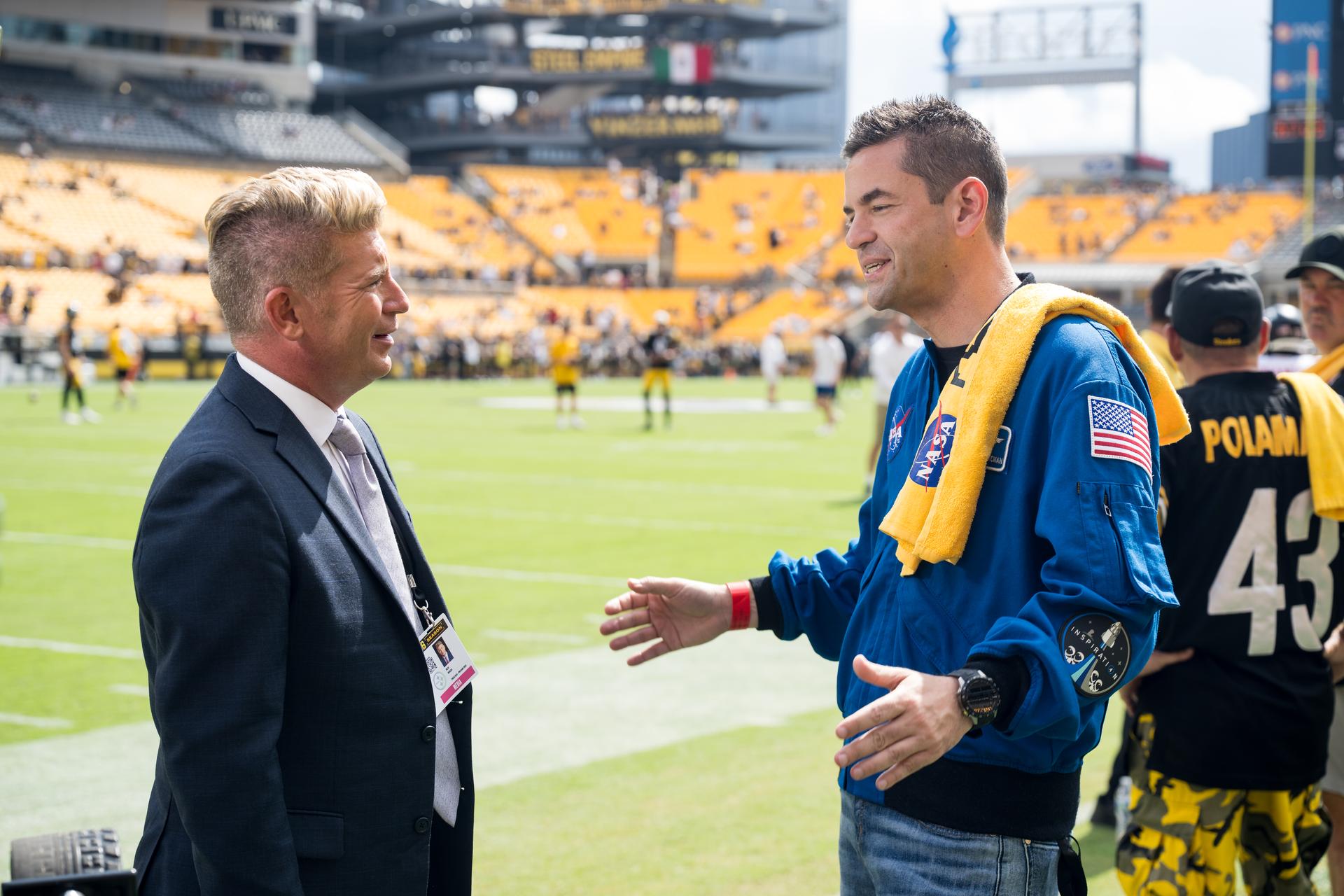
NASA Administrator Jared Isaacman is interviewed by media at an NFL game between the Pittsburgh Steelers and the Atlanta Falcons at Acrisure Stadium, Sunday, Sept. 13, 2026, in Pittsburgh, Pennsylvania. NASA’s engagement at NFL games is part of the agency's Inspiration Tour, aimed at strengthening connections between NASA and its partners and showcasing innovation in air and space in the lead up to the MAX POWER aerospace technology expo and airshow at the agency's Kennedy Space Center in early November. Photo Credit: (NASA/Aubrey Gemignani)
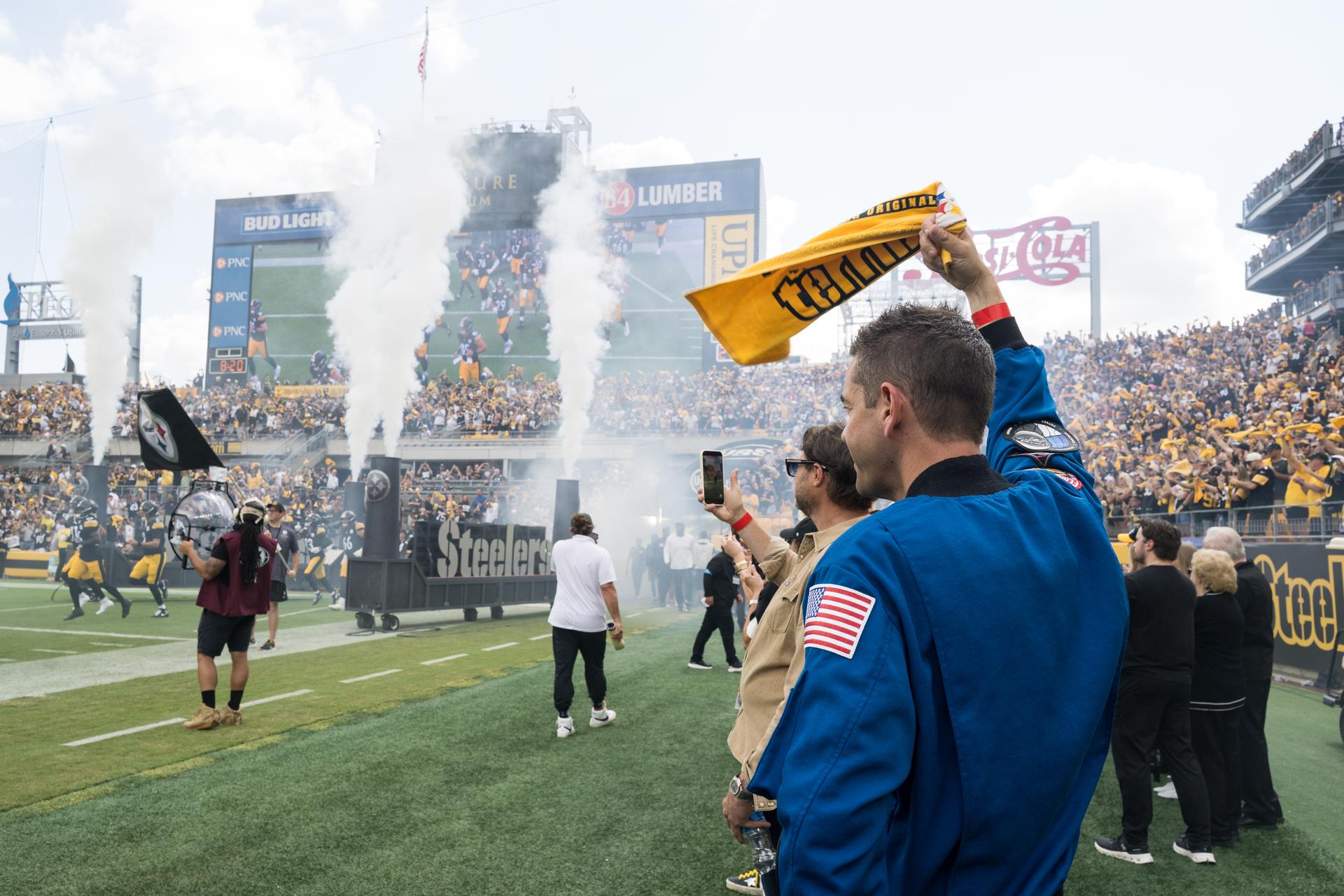
NASA Administrator Jared Isaacman watches the entrance of the Pittsburgh Steelers at an NFL game between the Steelers and the Atlanta Falcons at Acrisure Stadium, Sunday, Sept. 13, 2026, in Pittsburgh, Pennsylvania. NASA’s engagement at NFL games is part of the agency's Inspiration Tour, aimed at strengthening connections between NASA and its partners and showcasing innovation in air and space in the lead up to the MAX POWER aerospace technology expo and airshow at the agency's Kennedy Space Center in early November. Photo Credit: (NASA/Aubrey Gemignani)
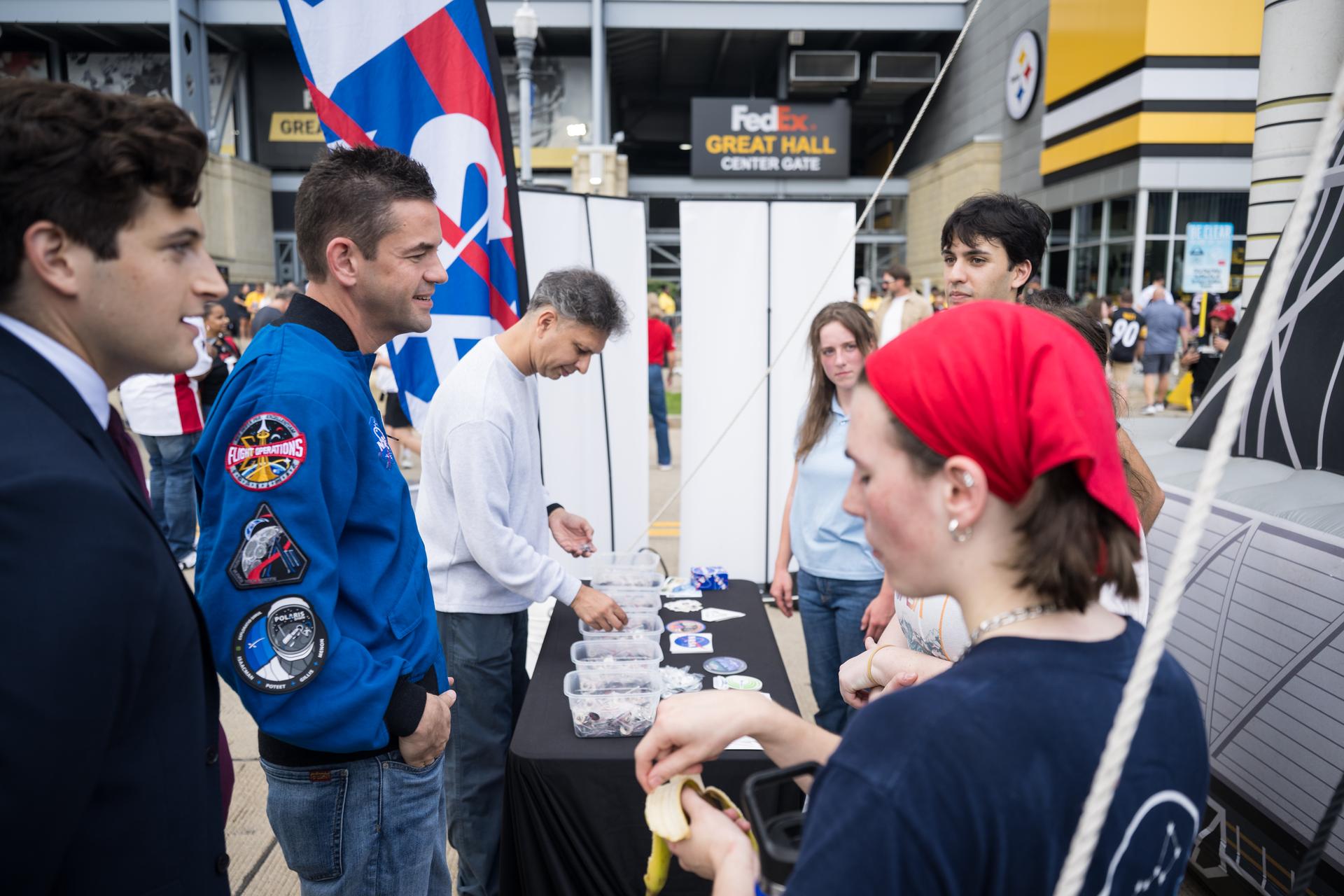
NASA Administrator Jared Isaacman speaks with student volunteers outside the NASA Experience Zone at an NFL game between the Pittsburgh Steelers and the Atlanta Falcons at Acrisure Stadium, Sunday, Sept. 13, 2026, in Pittsburgh, Pennsylvania. NASA’s engagement at NFL games is part of the agency's Inspiration Tour, aimed at strengthening connections between NASA and its partners and showcasing innovation in air and space in the lead up to the MAX POWER aerospace technology expo and airshow at the agency's Kennedy Space Center in early November. Photo Credit: (NASA/Aubrey Gemignani)
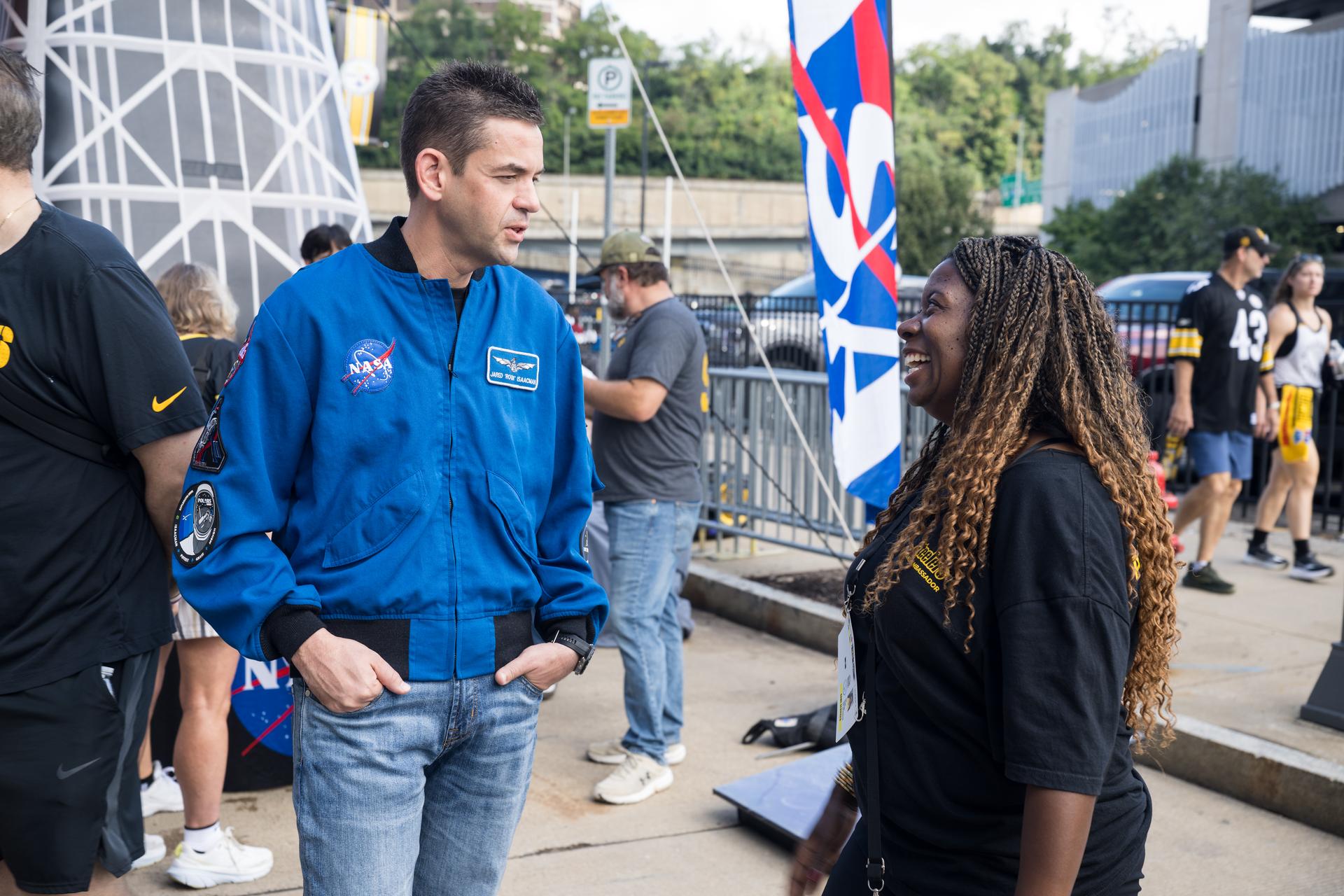
NASA Administrator Jared Isaacman greets fans outside the NASA Experience Zone at an NFL game between the Pittsburgh Steelers and the Atlanta Falcons at Acrisure Stadium, Sunday, Sept. 13, 2026, in Pittsburgh, Pennsylvania. NASA’s engagement at NFL games is part of the agency's Inspiration Tour, aimed at strengthening connections between NASA and its partners and showcasing innovation in air and space in the lead up to the MAX POWER aerospace technology expo and airshow at the agency's Kennedy Space Center in early November. Photo Credit: (NASA/Aubrey Gemignani)
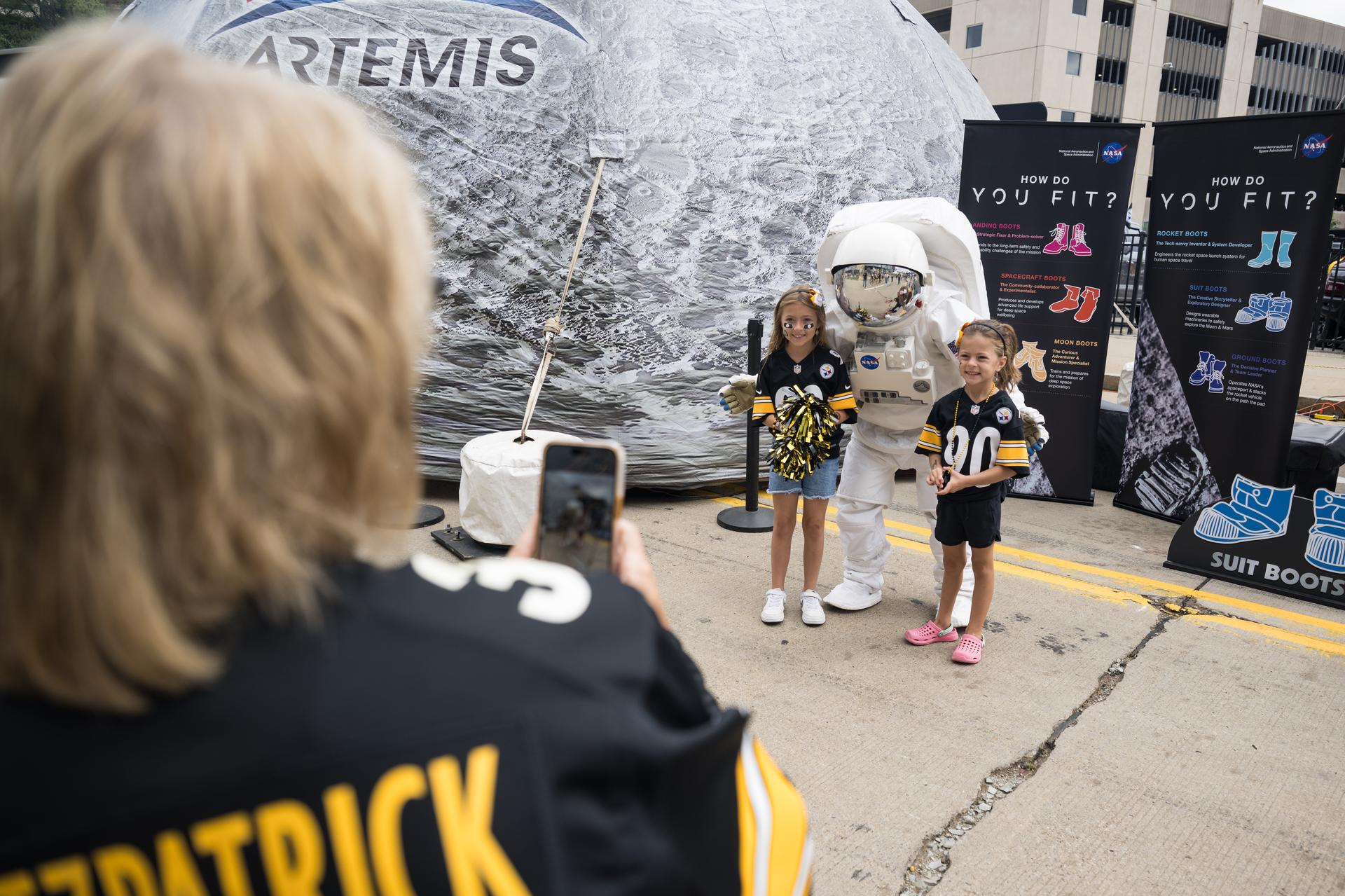
Fans pose for a photo in the NASA Experience Zone at an NFL game between the Pittsburgh Steelers and the Atlanta Falcons at Acrisure Stadium, Sunday, Sept. 13, 2026, in Pittsburgh, Pennsylvania. NASA’s engagement at NFL games is part of the agency's Inspiration Tour, aimed at strengthening connections between NASA and its partners and showcasing innovation in air and space in the lead up to the MAX POWER aerospace technology expo and airshow at the agency's Kennedy Space Center in early November. Photo Credit: (NASA/Aubrey Gemignani)
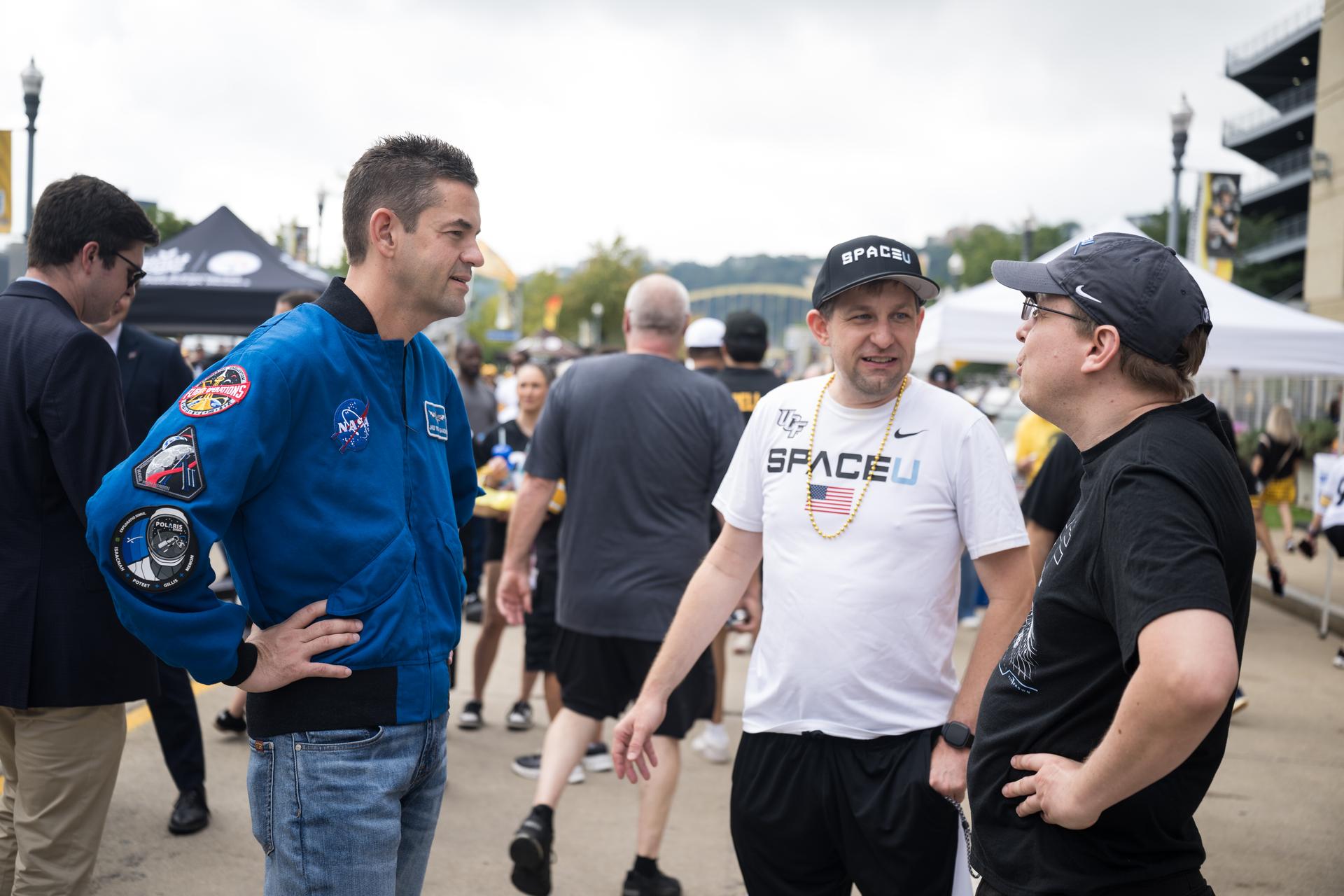
NASA Administrator Jared Isaacman greets fans outside the NASA Experience Zone at an NFL game between the Pittsburgh Steelers and the Atlanta Falcons at Acrisure Stadium, Sunday, Sept. 13, 2026, in Pittsburgh, Pennsylvania. NASA’s engagement at NFL games is part of the agency's Inspiration Tour, aimed at strengthening connections between NASA and its partners and showcasing innovation in air and space in the lead up to the MAX POWER aerospace technology expo and airshow at the agency's Kennedy Space Center in early November. Photo Credit: (NASA/Aubrey Gemignani)
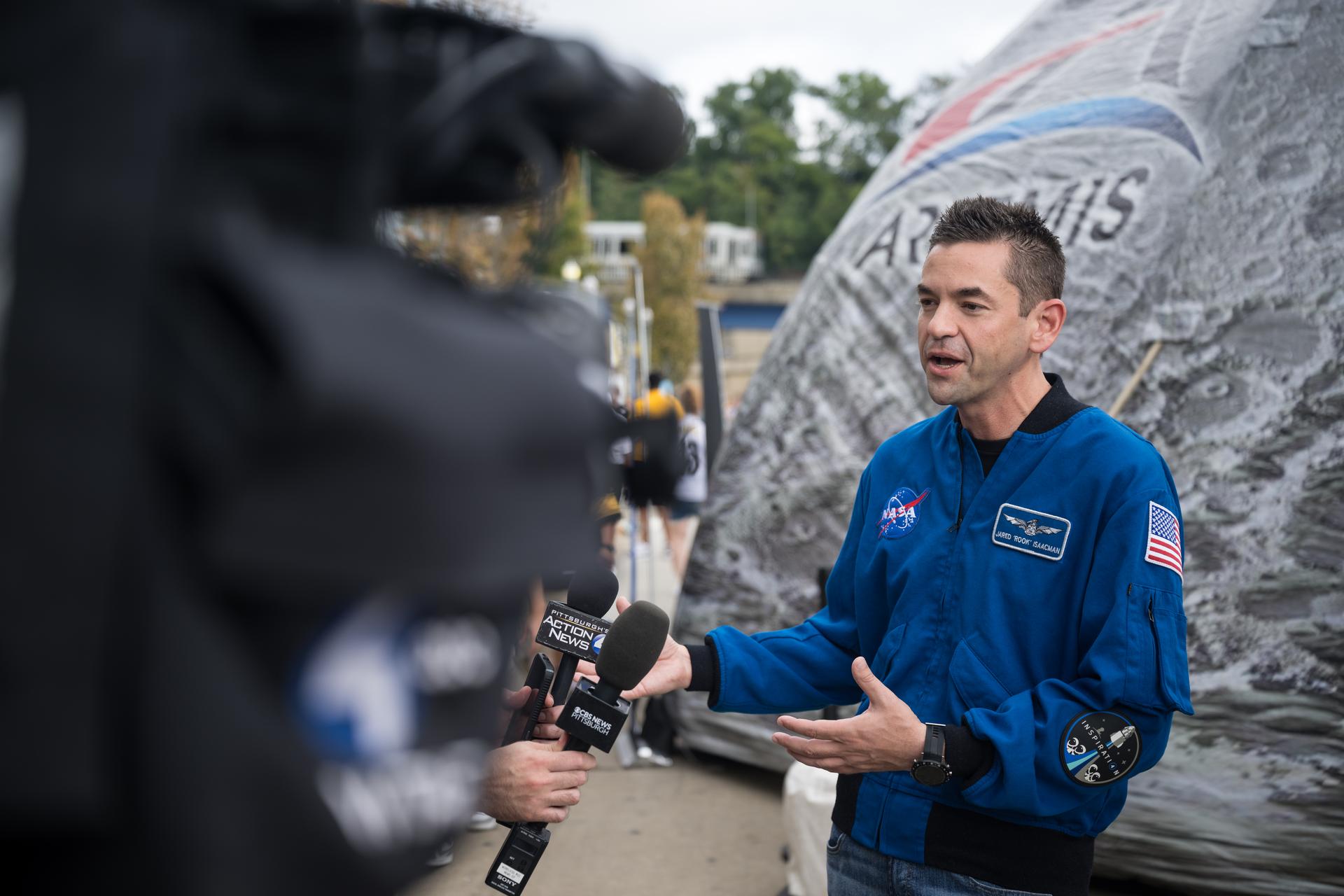
NASA Administrator Jared Isaacman is interviewed by media outside the NASA Experience Zone at an NFL game between the Pittsburgh Steelers and the Atlanta Falcons at Acrisure Stadium, Sunday, Sept. 13, 2026, in Pittsburgh, Pennsylvania. NASA’s engagement at NFL games is part of the agency's Inspiration Tour, aimed at strengthening connections between NASA and its partners and showcasing innovation in air and space in the lead up to the MAX POWER aerospace technology expo and airshow at the agency's Kennedy Space Center in early November. Photo Credit: (NASA/Aubrey Gemignani)
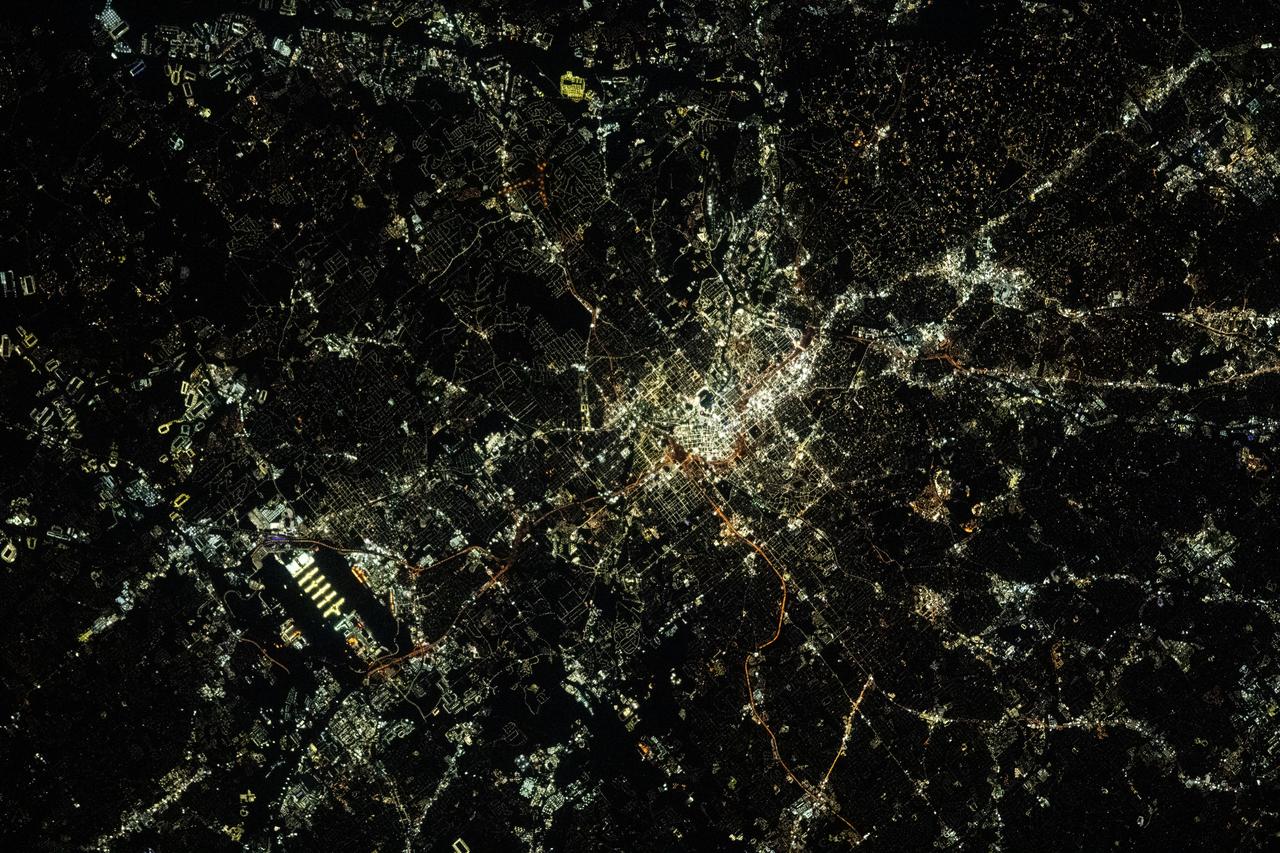
iss070e097979 (Feb. 22, 2024) --- Atlanta, Georgia, and Hartsfield-Jackson Atlanta International Airport (lower left) are pictured during nighttime from the International Space Station as it orbited 260 miles above the Peach State.
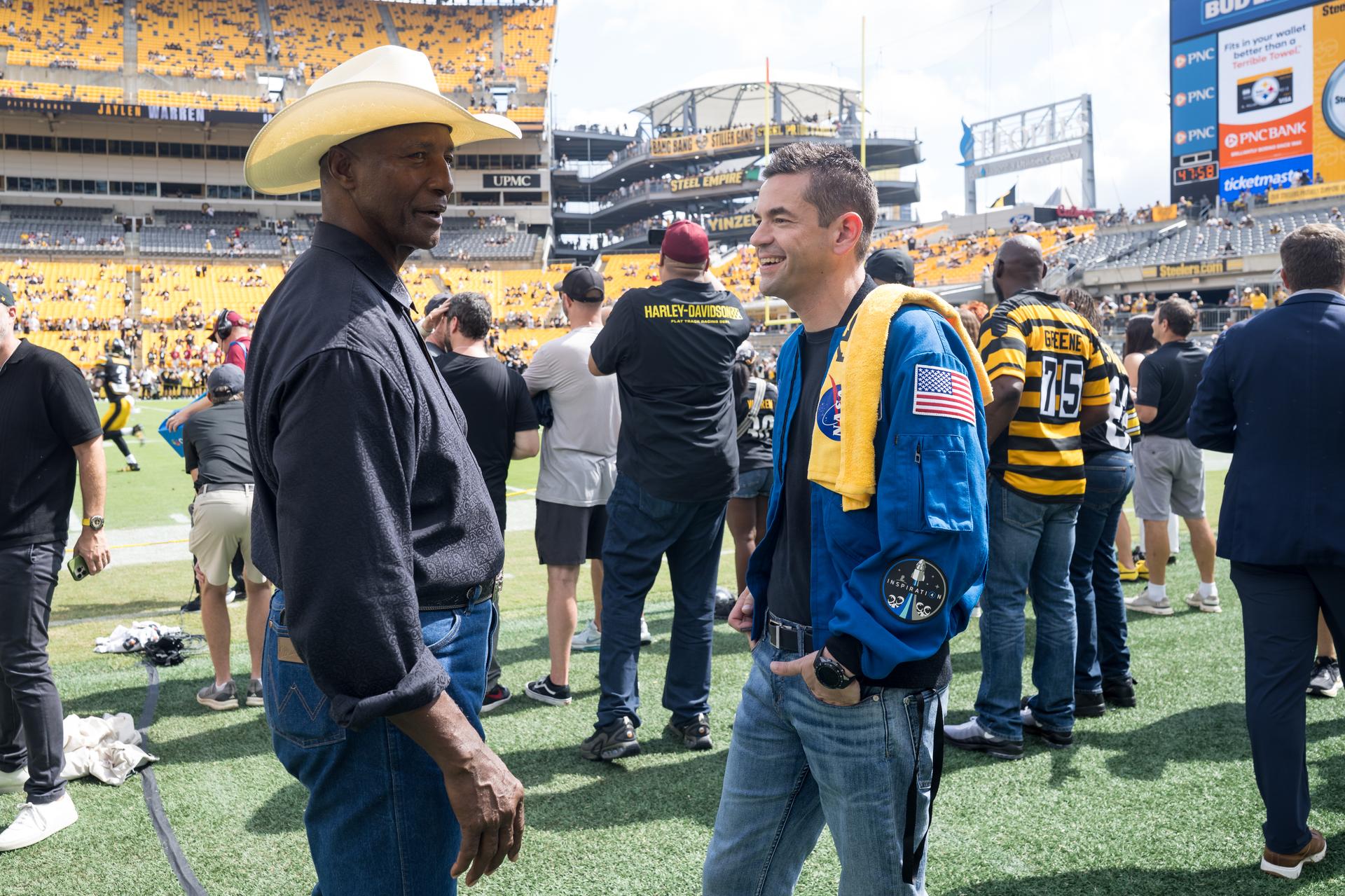
NASA Administrator Jared Isaacman right, speaks with Mel Blount, former Pittsburgh Steelers professional football player at an NFL game between the Pittsburgh Steelers and the Atlanta Falcons at Acrisure Stadium, Sunday, Sept. 13, 2026, in Pittsburgh, Pennsylvania. NASA’s engagement at NFL games is part of the agency's Inspiration Tour, aimed at strengthening connections between NASA and its partners and showcasing innovation in air and space in the lead up to the MAX POWER aerospace technology expo and airshow at the agency's Kennedy Space Center in early November. Photo Credit: (NASA/Aubrey Gemignani)
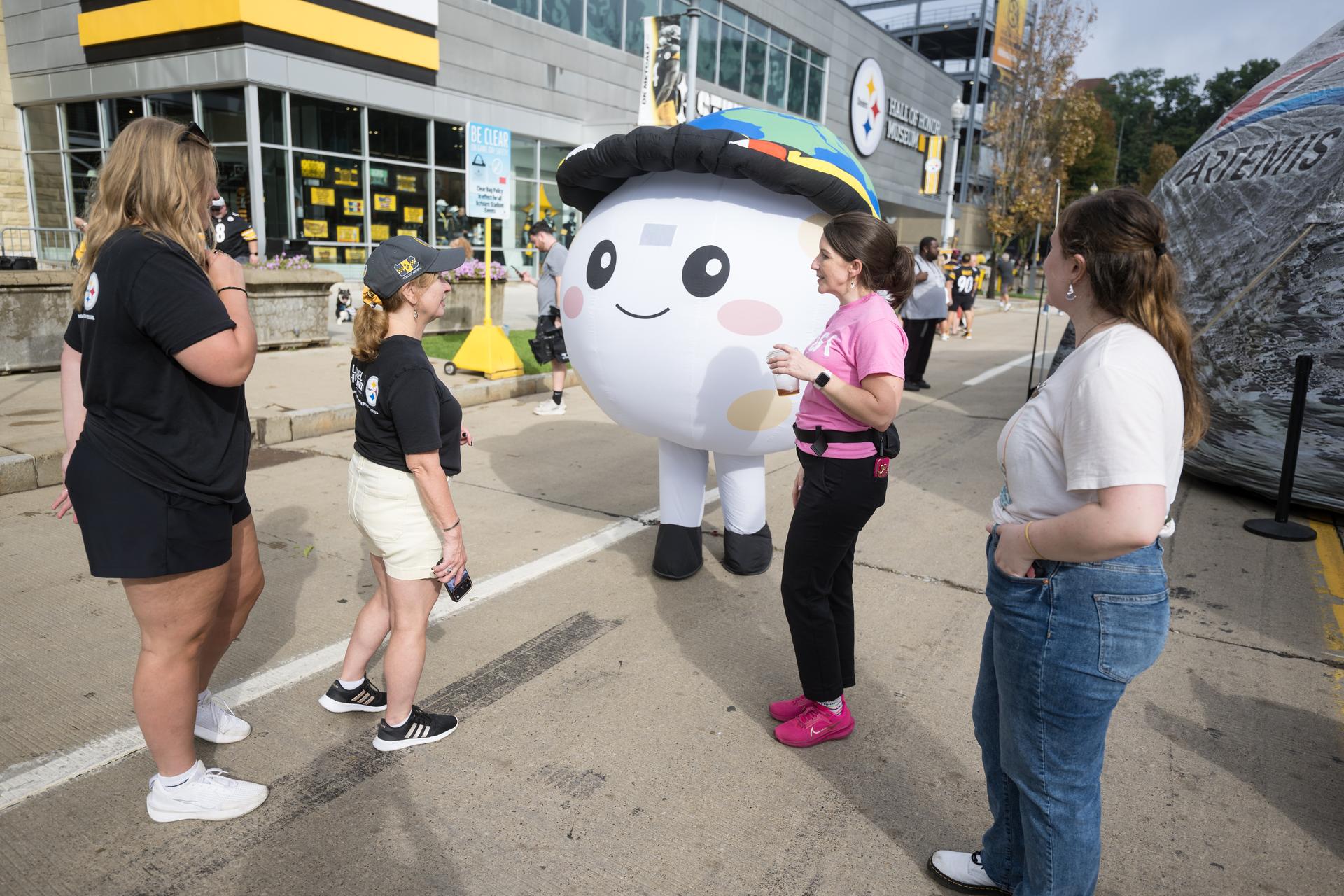
Kristen Parker, NASA communications liaison, second from right, stands next to Rise, the zero gravity indicator from the Artemis II mission and greets fans in the NASA Experience Zone at an NFL game between the Pittsburgh Steelers and the Atlanta Falcons at Acrisure Stadium, Sunday, Sept. 13, 2026, in Pittsburgh, Pennsylvania. NASA’s engagement at NFL games is part of the agency's Inspiration Tour, aimed at strengthening connections between NASA and its partners and showcasing innovation in air and space in the lead up to the MAX POWER aerospace technology expo and airshow at the agency's Kennedy Space Center in early November. Photo Credit: (NASA/Aubrey Gemignani)
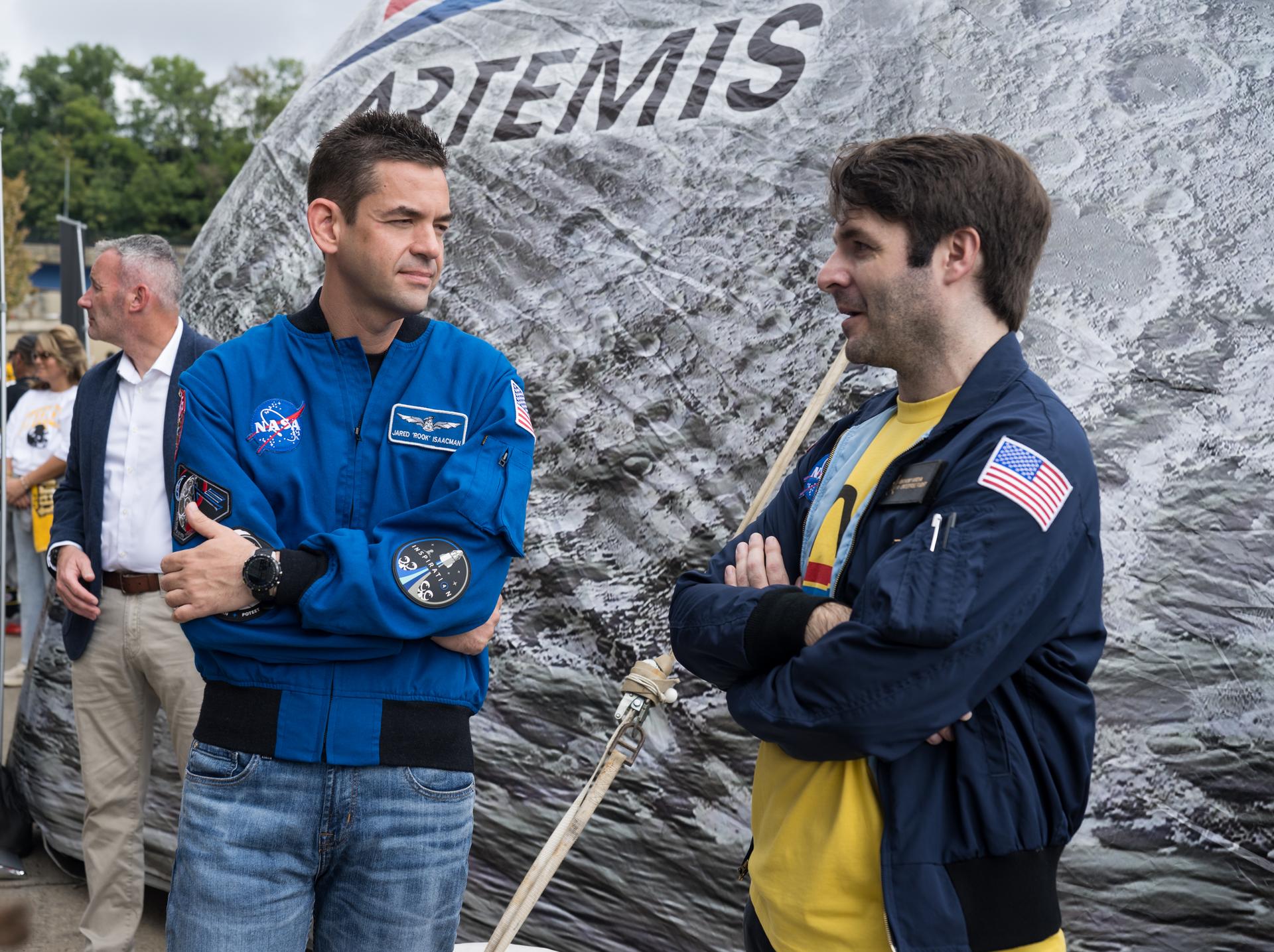
NASA Administrator Jared Isaacman and Anthony Vareha, NASA Flight Director at NASA’s Johnson Space Center are seen in the NASA Experience Zone at an NFL game between the Pittsburgh Steelers and the Atlanta Falcons at Acrisure Stadium, Sunday, Sept. 13, 2026, in Pittsburgh, Pennsylvania. NASA’s engagement at NFL games is part of the agency's Inspiration Tour, aimed at strengthening connections between NASA and its partners and showcasing innovation in air and space in the lead up to the MAX POWER aerospace technology expo and airshow at the agency's Kennedy Space Center in early November. Photo Credit: (NASA/Aubrey Gemignani)
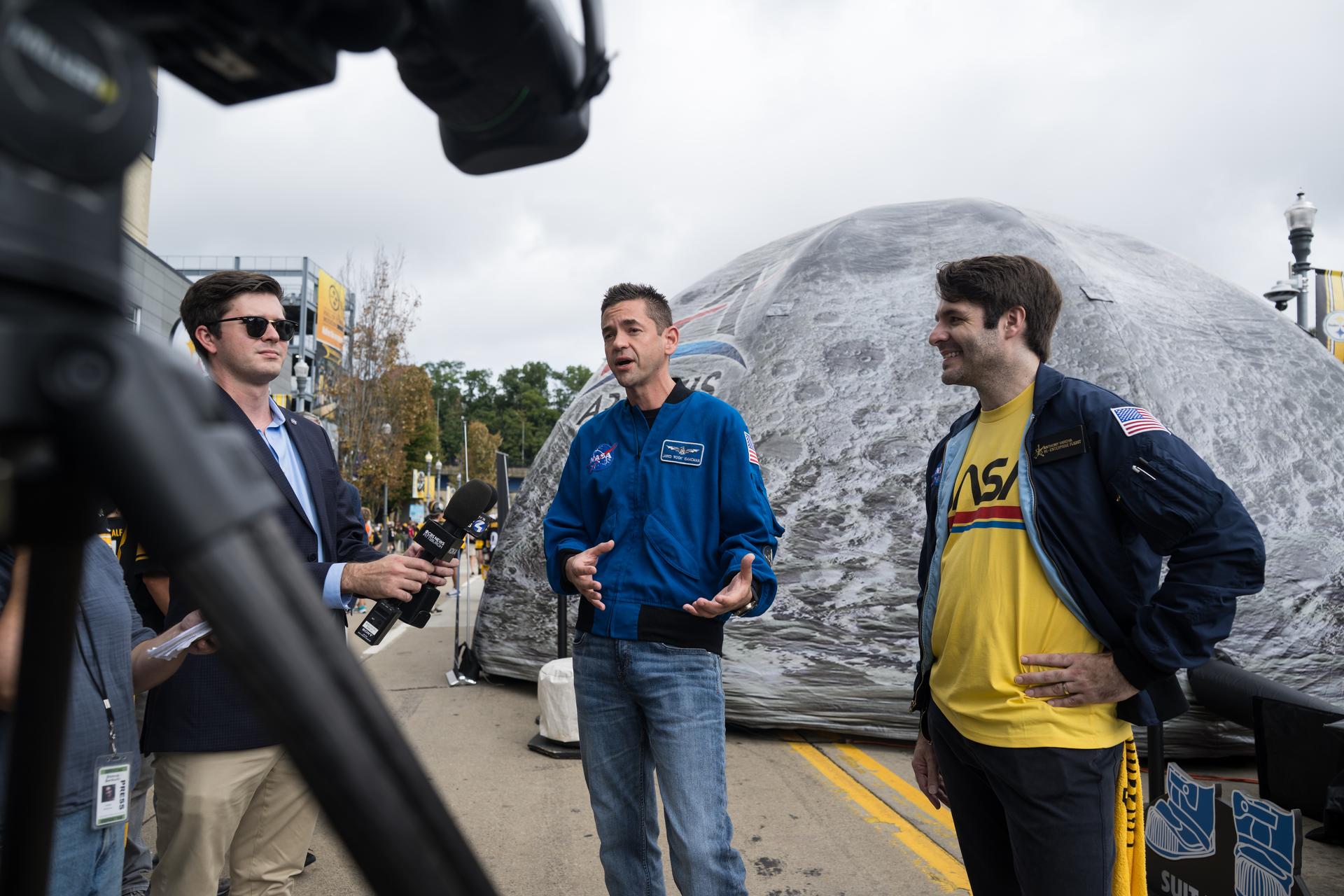
NASA Administrator Jared Isaacman and Anthony Vareha, NASA Flight Director at NASA’s Johnson Space Center are interviewed by media outside the NASA Experience Zone at an NFL game between the Pittsburgh Steelers and the Atlanta Falcons at Acrisure Stadium, Sunday, Sept. 13, 2026, in Pittsburgh, Pennsylvania. NASA’s engagement at NFL games is part of the agency's Inspiration Tour, aimed at strengthening connections between NASA and its partners and showcasing innovation in air and space in the lead up to the MAX POWER aerospace technology expo and airshow at the agency's Kennedy Space Center in early November. Photo Credit: (NASA/Aubrey Gemignani)
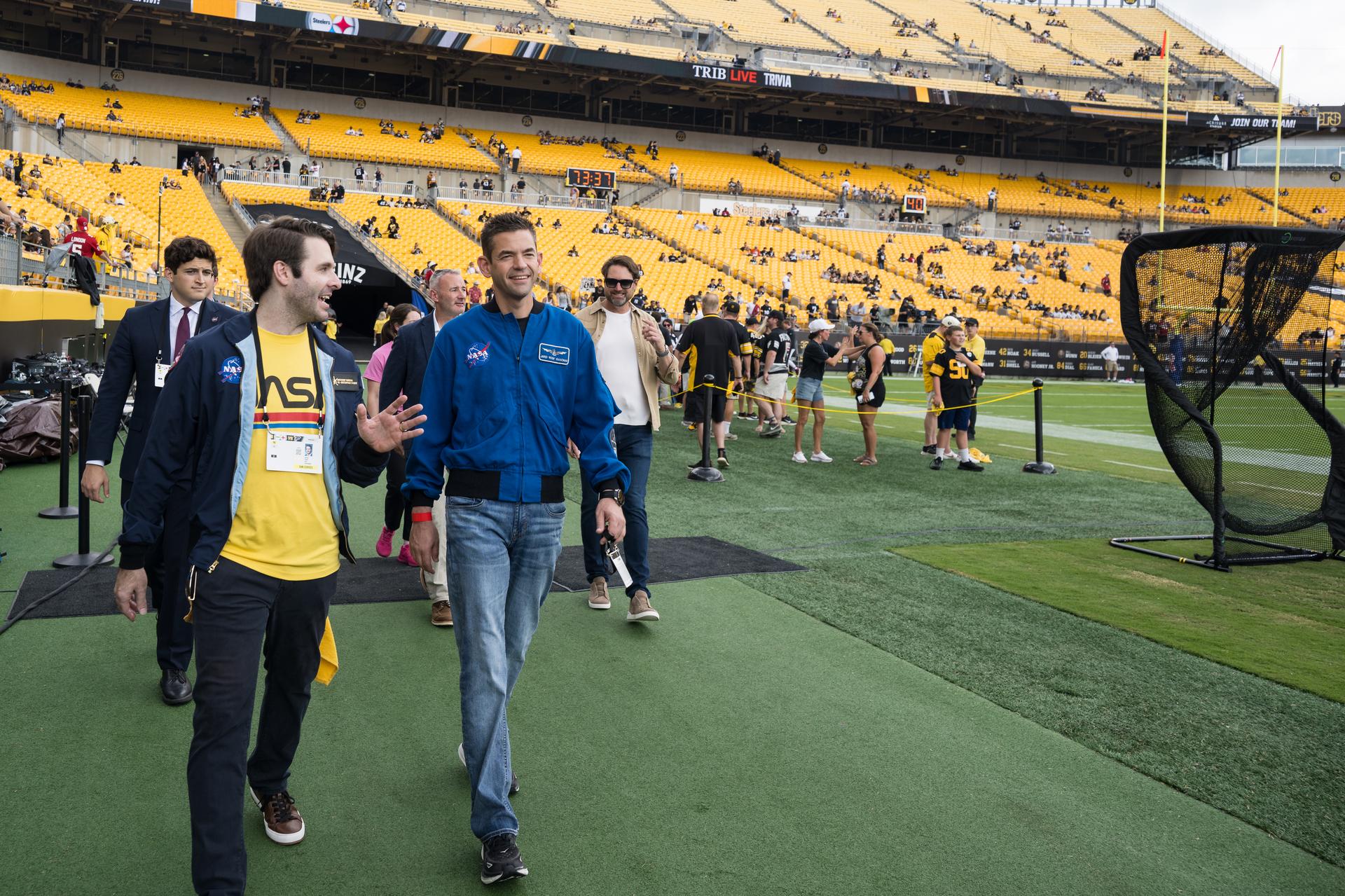
NASA Administrator Jared Isaacman, right, and NASA flight director Anthony Vareha, left walk along the sidelines at an NFL game between the Pittsburgh Steelers and the Atlanta Falcons at Acrisure Stadium, Sunday, Sept. 13, 2026, in Pittsburgh, Pennsylvania. NASA’s engagement at NFL games is part of the agency's Inspiration Tour, aimed at strengthening connections between NASA and its partners and showcasing innovation in air and space in the lead up to the MAX POWER aerospace technology expo and airshow at the agency's Kennedy Space Center in early November. Photo Credit: (NASA/Aubrey Gemignani)
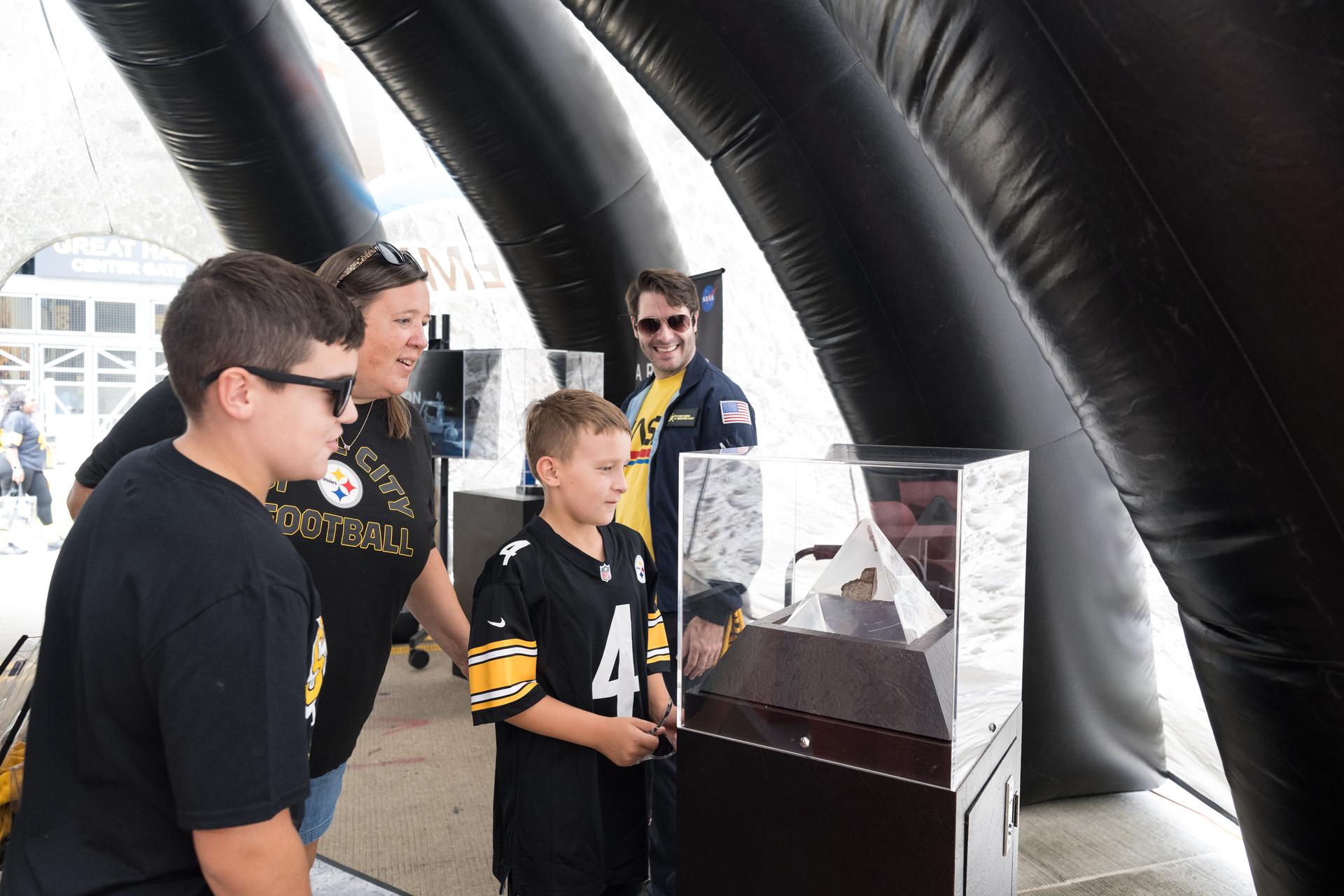
Anthony Vareha, NASA Flight Director, right, watches as fans check out the Moon rock in the NASA Experience Zone at an NFL game between the Pittsburgh Steelers and the Atlanta Falcons at Acrisure Stadium, Sunday, Sept. 13, 2026, in Pittsburgh, Pennsylvania. NASA’s engagement at NFL games is part of the agency's Inspiration Tour, aimed at strengthening connections between NASA and its partners and showcasing innovation in air and space in the lead up to the MAX POWER aerospace technology expo and airshow at the agency's Kennedy Space Center in early November. Photo Credit: (NASA/Aubrey Gemignani)
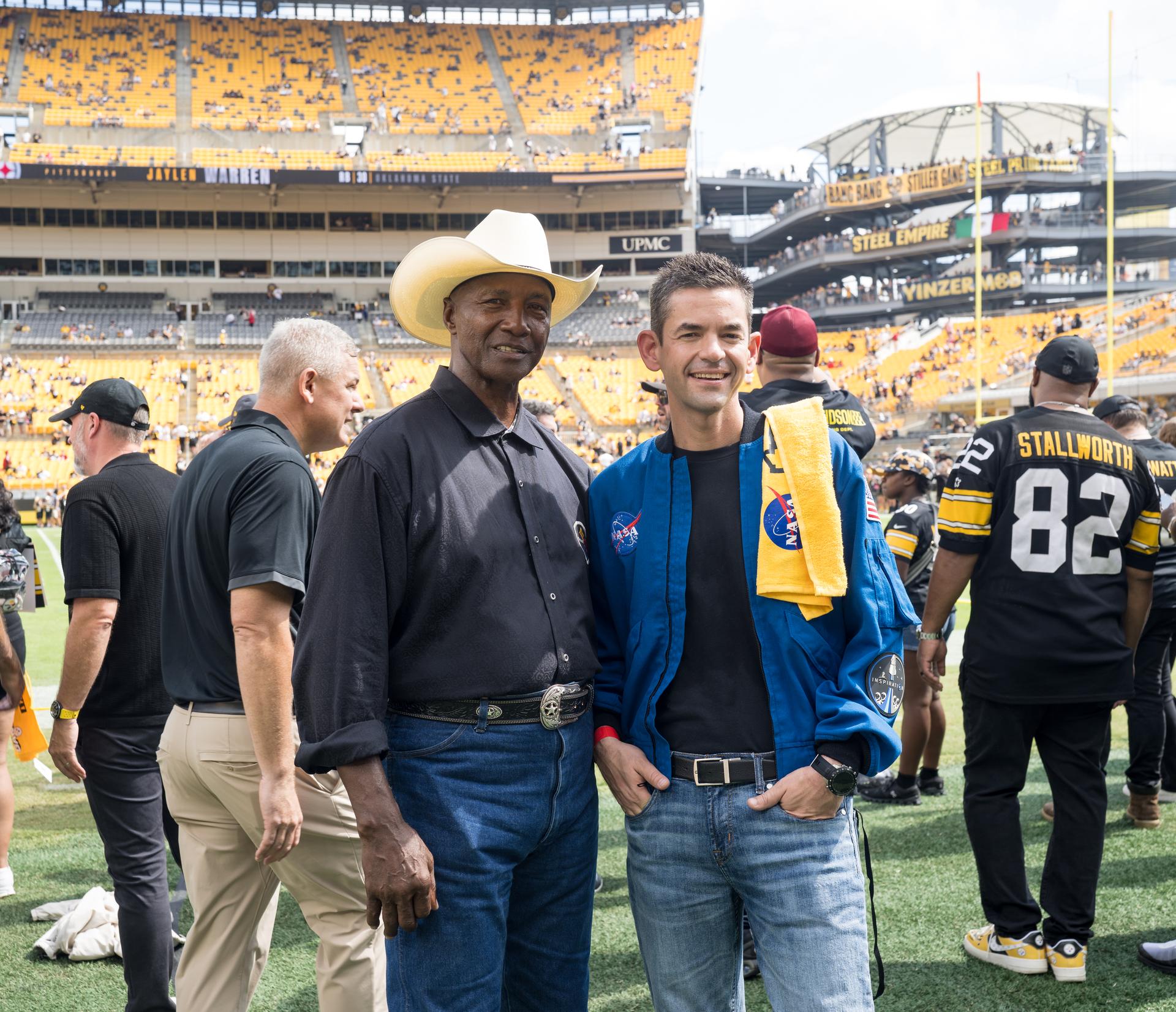
NASA Administrator Jared Isaacman right, poses for a photo with Mel Blount, former Pittsburgh Steelers professional football player at an NFL game between the Pittsburgh Steelers and the Atlanta Falcons at Acrisure Stadium, Sunday, Sept. 13, 2026, in Pittsburgh, Pennsylvania. NASA’s engagement at NFL games is part of the agency's Inspiration Tour, aimed at strengthening connections between NASA and its partners and showcasing innovation in air and space in the lead up to the MAX POWER aerospace technology expo and airshow at the agency's Kennedy Space Center in early November. Photo Credit: (NASA/Aubrey Gemignani)
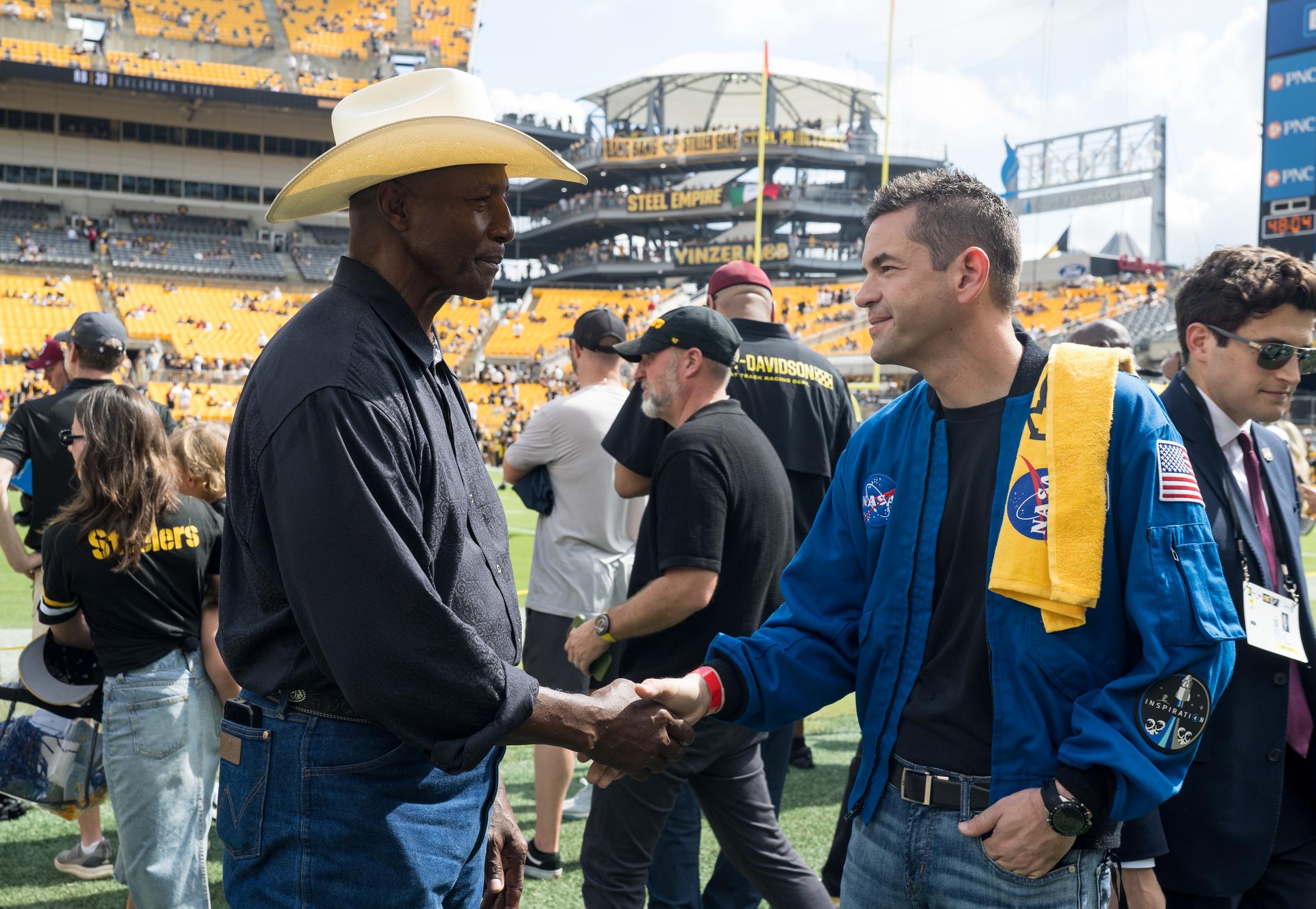
NASA Administrator Jared Isaacman right, shakes hands with Mel Blount, former Pittsburgh Steelers professional football player at an NFL game between the Pittsburgh Steelers and the Atlanta Falcons at Acrisure Stadium, Sunday, Sept. 13, 2026, in Pittsburgh, Pennsylvania. NASA’s engagement at NFL games is part of the agency's Inspiration Tour, aimed at strengthening connections between NASA and its partners and showcasing innovation in air and space in the lead up to the MAX POWER aerospace technology expo and airshow at the agency's Kennedy Space Center in early November. Photo Credit: (NASA/Aubrey Gemignani)
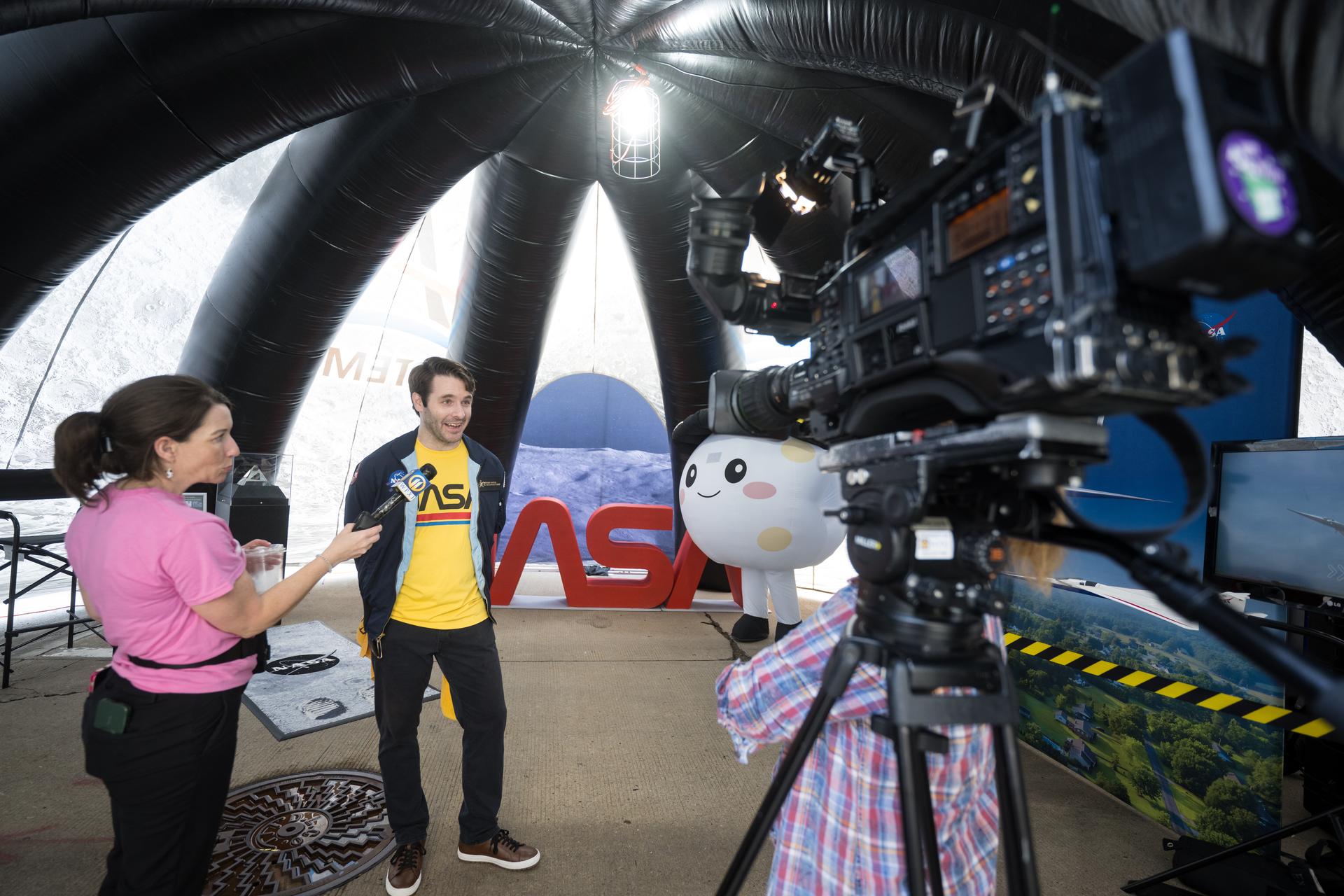
Anthony Vareha, NASA Flight Director at NASA’s Johnson Space Center is interviewed by media in the NASA Experience Zone at an NFL game between the Pittsburgh Steelers and the Atlanta Falcons at Acrisure Stadium, Sunday, Sept. 13, 2026, in Pittsburgh, Pennsylvania. NASA’s engagement at NFL games is part of the agency's Inspiration Tour, aimed at strengthening connections between NASA and its partners and showcasing innovation in air and space in the lead up to the MAX POWER aerospace technology expo and airshow at the agency's Kennedy Space Center in early November. Photo Credit: (NASA/Aubrey Gemignani)
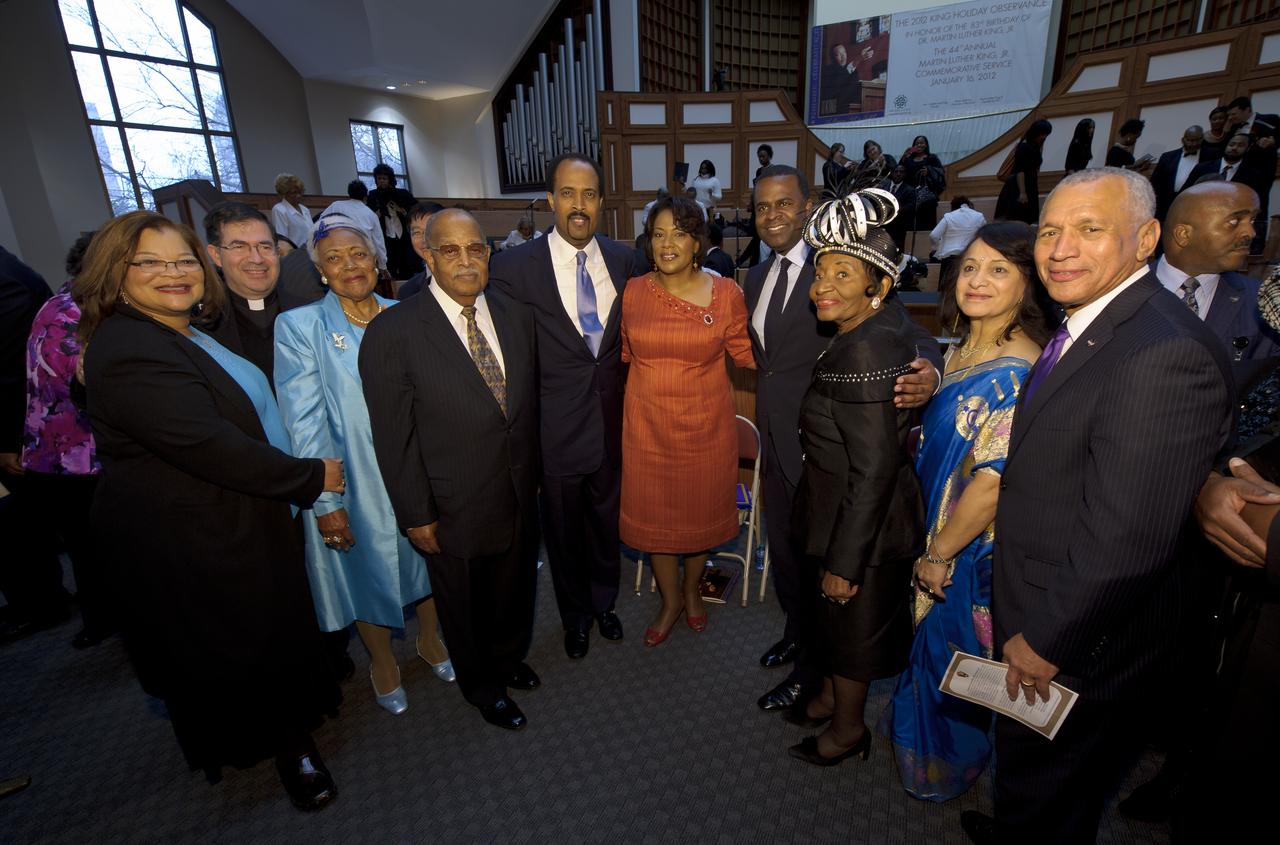
NASA Administrator Charles Bolden, right, joins in a group portrait with the niece of Martin Luther King, Jr., Alveda King, far left, Father Frank Pavone, wife of Martin Luther King, Jr's brother, Mrs. Naomi Barber King, Dr. Cameron Alexander, Dr. Frederick D. Haynes III, daughter of Martin Luther King, Jr., Dr. Bernice A. King, Kasim Reed, Mayor of Atlanta, Dr. Christine King Farris, Martin Luther King, Jr's sister, and Ms. Raj Razdan shortly after the 44th annual Martin Luther King, Jr. Commemorative Service on Monday, Jan. 16, 2012 at Ebenezer Baptist Church in Atlanta. Photo Credit: (NASA/Bill Ingalls)
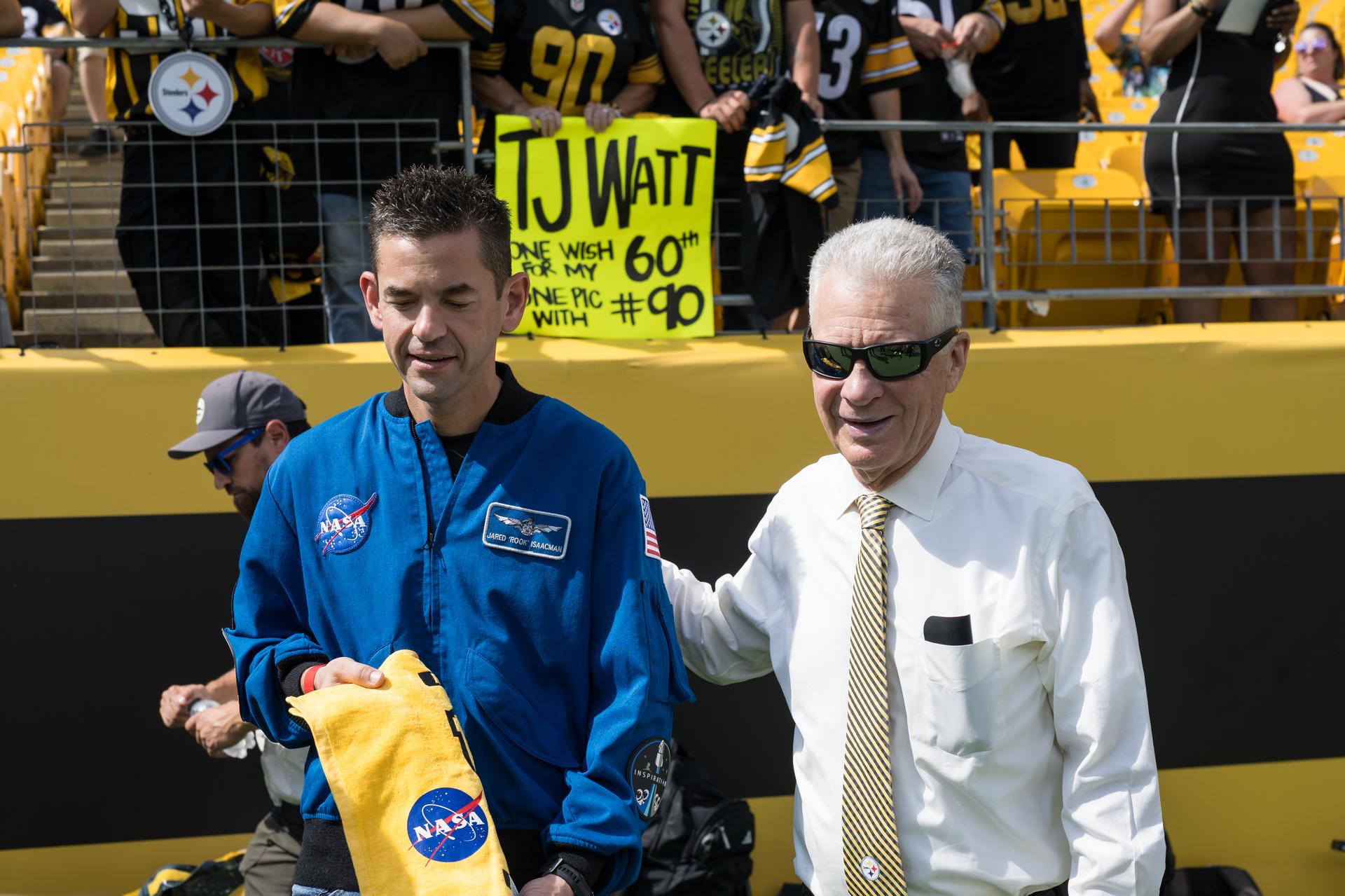
NASA Administrator Jared Isaacman receives a NASA branded “Terrible Towel” from Art Rooney II, owner of the Pittsburgh Steelers at an NFL game between the Steelers and the Atlanta Falcons at Acrisure Stadium, Sunday, Sept. 13, 2026, in Pittsburgh, Pennsylvania. NASA’s engagement at NFL games is part of the agency's Inspiration Tour, aimed at strengthening connections between NASA and its partners and showcasing innovation in air and space in the lead up to the MAX POWER aerospace technology expo and airshow at the agency's Kennedy Space Center in early November. Photo Credit: (NASA/Aubrey Gemignani)
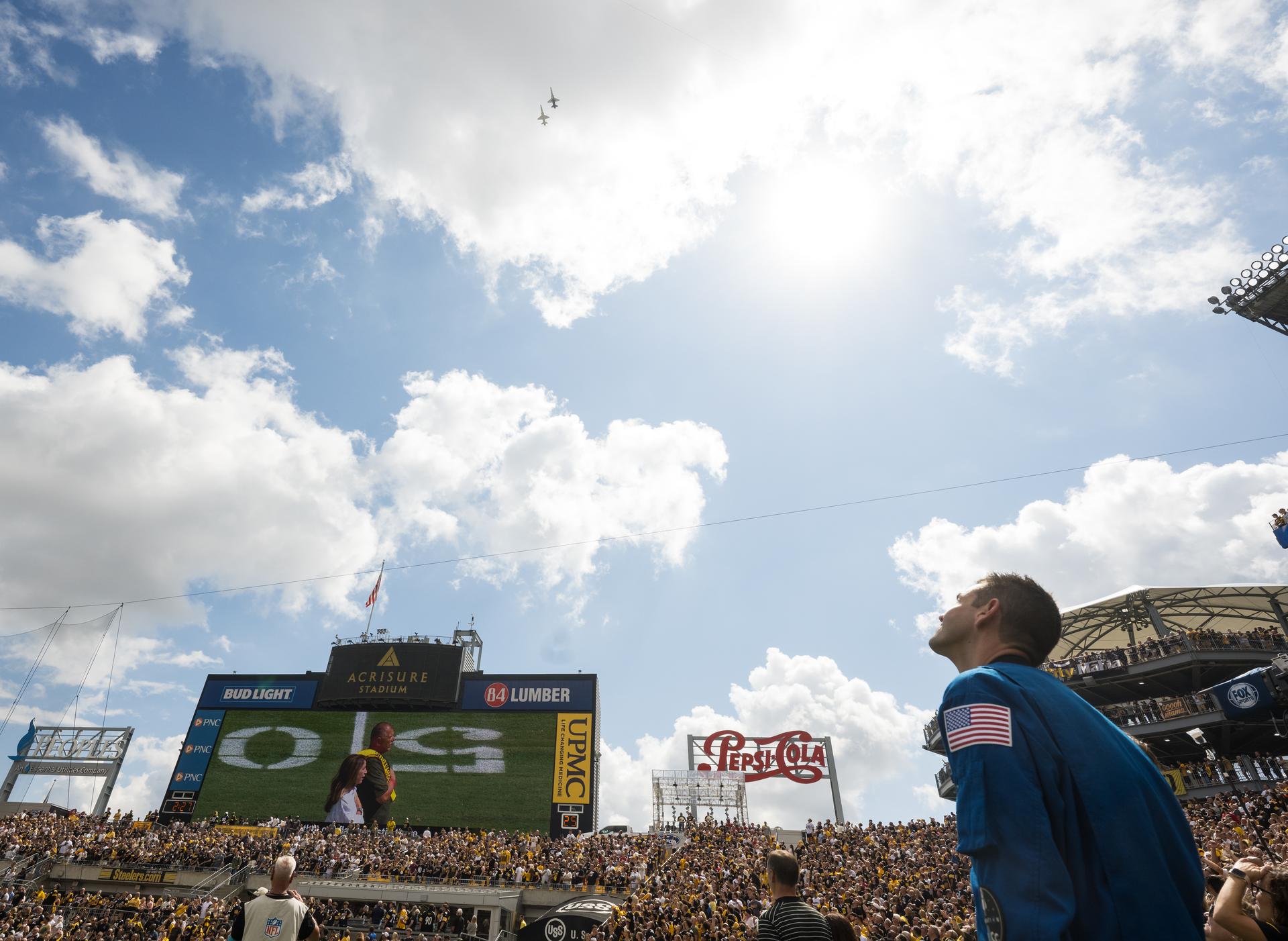
NASA Administrator Jared Isaacman watches as two NASA T-38 Talon aircrafts conduct a flyover at an NFL game between the Pittsburgh Steelers and the Atlanta Falcons at Acrisure Stadium, Sunday, Sept. 13, 2026, in Pittsburgh, Pennsylvania. NASA’s engagement at NFL games is part of the agency's Inspiration Tour, aimed at strengthening connections between NASA and its partners and showcasing innovation in air and space in the lead up to the MAX POWER aerospace technology expo and airshow at the agency's Kennedy Space Center in early November. Photo Credit: (NASA/Aubrey Gemignani)
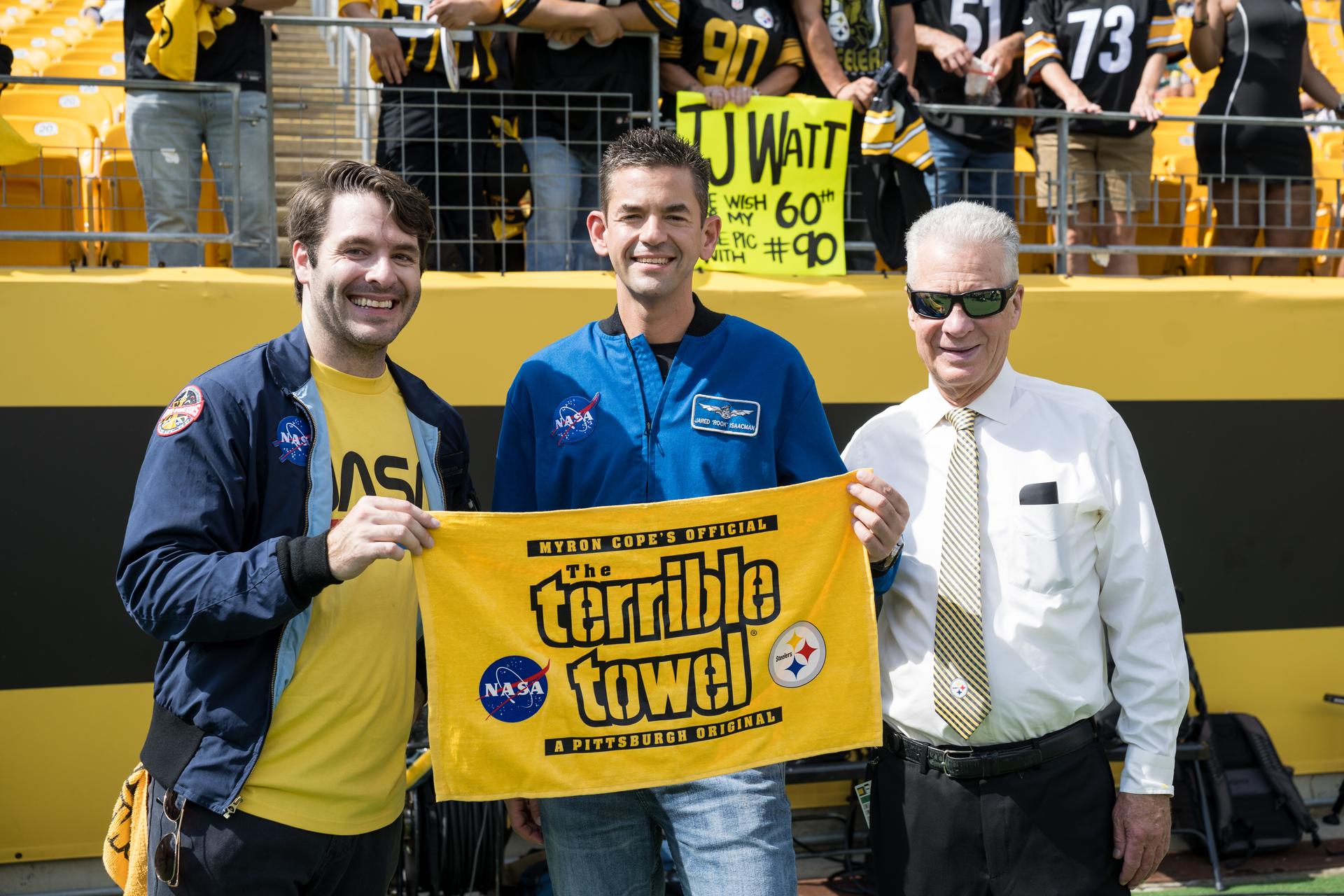
Anthony Vareha, NASA Flight Director, left, and NASA Administrator Jared Isaacman, center, receive a “Terrible Towel” from Art Rooney II, owner of the Pittsburgh Steelers, right, at an NFL game between the Steelers and the Atlanta Falcons at Acrisure Stadium, Sunday, Sept. 13, 2026, in Pittsburgh, Pennsylvania. NASA’s engagement at NFL games is part of the agency's Inspiration Tour, aimed at strengthening connections between NASA and its partners and showcasing innovation in air and space in the lead up to the MAX POWER aerospace technology expo and airshow at the agency's Kennedy Space Center in early November. Photo Credit: (NASA/Aubrey Gemignani)
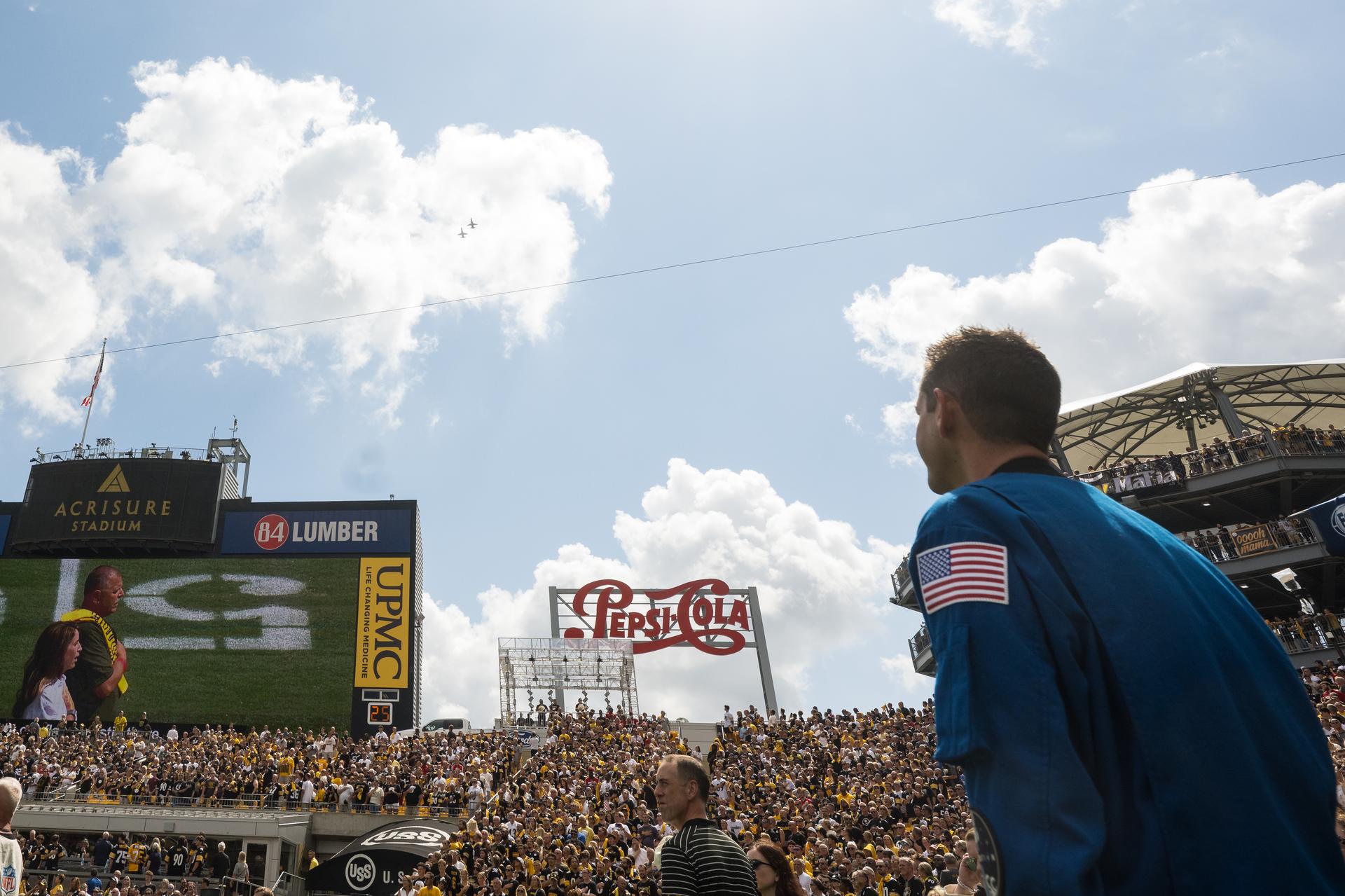
NASA Administrator Jared Isaacman watches as two NASA T-38 Talon aircrafts conduct a flyover at an NFL game between the Pittsburgh Steelers and the Atlanta Falcons at Acrisure Stadium, Sunday, Sept. 13, 2026, in Pittsburgh, Pennsylvania. NASA’s engagement at NFL games is part of the agency's Inspiration Tour, aimed at strengthening connections between NASA and its partners and showcasing innovation in air and space in the lead up to the MAX POWER aerospace technology expo and airshow at the agency's Kennedy Space Center in early November. Photo Credit: (NASA/Aubrey Gemignani)
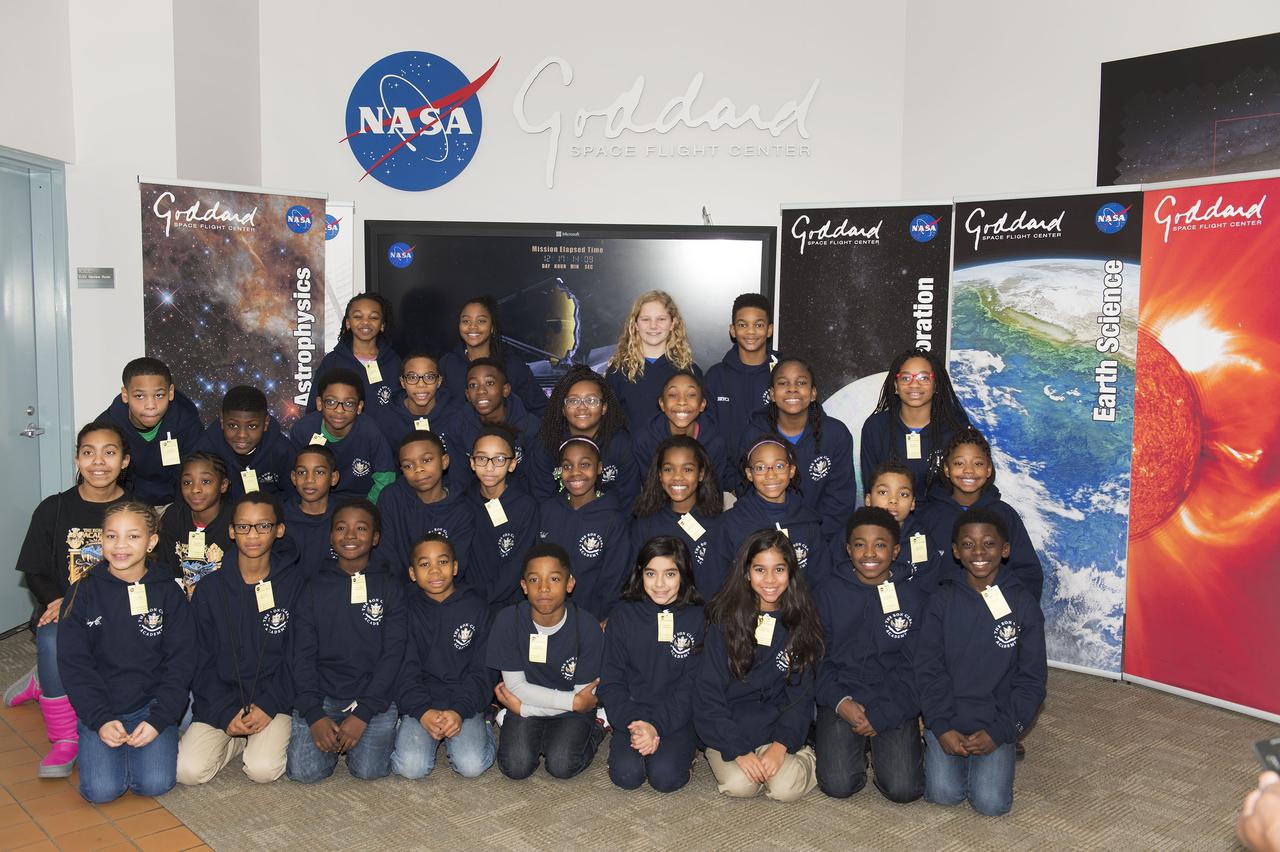
Ron Clark Academy students visited Goddard from Atlanta, Georgia on December 19, 2016. They visited JWST, Integration and Test facilities, and Hyperwall.
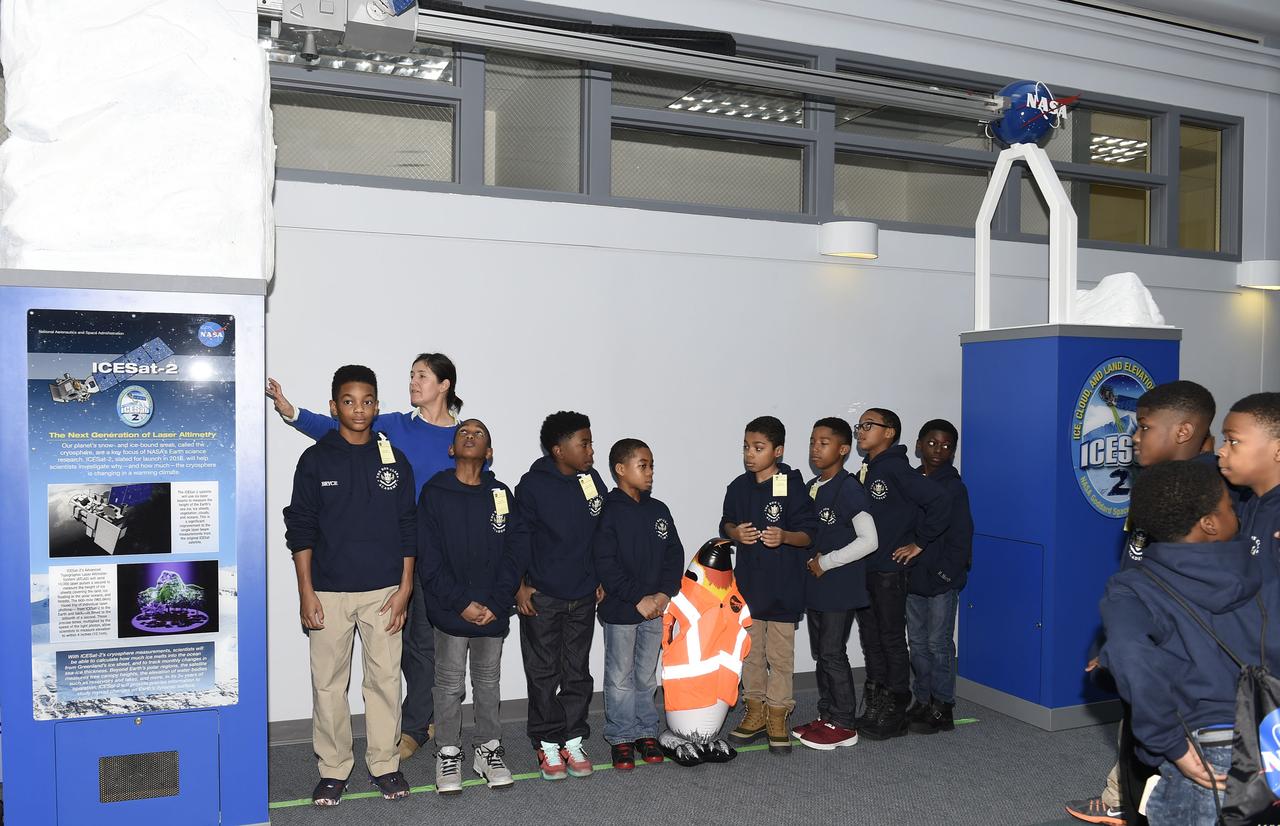
Ron Clark Academy students visited Goddard from Atlanta, Georgia on Dec 19, 201. They visited JWST, Integration and Test facilities and Hyperwall.
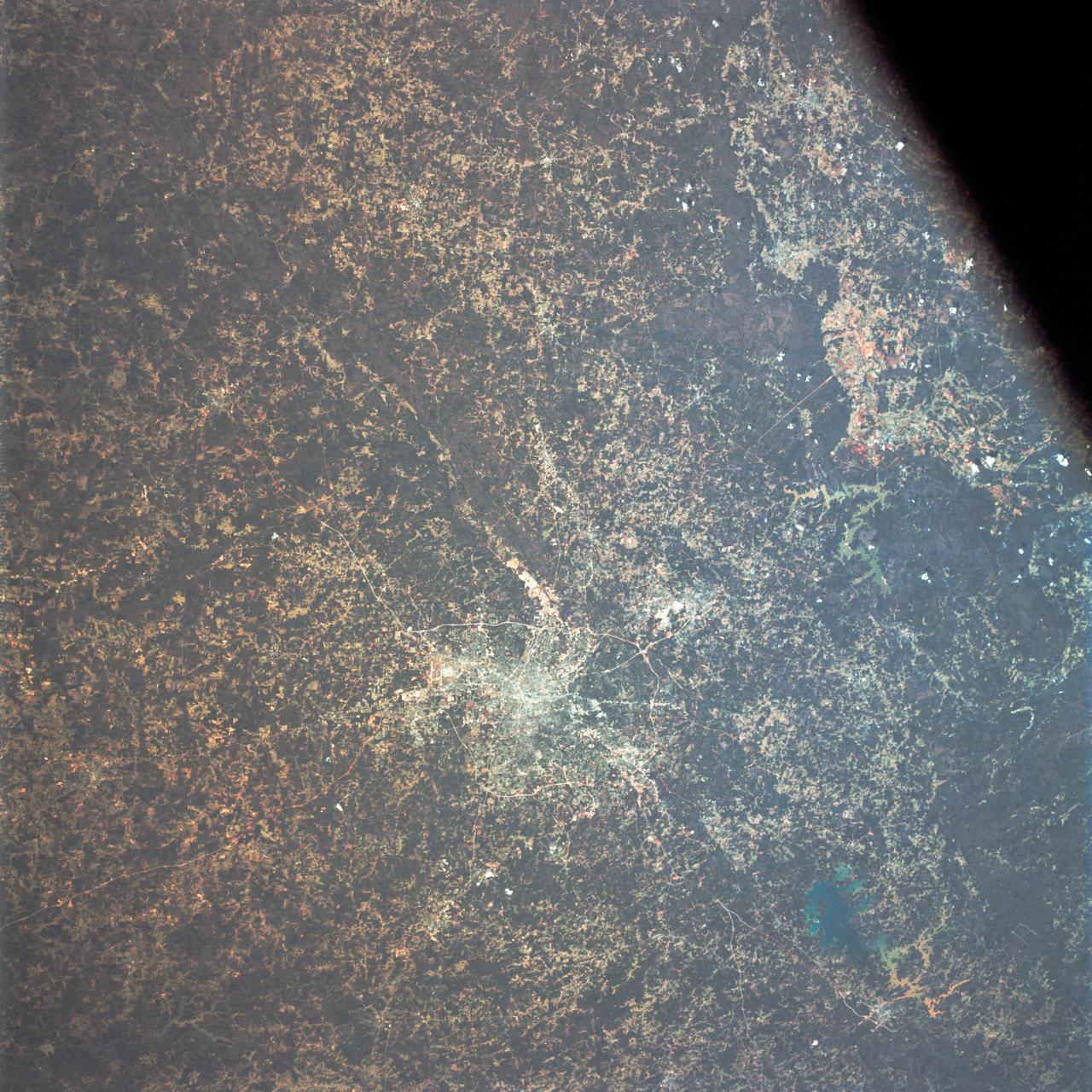
AS09-23-3567 (3-13 March 1969) --- Oblique view of the Atlanta, Georgia area as photographed from the Apollo 9 spacecraft during its Earth-orbital mission. The Chattahoochee River runs from Lake Sidney Lanier, near Gainesville (at upper left corner), south-westward by Atlanta and between Newnan and Carrollton (lower right). Allatoona Lake is at left center.
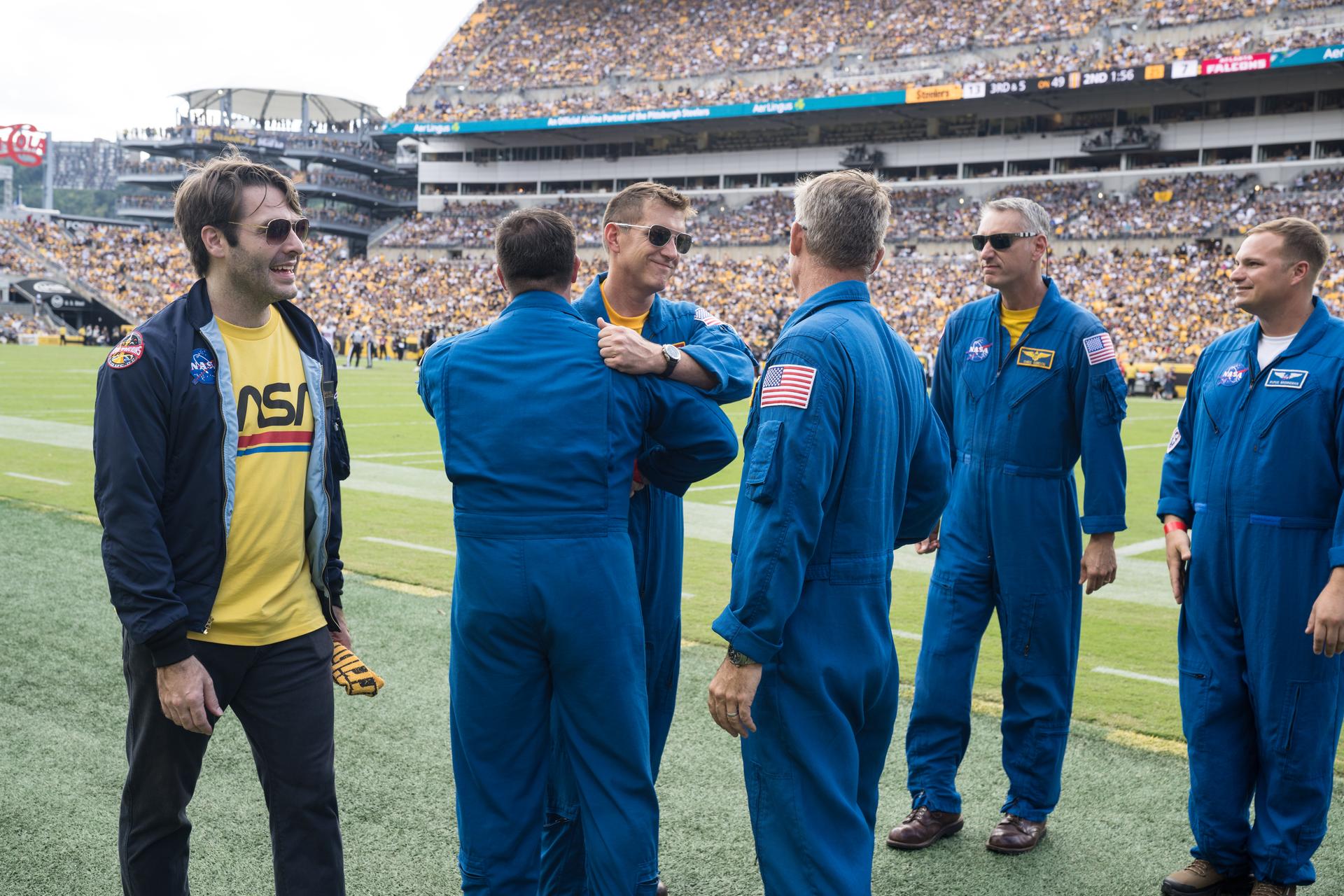
Geoff Palmer, NASA Co-Pilot, third from left, and Brad Nesmith, NASA Ground Liaison, second from left, hug after they participated in a call-back after Brett Pugsley, NASA Lead Pilot, fourth from left, Chris Condon, NASA Wing Pilot, fifth from left, and Palmer conducted a flyover at an NFL game between the Pittsburgh Steelers and the Atlanta Falcons at Acrisure Stadium, Sunday, Sept. 13, 2026, in Pittsburgh, Pennsylvania. NASA’s engagement at NFL games is part of the agency's Inspiration Tour, aimed at strengthening connections between NASA and its partners and showcasing innovation in air and space in the lead up to the MAX POWER aerospace technology expo and airshow at the agency's Kennedy Space Center in early November. Photo Credit: (NASA/Aubrey Gemignani)
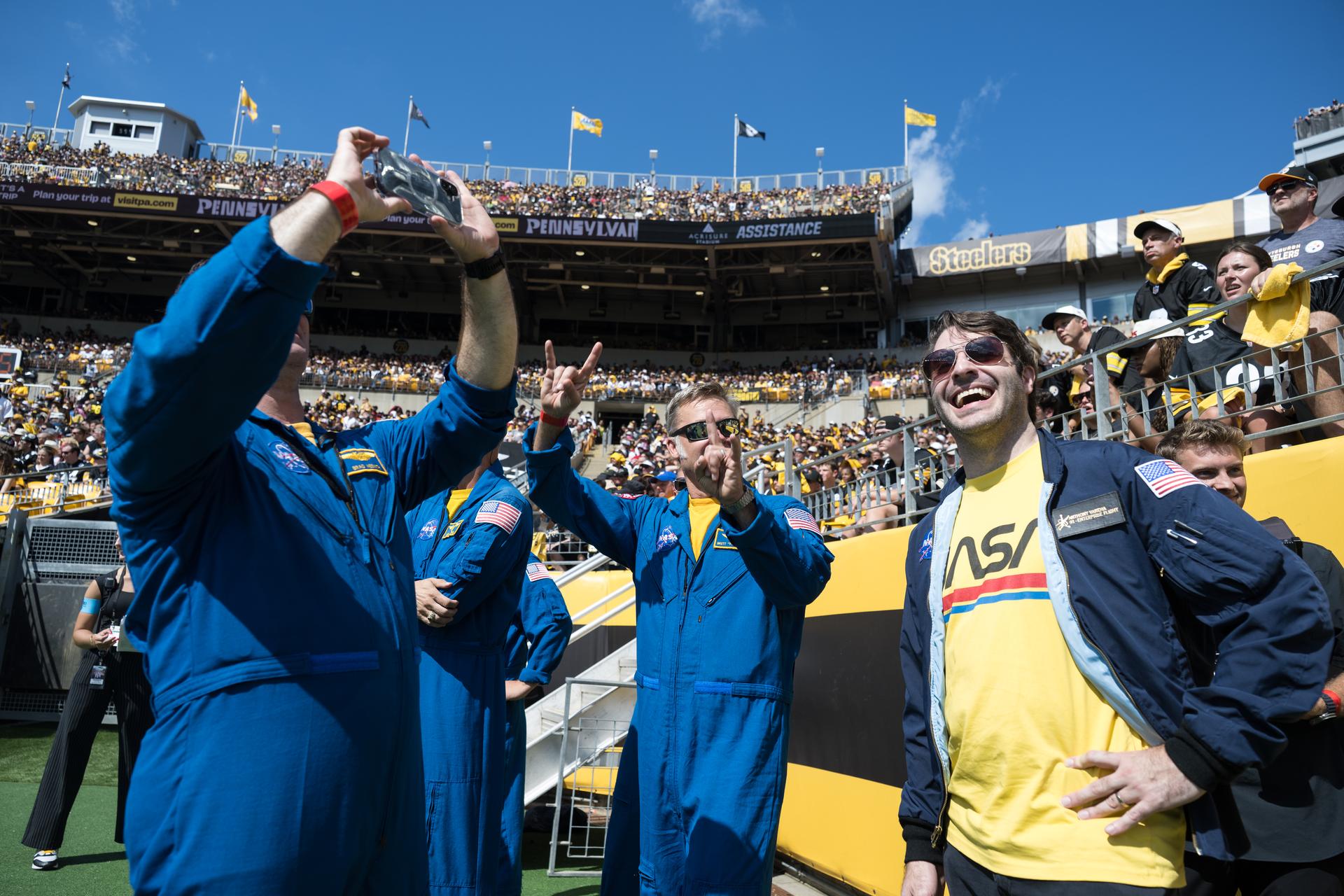
NASA Flight Director Anthony Vareha, right, waits on the field with the flyover team, pilots Brett Pugsley, Chris Condon, and co-pilot Geoff Palmer, as well as NASA Ground Liaison Brad Nesmith and Rufus Brennemen before they are featured on the Jumbotron at an NFL game between the Pittsburgh Steelers and the Atlanta Falcons at Acrisure Stadium, Sunday, Sept. 13, 2026, in Pittsburgh, Pennsylvania. NASA’s engagement at NFL games is part of the agency's Inspiration Tour, aimed at strengthening connections between NASA and its partners and showcasing innovation in air and space in the lead up to the MAX POWER aerospace technology expo and airshow at the agency's Kennedy Space Center in early November. Photo Credit: (NASA/Aubrey Gemignani)
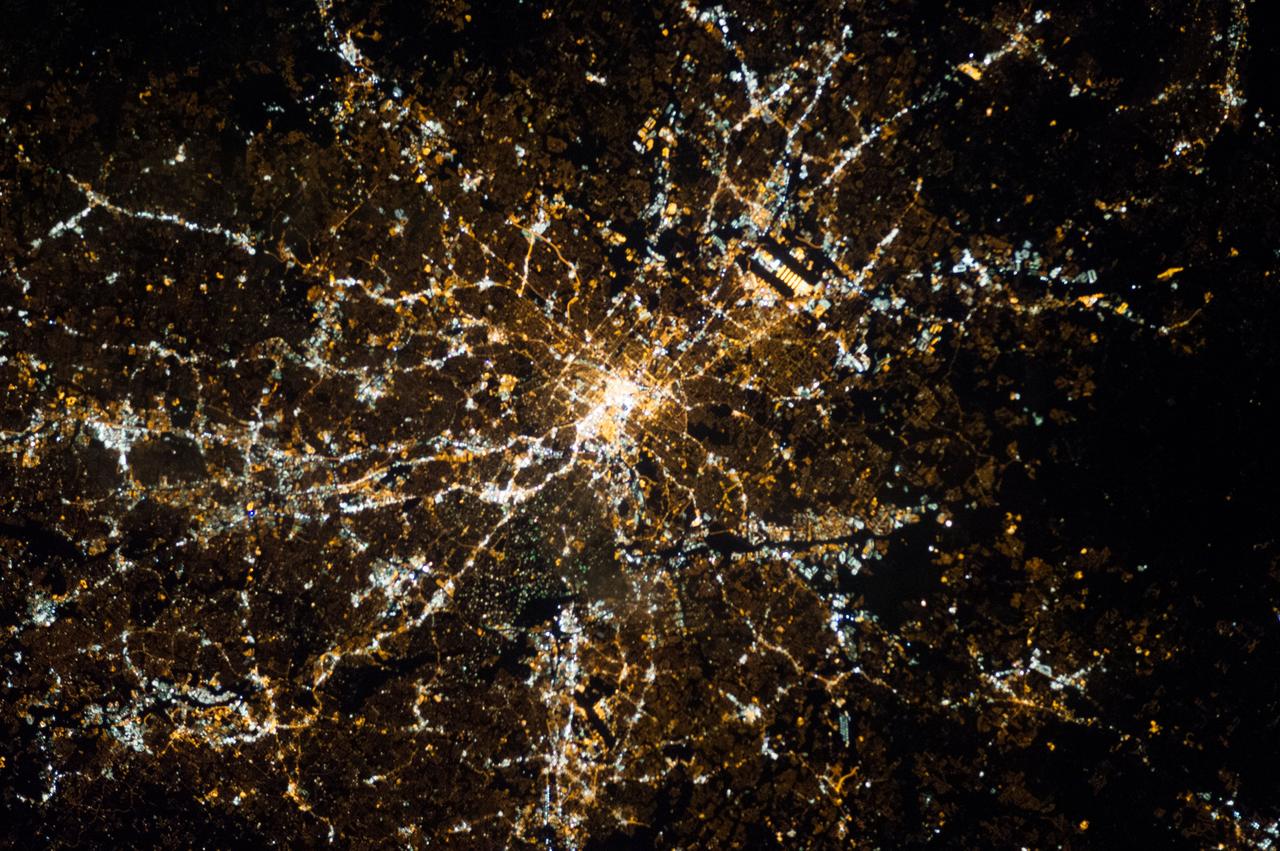
ISS034-E-032466 (20 Jan. 2013) -- One of the Expedition 34 crew members aboard the International Space Station, flying at an altitude of approximately 240 miles, photographed this vertical night view of the metropolitan area of Atlanta, Georgia.
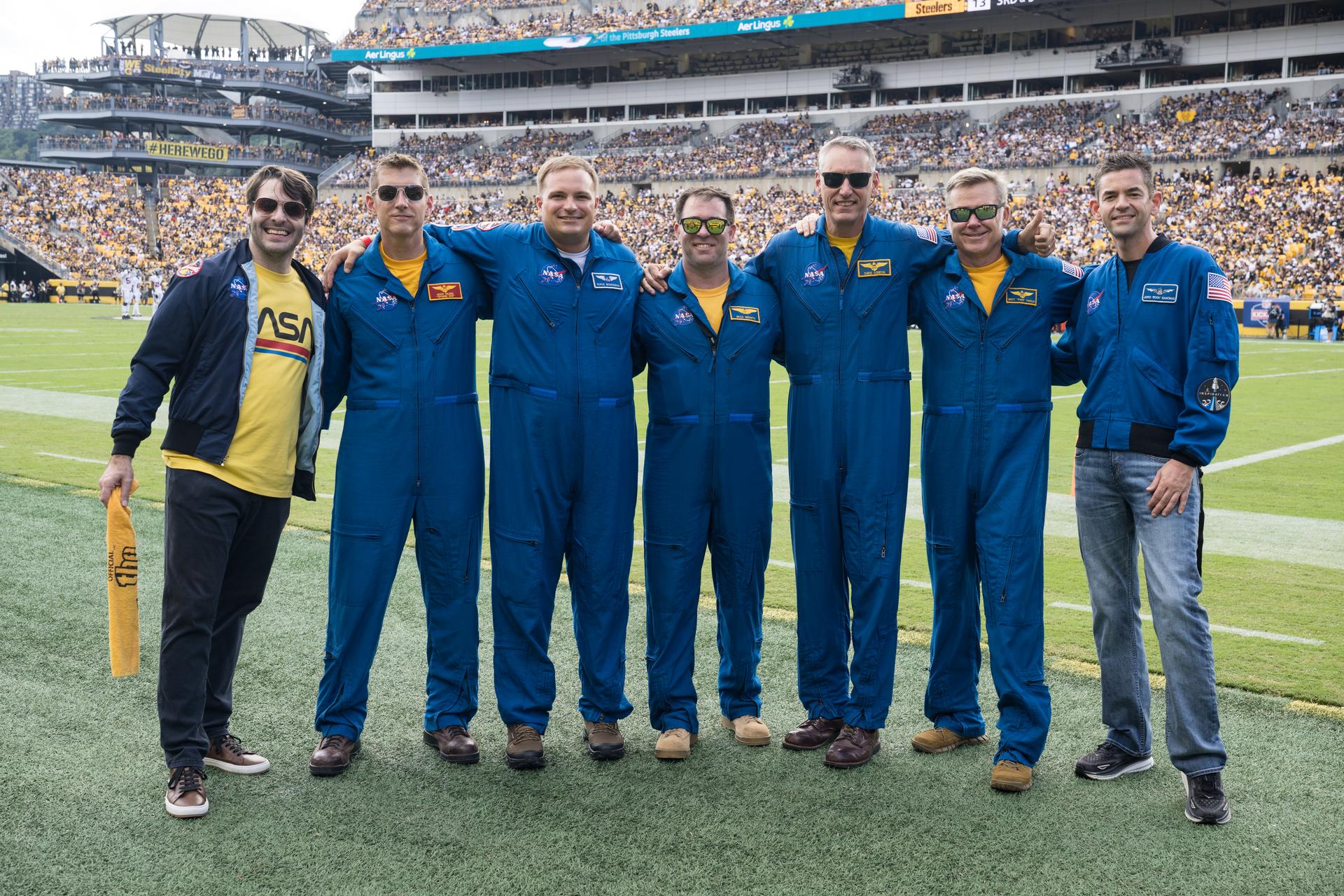
From left to right, Anthony Vareha, NASA Flight Director, Geoff Palmer, NASA Co-Pilot, Rufus Brennemen, NASA Ground Liaison, Brad Nesmith, NASA Ground Liaison, Chris Condon, NASA Wing Pilot, Brett Pugsley, NASA Lead Pilot, and NASA Administrator Jared Isaacman pose for a photo after they participated in a call back after Pugsley, Condon, and Palmer conducted a flyover at an NFL game between the Pittsburgh Steelers and the Atlanta Falcons at Acrisure Stadium, Sunday, Sept. 13, 2026, in Pittsburgh, Pennsylvania. NASA’s engagement at NFL games is part of the agency's Inspiration Tour, aimed at strengthening connections between NASA and its partners and showcasing innovation in air and space in the lead up to the MAX POWER aerospace technology expo and airshow at the agency's Kennedy Space Center in early November. Photo Credit: (NASA/Aubrey Gemignani)
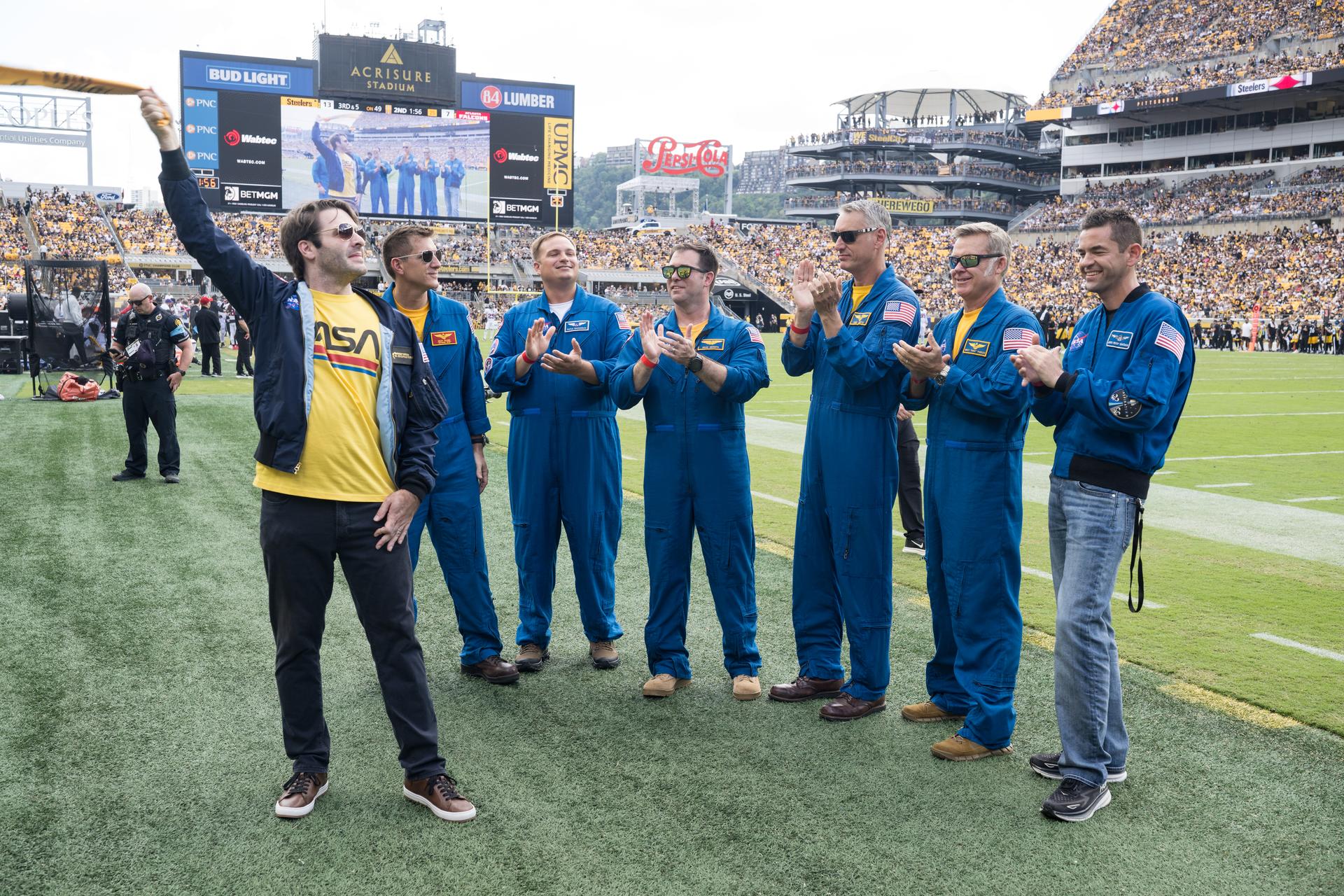
From left to right, Anthony Vareha, NASA Flight Director, Geoff Palmer, NASA Co-Pilot, Rufus Brennemen, NASA Ground Liaison, Brad Nesmith, NASA Ground Liaison, Chris Condon, NASA Wing Pilot, Brett Pugsley, NASA Lead Pilot, and NASA Administrator Jared Isaacman are seen on the Jumbotron as they participate in a call back after Pugsley, Condon, and Palmer conducted a flyover at an NFL game between the Pittsburgh Steelers and the Atlanta Falcons at Acrisure Stadium, Sunday, Sept. 13, 2026, in Pittsburgh, Pennsylvania. NASA’s engagement at NFL games is part of the agency's Inspiration Tour, aimed at strengthening connections between NASA and its partners and showcasing innovation in air and space in the lead up to the MAX POWER aerospace technology expo and airshow at the agency's Kennedy Space Center in early November. Photo Credit: (NASA/Aubrey Gemignani)
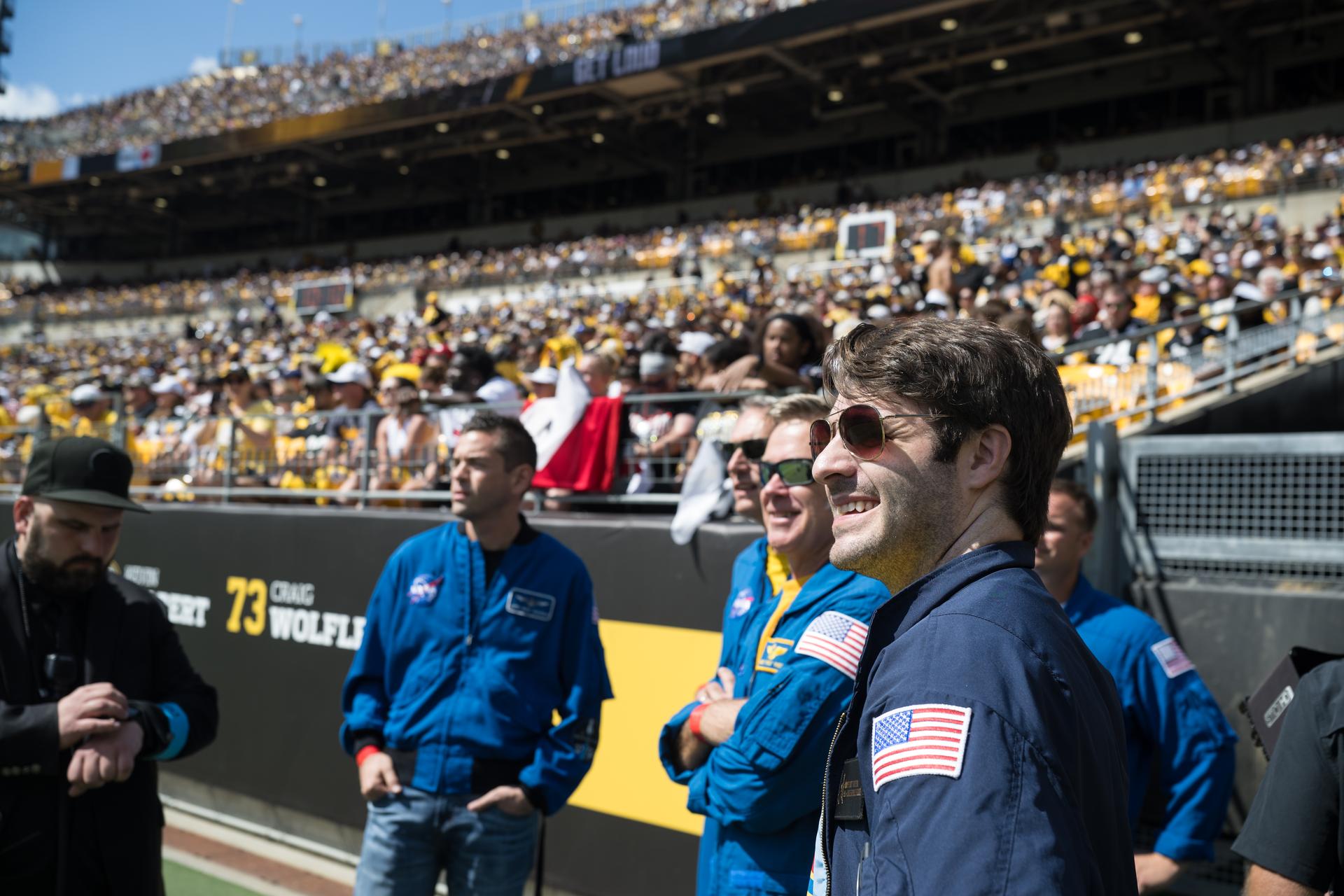
NASA Administrator Jared Isaacman, left, and NASA Flight Director Anthony Vareha, right, wait on the field with the flyover team, pilots Brett Pugsley, Chris Condon, and co-pilot Geoff Palmer, as well as NASA Ground Liaison Brad Nesmith and Rufus Brennemen, before they are featured on the Jumbotron at an NFL game between the Pittsburgh Steelers and the Atlanta Falcons at Acrisure Stadium, Sunday, Sept. 13, 2026, in Pittsburgh, Pennsylvania. NASA’s engagement at NFL games is part of the agency's Inspiration Tour, aimed at strengthening connections between NASA and its partners and showcasing innovation in air and space in the lead up to the MAX POWER aerospace technology expo and airshow at the agency's Kennedy Space Center in early November. Photo Credit: (NASA/Aubrey Gemignani)
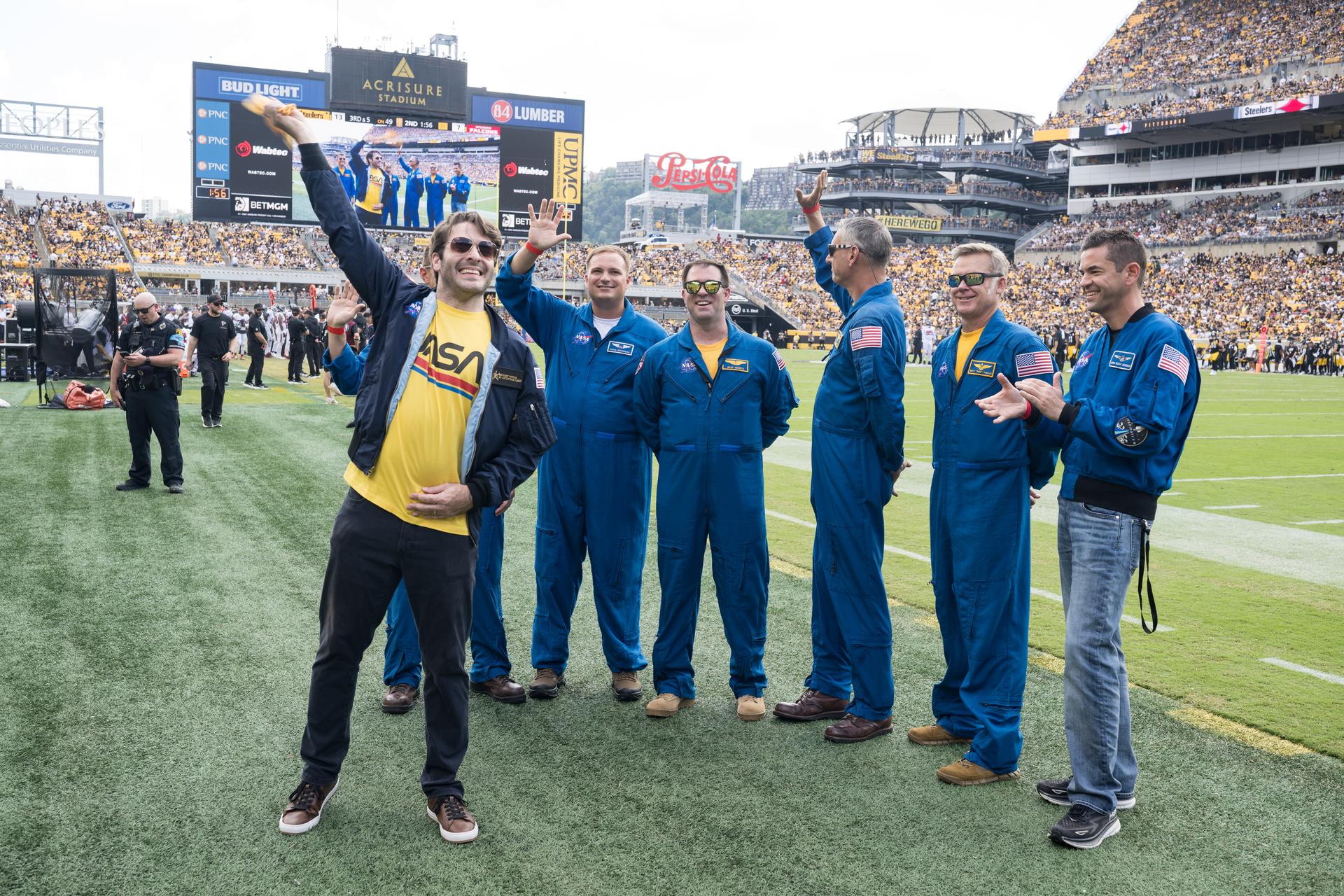
From left to right, Anthony Vareha, NASA Flight Director, Geoff Palmer, NASA Co-Pilot, Rufus Brennemen, NASA Ground Liaison, Brad Nesmith, NASA Ground Liaison, Chris Condon, NASA Wing Pilot, Brett Pugsley, NASA Lead Pilot, and NASA Administrator Jared Isaacman are seen on the Jumbotron as they participate in a call back after Pugsley, Condon, and Palmer conducted a flyover at an NFL game between the Pittsburgh Steelers and the Atlanta Falcons at Acrisure Stadium, Sunday, Sept. 13, 2026, in Pittsburgh, Pennsylvania. NASA’s engagement at NFL games is part of the agency's Inspiration Tour, aimed at strengthening connections between NASA and its partners and showcasing innovation in air and space in the lead up to the MAX POWER aerospace technology expo and airshow at the agency's Kennedy Space Center in early November. Photo Credit: (NASA/Aubrey Gemignani)
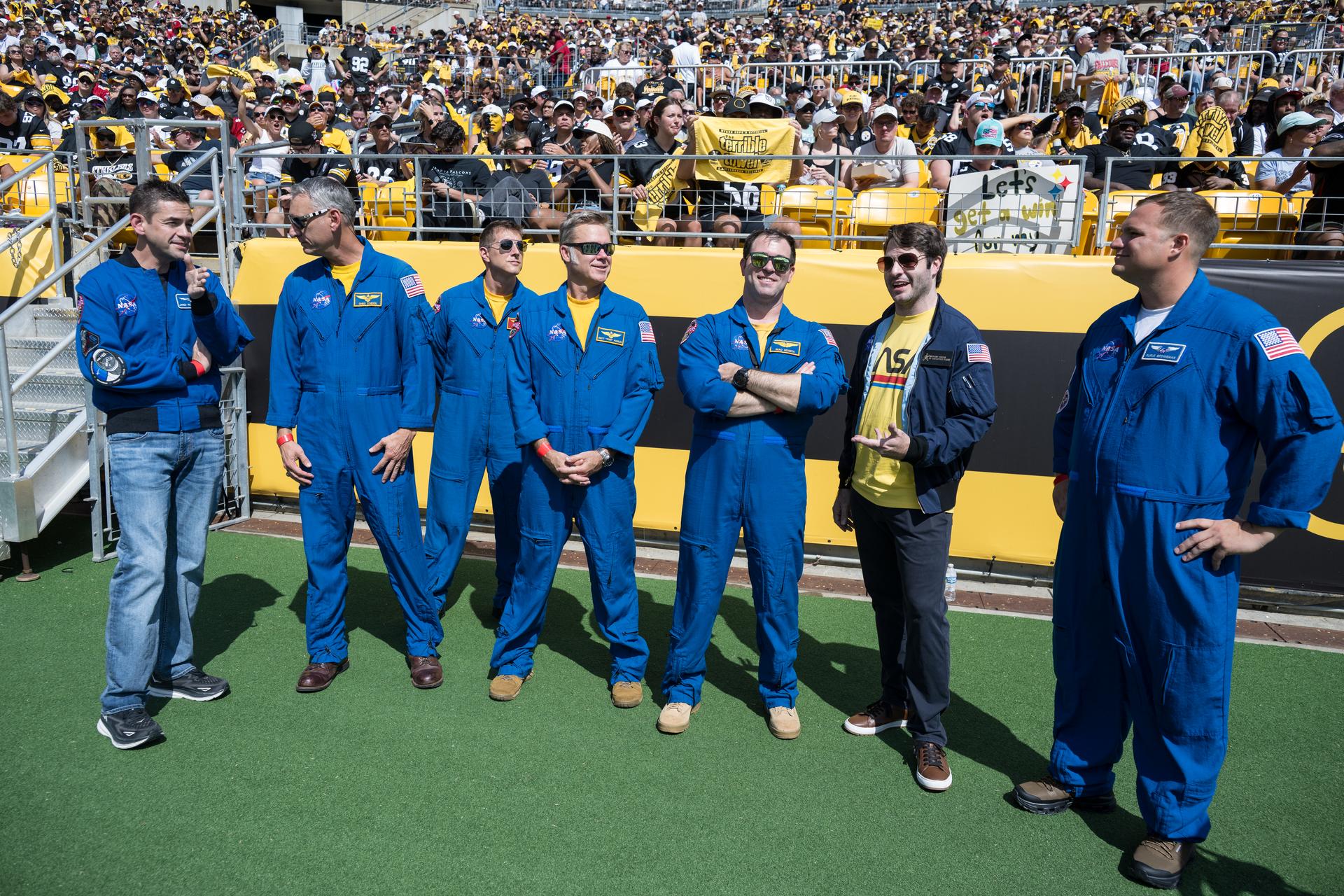
From left to right, Anthony Vareha, NASA Flight Director, Geoff Palmer (behind Vareha), NASA Co-Pilot, Rufus Brennemen, NASA Ground Liaison, Brad Nesmith, NASA Ground Liaison, Chris Condon, NASA Wing Pilot, Brett Pugsley, NASA Lead Pilot, and NASA Administrator Jared Isaacman are seen on the Jumbotron as they participate in a call back after Pugsley, Condon, and Palmer conducted a flyover at an NFL game between the Pittsburgh Steelers and the Atlanta Falcons at Acrisure Stadium, Sunday, Sept. 13, 2026, in Pittsburgh, Pennsylvania. NASA’s engagement at NFL games is part of the agency's Inspiration Tour, aimed at strengthening connections between NASA and its partners and showcasing innovation in air and space in the lead up to the MAX POWER aerospace technology expo and airshow at the agency's Kennedy Space Center in early November. Photo Credit: (NASA/Aubrey Gemignani)
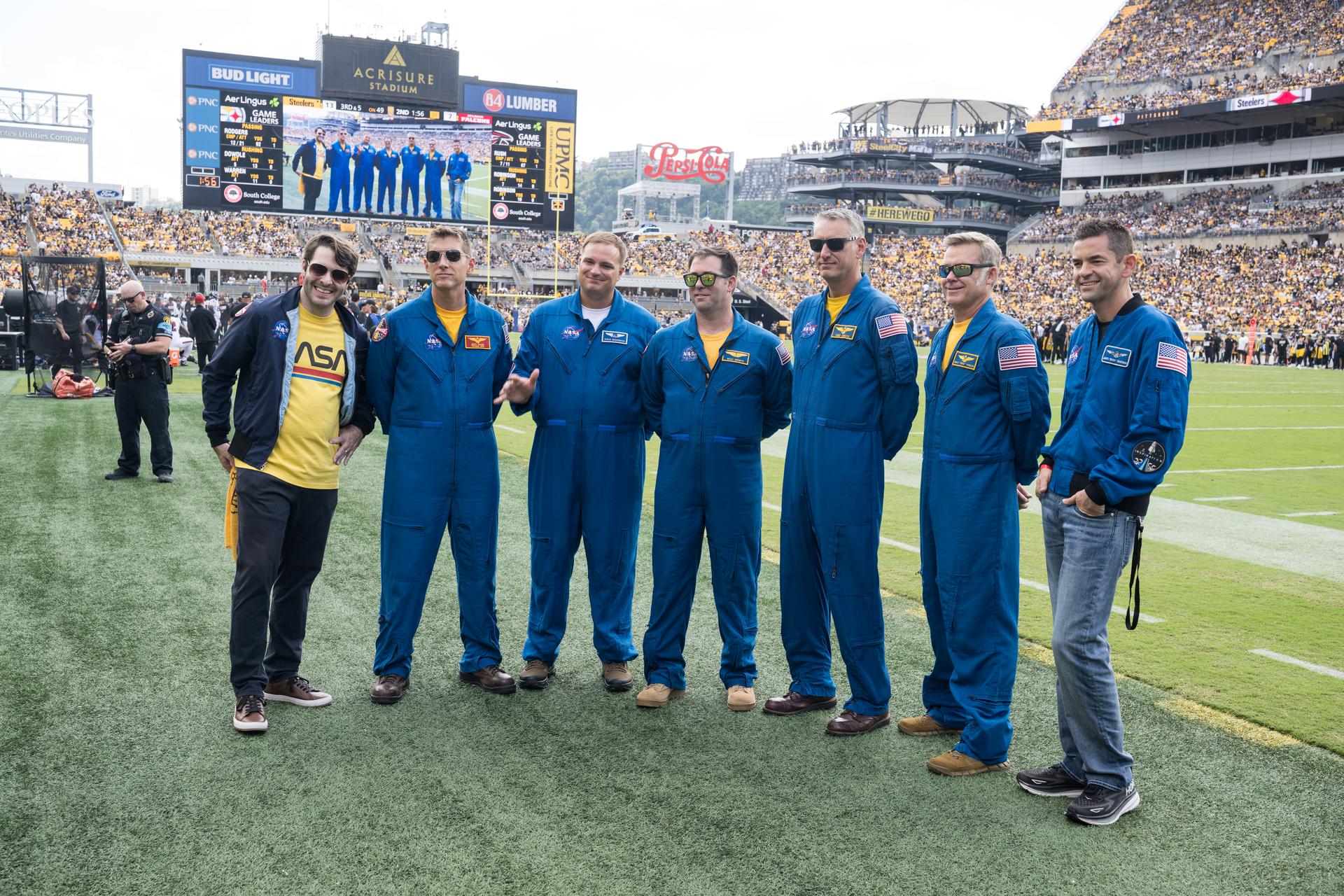
From left to right, NASA Administrator Jared Isaacman, Geoff Palmer, NASA Co-Pilot, Chris Condon, NASA Wing Pilot, Brett Pugsley, NASA Lead Pilot, Brad Nesmith, NASA Ground Liaison, Anthony Vareha, NASA Flight Director, and Rufus Brennemen, NASA Ground Liaison pose for a photo before they participate in a call back on the sidelines after conducting a flyover at an NFL game between the Pittsburgh Steelers and the Atlanta Falcons at Acrisure Stadium, Sunday, Sept. 13, 2026, in Pittsburgh, Pennsylvania. NASA’s engagement at NFL games is part of the agency's Inspiration Tour, aimed at strengthening connections between NASA and its partners and showcasing innovation in air and space in the lead up to the MAX POWER aerospace technology expo and airshow at the agency's Kennedy Space Center in early November. Photo Credit: (NASA/Aubrey Gemignani)
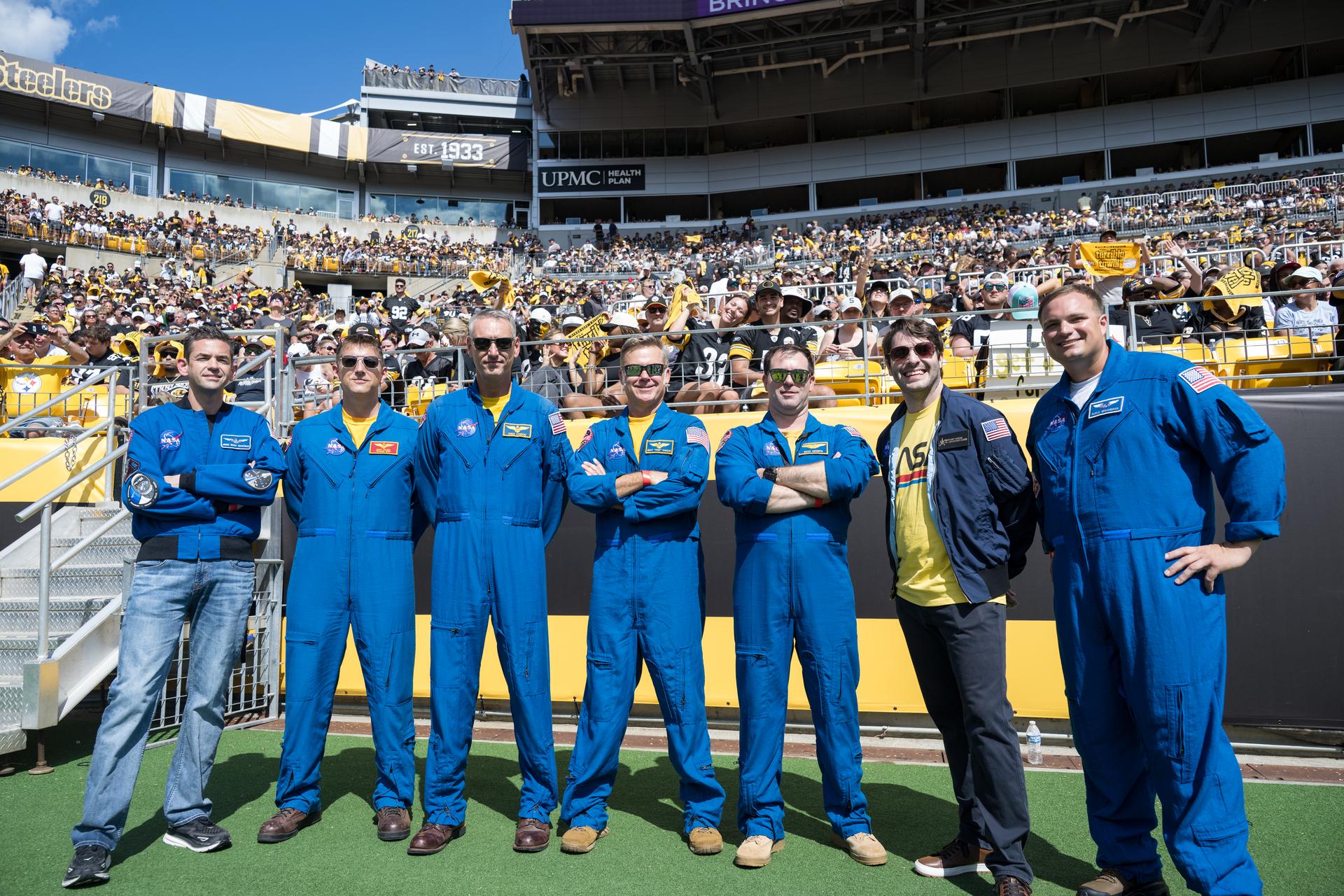
From left to right, NASA Administrator Jared Isaacman, Geoff Palmer, NASA Co-Pilot, Chris Condon, NASA Wing Pilot, Brett Pugsley, NASA Lead Pilot, Brad Nesmith, NASA Ground Liaison, Anthony Vareha, NASA Flight Director, and Rufus Brennemen, NASA Ground Liaison pose for a photo before they participate in a call back on the sidelines after conducting a flyover at an NFL game between the Pittsburgh Steelers and the Atlanta Falcons at Acrisure Stadium, Sunday, Sept. 13, 2026, in Pittsburgh, Pennsylvania. NASA’s engagement at NFL games is part of the agency's Inspiration Tour, aimed at strengthening connections between NASA and its partners and showcasing innovation in air and space in the lead up to the MAX POWER aerospace technology expo and airshow at the agency's Kennedy Space Center in early November. Photo Credit: (NASA/Aubrey Gemignani)
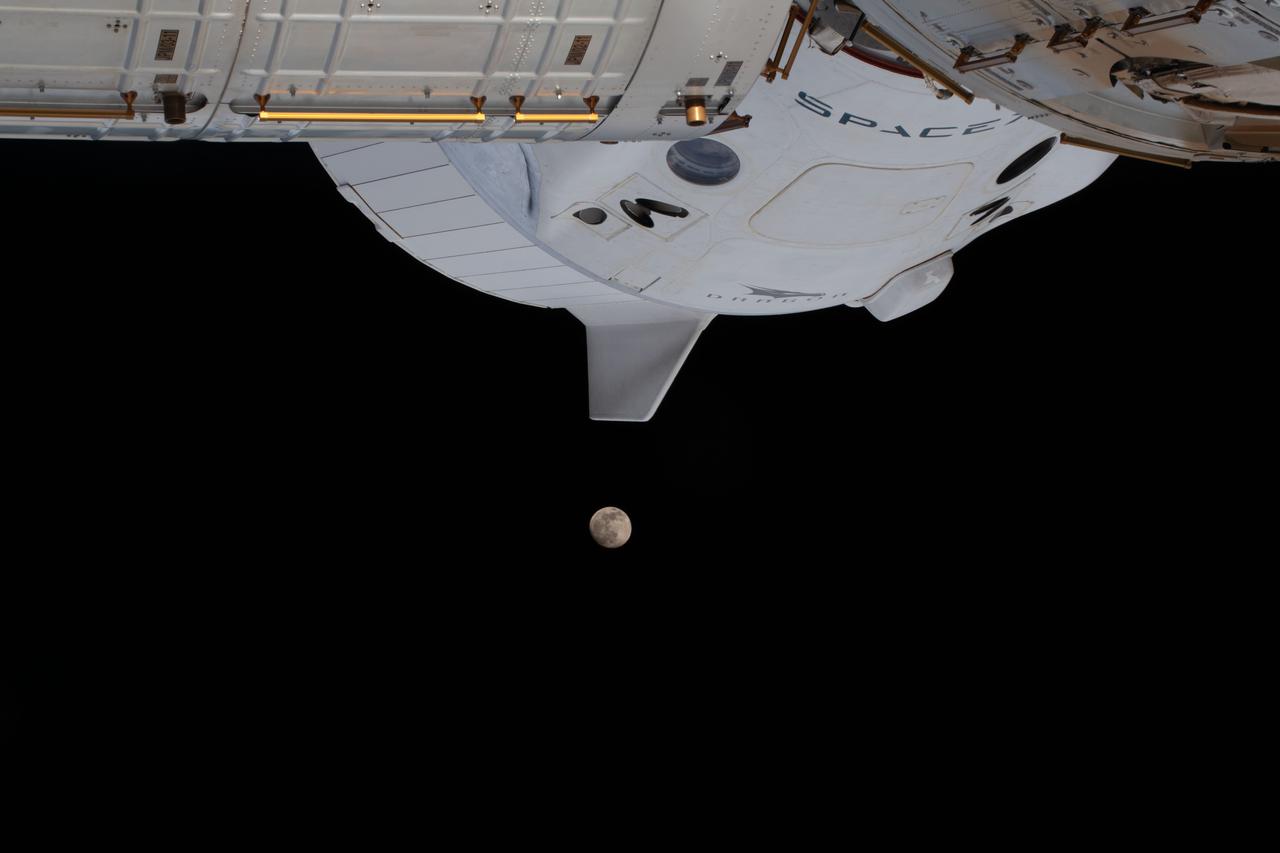
iss064e026716 (Jan. 26, 2021) --- The waxing gibbous moon is pictured below a portion of the SpaceX Crew Dragon spacecraft docked to the Harmony module's forward international docking adapter. The International Space Station was orbiting 263 miles above Atlanta, Georgia, when this photograph was taken.
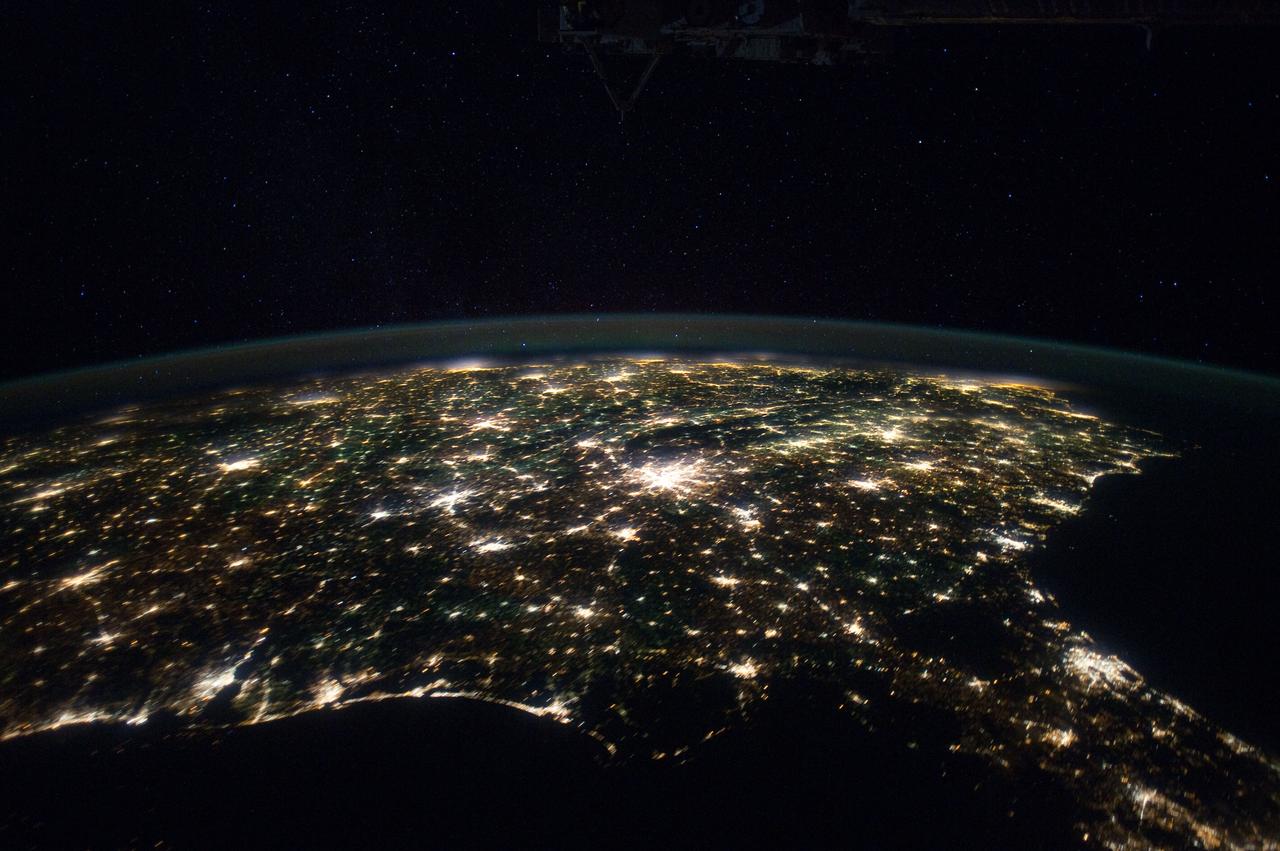
ISS030-E-055569 (29 Jan. 2012) --- Southeastern USA at night is featured in this image photographed by an Expedition 30 crew member on the International Space Station. The brightly lit metropolitan areas of Atlanta, GA (center) and Jacksonville, FL (lower right) appear largest in the image with numerous other urban areas forming an interconnected network of light across the region. A large dark region to the northwest of Jacksonville, FL is the Okefenokee National Wildlife Refuge; likewise the ridges of the Appalachian Mountains form dark swaths to the north of Atlanta, GA and west of Charlotte, NC (center). The faint gold and green line of airglow—caused by ultraviolet radiation exciting the gas molecules in the upper atmosphere—parallels the horizon (or Earth limb).

KENNEDY SPACE CENTER, FLA. - At Ronald E. McNair High School in Atlanta, a NASA Explorer School, the school band performs for KSC Deputy Director Dr. Woodrow Whitlow Jr. and others, who are visiting to the school to share the vision for space exploration with the next generation of explorers. Whitlow is talking with students about our destiny as explorers, NASA’s stepping stone approach to exploring Earth, the Moon, Mars and beyond, how space impacts our lives, and how people and machines rely on each other in space.
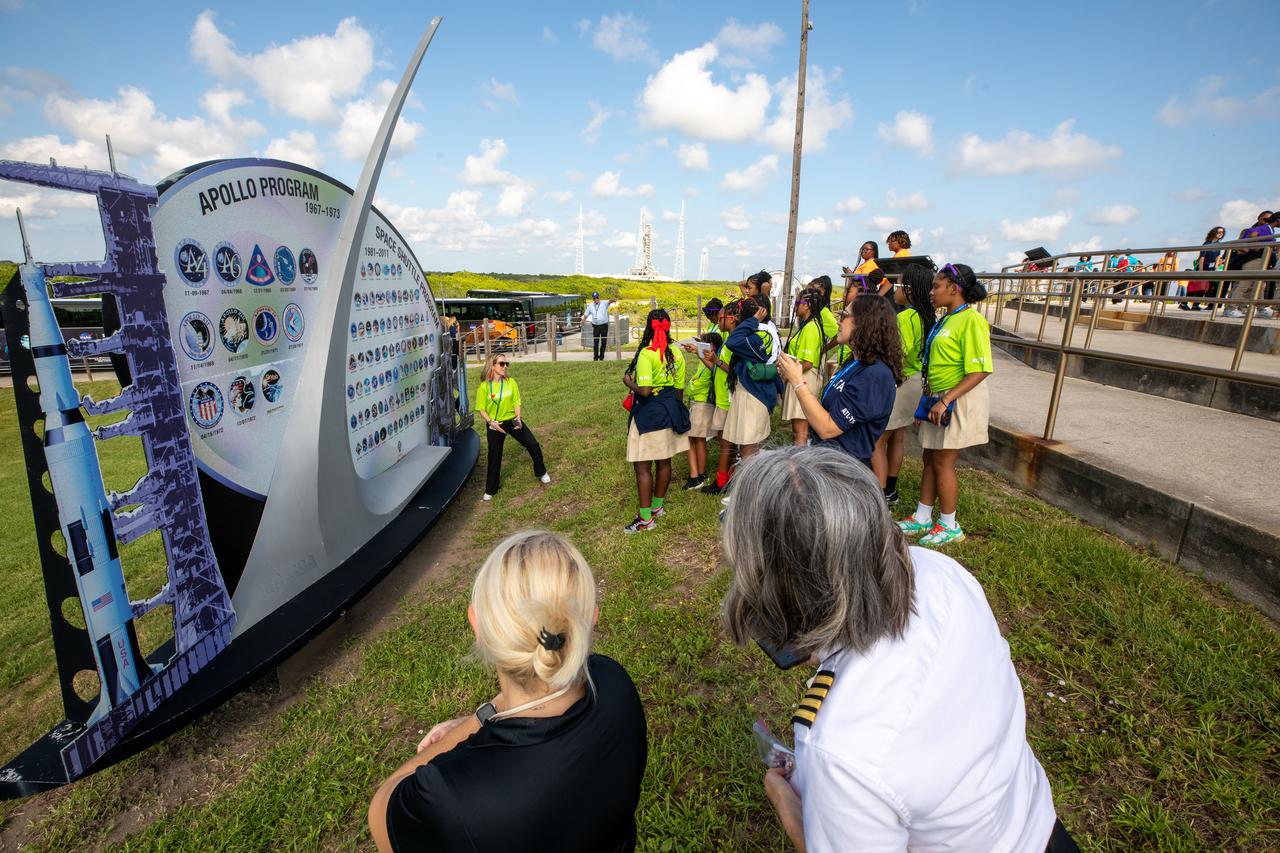
Young women, ages 11 to 18, visited launch pads 39A and 39B on Friday, Sept. 20, 2024, at the agency’s Kennedy Space Center in Florida. Part of the Delta Air Lines’ Women Inspiring Our Next Generation (WING) flight, the young women from the Atlanta, Georgia area, learned about the various women-led STEM (science, technology, engineering, and math) careers available at the Florida spaceport.
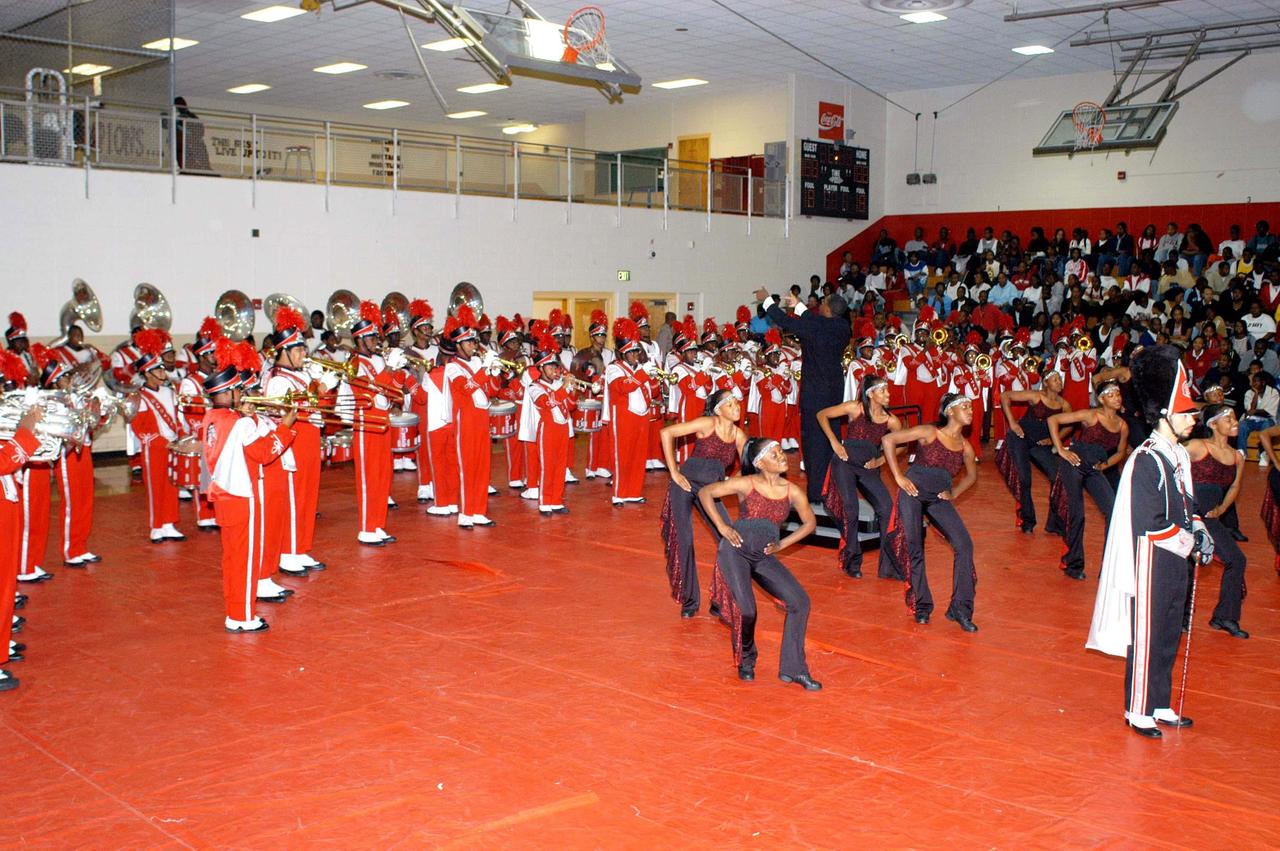
KENNEDY SPACE CENTER, FLA. - At Ronald E. McNair High School in Atlanta, a NASA Explorer School, the school band and dancers perform for KSC Deputy Director Dr. Woodrow Whitlow Jr. and others, who are visiting to the school to share the vision for space exploration with the next generation of explorers. Whitlow is talking with students about our destiny as explorers, NASA’s stepping stone approach to exploring Earth, the Moon, Mars and beyond, how space impacts our lives, and how people and machines rely on each other in space.
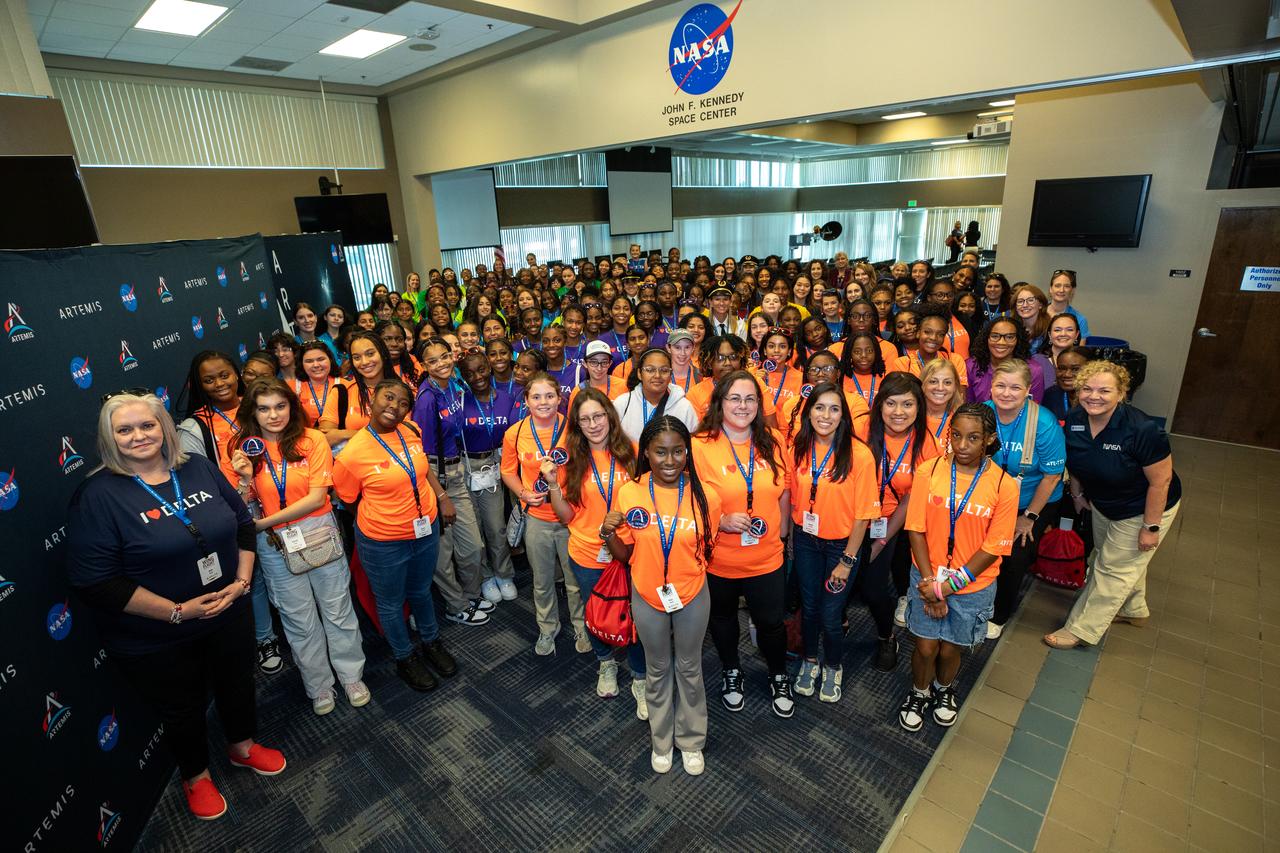
Young women, ages 11 to 18, from the Atlanta, Georgia area, with interests in STEM (science, technology, engineering, and math), pose for a photo on Friday, Sept. 20, 2024, at NASA’s Kennedy Space Center in Florida. NASA Kennedy hosted the Delta Air Lines’ Women Inspiring Our Next Generation (WING) flight to showcase various women-led STEM careers available at the Florida spaceport.
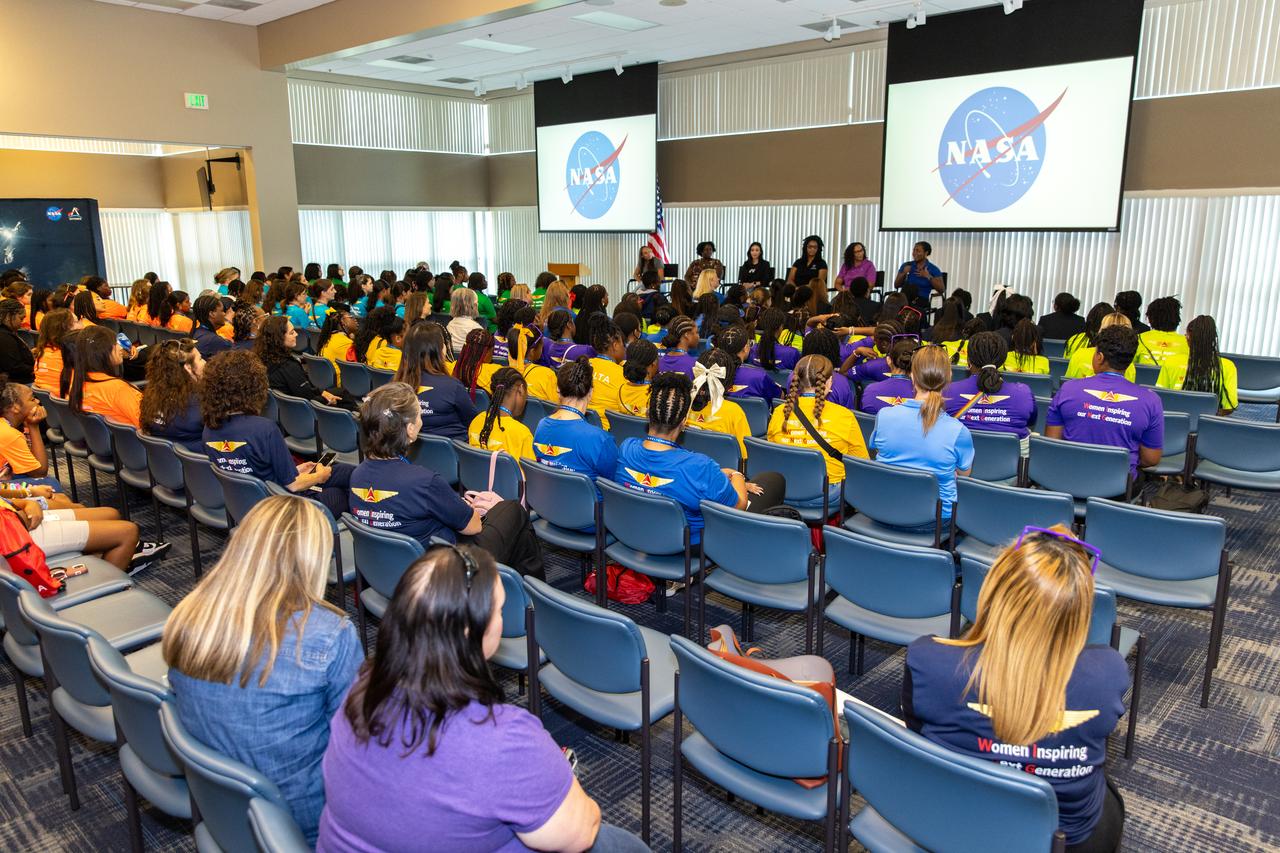
Young women, ages 11 to 18, from the Atlanta, Georgia area, with interests in STEM (science, technology, engineering, and math), pose for a photo on Friday, Sept. 20, 2024, at NASA’s Kennedy Space Center in Florida. NASA Kennedy hosted the Delta Air Lines’ Women Inspiring Our Next Generation (WING) flight to showcase various women-led STEM careers available at the Florida spaceport.
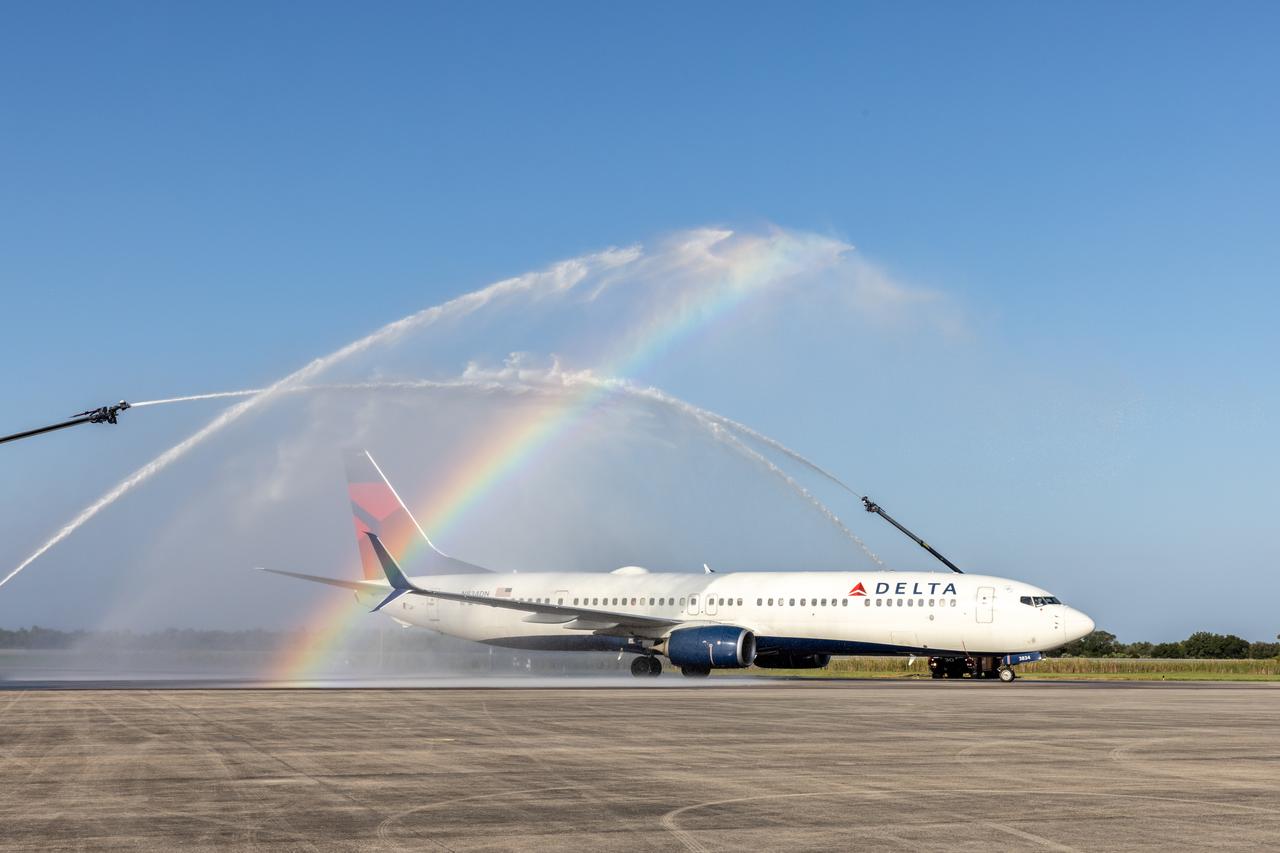
A Delta plane, carrying an all-female crew and 130 young women ages 11 to 18, received a “water salute” upon arrival on Friday, Sept. 20, 2024, at the Launch and Landing Facility at NASA’s Kennedy Space Center in Florida. Part of the Delta Air Lines’ Women Inspiring Our Next Generation (WING) flight, the young women from the Atlanta, Georgia area, learned about the various women-led STEM (science, technology, engineering, and math) careers available at the Florida spaceport.

KENNEDY SPACE CENTER, FLA. - Pink T-shirt-clad friends and family cheer for the Space Coast FIRST Robotics Team, known as the Pink Team, at the 2005 FIRST Robotics Regional Competition held at the University of Central Florida March 10-12. The NASA-sponsored Roccobots took first place in the competition as part of a three-team alliance and advances to the Championship in Atlanta in April. The Pink Team comprises students from Rockledge High School and Cocoa Beach Junior_Senior High School.
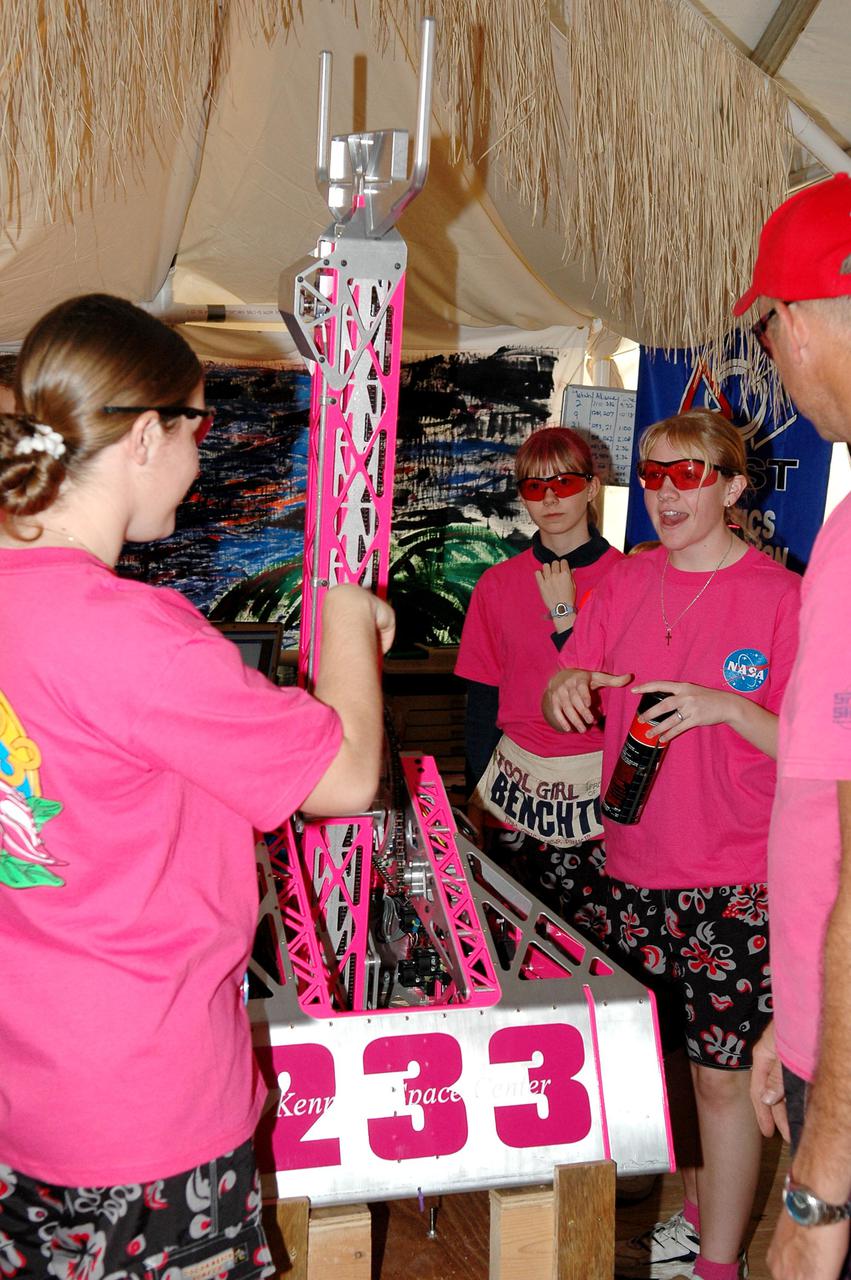
KENNEDY SPACE CENTER, FLA. - Members of the Space Coast FIRST Robotics Team, known as the Pink Team, display their robot, Roccobot, at the 2005 FIRST Robotics Regional Competition held at the University of Central Florida March 10-12. The NASA-sponsored Pink Team took first place in the competition as part of a three-team alliance and advances to the Championship in Atlanta in April. The Pink Team comprises students from Rockledge High School and Cocoa Beach Junior_Senior High School.
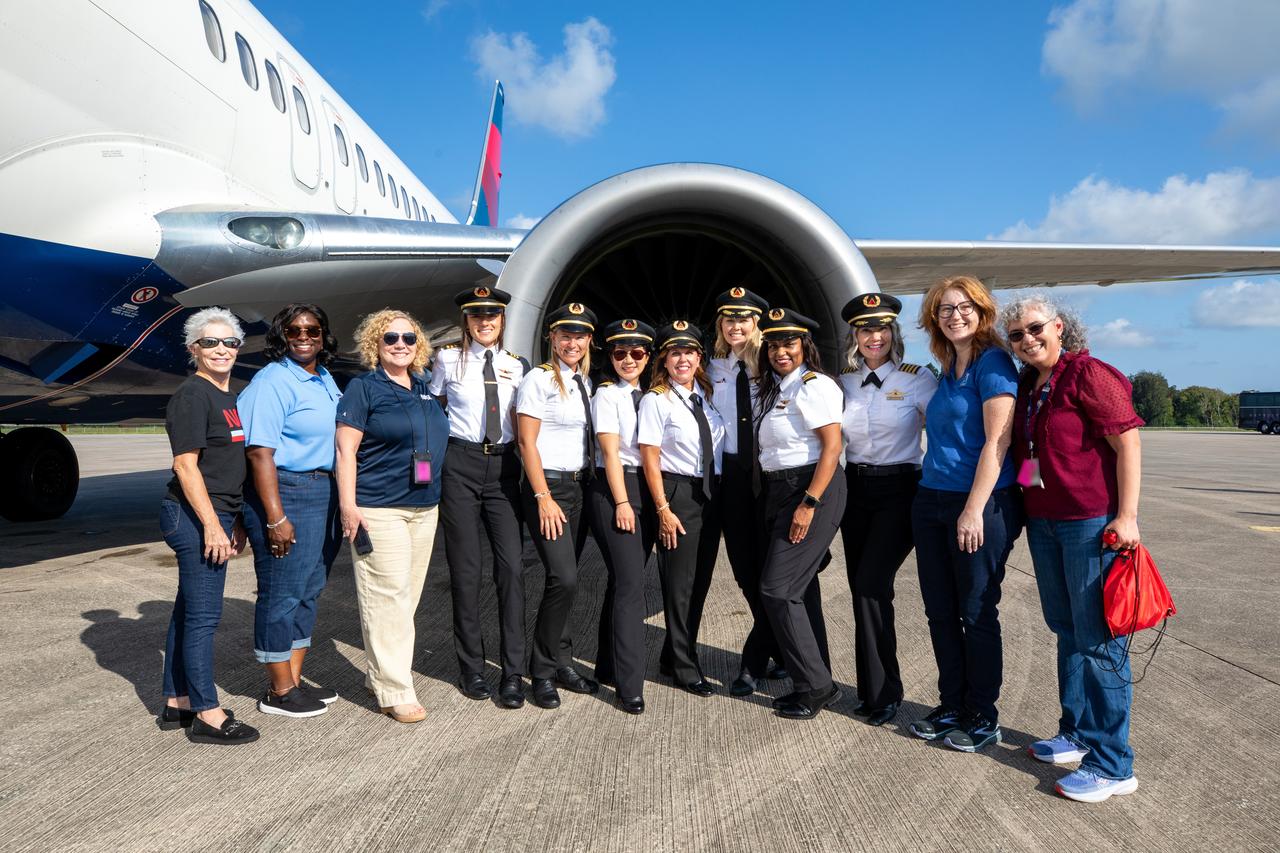
Women with leadership positions at NASA’s Kennedy Space Center pose with members of the all-female crew for Delta Air Lines’ Women Inspiring Our Next Generation (WING) flight after the crew touched down on Friday, Sept. 20, 2024, at the Launch and Landing Facility at the Florida spaceport. The flight brought girls from Atlanta, Georgia, ranging in age from 11 to 18, to view center facilities and hear a panel of women discuss their careers with NASA and Delta Air Lines.
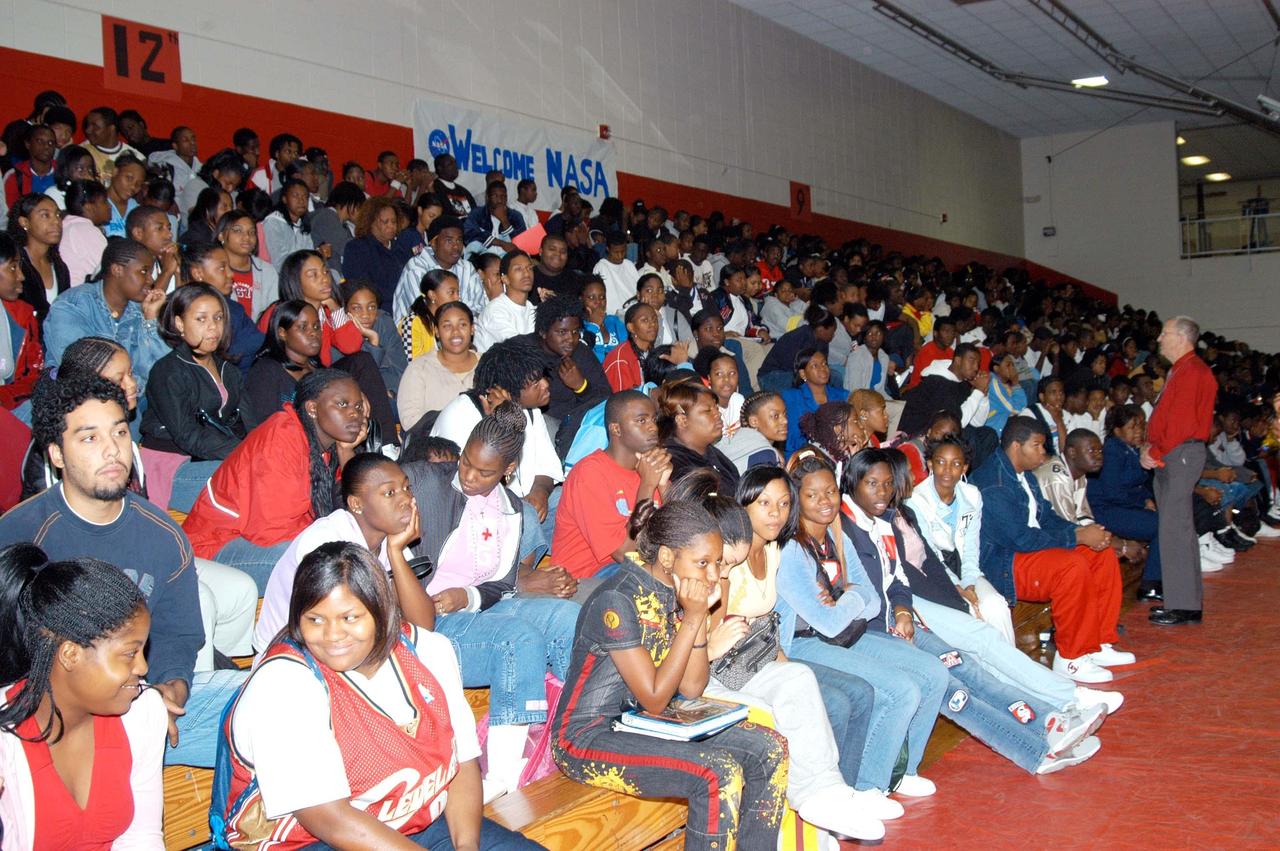
KENNEDY SPACE CENTER, FLA. - Students at Ronald E. McNair High School in Atlanta, a NASA Explorer School, wait for the presentation by KSC Deputy Director Dr. Woodrow Whitlow Jr., who is visiting to the school to share the vision for space exploration with the next generation of explorers. Whitlow talked with students about our destiny as explorers, NASA’s stepping stone approach to exploring Earth, the Moon, Mars and beyond, how space impacts our lives, and how people and machines rely on each other in space.
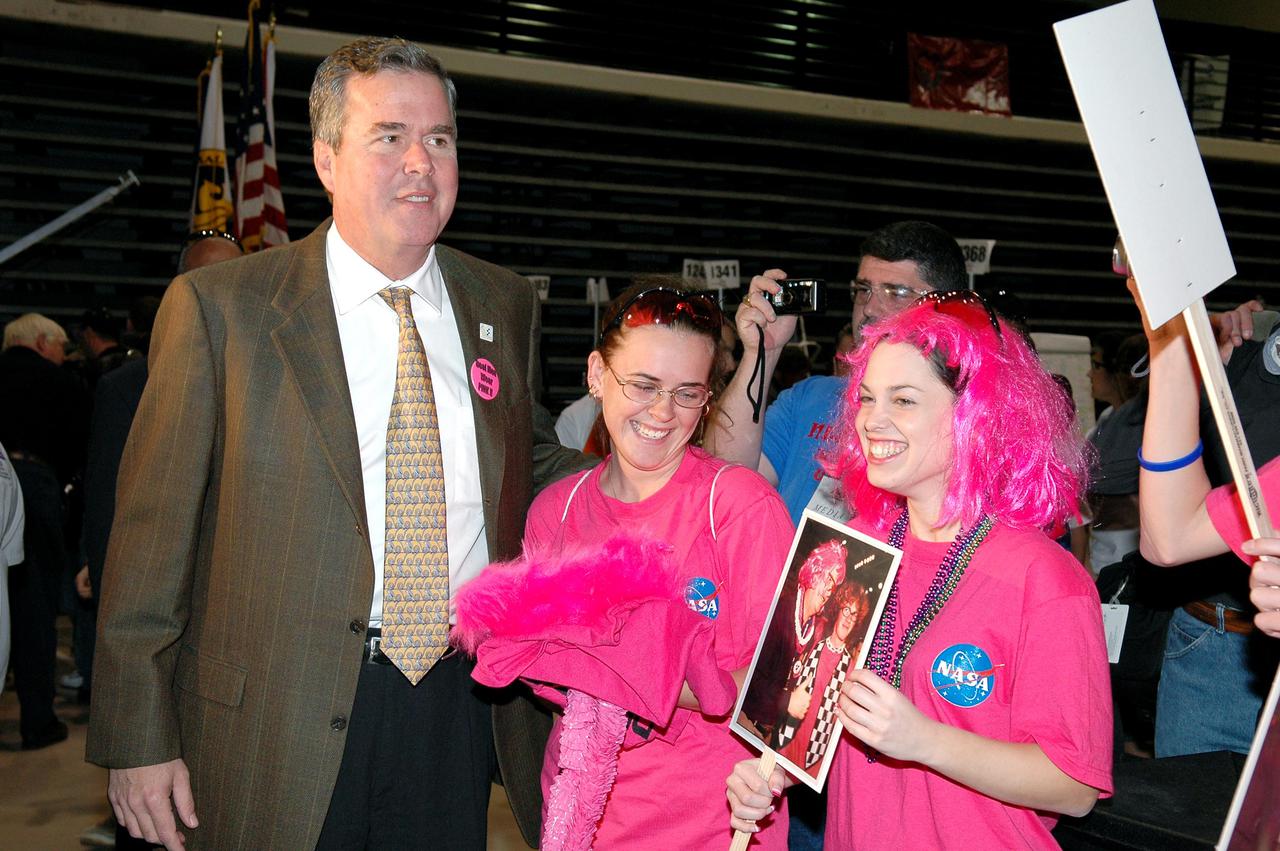
KENNEDY SPACE CENTER, FLA. - At the 2005 FIRST Robotics Regional Competition held at the University of Central Florida March 10-12, Florida Gov. Jeb Bush meets members of the Space Coast FIRST Robotics Team, known as the Pink Team. The NASA-sponsored Roccobots took first place in the competition as part of a three-team alliance and advances to the Championship in Atlanta in April. The Pink Team comprises students from Rockledge High School and Cocoa Beach Junior_Senior High School.
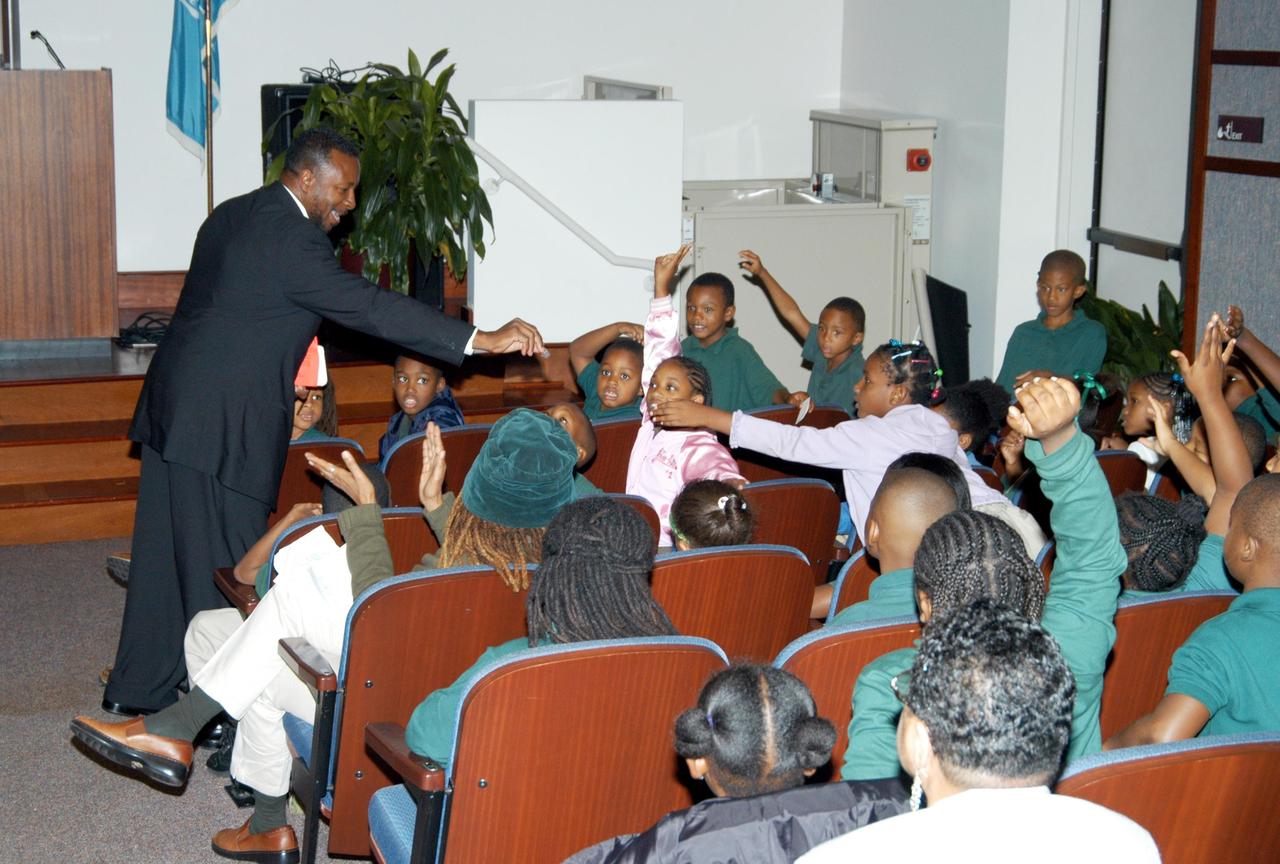
KENNEDY SPACE CENTER, FLA. - At University Community Academy in Atlanta, a NASA Explorer School, KSC Deputy Director Dr. Woodrow Whitlow Jr. interacts with students during his presentation. Dr. Whitlow was visiting the school to share the vision for space exploration with the next generation of explorers. Whitlow talked with students about our destiny as explorers, NASA’s stepping stone approach to exploring Earth, the Moon, Mars and beyond, how space impacts our lives, and how people and machines rely on each other in space.
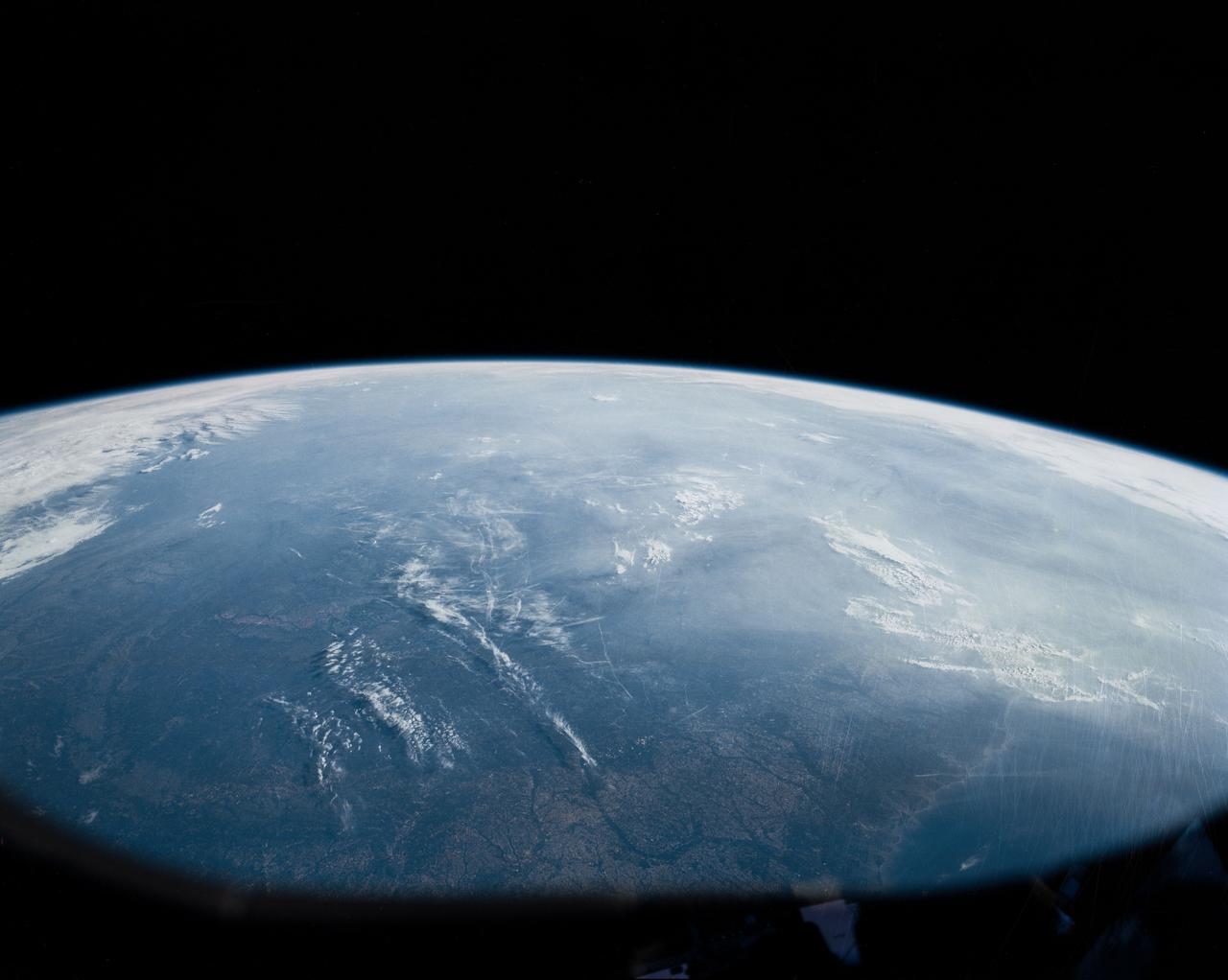
In this oblique view of the Georgia and South Carolina coast, the southern most Appalachians (32.0N, 83.0W) dominate the foreground. Contrails criss cross over Atlanta, a major airline hub. The coastal plain which wraps around the southern Appalachians, is well delineated. Faintly visible under the haze toward Earth's limb are the Great lakes (Lake Michigan near center), the folded belts of the central Appalachians and Long Island, New York.

KENNEDY SPACE CENTER, FLA. - Astronaut Rick Linnehan talks with a student at Ralph Bunche Middle School, a NASA Explorer School, in Atlanta, Ga. Linnehan joined Center Director Jim Kennedy at the school to share America’s new vision for space exploration with the next generation of explorers. The purpose of the school visit is to talk with students about our destiny as explorers, NASA’s stepping stone approach to exploring Earth, the Moon, Mars and beyond, how space impacts our lives, and how people and machines rely on each other in space.
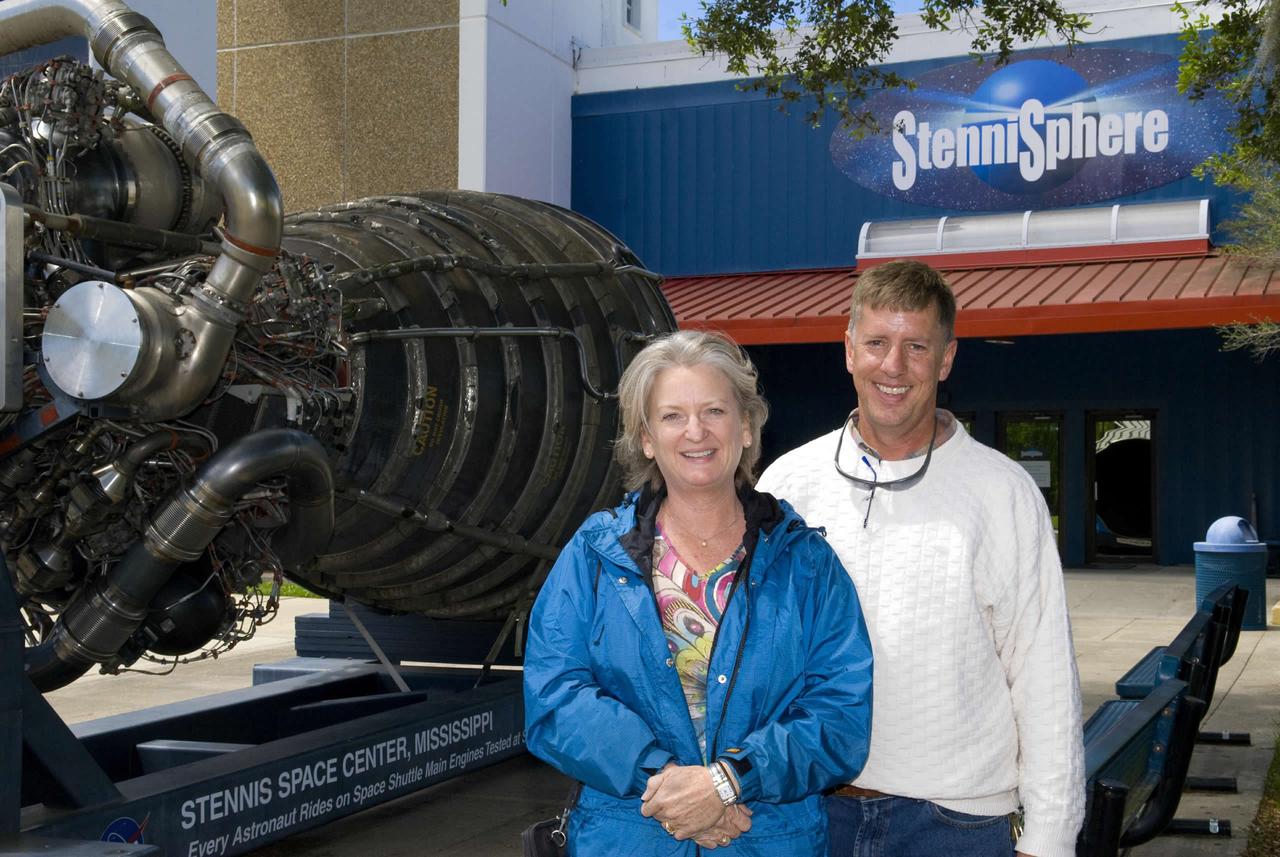
Jane Kenna of Atlanta, granddaughter of the late Sen. John C. Stennis, visits StenniSphere, the visitor center at NASA's John C. Stennis Space Center. Kenna and her husband, John, visited Stennis on April 6, her first trip to the rocket engine testing facility since the 1988 ceremony to rename the site in honor of her grandfather.
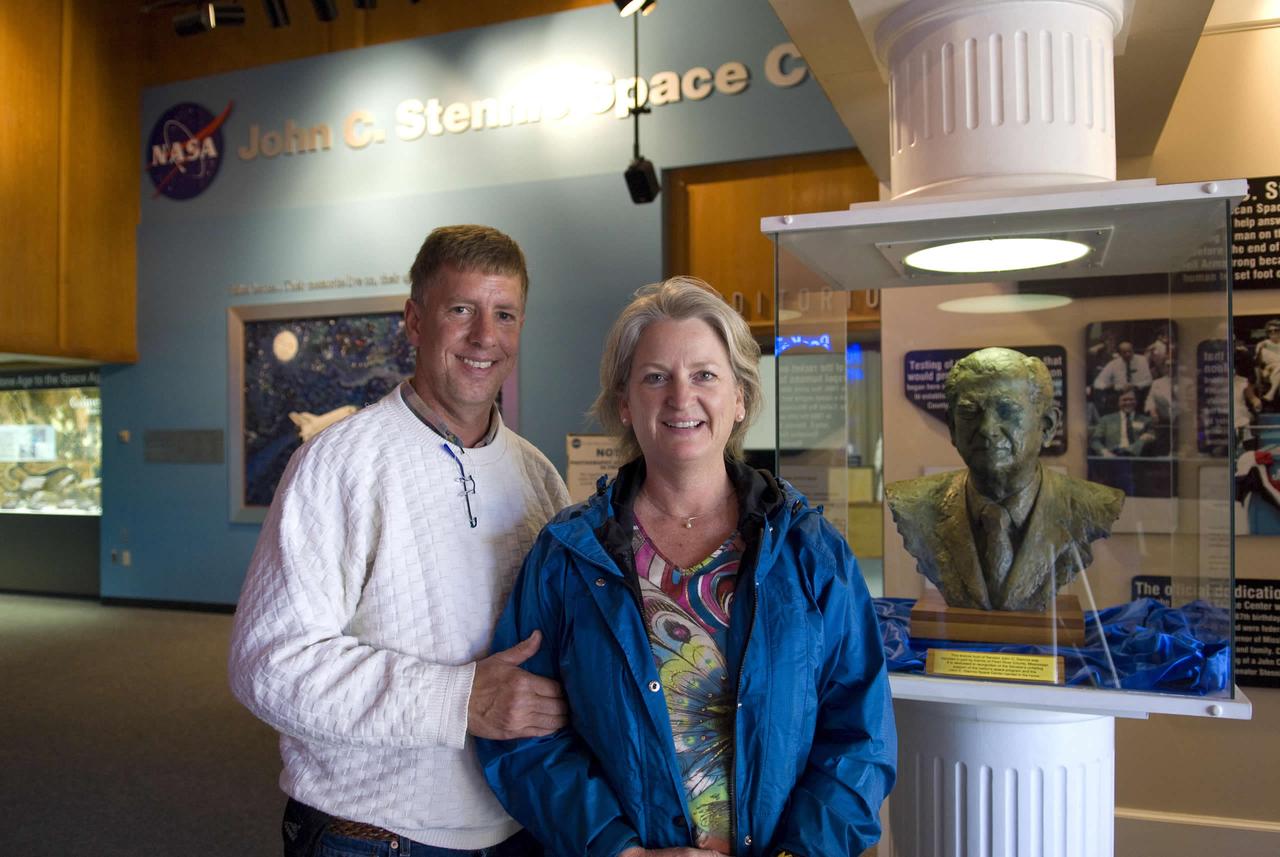
Jane Kenna of Atlanta, granddaughter of the late Sen. John C. Stennis, stands with her husband, John, near a bust of her grandfather displayed in StenniSphere, the visitor center at NASA's John C. Stennis Space Center. Kenna visited Stennis on April 6, her first trip to the rocket engine testing facility since the 1988 ceremony to rename the site in honor of Stennis.
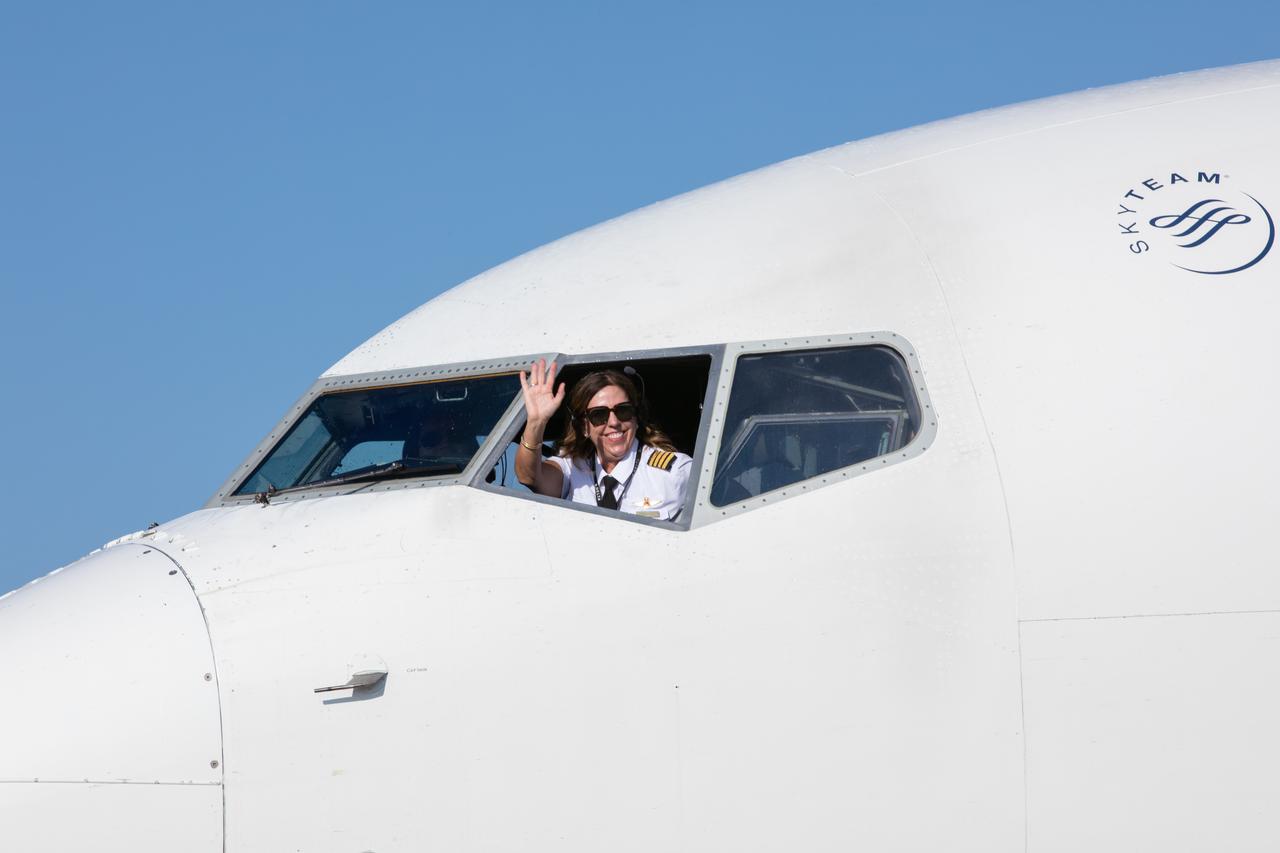
Part of the all-female crew for Delta Air Lines’ Women Inspiring Our Next Generation (WING) flight waves to a crowd on Friday, Sept. 20, 2024, after touching down at the Launch and Landing Facility at NASA’s Kennedy Space Center in Florida. The flight brought young ladies from Atlanta, Georgia, ranging in age from 11 to 18, to learn about the various women-led STEM (science, technology, engineering, and math) careers available at the Florida spaceport.
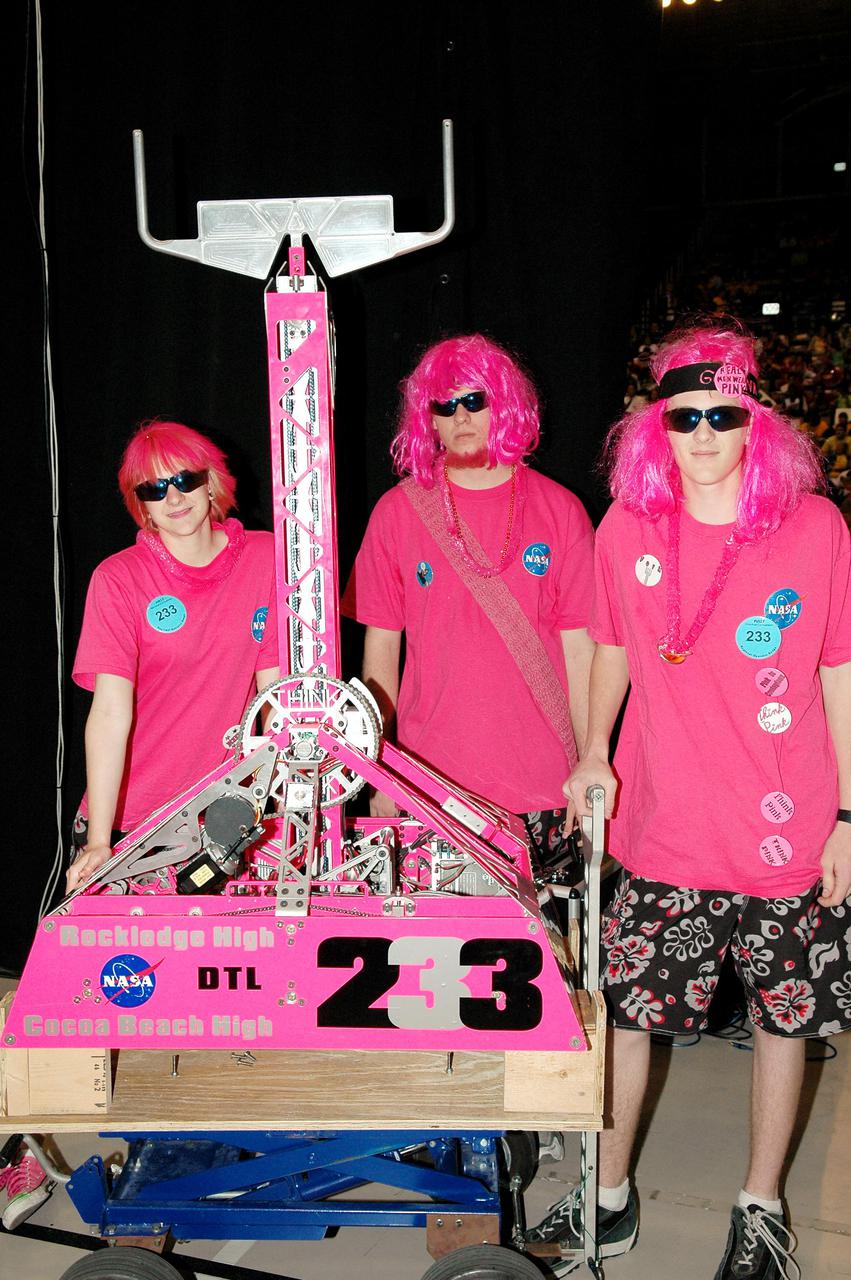
KENNEDY SPACE CENTER, FLA. - Members of the Space Coast FIRST Robotics Team, known as the Pink Team, display their robot, Roccobot, at the 2005 FIRST Robotics Regional Competition held at the University of Central Florida March 10-12. The NASA-sponsored Roccobots took first place in the competition as part of a three-team alliance and advances to the Championship in Atlanta in April. The Pink Team comprises students from Rockledge High School and Cocoa Beach Junior_Senior High School.
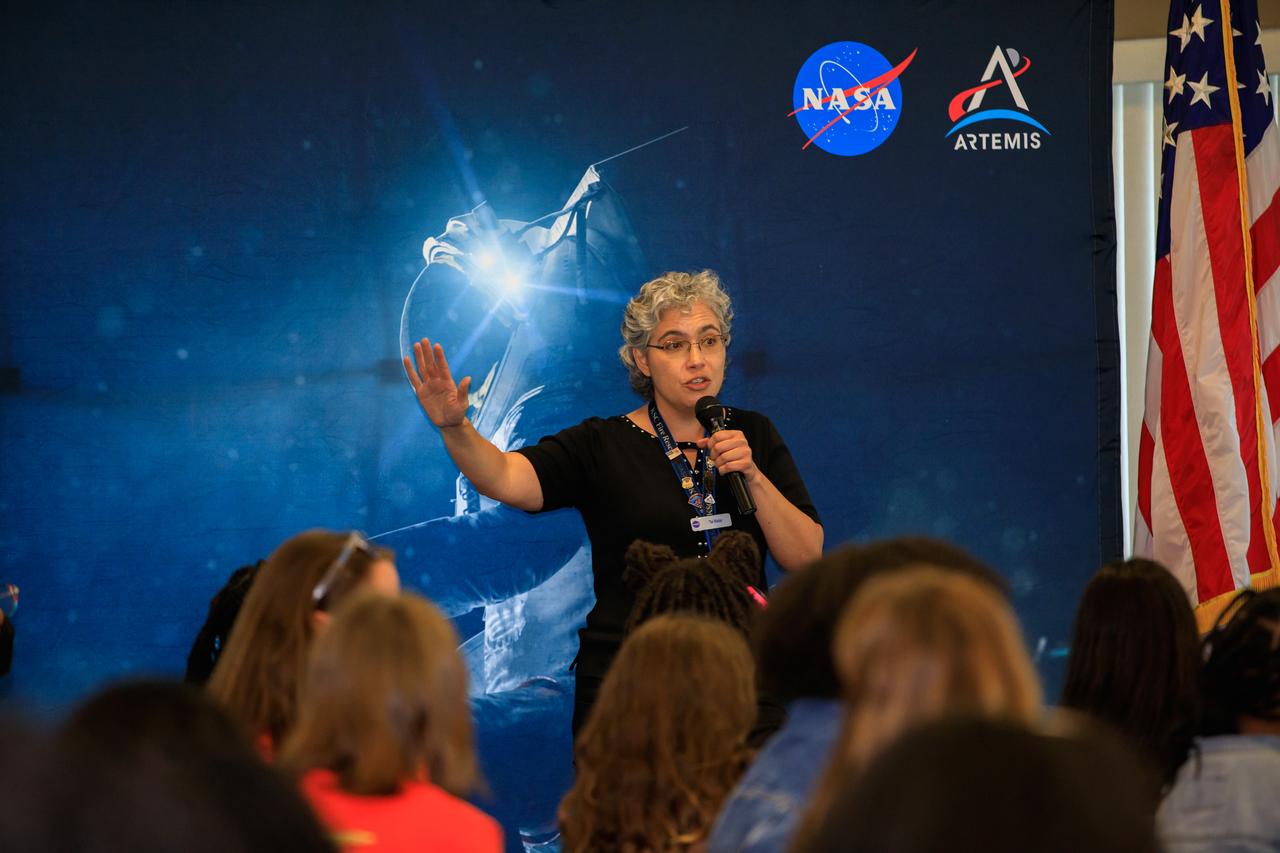
Tai Victor, Kennedy Space Center events lead, speaks to students who were brought to Kennedy on Delta Air Lines’ Women Inspiring Our Next Generation (WING) flight from Atlanta, Georgia, on Sept. 23, 2022. An all-female crew flew girls from a variety of schools and organizations with a STEM (science, technology, engineering, math) focus to Kennedy to learn about the various careers available at the Florida spaceport. While at Kennedy, the group had the opportunity to view NASA’s Artemis I Moon rocket at Launch Pad 39B, hear from a panel of 18 women with a combination of careers from Kennedy and Delta, and tour the visitor complex.
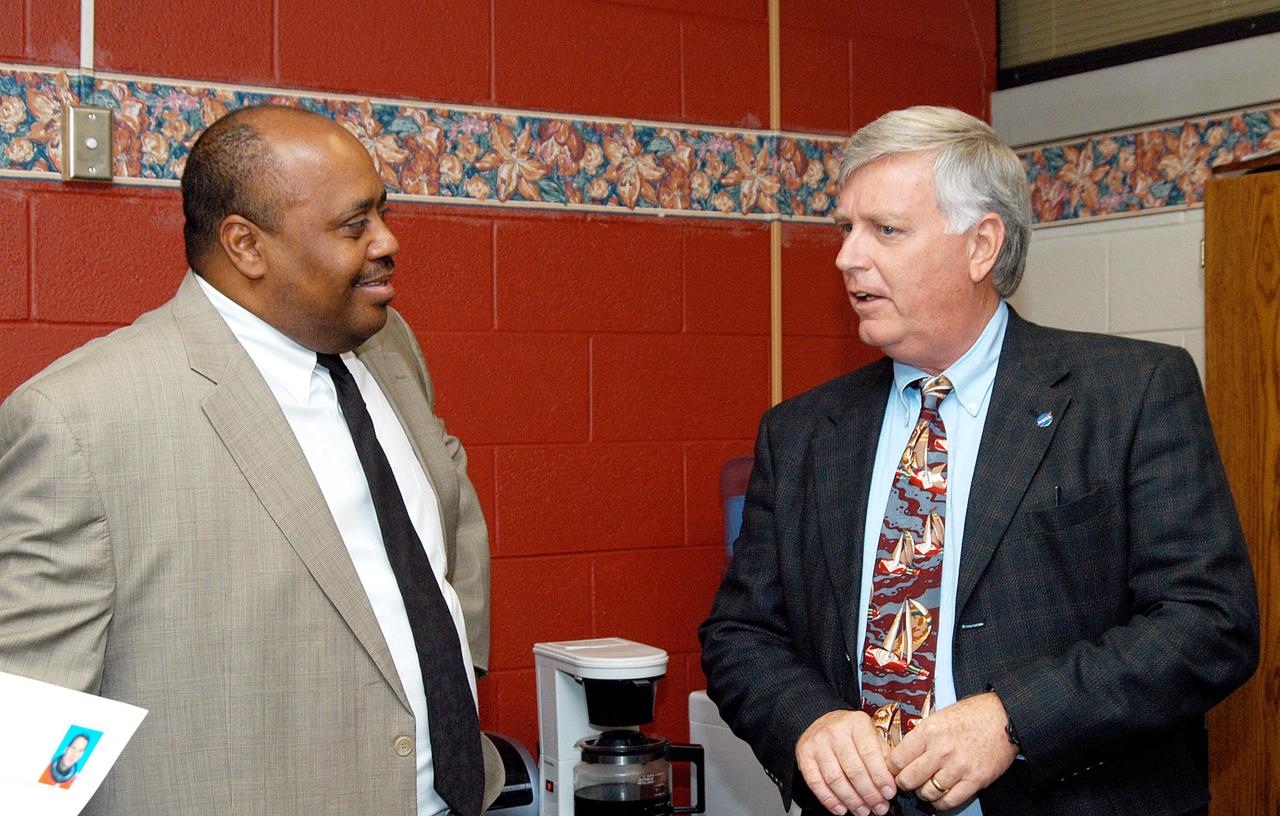
KENNEDY SPACE CENTER, FLA. - Center Director Jim Kennedy (right) talks to Aaron Fernander, principal of Ralph Bunche Middle School, a NASA Explorer School, in Atlanta, Ga. Kennedy is visiting NES sites to share America’s new vision for space exploration with the next generation of explorers. He was accompanied by astronaut Rick Linnehan on the visit. The purpose of the school visit is to talk with students about our destiny as explorers, NASA’s stepping stone approach to exploring Earth, the Moon, Mars and beyond, how space impacts our lives, and how people and machines rely on each other in space.
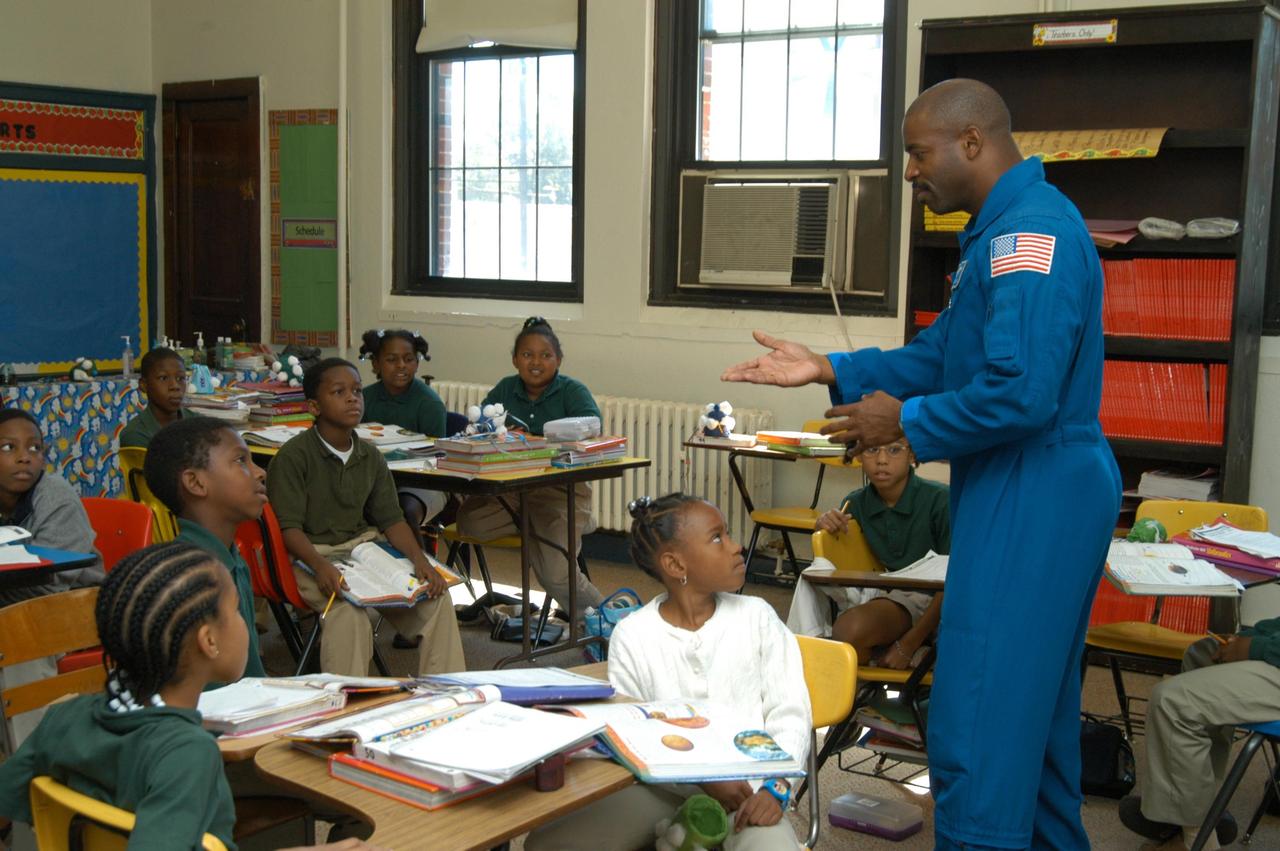
KENNEDY SPACE CENTER, FLA. - At University Community Academy in Atlanta, a NASA Explorer School, astronaut Leland Melvin talks to students. Melvin accompanied KSC Deputy Director Dr. Woodrow Whitlow Jr., who was visiting the school to share the vision for space exploration with the next generation of explorers. Whitlow talked with students about our destiny as explorers, NASA’s stepping stone approach to exploring Earth, the Moon, Mars and beyond, how space impacts our lives, and how people and machines rely on each other in space. Melvin talked about the importance of teamwork and what it takes for mission success.
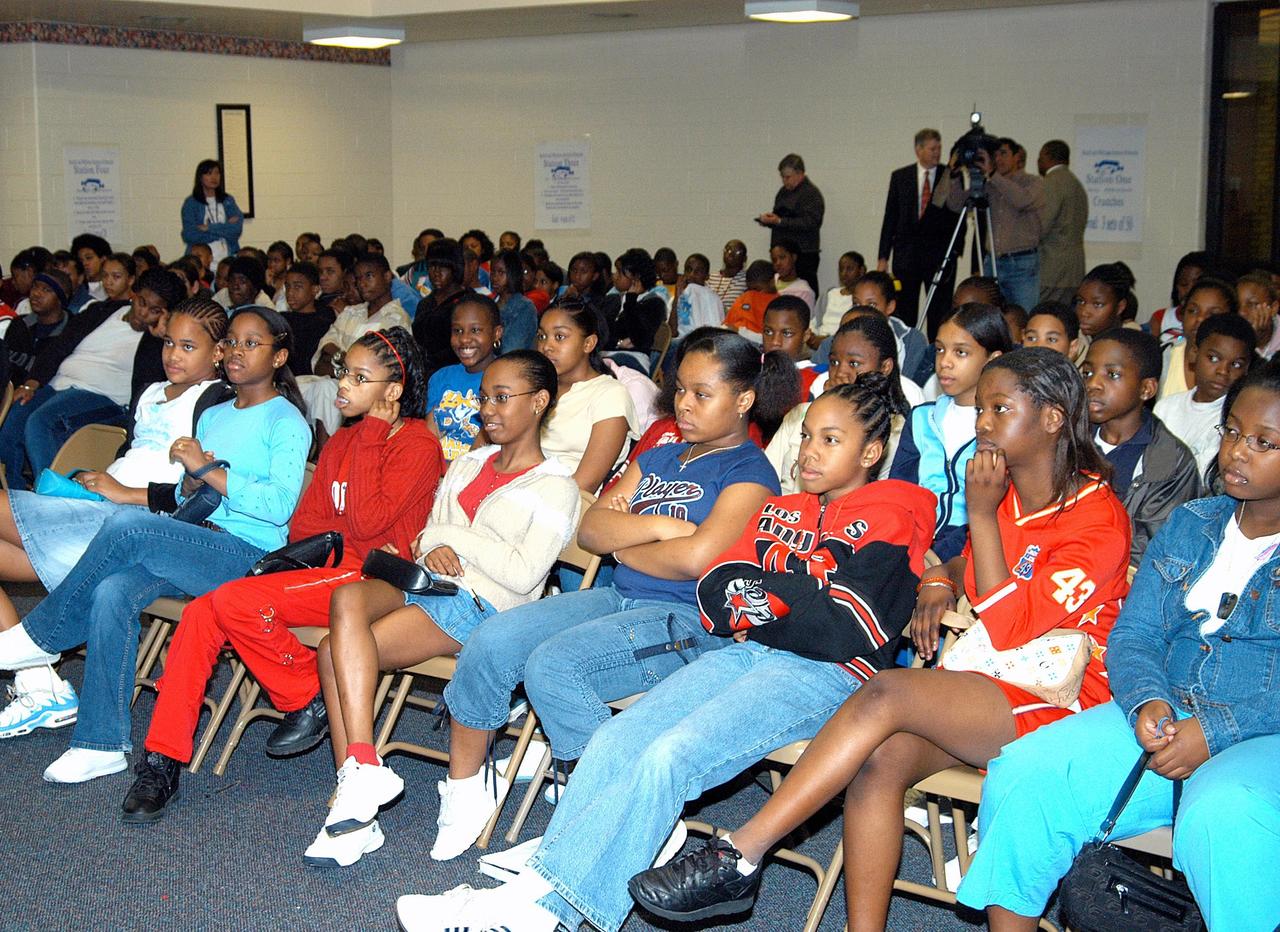
KENNEDY SPACE CENTER, FLA. - Students at Ralph Bunche Middle School, a NASA Explorer School, in Atlanta, Ga., listen intently to Center Director Jim Kennedy’s presentation. Kennedy is visiting NES sites to share America’s new vision for space exploration with the next generation of explorers. He was accompanied by astronaut Rick Linnehan on the visit. The purpose of the school visit is to talk with students about our destiny as explorers, NASA’s stepping stone approach to exploring Earth, the Moon, Mars and beyond, how space impacts our lives, and how people and machines rely on each other in space.
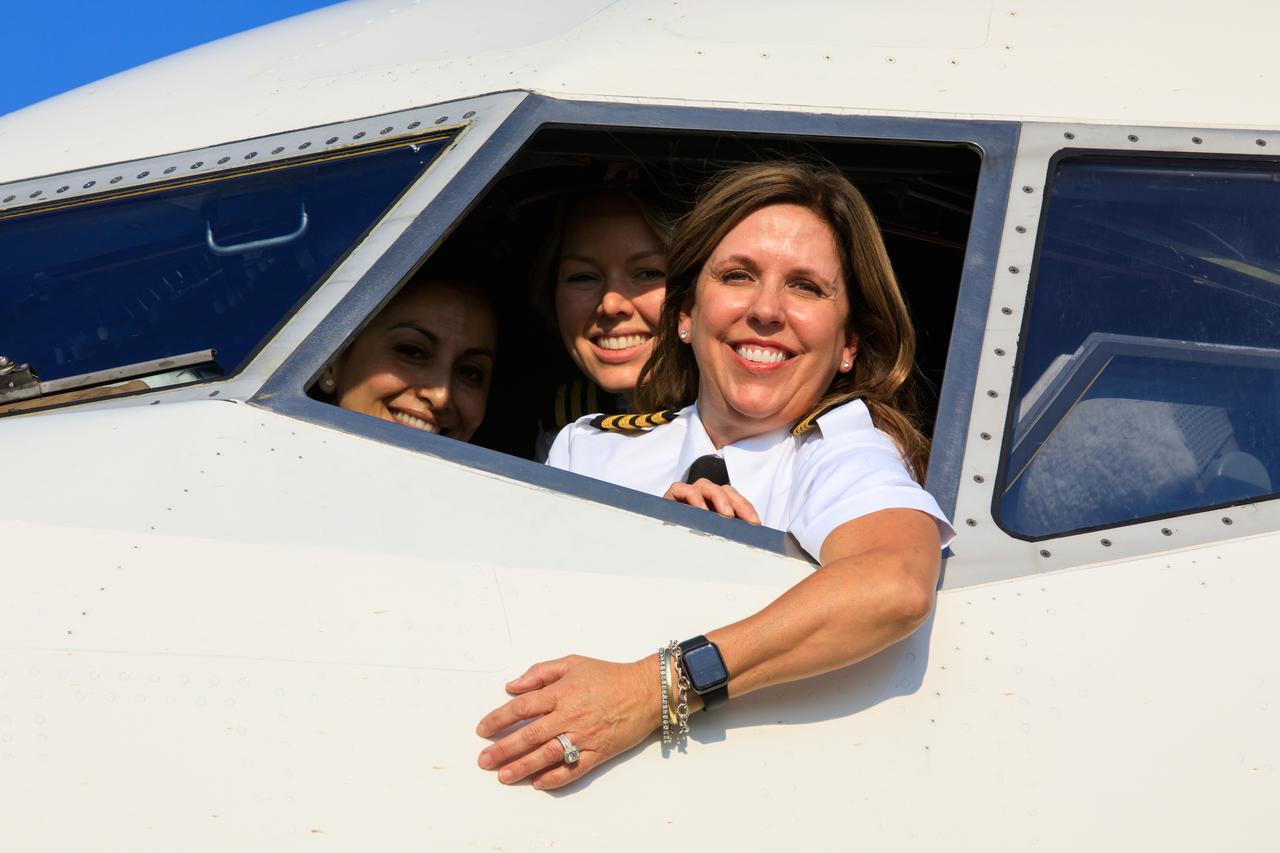
Part of the all-female crew for Delta Air Lines’ Women Inspiring Our Next Generation (WING) flight is photographed just after touching down at the Launch and Landing Facility at NASA’s Kennedy Space Center in Florida on Sept. 23, 2022. The flight brought girls from Atlanta, Georgia, ranging in age from 11 to 18, to learn about the various careers available at the Florida spaceport. While at Kennedy, the group had the opportunity to view NASA’s Artemis I Moon rocket at Launch Pad 39B, hear from a panel of 18 women with a combination of careers from Kennedy and Delta, and tour the visitor complex.
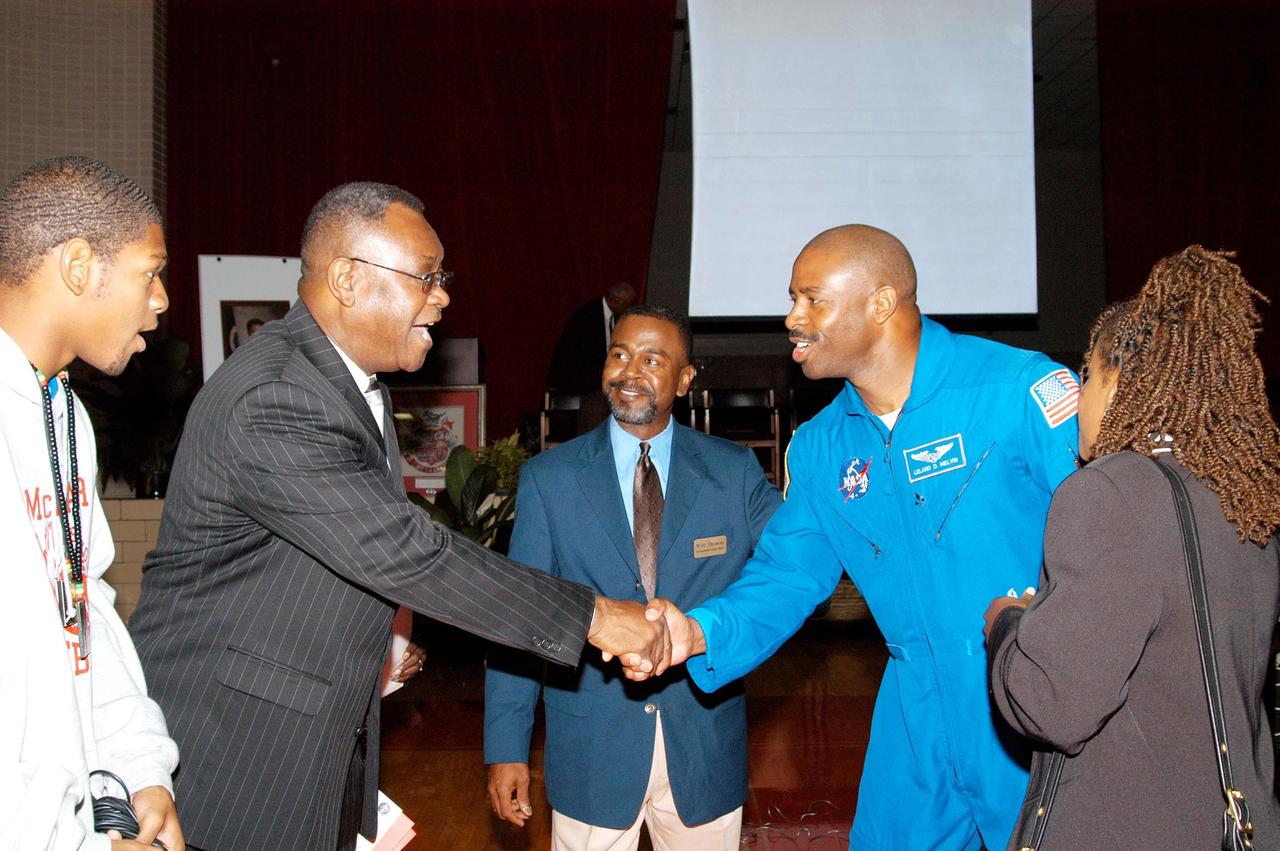
KENNEDY SPACE CENTER, FLA. - A school board member of Ronald E. McNair High School in Atlanta welcomes astronaut Leland Melvin (second from right) to the school. McNair is one of NASA’s Explorer Schools. Melvin accompanied KSC Deputy Director Dr. Woodrow Whitlow Jr. on a visit to the school to share the vision for space exploration with the next generation of explorers. Whitlow talked with students about our destiny as explorers, NASA’s stepping stone approach to exploring Earth, the Moon, Mars and beyond, how space impacts our lives, and how people and machines rely on each other in space.
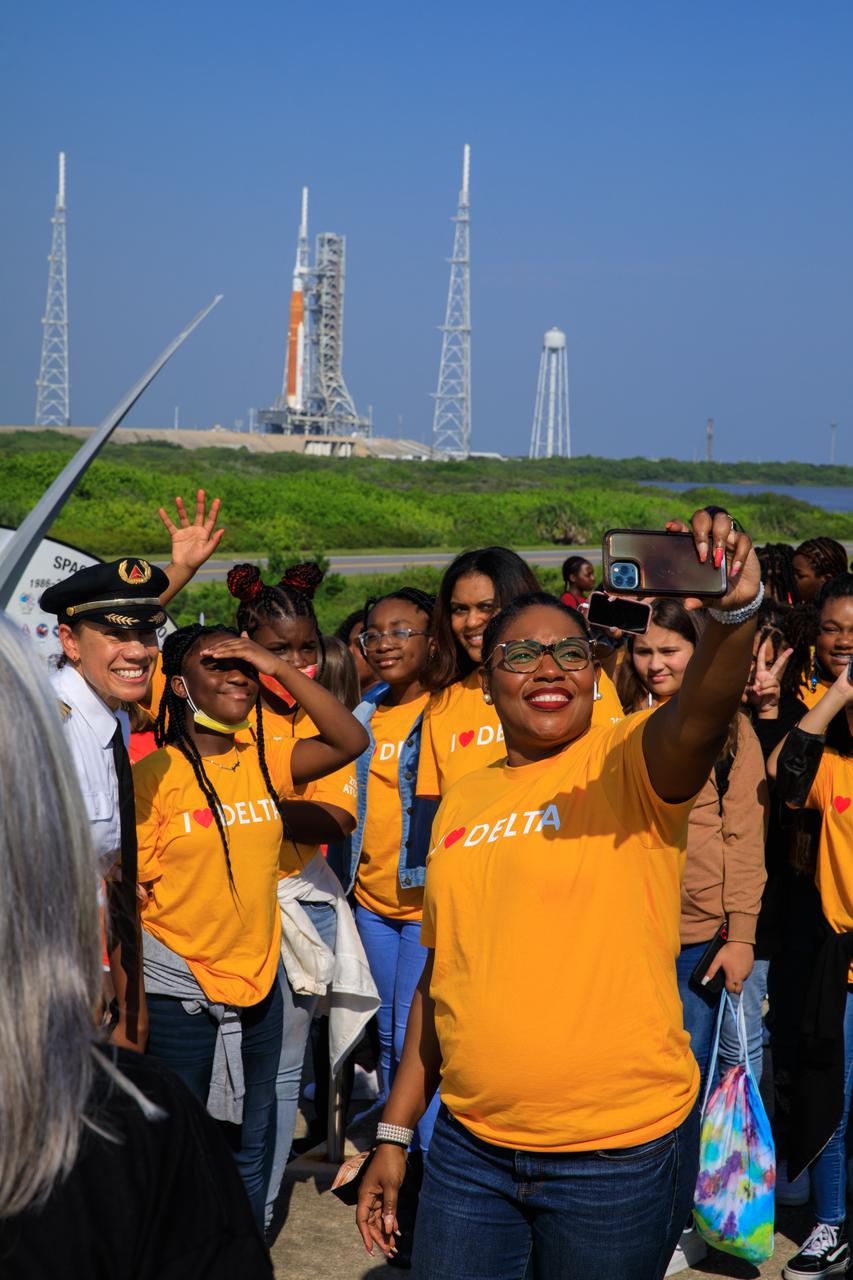
A group of girls pose for a selfie in front of NASA’s Artemis I Moon rocket at Launch Pad 39B at the agency’s Kennedy Space Center in Florida on Sept. 23, 2022. As part of Delta Air Lines’ Women Inspiring Our Next Generation (WING) program, an all-female crew flew girls from a variety of Atlanta, Georgia area schools and organizations with a STEM (science, technology, engineering, math) focus to Kennedy to learn about the various careers available at the Florida spaceport. While at Kennedy, the group also had the opportunity to hear from a panel of 18 women with a combination of careers from Kennedy and Delta and tour the visitor complex.
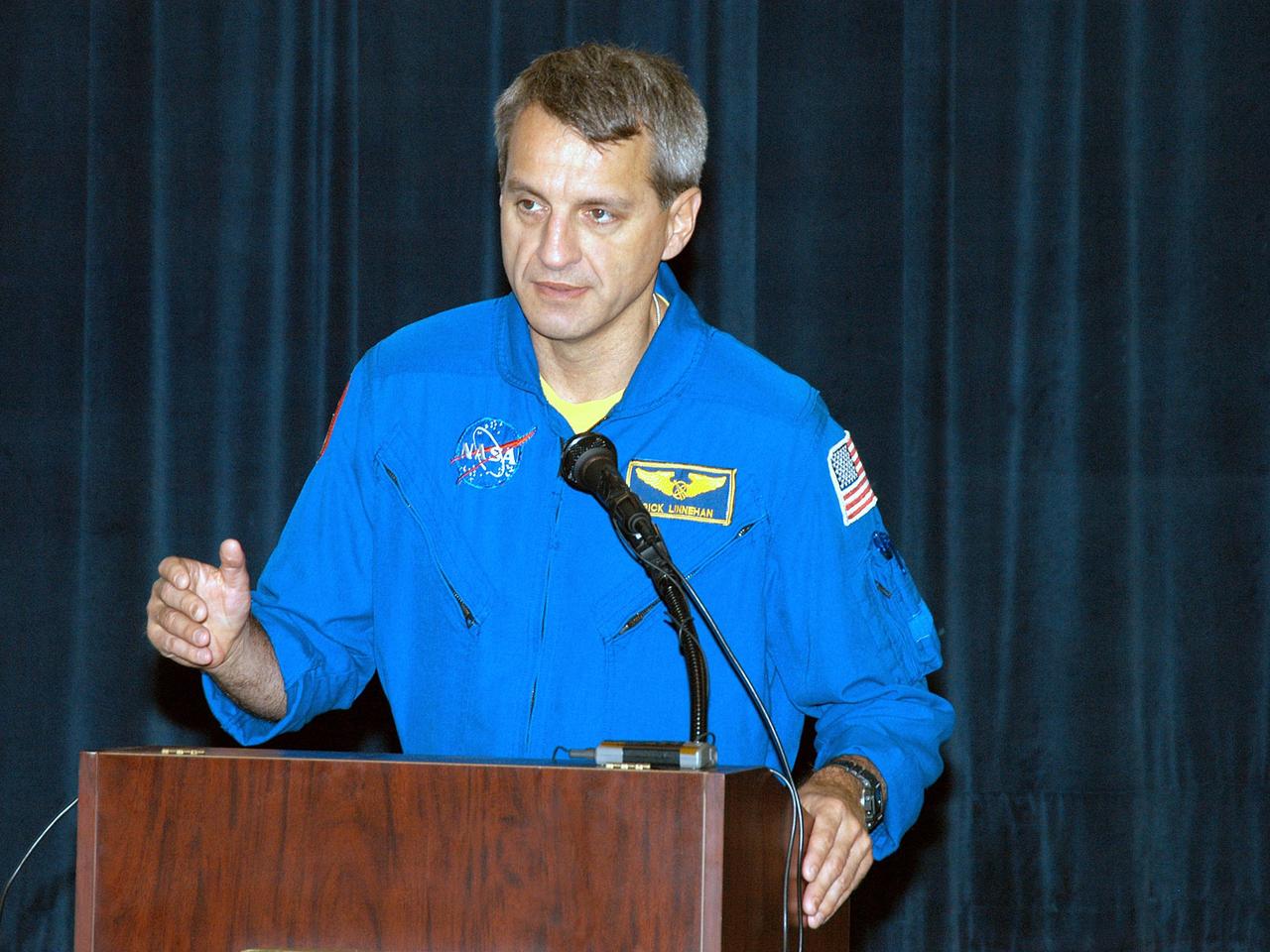
KENNEDY SPACE CENTER, FLA. - Astronaut Rick Linnehan talks to students and faculty at Ralph Bunche Middle School, a NASA Explorer School, in Atlanta, Ga. Linnehan accompanied Center Director Jim Kennedy, who is visiting NES sites to share America’s new vision for space exploration with the next generation of explorers. The purpose of the school visit is to talk with students about our destiny as explorers, NASA’s stepping stone approach to exploring Earth, the Moon, Mars and beyond, how space impacts our lives, and how people and machines rely on each other in space.

KENNEDY SPACE CENTER, FLA. - Astronaut Rick Linnehan talks to a classroom teacher at Ralph Bunche Middle School, a NASA Explorer School, in Atlanta, Ga. Linnehan accompanied Center Director Jim Kennedy, who was visiting the school to share America’s new vision for space exploration with the next generation of explorers. The visit is one of many Kennedy has made to NES sites in Florida and Georgia to talk with students about our destiny as explorers, NASA’s stepping stone approach to exploring Earth, the Moon, Mars and beyond, how space impacts our lives, and how people and machines rely on each other in space.
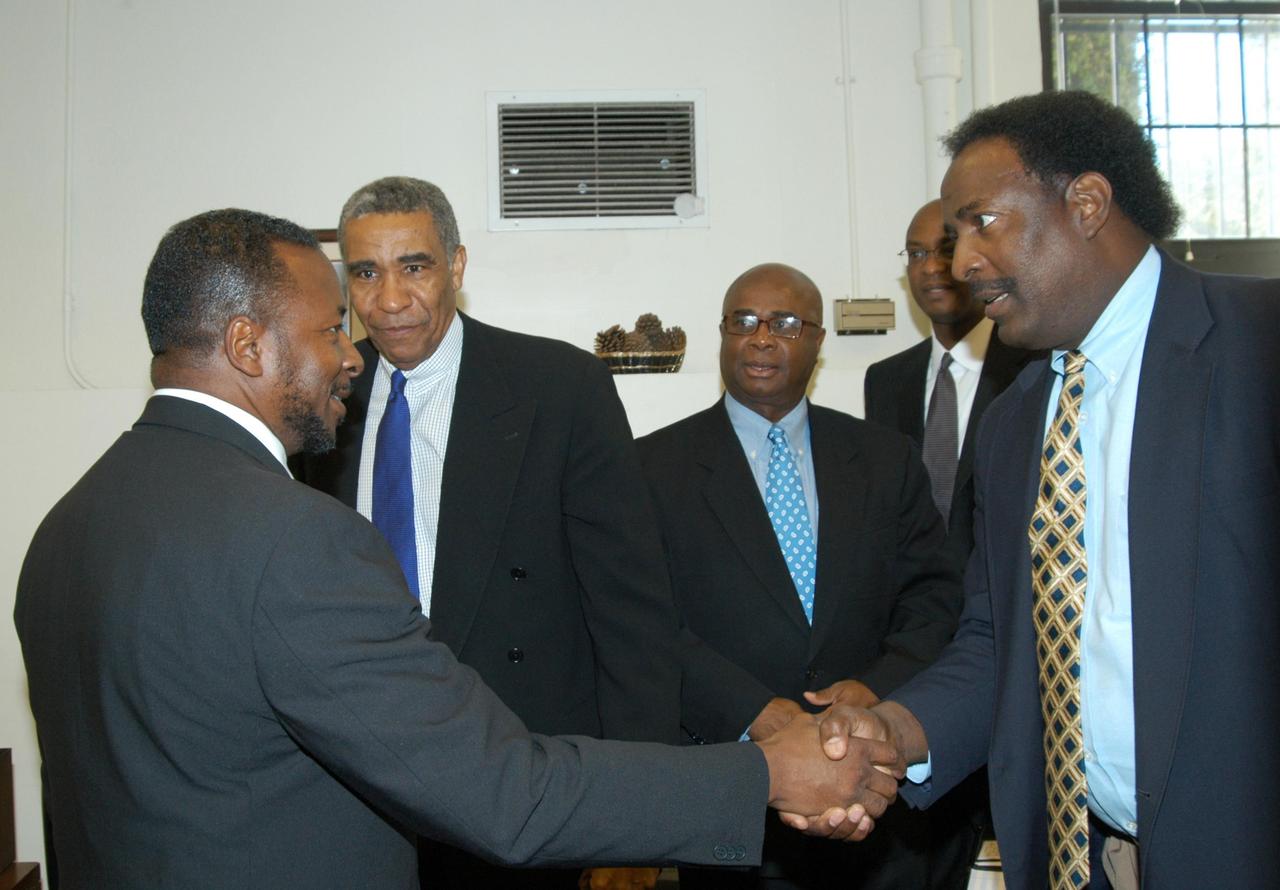
KENNEDY SPACE CENTER, FLA. - KSC Deputy Director Dr. Woodrow Whitlow Jr. (left) is welcomed by Jim Harris, principal of University Community Academy in Atlanta, a NASA Explorer School. Dr. Whitlow is visiting the school to share the vision for space exploration with the next generation of explorers. Whitlow talked with students about our destiny as explorers, NASA’s stepping stone approach to exploring Earth, the Moon, Mars and beyond, how space impacts our lives, and how people and machines rely on each other in space. Melvin talked about the importance of teamwork and what it takes for mission success.
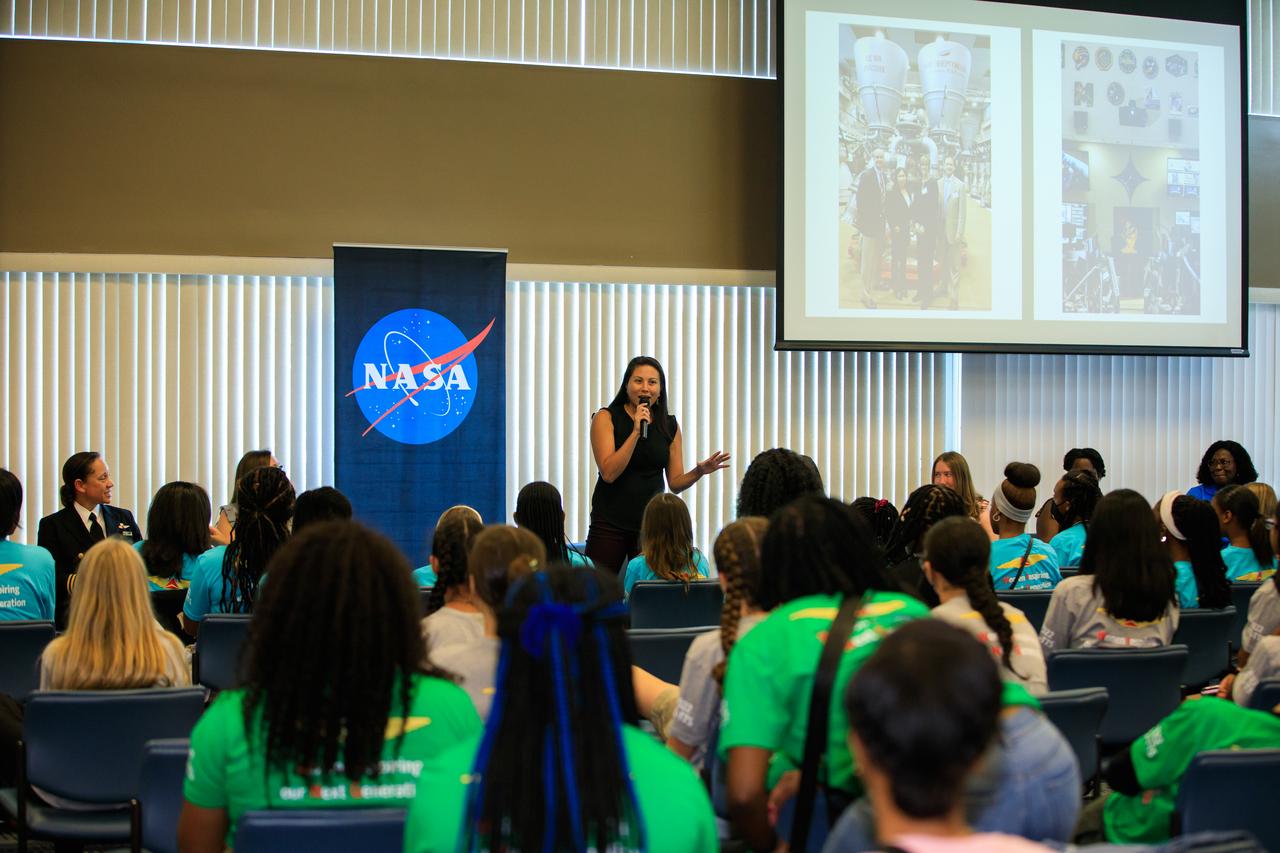
Josephine Pereira, Kennedy Space Center’s chief of Workforce Strategy and Development, speaks to students who were brought to Kennedy on Delta Air Lines’ Women Inspiring Our Next Generation (WING) flight from Atlanta, Georgia, on Sept. 23, 2022. An all-female crew flew girls from a variety of schools and organizations with a STEM (science, technology, engineering, math) focus to Kennedy to learn about the various careers available at the Florida spaceport. While at Kennedy, the group had the opportunity to view NASA’s Artemis I Moon rocket at Launch Pad 39B, hear from a panel of 18 women with a combination of careers from Kennedy and Delta, and tour the visitor complex.
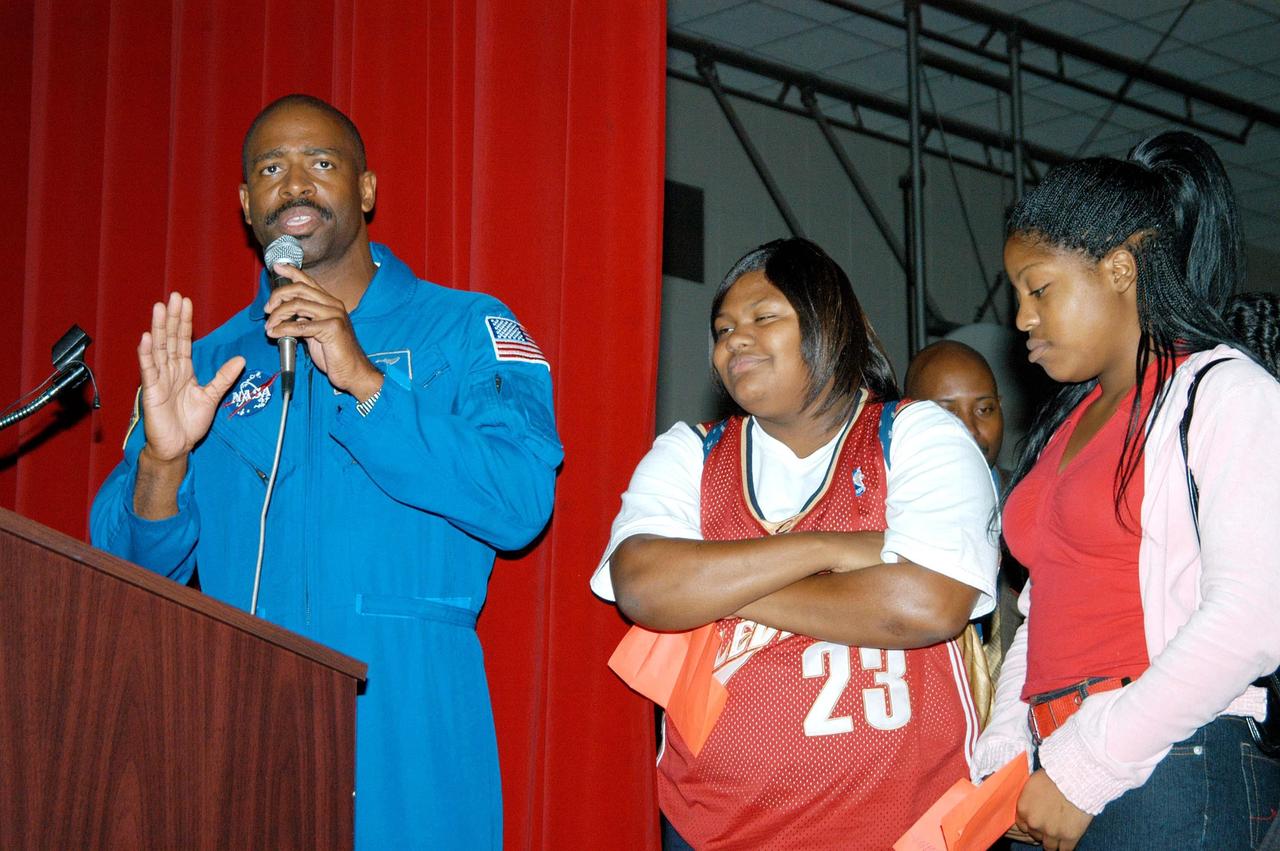
KENNEDY SPACE CENTER, FLA. - Astronaut Leland Melvin involves students at Ronald E. McNair High School in Atlanta, a NASA Explorer School, during a presentation. He accompanied KSC Deputy Director Dr. Woodrow Whitlow Jr., who is visiting to the school to share The vision for space exploration with the next generation of explorers. Whitlow talked with students about our destiny as explorers, NASA’s stepping stone approach to exploring Earth, the Moon, Mars and beyond, how space impacts our lives, and how people and machines rely on each other in space. Melvin talked about the importance of teamwork and what it takes for mission success.
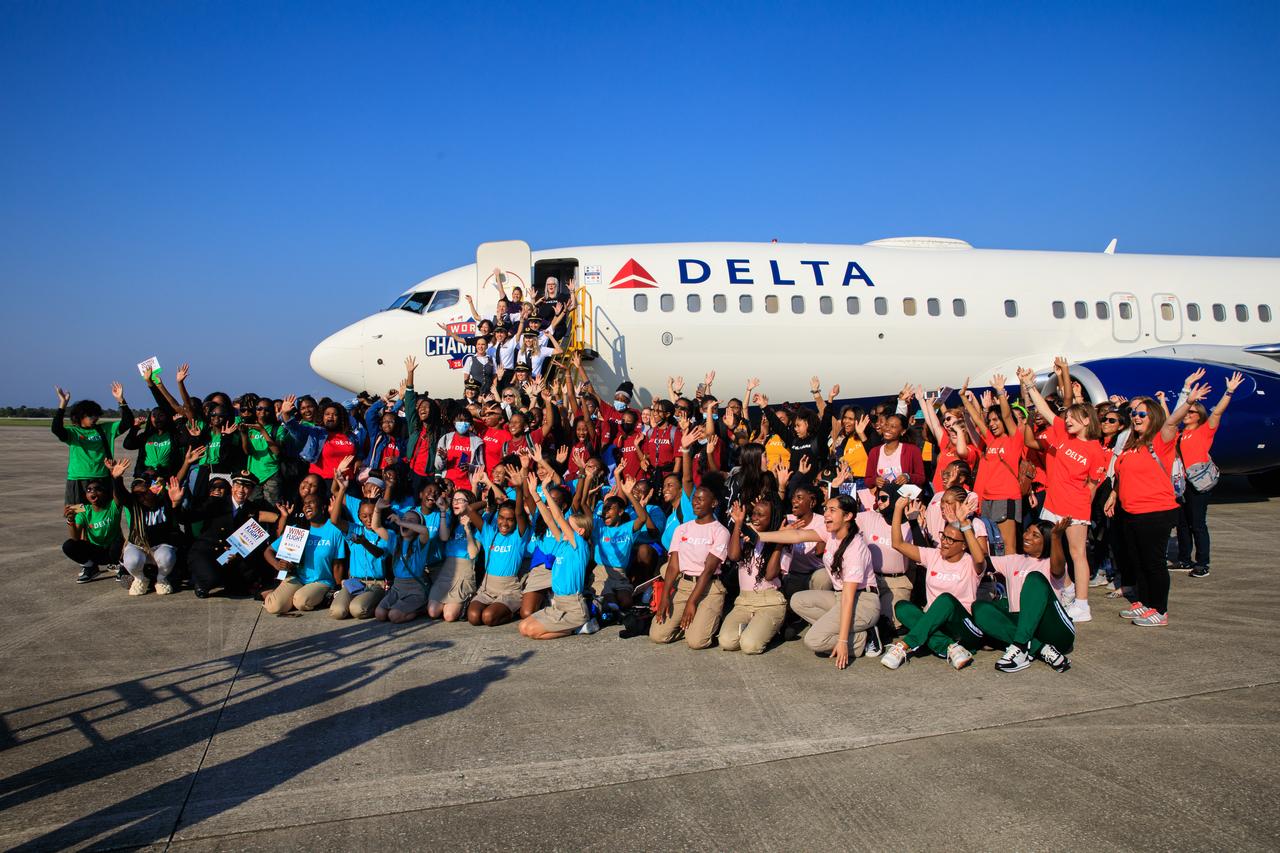
Students from various schools and organizations with a STEM (science, technology, engineering, math) focus are photographed at the Launch and Landing Facility following their arrival to the Kennedy Space Center on Sept. 23, 2022, as part of Delta Air Lines’ Women Inspiring Our Next Generation (WING) flight. The all-female flight crew brought girls from Atlanta, Georgia, ranging in age from 11 to 18, to learn about the various careers available at the Florida spaceport. While at Kennedy, the group had the opportunity to view NASA’s Artemis I Moon rocket at Launch Pad 39B, hear from a panel of 18 women with a combination of careers from Kennedy and Delta, and tour the visitor complex.
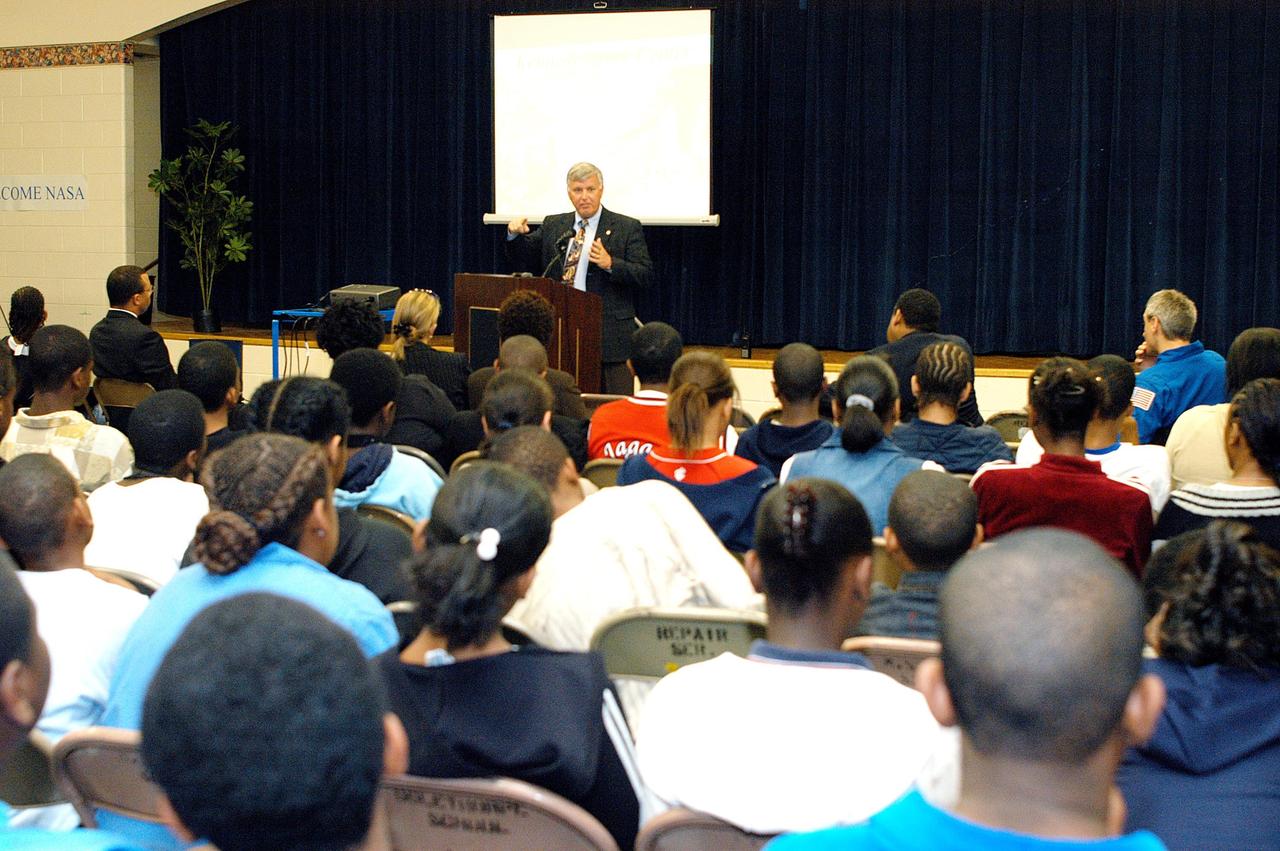
KENNEDY SPACE CENTER, FLA. - Center Director Jim Kennedy talks to students and faculty at Ralph Bunche Middle School, a NASA Explorer School, in Atlanta, Ga. Kennedy is visiting NES sites to share America’s new vision for space exploration with the next generation of explorers. He was accompanied by astronaut Rick Linnehan on the visit. The purpose of the school visit is to talk with students about our destiny as explorers, NASA’s stepping stone approach to exploring Earth, the Moon, Mars and beyond, how space impacts our lives, and how people and machines rely on each other in space.