
SpaceX’s Crew Dragon is guided by four parachutes as it approaches splashdown in the Atlantic Ocean about 200 miles off Florida’s east coast on March 8, 2019, after returning from the International Space Station on the Demo-1 mission. The uncrewed spacecraft docked to the orbiting laboratory on March 3, following a 2:49 a.m. EST liftoff aboard a SpaceX Falcon 9 rocket from Launch Complex 39A at NASA’s Kennedy Space Center in Florida on March 2. Crew Dragon made 18 orbits of Earth before successfully attaching to the space station. The spacecraft undocked at 2:32 a.m., March 8, splashing down in the Atlantic Ocean at 8:45 a.m. SpaceX’s inaugural flight with NASA’s Commercial Crew Program is the first flight test of a space system designed for humans built and operated by a commercial company through a public-private partnership. NASA and SpaceX will use data from Demo-1 to further prepare for Demo-2, the crewed flight test that will carry NASA astronauts Bob Behnken and Doug Hurley to the International Space Station later this year.
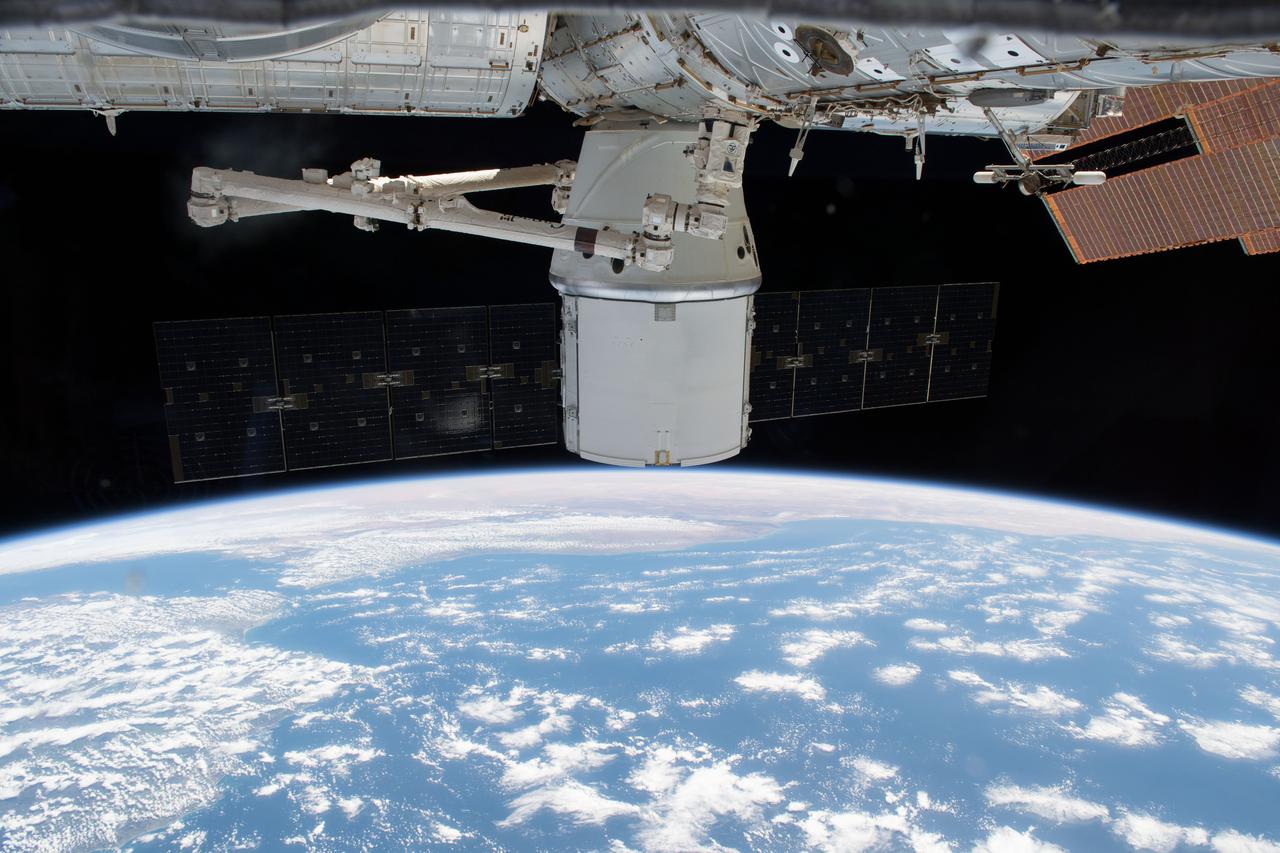
iss055e035437 (April 29, 2018) --- The SpaceX Dragon resupply ship was gripped by the Canadarm2 robotic arm on April 27, 2018 in preparation for its detachment from the Harmony module and its release back to Earth for splashdown and retrieval in the Pacific Ocean. The coasts of Spain and Portugal are seen as the International Space Station orbited over the Atlantic Ocean.
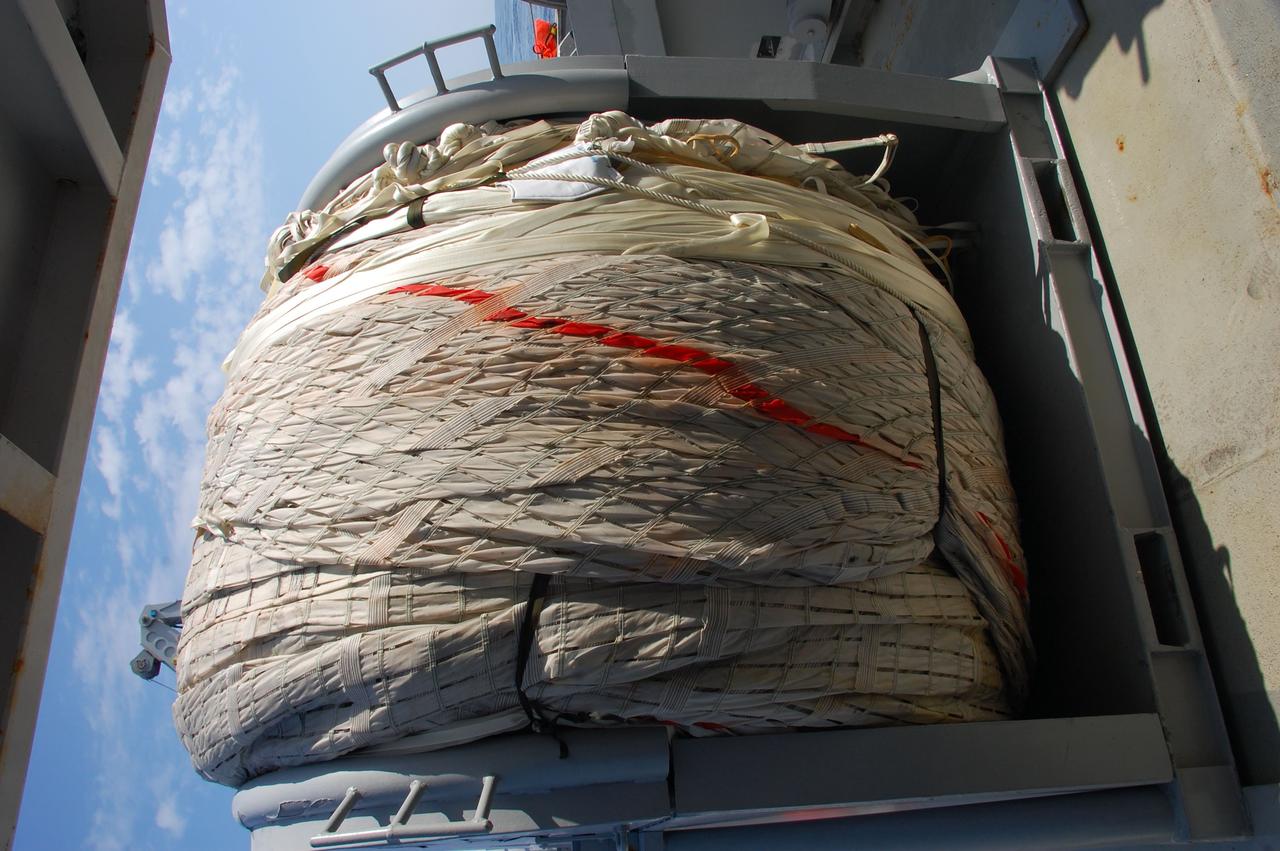
CAPE CANAVERAL, Fla. -- The massive parachute from the left spent booster is rolled up on the deck of Freedom Star, one of NASA's solid rocket booster retrieval ships, after recovery from the Atlantic Ocean and will be returned to Port Canaveral in Florida. The shuttle’s two solid rocket booster casings and associated flight hardware are recovered in the Atlantic Ocean after every launch by Liberty Star and Freedom Star. The boosters impact the Atlantic about seven minutes after liftoff and the retrieval ships are stationed about 10 miles from the impact area at the time of splashdown. After the spent segments are processed, they will be transported to Utah, where they will be refurbished and stored, if needed. Photo credit: NASA/Ben Smegelsky
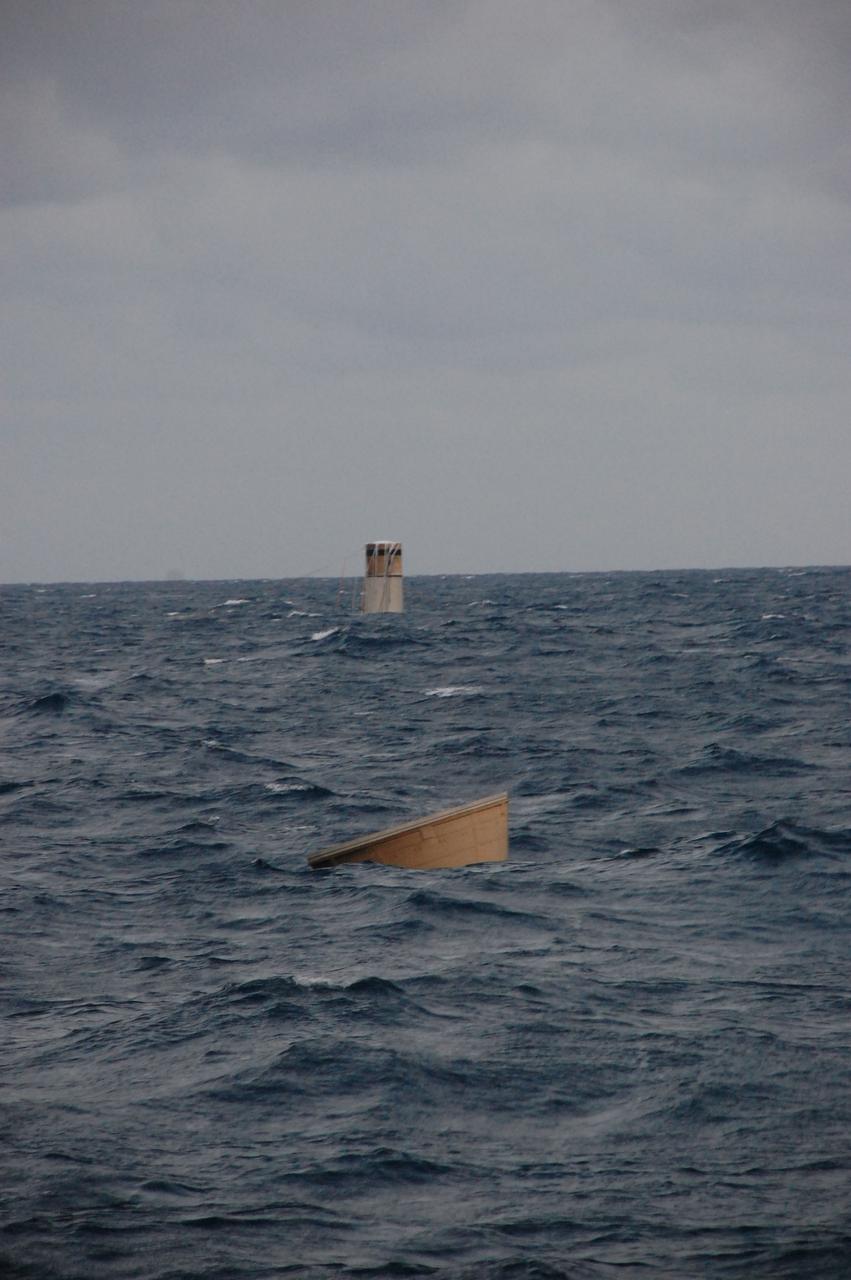
CAPE CANAVERAL, Fla. -- The nose cap and the top of a spent booster can be seen bobbing in the Atlantic Ocean, waiting to be recovered by the crew members of Freedom Star, one of NASA's solid rocket booster retrieval ships. The shuttle’s two solid rocket booster casings and associated flight hardware are recovered in the Atlantic Ocean after every launch by Liberty Star and Freedom Star. The boosters impact the Atlantic about seven minutes after liftoff and the retrieval ships are stationed about 10 miles from the impact area at the time of splashdown. After the spent segments are processed, they will be transported to Utah, where they will be refurbished and stored, if needed. Photo credit: NASA/Ben Smegelsky
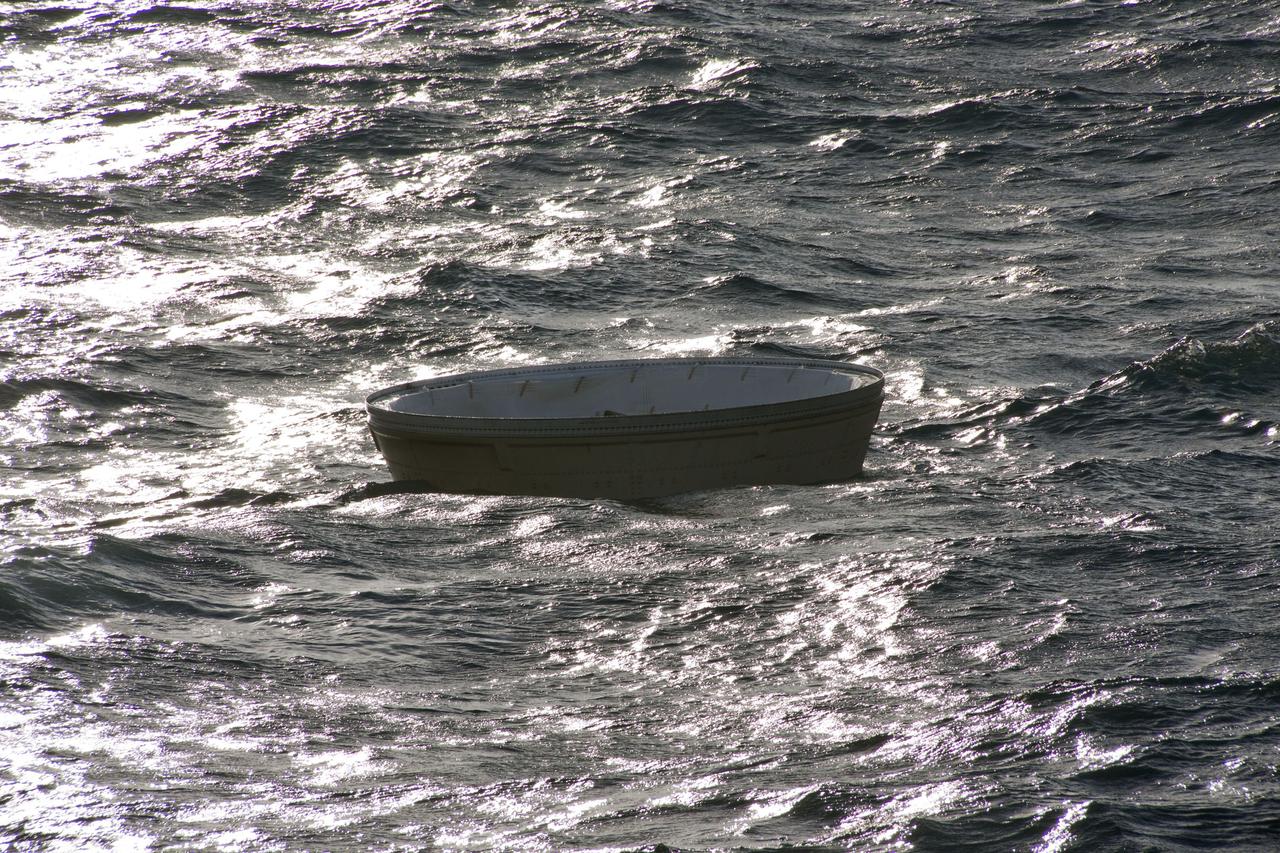
CAPE CANAVERAL, Fla. -- A nose cap from the right spent booster can be seen bobbing in the Atlantic Ocean, waiting to be recovered by the crew members of Liberty Star, one of NASA's solid rocket booster retrieval ships. The shuttle’s two solid rocket booster casings and associated flight hardware are recovered in the Atlantic Ocean after every launch by Freedom Star and Liberty Star. The boosters impact the Atlantic about seven minutes after liftoff and the retrieval ships are stationed about 10 miles from the impact area at the time of splashdown. After the spent segments are processed, they will be transported to Utah, where they will be refurbished and stored, if needed. Photo credit: NASA/Frank Michaux
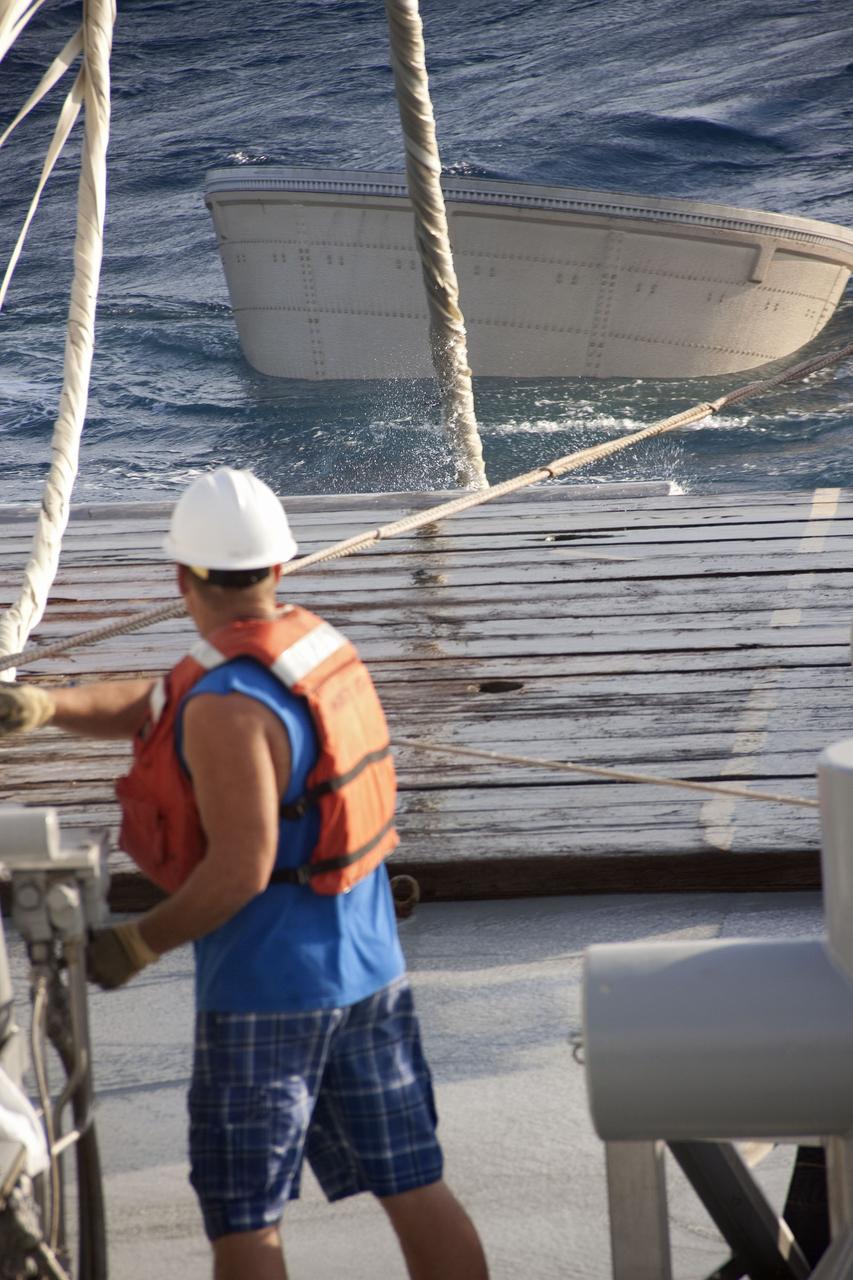
CAPE CANAVERAL, Fla. -- A crew member on Liberty Star, one of NASA's solid rocket booster retrieval ships, uses a crane to haul the right booster nose cap out of the Atlantic Ocean that splashed down after Discovery's final launch. The shuttle’s two solid rocket booster casings and associated flight hardware are recovered in the Atlantic Ocean after every launch by Freedom Star and Liberty Star. The boosters impact the Atlantic about seven minutes after liftoff and the retrieval ships are stationed about 10 miles from the impact area at the time of splashdown. After the spent segments are processed, they will be transported to Utah, where they will be refurbished and stored, if needed. Photo credit: NASA/Frank Michaux
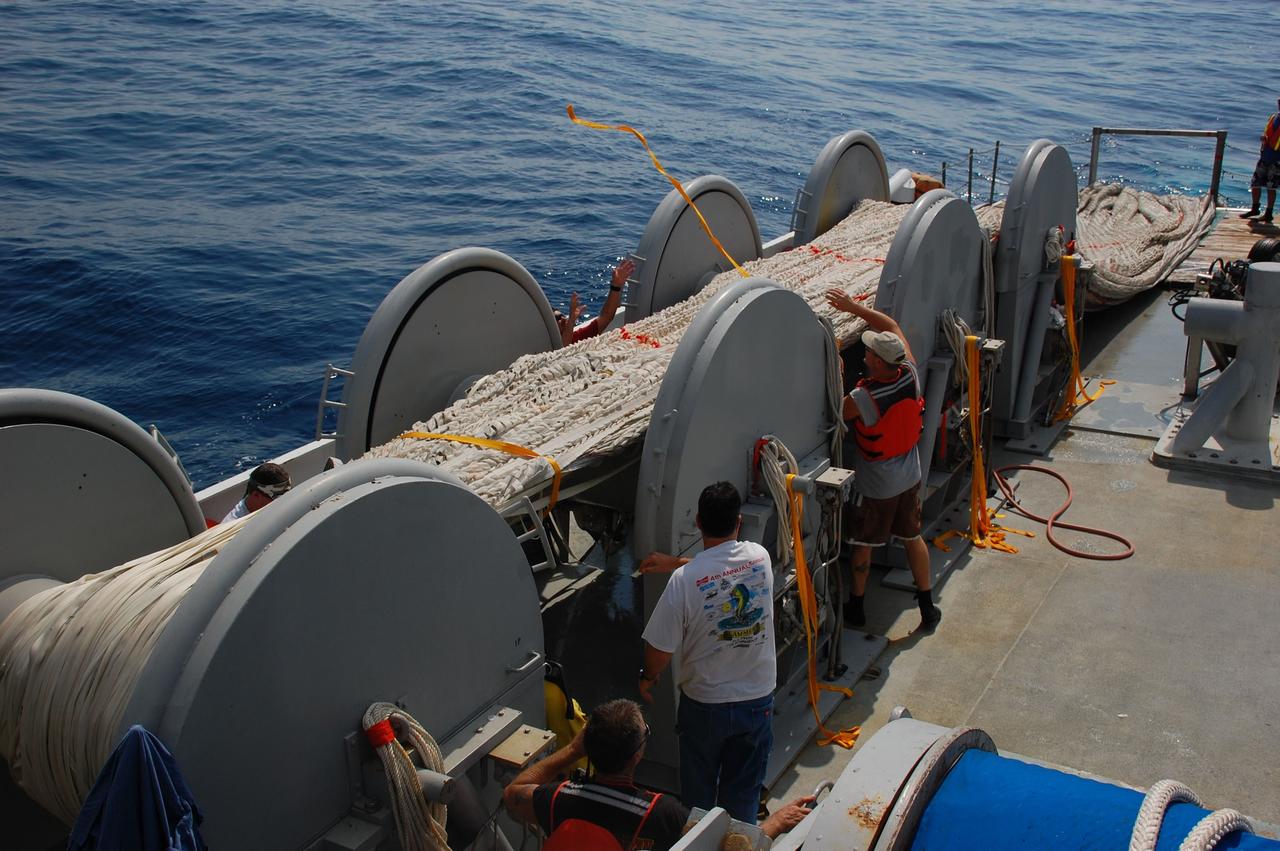
CAPE CANAVERAL, Fla. -- Crew members from Freedom Star, one of NASA's solid rocket booster retrieval ships, are pulling the parachute from the left spent booster out of the Atlantic Ocean. The shuttle’s two solid rocket booster casings and associated flight hardware are recovered in the Atlantic Ocean after every launch by Liberty Star and Freedom Star. The boosters impact the Atlantic about seven minutes after liftoff and the retrieval ships are stationed about 10 miles from the impact area at the time of splashdown. After the spent segments are processed, they will be transported to Utah, where they will be refurbished and stored, if needed. Photo credit: NASA/Ben Smegelsky
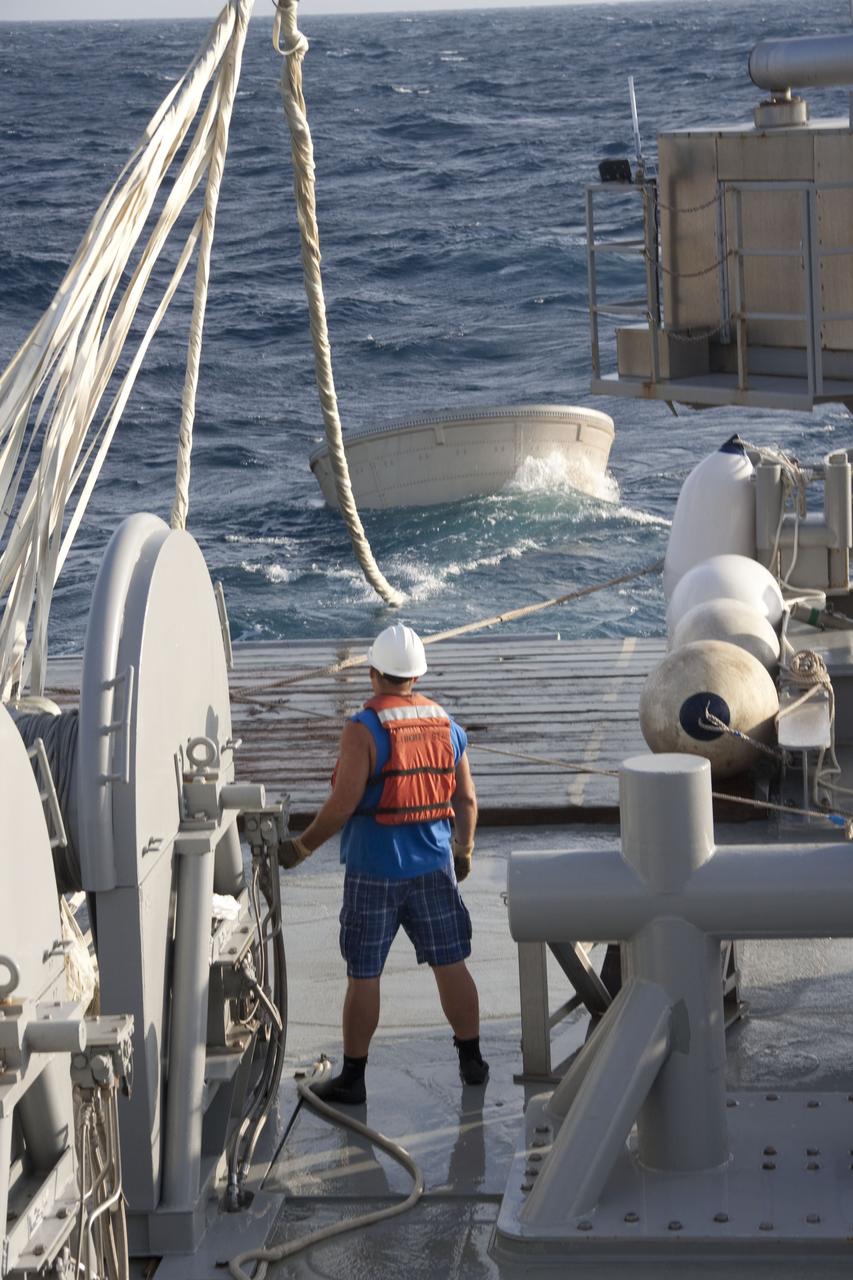
CAPE CANAVERAL, Fla. -- A crew member on Liberty Star, one of NASA's solid rocket booster retrieval ships, uses a crane to haul the right booster nose cap out of the Atlantic Ocean that splashed down after Discovery's final launch. The shuttle’s two solid rocket booster casings and associated flight hardware are recovered in the Atlantic Ocean after every launch by Freedom Star and Liberty Star. The boosters impact the Atlantic about seven minutes after liftoff and the retrieval ships are stationed about 10 miles from the impact area at the time of splashdown. After the spent segments are processed, they will be transported to Utah, where they will be refurbished and stored, if needed. Photo credit: NASA/Frank Michaux
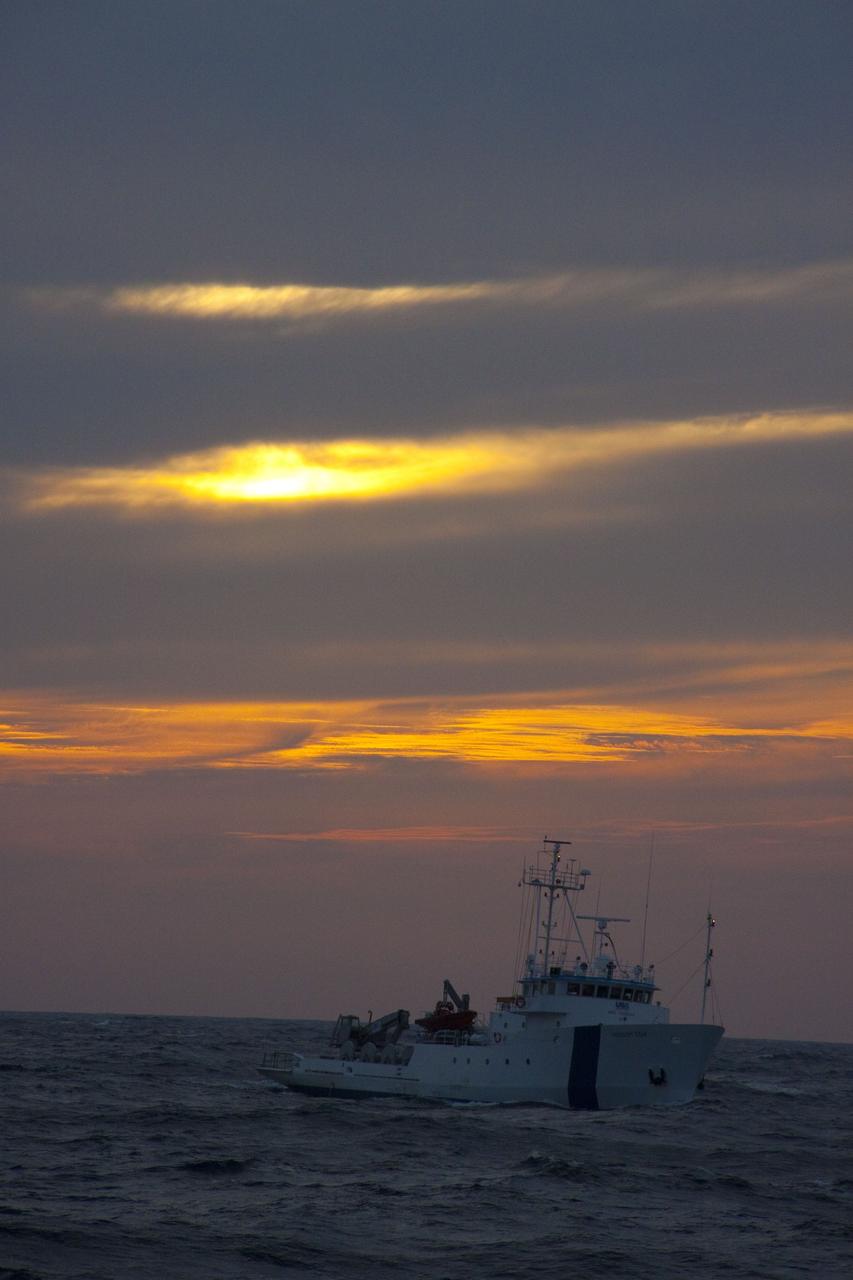
CAPE CANAVERAL, Fla. -- Dusk descends on the Freedom Star, one of NASA's solid rocket booster retrieval ships stationed in the Atlantic Ocean, to recover the right spent booster after it splashed down following space shuttle Discovery's final launch. The shuttle’s two solid rocket booster casings and associated flight hardware are recovered in the Atlantic Ocean after every launch by Freedom Star and Liberty Star. The boosters impact the Atlantic about seven minutes after liftoff and the retrieval ships are stationed about 10 miles from the impact area at the time of splashdown. After the spent segments are processed, they will be transported to Utah, where they will be refurbished and stored, if needed. Photo credit: NASA/Frank Michaux
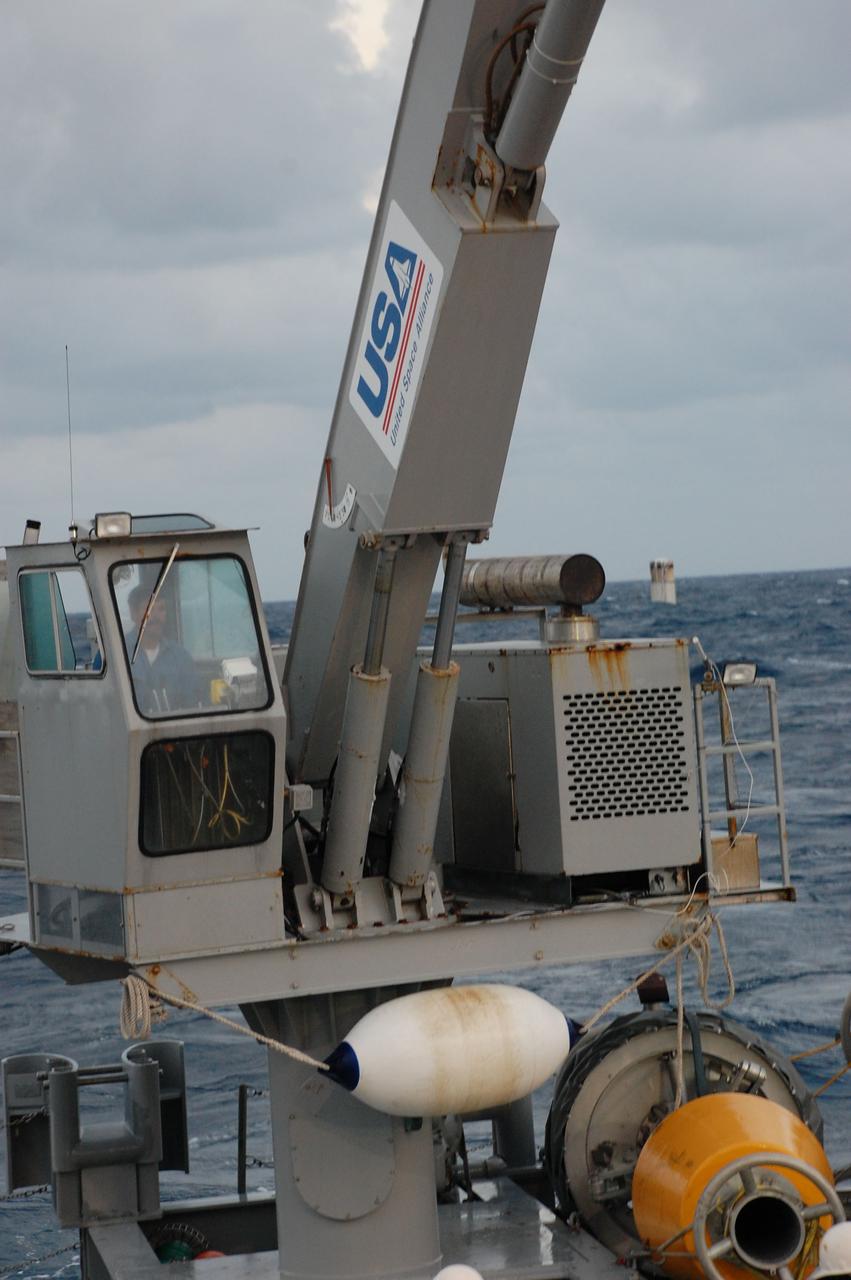
CAPE CANAVERAL, Fla. -- A worker on Freedom Star, one of NASA's solid rocket booster retrieval ships, manipulates a crane to recover the left solid rocket booster from the Atlantic Ocean after space shuttle Discovery's STS-133 launch. The shuttle’s two solid rocket booster casings and associated flight hardware are recovered in the Atlantic Ocean after every launch by Liberty Star and Freedom Star. The boosters impact the Atlantic about seven minutes after liftoff and the retrieval ships are stationed about 10 miles from the impact area at the time of splashdown. After the spent segments are processed, they will be transported to Utah, where they will be refurbished and stored, if needed. Photo credit: NASA/Ben Smegelsky
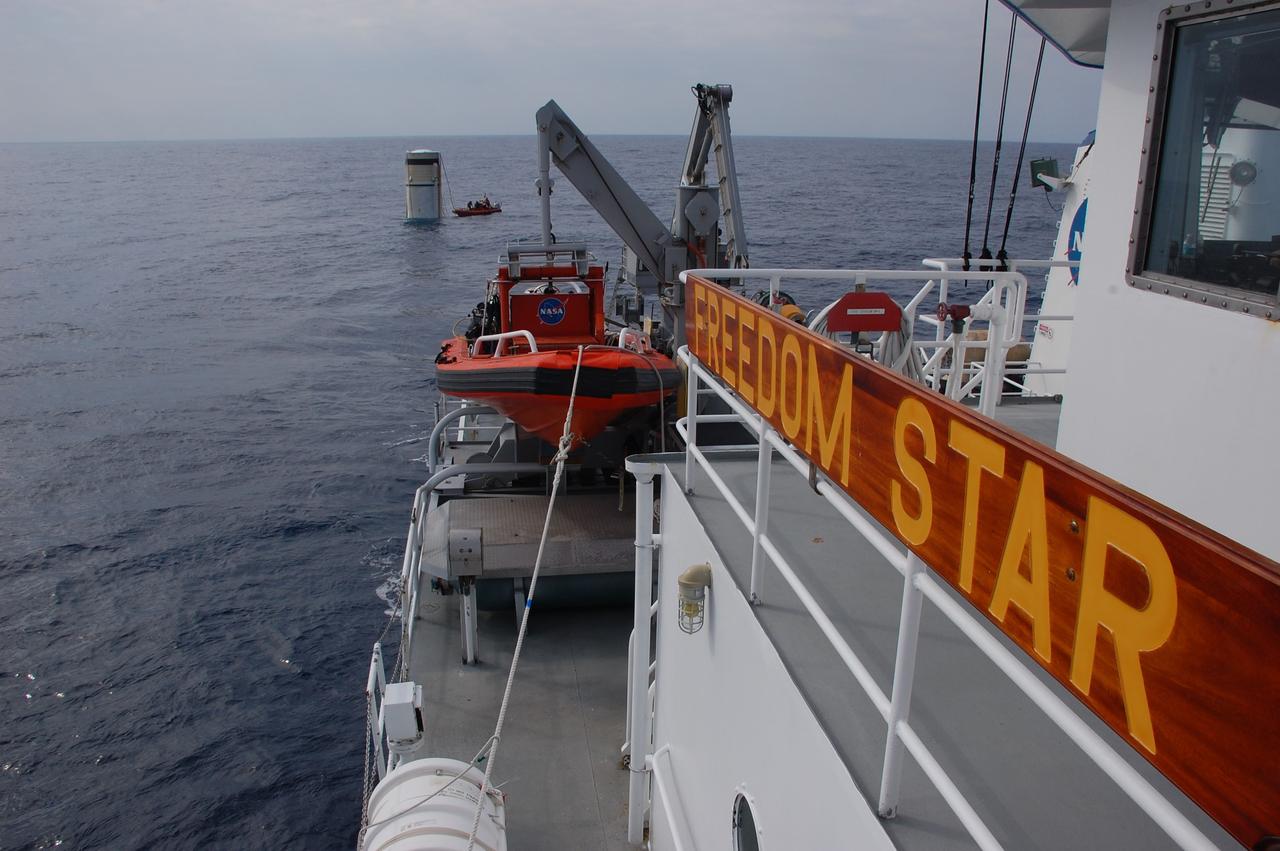
CAPE CANAVERAL, Fla. -- Crew members in a skiff from Freedom Star, one of NASA's solid rocket booster retrieval ships, inspect the left spent booster bobbing in the Atlantic Ocean after space shuttle Discovery's STS-133 launch. The shuttle’s two solid rocket booster casings and associated flight hardware are recovered in the Atlantic Ocean after every launch by Liberty Star and Freedom Star. The boosters impact the Atlantic about seven minutes after liftoff and the retrieval ships are stationed about 10 miles from the impact area at the time of splashdown. After the spent segments are processed, they will be transported to Utah, where they will be refurbished and stored, if needed. Photo credit: NASA/Ben Smegelsky
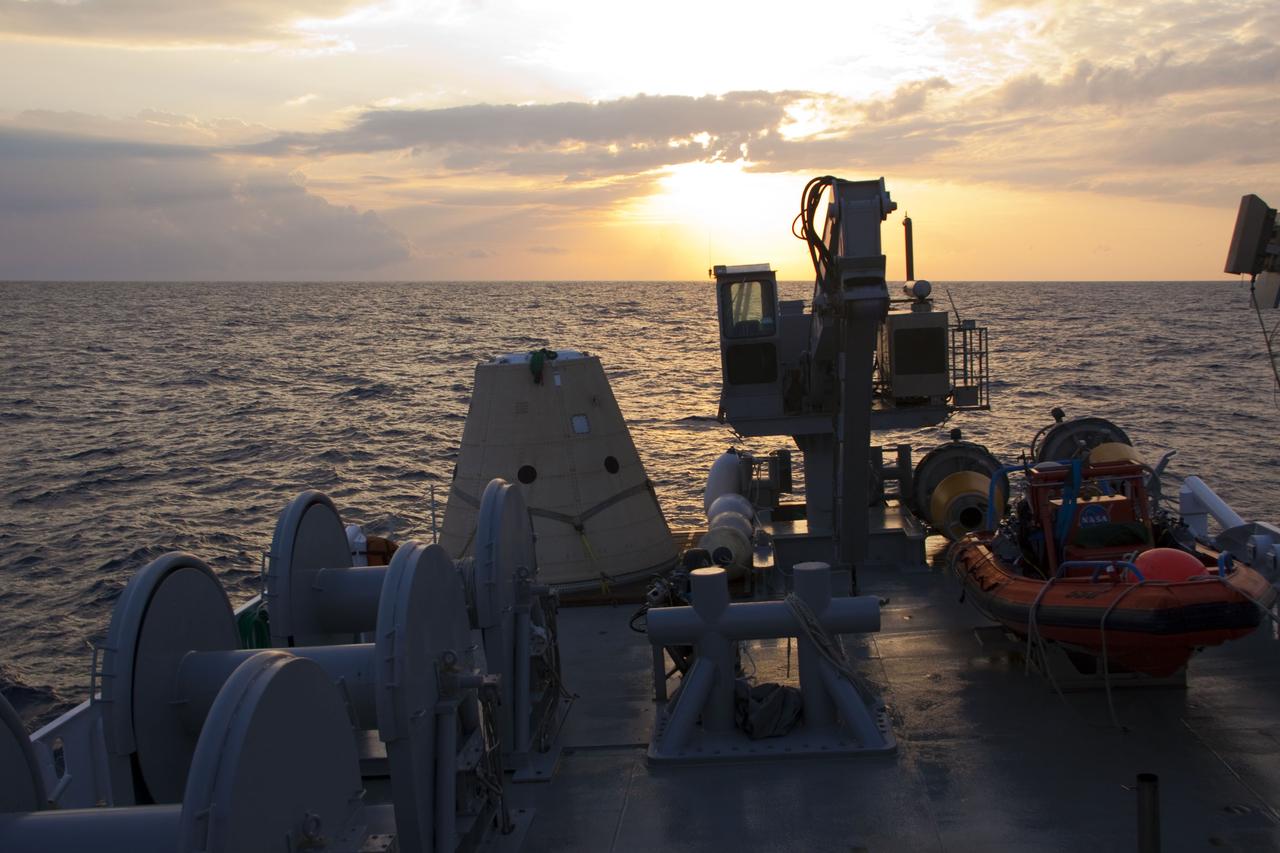
CAPE CANAVERAL, Fla. -- The sun dawns over the Atlantic Ocean and Liberty Star, one of NASA's solid rocket booster retrieval ships, stationed in the Atlantic Ocean, to recover the right spent booster after it splashed down following space shuttle Discovery's final launch. The shuttle’s two solid rocket booster casings and associated flight hardware are recovered in the Atlantic Ocean after every launch by Freedom Star and Liberty Star. The boosters impact the Atlantic about seven minutes after liftoff and the retrieval ships are stationed about 10 miles from the impact area at the time of splashdown. After the spent segments are processed, they will be transported to Utah, where they will be refurbished and stored, if needed. Photo credit: NASA/Frank Michaux
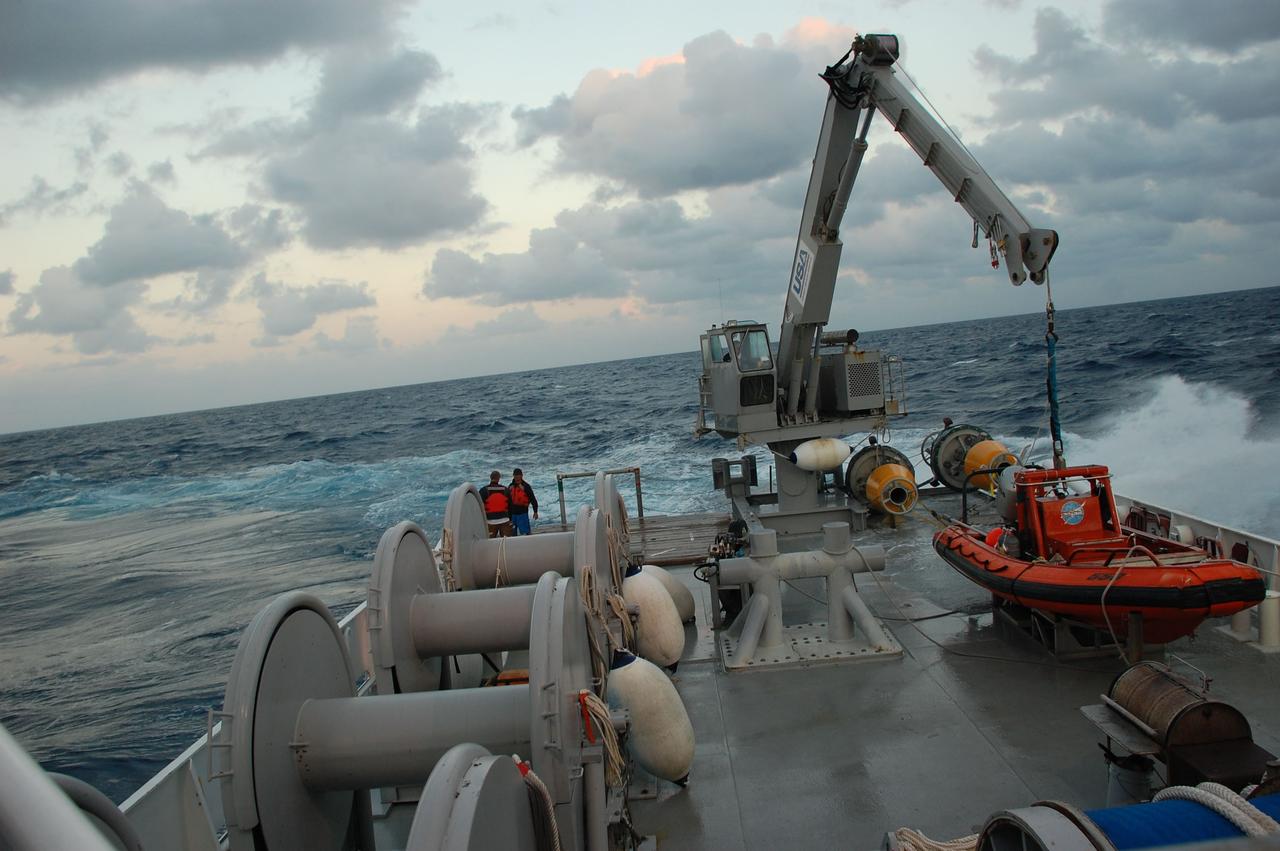
CAPE CANAVERAL, Fla. -- An expanse of ocean is seen on the horizon as Freedom Star, one of NASA's solid rocket booster retrieval ships, set sail to be in position in the Atlantic ocean to recover the spent boosters after space shuttle Discovery's STS-133 launch. The shuttle’s two solid rocket booster casings and associated flight hardware are recovered in the Atlantic Ocean after every launch by Liberty Star and Freedom Star. The boosters impact the Atlantic about seven minutes after liftoff and the retrieval ships are stationed about 10 miles from the impact area at the time of splashdown. After the spent segments are processed, they will be transported to Utah, where they will be refurbished and stored, if needed. Photo credit: NASA/Ben Smegelsky
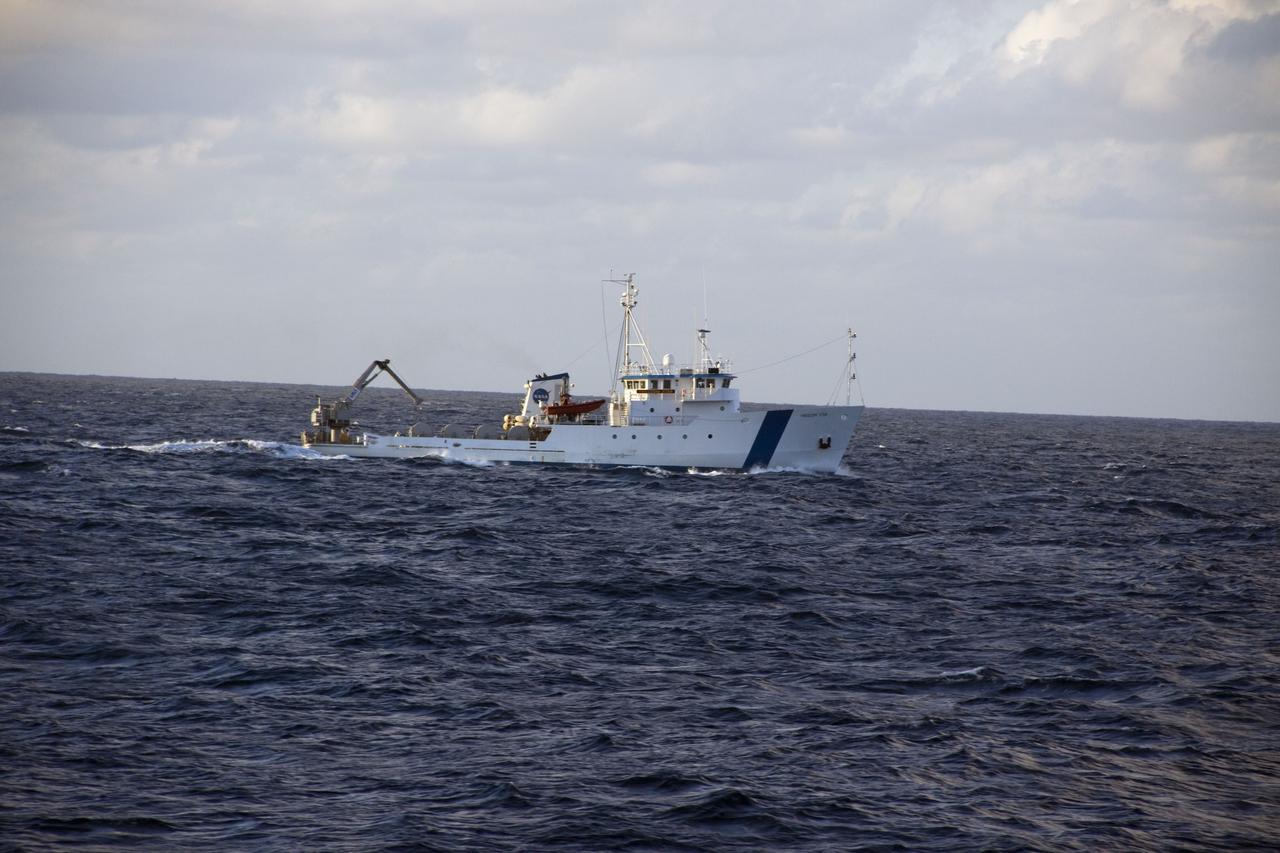
CAPE CANAVERAL, Fla. -- An expanse of ocean is seen on the horizon as Freedom Star, one of NASA's solid rocket booster retrieval ships, set sail to be in position in the Atlantic Ocean to recover the right spent booster that splashed down after space shuttle Discovery's final launch. The shuttle’s two solid rocket booster casings and associated flight hardware are recovered in the Atlantic Ocean after every launch by Freedom Star and Liberty Star. The boosters impact the Atlantic about seven minutes after liftoff and the retrieval ships are stationed about 10 miles from the impact area at the time of splashdown. After the spent segments are processed, they will be transported to Utah, where they will be refurbished and stored, if needed. Photo credit: NASA/Frank Michaux
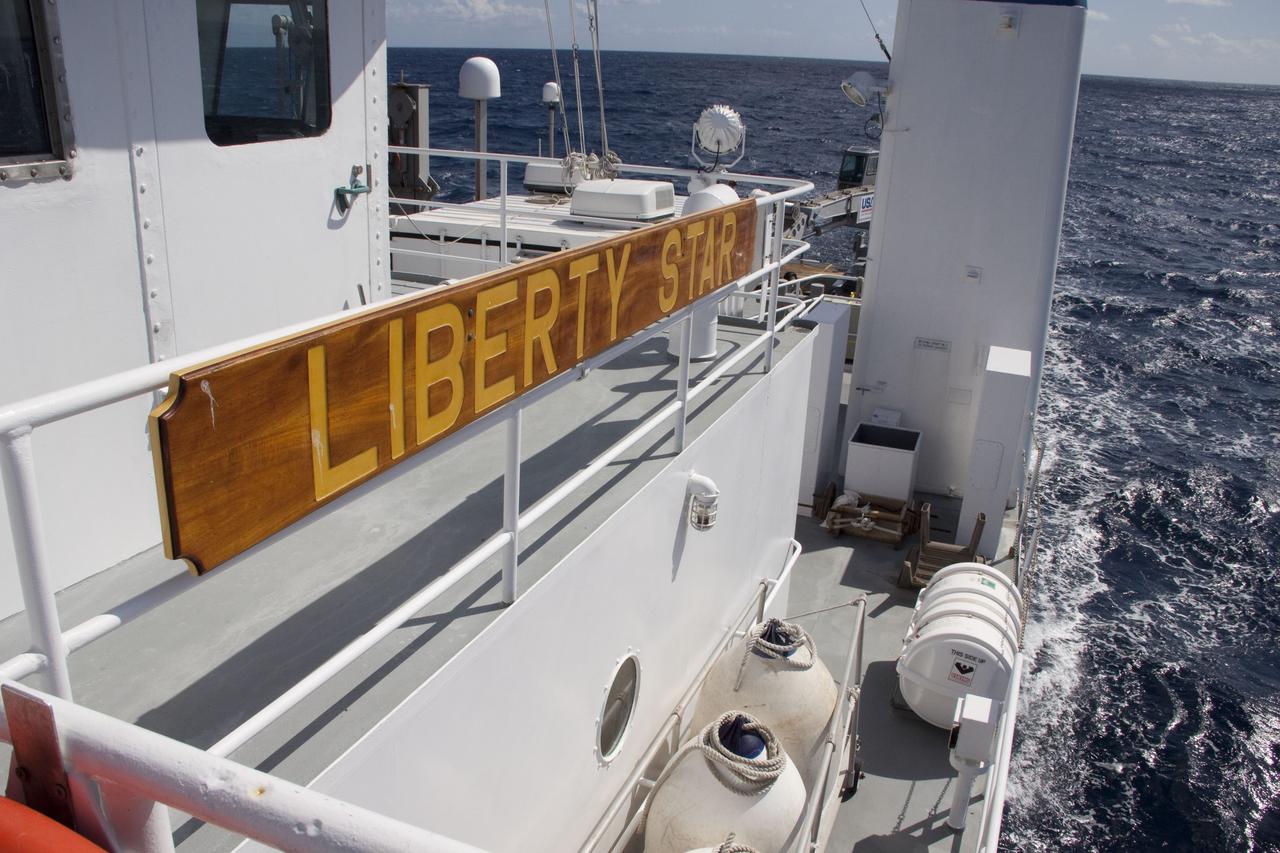
CAPE CANAVERAL, Fla. -- An expanse of ocean is seen on the horizon as Liberty Star, one of NASA's solid rocket booster retrieval ships, set sail to be in position in the Atlantic Ocean to recover the right spent booster that splashed down after space shuttle Discovery's final launch. The shuttle’s two solid rocket booster casings and associated flight hardware are recovered in the Atlantic Ocean after every launch by Freedom Star and Liberty Star. The boosters impact the Atlantic about seven minutes after liftoff and the retrieval ships are stationed about 10 miles from the impact area at the time of splashdown. After the spent segments are processed, they will be transported to Utah, where they will be refurbished and stored, if needed. Photo credit: NASA/Frank Michaux
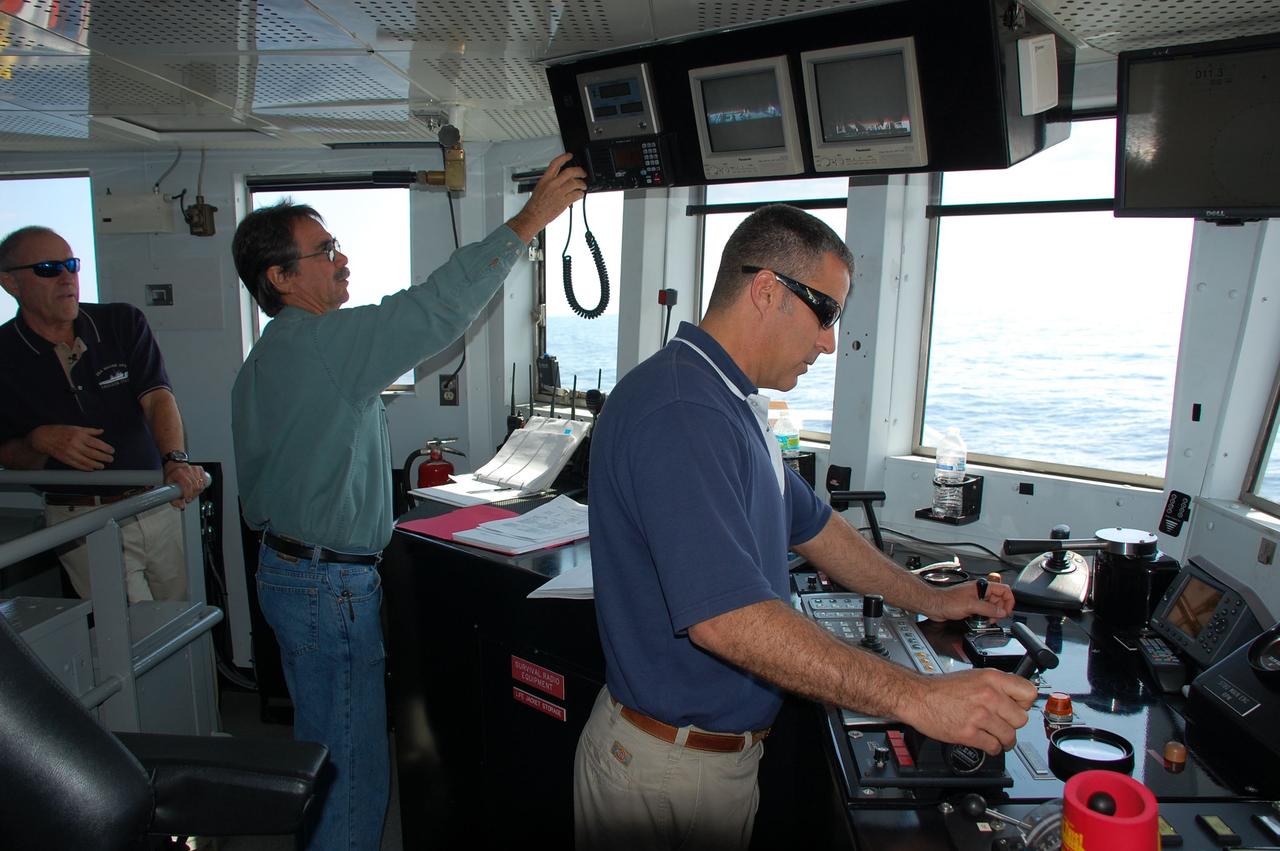
CAPE CANAVERAL, Fla. -- Captain Michael Nicholas mans the helm of Freedom Star, one of NASA's solid rocket booster retrieval ships, while John Fischbeck, Manager of Vessel Operations and Senior SRB Retrieval Supervisor, and Walt Adams, SRB Retrieval and Dive Supervisor, assist. The ship's crew members are recovering the left spent booster bobbing in the Atlantic Ocean from space shuttle Discovery's STS-133 launch. The shuttle’s two solid rocket booster casings and associated flight hardware are recovered in the Atlantic Ocean after every launch by Liberty Star and Freedom Star. The boosters impact the Atlantic about seven minutes after liftoff and the retrieval ships are stationed about 10 miles from the impact area at the time of splashdown. After the spent segments are processed, they will be transported to Utah, where they will be refurbished and stored, if needed. Photo credit: NASA/Ben Smegelsky
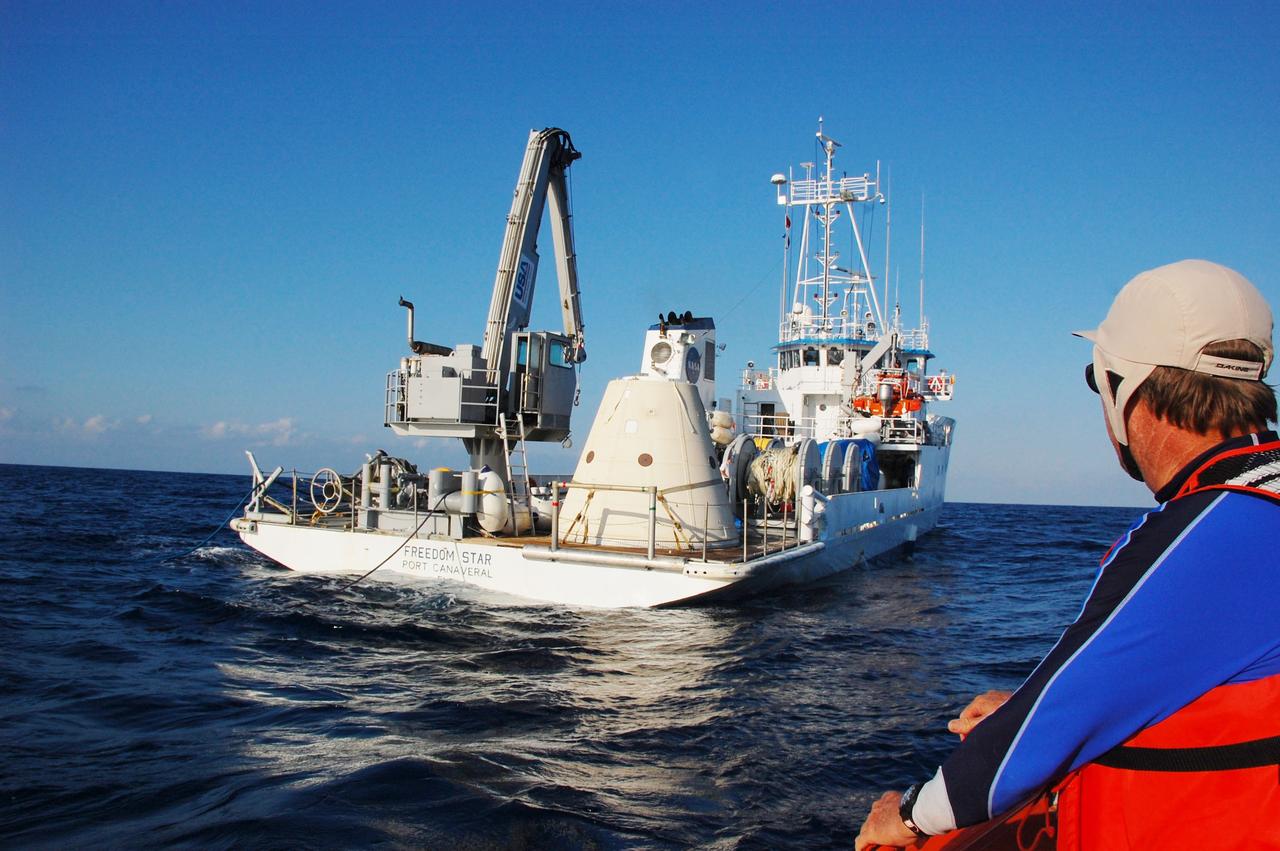
CAPE CANAVERAL, Fla. -- Crew members in a skiff from Freedom Star, one of NASA's solid rocket booster retrieval ships, look back at the vessel toward the left spent booster nose cap, which was recovered from the Atlantic Ocean and now secured on the deck for delivery back to Port Canaveral in Florida. The shuttle’s two solid rocket booster casings and associated flight hardware are recovered in the Atlantic Ocean after every launch by Liberty Star and Freedom Star. The boosters impact the Atlantic about seven minutes after liftoff and the retrieval ships are stationed about 10 miles from the impact area at the time of splashdown. After the spent segments are processed, they will be transported to Utah, where they will be refurbished and stored, if needed. Photo credit: NASA/Ben Smegelsky
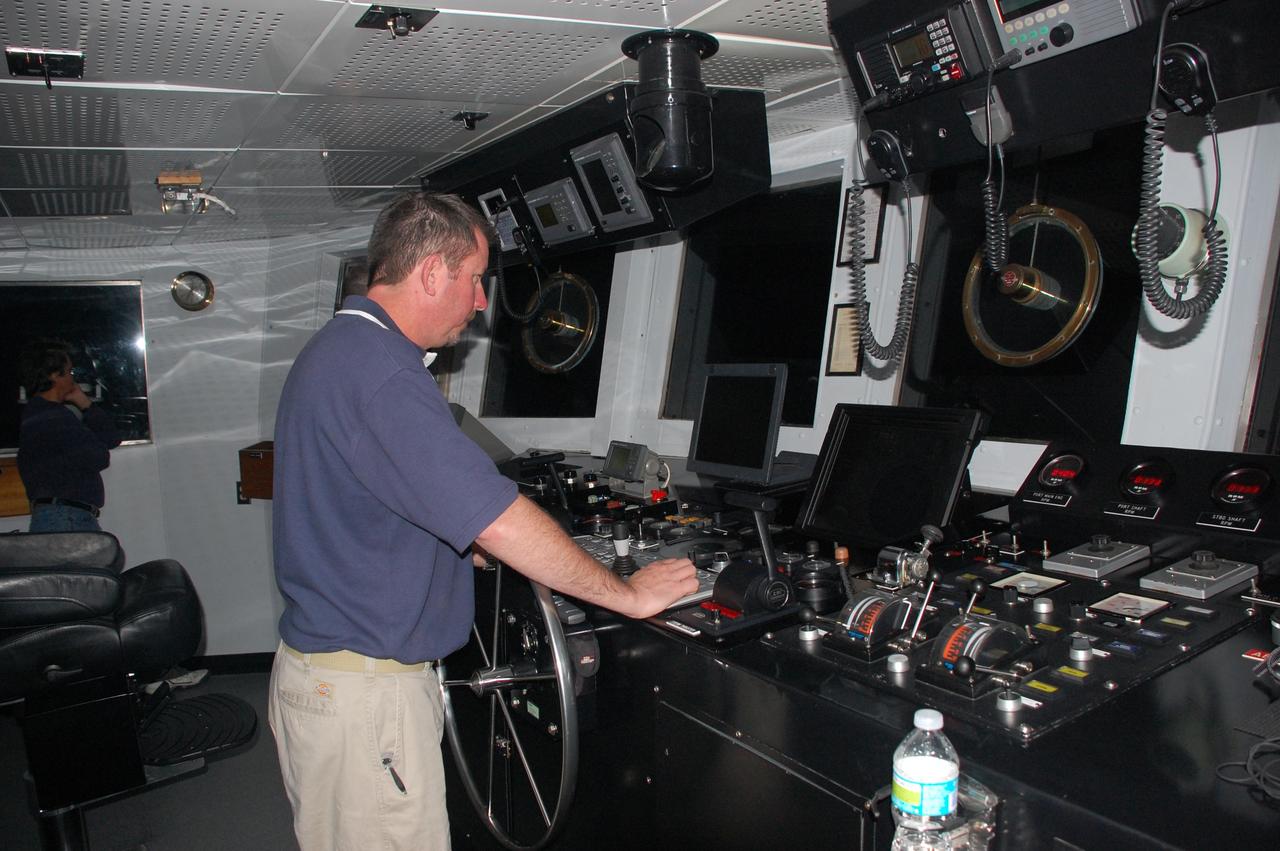
CAPE CANAVERAL, Fla. -- Chief Mate Jamie Harris is steering Freedom Star, one of NASA's solid rocket booster retrieval ships in the direction of the left spent booster that splashed down into the Atlantic Ocean after space shuttle Discovery's STS-133 launch. The shuttle’s two solid rocket booster casings and associated flight hardware are recovered in the Atlantic Ocean after every launch by Liberty Star and Freedom Star. The boosters impact the Atlantic about seven minutes after liftoff and the retrieval ships are stationed about 10 miles from the impact area at the time of splashdown. After the spent segments are processed, they will be transported to Utah, where they will be refurbished and stored, if needed. Photo credit: NASA/Ben Smegelsky
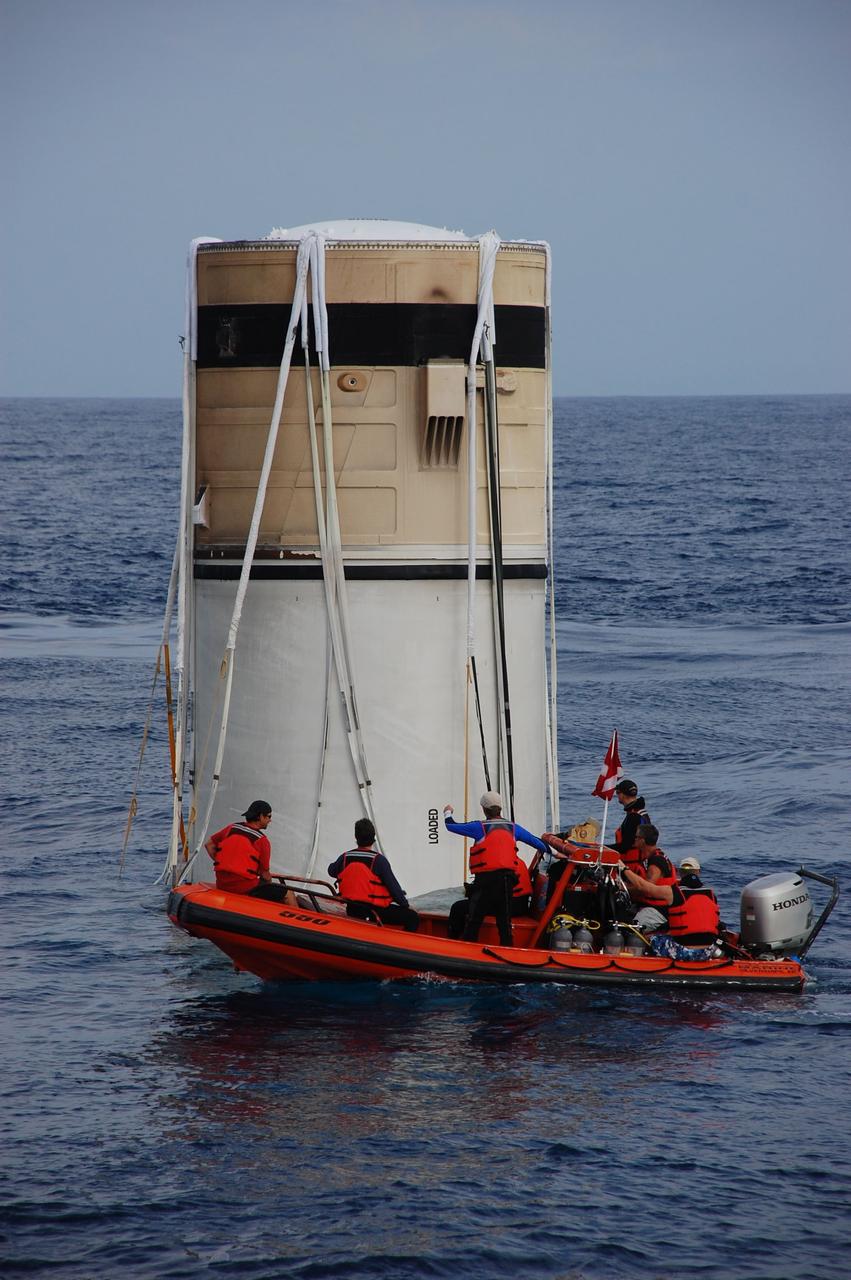
CAPE CANAVERAL, Fla. -- Crew members from Freedom Star, one of NASA's solid rocket booster retrieval ships, use a skiff to approach the left spent booster bobbing in the Atlantic Ocean after space shuttle Discovery's STS-133 launch. The shuttle’s two solid rocket booster casings and associated flight hardware are recovered in the Atlantic Ocean after every launch by Liberty Star and Freedom Star. The boosters impact the Atlantic about seven minutes after liftoff and the retrieval ships are stationed about 10 miles from the impact area at the time of splashdown. After the spent segments are processed, they will be transported to Utah, where they will be refurbished and stored, if needed. Photo credit: NASA/Ben Smegelsky
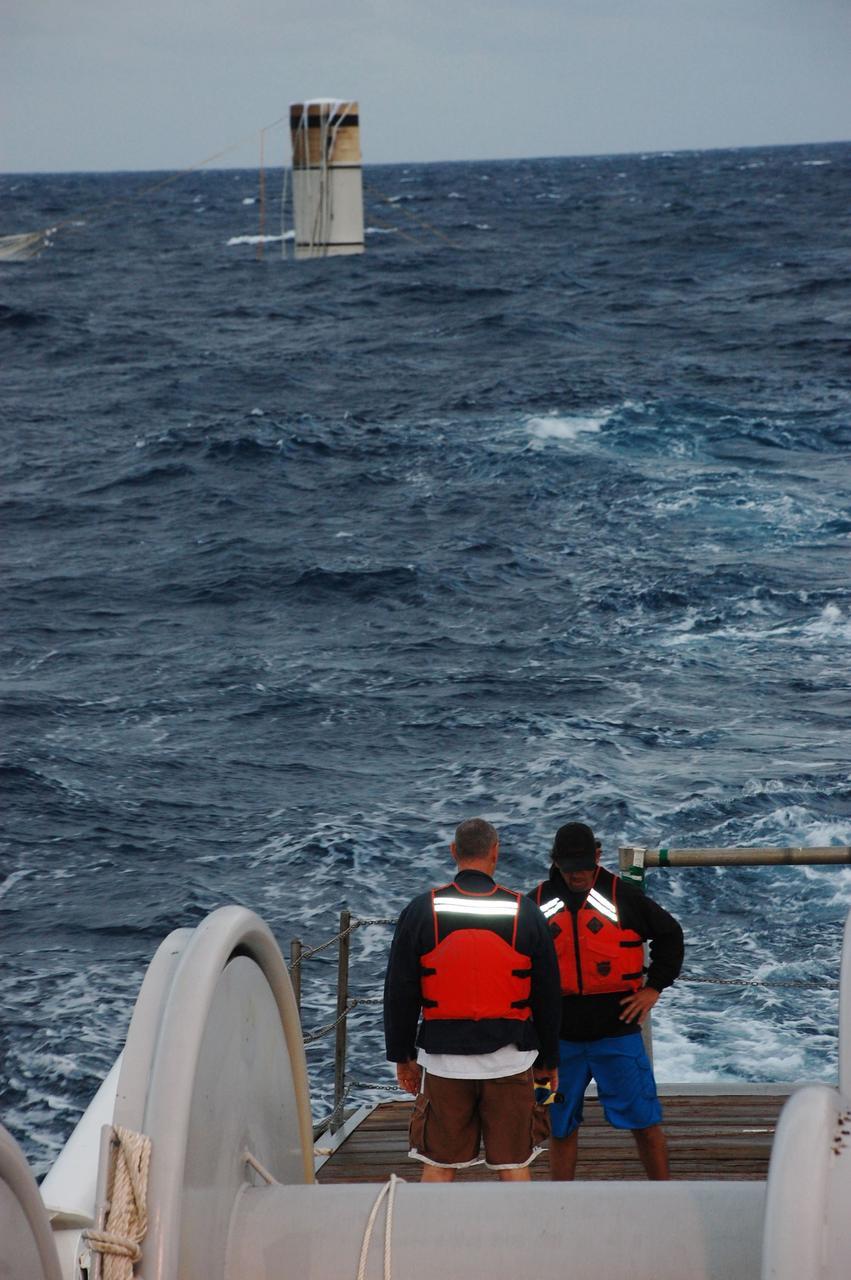
CAPE CANAVERAL, Fla. -- Part of a spent booster is seen in the background bobbing in the Atlantic Ocean as deck hands on Freedom Star, one of NASA's solid rocket booster retrieval vessel prepare to recover it after space shuttle Discovery's STS-133 launch. The shuttle’s two solid rocket booster casings and associated flight hardware are recovered in the Atlantic Ocean after every launch by Liberty Star and Freedom Star. The boosters impact the Atlantic about seven minutes after liftoff and the retrieval ships are stationed about 10 miles from the impact area at the time of splashdown. After the spent segments are processed, they will be transported to Utah, where they will be refurbished and stored, if needed. Photo credit: NASA/Ben Smegelsky
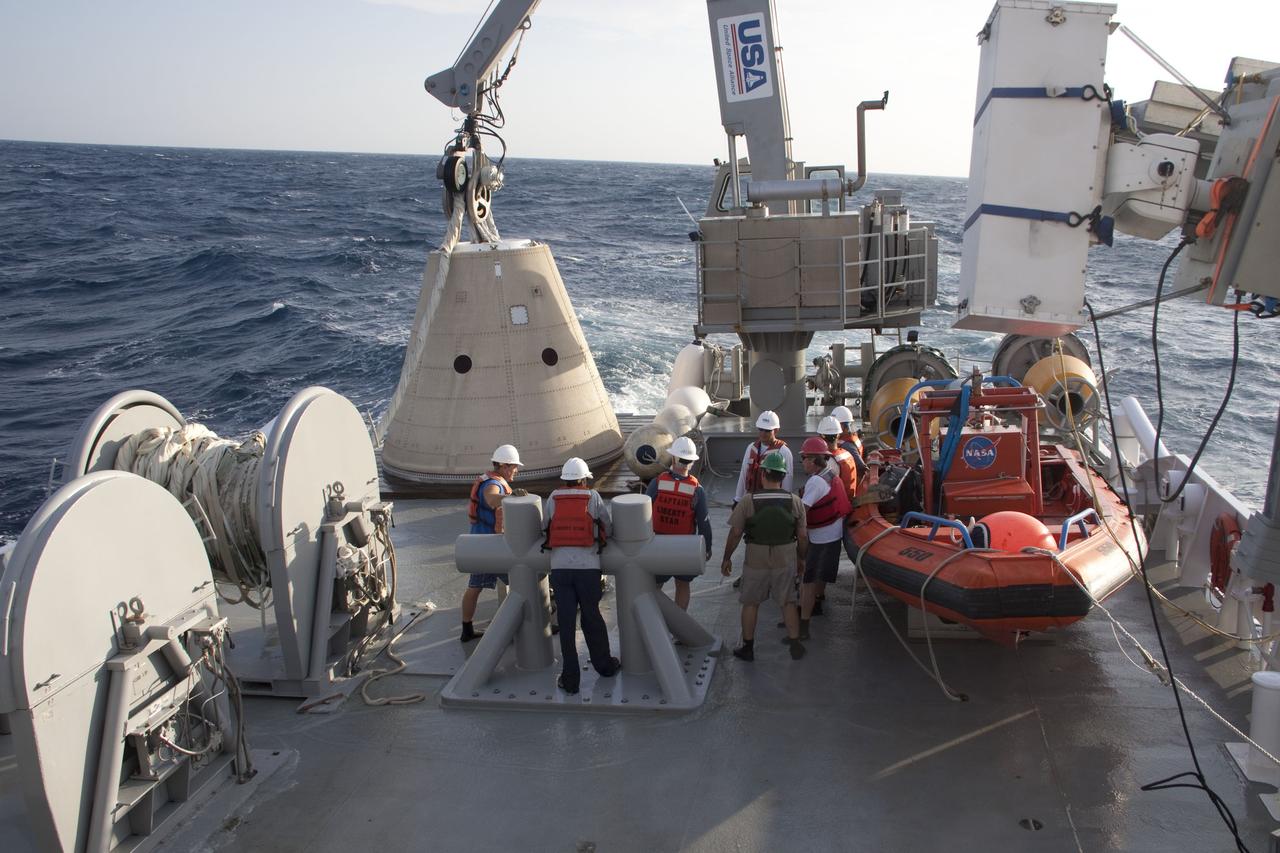
CAPE CANAVERAL, Fla. -- Crew members from Liberty Star, one of NASA's solid rocket booster retrieval ships, have recovered and secured the right spent booster nose cap to a pallet on the ship's deck that was recovered from the Atlantic Ocean after Discovery's final launch. The shuttle’s two solid rocket booster casings and associated flight hardware are recovered in the Atlantic Ocean after every launch by Freedom Star and Liberty Star. The boosters impact the Atlantic about seven minutes after liftoff and the retrieval ships are stationed about 10 miles from the impact area at the time of splashdown. After the spent segments are processed, they will be transported to Utah, where they will be refurbished and stored, if needed. Photo credit: NASA/Frank Michaux
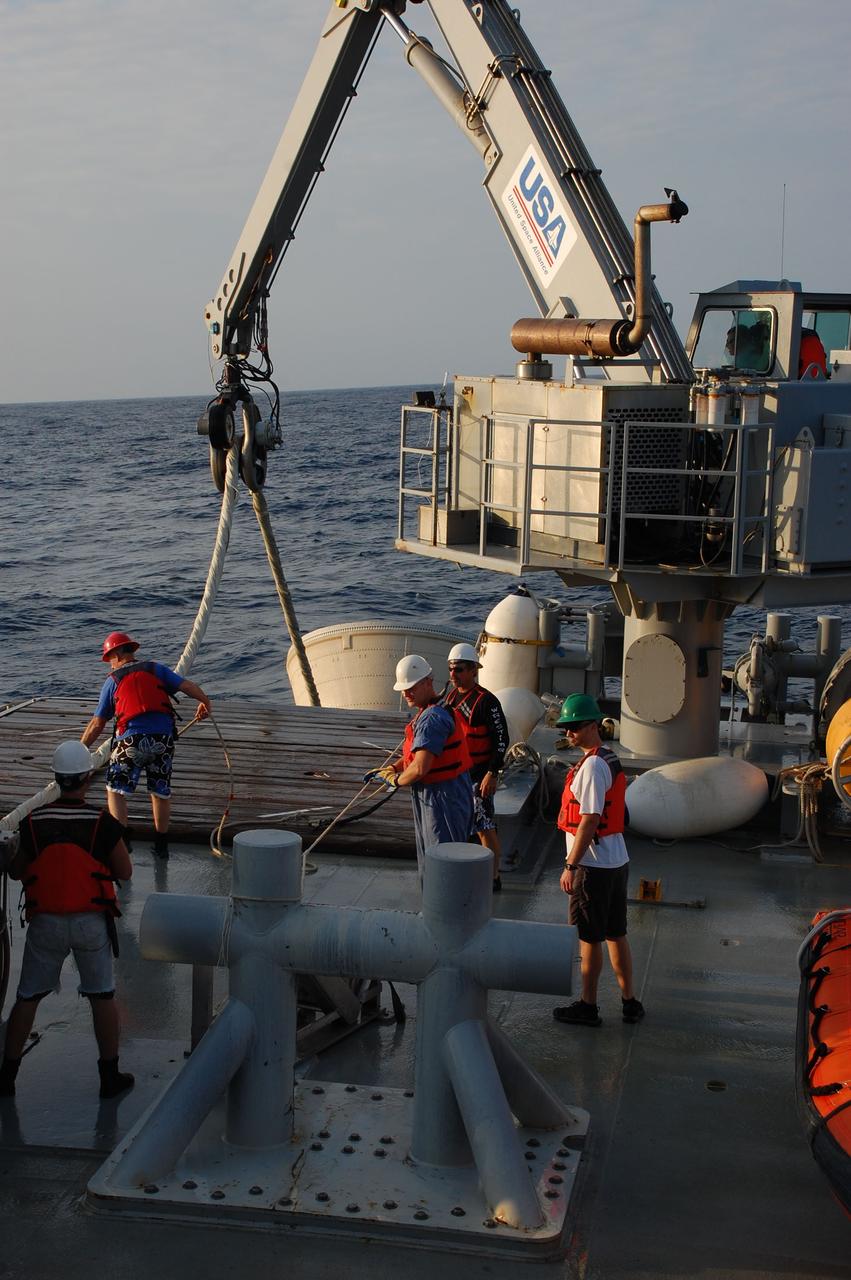
CAPE CANAVERAL, Fla. -- Crew members from Freedom Star, one of NASA's solid rocket booster retrieval ships, use a crane to pull the left spent booster nose cap out of the Atlantic Ocean after space shuttle Discovery's STS-133 launch. The shuttle’s two solid rocket booster casings and associated flight hardware are recovered in the Atlantic Ocean after every launch by Liberty Star and Freedom Star. The boosters impact the Atlantic about seven minutes after liftoff and the retrieval ships are stationed about 10 miles from the impact area at the time of splashdown. After the spent segments are processed, they will be transported to Utah, where they will be refurbished and stored, if needed. Photo credit: NASA/Ben Smegelsky
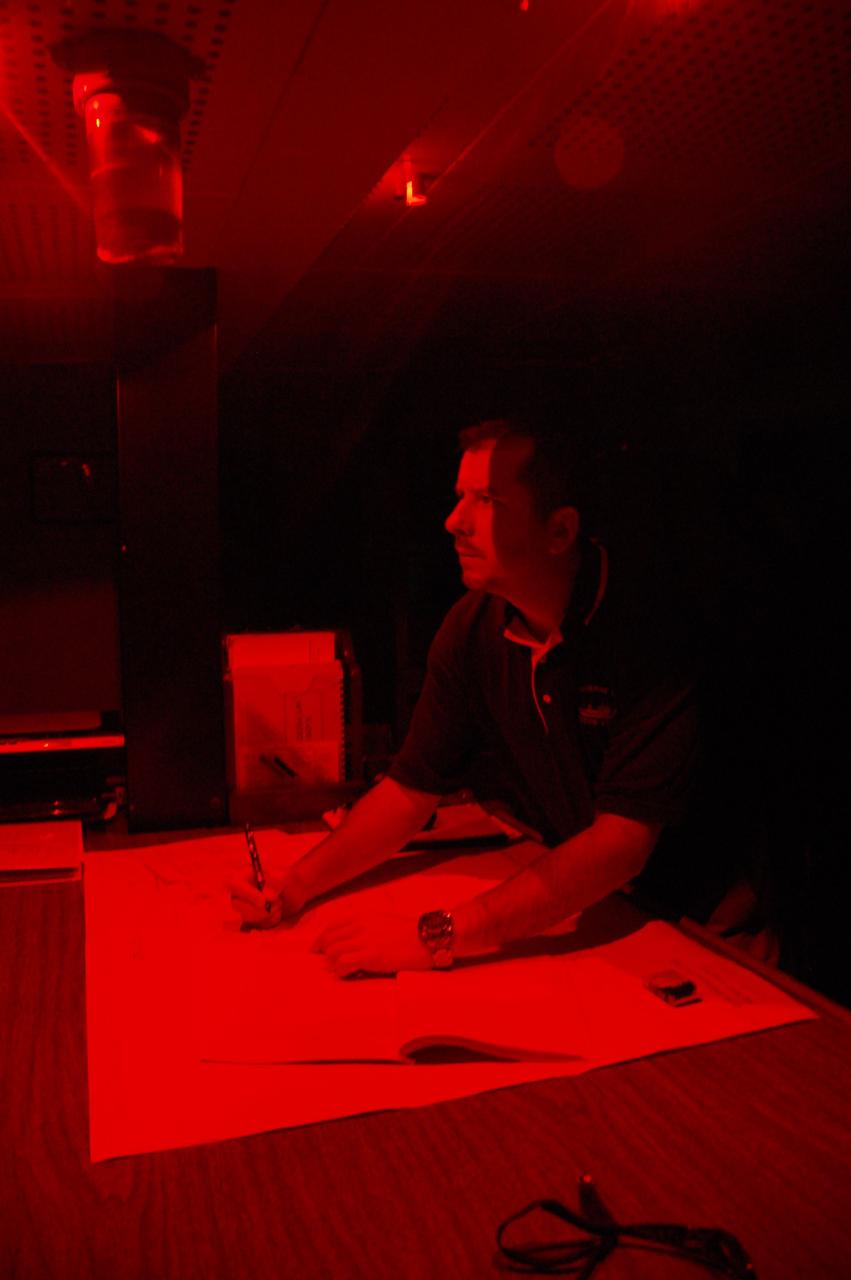
CAPE CANAVERAL, Fla. -- Chief Mate Jamie Harris works at the chart table on the bridge at night under a red light so as not to compromise night vision on Freedom Star, one of NASA's solid rocket booster retrieval ships plotting a course in the direction of the left spent booster that splashed down into the Atlantic Ocean after space shuttle Discovery's STS-133 launch. The shuttle’s two solid rocket booster casings and associated flight hardware are recovered in the Atlantic Ocean after every launch by Liberty Star and Freedom Star. The boosters impact the Atlantic about seven minutes after liftoff and the retrieval ships are stationed about 10 miles from the impact area at the time of splashdown. After the spent segments are processed, they will be transported to Utah, where they will be refurbished and stored, if needed. Photo credit: NASA/Ben Smegelsky
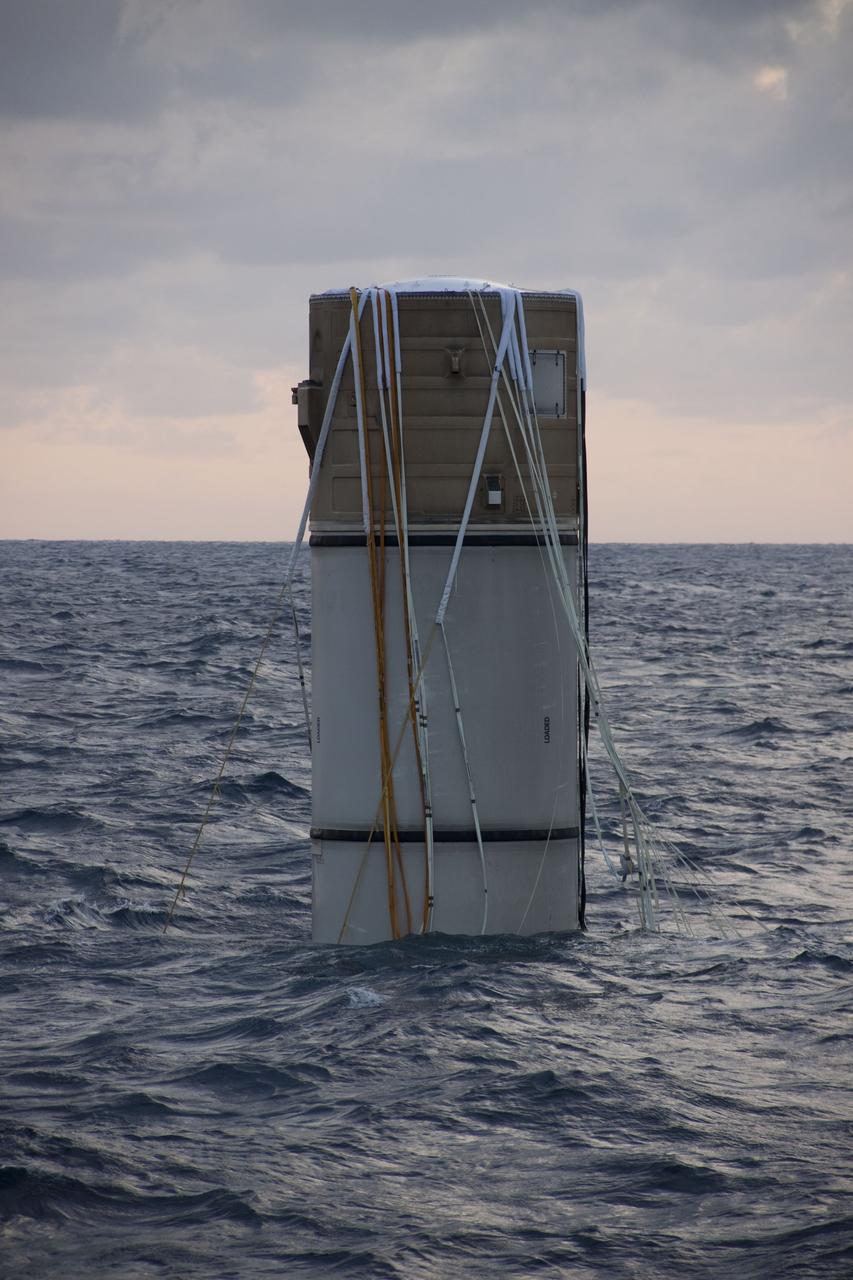
CAPE CANAVERAL, Fla. -- The right spent booster from shuttle Discovery's final launch is seen bobbing in the Atlantic Ocean. Crew members from Liberty Star, one of NASA's solid rocket booster retrieval ships, will recover the parachute and tow the booster back to Port Canaveral in Florida. The shuttle’s two solid rocket booster casings and associated flight hardware are recovered in the Atlantic Ocean after every launch by Freedom Star and Liberty Star. The boosters impact the Atlantic about seven minutes after liftoff and the retrieval ships are stationed about 10 miles from the impact area at the time of splashdown. After the spent segments are processed, they will be transported to Utah, where they will be refurbished and stored, if needed. Photo credit: NASA/Frank Michaux
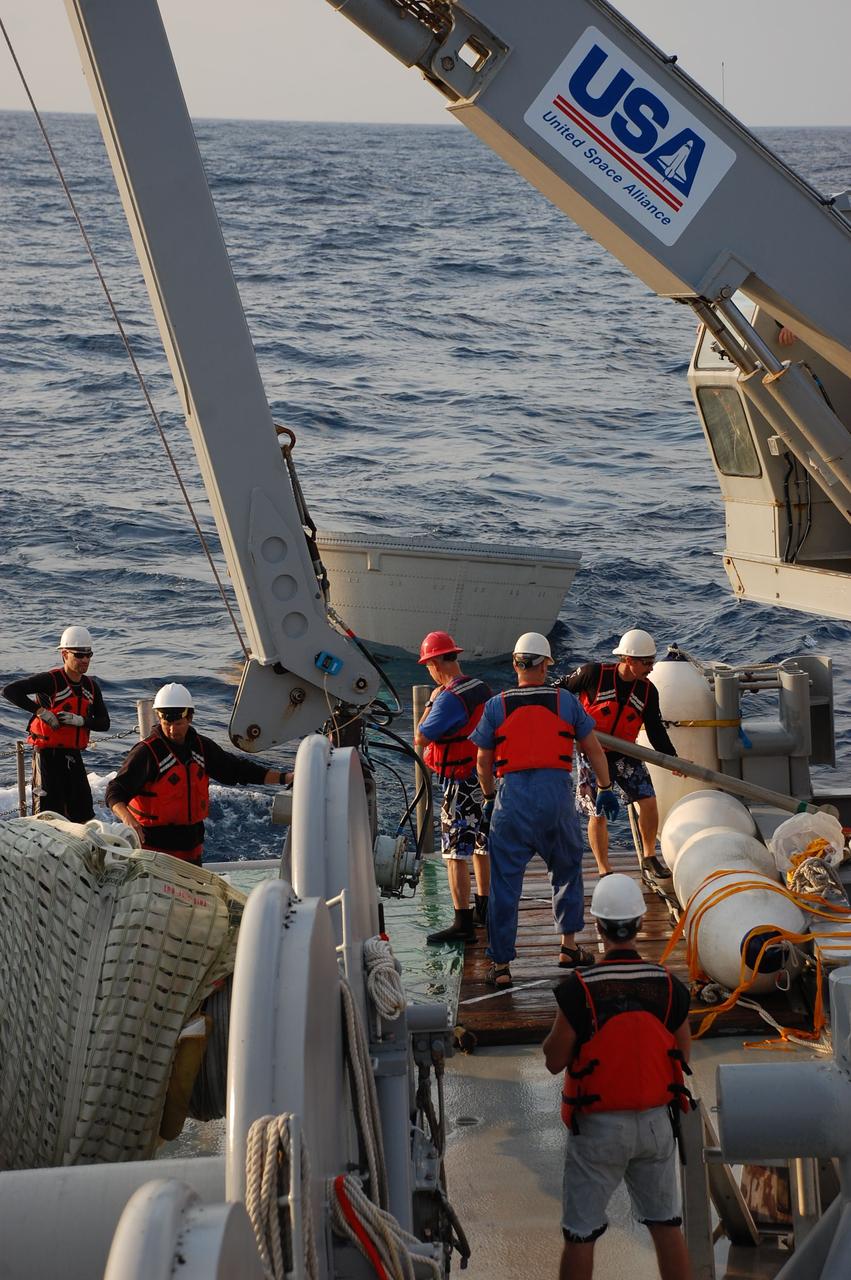
CAPE CANAVERAL, Fla. -- Crew members from Freedom Star, one of NASA's solid rocket booster retrieval ships, recover the left spent booster nose cap from the Atlantic Ocean after space shuttle Discovery's STS-133 launch. The shuttle’s two solid rocket booster casings and associated flight hardware are recovered in the Atlantic Ocean after every launch by Liberty Star and Freedom Star. The boosters impact the Atlantic about seven minutes after liftoff and the retrieval ships are stationed about 10 miles from the impact area at the time of splashdown. After the spent segments are processed, they will be transported to Utah, where they will be refurbished and stored, if needed. Photo credit: NASA/Ben Smegelsky
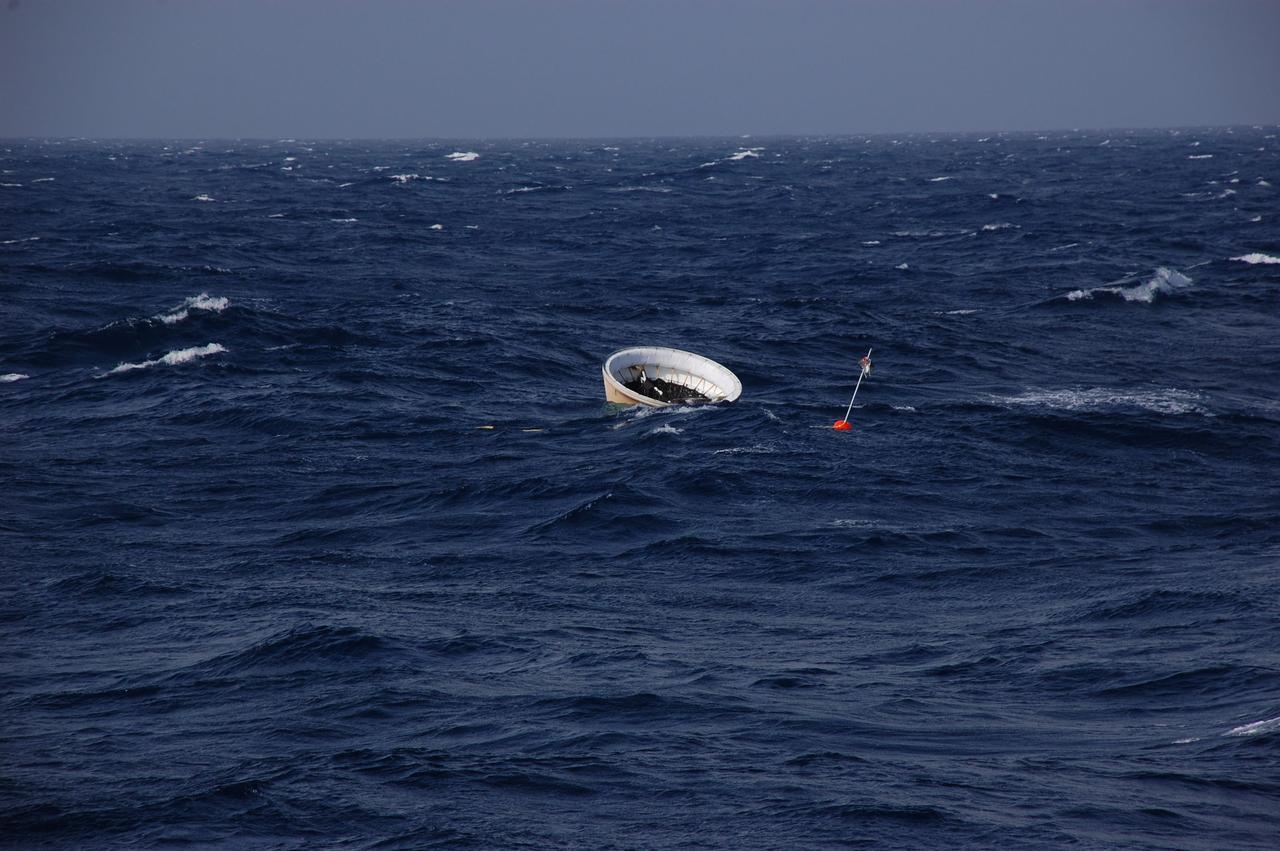
CAPE CANAVERAL, Fla. -- After splashing down, the nose cap of the left spent booster bobs in the Atlantic Ocean as Freedom Star, one of NASA's solid rocket booster retrieval ships makes its way closer for recovery following space shuttle Discovery's STS-133 launch. The shuttle’s two solid rocket booster casings and associated flight hardware are recovered in the Atlantic Ocean after every launch by Liberty Star and Freedom Star. The boosters impact the Atlantic about seven minutes after liftoff and the retrieval ships are stationed about 10 miles from the impact area at the time of splashdown. After the spent segments are processed, they will be transported to Utah, where they will be refurbished and stored, if needed. Photo credit: NASA/Ben Smegelsky
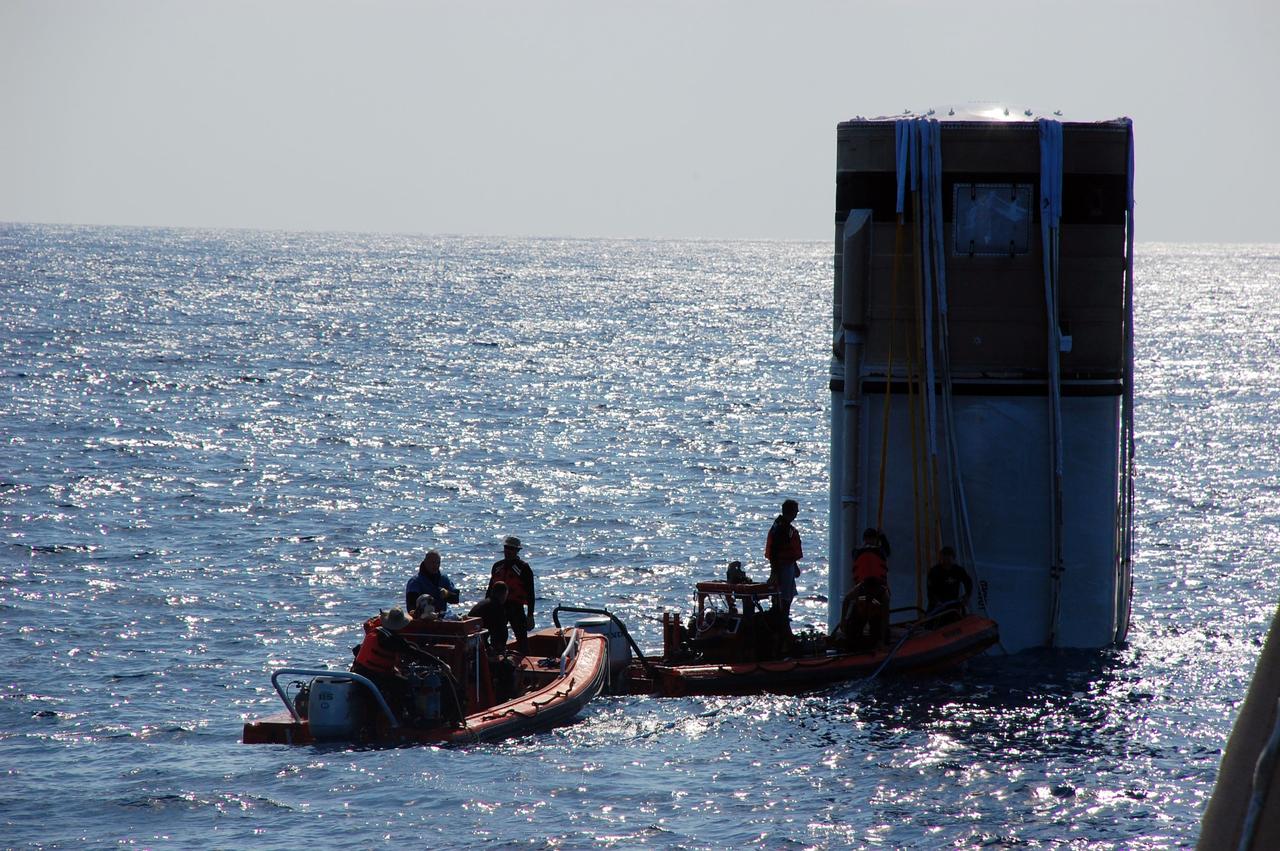
CAPE CANAVERAL, Fla. -- Crew members from Freedom Star, one of NASA's solid rocket booster retrieval ships, approach the left spent booster bobbing in the Atlantic Ocean to attach a hose that will facilitate debris and water clearing and the pumping in of air so the booster can float horizontally on the water's surface for towing back to Port Canaveral in Florida. The shuttle’s two solid rocket booster casings and associated flight hardware are recovered in the Atlantic Ocean after every launch by Liberty Star and Freedom Star. The boosters impact the Atlantic about seven minutes after liftoff and the retrieval ships are stationed about 10 miles from the impact area at the time of splashdown. After the spent segments are processed, they will be transported to Utah, where they will be refurbished and stored, if needed. Photo credit: NASA/Ben Smegelsky
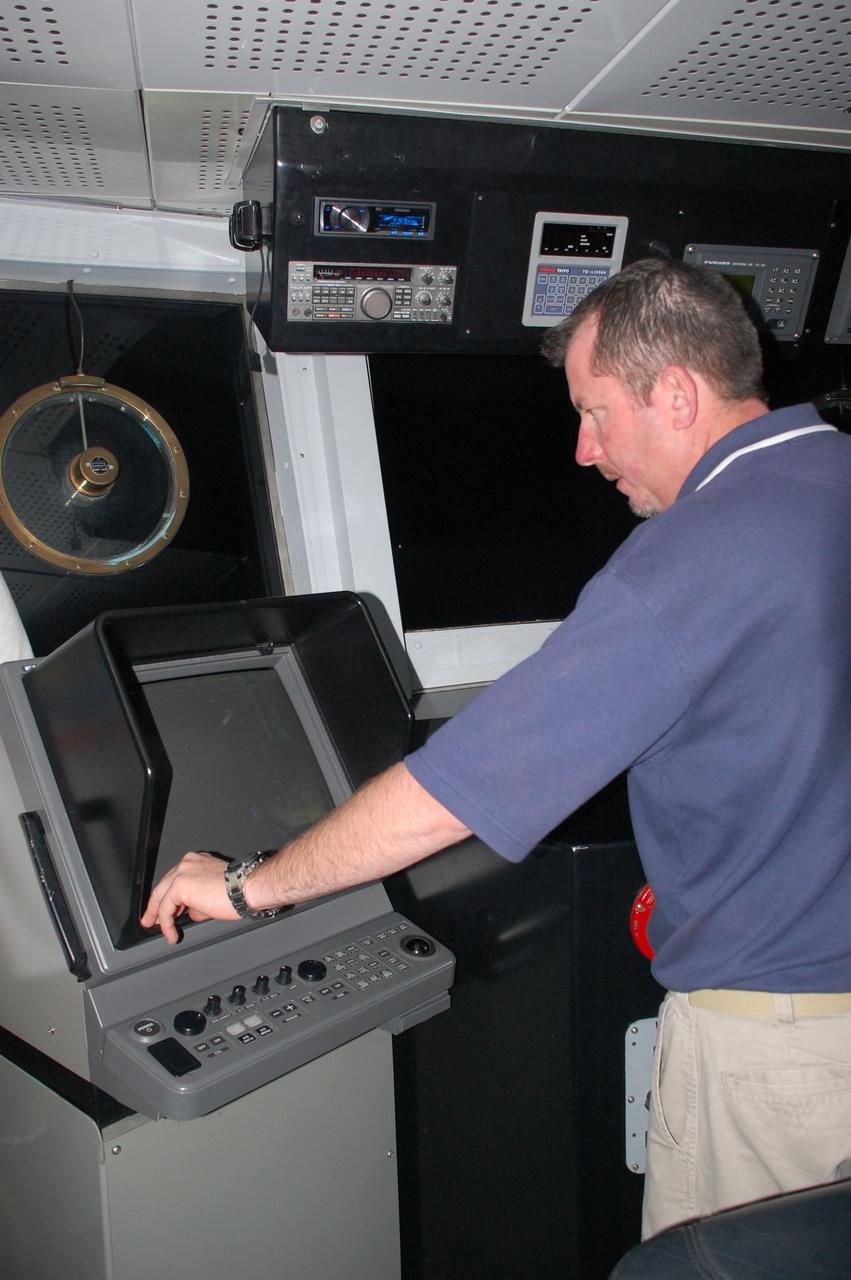
CAPE CANAVERAL, Fla. -- Chief Mate Jamie Harris is steering Freedom Star, one of NASA's solid rocket booster retrieval ships in the direction of the left spent booster that splashed down into the Atlantic Ocean after space shuttle Discovery's STS-133 launch. The shuttle’s two solid rocket booster casings and associated flight hardware are recovered in the Atlantic Ocean after every launch by Liberty Star and Freedom Star. The boosters impact the Atlantic about seven minutes after liftoff and the retrieval ships are stationed about 10 miles from the impact area at the time of splashdown. After the spent segments are processed, they will be transported to Utah, where they will be refurbished and stored, if needed. Photo credit: NASA/Ben Smegelsky
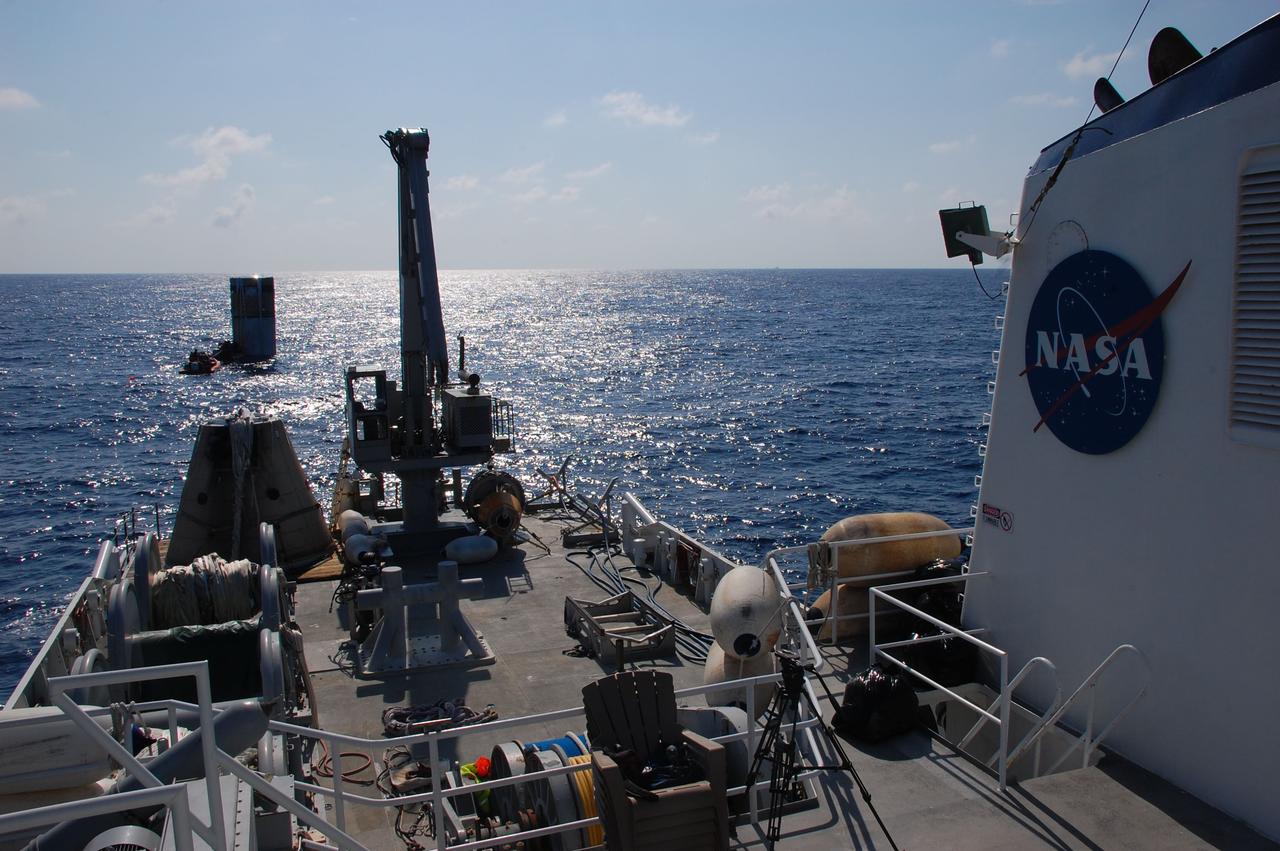
CAPE CANAVERAL, Fla. -- Freedom Star, one of NASA's solid rocket booster retrieval ships, waits for crew members near the left spent booster bobbing in the Atlantic Ocean to attach a hose between it and the vessel that will facilitate debris and water clearing and the pumping in of air so the booster can float horizontally on the water's surface for towing back to Port Canaveral in Florida. The shuttle’s two solid rocket booster casings and associated flight hardware are recovered in the Atlantic Ocean after every launch by Liberty Star and Freedom Star. The boosters impact the Atlantic about seven minutes after liftoff and the retrieval ships are stationed about 10 miles from the impact area at the time of splashdown. After the spent segments are processed, they will be transported to Utah, where they will be refurbished and stored, if needed. Photo credit: NASA/Ben Smegelsky
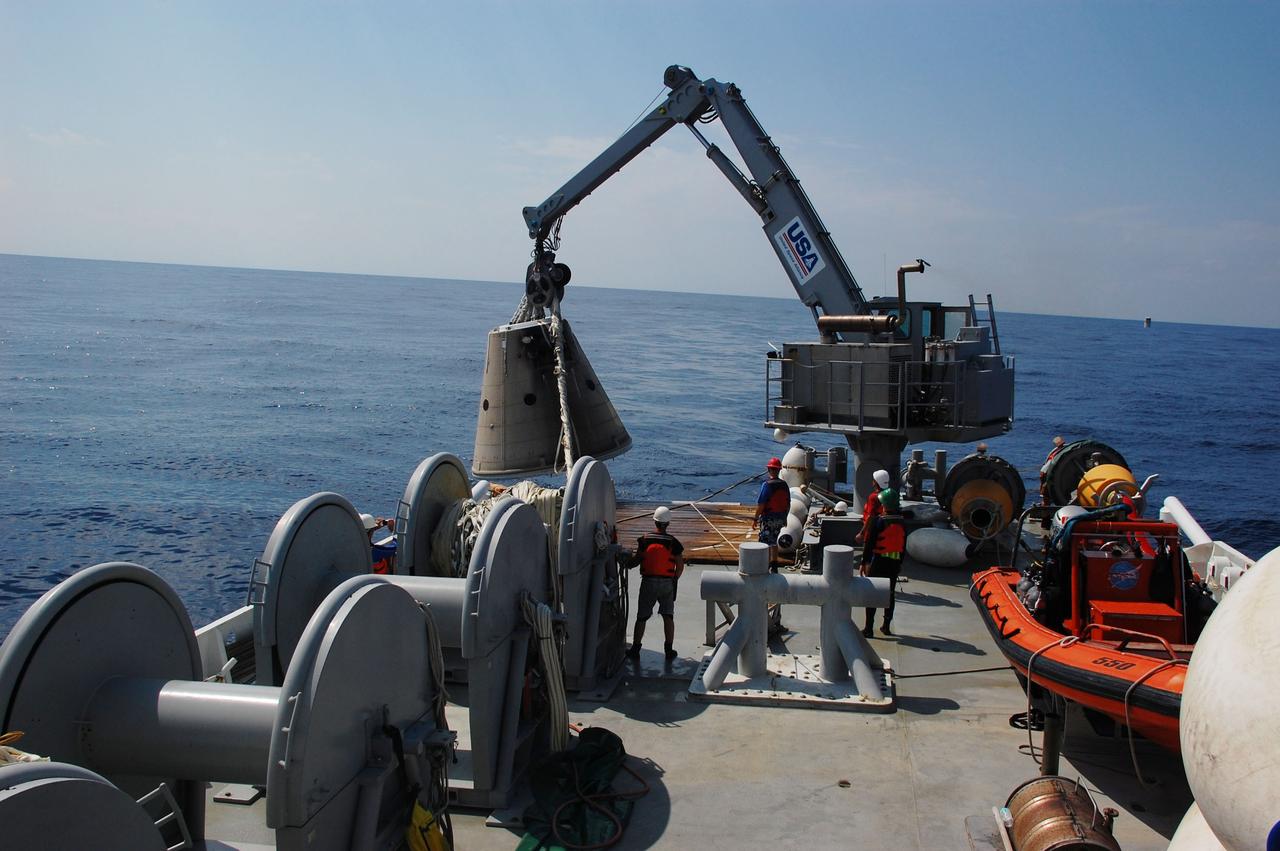
CAPE CANAVERAL, Fla. -- A crane on Freedom Star, one of NASA's solid rocket booster retrieval ships, heaves a spent booster nose cap from the from out of the Atlantic Ocean and onto the deck after space shuttle Discovery's final launch. The shuttle’s two solid rocket booster casings and associated flight hardware are recovered in the Atlantic Ocean after every launch by Liberty Star and Freedom Star. The boosters impact the Atlantic about seven minutes after liftoff and the retrieval ships are stationed about 10 miles from the impact area at the time of splashdown. After the spent segments are processed, they will be transported to Utah, where they will be refurbished and stored, if needed. Photo credit: NASA/Ben Smegelsky
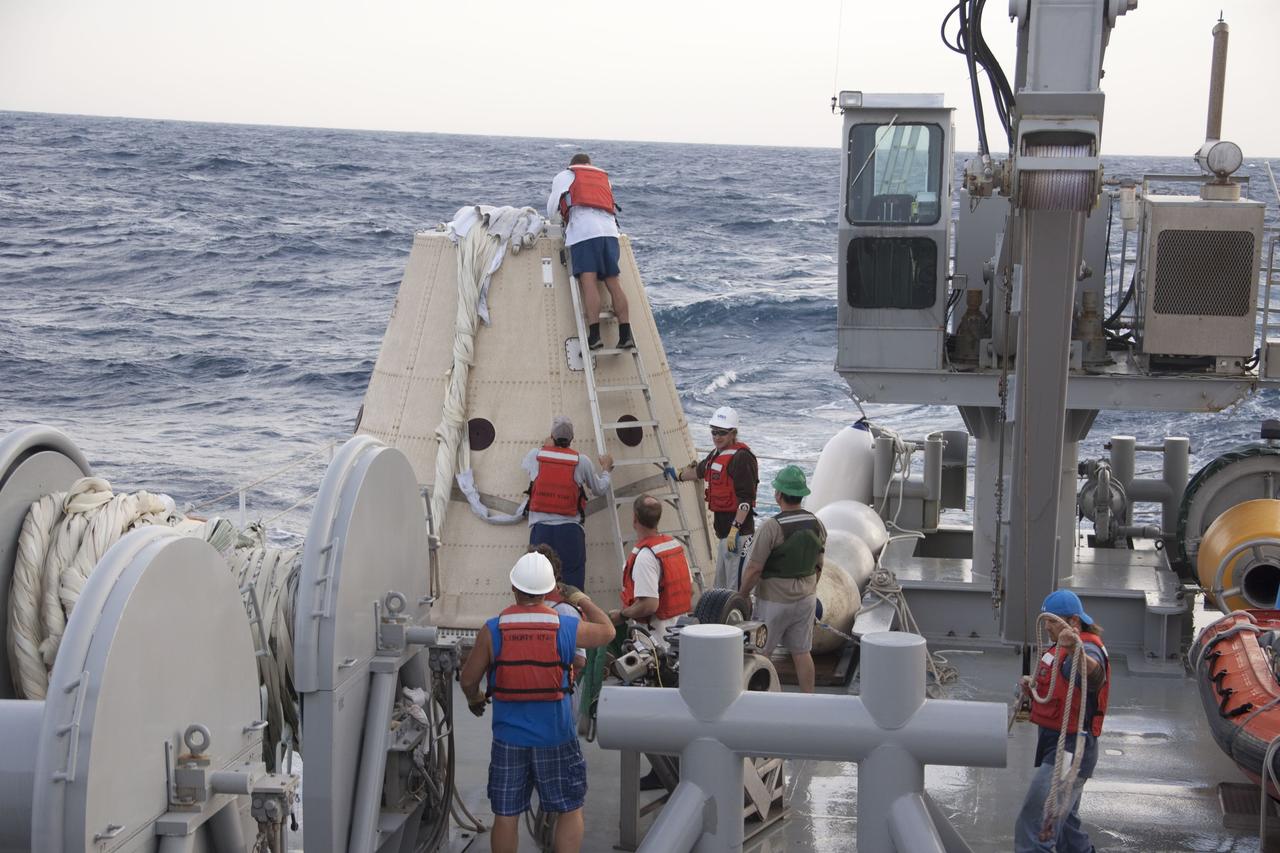
CAPE CANAVERAL, Fla. -- Crew members from Liberty Star, one of NASA's solid rocket booster retrieval ships, work on the parachute from the right spent booster nose cap that splashed down in the Atlantic Ocean after Discovery's final launch. The shuttle’s two solid rocket booster casings and associated flight hardware are recovered in the Atlantic Ocean after every launch by Freedom Star and Liberty Star. The boosters impact the Atlantic about seven minutes after liftoff and the retrieval ships are stationed about 10 miles from the impact area at the time of splashdown. After the spent segments are processed, they will be transported to Utah, where they will be refurbished and stored, if needed. Photo credit: NASA/Frank Michaux
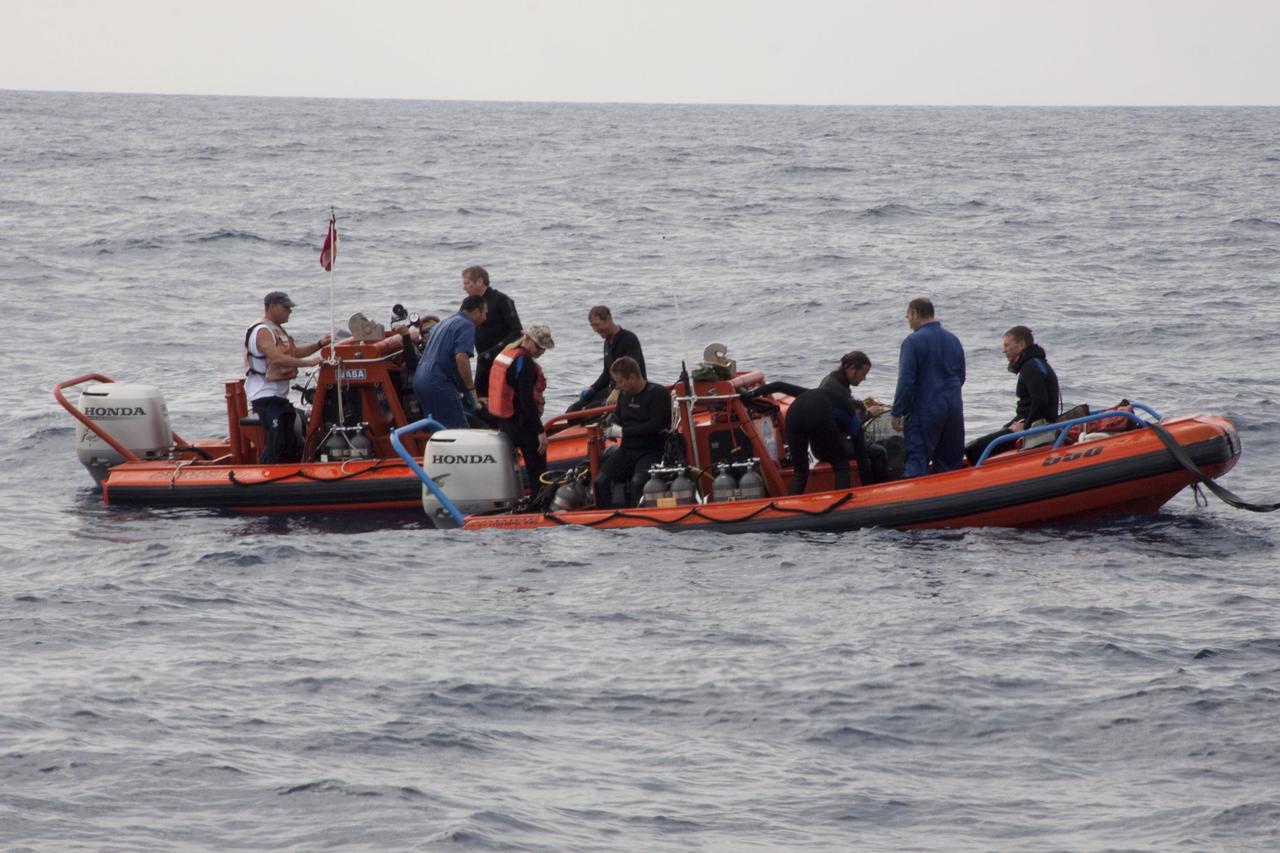
CAPE CANAVERAL, Fla. -- Crew members and divers in skiffs from Liberty Star, one of NASA's solid rocket booster retrieval ships, are prepared to retrieve the parachute lines from the right spent booster bobbing in the Atlantic Ocean from space shuttle Discovery's final launch. The shuttle's two solid rocket booster casings and associated flight hardware are recovered in the Atlantic Ocean after every launch by Freedom Star and Liberty Star. The boosters impact the Atlantic about seven minutes after liftoff and the retrieval ships are stationed about 10 miles from the impact area at the time of splashdown. After the spent segments are processed, they will be transported to Utah, where they will be refurbished and stored, if needed. Photo credit: NASA/Frank Michaux
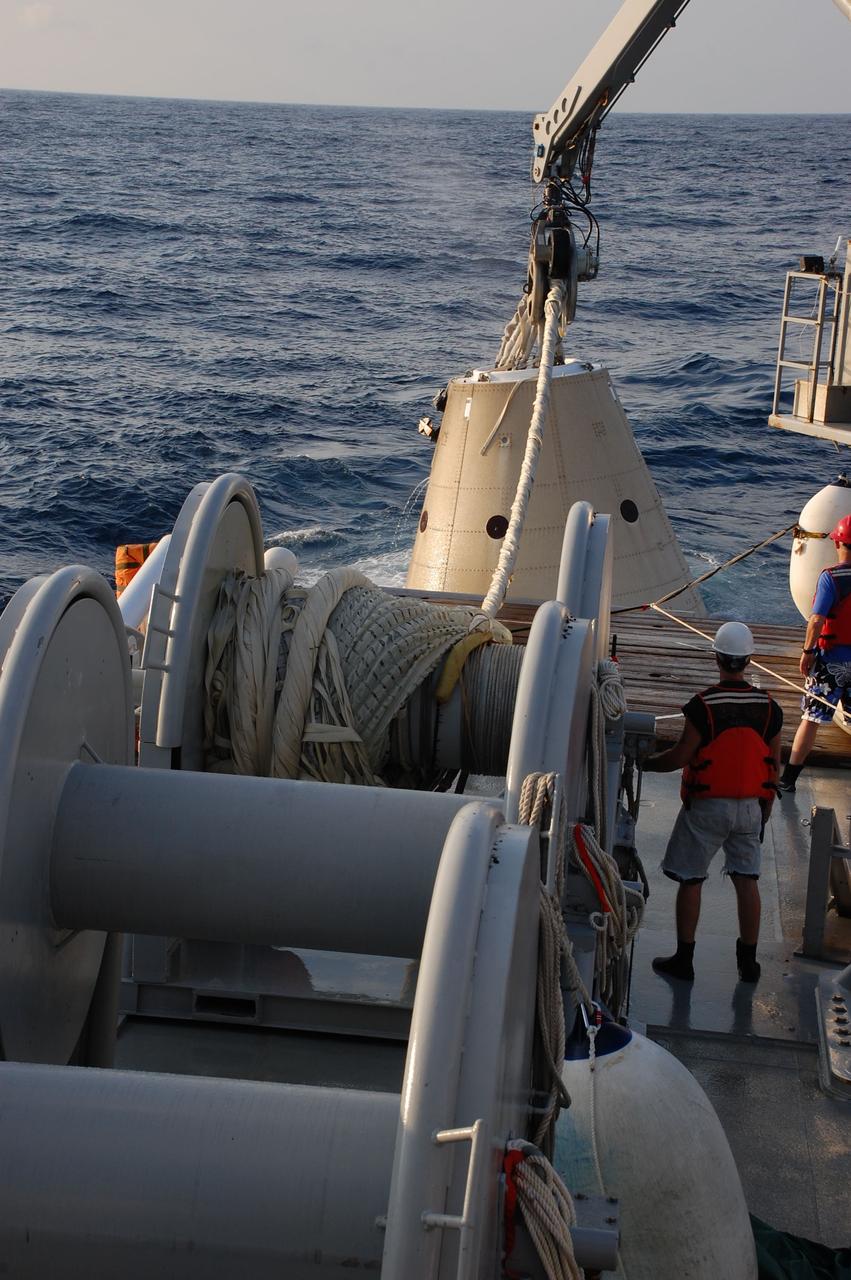
CAPE CANAVERAL, Fla. -- Crew members from Freedom Star, one of NASA's solid rocket booster retrieval ships, use a crane to pull the left spent booster nose cap out of the Atlantic Ocean after space shuttle Discovery's STS-133 launch. The shuttle’s two solid rocket booster casings and associated flight hardware are recovered in the Atlantic Ocean after every launch by Liberty Star and Freedom Star. The boosters impact the Atlantic about seven minutes after liftoff and the retrieval ships are stationed about 10 miles from the impact area at the time of splashdown. After the spent segments are processed, they will be transported to Utah, where they will be refurbished and stored, if needed. Photo credit: NASA/Ben Smegelsky
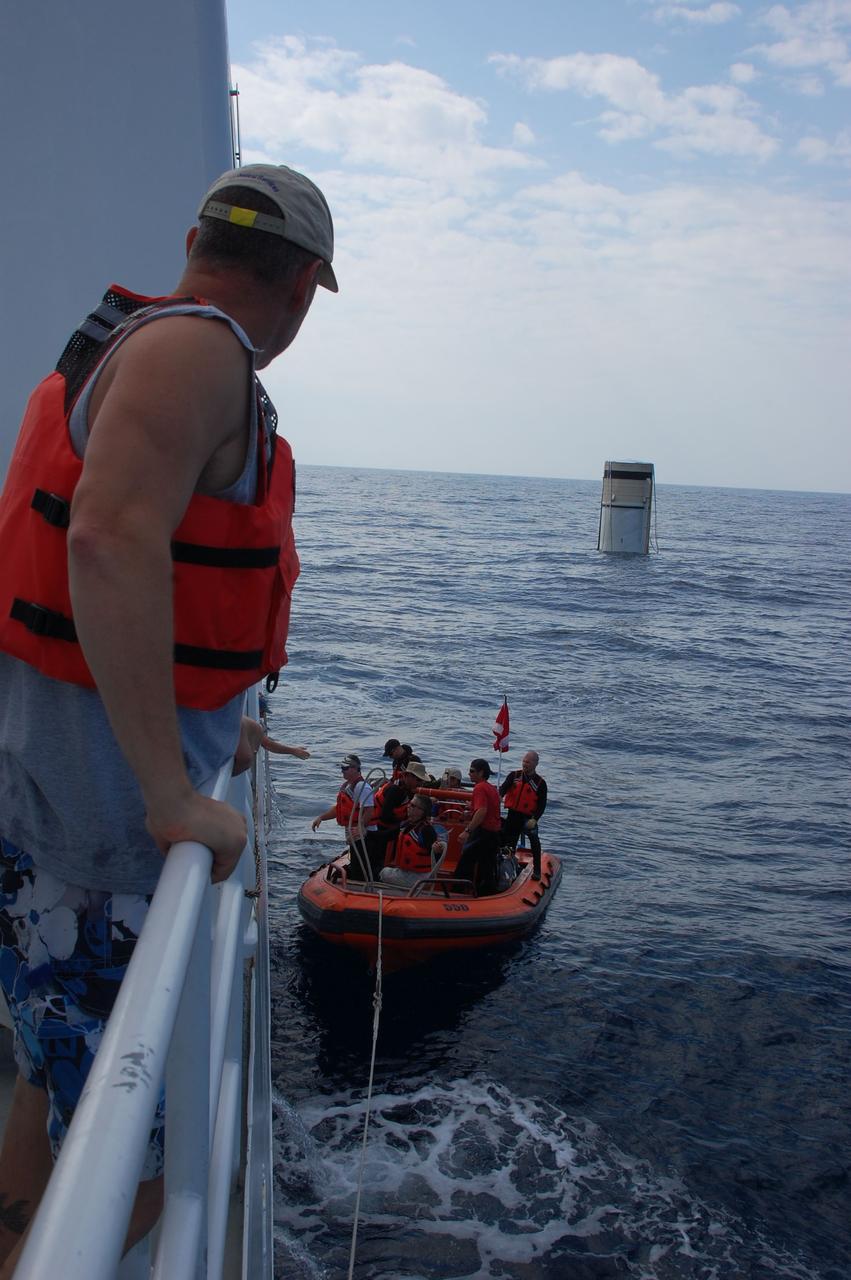
CAPE CANAVERAL, Fla. -- Crew members in a skiff from Freedom Star, one of NASA's solid rocket booster retrieval ships, make their way back to the vessel after inspecting the left spent booster bobbing in the Atlantic Ocean from space shuttle Discovery's STS-133 launch. The shuttle’s two solid rocket booster casings and associated flight hardware are recovered in the Atlantic Ocean after every launch by Liberty Star and Freedom Star. The boosters impact the Atlantic about seven minutes after liftoff and the retrieval ships are stationed about 10 miles from the impact area at the time of splashdown. After the spent segments are processed, they will be transported to Utah, where they will be refurbished and stored, if needed. Photo credit: NASA/Ben Smegelsky
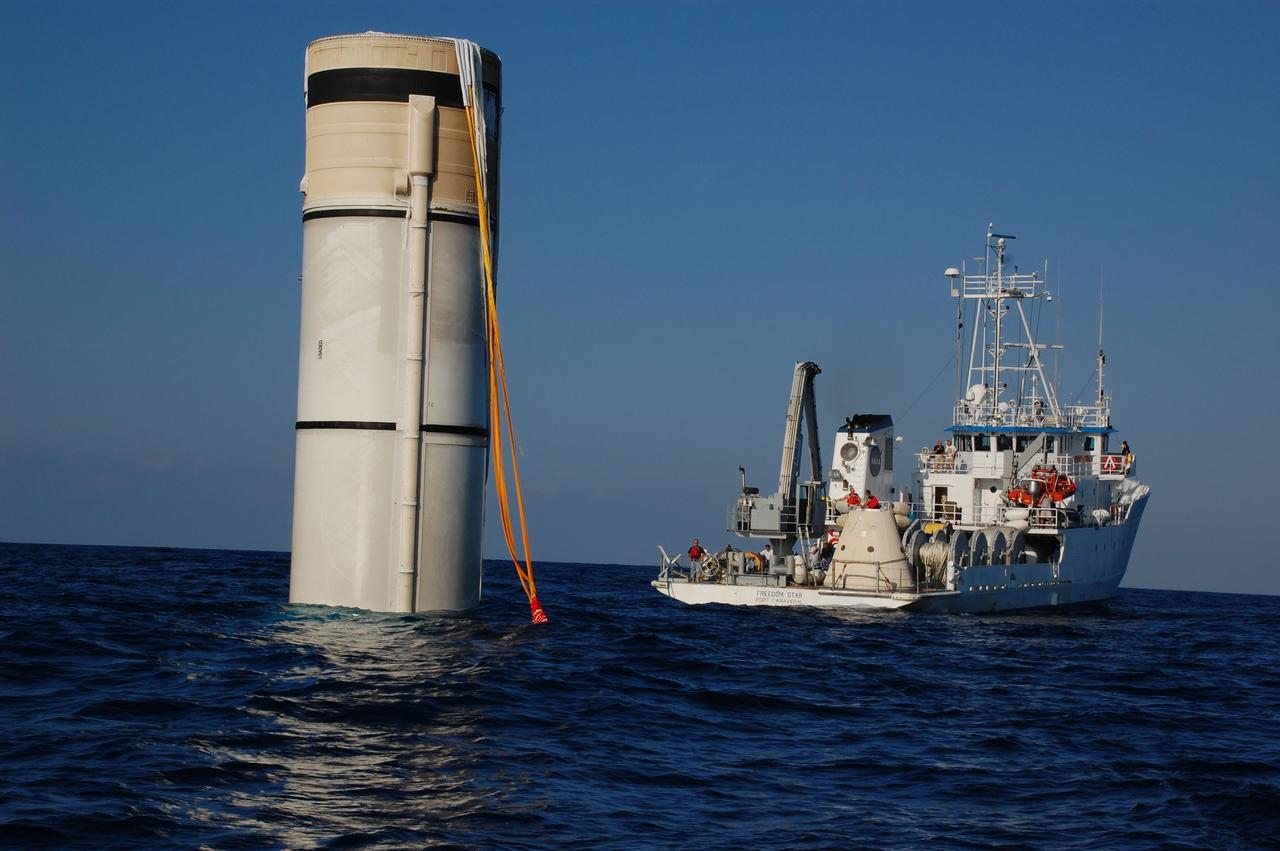
CAPE CANAVERAL, Fla. -- The left spent booster from space shuttle Discovery's final launch is seen bobbing in the Atlantic Ocean as air is pumped into it to lift it out of the water so it can float horizontally for towing back to Port Canaveral, Florida by Freedom Star, one of NASA's solid rocket booster retrieval ships. The shuttle’s two solid rocket booster casings and associated flight hardware are recovered in the Atlantic Ocean after every launch by Liberty Star and Freedom Star. The boosters impact the Atlantic about seven minutes after liftoff and the retrieval ships are stationed about 10 miles from the impact area at the time of splashdown. After the spent segments are processed, they will be transported to Utah, where they will be refurbished and stored, if needed. Photo credit: NASA/Ben Smegelsky
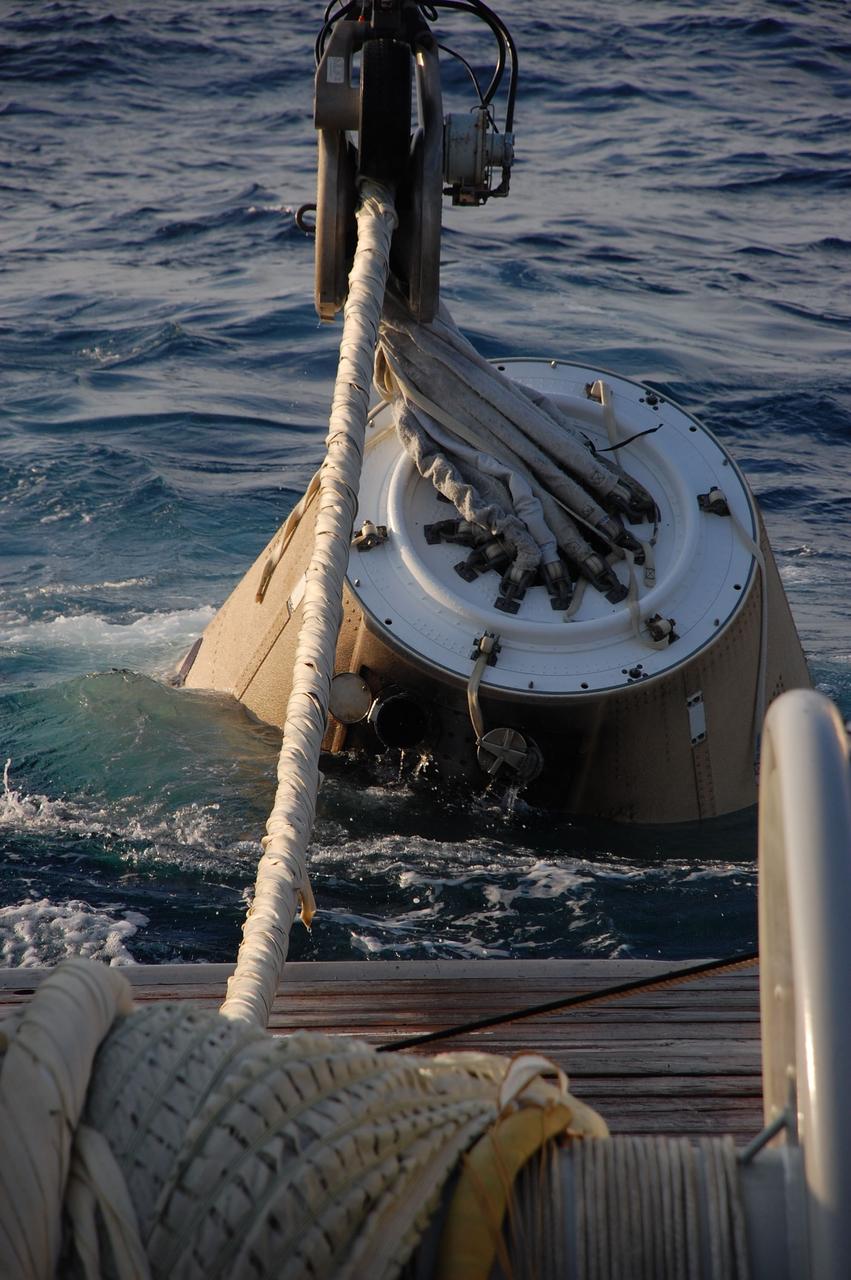
CAPE CANAVERAL, Fla. -- A crane on Freedom Star, one of NASA's solid rocket booster retrieval ships, heaves the left spent booster nose cap from the Atlantic Ocean and onto the deck after space shuttle Discovery's STS-133 launch. The shuttle’s two solid rocket booster casings and associated flight hardware are recovered in the Atlantic Ocean after every launch by Liberty Star and Freedom Star. The boosters impact the Atlantic about seven minutes after liftoff and the retrieval ships are stationed about 10 miles from the impact area at the time of splashdown. After the spent segments are processed, they will be transported to Utah, where they will be refurbished and stored, if needed. Photo credit: NASA/Ben Smegelsky

CAPE CANAVERAL, Fla. -- Crew members in a skiff from Liberty Star, one of NASA's solid rocket booster retrieval ships, attach a tow rope to the parachute lines from the right spent booster bobbing in the Atlantic Ocean from space shuttle Discovery's final launch. The shuttle's two solid rocket booster casings and associated flight hardware are recovered in the Atlantic Ocean after every launch by Freedom Star and Liberty Star. The boosters impact the Atlantic about seven minutes after liftoff and the retrieval ships are stationed about 10 miles from the impact area at the time of splashdown. After the spent segments are processed, they will be transported to Utah, where they will be refurbished and stored, if needed. Photo credit: NASA/Frank Michaux
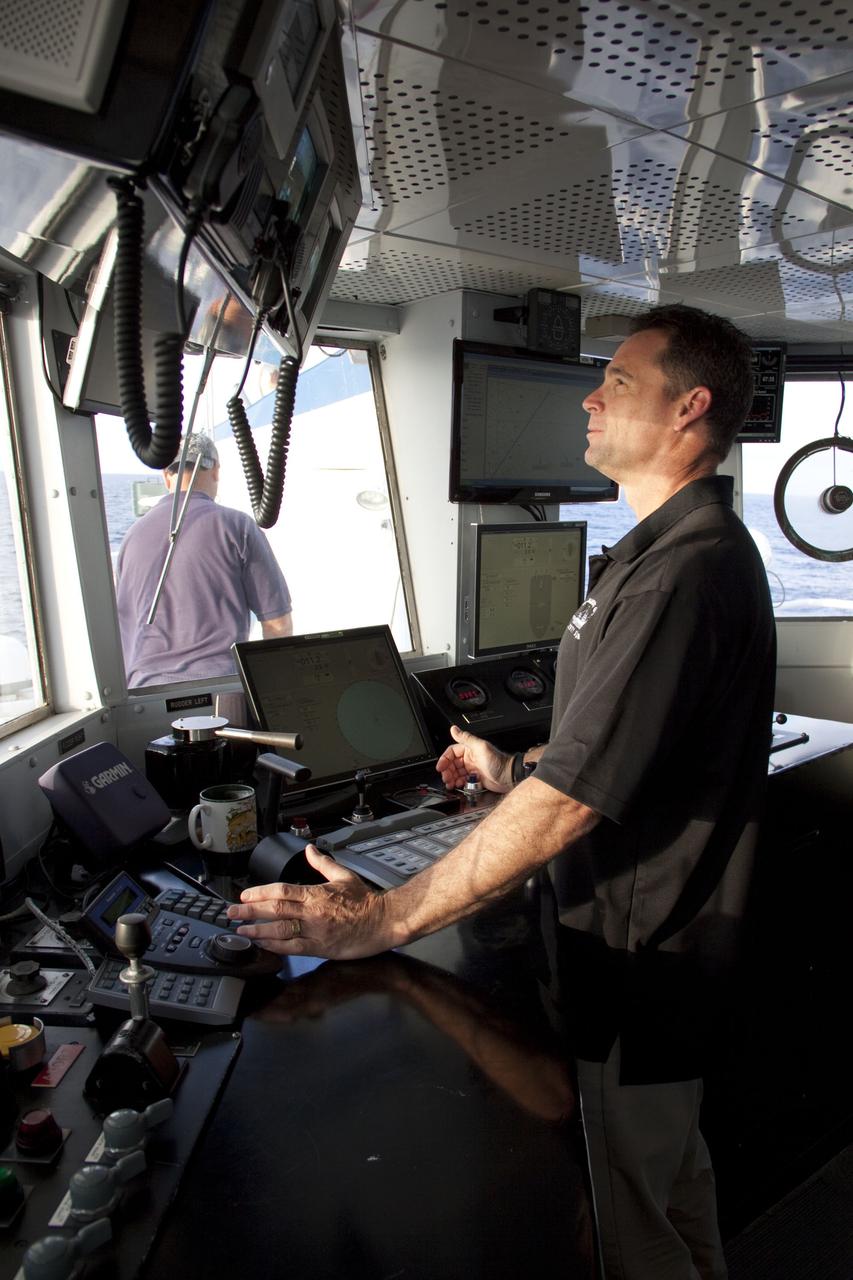
CAPE CANAVERAL, Fla. -- Captain Bren Wade is steering Liberty Star, one of NASA's solid rocket booster retrieval ships in the direction of the right spent booster that splashed down into the Atlantic Ocean after space shuttle Discovery's STS-133 launch. The shuttle’s two solid rocket booster casings and associated flight hardware are recovered in the Atlantic Ocean after every launch by Freedom Star and Liberty Star. The boosters impact the Atlantic about seven minutes after liftoff and the retrieval ships are stationed about 10 miles from the impact area at the time of splashdown. After the spent segments are processed, they will be transported to Utah, where they will be refurbished and stored, if needed. Photo credit: NASA/Frank Michaux
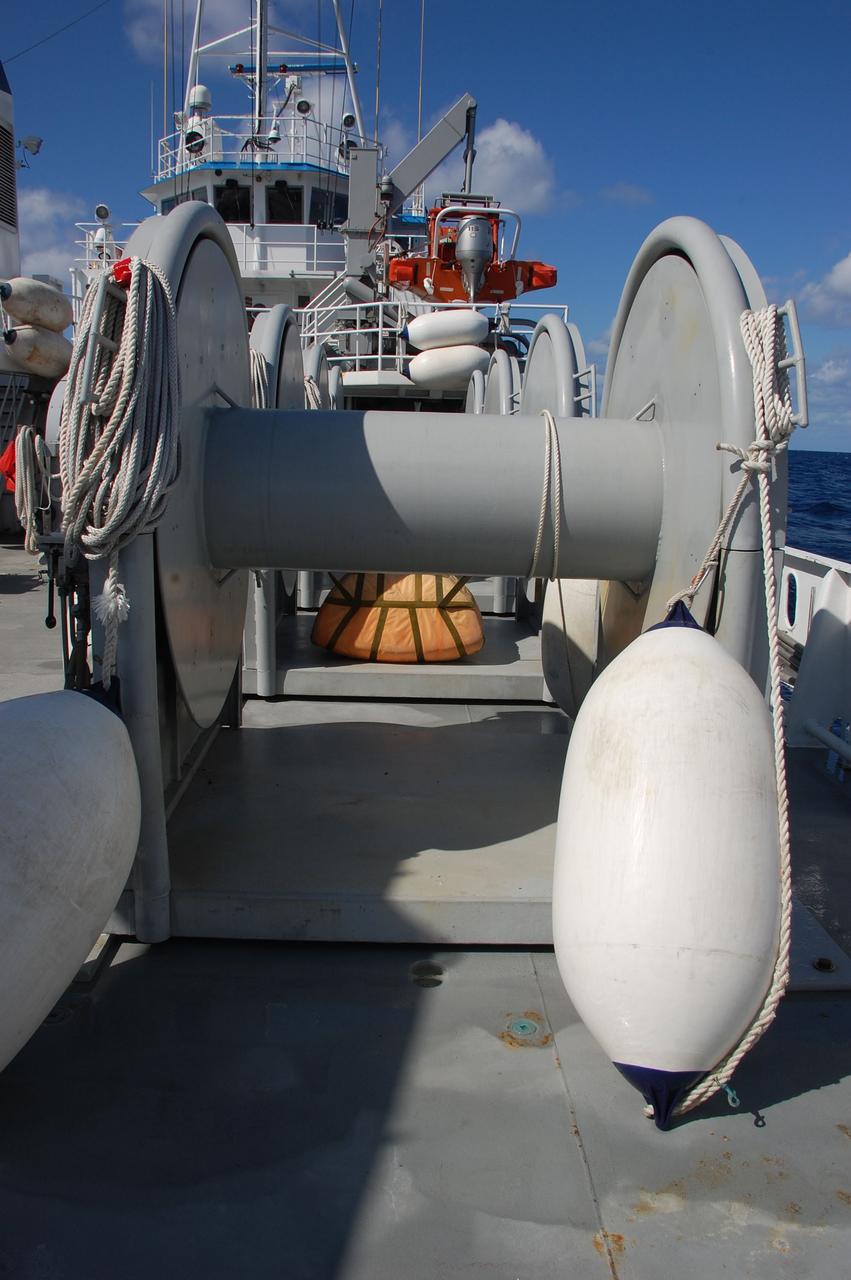
CAPE CANAVERAL, Fla. -- Rubber bumpers are stowed on the deck of Freedom Star, one of NASA's solid rocket booster retrieval ships. The ship has set sail to be in position in the Atlantic Ocean to recover the spent boosters after space shuttle Discovery's STS-133 launch. The shuttle’s two solid rocket booster casings and associated flight hardware are recovered in the Atlantic Ocean after every launch by Liberty Star and Freedom Star. The boosters impact the Atlantic about seven minutes after liftoff and the retrieval ships are stationed about 10 miles from the impact area at the time of splashdown. After the spent segments are processed, they will be transported to Utah, where they will be refurbished and stored, if needed. Photo credit: NASA/Ben Smegelsky
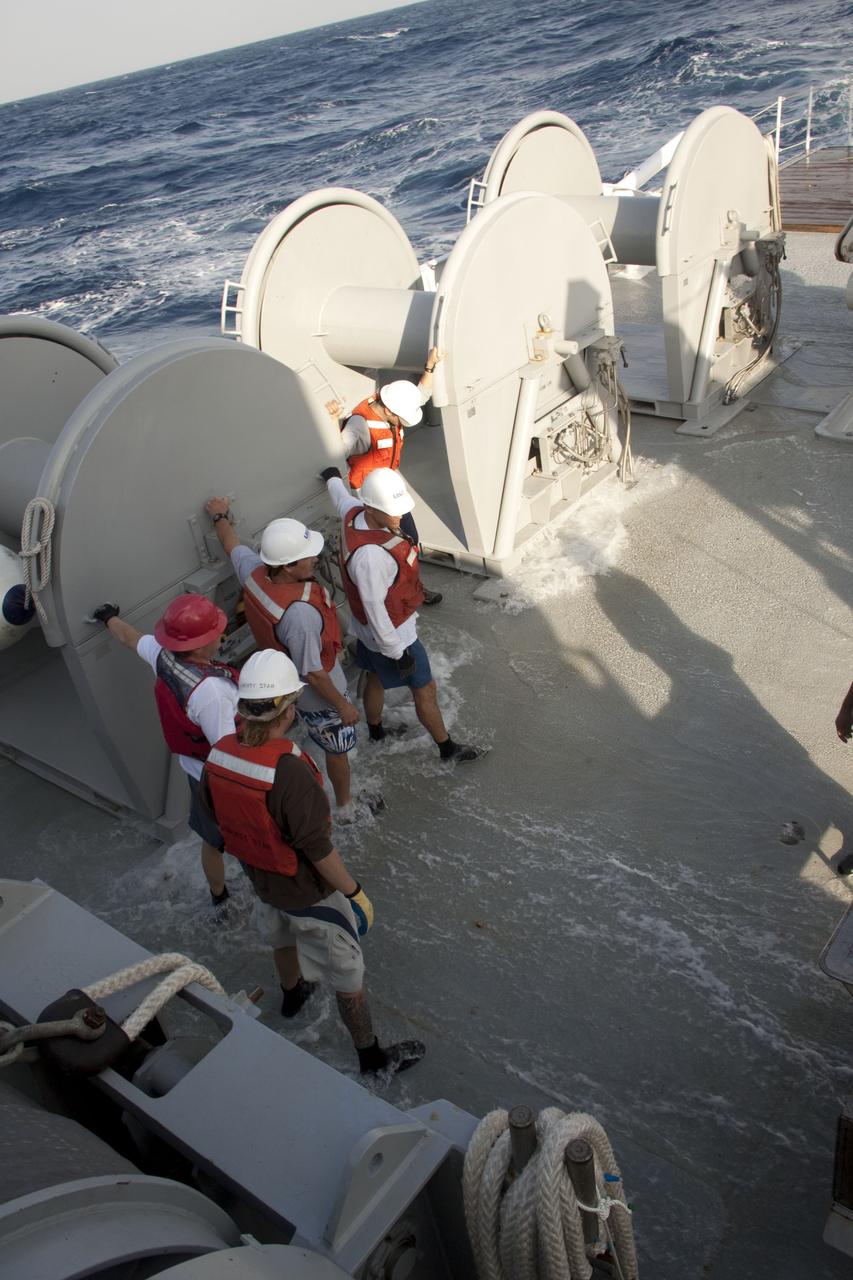
CAPE CANAVERAL, Fla. -- Crew members of Liberty Star, one of NASA's solid rocket booster retrieval ships, hold on tightly to handle grips as the swells of the Atlantic Ocean cause the vessel to pitch and roll while heading toward the recovery area where the right spent booster splashed down after Discovery's final launch. The shuttle’s two solid rocket booster casings and associated flight hardware are recovered in the Atlantic Ocean after every launch by Freedom Star and Liberty Star. The boosters impact the Atlantic about seven minutes after liftoff and the retrieval ships are stationed about 10 miles from the impact area at the time of splashdown. After the spent segments are processed, they will be transported to Utah, where they will be refurbished and stored, if needed. Photo credit: NASA/Frank Michaux
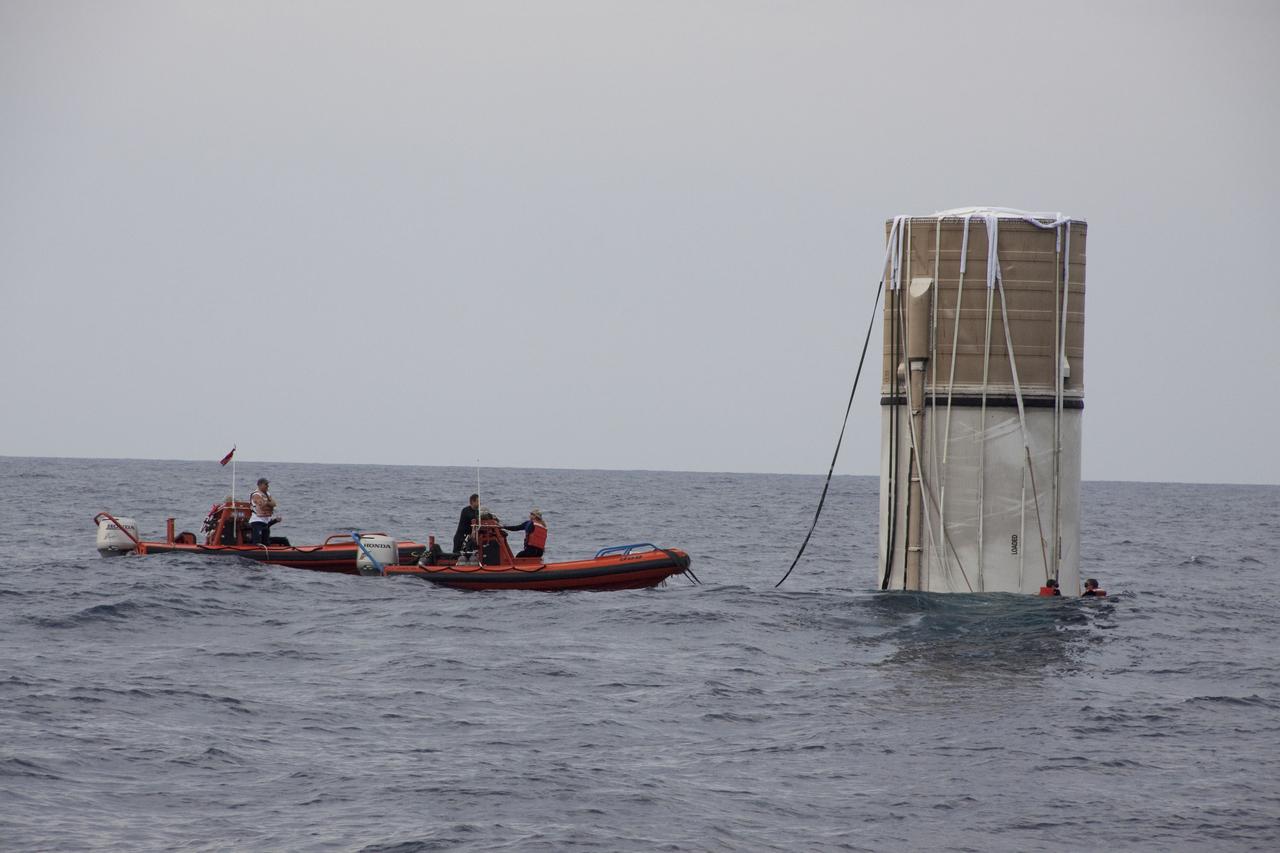
CAPE CANAVERAL, Fla. -- Crew members from Liberty Star, one of NASA's solid rocket booster retrieval ships, use skiffs to approach the right spent booster bobbing in the Atlantic Ocean after space shuttle Discovery's final launch. Divers are already in the water. The shuttle's two solid rocket booster casings and associated flight hardware are recovered in the Atlantic Ocean after every launch by Freedom Star and Liberty Star. The boosters impact the Atlantic about seven minutes after liftoff and the retrieval ships are stationed about 10 miles from the impact area at the time of splashdown. After the spent segments are processed, they will be transported to Utah, where they will be refurbished and stored, if needed. Photo credit: NASA/Frank Michaux
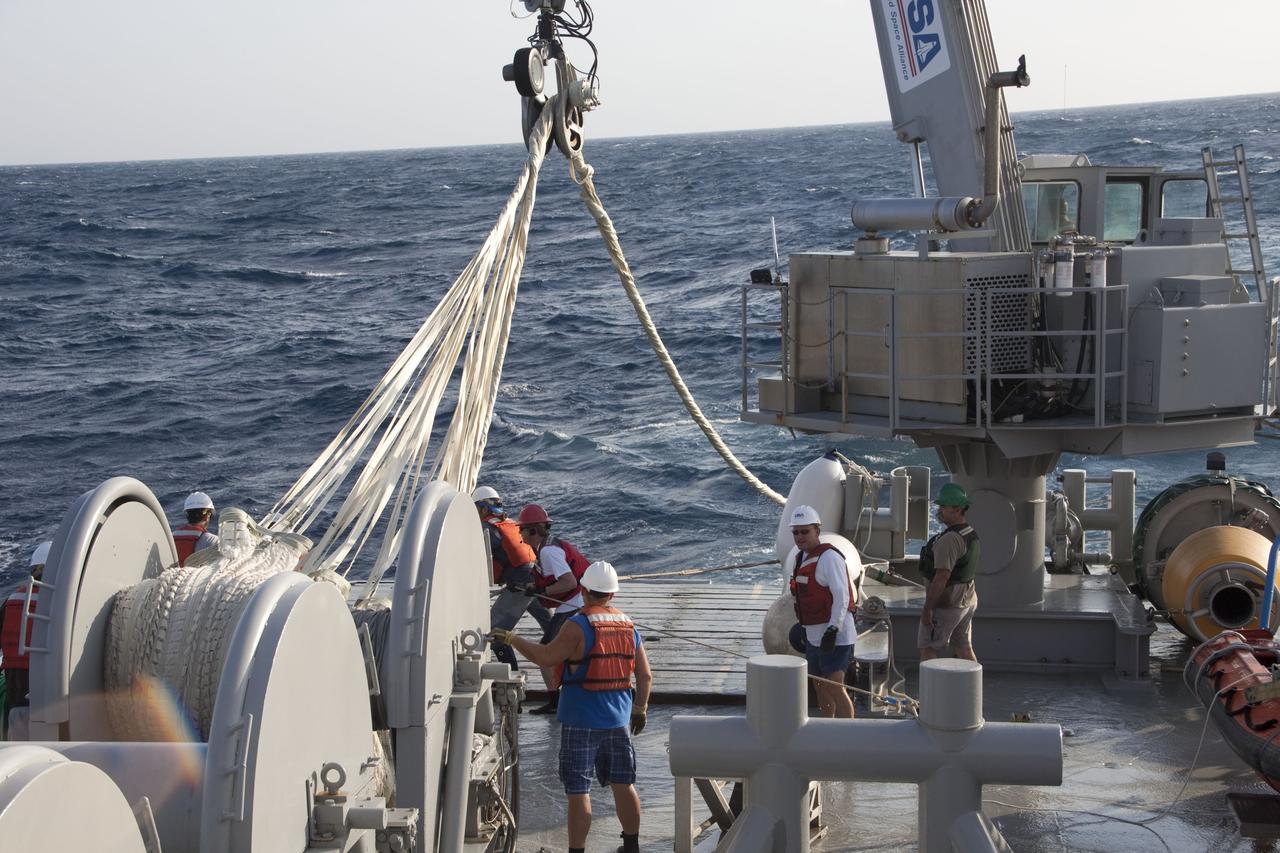
CAPE CANAVERAL, Fla. -- Crew members on Liberty Star, one of NASA's solid rocket booster retrieval ships, use a crane to haul the parachute from the right spent booster onto the ship after it splashed down in the Atlantic Ocean after Discovery's final launch. The shuttle’s two solid rocket booster casings and associated flight hardware are recovered in the Atlantic Ocean after every launch by Freedom Star and Liberty Star. The boosters impact the Atlantic about seven minutes after liftoff and the retrieval ships are stationed about 10 miles from the impact area at the time of splashdown. After the spent segments are processed, they will be transported to Utah, where they will be refurbished and stored, if needed. Photo credit: NASA/Frank Michaux
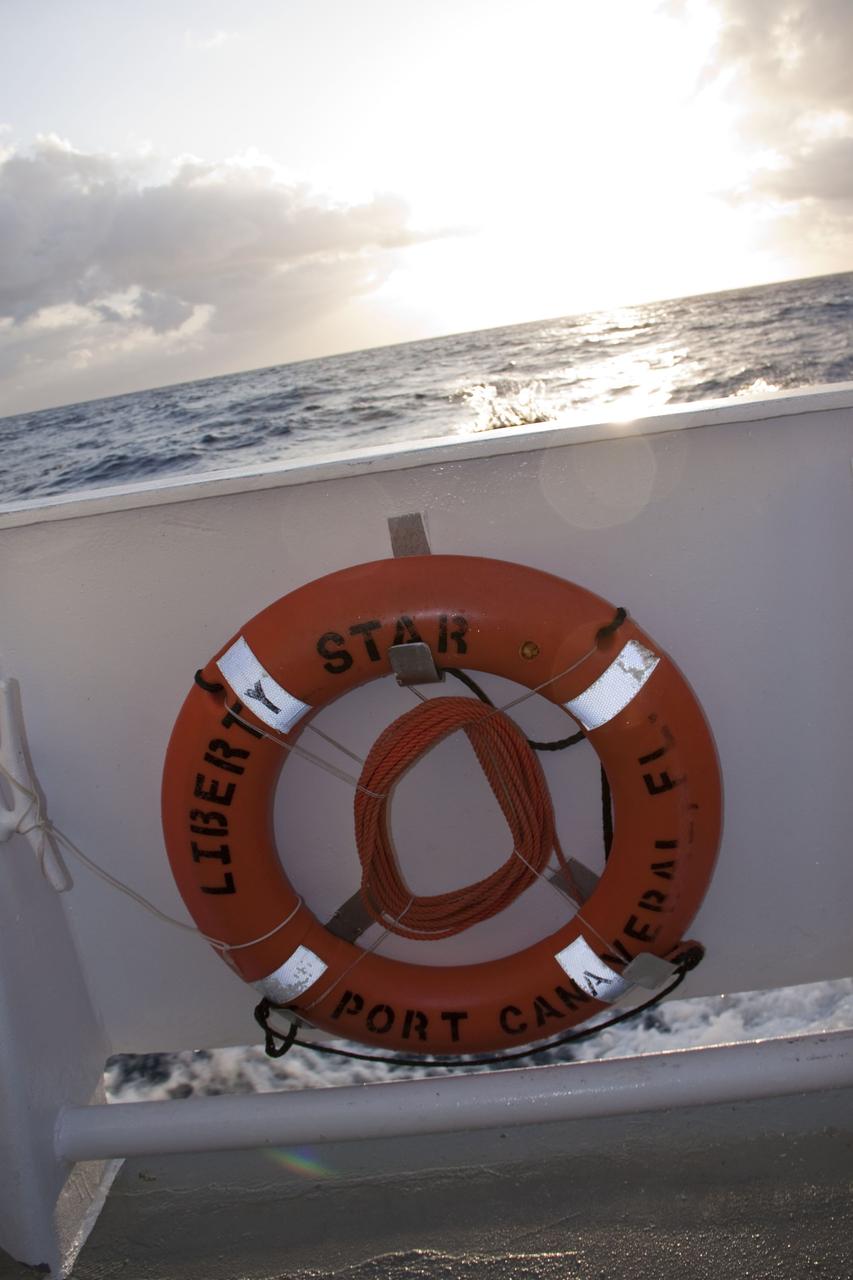
CAPE CANAVERAL, Fla. -- A flotation device is secured to the railing of Liberty Star, one of NASA's solid rocket booster retrieval ships. The ship has set sail to be in position in the Atlantic Ocean to recover the right spent booster that splashed down after space shuttle Discovery's final launch. The shuttle’s two solid rocket booster casings and associated flight hardware are recovered in the Atlantic Ocean after every launch by Freedom Star and Liberty Star. The boosters impact the Atlantic about seven minutes after liftoff and the retrieval ships are stationed about 10 miles from the impact area at the time of splashdown. After the spent segments are processed, they will be transported to Utah, where they will be refurbished and stored, if needed. Photo credit: NASA/Frank Michaux
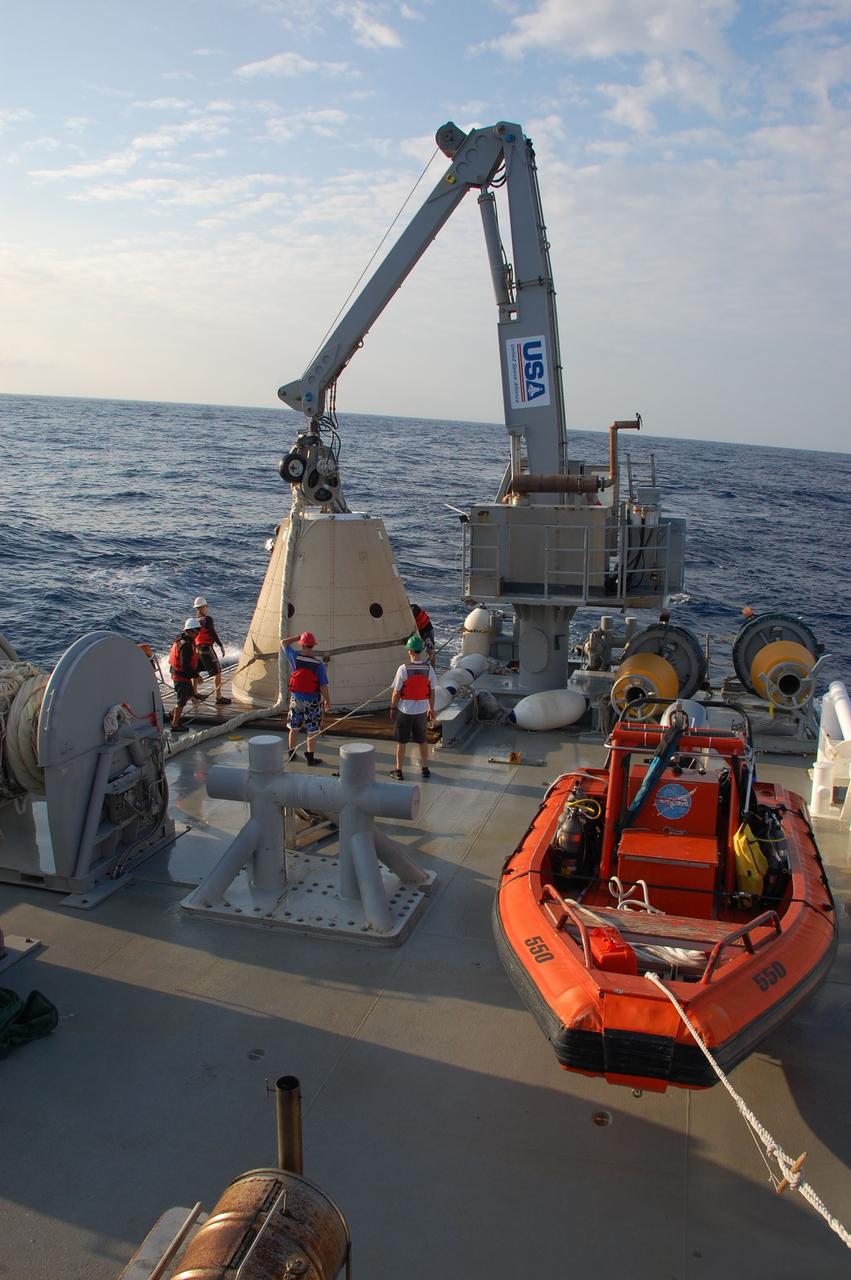
CAPE CANAVERAL, Fla. -- Crew members on Freedom Star, one of NASA's solid rocket booster retrieval ships, use a crane to pull the left spent booster nose cap out of the Atlantic Ocean after space shuttle Discovery's STS-133 launch. The shuttle’s two solid rocket booster casings and associated flight hardware are recovered in the Atlantic Ocean after every launch by Liberty Star and Freedom Star. The boosters impact the Atlantic about seven minutes after liftoff and the retrieval ships are stationed about 10 miles from the impact area at the time of splashdown. After the spent segments are processed, they will be transported to Utah, where they will be refurbished and stored, if needed. Photo credit: NASA/Ben Smegelsky
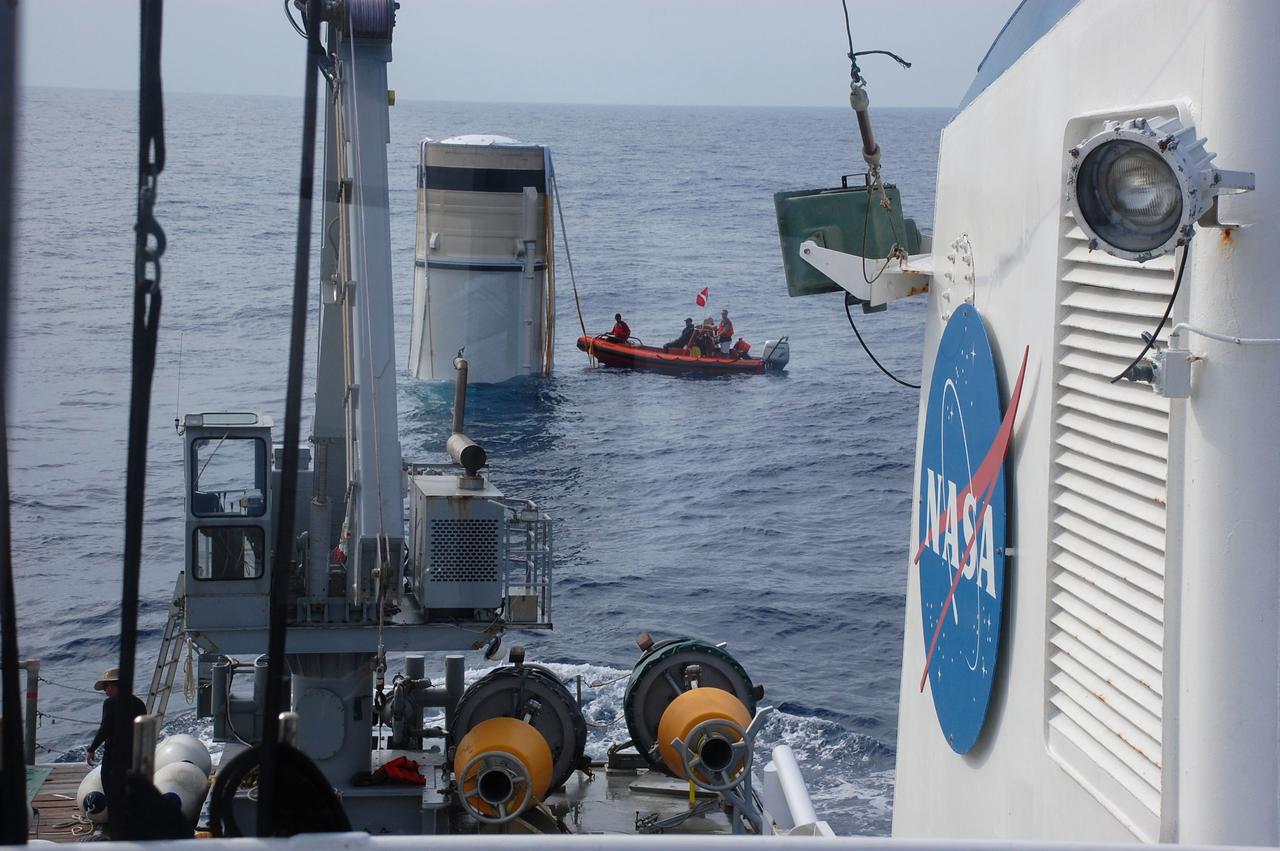
CAPE CANAVERAL, Fla. -- Crew members in a skiff from Freedom Star, one of NASA's solid rocket booster retrieval ships, approach and inspect the left spent booster bobbing in the Atlantic Ocean after space shuttle Discovery's STS-133 launch. The shuttle’s two solid rocket booster casings and associated flight hardware are recovered in the Atlantic Ocean after every launch by Liberty Star and Freedom Star. The boosters impact the Atlantic about seven minutes after liftoff and the retrieval ships are stationed about 10 miles from the impact area at the time of splashdown. After the spent segments are processed, they will be transported to Utah, where they will be refurbished and stored, if needed. Photo credit: NASA/Ben Smegelsky
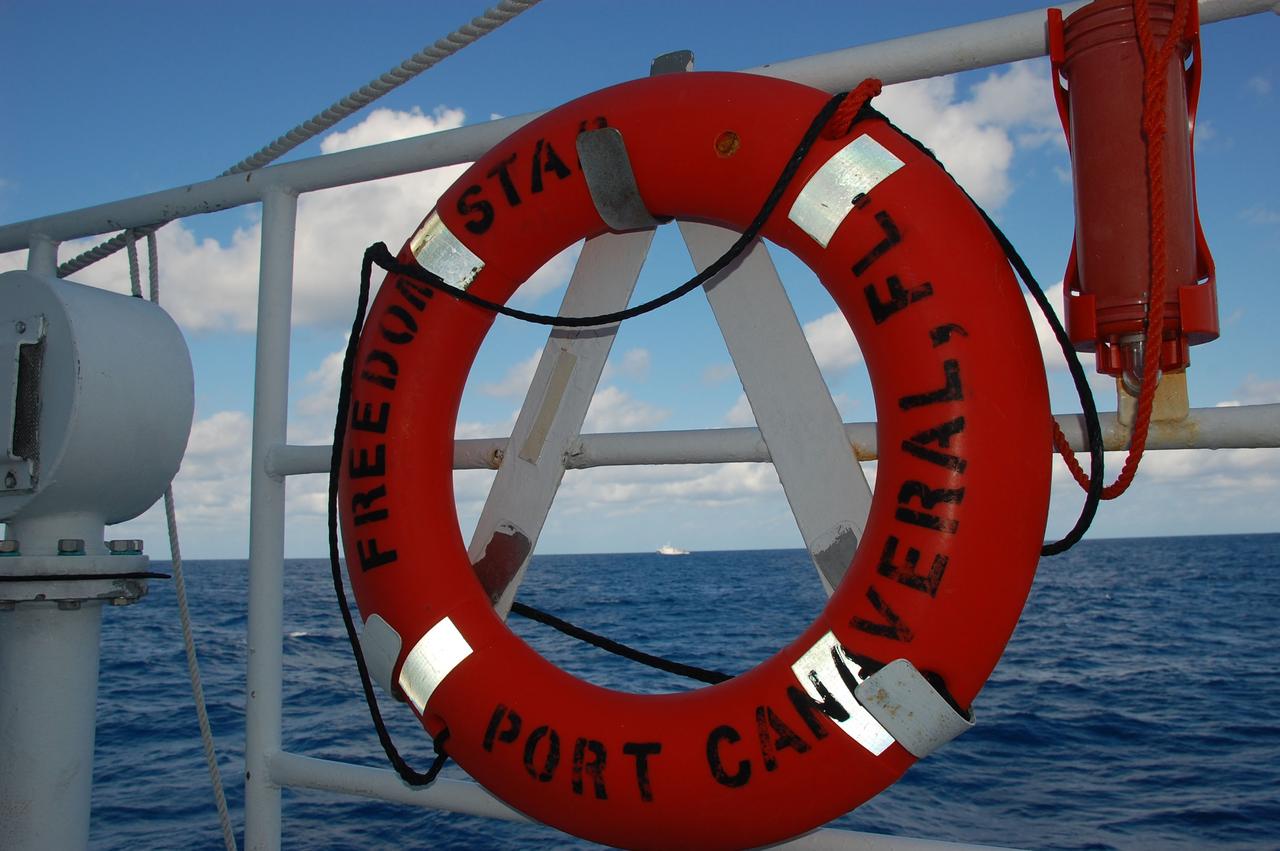
CAPE CANAVERAL, Fla. -- A flotation device is secured to the railing of Freedom Star, one of NASA's solid rocket booster retrieval ships. The ship has set sail to be in position in the Atlantic Ocean to recover the spent boosters after space shuttle Discovery's STS-133 launch. The shuttle’s two solid rocket booster casings and associated flight hardware are recovered in the Atlantic Ocean after every launch by Liberty Star and Freedom Star. The boosters impact the Atlantic about seven minutes after liftoff and the retrieval ships are stationed about 10 miles from the impact area at the time of splashdown. After the spent segments are processed, they will be transported to Utah, where they will be refurbished and stored, if needed. Photo credit: NASA/Ben Smegelsky
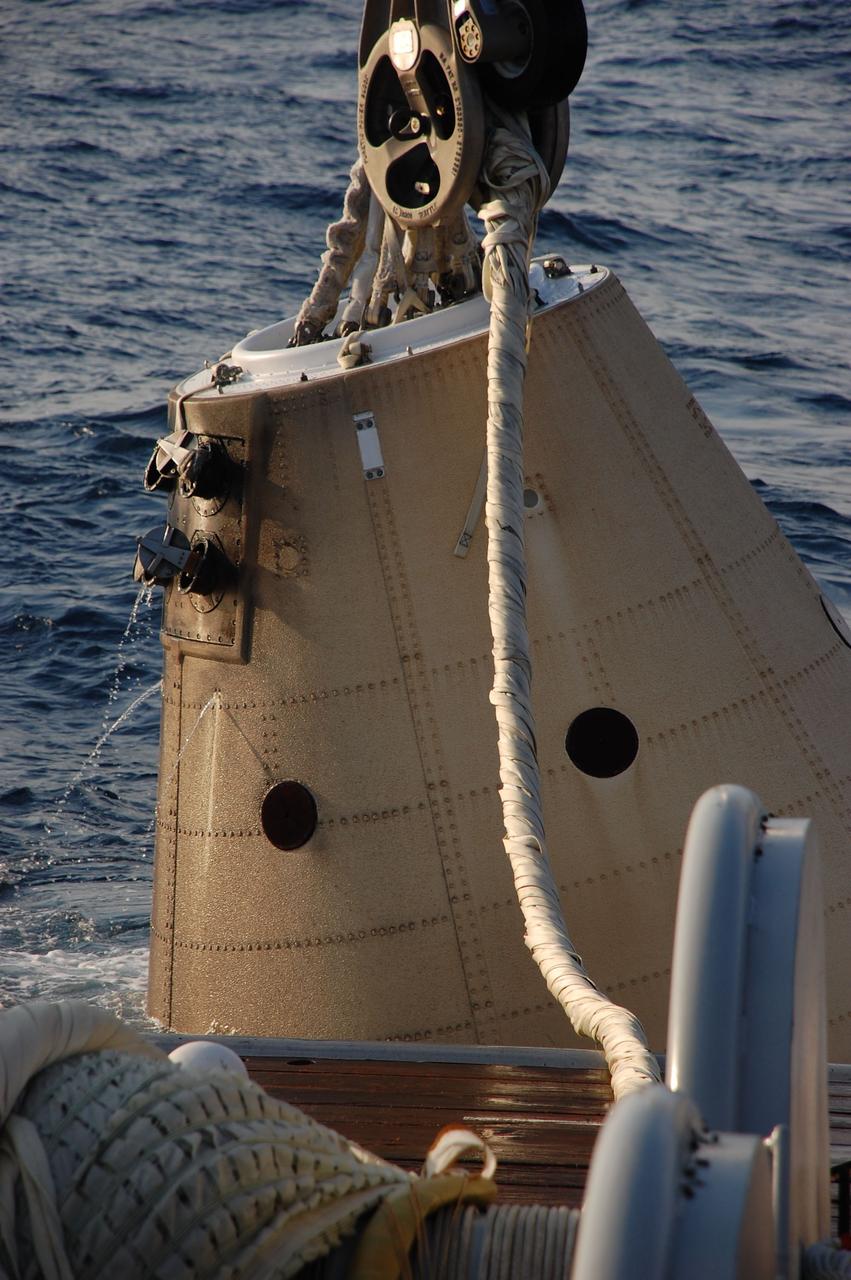
CAPE CANAVERAL, Fla. -- A crane on Freedom Star, one of NASA's solid rocket booster retrieval ships, heaves the left spent booster nose cap from the Atlantic Ocean and onto the deck after space shuttle Discovery's STS-133 launch. The shuttle’s two solid rocket booster casings and associated flight hardware are recovered in the Atlantic Ocean after every launch by Liberty Star and Freedom Star. The boosters impact the Atlantic about seven minutes after liftoff and the retrieval ships are stationed about 10 miles from the impact area at the time of splashdown. After the spent segments are processed, they will be transported to Utah, where they will be refurbished and stored, if needed. Photo credit: NASA/Ben Smegelsky
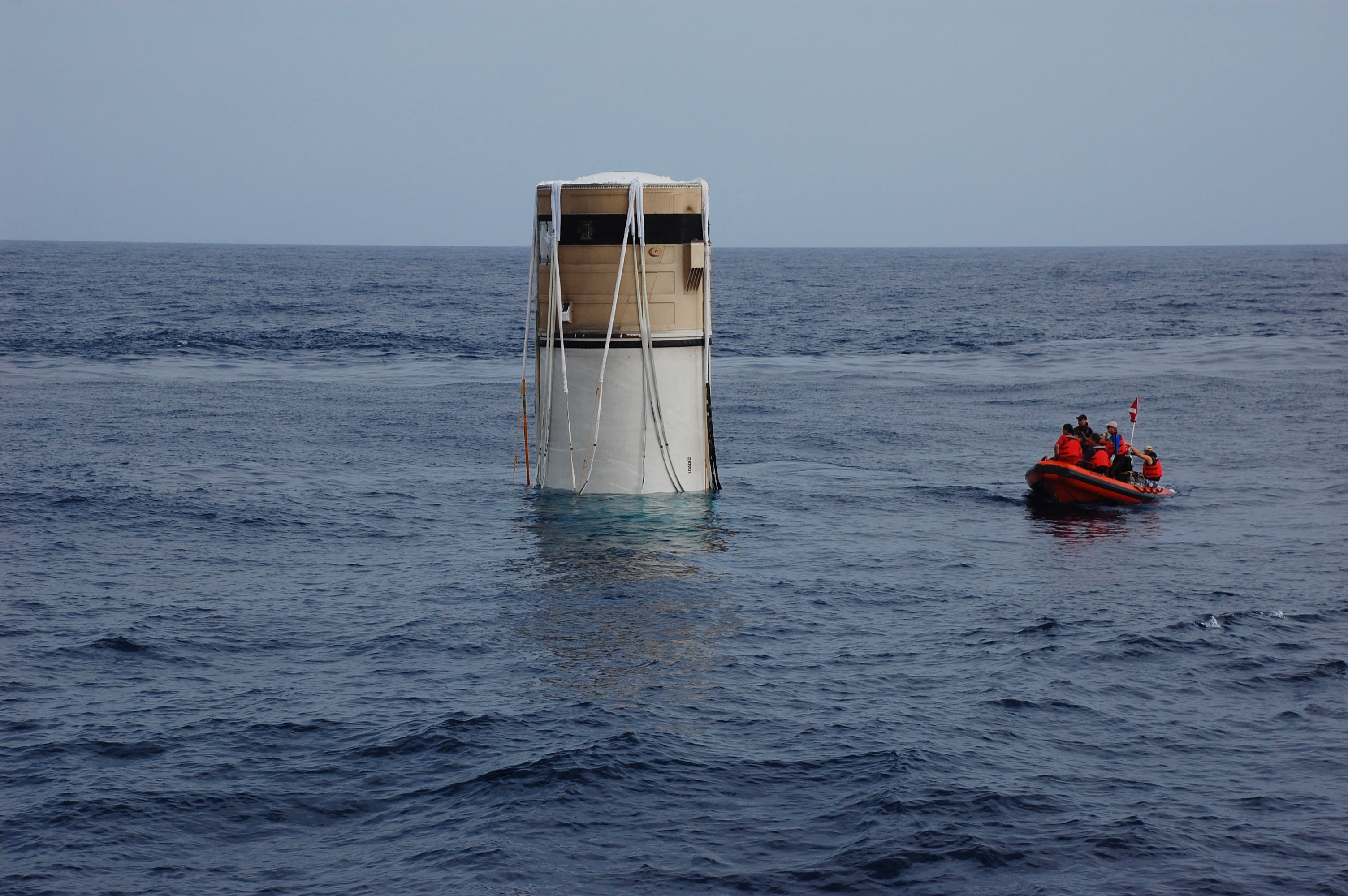
CAPE CANAVERAL, Fla. -- Crew members from Freedom Star, one of NASA's solid rocket booster retrieval ships, use a skiff to approach the left spent booster bobbing in the Atlantic Ocean after space shuttle Discovery's STS-133 launch. The shuttle’s two solid rocket booster casings and associated flight hardware are recovered in the Atlantic Ocean after every launch by Liberty Star and Freedom Star. The boosters impact the Atlantic about seven minutes after liftoff and the retrieval ships are stationed about 10 miles from the impact area at the time of splashdown. After the spent segments are processed, they will be transported to Utah, where they will be refurbished and stored, if needed. Photo credit: NASA/Ben Smegelsky
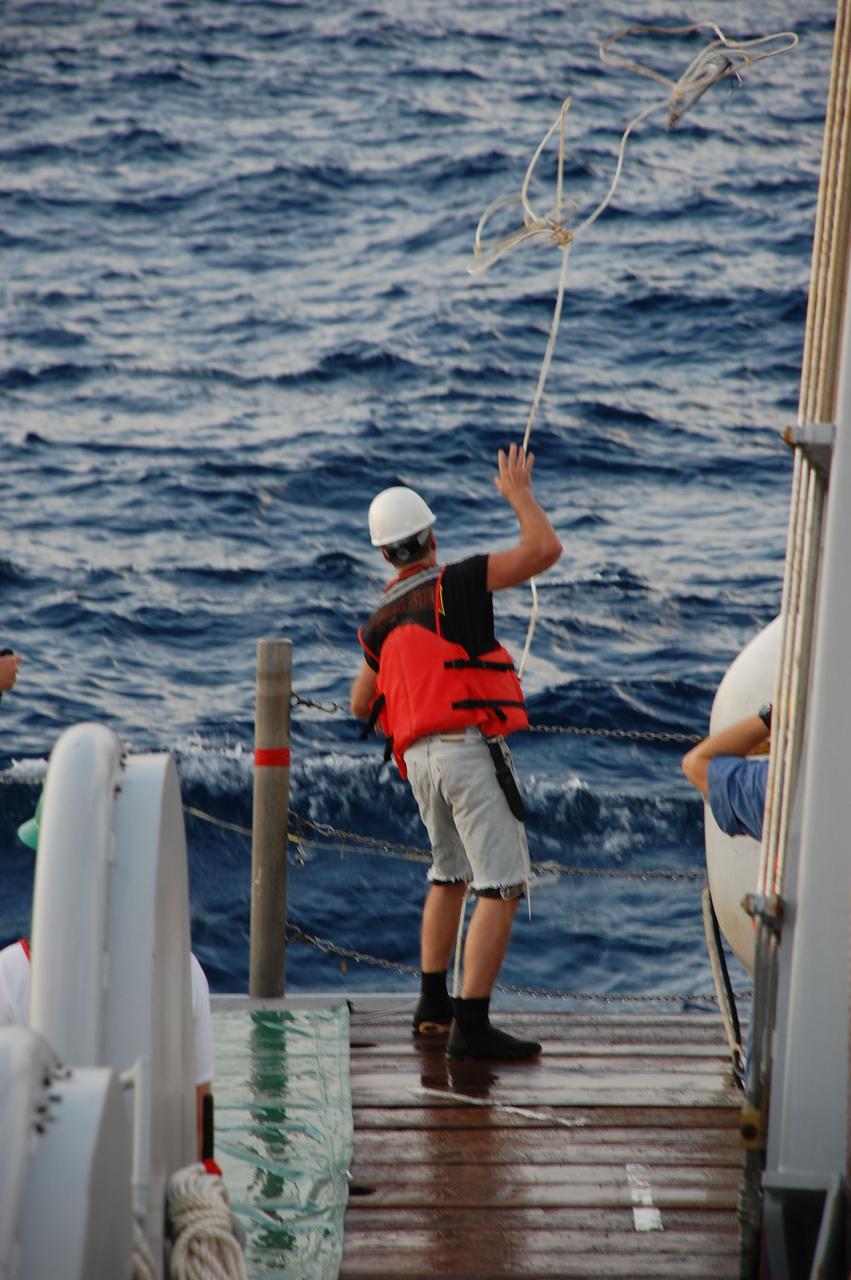
CAPE CANAVERAL, Fla. -- A crew member from Freedom Star, one of NASA's solid rocket booster retrieval ships, throws a tow line into the Atlantic Ocean in order to capture the left spent booster nose cap after space shuttle Discovery's STS-133 launch. The shuttle’s two solid rocket booster casings and associated flight hardware are recovered in the Atlantic Ocean after every launch by Liberty Star and Freedom Star. The boosters impact the Atlantic about seven minutes after liftoff and the retrieval ships are stationed about 10 miles from the impact area at the time of splashdown. After the spent segments are processed, they will be transported to Utah, where they will be refurbished and stored, if needed. Photo credit: NASA/Ben Smegelsky
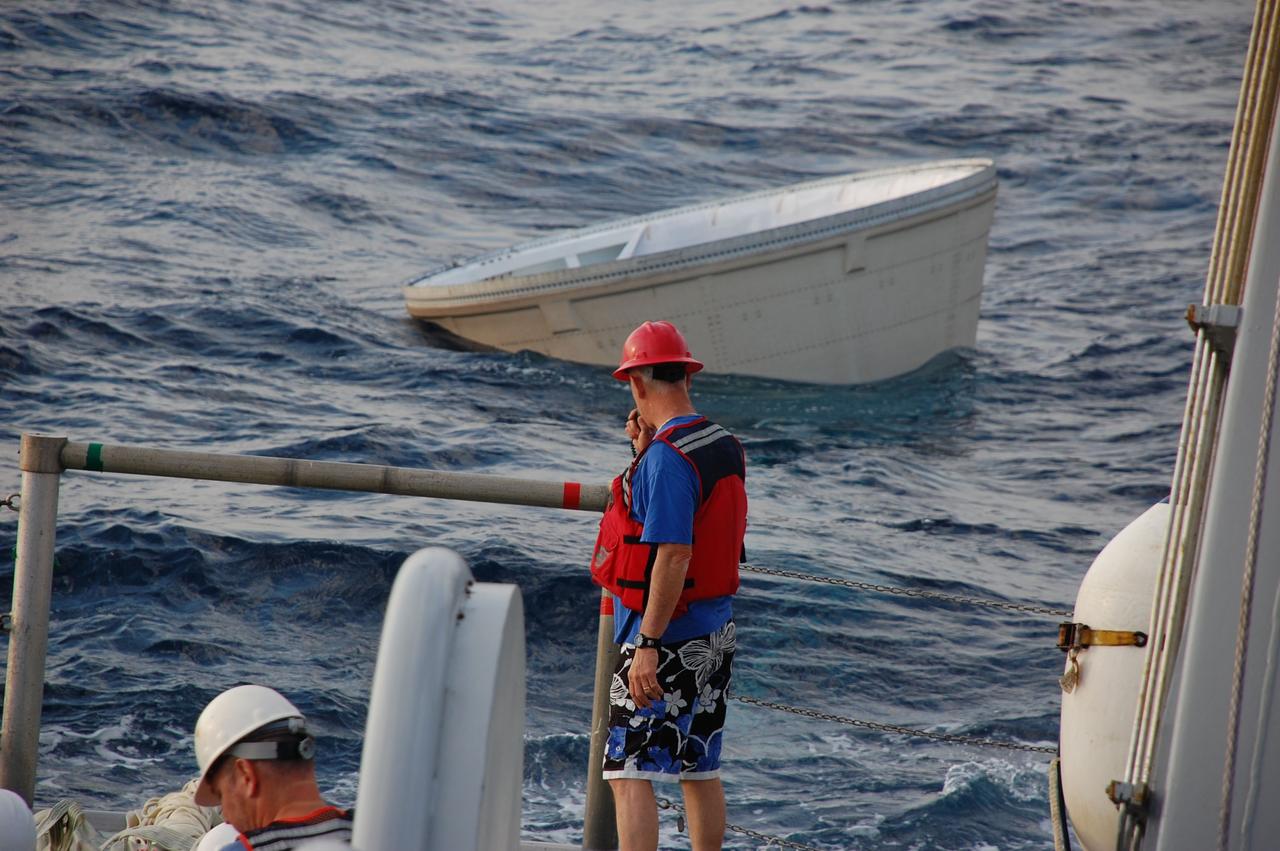
CAPE CANAVERAL, Fla. -- Crew members from Freedom Star, one of NASA's solid rocket booster retrieval ships, prepare to recover the left spent booster nose cap from the Atlantic Ocean after space shuttle Discovery's STS-133 launch. The shuttle’s two solid rocket booster casings and associated flight hardware are recovered in the Atlantic Ocean after every launch by Liberty Star and Freedom Star. The boosters impact the Atlantic about seven minutes after liftoff and the retrieval ships are stationed about 10 miles from the impact area at the time of splashdown. After the spent segments are processed, they will be transported to Utah, where they will be refurbished and stored, if needed. Photo credit: NASA/Ben Smegelsky
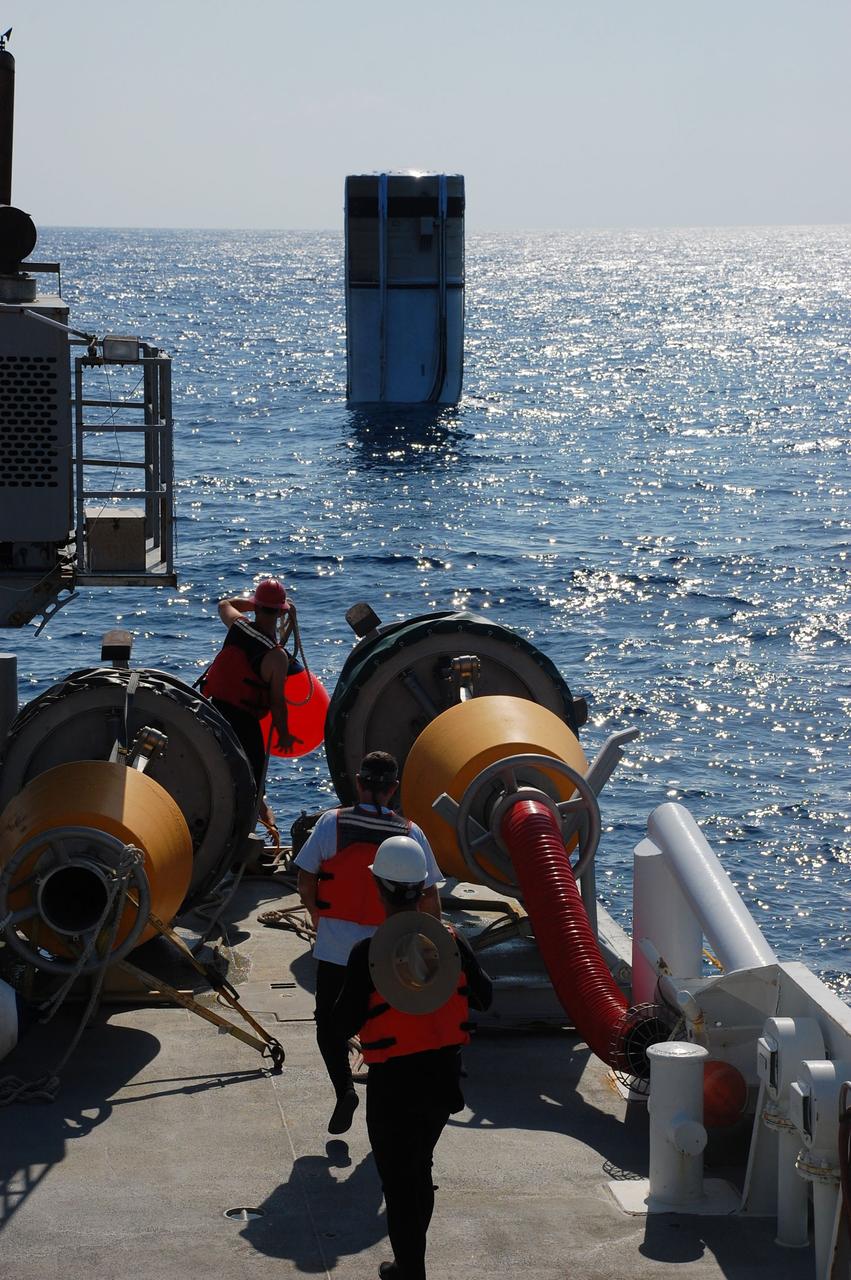
CAPE CANAVERAL, Fla. -- Freedom Star, one of NASA's solid rocket booster retrieval ships, and its crew are preparing to recover the left spent booster from the Atlantic Ocean. The round objects on deck are large pumping machines that will be attached to the booster by a hose that will blow out debris and water and then pump in air so the booster can float horizontally on the water's surface for towing back to Port Canaveral in Florida. The shuttle’s two solid rocket booster casings and associated flight hardware are recovered in the Atlantic Ocean after every launch by Liberty Star and Freedom Star. The boosters impact the Atlantic about seven minutes after liftoff and the retrieval ships are stationed about 10 miles from the impact area at the time of splashdown. After the spent segments are processed, they will be transported to Utah, where they will be refurbished and stored, if needed. Photo credit: NASA/Ben Smegelsky
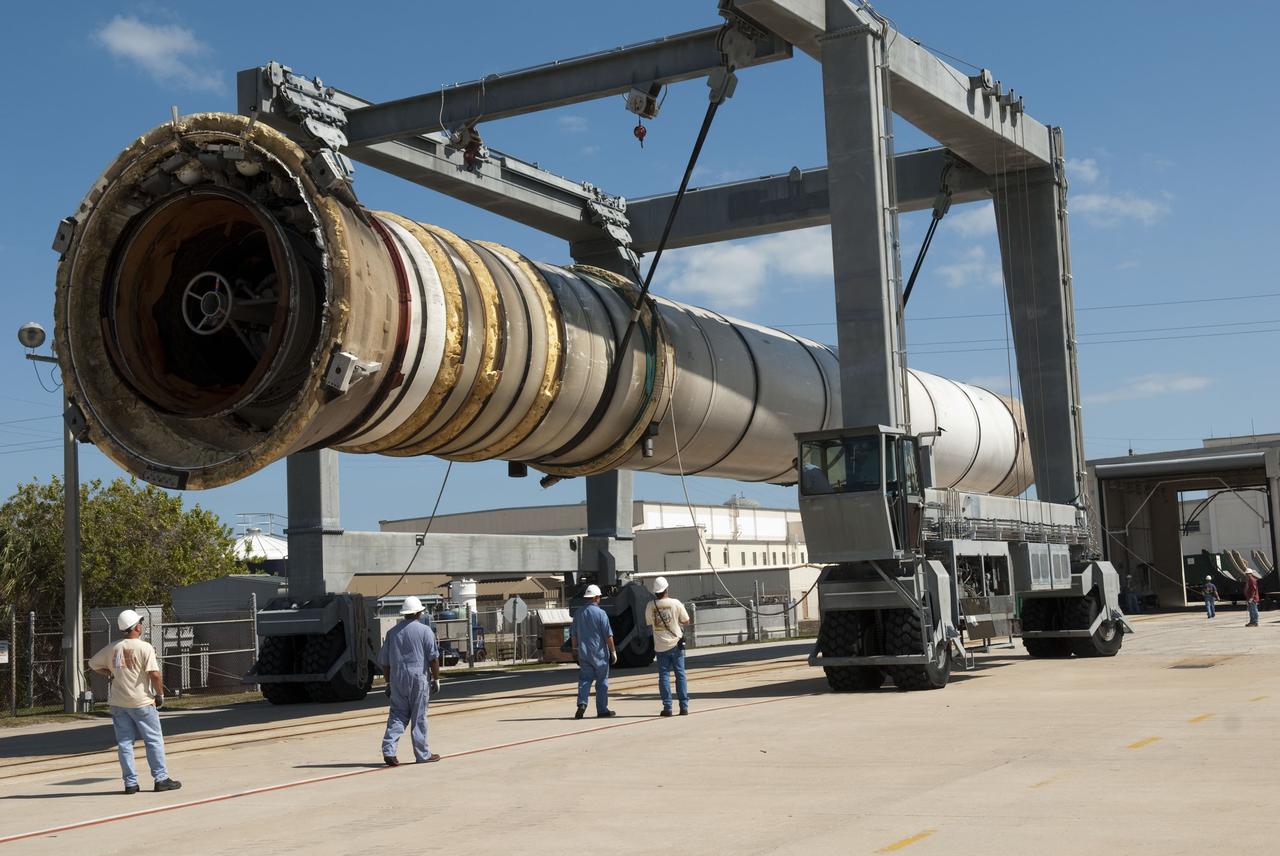
CAPE CANAVERAL, Fla. -- The left spent booster used during space shuttle Discovery's final launch hangs in a hoisting device at the Solid Rocket Booster Disassembly Facility at Hangar AF on Cape Canaveral Air Force Station in Florida. The shuttle's two solid rocket booster casings and associated flight hardware are recovered in the Atlantic Ocean after every launch by Freedom Star and Liberty Star. The boosters impact the Atlantic about seven minutes after liftoff and the retrieval ships are stationed about 10 miles from the impact area at the time of splashdown. After the spent segments are processed, they will be transported to Utah, where they will be refurbished and stored, if needed. Photo credit: NASA/Jim Grossmann
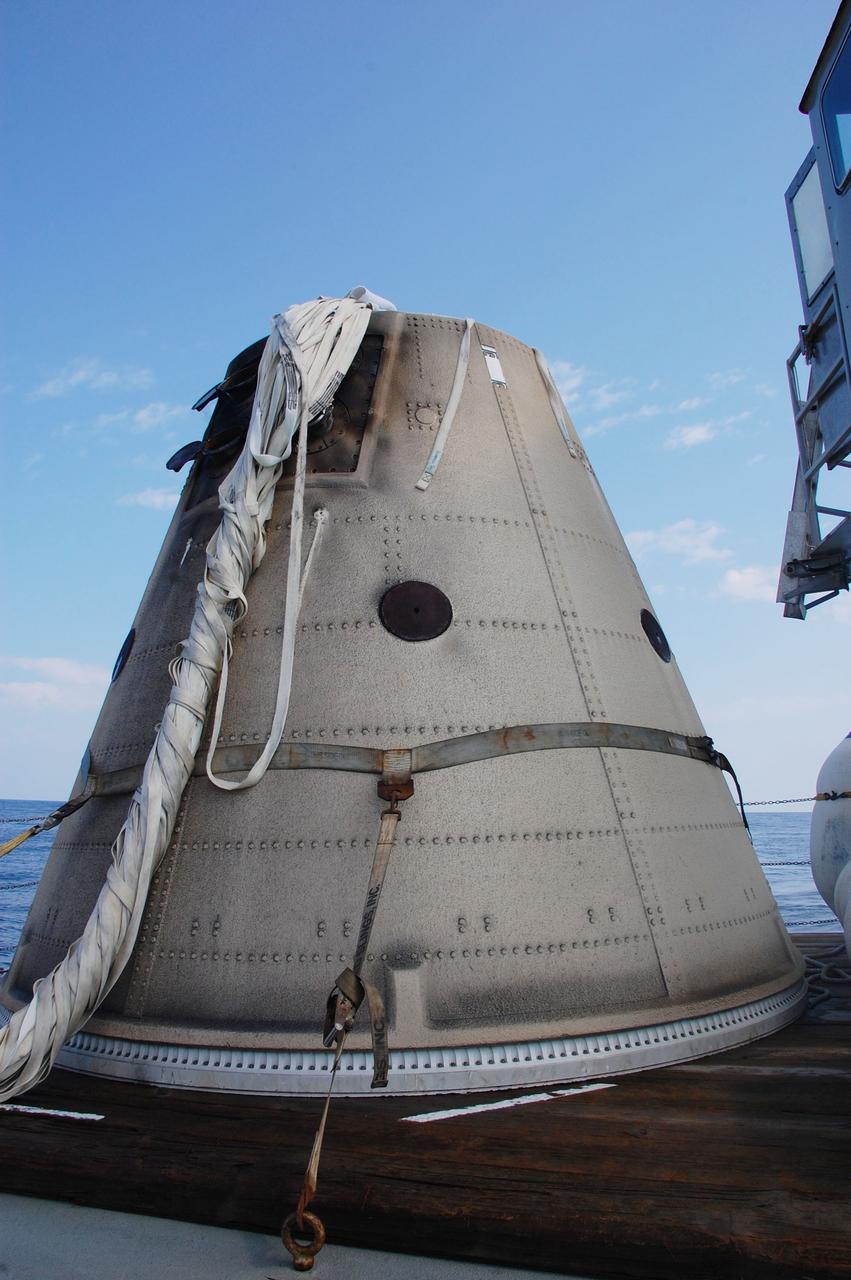
CAPE CANAVERAL, Fla. -- The left spent booster nose cap from space shuttle Discovery's final launch is secured to a pallet on Freedom Star, one of NASA's solid rocket booster retrieval ships and will be returned to Port Canaveral in Florida. The shuttle’s two solid rocket booster casings and associated flight hardware are recovered in the Atlantic Ocean after every launch by Liberty Star and Freedom Star. The boosters impact the Atlantic about seven minutes after liftoff and the retrieval ships are stationed about 10 miles from the impact area at the time of splashdown. After the spent segments are processed, they will be transported to Utah, where they will be refurbished and stored, if needed. Photo credit: NASA/Ben Smegelsky
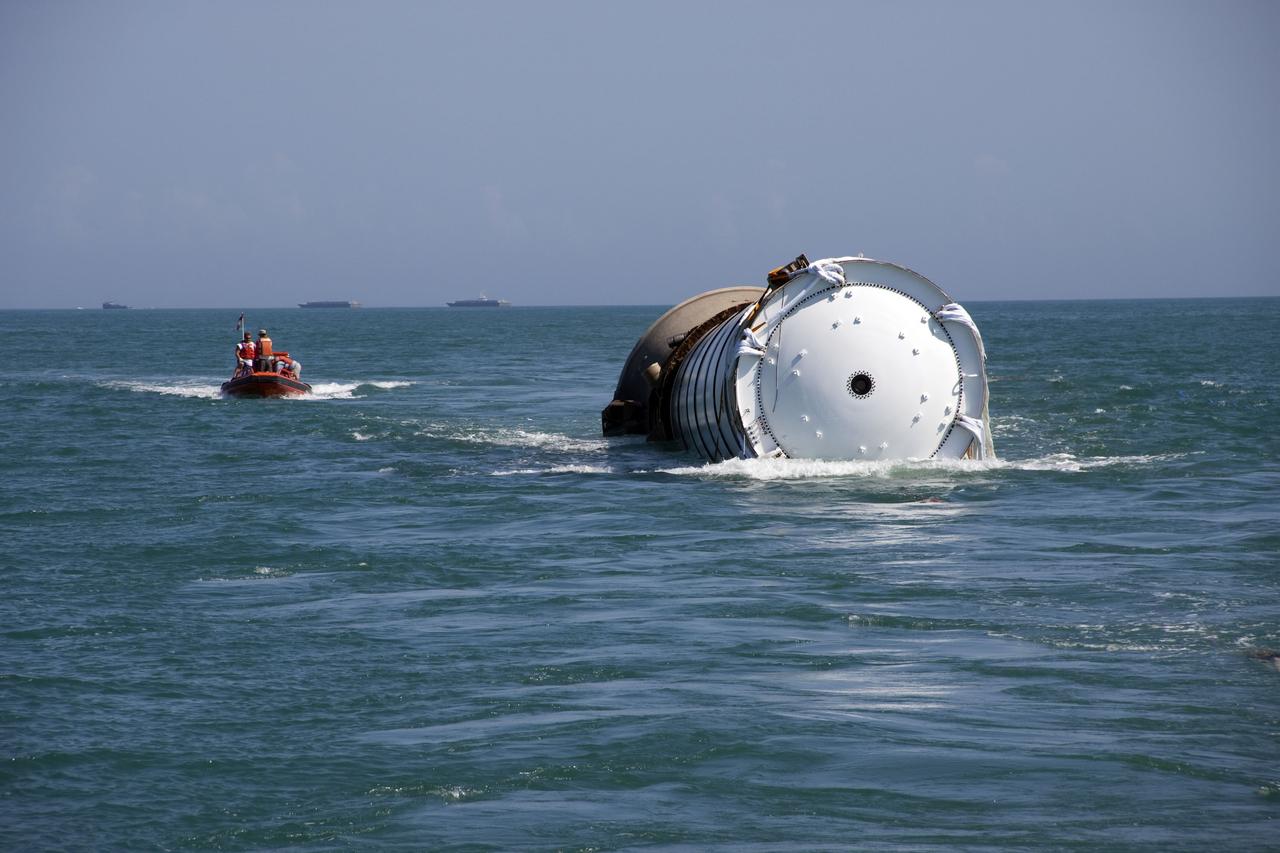
CAPE CANAVERAL, Fla. -- Liberty Star, one of NASA's solid rocket booster retrieval ships, tows the right spent booster from space shuttle Discovery's final launch, to Port Canaveral in Florida. The shuttle's two solid rocket booster casings and associated flight hardware are recovered in the Atlantic Ocean after every launch by Freedom Star and Liberty Star. The boosters impact the Atlantic about seven minutes after liftoff and the retrieval ships are stationed about 10 miles from the impact area at the time of splashdown. After the spent segments are processed, they will be transported to Utah, where they will be refurbished and stored, if needed. Photo credit: NASA/Frank Michaux
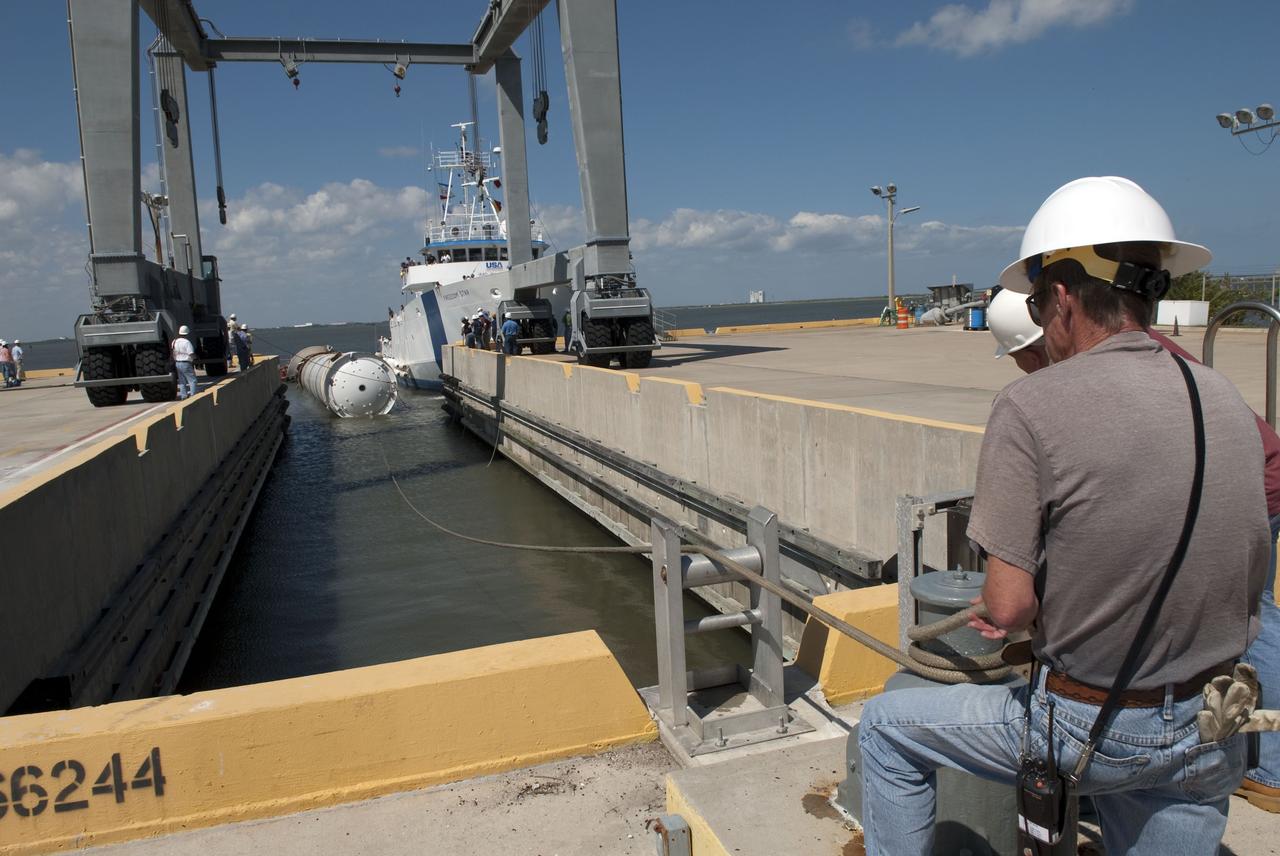
CAPE CANAVERAL, Fla. -- The left spent booster used during space shuttle Discovery's final launch is moved into a hoisting slip at the Solid Rocket Booster Disassembly Facility at Hangar AF on Cape Canaveral Air Force Station in Florida. The shuttle's two solid rocket booster casings and associated flight hardware are recovered in the Atlantic Ocean after every launch by Freedom Star and Liberty Star. The boosters impact the Atlantic about seven minutes after liftoff and the retrieval ships are stationed about 10 miles from the impact area at the time of splashdown. After the spent segments are processed, they will be transported to Utah, where they will be refurbished and stored, if needed. Photo credit: NASA/Jim Grossmann
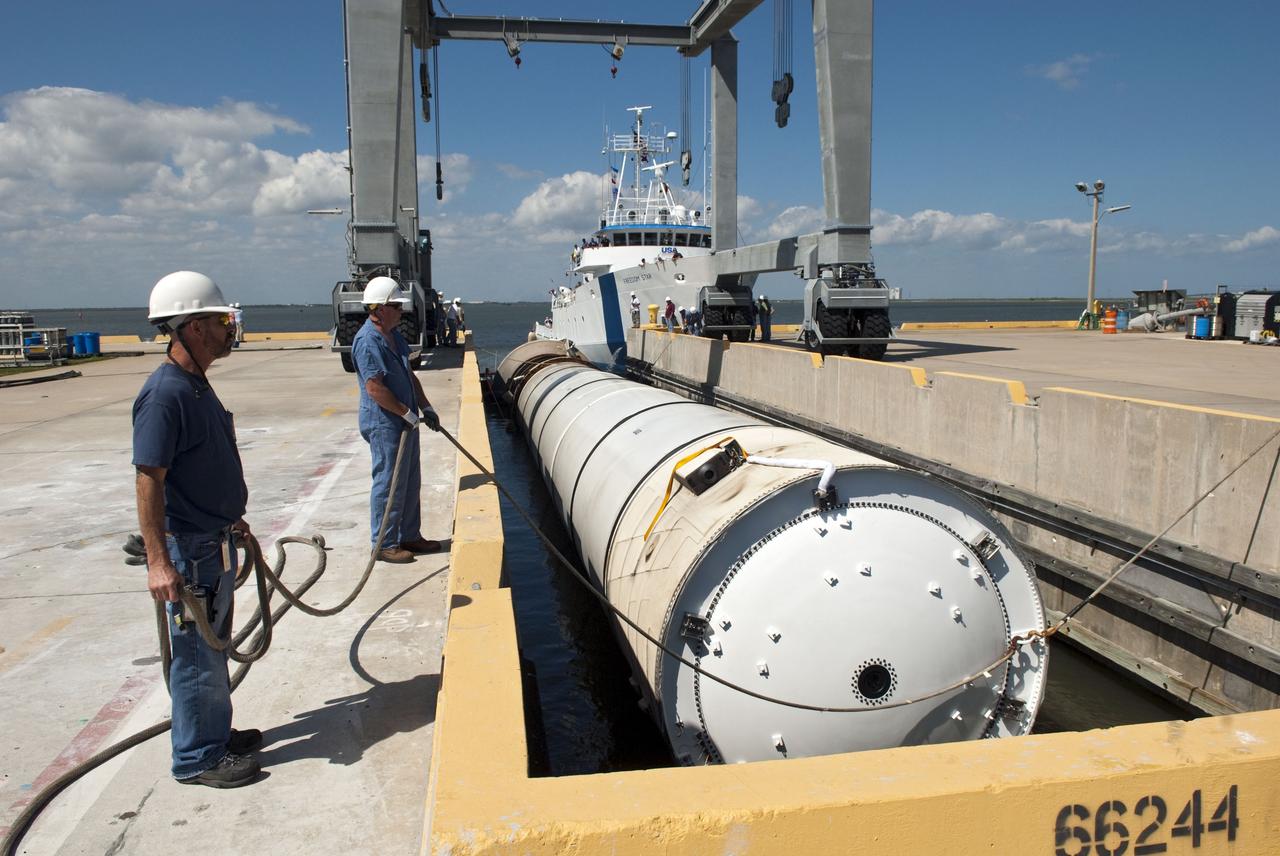
CAPE CANAVERAL, Fla. -- The left spent booster used during space shuttle Discovery's final launch is guided into a hoisting slip at the Solid Rocket Booster Disassembly Facility at Hangar AF on Cape Canaveral Air Force Station in Florida. The shuttle's two solid rocket booster casings and associated flight hardware are recovered in the Atlantic Ocean after every launch by Freedom Star and Liberty Star. The boosters impact the Atlantic about seven minutes after liftoff and the retrieval ships are stationed about 10 miles from the impact area at the time of splashdown. After the spent segments are processed, they will be transported to Utah, where they will be refurbished and stored, if needed. Photo credit: NASA/Jim Grossmann
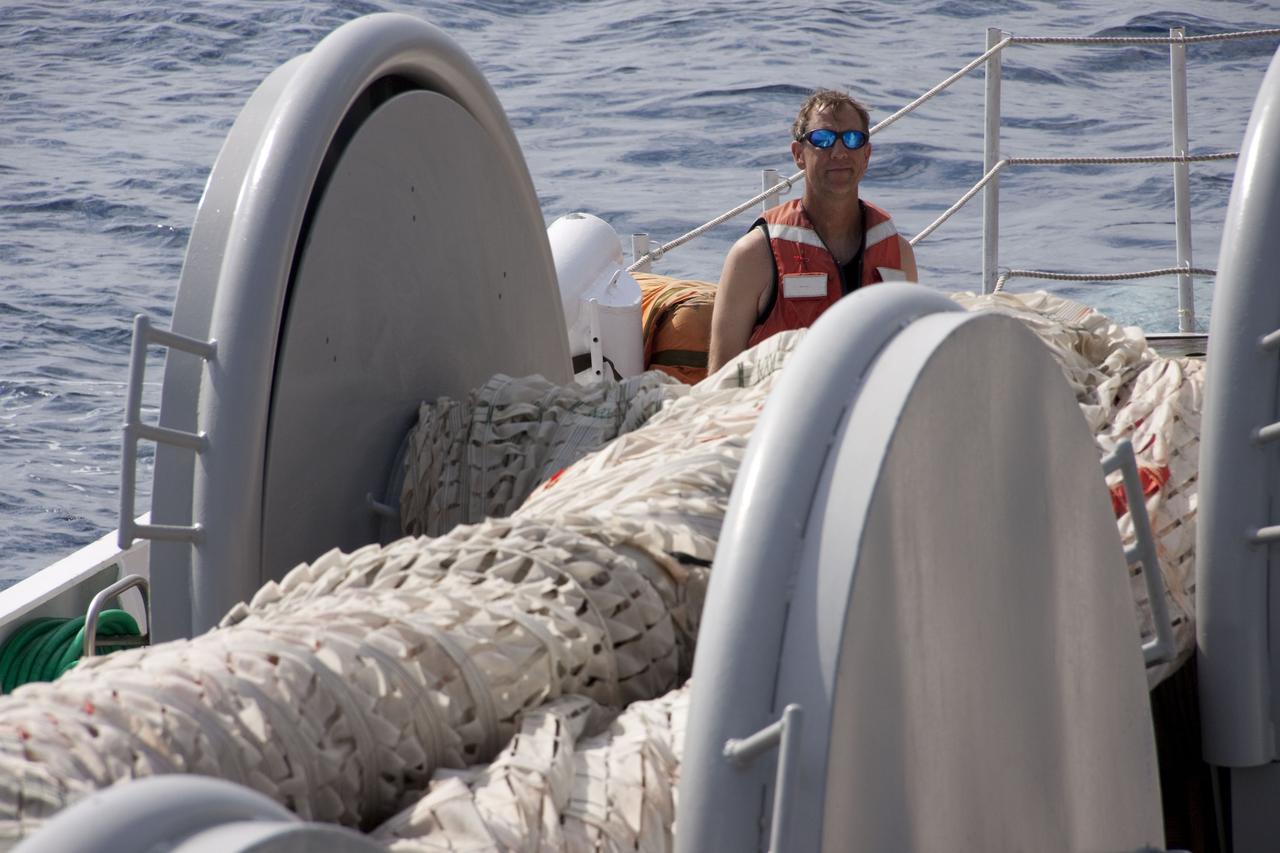
CAPE CANAVERAL, Fla. -- A crew member on Liberty Star, one of NASA's solid rocket booster retrieval ships, monitors the progress as the massive parachute from the right spent booster from space shuttle Discovery's final launch is hauled on board. The shuttle's two solid rocket booster casings and associated flight hardware are recovered in the Atlantic Ocean after every launch by Freedom Star and Liberty Star. The boosters impact the Atlantic about seven minutes after liftoff and the retrieval ships are stationed about 10 miles from the impact area at the time of splashdown. After the spent segments are processed, they will be transported to Utah, where they will be refurbished and stored, if needed. Photo credit: NASA/Frank Michaux
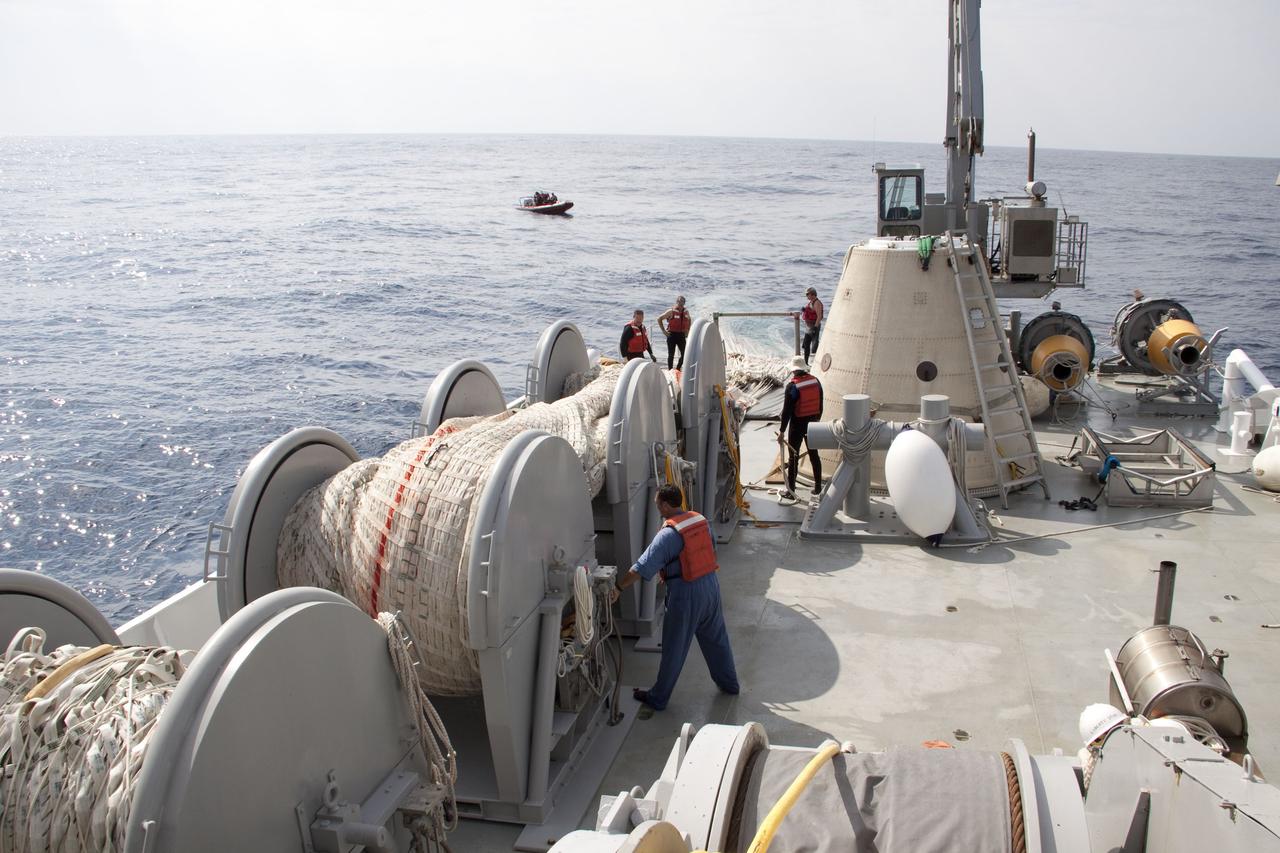
CAPE CANAVERAL, Fla. -- Crew members on board Liberty Star, one of NASA's solid rocket booster retrieval ships, haul in the massive parachute from the right spent booster from space shuttle Discovery's final launch. The shuttle's two solid rocket booster casings and associated flight hardware are recovered in the Atlantic Ocean after every launch by Freedom Star and Liberty Star. The boosters impact the Atlantic about seven minutes after liftoff and the retrieval ships are stationed about 10 miles from the impact area at the time of splashdown. After the spent segments are processed, they will be transported to Utah, where they will be refurbished and stored, if needed. Photo credit: NASA/Frank Michaux
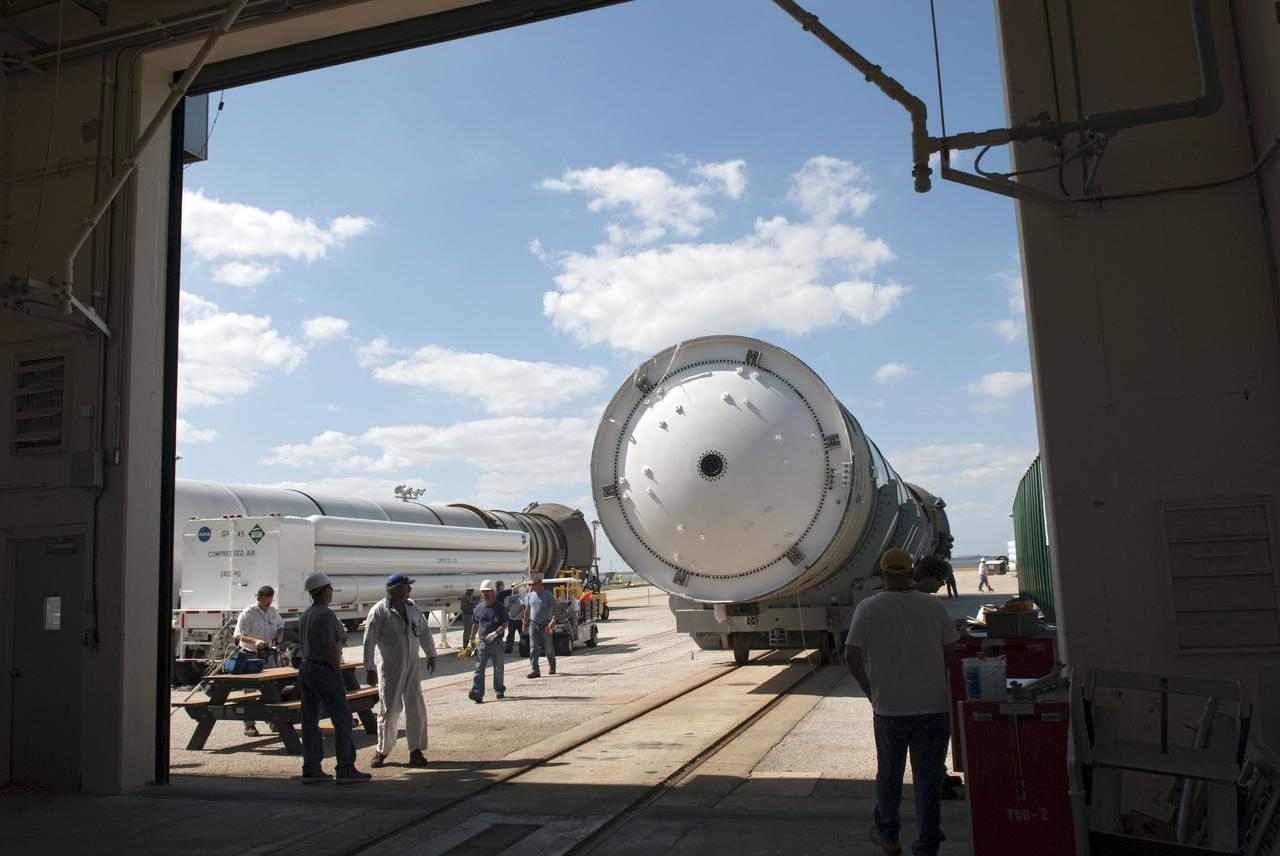
CAPE CANAVERAL, Fla. -- Workers at the Solid Rocket Booster Disassembly Facility at Hangar AF on Cape Canaveral Air Force Station in Florida, accompany the left spent booster, used during space shuttle Discovery's final launch, into the building for processing. The shuttle's two solid rocket booster casings and associated flight hardware are recovered in the Atlantic Ocean after every launch by Freedom Star and Liberty Star. The boosters impact the Atlantic about seven minutes after liftoff and the retrieval ships are stationed about 10 miles from the impact area at the time of splashdown. After the spent segments are processed, they will be transported to Utah, where they will be refurbished and stored, if needed. Photo credit: NASA/Jim Grossmann
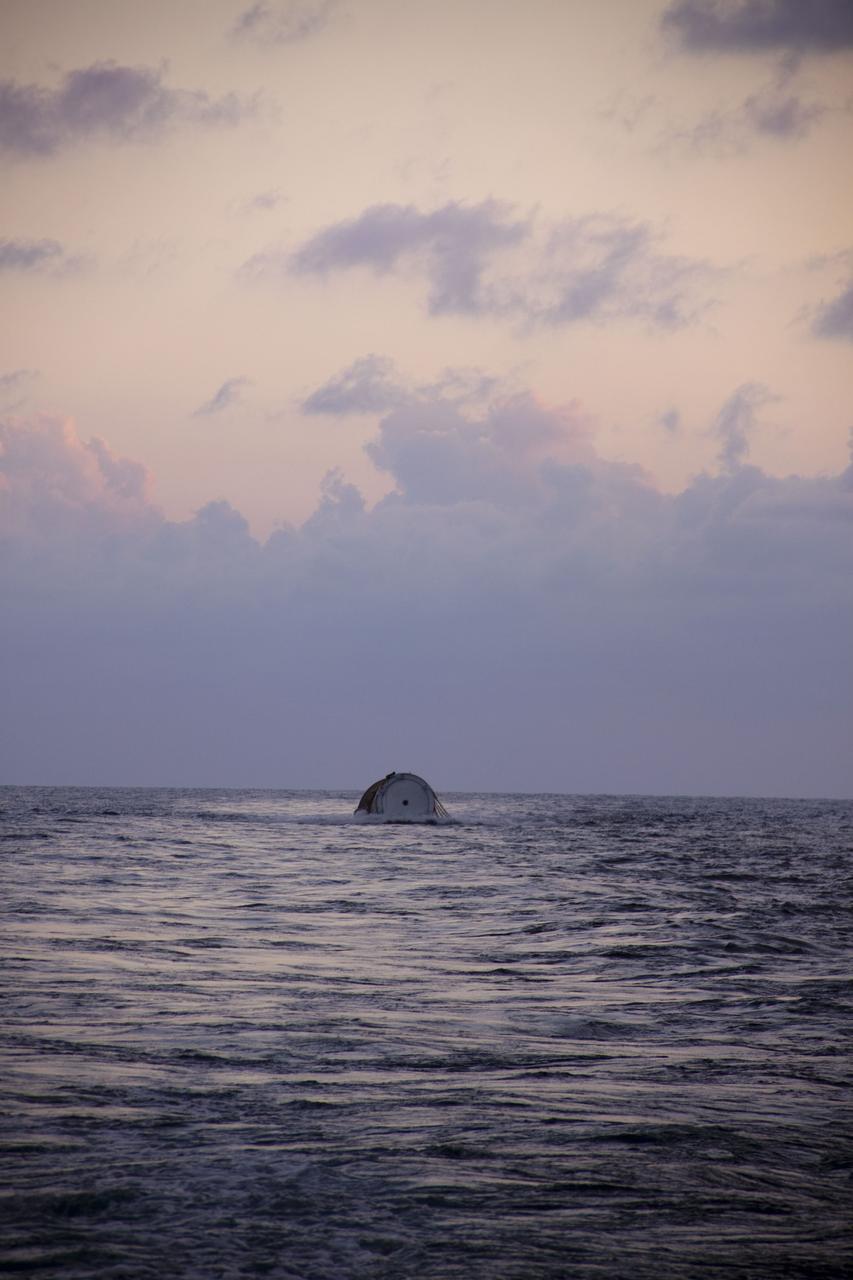
CAPE CANAVERAL, Fla. -- Liberty Star, one of NASA's solid rocket booster retrieval ships, tows the right spent booster from space shuttle Discovery's final launch, to Port Canaveral in Florida. The shuttle's two solid rocket booster casings and associated flight hardware are recovered in the Atlantic Ocean after every launch by Freedom Star and Liberty Star. The boosters impact the Atlantic about seven minutes after liftoff and the retrieval ships are stationed about 10 miles from the impact area at the time of splashdown. After the spent segments are processed, they will be transported to Utah, where they will be refurbished and stored, if needed. Photo credit: NASA/Frank Michaux
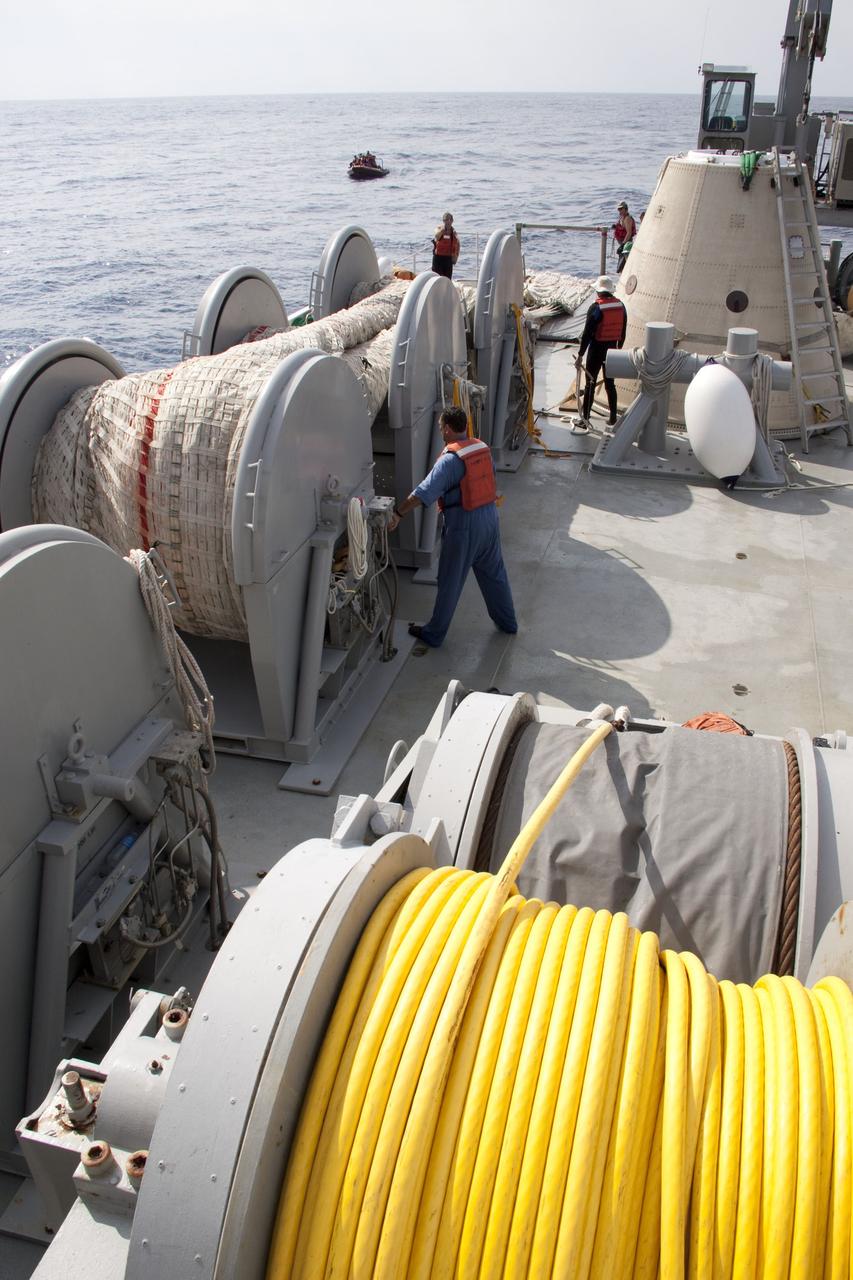
CAPE CANAVERAL, Fla. -- Crew members on board Liberty Star, one of NASA's solid rocket booster retrieval ships, haul in the massive parachute from the right spent booster from space shuttle Discovery's final launch. The shuttle's two solid rocket booster casings and associated flight hardware are recovered in the Atlantic Ocean after every launch by Freedom Star and Liberty Star. The boosters impact the Atlantic about seven minutes after liftoff and the retrieval ships are stationed about 10 miles from the impact area at the time of splashdown. After the spent segments are processed, they will be transported to Utah, where they will be refurbished and stored, if needed. Photo credit: NASA/Frank Michaux
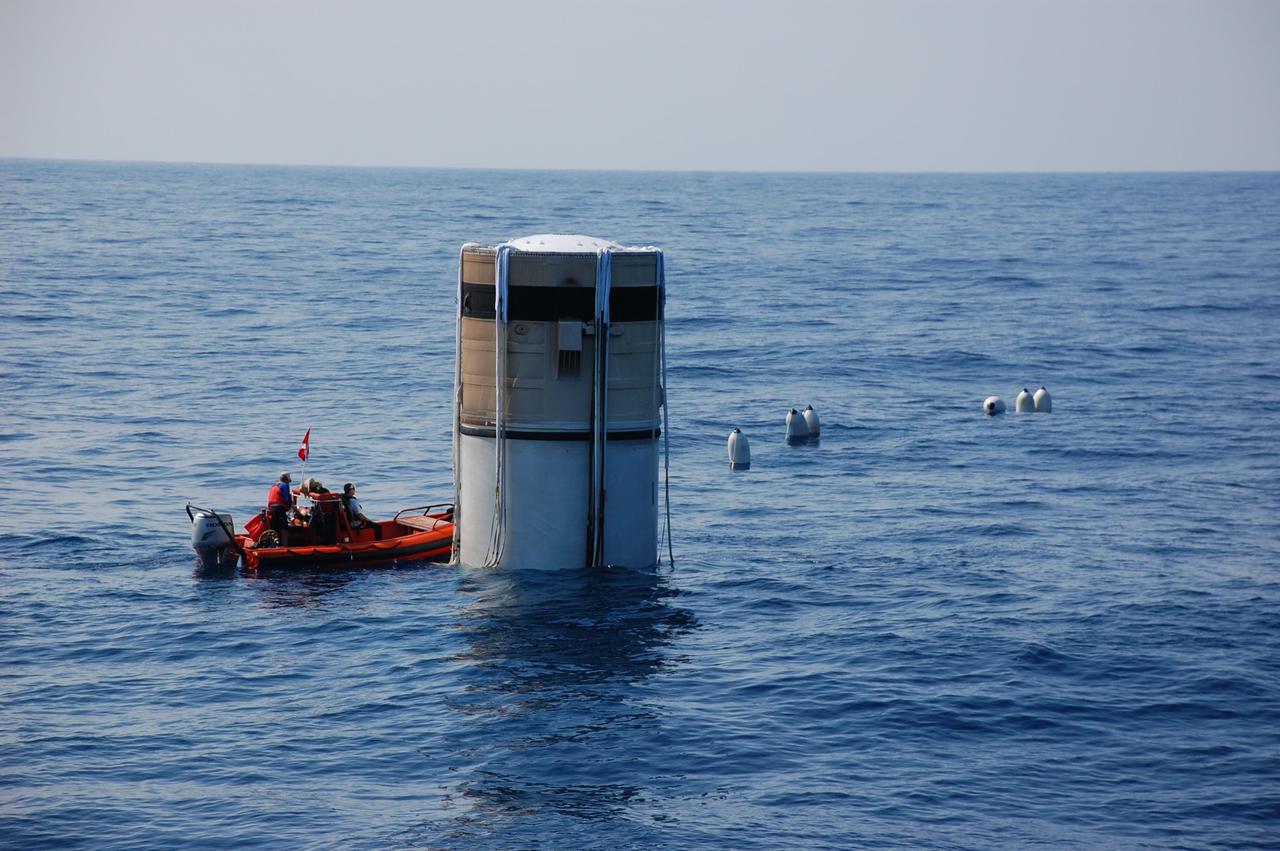
CAPE CANAVERAL, Fla. -- Crew members from Freedom Star, one of NASA's solid rocket booster retrieval ships, have attached a line, held up by flotation devices, between the left spent booster parachute and the ship. The shuttle’s two solid rocket booster casings and associated flight hardware are recovered in the Atlantic Ocean after every launch by Liberty Star and Freedom Star. The boosters impact the Atlantic about seven minutes after liftoff and the retrieval ships are stationed about 10 miles from the impact area at the time of splashdown. After the spent segments are processed, they will be transported to Utah, where they will be refurbished and stored, if needed. Photo credit: NASA/Ben Smegelsky
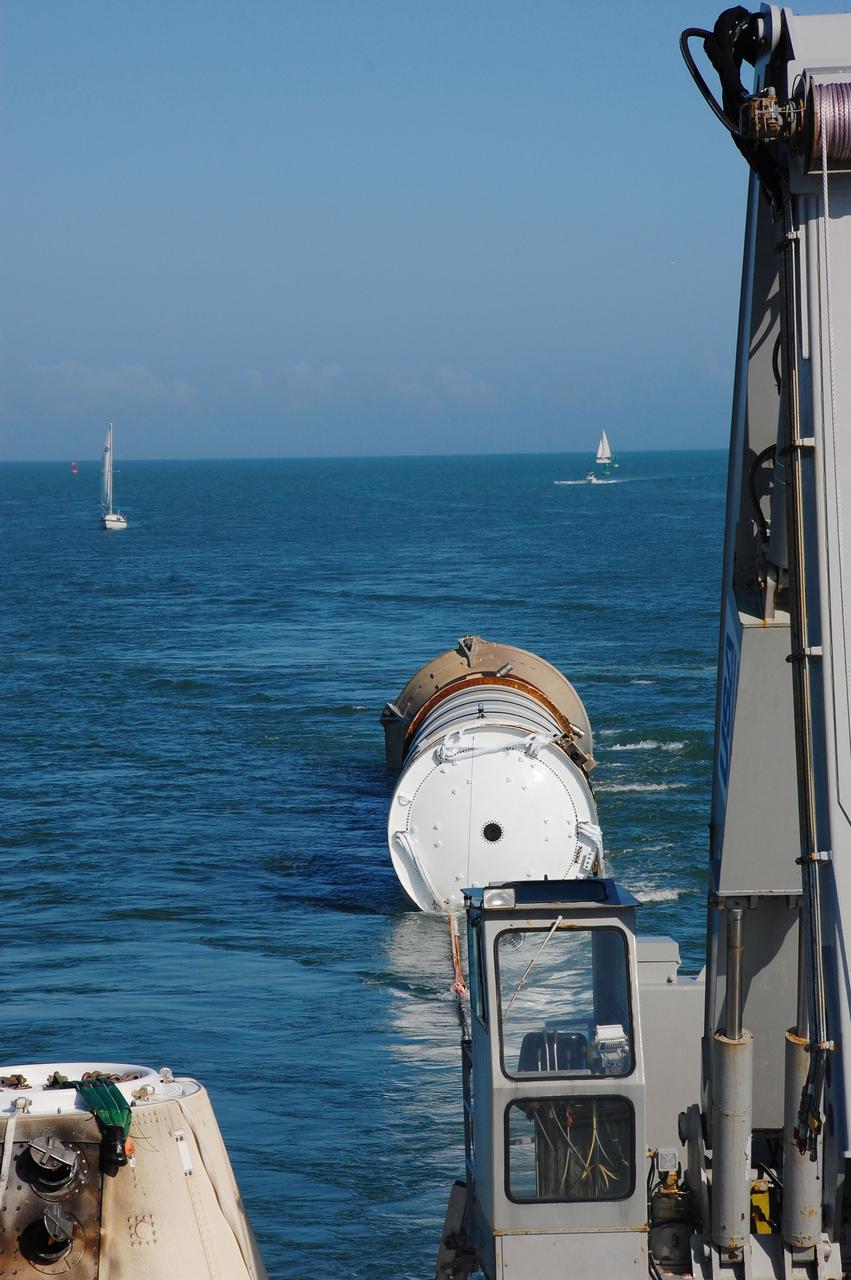
CAPE CANAVERAL, Fla. -- Freedom Star, one of NASA's solid rocket booster retrieval ships, tows the left spent booster from space shuttle Discovery's final launch, to Port Canaveral in Florida. The shuttle’s two solid rocket booster casings and associated flight hardware are recovered in the Atlantic Ocean after every launch by Liberty Star and Freedom Star. The boosters impact the Atlantic about seven minutes after liftoff and the retrieval ships are stationed about 10 miles from the impact area at the time of splashdown. After the spent segments are processed, they will be transported to Utah, where they will be refurbished and stored, if needed. Photo credit: NASA/Ben Smegelsky
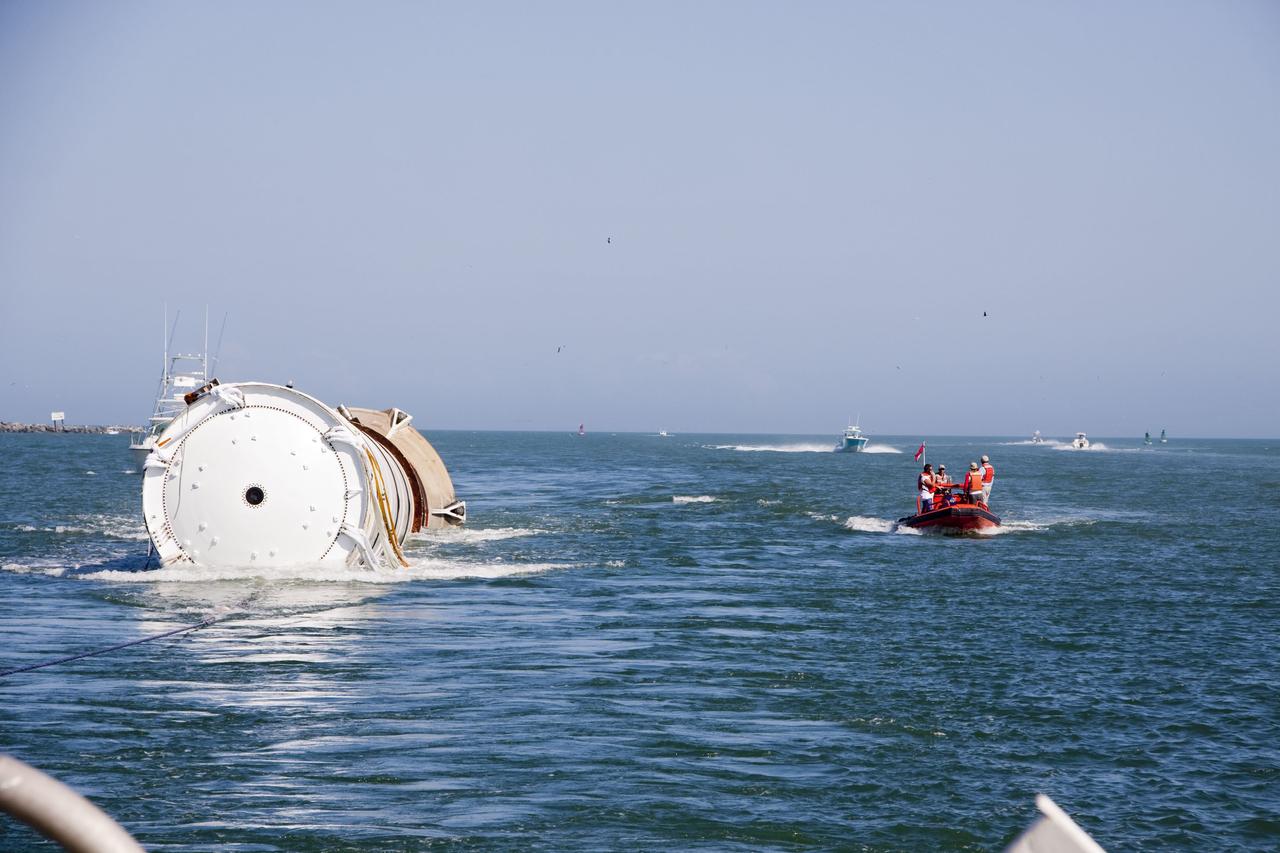
CAPE CANAVERAL, Fla. -- Liberty Star, one of NASA's solid rocket booster retrieval ships, tows the right spent booster from space shuttle Discovery's final launch, to Port Canaveral in Florida. The shuttle's two solid rocket booster casings and associated flight hardware are recovered in the Atlantic Ocean after every launch by Freedom Star and Liberty Star. The boosters impact the Atlantic about seven minutes after liftoff and the retrieval ships are stationed about 10 miles from the impact area at the time of splashdown. After the spent segments are processed, they will be transported to Utah, where they will be refurbished and stored, if needed. Photo credit: NASA/Frank Michaux
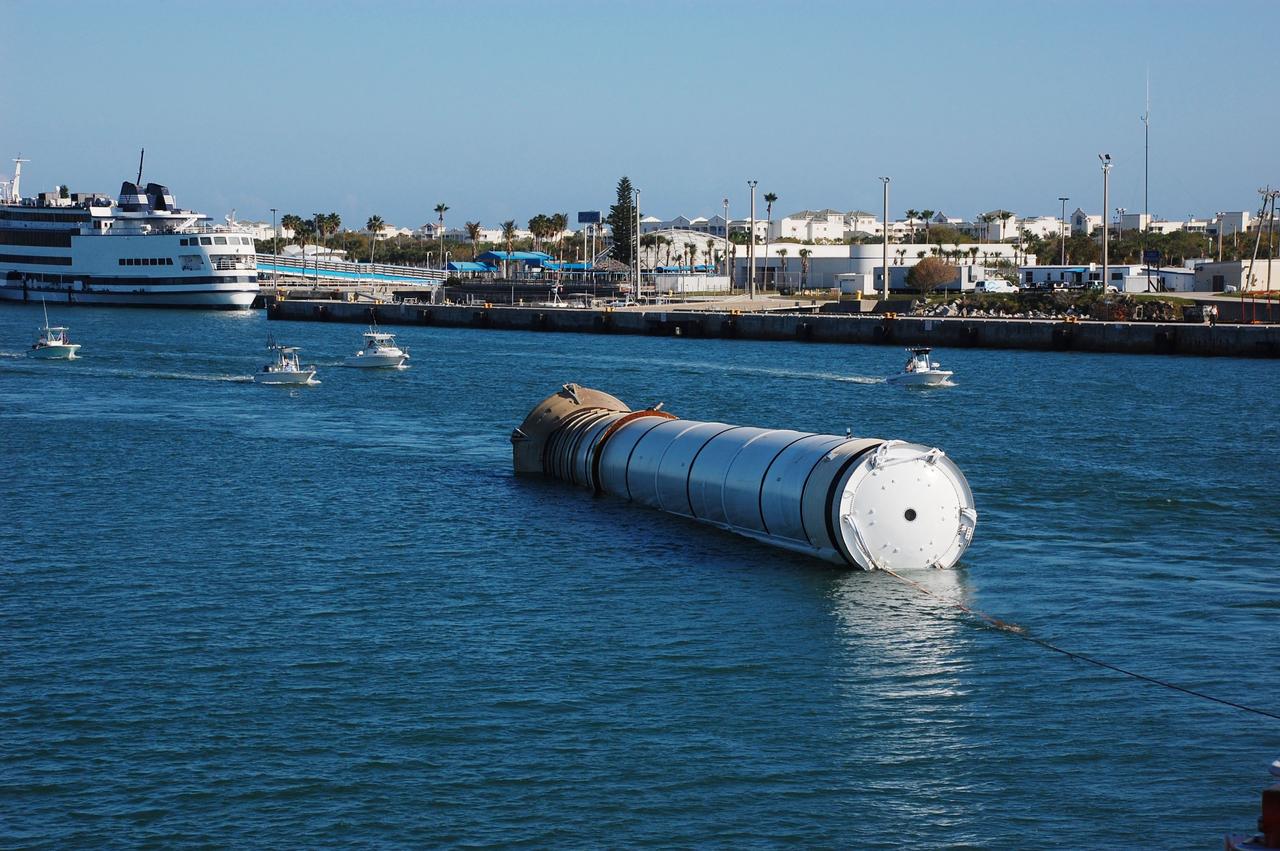
CAPE CANAVERAL, Fla. -- Freedom Star, one of NASA's solid rocket booster retrieval ships, reaches Port Canaveral, Florida with the left spent booster from space shuttle Discovery's final launch, in tow. The shuttle’s two solid rocket booster casings and associated flight hardware are recovered in the Atlantic Ocean after every launch by Liberty Star and Freedom Star. The boosters impact the Atlantic about seven minutes after liftoff and the retrieval ships are stationed about 10 miles from the impact area at the time of splashdown. After the spent segments are processed, they will be transported to Utah, where they will be refurbished and stored, if needed. Photo credit: NASA/Ben Smegelsky
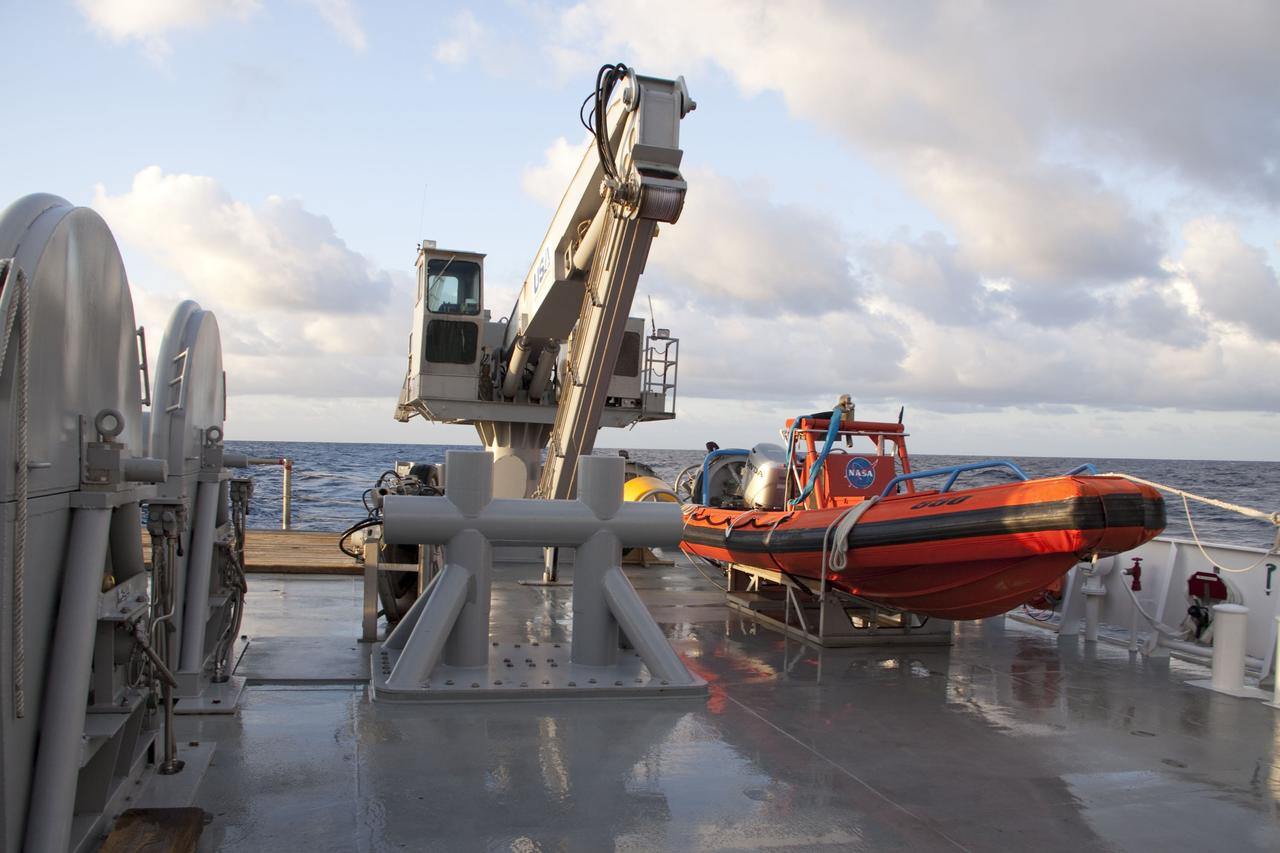
CAPE CANAVERAL, Fla. -- A crane and a skiff await Liberty Star, one of NASA's solid rocket booster retrieval ships, to reach the splash-down area where the right spent booster from Discovery's final launch has landed. The shuttle’s two solid rocket booster casings and associated flight hardware are recovered in the Atlantic Ocean after every launch by Liberty Star and Liberty Star. The boosters impact the Atlantic about seven minutes after liftoff and the retrieval ships are stationed about 10 miles from the impact area at the time of splashdown. After the spent segments are processed, they will be transported to Utah, where they will be refurbished and stored, if needed. Photo credit: NASA/Frank Michaux
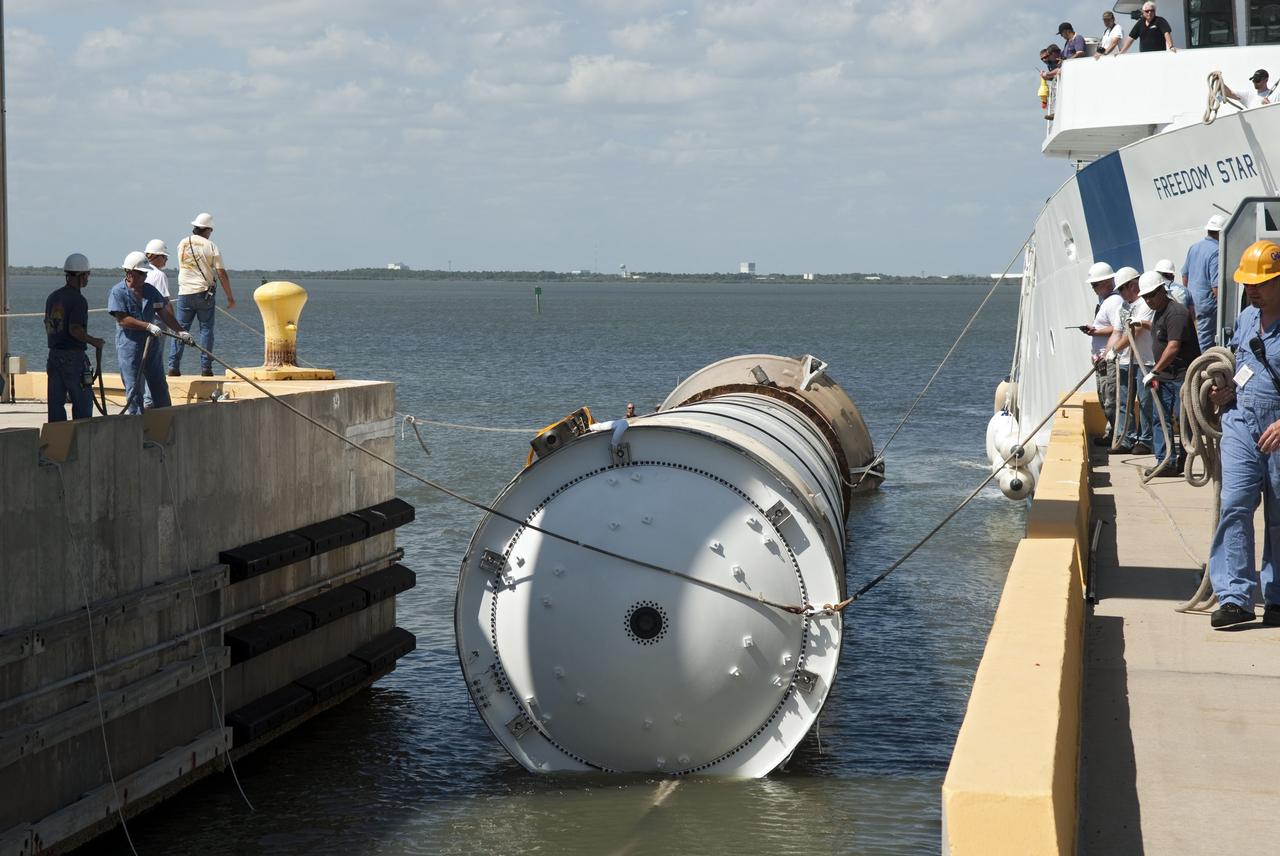
CAPE CANAVERAL, Fla. -- The left spent booster used during space shuttle Discovery's final launch is guided into a hoisting slip at the Solid Rocket Booster Disassembly Facility at Hangar AF on Cape Canaveral Air Force Station in Florida. The shuttle's two solid rocket booster casings and associated flight hardware are recovered in the Atlantic Ocean after every launch by Freedom Star and Liberty Star. The boosters impact the Atlantic about seven minutes after liftoff and the retrieval ships are stationed about 10 miles from the impact area at the time of splashdown. After the spent segments are processed, they will be transported to Utah, where they will be refurbished and stored, if needed. Photo credit: NASA/Jim Grossmann
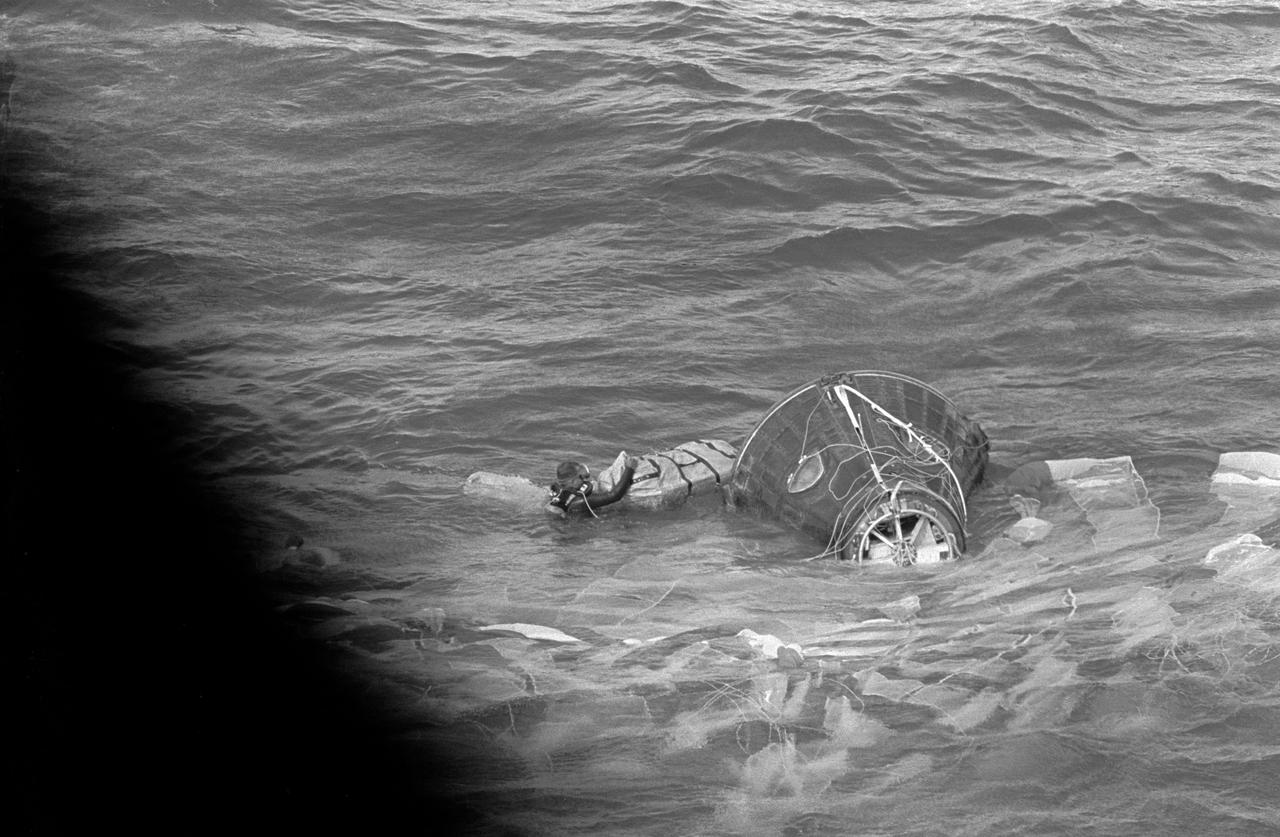
S66-42794 (21 July 1966) --- Navy frogmen prepare to attach a flotation collar to the Gemini-10 spacecraft as it bobs in the Atlantic Ocean following its successful splashdown. Inside the spacecraft are astronauts John W. Young, command pilot, and Michael Collins, pilot, waiting to egress the spacecraft for recovery by helicopter from the prime recovery ship, USS Guadalcanal. Photo credit: NASA
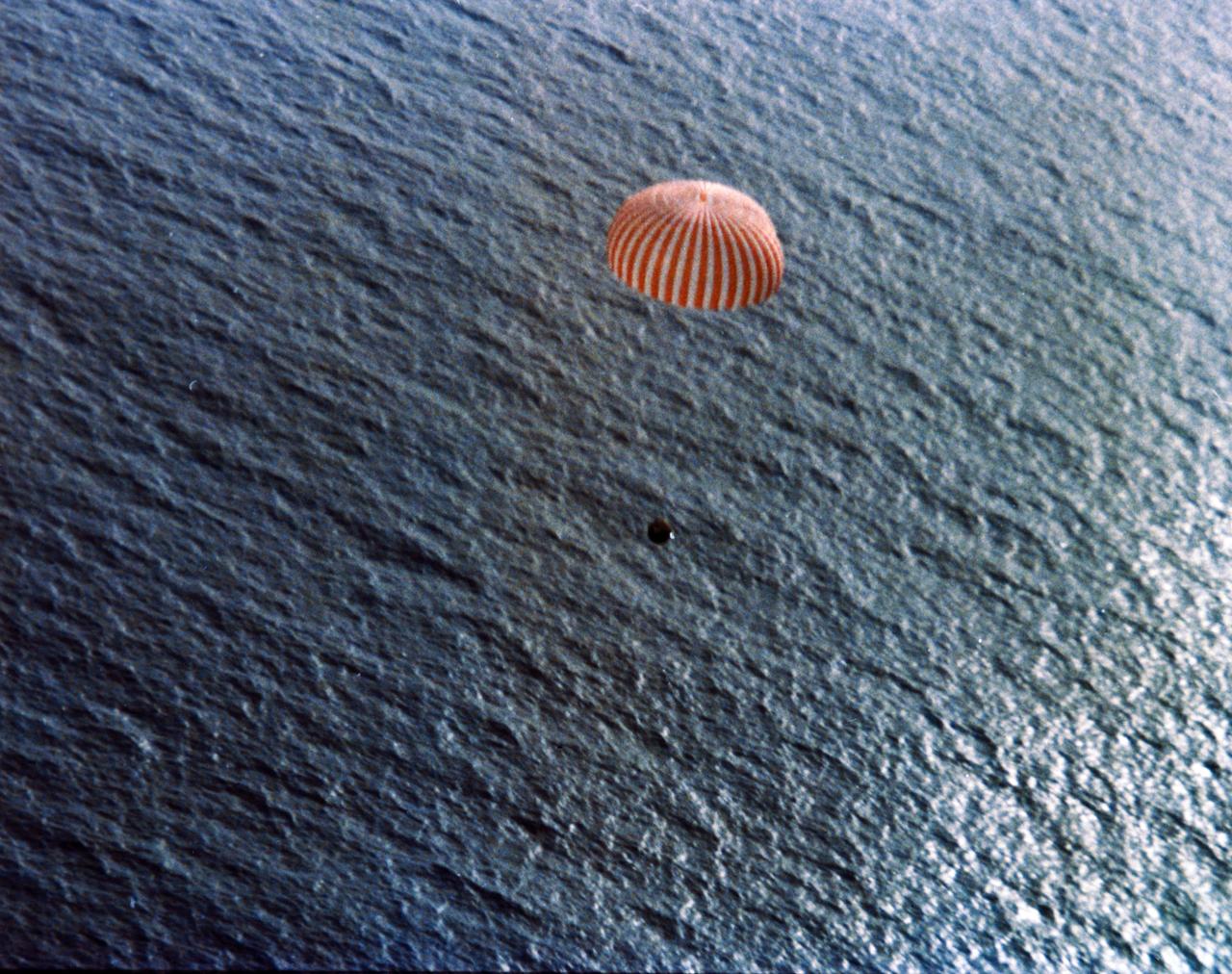
S66-15802 (18 Dec. 1965) --- A camera on a recovery helicopter captured this scene as the Gemini-7 spacecraft slowly descends to the surface of the Atlantic Ocean to conclude a record-breaking 14-day mission in space. Aboard the spacecraft were astronauts Frank Borman, command pilot, and James A. Lovell Jr., pilot. Splashdown was at 9:05 a.m. (EST), Dec. 18, 1965. The two astronauts were hoisted from the water by a helicopter crew and flown to the aircraft carrier. Photo credit: NASA
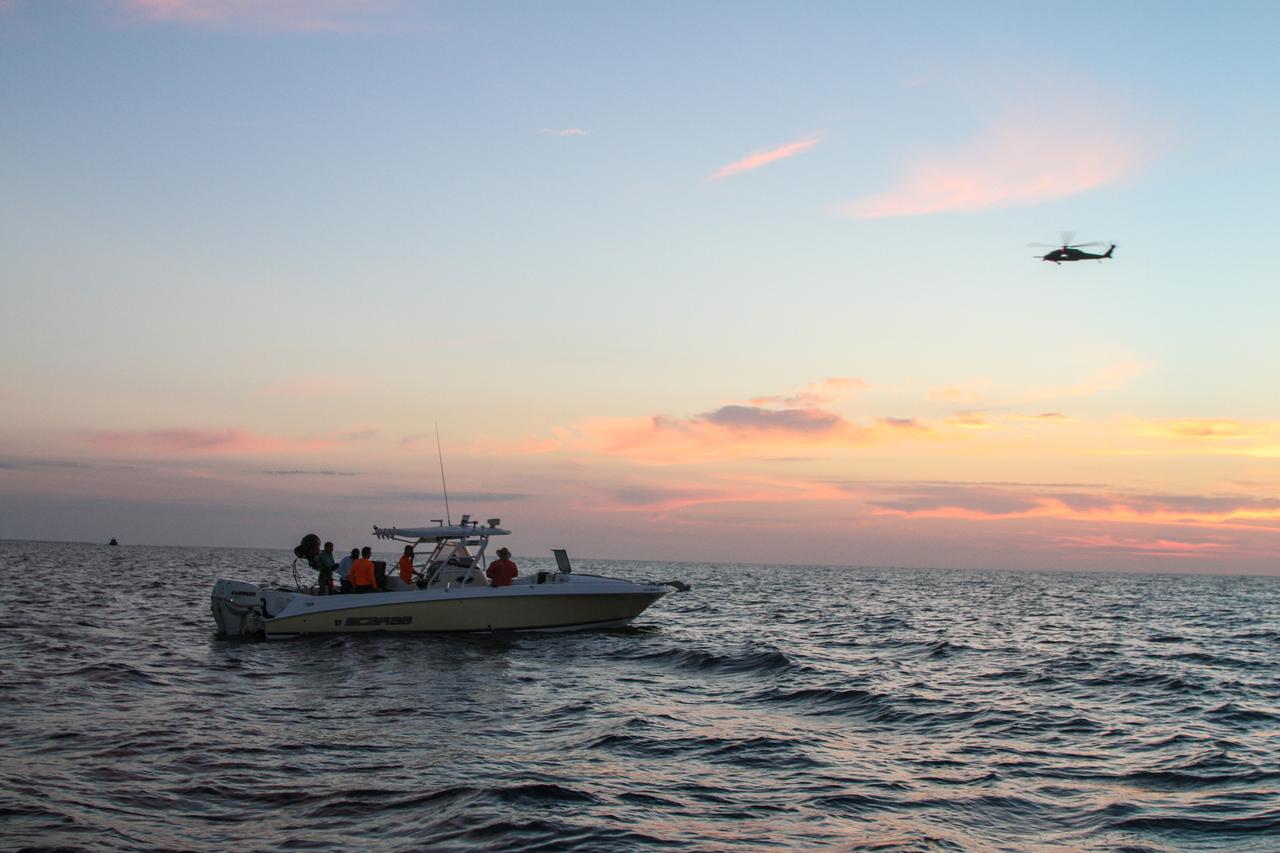
Members of the NASA Ejectable Data Recorder Recovery Team search for the ejectable data recorders in the Atlantic Ocean off the coast of Florida on July 2, 2019, after the Ascent Abort-2 (AA-2) flight test. During AA-2, a fully functional Launch Abort System (LAS) with a test version of Orion attached, launched atop a Northrop Grumman provided booster from Launch Pad 46 at Cape Canaveral Air Force Station on July 2, 2019. Liftoff was at 7 a.m. EDT. During AA-2, the booster sent the LAS and Orion to an altitude of 31,000 feet, traveling at Mach 1.15 (more than 1,000 mph). The LAS’ three motors worked together to pull the crew module away from the booster and prepare it for splashdown in the Atlantic Ocean. The flight test proves that the abort system can pull crew to safety in the unlikely event of an emergency during ascent. Data from the recorders will be analyzed by engineers.
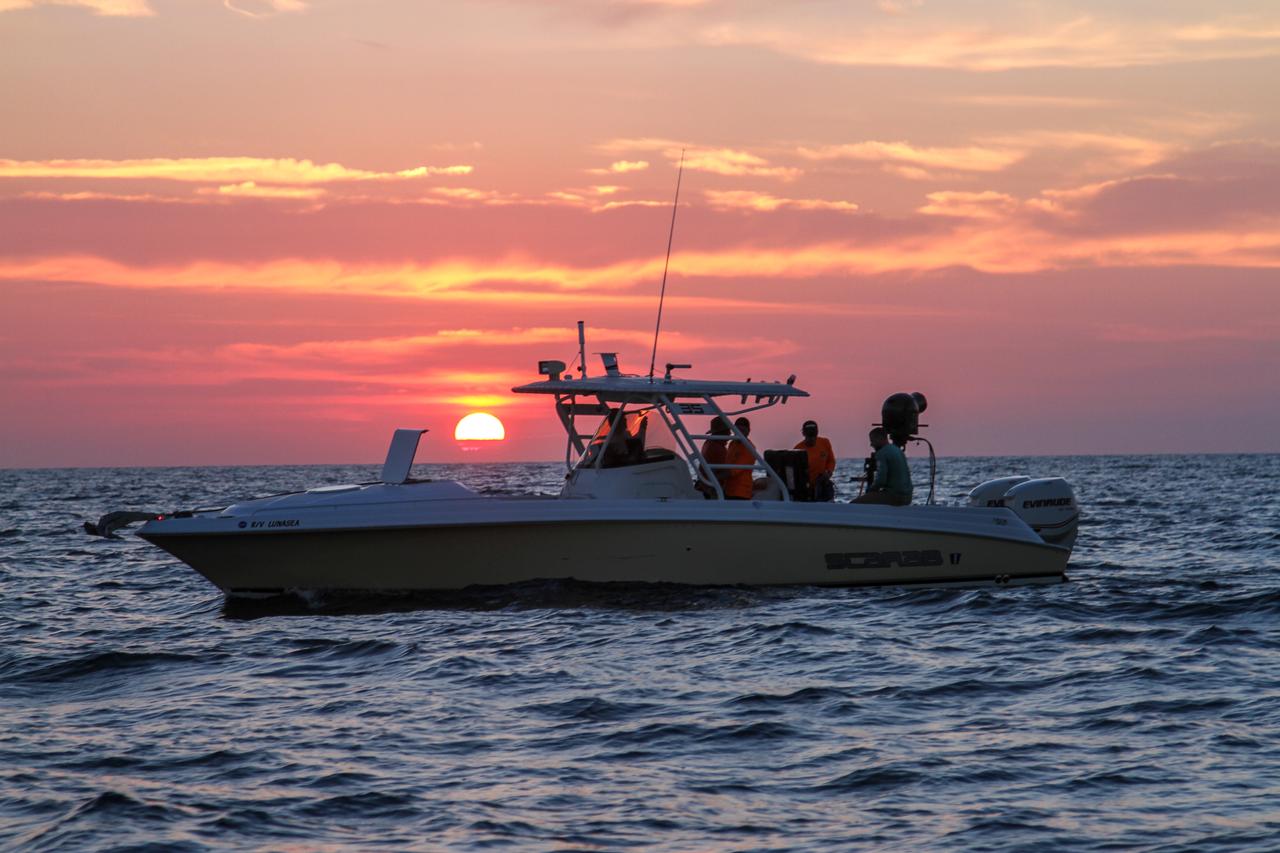
Members of the NASA Ejectable Data Recorder Recovery Team search for the ejectable data recorders in the Atlantic Ocean off the coast of Florida on July 2, 2019, after the Ascent Abort-2 (AA-2) flight test. During AA-2, a fully functional Launch Abort System (LAS) with a test version of Orion attached, launched atop a Northrop Grumman provided booster from Launch Pad 46 at Cape Canaveral Air Force Station on July 2, 2019. Liftoff was at 7 a.m. EDT. During AA-2, the booster sent the LAS and Orion to an altitude of 31,000 feet, traveling at Mach 1.15 (more than 1,000 mph). The LAS’ three motors worked together to pull the crew module away from the booster and prepare it for splashdown in the Atlantic Ocean. The flight test proves that the abort system can pull crew to safety in the unlikely event of an emergency during ascent. Data from the recorders will be analyzed by engineers.
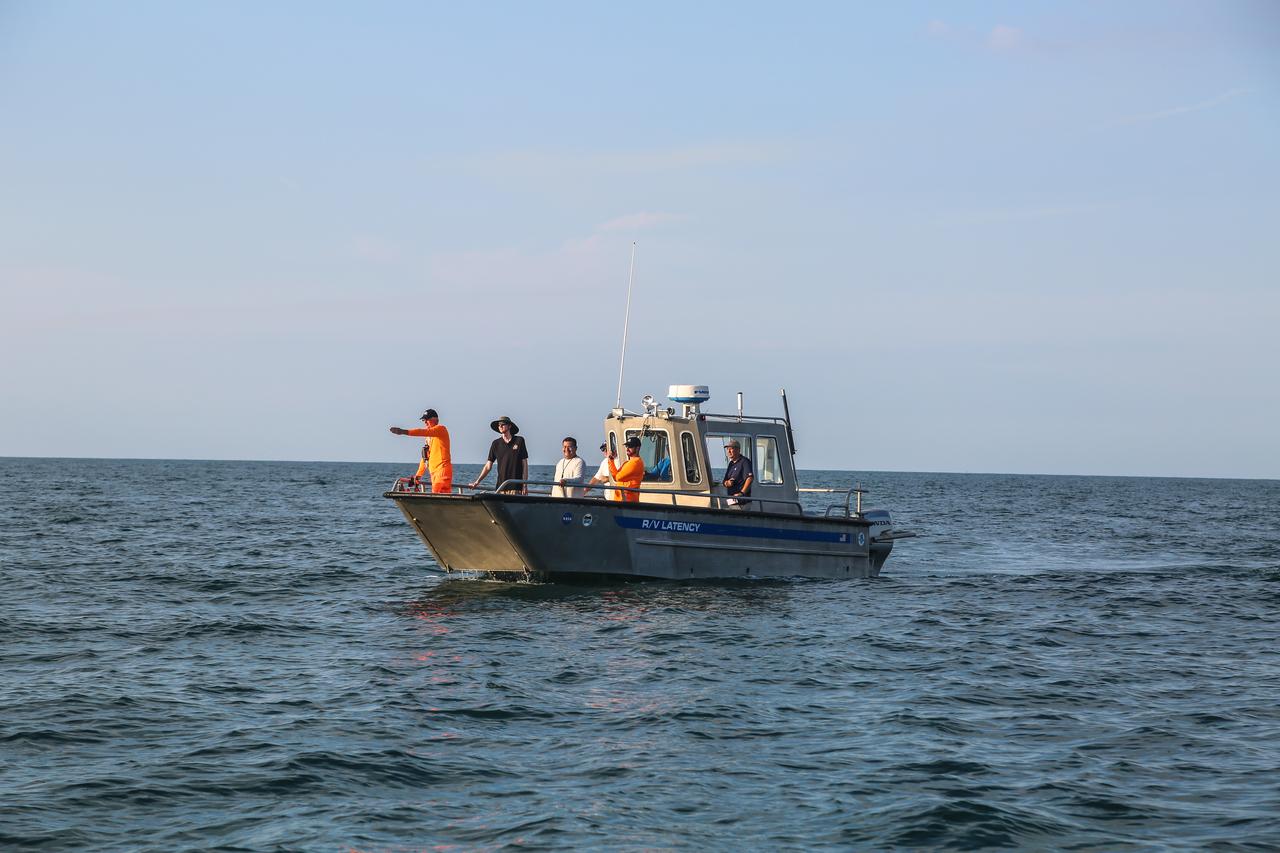
Members of the NASA Ejectable Data Recorder Recovery Team search for the ejectable data recorders in the Atlantic Ocean off the coast of Florida on July 2, 2019, after the Ascent Abort-2 (AA-2) flight test. During AA-2, a fully functional Launch Abort System (LAS) with a test version of Orion attached, launched atop a Northrop Grumman provided booster from Launch Pad 46 at Cape Canaveral Air Force Station on July 2, 2019. Liftoff was at 7 a.m. EDT. During AA-2, the booster sent the LAS and Orion to an altitude of 31,000 feet, traveling at Mach 1.15 (more than 1,000 mph). The LAS’ three motors worked together to pull the crew module away from the booster and prepare it for splashdown in the Atlantic Ocean. The flight test proves that the abort system can pull crew to safety in the unlikely event of an emergency during ascent. Data from the recorders will be analyzed by engineers.
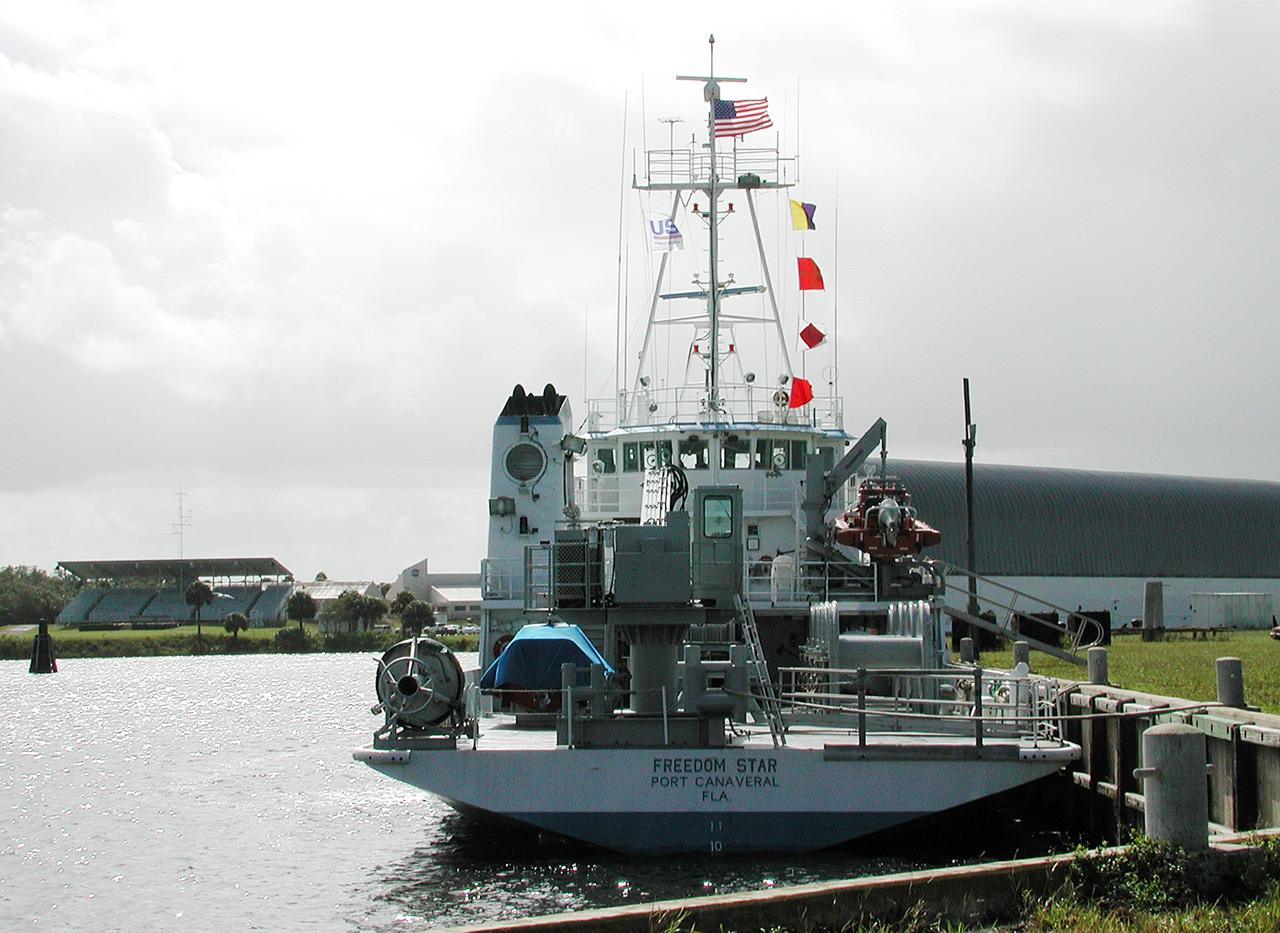
KENNEDY SPACE CENTER, FLA. - The Freedom Star is berthed at the Turn Basin near the Vehicle Assembly Building. The ship has recently returned to KSC after refurbishment at Fort George Island, Fla., including new paint. Freedom Star is one of the solid rocket booster (SRB) retrieval ships built to recover the SRB casings released over the Atlantic Ocean after launch of a Space Shuttle. In addition to the SRBs, the ship recovers the drogue and main parachutes that slow the boosters’ speed before splashdown. Some of the retrieval equipment can be seen on the rear deck. The ships also tow the external tanks built at the Michoud Space Systems Assembly Facility near New Orleans to Port Canaveral, Fla. Freedom Star was brought to KSC today for a visit by NATO Parliamentarians.
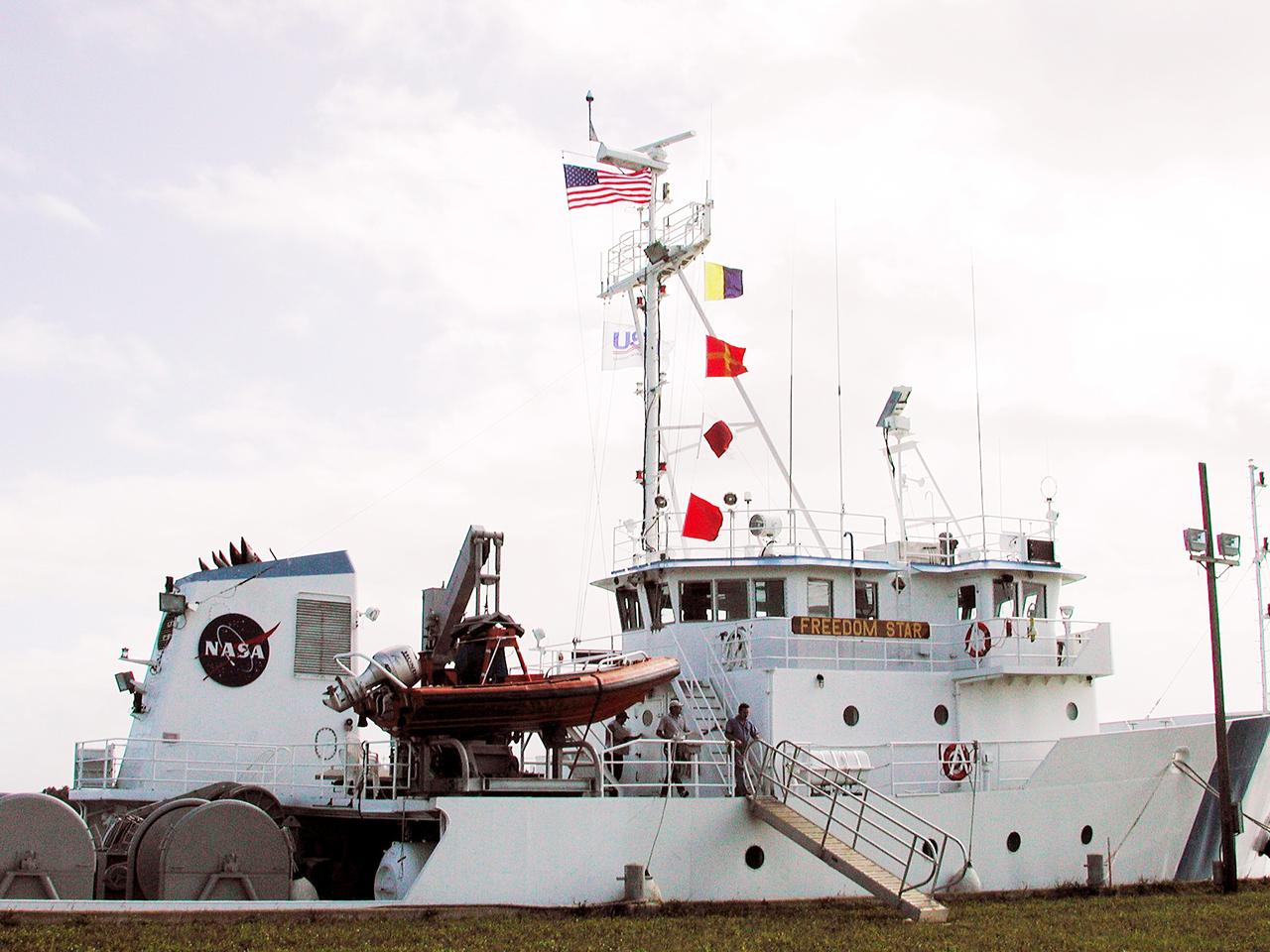
KENNEDY SPACE CENTER, FLA. - The Freedom Star is berthed at the Turn Basin near the Vehicle Assembly Building. The ship has recently returned to KSC after refurbishment at Fort George Island, Fla., including new paint. Freedom Star is one of the solid rocket booster (SRB) retrieval ships built to recover the SRB casings released over the Atlantic Ocean after launch of a Space Shuttle. In addition to the SRBs, the ship recovers the drogue and main parachutes that slow the boosters’ speed before splashdown. Some of the retrieval equipment can be seen on the rear deck. The ships also tow the external tanks built at the Michoud Space Systems Assembly Facility near New Orleans to Port Canaveral, Fla. Freedom Star was brought to KSC today for a visit by NATO Parliamentarians.
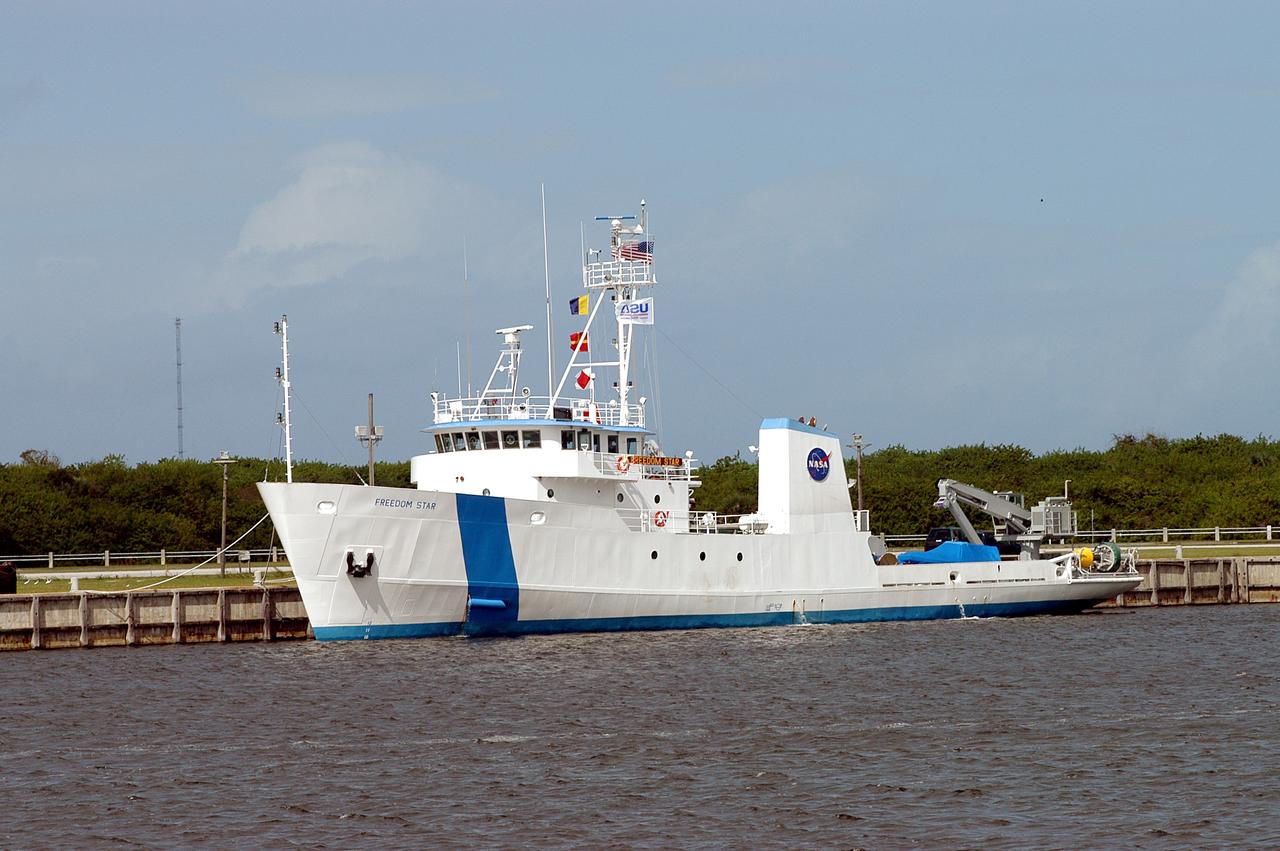
KENNEDY SPACE CENTER, FLA. - The Freedom Star is berthed at the Turn Basin near the Vehicle Assembly Building. The ship has recently returned to KSC after refurbishment at Fort George Island, Fla., including new paint. Freedom Star is one of the solid rocket booster (SRB) retrieval ships built to recover the SRB casings released over the Atlantic Ocean after launch of a Space Shuttle. In addition to the SRBs, the ship recovers the drogue and main parachutes that slow the boosters’ speed before splashdown. The ships also tow the external tanks built at the Michoud Space Systems Assembly Facility near New Orleans to Port Canaveral, Fla. Freedom Star was brought to KSC today for a visit by NATO Parliamentarians.
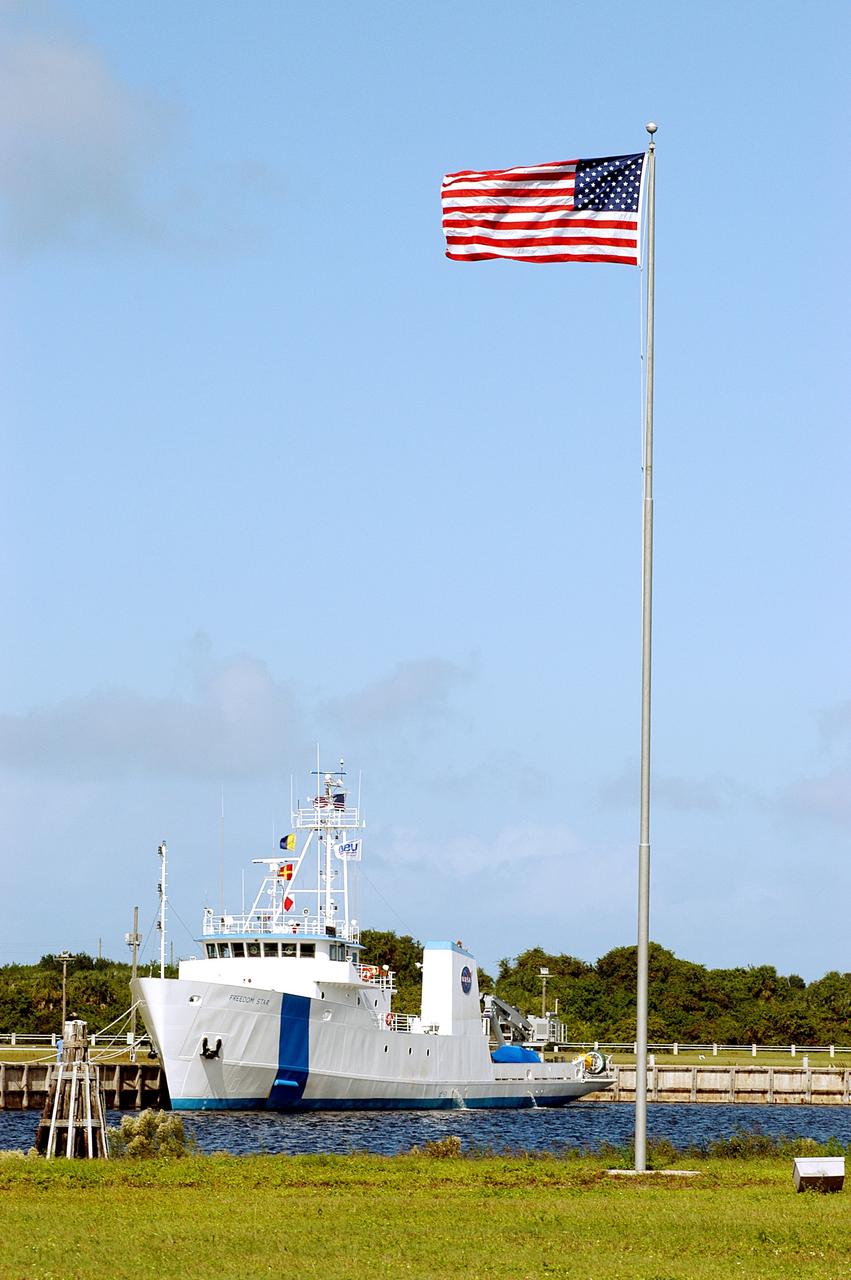
KENNEDY SPACE CENTER, FLA. - The Freedom Star is berthed at the Turn Basin near the Vehicle Assembly Building and NASA-KSC News Center. The flag is near the News Center. The ship has recently returned to KSC after refurbishment at Fort George Island, Fla., including new paint. Freedom Star is one of the solid rocket booster (SRB) retrieval ships built to recover the SRB casings released over the Atlantic Ocean after launch of a Space Shuttle. In addition to the SRBs, the ship recovers the drogue and main parachutes that slow the boosters’ speed before splashdown. The ships also tow the external tanks built at the Michoud Space Systems Assembly Facility near New Orleans to Port Canaveral, Fla. Freedom Star was brought to KSC today for a visit by NATO Parliamentarians.
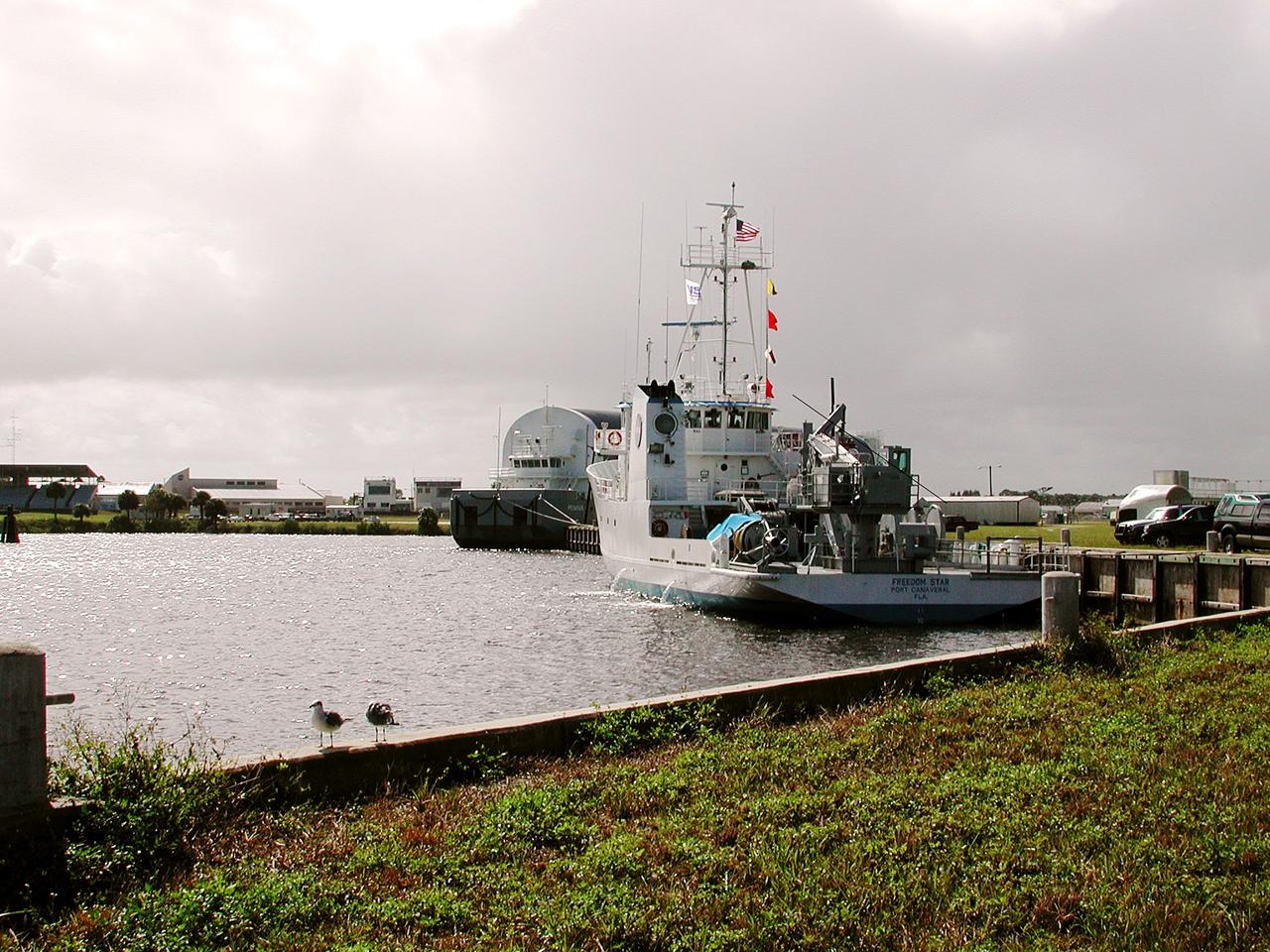
KENNEDY SPACE CENTER, FLA. - The Freedom Star is berthed at the Turn Basin near the Vehicle Assembly Building. The ship has recently returned to KSC after refurbishment at Fort George Island, Fla., including new paint. Freedom Star is one of the solid rocket booster (SRB) retrieval ships built to recover the SRB casings released over the Atlantic Ocean after launch of a Space Shuttle. In addition to the SRBs, the ship recovers the drogue and main parachutes that slow the boosters’ speed before splashdown. Some of the retrieval equipment can be seen on the rear deck. The ships also tow the external tanks built at the Michoud Space Systems Assembly Facility near New Orleans to Port Canaveral, Fla. Freedom Star was brought to KSC today for a visit by NATO Parliamentarians.
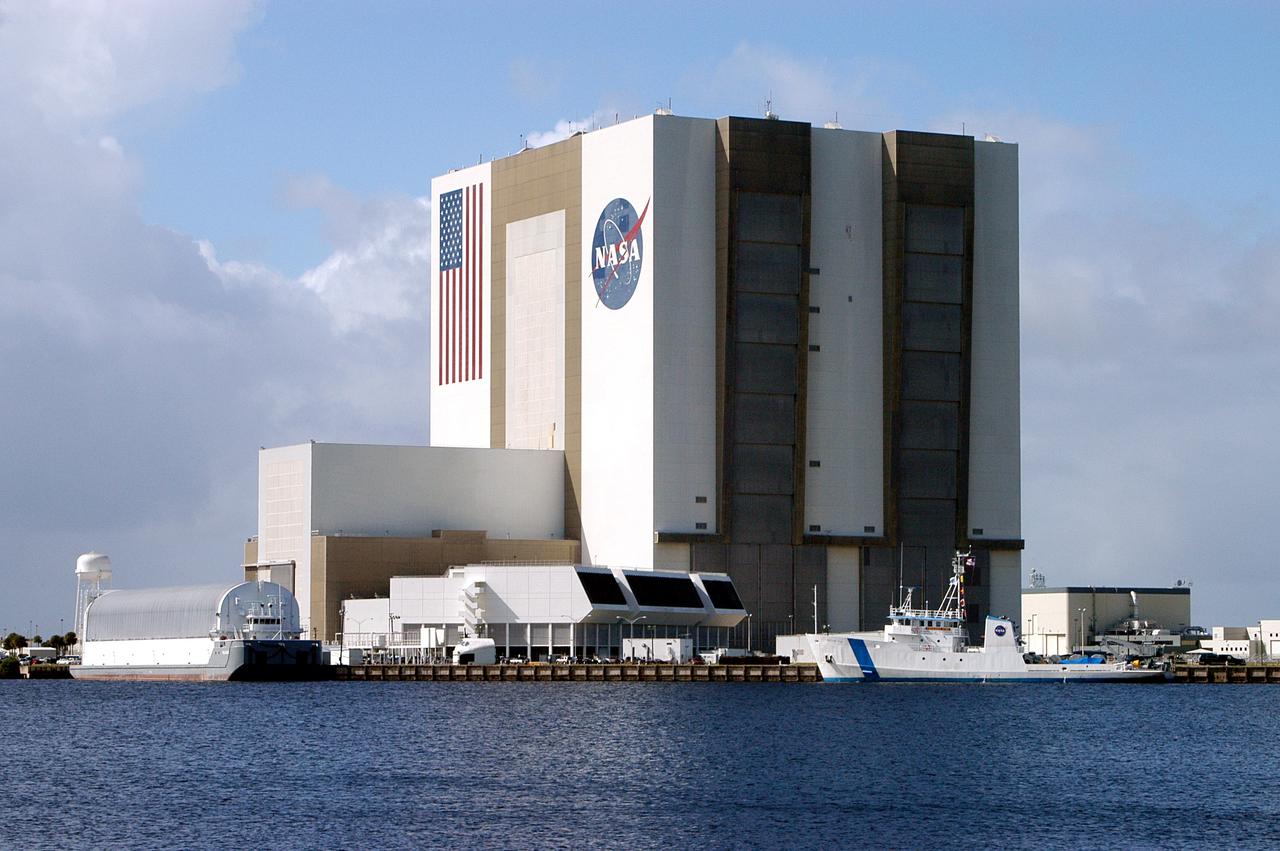
KENNEDY SPACE CENTER, FLA. - The Freedom Star is berthed at the Turn Basin near the Vehicle Assembly Building. The ship has recently returned to KSC after refurbishment at Fort George Island, Fla., including new paint. Freedom Star is one of the solid rocket booster (SRB) retrieval ships built to recover the SRB casings released over the Atlantic Ocean after launch of a Space Shuttle. In addition to the SRBs, the ship recovers the drogue and main parachutes that slow the boosters’ speed before splashdown. Some of the retrieval equipment can be seen on the rear deck. The ships also tow the external tanks built at the Michoud Space Systems Assembly Facility near New Orleans to Port Canaveral, Fla. Freedom Star was brought to KSC today for a visit by NATO Parliamentarians.
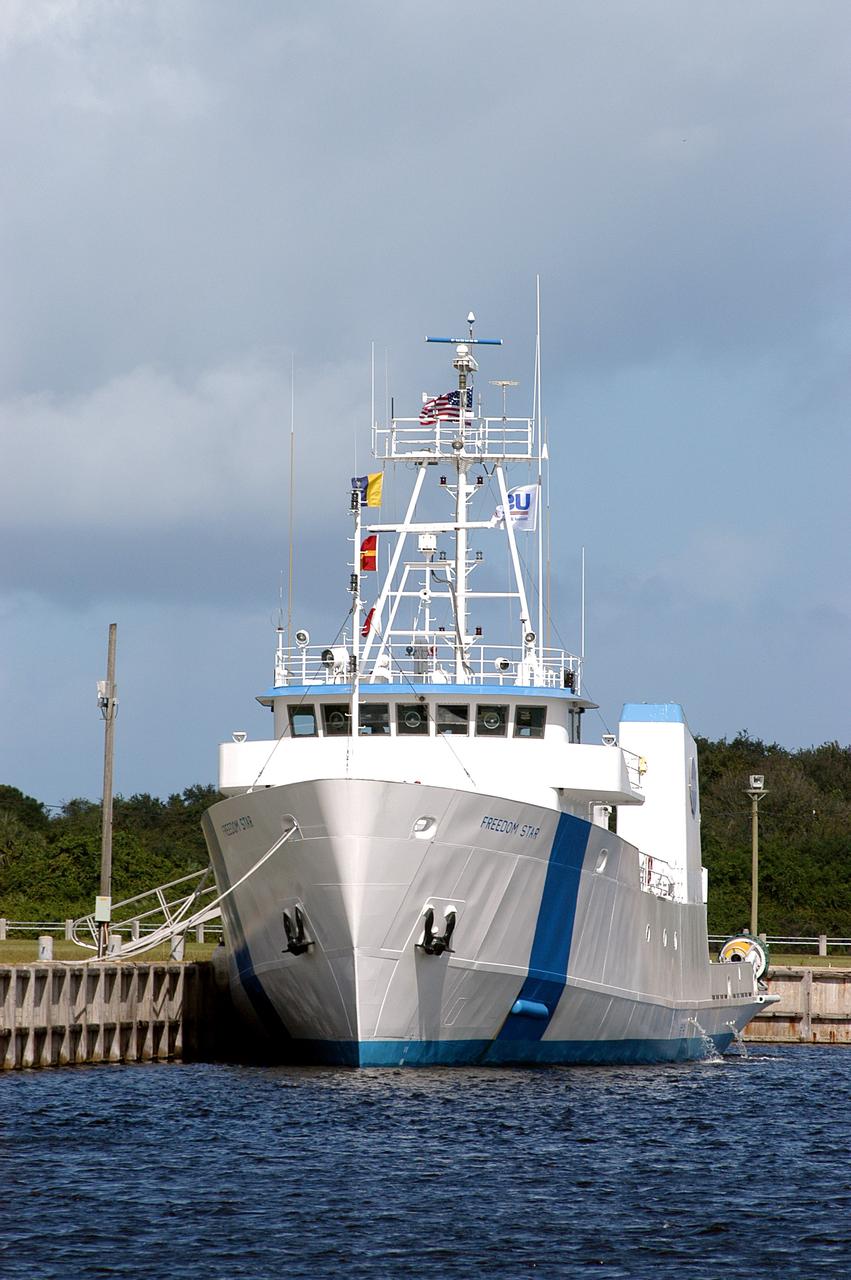
KENNEDY SPACE CENTER, FLA. - The Freedom Star is berthed at the Turn Basin near the Vehicle Assembly Building. The ship has recently returned to KSC after refurbishment at Fort George Island, Fla., including new paint. Freedom Star is one of the solid rocket booster (SRB) retrieval ships built to recover the SRB casings released over the Atlantic Ocean after launch of a Space Shuttle. In addition to the SRBs, the ship recovers the drogue and main parachutes that slow the boosters’ speed before splashdown. The ships also tow the external tanks built at the Michoud Space Systems Assembly Facility near New Orleans to Port Canaveral, Fla. Freedom Star was brought to KSC today for a visit by NATO Parliamentarians.

CAPE CANAVERAL, Fla. -- Crew members in a skiff from Freedom Star, one of NASA's solid rocket booster retrieval ships, attach flotation devices, or buoys, to the parachute lines from the left spent booster from space shuttle Discovery's STS-133 launch. The shuttle’s two solid rocket booster casings and associated flight hardware are recovered in the Atlantic Ocean after every launch by Liberty Star and Freedom Star. The boosters impact the Atlantic about seven minutes after liftoff and the retrieval ships are stationed about 10 miles from the impact area at the time of splashdown. After the spent segments are processed, they will be transported to Utah, where they will be refurbished and stored, if needed. Photo credit: NASA/Ben Smegelsky
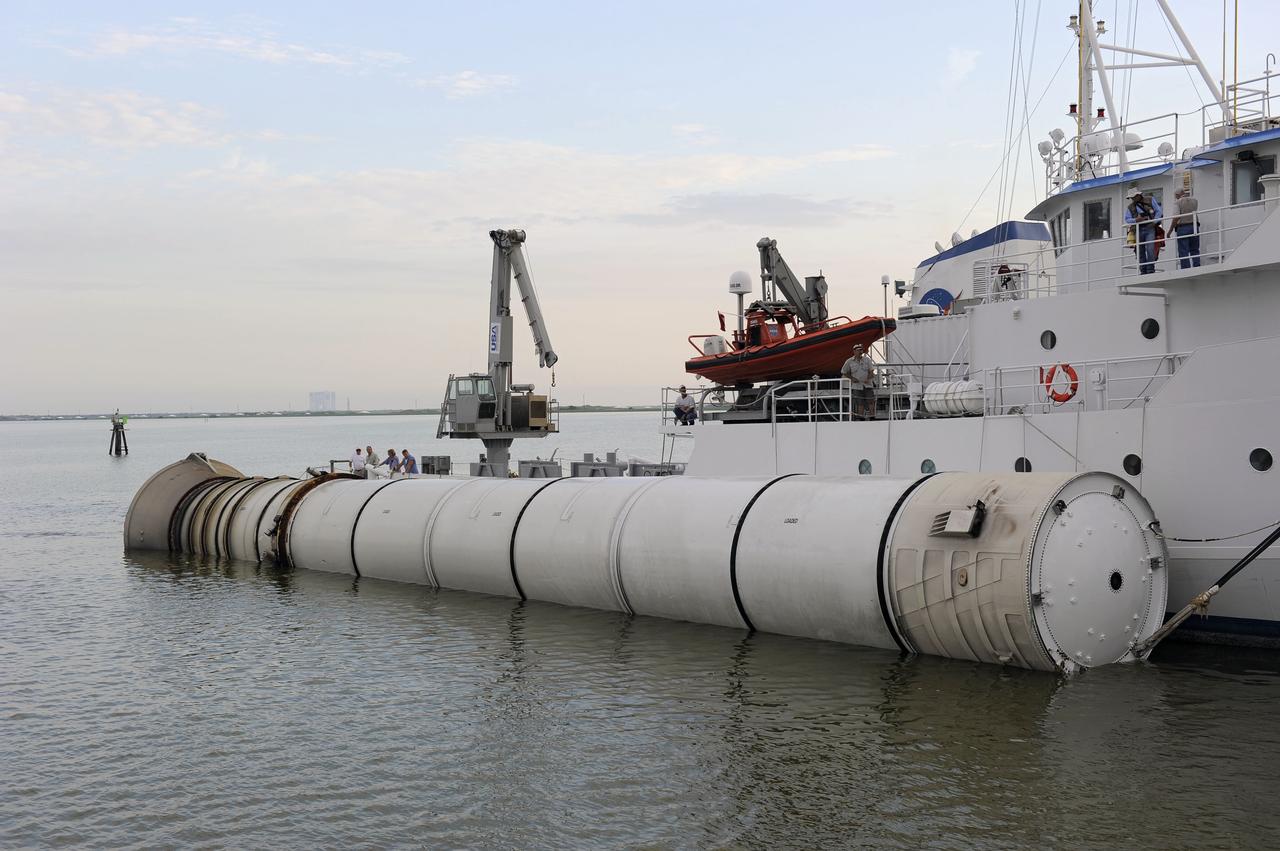
CAPE CANAVERAL, Fla. – Liberty Star, one of NASA’s solid rocket booster retrieval ships, tows a spent booster from space shuttle Atlantis’ final launch, to Port Canaveral in Florida. The shuttle’s two solid rocket booster casings and associated flight hardware are recovered in the Atlantic Ocean after every launch by Freedom Star and Liberty Star. The boosters impact the Atlantic about seven minutes after liftoff and the retrieval ships are stationed about 10 miles from the impact area at the time of splashdown. After the spent segments are processed, they will be transported to Utah, where they will be deserviced and stored, if needed. Atlantis began its final flight, STS-135, at 11:29 a.m. EDT on July 8 to deliver the Raffaello multi-purpose logistics module packed with supplies and spare parts to the International Space Station. Photo credit: NASA/Kim Shiflett
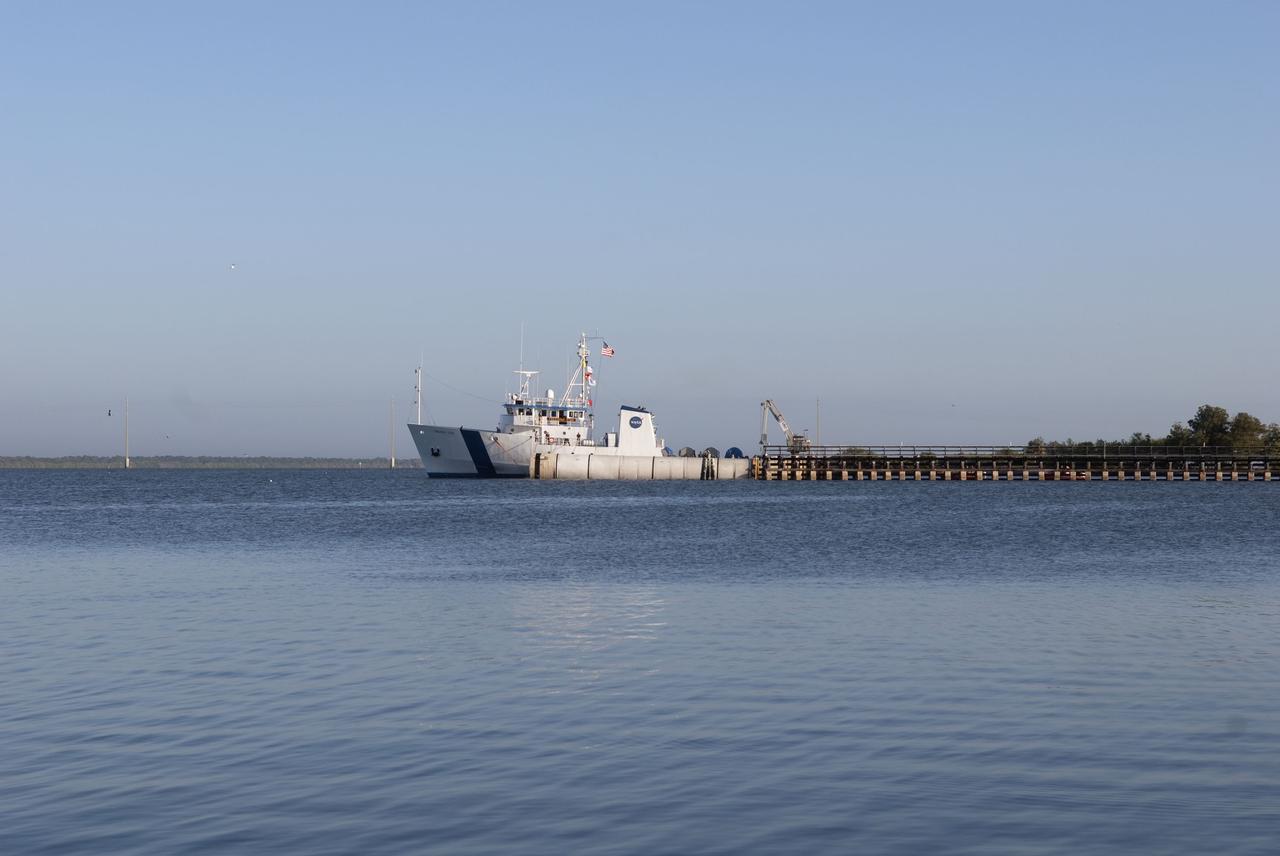
CAPE CANAVERAL, Fla. -- The Solid Rocket Booster Retrieval Ship Freedom Star, with a booster in tow, passes through Port Canaveral on its journey to Hangar AF at Cape Canaveral Air Force Station in Florida. The booster was used during space shuttle Discovery's STS-133 launch from NASA Kennedy Space Center's Launch Pad 39A on Feb. 24. The shuttle’s two solid rocket booster casings and associated flight hardware are recovered in the Atlantic Ocean after every launch by Liberty Star and Freedom Star. The boosters impact the Atlantic about seven minutes after liftoff and the retrieval ships are stationed about 10 miles from the impact area at the time of splashdown. After the spent segments are processed, they will be transported to Utah, where they will be refurbished and stored, if needed. Photo credit: NASA/Jim Grossmann
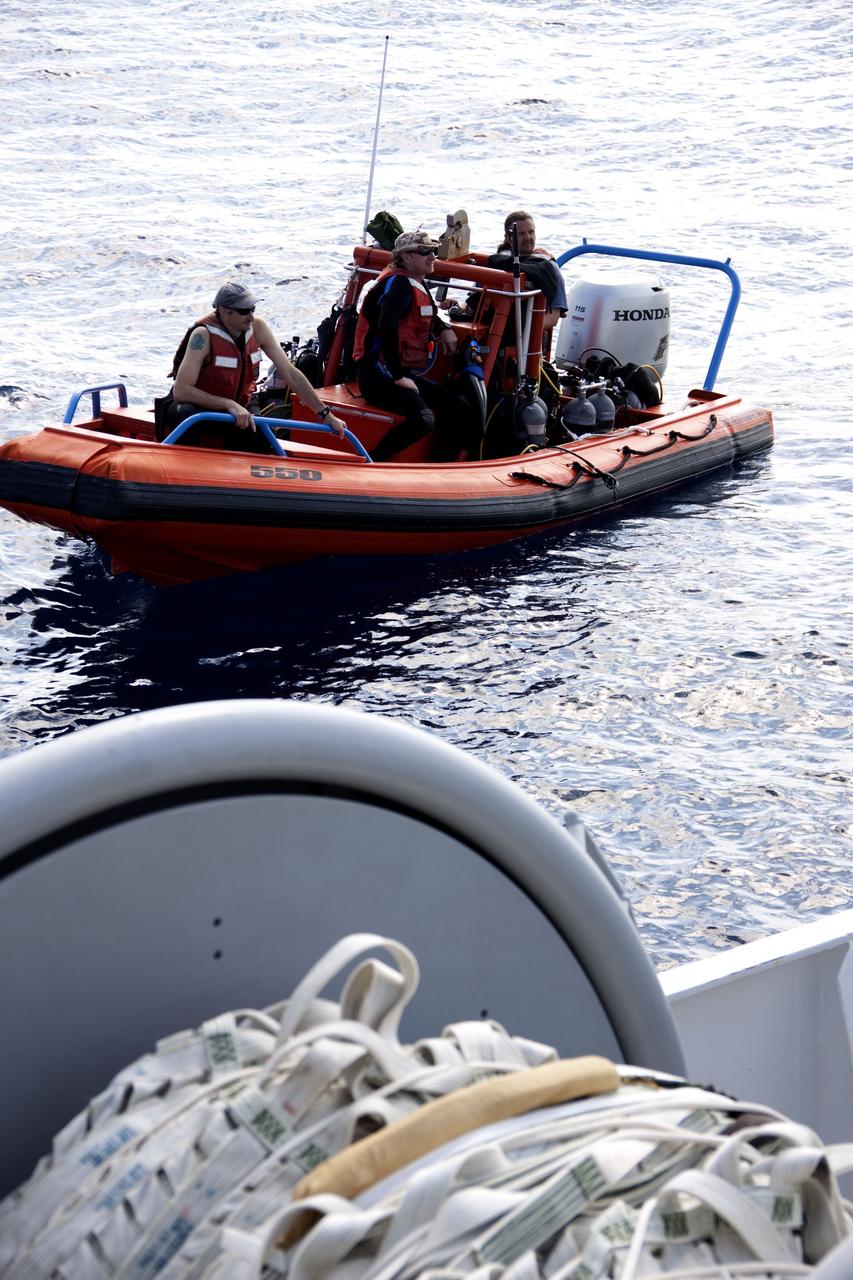
CAPE CANAVERAL, Fla. -- Crew members return to Liberty Star, one of NASA's solid rocket booster retrieval ships, in a skiff after the massive parachute from the right spent booster has been hauled on board from space shuttle Discovery's final launch. The shuttle's two solid rocket booster casings and associated flight hardware are recovered in the Atlantic Ocean after every launch by Freedom Star and Liberty Star. The boosters impact the Atlantic about seven minutes after liftoff and the retrieval ships are stationed about 10 miles from the impact area at the time of splashdown. After the spent segments are processed, they will be transported to Utah, where they will be refurbished and stored, if needed. Photo credit: NASA/Frank Michaux
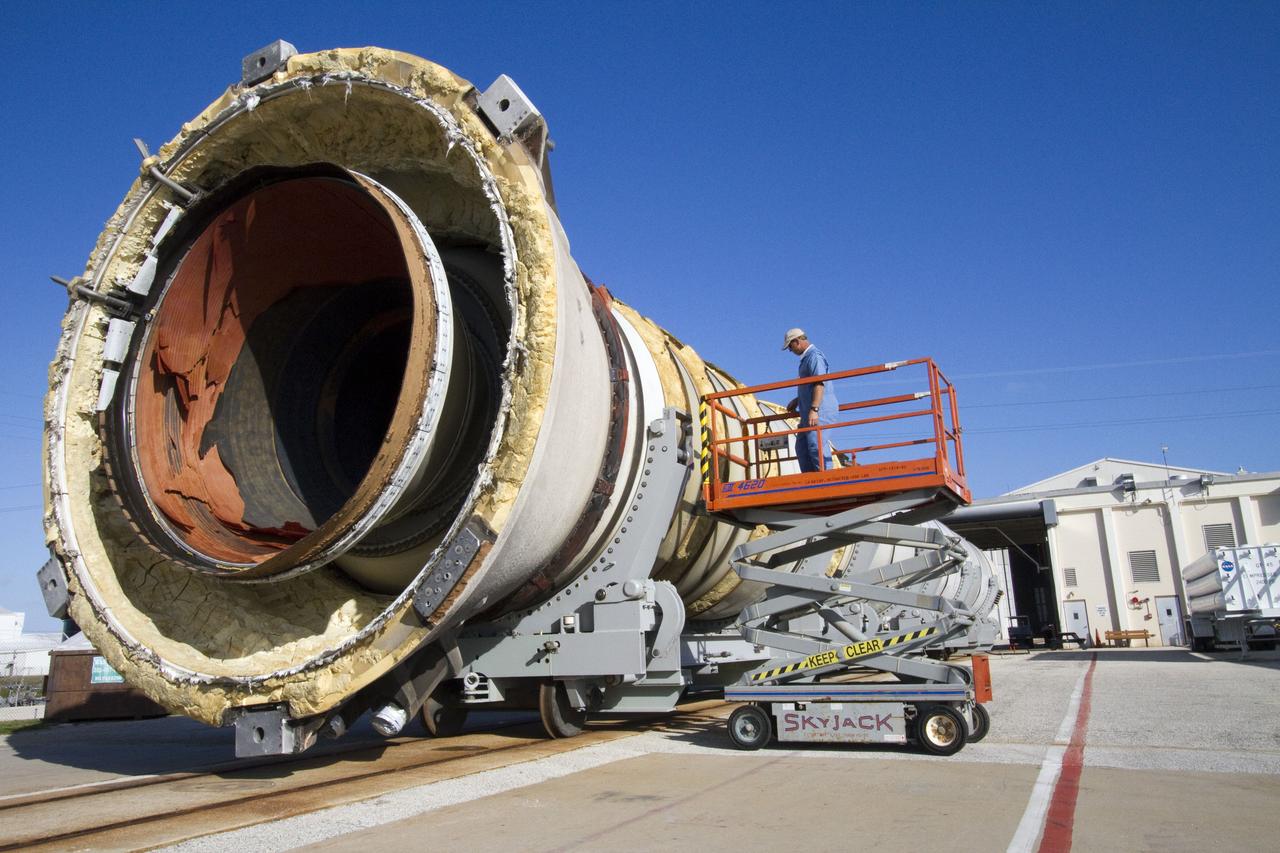
CAPE CANAVERAL, Fla. -- A technician inspects a spent shuttle solid rocket booster outside Hangar AF at Cape Canaveral Air Force Station in Florida. The booster was used during space shuttle Discovery's STS-133 launch from NASA Kennedy Space Center's Launch Pad 39A on Feb. 24. The shuttle’s two solid rocket booster casings and associated flight hardware were recovered in the Atlantic Ocean by retrieval ships Liberty Star and Freedom Star. The boosters impact the Atlantic about seven minutes after liftoff and the retrieval ships are stationed about 10 miles from the impact area at the time of splashdown. After the spent segments are processed, they will be transported to Utah, where they will be refurbished and stored, if needed. Photo credit: NASA/Jack Pfaller
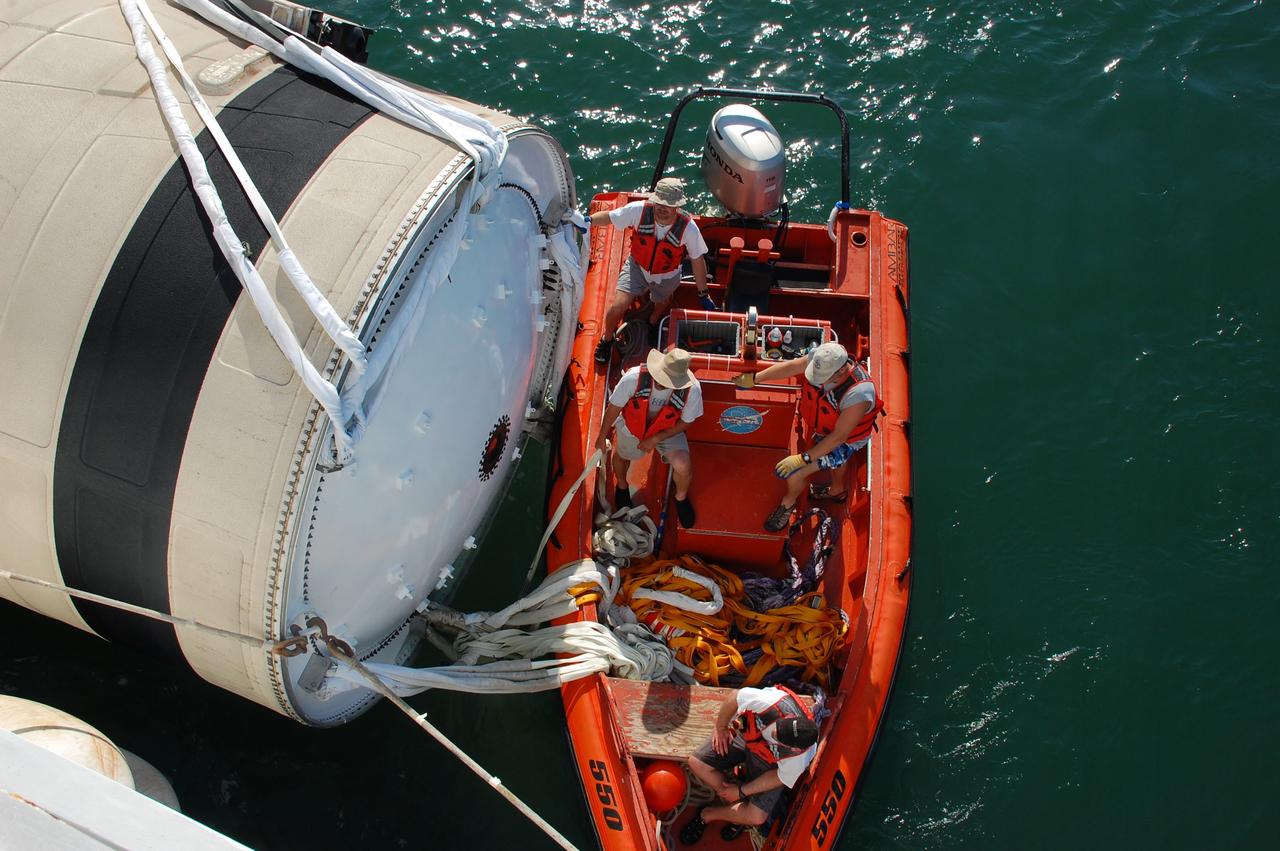
CAPE CANAVERAL, Fla. -- Crew members from Freedom Star, one of NASA's solid rocket booster retrieval ships, check the securing of the left spent booster from space shuttle Discovery's final launch, to the vessel, before continuing on the Hangar AF at Cape Canaveral Air Force Station. The shuttle’s two solid rocket booster casings and associated flight hardware are recovered in the Atlantic Ocean after every launch by Liberty Star and Freedom Star. The boosters impact the Atlantic about seven minutes after liftoff and the retrieval ships are stationed about 10 miles from the impact area at the time of splashdown. After the spent segments are processed, they will be transported to Utah, where they will be refurbished and stored, if needed. Photo credit: NASA/Ben Smegelsky
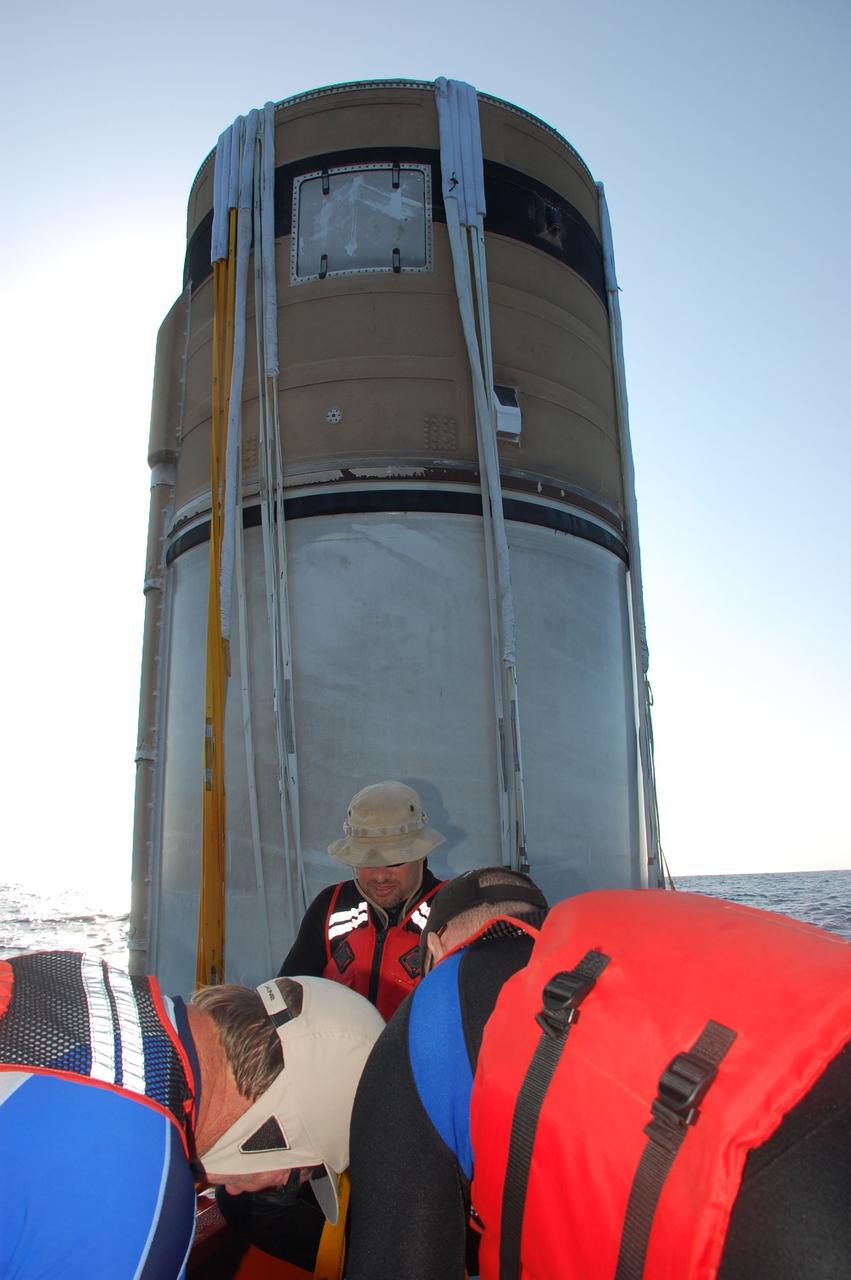
CAPE CANAVERAL, Fla. -- Crew members in a skiff from Freedom Star, one of NASA's solid rocket booster retrieval ships, attach a hose between the left spent booster and the vessel that will facilitate debris and water clearing and the pumping in of air in so the booster can float horizontally on the water's surface for towing back to Port Canaveral in Florida. The shuttle’s two solid rocket booster casings and associated flight hardware are recovered in the Atlantic Ocean after every launch by Liberty Star and Freedom Star. The boosters impact the Atlantic about seven minutes after liftoff and the retrieval ships are stationed about 10 miles from the impact area at the time of splashdown. After the spent segments are processed, they will be transported to Utah, where they will be refurbished and stored, if needed. Photo credit: NASA/Ben Smegelsky
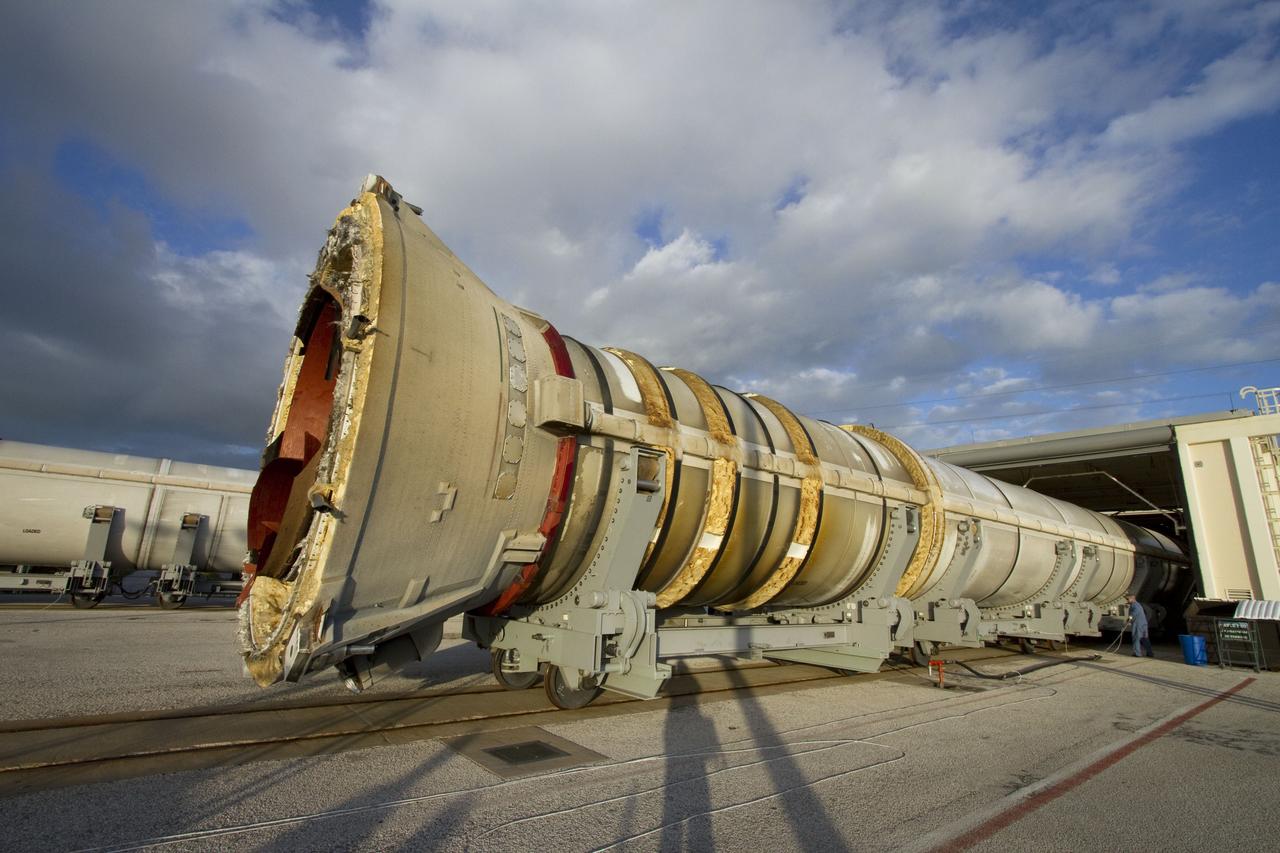
CAPE CANAVERAL, Fla. -- A spent shuttle solid rocket booster is moved into Hangar AF at Cape Canaveral Air Force Station in Florida, where it will be cleaned. The booster was used during space shuttle Discovery's STS-133 launch from NASA Kennedy Space Center's Launch Pad 39A on Feb. 24. The shuttle’s two solid rocket booster casings and associated flight hardware were recovered in the Atlantic Ocean by retrieval ships Liberty Star and Freedom Star. The boosters impact the Atlantic about seven minutes after liftoff and the retrieval ships are stationed about 10 miles from the impact area at the time of splashdown. After the spent segments are processed, they will be transported to Utah, where they will be refurbished and stored, if needed. Photo credit: NASA/Jack Pfaller
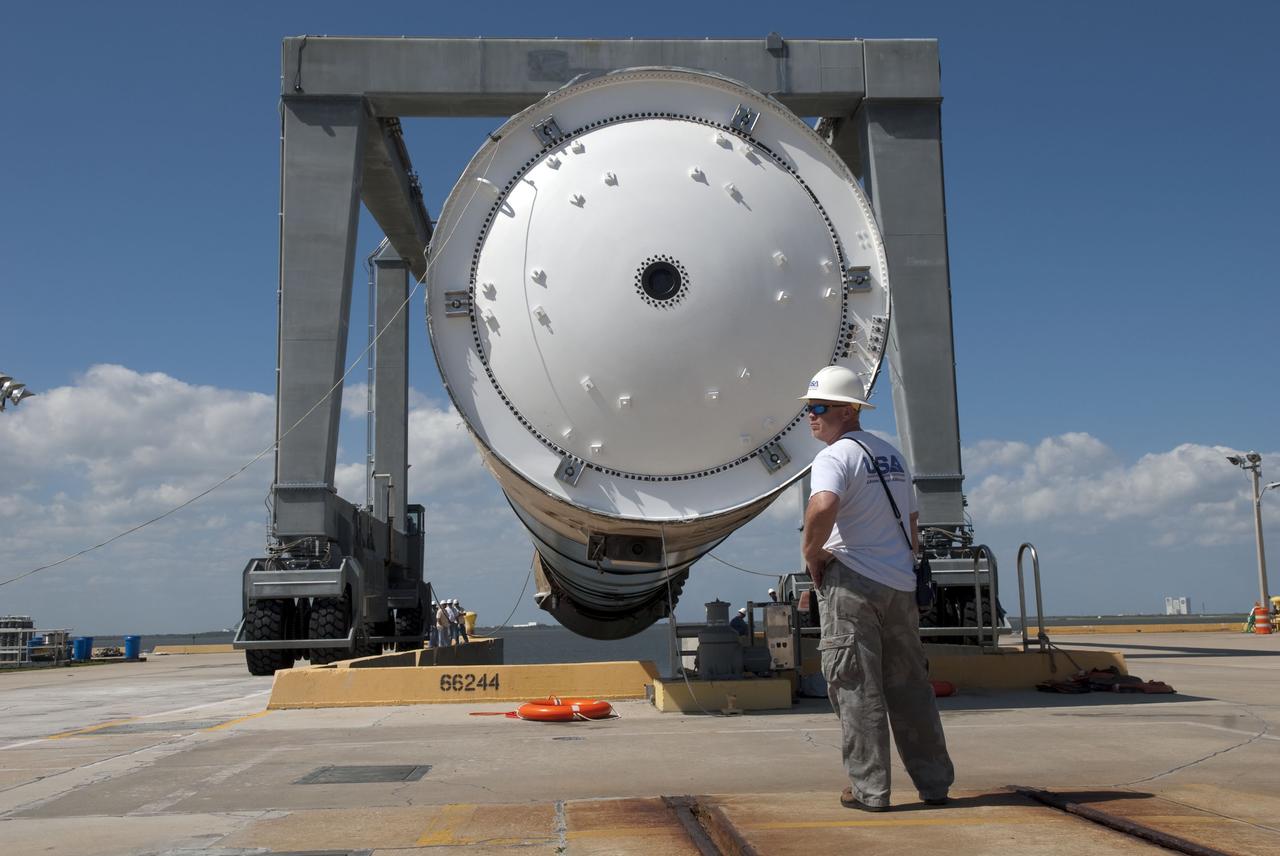
CAPE CANAVERAL, Fla. -- Workers at the hoisting slip at the Solid Rocket Booster Disassembly Facility at Hangar AF on Cape Canaveral Air Force Station in Florida, monitor the lifting of the left spent booster, used during space shuttle Discovery's final launch. The shuttle's two solid rocket booster casings and associated flight hardware are recovered in the Atlantic Ocean after every launch by Freedom Star and Liberty Star. The boosters impact the Atlantic about seven minutes after liftoff and the retrieval ships are stationed about 10 miles from the impact area at the time of splashdown. After the spent segments are processed, they will be transported to Utah, where they will be refurbished and stored, if needed. Photo credit: NASA/Jim Grossmann
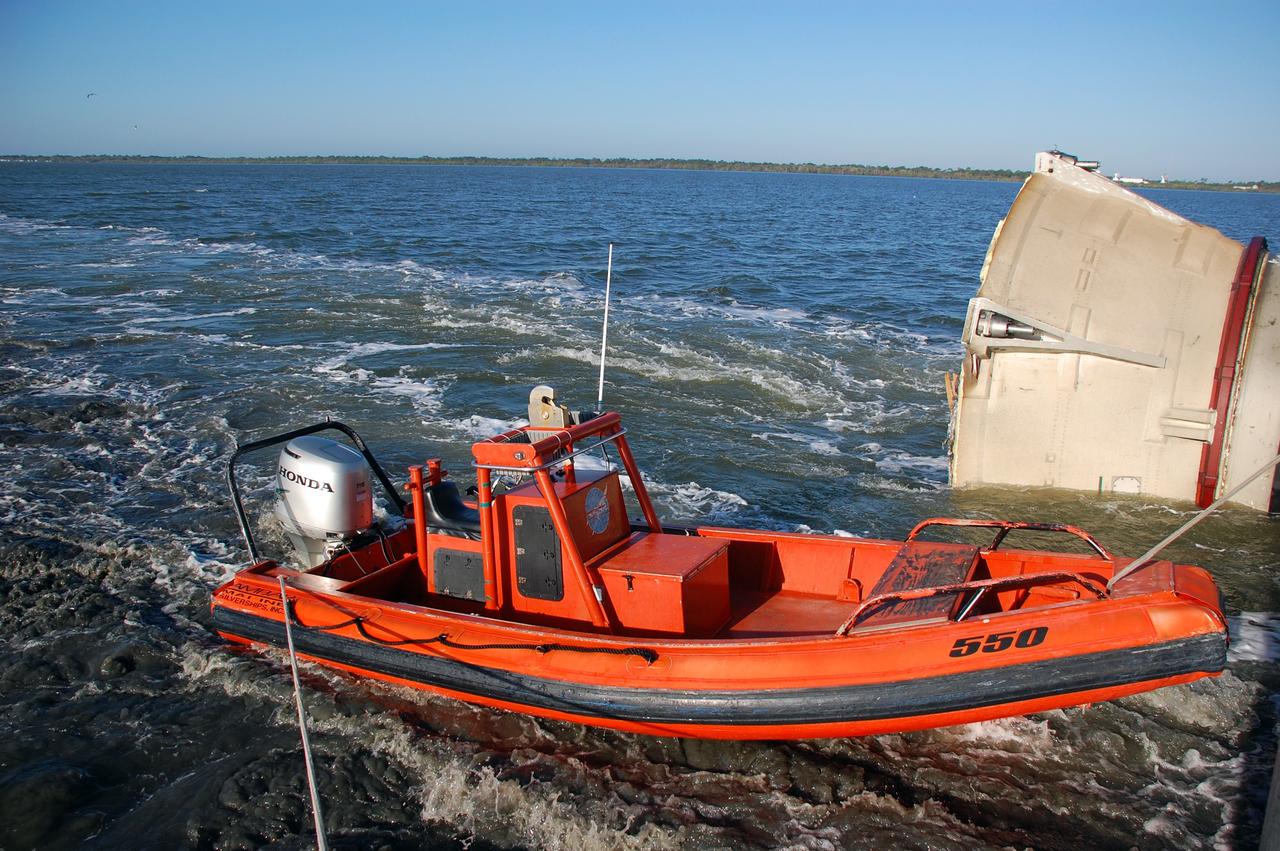
CAPE CANAVERAL, Fla. -- A skiff from Freedom Star, one of NASA's solid rocket booster retrieval ships, helped usher a spent shuttle booster through the shallow waters of the locks at Port Canaveral, Fla. The booster will be re-tied to the ship for the rest of the journey to Hangar AF at Cape Canaveral Air Force Station. The booster was used during space shuttle Discovery's STS-133 launch from NASA Kennedy Space Center's Launch Pad 39A on Feb. 24. The shuttle’s two solid rocket booster casings and associated flight hardware are recovered in the Atlantic Ocean after every launch by Freedom Star and Liberty Star. The boosters impact the Atlantic about seven minutes after liftoff and the retrieval ships are stationed about 10 miles from the impact area at the time of splashdown. After the spent segments are processed, they will be transported to Utah, where they will be refurbished and stored, if needed. Photo credit: NASA/Ben Smegelsky
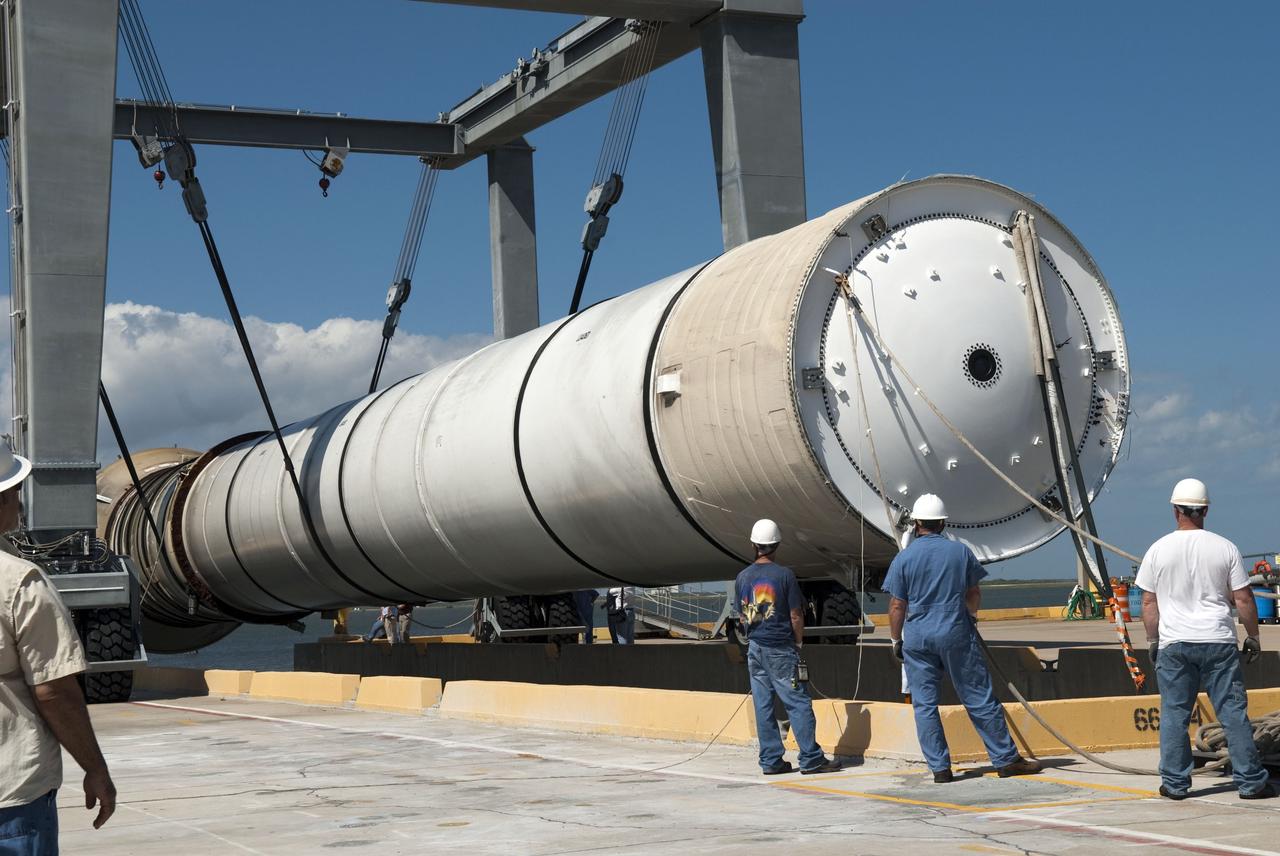
CAPE CANAVERAL, Fla. -- Workers at the hoisting slip at the Solid Rocket Booster Disassembly Facility at Hangar AF on Cape Canaveral Air Force Station in Florida, monitor the lifting of the left spent booster, used during space shuttle Discovery's final launch. The shuttle's two solid rocket booster casings and associated flight hardware are recovered in the Atlantic Ocean after every launch by Freedom Star and Liberty Star. The boosters impact the Atlantic about seven minutes after liftoff and the retrieval ships are stationed about 10 miles from the impact area at the time of splashdown. After the spent segments are processed, they will be transported to Utah, where they will be refurbished and stored, if needed. Photo credit: NASA/Jim Grossmann

CAPE CANAVERAL, Fla. -- Workers monitor the progress of the solid rocket booster retrieval ship Freedom Star as it tows a left spent booster to the dock at Hangar AF on Cape Canaveral Air Force Station in Florida. The booster was used during space shuttle Discovery's final launch. The shuttle's two solid rocket booster casings and associated flight hardware are recovered in the Atlantic Ocean after every launch by Freedom Star and Liberty Star. The boosters impact the Atlantic about seven minutes after liftoff and the retrieval ships are stationed about 10 miles from the impact area at the time of splashdown. After the spent segments are processed, they will be transported to Utah, where they will be refurbished and stored, if needed. Photo credit: NASA/Jim Grossmann
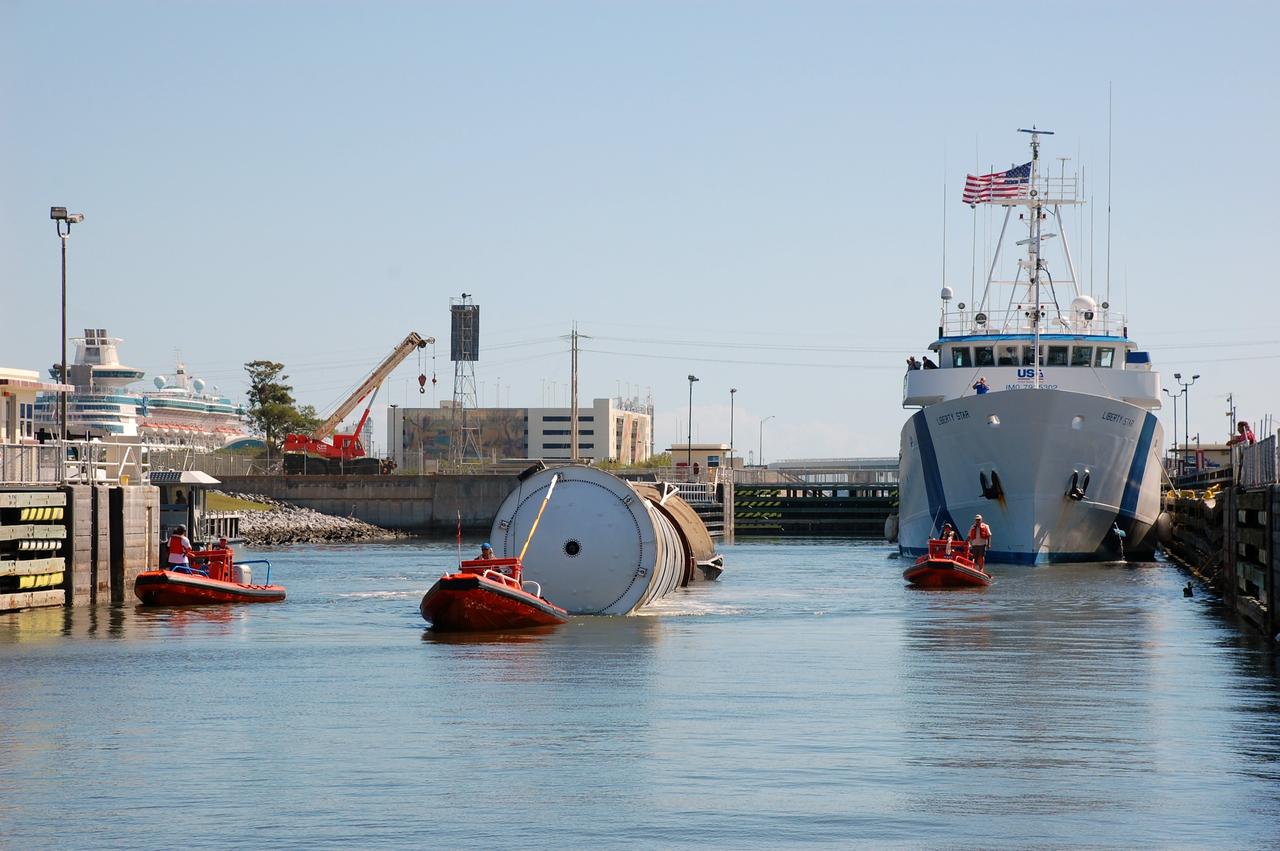
CAPE CANAVERAL, Fla. -- Crew members in a skiff and aboard Liberty Star, one of NASA's solid rocket booster retrieval ships, usher a spent shuttle booster to Hangar AF at Cape Canaveral Air Force Station in Florida. The booster was used during space shuttle Discovery's STS-133 launch from NASA Kennedy Space Center's Launch Pad 39A on Feb. 24. The shuttle’s two solid rocket booster casings and associated flight hardware are recovered in the Atlantic Ocean after every launch by Freedom Star and Liberty Star. The boosters impact the Atlantic about seven minutes after liftoff and the retrieval ships are stationed about 10 miles from the impact area at the time of splashdown. After the spent segments are processed, they will be transported to Utah, where they will be refurbished and stored, if needed. Photo credit: NASA/Ben Smegelsky

CAPE CANAVERAL, Fla. -- The Solid Rocket Booster Retrieval Ship Freedom Star is tied back up to a spent shuttle booster and ready to continue the journey to the dock at Hangar AF at Cape Canaveral Air Force Station in Florida. The booster was used during space shuttle Discovery's STS-133 launch from NASA Kennedy Space Center's Launch Pad 39A on Feb. 24. The shuttle’s two solid rocket booster casings and associated flight hardware are recovered in the Atlantic Ocean after every launch by Freedom Star and Liberty Star. The boosters impact the Atlantic about seven minutes after liftoff and the retrieval ships are stationed about 10 miles from the impact area at the time of splashdown. After the spent segments are processed, they will be transported to Utah, where they will be refurbished and stored, if needed. Photo credit: NASA/Ben Smegelsky
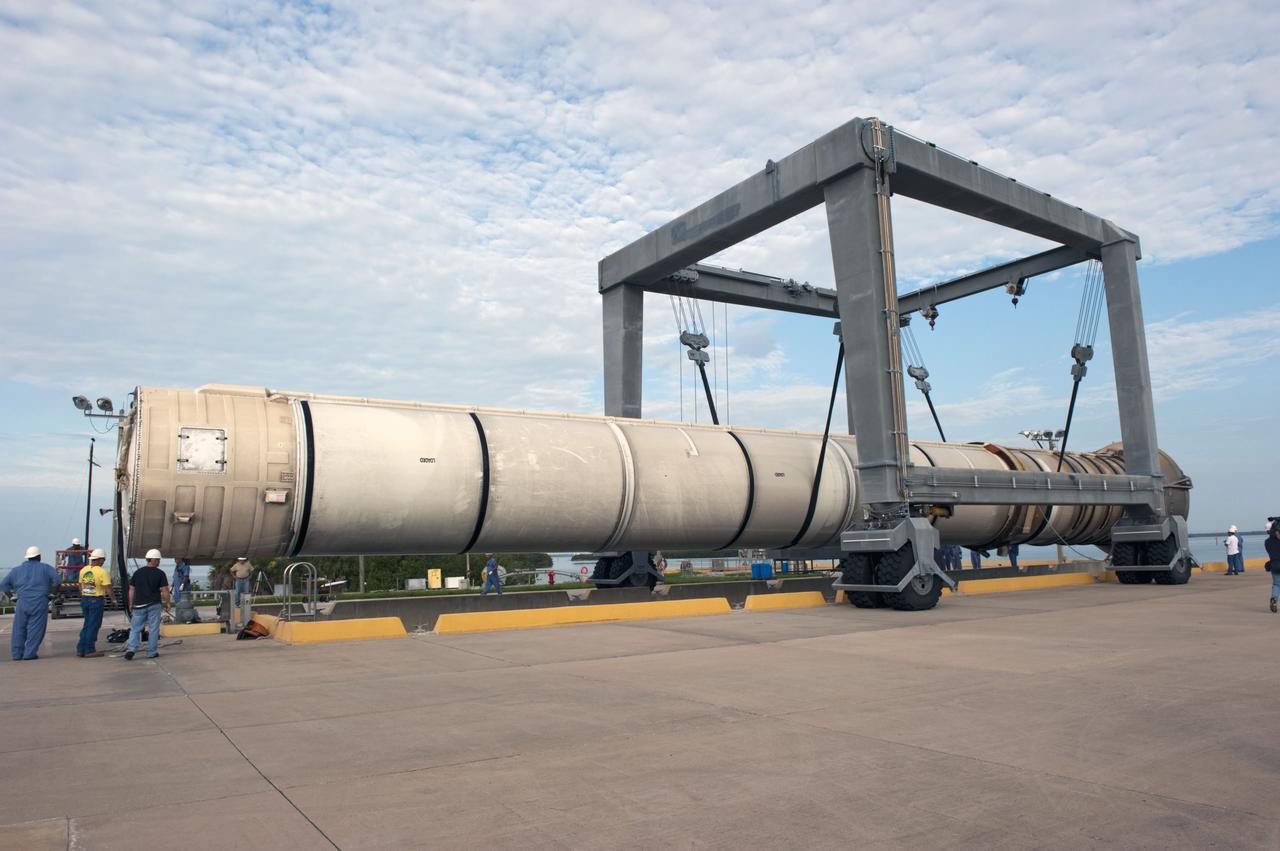
CAPE CANAVERAL, Fla. – One of two solid rocket boosters is lifted above a mooring at Port Canaveral in Florida. Liberty Star, one of NASA’s two booster retrieval ships, towed the spent booster from space shuttle Atlantis’ final launch to the port. The shuttle’s two solid rocket booster casings and associated flight hardware are recovered in the Atlantic Ocean after every launch by Freedom Star and Liberty Star. The boosters impact the Atlantic about seven minutes after liftoff, and the retrieval ships are stationed about 10 miles from the impact area at the time of splashdown. After the spent segments are processed, they will be transported to Utah, where they will be deserviced and stored, if needed. Atlantis began its final flight, STS-135, at 11:29 a.m. EDT on July 8 to deliver the Raffaello multi-purpose logistics module packed with supplies and spare parts to the International Space Station. Photo credit: NASA/Kim Shiflett
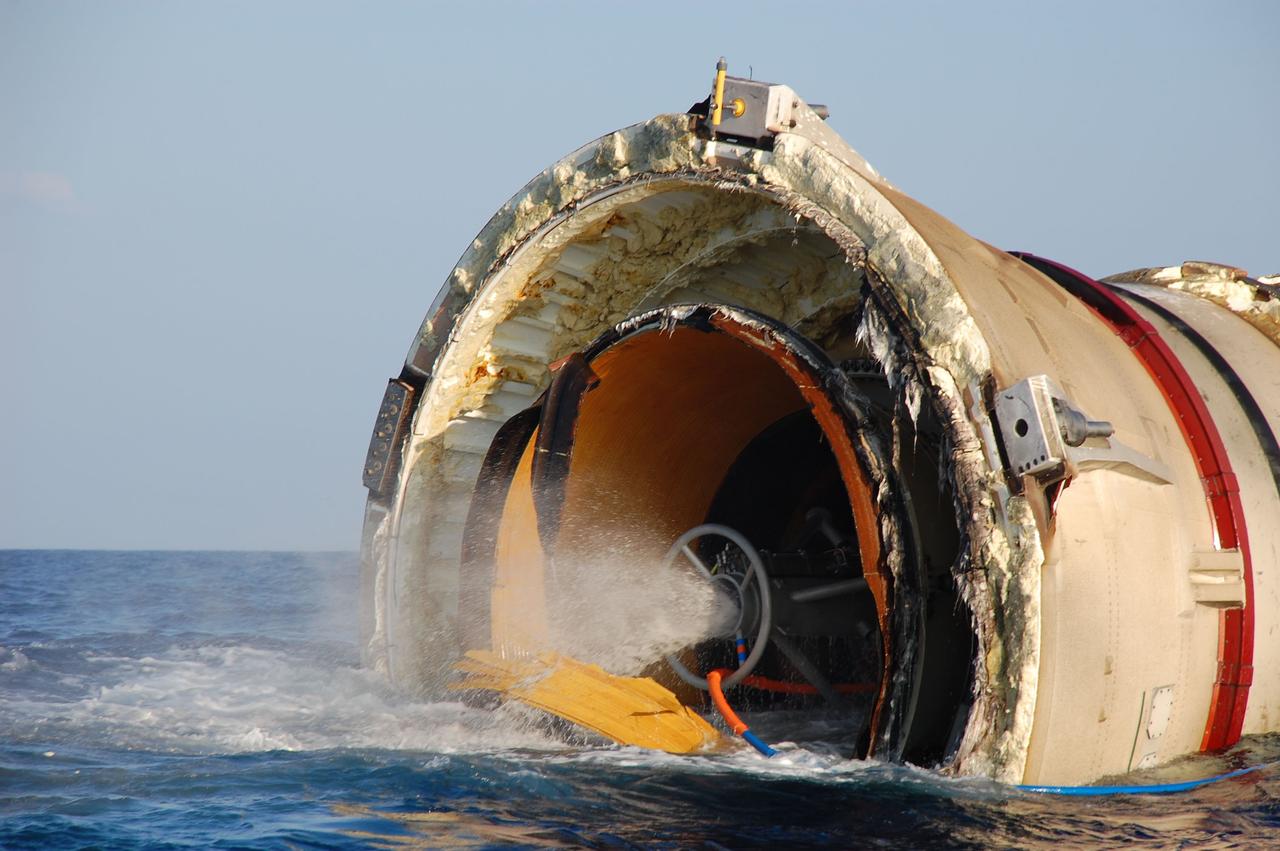
CAPE CANAVERAL, Fla. -- The left spent booster from space shuttle Discovery's final launch is seen floating on the water's surface while pumps on Freedom Star, one of NASA's solid rocket booster retrieval ships, push debris and water out of the booster, replacing with air to facilitate floating for its return to Port Canaveral in Florida. The shuttle’s two solid rocket booster casings and associated flight hardware are recovered in the Atlantic Ocean after every launch by Liberty Star and Freedom Star. The boosters impact the Atlantic about seven minutes after liftoff and the retrieval ships are stationed about 10 miles from the impact area at the time of splashdown. After the spent segments are processed, they will be transported to Utah, where they will be refurbished and stored, if needed. Photo credit: NASA/Ben Smegelsky
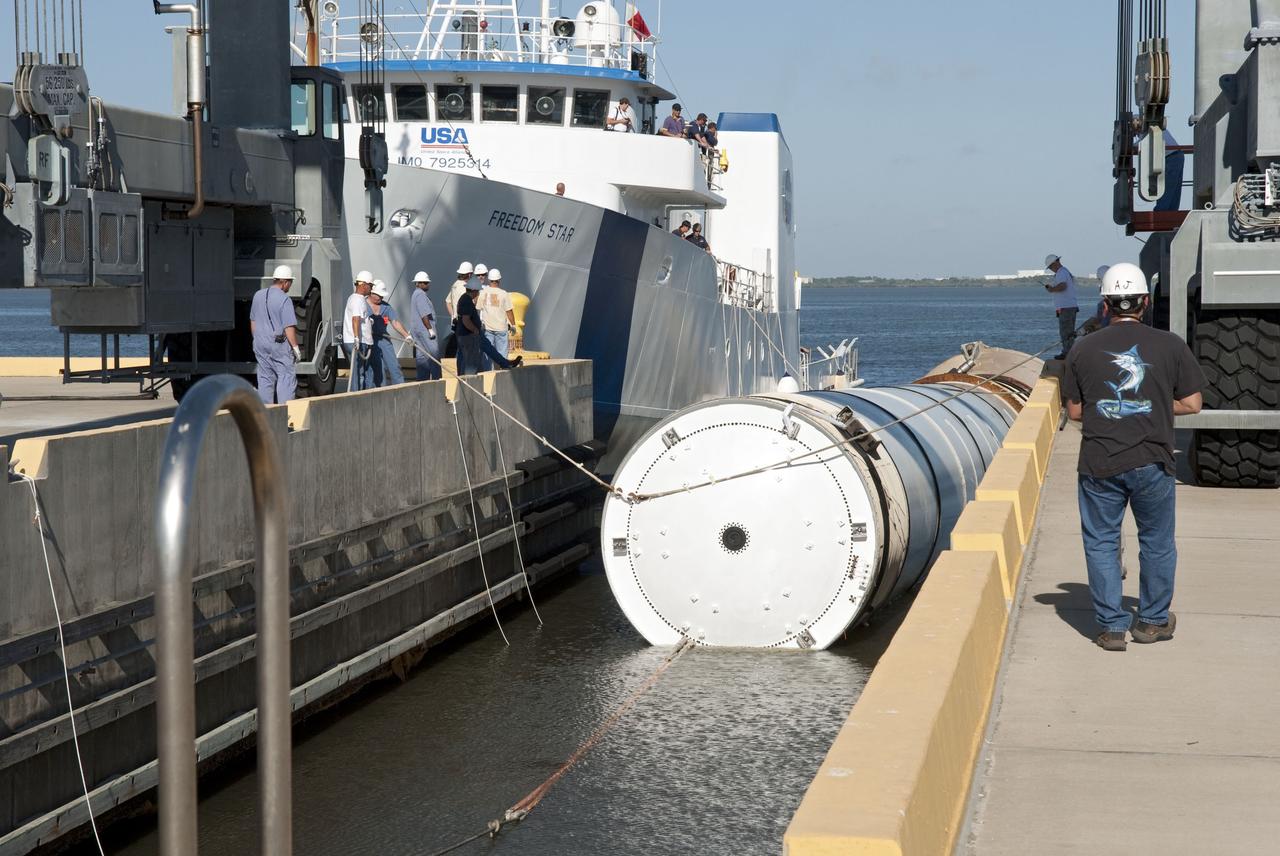
CAPE CANAVERAL, Fla. -- The Solid Rocket Booster Retrieval Ship Freedom Star towing a booster arrives to the dock at Hangar AF on Cape Canaveral Air Force Station in Florida. The booster was used during space shuttle Discovery's STS-133 launch from NASA Kennedy Space Center's Launch Pad 39A on Feb. 24. The shuttle’s two solid rocket booster casings and associated flight hardware are recovered in the Atlantic Ocean after every launch by Liberty Star and Freedom Star. The boosters impact the Atlantic about seven minutes after liftoff and the retrieval ships are stationed about 10 miles from the impact area at the time of splashdown. After the spent segments are processed, they will be transported to Utah, where they will be refurbished and stored, if needed. Photo credit: NASA/Jim Grossmann
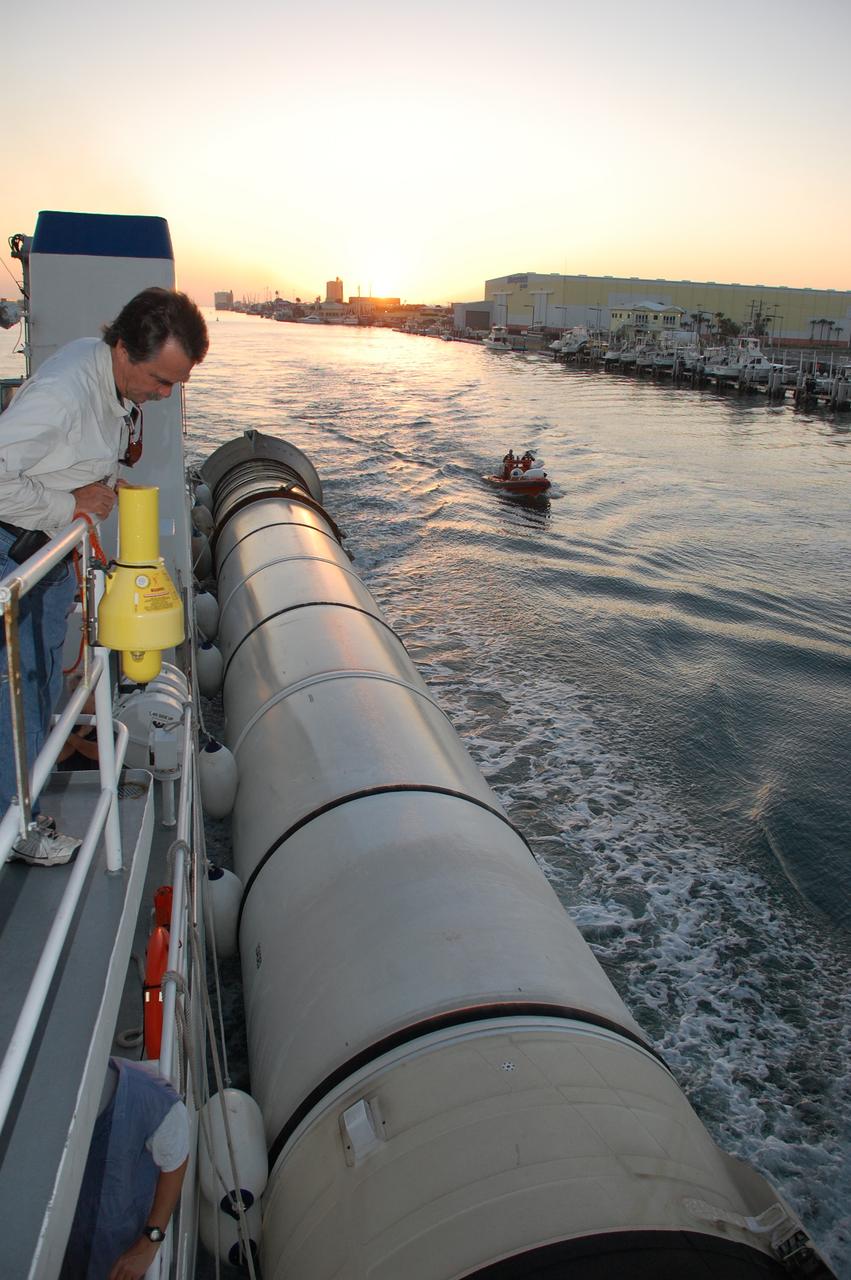
CAPE CANAVERAL, Fla. -- As daylight breaks, Walt Adams, a space shuttle solid rocket booster retrieval and dive supervisor, monitors a spent booster as it's towed by the Freedom Star retrieval ship through Port Canaveral in Florida on a journey to Hangar AF at Cape Canaveral Air Force Station. The booster was used during space shuttle Discovery's STS-133 launch from NASA Kennedy Space Center's Launch Pad 39A on Feb. 24. The shuttle’s two solid rocket booster casings and associated flight hardware are recovered in the Atlantic Ocean after every launch by Freedom Star and Liberty Star. The boosters impact the Atlantic about seven minutes after liftoff and the retrieval ships are stationed about 10 miles from the impact area at the time of splashdown. After the spent segments are processed, they will be transported to Utah, where they will be refurbished and stored, if needed. Photo credit: NASA/Ben Smegelsky
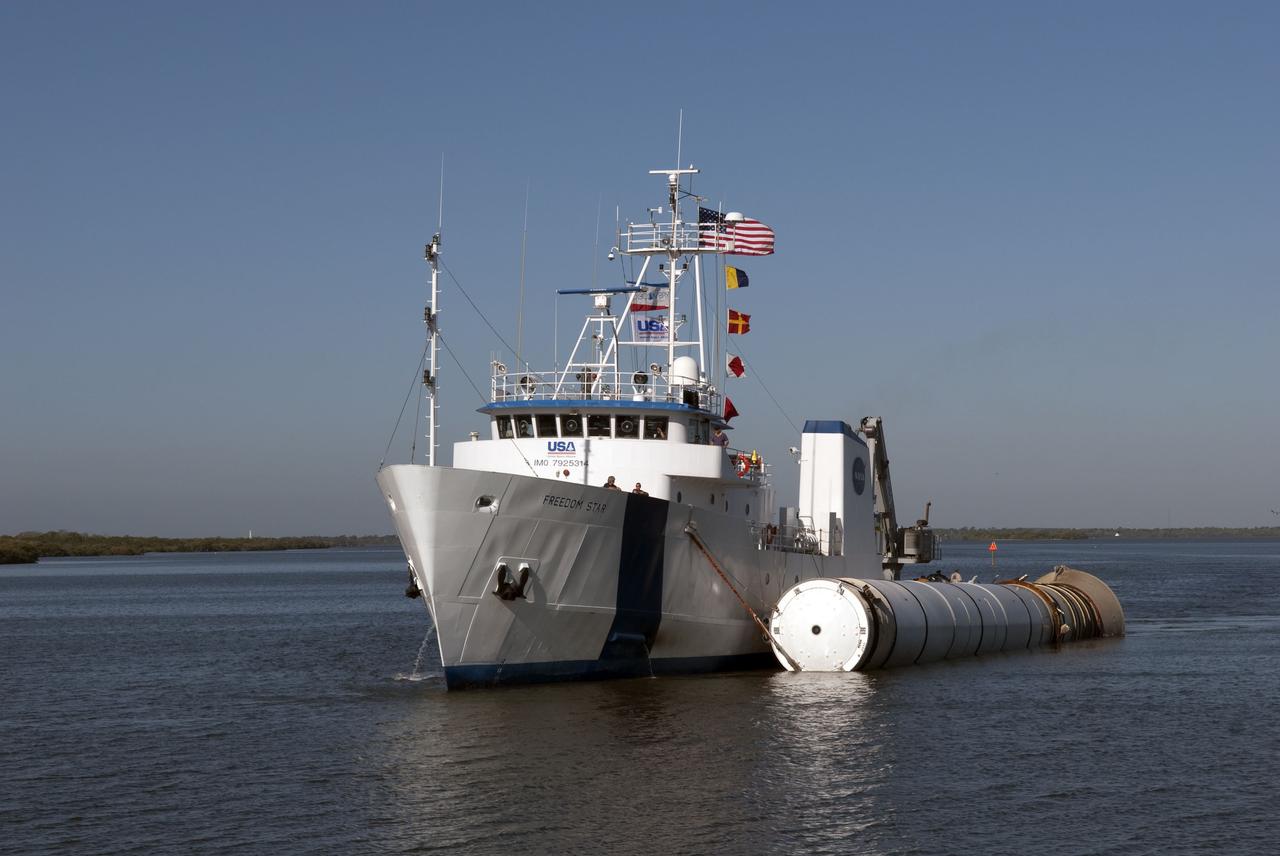
CAPE CANAVERAL, Fla. -- The Solid Rocket Booster Retrieval Ship Freedom Star tows a booster to the dock at Hangar AF on Cape Canaveral Air Force Station in Florida. The booster was used during space shuttle Discovery's STS-133 launch from NASA Kennedy Space Center's Launch Pad 39A on Feb. 24. The shuttle’s two solid rocket booster casings and associated flight hardware are recovered in the Atlantic Ocean after every launch by Liberty Star and Freedom Star. The boosters impact the Atlantic about seven minutes after liftoff and the retrieval ships are stationed about 10 miles from the impact area at the time of splashdown. After the spent segments are processed, they will be transported to Utah, where they will be refurbished and stored, if needed. Photo credit: NASA/Jim Grossmann
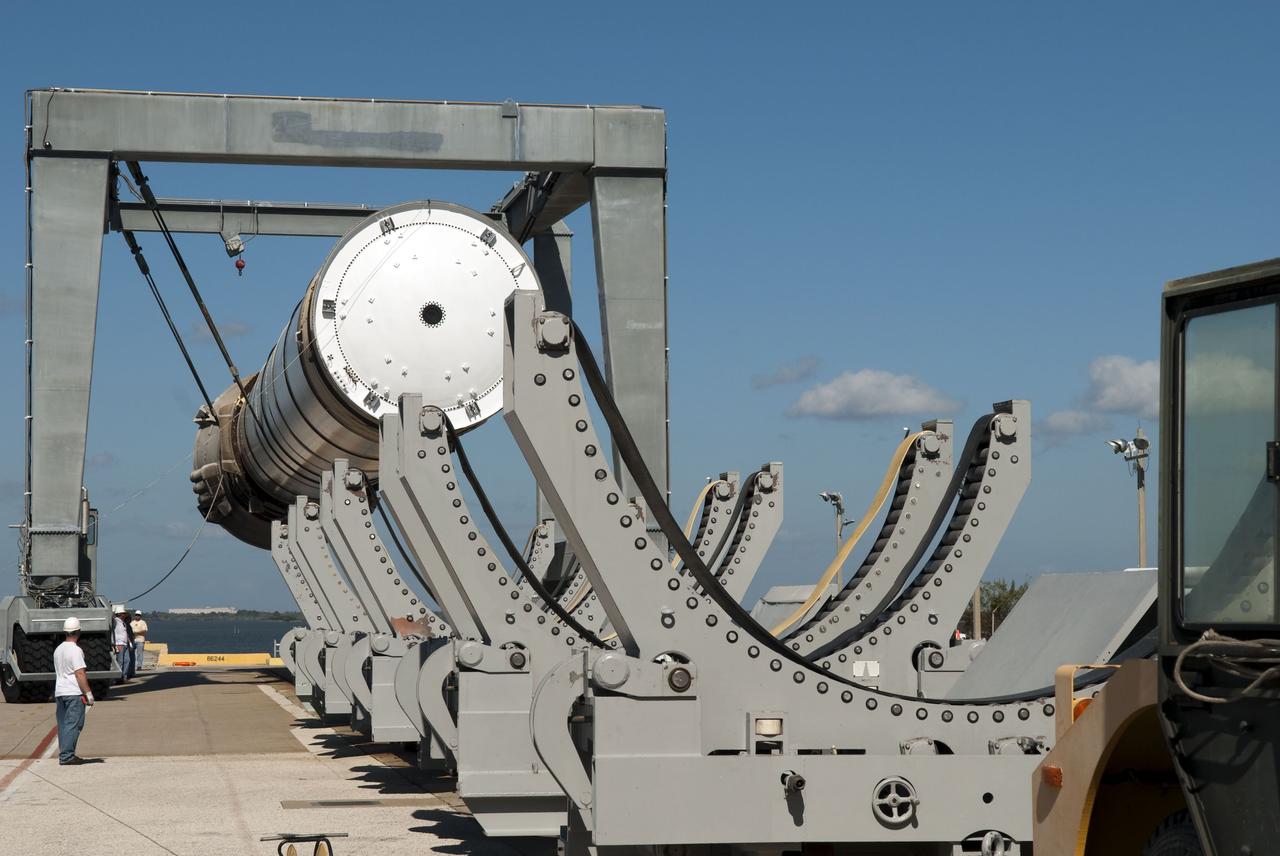
CAPE CANAVERAL, Fla. -- At the Solid Rocket Booster Disassembly Facility at Hangar AF on Cape Canaveral Air Force Station in Florida, one of the solid rocket boosters used during space shuttle Discovery's STS-133 launch is moved to a tracked dolly for processing. Following the launch from NASA Kennedy Space Center's Launch Pad 39A on Feb. 24, the shuttle's two boosters fell into the Atlantic Ocean. There, the booster casings and associated flight hardware were recovered by Liberty Star and Freedom Star. The boosters impact the Atlantic about seven minutes after liftoff and the retrieval ships are stationed about 10 miles from the impact area at the time of splashdown. After the spent segments are processed, they will be transported to Utah, where they will be refurbished and stored, if needed. Photo credit: NASA/Jim Grossmann
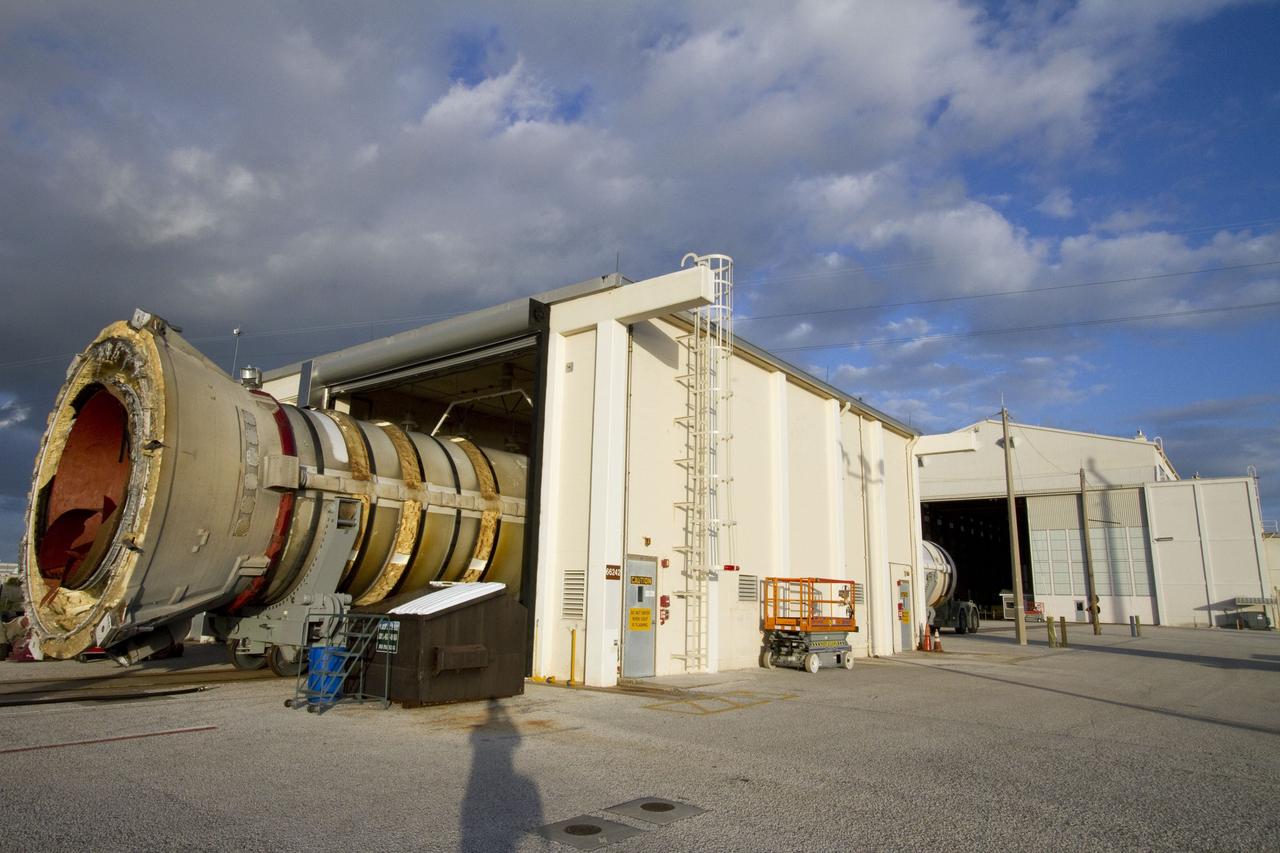
CAPE CANAVERAL, Fla. -- A spent shuttle solid rocket booster is moved into Hangar AF at Cape Canaveral Air Force Station in Florida, where it will be cleaned. The booster was used during space shuttle Discovery's STS-133 launch from NASA Kennedy Space Center's Launch Pad 39A on Feb. 24. The shuttle’s two solid rocket booster casings and associated flight hardware were recovered in the Atlantic Ocean by retrieval ships Liberty Star and Freedom Star. The boosters impact the Atlantic about seven minutes after liftoff and the retrieval ships are stationed about 10 miles from the impact area at the time of splashdown. After the spent segments are processed, they will be transported to Utah, where they will be refurbished and stored, if needed. Photo credit: NASA/Jack Pfaller