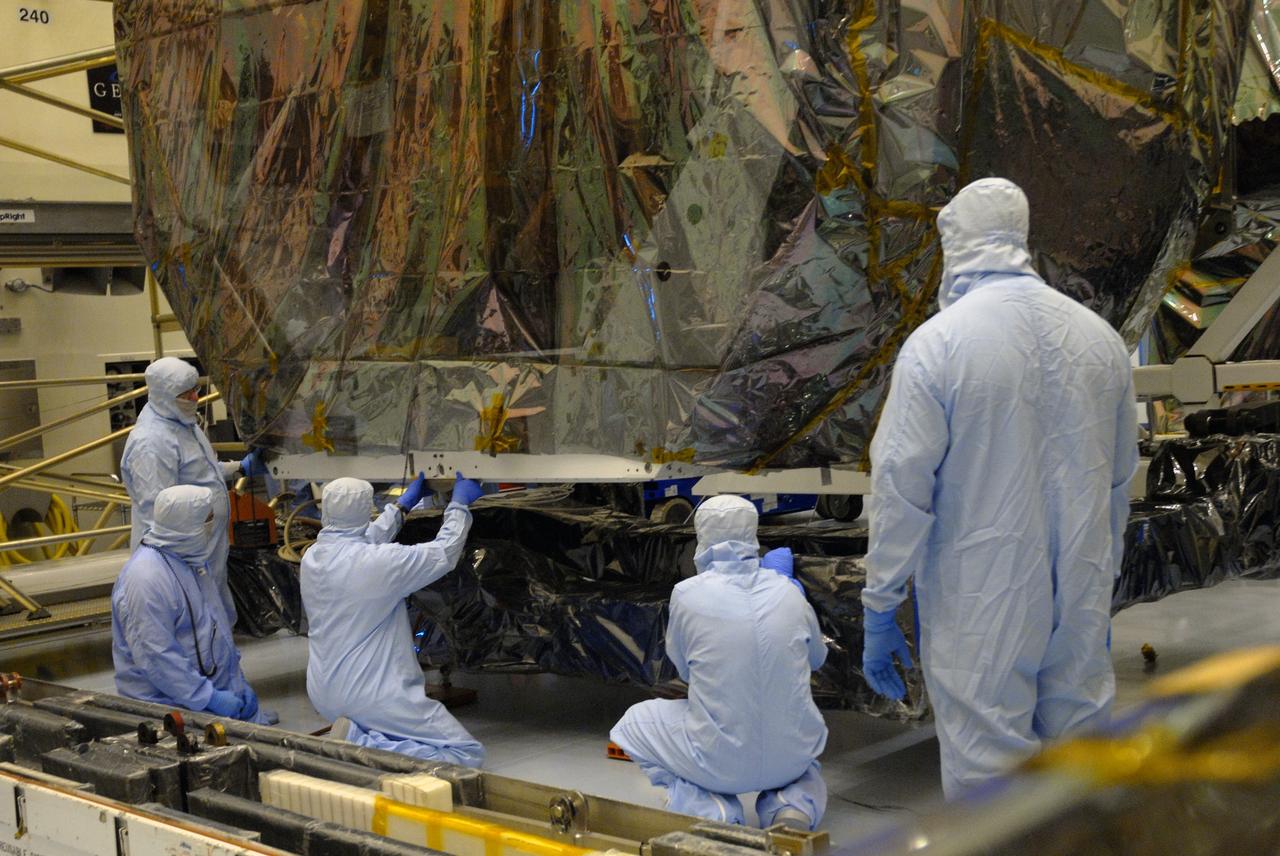
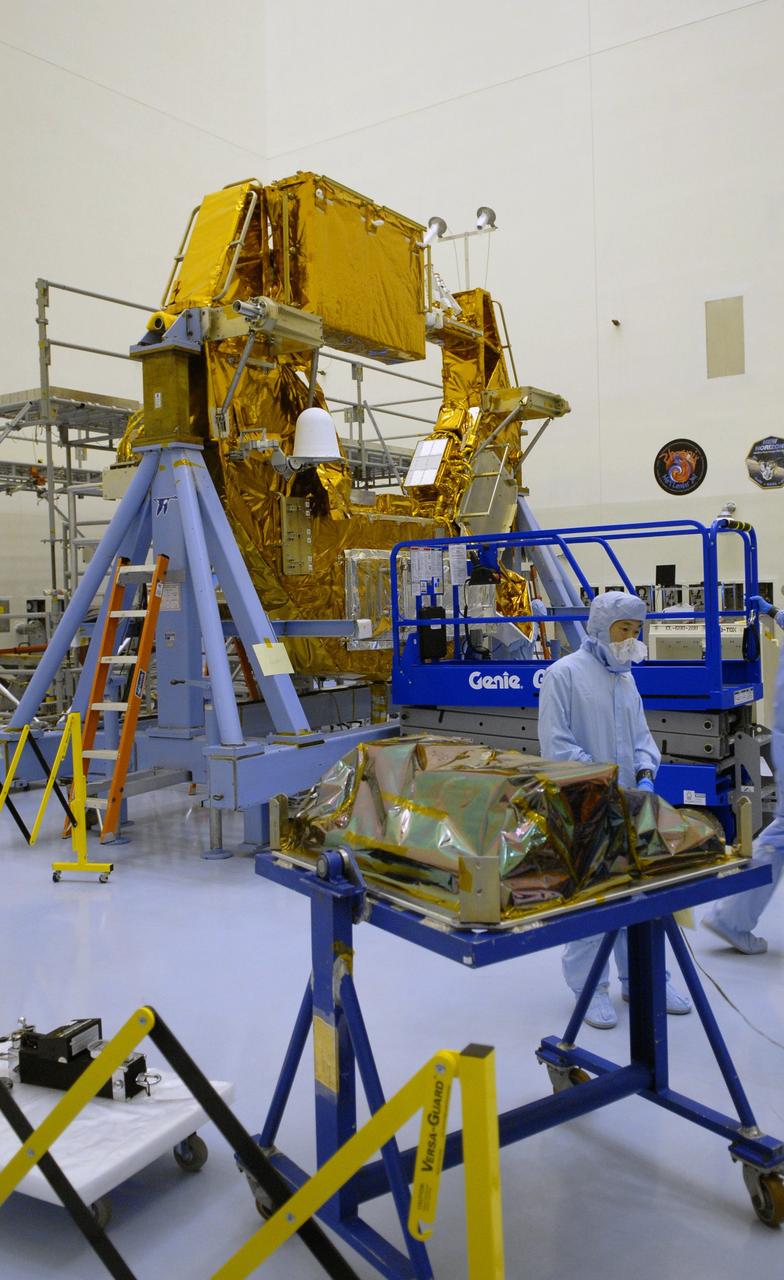
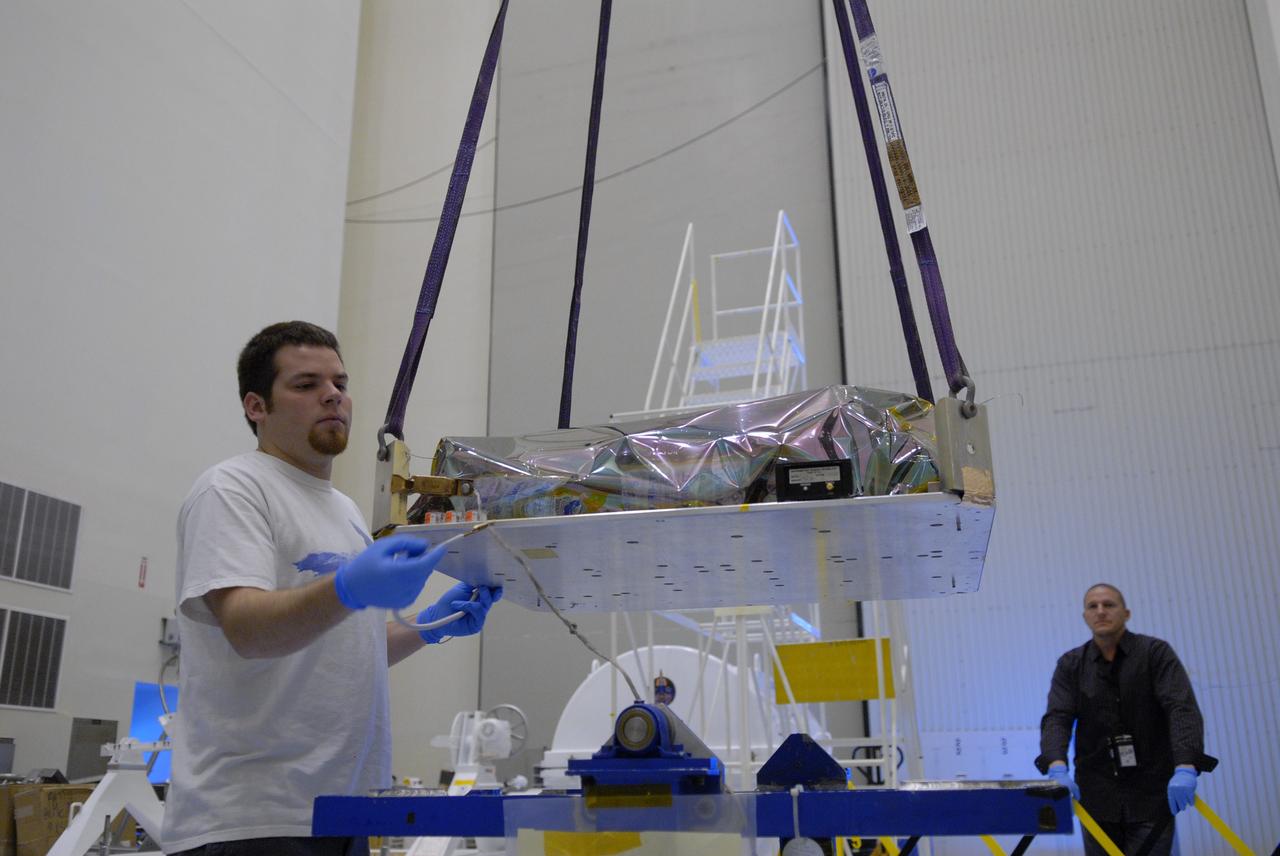
CAPE CANAVERAL, Fla. – In the high bay of the Payload Hazardous Servicing Facility at NASA's Kennedy Space Center, the Orbital Replacement Unit Carrier for the Hubble Space Telescope is secured on a work platform by workers from NASA's Goddard Space Flight Center. The Orbital Replacement Unit Carrier, or ORUC, is one of four carriers supporting hardware for space shuttle Atlantis' STS-125 mission to service the telescope. The Super Lightweight Interchangeable Carrier, or SLIC, and the Flight Support System, or FSS, have also arrived at Kennedy. The Multi-Use Lightweight Equipment carrier will be delivered in late July. The carriers will be prepared for the integration of telescope science instruments, both internal and external replacement components, as well as the flight support equipment to be used by the astronauts during the Hubble servicing mission, targeted for launch Oct. 8. Photo credit: NASA/Jack Pfaller
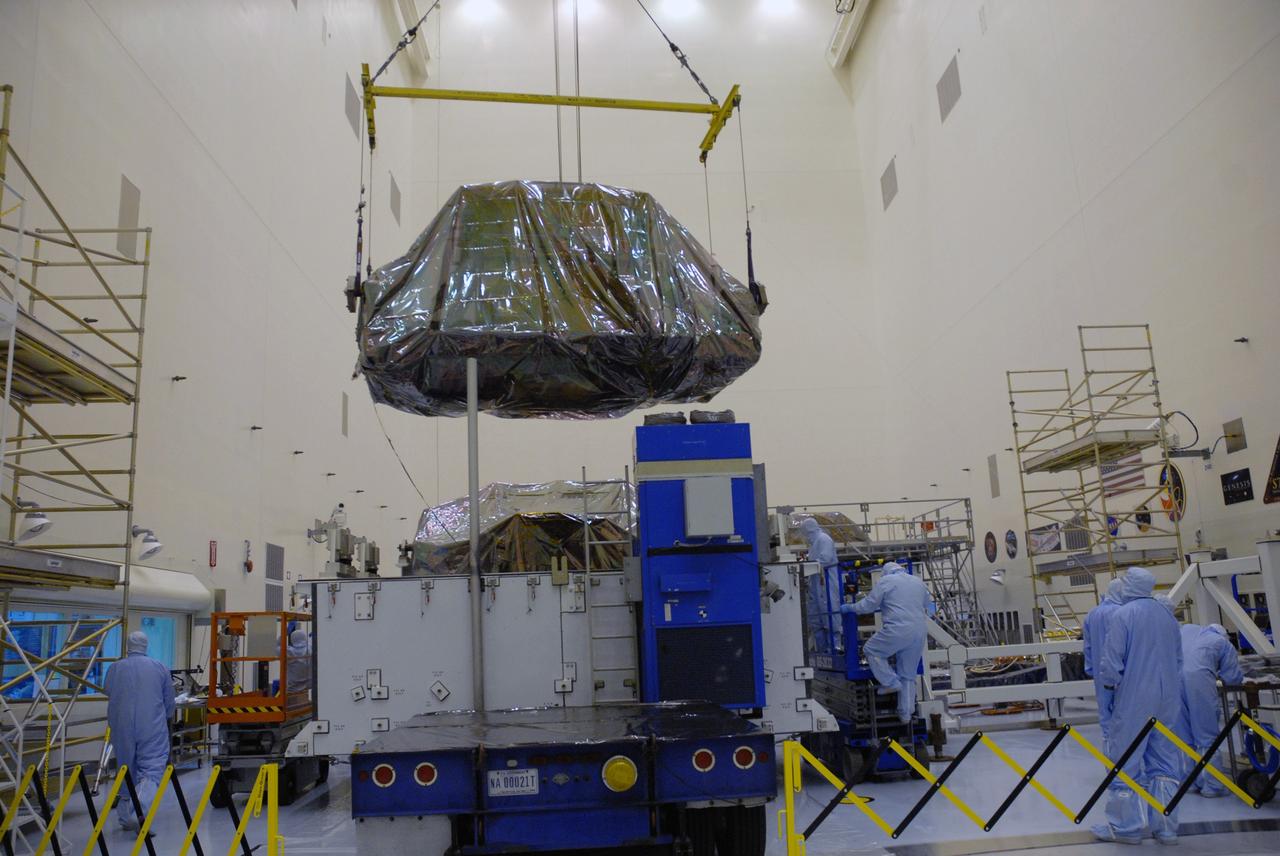
CAPE CANAVERAL, Fla. – In the high bay of the Payload Hazardous Servicing Facility at NASA's Kennedy Space Center, the Flight Support System for the Hubble Space Telescope is lifted from its transportation canister by workers from NASA's Goddard Space Flight Center. The Flight Support System, or FSS, is one of four carriers supporting hardware for space shuttle Atlantis' STS-125 mission to service the telescope. The Super Lightweight Interchangeable Carrier, or SLIC, and the Orbital Replacement Unit Carrier, or ORUC, have also arrived at Kennedy. The Multi-Use Lightweight Equipment carrier will be delivered in late July. The carriers will be prepared for the integration of telescope science instruments, both internal and external replacement components, as well as the flight support equipment to be used by the astronauts during the Hubble servicing mission, targeted for launch Oct. 8. Photo credit: NASA/Jack Pfaller
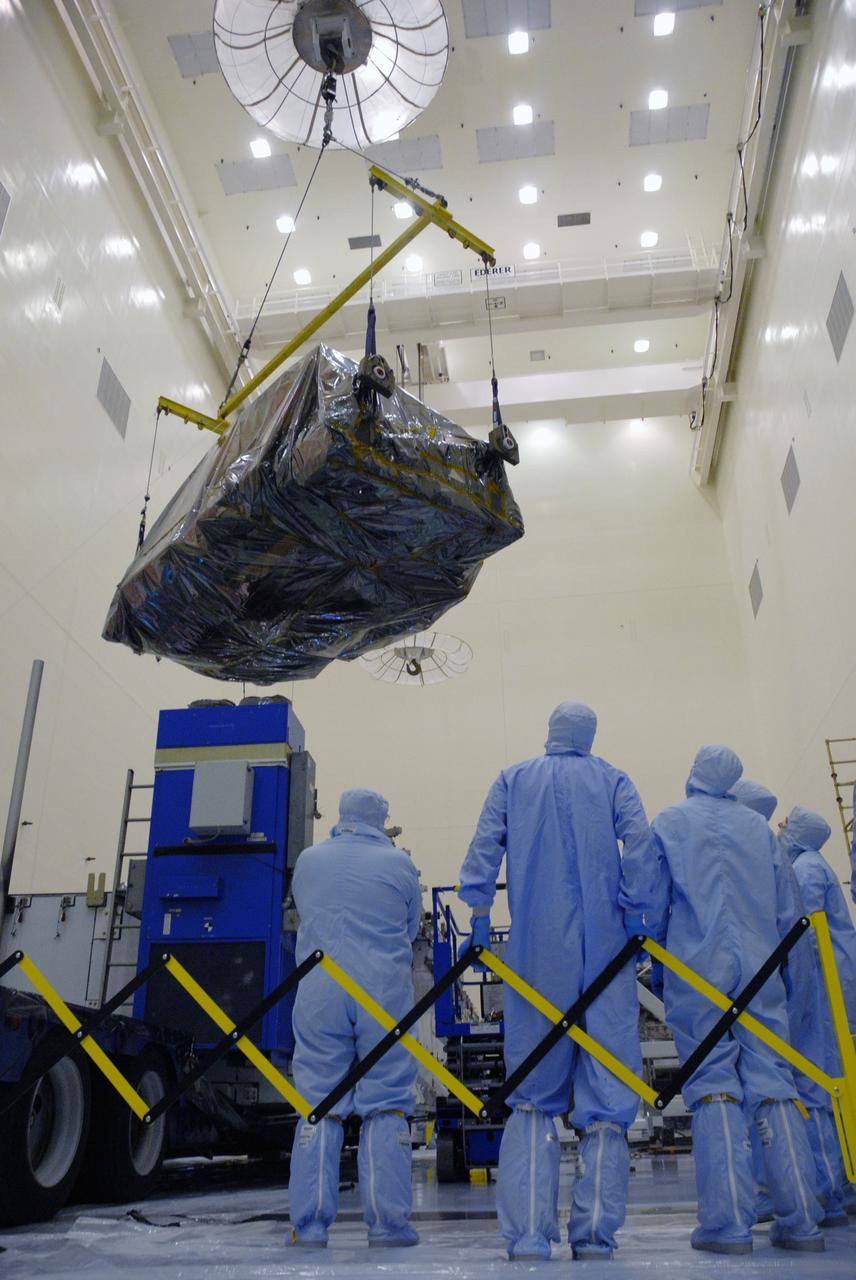
CAPE CANAVERAL, Fla. – In the high bay of the Payload Hazardous Servicing Facility at NASA's Kennedy Space Center, the Flight Support System for the Hubble Space Telescope is lifted from its transportation canister under the supervision of workers from NASA's Goddard Space Flight Center. The Flight Support System, or FSS, is one of four carriers supporting hardware for space shuttle Atlantis' STS-125 mission to service the telescope. The Super Lightweight Interchangeable Carrier, or SLIC, and the Orbital Replacement Unit Carrier, or ORUC, have also arrived at Kennedy. The Multi-Use Lightweight Equipment carrier will be delivered in late July. The carriers will be prepared for the integration of telescope science instruments, both internal and external replacement components, as well as the flight support equipment to be used by the astronauts during the Hubble servicing mission, targeted for launch Oct. 8. Photo credit: NASA/Jack Pfaller
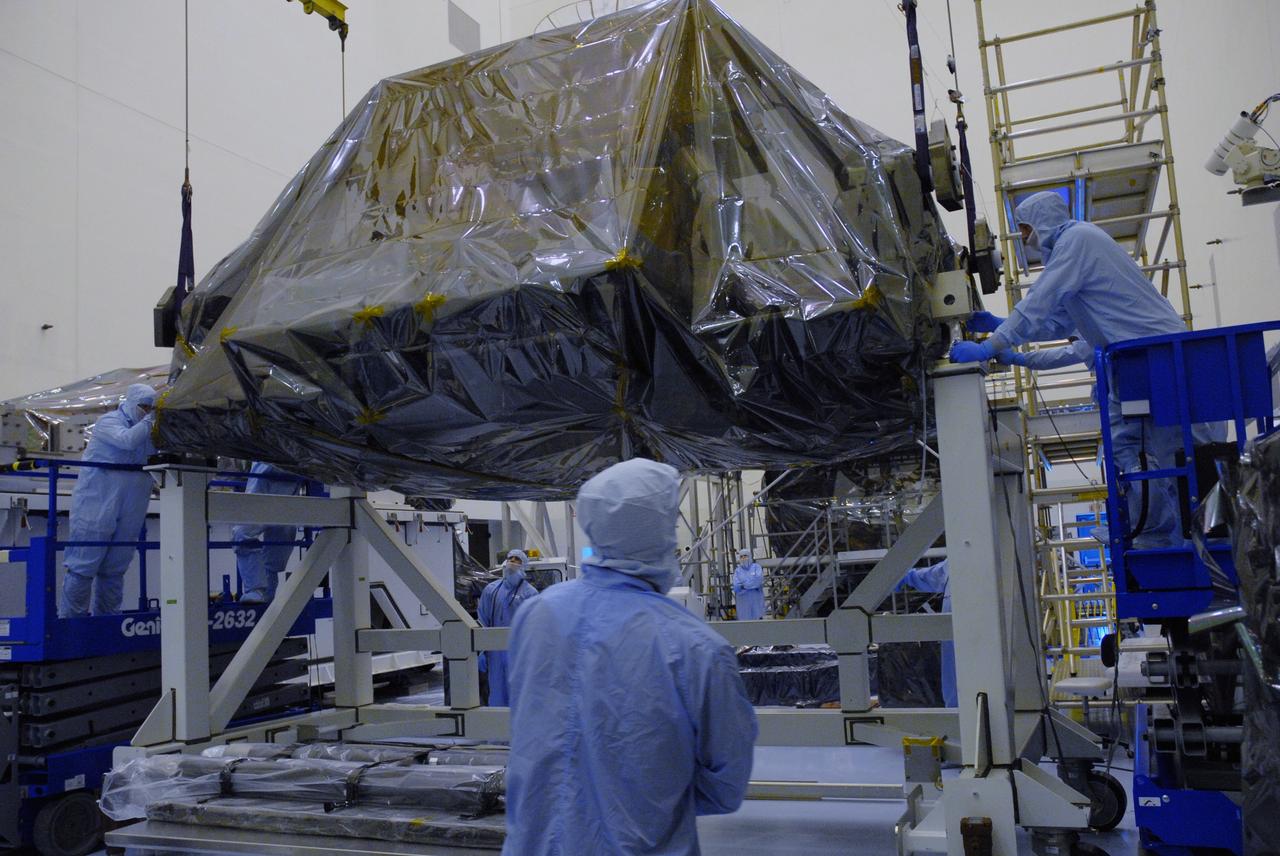
CAPE CANAVERAL, Fla. – In the high bay of the Payload Hazardous Servicing Facility at NASA's Kennedy Space Center, the Flight Support System for the Hubble Space Telescope is lowered onto a work platform by workers from NASA's Goddard Space Flight Center. The Flight Support System, or FSS, is one of four carriers supporting hardware for space shuttle Atlantis' STS-125 mission to service the telescope. The Super Lightweight Interchangeable Carrier, or SLIC, and the Orbital Replacement Unit Carrier, or ORUC, have also arrived at Kennedy. The Multi-Use Lightweight Equipment carrier will be delivered in late July. The carriers will be prepared for the integration of telescope science instruments, both internal and external replacement components, as well as the flight support equipment to be used by the astronauts during the Hubble servicing mission, targeted for launch Oct. 8. Photo credit: NASA/Jack Pfaller

CAPE CANAVERAL, Fla. – In the high bay of the Payload Hazardous Servicing Facility at NASA's Kennedy Space Center, the Orbital Replacement Unit Carrier for the Hubble Space Telescope is lifted from its transportation canister by workers from NASA's Goddard Space Flight Center. The Orbital Replacement Unit Carrier, or ORUC, is one of four carriers supporting hardware for space shuttle Atlantis' STS-125 mission to service the telescope. The Super Lightweight Interchangeable Carrier, or SLIC, and the Flight Support System, or FSS, have also arrived at Kennedy. The Multi-Use Lightweight Equipment carrier will be delivered in late July. The carriers will be prepared for the integration of telescope science instruments, both internal and external replacement components, as well as the flight support equipment to be used by the astronauts during the Hubble servicing mission, targeted for launch Oct. 8. Photo credit: NASA/Jack Pfaller
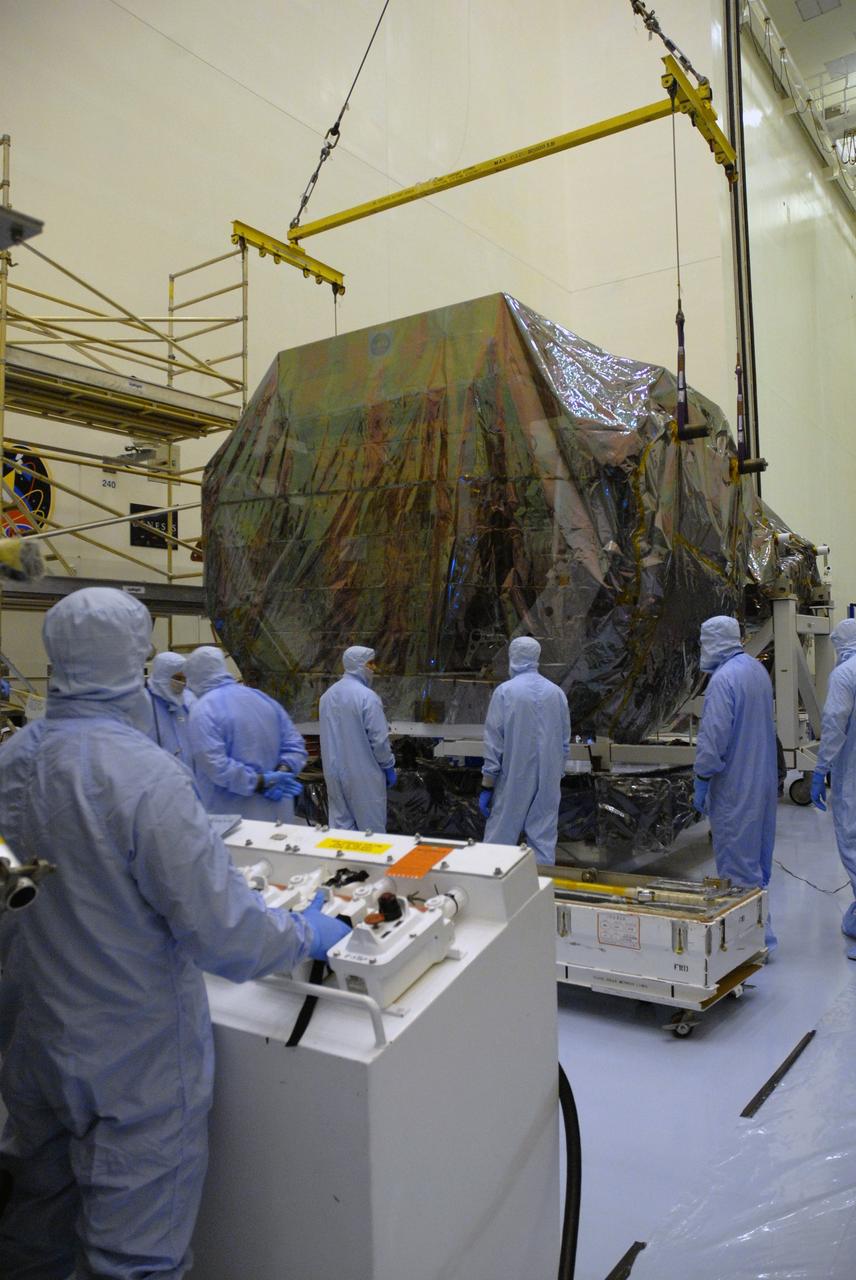
CAPE CANAVERAL, Fla. – In the high bay of the Payload Hazardous Servicing Facility at NASA's Kennedy Space Center, the Orbital Replacement Unit Carrier for the Hubble Space Telescope is positioned on a work platform by workers from NASA's Goddard Space Flight Center. The Orbital Replacement Unit Carrier, or ORUC, is one of four carriers supporting hardware for space shuttle Atlantis' STS-125 mission to service the telescope. The Super Lightweight Interchangeable Carrier, or SLIC, and the Flight Support System, or FSS, have also arrived at Kennedy. The Multi-Use Lightweight Equipment carrier will be delivered in late July. The carriers will be prepared for the integration of telescope science instruments, both internal and external replacement components, as well as the flight support equipment to be used by the astronauts during the Hubble servicing mission, targeted for launch Oct. 8. Photo credit: NASA/Jack Pfaller
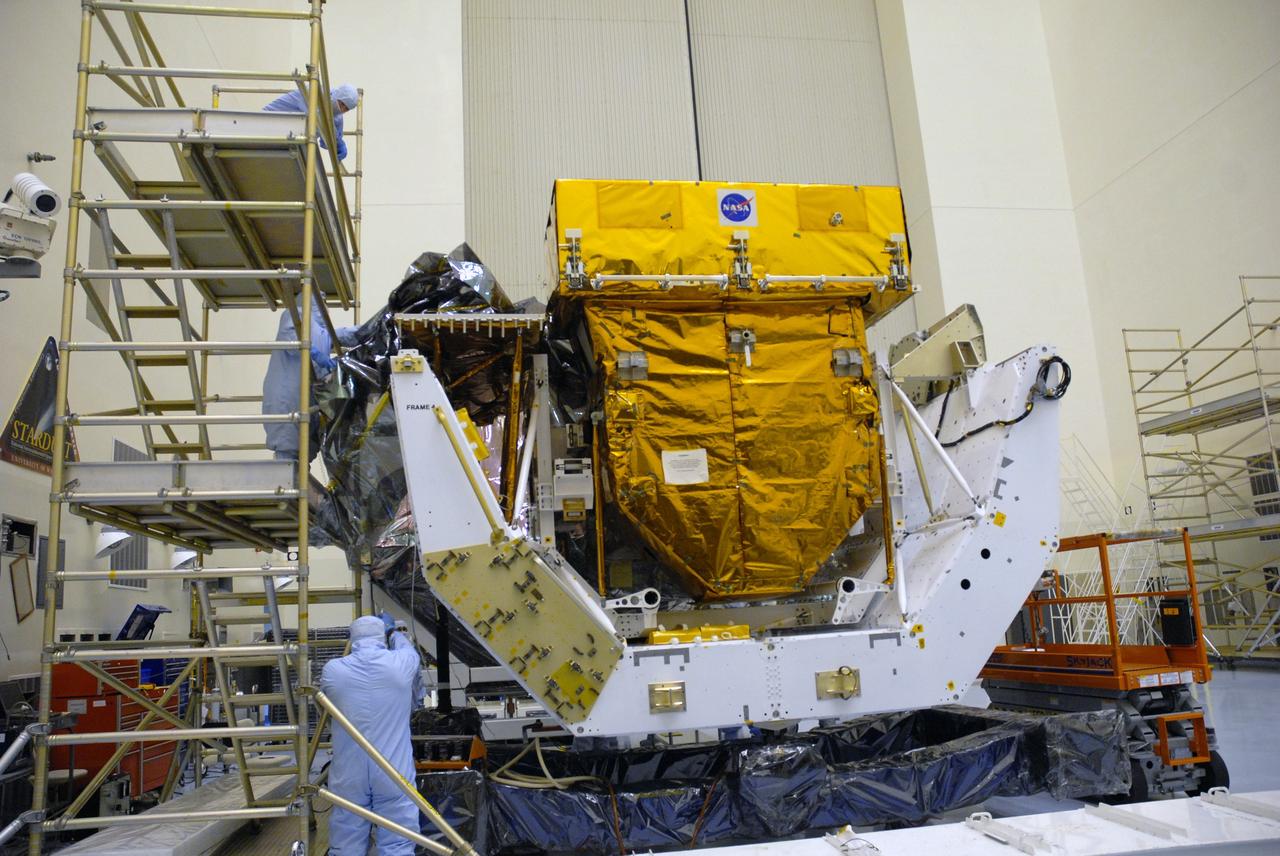
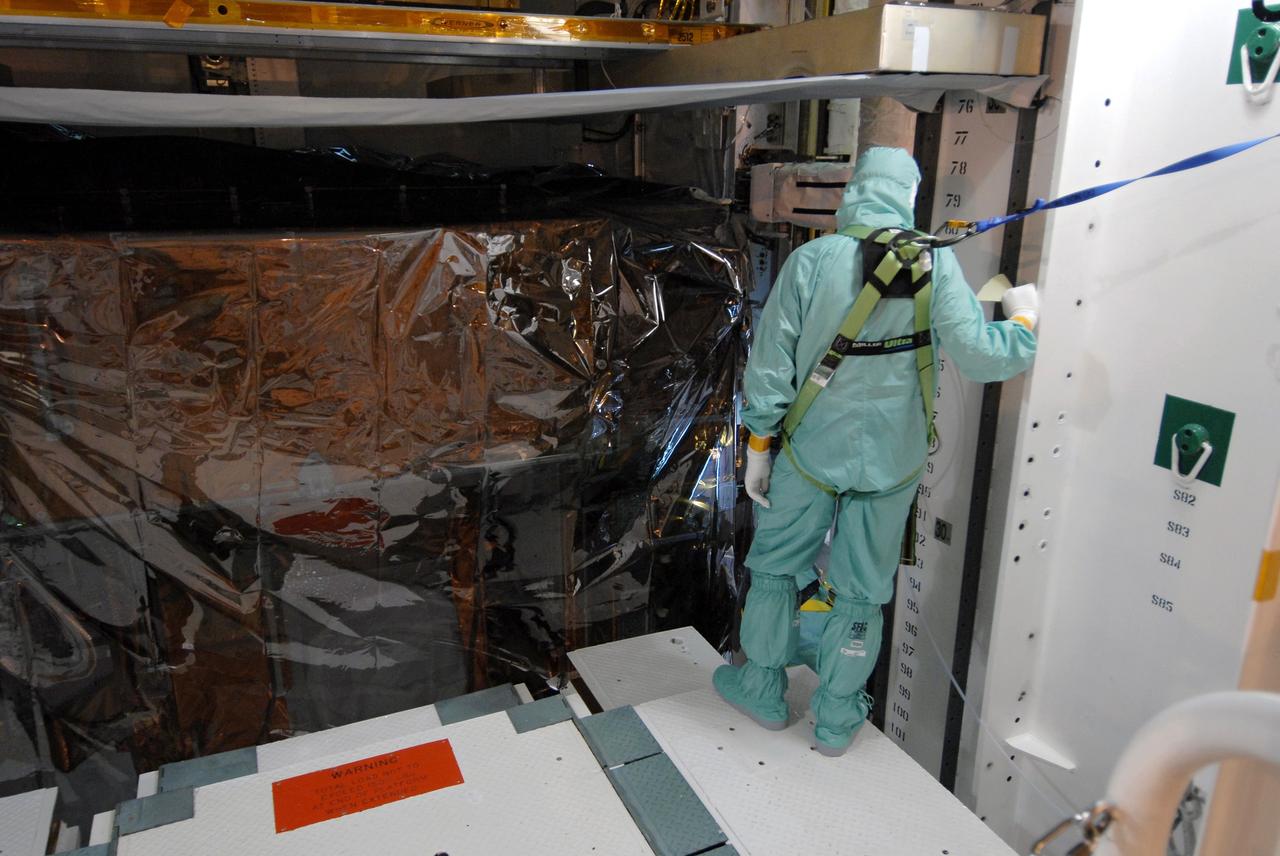
CAPE CANAVERAL, Fla. – In the high bay of the Payload Hazardous Servicing Facility at NASA's Kennedy Space Center, a worker from NASA's Goddard Space Flight Center removes the protective wrapping from the Orbital Replacement Unit Carrier for the Hubble Space Telescope. The Orbital Replacement Unit Carrier, or ORUC, is one of four carriers supporting hardware for space shuttle Atlantis' STS-125 mission to service the telescope. The Super Lightweight Interchangeable Carrier, or SLIC, and the Flight Support System, or FSS, have also arrived at Kennedy. The Multi-Use Lightweight Equipment carrier will be delivered in late July. The carriers will be prepared for the integration of telescope science instruments, both internal and external replacement components, as well as the flight support equipment to be used by the astronauts during the Hubble servicing mission, targeted for launch Oct. 8. Photo credit: NASA/Jack Pfaller
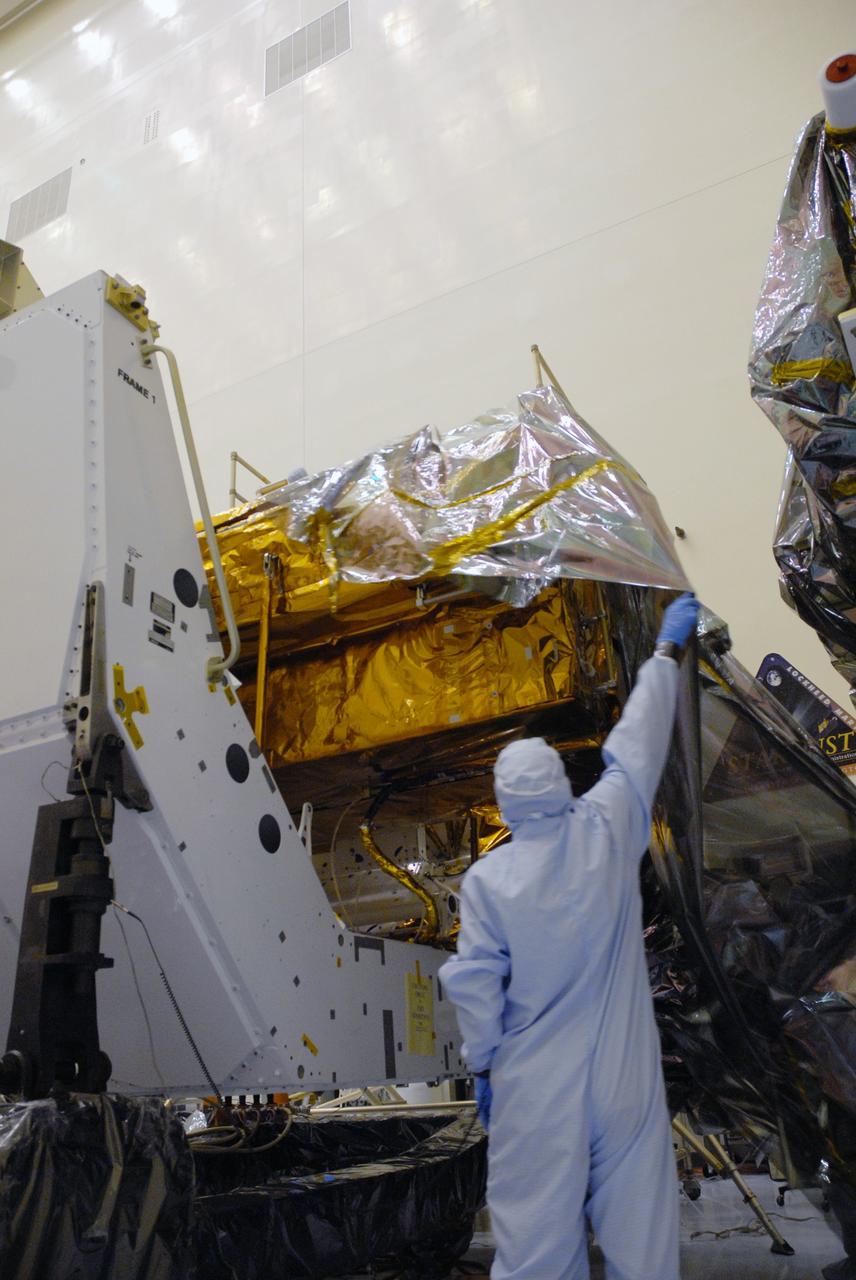
CAPE CANAVERAL, Fla. – In the high bay of the Payload Hazardous Servicing Facility at NASA's Kennedy Space Center, a worker from NASA's Goddard Space Flight Center removes the protective wrapping from the Orbital Replacement Unit Carrier for the Hubble Space Telescope. The Orbital Replacement Unit Carrier, or ORUC, is one of four carriers supporting hardware for space shuttle Atlantis' STS-125 mission to service the telescope. The Super Lightweight Interchangeable Carrier, or SLIC, and the Flight Support System, or FSS, have also arrived at Kennedy. The Multi-Use Lightweight Equipment carrier will be delivered in late July. The carriers will be prepared for the integration of telescope science instruments, both internal and external replacement components, as well as the flight support equipment to be used by the astronauts during the Hubble servicing mission, targeted for launch Oct. 8. Photo credit: NASA/Jack Pfaller
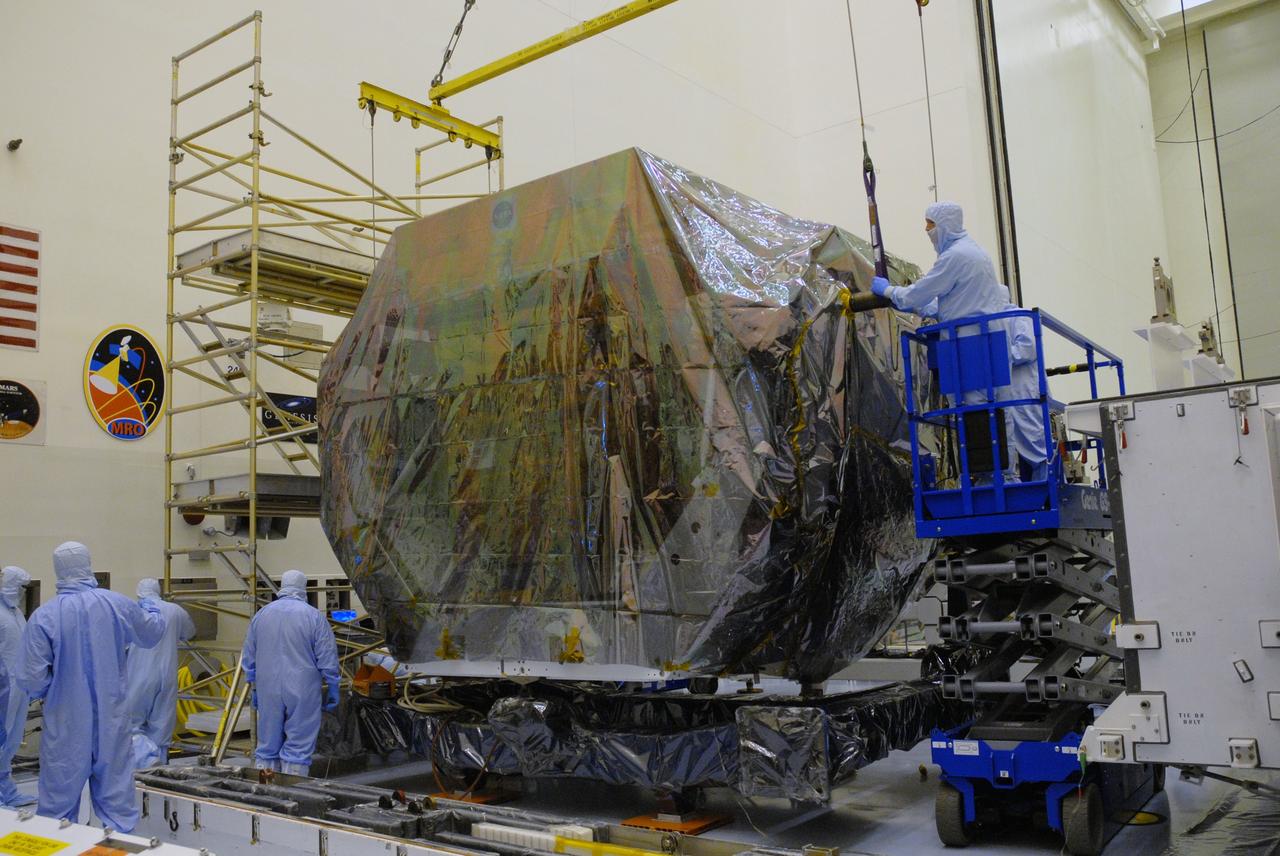
CAPE CANAVERAL, Fla. – In the high bay of the Payload Hazardous Servicing Facility at NASA's Kennedy Space Center, workers from NASA's Goddard Space Flight Center begin to remove the protective wrapping from the Orbital Replacement Unit Carrier for the Hubble Space Telescope. The Orbital Replacement Unit Carrier, or ORUC, is one of four carriers supporting hardware for space shuttle Atlantis' STS-125 mission to service the telescope. The Super Lightweight Interchangeable Carrier, or SLIC, and the Flight Support System, or FSS, have also arrived at Kennedy. The Multi-Use Lightweight Equipment carrier will be delivered in late July. The carriers will be prepared for the integration of telescope science instruments, both internal and external replacement components, as well as the flight support equipment to be used by the astronauts during the Hubble servicing mission, targeted for launch Oct. 8. Photo credit: NASA/Jack Pfaller

CAPE CANAVERAL, Fla. – In the high bay of the Payload Hazardous Servicing Facility at NASA's Kennedy Space Center, the Flight Support System for the Hubble Space Telescope is positioned onto a work platform by workers from NASA's Goddard Space Flight Center. The Flight Support System, or FSS, is one of four carriers supporting hardware for space shuttle Atlantis' STS-125 mission to service the telescope. The Super Lightweight Interchangeable Carrier, or SLIC, and the Orbital Replacement Unit Carrier, or ORUC, have also arrived at Kennedy. The Multi-Use Lightweight Equipment carrier will be delivered in late July. The carriers will be prepared for the integration of telescope science instruments, both internal and external replacement components, as well as the flight support equipment to be used by the astronauts during the Hubble servicing mission, targeted for launch Oct. 8. Photo credit: NASA/Jack Pfaller

CAPE CANAVERAL, Fla. – In the high bay of the Payload Hazardous Servicing Facility at NASA's Kennedy Space Center, a worker from NASA's Goddard Space Flight Center removes the protective wrapping from the Orbital Replacement Unit Carrier for the Hubble Space Telescope. The Orbital Replacement Unit Carrier, or ORUC, is one of four carriers supporting hardware for space shuttle Atlantis' STS-125 mission to service the telescope. The Super Lightweight Interchangeable Carrier, or SLIC, and the Flight Support System, or FSS, have also arrived at Kennedy. The Multi-Use Lightweight Equipment carrier will be delivered in late July. The carriers will be prepared for the integration of telescope science instruments, both internal and external replacement components, as well as the flight support equipment to be used by the astronauts during the Hubble servicing mission, targeted for launch Oct. 8. Photo credit: NASA/Jack Pfaller
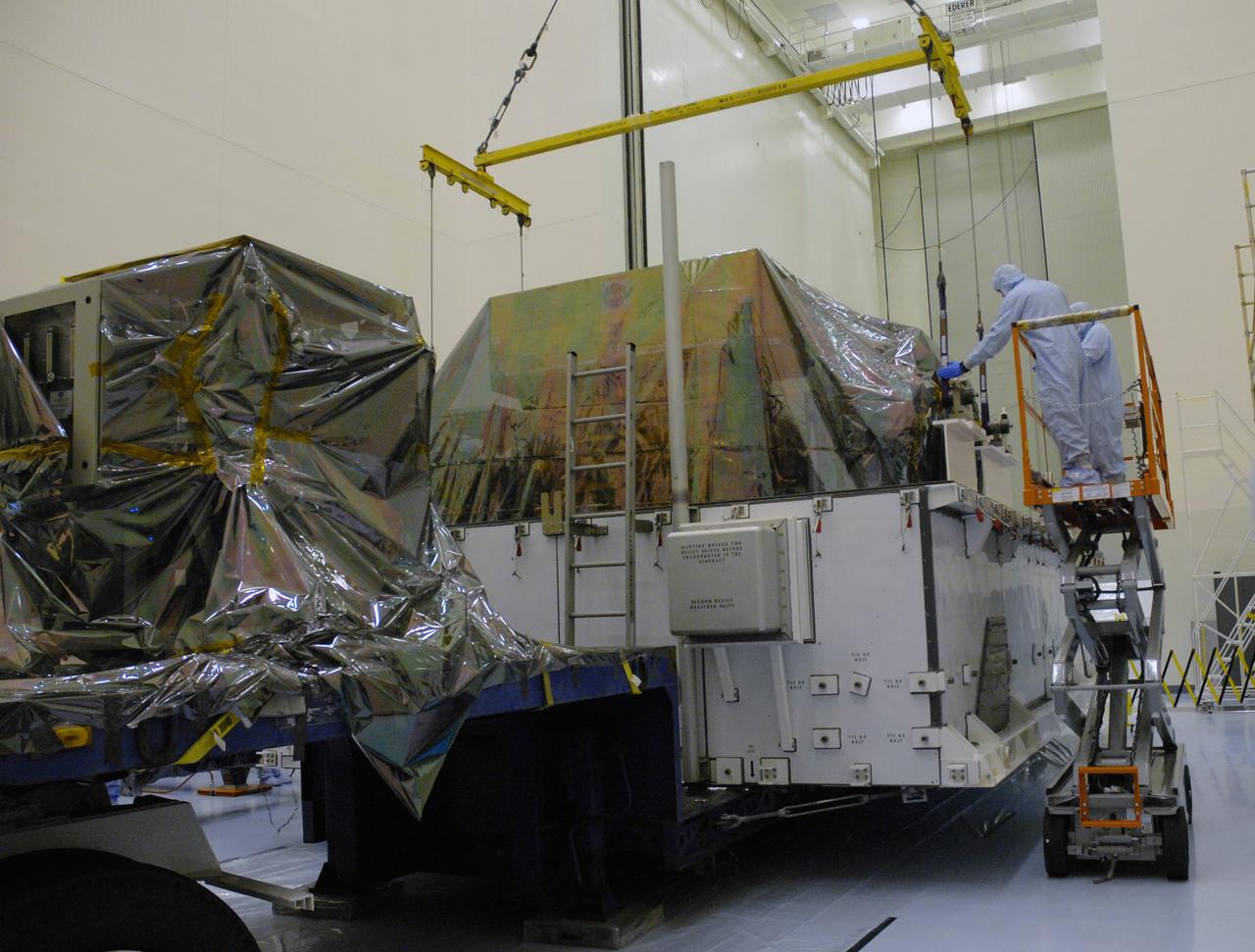
CAPE CANAVERAL, Fla. – In the high bay of the Payload Hazardous Servicing Facility at NASA's Kennedy Space Center, the Flight Support System for the Hubble Space Telescope is positioned onto a work platform by workers from NASA's Goddard Space Flight Center. The Flight Support System, or FSS, is one of four carriers supporting hardware for space shuttle Atlantis' STS-125 mission to service the telescope. The Super Lightweight Interchangeable Carrier, or SLIC, and the Orbital Replacement Unit Carrier, or ORUC, have also arrived at Kennedy. The Multi-Use Lightweight Equipment carrier will be delivered in late July. The carriers will be prepared for the integration of telescope science instruments, both internal and external replacement components, as well as the flight support equipment to be used by the astronauts during the Hubble servicing mission, targeted for launch Oct. 8. Photo credit: NASA/Jack Pfaller
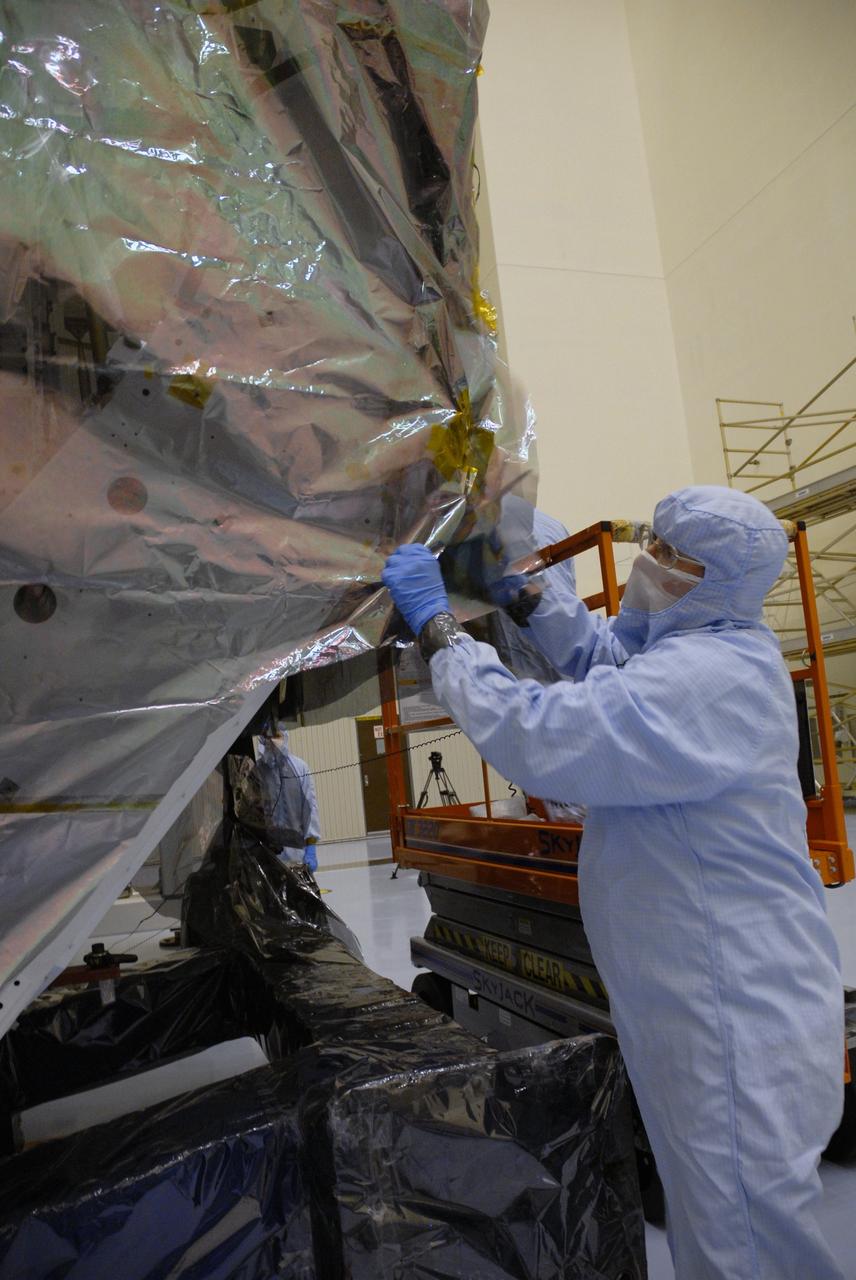
CAPE CANAVERAL, Fla. – In the high bay of the Payload Hazardous Servicing Facility at NASA's Kennedy Space Center, a worker from NASA's Goddard Space Flight Center cuts away the protective wrapping from the Orbital Replacement Unit Carrier for the Hubble Space Telescope. The Orbital Replacement Unit Carrier, or ORUC, is one of four carriers supporting hardware for space shuttle Atlantis' STS-125 mission to service the telescope. The Super Lightweight Interchangeable Carrier, or SLIC, and the Flight Support System, or FSS, have also arrived at Kennedy. The Multi-Use Lightweight Equipment carrier will be delivered in late July. The carriers will be prepared for the integration of telescope science instruments, both internal and external replacement components, as well as the flight support equipment to be used by the astronauts during the Hubble servicing mission, targeted for launch Oct. 8. Photo credit: NASA/Jack Pfaller
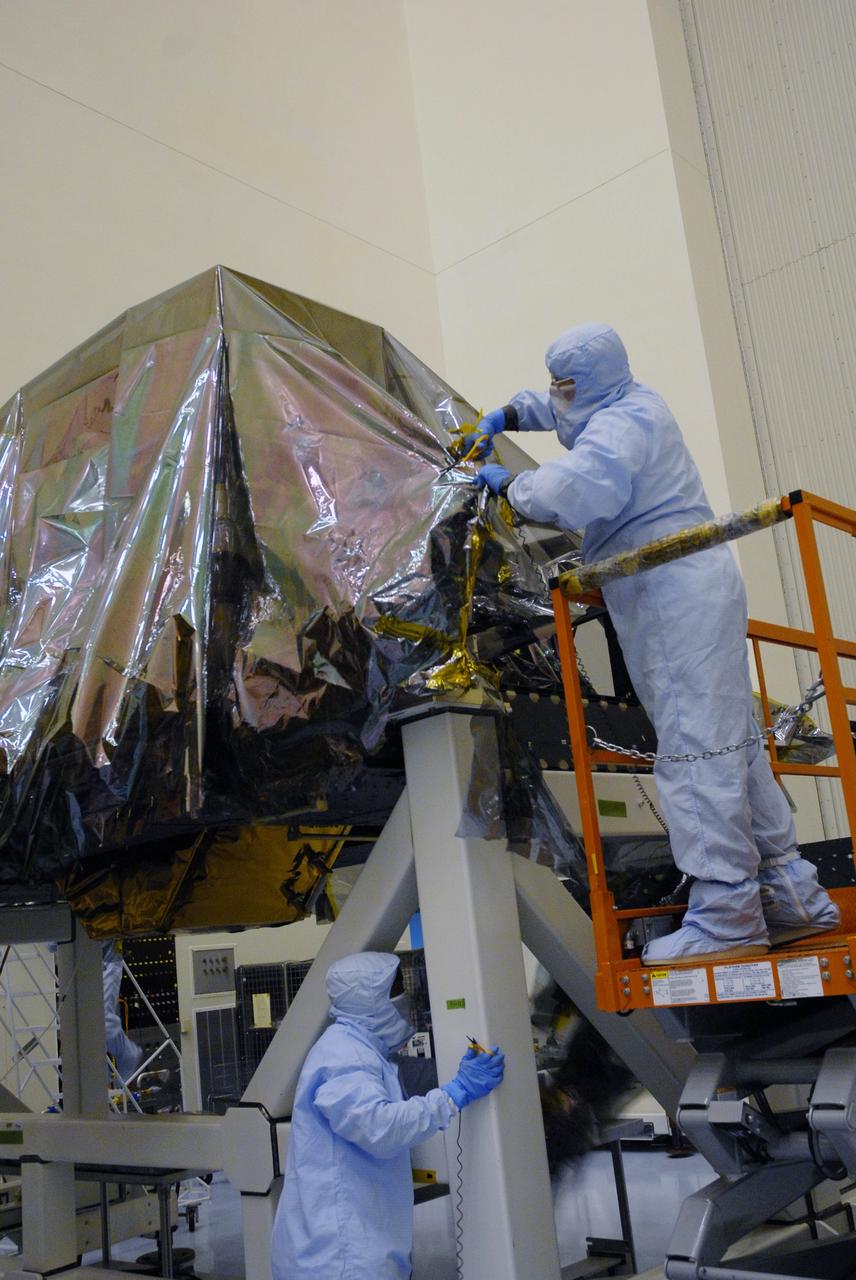
CAPE CANAVERAL, Fla. – In the high bay of the Payload Hazardous Servicing Facility at NASA's Kennedy Space Center, a worker from NASA's Goddard Space Flight Center cuts away the protective wrapping from the Super Lightweight Interchangeable Carrier for the Hubble Space Telescope. The Super Lightweight Interchangeable Carrier, or SLIC, is one of four carriers supporting hardware for space shuttle Atlantis' STS-125 mission to service the telescope. The Orbital Replacement Unit Carrier, or ORUC, and the Flight Support System, or FSS, have also arrived at Kennedy. The Multi-Use Lightweight Equipment carrier will be delivered in late July. The carriers will be prepared for the integration of telescope science instruments, both internal and external replacement components, as well as the flight support equipment to be used by the astronauts during the Hubble servicing mission, targeted for launch Oct. 8. Photo credit: NASA/Jack Pfaller
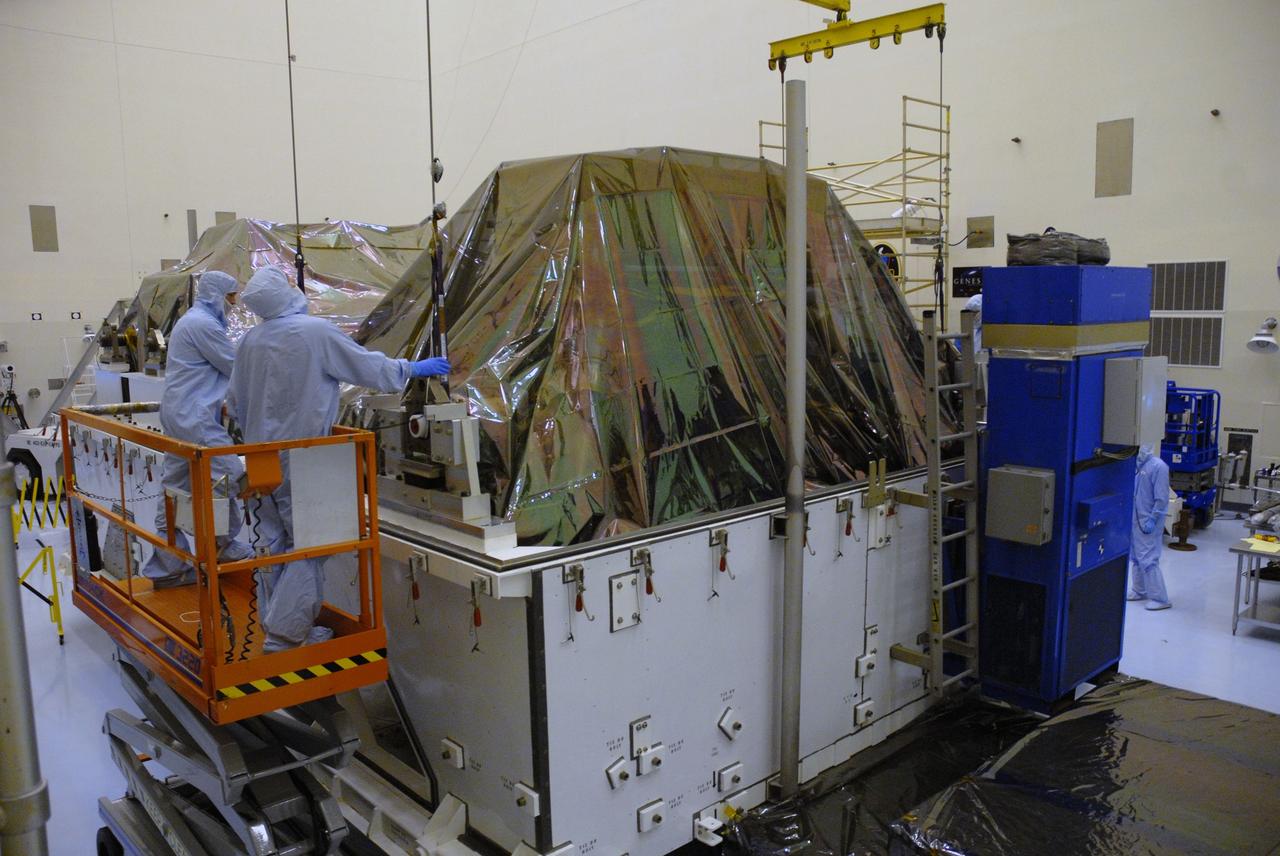
CAPE CANAVERAL, Fla. – In the high bay of the Payload Hazardous Servicing Facility at NASA's Kennedy Space Center, workers from NASA's Goddard Space Flight Center prepare to lift the Flight Support System for the Hubble Space Telescope from its transportation canister. The Flight Support System, or FSS, is one of four carriers supporting hardware for space shuttle Atlantis' STS-125 mission to service the telescope. The Super Lightweight Interchangeable Carrier, or SLIC, and the Orbital Replacement Unit Carrier, or ORUC, have also arrived at Kennedy. The Multi-Use Lightweight Equipment carrier will be delivered in late July. The carriers will be prepared for the integration of telescope science instruments, both internal and external replacement components, as well as the flight support equipment to be used by the astronauts during the Hubble servicing mission, targeted for launch Oct. 8. Photo credit: NASA/Jack Pfaller
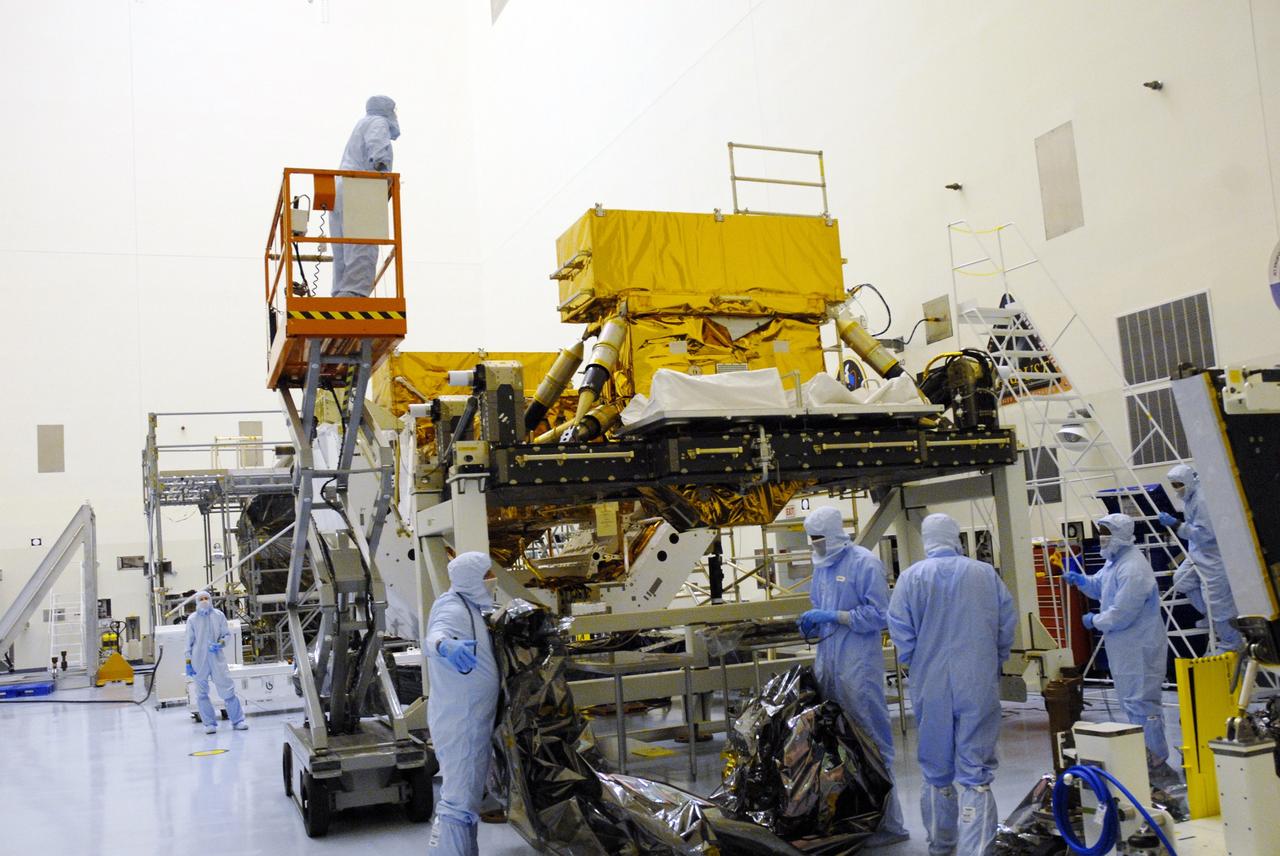
CAPE CANAVERAL, Fla. – In the high bay of the Payload Hazardous Servicing Facility at NASA's Kennedy Space Center, the Super Lightweight Interchangeable Carrier for the Hubble Space Telescope is unwrapped and ready for final processing for launch. The Super Lightweight Interchangeable Carrier, or SLIC, is one of four carriers supporting hardware for space shuttle Atlantis' STS-125 mission to service the telescope. The Orbital Replacement Unit Carrier, or ORUC, and the Flight Support System, or FSS, have also arrived at Kennedy. The Multi-Use Lightweight Equipment carrier will be delivered in late July. The carriers will be prepared for the integration of telescope science instruments, both internal and external replacement components, as well as the flight support equipment to be used by the astronauts during the Hubble servicing mission, targeted for launch Oct. 8. Photo credit: NASA/Jack Pfaller
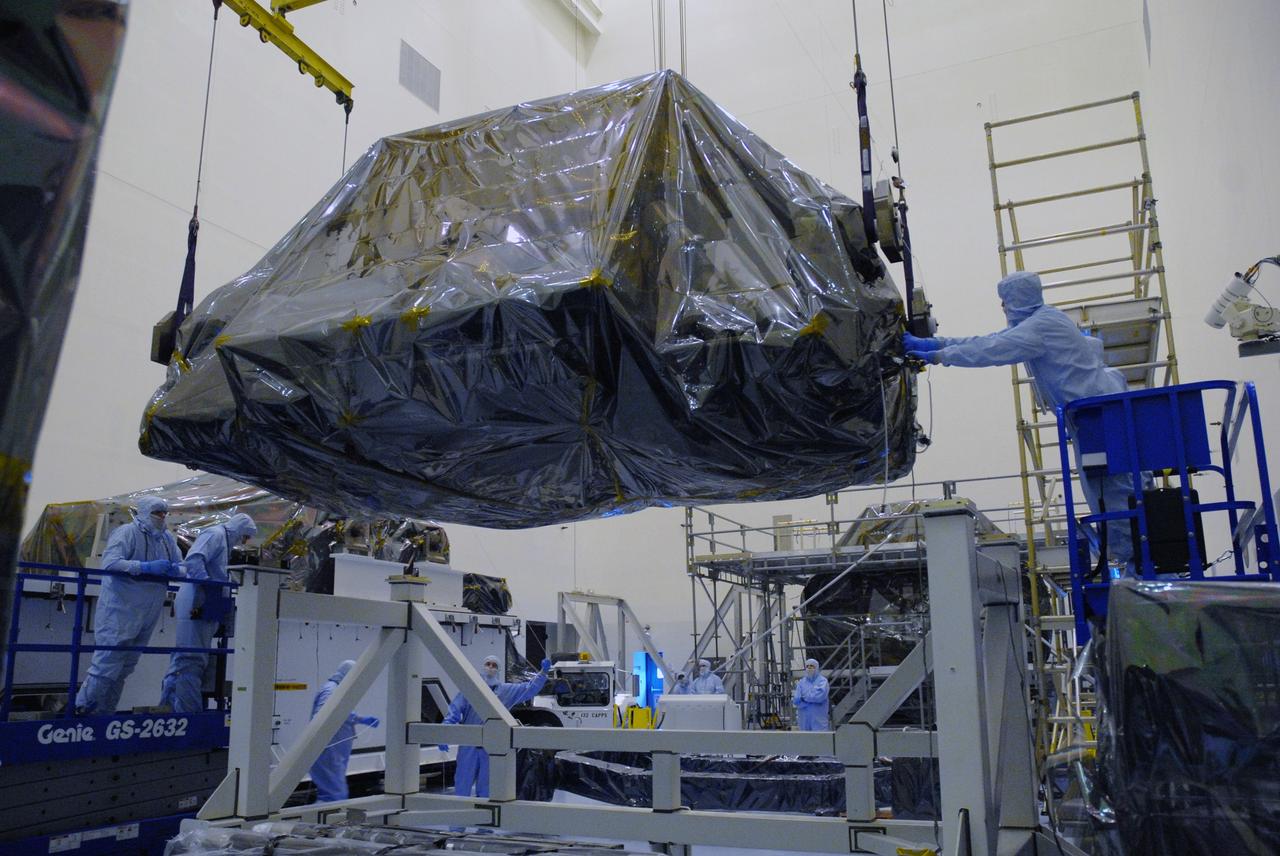
CAPE CANAVERAL, Fla. – In the high bay of the Payload Hazardous Servicing Facility at NASA's Kennedy Space Center, the Flight Support System for the Hubble Space Telescope is lowered onto a work platform by workers from NASA's Goddard Space Flight Center. The Flight Support System, or FSS, is one of four carriers supporting hardware for space shuttle Atlantis' STS-125 mission to service the telescope. The Super Lightweight Interchangeable Carrier, or SLIC, and the Orbital Replacement Unit Carrier, or ORUC, have also arrived at Kennedy. The Multi-Use Lightweight Equipment carrier will be delivered in late July. The carriers will be prepared for the integration of telescope science instruments, both internal and external replacement components, as well as the flight support equipment to be used by the astronauts during the Hubble servicing mission, targeted for launch Oct. 8. Photo credit: NASA/Jack Pfaller
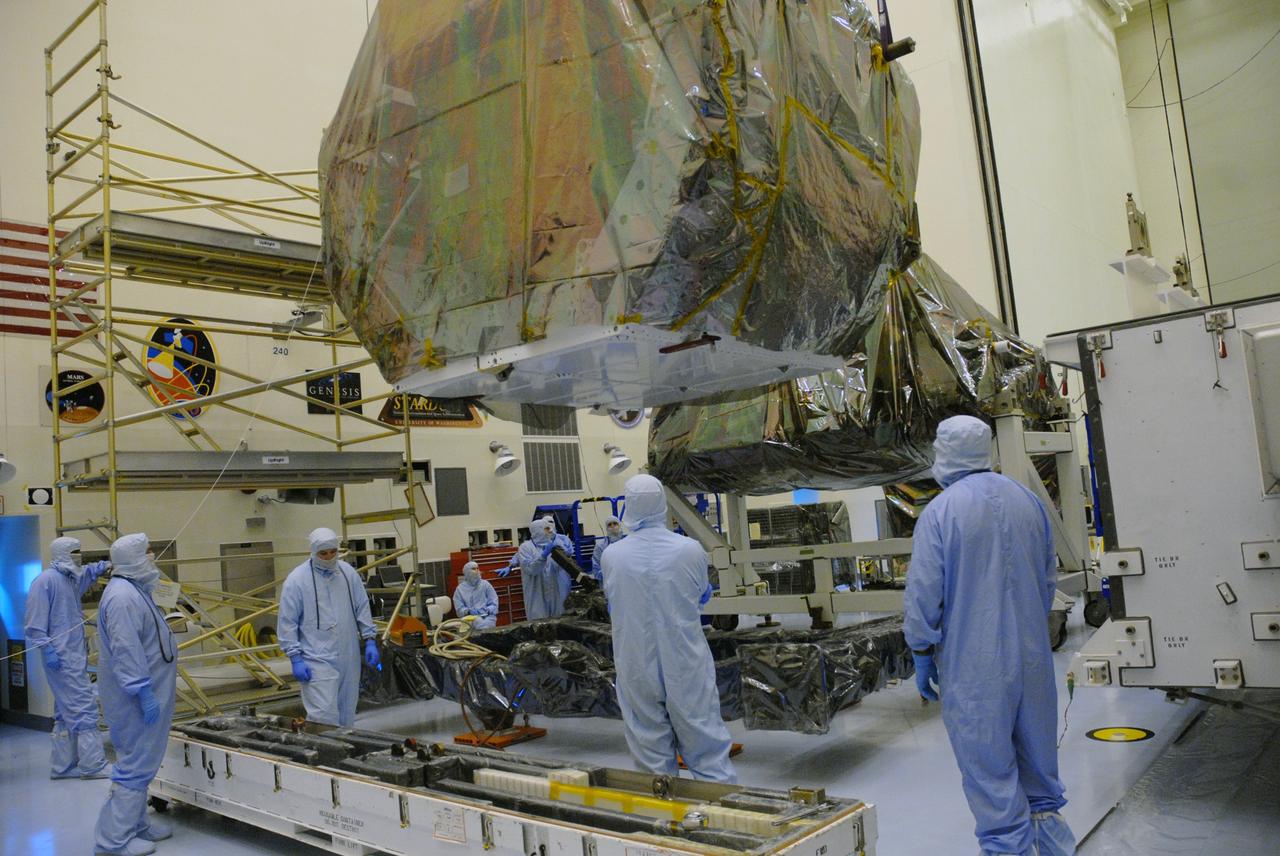
CAPE CANAVERAL, Fla. – In the high bay of the Payload Hazardous Servicing Facility at NASA's Kennedy Space Center, the Orbital Replacement Unit Carrier for the Hubble Space Telescope is lowered onto a work platform by workers from NASA's Goddard Space Flight Center. The Orbital Replacement Unit Carrier, or ORUC, is one of four carriers supporting hardware for space shuttle Atlantis' STS-125 mission to service the telescope. The Super Lightweight Interchangeable Carrier, or SLIC, and the Flight Support System, or FSS, seen behind the ORUC, have also arrived at Kennedy. The Multi-Use Lightweight Equipment carrier will be delivered in late July. The carriers will be prepared for the integration of telescope science instruments, both internal and external replacement components, as well as the flight support equipment to be used by the astronauts during the Hubble servicing mission, targeted for launch Oct. 8. Photo credit: NASA/Jack Pfaller
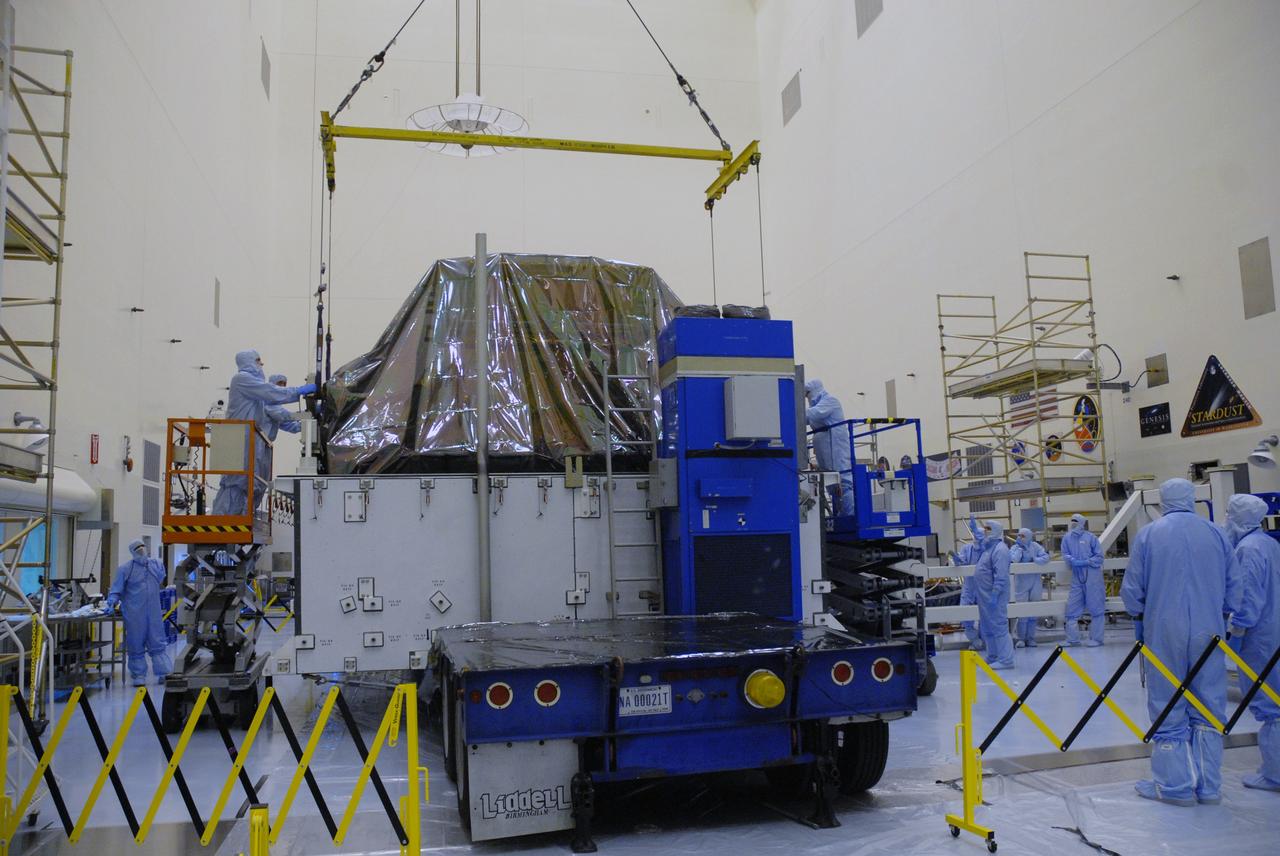
CAPE CANAVERAL, Fla. – In the high bay of the Payload Hazardous Servicing Facility at NASA's Kennedy Space Center, workers from NASA's Goddard Space Flight Center begin to lift the Flight Support System for the Hubble Space Telescope from its transportation canister. The Flight Support System, or FSS, is one of four carriers supporting hardware for space shuttle Atlantis' STS-125 mission to service the telescope. The Super Lightweight Interchangeable Carrier, or SLIC, and the Orbital Replacement Unit Carrier, or ORUC, have also arrived at Kennedy. The Multi-Use Lightweight Equipment carrier will be delivered in late July. The carriers will be prepared for the integration of telescope science instruments, both internal and external replacement components, as well as the flight support equipment to be used by the astronauts during the Hubble servicing mission, targeted for launch Oct. 8. Photo credit: NASA/Jack Pfaller
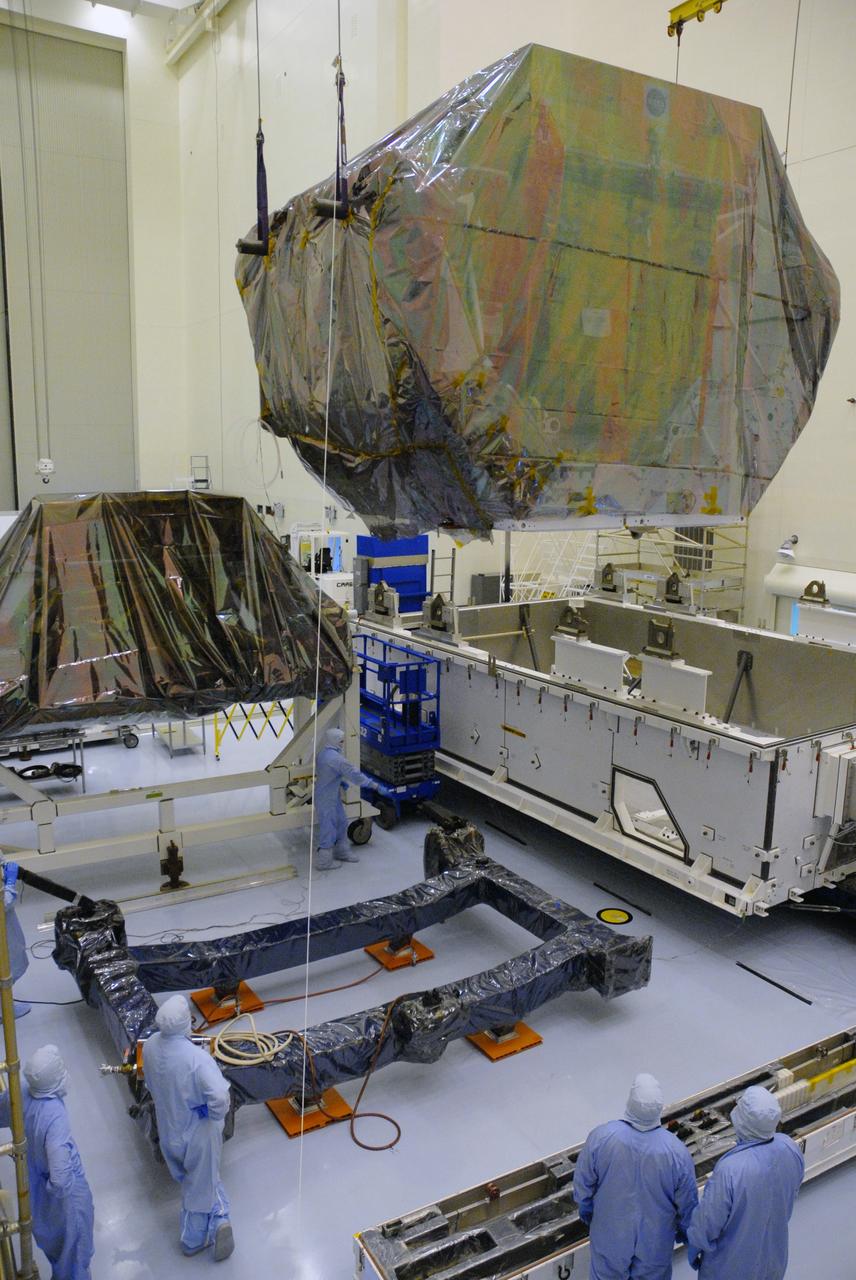
CAPE CANAVERAL, Fla. – In the high bay of the Payload Hazardous Servicing Facility at NASA's Kennedy Space Center, the Orbital Replacement Unit Carrier for the Hubble Space Telescope is lifted from its transportation canister by workers from NASA's Goddard Space Flight Center. The Orbital Replacement Unit Carrier, or ORUC, is one of four carriers supporting hardware for space shuttle Atlantis' STS-125 mission to service the telescope. The Super Lightweight Interchangeable Carrier, or SLIC, and the Flight Support System, or FSS, at ground-level left, have also arrived at Kennedy. The Multi-Use Lightweight Equipment carrier will be delivered in late July. The carriers will be prepared for the integration of telescope science instruments, both internal and external replacement components, as well as the flight support equipment to be used by the astronauts during the Hubble servicing mission, targeted for launch Oct. 8. Photo credit: NASA/Jack Pfaller
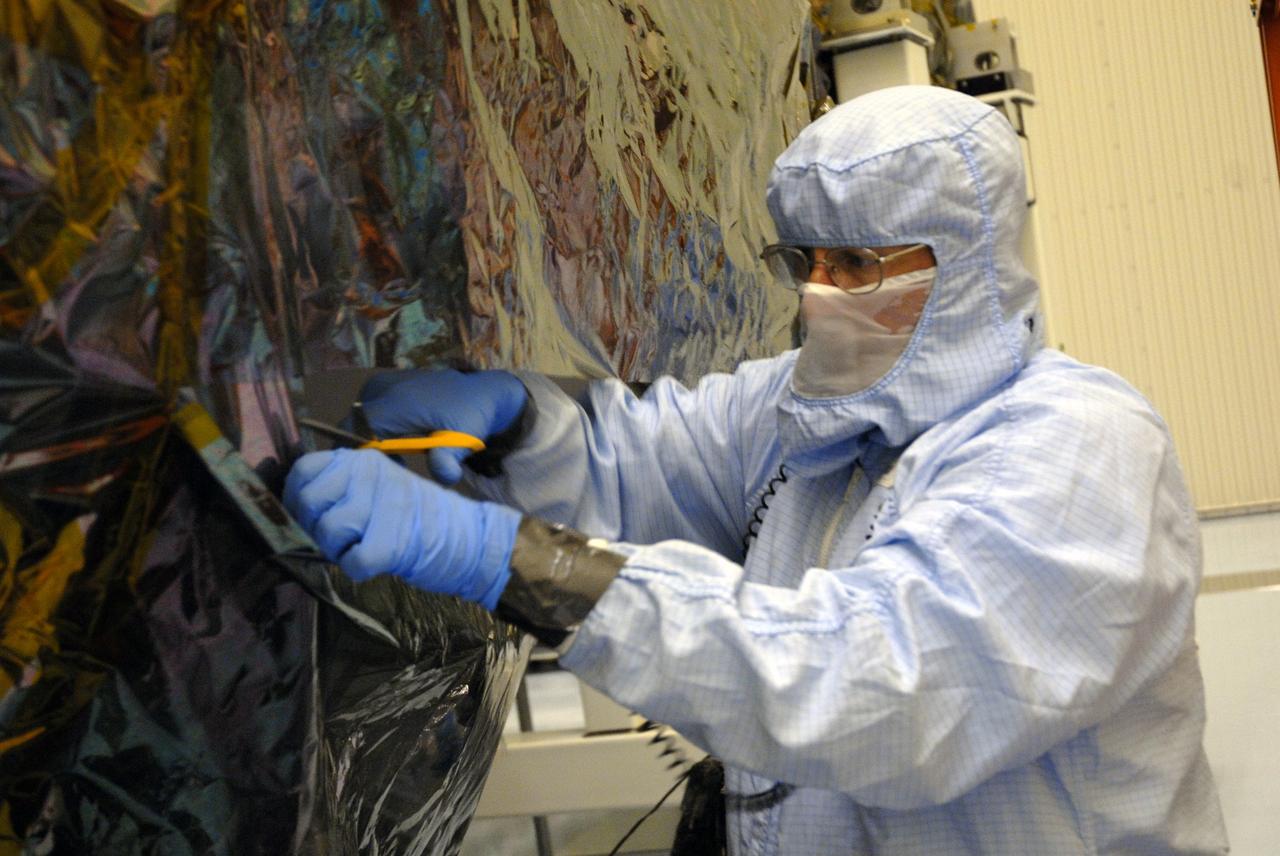
CAPE CANAVERAL, Fla. – In the high bay of the Payload Hazardous Servicing Facility at NASA's Kennedy Space Center, a worker from NASA's Goddard Space Flight Center cuts away the protective wrapping from the Orbital Replacement Unit Carrier for the Hubble Space Telescope. The Orbital Replacement Unit Carrier, or ORUC, is one of four carriers supporting hardware for space shuttle Atlantis' STS-125 mission to service the telescope. The Super Lightweight Interchangeable Carrier, or SLIC, and the Flight Support System, or FSS, have also arrived at Kennedy. The Multi-Use Lightweight Equipment carrier will be delivered in late July. The carriers will be prepared for the integration of telescope science instruments, both internal and external replacement components, as well as the flight support equipment to be used by the astronauts during the Hubble servicing mission, targeted for launch Oct. 8. Photo credit: NASA/Jack Pfaller

CAPE CANAVERAL, Fla. – In the high bay of the Payload Hazardous Servicing Facility at NASA's Kennedy Space Center, the Flight Support System for the Hubble Space Telescope is positioned onto a work platform by workers from NASA's Goddard Space Flight Center. The Flight Support System, or FSS, is one of four carriers supporting hardware for space shuttle Atlantis' STS-125 mission to service the telescope. The Super Lightweight Interchangeable Carrier, or SLIC, and the Orbital Replacement Unit Carrier, or ORUC, have also arrived at Kennedy. The Multi-Use Lightweight Equipment carrier will be delivered in late July. The carriers will be prepared for the integration of telescope science instruments, both internal and external replacement components, as well as the flight support equipment to be used by the astronauts during the Hubble servicing mission, targeted for launch Oct. 8. Photo credit: NASA/Jack Pfaller
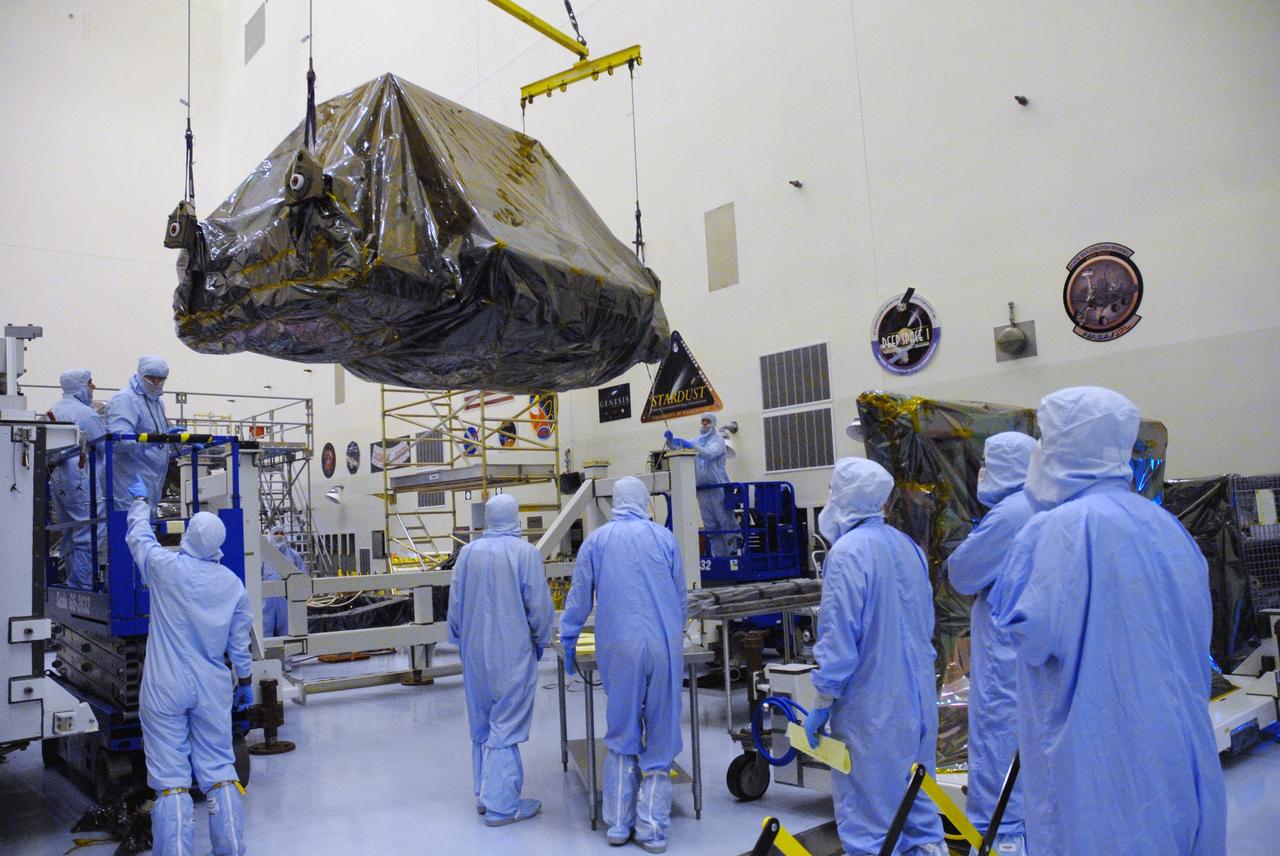
CAPE CANAVERAL, Fla. – In the high bay of the Payload Hazardous Servicing Facility at NASA's Kennedy Space Center, the Flight Support System for the Hubble Space Telescope is lifted from its transportation canister under the supervision of workers from NASA's Goddard Space Flight Center. The Flight Support System, or FSS, is one of four carriers supporting hardware for space shuttle Atlantis' STS-125 mission to service the telescope. The Super Lightweight Interchangeable Carrier, or SLIC, and the Orbital Replacement Unit Carrier, or ORUC, have also arrived at Kennedy. The Multi-Use Lightweight Equipment carrier will be delivered in late July. The carriers will be prepared for the integration of telescope science instruments, both internal and external replacement components, as well as the flight support equipment to be used by the astronauts during the Hubble servicing mission, targeted for launch Oct. 8. Photo credit: NASA/Jack Pfaller
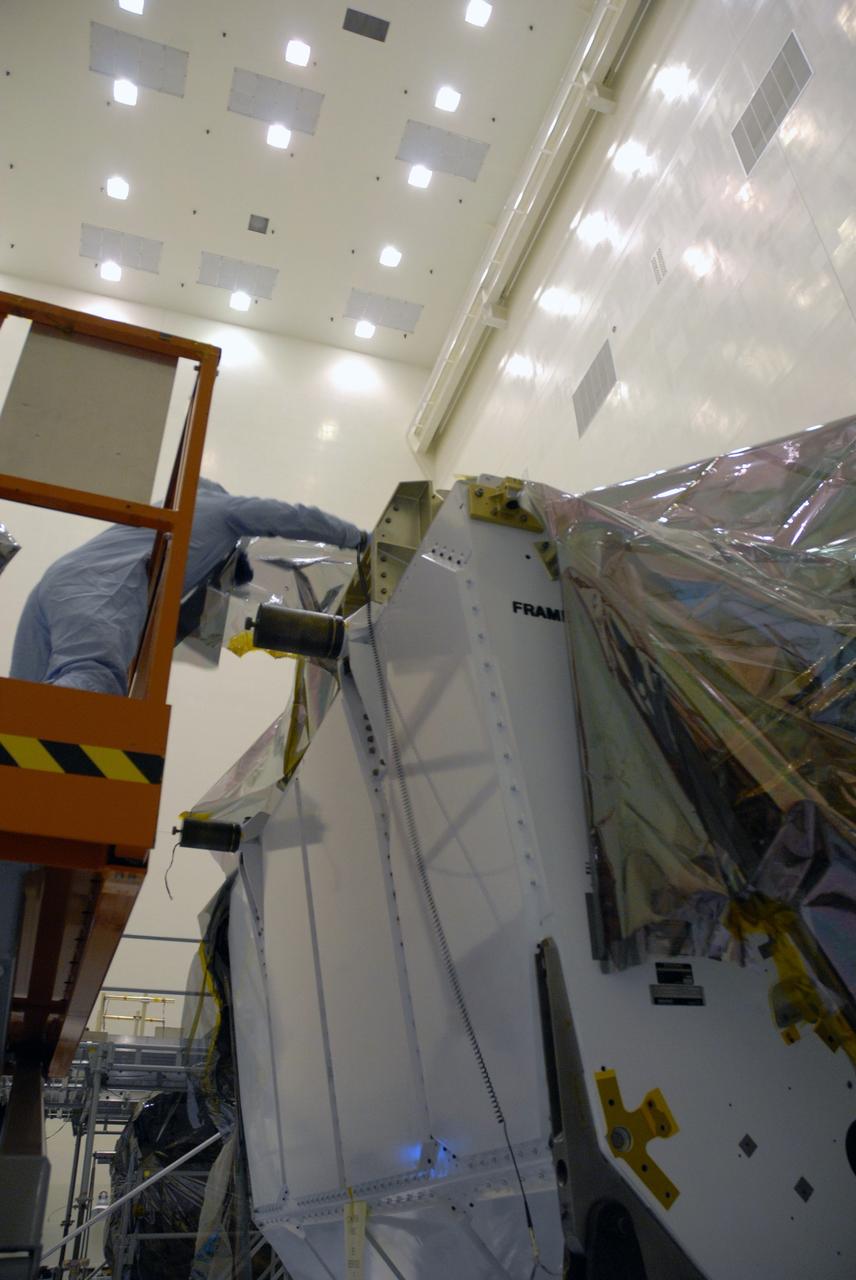
CAPE CANAVERAL, Fla. – In the high bay of the Payload Hazardous Servicing Facility at NASA's Kennedy Space Center, a worker from NASA's Goddard Space Flight Center removes the protective wrapping from the Orbital Replacement Unit Carrier for the Hubble Space Telescope. The Orbital Replacement Unit Carrier, or ORUC, is one of four carriers supporting hardware for space shuttle Atlantis' STS-125 mission to service the telescope. The Super Lightweight Interchangeable Carrier, or SLIC, and the Flight Support System, or FSS, have also arrived at Kennedy. The Multi-Use Lightweight Equipment carrier will be delivered in late July. The carriers will be prepared for the integration of telescope science instruments, both internal and external replacement components, as well as the flight support equipment to be used by the astronauts during the Hubble servicing mission, targeted for launch Oct. 8. Photo credit: NASA/Jack Pfaller
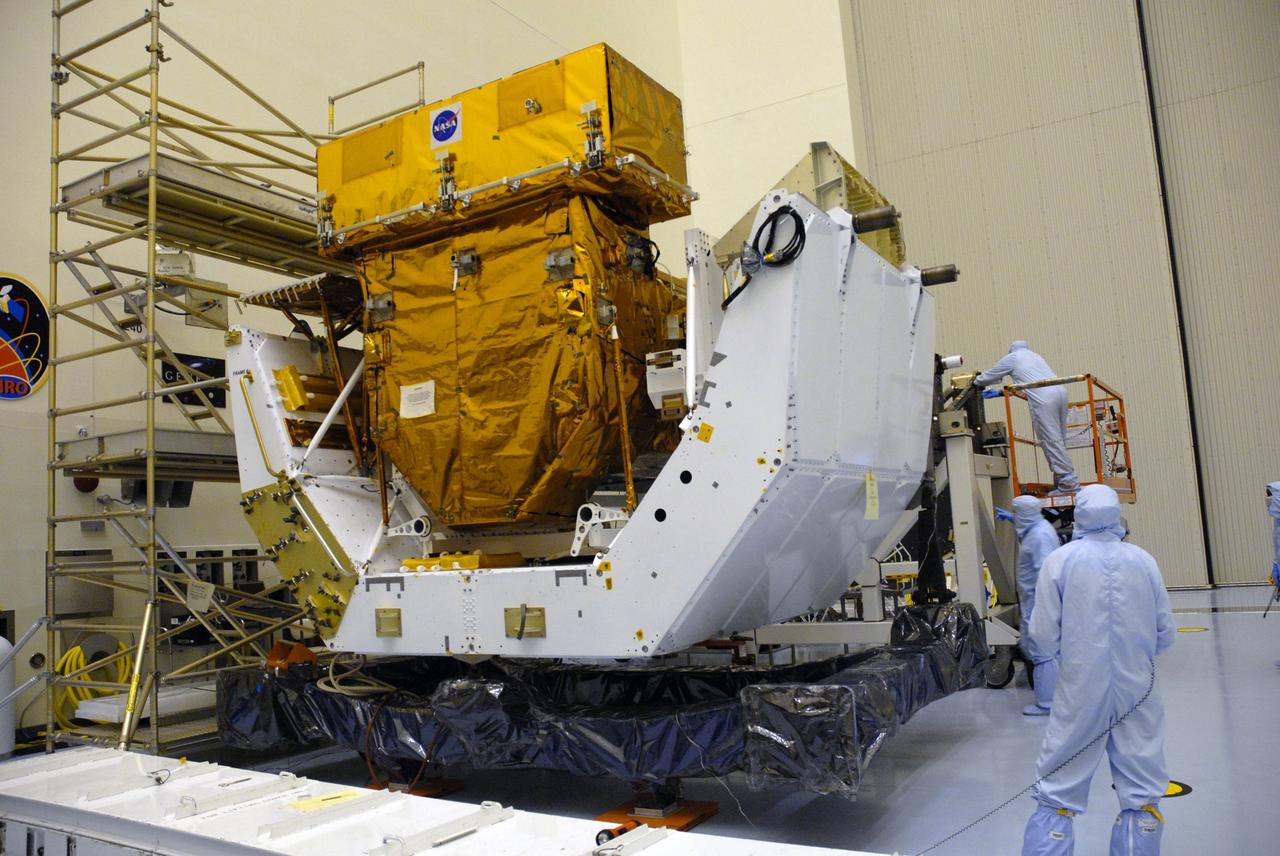
CAPE CANAVERAL, Fla. – In the high bay of the Payload Hazardous Servicing Facility at NASA's Kennedy Space Center, the Orbital Replacement Unit Carrier, for the Hubble Space Telescope is unwrapped and awaits final processing for launch. The Orbital Replacement Unit Carrier, or ORUC, is one of four carriers supporting hardware for space shuttle Atlantis' STS-125 mission to service the telescope. The Super Lightweight Interchangeable Carrier, or SLIC, and the Flight Support System, or FSS, have also arrived at Kennedy. The Multi-Use Lightweight Equipment carrier will be delivered in late July. The carriers will be prepared for the integration of telescope science instruments, both internal and external replacement components, as well as the flight support equipment to be used by the astronauts during the Hubble servicing mission, targeted for launch Oct. 8. Photo credit: NASA/Jack Pfaller
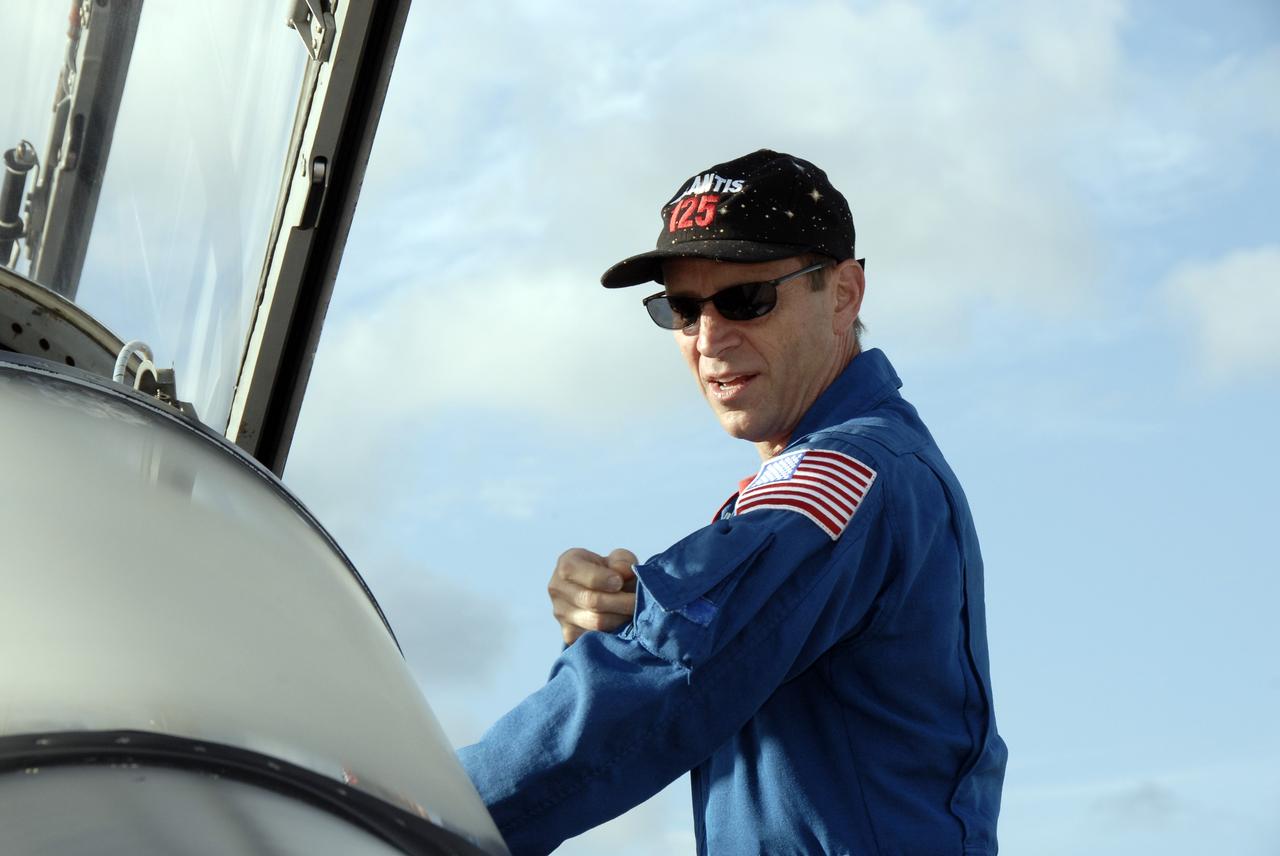
CAPE CANAVERAL, Fla. - STS-125 pilot Gregory C. Johnson arrives at the Shuttle Landing Facility at NASA’s Kennedy Space Center in Florida in a T-38 jet for Terminal Countdown Demonstration Test, or TCDT, activities. During TCDT, space shuttle Atlantis’ STS-125 crew members will participate in a simulated launch countdown, practice emergency egress procedures at the launch pad and continue to familiarize themselves with the mission payload and hardware. STS-125 is the fifth and final shuttle Hubble Space Telescope servicing mission. Launch is targeted for Oct. 10. Photo credit: NASA/Kim Shiflett
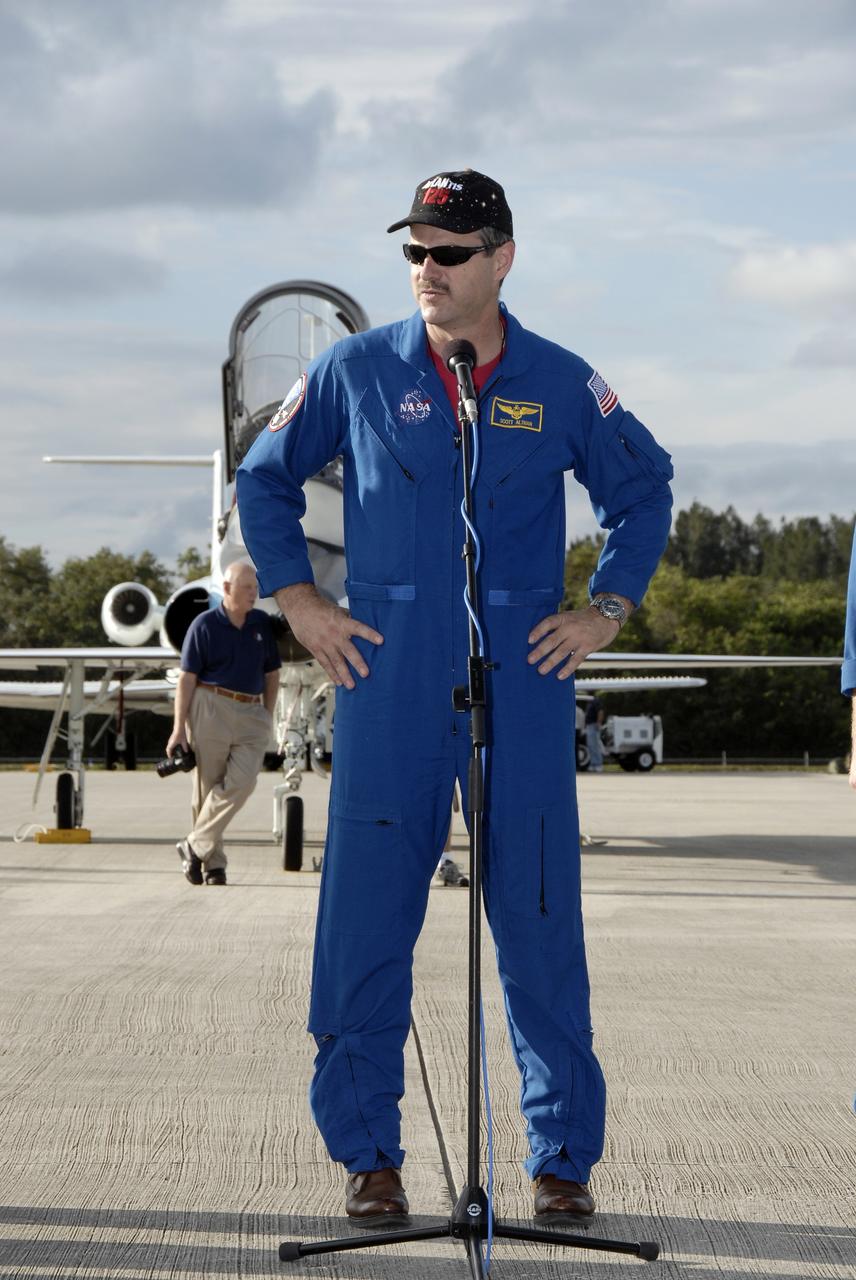
CAPE CANAVERAL, Fla. - STS-125 commander Scott Altman speaks to the media at the Shuttle Landing Facility at NASA’s Kennedy Space Center in Florida. Altman arrived in a T-38 jet for Terminal Countdown Demonstration Test, or TCDT, activities. During TCDT, space shuttle Atlantis’ STS-125 crew members will participate in a simulated launch countdown, practice emergency egress procedures at the launch pad and continue to familiarize themselves with the mission payload and hardware. STS-125 is the fifth and final shuttle Hubble Space Telescope servicing mission. Launch is targeted for Oct. 10. Photo credit: NASA/Kim Shiflett
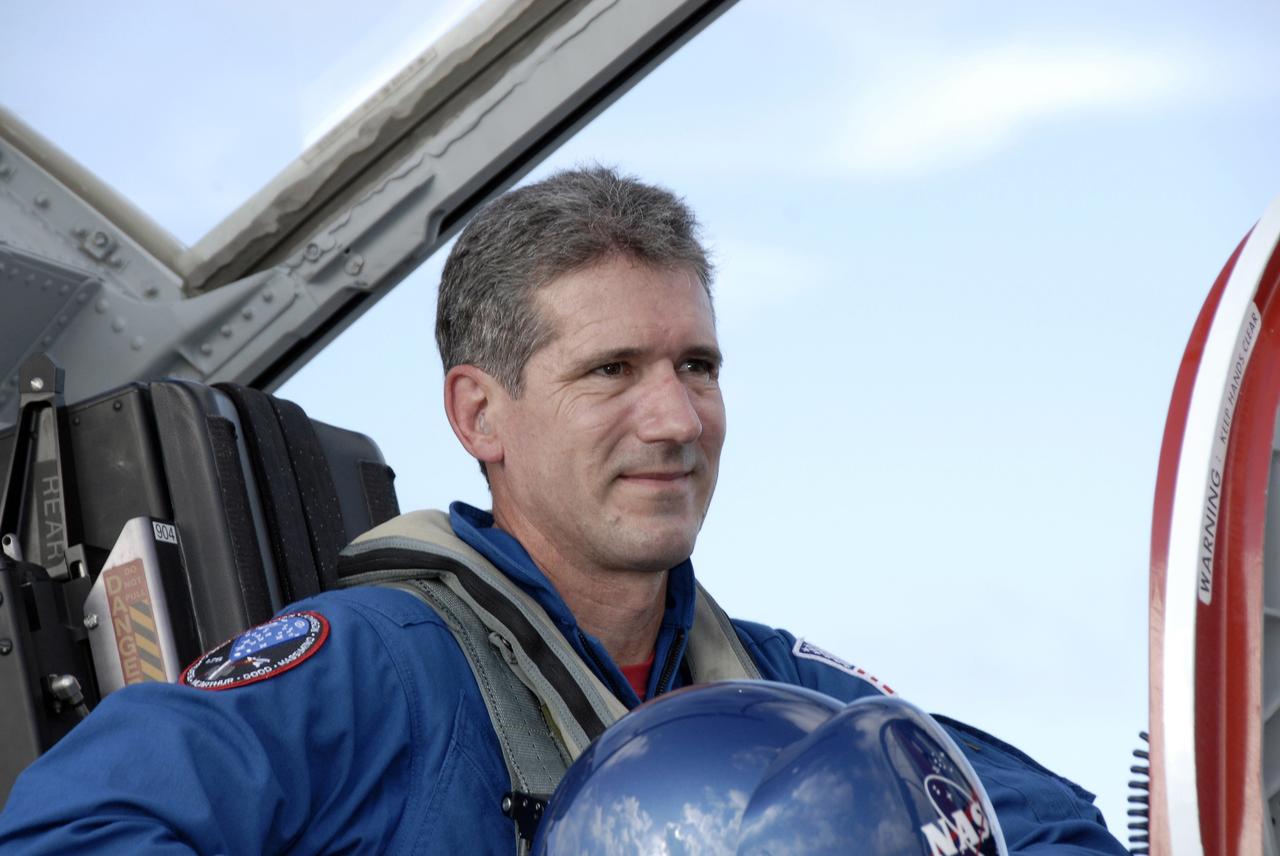
CAPE CANAVERAL, Fla. - STS-125 mission specialist Michael Good arrives at the Shuttle Landing Facility at NASA’s Kennedy Space Center in Florida in a T-38 jet for Terminal Countdown Demonstration Test, or TCDT, activities. During TCDT, space shuttle Atlantis’ STS-125 crew members will participate in a simulated launch countdown, practice emergency egress procedures at the launch pad and continue to familiarize themselves with the mission payload and hardware. STS-125 is the fifth and final shuttle Hubble Space Telescope servicing mission. Launch is targeted for Oct. 10. Photo credit: NASA/Kim Shiflett
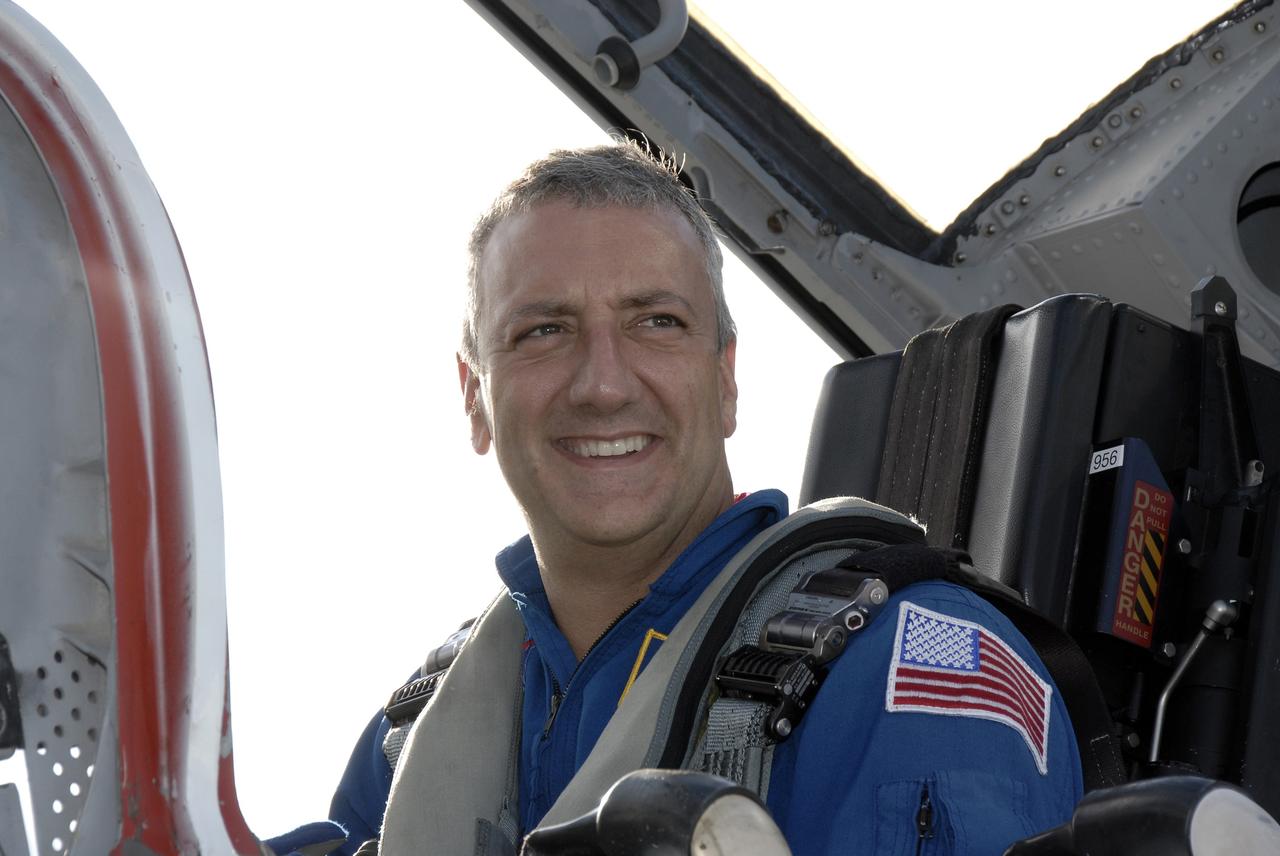
CAPE CANAVERAL, Fla. - STS-125 mission specialist Mike Massimino arrives at the Shuttle Landing Facility at NASA’s Kennedy Space Center in Florida in a T-38 jet for Terminal Countdown Demonstration Test, or TCDT, activities. During TCDT, space shuttle Atlantis’ STS-125 crew members will participate in a simulated launch countdown, practice emergency egress procedures at the launch pad and continue to familiarize themselves with the mission payload and hardware. STS-125 is the fifth and final shuttle Hubble Space Telescope servicing mission. Launch is targeted for Oct. 10. Photo credit: NASA/Kim Shiflett
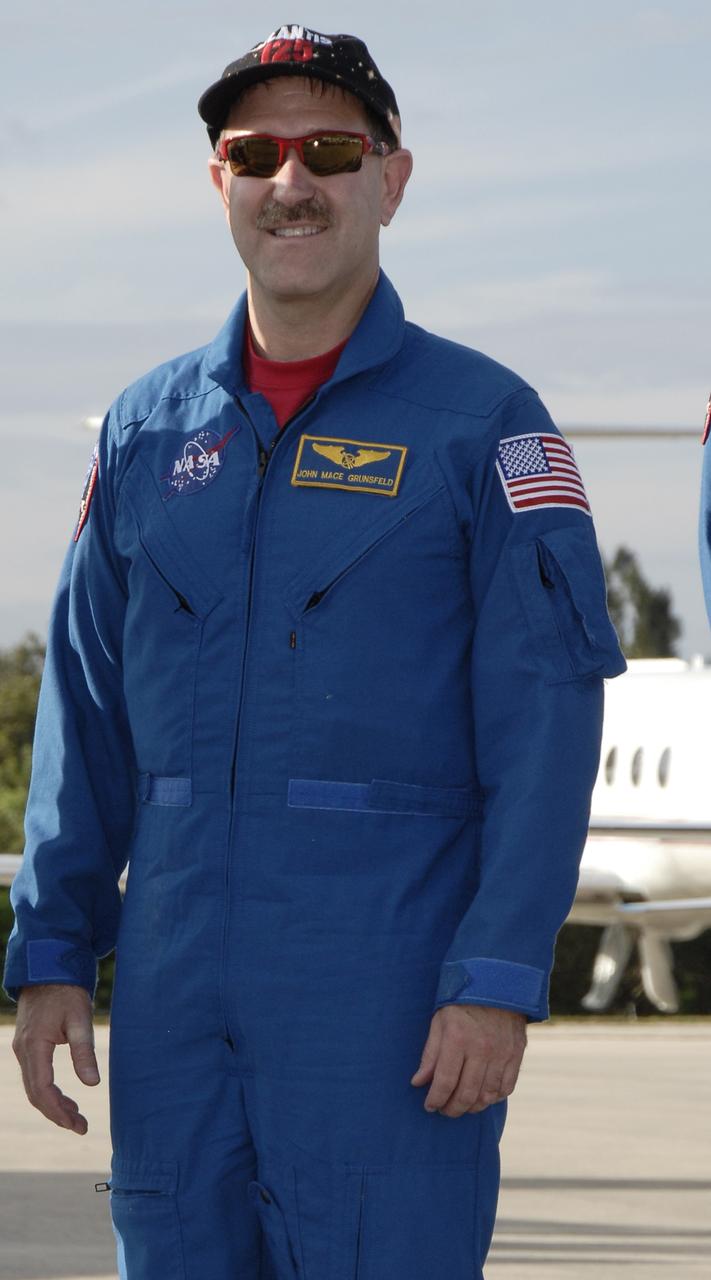
CAPE CANAVERAL, Fla. - STS-125 mission specialist John Grunsfeld prepares to speak to the media at the Shuttle Landing Facility at NASA’s Kennedy Space Center in Florida. Grunsfeld arrived in a T-38 jet for Terminal Countdown Demonstration Test, or TCDT, activities. During TCDT, space shuttle Atlantis’ STS-125 crew members will participate in a simulated launch countdown, practice emergency egress procedures at the launch pad and continue to familiarize themselves with the mission payload and hardware. STS-125 is the fifth and final shuttle Hubble Space Telescope servicing mission. Launch is targeted for Oct. 10. Photo credit: NASA/Kim Shiflett
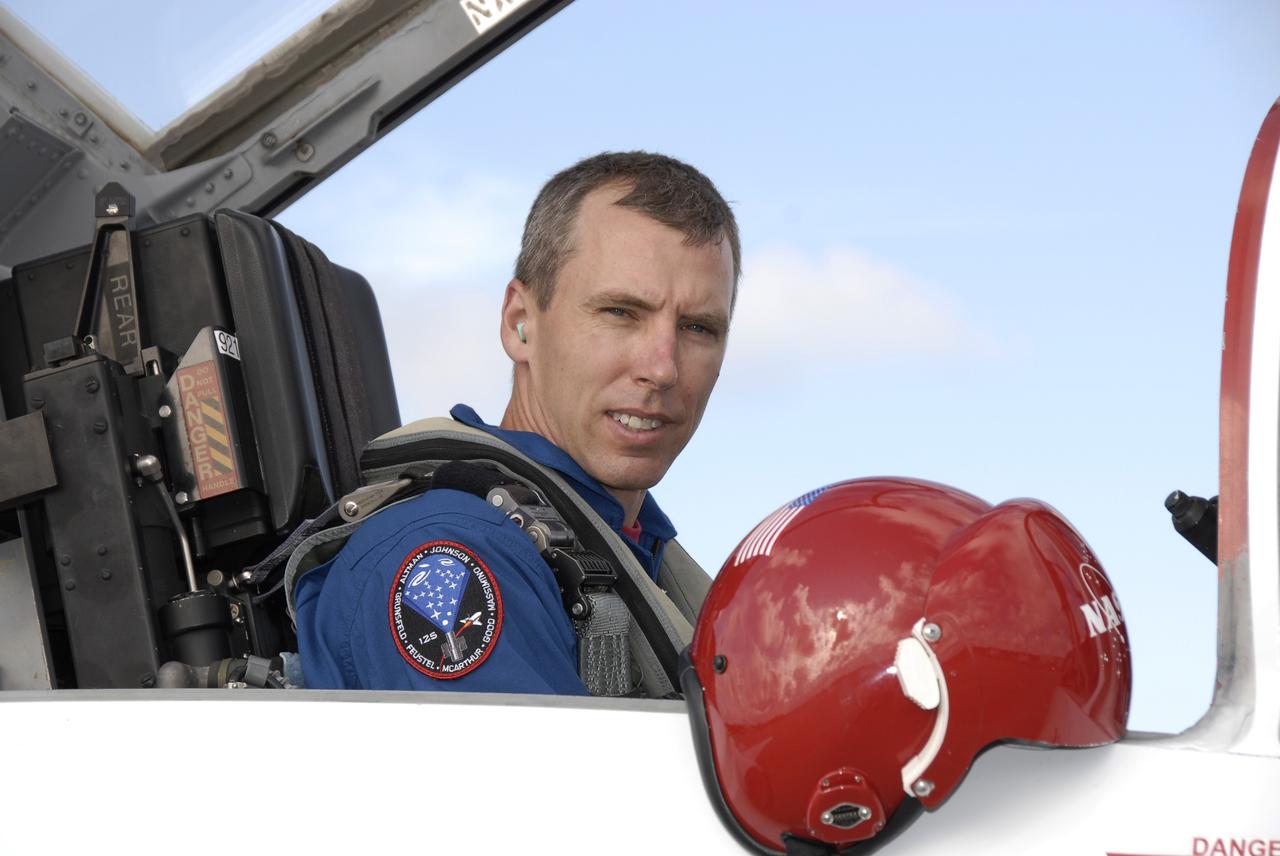
CAPE CANAVERAL, Fla. - STS-125 mission specialist Andrew Feustel arrives at the Shuttle Landing Facility at NASA’s Kennedy Space Center in Florida in a T-38 jet for Terminal Countdown Demonstration Test, or TCDT, activities. During TCDT, space shuttle Atlantis’ STS-125 crew members will participate in a simulated launch countdown, practice emergency egress procedures at the launch pad and continue to familiarize themselves with the mission payload and hardware. STS-125 is the fifth and final shuttle Hubble Space Telescope servicing mission. Launch is targeted for Oct. 10. Photo credit: NASA/Kim Shiflett
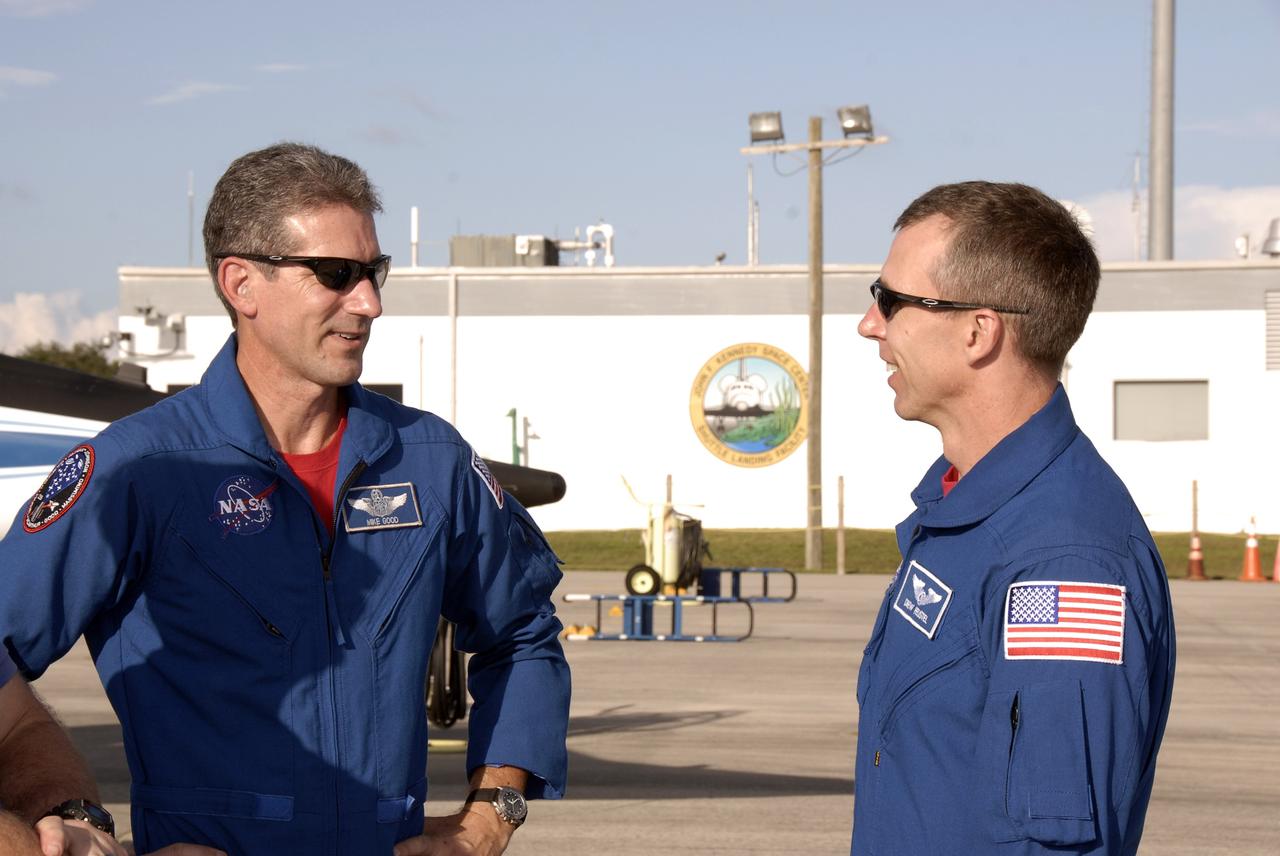
CAPE CANAVERAL, Fla. - STS-125 mission specialists Michael Good (left) and Andrew Feustel greet each other after arriving at the Shuttle Landing Facility at NASA’s Kennedy Space Center in Florida in T-38 jets. They and the other five crew members are at the center for Terminal Countdown Demonstration Test, or TCDT, activities. During TCDT, space shuttle Atlantis’ STS-125 crew members will participate in a simulated launch countdown, practice emergency egress procedures at the launch pad and continue to familiarize themselves with the mission payload and hardware. STS-125 is the fifth and final shuttle Hubble Space Telescope servicing mission. Launch is targeted for Oct. 10. Photo credit: NASA/Kim Shiflett

CAPE CANAVERAL, Fla. - STS-125 mission specialist Megan McArthur arrives at the Shuttle Landing Facility at NASA’s Kennedy Space Center in Florida in a T-38 jet for Terminal Countdown Demonstration Test, or TCDT, activities. During TCDT, space shuttle Atlantis’ STS-125 crew members will participate in a simulated launch countdown, practice emergency egress procedures at the launch pad and continue to familiarize themselves with the mission payload and hardware. STS-125 is the fifth and final shuttle Hubble Space Telescope servicing mission. Launch is targeted for Oct. 10. Photo credit: NASA/Kim Shiflett
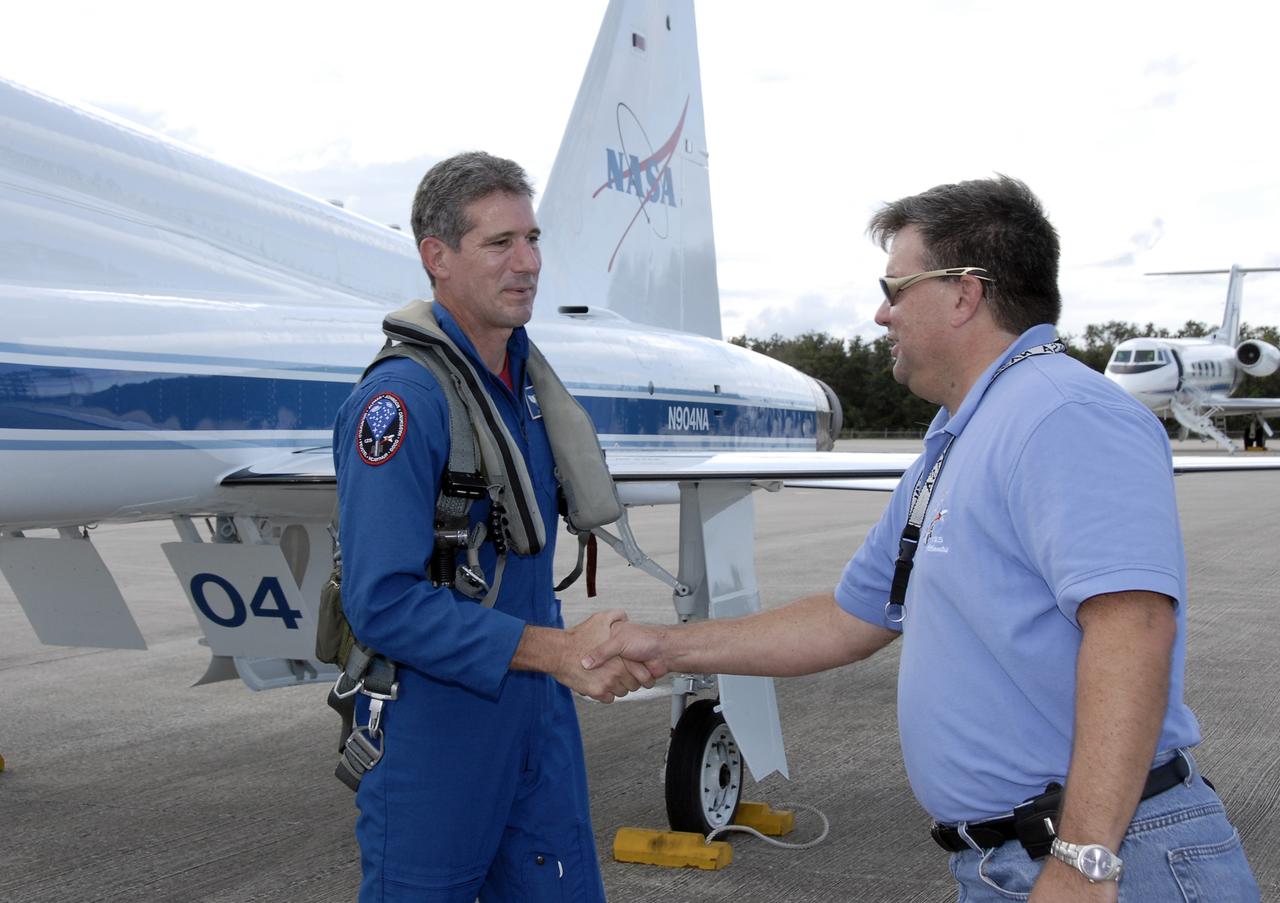
CAPE CANAVERAL, Fla. - STS-125 mission specialist Michael Good greets a worker at the Shuttle Landing Facility at NASA’s Kennedy Space Center in Florida after arriving in a T-38 jet for Terminal Countdown Demonstration Test, or TCDT, activities. During TCDT, space shuttle Atlantis’ STS-125 crew members will participate in a simulated launch countdown, practice emergency egress procedures at the launch pad and continue to familiarize themselves with the mission payload and hardware. STS-125 is the fifth and final shuttle Hubble Space Telescope servicing mission. Launch is targeted for Oct. 10. Photo credit: NASA/Kim Shiflett
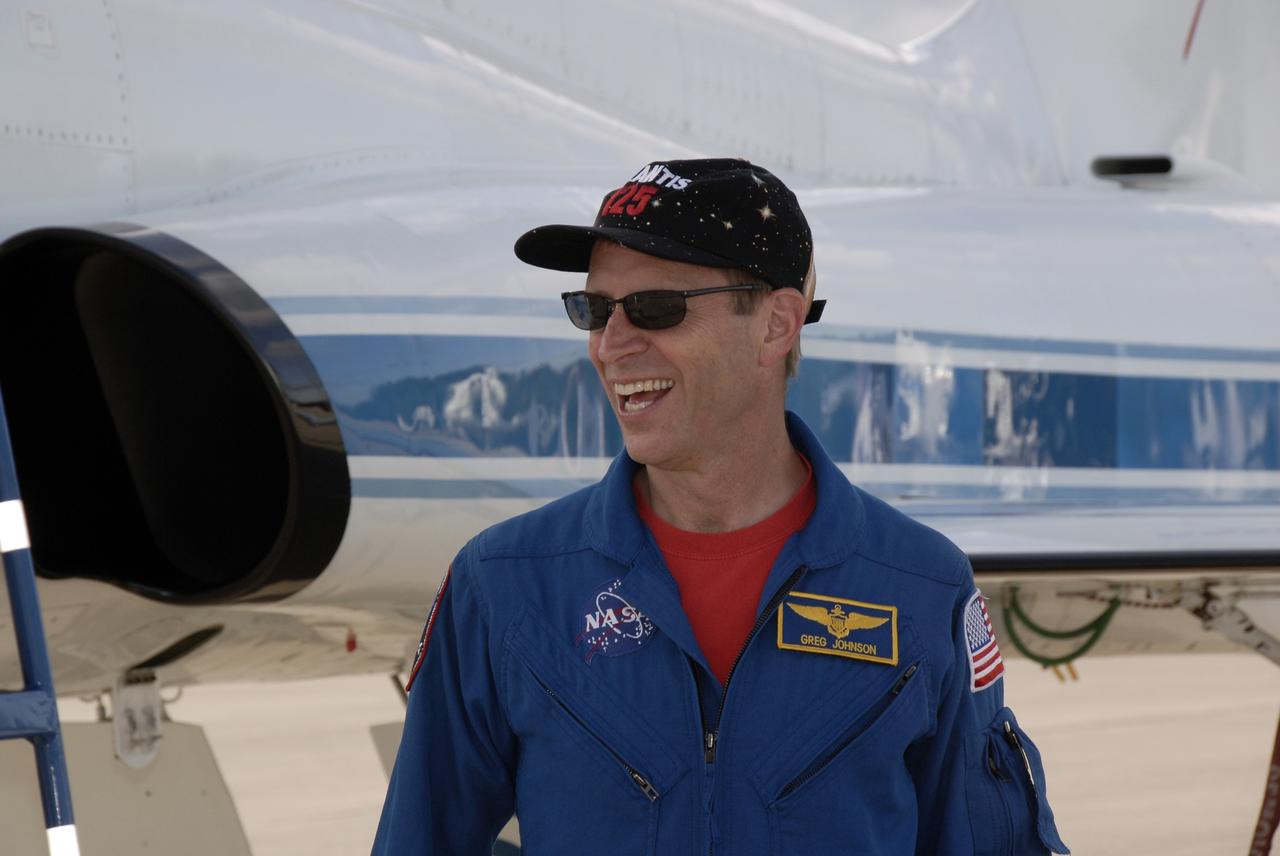
CAPE CANAVERAL, Fla. - STS-125 pilot Gregory C. Johnson arrives at the Shuttle Landing Facility at NASA’s Kennedy Space Center in Florida for Terminal Countdown Demonstration Test, or TCDT, activities. During TCDT, space shuttle Atlantis’ STS-125 crew members will participate in a simulated launch countdown, practice emergency egress procedures at the launch pad and continue to familiarize themselves with the mission payload and hardware. STS-125 is the fifth and final shuttle Hubble Space Telescope servicing mission. Launch is targeted for Oct. 10. Photo credit: NASA/Kim Shiflett
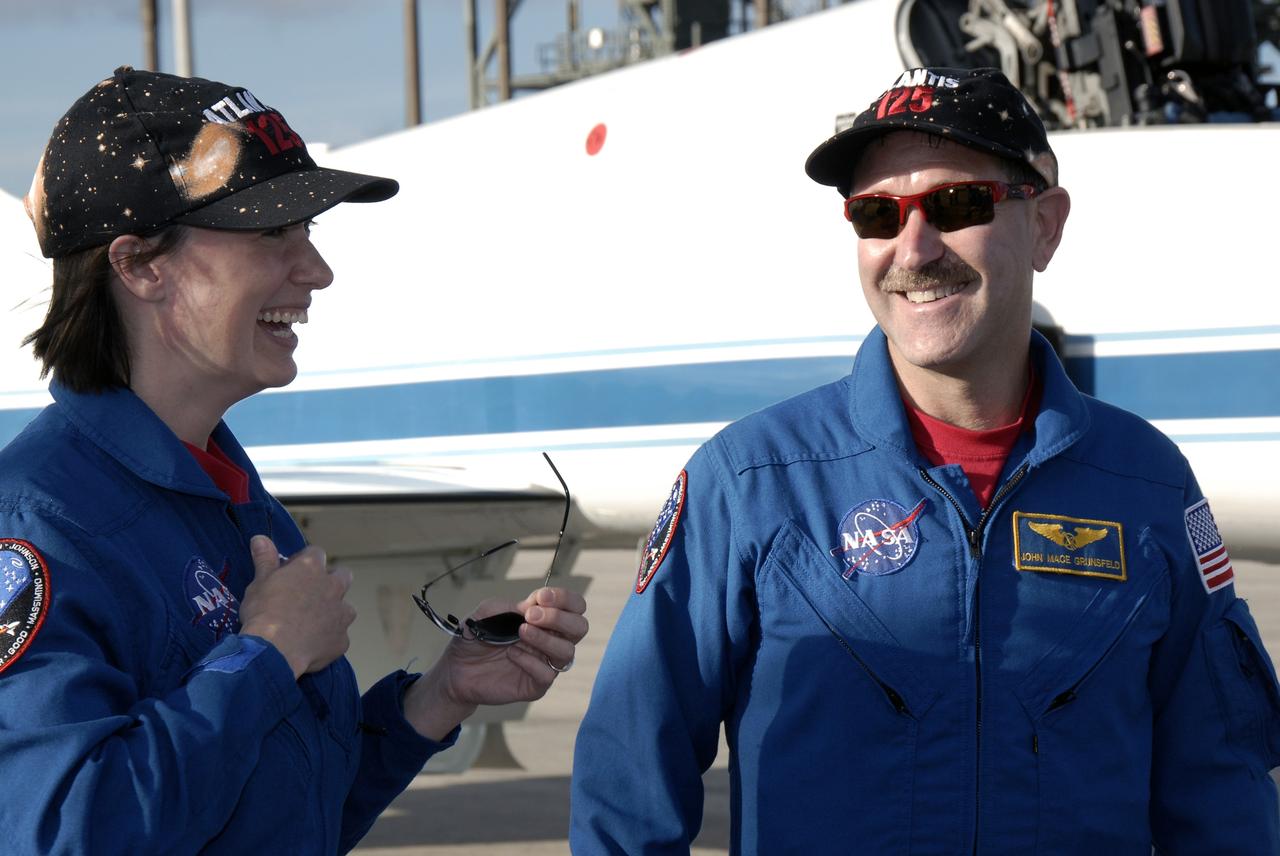
CAPE CANAVERAL, Fla. - STS-125 mission specialist John Grunsfeld arrives at the Shuttle Landing Facility at NASA’s Kennedy Space Center in Florida for Terminal Countdown Demonstration Test, or TCDT, activities. To his left is mission specialist Megan McArthur. During TCDT, space shuttle Atlantis’ STS-125 crew members will participate in a simulated launch countdown, practice emergency egress procedures at the launch pad and continue to familiarize themselves with the mission payload and hardware. STS-125 is the fifth and final shuttle Hubble Space Telescope servicing mission. Launch is targeted for Oct. 10. Photo credit: NASA/Kim Shiflett
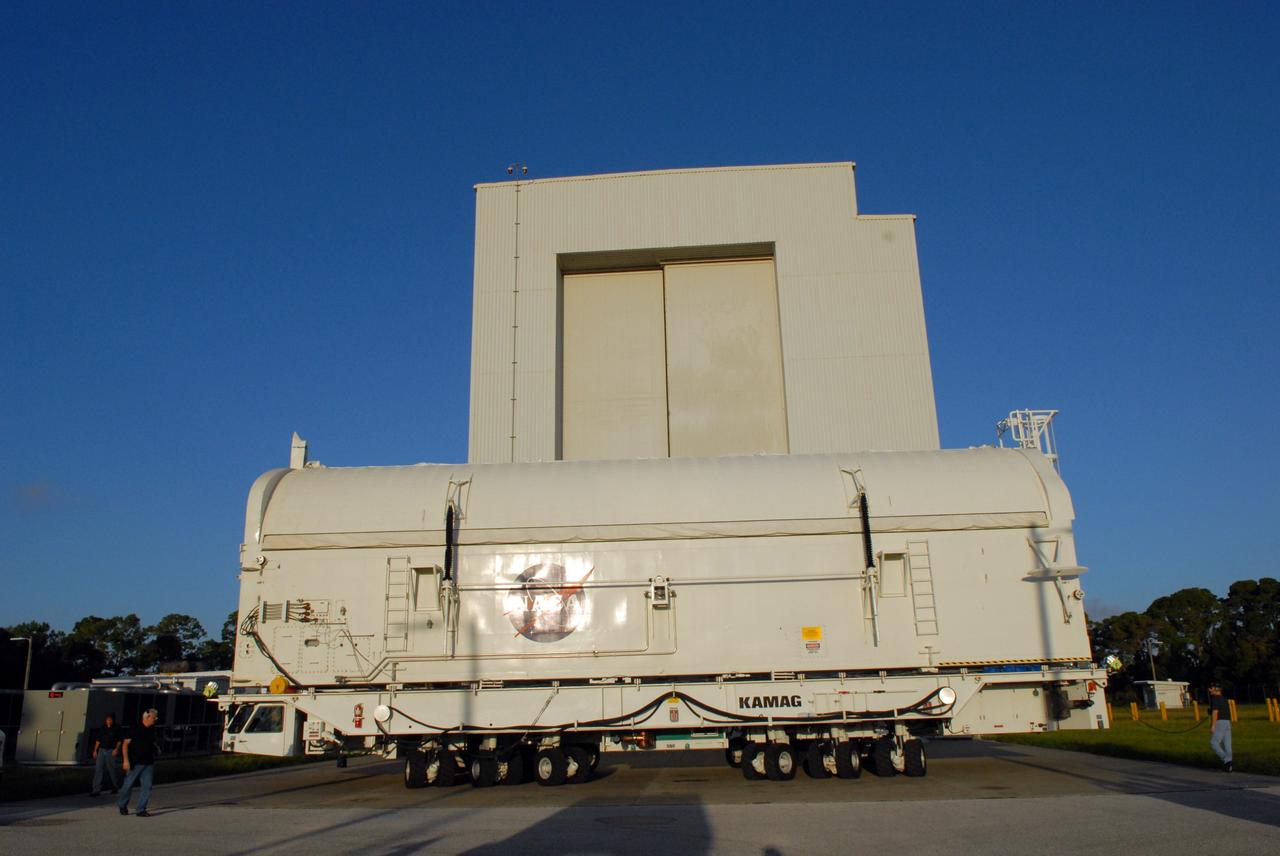
CAPE CANAVERAL, Fla. - The payload canister containing the equipment and hardware for space shuttle Atlantis’ STS-125 mission to the Hubble Space Telescope is moved from the Payload Hazardous Servicing Facility at NASA’s Kennedy Space Center in Florida, to the canister rotation facility. The canister will be transferred to Launch Pad 39A and the payload will be loaded into Atlantis’ payload bay. Launch of Atlantis is targeted for Oct 10. Photo credit: NASA/Jack Pfaller
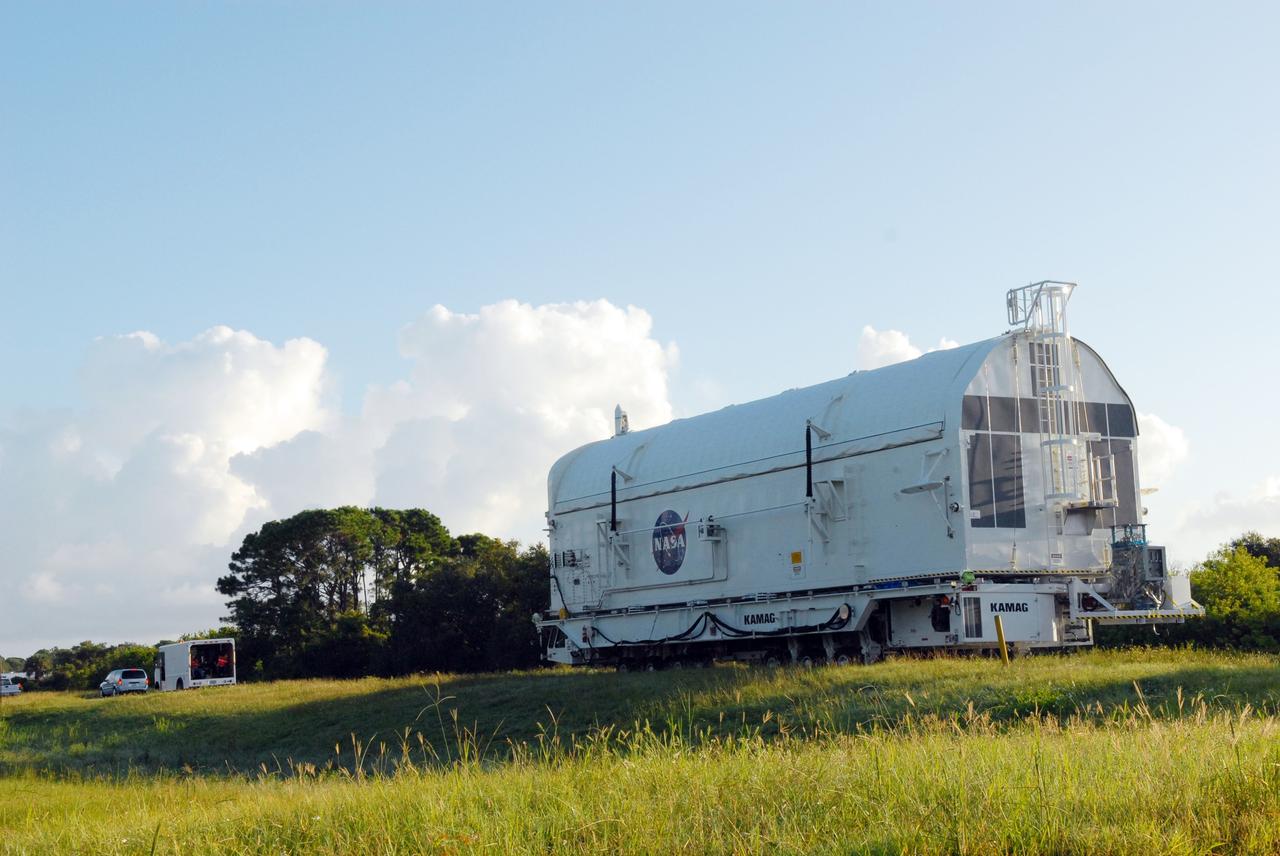
CAPE CANAVERAL, Fla. - The payload canister containing the equipment and hardware for space shuttle Atlantis’ STS-125 mission to the Hubble Space Telescope is moved from the Payload Hazardous Servicing Facility at NASA’s Kennedy Space Center in Florida, to the canister rotation facility. The canister will be transferred to Launch Pad 39A and the payload will be loaded into Atlantis’ payload bay. Launch of Atlantis is targeted for Oct 10. Photo credit: NASA/Jack Pfaller
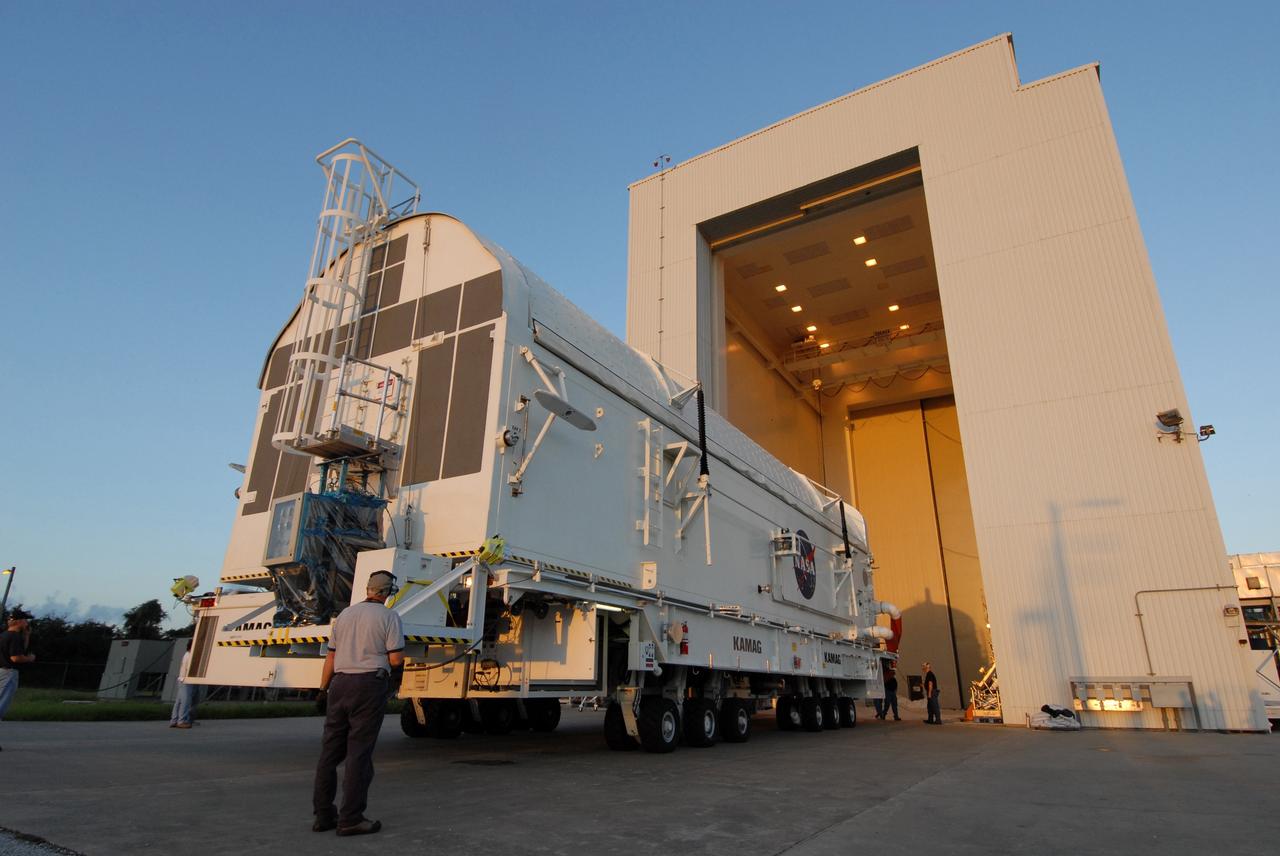
CAPE CANAVERAL, Fla. - The payload canister containing the equipment and hardware for space shuttle Atlantis’ STS-125 mission to the Hubble Space Telescope is moved from the Payload Hazardous Servicing Facility at NASA’s Kennedy Space Center in Florida, to the canister rotation facility. The canister will be transferred to Launch Pad 39A and the payload will be loaded into Atlantis’ payload bay. Launch of Atlantis is targeted for Oct 10. Photo credit: NASA/Jack Pfaller
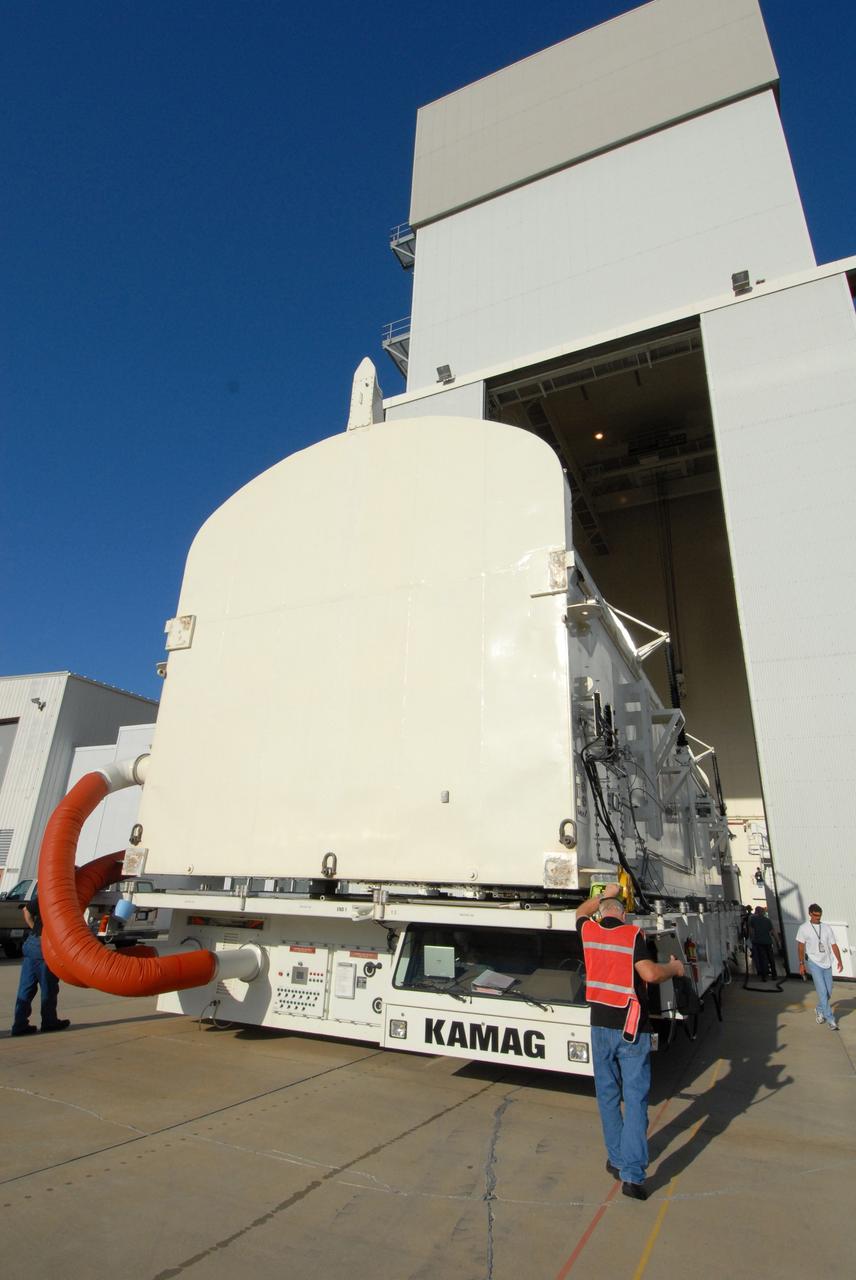
CAPE CANAVERAL, Fla. - The payload canister containing the equipment and hardware for space shuttle Atlantis’ STS-125 mission to the Hubble Space Telescope is moved from the Payload Hazardous Servicing Facility at NASA’s Kennedy Space Center in Florida, to the canister rotation facility. The canister will be transferred to Launch Pad 39A and the payload will be loaded into Atlantis’ payload bay. Launch of Atlantis is targeted for Oct 10. Photo credit: NASA/Jack Pfaller
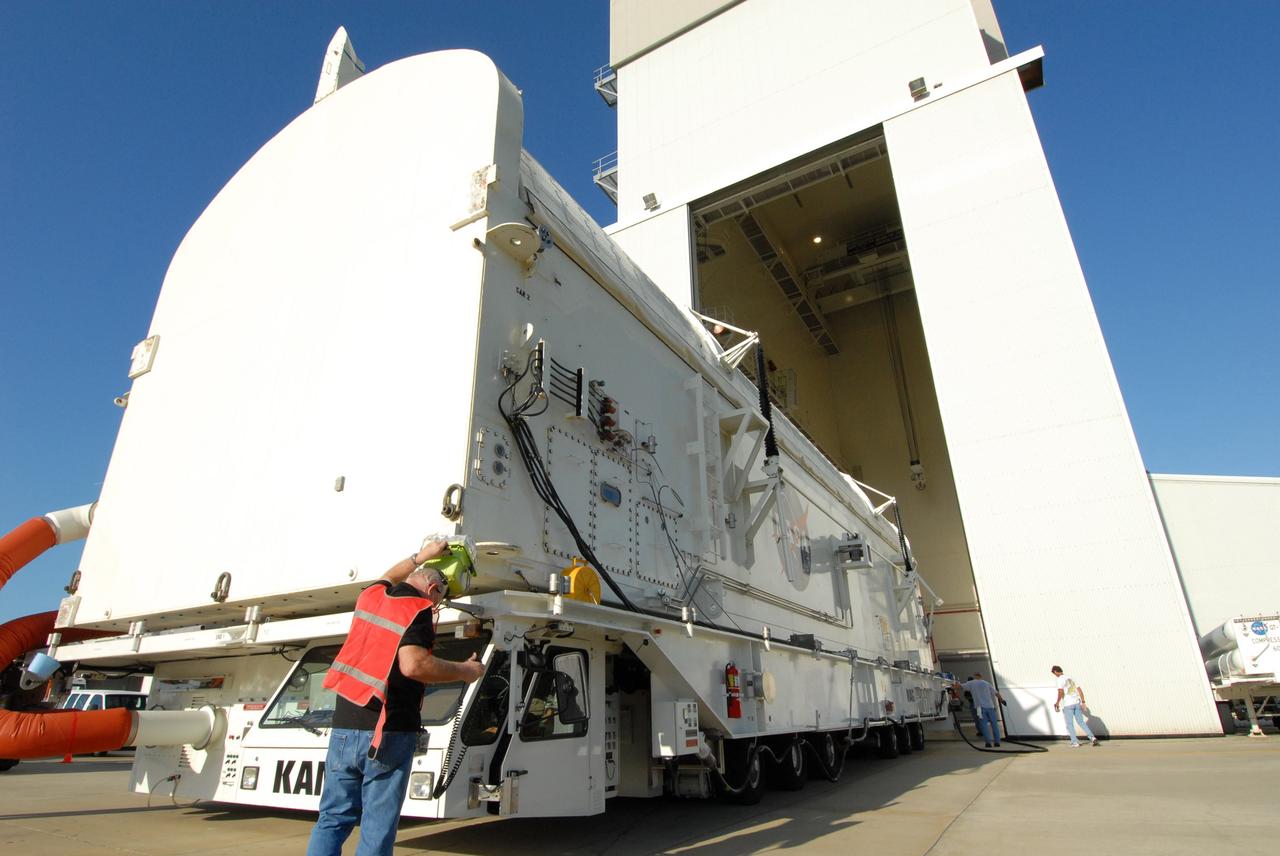
CAPE CANAVERAL, Fla. - The payload canister containing the equipment and hardware for space shuttle Atlantis’ STS-125 mission to the Hubble Space Telescope is moved from the Payload Hazardous Servicing Facility at NASA’s Kennedy Space Center in Florida, to the canister rotation facility. The canister will be transferred to Launch Pad 39A and the payload will be loaded into Atlantis’ payload bay. Launch of Atlantis is targeted for Oct 10. Photo credit: NASA/Jack Pfaller
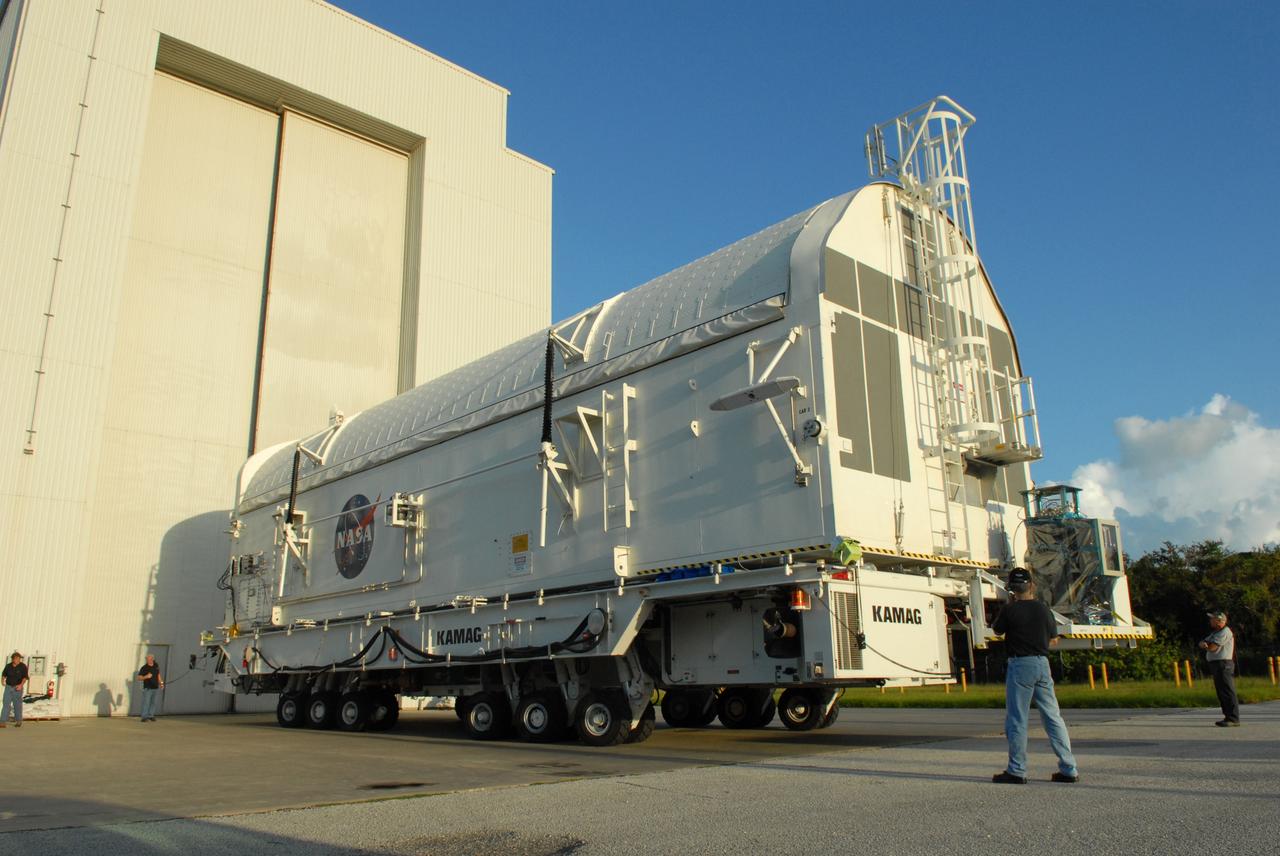
CAPE CANAVERAL, Fla. - The payload canister containing the equipment and hardware for space shuttle Atlantis’ STS-125 mission to the Hubble Space Telescope is moved from the Payload Hazardous Servicing Facility at NASA’s Kennedy Space Center in Florida, to the canister rotation facility. The canister will be transferred to Launch Pad 39A and the payload will be loaded into Atlantis’ payload bay. Launch of Atlantis is targeted for Oct 10. Photo credit: NASA/Jack Pfaller
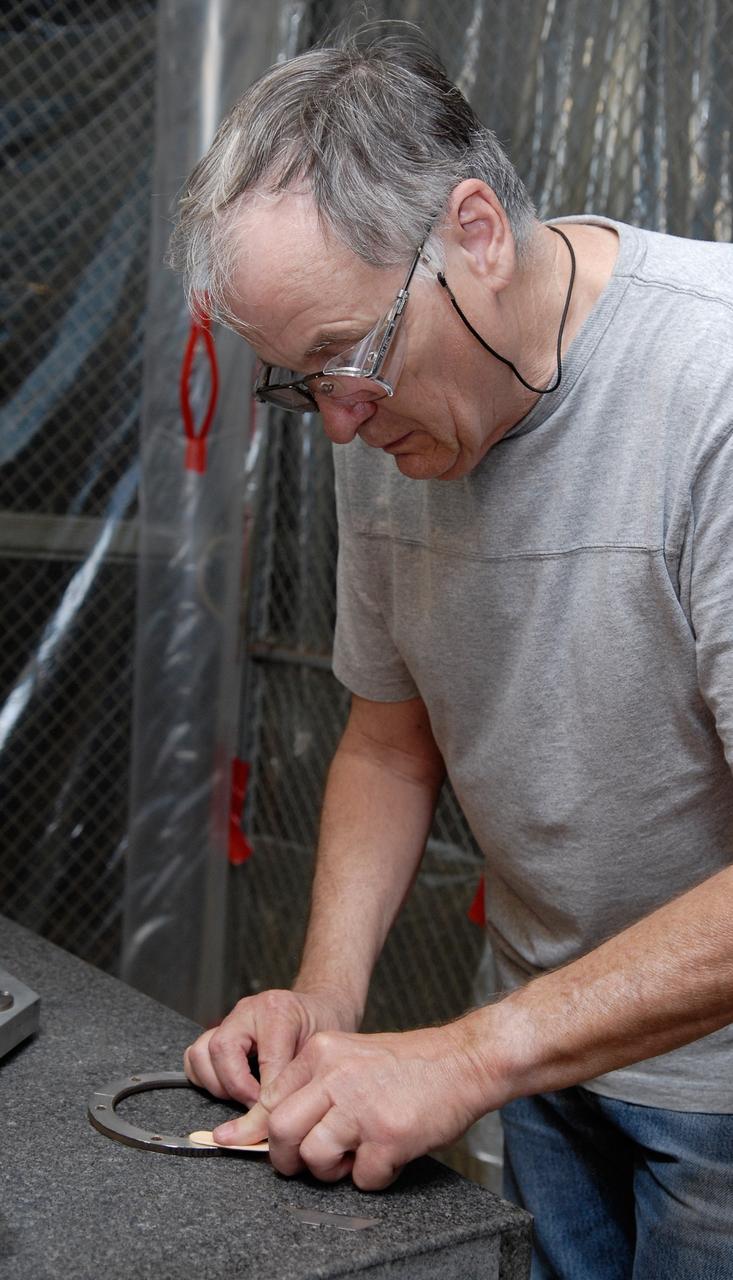
CAPE CANAVERAL, Fla. – Inside the Vehicle Assembly Building at NASA's Kennedy Space Center, a technician prepares to replace a valve on Atlantis’ external tank after small dings were found on the sealing surface of the quick disconnect system that handles liquid-hydrogen fuel for the shuttle’s three main engines. The tank will be attached to the twin solid rocket boosters on Aug. 3 for the STS-125 mission, the fifth and final shuttle servicing mission to NASA’s Hubble Space Telescope. During the mission, the crew will install new instruments on the telescope, including the Cosmic Origins Spectrograph and the Wide Field Camera 3. A refurbished Fine Guidance Sensor will replace one unit of three now onboard. Mission specialists will also install new gyroscopes, batteries and thermal blankets on the telescope. Launch is targeted for Oct. 8. Photo credit: NASA/Kim Shiflett
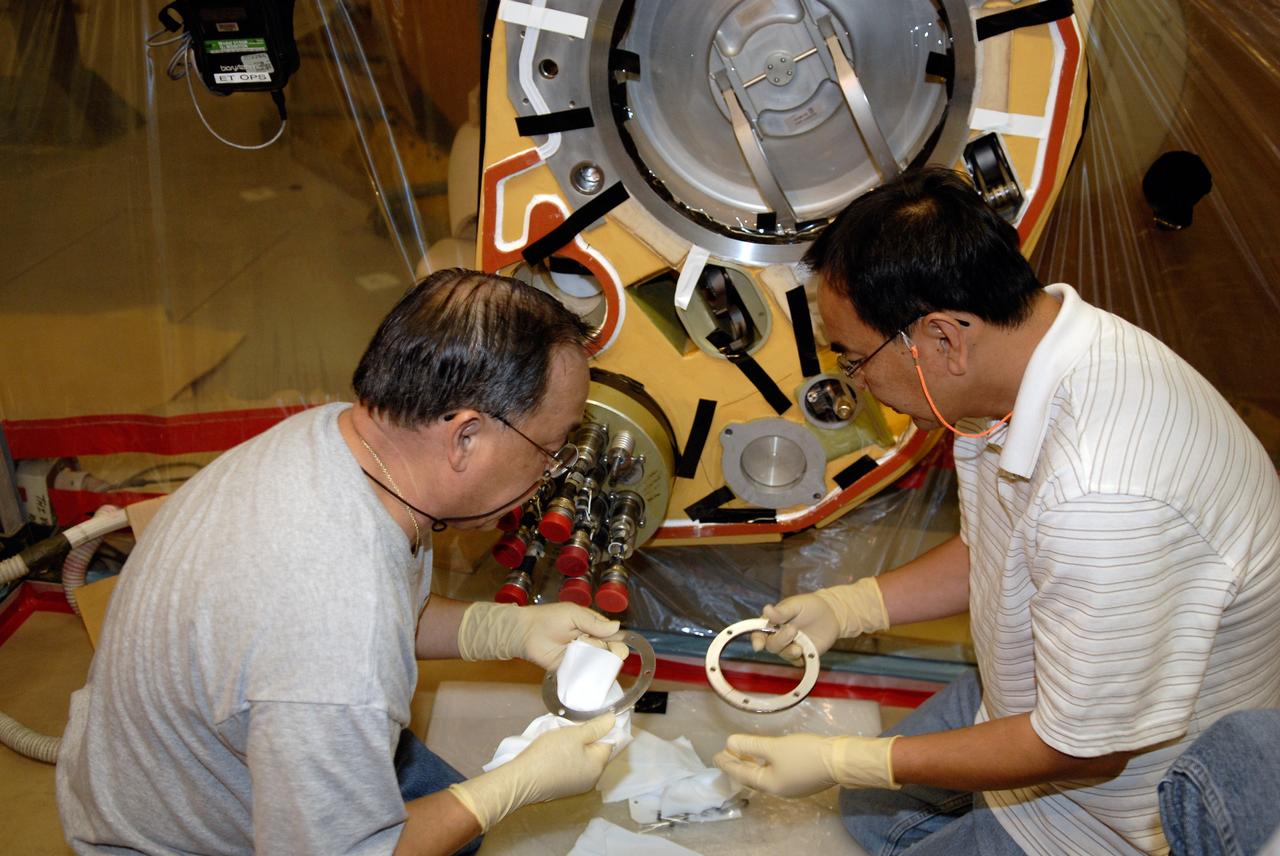
CAPE CANAVERAL, Fla. – Inside the Vehicle Assembly Building at NASA's Kennedy Space Center, technicians replace a valve on Atlantis’ external tank after small dings were found on the sealing surface of the quick disconnect system that handles liquid-hydrogen fuel for the shuttle’s three main engines. The tank will be attached to the twin solid rocket boosters on Aug. 3 for the STS-125 mission, the fifth and final shuttle servicing mission to NASA’s Hubble Space Telescope. During the mission, the crew will install new instruments on the telescope, including the Cosmic Origins Spectrograph and the Wide Field Camera 3. A refurbished Fine Guidance Sensor will replace one unit of three now onboard. Mission specialists will also install new gyroscopes, batteries and thermal blankets on the telescope. Launch is targeted for Oct. 8. Photo credit: NASA/Kim Shiflett
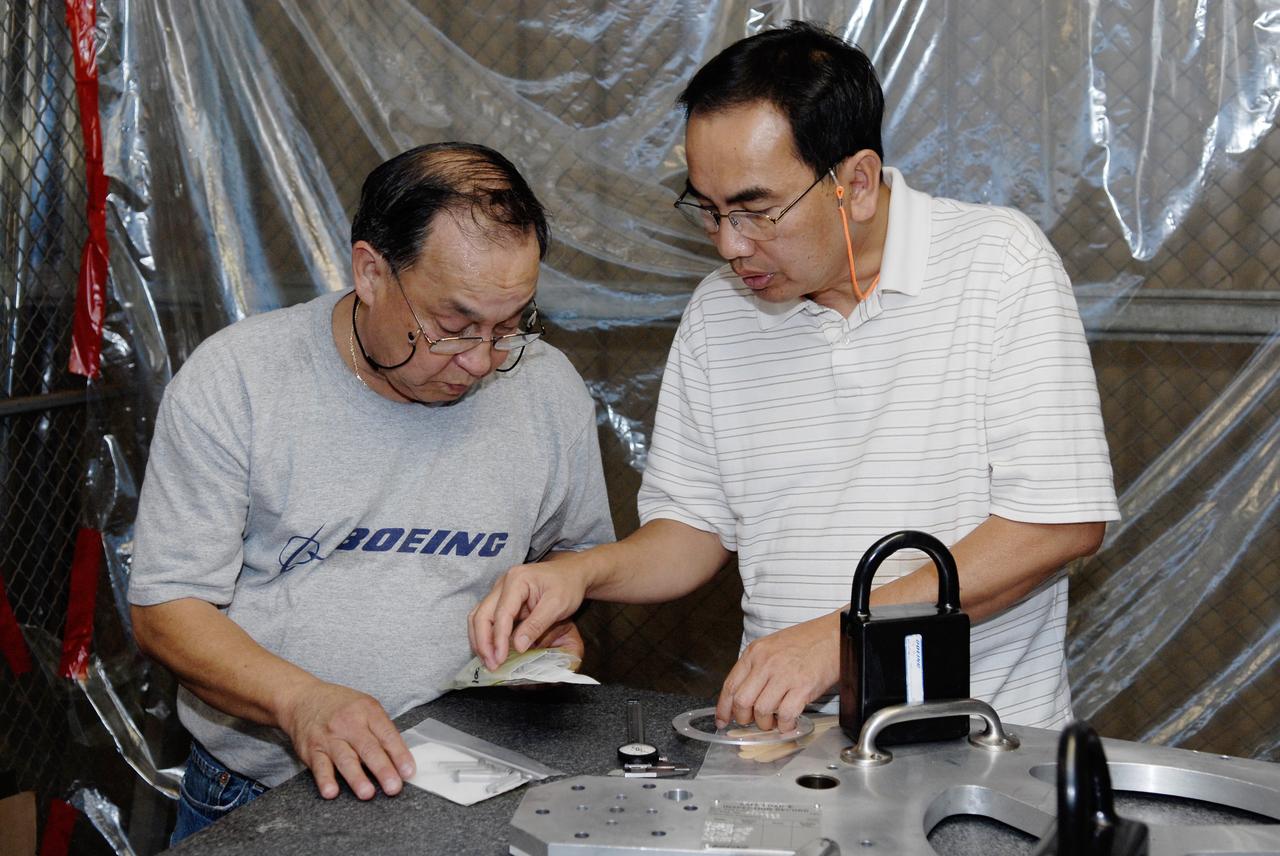
CAPE CANAVERAL, Fla. – Inside the Vehicle Assembly Building at NASA's Kennedy Space Center, technicians prepare to replace a valve on Atlantis’ external tank after small dings were found on the sealing surface of the quick disconnect system that handles liquid-hydrogen fuel for the shuttle’s three main engines. The tank will be attached to the twin solid rocket boosters on Aug. 3 for the STS-125 mission, the fifth and final shuttle servicing mission to NASA’s Hubble Space Telescope. During the mission, the crew will install new instruments on the telescope, including the Cosmic Origins Spectrograph and the Wide Field Camera 3. A refurbished Fine Guidance Sensor will replace one unit of three now onboard. Mission specialists will also install new gyroscopes, batteries and thermal blankets on the telescope. Launch is targeted for Oct. 8. Photo credit: NASA/Kim Shiflett
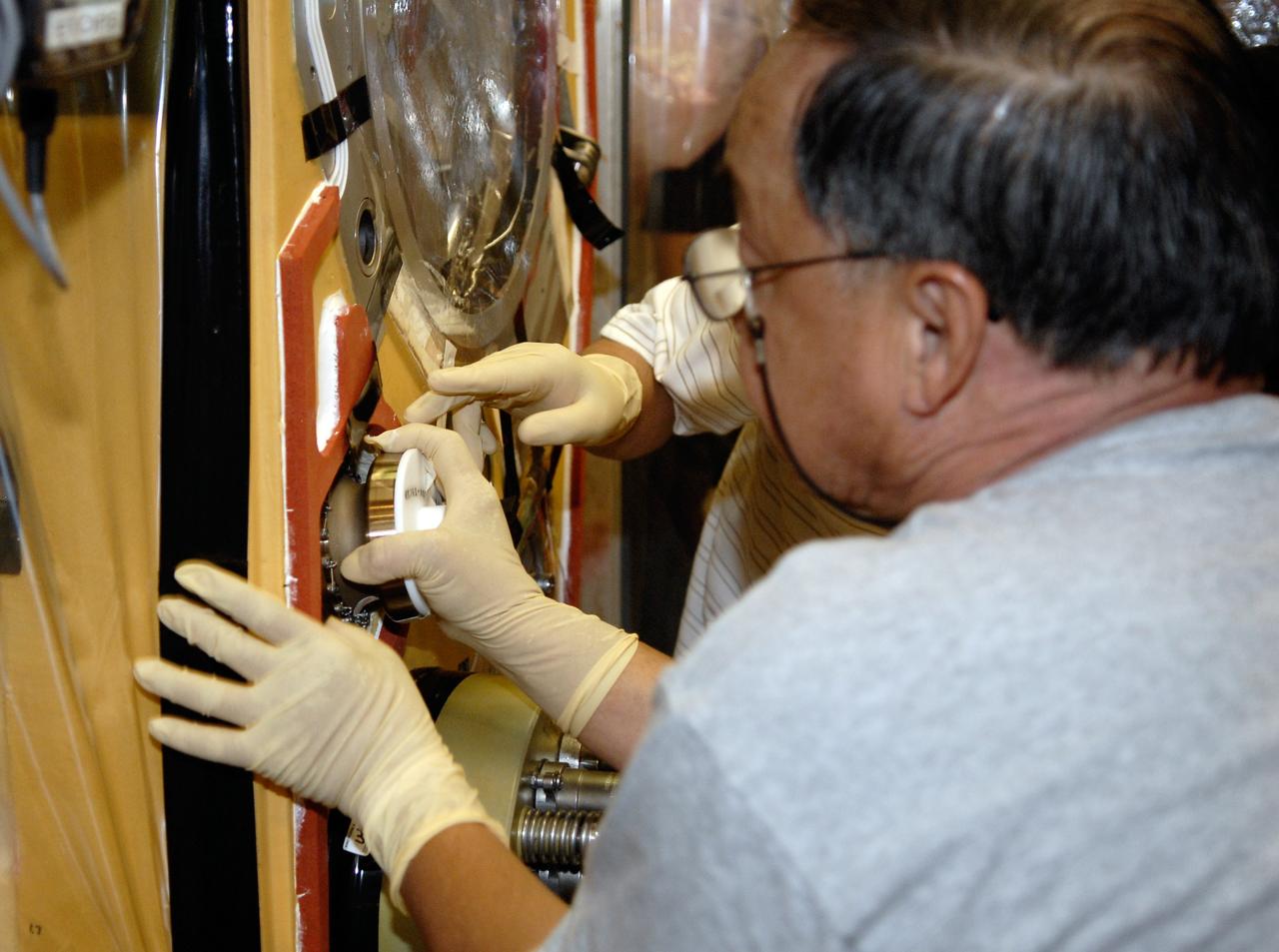
CAPE CANAVERAL, Fla. – Inside the Vehicle Assembly Building at NASA's Kennedy Space Center, technicians replace a valve on Atlantis’ external tank after small dings were found on the sealing surface of the quick disconnect system that handles liquid-hydrogen fuel for the shuttle’s three main engines. The tank will be attached to the twin solid rocket boosters on Aug. 3 for the STS-125 mission, the fifth and final shuttle servicing mission to NASA’s Hubble Space Telescope. During the mission, the crew will install new instruments on the telescope, including the Cosmic Origins Spectrograph and the Wide Field Camera 3. A refurbished Fine Guidance Sensor will replace one unit of three now onboard. Mission specialists will also install new gyroscopes, batteries and thermal blankets on the telescope. Launch is targeted for Oct. 8. Photo credit: NASA/Kim Shiflett
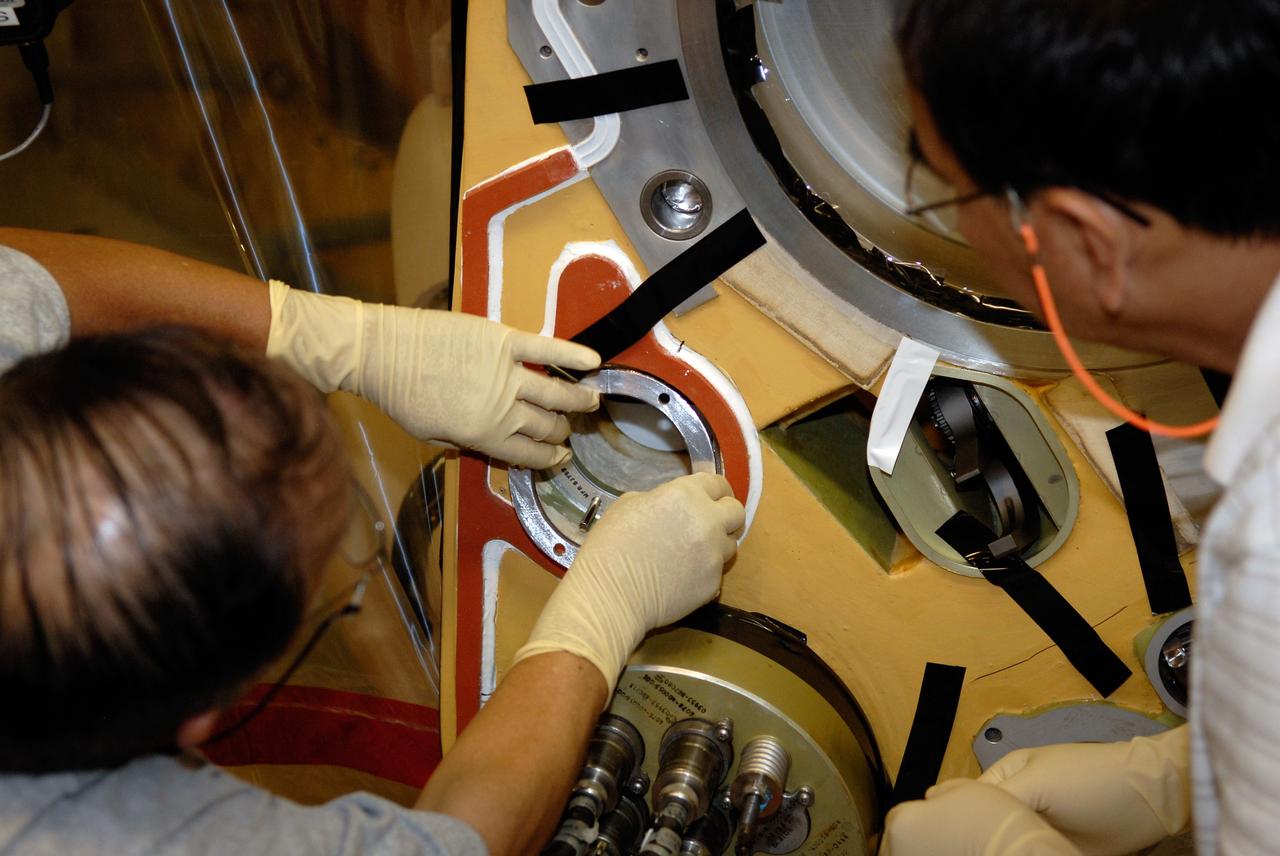
CAPE CANAVERAL, Fla. – Inside the Vehicle Assembly Building at NASA's Kennedy Space Center, technicians replace a valve on Atlantis’ external tank after small dings were found on the sealing surface of the quick disconnect system that handles liquid-hydrogen fuel for the shuttle’s three main engines. The tank will be attached to the twin solid rocket boosters on Aug. 3 for the STS-125 mission, the fifth and final shuttle servicing mission to NASA’s Hubble Space Telescope. During the mission, the crew will install new instruments on the telescope, including the Cosmic Origins Spectrograph and the Wide Field Camera 3. A refurbished Fine Guidance Sensor will replace one unit of three now onboard. Mission specialists will also install new gyroscopes, batteries and thermal blankets on the telescope. Launch is targeted for Oct. 8. Photo credit: NASA/Kim Shiflett
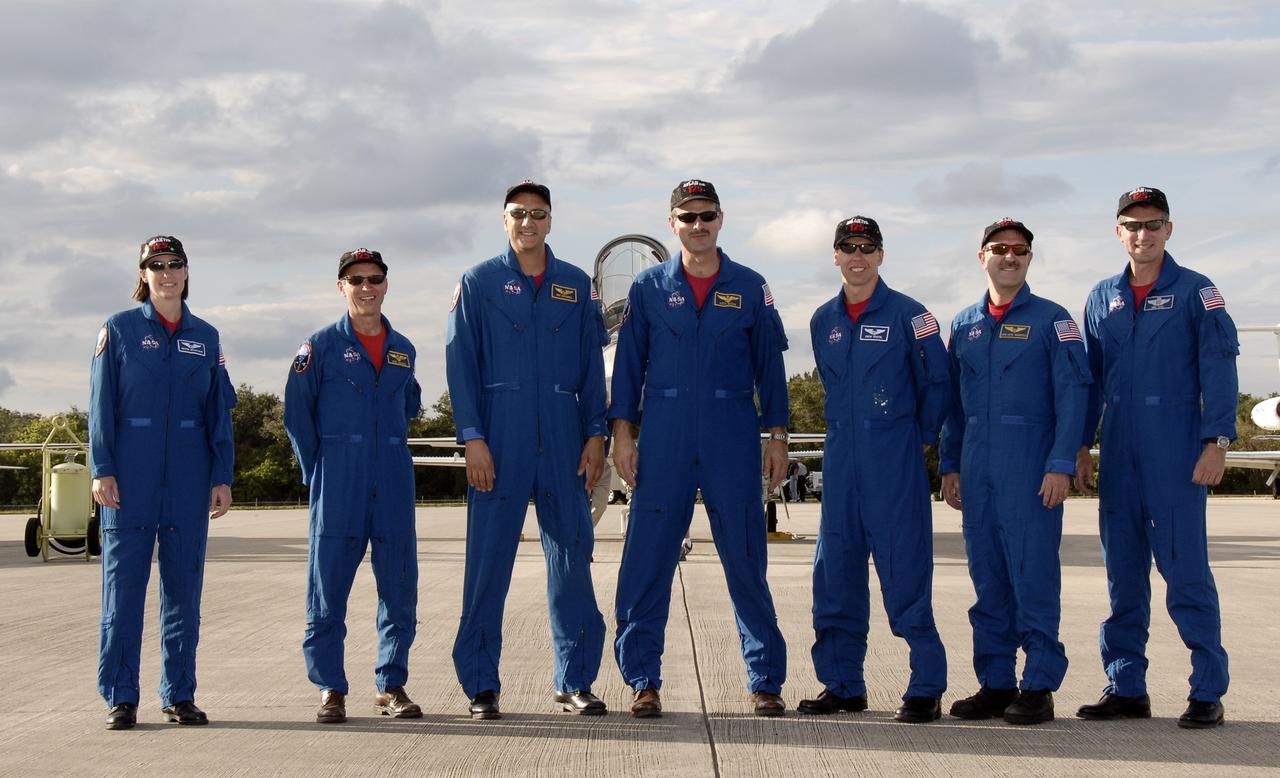
CAPE CANAVERAL, Fla. - The STS-125 crew members prepare to speak to the media at the Shuttle Landing Facility at NASA’s Kennedy Space Center in Florida after arriving in T-38 jets for Terminal Countdown Demonstration Test, or TCDT, activities. From left are, mission specialist Megan McArthur, pilot Gregory C. Johnson, mission specialist Mike Massimino, commander Scott Altman, and mission specialists Andrew Feustel, John Grunsfeld and Michael Good. During TCDT, space shuttle Atlantis’ STS-125 crew members will participate in a simulated launch countdown, practice emergency egress procedures at the launch pad and continue to familiarize themselves with the mission payload and hardware. STS-125 is the fifth and final shuttle Hubble Space Telescope servicing mission. Launch is targeted for Oct. 10. Photo credit: NASA/Kim Shiflett
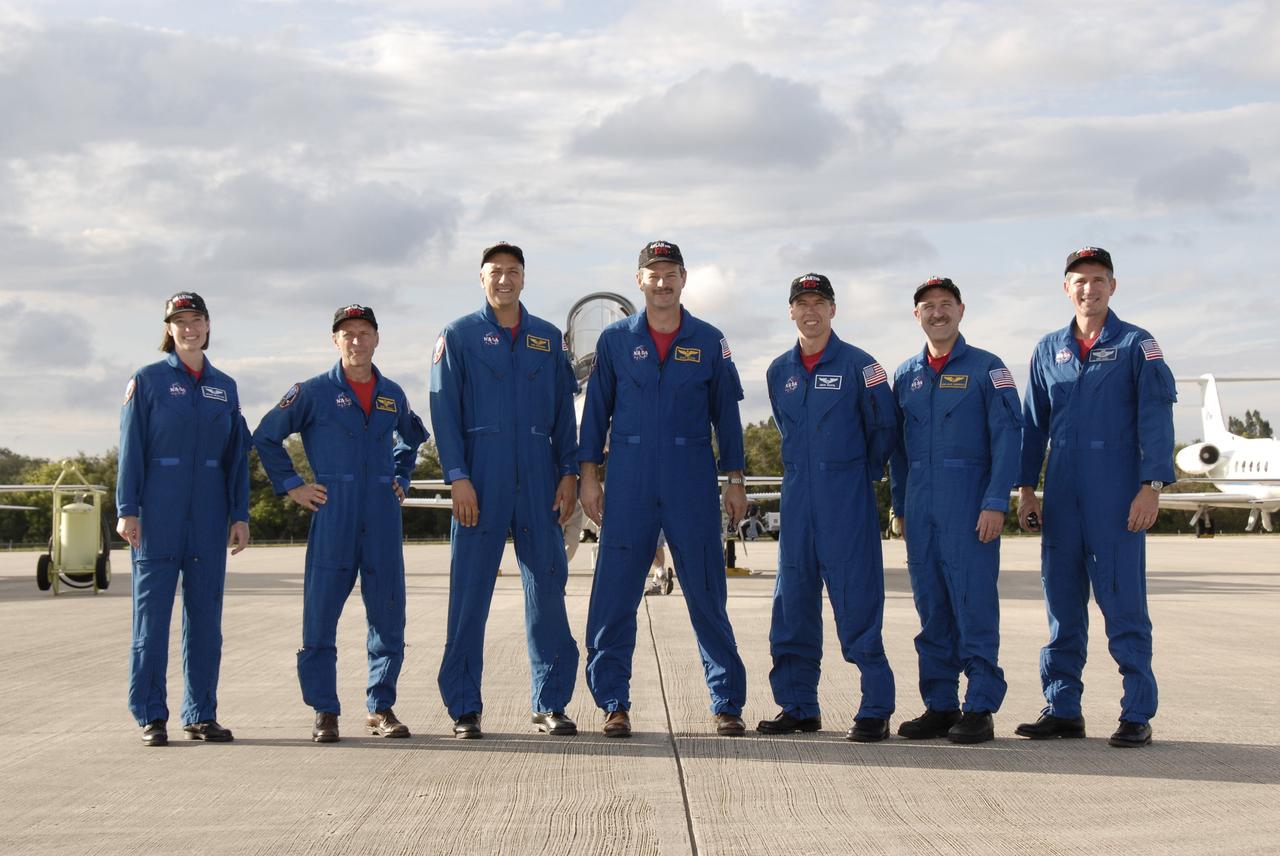
CAPE CANAVERAL, Fla. - The STS-125 crew members prepare to speak to the media at the Shuttle Landing Facility at NASA’s Kennedy Space Center in Florida after arriving in T-38 jets for Terminal Countdown Demonstration Test, or TCDT, activities. From left are, mission specialist Megan McArthur, pilot Gregory C. Johnson, mission specialist Mike Massimino, commander Scott Altman, and mission specialists Andrew Feustel, John Grunsfeld and Michael Good. During TCDT, space shuttle Atlantis’ STS-125 crew members will participate in a simulated launch countdown, practice emergency egress procedures at the launch pad and continue to familiarize themselves with the mission payload and hardware. STS-125 is the fifth and final shuttle Hubble Space Telescope servicing mission. Launch is targeted for Oct. 10. Photo credit: NASA/Kim Shiflett
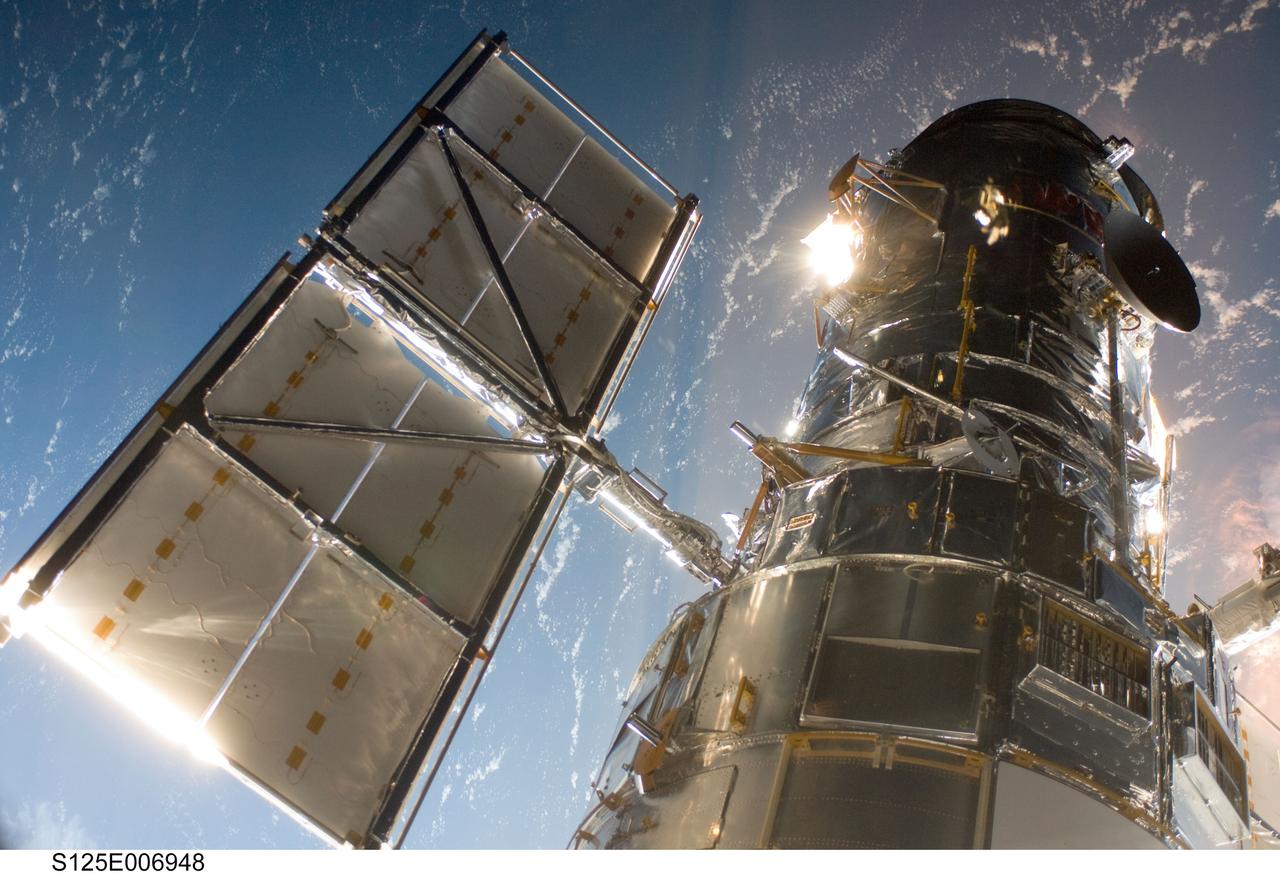
S125e006948 (13 May 2009) --- An STS-125 crewmember onboard the Space Shuttle Atlantis snapped a still photo of the Hubble Space Telescope following grapple of the giant observatory by the shuttle?s Canadian-built remote manipulator system.
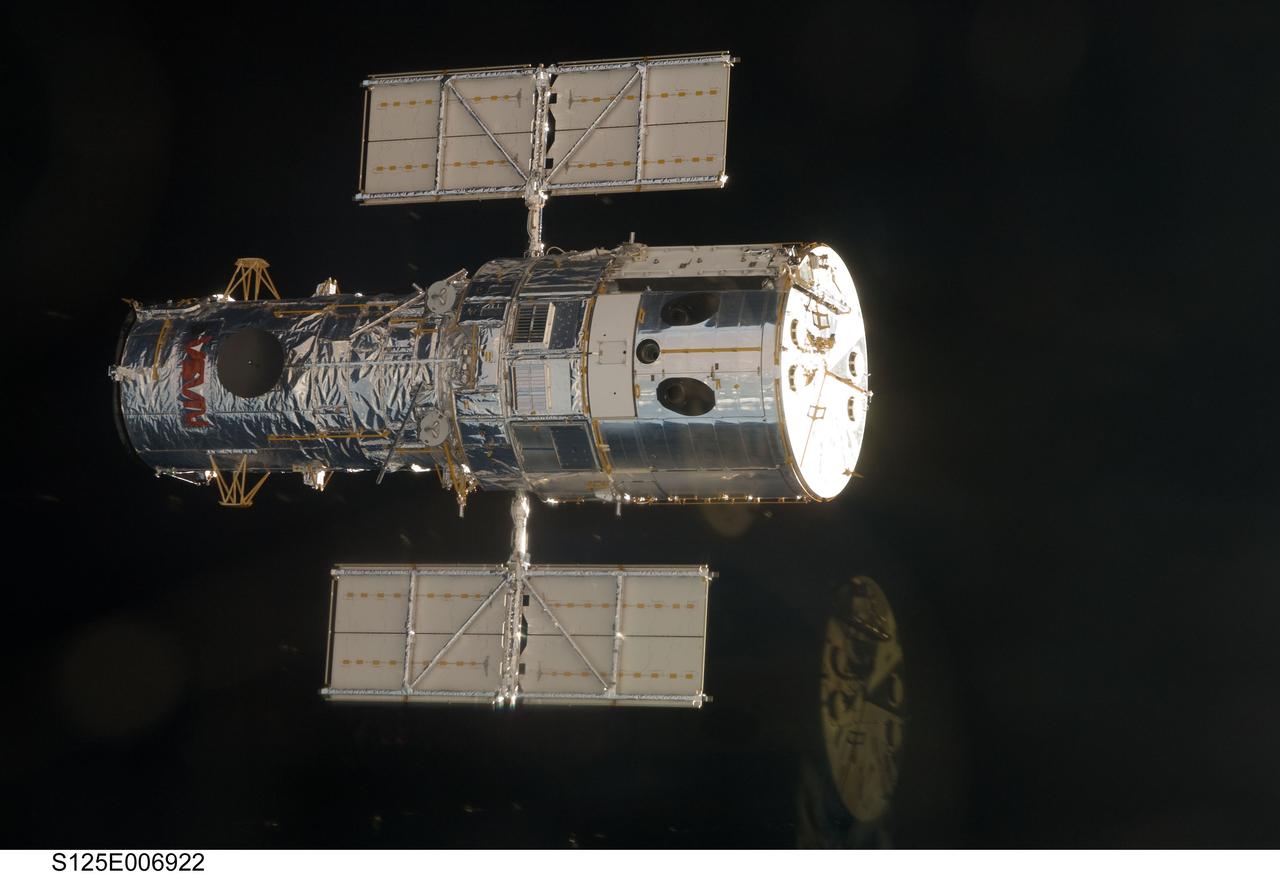
S125-E-006928 (13 May 2009) --- An STS-125 crewmember onboard the Space Shuttle Atlantis snapped a still photo of the Hubble Space Telescope as the two spacecraft approached each other in Earth orbit prior to the capture of the giant observatory.
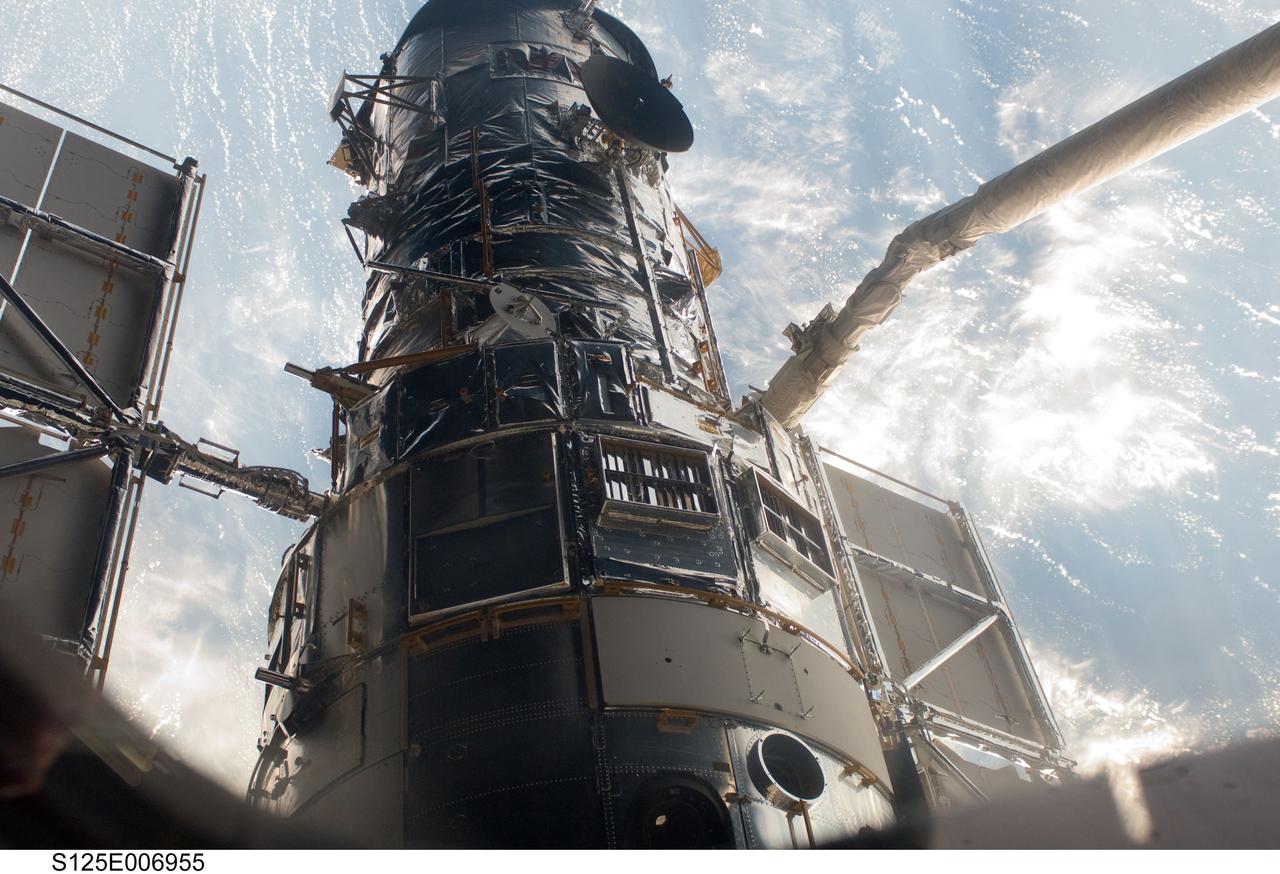
S125-E-006955 (13 May 2009) --- An STS-125 crewmember onboard the Space Shuttle Atlantis snapped a still photo of the Hubble Space Telescope following grapple of the giant observatory by the shuttle?s Canadian-built remote manipulator system.
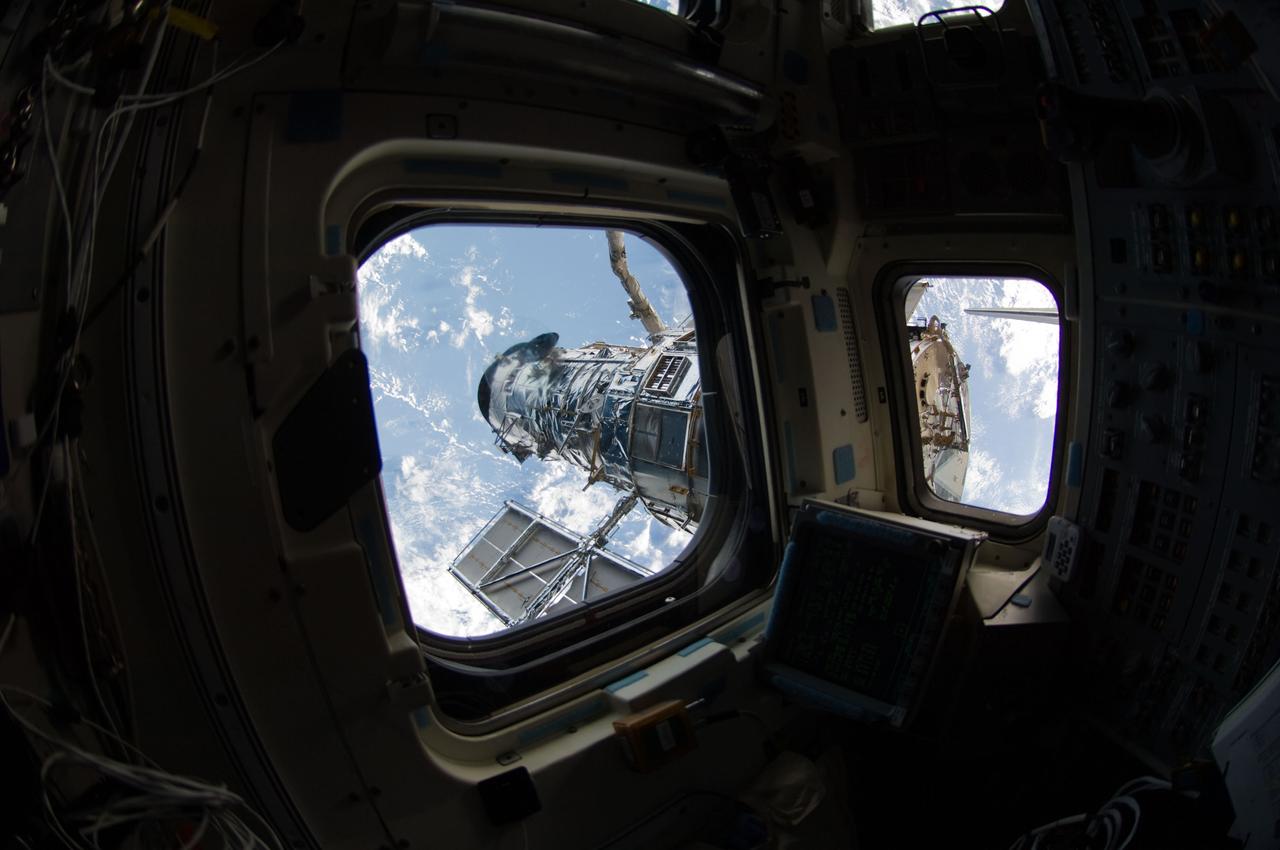
S125-E-006670 (13 May 2009) --- An STS-125 crewmember onboard the Space Shuttle Atlantis snapped a still photo of the Hubble Space Telescope following grapple of the giant observatory by the shuttle?s Canadian-built remote manipulator system.
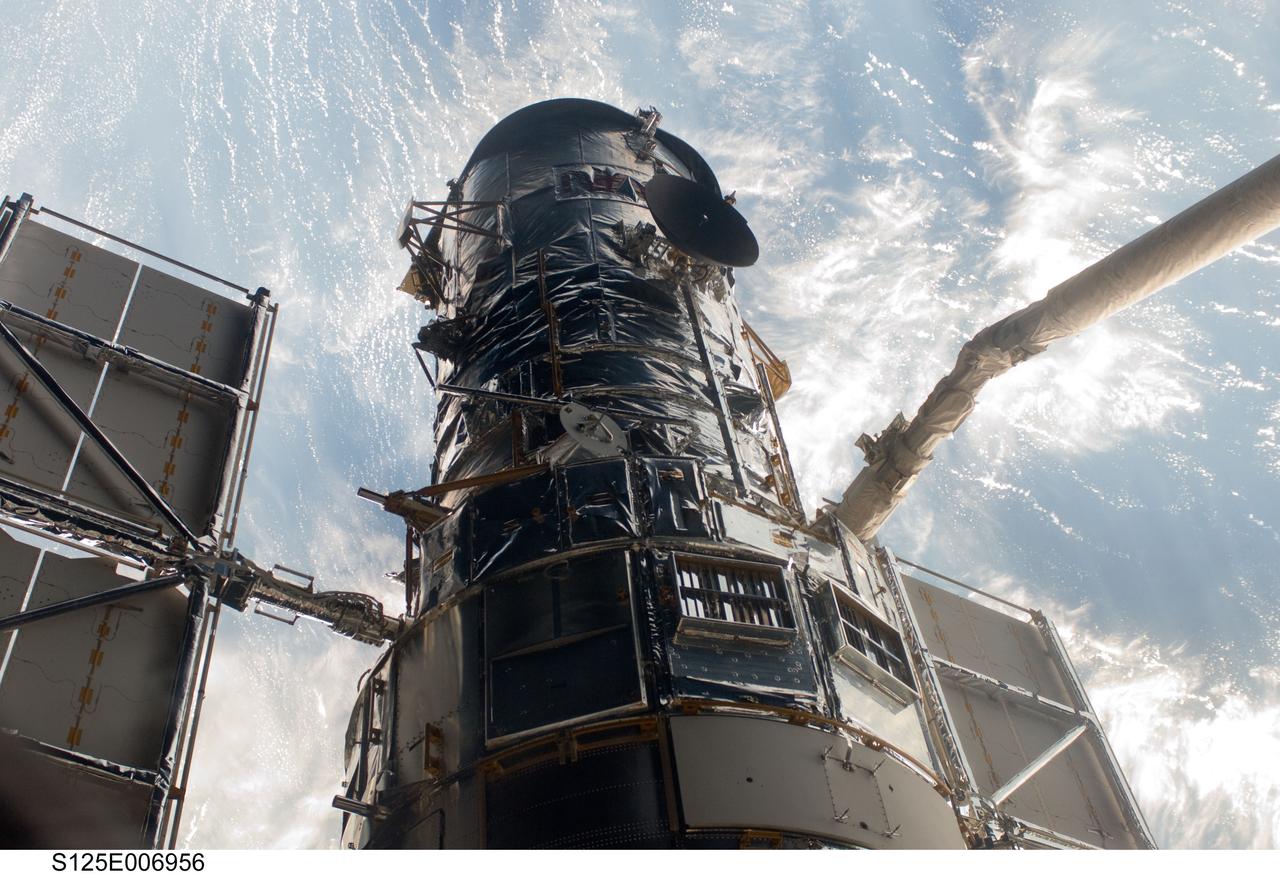
S125-E-006956 (13 May 2009) --- An STS-125 crewmember onboard the Space Shuttle Atlantis snapped a still photo of the Hubble Space Telescope following grapple of the giant observatory by the shuttle?s Canadian-built remote manipulator system.
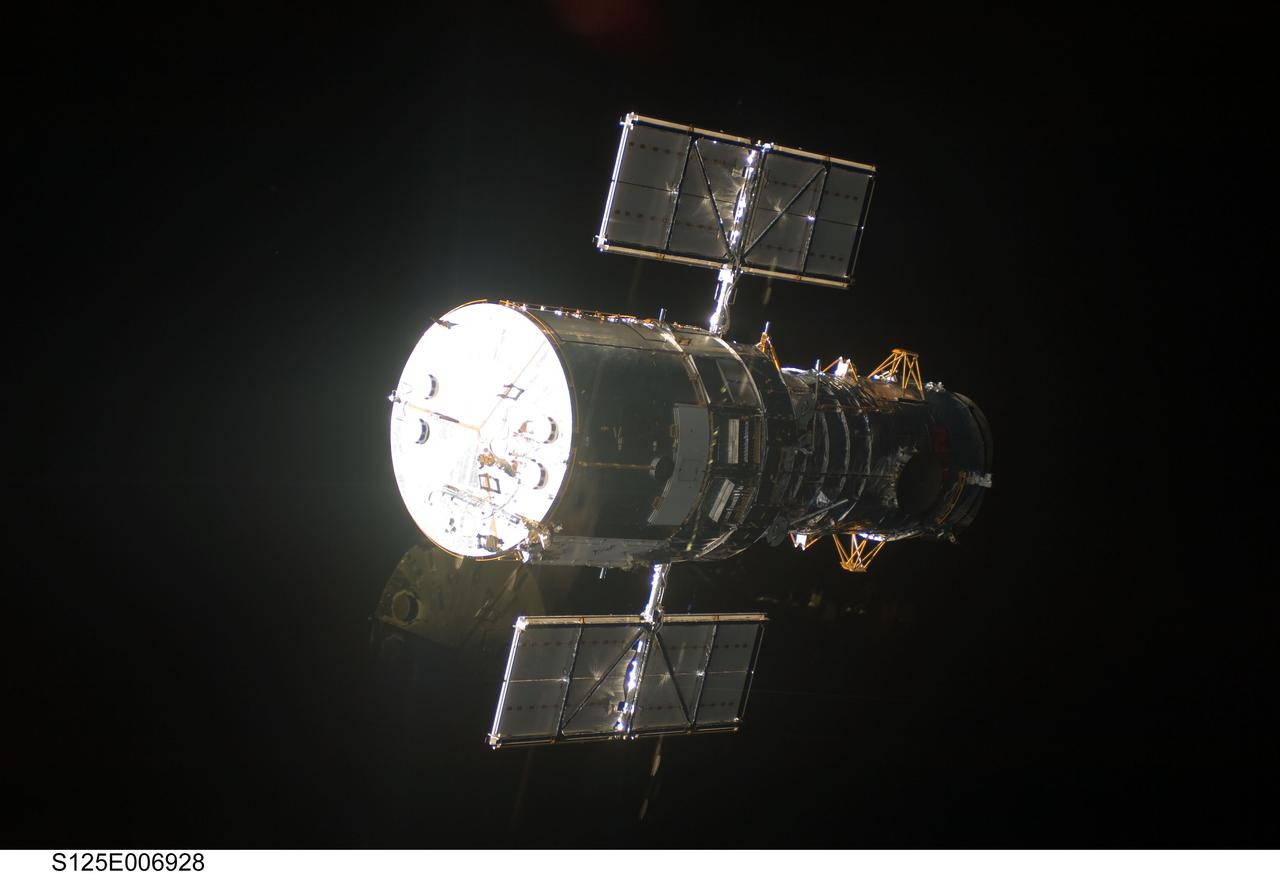
S125-E-006928 (13 May 2009) --- An STS-125 crewmember onboard the Space Shuttle Atlantis snapped a series of still photo of the Hubble Space Telescope as the two spacecraft approached each other in Earth orbit prior to the capture of the giant observatory.
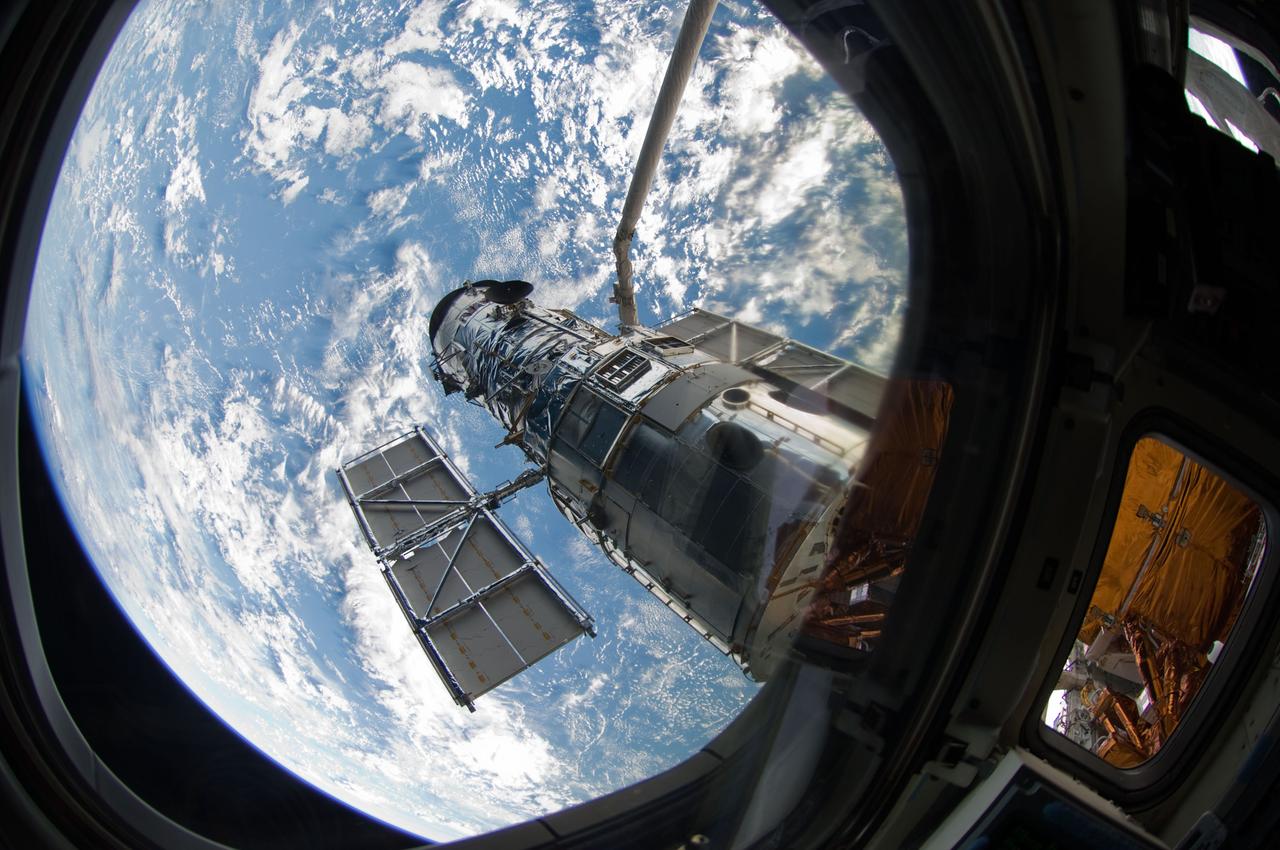
S125-E-006672 (13 May 2009) --- An STS-125 crew member onboard the Space Shuttle Atlantis snapped a still photo of the Hubble Space Telescope following grapple of the giant observatory by the shuttle?s Canadian-built remote manipulator system.
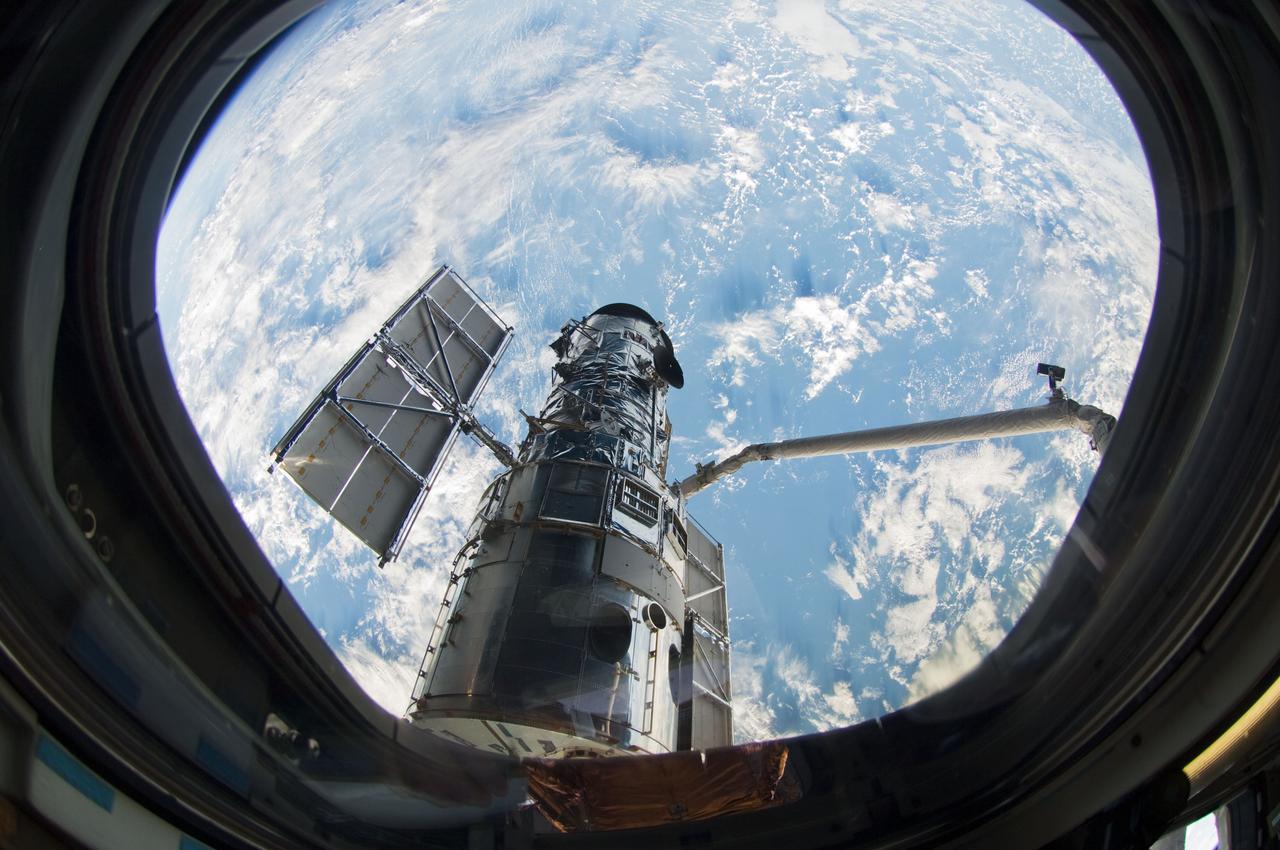
S125-E-006669 (13 May 2009) --- An STS-125 crewmember onboard the Space Shuttle Atlantis snapped a still photo of the Hubble Space Telescope following grapple of the giant observatory by the shuttle?s Canadian-built remote manipulator system.
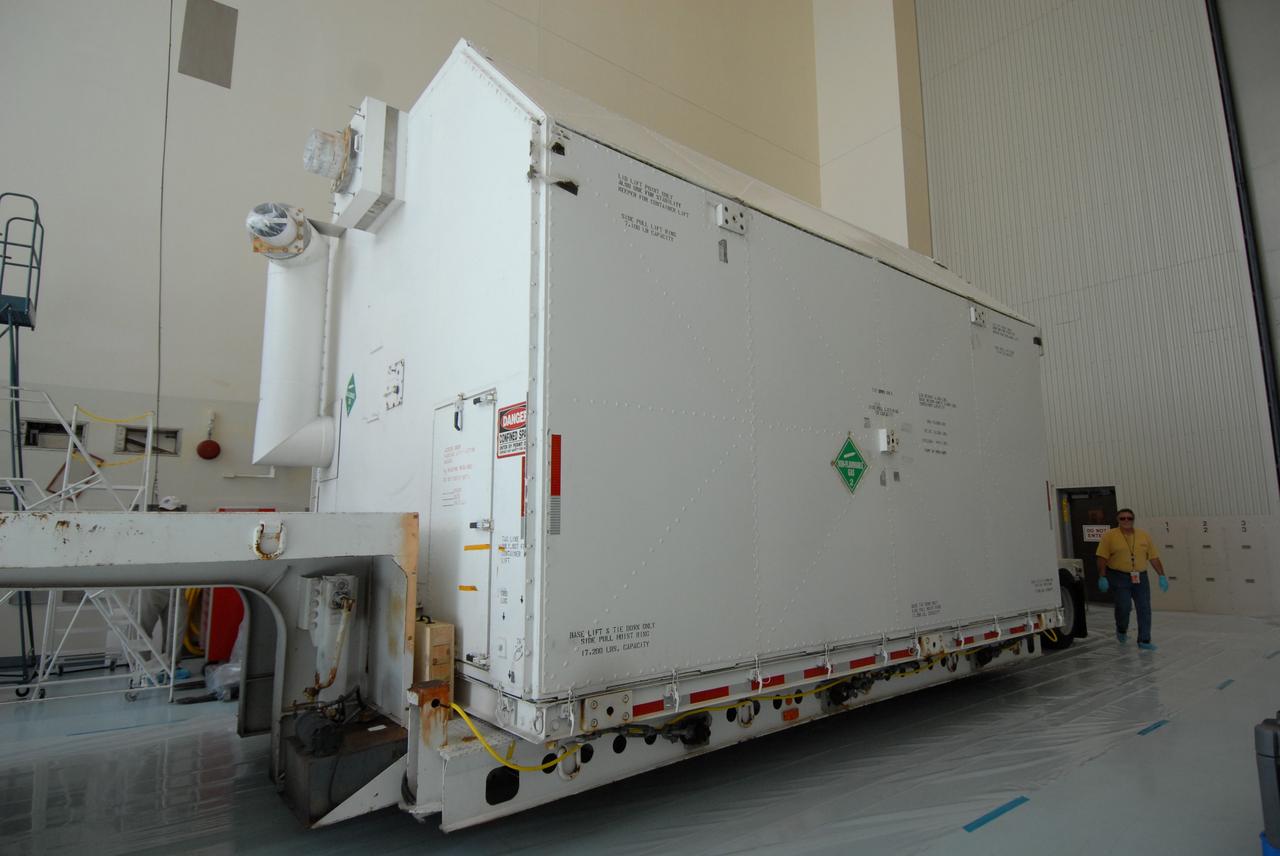
CAPE CANAVERAL, Fla. – The shipping container with the Multi-Use Lightweight Equipment (MULE) carrier inside comes to rest in the airlock in the Payload Hazardous Servicing Facility at NASA's Kennedy Space Center. The cover will be removed in the airlock. The MULE is part of the payload for the fifth and final shuttle servicing mission to NASA's Hubble Space Telescope, STS-125. The MULE is part of the payload for the fifth and final shuttle servicing mission to NASA's Hubble Space Telescope, STS-125. The MULE is part of the payload for the fifth and final shuttle servicing mission to NASA's Hubble Space Telescope, STS-125. The MULE is part of the payload for the fifth and final shuttle servicing mission to NASA's Hubble Space Telescope, STS-125. The MULE is part of the payload for the fifth and final shuttle servicing mission to NASA's Hubble Space Telescope, STS-125. The MULE carrier will join the Flight Support System, the Super Lightweight Interchangeable Carrier and the Orbital Replacement Unit Carrier in the Payload Hazardous Servicing Facility where the Hubble payload is being prepared for launch. The Relative Navigation Sensors and the New Outer Blanket Layers will be on the MULE. The payload is scheduled to go to Launch Pad 39A in mid-September to be installed into Atlantis' payload bay. Atlantis is targeted to launch Oct. 8 at 1:34 a.m. EDT. .Photo credit: NASA/Amanda Diller
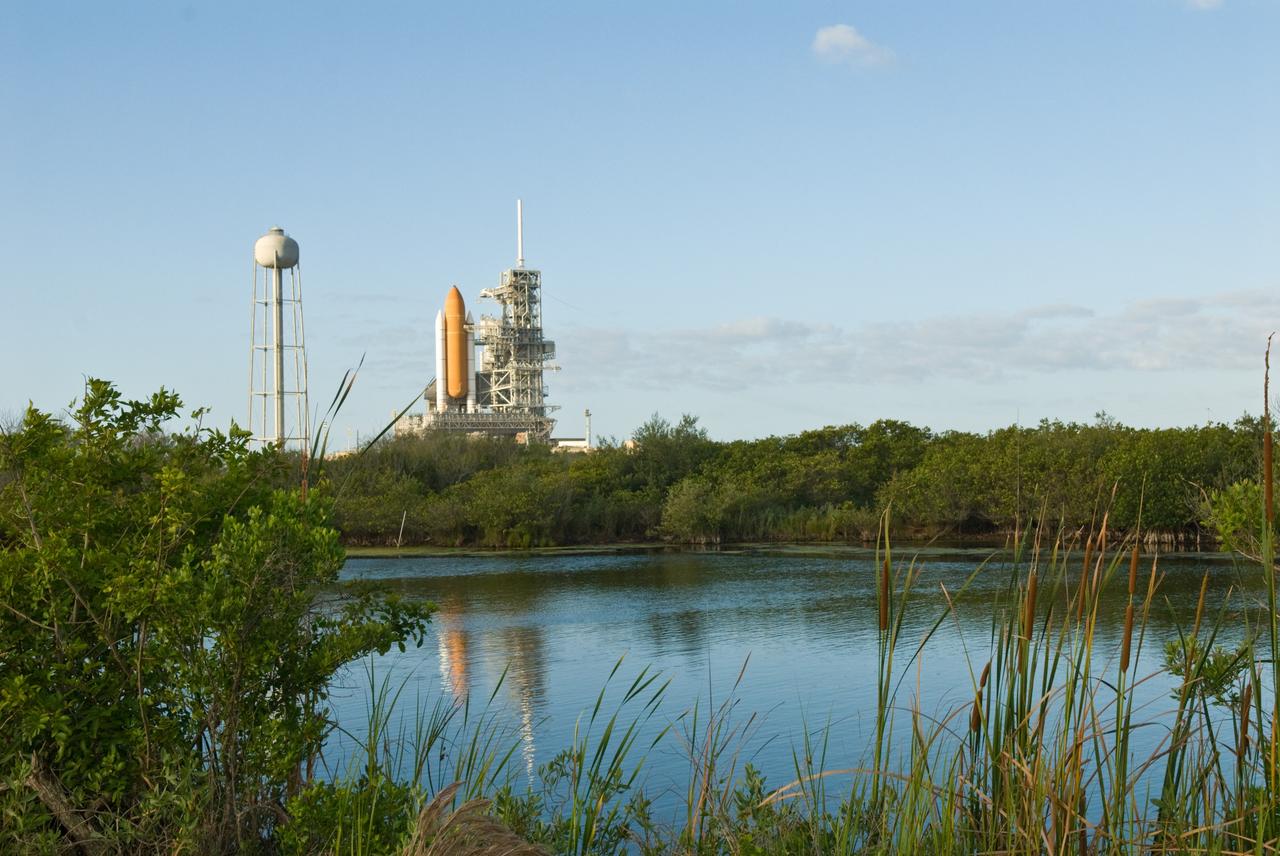
CAPE CANAVERAL, Fla. –– Space shuttle Atlantis on Launch Pad 39A is viewed across the lagoon at NASA's Kennedy Space Center in Florida. Atlantis is targeted to launch May 12 on the STS-125 mission to upgrade NASA's Hubble Space Telescope. Endeavour will be prepared on the pad for liftoff in the unlikely event that a rescue mission is necessary following space shuttle Atlantis' launch May 12 on the STS-125 mission to upgrade NASA's Hubble Space Telescope. After Atlantis is cleared to land, Endeavour will move to Launch Pad 39A for its upcoming STS-127 mission to the International Space Station, targeted to launch June 13. Photo credit: NASA/Jack Pfaller
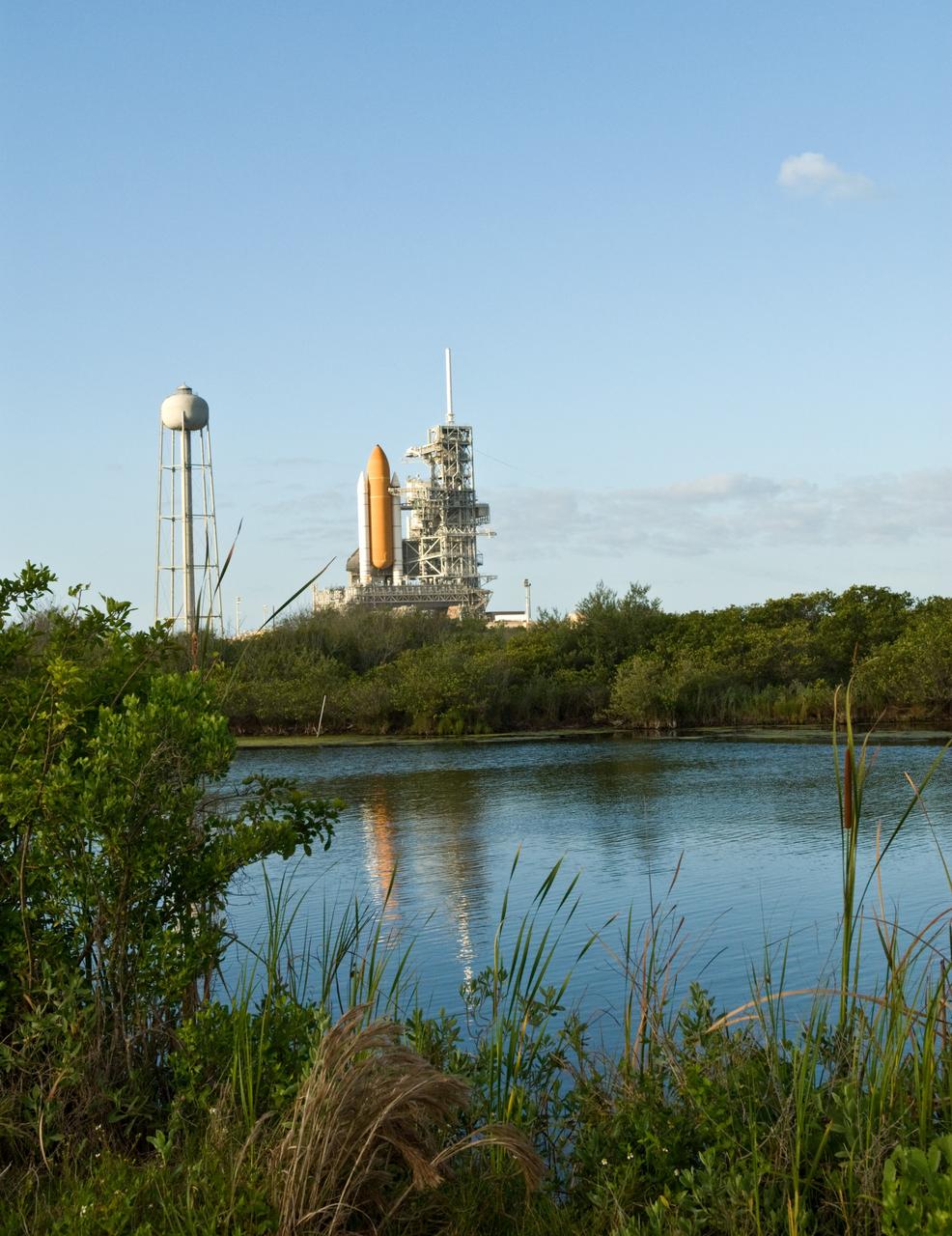
CAPE CANAVERAL, Fla. –– Space shuttle Atlantis on Launch Pad 39A is viewed across the lagoon at NASA's Kennedy Space Center in Florida. Atlantis is targeted to launch May 12 on the STS-125 mission to upgrade NASA's Hubble Space Telescope. Endeavour will be prepared on the pad for liftoff in the unlikely event that a rescue mission is necessary following space shuttle Atlantis' launch May 12 on the STS-125 mission to upgrade NASA's Hubble Space Telescope. After Atlantis is cleared to land, Endeavour will move to Launch Pad 39A for its upcoming STS-127 mission to the International Space Station, targeted to launch June 13. Photo credit: NASA/Jack Pfaller
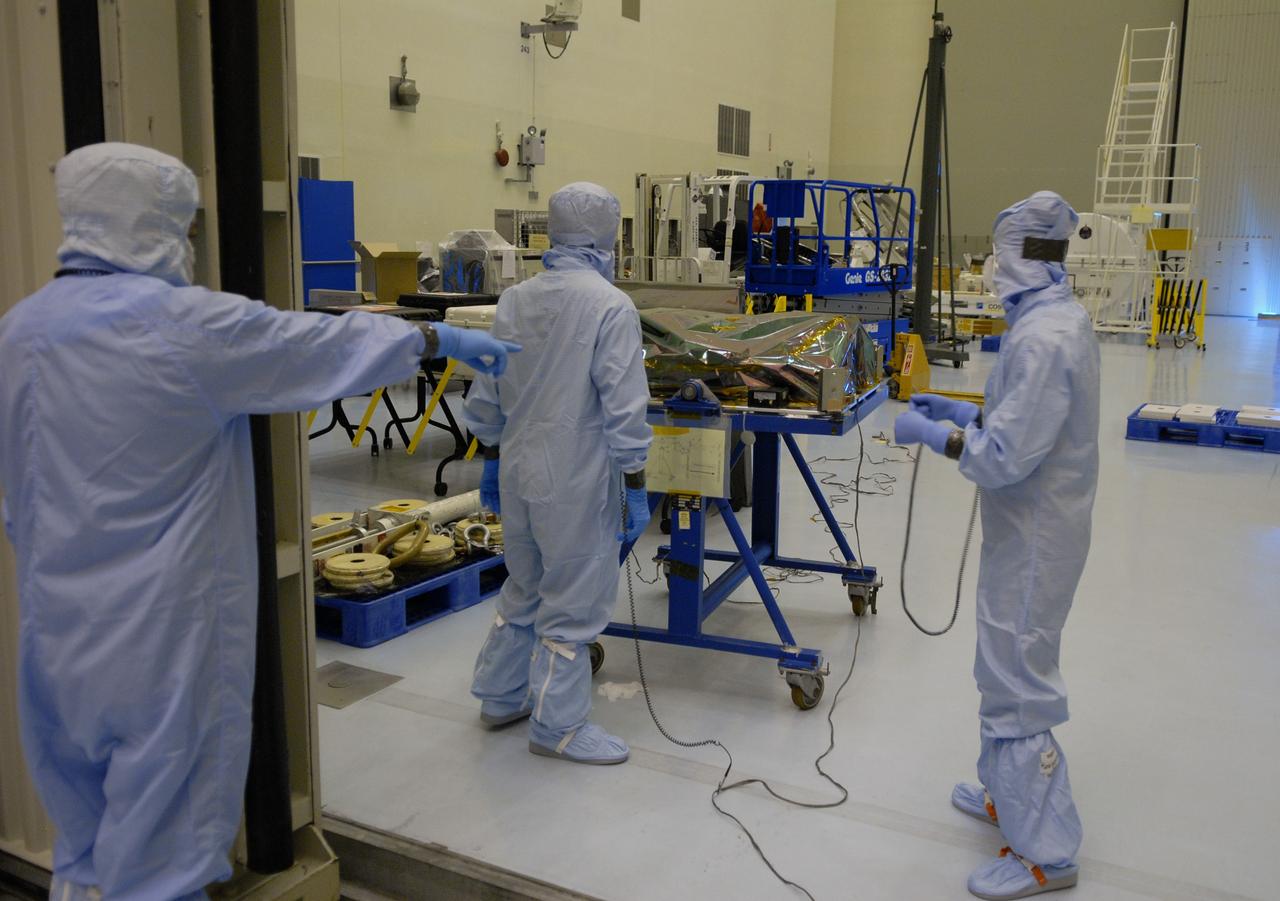
CAPE CANAVERAL, Fla. – In the Payload Hazardous Servicing Facility at NASA's Kennedy Space Center in Florida, the Science Instrument Command and Data Handling Unit, or SIC&DH, is moved into a clean area. The SIC&DH will be installed on the Hubble Space Telescope during space shuttle Atlantis' STS-125 mission, replacing the one that suffered a failure aboard the orbiting telescope on Sept. 27, 2008. The SIC&DH is being prepared for integration onto the Multi-Use Lightweight Equipment Carrier. The SIC&DH will be installed on the Hubble Space Telescope during space shuttle Atlantis' STS-125 mission, replacing one that suffered a failure aboard the orbiting telescope on Sept. 27, 2008. The carrier holds the payload for space shuttle Atlantis' STS-125 mission servicing NASA's Hubble Space Telescope, targeted to launch May 12. Photo credit: NASA/Jack Pfaller

CAPE CANAVERAL, Fla. – In the clean area of the Payload Hazardous Servicing Facility at NASA's Kennedy Space Center in Florida, the Science Instrument Command and Data Handling Unit, or SIC&DH, in the foreground, is being prepared for integration onto the Multi-Use Lightweight Equipment Carrier, in the background. The SIC&DH will be installed on the Hubble Space Telescope during space shuttle Atlantis' STS-125 mission, replacing the one that suffered a failure aboard the orbiting telescope on Sept. 27, 2008. The SIC&DH will be installed on the Hubble Space Telescope during space shuttle Atlantis' STS-125 mission, replacing one that suffered a failure aboard the orbiting telescope on Sept. 27, 2008. The carrier holds the payload for space shuttle Atlantis' STS-125 mission servicing NASA's Hubble Space Telescope, targeted to launch May 12. Photo credit: NASA/Jack Pfaller
CAPE CANAVERAL, Fla. – In the clean area of the Payload Hazardous Servicing Facility at NASA's Kennedy Space Center in Florida, the Science Instrument Command and Data Handling Unit, or SIC&DH, in the foreground, is being prepared for integration onto the Multi-Use Lightweight Equipment Carrier, in the background. The SIC&DH will be installed on the Hubble Space Telescope during space shuttle Atlantis' STS-125 mission, replacing the one that suffered a failure aboard the orbiting telescope on Sept. 27, 2008. The SIC&DH will be installed on the Hubble Space Telescope during space shuttle Atlantis' STS-125 mission, replacing one that suffered a failure aboard the orbiting telescope on Sept. 27, 2008. The carrier holds the payload for space shuttle Atlantis' STS-125 mission servicing NASA's Hubble Space Telescope, targeted to launch May 12. Photo credit: NASA/Jack Pfaller
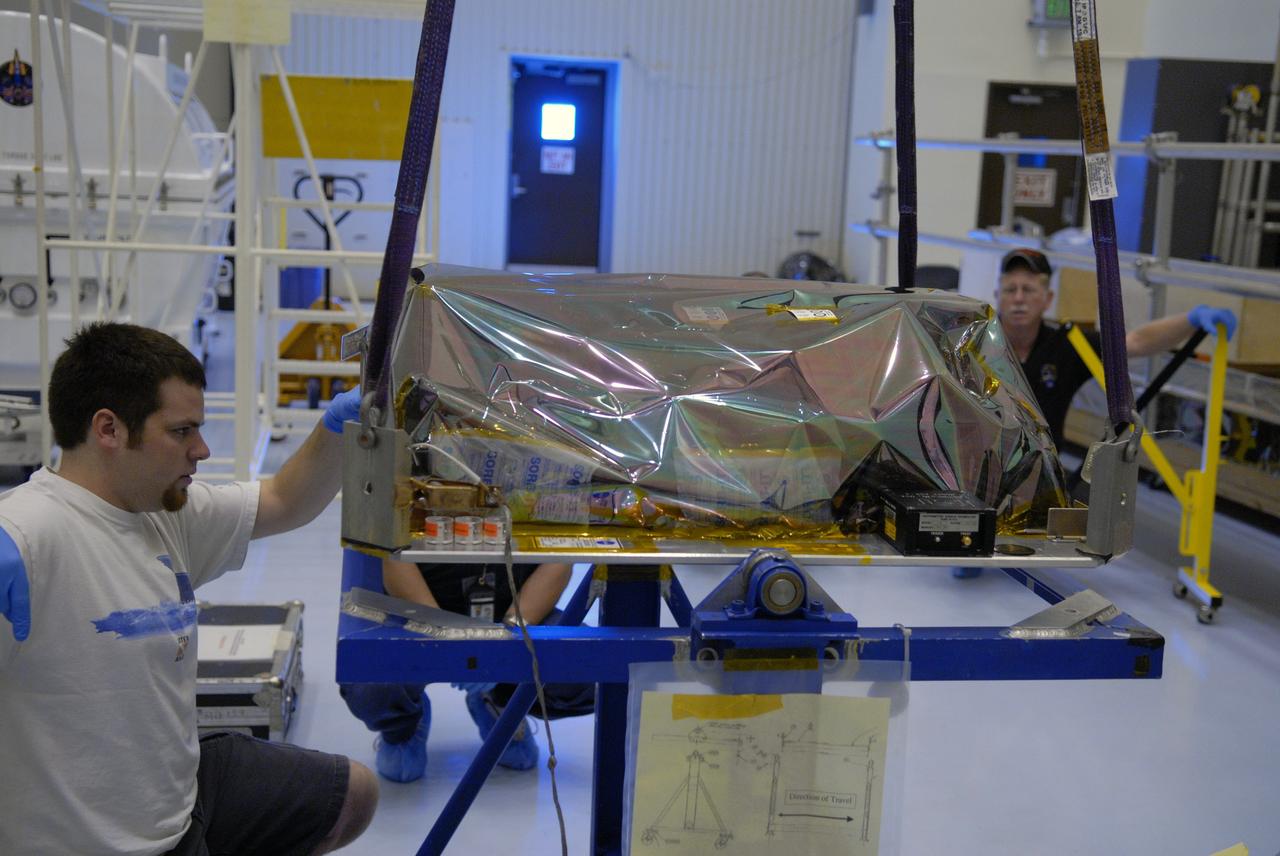
CAPE CANAVERAL, Fla. – In the Payload Hazardous Servicing Facility at NASA's Kennedy Space Center in Florida, a technician monitors the lowering of the Science Instrument Command and Data Handling Unit, or SIC&DH, onto a stand. The SIC&DH will be installed on the Hubble Space Telescope during space shuttle Atlantis' STS-125 mission, replacing the one that suffered a failure aboard the orbiting telescope on Sept. 27, 2008. The SIC&DH is being prepared for integration onto the Multi-Use Lightweight Equipment Carrier. The SIC&DH will be installed on the Hubble Space Telescope during space shuttle Atlantis' STS-125 mission, replacing one that suffered a failure aboard the orbiting telescope on Sept. 27, 2008. The carrier holds the payload for space shuttle Atlantis' STS-125 mission servicing NASA's Hubble Space Telescope, targeted to launch May 12. Photo credit: NASA/Jack Pfaller
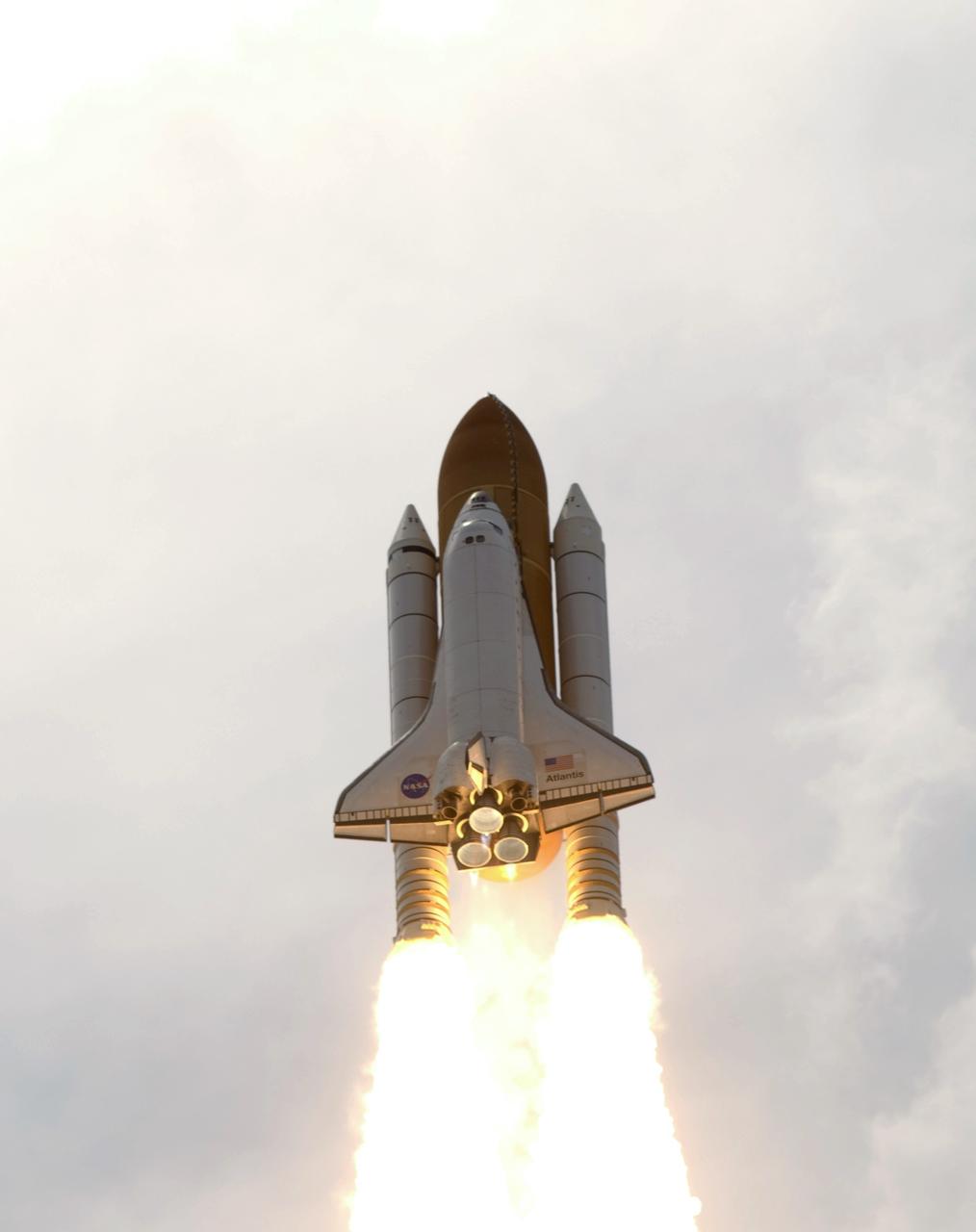
CAPE CANAVERAL, Fla. – Atop twin columns of fire, space shuttle Atlantis roars into the cloudy sky above Launch Pad 39A at NASA's Kennedy Space Center in Florida on the STS-125 mission. Atlantis will rendezvous with NASA's Hubble Space Telescope on the STS-125 mission. Liftoff was on time at 2:01 p.m. EDT. Atlantis' 11-day flight will include five spacewalks to refurbish and upgrade the telescope with state-of-the-art science instruments that will expand Hubble's capabilities and extend its operational lifespan through at least 2014. The payload includes a Wide Field Camera 3, fine guidance sensor and the Cosmic Origins Spectrograph. Photo credit: NASA/Michael Gayle-Rusty Backer
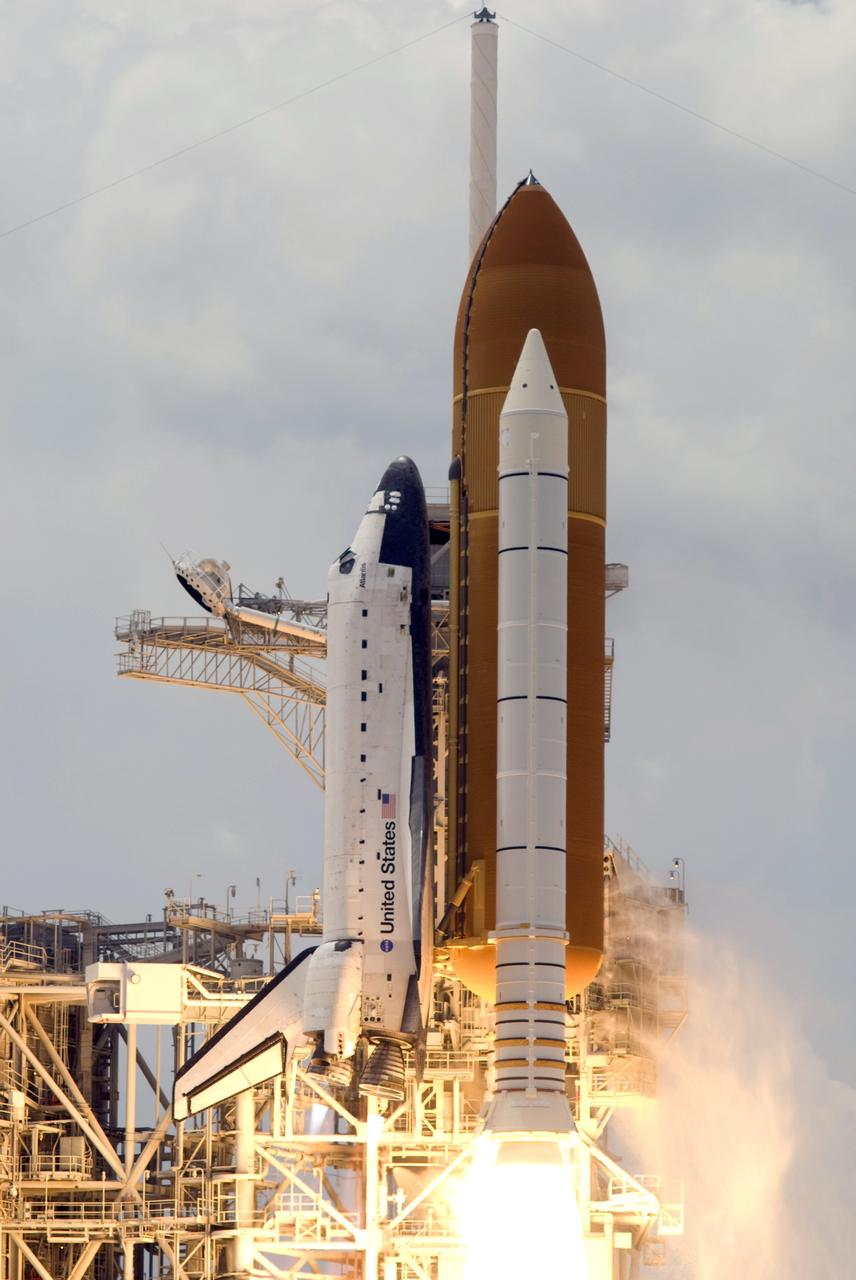
CAPE CANAVERAL, Fla. – On Launch Pad 39A at NASA's Kennedy Space Center in Florida, space shuttle Atlantis rises past the fixed service structure as it races toward space on the STS-125 mission. Atlantis will rendezvous with NASA's Hubble Space Telescope on the STS-125 mission. Liftoff was on time at 2:01 p.m. EDT. Atlantis' 11-day flight will include five spacewalks to refurbish and upgrade the telescope with state-of-the-art science instruments that will expand Hubble's capabilities and extend its operational lifespan through at least 2014. The payload includes a Wide Field Camera 3, fine guidance sensor and the Cosmic Origins Spectrograph. Photo credit: NASA/Michael Gayle-Rusty Backer
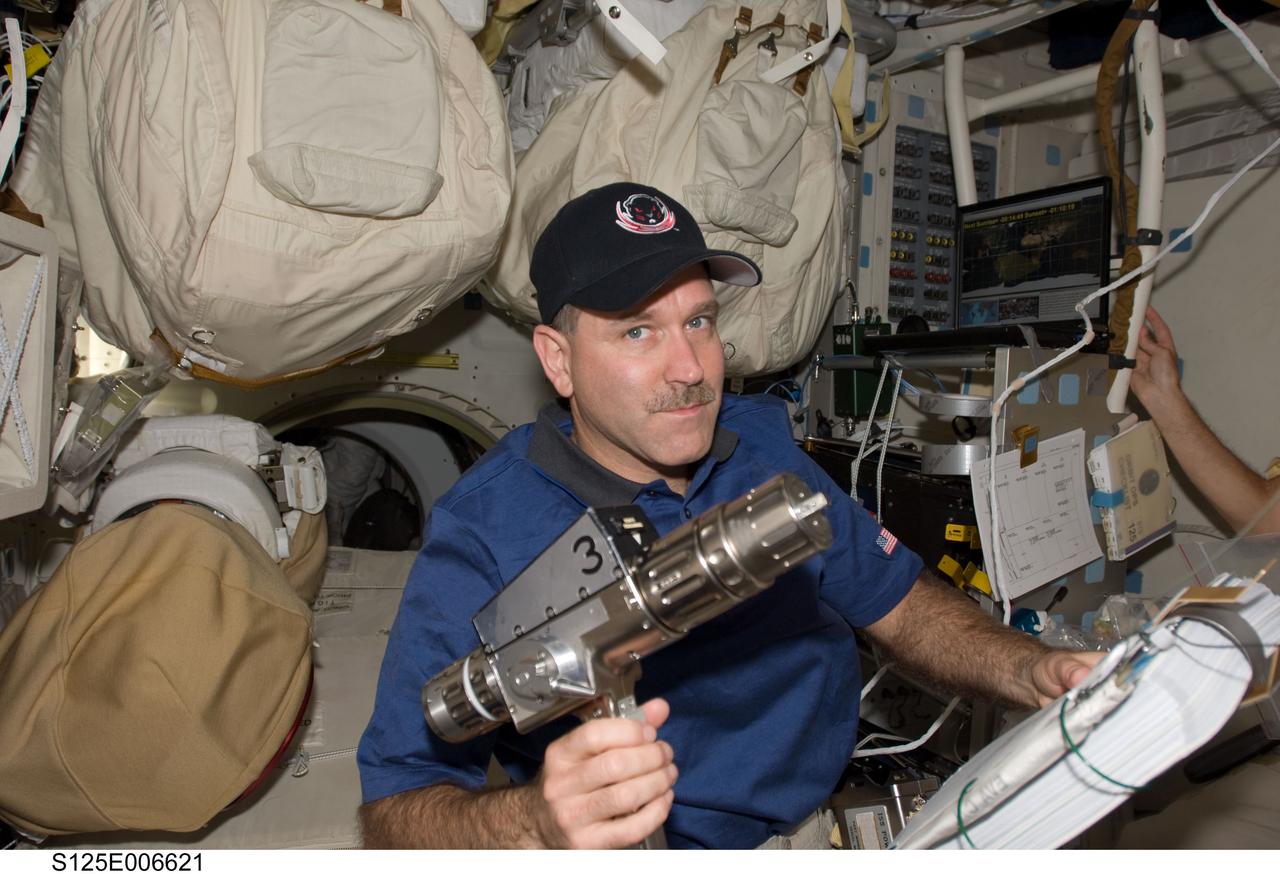
S125-E-006621 (13 May 2009) --- Astronaut John Grunsfeld, STS-125 mission specialist, works with a power tool on the middeck of Space Shuttle Atlantis as he prepares for upcoming spacewalks to repair the Hubble Space Telescope.
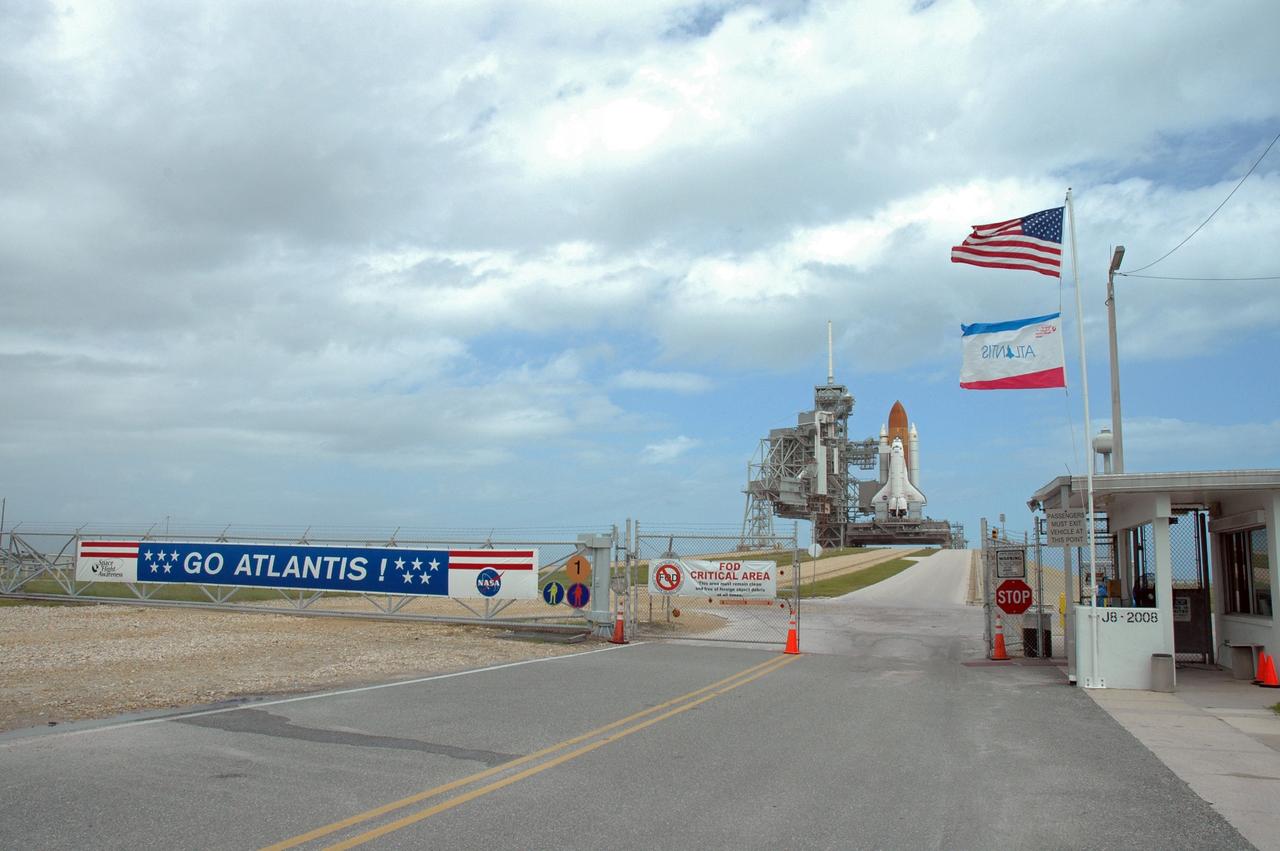
CAPE CANAVERAL, Fla. – On Launch Pad 39A at NASA's Kennedy Space Center in Florida, the rotating service structure is open, revealing space shuttle Atlantis on the pad for the STS-125 mission, the fifth and final shuttle servicing mission for NASA’s Hubble Space Telescope. On the RSS, the payload canister is in position at the payload changeout room to receive the Hubble hardware. High winds, however, have delayed the transfer. The payload comprises four carriers holding various equipment for the mission. The hardware will be transported back to Kennedy’s Payload Hazardous Servicing Facility where it will be stored until a new target launch date can be set for Atlantis’ STS-125 mission in 2009. Atlantis’ October target launch date was delayed after a device on board Hubble used in the storage and transmission of science data to Earth shut down on Sept. 27. Replacing the broken device will be added to Atlantis’ servicing mission to the telescope. Photo credit: NASA/Tim Jacobs
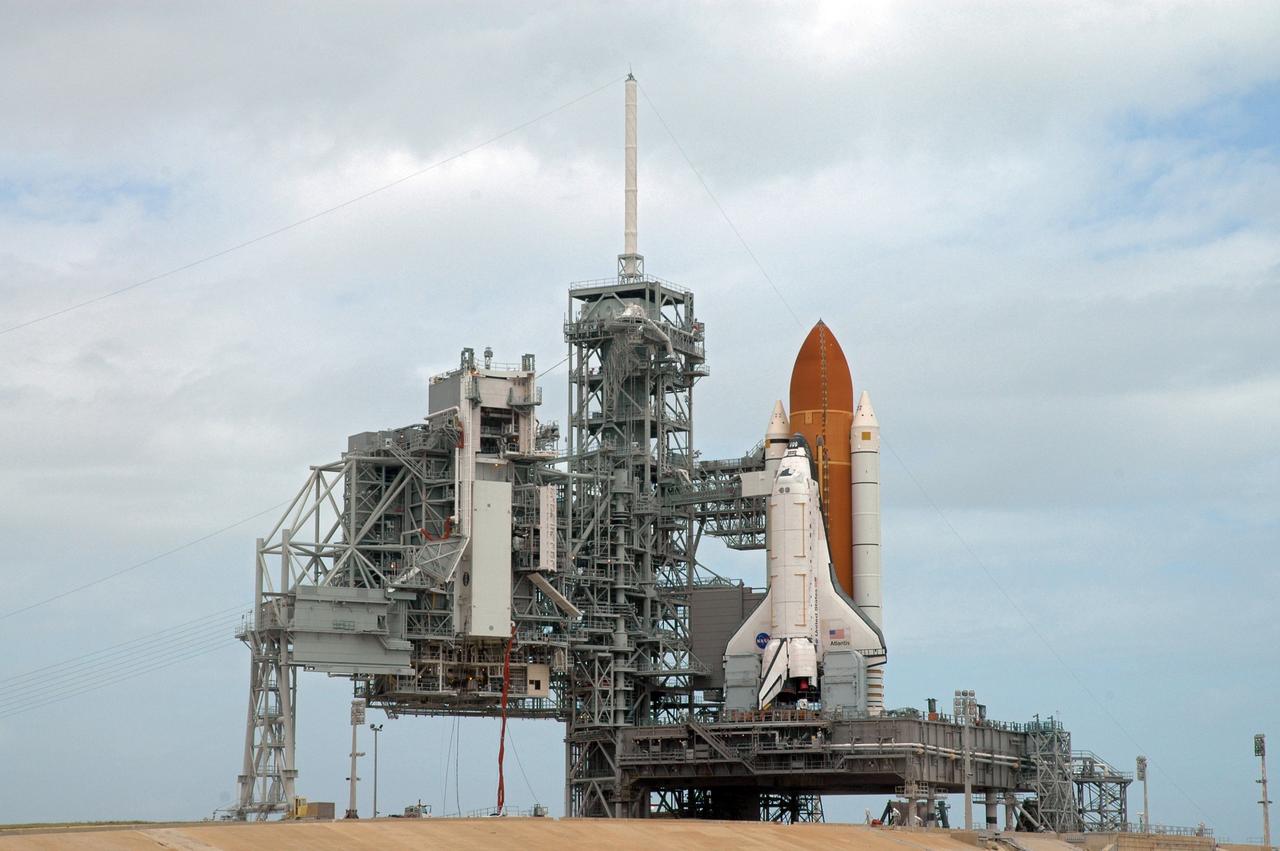
CAPE CANAVERAL, Fla. – On Launch Pad 39A at NASA's Kennedy Space Center in Florida, the rotating service structure is open, revealing space shuttle Atlantis on the pad for the STS-125 mission, the fifth and final shuttle servicing mission for NASA’s Hubble Space Telescope. On the RSS, the payload canister is in position at the payload changeout room to receive the Hubble hardware. The payload comprises four carriers holding various equipment for the mission. The hardware will be transported back to Kennedy’s Payload Hazardous Servicing Facility where it will be stored until a new target launch date can be set for Atlantis’ STS-125 mission in 2009. Atlantis’ October target launch date was delayed after a device on board Hubble used in the storage and transmission of science data to Earth shut down on Sept. 27. Replacing the broken device will be added to Atlantis’ servicing mission to the telescope. Photo credit: NASA/Tim Jacobs
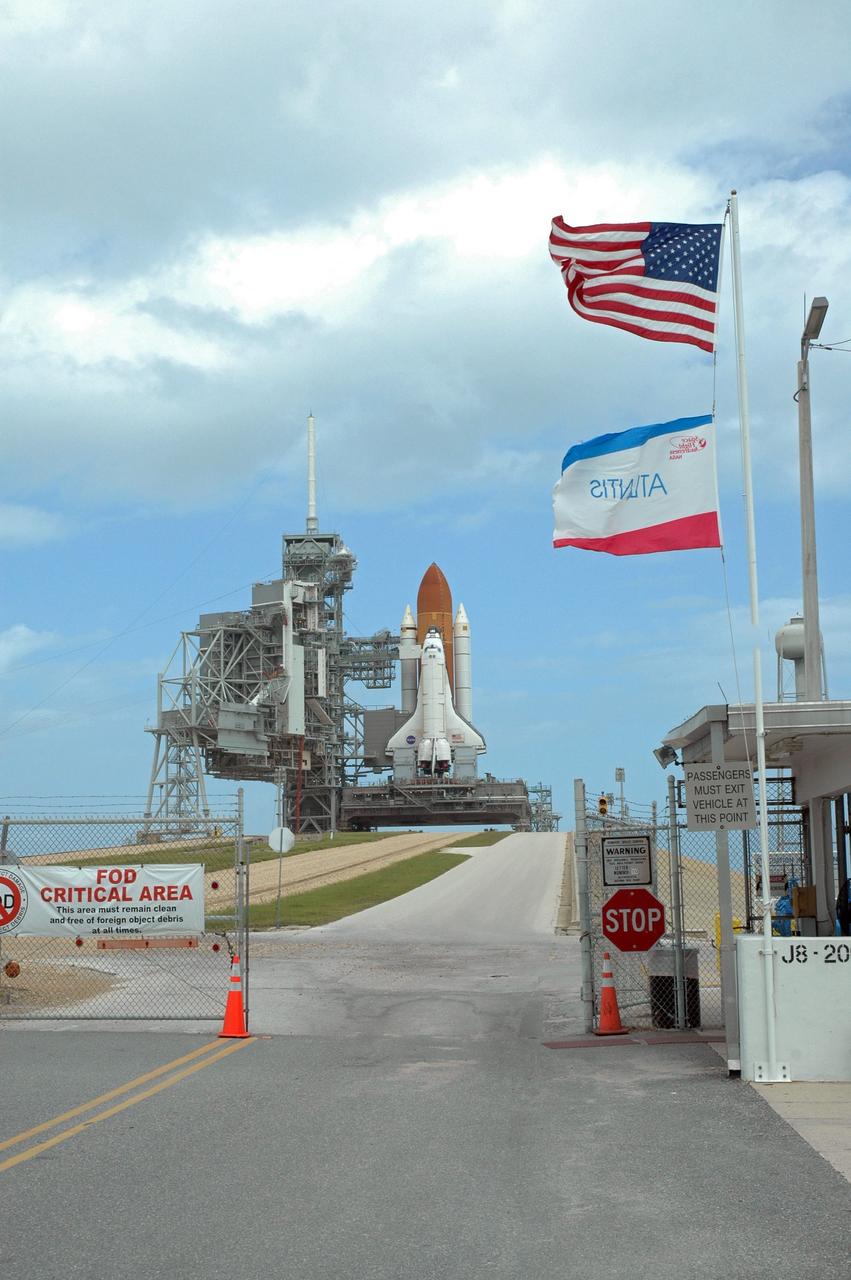
CAPE CANAVERAL, Fla. – On Launch Pad 39A at NASA's Kennedy Space Center in Florida, the rotating service structure is open, revealing space shuttle Atlantis on the pad for the STS-125 mission, the fifth and final shuttle servicing mission for NASA’s Hubble Space Telescope. On the RSS, the payload canister is in position at the payload changeout room to receive the Hubble hardware. High winds, however, have delayed the transfer. The payload comprises four carriers holding various equipment for the mission. The hardware will be transported back to Kennedy’s Payload Hazardous Servicing Facility where it will be stored until a new target launch date can be set for Atlantis’ STS-125 mission in 2009. Atlantis’ October target launch date was delayed after a device on board Hubble used in the storage and transmission of science data to Earth shut down on Sept. 27. Replacing the broken device will be added to Atlantis’ servicing mission to the telescope. Photo credit: NASA/Tim Jacobs
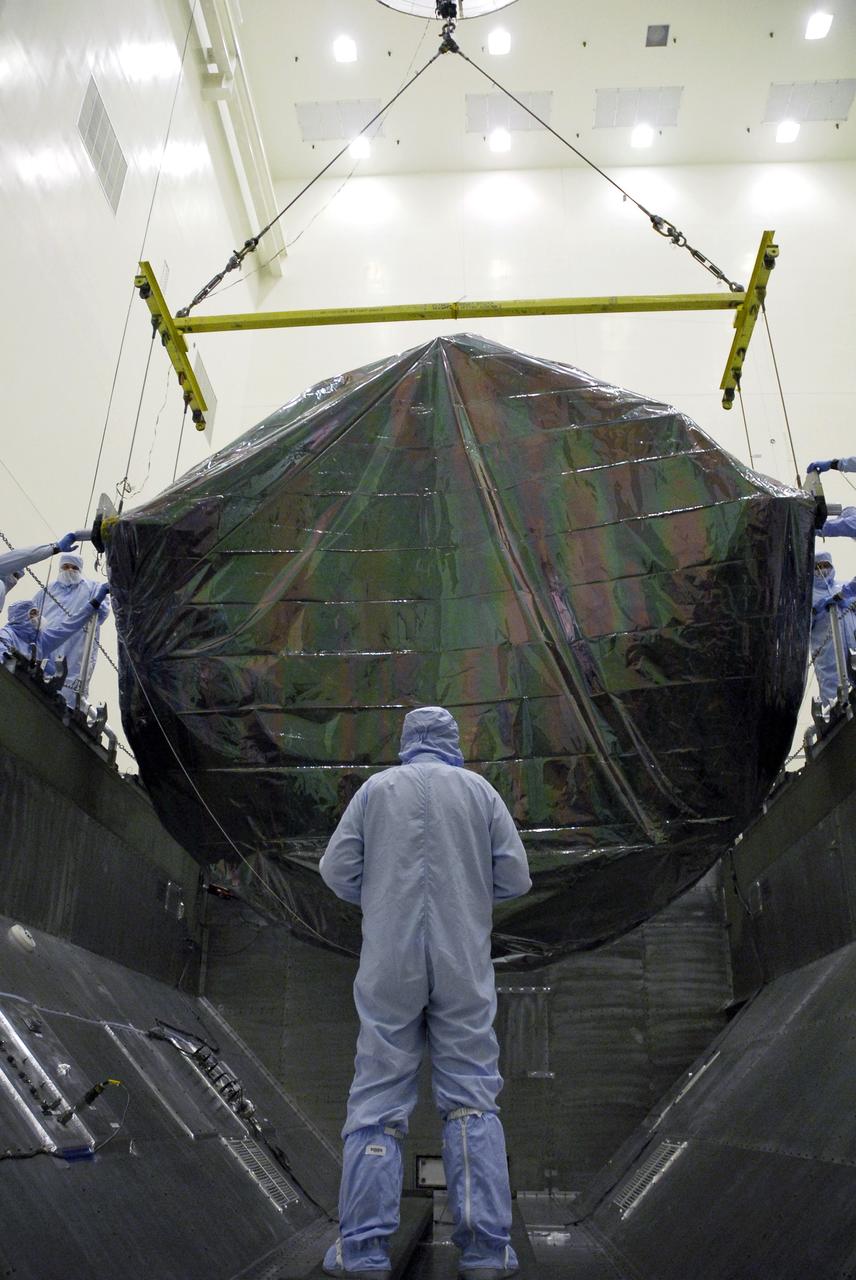
CAPE CANAVERAL, Fla. - In the Payload Hazardous Servicing Facility at NASA’s Kennedy Space Center, workers monitor the movement of the Flight Support System carrier with the Soft Capture Mechanism as it is lowered into the payload canister. The carrier is associated with the STS-125 mission to service the Hubble Space Telescope. The canister will transfer the carrier to Launch Pad 39A. The carrier is one of four associated with the STS-125 mission to service the Hubble Space Telescope. At the pad, all the carriers will be loaded into space shuttle Atlantis’ payload bay. Launch of Atlantis is targeted for Oct. 10. Photo credit: NASA/Cory Huston

CAPE CANAVERAL, Fla. – On the Shuttle Landing Facility at NASA's Kennedy Space Center in Florida, STS-125 Commander Scott Altman, wearing his launch-and-entry suit, heads for the Shuttle Training Aircraft to practice shuttle landings in preparation for launch of space shuttle Atlantis, scheduled for 2:01 p.m. EDT on May 11. On Atlantis’ STS-125 mission, NASA's Hubble Space Telescope will be serviced for the fifth and final time. The flight will include five spacewalks during which astronauts will refurbish and upgrade the telescope with state-of-the-art science instruments. As a result, Hubble's capabilities will be expanded and its operational lifespan extended through at least 2014. Photo credit: NASA/Kim Shiflett
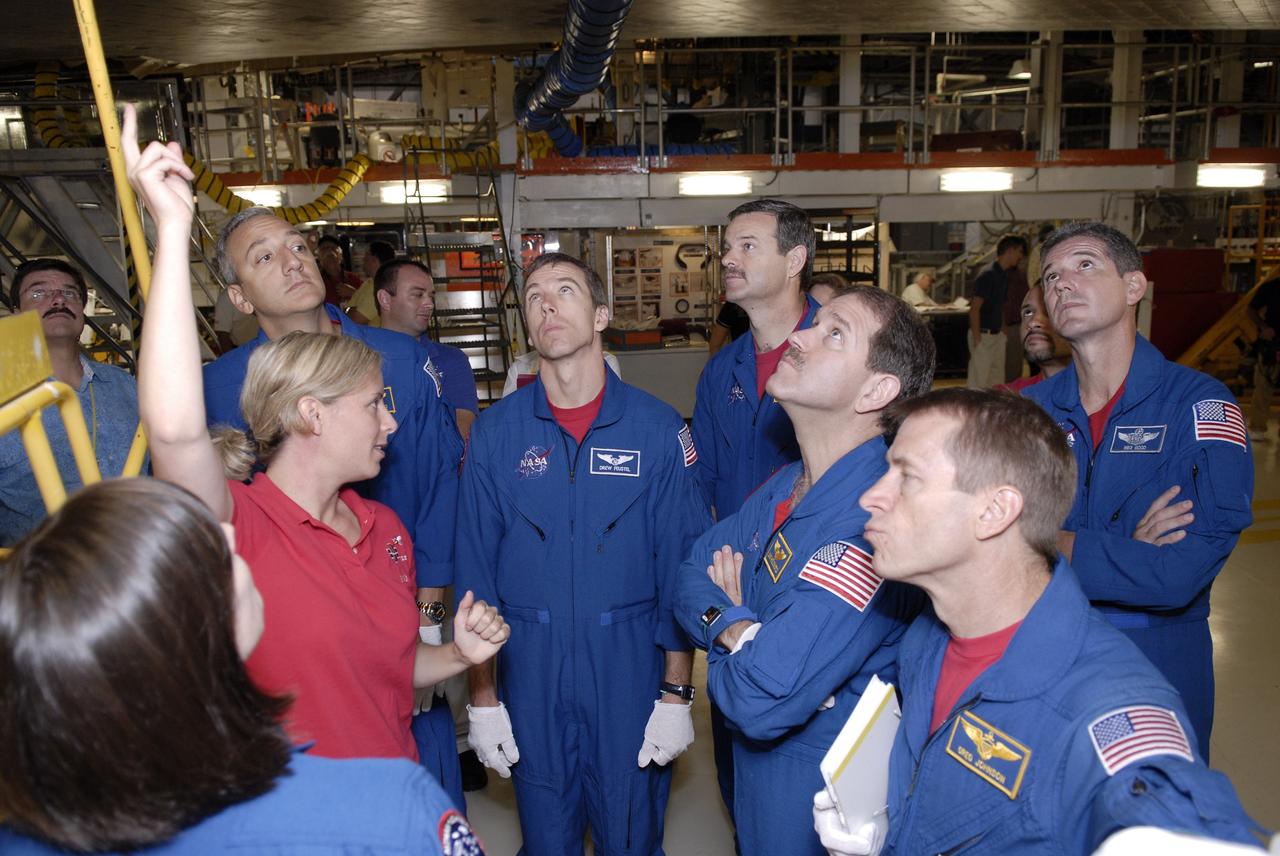
CAPE CANAVERAL, Fla. – In the Orbiter Processing Facility at NASA's Kennedy Space Center, a technician (hand raised) discusses details about space shuttle Atlantis with crew members for the STS-125 Hubble Servicing Mission. From left, the crew members are Mission Specialists Megan McArthur, Mike Massimino and Andrew Feustel, Commander Scott Altman, Mission Specialists John Grunsfeld and Mike Good, and Pilot Gregory C. Johnson (foreground). The crew is at Kennedy for a crew equipment interface test, which provides hands-on experience with hardware and equipment for the mission. Atlantis is targeted to launch on the STS-125 Hubble Servicing Mission 4 on Oct. 8. Photo credit: NASA/Kim Shiflett
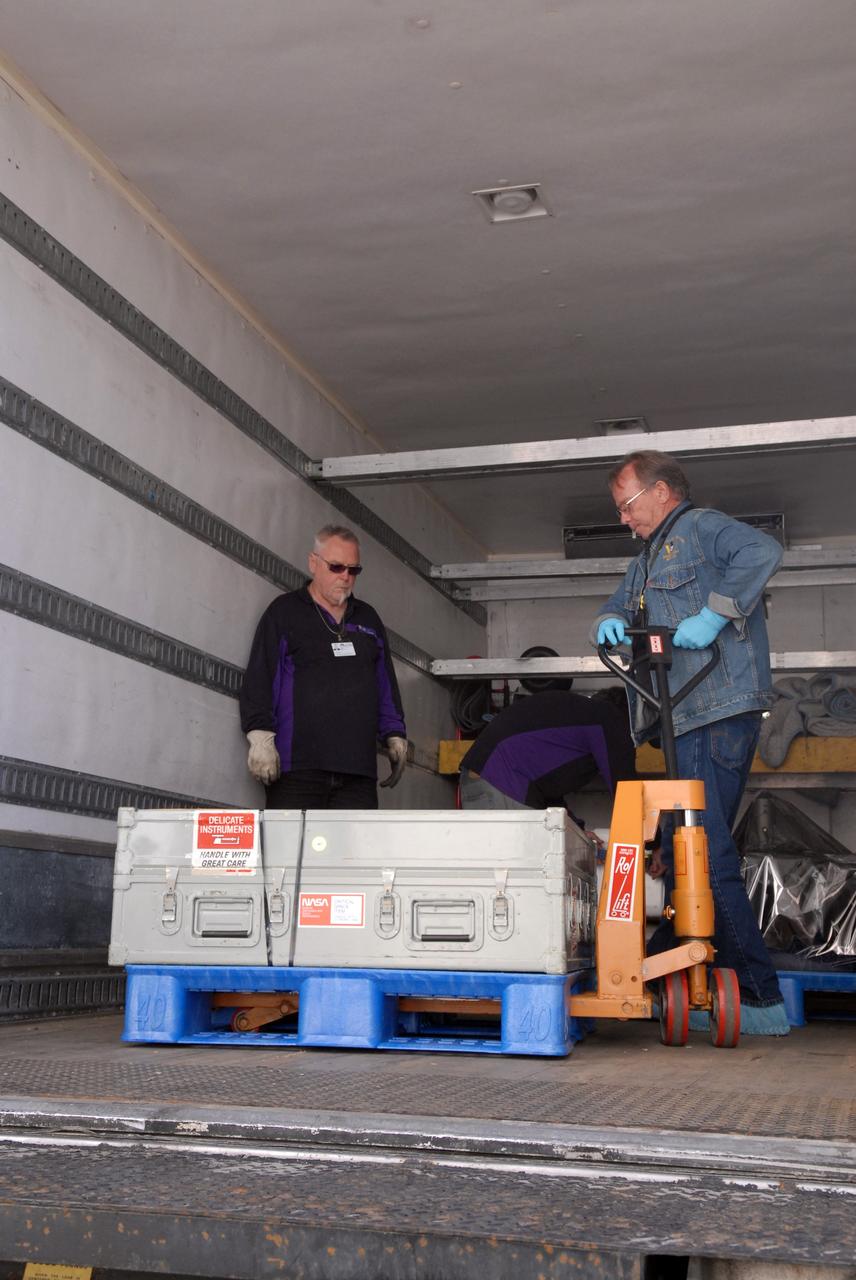
CAPE CANAVERAL, Fla. – The Science Instrument Command and Data Handling Unit, or SIC&DH, arrives at NASA's Kennedy Space Center in Florida. The SIC&DH will be installed on the Hubble Space Telescope during space shuttle Atlantis' STS-125 mission. This unit will replace the one that suffered a failure aboard the orbiting telescope on Sept. 27, 2008. The SIC&DH is being prepared for integration onto the Multi-Use Lightweight Equipment Carrier in the Payload Hazardous Servicing Facility. The carrier holds the payload for space shuttle Atlantis' STS-125 mission servicing NASA's Hubble Space Telescope, targeted to launch May 12. Photo credit: NASA/Jack Pfaller
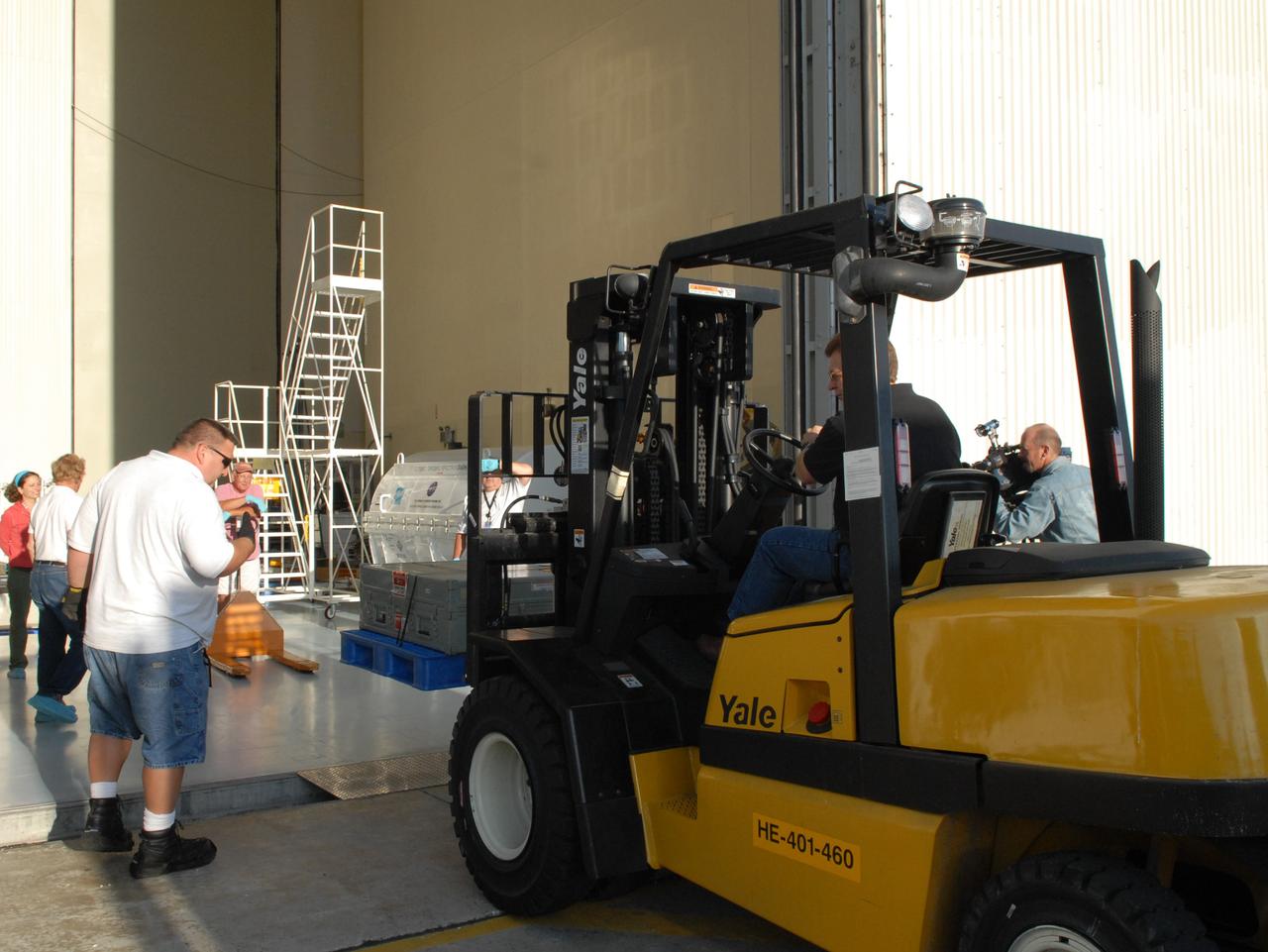
CAPE CANAVERAL, Fla. – The Science Instrument Command and Data Handling Unit, or SIC&DH, is transferred inside the Payload Hazardous Servicing Facility at NASA's Kennedy Space Center in Florida. The SIC&DH will be installed on the Hubble Space Telescope during space shuttle Atlantis' STS-125 mission. This unit will replace the one that suffered a failure aboard the orbiting telescope on Sept. 27, 2008. The SIC&DH is being prepared for integration onto the Multi-Use Lightweight Equipment Carrier .The carrier holds the payload for space shuttle Atlantis' STS-125 mission servicing NASA's Hubble Space Telescope, targeted to launch May 12. Photo credit: NASA/Jack Pfaller
CAPE CANAVERAL, Fla. – In the Payload Hazardous Servicing Facility at NASA's Kennedy Space Center in Florida, a technician helps with the lifting of the Science Instrument Command and Data Handling Unit, or SIC&DH. The unit will be placed on a stand until it is installed on the Multi-Use Lightweight Equipment Carrier. The SIC&DH will be installed on the Hubble Space Telescope during space shuttle Atlantis' STS-125 mission, replacing one that suffered a failure aboard the orbiting telescope on Sept. 27, 2008. The carrier holds the payload for space shuttle Atlantis' STS-125 mission servicing NASA's Hubble Space Telescope, targeted to launch May 12. Photo credit: NASA/Jack Pfaller
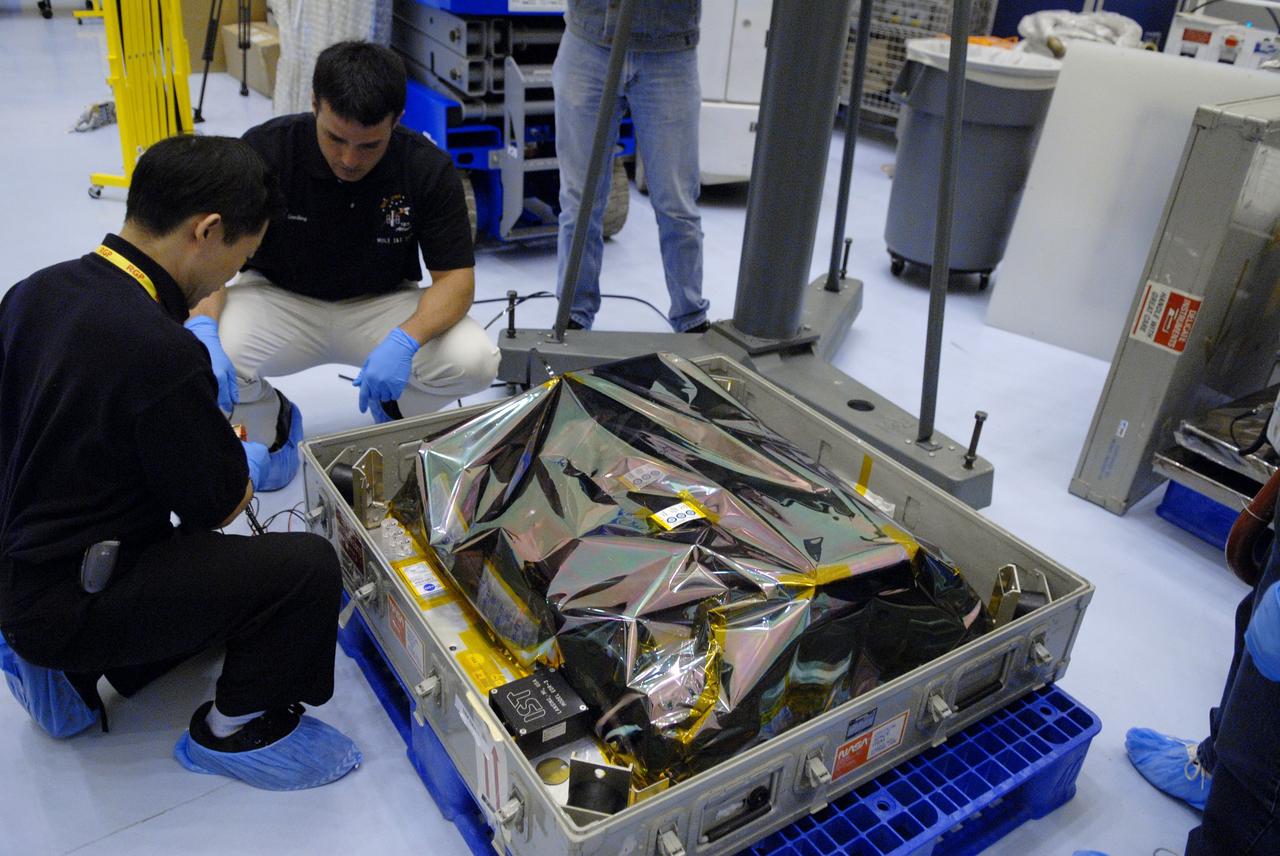
CAPE CANAVERAL, Fla. – In the Payload Hazardous Servicing Facility at NASA's Kennedy Space Center in Florida, technicians remove the shipping cover from the Science Instrument Command and Data Handling Unit, or SIC&DH. The SIC&DH will be installed on the Hubble Space Telescope during space shuttle Atlantis' STS-125 mission. This unit will replace the one that suffered a failure aboard the orbiting telescope on Sept. 27, 2008. The SIC&DH is being prepared for integration onto the Multi-Use Lightweight Equipment Carrier .The carrier holds the payload for space shuttle Atlantis' STS-125 mission servicing NASA's Hubble Space Telescope, targeted to launch May 12. Photo credit: NASA/Jack Pfaller
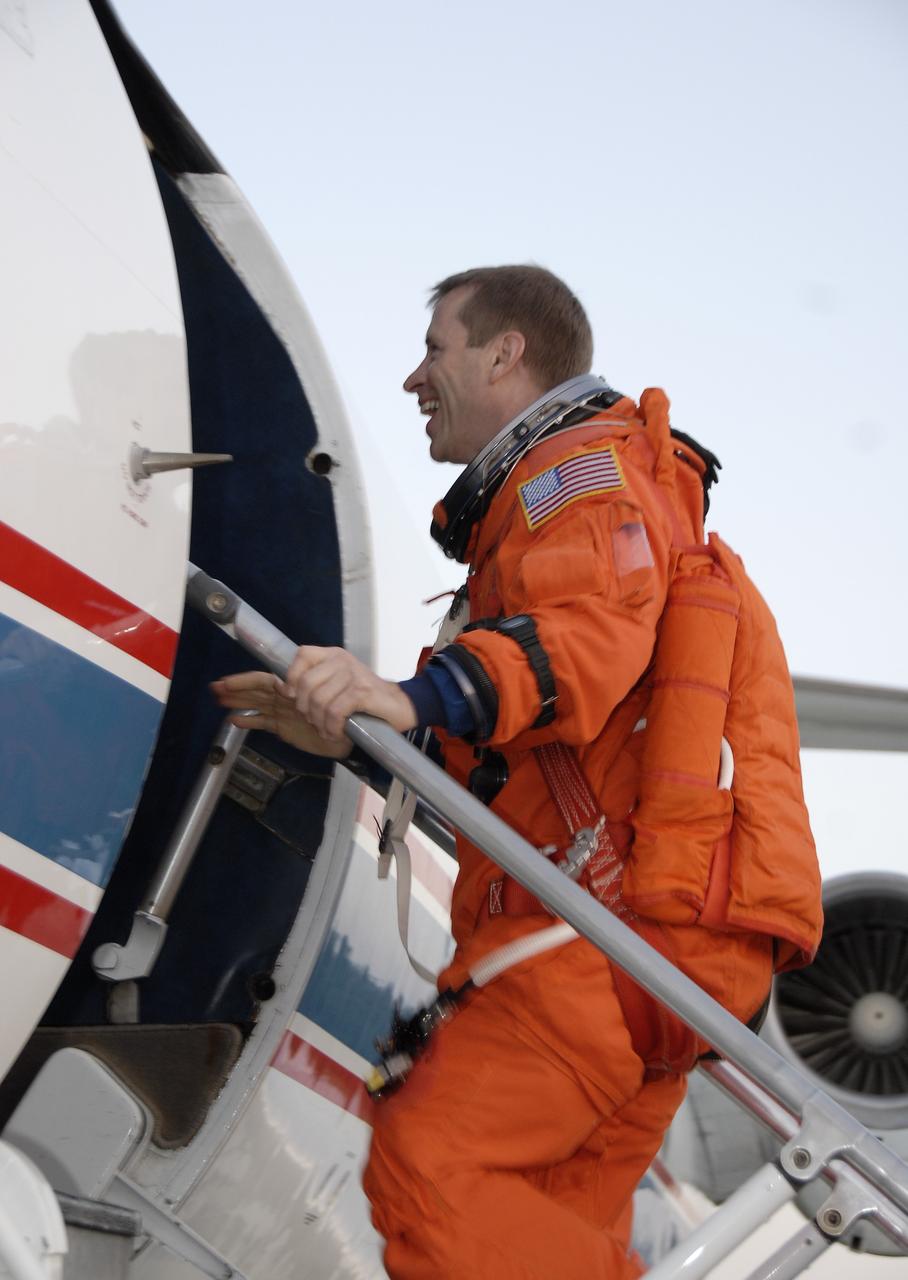
CAPE CANAVERAL, Fla. – On the Shuttle Landing Facility at NASA's Kennedy Space Center in Florida, STS-125 Pilot Gregory C. Johnson, wearing his launch-and-entry suit, heads into the Shuttle Training Aircraft to practice shuttle landings in preparation for launch of space shuttle Atlantis, scheduled for 2:01 p.m. EDT on May 11. On Atlantis’ STS-125 mission, NASA's Hubble Space Telescope will be serviced for the fifth and final time. The flight will include five spacewalks during which astronauts will refurbish and upgrade the telescope with state-of-the-art science instruments. As a result, Hubble's capabilities will be expanded and its operational lifespan extended through at least 2014. Photo credit: NASA/Kim Shiflett
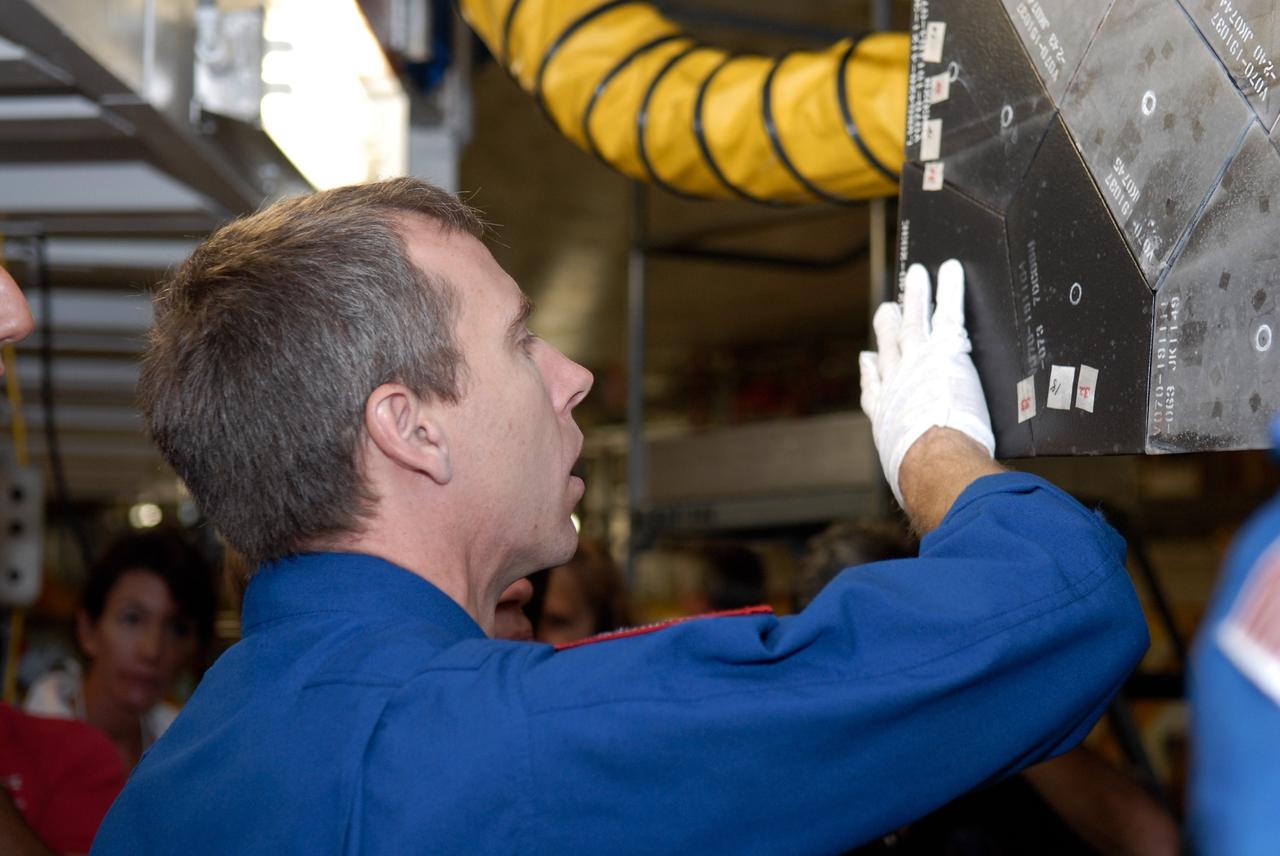
CAPE CANAVERAL, Fla. – In the Orbiter Processing Facility at NASA's Kennedy Space Center, STS-125 Mission Specialist Andrew Feustel touches the thermal protection system tiles on space shuttle Atlantis with a gloved hand during a crew equipment interface test. The CEIT provides hands-on experience with hardware and equipment for their mission. Atlantis is targeted to launch on the STS-125 Hubble Servicing Mission 4 on Oct. 8. Photo credit: NASA/Kim Shiflett
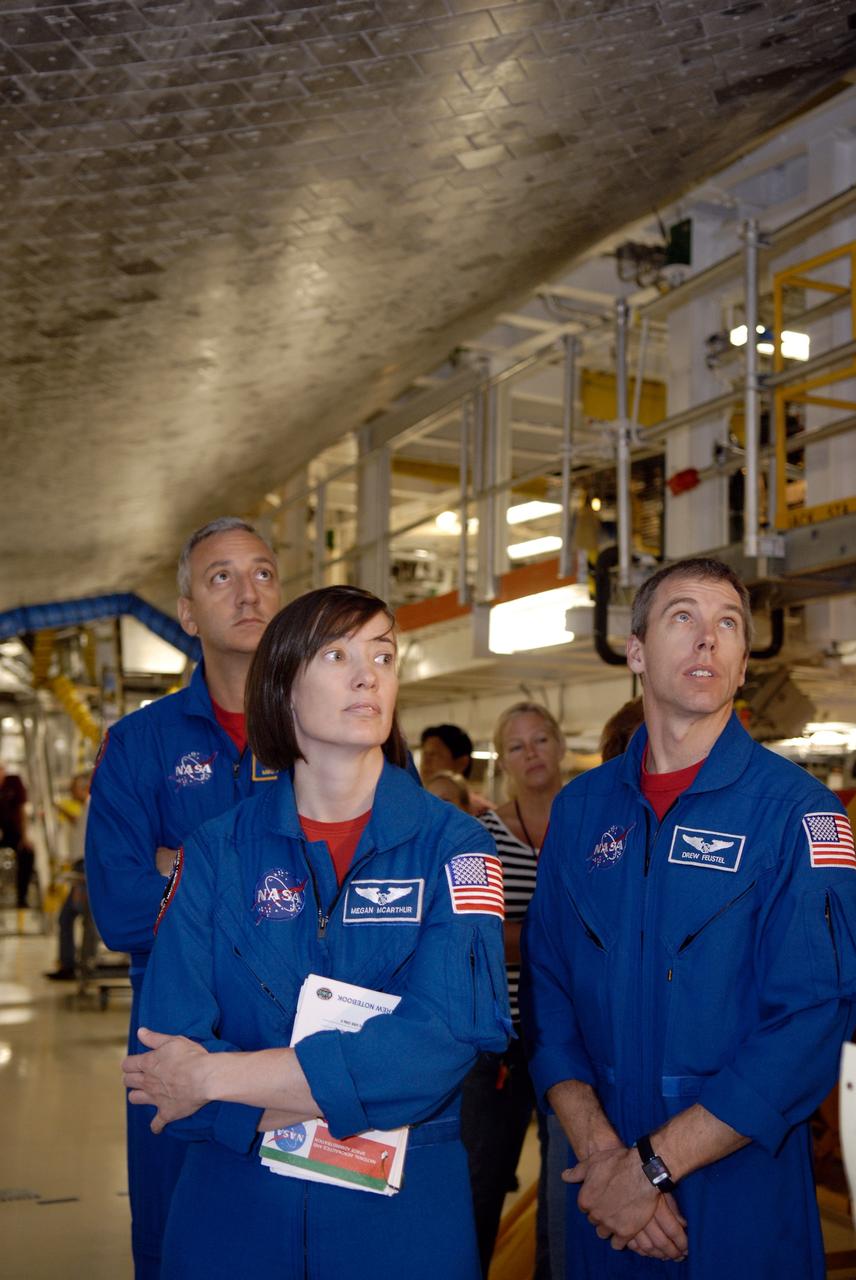
CAPE CANAVERAL, Fla. – In the Orbiter Processing Facility at NASA's Kennedy Space Center, STS-125 Mission Specialists Mike Massimino, Megan McArthur and Andrew Feustel stand underneath space shuttle Atlantis during the crew equipment interface test. The CEIT provides hands-on experience with hardware and equipment for their mission. Atlantis is targeted to launch on the STS-125 Hubble Servicing Mission 4 on Oct. 8. Photo credit: NASA/Kim Shiflett
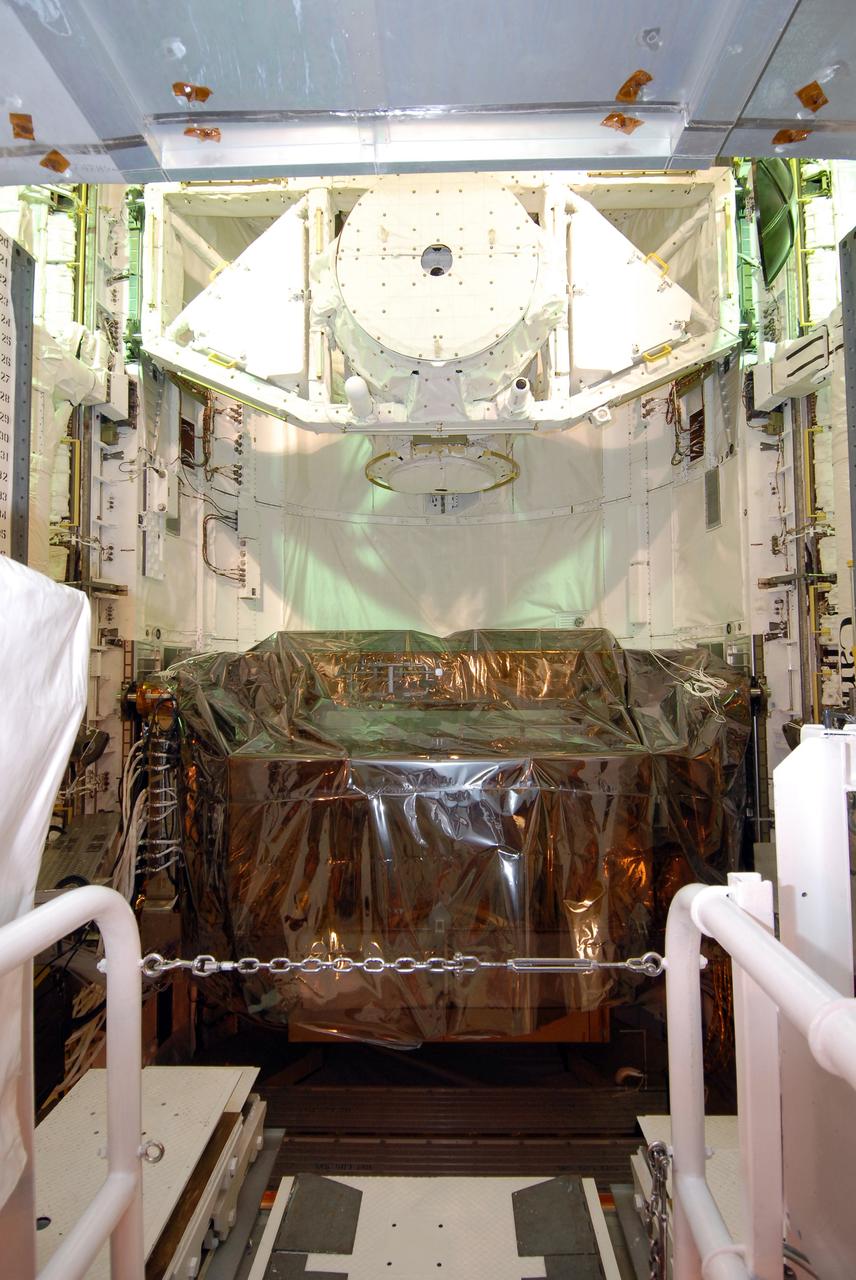
CAPE CANAVERAL, Fla. - On Launch Pad 39A at NASA's Kennedy Space Center in Florida, the Super Lightweight Interchangeable Carrier is installed behind the shuttle external airlock (top) in space shuttle Atlantis’ payload bay for the STS-125 mission. STS-125 is the fifth and final shuttle servicing mission for NASA’s Hubble Space Telescope. The payload comprises four carriers holding various equipment for the mission. Atlantis is targeted to launch Oct. 14 on the 11-day mission. Photo credit: NASA/Jack Pfaller
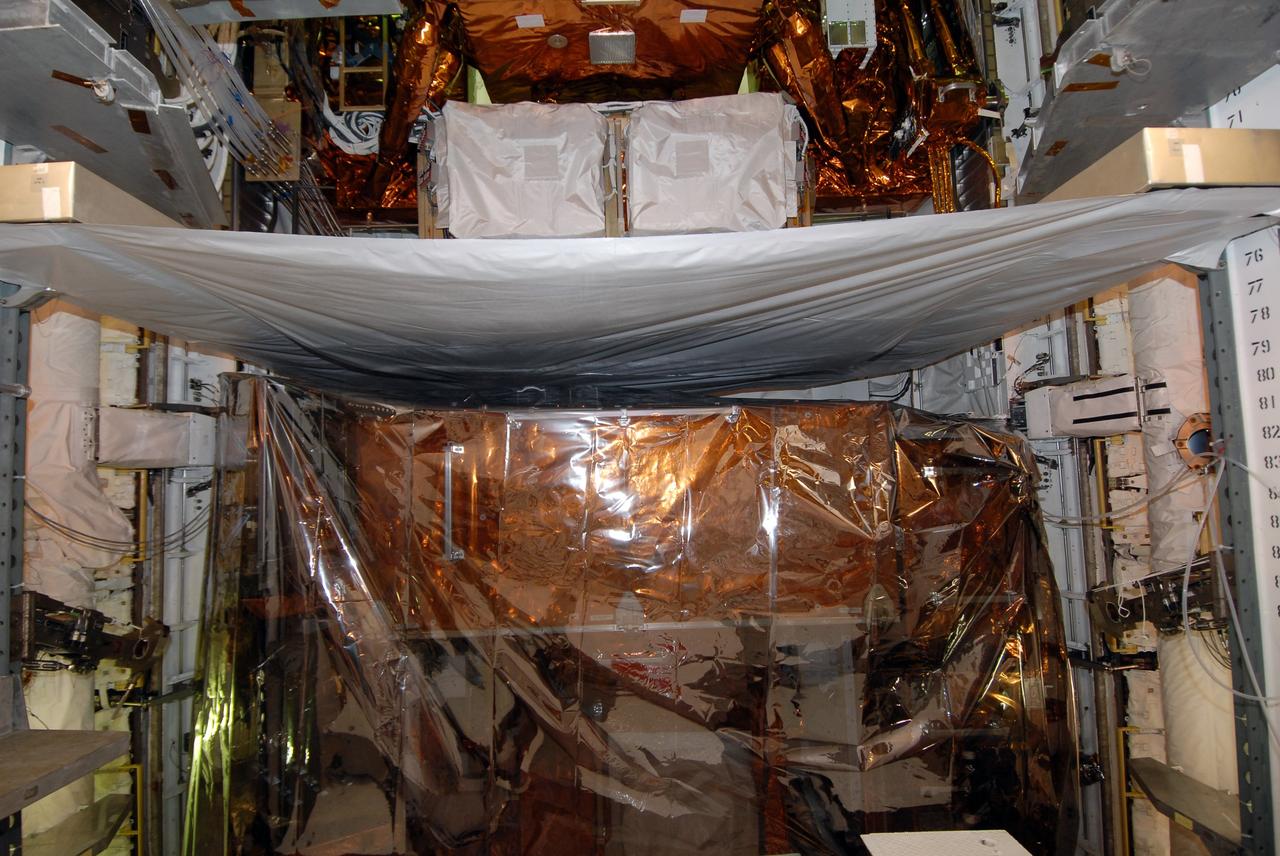
CAPE CANAVERAL, Fla. - In the Payload Changeout Room on Launch Pad 39A at NASA's Kennedy Space Center in Florida, the payload for the STS-125 mission is ready to be moved into space shuttle Atlantis’ payload bay. STS-125 is the fifth and final shuttle servicing mission for NASA’s Hubble Space Telescope. The payload comprises four carriers holding various equipment for the mission. Atlantis is targeted to launch Oct. 14 on the 11-day mission. Photo credit: NASA/Jack Pfaller
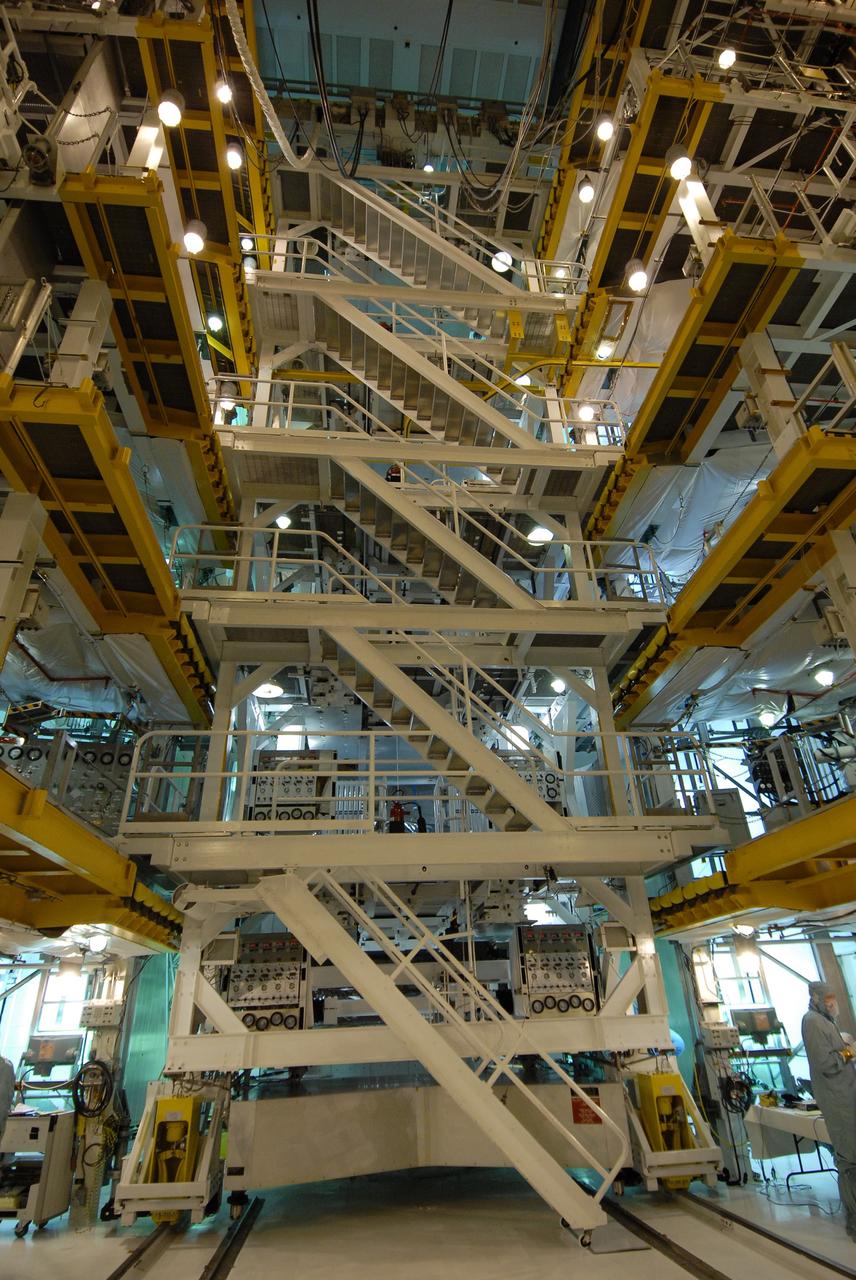
CAPE CANAVERAL, Fla. - In At NASA's Kennedy Space Center in Florida, the payload ground handling mechanism in the Payload Changeout Room on Launch Pad 39A is viewed from the rear as it transfers the STS-125 mission payload into space shuttle Atlantis’ payload bay. STS-125 is the fifth and final shuttle servicing mission for NASA’s Hubble Space Telescope. The payload comprises four carriers holding various equipment for the mission. Atlantis is targeted to launch Oct. 14 on the 11-day mission. Photo credit: NASA/Jack Pfaller
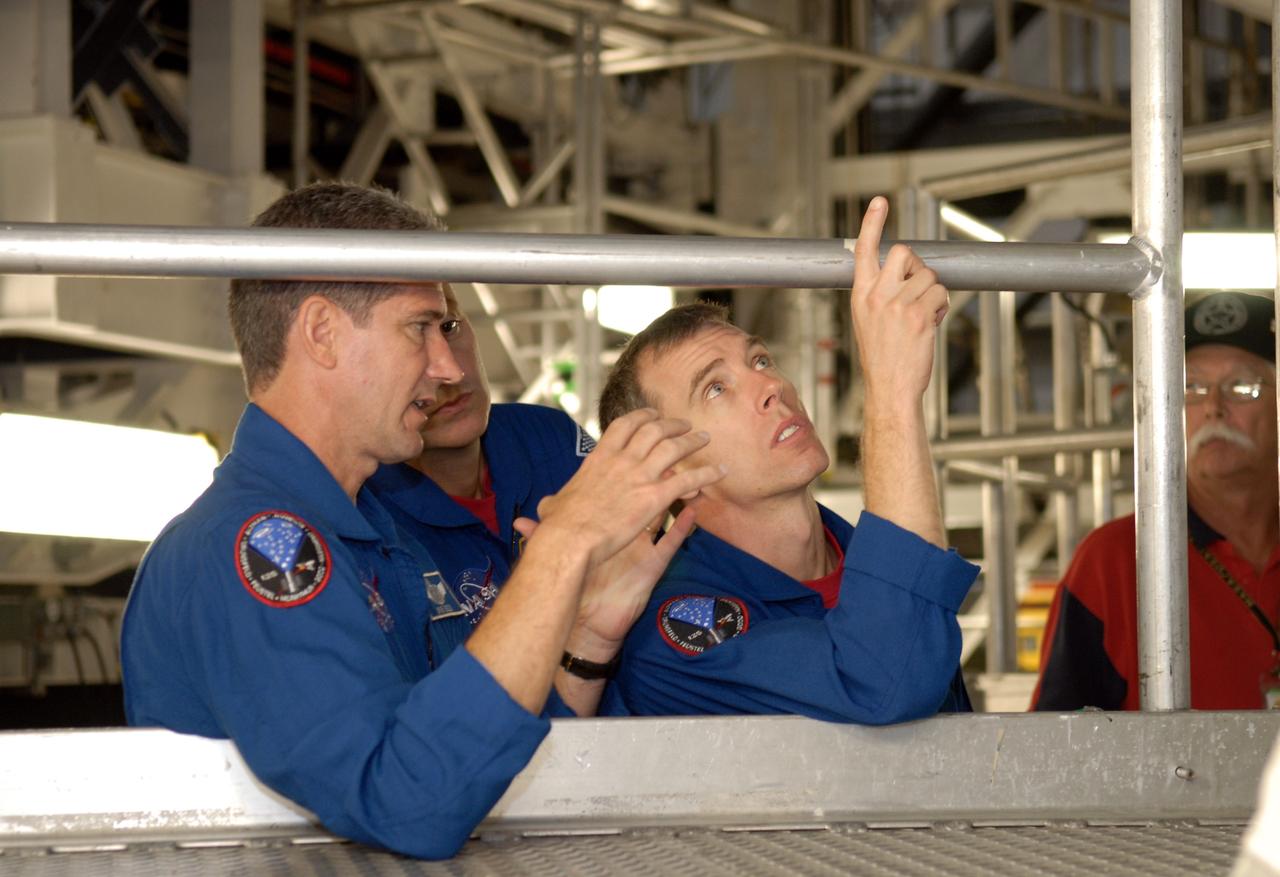
CAPE CANAVERAL, Fla. – In the Orbiter Processing Facility at NASA's Kennedy Space Center, STS-125 Mission Specialists Michael Good, Mike Massimino and Andrew Feustel discuss the tiles they are looking at on the underside of space shuttle Atlantis. Crew members are at Kennedy for a crew equipment interface test, which provides hands-on experience with hardware and equipment for their mission. Atlantis is targeted to launch on the STS-125 Hubble Servicing Mission 4 on Oct. 8. Photo credit: NASA/Kim Shiflett
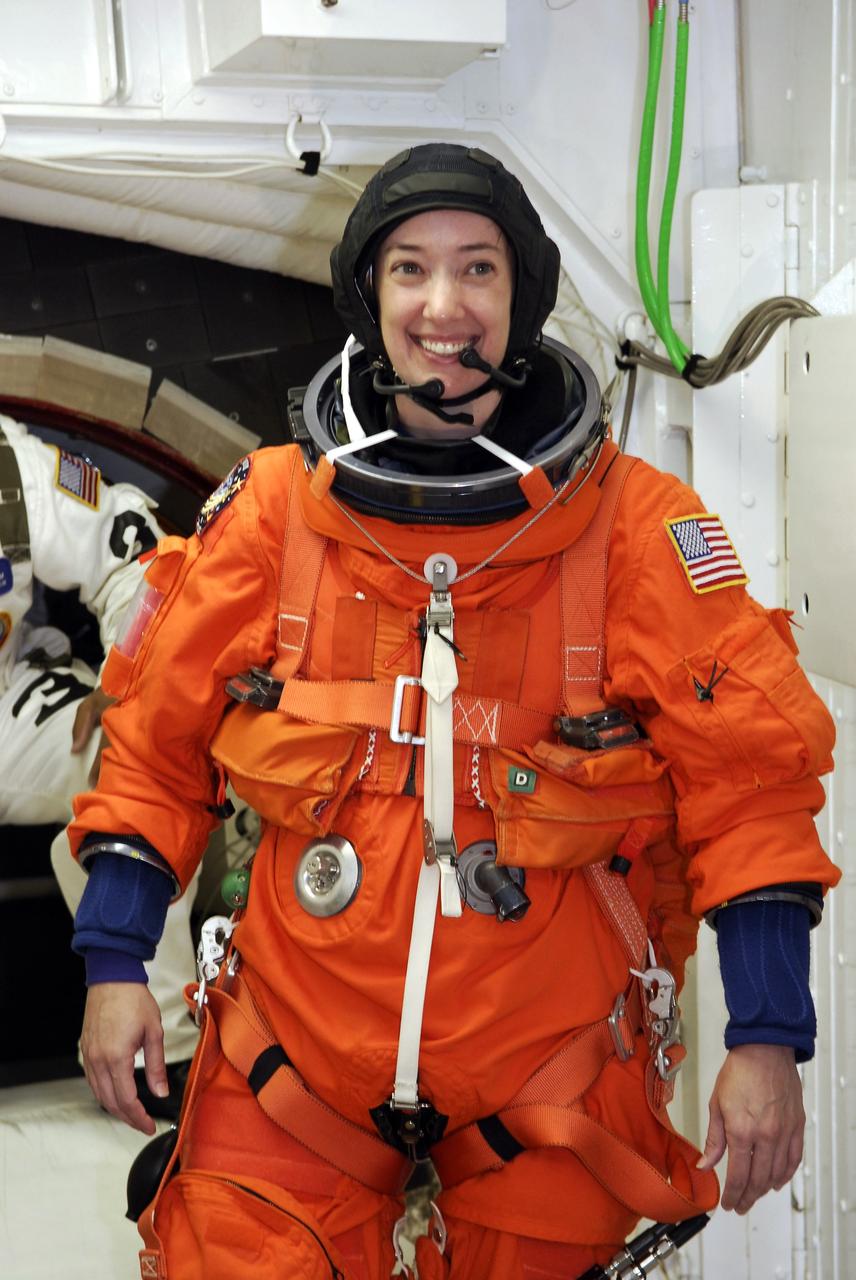
CAPE CANAVERAL, Fla. - STS-125 Mission Specialist Megan McArthur is ready to enter the hatch into space shuttle Atlantis for a simulated launch countdown. The countdown is the culmination of terminal countdown demonstration test, or TCDT, activities as preparation before launch. TCDT provides astronauts and ground crews with an opportunity to participate in various launch activities, including equipment familiarization, emergency training and the countdown. Atlantis’ STS-125 mission to service NASA’s Hubble Space Telescope is targeted for launch Oct. 14. Photo credit: NASA/Amanda Diller
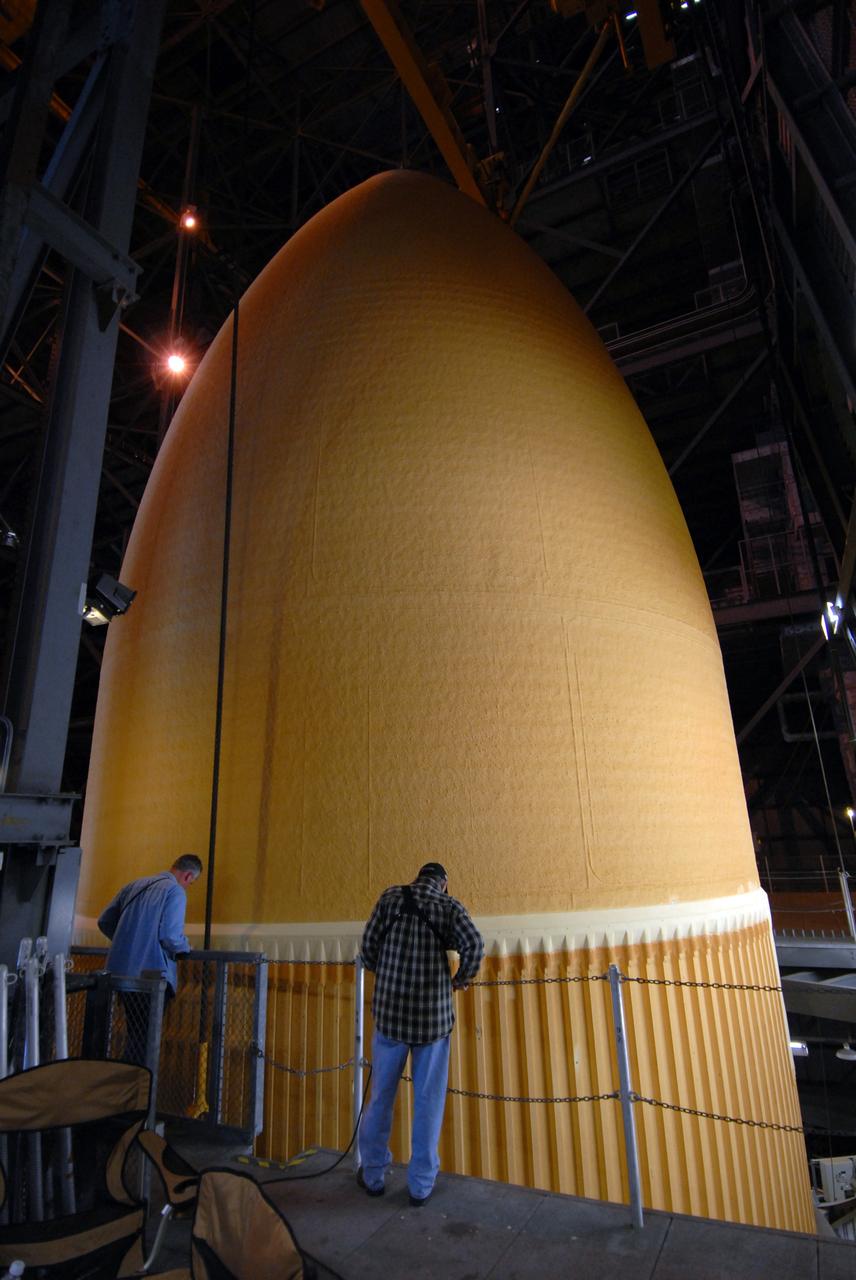
CAPE CANAVERAL, Fla. – In the Vehicle Assembly Building at NASA's Kennedy Space Center in Florida, the external fuel tank for space shuttle Atlantis' STS-125 mission is raised from the checkout cell in order to move it to high bay 3. There it will be lowered onto the mobile launcher platform and attached to the solid rocket boosters already installed. Atlantis' STS-125 mission is the fifth and final shuttle servicing mission to NASA’s Hubble Space Telescope. Launch is targeted for May 12. Photo credit: NASA/Jack Pfaller
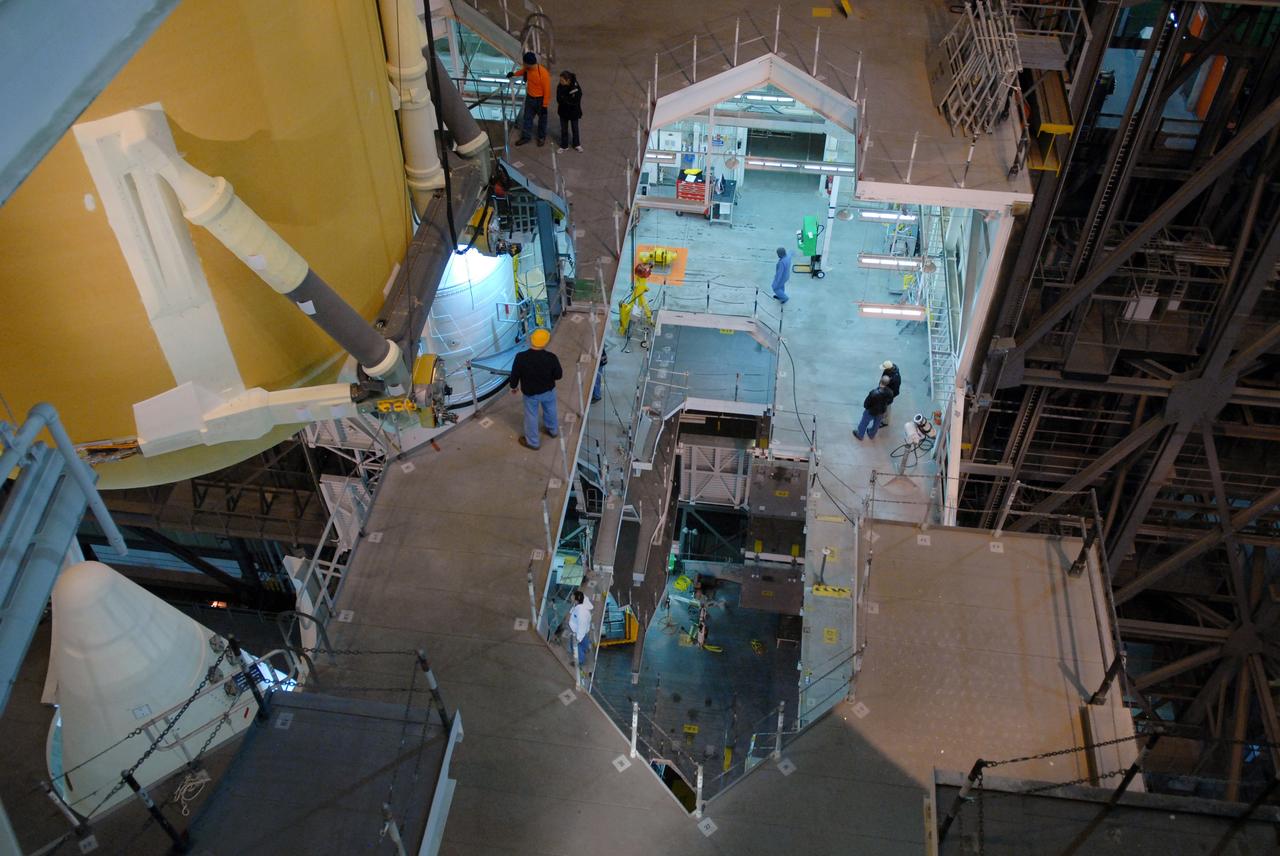
CAPE CANAVERAL, Fla. – In the Vehicle Assembly Building at NASA's Kennedy Space Center in Florida, the external fuel tank for space shuttle Atlantis' STS-125 mission is lowered into high bay 3. It will be installed on the mobile launcher platform and attached to the solid rocket boosters already there. Atlantis' STS-125 mission is the fifth and final shuttle servicing mission to NASA’s Hubble Space Telescope. Launch is targeted for May 12. Photo credit: NASA/Jack Pfaller
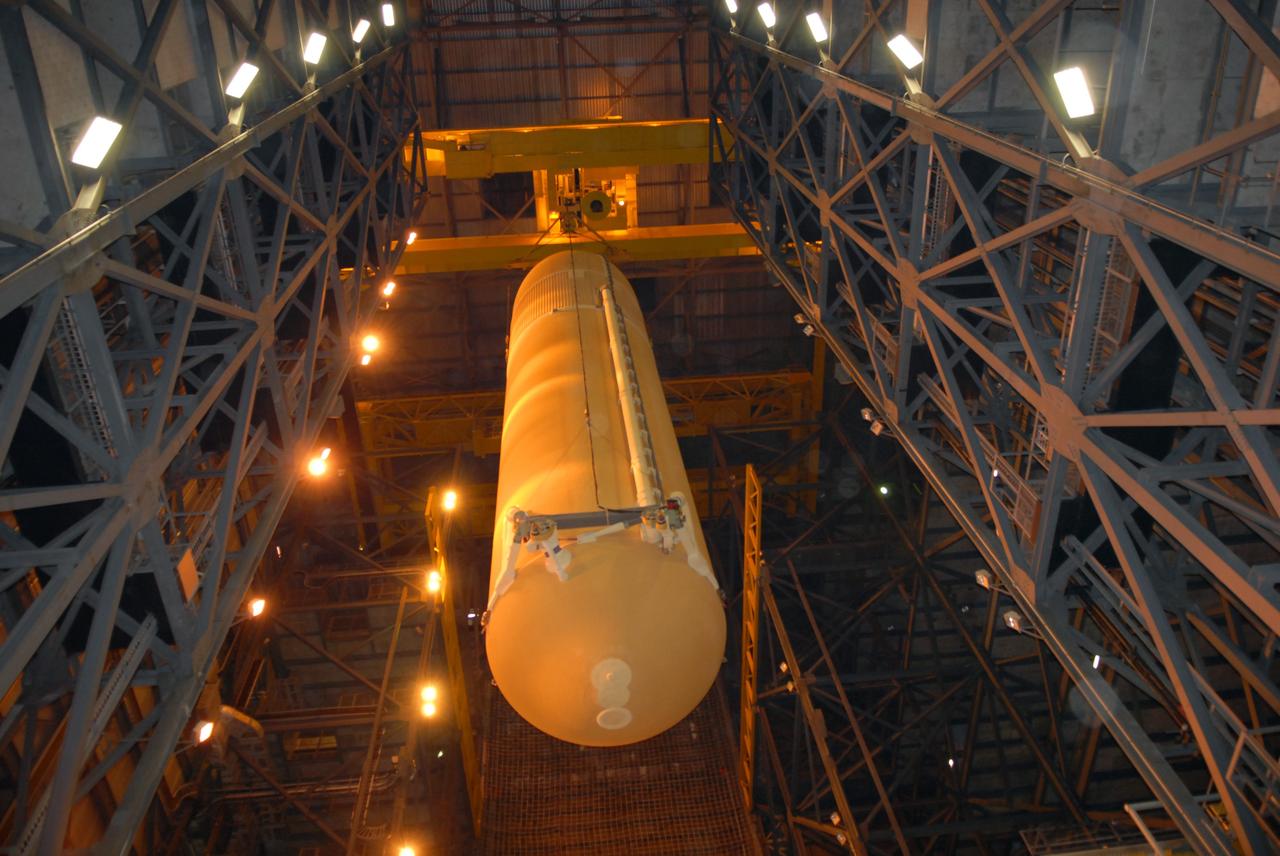
CAPE CANAVERAL, Fla. – In the Vehicle Assembly Building at NASA's Kennedy Space Center in Florida, the external fuel tank for space shuttle Atlantis' STS-125 mission is lowered into high bay 3. It will be installed on the mobile launcher platform and attached to the solid rocket boosters already there. Atlantis' STS-125 mission is the fifth and final shuttle servicing mission to NASA’s Hubble Space Telescope. Launch is targeted for May 12. Photo credit: NASA/Jack Pfaller
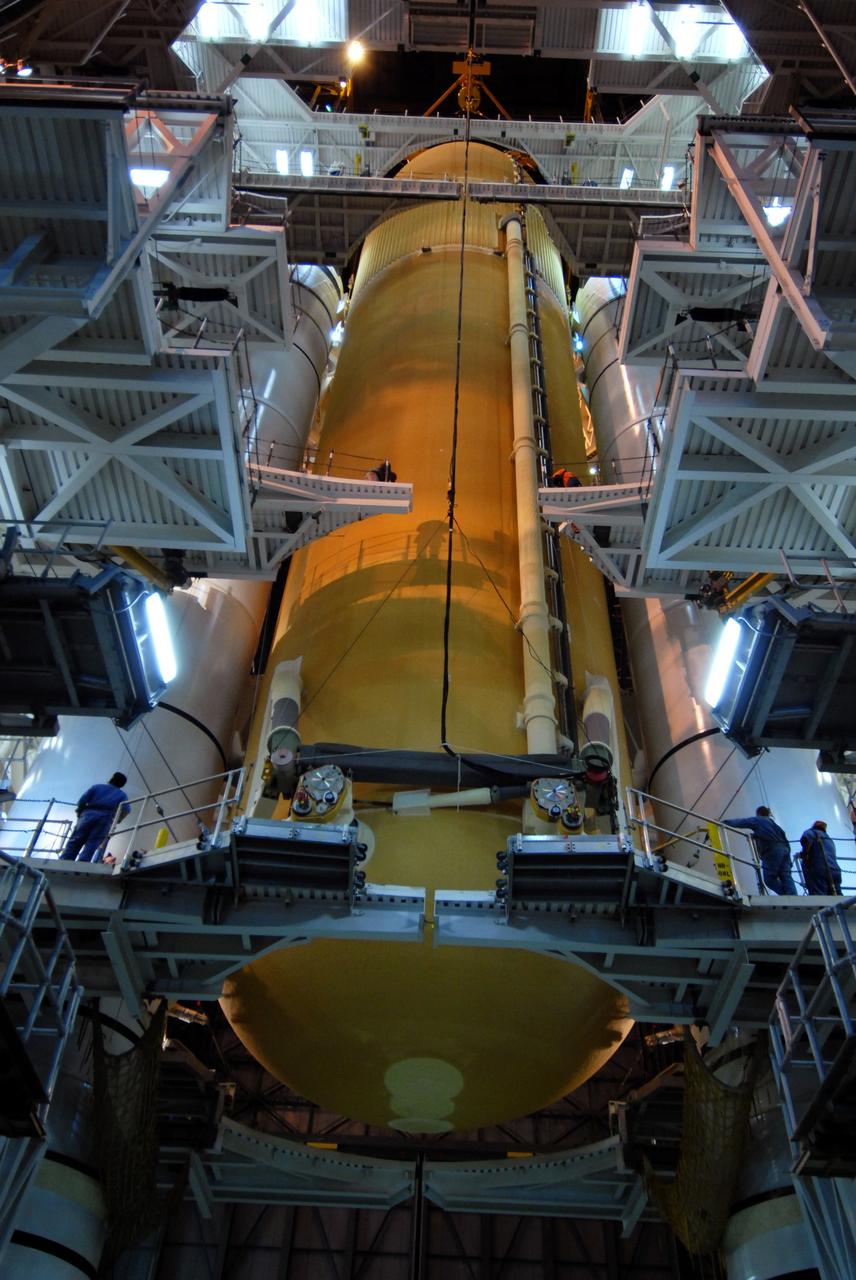
CAPE CANAVERAL, Fla. – In the Vehicle Assembly Building at NASA's Kennedy Space Center in Florida, the external fuel tank for space shuttle Atlantis' STS-125 mission is lowered between the solid rocket boosters installed on the mobile launcher platform in high bay 3. The tank and boosters will be attached for launch. Atlantis' STS-125 mission is the fifth and final shuttle servicing mission to NASA’s Hubble Space Telescope. Launch is targeted for May 12. Photo credit: NASA/Jack Pfaller
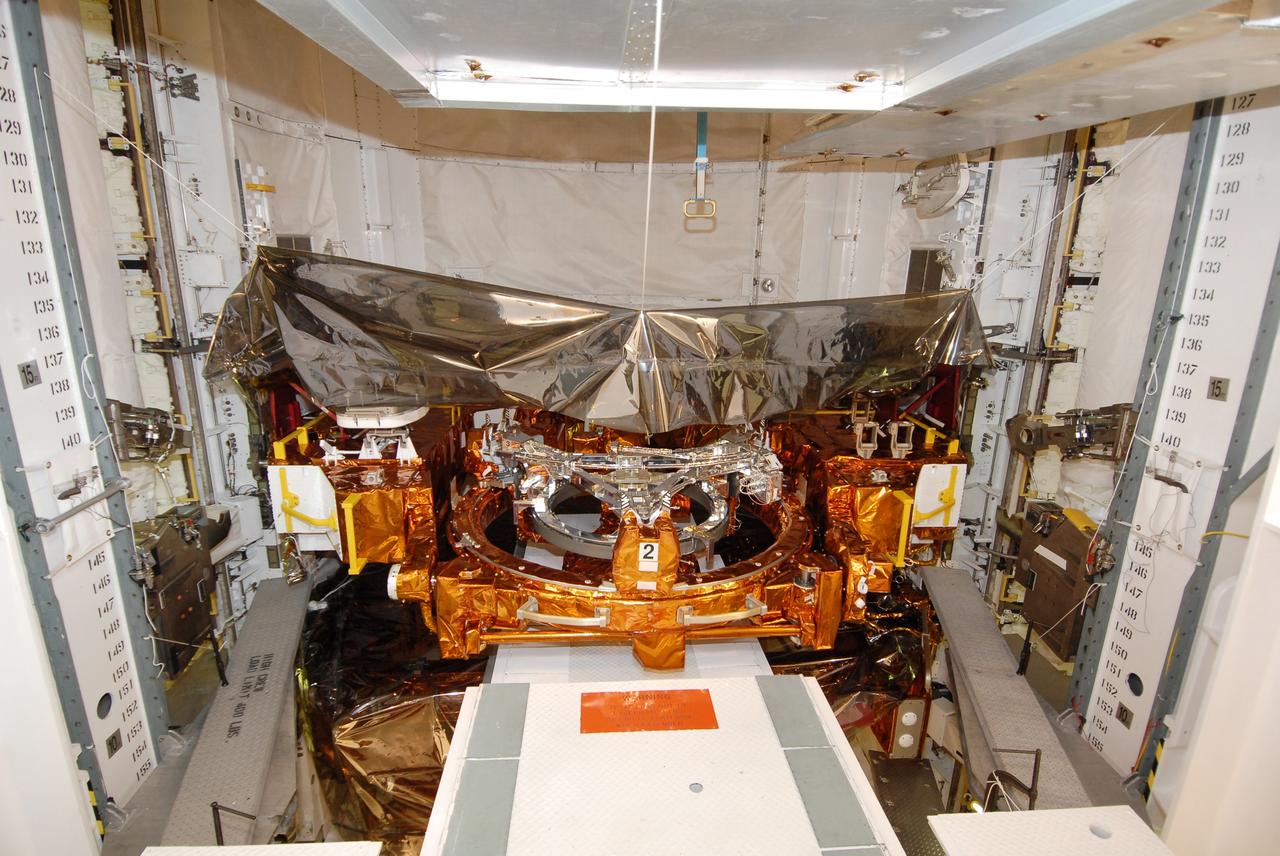
CAPE CANAVERAL, Fla. - In the Payload Changeout Room on Launch Pad 39A at NASA's Kennedy Space Center in Florida, the payload for the STS-125 mission is ready to be moved into space shuttle Atlantis’ payload bay. STS-125 is the fifth and final shuttle servicing mission for NASA’s Hubble Space Telescope. The payload comprises four carriers holding various equipment for the mission. Atlantis is targeted to launch Oct. 14 on the 11-day mission. Photo credit: NASA/Jack Pfaller
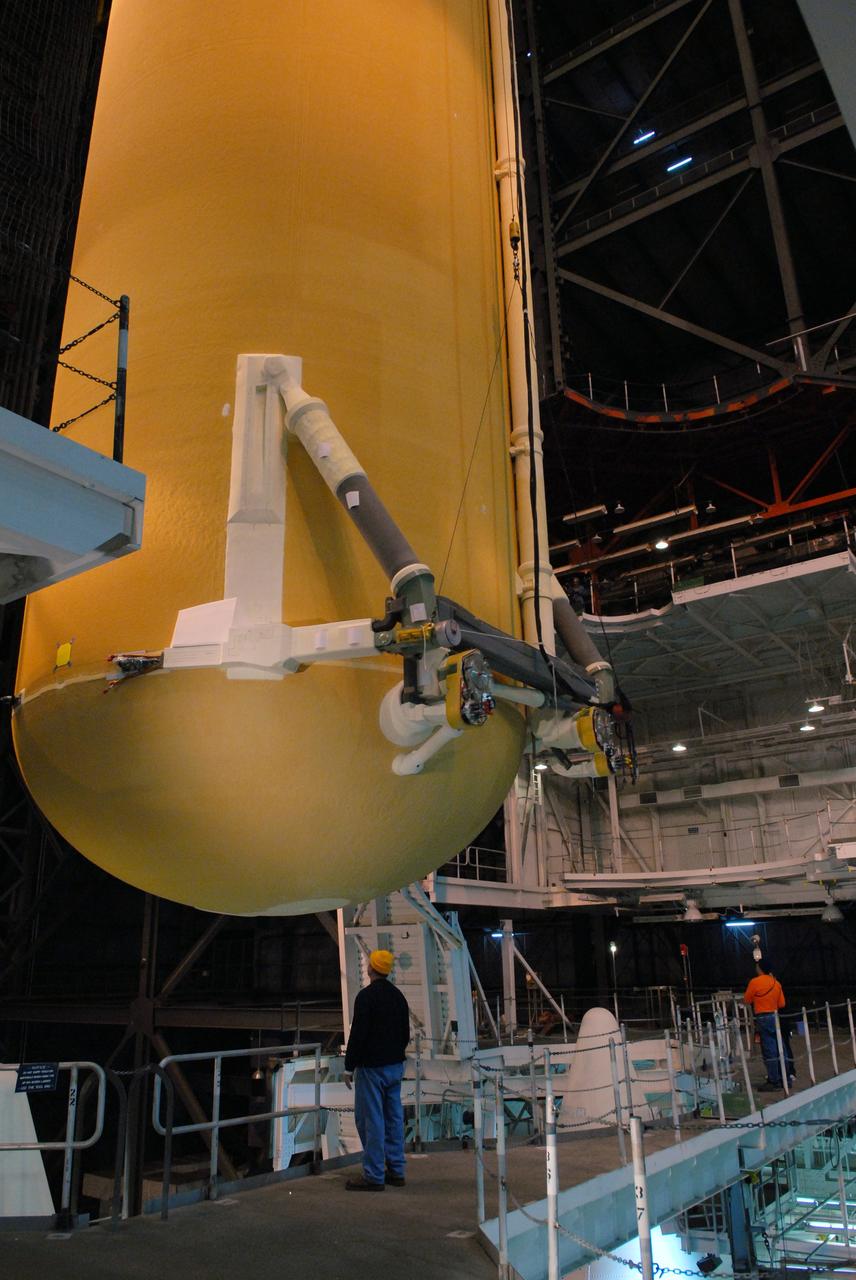
CAPE CANAVERAL, Fla. – In the Vehicle Assembly Building at NASA's Kennedy Space Center in Florida, the external fuel tank for space shuttle Atlantis' STS-125 mission is lowered into high bay 3. It will be installed on the mobile launcher platform and attached to the solid rocket boosters already there. Atlantis' STS-125 mission is the fifth and final shuttle servicing mission to NASA’s Hubble Space Telescope. Launch is targeted for May 12. Photo credit: NASA/Jack Pfaller
CAPE CANAVERAL, Fla. - In the Payload Changeout Room on Launch Pad 39A at NASA's Kennedy Space Center in Florida, a worker uses the payload ground handling mechanism to install the payload for the STS-125 mission into space shuttle Atlantis’ payload bay. STS-125 is the fifth and final shuttle servicing mission for NASA’s Hubble Space Telescope. The payload comprises four carriers holding various equipment for the mission. Atlantis is targeted to launch Oct. 14 on the 11-day mission. Photo credit: NASA/Jack Pfaller
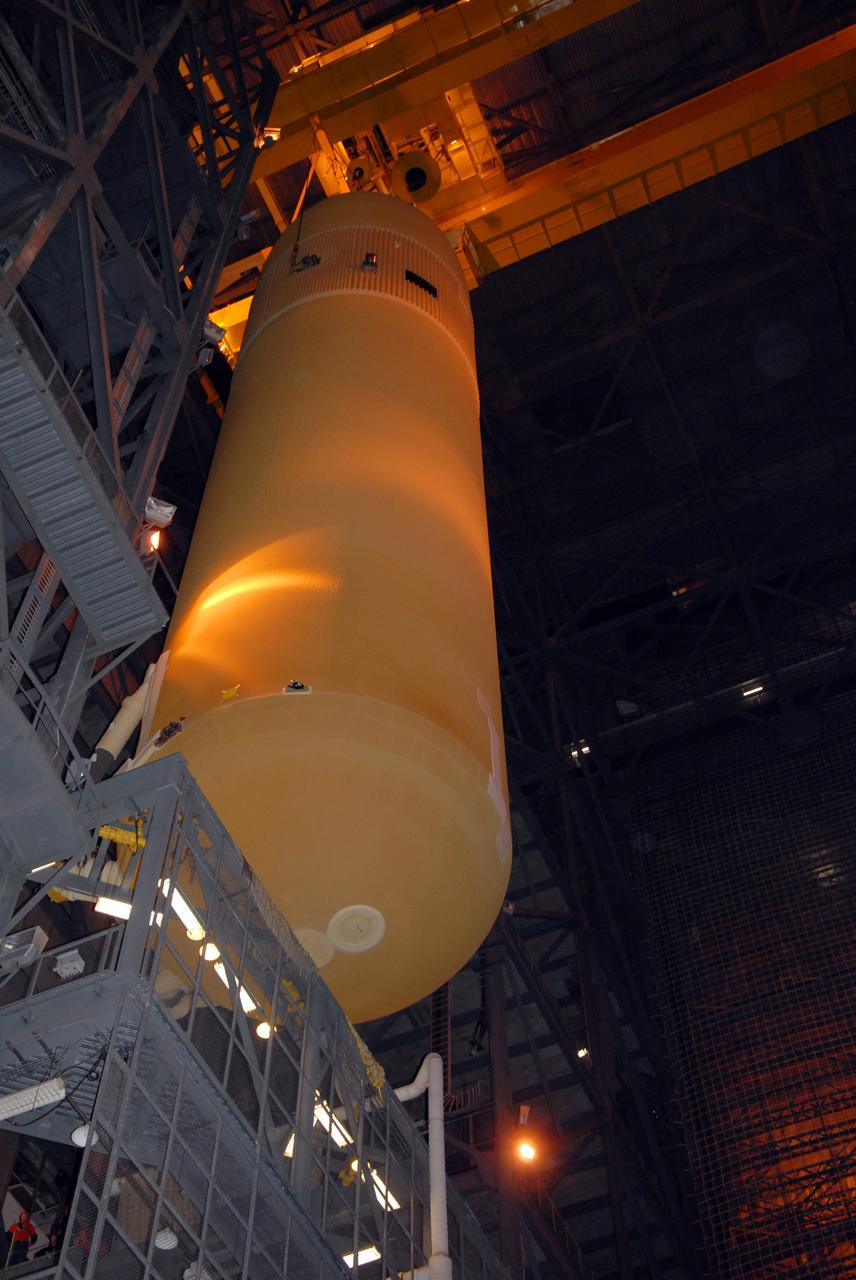
CAPE CANAVERAL, Fla. – In the Vehicle Assembly Building at NASA's Kennedy Space Center in Florida, the external fuel tank for space shuttle Atlantis' STS-125 mission is moved out of the checkout cell. The tank will be lowered into high bay 3 onto the mobile launcher platform and attached to the solid rocket boosters already installed. Atlantis' STS-125 mission is the fifth and final shuttle servicing mission to NASA’s Hubble Space Telescope. Launch is targeted for May 12. Photo credit: NASA/Jack Pfaller

CAPE CANAVERAL, Fla. – In the Orbiter Processing Facility at NASA's Kennedy Space Center, STS-125 Pilot Gregory C. Johnson stands underneath space shuttle Atlantis during the crew equipment interface test. The CEIT provides hands-on experience with hardware and equipment for their mission. Atlantis is targeted to launch on the STS-125 Hubble Servicing Mission 4 on Oct. 8. Photo credit: NASA/Kim Shiflett
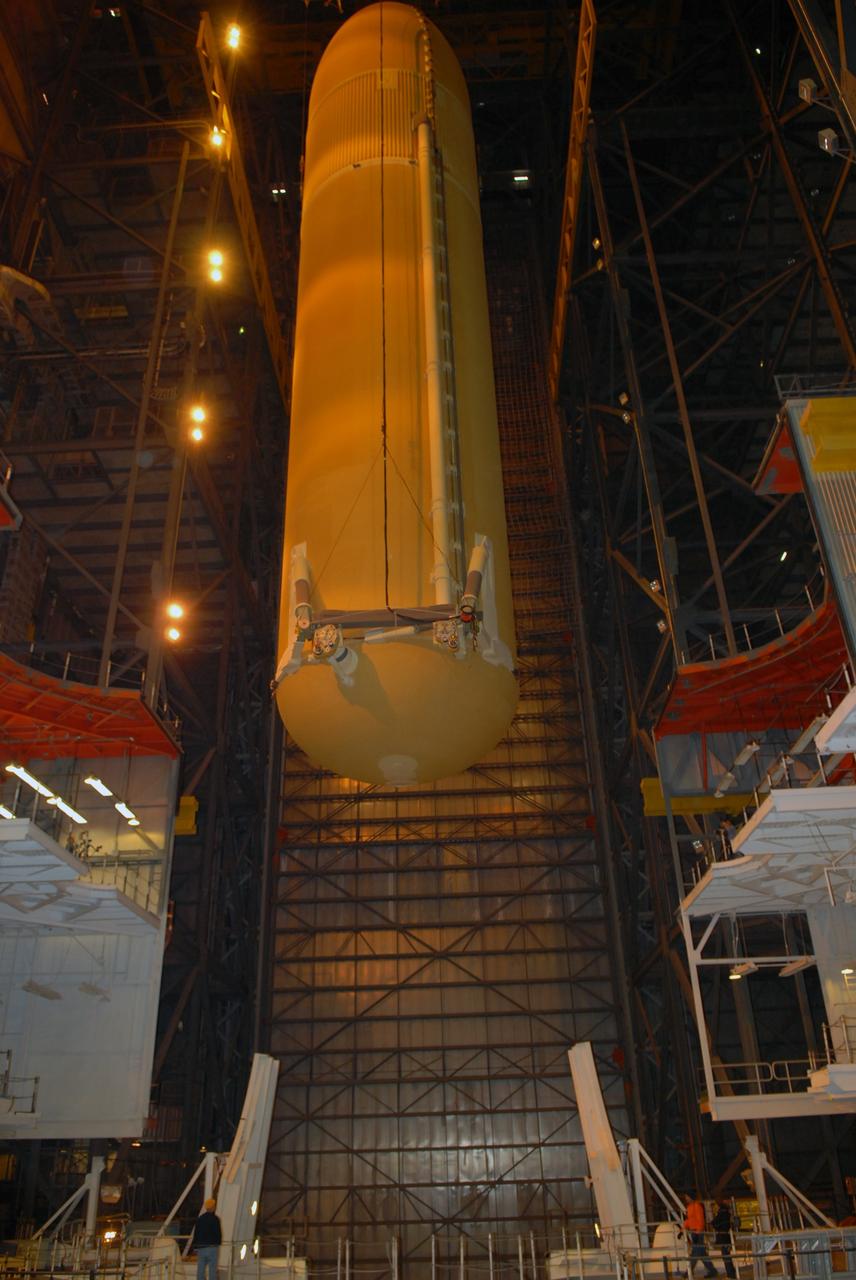
CAPE CANAVERAL, Fla. – In the Vehicle Assembly Building at NASA's Kennedy Space Center in Florida, the external fuel tank for space shuttle Atlantis' STS-125 mission is lowered into high bay 3. It will be installed on the mobile launcher platform and attached to the solid rocket boosters already there. Atlantis' STS-125 mission is the fifth and final shuttle servicing mission to NASA’s Hubble Space Telescope. Launch is targeted for May 12. Photo credit: NASA/Jack Pfaller
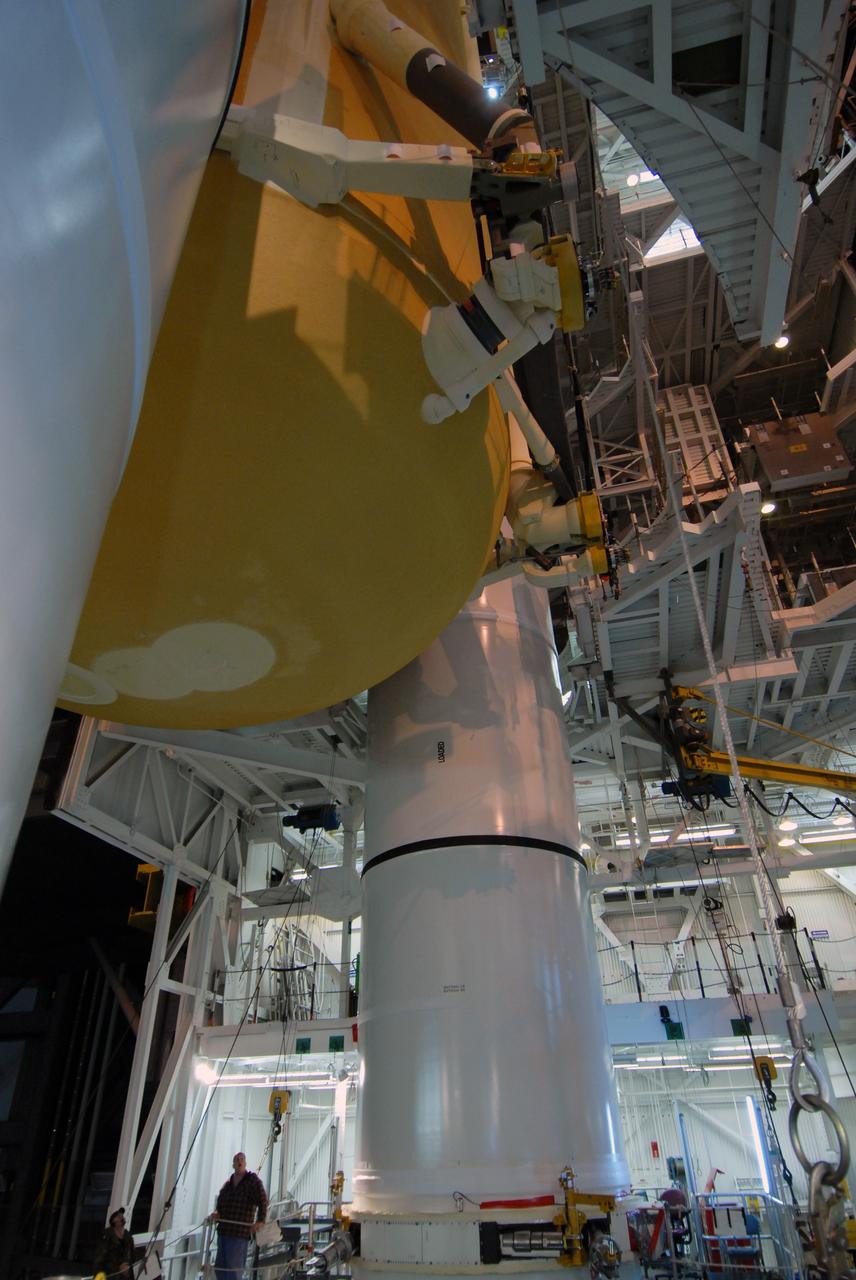
CAPE CANAVERAL, Fla. – In the Vehicle Assembly Building at NASA's Kennedy Space Center in Florida, the external fuel tank for space shuttle Atlantis' STS-125 mission is lowered between the solid rocket boosters installed on the mobile launcher platform in high bay 3. The tank and boosters will be attached for launch. Atlantis' STS-125 mission is the fifth and final shuttle servicing mission to NASA’s Hubble Space Telescope. Launch is targeted for May 12. Photo credit: NASA/Jack Pfaller
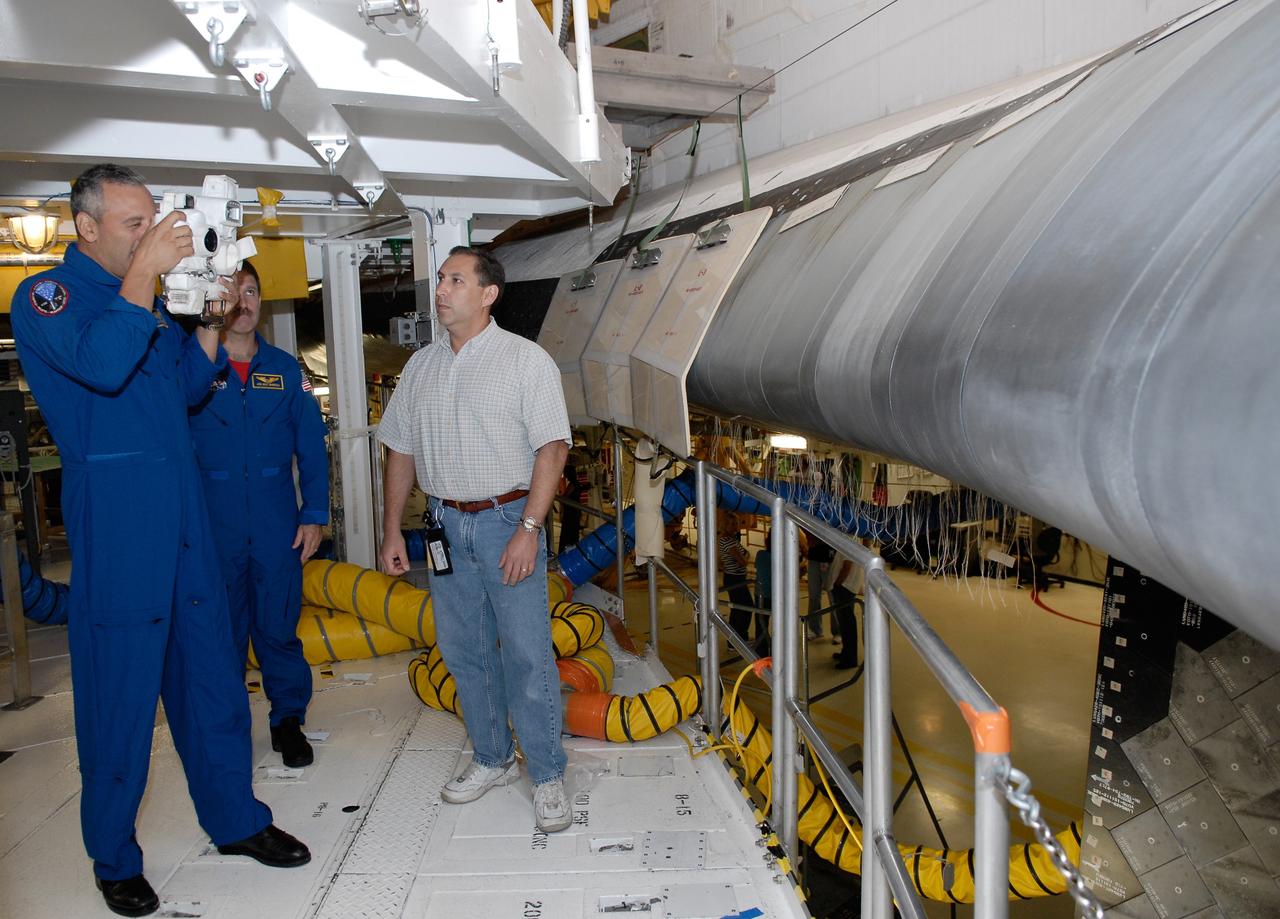
CAPE CANAVERAL, Fla. – In the Orbiter Processing Facility at NASA's Kennedy Space Center, STS-125 Mission Specialist Mike Massimino focuses on the wing of space shuttle Atlantis with a camera to be used on the mission as Mission Specialist John Grunsfeld observes. The crew is at Kennedy for a crew equipment interface test, which provides hands-on experience with hardware and equipment for the mission. Atlantis is targeted to launch on the STS-125 Hubble Servicing Mission 4 on Oct. 8. Photo credit: NASA/Kim Shiflett
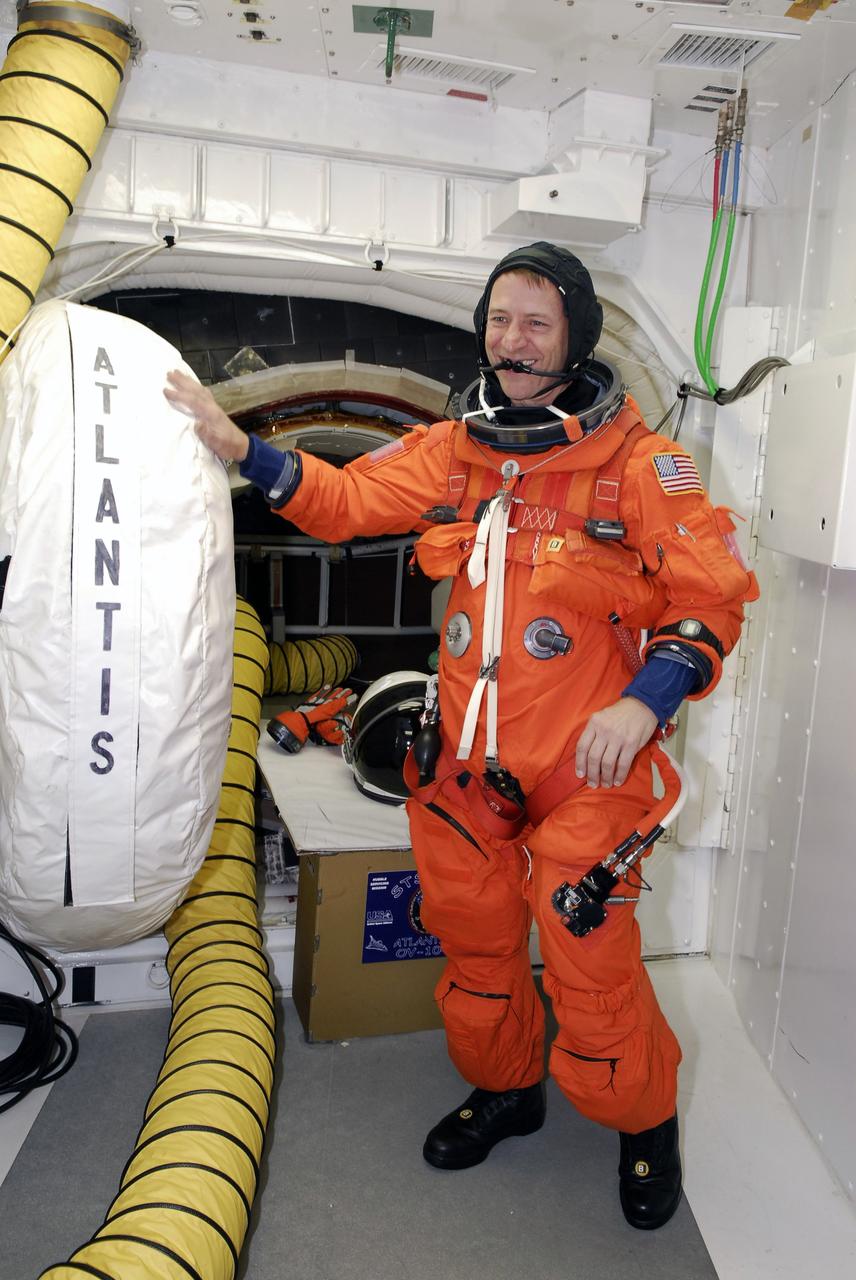
CAPE CANAVERAL, Fla. - STS-125 Mission Specialist Andrew Feustel is ready to enter the hatch into space shuttle Atlantis for a simulated launch countdown. The countdown is the culmination of terminal countdown demonstration test, or TCDT, activities as preparation before launch. TCDT provides astronauts and ground crews with an opportunity to participate in various launch activities, including equipment familiarization, emergency training and the countdown. Atlantis’ STS-125 mission to service NASA’s Hubble Space Telescope is targeted for launch Oct. 14. Photo credit: NASA/Amanda Diller

CAPE CANAVERAL, Fla. –– Space shuttle Atlantis on Launch Pad 39A is viewed across the lagoon at NASA's Kennedy Space Center in Florida. Atlantis is targeted to launch May 12 on the STS-125 mission to upgrade NASA's Hubble Space Telescope. Photo credit: NASA/Jack Pfaller
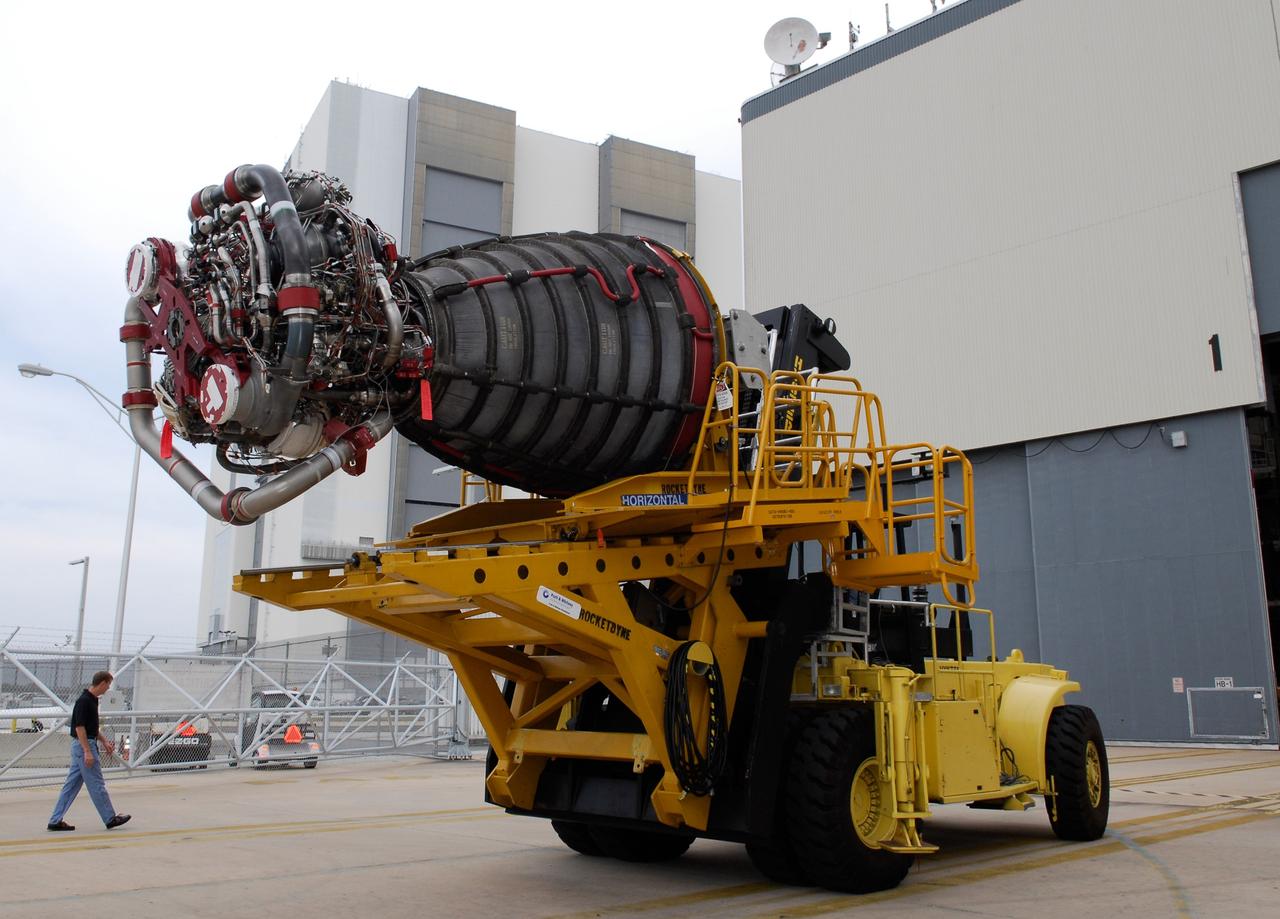
CAPE CANAVERAL, Fla. – One of the three main engines for space shuttle Atlantis is transported to Orbiter Processing Facility bay No. 1 for installation. Atlantis is the designated vehicle for the STS-125 mission to service the Hubble Space Telescope. Launch is targeted for Oct. 8. Photo credit: NASA/Kim Shiflett