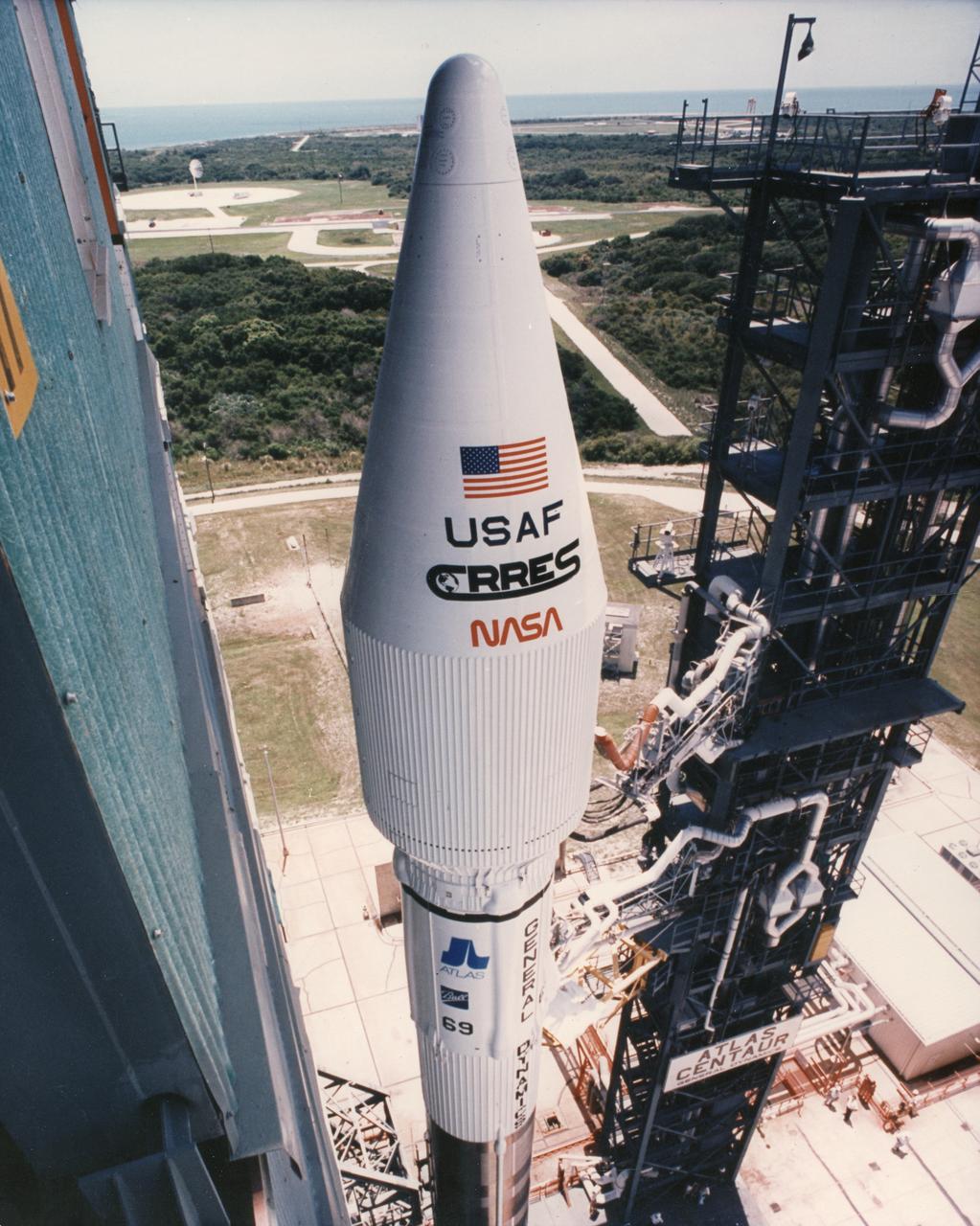
In July 1990, the Marshall Space Flight Center, in a joint project with the Department of Defense/Air Force Space Test Program, launched the Combined Release and Radiation Effects Satellite (CRRES) using an Atlas I launch vehicle. The mission was designed to study the effects of artificial ion clouds produced by chemical releases on the Earth's ionosphere and magnetosphere, and to monitor the effects of space radiation environment on sophisticated electronics.
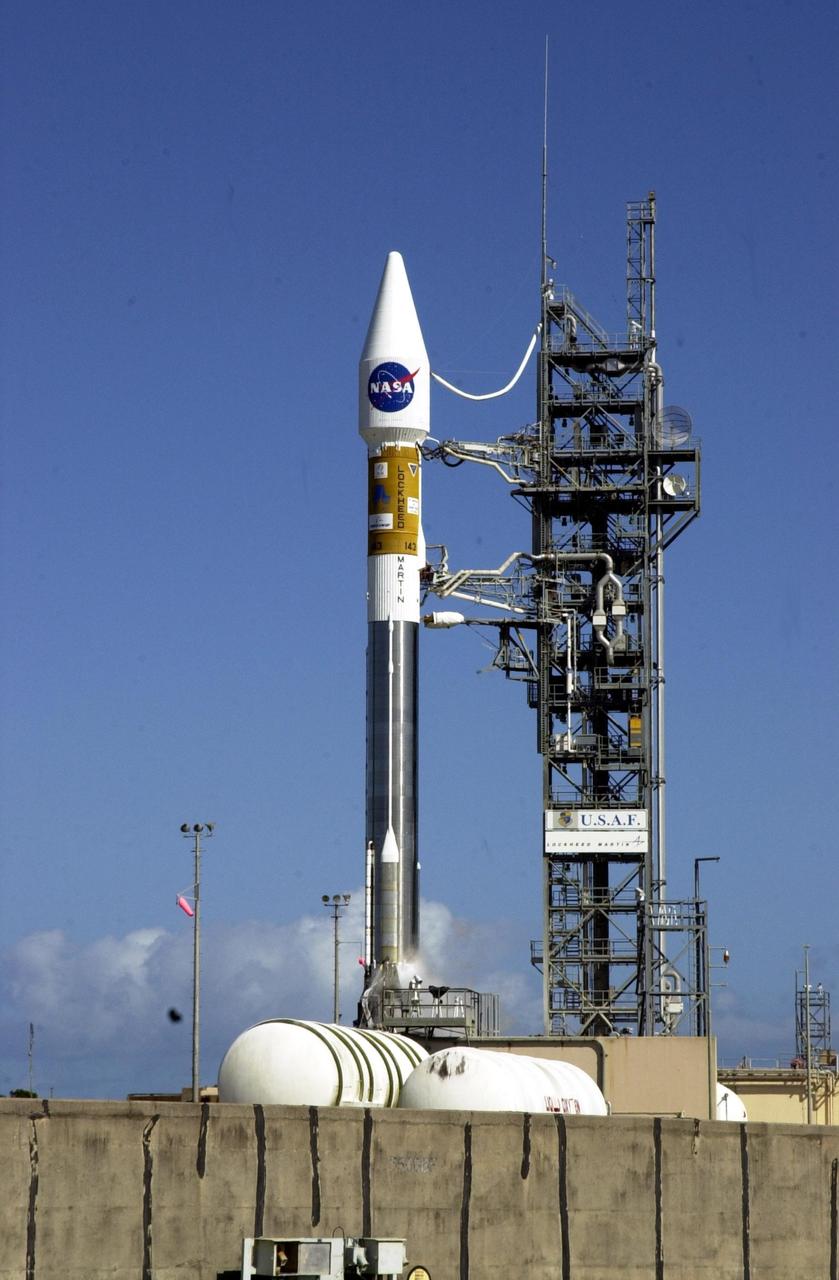
KENNEDY SPACE CENTER, FLA. -- On Launch Pad 36-A, Cape Canaveral Air Force Station, this Lockheed Martin Atlas/Centaur rocket waits for launch to carry the Tracking and Data Relay Satellite-I (TDRS-I) into orbit. The second in a new series of telemetry satellites, TDRS-I replenishes the existing on-orbit fleet of six spacecraft. The TDRS System is the primary source of space-to-ground voice, data and telemetry for the Space Shuttle. It also provides communications with the International Space Station and scientific spacecraft in low-Earth orbit such as the Hubble Space Telescope. This new advanced series of satellites will extend the availability of TDRS communications services until about 2017. Launch of TDRS-I atop the Atlas rocket is scheduled between 5:39 - 6:19 p.m. EST

KENNEDY SPACE CENTER, FLA. -- The Lockheed Martin Atlas/Centaur rocket stands free from the launch tower after rollback. The rocket will carry the Tracking and Data Relay Satellite-I (TDRS-I) into orbit. The second in a new series of telemetry satellites, TDRS-I replenishes the existing on-orbit fleet of six spacecraft. The TDRS System is the primary source of space-to-ground voice, data and telemetry for the Space Shuttle. It also provides communications with the International Space Station and scientific spacecraft in low-Earth orbit such as the Hubble Space Telescope. This new advanced series of satellites will extend the availability of TDRS communications services until about 2017. Launch of TDRS-I atop the Atlas rocket is scheduled between 5:39 - 6:19 p.m. EST from Launch Pad 36-A, Cape Canaveral Air Force Station

KENNEDY SPACE CENTER, FLA. - The upper stage of this Lockheed Martin Atlas/Centaur rocket encloses the Tracking and Data Relay Satellite-I (TDRS-I), the second in a new series of telemetry satellites that are replenishing the existing on-orbit fleet of six spacecraft. The TDRS System is the primary source of space-to-ground voice, data and telemetry for the Space Shuttle. It also provides communications with the International Space Station and scientific spacecraft in low-Earth orbit such as the Hubble Space Telescope. This new advanced series of satellites will extend the availability of TDRS communications services until about 2017. Launch of TDRS-I atop the Atlas rocket is scheduled today between 5:39 - 6:19 p.m. EST from Launch Pad 36-A, Cape Canaveral Air Force Station
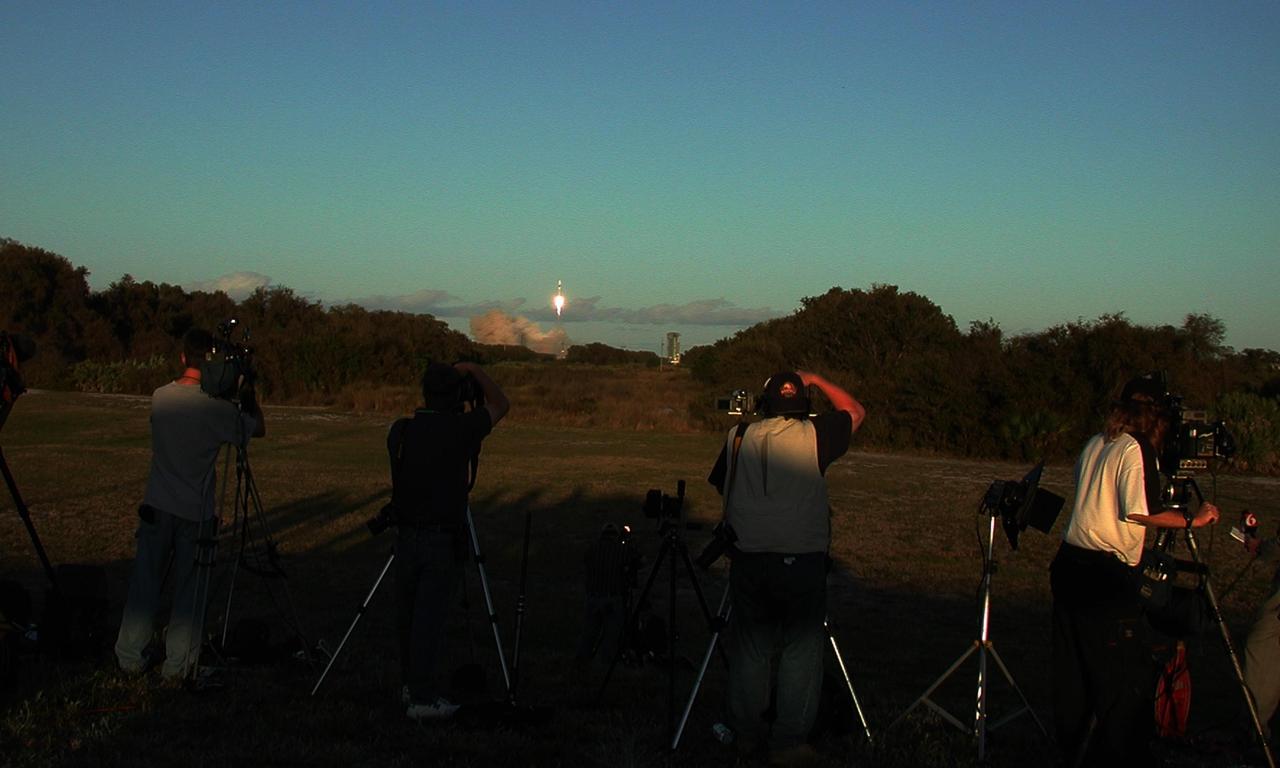
KENNEDY SPACE CENTER, FLA. -- Photographers capture the launch of the Tracking and Data Relay Satellite-I (TDRS-I) aboard a Lockheed Martin Atlas IIA rocket from Launch Pad 36-A, Cape Canaveral Air Force Station. TDRS-I replenishes the existing on-orbit fleet of six spacecraft. The TDRS System is the primary source of space-to-ground voice, data and telemetry for the Space Shuttle. It also provides communications with the International Space Station and scientific spacecraft in low-Earth orbit such as the Hubble Space Telescope. This new advanced series of satellites will extend the availability of TDRS communications services until about 2017. Liftoff occurred at 5:59 p.m. EST
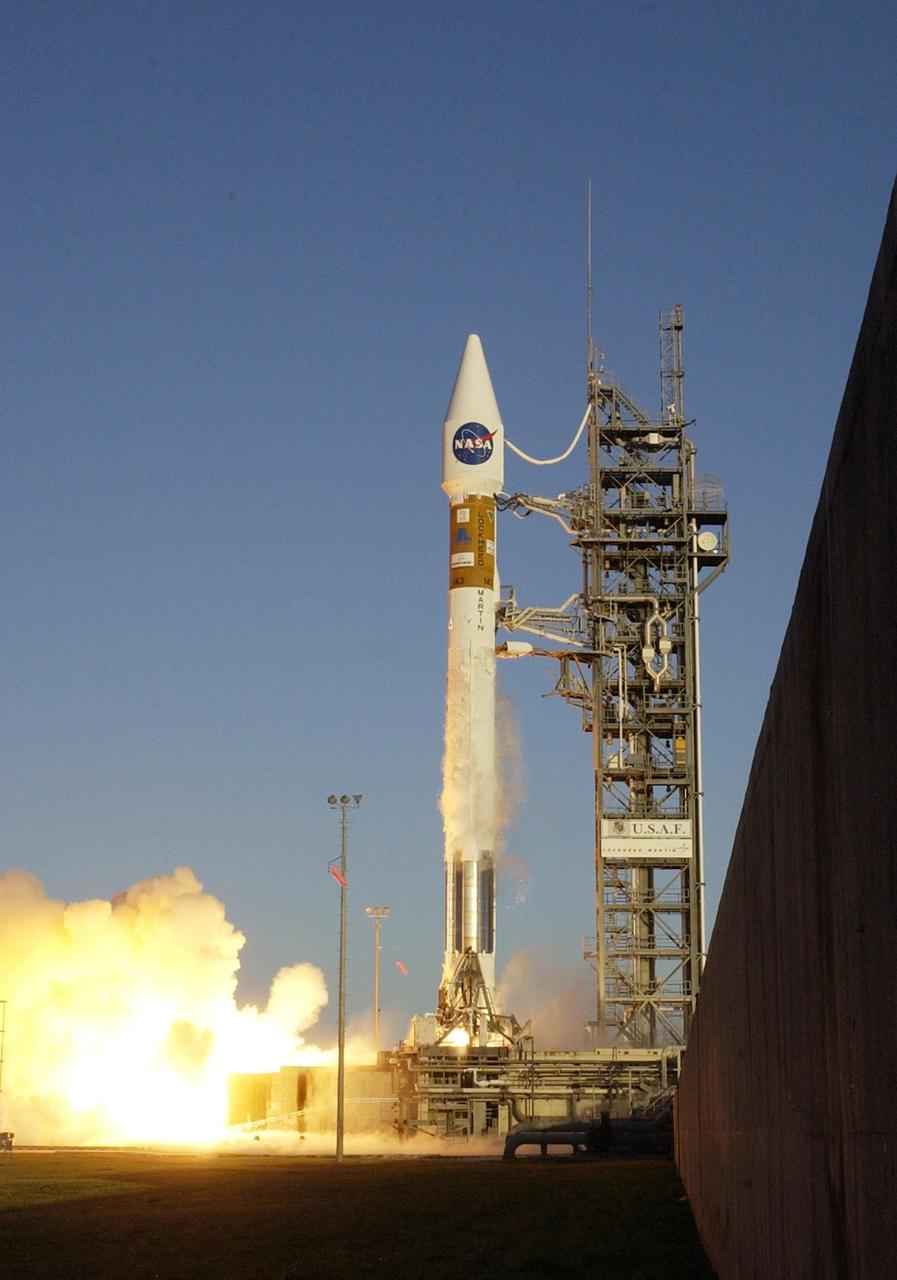
KENNEDY SPACE CENTER, FLA. - The Lockheed Martin Atlas IIA rocket lifts off from Launch Pad 36-A, Cape Canaveral Air Force Station, with the Tracking and Data Relay Satellite-I (TDRS-I) aboard. TDRS-I replenishes the existing on-orbit fleet of six spacecraft. The TDRS System is the primary source of space-to-ground voice, data and telemetry for the Space Shuttle. It also provides communications with the International Space Station and scientific spacecraft in low-Earth orbit such as the Hubble Space Telescope. This new advanced series of satellites will extend the availability of TDRS communications services until about 2017. Liftoff occurred at 5:59 p.m. EST
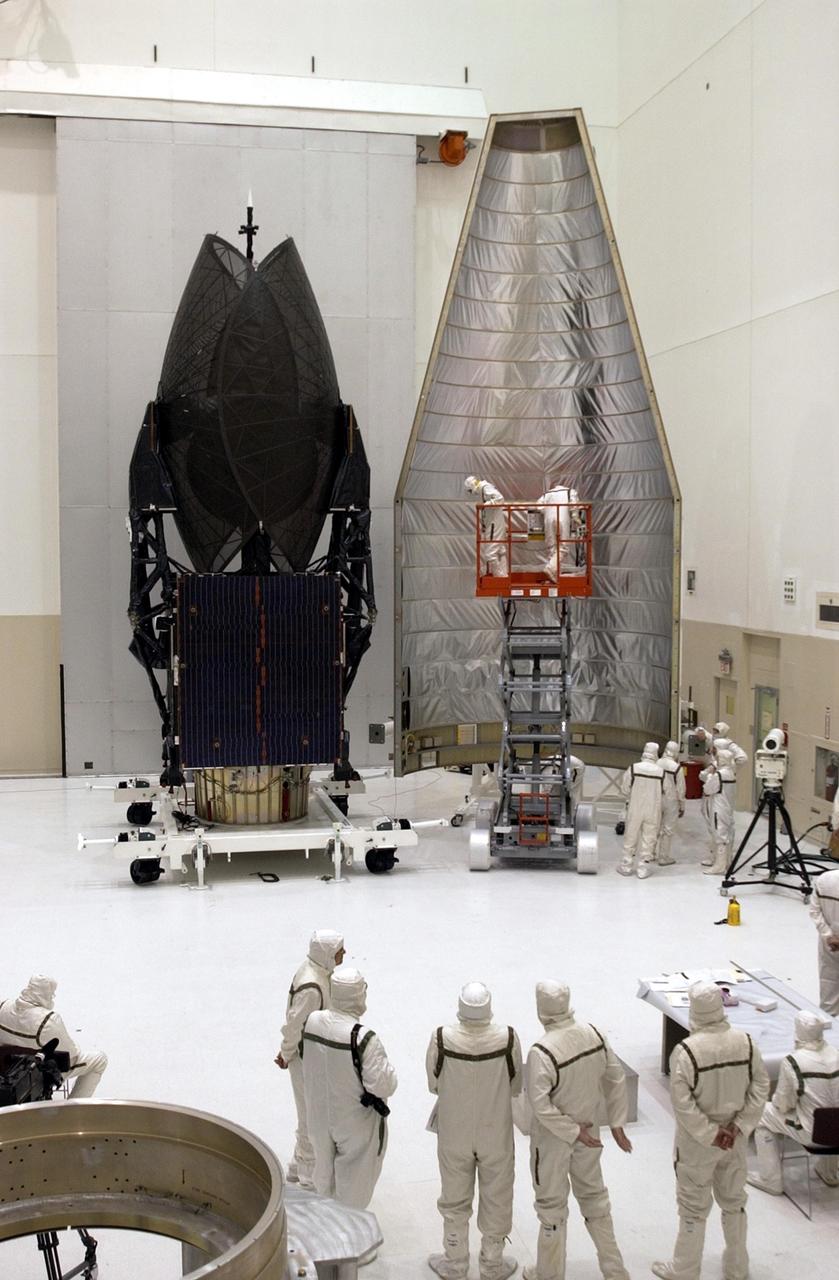
KENNEDY SPACE CENTER, FLA. -- In the Spacecraft Assembly and Encapsulation Facility-2 (SAEF-2), the Tracking and Data Relay Satellite-I (TDRS-I) (left) waits for encapsulation in the first half of the nose fairing , in preparation for launch. The second in a new series of telemetry satellites, TDRS-I replenishes the existing on-orbit fleet of six spacecraft. The TDRS System is the primary source of space-to-ground voice, data and telemetry for the Space Shuttle. It also provides communications with the International Space Station and scientific spacecraft in low-Earth orbit such as the Hubble Space Telescope. This new advanced series of satellites will extend the availability of TDRS communications services until about 2017. Launch of TDRS-I is scheduled for March 8 aboard a Lockheed Martin Atlas IIA rocket from Pad 36-A, Cape Canaveral Air Force Station
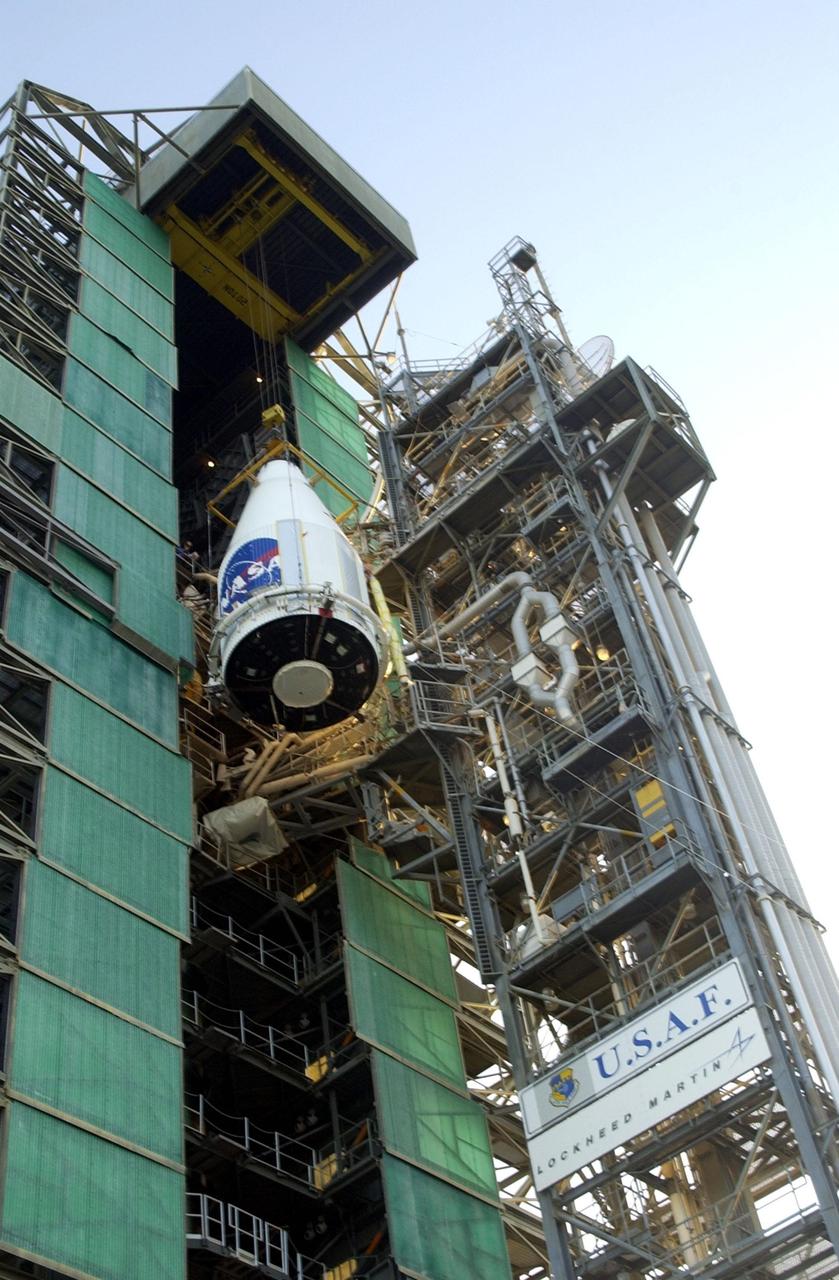
KENNEDY SPACE CENTER, FLA. -- The nose fairing encapsulating the Tracking and Data Relay Satellite-I (TDRS-I) is lifted up the launch tower at Pad 36-A, Cape Canaveral Air Force Station, Fla. The fairing will be attached to the Lockheed Martin Atlas IIA rocket for launch. The second in a new series of telemetry satellites, TDRS-I replenishes the existing on-orbit fleet of six spacecraft. The TDRS System is the primary source of space-to-ground voice, data and telemetry for the Space Shuttle. It also provides communications with the International Space Station and scientific spacecraft in low-Earth orbit such as the Hubble Space Telescope. This new advanced series of satellites will extend the availability of TDRS communications services until about 2017. Launch of TDRS-I is scheduled for March 8 between 5:39 - 6:19 p.m. EST
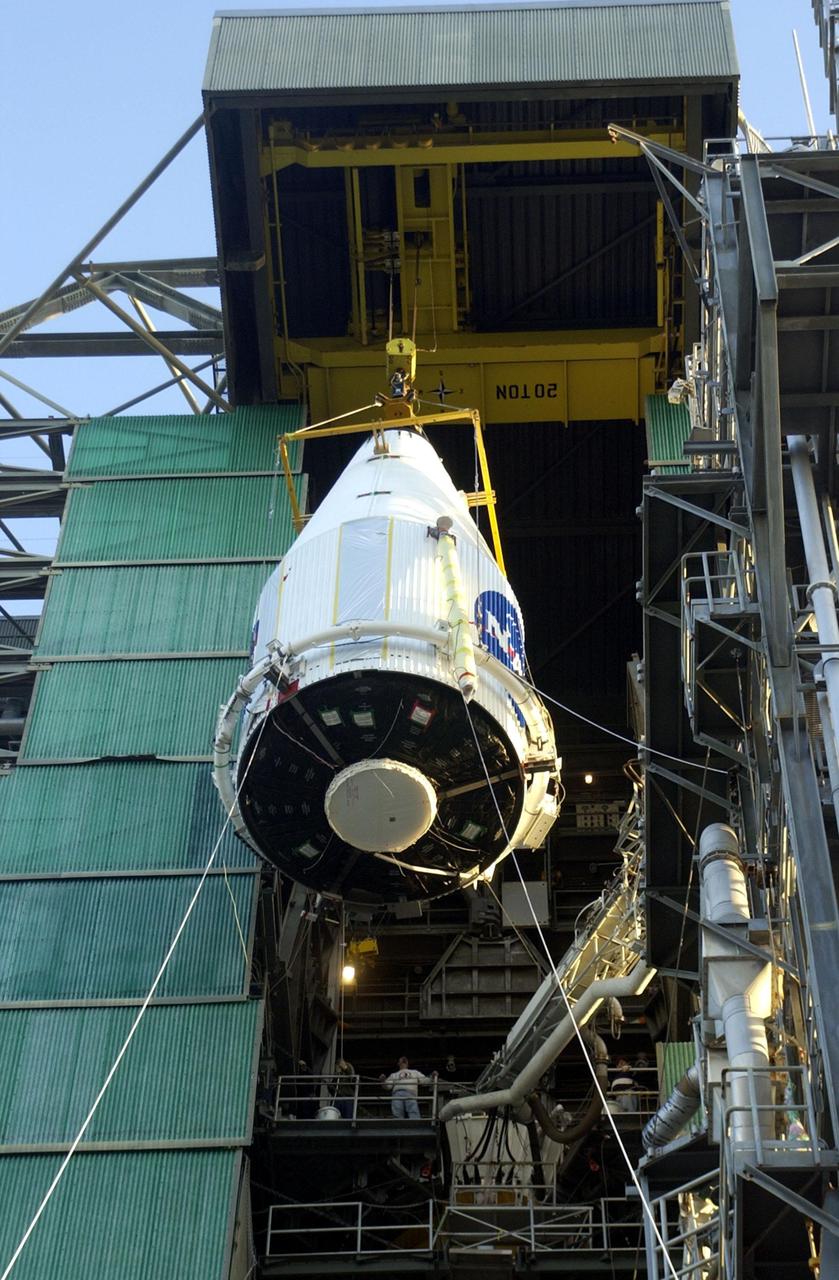
KENNEDY SPACE CENTER, FLA. -- -- The nose fairing encapsulating the Tracking and Data Relay Satellite-I (TDRS-I) nears the top of the launch tower at Pad 36-A, Cape Canaveral Air Force Station, Fla. The fairing will be attached to the Lockheed Martin Atlas IIA rocket for launch. The second in a new series of telemetry satellites, TDRS-I replenishes the existing on-orbit fleet of six spacecraft. The TDRS System is the primary source of space-to-ground voice, data and telemetry for the Space Shuttle. It also provides communications with the International Space Station and scientific spacecraft in low-Earth orbit such as the Hubble Space Telescope. This new advanced series of satellites will extend the availability of TDRS communications services until about 2017. Launch of TDRS-I is scheduled for March 8 between 5:39 - 6:19 p.m. EST
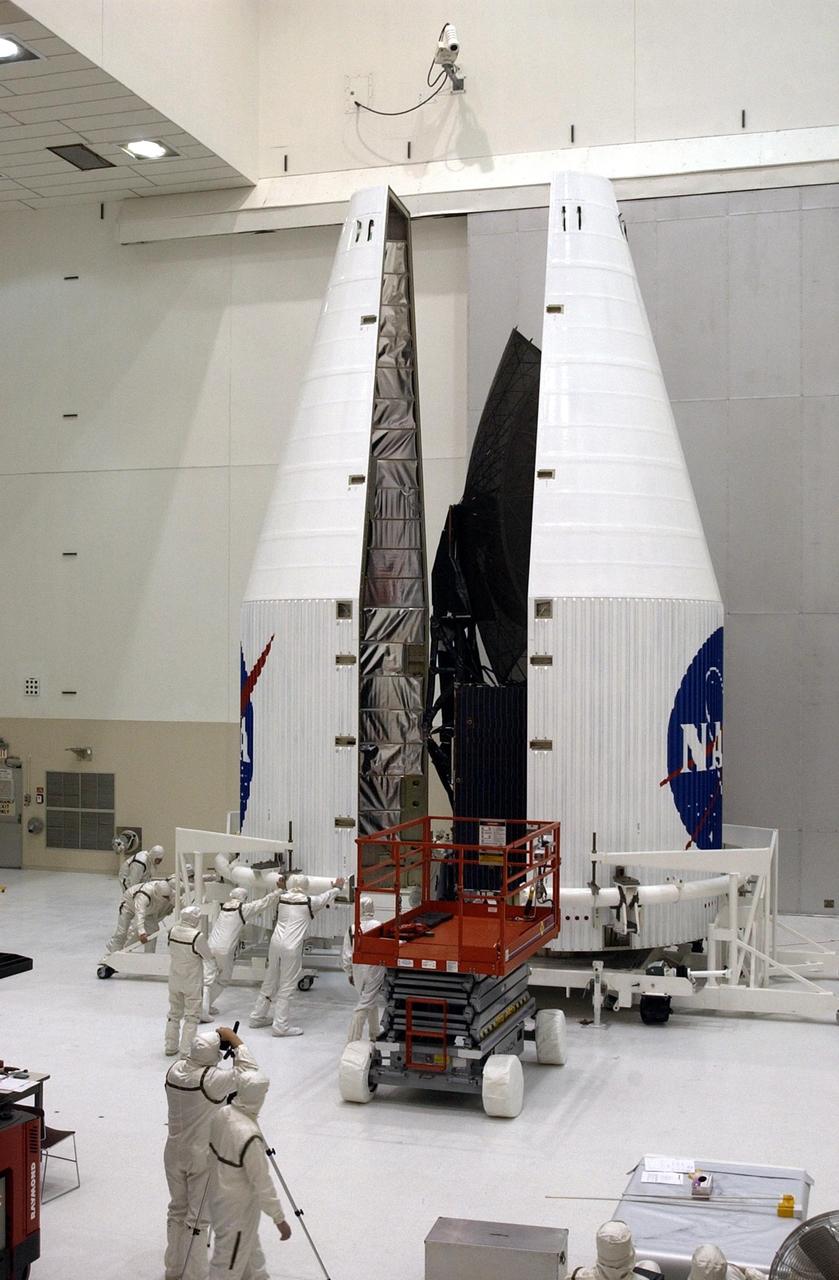
KENNEDY SPACE CENTER, FLA. -- Workers in the Spacecraft Assembly and Encapsulation Facility-2 (SAEF-2) push the second half of the nose fairing (left) toward the Tracking and Data Relay Satellite-I (TDRS-I) already enclosed by the first half. The second in a new series of telemetry satellites, TDRS-I replenishes the existing on-orbit fleet of six spacecraft. The TDRS System is the primary source of space-to-ground voice, data and telemetry for the Space Shuttle. It also provides communications with the International Space Station and scientific spacecraft in low-Earth orbit such as the Hubble Space Telescope. This new advanced series of satellites will extend the availability of TDRS communications services until about 2017. Launch of TDRS-I is scheduled for March 8 aboard a Lockheed Martin Atlas IIA rocket from Pad 36-A, Cape Canaveral Air Force Station
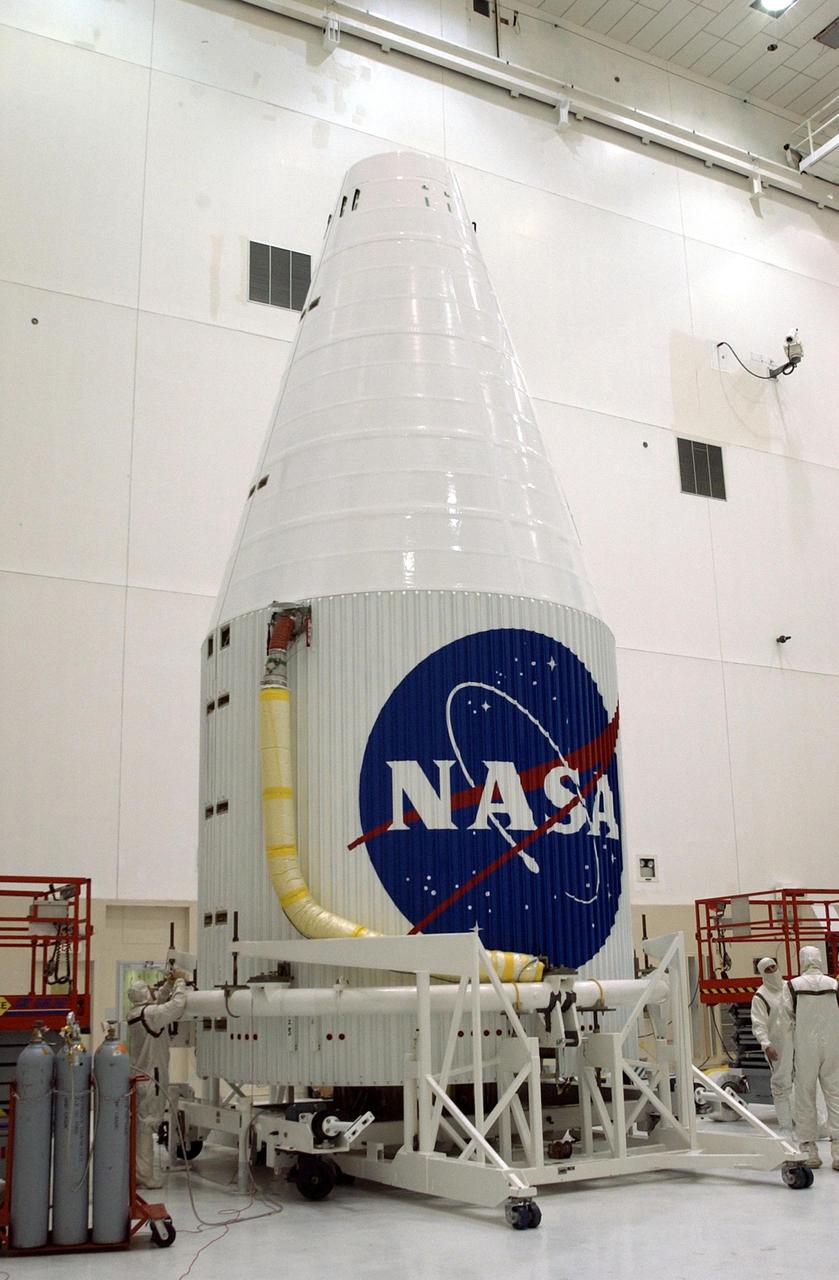
KENNEDY SPACE CENTER, FLA. - The fully encapsulated Tracking and Data Relay Satellite-I (TDRS-I) waits in the Spacecraft Assembly and Encapsulation Facility-2 (SAEF-2) for transfer to Cape Canaveral Air Force Station. The second in a new series of telemetry satellites, TDRS-I replenishes the existing on-orbit fleet of six spacecraft. The TDRS System is the primary source of space-to-ground voice, data and telemetry for the Space Shuttle. It also provides communications with the International Space Station and scientific spacecraft in low-Earth orbit such as the Hubble Space Telescope. This new advanced series of satellites will extend the availability of TDRS communications services until about 2017. Launch of TDRS-I is scheduled for March 8 aboard a Lockheed Martin Atlas IIA rocket from Pad 36-A
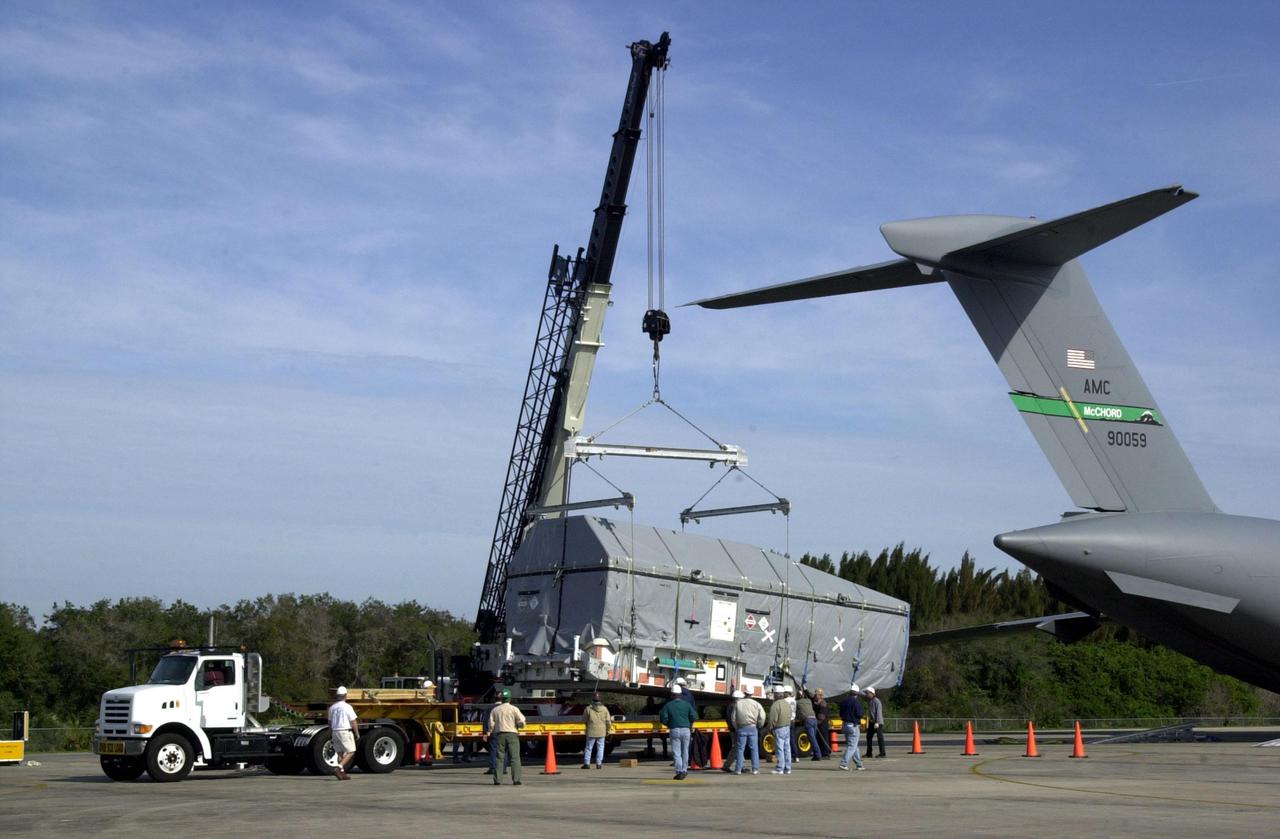
KENNEDY SPACE CENTER, FLA. -- At KSC's Shuttle Landing Facility, the Tracking and Data Relay Satellite-I (TDRS-I) is lifted onto a transporter after being offloaded from the Air Force C-17 air cargo plane at right. The second in a new series of telemetry satellites, TDRS-I replenishes the existing on-orbit fleet of six spacecraft. The TDRS System is the primary source of space-to-ground voice, data and telemetry for the Space Shuttle. It also provides communications with the International Space Station and scientific spacecraft in low-Earth orbit such as the Hubble Space Telescope. This new advanced series of satellites will extend the availability of TDRS communications services until about 2017. TDRS-I will undergo processing in the Spacecraft Assembly and Encapsulation Facility-2 (SAEF-2) to prepare it for launch March 8 aboard a Lockheed Martin Atlas IIA rocket from Pad 36-A, Cape Canaveral Air Force Station
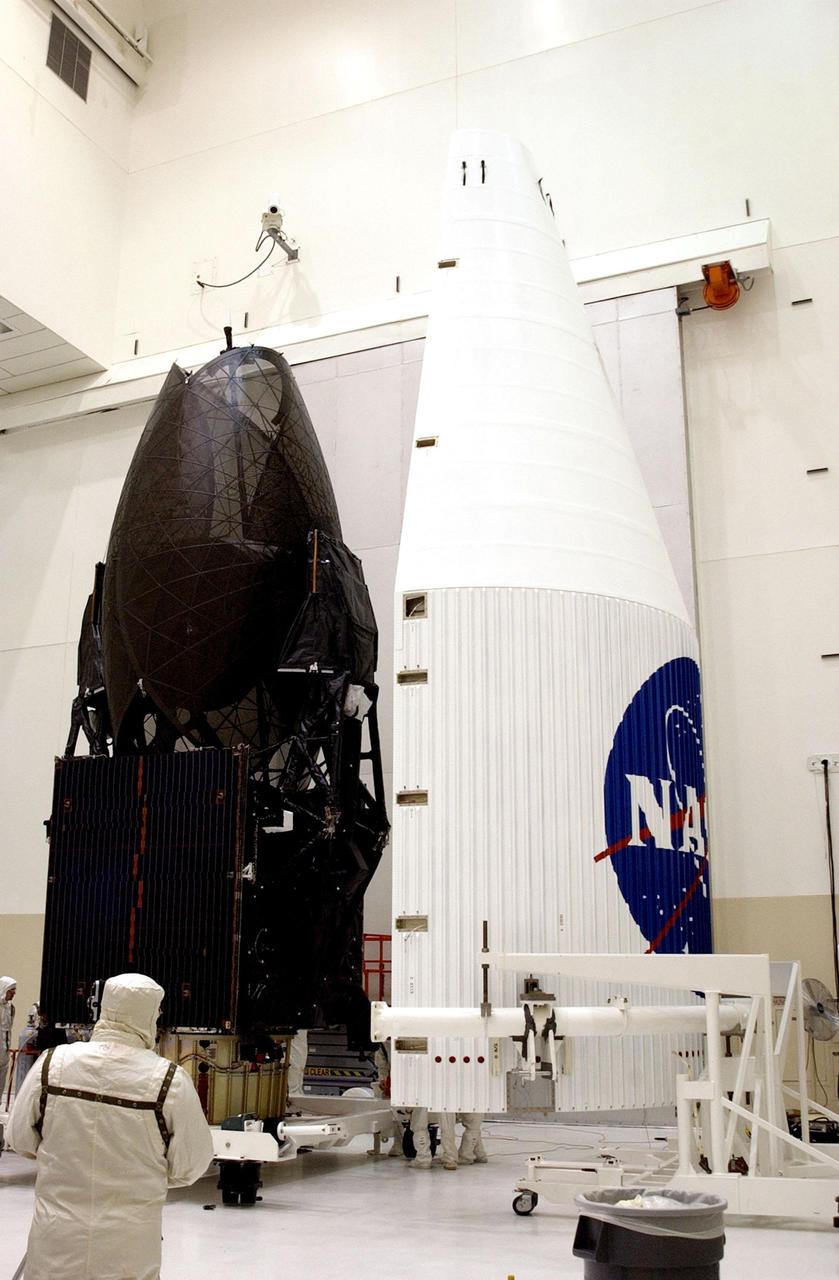
KENNEDY SPACE CENTER, FLA. -- In the Spacecraft Assembly and Encapsulation Facility-2 (SAEF-2), the nose fairing (right) for the Tracking and Data Relay Satellite-I (TDRS-I) is moved into position to enclose the satellite for launch. The second in a new series of telemetry satellites, TDRS-I replenishes the existing on-orbit fleet of six spacecraft. The TDRS System is the primary source of space-to-ground voice, data and telemetry for the Space Shuttle. It also provides communications with the International Space Station and scientific spacecraft in low-Earth orbit such as the Hubble Space Telescope. This new advanced series of satellites will extend the availability of TDRS communications services until about 2017. Launch of TDRS-I is scheduled for March 8 aboard a Lockheed Martin Atlas IIA rocket from Pad 36-A, Cape Canaveral Air Force Station
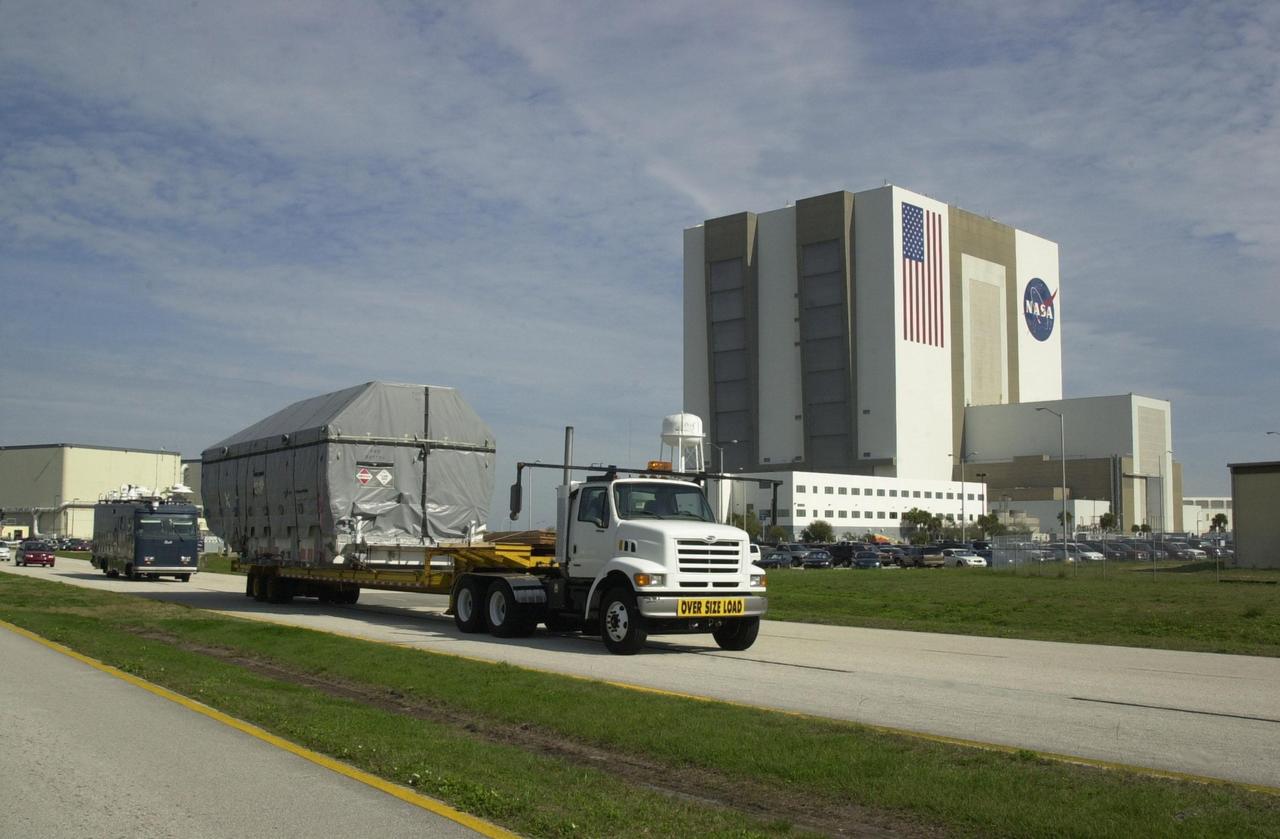
KENNEDY SPACE CENTER, FLA. -- -- At KSC's Shuttle Landing Facility, the Tracking and Data Relay Satellite-I (TDRS-I) is transported from the Shuttle Landing Facility to the Spacecraft Assembly and Encapsulation Facility-2 (SAEF-2). The second in a new series of telemetry satellites, TDRS-I replenishes the existing on-orbit fleet of six spacecraft. The TDRS System is the primary source of space-to-ground voice, data and telemetry for the Space Shuttle. It also provides communications with the International Space Station and scientific spacecraft in low-Earth orbit such as the Hubble Space Telescope. This new advanced series of satellites will extend the availability of TDRS communications services until about 2017. In the SAEF-2 TDRS-I will undergo processing to prepare it for launch March 8 aboard a Lockheed Martin Atlas IIA rocket from Pad 36-A, Cape Canaveral Air Force Station

KENNEDY SPACE CENTER, Fla. - The Tracking and Data Relay Satellite-I (TDRS-I) is lifted from a workstand in the Spacecraft Assembly and Encapsulation Facility-2 (SAEF-2) as preparations are made to mate it with the adapter of its nose fairing. The second in a new series of telemetry satellites, TDRS-I replenishes the existing on-orbit fleet of six spacecraft. The TDRS System is the primary source of space-to-ground voice, data and telemetry for the Space Shuttle. It also provides communications with the International Space Station and scientific spacecraft in low-Earth orbit such as the Hubble Space Telescope. This new advanced series of satellites will extend the availability of TDRS communications services until about 2017. Launch of TDRS-I is scheduled for March 8 aboard a Lockheed Martin Atlas IIA rocket from Pad 36-A, Cape Canaveral Air Force Station
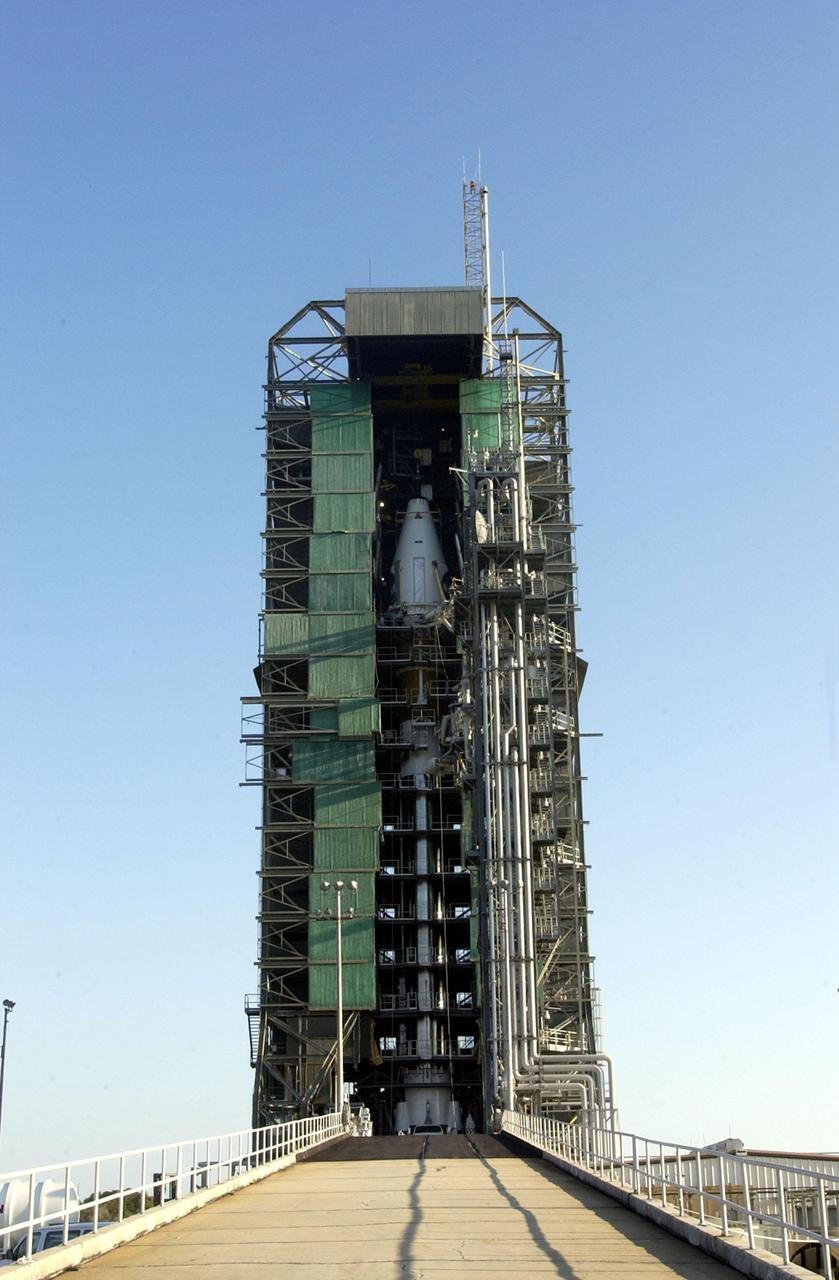
KENNEDY SPACE CENTER, FLA. -- The Lockheed Martin Atlas IIA rocket stands complete in the launch tower after mating of the nose fairing. The fairing encapsulates the Tracking and Data Relay Satellite-I (TDRS-I). The second in a new series of telemetry satellites, TDRS-I replenishes the existing on-orbit fleet of six spacecraft. The TDRS System is the primary source of space-to-ground voice, data and telemetry for the Space Shuttle. It also provides communications with the International Space Station and scientific spacecraft in low-Earth orbit such as the Hubble Space Telescope. This new advanced series of satellites will extend the availability of TDRS communications services until about 2017. Launch of TDRS-I is scheduled for March 8 between 5:39 - 6:19 p.m. EST
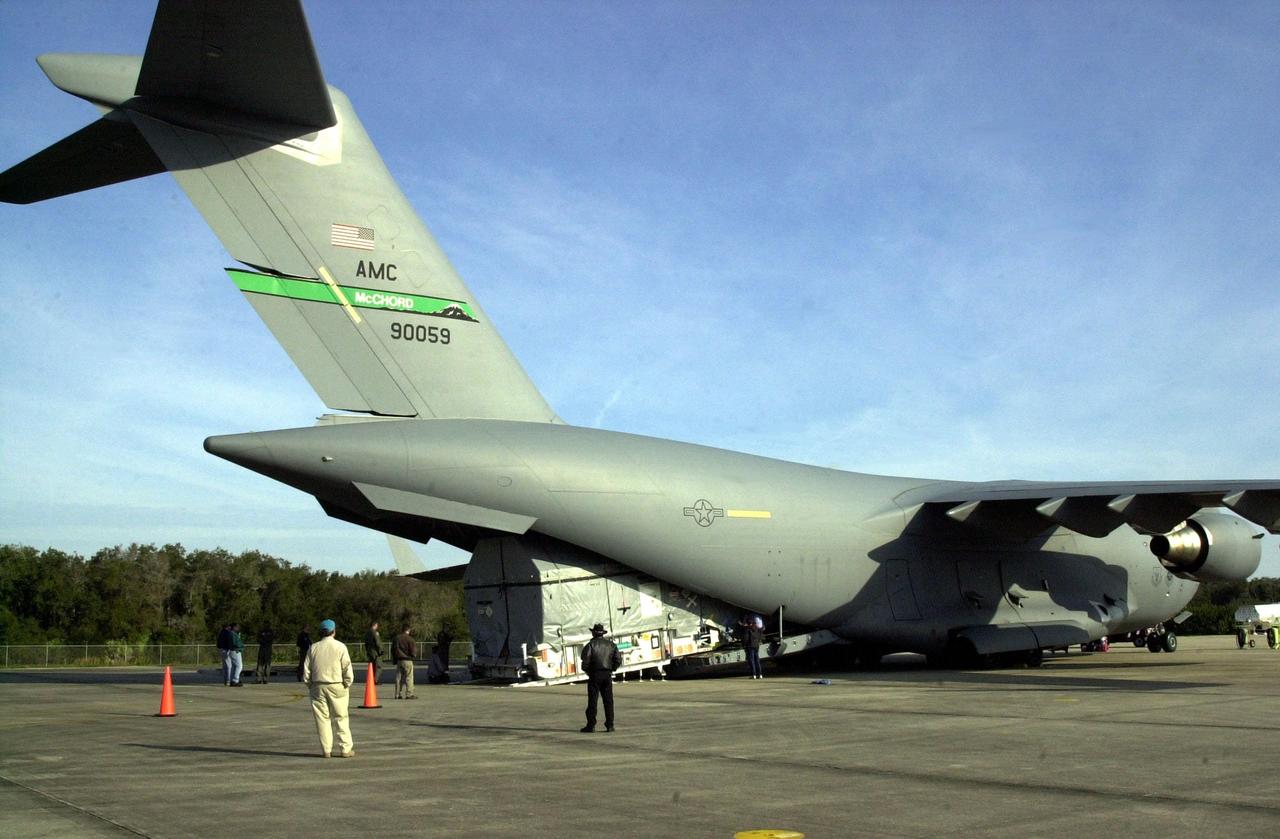
KENNEDY SPACE CENTER, FLA. -- At KSC's Shuttle Landing Facility, the Air Force C-17 air cargo plane offloads the Tracking and Data Relay Satellite-I (TDRS-I). The second in a new series of telemetry satellites, TDRS-I replenishes the existing on-orbit fleet of six spacecraft. The TDRS System is the primary source of space-to-ground voice, data and telemetry for the Space Shuttle. It also provides communications with the International Space Station and scientific spacecraft in low-Earth orbit such as the Hubble Space Telescope. This new advanced series of satellites will extend the availability of TDRS communications services until about 2017. TDRS-I will undergo processing in the Spacecraft Assembly and Encapsulation Facility-2 (SAEF-2) to prepare it for launch March 8 aboard a Lockheed Martin Atlas IIA rocket from Pad 36-A, Cape Canaveral Air Force Station
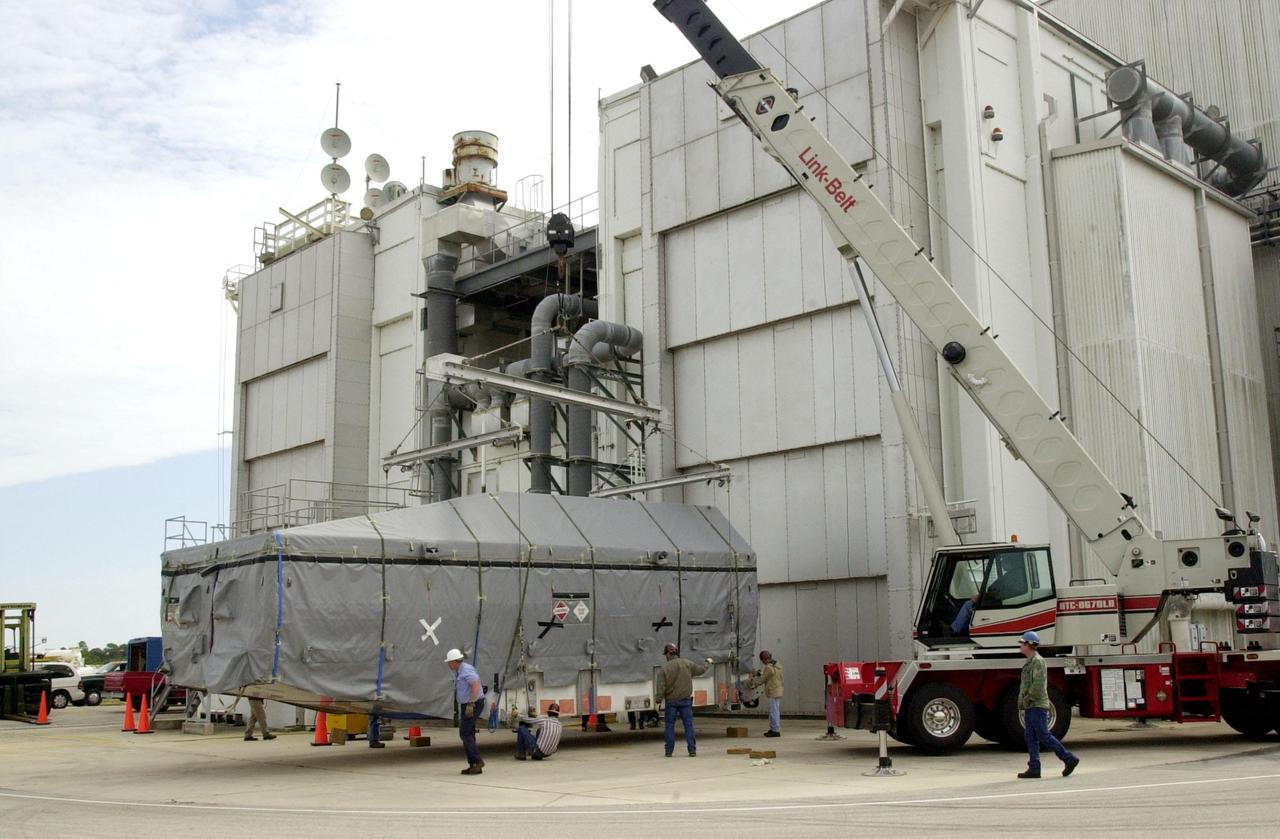
KENNEDY SPACE CENTER, FLA. -- The Tracking and Data Relay Satellite-I (TDRS-I) arrives at the Spacecraft Assembly and Encapsulation Facility-2 (SAEF-2) where it will undergo processing to prepare it for launch. The second in a new series of telemetry satellites, TDRS-I replenishes the existing on-orbit fleet of six spacecraft. The TDRS System is the primary source of space-to-ground voice, data and telemetry for the Space Shuttle. It also provides communications with the International Space Station and scientific spacecraft in low-Earth orbit such as the Hubble Space Telescope. This new advanced series of satellites will extend the availability of TDRS communications services until about 2017. Launch of TDRS-I is scheduled for March 8 aboard a Lockheed Martin Atlas IIA rocket from Pad 36-A, Cape Canaveral Air Force Station
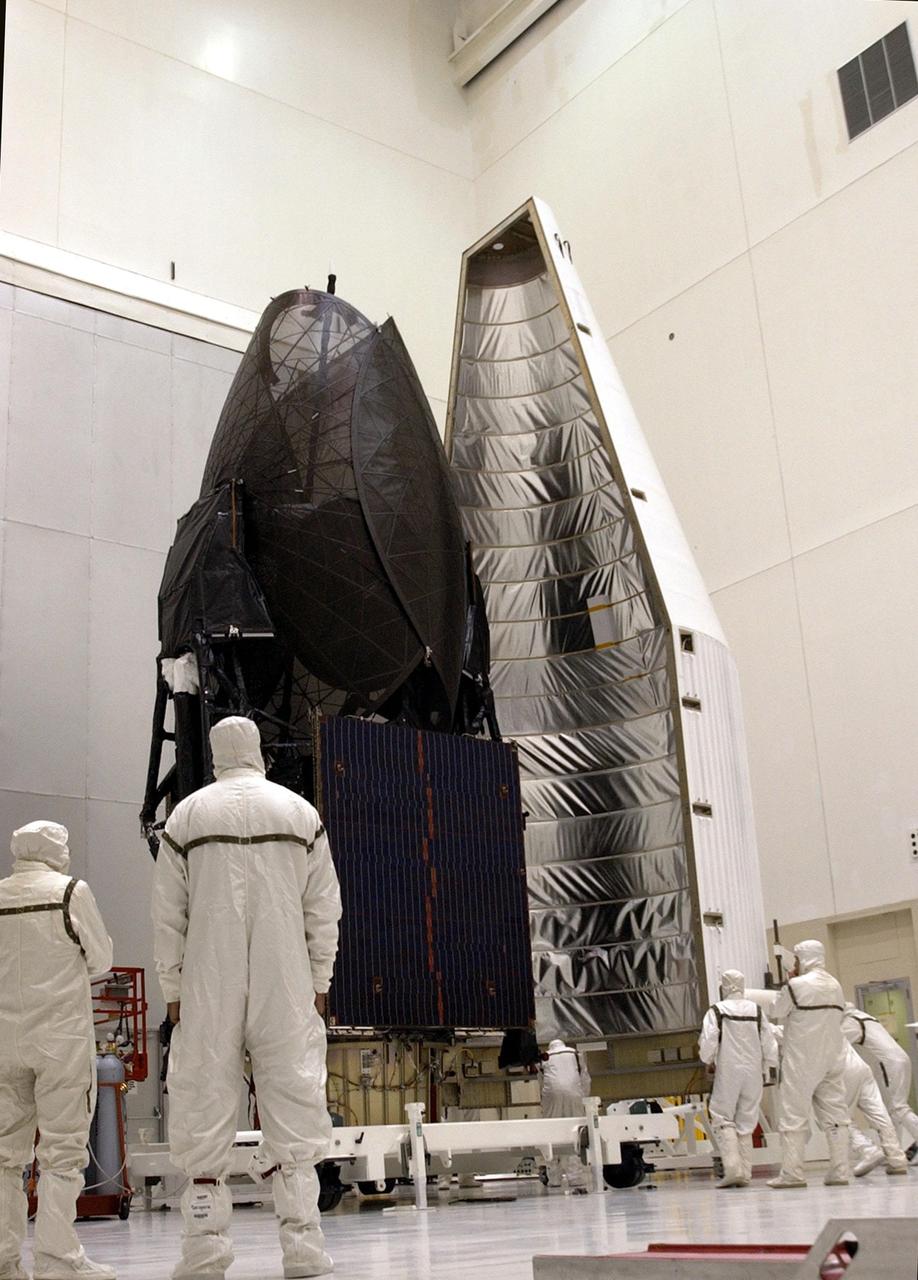
KENNEDY SPACE CENTER, FLA. -- In the Spacecraft Assembly and Encapsulation Facility-2 (SAEF-2), the nose fairing (right) for the Tracking and Data Relay Satellite-I (TDRS-I) is moved into position to enclose the satellite for launch. The second in a new series of telemetry satellites, TDRS-I replenishes the existing on-orbit fleet of six spacecraft. The TDRS System is the primary source of space-to-ground voice, data and telemetry for the Space Shuttle. It also provides communications with the International Space Station and scientific spacecraft in low-Earth orbit such as the Hubble Space Telescope. This new advanced series of satellites will extend the availability of TDRS communications services until about 2017. Launch of TDRS-I is scheduled for March 8 aboard a Lockheed Martin Atlas IIA rocket from Pad 36-A, Cape Canaveral Air Force Station
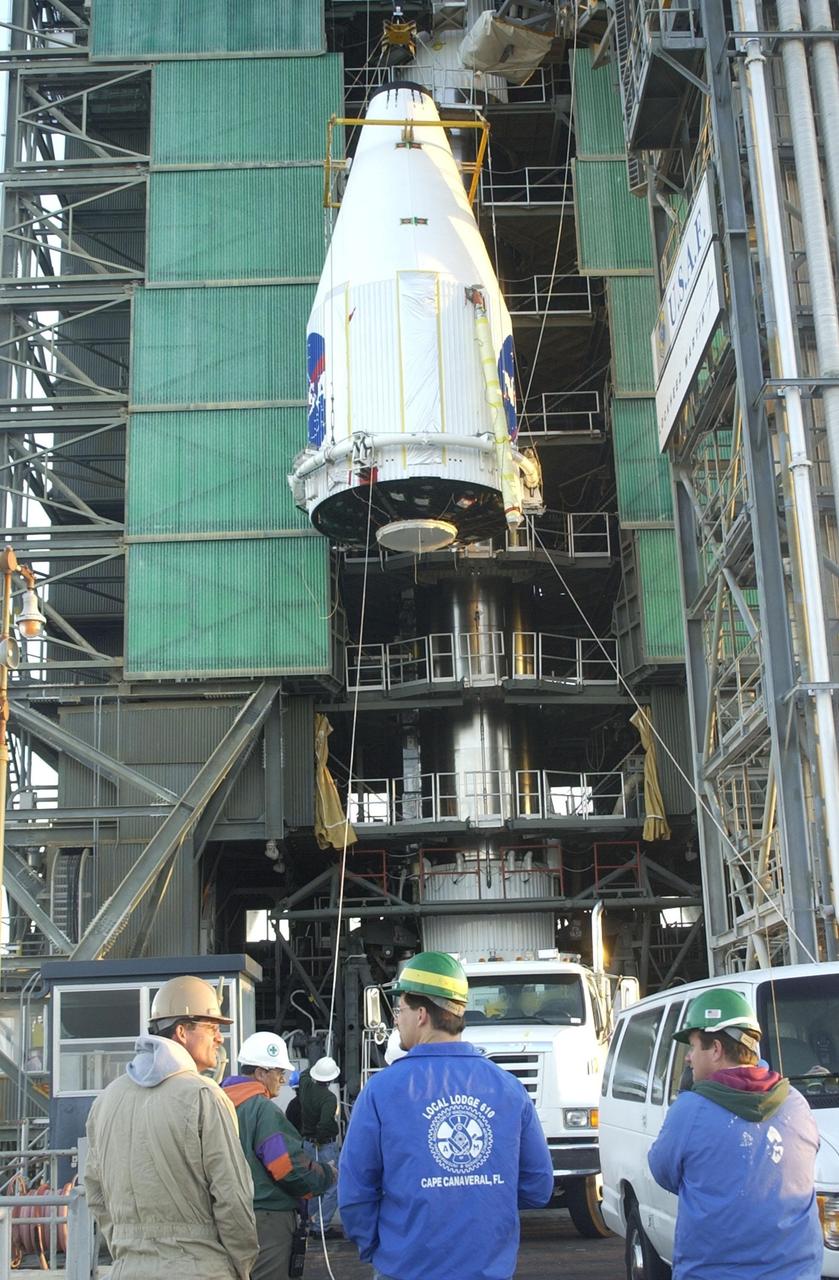
KENNEDY SPACE CENTER, FLA. -- The nose fairing arrives at Pad 36-A, Cape Canaveral Air Force Station, Fla., with the Tracking and Data Relay Satellite-I (TDRS-I) inside. The fairing will be attached to the Lockheed Martin Atlas IIA rocket for launch. The second in a new series of telemetry satellites, TDRS-I replenishes the existing on-orbit fleet of six spacecraft. The TDRS System is the primary source of space-to-ground voice, data and telemetry for the Space Shuttle. It also provides communications with the International Space Station and scientific spacecraft in low-Earth orbit such as the Hubble Space Telescope. This new advanced series of satellites will extend the availability of TDRS communications services until about 2017. Launch of TDRS-I is scheduled for March 8 between 5:39 - 6:19 p.m. EST

KENNEDY SPACE CENTER, FLA. - On Launch Pad 36-A, Cape Canaveral Air Force Station, the tower is rolled away from the Lockheed Martin Atlas/Centaur rocket prior to launch. The rocket will carry the Tracking and Data Relay Satellite-I (TDRS-I) into orbit. The second in a new series of telemetry satellites, TDRS-I replenishes the existing on-orbit fleet of six spacecraft. The TDRS System is the primary source of space-to-ground voice, data and telemetry for the Space Shuttle. It also provides communications with the International Space Station and scientific spacecraft in low-Earth orbit such as the Hubble Space Telescope. This new advanced series of satellites will extend the availability of TDRS communications services until about 2017. Launch of TDRS-I is scheduled between 5:39 - 6:19 p.m. EST
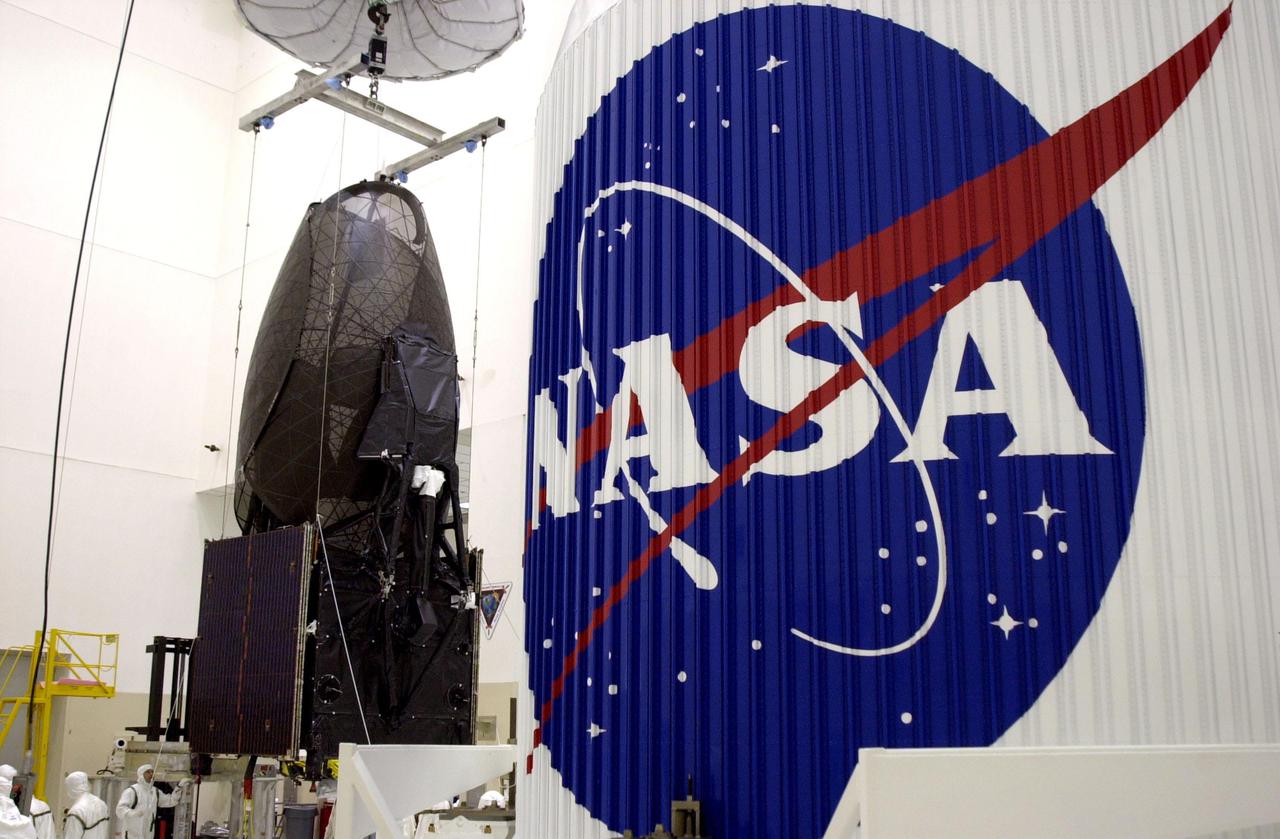
KENNEDY SPACE CENTER, Fla. - The Tracking and Data Relay Satellite-I (TDRS-I) is readied for mating with its nose fairing (in foreground) in the Spacecraft Assembly and Encapsulation Facility-2 (SAEF-2). The second in a new series of telemetry satellites, TDRS-I replenishes the existing on-orbit fleet of six spacecraft. The TDRS System is the primary source of space-to-ground voice, data and telemetry for the Space Shuttle. It also provides communications with the International Space Station and scientific spacecraft in low-Earth orbit such as the Hubble Space Telescope. This new advanced series of satellites will extend the availability of TDRS communications services until about 2017. Launch of TDRS-I is scheduled for March 8 aboard a Lockheed Martin Atlas IIA rocket from Pad 36-A, Cape Canaveral Air Force Station
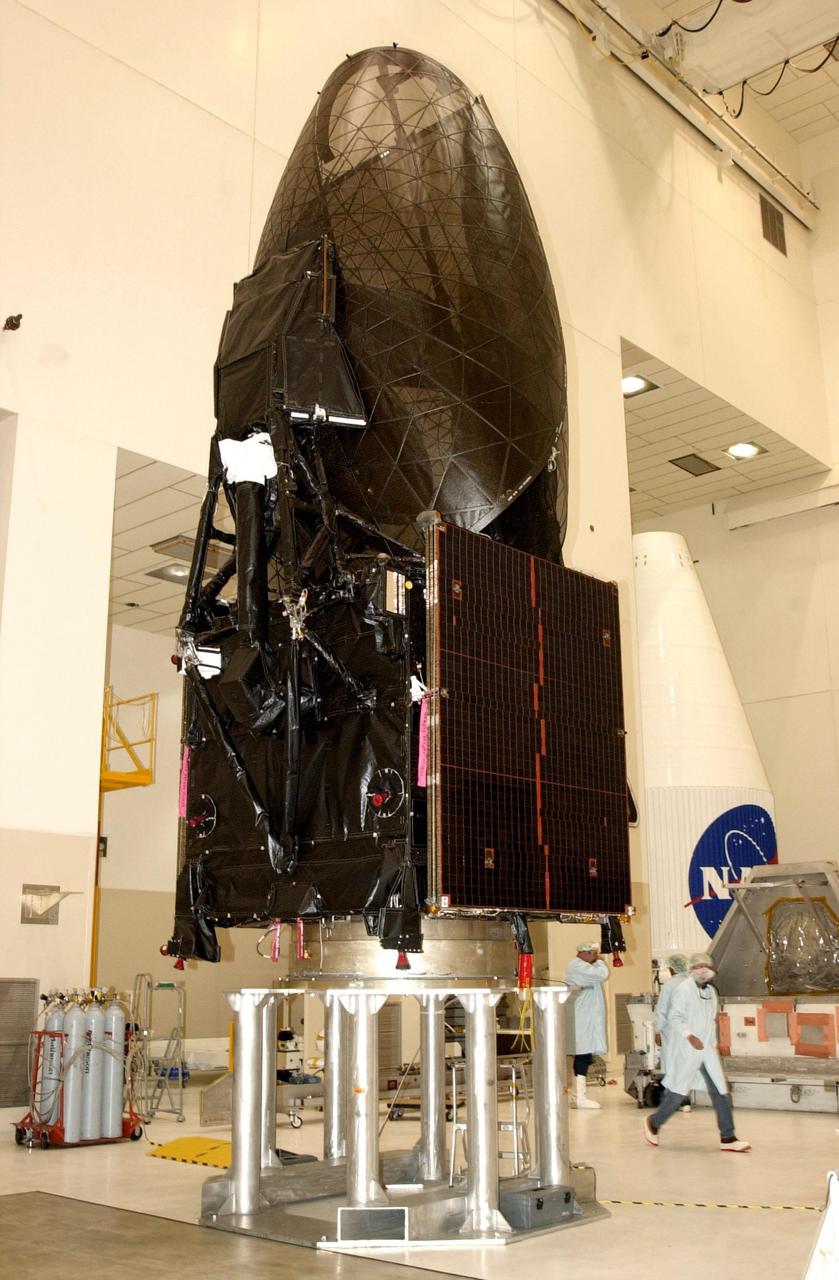
KENNEDY SPACE CENTER, FLA. -- The Tracking and Data Relay Satellite-I (TDRS-I) rests on a workstand in the Spacecraft Assembly and Encapsulation Facility-2 (SAEF-2) where it will undergo processing to prepare it for launch. The second in a new series of telemetry satellites, TDRS-I replenishes the existing on-orbit fleet of six spacecraft. The TDRS System is the primary source of space-to-ground voice, data and telemetry for the Space Shuttle. It also provides communications with the International Space Station and scientific spacecraft in low-Earth orbit such as the Hubble Space Telescope. This new advanced series of satellites will extend the availability of TDRS communications services until about 2017. Launch of TDRS-I is scheduled for March 8 aboard a Lockheed Martin Atlas IIA rocket from Pad 36-A, Cape Canaveral Air Force Station
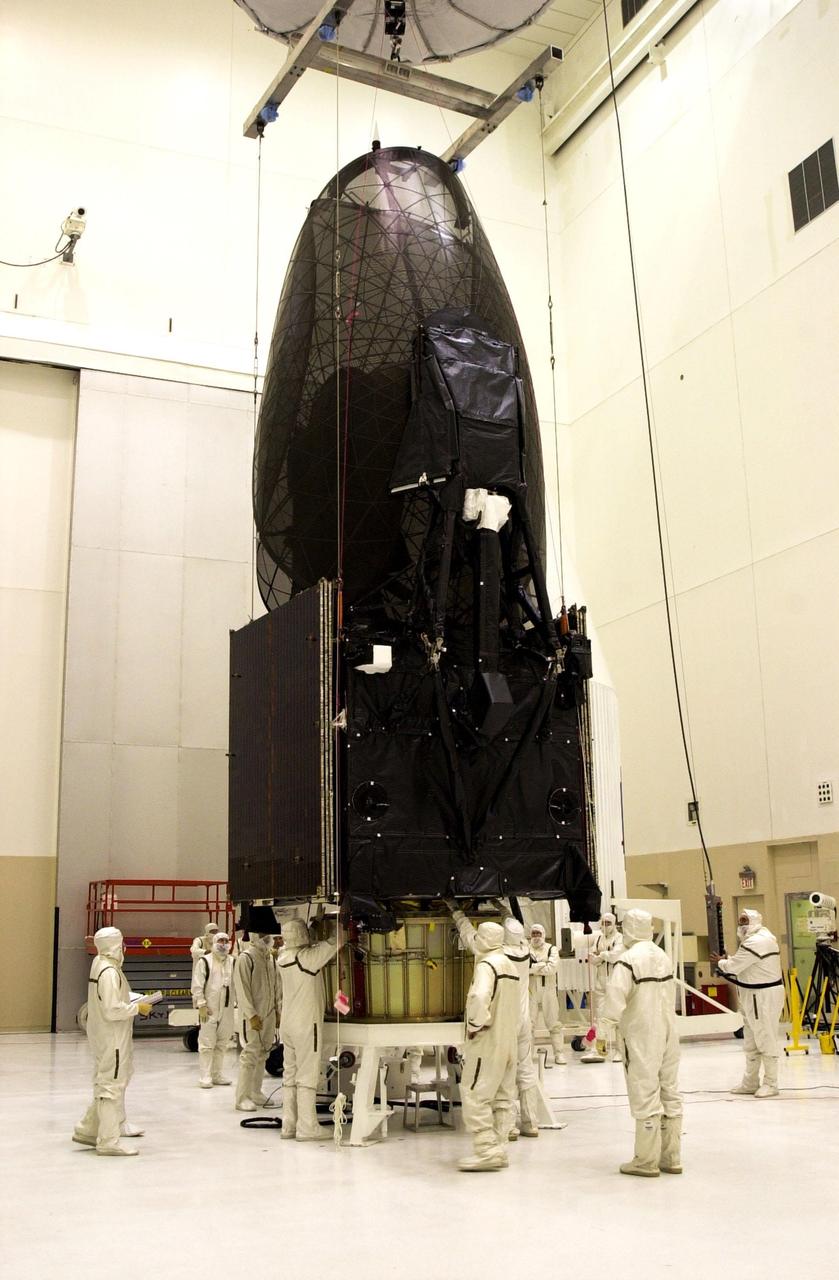
KENNEDY SPACE CENTER, Fla. - The Tracking and Data Relay Satellite-I (TDRS-I) is lifted for mating with the adapter of its nose fairing in the Spacecraft Assembly and Encapsulation Facility-2 (SAEF-2). The second in a new series of telemetry satellites, TDRS-I replenishes the existing on-orbit fleet of six spacecraft. The TDRS System is the primary source of space-to-ground voice, data and telemetry for the Space Shuttle. It also provides communications with the International Space Station and scientific spacecraft in low-Earth orbit such as the Hubble Space Telescope. This new advanced series of satellites will extend the availability of TDRS communications services until about 2017. Launch of TDRS-I is scheduled for March 8 aboard a Lockheed Martin Atlas IIA rocket from Pad 36-A, Cape Canaveral Air Force Station
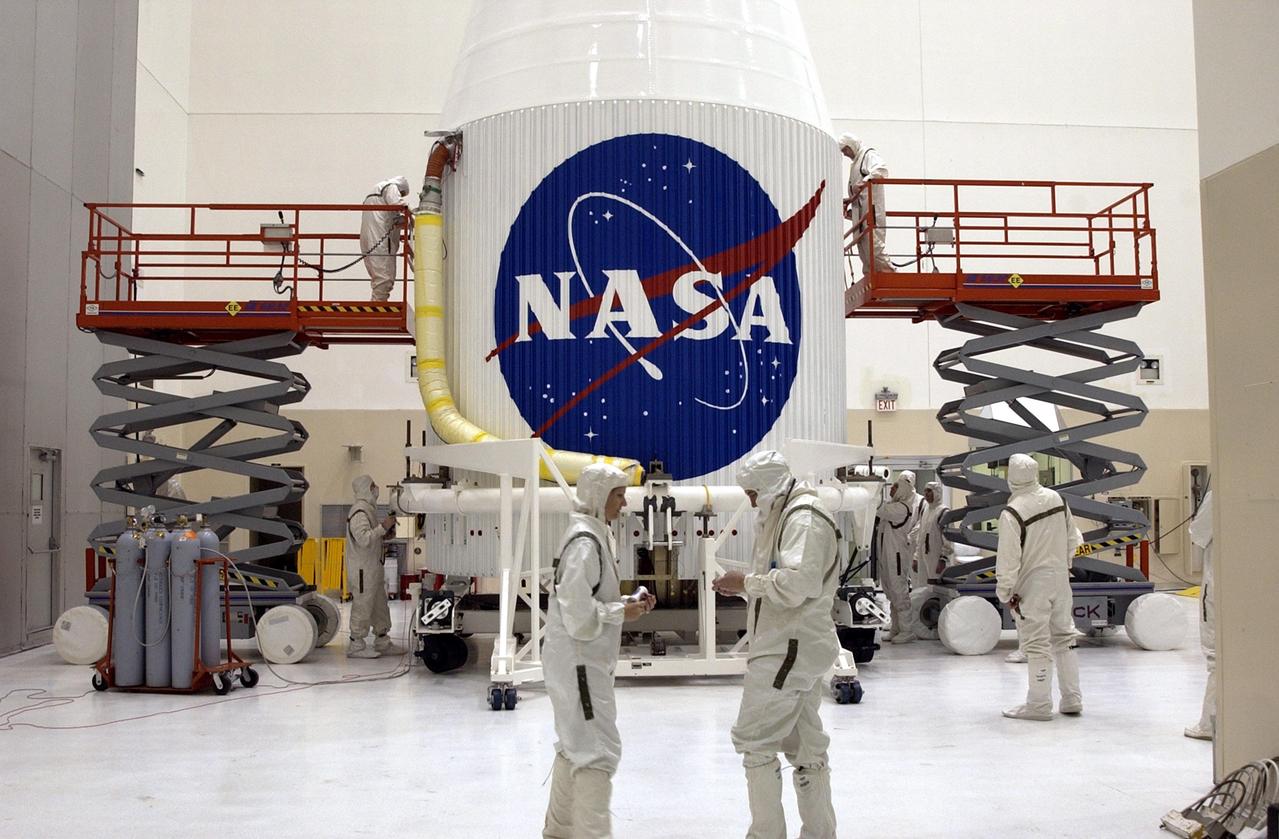
KENNEDY SPACE CENTER, FLA. -- Workers in the Spacecraft Assembly and Encapsulation Facility-2 (SAEF-2) make final adjustments on the nose fairing surrounding the Tracking and Data Relay Satellite-I (TDRS-I). The second in a new series of telemetry satellites, TDRS-I replenishes the existing on-orbit fleet of six spacecraft. The TDRS System is the primary source of space-to-ground voice, data and telemetry for the Space Shuttle. It also provides communications with the International Space Station and scientific spacecraft in low-Earth orbit such as the Hubble Space Telescope. This new advanced series of satellites will extend the availability of TDRS communications services until about 2017. Launch of TDRS-I is scheduled for March 8 aboard a Lockheed Martin Atlas IIA rocket from Pad 36-A, Cape Canaveral Air Force Station
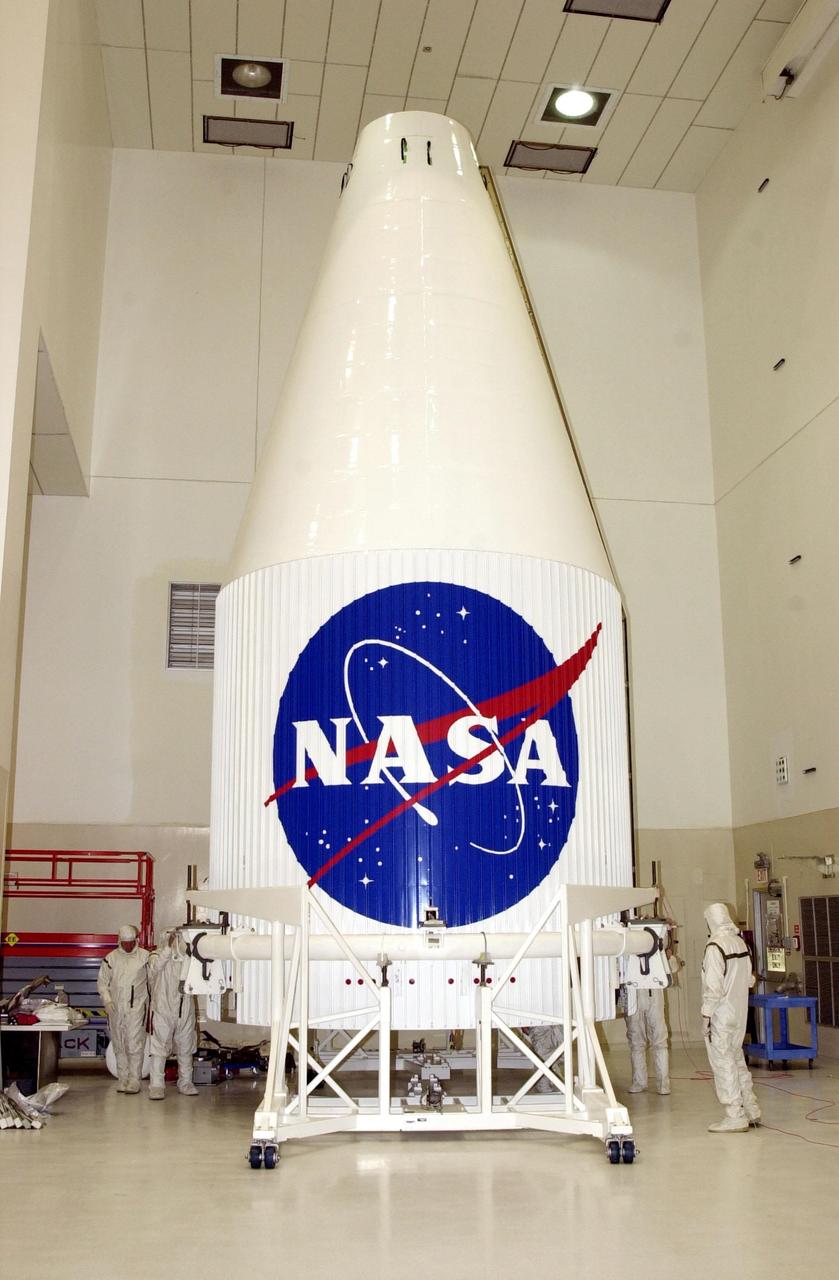
KENNEDY SPACE CENTER, Fla. - The nose fairing for the Tracking and Data Relay Satellite-I (TDRS-I) rests on a workstand in the Spacecraft Assembly and Encapsulation Facility-2 (SAEF-2) where the satellite is being prepared for launch. The second in a new series of telemetry satellites, TDRS-I replenishes the existing on-orbit fleet of six spacecraft. The TDRS System is the primary source of space-to-ground voice, data and telemetry for the Space Shuttle. It also provides communications with the International Space Station and scientific spacecraft in low-Earth orbit such as the Hubble Space Telescope. This new advanced series of satellites will extend the availability of TDRS communications services until about 2017. Launch of TDRS-I is scheduled for March 8 aboard a Lockheed Martin Atlas IIA rocket from Pad 36-A, Cape Canaveral Air Force Station
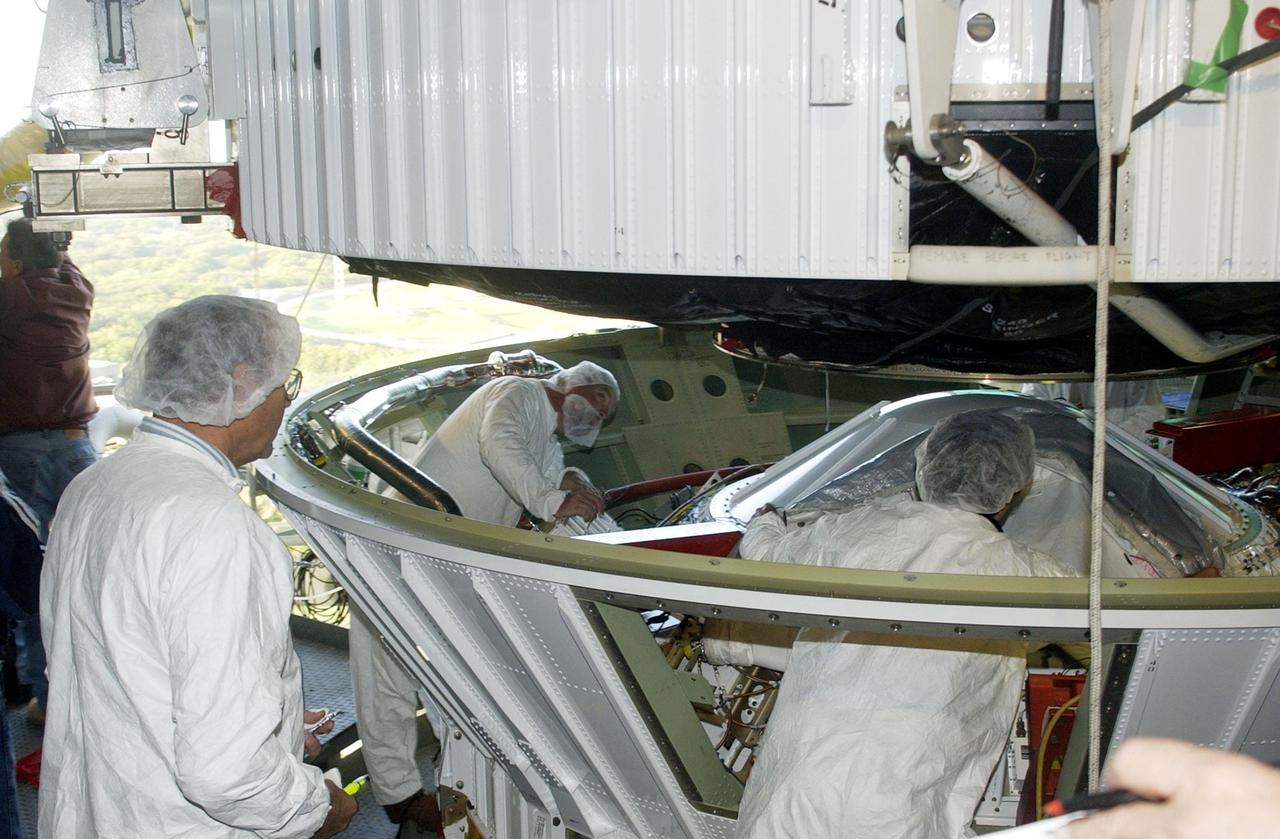
KENNEDY SPACE CENTER, FLA. -- On Pad 36-A, Cape Canaveral Air Force Station, Fla., workers check the placement of the nose fairing as it is lowered toward the Lockheed Martin Atlas IIA rocket. The fairing encapsulates the Tracking and Data Relay Satellite-I (TDRS-I). The second in a new series of telemetry satellites, TDRS-I replenishes the existing on-orbit fleet of six spacecraft. The TDRS System is the primary source of space-to-ground voice, data and telemetry for the Space Shuttle. It also provides communications with the International Space Station and scientific spacecraft in low-Earth orbit such as the Hubble Space Telescope. This new advanced series of satellites will extend the availability of TDRS communications services until about 2017. Launch of TDRS-I is scheduled for March 8 between 5:39 - 6:19 p.m. EST

KENNEDY SPACE CENTER, FLA. -- On Pad 36-A, Cape Canaveral Air Force Station, Fla., the nose fairing encapsulating the Tracking and Data Relay Satellite-I (TDRS-I) is mated to the Lockheed Martin Atlas IIA rocket. The second in a new series of telemetry satellites, TDRS-I replenishes the existing on-orbit fleet of six spacecraft. The TDRS System is the primary source of space-to-ground voice, data and telemetry for the Space Shuttle. It also provides communications with the International Space Station and scientific spacecraft in low-Earth orbit such as the Hubble Space Telescope. This new advanced series of satellites will extend the availability of TDRS communications services until about 2017. Launch of TDRS-I is scheduled for March 8 between 5:39 - 6:19 p.m. EST

KENNEDY SPACE CENTER, FLA. -- The nose fairing arrives at Pad 36-A, Cape Canaveral Air Force Station, Fla., with the Tracking and Data Relay Satellite-I (TDRS-I) inside. The fairing will be attached to the Lockheed Martin Atlas IIA rocket for launch. The second in a new series of telemetry satellites, TDRS-I replenishes the existing on-orbit fleet of six spacecraft. The TDRS System is the primary source of space-to-ground voice, data and telemetry for the Space Shuttle. It also provides communications with the International Space Station and scientific spacecraft in low-Earth orbit such as the Hubble Space Telescope. This new advanced series of satellites will extend the availability of TDRS communications services until about 2017. Launch of TDRS-I is scheduled for March 8 between 5:39 - 6:19 p.m. EST
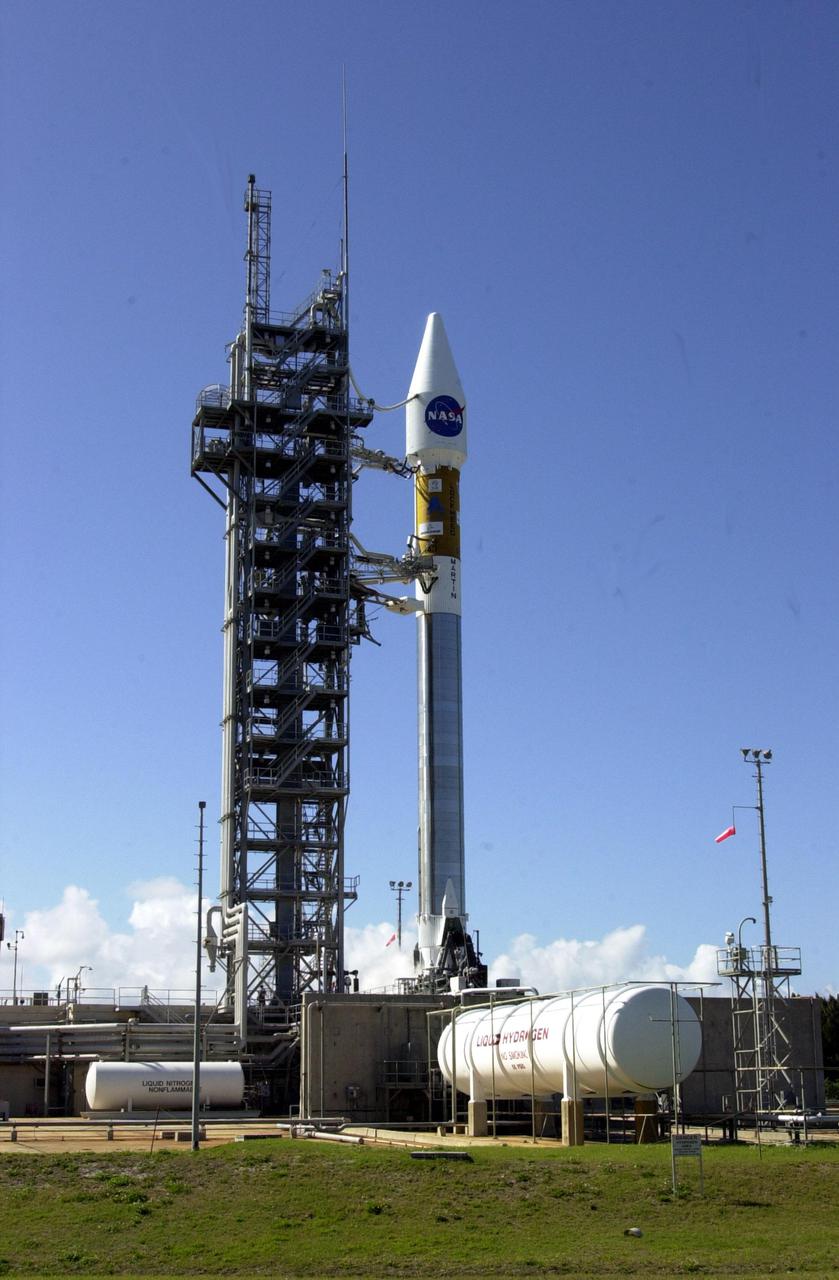
KENNEDY SPACE CENTER, FLA. -- After tower rollback, this Lockheed Martin Atlas_Centaur rocket waits for launch to carry the Tracking and Data Relay Satellite-I (TDRS-I) into orbit. The second in a new series of telemetry satellites, TDRS-I replenishes the existing on-orbit fleet of six spacecraft. The TDRS System is the primary source of space-to-ground voice, data and telemetry for the Space Shuttle. It also provides communications with the International Space Station and scientific spacecraft in low-Earth orbit such as the Hubble Space Telescope. This new advanced series of satellites will extend the availability of TDRS communications services until about 2017. Launch of TDRS-I atop the Atlas rocket is scheduled between 5:39 - 6:19 p.m. EST from Launch Pad 36-A, Cape Canaveral Air Force Station
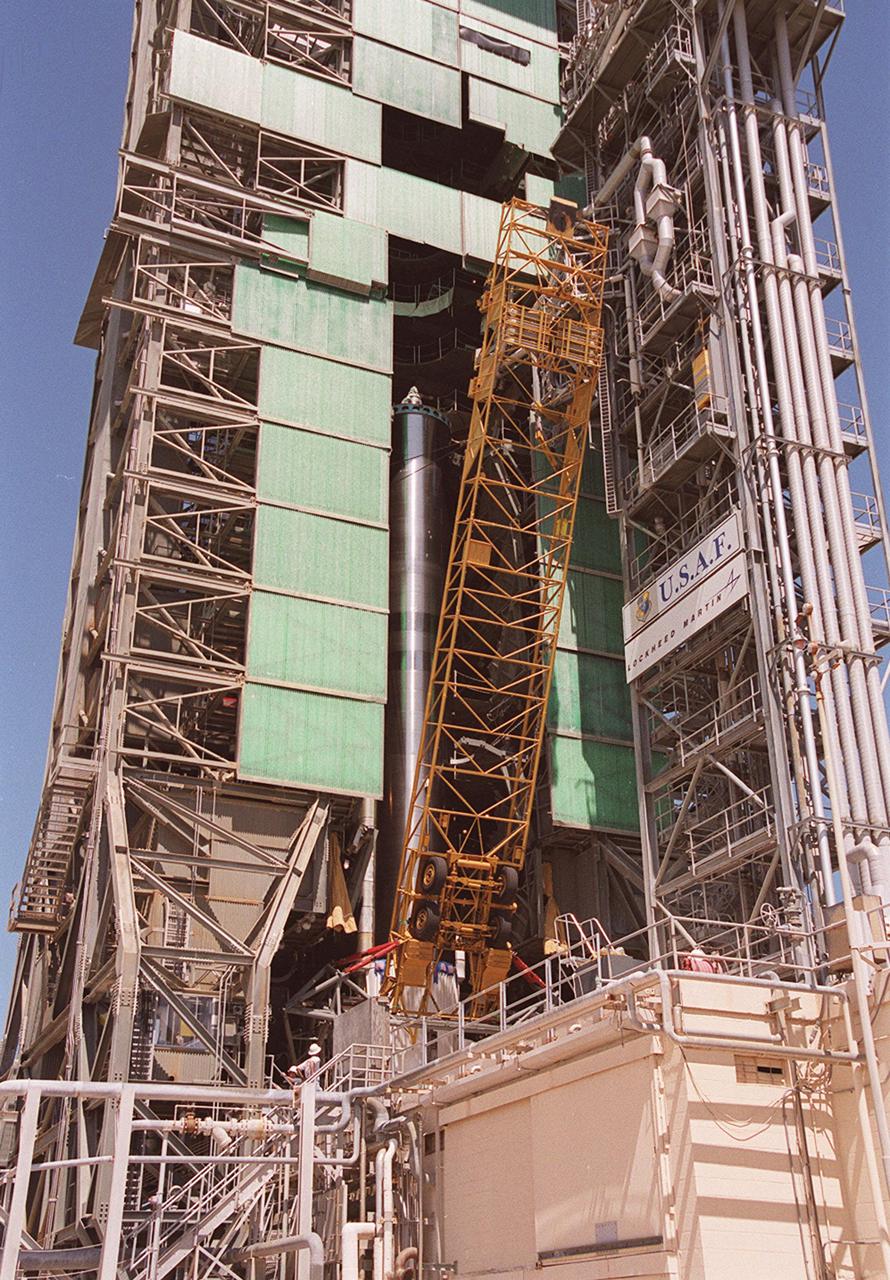
KENNEDY SPACE CENTER, Fla. - At Pad 36-A, Cape Canaveral Air Force Station, the equipment used to raise the Atlas II first (booster) stage into the launch tower is removed. The Atlas II will later be mated with the Tracking and Data Relay Satellite, known as TDRS-I, for launch in January 2002. The TDRS System (TDRSS) is a communication signal relay system that provides tracking and data acquisition services between low-Earth orbiting spacecraft and NASA_customer control and_or data processing facilities. The system is capable of transmitting to and receiving data from customer spacecrafts over 100 percent of their orbit (some limitations may apply depending on actual orbit). The TDRS-I provides a Ka-band service that will allow customers with extremely high data rates to be supported by the Tracking and Data Relay Satellite System (TDRSS) if they desire
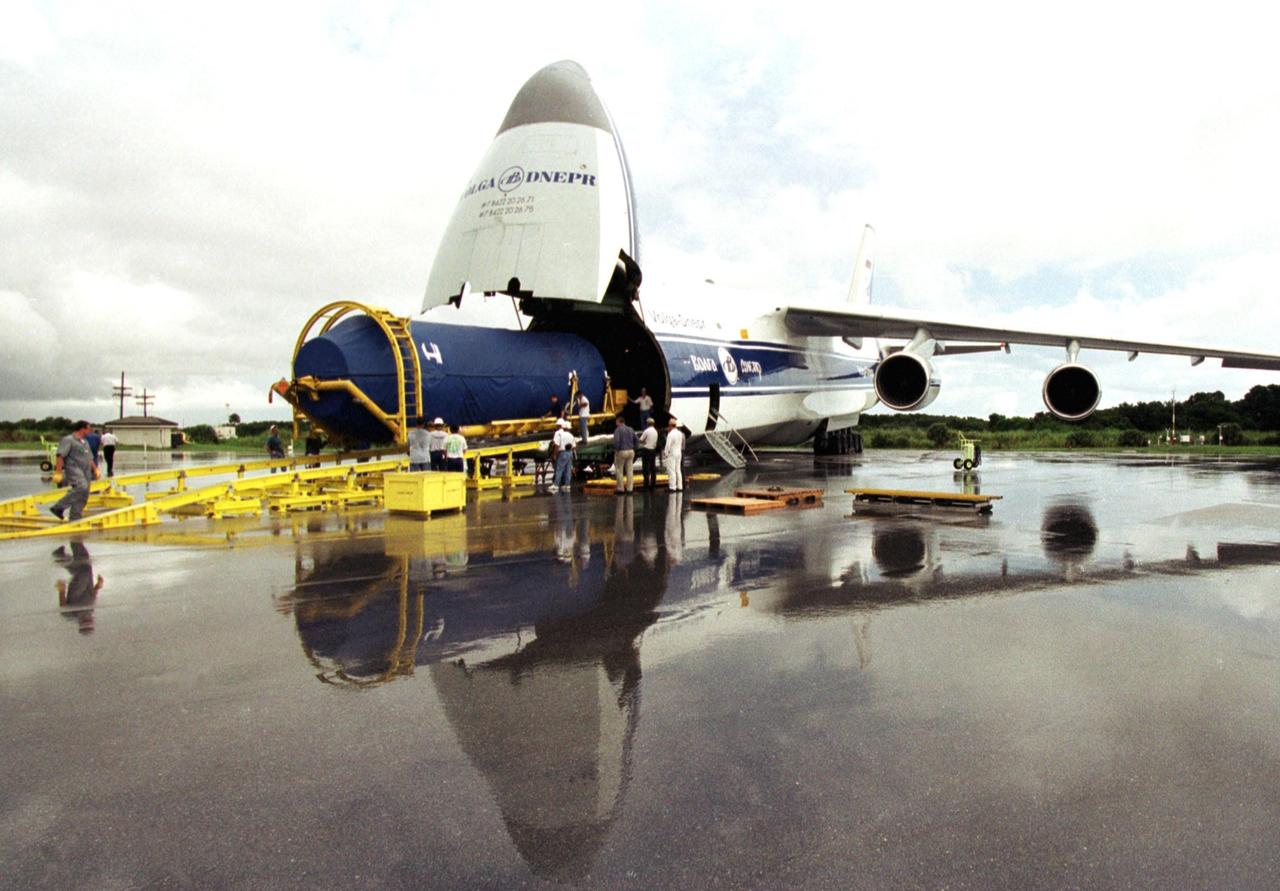
KENNEDY SPACE CENTER, FLA. - At Cape Canaveral Air Force Station, Fla., the Atlas Centaur booster segment of an Atlas II rocket is offloaded. It will be mated to the first segment on Launch Pad 36-A, CCAFS, in preparation for launch of the TDRS-I spacecraft Oct. 30. The 40-minute launch window begins at 11:19 p.m. EST. The TDRS System (TDRSS) is a communication signal relay system that provides tracking and data acquisition services between low-Earth orbiting spacecraft and NASA/customer control and/or data processing facilities. The system is capable of transmitting to and receiving data from customer spacecrafts over 100 percent of their orbit (some limitations may apply depending on actual orbit). The TDRS-I provides a Ka-band service that will allow customers with extremely high data rates to be supported by TDRSS if they desire
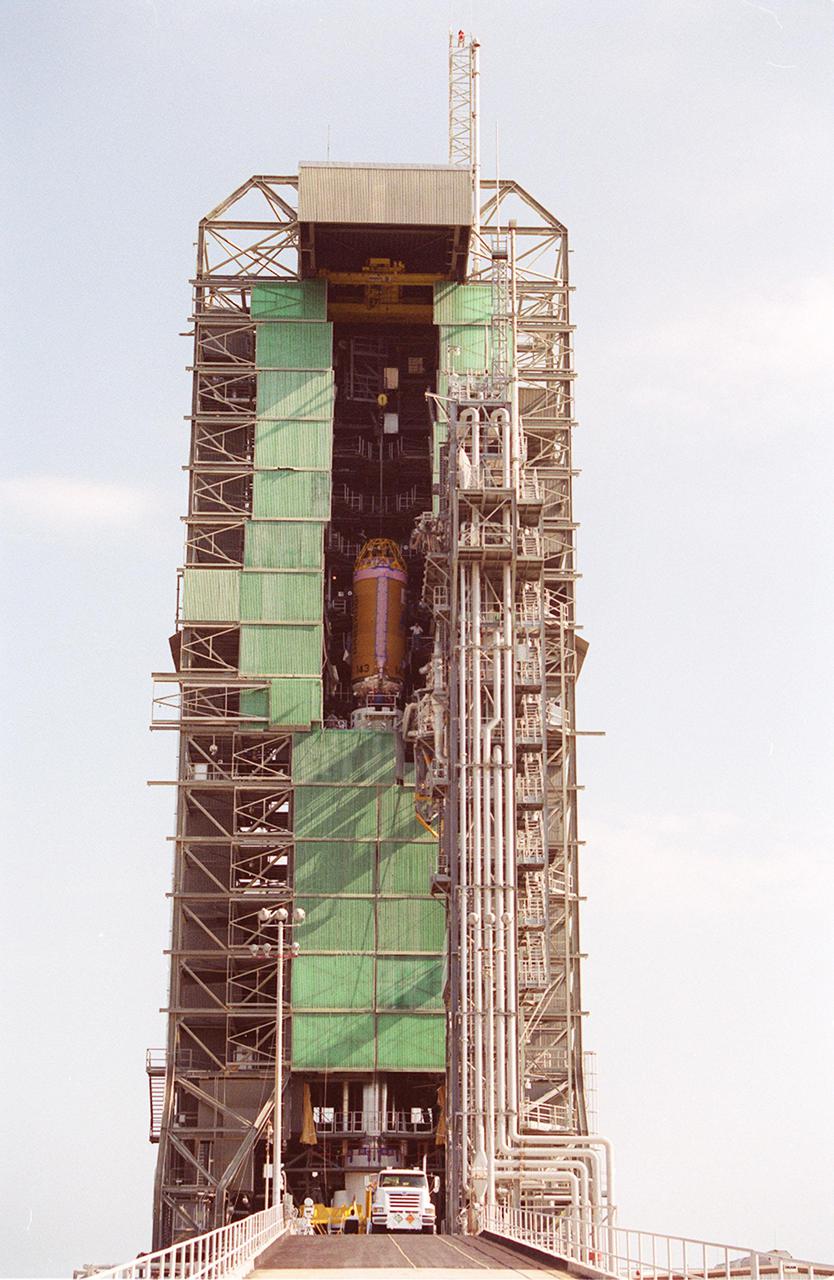
KENNEDY SPACE CENTER, Fla. -- The Lockheed Martin Atlas_Centaur segment of the Atlas II rocket is lowered onto the first (booster) stage of the Atlas II rocket at Launch Pad 36-A, Cape Canaveral Air Force Station. . The rocket is scheduled to launch the Tracking and Data Relay Satellite, known as TDRS-I, in January 2002. The TDRS System (TDRSS) is a communication signal relay system that provides tracking and data acquisition services between low-Earth orbiting spacecraft and NASA_customer control and_or data processing facilities. The system is capable of transmitting to and receiving data from customer spacecrafts over 100 percent of their orbit (some limitations may apply depending on actual orbit). The TDRS-I provides a Ka-band service that will allow customers with extremely high data rates to be supported by the Tracking and Data Relay Satellite System (TDRSS) if they desire.
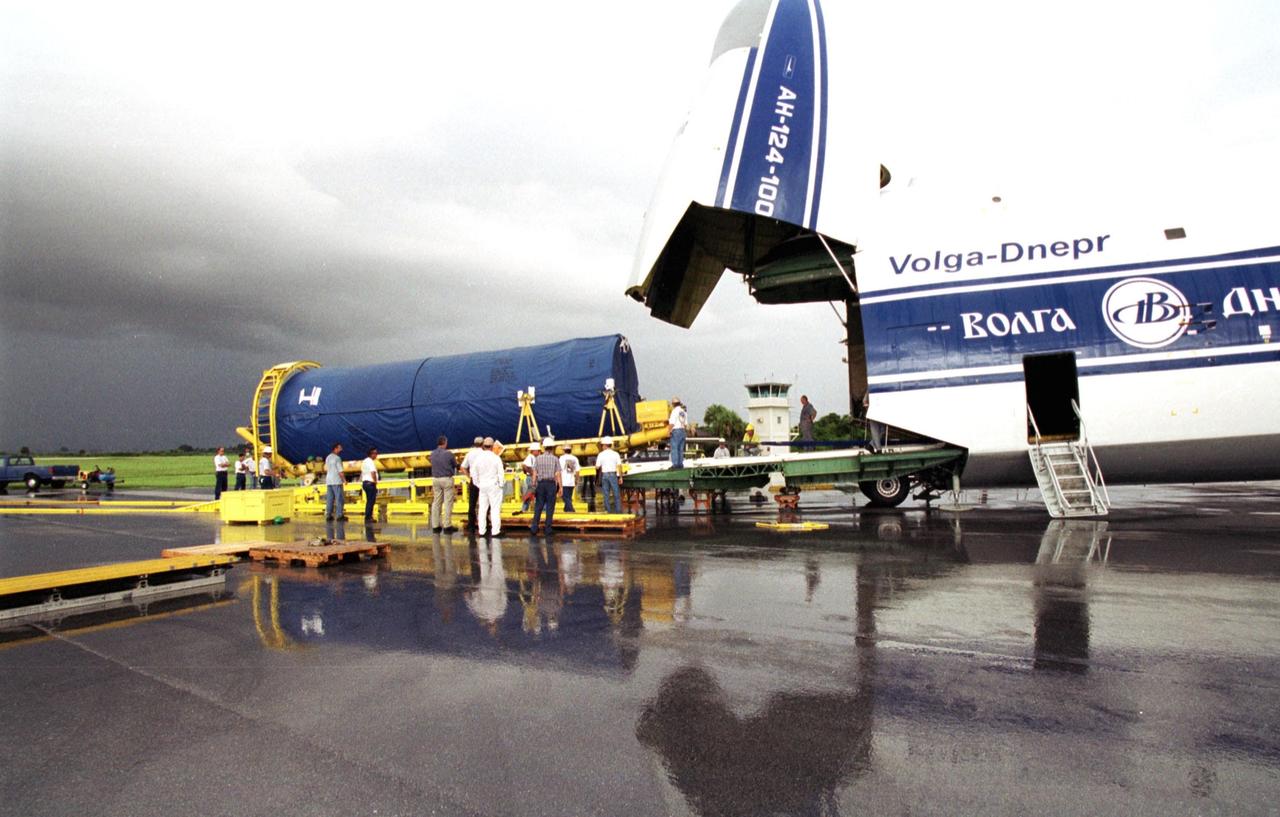
KENNEDY SPACE CENTER, FLA. - At Cape Canaveral Air Force Station, Fla., the Atlas Centaur booster segment of an Atlas II rocket is offloaded. It will be mated to the first segment on Launch Pad 36-A, CCAFS, in preparation for launch of the TDRS-I spacecraft Oct. 30. The 40-minute launch window begins at 11:19 p.m. EST. The TDRS System (TDRSS) is a communication signal relay system that provides tracking and data acquisition services between low-Earth orbiting spacecraft and NASA/customer control and/or data processing facilities. The system is capable of transmitting to and receiving data from customer spacecrafts over 100 percent of their orbit (some limitations may apply depending on actual orbit). The TDRS-I provides a Ka-band service that will allow customers with extremely high data rates to be supported by TDRSS if they desire
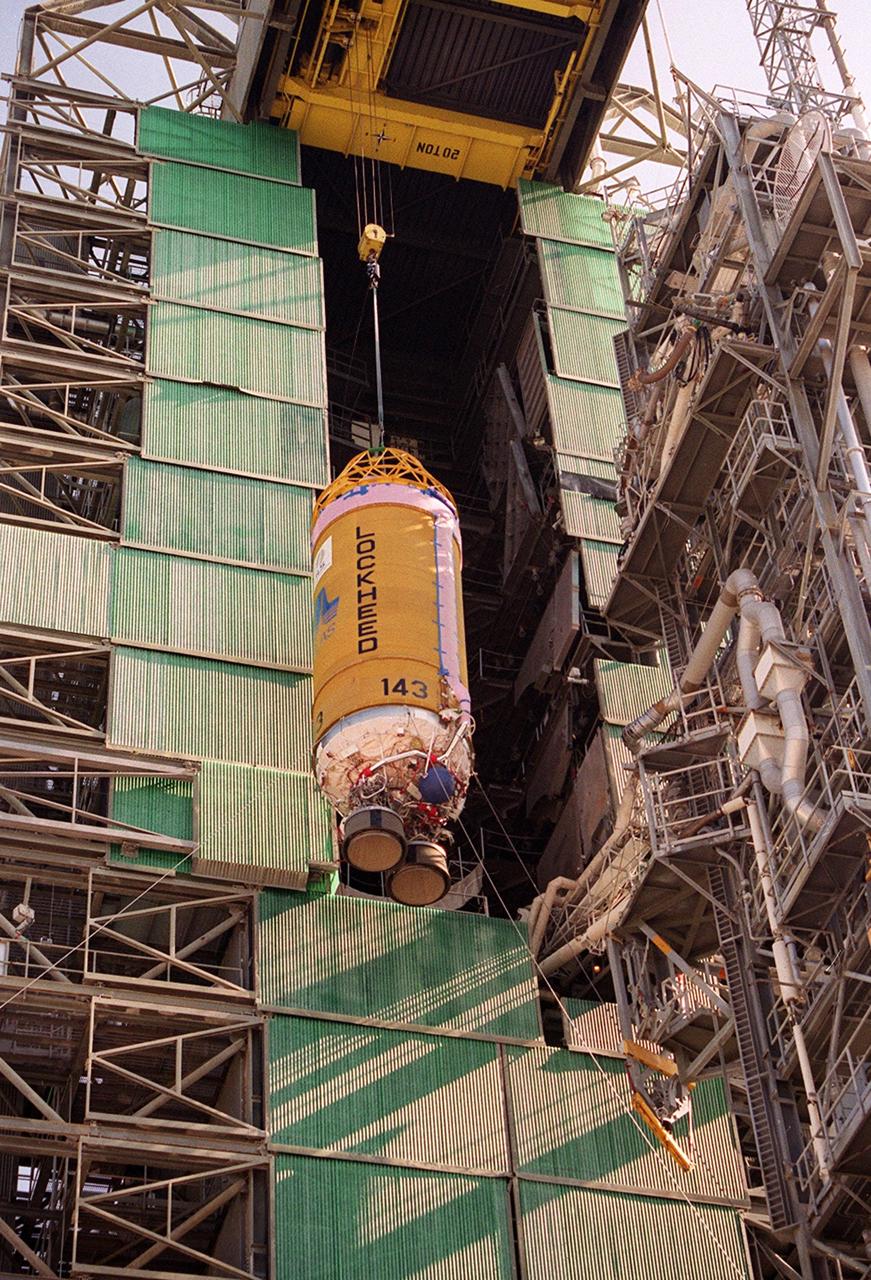
KENNEDY SPACE CENTER, Fla. -- The Lockheed Martin Atlas/Centaur segment of the Atlas II rocket is lifted up the launch tower at Launch Pad 36-A, Cape Canaveral Air Force Station. The rocket is scheduled to launch the Tracking and Data Relay Satellite, known as TDRS-I, in January 2002. The TDRS System (TDRSS) is a communication signal relay system that provides tracking and data acquisition services between low-Earth orbiting spacecraft and NASA/customer control and/or data processing facilities. The system is capable of transmitting to and receiving data from customer spacecrafts over 100 percent of their orbit (some limitations may apply depending on actual orbit). The TDRS-I provides a Ka-band service that will allow customers with extremely high data rates to be supported by the Tracking and Data Relay Satellite System (TDRSS) if they desire.
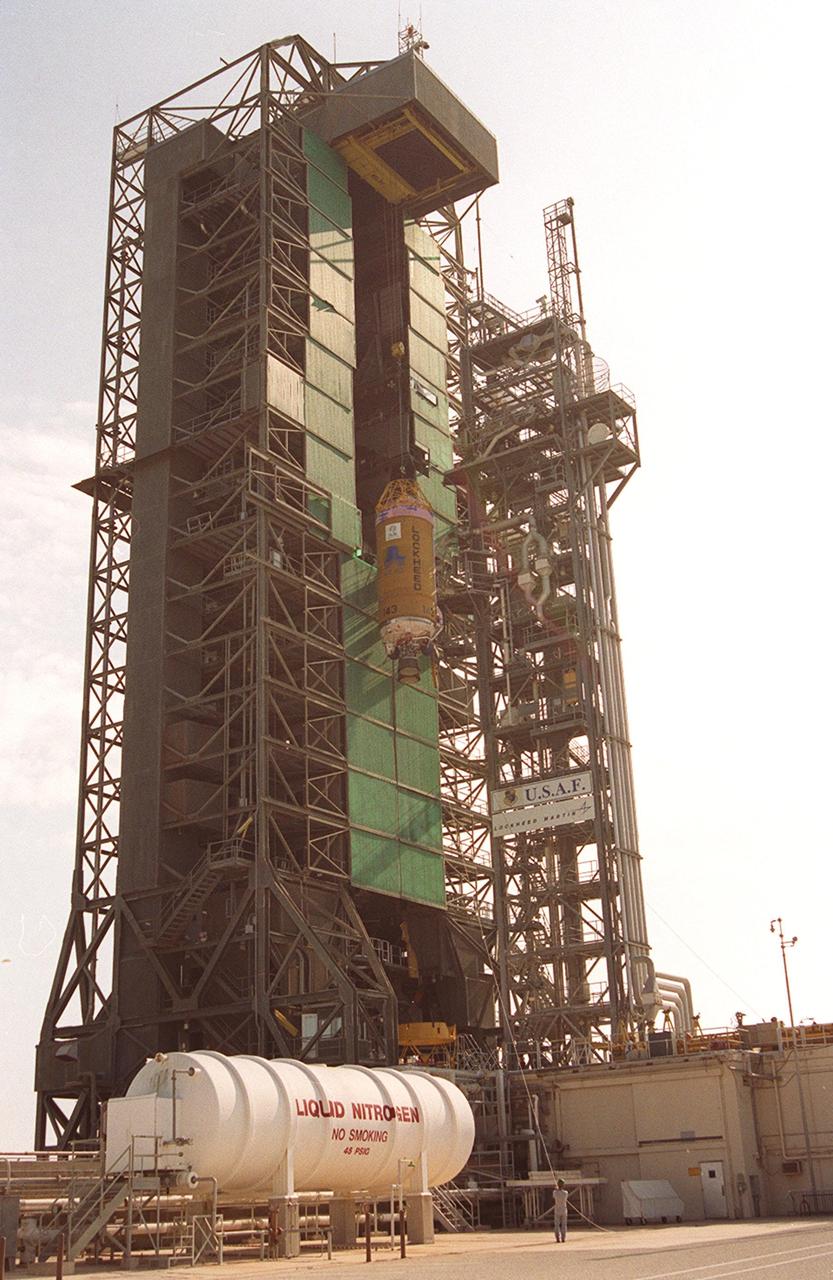
KENNEDY SPACE CENTER, Fla. -- The Lockheed Martin Atlas/Centaur segment of the Atlas II rocket is lifted up the launch tower at Launch Pad 36-A, Cape Canaveral Air Force Station. The rocket is scheduled to launch the Tracking and Data Relay Satellite, known as TDRS-I, in January 2002. The TDRS System (TDRSS) is a communication signal relay system that provides tracking and data acquisition services between low-Earth orbiting spacecraft and NASA/customer control and/or data processing facilities. The system is capable of transmitting to and receiving data from customer spacecrafts over 100 percent of their orbit (some limitations may apply depending on actual orbit). The TDRS-I provides a Ka-band service that will allow customers with extremely high data rates to be supported by the Tracking and Data Relay Satellite System (TDRSS) if they desire.
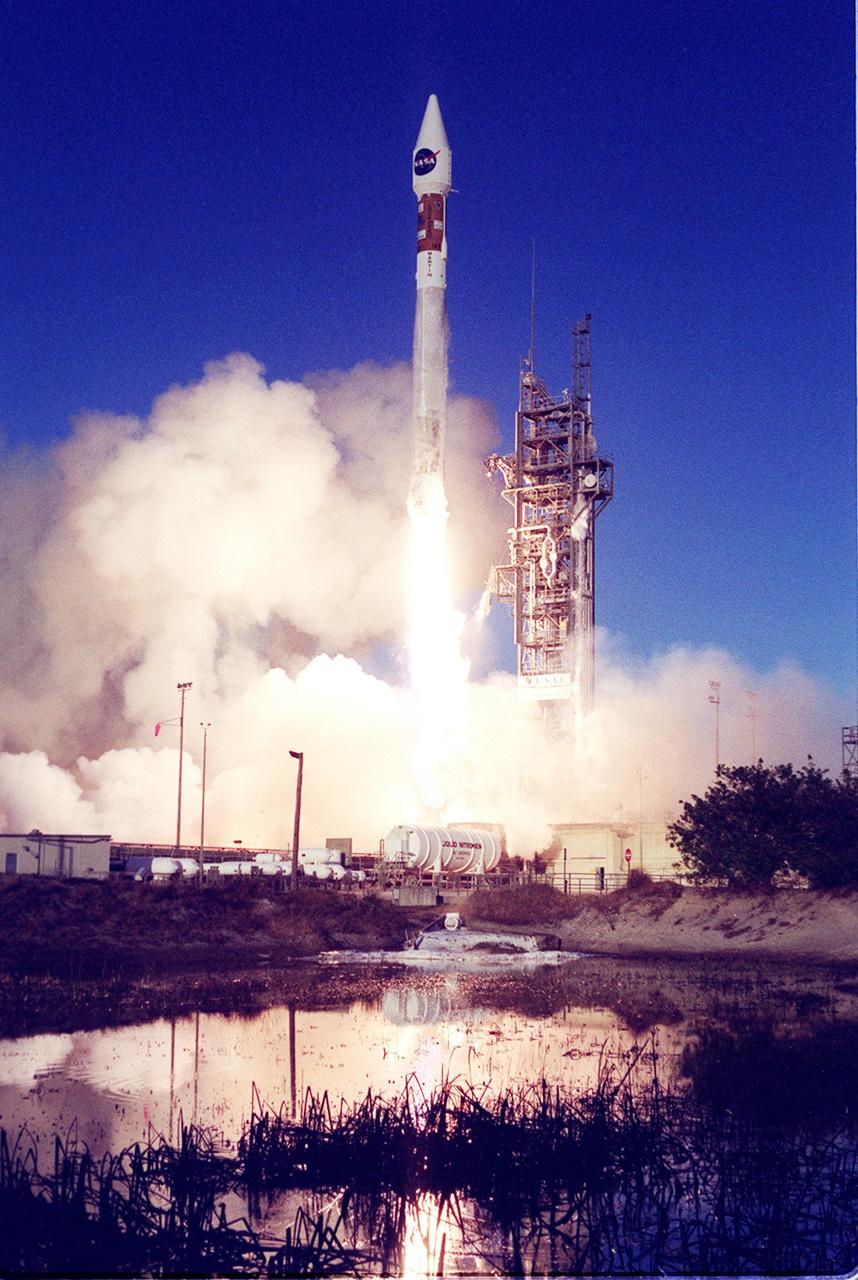
KENNEDY SPACE CENTER, FLA. -- The Lockheed Martin Atlas IIA rocket lifts off from Launch Pad 36-A, Cape Canaveral Air Force Station, with the Tracking and Data Relay Satellite-I (TDRS-1) aboard. TDRS-I replenishes the existing on-orbit fleet of six spacecraft. The TDRS System is the primary source of space-to-ground voice, data and telemetry for the Space Shuttle. It also provides communications with the International Space Station and scientific spacecraft in low-Earth orbit such as the Hubble Space Telescope. This new advanced series of satellites will extend the availability of TDRS communications services until about 2017. Liftoff occurred at 5:59 p.m. EST
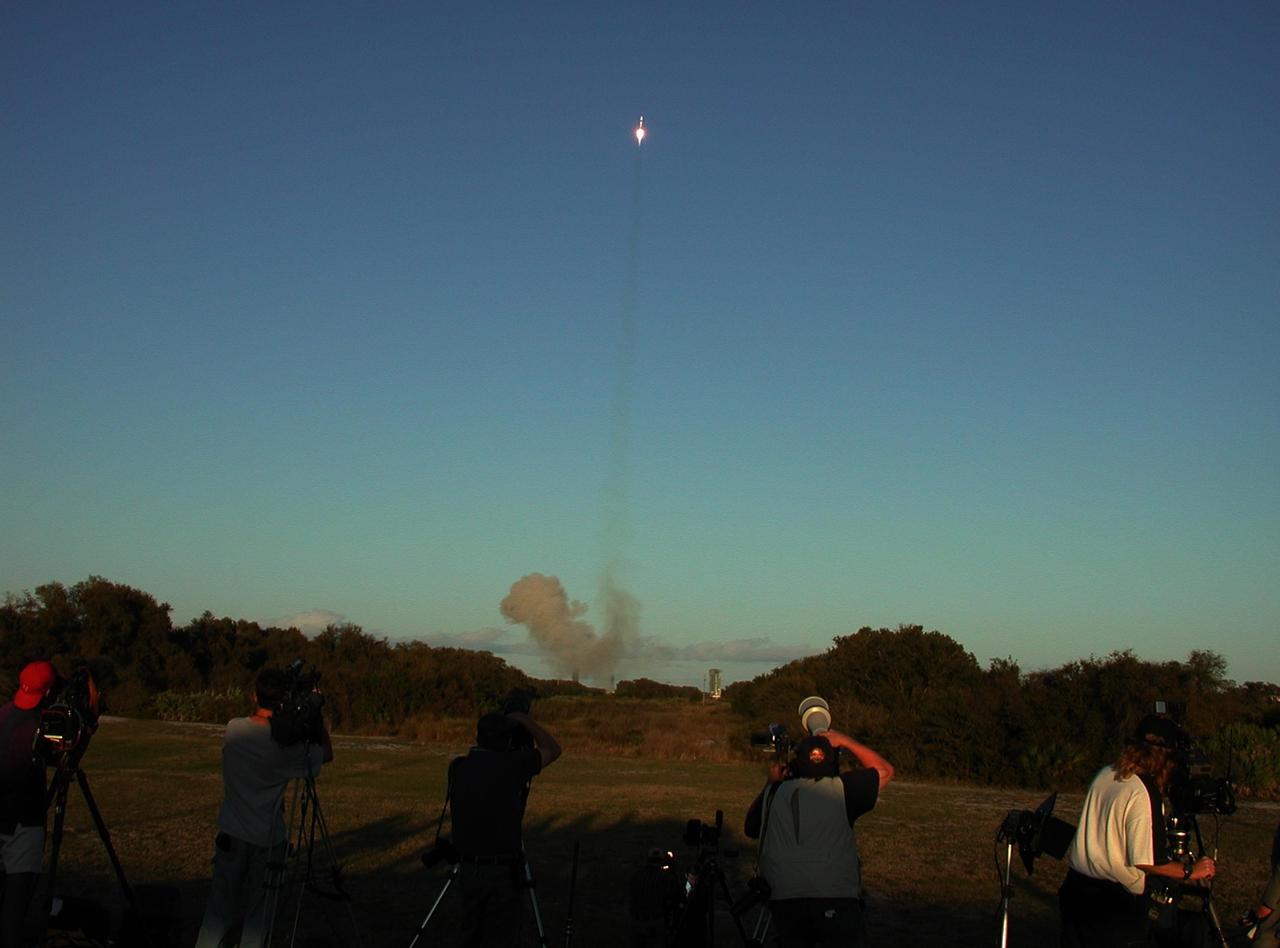
KENNEDY SPACE CENTER, FLA. -- Photographers track the Lockheed Martin Atlas IIA rocket after liftoff from Launch Pad 36-A, Cape Canaveral Air Force Station. The rocket is carrying the Tracking and Data Relay Satellite-I (TDRS-1). TDRS-I replenishes the existing on-orbit fleet of six spacecraft. The TDRS System is the primary source of space-to-ground voice, data and telemetry for the Space Shuttle. It also provides communications with the International Space Station and scientific spacecraft in low-Earth orbit such as the Hubble Space Telescope. This new advanced series of satellites will extend the availability of TDRS communications services until about 2017. Liftoff occurred at 5:59 p.m. EST
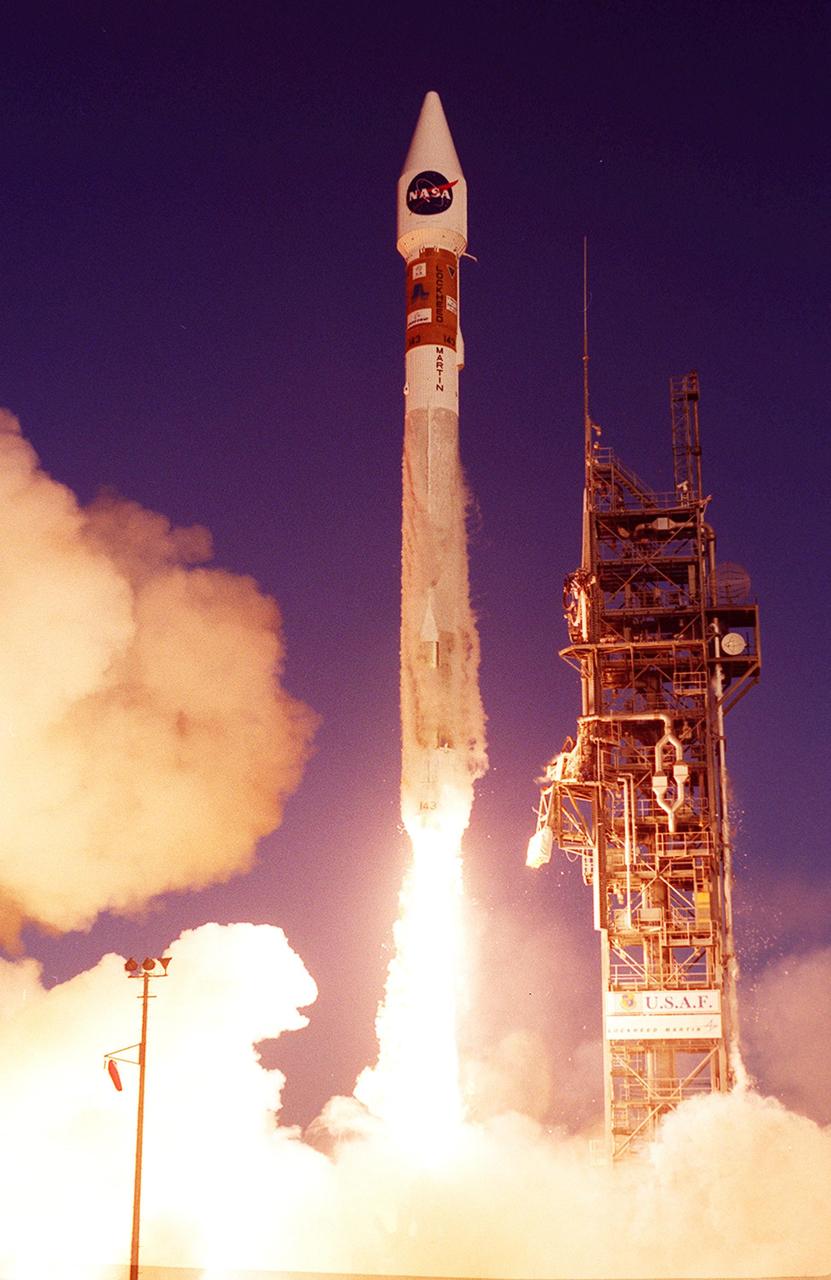
KENNEDY SPACE CENTER, FLA. - Spewing fire and smoke behind it, the Lockheed Martin Atlas IIA rocket lifts off from Launch Pad 36-A, Cape Canaveral Air Force Station, with the Tracking and Data Relay Satellite-I (TDRS-1) aboard. TDRS-I replenishes the existing on-orbit fleet of six spacecraft. The TDRS System is the primary source of space-to-ground voice, data and telemetry for the Space Shuttle. It also provides communications with the International Space Station and scientific spacecraft in low-Earth orbit such as the Hubble Space Telescope. This new advanced series of satellites will extend the availability of TDRS communications services until about 2017. Liftoff occurred at 5:59 p.m. EST
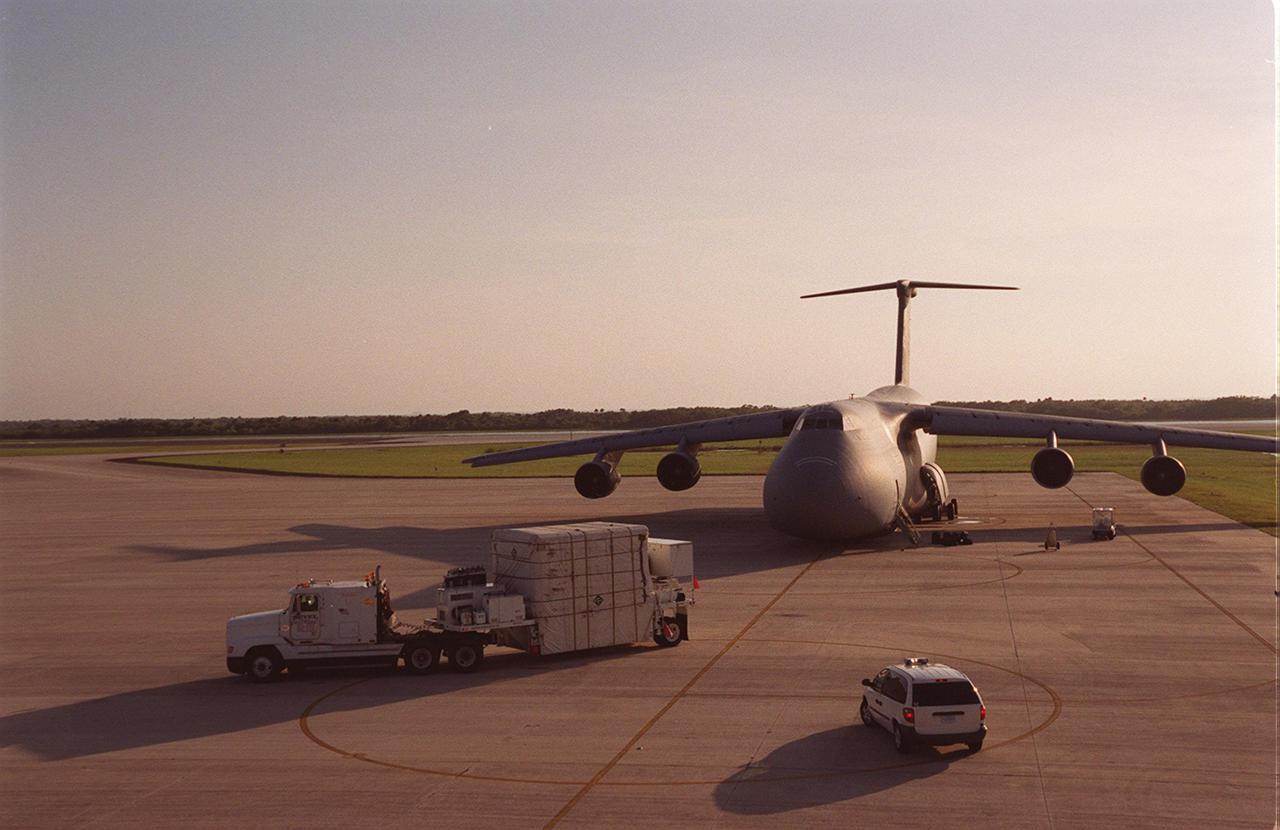
At the KSC Shuttle Landing Facility, the GOES-M satellite, encased in a container, begins its trek to Astrotech in Titusville, Fla., where it will undergo final testing. The GOES-M (Geostationary Operational Environmental Satellite, I-M Series) provides weather imagery and quantitative sounding data used to support weather forecasting, severe storm tracking, and meteorological research. The satellite is scheduled to be launched on an Atlas-IIA booster, with a Centaur upper stage, July 12 from Launch Pad 36-A, Cape Canaveral Air Force Station
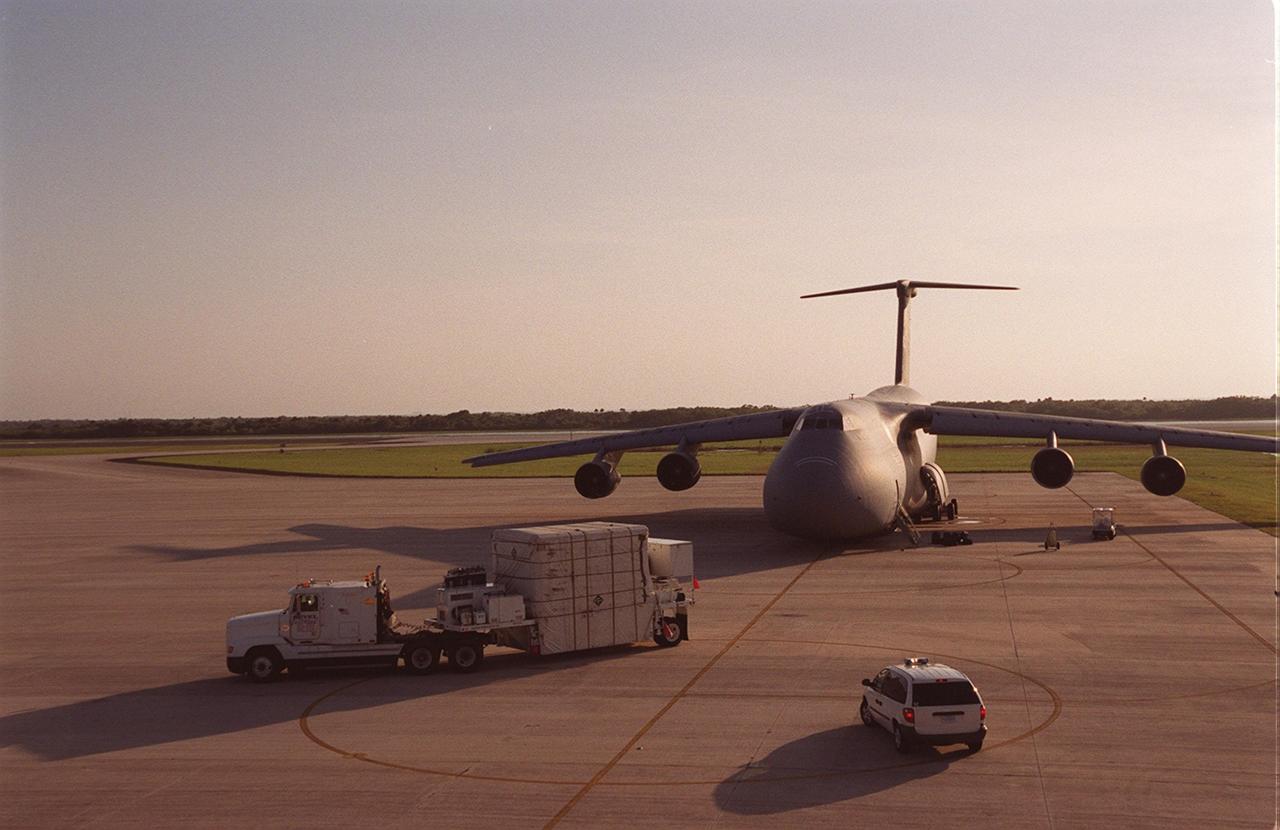
At the KSC Shuttle Landing Facility, the GOES-M satellite, encased in a container, begins its trek to Astrotech in Titusville, Fla., where it will undergo final testing. The GOES-M (Geostationary Operational Environmental Satellite, I-M Series) provides weather imagery and quantitative sounding data used to support weather forecasting, severe storm tracking, and meteorological research. The satellite is scheduled to be launched on an Atlas-IIA booster, with a Centaur upper stage, July 12 from Launch Pad 36-A, Cape Canaveral Air Force Station
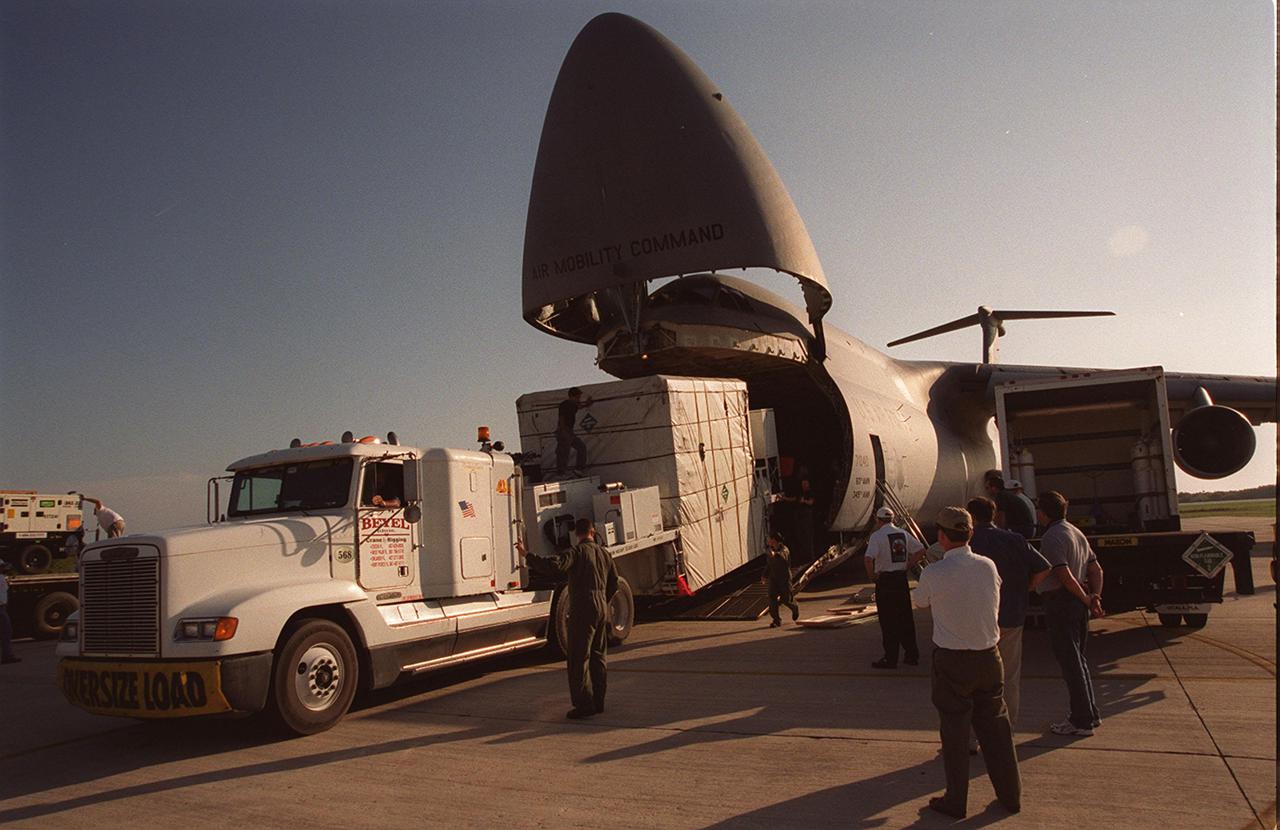
At the KSC Shuttle Landing Facility, the GOES-M satellite is offloaded from the yawning mouth of the C-5 aircraft. It will be transferred to Astrotech in Titusville, Fla., for final testing. The GOES-M (Geostationary Operational Environmental Satellite, I-M Series) provides weather imagery and quantitative sounding data used to support weather forecasting, severe storm tracking, and meteorological research. The satellite is scheduled to be launched on an Atlas-IIA booster, with a Centaur upper stage, July 12 from Launch Pad 36-A, Cape Canaveral Air Force Station
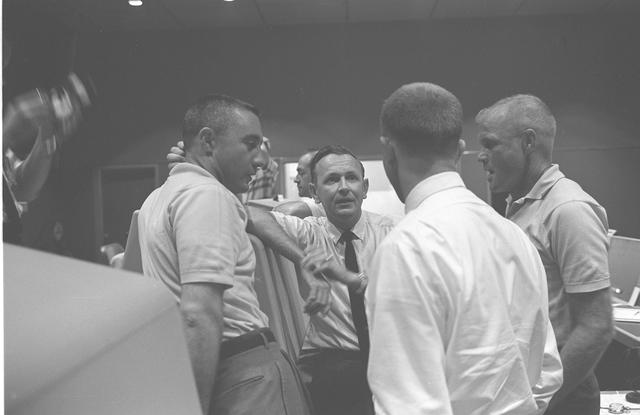
S64-10761 (1962) --- Astronauts Virgil I. (Gus) Grissom (left) and John H. Glenn Jr. hold a discussion in the Mercury Control Center during Mercury-Atlas 6 preflight activity. Glenn is the MA-6 pilot. Grissom was the pilot for the Mercury-Redstone 4 spaceflight made on July 21, 1961. Photo credit: NASA
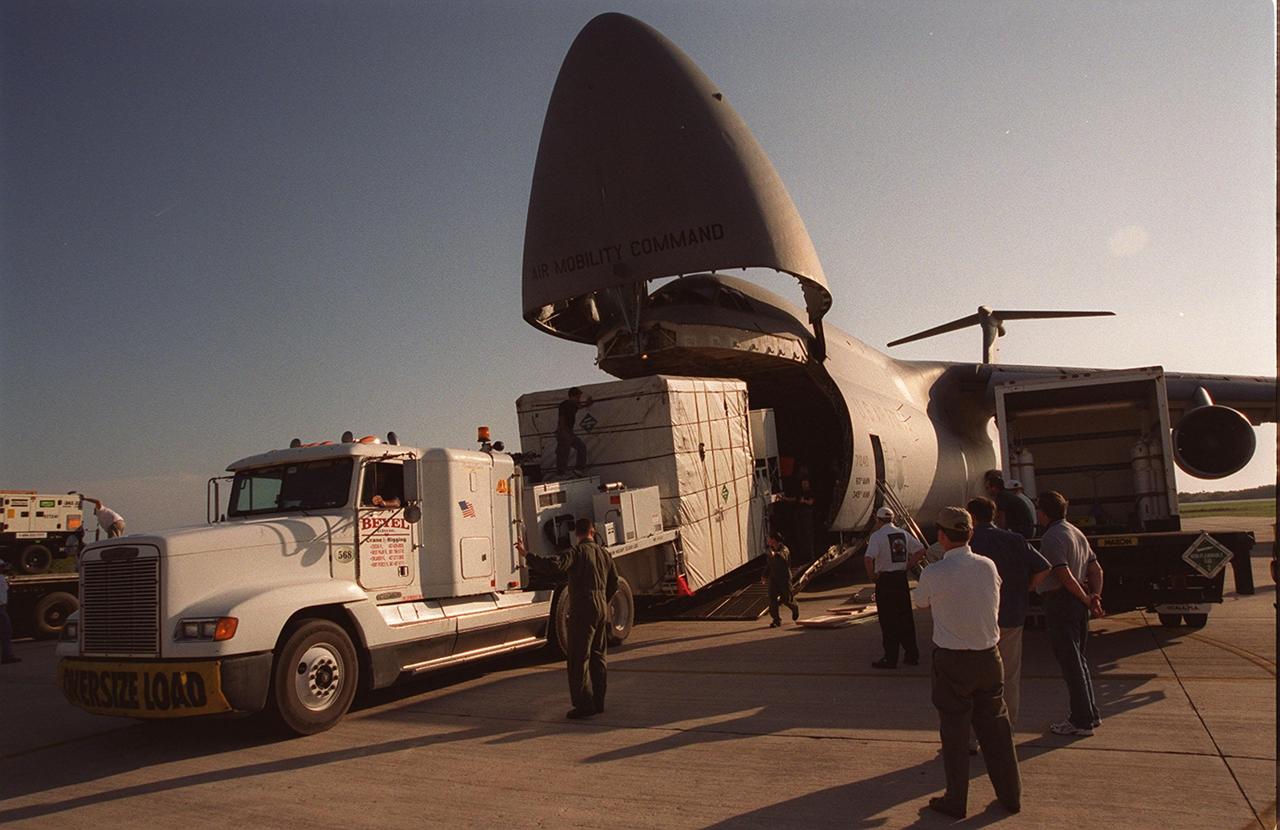
At the KSC Shuttle Landing Facility, the GOES-M satellite is offloaded from the yawning mouth of the C-5 aircraft. It will be transferred to Astrotech in Titusville, Fla., for final testing. The GOES-M (Geostationary Operational Environmental Satellite, I-M Series) provides weather imagery and quantitative sounding data used to support weather forecasting, severe storm tracking, and meteorological research. The satellite is scheduled to be launched on an Atlas-IIA booster, with a Centaur upper stage, July 12 from Launch Pad 36-A, Cape Canaveral Air Force Station
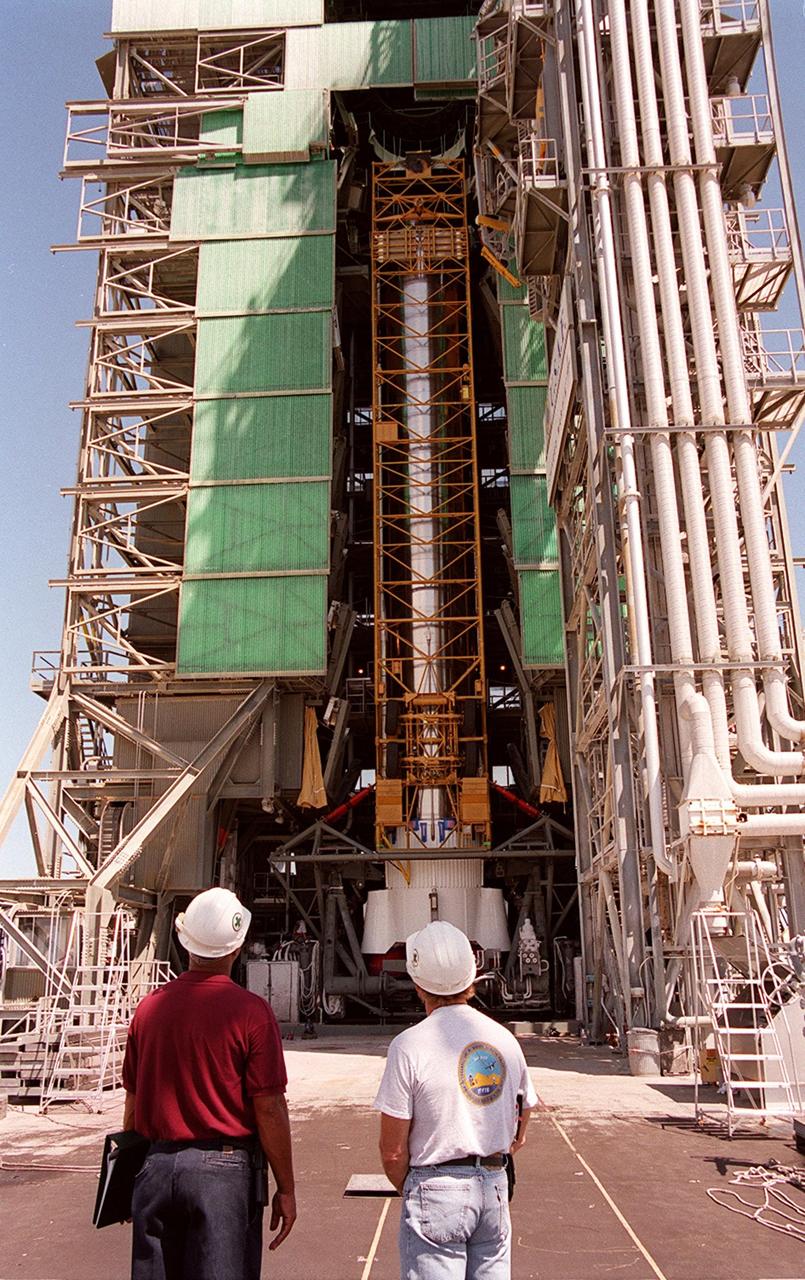
KENNEDY SPACE CENTER, Fla. -- The first (booster) stage of an Atlas II rocket is moved into the launch tower at Pad 36-A, Cape Canaveral Air Force Station. It will later be mated with the Tracking and Data Relay Satellite, known as TDRS-I, for launch in January 2002. The TDRS System (TDRSS) is a communication signal relay system that provides tracking and data acquisition services between low-Earth orbiting spacecraft and NASA/customer control and/or data processing facilities. The system is capable of transmitting to and receiving data from customer spacecrafts over 100 percent of their orbit (some limitations may apply depending on actual orbit). The TDRS-I provides a Ka-band service that will allow customers with extremely high data rates to be supported by the Tracking and Data Relay Satellite System (TDRSS) if they desire
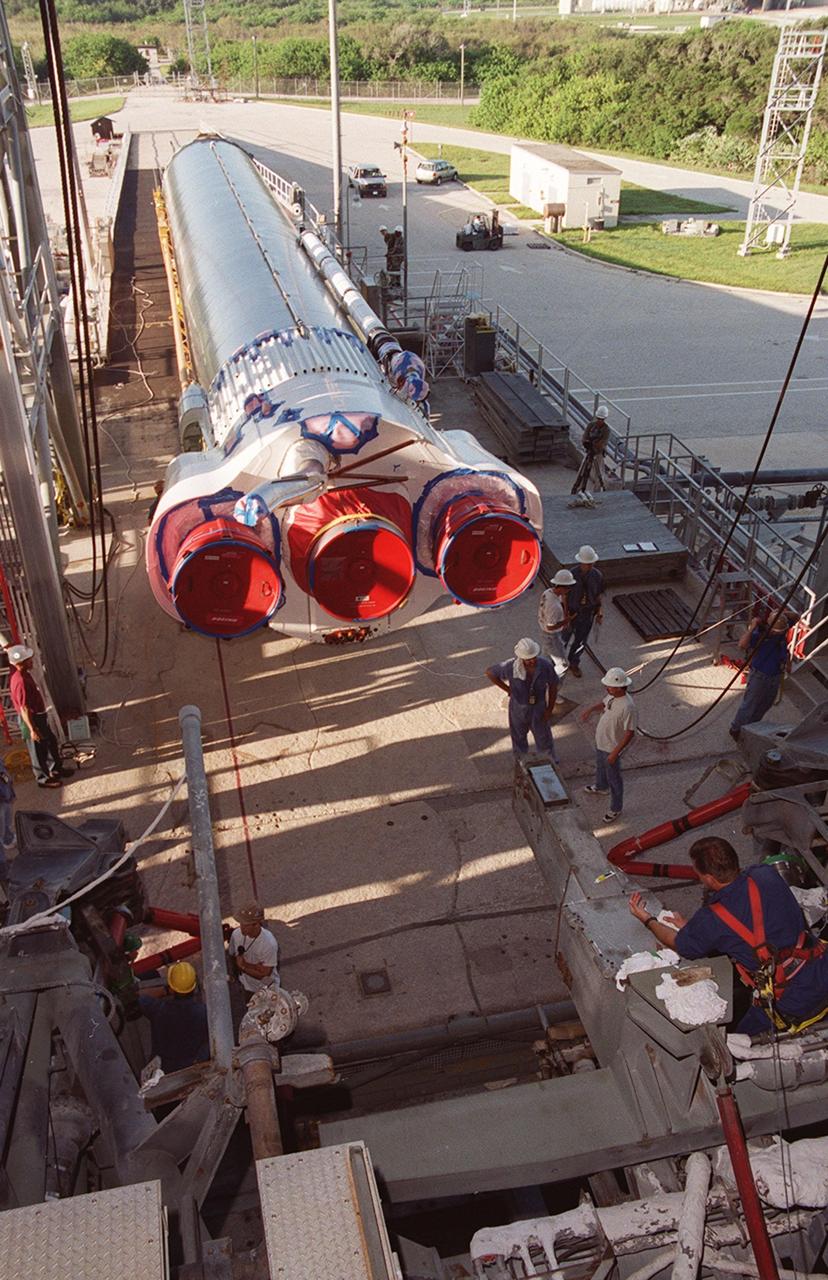
KENNEDY SPACE CENTER, Fla. -- The first (booster) stage of an Atlas II rocket arrives at Pad 36-A, Cape Canaveral Air Force Station. The segment will be lifted and raised into the launch tower where it will be mated with the Tracking and Data Relay Satellite, known as TDRS-I, for launch in January 2002. The TDRS System (TDRSS) is a communication signal relay system that provides tracking and data acquisition services between low-Earth orbiting spacecraft and NASA/customer control and/or data processing facilities. The system is capable of transmitting to and receiving data from customer spacecrafts over 100 percent of their orbit (some limitations may apply depending on actual orbit). The TDRS-I provides a Ka-band service that will allow customers with extremely high data rates to be supported by the Tracking and Data Relay Satellite System (TDRSS) if they desire
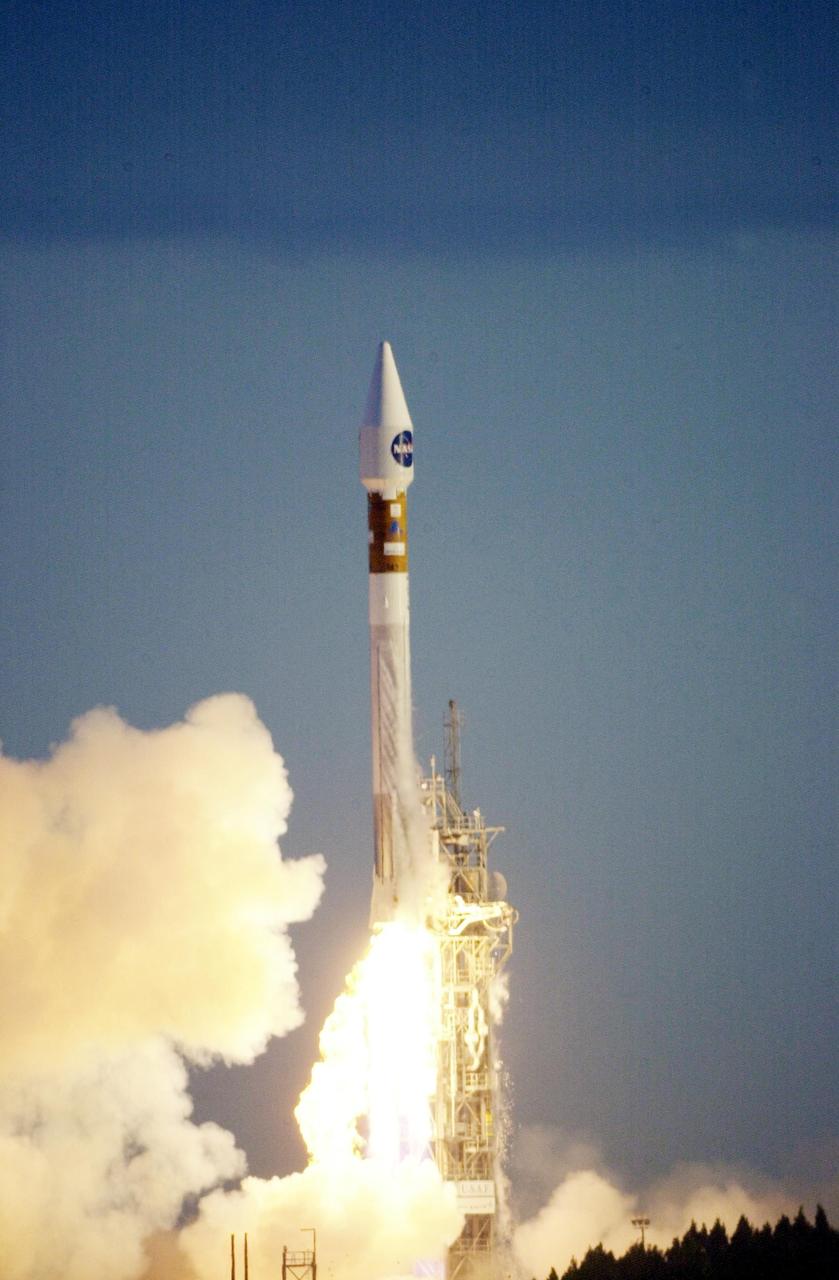
KENNEDY SPACE CENTER, FLA. -- Against a clear blue Florida sky, the Lockheed Martin Atlas IIa rocket clears the tower as it lifts off from Launch Pad 36-A, Cape Canaveral Air Force Station, with the Tracking and Data Relay Satellite-I (TDRS-1) aboard. TDRS-I replenishes the existing on-orbit fleet of six spacecraft. The TDRS System is the primary source of space-to-ground voice, data and telemetry for the Space Shuttle. It also provides communications with the International Space Station and scientific spacecraft in low-Earth orbit such as the Hubble Space Telescope. This new advanced series of satellites will extend the availability of TDRS communications services until about 2017. Liftoff occurred at 5:59 p.m. EST

KENNEDY SPACE CENTER, Fla. -- The first (booster) segment of a Lockheed Martin Atlas II rocket sits in the launch tower at Pad 36-A, Cape Canaveral Air Force Station, in preparation for mating with the other stages that will launch the Tracking and Data Relay Satellite, known as TDRS-I, in January 2002. The TDRS System (TDRSS) is a communication signal relay system that provides tracking and data acquisition services between low-Earth orbiting spacecraft and NASA/customer control and/or data processing facilities. The system is capable of transmitting to and receiving data from customer spacecrafts over 100 percent of their orbit (some limitations may apply depending on actual orbit). The TDRS-I provides a Ka-band service that will allow customers with extremely high data rates to be supported by the Tracking and Data Relay Satellite System (TDRSS) if they desire.
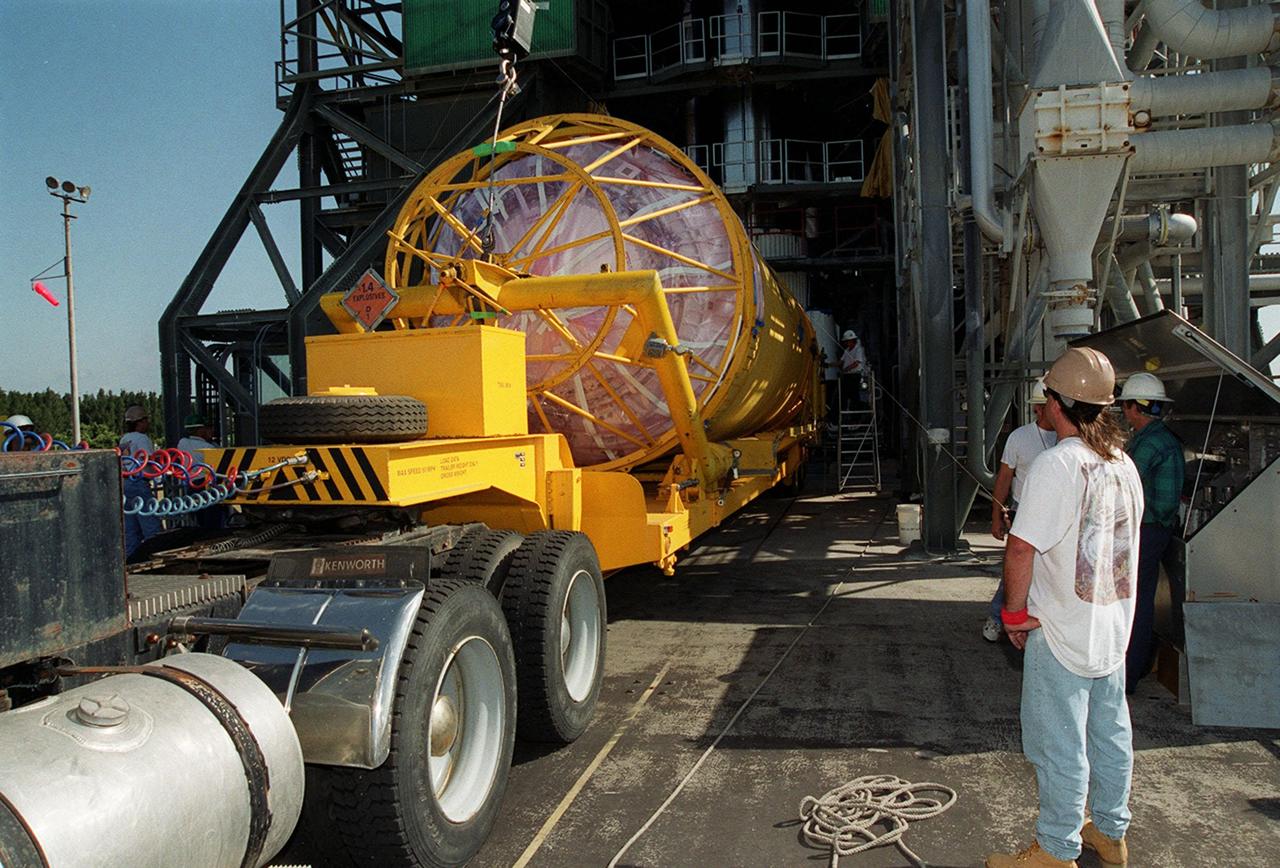
At Launch Pad 36A, Cape Canaveral Air Force Station, a Centaur rocket arrives for mating with the Atlas IIA rocket already in the tower. The Centaur upper stage is 10.0 m (33-ft) long and 3.05 m (10 ft) in diameter. The Lockheed-built Atlas IIA/Centaur rocket will launch the latest Tracking and Data Relay Satellite (TDRS) June 29 from CCAFS. The TDRS is one of three (labeled H, I and J) being built in the Hughes Space and Communications Company Integrated Satellite Factory in El Segundo, Calif. The new satellites will augment the TDRS system’s existing Sand Ku-band frequencies by adding Ka-band capability. TDRS will serve as the sole means of continuous, high-data-rate communication with the space shuttle, with the International Space Station upon its completion, and with dozens of unmanned scientific satellites in low earth orbit
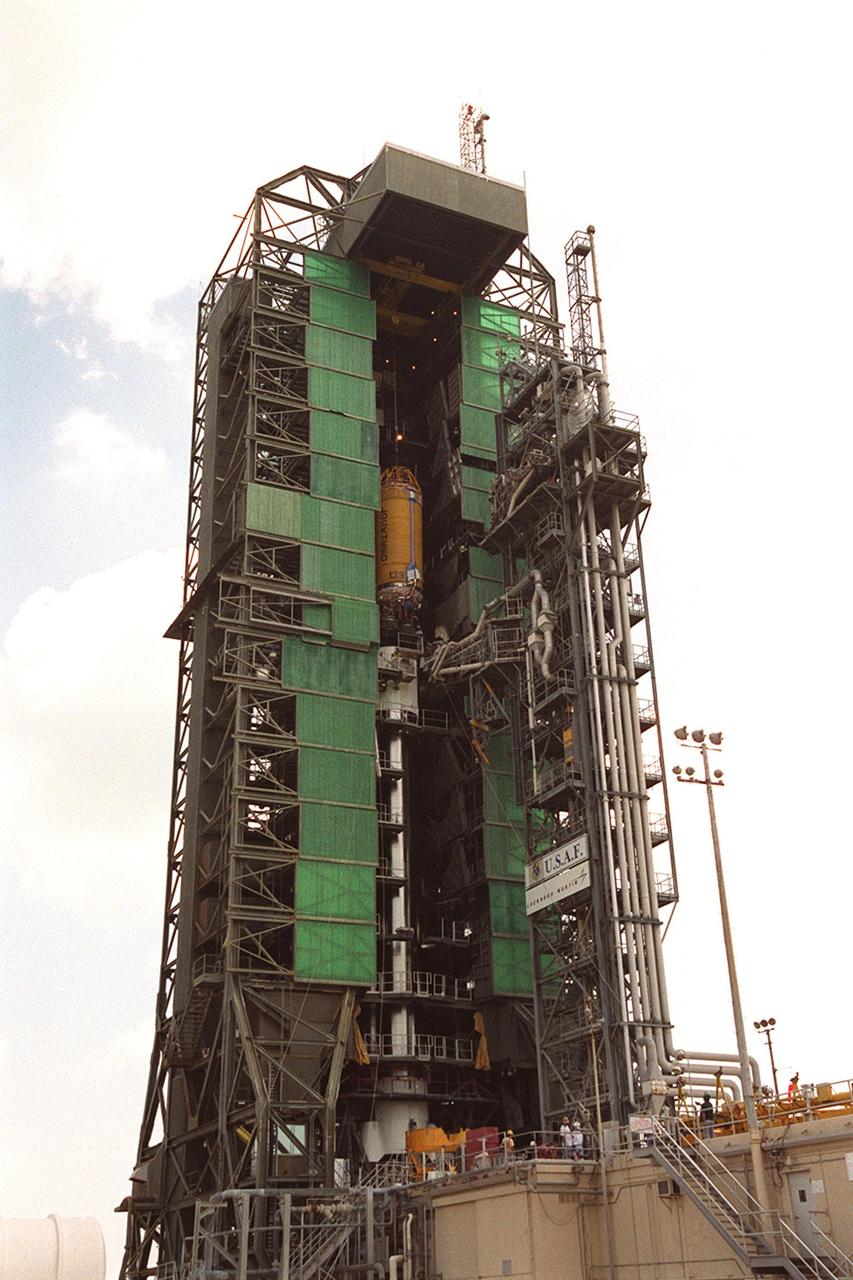
In this long view of the launch tower at Pad 36A, Cape Canaveral Air Force Station, the upper stage Centaur rocket can be seen as it rises up the tower to be mated to the lower stage Atlas IIA rocket already there. The Lockheed-built Atlas IIA/Centaur rocket will launch the latest Tracking and Data Relay Satellite (TDRS) June 29 from CCAFS. The TDRS is one of three (labeled H, I and J) being built in the Hughes Space and Communications Company Integrated Satellite Factory in El Segundo, Calif. The new satellites will augment the TDRS system’s existing Sand Ku-band frequencies by adding Ka-band capability. TDRS will serve as the sole means of continuous, high-data-rate communication with the space shuttle, with the International Space Station upon its completion, and with dozens of unmanned scientific satellites in low earth orbit
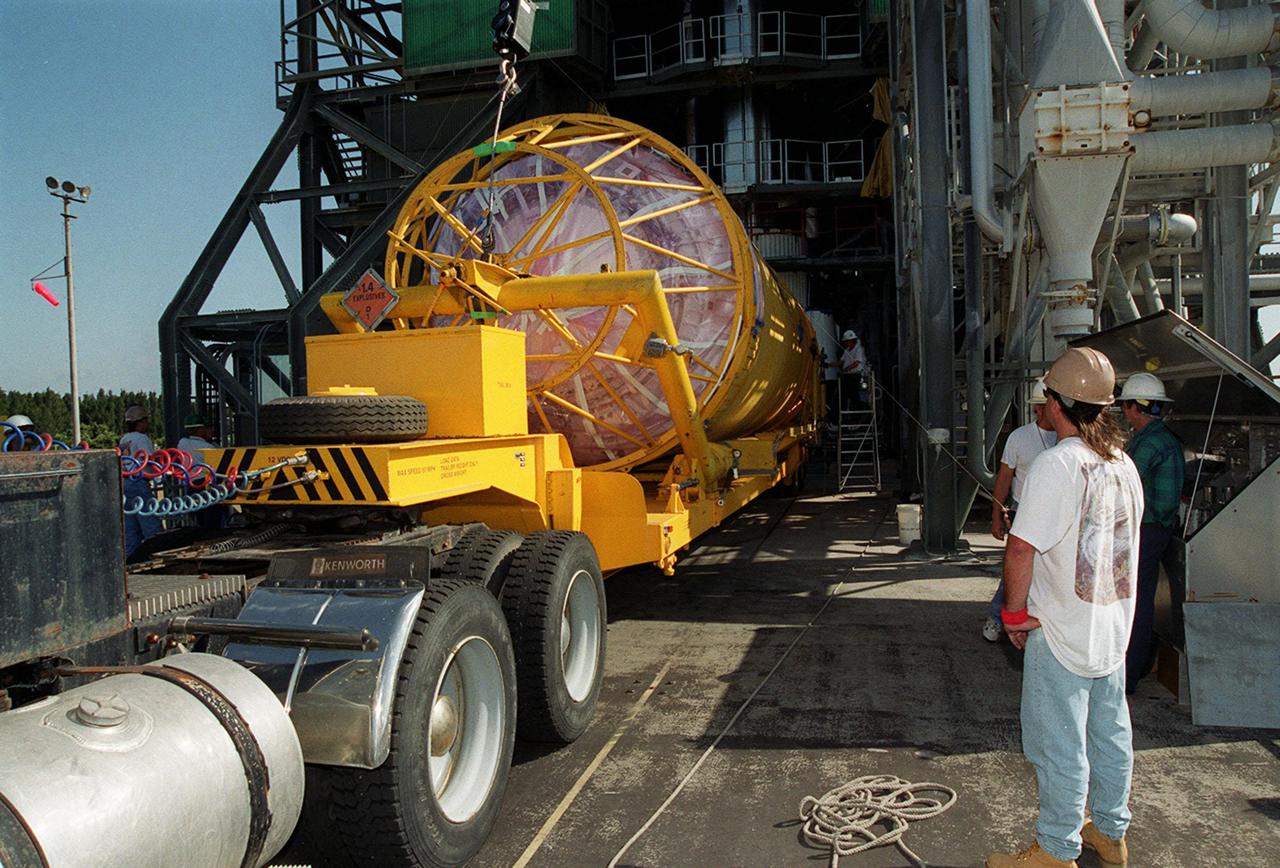
At Launch Pad 36A, Cape Canaveral Air Force Station, a Centaur rocket arrives for mating with the Atlas IIA rocket already in the tower. The Centaur upper stage is 10.0 m (33-ft) long and 3.05 m (10 ft) in diameter. The Lockheed-built Atlas IIA/Centaur rocket will launch the latest Tracking and Data Relay Satellite (TDRS) June 29 from CCAFS. The TDRS is one of three (labeled H, I and J) being built in the Hughes Space and Communications Company Integrated Satellite Factory in El Segundo, Calif. The new satellites will augment the TDRS system’s existing Sand Ku-band frequencies by adding Ka-band capability. TDRS will serve as the sole means of continuous, high-data-rate communication with the space shuttle, with the International Space Station upon its completion, and with dozens of unmanned scientific satellites in low earth orbit

At Launch Pad 36A, Cape Canaveral Air Force Station, workers guide the ascent of a Centaur rocket up the launch tower where it will be mated with the lower stage Atlas IIA rocket already in the tower. The Lockheed-built Atlas IIA/Centaur rocket will launch the latest Tracking and Data Relay Satellite (TDRS) June 29 from CCAFS. The TDRS is one of three (labeled H, I and J) being built in the Hughes Space and Communications Company Integrated Satellite Factory in El Segundo, Calif. The new satellites will augment the TDRS system’s existing Sand Ku-band frequencies by adding Ka-band capability. TDRS will serve as the sole means of continuous, high-data-rate communication with the space shuttle, with the International Space Station upon its completion, and with dozens of unmanned scientific satellites in low earth orbit
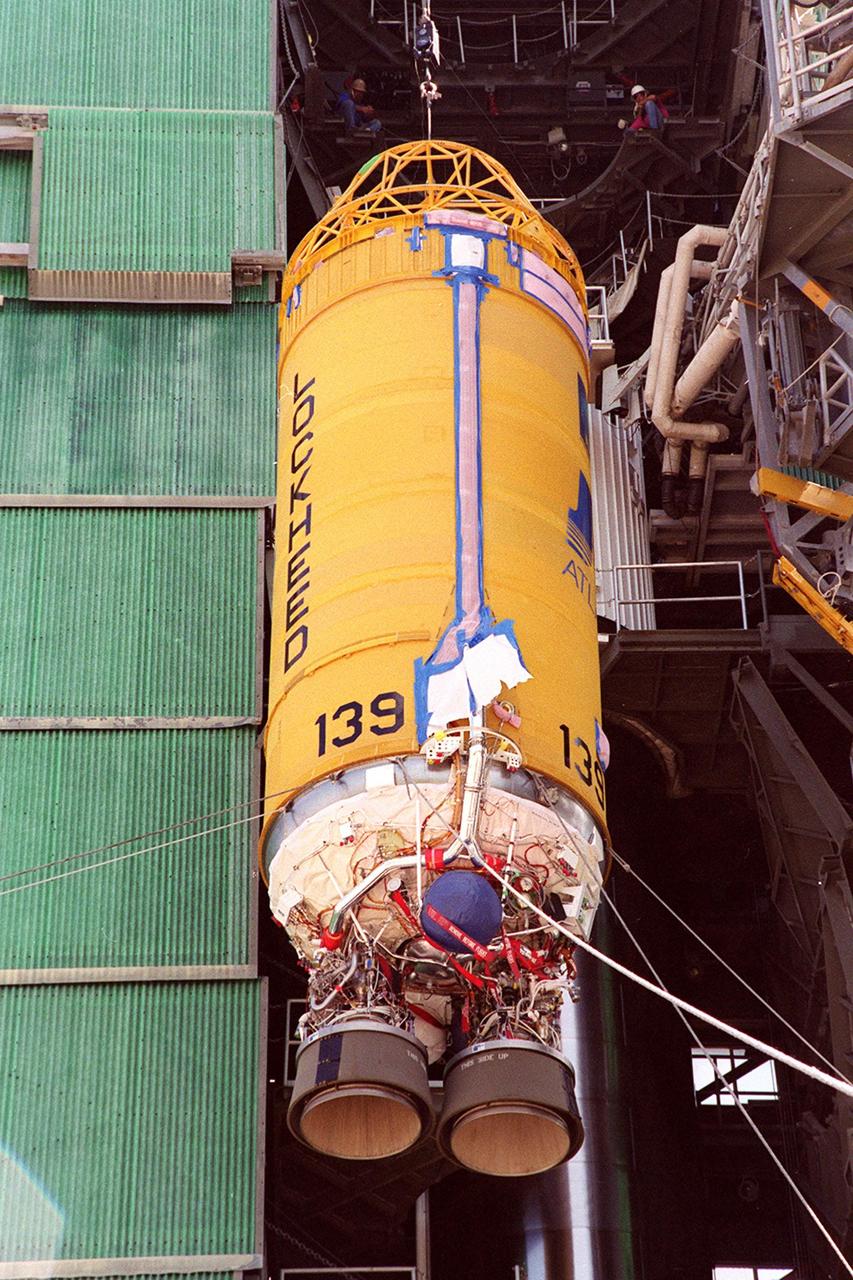
At Launch Pad 36A, Cape Canaveral Air Force Station, lines help guide the ascent of a Centaur rocket up the launch tower where it will be mated with the lower stage Atlas IIA rocket already in the tower. The Lockheed-built Atlas IIA/Centaur rocket will launch the latest Tracking and Data Relay Satellite (TDRS) June 29 from CCAFS. The TDRS is one of three (labeled H, I and J) being built in the Hughes Space and Communications Company Integrated Satellite Factory in El Segundo, Calif. The new satellites will augment the TDRS system’s existing Sand Ku-band frequencies by adding Ka-band capability. TDRS will serve as the sole means of continuous, high-data-rate communication with the space shuttle, with the International Space Station upon its completion, and with dozens of unmanned scientific satellites in low earth orbit
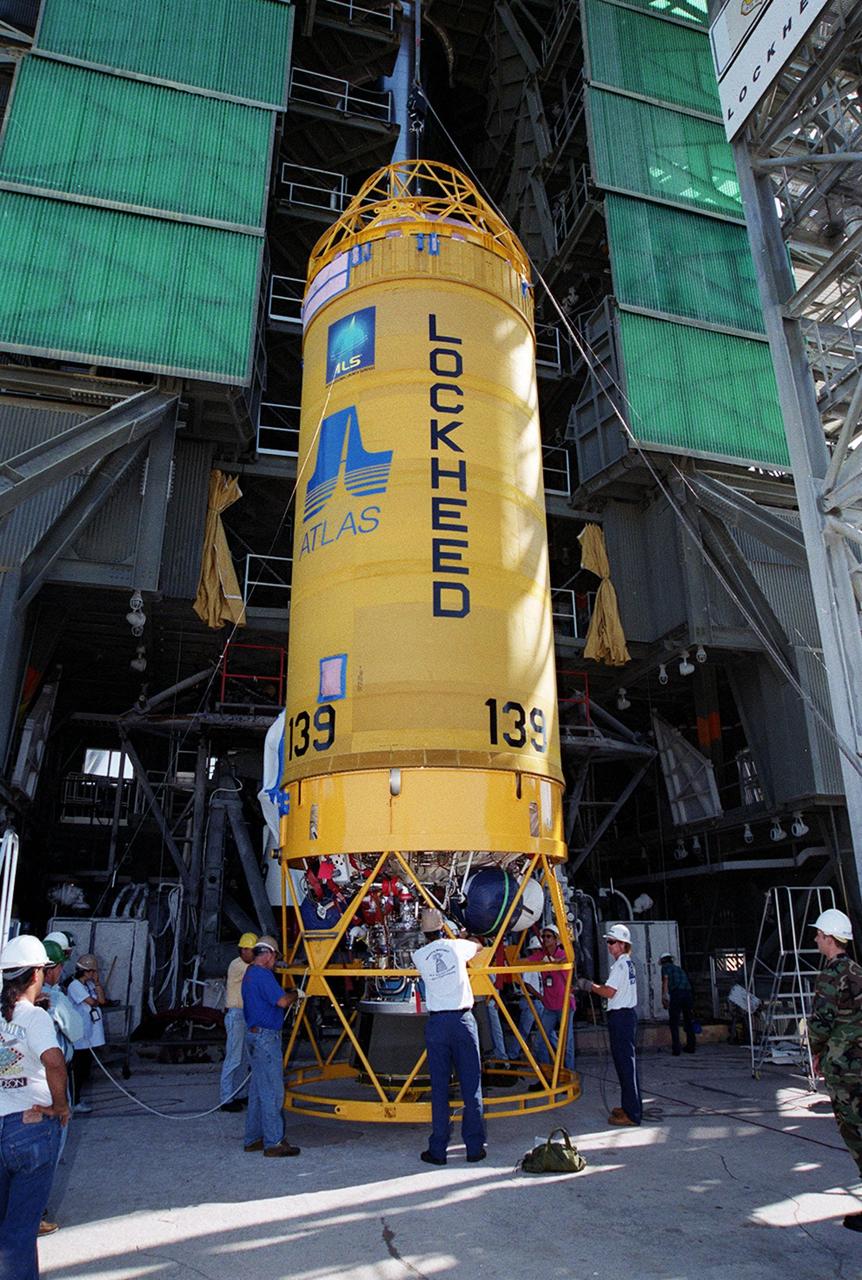
At Launch Pad 36A, Cape Canaveral Air Force Station, workers check out a Centaur rocket for its lift up the launch tower to be mated with the lower stage Atlas IIA rocket already in the tower. The Lockheed-built Atlas IIA/Centaur rocket will launch the latest Tracking and Data Relay Satellite (TDRS) June 29 from CCAFS. The TDRS is one of three (labeled H, I and J) being built in the Hughes Space and Communications Company Integrated Satellite Factory in El Segundo, Calif. The new satellites will augment the TDRS system’s existing Sand Ku-band frequencies by adding Ka-band capability. TDRS will serve as the sole means of continuous, high-data-rate communication with the space shuttle, with the International Space Station upon its completion, and with dozens of unmanned scientific satellites in low earth orbit
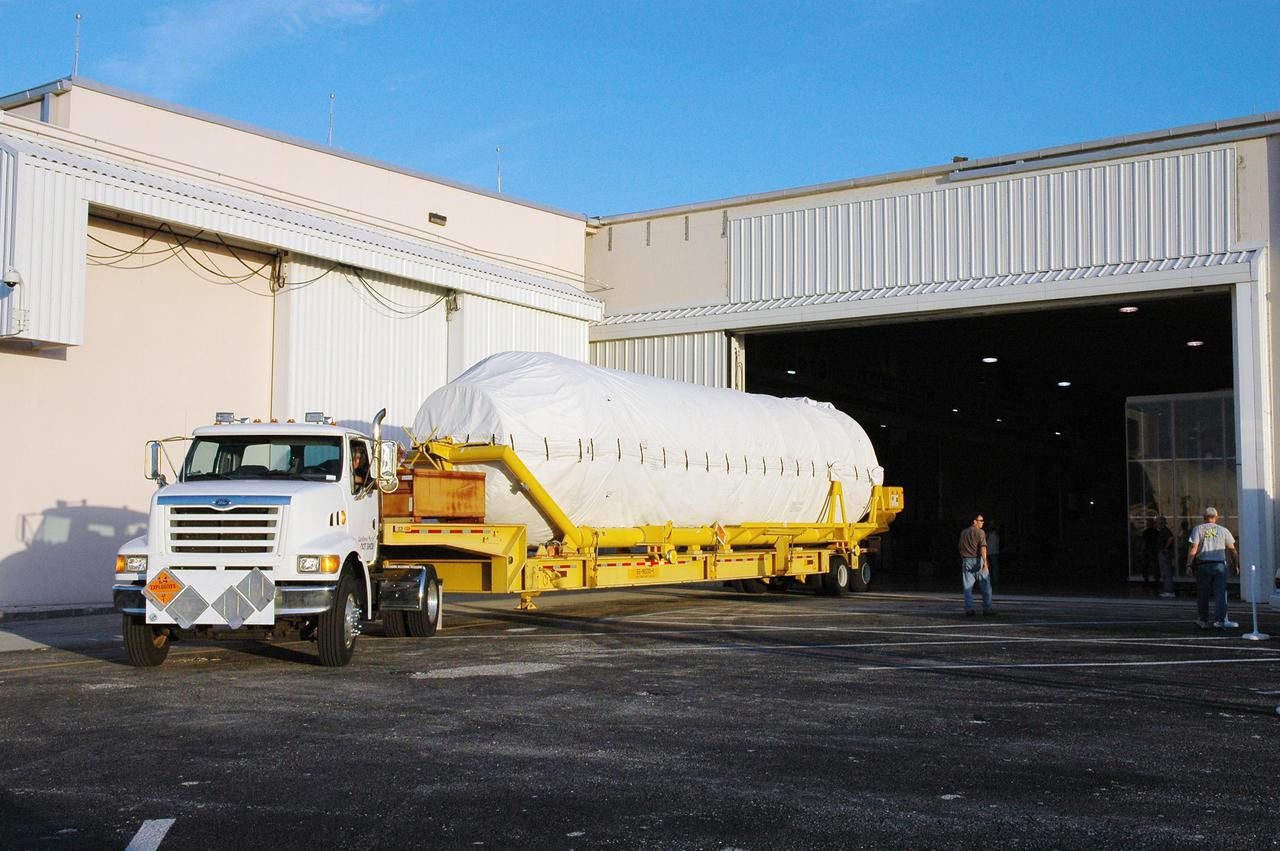
KENNEDY SPACE CENTER, FLA. - The Centaur (Block I) upper stage is rolled into the hangar of the Atlas Space Operations Center where it will be processed for mating with the Lockheed Martin Atlas V, designated AV-007, that is the launch vehicle for the Mars Reconnaissance Orbiter (MRO). The MRO is designed for a series of global mapping, regional survey and targeted observations from a near-polar, low-altitude Mars orbit. These observations will be unprecedented in terms of the spatial resolution and coverage achieved by the orbiter’s instruments as they observe the atmosphere and surface of Mars while probing its shallow subsurface as part of a “follow the water” strategy. The orbiter is undergoing environmental tests in facilities at Lockheed Martin Space Systems in Denver, Colo., and is on schedule for a launch window that begins Aug. 10. Launch will be from Launch Complex 41 at Cape Canaveral Air Force Station in Florida.
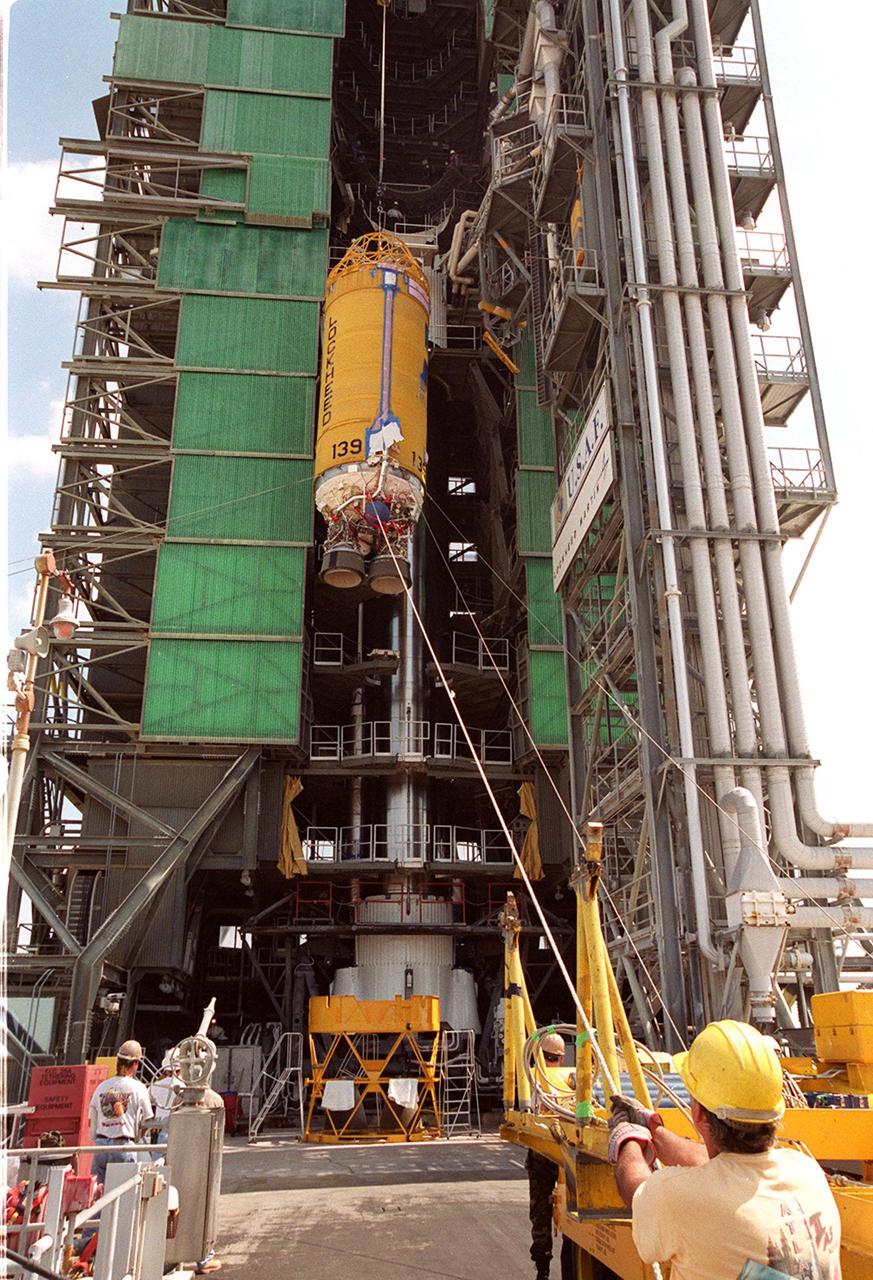
At Launch Pad 36A, Cape Canaveral Air Force Station, workers guide the ascent of a Centaur rocket up the launch tower where it will be mated with the lower stage Atlas IIA rocket already in the tower. The Lockheed-built Atlas IIA/Centaur rocket will launch the latest Tracking and Data Relay Satellite (TDRS) June 29 from CCAFS. The TDRS is one of three (labeled H, I and J) being built in the Hughes Space and Communications Company Integrated Satellite Factory in El Segundo, Calif. The new satellites will augment the TDRS system’s existing Sand Ku-band frequencies by adding Ka-band capability. TDRS will serve as the sole means of continuous, high-data-rate communication with the space shuttle, with the International Space Station upon its completion, and with dozens of unmanned scientific satellites in low earth orbit
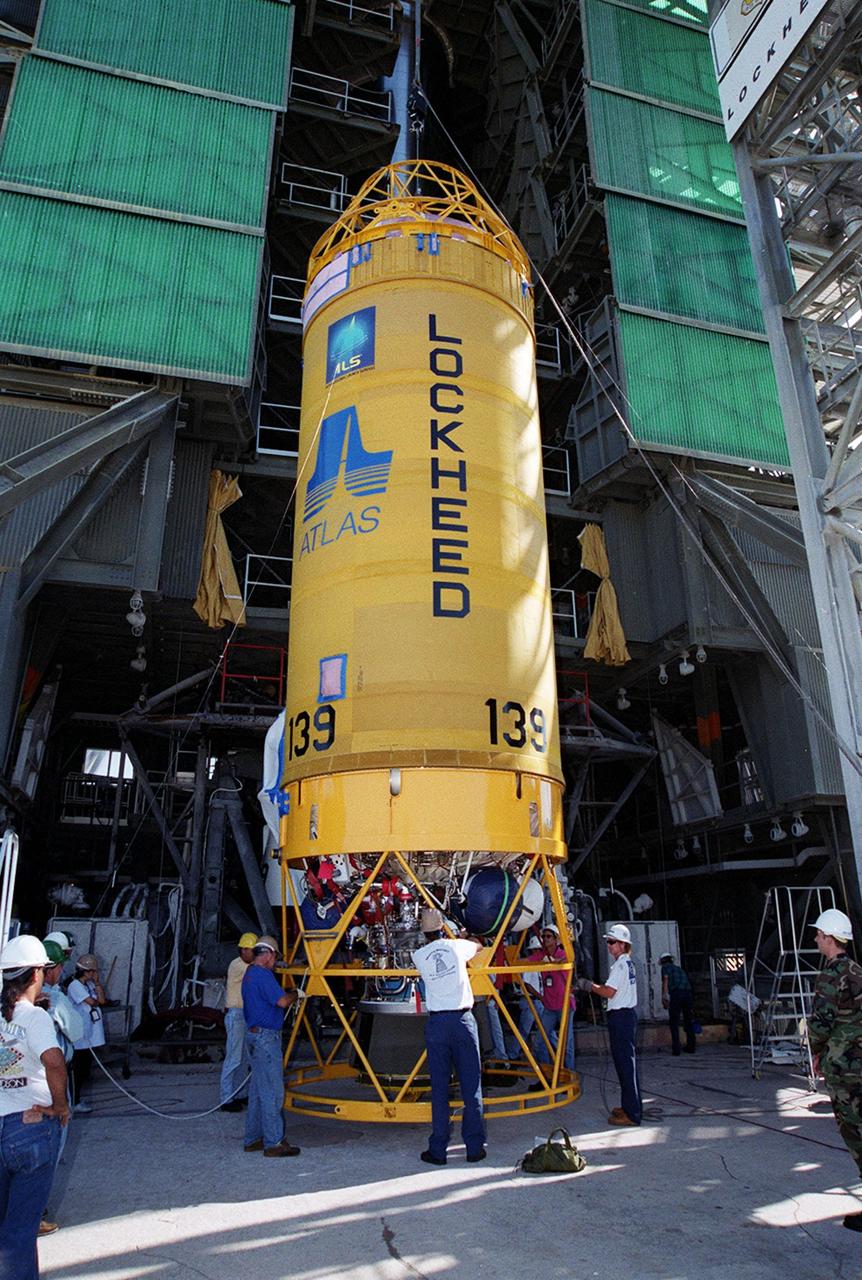
At Launch Pad 36A, Cape Canaveral Air Force Station, workers check out a Centaur rocket for its lift up the launch tower to be mated with the lower stage Atlas IIA rocket already in the tower. The Lockheed-built Atlas IIA/Centaur rocket will launch the latest Tracking and Data Relay Satellite (TDRS) June 29 from CCAFS. The TDRS is one of three (labeled H, I and J) being built in the Hughes Space and Communications Company Integrated Satellite Factory in El Segundo, Calif. The new satellites will augment the TDRS system’s existing Sand Ku-band frequencies by adding Ka-band capability. TDRS will serve as the sole means of continuous, high-data-rate communication with the space shuttle, with the International Space Station upon its completion, and with dozens of unmanned scientific satellites in low earth orbit
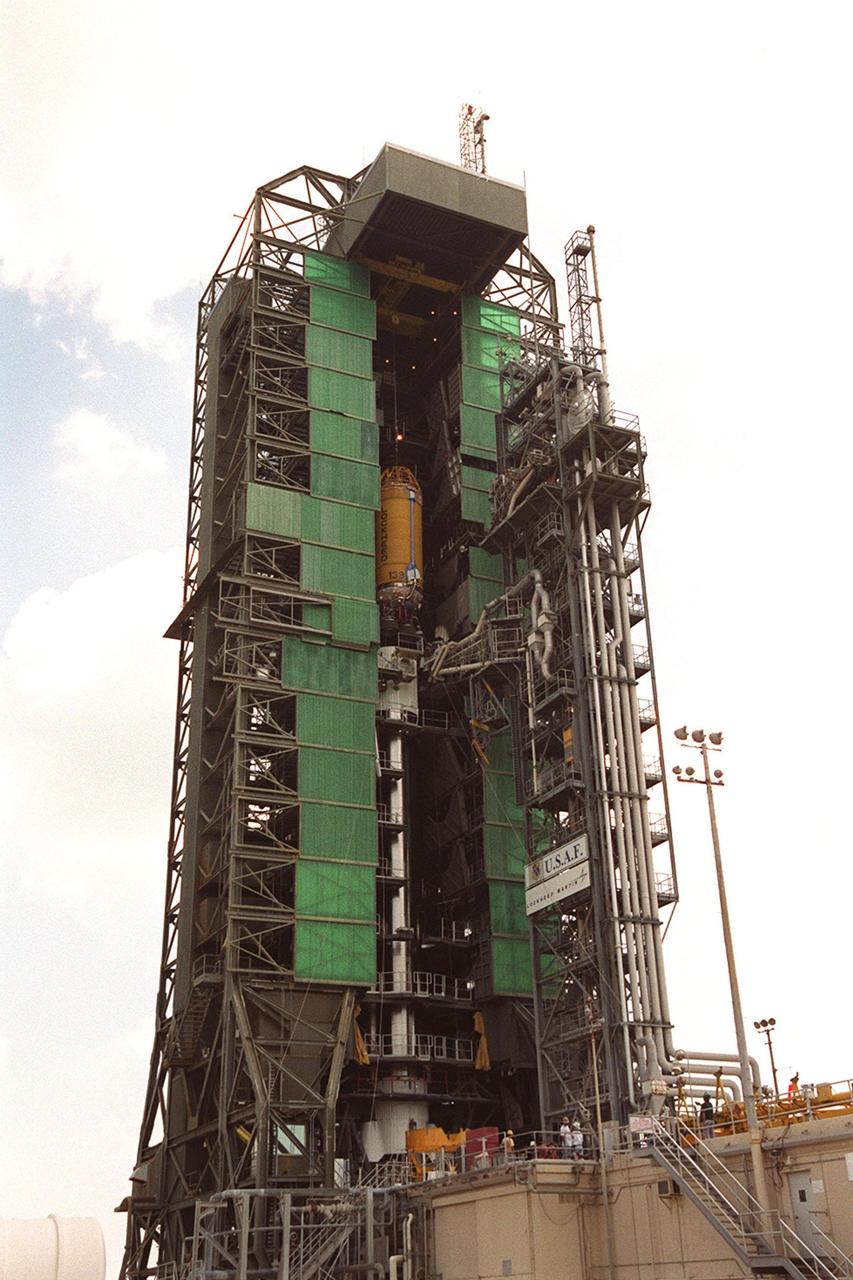
In this long view of the launch tower at Pad 36A, Cape Canaveral Air Force Station, the upper stage Centaur rocket can be seen as it rises up the tower to be mated to the lower stage Atlas IIA rocket already there. The Lockheed-built Atlas IIA/Centaur rocket will launch the latest Tracking and Data Relay Satellite (TDRS) June 29 from CCAFS. The TDRS is one of three (labeled H, I and J) being built in the Hughes Space and Communications Company Integrated Satellite Factory in El Segundo, Calif. The new satellites will augment the TDRS system’s existing Sand Ku-band frequencies by adding Ka-band capability. TDRS will serve as the sole means of continuous, high-data-rate communication with the space shuttle, with the International Space Station upon its completion, and with dozens of unmanned scientific satellites in low earth orbit
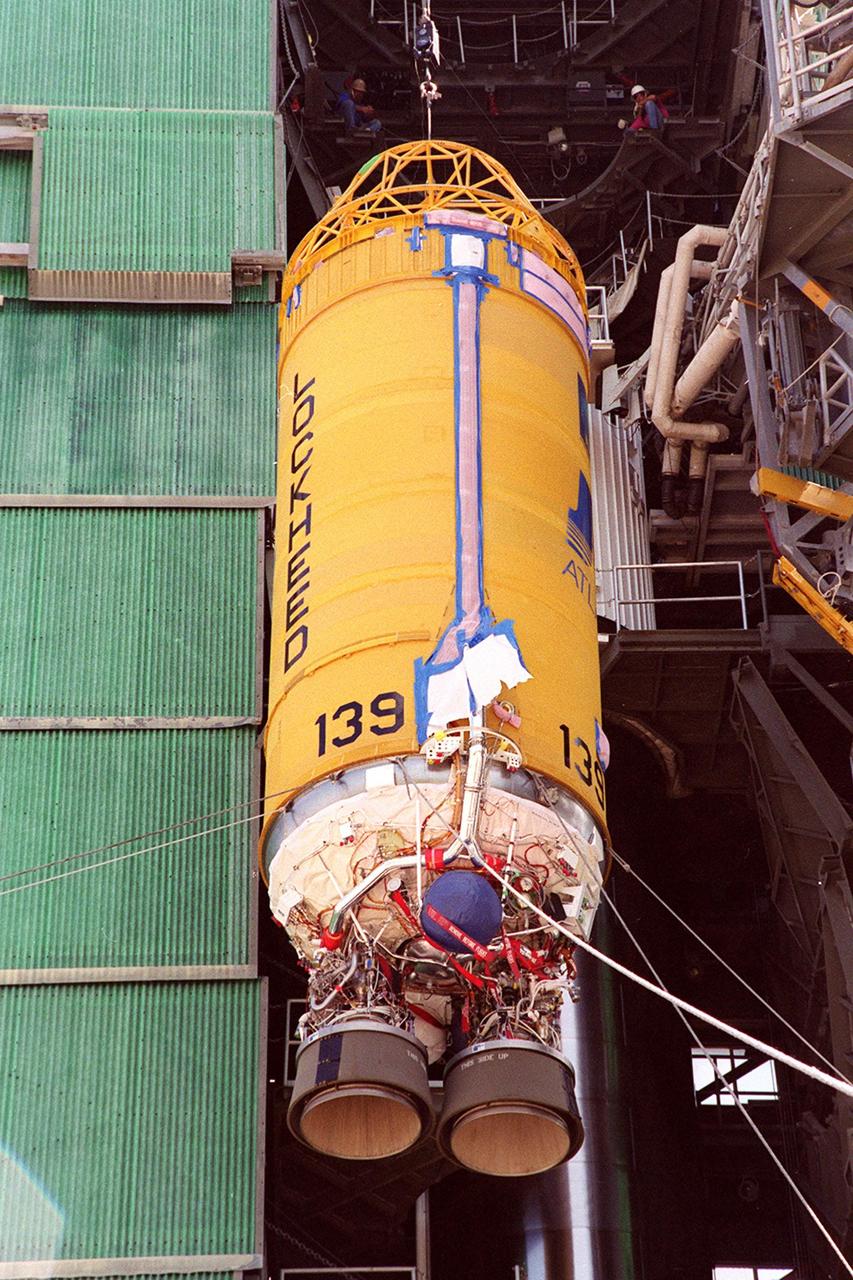
At Launch Pad 36A, Cape Canaveral Air Force Station, lines help guide the ascent of a Centaur rocket up the launch tower where it will be mated with the lower stage Atlas IIA rocket already in the tower. The Lockheed-built Atlas IIA/Centaur rocket will launch the latest Tracking and Data Relay Satellite (TDRS) June 29 from CCAFS. The TDRS is one of three (labeled H, I and J) being built in the Hughes Space and Communications Company Integrated Satellite Factory in El Segundo, Calif. The new satellites will augment the TDRS system’s existing Sand Ku-band frequencies by adding Ka-band capability. TDRS will serve as the sole means of continuous, high-data-rate communication with the space shuttle, with the International Space Station upon its completion, and with dozens of unmanned scientific satellites in low earth orbit
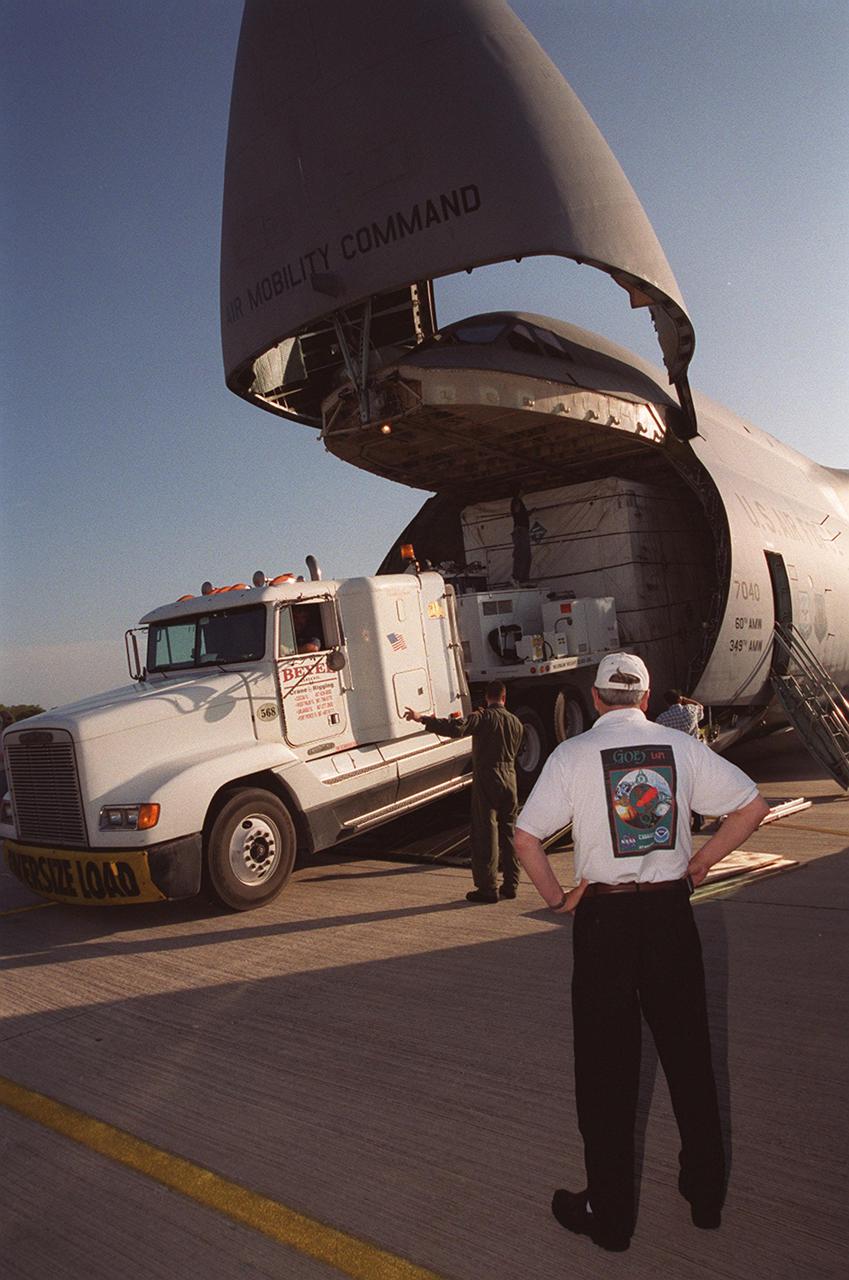
At the KSC Shuttle Landing Facility, a truck begins offloading the container with the GOES-M satellite from the yawning mouth of the C-5 aircraft. It will be transferred to Astrotech in Titusville, Fla., for final testing. The GOES-M (Geostationary Operational Environmental Satellite, I-M Series) provides weather imagery and quantitative sounding data used to support weather forecasting, severe storm tracking, and meteorological research. The satellite is scheduled to be launched on an Atlas-IIA booster, with a Centaur upper stage, July 12 from Launch Pad 36-A, Cape Canaveral Air Force Station

At the KSC Shuttle Landing Facility, a truck begins offloading the container with the GOES-M satellite from the yawning mouth of the C-5 aircraft. It will be transferred to Astrotech in Titusville, Fla., for final testing. The GOES-M (Geostationary Operational Environmental Satellite, I-M Series) provides weather imagery and quantitative sounding data used to support weather forecasting, severe storm tracking, and meteorological research. The satellite is scheduled to be launched on an Atlas-IIA booster, with a Centaur upper stage, July 12 from Launch Pad 36-A, Cape Canaveral Air Force Station
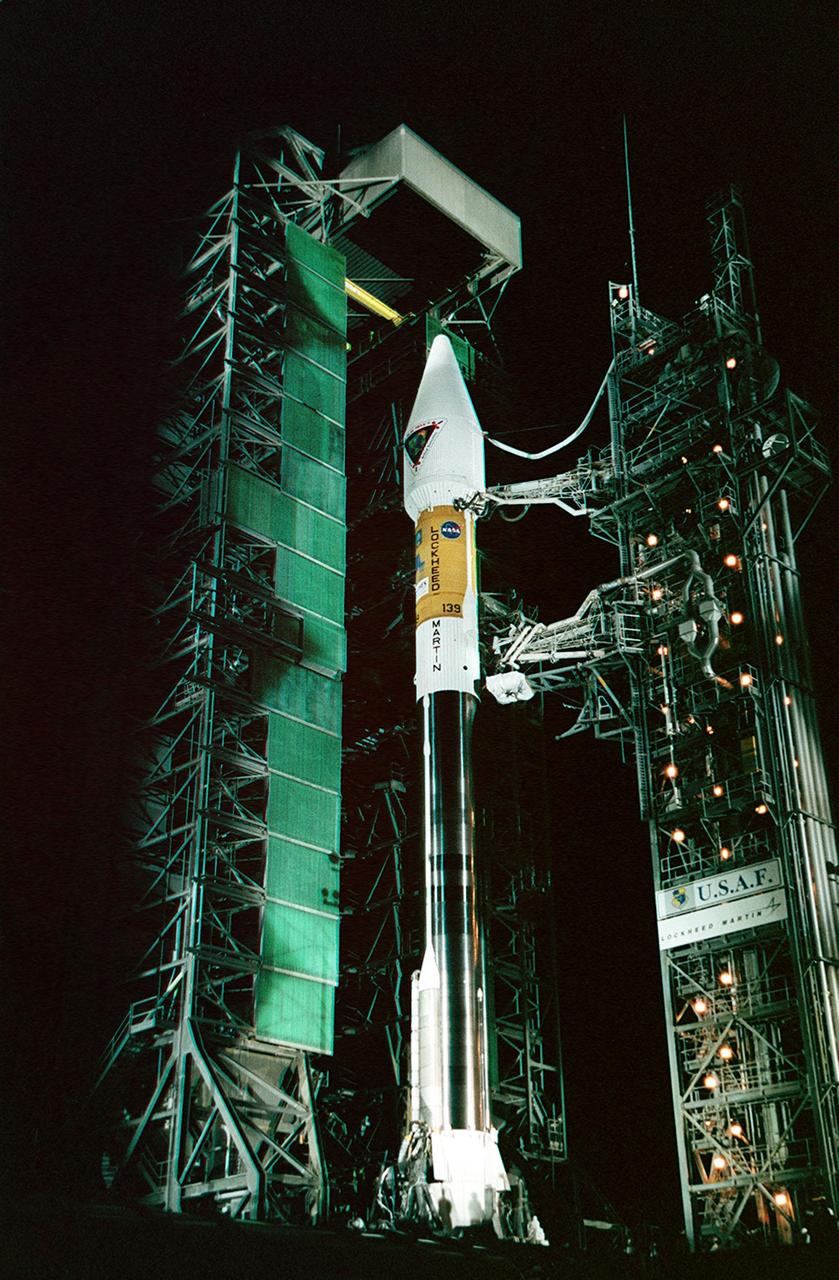
In the early morning hours on Launch Pad 36A, Cape Canaveral Air Force Station, the tower rolls back from NASA’s Tracking and Data Relay Satellite (TDRS-H) before liftoff atop an Atlas IIA/Centaur rocket. One of three satellites (labeled H, I and J) being built by the Hughes Space and Communications Company, the latest TDRS uses an innovative springback antenna design. A pair of 15-foot-diameter, flexible mesh antenna reflectors fold up for launch, then spring back into their original cupped circular shape on orbit. The new satellites will augment the TDRS system’s existing Sand Ku-band frequencies by adding Ka-band capability. TDRS will serve as the sole means of continuous, high-data-rate communication with the Space Shuttle, with the International Space Station upon its completion, and with dozens of unmanned scientific satellites in low earth orbit
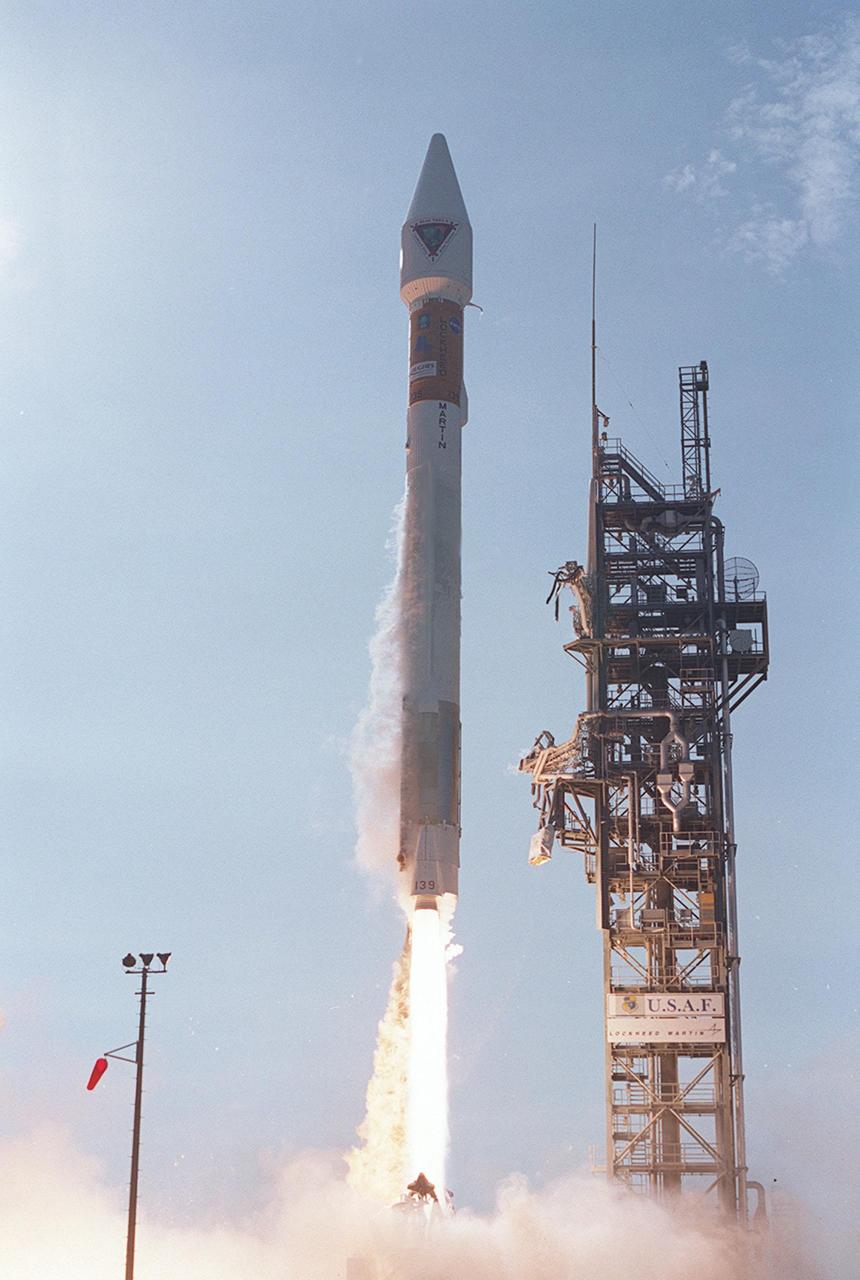
Looking like a Roman candle, NASA’s Tracking and Data Relay Satellite (TDRS-H) shoots into the blue sky aboard an Atlas IIA/Centaur rocket from Pad 36A, Cape Canaveral Air Force Station. Liftoff occurred at 8:56 a.m. EDT. One of three satellites (labeled H, I and J) being built by the Hughes Space and Communications Company, the latest TDRS uses an innovative springback antenna design. A pair of 15-foot-diameter, flexible mesh antenna reflectors fold up for launch, then spring back into their original cupped circular shape on orbit. The new satellites will augment the TDRS system’s existing Sand Ku-band frequencies by adding Ka-band capability. TDRS will serve as the sole means of continuous, high-data-rate communication with the space shuttle, with the International Space Station upon its completion, and with dozens of unmanned scientific satellites in low earth orbit
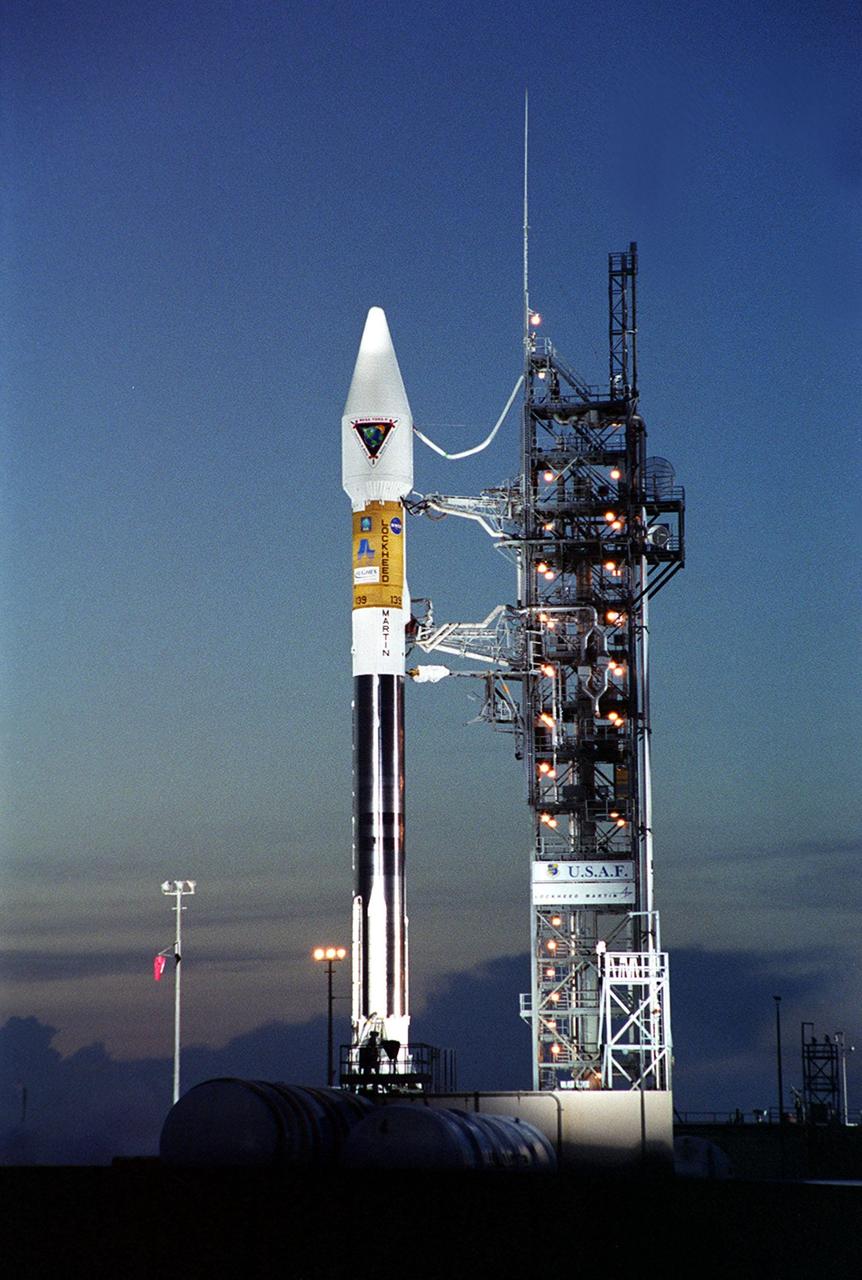
After tower rollback just before dawn on Launch Pad 36A, Cape Canaveral Air Force Station, NASA’s Tracking and Data Relay Satellite (TDRS-H) sits bathed in spotlights before liftoff atop an Atlas IIA/Centaur rocket. One of three satellites (labeled H, I and J) being built by the Hughes Space and Communications Company, the latest TDRS uses an innovative springback antenna design. A pair of 15-foot-diameter, flexible mesh antenna reflectors fold up for launch, then spring back into their original cupped circular shape on orbit. The new satellites will augment the TDRS system’s existing Sand Ku-band frequencies by adding Ka-band capability. TDRS will serve as the sole means of continuous, high-data-rate communication with the Space Shuttle, with the International Space Station upon its completion, and with dozens of unmanned scientific satellites in low earth orbit
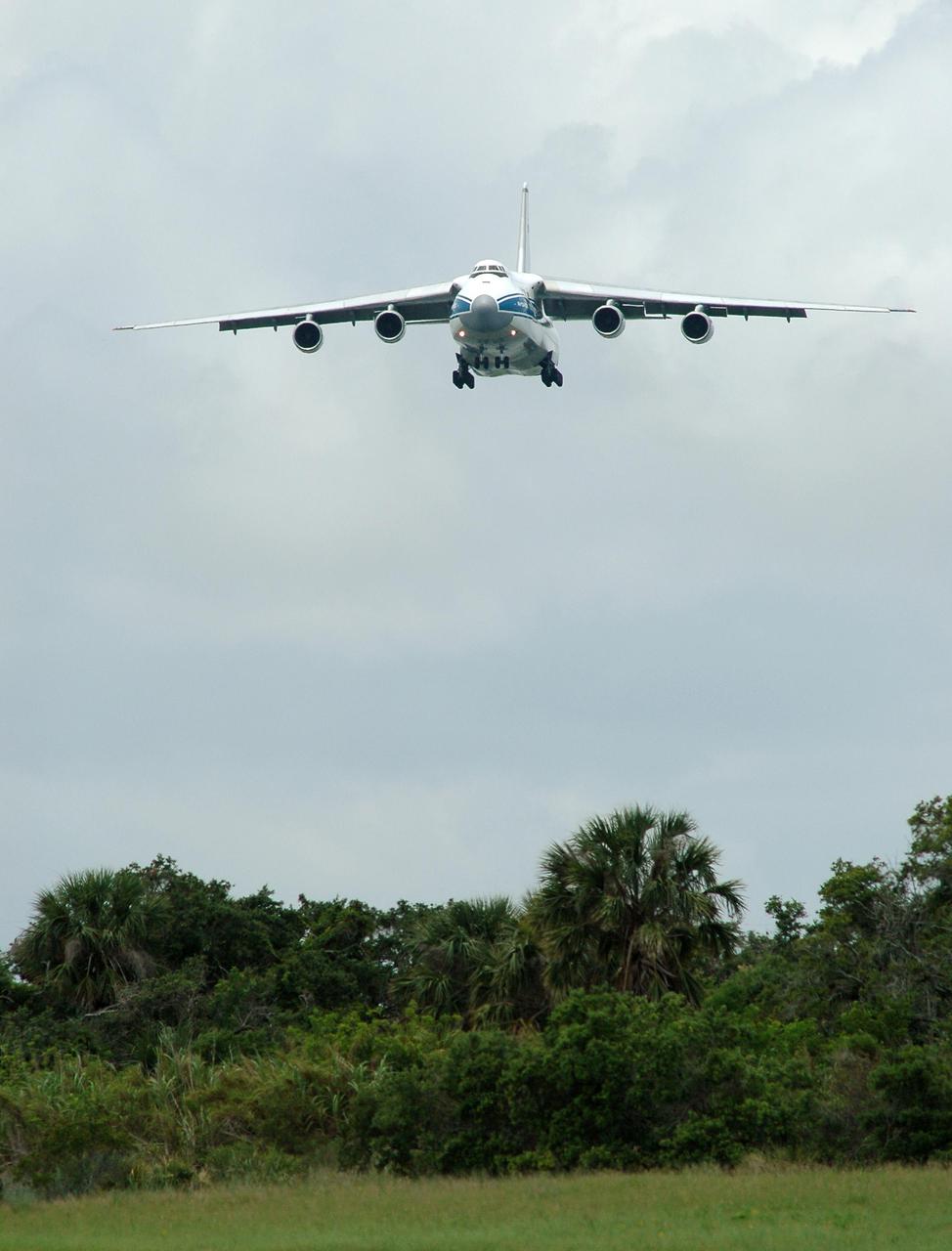
KENNEDY SPACE CENTER, FLA. - A Russian Antonov AH-124-100 cargo airplane heads for a landing at the Cape Canaveral Air Force Station Skid Strip. The plane is delivering a second stage Centaur (Block I) for the Lockheed Martin Atlas V, designated AV-007, that is the launch vehicle for the Mars Reconnaissance Orbiter (MRO). The MRO is designed for a series of global mapping, regional survey and targeted observations from a near-polar, low-altitude Mars orbit. These observations will be unprecedented in terms of the spatial resolution and coverage achieved by the orbiter’s instruments as they observe the atmosphere and surface of Mars while probing its shallow subsurface as part of a “follow the water” strategy. The orbiter is undergoing environmental tests in facilities at Lockheed Martin Space Systems in Denver, Colo., and is on schedule for a launch window that begins Aug. 10. Launch will be from Launch Complex 41 at Cape Canaveral Air Force Station in Florida.
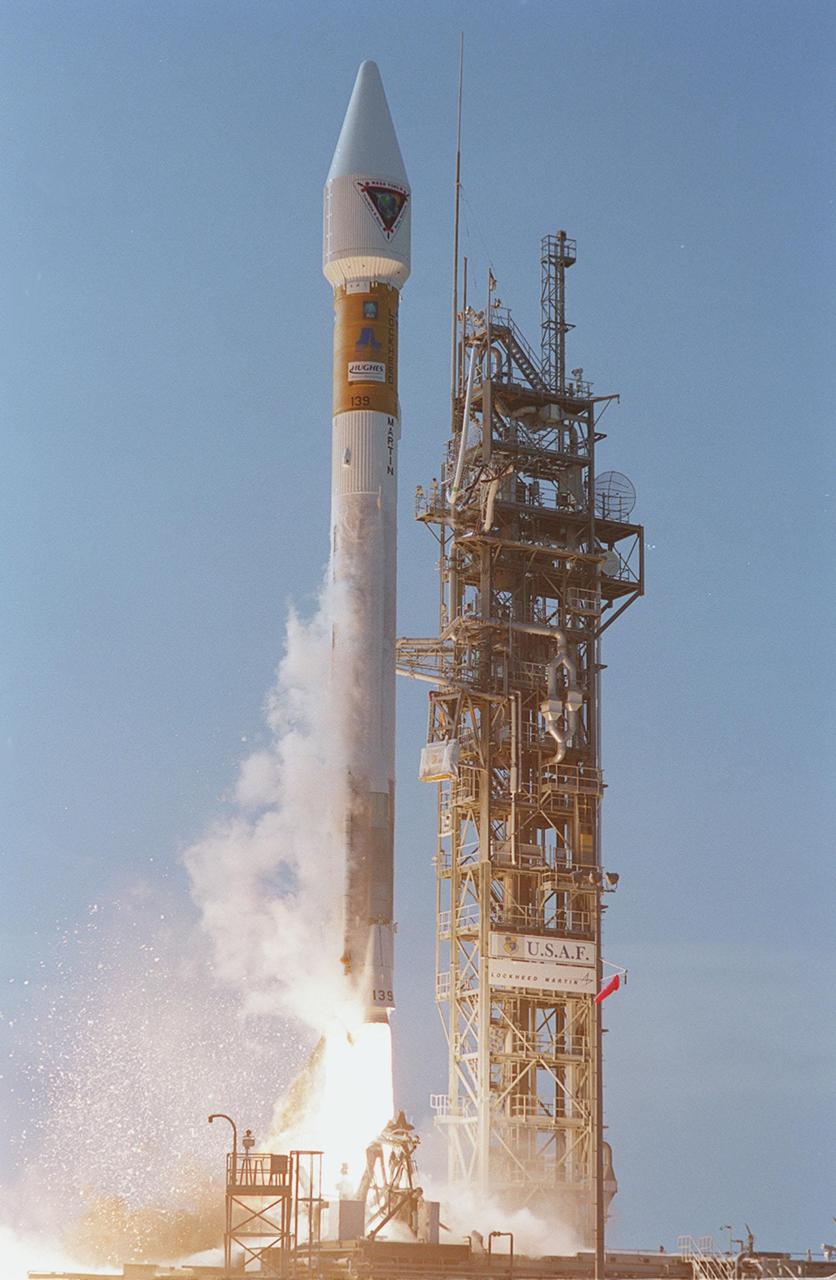
NASA’s Tracking and Data Relay Satellite (TDRS-H) rises into the blue sky from Pad 36A, Cape Canaveral Air Force Station. Liftoff occurred at 8:56 a.m. EDT aboard an Atlas IIA/Centaur rocket. One of three satellites (labeled H, I and J) being built by the Hughes Space and Communications Company, the latest TDRS uses an innovative springback antenna design. A pair of 15-foot-diameter, flexible mesh antenna reflectors fold up for launch, then spring back into their original cupped circular shape on orbit. The new satellites will augment the TDRS system’s existing Sand Ku-band frequencies by adding Ka-band capability. TDRS will serve as the sole means of continuous, high-data-rate communication with the space shuttle, with the International Space Station upon its completion, and with dozens of unmanned scientific satellites in low earth orbit
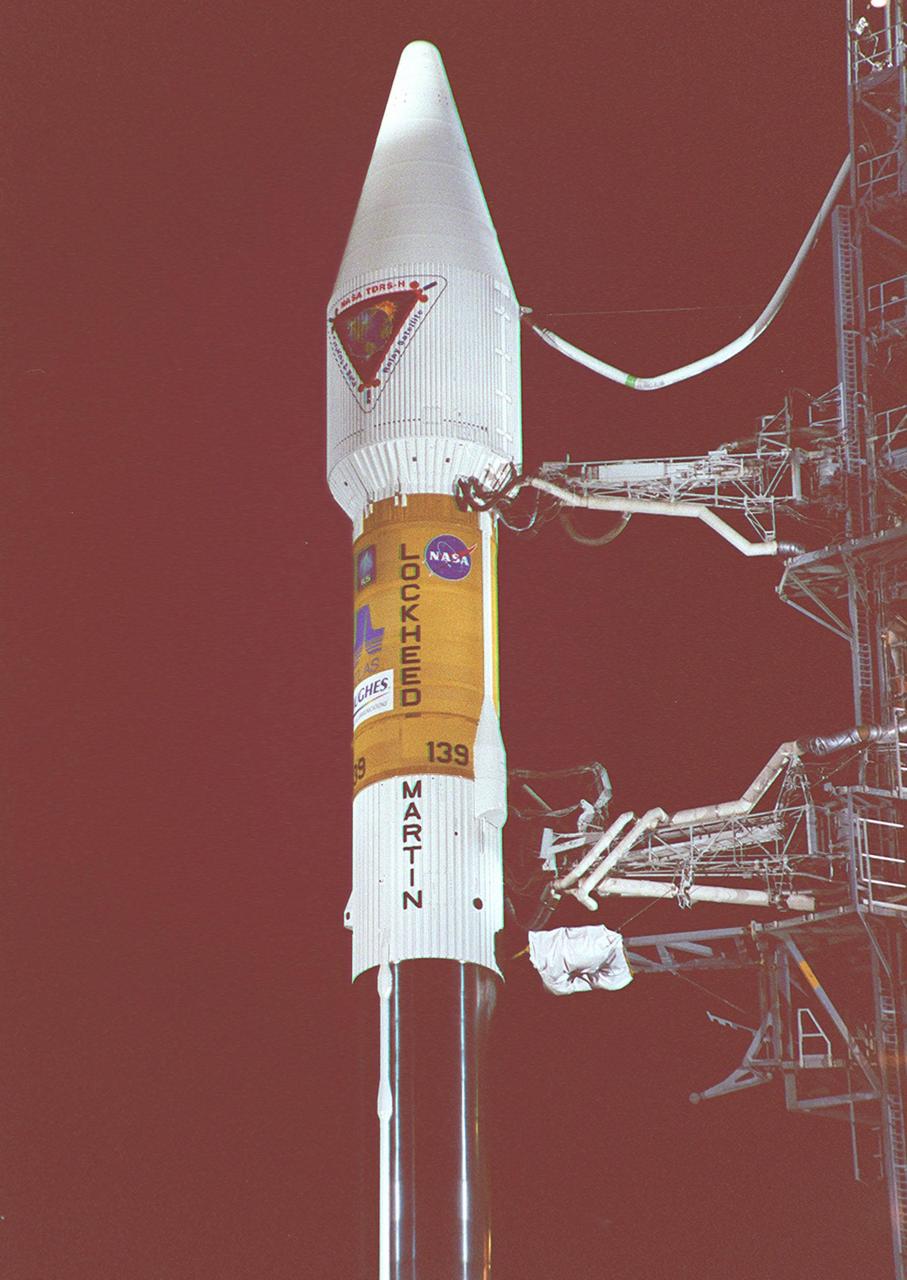
NASA’s Tracking and Data Relay Satellite (TDRS-H) sits poised on Launch Pad 36A, Cape Canaveral Air Force Station, before its scheduled launch aboard an Atlas IIA/Centaur rocket. One of three satellites (labeled H, I and J) being built by the Hughes Space and Communications Company, the latest TDRS uses an innovative springback antenna design. A pair of 15-foot-diameter, flexible mesh antenna reflectors fold up for launch, then spring back into their original cupped circular shape on orbit. The new satellites will augment the TDRS system’s existing Sand Ku-band frequencies by adding Ka-band capability. TDRS will serve as the sole means of continuous, high-data-rate communication with the space shuttle, with the International Space Station upon its completion, and with dozens of unmanned scientific satellites in low earth orbit
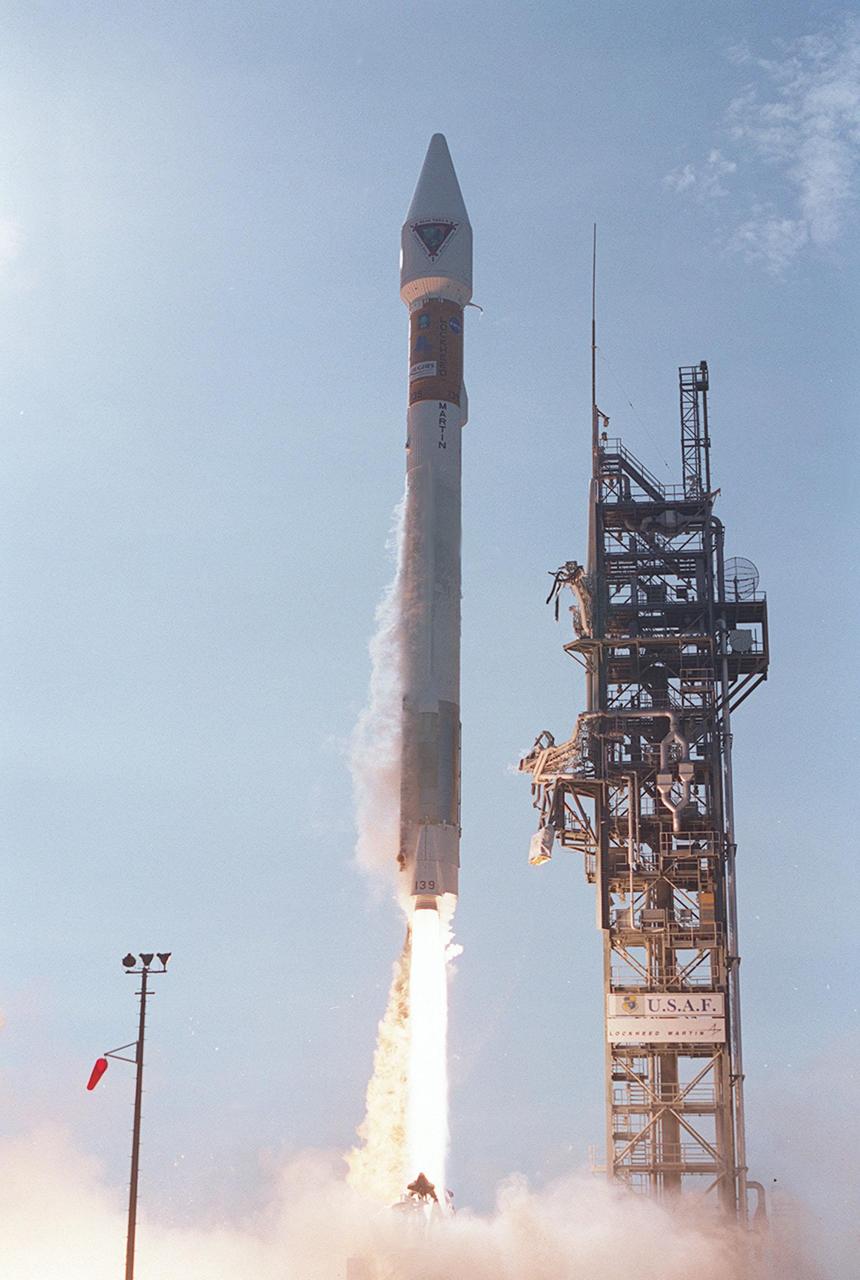
Looking like a Roman candle, NASA’s Tracking and Data Relay Satellite (TDRS-H) shoots into the blue sky aboard an Atlas IIA/Centaur rocket from Pad 36A, Cape Canaveral Air Force Station. Liftoff occurred at 8:56 a.m. EDT. One of three satellites (labeled H, I and J) being built by the Hughes Space and Communications Company, the latest TDRS uses an innovative springback antenna design. A pair of 15-foot-diameter, flexible mesh antenna reflectors fold up for launch, then spring back into their original cupped circular shape on orbit. The new satellites will augment the TDRS system’s existing Sand Ku-band frequencies by adding Ka-band capability. TDRS will serve as the sole means of continuous, high-data-rate communication with the space shuttle, with the International Space Station upon its completion, and with dozens of unmanned scientific satellites in low earth orbit
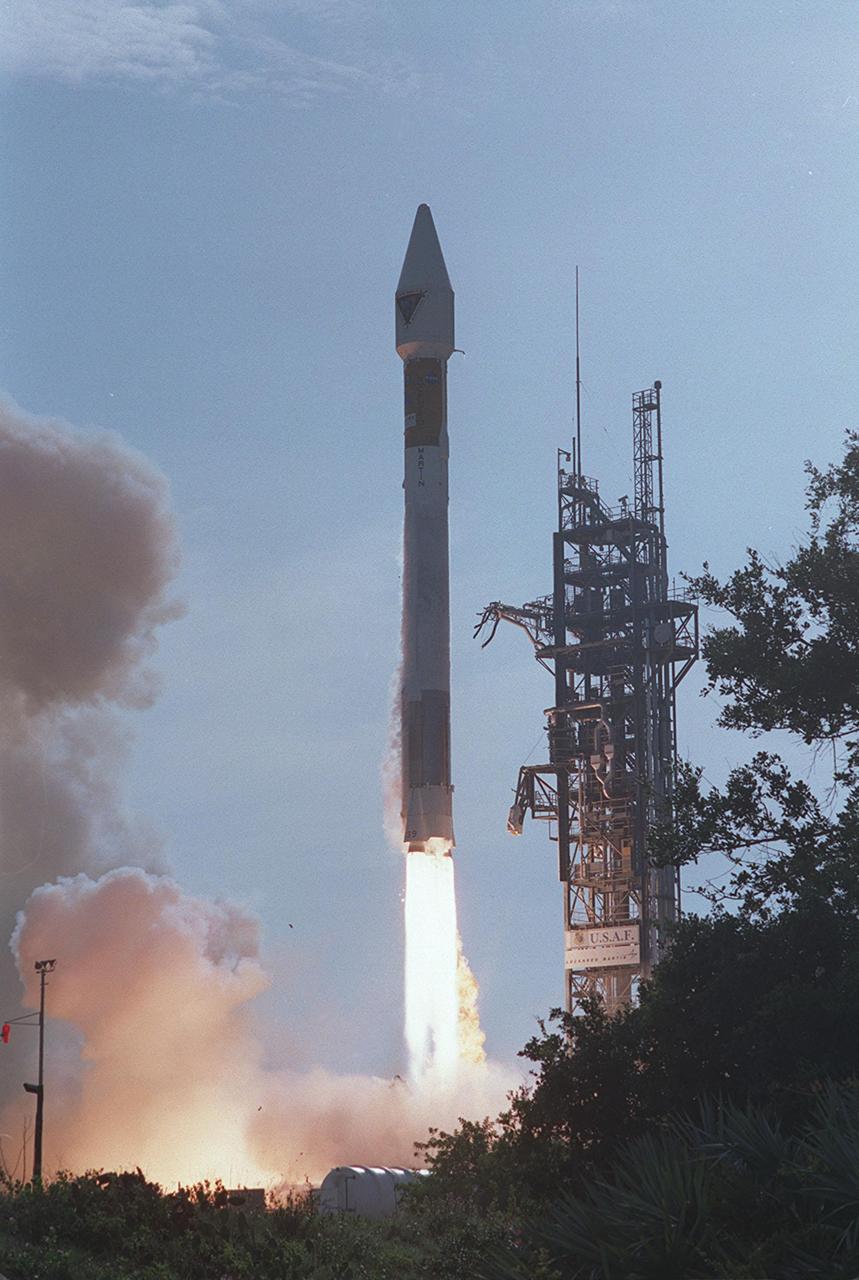
NASA’s Tracking and Data Relay Satellite (TDRS-H) rises into the blue sky from Pad 36A, Cape Canaveral Air Force Station. Liftoff occurred at 8:56 a.m. EDT aboard an Atlas IIA/Centaur rocket. One of three satellites (labeled H, I and J) being built by the Hughes Space and Communications Company, the latest TDRS uses an innovative springback antenna design. A pair of 15-foot-diameter, flexible mesh antenna reflectors fold up for launch, then spring back into their original cupped circular shape on orbit. The new satellites will augment the TDRS system’s existing Sand Ku-band frequencies by adding Ka-band capability. TDRS will serve as the sole means of continuous, high-data-rate communication with the space shuttle, with the International Space Station upon its completion, and with dozens of unmanned scientific satellites in low earth orbit
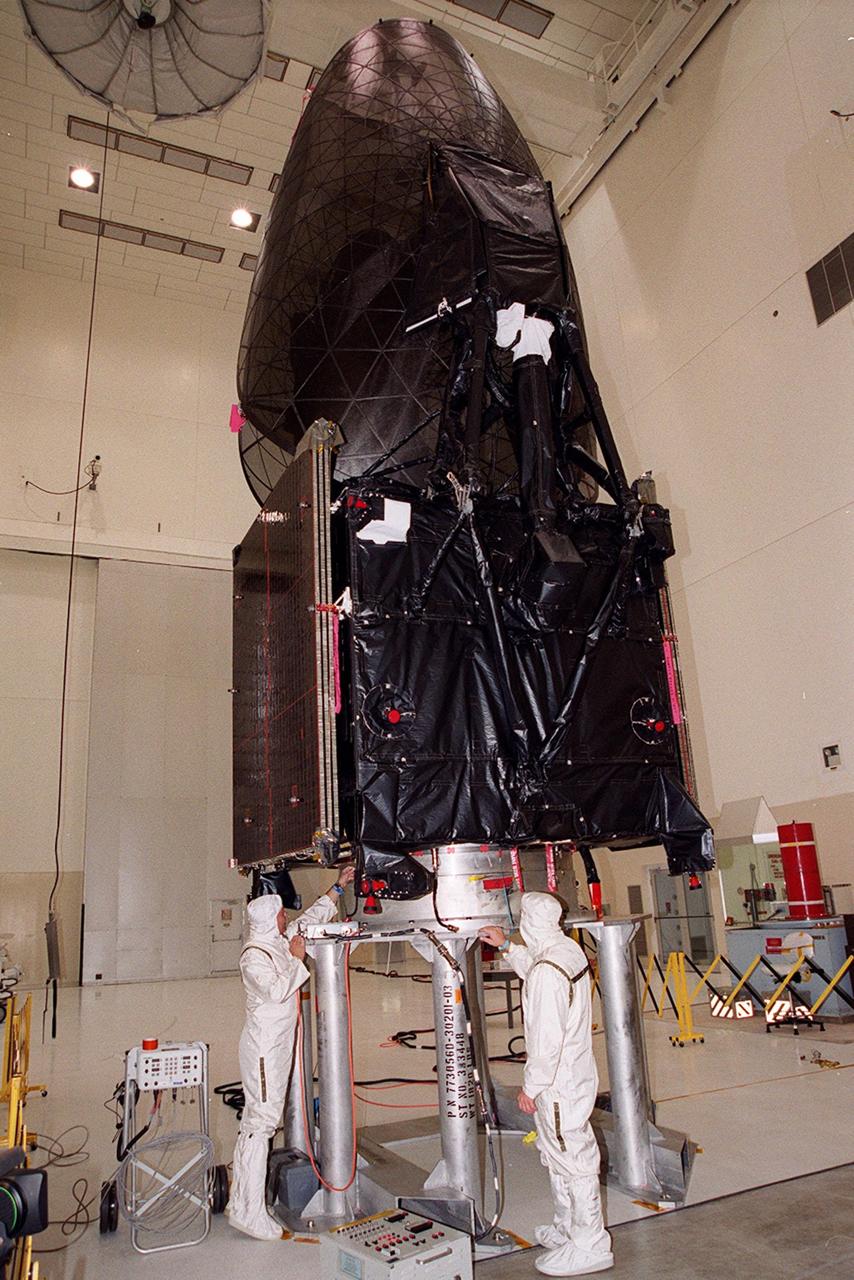
Workers in KSC’s Spacecraft Assembly and Encapsulation Facility (SAEF-2) conduct electrical testing on the Tracking and Data Relay Satellite (TDRS-H) above them. The TDRS is scheduled to be launched from CCAFS June 29 aboard an Atlas IIA/Centaur rocket. One of three satellites (labeled H, I and J) being built in the Hughes Space and Communications Company Integrated Satellite Factory in El Segundo, Calif., the latest TDRS uses an innovative springback antenna design. A pair of 15-foot-diameter, flexible mesh antenna reflectors fold up for launch, then spring back into their original cupped circular shape on orbit. The new satellites will augment the TDRS system’s existing Sand Ku-band frequencies by adding Ka-band capability. TDRS will serve as the sole means of continuous, high-data-rate communication with the space shuttle, with the International Space Station upon its completion, and with dozens of unmanned scientific satellites in low earth orbit

After tower rollback just before dawn on Launch Pad 36A, Cape Canaveral Air Force Station, NASA’s Tracking and Data Relay Satellite (TDRS-H) sits bathed in spotlights before liftoff atop an Atlas IIA/Centaur rocket. One of three satellites (labeled H, I and J) being built by the Hughes Space and Communications Company, the latest TDRS uses an innovative springback antenna design. A pair of 15-foot-diameter, flexible mesh antenna reflectors fold up for launch, then spring back into their original cupped circular shape on orbit. The new satellites will augment the TDRS system’s existing Sand Ku-band frequencies by adding Ka-band capability. TDRS will serve as the sole means of continuous, high-data-rate communication with the Space Shuttle, with the International Space Station upon its completion, and with dozens of unmanned scientific satellites in low earth orbit
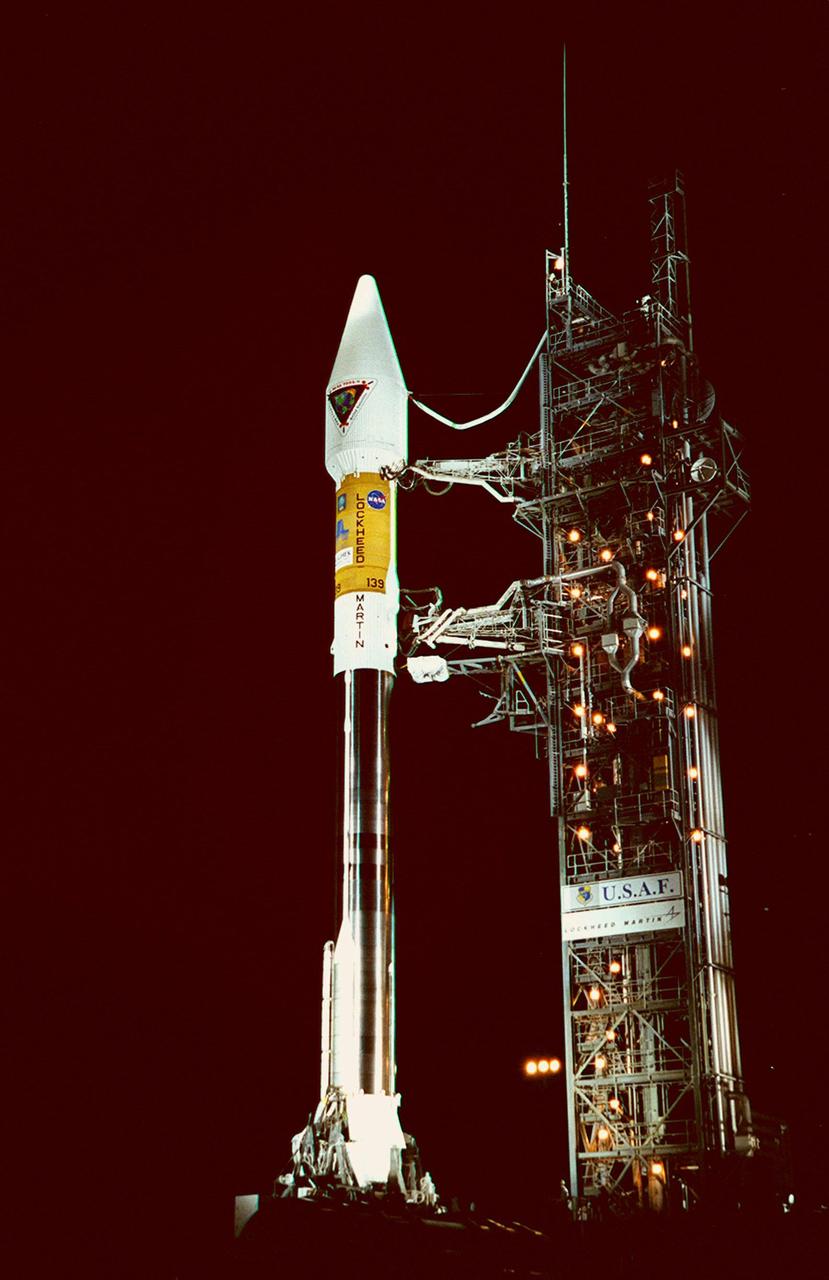
In the early morning hours, NASA’s Tracking and Data Relay Satellite (TDRS-H) sits poised on Launch Pad 36A, Cape Canaveral Air Force Station, before its scheduled launch aboard an Atlas IIA/Centaur rocket. One of three satellites (labeled H, I and J) being built by the Hughes Space and Communications Company, the latest TDRS uses an innovative springback antenna design. A pair of 15-foot-diameter, flexible mesh antenna reflectors fold up for launch, then spring back into their original cupped circular shape on orbit. The new satellites will augment the TDRS system’s existing Sand Ku-band frequencies by adding Ka-band capability. TDRS will serve as the sole means of continuous, high-data-rate communication with the Space Shuttle, with the International Space Station upon its completion, and with dozens of unmanned scientific satellites in low earth orbit
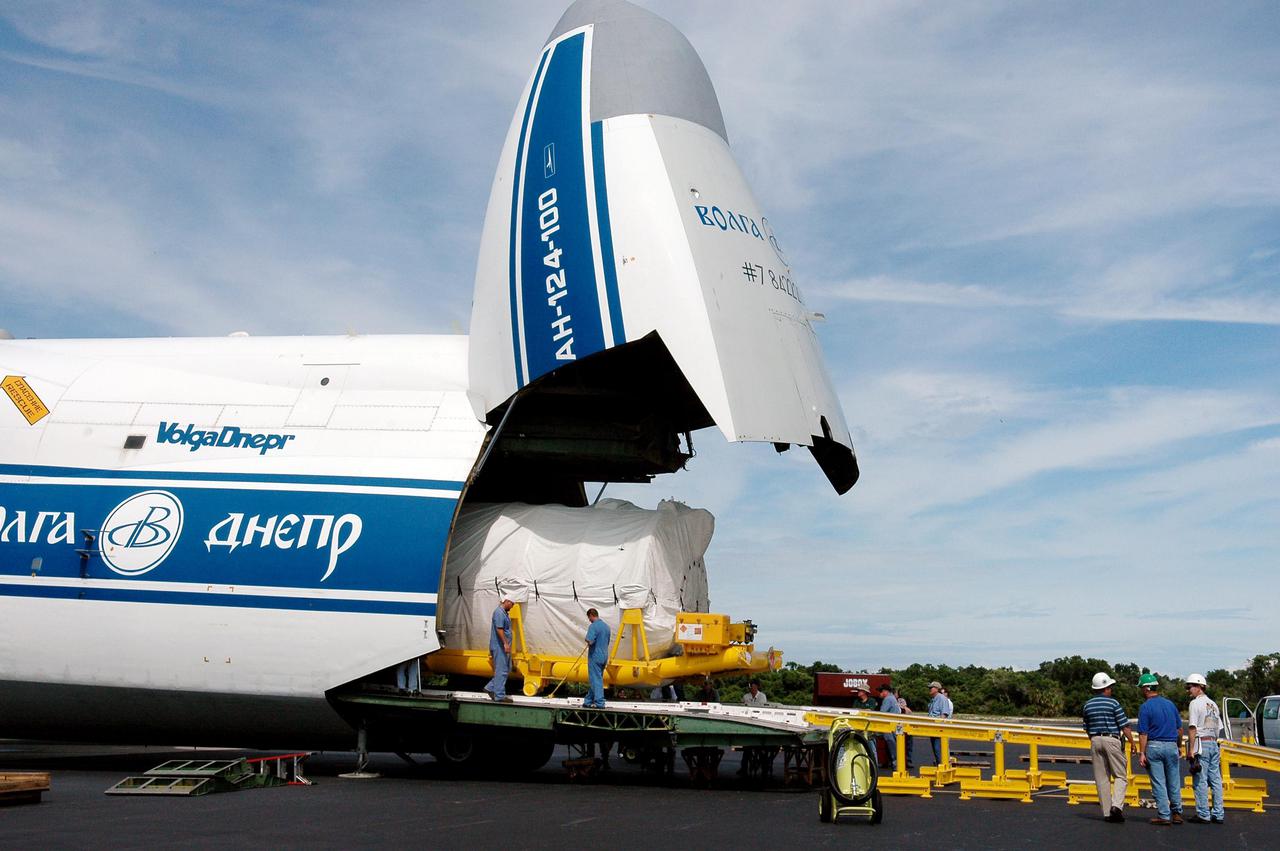
KENNEDY SPACE CENTER, FLA. - At the Cape Canaveral Air Force Station Skid Strip, a second stage Centaur (Block I) is rolled out of a Russian Antonov AH-124-100 cargo airplane. The Centaur will be mated with the Lockheed Martin Atlas V, designated AV-007, that is the launch vehicle for the Mars Reconnaissance Orbiter (MRO). The MRO is designed for a series of global mapping, regional survey and targeted observations from a near-polar, low-altitude Mars orbit. These observations will be unprecedented in terms of the spatial resolution and coverage achieved by the orbiter’s instruments as they observe the atmosphere and surface of Mars while probing its shallow subsurface as part of a “follow the water” strategy. The orbiter is undergoing environmental tests in facilities at Lockheed Martin Space Systems in Denver, Colo., and is on schedule for a launch window that begins Aug. 10. Launch will be from Launch Complex 41 at Cape Canaveral Air Force Station in Florida.

In the early morning hours on Launch Pad 36A, Cape Canaveral Air Force Station, the tower rolls back from NASA’s Tracking and Data Relay Satellite (TDRS-H) before liftoff atop an Atlas IIA/Centaur rocket. One of three satellites (labeled H, I and J) being built by the Hughes Space and Communications Company, the latest TDRS uses an innovative springback antenna design. A pair of 15-foot-diameter, flexible mesh antenna reflectors fold up for launch, then spring back into their original cupped circular shape on orbit. The new satellites will augment the TDRS system’s existing Sand Ku-band frequencies by adding Ka-band capability. TDRS will serve as the sole means of continuous, high-data-rate communication with the Space Shuttle, with the International Space Station upon its completion, and with dozens of unmanned scientific satellites in low earth orbit
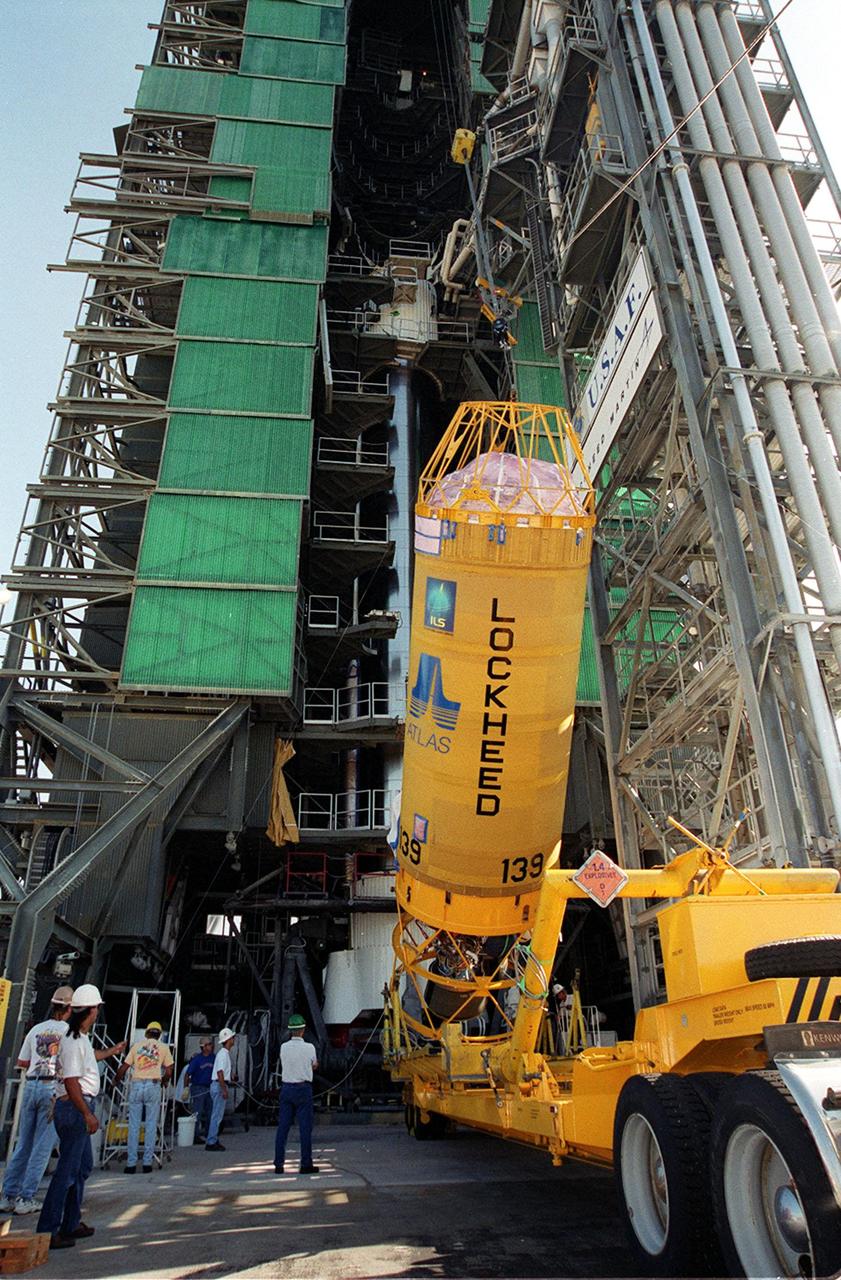
At Launch Pad 36A, Cape Canaveral Air Force Station, a Centaur rocket is raised to a vertical position before lifting it up the launch tower. It will be mated with the lower stage Atlas IIA rocket, already in the tower, to launch the latest Tracking and Data Relay Satellite (TDRS) June 29 from CCAFS. The TDRS is one of three (labeled H, I and J) being built in the Hughes Space and Communications Company Integrated Satellite Factory in El Segundo, Calif. The new satellites will augment the TDRS system’s existing Sand Ku-band frequencies by adding Ka-band capability. TDRS will serve as the sole means of continuous, high-data-rate communication with the space shuttle, with the International Space Station upon its completion, and with dozens of unmanned scientific satellites in low earth orbit
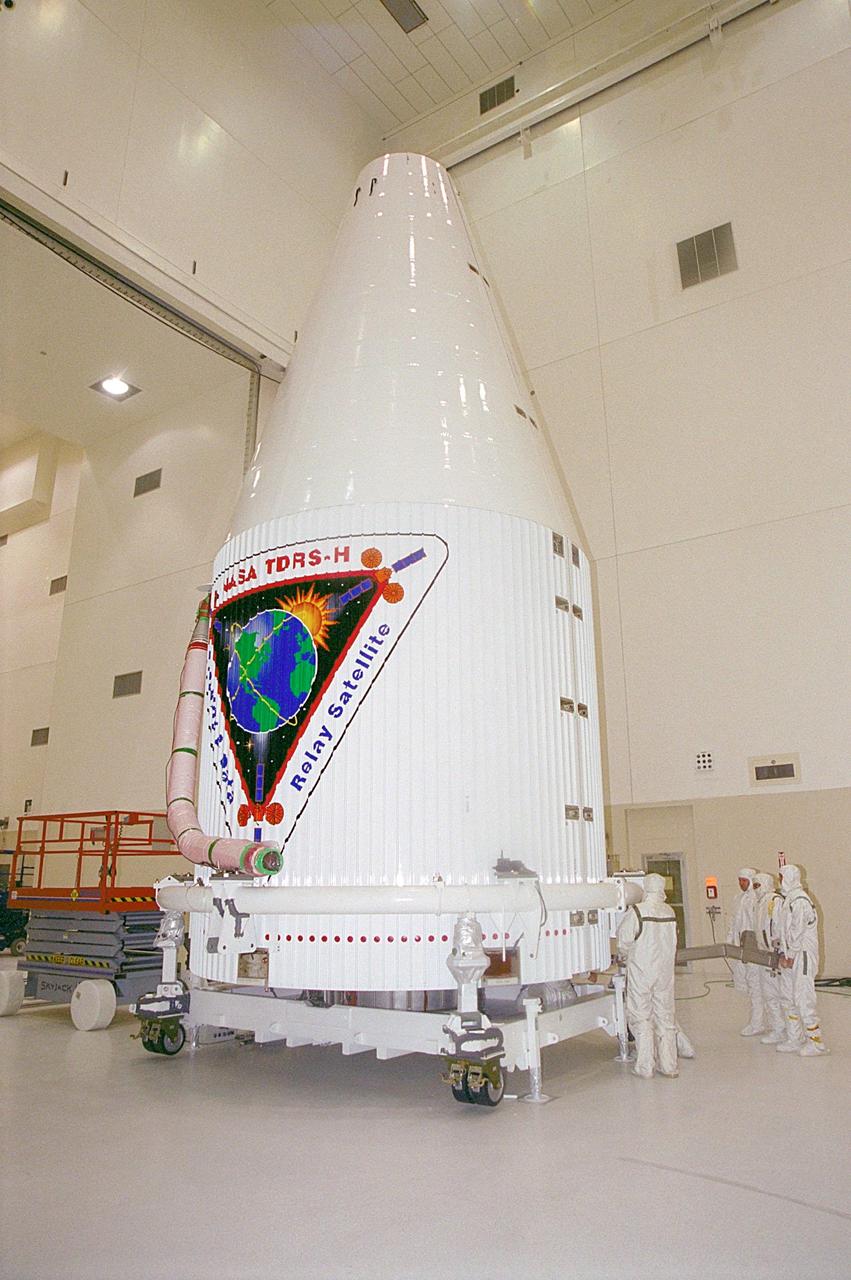
The Tracking and Data Relay Satellite (TDRS-H) sits fully encapsulated inside the fairing. Next, it will be transported to Launch Pad 36A, Cape Canaveral Air Force Station for launch scheduled June 29 aboard an Atlas IIA/Centaur rocket. One of three satellites (labeled H, I and J) being built in the Hughes Space and Communications Company Integrated Satellite Factory in El Segundo, Calif., the latest TDRS uses an innovative springback antenna design. A pair of 15-foot-diameter, flexible mesh antenna reflectors fold up for launch, then spring back into their original cupped circular shape on orbit. The new satellites will augment the TDRS system’s existing Sand Ku-band frequencies by adding Ka-band capability. TDRS will serve as the sole means of continuous, high-data-rate communication with the space shuttle, with the International Space Station upon its completion, and with dozens of unmanned scientific satellites in low earth orbit
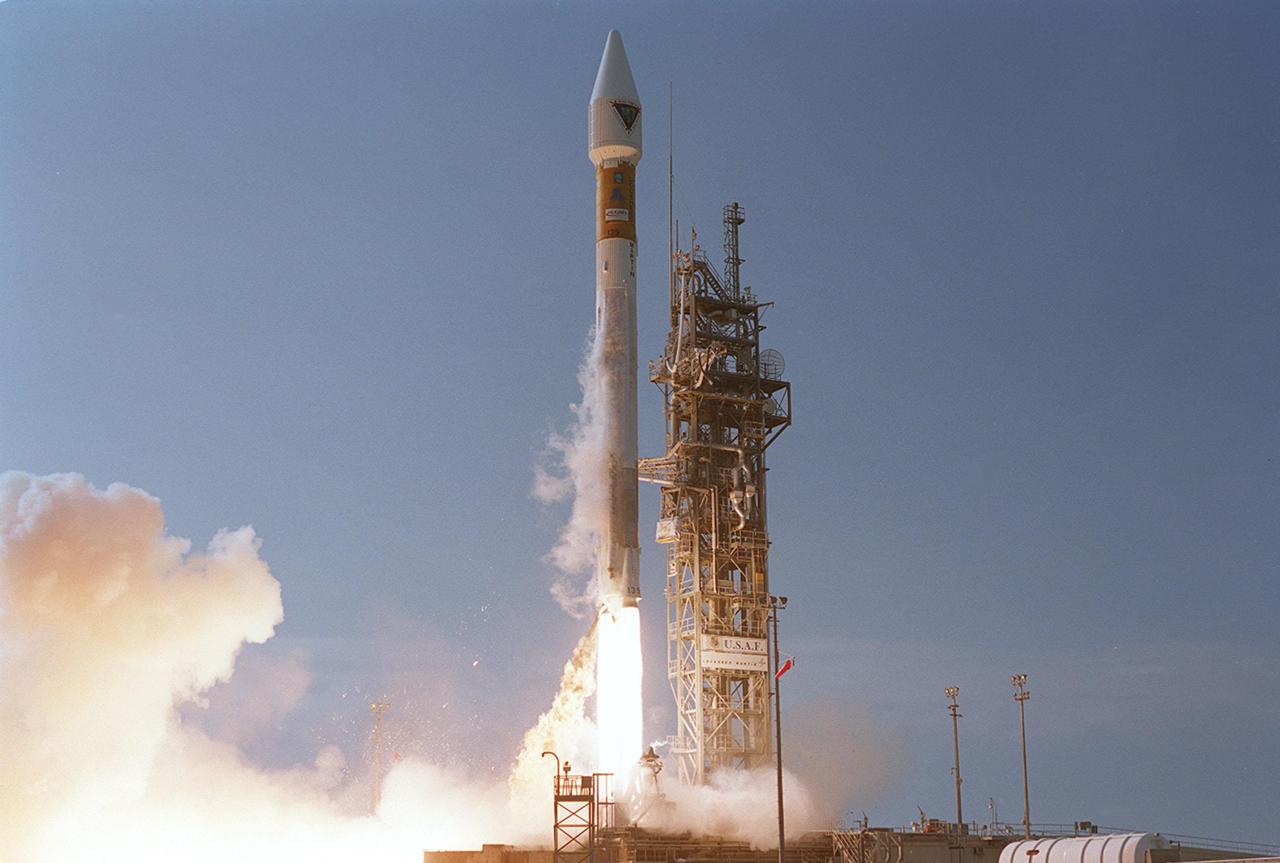
Leaving billowing clouds of steam and smoke behind, NASA’s Tracking and Data Relay Satellite (TDRS-H) shoots into the blue sky aboard an Atlas IIA/Centaur rocket from Pad 36A, Cape Canaveral Air Force Station. Liftoff occurred at 8:56 a.m. EDT. One of three satellites (labeled H, I and J) being built by the Hughes Space and Communications Company, the latest TDRS uses an innovative springback antenna design. A pair of 15-foot-diameter, flexible mesh antenna reflectors fold up for launch, then spring back into their original cupped circular shape on orbit. The new satellites will augment the TDRS system’s existing Sand Ku-band frequencies by adding Ka-band capability. TDRS will serve as the sole means of continuous, high-data-rate communication with the space shuttle, with the International Space Station upon its completion, and with dozens of unmanned scientific satellites in low earth orbit

At dawn on Launch Pad 36A, Cape Canaveral Air Force Station, an Atlas IIA/Centaur rocket is fueled for launch of NASA’s Tracking and Data Relay Satellite (TDRS-H). One of three satellites (labeled H, I and J) being built by the Hughes Space and Communications Company, the latest TDRS uses an innovative springback antenna design. A pair of 15-foot-diameter, flexible mesh antenna reflectors fold up for launch, then spring back into their original cupped circular shape on orbit. The new satellites will augment the TDRS system’s existing Sand Ku-band frequencies by adding Ka-band capability. TDRS will serve as the sole means of continuous, high-data-rate communication with the Space Shuttle, with the International Space Station upon its completion, and with dozens of unmanned scientific satellites in low earth orbit
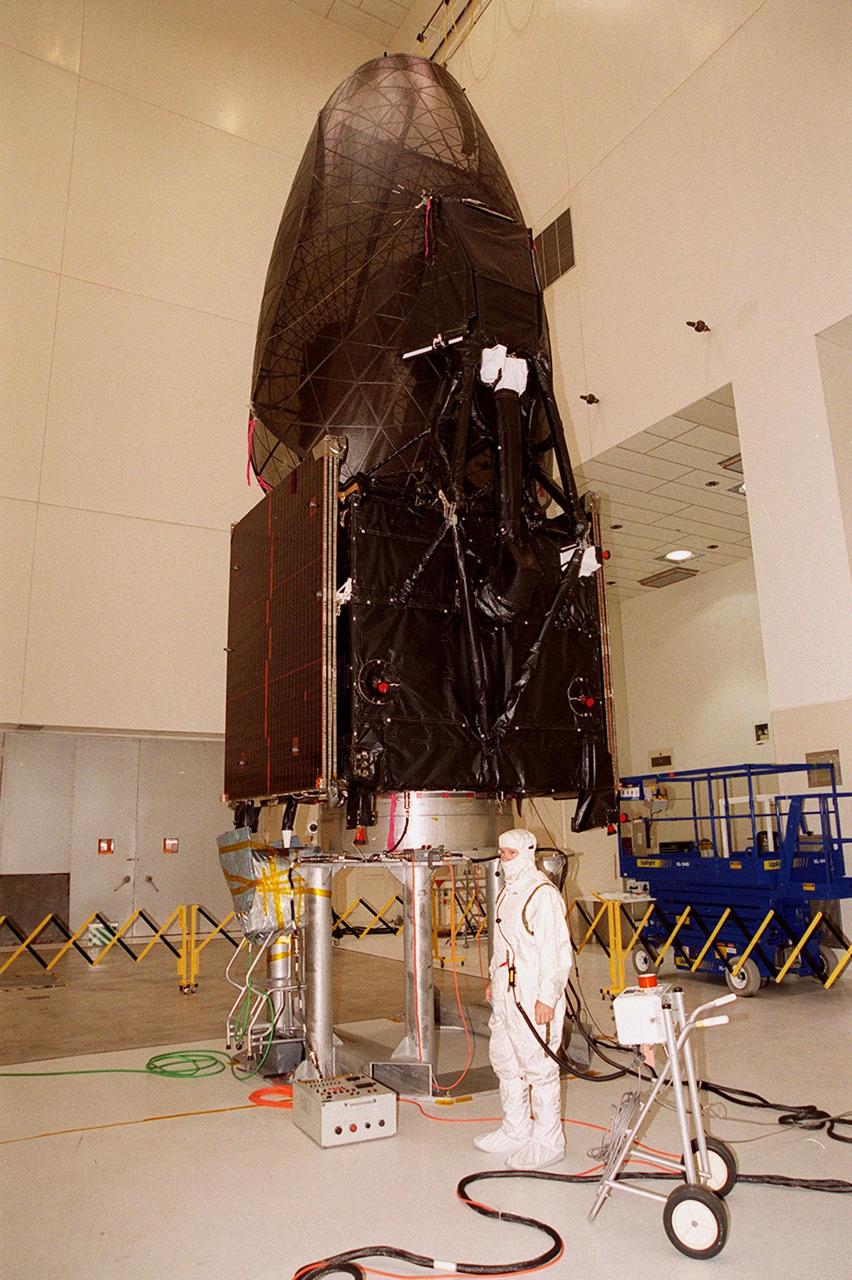
The Tracking and Data Relay Satellite (TDRS-H) sits on a workstand in KSC’s Spacecraft Assembly and Encapsulation Facility (SAEF-2) in order to undergo electrical testing. The TDRS is scheduled to be launched from CCAFS June 29 aboard an Atlas IIA/Centaur rocket. One of three satellites (labeled H, I and J) being built in the Hughes Space and Communications Company Integrated Satellite Factory in El Segundo, Calif., the latest TDRS uses an innovative springback antenna design. A pair of 15-foot-diameter, flexible mesh antenna reflectors fold up for launch, then spring back into their original cupped circular shape on orbit. The new satellites will augment the TDRS system’s existing Sand Ku-band frequencies by adding Ka-band capability. TDRS will serve as the sole means of continuous, high-data-rate communication with the space shuttle, with the International Space Station upon its completion, and with dozens of unmanned scientific satellites in low earth orbit
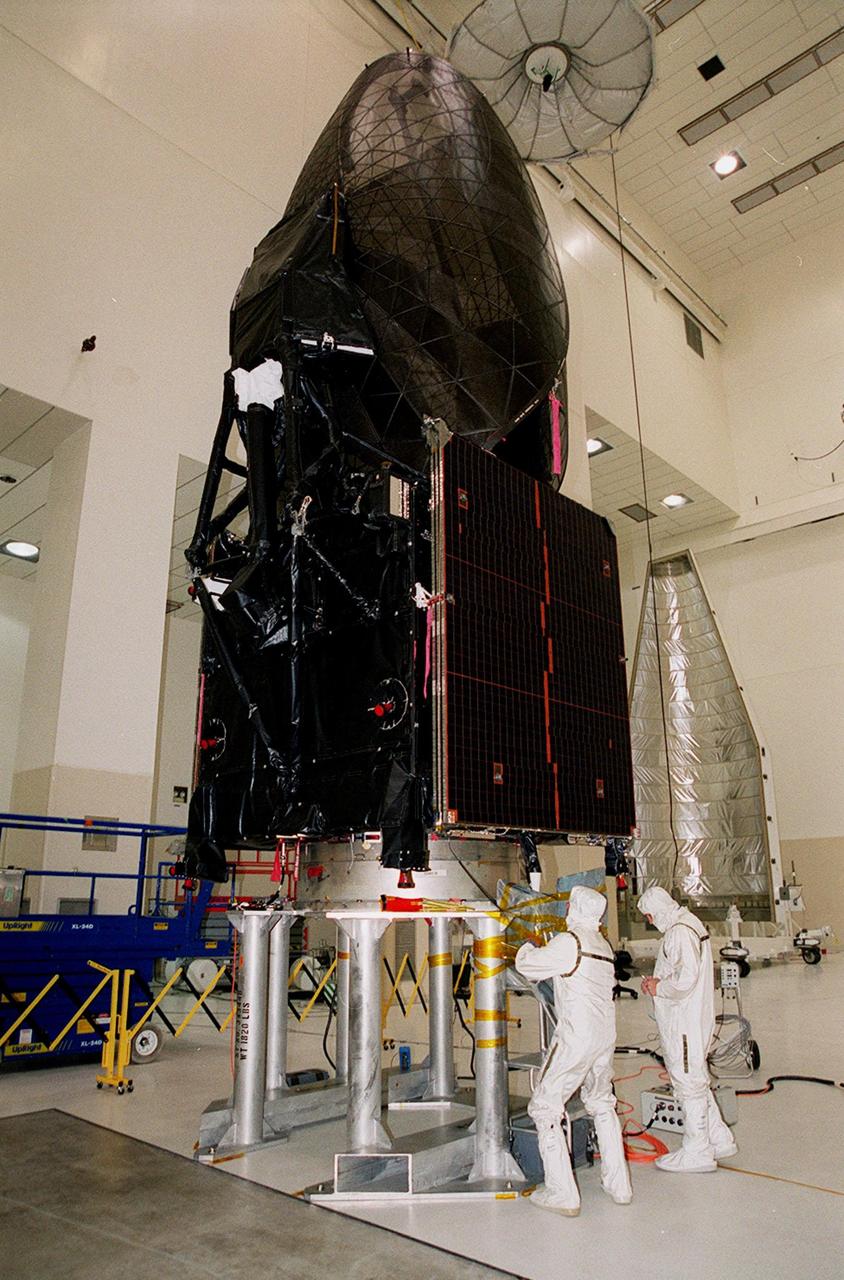
Workers in KSC’s Spacecraft Assembly and Encapsulation Facility (SAEF-2) prepare the Tracking and Data Relay Satellite (TDRS-H) above them for electrical testing. The TDRS is scheduled to be launched from CCAFS June 29 aboard an Atlas IIA/Centaur rocket. One of three satellites (labeled H, I and J) being built in the Hughes Space and Communications Company Integrated Satellite Factory in El Segundo, Calif., the latest TDRS uses an innovative springback antenna design. A pair of 15-foot-diameter, flexible mesh antenna reflectors fold up for launch, then spring back into their original cupped circular shape on orbit. The new satellites will augment the TDRS system’s existing Sand Ku-band frequencies by adding Ka-band capability. TDRS will serve as the sole means of continuous, high-data-rate communication with the space shuttle, with the International Space Station upon its completion, and with dozens of unmanned scientific satellites in low earth orbit
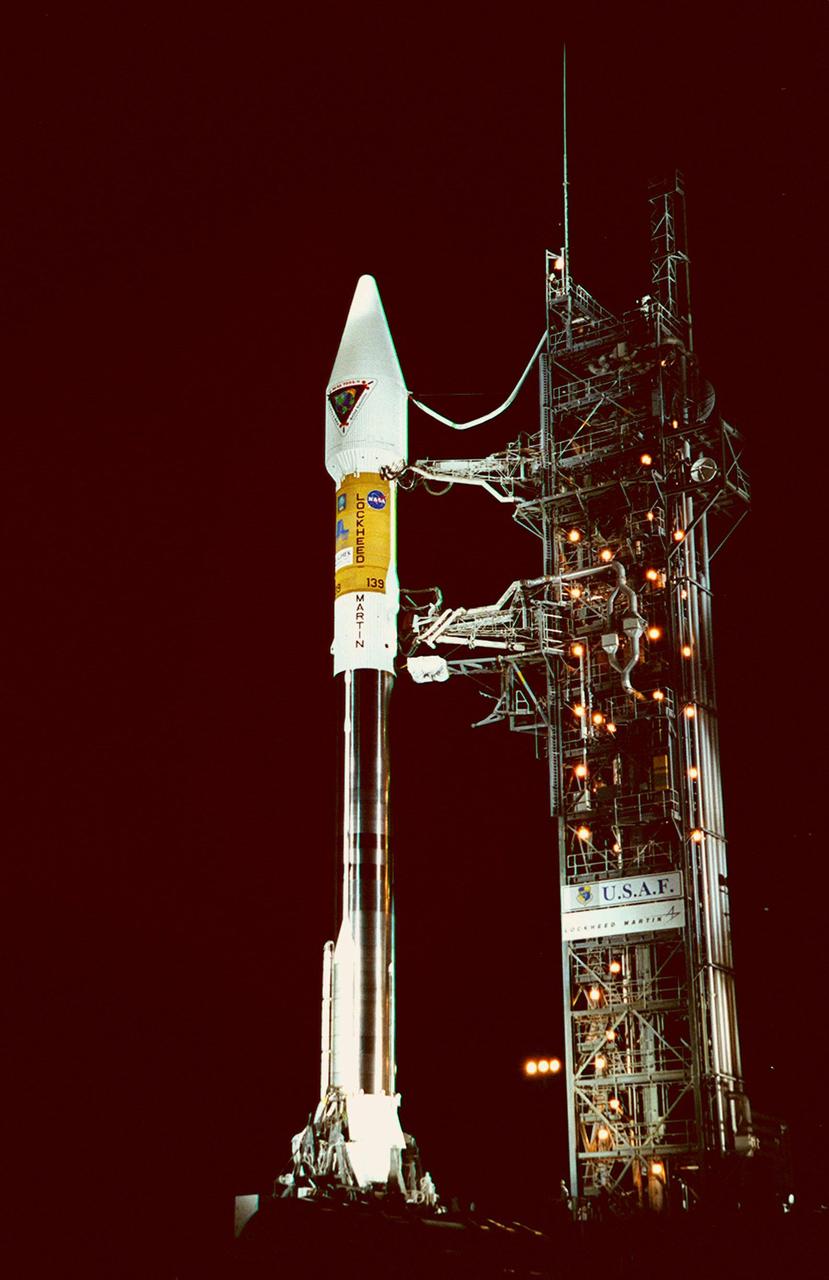
In the early morning hours, NASA’s Tracking and Data Relay Satellite (TDRS-H) sits poised on Launch Pad 36A, Cape Canaveral Air Force Station, before its scheduled launch aboard an Atlas IIA/Centaur rocket. One of three satellites (labeled H, I and J) being built by the Hughes Space and Communications Company, the latest TDRS uses an innovative springback antenna design. A pair of 15-foot-diameter, flexible mesh antenna reflectors fold up for launch, then spring back into their original cupped circular shape on orbit. The new satellites will augment the TDRS system’s existing Sand Ku-band frequencies by adding Ka-band capability. TDRS will serve as the sole means of continuous, high-data-rate communication with the Space Shuttle, with the International Space Station upon its completion, and with dozens of unmanned scientific satellites in low earth orbit
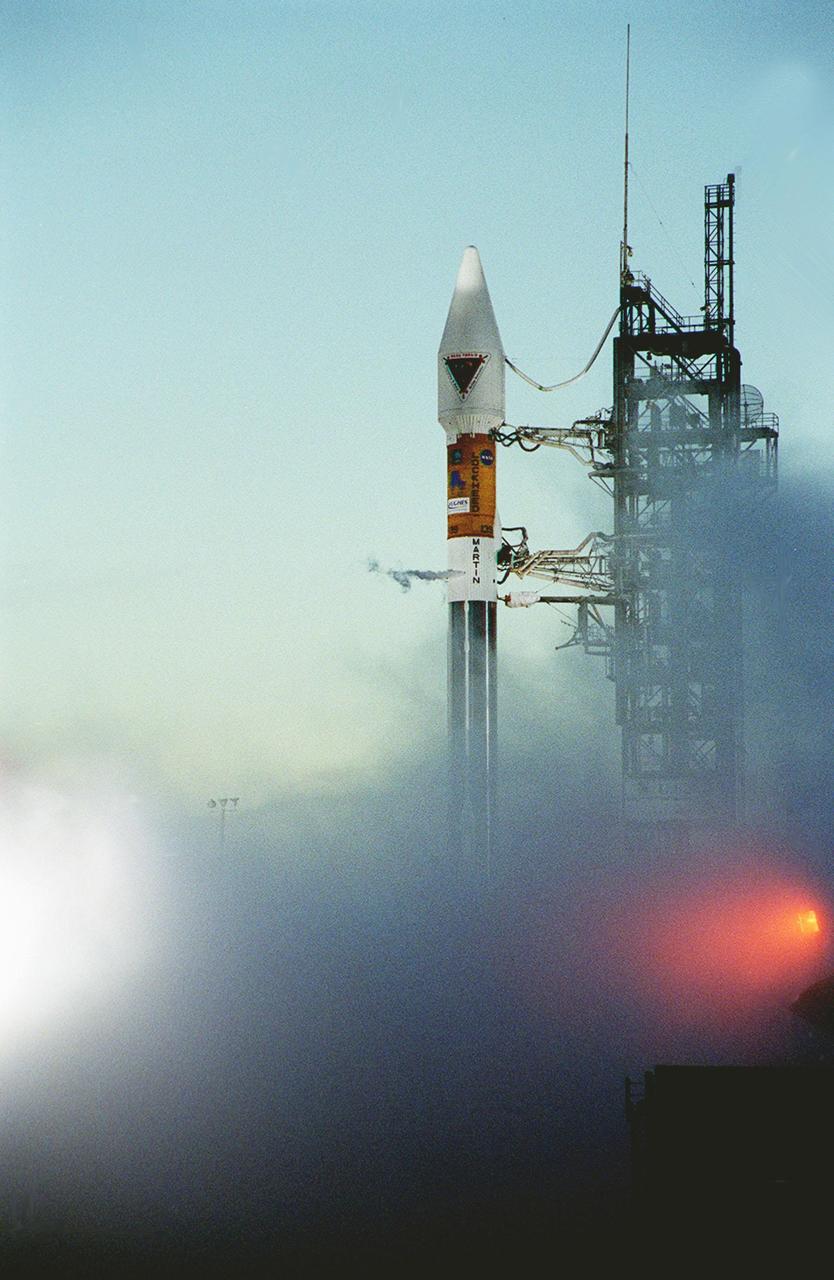
At dawn on Launch Pad 36A, Cape Canaveral Air Force Station, an Atlas IIA/Centaur rocket is fueled for launch of NASA’s Tracking and Data Relay Satellite (TDRS-H). One of three satellites (labeled H, I and J) being built by the Hughes Space and Communications Company, the latest TDRS uses an innovative springback antenna design. A pair of 15-foot-diameter, flexible mesh antenna reflectors fold up for launch, then spring back into their original cupped circular shape on orbit. The new satellites will augment the TDRS system’s existing Sand Ku-band frequencies by adding Ka-band capability. TDRS will serve as the sole means of continuous, high-data-rate communication with the Space Shuttle, with the International Space Station upon its completion, and with dozens of unmanned scientific satellites in low earth orbit
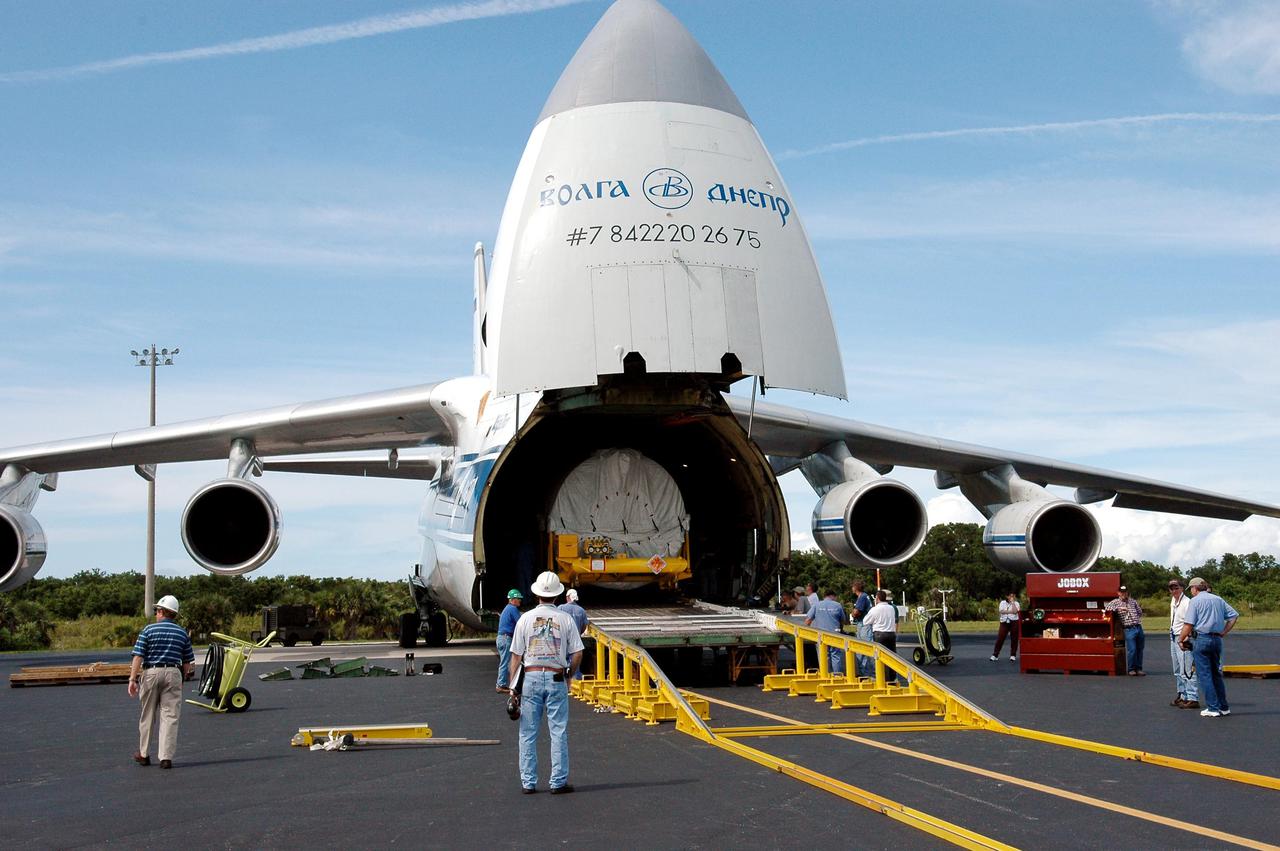
KENNEDY SPACE CENTER, FLA. - At the Cape Canaveral Air Force Station Skid Strip, a second stage Centaur (Block I) is ready to be offloaded from a Russian Antonov AH-124-100 cargo airplane. The Centaur will be mated with the Lockheed Martin Atlas V, designated AV-007, that is the launch vehicle for the Mars Reconnaissance Orbiter (MRO). The MRO is designed for a series of global mapping, regional survey and targeted observations from a near-polar, low-altitude Mars orbit. These observations will be unprecedented in terms of the spatial resolution and coverage achieved by the orbiter’s instruments as they observe the atmosphere and surface of Mars while probing its shallow subsurface as part of a “follow the water” strategy. The orbiter is undergoing environmental tests in facilities at Lockheed Martin Space Systems in Denver, Colo., and is on schedule for a launch window that begins Aug. 10. Launch will be from Launch Complex 41 at Cape Canaveral Air Force Station in Florida.
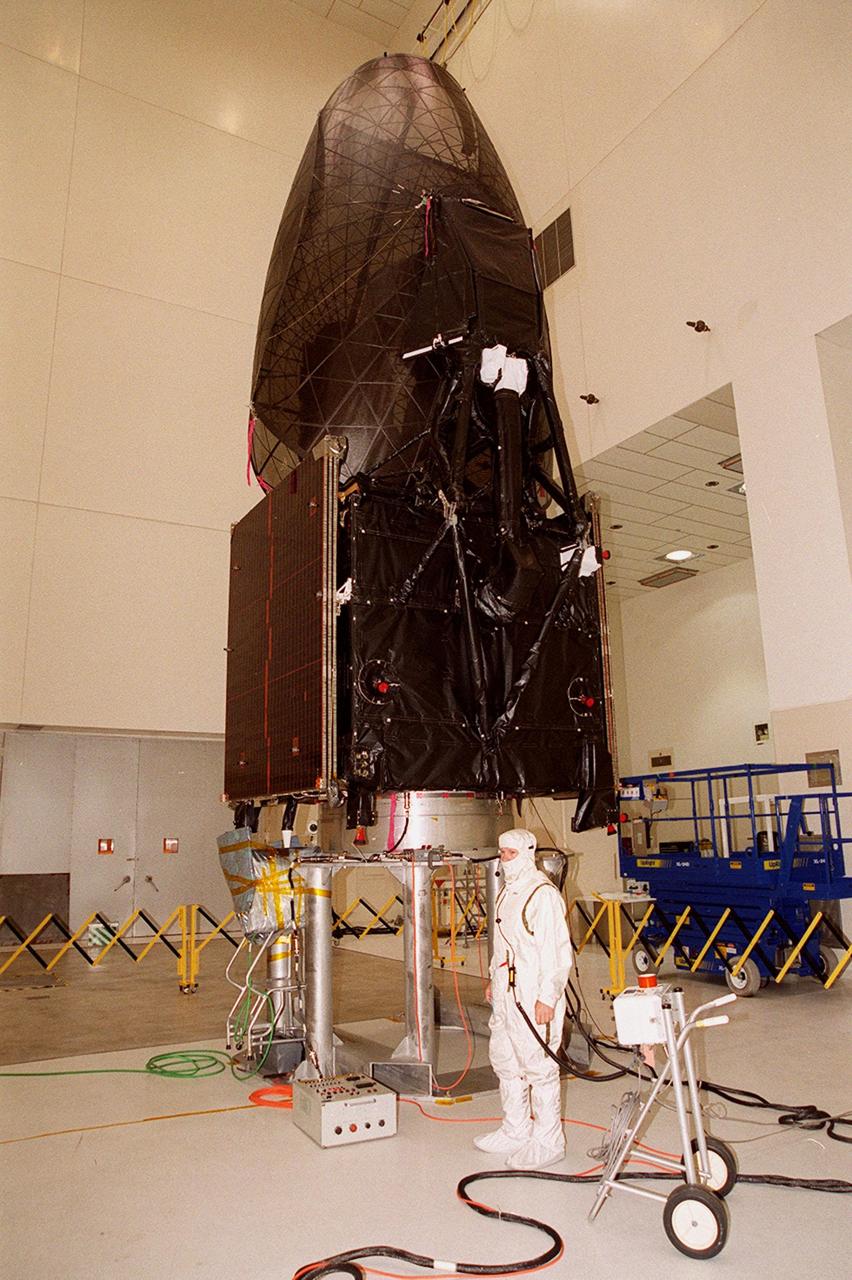
The Tracking and Data Relay Satellite (TDRS-H) sits on a workstand in KSC’s Spacecraft Assembly and Encapsulation Facility (SAEF-2) in order to undergo electrical testing. The TDRS is scheduled to be launched from CCAFS June 29 aboard an Atlas IIA/Centaur rocket. One of three satellites (labeled H, I and J) being built in the Hughes Space and Communications Company Integrated Satellite Factory in El Segundo, Calif., the latest TDRS uses an innovative springback antenna design. A pair of 15-foot-diameter, flexible mesh antenna reflectors fold up for launch, then spring back into their original cupped circular shape on orbit. The new satellites will augment the TDRS system’s existing Sand Ku-band frequencies by adding Ka-band capability. TDRS will serve as the sole means of continuous, high-data-rate communication with the space shuttle, with the International Space Station upon its completion, and with dozens of unmanned scientific satellites in low earth orbit

Workers in KSC’s Spacecraft Assembly and Encapsulation Facility (SAEF-2) prepare the Tracking and Data Relay Satellite (TDRS-H) above them for electrical testing. The TDRS is scheduled to be launched from CCAFS June 29 aboard an Atlas IIA/Centaur rocket. One of three satellites (labeled H, I and J) being built in the Hughes Space and Communications Company Integrated Satellite Factory in El Segundo, Calif., the latest TDRS uses an innovative springback antenna design. A pair of 15-foot-diameter, flexible mesh antenna reflectors fold up for launch, then spring back into their original cupped circular shape on orbit. The new satellites will augment the TDRS system’s existing Sand Ku-band frequencies by adding Ka-band capability. TDRS will serve as the sole means of continuous, high-data-rate communication with the space shuttle, with the International Space Station upon its completion, and with dozens of unmanned scientific satellites in low earth orbit
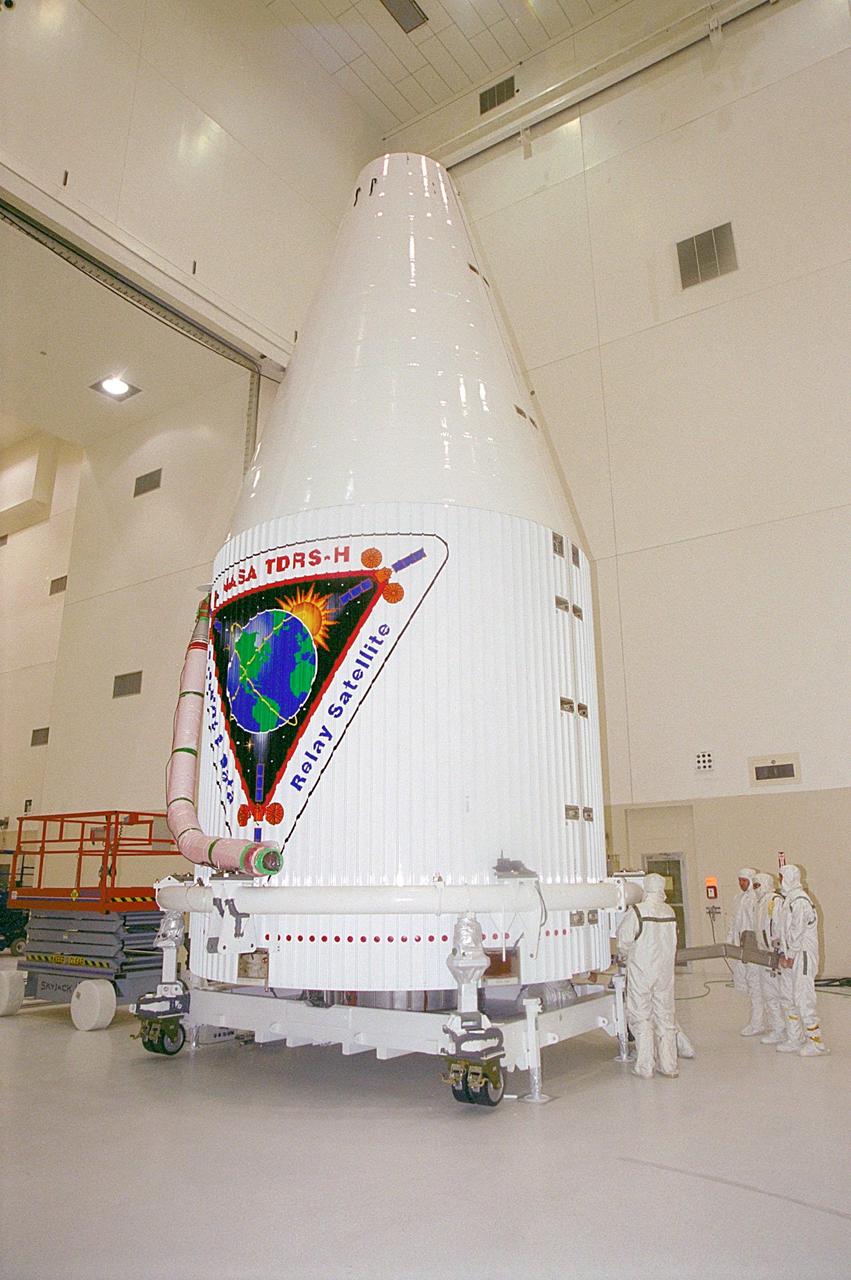
The Tracking and Data Relay Satellite (TDRS-H) sits fully encapsulated inside the fairing. Next, it will be transported to Launch Pad 36A, Cape Canaveral Air Force Station for launch scheduled June 29 aboard an Atlas IIA/Centaur rocket. One of three satellites (labeled H, I and J) being built in the Hughes Space and Communications Company Integrated Satellite Factory in El Segundo, Calif., the latest TDRS uses an innovative springback antenna design. A pair of 15-foot-diameter, flexible mesh antenna reflectors fold up for launch, then spring back into their original cupped circular shape on orbit. The new satellites will augment the TDRS system’s existing Sand Ku-band frequencies by adding Ka-band capability. TDRS will serve as the sole means of continuous, high-data-rate communication with the space shuttle, with the International Space Station upon its completion, and with dozens of unmanned scientific satellites in low earth orbit
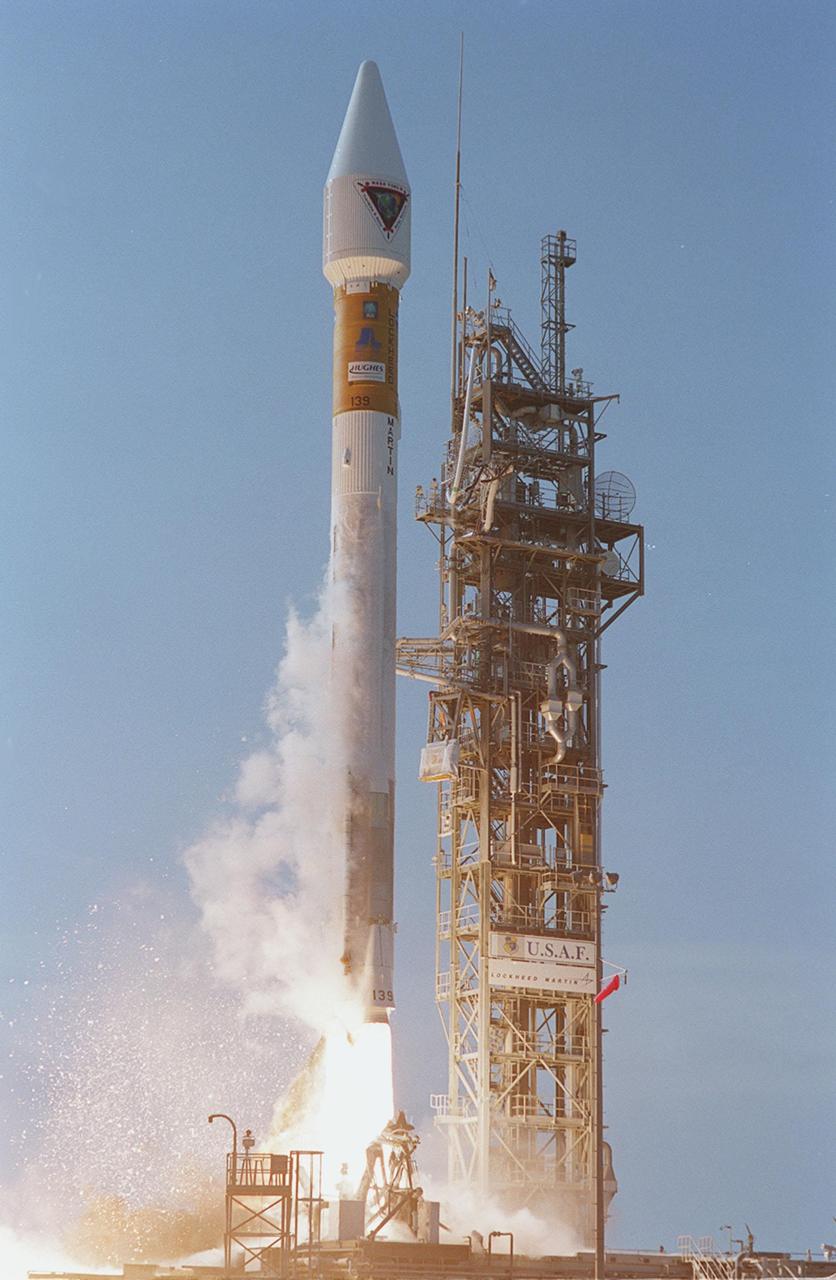
NASA’s Tracking and Data Relay Satellite (TDRS-H) rises into the blue sky from Pad 36A, Cape Canaveral Air Force Station. Liftoff occurred at 8:56 a.m. EDT aboard an Atlas IIA/Centaur rocket. One of three satellites (labeled H, I and J) being built by the Hughes Space and Communications Company, the latest TDRS uses an innovative springback antenna design. A pair of 15-foot-diameter, flexible mesh antenna reflectors fold up for launch, then spring back into their original cupped circular shape on orbit. The new satellites will augment the TDRS system’s existing Sand Ku-band frequencies by adding Ka-band capability. TDRS will serve as the sole means of continuous, high-data-rate communication with the space shuttle, with the International Space Station upon its completion, and with dozens of unmanned scientific satellites in low earth orbit

NASA’s Tracking and Data Relay Satellite (TDRS-H) sits poised on Launch Pad 36A, Cape Canaveral Air Force Station, before its scheduled launch aboard an Atlas IIA/Centaur rocket. One of three satellites (labeled H, I and J) being built by the Hughes Space and Communications Company, the latest TDRS uses an innovative springback antenna design. A pair of 15-foot-diameter, flexible mesh antenna reflectors fold up for launch, then spring back into their original cupped circular shape on orbit. The new satellites will augment the TDRS system’s existing Sand Ku-band frequencies by adding Ka-band capability. TDRS will serve as the sole means of continuous, high-data-rate communication with the space shuttle, with the International Space Station upon its completion, and with dozens of unmanned scientific satellites in low earth orbit
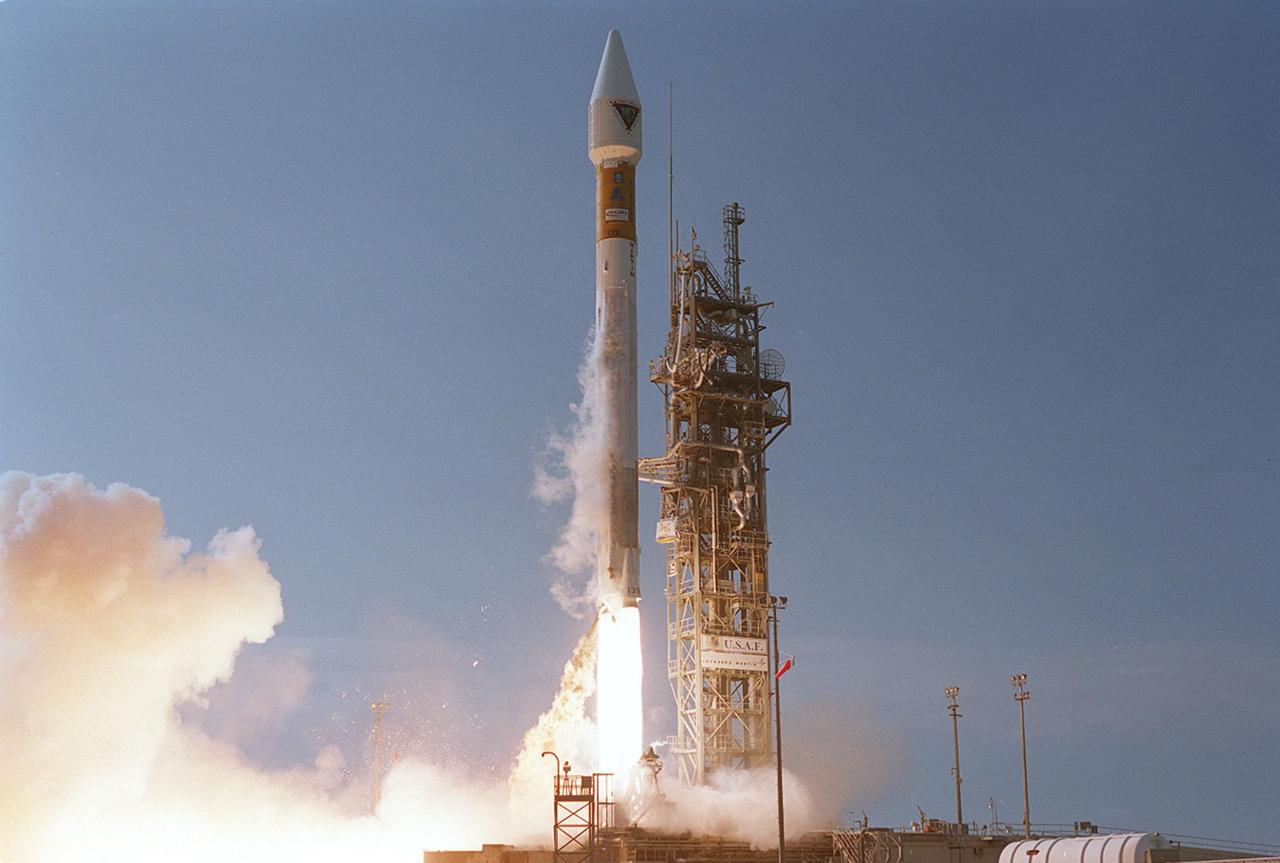
Leaving billowing clouds of steam and smoke behind, NASA’s Tracking and Data Relay Satellite (TDRS-H) shoots into the blue sky aboard an Atlas IIA/Centaur rocket from Pad 36A, Cape Canaveral Air Force Station. Liftoff occurred at 8:56 a.m. EDT. One of three satellites (labeled H, I and J) being built by the Hughes Space and Communications Company, the latest TDRS uses an innovative springback antenna design. A pair of 15-foot-diameter, flexible mesh antenna reflectors fold up for launch, then spring back into their original cupped circular shape on orbit. The new satellites will augment the TDRS system’s existing Sand Ku-band frequencies by adding Ka-band capability. TDRS will serve as the sole means of continuous, high-data-rate communication with the space shuttle, with the International Space Station upon its completion, and with dozens of unmanned scientific satellites in low earth orbit
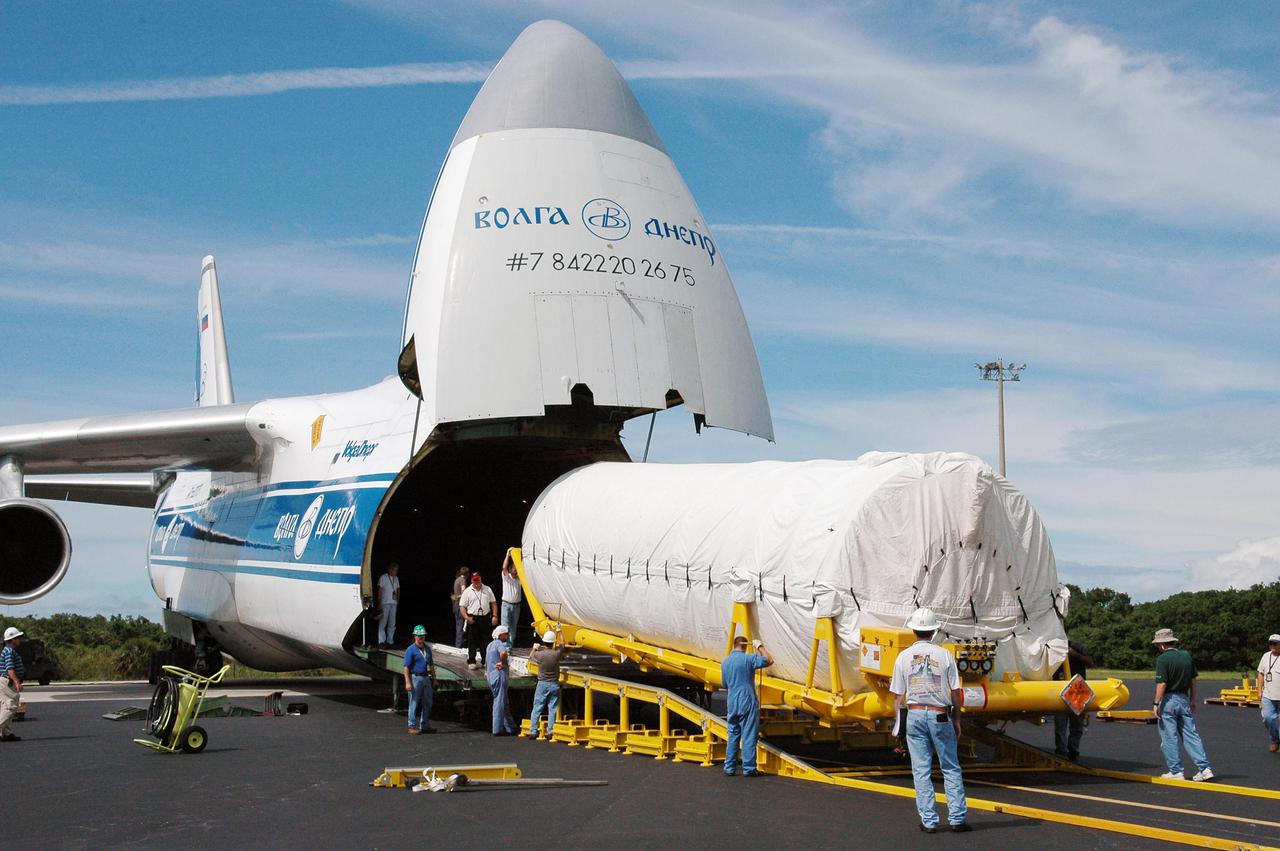
KENNEDY SPACE CENTER, FLA. - At the Cape Canaveral Air Force Station Skid Strip, a second stage Centaur (Block I) is rolled out of a Russian Antonov AH-124-100 cargo airplane. The Centaur will be mated with the Lockheed Martin Atlas V, designated AV-007, that is the launch vehicle for the Mars Reconnaissance Orbiter (MRO). The MRO is designed for a series of global mapping, regional survey and targeted observations from a near-polar, low-altitude Mars orbit. These observations will be unprecedented in terms of the spatial resolution and coverage achieved by the orbiter’s instruments as they observe the atmosphere and surface of Mars while probing its shallow subsurface as part of a “follow the water” strategy. The orbiter is undergoing environmental tests in facilities at Lockheed Martin Space Systems in Denver, Colo., and is on schedule for a launch window that begins Aug. 10. Launch will be from Launch Complex 41 at Cape Canaveral Air Force Station in Florida.
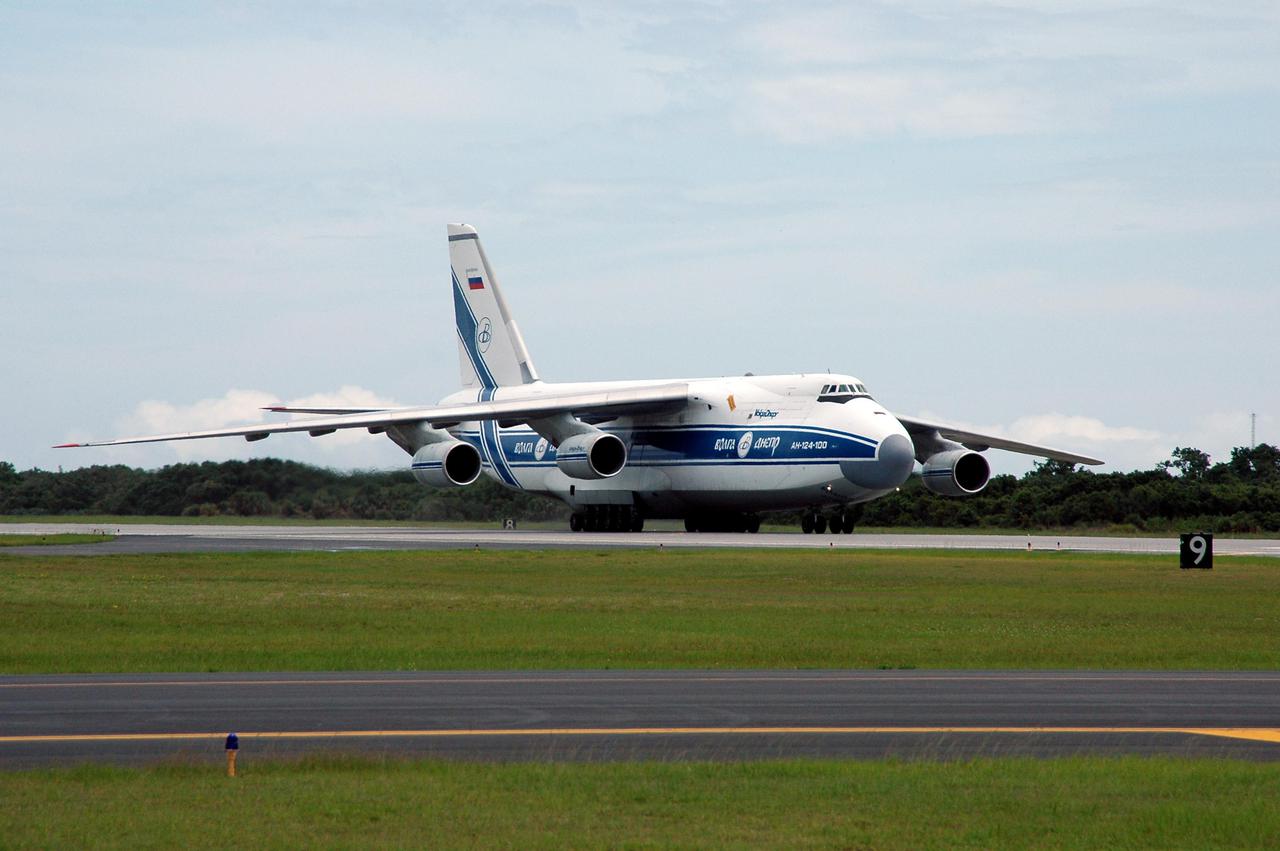
KENNEDY SPACE CENTER, FLA. - A Russian Antonov AH-124-100 cargo airplane lands at the Cape Canaveral Air Force Station Skid Strip. The plane is delivering a second stage Centaur (Block I) for the Lockheed Martin Atlas V, designated AV-007, that is the launch vehicle for the Mars Reconnaissance Orbiter (MRO). The MRO is designed for a series of global mapping, regional survey and targeted observations from a near-polar, low-altitude Mars orbit. These observations will be unprecedented in terms of the spatial resolution and coverage achieved by the orbiter’s instruments as they observe the atmosphere and surface of Mars while probing its shallow subsurface as part of a “follow the water” strategy. The orbiter is undergoing environmental tests in facilities at Lockheed Martin Space Systems in Denver, Colo., and is on schedule for a launch window that begins Aug. 10. Launch will be from Launch Complex 41 at Cape Canaveral Air Force Station in Florida.
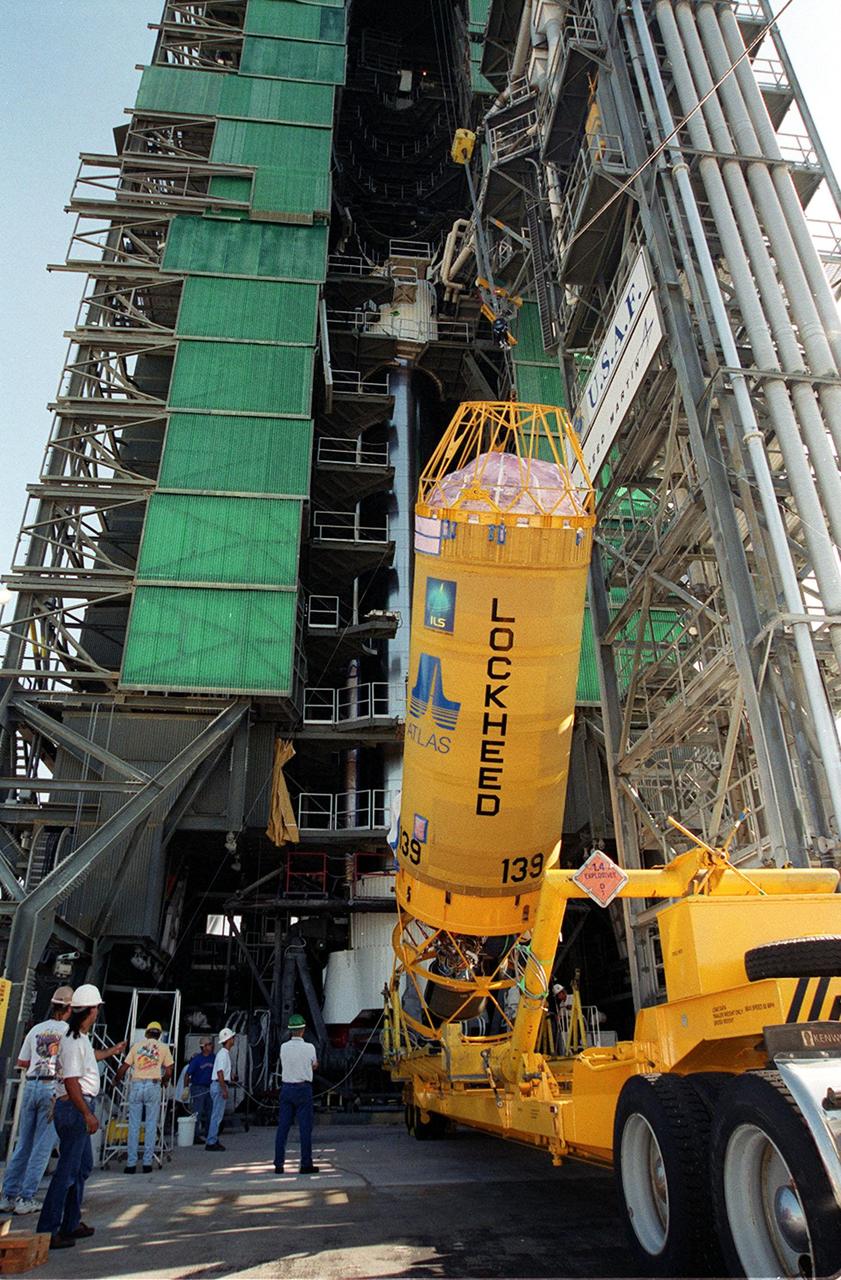
At Launch Pad 36A, Cape Canaveral Air Force Station, a Centaur rocket is raised to a vertical position before lifting it up the launch tower. It will be mated with the lower stage Atlas IIA rocket, already in the tower, to launch the latest Tracking and Data Relay Satellite (TDRS) June 29 from CCAFS. The TDRS is one of three (labeled H, I and J) being built in the Hughes Space and Communications Company Integrated Satellite Factory in El Segundo, Calif. The new satellites will augment the TDRS system’s existing Sand Ku-band frequencies by adding Ka-band capability. TDRS will serve as the sole means of continuous, high-data-rate communication with the space shuttle, with the International Space Station upon its completion, and with dozens of unmanned scientific satellites in low earth orbit
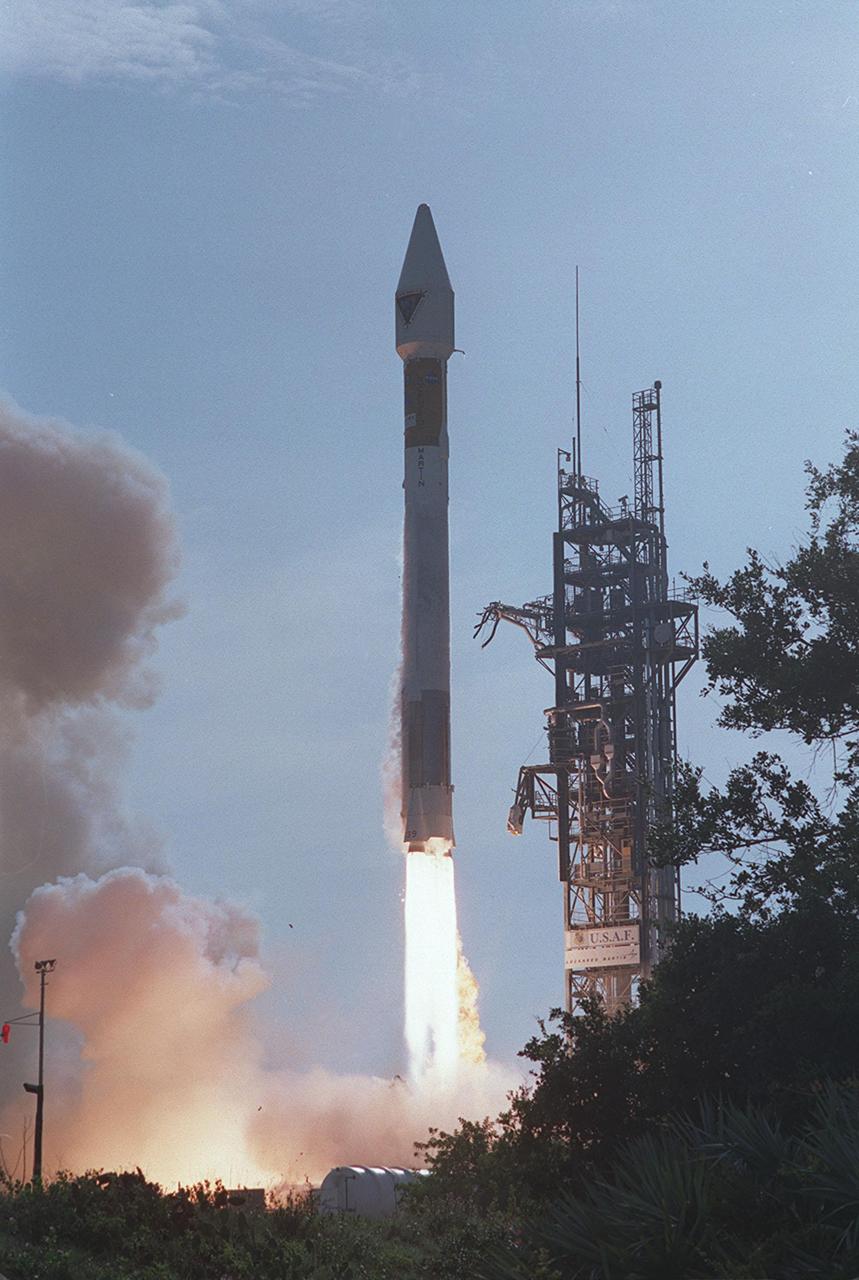
NASA’s Tracking and Data Relay Satellite (TDRS-H) rises into the blue sky from Pad 36A, Cape Canaveral Air Force Station. Liftoff occurred at 8:56 a.m. EDT aboard an Atlas IIA/Centaur rocket. One of three satellites (labeled H, I and J) being built by the Hughes Space and Communications Company, the latest TDRS uses an innovative springback antenna design. A pair of 15-foot-diameter, flexible mesh antenna reflectors fold up for launch, then spring back into their original cupped circular shape on orbit. The new satellites will augment the TDRS system’s existing Sand Ku-band frequencies by adding Ka-band capability. TDRS will serve as the sole means of continuous, high-data-rate communication with the space shuttle, with the International Space Station upon its completion, and with dozens of unmanned scientific satellites in low earth orbit
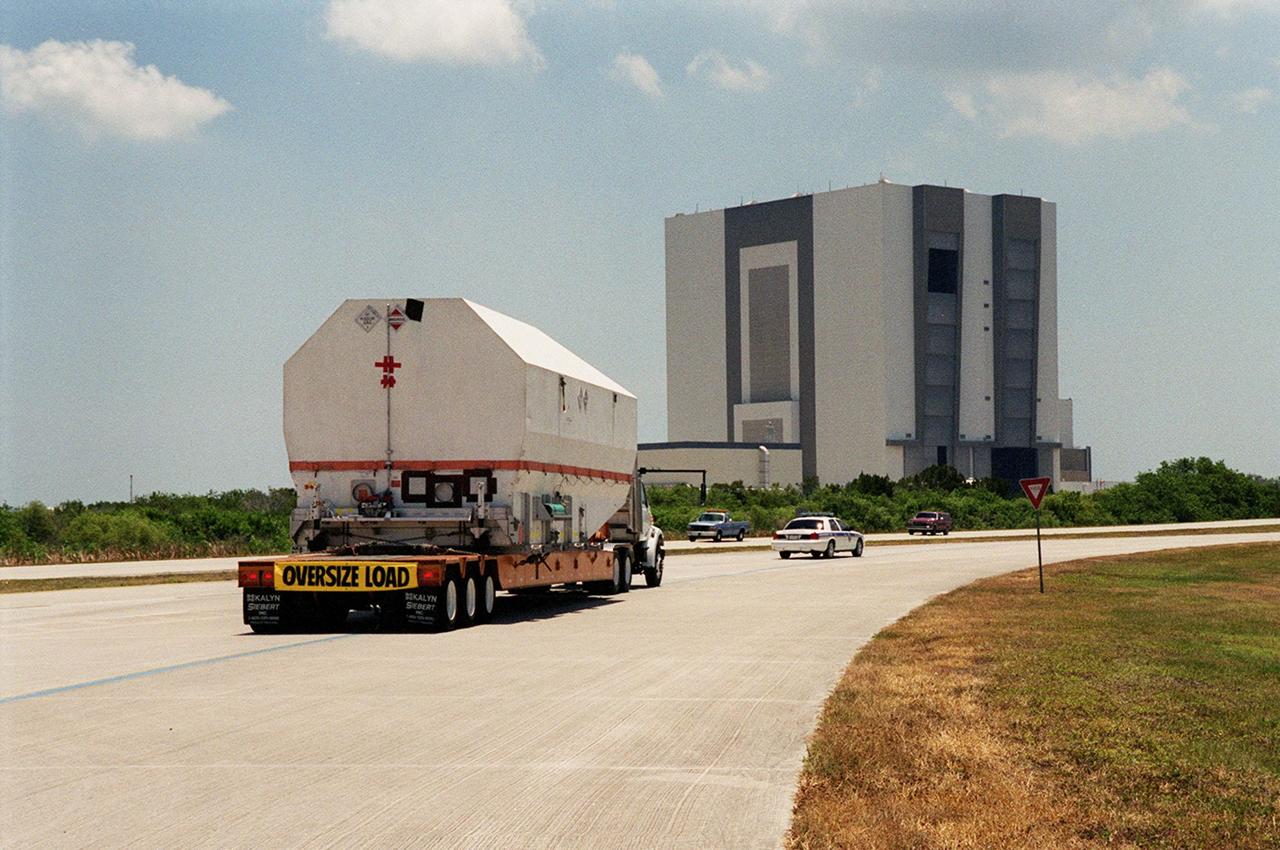
After its arrival at the Shuttle Landing Facility, the crated Tracking and Data Relay Satellite (TDRS-H) is transported past the Vehicle Assembly Building (in the background) to the Spacecraft Assembly and Encapsulation Facility (SAEF-2) for testing. The TDRS is one of three (labeled H, I and J) being built in the Hughes Space and Communications Company Integrated Satellite Factory in El Segundo, Calif. The latest TDRS uses an innovative springback antenna design. A pair of 15-foot-diameter, flexible mesh antenna reflectors fold up for launch, then spring back into their original cupped circular shape on orbit. The new satellites will augment the TDRS system’s existing Sand Ku-band frequencies by adding Ka-band capability. TDRS will serve as the sole means of continuous, high-data-rate communication with the space shuttle, with the International Space Station upon its completion, and with dozens of unmanned scientific satellites in low earth orbit. The TDRS is scheduled to be launched from CCAFS June 29 aboard an Atlas IIA/Centaur rocket
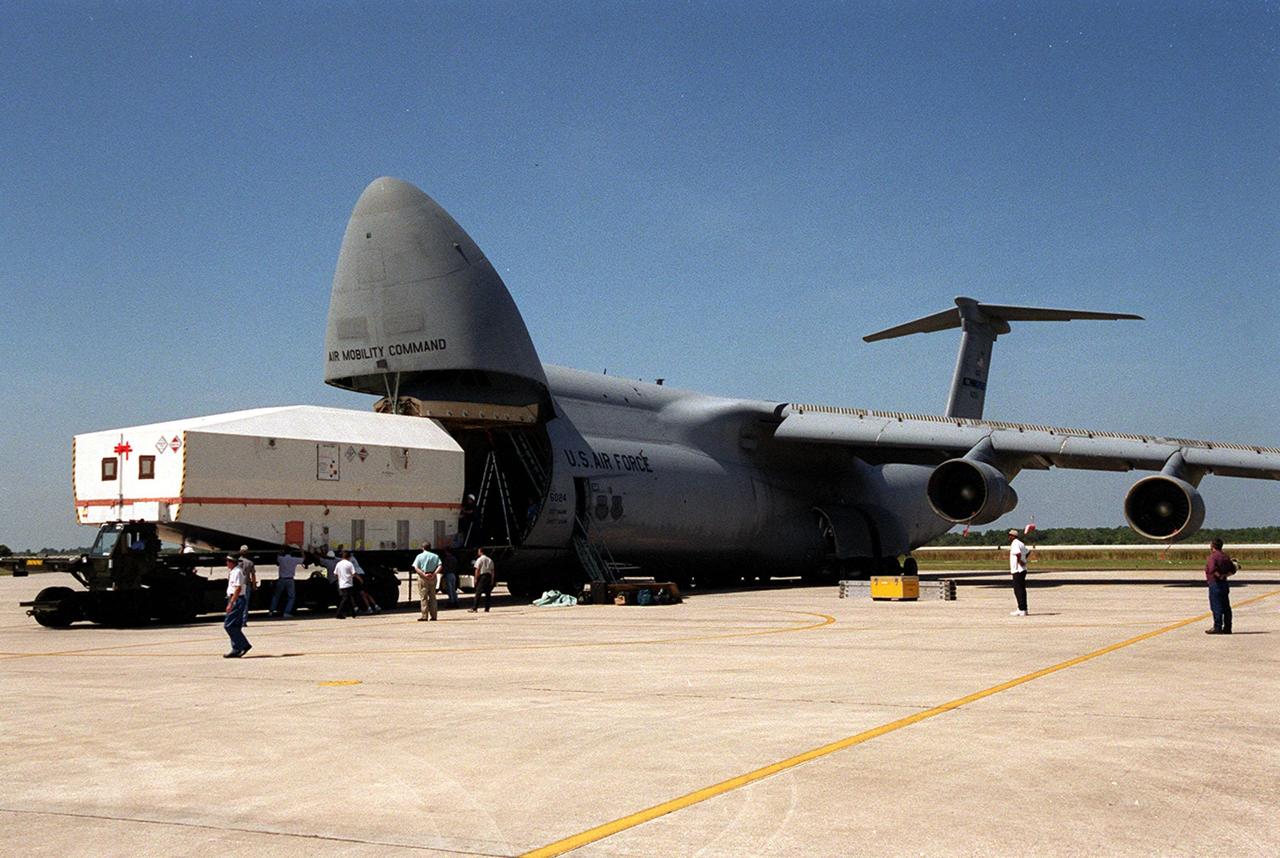
At the Shuttle Landing Facility, the crated Tracking and Data Relay Satellite (TDRS-H) is offloaded from an air cargo plane. It will be taken to the Spacecraft Assembly and Encapsulation Facility (SAEF-2) for testing. The TDRS is one of three (labeled H, I and J) being built in the Hughes Space and Communications Company Integrated Satellite Factory in El Segundo, Calif. The latest TDRS uses an innovative springback antenna design. A pair of 15-foot-diameter, flexible mesh antenna reflectors fold up for launch, then spring back into their original cupped circular shape on orbit. The new satellites will augment the TDRS system’s existing Sand Ku-band frequencies by adding Ka-band capability. TDRS will serve as the sole means of continuous, high-data-rate communication with the space shuttle, with the International Space Station upon its completion, and with dozens of unmanned scientific satellites in low earth orbit. The TDRS is scheduled to be launched from CCAFS June 29 aboard an Atlas IIA/Centaur rocket
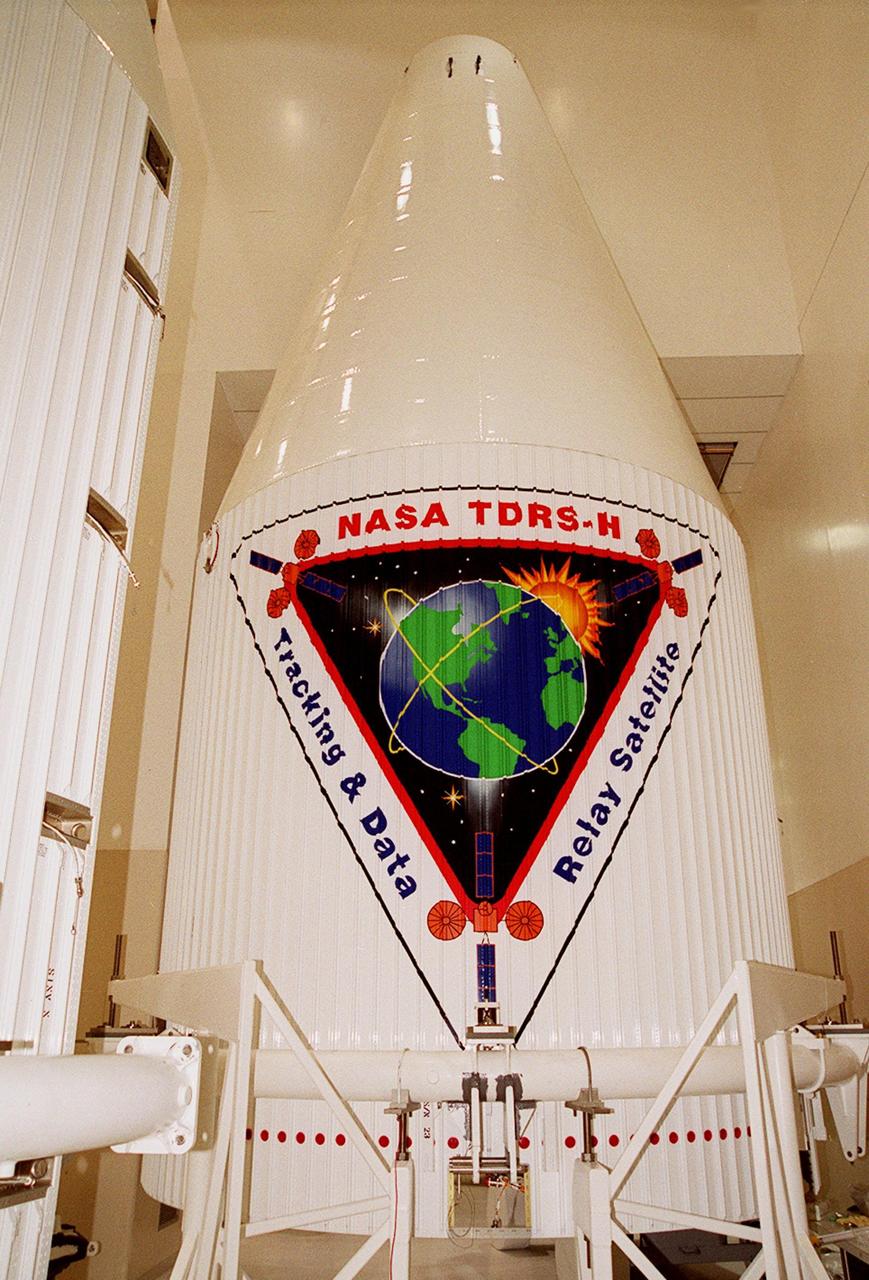
The logo for the Tracking and Data Relay Satellite (TDRS-H) is predominantly displayed on the fairing that will encapsulate the satellite for launch. The fairing is in KSC’s Spacecraft Assembly and Encapsulation Facility (SAEF-2) where TDRS is undergoing testing. The TDRS is scheduled to be launched from CCAFS June 29 aboard an Atlas IIA/Centaur rocket. One of three satellites (labeled H, I and J) being built in the Hughes Space and Communications Company Integrated Satellite Factory in El Segundo, Calif., the latest TDRS uses an innovative springback antenna design. A pair of 15-foot-diameter, flexible mesh antenna reflectors fold up for launch, then spring back into their original cupped circular shape on orbit. The new satellites will augment the TDRS system’s existing Sand Ku-band frequencies by adding Ka-band capability. TDRS will serve as the sole means of continuous, high-data-rate communication with the space shuttle, with the International Space Station upon its completion, and with dozens of unmanned scientific satellites in low earth orbit
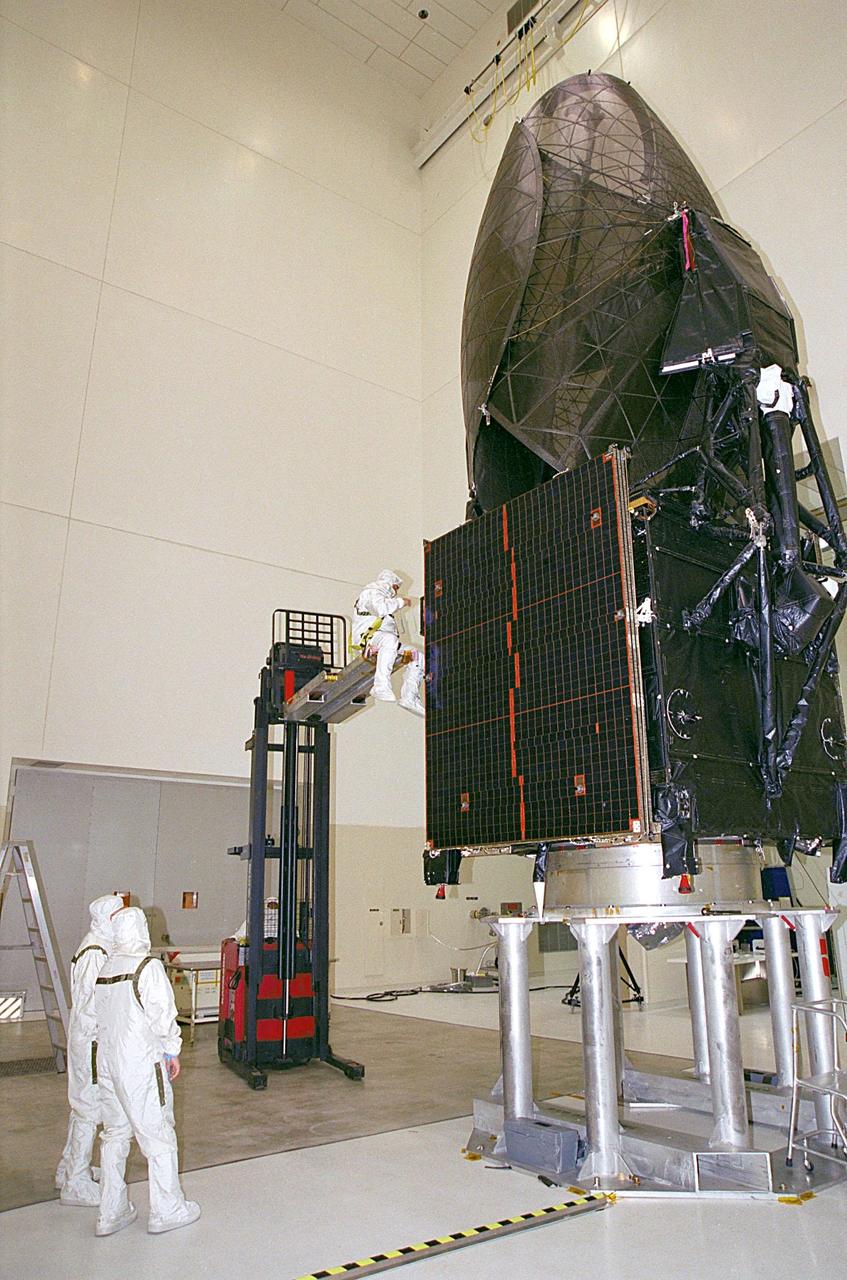
In the Spacecraft Assembly and Encapsulation Facility, a worker (left center) checks out the Tracking and Data Relay Satellite (TDRS-H) after its move to the payload adapter (below). Next step is the encapsulation of the TDRS in the fairing. TDRS is scheduled to be launched June 29 aboard an Atlas IIA/Centaur rocket. One of three satellites (labeled H, I and J) being built in the Hughes Space and Communications Company Integrated Satellite Factory in El Segundo, Calif., the latest TDRS uses an innovative springback antenna design. A pair of 15-foot-diameter, flexible mesh antenna reflectors fold up for launch, then spring back into their original cupped circular shape on orbit. The new satellites will augment the TDRS system’s existing Sand Ku-band frequencies by adding Ka-band capability. TDRS will serve as the sole means of continuous, high-data-rate communication with the space shuttle, with the International Space Station upon its completion, and with dozens of unmanned scientific satellites in low earth orbit
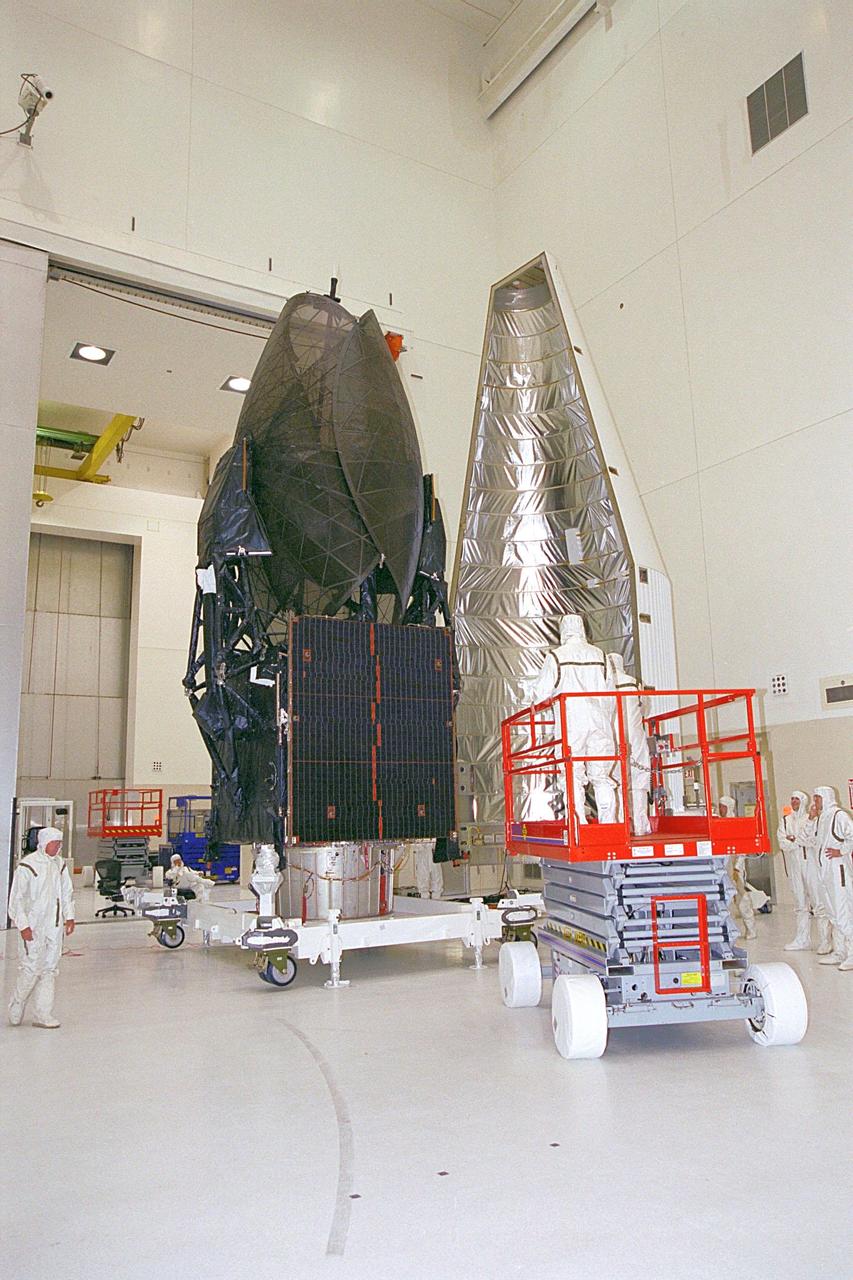
In the Spacecraft Assembly and Encapsulation Facility, the Tracking and Data Relay Satellite (TDRS-H) at left is ready for encapsulation. Workers in an extendable platform wait for the fairing (right) to move into place. After encapsulation in the fairing, TDRS will be transported to Launch Pad 36A, Cape Canaveral Air Force Station for launch scheduled June 29 aboard an Atlas IIA/Centaur rocket. One of three satellites (labeled H, I and J) being built in the Hughes Space and Communications Company Integrated Satellite Factory in El Segundo, Calif., the latest TDRS uses an innovative springback antenna design. A pair of 15-foot-diameter, flexible mesh antenna reflectors fold up for launch, then spring back into their original cupped circular shape on orbit. The new satellites will augment the TDRS system’s existing Sand Ku-band frequencies by adding Ka-band capability. TDRS will serve as the sole means of continuous, high-data-rate communication with the space shuttle, with the International Space Station upon its completion, and with dozens of unmanned scientific satellites in low earth orbit

The logo for the Tracking and Data Relay Satellite (TDRS-H) is predominantly displayed on the fairing that will encapsulate the satellite for launch. The fairing is in KSC’s Spacecraft Assembly and Encapsulation Facility (SAEF-2) where TDRS is undergoing testing. The TDRS is scheduled to be launched from CCAFS June 29 aboard an Atlas IIA/Centaur rocket. One of three satellites (labeled H, I and J) being built in the Hughes Space and Communications Company Integrated Satellite Factory in El Segundo, Calif., the latest TDRS uses an innovative springback antenna design. A pair of 15-foot-diameter, flexible mesh antenna reflectors fold up for launch, then spring back into their original cupped circular shape on orbit. The new satellites will augment the TDRS system’s existing Sand Ku-band frequencies by adding Ka-band capability. TDRS will serve as the sole means of continuous, high-data-rate communication with the space shuttle, with the International Space Station upon its completion, and with dozens of unmanned scientific satellites in low earth orbit
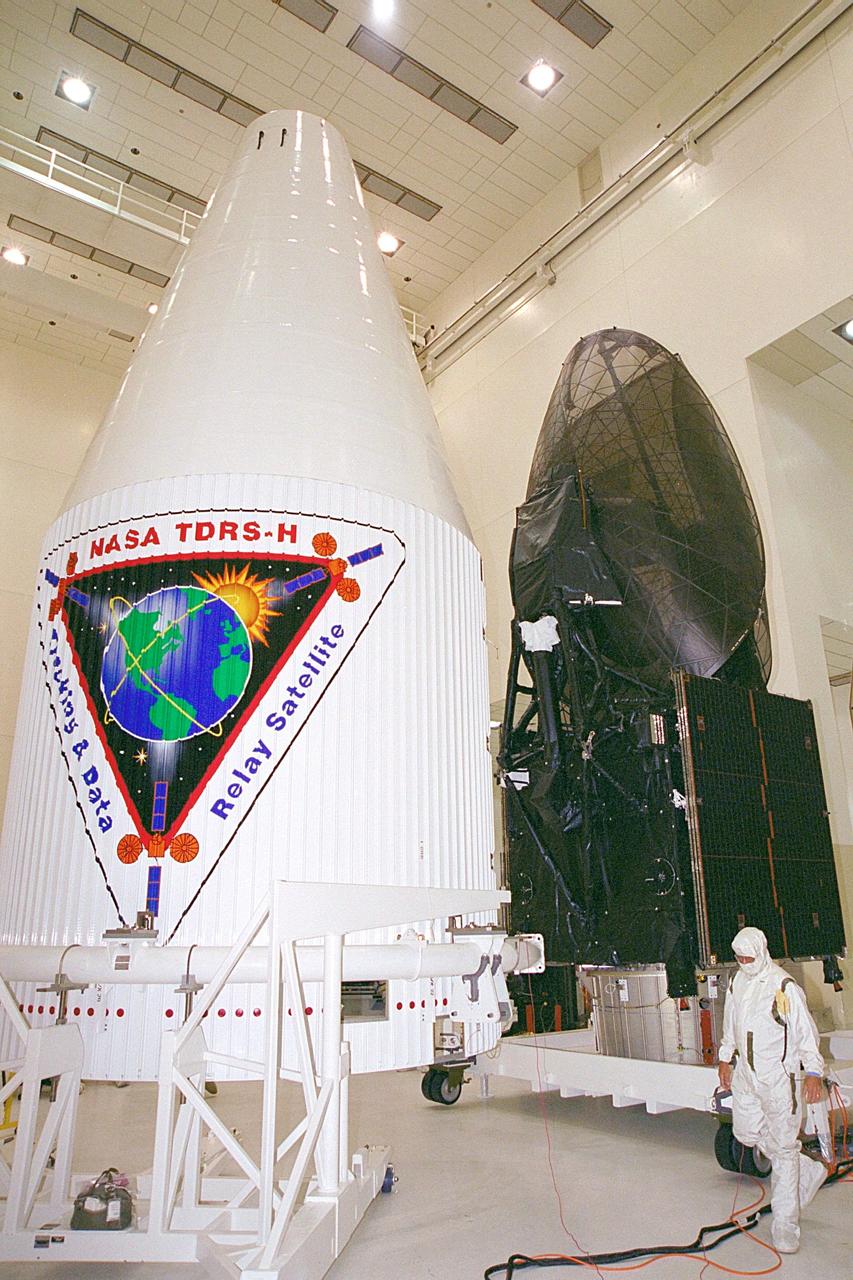
In the Spacecraft Assembly and Encapsulation Facility, the Tracking and Data Relay Satellite (TDRS-H) at right sits while one-half of the fairing (left) is moved closer to it. After encapsulation in the fairing, TDRS will be transported to Launch Pad 36A, Cape Canaveral Air Force Station for launch scheduled June 29 aboard an Atlas IIA/Centaur rocket. One of three satellites (labeled H, I and J) being built in the Hughes Space and Communications Company Integrated Satellite Factory in El Segundo, Calif., the latest TDRS uses an innovative springback antenna design. A pair of 15-foot-diameter, flexible mesh antenna reflectors fold up for launch, then spring back into their original cupped circular shape on orbit. The new satellites will augment the TDRS system’s existing Sand Ku-band frequencies by adding Ka-band capability. TDRS will serve as the sole means of continuous, high-data-rate communication with the space shuttle, with the International Space Station upon its completion, and with dozens of unmanned scientific satellites in low earth orbit