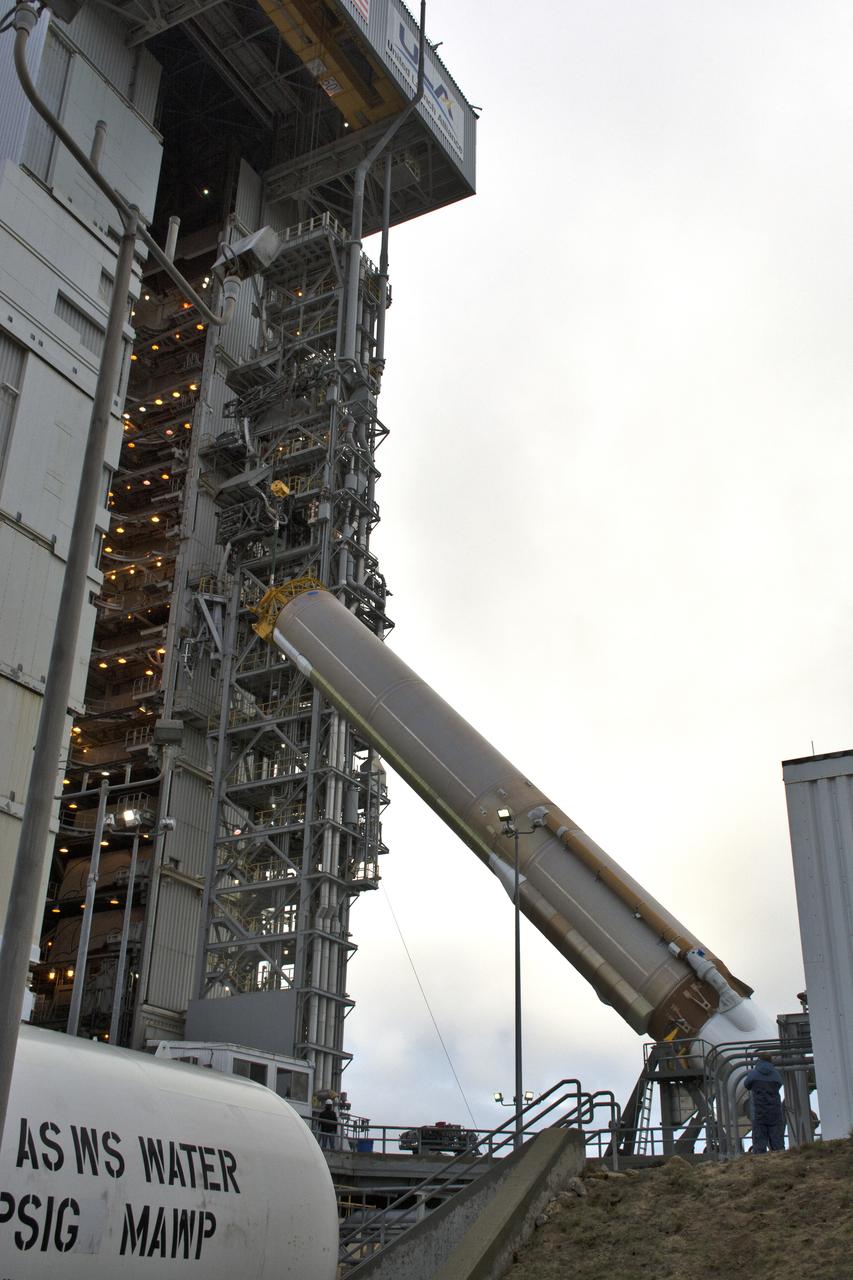
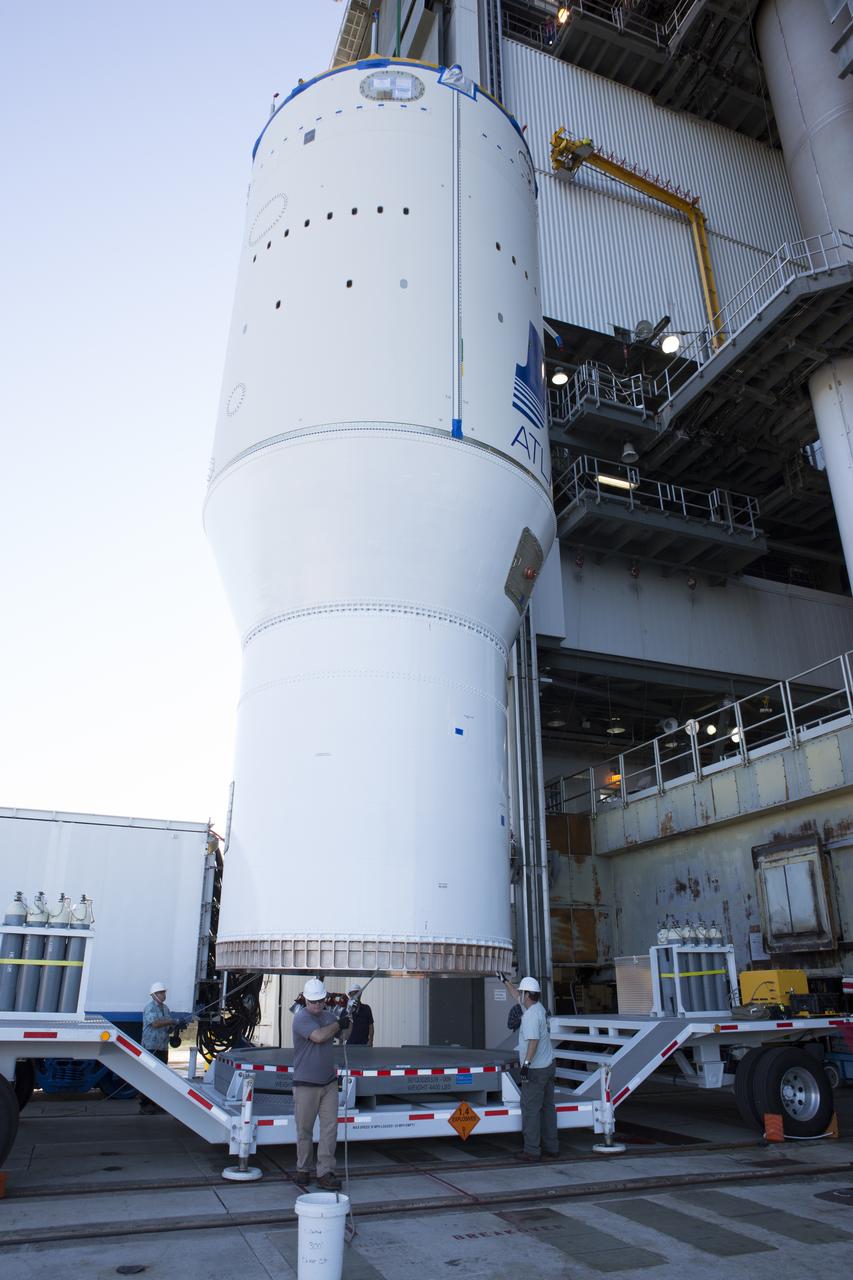
A crane lifts a United Launch Alliance Atlas V booster at Space Launch Complex 3 at Vandenberg Air Force Base in California. The rocket will launch NASA's Interior Exploration using Seismic Investigations, Geodesy and Heat Transport, or InSight, mission to land on Mars. InSight is the first mission to explore the Red Planet's deep interior. It will investigate processes that shaped the rocky planets of the inner solar system including Earth. Liftoff is scheduled for May 5, 2018.
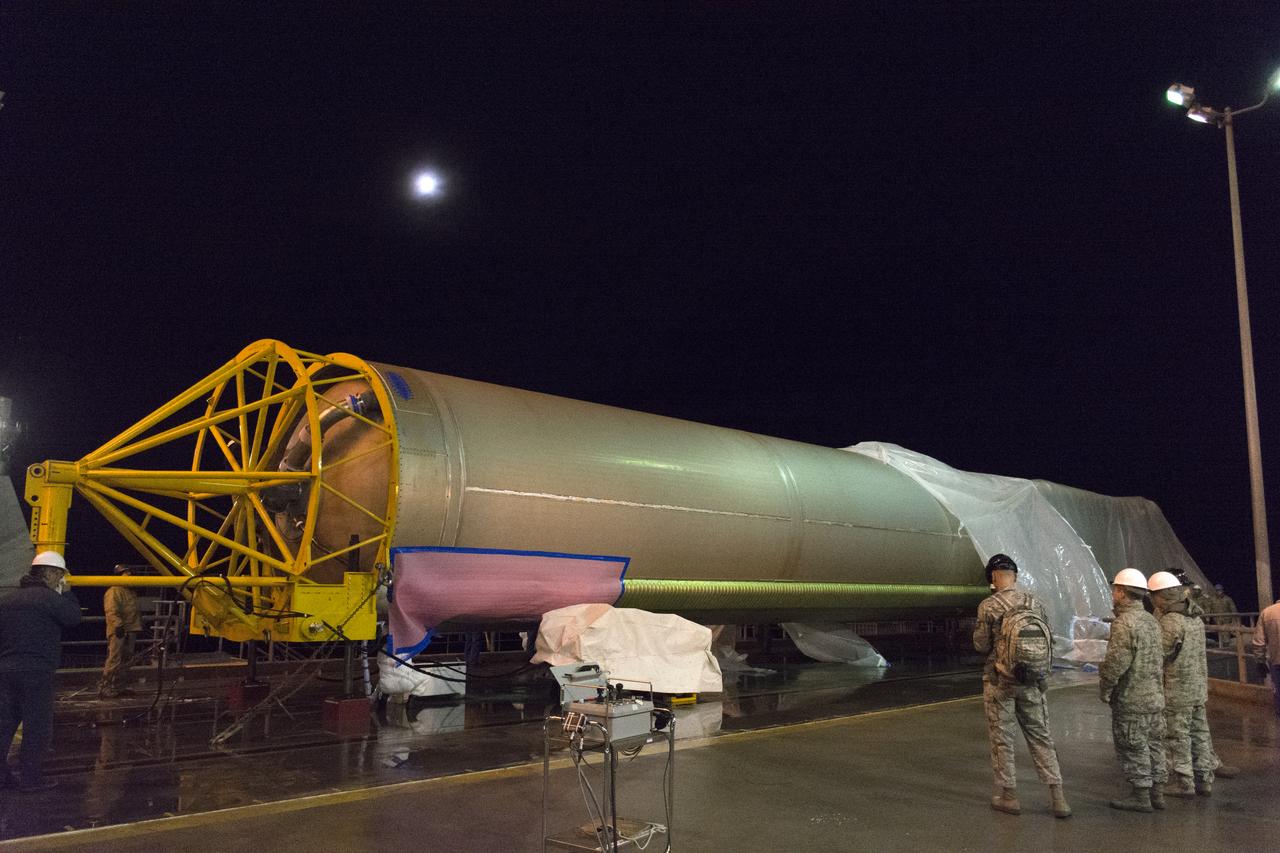
A United Launch Alliance Atlas V booster arrives at Space Launch Complex 3 at Vandenberg Air Force Base in California. The rocket will launch NASA's Interior Exploration using Seismic Investigations, Geodesy and Heat Transport, or InSight, mission to land on Mars. InSight is the first mission to explore the Red Planet's deep interior. It will investigate processes that shaped the rocky planets of the inner solar system including Earth. Liftoff is scheduled for May 5, 2018.
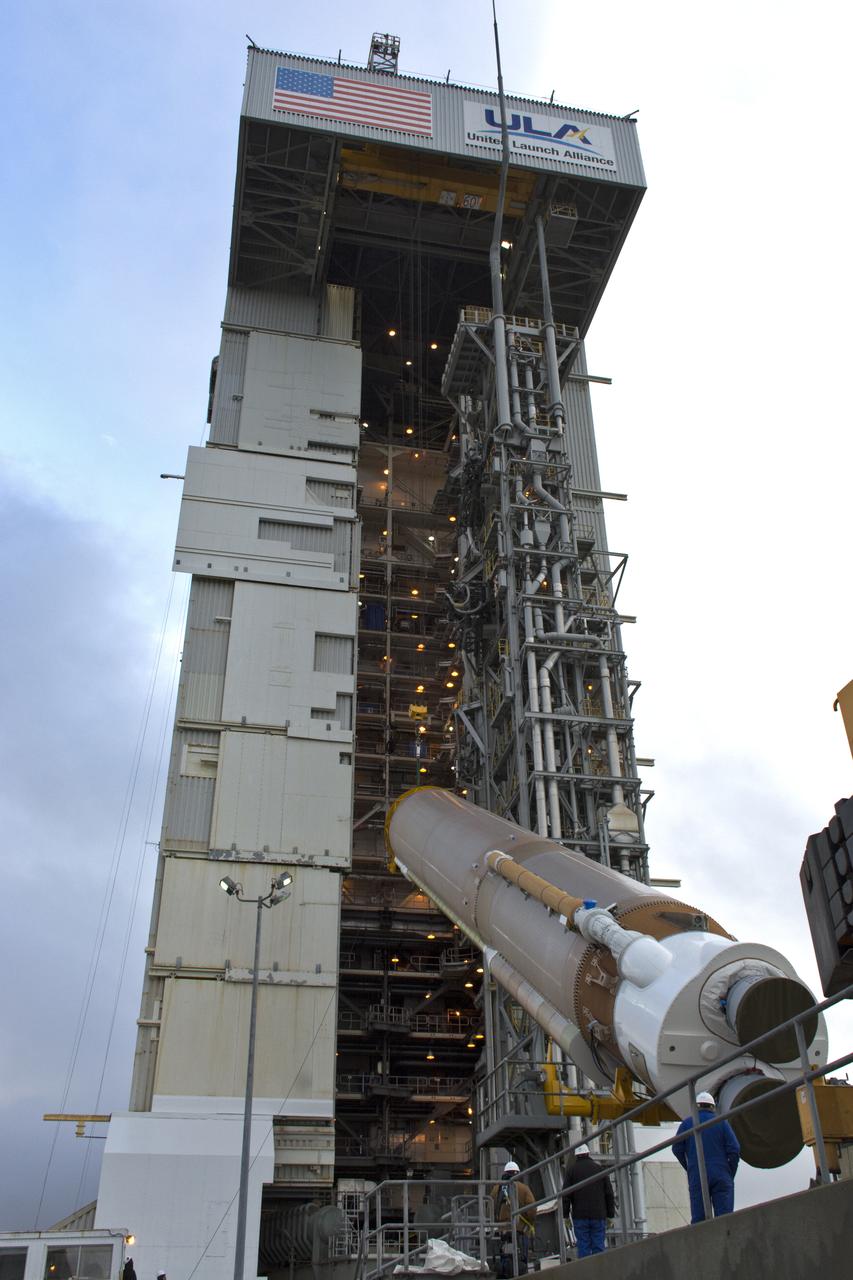
A crane lifts a United Launch Alliance Atlas V booster at Space Launch Complex 3 at Vandenberg Air Force Base in California. The rocket will launch NASA's Interior Exploration using Seismic Investigations, Geodesy and Heat Transport, or InSight, mission to land on Mars. InSight is the first mission to explore the Red Planet's deep interior. It will investigate processes that shaped the rocky planets of the inner solar system including Earth. Liftoff is scheduled for May 5, 2018.
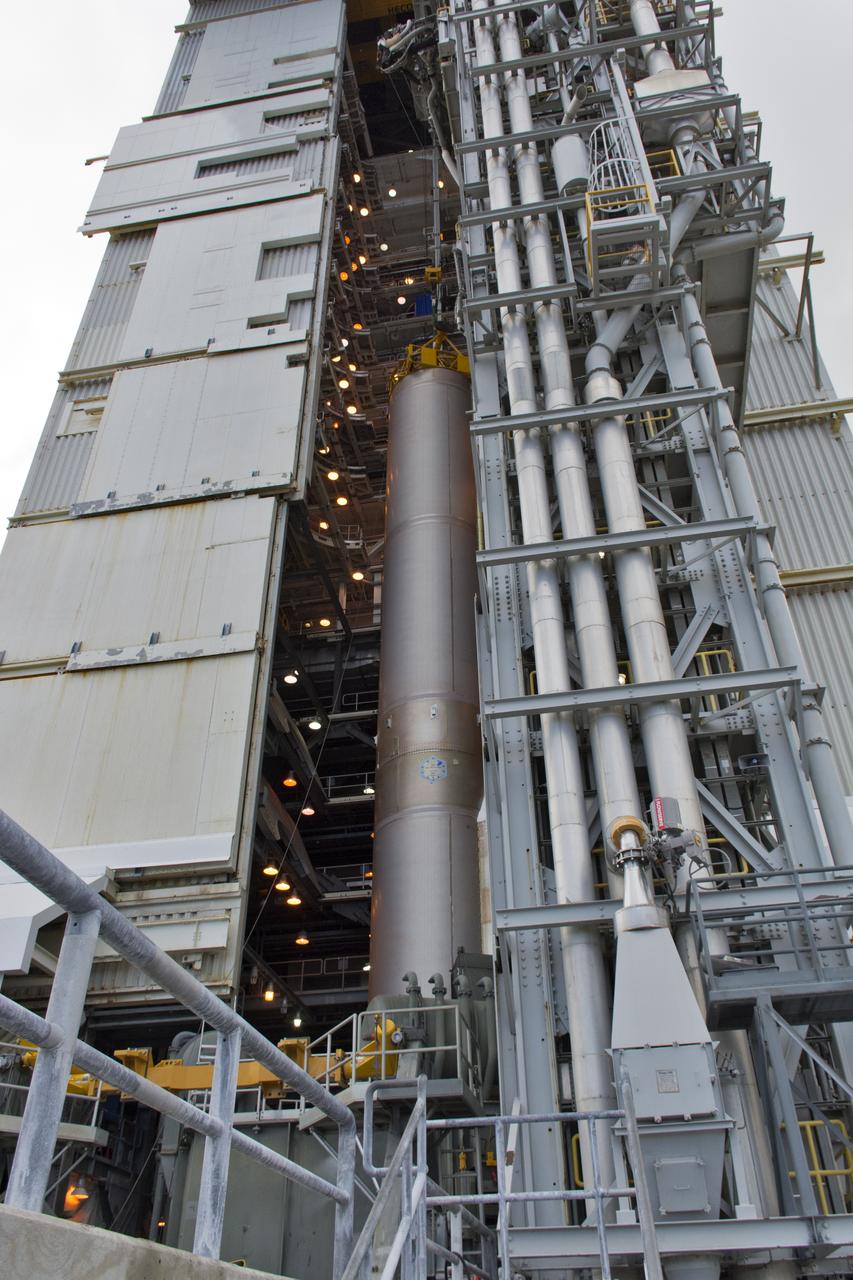
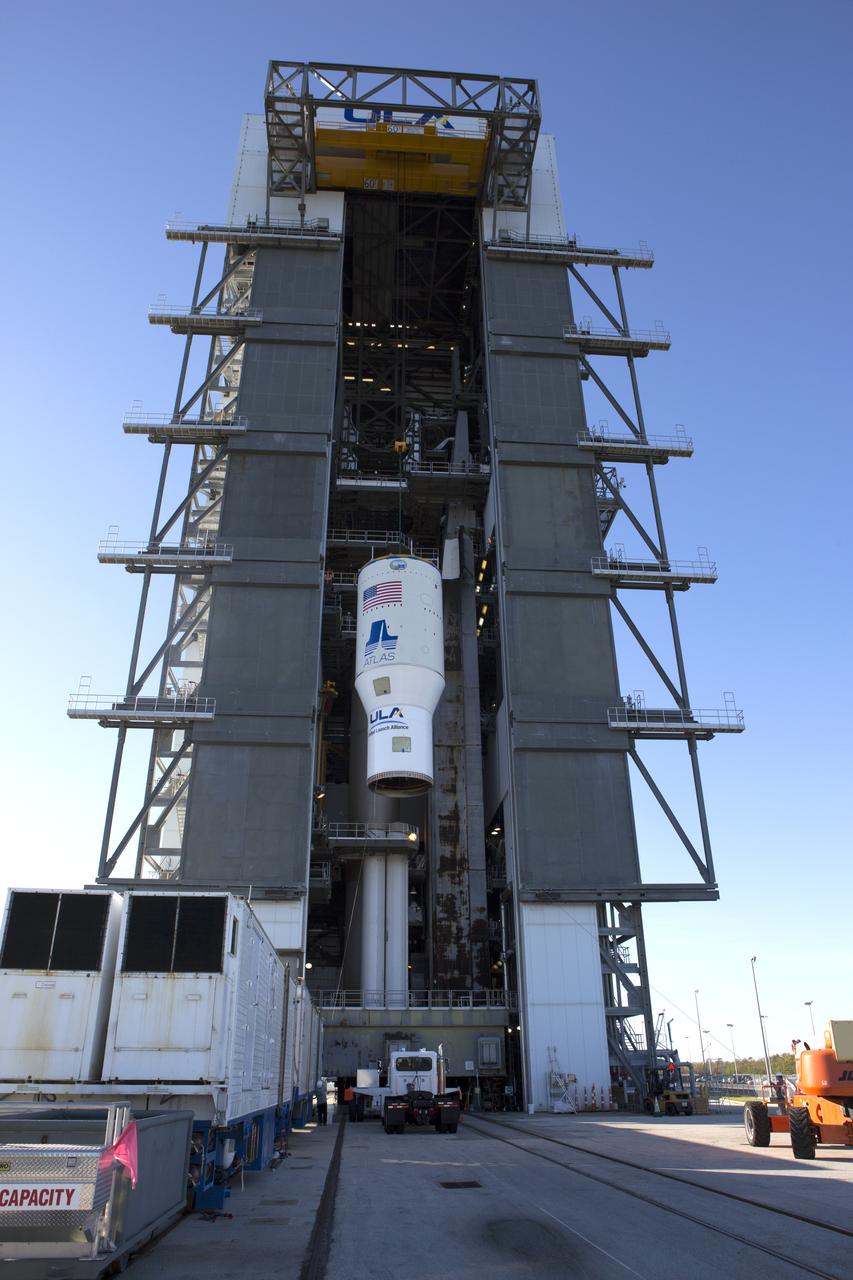
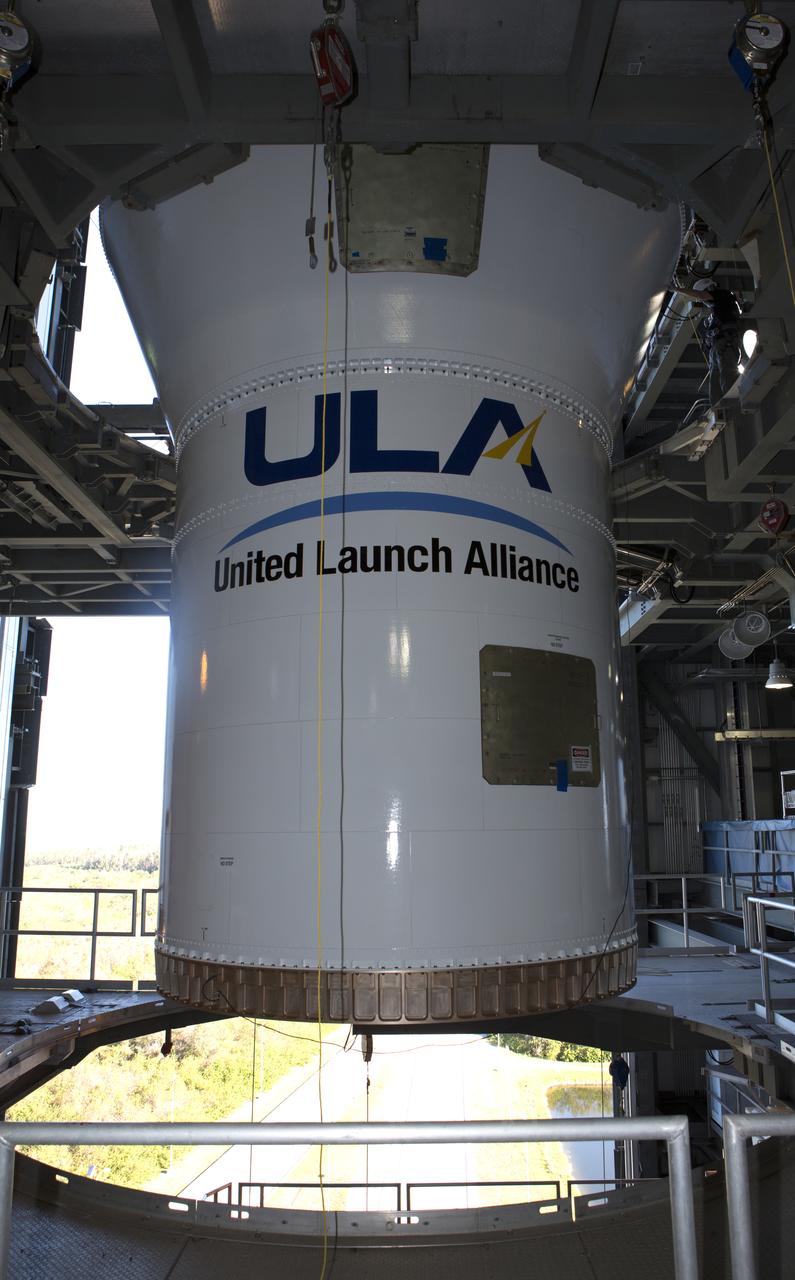
A crane positions a United Launch Alliance Atlas V booster on the launch pad at Space Launch Complex 3 at Vandenberg Air Force Base in California. The rocket will launch NASA's Interior Exploration using Seismic Investigations, Geodesy and Heat Transport, or InSight, mission to land on Mars. InSight is the first mission to explore the Red Planet's deep interior. It will investigate processes that shaped the rocky planets of the inner solar system including Earth. Liftoff is scheduled for May 5, 2018.
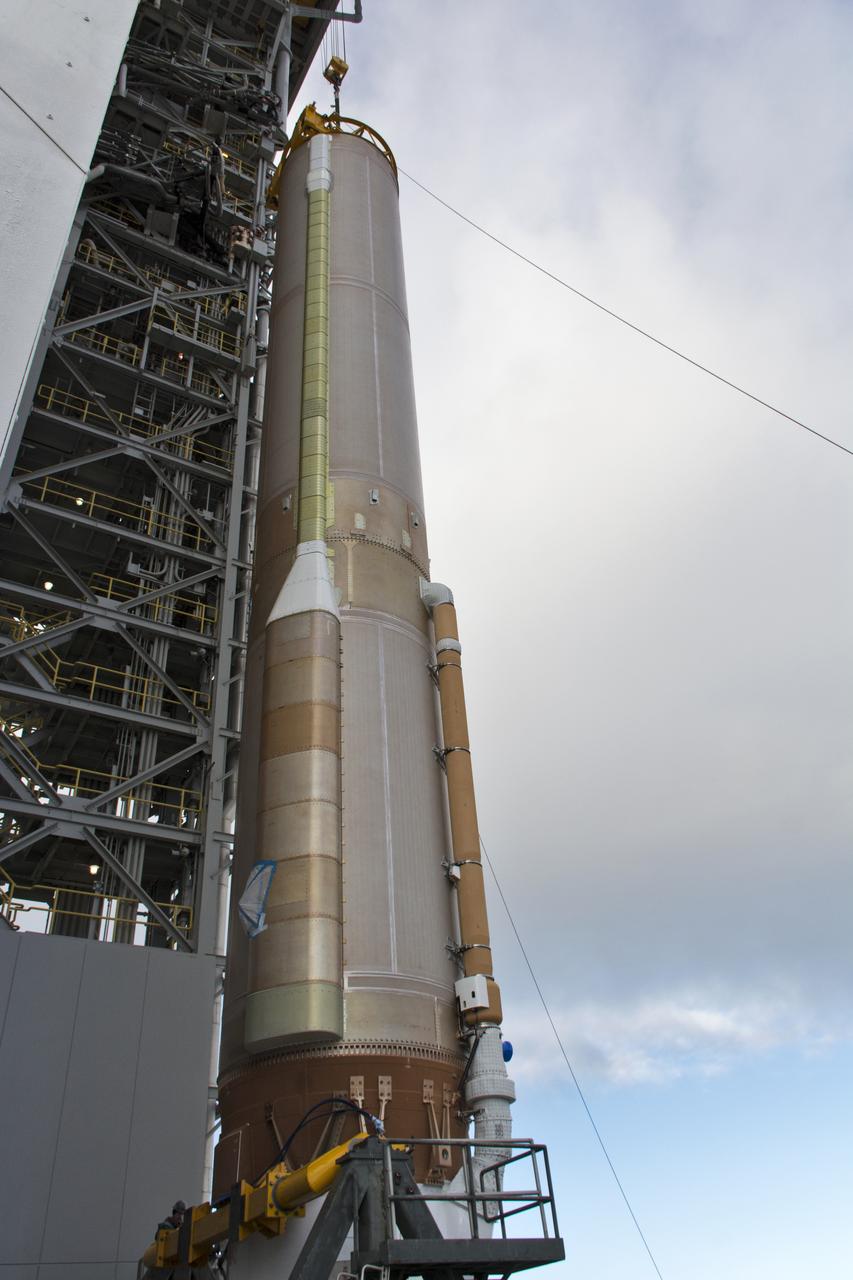
A crane lifts a United Launch Alliance Atlas V booster at Space Launch Complex 3 at Vandenberg Air Force Base in California. The rocket will launch NASA's Interior Exploration using Seismic Investigations, Geodesy and Heat Transport, or InSight, mission to land on Mars. InSight is the first mission to explore the Red Planet's deep interior. It will investigate processes that shaped the rocky planets of the inner solar system including Earth. Liftoff is scheduled for May 5, 2018.
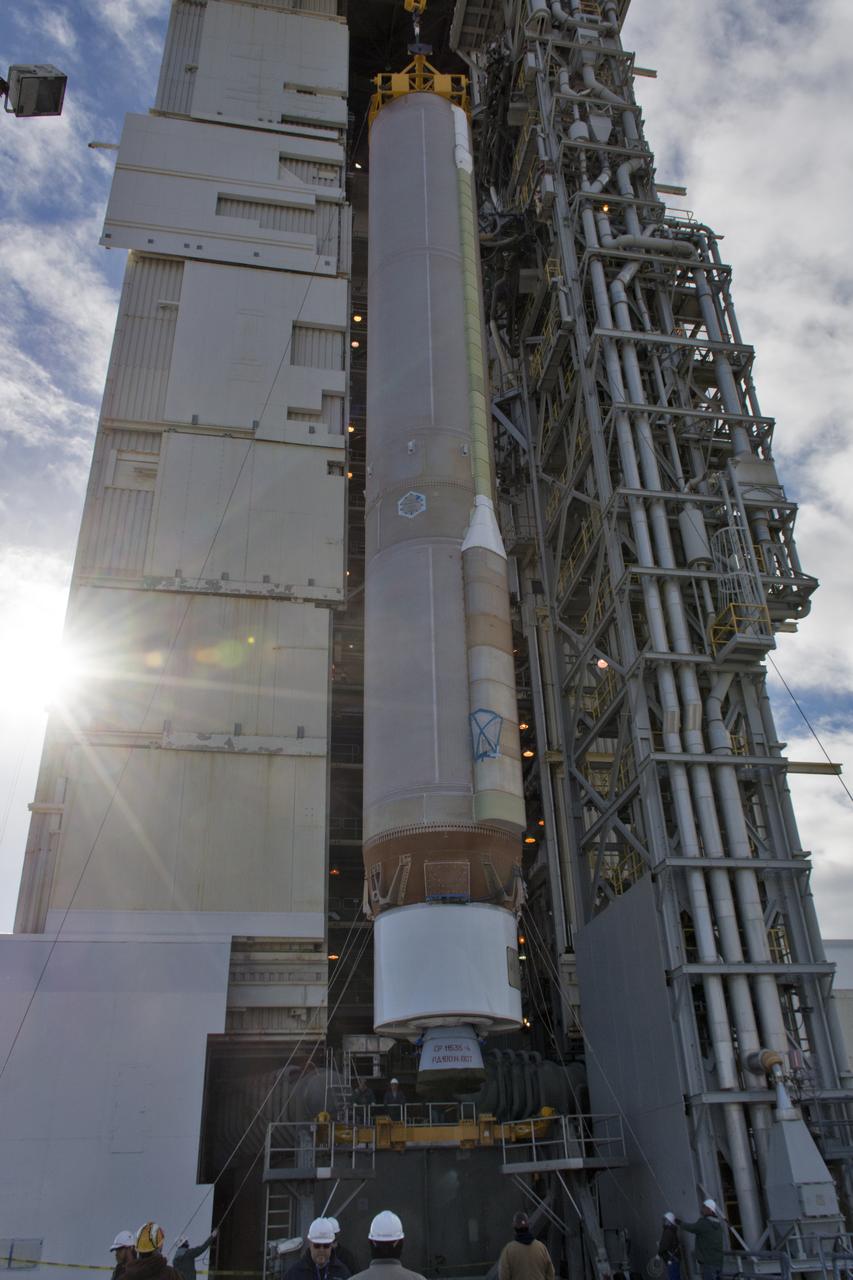
A crane lifts a United Launch Alliance Atlas V booster at Space Launch Complex 3 at Vandenberg Air Force Base in California. The rocket will launch NASA's Interior Exploration using Seismic Investigations, Geodesy and Heat Transport, or InSight, mission to land on Mars. InSight is the first mission to explore the Red Planet's deep interior. It will investigate processes that shaped the rocky planets of the inner solar system including Earth. Liftoff is scheduled for May 5, 2018.
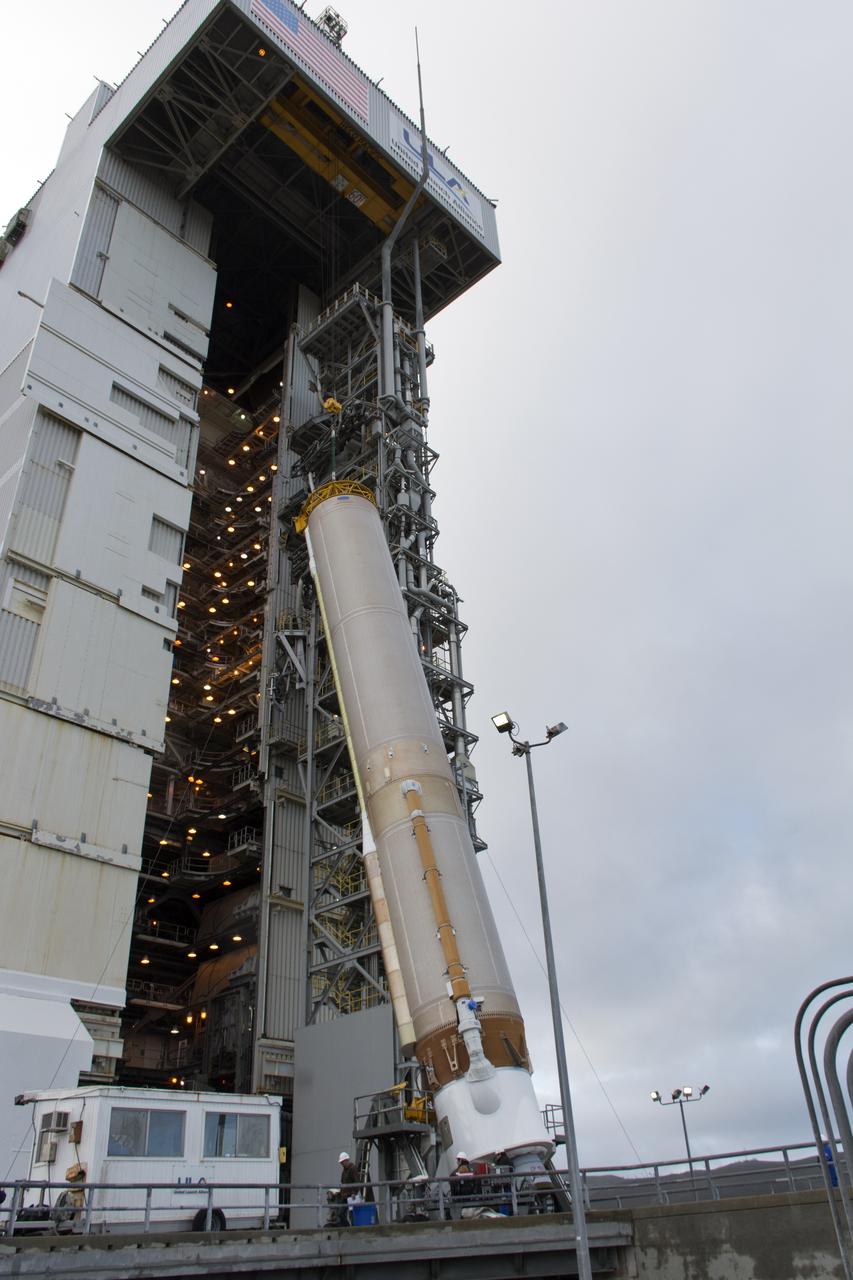
A crane lifts a United Launch Alliance Atlas V booster at Space Launch Complex 3 at Vandenberg Air Force Base in California. The rocket will launch NASA's Interior Exploration using Seismic Investigations, Geodesy and Heat Transport, or InSight, mission to land on Mars. InSight is the first mission to explore the Red Planet's deep interior. It will investigate processes that shaped the rocky planets of the inner solar system including Earth. Liftoff is scheduled for May 5, 2018.
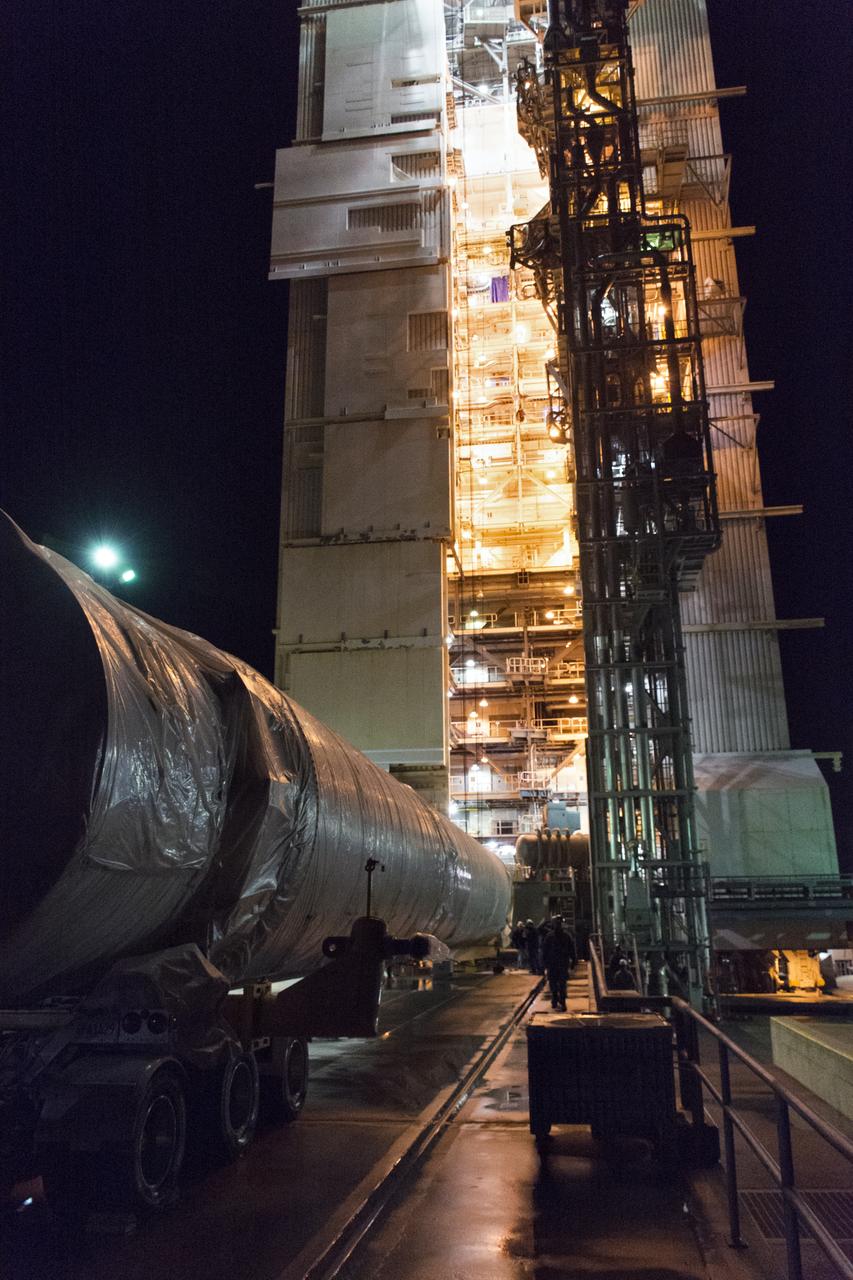
A United Launch Alliance Atlas V booster arrives at Space Launch Complex 3 at Vandenberg Air Force Base in California. The rocket will launch NASA's Interior Exploration using Seismic Investigations, Geodesy and Heat Transport, or InSight, mission to land on Mars. InSight is the first mission to explore the Red Planet's deep interior. It will investigate processes that shaped the rocky planets of the inner solar system including Earth. Liftoff is scheduled for May 5, 2018.
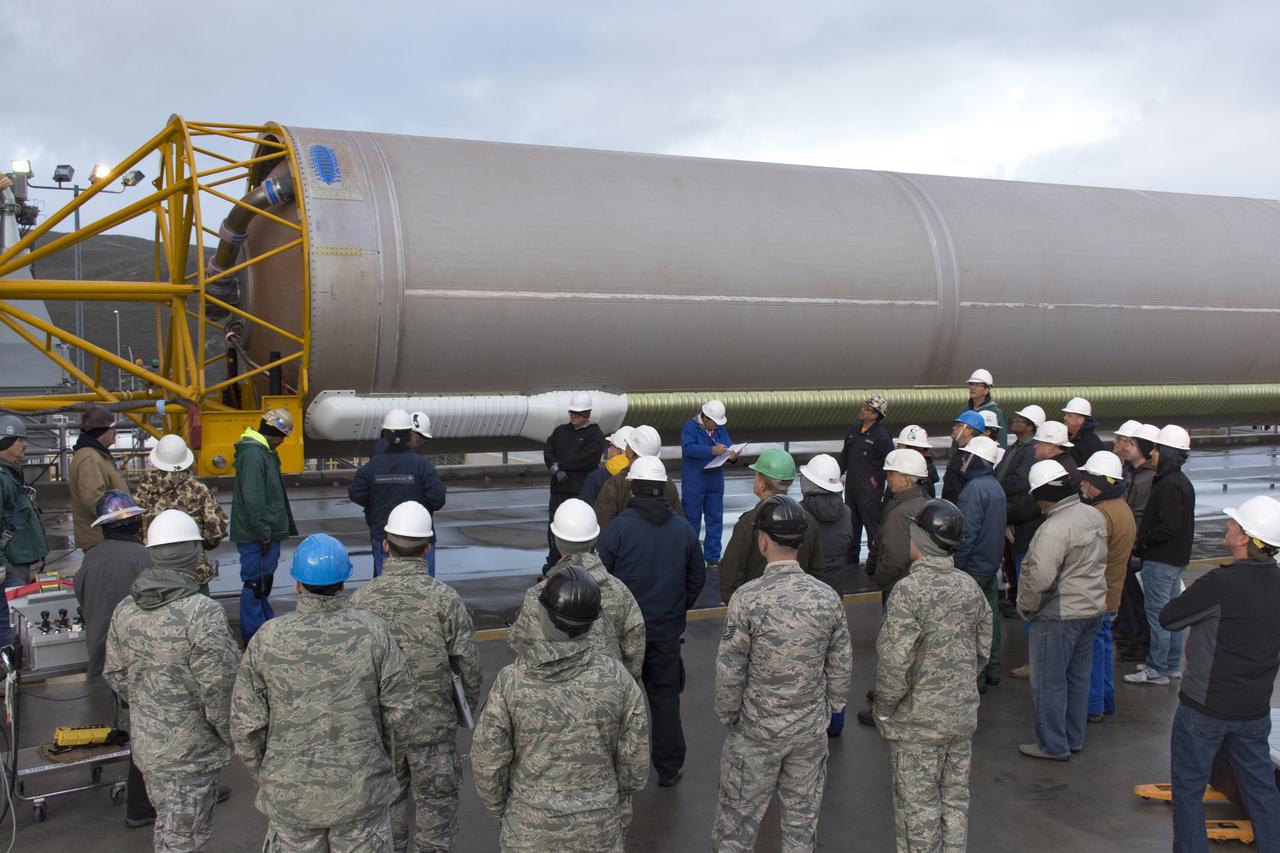
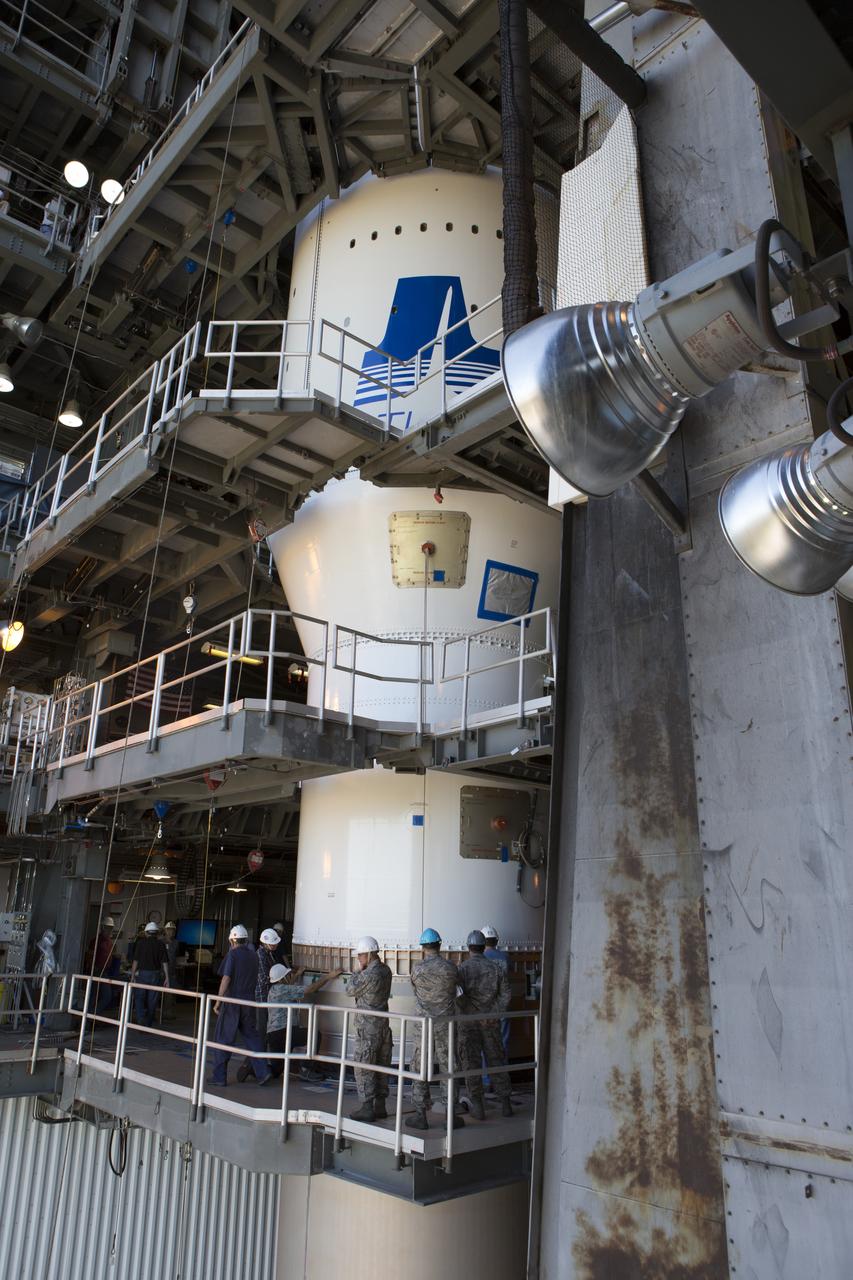
Technicians, engineers and U.S. Air Force personnel prepare to support erection of a United Launch Alliance Atlas V booster at Space Launch Complex 3 at Vandenberg Air Force Base in California. The rocket will launch NASA's Interior Exploration using Seismic Investigations, Geodesy and Heat Transport, or InSight, mission to land on Mars. InSight is the first mission to explore the Red Planet's deep interior. It will investigate processes that shaped the rocky planets of the inner solar system including Earth. Liftoff is scheduled for May 5, 2018.
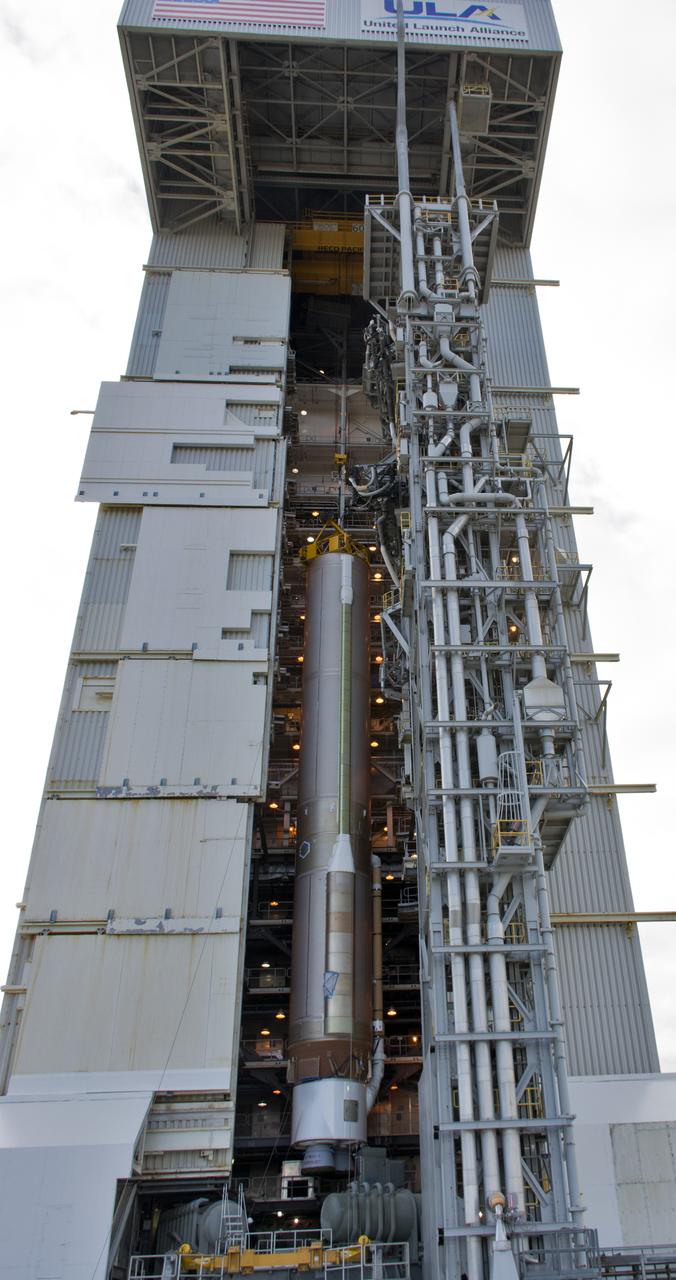
A crane positions a United Launch Alliance Atlas V booster on the launch pad at Space Launch Complex 3 at Vandenberg Air Force Base in California. The rocket will launch NASA's Interior Exploration using Seismic Investigations, Geodesy and Heat Transport, or InSight, mission to land on Mars. InSight is the first mission to explore the Red Planet's deep interior. It will investigate processes that shaped the rocky planets of the inner solar system including Earth. Liftoff is scheduled for May 5, 2018.
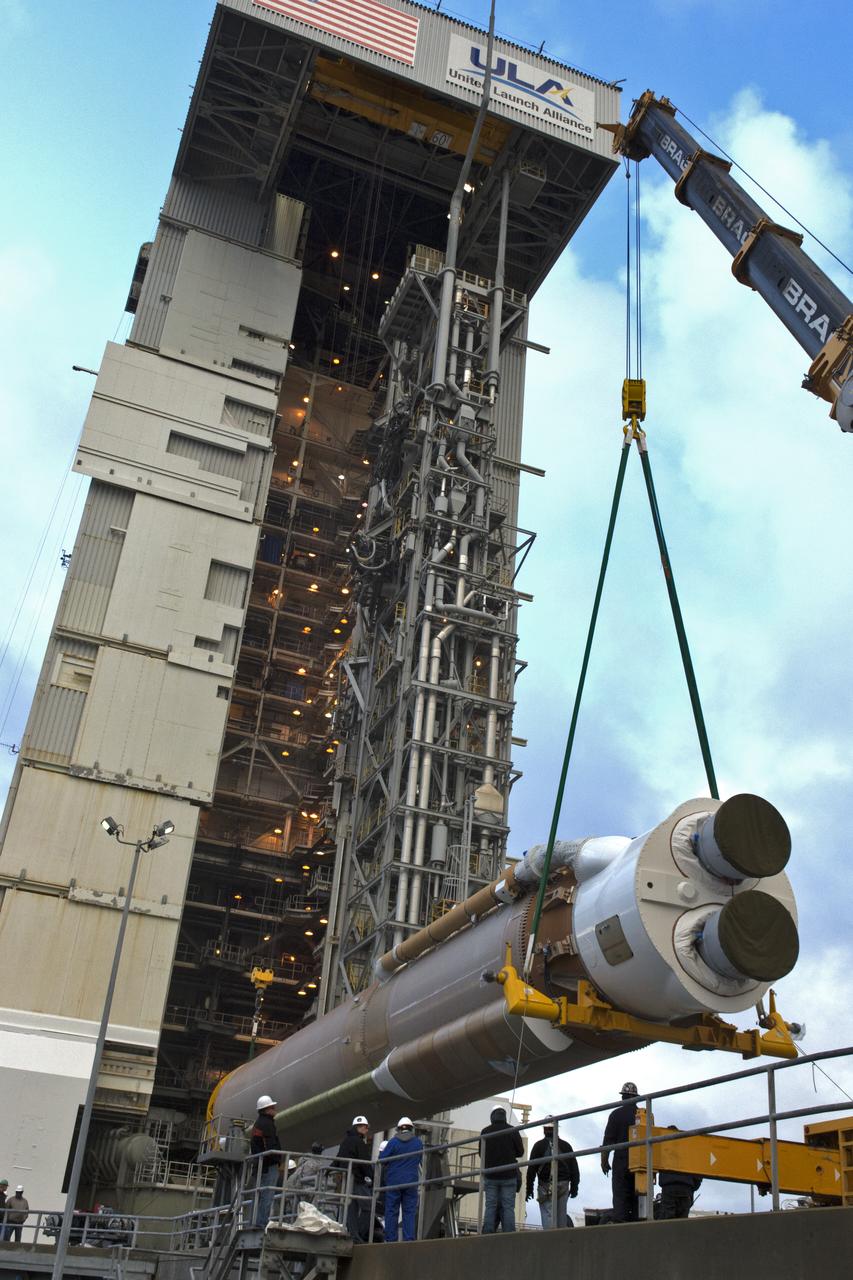
A crane lifts a United Launch Alliance Atlas V booster at Space Launch Complex 3 at Vandenberg Air Force Base in California. The rocket will launch NASA's Interior Exploration using Seismic Investigations, Geodesy and Heat Transport, or InSight, mission to land on Mars. InSight is the first mission to explore the Red Planet's deep interior. It will investigate processes that shaped the rocky planets of the inner solar system including Earth. Liftoff is scheduled for May 5, 2018.
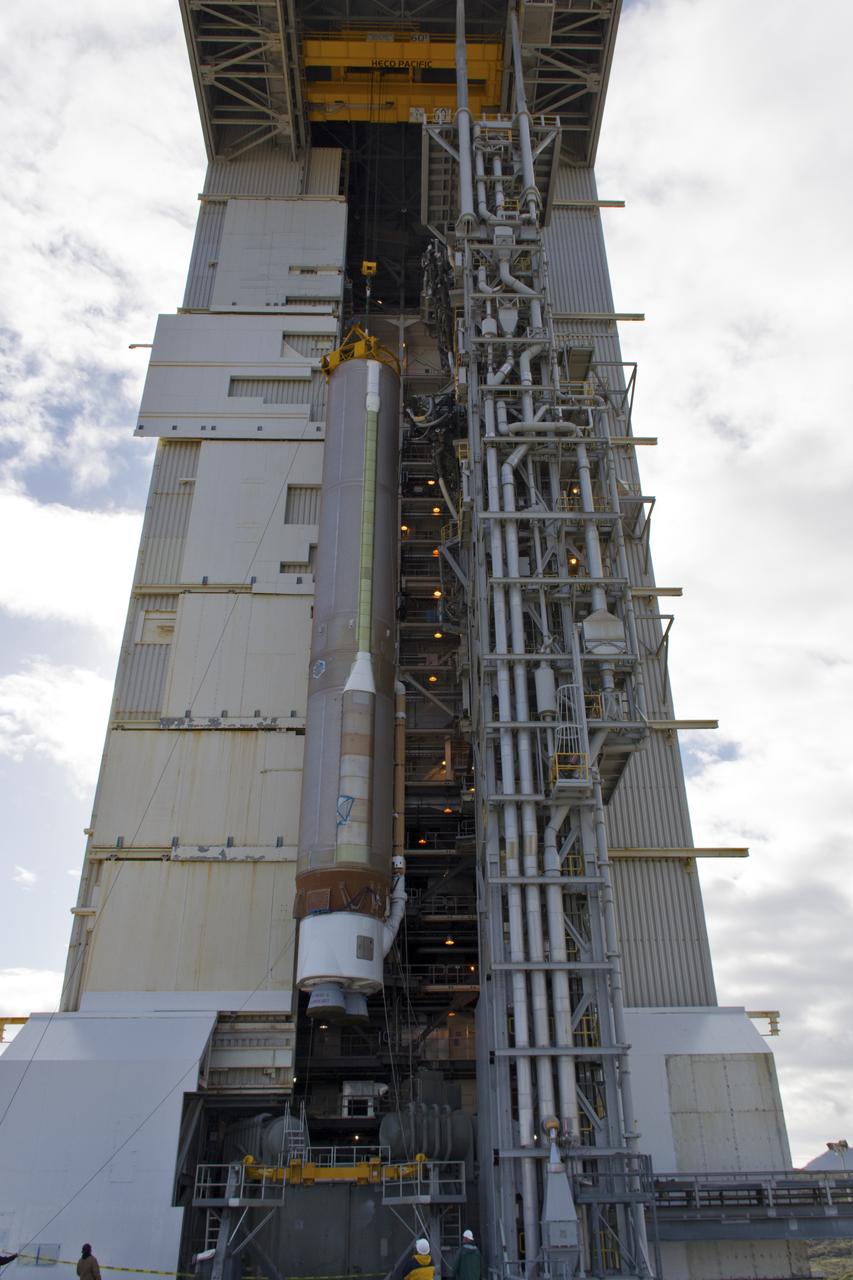
A crane lifts a United Launch Alliance Atlas V booster at Space Launch Complex 3 at Vandenberg Air Force Base in California. The rocket will launch NASA's Interior Exploration using Seismic Investigations, Geodesy and Heat Transport, or InSight, mission to land on Mars. InSight is the first mission to explore the Red Planet's deep interior. It will investigate processes that shaped the rocky planets of the inner solar system including Earth. Liftoff is scheduled for May 5, 2018.
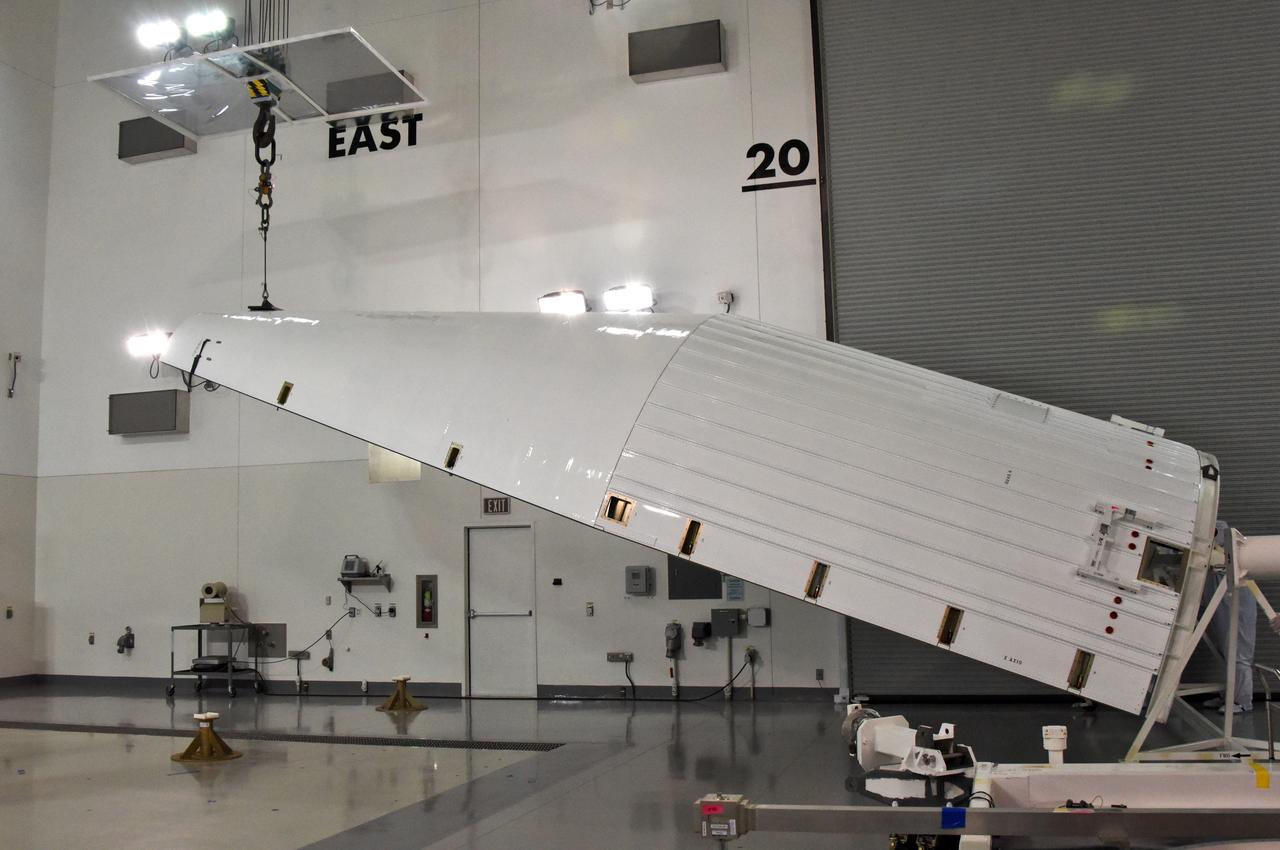
In the Astrotech facility at Vandenberg Air Force Base in California, the payload fairing for the United Launch Alliance (ULA) Atlas V for NASA's upcoming Interior Exploration using Seismic Investigations, Geodesy and Heat Transport, or InSight, mission to land on Mars is lifted to the vertical position. InSight is the first mission to explore the Red Planet's deep interior. It will investigate processes that shaped the rocky planets of the inner solar system including Earth. Liftoff atop a ULA Atlas V rocket is scheduled for May 5, 2018.
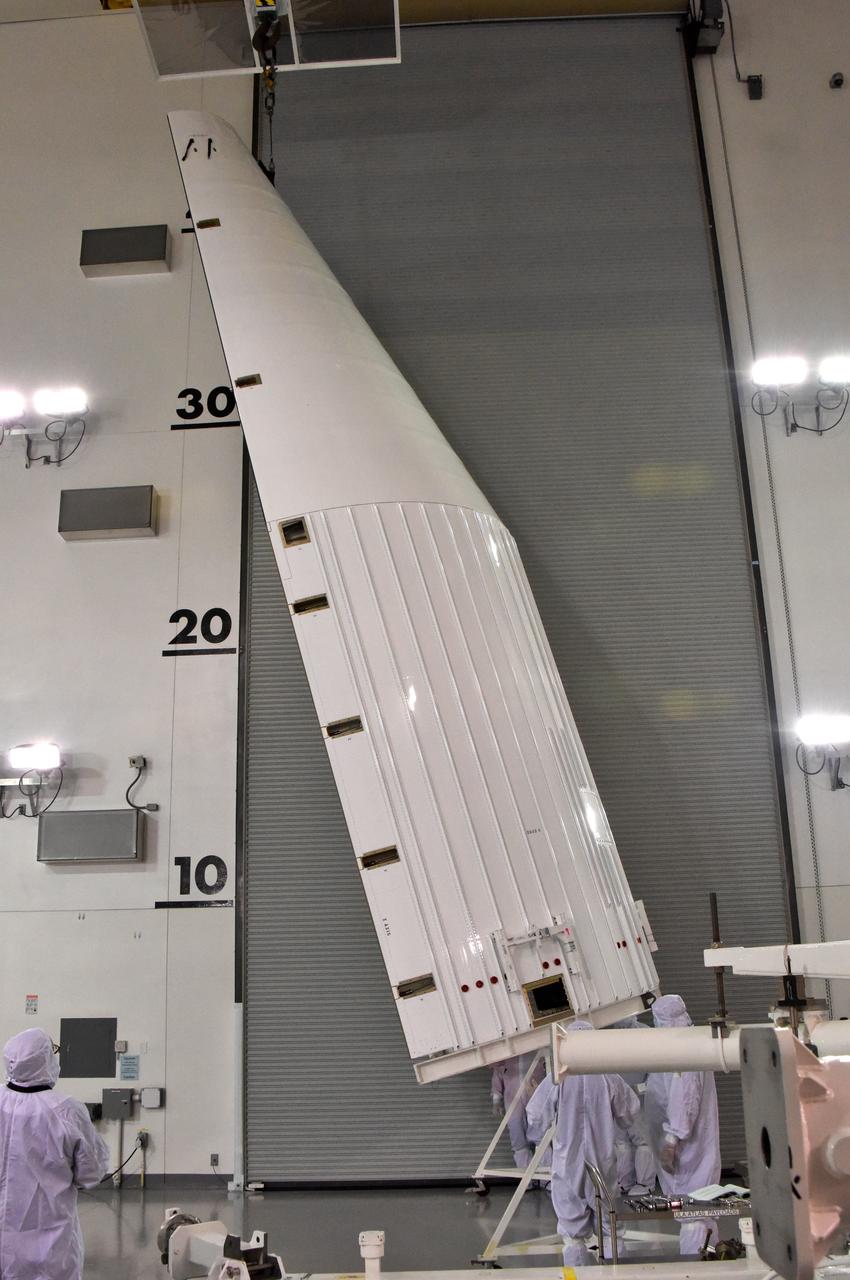
In the Astrotech facility at Vandenberg Air Force Base in California, the payload fairing for the United Launch Alliance (ULA) Atlas V for NASA's upcoming Interior Exploration using Seismic Investigations, Geodesy and Heat Transport, or InSight, mission to land on Mars is lifted to the vertical position. InSight is the first mission to explore the Red Planet's deep interior. It will investigate processes that shaped the rocky planets of the inner solar system including Earth. Liftoff atop a ULA Atlas V rocket is scheduled for May 5, 2018.
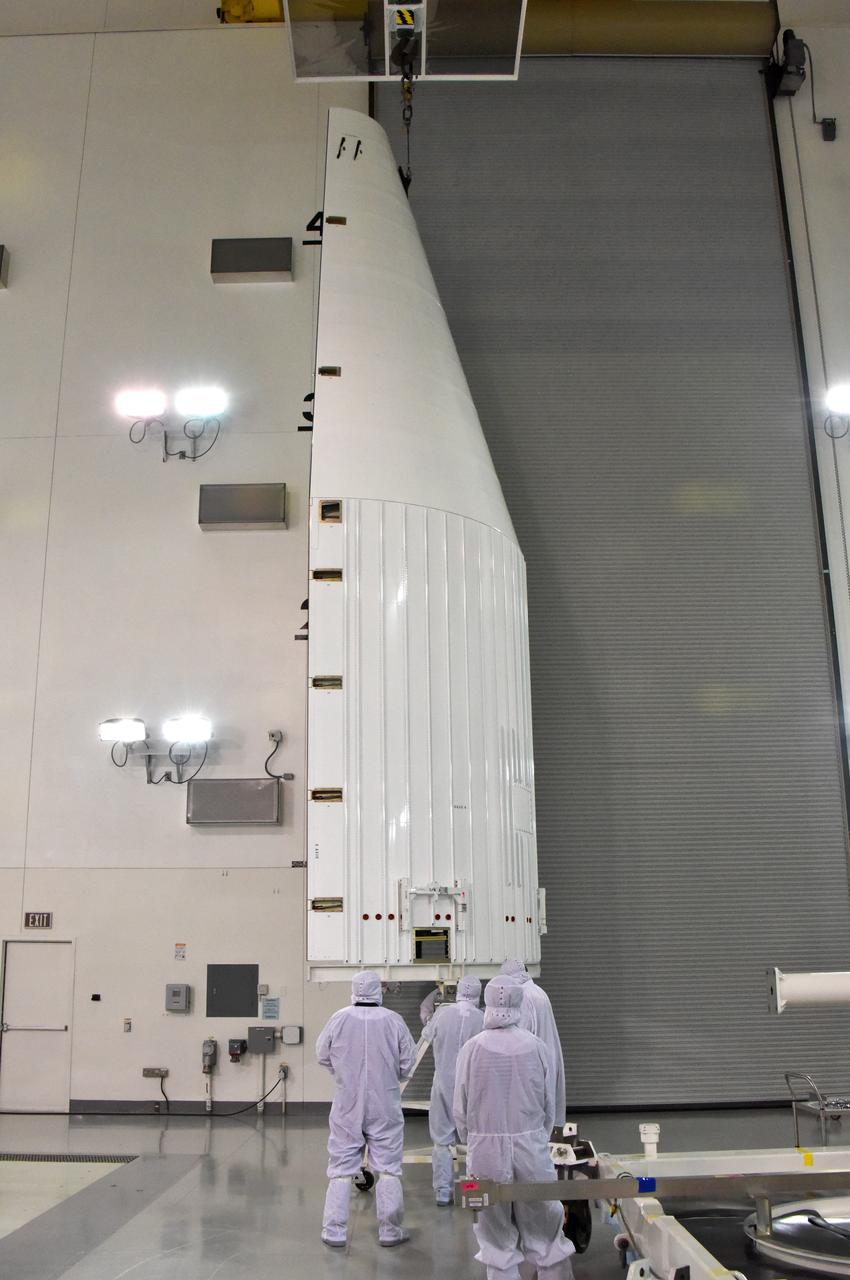
In the Astrotech facility at Vandenberg Air Force Base in California, technicians and engineers inspect the payload fairing for the United Launch Alliance (ULA) Atlas V for NASA's upcoming Interior Exploration using Seismic Investigations, Geodesy and Heat Transport, or InSight, mission to land on Mars after it was lifted to the vertical position. InSight is the first mission to explore the Red Planet's deep interior. It will investigate processes that shaped the rocky planets of the inner solar system including Earth. Liftoff atop a ULA Atlas V rocket is scheduled for May 5, 2018.
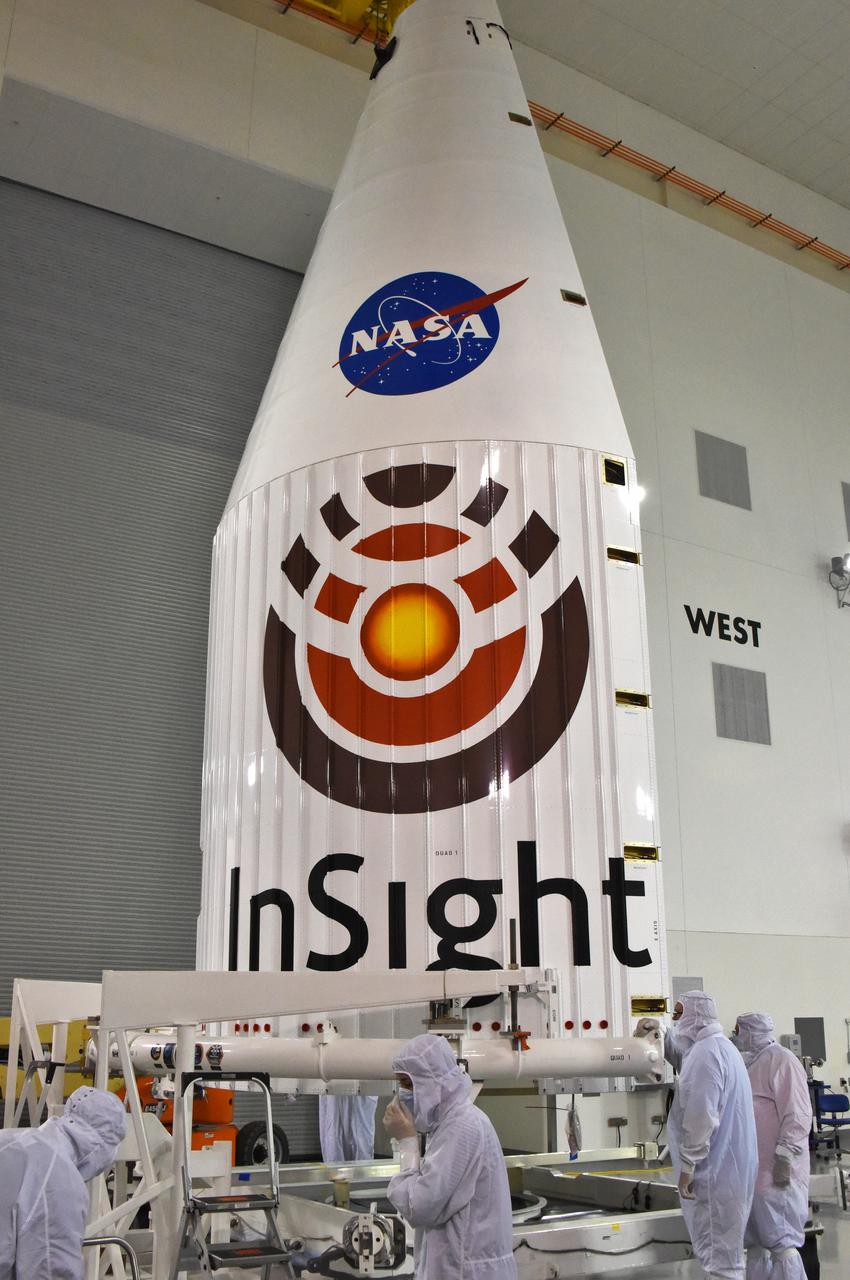
In the Astrotech facility at Vandenberg Air Force Base in California, technicians and engineers inspect the payload fairing for the United Launch Alliance (ULA) Atlas V for NASA's upcoming Interior Exploration using Seismic Investigations, Geodesy and Heat Transport, or InSight, mission to land on Mars after it was lifted to the vertical position. InSight is the first mission to explore the Red Planet's deep interior. It will investigate processes that shaped the rocky planets of the inner solar system including Earth. Liftoff atop a ULA Atlas V rocket is scheduled for May 5, 2018.
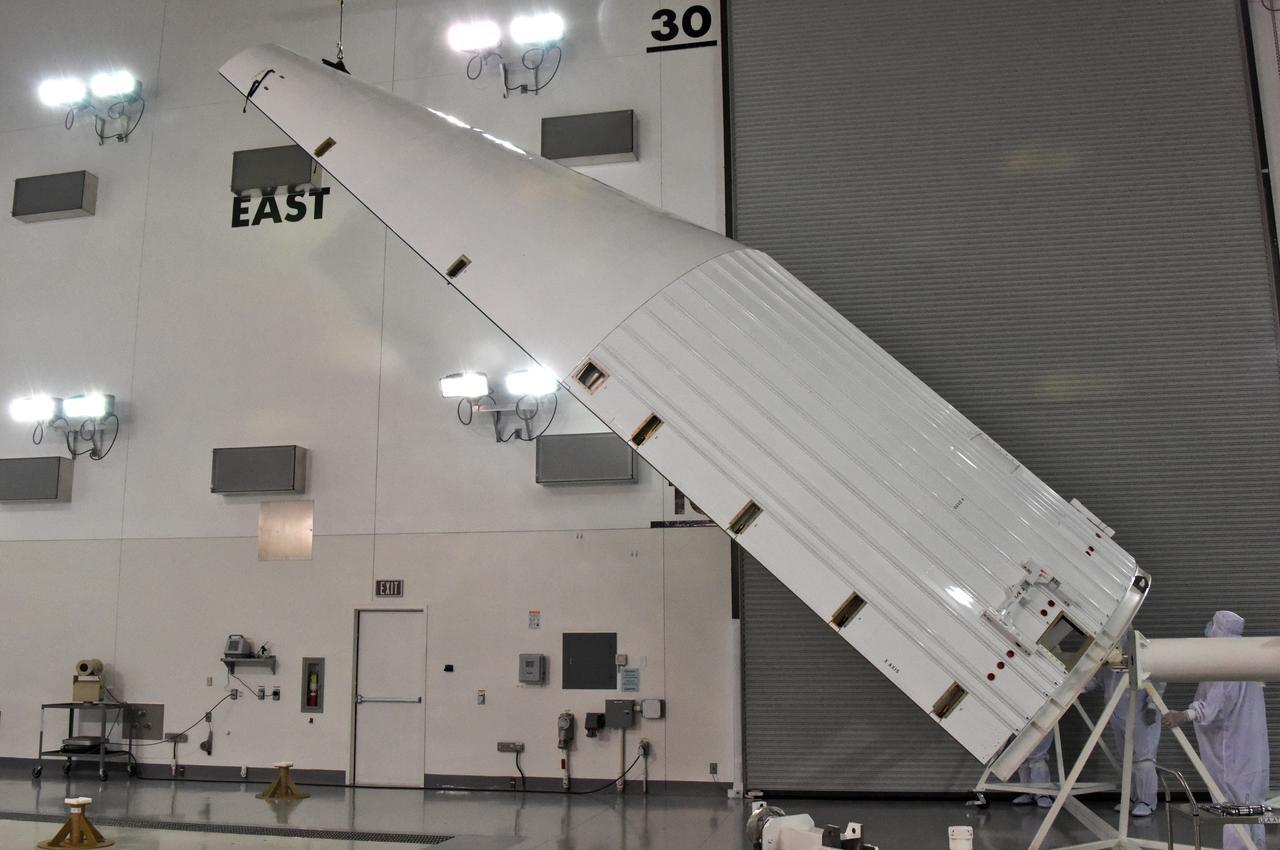
In the Astrotech facility at Vandenberg Air Force Base in California, the payload fairing for the United Launch Alliance (ULA) Atlas V for NASA's upcoming Interior Exploration using Seismic Investigations, Geodesy and Heat Transport, or InSight, mission to land on Mars is lifted to the vertical position. InSight is the first mission to explore the Red Planet's deep interior. It will investigate processes that shaped the rocky planets of the inner solar system including Earth. Liftoff atop a ULA Atlas V rocket is scheduled for May 5, 2018.
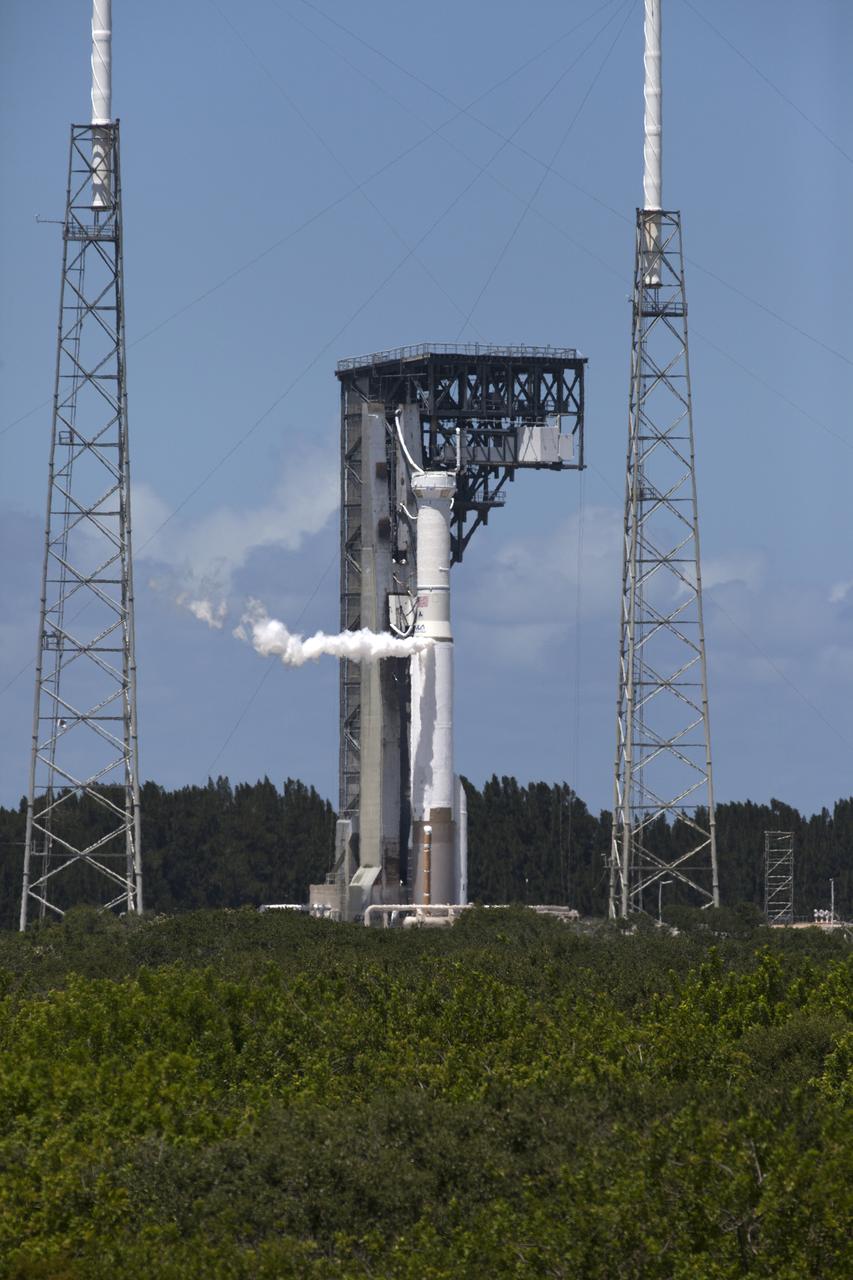
The booster and Centaur upper stage of a United Launch Alliance Atlas V vent gaseous propellant during a “wet dress rehearsal” test at Space Launch Complex 41 on Florida’s Cape Canaveral Air Force Station. The rocket will boost NASA’s Origins, Spectral Interpretation, Resource Identification, Security-Regolith Explorer, or OSIRIS-REx spacecraft. Targeted for liftoff Sept. 8, 2016, OSIRIS-REx will be the first U.S. mission to sample an asteroid, retrieve at least two ounces of surface material and return it to Earth for study. The asteroid, Bennu, may hold clues to the origin of the solar system and the source of water and organic molecules found on Earth.
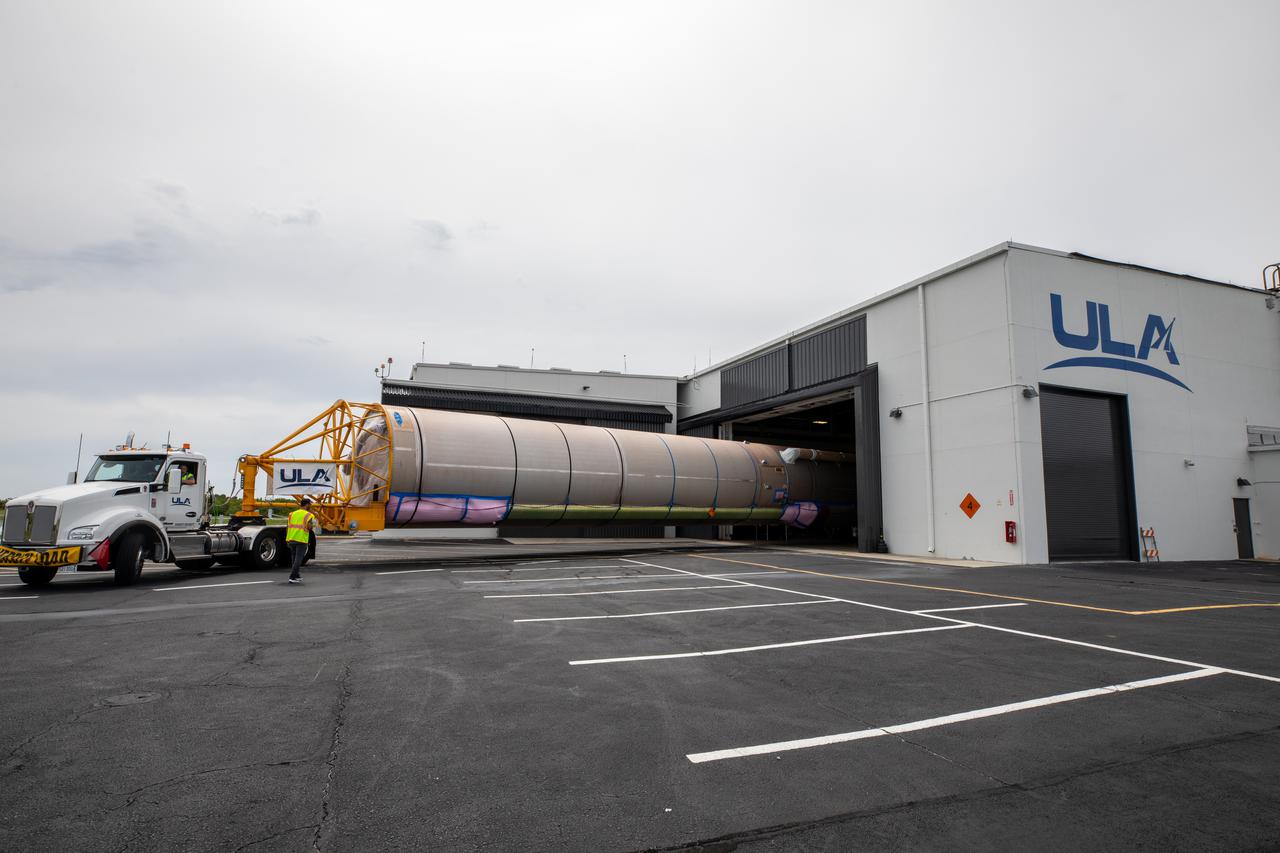
A flatbed truck delivers the United Launch Alliance (ULA) Atlas V booster and Centaur upper stage for Boeing's CST-100 Starliner Crew Flight Test (CFT) to the Atlas Spaceflight Operations Center at Space Launch Complex 41 (SLC-41) at Cape Canaveral Space Force Station on June 21, 2021. Starliner's first flight with astronauts aboard, CFT will launch from SLC-41. The flight test will demonstrate the ability of the Atlas V and Starliner to safely carry astronauts to and from the International Space Station for the agency's Commercial Crew Program.
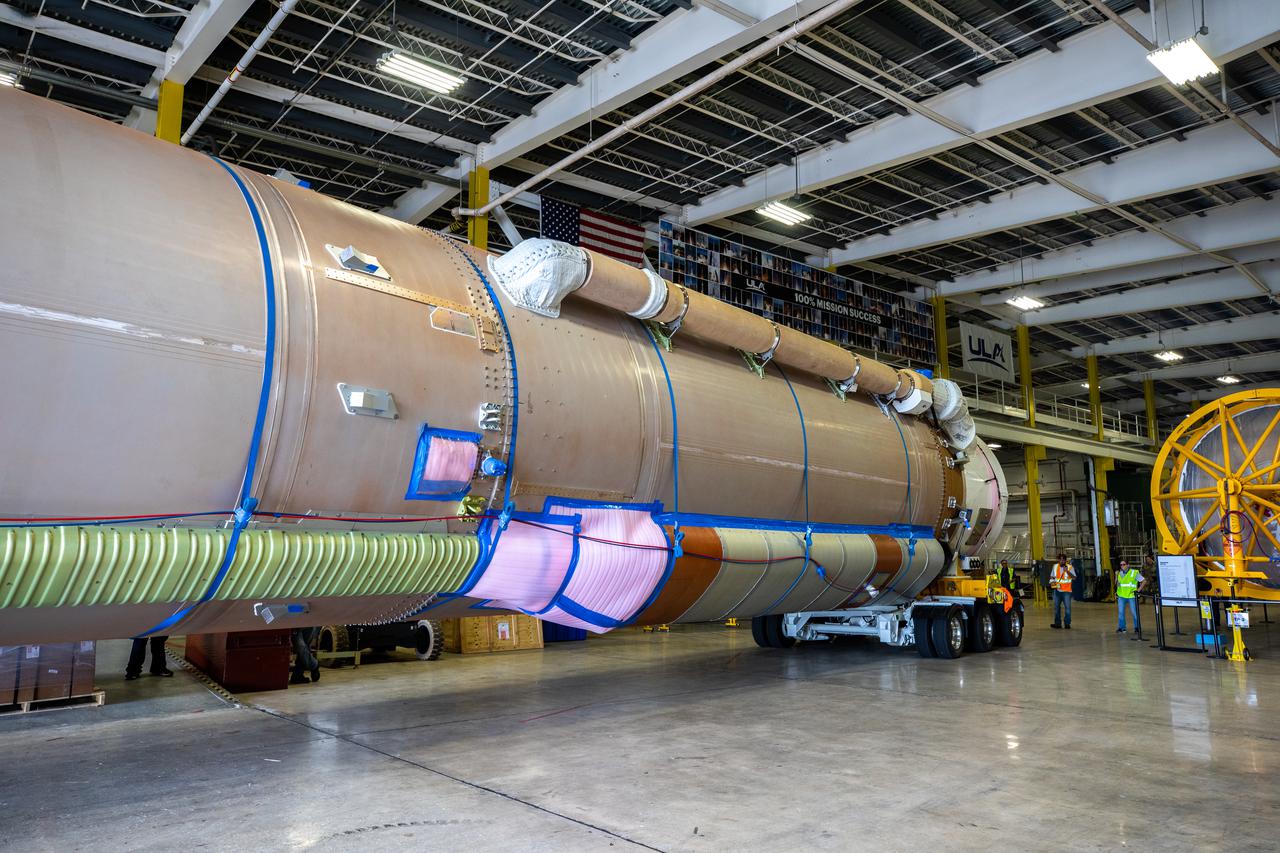
The United Launch Alliance (ULA) Atlas V booster and Centaur upper stage for Boeing's CST-100 Starliner Crew Flight Test (CFT) are inside the Atlas Spaceflight Operations Center at Space Launch Complex 41 (SLC-41) at Cape Canaveral Space Force Station on June 21, 2021. Starliner's first flight with astronauts aboard, CFT will launch from SLC-41. The flight test will demonstrate the ability of the Atlas V and Starliner to safely carry astronauts to and from the International Space Station for the agency's Commercial Crew Program.
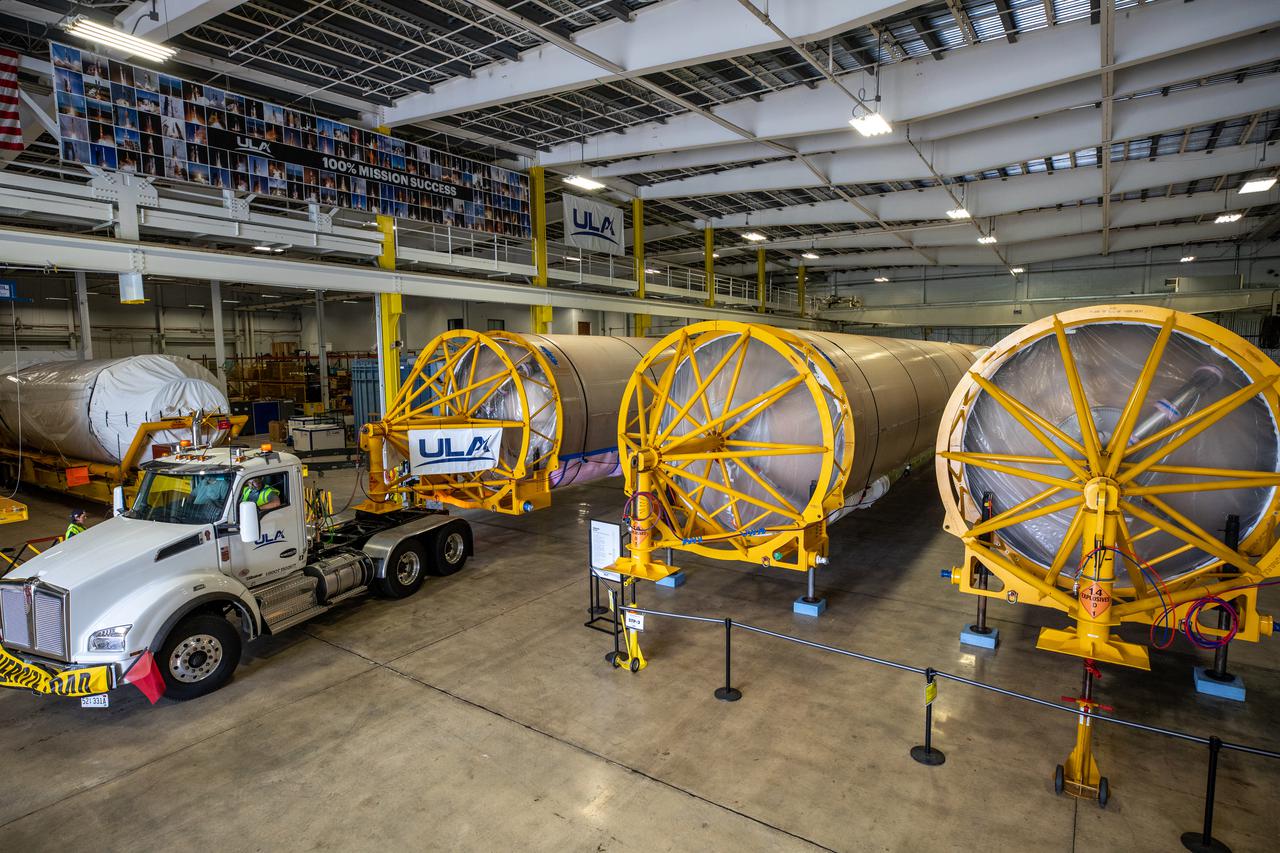
A flatbed truck moves the United Launch Alliance (ULA) Atlas V booster and Centaur upper stage for Boeing's CST-100 Starliner Crew Flight Test (CFT) inside the Atlas Spaceflight Operations Center at Space Launch Complex 41 (SLC-41) at Cape Canaveral Space Force Station on June 21, 2021. Starliner's first flight with astronauts aboard, CFT will launch from SLC-41. The flight test will demonstrate the ability of the Atlas V and Starliner to safely carry astronauts to and from the International Space Station for the agency's Commercial Crew Program.
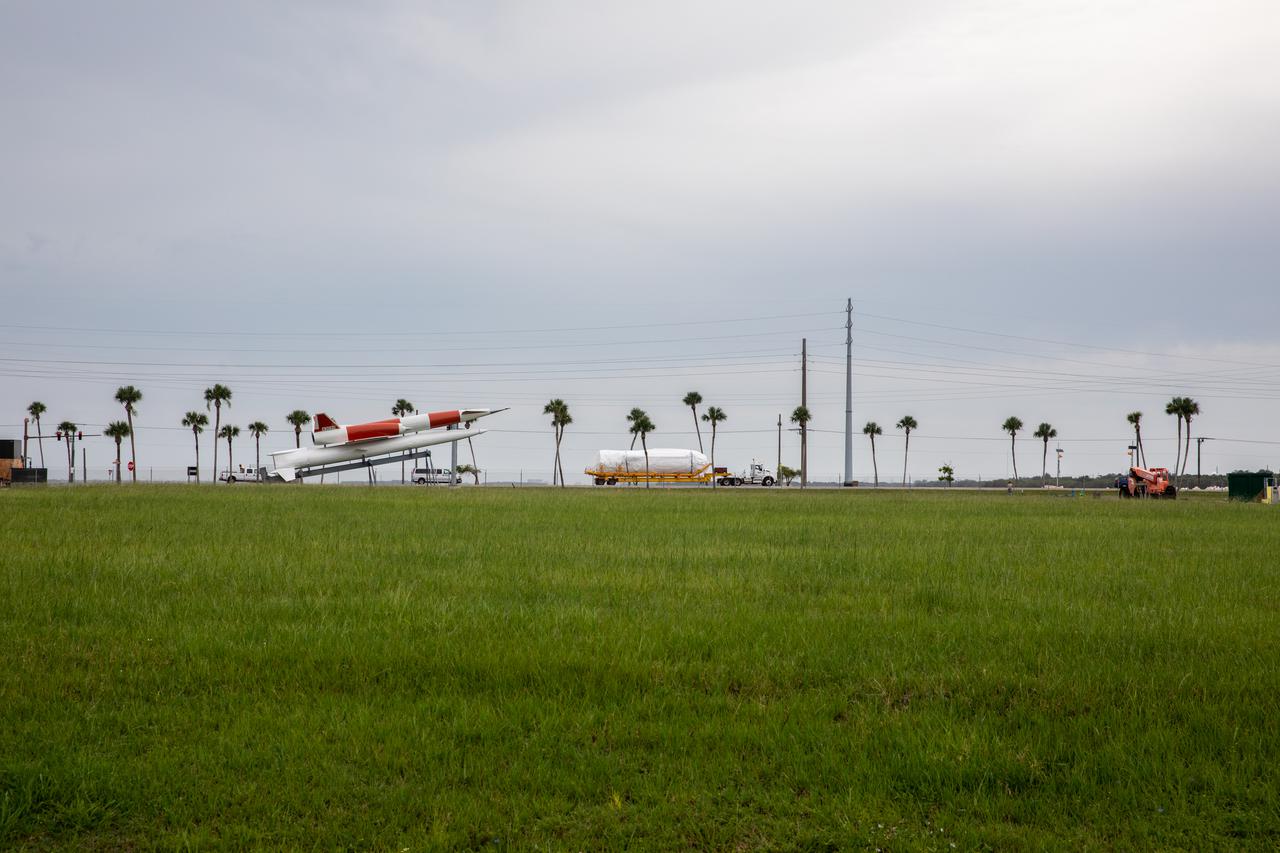
The United Launch Alliance (ULA) Atlas V booster and Centaur upper stage for Boeing's CST-100 Starliner Crew Flight Test (CFT) are on their way to the Atlas Spaceflight Operations Center at Space Launch Complex 41 (SLC-41) at Cape Canaveral Space Force Station on June 21, 2021. Starliner's first flight with astronauts aboard, CFT will launch from SLC-41. The flight test will demonstrate the ability of the Atlas V and Starliner to safely carry astronauts to and from the International Space Station for the agency's Commercial Crew Program.

The United Launch Alliance (ULA) Atlas V booster and Centaur upper stage for Boeing's CST-100 Starliner Crew Flight Test (CFT) are on their way to the Atlas Spaceflight Operations Center at Space Launch Complex 41 (SLC-41) at Cape Canaveral Space Force Station on June 21, 2021. Starliner's first flight with astronauts aboard, CFT will launch from SLC-41. The flight test will demonstrate the ability of the Atlas V and Starliner to safely carry astronauts to and from the International Space Station for the agency's Commercial Crew Program.
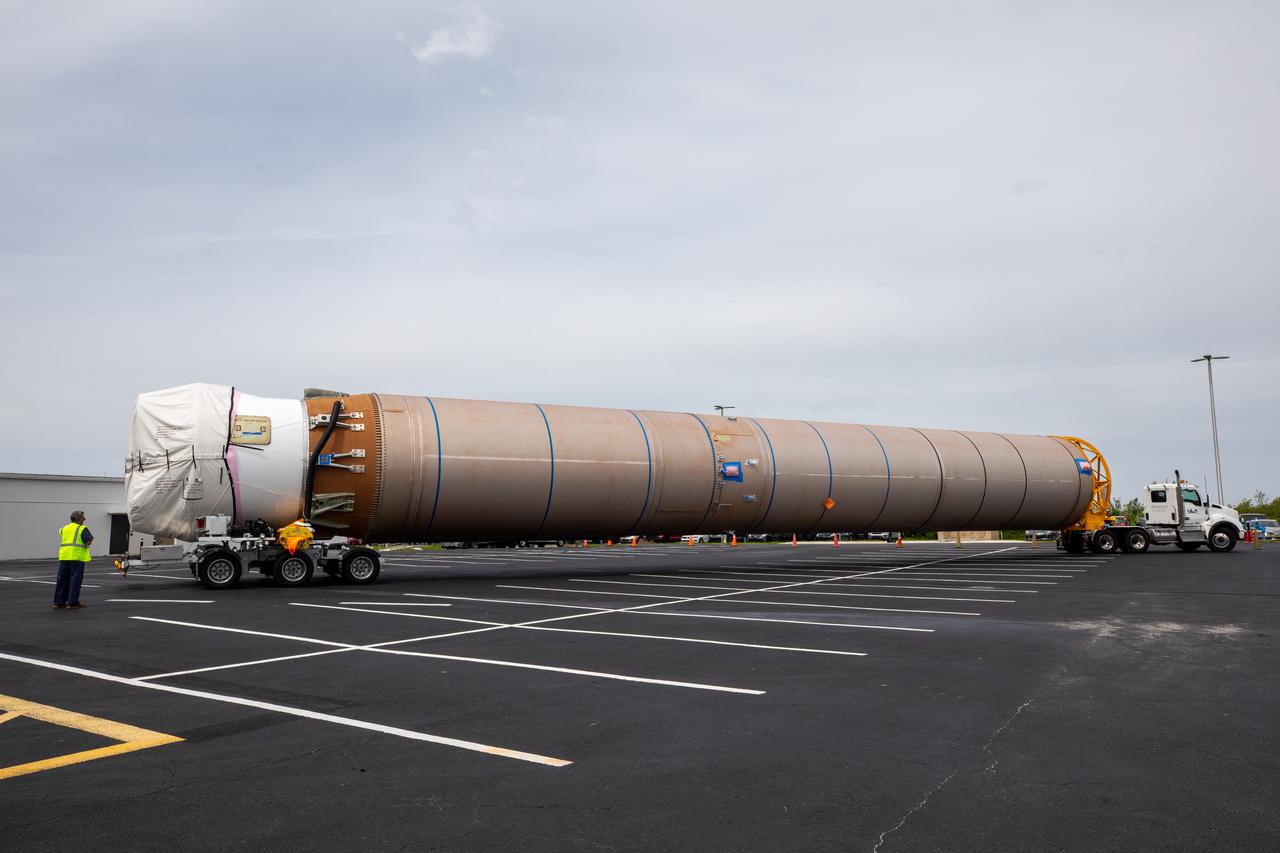
The United Launch Alliance (ULA) Atlas V booster and Centaur upper stage for Boeing's CST-100 Starliner Crew Flight Test (CFT) arrive at the Atlas Spaceflight Operations Center at Space Launch Complex 41 (SLC-41) at Cape Canaveral Space Force Station on June 21, 2021. Starliner's first flight with astronauts aboard, CFT will launch from SLC-41. The flight test will demonstrate the ability of the Atlas V and Starliner to safely carry astronauts to and from the International Space Station for the agency's Commercial Crew Program.

A United Launch Alliance Atlas V rocket booster arrives at the Atlas Spaceflight Operations Center at Cape Canaveral Air Force Station in Florida. The rocket is scheduled to launch the Tracking and Data Relay Satellite, TDRS-M. It will be the latest spacecraft destined for the agency's constellation of communications satellites that allows nearly continuous contact with orbiting spacecraft ranging from the International Space Station and Hubble Space Telescope to the array of scientific observatories. Liftoff atop the ULA Atlas V rocket is scheduled to take place from Cape Canaveral's Space Launch Complex 41 on Aug. 3, 2017 at 9:02 a.m. EDT.

At Port Canaveral in Florida, a United Launch Alliance Atlas V rocket booster is transported from the company's Mariner ship to the Atlas Spaceflight Operations Center at Cape Canaveral Air Force Station. The rocket is scheduled to launch the Tracking and Data Relay Satellite, TDRS-M. It will be the latest spacecraft destined for the agency's constellation of communications satellites that allows nearly continuous contact with orbiting spacecraft ranging from the International Space Station and Hubble Space Telescope to the array of scientific observatories. Liftoff atop the ULA Atlas V rocket is scheduled to take place from Cape Canaveral's Space Launch Complex 41 on Aug. 3, 2017 at 9:02 a.m. EDT.
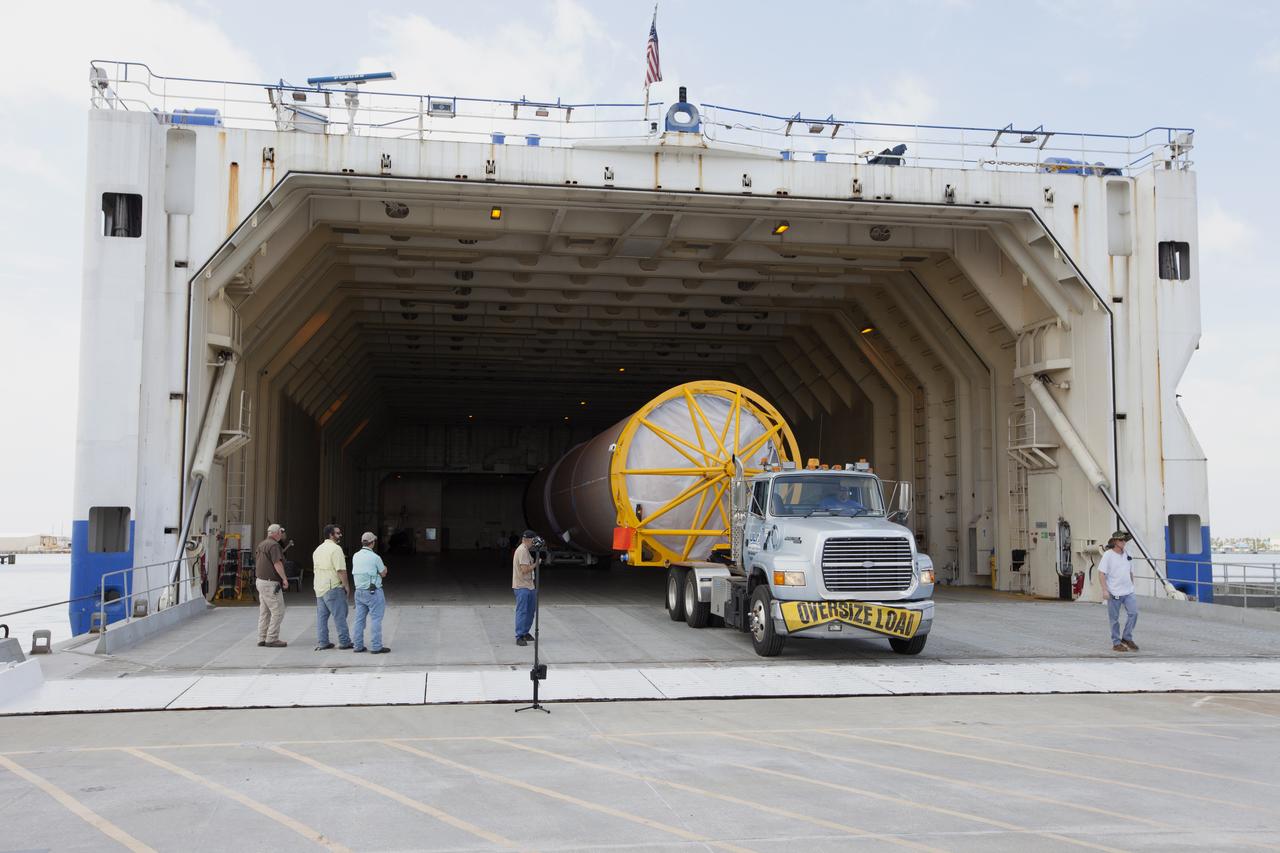
At Port Canaveral in Florida, a United Launch Alliance Atlas V rocket booster is transported from the company's Mariner ship to the Atlas Spaceflight Operations Center at Cape Canaveral Air Force Station. The rocket is scheduled to launch the Tracking and Data Relay Satellite, TDRS-M. It will be the latest spacecraft destined for the agency's constellation of communications satellites that allows nearly continuous contact with orbiting spacecraft ranging from the International Space Station and Hubble Space Telescope to the array of scientific observatories. Liftoff atop the ULA Atlas V rocket is scheduled to take place from Cape Canaveral's Space Launch Complex 41 on Aug. 3, 2017 at 9:02 a.m. EDT.
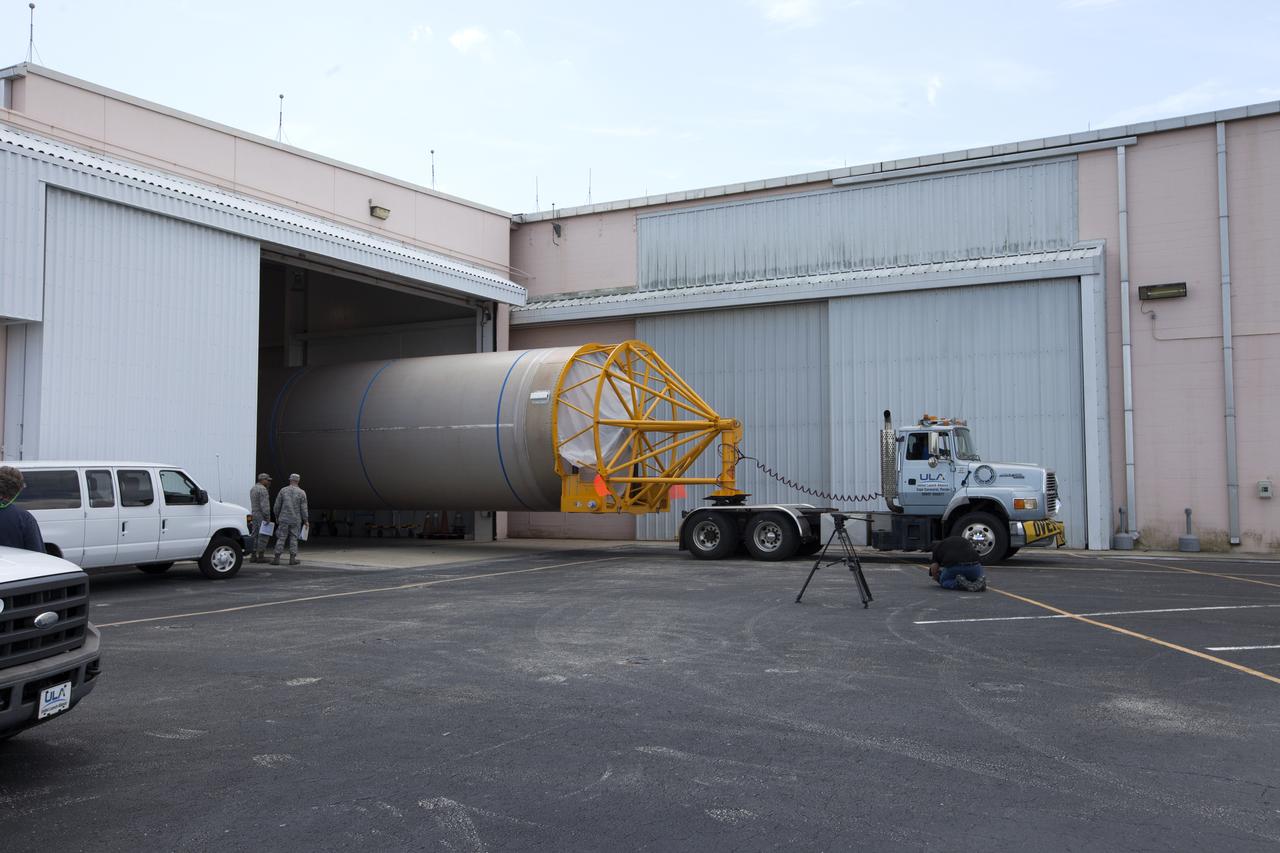
A United Launch Alliance Atlas V rocket booster arrives at the Atlas Spaceflight Operations Center at Cape Canaveral Air Force Station in Florida. The rocket is scheduled to launch the Tracking and Data Relay Satellite, TDRS-M. It will be the latest spacecraft destined for the agency's constellation of communications satellites that allows nearly continuous contact with orbiting spacecraft ranging from the International Space Station and Hubble Space Telescope to the array of scientific observatories. Liftoff atop the ULA Atlas V rocket is scheduled to take place from Cape Canaveral's Space Launch Complex 41 on Aug. 3, 2017 at 9:02 a.m. EDT.

A United Launch Alliance Atlas V rocket booster is transported to the Atlas Spaceflight Operations Center at Cape Canaveral Air Force Station in Florida. The rocket is scheduled to launch the Tracking and Data Relay Satellite, TDRS-M. It will be the latest spacecraft destined for the agency's constellation of communications satellites that allows nearly continuous contact with orbiting spacecraft ranging from the International Space Station and Hubble Space Telescope to the array of scientific observatories. Liftoff atop the ULA Atlas V rocket is scheduled to take place from Cape Canaveral's Space Launch Complex 41 on Aug. 3, 2017 at 9:02 a.m. EDT.
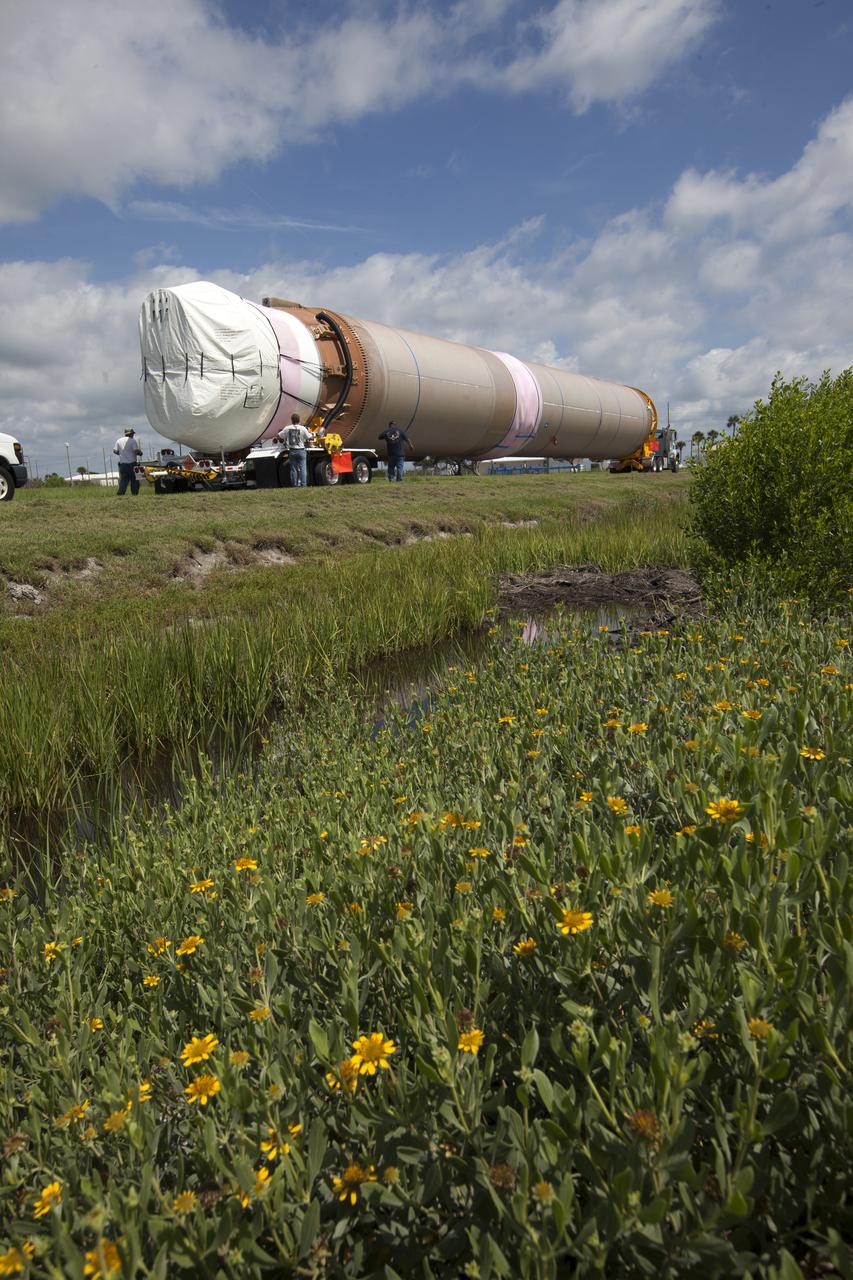
A United Launch Alliance Atlas V rocket booster is transported to the Atlas Spaceflight Operations Center at Cape Canaveral Air Force Station in Florida. The rocket is scheduled to launch the Tracking and Data Relay Satellite, TDRS-M. It will be the latest spacecraft destined for the agency's constellation of communications satellites that allows nearly continuous contact with orbiting spacecraft ranging from the International Space Station and Hubble Space Telescope to the array of scientific observatories. Liftoff atop the ULA Atlas V rocket is scheduled to take place from Cape Canaveral's Space Launch Complex 41 on Aug. 3, 2017 at 9:02 a.m. EDT.
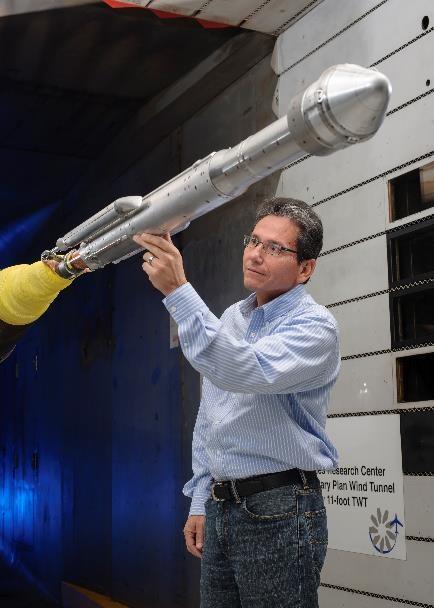
An engineer works with a model of a United Launch Alliance Atlas V rocket with a Boeing CST-100 Starliner capsule inside a wind tunnel at NASA's Ames Research Center in California. The Starliner/Atlas V system is under development by Boeing and ULA in partnership with NASA's Commercial Crew Program to launch astronauts to the International Space Station.
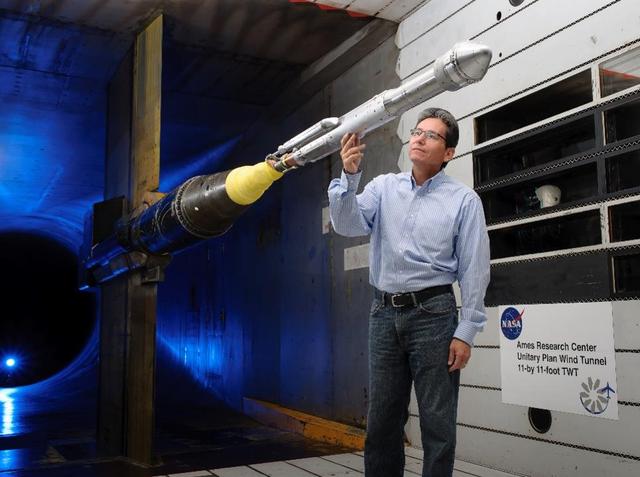
An engineer works with a model of a United Launch Alliance Atlas V rocket with a Boeing CST-100 Starliner capsule inside a wind tunnel at NASA's Ames Research Center in California. The Starliner/Atlas V system is under development by Boeing and ULA in partnership with NASA's Commercial Crew Program to launch astronauts to the International Space Station.
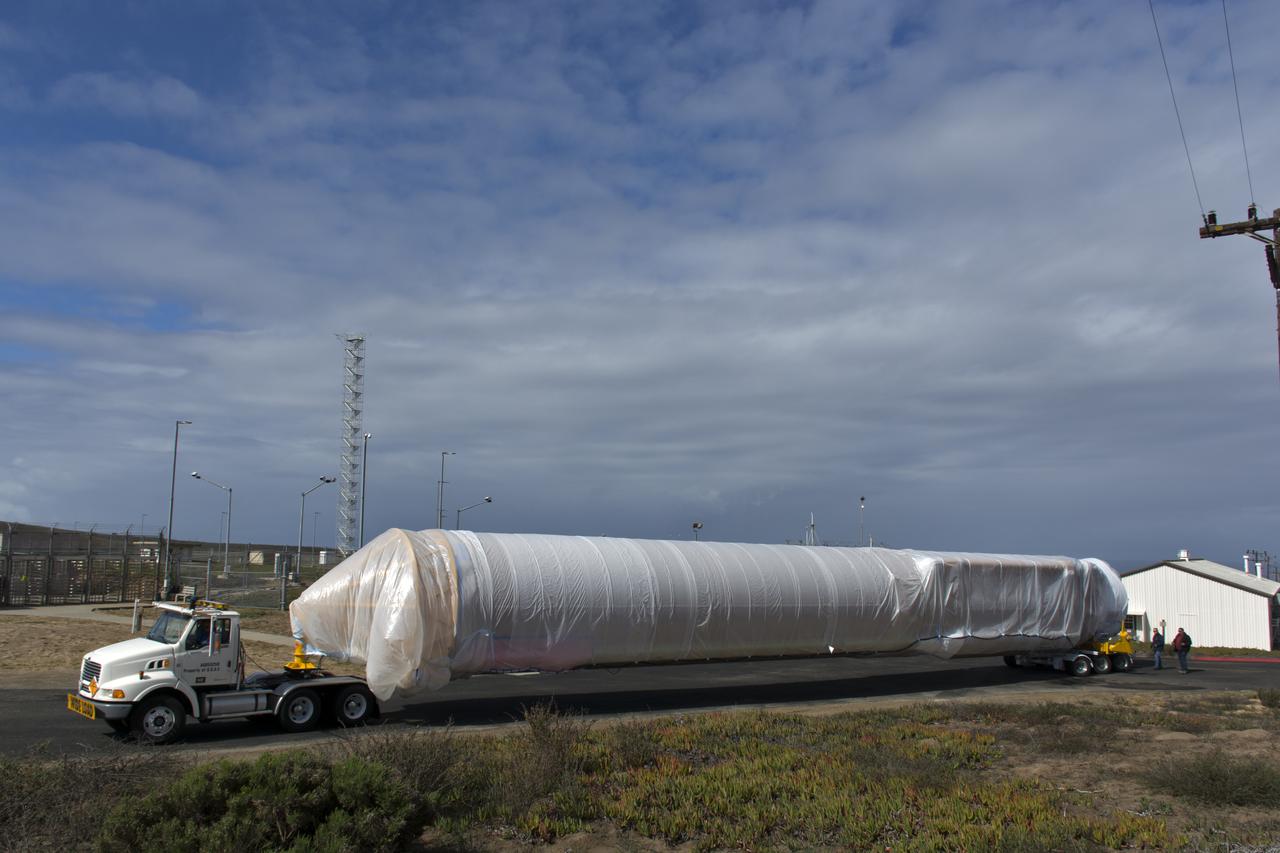
A United Launch Alliance Atlas V booster is transported to Space Launch Complex 3 at Vandenberg Air Force Base in California. The rocket will launch NASA's Interior Exploration using Seismic Investigations, Geodesy and Heat Transport, or InSight, mission to land on Mars. InSight is the first mission to explore the Red Planet's deep interior. It will investigate processes that shaped the rocky planets of the inner solar system including Earth. Liftoff is scheduled for May 5, 2018.
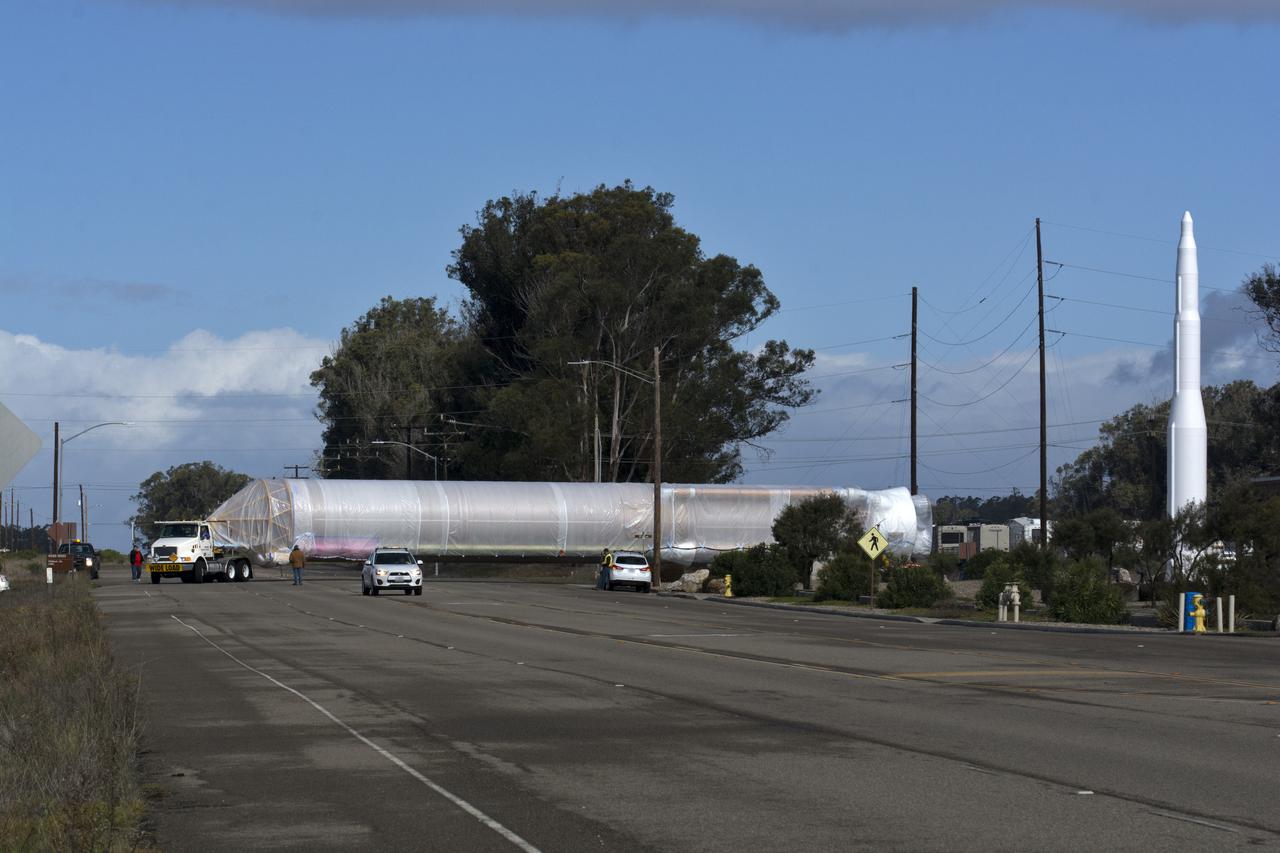
A United Launch Alliance Atlas V booster is transported to Space Launch Complex 3 at Vandenberg Air Force Base in California. The rocket will launch NASA's Interior Exploration using Seismic Investigations, Geodesy and Heat Transport, or InSight, mission to land on Mars. InSight is the first mission to explore the Red Planet's deep interior. It will investigate processes that shaped the rocky planets of the inner solar system including Earth. Liftoff is scheduled for May 5, 2018.
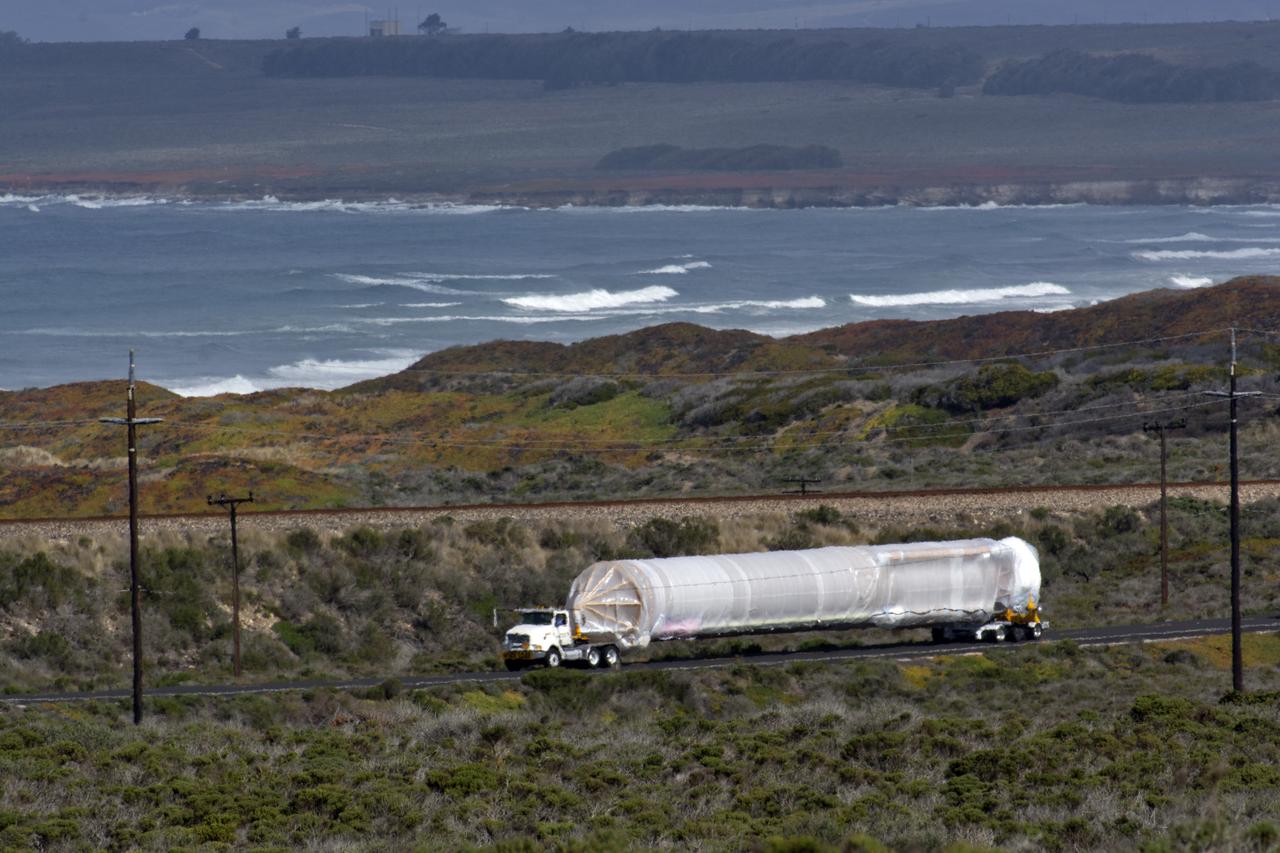
A United Launch Alliance Atlas V booster is transported to Space Launch Complex 3 at Vandenberg Air Force Base in California. The rocket will launch NASA's Interior Exploration using Seismic Investigations, Geodesy and Heat Transport, or InSight, mission to land on Mars. InSight is the first mission to explore the Red Planet's deep interior. It will investigate processes that shaped the rocky planets of the inner solar system including Earth. Liftoff is scheduled for May 5, 2018.
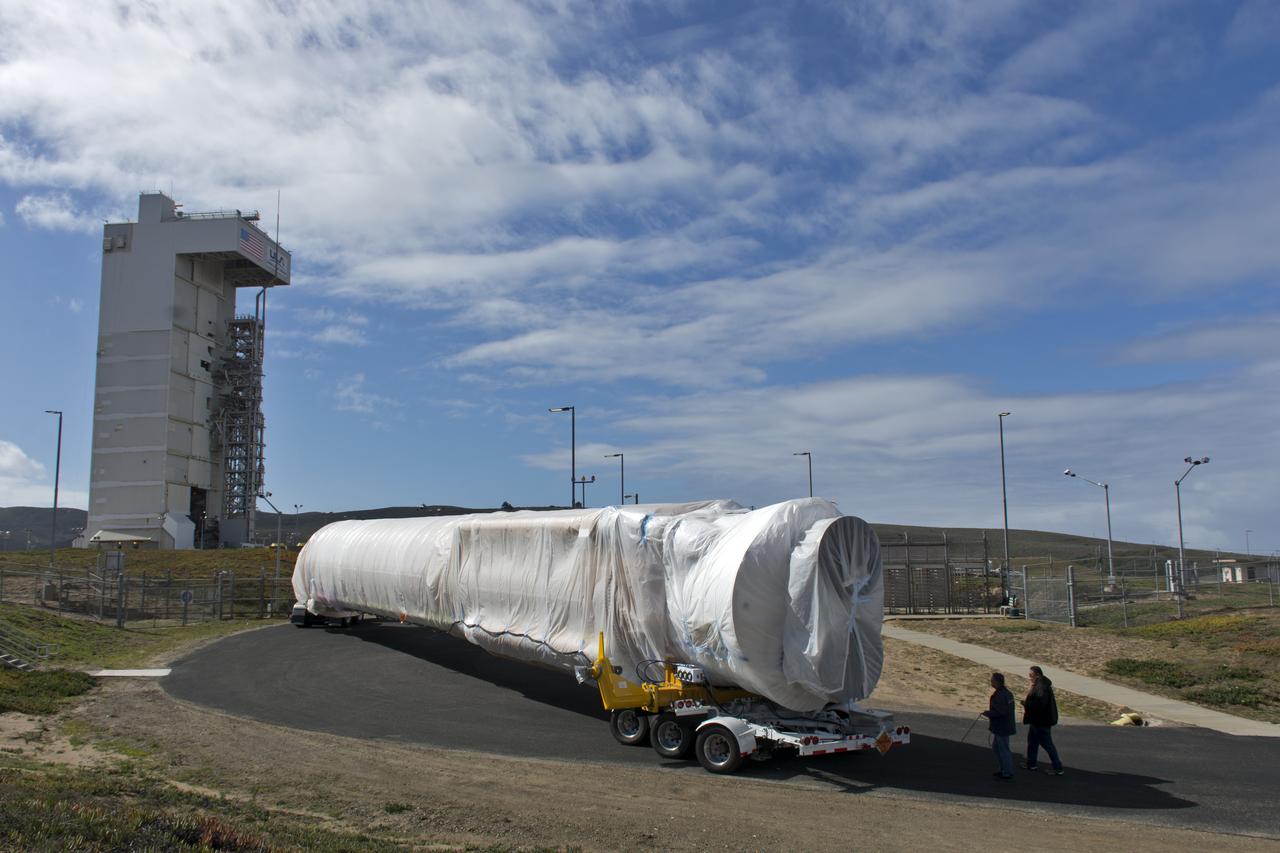
A United Launch Alliance Atlas V booster arrives at Space Launch Complex 3 at Vandenberg Air Force Base in California. The rocket will be positioned on the pad to launch NASA's Interior Exploration using Seismic Investigations, Geodesy and Heat Transport, or InSight, mission to land on Mars. InSight is the first mission to explore the Red Planet's deep interior. It will investigate processes that shaped the rocky planets of the inner solar system including Earth. Liftoff is scheduled for May 5, 2018.
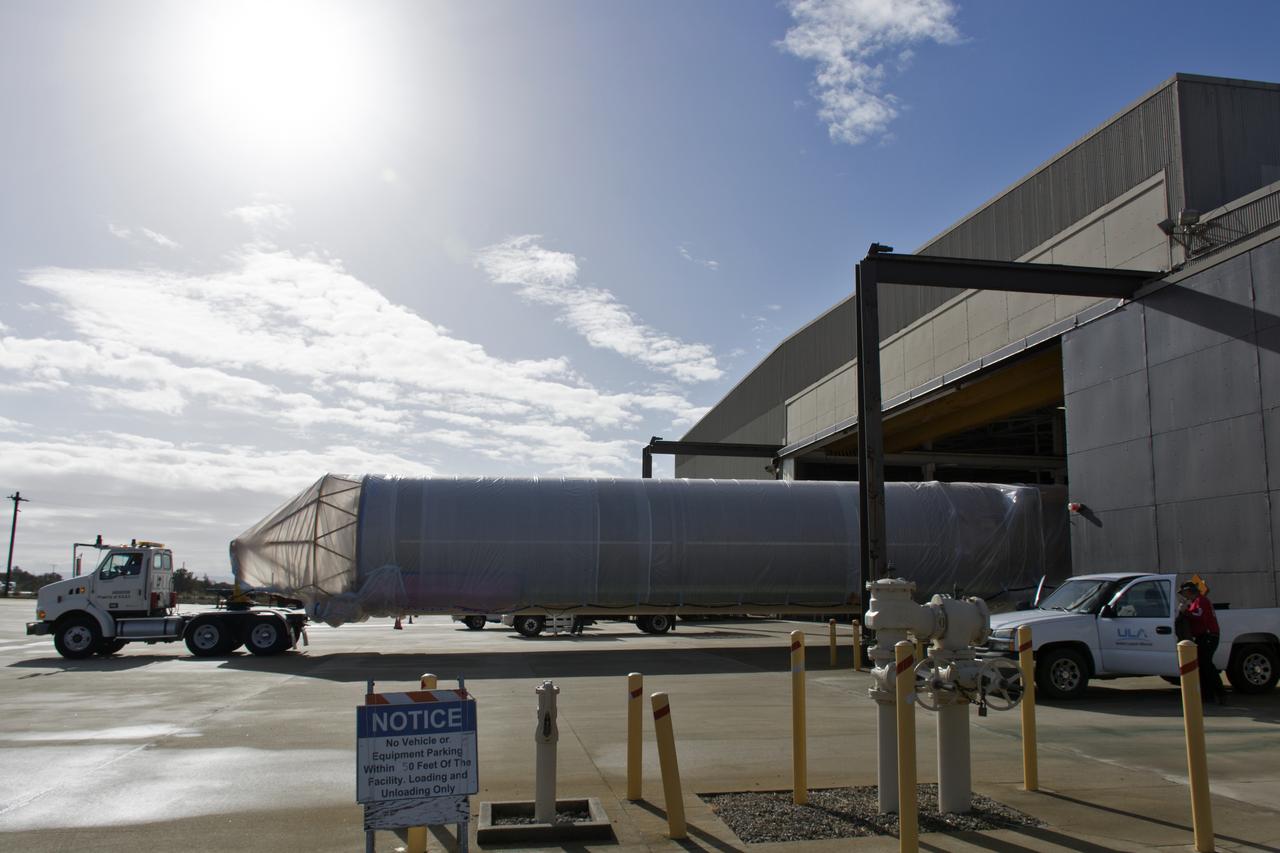
A United Launch Alliance Atlas V booster departs building 7525 at Vandenberg Air Force Base in California on its way to Space Launch Complex 3. The rocket will launch NASA's Interior Exploration using Seismic Investigations, Geodesy and Heat Transport, or InSight, mission to land on Mars. InSight is the first mission to explore the Red Planet's deep interior. It will investigate processes that shaped the rocky planets of the inner solar system including Earth. Liftoff is scheduled for May 5, 2018.
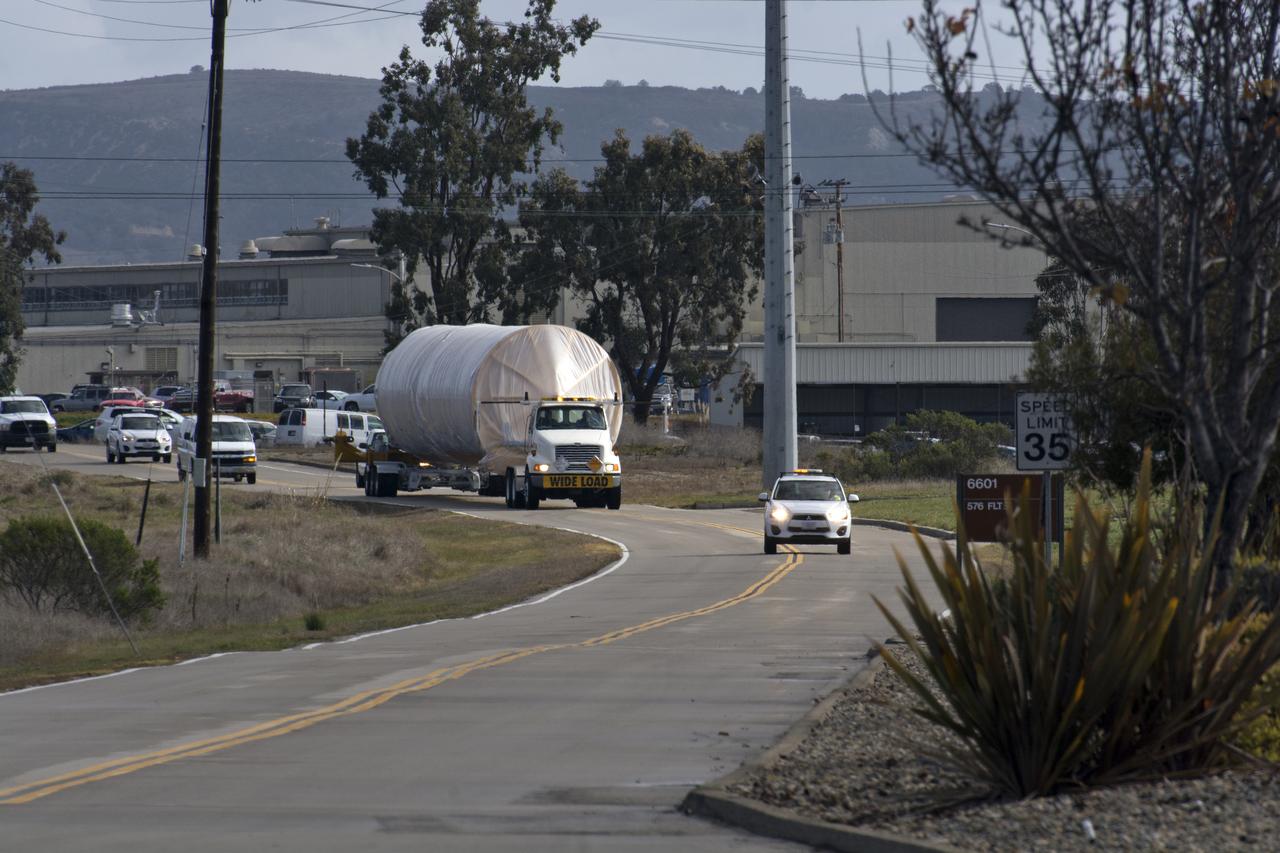
A United Launch Alliance Atlas V booster is transported to Space Launch Complex 3 at Vandenberg Air Force Base in California. The rocket will launch NASA's Interior Exploration using Seismic Investigations, Geodesy and Heat Transport, or InSight, mission to land on Mars. InSight is the first mission to explore the Red Planet's deep interior. It will investigate processes that shaped the rocky planets of the inner solar system including Earth. Liftoff is scheduled for May 5, 2018.
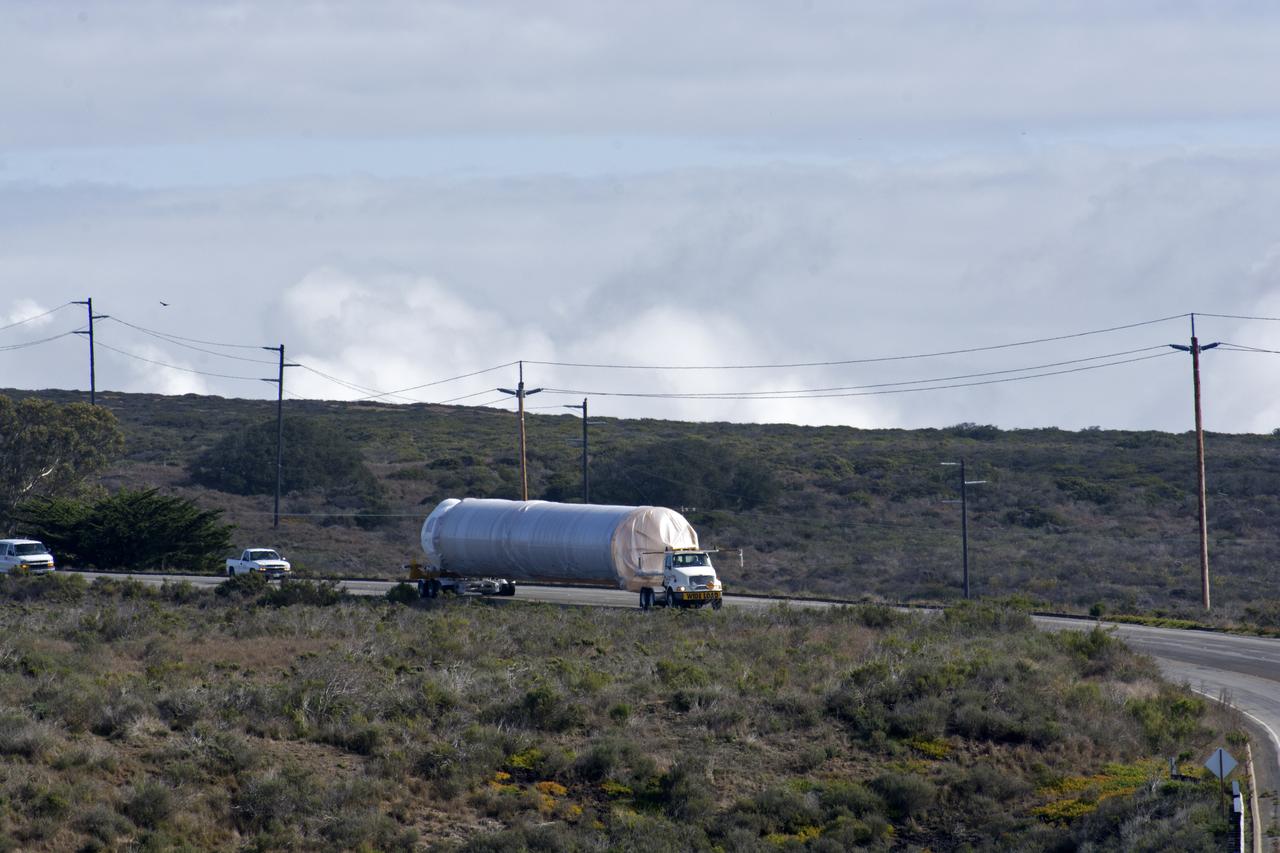
A United Launch Alliance Atlas V booster is transported to Space Launch Complex 3 at Vandenberg Air Force Base in California. The rocket will launch NASA's Interior Exploration using Seismic Investigations, Geodesy and Heat Transport, or InSight, mission to land on Mars. InSight is the first mission to explore the Red Planet's deep interior. It will investigate processes that shaped the rocky planets of the inner solar system including Earth. Liftoff is scheduled for May 5, 2018.
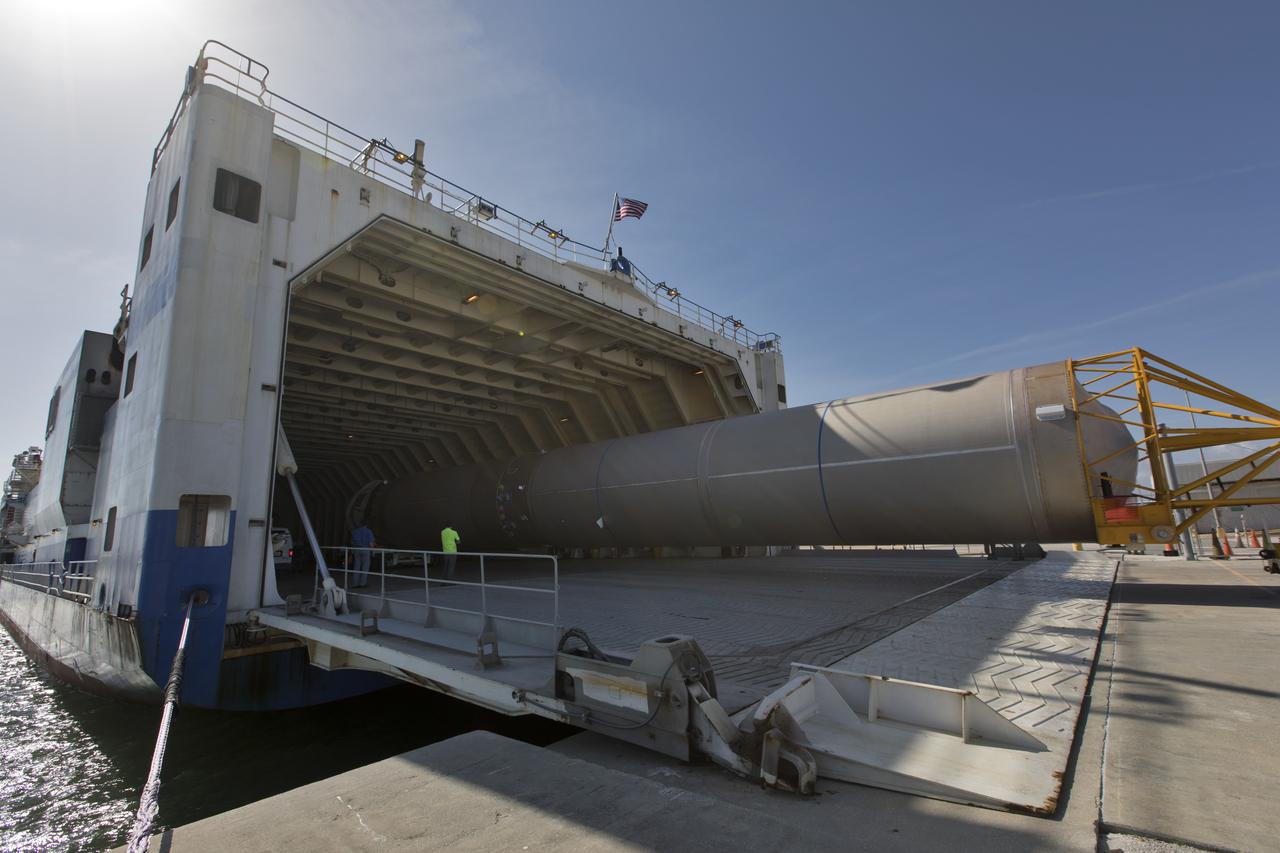
The United Launch Alliance Atlas V booster for NOAA's Geostationary Operational Environmental Satellite-S (GOES-S) is offloaded from the Mariner transport ship at the Army Wharf at Cape Canaveral Air Force Station in Florida. The booster will be transported to the Atlas Spaceflight Operations Center near Space Launch Complex 41 at CCAFS. GOES-S is the second in a series of four advanced geostationary weather satellites. The satellite is slated to launch aboard the Atlas V rocket March 1.
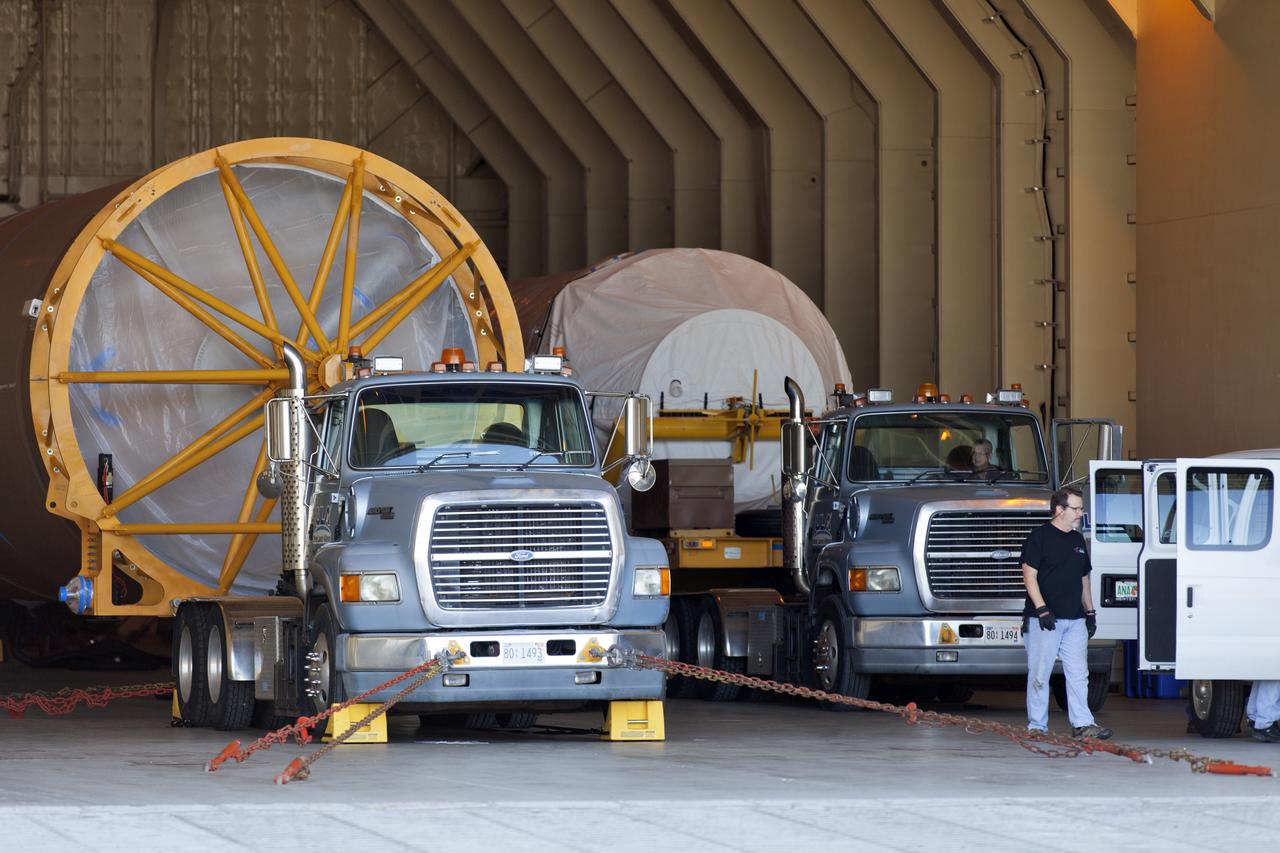
Preparations are underway to offload the United Launch Alliance Atlas V booster and Centaur stage for NOAA's Geostationary Operational Environmental Satellite-S (GOES-S) from the Mariner transport ship at the Army Wharf at Cape Canaveral Air Force Station in Florida. They will be transported to the Atlas Spaceflight Operations Center near Space Launch Complex 41 at CCAFS. GOES-S is the second in a series of four advanced geostationary weather satellites. The satellite is slated to launch aboard the Atlas V rocket March 1.
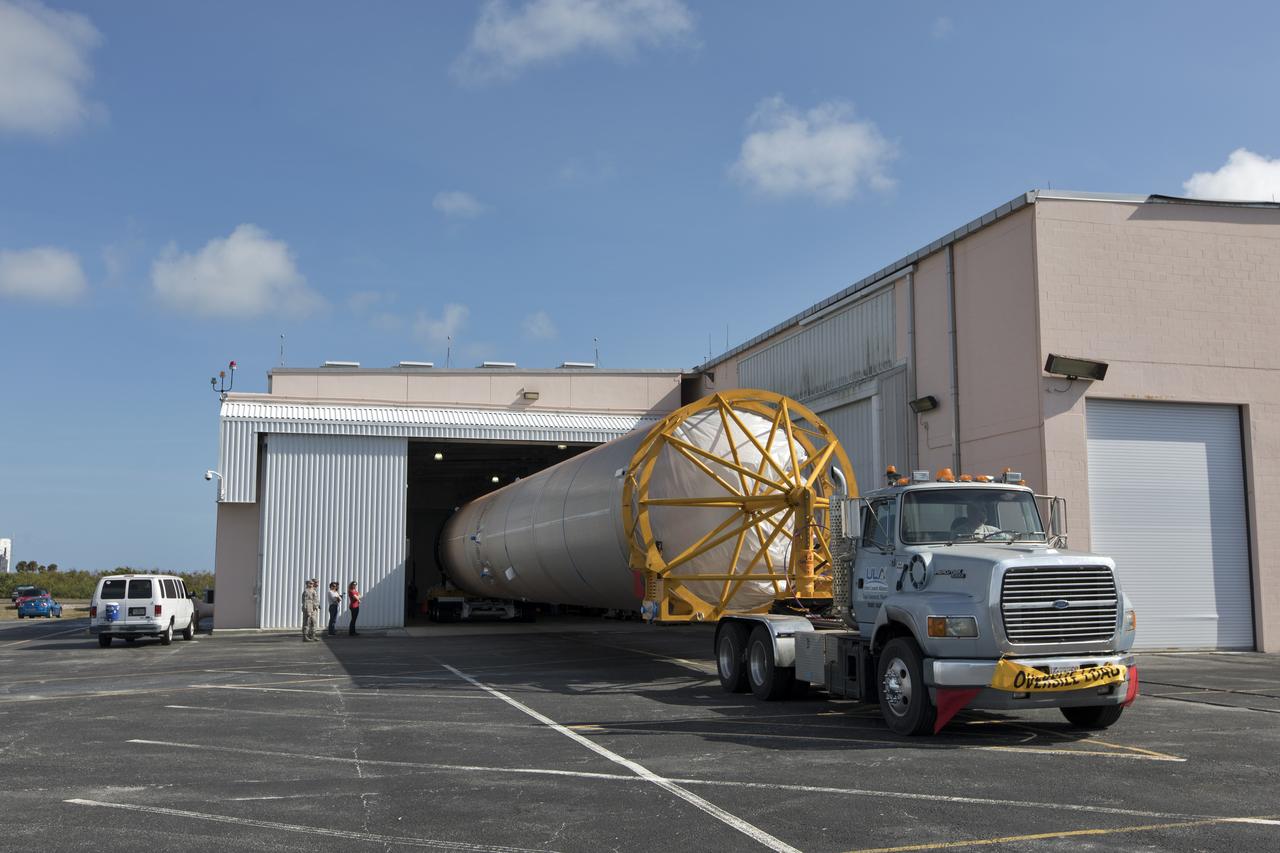
The United Launch Alliance Atlas V booster for NOAA's Geostationary Operational Environmental Satellite-S (GOES-S) arrives at the Atlas Spaceflight Operations Center near Space Launch Complex 41 at Cape Canaveral Air Force Station in Florida. GOES-S is the second in a series of four advanced geostationary weather satellites. The satellite is slated to launch aboard the Atlas V rocket March 1.
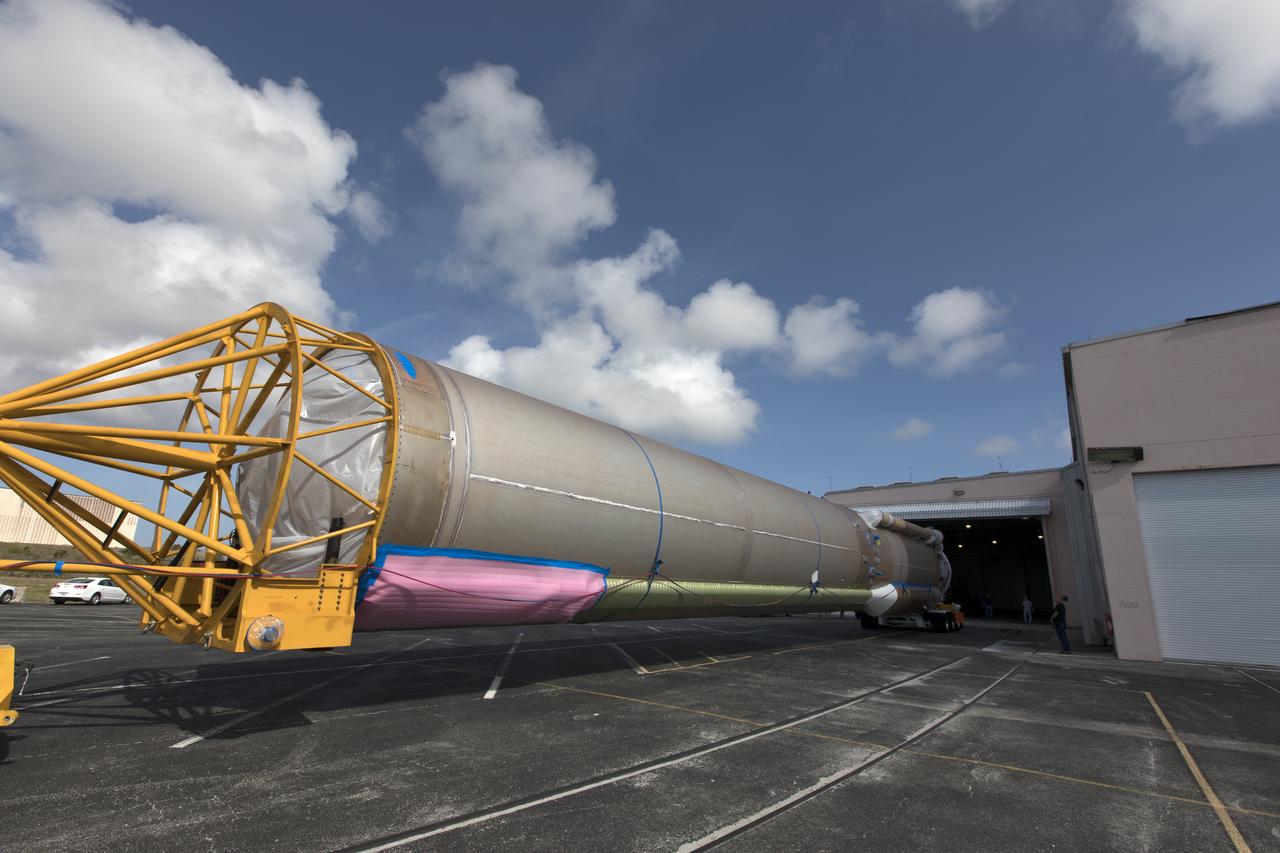
The United Launch Alliance Atlas V booster for NOAA's Geostationary Operational Environmental Satellite-S (GOES-S) arrives at the Atlas Spaceflight Operations Center near Space Launch Complex 41 at Cape Canaveral Air Force Station in Florida. GOES-S is the second in a series of four advanced geostationary weather satellites. The satellite is slated to launch aboard the Atlas V rocket March 1.
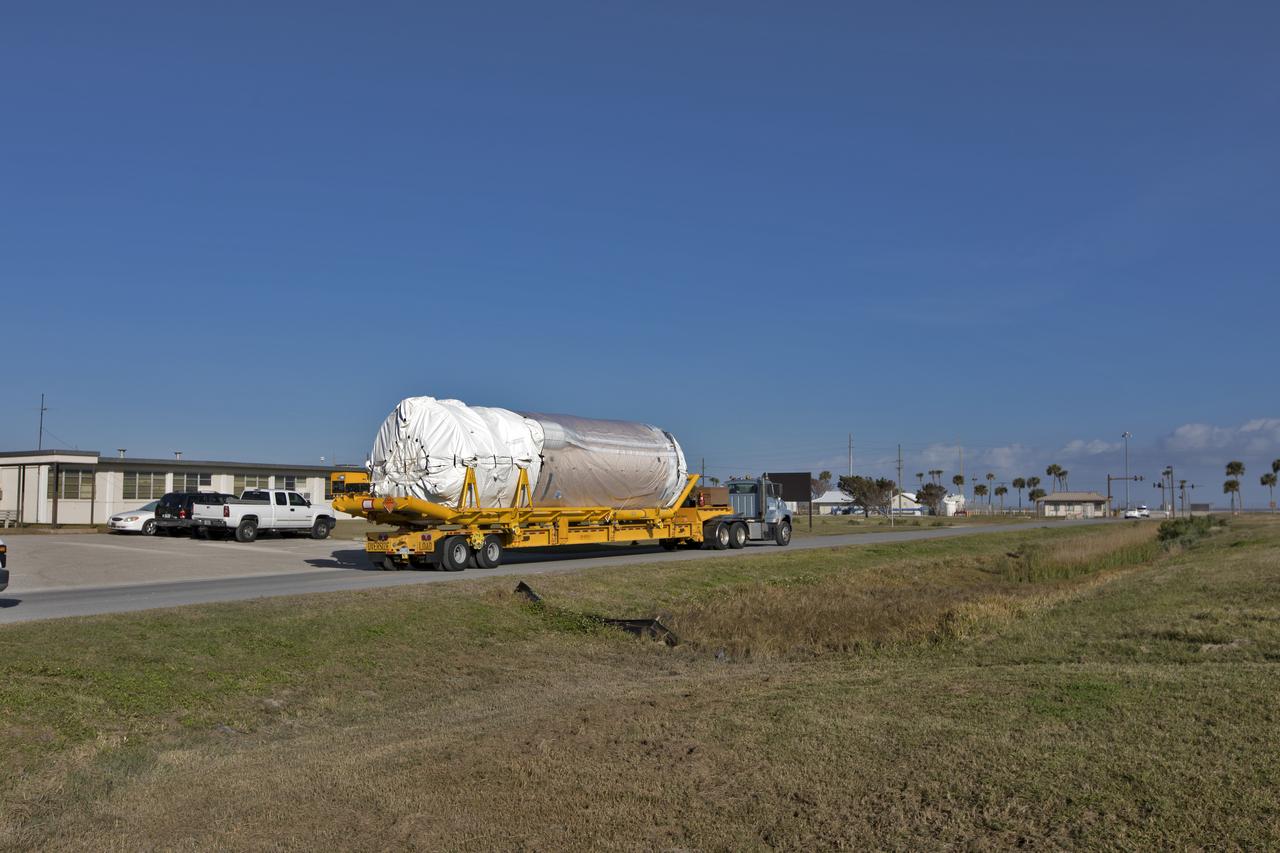
The United Launch Alliance Atlas V booster for NOAA's Geostationary Operational Environmental Satellite-S (GOES-S) was offloaded from the Mariner transport ship at the Army Wharf at Cape Canaveral Air Force Station in Florida. The booster will be transported to the Atlas Spaceflight Operations Center near Space Launch Complex 41 at CCAFS. GOES-S is the second in a series of four advanced geostationary weather satellites. The satellite is slated to launch aboard the Atlas V rocket March 1.
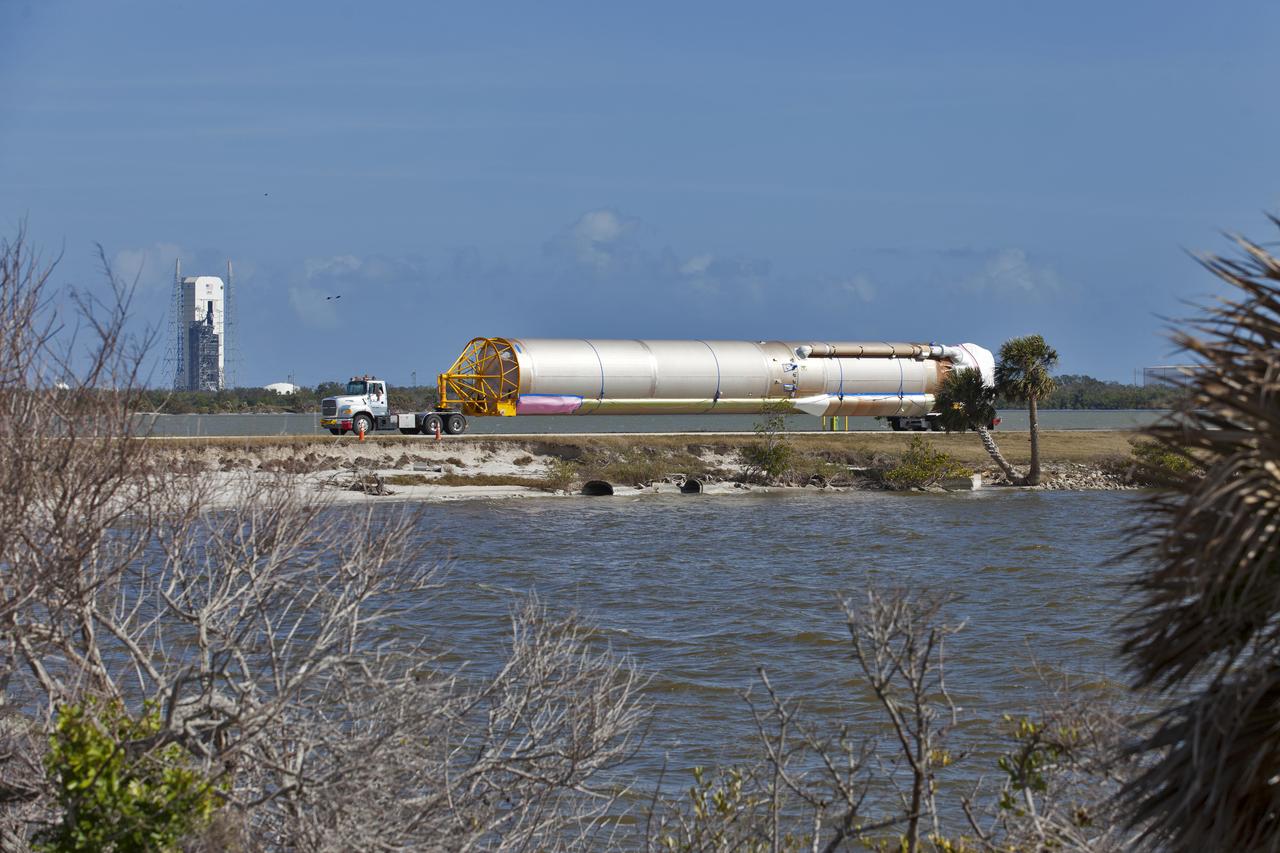
After being offloaded from the Mariner transport ship at the Army Wharf at Cape Canaveral Air Force Station in Florida, the United Launch Alliance Atlas V booster for NOAA's Geostationary Operational Environmental Satellite-S (GOES-S) is being transported to the Atlas Spaceflight Operations Center near Space Launch Complex 41 at CCAFS. GOES-S is the second in a series of four advanced geostationary weather satellites. The satellite is slated to launch aboard the Atlas V rocket March 1.

After being offloaded from the Mariner transport ship at the Army Wharf at Cape Canaveral Air Force Station in Florida, the United Launch Alliance Atlas V booster for NOAA's Geostationary Operational Environmental Satellite-S (GOES-S) arrives in the area of the Atlas Spaceflight Operations Center near Space Launch Complex 41 at CCAFS. GOES-S is the second in a series of four advanced geostationary weather satellites. The satellite is slated to launch aboard the Atlas V rocket March 1.
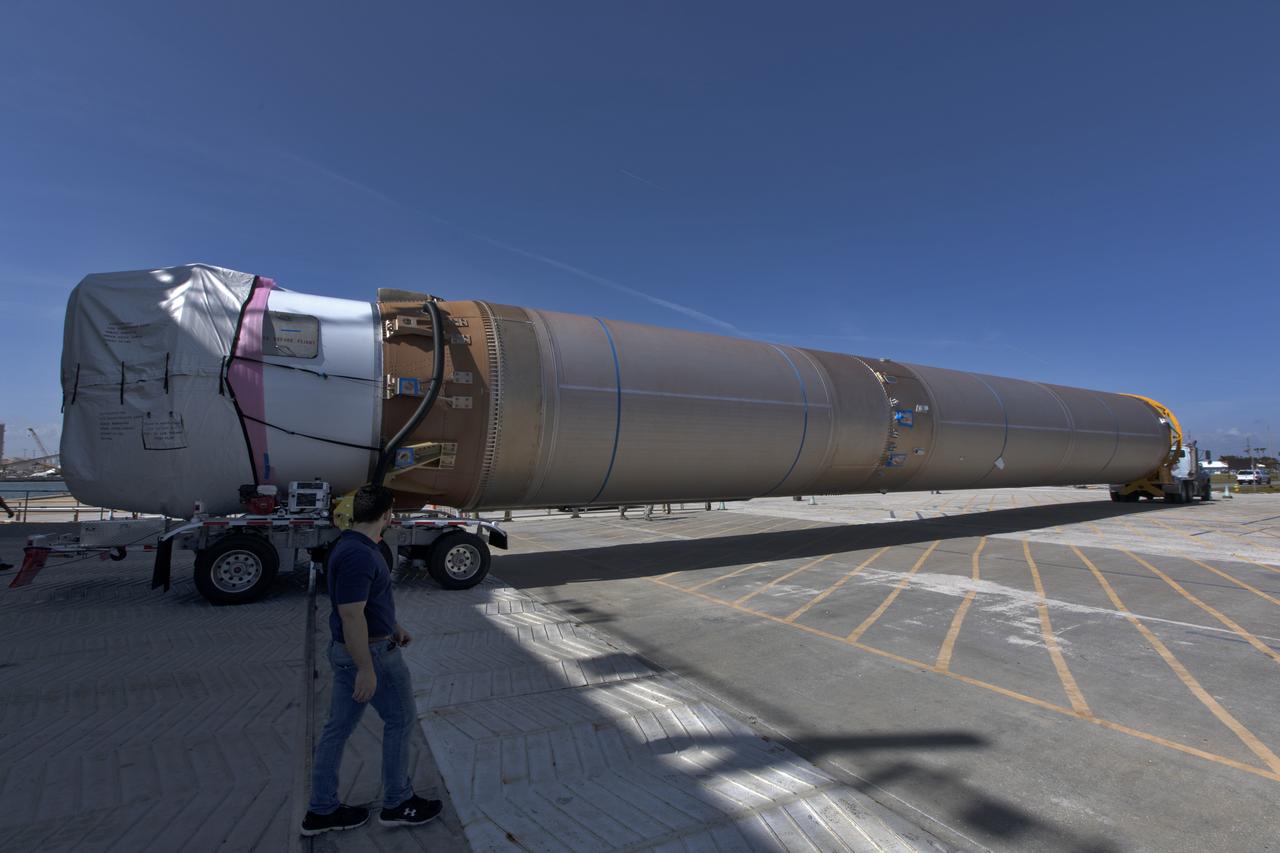
The United Launch Alliance Atlas V booster for NOAA's Geostationary Operational Environmental Satellite-S (GOES-S) is offloaded from the Mariner transport ship at the Army Wharf at Cape Canaveral Air Force Station in Florida. The booster will be transported to the Atlas Spaceflight Operations Center near Space Launch Complex 41 at CCAFS. GOES-S is the second in a series of four advanced geostationary weather satellites. The satellite is slated to launch aboard the Atlas V rocket March 1.
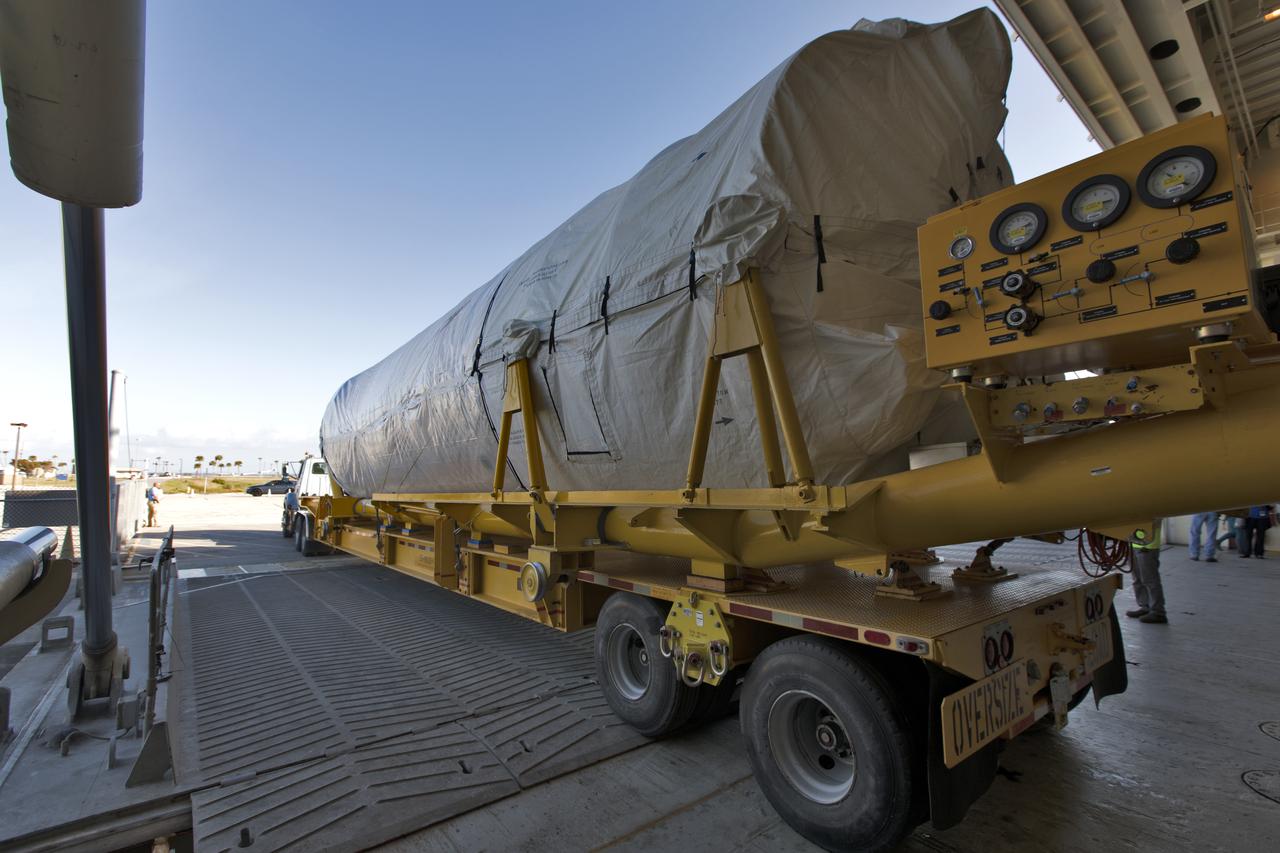
The United Launch Alliance Atlas V booster and Centaur stage for NOAA's Geostationary Operational Environmental Satellite-S (GOES-S) are offloaded from the Mariner transport ship at the Army Wharf at Cape Canaveral Air Force Station in Florida. They will be transported to the Atlas Spaceflight Operations Center near Space Launch Complex 41 at CCAFS. GOES-S is the second in a series of four advanced geostationary weather satellites. The satellite is slated to launch aboard the Atlas V rocket March 1.
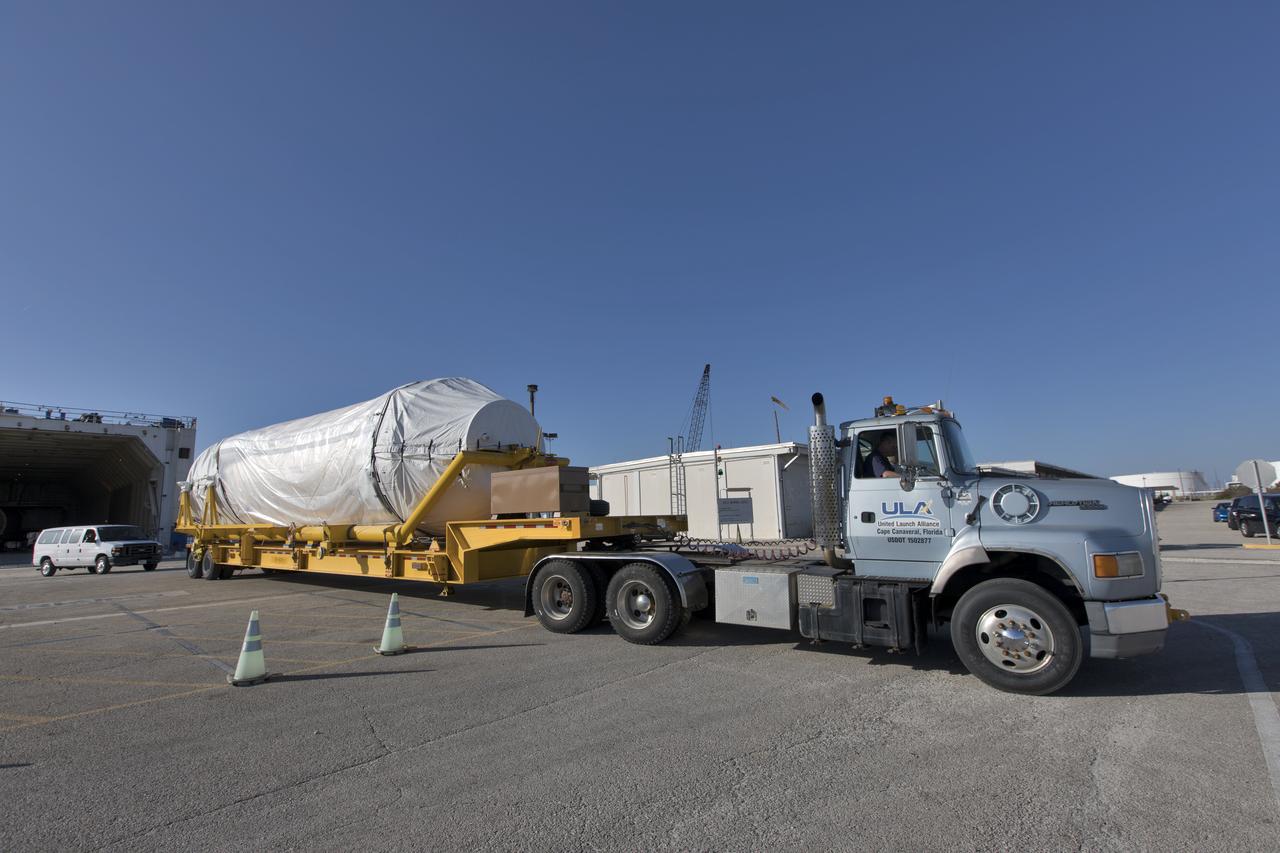
The United Launch Alliance Atlas V booster and Centaur stage for NOAA's Geostationary Operational Environmental Satellite-S (GOES-S) are offloaded from the Mariner transport ship at the Army Wharf at Cape Canaveral Air Force Station in Florida. They will be transported to the Atlas Spaceflight Operations Center near Space Launch Complex 41 at CCAFS. GOES-S is the second in a series of four advanced geostationary weather satellites. The satellite is slated to launch aboard the Atlas V rocket March 1.
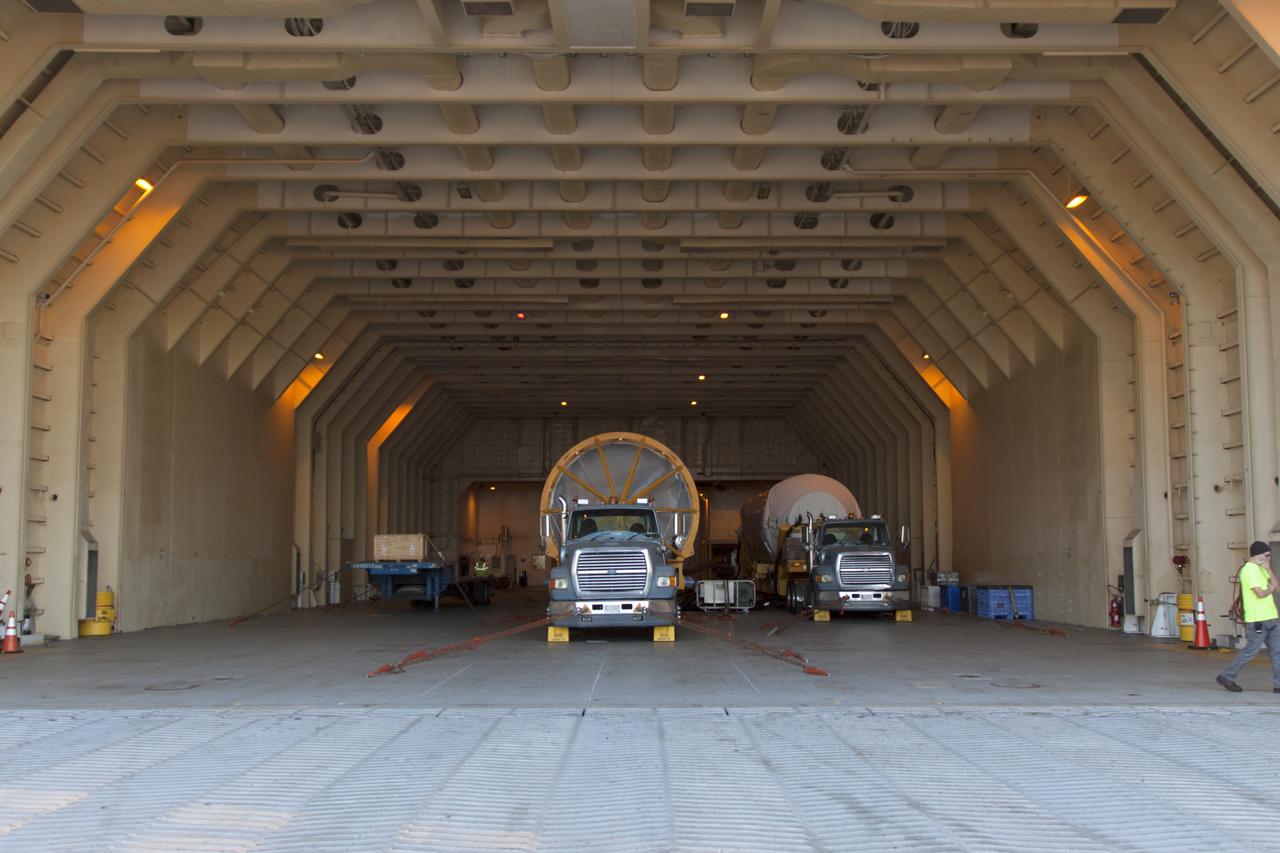
Preparations are underway to offload the United Launch Alliance Atlas V booster and Centaur stage for NOAA's Geostationary Operational Environmental Satellite-S (GOES-S) from the Mariner transport ship at the Army Wharf at Cape Canaveral Air Force Station in Florida. They will be transported to the Atlas Spaceflight Operations Center near Space Launch Complex 41 at CCAFS. GOES-S is the second in a series of four advanced geostationary weather satellites. The satellite is slated to launch aboard the Atlas V rocket March 1.

After being offloaded from the Mariner transport ship at the Army Wharf at Cape Canaveral Air Force Station in Florida, the United Launch Alliance Atlas V booster for NOAA's Geostationary Operational Environmental Satellite-S (GOES-S) is being transported to the Atlas Spaceflight Operations Center near Space Launch Complex 41 at CCAFS. GOES-S is the second in a series of four advanced geostationary weather satellites. The satellite is slated to launch aboard the Atlas V rocket March 1.
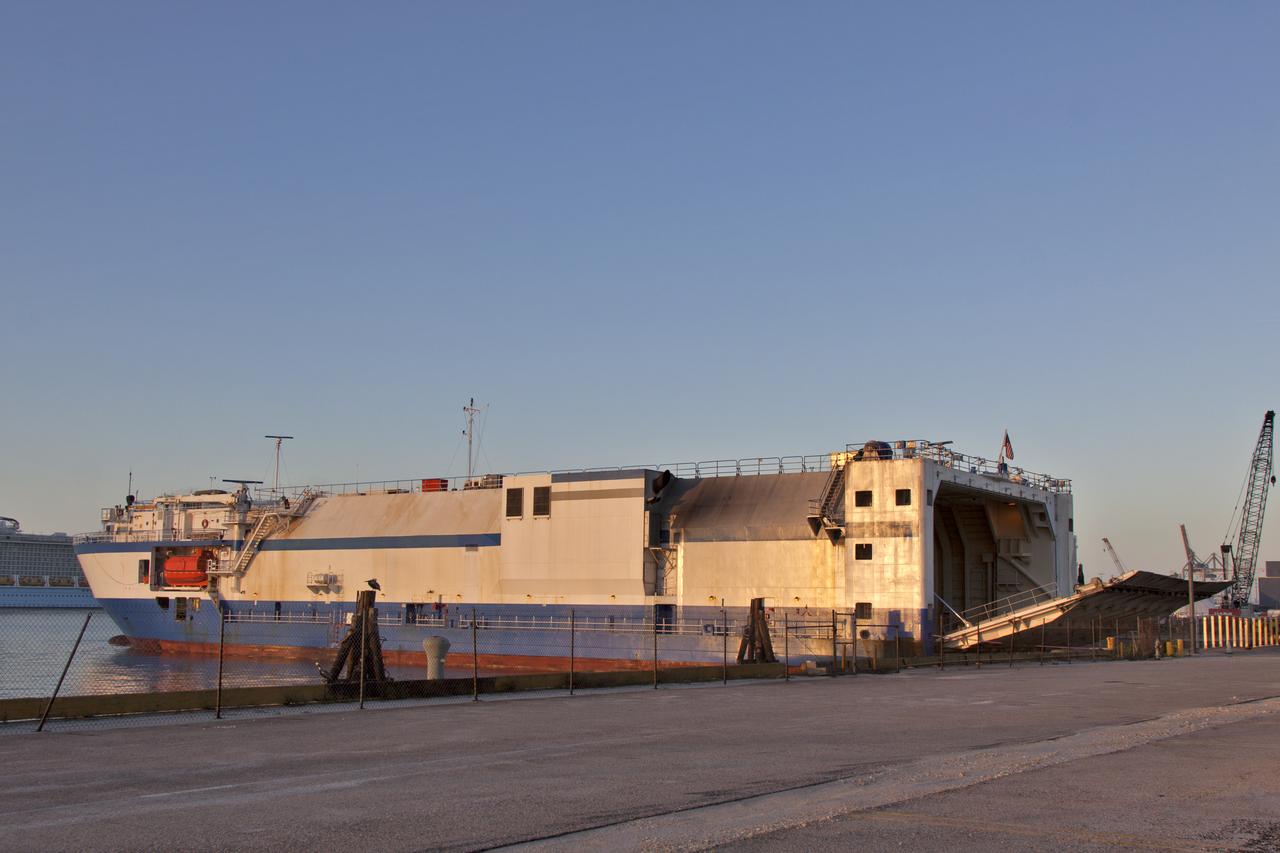
The Mariner transport ship arrives at the Army Wharf at Cape Canaveral Air Force Station in Florida, carrying the United Launch Alliance Atlas V booster and Centaur stage for NOAA's Geostationary Operational Environmental Satellite-S (GOES-S). They will be offloaded and transported to the Atlas Spaceflight Operations Center near Space Launch Complex 41 at CCAFS. GOES-S is the second in a series of four advanced geostationary weather satellites. The satellite is slated to launch aboard the Atlas V rocket March 1.
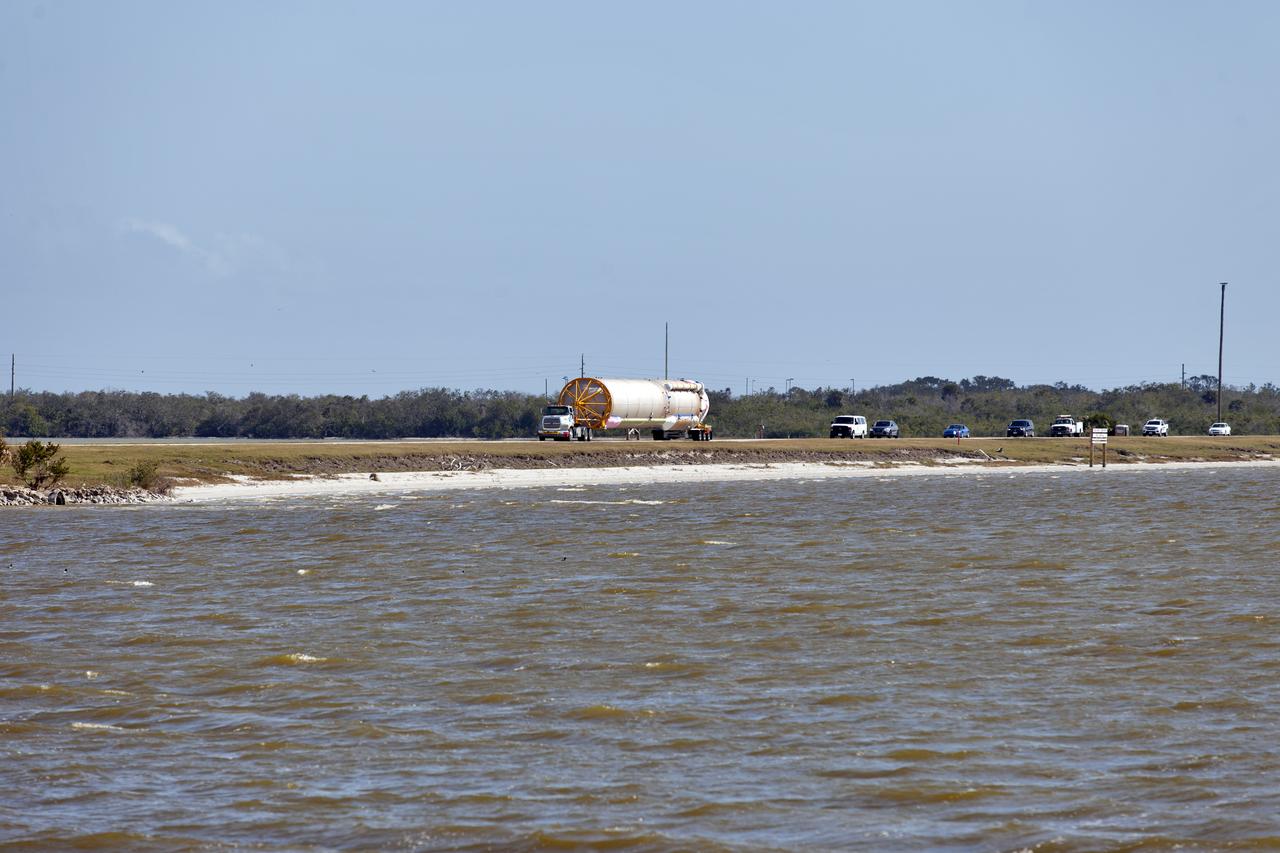
After being offloaded from the Mariner transport ship at the Army Wharf at Cape Canaveral Air Force Station in Florida, the United Launch Alliance Atlas V booster for NOAA's Geostationary Operational Environmental Satellite-S (GOES-S) is being transported to the Atlas Spaceflight Operations Center near Space Launch Complex 41 at CCAFS. GOES-S is the second in a series of four advanced geostationary weather satellites. The satellite is slated to launch aboard the Atlas V rocket March 1.
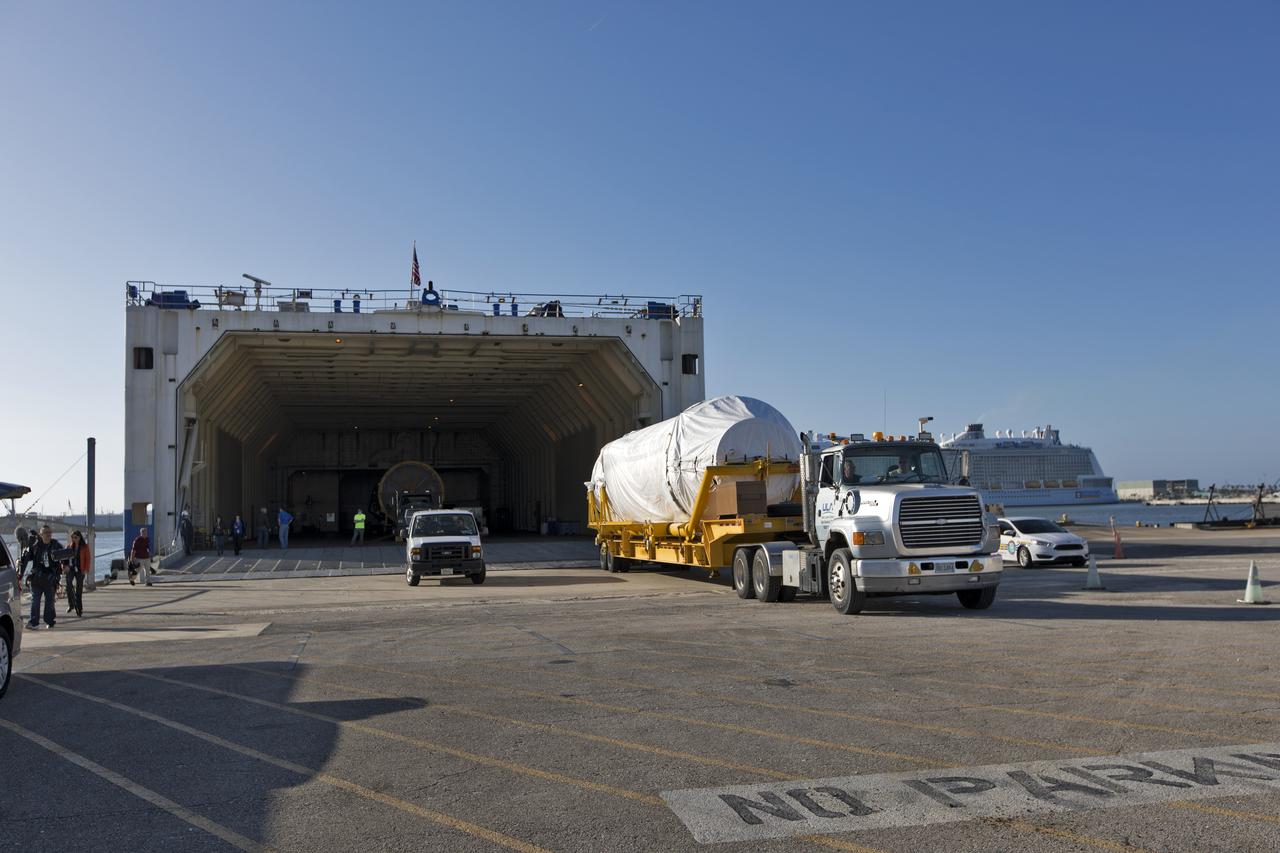
The United Launch Alliance Atlas V booster and Centaur stage for NOAA's Geostationary Operational Environmental Satellite-S (GOES-S) are offloaded from the Mariner transport ship at the Army Wharf at Cape Canaveral Air Force Station in Florida. They will be transported to the Atlas Spaceflight Operations Center near Space Launch Complex 41 at CCAFS. GOES-S is the second in a series of four advanced geostationary weather satellites. The satellite is slated to launch aboard the Atlas V rocket March 1.
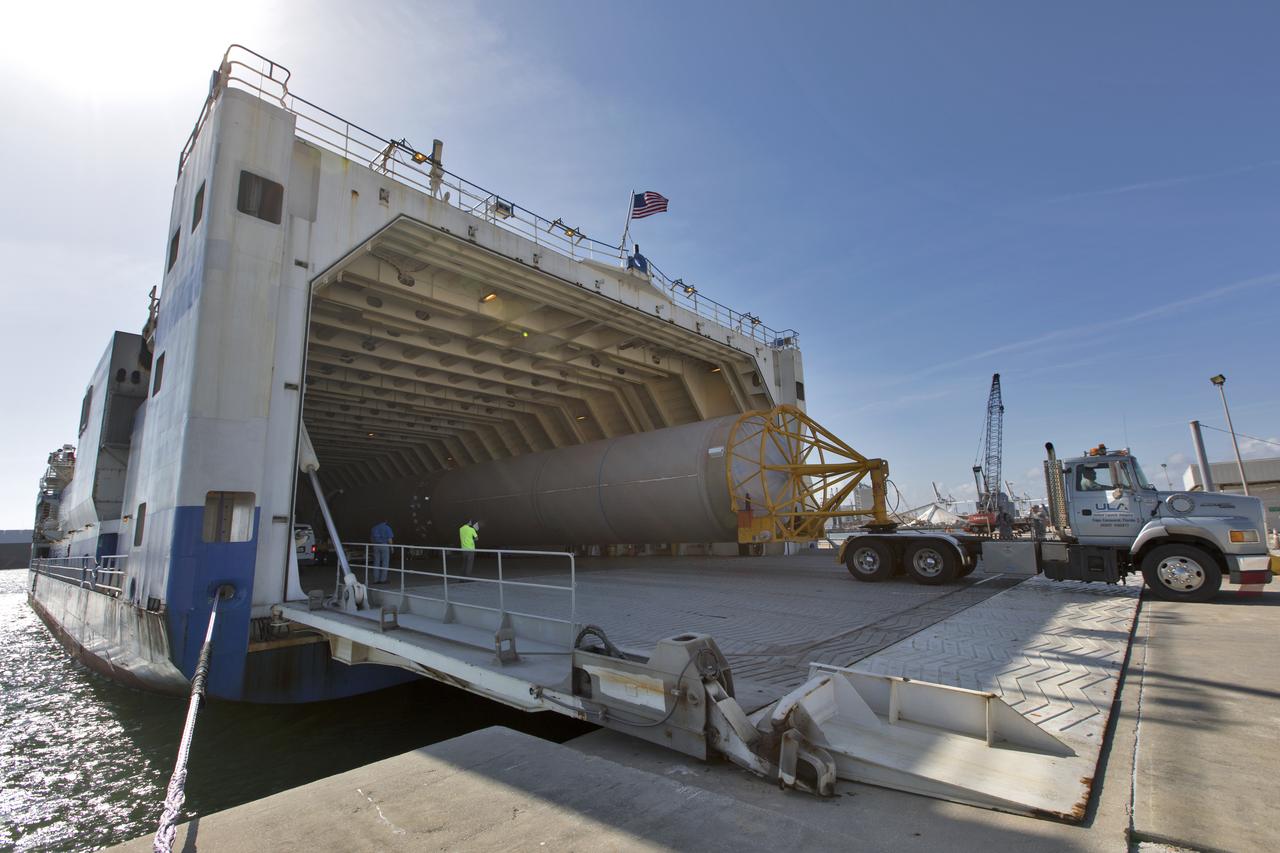
The United Launch Alliance Atlas V booster and Centaur stage for NOAA's Geostationary Operational Environmental Satellite-S (GOES-S) are offloaded from the Mariner transport ship at the Army Wharf at Cape Canaveral Air Force Station in Florida. They will be transported to the Atlas Spaceflight Operations Center near Space Launch Complex 41 at CCAFS. GOES-S is the second in a series of four advanced geostationary weather satellites. The satellite is slated to launch aboard the Atlas V rocket March 1.
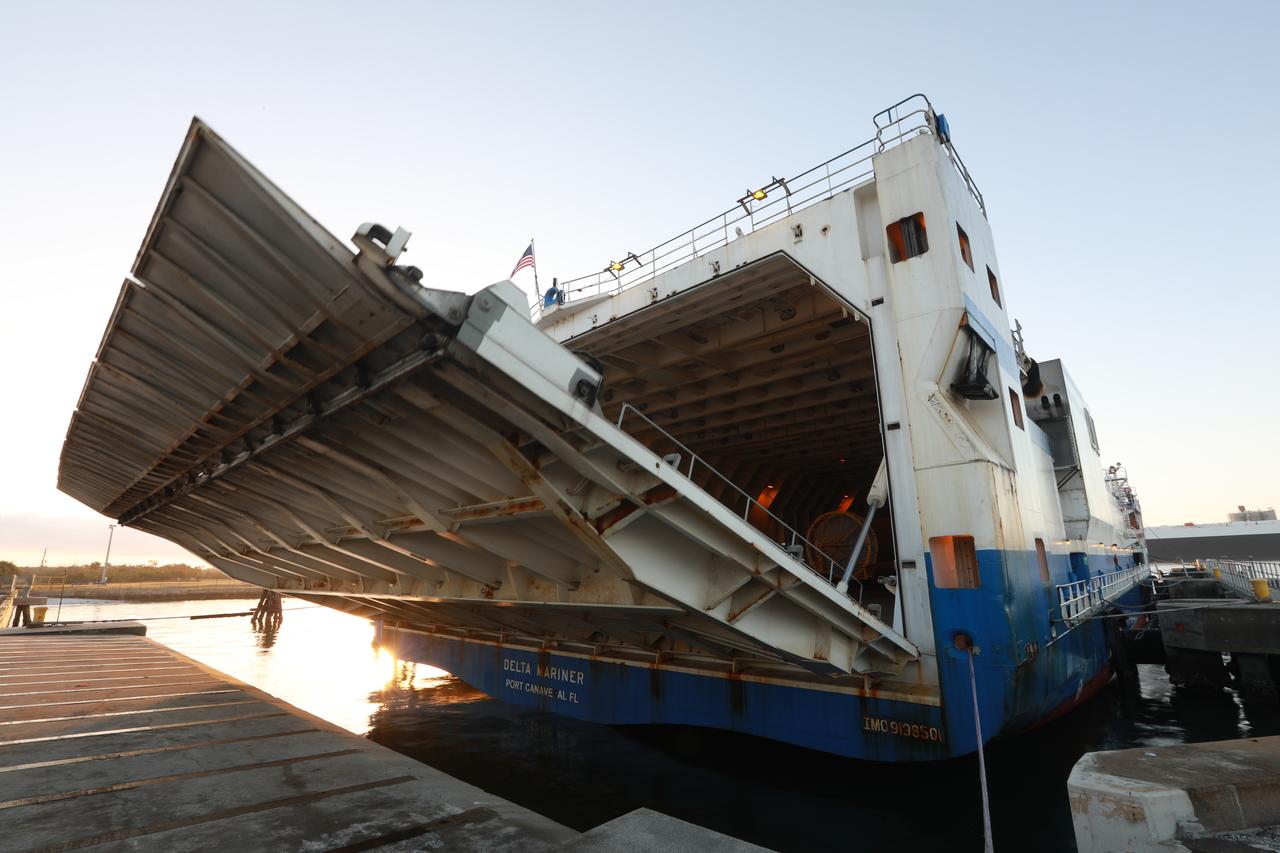
The Mariner transport ship arrives at the Army Wharf at Cape Canaveral Air Force Station in Florida, carrying the United Launch Alliance Atlas V booster and Centaur stage for NOAA's Geostationary Operational Environmental Satellite-S (GOES-S). They will be offloaded and transported to the Atlas Spaceflight Operations Center near Space Launch Complex 41 at CCAFS. GOES-S is the second in a series of four advanced geostationary weather satellites. The satellite is slated to launch aboard the Atlas V rocket March 1.

The United Launch Alliance Atlas V booster for NOAA's Geostationary Operational Environmental Satellite-S (GOES-S) is moved inside the Atlas Spaceflight Operations Center near Space Launch Complex 41 at Cape Canaveral Air Force Station in Florida. GOES-S is the second in a series of four advanced geostationary weather satellites. The satellite is slated to launch aboard the Atlas V rocket March 1.
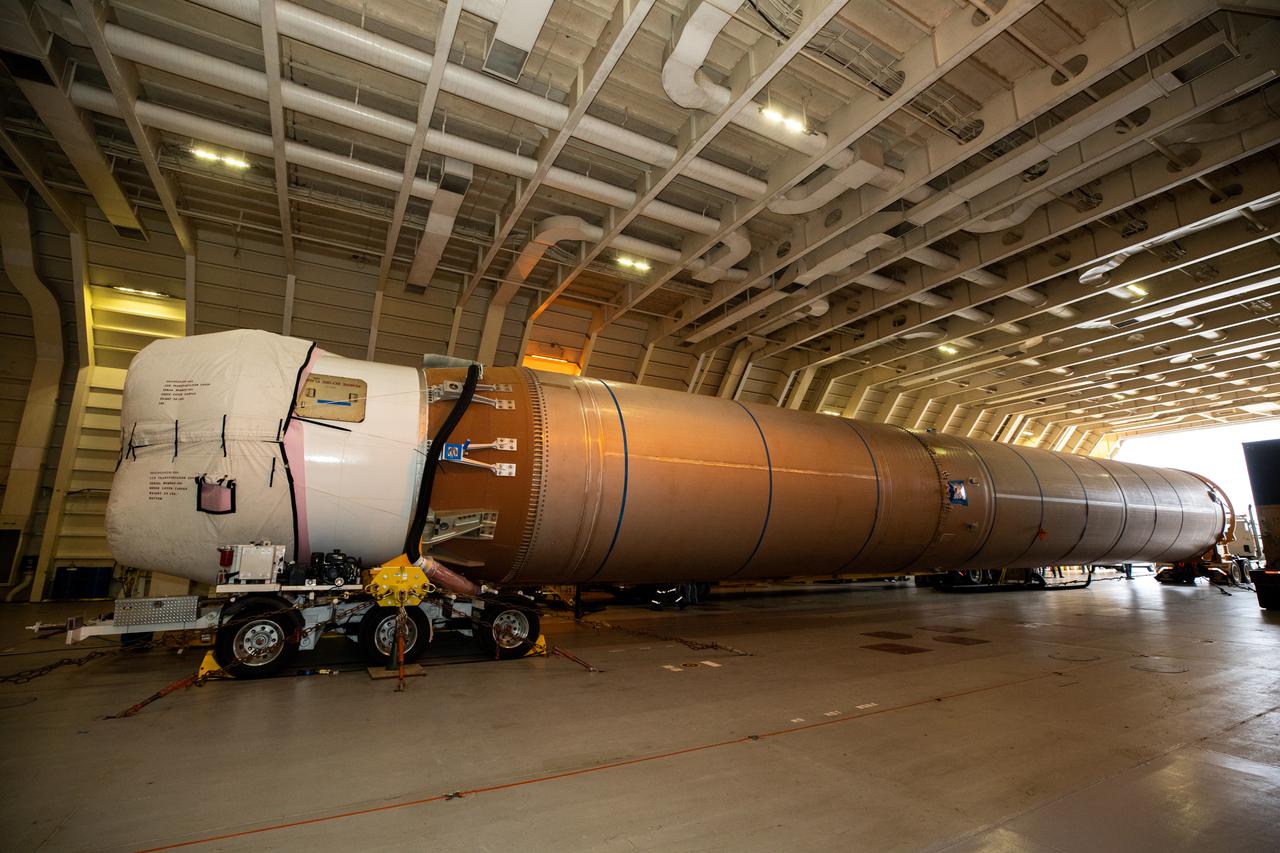
The United Launch Alliance (ULA) Atlas V booster and Centaur upper stage for Boeing's CST-100 Starliner Crew Flight Test (CFT) are unloaded from a rocket-delivery ship at Cape Canaveral Space Force Station on June 21, 2021. Starliner's first flight with astronauts aboard, CFT will launch from Space Launch Complex 41 at Cape Canaveral Space Force Station in Florida. The flight test will demonstrate the ability of the Atlas V and Starliner to safely carry astronauts to and from the International Space Station for the agency's Commercial Crew Program.
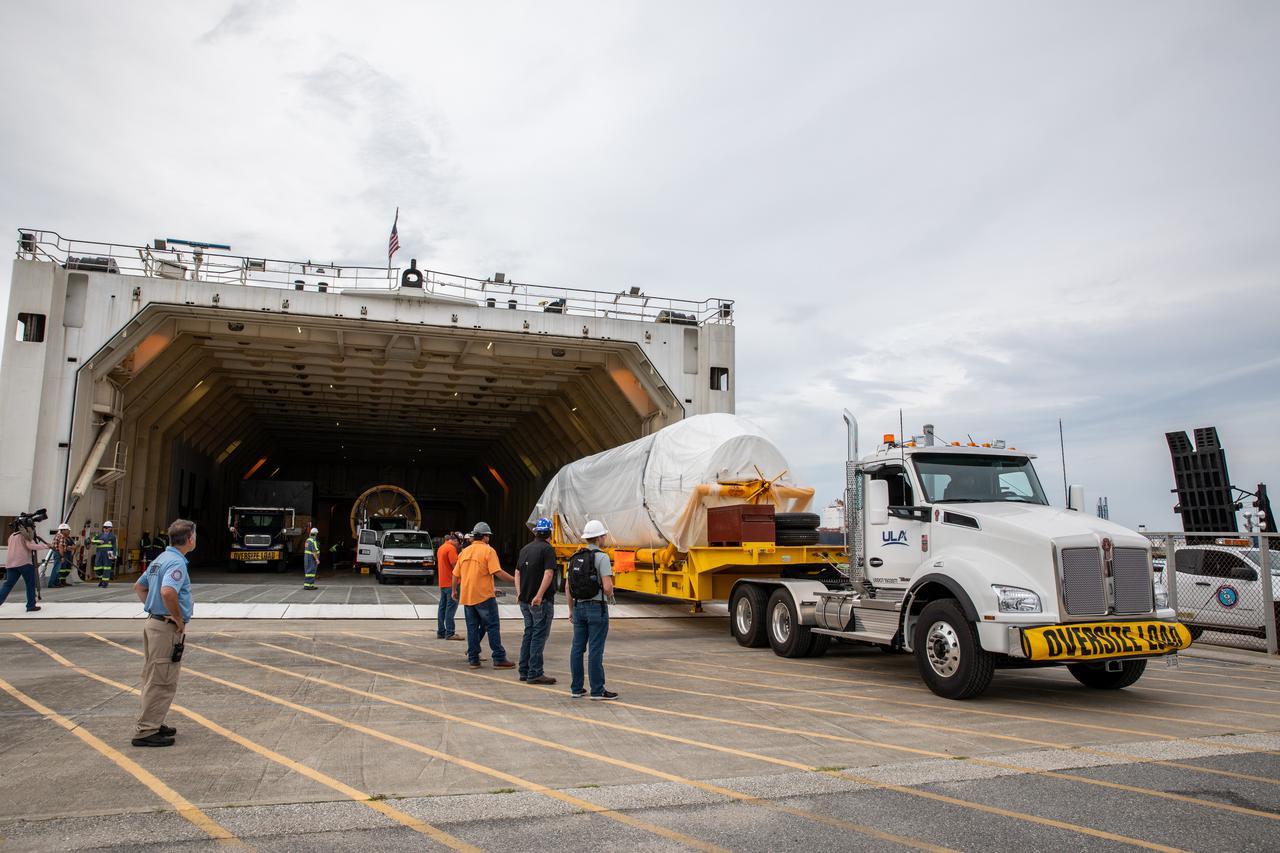
The United Launch Alliance (ULA) Atlas V booster and Centaur upper stage for Boeing's CST-100 Starliner Crew Flight Test (CFT) are unloaded from a rocket-delivery ship at Cape Canaveral Space Force Station on June 21, 2021. Starliner's first flight with astronauts aboard, CFT will launch from Space Launch Complex 41 at Cape Canaveral Space Force Station in Florida. The flight test will demonstrate the ability of the Atlas V and Starliner to safely carry astronauts to and from the International Space Station for the agency's Commercial Crew Program.
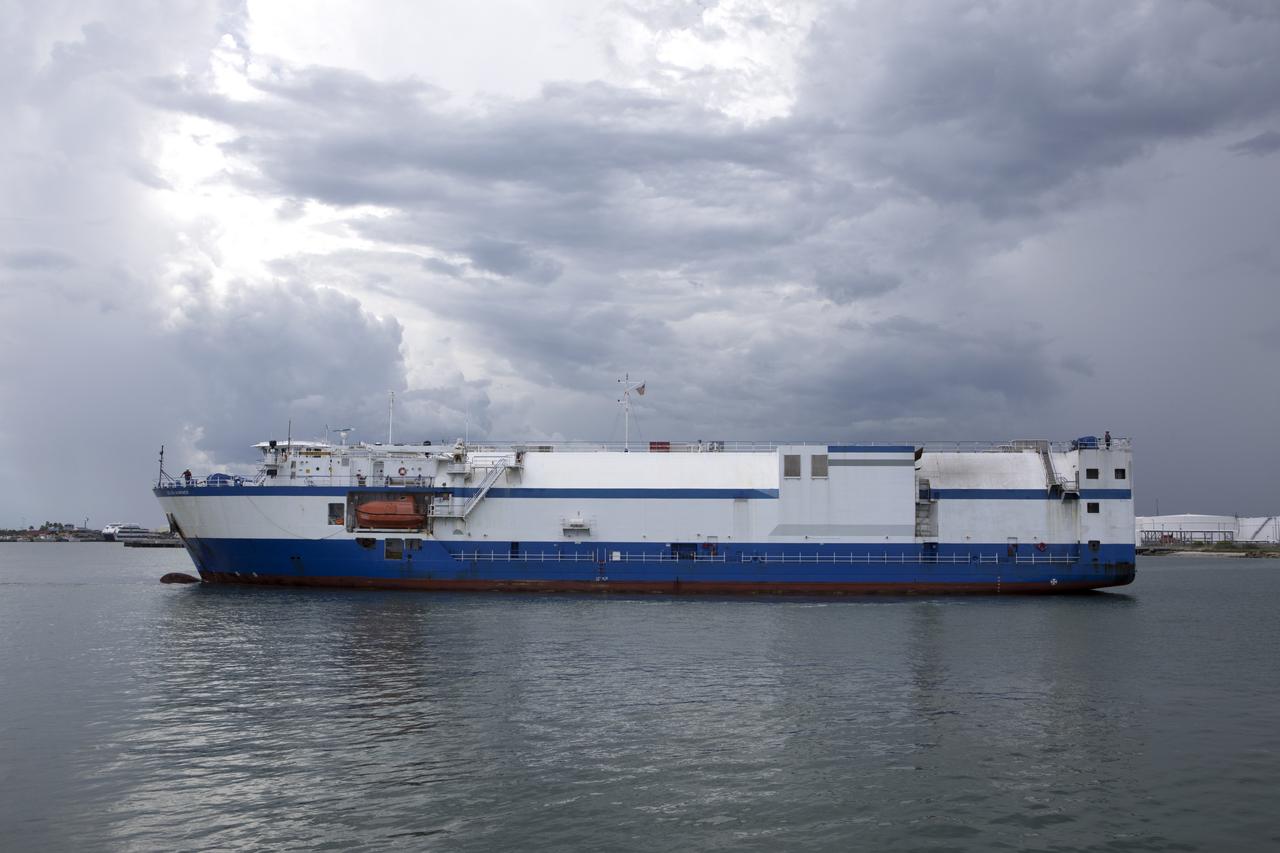
The United Launch Alliance (ULA) Mariner arrives at Port Canaveral in Florida carrying an Atlas V rocket booster bound for nearby Cape Canaveral Air Force Station. The rocket is scheduled to launch the Tracking and Data Relay Satellite, TDRS-M. It will be the latest spacecraft destined for the agency's constellation of communications satellites that allows nearly continuous contact with orbiting spacecraft ranging from the International Space Station and Hubble Space Telescope to the array of scientific observatories. Liftoff atop the ULA Atlas V rocket is scheduled to take place from Cape Canaveral's Space Launch Complex 41 on Aug. 3, 2017 at 9:02 a.m. EDT.
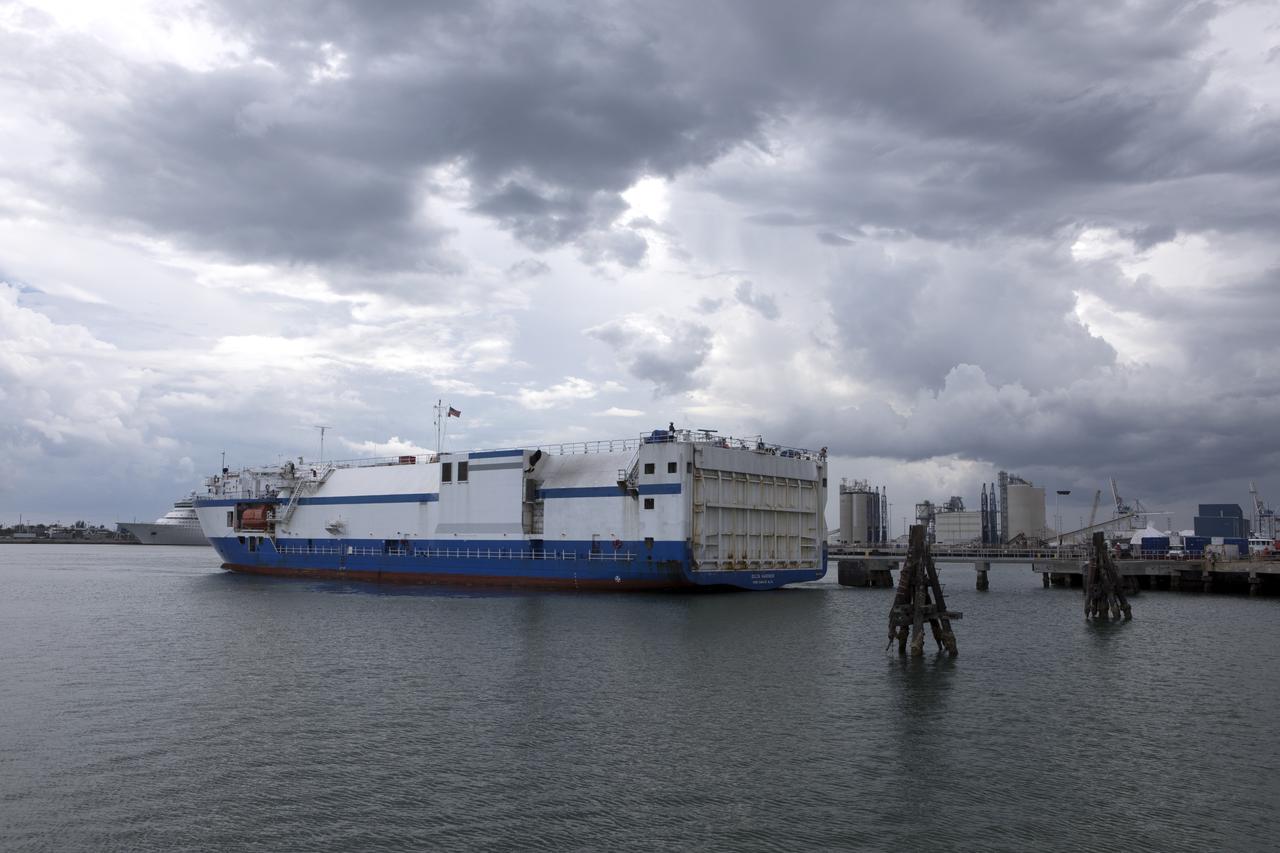
The United Launch Alliance (ULA) Mariner arrives at Port Canaveral in Florida carrying an Atlas V rocket booster bound for nearby Cape Canaveral Air Force Station. The rocket is scheduled to launch the Tracking and Data Relay Satellite, TDRS-M. It will be the latest spacecraft destined for the agency's constellation of communications satellites that allows nearly continuous contact with orbiting spacecraft ranging from the International Space Station and Hubble Space Telescope to the array of scientific observatories. Liftoff atop the ULA Atlas V rocket is scheduled to take place from Cape Canaveral's Space Launch Complex 41 on Aug. 3, 2017 at 9:02 a.m. EDT.
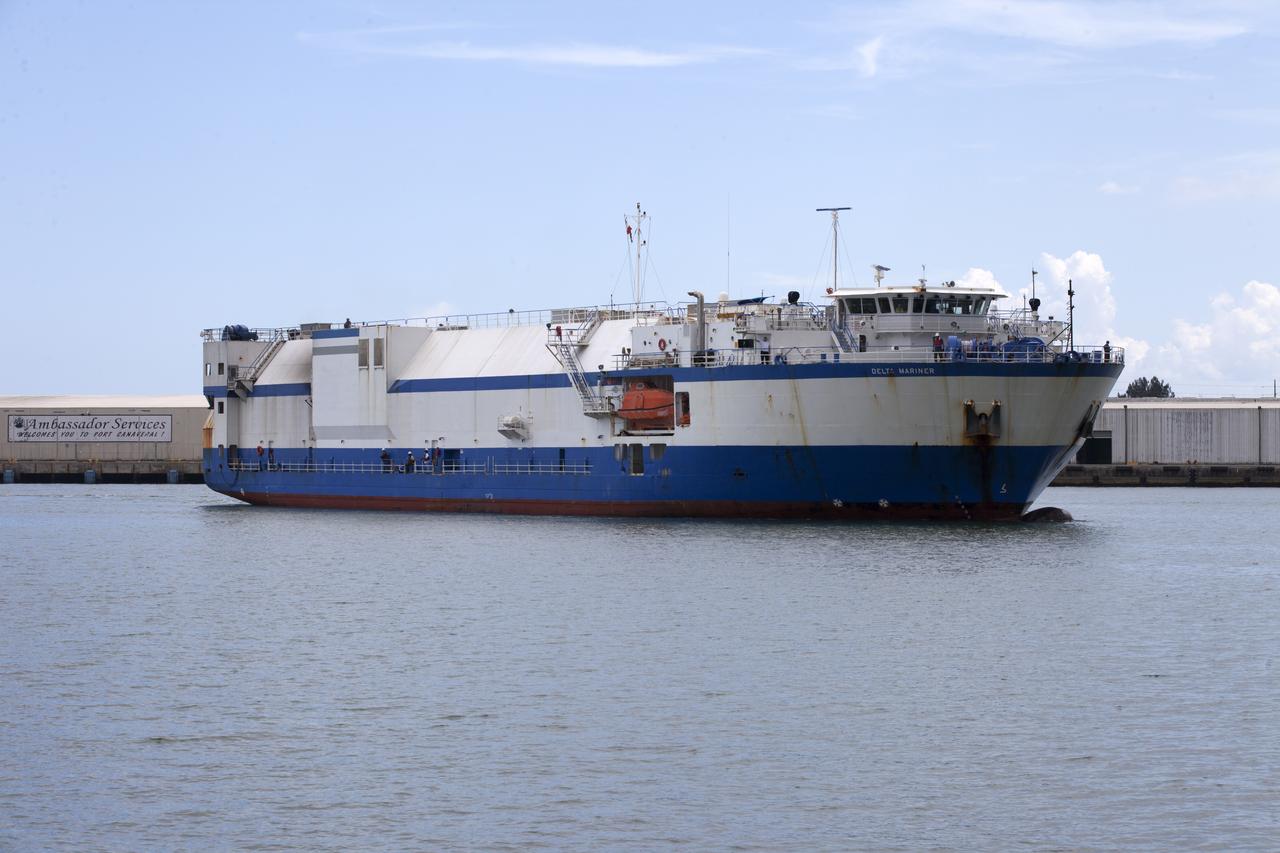
The United Launch Alliance (ULA) Mariner arrives at Port Canaveral in Florida carrying an Atlas V rocket booster bound for nearby Cape Canaveral Air Force Station. The rocket is scheduled to launch the Tracking and Data Relay Satellite, TDRS-M. It will be the latest spacecraft destined for the agency's constellation of communications satellites that allows nearly continuous contact with orbiting spacecraft ranging from the International Space Station and Hubble Space Telescope to the array of scientific observatories. Liftoff atop the ULA Atlas V rocket is scheduled to take place from Cape Canaveral's Space Launch Complex 41 on Aug. 3, 2017 at 9:02 a.m. EDT.
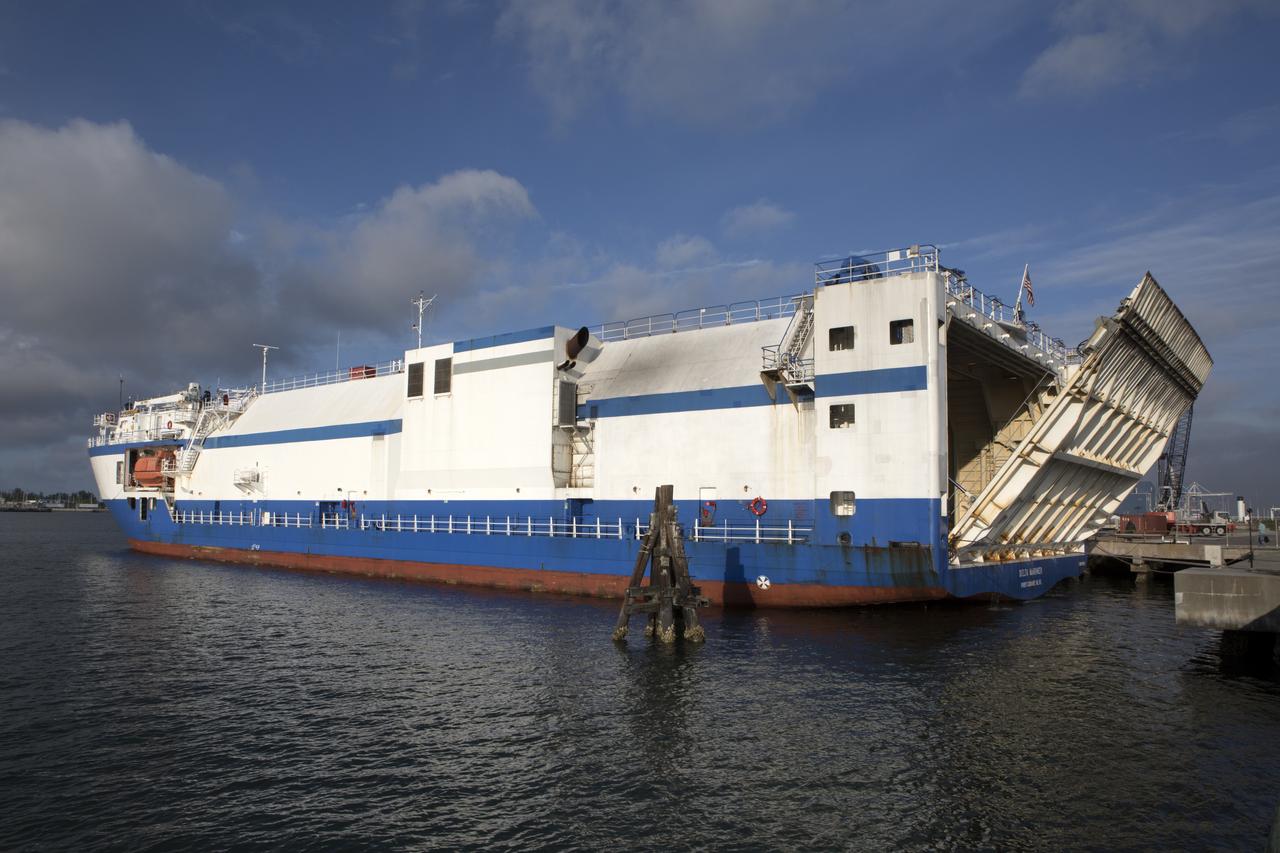
The United Launch Alliance (ULA) Mariner arrives at Port Canaveral in Florida carrying an Atlas V rocket booster bound for nearby Cape Canaveral Air Force Station. The rocket is scheduled to launch the Tracking and Data Relay Satellite, TDRS-M. It will be the latest spacecraft destined for the agency's constellation of communications satellites that allows nearly continuous contact with orbiting spacecraft ranging from the International Space Station and Hubble Space Telescope to the array of scientific observatories. Liftoff atop the ULA Atlas V rocket is scheduled to take place from Cape Canaveral's Space Launch Complex 41 on Aug. 3, 2017 at 9:02 a.m. EDT.
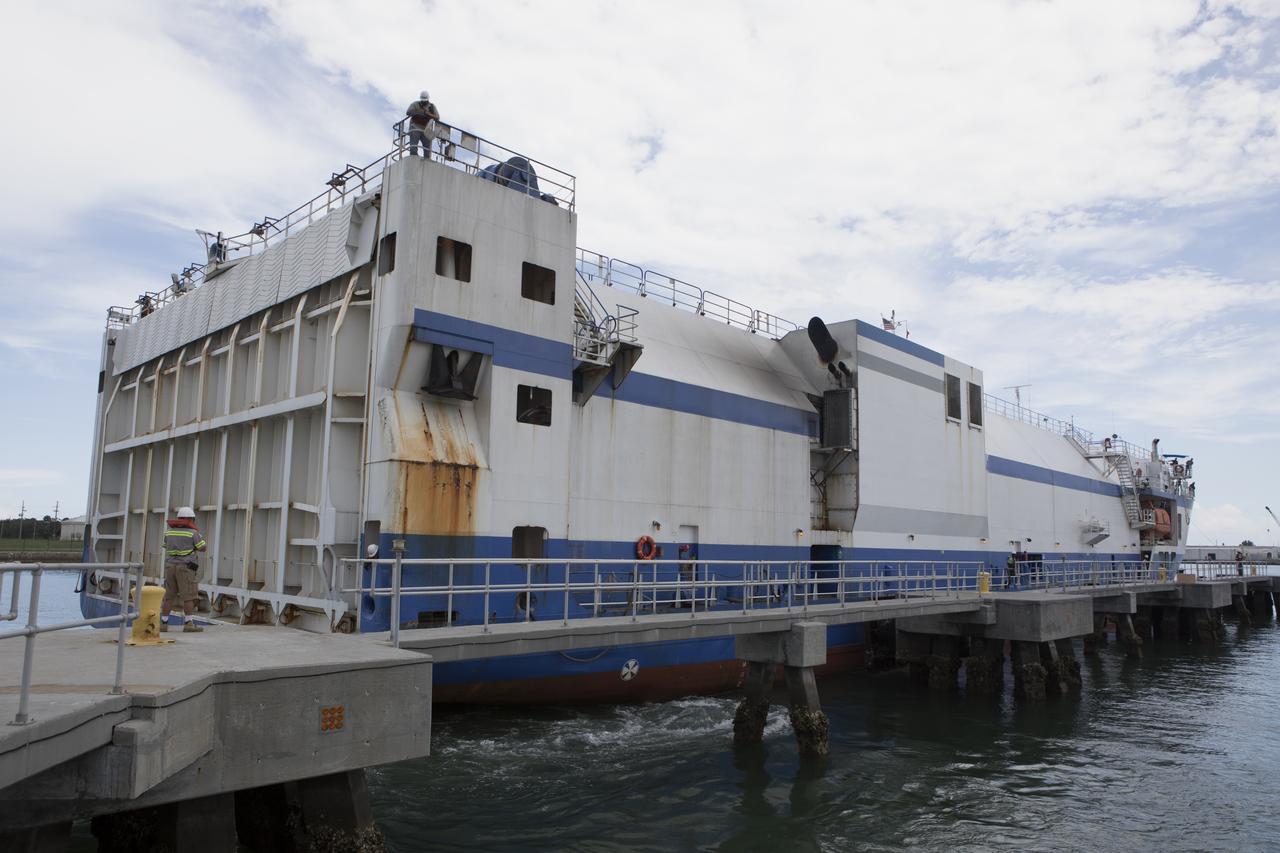
The United Launch Alliance (ULA) Mariner arrives at Port Canaveral in Florida carrying an Atlas V rocket booster bound for nearby Cape Canaveral Air Force Station. The rocket is scheduled to launch the Tracking and Data Relay Satellite, TDRS-M. It will be the latest spacecraft destined for the agency's constellation of communications satellites that allows nearly continuous contact with orbiting spacecraft ranging from the International Space Station and Hubble Space Telescope to the array of scientific observatories. Liftoff atop the ULA Atlas V rocket is scheduled to take place from Cape Canaveral's Space Launch Complex 41 on Aug. 3, 2017 at 9:02 a.m. EDT.
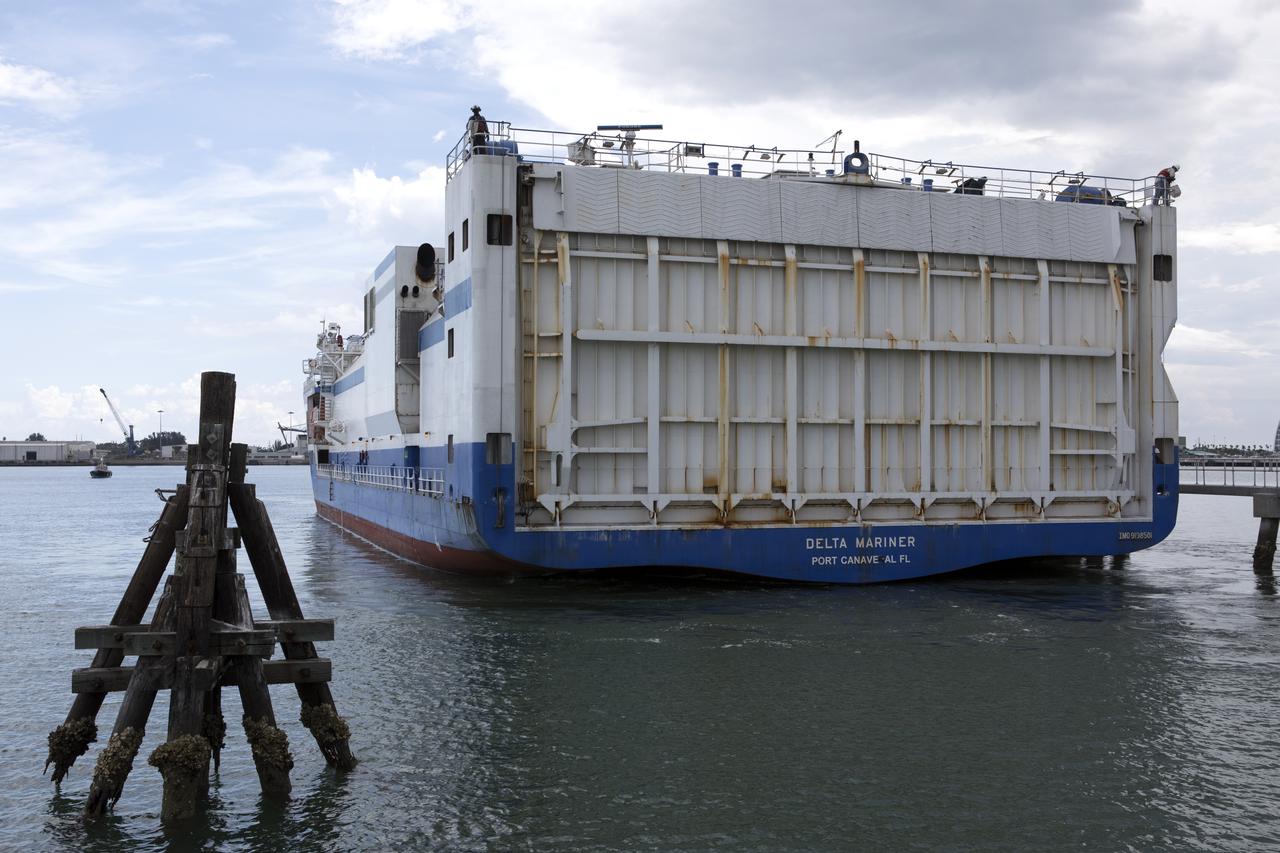
The United Launch Alliance (ULA) Mariner arrives at Port Canaveral in Florida carrying an Atlas V rocket booster bound for nearby Cape Canaveral Air Force Station. The rocket is scheduled to launch the Tracking and Data Relay Satellite, TDRS-M. It will be the latest spacecraft destined for the agency's constellation of communications satellites that allows nearly continuous contact with orbiting spacecraft ranging from the International Space Station and Hubble Space Telescope to the array of scientific observatories. Liftoff atop the ULA Atlas V rocket is scheduled to take place from Cape Canaveral's Space Launch Complex 41 on Aug. 3, 2017 at 9:02 a.m. EDT.
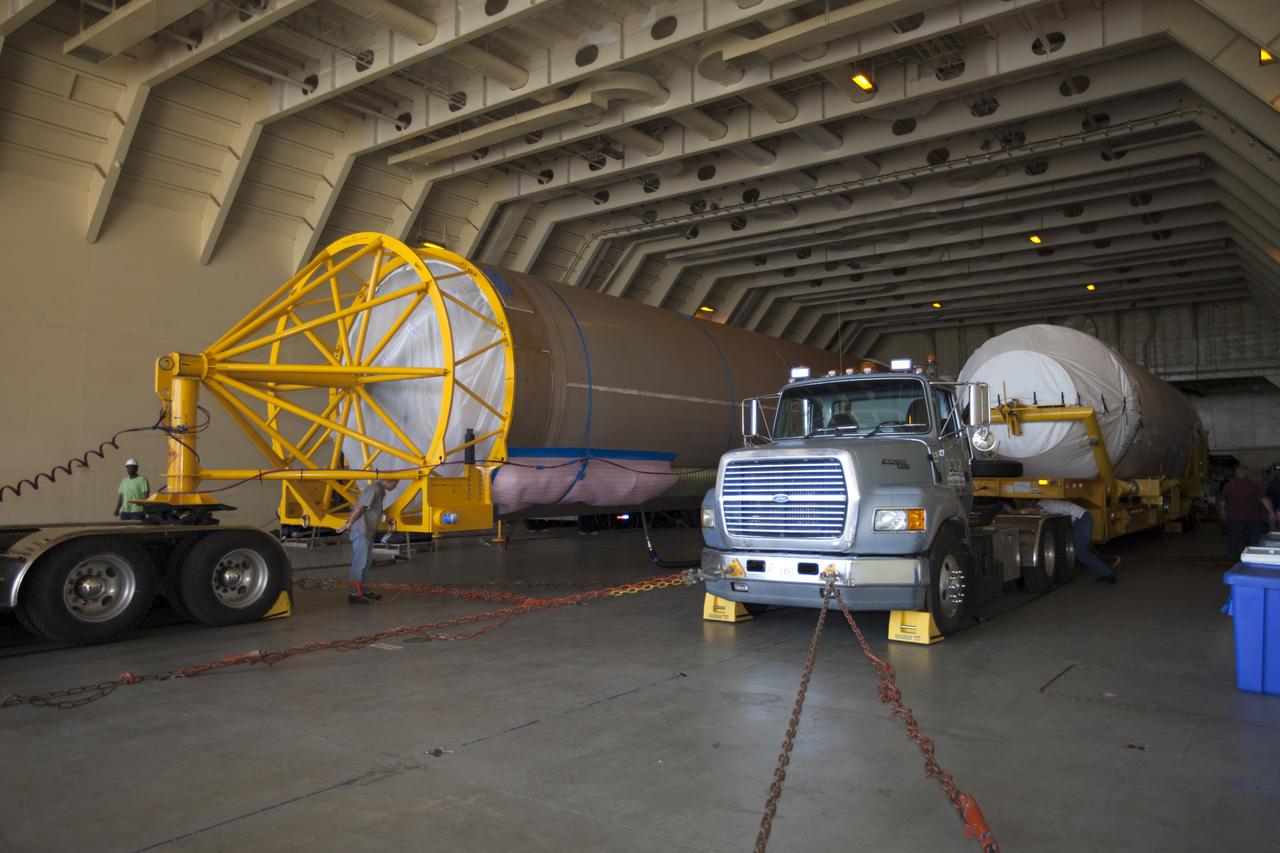
At Port Canaveral in Florida, a United Launch Alliance Atlas V rocket booster and Centaur upper stage are about to be transported from the company's Mariner ship to the Atlas Spaceflight Operations Center at Cape Canaveral Air Force Station. The rocket is scheduled to launch the Tracking and Data Relay Satellite, TDRS-M. It will be the latest spacecraft destined for the agency's constellation of communications satellites that allows nearly continuous contact with orbiting spacecraft ranging from the International Space Station and Hubble Space Telescope to the array of scientific observatories. Liftoff atop the ULA Atlas V rocket is scheduled to take place from Cape Canaveral's Space Launch Complex 41 on Aug. 3, 2017 at 9:02 a.m. EDT.
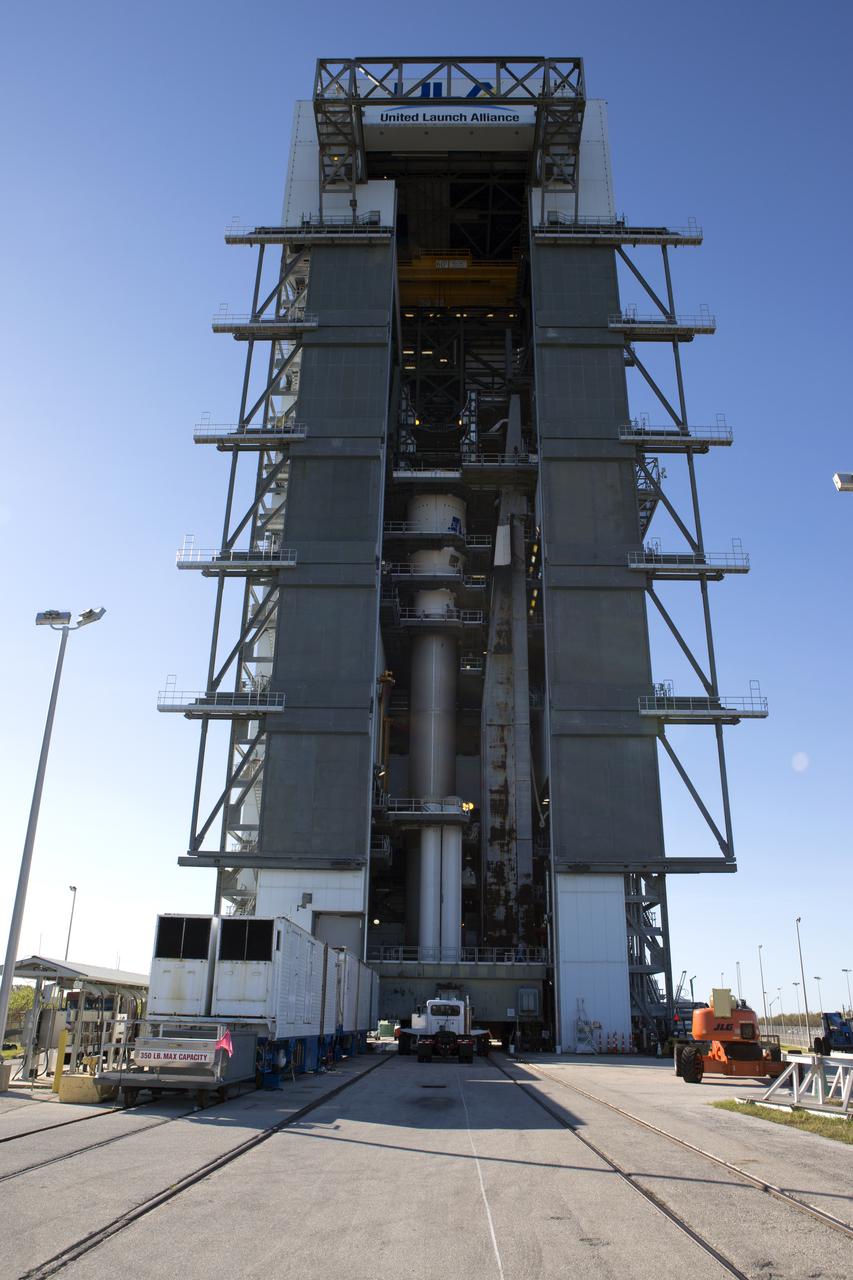
Operations are underway to stack the United Launch Alliance Atlas V Centaur second stage onto the first stage in the Vertical Integration Facility at Space Launch Complex 41 at Cape Canaveral Air Force Station in Florida. The Geostationary Operational Environmental Satellite (GOES-R) will launch aboard the Atlas V rocket in November. GOES-R is the first satellite in a series of next-generation NOAA GOES Satellites.
United Launch Alliance team members assist as operation begin to lift the Atlas V Centaur second stage into the Vertical Integration Facility at Space Launch Complex 41 at Cape Canaveral Air Force Station in Florida. The Geostationary Operational Environmental Satellite (GOES-R) will launch aboard the Atlas V rocket in November. GOES-R is the first satellite in a series of next-generation NOAA GOES Satellites.
Operations are underway to stack the United Launch Alliance Atlas V Centaur second stage onto the first stage in the Vertical Integration Facility at Space Launch Complex 41 at Cape Canaveral Air Force Station in Florida. The Geostationary Operational Environmental Satellite (GOES-R) will launch aboard the Atlas V rocket in November. GOES-R is the first satellite in a series of next-generation NOAA GOES Satellites.
The United Launch Alliance Atlas V Centaur second stage is lifted up by crane for transfer into Vertical Integration Facility at Space Launch Complex 41 at Cape Canaveral Air Force Station in Florida. The Geostationary Operational Environmental Satellite (GOES-R) will launch aboard the Atlas V rocket in November. GOES-R is the first satellite in a series of next-generation NOAA GOES Satellites.
The United Launch Alliance Atlas V Centaur second stage has been lifted up and transferred into the Vertical Integration Facility at Space Launch Complex 41 at Cape Canaveral Air Force Station in Florida. The Geostationary Operational Environmental Satellite (GOES-R) will launch aboard the Atlas V rocket in November. GOES-R is the first satellite in a series of next-generation NOAA GOES Satellites.
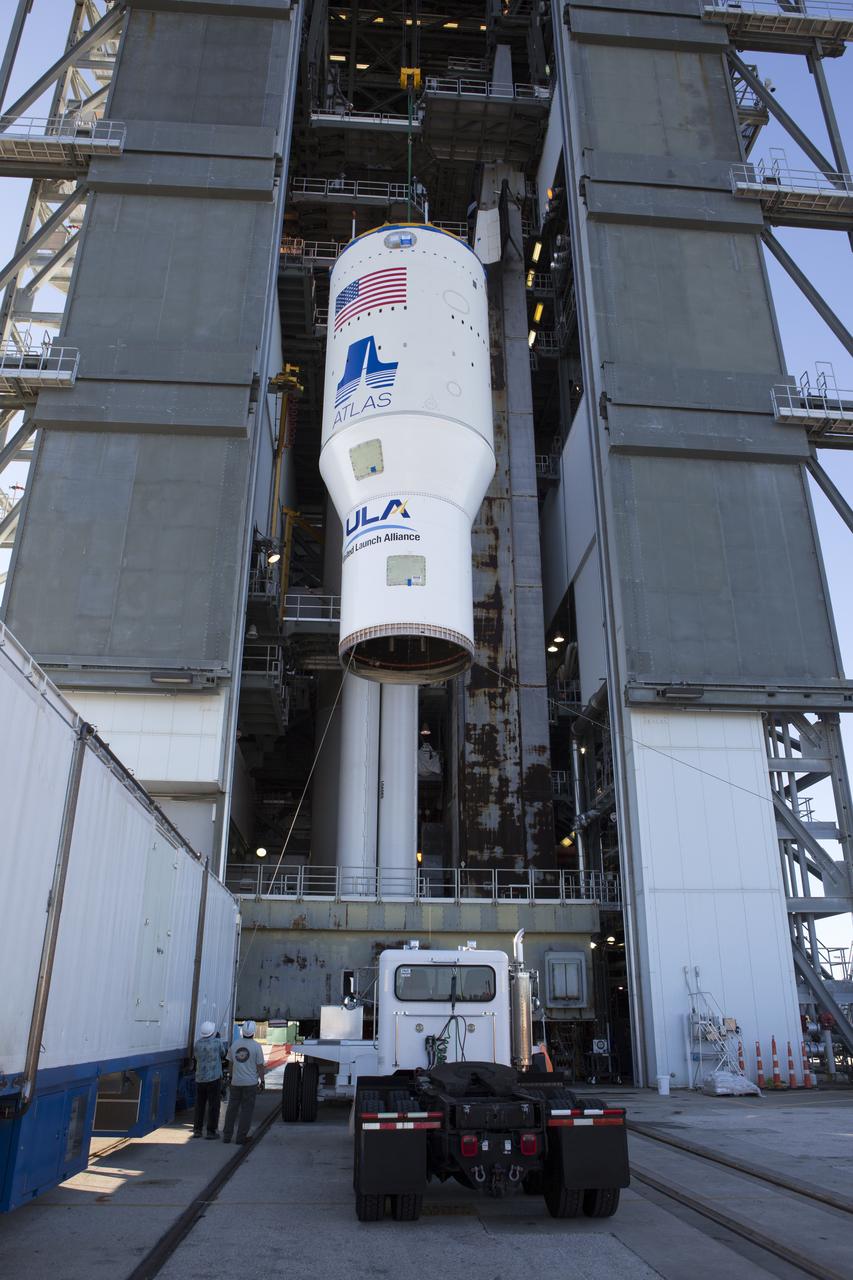
The United Launch Alliance Atlas V Centaur second stage is lifted up for transfer into the Vertical Integration Facility at Space Launch Complex 41 at Cape Canaveral Air Force Station in Florida. The Geostationary Operational Environmental Satellite (GOES-R) will launch aboard the Atlas V rocket in November. GOES-R is the first satellite in a series of next-generation NOAA GOES Satellites.
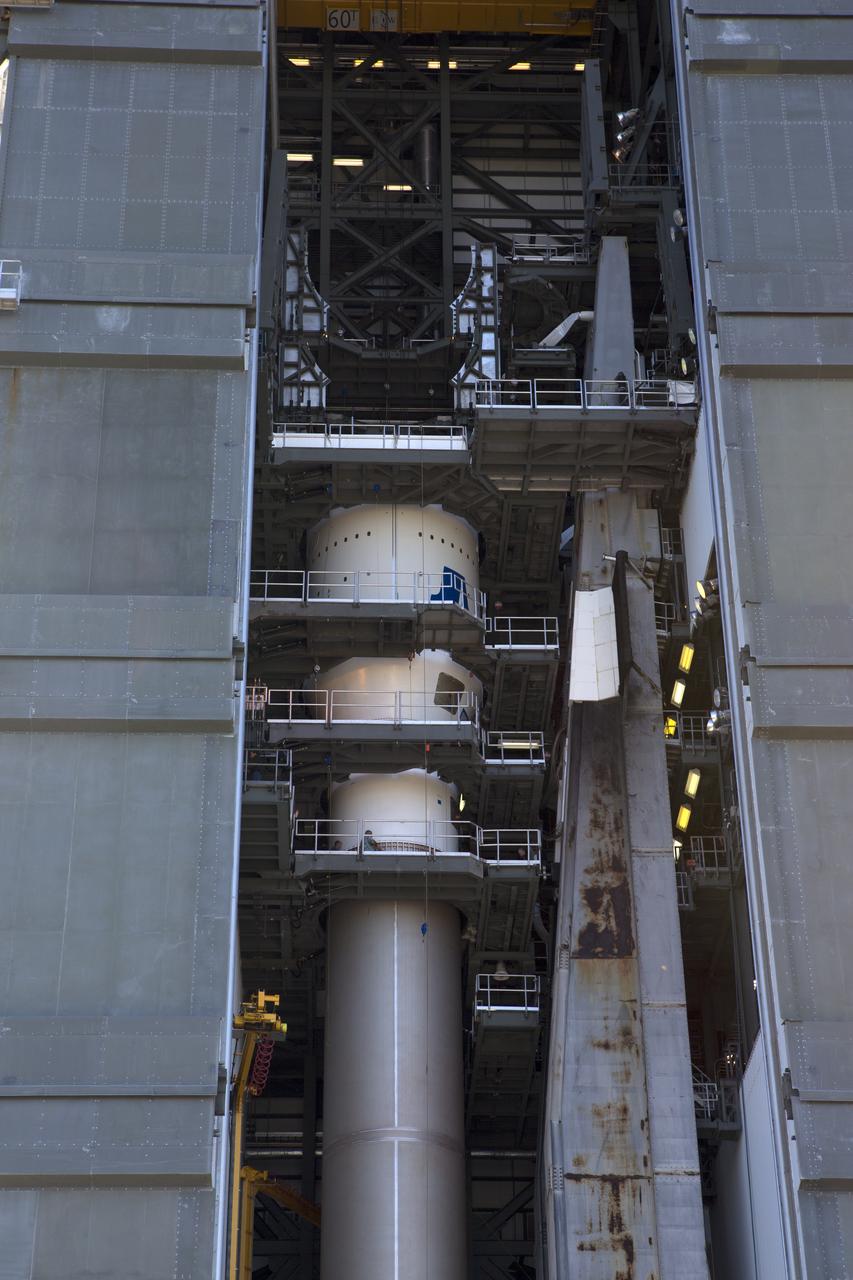
The United Launch Alliance Atlas V Centaur second stage has been mated to the first stage in the Vertical Integration Facility at Space Launch Complex 41 at Cape Canaveral Air Force Station in Florida. The Geostationary Operational Environmental Satellite (GOES-R) will launch aboard the Atlas V rocket in November. GOES-R is the first satellite in a series of next-generation NOAA GOES Satellites.
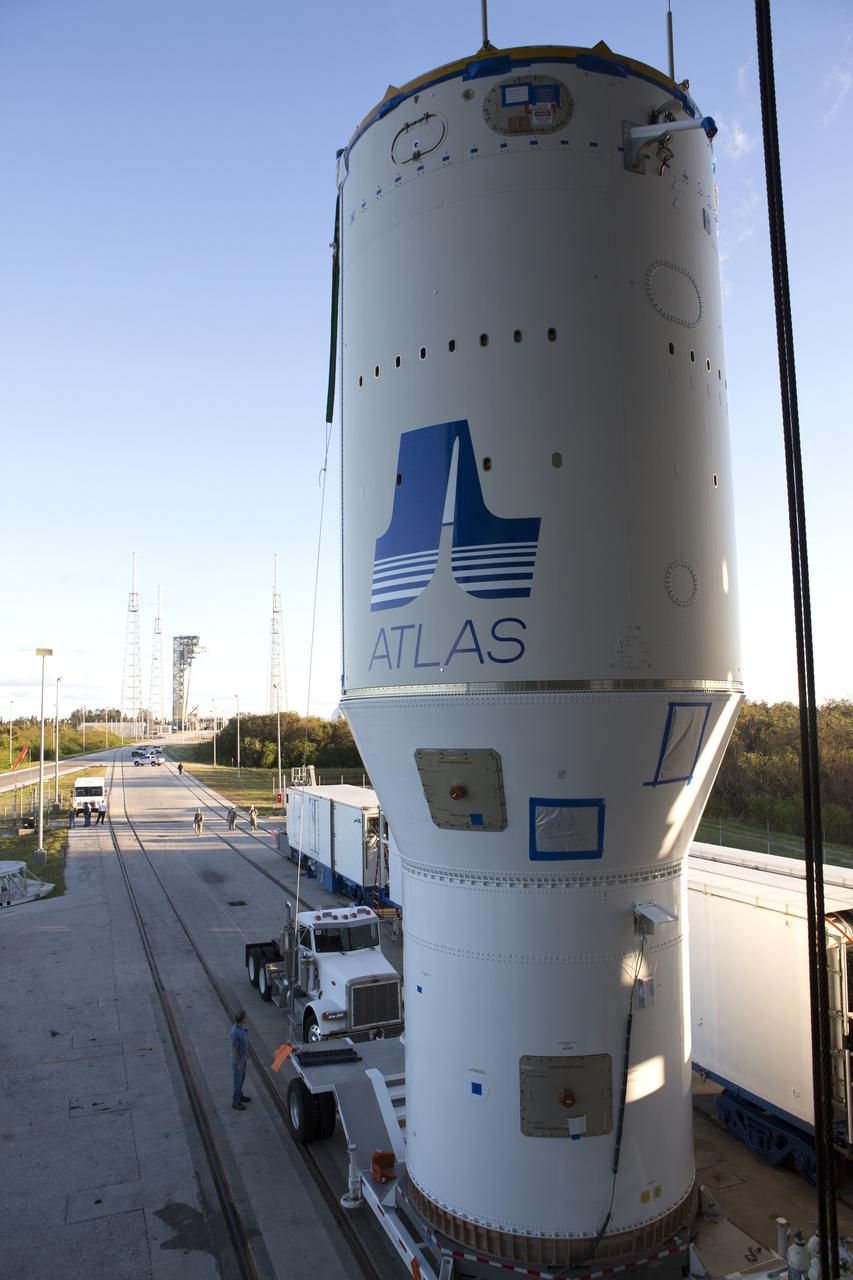
A close-up view of the United Launch Alliance Atlas V Centaur second stage as it travels to the Vertical Integration Facility at Space Launch Complex 41 at Cape Canaveral Air Force Station in Florida. The Geostationary Operational Environmental Satellite (GOES-R) will launch aboard the Atlas V rocket in November. GOES-R is the first satellite in a series of next-generation NOAA GOES Satellites.
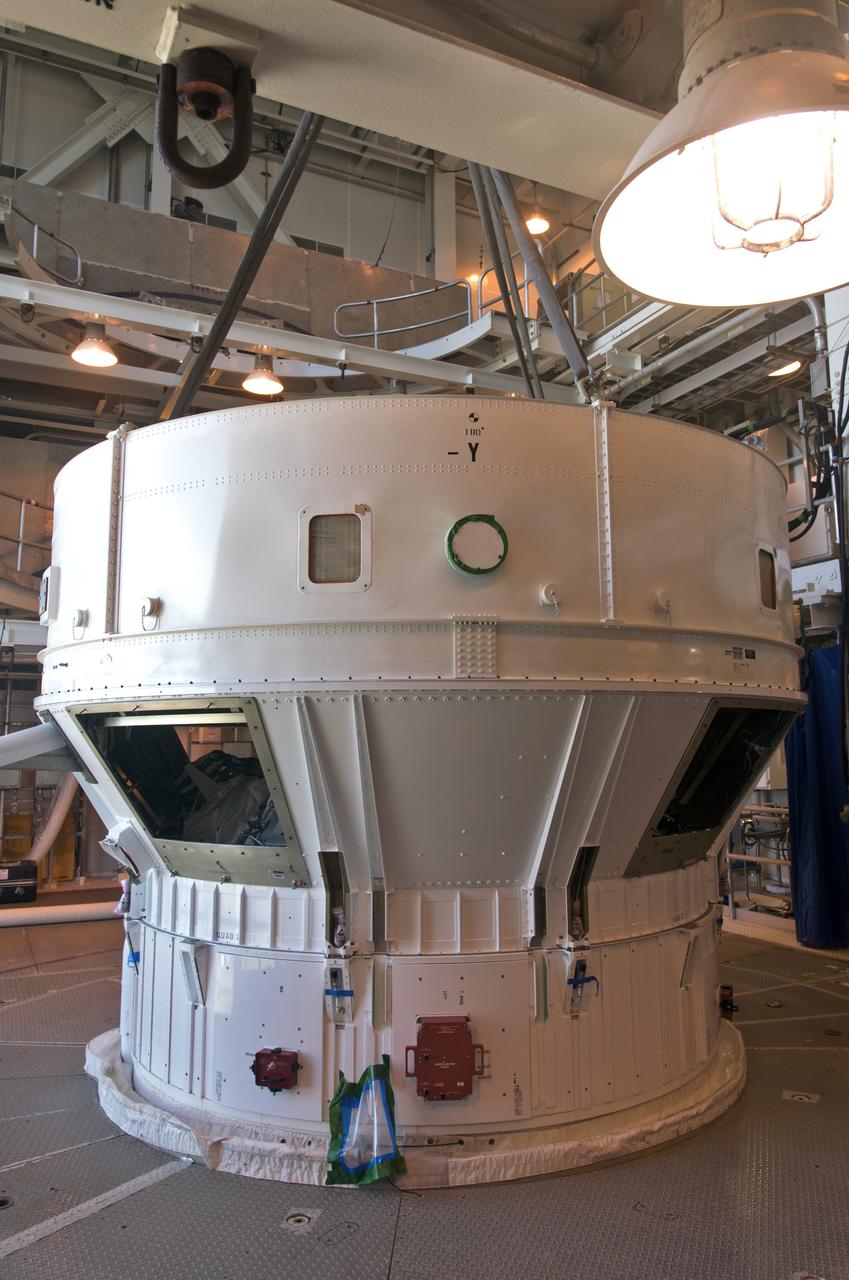
At Space Launch Complex 3 at Vandenberg Air Force Base in California, a boattail fairing has been mated atop a United Launch Alliance (ULA) Centaur upper stage. The boattail is an adaptor providing an interface between the Centaur and the payload fairing encapsulating NASA's Interior Exploration using Seismic Investigations, Geodesy and Heat Transport, or InSight, spacecraft. A ULA Atlas V rocket is scheduled to liftoff on May 5, 2018, launching InSight the first mission to explore the deep interior of Mars. It will investigate processes that shaped the rocky planets of the inner solar system including Earth.
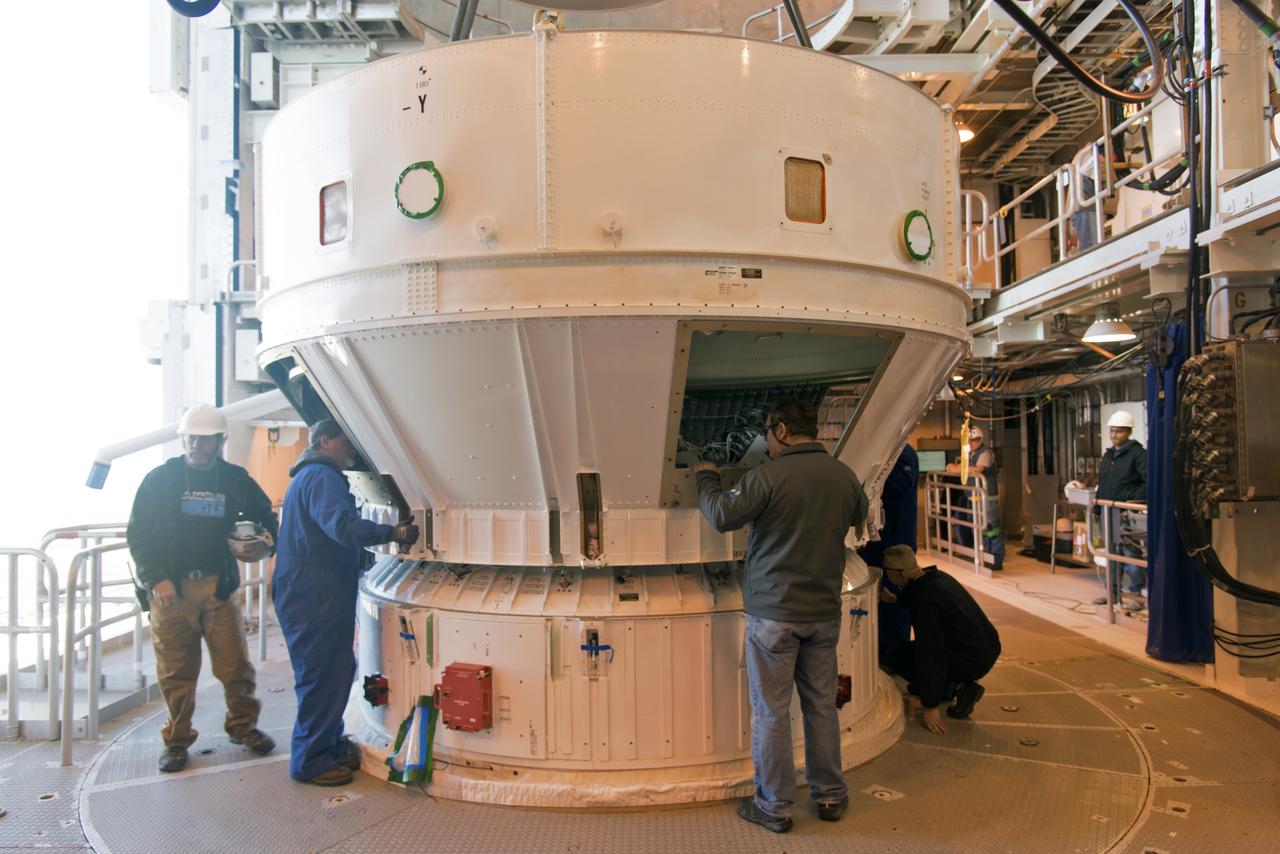
At Space Launch Complex 3 at Vandenberg Air Force Base in California, a boattail fairing is mated atop a United Launch Alliance (ULA) Centaur upper stage. The boattail is an adaptor providing an interface between the Centaur and the payload fairing encapsulating NASA's Interior Exploration using Seismic Investigations, Geodesy and Heat Transport, or InSight, spacecraft. A ULA Atlas V rocket is scheduled to liftoff on May 5, 2018, launching InSight the first mission to explore the deep interior of Mars. It will investigate processes that shaped the rocky planets of the inner solar system including Earth.
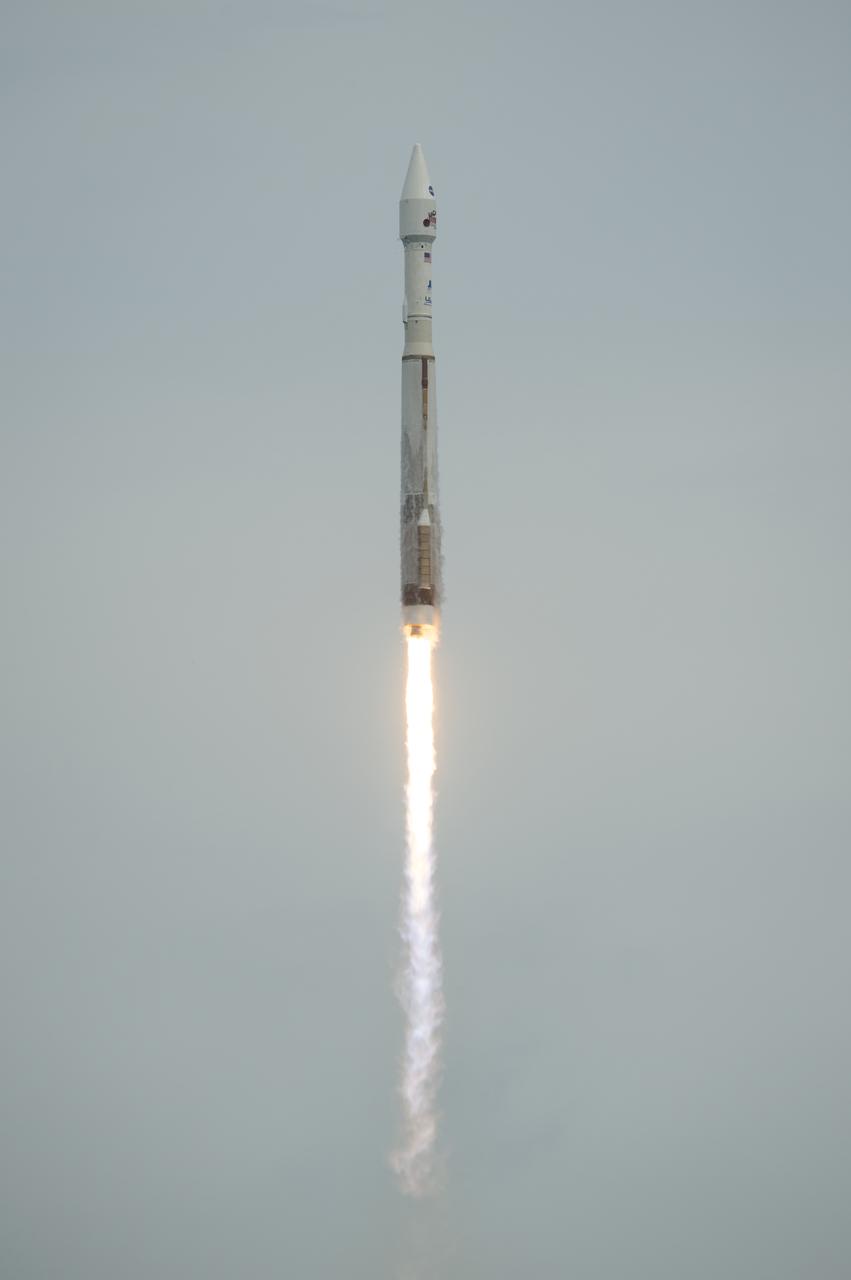
The United Launch Alliance Atlas V rocket with NASA’s Mars Atmosphere and Volatile EvolutioN (MAVEN) spacecraft launches from the Cape Canaveral Air Force Station Space Launch Complex 41, Monday, Nov. 18, 2013, Cape Canaveral, Florida. NASA’s Mars-bound spacecraft, the Mars Atmosphere and Volatile EvolutioN, or MAVEN, is the first spacecraft devoted to exploring and understanding the Martian upper atmosphere. Photo Credit: (NASA/Bill Ingalls)
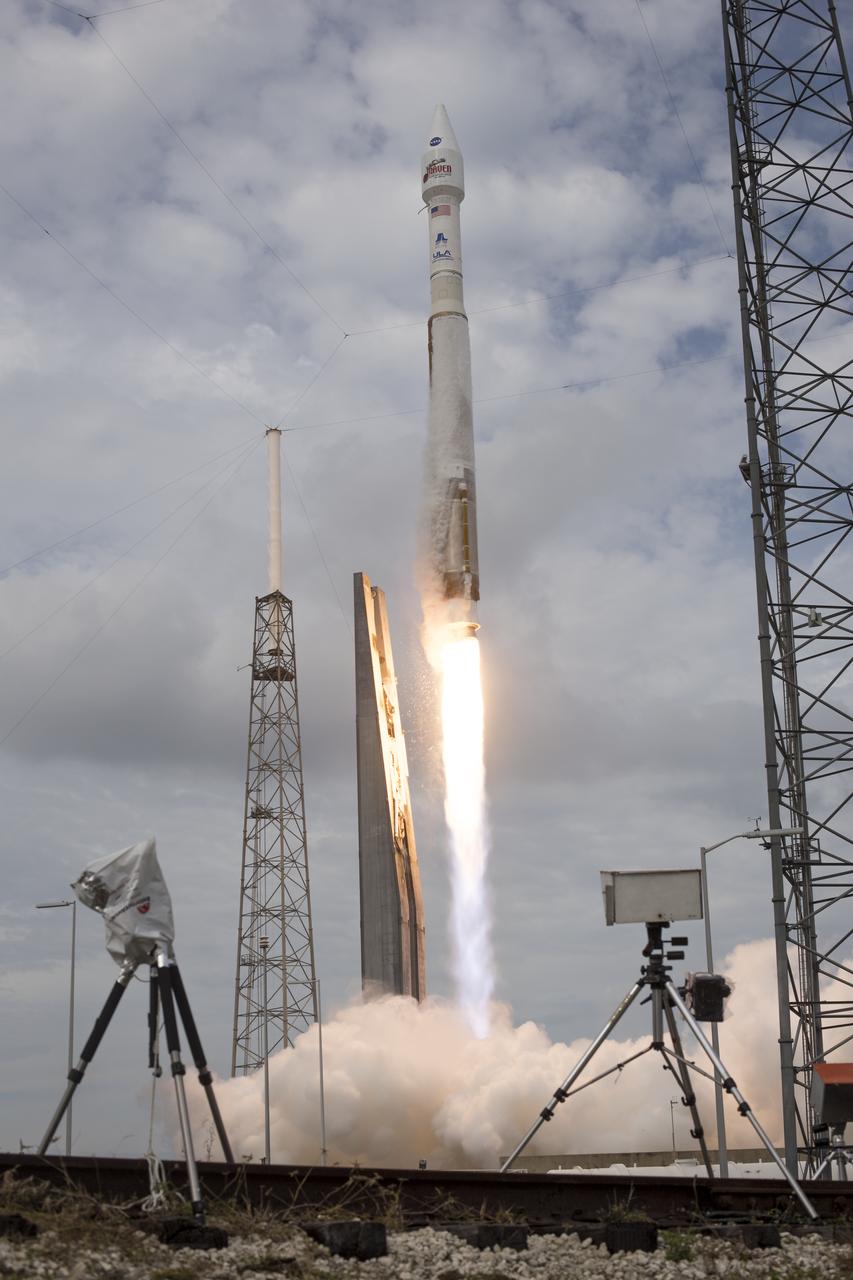
The United Launch Alliance Atlas V rocket with NASA’s Mars Atmosphere and Volatile EvolutioN (MAVEN) spacecraft launches from the Cape Canaveral Air Force Station Space Launch Complex 41, Monday, Nov. 18, 2013, Cape Canaveral, Florida. NASA’s Mars-bound spacecraft, the Mars Atmosphere and Volatile EvolutioN, or MAVEN, is the first spacecraft devoted to exploring and understanding the Martian upper atmosphere. Photo Credit: (NASA/Bill Ingalls)
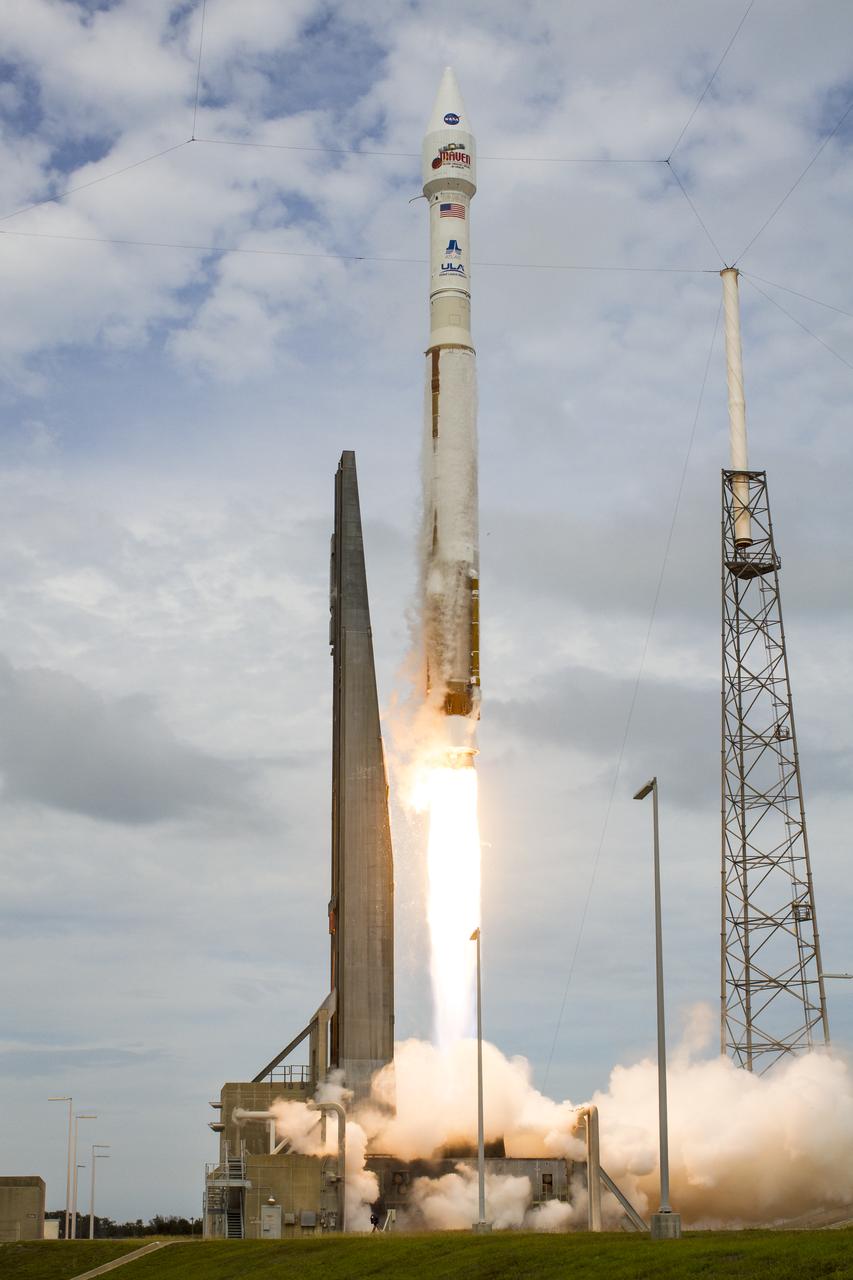
The United Launch Alliance Atlas V rocket with NASA’s Mars Atmosphere and Volatile Evolution (MAVEN) spacecraft launches from the Cape Canaveral Air Force Station Space Launch Complex 41, Monday, Nov. 18, 2013, Cape Canaveral, Florida. NASA’s Mars-bound spacecraft, the Mars Atmosphere and Volatile EvolutionN, or MAVEN, is the first spacecraft devoted to exploring and understanding the Martian upper atmosphere. Photo Credit: (NASA/Bill Ingalls)
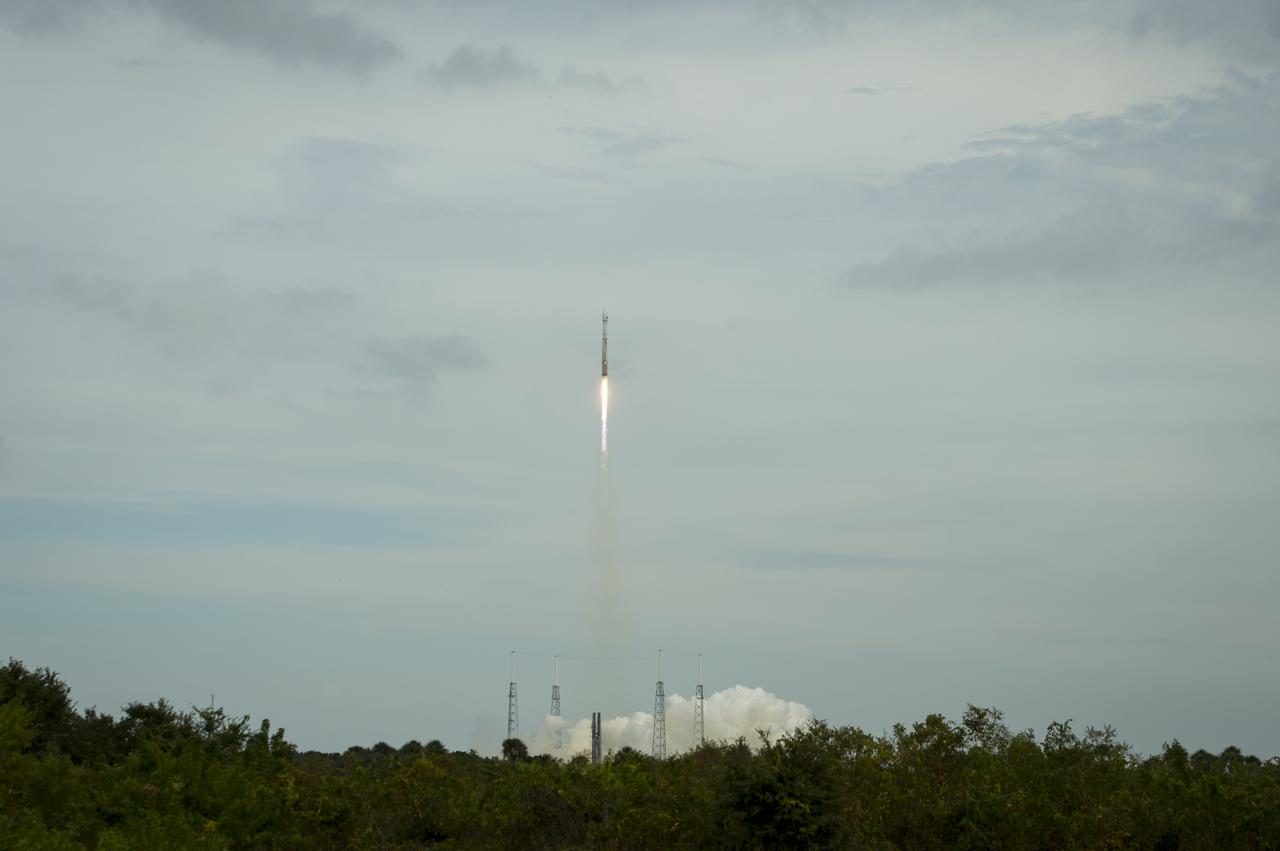
The United Launch Alliance Atlas V rocket with NASA’s Mars Atmosphere and Volatile EvolutioN (MAVEN) spacecraft launches from the Cape Canaveral Air Force Station Space Launch Complex 41, Monday, Nov. 18, 2013, Cape Canaveral, Florida. NASA’s Mars-bound spacecraft, the Mars Atmosphere and Volatile EvolutioN, or MAVEN, is the first spacecraft devoted to exploring and understanding the Martian upper atmosphere. Photo Credit: (NASA/Bill Ingalls)
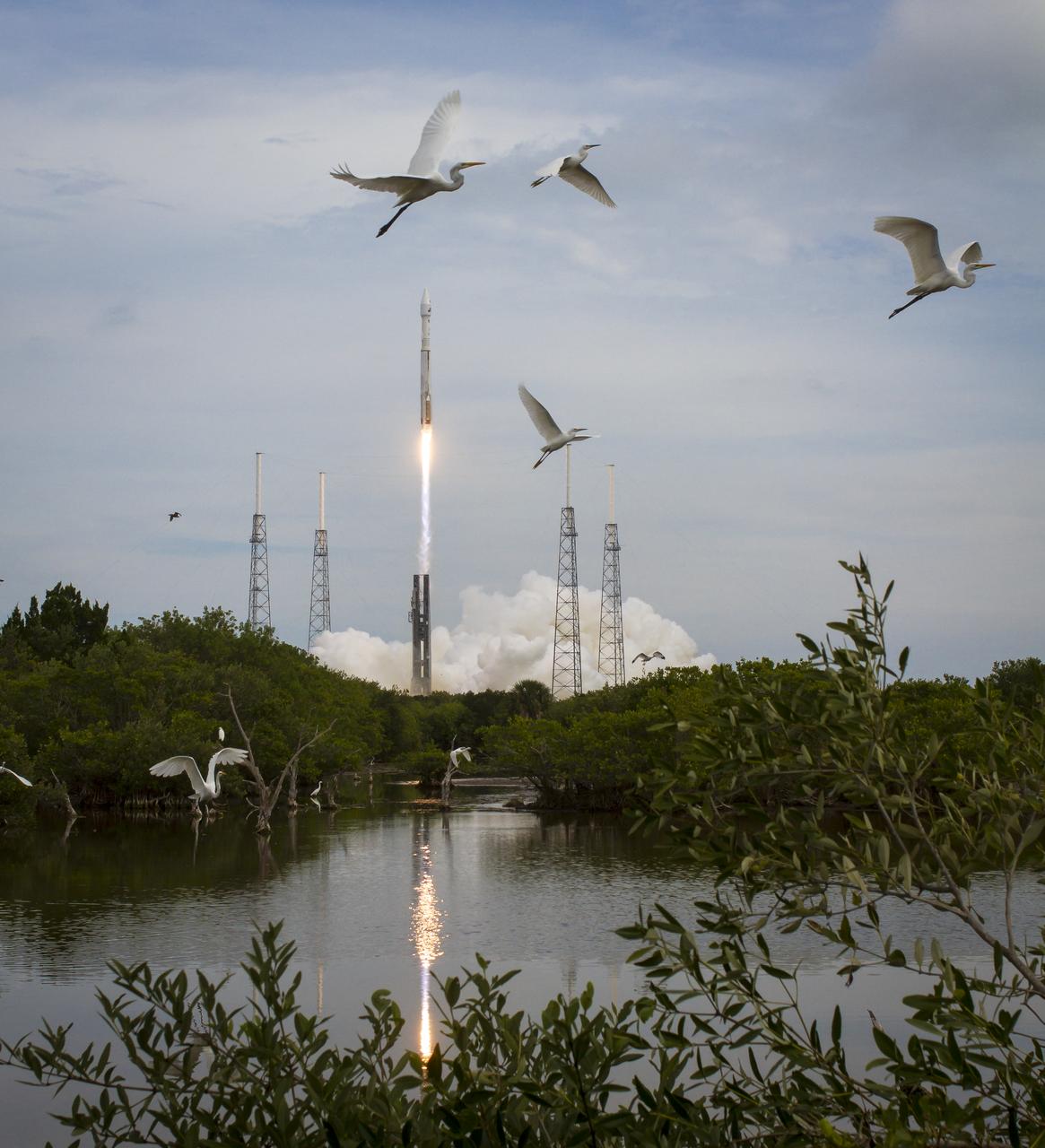
The United Launch Alliance Atlas V rocket with NASA’s Mars Atmosphere and Volatile EvolutioN (MAVEN) spacecraft launches from the Cape Canaveral Air Force Station Space Launch Complex 41, Monday, Nov. 18, 2013, Cape Canaveral, Florida. NASA’s Mars-bound spacecraft, the Mars Atmosphere and Volatile EvolutioN, or MAVEN, is the first spacecraft devoted to exploring and understanding the Martian upper atmosphere. Photo Credit: (NASA/Bill Ingalls)
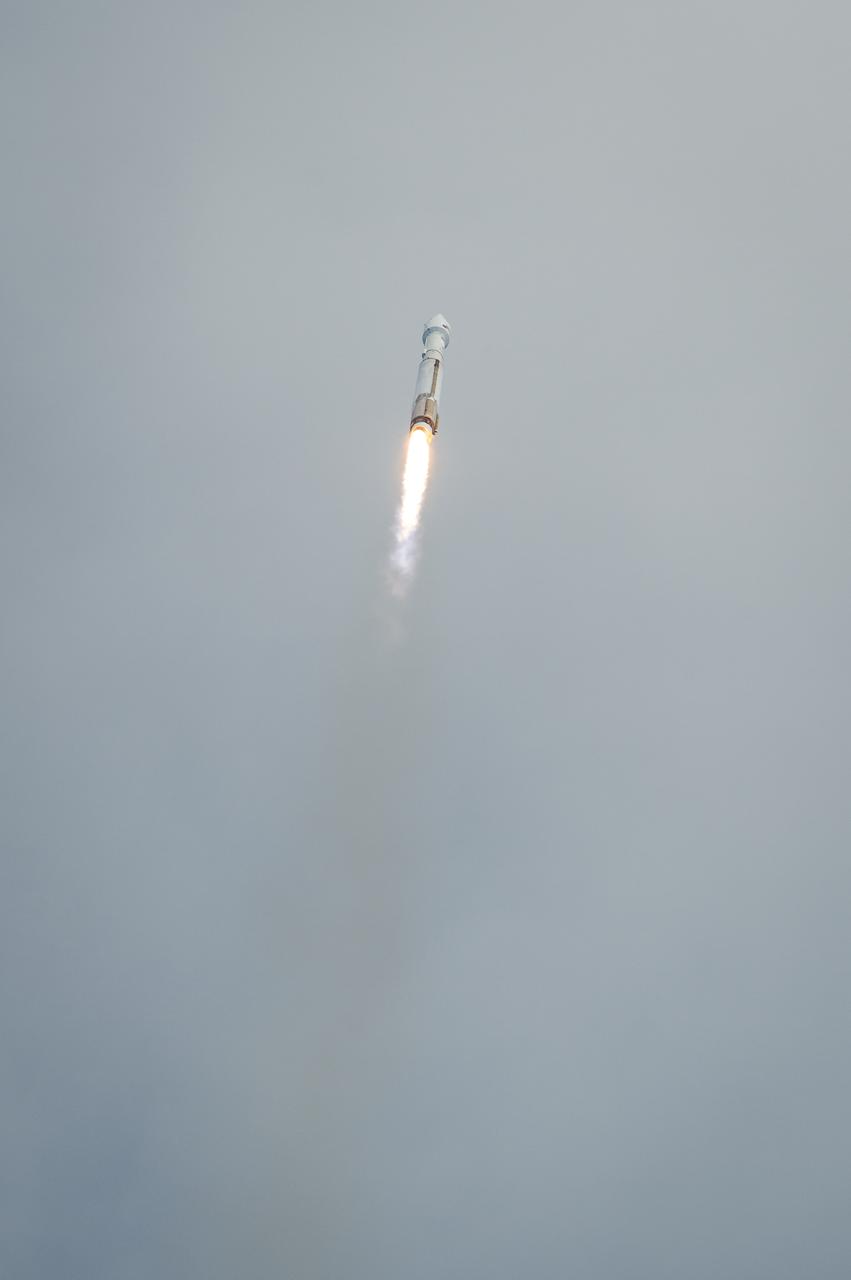
The United Launch Alliance Atlas V rocket with NASA’s Mars Atmosphere and Volatile EvolutioN (MAVEN) spacecraft launches from the Cape Canaveral Air Force Station Space Launch Complex 41, Monday, Nov. 18, 2013, Cape Canaveral, Florida. NASA’s Mars-bound spacecraft, the Mars Atmosphere and Volatile EvolutioN, or MAVEN, is the first spacecraft devoted to exploring and understanding the Martian upper atmosphere. Photo Credit: (NASA/Bill Ingalls)
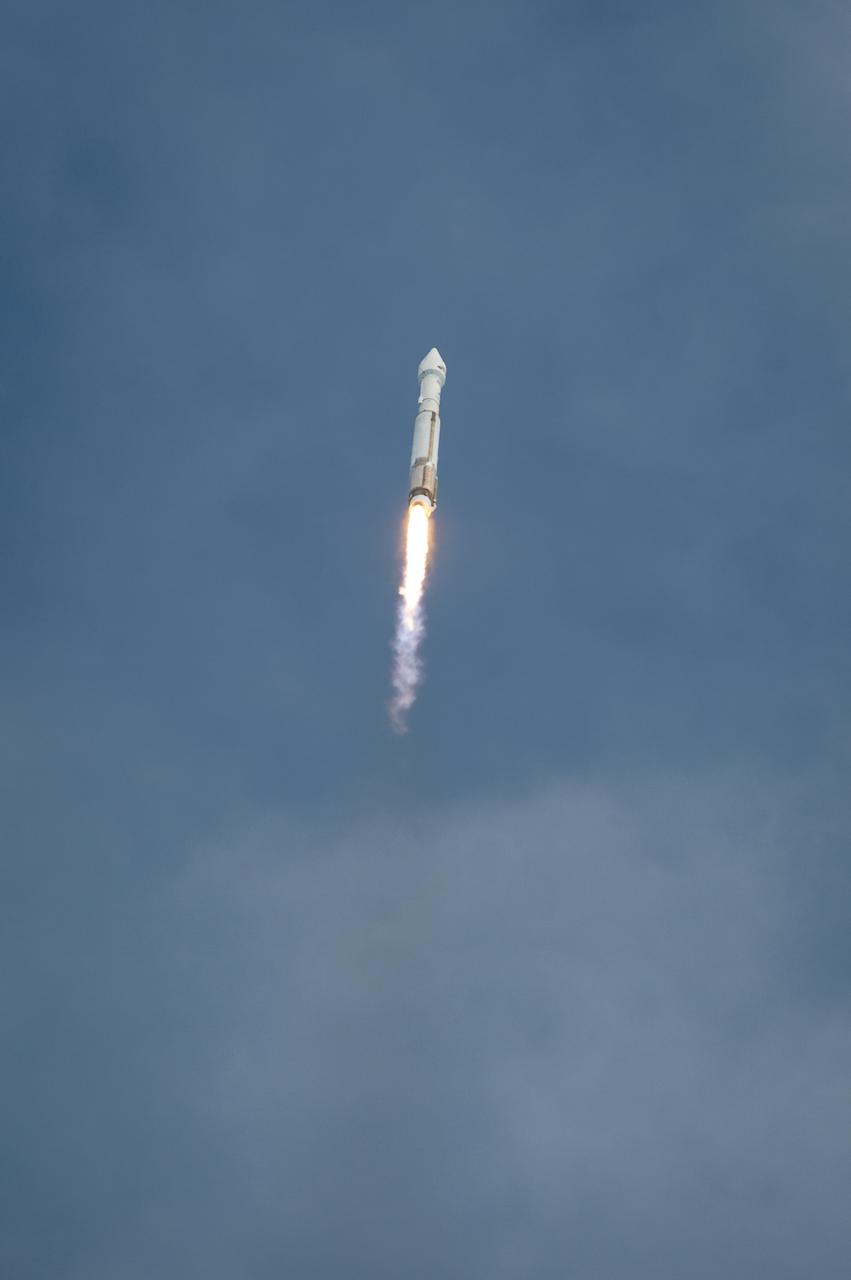
The United Launch Alliance Atlas V rocket with NASA’s Mars Atmosphere and Volatile EvolutioN (MAVEN) spacecraft launches from the Cape Canaveral Air Force Station Space Launch Complex 41, Monday, Nov. 18, 2013, Cape Canaveral, Florida. NASA’s Mars-bound spacecraft, the Mars Atmosphere and Volatile EvolutioN, or MAVEN, is the first spacecraft devoted to exploring and understanding the Martian upper atmosphere. Photo Credit: (NASA/Bill Ingalls)
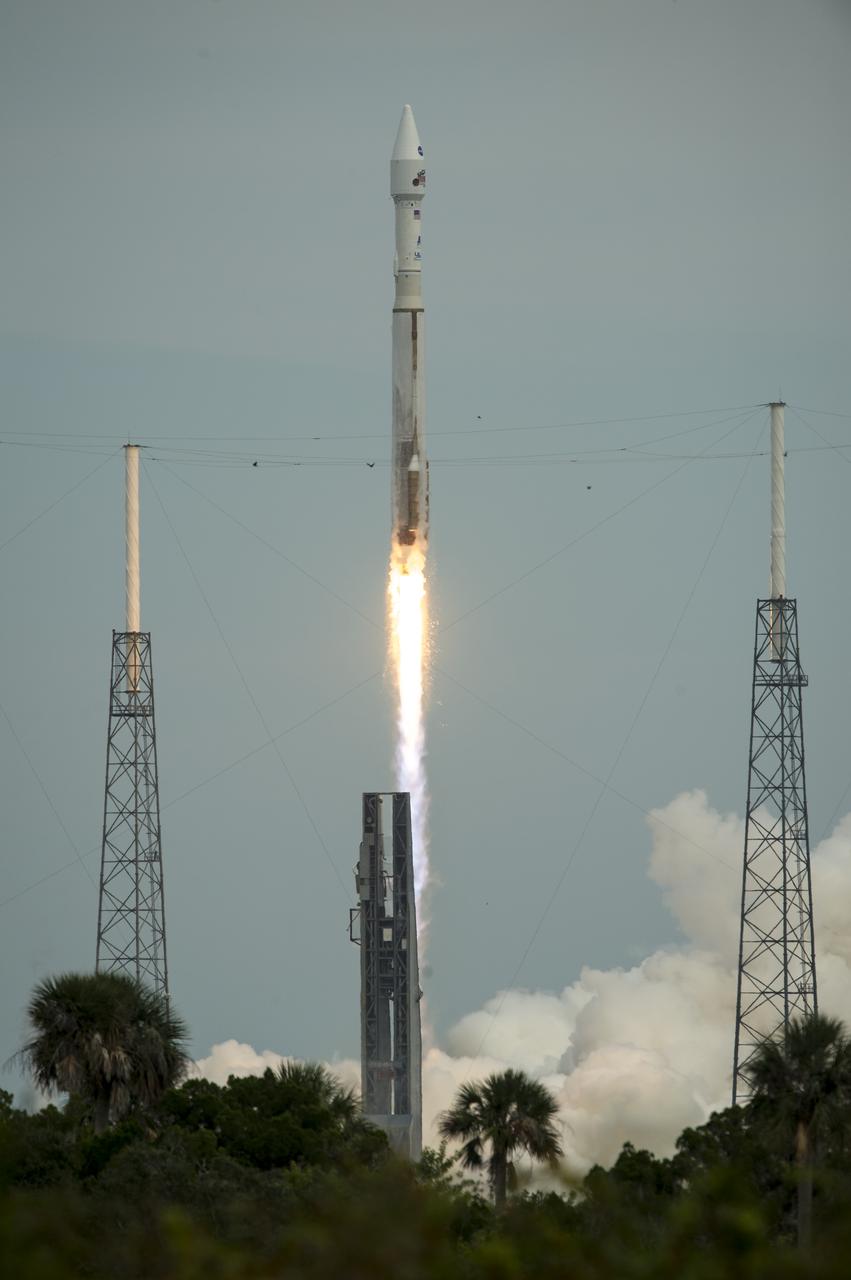
The United Launch Alliance Atlas V rocket with NASA’s Mars Atmosphere and Volatile EvolutioN (MAVEN) spacecraft launches from the Cape Canaveral Air Force Station Space Launch Complex 41, Monday, Nov. 18, 2013, Cape Canaveral, Florida. NASA’s Mars-bound spacecraft, the Mars Atmosphere and Volatile EvolutioN, or MAVEN, is the first spacecraft devoted to exploring and understanding the Martian upper atmosphere. Photo Credit: (NASA/Bill Ingalls)
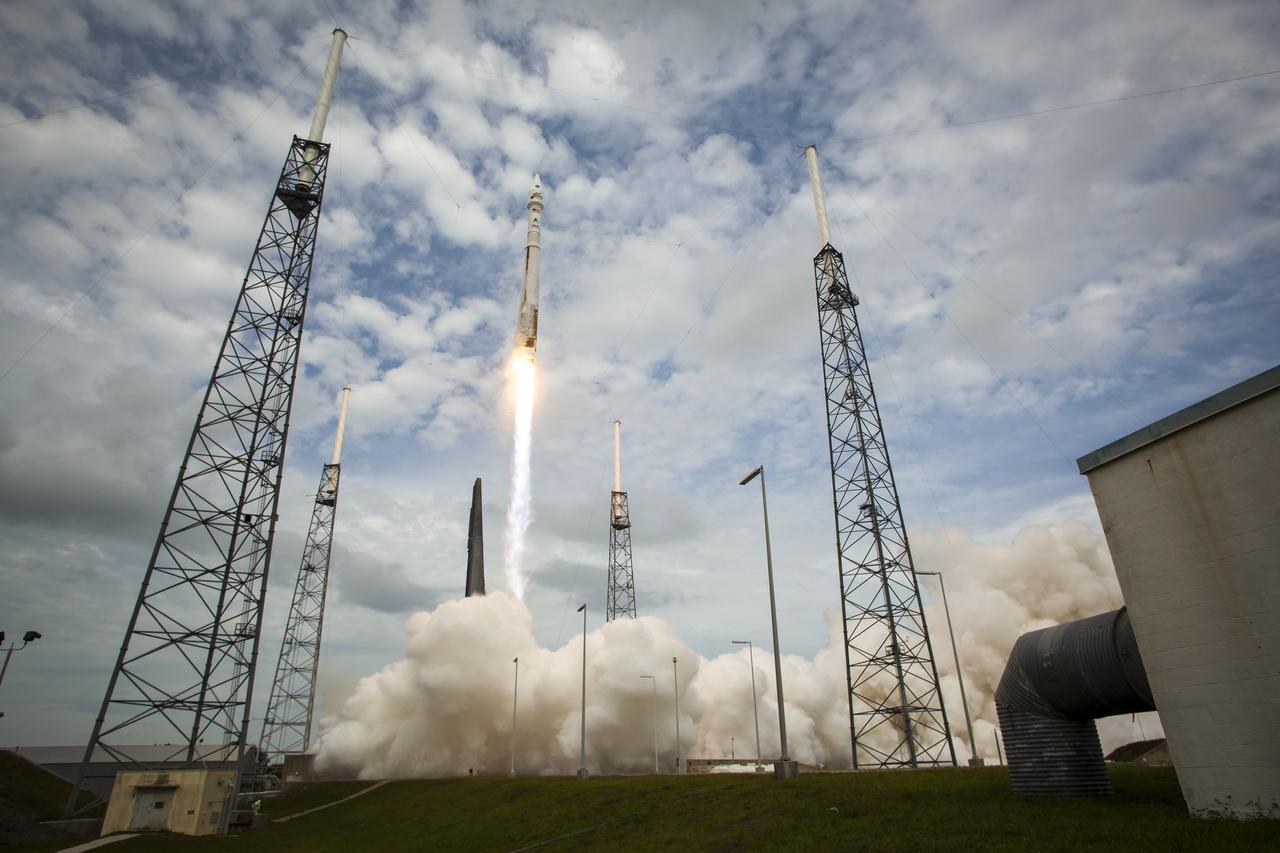
The United Launch Alliance Atlas V rocket with NASA’s Mars Atmosphere and Volatile EvolutioN (MAVEN) spacecraft launches from the Cape Canaveral Air Force Station Space Launch Complex 41, Monday, Nov. 18, 2013, Cape Canaveral, Florida. NASA’s Mars-bound spacecraft, the Mars Atmosphere and Volatile EvolutioN, or MAVEN, is the first spacecraft devoted to exploring and understanding the Martian upper atmosphere. Photo Credit: (NASA/Bill Ingalls)
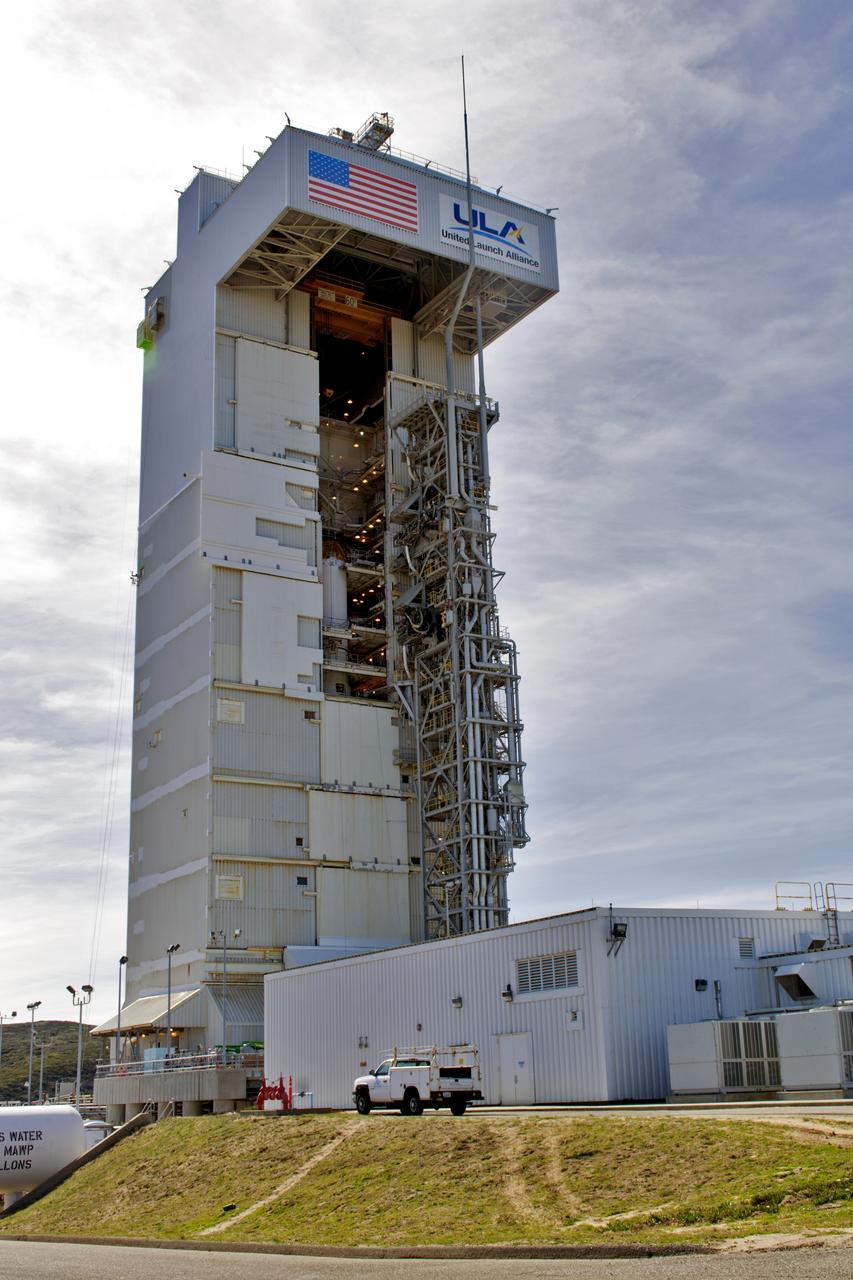
At Space Launch Complex 3 at Vandenberg Air Force Base in California a crane lifts a United Launch Alliance Centaur upper stage for mating atop an Atlas V booster. The rocket will launch NASA's Interior Exploration using Seismic Investigations, Geodesy and Heat Transport, or InSight, mission to land on Mars. InSight is the first mission to explore the Red Planet's deep interior. It will investigate processes that shaped the rocky planets of the inner solar system including Earth. Liftoff is scheduled for May 5, 2018.
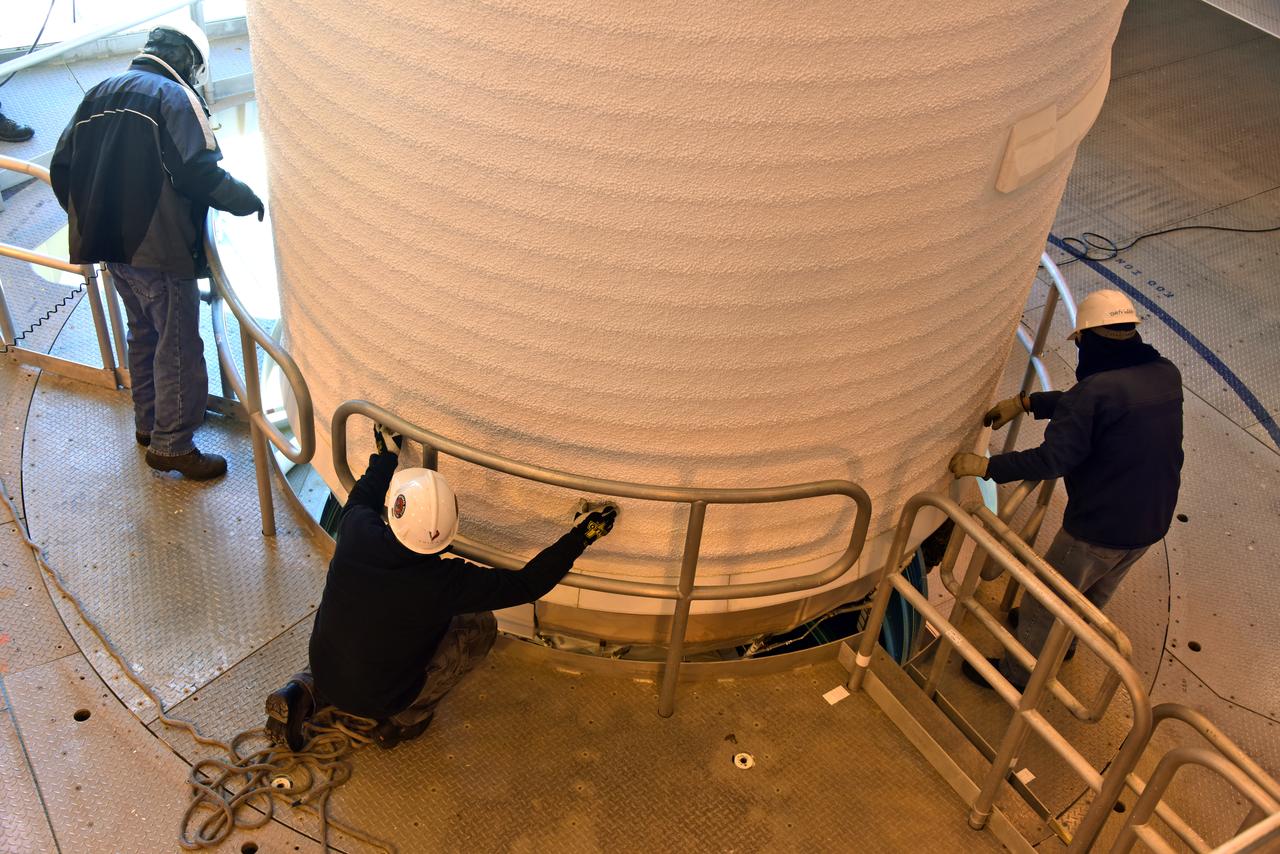
At Space Launch Complex 3 at Vandenberg Air Force Base in California technicians and engineers mate a United Launch Alliance Centaur upper stage atop an Atlas V booster. The rocket will launch NASA's Interior Exploration using Seismic Investigations, Geodesy and Heat Transport, or InSight, mission to land on Mars. InSight is the first mission to explore the Red Planet's deep interior. It will investigate processes that shaped the rocky planets of the inner solar system including Earth. Liftoff is scheduled for May 5, 2018.
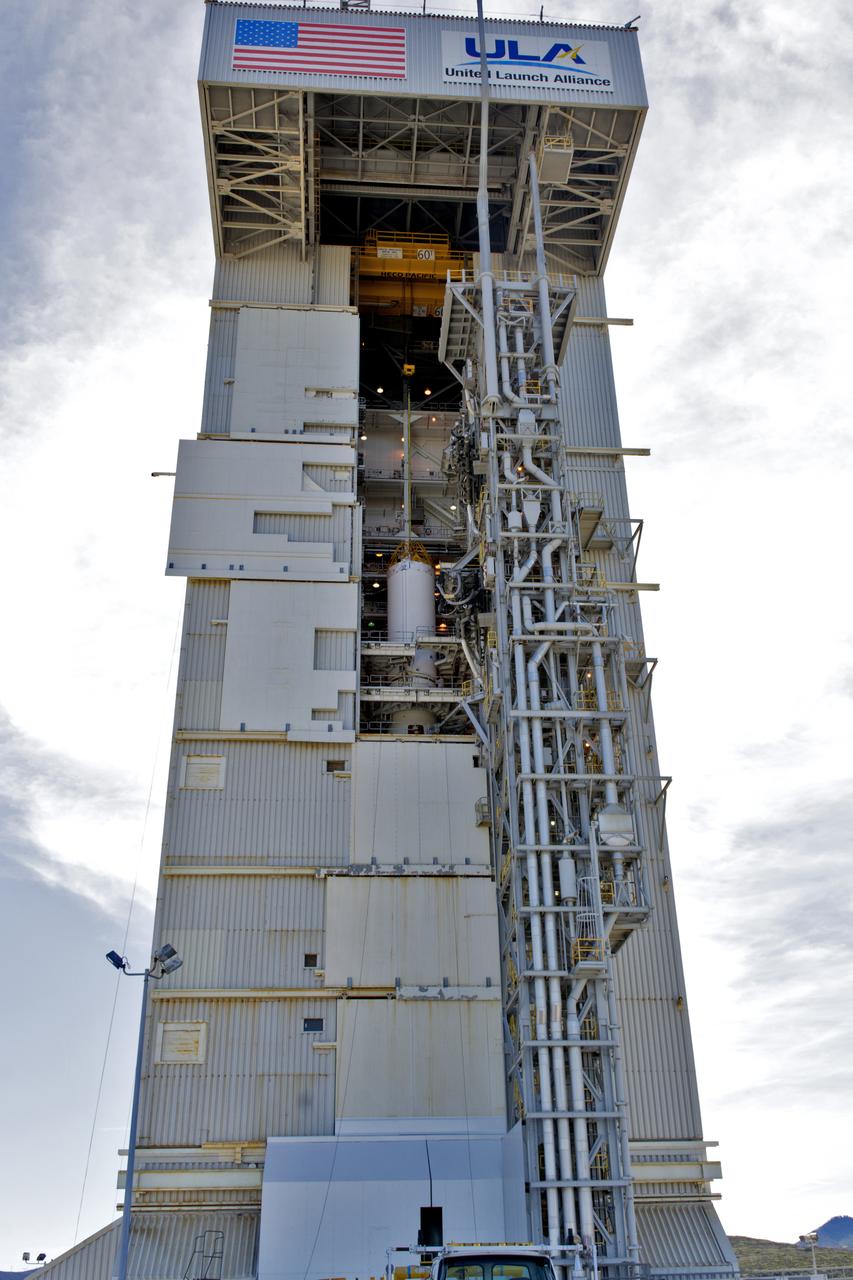
At Space Launch Complex 3 at Vandenberg Air Force Base in California a crane lifts a United Launch Alliance Centaur upper stage for mating atop an Atlas V booster. The rocket will launch NASA's Interior Exploration using Seismic Investigations, Geodesy and Heat Transport, or InSight, mission to land on Mars. InSight is the first mission to explore the Red Planet's deep interior. It will investigate processes that shaped the rocky planets of the inner solar system including Earth. Liftoff is scheduled for May 5, 2018.
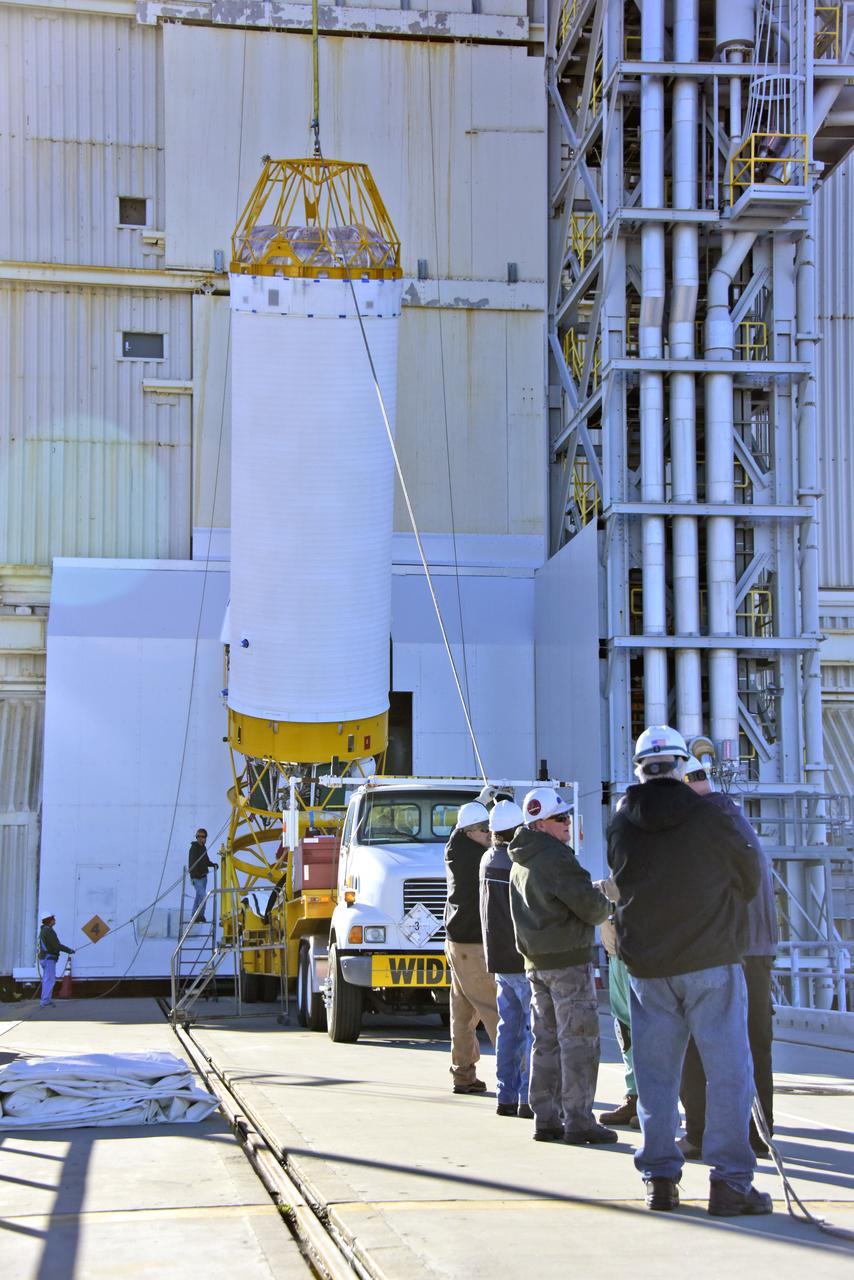
At Space Launch Complex 3 at Vandenberg Air Force Base in California a crane lifts a United Launch Alliance Centaur upper stage for mating atop an Atlas V booster. The rocket will launch NASA's Interior Exploration using Seismic Investigations, Geodesy and Heat Transport, or InSight, mission to land on Mars. InSight is the first mission to explore the Red Planet's deep interior. It will investigate processes that shaped the rocky planets of the inner solar system including Earth. Liftoff is scheduled for May 5, 2018.
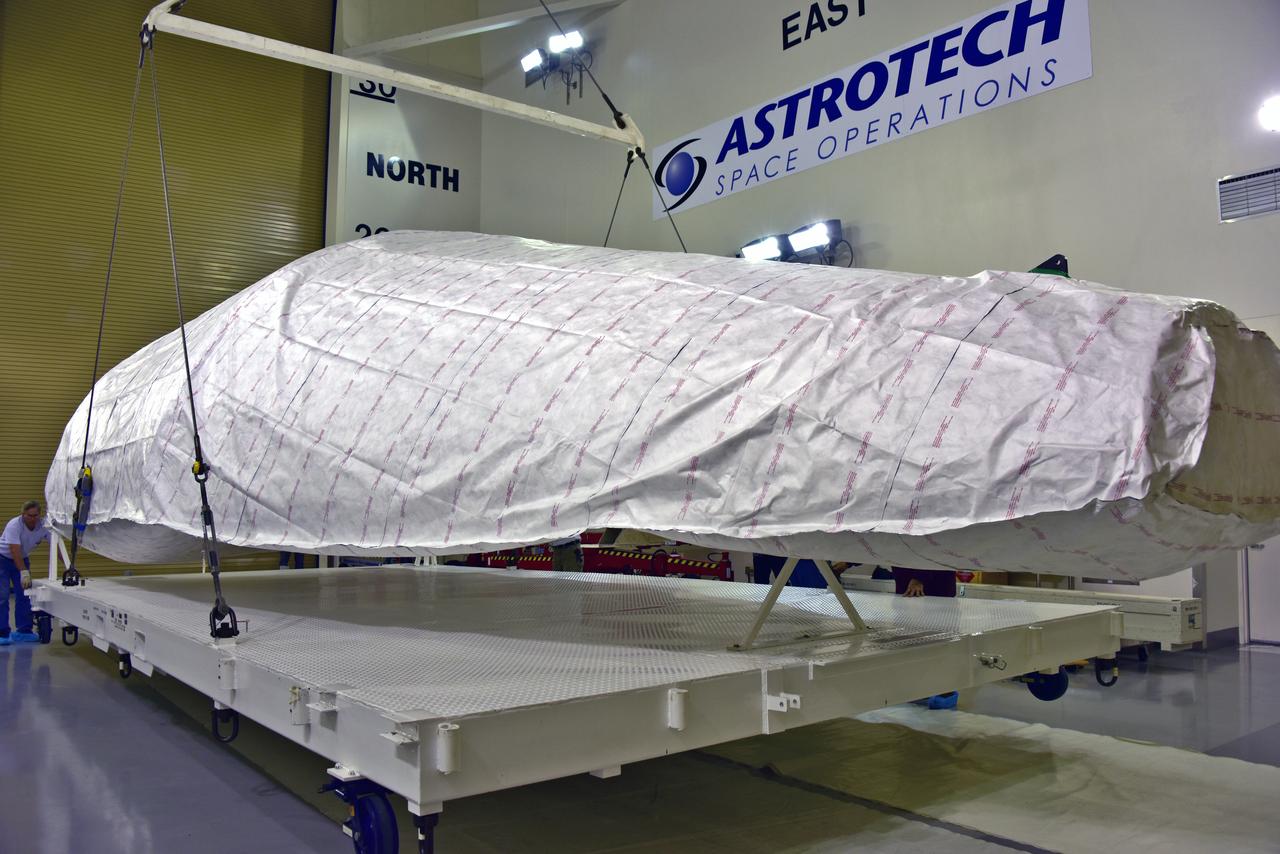
The United Launch Alliance (ULA) payload fairing for NASA's upcoming Interior Exploration using Seismic Investigations, Geodesy and Heat Transport, or InSight, mission to land on Mars has just arrived at the Astrotech facility at Vandenberg Air Force Base in California. InSight is the first mission to explore the Red Planet's deep interior. It will investigate processes that shaped the rocky planets of the inner solar system including Earth. Liftoff atop a ULA Atlas V rocket is scheduled for May 5, 2018.
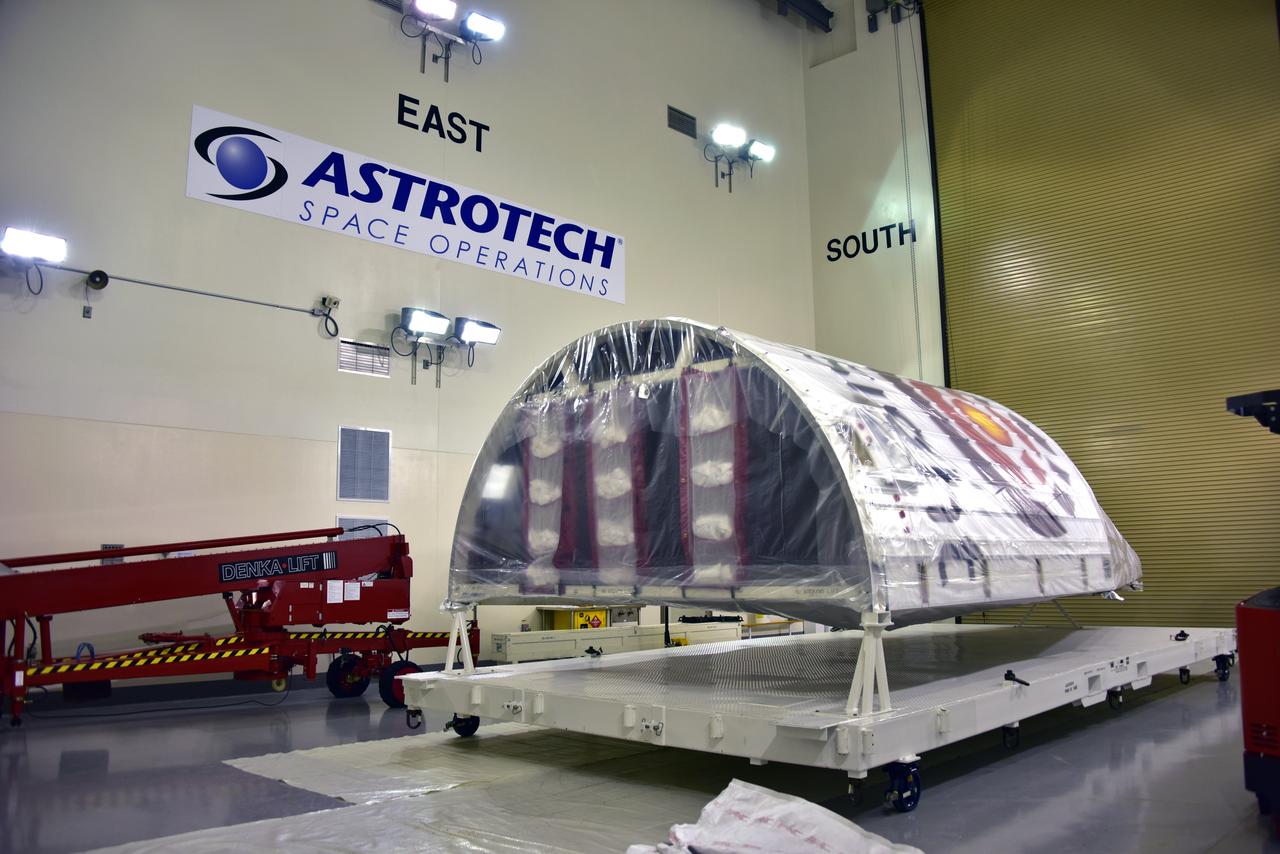
The United Launch Alliance (ULA) payload fairing for NASA's upcoming Interior Exploration using Seismic Investigations, Geodesy and Heat Transport, or InSight, mission to land on Mars has just arrived at the Astrotech facility at Vandenberg Air Force Base in California. InSight is the first mission to explore the Red Planet's deep interior. It will investigate processes that shaped the rocky planets of the inner solar system including Earth. Liftoff atop a ULA Atlas V rocket is scheduled for May 5, 2018.
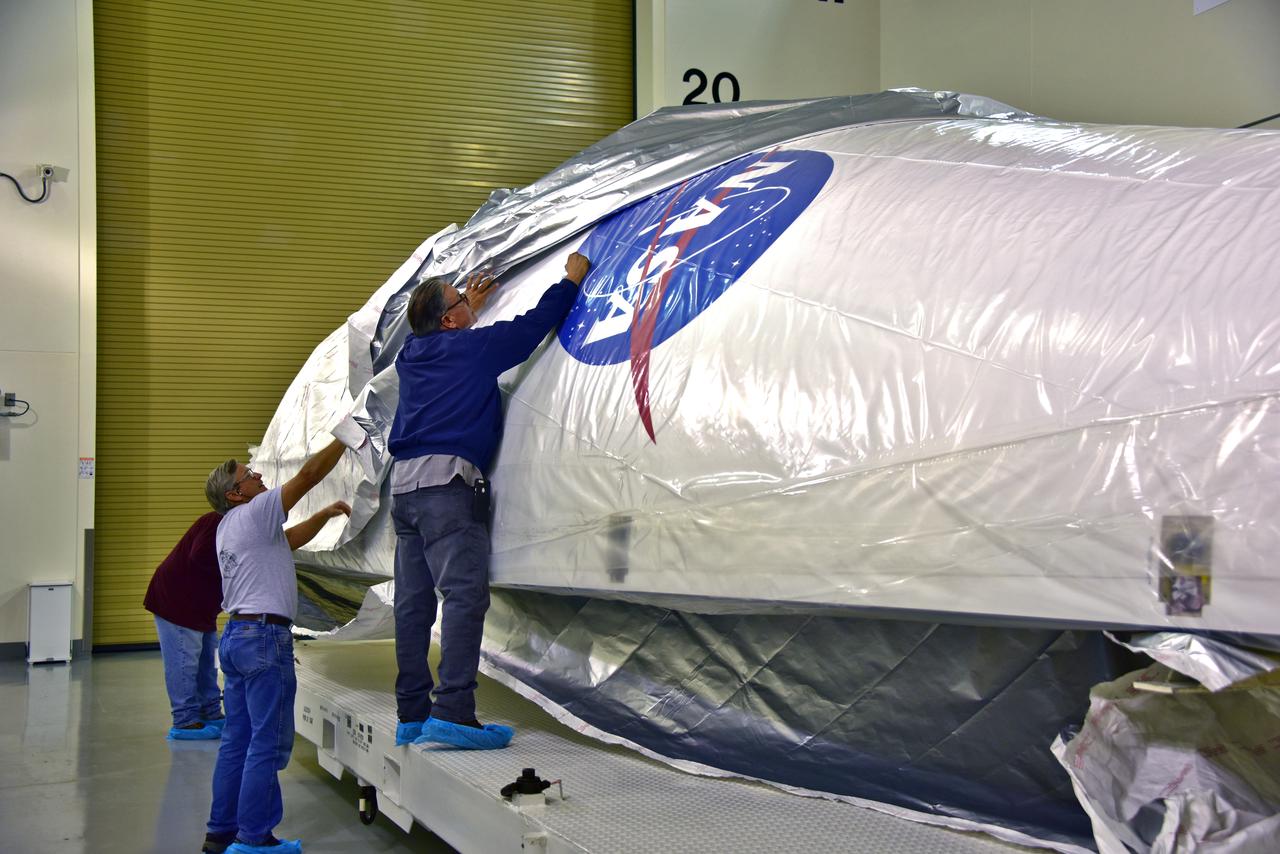
In the Astrotech facility at Vandenberg Air Force Base in California, technicians remove protective wrapping from the United Launch Alliance (ULA) payload fairing for NASA's upcoming Interior Exploration using Seismic Investigations, Geodesy and Heat Transport, or InSight, spacecraft designed to land on Mars. InSight is the first mission to explore the Red Planet's deep interior. It will investigate processes that shaped the rocky planets of the inner solar system including Earth. Liftoff atop a ULA Atlas V rocket is scheduled for May 5, 2018.
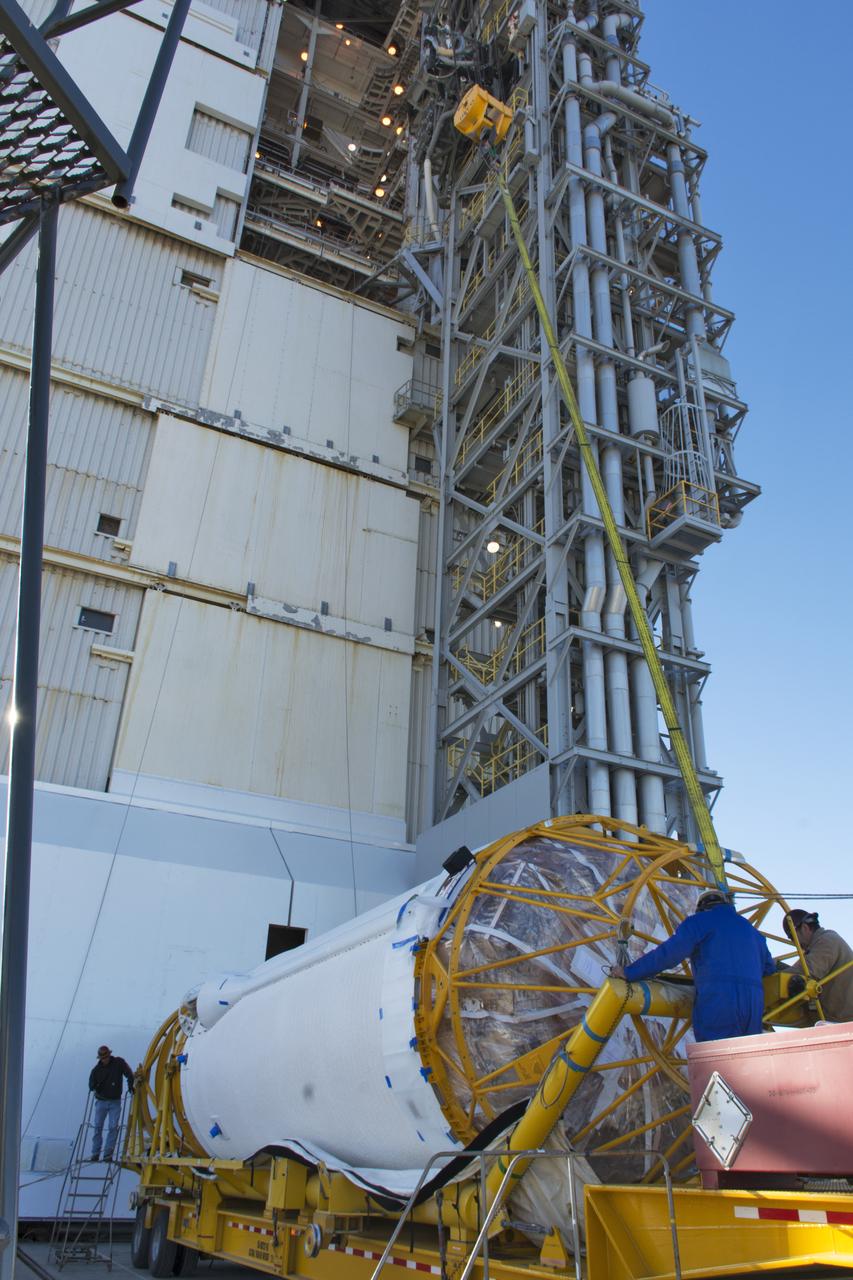
At Space Launch Complex 3 at Vandenberg Air Force Base in California technicians and engineers prepare a United Launch Alliance Centaur upper stage for lifting and mating atop an Atlas V booster. The rocket will launch NASA's Interior Exploration using Seismic Investigations, Geodesy and Heat Transport, or InSight, mission to land on Mars. InSight is the first mission to explore the Red Planet's deep interior. It will investigate processes that shaped the rocky planets of the inner solar system including Earth. Liftoff is scheduled for May 5, 2018.
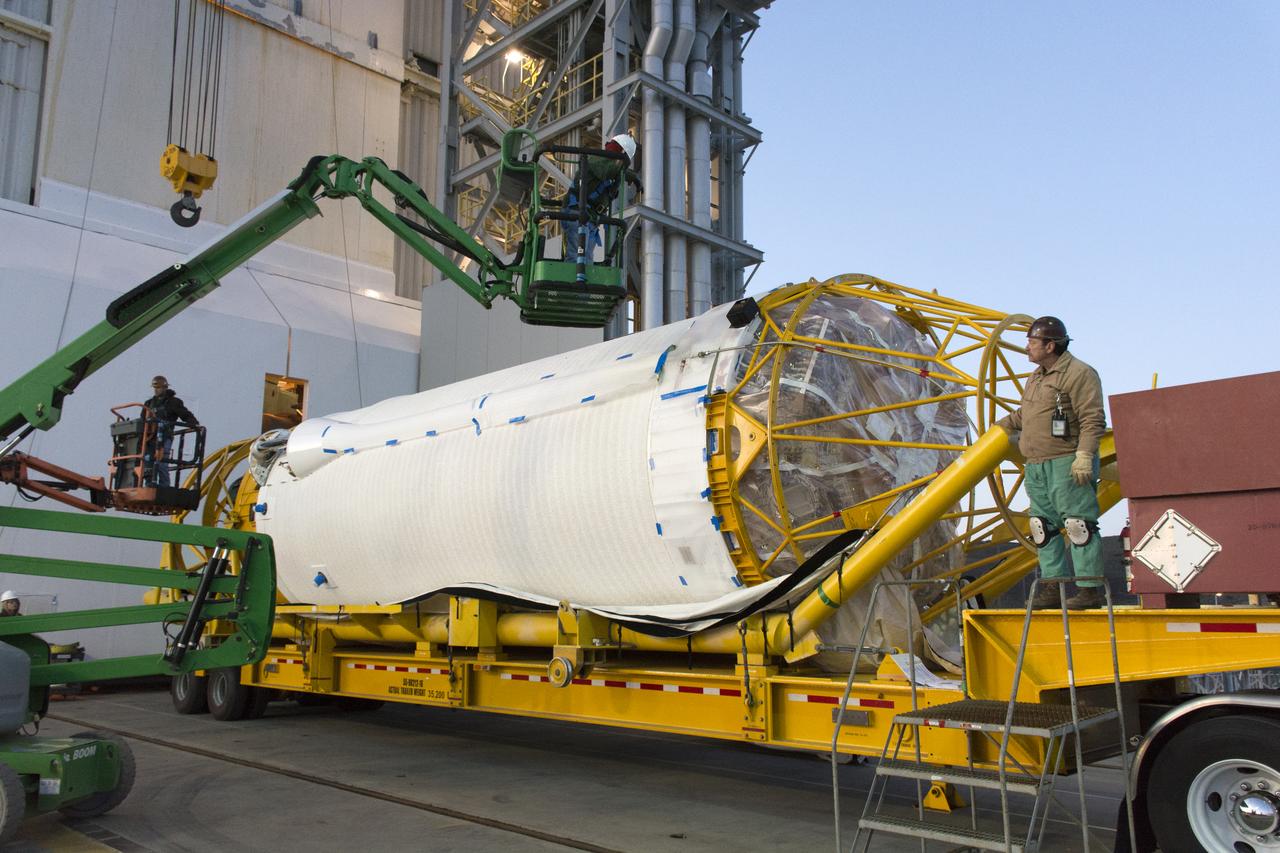
At Space Launch Complex 3 at Vandenberg Air Force Base in California technicians and engineers prepare a United Launch Alliance Centaur upper stage for lifting and mating atop an Atlas V booster. The rocket will launch NASA's Interior Exploration using Seismic Investigations, Geodesy and Heat Transport, or InSight, mission to land on Mars. InSight is the first mission to explore the Red Planet's deep interior. It will investigate processes that shaped the rocky planets of the inner solar system including Earth. Liftoff is scheduled for May 5, 2018.
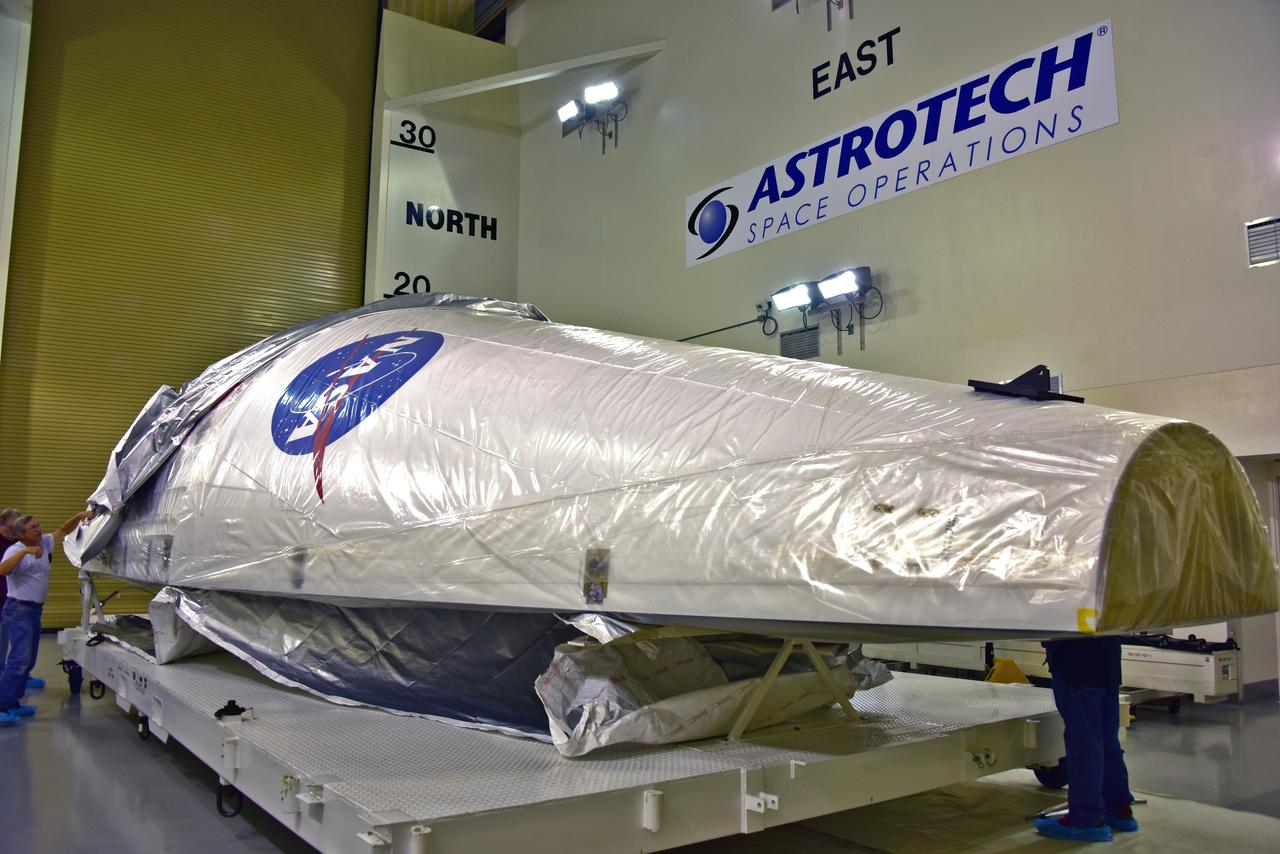
The United Launch Alliance (ULA) payload fairing for NASA's upcoming Interior Exploration using Seismic Investigations, Geodesy and Heat Transport, or InSight, mission to land on Mars has just arrived at the Astrotech facility at Vandenberg Air Force Base in California. InSight is the first mission to explore the Red Planet's deep interior. It will investigate processes that shaped the rocky planets of the inner solar system including Earth. Liftoff atop a ULA Atlas V rocket is scheduled for May 5, 2018.
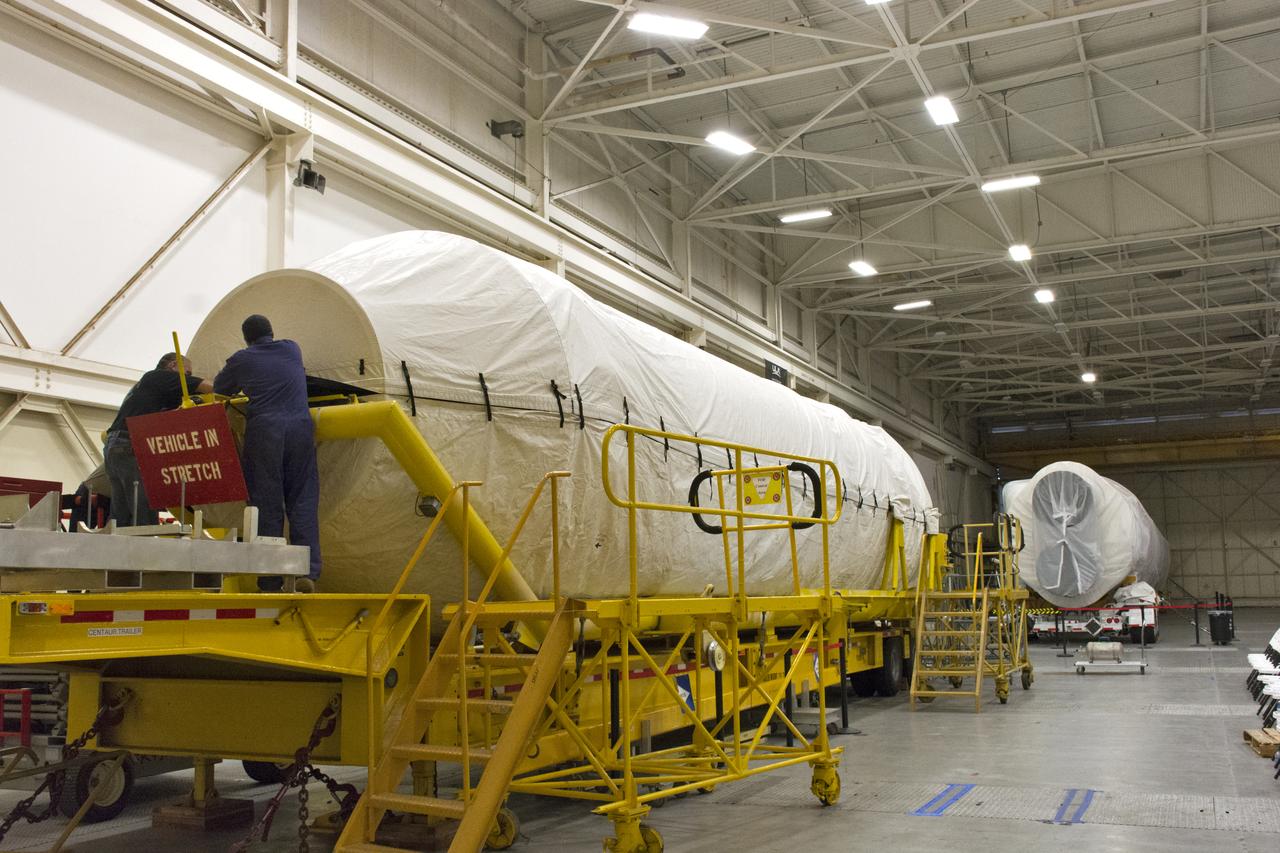
At Vandenberg Air Force Base in California, a cover is installed on a Centaur upper stage in preparation for its transport to Space Launch Complex 3. The Centaur will be mounted atop a United Launch Alliance Atlas V rocket to boost NASA's Interior Exploration using Seismic Investigations, Geodesy and Heat Transport, or InSight, mission to land on Mars. InSight is the first mission to explore the Red Planet's deep interior. It will investigate processes that shaped the rocky planets of the inner solar system including Earth. Liftoff is scheduled for May 5, 2018.
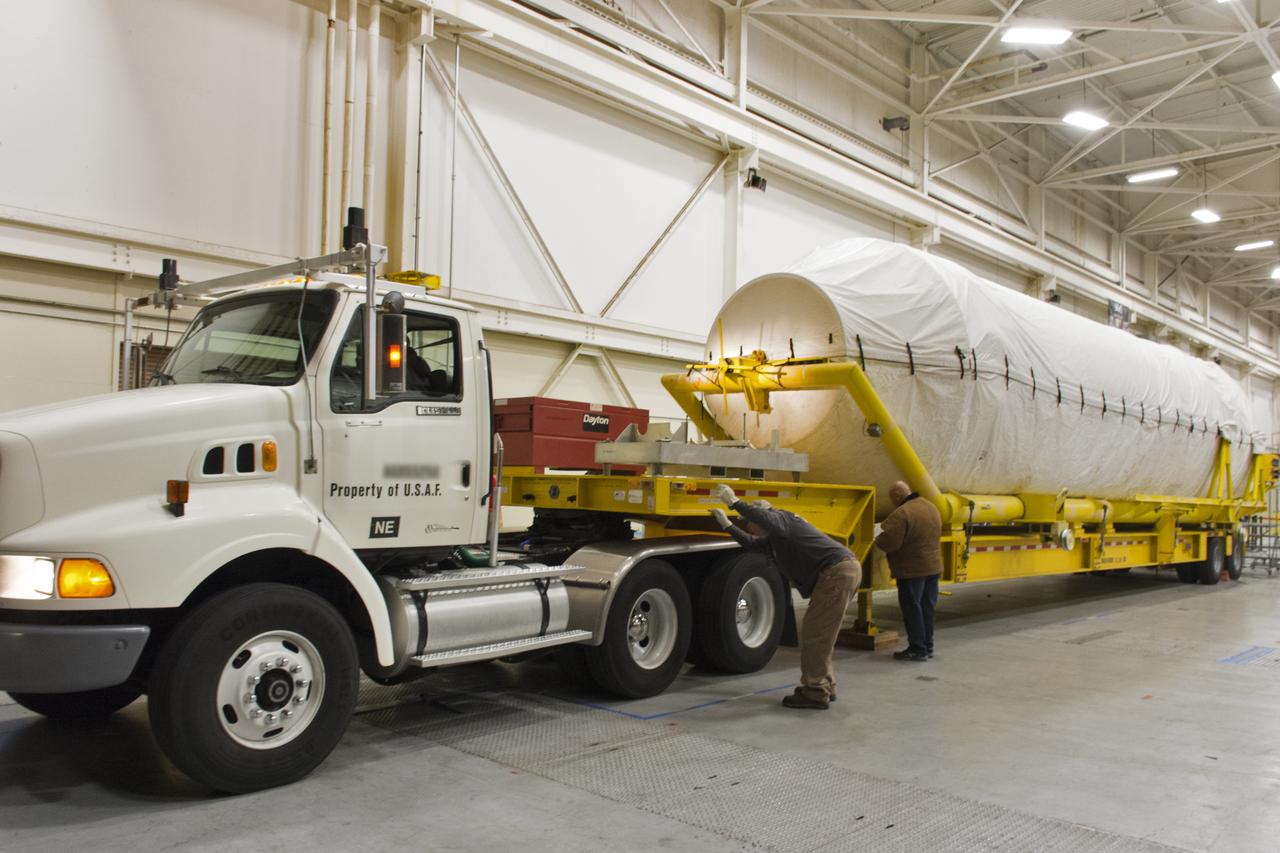
At Vandenberg Air Force Base in California, a United Launch Alliance Centaur upper stage is prepared for transport to Space Launch Complex 3 for mating atop an Atlas V booster. The rocket will launch NASA's Interior Exploration using Seismic Investigations, Geodesy and Heat Transport, or InSight, mission to land on Mars. InSight is the first mission to explore the Red Planet's deep interior. It will investigate processes that shaped the rocky planets of the inner solar system including Earth. Liftoff is scheduled for May 5, 2018.
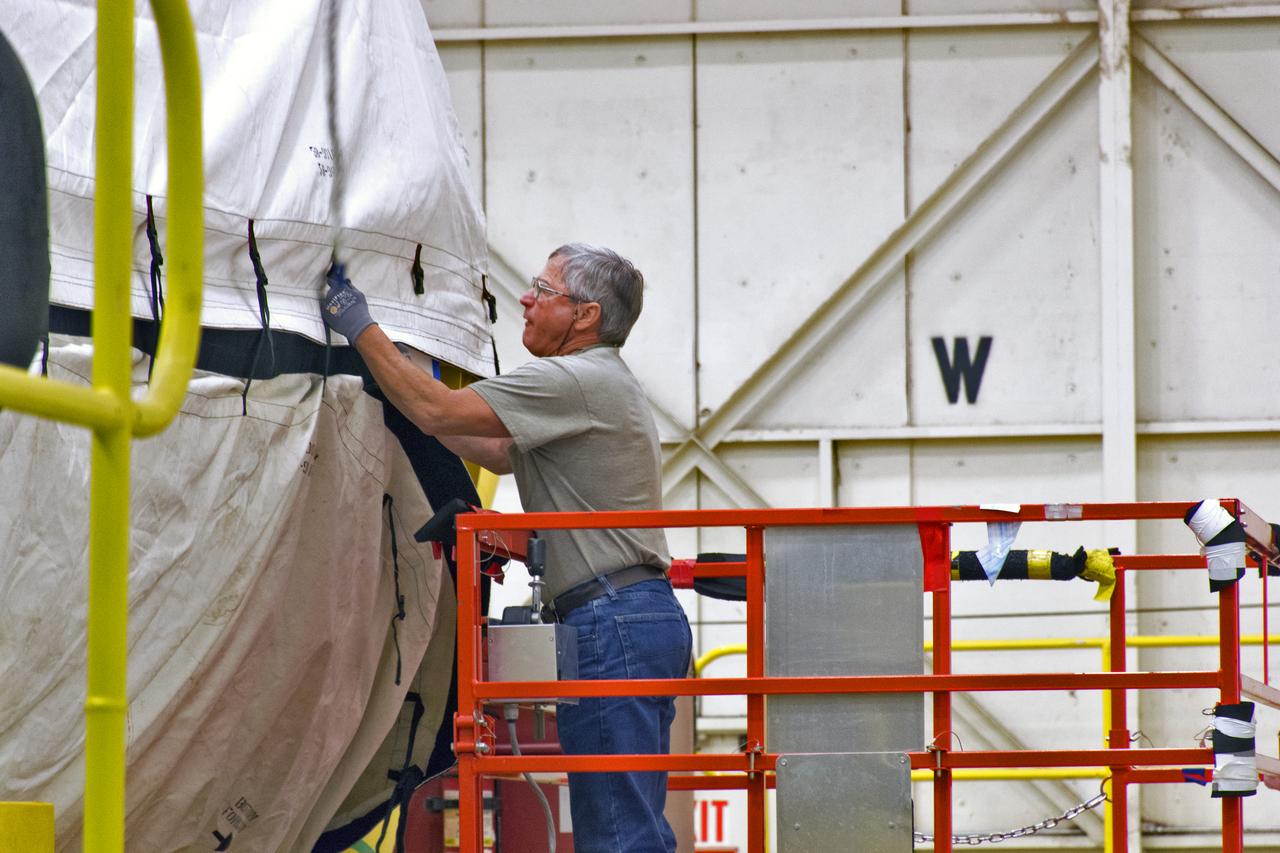
At Vandenberg Air Force Base in California, a cover is installed on a Centaur upper stage in preparation for its transport to Space Launch Complex 3. The Centaur will be mounted atop a United Launch Alliance Atlas V rocket to boost NASA's Interior Exploration using Seismic Investigations, Geodesy and Heat Transport, or InSight, mission to land on Mars. InSight is the first mission to explore the Red Planet's deep interior. It will investigate processes that shaped the rocky planets of the inner solar system including Earth. Liftoff is scheduled for May 5, 2018.
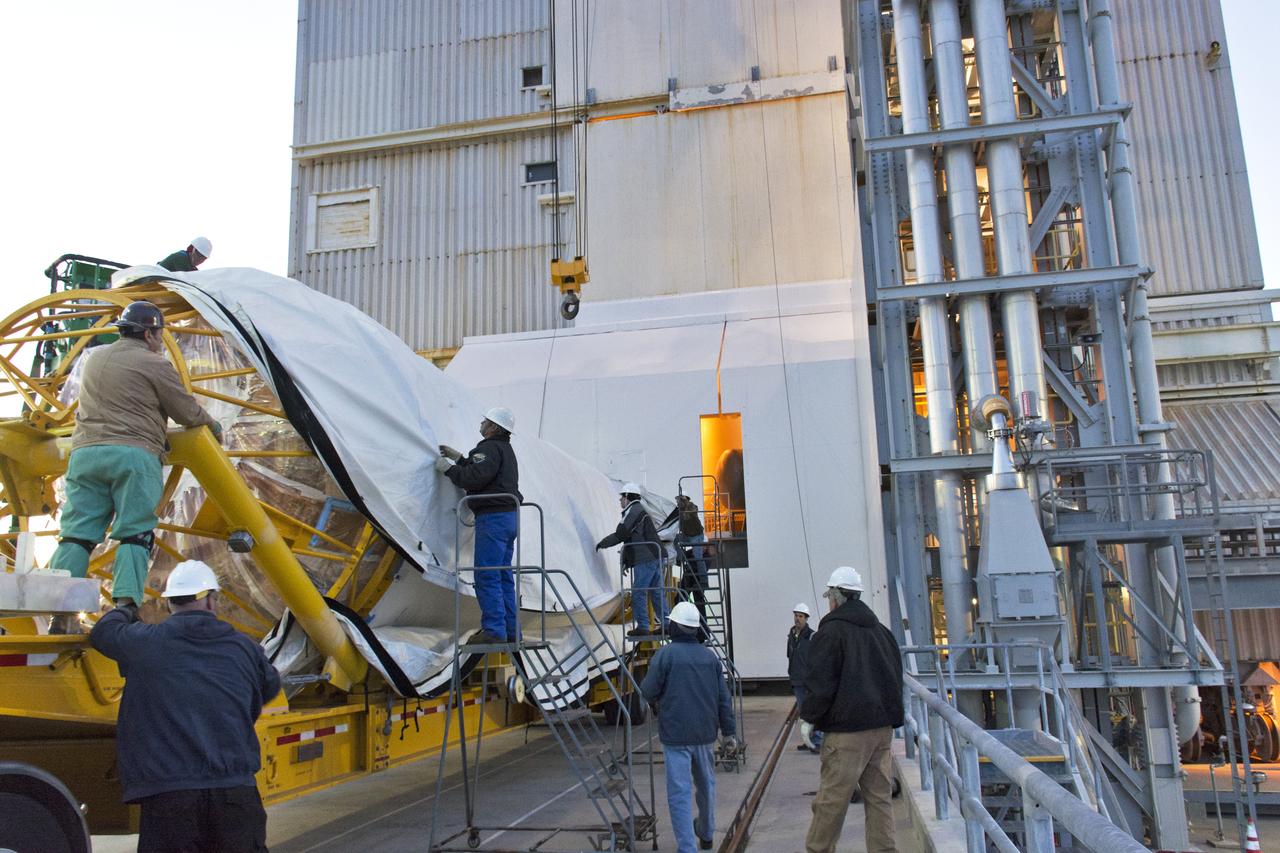
At Space Launch Complex 3 at Vandenberg Air Force Base in California technicians and engineers prepare a United Launch Alliance Centaur upper stage for lifting and mating atop an Atlas V booster. The rocket will launch NASA's Interior Exploration using Seismic Investigations, Geodesy and Heat Transport, or InSight, mission to land on Mars. InSight is the first mission to explore the Red Planet's deep interior. It will investigate processes that shaped the rocky planets of the inner solar system including Earth. Liftoff is scheduled for May 5, 2018.
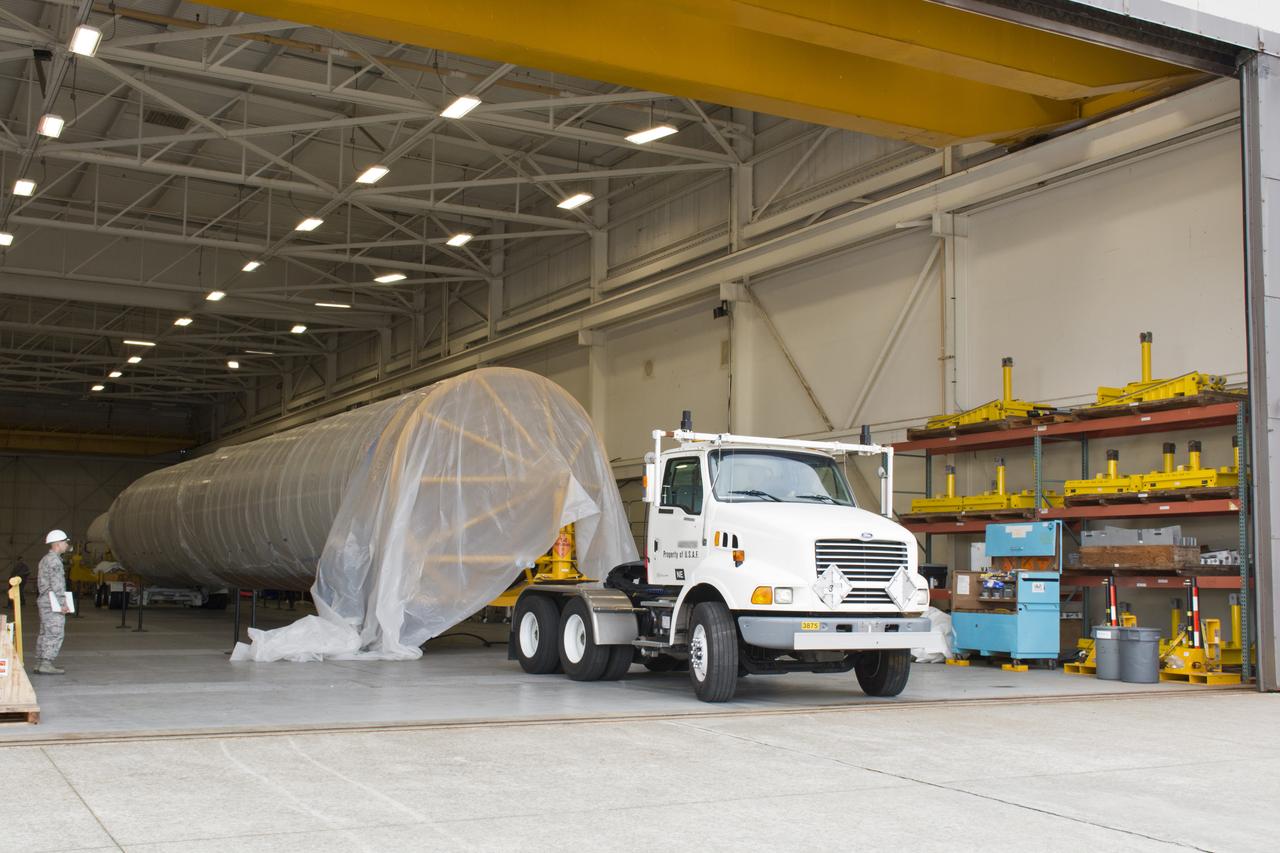
A United Launch Alliance Atlas V booster is prepared for transport to Space Launch Complex 3 at Vandenberg Air Force Base in California. The rocket will launch NASA's Interior Exploration using Seismic Investigations, Geodesy and Heat Transport, or InSight, mission to land on Mars. InSight is the first mission to explore the Red Planet's deep interior. It will investigate processes that shaped the rocky planets of the inner solar system including Earth. Liftoff is scheduled for May 5, 2018.