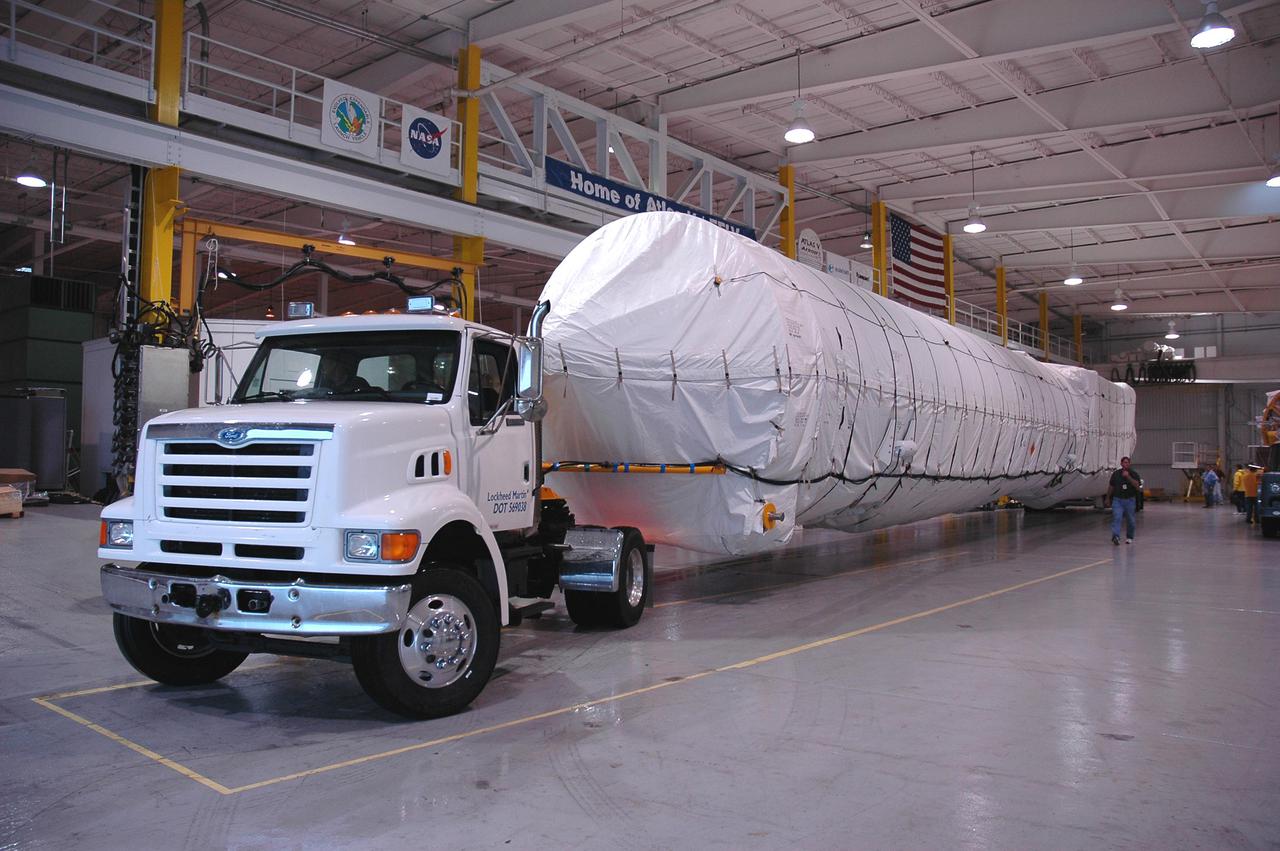
KENNEDY SPACE CENTER, FLA. — A truck delivers the Atlas V rocket to the Atlas Space Operations Center. The Atlas V is the launch vehicle for the New Horizons spacecraft. New Horizons is designed to help us understand worlds at the edge of our solar system by making the first reconnaissance of Pluto and Charon - a 'double planet' and the last planet in our solar system to be visited by spacecraft. The mission will then visit one or more objects in the Kuiper Belt region beyond Neptune. New Horizons is scheduled to launch from Launch Complex 41 at CCAFS in January 2006, swing past Jupiter for a gravity boost and scientific studies in February or March 2007, and reach Pluto and its moon, Charon, in July 2015.
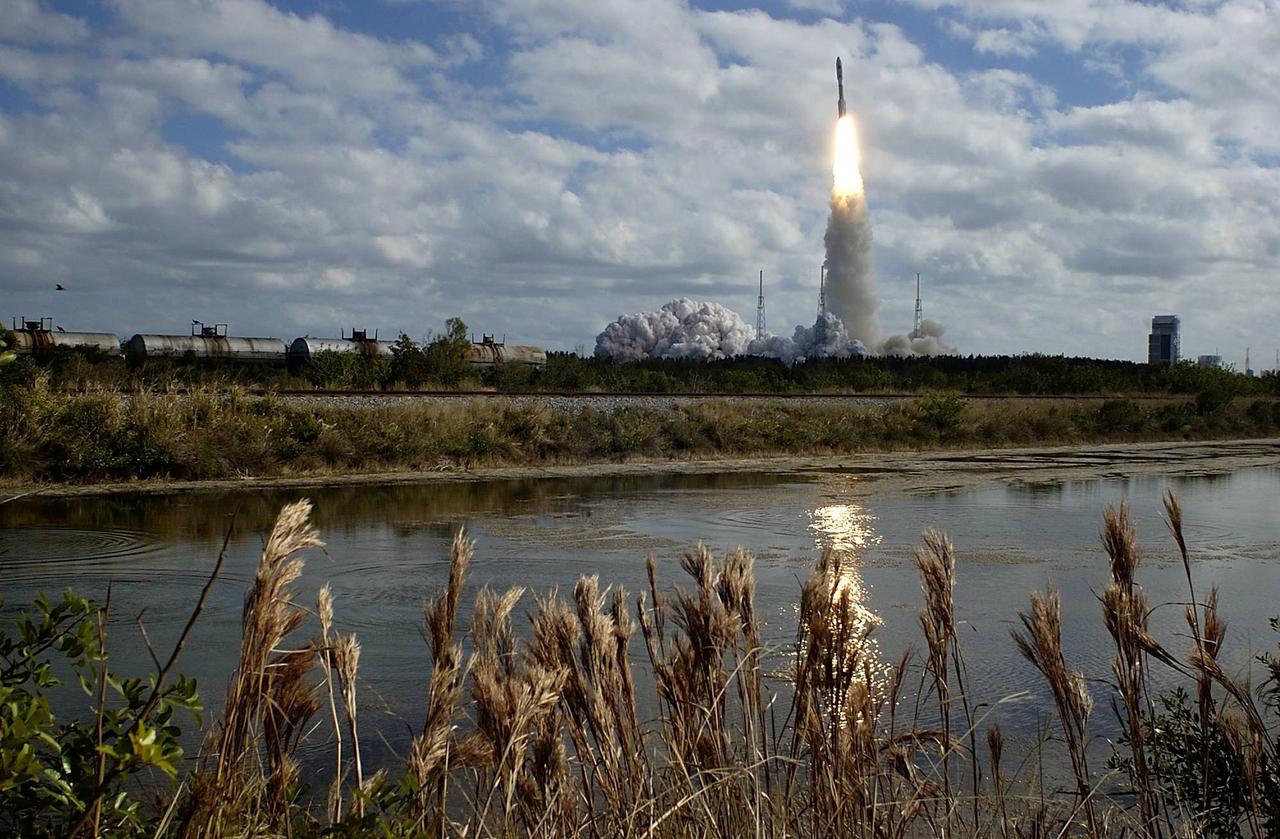
KENNEDY SPACE CENTER, FLA. — The fiery launch of NASA’s New Horizons spacecraft aboard a Lockheed Martin Atlas V rocket is reflected in the nearby creek. Liftoff was on time at 2 p.m. EST from Complex 41 on Cape Canaveral Air Force Station in Florida. Railroad cars (center left) are stopped on the tracks that run near the complex. Photo credit: NIKON/Scott Andrews

KENNEDY SPACE CENTER, FLA. — Smoke and steam fill the launch pad as NASA’s New Horizons spacecraft roars into the blue sky aboard an Atlas V rocket. Liftoff was on time at 2 p.m. EST from Complex 41 on Cape Canaveral Air Force Station in Florida. This was the third launch attempt in as many days after scrubs due to weather concerns. The compact, 1,050-pound piano-sized probe will get a boost from a kick-stage solid propellant motor for its journey to Pluto. New Horizons will be the fastest spacecraft ever launched, reaching lunar orbit distance in just nine hours and passing Jupiter 13 months later. The New Horizons science payload, developed under direction of Southwest Research Institute, includes imaging infrared and ultraviolet spectrometers, a multi-color camera, a long-range telescopic camera, two particle spectrometers, a space-dust detector and a radio science experiment. The dust counter was designed and built by students at the University of Colorado, Boulder. The launch at this time allows New Horizons to fly past Jupiter in early 2007 and use the planet’s gravity as a slingshot toward Pluto. The Jupiter flyby trims the trip to Pluto by as many as five years and provides opportunities to test the spacecraft’s instruments and flyby capabilities on the Jupiter system. New Horizons could reach the Pluto system as early as mid-2015, conducting a five-month-long study possible only from the close-up vantage of a spacecraft.
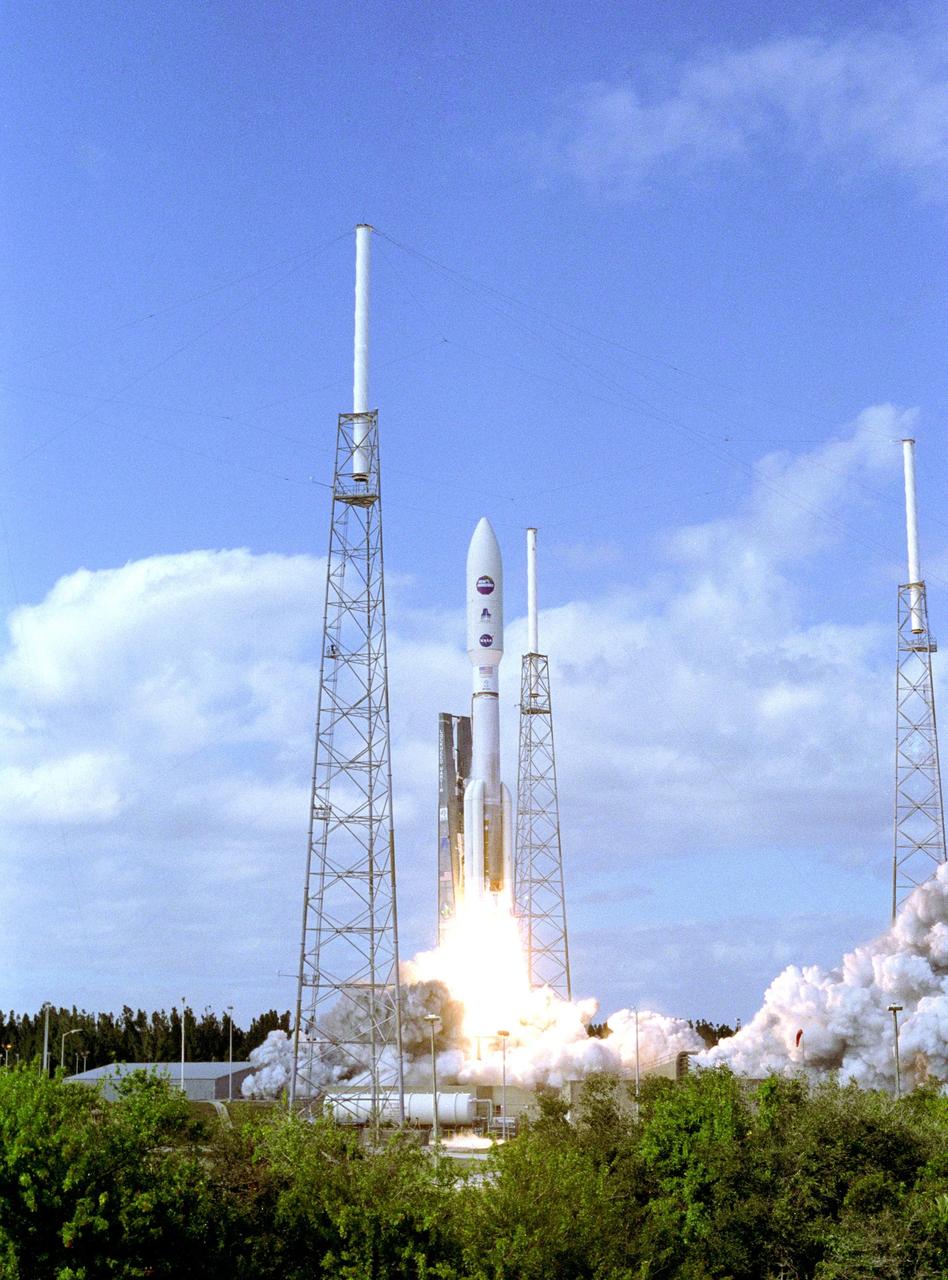
KENNEDY SPACE CENTER, FLA. — From between lightning masts surrounding the launch pad, NASA’s New Horizons spacecraft roars into the blue sky aboard an Atlas V rocket spewing flames and smoke. Liftoff was on time at 2 p.m. EST from Complex 41 on Cape Canaveral Air Force Station in Florida. This was the third launch attempt in as many days after scrubs due to weather concerns. The compact, 1,050-pound piano-sized probe will get a boost from a kick-stage solid propellant motor for its journey to Pluto. New Horizons will be the fastest spacecraft ever launched, reaching lunar orbit distance in just nine hours and passing Jupiter 13 months later. The New Horizons science payload, developed under direction of Southwest Research Institute, includes imaging infrared and ultraviolet spectrometers, a multi-color camera, a long-range telescopic camera, two particle spectrometers, a space-dust detector and a radio science experiment. The dust counter was designed and built by students at the University of Colorado, Boulder. The launch at this time allows New Horizons to fly past Jupiter in early 2007 and use the planet’s gravity as a slingshot toward Pluto. The Jupiter flyby trims the trip to Pluto by as many as five years and provides opportunities to test the spacecraft’s instruments and flyby capabilities on the Jupiter system. New Horizons could reach the Pluto system as early as mid-2015, conducting a five-month-long study possible only from the close-up vantage of a spacecraft.
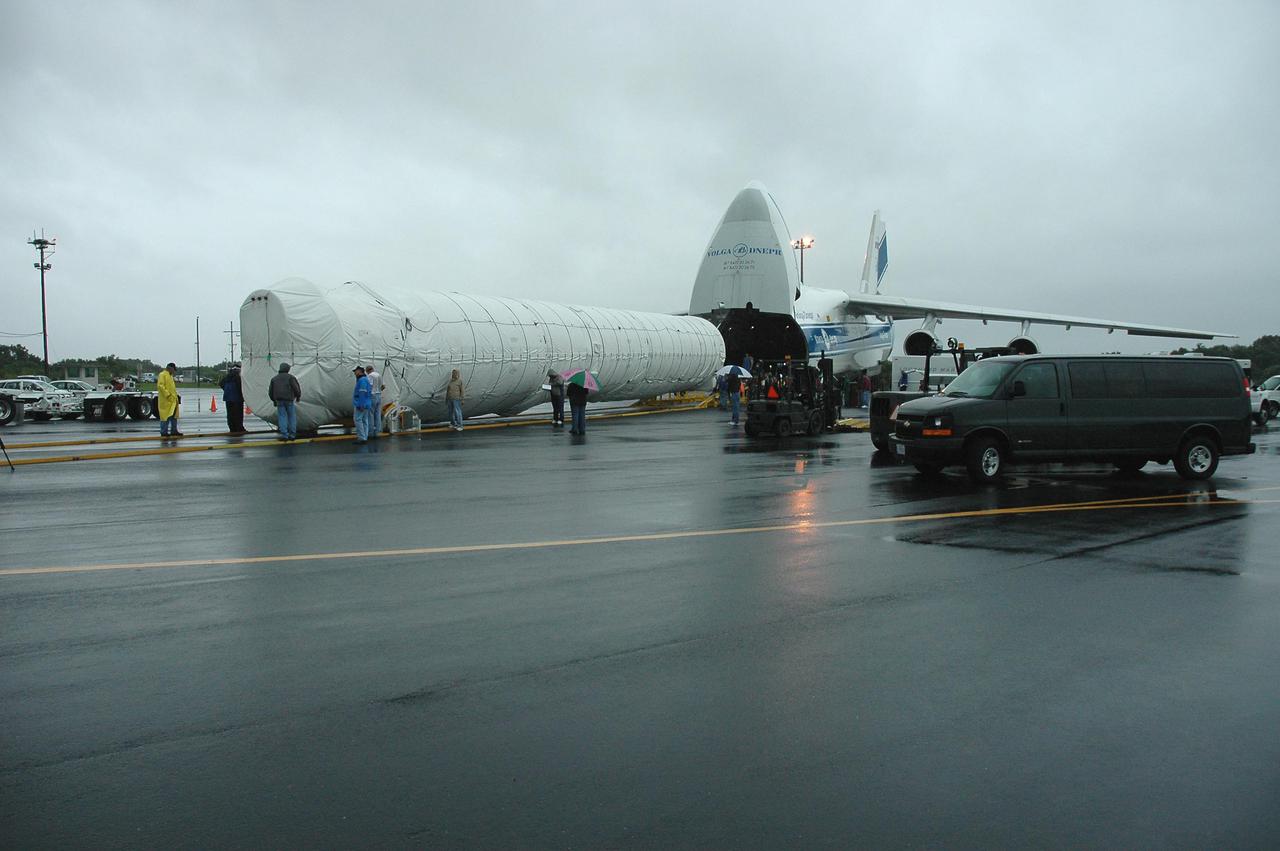
KENNEDY SPACE CENTER, FLA. — At the Cape Canaveral Air Force Station Skid Strip, the first stage of an Atlas V rocket is offloaded from an Atlas V rocket from a Russian air cargo plane. The Atlas V is the launch vehicle for the New Horizons spacecraft. New Horizons is designed to help us understand worlds at the edge of our solar system by making the first reconnaissance of Pluto and Charon - a 'double planet' and the last planet in our solar system to be visited by spacecraft. The mission will then visit one or more objects in the Kuiper Belt region beyond Neptune. New Horizons is scheduled to launch from Launch Complex 41 at CCAFS in January 2006, swing past Jupiter for a gravity boost and scientific studies in February or March 2007, and reach Pluto and its moon, Charon, in July 2015.
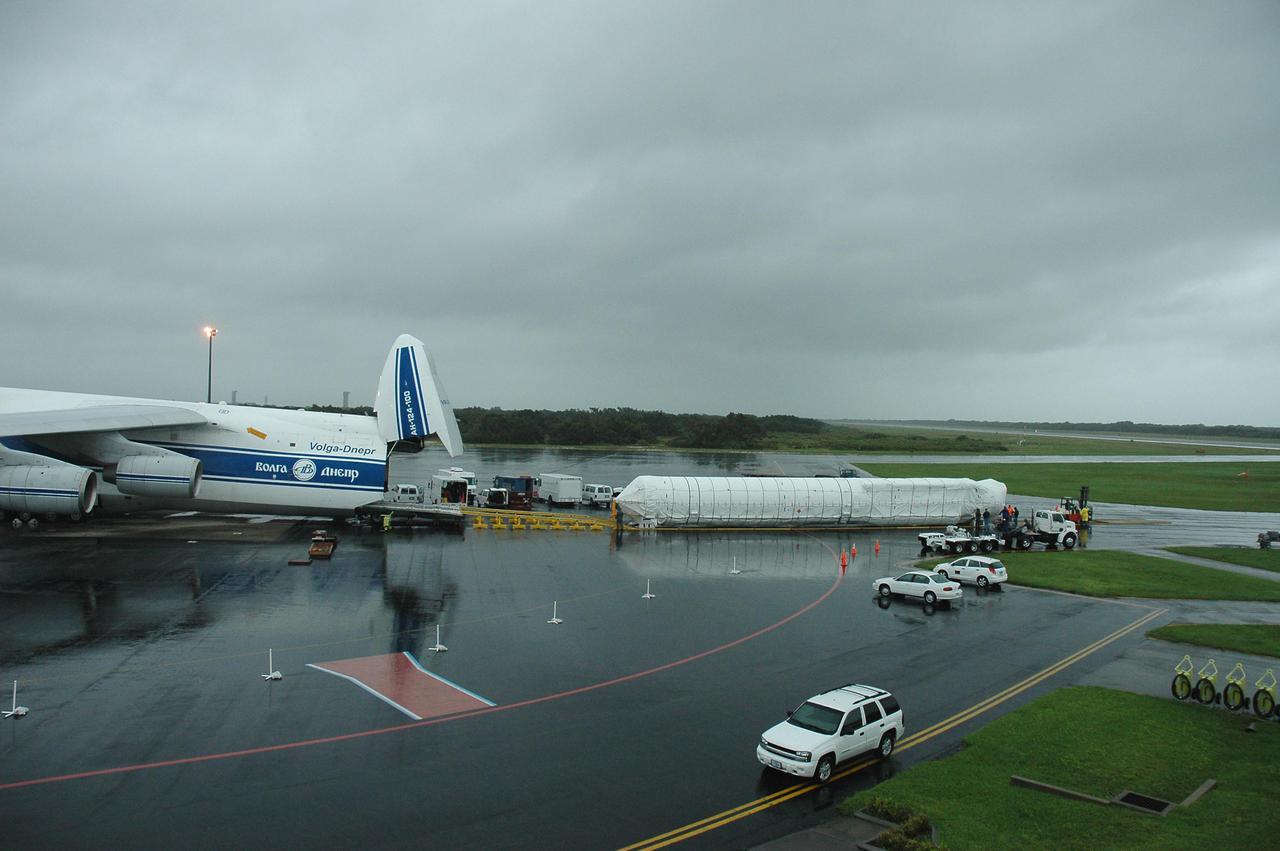
KENNEDY SPACE CENTER, FLA. — At the Cape Canaveral Air Force Station Skid Strip, the first stage of an Atlas V rocket is offloaded from an Atlas V rocket from a Russian air cargo plane. The Atlas V is the launch vehicle for the New Horizons spacecraft. New Horizons is designed to help us understand worlds at the edge of our solar system by making the first reconnaissance of Pluto and Charon - a 'double planet' and the last planet in our solar system to be visited by spacecraft. The mission will then visit one or more objects in the Kuiper Belt region beyond Neptune. New Horizons is scheduled to launch from Launch Complex 41 at CCAFS in January 2006, swing past Jupiter for a gravity boost and scientific studies in February or March 2007, and reach Pluto and its moon, Charon, in July 2015.
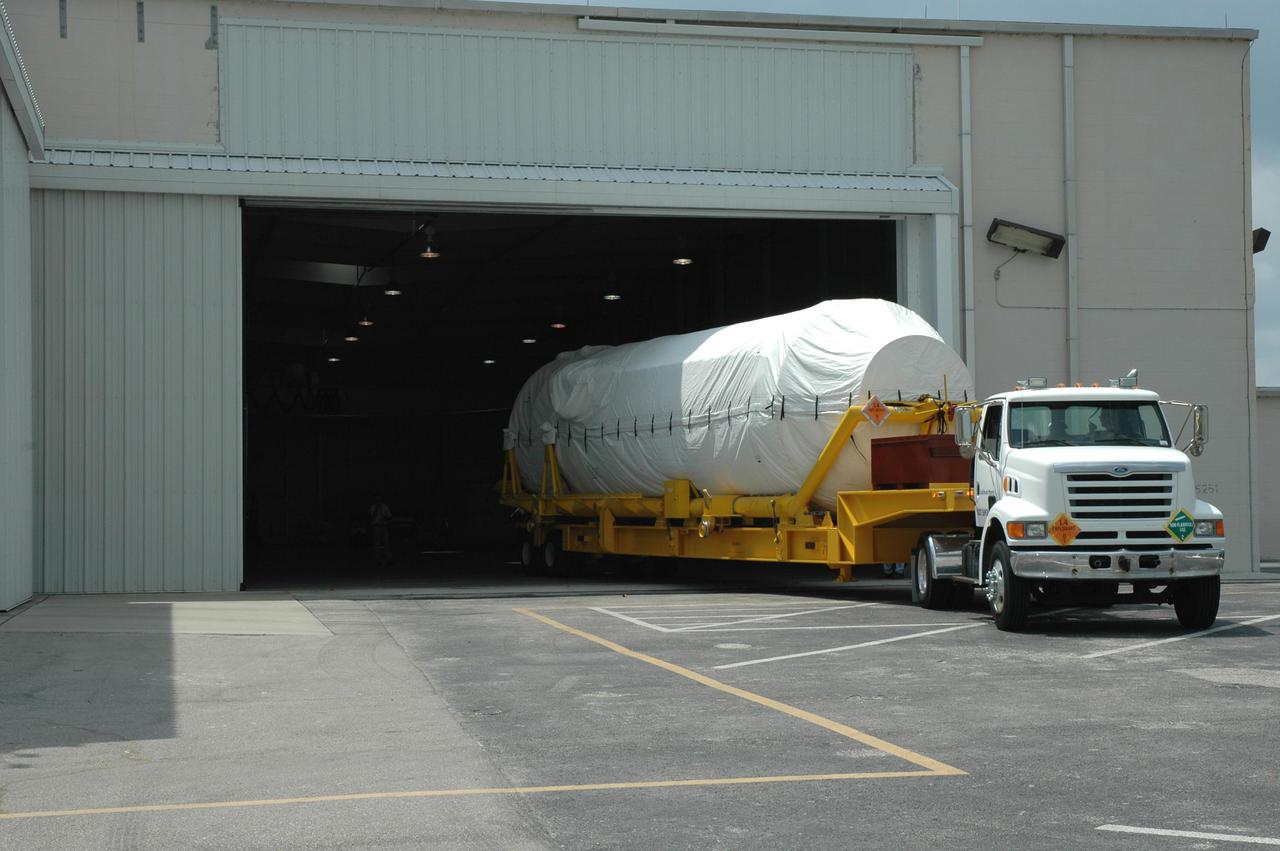
KENNEDY SPACE CENTER, FLA. - The truck transporting the second stage Centaur backs into the Atlas Space Operations Center on Cape Canaveral Air Force Station (CCAFS). The Centaur is the upper stage of the Atlas V configuration that will launch the New Horizons spacecraft from Launch Complex 41 at CCAFS. New Horizons is designed to help us understand worlds at the edge of our solar system by making the first reconnaissance of Pluto and Charon - a 'double planet' and the last planet in our solar system to be visited by spacecraft. The mission will then visit one or more objects in the Kuiper Belt region beyond Neptune. New Horizons is scheduled to launch in January 2006, swing past Jupiter for a gravity boost and scientific studies in February or March 2007, and reach Pluto and its moon, Charon, in July 2015.
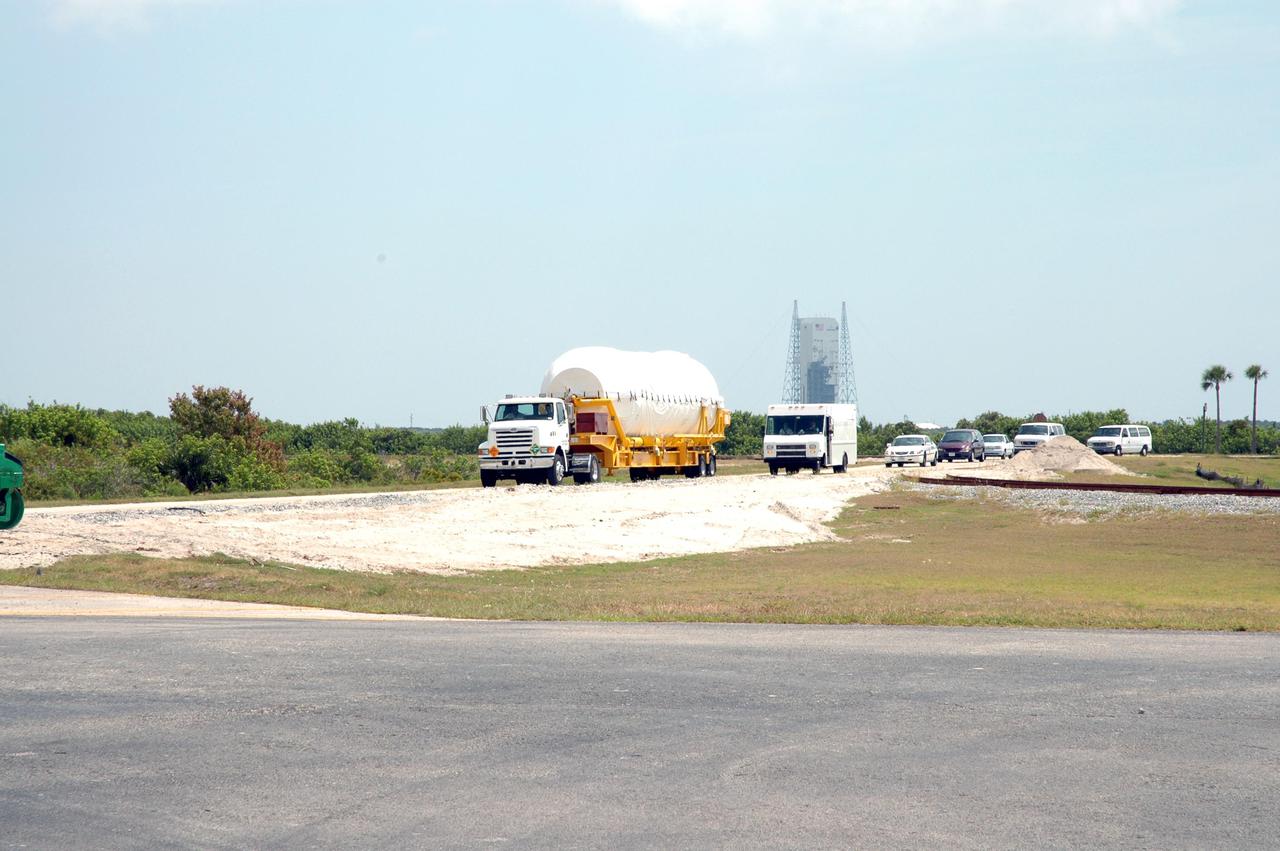
KENNEDY SPACE CENTER, FLA. - The truck transporting the second stage Centaur drives away from the Skid Strip on Cape Canaveral Air Force Station (CCAFS) to its destination - the Atlas Space Operations Center. The Centaur is the upper stage of the Atlas V configuration that will launch the New Horizons spacecraft from Launch Complex 41 at CCAFS. New Horizons is designed to help us understand worlds at the edge of our solar system by making the first reconnaissance of Pluto and Charon - a 'double planet' and the last planet in our solar system to be visited by spacecraft. The mission will then visit one or more objects in the Kuiper Belt region beyond Neptune. New Horizons is scheduled to launch in January 2006, swing past Jupiter for a gravity boost and scientific studies in February or March 2007, and reach Pluto and its moon, Charon, in July 2015.
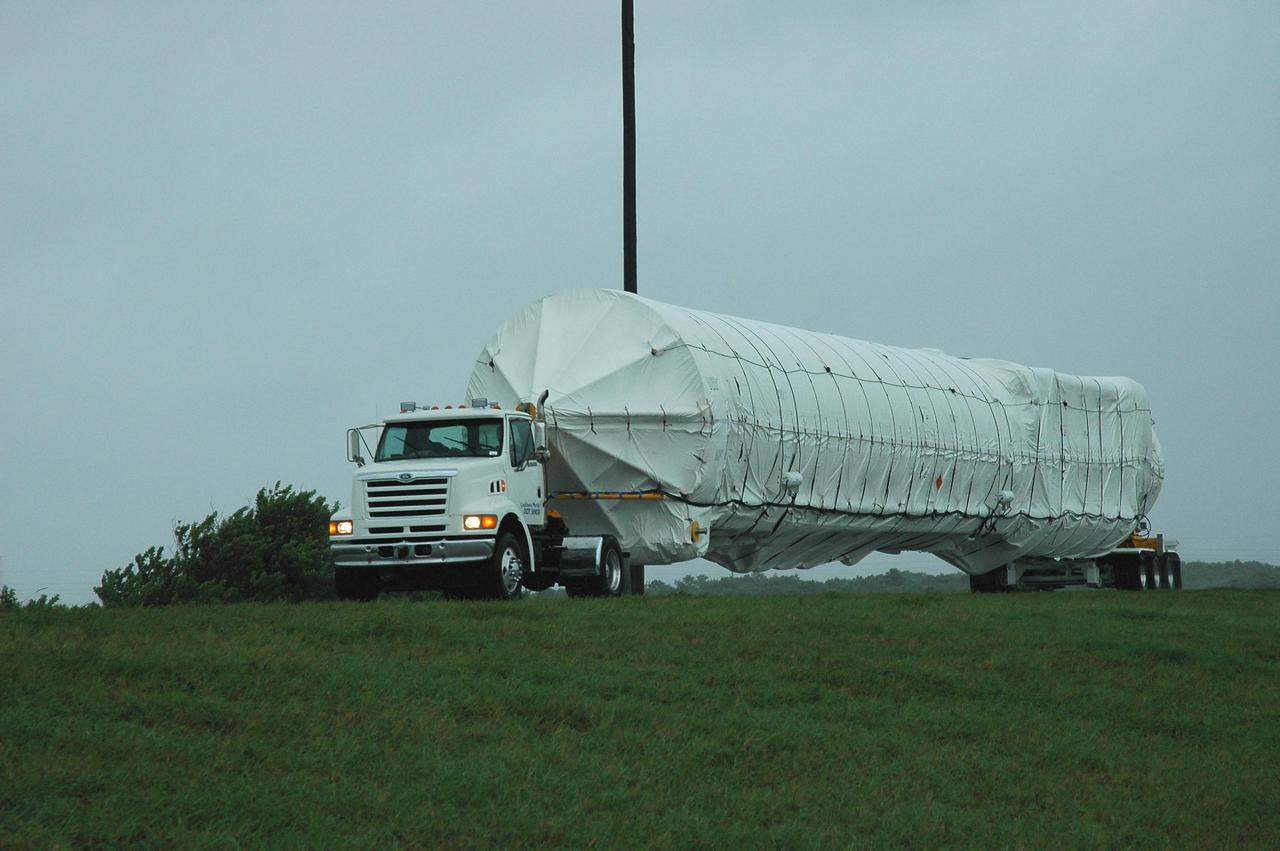
KENNEDY SPACE CENTER, FLA. — A truck carrying an Atlas V rocket heads away from the Cape Canaveral Air Force Station Skid Strip. The rocket is being transferred to the Atlas Space Operations Center. The Atlas V is the launch vehicle for the New Horizons spacecraft. New Horizons is designed to help us understand worlds at the edge of our solar system by making the first reconnaissance of Pluto and Charon - a 'double planet' and the last planet in our solar system to be visited by spacecraft. The mission will then visit one or more objects in the Kuiper Belt region beyond Neptune. New Horizons is scheduled to launch from Launch Complex 41 at CCAFS in January 2006, swing past Jupiter for a gravity boost and scientific studies in February or March 2007, and reach Pluto and its moon, Charon, in July 2015.

KENNEDY SPACE CENTER, FLA. — A convoy of vehicles follows behind a truck carrying an Atlas V rocket. The rocket is being transferred to the Atlas Space Operations Center. The Atlas V is the launch vehicle for the New Horizons spacecraft. New Horizons is designed to help us understand worlds at the edge of our solar system by making the first reconnaissance of Pluto and Charon - a 'double planet' and the last planet in our solar system to be visited by spacecraft. The mission will then visit one or more objects in the Kuiper Belt region beyond Neptune. New Horizons is scheduled to launch from Launch Complex 41 at CCAFS in January 2006, swing past Jupiter for a gravity boost and scientific studies in February or March 2007, and reach Pluto and its moon, Charon, in July 2015.
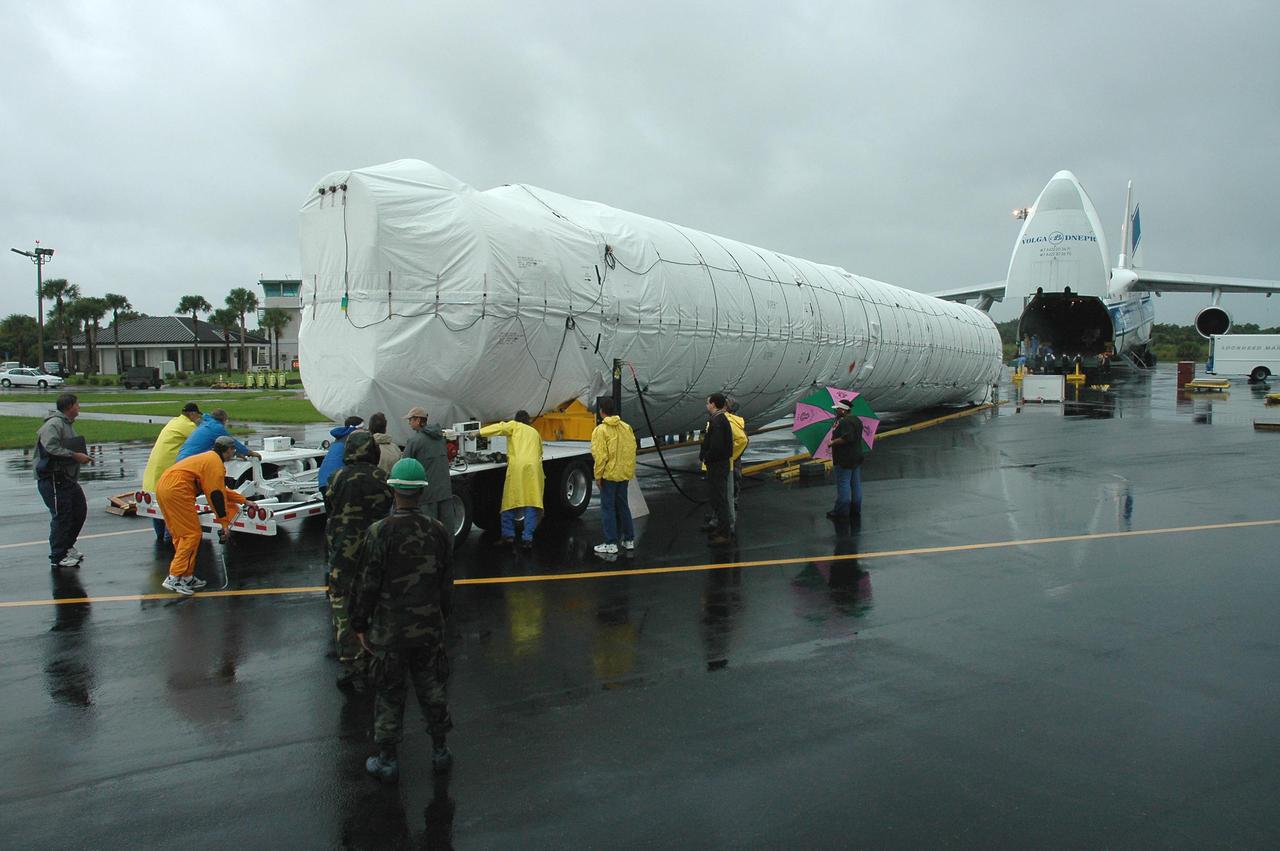
KENNEDY SPACE CENTER, FLA. — At the Cape Canaveral Air Force Station Skid Strip, the first stage of an Atlas V rocket is moved onto a transporter trailer. The rocket is being transferred to the Atlas Space Operations Center. The Atlas V is the launch vehicle for the New Horizons spacecraft. New Horizons is designed to help us understand worlds at the edge of our solar system by making the first reconnaissance of Pluto and Charon - a 'double planet' and the last planet in our solar system to be visited by spacecraft. The mission will then visit one or more objects in the Kuiper Belt region beyond Neptune. New Horizons is scheduled to launch from Launch Complex 41 at CCAFS in January 2006, swing past Jupiter for a gravity boost and scientific studies in February or March 2007, and reach Pluto and its moon, Charon, in July 2015.

KENNEDY SPACE CENTER, FLA. — At the Cape Canaveral Air Force Station Skid Strip, a transporter trailer carrying an Atlas V rocket is ready to move. The rocket is being transferred to the Atlas Space Operations Center. The Atlas V is the launch vehicle for the New Horizons spacecraft. New Horizons is designed to help us understand worlds at the edge of our solar system by making the first reconnaissance of Pluto and Charon - a 'double planet' and the last planet in our solar system to be visited by spacecraft. The mission will then visit one or more objects in the Kuiper Belt region beyond Neptune. New Horizons is scheduled to launch from Launch Complex 41 at CCAFS in January 2006, swing past Jupiter for a gravity boost and scientific studies in February or March 2007, and reach Pluto and its moon, Charon, in July 2015.

KENNEDY SPACE CENTER, FLA. — At the Cape Canaveral Air Force Station Skid Strip, workers begin to offload the first stage of an Atlas V rocket from a Russian air cargo plane. The Atlas V is the launch vehicle for the New Horizons spacecraft. New Horizons is designed to help us understand worlds at the edge of our solar system by making the first reconnaissance of Pluto and Charon - a 'double planet' and the last planet in our solar system to be visited by spacecraft. The mission will then visit one or more objects in the Kuiper Belt region beyond Neptune. New Horizons is scheduled to launch from Launch Complex 41 at CCAFS in January 2006, swing past Jupiter for a gravity boost and scientific studies in February or March 2007, and reach Pluto and its moon, Charon, in July 2015.
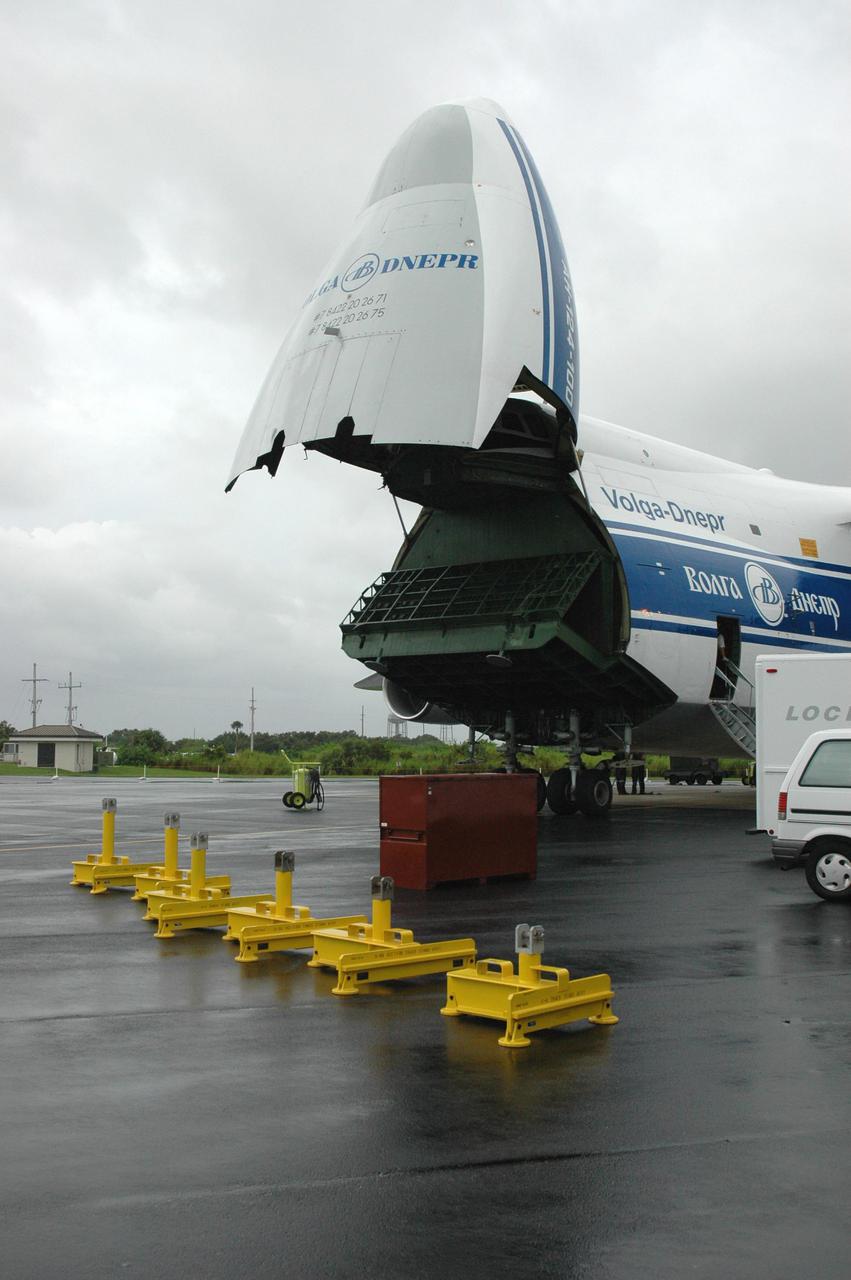
KENNEDY SPACE CENTER, FLA. — At the Cape Canaveral Air Force Station Skid Strip, the first stage of an Atlas V rocket arrives aboard a Russian air cargo plane. The Atlas V is the launch vehicle for the New Horizons spacecraft. New Horizons is designed to help us understand worlds at the edge of our solar system by making the first reconnaissance of Pluto and Charon - a 'double planet' and the last planet in our solar system to be visited by spacecraft. The mission will then visit one or more objects in the Kuiper Belt region beyond Neptune. New Horizons is scheduled to launch from Launch Complex 41 at CCAFS in January 2006, swing past Jupiter for a gravity boost and scientific studies in February or March 2007, and reach Pluto and its moon, Charon, in July 2015.
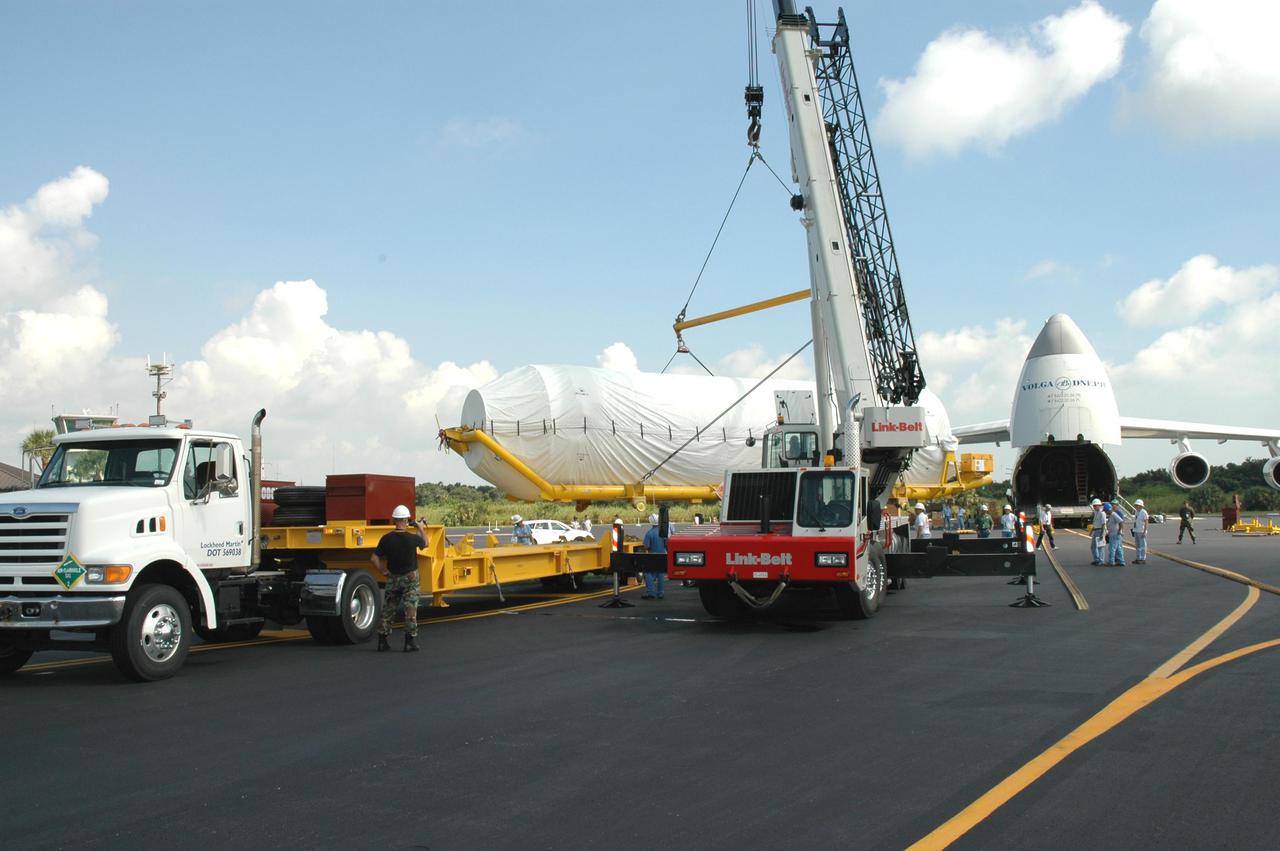
KENNEDY SPACE CENTER, FLA. - At the Skid Strip on Cape Canaveral Air Force Station (CCAFS), a crane lifts the second stage Centaur onto the back of a transporter trailer. The Centaur is the upper stage of the Atlas V configuration that will launch the New Horizons spacecraft from Launch Complex 41 at CCAFS. New Horizons is designed to help us understand worlds at the edge of our solar system by making the first reconnaissance of Pluto and Charon - a 'double planet' and the last planet in our solar system to be visited by spacecraft. The mission will then visit one or more objects in the Kuiper Belt region beyond Neptune. New Horizons is scheduled to launch in January 2006, swing past Jupiter for a gravity boost and scientific studies in February or March 2007, and reach Pluto and its moon, Charon, in July 2015.
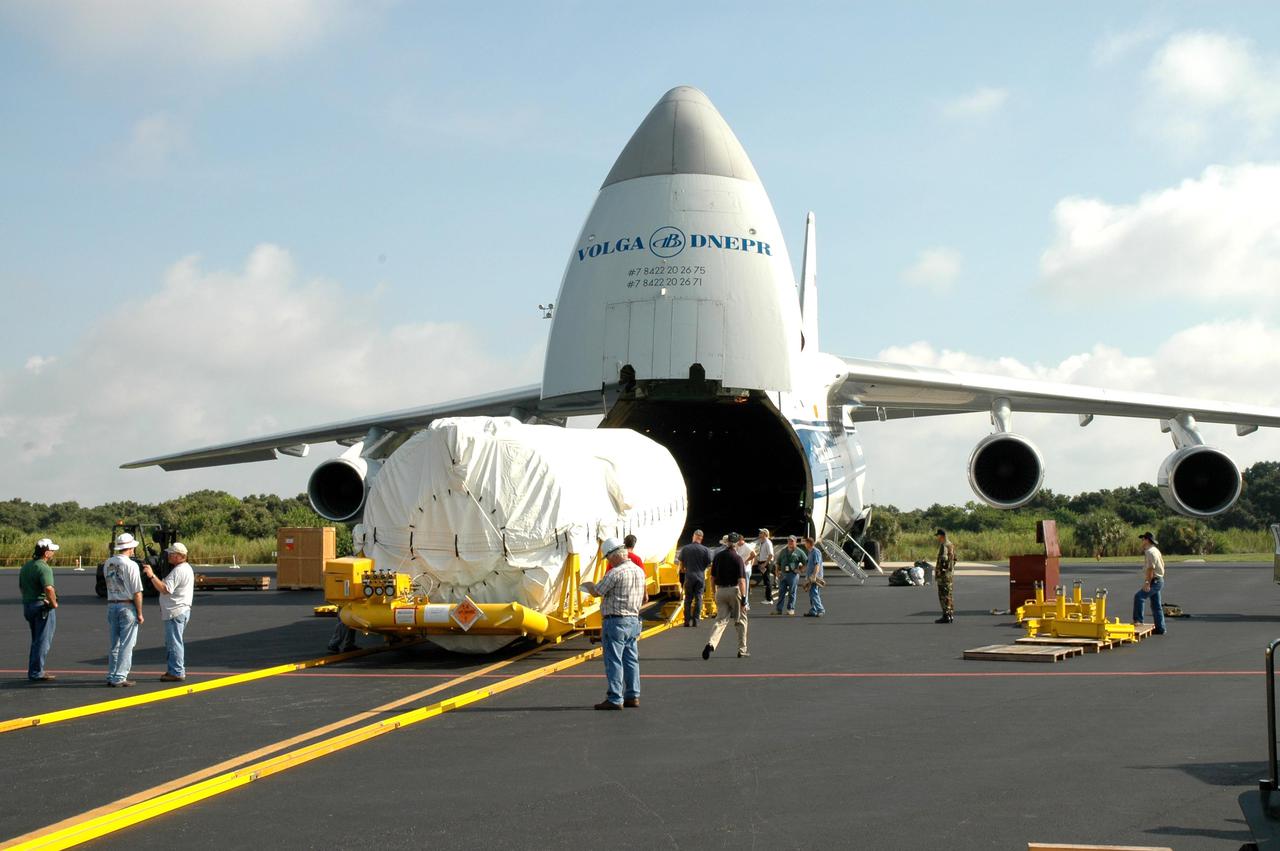
KENNEDY SPACE CENTER, FLA. - At the Skid Strip on Cape Canaveral Air Force Station (CCAFS), the second stage Centaur has been offloaded from a Russian air cargo plane. The Centaur is the upper stage of the Atlas V configuration that will launch the New Horizons spacecraft from Launch Complex 41 at CCAFS. New Horizons is designed to help us understand worlds at the edge of our solar system by making the first reconnaissance of Pluto and Charon - a 'double planet' and the last planet in our solar system to be visited by spacecraft. The mission will then visit one or more objects in the Kuiper Belt region beyond Neptune. New Horizons is scheduled to launch in January 2006, swing past Jupiter for a gravity boost and scientific studies in February or March 2007, and reach Pluto and its moon, Charon, in July 2015.
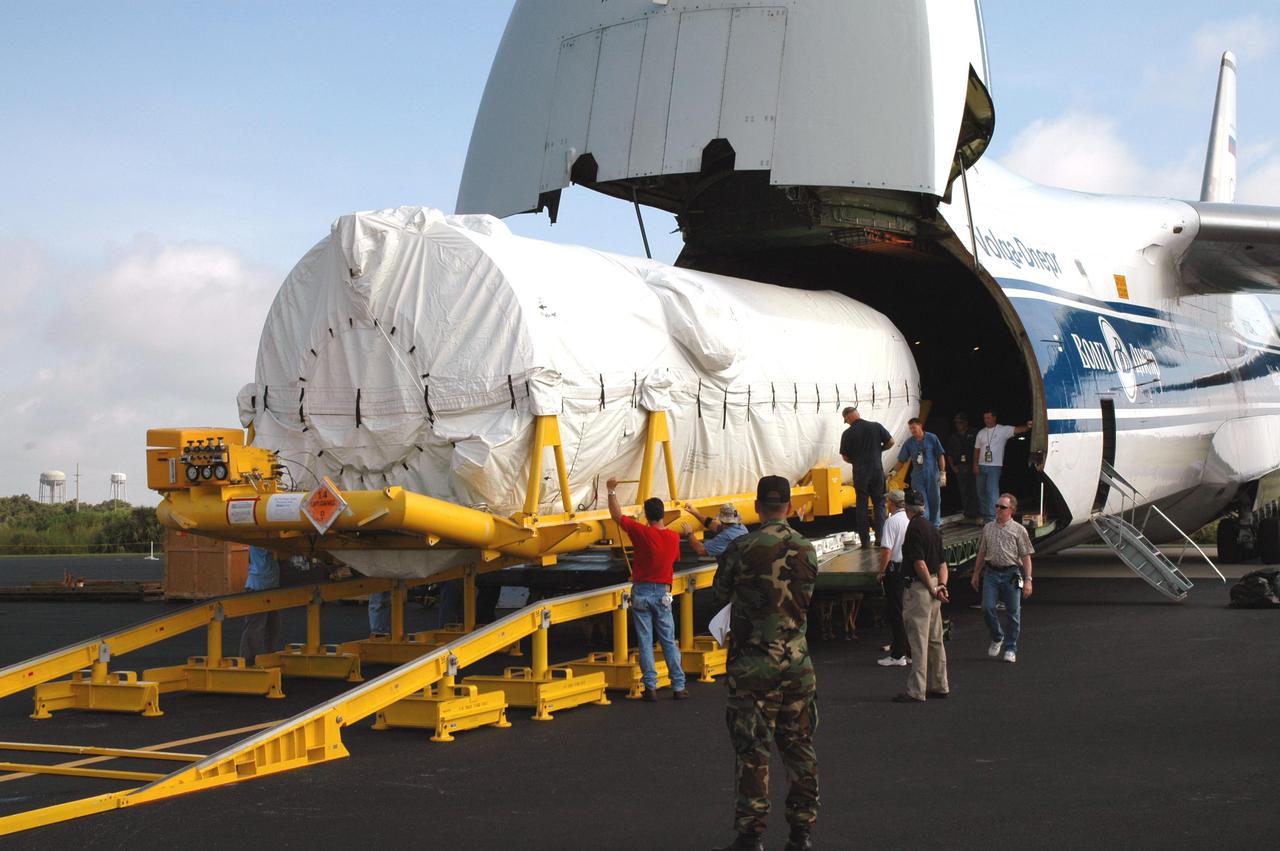
KENNEDY SPACE CENTER, FLA. - At the Skid Strip on Cape Canaveral Air Force Station (CCAFS), the second stage Centaur is offloaded from a Russian air cargo plane. The Centaur is the upper stage of the Atlas V configuration that will launch the New Horizons spacecraft from Launch Complex 41 at CCAFS. New Horizons is designed to help us understand worlds at the edge of our solar system by making the first reconnaissance of Pluto and Charon - a 'double planet' and the last planet in our solar system to be visited by spacecraft. The mission will then visit one or more objects in the Kuiper Belt region beyond Neptune. New Horizons is scheduled to launch in January 2006, swing past Jupiter for a gravity boost and scientific studies in February or March 2007, and reach Pluto and its moon, Charon, in July 2015.