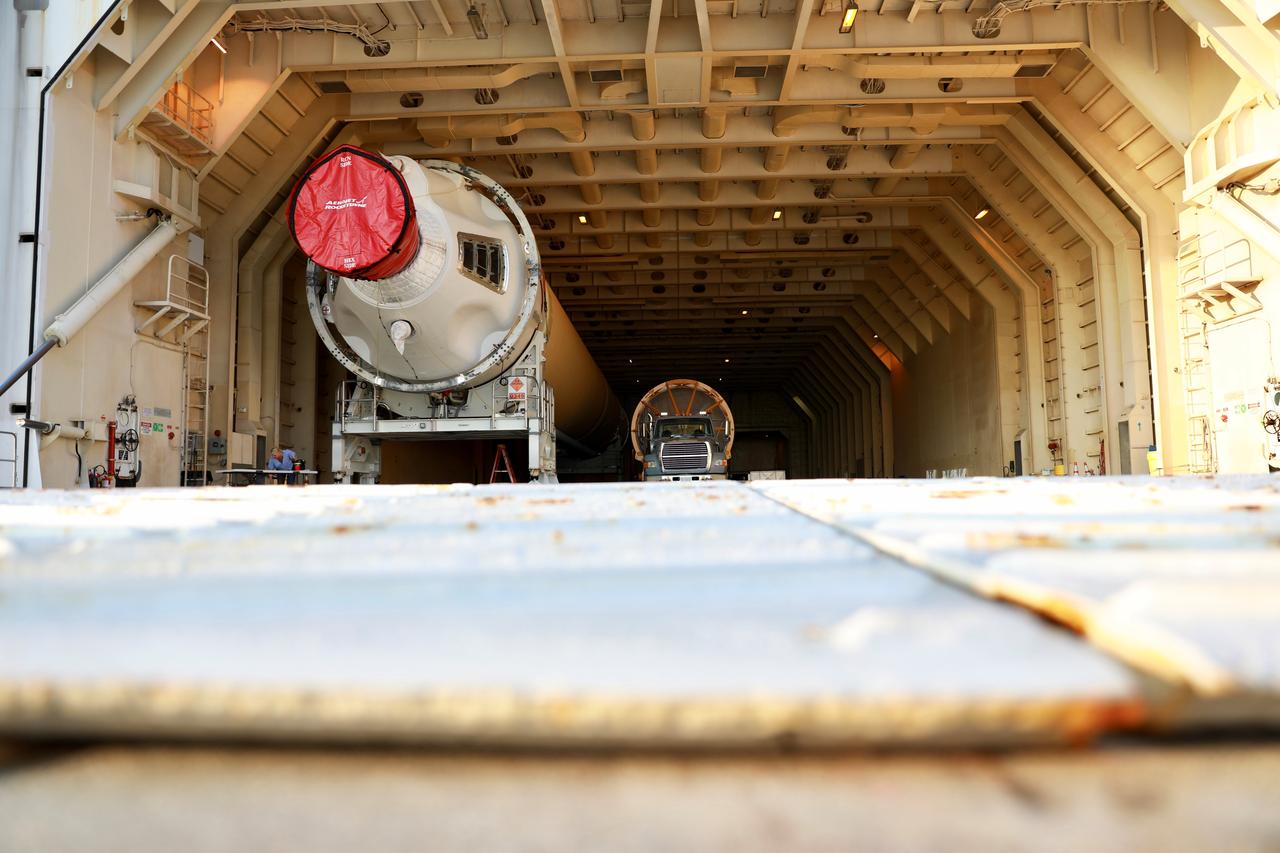
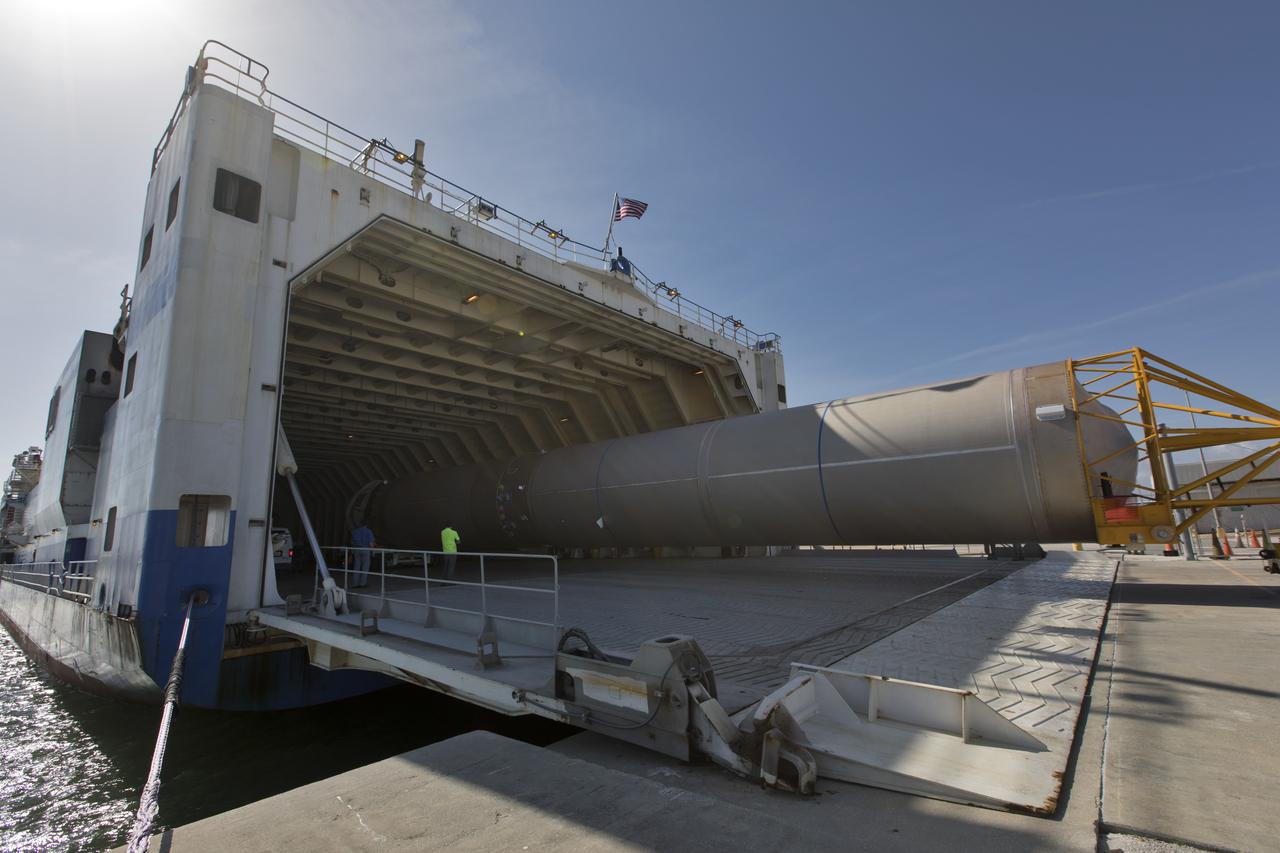
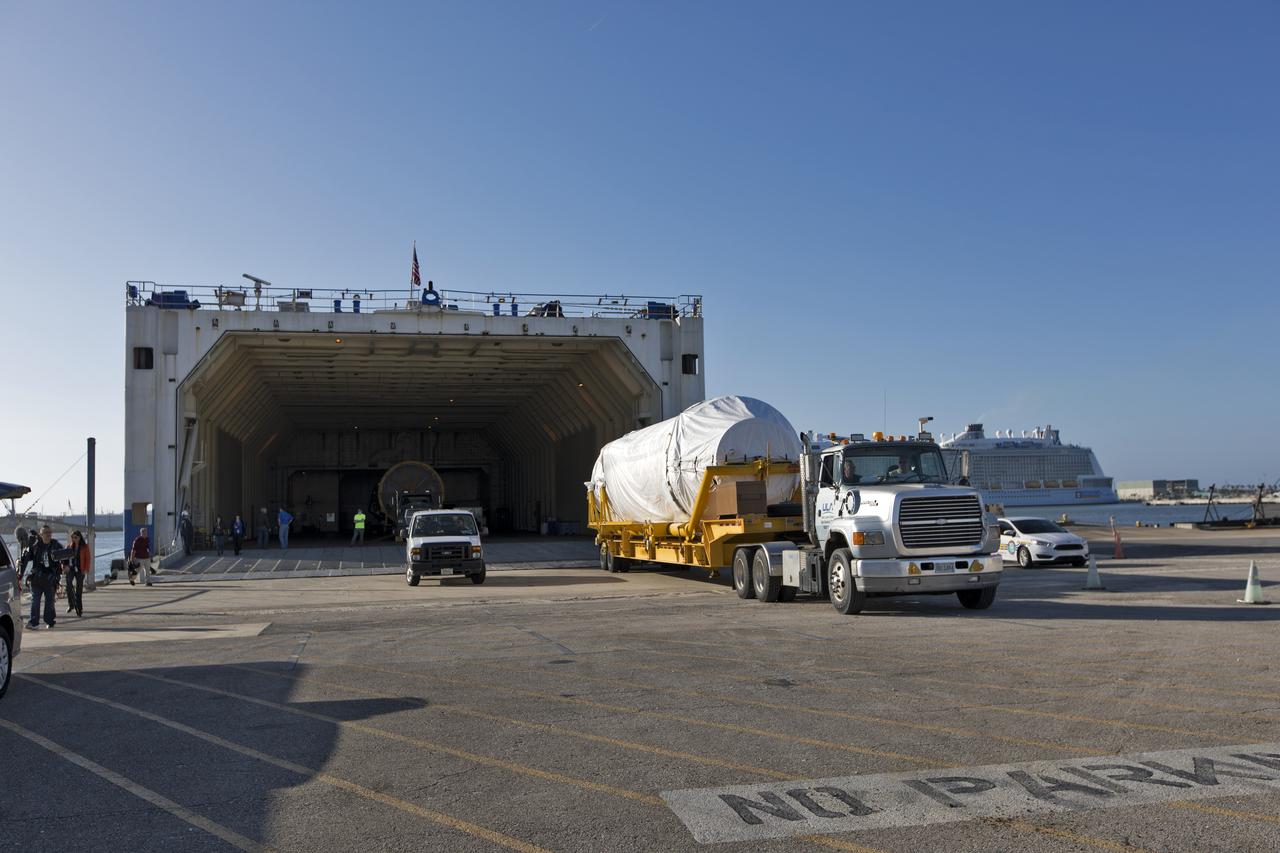
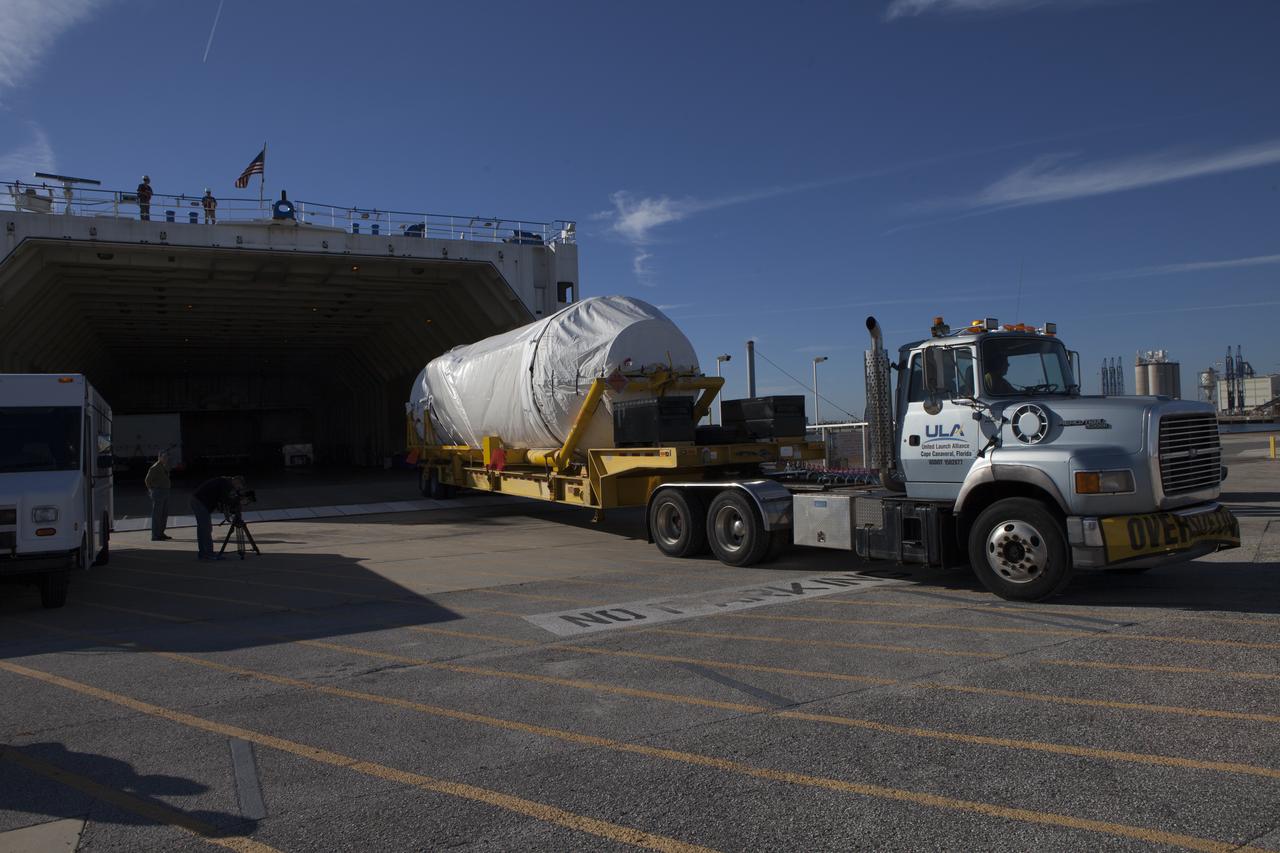
The United Launch Alliance (ULA) Atlas V booster that will be used for Boeing’s Crew Flight Test (CFT) is moved out of the Mariner cargo ship at the Army Wharf at Cape Canaveral Air Force Station in Florida on June 5, 2019. The ULA Atlas V rocket will launch the CST-100 Starliner and its crew, NASA astronauts Mike Fincke and Nicole Mann and Boeing astronaut Chris Ferguson, to the International Space Station for NASA’s Commercial Crew Program. The booster will be transported to the Atlas Spaceflight Operations Center to await the start of operations for its missions. The CFT will demonstrate Starliner and Atlas V’s ability to safely carry crew to and from the orbiting laboratory.
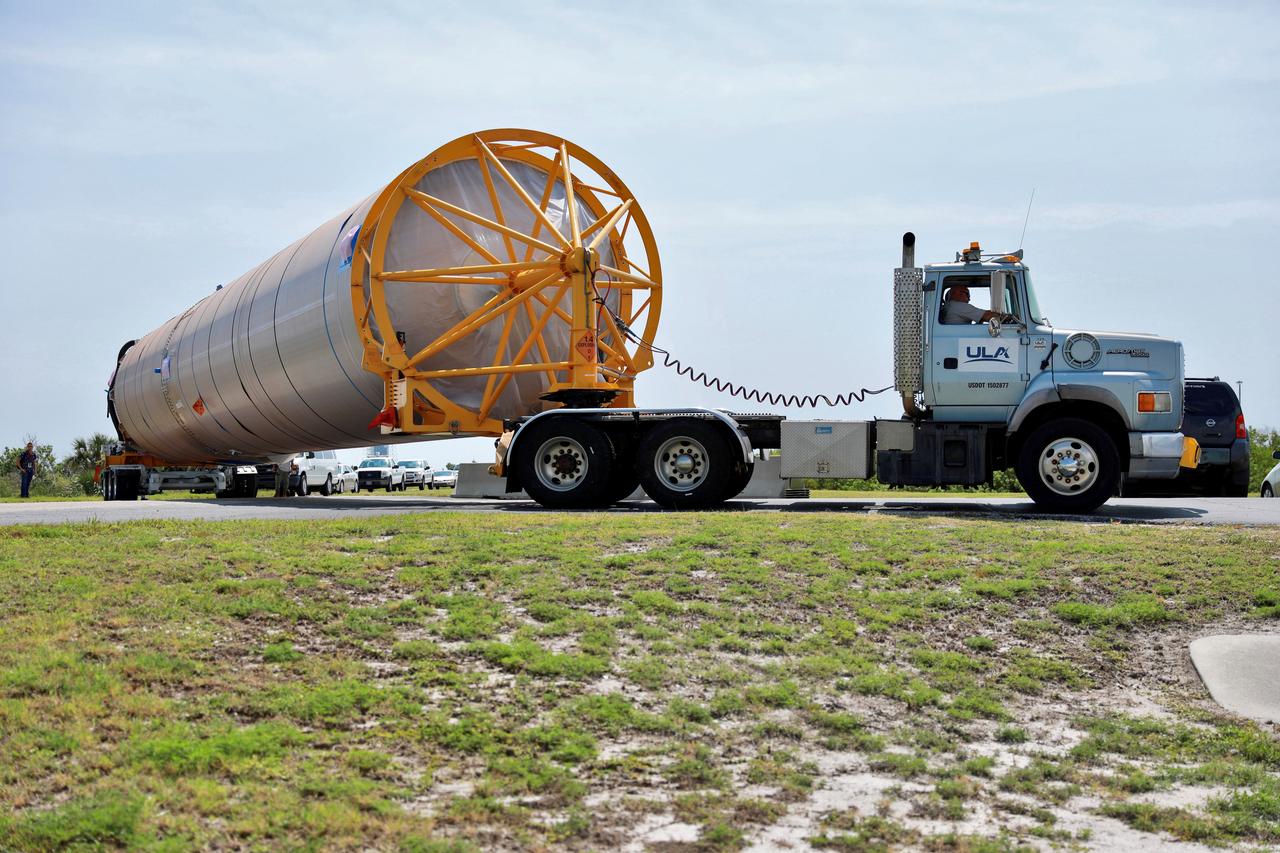
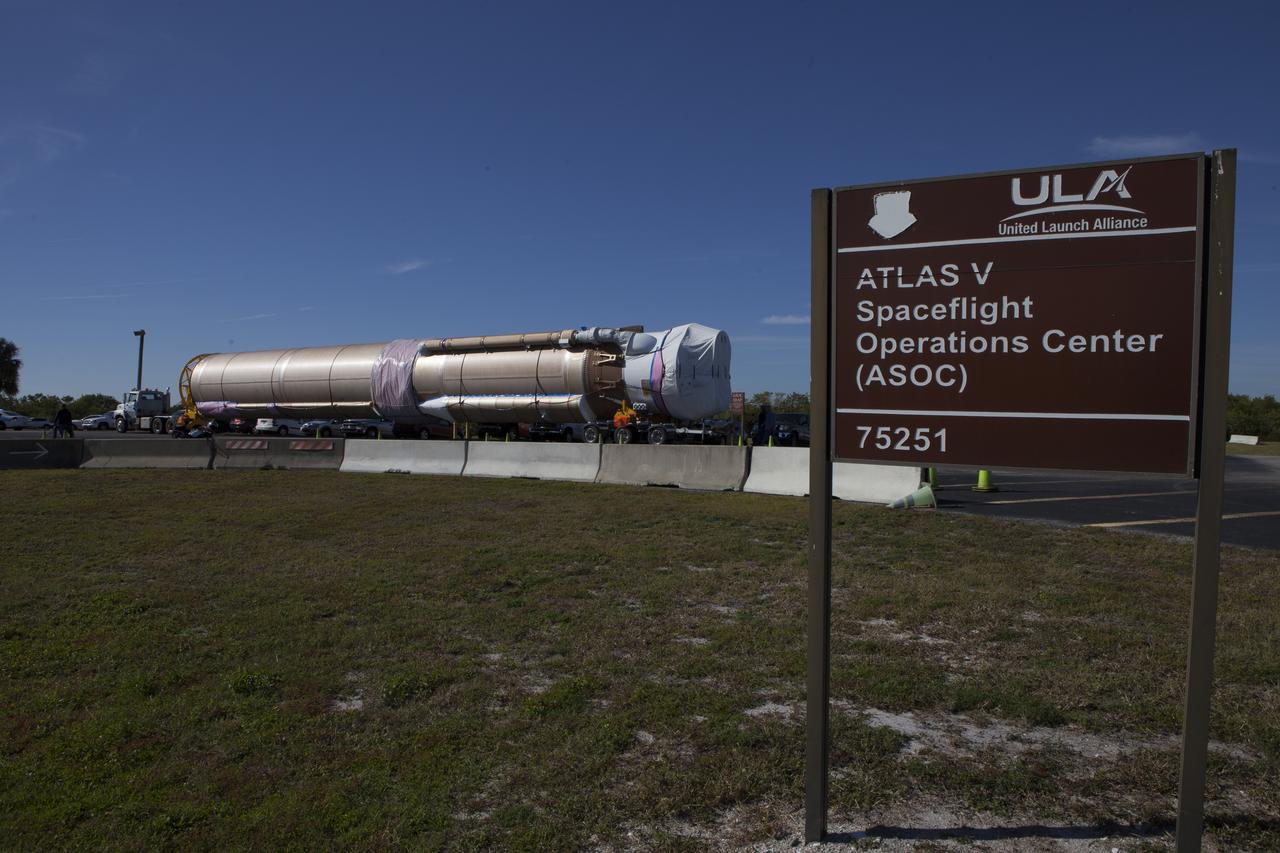
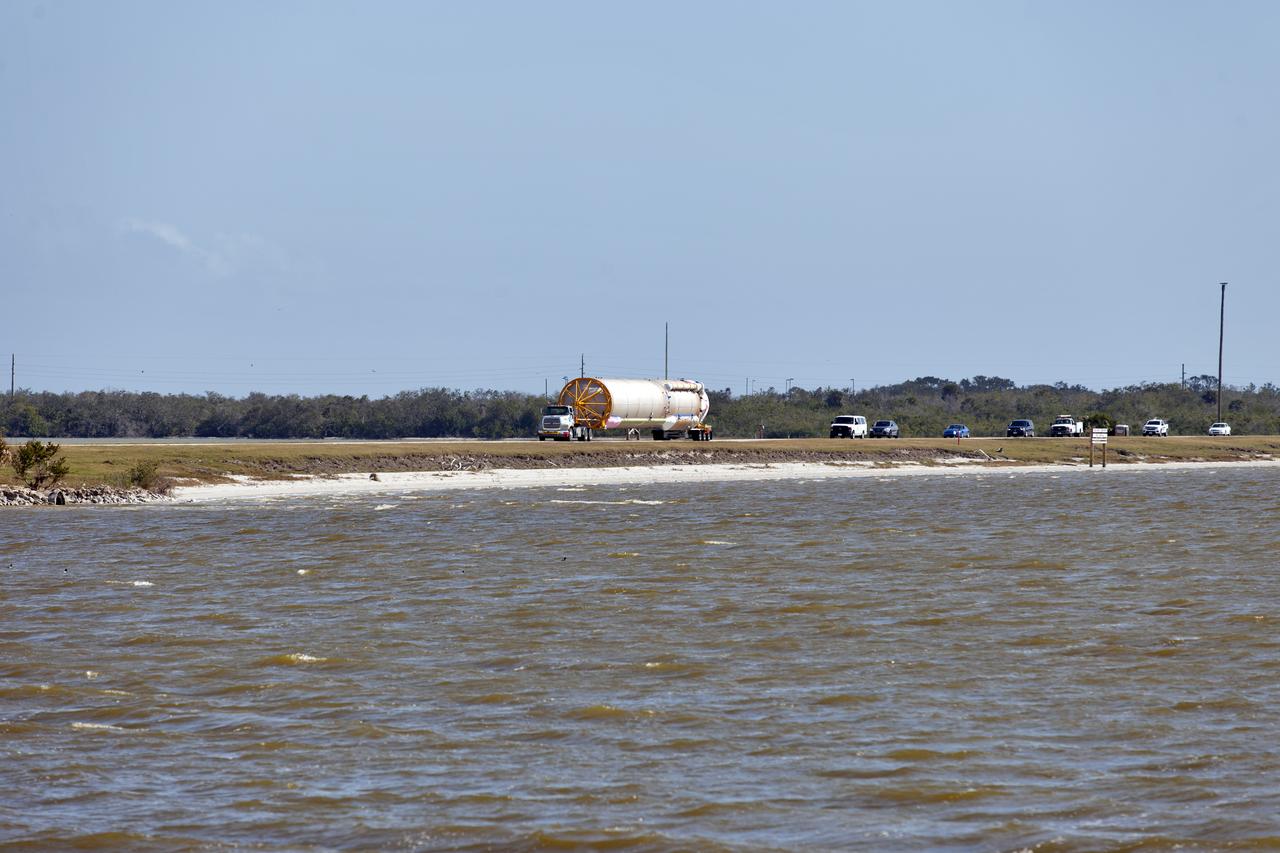
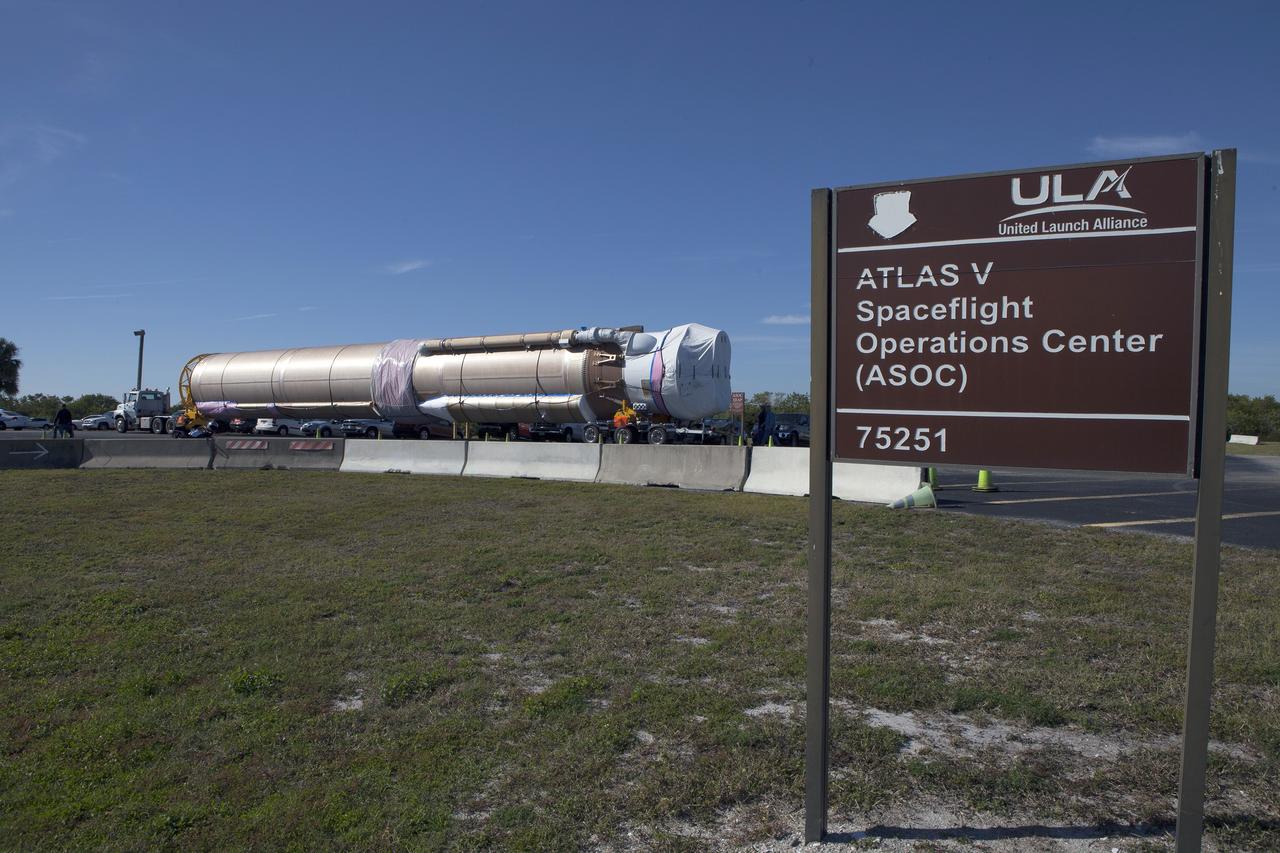
The United Launch Alliance (ULA) Atlas V booster that will be used for Boeing’s Crew Flight Test (CFT) nears the Atlas Spaceflight Operations Center (ASOC) at Cape Canaveral Air Force Station in Florida on June 5, 2019. The ULA Atlas V rocket will launch Starliner and its crew, NASA astronauts Mike Fincke and Nicole Mann and Boeing astronaut Chris Ferguson, to the International Space Station for NASA’s Commercial Crew Program. Inside the ASOC, the booster will await the start of operations for its missions. The CFT will demonstrate Starliner and Atlas V’s ability to safely carry crew to and from the orbiting laboratory.
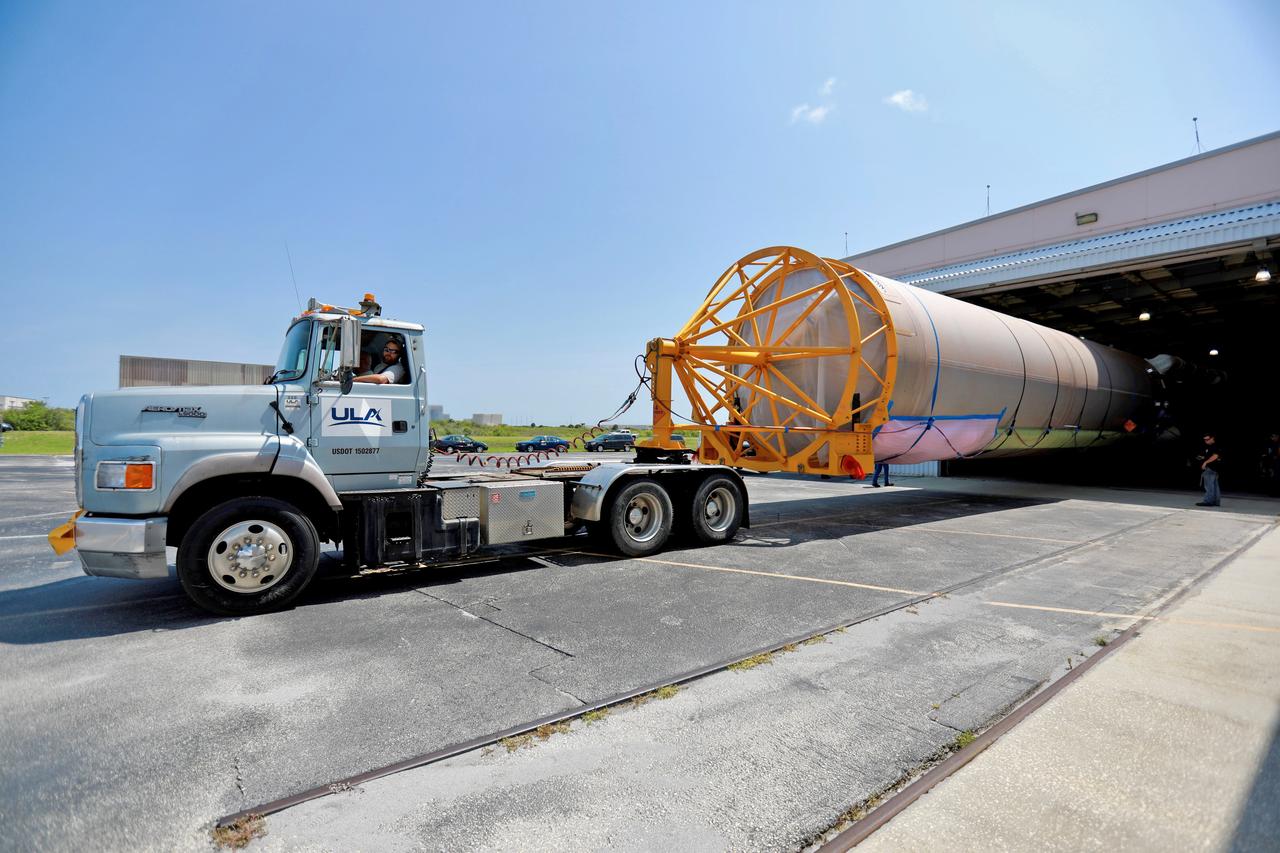
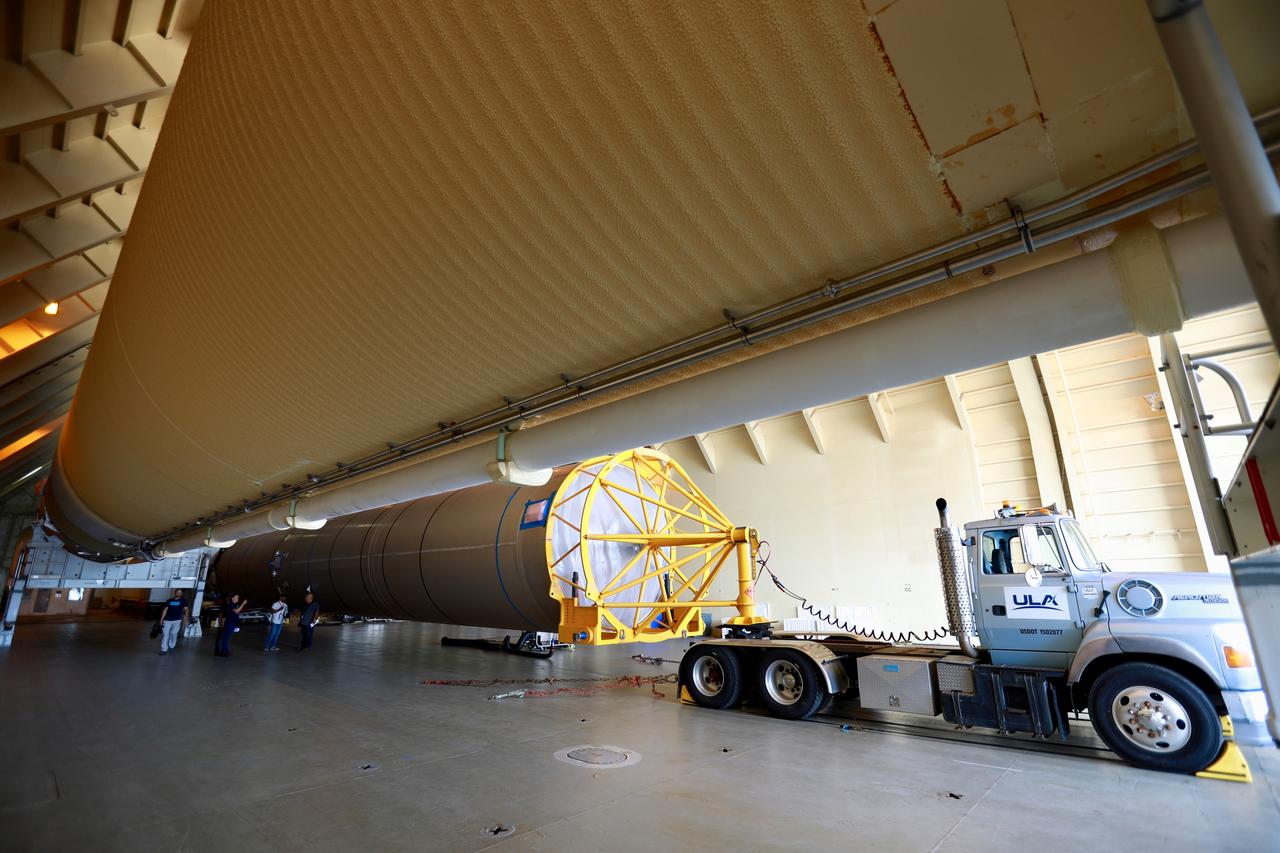
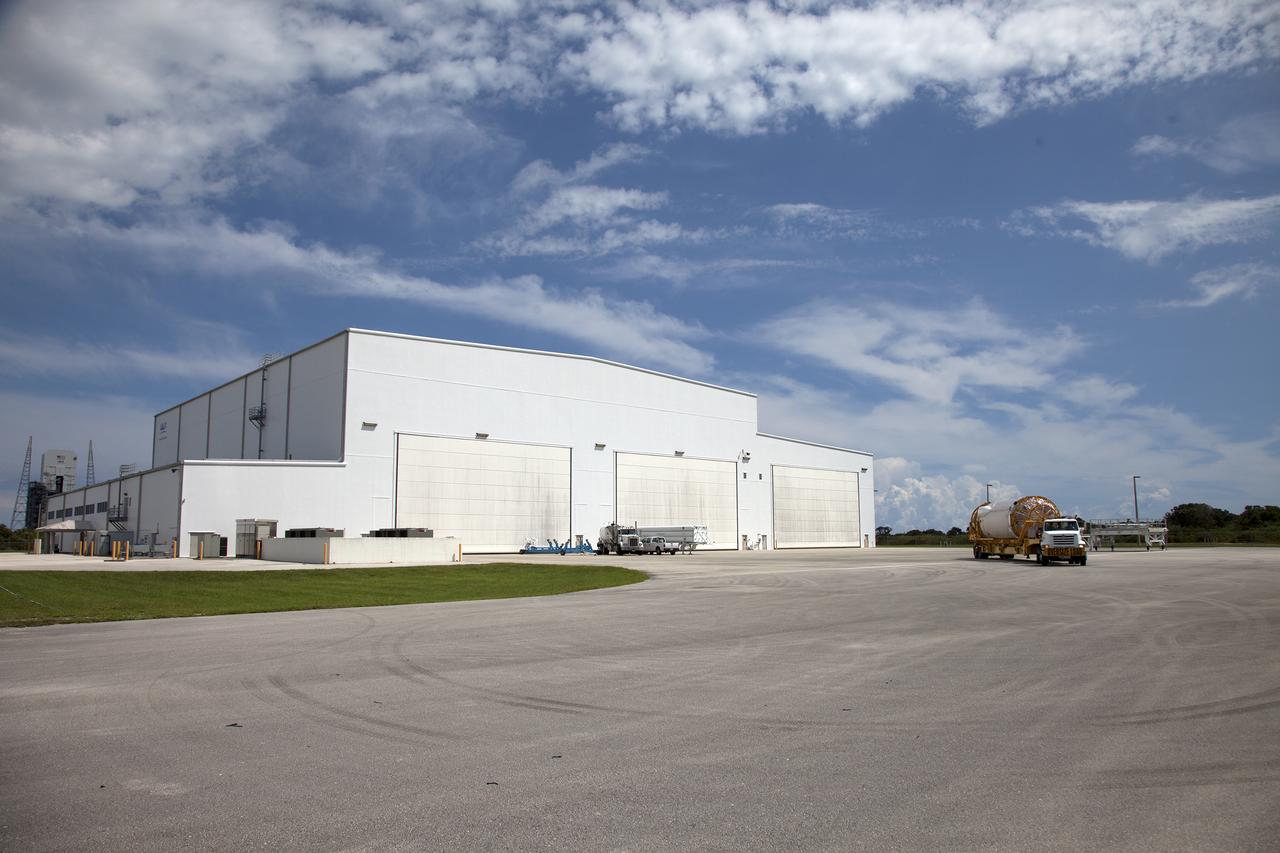
The United Launch Alliance (ULA) Atlas V booster that will be used for Boeing’s Crew Flight Test (CFT) is backed into the Atlas Spaceflight Operations Center (ASOC) at Cape Canaveral Air Force Station in Florida on June 5, 2019. The ULA Atlas V rocket will launch Starliner and its crew, NASA astronauts Mike Fincke and Nicole Mann and Boeing astronaut Chris Ferguson, to the International Space Station for NASA’s Commercial Crew Program. Inside the ASOC, the booster will await the start of operations for its missions. The CFT will demonstrate Starliner and Atlas V’s ability to safely carry crew to and from the orbiting laboratory.
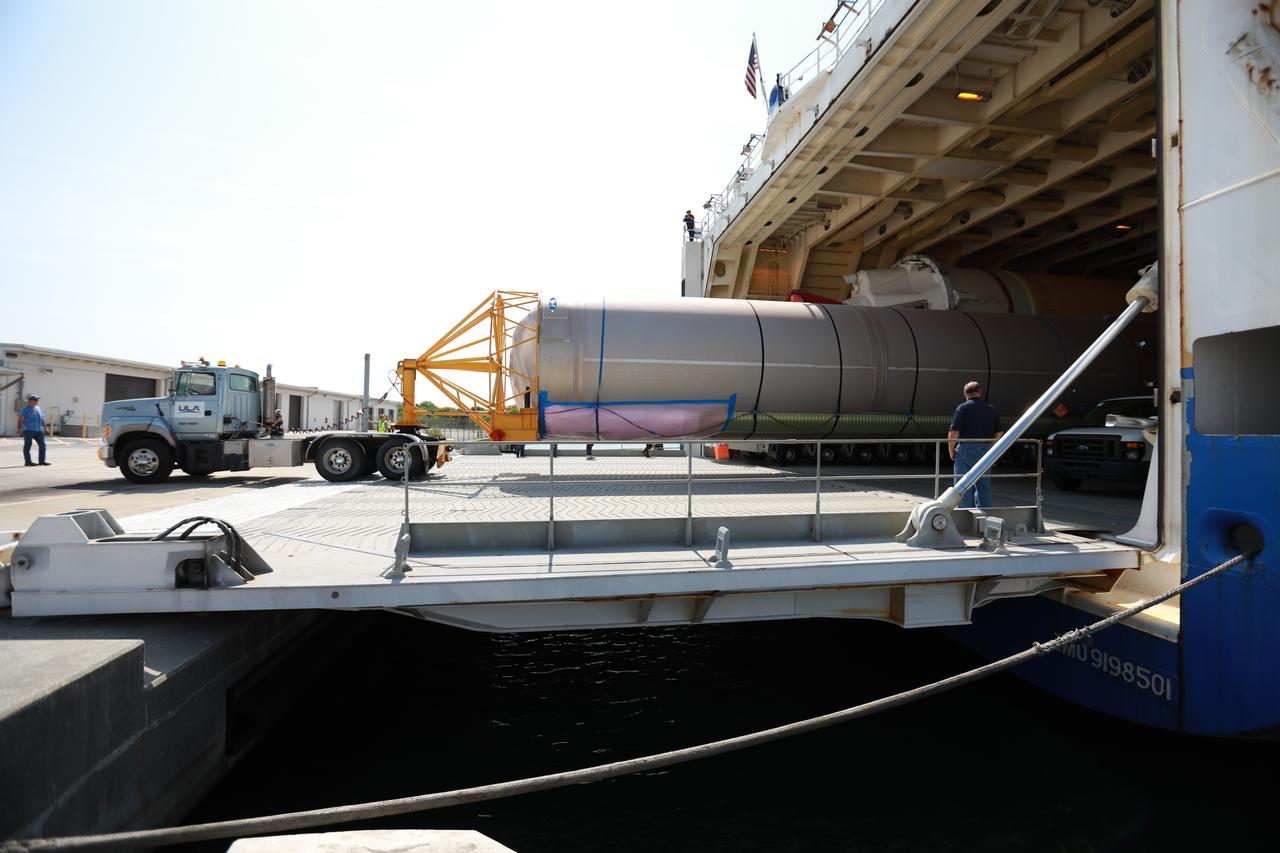
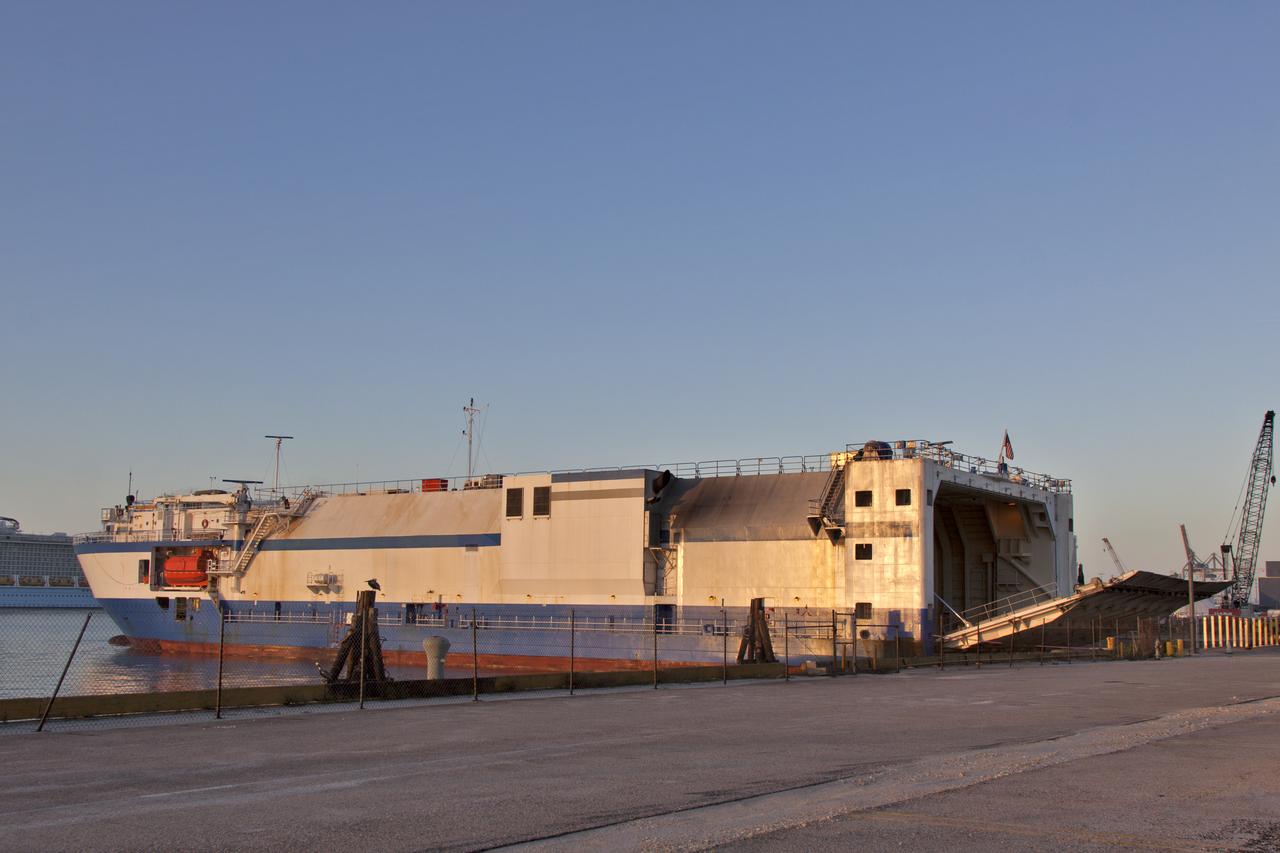
At the Army Wharf at Cape Canaveral Air Force Station in Florida, the United Launch Alliance (ULA) Mariner cargo ship door is lowered on June 5, 2019, for offloading of the ULA Atlas V booster that will be used for Boeing’s Crew Flight Test (CFT). The Atlas V rocket will launch the CST-100 Starliner spacecraft and its crew, NASA astronauts Mike Fincke and Nicole Mann and Boeing astronaut Chris Ferguson, to the International Space Station for NASA’s Commercial Crew Program. The booster will be transported to the Atlas Spaceflight Operations Center to await the start of operations for its mission. The CFT will demonstrate Starliner and Atlas V’s ability to safely carry crew to and from the orbiting laboratory.
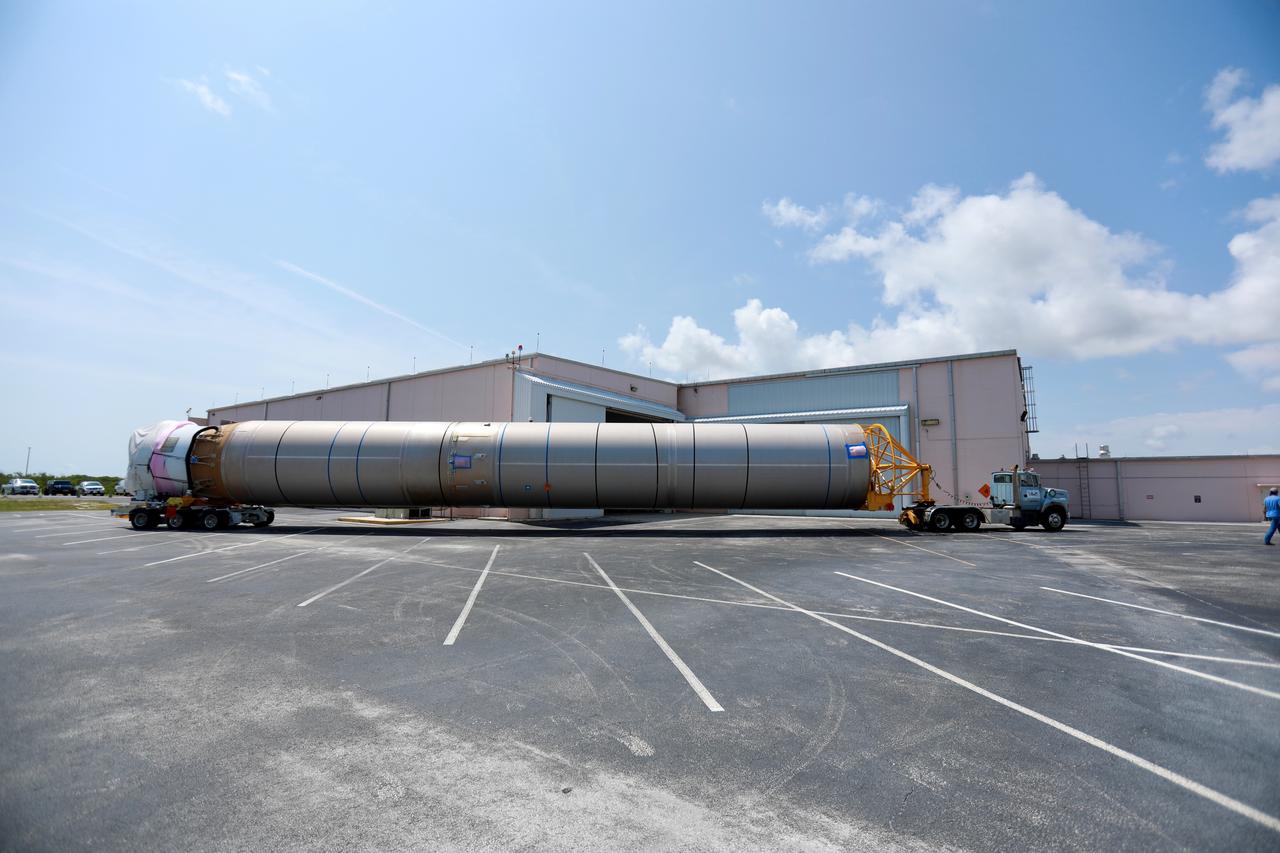
The United Launch Alliance (ULA) Atlas V booster that will be used for Boeing’s Crew Flight Test (CFT) nears the Atlas Spaceflight Operations Center (ASOC) at Cape Canaveral Air Force Station in Florida on June 5, 2019. The ULA Atlas V rocket will launch Starliner and its crew, NASA astronauts Mike Fincke and Nicole Mann and Boeing astronaut Chris Ferguson, to the International Space Station for NASA’s Commercial Crew Program. Inside the ASOC, the booster will await the start of operations for its missions. The CFT will demonstrate Starliner and Atlas V’s ability to safely carry crew to and from the orbiting laboratory.
The United Launch Alliance (ULA) Atlas V booster that will be used for Boeing’s Crew Flight Test (CFT) is moved out of the Mariner cargo ship at the Army Wharf at Cape Canaveral Air Force Station in Florida on June 5, 2019. The ULA Atlas V rocket will launch the CST-100 Starliner and its crew, NASA astronauts Mike Fincke and Nicole Mann and Boeing astronaut Chris Ferguson, to the International Space Station for NASA’s Commercial Crew Program. The booster will be transported to the Atlas Spaceflight Operations Center to await the start of operations for its missions. The CFT will demonstrate Starliner and Atlas V’s ability to safely carry crew to and from the orbiting laboratory.
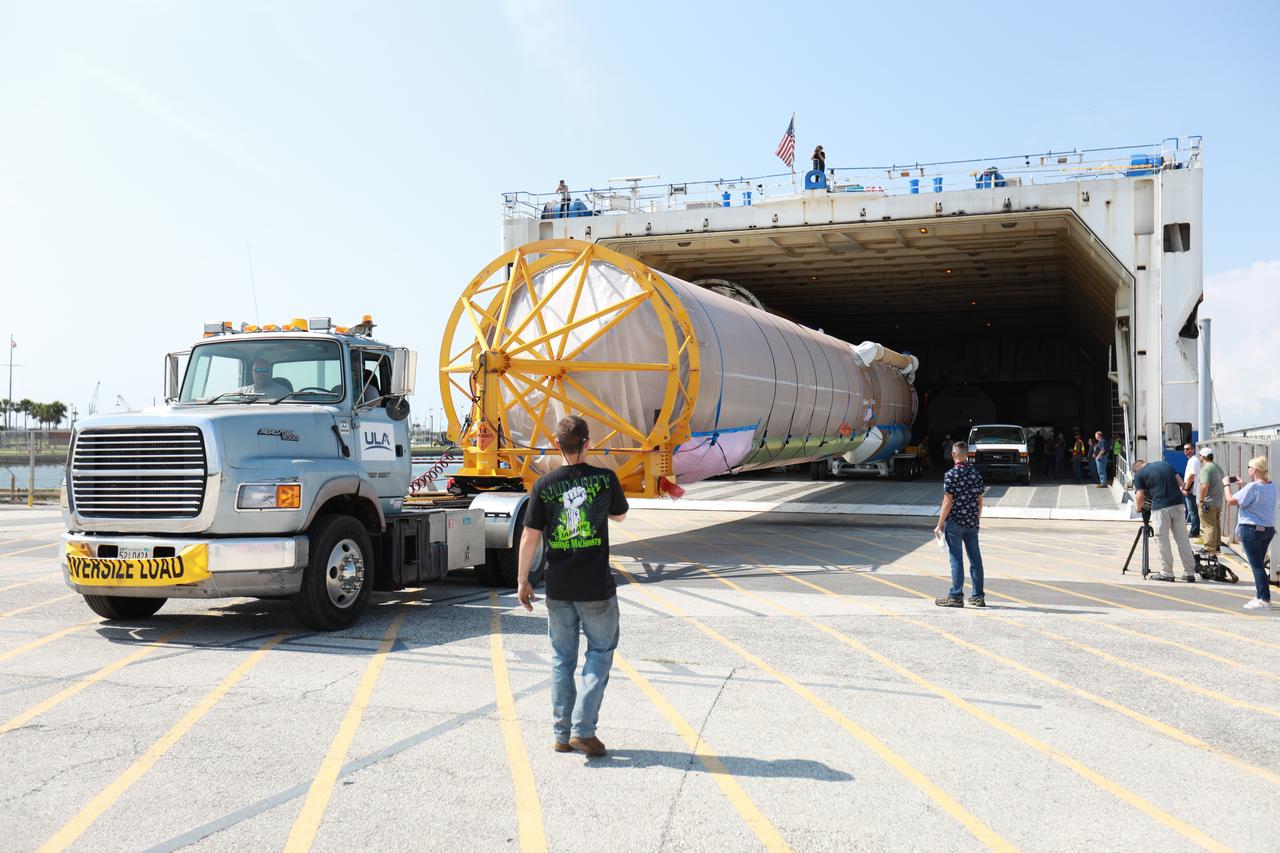
The United Launch Alliance (ULA) Atlas V booster that will be used for Boeing’s Crew Flight Test (CFT) is moved out of the Mariner cargo ship at the Army Wharf at Cape Canaveral Air Force Station in Florida on June 5, 2019. The ULA Atlas V rocket will launch the CST-100 Starliner and its crew, NASA astronauts Mike Fincke and Nicole Mann and Boeing astronaut Chris Ferguson, to the International Space Station for NASA’s Commercial Crew Program. The booster will be transported to the Atlas Spaceflight Operations Center to await the start of operations for its missions. The CFT will demonstrate Starliner and Atlas V’s ability to safely carry crew to and from the orbiting laboratory.
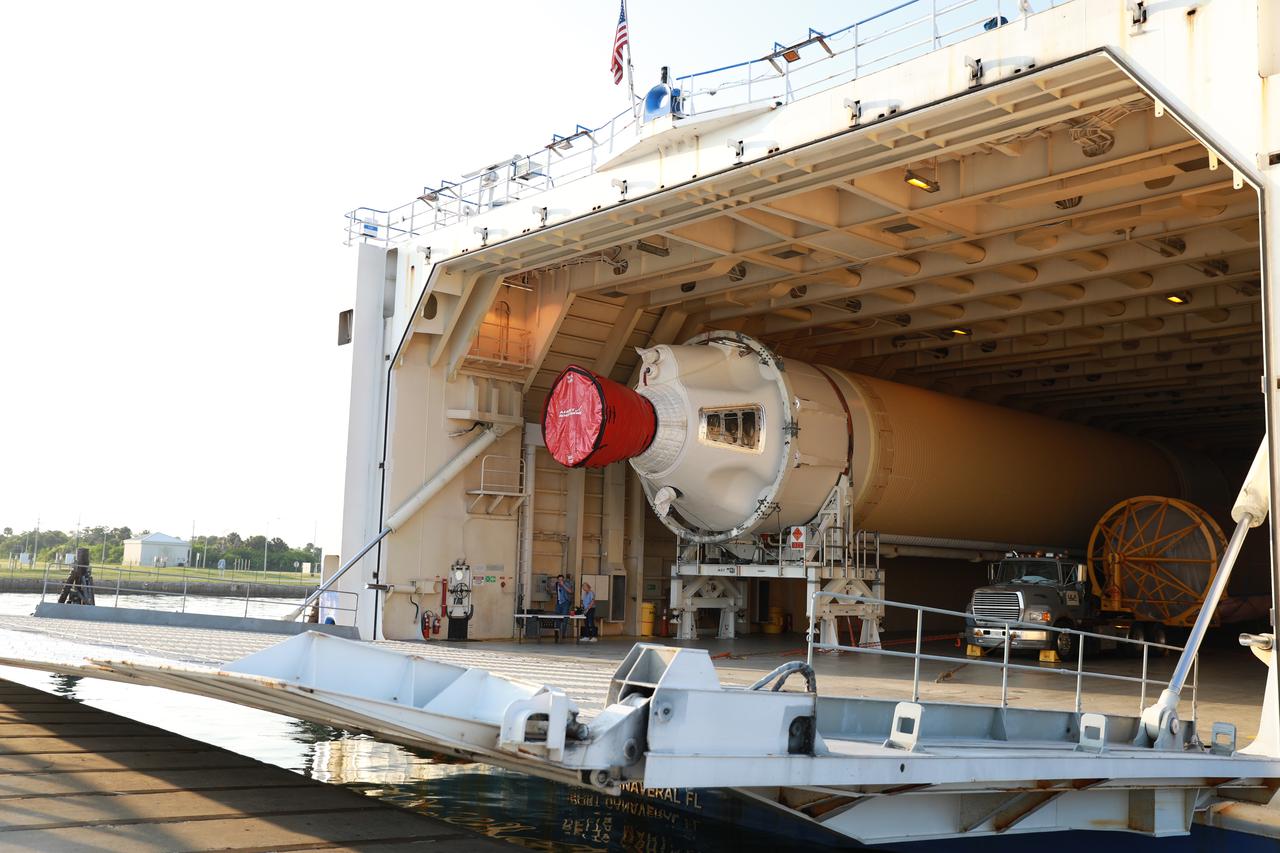
At the Army Wharf at Cape Canaveral Air Force Station in Florida, the United Launch Alliance (ULA) Mariner cargo ship door is lowered on June 5, 2019, for offloading of the ULA Atlas V booster that will be used for Boeing’s Crew Flight Test (CFT). The Atlas V rocket will launch the CST-100 Starliner spacecraft and its crew, NASA astronauts Mike Fincke and Nicole Mann and Boeing astronaut Chris Ferguson, to the International Space Station for NASA’s Commercial Crew Program. The booster will be transported to the Atlas Spaceflight Operations Center to await the start of operations for its mission. The CFT will demonstrate Starliner and Atlas V’s ability to safely carry crew to and from the orbiting laboratory.
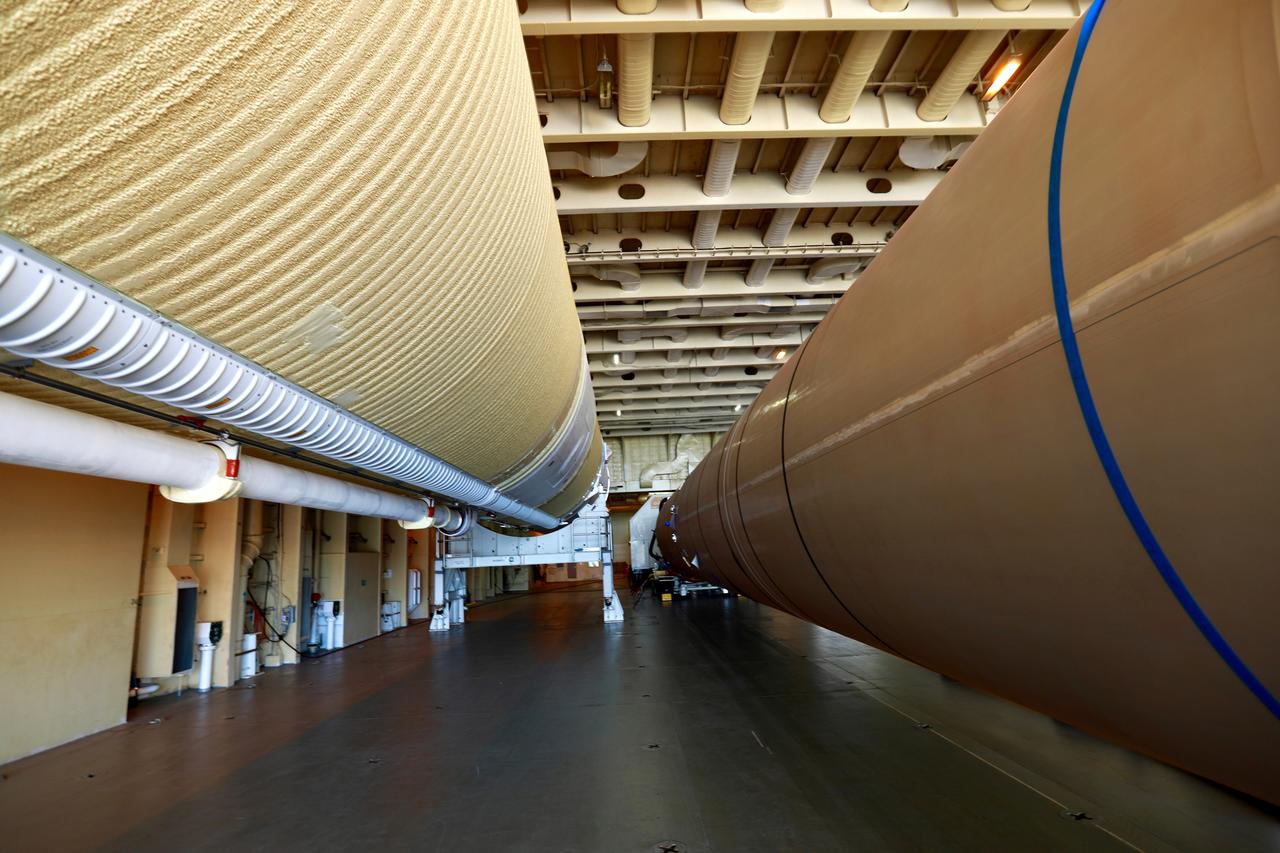
The United Launch Alliance (ULA) Atlas V booster that will be used for Boeing’s Crew Flight Test (CFT) is moved out of the Mariner cargo ship at the Army Wharf at Cape Canaveral Air Force Station in Florida on June 5, 2019. The ULA Atlas V rocket will launch the CST-100 Starliner and its crew, NASA astronauts Mike Fincke and Nicole Mann and Boeing astronaut Chris Ferguson, to the International Space Station for NASA’s Commercial Crew Program. The booster will be transported to the Atlas Spaceflight Operations Center to await the start of operations for its missions. The CFT will demonstrate Starliner and Atlas V’s ability to safely carry crew to and from the orbiting laboratory.
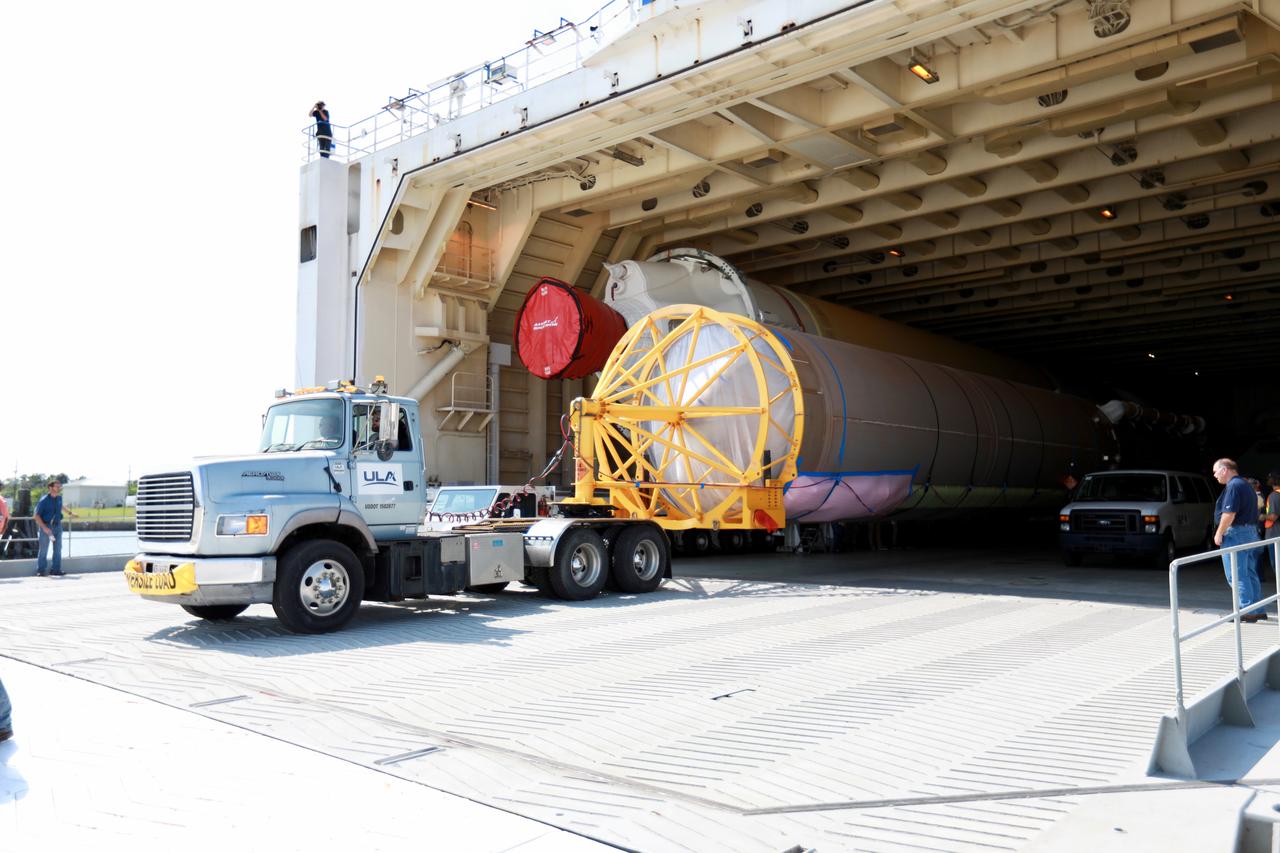
The United Launch Alliance (ULA) Atlas V booster that will be used for Boeing’s Crew Flight Test (CFT) is moved out of the Mariner cargo ship at the Army Wharf at Cape Canaveral Air Force Station in Florida on June 5, 2019. The ULA Atlas V rocket will launch the CST-100 Starliner and its crew, NASA astronauts Mike Fincke and Nicole Mann and Boeing astronaut Chris Ferguson, to the International Space Station for NASA’s Commercial Crew Program. The booster will be transported to the Atlas Spaceflight Operations Center to await the start of operations for its missions. The CFT will demonstrate Starliner and Atlas V’s ability to safely carry crew to and from the orbiting laboratory.
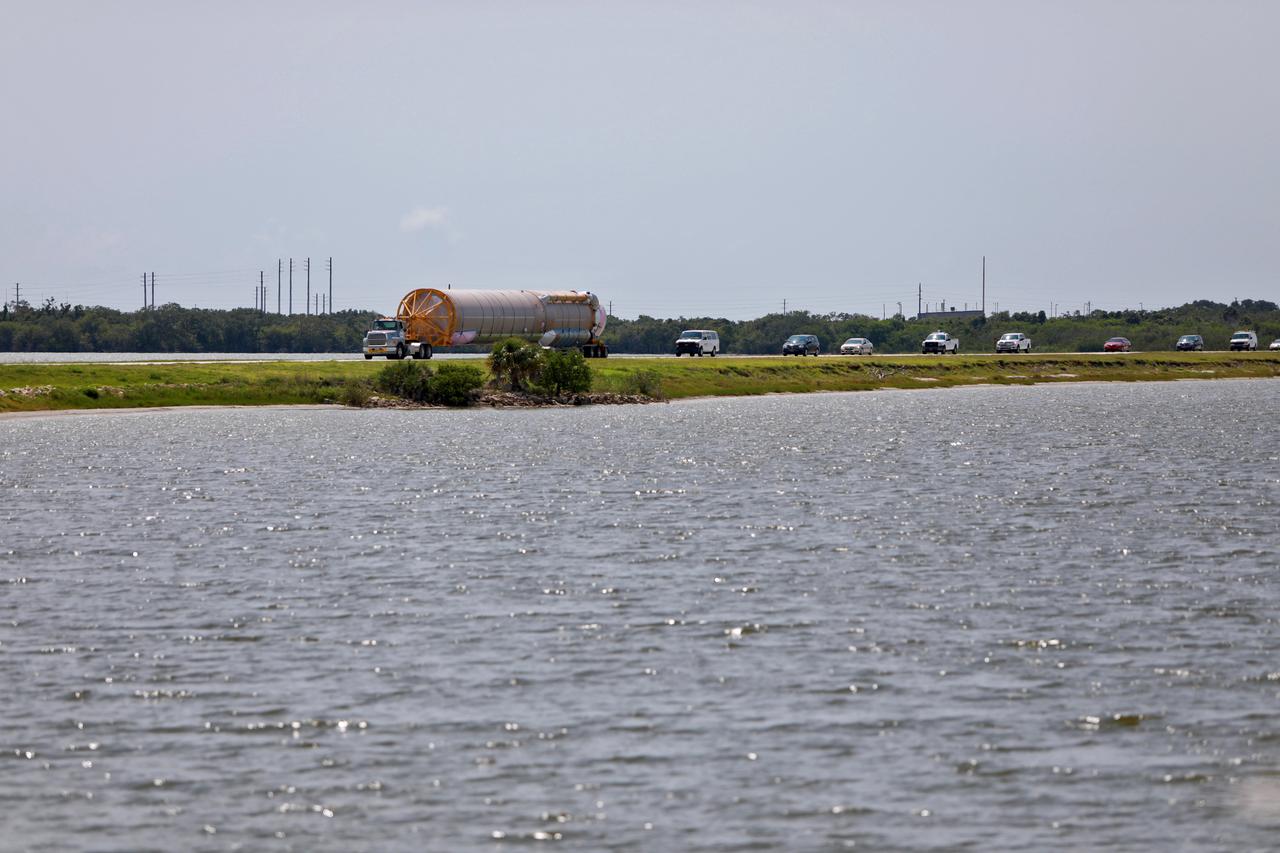
The United Launch Alliance (ULA) Atlas V booster that will be used for Boeing’s Crew Flight Test (CFT) is being transported to the Atlas Spaceflight Operations Center (ASOC) at Cape Canaveral Air Force Station in Florida on June 5, 2019. The ULA Atlas V rocket will launch the CST-100 Starliner and its crew, NASA astronauts Mike Fincke and Nicole Mann and Boeing astronaut Chris Ferguson, to the International Space Station for NASA’s Commercial Crew Program. Inside the ASOC, the booster will await the start of operations for its missions. The CFT will demonstrate Starliner and Atlas V’s ability to safely carry crew to and from the orbiting laboratory.
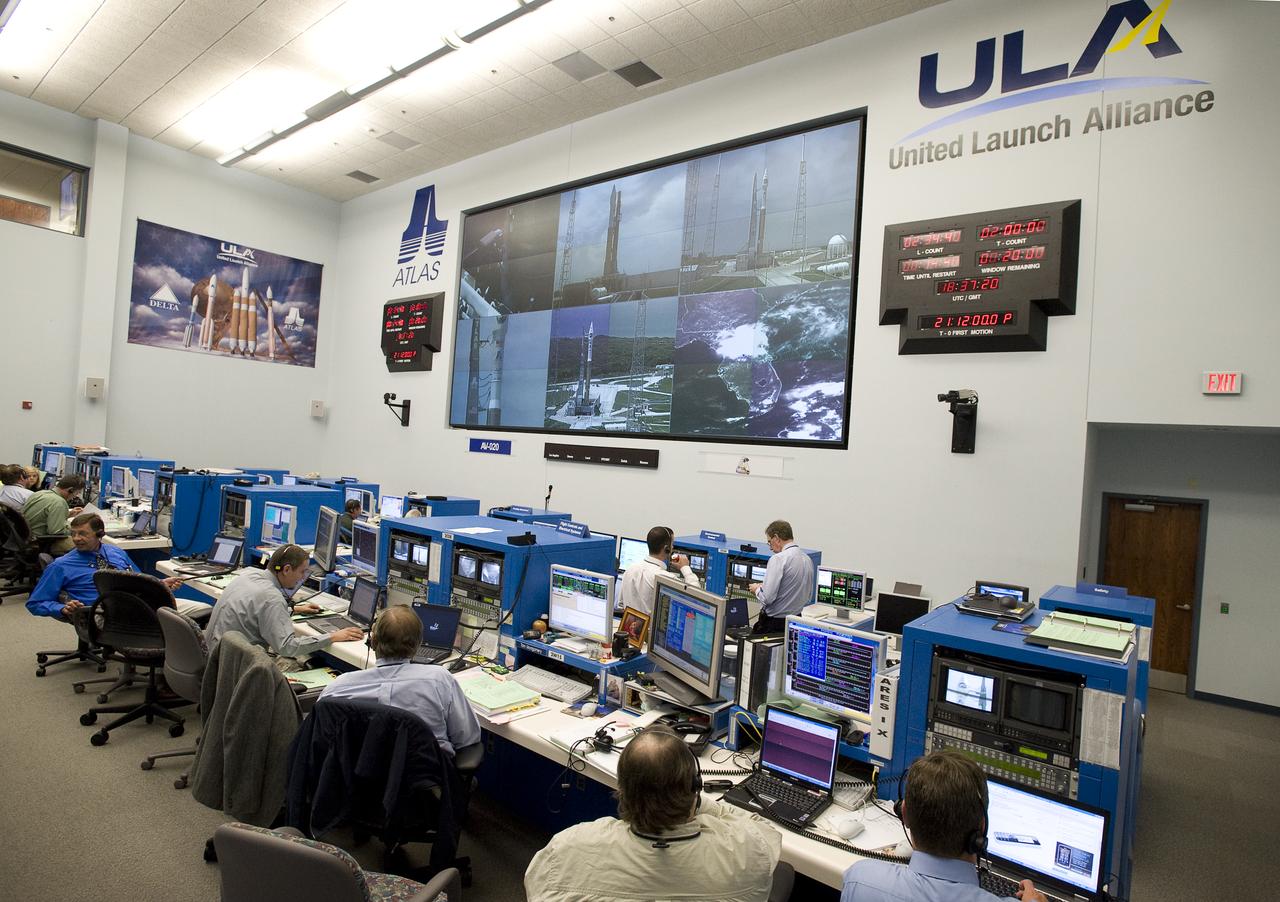
United Launch Alliance (ULA) team members work in the Atlas V Spaceflight Operations Center prior to the launch of the Lunar Reconnaissance Orbiter and Lunar Crater Observation and Sensing Satellite Thursday, June 18, 2009, from Cape Canaveral Air Force Station, Florida. . Photo Credit: (NASA/Bill Ingalls)

United Launch Alliance (ULA) team members work in the Atlas V Spaceflight Operations Center prior to the launch of the Lunar Reconnaissance Orbiter and Lunar Crater Observation and Sensing Satellite Thursday, June 18, 2009, from Cape Canaveral Air Force Station, Florida. Photo Credit: (NASA/Bill Ingalls)
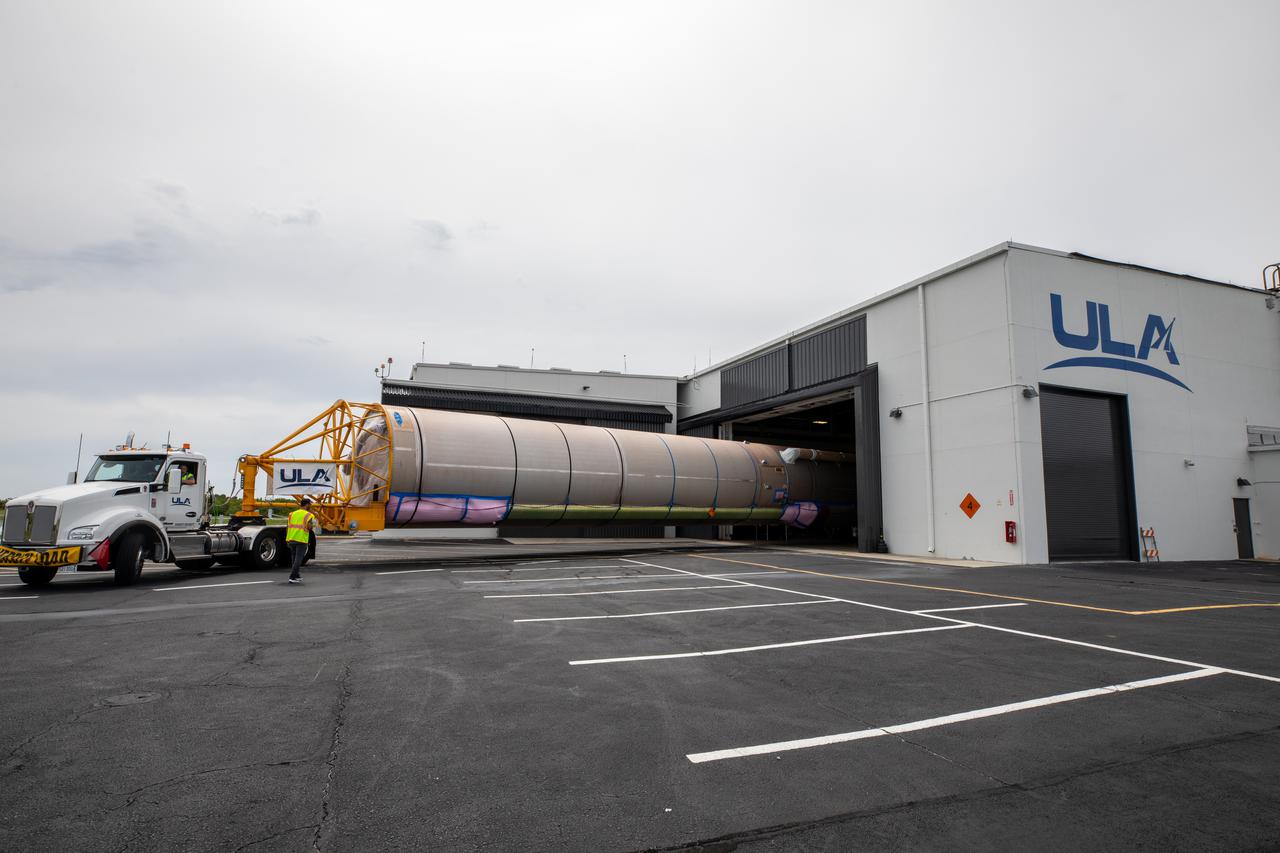
A flatbed truck delivers the United Launch Alliance (ULA) Atlas V booster and Centaur upper stage for Boeing's CST-100 Starliner Crew Flight Test (CFT) to the Atlas Spaceflight Operations Center at Space Launch Complex 41 (SLC-41) at Cape Canaveral Space Force Station on June 21, 2021. Starliner's first flight with astronauts aboard, CFT will launch from SLC-41. The flight test will demonstrate the ability of the Atlas V and Starliner to safely carry astronauts to and from the International Space Station for the agency's Commercial Crew Program.
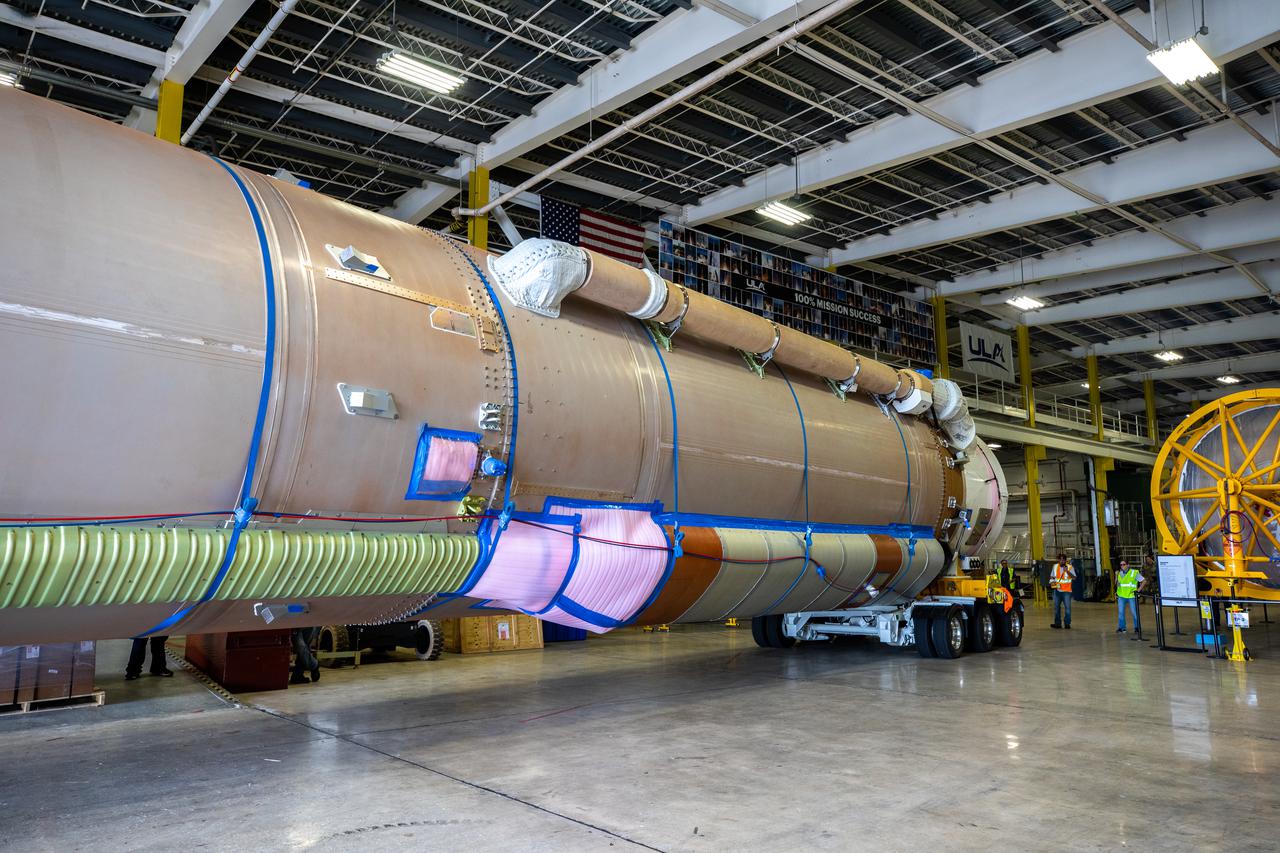
The United Launch Alliance (ULA) Atlas V booster and Centaur upper stage for Boeing's CST-100 Starliner Crew Flight Test (CFT) are inside the Atlas Spaceflight Operations Center at Space Launch Complex 41 (SLC-41) at Cape Canaveral Space Force Station on June 21, 2021. Starliner's first flight with astronauts aboard, CFT will launch from SLC-41. The flight test will demonstrate the ability of the Atlas V and Starliner to safely carry astronauts to and from the International Space Station for the agency's Commercial Crew Program.
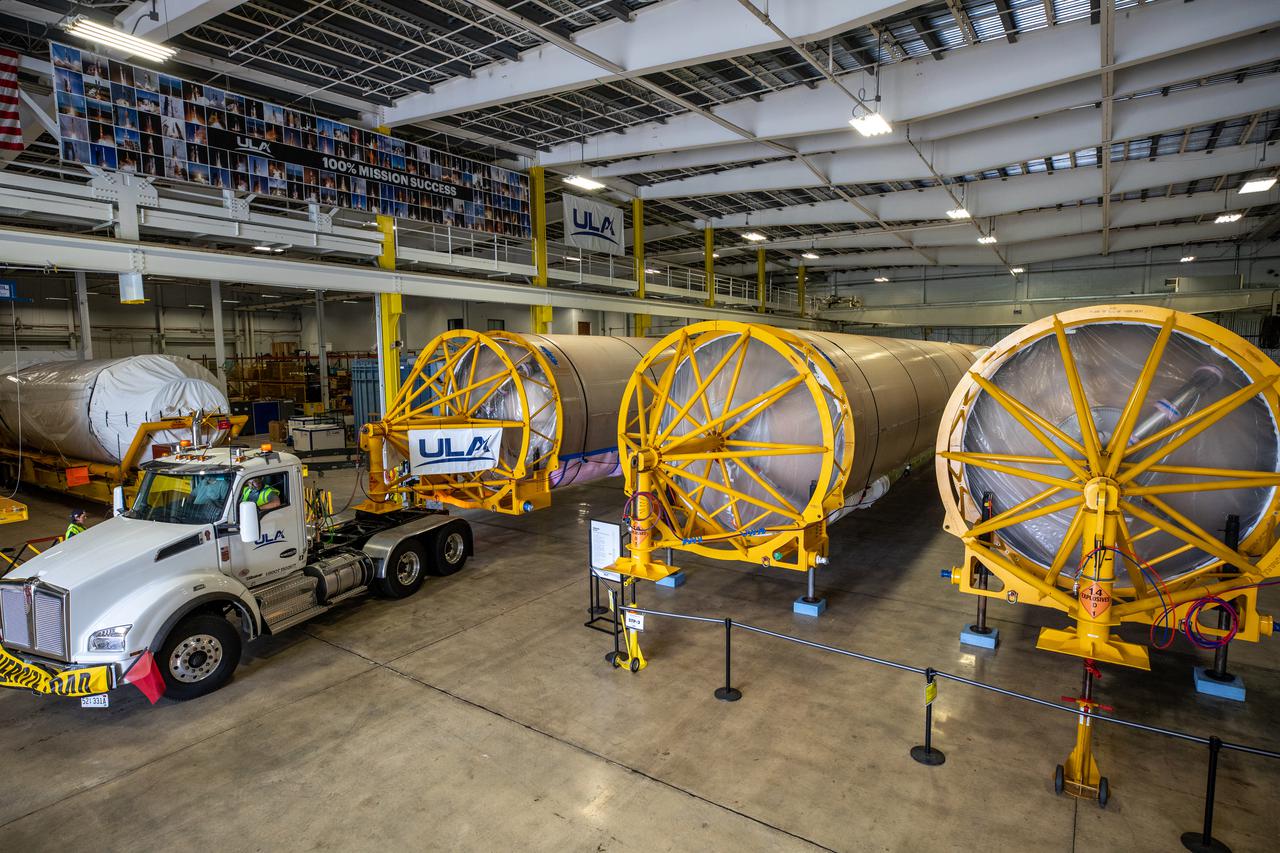
A flatbed truck moves the United Launch Alliance (ULA) Atlas V booster and Centaur upper stage for Boeing's CST-100 Starliner Crew Flight Test (CFT) inside the Atlas Spaceflight Operations Center at Space Launch Complex 41 (SLC-41) at Cape Canaveral Space Force Station on June 21, 2021. Starliner's first flight with astronauts aboard, CFT will launch from SLC-41. The flight test will demonstrate the ability of the Atlas V and Starliner to safely carry astronauts to and from the International Space Station for the agency's Commercial Crew Program.
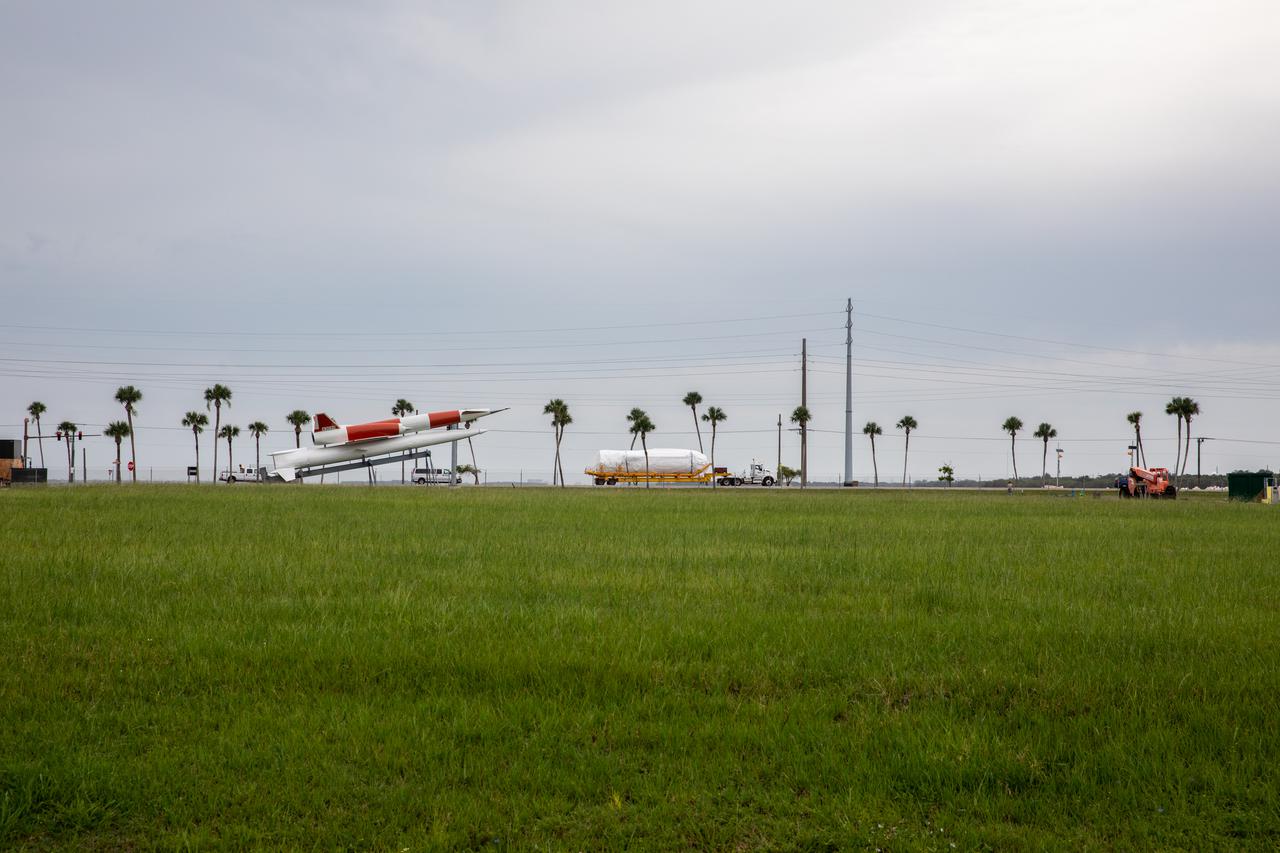
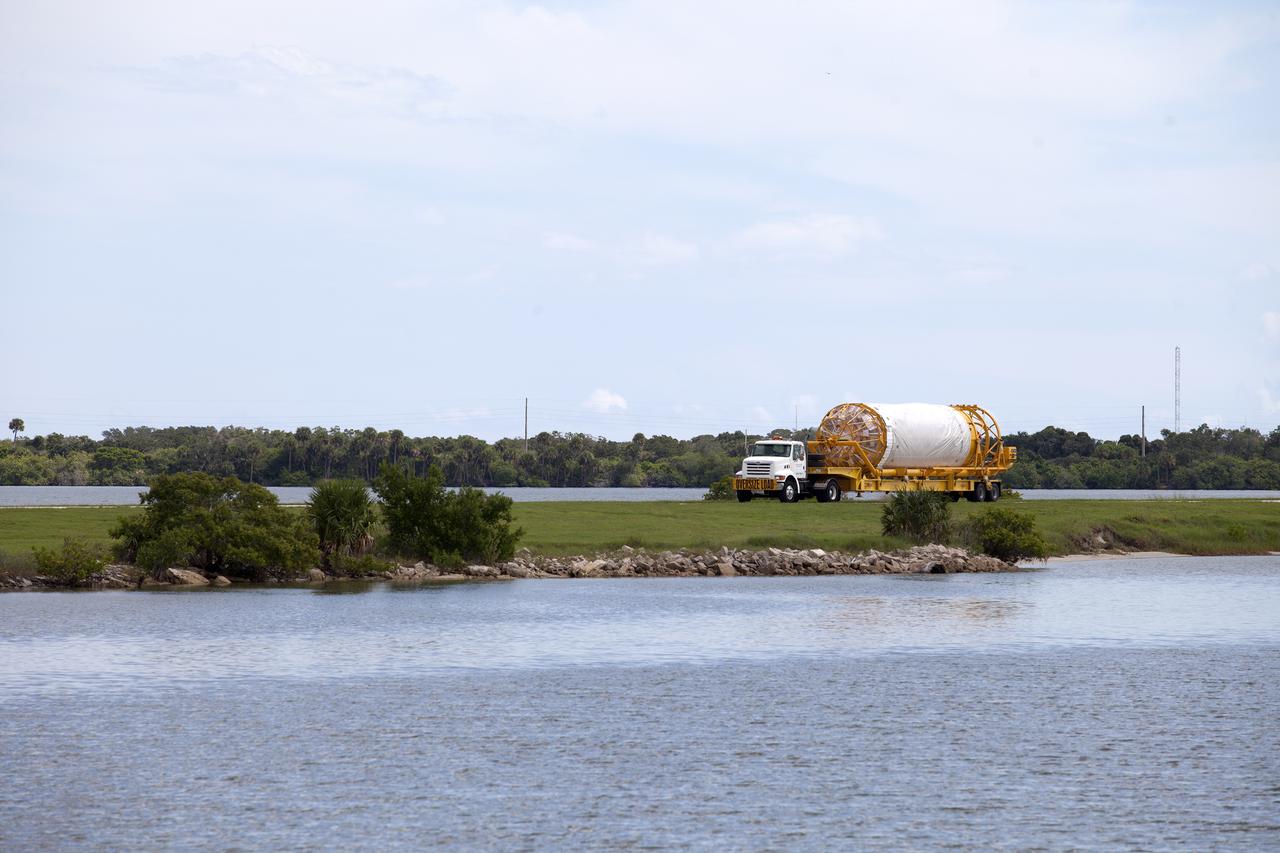
The United Launch Alliance (ULA) Atlas V booster and Centaur upper stage for Boeing's CST-100 Starliner Crew Flight Test (CFT) are on their way to the Atlas Spaceflight Operations Center at Space Launch Complex 41 (SLC-41) at Cape Canaveral Space Force Station on June 21, 2021. Starliner's first flight with astronauts aboard, CFT will launch from SLC-41. The flight test will demonstrate the ability of the Atlas V and Starliner to safely carry astronauts to and from the International Space Station for the agency's Commercial Crew Program.

The United Launch Alliance (ULA) Atlas V booster and Centaur upper stage for Boeing's CST-100 Starliner Crew Flight Test (CFT) are on their way to the Atlas Spaceflight Operations Center at Space Launch Complex 41 (SLC-41) at Cape Canaveral Space Force Station on June 21, 2021. Starliner's first flight with astronauts aboard, CFT will launch from SLC-41. The flight test will demonstrate the ability of the Atlas V and Starliner to safely carry astronauts to and from the International Space Station for the agency's Commercial Crew Program.
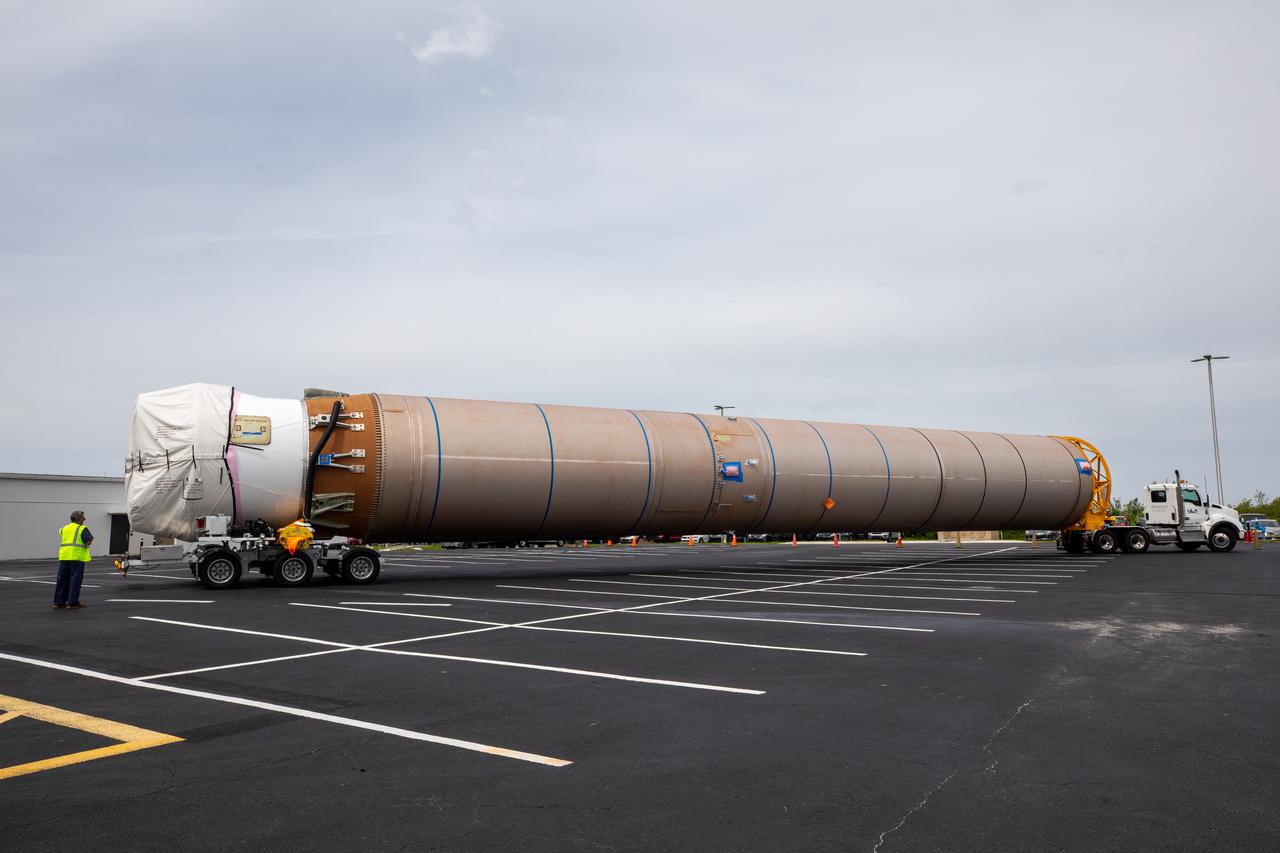
The United Launch Alliance (ULA) Atlas V booster and Centaur upper stage for Boeing's CST-100 Starliner Crew Flight Test (CFT) arrive at the Atlas Spaceflight Operations Center at Space Launch Complex 41 (SLC-41) at Cape Canaveral Space Force Station on June 21, 2021. Starliner's first flight with astronauts aboard, CFT will launch from SLC-41. The flight test will demonstrate the ability of the Atlas V and Starliner to safely carry astronauts to and from the International Space Station for the agency's Commercial Crew Program.
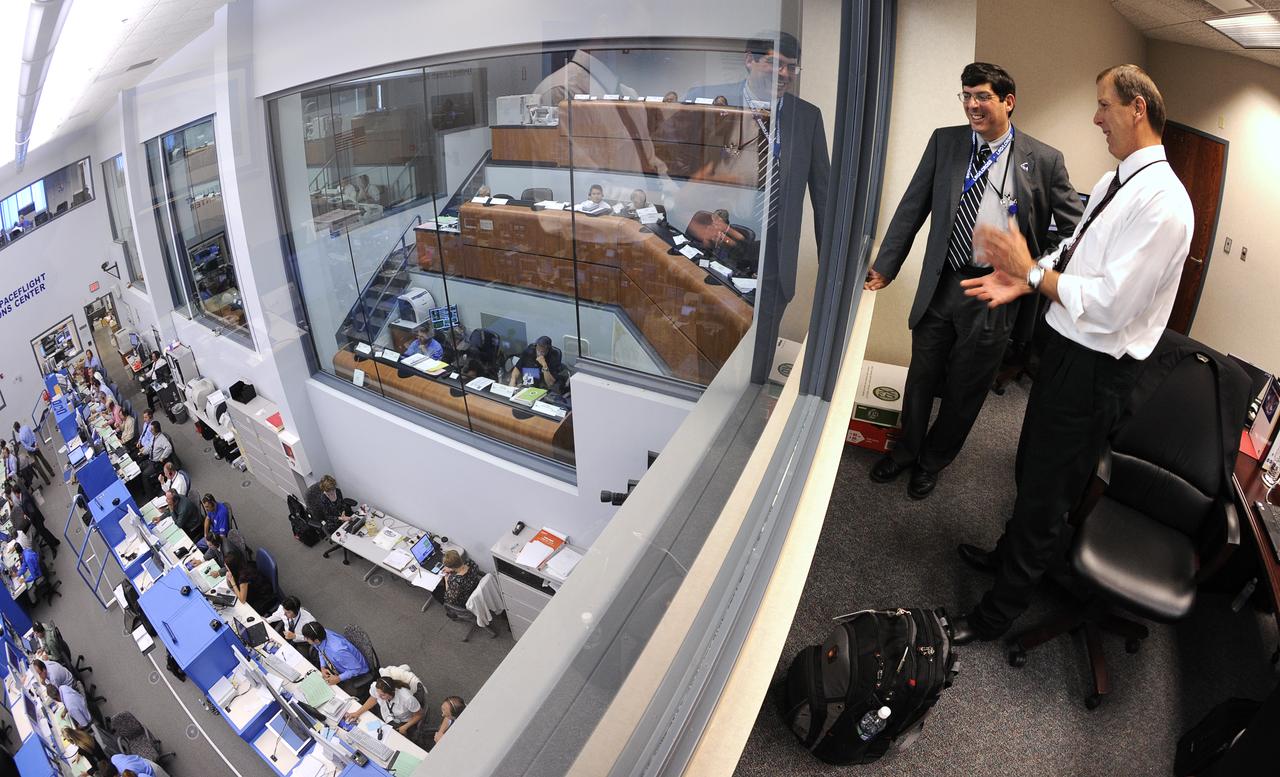
NASA Acting Administrator Chris Scolese, 2nd from right, looks out over the Atlas V Spaceflight Operations Center prior to the launch of the Lunar Reconnaissance Orbiter and Lunar Crater Observation and Sensing Satellite Thursday, June 18, 2009, from Cape Canaveral Air Force Station, Florida. Photo Credit: (NASA/Bill Ingalls)
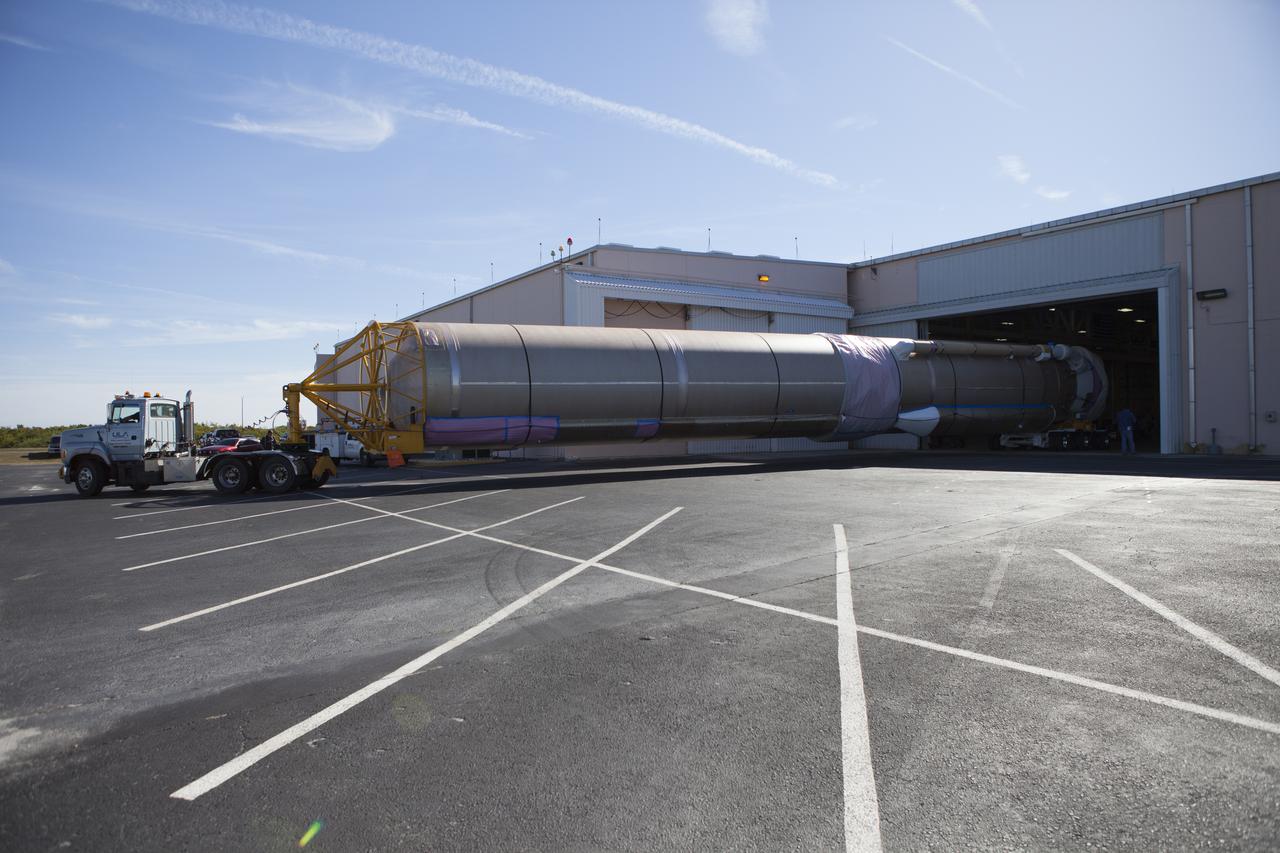
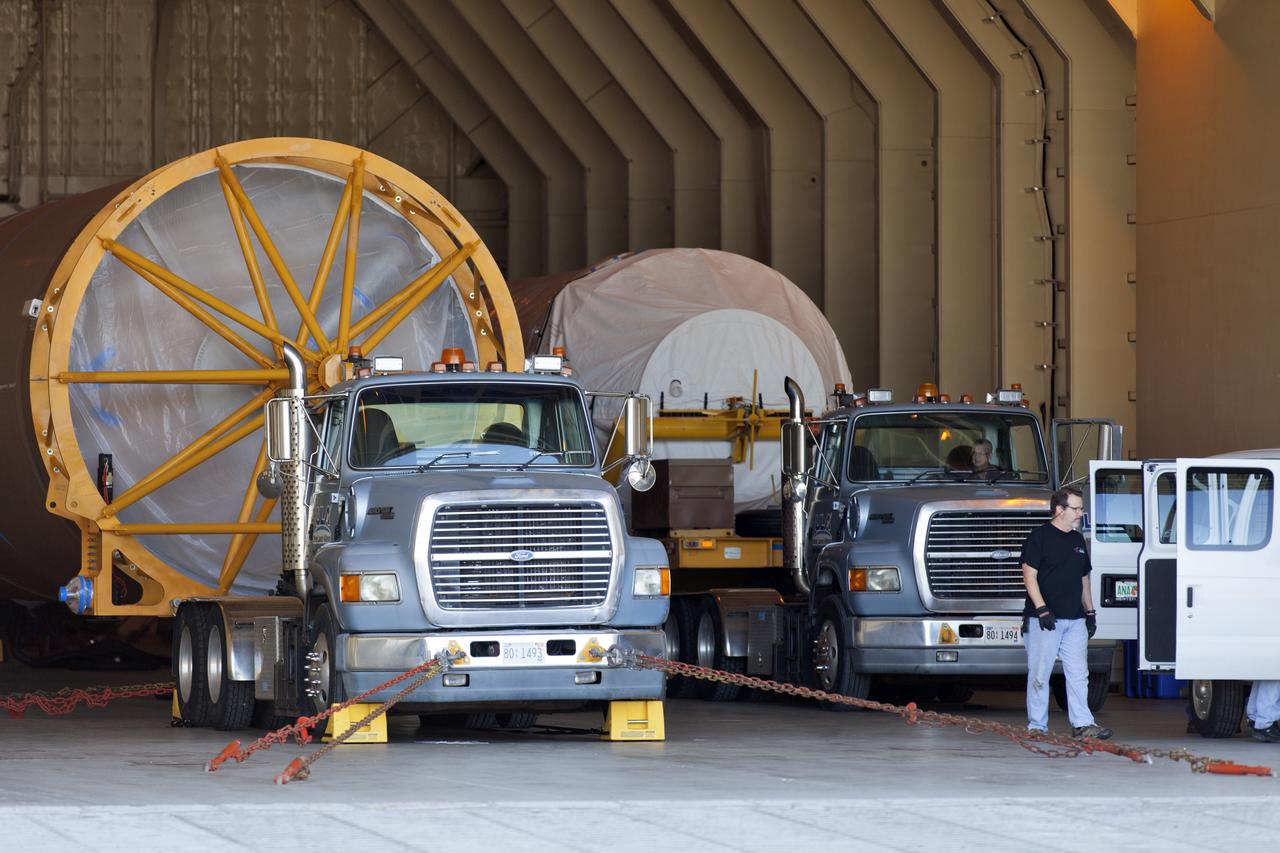
A truck positions an Atlas V booster stage inside the hangar at the Atlas V Spaceflight Operations Center at Cape Canaveral Air Force Station. The rocket will be used to launch NASA's Magnetospheric Multiscale mission.
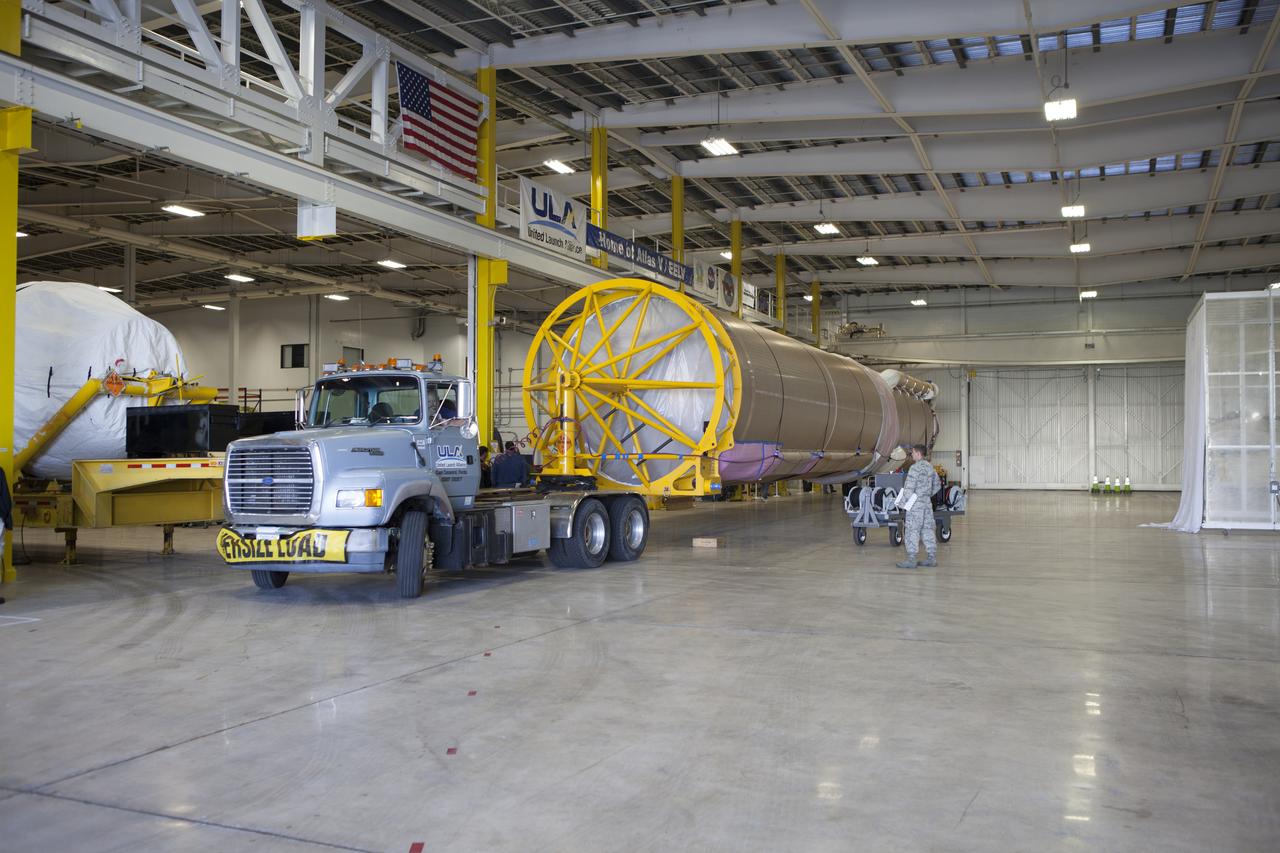
A truck positions an Atlas V booster stage inside the hangar at the Atlas V Spaceflight Operations Center at Cape Canaveral Air Force Station. The rocket will be used to launch NASA's Magnetospheric Multiscale mission.
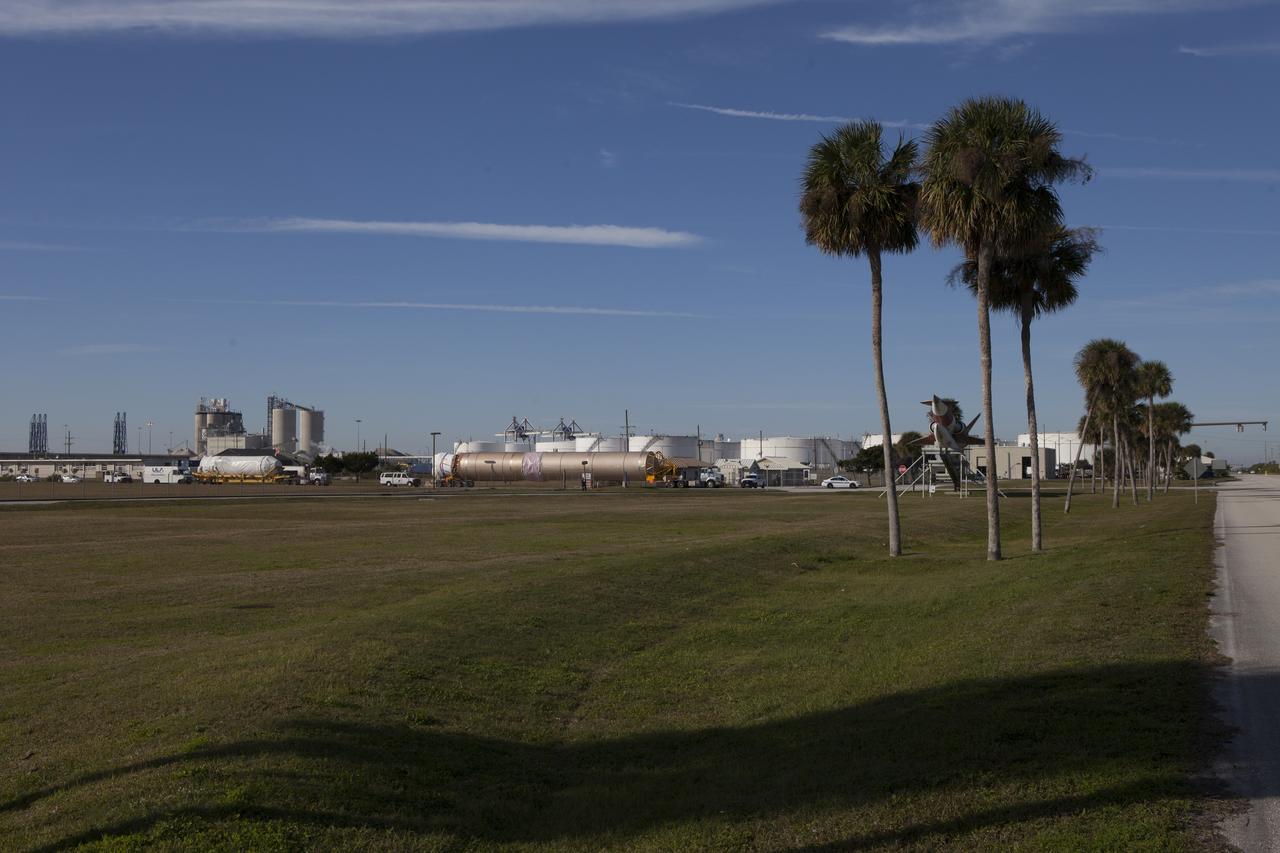
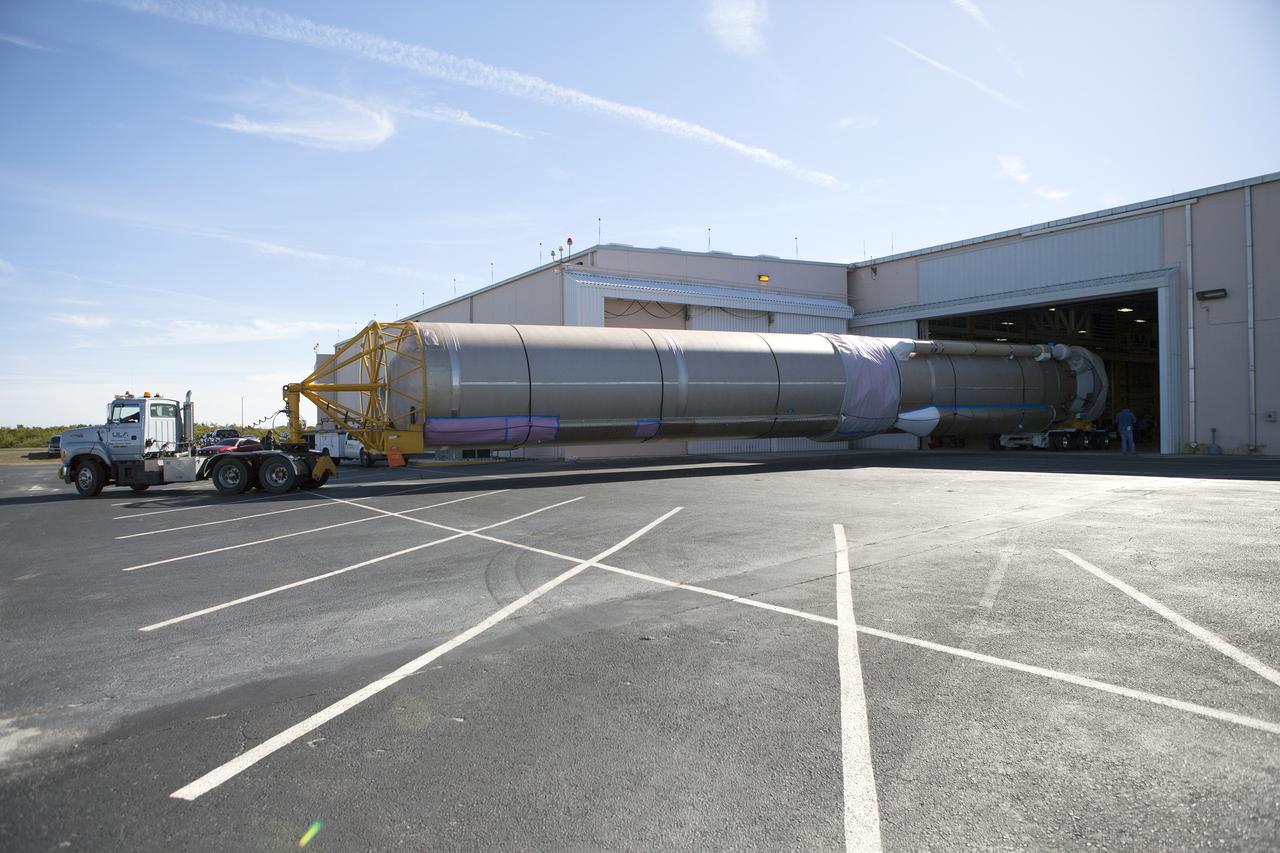
Trucks transport the Atlas V rocket and Centaur upper stage from the United Launch Alliance Delta Mariner to the Atlas V Spaceflight Operations Center at Cape Canaveral Air Force Station. The rocket will be used to launch NASA's Magnetospheric Multiscale mission.
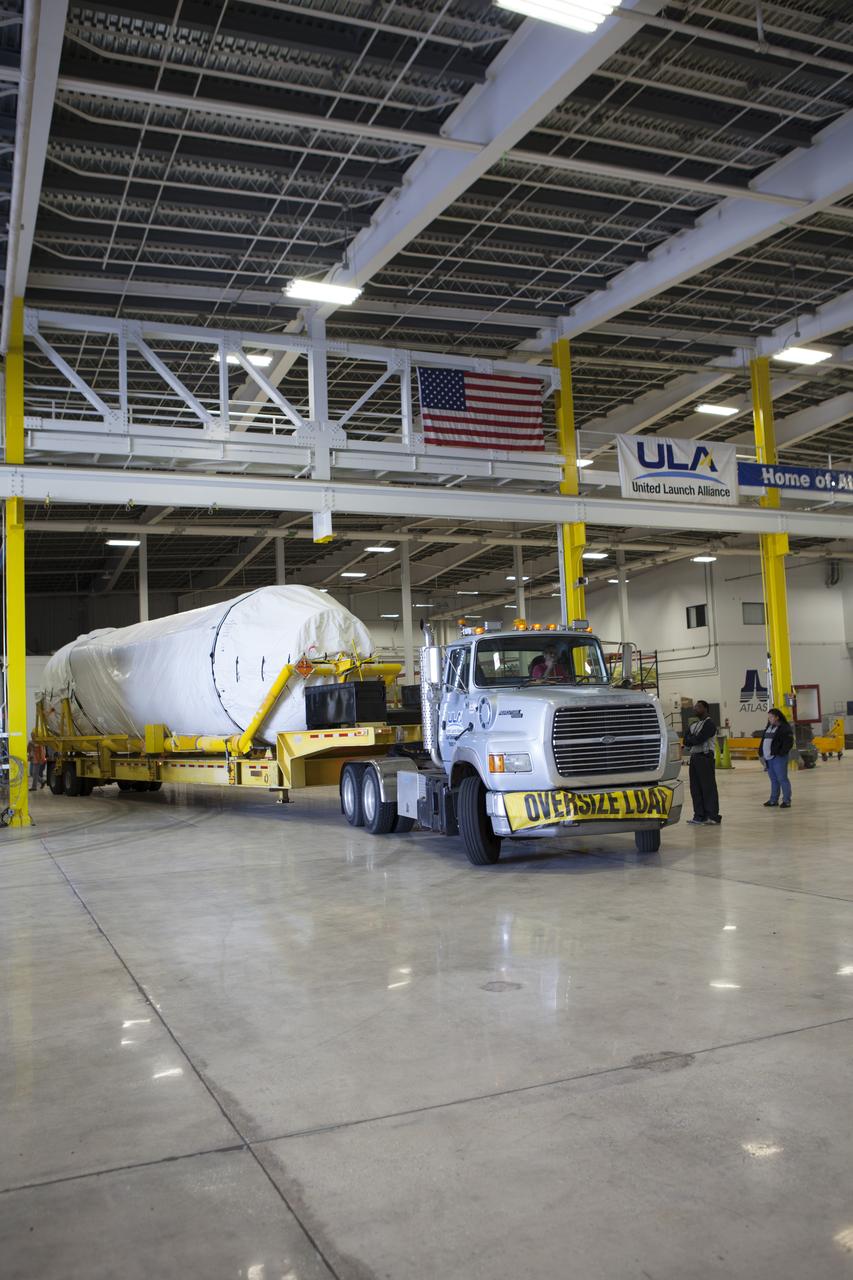
A truck positions a Centaur upper stage inside the hangar at the Atlas V Spaceflight Operations Center at Cape Canaveral Air Force Station. The upper stage will be used as part of the Atlas V rocket that will be used to launch NASA's Magnetospheric Multiscale mission.
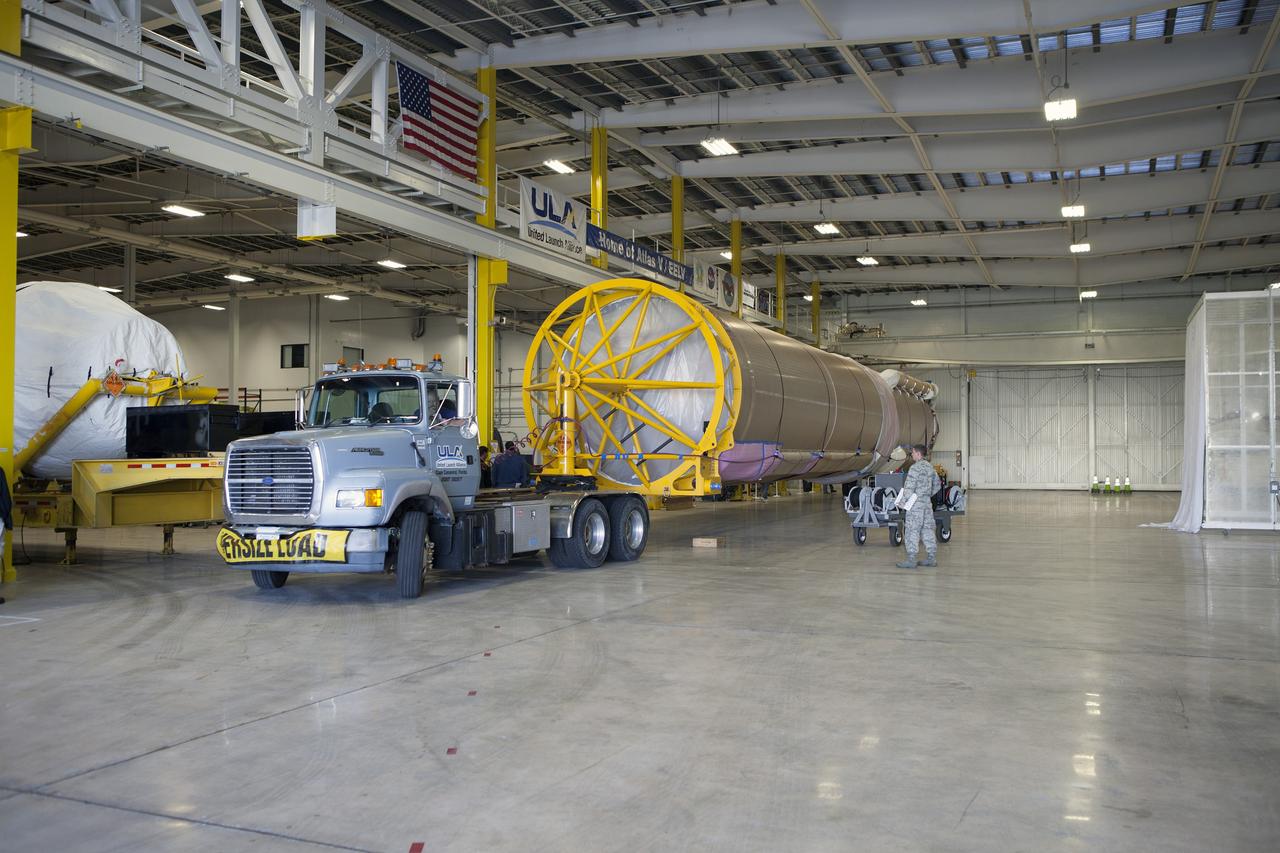
CAPE CANAVERAL, Fla. – A truck positions an Atlas V booster stage inside the hangar at the Atlas V Spaceflight Operations Center at Cape Canaveral Air Force Station. The rocket will be used to launch NASA's Magnetospheric Multiscale mission. To learn about the MMS, go to http://go.nasa.gov/1GUbzxb. Photo credit: NASA/Ben Smegelsky
CAPE CANAVERAL, Fla. – A truck positions an Atlas V booster stage inside the hangar at the Atlas V Spaceflight Operations Center at Cape Canaveral Air Force Station. The rocket will be used to launch NASA's Magnetospheric Multiscale mission. To learn about the MMS, go to http://go.nasa.gov/1GUbzxb. Photo credit: NASA/Ben Smegelsky
Trucks transport the Atlas V rocket and Centaur upper stage from the United Launch Alliance Delta Mariner to the Atlas V Spaceflight Operations Center at Cape Canaveral Air Force Station. The rocket will be used to launch NASA's Magnetospheric Multiscale mission.

On the same day it arrived, the Atlas V Centaur stage is moved into the Atlas Spaceflight Operations Center near Space Launch Complex 41 at Cape Canaveral Air Force Station in Florida. The Geostationary Operational Environmental Satellite (GOES-R) will launch aboard the Atlas V rocket in November. GOES-R will be the first satellite in a series of next-generation NOAA GOES Satellites.
The United Launch Alliance Atlas V booster for NOAA's Geostationary Operational Environmental Satellite-S (GOES-S) is offloaded from the Mariner transport ship at the Army Wharf at Cape Canaveral Air Force Station in Florida. The booster will be transported to the Atlas Spaceflight Operations Center near Space Launch Complex 41 at CCAFS. GOES-S is the second in a series of four advanced geostationary weather satellites. The satellite is slated to launch aboard the Atlas V rocket March 1.
On the same day it arrived, the Atlas V Centaur stage departs the Horizontal Integration Facility on its way to the Atlas Spaceflight Operations Center near Space Launch Complex 41 at Cape Canaveral Air Force Station in Florida. The Geostationary Operational Environmental Satellite (GOES-R) will launch aboard the Atlas V rocket in November. GOES-R will be the first satellite in a series of next-generation NOAA GOES Satellites.

On the same day it arrived, the Atlas V Centaur stage is being transported to the Atlas Spaceflight Operations Center near Space Launch Complex 41 at Cape Canaveral Air Force Station in Florida. The Geostationary Operational Environmental Satellite (GOES-R) will launch aboard the Atlas V rocket in November. GOES-R will be the first satellite in a series of next-generation NOAA GOES Satellites.
Preparations are underway to offload the United Launch Alliance Atlas V booster and Centaur stage for NOAA's Geostationary Operational Environmental Satellite-S (GOES-S) from the Mariner transport ship at the Army Wharf at Cape Canaveral Air Force Station in Florida. They will be transported to the Atlas Spaceflight Operations Center near Space Launch Complex 41 at CCAFS. GOES-S is the second in a series of four advanced geostationary weather satellites. The satellite is slated to launch aboard the Atlas V rocket March 1.
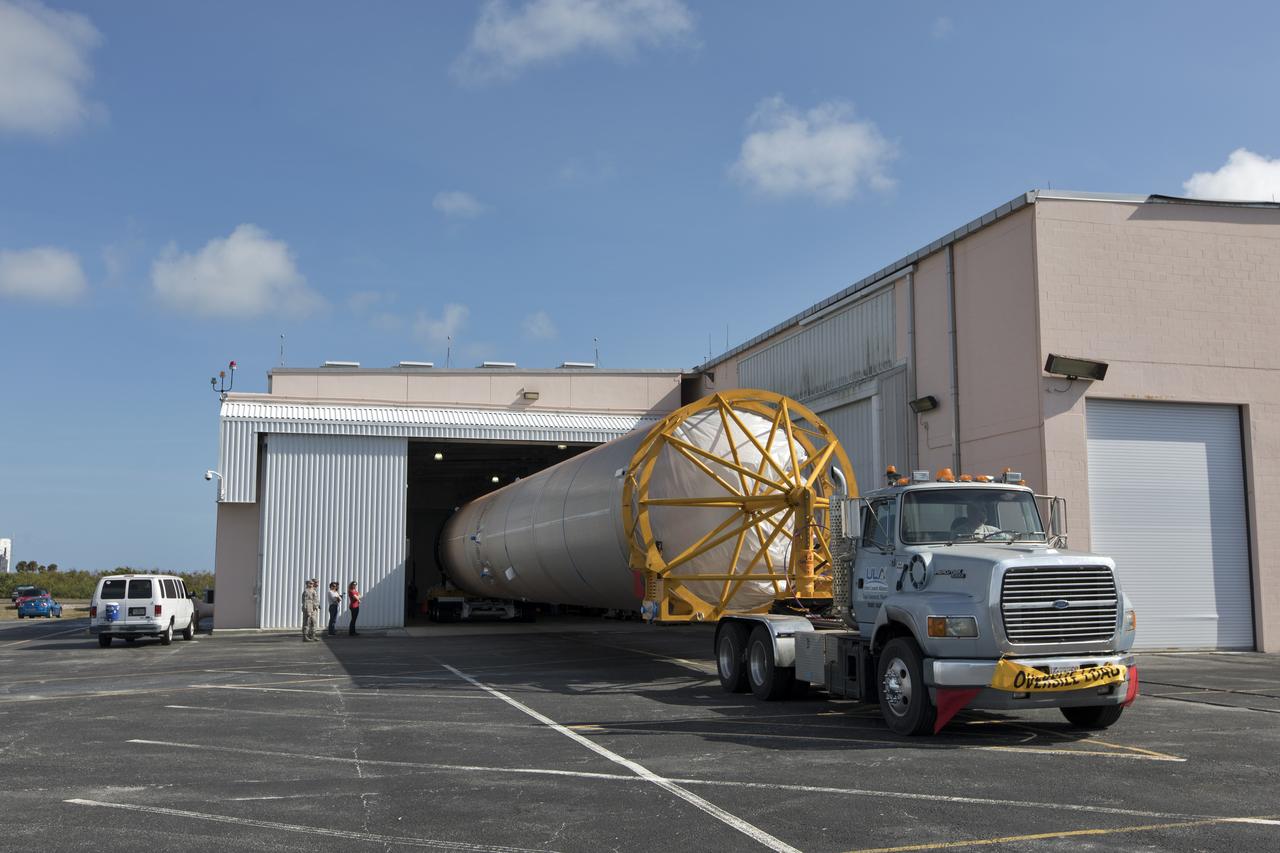
The United Launch Alliance Atlas V booster for NOAA's Geostationary Operational Environmental Satellite-S (GOES-S) arrives at the Atlas Spaceflight Operations Center near Space Launch Complex 41 at Cape Canaveral Air Force Station in Florida. GOES-S is the second in a series of four advanced geostationary weather satellites. The satellite is slated to launch aboard the Atlas V rocket March 1.
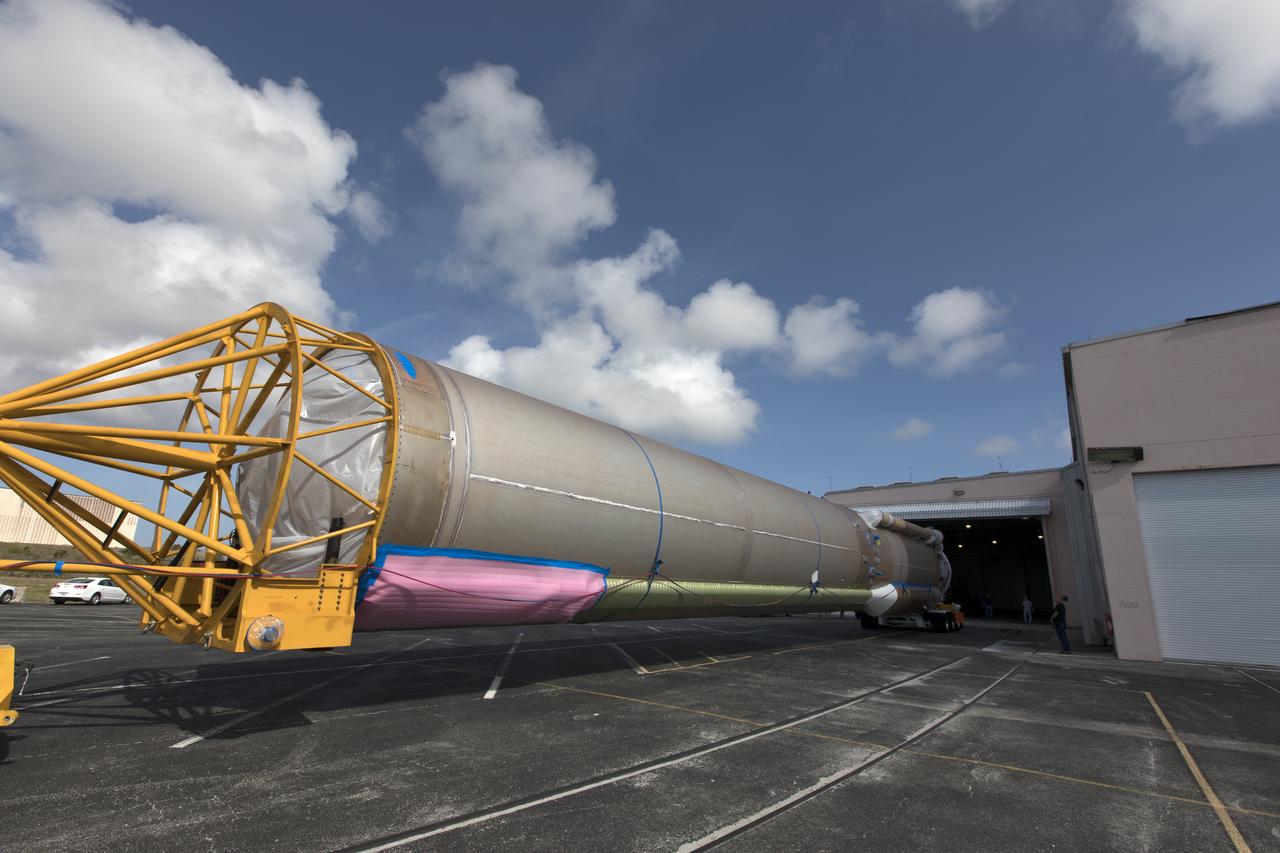
The United Launch Alliance Atlas V booster for NOAA's Geostationary Operational Environmental Satellite-S (GOES-S) arrives at the Atlas Spaceflight Operations Center near Space Launch Complex 41 at Cape Canaveral Air Force Station in Florida. GOES-S is the second in a series of four advanced geostationary weather satellites. The satellite is slated to launch aboard the Atlas V rocket March 1.
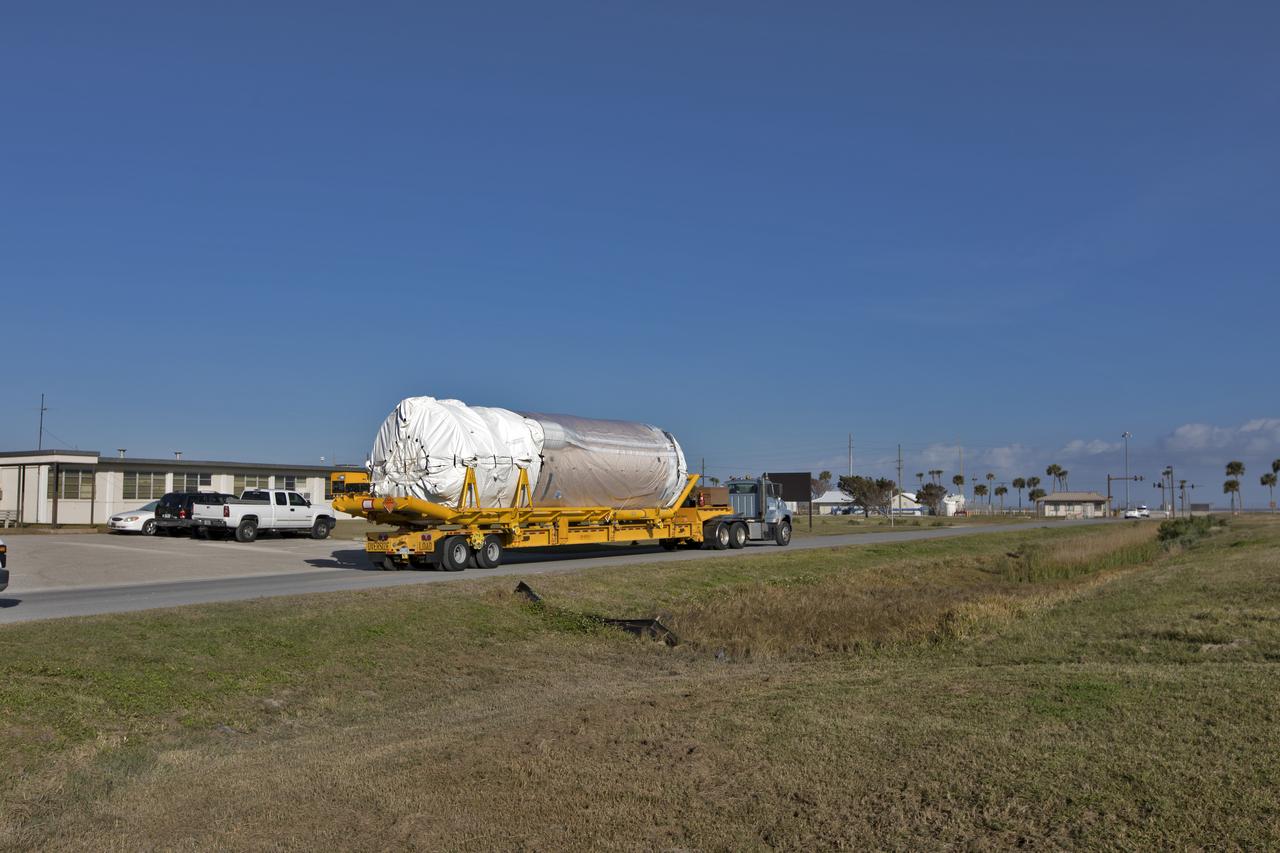
The United Launch Alliance Atlas V booster for NOAA's Geostationary Operational Environmental Satellite-S (GOES-S) was offloaded from the Mariner transport ship at the Army Wharf at Cape Canaveral Air Force Station in Florida. The booster will be transported to the Atlas Spaceflight Operations Center near Space Launch Complex 41 at CCAFS. GOES-S is the second in a series of four advanced geostationary weather satellites. The satellite is slated to launch aboard the Atlas V rocket March 1.
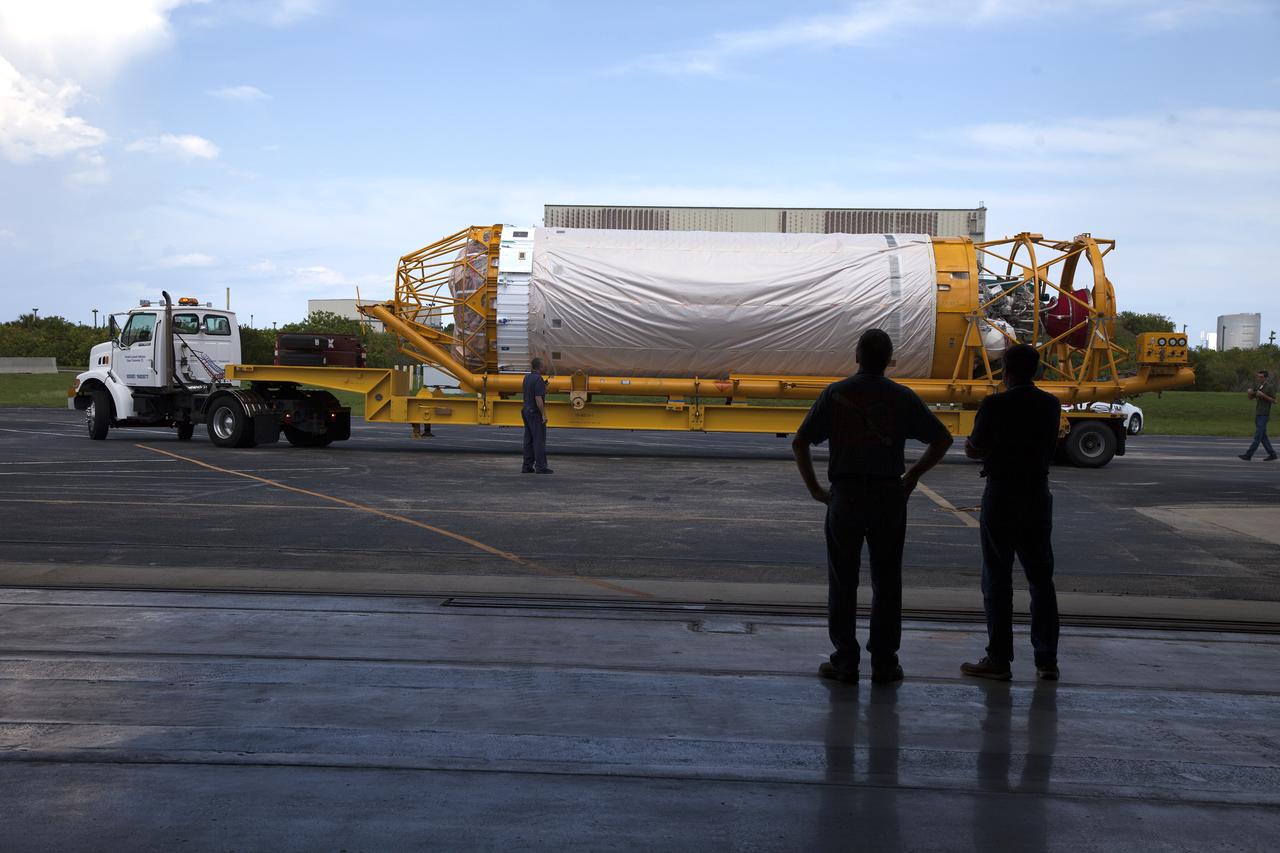
On the same day it arrived, the Atlas V Centaur stage is being transported to the Atlas Spaceflight Operations Center near Space Launch Complex 41 at Cape Canaveral Air Force Station in Florida. The Geostationary Operational Environmental Satellite (GOES-R) will launch aboard the Atlas V rocket in November. GOES-R will be the first satellite in a series of next-generation NOAA GOES Satellites.
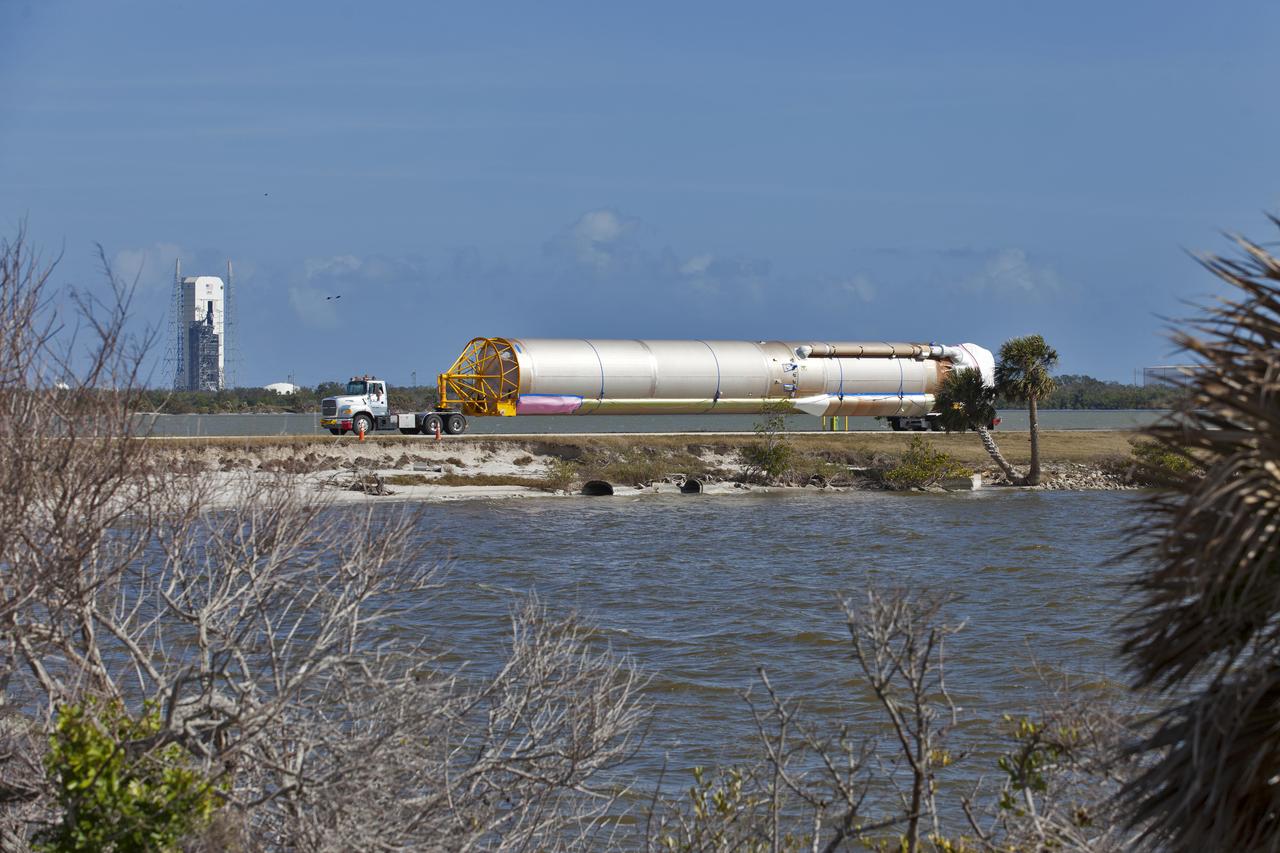
After being offloaded from the Mariner transport ship at the Army Wharf at Cape Canaveral Air Force Station in Florida, the United Launch Alliance Atlas V booster for NOAA's Geostationary Operational Environmental Satellite-S (GOES-S) is being transported to the Atlas Spaceflight Operations Center near Space Launch Complex 41 at CCAFS. GOES-S is the second in a series of four advanced geostationary weather satellites. The satellite is slated to launch aboard the Atlas V rocket March 1.

After being offloaded from the Mariner transport ship at the Army Wharf at Cape Canaveral Air Force Station in Florida, the United Launch Alliance Atlas V booster for NOAA's Geostationary Operational Environmental Satellite-S (GOES-S) arrives in the area of the Atlas Spaceflight Operations Center near Space Launch Complex 41 at CCAFS. GOES-S is the second in a series of four advanced geostationary weather satellites. The satellite is slated to launch aboard the Atlas V rocket March 1.
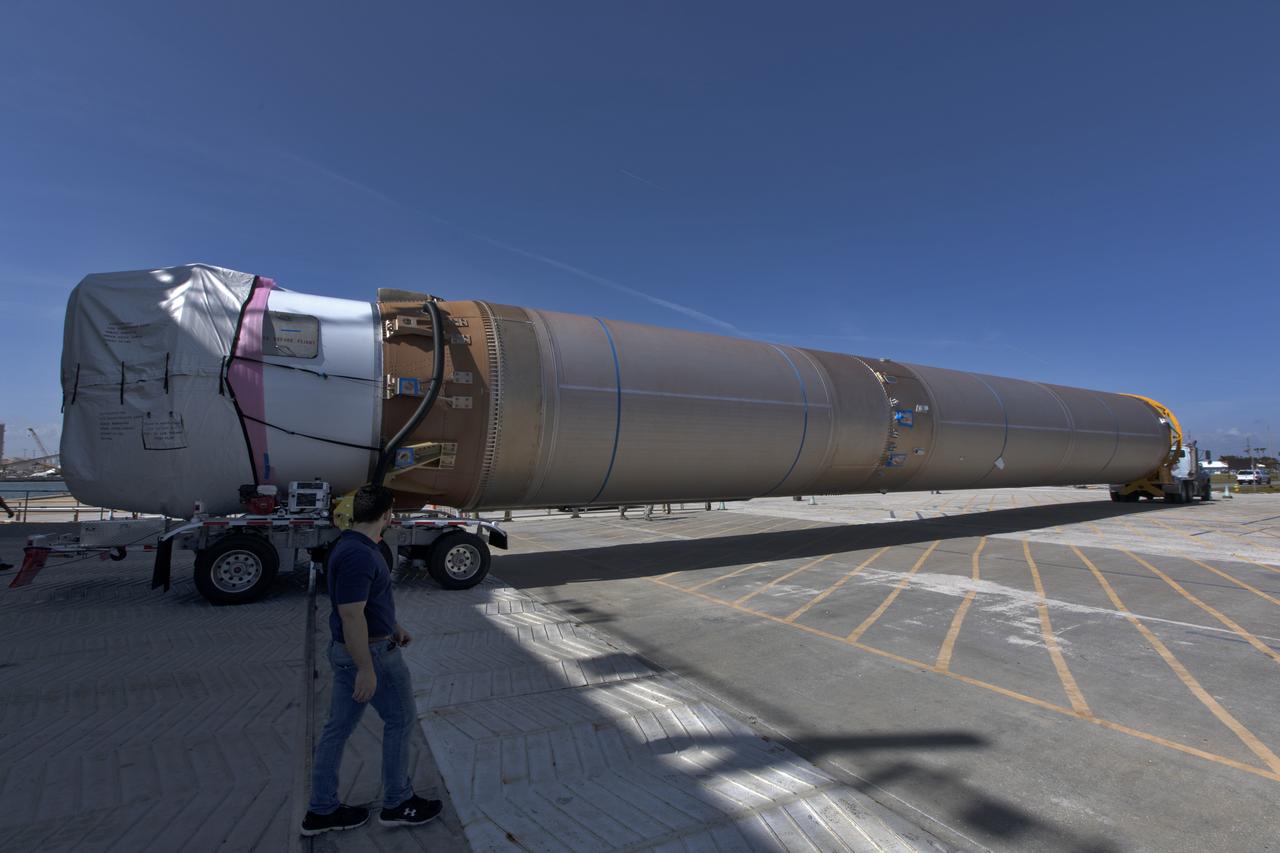
The United Launch Alliance Atlas V booster for NOAA's Geostationary Operational Environmental Satellite-S (GOES-S) is offloaded from the Mariner transport ship at the Army Wharf at Cape Canaveral Air Force Station in Florida. The booster will be transported to the Atlas Spaceflight Operations Center near Space Launch Complex 41 at CCAFS. GOES-S is the second in a series of four advanced geostationary weather satellites. The satellite is slated to launch aboard the Atlas V rocket March 1.
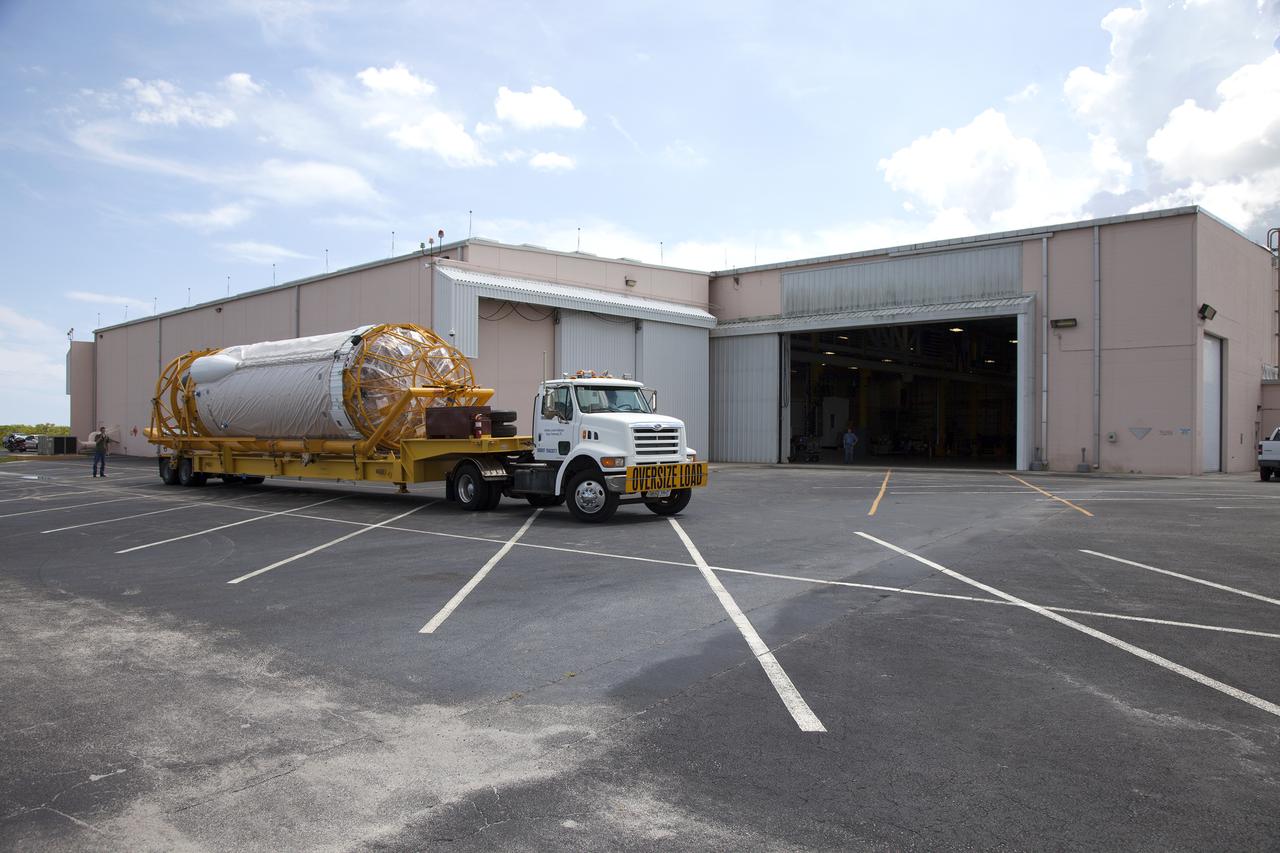
On the same day it arrived, the Atlas V Centaur stage arrives at the Atlas Spaceflight Operations Center near Space Launch Complex 41 at Cape Canaveral Air Force Station in Florida. The Geostationary Operational Environmental Satellite (GOES-R) will launch aboard the Atlas V rocket in November. GOES-R will be the first satellite in a series of next-generation NOAA GOES Satellites.
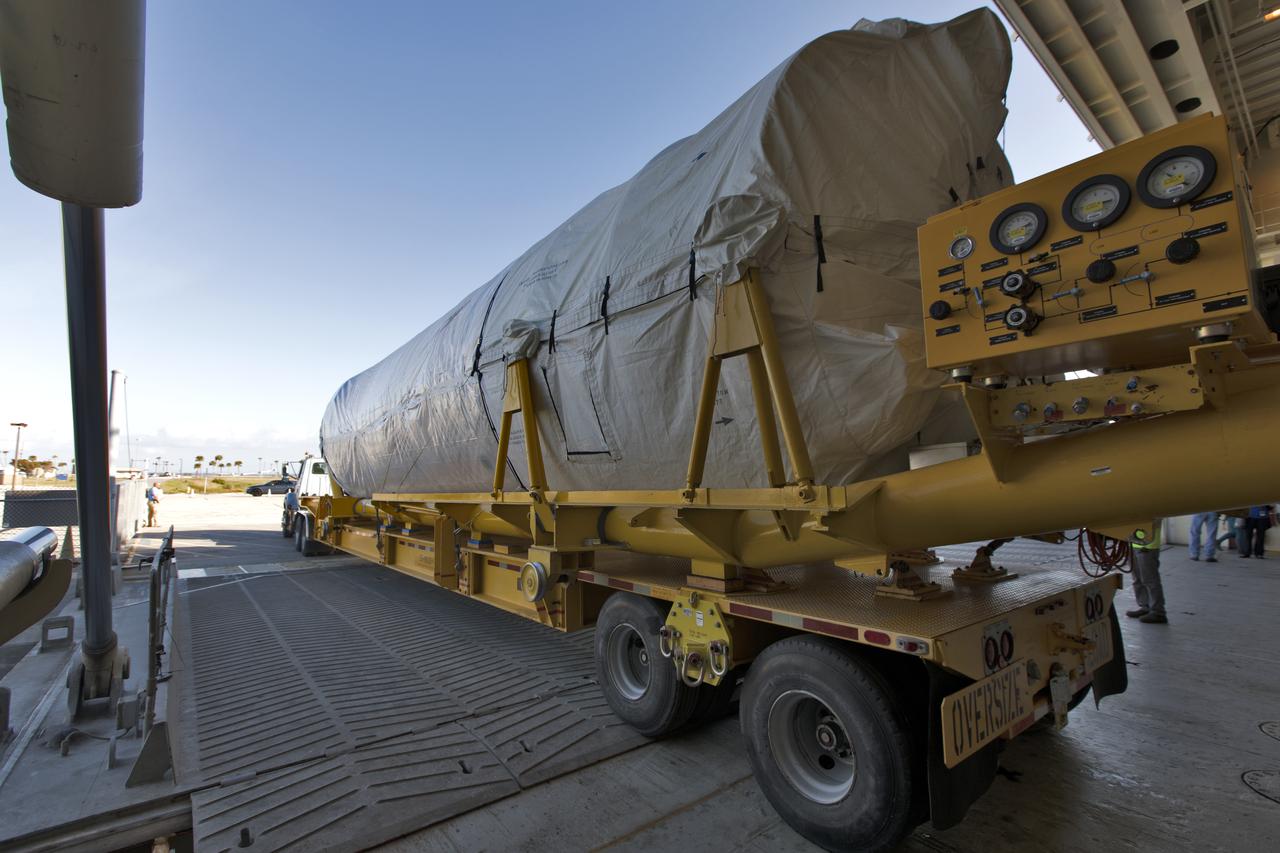
The United Launch Alliance Atlas V booster and Centaur stage for NOAA's Geostationary Operational Environmental Satellite-S (GOES-S) are offloaded from the Mariner transport ship at the Army Wharf at Cape Canaveral Air Force Station in Florida. They will be transported to the Atlas Spaceflight Operations Center near Space Launch Complex 41 at CCAFS. GOES-S is the second in a series of four advanced geostationary weather satellites. The satellite is slated to launch aboard the Atlas V rocket March 1.
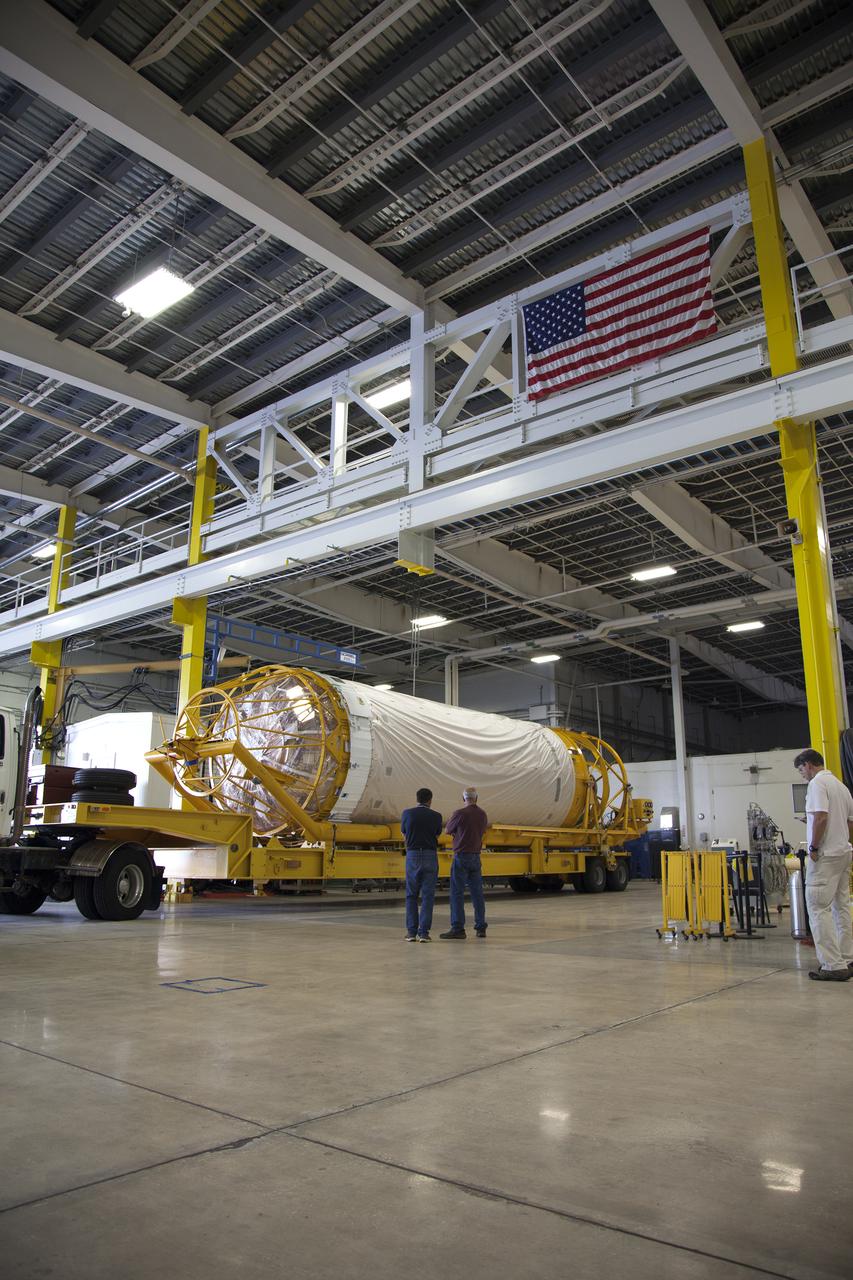
On the same day it arrived, the Atlas V Centaur stage is moved into the Atlas Spaceflight Operations Center near Space Launch Complex 41 at Cape Canaveral Air Force Station in Florida. The Geostationary Operational Environmental Satellite (GOES-R) will launch aboard the Atlas V rocket in November. GOES-R will be the first satellite in a series of next-generation NOAA GOES Satellites.
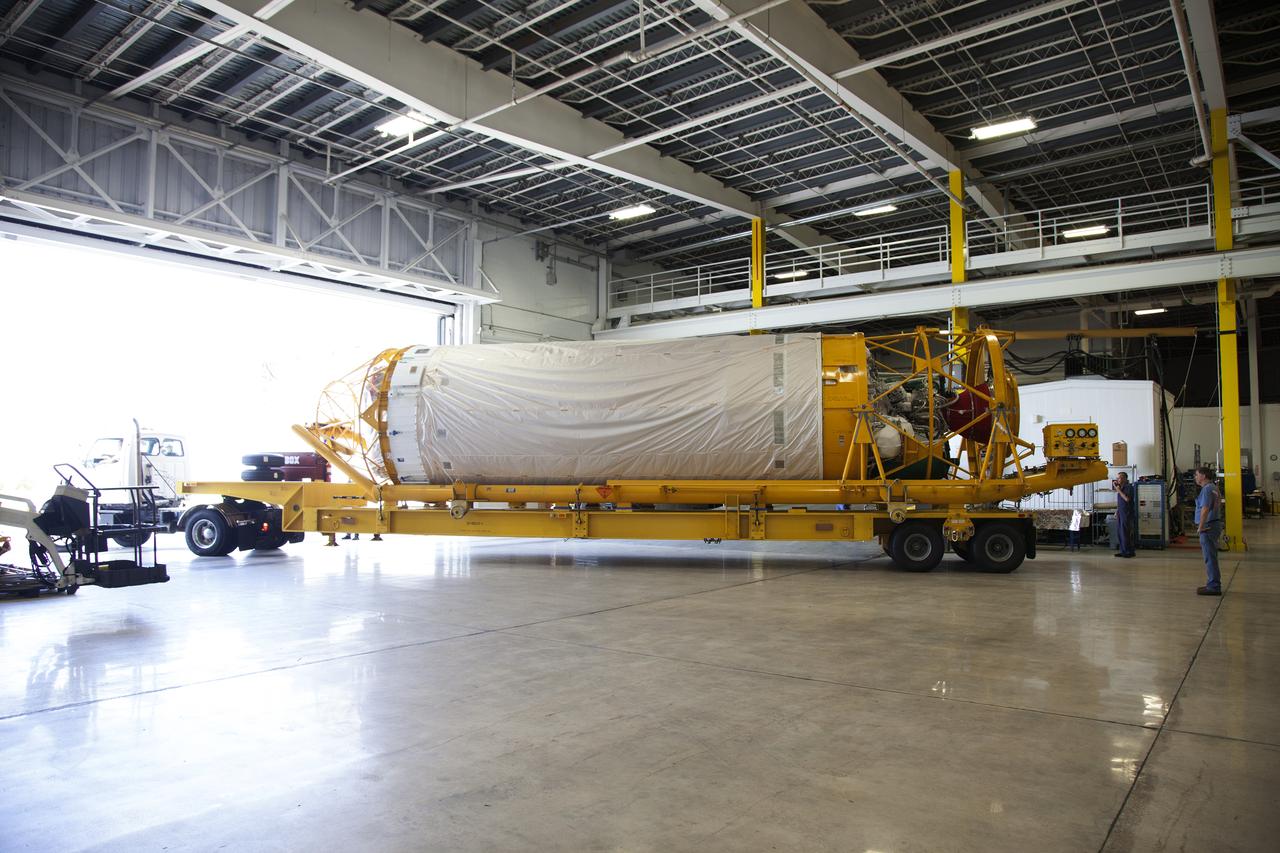
On the same day it arrived, the Atlas V Centaur stage is moved into the Atlas Spaceflight Operations Center near Space Launch Complex 41 at Cape Canaveral Air Force Station in Florida. The Geostationary Operational Environmental Satellite (GOES-R) will launch aboard the Atlas V rocket in November. GOES-R will be the first satellite in a series of next-generation NOAA GOES Satellites.
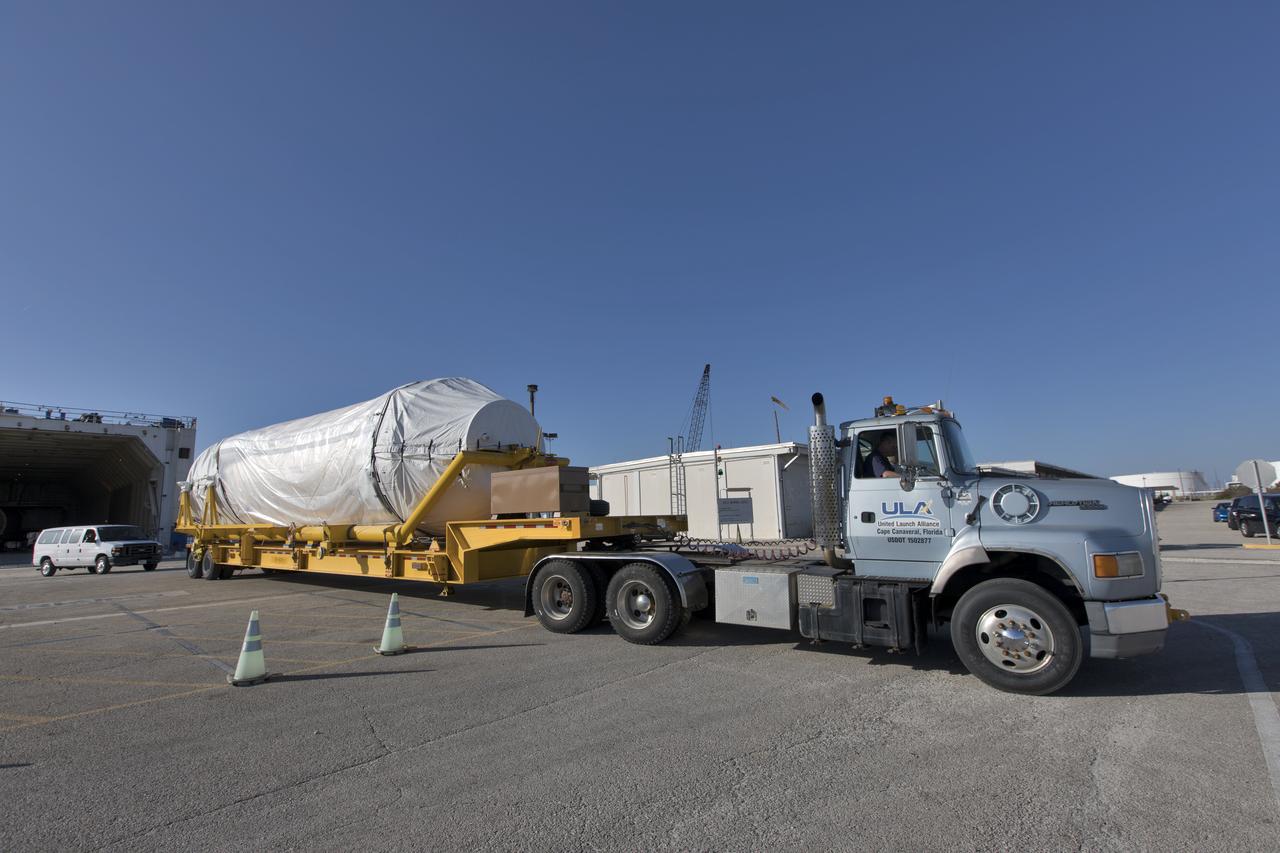
The United Launch Alliance Atlas V booster and Centaur stage for NOAA's Geostationary Operational Environmental Satellite-S (GOES-S) are offloaded from the Mariner transport ship at the Army Wharf at Cape Canaveral Air Force Station in Florida. They will be transported to the Atlas Spaceflight Operations Center near Space Launch Complex 41 at CCAFS. GOES-S is the second in a series of four advanced geostationary weather satellites. The satellite is slated to launch aboard the Atlas V rocket March 1.
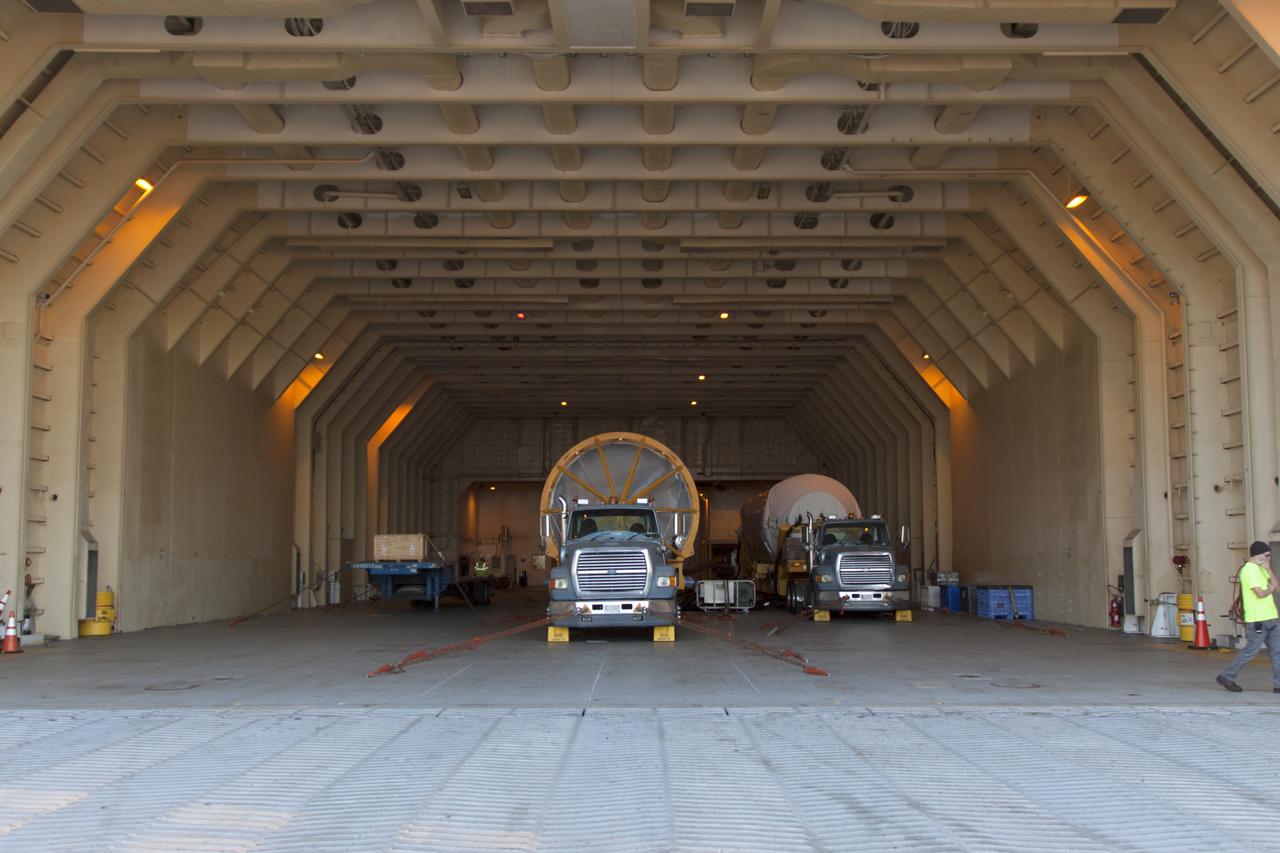
Preparations are underway to offload the United Launch Alliance Atlas V booster and Centaur stage for NOAA's Geostationary Operational Environmental Satellite-S (GOES-S) from the Mariner transport ship at the Army Wharf at Cape Canaveral Air Force Station in Florida. They will be transported to the Atlas Spaceflight Operations Center near Space Launch Complex 41 at CCAFS. GOES-S is the second in a series of four advanced geostationary weather satellites. The satellite is slated to launch aboard the Atlas V rocket March 1.

After being offloaded from the Mariner transport ship at the Army Wharf at Cape Canaveral Air Force Station in Florida, the United Launch Alliance Atlas V booster for NOAA's Geostationary Operational Environmental Satellite-S (GOES-S) is being transported to the Atlas Spaceflight Operations Center near Space Launch Complex 41 at CCAFS. GOES-S is the second in a series of four advanced geostationary weather satellites. The satellite is slated to launch aboard the Atlas V rocket March 1.
The Mariner transport ship arrives at the Army Wharf at Cape Canaveral Air Force Station in Florida, carrying the United Launch Alliance Atlas V booster and Centaur stage for NOAA's Geostationary Operational Environmental Satellite-S (GOES-S). They will be offloaded and transported to the Atlas Spaceflight Operations Center near Space Launch Complex 41 at CCAFS. GOES-S is the second in a series of four advanced geostationary weather satellites. The satellite is slated to launch aboard the Atlas V rocket March 1.
After being offloaded from the Mariner transport ship at the Army Wharf at Cape Canaveral Air Force Station in Florida, the United Launch Alliance Atlas V booster for NOAA's Geostationary Operational Environmental Satellite-S (GOES-S) is being transported to the Atlas Spaceflight Operations Center near Space Launch Complex 41 at CCAFS. GOES-S is the second in a series of four advanced geostationary weather satellites. The satellite is slated to launch aboard the Atlas V rocket March 1.
The United Launch Alliance Atlas V booster and Centaur stage for NOAA's Geostationary Operational Environmental Satellite-S (GOES-S) are offloaded from the Mariner transport ship at the Army Wharf at Cape Canaveral Air Force Station in Florida. They will be transported to the Atlas Spaceflight Operations Center near Space Launch Complex 41 at CCAFS. GOES-S is the second in a series of four advanced geostationary weather satellites. The satellite is slated to launch aboard the Atlas V rocket March 1.
On the same day it arrived, the Atlas V Centaur stage is being transported to the Atlas Spaceflight Operations Center near Space Launch Complex 41 at Cape Canaveral Air Force Station in Florida. The Geostationary Operational Environmental Satellite (GOES-R) will launch aboard the Atlas V rocket in November. GOES-R will be the first satellite in a series of next-generation NOAA GOES Satellites.
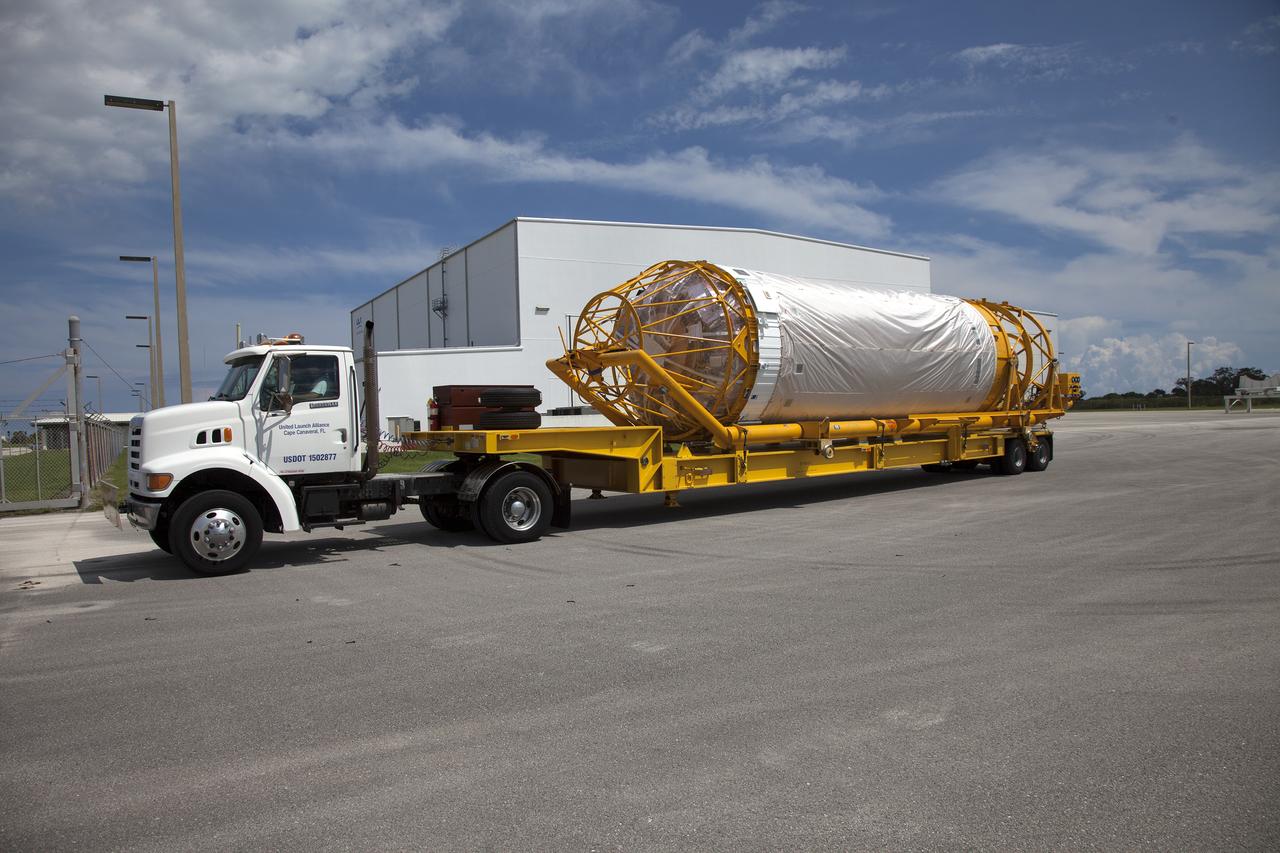
On the same day it arrived, the Atlas V Centaur stage departs the Horizontal Integration Facility on its way to the Atlas Spaceflight Operations Center near Space Launch Complex 41 at Cape Canaveral Air Force Station in Florida. The Geostationary Operational Environmental Satellite (GOES-R) will launch aboard the Atlas V rocket in November. GOES-R will be the first satellite in a series of next-generation NOAA GOES Satellites.
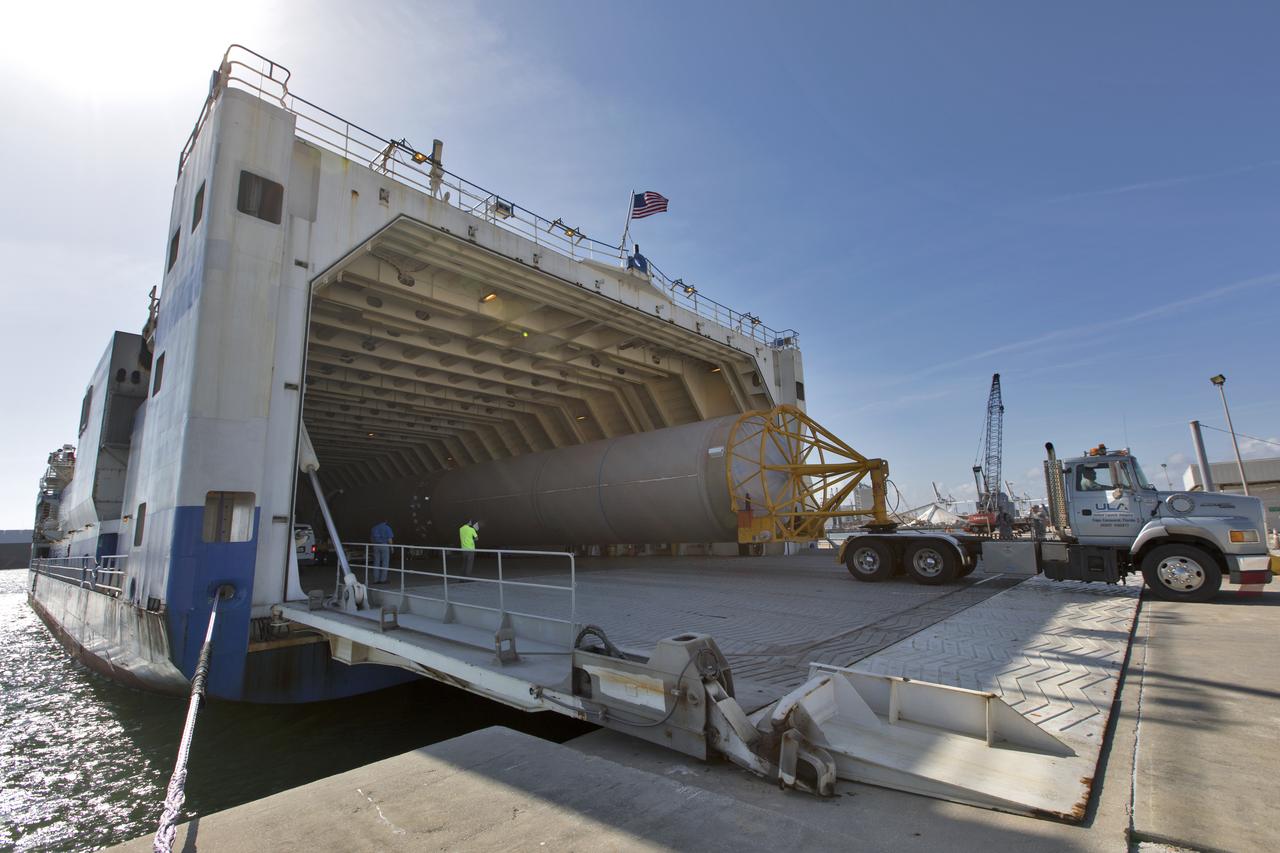
The United Launch Alliance Atlas V booster and Centaur stage for NOAA's Geostationary Operational Environmental Satellite-S (GOES-S) are offloaded from the Mariner transport ship at the Army Wharf at Cape Canaveral Air Force Station in Florida. They will be transported to the Atlas Spaceflight Operations Center near Space Launch Complex 41 at CCAFS. GOES-S is the second in a series of four advanced geostationary weather satellites. The satellite is slated to launch aboard the Atlas V rocket March 1.
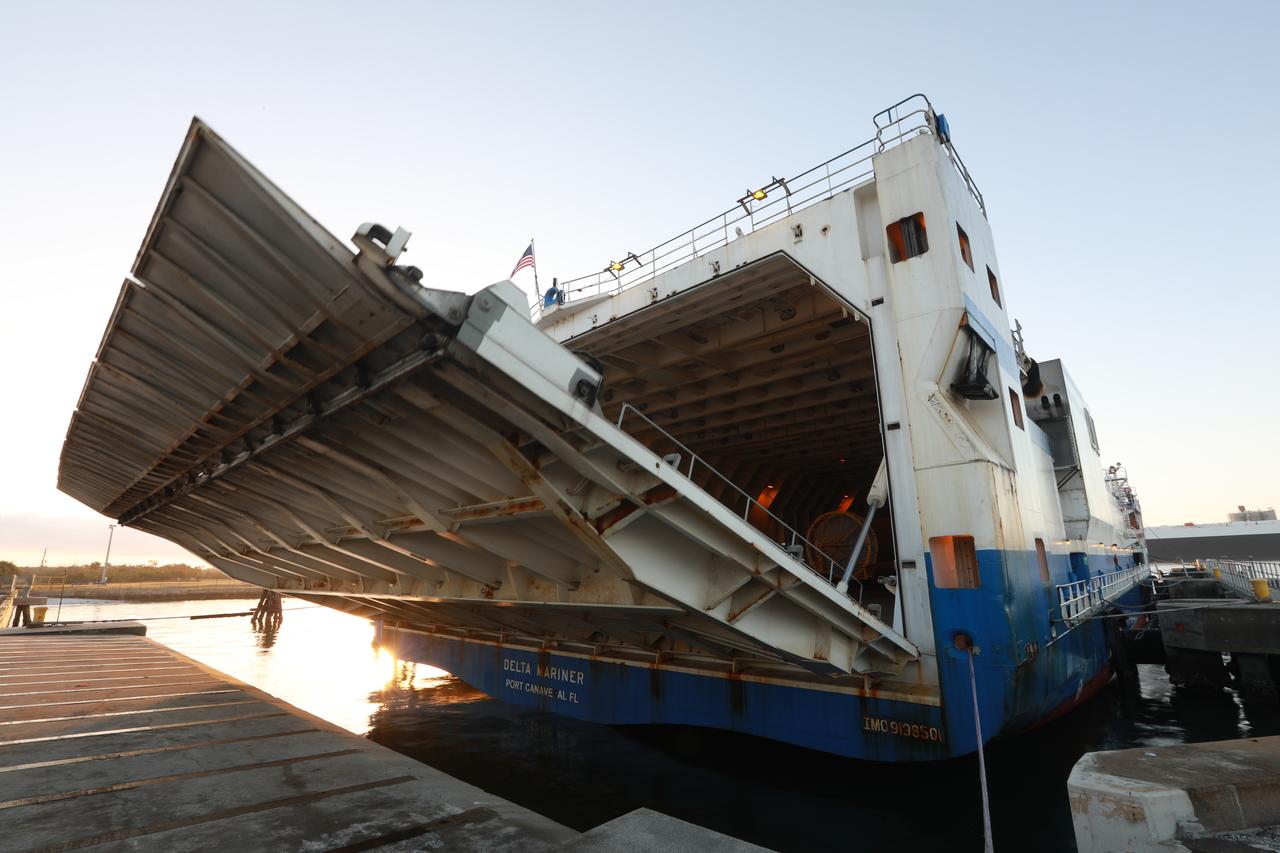
The Mariner transport ship arrives at the Army Wharf at Cape Canaveral Air Force Station in Florida, carrying the United Launch Alliance Atlas V booster and Centaur stage for NOAA's Geostationary Operational Environmental Satellite-S (GOES-S). They will be offloaded and transported to the Atlas Spaceflight Operations Center near Space Launch Complex 41 at CCAFS. GOES-S is the second in a series of four advanced geostationary weather satellites. The satellite is slated to launch aboard the Atlas V rocket March 1.

The United Launch Alliance Atlas V booster for NOAA's Geostationary Operational Environmental Satellite-S (GOES-S) is moved inside the Atlas Spaceflight Operations Center near Space Launch Complex 41 at Cape Canaveral Air Force Station in Florida. GOES-S is the second in a series of four advanced geostationary weather satellites. The satellite is slated to launch aboard the Atlas V rocket March 1.
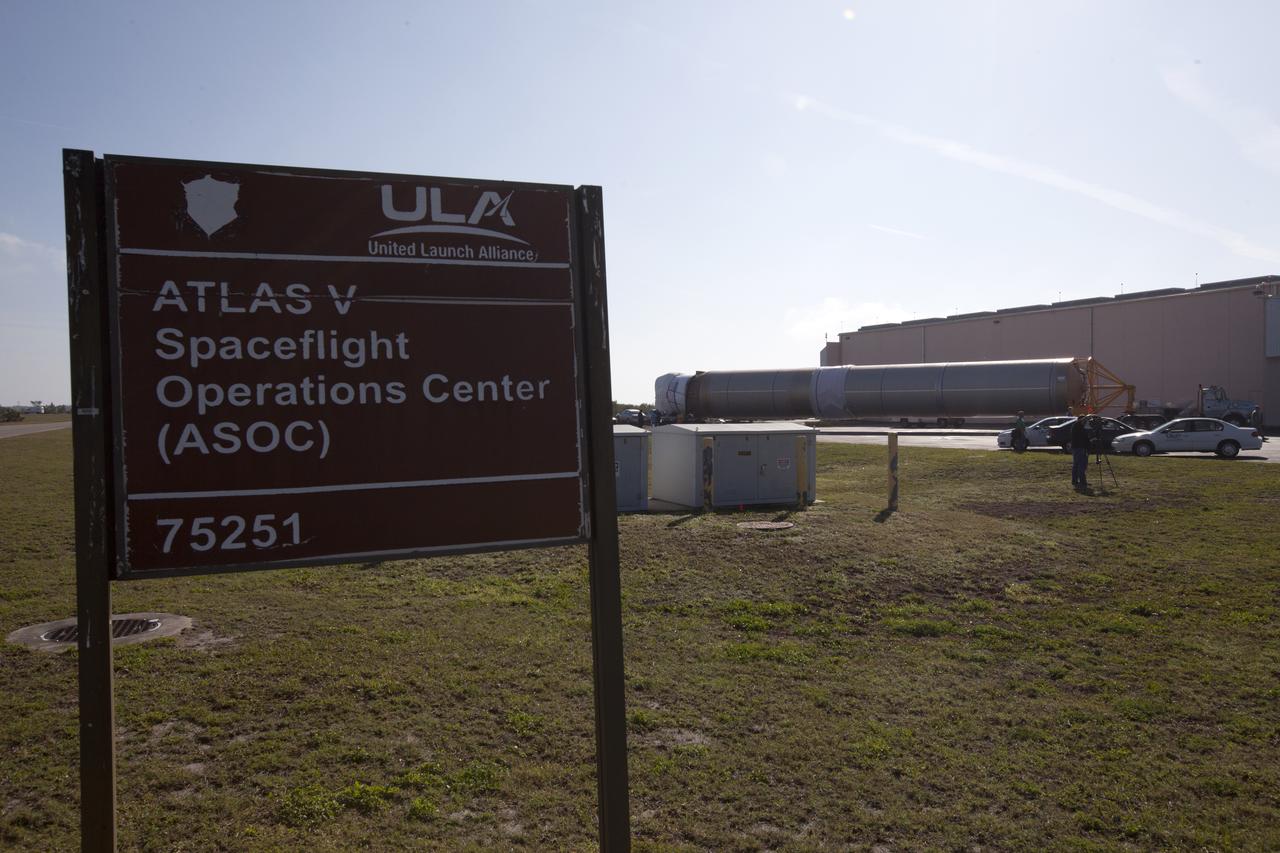
A United Launch Alliance (ULA) Atlas V booster arrives at Cape Canaveral Air Force Station's Atlas Spaceflight Operations Center (ASOC). The Atlas V will undergo final testing in that facility. When processing in the ASOC is complete, the Atlas booster will be moved to the Vertical Integration Facility for stacking at Space Launch Complex 41. Scheduled to launch March 19, 2017, the Atlas will launch a Cygnus spacecraft on the Orbital ATK CRS-7 mission to deliver thousands of pounds of supplies, equipment and scientific research materials to the International Space Station.
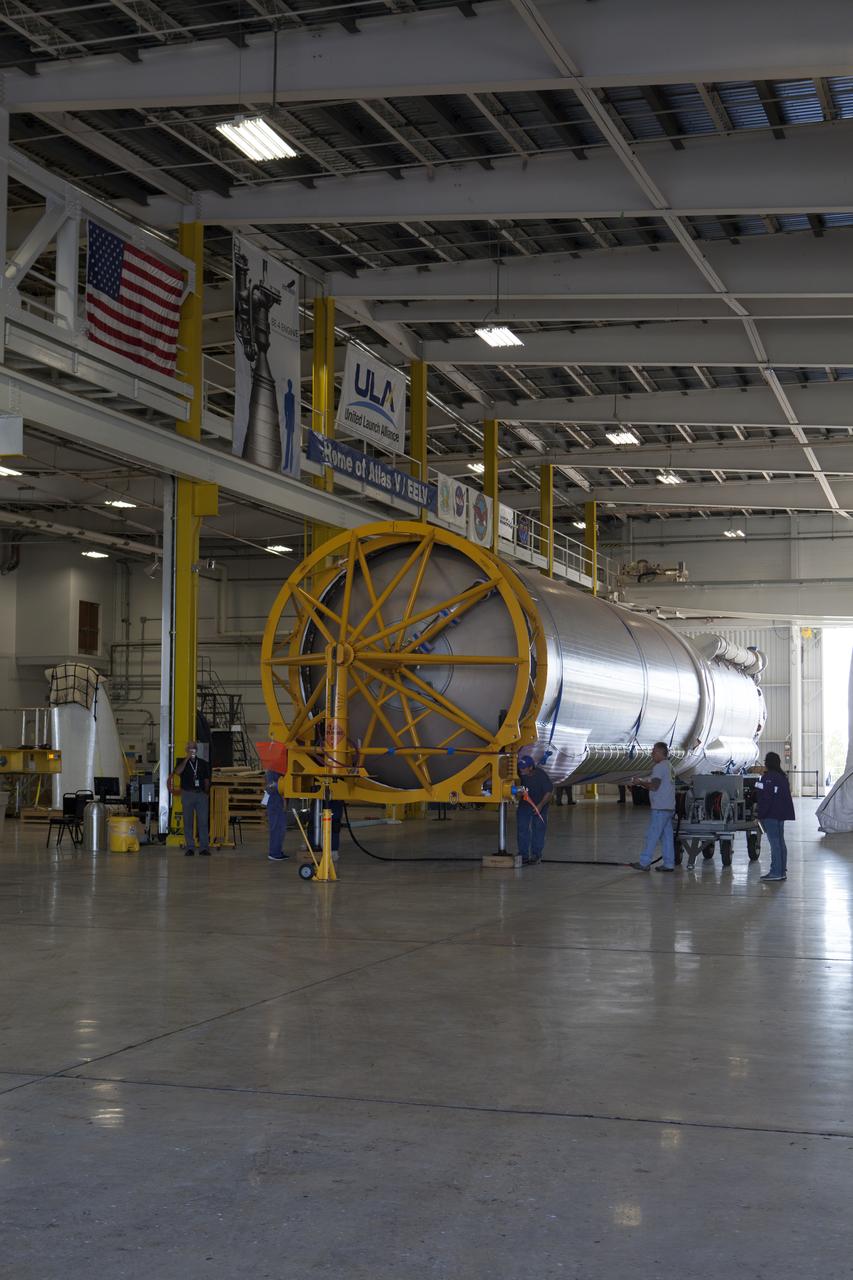
A United Launch Alliance (ULA) Atlas V booster arrives at Cape Canaveral Air Force Station's Atlas Spaceflight Operations Center (ASOC). The Atlas V will undergo final testing in that facility. When processing in the ASOC is complete, the Atlas booster will be moved to the Vertical Integration Facility for stacking at Space Launch Complex 41. Scheduled to launch March 19, 2017, the Atlas will launch a Cygnus spacecraft on the Orbital ATK CRS-7 mission to deliver thousands of pounds of supplies, equipment and scientific research materials to the International Space Station.
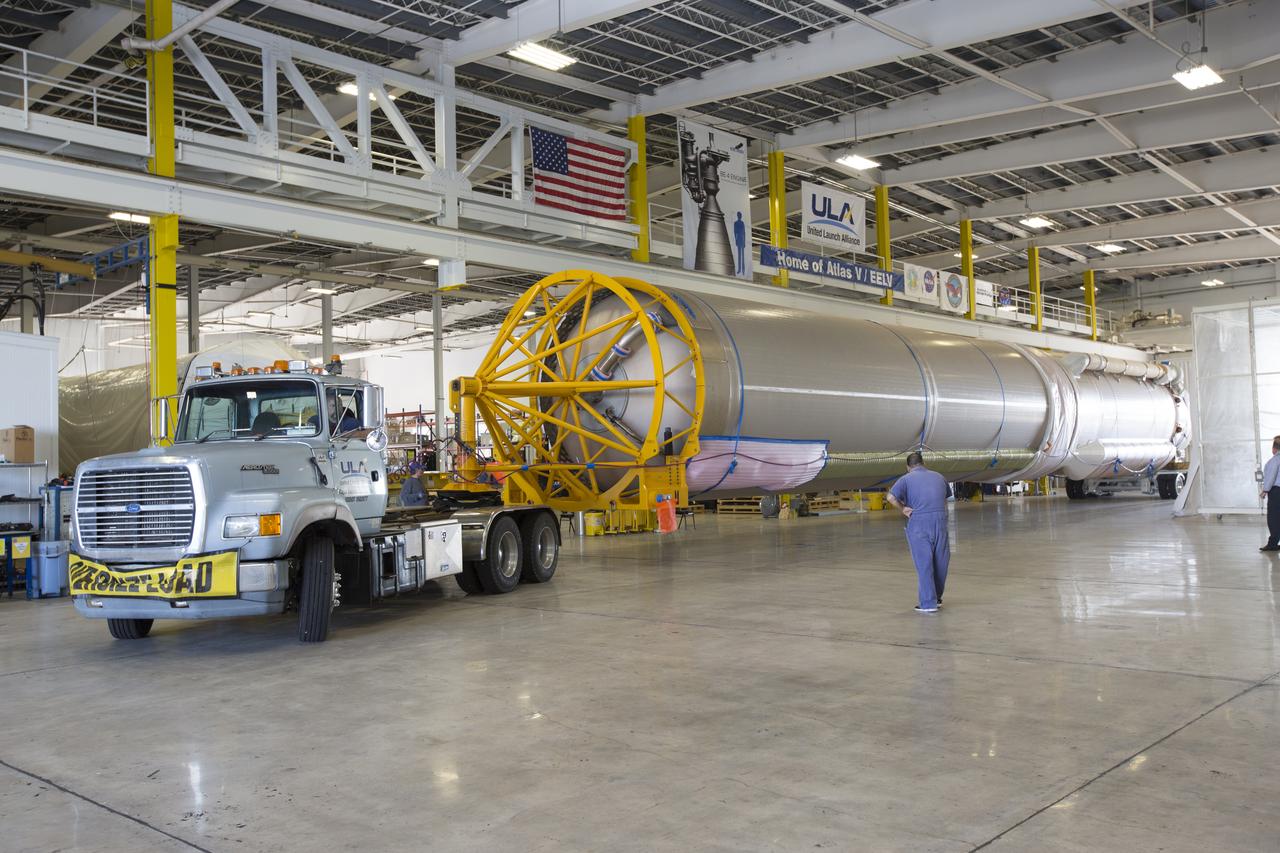
A United Launch Alliance (ULA) Atlas V booster arrives at Cape Canaveral Air Force Station's Atlas Spaceflight Operations Center (ASOC). The Atlas V will undergo final testing in that facility. When processing in the ASOC is complete, the Atlas booster will be moved to the Vertical Integration Facility for stacking at Space Launch Complex 41. Scheduled to launch March 19, 2017, the Atlas will launch a Cygnus spacecraft on the Orbital ATK CRS-7 mission to deliver thousands of pounds of supplies, equipment and scientific research materials to the International Space Station.
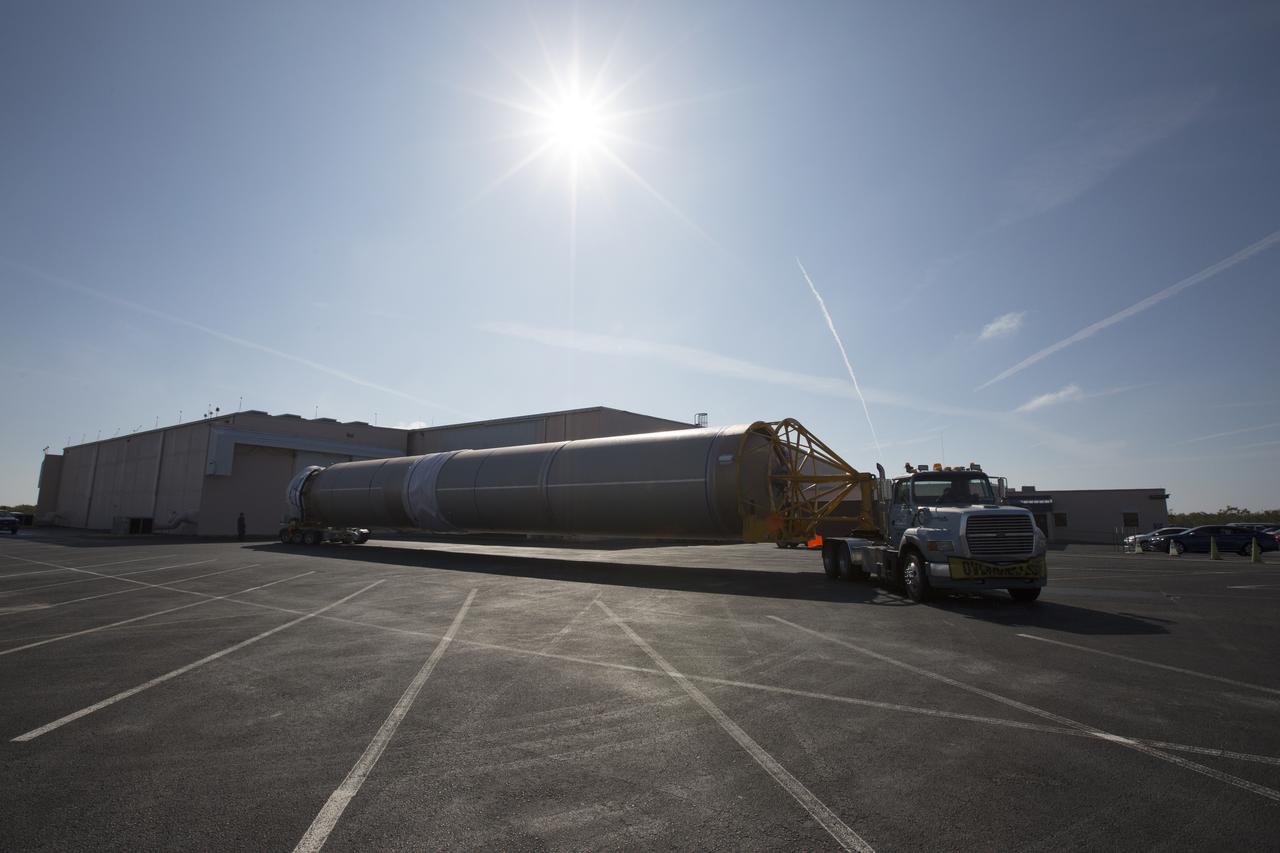
A United Launch Alliance (ULA) Atlas V booster arrives at Cape Canaveral Air Force Station's Atlas Spaceflight Operations Center (ASOC). The Atlas V will undergo final testing in that facility. When processing in the ASOC is complete, the Atlas booster will be moved to the Vertical Integration Facility for stacking at Space Launch Complex 41. Scheduled to launch March 19, 2017, the Atlas will launch a Cygnus spacecraft on the Orbital ATK CRS-7 mission to deliver thousands of pounds of supplies, equipment and scientific research materials to the International Space Station.
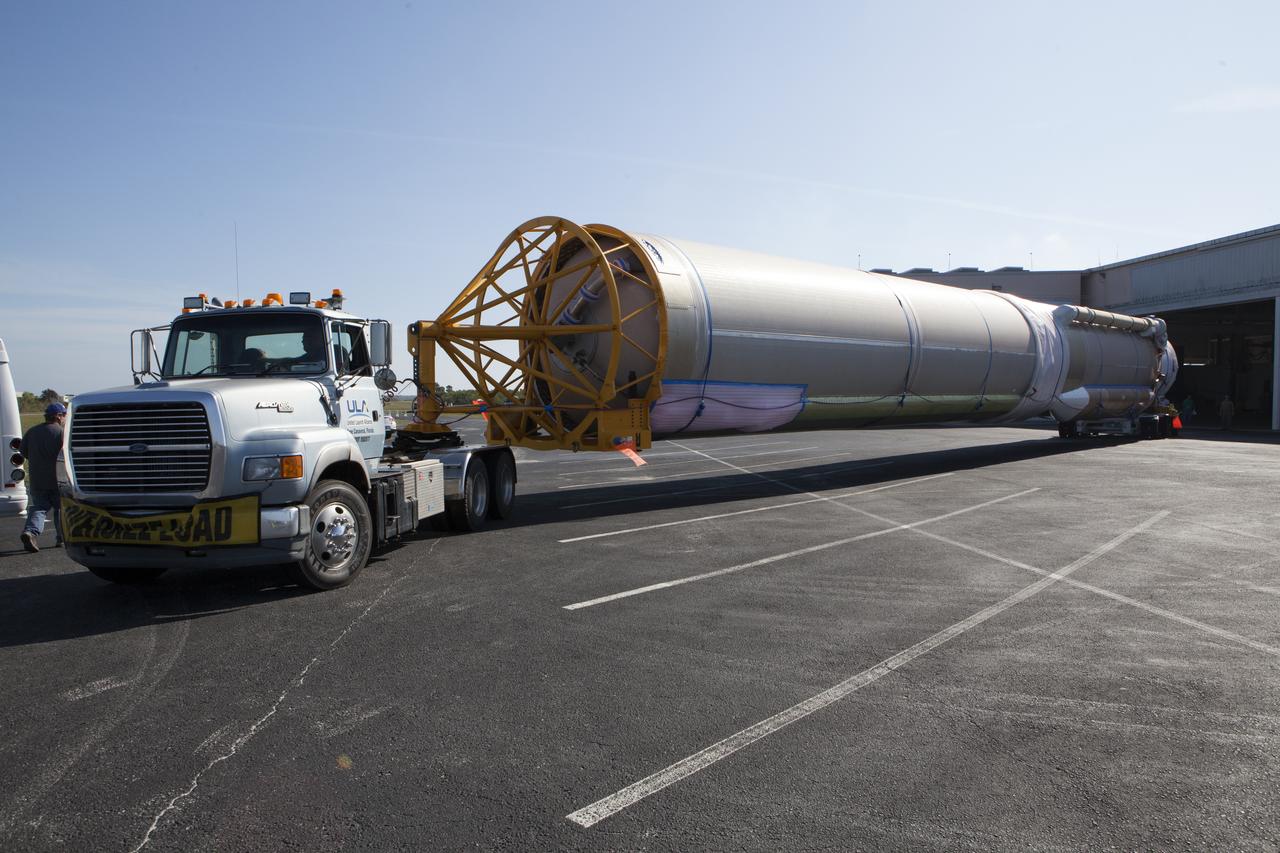
A United Launch Alliance (ULA) Atlas V booster arrives at Cape Canaveral Air Force Station's Atlas Spaceflight Operations Center (ASOC). The Atlas V will undergo final testing in that facility. When processing in the ASOC is complete, the Atlas booster will be moved to the Vertical Integration Facility for stacking at Space Launch Complex 41. Scheduled to launch March 19, 2017, the Atlas will launch a Cygnus spacecraft on the Orbital ATK CRS-7 mission to deliver thousands of pounds of supplies, equipment and scientific research materials to the International Space Station.
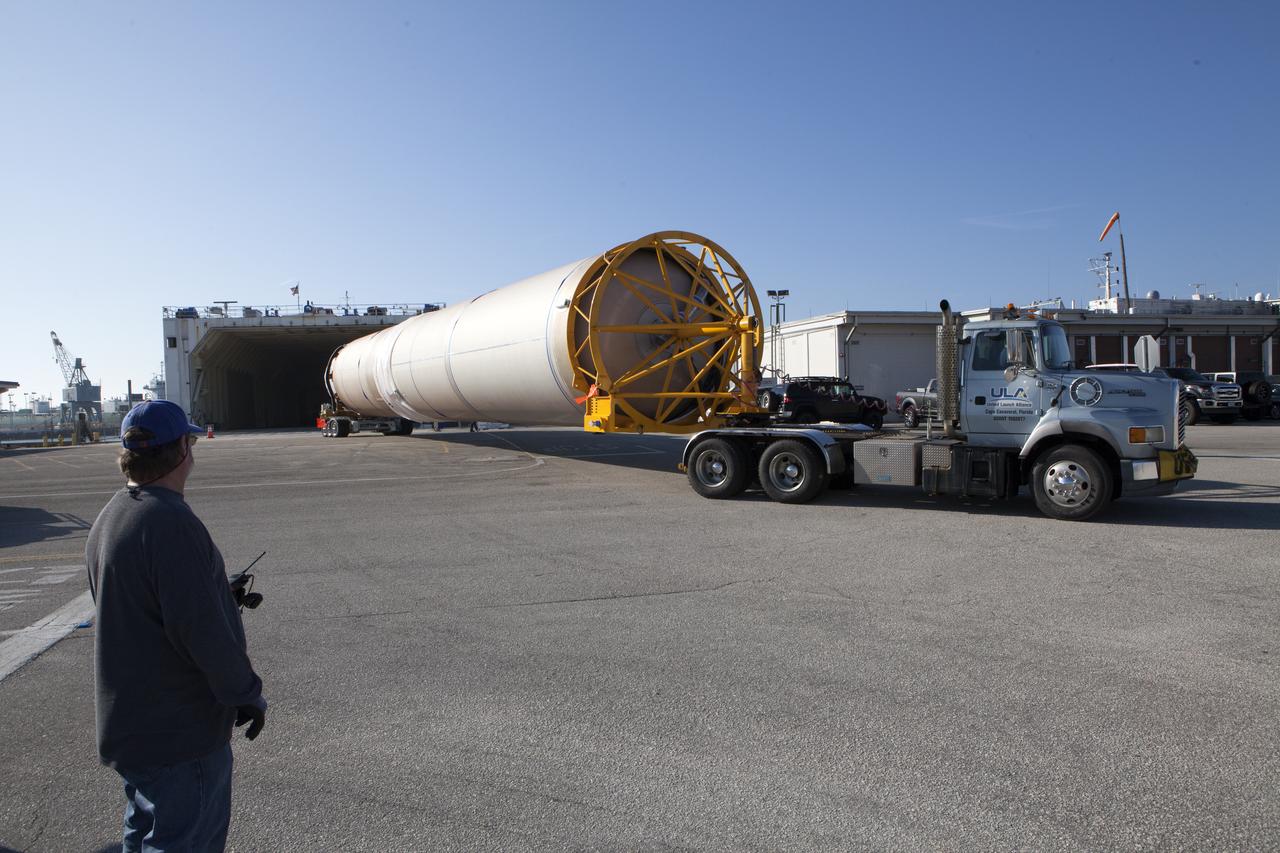
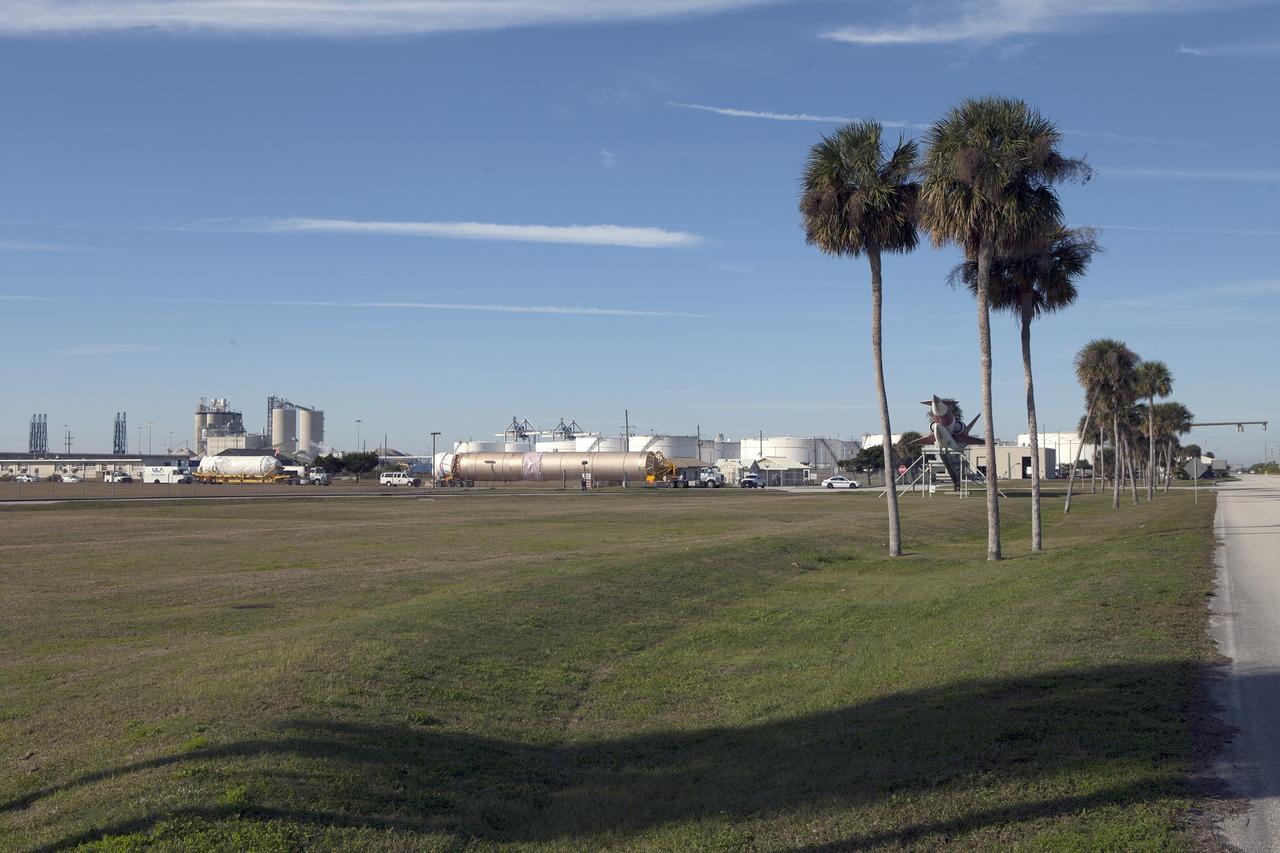
The United Launch Alliance (ULA) Atlas V booster arrives for the Orbital ATK CRS-7 commercial resupply mission to the International Space Station. A transport truck is taking the Atlas V from the Mariner cargo ship in the background, to the hangar at the Atlas Spaceflight Operations Center (ASOC), located south of Space Launch Complex 41 at Cape Canaveral Air Force Station. Scheduled to launch March 19, 2017, the Orbital ATK CRS-7 mission will lift off atop the ULA Atlas V rocket to deliver thousands of pounds of supplies, equipment and scientific research materials that improve life on Earth and drive progress toward future space exploration.
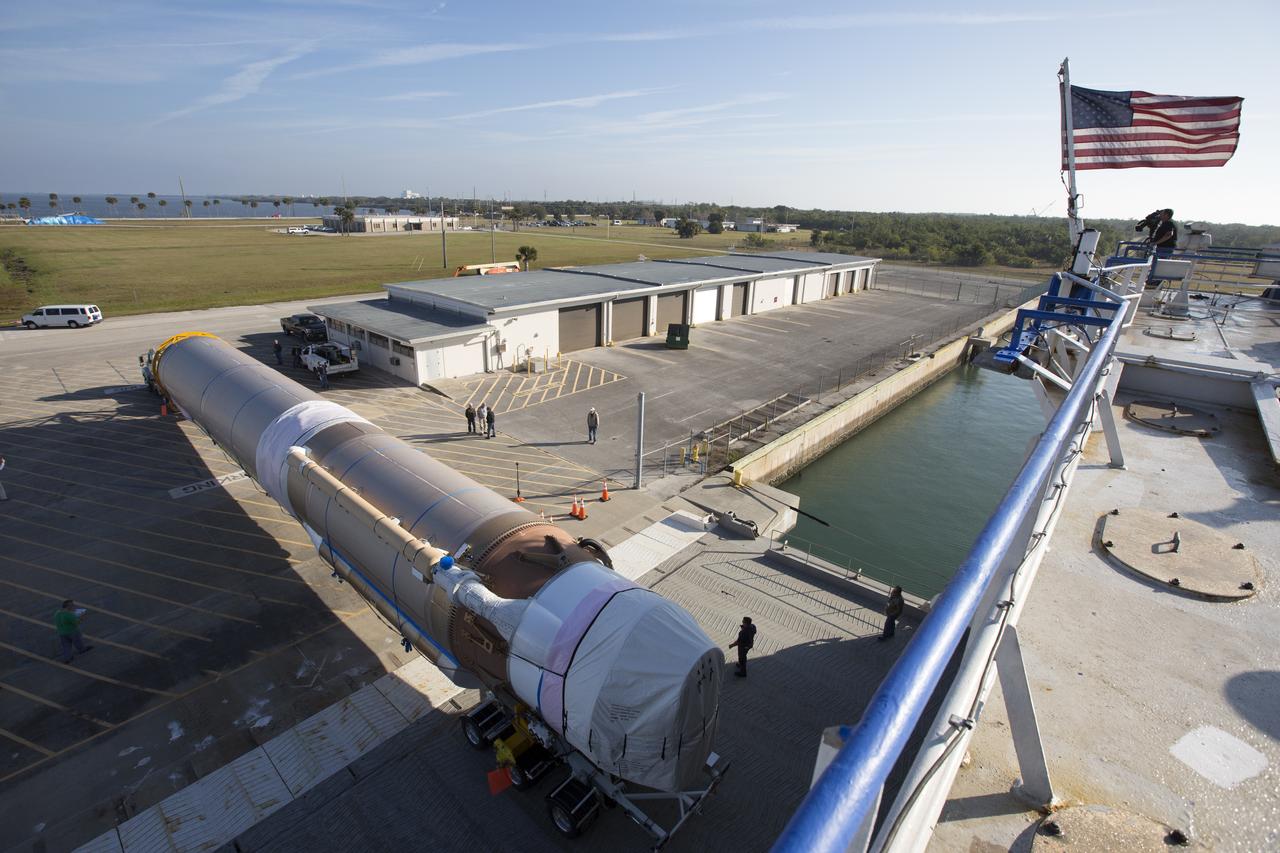
The United Launch Alliance (ULA) Atlas V booster arrives for the Orbital ATK CRS-7 commercial resupply mission to the International Space Station. A transport truck is taking the Atlas V from the Mariner cargo ship in the background, to the hangar at the Atlas Spaceflight Operations Center (ASOC), located south of Space Launch Complex 41 at Cape Canaveral Air Force Station. Scheduled to launch March 19, 2017, the Orbital ATK CRS-7 mission will lift off atop the ULA Atlas V rocket to deliver thousands of pounds of supplies, equipment and scientific research materials that improve life on Earth and drive progress toward future space exploration.
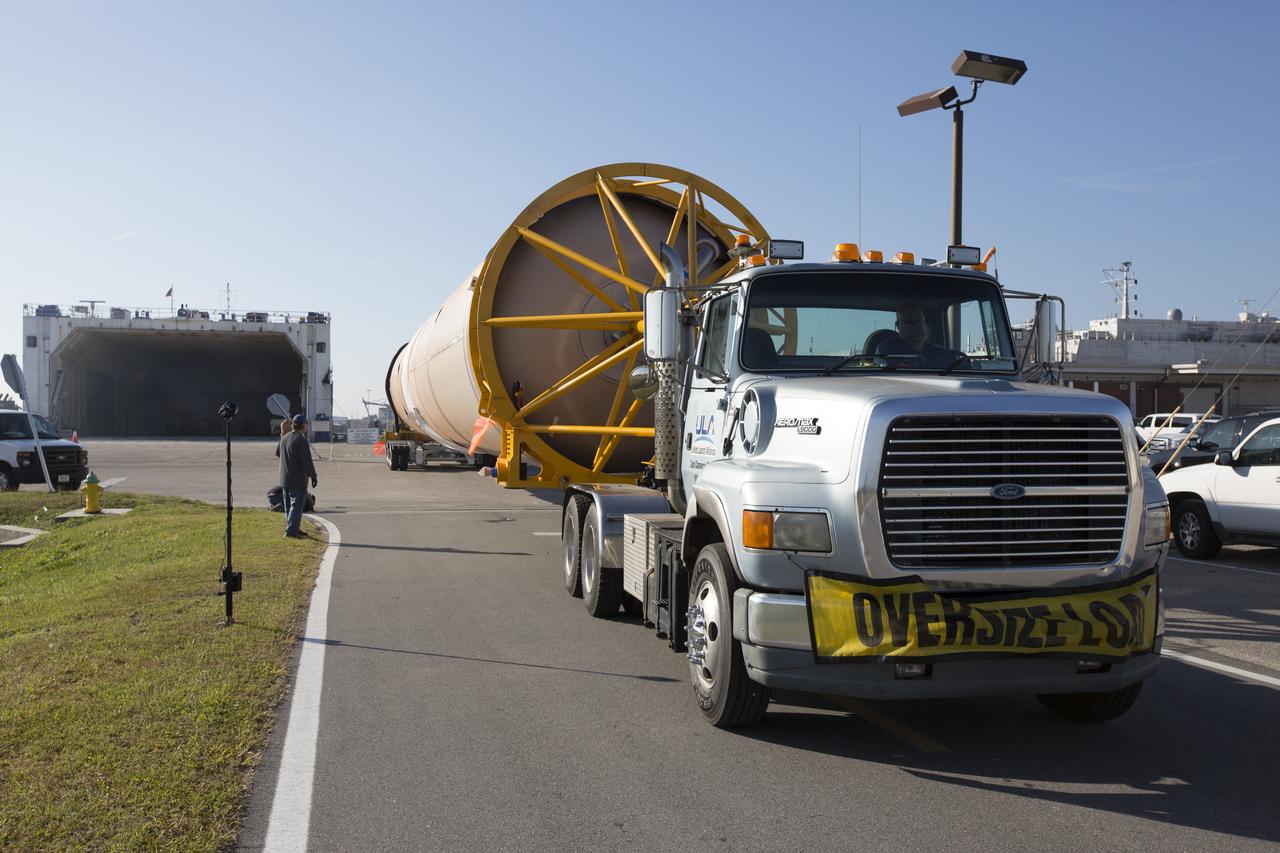
The United Launch Alliance (ULA) Atlas V booster arrives for the Orbital ATK CRS-7 commercial resupply mission to the International Space Station. A transport truck is taking the Atlas V from the Mariner cargo ship in the background, to the hangar at the Atlas Spaceflight Operations Center (ASOC), located south of Space Launch Complex 41 at Cape Canaveral Air Force Station. Scheduled to launch March 19, 2017, a Cygnus spacecraft on the Orbital ATK CRS-7 mission will lift off atop the ULA Atlas V rocket to deliver thousands of pounds of supplies, equipment and scientific research materials that improve life on Earth and drive progress toward future space exploration.

CAPE CANAVERAL, Fla. – A truck positions a Centaur upper stage inside the hangar at the Atlas V Spaceflight Operations Center at Cape Canaveral Air Force Station. The upper stage will be used as part of the Atlas V rocket that will be used to launch NASA's Magnetospheric Multiscale mission. To learn about the MMS, go to http://go.nasa.gov/1GUbzxb. Photo credit: NASA/Ben Smegelsky
CAPE CANAVERAL, Fla. – Trucks transport the Atlas V rocket and Centaur upper stage from the United Launch Alliance Delta Mariner to the Atlas V Spaceflight Operations Center at Cape Canaveral Air Force Station. The rocket will be used to launch NASA's Magnetospheric Multiscale mission. To learn about the MMS, go to http://go.nasa.gov/1GUbzxb. Photo credit: NASA/Ben Smegelsky
CAPE CANAVERAL, Fla. – Trucks transport the Atlas V rocket and Centaur upper stage from the United Launch Alliance Delta Mariner to the Atlas V Spaceflight Operations Center at Cape Canaveral Air Force Station. The rocket will be used to launch NASA's Magnetospheric Multiscale mission. To learn about the MMS, go to http://go.nasa.gov/1GUbzxb. Photo credit: NASA/Ben Smegelsky
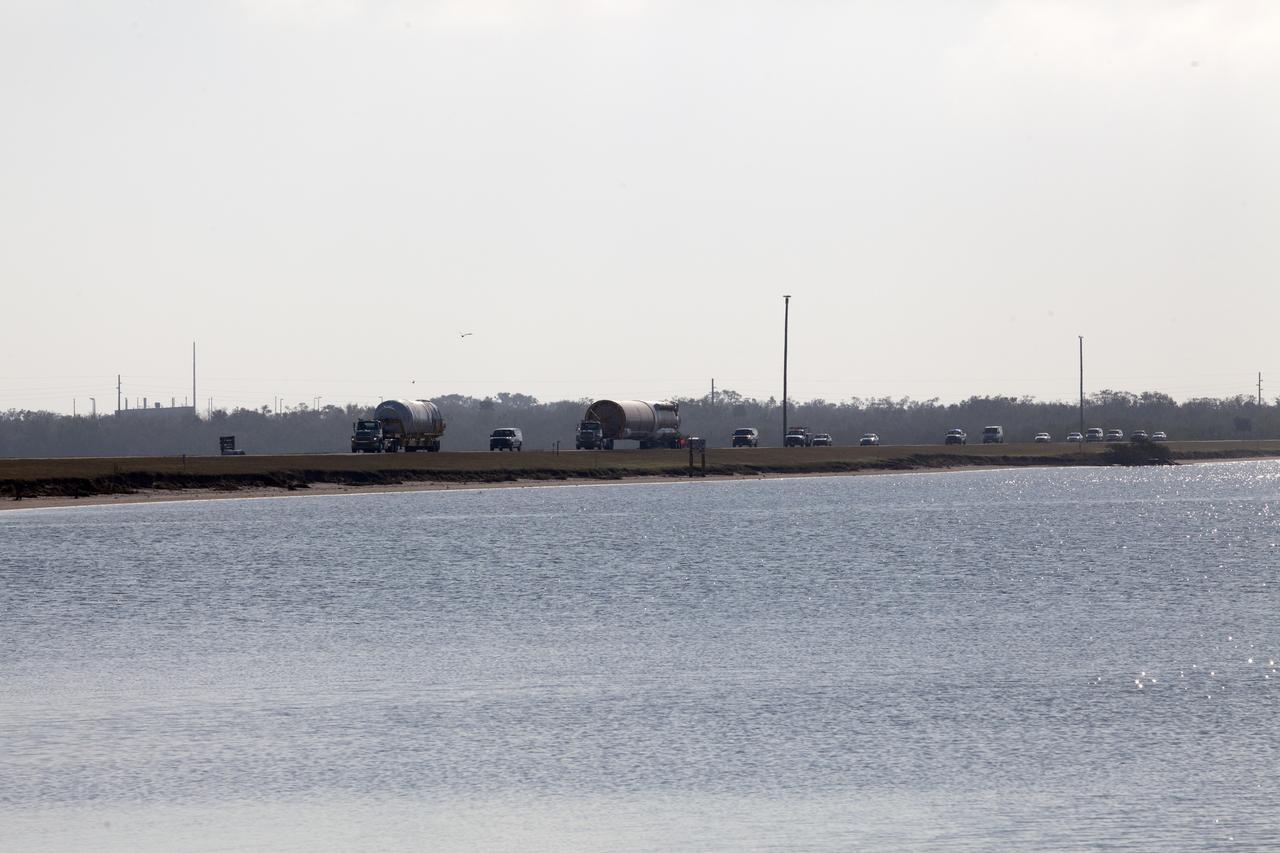
A United Launch Alliance (ULA) Atlas V booster is on its way to Cape Canaveral Air Force Station's Atlas Spaceflight Operations Center (ASOC). The Atlas V will undergo final testing in that facility. When processing in the ASOC is complete, the Atlas booster will be moved to the Vertical Integration Facility for stacking at Space Launch Complex 41. Scheduled to launch March 19, 2017, the Atlas will launch a Cygnus spacecraft on the Orbital ATK CRS-7 mission to deliver thousands of pounds of supplies, equipment and scientific research materials to the International Space Station.
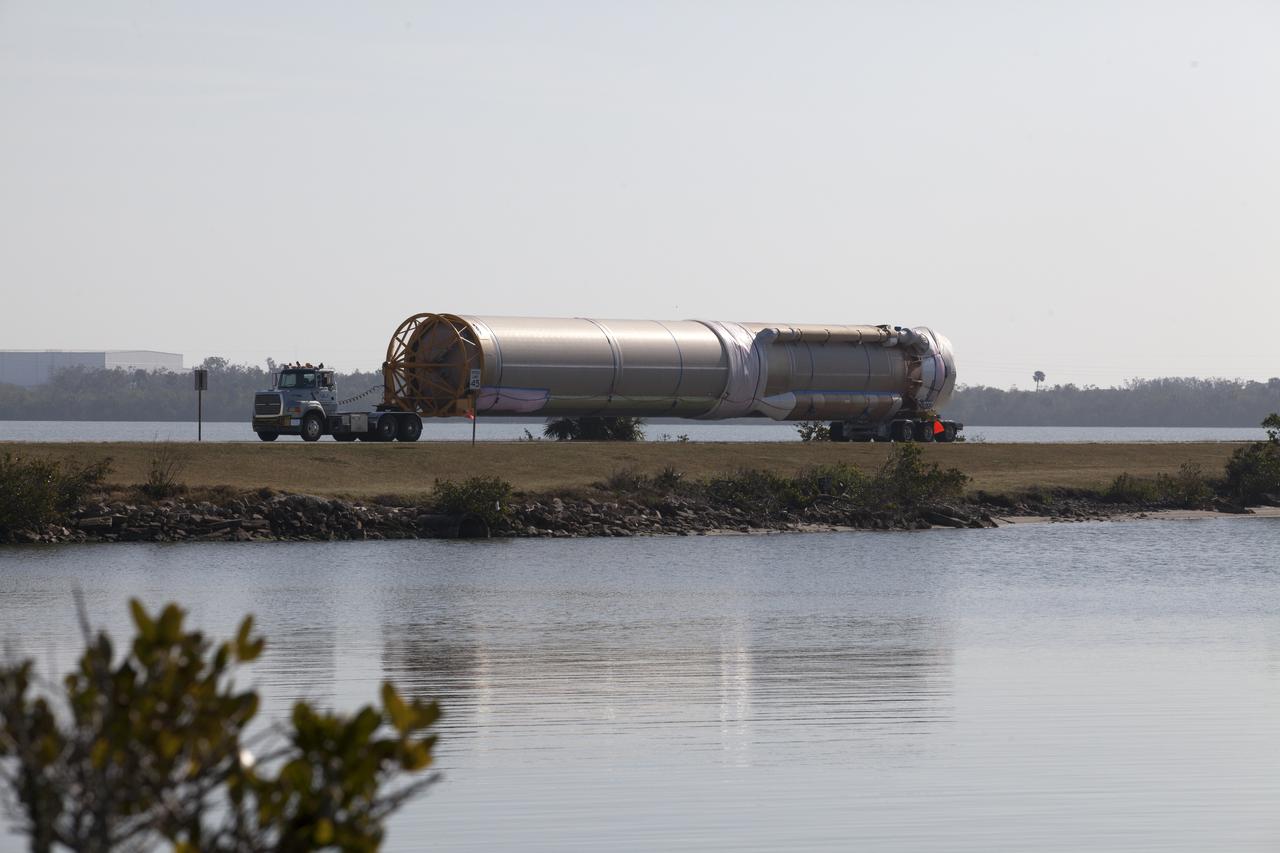
A United Launch Alliance (ULA) Atlas V booster is on its way to Cape Canaveral Air Force Station's Atlas Spaceflight Operations Center (ASOC). The Atlas V will undergo final testing in that facility. When processing in the ASOC is complete, the Atlas booster will be moved to the Vertical Integration Facility for stacking at Space Launch Complex 41. Scheduled to launch March 19, 2017, the Atlas will launch a Cygnus spacecraft on the Orbital ATK CRS-7 mission to deliver thousands of pounds of supplies, equipment and scientific research materials to the International Space Station.
A truck begins to transport a Centaur upper stage from the United Launch Alliance Delta Mariner to the Atlas V Spaceflight Operations Center at Cape Canaveral Air Force Station. The rocket will be used to launch NASA's Magnetospheric Multiscale mission.
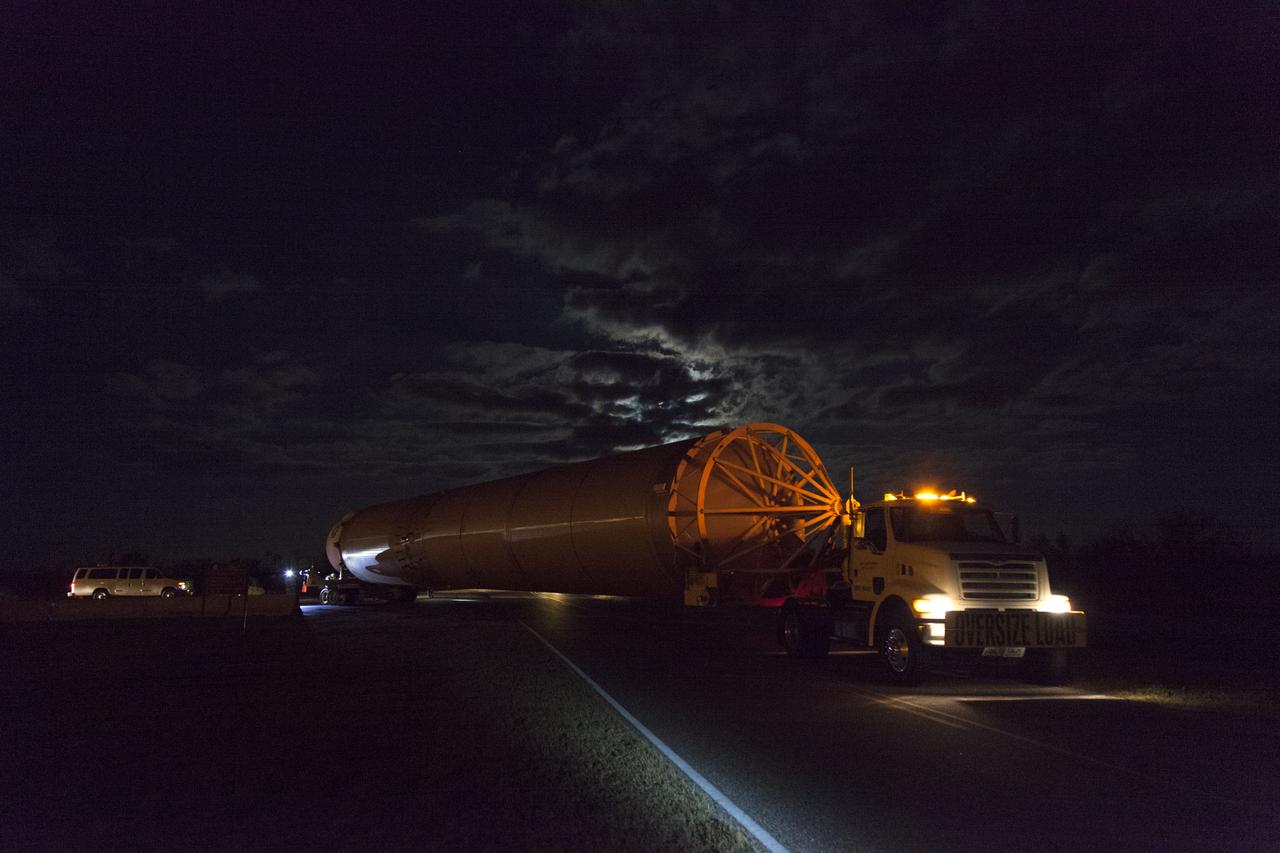
A United Launch Alliance Atlas V first stage leaves the Atlas Spaceflight Operations Center aboard a transport trailer for delivery to the Vertical Integration Facility at Space Launch Complex 41 at Cape Canaveral Air Force Station in Florida. The rocket is being prepared to launch the Geostationary Operational Environmental Satellite, or GOES-S. It will be the second in a series of four advanced geostationary weather satellites and will significantly improve the detection and observation of environmental phenomena that directly affect public safety. GOES-S is slated to launch March 1, 2018.
A United Launch Alliance Atlas V first stage leaves the Atlas Spaceflight Operations Center aboard a transport trailer for delivery to the Vertical Integration Facility at Space Launch Complex 41 at Cape Canaveral Air Force Station in Florida. The rocket is being prepared to launch the Geostationary Operational Environmental Satellite, or GOES-S. It will be the second in a series of four advanced geostationary weather satellites and will significantly improve the detection and observation of environmental phenomena that directly affect public safety. GOES-S is slated to launch March 1, 2018.

CAPE CANAVERAL, Fla. – The first stage of the Atlas V rocket slated to launch NASA's Solar Dynamics Observatory, or SDO, is ready for further processing in the Atlas Spaceflight Operations Center hangar on Cape Canaveral Air Force Station in Florida. It was delivered on Oct. 27. SDO is the first space weather research network mission in NASA's Living With a Star Program. The spacecraft's long-term measurements will give solar scientists in-depth information about changes in the sun's magnetic field and insight into how they affect Earth. Liftoff on the United Launch Alliance Atlas V is scheduled for Feb. 3, 2010. For information on SDO, visit http://www.nasa.gov/sdo. Photo credit: NASA/Jim Grossmann
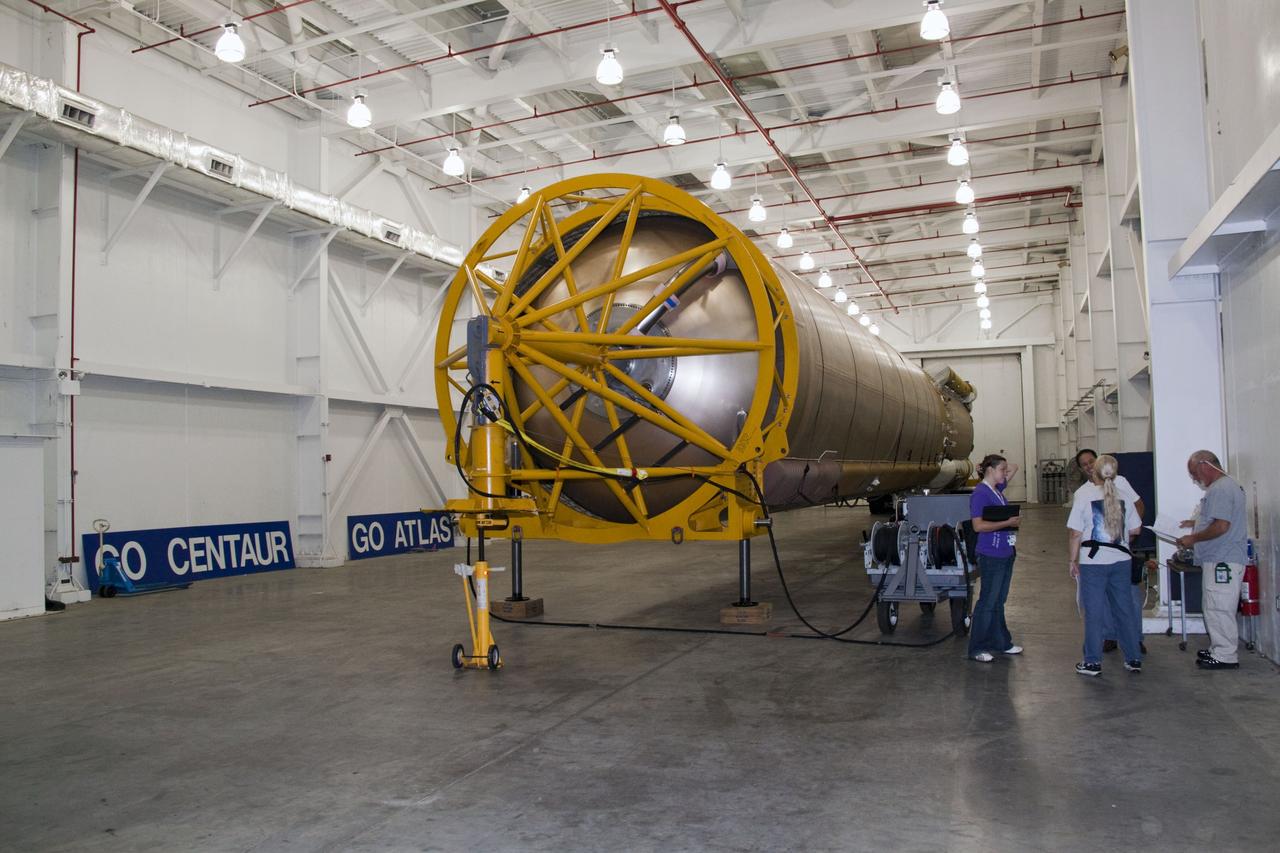
CAPE CANAVERAL, Fla. -- At Cape Canaveral Air Force Station in Florida, workers prepare the first stage of a United Launch Alliance Atlas V rocket for transport from its hangar at the Atlas Spaceflight Operations Center to Launch Complex 41. NASA's Juno spacecraft is scheduled to launch aboard an Atlas V from Cape Canaveral, Fla. Aug. 5.The solar-powered spacecraft will orbit Jupiter's poles 33 times to find out more about the gas giant's origins, structure, atmosphere and magnetosphere and investigate the existence of a solid planetary core. For more information visit: www.nasa.gov/juno. Photo credit: NASA/Jack Pfaller
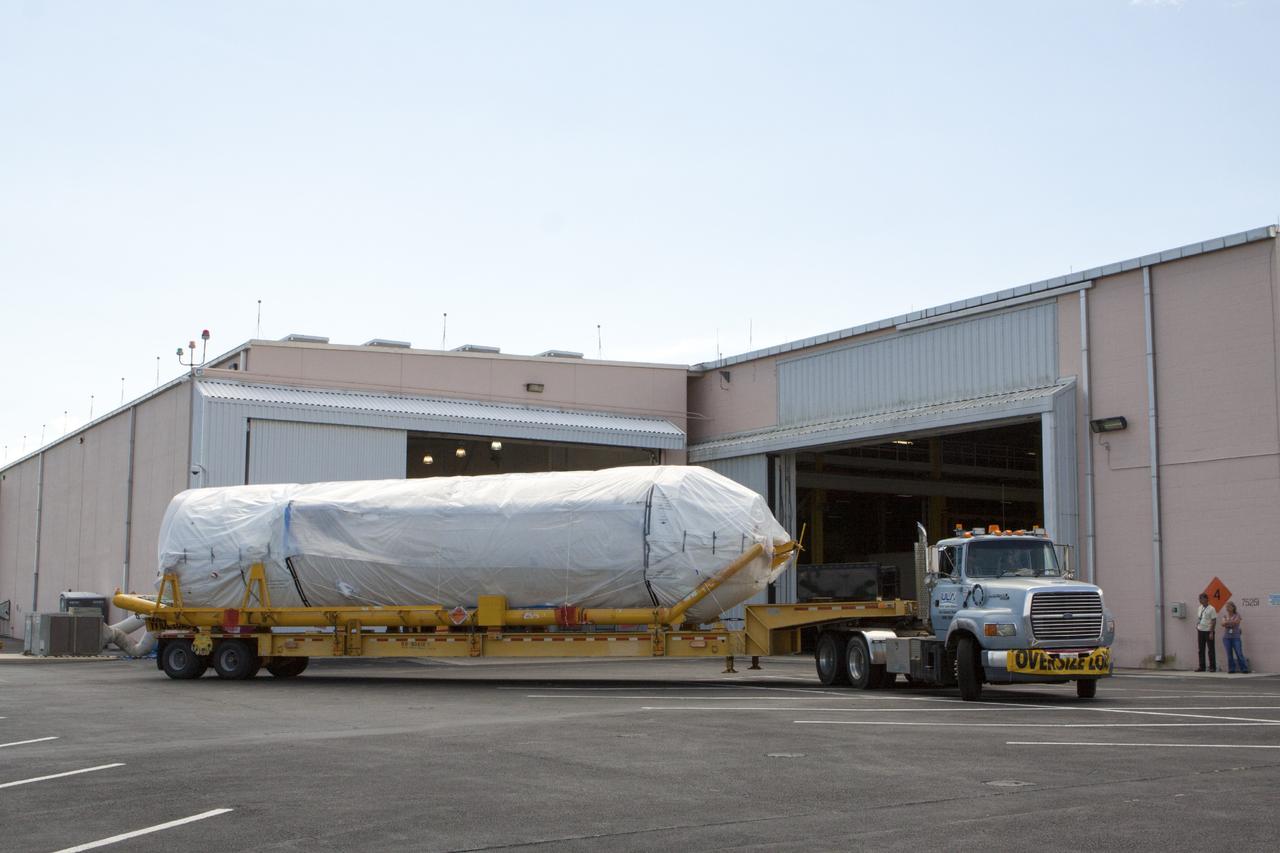
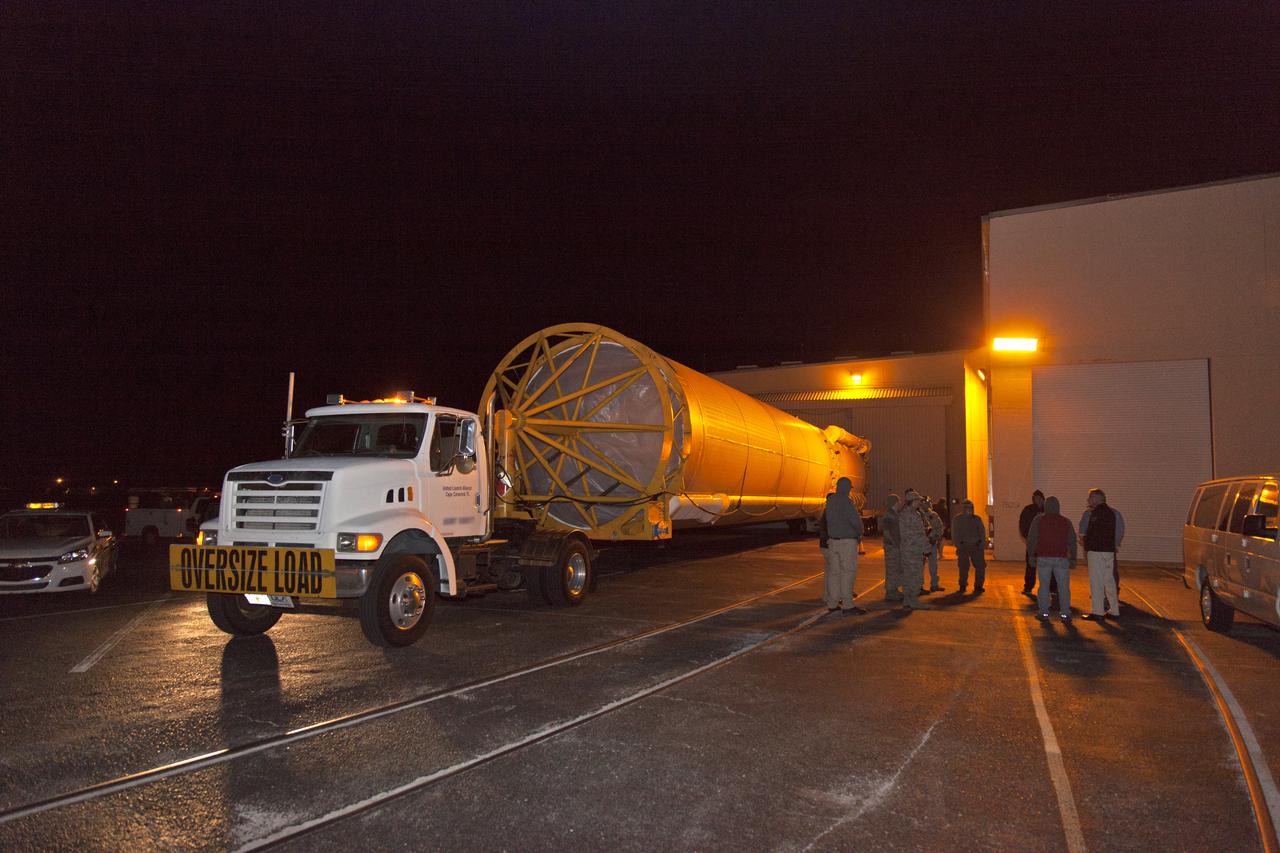
CAPE CANAVERAL, Fla. – United Launch Alliance Atlas V rocket first and second stages arrive at to the Atlas Spaceflight Operations Center, or ASOC, at Cape Canaveral Air Force Station. There, the launch vehicle will begin processing for the Mars Atmosphere and Volatile Evolution, or MAVEN, spacecraft to the Red Planet. MAVEN is being prepared for its scheduled launch in November from Cape Canaveral Air Force Station, Fla. atop a United Launch Alliance Atlas V rocket. Positioned in an orbit above the Red Planet, MAVEN will study the upper atmosphere of Mars in unprecedented detail. For more information, visit: http://www.nasa.gov/mission_pages/maven/main/index.html Photo credit: NASA/Kim Shiflett
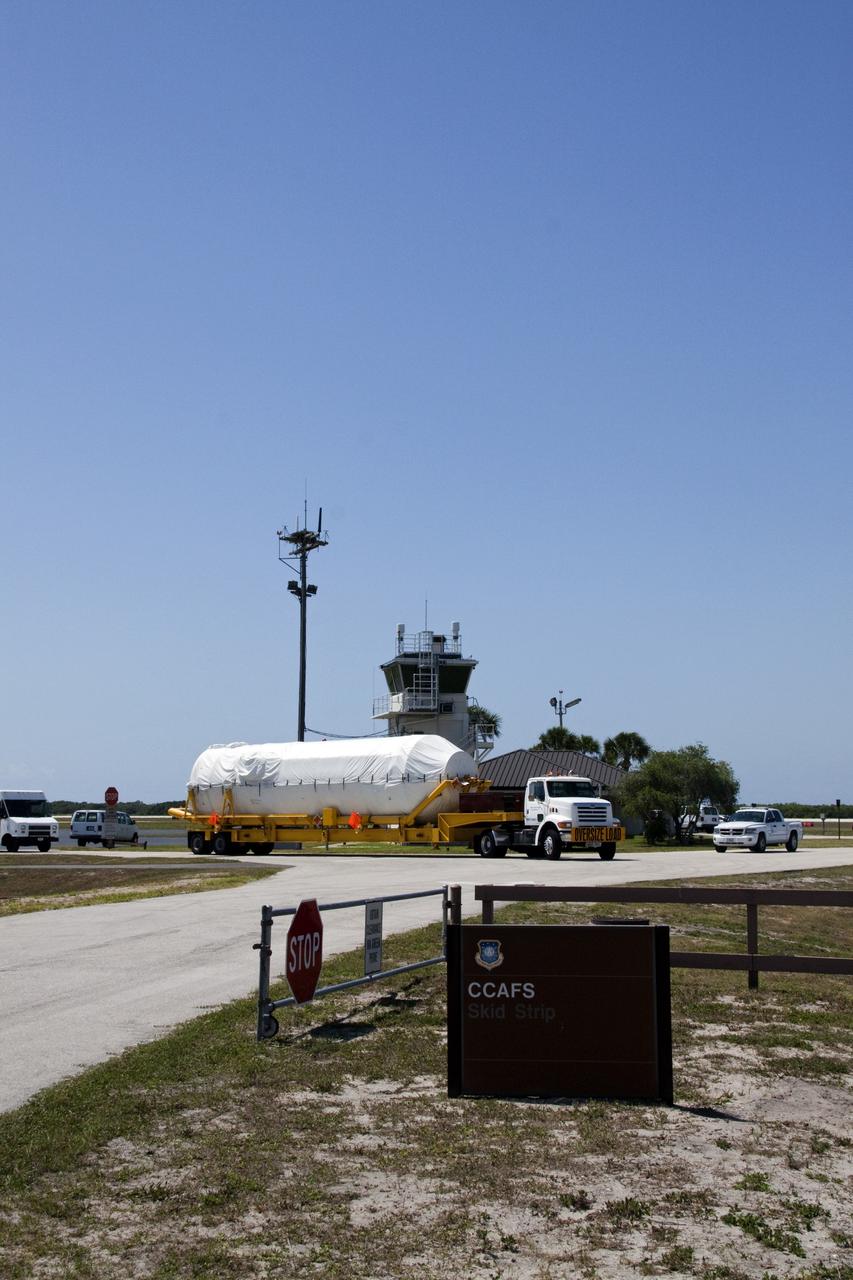
CAPE CANAVERAL, Fla. -- The Centaur upper stage for the United Launch Alliance Atlas V rocket slated to launch NASA's Juno spacecraft is being transported from the Skid Strip on Cape Canaveral Air Force Station in Florida to the Atlas Spaceflight Operations Center. NASA's Juno spacecraft is scheduled to launch aboard the Atlas V from Cape Canaveral, Fla. Aug. 5.The solar-powered spacecraft will orbit Jupiter's poles 33 times to find out more about the gas giant's origins, structure, atmosphere and magnetosphere and investigate the existence of a solid planetary core. For more information visit: www.nasa.gov/juno. Photo credit: NASA/Jack Pfaller
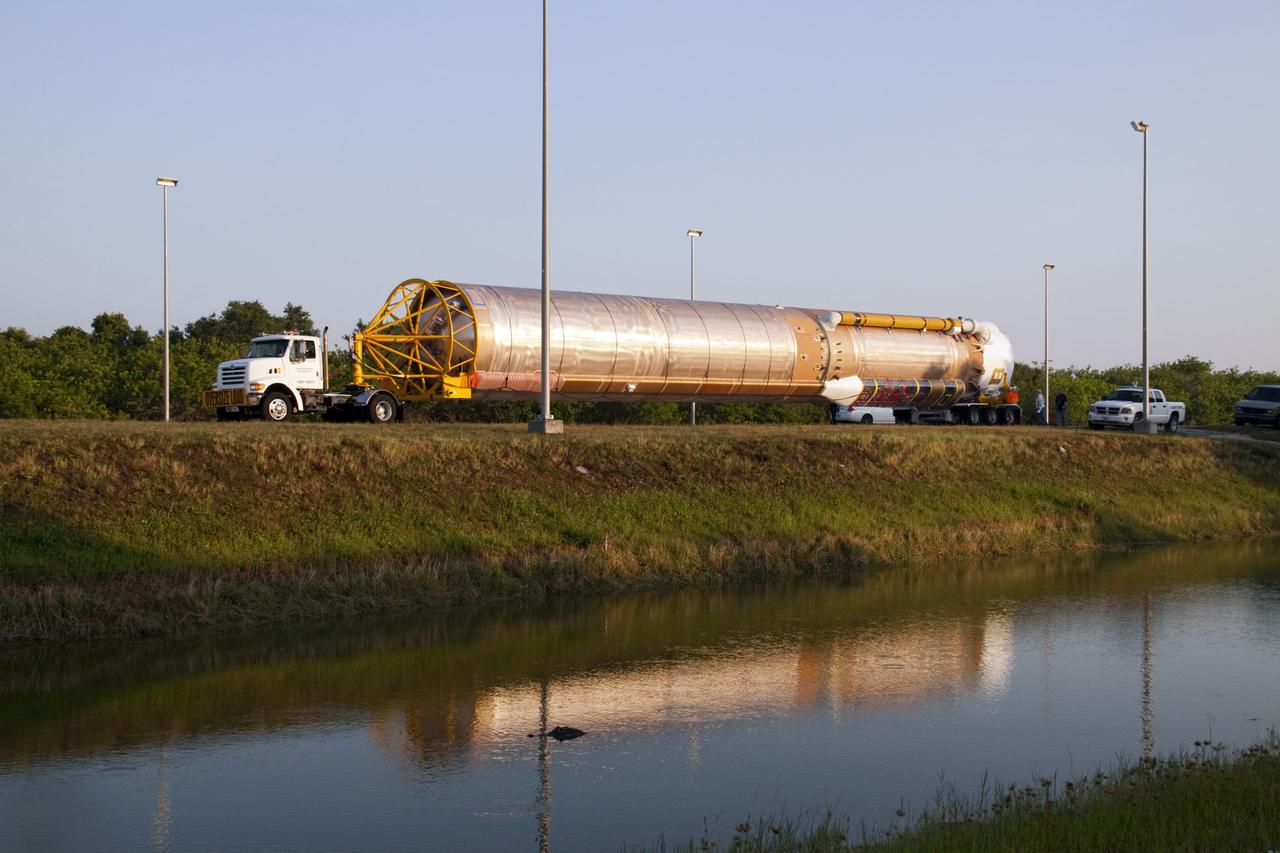
CAPE CANAVERAL, Fla. -- At Cape Canaveral Air Force Station in Florida, the first stage of a United Launch Alliance Atlas V rocket is being transported from its hangar at the Atlas Spaceflight Operations Center to Launch Complex 41. NASA's Juno spacecraft is scheduled to launch aboard an Atlas V from Cape Canaveral, Fla. Aug. 5.The solar-powered spacecraft will orbit Jupiter's poles 33 times to find out more about the gas giant's origins, structure, atmosphere and magnetosphere and investigate the existence of a solid planetary core. For more information visit: www.nasa.gov/juno. Photo credit: NASA/Jack Pfaller
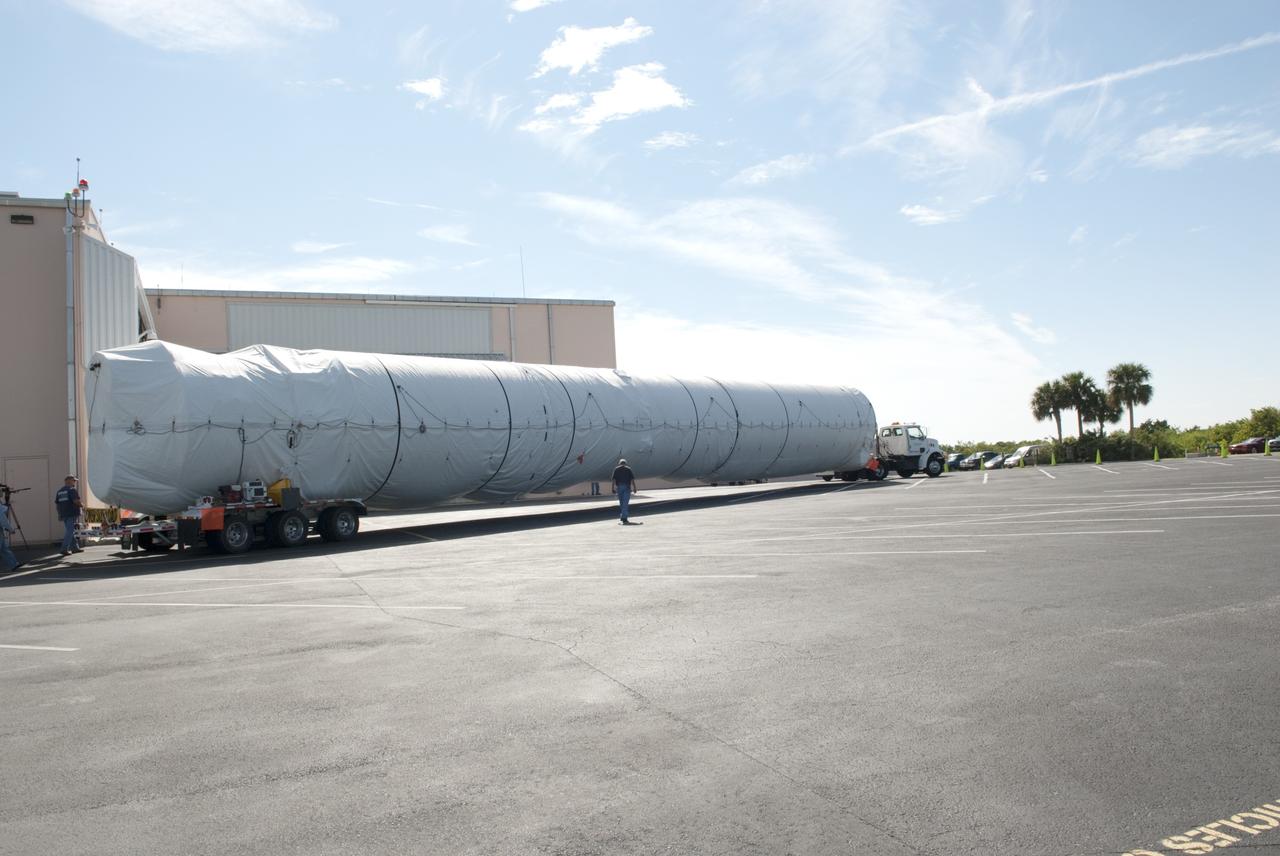
CAPE CANAVERAL, Fla. -- The first stage of the Atlas V rocket that will carry the Tracking and Data Relay Satellite, TDRS-K, into orbit arrives at the hangar at the Atlas Spaceflight Operations Center at Cape Canaveral Air Force Station in Florida to begin processing. Launch of the TDRS-K on the Atlas V rocket is planned for January 2013 from Space Launch Complex 41. The TDRS-K spacecraft is part of the next-generation series in the Tracking and Data Relay Satellite System, a constellation of space-based communication satellites providing tracking, telemetry, command and high-bandwidth data return services. For more information, visit http://tdrs.gsfc.nasa.gov/ Photo credit: NASA/Charisse Nahser
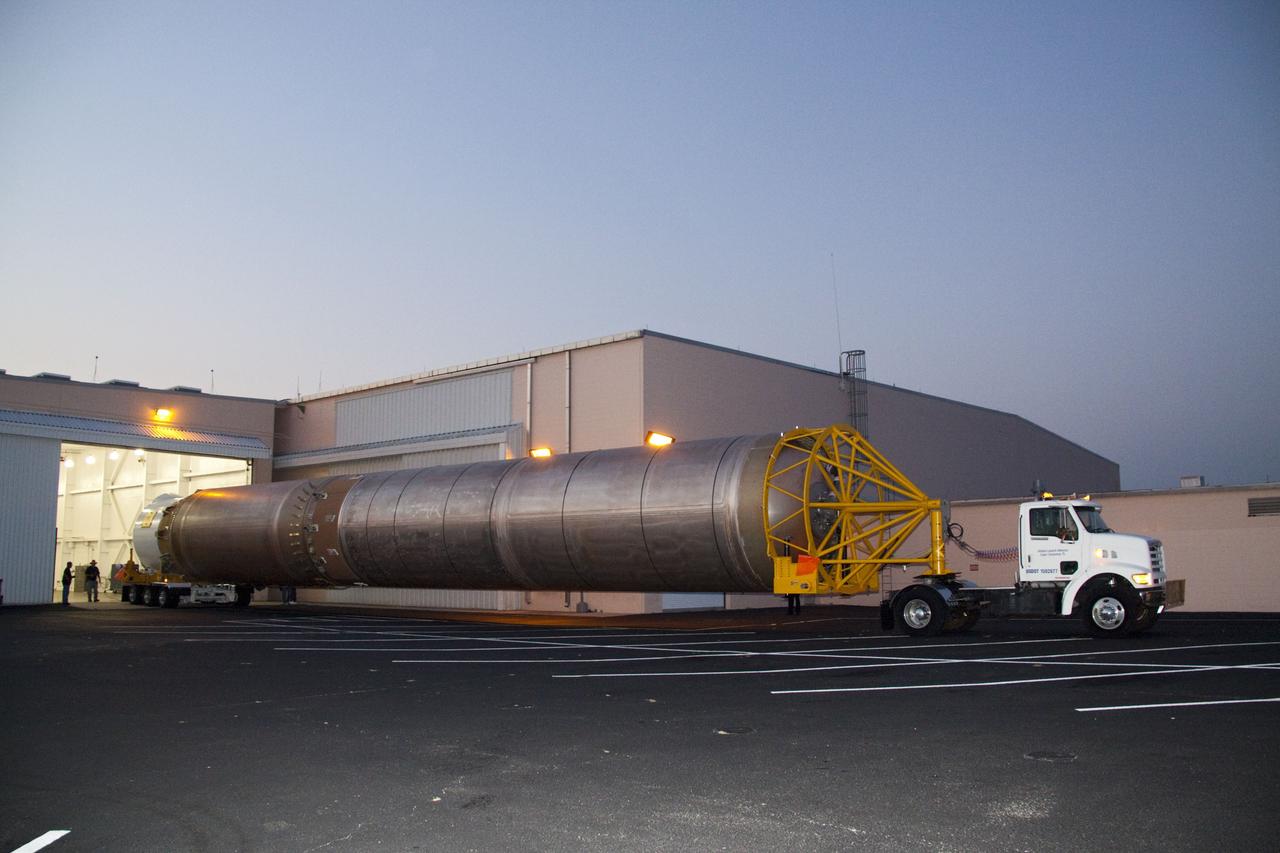
CAPE CANAVERAL, Fla. -- At Cape Canaveral Air Force Station in Florida, the first stage of a United Launch Alliance Atlas V rocket is being transported from its hangar at the Atlas Spaceflight Operations Center to Launch Complex 41. NASA's Juno spacecraft is scheduled to launch aboard an Atlas V from Cape Canaveral, Fla. Aug. 5.The solar-powered spacecraft will orbit Jupiter's poles 33 times to find out more about the gas giant's origins, structure, atmosphere and magnetosphere and investigate the existence of a solid planetary core. For more information visit: www.nasa.gov/juno. Photo credit: NASA/Jack Pfaller
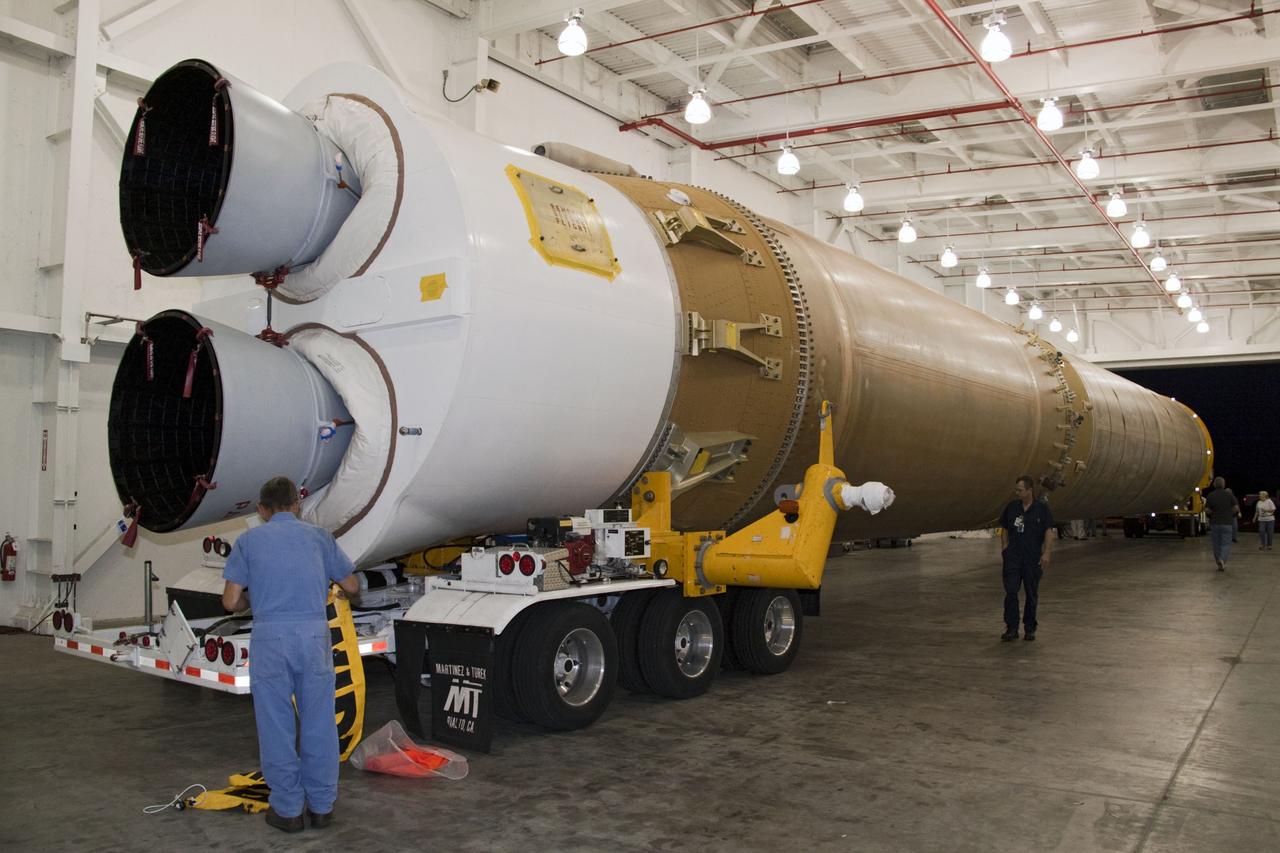
CAPE CANAVERAL, Fla. -- At Cape Canaveral Air Force Station in Florida, workers prepare the first stage of a United Launch Alliance Atlas V rocket for transport from its hangar at the Atlas Spaceflight Operations Center to Launch Complex 41. NASA's Juno spacecraft is scheduled to launch aboard an Atlas V from Cape Canaveral, Fla. Aug. 5.The solar-powered spacecraft will orbit Jupiter's poles 33 times to find out more about the gas giant's origins, structure, atmosphere and magnetosphere and investigate the existence of a solid planetary core. For more information visit: www.nasa.gov/juno. Photo credit: NASA/Jack Pfaller
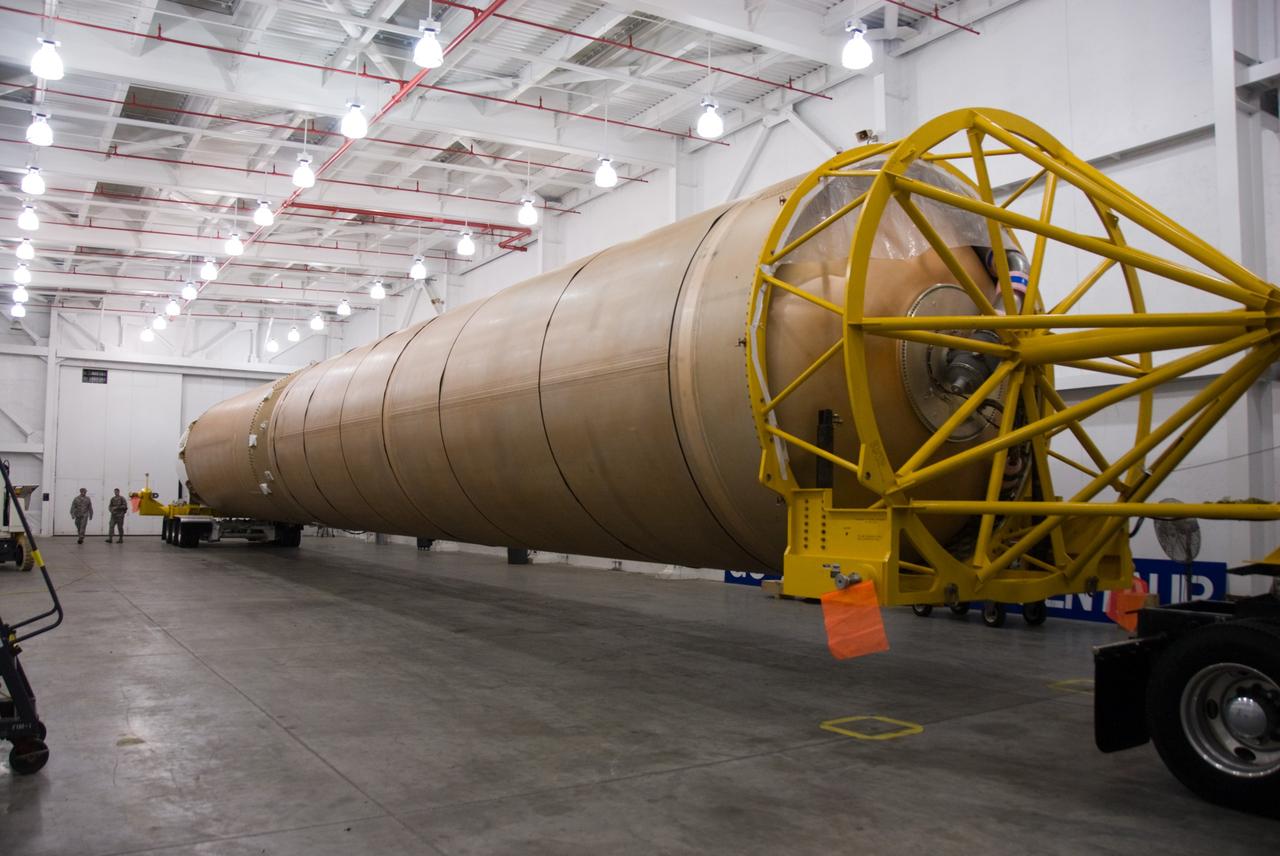
CAPE CANAVERAL, Fla. – At the Atlas Spaceflight Operations Center on Cape Canaveral Air Force Station in Florida, preparations are under way to move the Atlas V rocket scheduled to launch NASA's Solar Dynamics Observatory, or SDO, to Pad 41. SDO is the first space weather research network mission in NASA's Living With a Star Program. The spacecraft's long-term measurements will give solar scientists in-depth information about changes in the sun's magnetic field and insight into how they affect Earth. Liftoff on the United Launch Alliance Atlas V is scheduled for Feb. 3, 2010. For information on SDO, visit http://www.nasa.gov/sdo. Photo credit: NASA/Glenn Benson
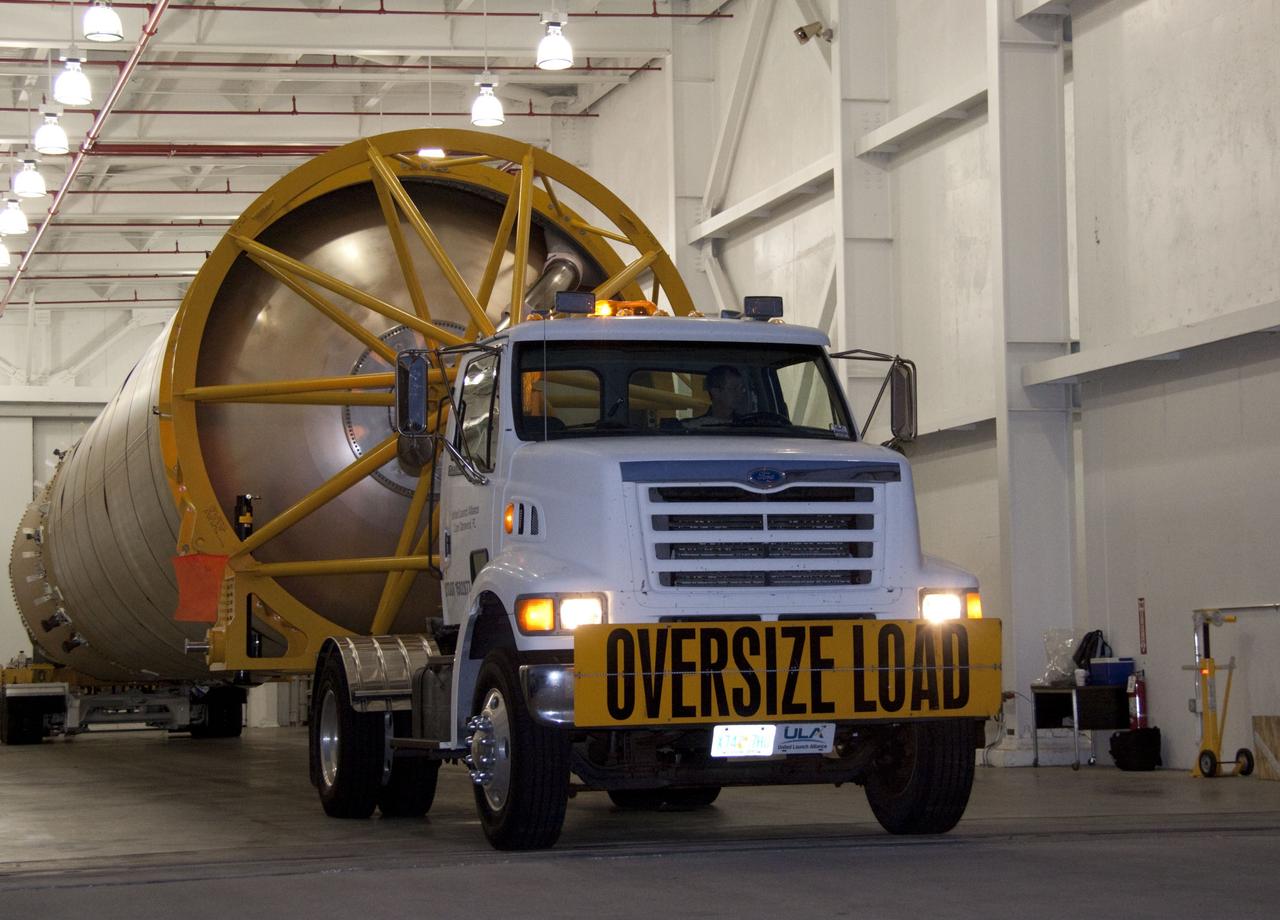
CAPE CANAVERAL, Fla. -- At Cape Canaveral Air Force Station in Florida, workers prepare the first stage of a United Launch Alliance Atlas V rocket for transport from its hangar at the Atlas Spaceflight Operations Center to Launch Complex 41. NASA's Juno spacecraft is scheduled to launch aboard an Atlas V from Cape Canaveral, Fla. Aug. 5.The solar-powered spacecraft will orbit Jupiter's poles 33 times to find out more about the gas giant's origins, structure, atmosphere and magnetosphere and investigate the existence of a solid planetary core. For more information visit: www.nasa.gov/juno. Photo credit: NASA/Jack Pfaller
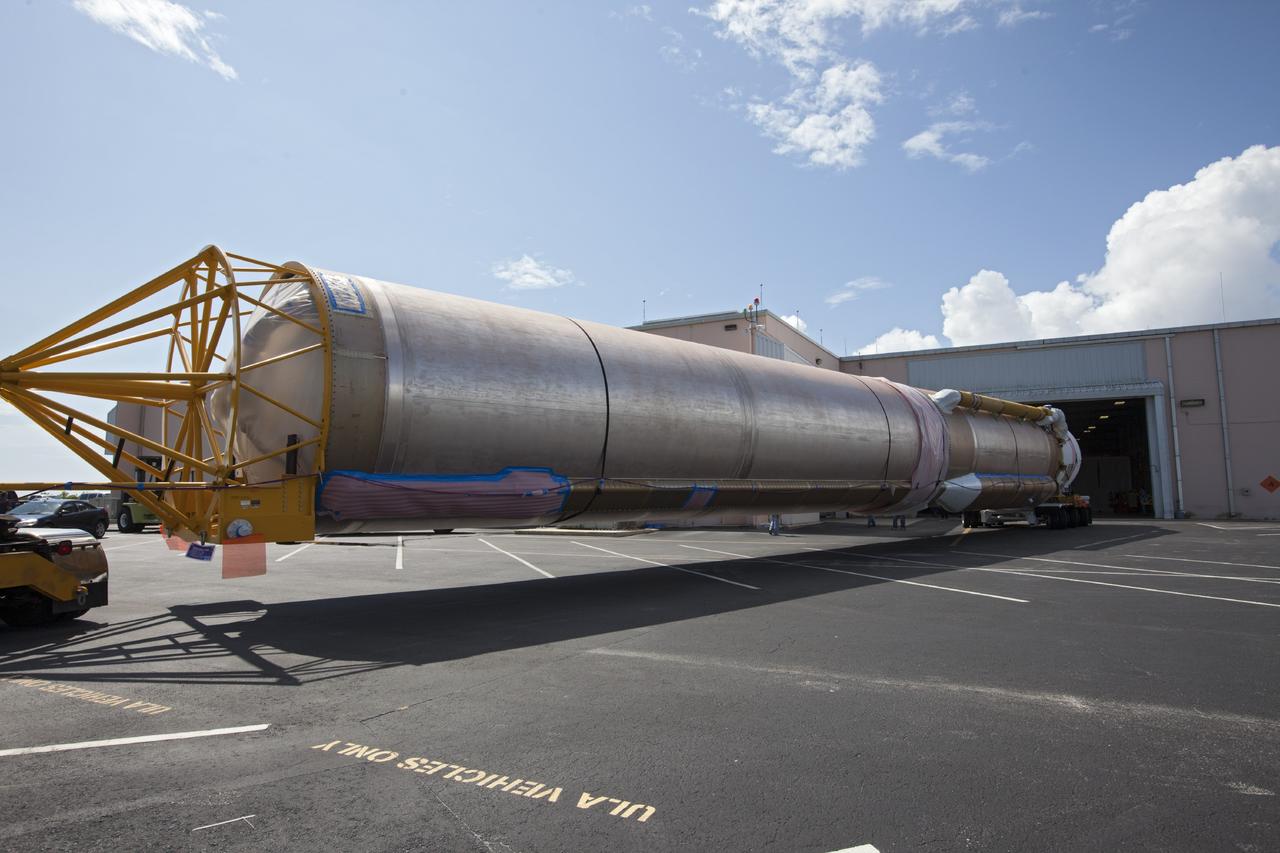
CAPE CANAVERAL, Fla. – United Launch Alliance Atlas V rocket first and second stages arrive at to the Atlas Spaceflight Operations Center, or ASOC, at Cape Canaveral Air Force Station. There, the launch vehicle will begin processing for the Mars Atmosphere and Volatile Evolution, or MAVEN, spacecraft to the Red Planet. MAVEN is being prepared for its scheduled launch in November from Cape Canaveral Air Force Station, Fla. atop a United Launch Alliance Atlas V rocket. Positioned in an orbit above the Red Planet, MAVEN will study the upper atmosphere of Mars in unprecedented detail. For more information, visit: http://www.nasa.gov/mission_pages/maven/main/index.html Photo credit: NASA/Kim Shiflett
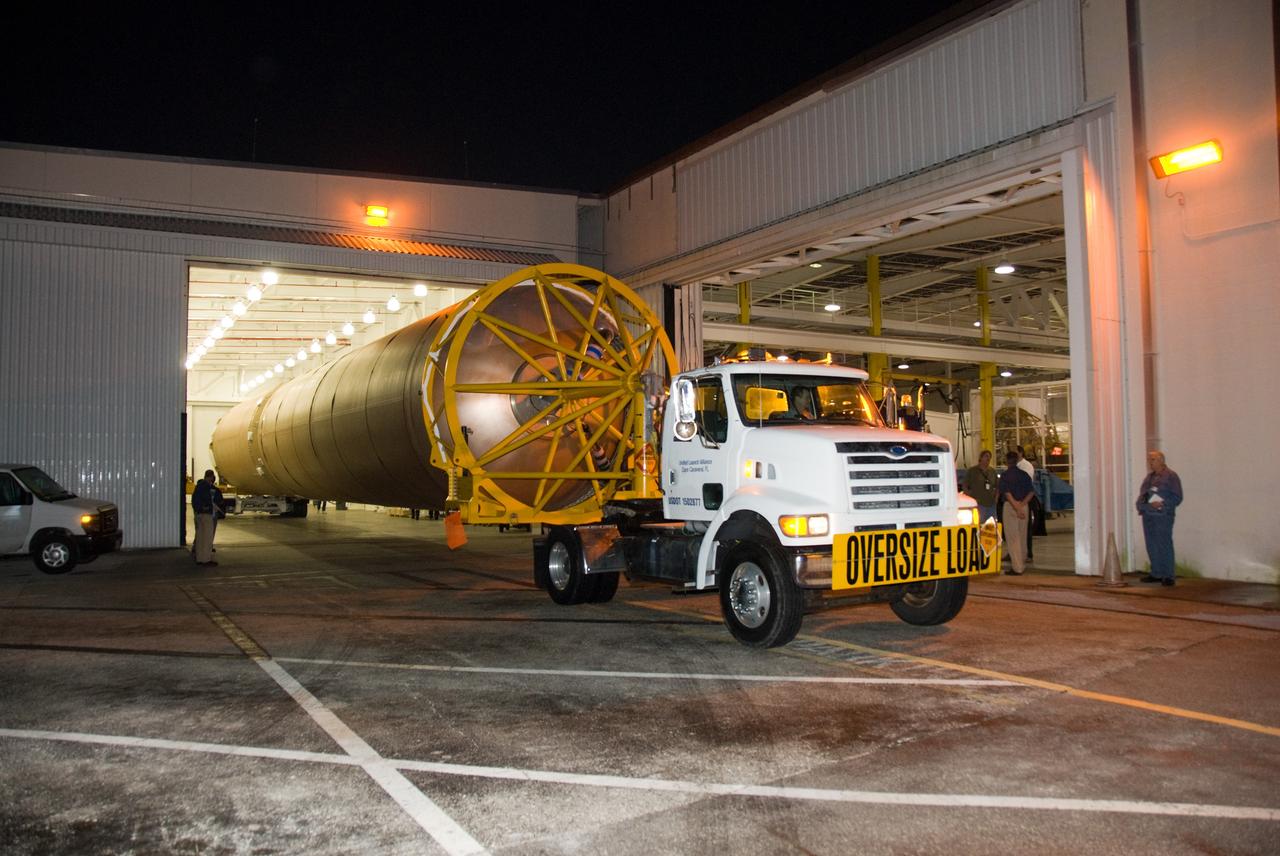
CAPE CANAVERAL, Fla. – At the Atlas Spaceflight Operations Center on Cape Canaveral Air Force Station in Florida, the Atlas V rocket scheduled to launch NASA's Solar Dynamics Observatory, or SDO, begins its move to Pad 41. SDO is the first space weather research network mission in NASA's Living With a Star Program. The spacecraft's long-term measurements will give solar scientists in-depth information about changes in the sun's magnetic field and insight into how they affect Earth. Liftoff on the United Launch Alliance Atlas V is scheduled for Feb. 3, 2010. For information on SDO, visit http://www.nasa.gov/sdo. Photo credit: NASA/Glenn Benson

A United Launch Alliance Atlas V rocket booster arrives at the Atlas Spaceflight Operations Center at Cape Canaveral Air Force Station in Florida. The rocket is scheduled to launch the Tracking and Data Relay Satellite, TDRS-M. It will be the latest spacecraft destined for the agency's constellation of communications satellites that allows nearly continuous contact with orbiting spacecraft ranging from the International Space Station and Hubble Space Telescope to the array of scientific observatories. Liftoff atop the ULA Atlas V rocket is scheduled to take place from Cape Canaveral's Space Launch Complex 41 on Aug. 3, 2017 at 9:02 a.m. EDT.
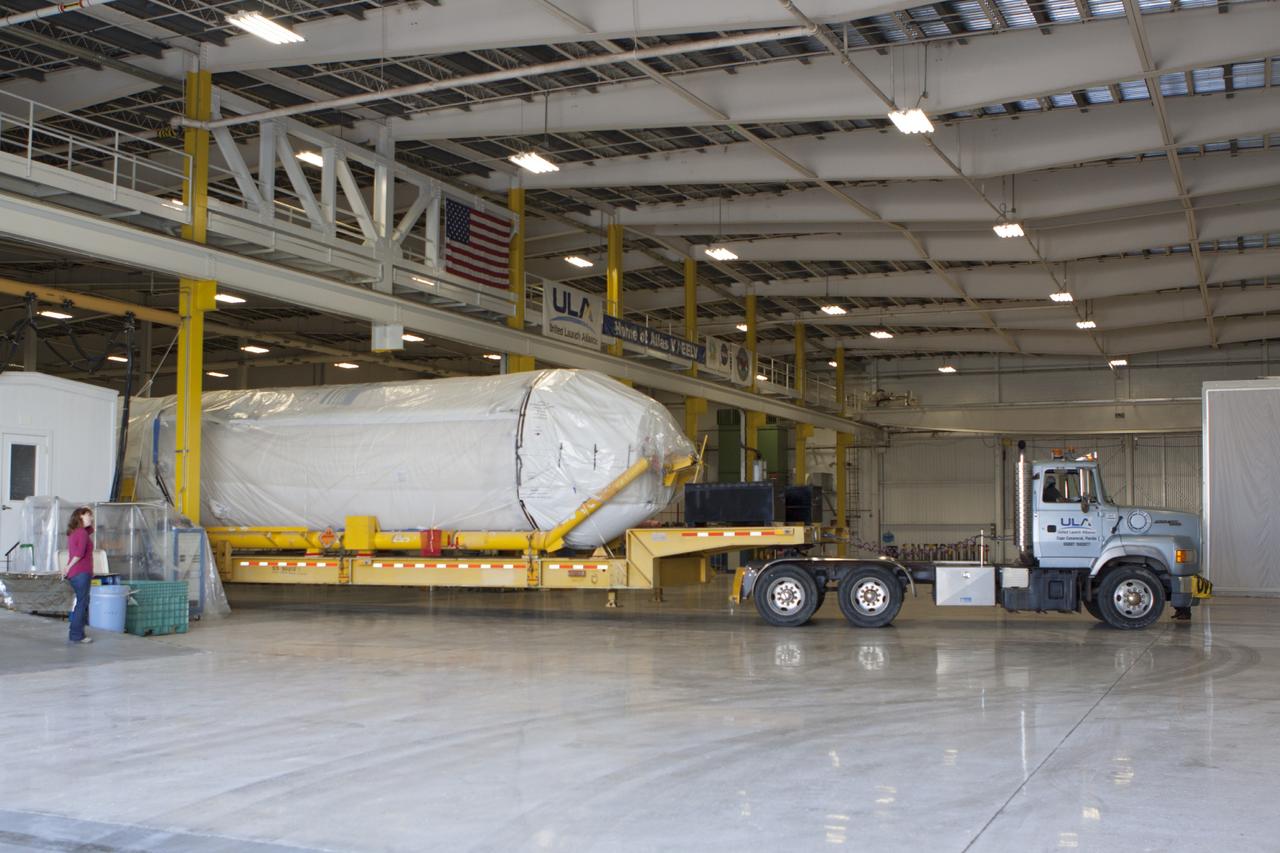
CAPE CANAVERAL, Fla. – United Launch Alliance Atlas V rocket first and second stages arrive at to the Atlas Spaceflight Operations Center, or ASOC, at Cape Canaveral Air Force Station. There, the launch vehicle will begin processing for the Mars Atmosphere and Volatile Evolution, or MAVEN, spacecraft to the Red Planet. MAVEN is being prepared for its scheduled launch in November from Cape Canaveral Air Force Station, Fla. atop a United Launch Alliance Atlas V rocket. Positioned in an orbit above the Red Planet, MAVEN will study the upper atmosphere of Mars in unprecedented detail. For more information, visit: http://www.nasa.gov/mission_pages/maven/main/index.html Photo credit: NASA/Kim Shiflett
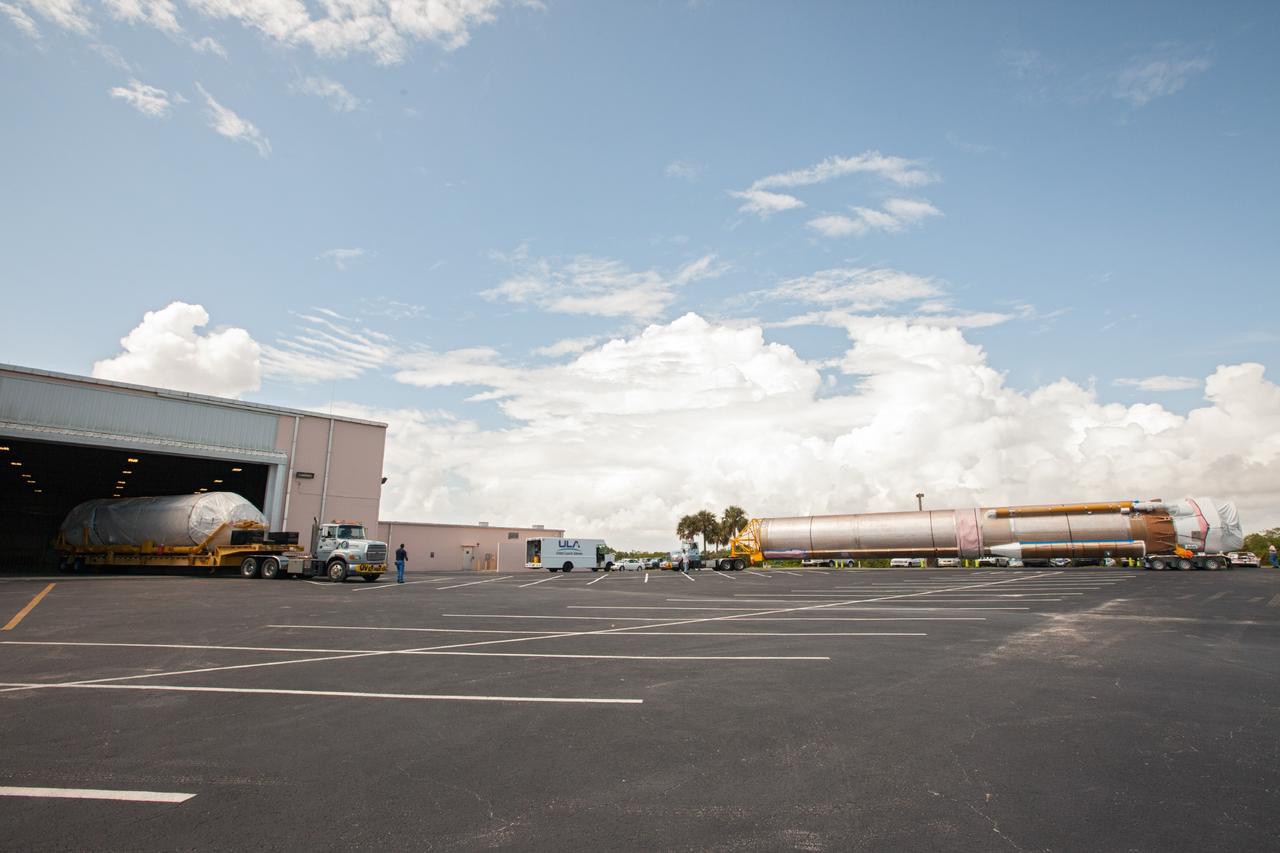
CAPE CANAVERAL, Fla. – United Launch Alliance Atlas V rocket first and second stages arrive at to the Atlas Spaceflight Operations Center, or ASOC, at Cape Canaveral Air Force Station. There, the launch vehicle will begin processing for the Mars Atmosphere and Volatile Evolution, or MAVEN, spacecraft to the Red Planet. MAVEN is being prepared for its scheduled launch in November from Cape Canaveral Air Force Station, Fla. atop a United Launch Alliance Atlas V rocket. Positioned in an orbit above the Red Planet, MAVEN will study the upper atmosphere of Mars in unprecedented detail. For more information, visit: http://www.nasa.gov/mission_pages/maven/main/index.html Photo credit: NASA/Kim Shiflett

A transport truck is about to take a United Launch Alliance (ULA) Atlas V booster from the Mariner cargo ship at the Army Outpost wharf at Port Canaveral, Florida, to the hangar at the Atlas Spaceflight Operations Center (ASOC), located south of Space Launch Complex 41 at Cape Canaveral Air Force Station. The Atlas V is scheduled to launch a Cygnus spacecraft on the Orbital ATK CRS-7 commercial resupply mission to the International Space Station. Scheduled to liftoff March 19, 2017, the Orbital ATK CRS-7 mission will deliver thousands of pounds of supplies, equipment and scientific research materials that improve life on Earth and drive progress toward future space exploration.
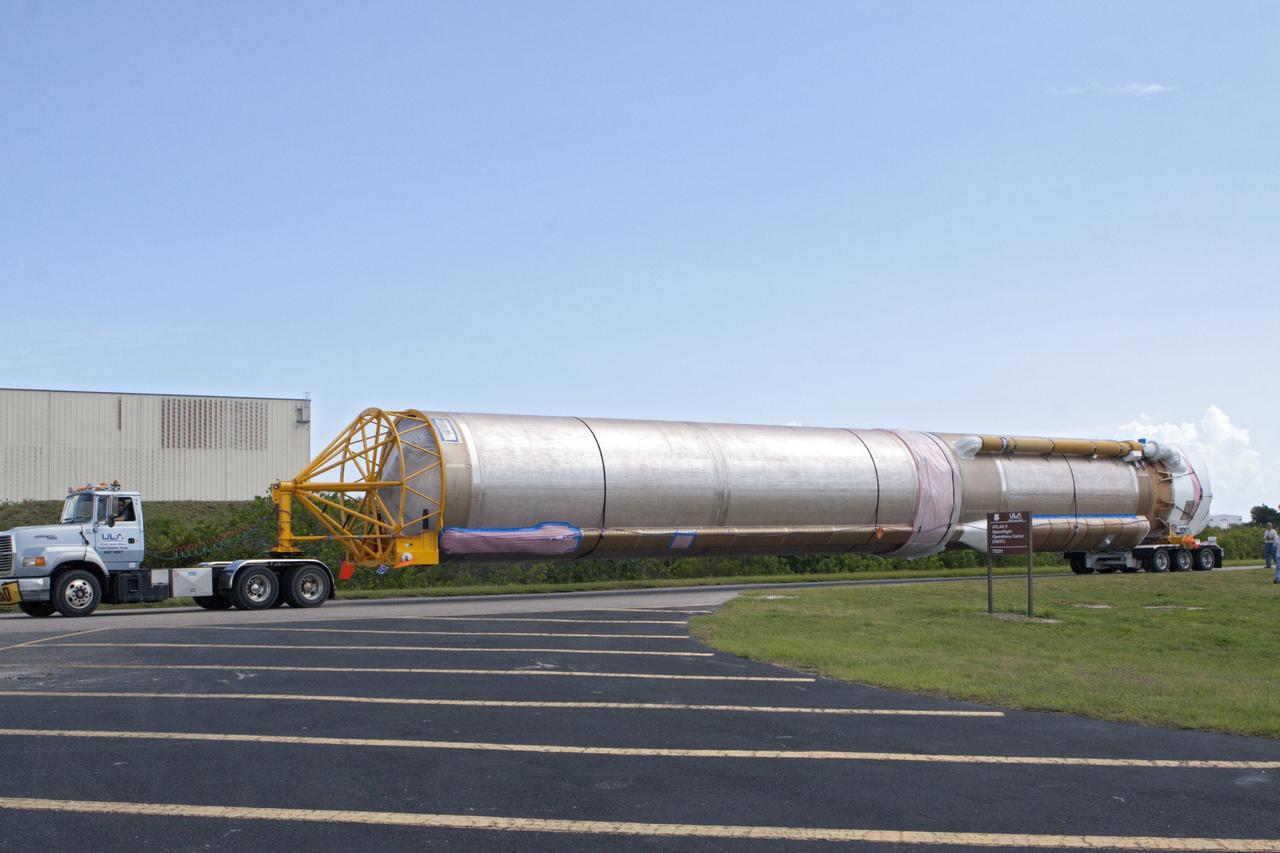
CAPE CANAVERAL, Fla. – United Launch Alliance Atlas V rocket first and second stages arrive at to the Atlas Spaceflight Operations Center, or ASOC, at Cape Canaveral Air Force Station. There, the launch vehicle will begin processing for the Mars Atmosphere and Volatile Evolution, or MAVEN, spacecraft to the Red Planet. MAVEN is being prepared for its scheduled launch in November from Cape Canaveral Air Force Station, Fla. atop a United Launch Alliance Atlas V rocket. Positioned in an orbit above the Red Planet, MAVEN will study the upper atmosphere of Mars in unprecedented detail. For more information, visit: http://www.nasa.gov/mission_pages/maven/main/index.html Photo credit: NASA/Kim Shiflett
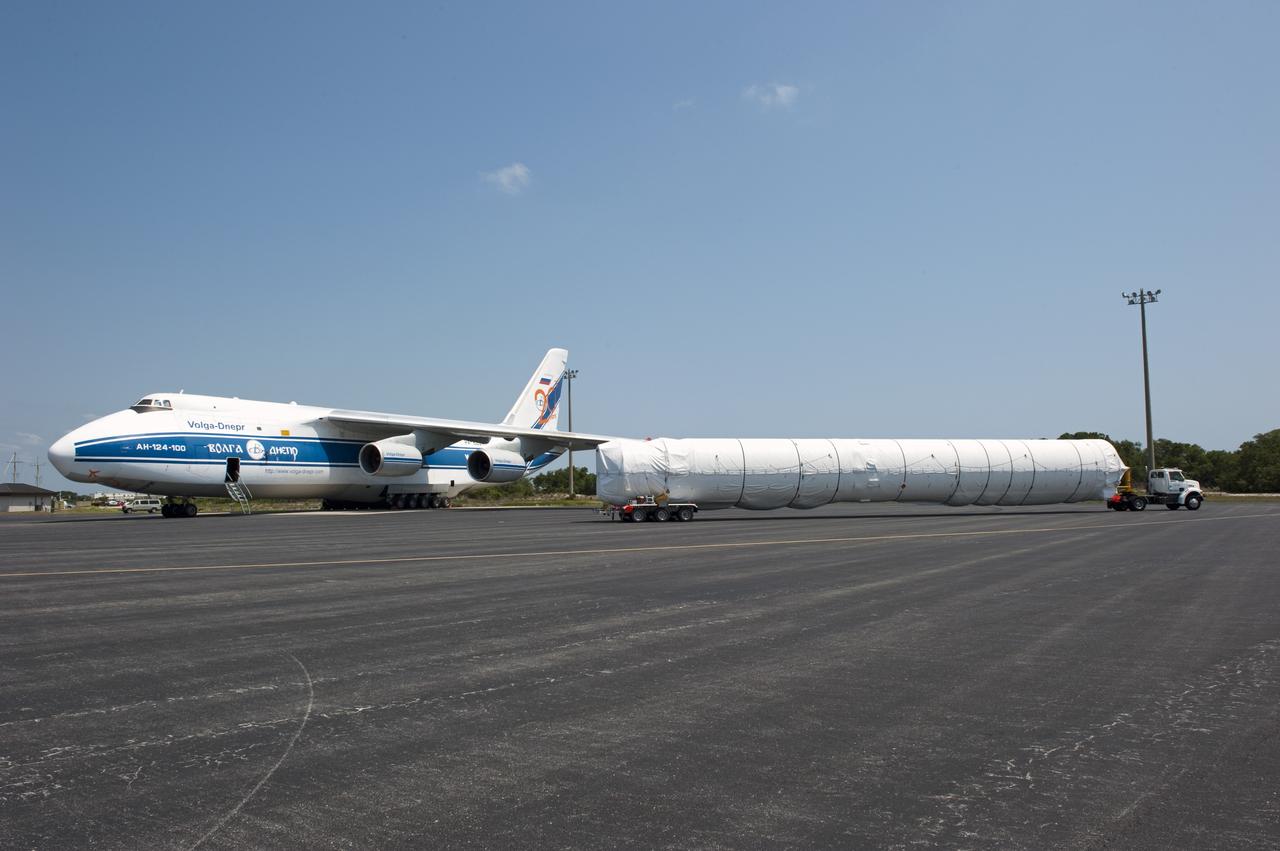
CAPE CANAVERAL, Fla. -- The first stage for the United Launch Alliance Atlas V rocket slated to launch NASA's Juno spacecraft is being transported from the Skid Strip on Cape Canaveral Air Force Station in Florida to the Atlas Spaceflight Operations Center. Juno is scheduled to launch aboard an Atlas V rocket from Cape Canaveral, Fla., Aug. 5.The solar-powered spacecraft will orbit Jupiter's poles 33 times to find out more about the gas giant's origins, structure, atmosphere and magnetosphere and investigate the existence of a solid planetary core. For more information, visit www.nasa.gov/juno. Photo credit: NASA/Kim Shiflett
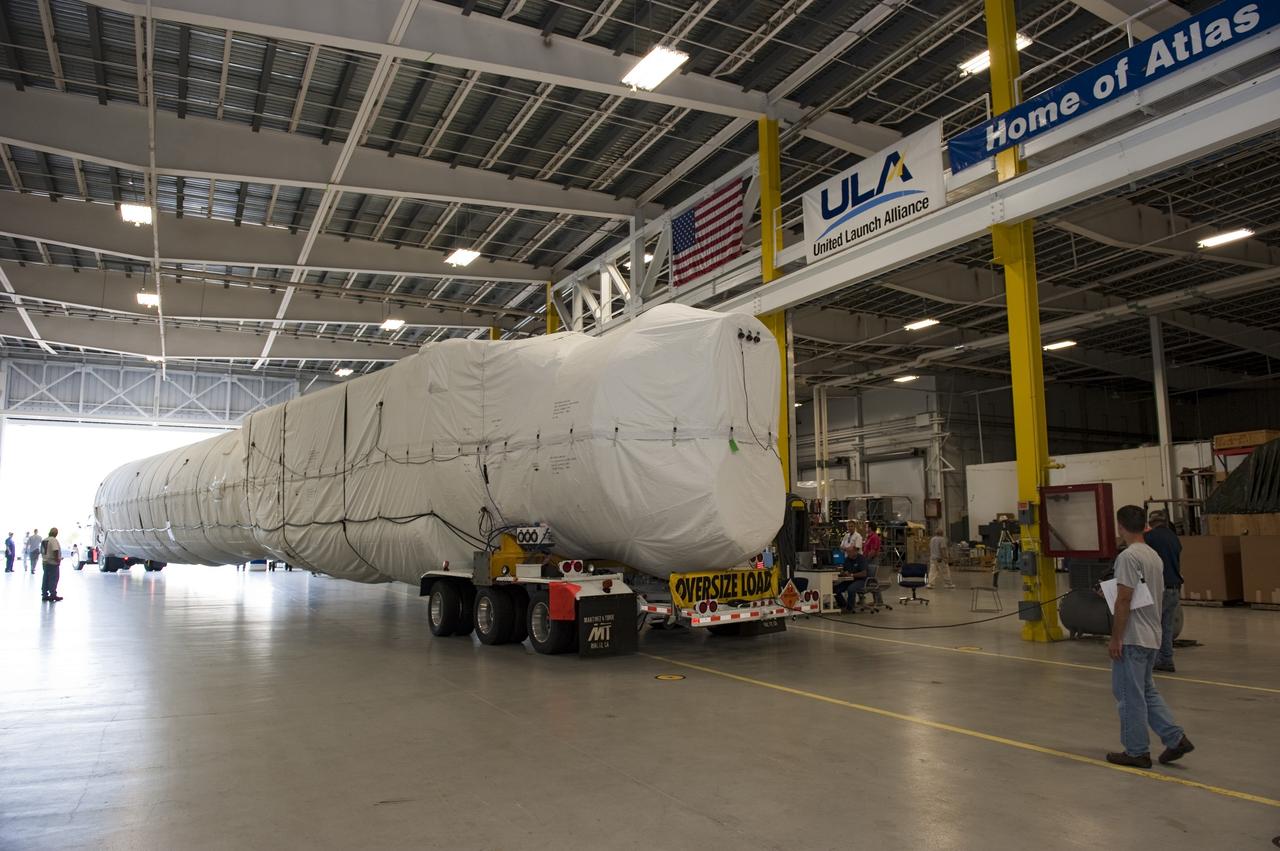
CAPE CANAVERAL, Fla. – United Launch Alliance Atlas V rocket first and second stages arrive at to the Atlas Spaceflight Operations Center, or ASOC, at Cape Canaveral Air Force Station. There, the launch vehicle will begin processing for the Mars Atmosphere and Volatile Evolution, or MAVEN, spacecraft to the Red Planet. MAVEN is being prepared for its scheduled launch in November from Cape Canaveral Air Force Station, Fla. atop a United Launch Alliance Atlas V rocket. Positioned in an orbit above the Red Planet, MAVEN will study the upper atmosphere of Mars in unprecedented detail. For more information, visit: http://www.nasa.gov/mission_pages/maven/main/index.html Photo credit: NASA/Kim Shiflett
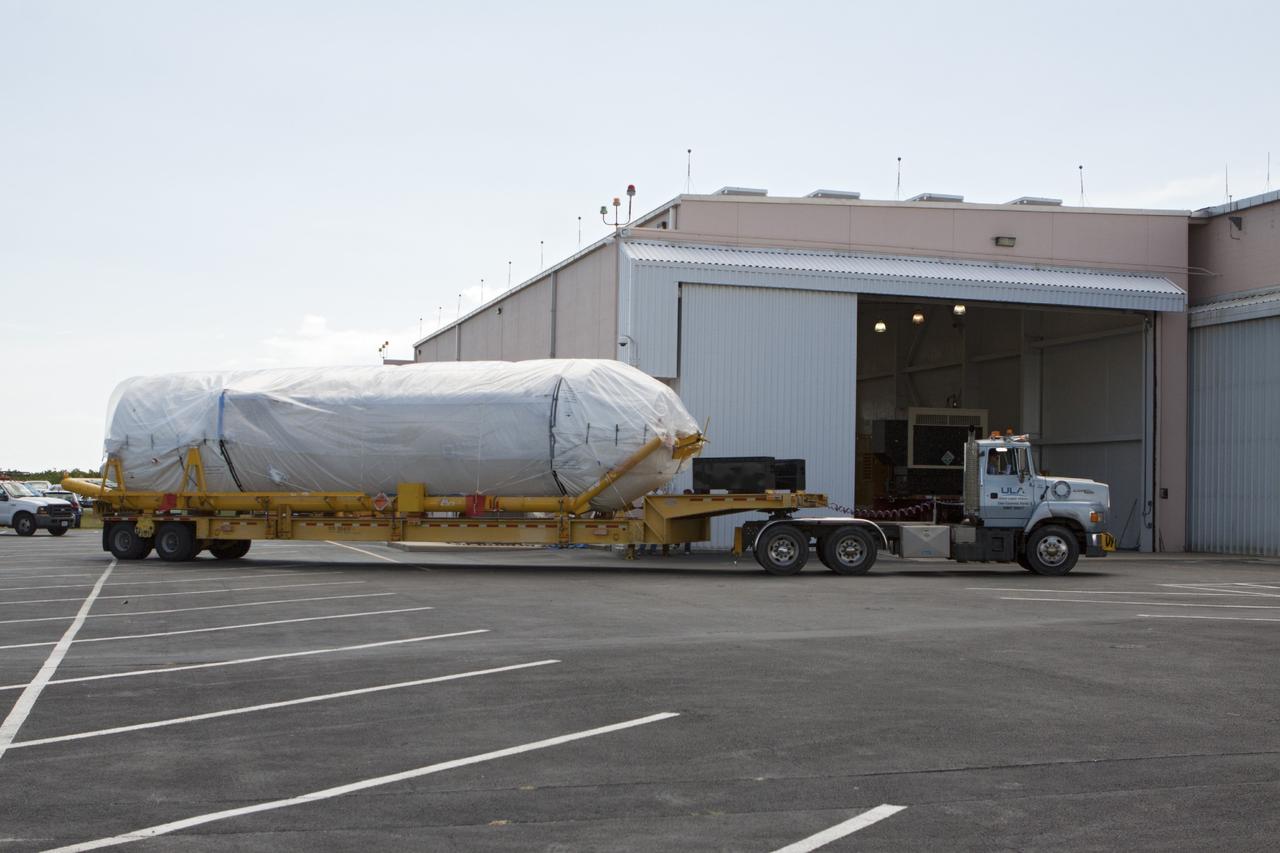
CAPE CANAVERAL, Fla. -- The first stage for the United Launch Alliance Atlas V rocket slated to launch NASA's Juno spacecraft has arrived at the Atlas Spaceflight Operations Center at Cape Canaveral Air Force Station in Florida. Juno is scheduled to launch aboard an Atlas V rocket from Cape Canaveral, Fla., Aug. 5.The solar-powered spacecraft will orbit Jupiter's poles 33 times to find out more about the gas giant's origins, structure, atmosphere and magnetosphere and investigate the existence of a solid planetary core. For more information, visit www.nasa.gov/juno. Photo credit: NASA/Kim Shiflett
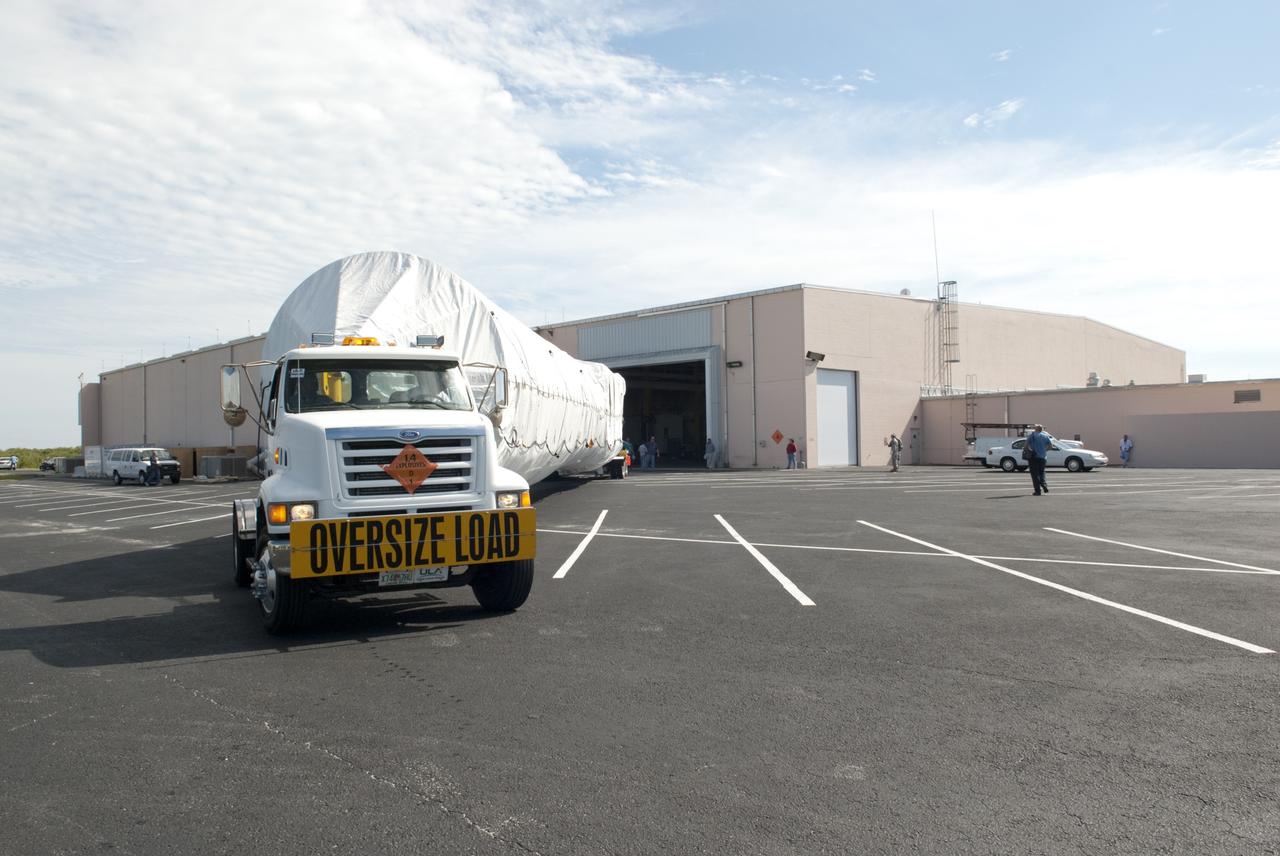
CAPE CANAVERAL, Fla. -- The first stage of the Atlas V rocket that will carry the Tracking and Data Relay Satellite, TDRS-K, into orbit arrives at the hangar at the Atlas Spaceflight Operations Center at Cape Canaveral Air Force Station in Florida to begin processing. Launch of the TDRS-K on the Atlas V rocket is planned for January 2013 from Space Launch Complex 41. The TDRS-K spacecraft is part of the next-generation series in the Tracking and Data Relay Satellite System, a constellation of space-based communication satellites providing tracking, telemetry, command and high-bandwidth data return services. For more information, visit http://tdrs.gsfc.nasa.gov/ Photo credit: NASA/Charisse Nahser
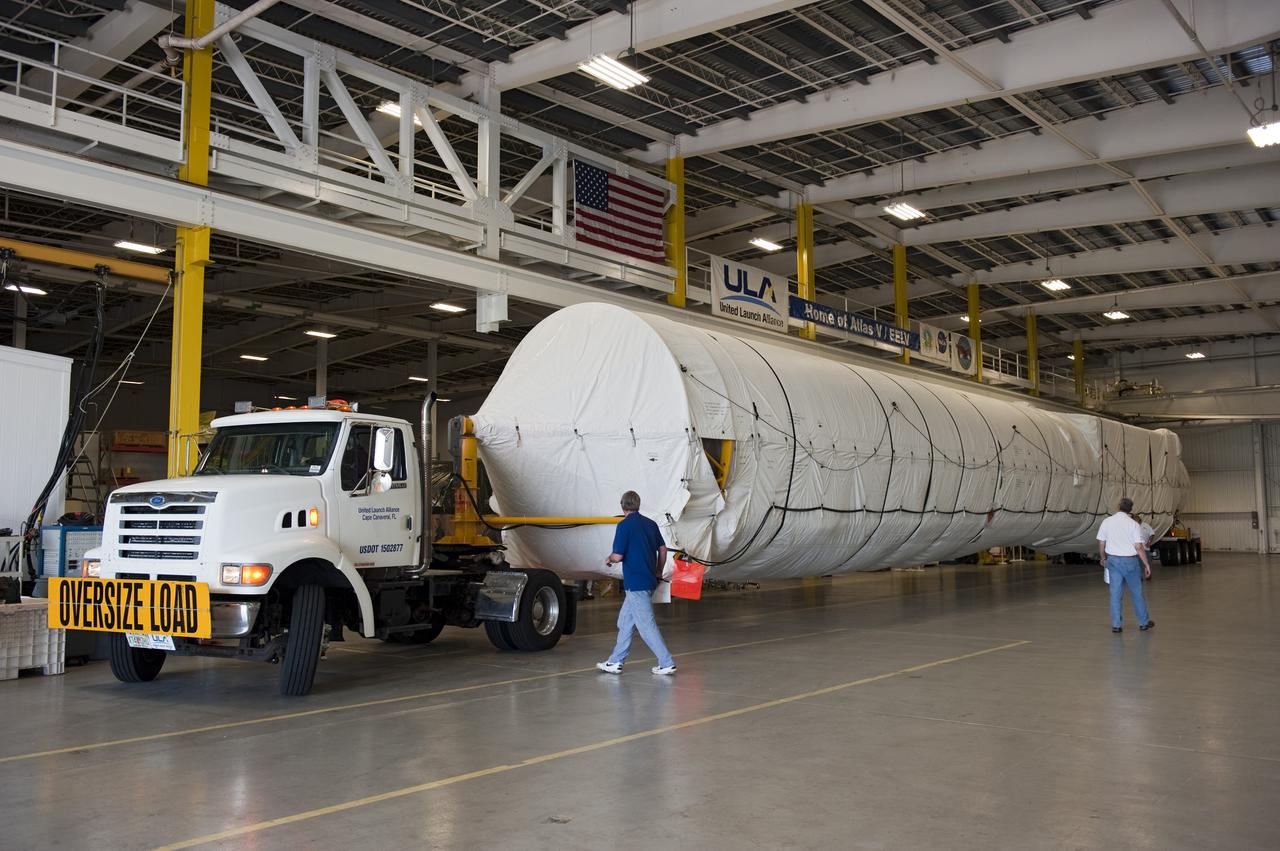
CAPE CANAVERAL, Fla. -- The first stage for the United Launch Alliance Atlas V rocket slated to launch NASA's Juno spacecraft has arrived at the Atlas Spaceflight Operations Center at Cape Canaveral Air Force Station in Florida. Juno is scheduled to launch aboard an Atlas V rocket from Cape Canaveral, Fla., Aug. 5.The solar-powered spacecraft will orbit Jupiter's poles 33 times to find out more about the gas giant's origins, structure, atmosphere and magnetosphere and investigate the existence of a solid planetary core. For more information, visit www.nasa.gov/juno. Photo credit: NASA/Kim Shiflett

At Port Canaveral in Florida, a United Launch Alliance Atlas V rocket booster is transported from the company's Mariner ship to the Atlas Spaceflight Operations Center at Cape Canaveral Air Force Station. The rocket is scheduled to launch the Tracking and Data Relay Satellite, TDRS-M. It will be the latest spacecraft destined for the agency's constellation of communications satellites that allows nearly continuous contact with orbiting spacecraft ranging from the International Space Station and Hubble Space Telescope to the array of scientific observatories. Liftoff atop the ULA Atlas V rocket is scheduled to take place from Cape Canaveral's Space Launch Complex 41 on Aug. 3, 2017 at 9:02 a.m. EDT.
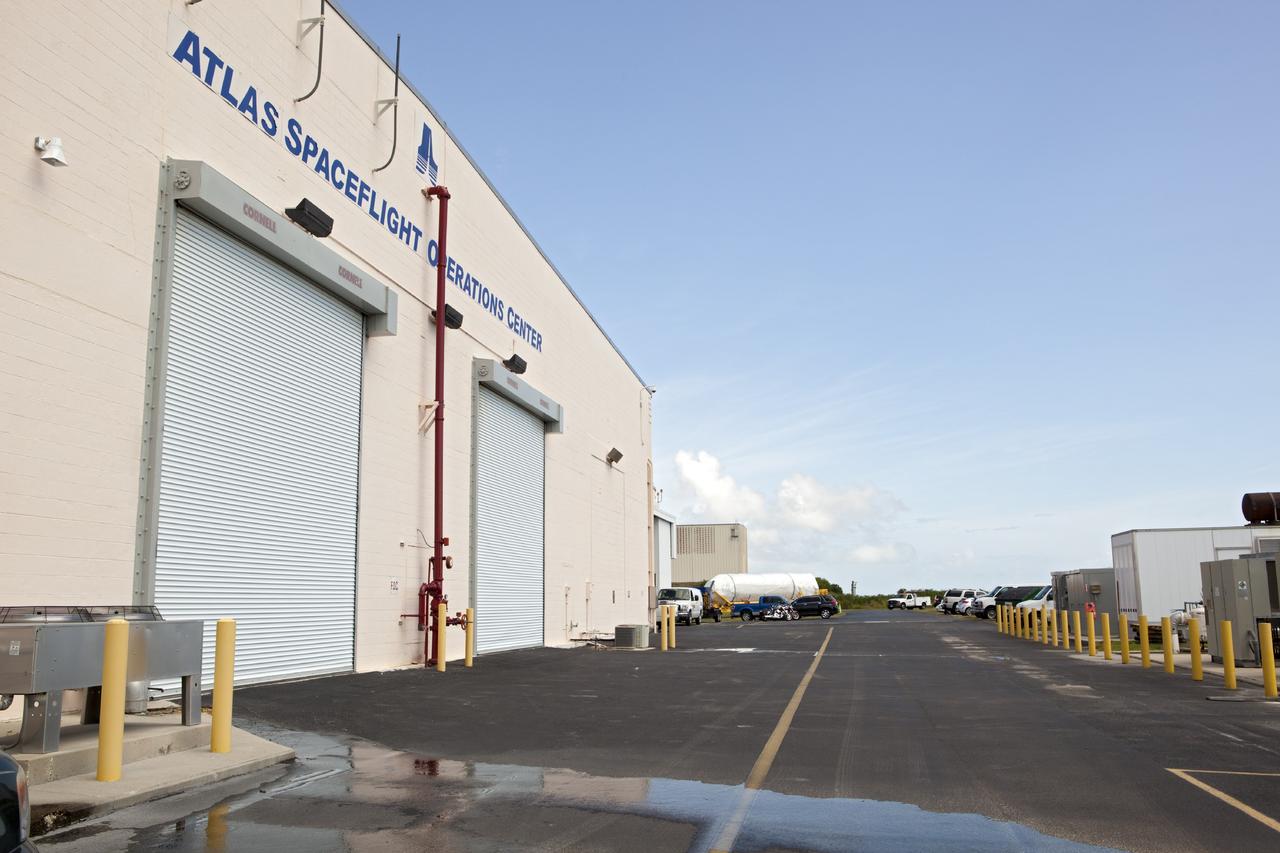
CAPE CANAVERAL, Fla. – United Launch Alliance Atlas V rocket first and second stages arrive at the Atlas Spaceflight Operations Center, or ASOC, at Cape Canaveral Air Force Station, Fla., to begin processing for the Mars Atmosphere and Volatile Evolution, or MAVEN, spacecraft to the Red Planet. MAVEN is being prepared for its scheduled launch in November from Cape Canaveral Air Force Station, Fla. atop a United Launch Alliance Atlas V rocket. Positioned in an orbit above the Red Planet, MAVEN will study the upper atmosphere of Mars in unprecedented detail. For more information, visit: http://www.nasa.gov/mission_pages/maven/main/index.html Photo credit: NASA/ Dimitri Gerondidakis
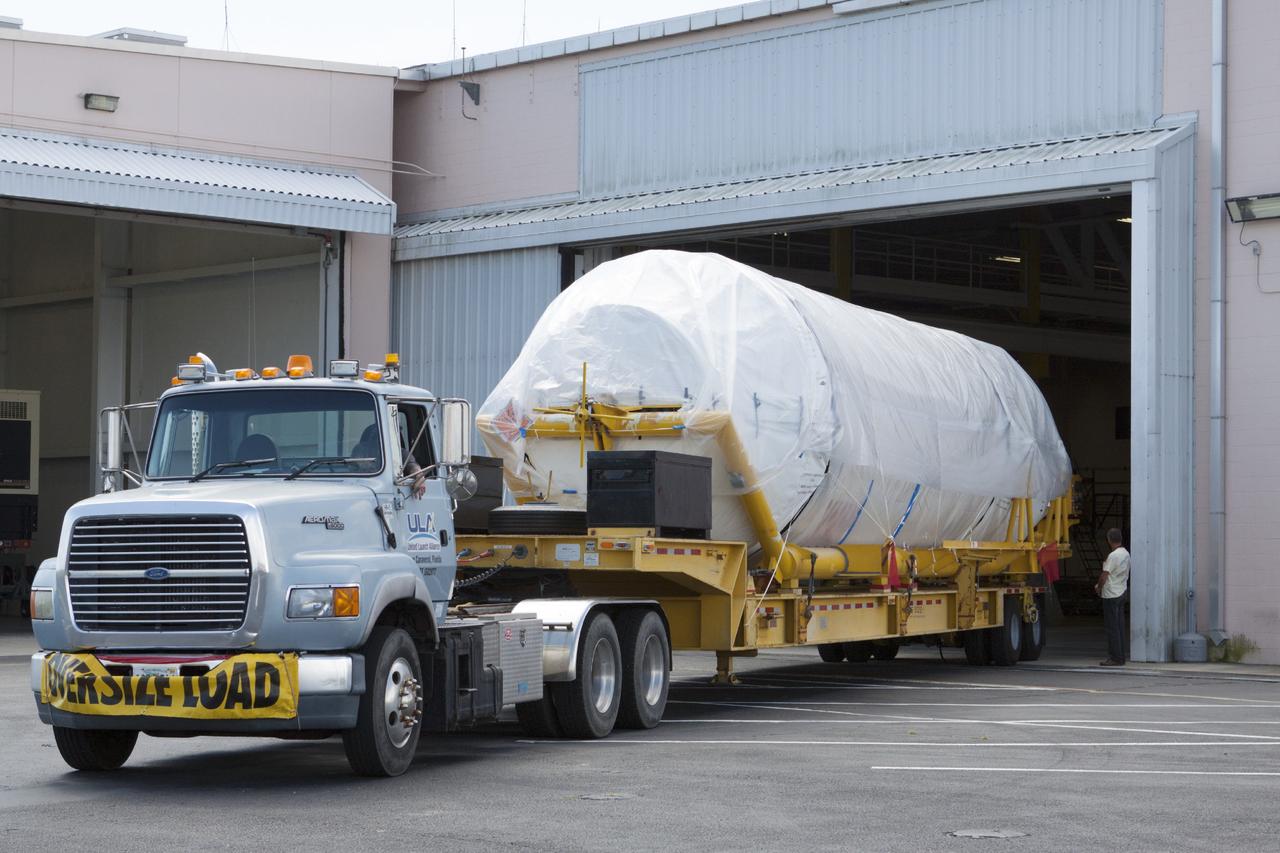
CAPE CANAVERAL, Fla. – United Launch Alliance Atlas V rocket first and second stages arrive at to the Atlas Spaceflight Operations Center, or ASOC, at Cape Canaveral Air Force Station. There, the launch vehicle will begin processing for the Mars Atmosphere and Volatile Evolution, or MAVEN, spacecraft to the Red Planet. MAVEN is being prepared for its scheduled launch in November from Cape Canaveral Air Force Station, Fla. atop a United Launch Alliance Atlas V rocket. Positioned in an orbit above the Red Planet, MAVEN will study the upper atmosphere of Mars in unprecedented detail. For more information, visit: http://www.nasa.gov/mission_pages/maven/main/index.html Photo credit: NASA/Kim Shiflett
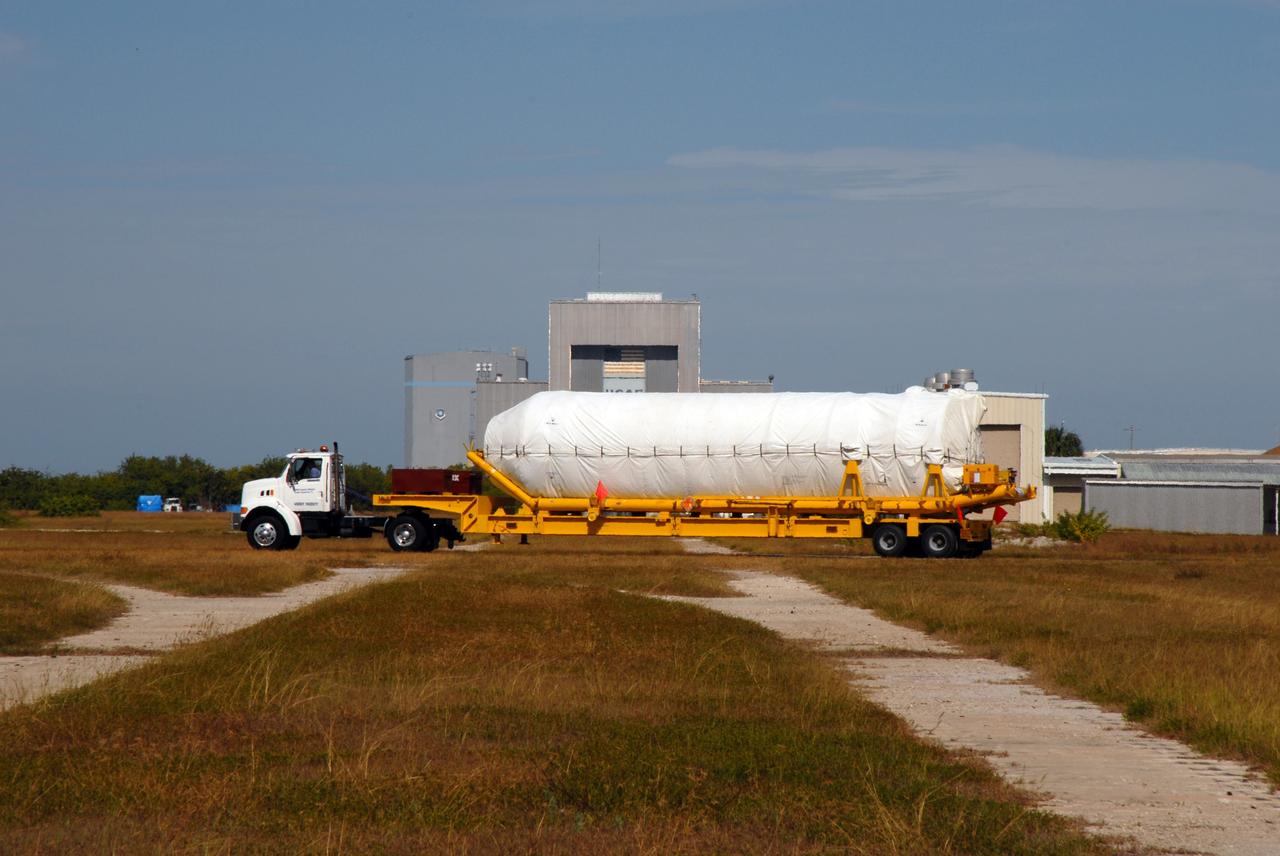
CAPE CANAVERAL, Fla. – The Centaur second stage for the Atlas V rocket slated to launch NASA's Solar Dynamics Observatory, or SDO, arrives at the Atlas Spaceflight Operations Center on Cape Canaveral Air Force Station in Florida. SDO is the first space weather research network mission in NASA's Living With a Star Program. The spacecraft's long-term measurements will give solar scientists in-depth information about changes in the sun's magnetic field and insight into how they affect Earth. Liftoff on the United Launch Alliance Atlas V is scheduled for Feb. 3, 2010. For information on SDO, visit http://www.nasa.gov/sdo. Photo credit: NASA/Jim Grossmann
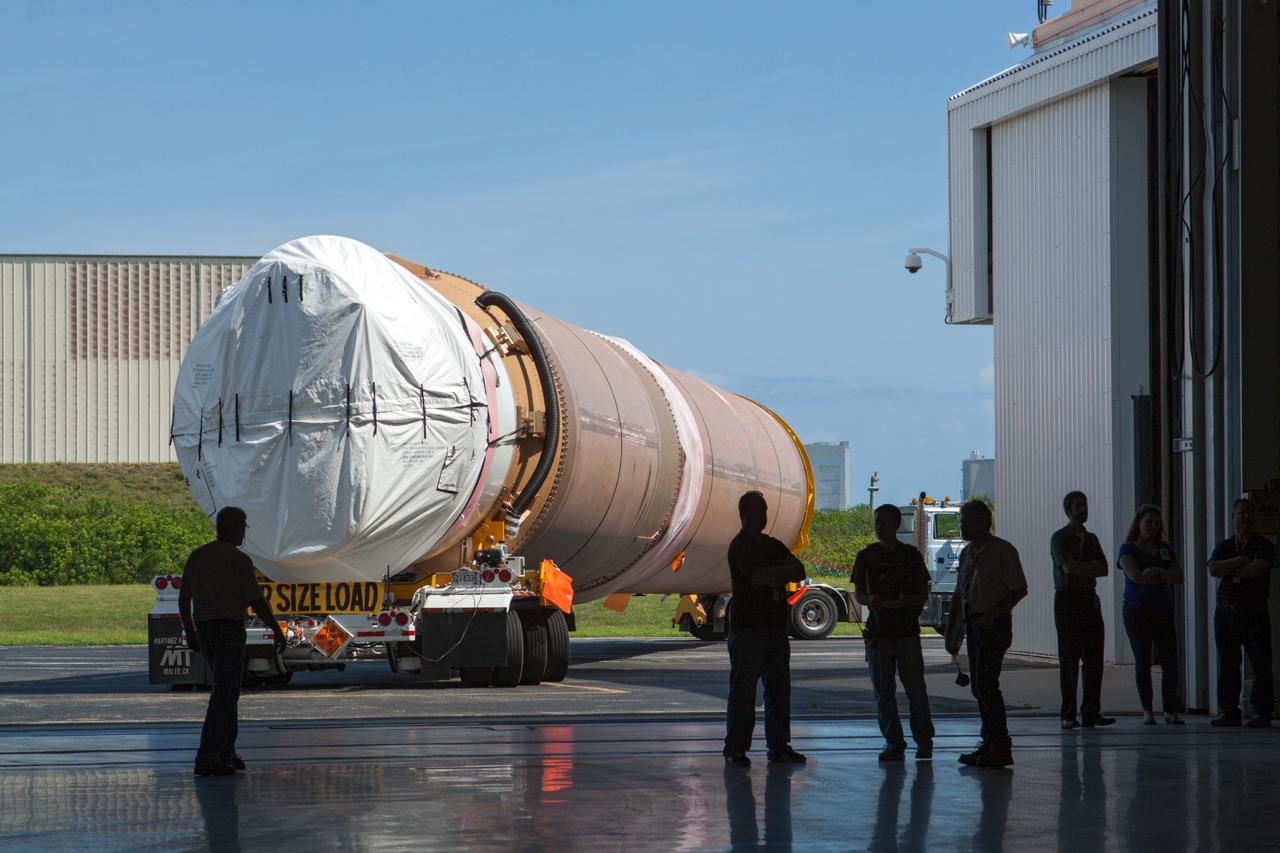
CAPE CANAVERAL, Fla. – United Launch Alliance Atlas V rocket first and second stages arrive at to the Atlas Spaceflight Operations Center, or ASOC, at Cape Canaveral Air Force Station. There, the launch vehicle will begin processing for the Mars Atmosphere and Volatile Evolution, or MAVEN, spacecraft to the Red Planet. MAVEN is being prepared for its scheduled launch in November from Cape Canaveral Air Force Station, Fla. atop a United Launch Alliance Atlas V rocket. Positioned in an orbit above the Red Planet, MAVEN will study the upper atmosphere of Mars in unprecedented detail. For more information, visit: http://www.nasa.gov/mission_pages/maven/main/index.html Photo credit: NASA/Kim Shiflett
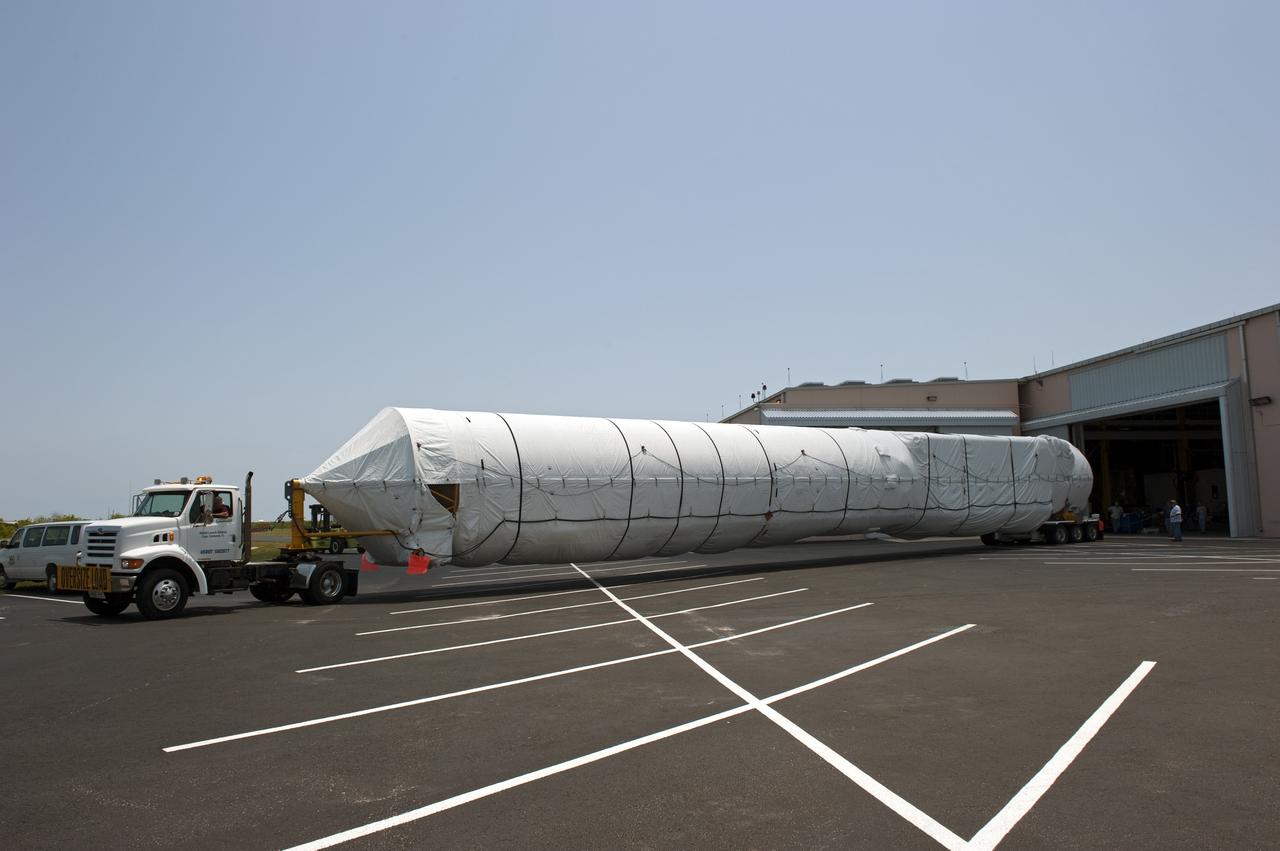
CAPE CANAVERAL, Fla. -- The first stage for the United Launch Alliance Atlas V rocket slated to launch NASA's Juno spacecraft has arrived at the Atlas Spaceflight Operations Center at Cape Canaveral Air Force Station in Florida. Juno is scheduled to launch aboard an Atlas V rocket from Cape Canaveral, Fla., Aug. 5.The solar-powered spacecraft will orbit Jupiter's poles 33 times to find out more about the gas giant's origins, structure, atmosphere and magnetosphere and investigate the existence of a solid planetary core. For more information, visit www.nasa.gov/juno. Photo credit: NASA/Kim Shiflett
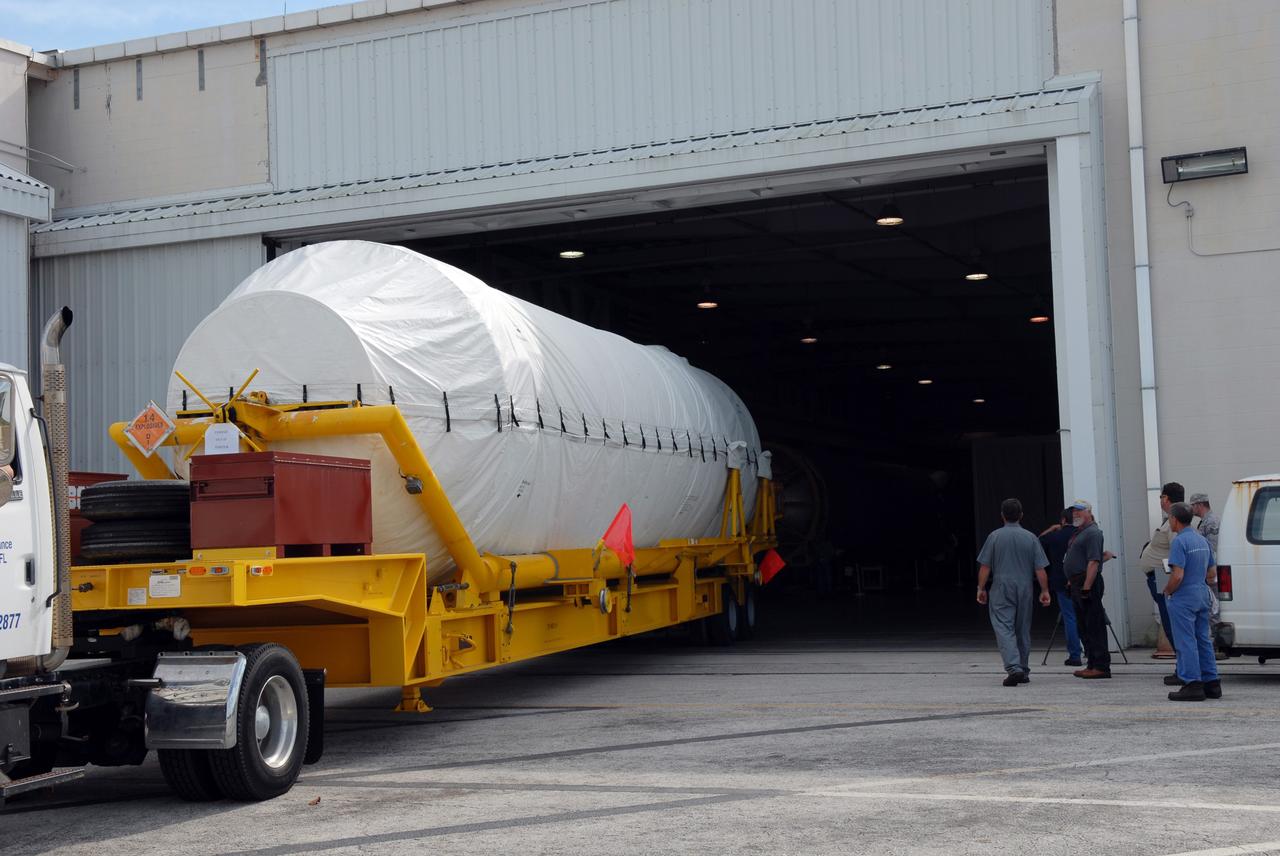
CAPE CANAVERAL, Fla. – The Centaur second stage for the Atlas V rocket slated to launch NASA's Solar Dynamics Observatory, or SDO, is moved into the hangar at the Atlas Spaceflight Operations Center on Cape Canaveral Air Force Station in Florida. SDO is the first space weather research network mission in NASA's Living With a Star Program. The spacecraft's long-term measurements will give solar scientists in-depth information about changes in the sun's magnetic field and insight into how they affect Earth. Liftoff on the United Launch Alliance Atlas V is scheduled for Feb. 3, 2010. For information on SDO, visit http://www.nasa.gov/sdo. Photo credit: NASA/Jim Grossmann
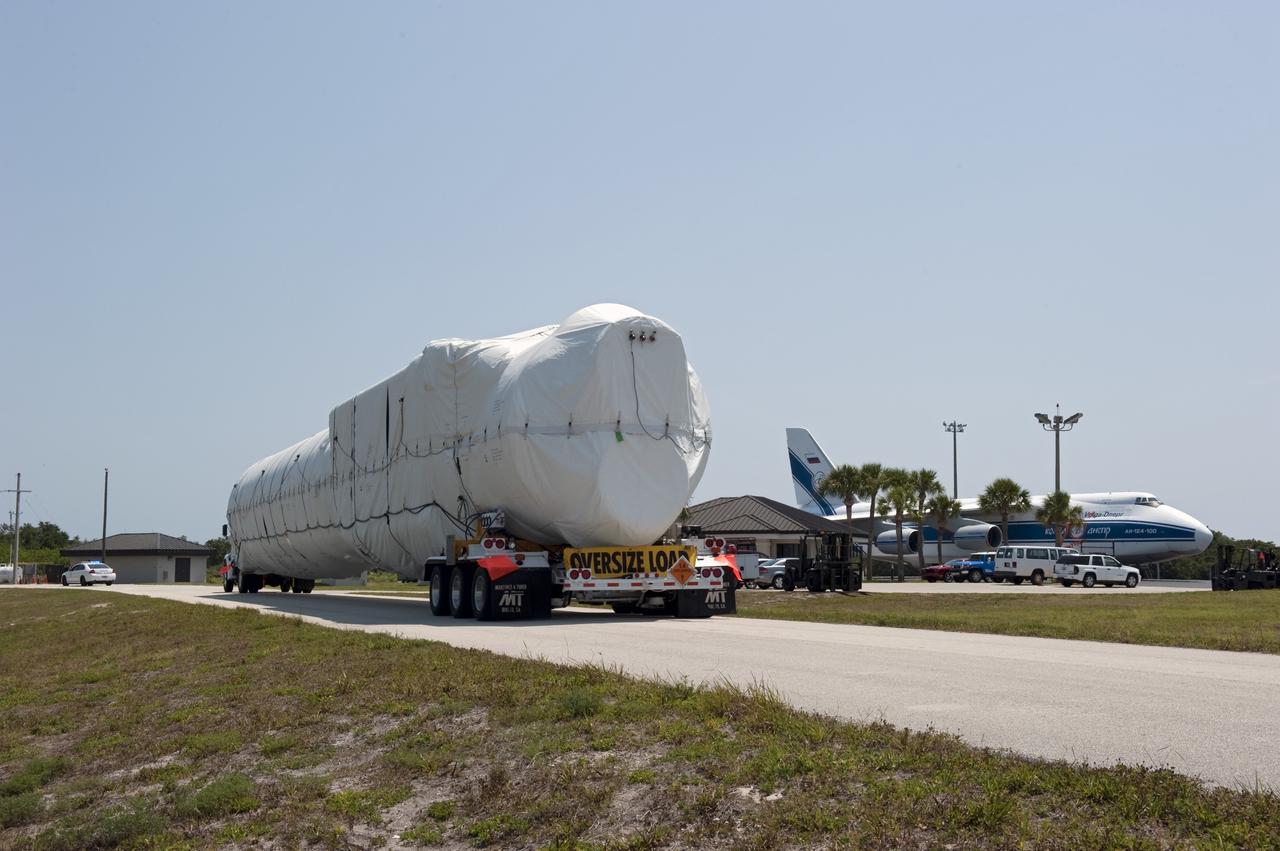
CAPE CANAVERAL, Fla. -- The first stage for the United Launch Alliance Atlas V rocket slated to launch NASA's Juno spacecraft is being transported from the Skid Strip on Cape Canaveral Air Force Station in Florida to the Atlas Spaceflight Operations Center. Juno is scheduled to launch aboard an Atlas V rocket from Cape Canaveral, Fla., Aug. 5.The solar-powered spacecraft will orbit Jupiter's poles 33 times to find out more about the gas giant's origins, structure, atmosphere and magnetosphere and investigate the existence of a solid planetary core. For more information, visit www.nasa.gov/juno. Photo credit: NASA/Kim Shiflett