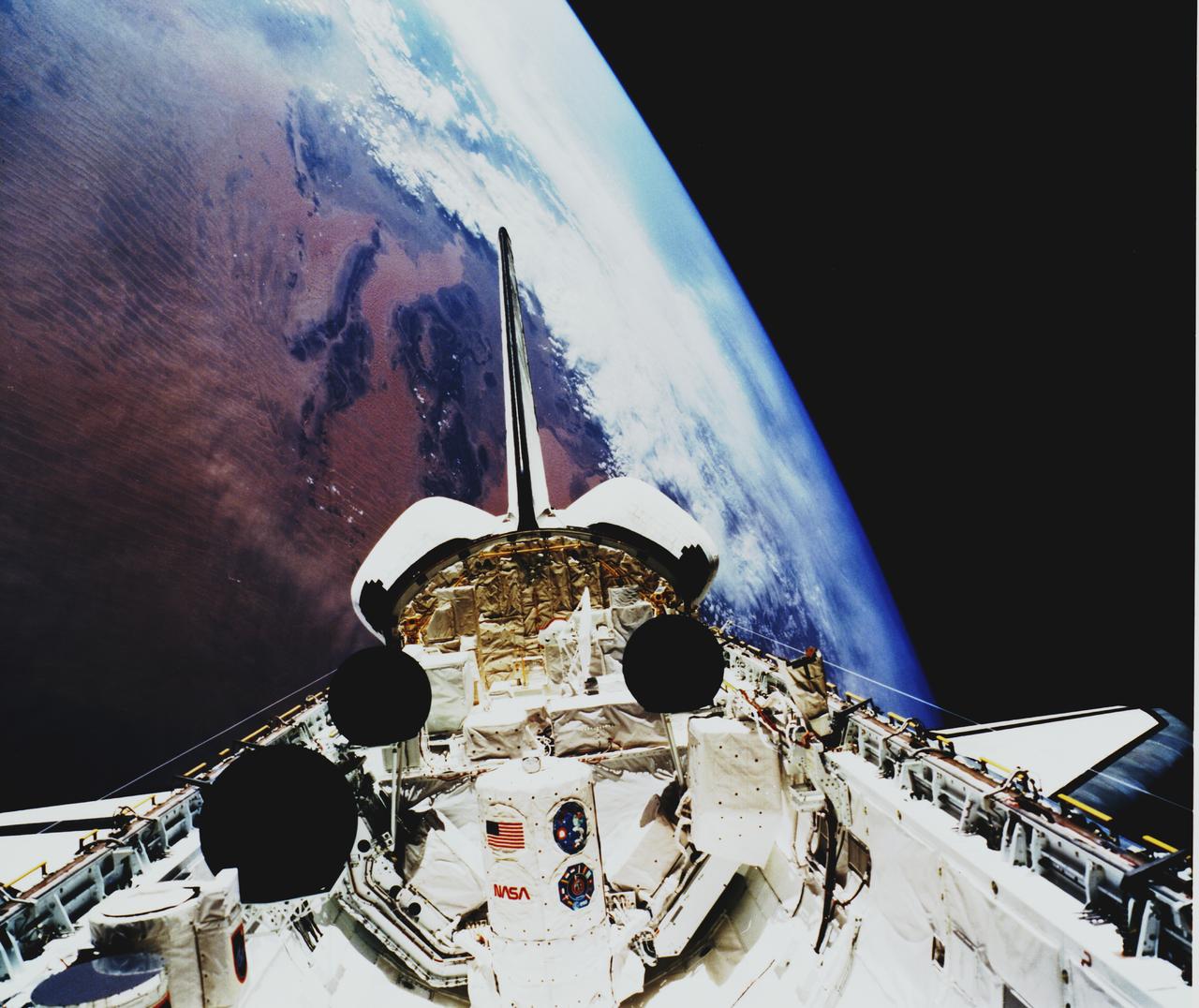
Space Shuttle Atlantis (STS-45) onboard photo of Atmospheric Laboratory for Applications and Science (Atlas-1) module in open cargo bay. Atlas-1 pallets are back dropped against the Atlas Mountains. Taken over Mali in the western Sahara, shows dunes in the Iguidi Dune Sea.
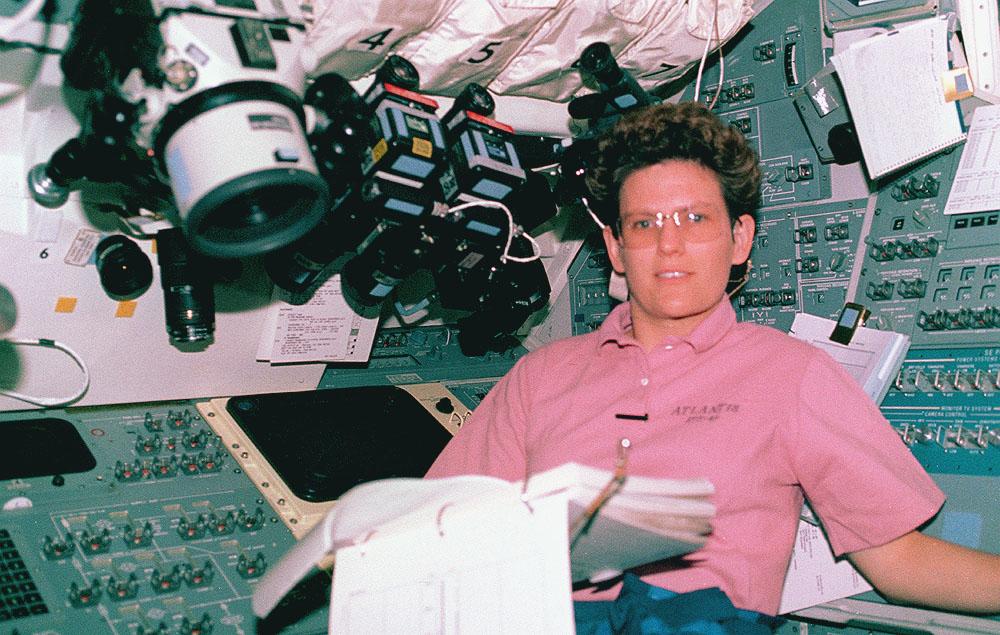
Space Shuttle Atlantis (STS-45) onboard photo of Mission Specialist Kathryn Sullivan working in the Atmospheric Laboratory for Applications and Science (Atlas-1) module. Atlas-1 flew in a series of Spacelab flights that measured long term variability in the total energy radiated by the Sun and determined the variability in the solar spectrum.
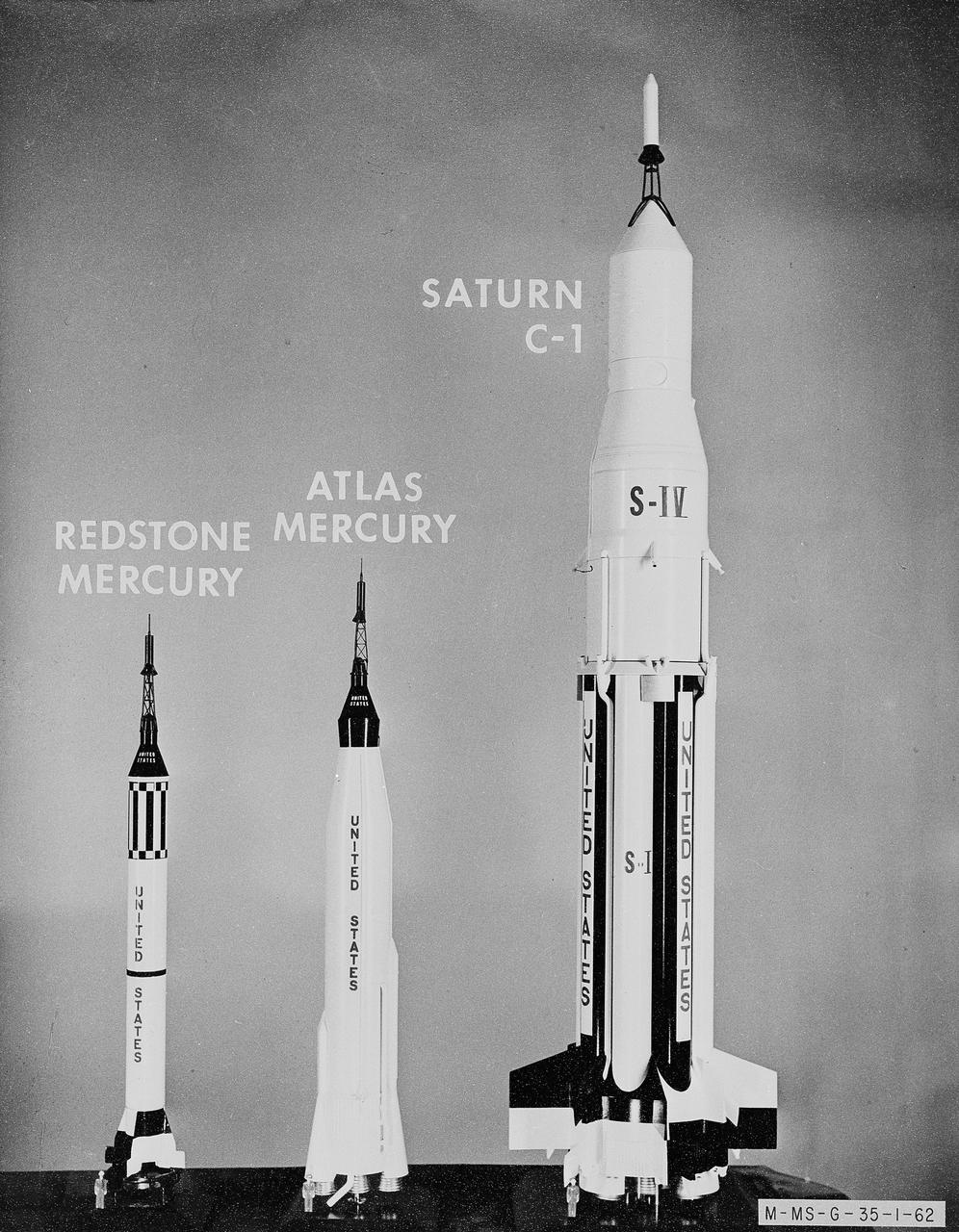
Photographed are models of early rocketry: The Atlas Mercury, Redstone Mercury; and Saturn C-1.
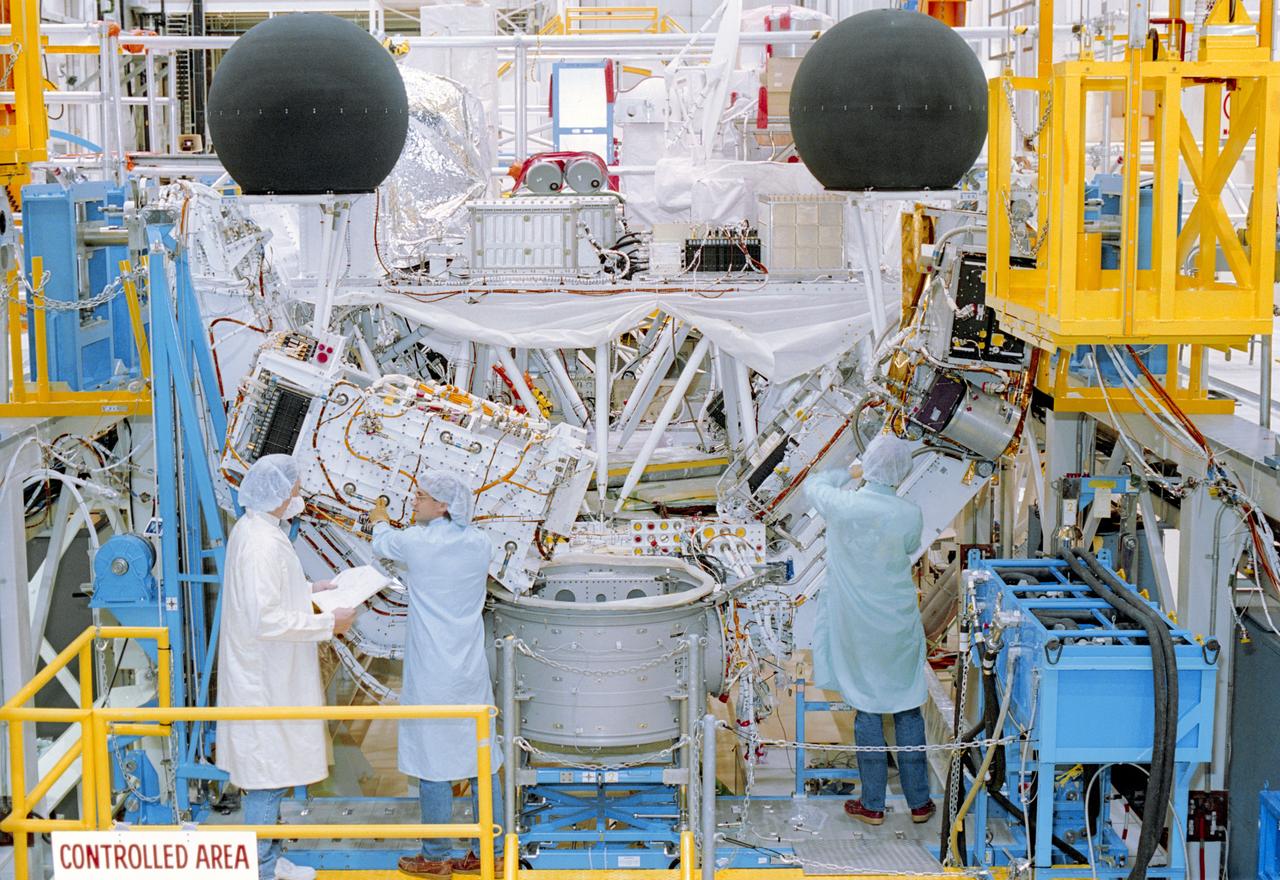
S92-27865 (23 Sept 1991) --- In test stand 3 of the Operations and Checkout Building high bay, workers complete mating of the Atmosphere Laboratory for Applications and Science-1 (ATLAS-1) pallet and Igloo power unit. Closeout activities on the ATLAS-1 payload are under way, with a systems test scheduled for later in October. The ATLAS series of missions will study solar and atmospheric physics. ATLAS-1 is scheduled to fly on Space Shuttle Mission STS-45 in 1992.
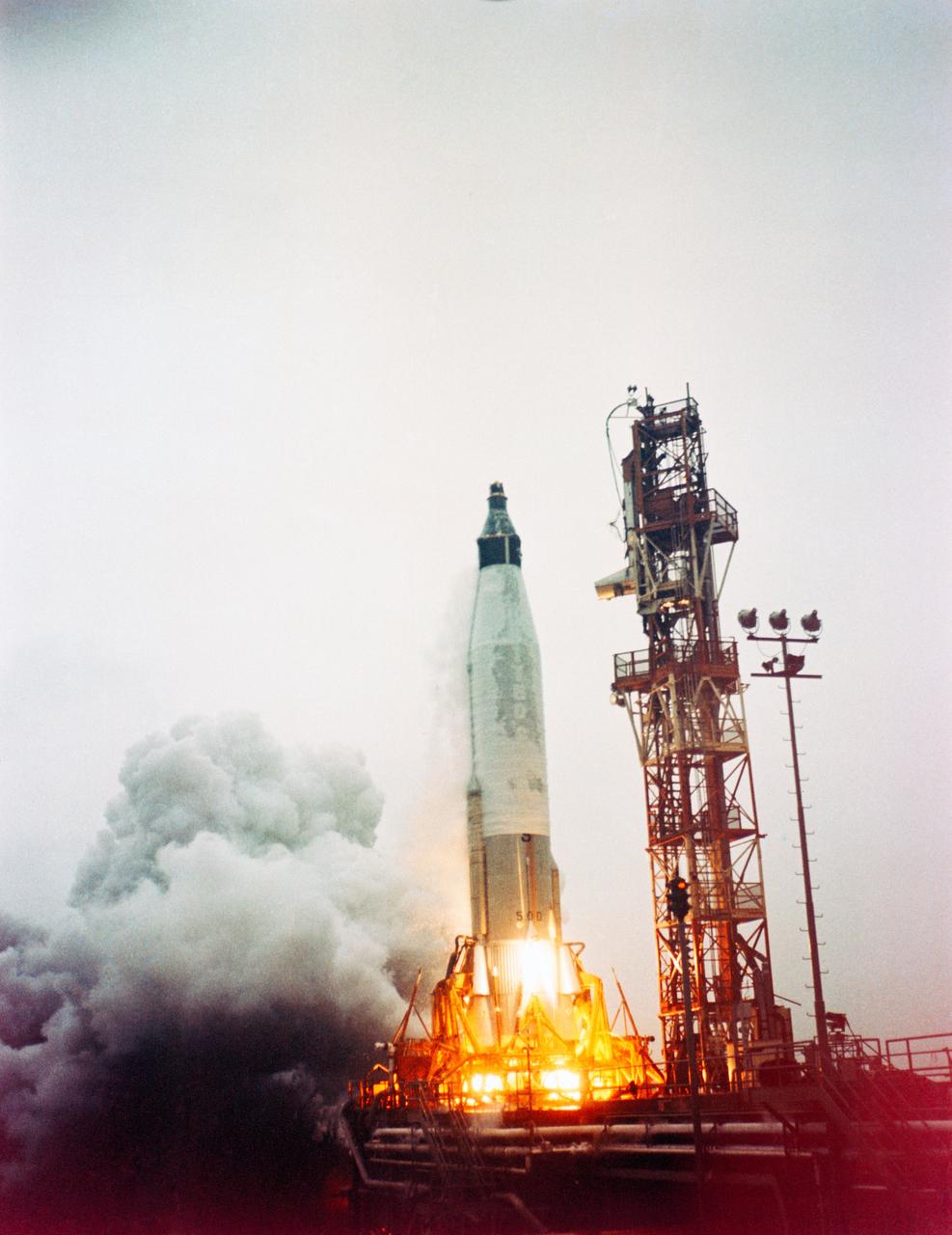
S61-01205 (29 July 1960) --- Launch of the unmanned Mercury Atlas-1 (MA-1) spacecraft for a suborbital test flight of the Mercury capsule reentry, which did not achieve orbit. The Atlas exploded 65 seconds after launch. Photo credit: NASA

LIFTOFF RANGER 3 FROM PAD 12. ATLAS AGENA-2 1/26/1962 TEST 125 ITEM 1.3.18U
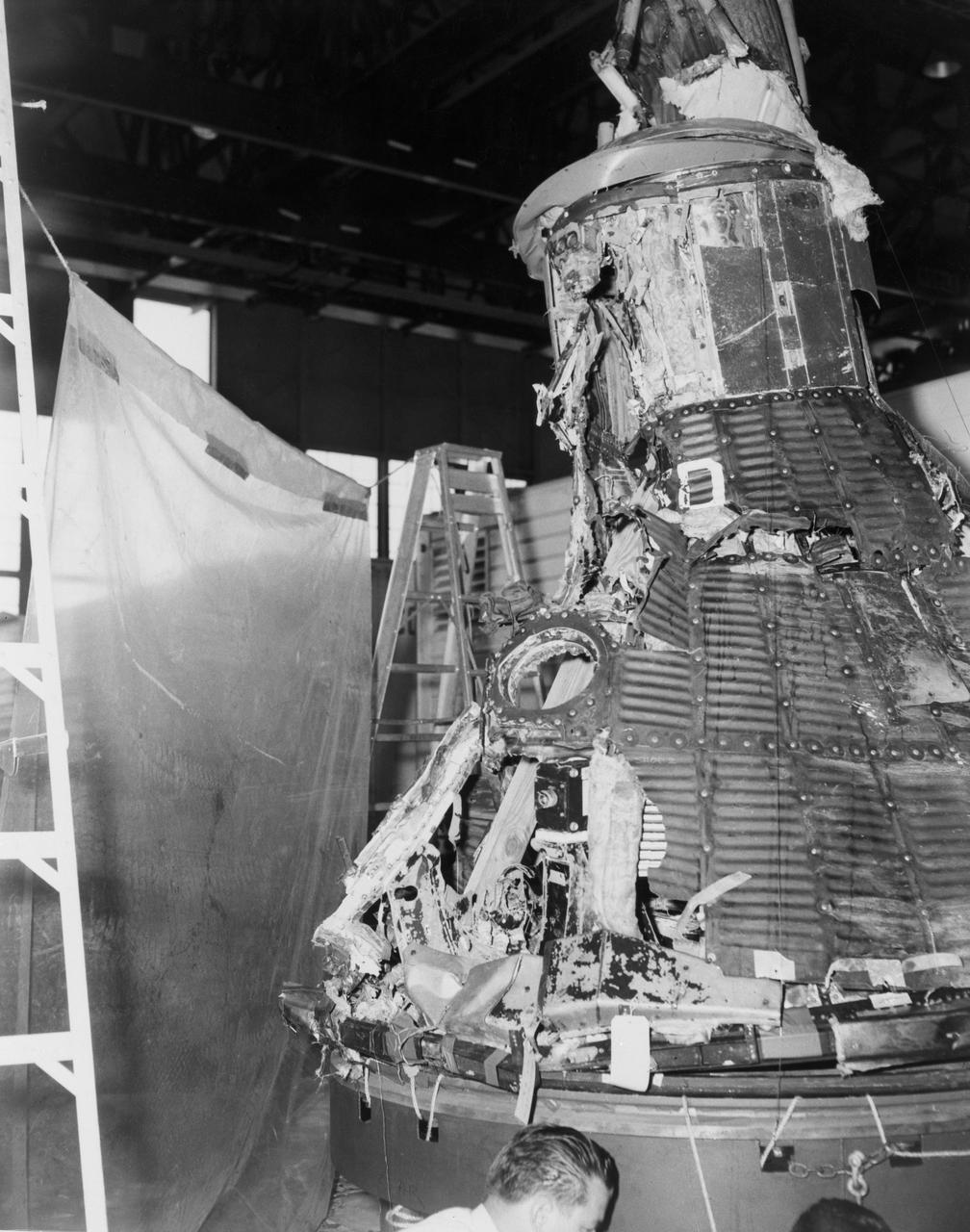
S67-19582 (1961) --- View of the reconstructed Mercury-Atlas 1 (MA-1) spacecraft. The capsule exploded one minute after launch and the debris was reassembled for study. Photo credit: NASA
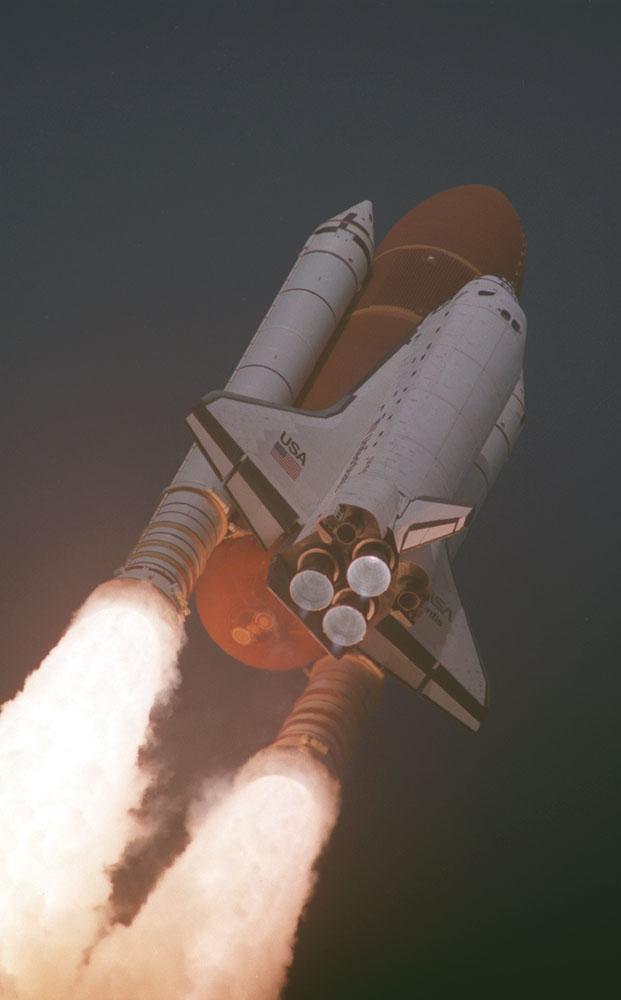
The Space Shuttle Atlantis (STS-45) roars into space in this photo showing a close-up of the Solid Rocket Boosters (SRBs) and the external tank. Atlantis' mission included experiments on the Atmospheric Lab for Applications and Sciences (ATLAS). ATLAS-1 measures long-term variability in the total energy radiated by the sun and determines the variability in the solar spectrum.
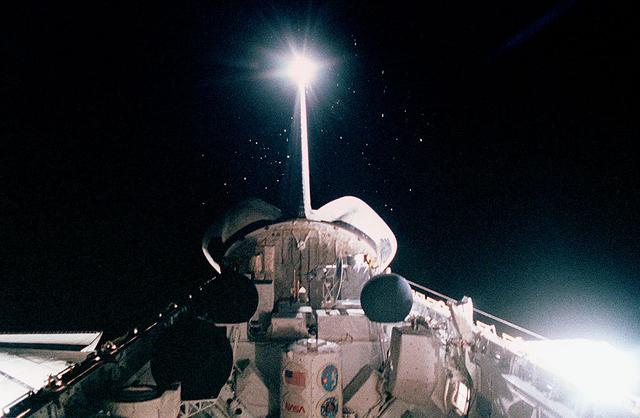
Space Shuttle Atlantis (STS-45) onboard photo of open cargo bay with the forward portion of the Atmospheric Laboratory for Applications and Science (Atlas-1) shown at night.
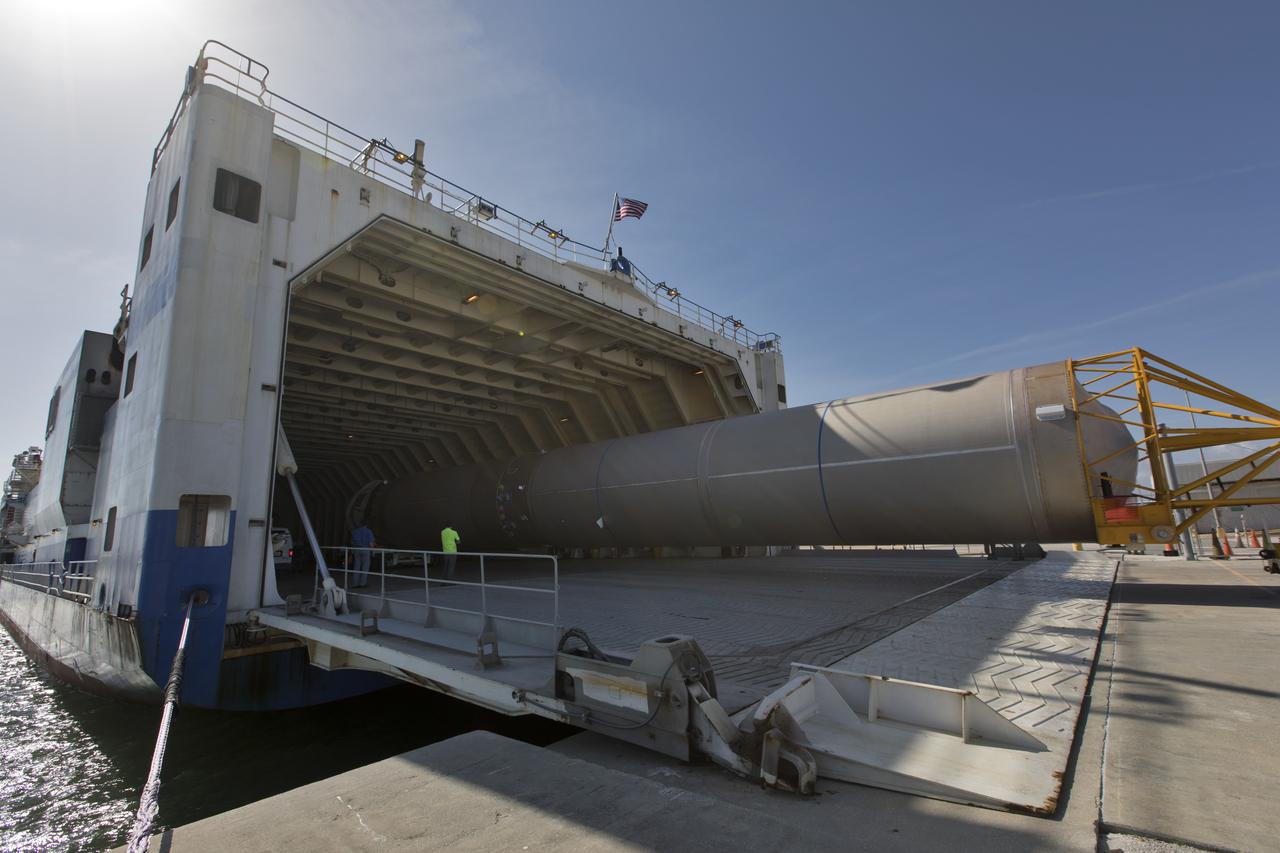
The United Launch Alliance Atlas V booster for NOAA's Geostationary Operational Environmental Satellite-S (GOES-S) is offloaded from the Mariner transport ship at the Army Wharf at Cape Canaveral Air Force Station in Florida. The booster will be transported to the Atlas Spaceflight Operations Center near Space Launch Complex 41 at CCAFS. GOES-S is the second in a series of four advanced geostationary weather satellites. The satellite is slated to launch aboard the Atlas V rocket March 1.
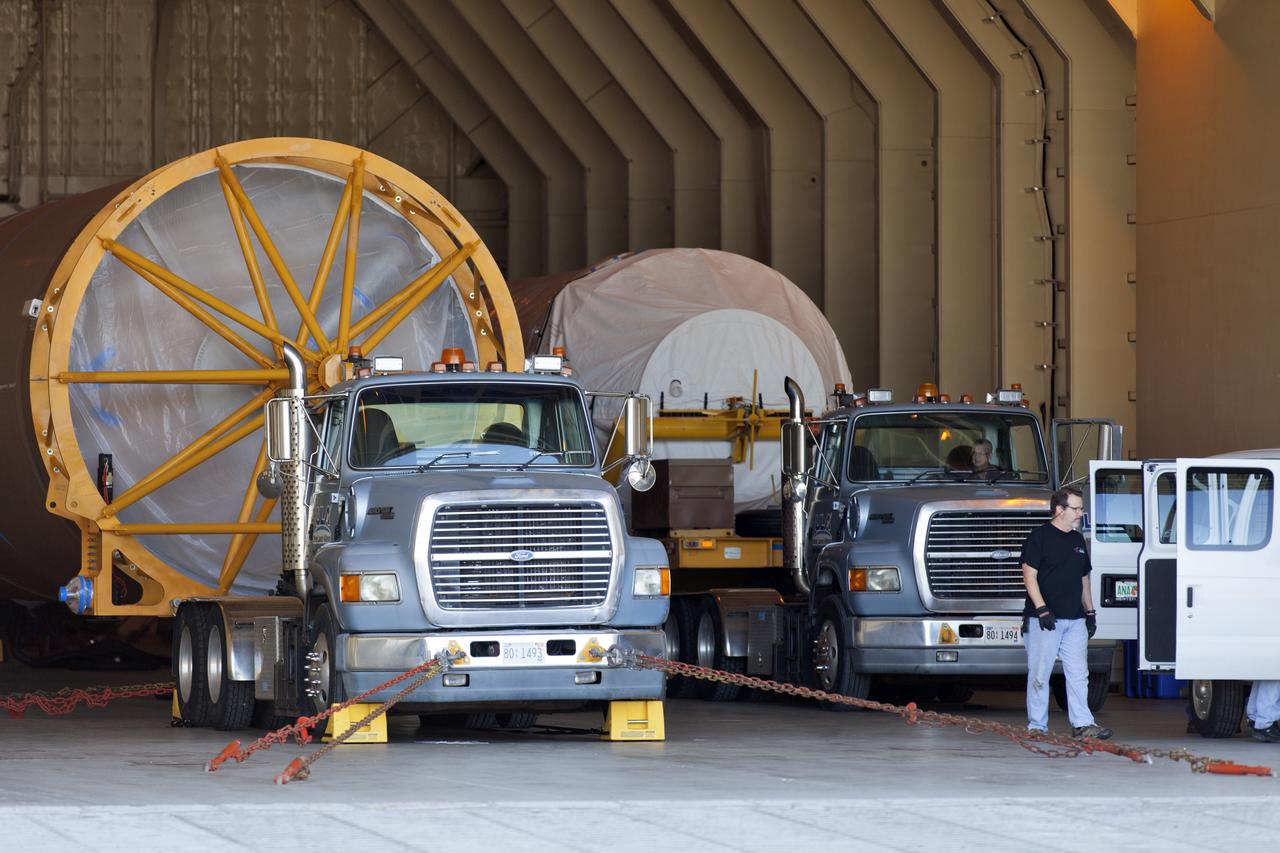
Preparations are underway to offload the United Launch Alliance Atlas V booster and Centaur stage for NOAA's Geostationary Operational Environmental Satellite-S (GOES-S) from the Mariner transport ship at the Army Wharf at Cape Canaveral Air Force Station in Florida. They will be transported to the Atlas Spaceflight Operations Center near Space Launch Complex 41 at CCAFS. GOES-S is the second in a series of four advanced geostationary weather satellites. The satellite is slated to launch aboard the Atlas V rocket March 1.
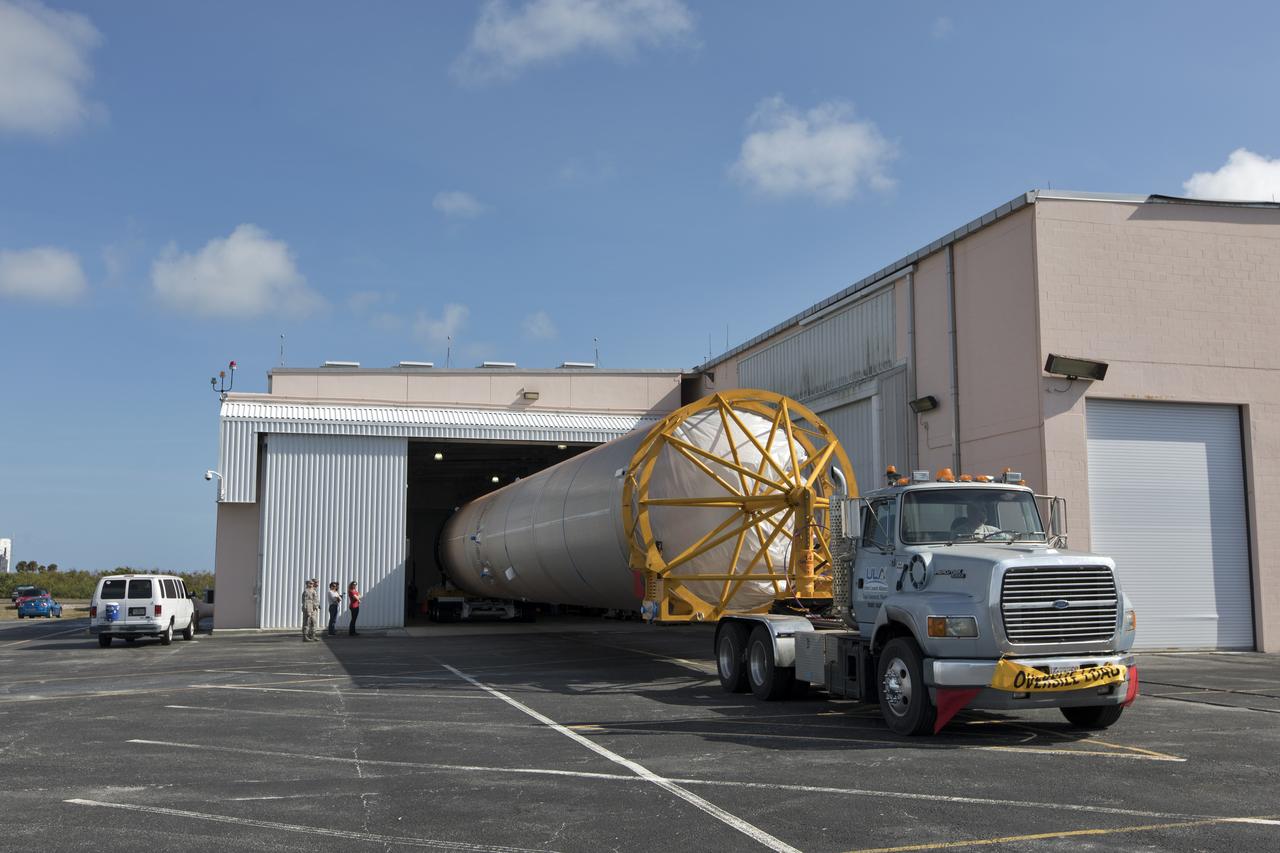
The United Launch Alliance Atlas V booster for NOAA's Geostationary Operational Environmental Satellite-S (GOES-S) arrives at the Atlas Spaceflight Operations Center near Space Launch Complex 41 at Cape Canaveral Air Force Station in Florida. GOES-S is the second in a series of four advanced geostationary weather satellites. The satellite is slated to launch aboard the Atlas V rocket March 1.
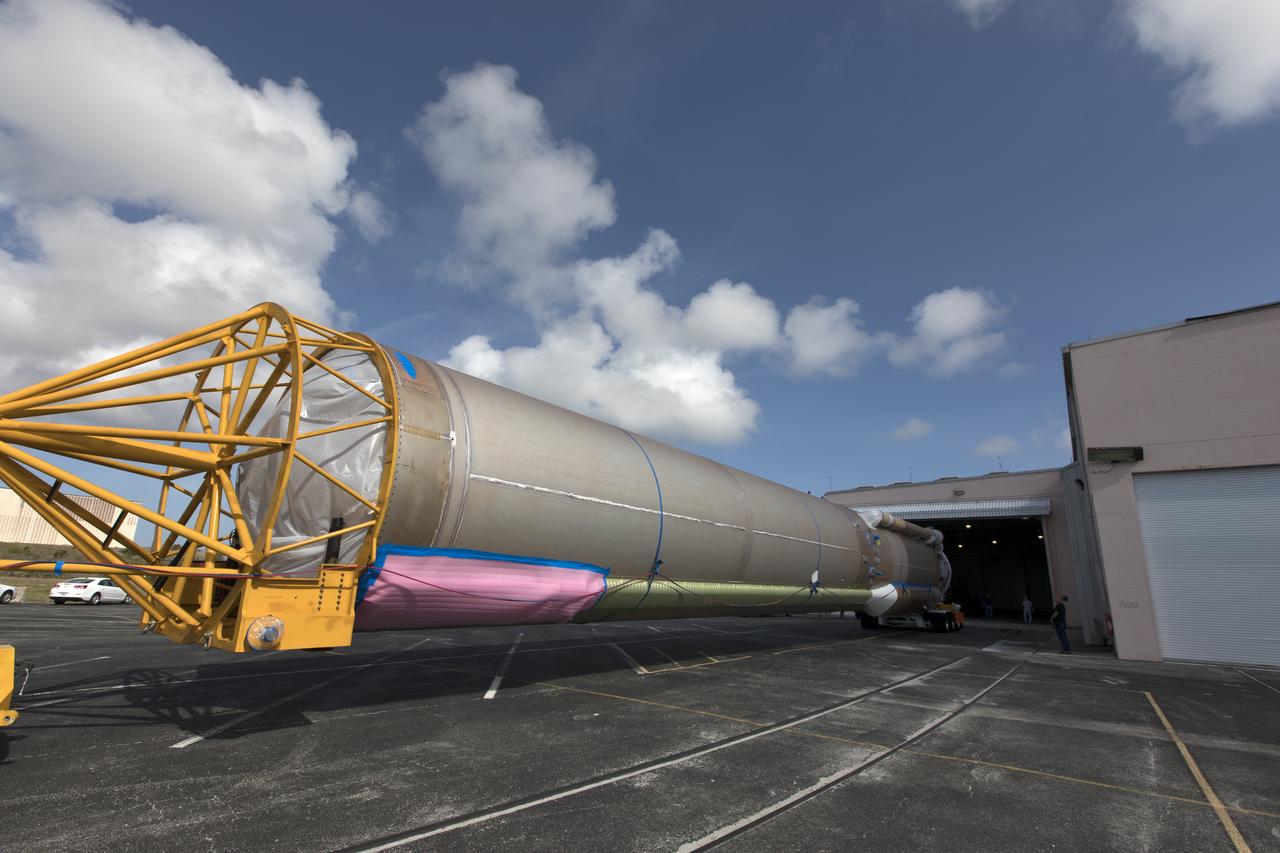
The United Launch Alliance Atlas V booster for NOAA's Geostationary Operational Environmental Satellite-S (GOES-S) arrives at the Atlas Spaceflight Operations Center near Space Launch Complex 41 at Cape Canaveral Air Force Station in Florida. GOES-S is the second in a series of four advanced geostationary weather satellites. The satellite is slated to launch aboard the Atlas V rocket March 1.
The United Launch Alliance Atlas V booster for NOAA's Geostationary Operational Environmental Satellite-S (GOES-S) was offloaded from the Mariner transport ship at the Army Wharf at Cape Canaveral Air Force Station in Florida. The booster will be transported to the Atlas Spaceflight Operations Center near Space Launch Complex 41 at CCAFS. GOES-S is the second in a series of four advanced geostationary weather satellites. The satellite is slated to launch aboard the Atlas V rocket March 1.
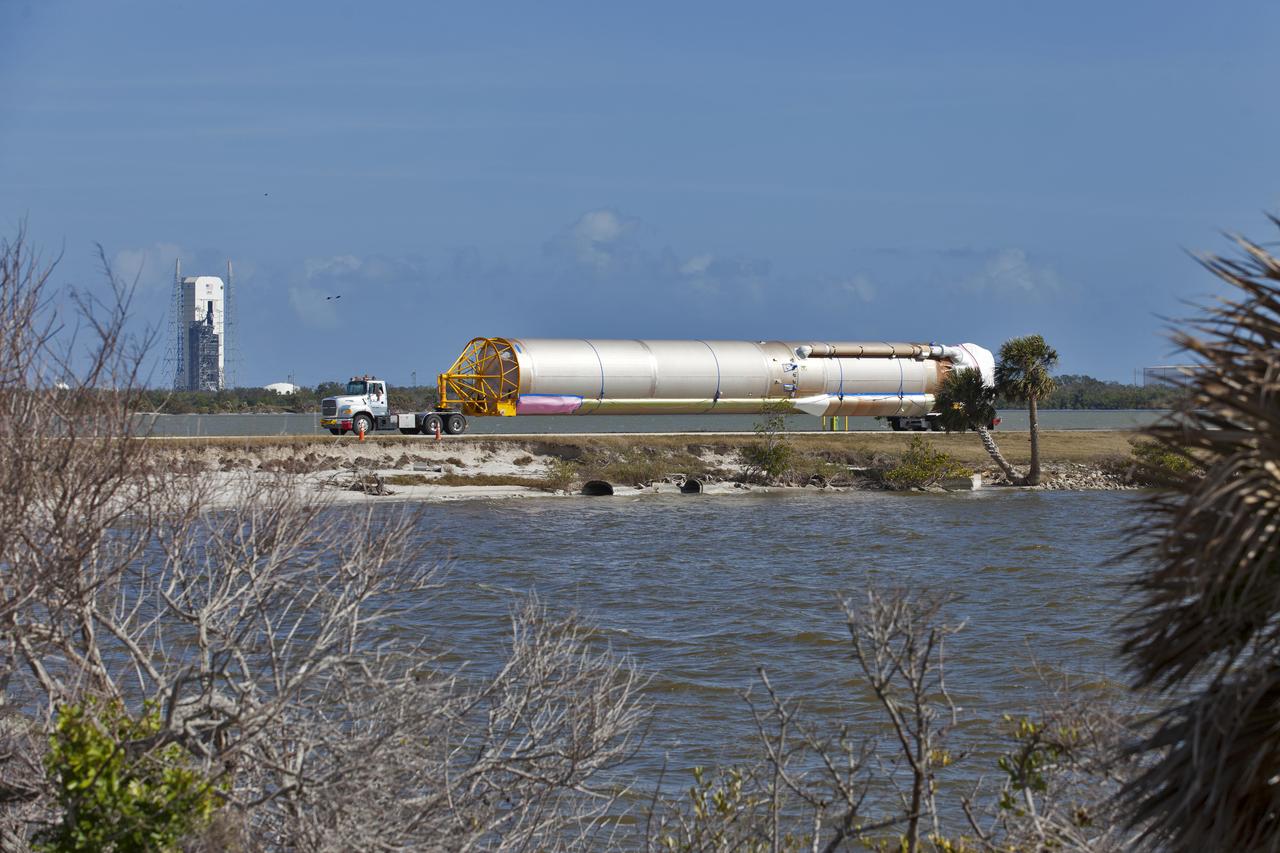
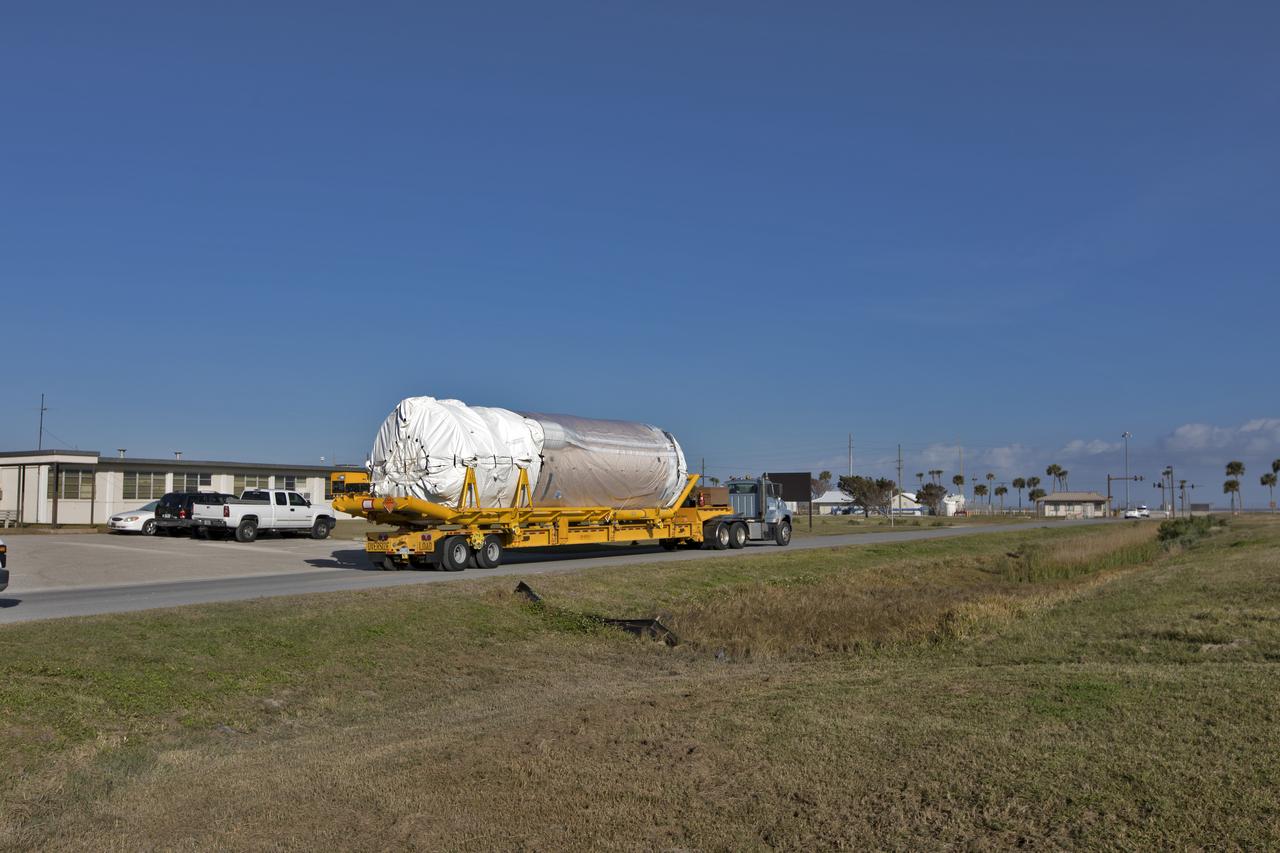
After being offloaded from the Mariner transport ship at the Army Wharf at Cape Canaveral Air Force Station in Florida, the United Launch Alliance Atlas V booster for NOAA's Geostationary Operational Environmental Satellite-S (GOES-S) is being transported to the Atlas Spaceflight Operations Center near Space Launch Complex 41 at CCAFS. GOES-S is the second in a series of four advanced geostationary weather satellites. The satellite is slated to launch aboard the Atlas V rocket March 1.

After being offloaded from the Mariner transport ship at the Army Wharf at Cape Canaveral Air Force Station in Florida, the United Launch Alliance Atlas V booster for NOAA's Geostationary Operational Environmental Satellite-S (GOES-S) arrives in the area of the Atlas Spaceflight Operations Center near Space Launch Complex 41 at CCAFS. GOES-S is the second in a series of four advanced geostationary weather satellites. The satellite is slated to launch aboard the Atlas V rocket March 1.
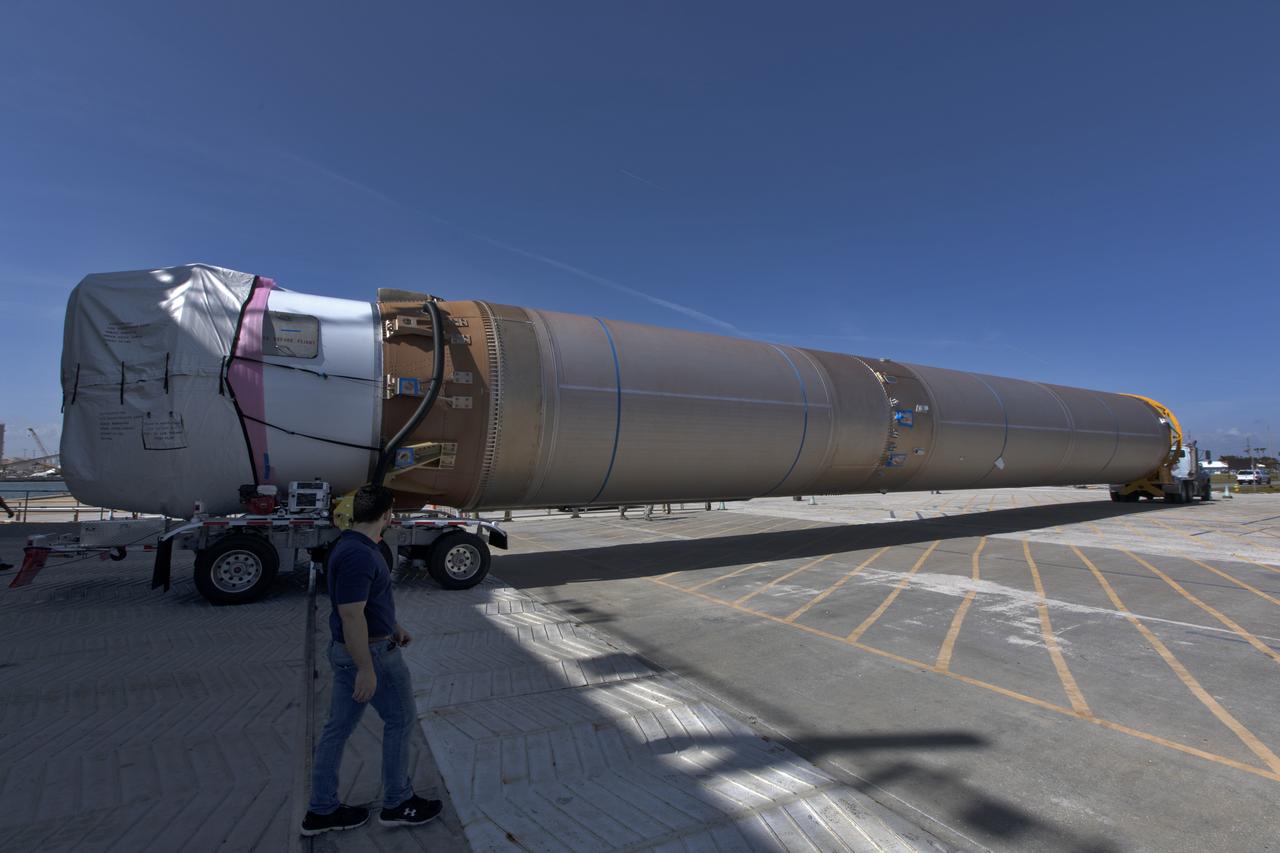
The United Launch Alliance Atlas V booster for NOAA's Geostationary Operational Environmental Satellite-S (GOES-S) is offloaded from the Mariner transport ship at the Army Wharf at Cape Canaveral Air Force Station in Florida. The booster will be transported to the Atlas Spaceflight Operations Center near Space Launch Complex 41 at CCAFS. GOES-S is the second in a series of four advanced geostationary weather satellites. The satellite is slated to launch aboard the Atlas V rocket March 1.
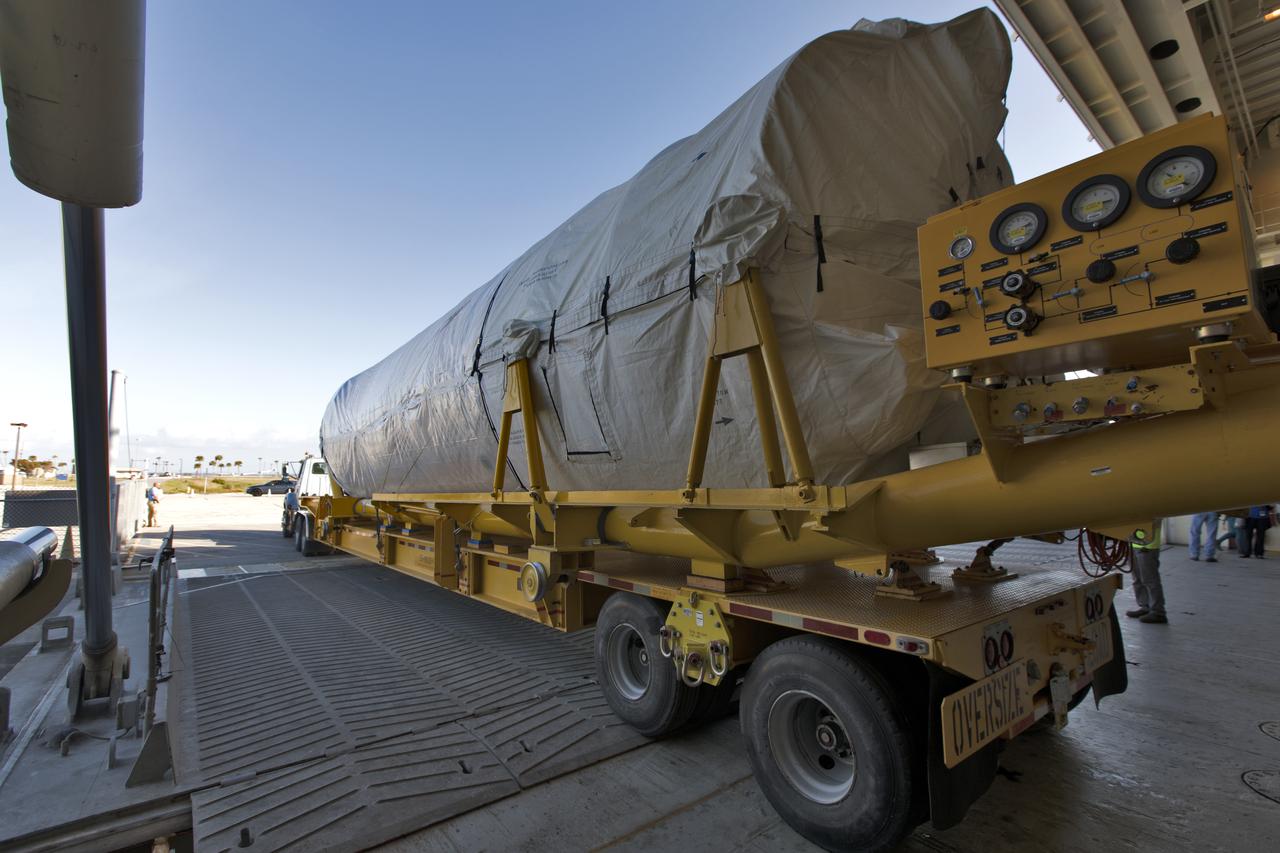
The United Launch Alliance Atlas V booster and Centaur stage for NOAA's Geostationary Operational Environmental Satellite-S (GOES-S) are offloaded from the Mariner transport ship at the Army Wharf at Cape Canaveral Air Force Station in Florida. They will be transported to the Atlas Spaceflight Operations Center near Space Launch Complex 41 at CCAFS. GOES-S is the second in a series of four advanced geostationary weather satellites. The satellite is slated to launch aboard the Atlas V rocket March 1.
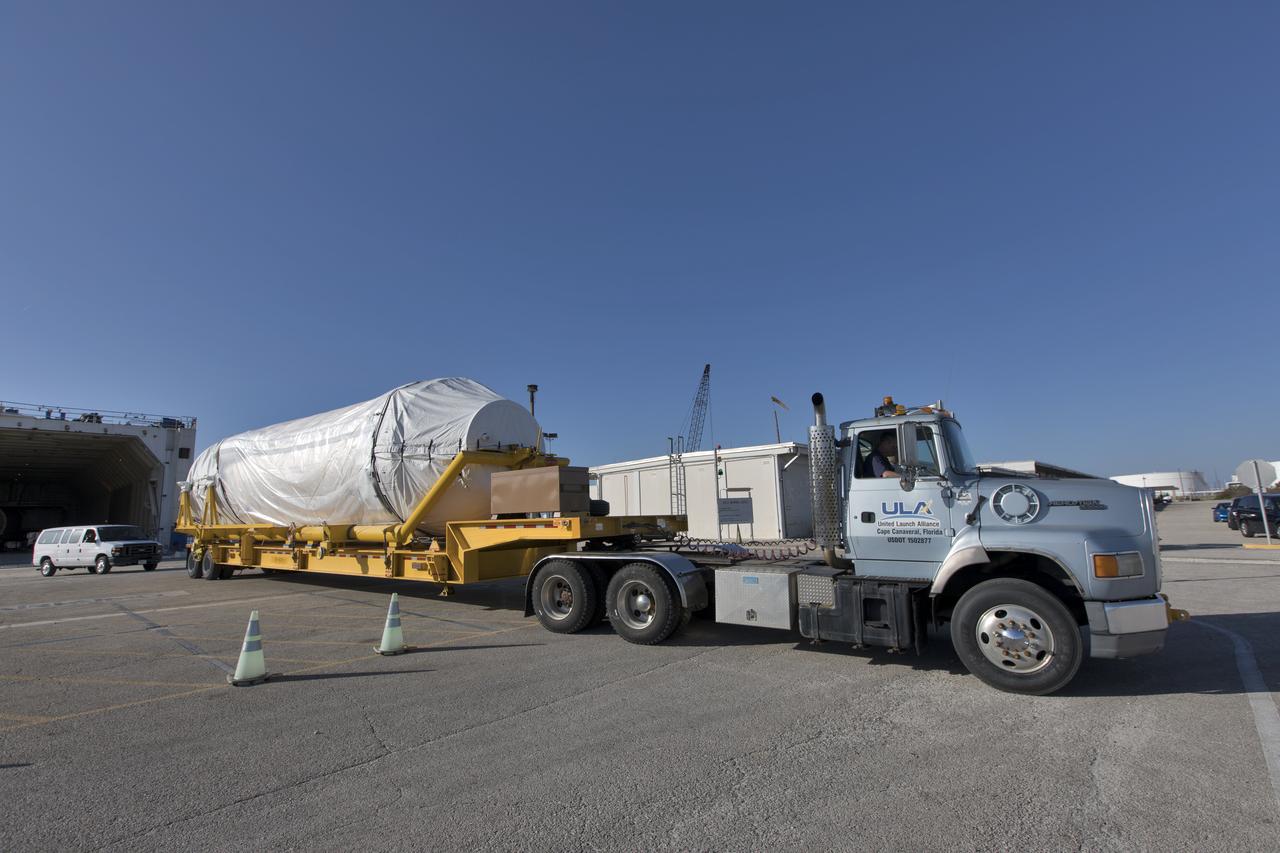
The United Launch Alliance Atlas V booster and Centaur stage for NOAA's Geostationary Operational Environmental Satellite-S (GOES-S) are offloaded from the Mariner transport ship at the Army Wharf at Cape Canaveral Air Force Station in Florida. They will be transported to the Atlas Spaceflight Operations Center near Space Launch Complex 41 at CCAFS. GOES-S is the second in a series of four advanced geostationary weather satellites. The satellite is slated to launch aboard the Atlas V rocket March 1.
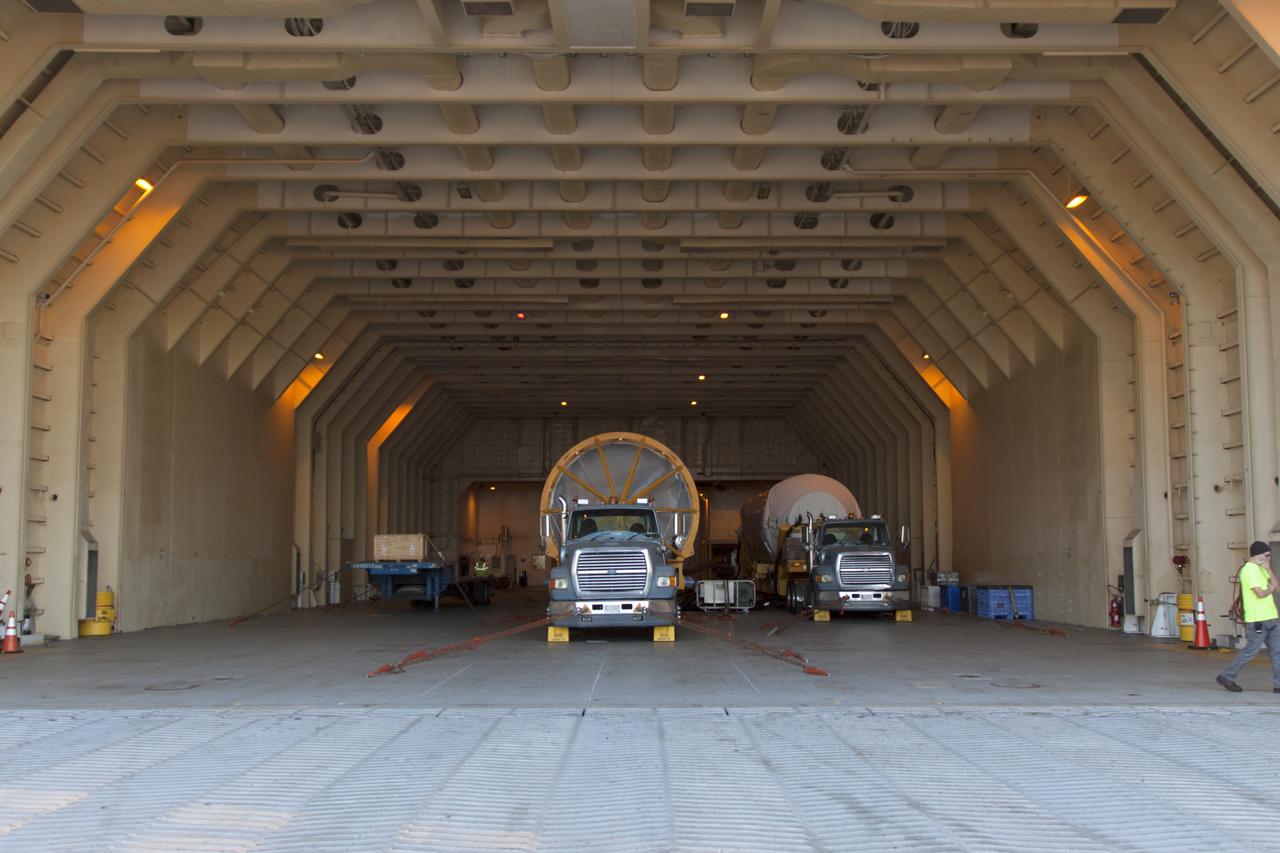
Preparations are underway to offload the United Launch Alliance Atlas V booster and Centaur stage for NOAA's Geostationary Operational Environmental Satellite-S (GOES-S) from the Mariner transport ship at the Army Wharf at Cape Canaveral Air Force Station in Florida. They will be transported to the Atlas Spaceflight Operations Center near Space Launch Complex 41 at CCAFS. GOES-S is the second in a series of four advanced geostationary weather satellites. The satellite is slated to launch aboard the Atlas V rocket March 1.

After being offloaded from the Mariner transport ship at the Army Wharf at Cape Canaveral Air Force Station in Florida, the United Launch Alliance Atlas V booster for NOAA's Geostationary Operational Environmental Satellite-S (GOES-S) is being transported to the Atlas Spaceflight Operations Center near Space Launch Complex 41 at CCAFS. GOES-S is the second in a series of four advanced geostationary weather satellites. The satellite is slated to launch aboard the Atlas V rocket March 1.
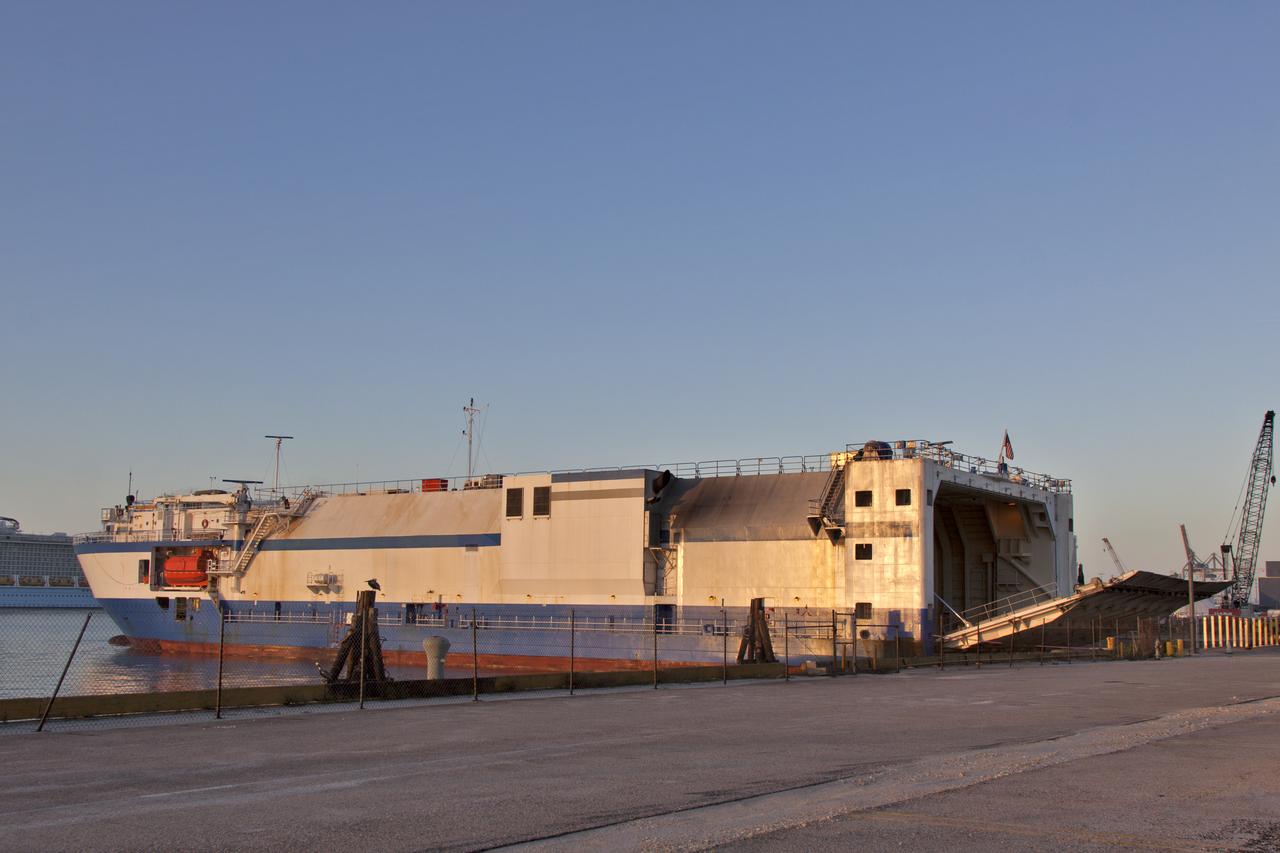
The Mariner transport ship arrives at the Army Wharf at Cape Canaveral Air Force Station in Florida, carrying the United Launch Alliance Atlas V booster and Centaur stage for NOAA's Geostationary Operational Environmental Satellite-S (GOES-S). They will be offloaded and transported to the Atlas Spaceflight Operations Center near Space Launch Complex 41 at CCAFS. GOES-S is the second in a series of four advanced geostationary weather satellites. The satellite is slated to launch aboard the Atlas V rocket March 1.
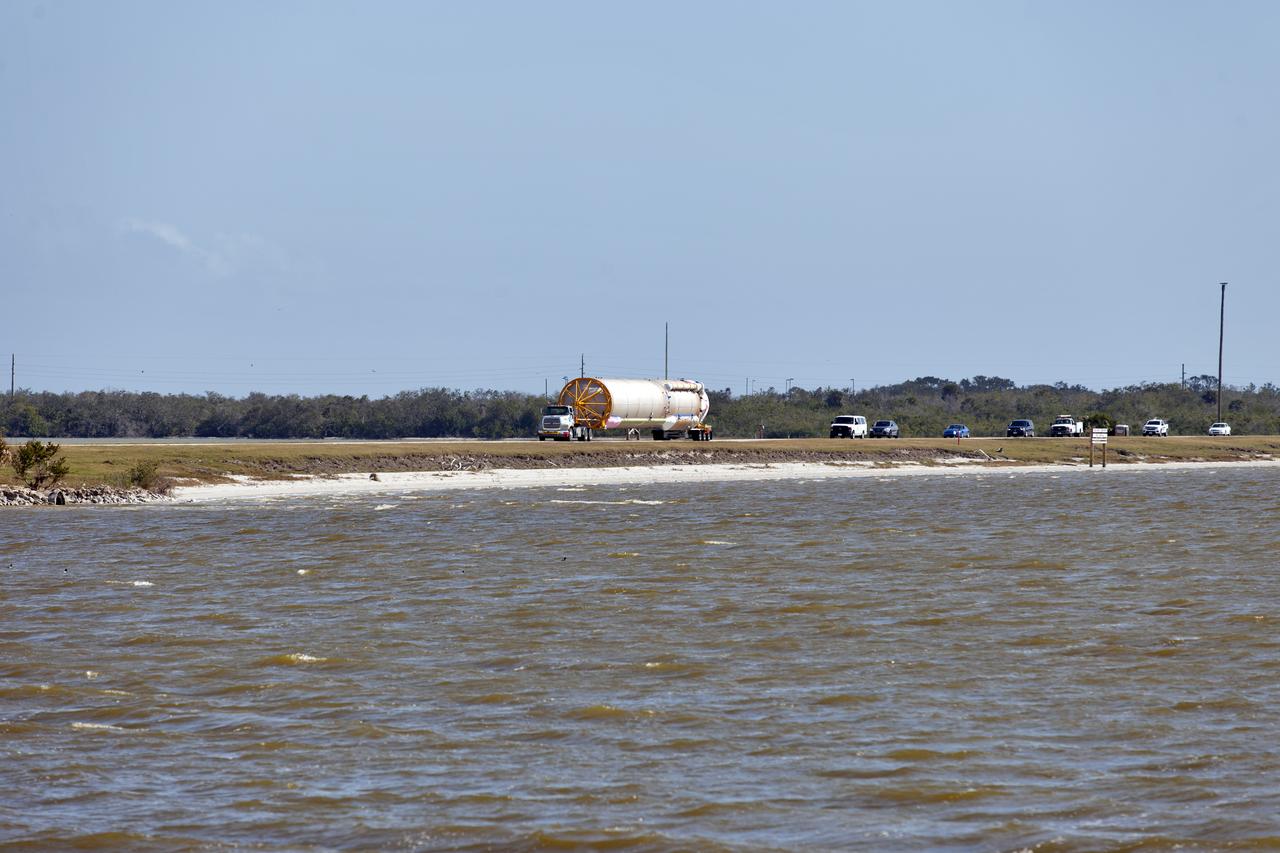
After being offloaded from the Mariner transport ship at the Army Wharf at Cape Canaveral Air Force Station in Florida, the United Launch Alliance Atlas V booster for NOAA's Geostationary Operational Environmental Satellite-S (GOES-S) is being transported to the Atlas Spaceflight Operations Center near Space Launch Complex 41 at CCAFS. GOES-S is the second in a series of four advanced geostationary weather satellites. The satellite is slated to launch aboard the Atlas V rocket March 1.
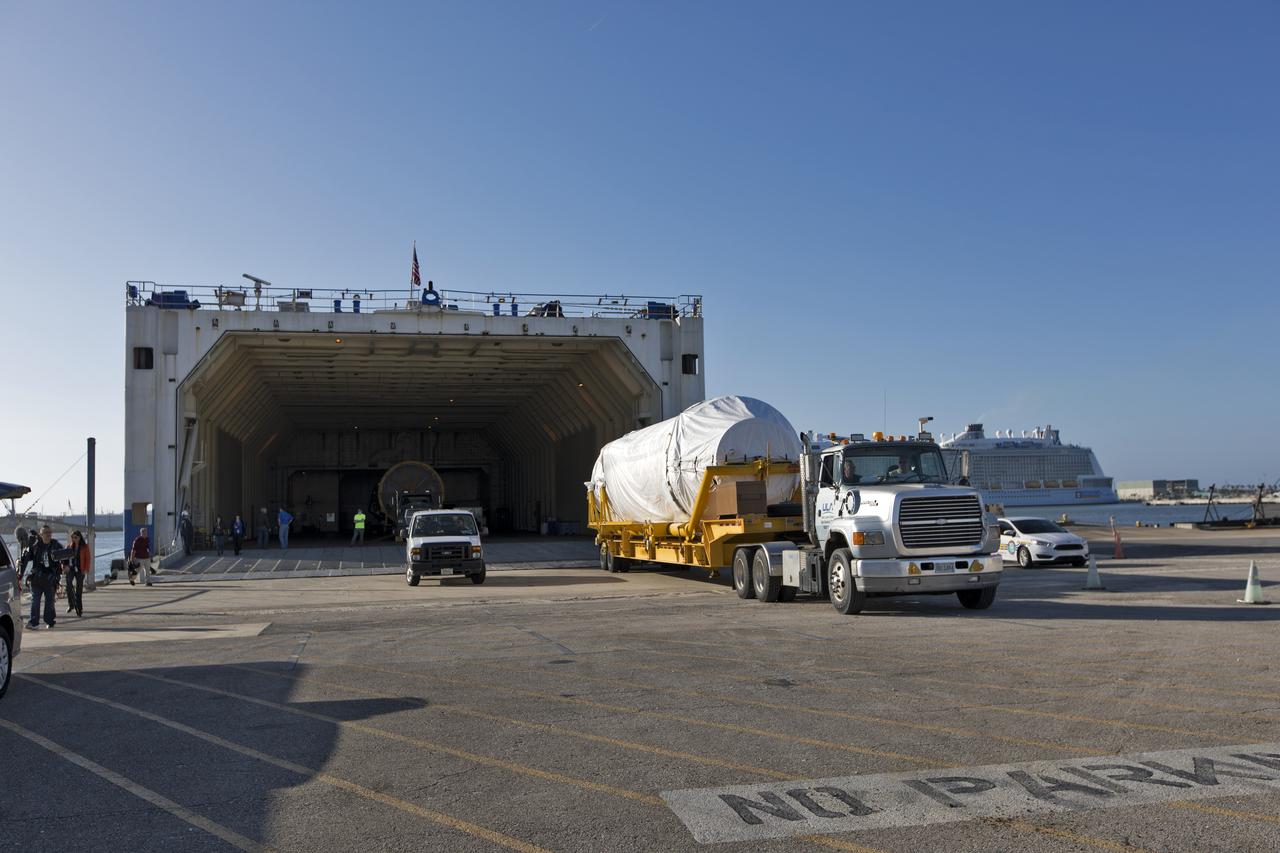
The United Launch Alliance Atlas V booster and Centaur stage for NOAA's Geostationary Operational Environmental Satellite-S (GOES-S) are offloaded from the Mariner transport ship at the Army Wharf at Cape Canaveral Air Force Station in Florida. They will be transported to the Atlas Spaceflight Operations Center near Space Launch Complex 41 at CCAFS. GOES-S is the second in a series of four advanced geostationary weather satellites. The satellite is slated to launch aboard the Atlas V rocket March 1.
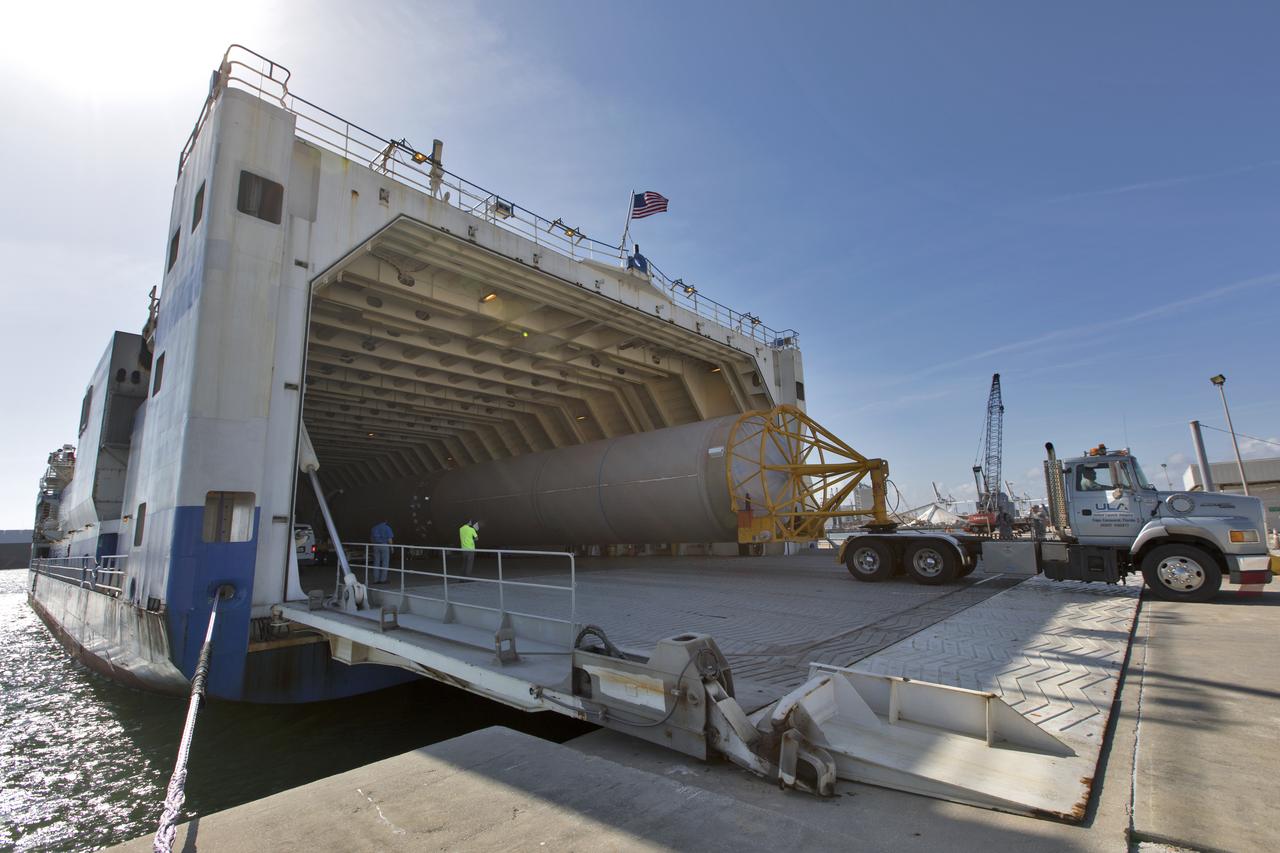
The United Launch Alliance Atlas V booster and Centaur stage for NOAA's Geostationary Operational Environmental Satellite-S (GOES-S) are offloaded from the Mariner transport ship at the Army Wharf at Cape Canaveral Air Force Station in Florida. They will be transported to the Atlas Spaceflight Operations Center near Space Launch Complex 41 at CCAFS. GOES-S is the second in a series of four advanced geostationary weather satellites. The satellite is slated to launch aboard the Atlas V rocket March 1.
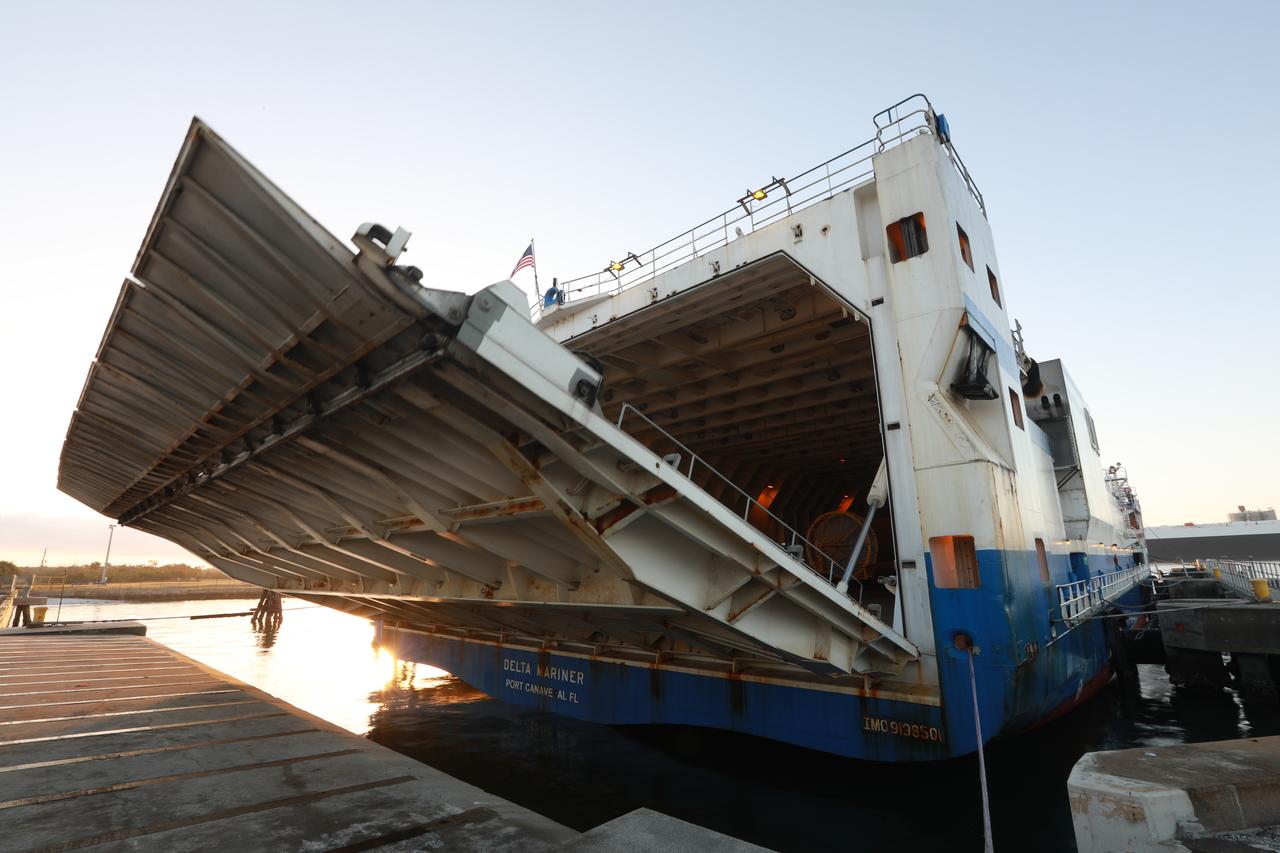
The Mariner transport ship arrives at the Army Wharf at Cape Canaveral Air Force Station in Florida, carrying the United Launch Alliance Atlas V booster and Centaur stage for NOAA's Geostationary Operational Environmental Satellite-S (GOES-S). They will be offloaded and transported to the Atlas Spaceflight Operations Center near Space Launch Complex 41 at CCAFS. GOES-S is the second in a series of four advanced geostationary weather satellites. The satellite is slated to launch aboard the Atlas V rocket March 1.

The United Launch Alliance Atlas V booster for NOAA's Geostationary Operational Environmental Satellite-S (GOES-S) is moved inside the Atlas Spaceflight Operations Center near Space Launch Complex 41 at Cape Canaveral Air Force Station in Florida. GOES-S is the second in a series of four advanced geostationary weather satellites. The satellite is slated to launch aboard the Atlas V rocket March 1.

The Atlas 1 (AC-73) carrying the GOES-1, the first of five next-generation advanced weather satellites for the National Oceanic and Atmospheric Administration (NOAA), sits poised on Complex 36-B at Cape Canaveral Air Force Station ready for launch.
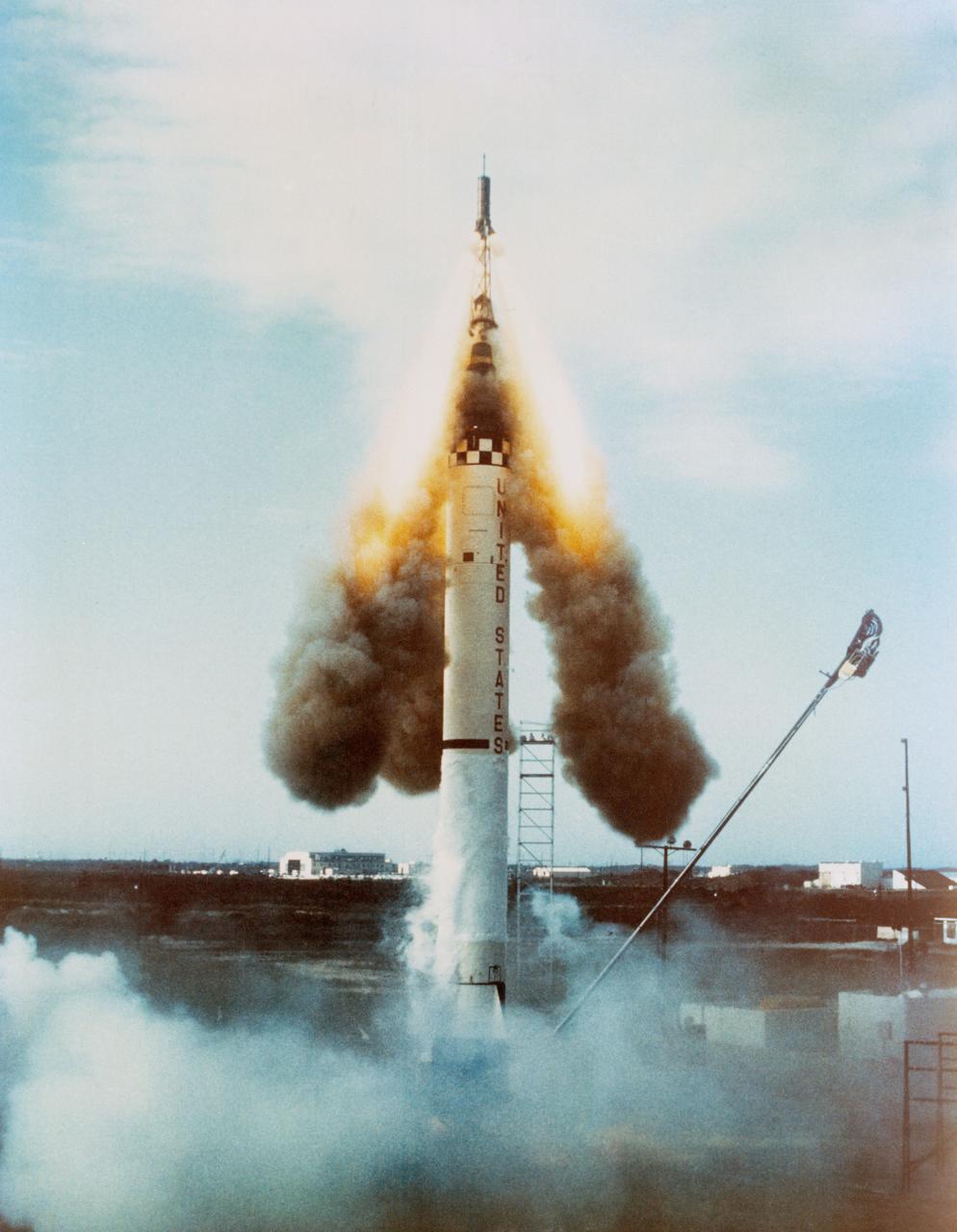
S63-00193 (29 July 1960) --- Launch of the unmanned Mercury-Atlas 1 (MA-1) from Cape Canaveral, Florida. Premature engine cutoff at launch terminated the test. Emergency escape system jettisoned. The Altas exploded 65 seconds after launch. Photo credit: NASA
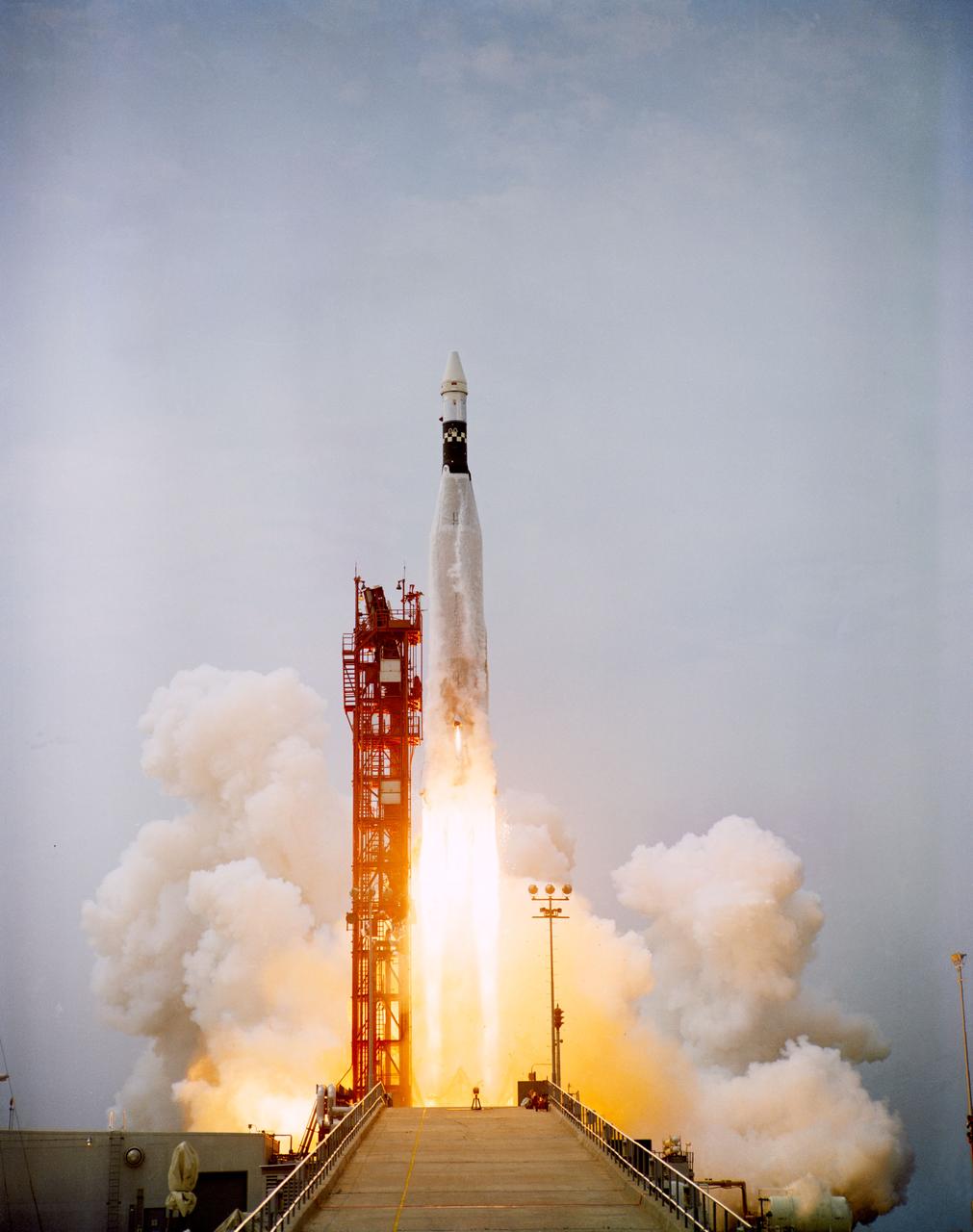
S66-32139 (1 June 1966) --- An Augmented Target Docking Adapter (ATDA) atop an Atlas launch vehicle is launched from Kennedy Space Center's Pad 14 at 10 a.m., June 1, 1966. The ATDA is a rendezvous and docking vehicle for the Gemini-9A space mission. Photo credit: NASA

Astronaut L. Gordon Cooper, Jr., one of the original seven astronauts for Mercury Project selected by NASA on April 27, 1959. The MA-9 mission, boosted by the Mercury-Atlas launch vehicle, was the last flight of the Mercury Project. The Faith 7 spacecraft orbited the Earth 22 times in 1-1/2 days.
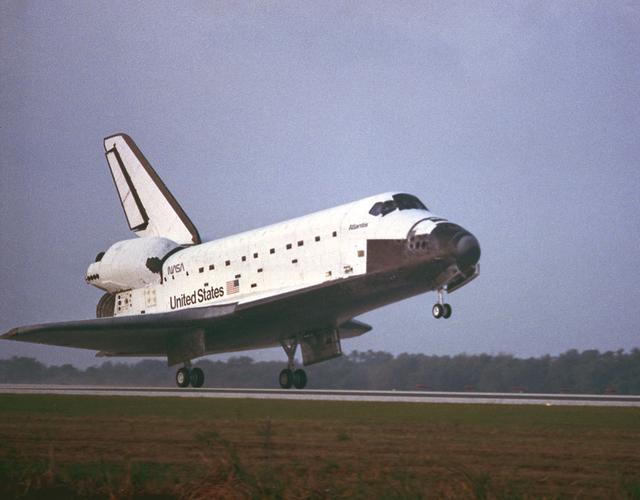
The orbiter Atlantis (STS-45) touched down on Runway 33 of Kennedy Space Center's Shuttle Landing Facility, bringing to a conclusion Mission STS-45. On board were seven crew members and the Atmospheric Lab for Applications and Sciences 1 (ATLAS-1).
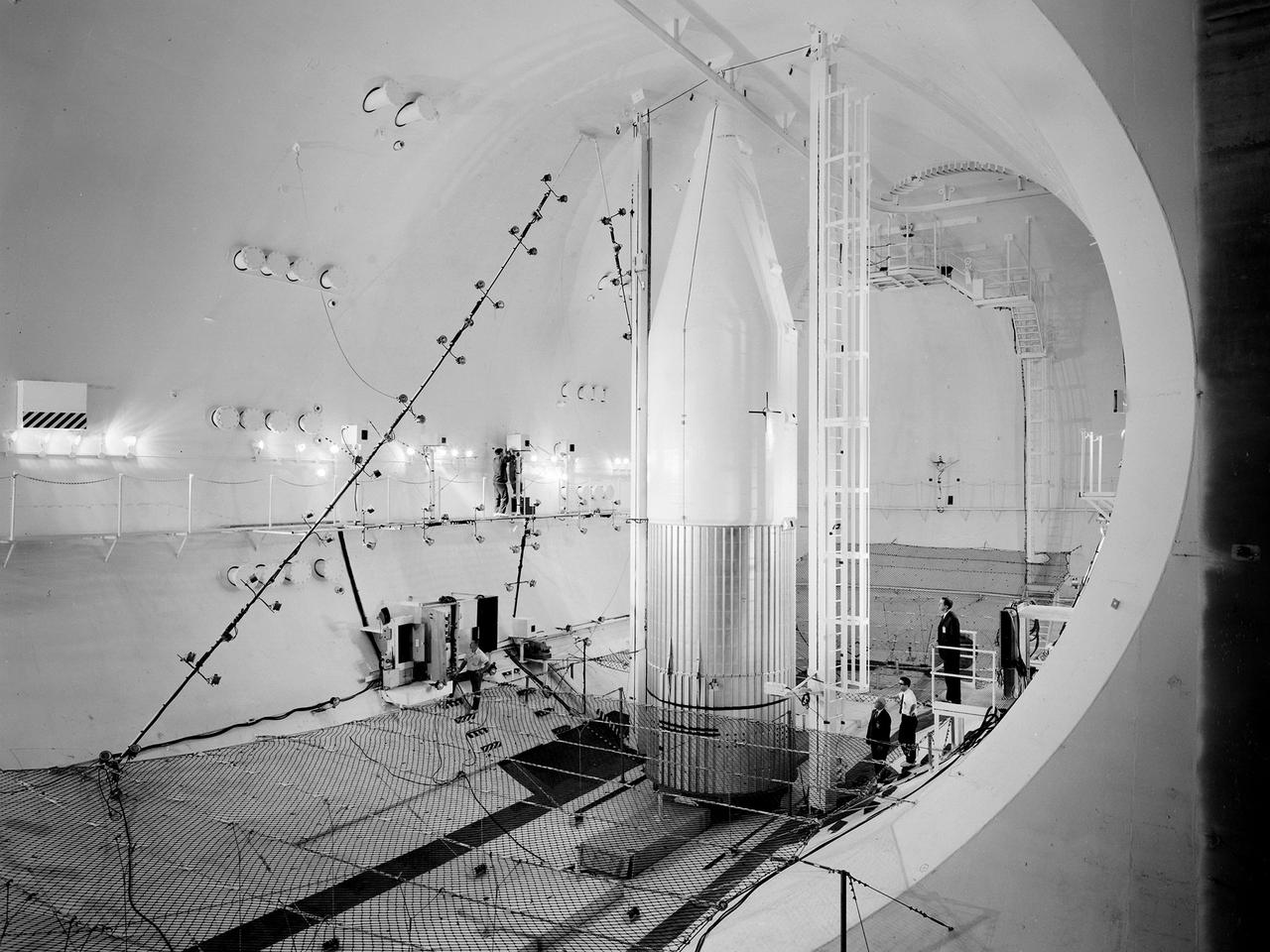
Preparations for a shroud jettison test for the Orbiting Astronomical Observatory-1 (OAO-1) satellite in the Space Power Chambers facility at the National Aeronautics and Space Administration (NASA) Lewis Research Center. The satellite was to be launched on an Atlas-Agena rocket in the spring of 1966. The 3900-pound payload was the heaviest ever attempted by Agena. The satellite was the first of three equipped with powerful telescopes to study ultraviolet data from specific stars and galaxies. In-depth observations were not possible from Earth-bound telescopes because of the filtering and distortion of the atmosphere. The OAO-1 satellite was wider in diameter than the Agena stage, so a new clamshell shroud was created to enclose both the satellite and the Agena. The clamshell shroud consisted of three sections that enclosed both the Agena and OAO-1: a fiberglass nose fairing and aluminum mid and aft fairings. The upper two fairings separated when the Atlas engines stopped, and the aft fairing fell away with the Atlas upon separation from the upper stages The large altitude tank in the Space Power Chambers could simulate altitudes up to 100,000 feet. Three shroud jettison tests were run in July 1965 and the first week of August at a simulated altitude of 20 miles. The April 8, 1966 launch from Cape Canaveral went smoothly, but the OAO-1 satellite failed after only 90 minutes due to a battery failure.
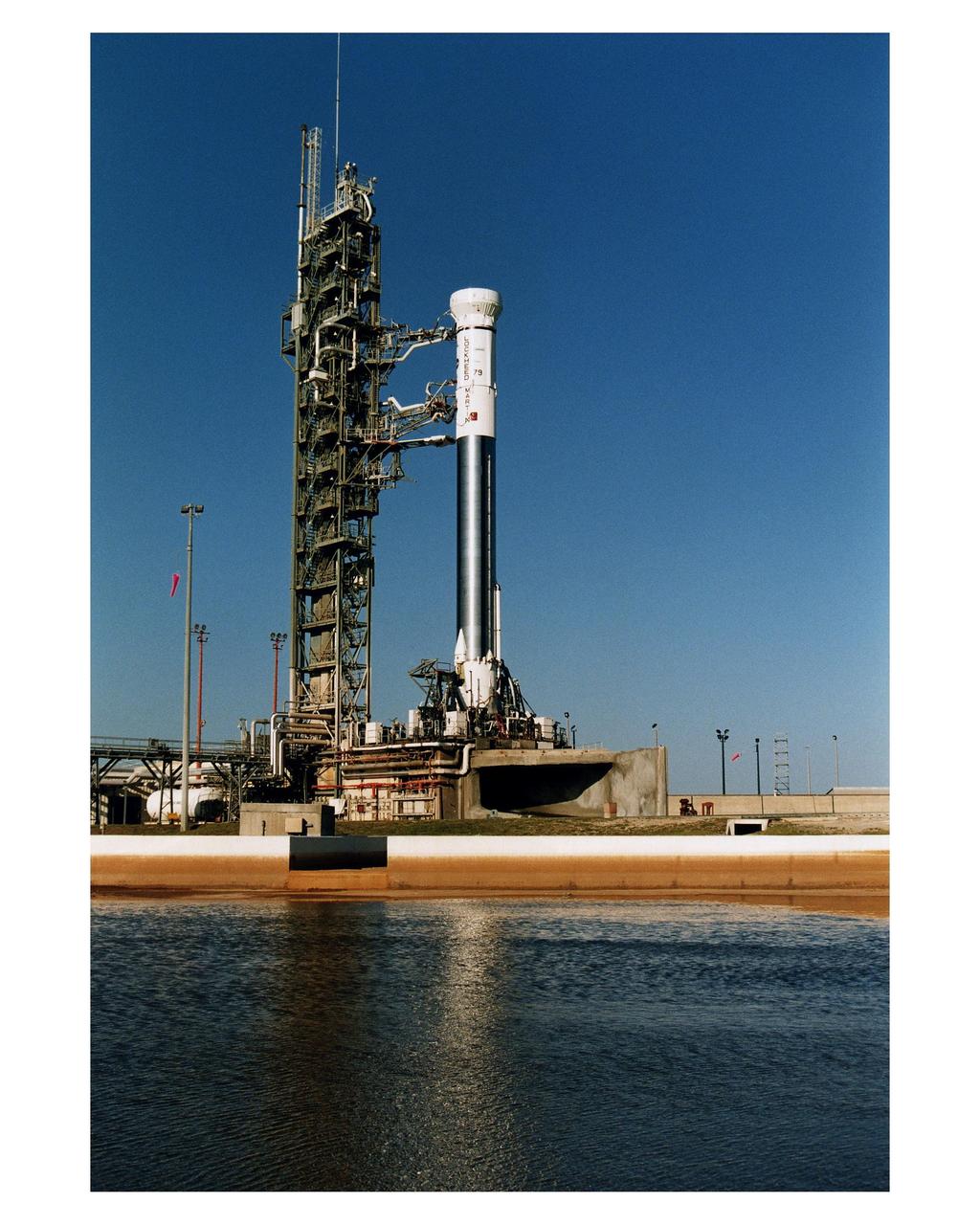
The Lockheed Martin Atlas 1 expendable launch vehicle (AC-79) which will carry the GOES-K advanced weather satellite undergoes a critical prelaunch test with its mobile service tower pulled back. The Wet Dress Rehearsal is a major prelaunch test designed to demonstrate, in part, the launch readiness of the vehicle and launch support equipment. AC-79 will be the final launch of an Atlas 1 rocket, a derivative of the original Atlas Centaur which had its first successful launch for NASA in 1963. Future launches of Geostationary Operational Environmental Satellites (GOES) in the current series will be on Atlas II vehicles. The GOES satellites are owned and operated by the National Oceanic and Atmospheric Administration (NOAA); NASA manages the design, development and launch of the spacecraft. The launch of AC-79 with the GOES-K is targeted for <a href="http://www-pao.ksc.nasa.gov/kscpao/release/1997/63-97.htm">April 24</a> during a launch window which extends from 1:50-3:09 a.m. EDT
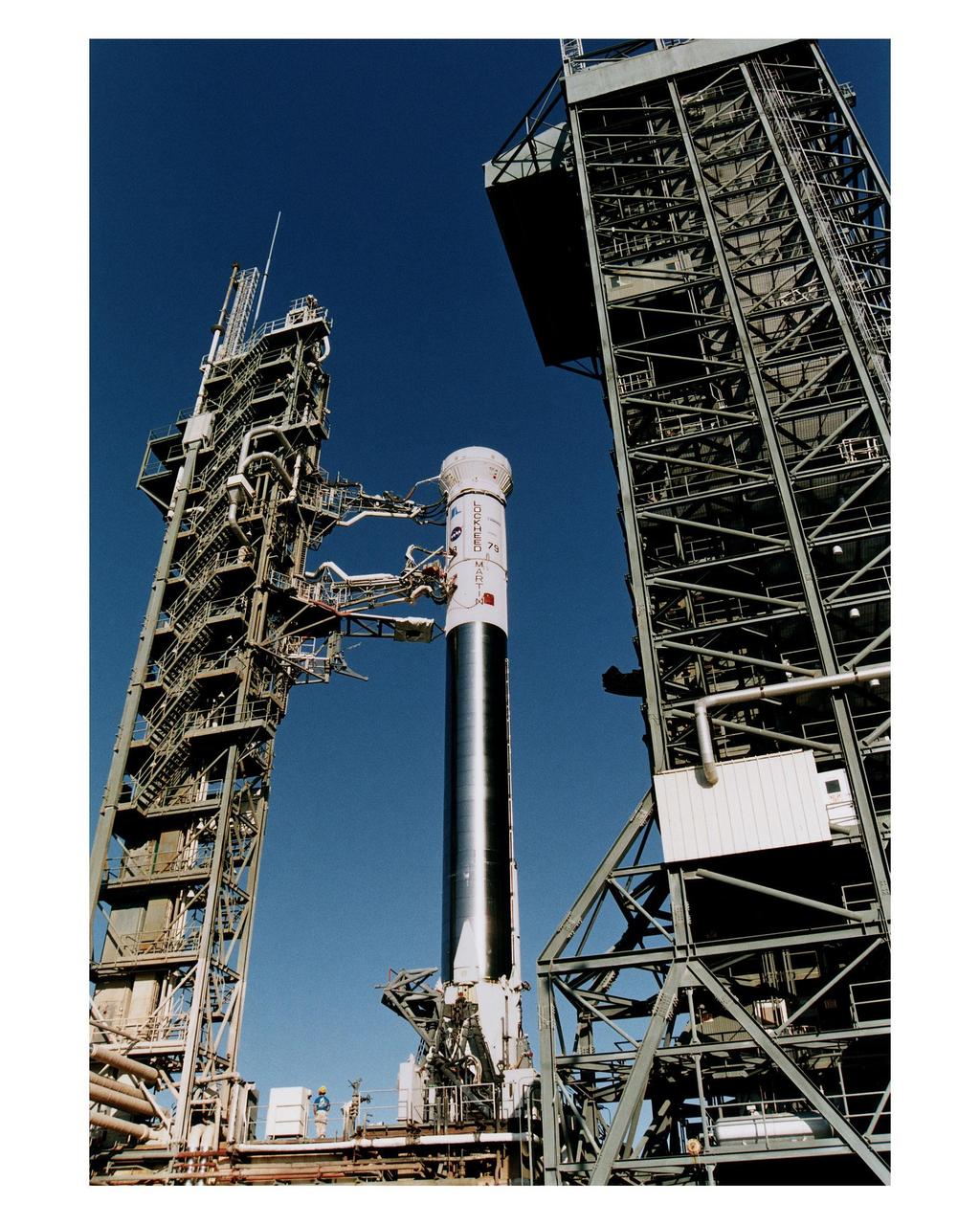
The Lockheed Martin Atlas 1 expendable launch vehicle (AC-79) which will carry the GOES-K advanced weather satellite undergoes a critical prelaunch test with its mobile service tower pulled back. The Wet Dress Rehearsal is a major prelaunch test designed to demonstrate, in part, the launch readiness of the vehicle and launch support equipment. AC-79 will be the final launch of an Atlas 1 rocket, a derivative of the original Atlas Centaur which had its first successful launch for NASA in 1963. Future launches of Geostationary Operational Environmental Satellites (GOES) in the current series will be on Atlas II vehicles. The GOES satellites are owned and operated by the National Oceanic and Atmospheric Administration (NOAA); NASA manages the design, development and launch of the spacecraft. The launch of AC-79 with the GOES-K is targeted for <a href="http://www-pao.ksc.nasa.gov/kscpao/release/1997/63-97.htm">April 24</a> during a launch window which extends from 1:50-3:09 a.m. EDT
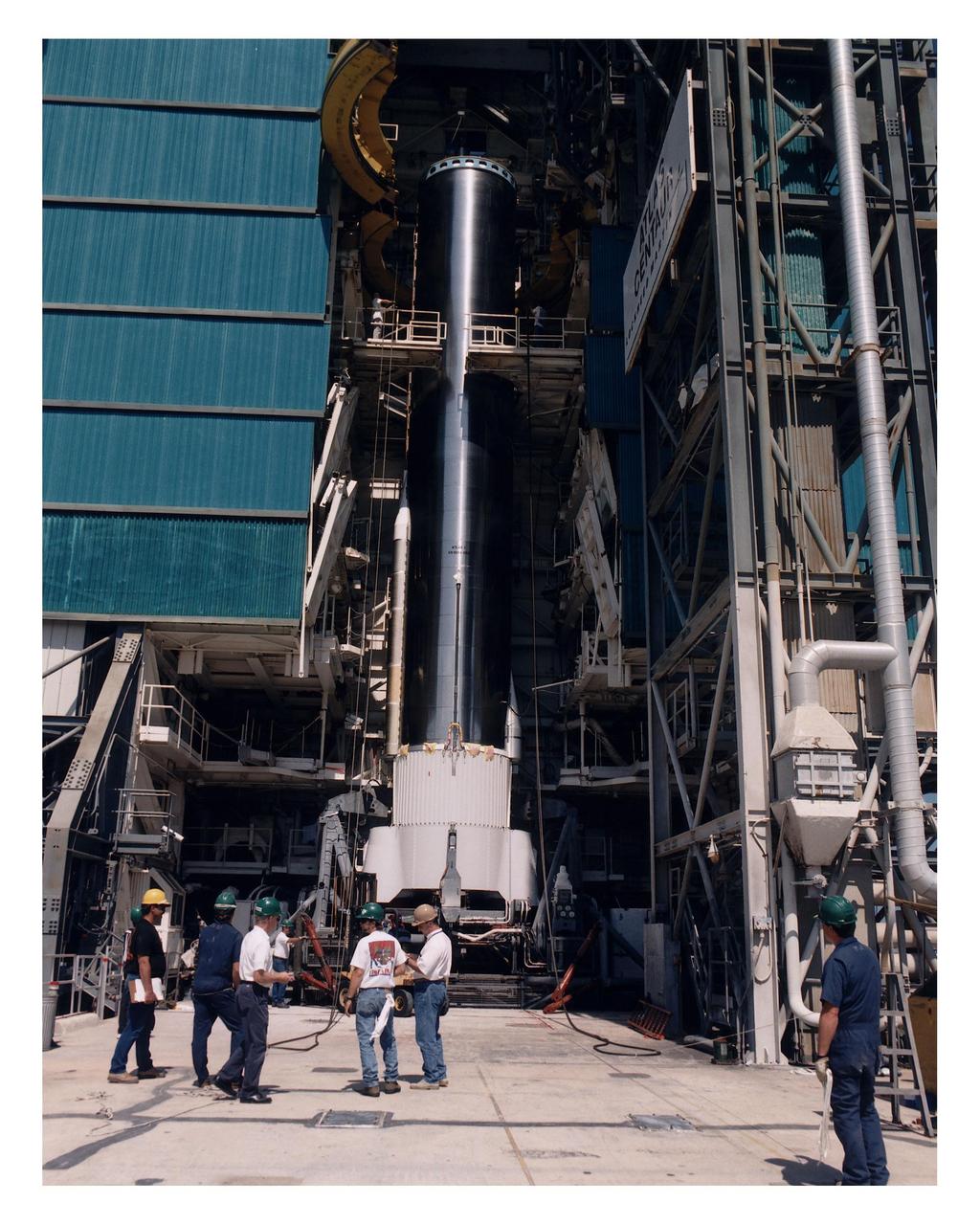
The Atlas 1 rocket which will carry the Geostationary Operational Environmental Satellite-K (GOES-K) into space is erected at Launch Complex 36, Pad B, Cape Canaveral Air Station. The Lockheed Martin-built rocket and its Centaur upper stage will form the AC-79 vehicle, the final vehicle in the Atlas 1 series which began launches for NASA in 1962. GOES-K will be the third spacecraft to be launched in the advanced series of geostationary weather satellites built for NASA and the National Oceanic and Atmospheric Administration (NOAA). The spacecraft will be designated GOES-10 in orbit. Launch is targeted for April 24
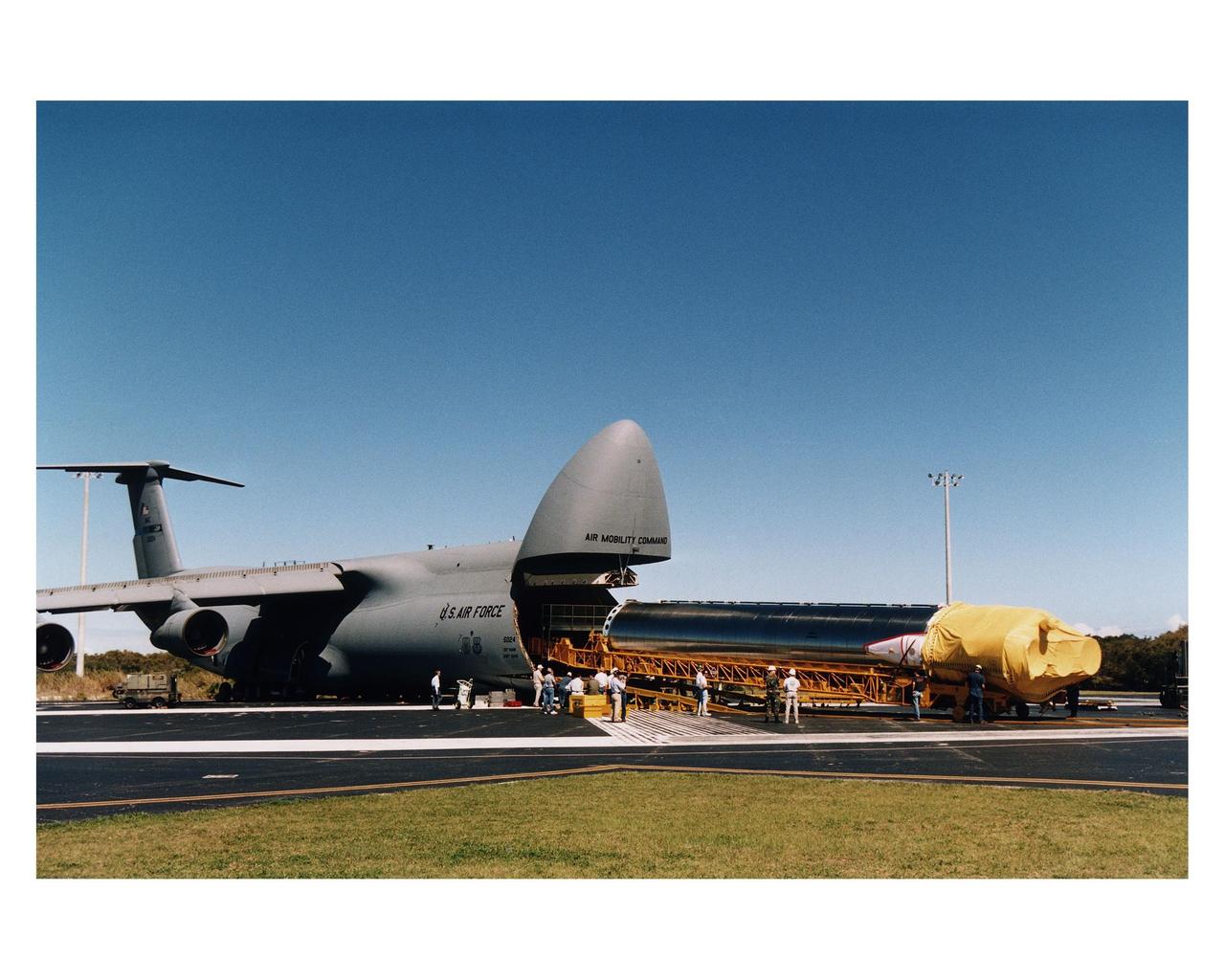
The Atlas 1 rocket which will launch the GOES-K advanced weather satellite is unloaded from an Air Force C-5 air cargo plane after arrival at the Skid Strip, Cape Canaveral Air Station (CCAS). The Lockheed Martin-built rocket and its Centaur upper stage will form the AC-79 vehicle, the final vehicle in the Atlas 1 series which began launches for NASA in 1962. Future launches of geostationary operational environmental satellites (GOES) in the current series will be on Atlas II vehicles. GOES-K will be the third spacecraft to be launched in the new advanced series of geostationary weather satellites built for NASA and the National Oceanic and Atmospheric Administration (NOAA). The spacecraft will be designated GOES-10 in orbit. The launch of AC-79/GOES-K is targeted for April 24 from Launch Pad 36B, CCAS
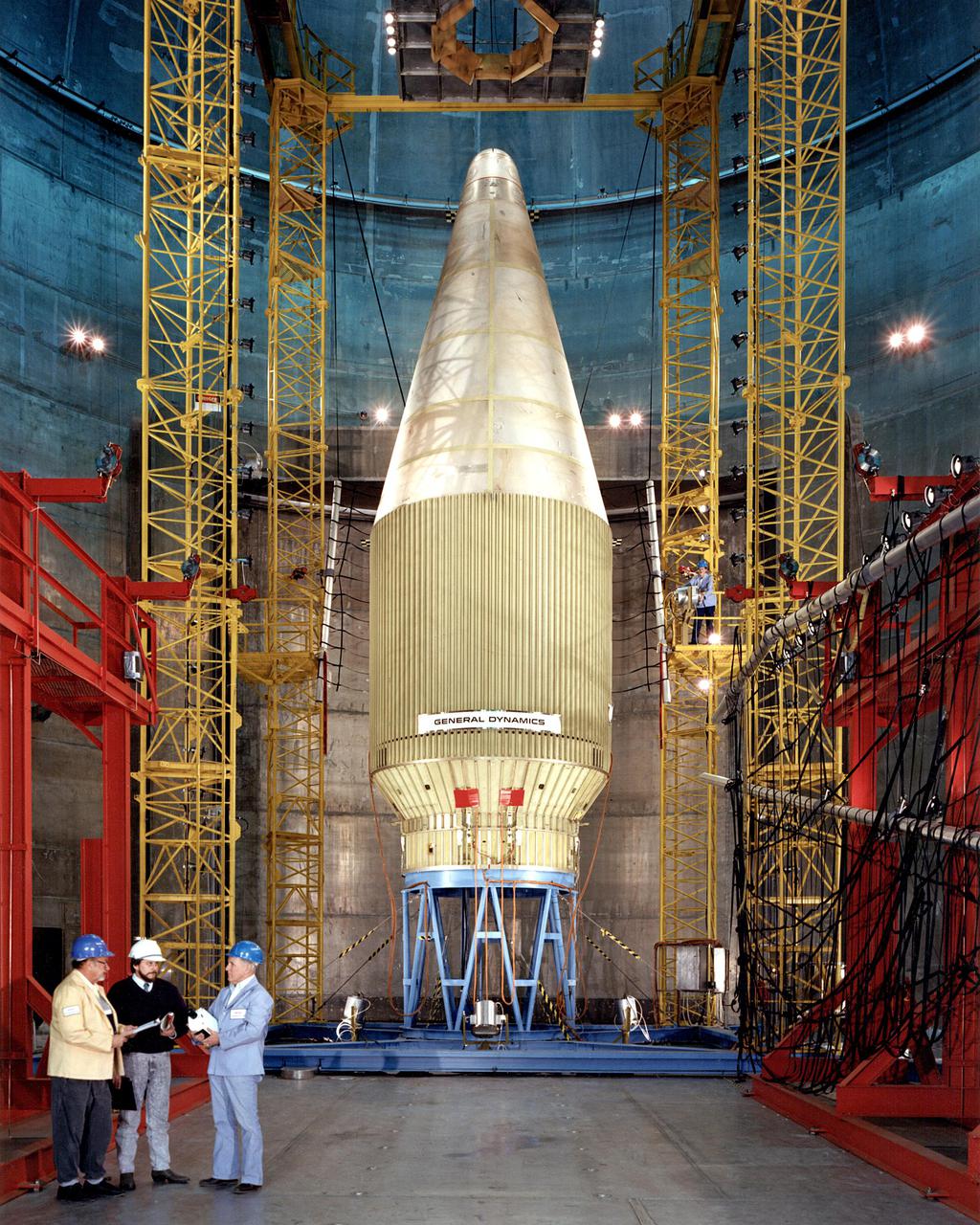
Employees at the Space Power Facility (SPF) at Plum Brook Station tested a new generation of Atlas/Centaur launch vehicles. General Dynamics conducted the tests December 22 and January 3, 1990 to determine the flight readiness of a new 14-foot diameter payload fairing. The fairing will accommodate new weather satellites, the U.S. Air Force Combined Release and Radiation Effects (CRRES) satellite, and other future payloads. At a simulated altitude of 85,000 feet, the cone-shaped fairing separated in half from a hinge at the bottom. Half of the fairing was then released from the test stack and recovered in a catch-net. The payload fairing separations were the first tests of major space hardware to be conducted in the SPF in more than 15 years.

This photograph shows the High Energy Astronomy Observatory (HEAO)-1 being assembled at TRW Systems of Redondo Beach, California. The HEAO was designed and developed by TRW, Inc. under the project management of the Marshall Space Flight Center. The first observatory, designated HEAO-1, was launched on August 12, 1977 aboard an Atlas/Centaur launch vehicle and was designed to survey the sky for additional x-ray and gamma-ray sources as well as pinpointing their positions. The HEAO-1 was originally identified as HEAO-A but the designation was changed once the spacecraft achieved orbit.
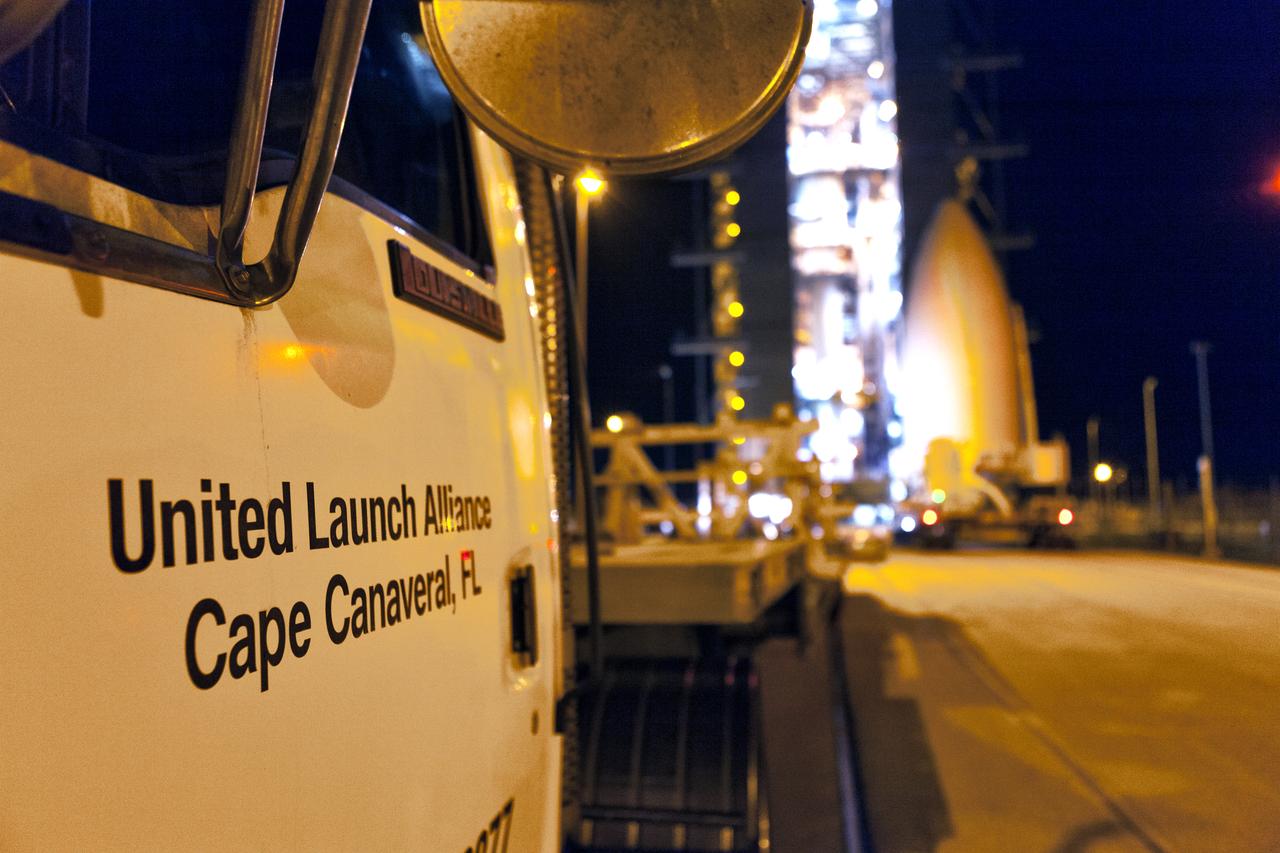
The payload fairing containing NOAA's Geostationary Operational Environmental Satellite-S (GOES-S), secured on a transporter, arrives at the United Launch Alliance (ULA) Vertical Integration Facility at Space Launch Complex 41 at Cape Canaveral Air Force Station in Florida. The payload fairing will be lifted and mated to the ULA Atlas V rocket. GOES-S is the second in a series of four advanced geostationary weather satellites. GOES-S is slated to launch aboard the ULA Atlas V on March 1.
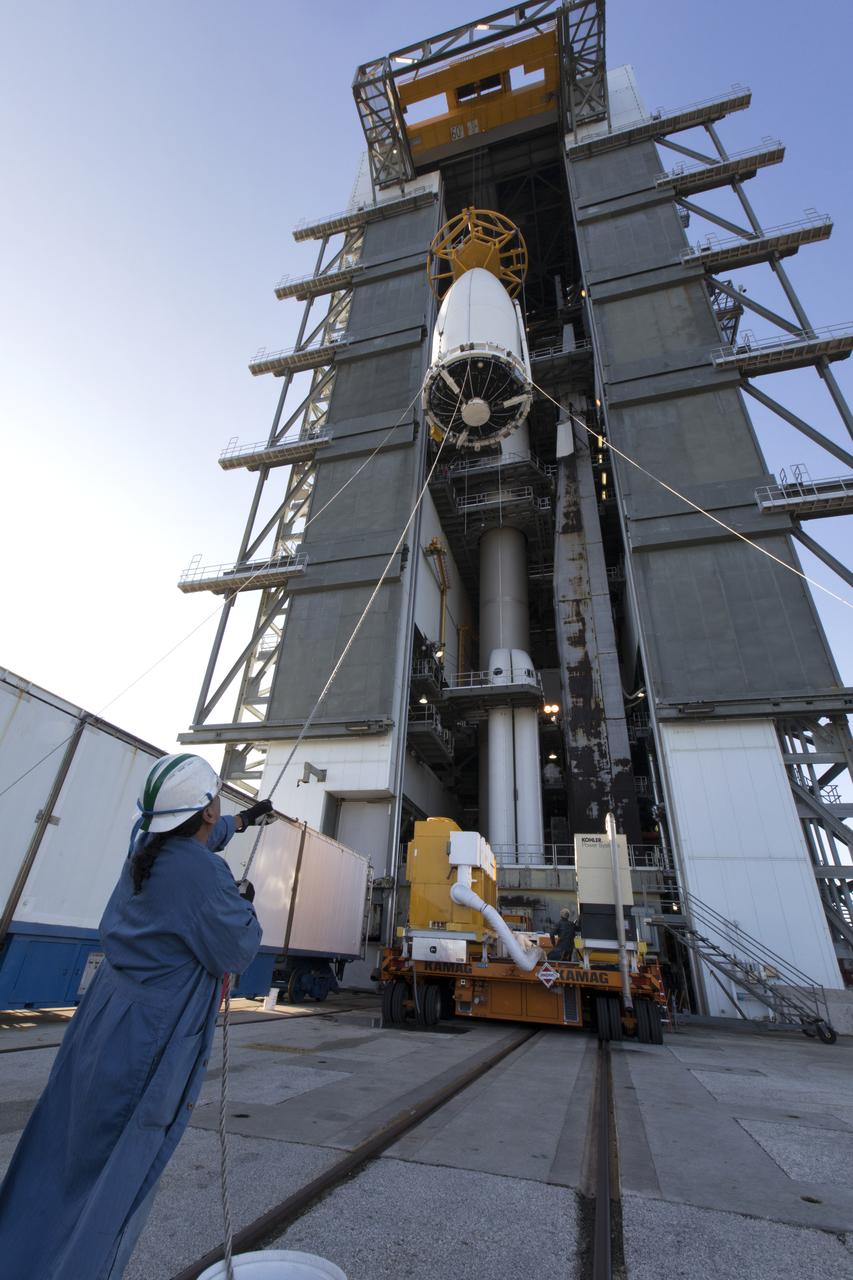
The payload fairing containing NOAA's Geostationary Operational Environmental Satellite-S (GOES-S) is lifted up by crane at the United Launch Alliance (ULA) Vertical Integration Facility at Space Launch Complex 41 at Cape Canaveral Air Force Station in Florida. The fairing will be mated to the ULA Atlas V rocket. GOES-S is the second in a series of four advanced geostationary weather satellites. The satellite is slated to launch aboard the ULA Atlas V on March 1.
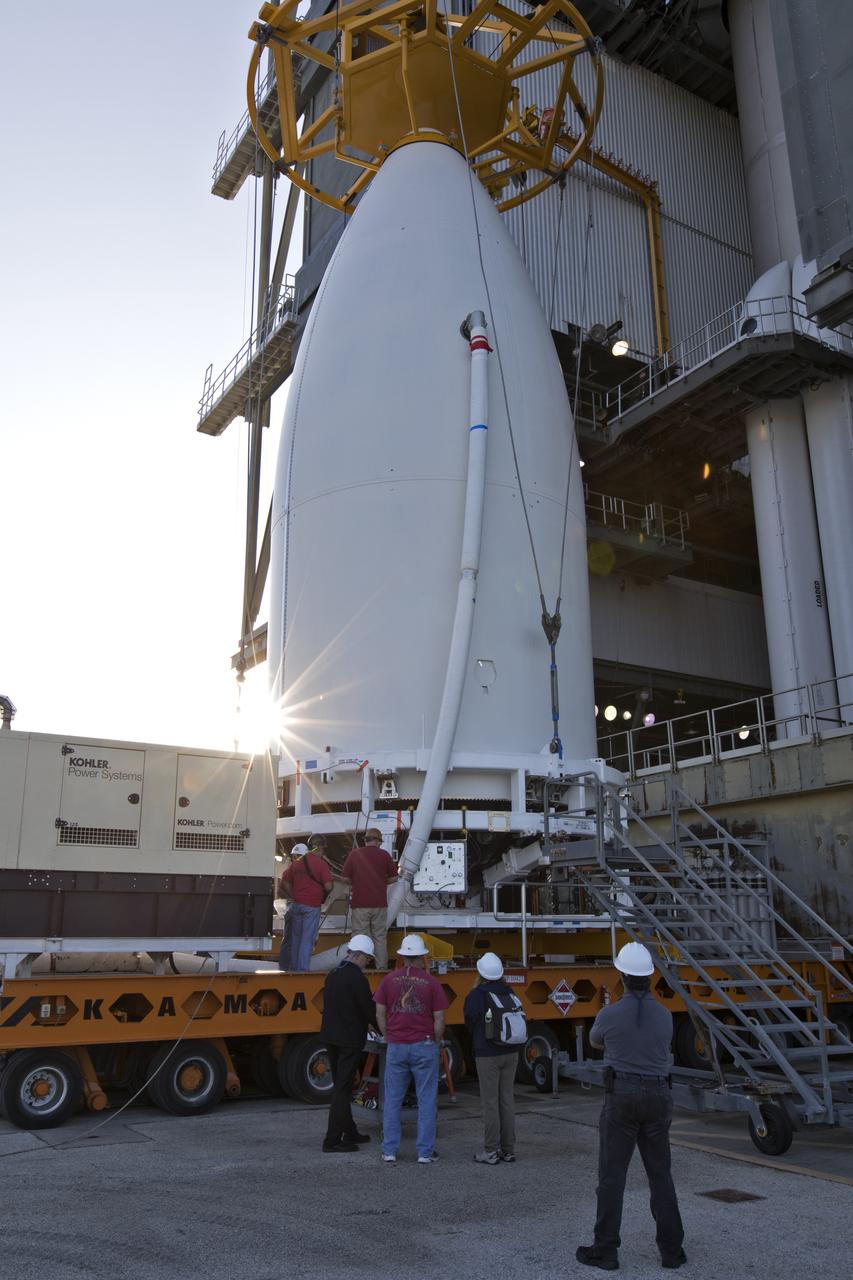
Preparations are underway to lift the payload fairing containing NOAA's Geostationary Operational Environmental Satellite-S (GOES-S) up and into the United Launch Alliance (ULA) Vertical Integration Facility at Space Launch Complex 41 at Cape Canaveral Air Force Station in Florida. The fairing will be mated to the ULA Atlas V rocket. GOES-S is the second in a series of four advanced geostationary weather satellites. The satellite is slated to launch aboard the ULA Atlas V on March 1.
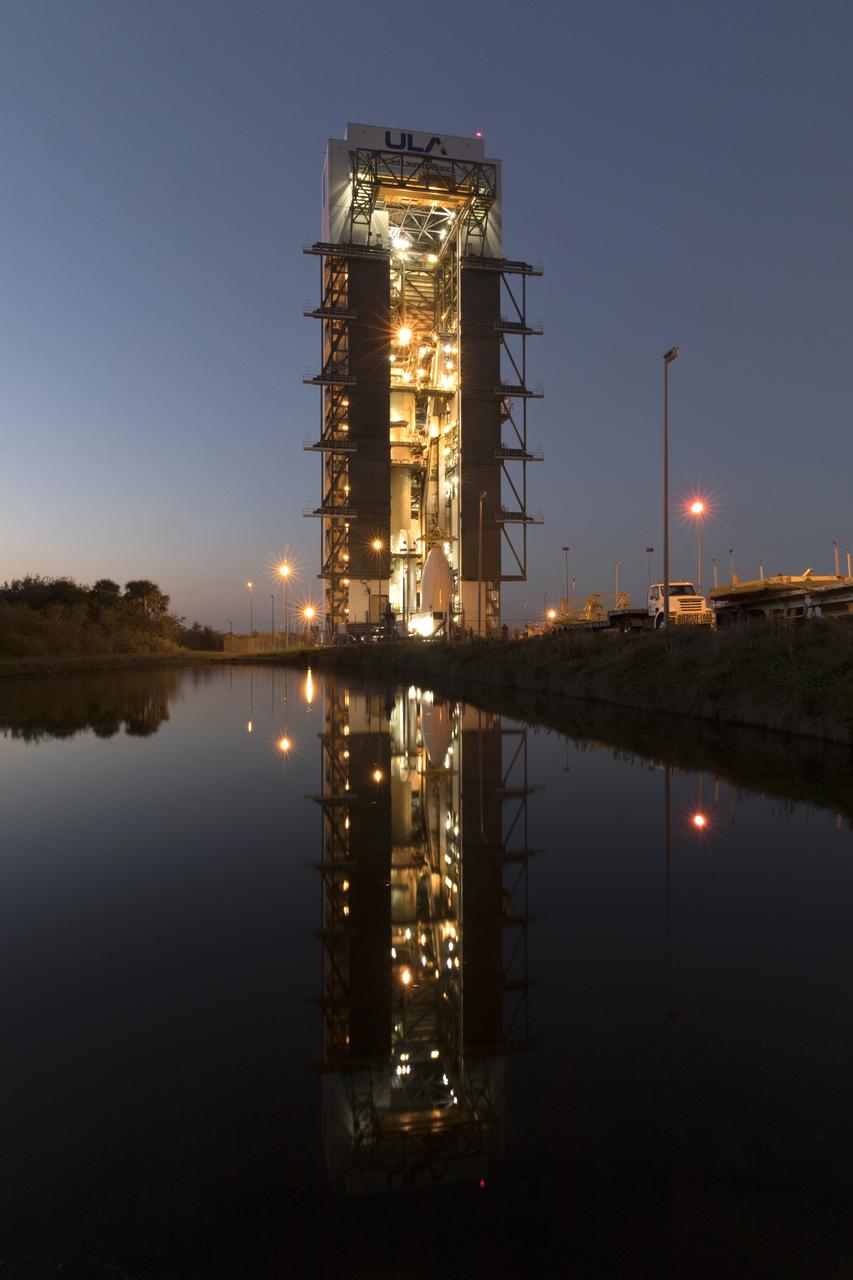
The United Launch Alliance (ULA) Vertical Integration Facility (VIF) is reflected in the water at Space Launch Complex 41 at Cape Canaveral Air Force Station in Florida, as a crane begins to lift the payload fairing containing NOAA's Geostationary Operational Environmental Satellite-S (GOES-S). The fairing will be lifted and mated to the ULA Atlas V rocket. GOES-S is the second in a series of four advanced geostationary weather satellites. The satellite is slated to launch aboard the ULA Atlas V on March 1.
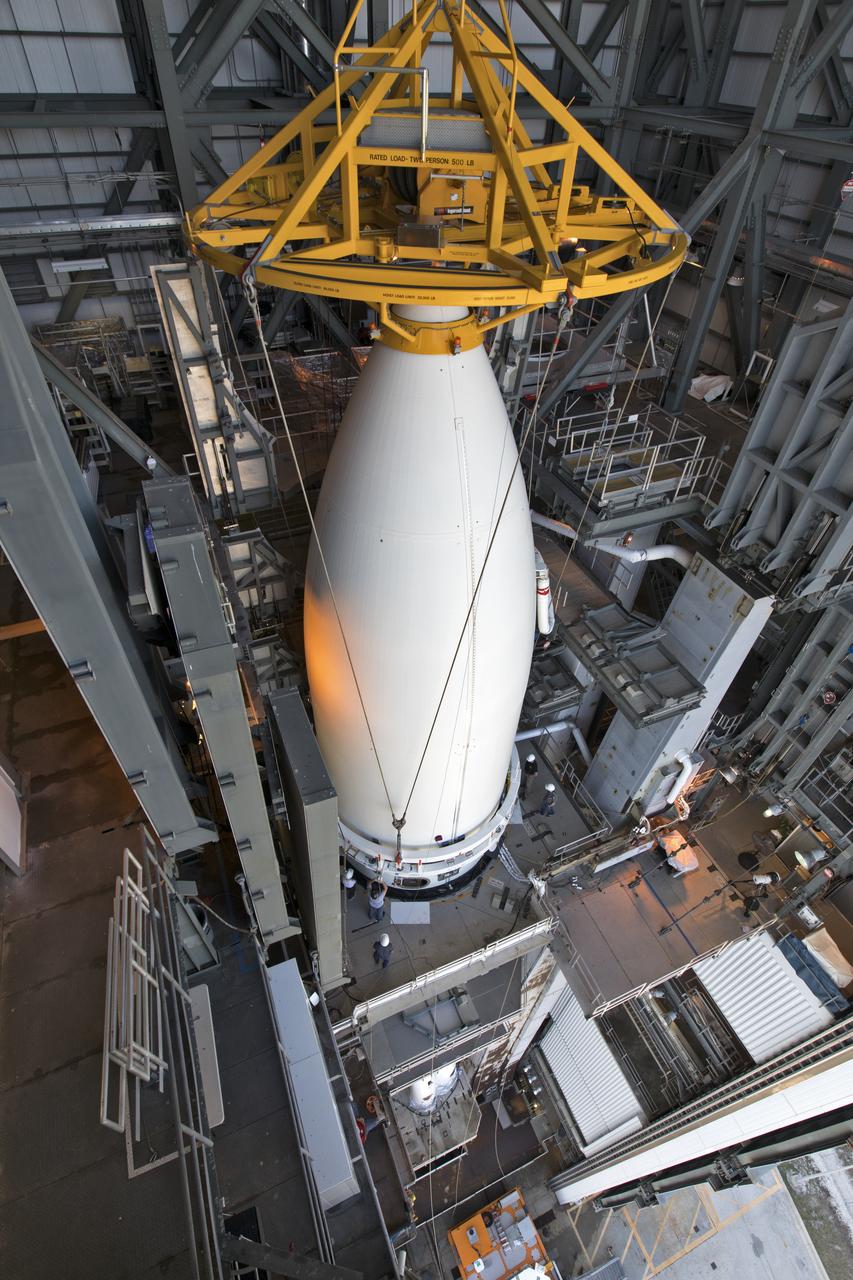
A view from above shows the payload fairing containing NOAA's Geostationary Operational Environmental Satellite-S (GOES-S) lifted and moved into the United Launch Alliance (ULA) Vertical Integration Facility at Space Launch Complex 41 at Cape Canaveral Air Force Station in Florida. The fairing will be lowered and secured on the ULA Atlas V rocket. GOES-S is the second in a series of four advanced geostationary weather satellites. The satellite is slated to launch aboard the ULA Atlas V on March 1.
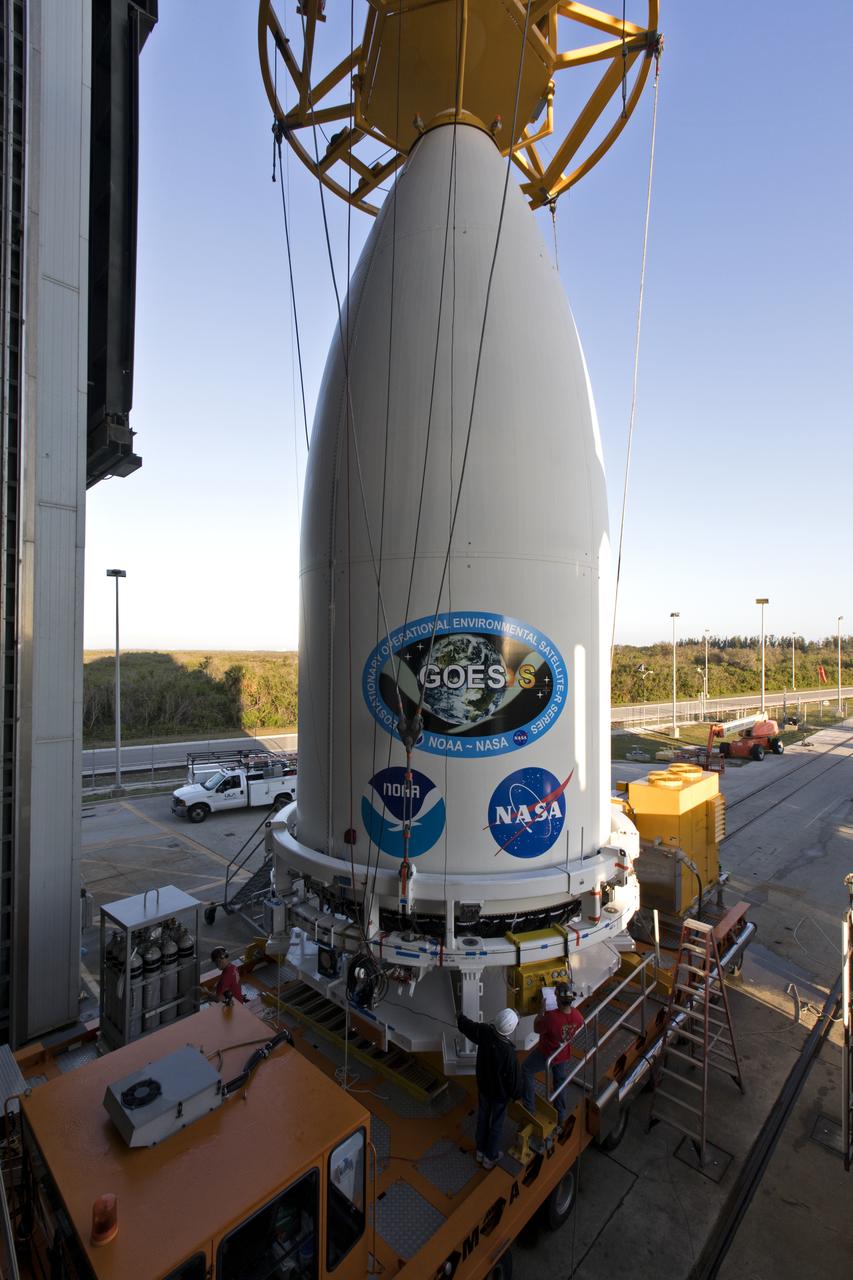
A crane is attached to the payload fairing containing NOAA's Geostationary Operational Environmental Satellite-S (GOES-S) and preparations are underway to lift it up and into the United Launch Alliance (ULA) Horizontal Integration Facility at Space Launch Complex 41 at Cape Canaveral Air Force Station in Florida. The fairing will be mated to the ULA Atlas V rocket. GOES-S is the second in a series of four advanced geostationary weather satellites. The satellite is slated to launch aboard the ULA Atlas V on March 1.
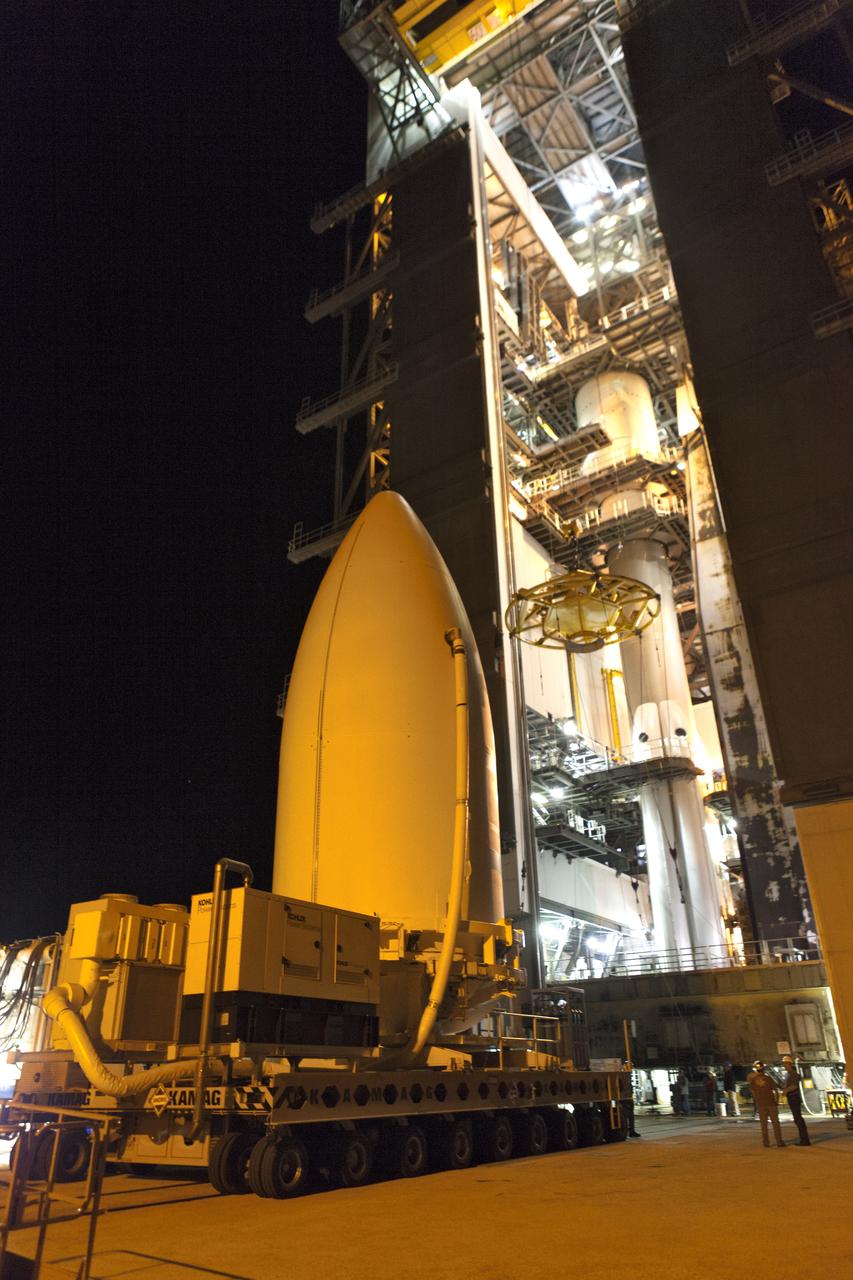
The payload fairing containing NOAA's Geostationary Operational Environmental Satellite-S (GOES-S), secured on a transporter, arrives at the United Launch Alliance (ULA) Vertical Integration Facility at Space Launch Complex 41 at Cape Canaveral Air Force Station in Florida. The payload fairing will be lifted and mated to the ULA Atlas V rocket. GOES-S is the second in a series of four advanced geostationary weather satellites. GOES-S is slated to launch aboard the ULA Atlas V on March 1.
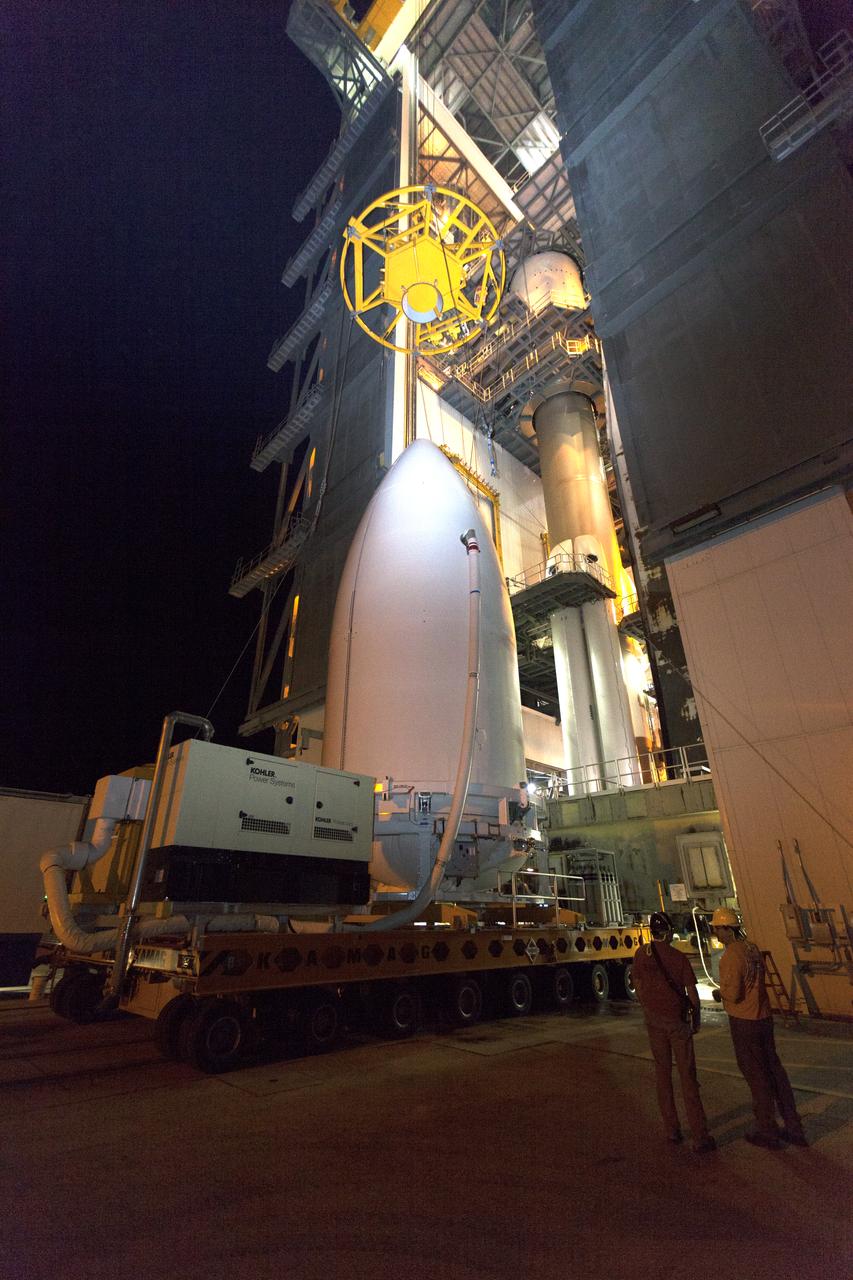
The payload fairing containing NOAA's Geostationary Operational Environmental Satellite-S (GOES-S), secured on a transporter, arrives at the United Launch Alliance (ULA) Vertical Integration Facility at Space Launch Complex 41 at Cape Canaveral Air Force Station in Florida. The payload fairing will be lifted and mated to the ULA Atlas V rocket. GOES-S is the second in a series of four advanced geostationary weather satellites. GOES-S is slated to launch aboard the ULA Atlas V on March 1.
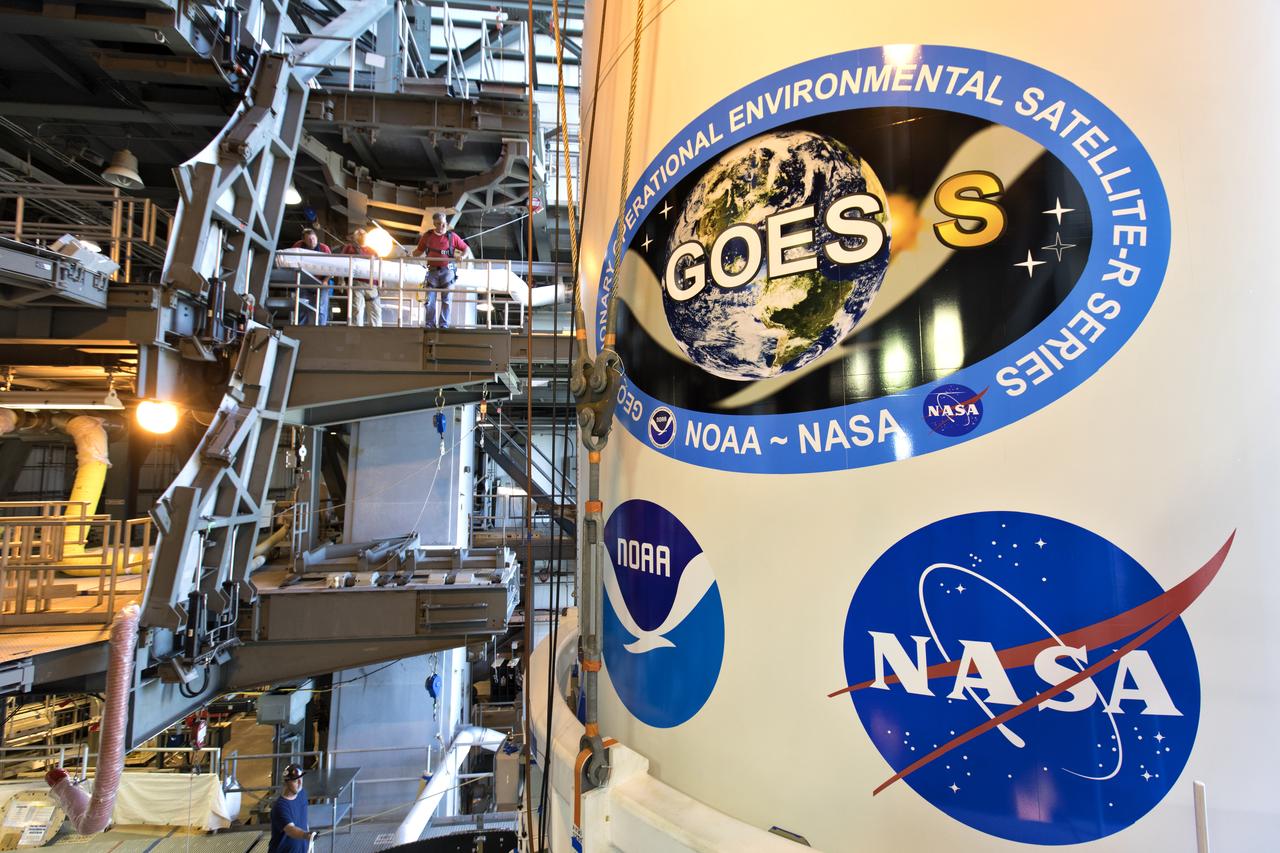
The payload fairing containing NOAA's Geostationary Operational Environmental Satellite-S (GOES-S) was lifted up by crane and moved into the United Launch Alliance (ULA) Vertical Integration Facility at Space Launch Complex 41 at Cape Canaveral Air Force Station in Florida. The fairing will be mated to the ULA Atlas V rocket. GOES-S is the second in a series of four advanced geostationary weather satellites. The satellite is slated to launch aboard the ULA Atlas V on March 1.
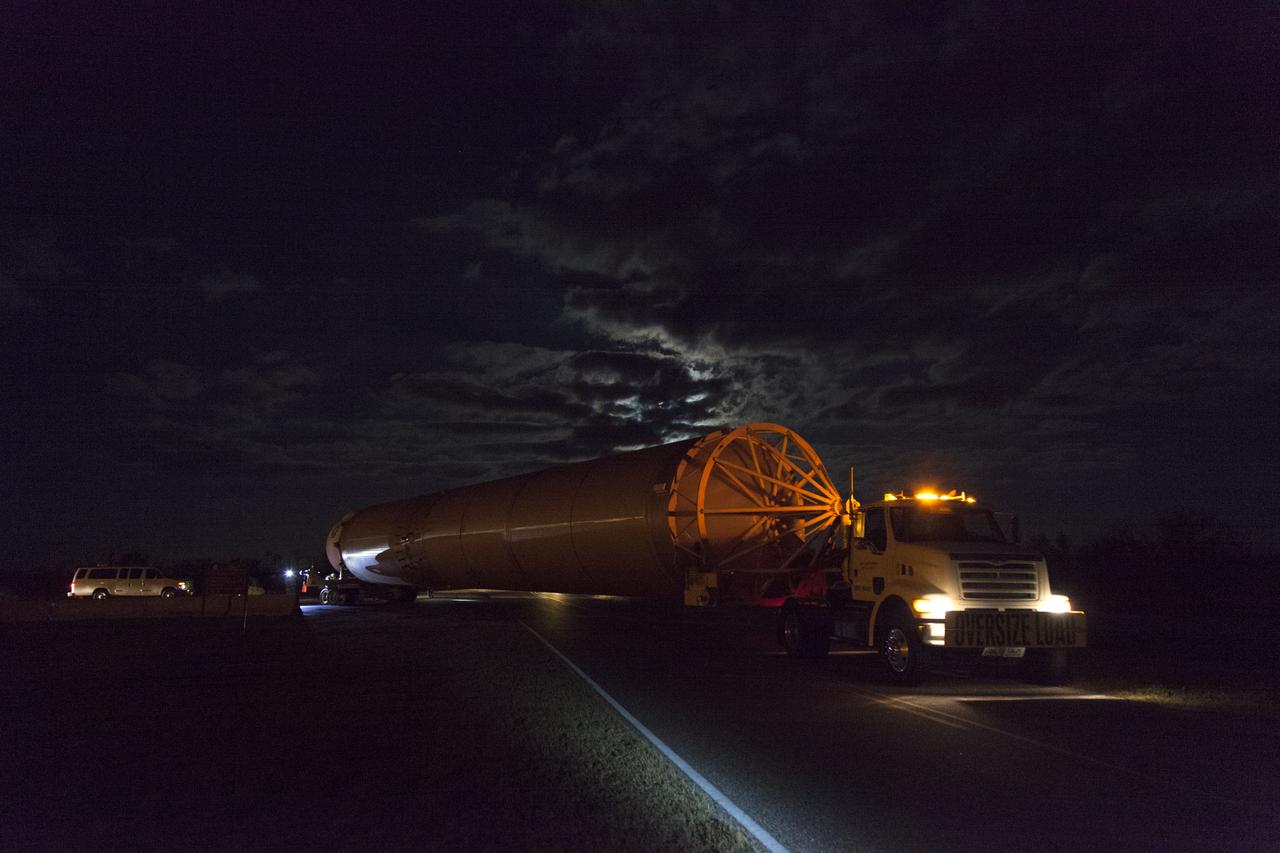
A United Launch Alliance Atlas V first stage leaves the Atlas Spaceflight Operations Center aboard a transport trailer for delivery to the Vertical Integration Facility at Space Launch Complex 41 at Cape Canaveral Air Force Station in Florida. The rocket is being prepared to launch the Geostationary Operational Environmental Satellite, or GOES-S. It will be the second in a series of four advanced geostationary weather satellites and will significantly improve the detection and observation of environmental phenomena that directly affect public safety. GOES-S is slated to launch March 1, 2018.
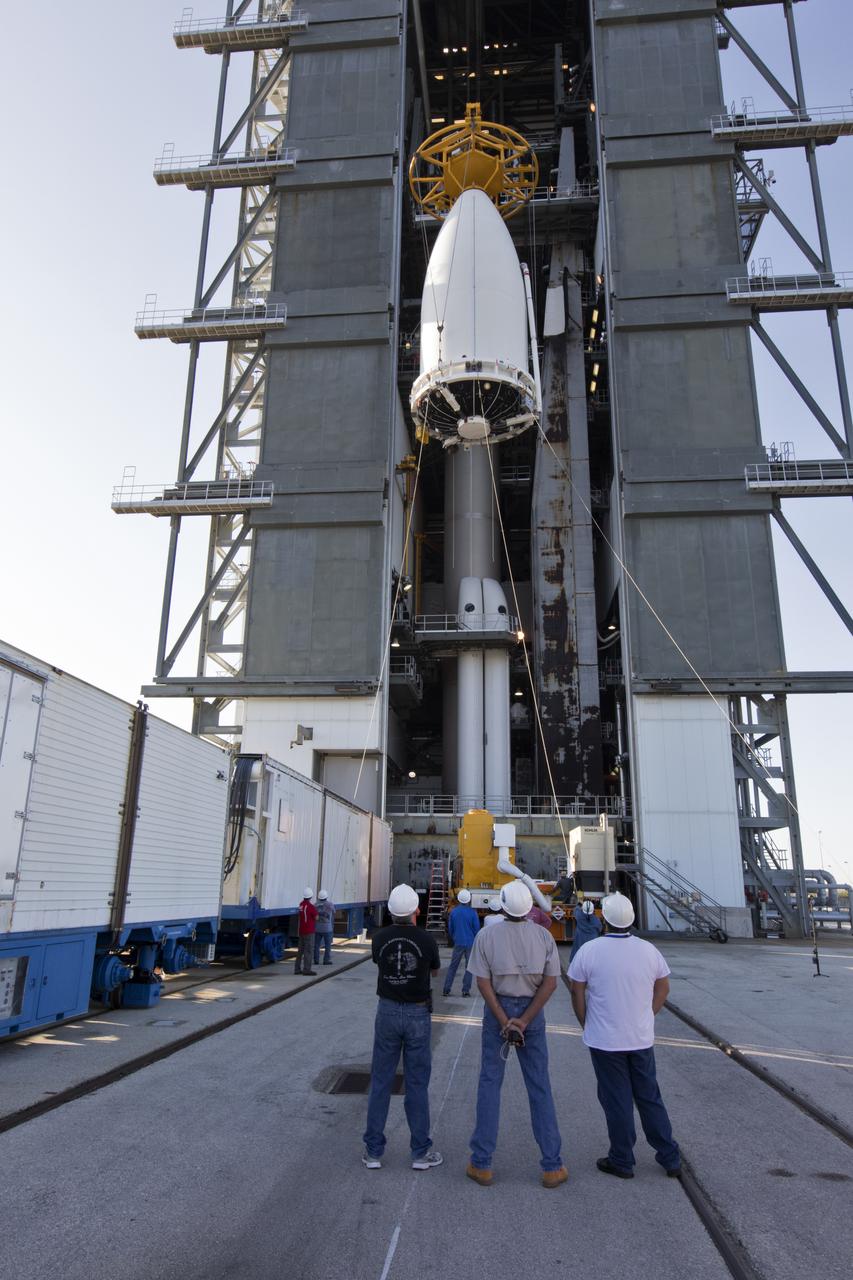
The payload fairing containing NOAA's Geostationary Operational Environmental Satellite-S (GOES-S) is lifted up by crane at the United Launch Alliance (ULA) Vertical Integration Facility at Space Launch Complex 41 at Cape Canaveral Air Force Station in Florida. The fairing will be mated to the ULA Atlas V rocket. GOES-S is the second in a series of four advanced geostationary weather satellites. The satellite is slated to launch aboard the ULA Atlas V on March 1.
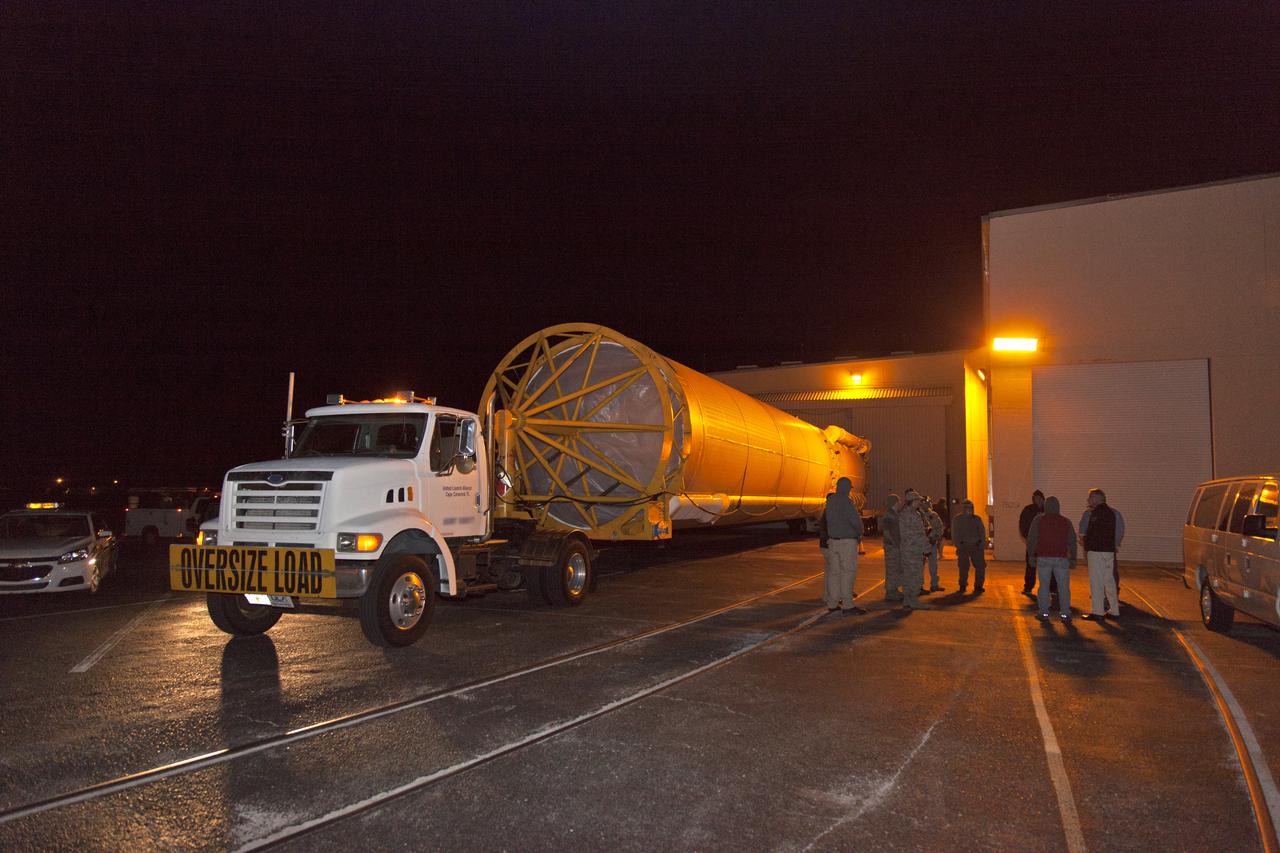
A United Launch Alliance Atlas V first stage leaves the Atlas Spaceflight Operations Center aboard a transport trailer for delivery to the Vertical Integration Facility at Space Launch Complex 41 at Cape Canaveral Air Force Station in Florida. The rocket is being prepared to launch the Geostationary Operational Environmental Satellite, or GOES-S. It will be the second in a series of four advanced geostationary weather satellites and will significantly improve the detection and observation of environmental phenomena that directly affect public safety. GOES-S is slated to launch March 1, 2018.
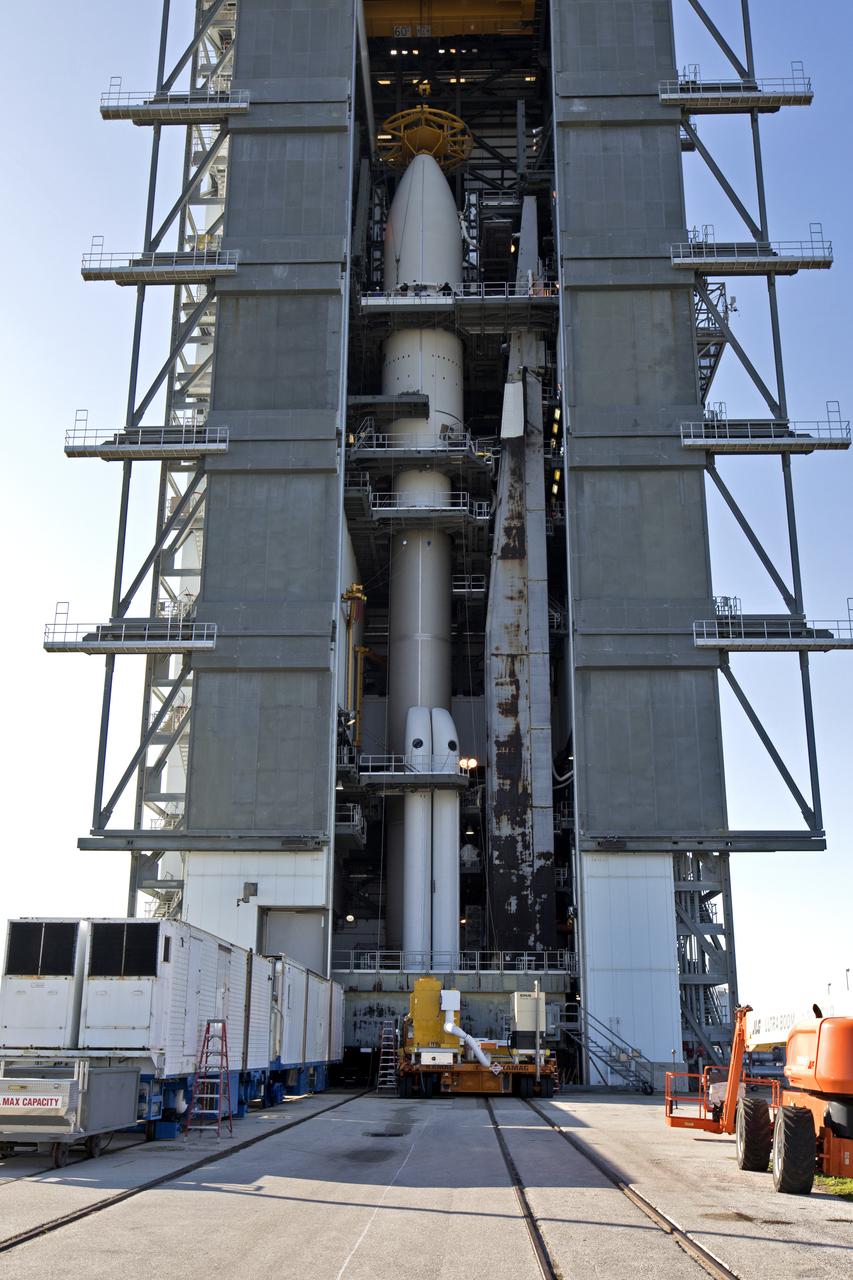
The payload fairing containing NOAA's Geostationary Operational Environmental Satellite-S (GOES-S) is lowered by crane onto the United Launch Alliance (ULA) Atlas V rocket in the ULA Vertical Integration Facility at Space Launch Complex 41 at Cape Canaveral Air Force Station in Florida. The fairing will be secured to the rocket in preparation for launch. GOES-S is the second in a series of four advanced geostationary weather satellites. The satellite is slated to launch aboard the ULA Atlas V on March 1.
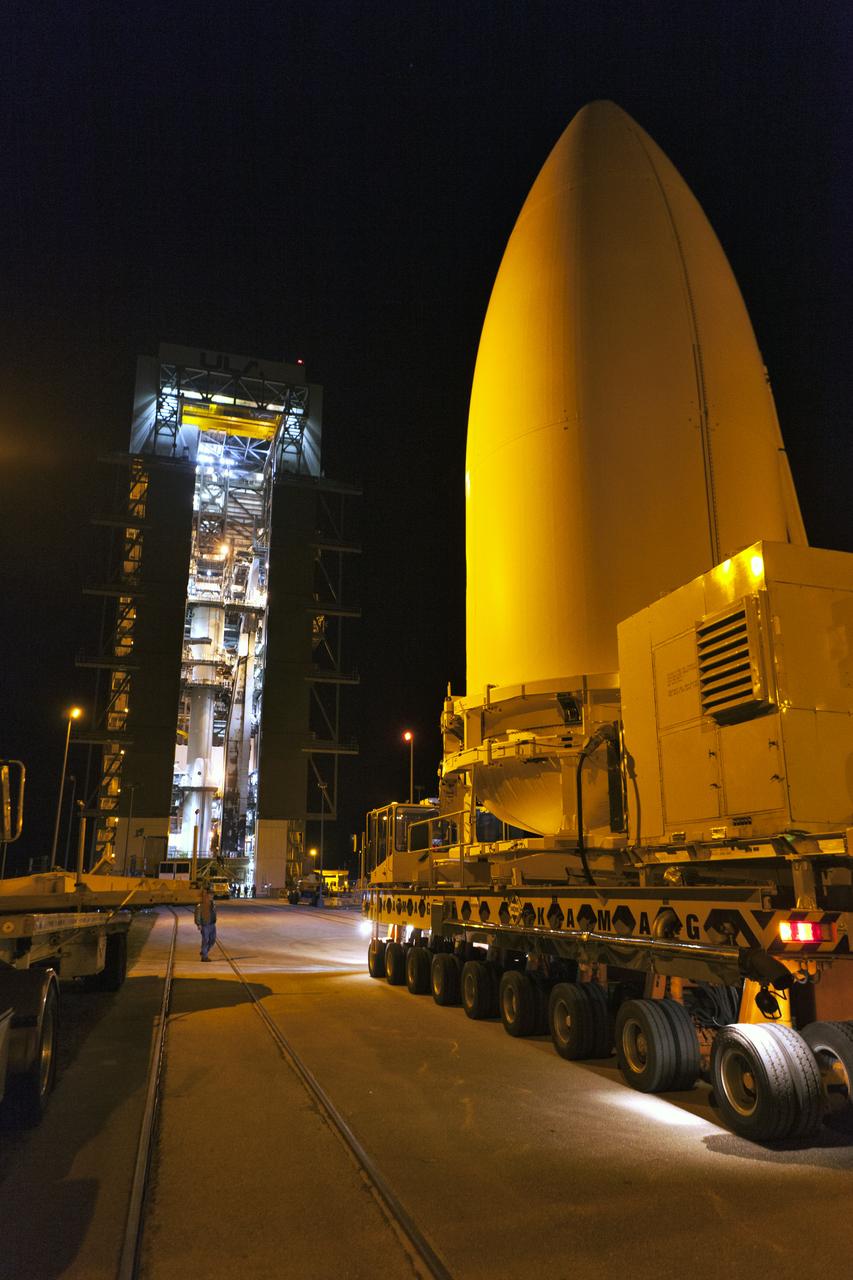
The payload fairing containing NOAA's Geostationary Operational Environmental Satellite-S (GOES-S), secured on a transporter, arrives at the United Launch Alliance (ULA) Vertical Integration Facility at Space Launch Complex 41 at Cape Canaveral Air Force Station in Florida. The payload fairing will be lifted and mated to the ULA Atlas V rocket. GOES-S is the second in a series of four advanced geostationary weather satellites. GOES-S is slated to launch aboard the ULA Atlas V on March 1.
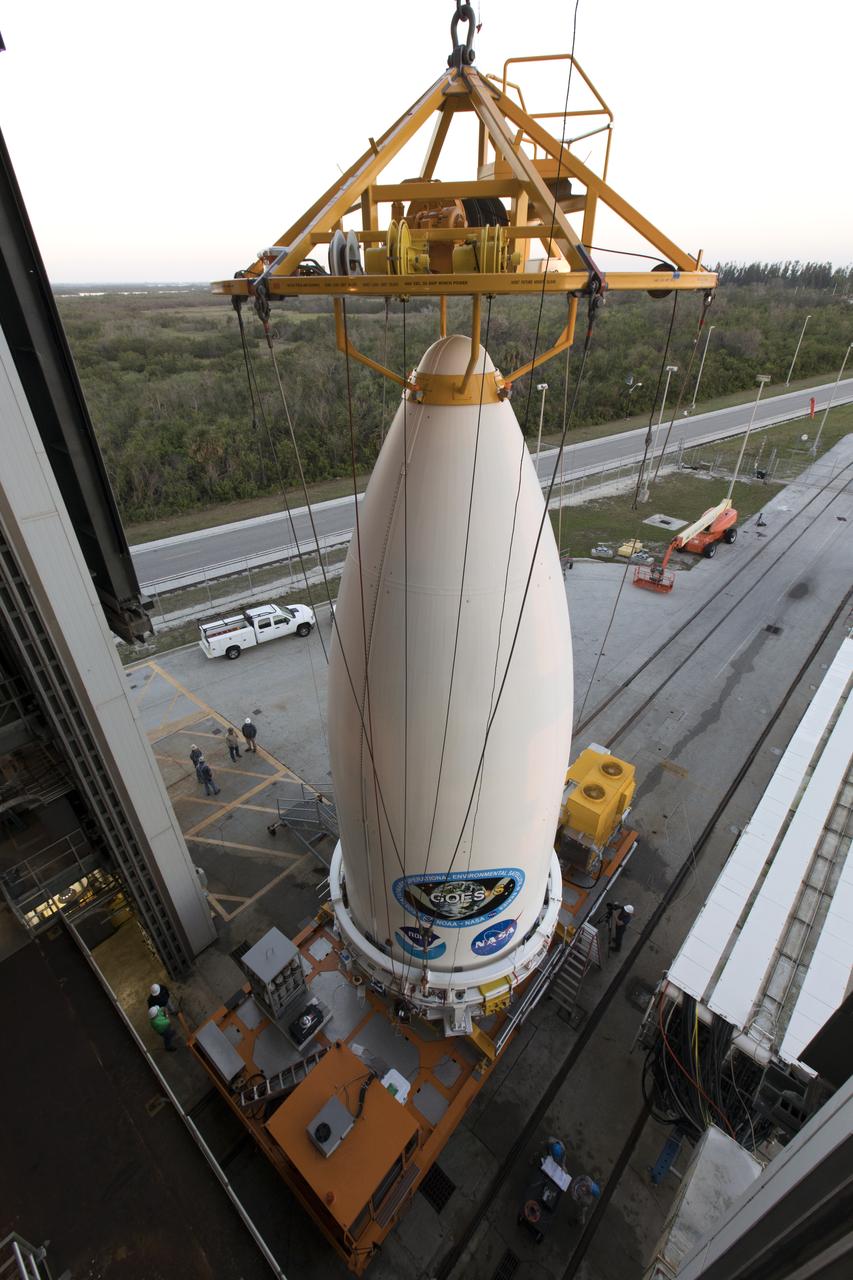
A view from above shows a crane attached to the payload fairing containing NOAA's Geostationary Operational Environmental Satellite-S (GOES-S). The fairing will be lifted and moved into the Vertical Integration Facility at Space Launch Complex 41 at Cape Canaveral Air Force Station in Florida. The fairing will be lifted and mated to the ULA Atlas V rocket. GOES-S is the second in a series of four advanced geostationary weather satellites. The satellite is slated to launch aboard the ULA Atlas V on March 1.
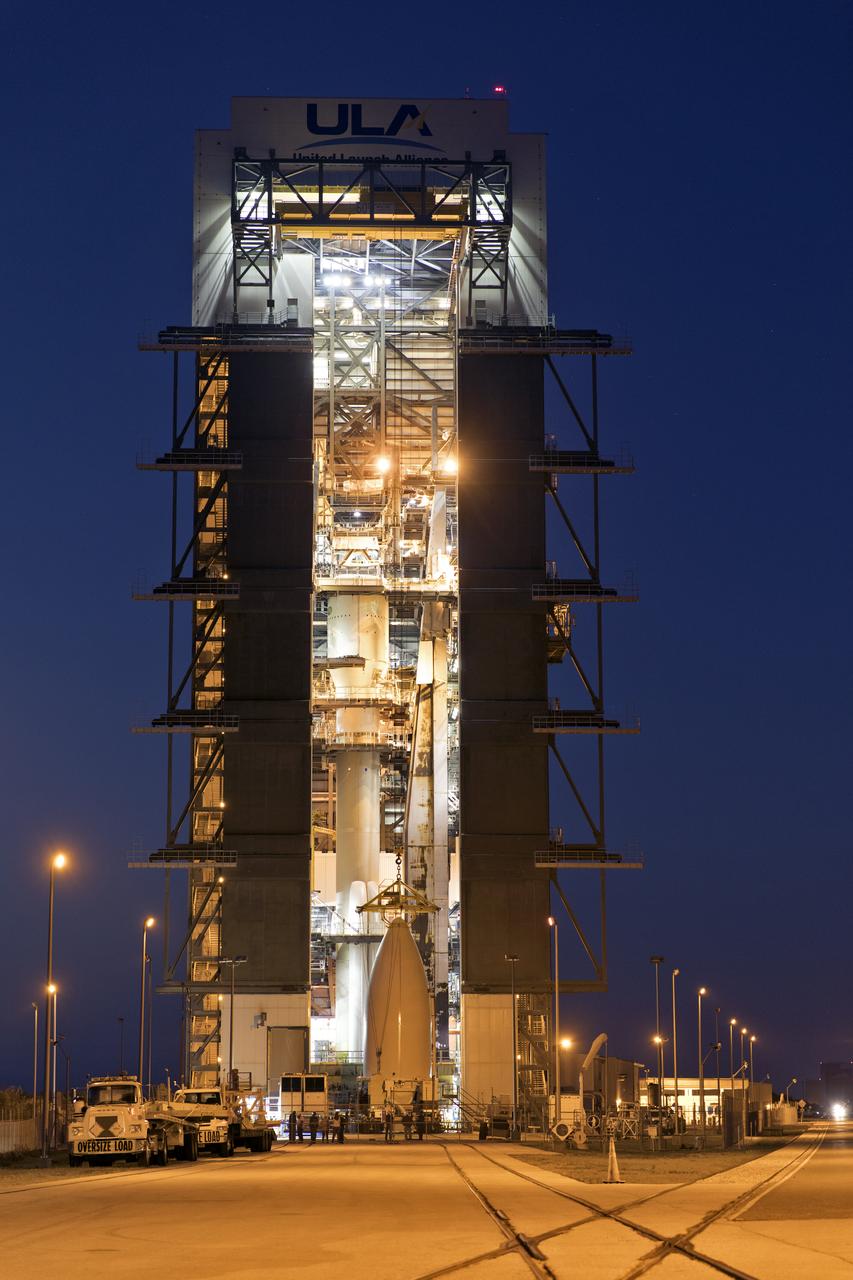
A crane has been attached to the payload fairing containing NOAA's Geostationary Operational Environmental Satellite-S (GOES-S) at the United Launch Alliance (ULA) Vertical Integration Facility at Space Launch Complex 41 at Cape Canaveral Air Force Station in Florida. The fairing will be lifted and mated to the ULA Atlas V rocket. GOES-S is the second in a series of four advanced geostationary weather satellites. The satellite is slated to launch aboard the ULA Atlas V on March 1.
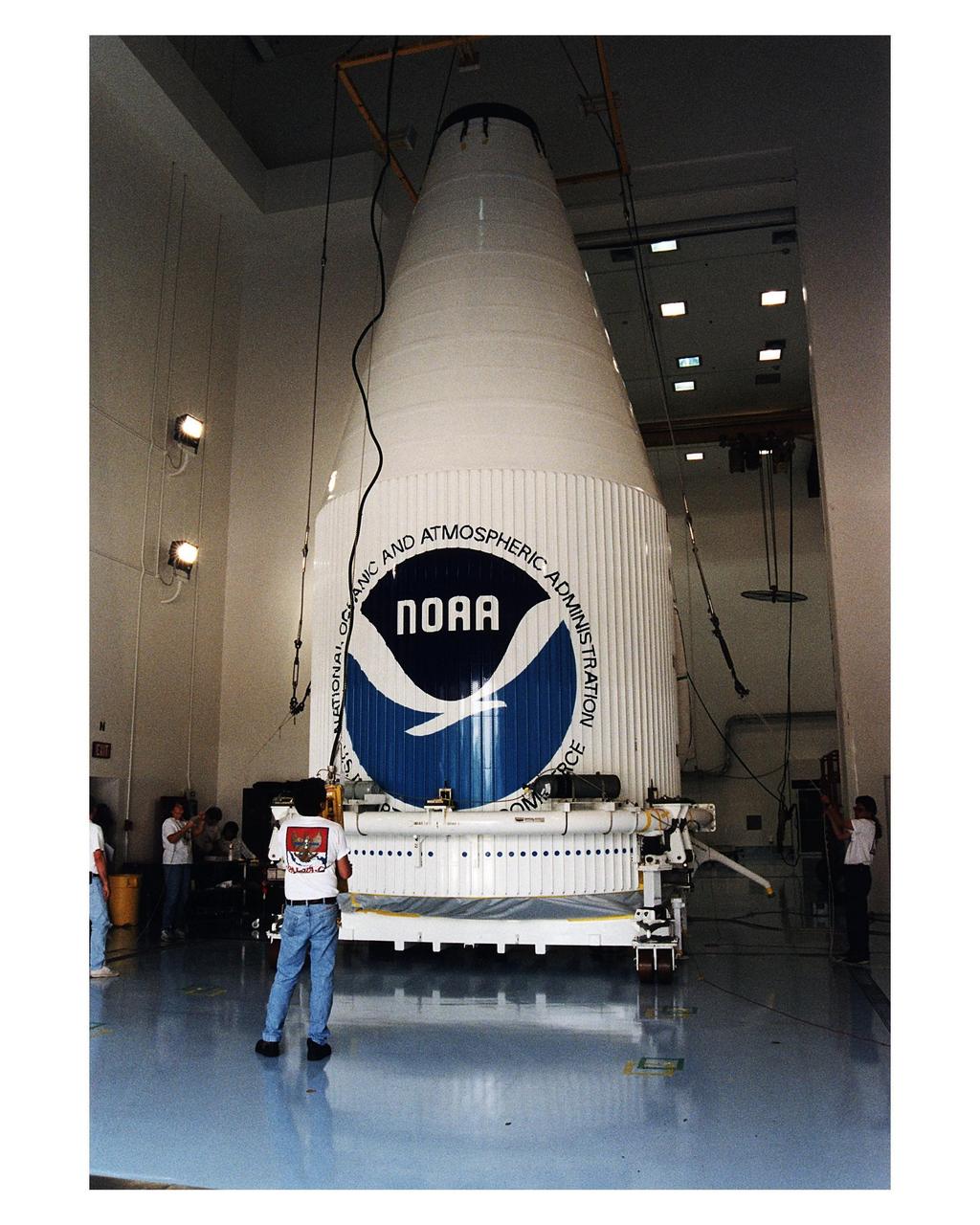
The GOES-K advanced weather satellite, already encapsulated in the Atlas 1 payload fairing, is carefully placed on the transporter at Astrotech Space Operations LP facility in Titusville. GOES-K will be the third spacecraft to be launched in the advanced series of Geostationary Operational Environmental Satellites (GOES). The GOES satellites are owned and operated by the National Oceanic and Atmospheric Administration (NOAA); NASA manages the design, development and launch of the spacecraft. GOES-K is targeted for an <a href="http://www-pao.ksc.nasa.gov/kscpao/release/1997/63-97.htm">April 24 launch</a> aboard a Lockheed Martin Atlas 1 expendable launch vehicle (AC-79) from Launch Complex 36, Pad B, Cape Canaveral Air Station. The launch window opens at 1:50 a.m. and extends to 3:09 a.m. EDT. Once in orbit, GOES-K will become GOES-10, joining GOES-8 and GOES-9 in space
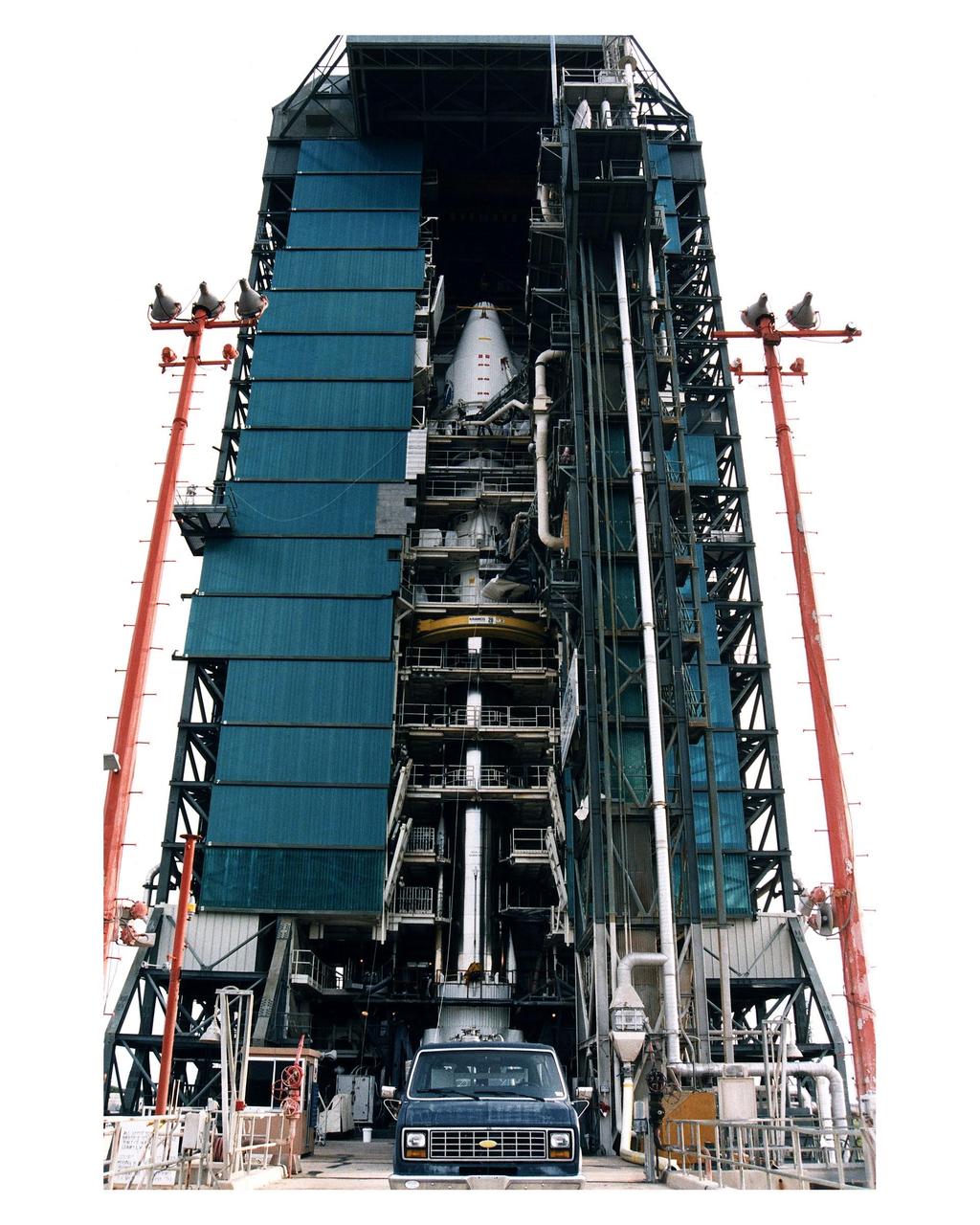
The Atlas 1 payload fairing with the encapsulated GOES-K advanced weather satellite, at top center, is mated to the Lockheed Martin Atlas 1 expendable launch vehicle (AC-79) at Launch Complex 36, Pad B, Cape Canaveral Air Station. GOES-K will be the third spacecraft to be launched in the advanced series of Geostationary Operational Environmental Satellites (GOES). The GOES satellites are owned and operated by the National Oceanic and Atmospheric Administration (NOAA); NASA manages the design, development and launch of the spacecraft. GOES-K is targeted for an <a href="http://www-pao.ksc.nasa.gov/kscpao/release/1997/63-97.htm">April 24 launch</a> during a launch window which extends from 1:50-3:09 a.m. EDT
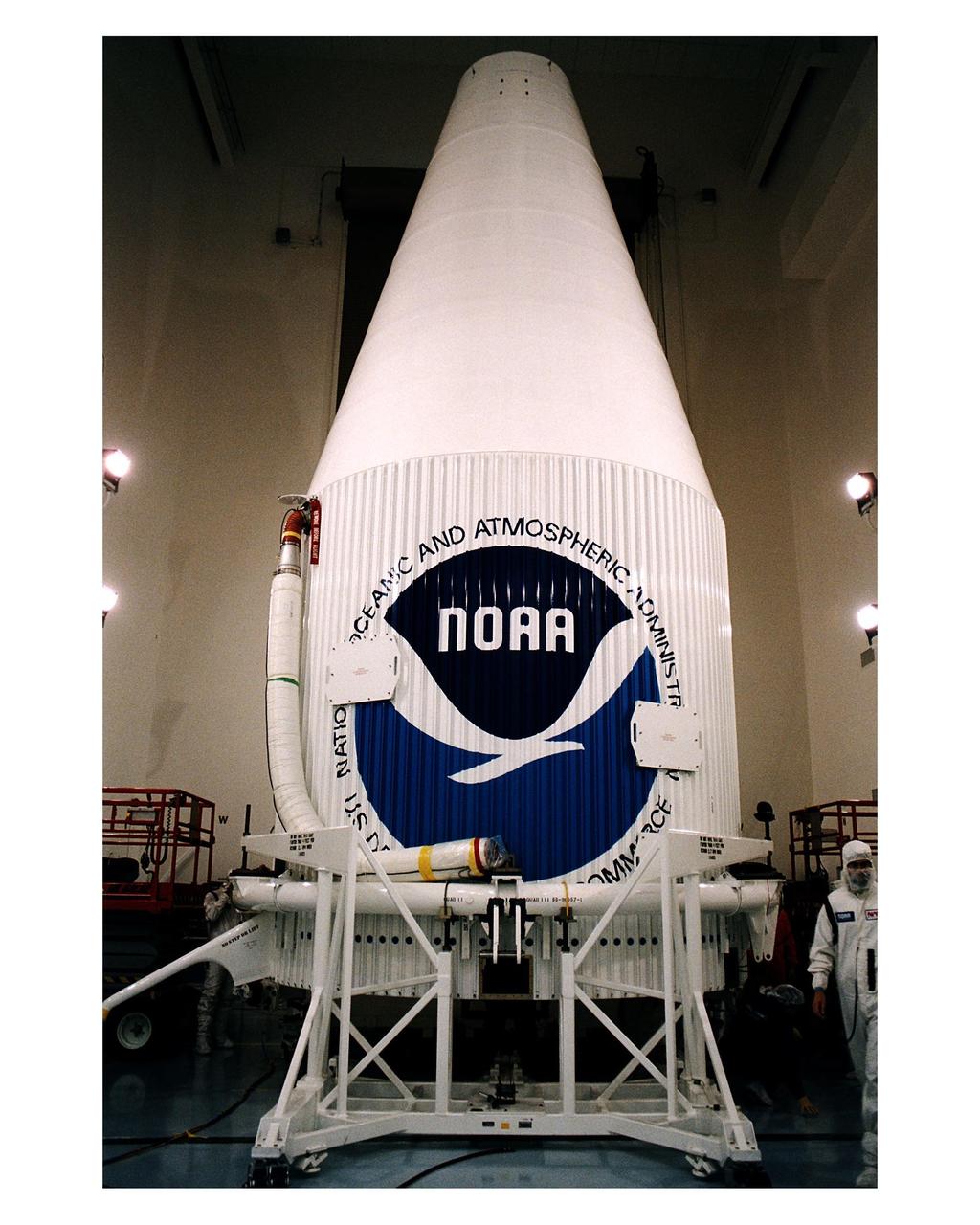
The Atlas 1 payload fairing with the encapsulated GOES-K advanced weather satellite awaits transport to the launch pad. GOES-K was prepared for launch at the Astrotech Space Operations LP facility in Titusville. GOES-K will be the third spacecraft to be launched in the advanced series of Geostationary Operational Environmental Satellites (GOES). The GOES satellites are owned and operated by the National Oceanic and Atmospheric Administration (NOAA); NASA manages the design, development and launch of the spacecraft. GOES-K is targeted for an <a href="http://www-pao.ksc.nasa.gov/kscpao/release/1997/63-97.htm">April 24 launch</a> aboard a Lockheed Martin Atlas 1 expendable launch vehicle (AC-79) from Launch Complex 36, Pad B, Cape Canaveral Air Station. The launch window opens at 1:50 a.m. and extends to 3:09 a.m. EDT. Once in orbit, GOES-K will become GOES-10, joining GOES-8 and GOES-9 in space
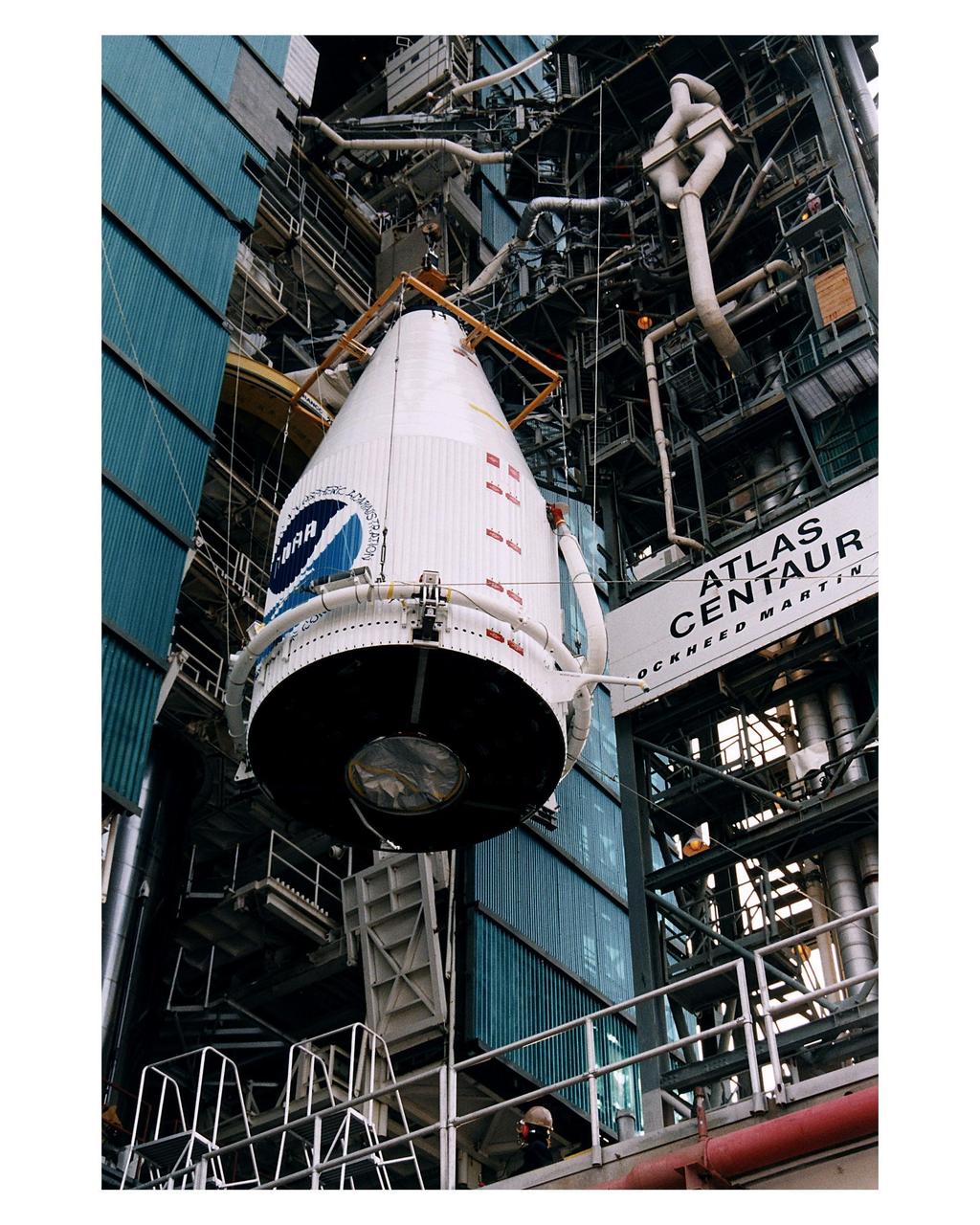
The Atlas 1 payload fairing with the encapsulated GOES-K advanced weather satellite is being lifted into position for mating to the Lockheed Martin Atlas 1 expendable launch vehicle (AC-79) at Launch Complex 36, Pad B, Cape Canaveral Air Station. GOES-K will be the third spacecraft to be launched in the advanced series of Geostationary Operational Environmental Satellites (GOES). The GOES satellites are owned and operated by the National Oceanic and Atmospheric Administration (NOAA); NASA manages the design, development and launch of the spacecraft. GOES-K is targeted for an <a href="http://www-pao.ksc.nasa.gov/kscpao/release/1997/63-97.htm">April 24 launch</a> during a launch window which extends from 1:50-3:09 a.m. EDT. Once in orbit, GOES-K will become GOES-10, joining GOES-8 and GOES-9 in space
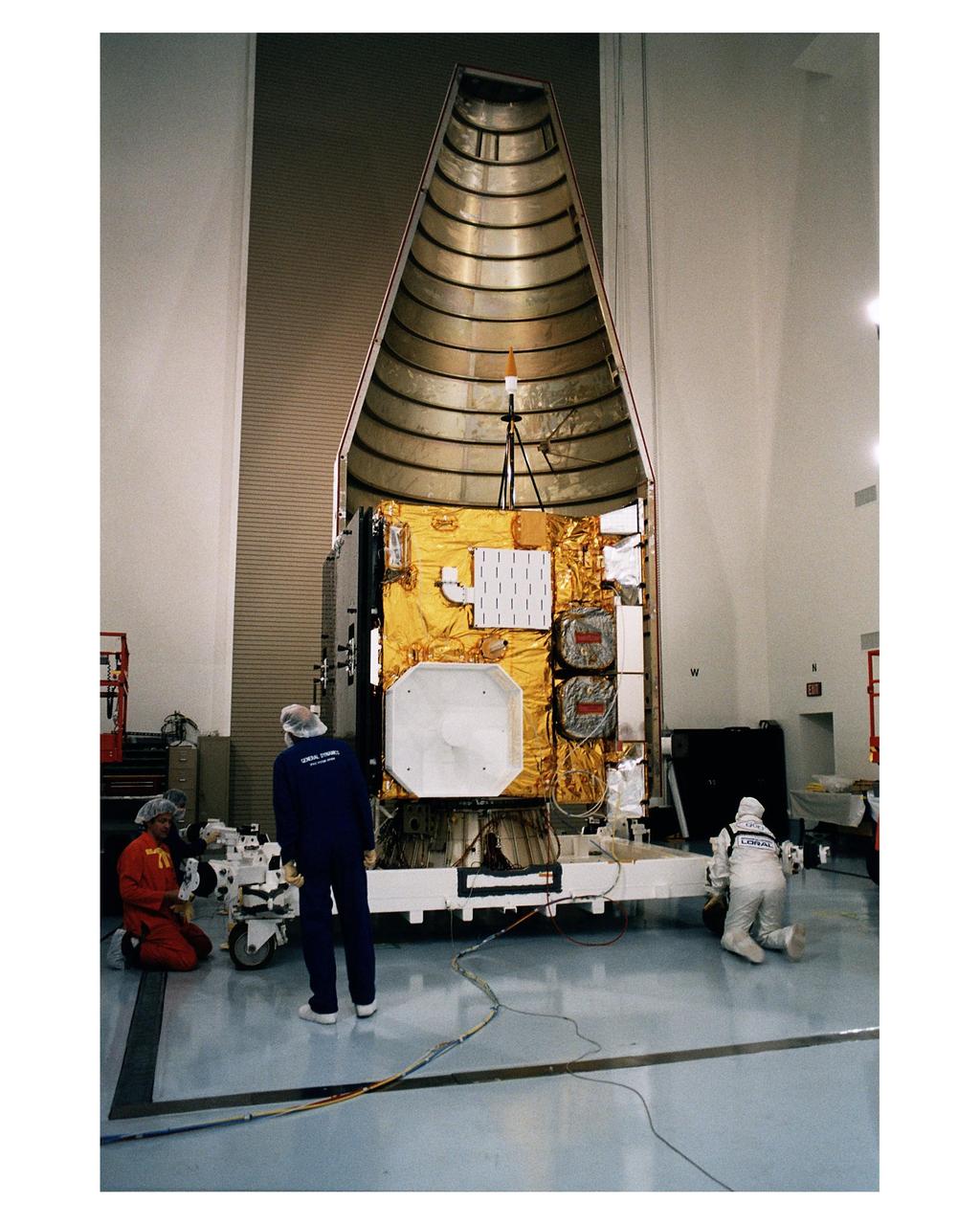
Workers at the Astrotech Space Operations LP facility in Titusville make final checks and adjustments after encapsulating the GOES-K advanced weather satellite in the Atlas 1 payload fairing. GOES-K will be the third spacecraft to be launched in the advanced series of Geostationary Operational Environmental Satellites (GOES). The GOES satellites are owned and operated by the National Oceanic and Atmospheric Administration (NOAA); NASA manages the design, development and launch of the spacecraft. GOES-K is targeted for an <a href="http://www-pao.ksc.nasa.gov/kscpao/release/1997/63-97.htm">April 24 launch</a> aboard a Lockheed Martin Atlas 1 expendable launch vehicle (AC-79) from Launch Complex 36, Pad B, Cape Canaveral Air Station. The launch window opens at 1:50 a.m. and extends to 3:09 a.m. EDT. Once in orbit, GOES-K will become GOES-10, joining GOES-8 and GOES-9 in space
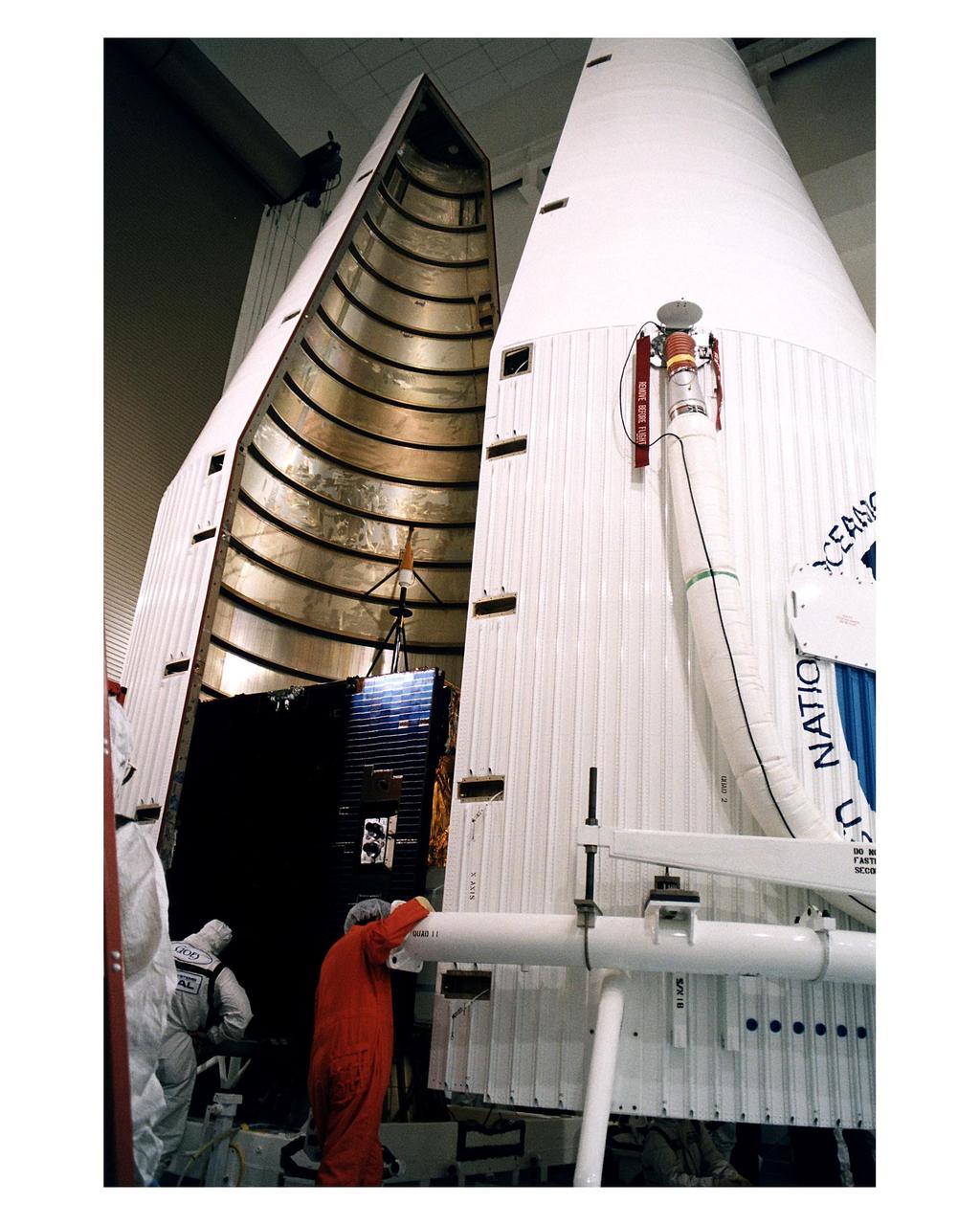
Workers at the Astrotech Space Operations LP facility in Titusville make final checks and adjustments after encapsulating the GOES-K advanced weather satellite in the Atlas 1 payload fairing. GOES-K will be the third spacecraft to be launched in the advanced series of Geostationary Operational Environmental Satellites (GOES). The GOES satellites are owned and operated by the National Oceanic and Atmospheric Administration (NOAA); NASA manages the design, development and launch of the spacecraft. GOES-K is targeted for an <a href="http://www-pao.ksc.nasa.gov/kscpao/release/1997/63-97.htm">April 24 launch</a> aboard a Lockheed Martin Atlas 1 expendable launch vehicle (AC-79) from Launch Complex 36, Pad B, Cape Canaveral Air Station. The launch window opens at 1:50 a.m. and extends to 3:09 a.m. EDT. Once in orbit, GOES-K will become GOES-10, joining GOES-8 and GOES-9 in space
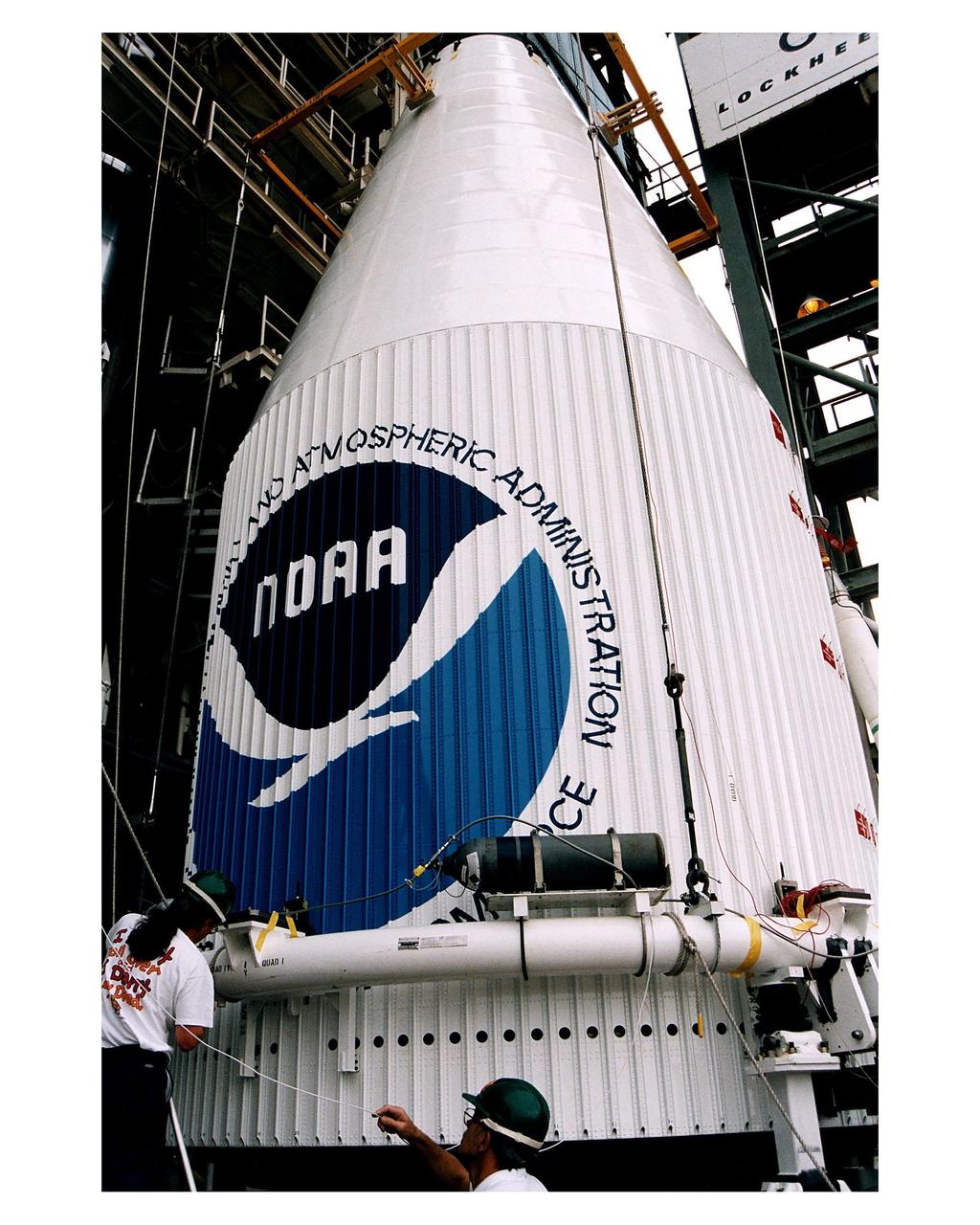
Workers prepare for the mating of the Atlas 1 payload fairing containing the GOES-K advanced weather satellite with the Lockheed Martin Atlas 1 expendable launch vehicle (AC-79) at Launch Complex 36, Pad B, Cape Canaveral Air Station. GOES-K will be the third spacecraft to be launched in the advanced series of Geostationary Operational Environmental Satellites (GOES). The GOES satellites are owned and operated by the National Oceanic and Atmospheric Administration (NOAA); NASA manages the design, development and launch of the spacecraft. GOES-K is targeted for an <a href="http://www-pao.ksc.nasa.gov/kscpao/release/1997/63-97.htm">April 24 launch</a> during a launch window which extends from 1:50-3:09 a.m. EDT
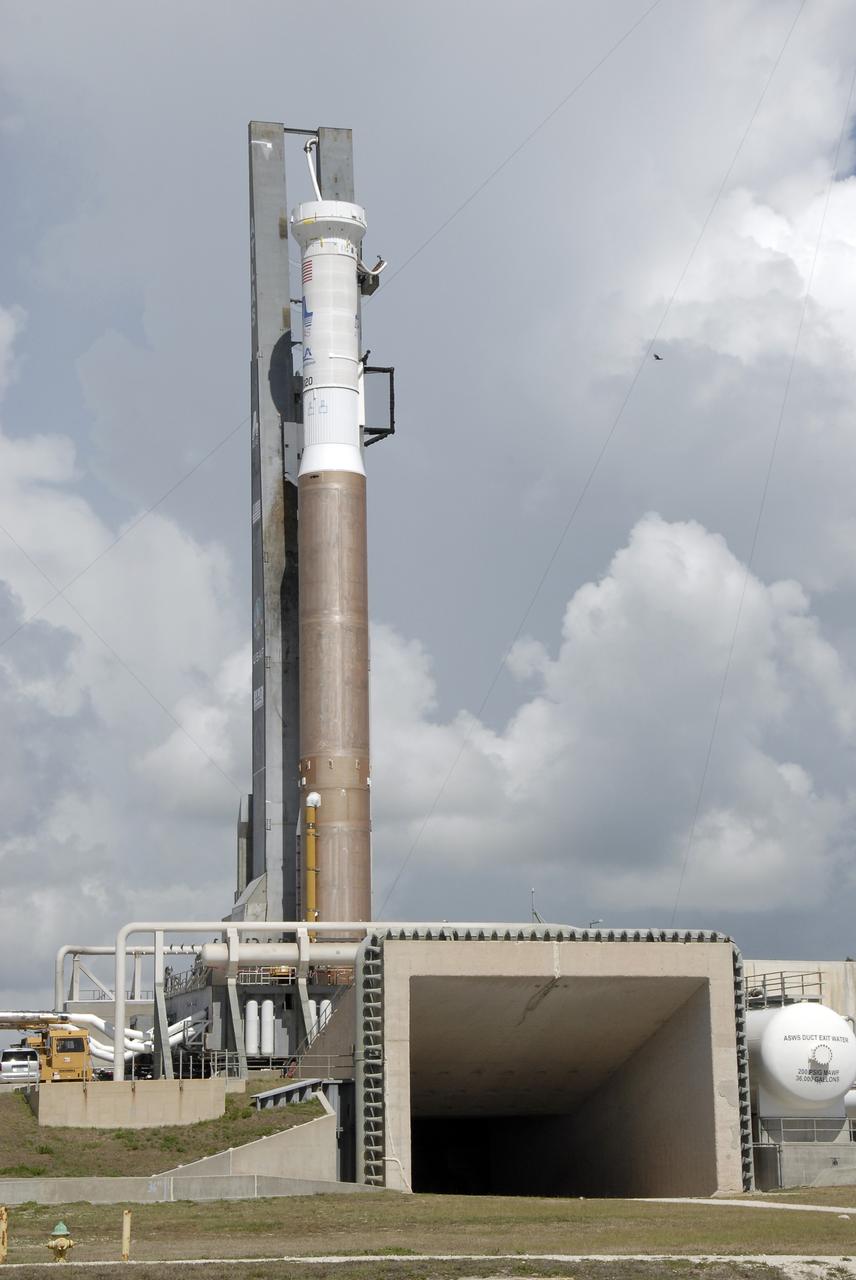
CAPE CANAVERAL, Fla. – The Atlas V/Centaur arrives on Launch Complex-41 at Cape Canaveral Air Force Station in Florida. The Atlas was rolled to the launch pad from the Vertical Integration Facility in preparation for the wet dress rehearsal, or countdown test, which means being fully loaded with propellants including liquid hydrogen, liquid oxygen and RP-1 fuel. The launch vehicle will be rolled off the pad and returned to the VIF on May 16. The Atlas V/Centaur is the launch vehicle for NASA's Lunar Reconnaissance Orbiter, or LRO, and NASA's Lunar CRater Observation and Sensing Satellite, known as LCROSS. They will be mated with the Atlas in late May. LCROSS and LRO are the first missions in NASA's plan to return humans to the moon and begin establishing a lunar outpost by 2020. Launch is scheduled for no earlier than June 17. Photo credit: NASA/Kim Shiflett
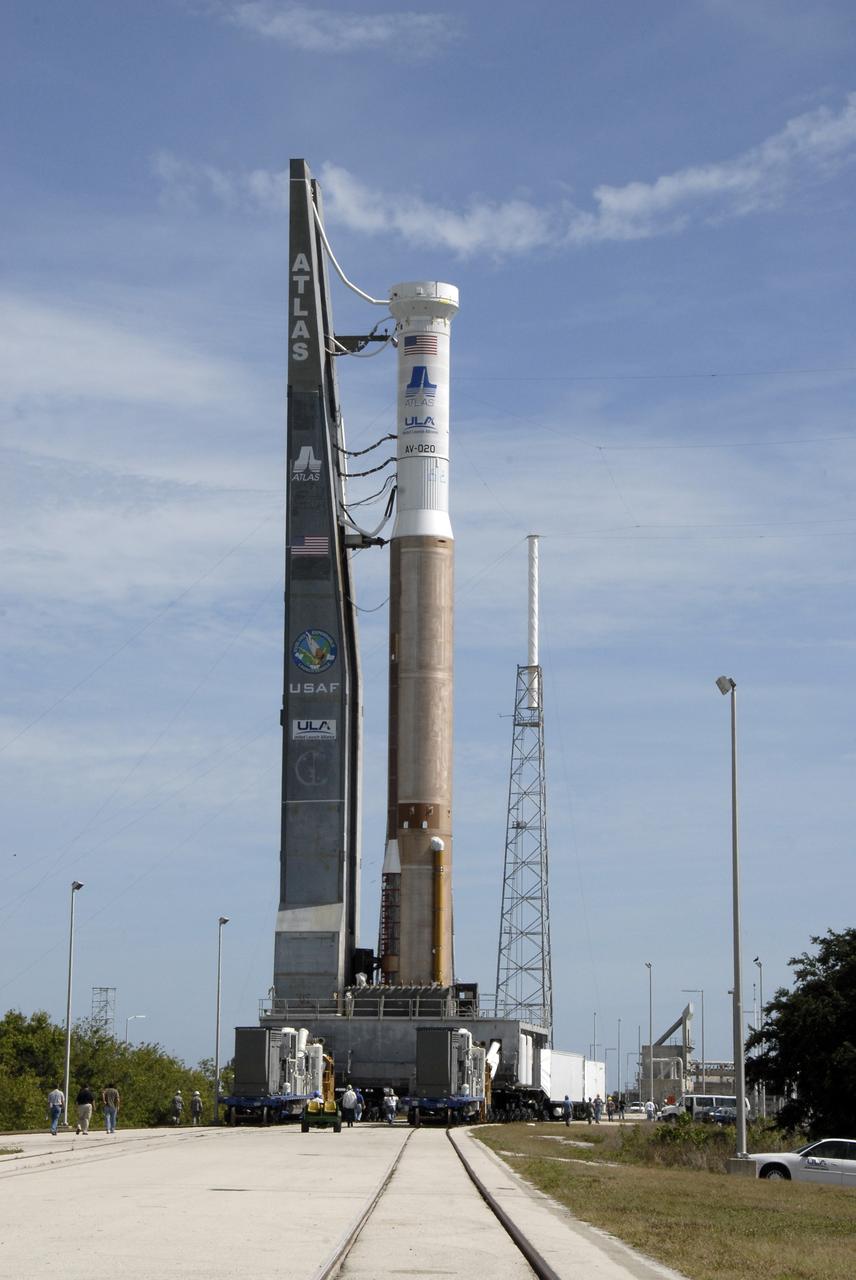
CAPE CANAVERAL, Fla. – The Atlas V/Centaur nears Launch Complex-41 at Cape Canaveral Air Force Station in Florida. Behind it at right is one of the four lightning towers that surround the pad for protection against possible lightning strikes. The Atlas was rolled to the launch pad from the Vertical Integration Facility in preparation for the wet dress rehearsal, or countdown test, which means being fully loaded with propellants including liquid hydrogen, liquid oxygen and RP-1 fuel. The launch vehicle will be rolled off the pad and returned to the VIF on May 16. The Atlas V/Centaur is the launch vehicle for NASA's Lunar Reconnaissance Orbiter, or LRO, and NASA's Lunar CRater Observation and Sensing Satellite, known as LCROSS. They will be mated with the Atlas in late May. LCROSS and LRO are the first missions in NASA's plan to return humans to the moon and begin establishing a lunar outpost by 2020. Launch is scheduled for no earlier than June 17. Photo credit: NASA/Kim Shiflett
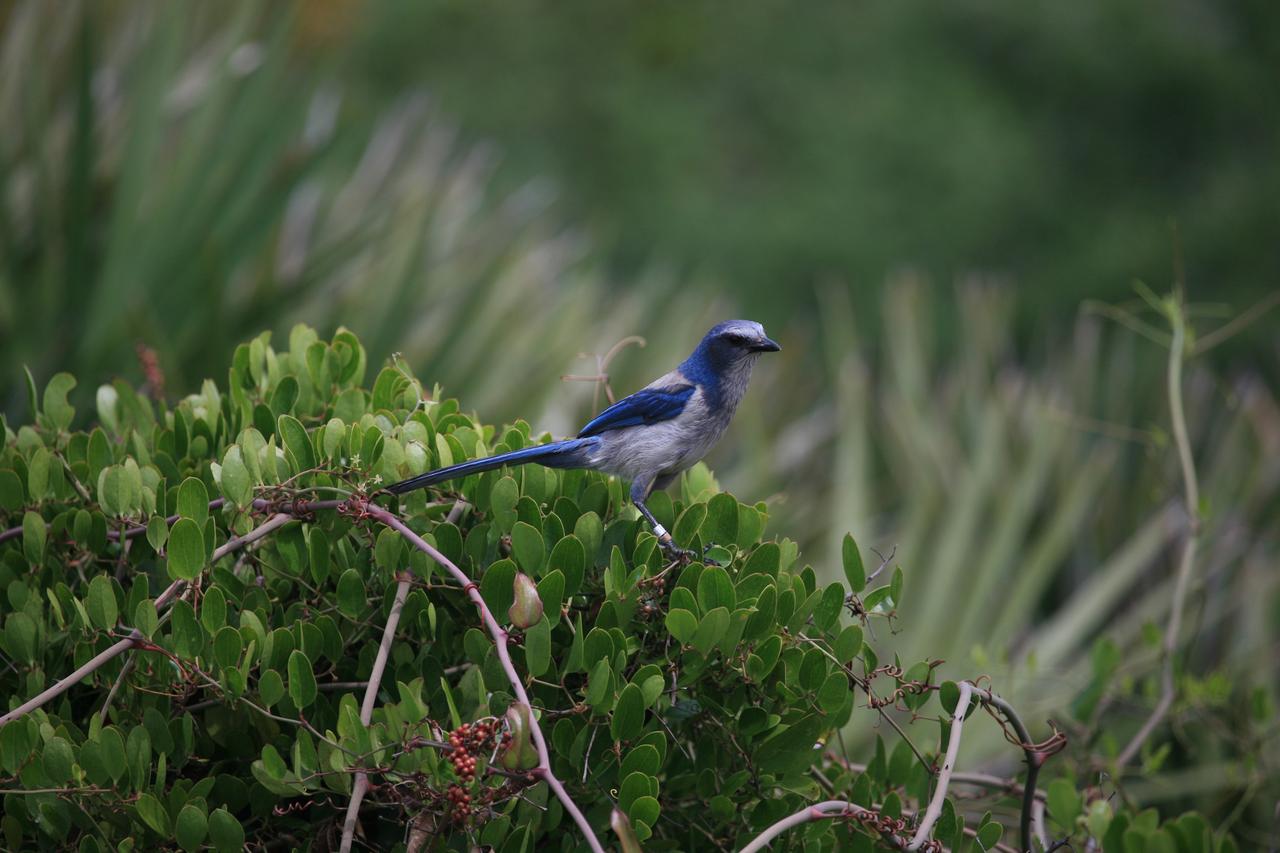
CAPE CANAVERAL, Fla. – Near Launch Complex-41 on Cape Canaveral Air Force Station in Florida, a scrub jay keeps watch of activity. On the pad, the Atlas V/Centaur is undergoing a wet dress rehearsal, or countdown test. The Atlas V is being fully loaded with propellants including liquid hydrogen, liquid oxygen and RP-1 fuel. Following the rehearsal, the launch vehicle will be rolled off the pad and returned to the Vertical Integration Facility on May 16. The Atlas V/Centaur is the launch vehicle for NASA's Lunar Reconnaissance Orbiter, or LRO, and NASA's Lunar CRater Observation and Sensing Satellite, known as LCROSS. They will be mated with the Atlas in late May. LCROSS and LRO are the first missions in NASA's plan to return humans to the moon and begin establishing a lunar outpost by 2020. Launch is scheduled for no earlier than June 17. Photo credit: NASA/Dimitri Gerondidakis
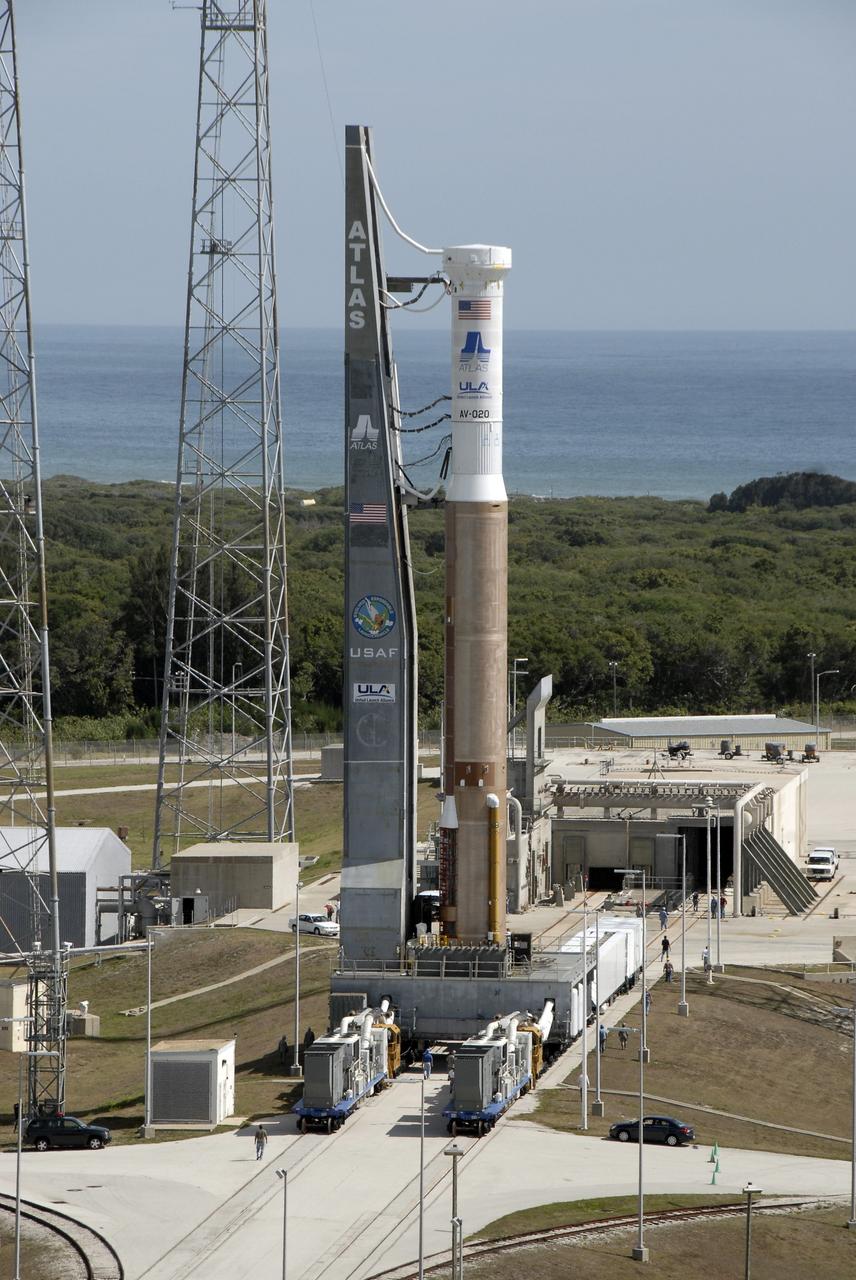
CAPE CANAVERAL, Fla. – The Atlas V/Centaur arrives on Launch Complex-41 at Cape Canaveral Air Force Station in Florida. The Atlas was rolled to the launch pad from the Vertical Integration Facility in preparation for the wet dress rehearsal, or countdown test, which means being fully loaded with propellants including liquid hydrogen, liquid oxygen and RP-1 fuel. The launch vehicle will be rolled off the pad and returned to the VIF on May 16. The Atlas V/Centaur is the launch vehicle for NASA's Lunar Reconnaissance Orbiter, or LRO, and NASA's Lunar CRater Observation and Sensing Satellite, known as LCROSS. They will be mated with the Atlas in late May. LCROSS and LRO are the first missions in NASA's plan to return humans to the moon and begin establishing a lunar outpost by 2020. Launch is scheduled for no earlier than June 17. Photo credit: NASA/Kim Shiflett
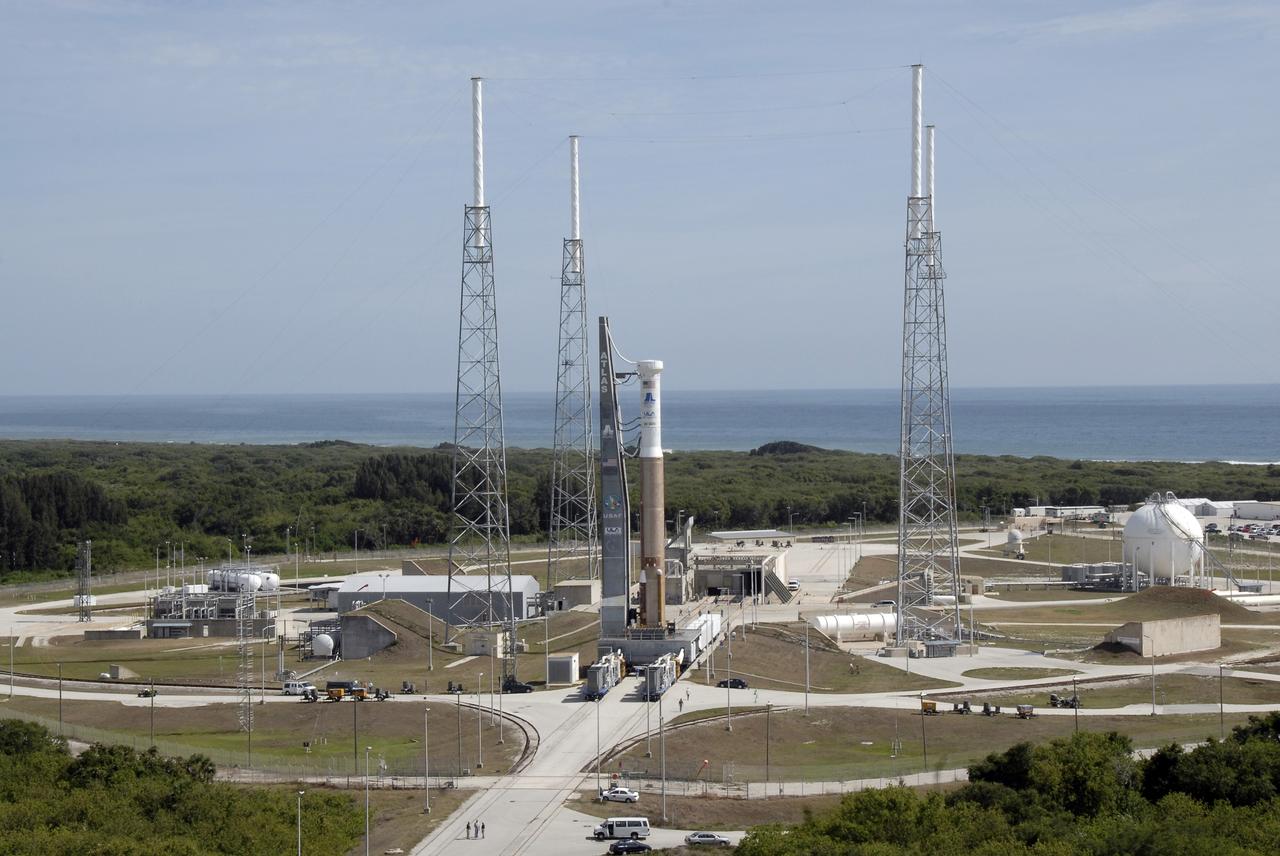
CAPE CANAVERAL, Fla. – The Atlas V/Centaur arrives on Launch Complex-41 at Cape Canaveral Air Force Station in Florida. Lightning towers surround the pad for protection against possible lightning strikes. The Atlas was rolled to the launch pad from the Vertical Integration Facility in preparation for the wet dress rehearsal, or countdown test, which means being fully loaded with propellants including liquid hydrogen, liquid oxygen and RP-1 fuel. The launch vehicle will be rolled off the pad and returned to the VIF on May 16. The Atlas V/Centaur is the launch vehicle for NASA's Lunar Reconnaissance Orbiter, or LRO, and NASA's Lunar CRater Observation and Sensing Satellite, known as LCROSS. They will be mated with the Atlas in late May. LCROSS and LRO are the first missions in NASA's plan to return humans to the moon and begin establishing a lunar outpost by 2020. Launch is scheduled for no earlier than June 17. Photo credit: NASA/Kim Shiflett
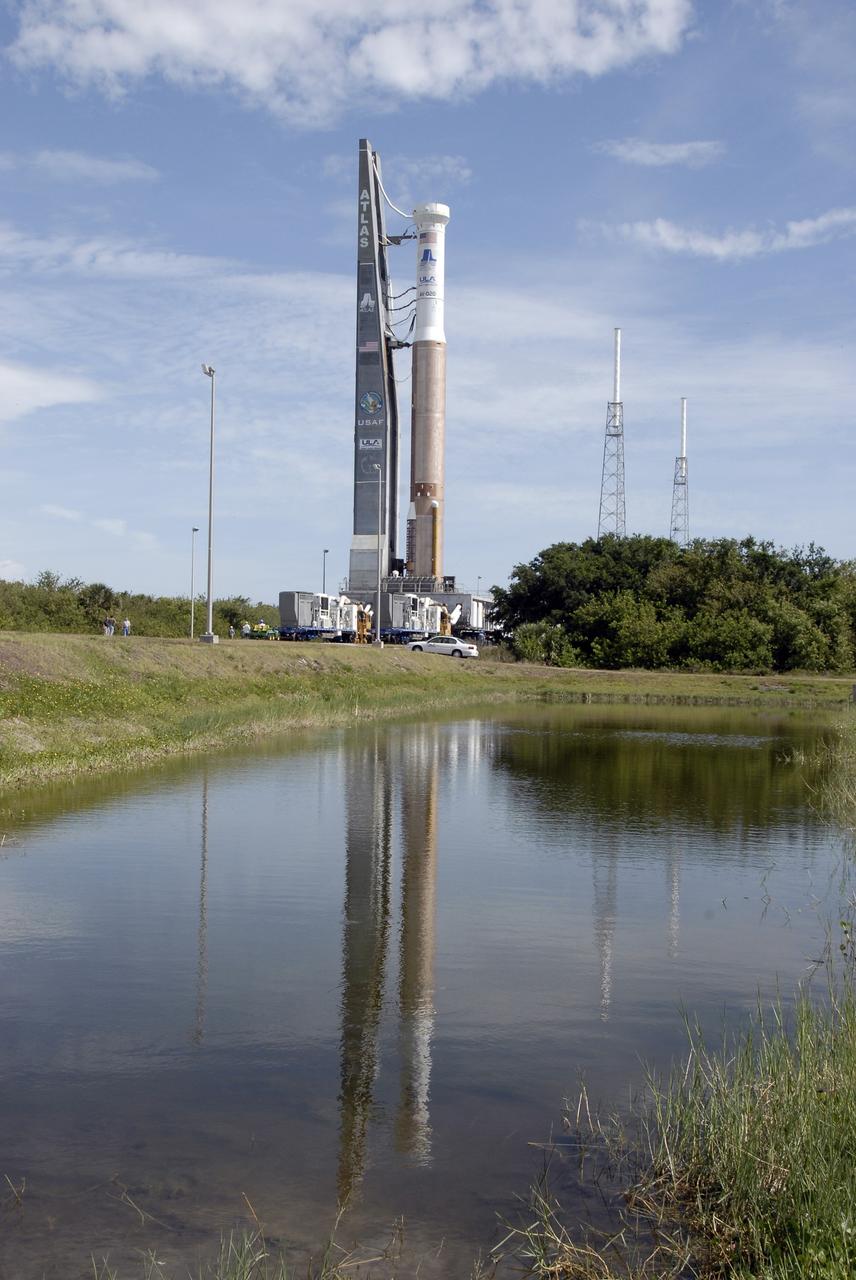
CAPE CANAVERAL, Fla. – The Atlas V/Centaur nears Launch Complex-41 at Cape Canaveral Air Force Station in Florida. At right in the background are two of the four lightning towers that surround the pad for protection against possible lightning strikes. The Atlas was rolled to the launch pad from the Vertical Integration Facility in preparation for the wet dress rehearsal, or countdown test, which means being fully loaded with propellants including liquid hydrogen, liquid oxygen and RP-1 fuel. The launch vehicle will be rolled off the pad and returned to the VIF on May 16. The Atlas V/Centaur is the launch vehicle for NASA's Lunar Reconnaissance Orbiter, or LRO, and NASA's Lunar CRater Observation and Sensing Satellite, known as LCROSS. They will be mated with the Atlas in late May. LCROSS and LRO are the first missions in NASA's plan to return humans to the moon and begin establishing a lunar outpost by 2020. Launch is scheduled for no earlier than June 17. Photo credit: NASA/Kim Shiflett
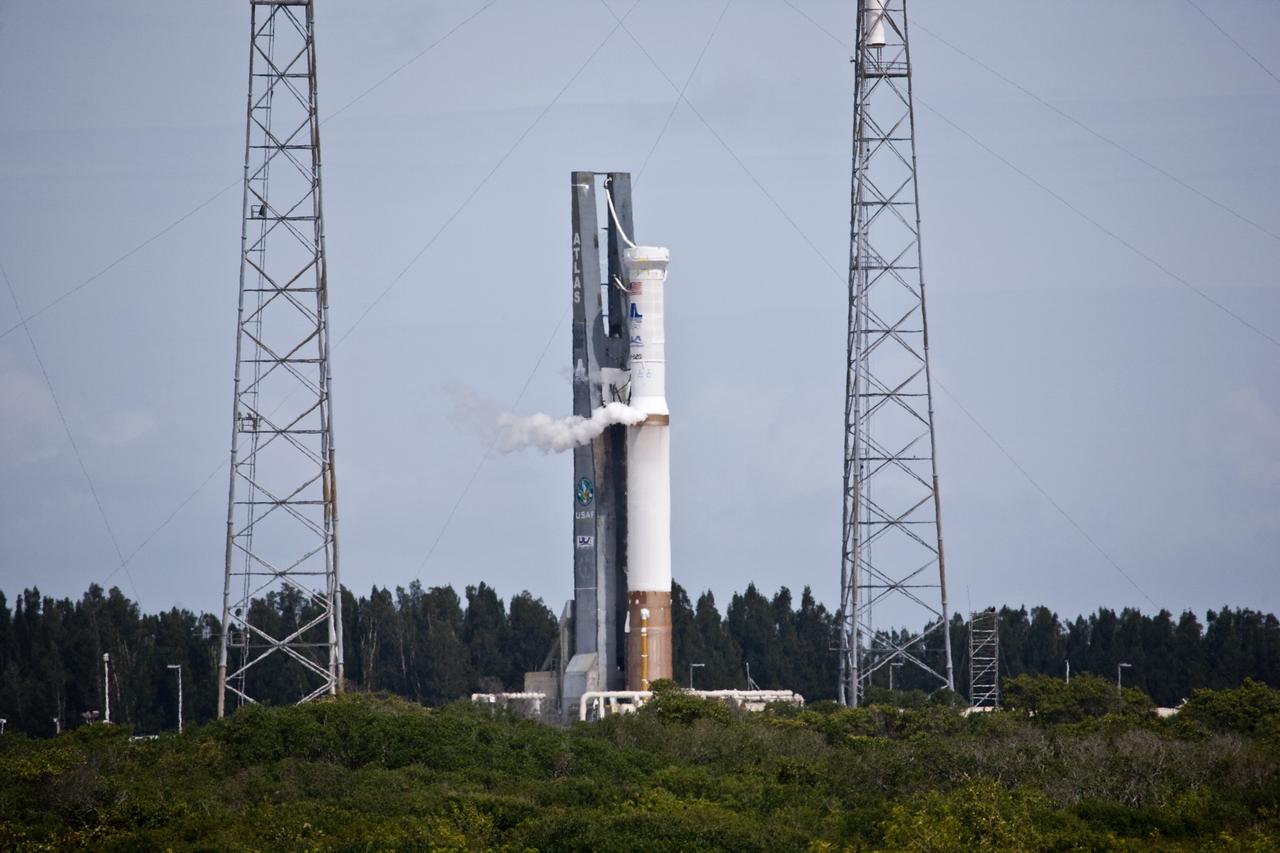
CAPE CANAVERAL, Fla. – At Launch Complex-41 on Cape Canaveral Air Force Station in Florida, the Atlas V/Centaur is undergoing a wet dress rehearsal, or countdown test. The Atlas V is being fully loaded with propellants including liquid hydrogen, liquid oxygen and RP-1 fuel. Surrounding the vehicle are four lightning towers. Following the rehearsal, the launch vehicle will be rolled off the pad and returned to the Vertical Integration Facility on May 16. The Atlas V/Centaur is the launch vehicle for NASA's Lunar Reconnaissance Orbiter, or LRO, and NASA's Lunar CRater Observation and Sensing Satellite, known as LCROSS. They will be mated with the Atlas in late May. LCROSS and LRO are the first missions in NASA's plan to return humans to the moon and begin establishing a lunar outpost by 2020. Launch is scheduled for no earlier than June 17. Photo credit: NASA/Dimitri Gerondidakis
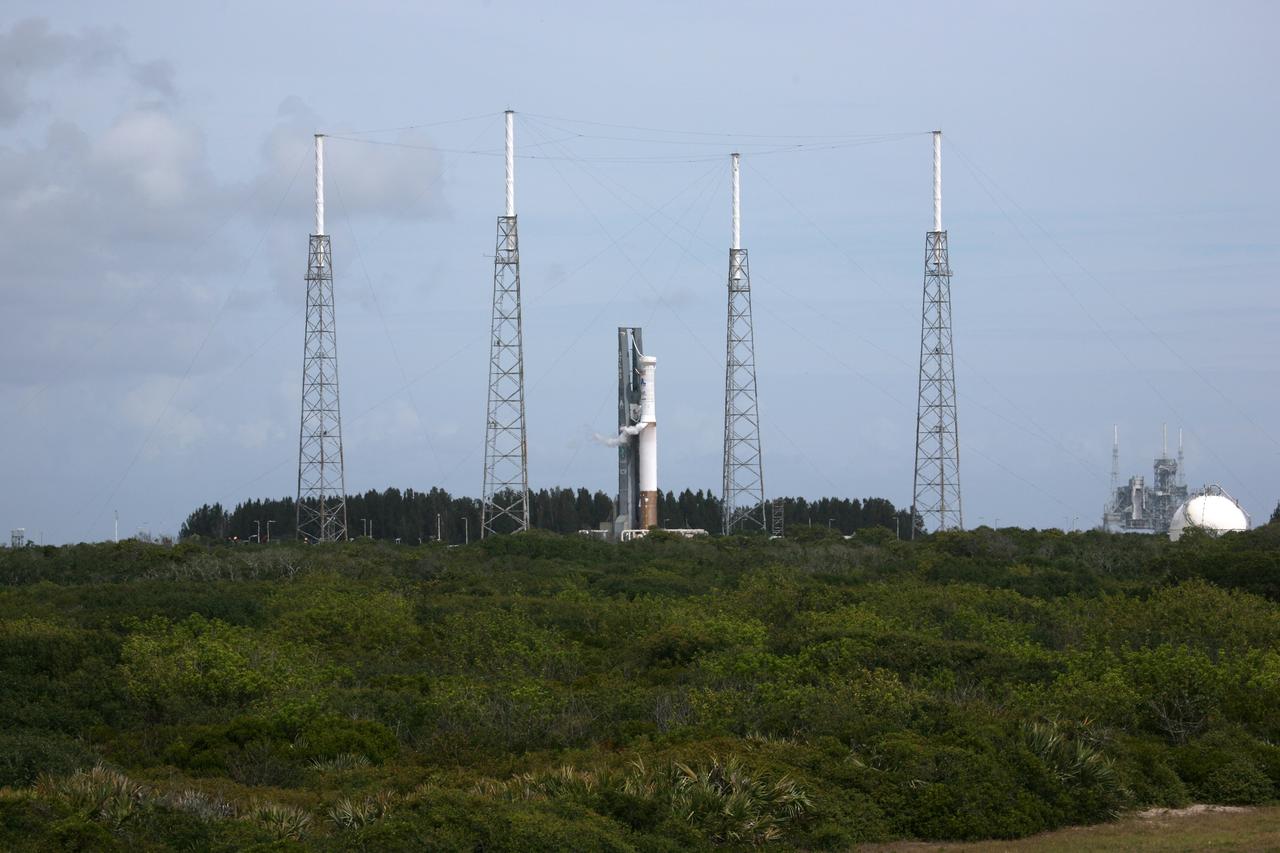
CAPE CANAVERAL, Fla. – At Launch Complex-41 on Cape Canaveral Air Force Station in Florida, the Atlas V/Centaur is undergoing a wet dress rehearsal, or countdown test. The Atlas V is being fully loaded with propellants including liquid hydrogen, liquid oxygen and RP-1 fuel. Surrounding the vehicle are four lightning towers. Following the rehearsal, the launch vehicle will be rolled off the pad and returned to the Vertical Integration Facility on May 16. The Atlas V/Centaur is the launch vehicle for NASA's Lunar Reconnaissance Orbiter, or LRO, and NASA's Lunar CRater Observation and Sensing Satellite, known as LCROSS. They will be mated with the Atlas in late May. LCROSS and LRO are the first missions in NASA's plan to return humans to the moon and begin establishing a lunar outpost by 2020. Launch is scheduled for no earlier than June 17. Photo credit: NASA/Dimitri Gerondidakis
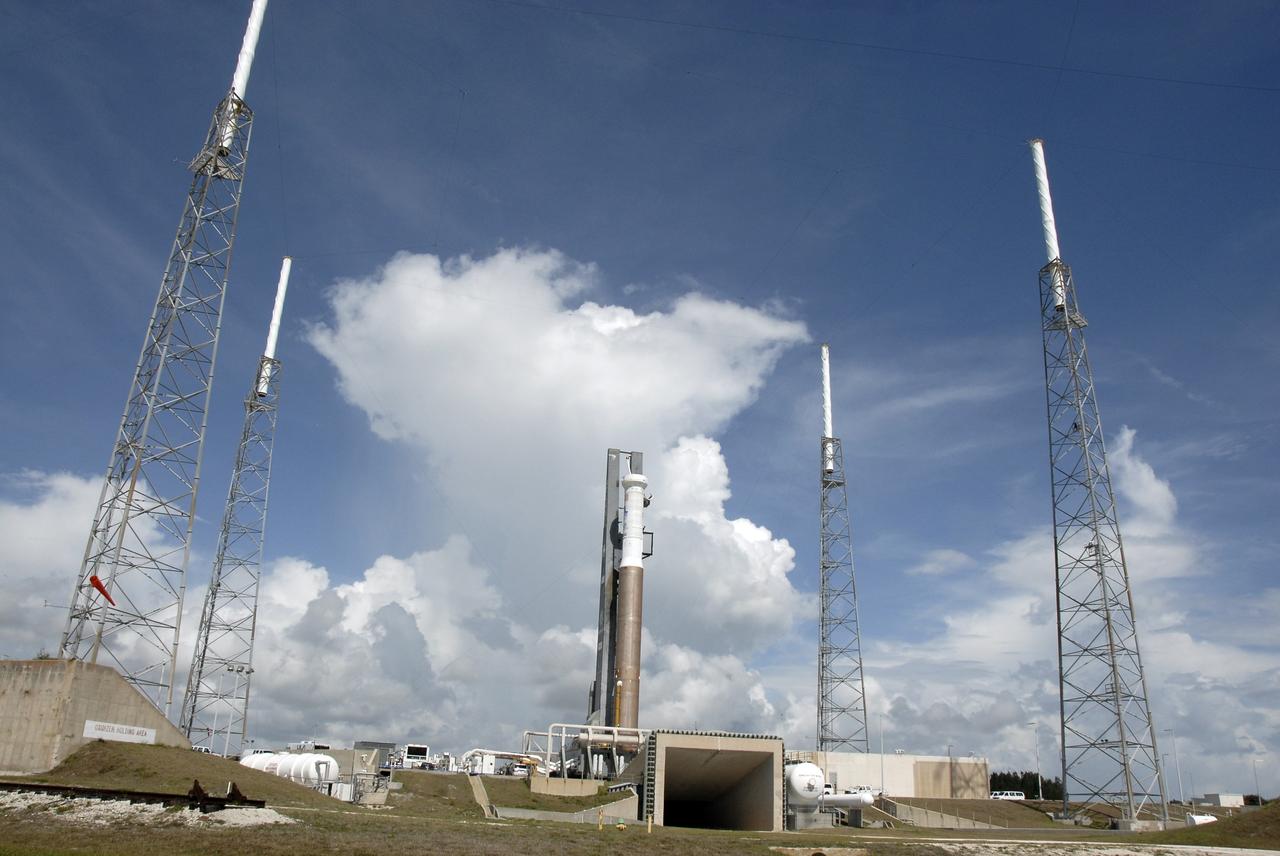
CAPE CANAVERAL, Fla. – The Atlas V/Centaur arrives on Launch Complex-41 at Cape Canaveral Air Force Station in Florida. Lightning towers surround the pad for protection against possible lightning strikes. The Atlas was rolled to the launch pad from the Vertical Integration Facility in preparation for the wet dress rehearsal, or countdown test, which means being fully loaded with propellants including liquid hydrogen, liquid oxygen and RP-1 fuel. The launch vehicle will be rolled off the pad and returned to the VIF on May 16. The Atlas V/Centaur is the launch vehicle for NASA's Lunar Reconnaissance Orbiter, or LRO, and NASA's Lunar CRater Observation and Sensing Satellite, known as LCROSS. They will be mated with the Atlas in late May. LCROSS and LRO are the first missions in NASA's plan to return humans to the moon and begin establishing a lunar outpost by 2020. Launch is scheduled for no earlier than June 17. Photo credit: NASA/Kim Shiflett

Astronaut Walter M. "Wally" Schirra, one of the original seven astronauts for Mercury Project selected by NASA on April 27, 1959. The MA-8 (Mercury-Atlas) mission with Sigma 7 spacecraft was the third marned orbital flight by the United States, and made the six orbits in 9-1/4 hours.
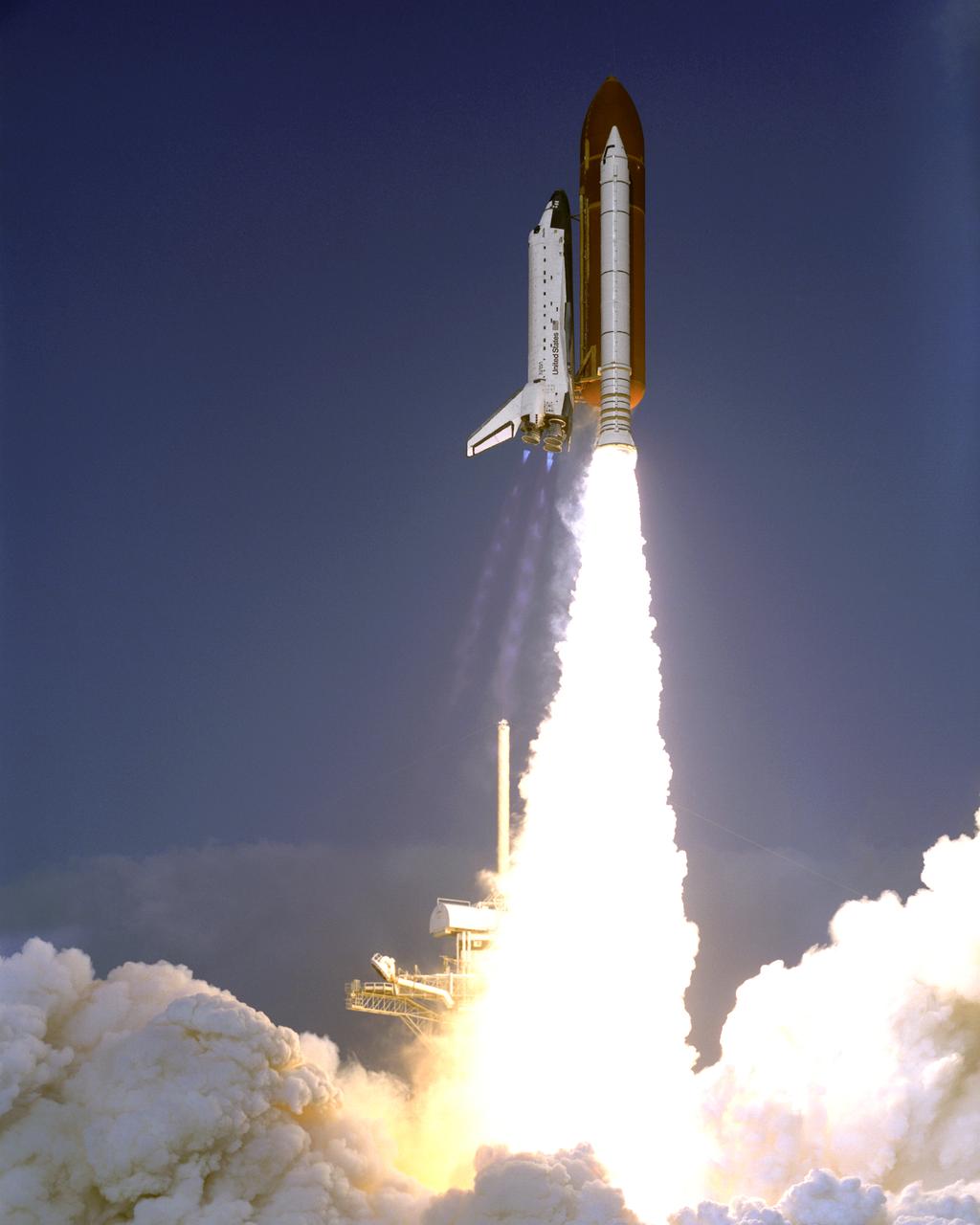
NASA's mission to planet Earth continues as Atlantis and the STS-45 International crew of xeven roars off Pad 39A with theAtmospheric Laboratory for Applications and Science (Atlas-1) onboard. Launch occurred at 8:13 A.M., EST March 24, 1992. (Test D1310)(Item D-56)
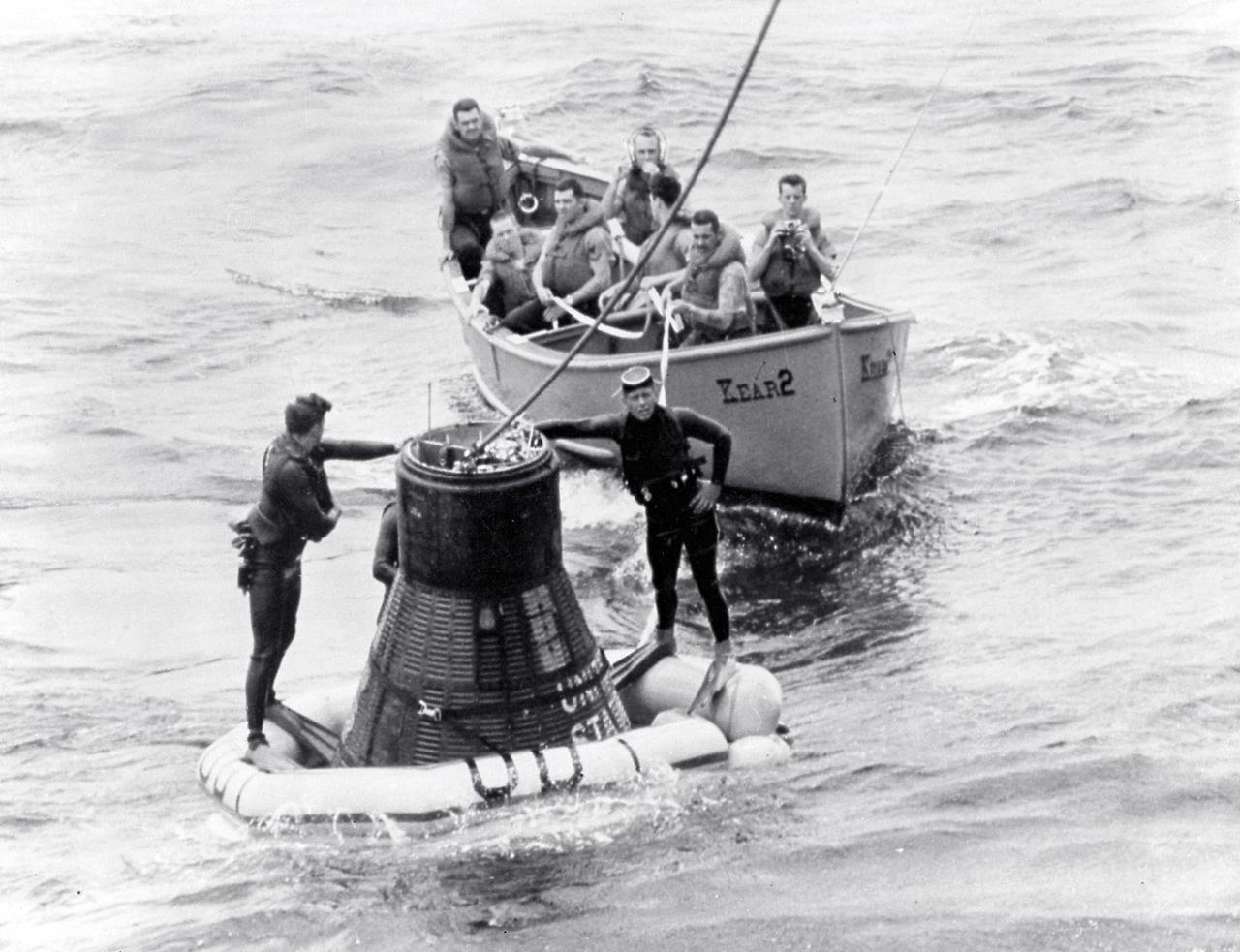
The recovery operation of the Faith 7 spacecraft after the completion of the 1-1/2 day orbital flight (MA-9 mission) with Astronaut Gordon Cooper. Navy frogmen attach the flotation collar to the spacecraft. The MA-9 mission was the last flight of the Mercury Project and launched on May 15, 1963 boosted by The Mercury-Atlas launch vehicle.
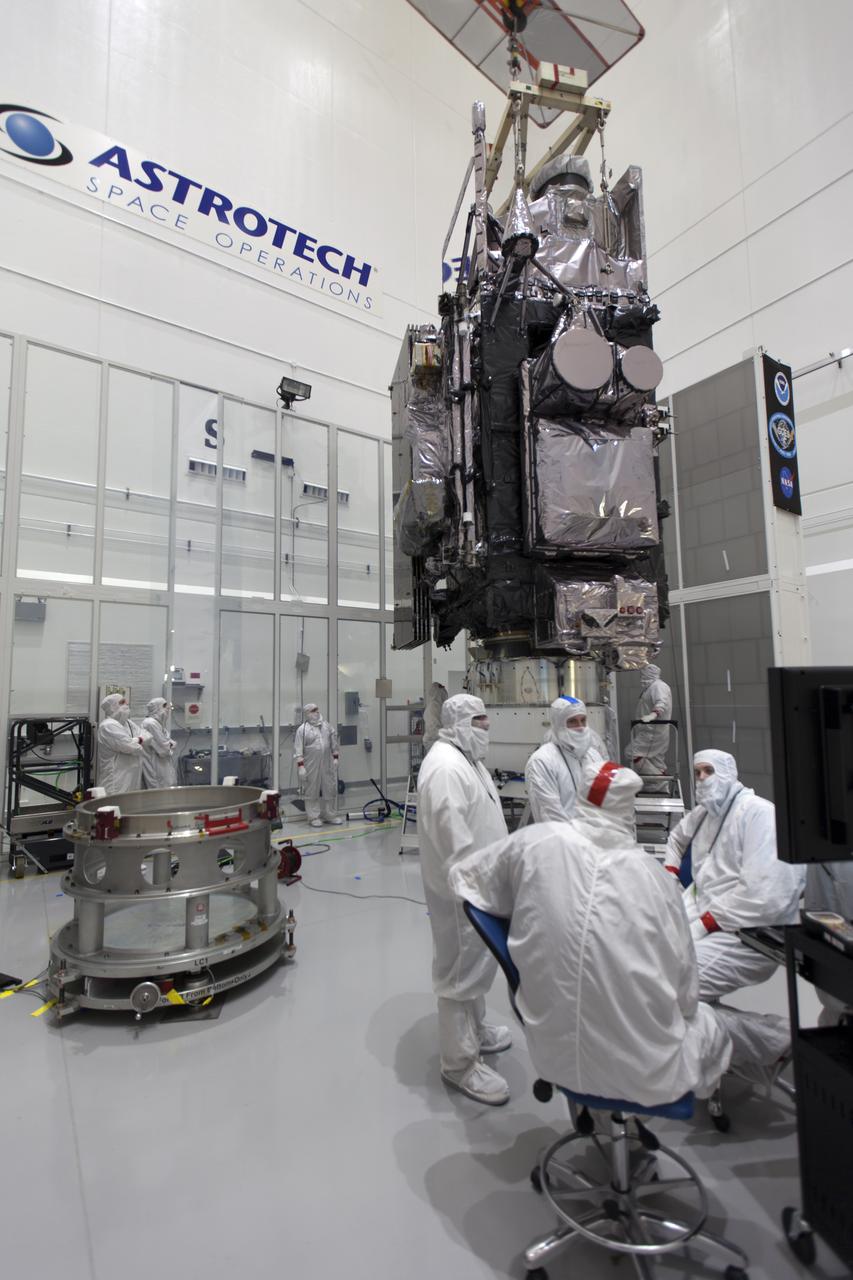
In a clean room at Astrotech Space Operations in Titusville, Florida, technicians and engineers monitor progress as NOAA's Geostationary Operational Environmental Satellite-S, or GOES-S, is mated to its payload attach fitting. It soon will be moved to Space Launch Complex 41 at Cape Canaveral Air Force Station for mounting atop the Atlas V rocket that will boost the satellite to orbit. GOES-S is the second in a series of four advanced geostationary weather satellites that will significantly improve the detection and observation of environmental phenomena that directly affect public safety, protection of property and the nation's economic health and prosperity. GOES-S is slated to launch March 1, 2018 aboard a United Launch Alliance Atlas V rocket.
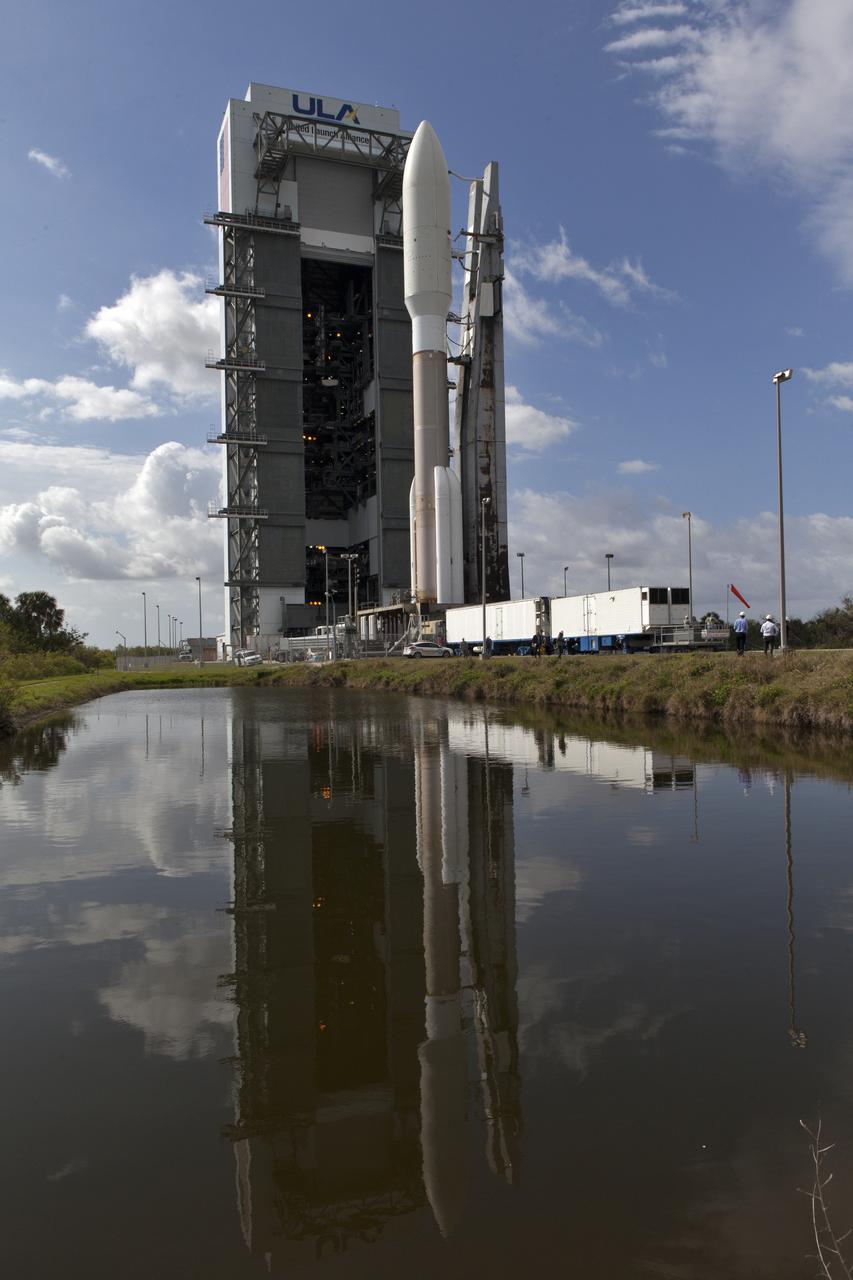
A United Launch Alliance Atlas V rocket is rolled to Space Launch Complex 41 at Cape Canaveral Air Force Station. The launch vehicle will send the National Oceanic and Atmospheric Administration's, or NOAA's, Geostationary Operational Environmental Satellite, or GOES-S, into orbit. The GOES series is designed to significantly improve the detection and observation of environmental phenomena that directly affect public safety, protection of property and the nation's economic health and prosperity. GOES-S is slated to lift off at 5:02 p.m. EST on March 1, 2018 aboard a United Launch Alliance Atlas V rocket.

A United Launch Alliance Atlas V rocket exits the Vertical Integration Facility on its way to the launch pad at Space Launch Complex 41 at Cape Canaveral Air Force Station. The launch vehicle will send the National Oceanic and Atmospheric Administration's, or NOAA's, Geostationary Operational Environmental Satellite, or GOES-S, into orbit. The GOES series is designed to significantly improve the detection and observation of environmental phenomena that directly affect public safety, protection of property and the nation's economic health and prosperity. GOES-S is slated to lift off at 5:02 p.m. EST on March 1, 2018 aboard a United Launch Alliance Atlas V rocket.
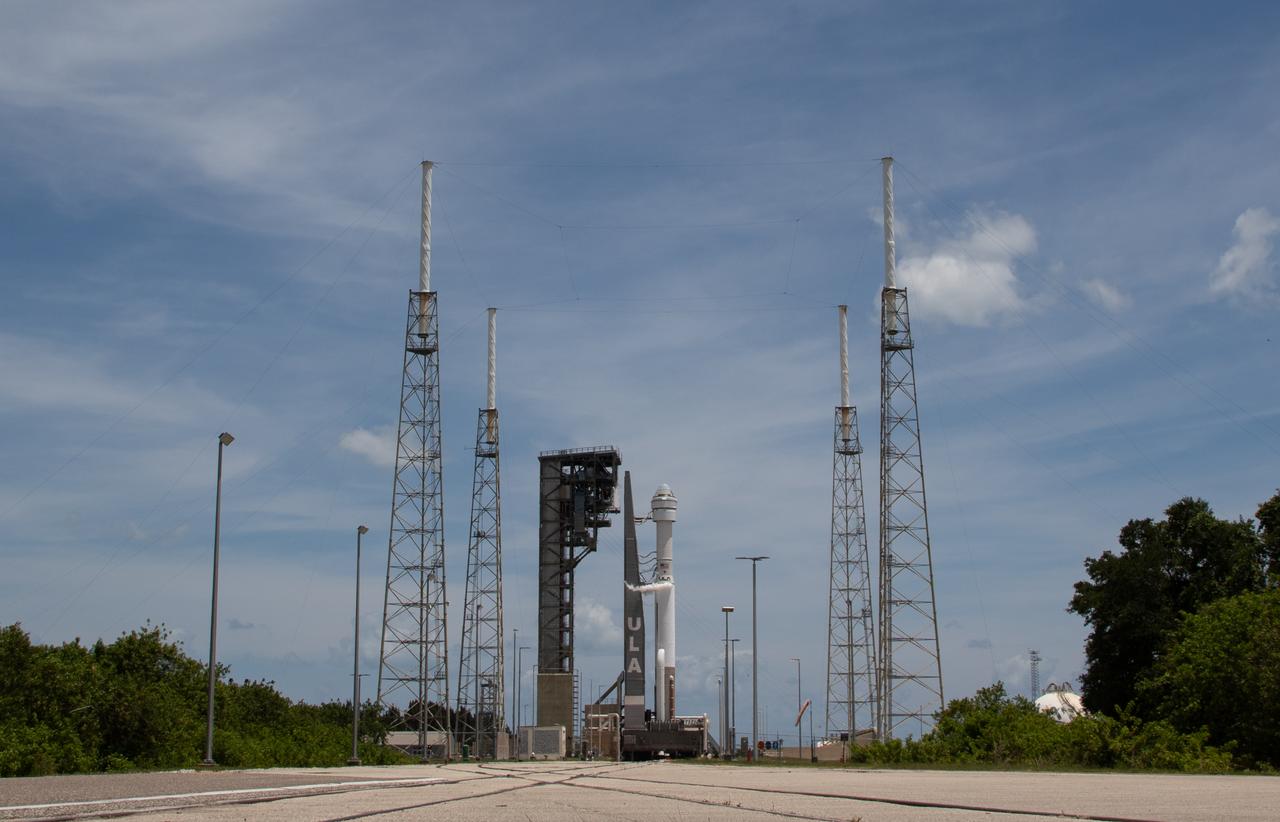
A United Launch Alliance Atlas V rocket with Boeing’s CST-100 Starliner spacecraft aboard is seen at Space Launch Complex 41 after the launch attempt was scrubbed, Saturday, June 1, 2024, at Cape Canaveral Space Force Station in Florida. NASA’s Boeing Crew Flight Test is the first launch with astronauts of the Boeing CFT-100 spacecraft and United Launch Alliance Atlas V rocket to the International Space Station as part of the agency’s Commercial Crew Program. The flight test serves as an end-to-end demonstration of Boeing’s crew transportation system and will carry NASA astronauts Butch Wilmore and Suni Williams to and from the orbiting laboratory. Photo Credit: (NASA/Joel Kowsky)
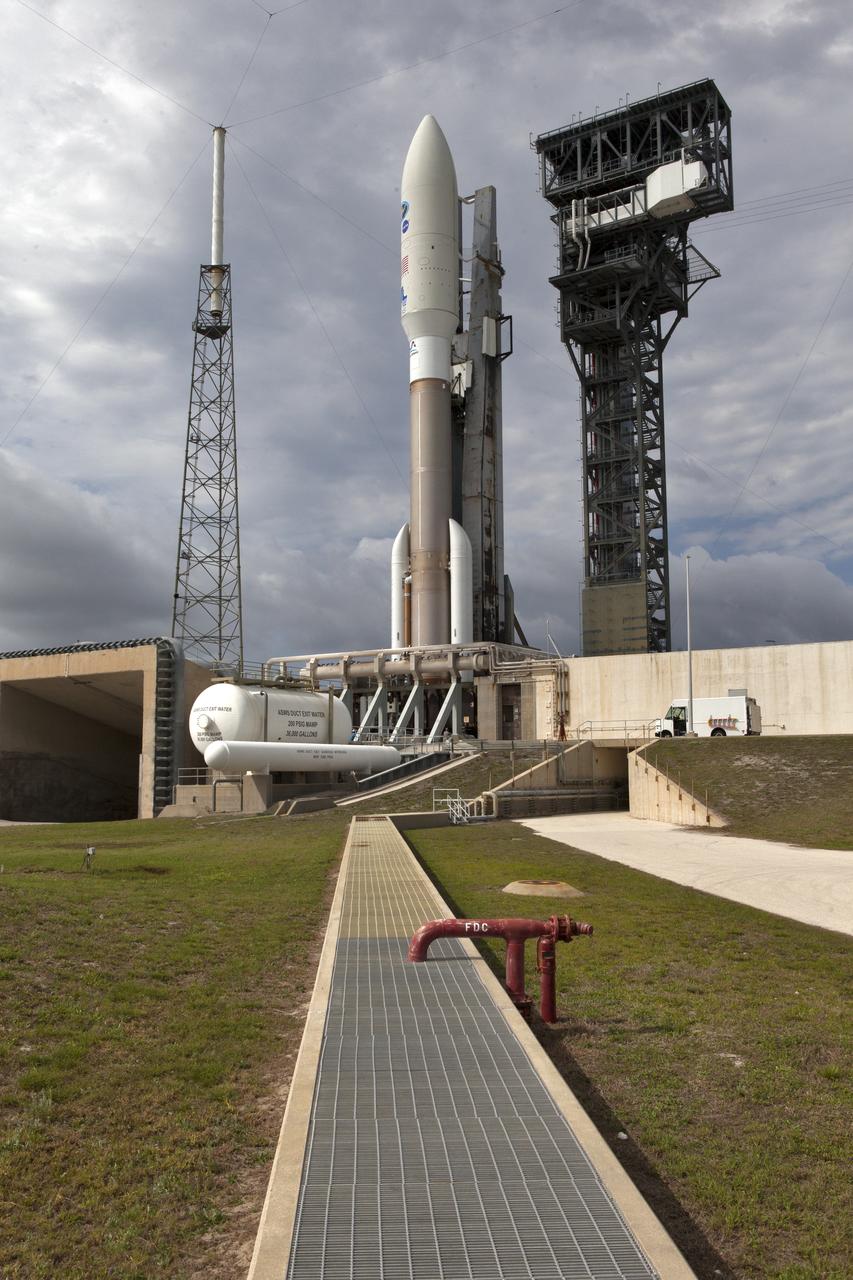
A United Launch Alliance Atlas V rocket is rolled to Space Launch Complex 41 at Cape Canaveral Air Force Station. The launch vehicle will send the National Oceanic and Atmospheric Administration's, or NOAA's, Geostationary Operational Environmental Satellite, or GOES-S, into orbit. The GOES series is designed to significantly improve the detection and observation of environmental phenomena that directly affect public safety, protection of property and the nation's economic health and prosperity. GOES-S is slated to lift off at 5:02 p.m. EST on March 1, 2018 aboard a United Launch Alliance Atlas V rocket.
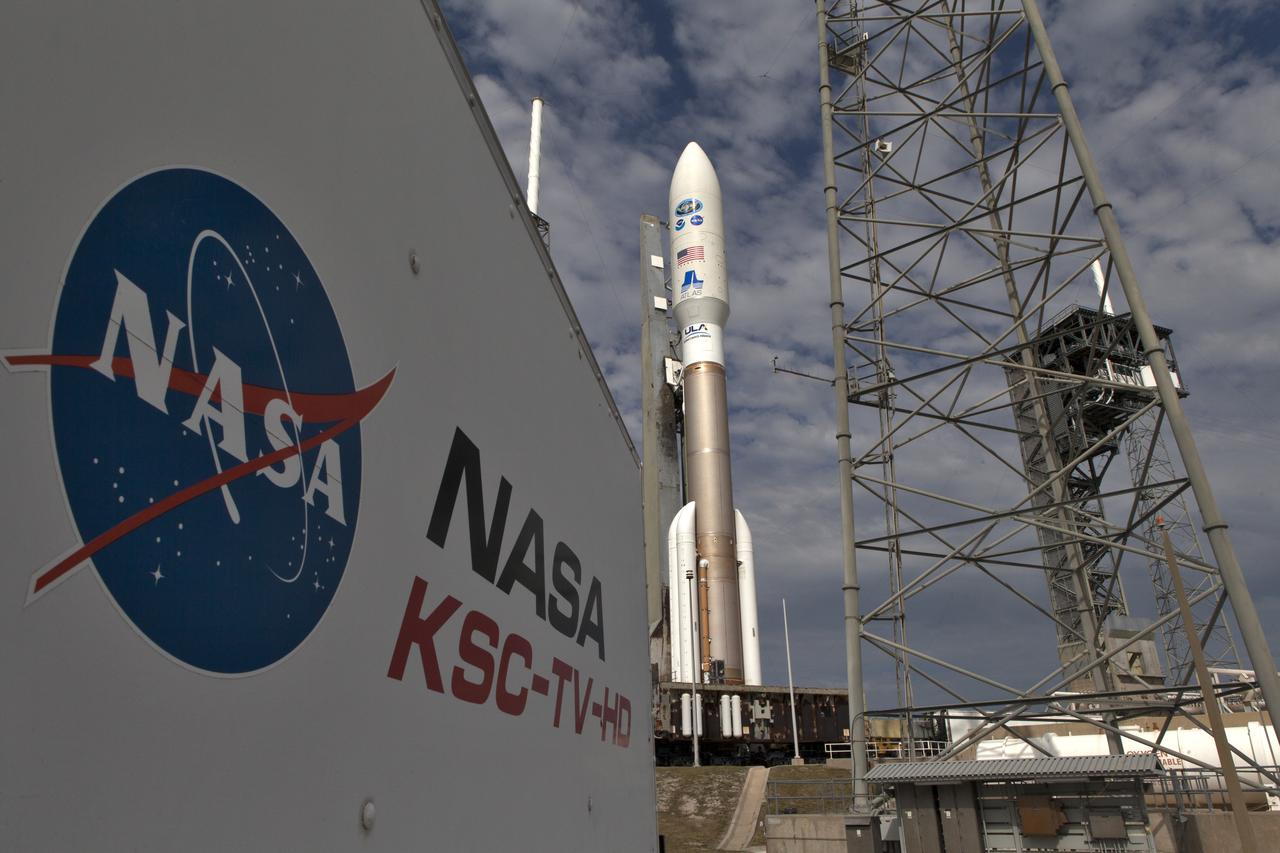
A United Launch Alliance Atlas V rocket is rolled to Space Launch Complex 41 at Cape Canaveral Air Force Station. The launch vehicle will send the National Oceanic and Atmospheric Administration's, or NOAA's, Geostationary Operational Environmental Satellite, or GOES-S, into orbit. The GOES series is designed to significantly improve the detection and observation of environmental phenomena that directly affect public safety, protection of property and the nation's economic health and prosperity. GOES-S is slated to lift off at 5:02 p.m. EST on March 1, 2018 aboard a United Launch Alliance Atlas V rocket.
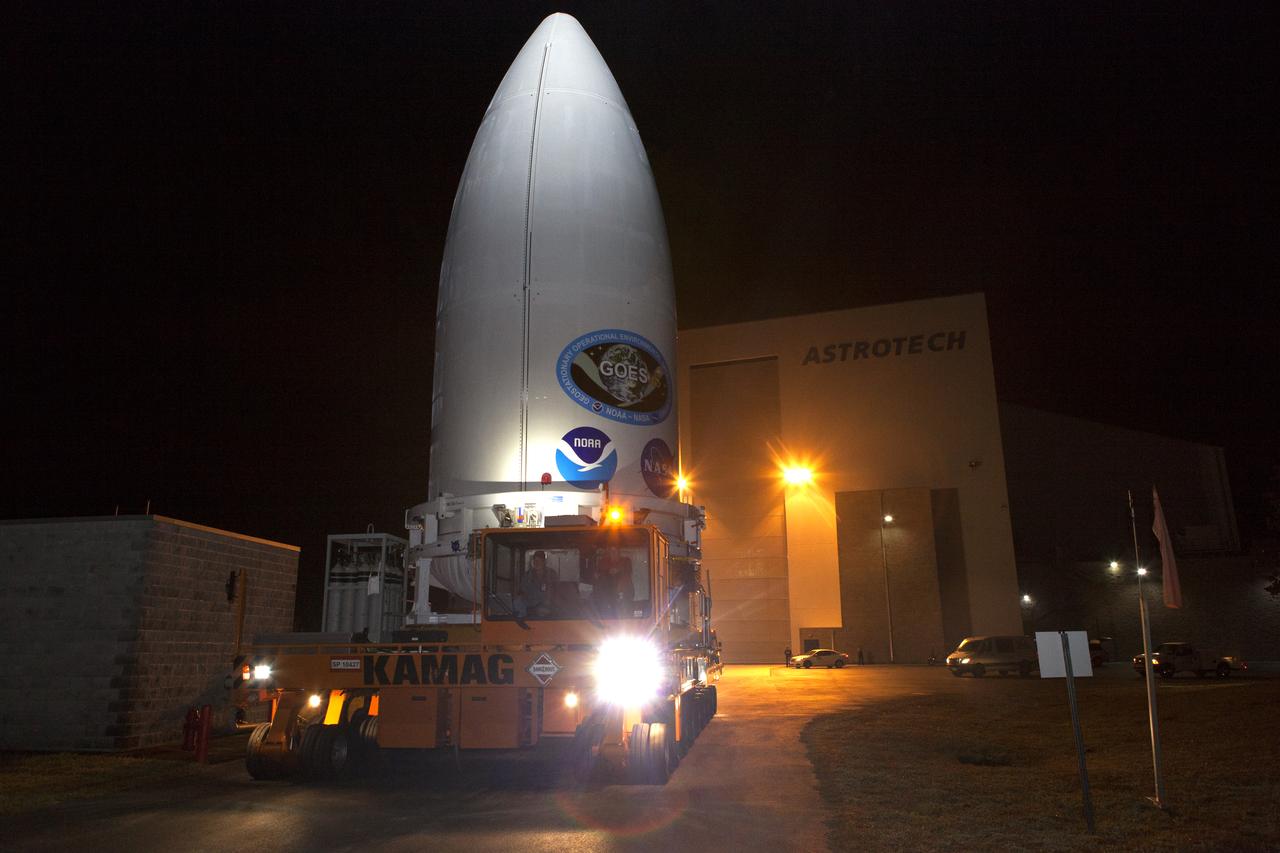
The payload fairing containing NOAA's Geostationary Operational Environmental Satellite-S (GOES-S), secured on a transporter, departs the Astrotech Space Operations facility in Titusville, Florida. GOES-S will be transported to the United Launch Alliance (ULA) Vertical Integration Facility at Space Launch Complex 41 at Cape Canaveral Air Force Station in Florida. The payload fairing will be lifted and mated to the ULA Atlas V rocket. GOES-S is the second in a series of four advanced geostationary weather satellites. GOES-S is slated to launch aboard the ULA Atlas V on March 1.
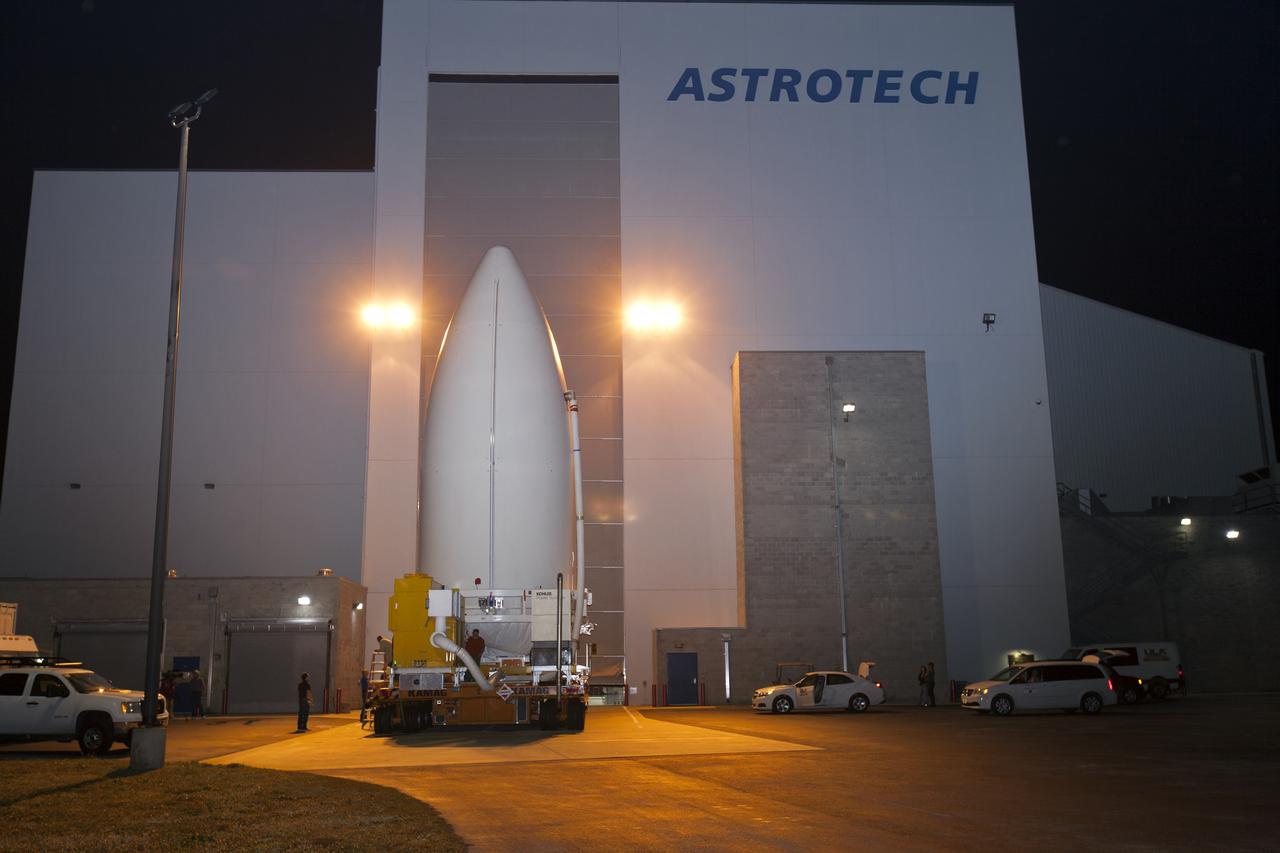
Secured on a transporter, the payload fairing containing NOAA's Geostationary Operational Environmental Satellite-S (GOES-S) departs the Astrotech Space Operations facility in Titusville, Florida. GOES-S will be transported to the United Launch Alliance (ULA) Vertical Integration Facility at Space Launch Complex 41 at Cape Canaveral Air Force Station in Florida. The payload fairing will be lifted and mated to the ULA Atlas V rocket. GOES-S is the second in a series of four advanced geostationary weather satellites. GOES-S is slated to launch aboard the ULA Atlas V on March 1.
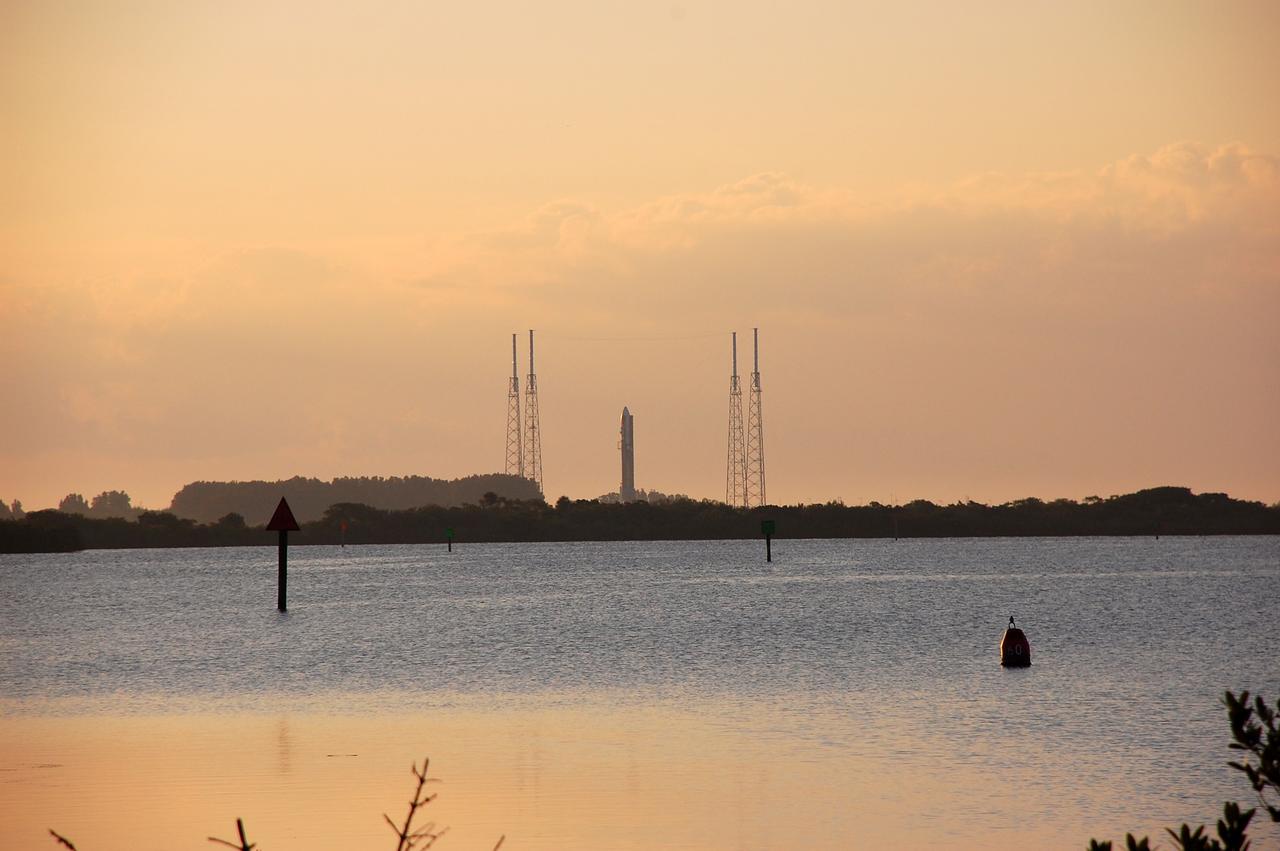
CAPE CANAVERAL, Fla. – In view across the Banana River from the Kennedy Space Center in Florida is a United Launch Alliance Atlas V rocket with a National Reconnaissance Office payload, awaiting launch from Space Launch Complex 41 on Cape Canaveral Air Force Station. Liftoff is set for 1:45 p.m. EDT on April 10. A 90 percent chance of favorable weather conditions at launch time is forecast. Designated NROL-67, the mission is in support of national defense. To learn more about ULA's Atlas V rocket, visit http://www.ulalaunch.com/site/pages/Products_AtlasV.shtml. Photo credit: NASA/Ben Smelgelsky
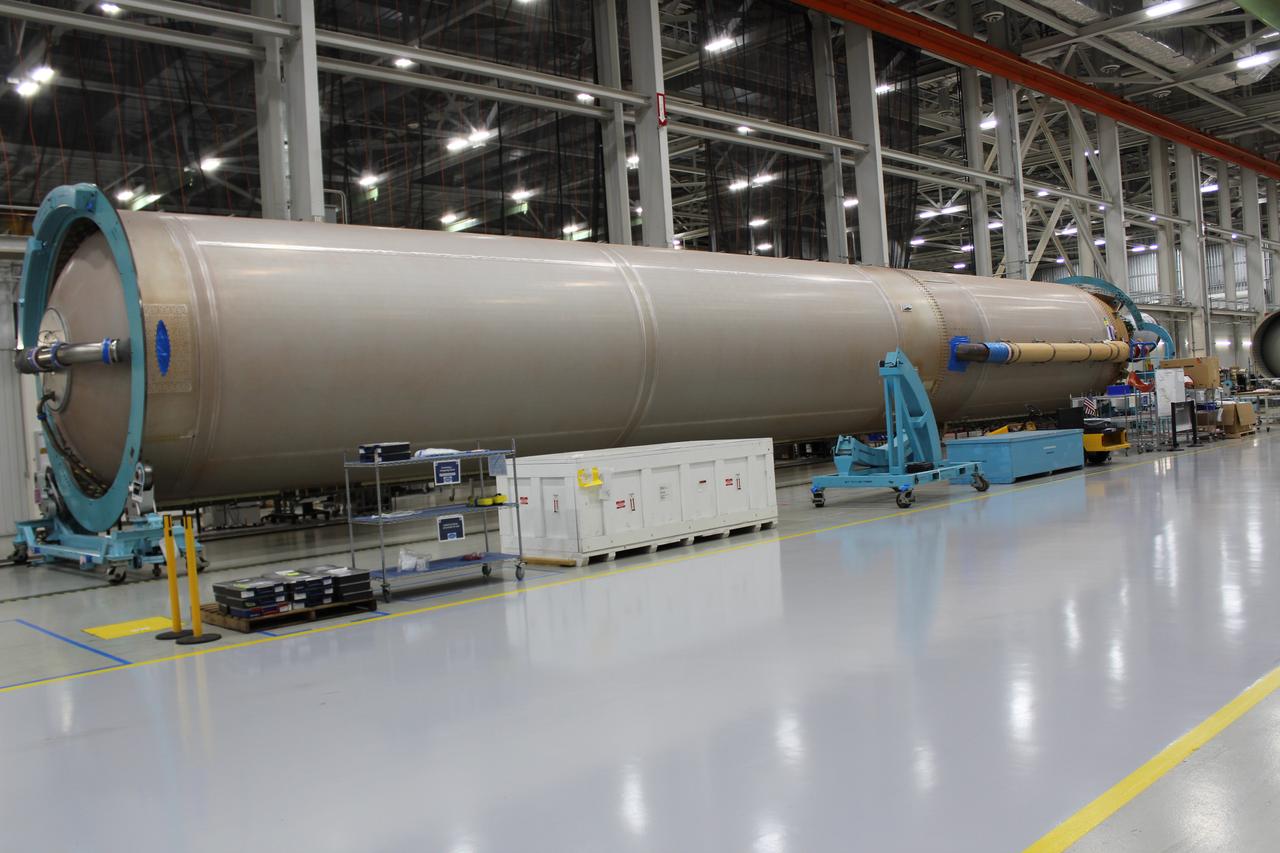
The United Launch Alliance (ULA) Atlas V first stage booster for the Crew Flight Test of Boeing’s CST-100 Starliner is in production in ULA's factory in Decatur, Alabama on March 1, 2019. Soon the booster will be assembled with the dual engine Centaur upper stage. They will be shipped aboard the company’s Mariner cargo ship to NASA’s Kennedy Space Center in Florida. Starliner and the Atlas V rockets that will launch the spacecraft, are key to restoring the nation’s capability to send astronauts to the space station from U.S. soil with NASA’s Commercial Crew Program. NASA astronauts Mike Fincke and Nicole Mann, and Boeing astronaut Chris Ferguson will launch to the space station aboard the Starliner for the Crew Flight Test.
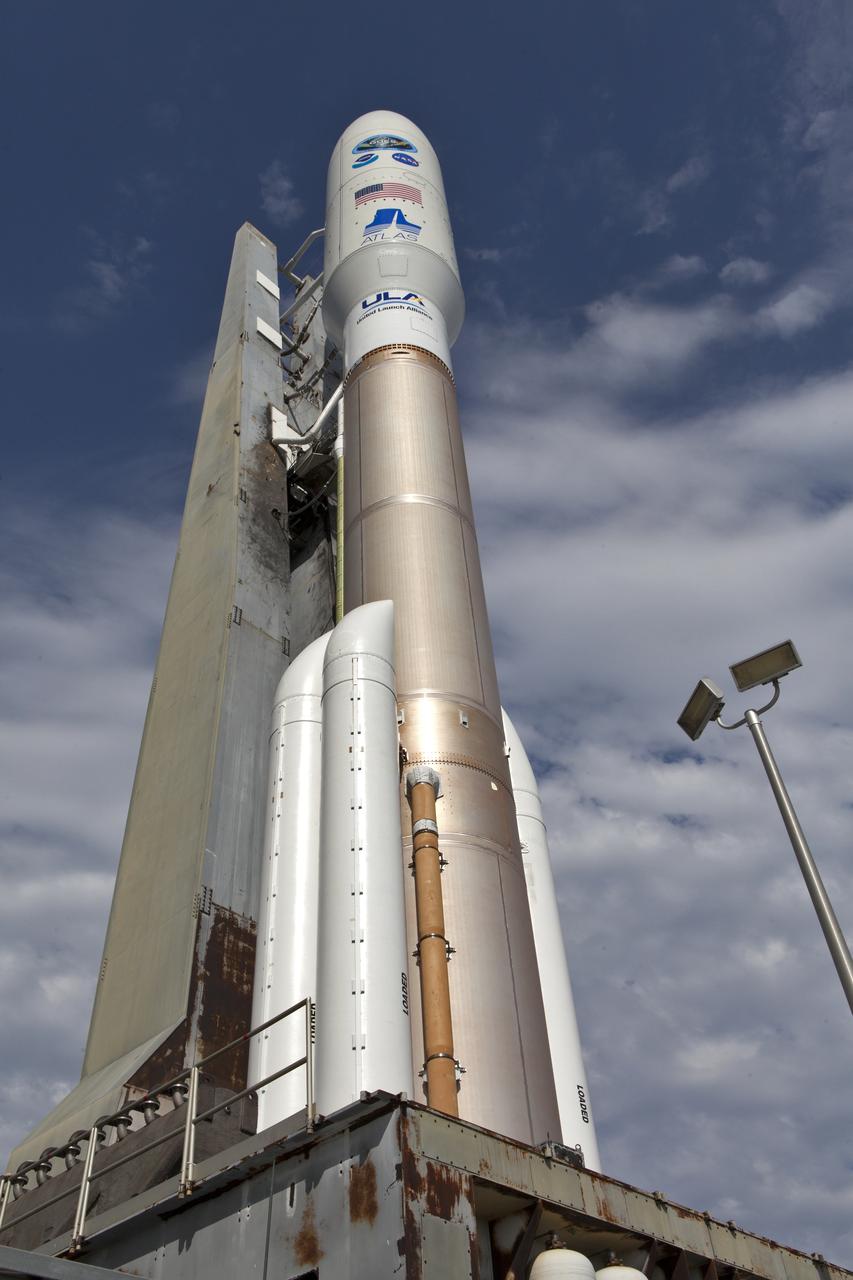
A United Launch Alliance Atlas V rocket is rolled to Space Launch Complex 41 at Cape Canaveral Air Force Station. The launch vehicle will send the National Oceanic and Atmospheric Administration's, or NOAA's, Geostationary Operational Environmental Satellite, or GOES-S, into orbit. The GOES series is designed to significantly improve the detection and observation of environmental phenomena that directly affect public safety, protection of property and the nation's economic health and prosperity. GOES-S is slated to lift off at 5:02 p.m. EST on March 1, 2018 aboard a United Launch Alliance Atlas V rocket.
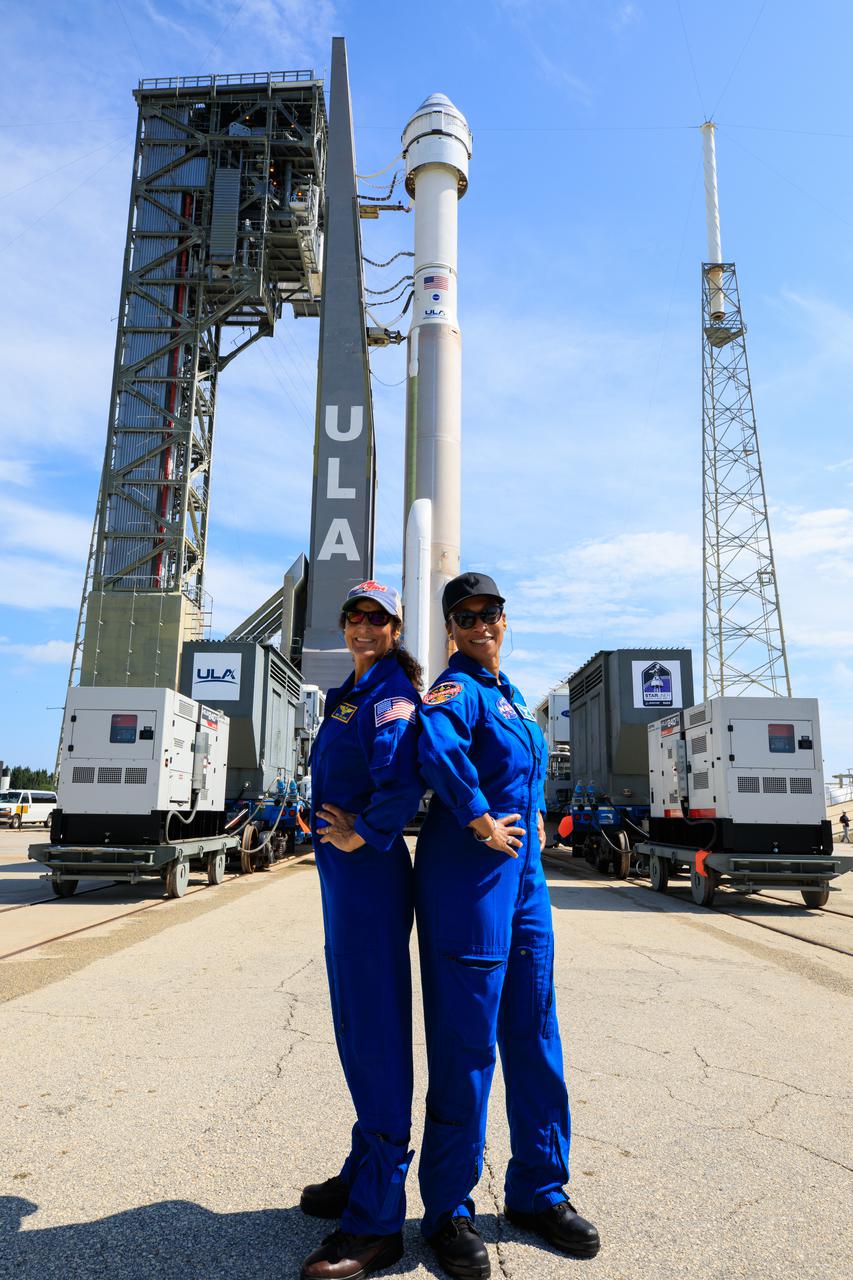
Suni Williams, left, and Jeanette Epps, NASA astronauts, Starliner-1, watch as Boeing’s CST-100 Starliner spacecraft and the United Launch Alliance Atlas V rocket is rolled out of the Vertical Integration Facility to the launch pad at Space Launch Complex-41 on July 29, 2021, at Cape Canaveral Space Force Station in Florida. Starliner will launch on the Atlas V for Boeing’s second uncrewed Orbital Flight Test (OFT-2) for NASA’s Commercial Crew Program. OFT-2 is an important uncrewed mission designed to test the end-to-end capabilities of the new system for NASA’s Commercial Crew Program.
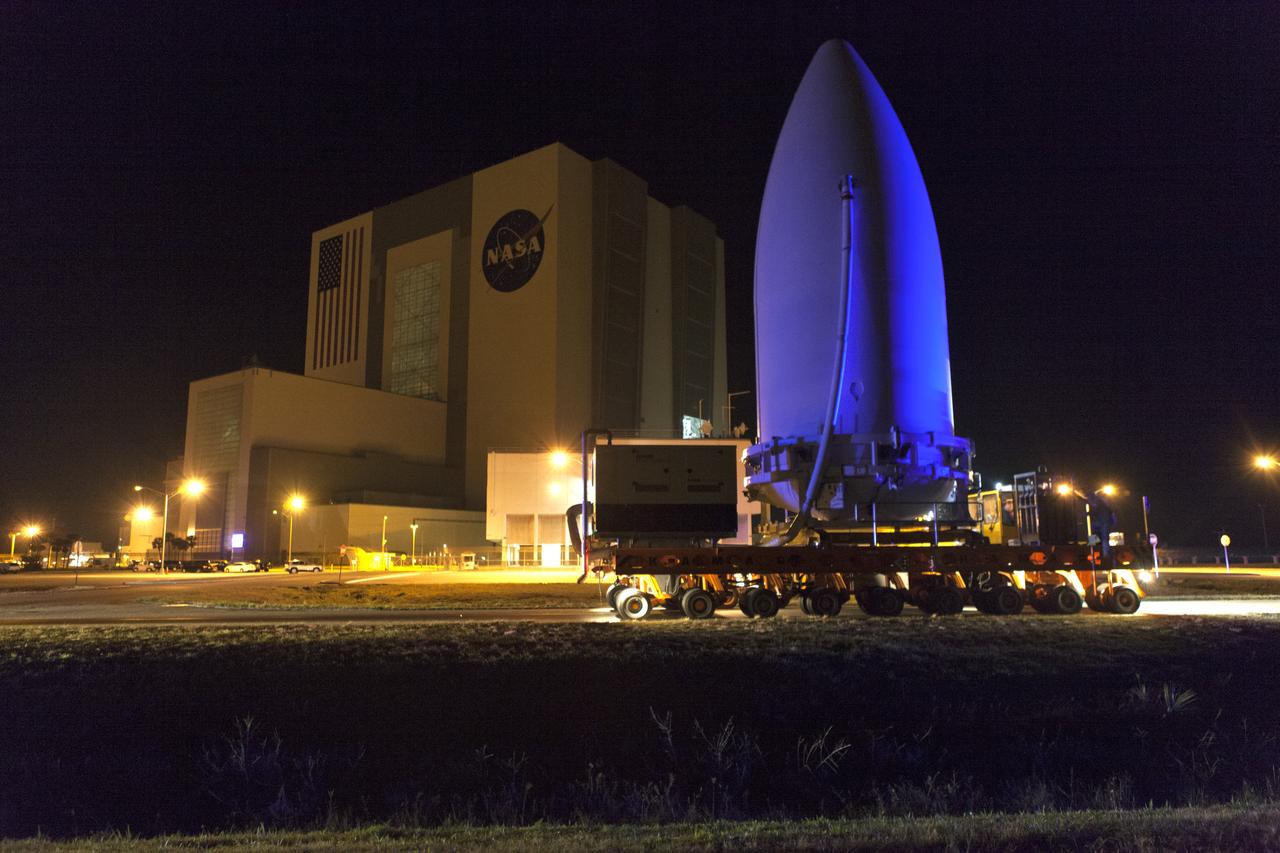
The payload fairing containing NOAA's Geostationary Operational Environmental Satellite-S (GOES-S), secured on a transporter, passes by the Vehicle Assembly Building at NASA's Kennedy Space Center in Florida, on its way to the United Launch Alliance (ULA) Vertical Integration Facility at Space Launch Complex 41 at Cape Canaveral Air Force Station in Florida. The payload fairing will be lifted and mated to the ULA Atlas V rocket. GOES-S is the second in a series of four advanced geostationary weather satellites. GOES-S is slated to launch aboard the ULA Atlas V on March 1.
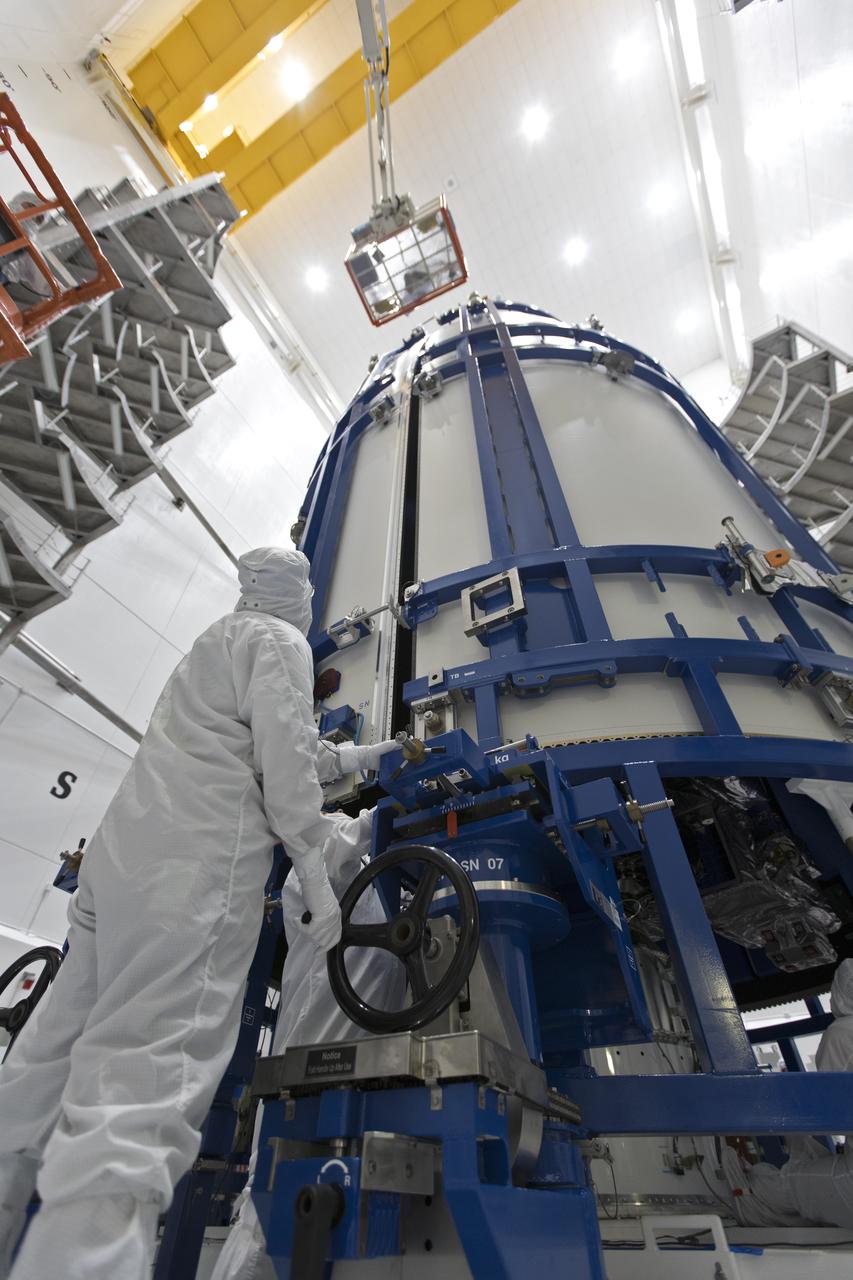
In a clean room at Astrotech Space Operations in Titusville, Florida, technicians and engineers monitor progress as NOAA's Geostationary Operational Environmental Satellite-S, or GOES-S, is encapsulated in its payload fairing. It soon will be moved to Space Launch Complex 41 at Cape Canaveral Air Force Station for mounting atop the Atlas V rocket that will boost the satellite to orbit. GOES-S is the second in a series of four advanced geostationary weather satellites that will significantly improve the detection and observation of environmental phenomena that directly affect public safety, protection of property and the nation's economic health and prosperity. GOES-S is slated to launch March 1, 2018 aboard a United Launch Alliance Atlas V rocket.
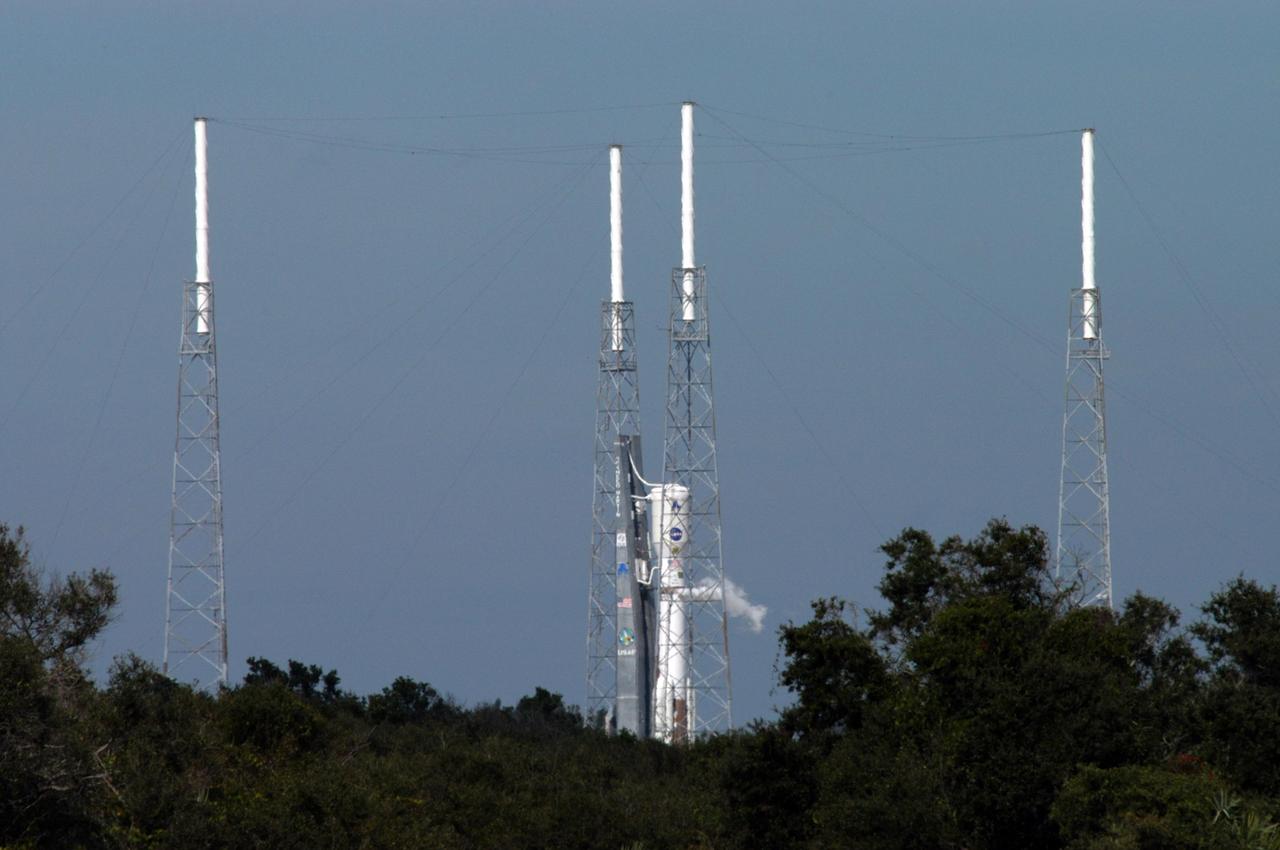
KENNEDY SPACE CENTER, FLA. - The Lockheed Martin Atlas V rocket (center) undergoes a tanking test on Launch Complex 41 at Cape Canaveral Air Force Station in Florida. The rocket was fully fueled with liquid hydrogen, liquid oxygen and RP 1 kerosene fuel. Seen surrounding the rocket are lightning towers that support the catenary wire that provides lightning protection. The Atlas V is the launch vehicle for NASA’s New Horizons spacecraft, scheduled to launch during a 35-day window that opens Jan. 11, and fly through the Pluto system as early as summer 2015.
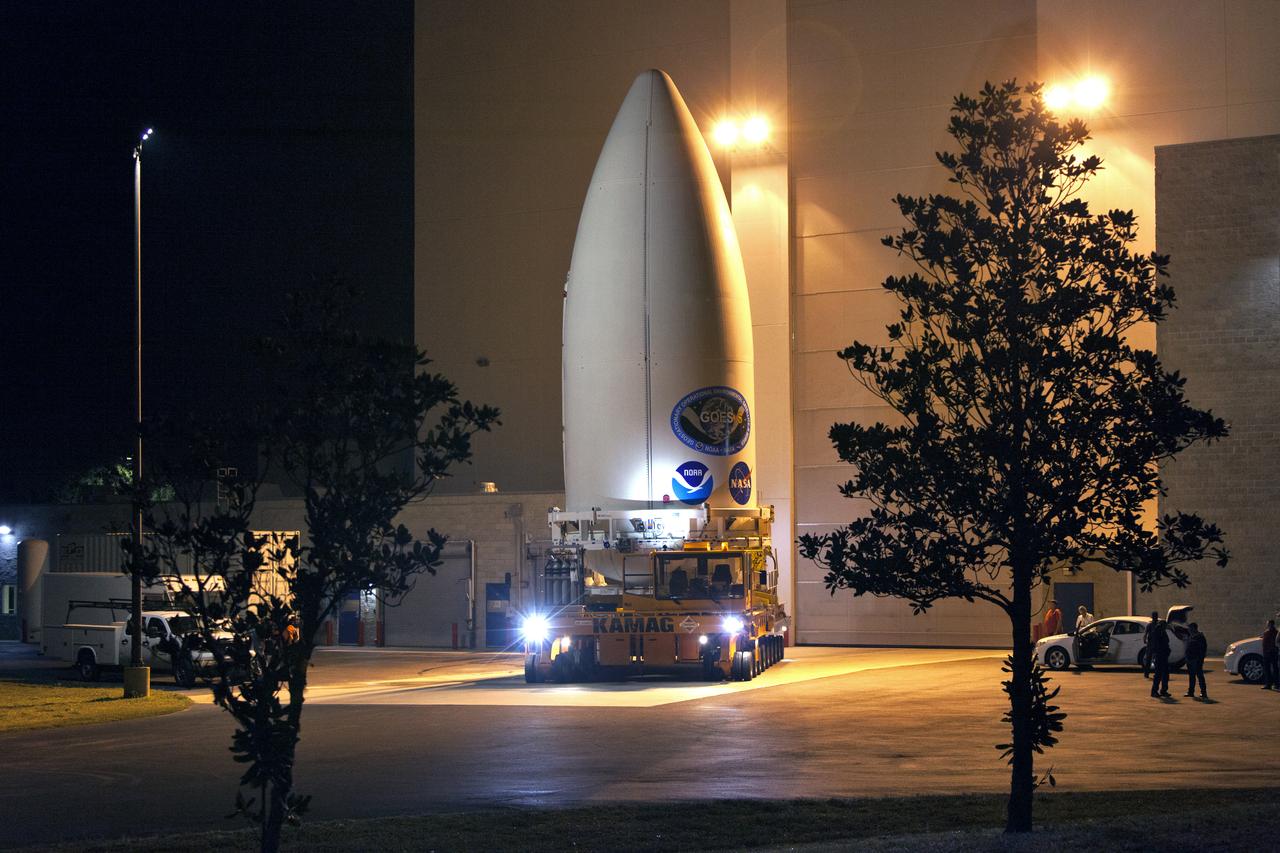
The payload fairing containing NOAA's Geostationary Operational Environmental Satellite-S (GOES-S), secured on a transporter, departs the Astrotech Space Operations facility in Titusville, Florida. GOES-S will be transported to the United Launch Alliance (ULA) Vertical Integration Facility at Space Launch Complex 41 at Cape Canaveral Air Force Station in Florida. The payload fairing will be lifted and mated to the ULA Atlas V rocket. GOES-S is the second in a series of four advanced geostationary weather satellites. GOES-S is slated to launch aboard the ULA Atlas V on March 1.
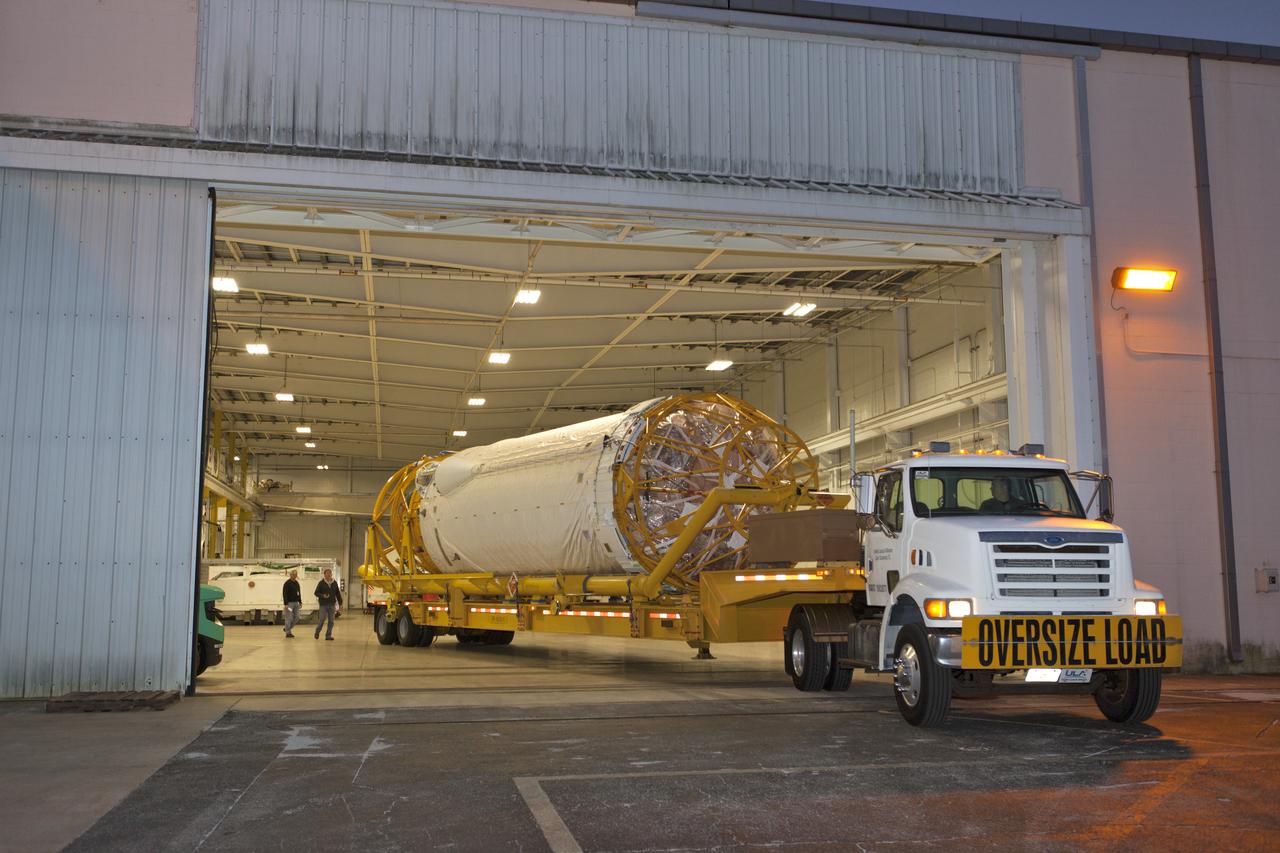
The Centaur upper stage that will help launch NOAA's Geostationary Operational Environmental Satellite-S, or GOES-S, is being transported from the Atlas Spaceflight Operations Center at Cape Canaveral Air Force Station to the Delta Operations Center for further processing. GOES-S is the second in a series of four advanced geostationary weather satellites. The GOES-R series - consisting of the GOES-R, GOES-S, GOES-T and GOES-U spacecraft - will significantly improve the detection and observation of environmental phenomena that directly affect public safety, protection of property and the nation's economic health and prosperity. GOES-S is slated to launch March 1, 2018 aboard a United Launch Alliance Atlas V rocket.
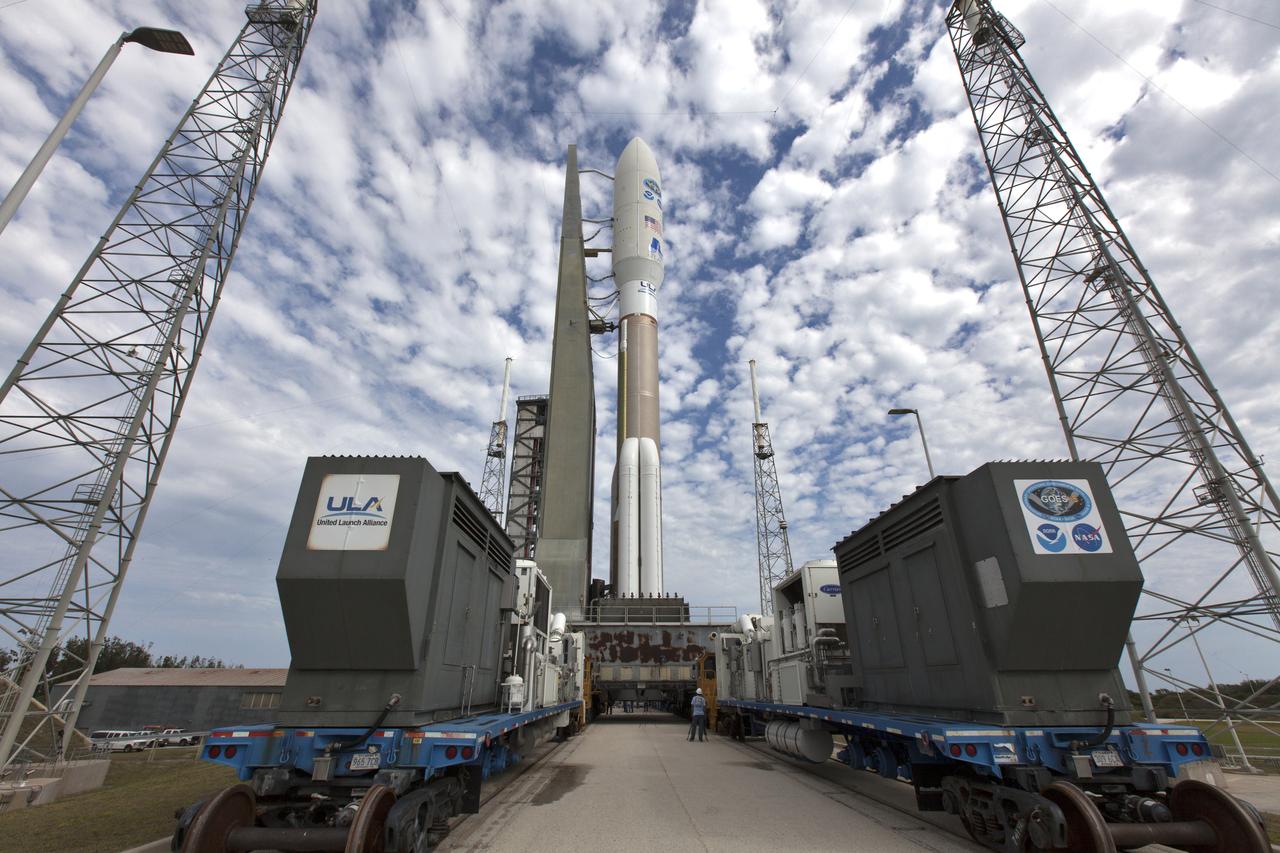
A United Launch Alliance Atlas V rocket is rolled to Space Launch Complex 41 at Cape Canaveral Air Force Station. The launch vehicle will send the National Oceanic and Atmospheric Administration's, or NOAA's, Geostationary Operational Environmental Satellite, or GOES-S, into orbit. The GOES series is designed to significantly improve the detection and observation of environmental phenomena that directly affect public safety, protection of property and the nation's economic health and prosperity. GOES-S is slated to lift off at 5:02 p.m. EST on March 1, 2018 aboard a United Launch Alliance Atlas V rocket.
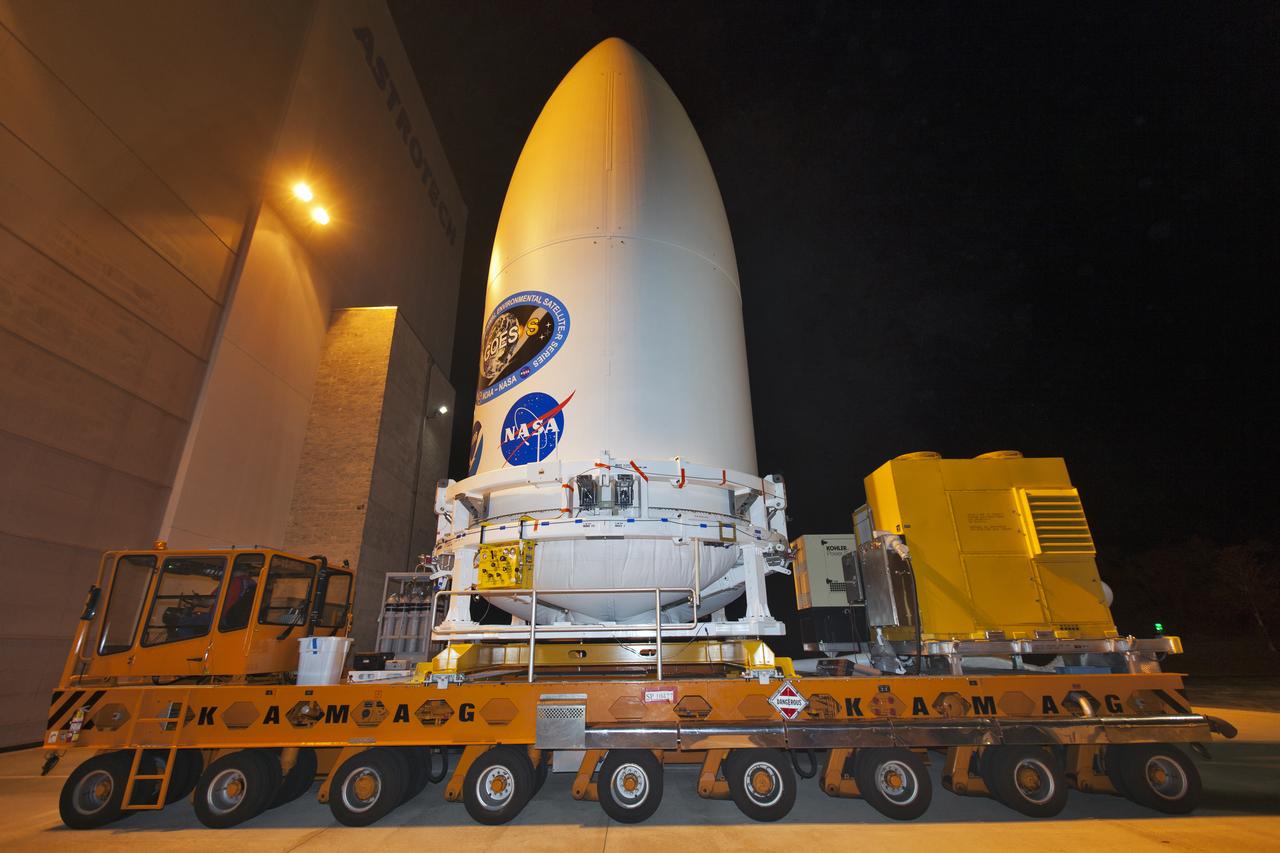
Secured on a transporter, the payload fairing containing NOAA's Geostationary Operational Environmental Satellite-S (GOES-S) departs the Astrotech Space Operations facility in Titusville, Florida. GOES-S will be transported to the United Launch Alliance (ULA) Vertical Integration Facility at Space Launch Complex 41 at Cape Canaveral Air Force Station in Florida. The payload fairing will be lifted and mated to the ULA Atlas V rocket. GOES-S is the second in a series of four advanced geostationary weather satellites. GOES-S is slated to launch aboard the ULA Atlas V on March 1.
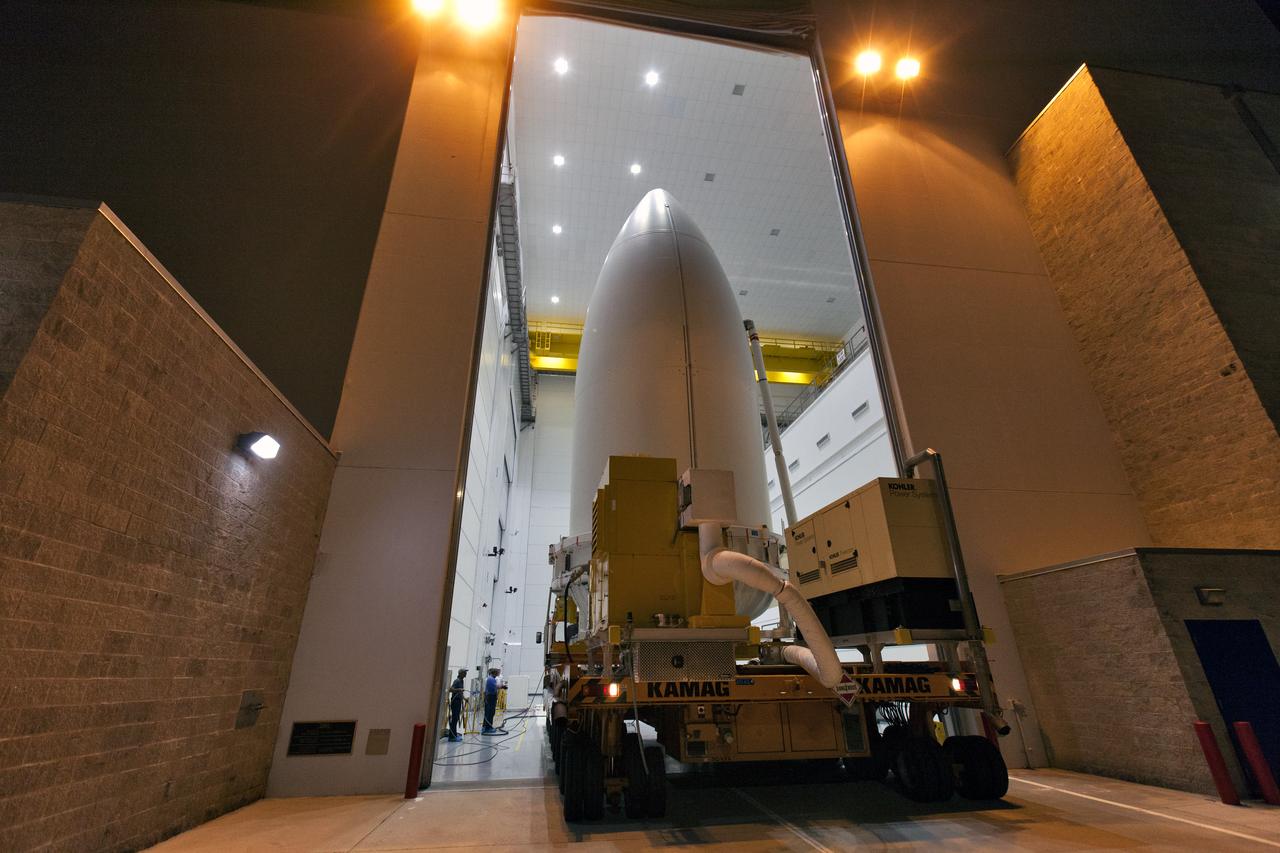
The payload fairing containing NOAA's Geostationary Operational Environmental Satellite-S (GOES-S) is secured on a transporter and moved out of the Astrotech Space Operations facility in Titusville, Florida. GOES-S will be transported to the United Launch Alliance (ULA) Vertical Integration Facility at Space Launch Complex 41 at Cape Canaveral Air Force Station in Florida. The payload fairing will be lifted and mated to the ULA Atlas V rocket. GOES-S is the second in a series of four advanced geostationary weather satellites. GOES-S is slated to launch aboard the ULA Atlas V on March 1.
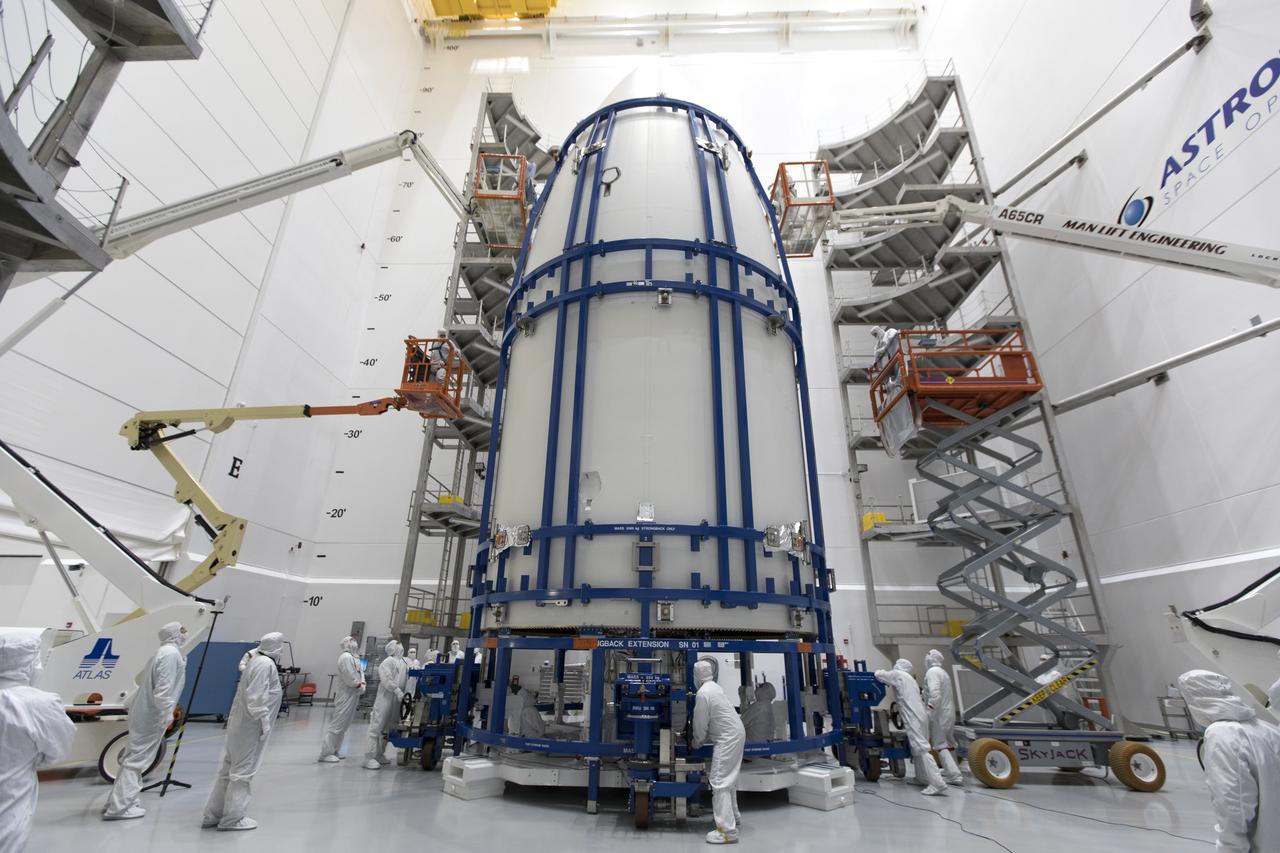
In a clean room at Astrotech Space Operations in Titusville, Florida, technicians and engineers monitor progress as NOAA's Geostationary Operational Environmental Satellite-S, or GOES-S, is encapsulated in its payload fairing. It soon will be moved to Space Launch Complex 41 at Cape Canaveral Air Force Station for mounting atop the Atlas V rocket that will boost the satellite to orbit. GOES-S is the second in a series of four advanced geostationary weather satellites that will significantly improve the detection and observation of environmental phenomena that directly affect public safety, protection of property and the nation's economic health and prosperity. GOES-S is slated to launch March 1, 2018 aboard a United Launch Alliance Atlas V rocket.
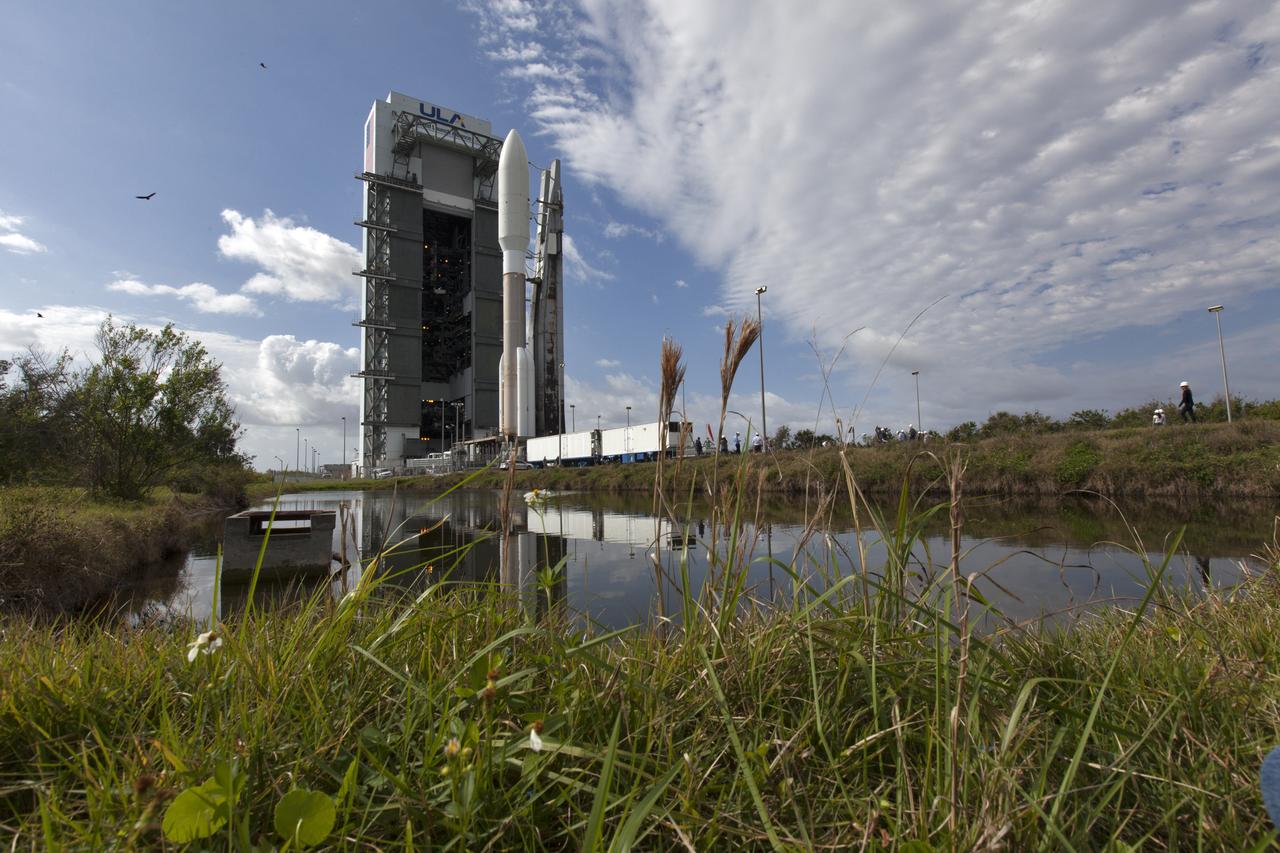
A United Launch Alliance Atlas V rocket is rolled to Space Launch Complex 41 at Cape Canaveral Air Force Station. The launch vehicle will send the National Oceanic and Atmospheric Administration's, or NOAA's, Geostationary Operational Environmental Satellite, or GOES-S, into orbit. The GOES series is designed to significantly improve the detection and observation of environmental phenomena that directly affect public safety, protection of property and the nation's economic health and prosperity. GOES-S is slated to lift off at 5:02 p.m. EST on March 1, 2018 aboard a United Launch Alliance Atlas V rocket.
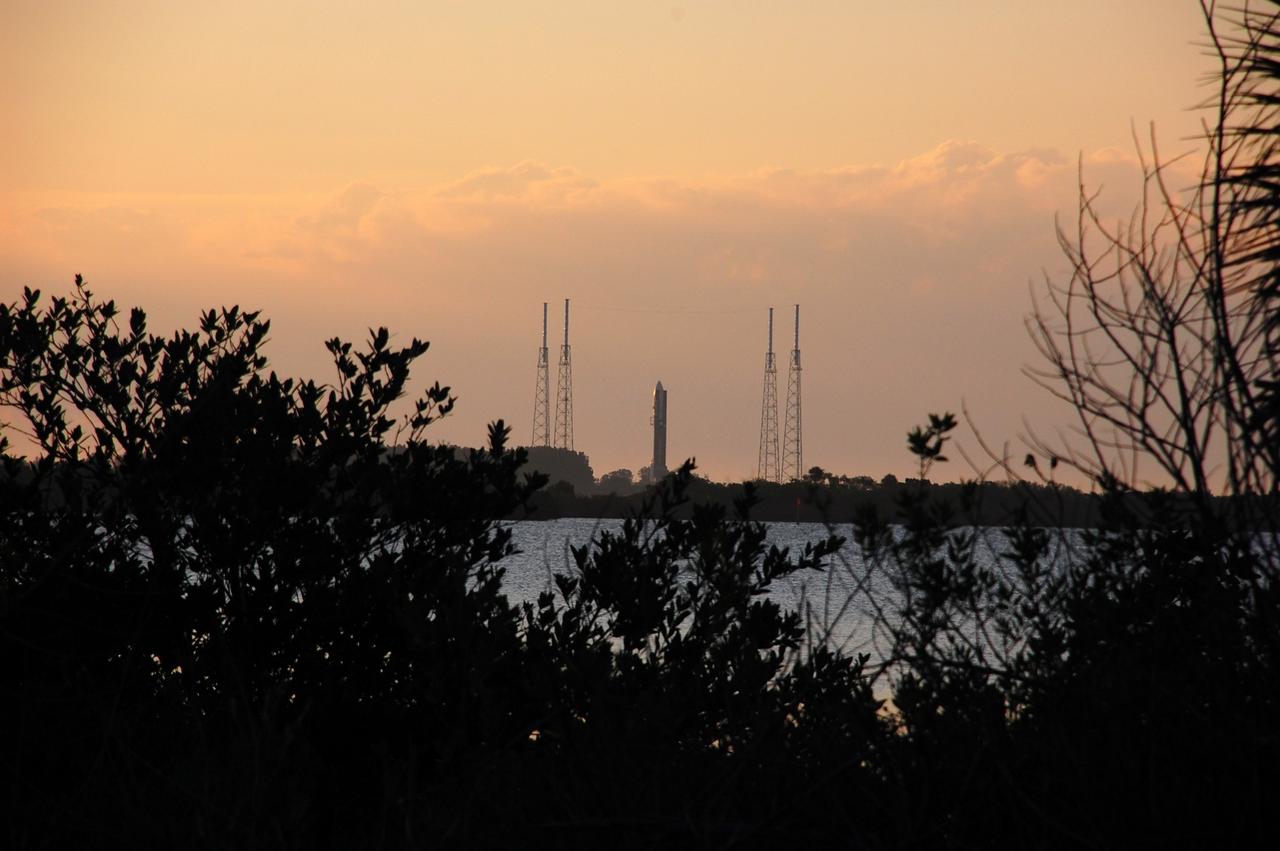
CAPE CANAVERAL, Fla. – Dawn over Space Launch Complex 41 on Cape Canaveral Air Force Station in Florida finds a United Launch Alliance Atlas V rocket awaiting launch with a National Reconnaissance Office payload. The pad is just across the water from Kennedy Space Center. Liftoff is set for 1:45 p.m. EDT on April 10. A 90 percent chance of favorable weather conditions at launch time is forecast. Designated NROL-67, the mission is in support of national defense. To learn more about ULA's Atlas V rocket, visit http://www.ulalaunch.com/site/pages/Products_AtlasV.shtml. Photo credit: NASA/Ben Smelgelsky
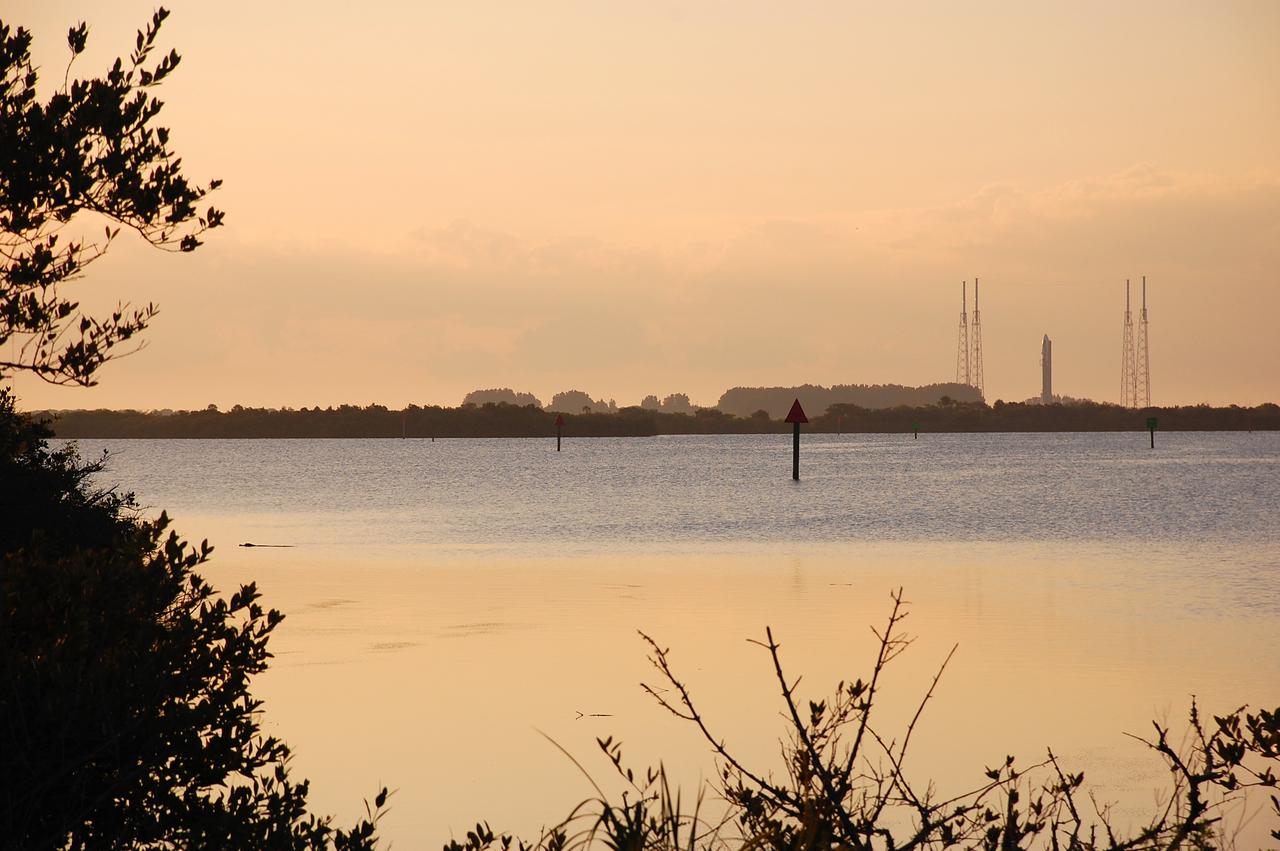
CAPE CANAVERAL, Fla. – Glimpsed through the trees on Kennedy Space Center in Florida, a United Launch Alliance Atlas V rocket at Space Launch Complex 41 on Cape Canaveral Air Force Station awaits launch with a National Reconnaissance Office payload. Liftoff is set for 1:45 p.m. EDT on April 10. A 90 percent chance of favorable weather conditions at launch time is forecast. Designated NROL-67, the mission is in support of national defense. To learn more about ULA's Atlas V rocket, visit http://www.ulalaunch.com/site/pages/Products_AtlasV.shtml. Photo credit: NASA/Ben Smelgelsky
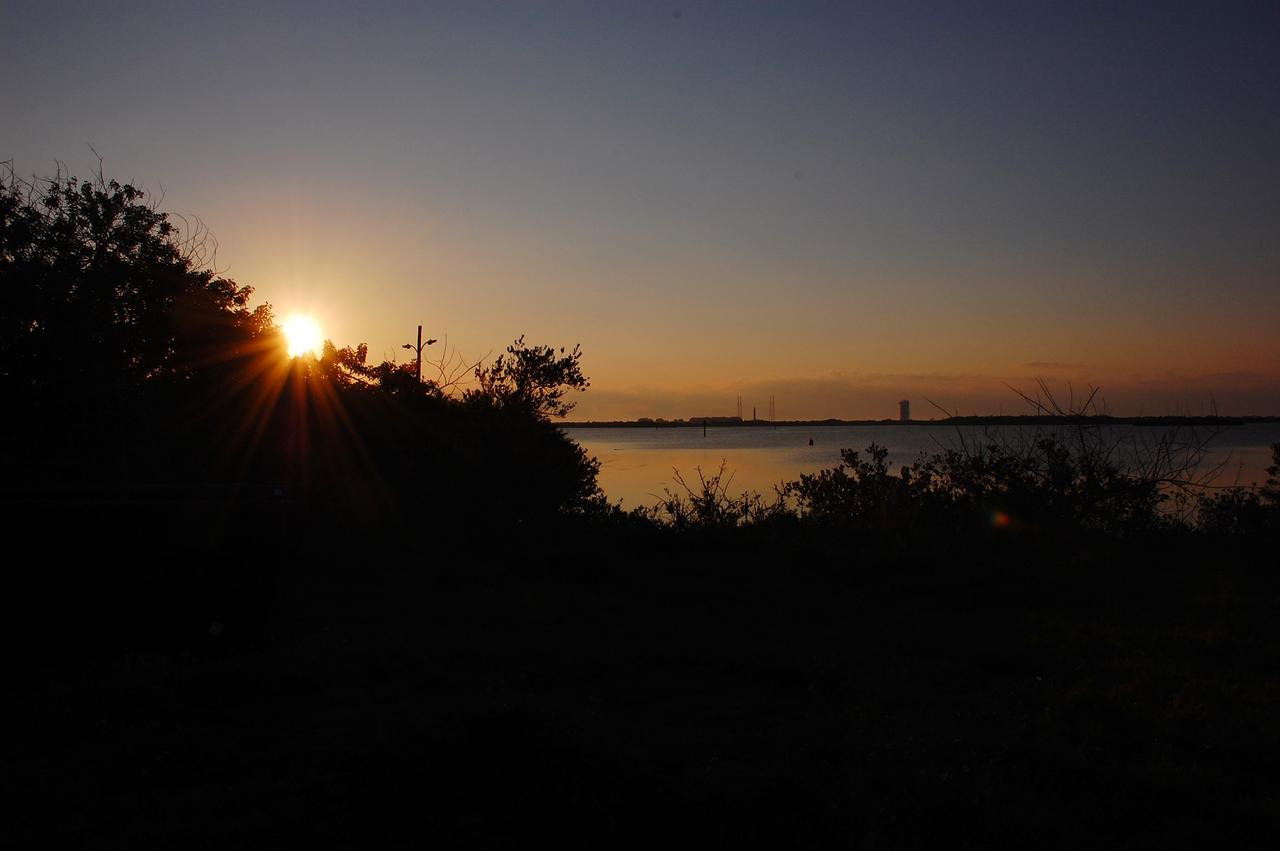
CAPE CANAVERAL, Fla. – As the sun rises over Space Launch Complex 41 on Cape Canaveral Air Force Station in Florida, a United Launch Alliance Atlas V rocket awaits launch with a National Reconnaissance Office payload. The pad is just across the water from Kennedy Space Center. Liftoff is set for 1:45 p.m. EDT on April 10. A 90 percent chance of favorable weather conditions at launch time is forecast. Designated NROL-67, the mission is in support of national defense. To learn more about ULA's Atlas V rocket, visit http://www.ulalaunch.com/site/pages/Products_AtlasV.shtml. Photo credit: NASA/Ben Smelgelsky
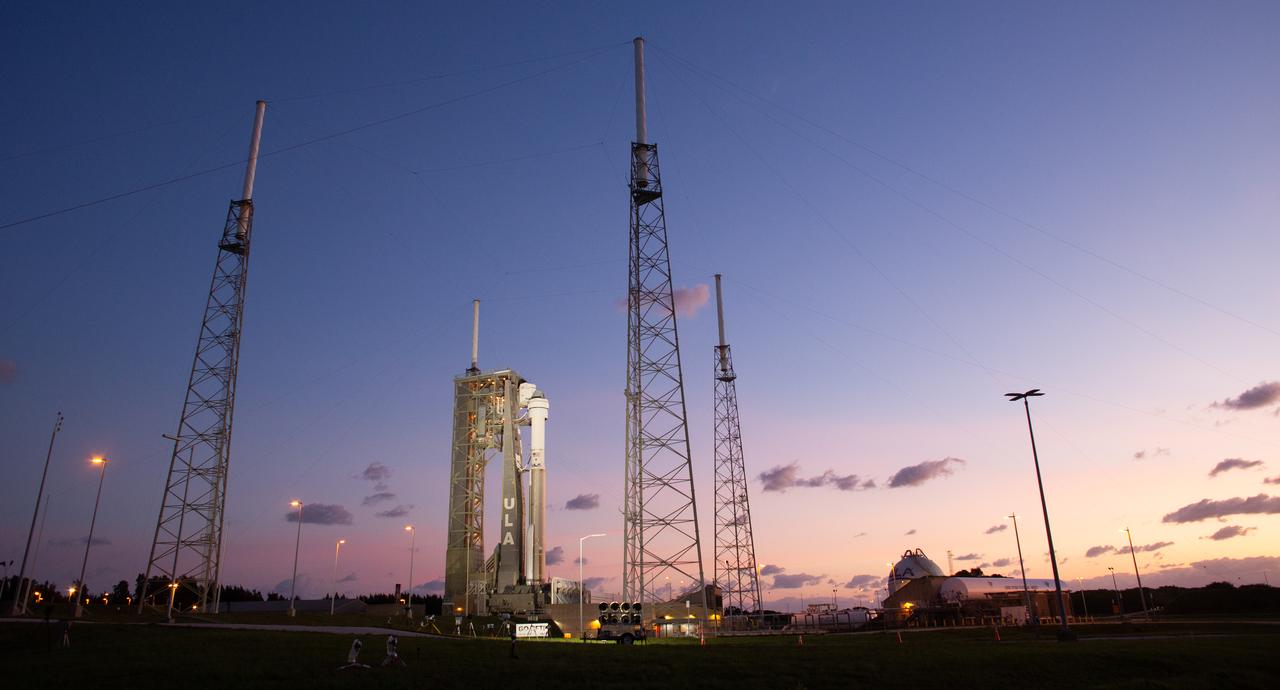
A United Launch Alliance Atlas V rocket with Boeing’s CST-100 Starliner spacecraft aboard is seen at sunrise at Space Launch Complex 41 before the launch attempt was scrubbed, Saturday, June 1, 2024, at Cape Canaveral Space Force Station in Florida. NASA’s Boeing Crew Flight Test is the first launch with astronauts of the Boeing CFT-100 spacecraft and United Launch Alliance Atlas V rocket to the International Space Station as part of the agency’s Commercial Crew Program. The flight test serves as an end-to-end demonstration of Boeing’s crew transportation system and will carry NASA astronauts Butch Wilmore and Suni Williams to and from the orbiting laboratory. Photo Credit: (NASA/Joel Kowsky)