
Red and Green colors predominate in this view of the Aurora Australis photographed from the Space Shuttle Discovery (STS-39) in May 1991 at the peak of the last geomagnetic maximum. The payload bay and tail of the shuttle can be seen on the left hand side of the picture. Auroras are caused when high-energy electrons pour down from the Earth's magnetosphere and collide with atoms. Red aurora occurs from 200 km to as high as 500 km altitude and is caused by the emission of 6300 Angstrom wavelength light from oxygen atoms. Green aurora occurs from about 100 km to 250 km altitude and is caused by the emission of 5577 Angstrom wavelength light from oxygen atoms. The light is emitted when the atoms return to their original unexcited state. At times of peaks in solar activity, there are more geomagnetic storms and this increases the auroral activity viewed on Earth and by astronauts from orbit.
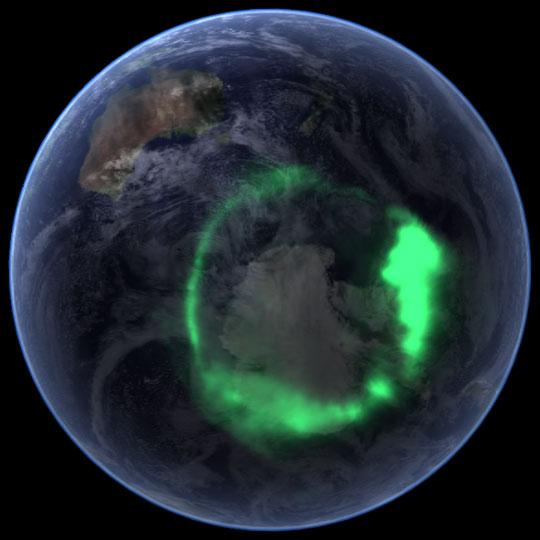
NASA file image acquired September 11, 2005 <b>To view a video of this event go here: <a href="http://www.flickr.com/photos/gsfc/6257608714">www.flickr.com/photos/gsfc/6257608714</a></b> From space, the aurora is a crown of light that circles each of Earth’s poles. The IMAGE satellite captured this view of the aurora australis (southern lights) on September 11, 2005, four days after a record-setting solar flare sent plasma—an ionized gas of protons and electrons—flying towards the Earth. The ring of light that the solar storm generated over Antarctica glows green in the ultraviolet part of the spectrum, shown in this image. The IMAGE observations of the aurora are overlaid onto NASA’s satellite-based Blue Marble image. From the Earth’s surface, the ring would appear as a curtain of light shimmering across the night sky. Like all solar storms, the September storm distorted the shape of the magnetic field that surrounds the Earth. Without buffeting from the solar wind (charged particles like protons and electrons that are ejected from the Sun), the Earth’s magnetic field would look something like a plump doughnut, with the North and South poles forming the slender hole in the center. In reality, the nearly constant solar winds flatten the space side of the “doughnut” into a long tail. The amount of distortion changes when solar storms, such as the flare on September 7, send stronger winds towards the Earth. Changes to the magnetic field release fast-moving particles, which flow with charged particles from the Sun towards the center of the “doughnut” at the Earth’s poles. As the particles sink into the atmosphere, they collide with oxygen and nitrogen, lighting the sky with Nature’s version of neon lights, the aurora. Though scientists knew that the aurora were caused by charged particles from the Sun and their interaction with the Earth’s magnetic field, they had no way to measure the interaction until NASA launched the Imager for Magnetopause-to-Aurora Global Exploration (IMAGE) satellite in 2000. The satellite’s mission was to collect data that would allow scientists to study the structure and dynamics of the Earth’s magnetic field for the first time. Designed to operate for two years, IMAGE sent its last data to Earth in December 2005 after a highly successful five-year mission. Since 2000, IMAGE has provided insight into how the Earth’s powerful magnetic field protects the planet from solar winds. Without the shield the magnetic field provides, the upper atmosphere would evaporate into space under the influence of solar winds. IMAGE has shown scientists what sort of changes the magnetic field undertakes as it diverts solar winds from the Earth. For a summary of the discoveries that IMAGE has made possible, see IMAGE Discovers. Instrument: IMAGE Credit: <a href="http://svs.gsfc.nasa.gov/index.html" rel="nofollow">NASA/Goddard Space Flight Center Scientific Visualization Studio</a> <b><a href="http://www.nasa.gov/audience/formedia/features/MP_Photo_Guidelines.html" rel="nofollow">NASA image use policy.</a></b> <b><a href="http://www.nasa.gov/centers/goddard/home/index.html" rel="nofollow">NASA Goddard Space Flight Center</a></b> enables NASA’s mission through four scientific endeavors: Earth Science, Heliophysics, Solar System Exploration, and Astrophysics. Goddard plays a leading role in NASA’s accomplishments by contributing compelling scientific knowledge to advance the Agency’s mission. <b>Follow us on <a href="http://twitter.com/NASAGoddardPix" rel="nofollow">Twitter</a></b> <b>Like us on <a href="http://www.facebook.com/pages/Greenbelt-MD/NASA-Goddard/395013845897?ref=tsd" rel="nofollow">Facebook</a></b> <b>Find us on <a href="http://instagrid.me/nasagoddard/?vm=grid" rel="nofollow">Instagram</a></b>
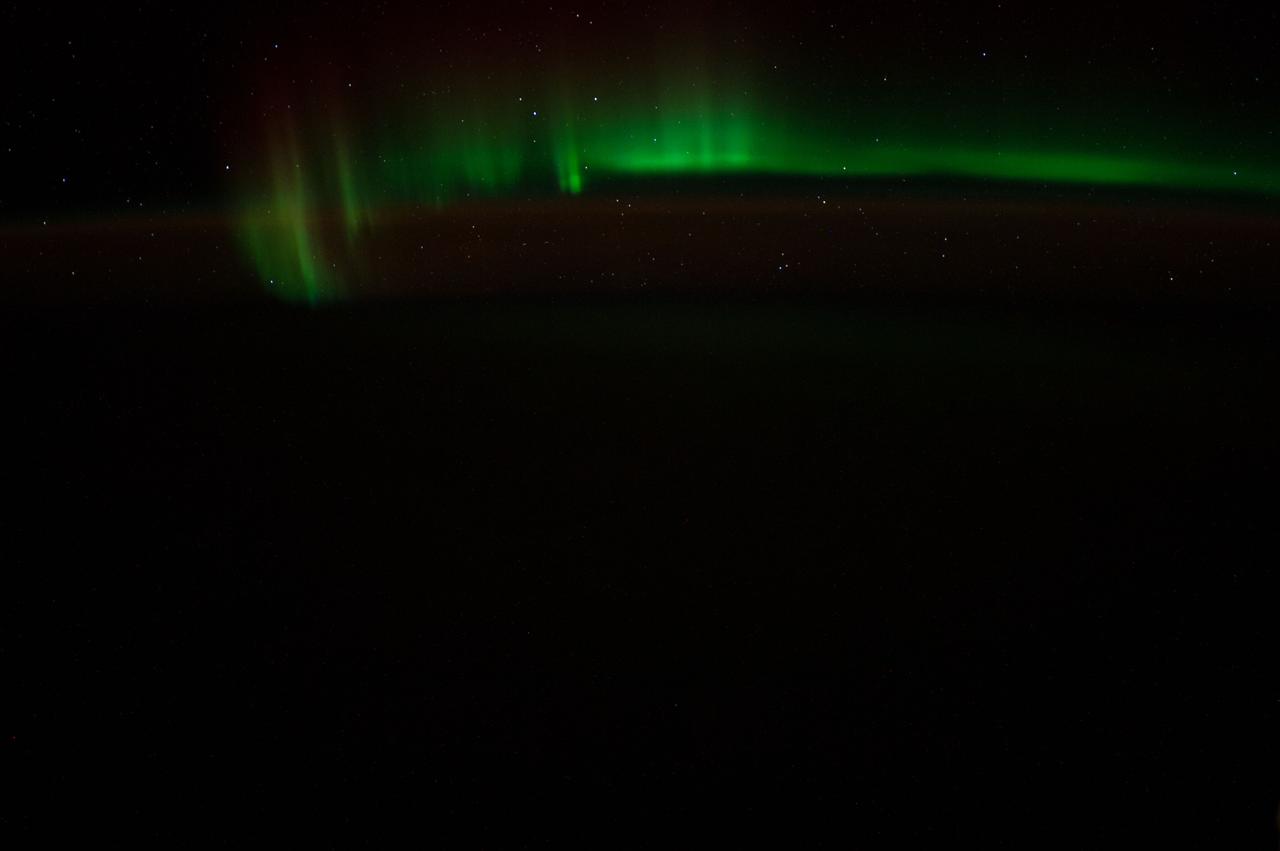
ISS040-E-040103 (5 July 2014) --- As the International Space Station was flying at an altitude of 226 nautical miles on July 5 above a point in the southern Indian Ocean near South Africa's Prince Edwards Islands, one of the Expedition 40 crew members photographed this image of Aurora Australis.
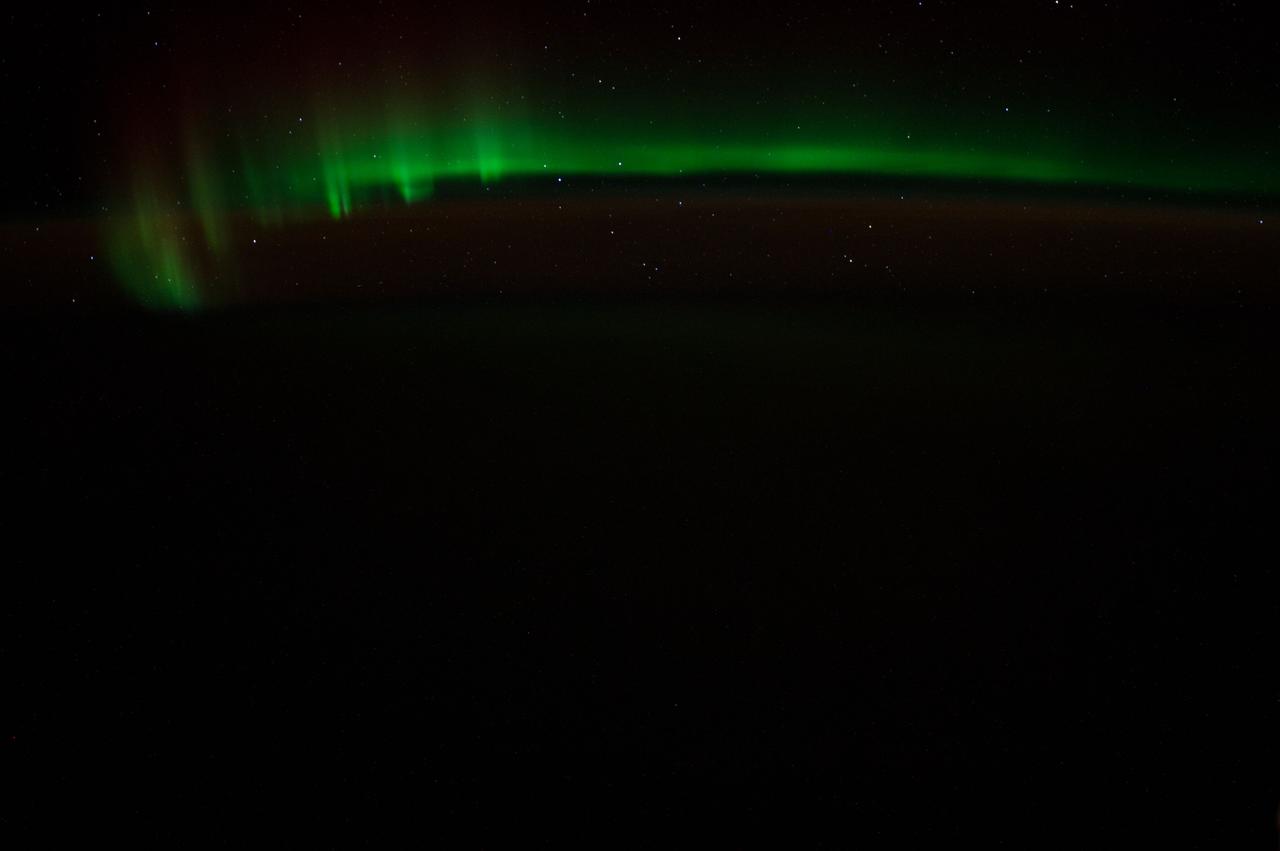
ISS040-E-040088 (5 July 2014) --- As the International Space Station was flying at an altitude of 226 nautical miles on July 5 above a point in the southern Indian Ocean near South Africa's Prince Edwards Islands, one of the Expedition 40 crew members photographed this image of Aurora Australis.
iss072e083078 (Oct. 8, 2024) --- The aurora australis streams over the Earth as the International Space Station orbited 272 miles above the Pacific Ocean south of New Zealand.
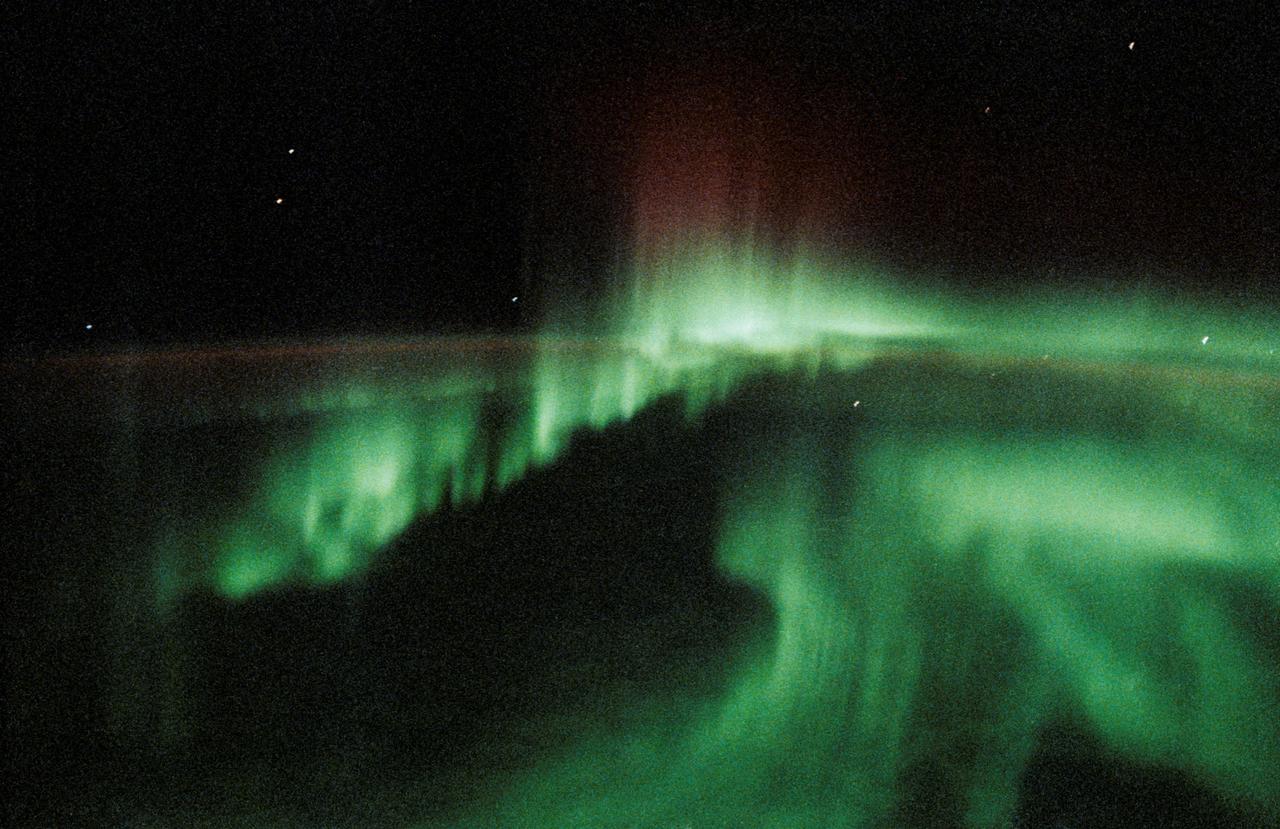
STS047-20-015 (12-20 Sept. 1992) --- This 35mm frame represents one of the more spectacular views of Aurora Australis, photographed by the crew. The crew observed and photographed a great deal of auroral activity from the Earth-orbiting Space Shuttle Endeavour during the eight-day Spacelab-J mission.
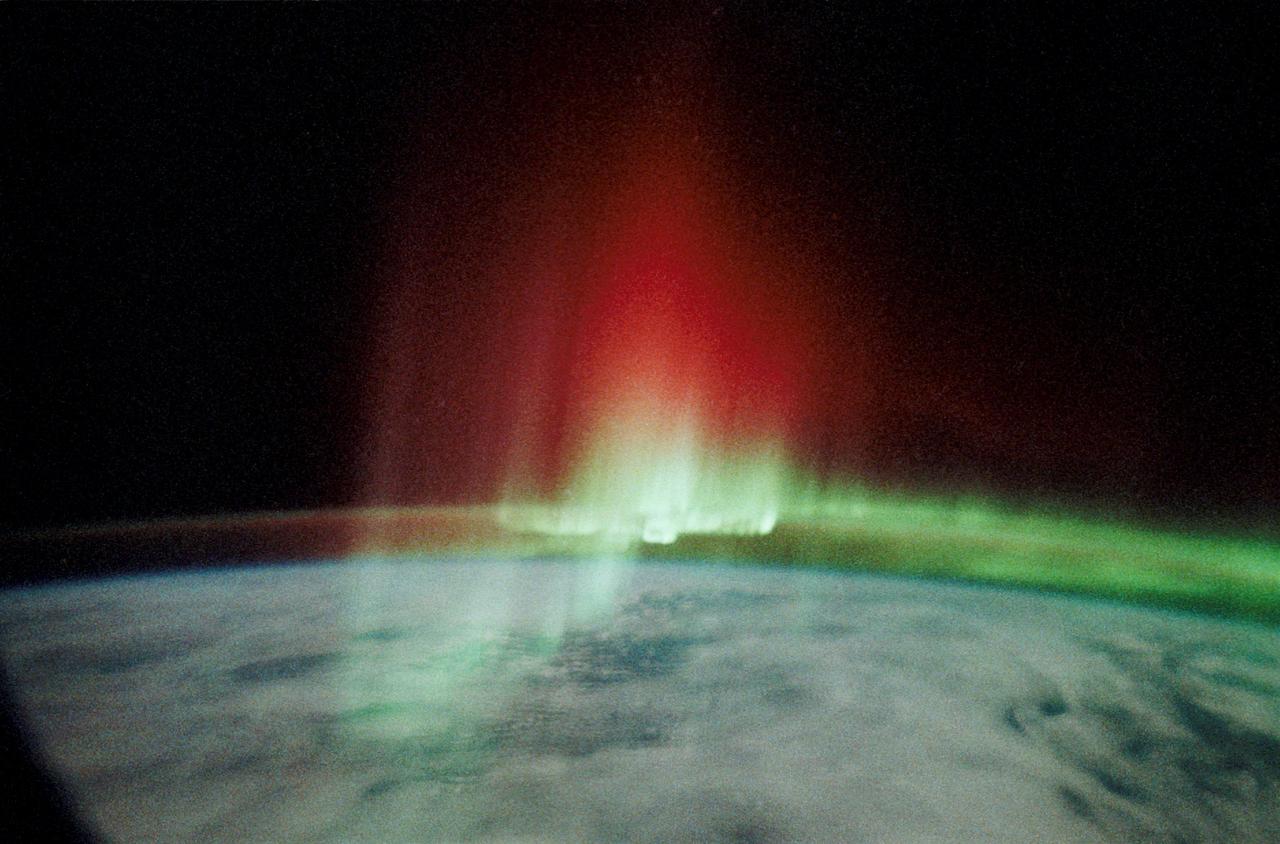
STS039-23-036 (28 April-6 May 1991) --- A 35mm frame of the Aurora Australis, also known as the Southern Lights, photographed from the Space Shuttle Discovery's flight deck by one of its seven crew members. One of the mission objectives was to measure the spectral and spatial characteristics of auroral emissions. While passing over the sunlit portion of Earth, the crew was able to take a number of photos of the various geographic points on the planet; much of the time on nightside passes was devoted to a thorough study and documentation of auroral displays.
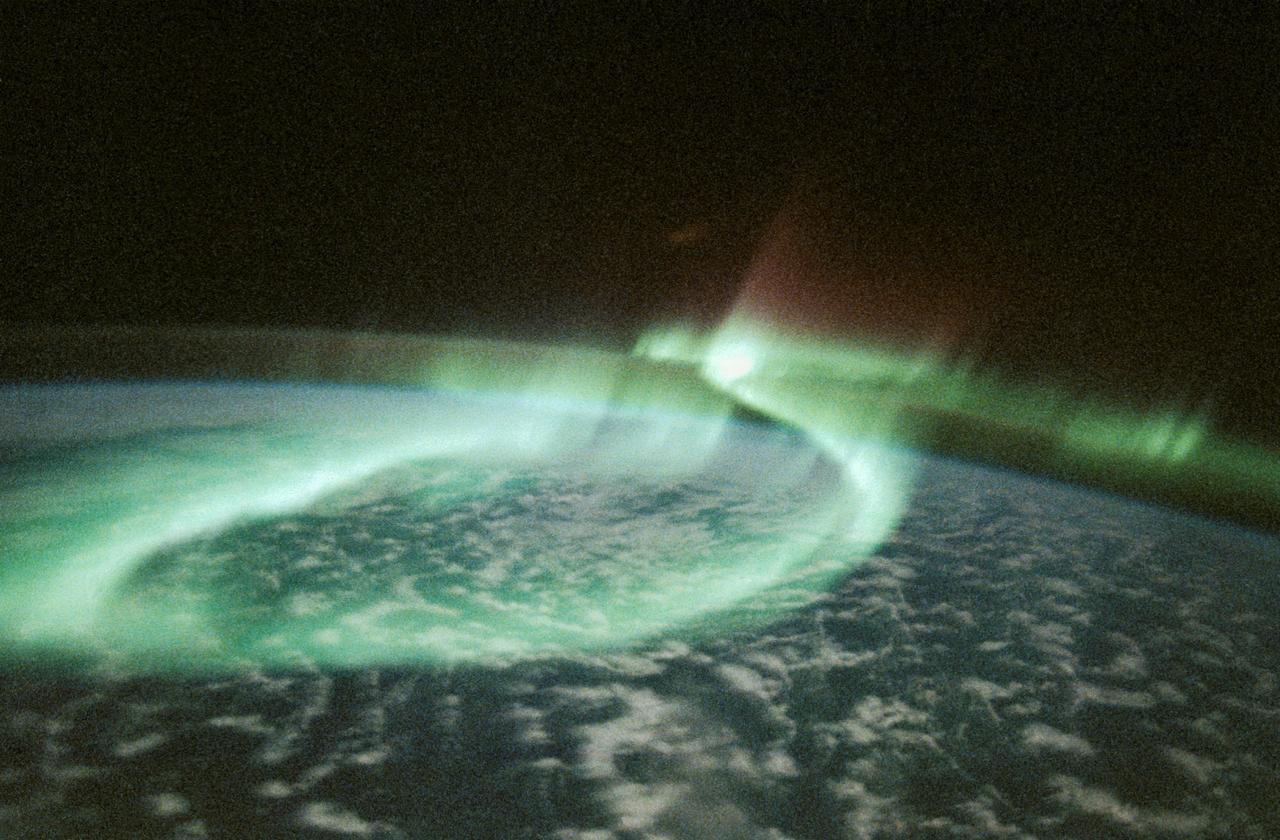
STS039-23-020 (28 April-6 May 1991) --- A 35mm frame of the Aurora Australis, also known as the Southern Lights, photographed from Space Shuttle Discovery's flight deck by one of its seven crew members. One of the mission objectives was to measure the spectral and spatial characteristics of auroral emissions. While passing over the sunlighted portion of Earth, the crew was able to take a number of photos of the various geographic points on the planet; much of the time on nightside passes was devoted to a thorough study and documentation of auroral displays.
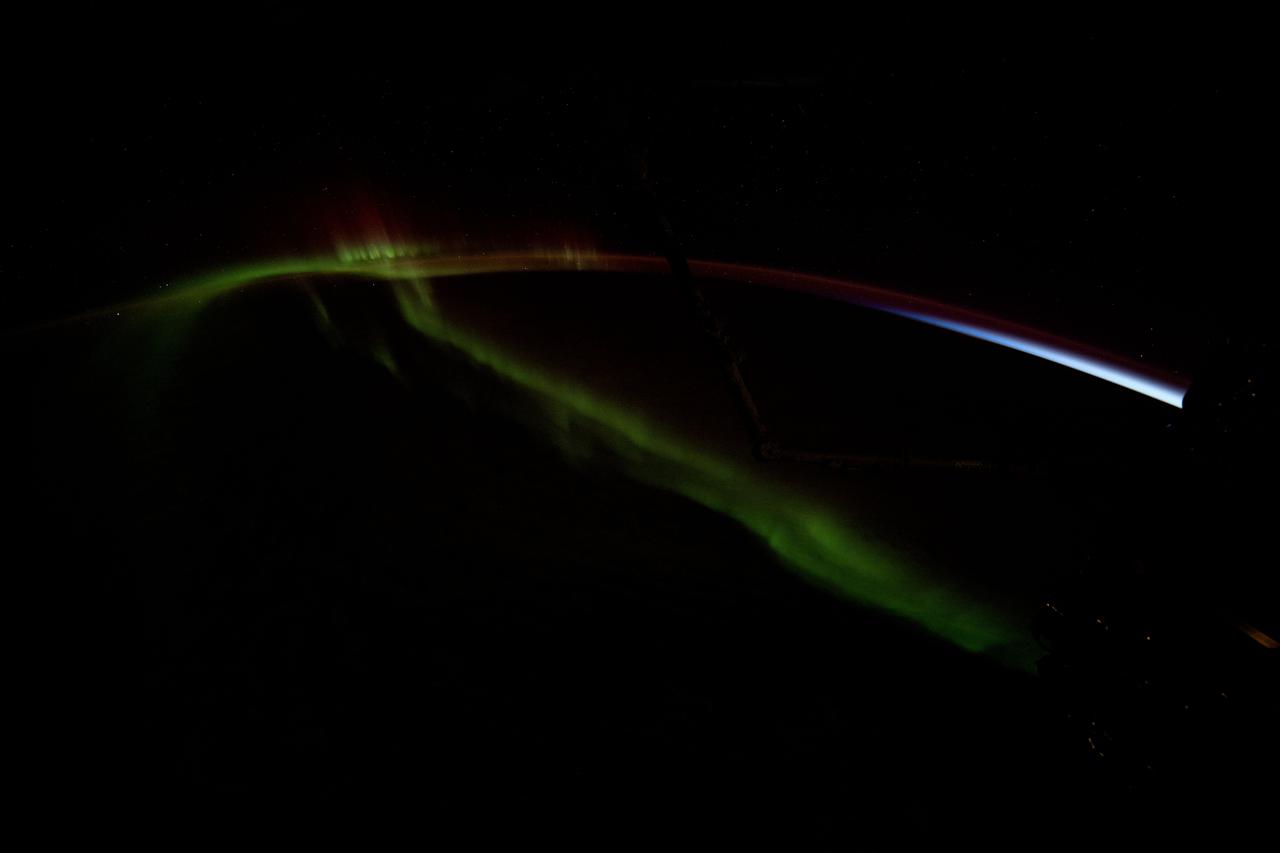
iss072e032946 (Oct. 8, 2024) --- A wispy aurora australis streams over the Earth as the International Space Station soared 274 miles above the Indian Ocean into an orbital sunset southwest of Perth, Australia.

iss072e011489 (Sept. 27, 2024) --- The aurora australis blends with Earth's atmospheric glow blanketing the nighttime horizon in this photograph from the International Space Station as it orbited 271 miles above the Pacific Ocean off the coast of New Zealand.
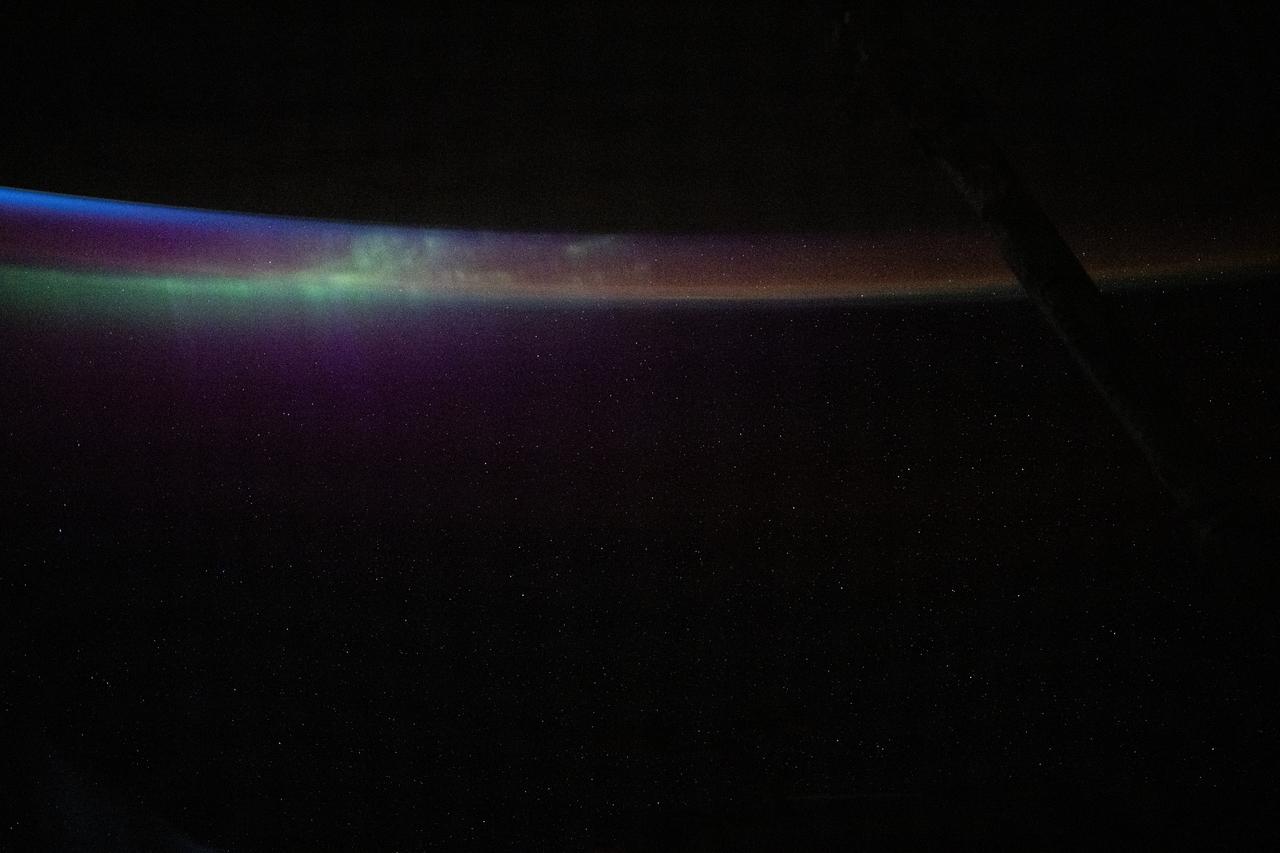
iss072e030161 (Oct. 10, 2024) --- The aurora australis blends into Earth's atmospheric glow in this photograph from the International Space Station as it soared into an orbital sunset 274 miles above the South Pacific Ocean.
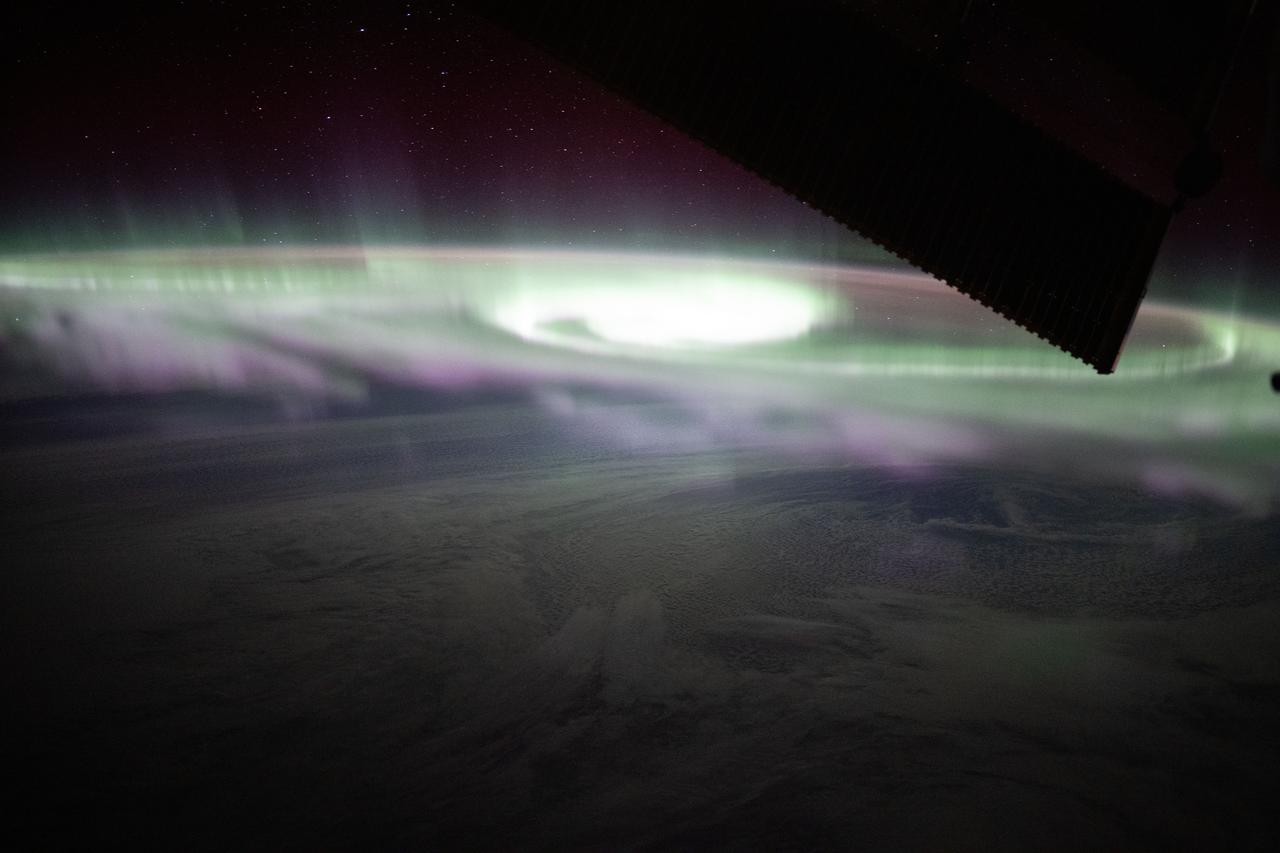
iss073e0256896 (June 3, 2025) --- The aurora australis swirls over a cloudy Pacific Ocean in this photograph from the International Space Station as it orbited 270 miles above and southeast of New Zealand.
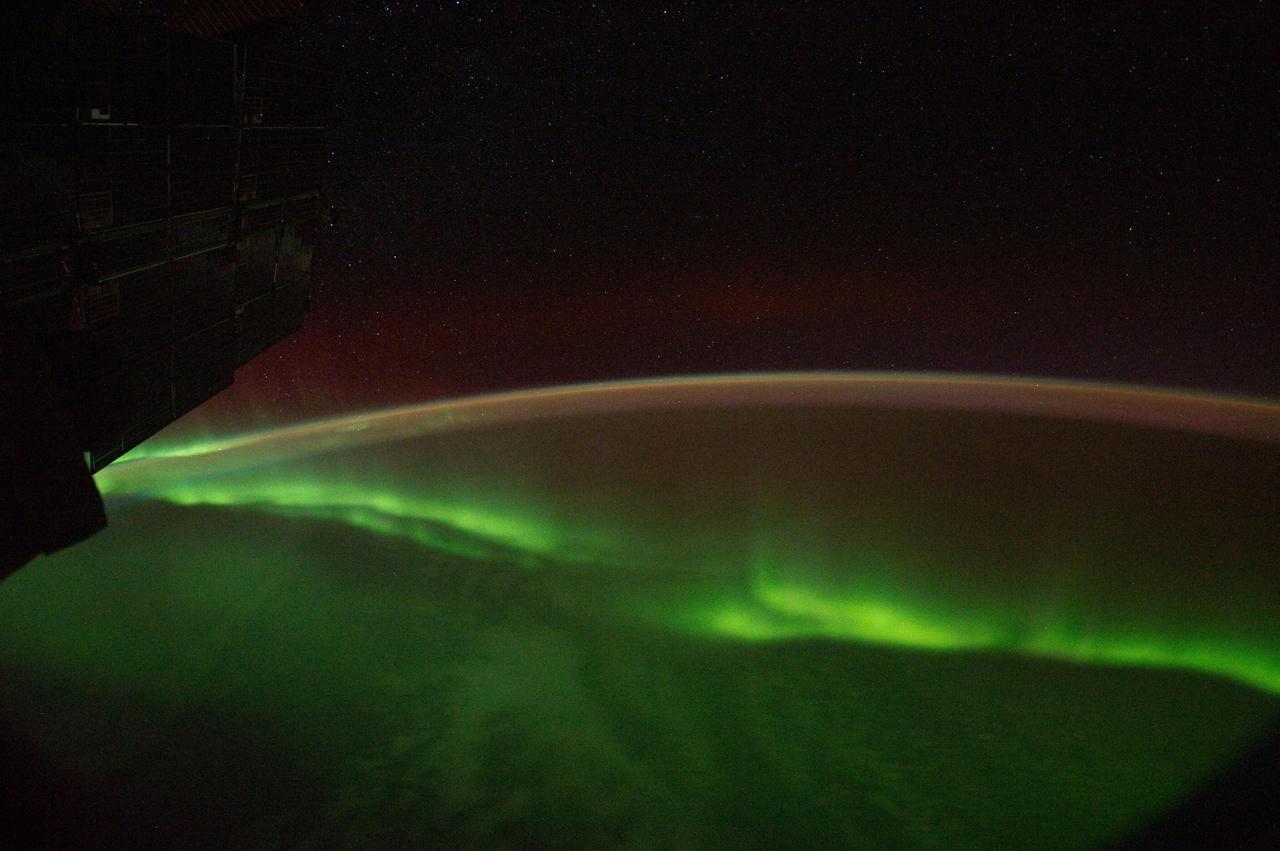
ISS029-E-006404 (18 Sept. 2011) --- This is one of a series of night time images photographed by one of the Expedition 29 crew members from the International Space Station. It features Aurora Australis and parts of the southeastern Indian Ocean. Nadir coordinates are 49.42 degrees south latitude and 121.01 degrees east longitude.
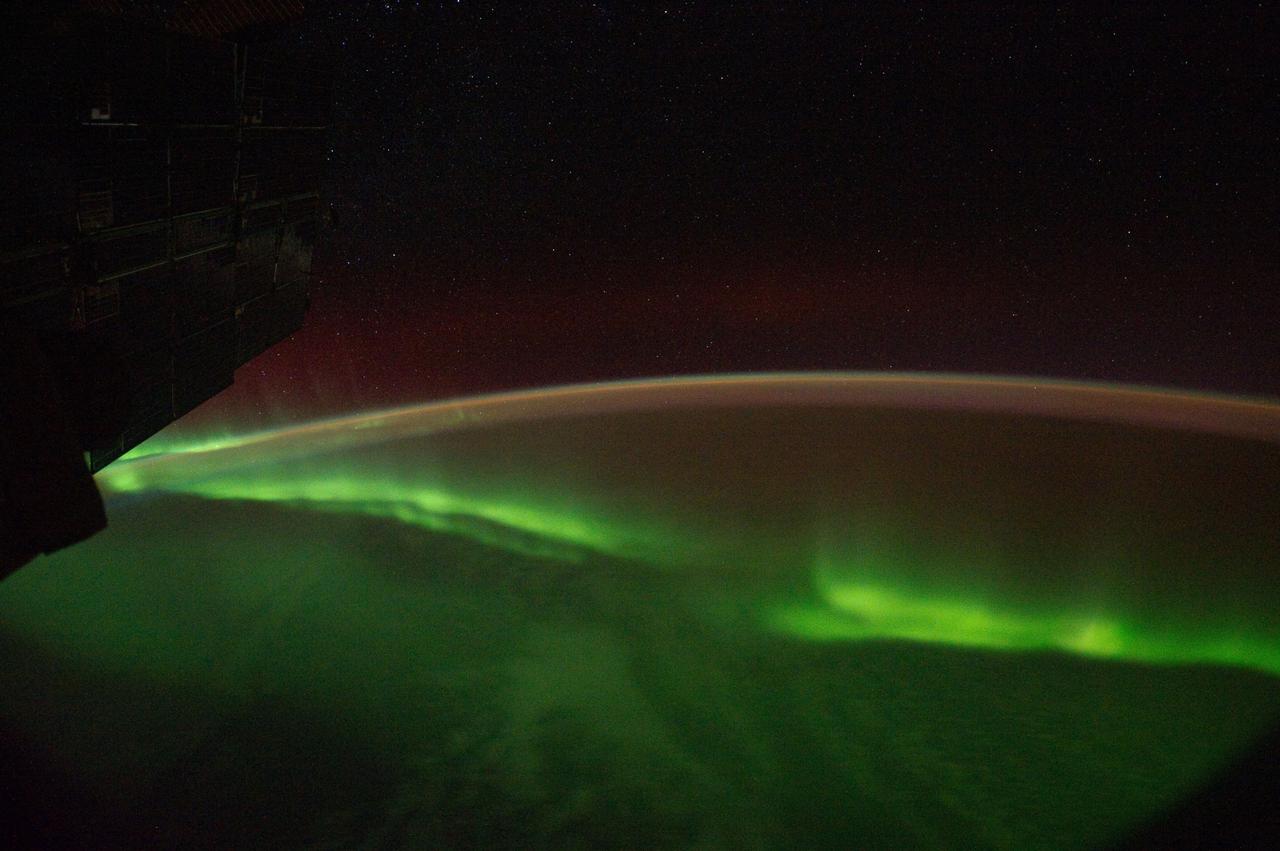
ISS029-E-006406 (18 Sept. 2011) --- This is one of a series of night time images photographed by one of the Expedition 29 crew members from the International Space Station. It features Aurora Australis and parts of the southeastern Indian Ocean. Nadir coordinates are 49.30 degrees south latitude and 121.56 degrees east longitude.

iss072e011331 (Sept. 27, 2024) --- The aurora australis blends with Earth's atmospheric glow blanketing the nighttime horizon with New Zealand's city lights below in this photograph from the International Space Station as it orbited 270 miles above the Tasman Sea.
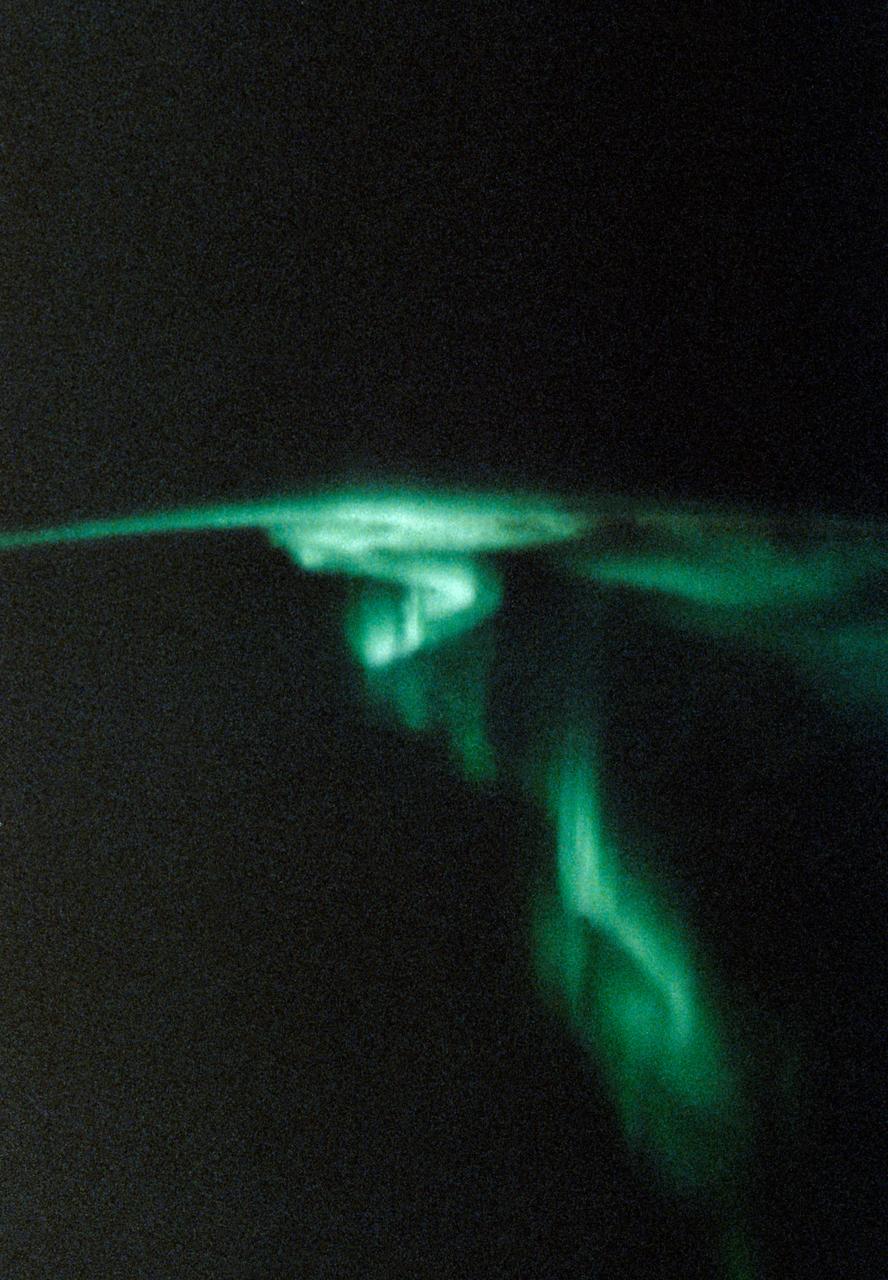
STS-45 Earth observation taken onboard Atlantis, Orbiter Vehicle (OV) 104, is of the Aurora Australis or Southern Lights. The STS-45 crewmembers note the interesting spiralling or corkscrew appearance of this particular sighting. Aurorae were observed and photographed throughout the STS-45 nine-day mission.
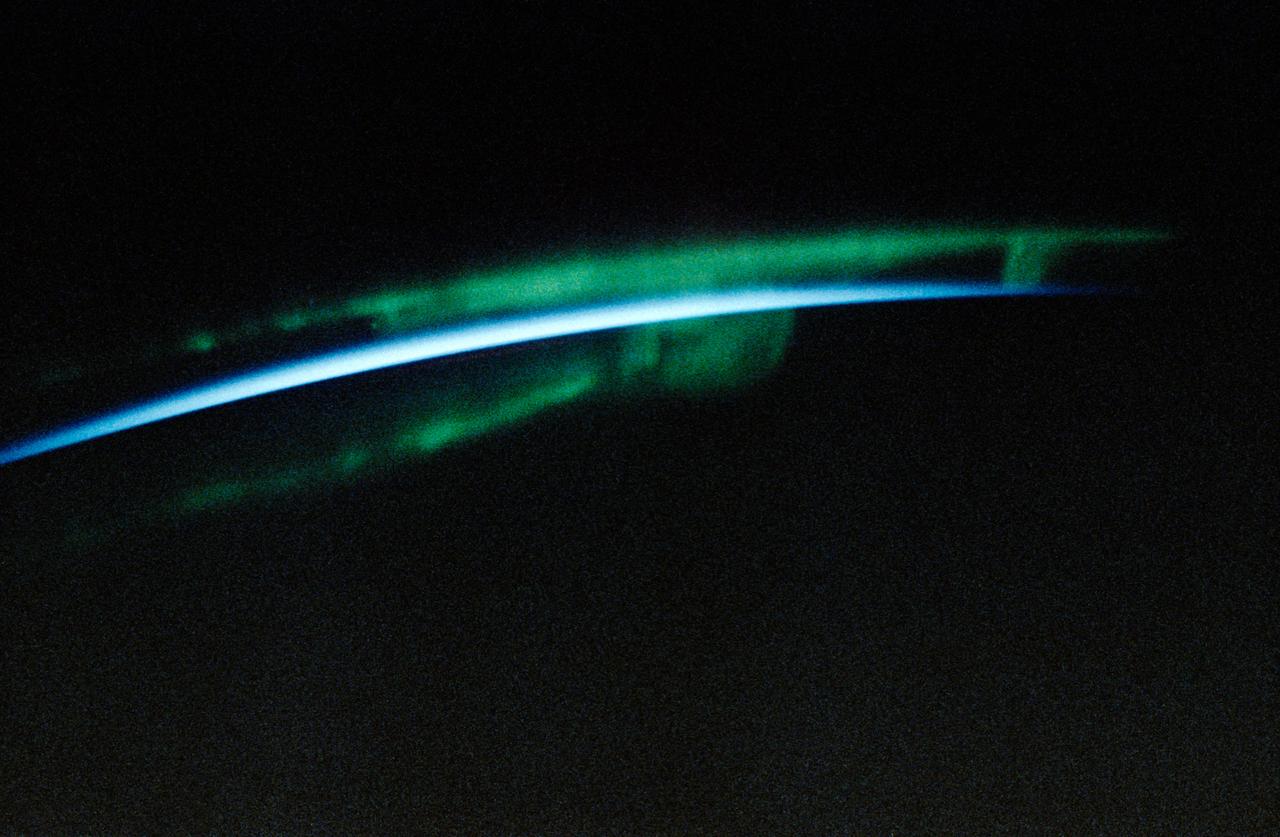
STS-45 Earth observation taken onboard Atlantis, Orbiter Vehicle (OV) 104, is of the Aurora Australis or Southern Lights. The green appearing auroral activity engulfs the thin blue line on the Earth's limb. Aurorae were observed and photographed throughout the STS-45 nine-day mission.
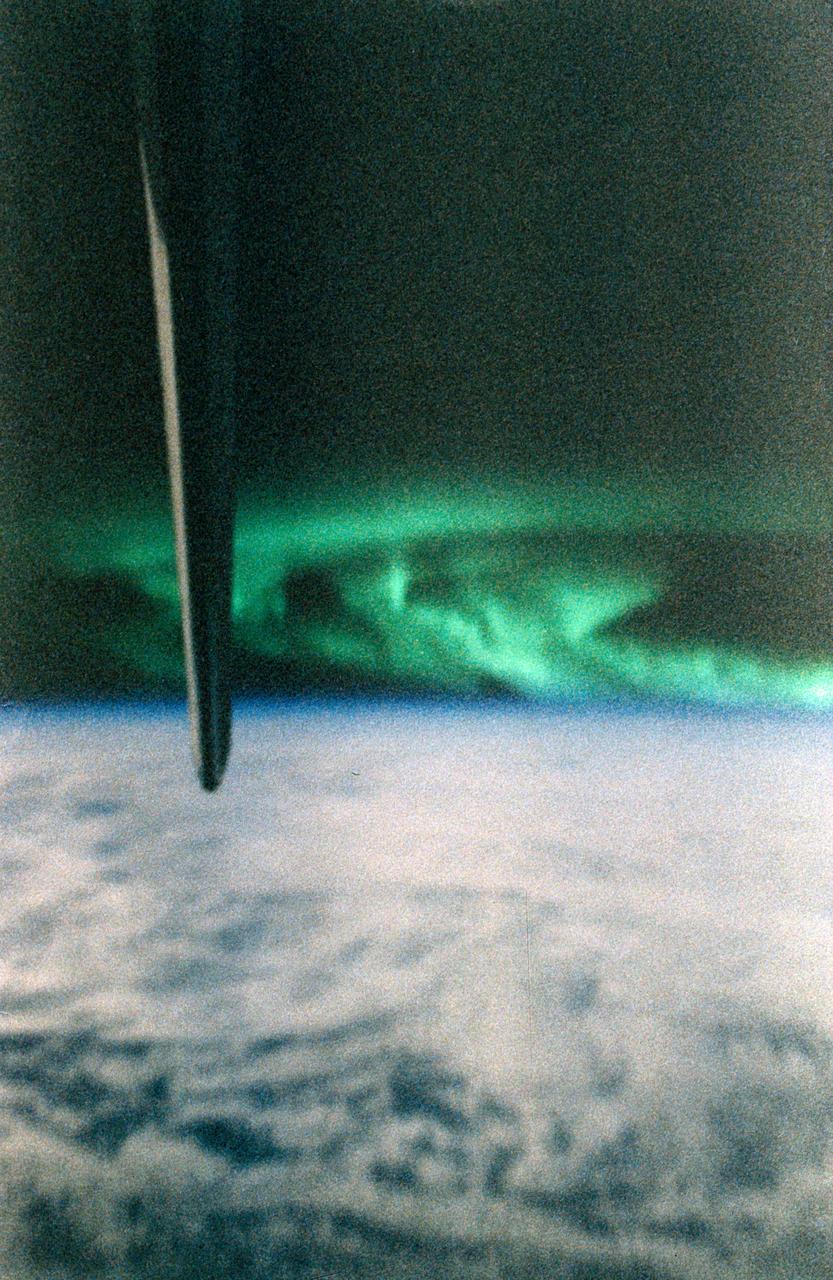
STS085-365-006 (7 - 19 August 1997) --- A 35mm camera with a time exposure was used to record this image of the southern lights or the aurora Australis. The vertical stabilizer of the Space Shuttle Discovery appears in the foreground.
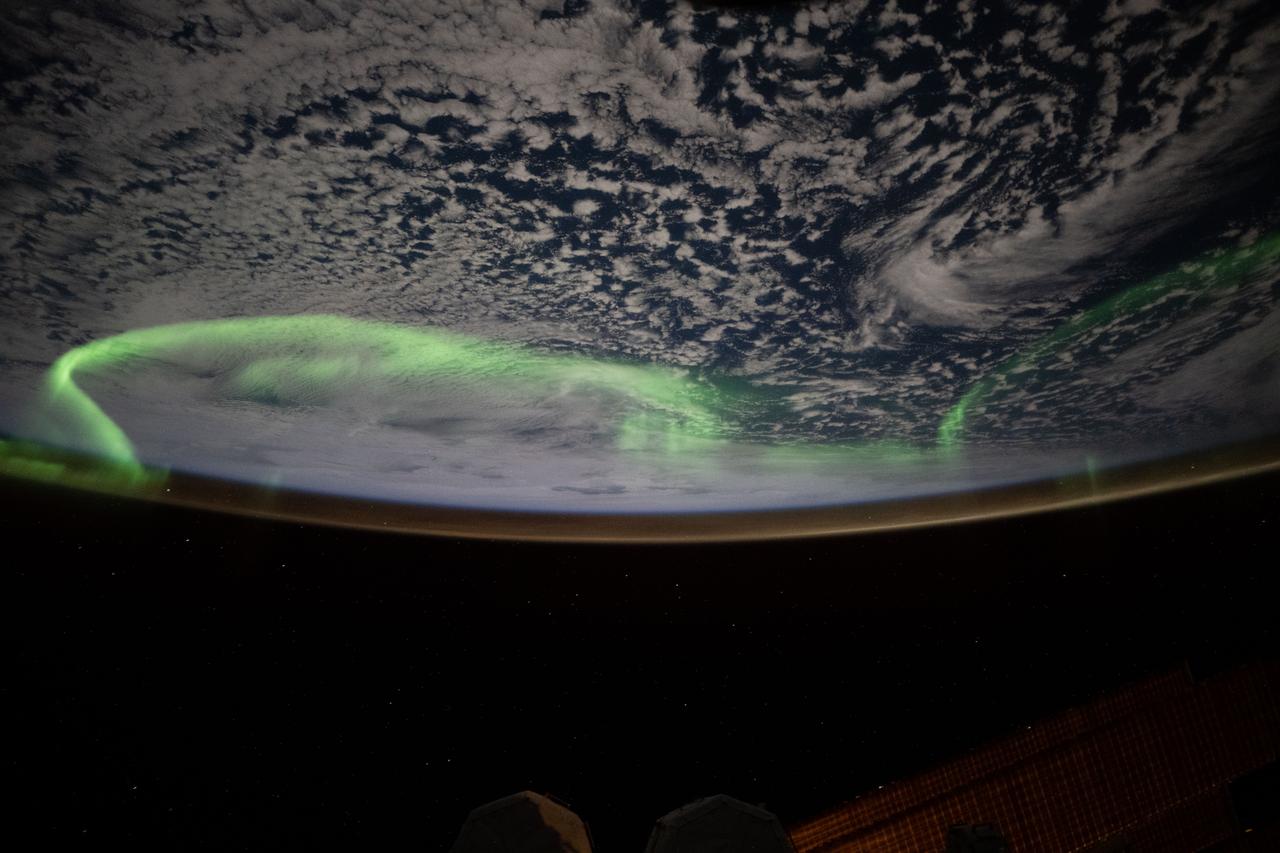
iss073e0247726 (June 12, 2025) --- The aurora australis arcs above a partly cloudy Indian Ocean in this photograph from the International Space Station as it orbited 269 miles above in between Australia and Antarctica.
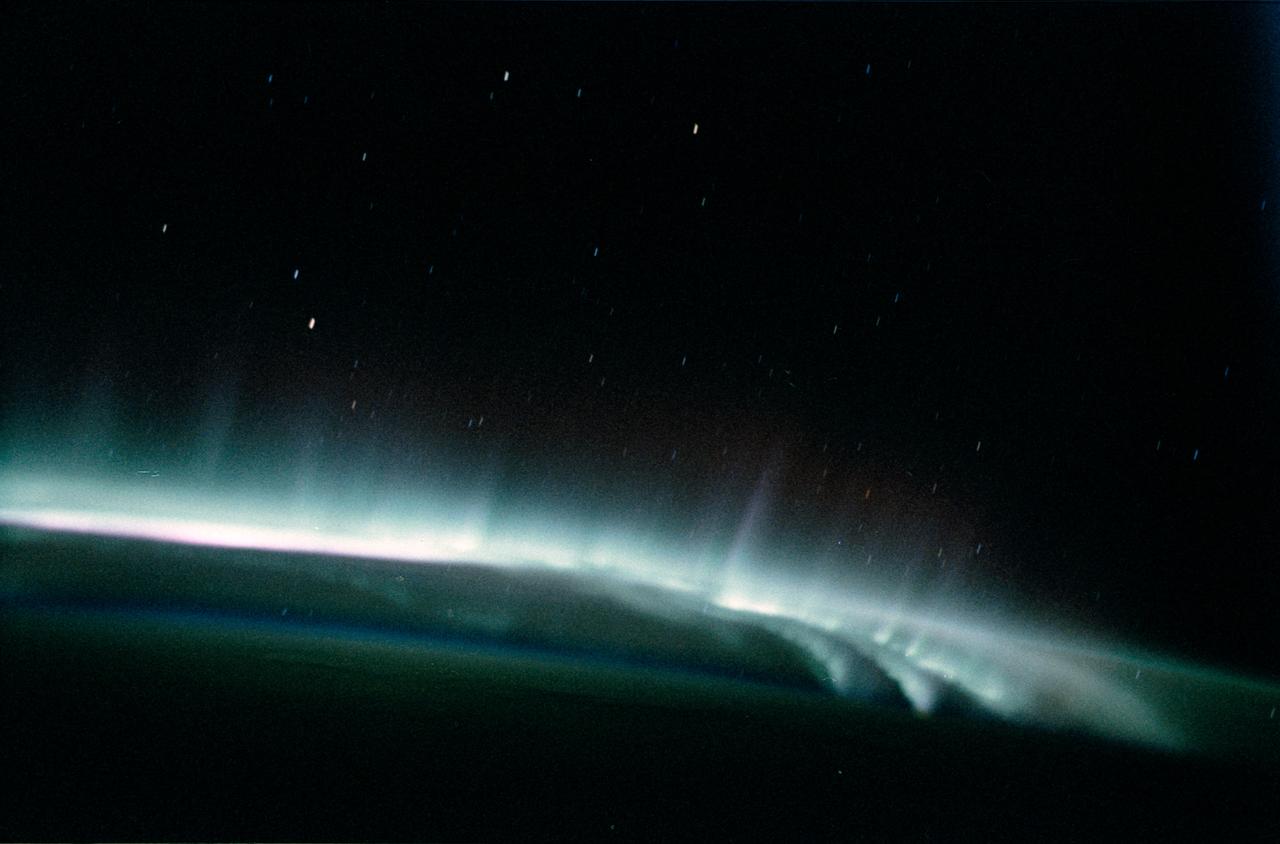
STS062-58-025 (4-18 March) --- This photo shows the aurora australis or souther lights. The multi-hued shafts of light, extending upward to 200 miles above the earth's surface, are caused by beams of energetic electrons colliding with the oxygen and nitrogen in the earth's upper atmosphere. The strong red glow occurs at the highest altitude where the air is least dense and composed mostly of oxygen. At lower altitudes, the greater density favors the green color, also produced by atomic oxygen. Sometimes at the bottom (the lowest altitude of the aurora) a pink border is produced by nitrogen. The aurora usually can be seen only in Arctic regions. However, because of the tilt of the magnetic axis of the space shuttle mission orbits. One of these regions is over eastern North American, and the second one is south of Australia. Since most shuttle launches occur in daytime, the North American region is in daylight, and the only auroras that can be seen are usually in the Southern Hemisphere.
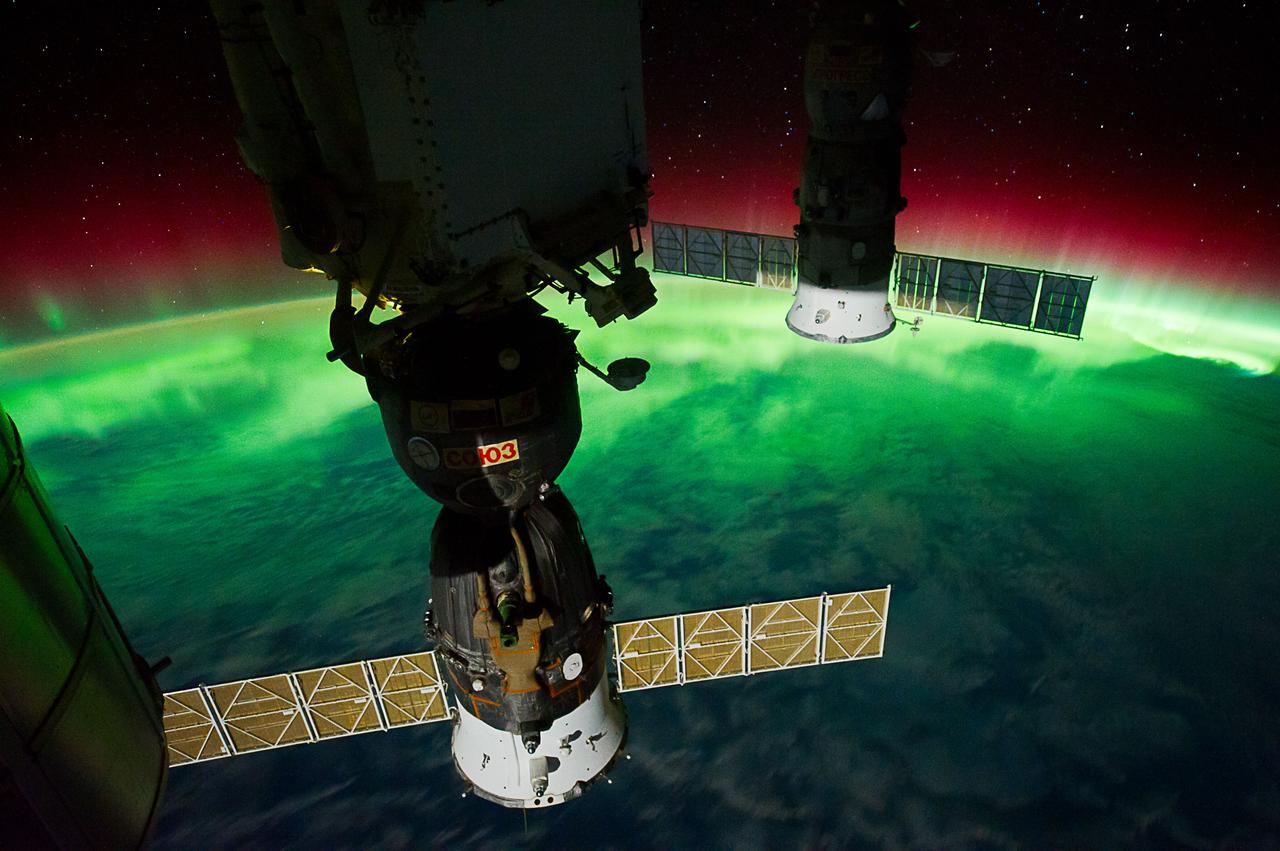
ISS029-E-008433 (17 Sept. 2011) --- This is one of a series of night time images photographed by one of the Expedition 29 crew members from the International Space Station. It features Aurora Australis, seen from a point over the southeast Tasman Sea near southern New Zealand. The station was located at 46.65 degrees south latitude and 169.10 degrees east longitude.
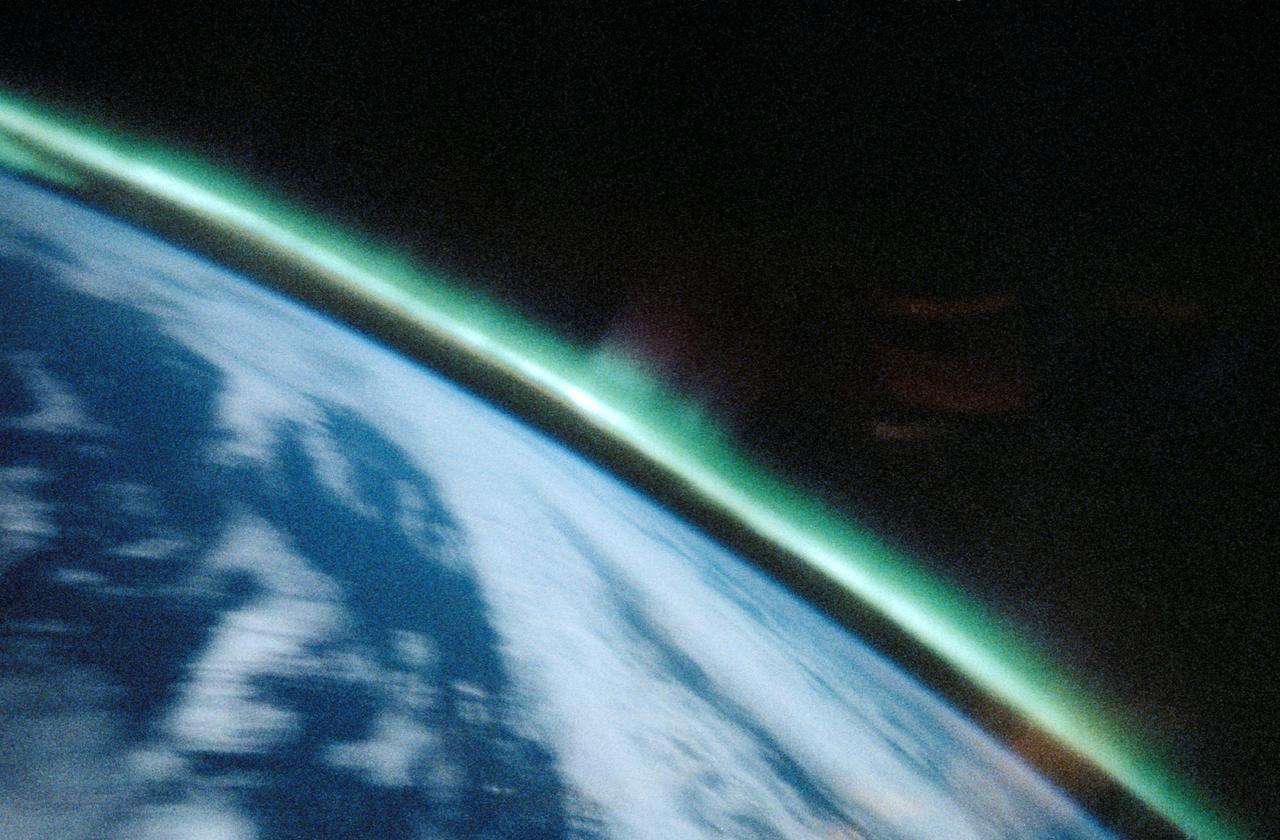
STS039-25-006 (28 April-6 May 1991) --- A 35mm frame of the Aurora Australis, also known as the Southern Lights, photographed from the Space Shuttle Discovery's flight deck by one of its seven crew members. One of the mission objectives was to measure the spectral and spatial characteristics of auroral emissions. While passing over the sunlighted portion of Earth, the crew was able to take a number of photos of the various geographic points on the planet; much of the time on nightside passes was devoted to a thorough study and documentation of auroral displays.
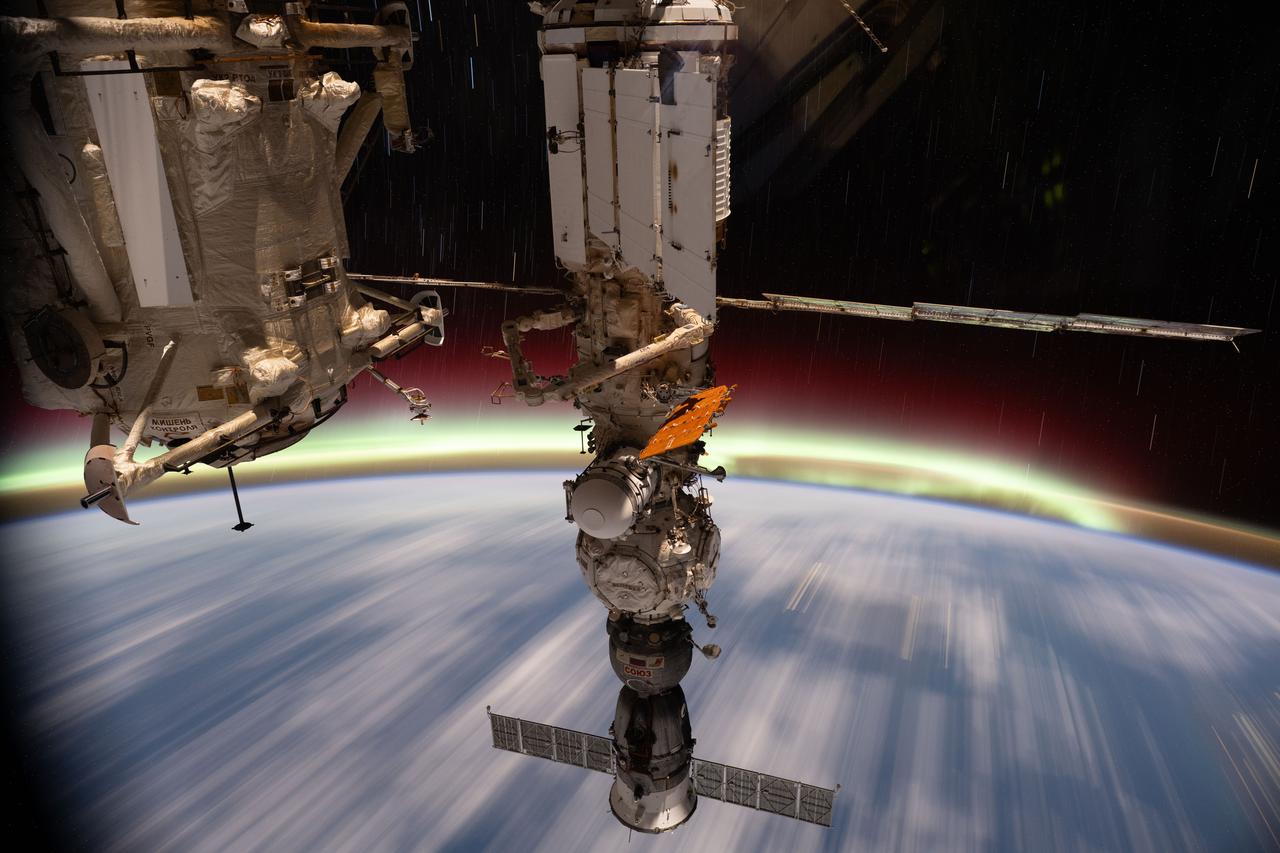
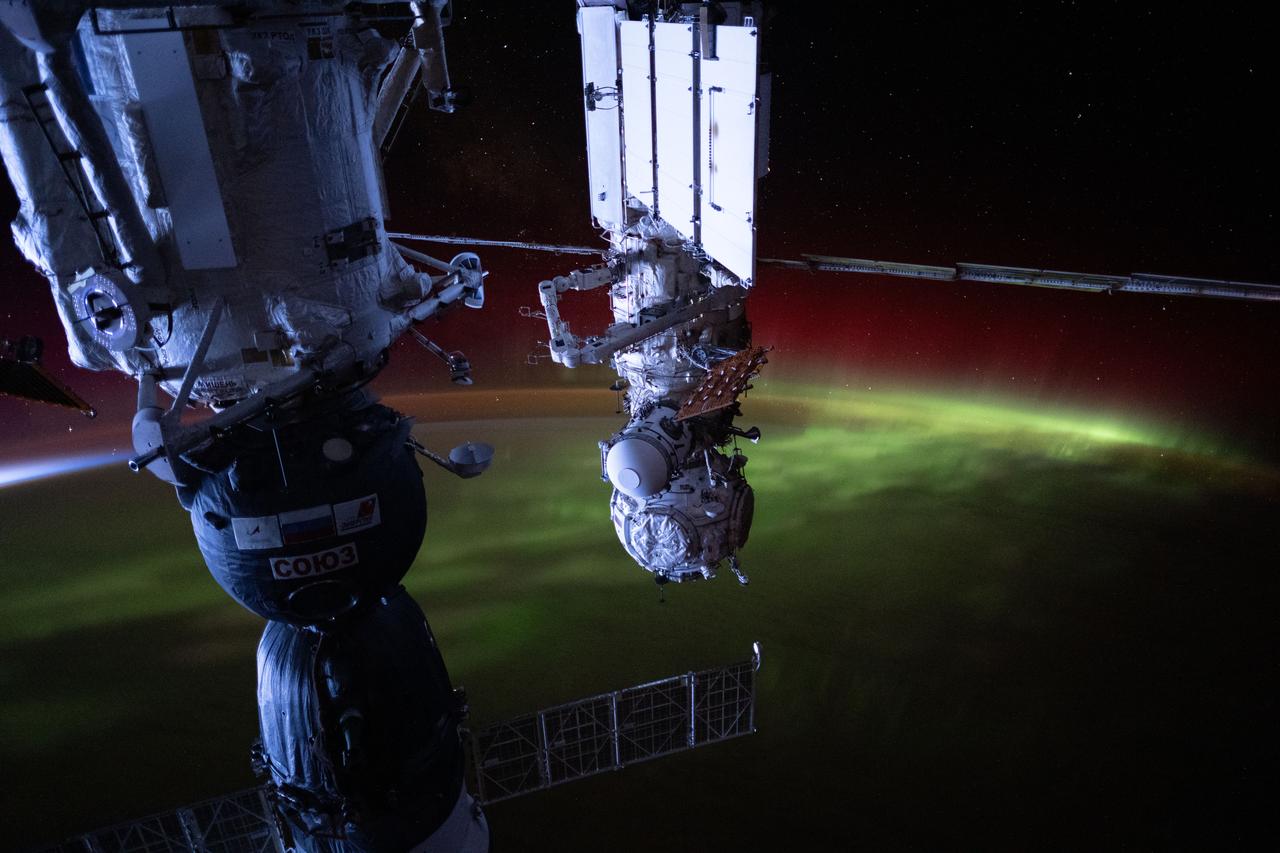
iss073e0608785 (June 13, 2025) --- The aurora australis streams above Earth's horizon in this long duration photograph taken from the International Space Station as it orbited 266 miles above the Tasman Sea off the coast of Sydney, Australia, at approximately 3:28 a.m. local time. Portions of the orbital outpost's Roscosmos segment are visible in the foreground, including (from left) the Rassvet module and the Soyuz MS-27 crew spacecraft docked to the Prichal module which is itself attached to the Nauka science module.
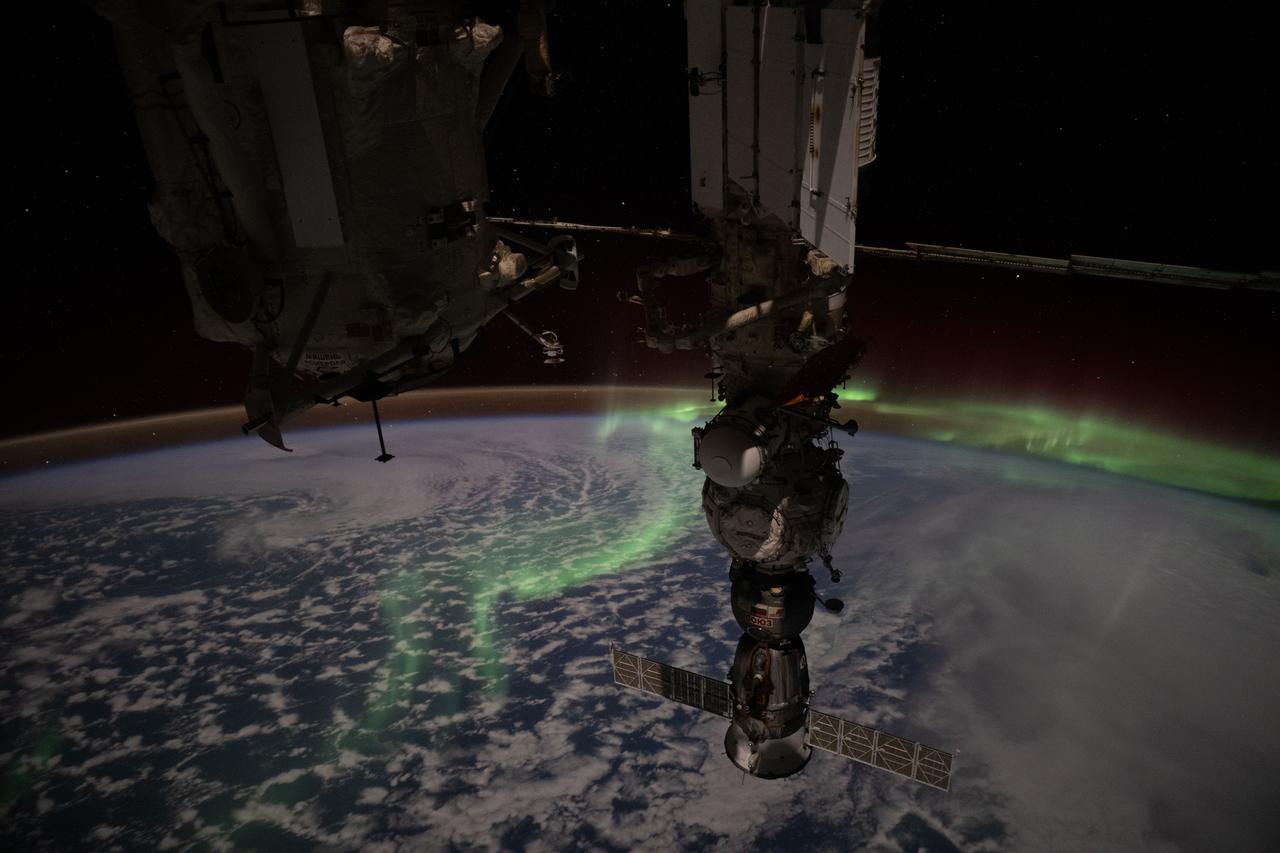
iss073e0608751 (June 13, 2025) --- The aurora australis streams above the Earth and into the atmospheric glow in this photograph taken from the International Space Station as it orbited 269 miles above the Indian Ocean midway between Australia and Antarctica at approximately 2:51 a.m. local time. Portions of the orbital outpost's Roscosmos segment are visible in the foreground, including (from left) the Rassvet module and the Soyuz MS-27 crew spacecraft docked to the Prichal module which is itself attached to the Nauka science module.
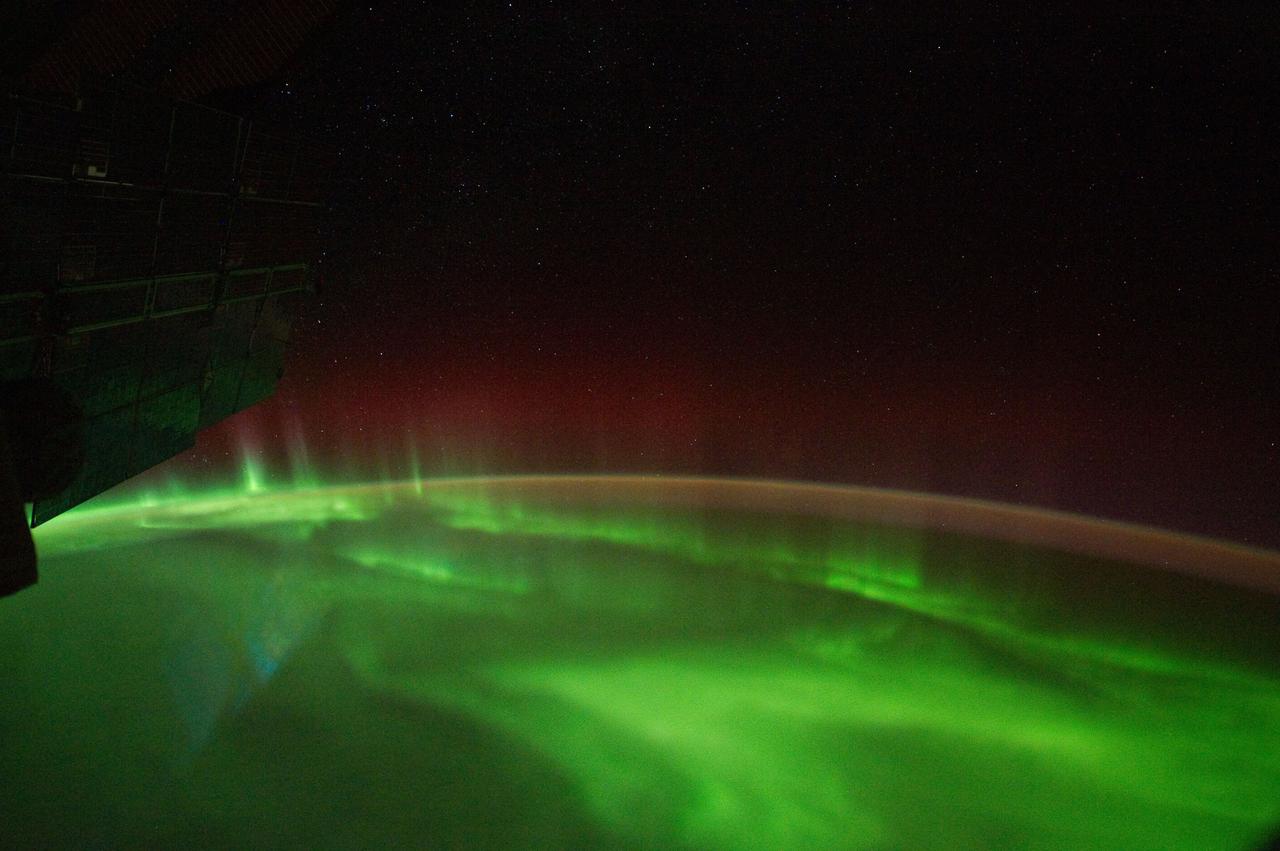
ISS029-E-007502 (18 Sept. 2011) --- This is one of a series of night time images photographed by one of the Expedition 29 crew members from the International Space Station. It features Aurora Australis, airglow, and parts of the southeast Indian Ocean. Nadir coordinates are 50.58 degrees south latitude and 138.28 degrees east longitude.
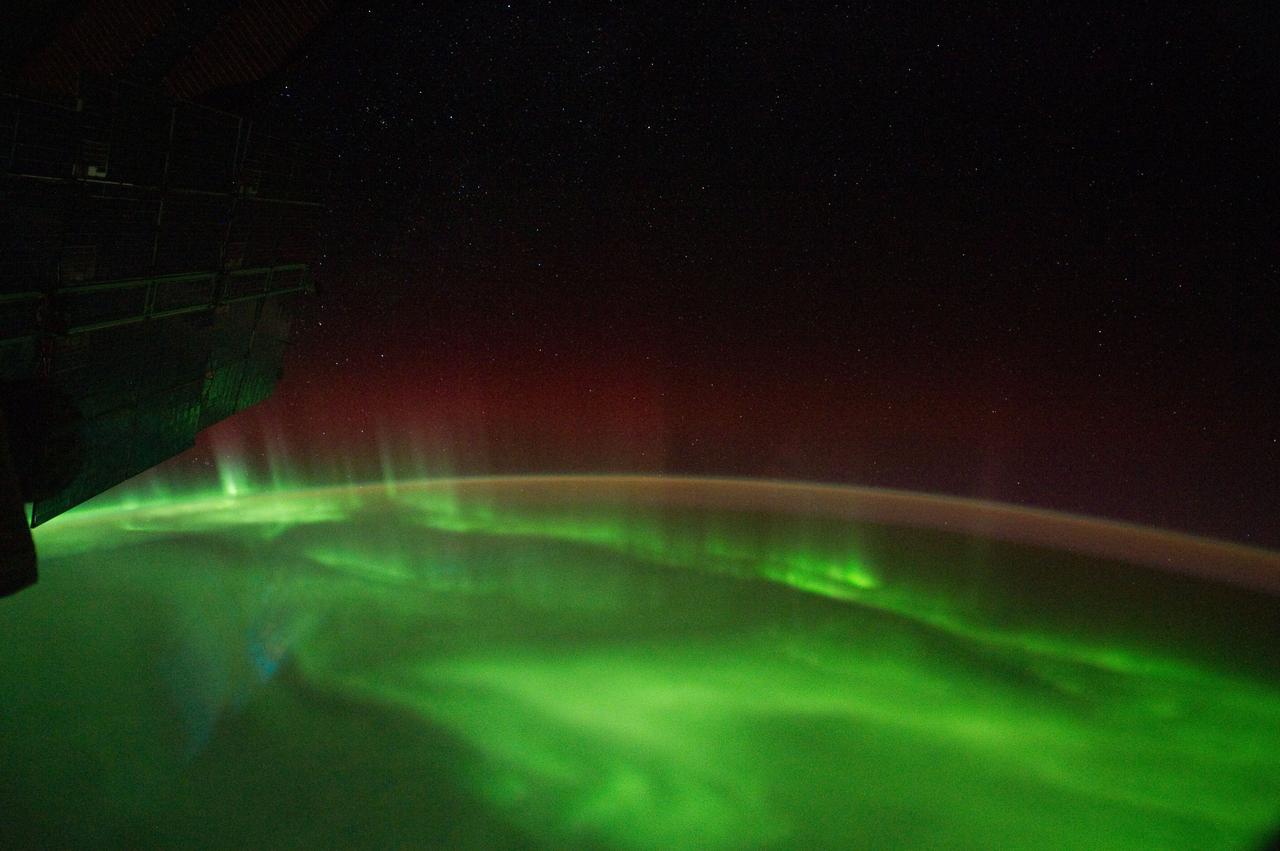
ISS029-E-007500 (18 Sept. 2011) --- This is one of a series of night time images photographed by one of the Expedition 29 crew members from the International Space Station. It features the Aurora Australis, airglow and parts of the southeastern Indian Ocean. Nadir coordinates are 50.66 degrees south latitude and 137.70 degrees east longitude.

iss073e0247649 (June 10, 2025) --- The aurora australis arcs back and forth above a partly cloudy Indian Ocean in this photograph from the International Space Station as it orbited 270 miles above in between Australia and Antarctica. At center top, is the Rassvet module, at lower right, is the Soyuz MS-27 crew ship docked to the Prichal module.
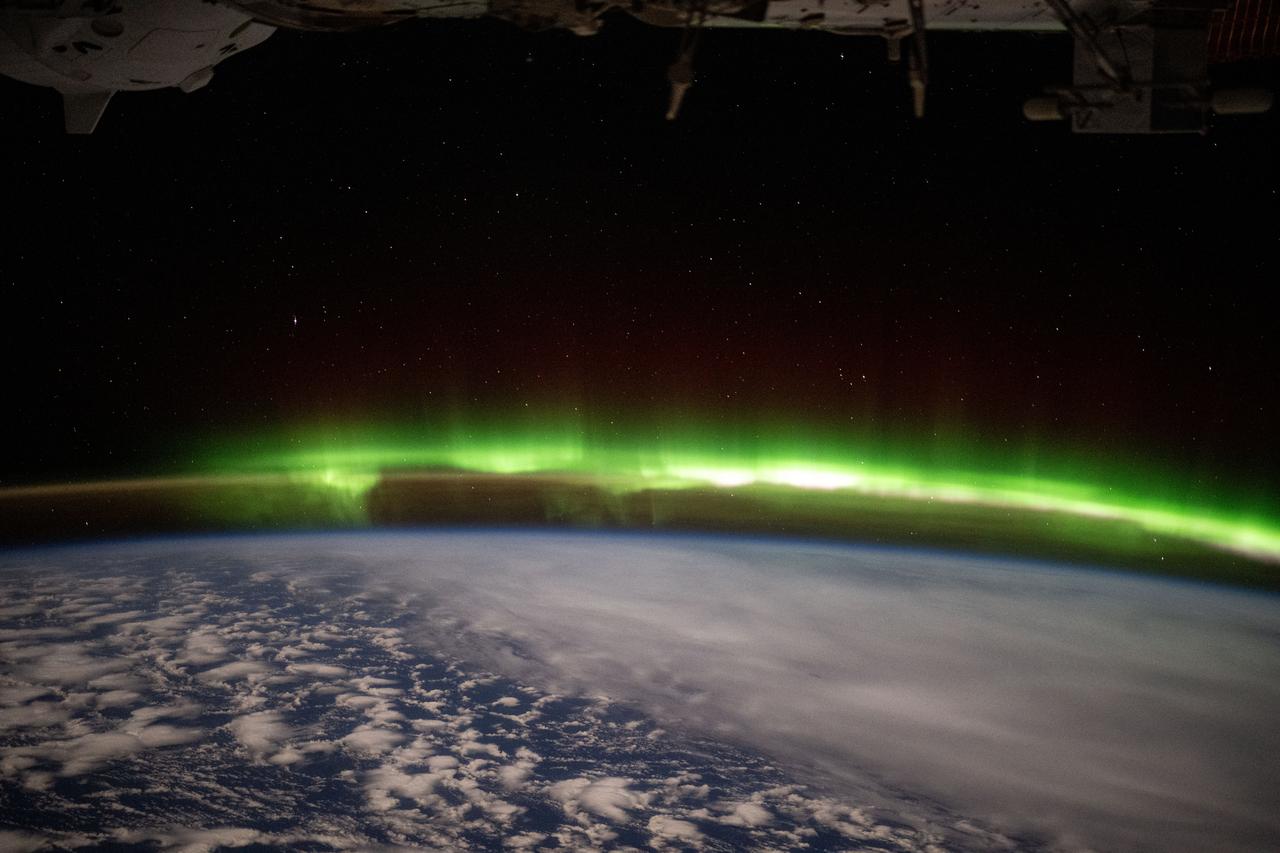
iss073e0246858 (June 9, 2025) --- A bright green aurora australis streams above Earth's horizon blanketing the atmospheric glow in this photograph from the International Space Station as it orbited 269 miles above a cloudy southern Indian Ocean midway between South Africa and Antarctica.
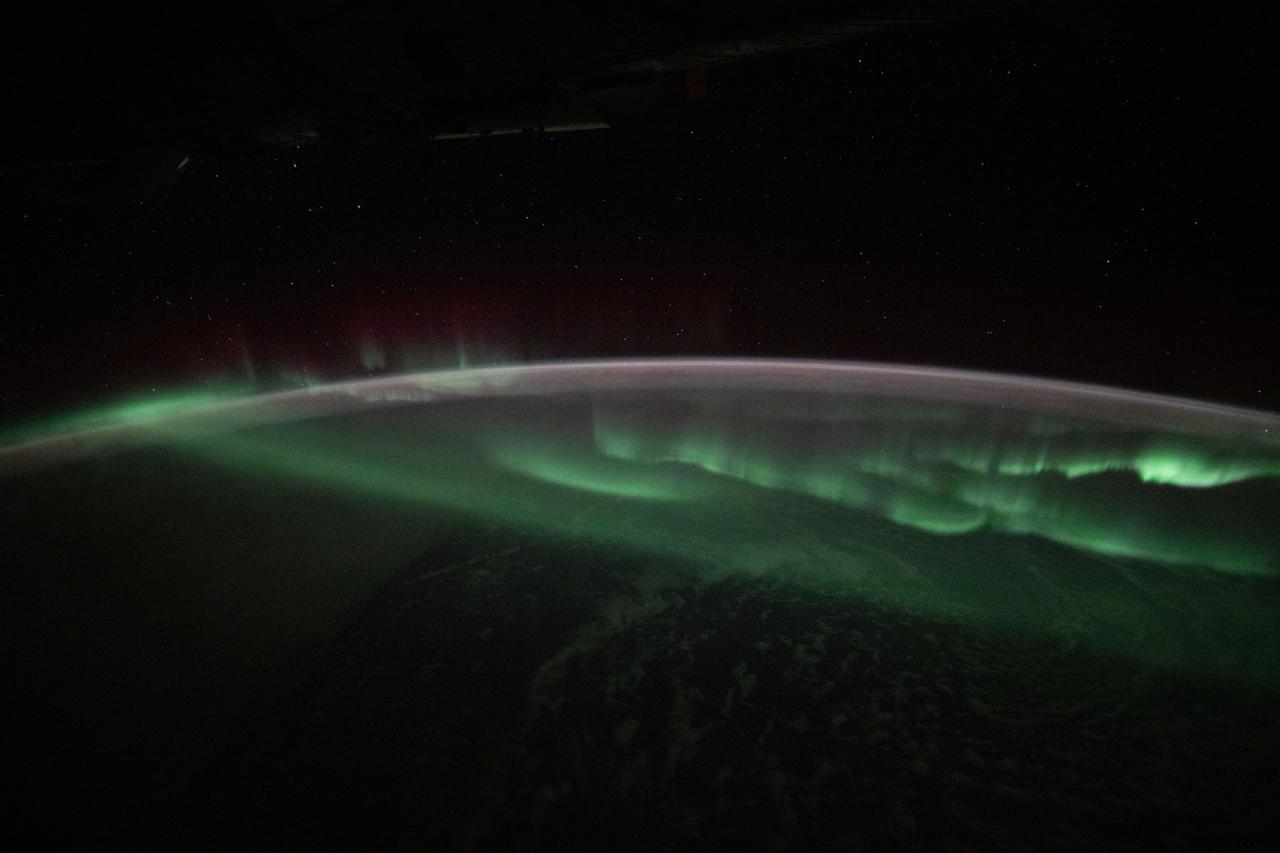
iss073e0426077 (July 26, 2025) --- The aurora australis appears to lap over the Earth like a tide washing ashore in this photograph taken at approximately 3:45 a.m. local time from the International Space Station as it orbited 269 miles above the Indian Ocean southwest of Australia.
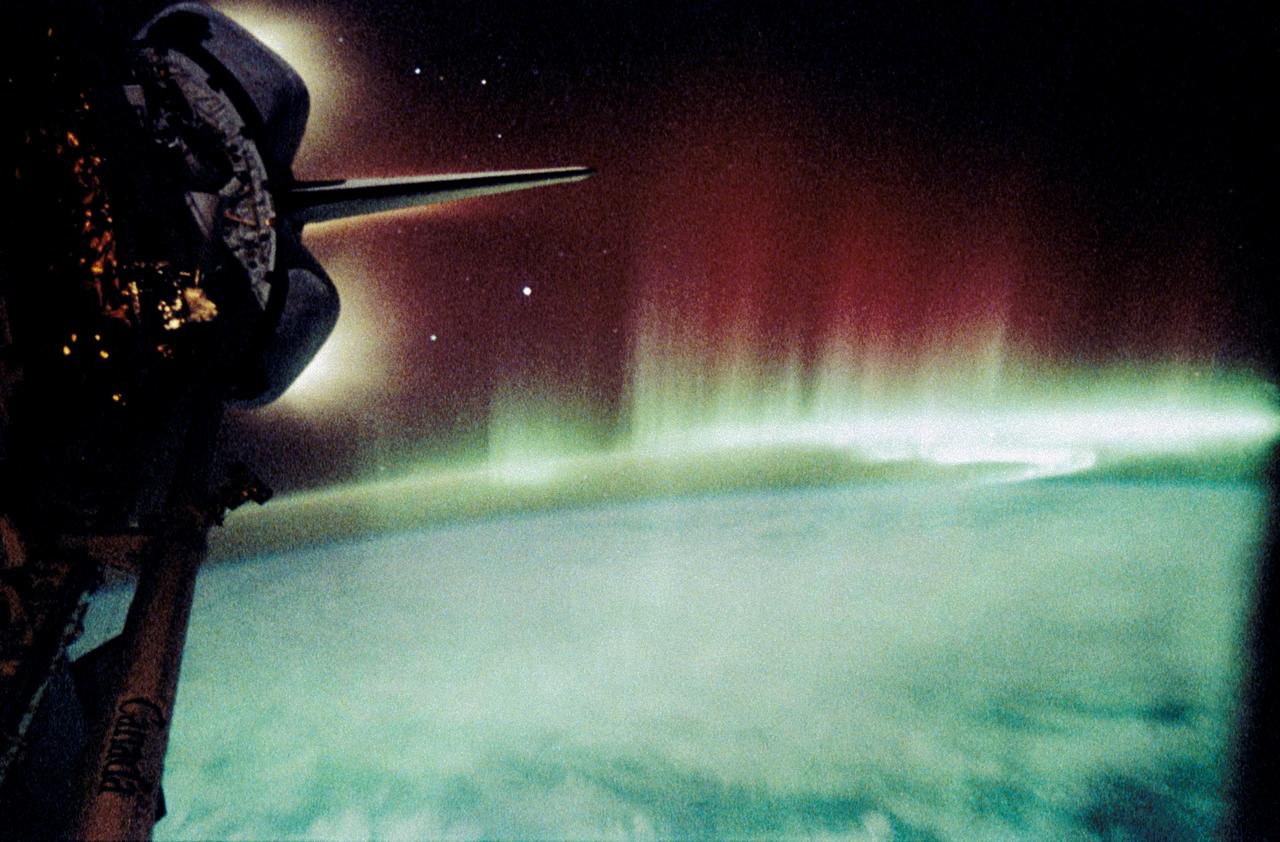
STS039-342-026 (28 April-6 May 1991) --- This view of the Aurora Australis, or Southern Lights, shows a band of airglow above the limb of Earth. Photo experts at NASA studying the mission photography identify the airglow as being in the 80-120 kilometer altitude region and attribute its existence to atomic oxygen (wavelength of 5,577 Angstroms), although other atoms can also contribute. The atomic oxygen airglow is usually most intense at altitudes around 65 degrees north and south latitude, and is most intense in the spring and fall of the year. The aurora phenomena is due to atmospheric oxygen and nitrogen being excited by the particles from the Van Allen Radiation belts which extend between the two geomagnetic poles. The red and green rays appear to extend upward to 200-300 kilometers, much higher than the usual upper limits of about 110 kilometers.
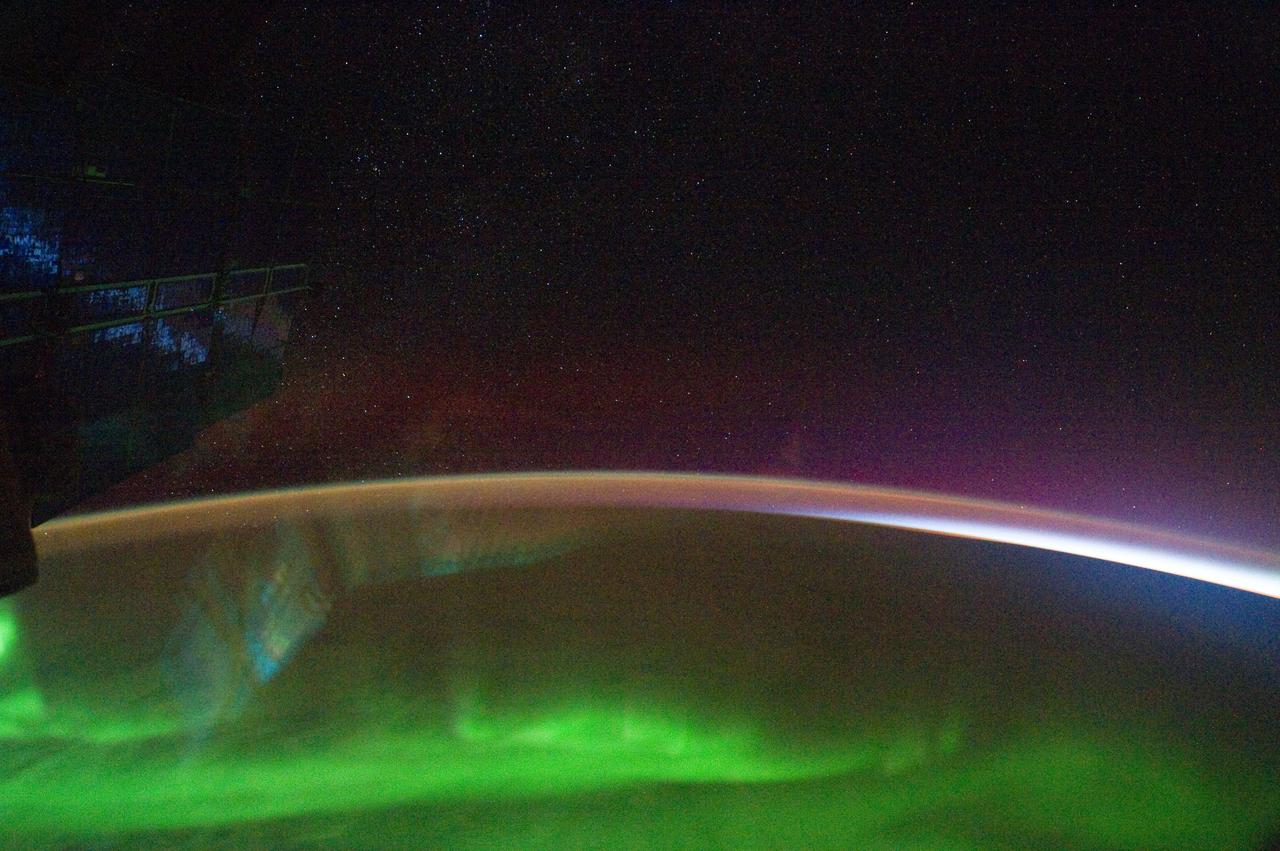
ISS029-E-007455 (18 Sept. 2011) --- This is one of a series of night time images photographed by one of the Expedition 29 crew members from the International Space Station. It features Aurora Australis, airglow, Earth?s Terminator and the southeastern Indian Ocean. Nadir coordinates are 51.78 degrees south latitude and 124.41 degrees east longitude.
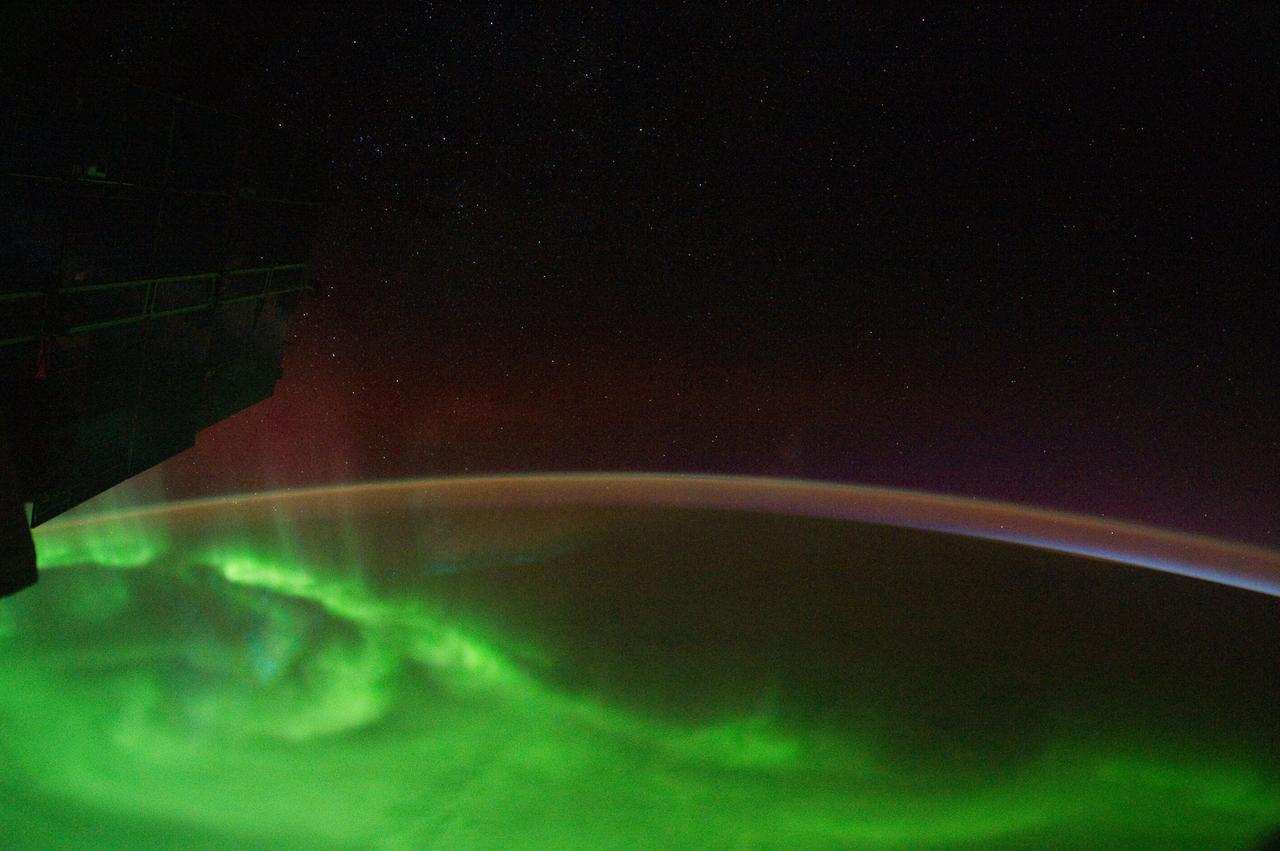
ISS029-E-007473 (18 Sept. 2011) --- This is one of a series of night time images photographed by one of the Expedition 29 crew members from the International Space Station. It features Aurora Australis, airglow, Earth?s Terminator and parts of the southeast Indian Ocean. Nadir coordinates are 51.53 degrees south latitude and 129.80 degrees east longitude.
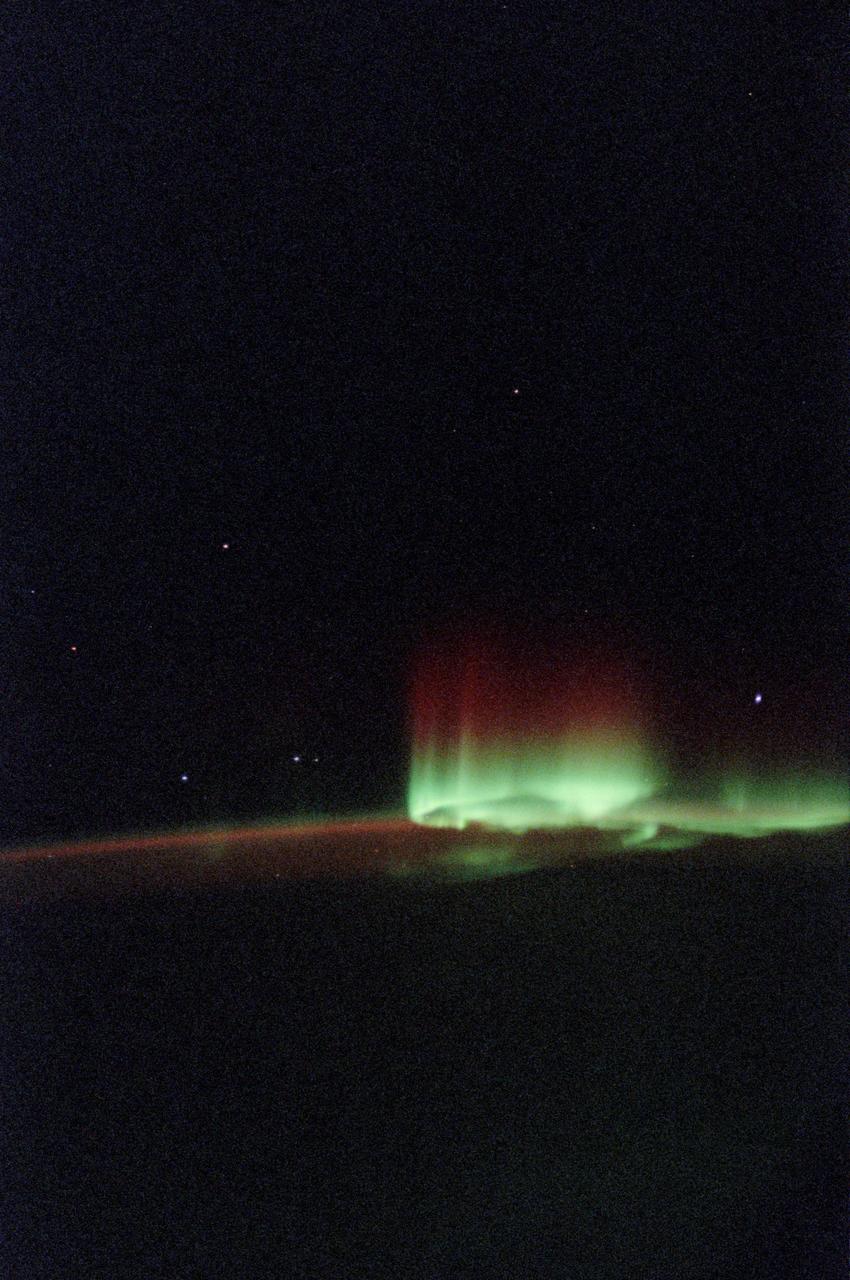
STS111-362-036 (5-19 June 2002) --- This view featuring the Aurora Australis or “southern lights” was photographed by the STS-111 crew members aboard the Space Shuttle Endeavour. When this photograph was taken, the shuttle was in a position south of Australia. The Gateway to Astronaut Photography of Earth (link to http://eol.jsc.nasa.gov/sseop/) provides searchable access to other photographs of Earth taken by astronauts.
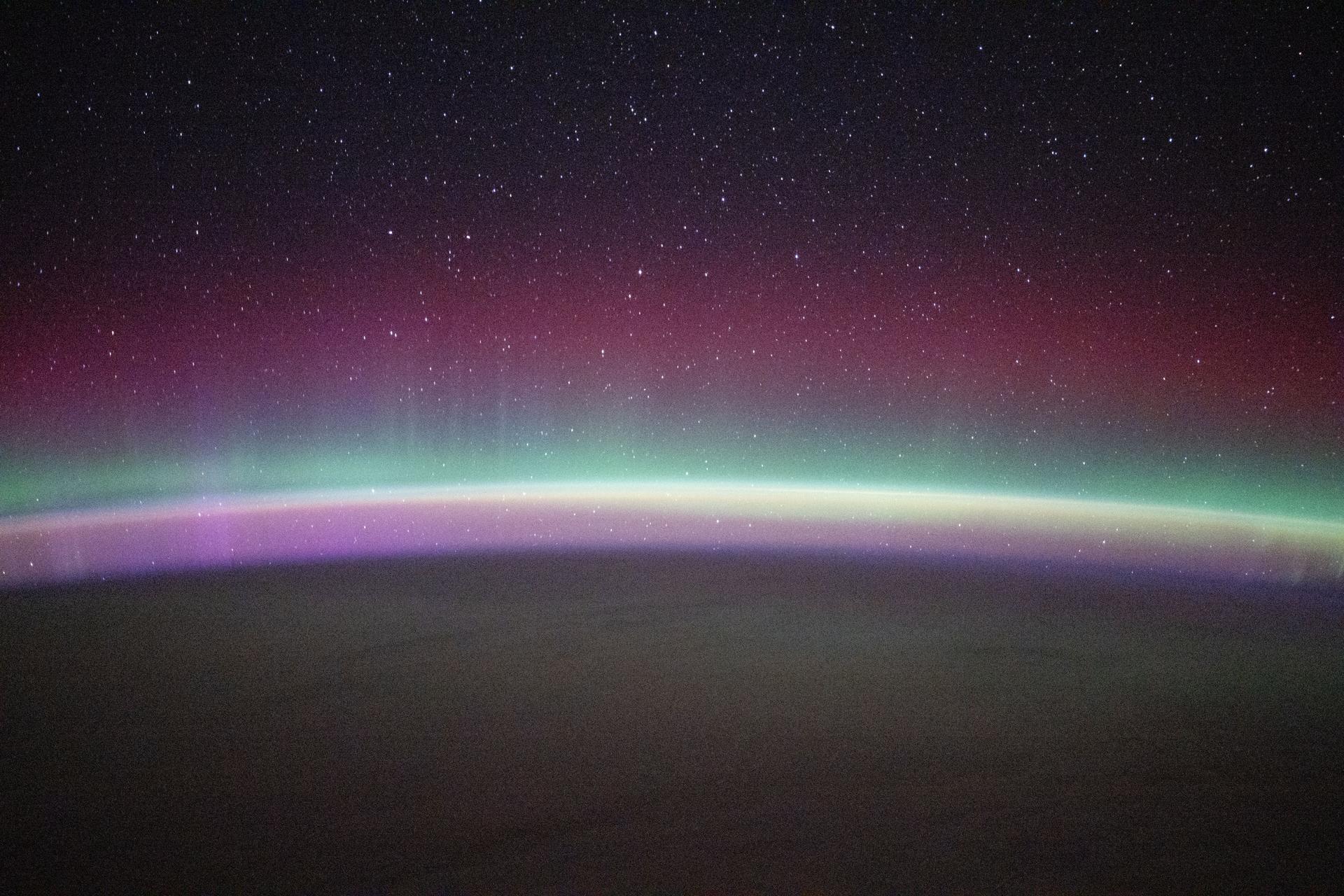
iss073e0831259 (Sept. 27, 2025) --- A green and red aurora australis shimmers beneath a starry sky and above Earth's airglow, creating a pinkish hue above the serene Indian Ocean southwest of Perth, Australia. The International Space Station was orbiting 268 miles above Earth at approximately 1:14 a.m. local time when this photograph was taken.
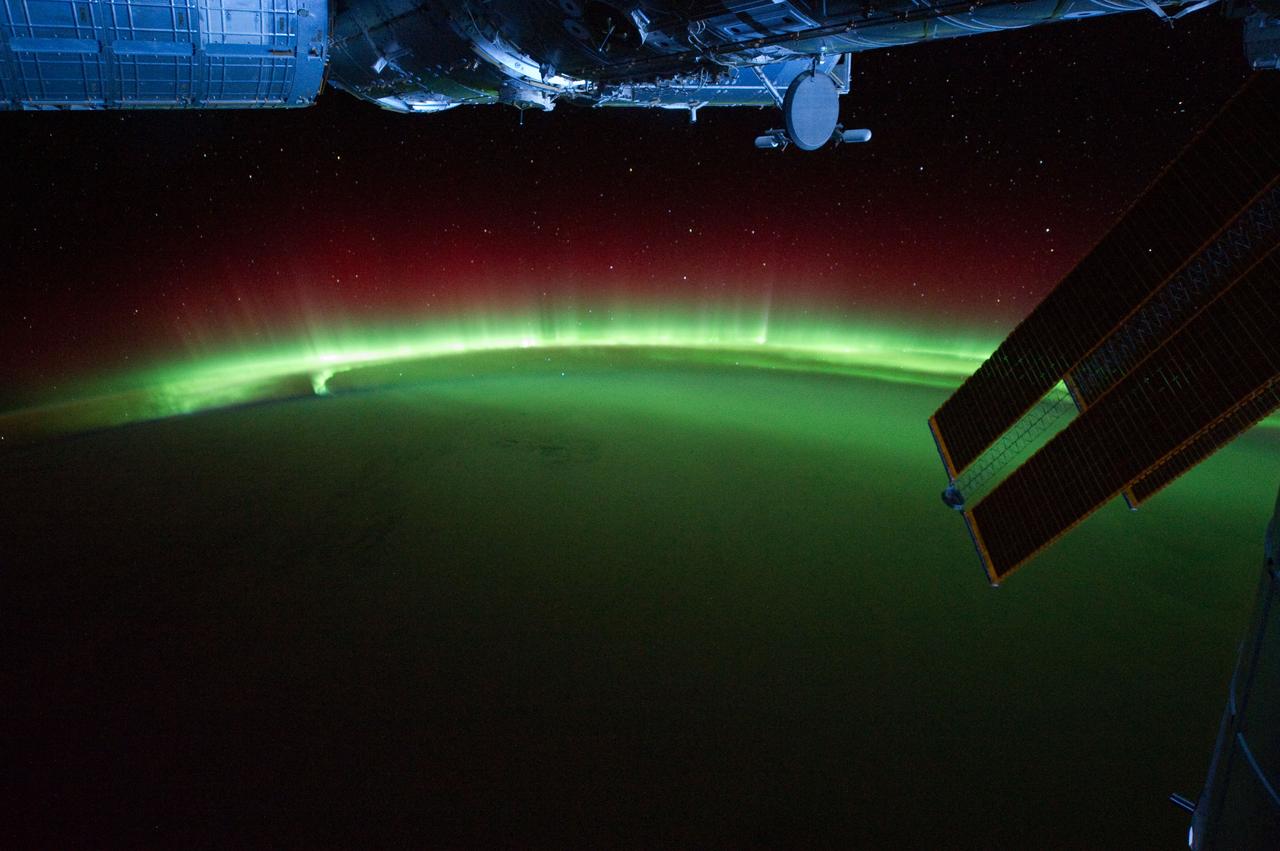
ISS029-E-005904 (17 Sept. 2011) --- This is one of a series of night time images photographed by one of the Expedition 29 crew members from the International Space Station. It features Aurora Australis over the southern Indian ocean. Nadir coordinates are 50.16 south latitude and 48.11 degrees east longitude.
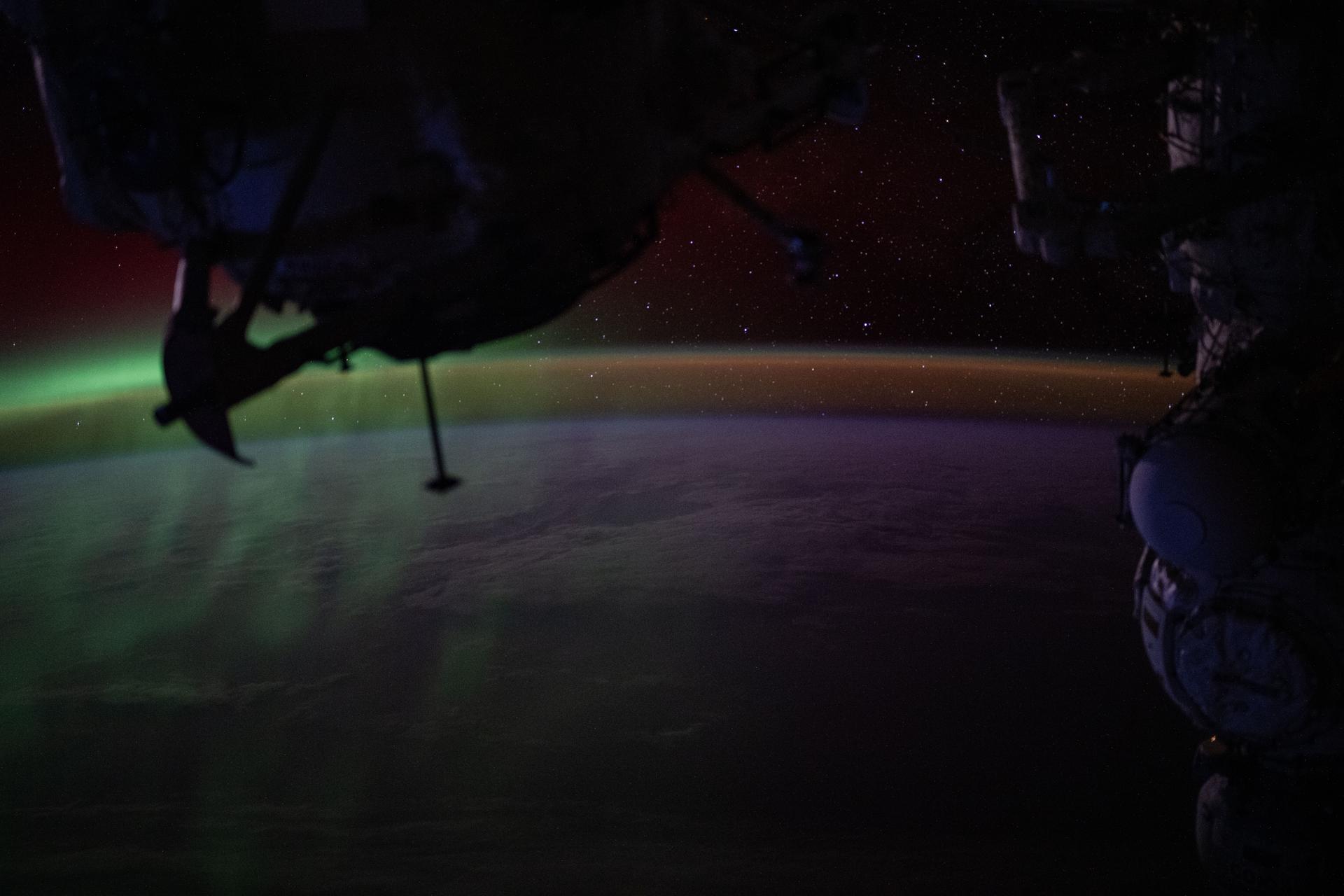
iss073e0865646 (Sept. 28, 2025) --- A wispy green aurora australis fades into a dim orange-yellow airglow above Earth’s horizon in this photograph taken at approximately 2:31 a.m. local time from the International Space Station, as it orbited 270 miles above the Indian Ocean, south of Perth, Australia.
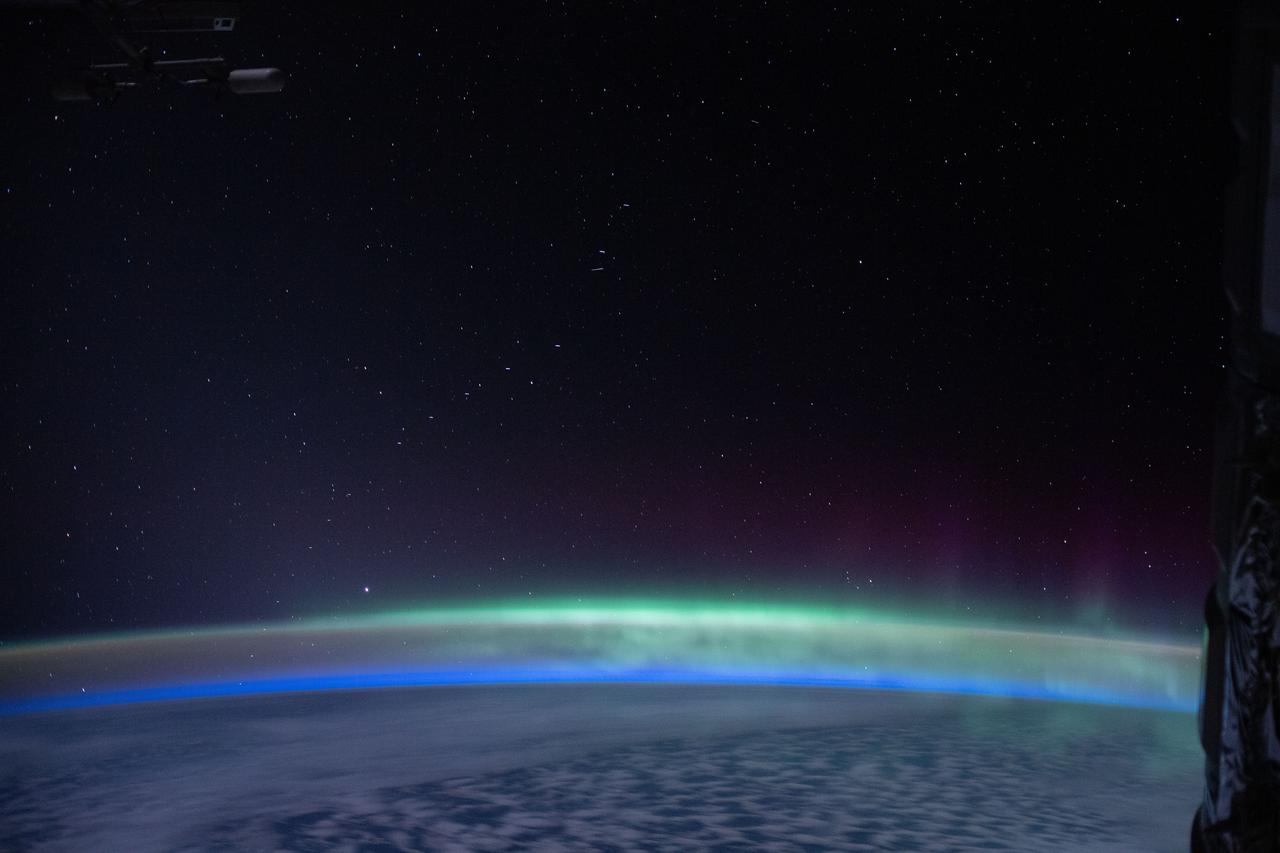
iss062e148363 (April 13, 2020) --- The Earth's glow mingles with the "aurora australis" as the International Space Station orbits over the Indian Ocean.
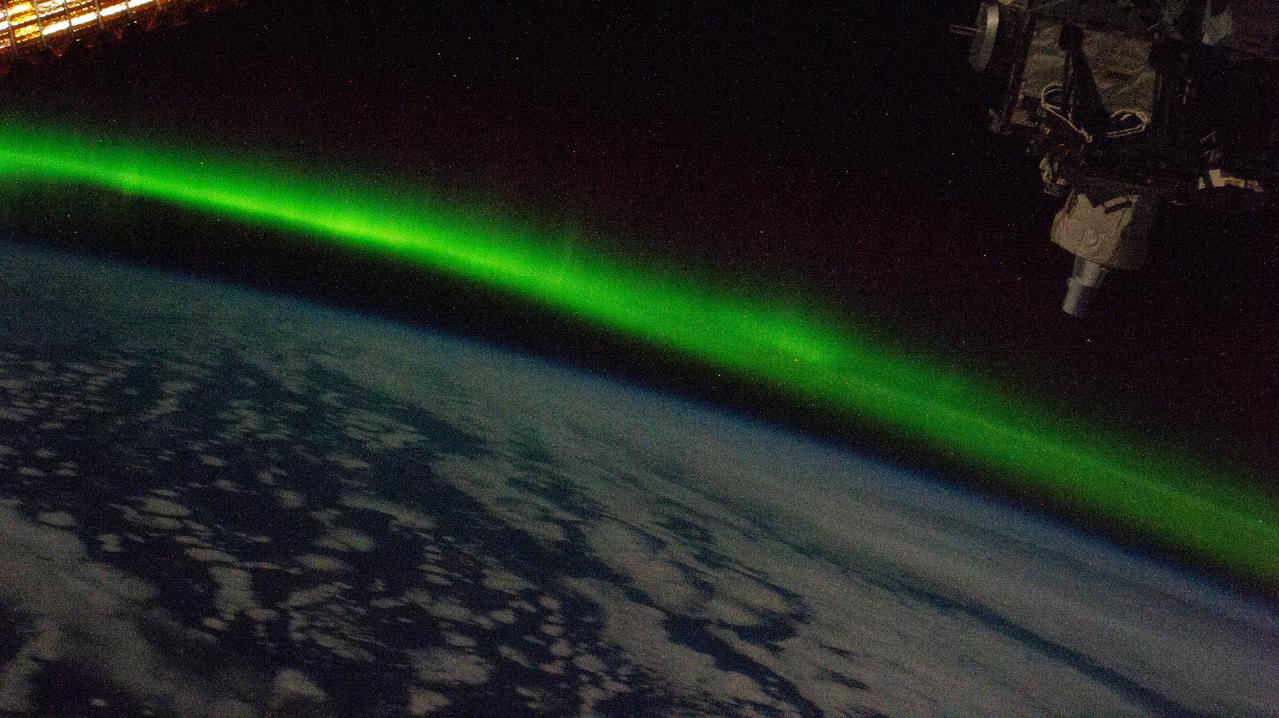
iss066e146457 (Feb. 18, 2022) --- The aurora australis streams above the Indian Ocean in this picture from the International Space Station as it orbited 270 miles above the Earth.
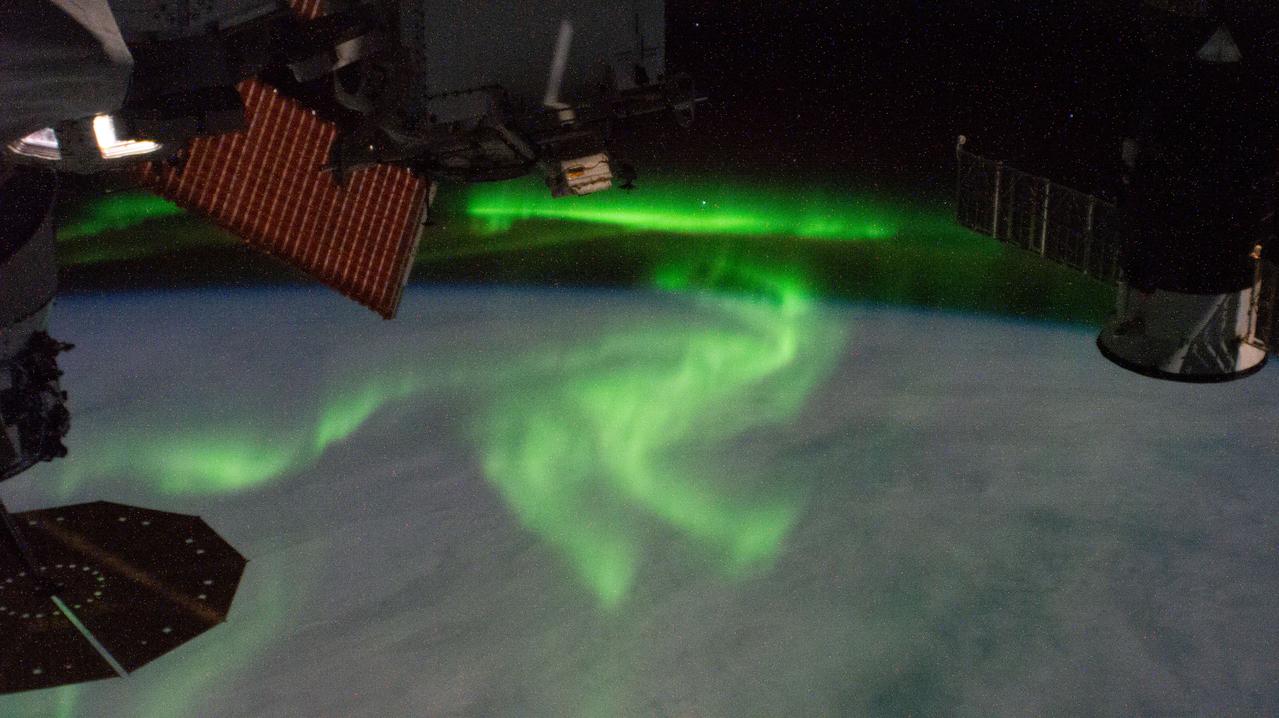
iss062e140329 (April 8, 2020) --- The "aurora australis" is pictured near the southern-most point of the International Space Station's orbital trek above the Indian Ocean.
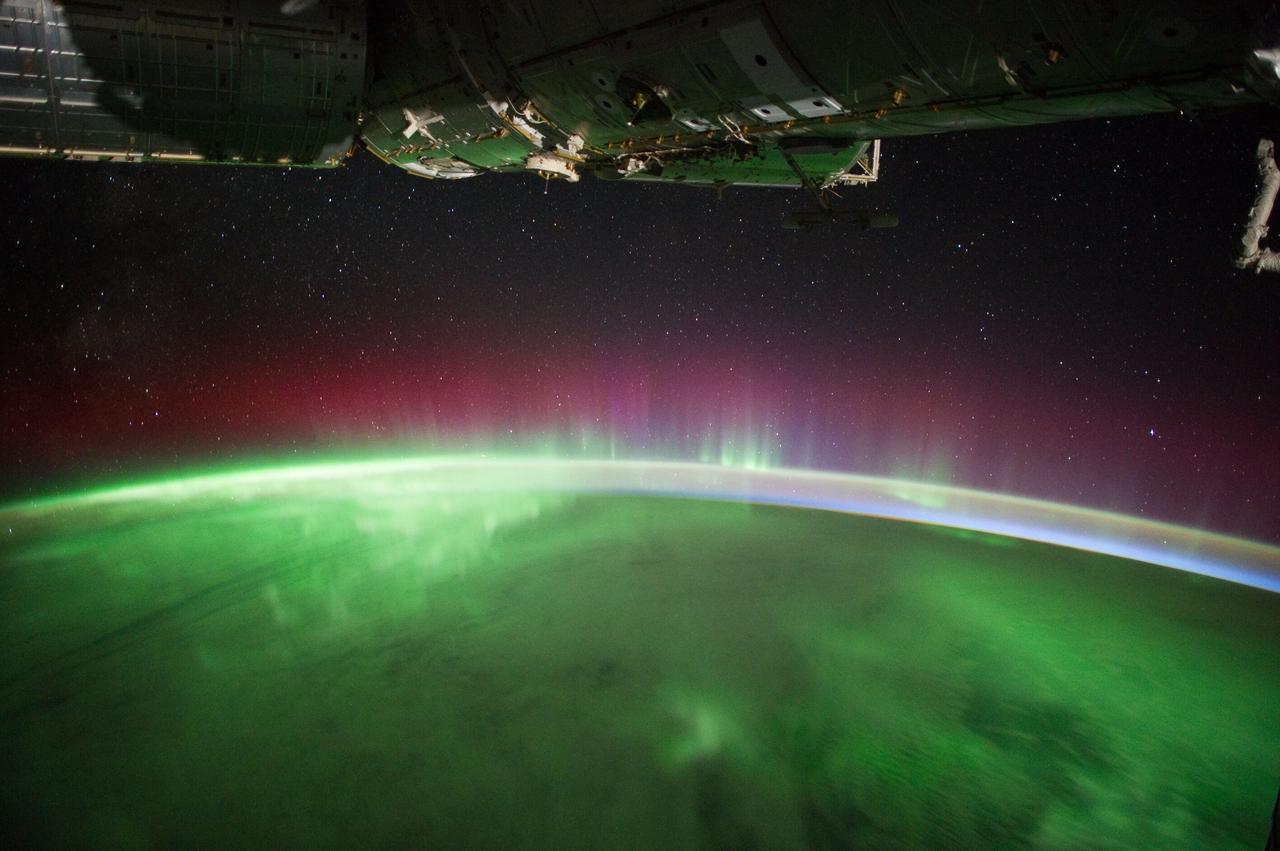
iss030e119777 (3/3/2012) --- A view of the night earth taken aboard the International Space Station (ISS) showing an aurora. An aurora sometimes referred to as polar lights, northern lights (aurora borealis), or southern lights (aurora australis), is a natural light display in the Earth's sky, predominantly seen in the high-latitude regions (around the Arctic and Antarctic). Auroras are the result of disturbances in the magnetosphere caused by solar wind.
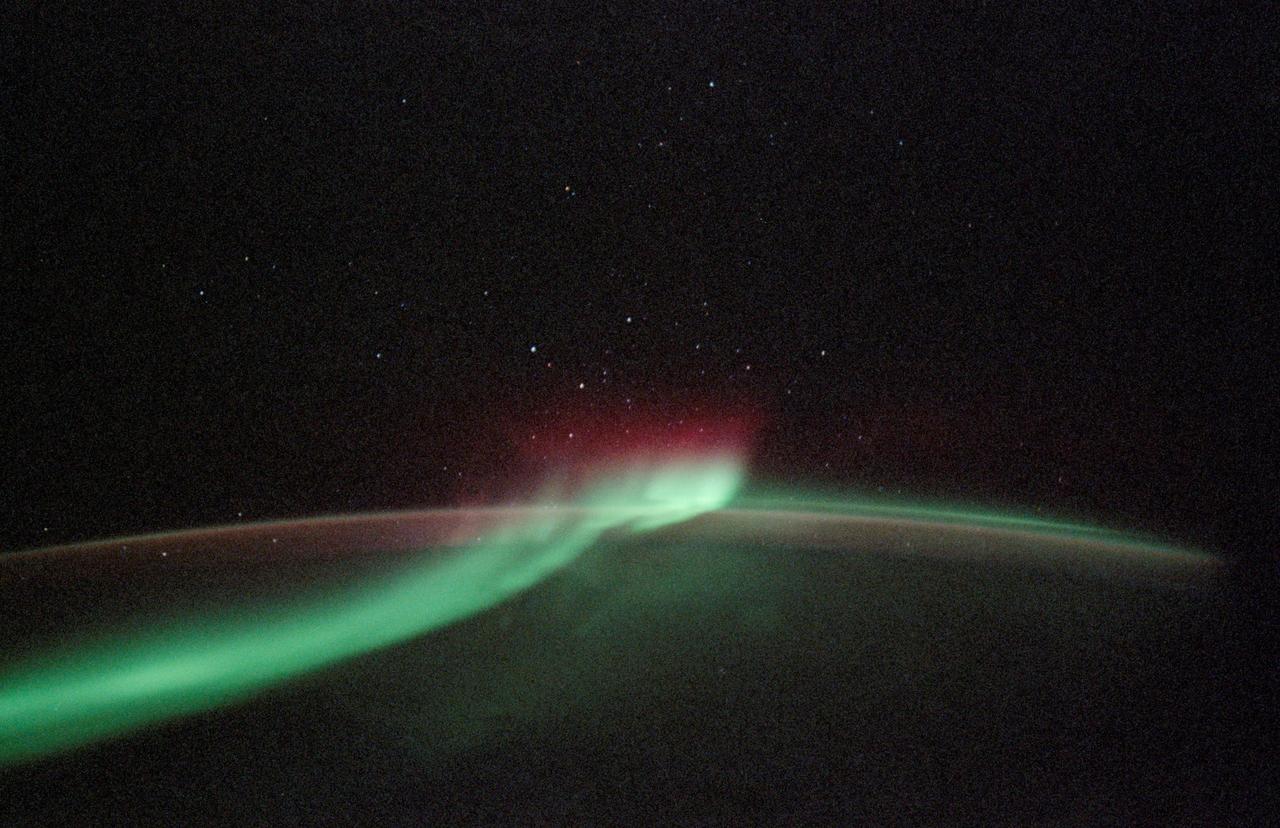
STS114-332-027 (6 August 2005) --- This view featuring the Aurora Australis or ;southern lights; was photographed by a crewmember aboard the Space Shuttle Discovery during the STS-114 mission.
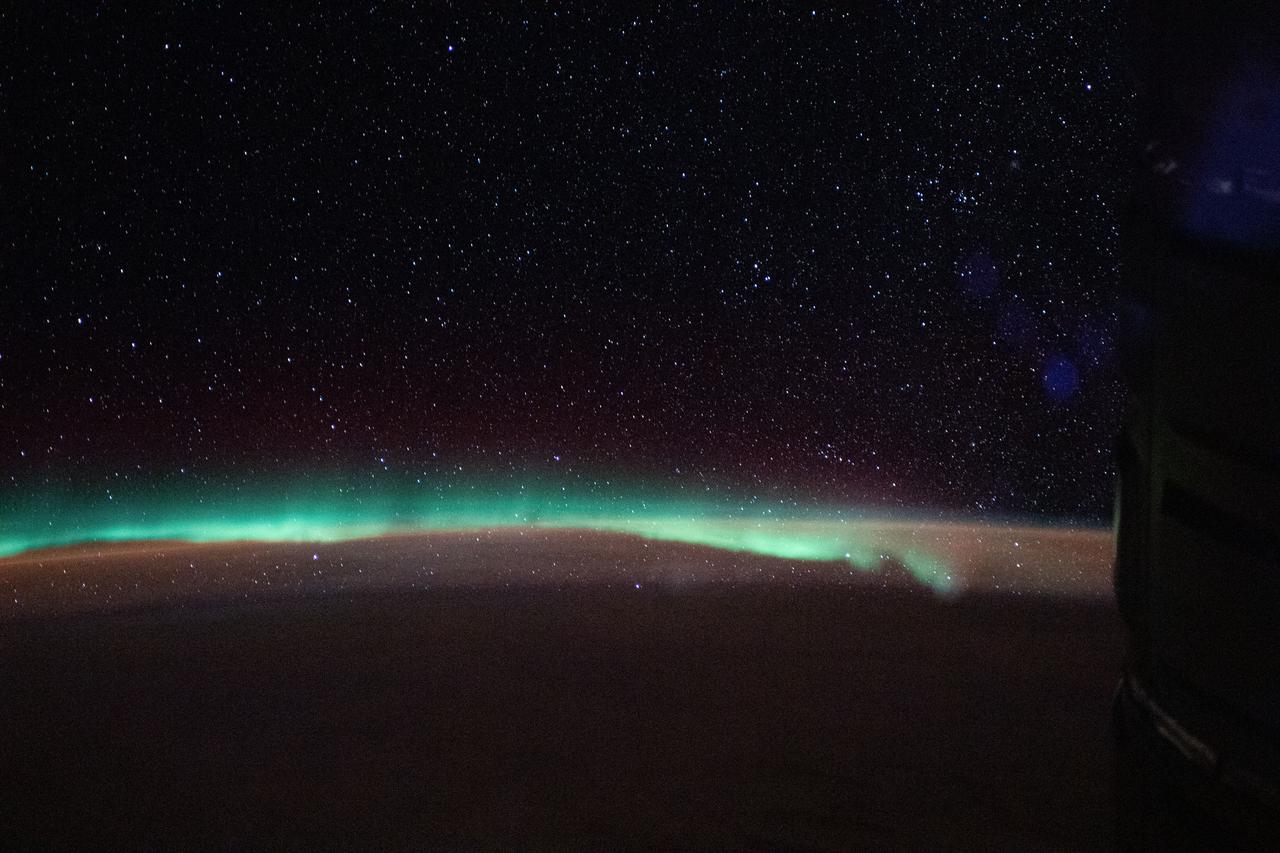
iss059e092459 (June 5, 2019) --- The aurora australis, or "southern lights," highlights a starry nighttime orbital pass as the International Space Station orbited 267 miles above the Indian Ocean southeast of Madagascar.

iss063e025105 (June 7, 2020) --- This orbital nighttime view from the International Space Station as it orbited above the Indian Ocean shows the "aurora australis" and a starry sky with Russia's Progress 74 resupply ship in the foreground.
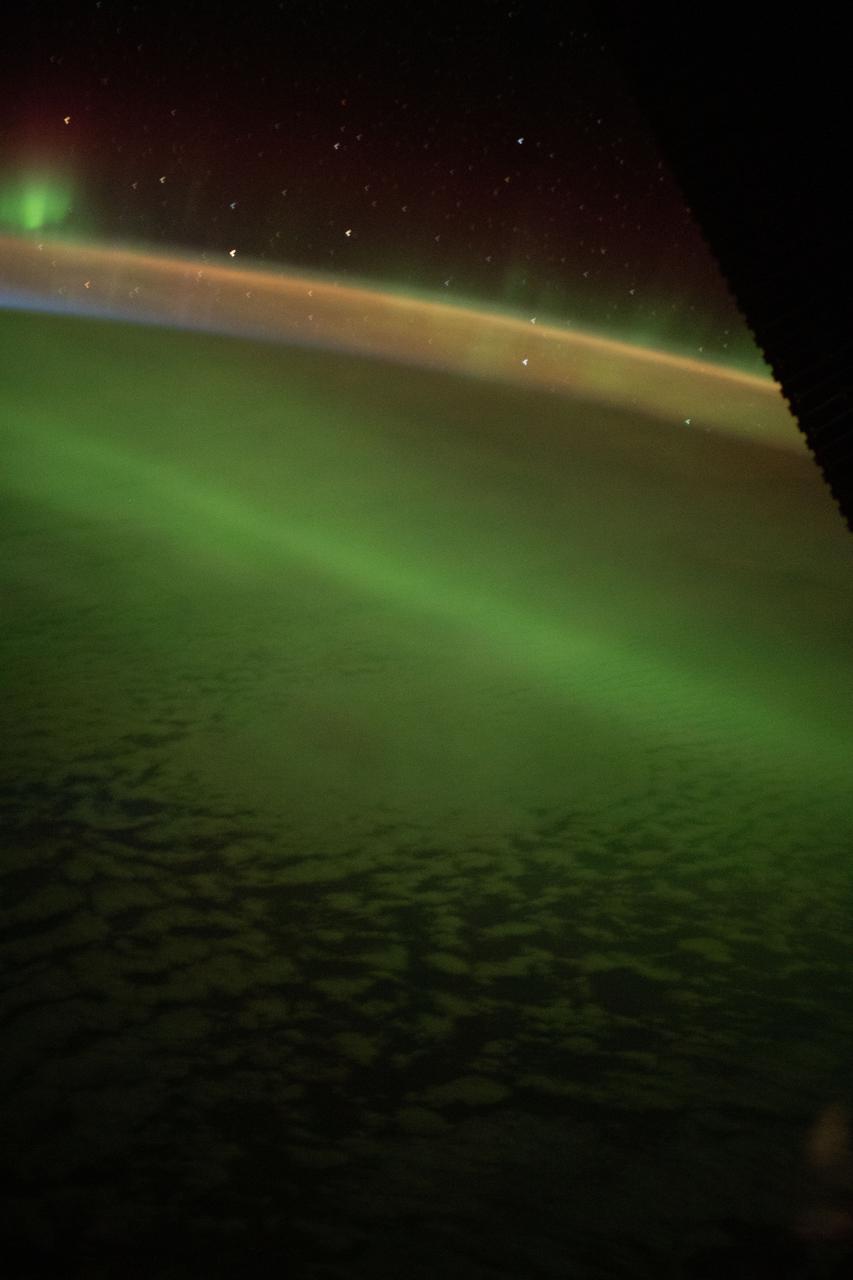
iss065e243361 (Aug. 8, 2021) --- The aurora australis streams above the Earth's atmosphere and below the International Space Station as it orbited 271 miles over the southern Indian Ocean.
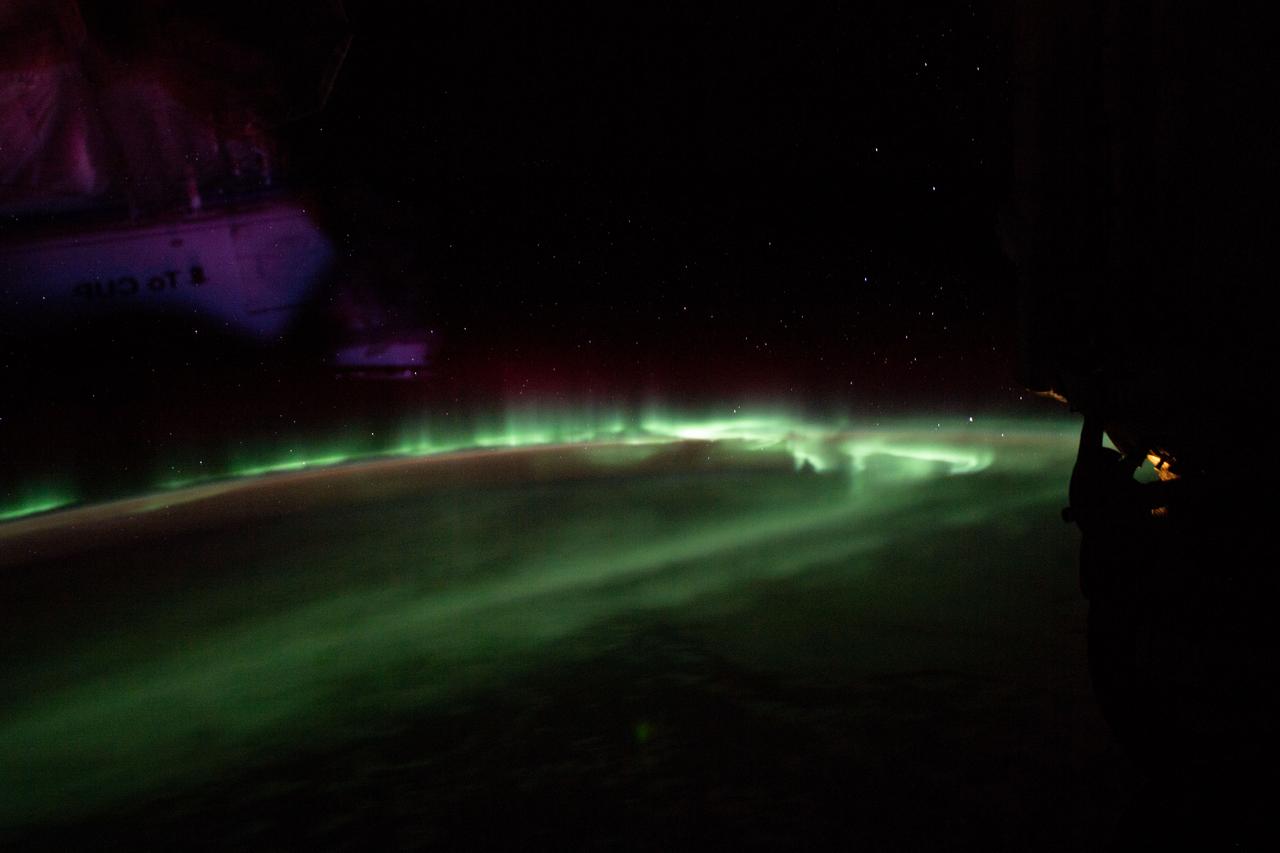
iss059e020015 (April 12, 2019) --- The aurora australis, also known as the "southern lights," is pictured as the International Space Station orbited 264 miles above the Indian Ocean south of the Australian island state of Tasmania.
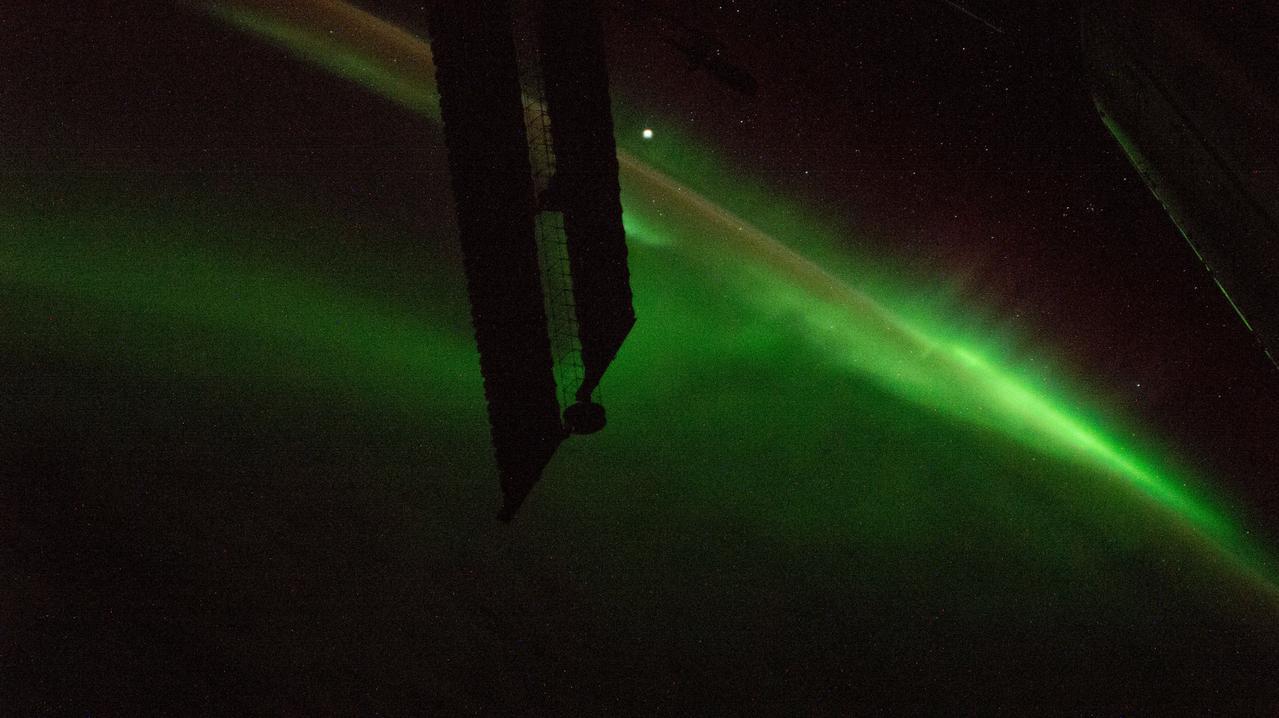
iss059e013117 (April 4, 2019) --- The aurora australis, also known as the "southern lights," is pictured as the International Space Station orbited 264 miles above the Indian Ocean south of the Western Australia city of Perth.
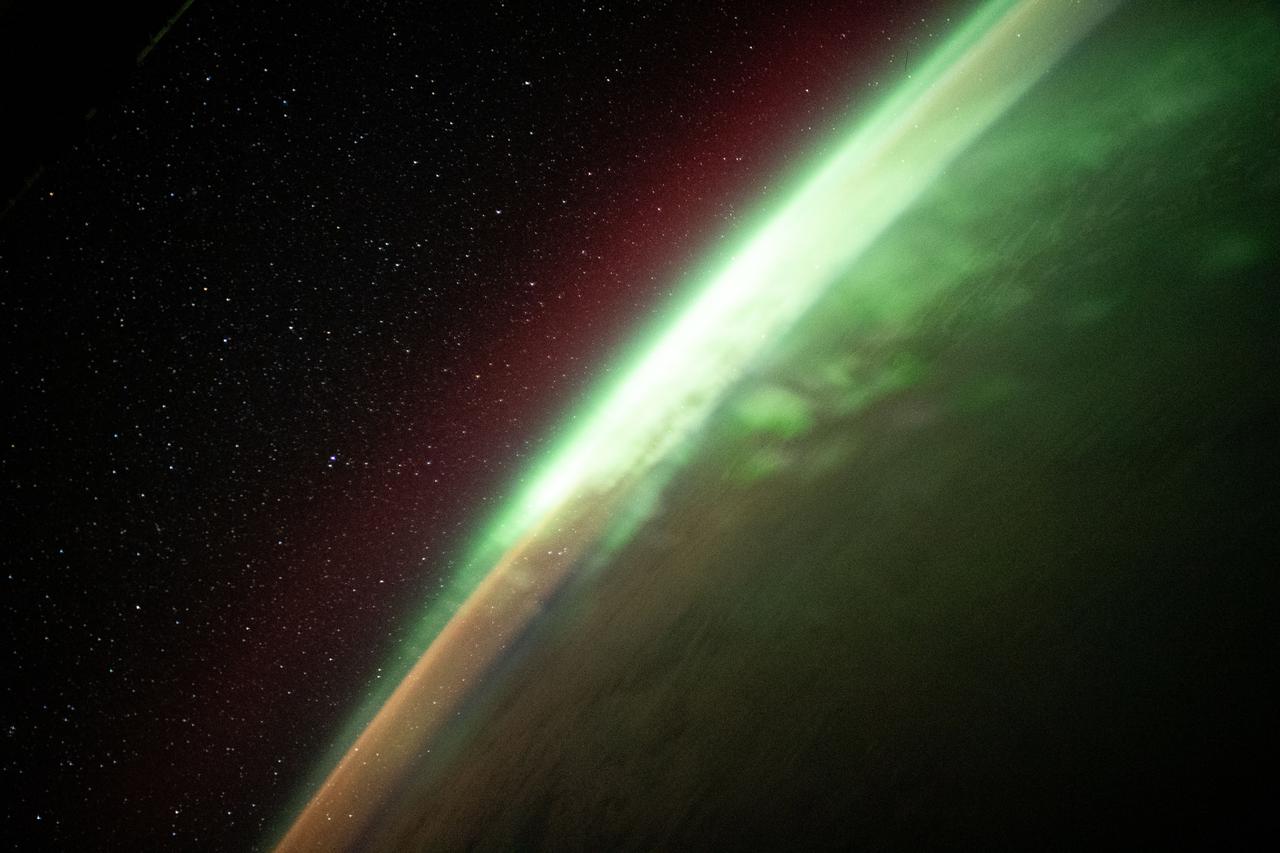
iss065e214231 (Aug. 2, 2021) --- The aurora australis streams across the Earth's atmosphere as the International Space Station orbited 271 miles above the southern Indian Ocean in between Asia and Antarctica.
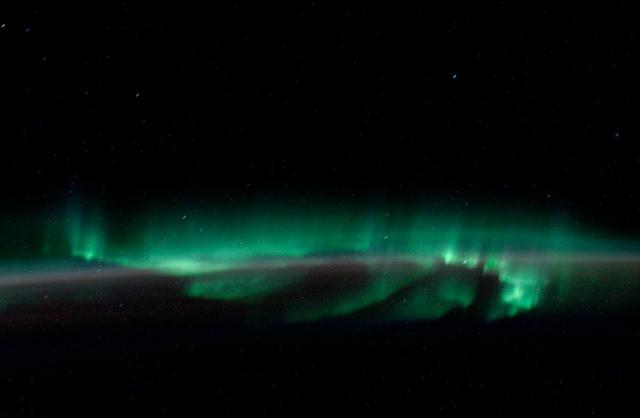
ISS011-E-14205 (May 2005) --- This view featuring the Aurora Australis or “southern lights” was photographed by an Expedition 11 crewmember aboard the International Space Station.
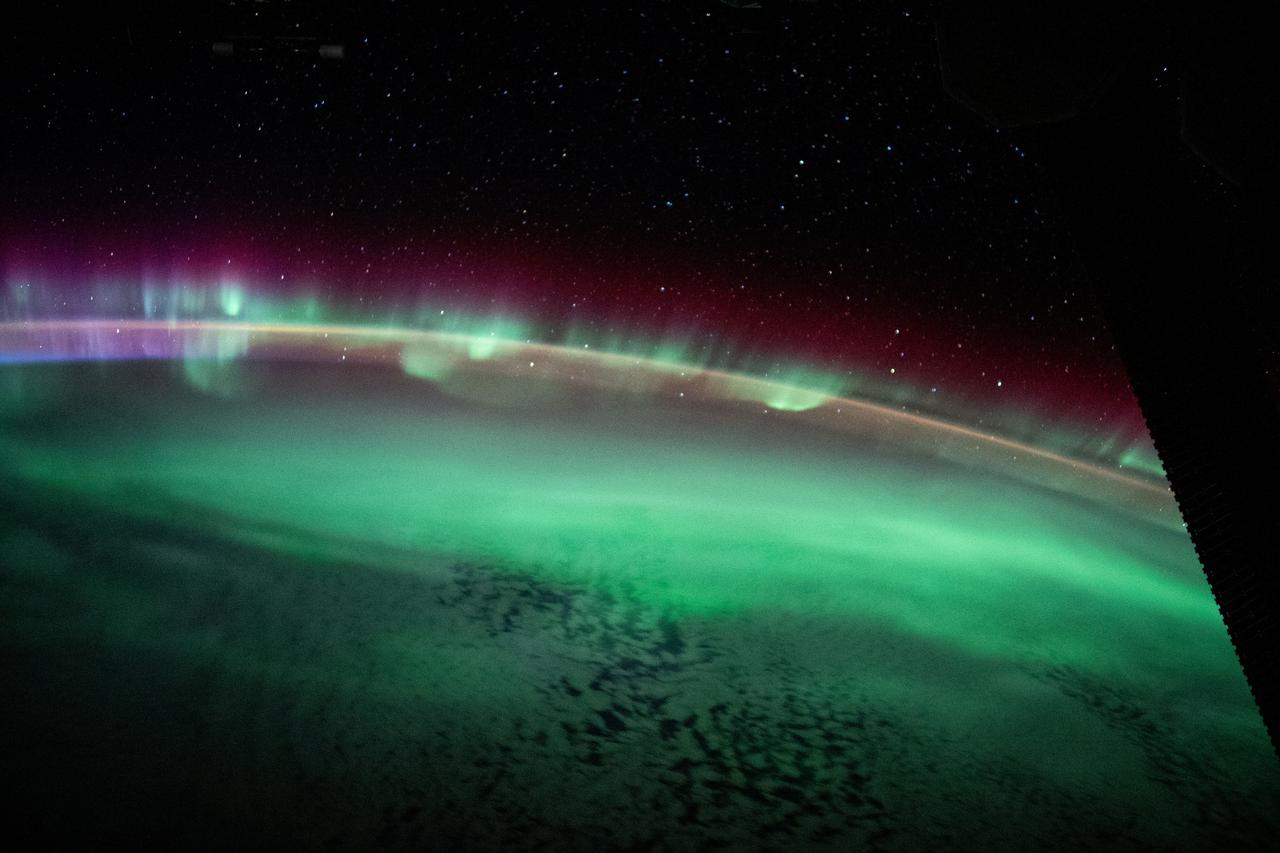
iss065e214198 (Aug. 2, 2021) --- The aurora australis streams across the Earth's atmosphere as the International Space Station orbited 271 miles above the southern Indian Ocean in between Asia and Antarctica.
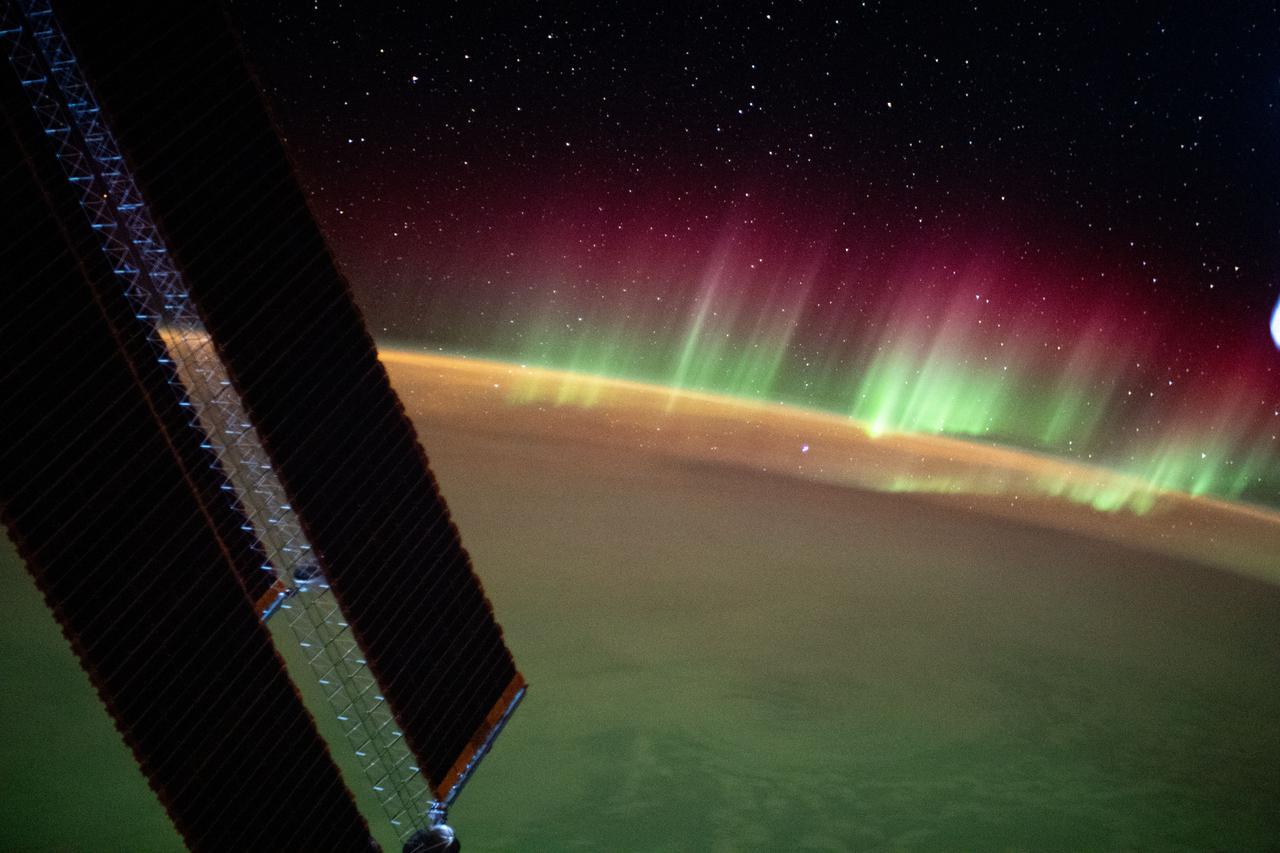
iss065e214251 (Aug. 2, 2021) --- The aurora australis seemingly crowns the Earth's horizon as the International Space Station orbited 272 miles above the southern Indian Ocean in between Asia and Antarctica.

iss065e214281 (Aug. 2, 2021) --- The aurora australis streams across the Earth's atmosphere as the International Space Station orbited 271 miles above the southern Indian Ocean in between Asia and Antarctica.
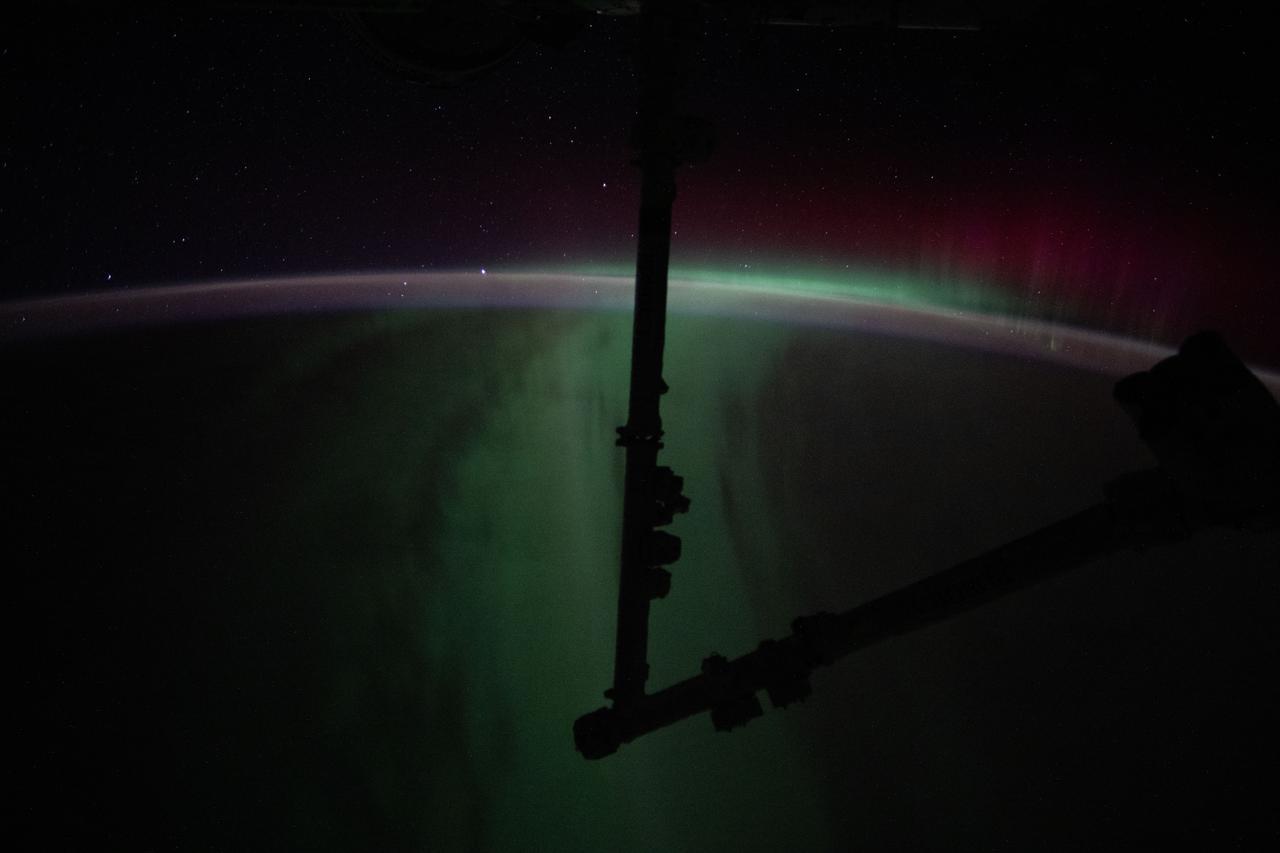
iss071e506350 (July 31, 2024) --- The Aurora Australis silhouettes the Canadarm2 robotic arm in this photograph from the International Space Station as it soared 272 miles above the Indian Ocean halfway between Australia and Antarctica.
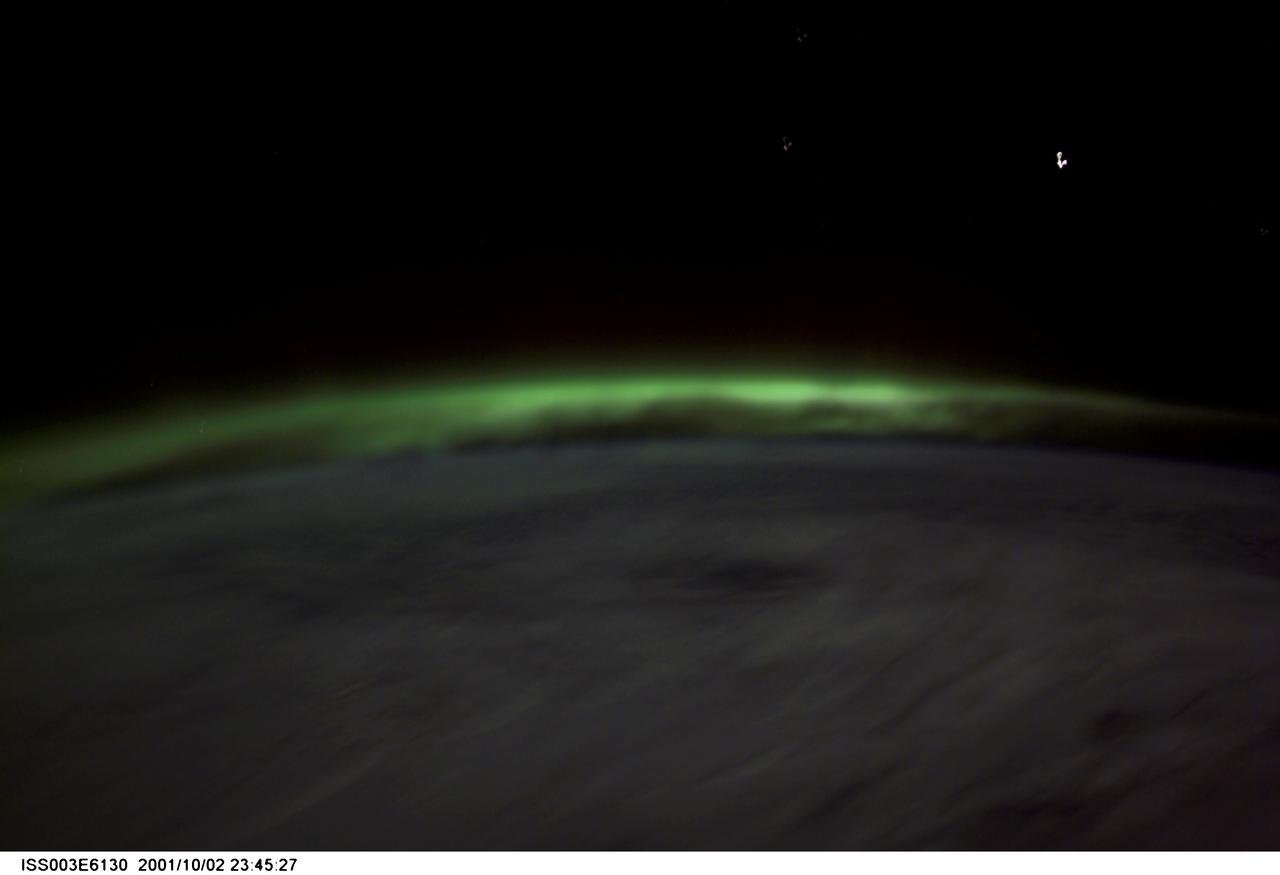
ISS003-E-6130 (2 October 2001) --- One of the Expedition Three crew members captured this image of the Aurora Australis (southern lights) from the International Space Station (ISS). This picture was taken with a digital still camera.

iss063e025120 (June 7, 2020) --- A wispy "aurora australis" seemingly intersects with the Earth's airglow as the International Space Station orbited above the Indian Ocean halfway between Australia and Antarctica.
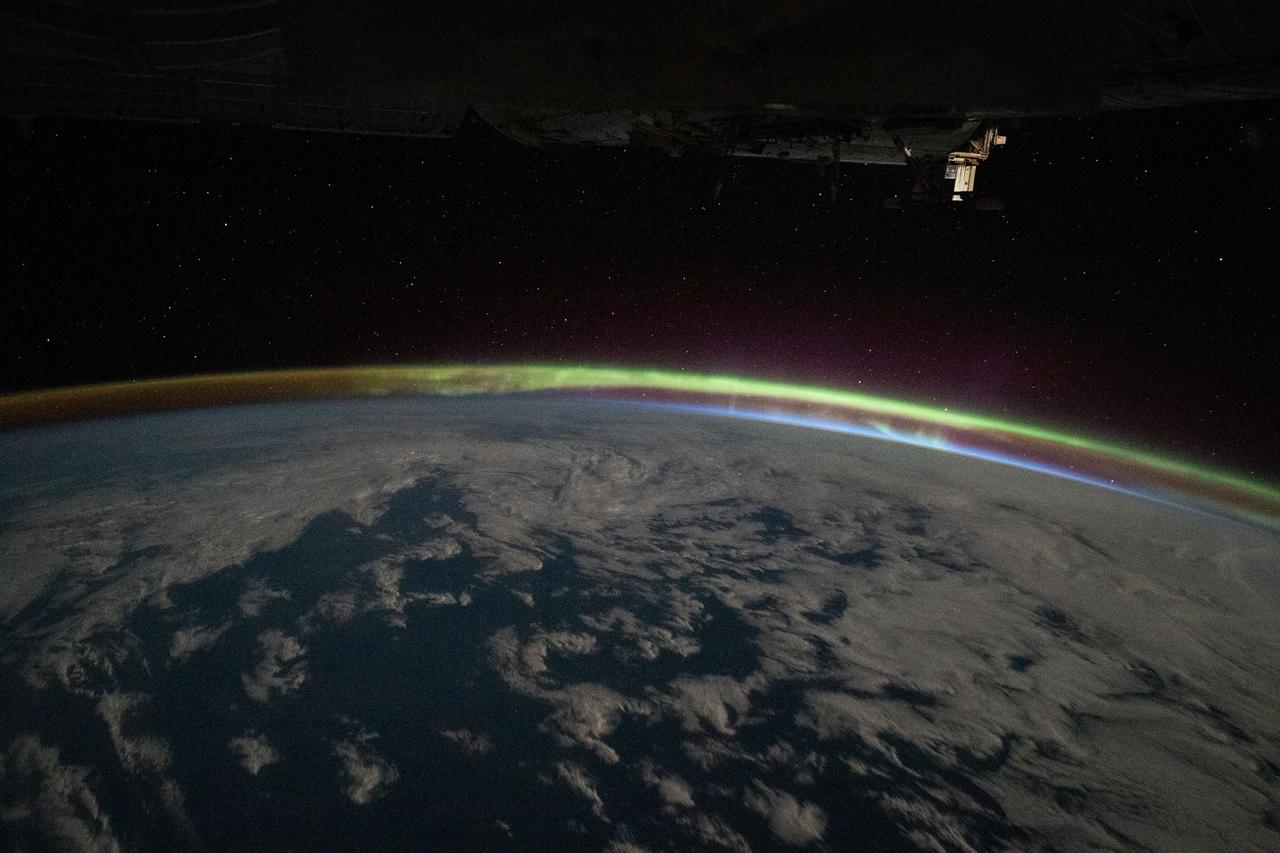
iss068e010113 (Oct. 4, 2022) --- The aurora australis intersects Earth's atmospheric glow in this photograph from the International Space Station as it orbited 268 miles above the Indian Ocean southeast of South Africa.
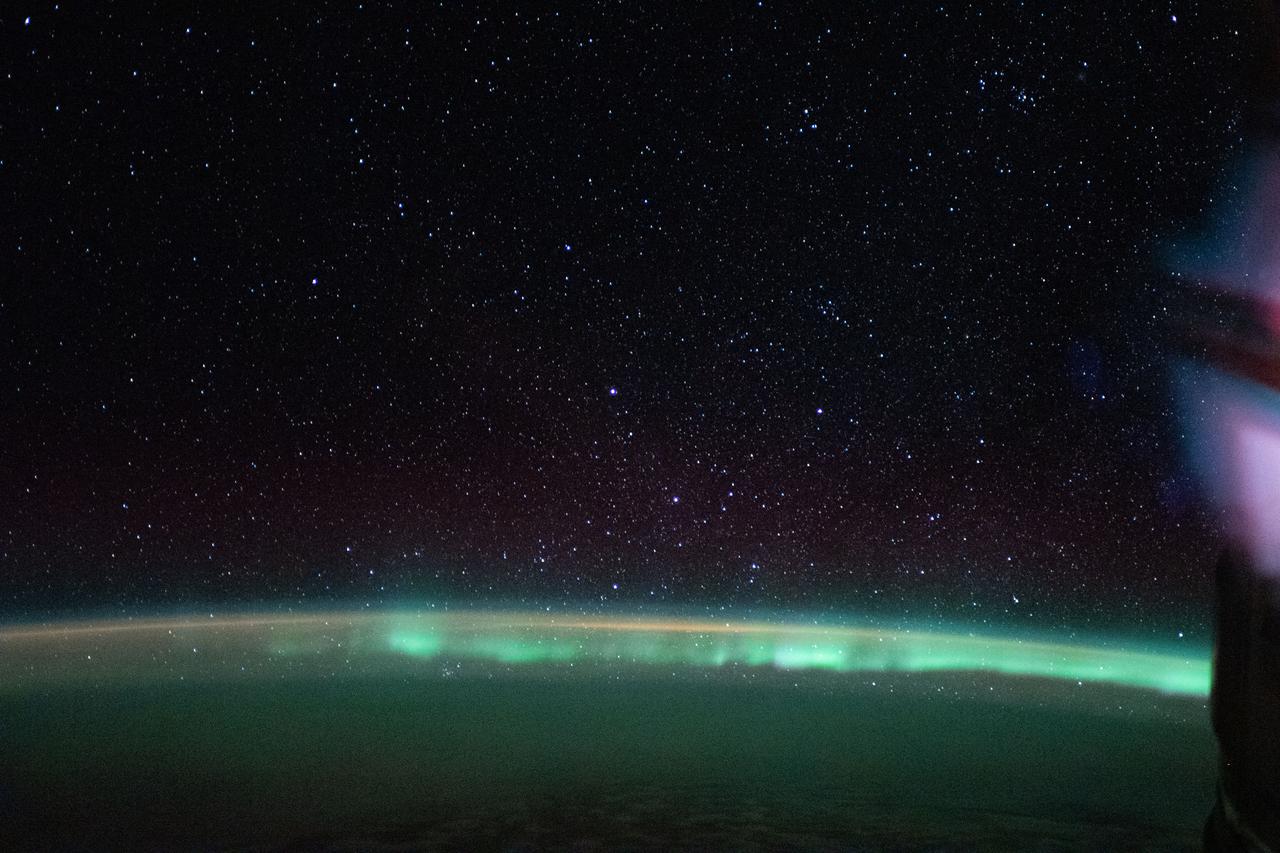
iss059e092462 (June 5, 2019) --- The aurora australis, or "southern lights," highlights a starry nighttime orbital pass as the International Space Station orbited 269 miles above the Indian Ocean southwest of Australia.
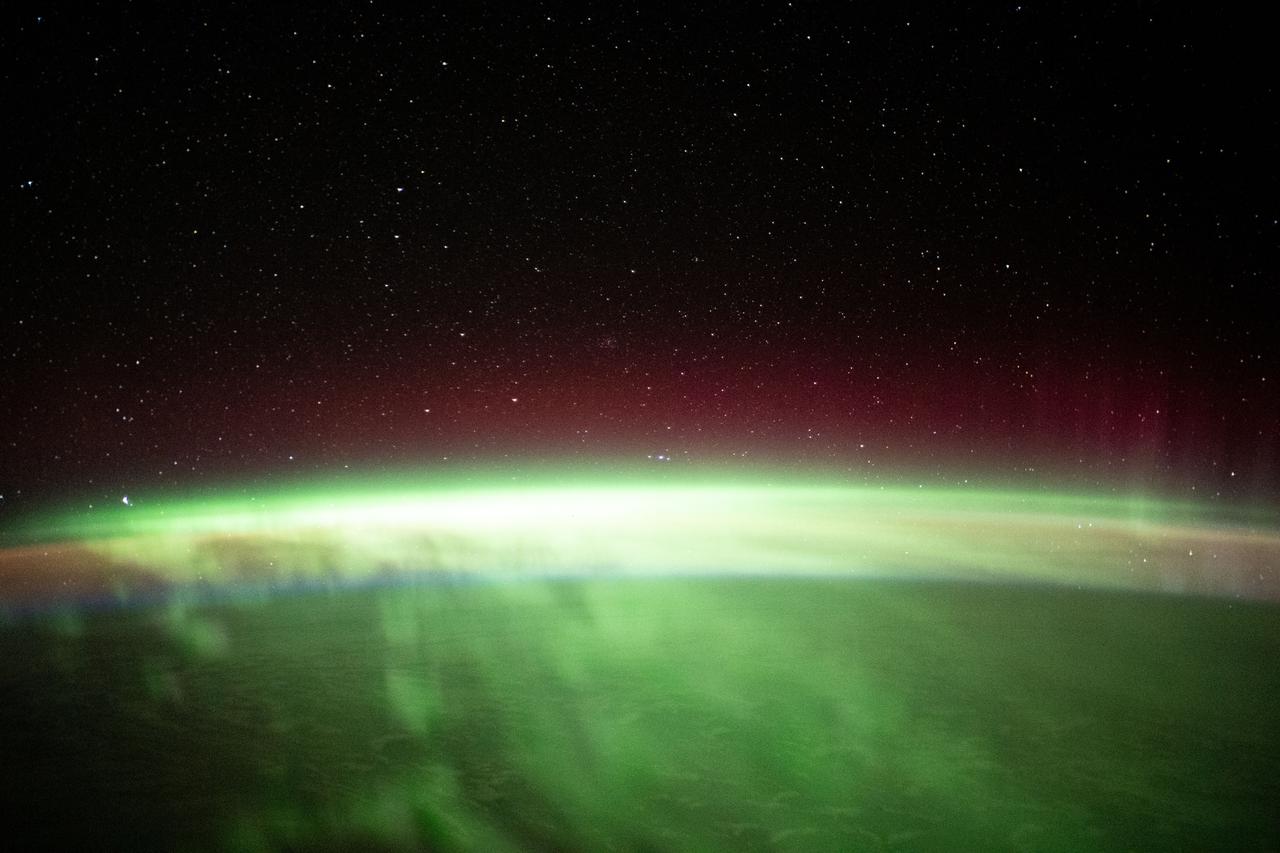
iss065e214235 (Aug. 2, 2021) --- The aurora australis streams across the Earth's atmosphere as the International Space Station orbited 271 miles above the southern Indian Ocean in between Asia and Antarctica.
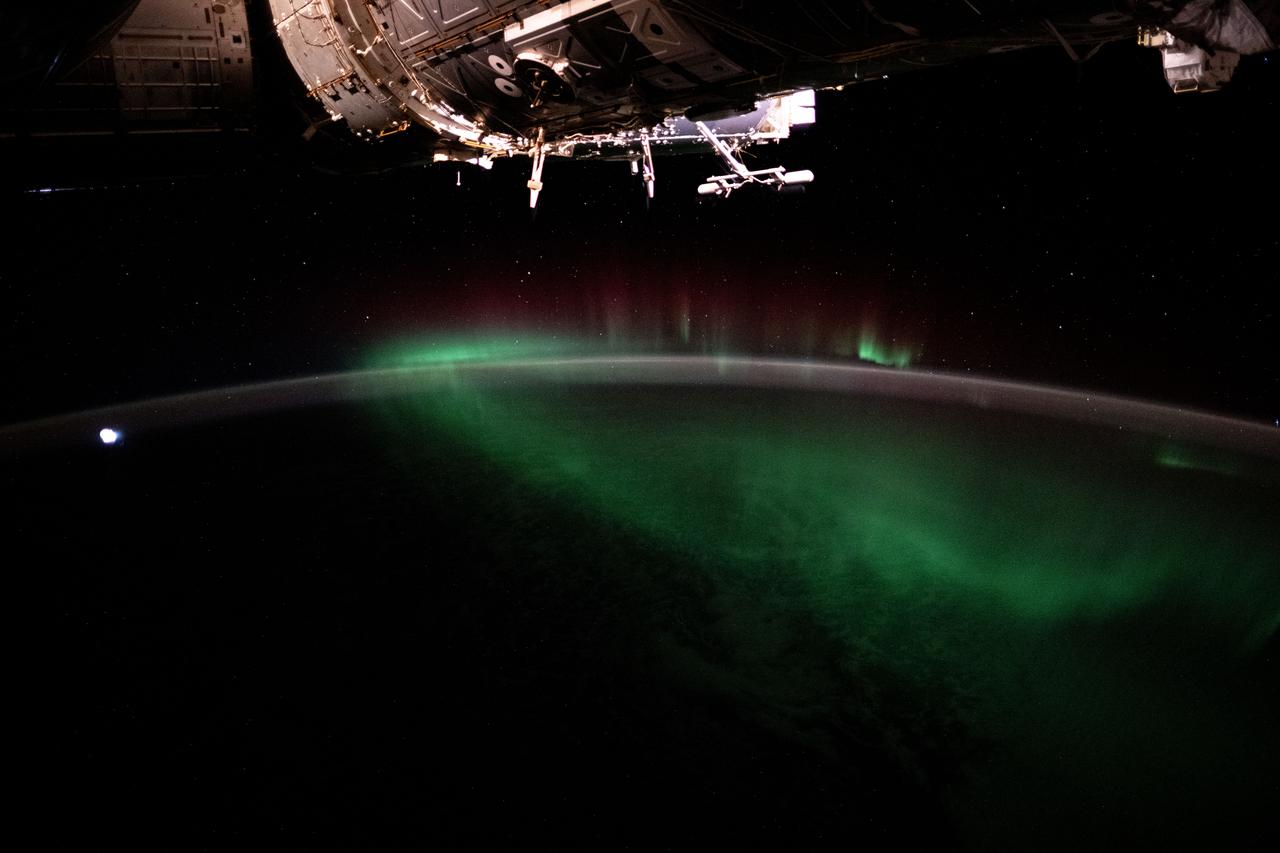
iss071e161819 (June 3, 2024) --- The aurora australis, also known as the Southern Lights, shimmers over the Indian Ocean in between Australia and Antarctica in this photograph from the International Space Station as it orbited 266 miles above.
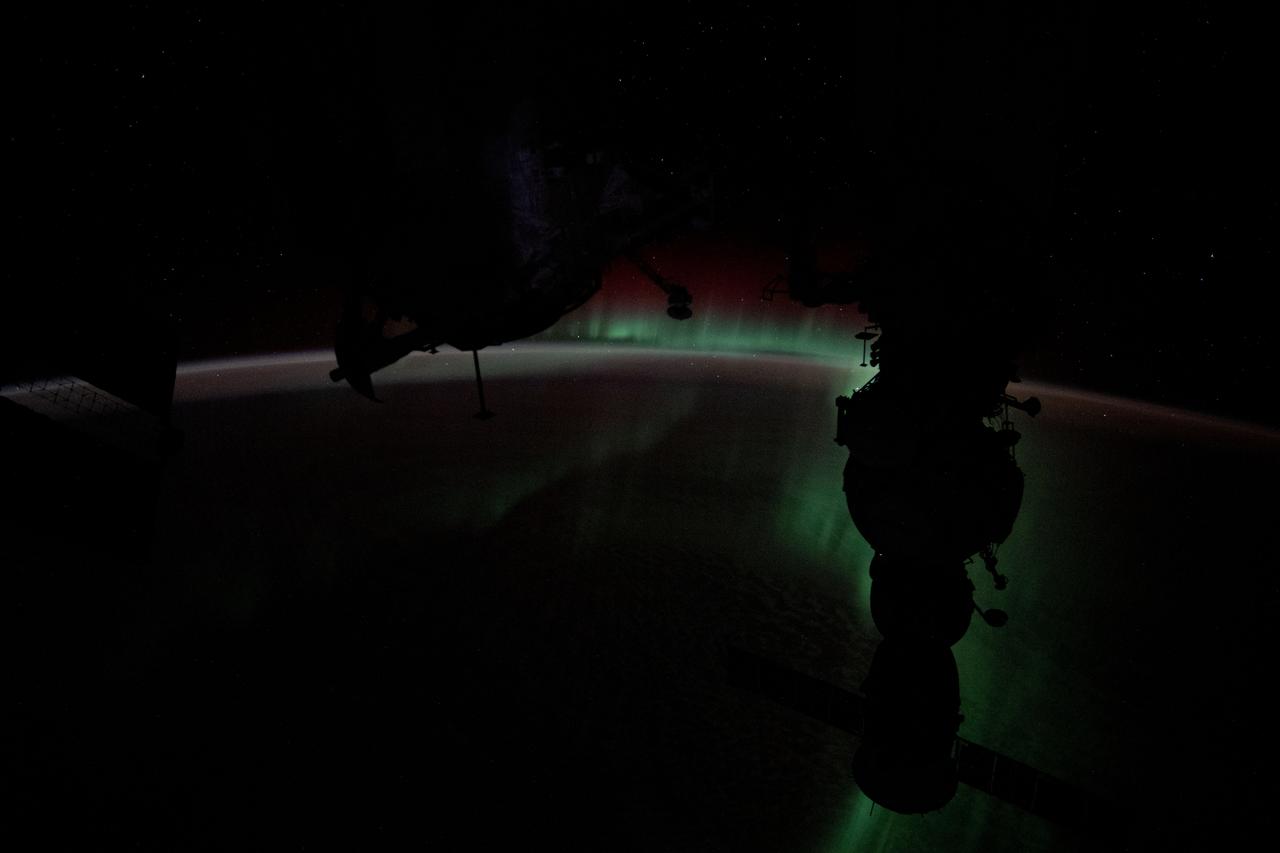
iss071e490546 (July 31, 2024) --- The Aurora Australis silhouettes the Soyuz MS-25 crew ship in this photograph from the International Space Station as it soared 272 miles above the Indian Ocean halfway between Australia and Antarctica.
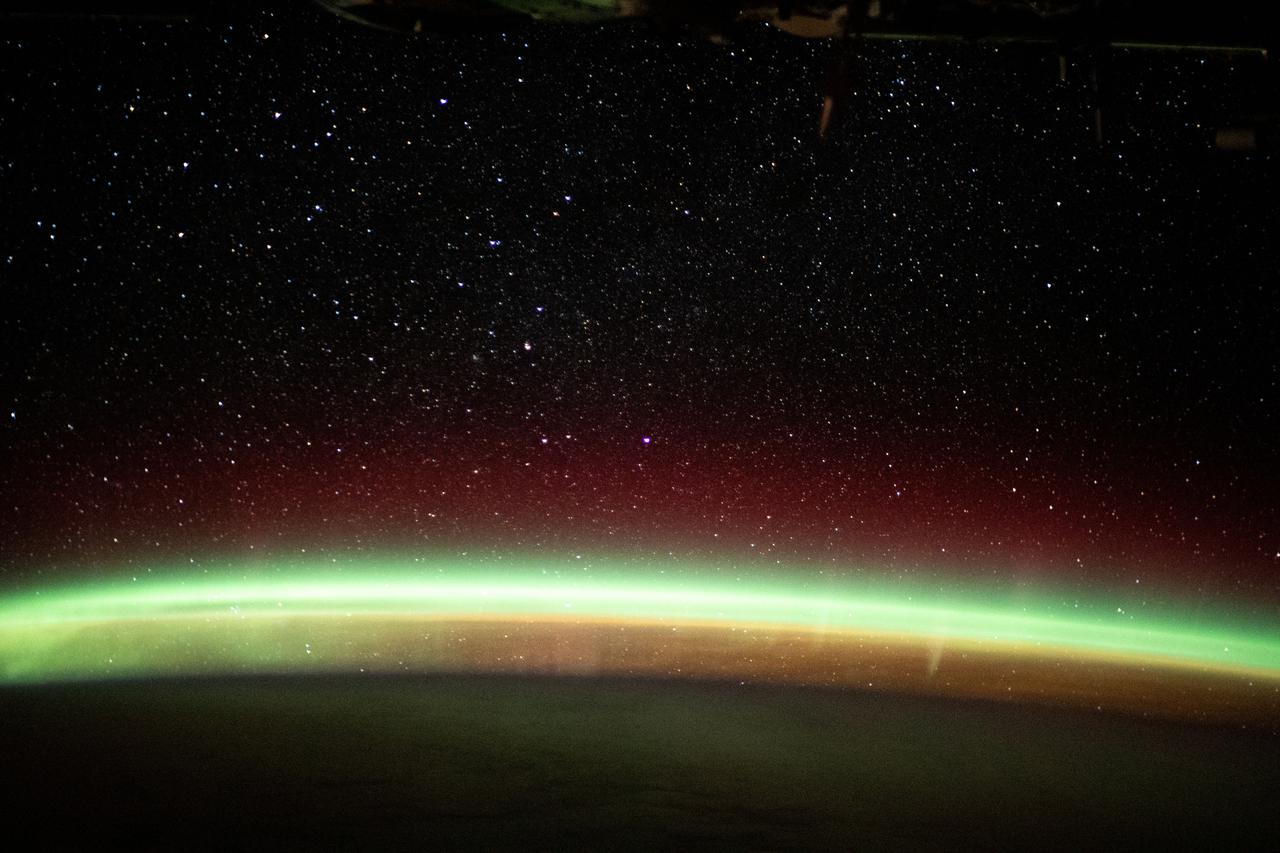
iss065e214221 (Aug. 2, 2021) --- The aurora australis streams across the Earth's atmosphere as the International Space Station orbited 270 miles above the southern Indian Ocean in between Asia and Antarctica.
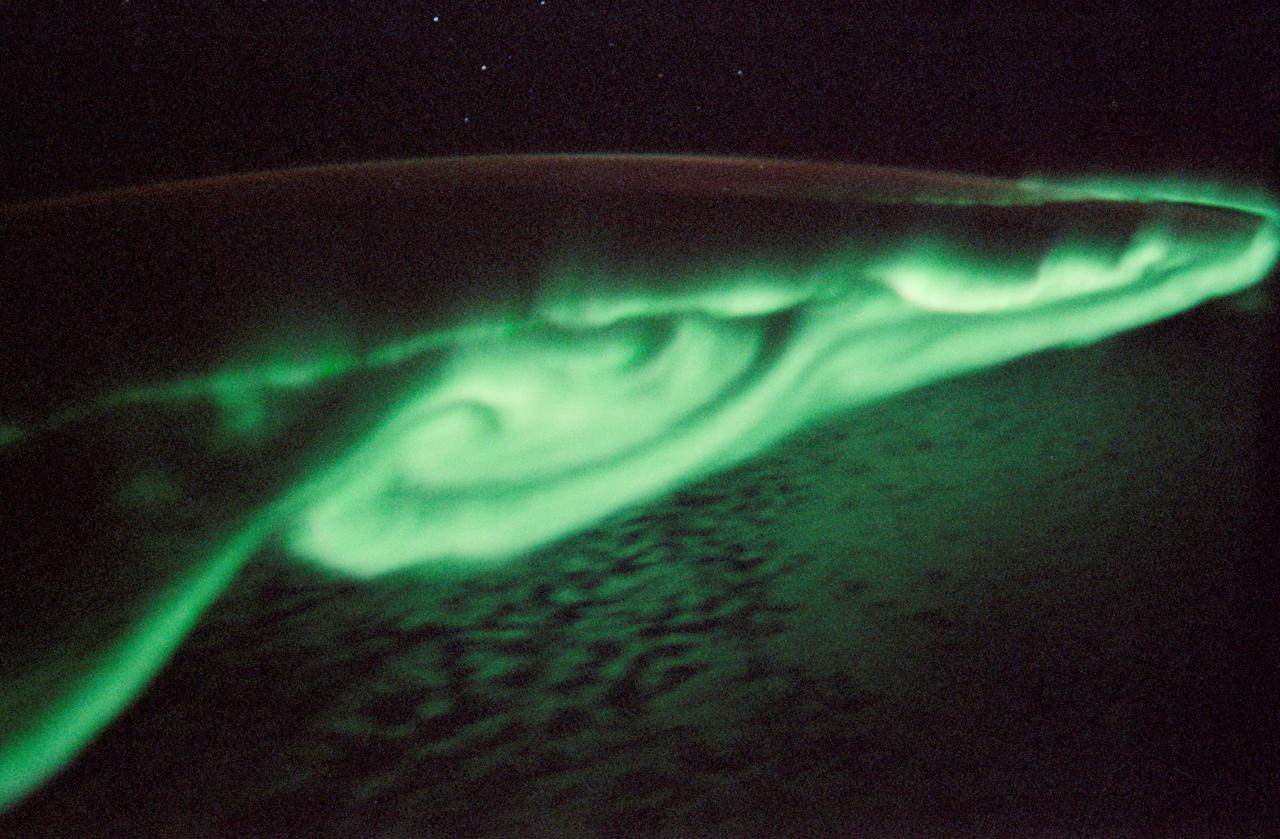
STS114-332-031 (6 August 2005) --- This view featuring the Aurora Australis or “southern lights” was recorded on 35mm film by a crewmember aboard the Space Shuttle Discovery during the STS-114 mission.
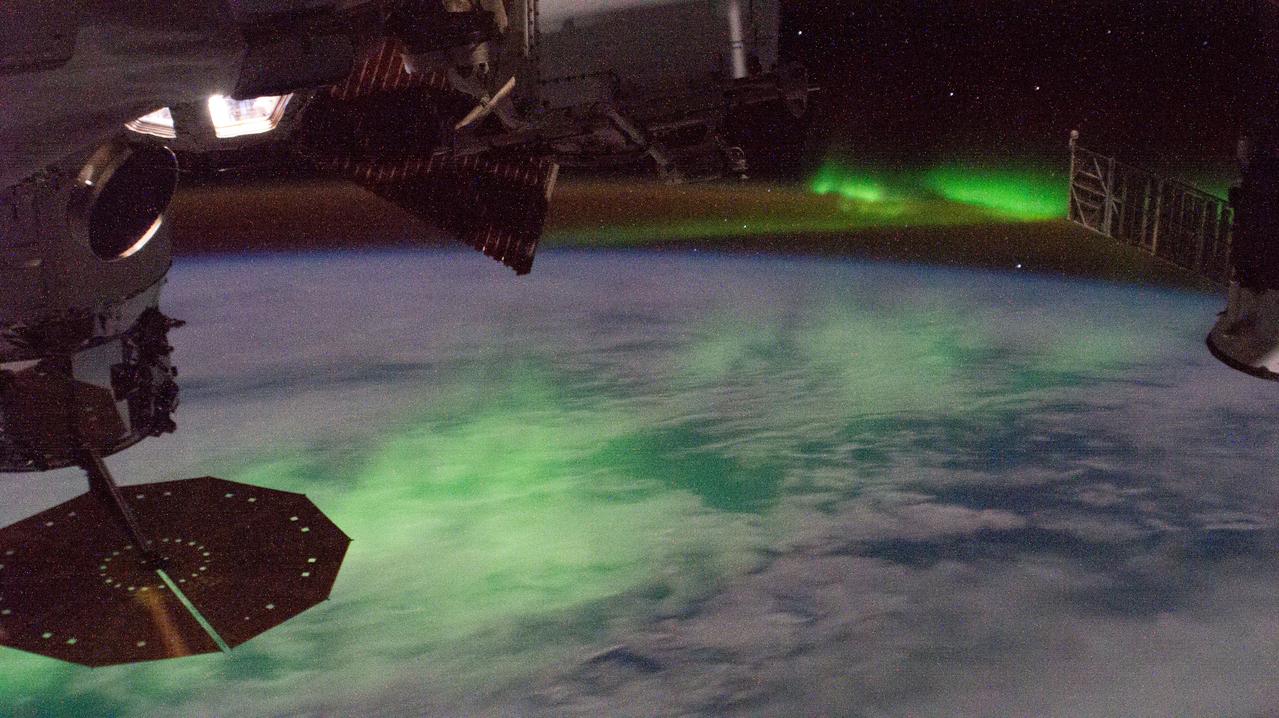
iss062e145242 (April 10, 2020) --- The "aurora australis" glows beneath the International Space Station as it nears the southern-most point of its orbital trek above the Indian Ocean.
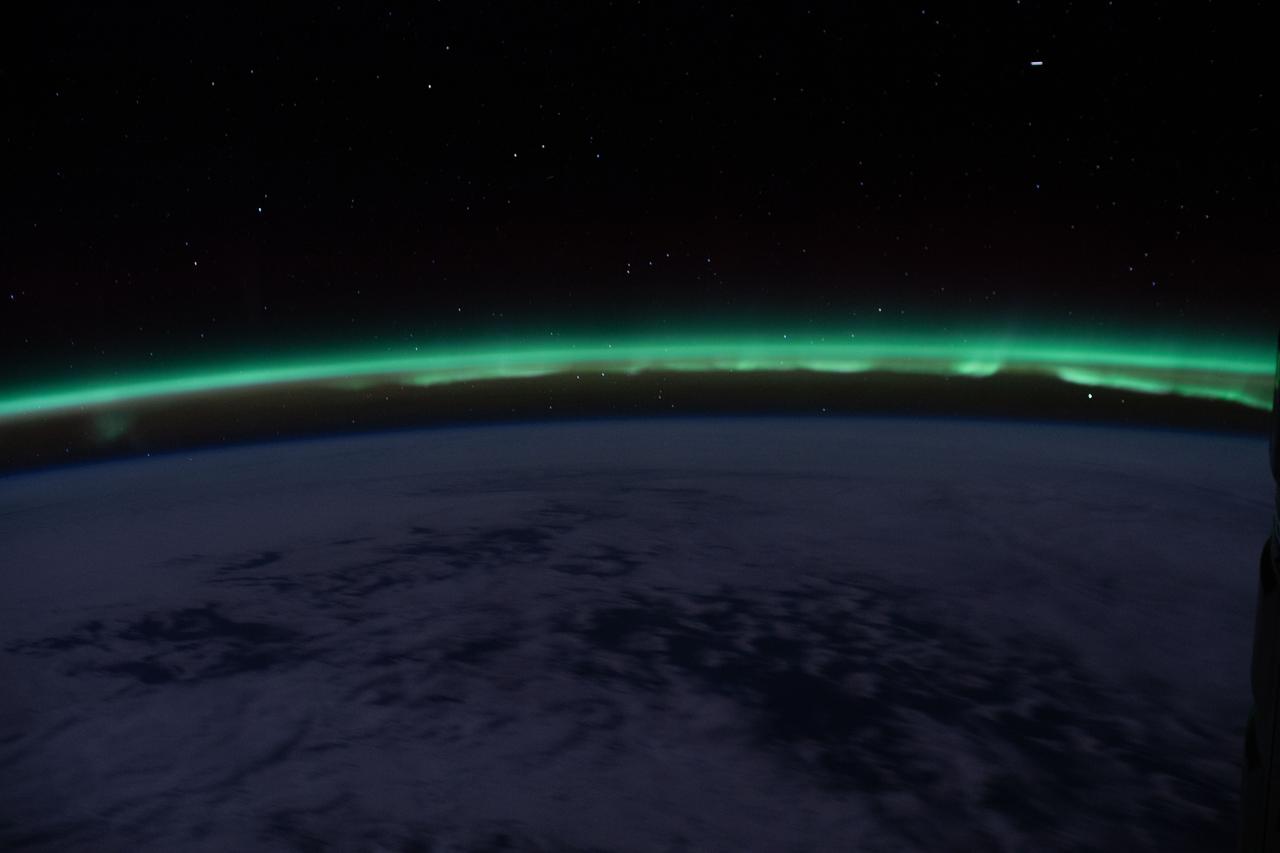
iss062e148329 (April 13, 2020) --- The "aurora australis" hovers above the Earth's horizon as the International Space Station nears the southern-most point of its orbital trek above the Indian Ocean.
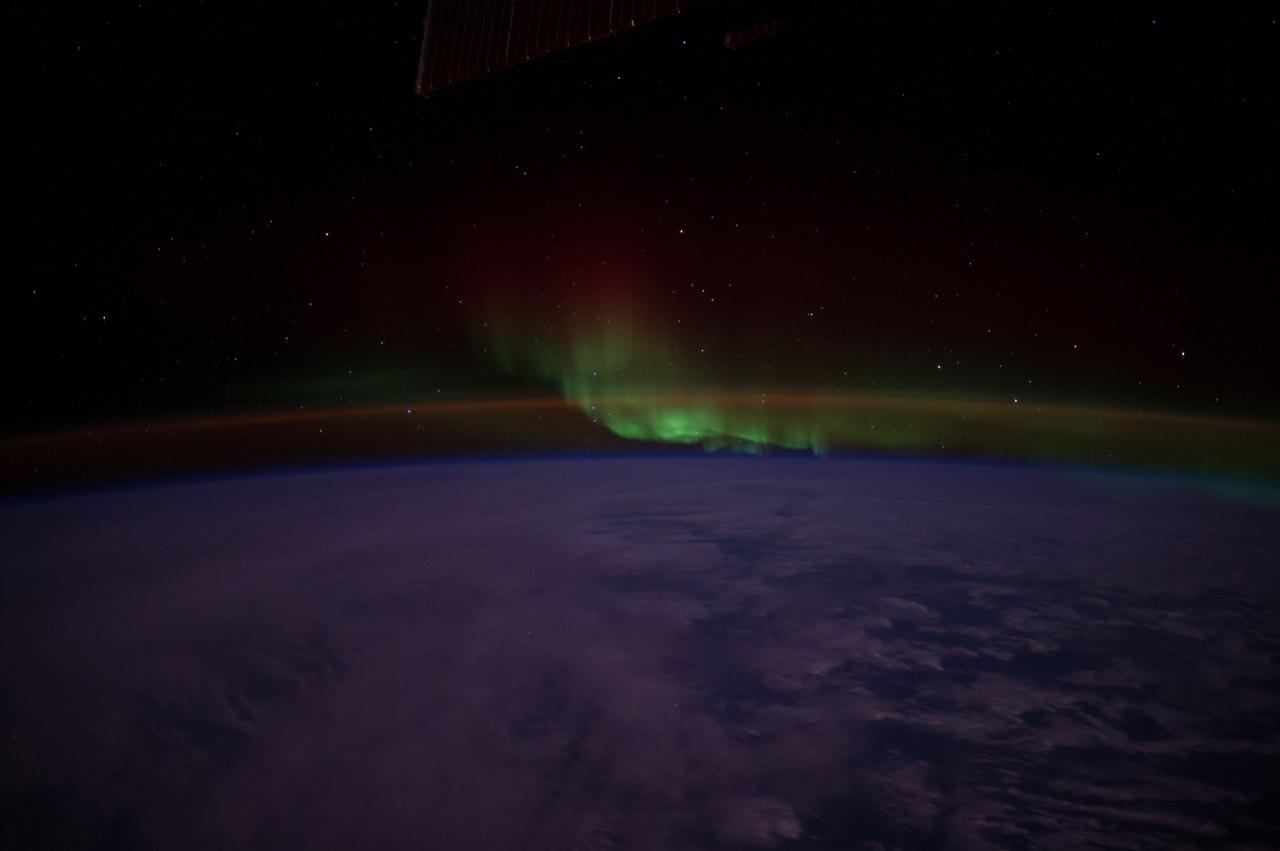
ISS040-E-050780 (7 July 2014) --- One of the Expedition 40 crew members aboard the International Space Station, flying 226 nautical miles above the Indian Ocean, south of Australia, recorded this image of Aurora Australis or the Southern Lights on July 7, 2014.
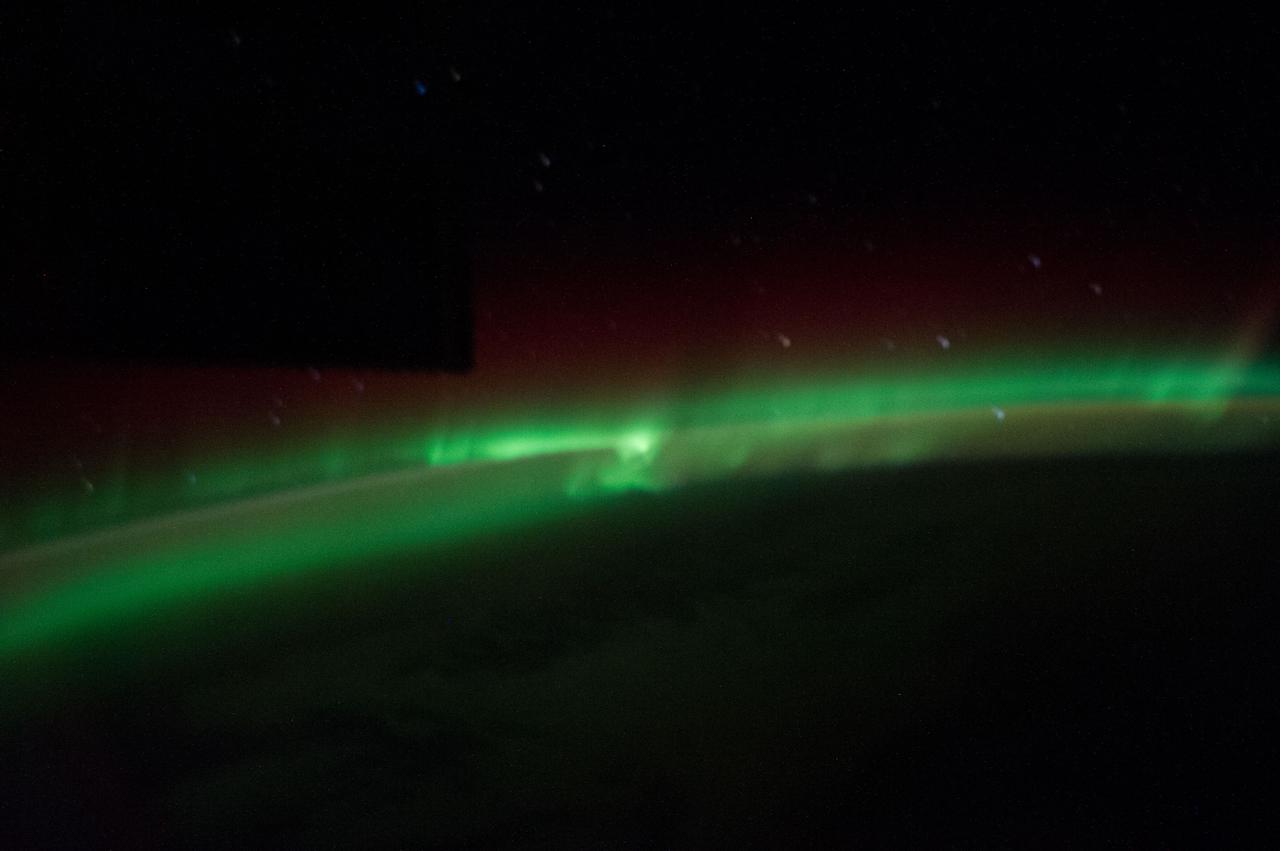
ISS039-E-018315 (3 May 2014) --- One of the Expedition 39 crew members aboard the International Space Station recorded this still image of the Aurora Australis when the orbital outpost was passing over the Indian Ocean on May 3, 2014. Hardware on the station is seen as a silhouette in upper left.
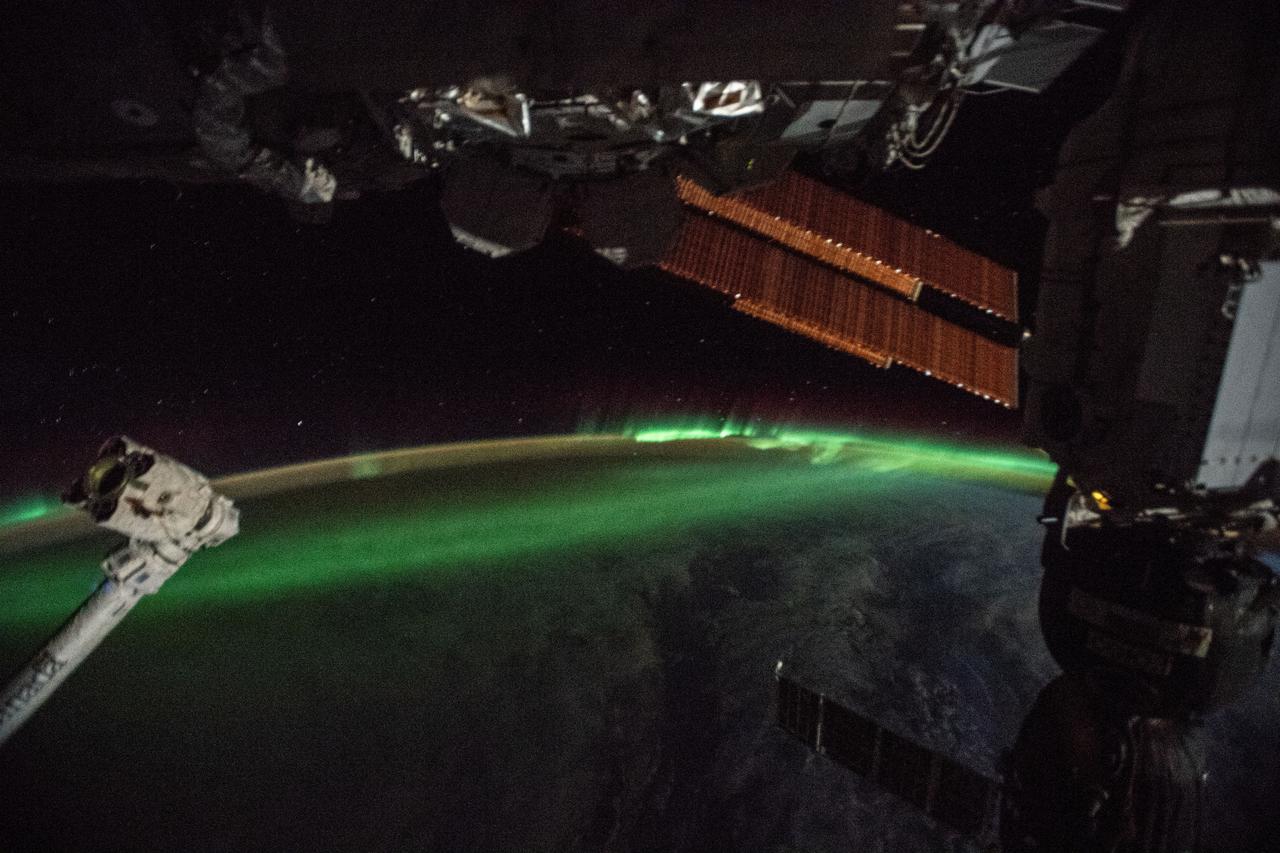
iss059e021289 (April 15, 2019) --- The International Space Station orbits 265 miles above the southern Indian Ocean about halfway between Madagascar and Antarctica with the aurora australis, also known as the southern lights, photographed by an Expedition 59 crewmember.
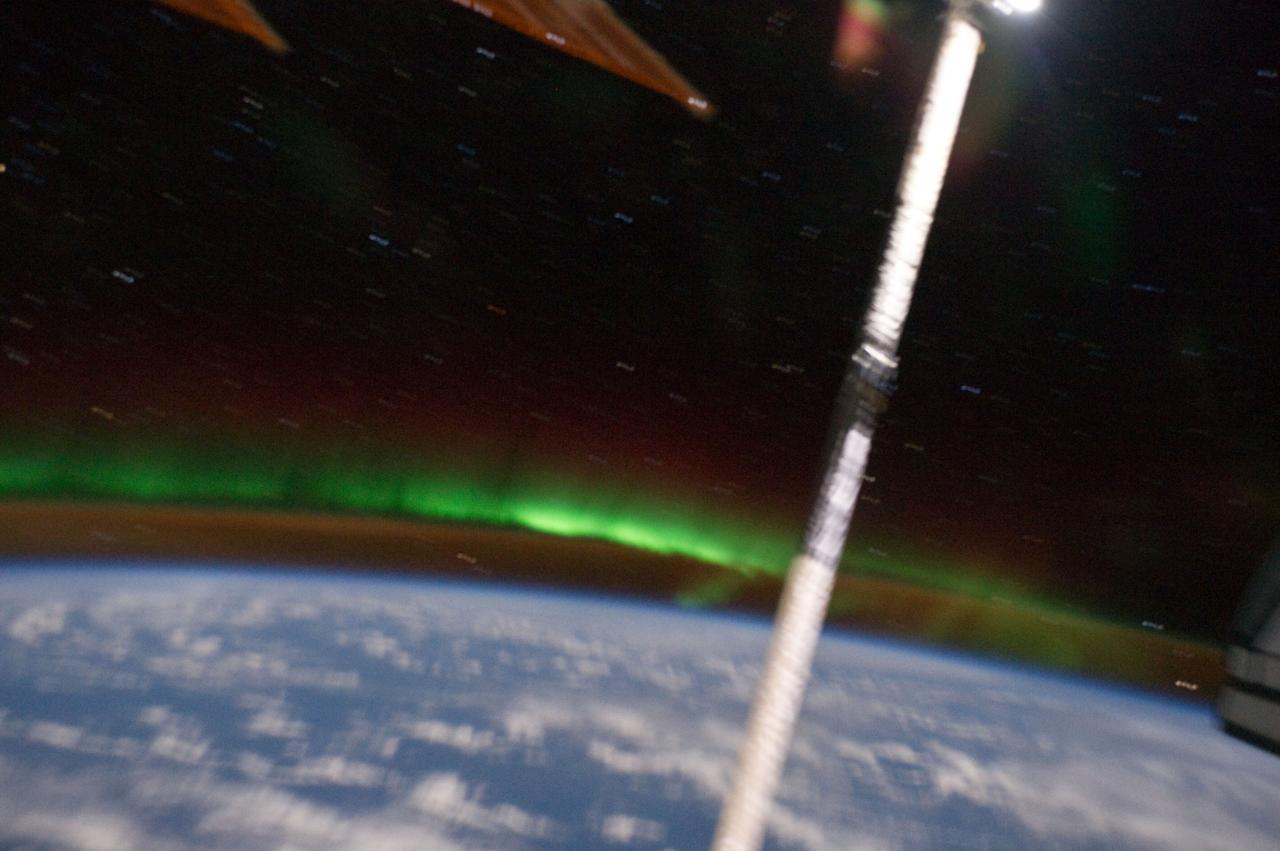
ISS028-E-017382 (17 July 2011) --- Earth's horizon, "decorated" by an intermingling airglow and Aurora Australis was captured in a digital image photographed by one of the members of the joint Atlantis-International Space Station crews. The Orbiter Boom Sensor System extension to the shuttle's robotic arm is also pictured.
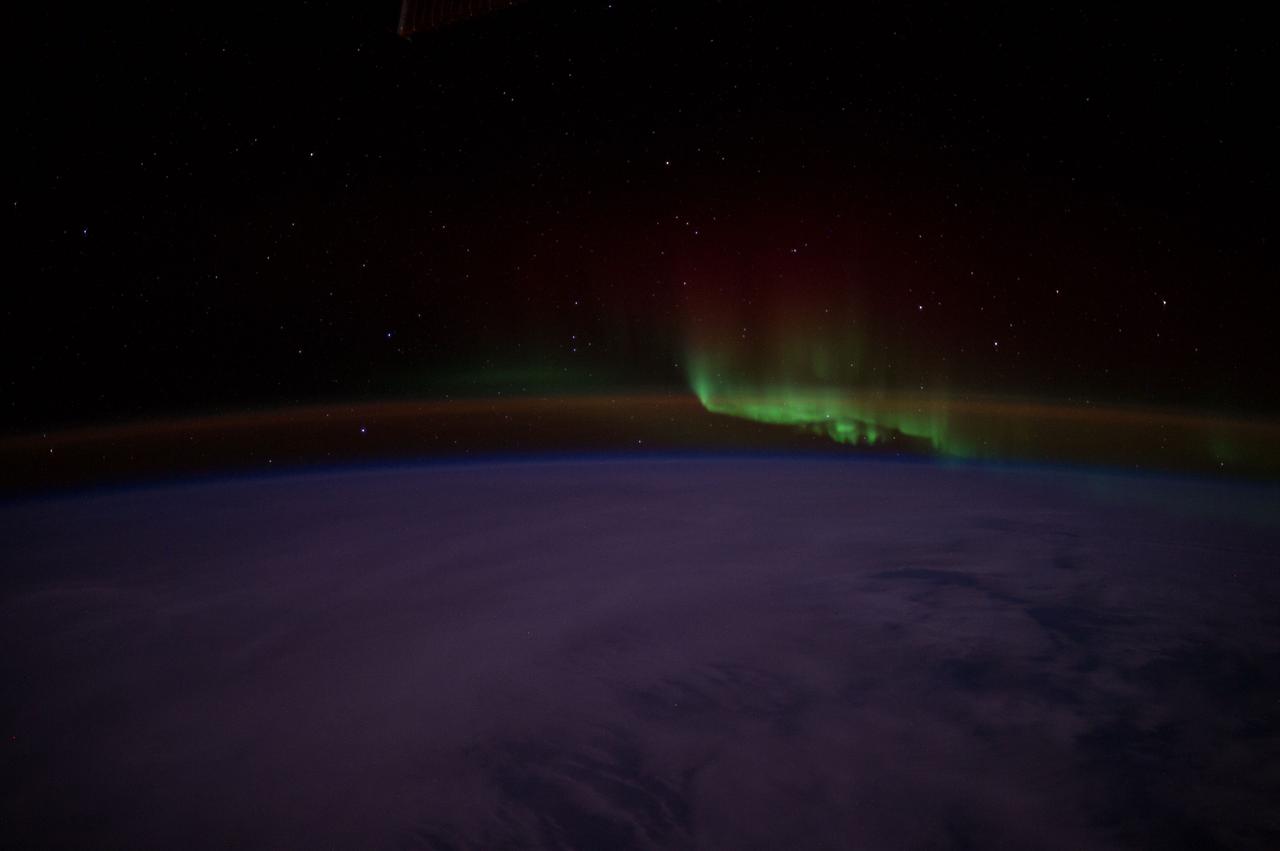
ISS040-E-050825 (7 July 2014) --- One of the Expedition 40 crew members aboard the International Space Station, flying 226 nautical miles above the Indian Ocean, south of Australia, recorded this image of Aurora Australis or the Southern Lights on July 7, 2014.
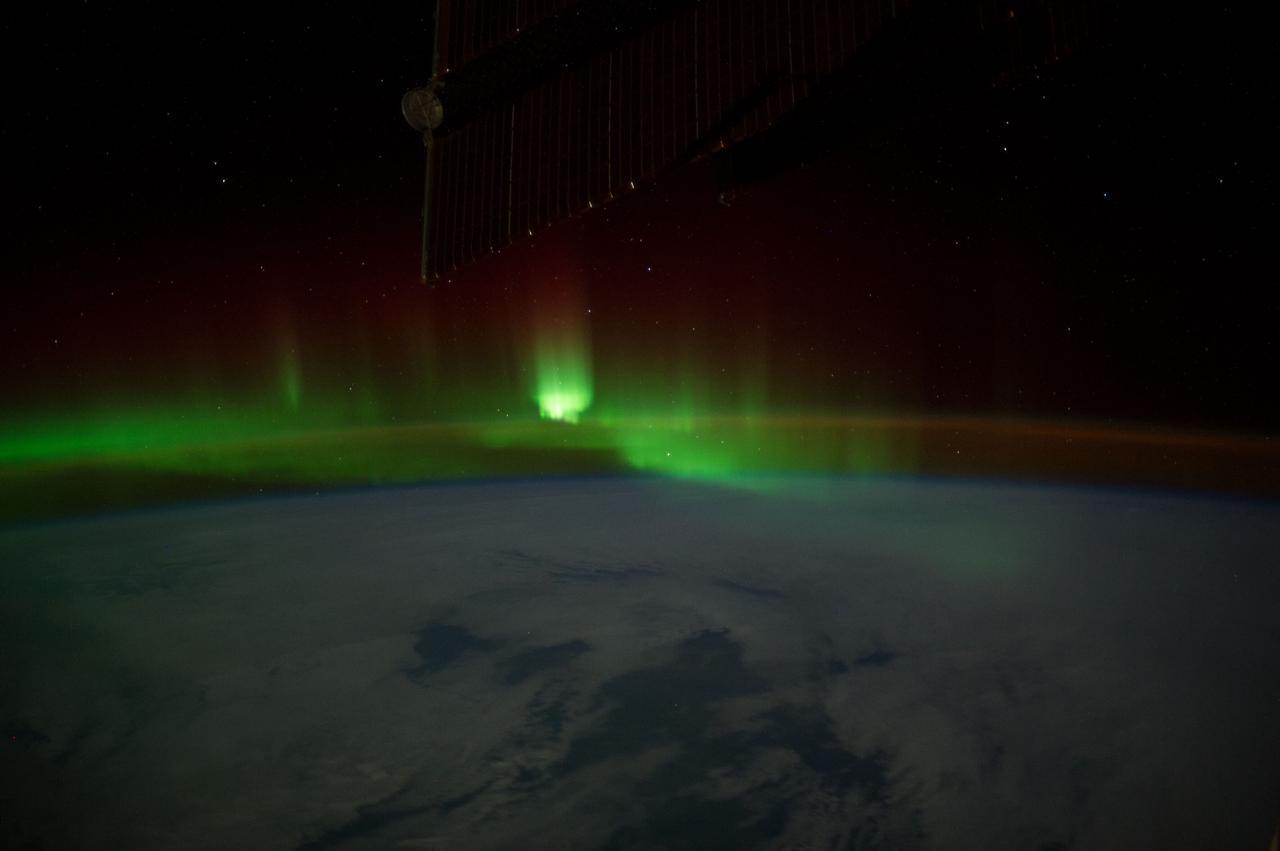
ISS040-E-048011 (7 July 2014) --- One of the Expedition 40 crew members aboard the International Space Station, flying 226 nautical miles above the Indian Ocean, south of Australia, recorded this image of Aurora Australis or the Southern Lights on July 7, 2014.
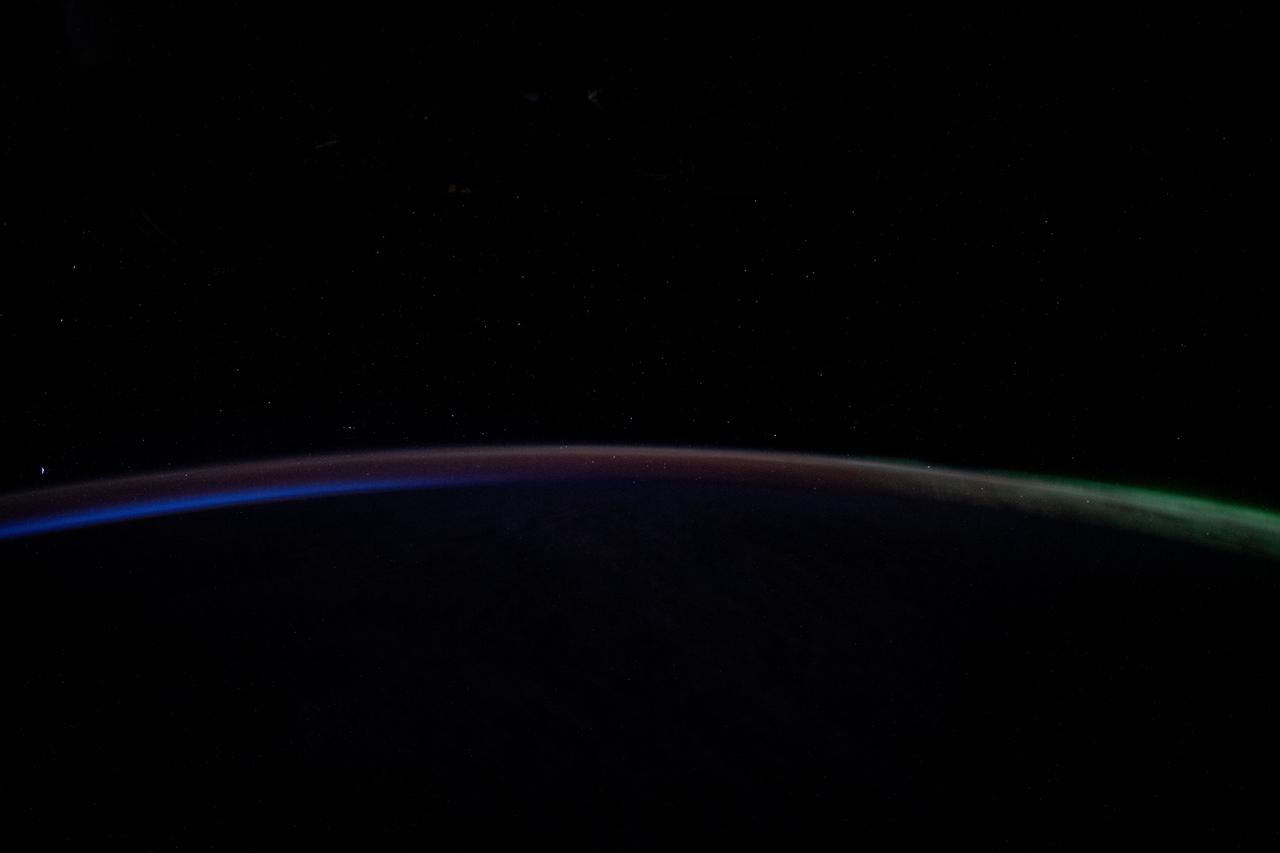
iss071e503153 (July 28, 2024) --- A dim Aurora Australis (at right) blankets the Earth's horizon and fades into a dawning orbital sunrise in this photograph from the International Space Station as it orbited 263 miles above the Pacific Ocean southeast of New Zealand.
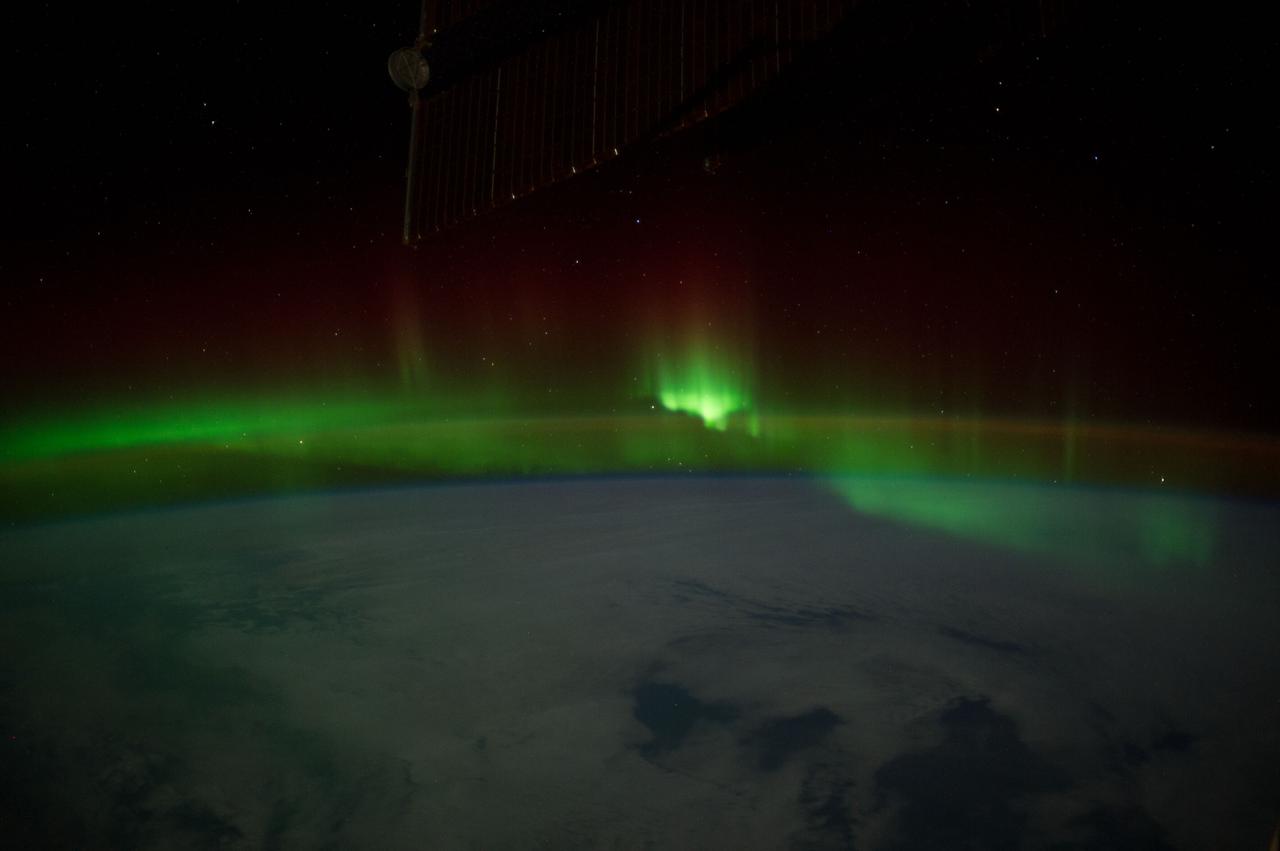
ISS040-E-048027 (7 July 2014) --- One of the Expedition 40 crew members aboard the International Space Station, flying 226 nautical miles above the Indian Ocean, south of Australia, recorded this image of Aurora Australis or the Southern Lights on July 7, 2014.
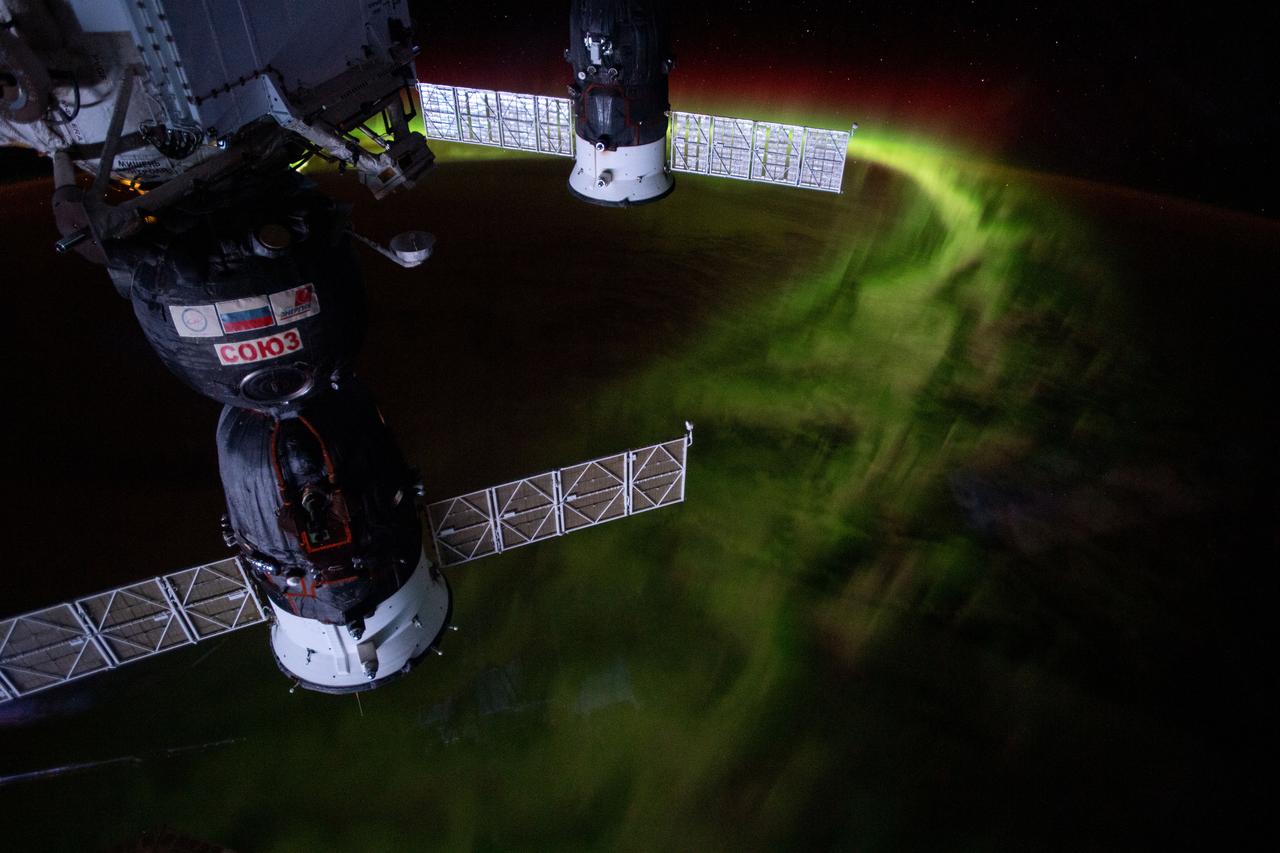
iss059e099150 (June 8, 2019) --- The International Space Station was orbiting 269 miles above the Indian Ocean southwest of Australia when this nighttime photograph was taken of the aurora australis, or "southern lights." Russia's Soyuz MS-12 crew ship (foreground) and Progress 72 resupply ship are seen in this mesmerizing view.
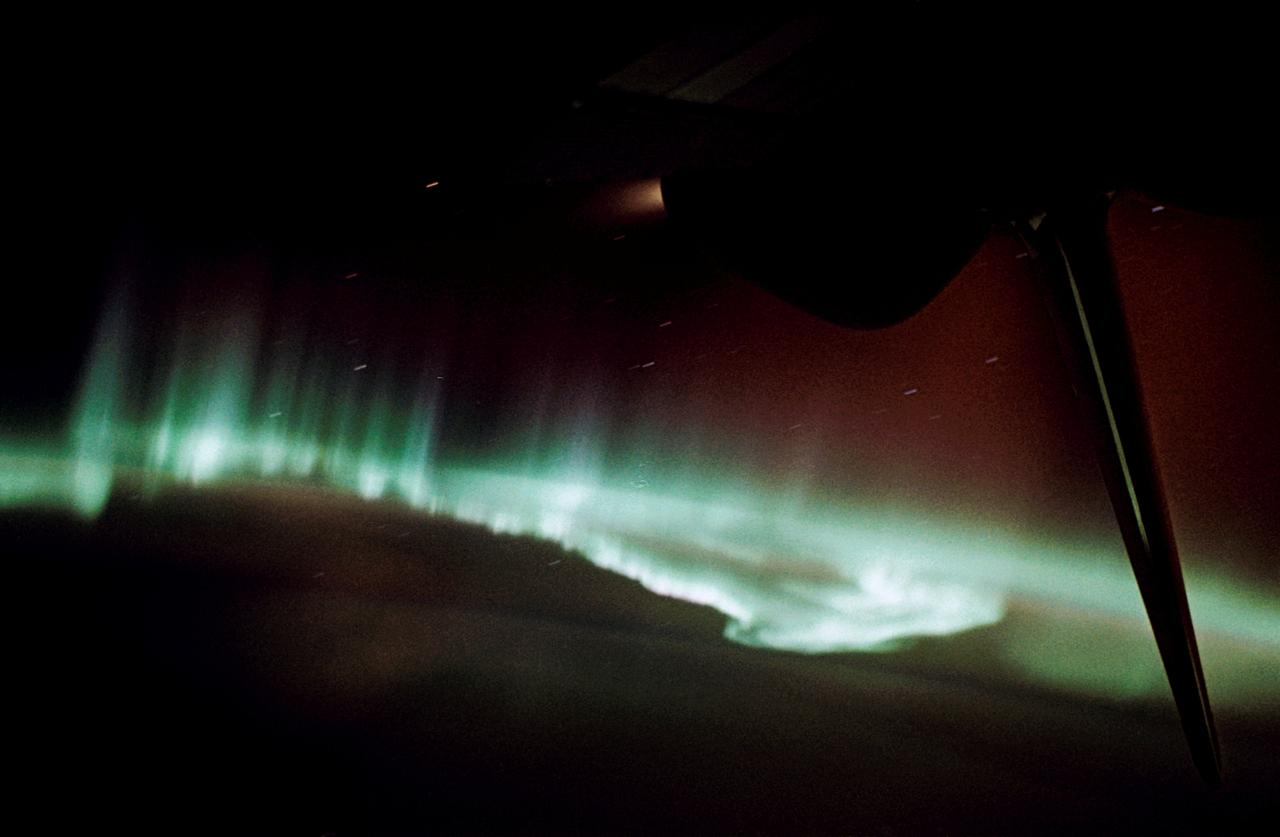
STS059-58-018 (9-20 April 1994) --- Part of the Space Shuttle Endeavour and its Space Radar Laboratory (SRL-1) payload are backdropped against a colorful display of the Southern Lights (aurora australis). The vehicle was firing a reaction control subsystem thruster (below center) when the 35mm image was exposed.
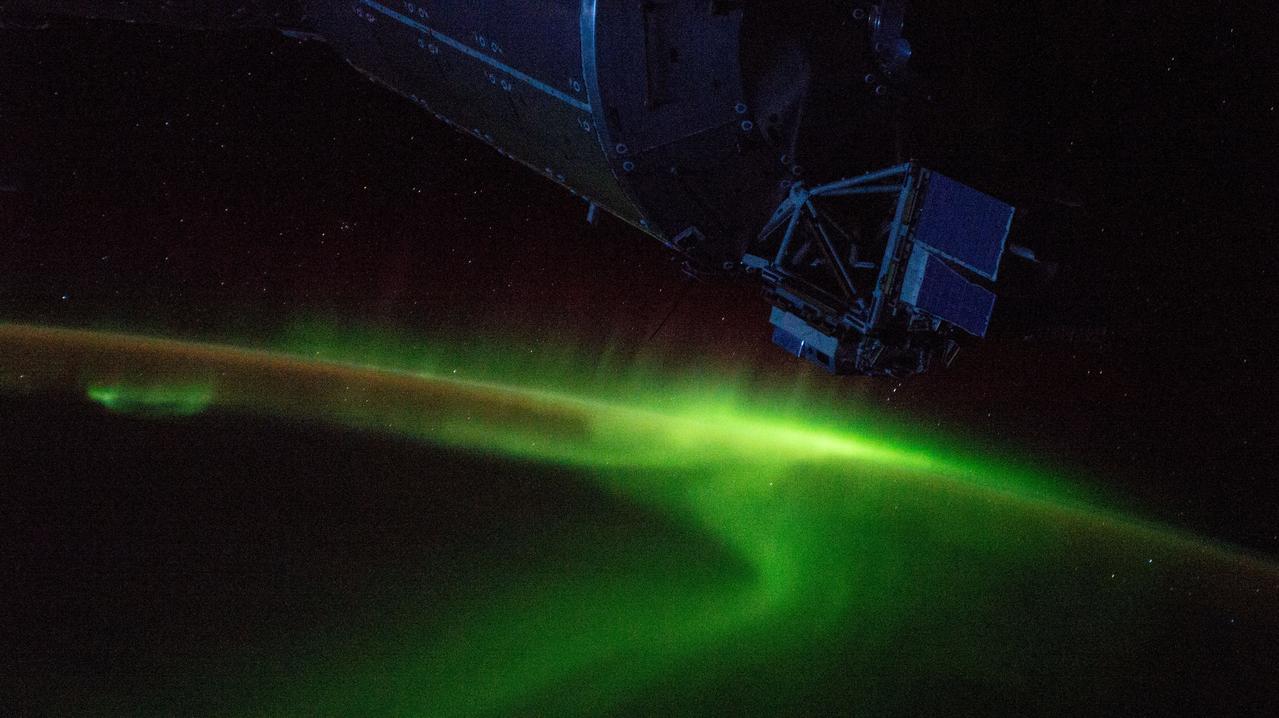
iss059e013118 (April 4, 2019) --- The aurora australis swirls above the Indian Ocean south of Australia as the International Space Station orbited 265 miles over Earth. A portion of the dimly-lit Columbus laboratory module from ESA (European Space Agency) is seen in the top foreground.
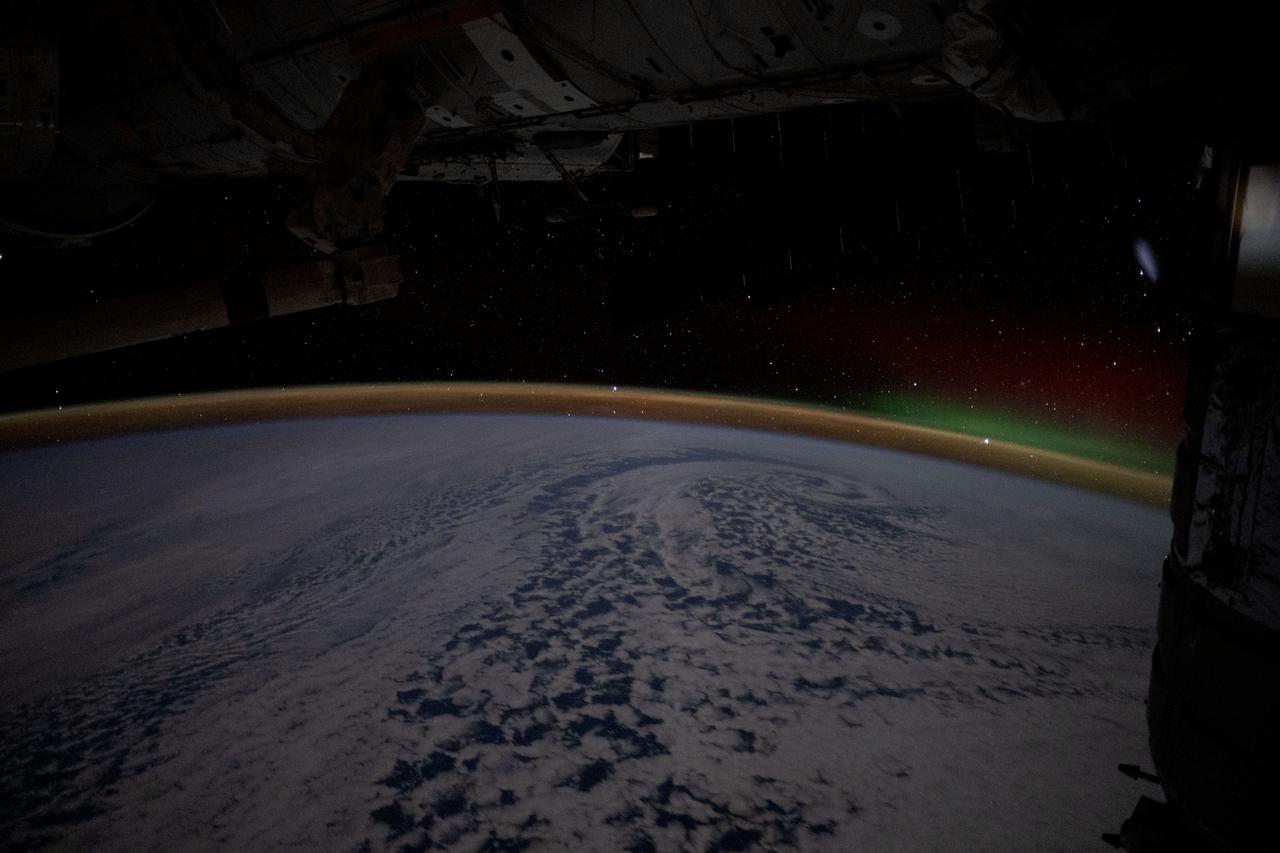
iss071e586401 (Aug. 13, 2024) --- A wispy aurora australis rises above Earth's airglow blanketing the horizon in this long-duration photograph from the International Space Station as it orbited 270 miles above the Pacific Ocean southeast of New Zealand.
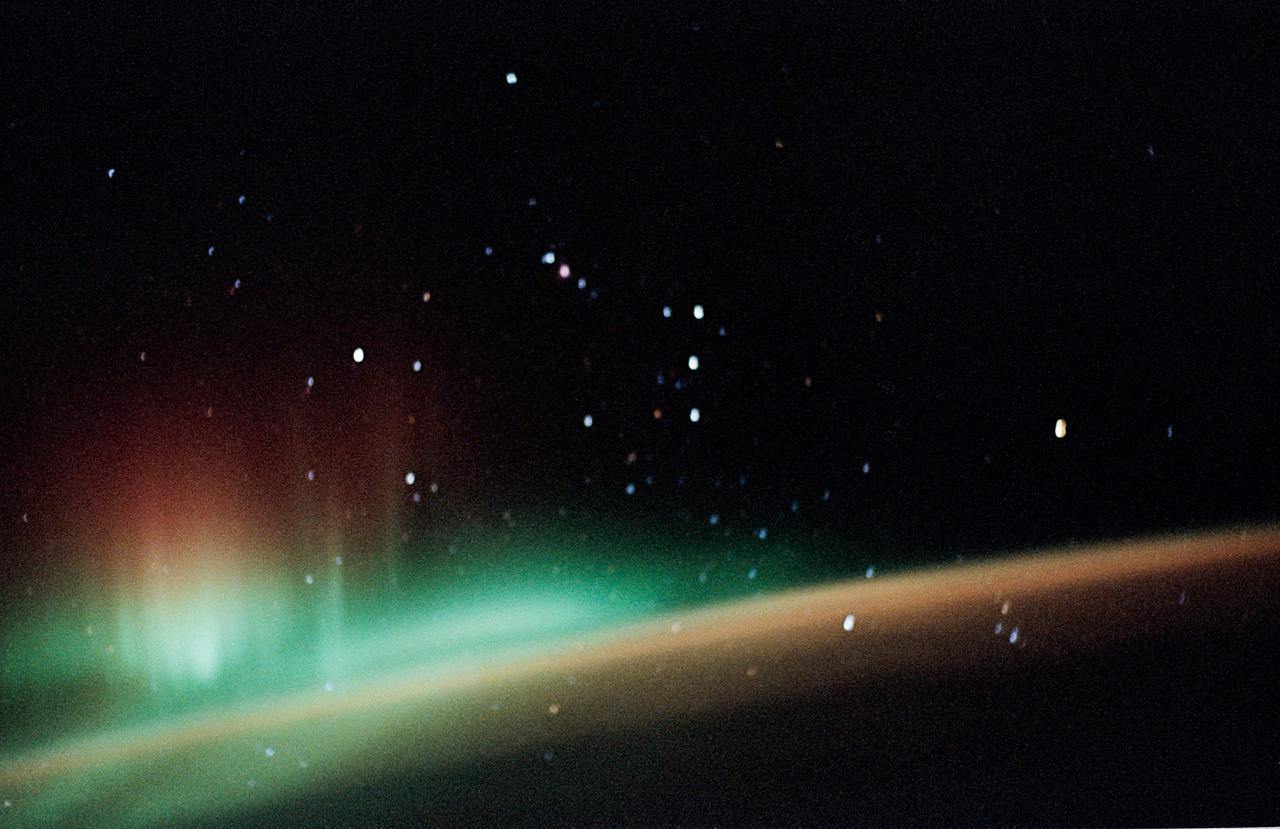
STS059-52-029 (9-20 April 1994) --- The constellation Orion is backdropped against a colorful display of the Southern Lights (aurora australis) in this 35mm image. Six NASA astronauts went on to spend a week and a half aboard the Space Shuttle Endeavour in support of the Space Radar Laboratory (SRL-1) mission.

iss060e002056 (June 29, 2019) --- Flying 268 miles above New Zealand, the International Space Station's docked Progress 72 resupply ship is silhouetted over a wispy aurora australis, or "southern lights," the Earth's atmospheric glow and a starry orbital nighttime sky. The bright light at top is the Pirs module's lit airlock window.
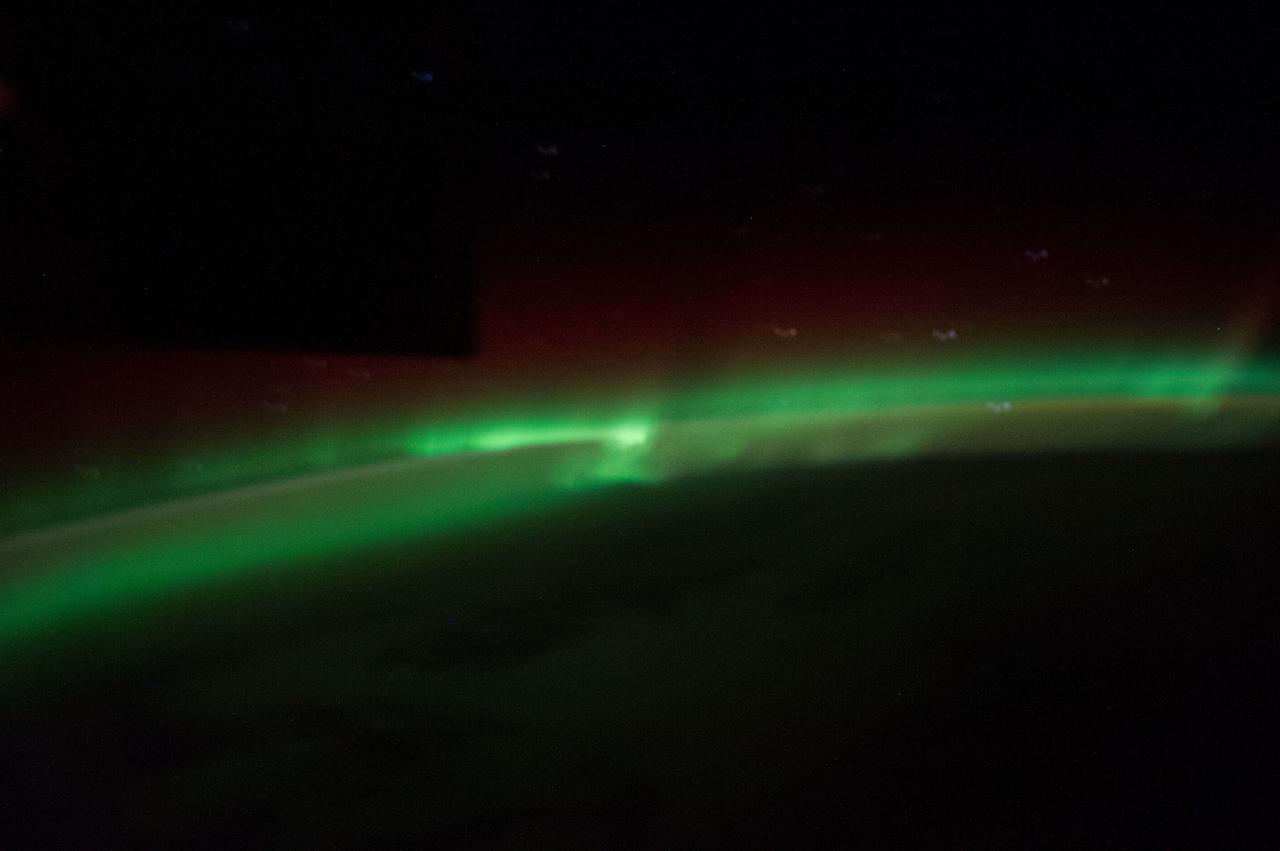
ISS039-E-018314 (3 May 2014) --- One of the Expedition 39 crew members aboard the International Space Station recorded this still image of the Aurora Australis when the orbital outpost was passing over the Indian Ocean on May 3, 2014. Hardware on the station is seen as a silhouette in upper left.
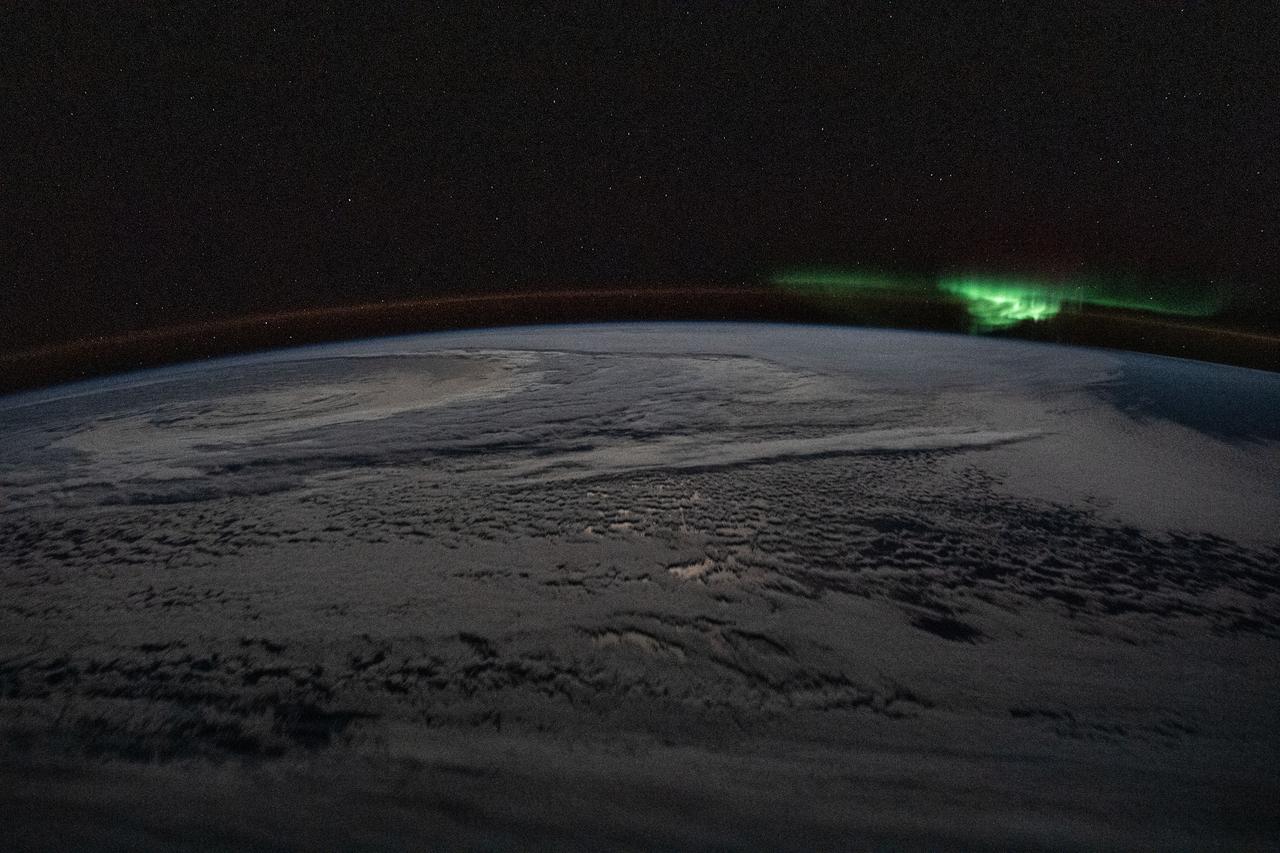
iss059e119533 (June 21, 2019) --- The atmospheric glow and a wispy aurora australis, also known as the "southern lights," frame a cloud-covered Earth as the International Space Station orbited 254 miles above the Indian Ocean due east of the territory of French Southern and Antarctic Lands.

At Astrotech Space Operations, workers look over the integrated THEMIS spacecraft before spin-balance testing. THEMIS consists of five identical probes, the largest number of scientific satellites ever launched into orbit aboard a single rocket. This unique constellation of satellites will resolve the tantalizing mystery of what causes the spectacular sudden brightening of the aurora borealis and aurora australis - the fiery skies over the Earth's northern and southern polar regions. THEMIS is scheduled to launch Feb. 15 from Cape Canaveral Air Force Station.
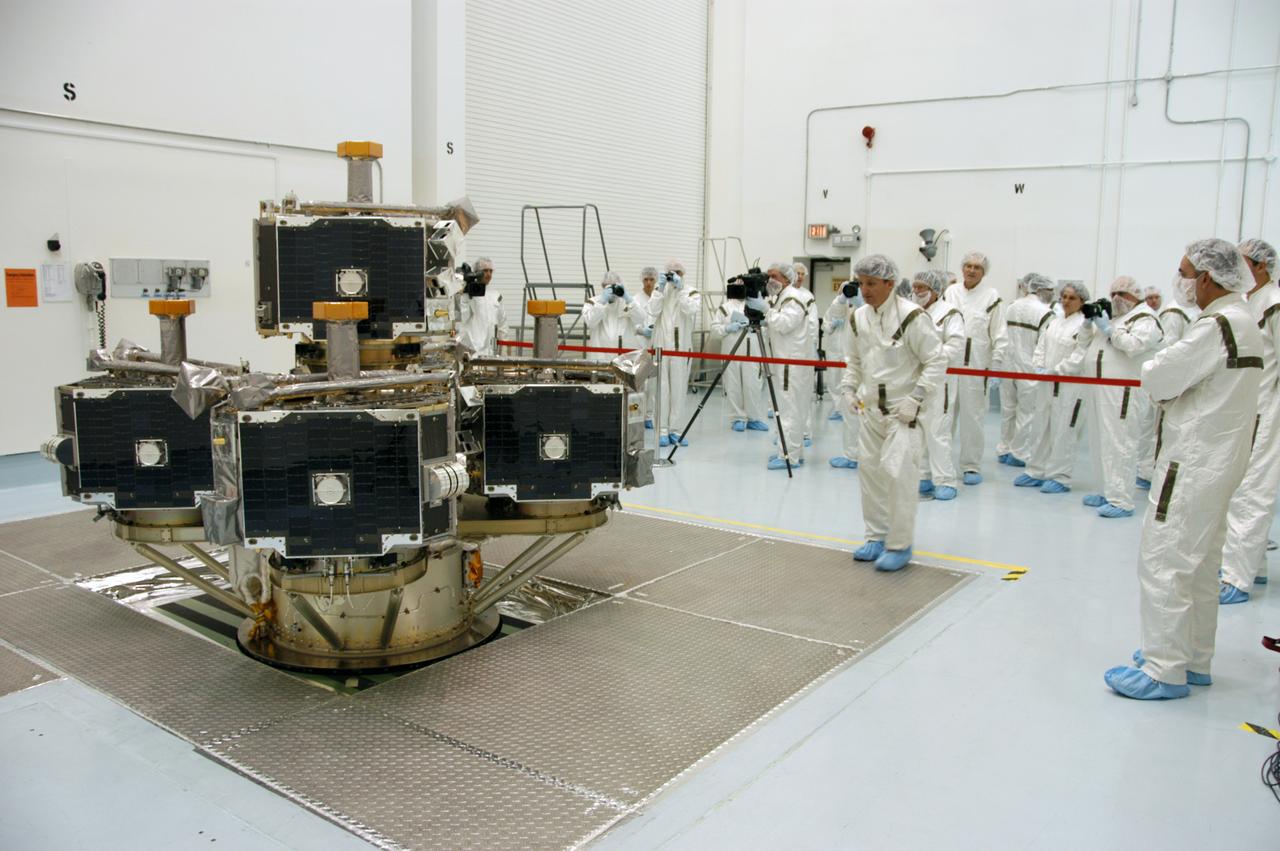
At Astrotech Space Operations, the media are dressed in clean room, or bunny, suits to photograph the integrated THEMIS spacecraft. THEMIS consists of five identical probes, the largest number of scientific satellites ever launched into orbit aboard a single rocket. This unique constellation of satellites will resolve the tantalizing mystery of what causes the spectacular sudden brightening of the aurora borealis and aurora australis - the fiery skies over the Earth's northern and southern polar regions. THEMIS is scheduled to launch Feb. 15 from Cape Canaveral Air Force Station.
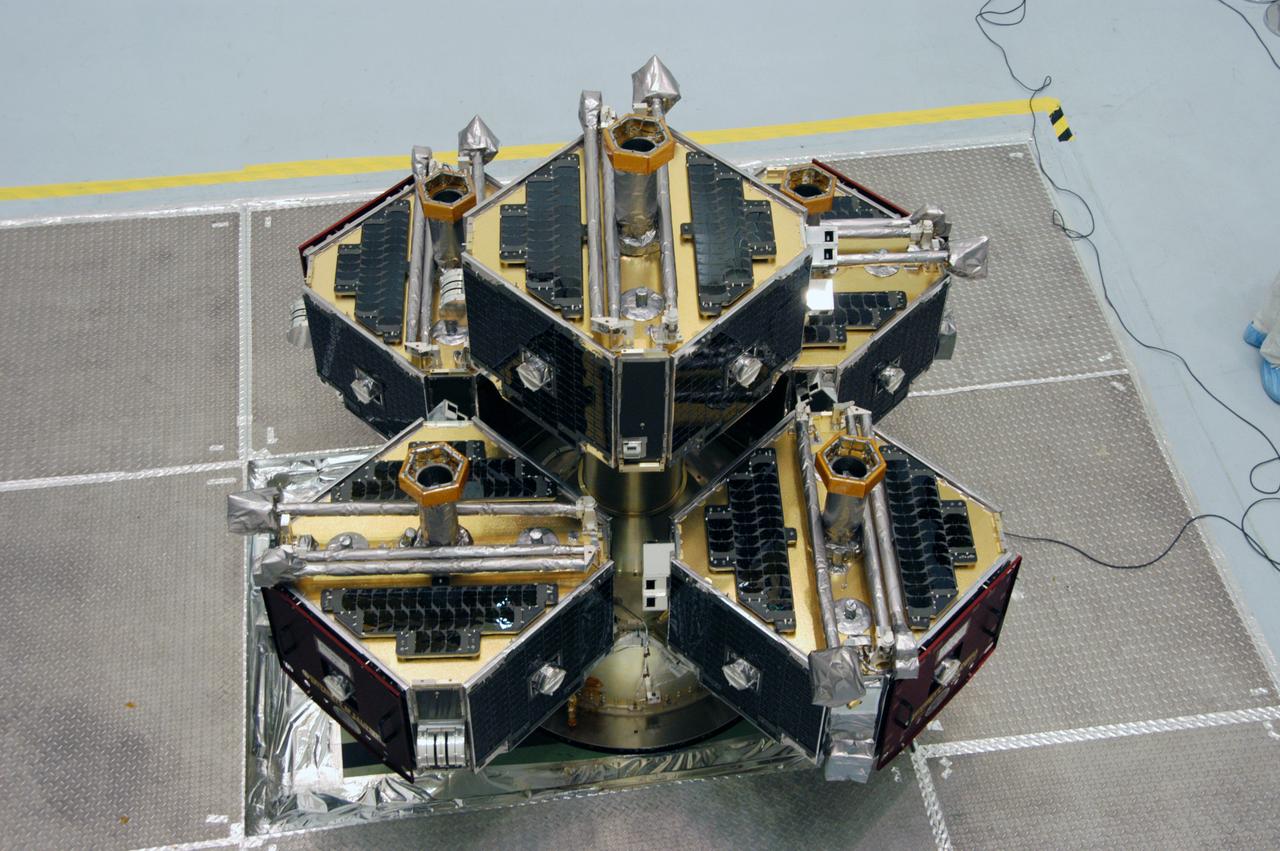
At Astrotech Space Operations, the integrated THEMIS spacecraft is ready for spin-balance testing. THEMIS consists of five identical probes, the largest number of scientific satellites ever launched into orbit aboard a single rocket. This unique constellation of satellites will resolve the tantalizing mystery of what causes the spectacular sudden brightening of the aurora borealis and aurora australis - the fiery skies over the Earth's northern and southern polar regions. THEMIS is scheduled to launch Feb. 15 from Cape Canaveral Air Force Station.
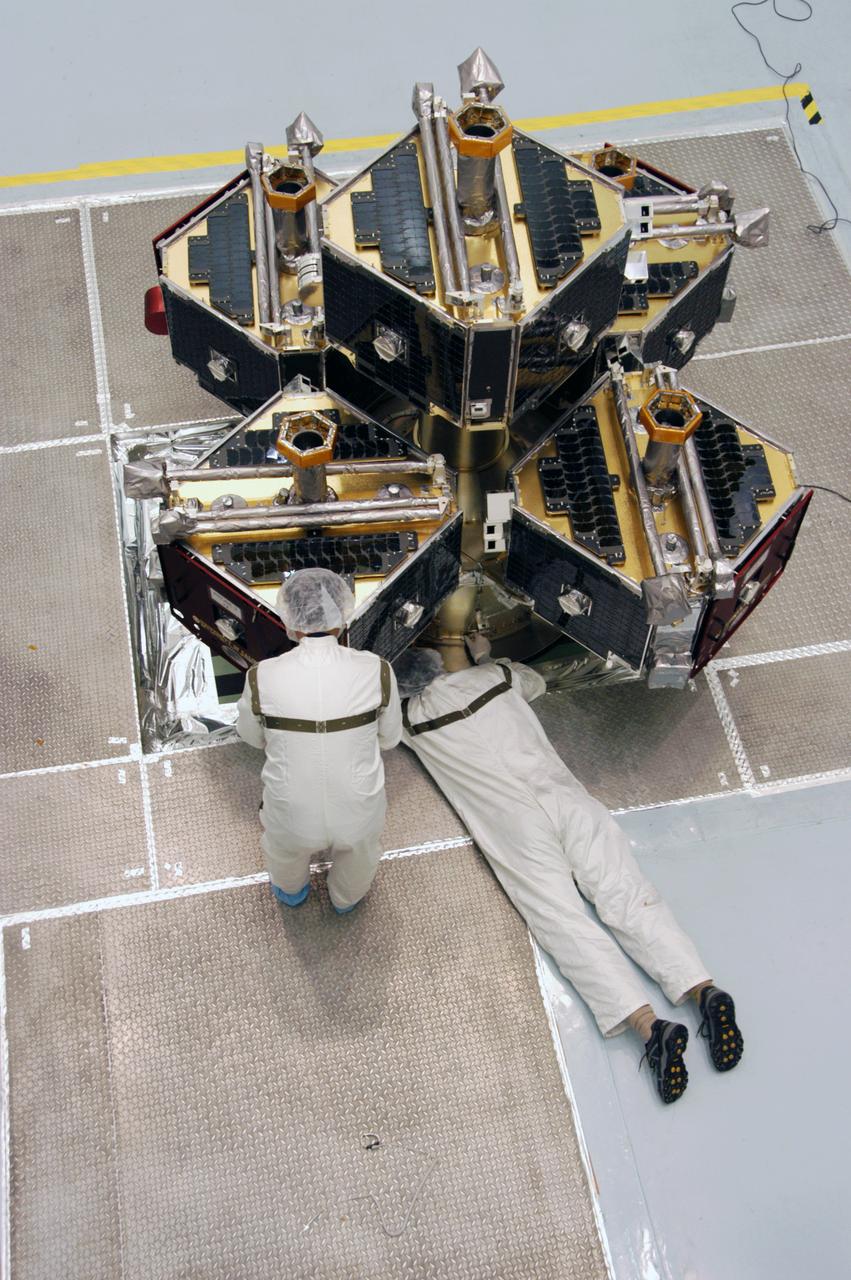
At Astrotech Space Operations, workers prepare the integrated THEMIS spacecraft for spin-balance testing. THEMIS consists of five identical probes, the largest number of scientific satellites ever launched into orbit aboard a single rocket. This unique constellation of satellites will resolve the tantalizing mystery of what causes the spectacular sudden brightening of the aurora borealis and aurora australis - the fiery skies over the Earth's northern and southern polar regions. THEMIS is scheduled to launch Feb. 15 from Cape Canaveral Air Force Station.
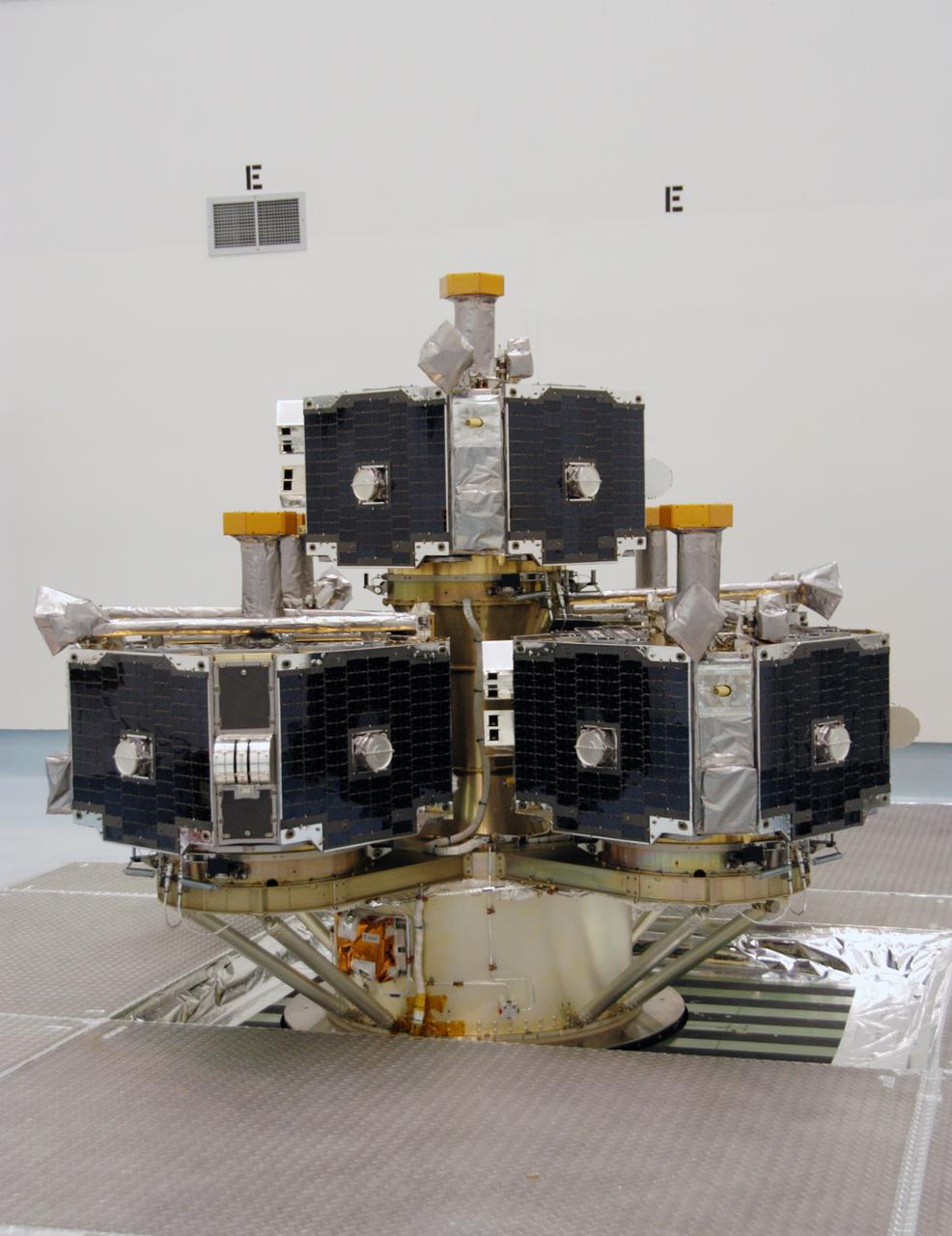
At Astrotech Space Operations, the integrated THEMIS spacecraft is on ready for spin-balance testing. THEMIS consists of five identical probes, the largest number of scientific satellites ever launched into orbit aboard a single rocket. This unique constellation of satellites will resolve the tantalizing mystery of what causes the spectacular sudden brightening of the aurora borealis and aurora australis - the fiery skies over the Earth's northern and southern polar regions. THEMIS is scheduled to launch Feb. 15 from Cape Canaveral Air Force Station.
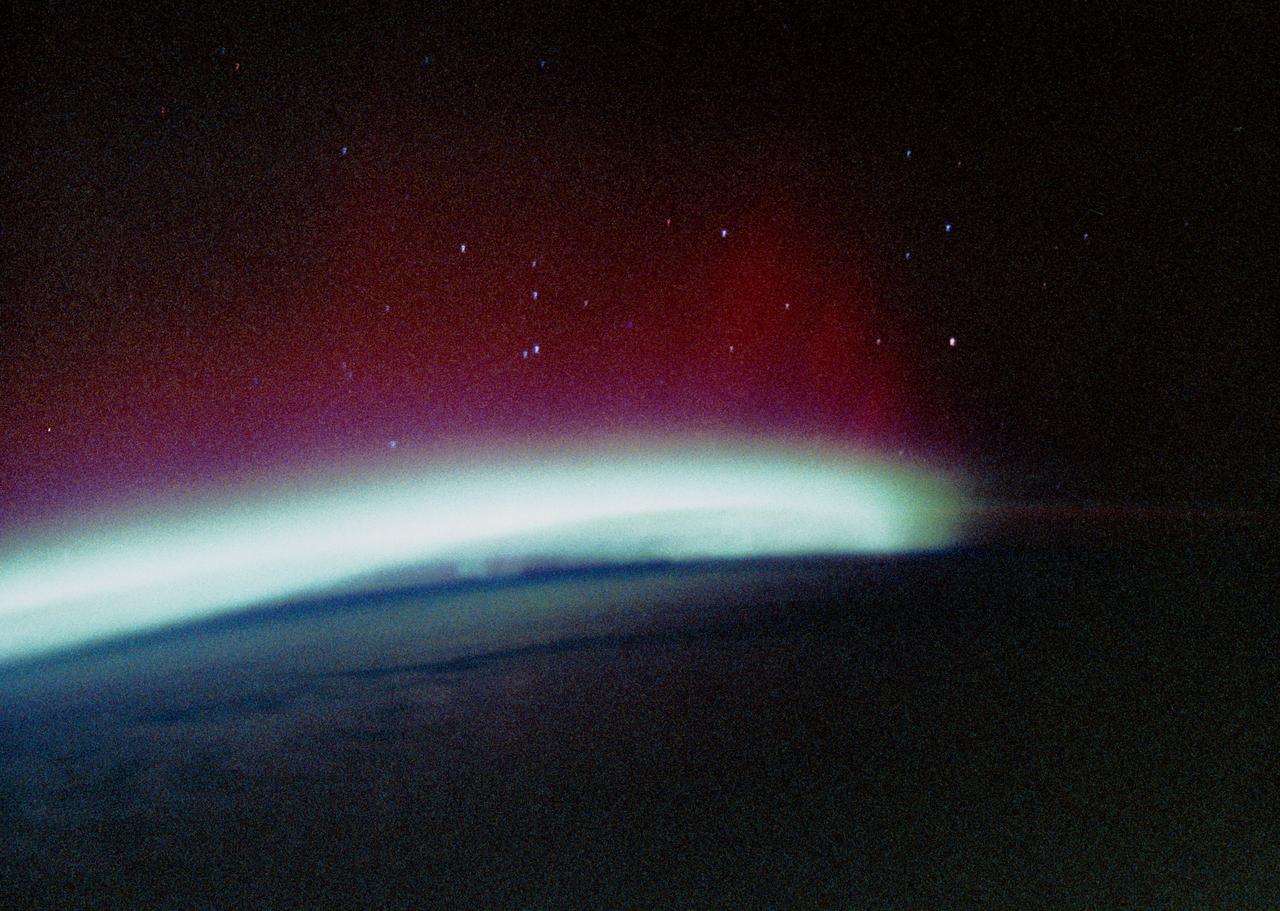
STS034-44-023 (20 Oct. 1989) --- The Southern Lights or Aurora Australis were photographed by the STS-34 crewmembers aboard the Earth-orbiting Space Shuttle Atlantis. From the Shuttle astronauts can photograph expanses of auroras, an advantage over scientists on Earth who can only get small sections at a time in a frame of photography. The space position allows for large-scale changes. This scene was one of 26 shown to the press by the five STS-34 crewmembers at their post-flight press conference.
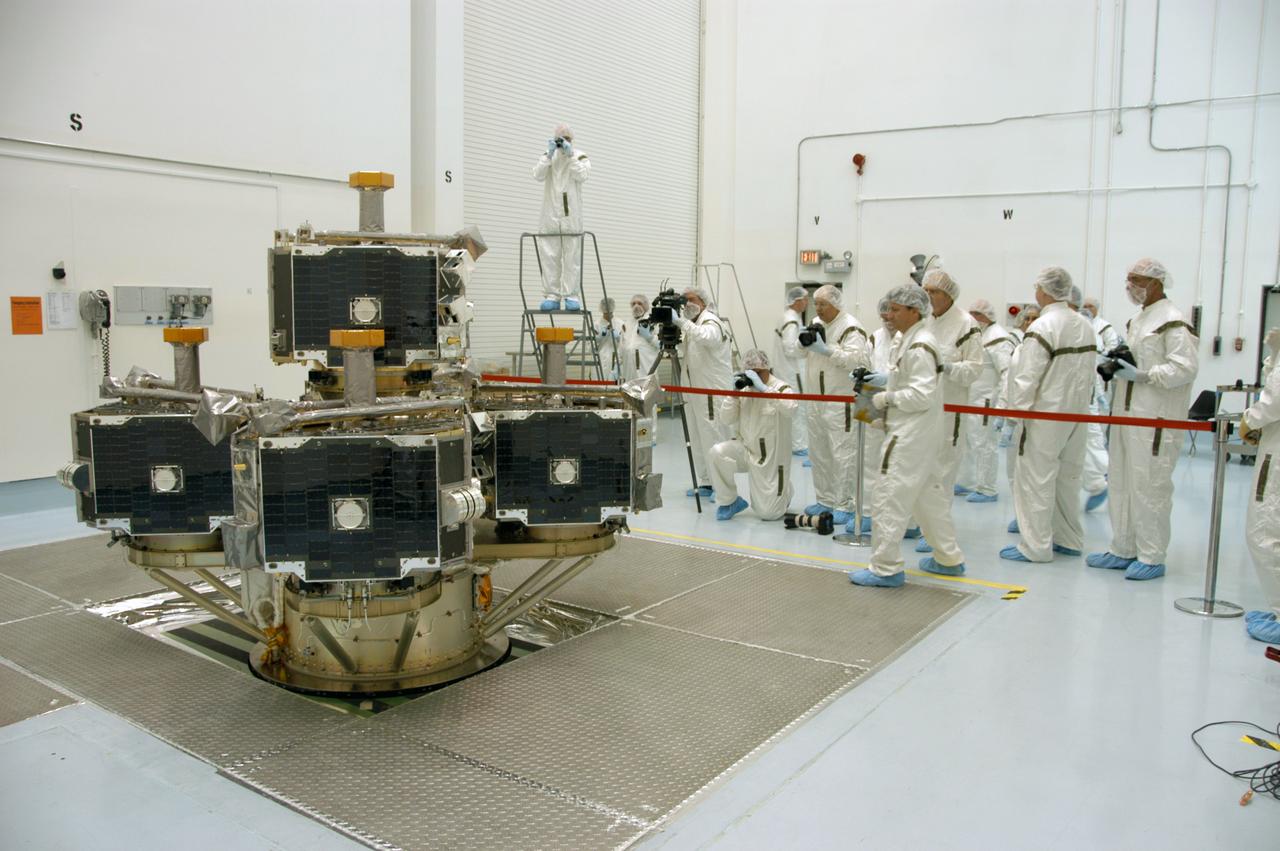
At Astrotech Space Operations, the media are dressed in clean room, or bunny, suits to photograph the integrated THEMIS spacecraft. THEMIS consists of five identical probes, the largest number of scientific satellites ever launched into orbit aboard a single rocket. This unique constellation of satellites will resolve the tantalizing mystery of what causes the spectacular sudden brightening of the aurora borealis and aurora australis - the fiery skies over the Earth's northern and southern polar regions. THEMIS is scheduled to launch Feb. 15 from Cape Canaveral Air Force Station.
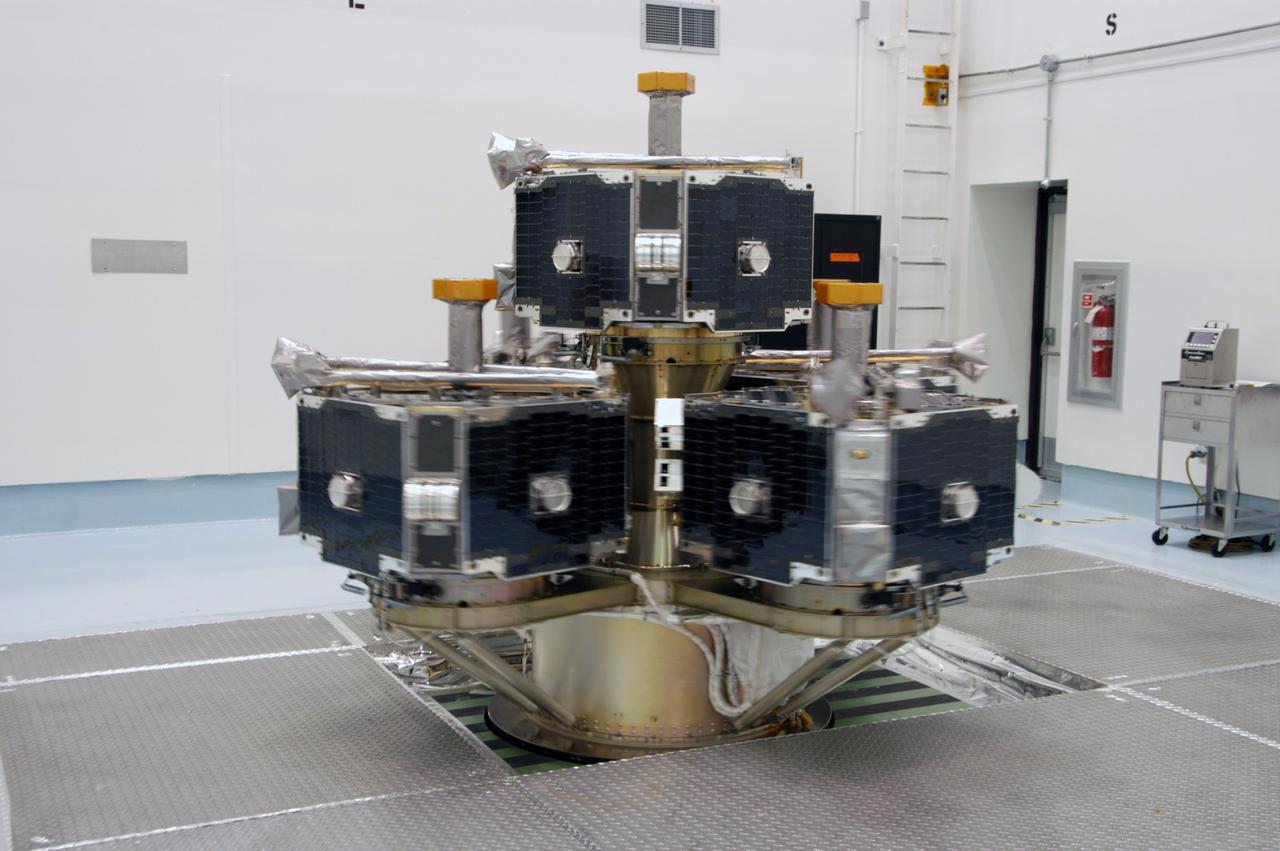
At Astrotech Space Operations, the integrated THEMIS spacecraft is spinning on the spin table, part of spin-balance testing. THEMIS consists of five identical probes, the largest number of scientific satellites ever launched into orbit aboard a single rocket. This unique constellation of satellites will resolve the tantalizing mystery of what causes the spectacular sudden brightening of the aurora borealis and aurora australis - the fiery skies over the Earth's northern and southern polar regions. THEMIS is scheduled to launch Feb. 15 from Cape Canaveral Air Force Station.
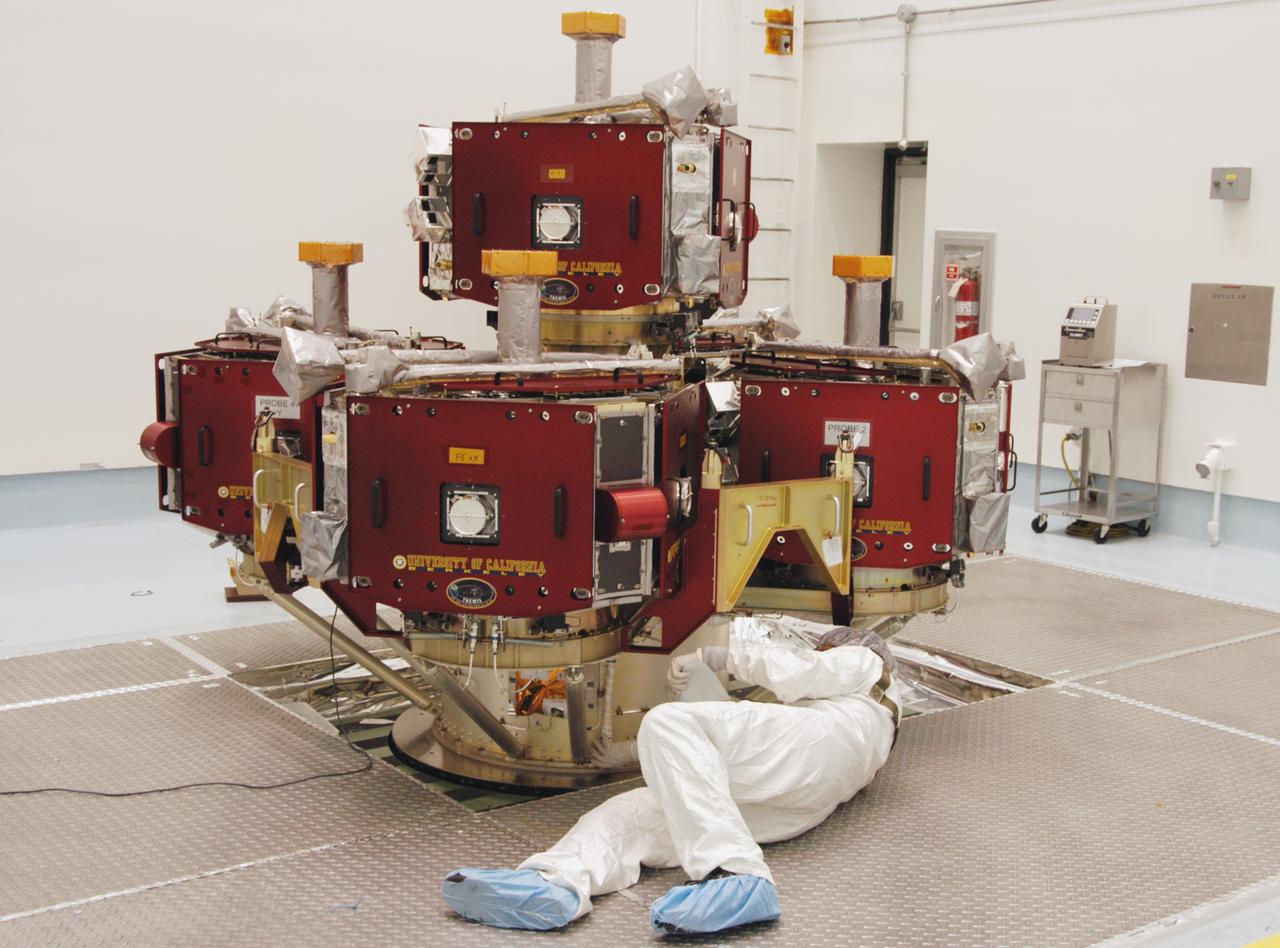
In the Hazardous Processing Facility at Astrotech Space Operations, a worker checks data on the integrated THEMIS spacecraft sitting on the spin table. THEMIS consists of five identical probes, the largest number of scientific satellites ever launched into orbit aboard a single rocket. This unique constellation of satellites will resolve the tantalizing mystery of what causes the spectacular sudden brightening of the aurora borealis and aurora australis - the fiery skies over the Earth's northern and southern polar regions. THEMIS is scheduled to launch Feb. 15 from Cape Canaveral Air Force Station.
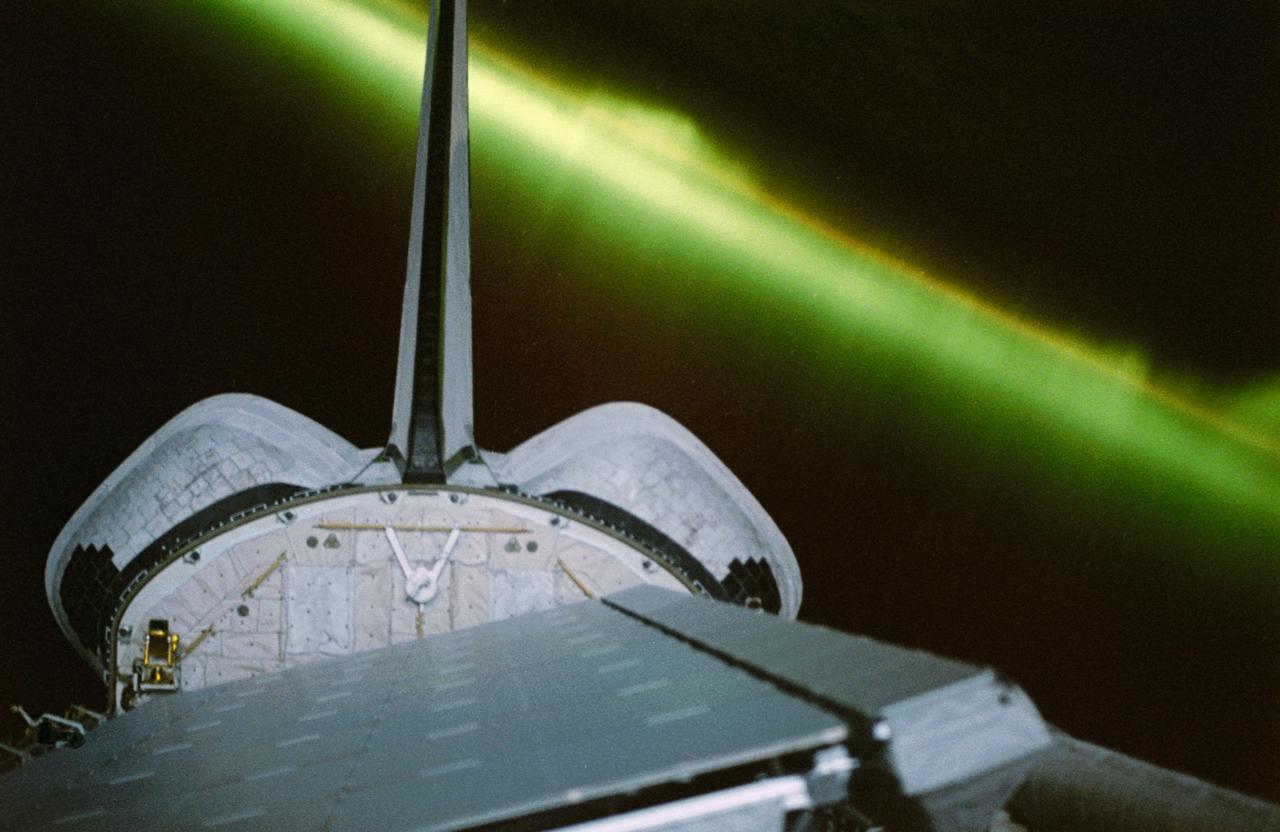
STS059-50-011 (9-20 April 94) --- A greenish appearing aurora forms the backdrop for this 35mm scene of the Earth orbiting Space Shuttle Endeavour's aft cargo bay. Featured in the bay are the antennae for the SIR-C/X-SAR imaging radar instruments, illuminated by moonlight. The crew sighted the southern lights (aurora australis) several times during each of the eleven days of the mission.
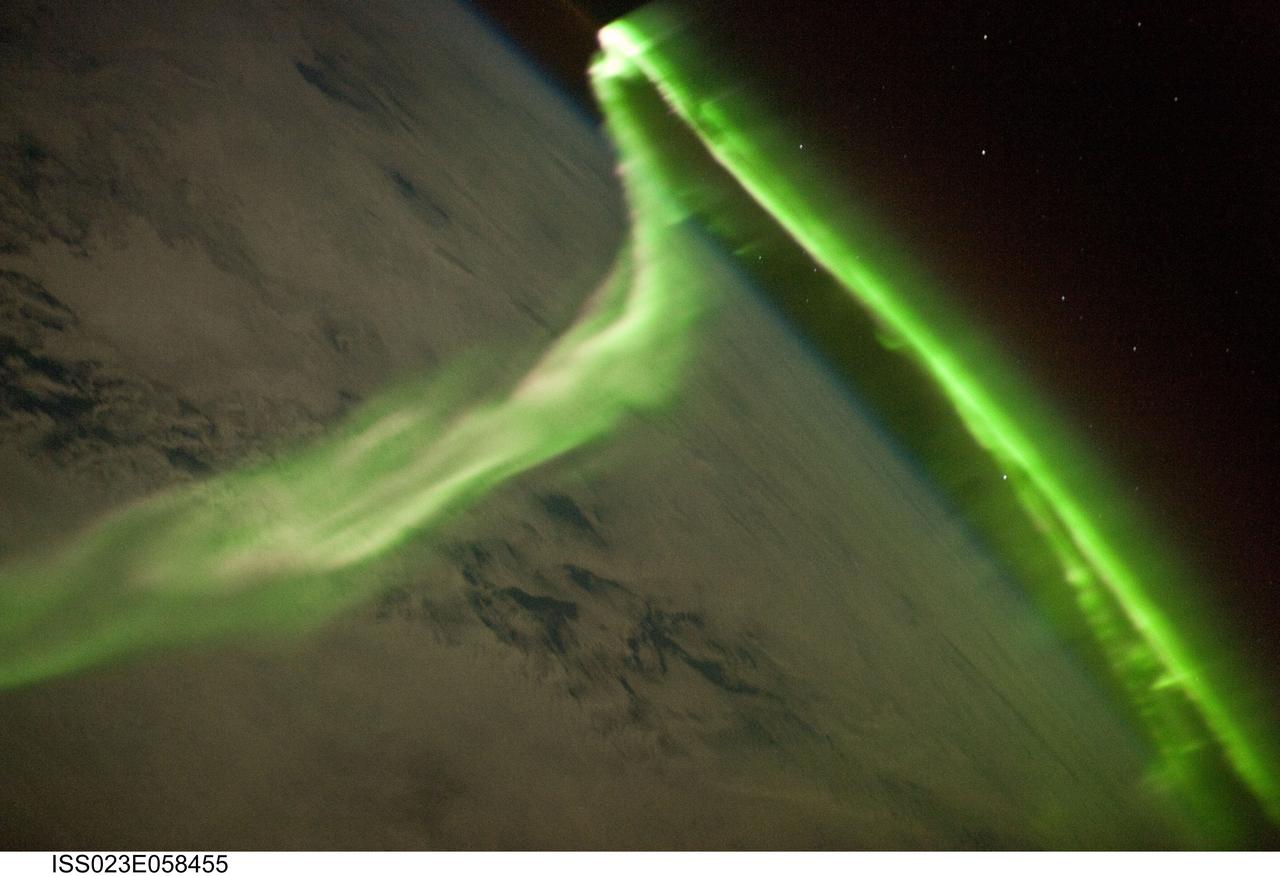
ISS023-E-058455 (29 May 2010) --- Aurora Australis is featured in this image photographed by an Expedition 23 crew member on the International Space Station. Among the views of Earth afforded crew members aboard the ISS, surely one of the most spectacular is of the aurora. These ever-shifting displays of colored ribbons, curtains, rays, and spots are most visible near the North (Aurora Borealis) and South (Aurora Australis) Poles as charged particles streaming from the sun (the solar wind) interact with Earth’s magnetic field, resulting in collisions with atoms of oxygen and nitrogen in the upper atmosphere. The atoms are excited by these collisions, and typically emit photons as a means of returning to their original energy state. The photons form the aurora that we see. The most commonly observed color of aurora is green, caused by photons (light) emitted by excited oxygen atoms at wavelengths centered at 0.558 micrometers, or millionths of a meter. Visible light is reflected from healthy (green) plant leaves at approximately the same wavelength. Red auroras are generated by light emitted at a longer wavelength (0.630 micrometers), and other colors such as blue and purple are also sometimes observed. While auroras are generally only visible close to the poles, severe magnetic storms impacting Earth’s magnetic field can shift them towards the equator. This striking aurora image was taken during a geomagnetic storm that was most likely caused by a coronal mass ejection from the sun on May 24, 2010. The ISS was located over the Southern Indian Ocean at an altitude of 350 kilometers, with the observer most likely looking towards Antarctica (not visible) and the South Pole. The aurora has a sinuous ribbon shape that separates into discrete spots near the lower right corner of the image. While the dominant coloration of the aurora is green, there are faint suggestions of red photon emission as well (light fuscia tones at center left). Dense cloud cover is dimly visible below the aurora. The curvature of Earth’s horizon, or limb, is clearly visible as is the faint blue line of the upper atmosphere directly above at top center. Several stars appear as bright pinpoints against the blackness of space at top right.
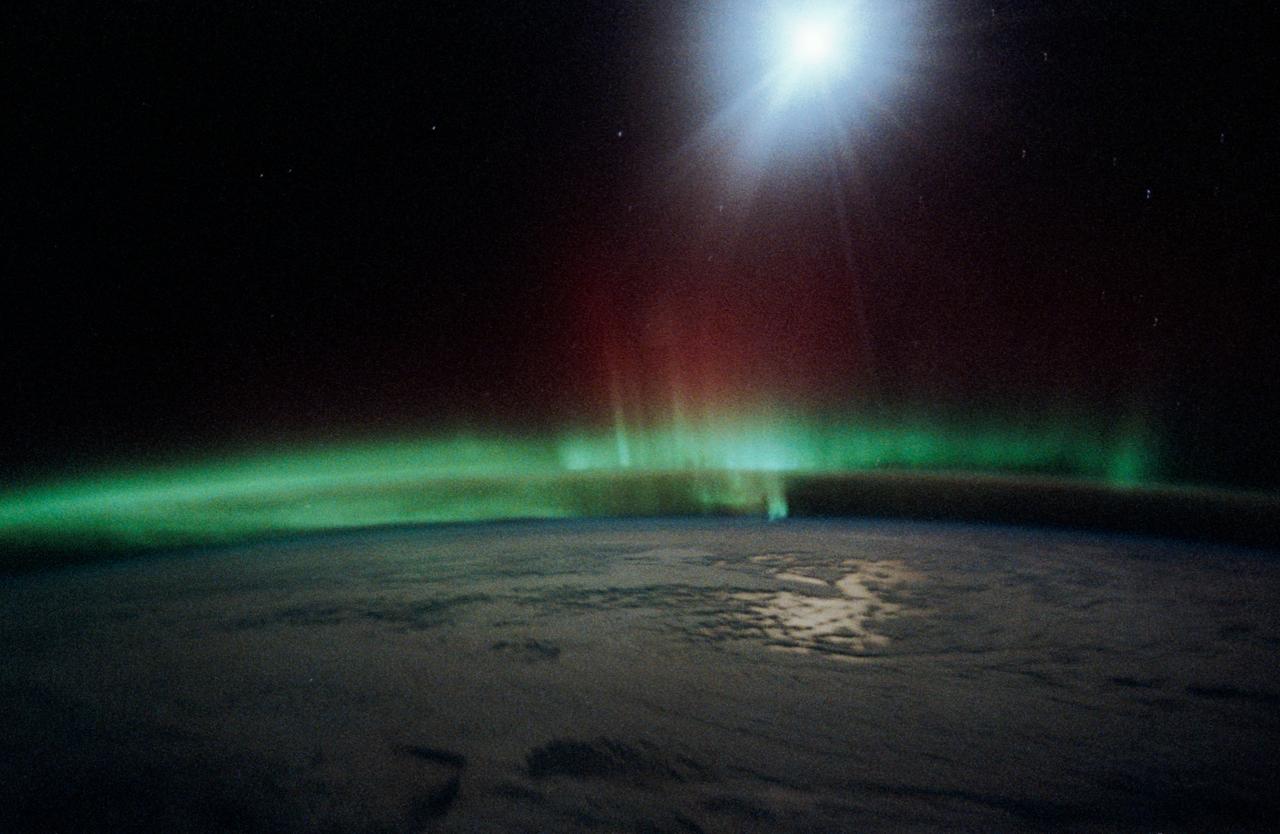
STS039-377-013 (28 April-6 May 1991) --- Moonlight saturates the high speed film used for auroral photography. Moon glint is visible in the open ocean and the cloud patterns are well illuminated. This frame was taken with a handheld 35mm camera from inside the Space Shuttle Discovery's crew cabin. This is one of 25 visuals used by the STS-39 crew at its May 17, 1991 Post Flight Press Conference (PFPC). Discovery's flight of eight days duration, launched April 28, 1991 from Kennedy Space Center (KSC) and completed on May 6, 1991 at the KSC landing facility, was dedicated to the Department of Defense (DOD). Crew members were astronauts Michael L. Coats, L. Blaine Hammond, Guion S. Bluford, Richard J. Hieb, Gregory J. Harbaugh, Donald R. McMonagle and Charles L. (Lacy) Veach.
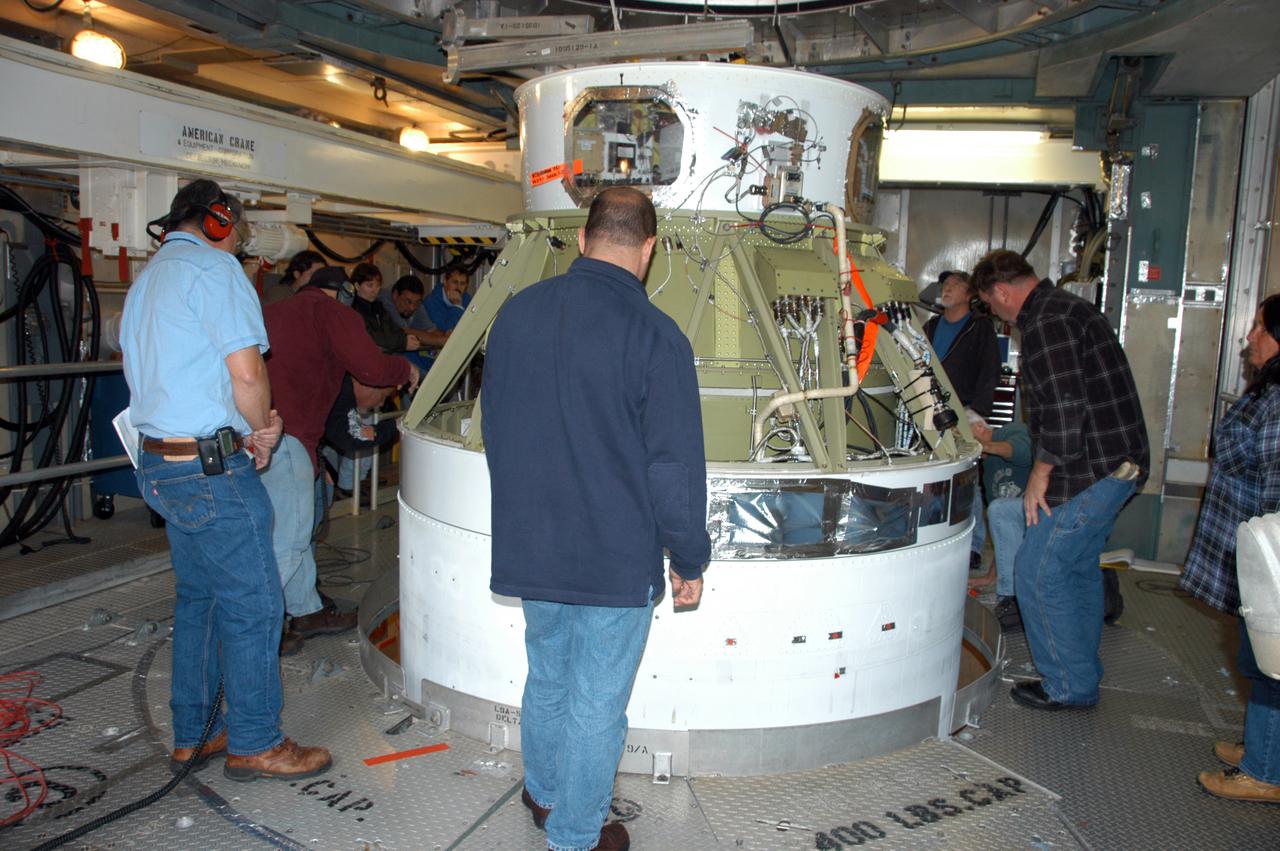
Inside the mobile service tower on Pad 17-B at Cape Canaveral Air Force Station, the Delta II second stage is mated with the first stage. The Delta II is the launch vehicle for the THEMIS spacecraft. THEMIS consists of five identical probes, the largest number of scientific satellites ever launched into orbit aboard a single rocket. This unique constellation of satellites will resolve the tantalizing mystery of what causes the spectacular sudden brightening of the aurora borealis and aurora australis - the fiery skies over the Earth's northern and southern polar regions. THEMIS is scheduled to launch Feb. 15 from Cape Canaveral Air Force Station.
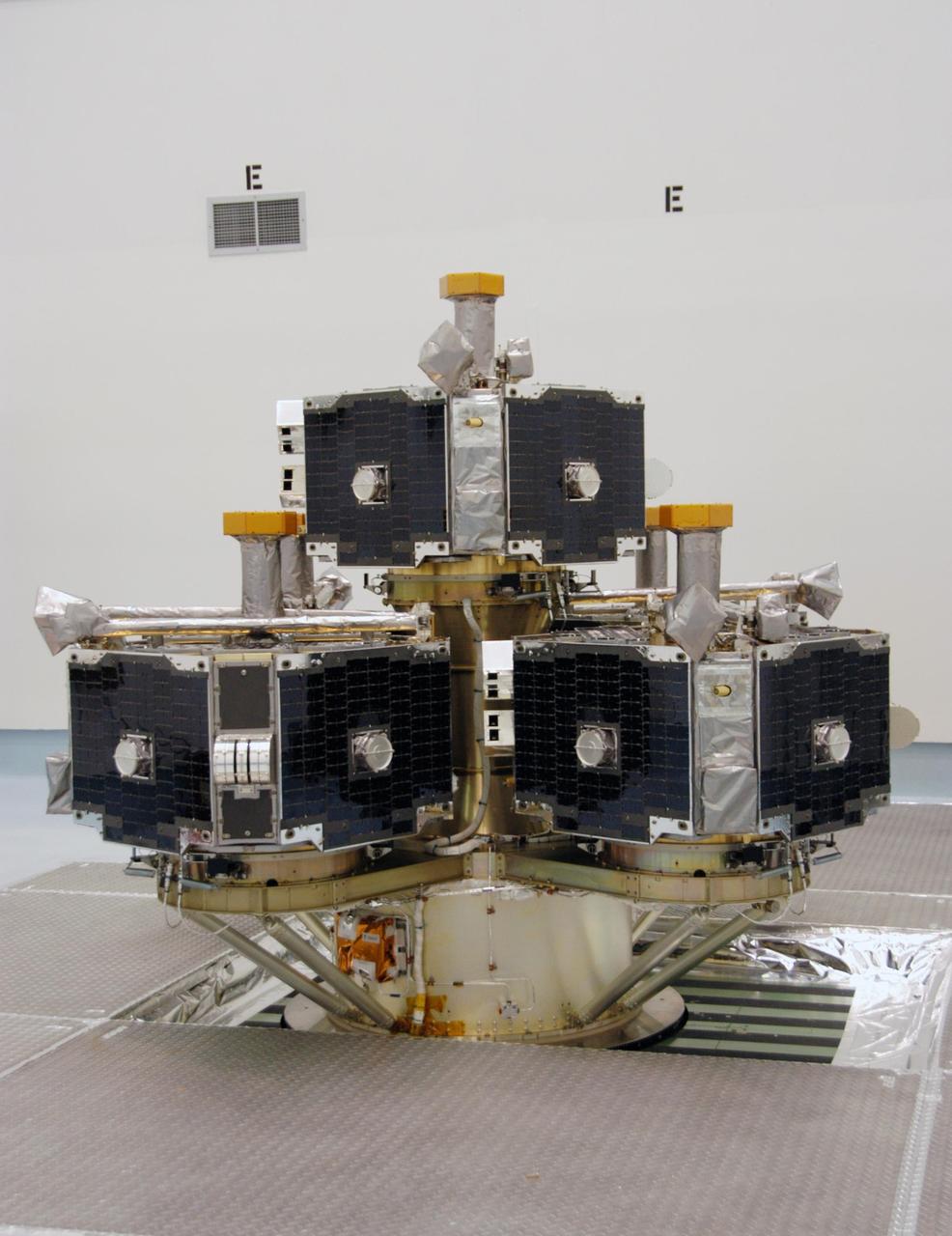
KENNEDY SPACE CENTER, FLA. -- At Astrotech Space Operations, the integrated THEMIS spacecraft is on ready for spin-balance testing. THEMIS consists of five identical probes, the largest number of scientific satellites ever launched into orbit aboard a single rocket. This unique constellation of satellites will resolve the tantalizing mystery of what causes the spectacular sudden brightening of the aurora borealis and aurora australis - the fiery skies over the Earth's northern and southern polar regions. THEMIS is scheduled to launch Feb. 15 from Cape Canaveral Air Force Station. Photo credit: NASA/George Shelton
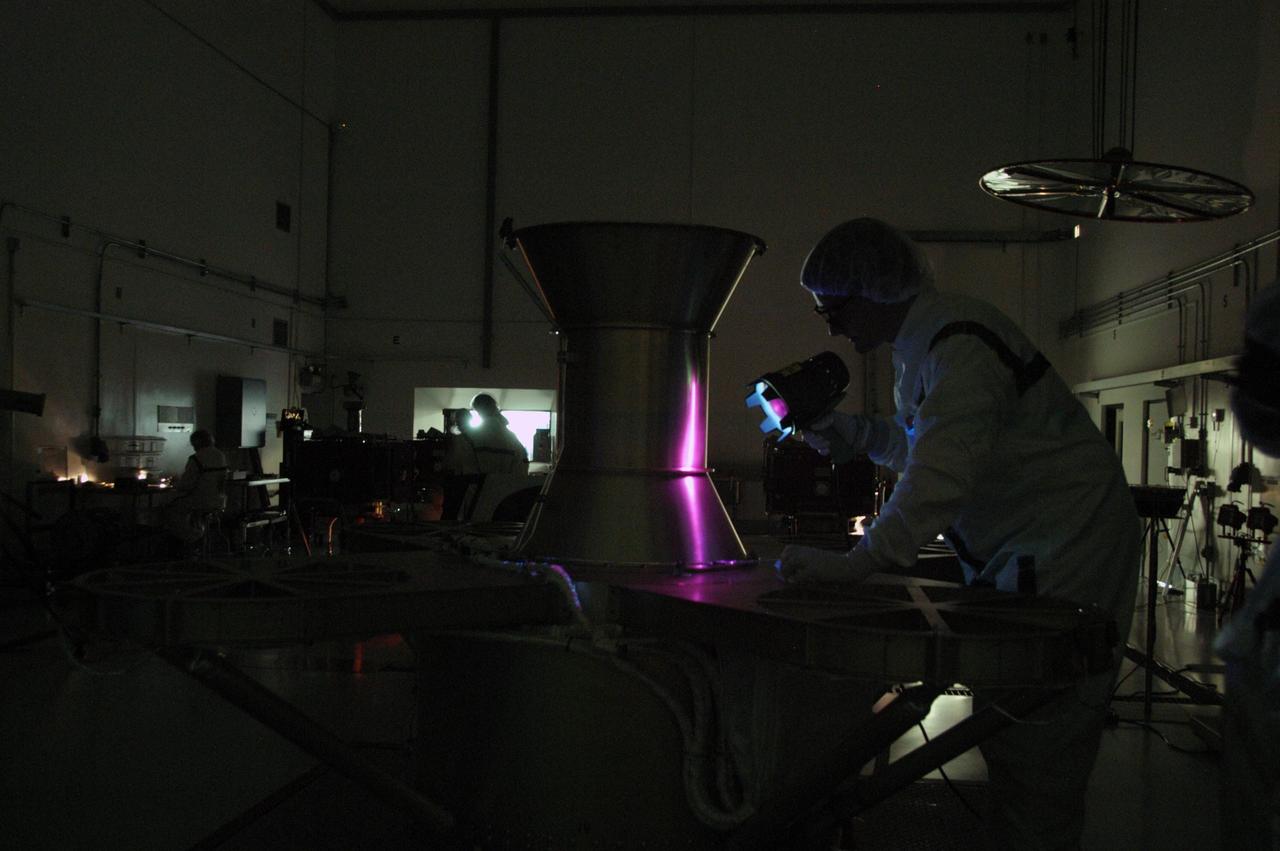
KENNEDY SPACE CENTER, FLA. -- At Astrotech Space Operations, technicians conduct black light inspection of the THEMIS probes. Black light inspection uses UVA fluorescence to detect possible particulate microcontamination, minute cracks or fluid leaks. THEMIS consists of five identical probes, the largest number of scientific satellites ever launched into orbit aboard a single rocket. This unique constellation of satellites will resolve the tantalizing mystery of what causes the spectacular sudden brightening of the aurora borealis and aurora australis - the fiery skies over the Earth's northern and southern polar regions. THEMIS is scheduled to launch Feb. 15 from Cape Canaveral Air Force Station. Photo credit: NASA/George Shelton

KENNEDY SPACE CENTER, FLA. -- At Astrotech Space Operations, technicians conduct black light inspection of the THEMIS probes. Black light inspection uses UVA fluorescence to detect possible particulate microcontamination, minute cracks or fluid leaks. THEMIS consists of five identical probes, the largest number of scientific satellites ever launched into orbit aboard a single rocket. This unique constellation of satellites will resolve the tantalizing mystery of what causes the spectacular sudden brightening of the aurora borealis and aurora australis - the fiery skies over the Earth's northern and southern polar regions. THEMIS is scheduled to launch Feb. 15 from Cape Canaveral Air Force Station. Photo credit: NASA/George Shelton

KENNEDY SPACE CENTER, FLA. -- At Astrotech Space Operations in Titusville, Fla., a worker attaches a high pressure line on the THEMIS spacecraft in preparation for fueling, which is scheduled for Jan. 3-5. THEMIS consists of five identical probes, the largest number of scientific satellites ever launched into orbit aboard a single rocket. This unique constellation of satellites will resolve the tantalizing mystery of what causes the spectacular sudden brightening of the aurora borealis and aurora australis - the fiery skies over the Earth's northern and southern polar regions. THEMIS is scheduled to launch Feb. 15 from Cape Canaveral Air Force Station. Photo credit: NASA/George Shelton
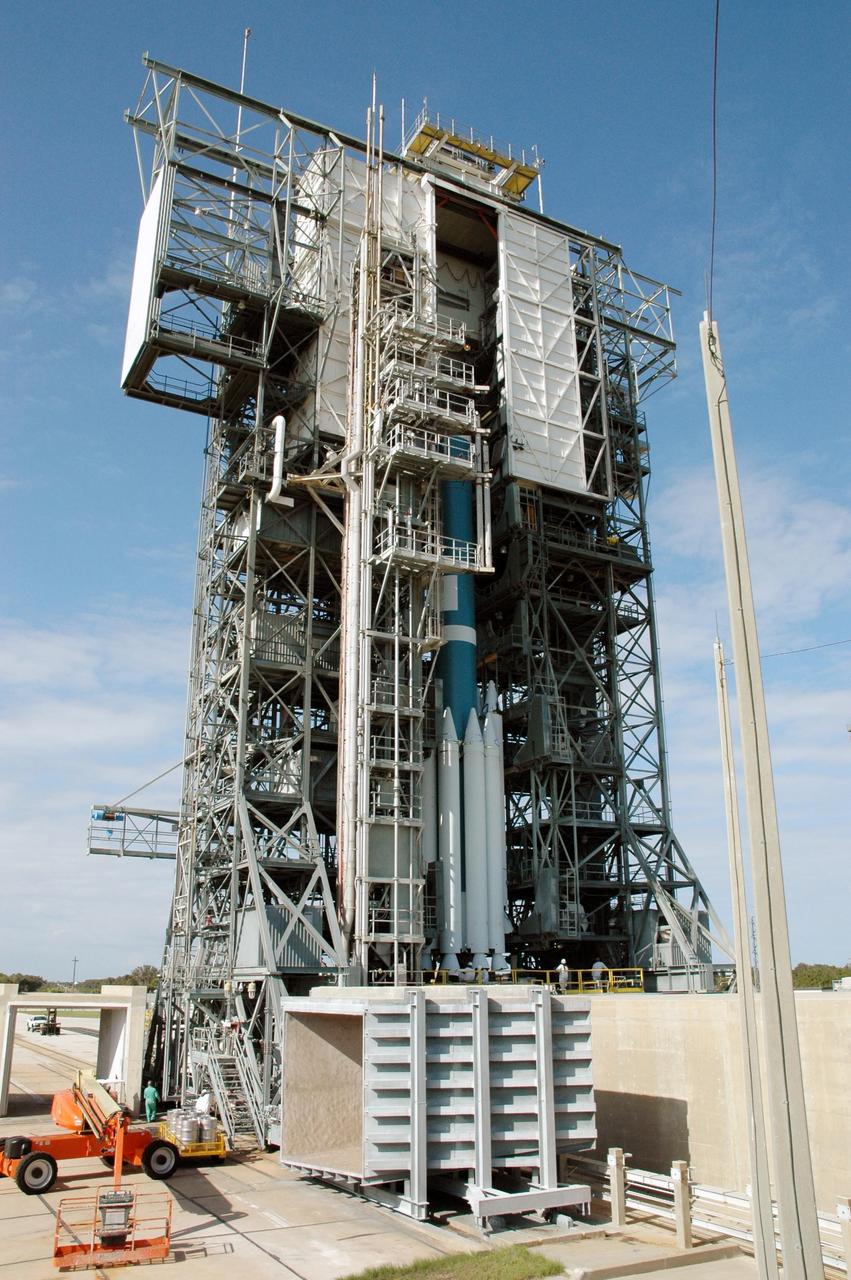
KENNEDY SPACE CENTER, FLA. -- Solid rocket boosters are clustered around the base of the United Launch Alliance Delta II rocket in the mobile service tower. A total of nine will assist in the launch of the THEMIS integrated spacecraft. THEMIS consists of five identical probes, the largest number of scientific satellites ever launched into orbit aboard a single rocket. This unique constellation of satellites will resolve the tantalizing mystery of what causes the spectacular sudden brightening of the aurora borealis and aurora australis - the fiery skies over the Earth's northern and southern polar regions. THEMIS is scheduled to launch Feb. 15 from Cape Canaveral Air Force Station. Photo credit: NASA/Jack Pfaller

In the Hazardous Processing Facility at Astrotech Space Operations, a technician observes one of the THEMIS probes as it undergoes solar array illumination telemetry testing. THEMIS consists of five identical probes, the largest number of scientific satellites ever launched into orbit aboard a single rocket. This unique constellation of satellites will resolve the tantalizing mystery of what causes the spectacular sudden brightening of the aurora borealis and aurora australis - the fiery skies over the Earth's northern and southern polar regions. THEMIS is scheduled to launch aboard the Delta II at 6:07 p.m. EST on Feb. 15.
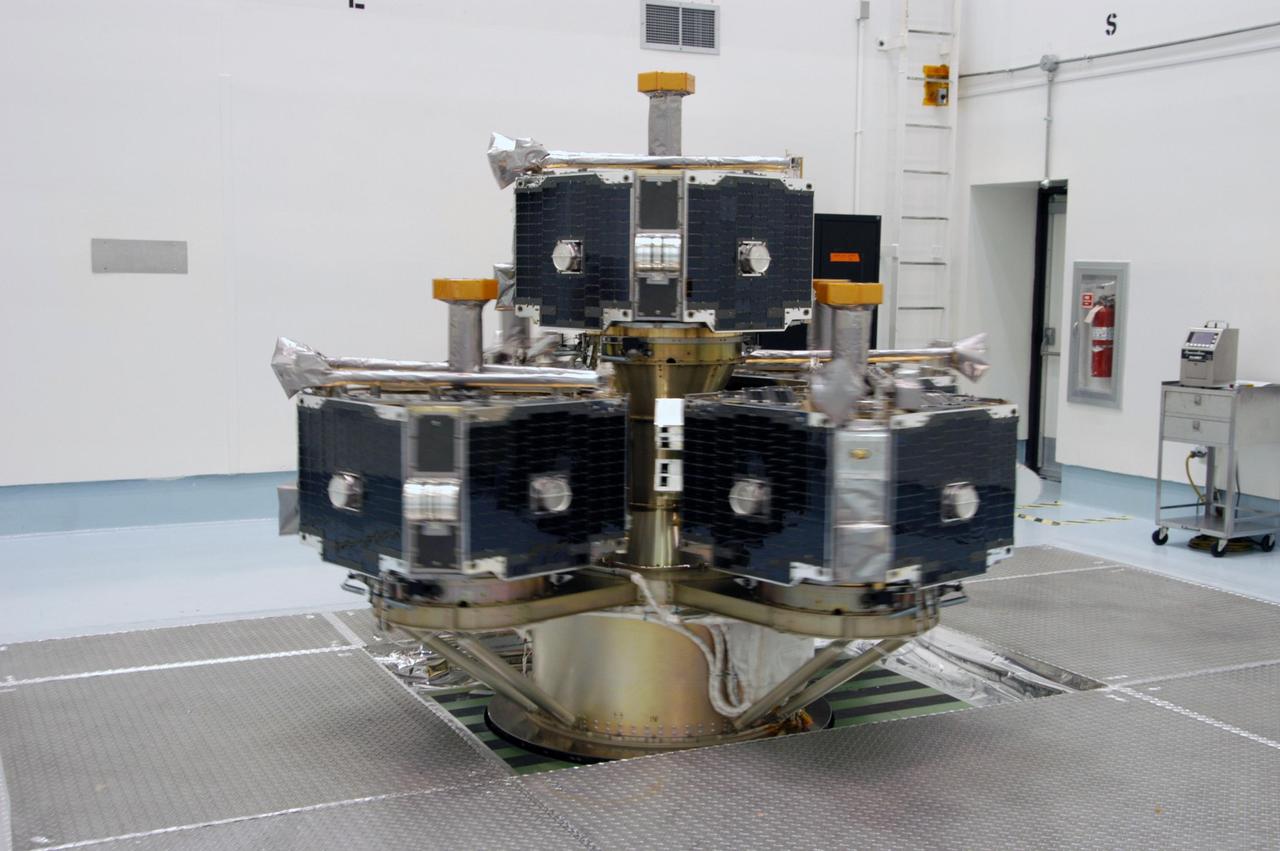
KENNEDY SPACE CENTER, FLA. -- At Astrotech Space Operations, the integrated THEMIS spacecraft is spinning on the spin table, part of spin-balance testing. THEMIS consists of five identical probes, the largest number of scientific satellites ever launched into orbit aboard a single rocket. This unique constellation of satellites will resolve the tantalizing mystery of what causes the spectacular sudden brightening of the aurora borealis and aurora australis - the fiery skies over the Earth's northern and southern polar regions. THEMIS is scheduled to launch Feb. 15 from Cape Canaveral Air Force Station. Photo credit: NASA/George Shelton
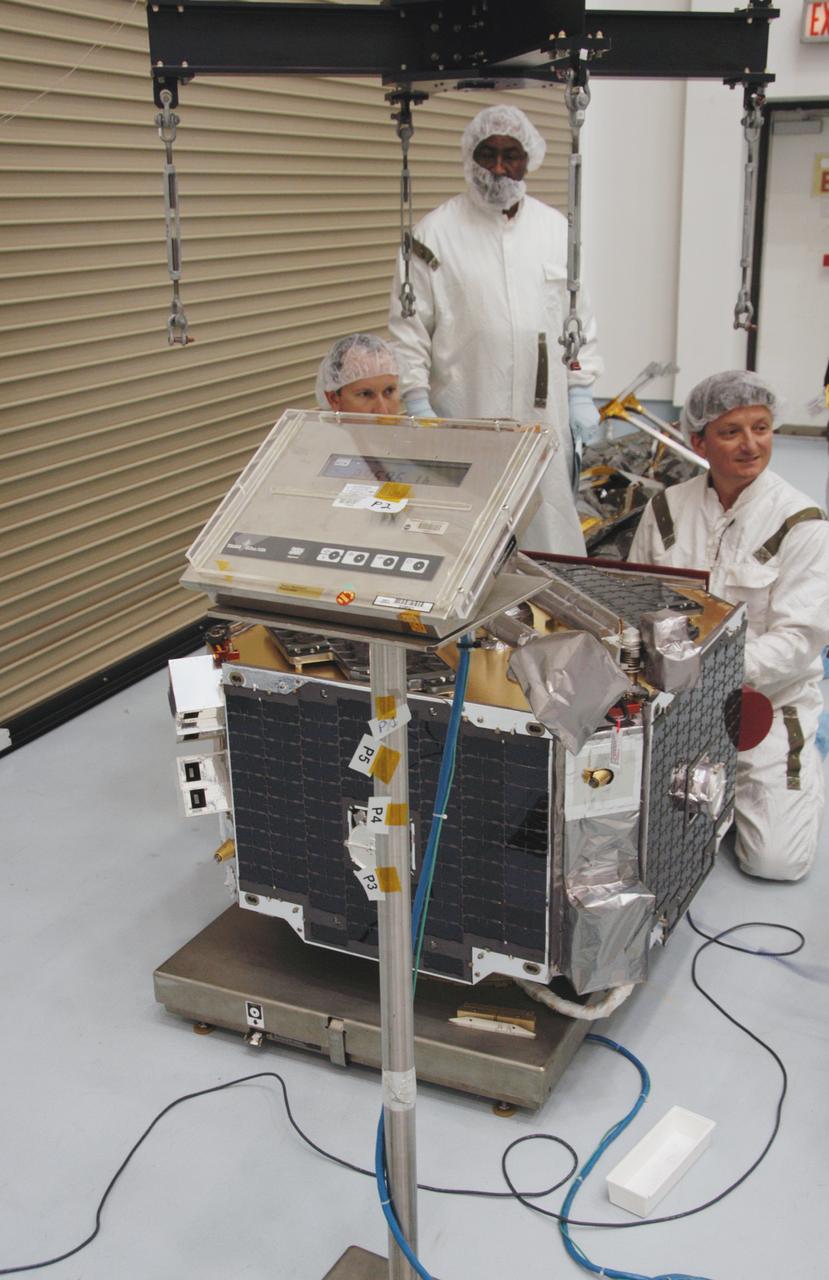
At Astrotech Space Operations, technicians weigh one of the THEMIS probes. Next the probe will be installed on a probe carrier, along with is four mates, and then undergo spin-balance testing. THEMIS consists of five identical probes, the largest number of scientific satellites ever launched into orbit aboard a single rocket. This unique constellation of satellites will resolve the tantalizing mystery of what causes the spectacular sudden brightening of the aurora borealis and aurora australis - the fiery skies over the Earth's northern and southern polar regions. THEMIS is scheduled to launch Feb. 15 from Cape Canaveral Air Force Station.