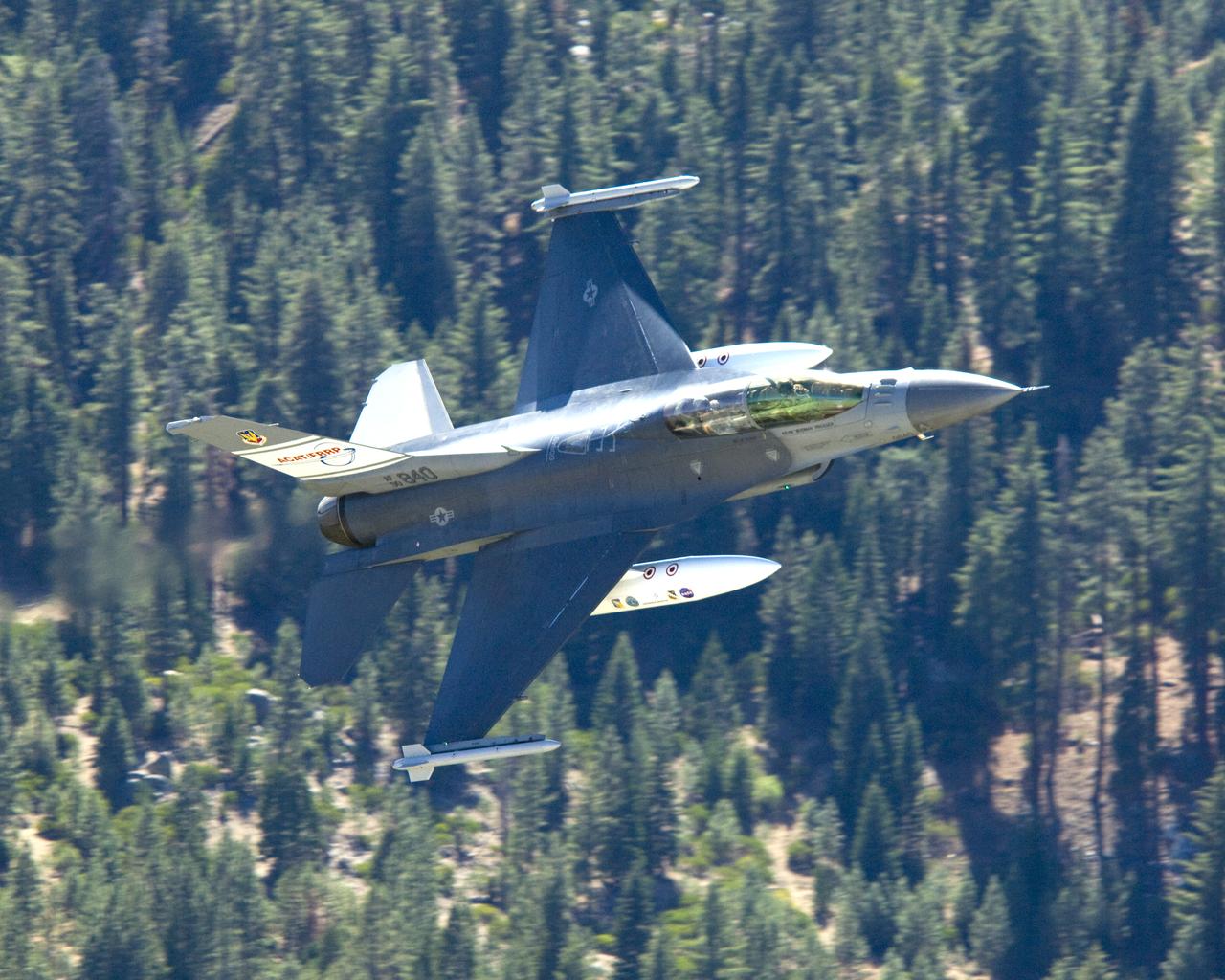
The F-16D Automatic Collision Avoidance Technology aircraft tests of the Automatic Ground Collision Avoidance System, or Auto-GCAS, included flights in areas of potentially hazardous terrain, including canyons and mountains.
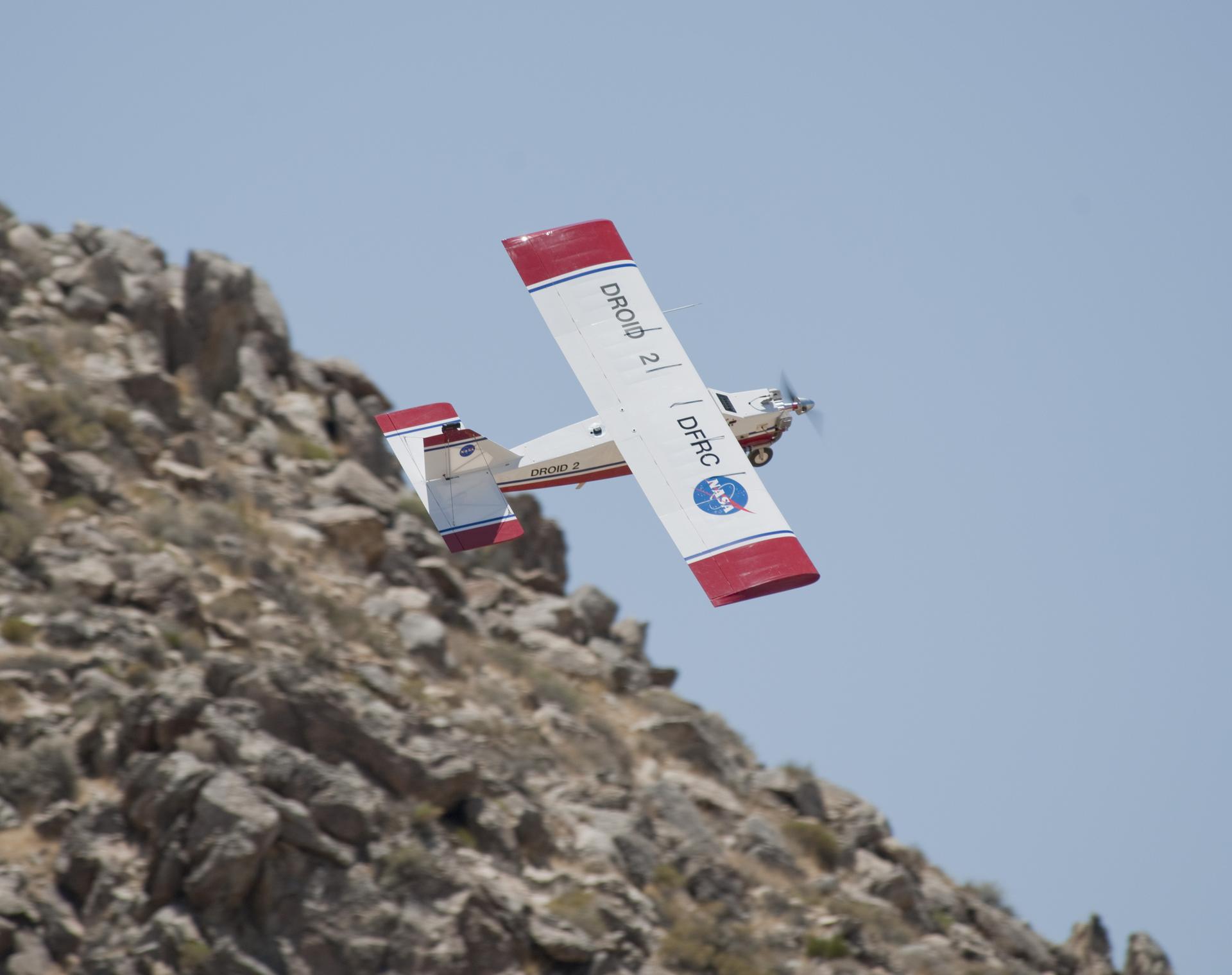
NASA’s Dryden Remotely Operated Integrated Drone (DROID), a small, remotely piloted research aircraft with a 10‑foot wingspan, makes a hard climbing right turn to avoid a steep rocky slope near NASA’s Armstrong Flight Research Center in Edwards, California, on Thursday, May 31, 2012. The flight tests demonstrated that a remotely piloted aircraft, equipped with a smartphone running collision-avoidance software connected to the aircraft’s autopilot, could automatically avoid terrain below.
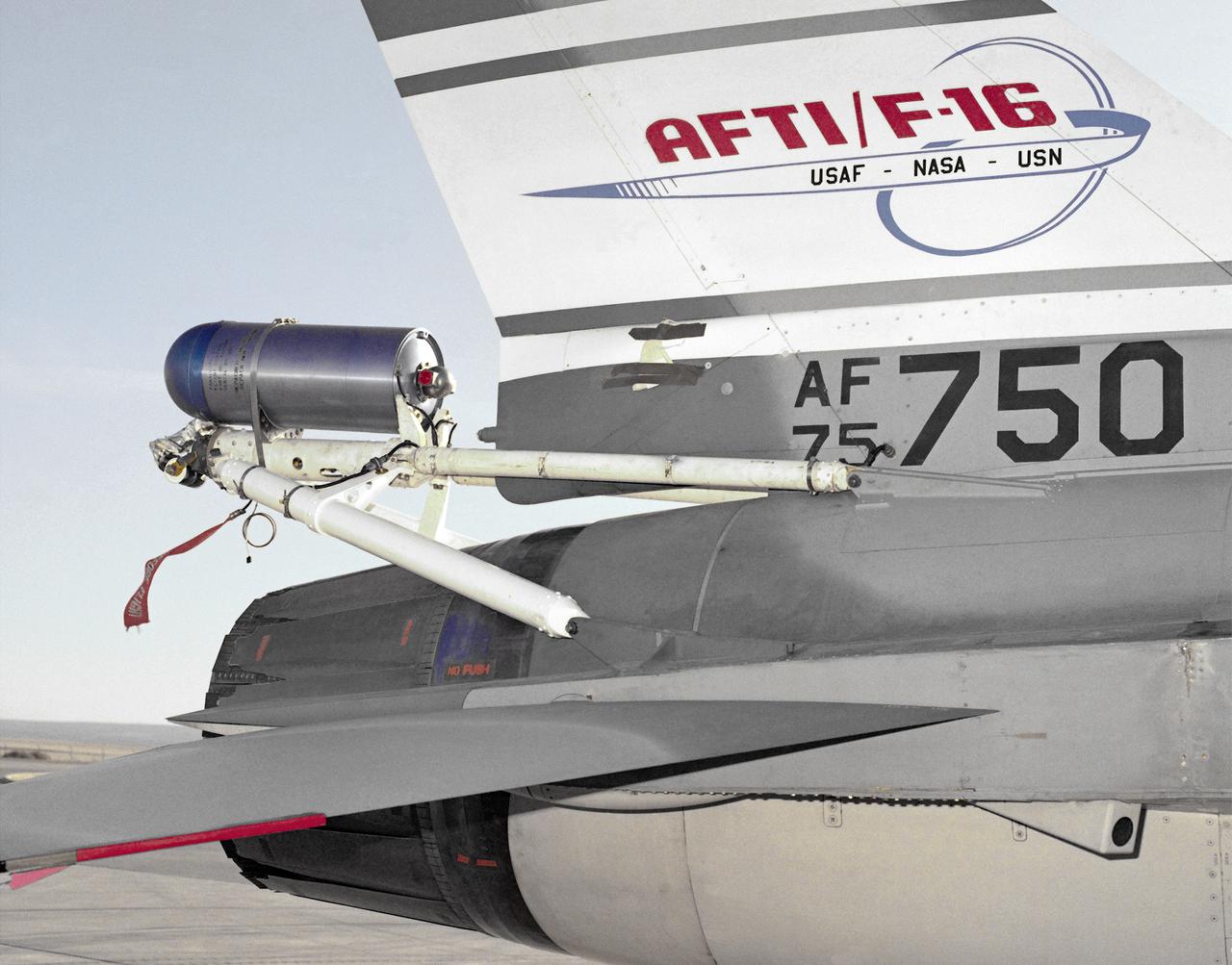
A close-up photo of the spin chute mounted on the rear fuselage of the AFTI F-16, a safety device designed to prevent the loss of aircraft in spin conditions. Under some circumstances, pilots cannot recover from spins using normal controls. It these instances, the spin chute is deployed, thus "breaking" the spin and enabling the pilot to recover. The spin chute is held in a metal cylinder attached to the AFTI F-16 by four tubes, a structure strong enough to withstand the shock of the spin chute opening. Unlike the air probe in the last photo, spin chutes are not standard equipment on research or prototype aircraft but are commonly attached expressly for actual spin tests.
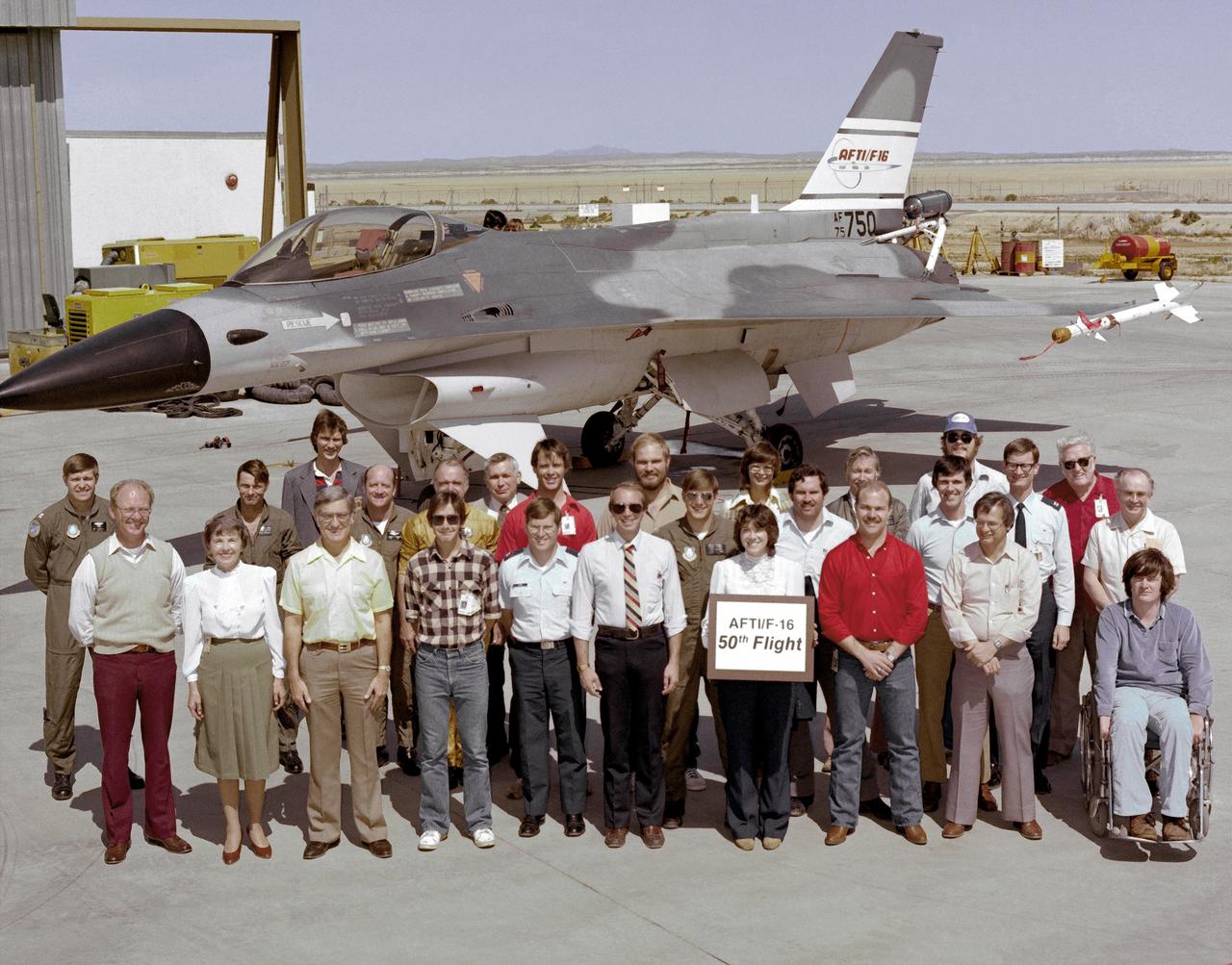
An early (1983) photograph of the AFTI F-16 team, commemorating the aircraft's 50th flight. It shows the initial configuration and paint finish of the AFTI F-16, as well as the forward mounted canards and the spin chute.

NASA pilot Nils Larson checks out the NASA F-15B aircraft before he climbs into the cockpit.
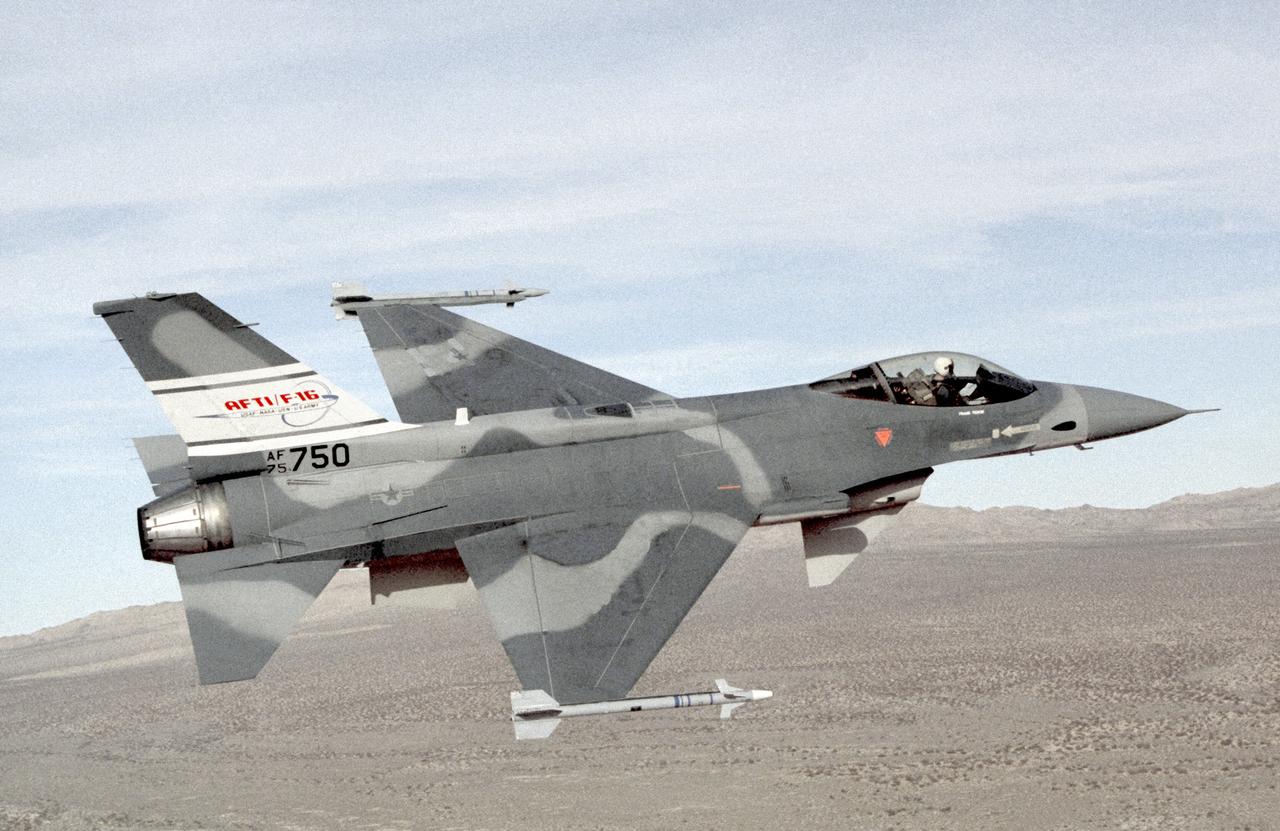
This photo depicts the AFTI F-16 in the configuration used midway through the program. The sensor pods were added to the fuselage, but the chin canards remained in place. Painted in non-standard gray tones, it carried Sidewinder air-to-air missles on its wingtips.
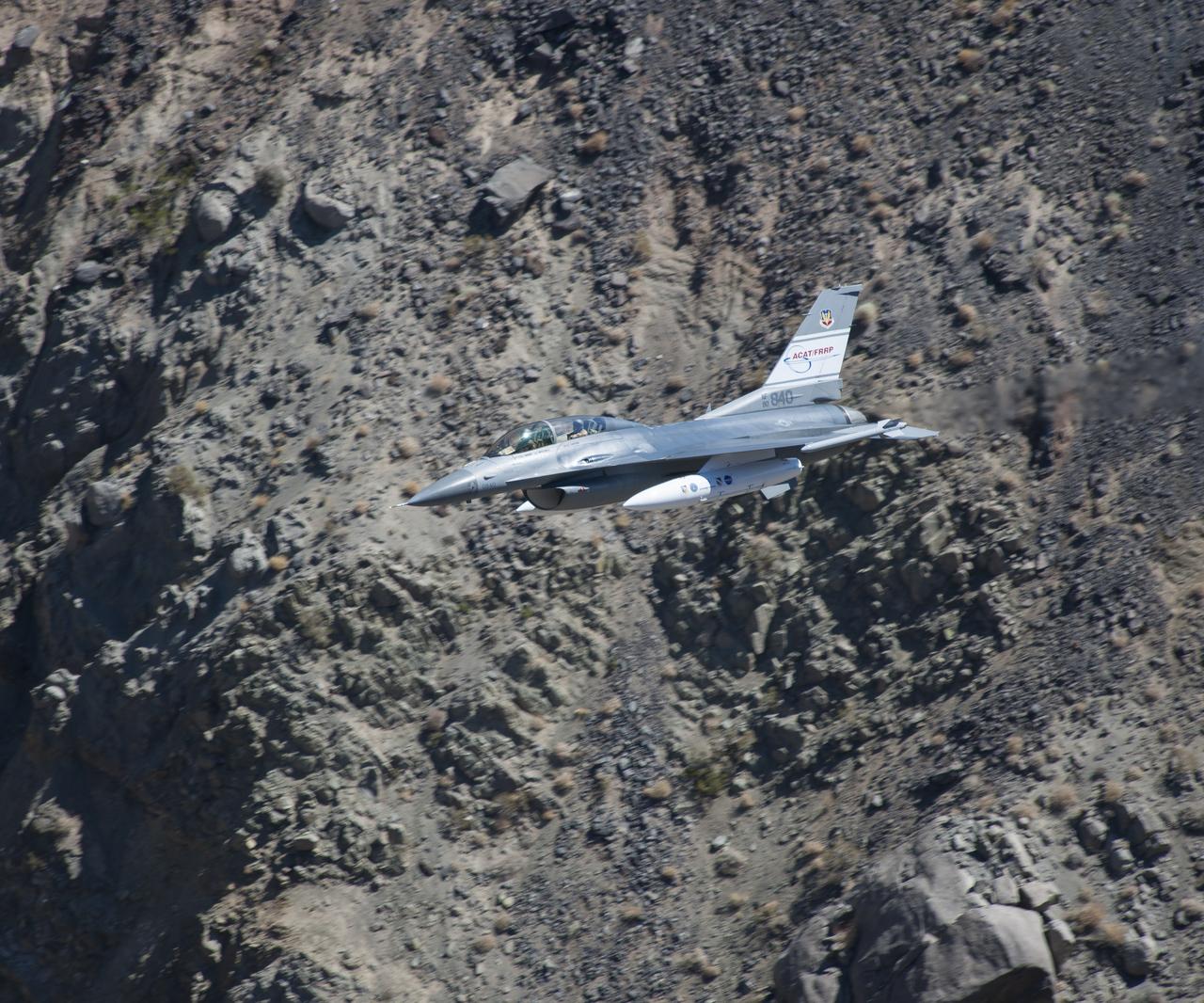
The U.S. Air Force F-16D Automatic Collision Avoidance Technology aircraft flew at low levels above the Sierra Nevada Mountains to test the ACAT Fighter Risk Reduction project. The goal was to develop collision avoidance technologies for aircraft to reduce the risk of ground collisions. Such systems on U.S. Air Force aircraft have resulted in saving eight lives and seven aircraft.
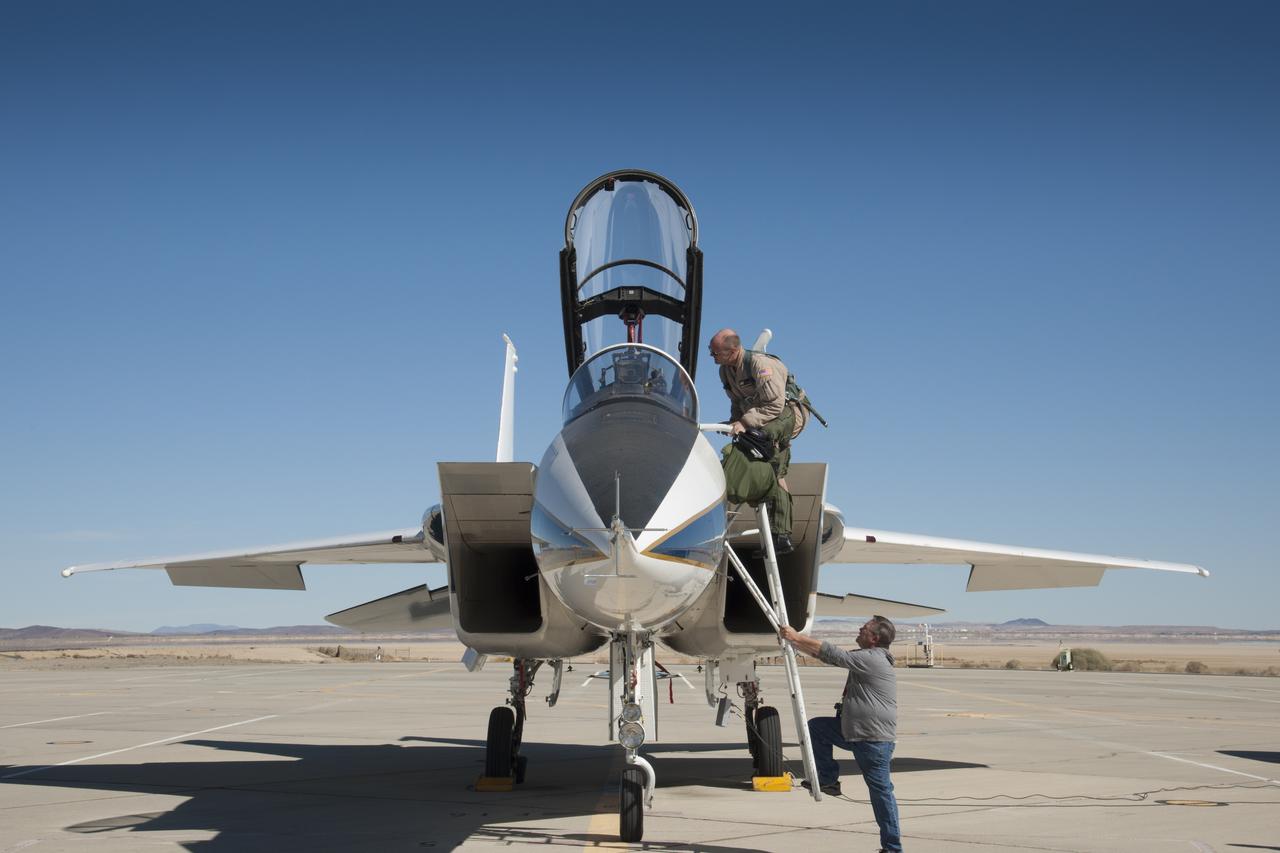
After climbing the stairs, NASA pilot Nils Larson sits in a NASA F-15B aircraft and begins preflight procedures.
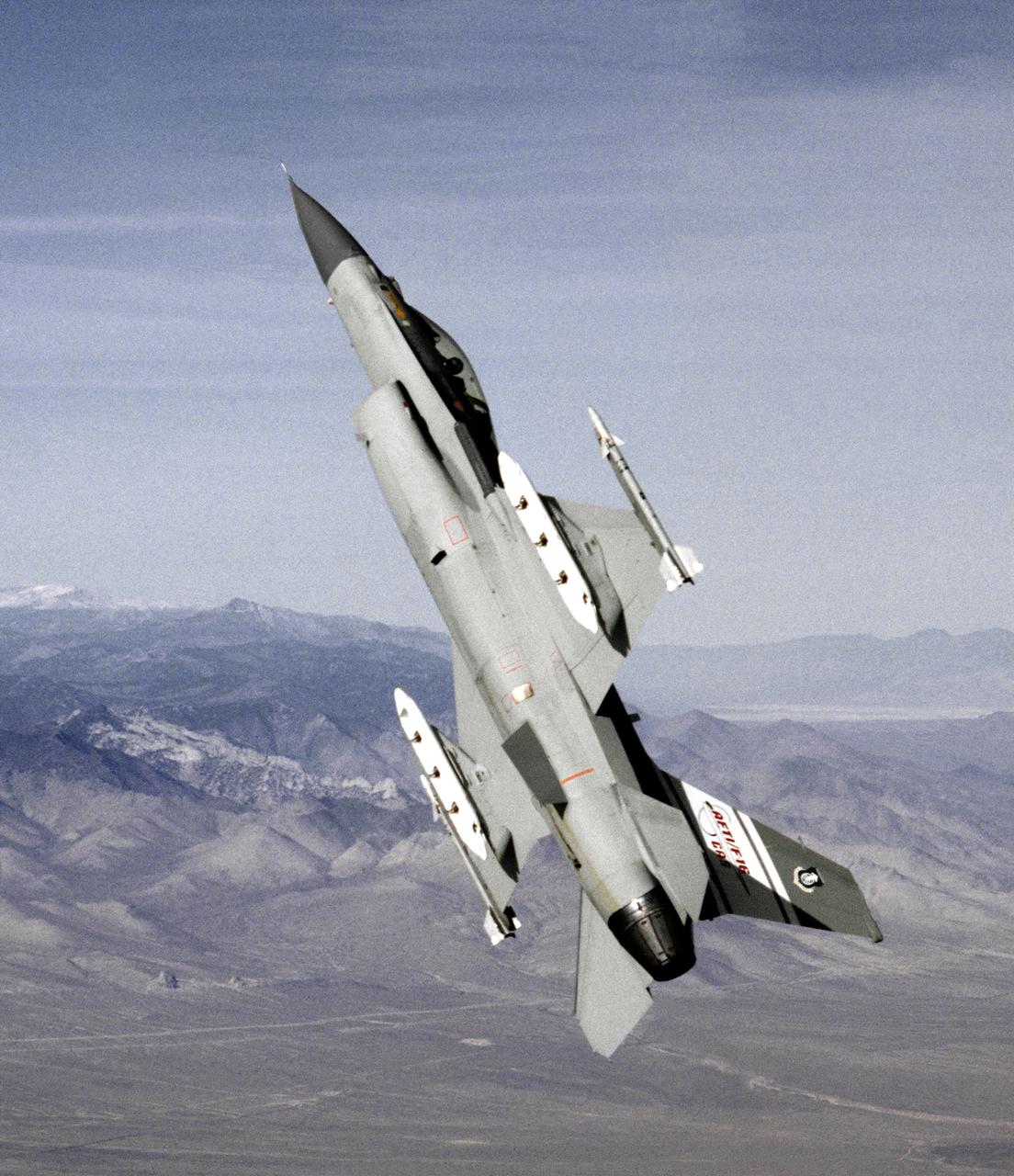
The AFTI F-16 flying at high angle of attack, shown in the final configuration and paint finish. Dummy Sidewinder air-to-air missles are attached to the wing tips. The white objects visible on the wing racks represent practice bomb dispensers, used in weapon tests.
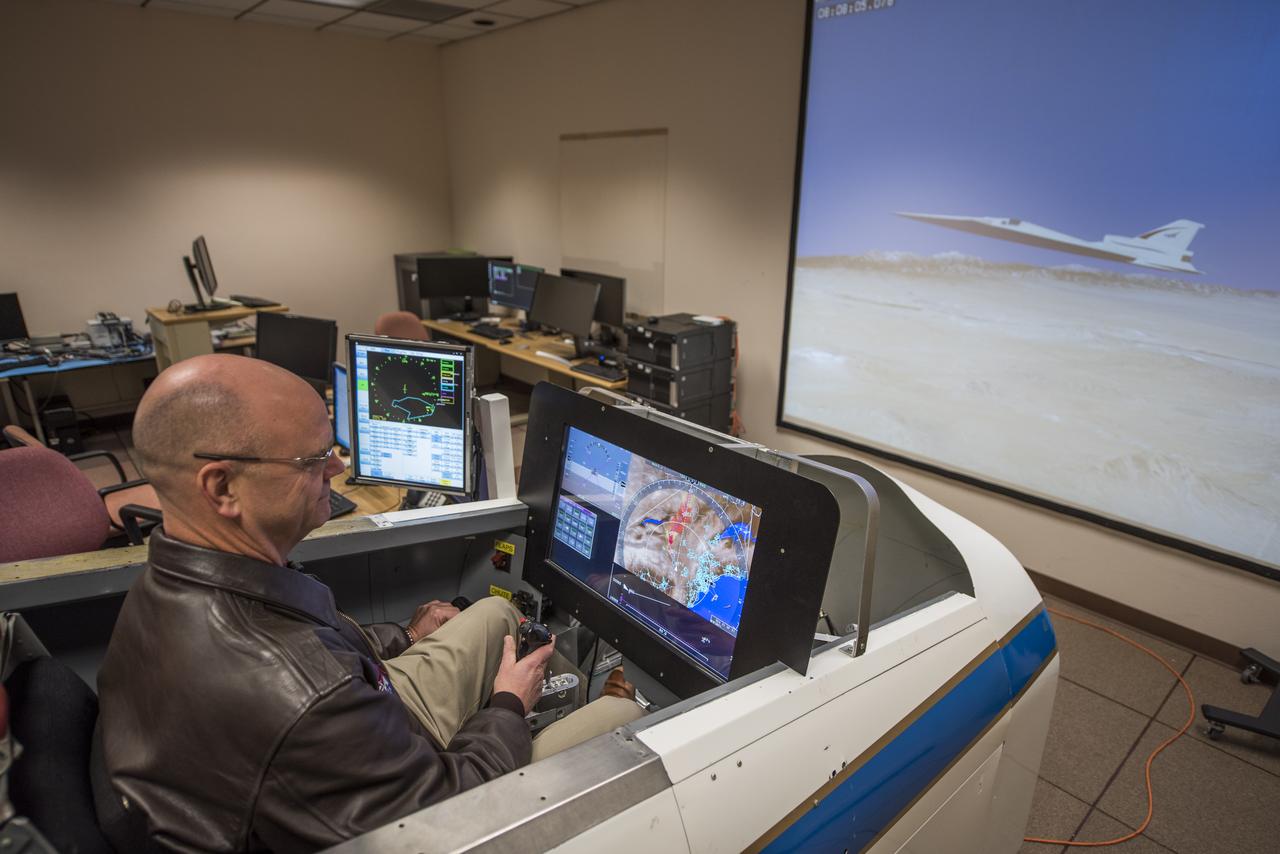
NASA pilot Nils Larson evaluates software in the X-59 simulator that could predict where sonic booms would be felt on the ground and the intensity.