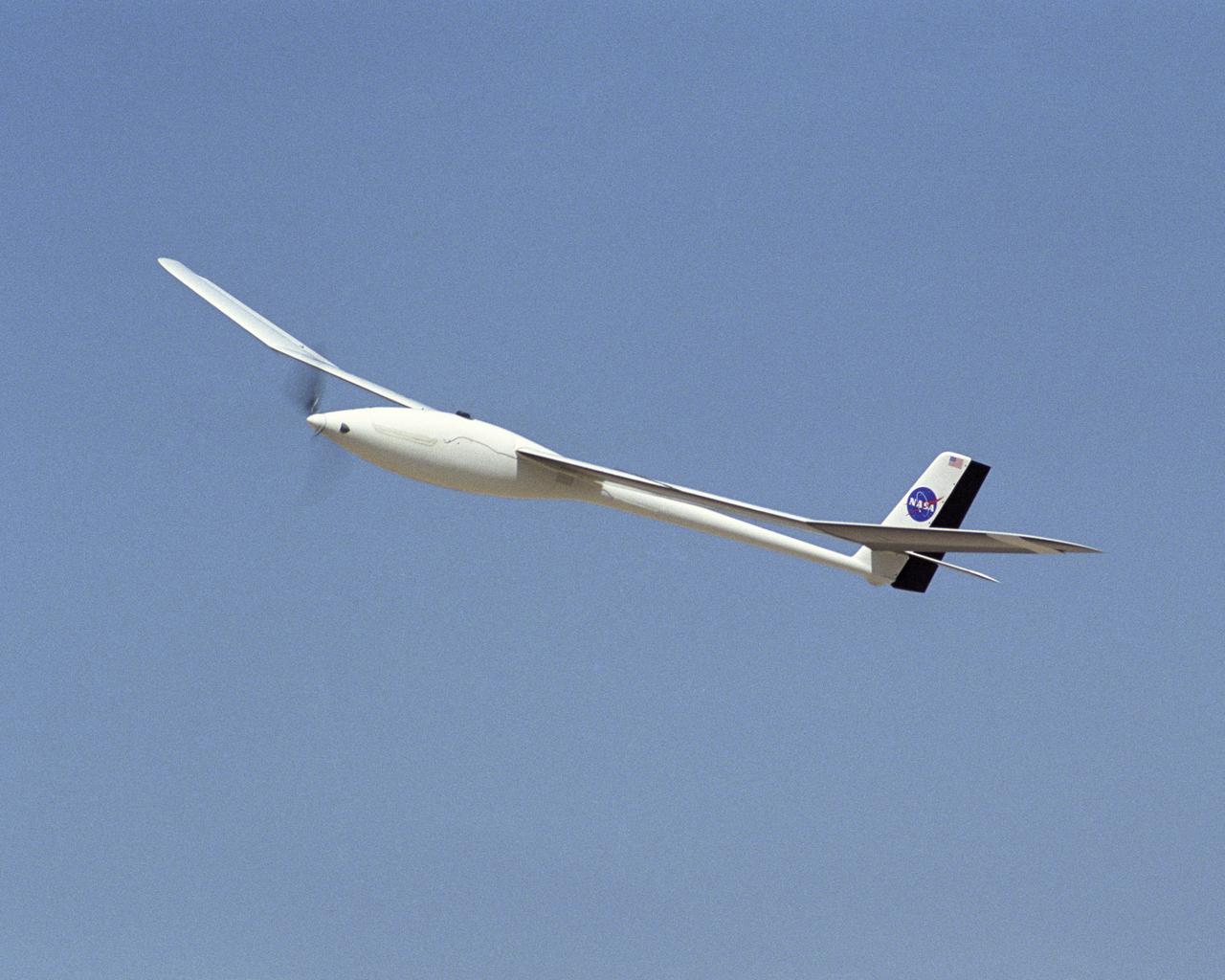
A NASA model motorized sailplane catches a thermal during one of 17 flights to demonstrate that updrafts can extend flight time and save energy for small UAVs.
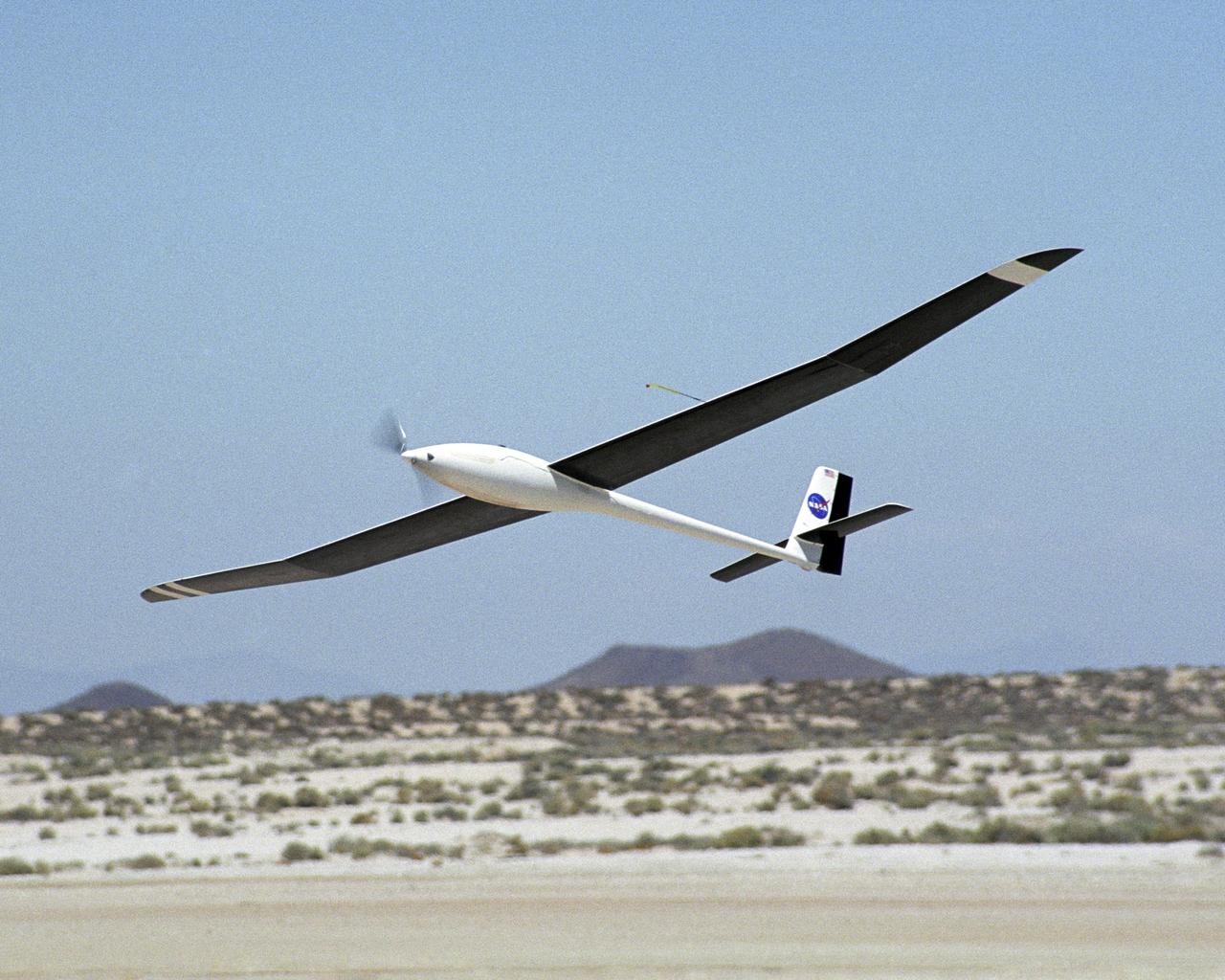
A NASA remote-controlled model motorized sailplane lies over Rogers Dry Lake to test the theory that catching heat thermals extends flight time for small UAVs.

NASA Dryden aerospace engineer Michael Allen hand-launches a model motorized sailplane during a study validating the use of heat thermals to extend flight time.
NASA’s Project Morpheus prototype lander soars 800 feet above the north end of the Shuttle Landing Facility at Kennedy Space Center in Florida on free flight test No. 15. During the 97-second test, onboard autonomous landing and hazard avoidance technology sensors, or ALHAT, surveyed the hazard field for safe landing sites, then guided the lander forward and downward to a successful landing.
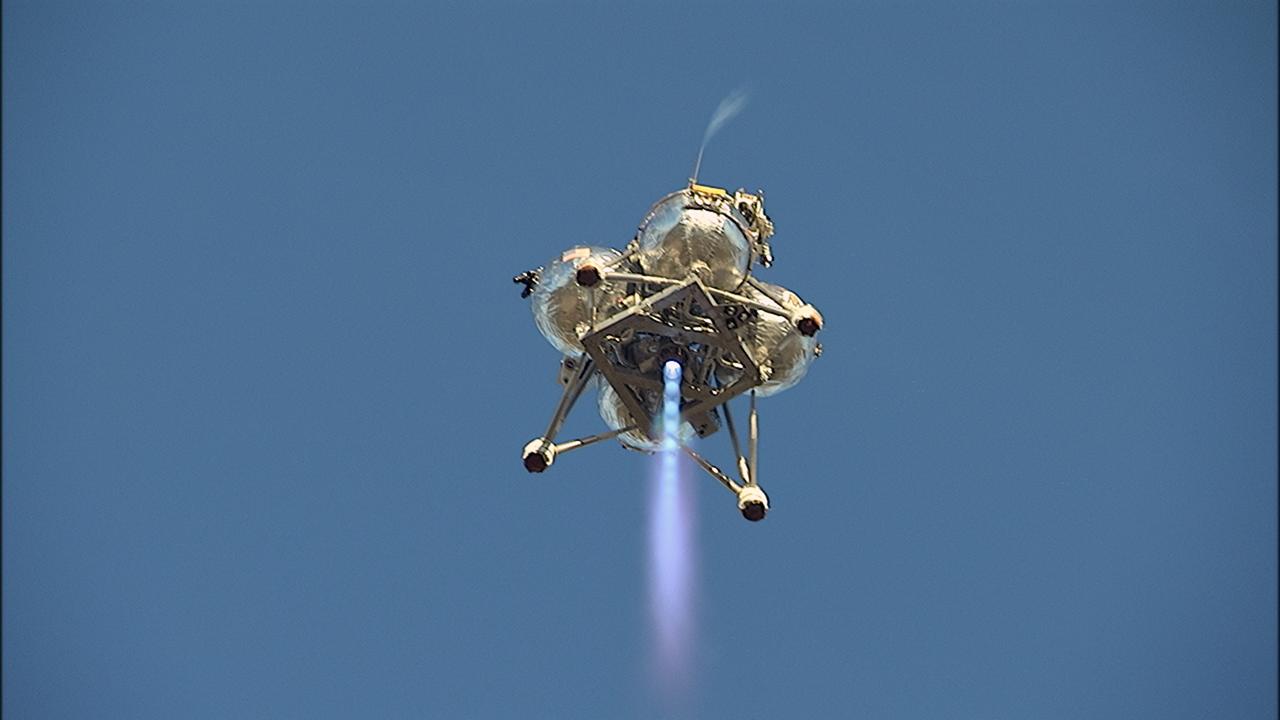
CAPE CANAVERAL, Fla. – NASA’s Project Morpheus prototype lander soars overhead during free flight test No. 15 at the north end of the Shuttle Landing Facility at Kennedy Space Center in Florida. During the 97-second test, onboard autonomous landing and hazard avoidance technology sensors, or ALHAT, surveyed the hazard field for safe landing sites, then guided the lander forward and downward to a successful landing. For more information on Morpheus, visit: http://www.morpheuslander.jsc.nasa.gov. Photo credit: NASA
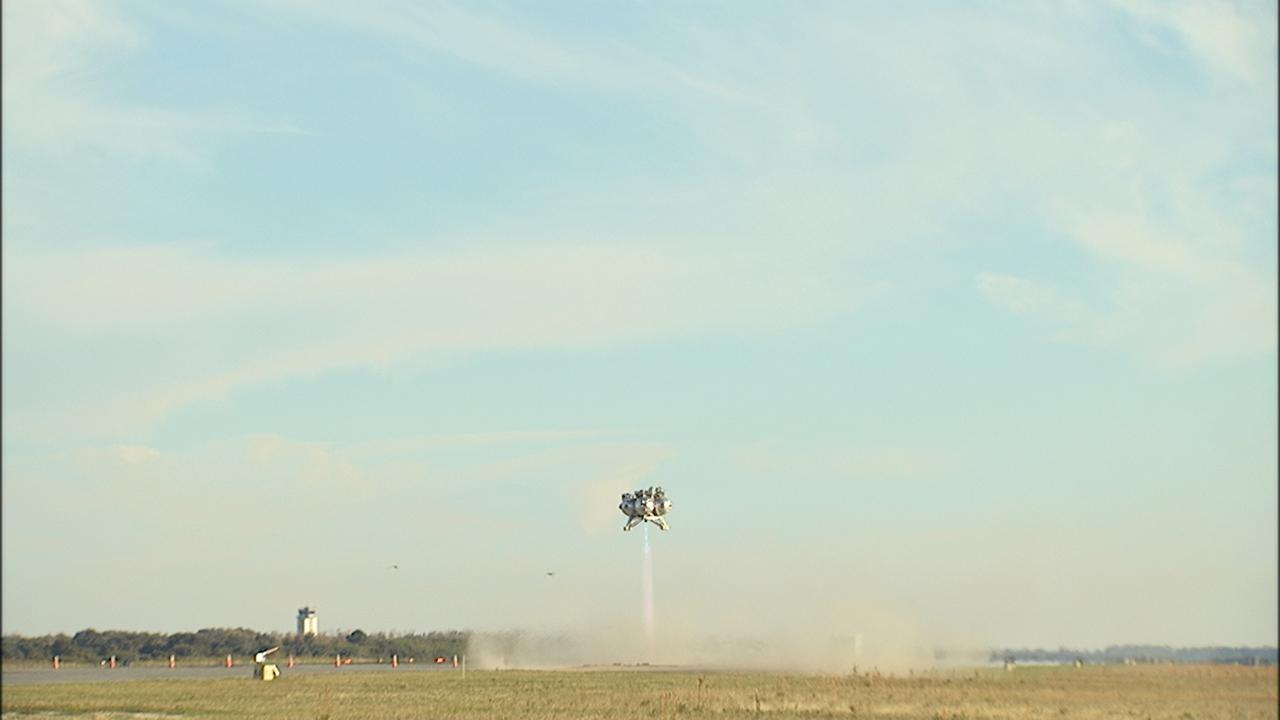
CAPE CANAVERAL, Fla. – NASA’s Project Morpheus prototype lander soars 800 feet above the north end of the Shuttle Landing Facility at Kennedy Space Center in Florida on free flight test No. 15 at. During the 97-second test, onboard autonomous landing and hazard avoidance technology sensors, or ALHAT, surveyed the hazard field for safe landing sites, then guided the lander forward and downward to a successful landing. For more information on Morpheus, visit: http://www.morpheuslander.jsc.nasa.gov. Photo credit: NASA
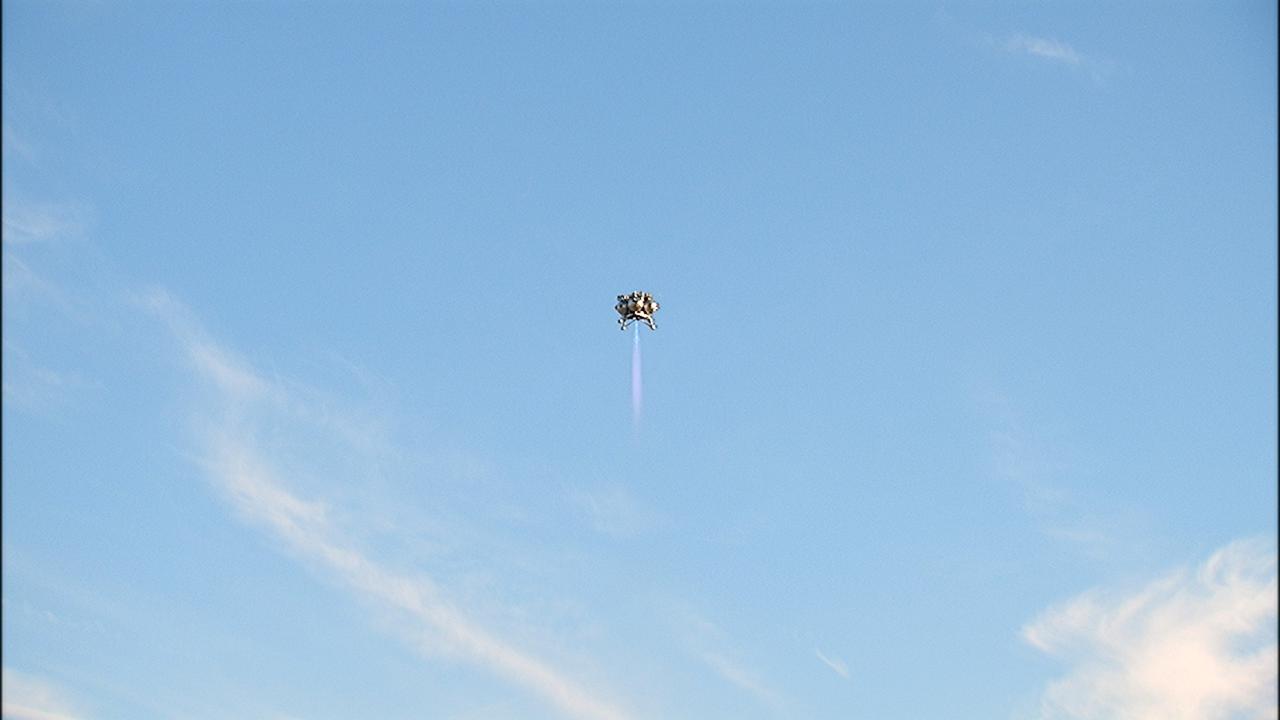
CAPE CANAVERAL, Fla. – NASA’s Project Morpheus prototype lander soars 800 feet above the north end of the Shuttle Landing Facility at Kennedy Space Center in Florida on free flight test No. 15. During the 97-second test, onboard autonomous landing and hazard avoidance technology sensors, or ALHAT, surveyed the hazard field for safe landing sites, then guided the lander forward and downward to a successful landing. For more information on Morpheus, visit: http://www.morpheuslander.jsc.nasa.gov. Photo credit: NASA

NASA’s Project Morpheus prototype lander soars 800 feet above the north end of the Shuttle Landing Facility at Kennedy Space Center in Florida on free flight test No. 15 at. During the 97-second test, onboard autonomous landing and hazard avoidance technology sensors, or ALHAT, surveyed the hazard field for safe landing sites, then guided the lander forward and downward to a successful landing.
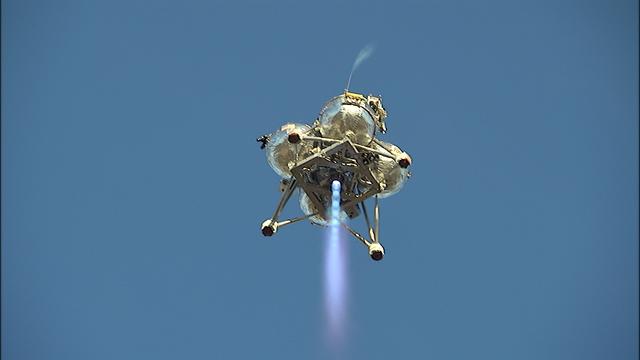
NASA’s Project Morpheus prototype lander soars overhead during free flight test No. 15 at the north end of the Shuttle Landing Facility at Kennedy Space Center in Florida. During the 97-second test, onboard autonomous landing and hazard avoidance technology sensors, or ALHAT, surveyed the hazard field for safe landing sites, then guided the lander forward and downward to a successful landing.
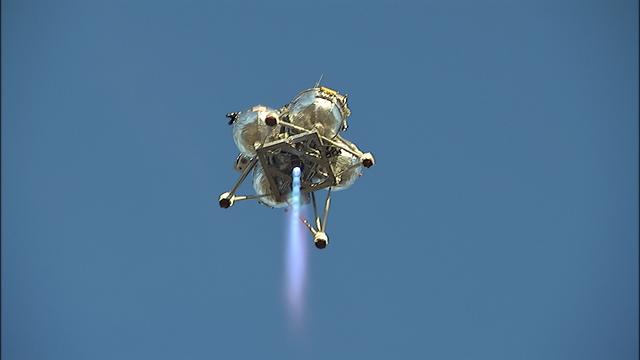
NASA’s Project Morpheus prototype lander soars overhead during free flight test No. 15 at the north end of the Shuttle Landing Facility at Kennedy Space Center in Florida. During the 97-second test, onboard autonomous landing and hazard avoidance technology sensors, or ALHAT, surveyed the hazard field for safe landing sites, then guided the lander forward and downward to a successful landing.
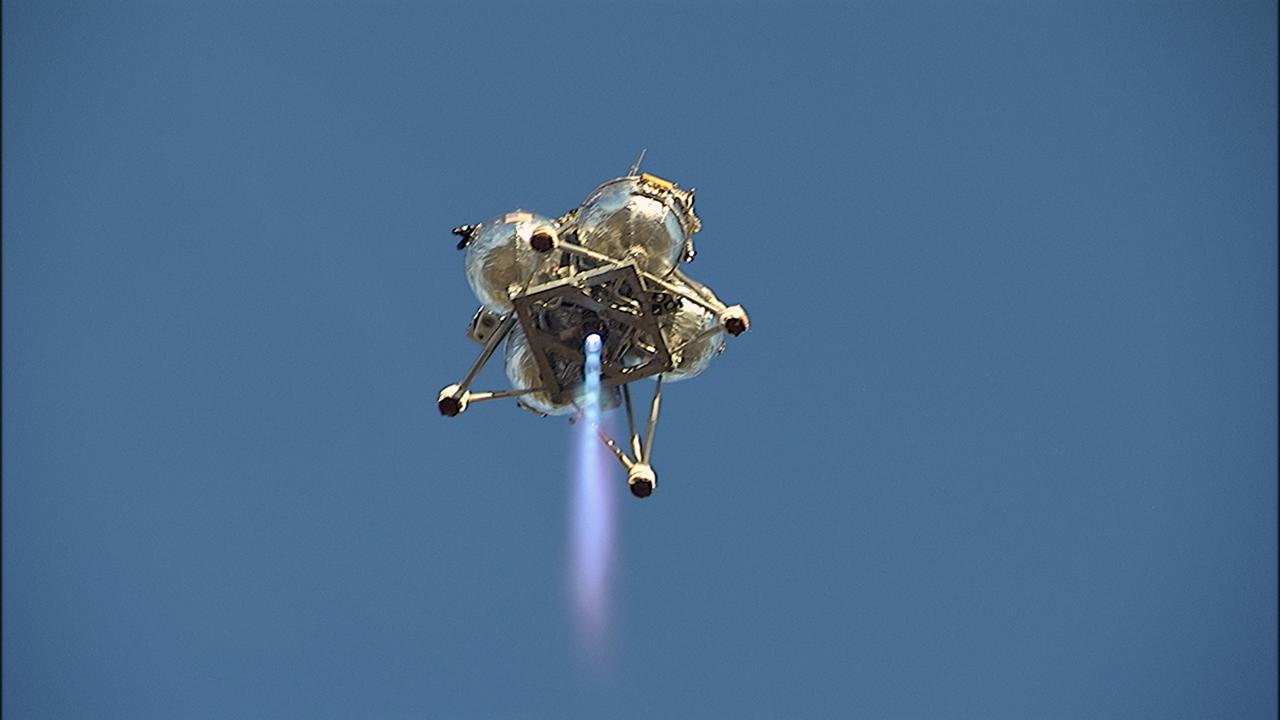
CAPE CANAVERAL, Fla. – NASA’s Project Morpheus prototype lander soars overhead during free flight test No. 15 at the north end of the Shuttle Landing Facility at Kennedy Space Center in Florida. During the 97-second test, onboard autonomous landing and hazard avoidance technology sensors, or ALHAT, surveyed the hazard field for safe landing sites, then guided the lander forward and downward to a successful landing. For more information on Morpheus, visit: http://www.morpheuslander.jsc.nasa.gov. Photo credit: NASA
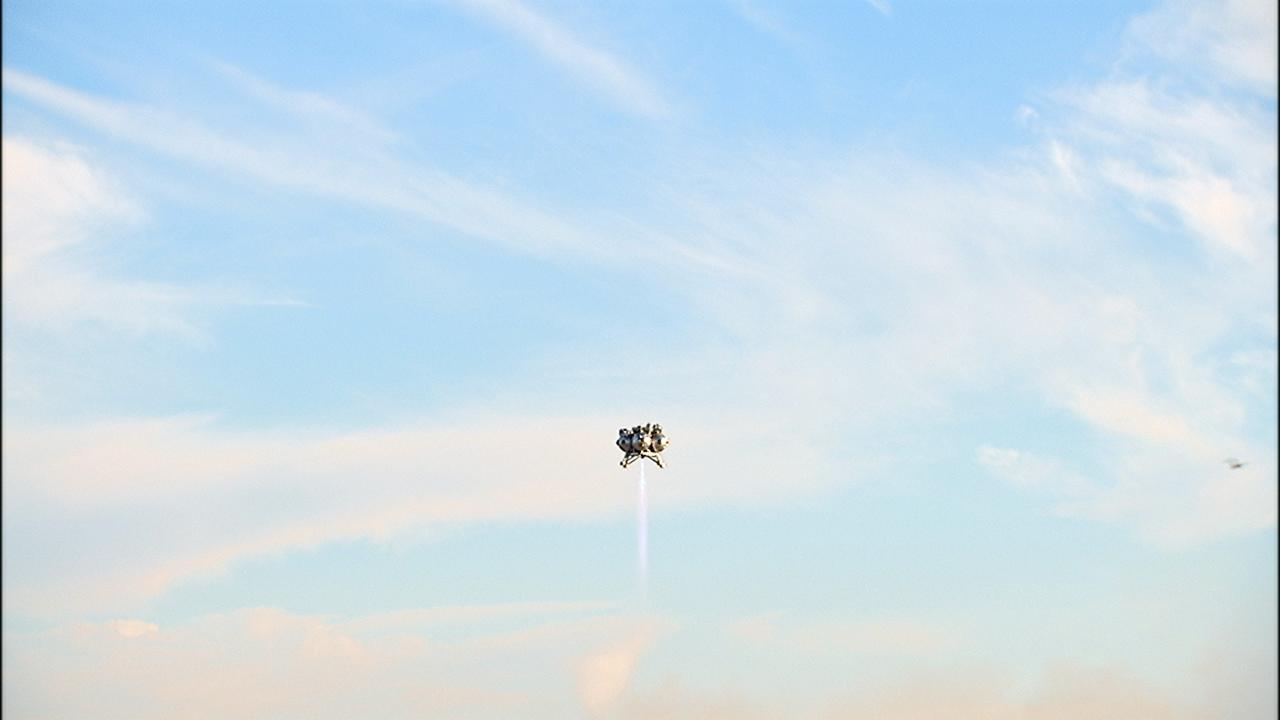
CAPE CANAVERAL, Fla. – NASA’s Project Morpheus prototype lander soars 800 feet above the north end of the Shuttle Landing Facility at Kennedy Space Center in Florida on free flight test No. 15 at. During the 97-second test, onboard autonomous landing and hazard avoidance technology sensors, or ALHAT, surveyed the hazard field for safe landing sites, then guided the lander forward and downward to a successful landing. For more information on Morpheus, visit: http://www.morpheuslander.jsc.nasa.gov. Photo credit: NASA
NASA’s Project Morpheus prototype lander soars 800 feet above the north end of the Shuttle Landing Facility at Kennedy Space Center in Florida on free flight test No. 15 at. During the 97-second test, onboard autonomous landing and hazard avoidance technology sensors, or ALHAT, surveyed the hazard field for safe landing sites, then guided the lander forward and downward to a successful landing.
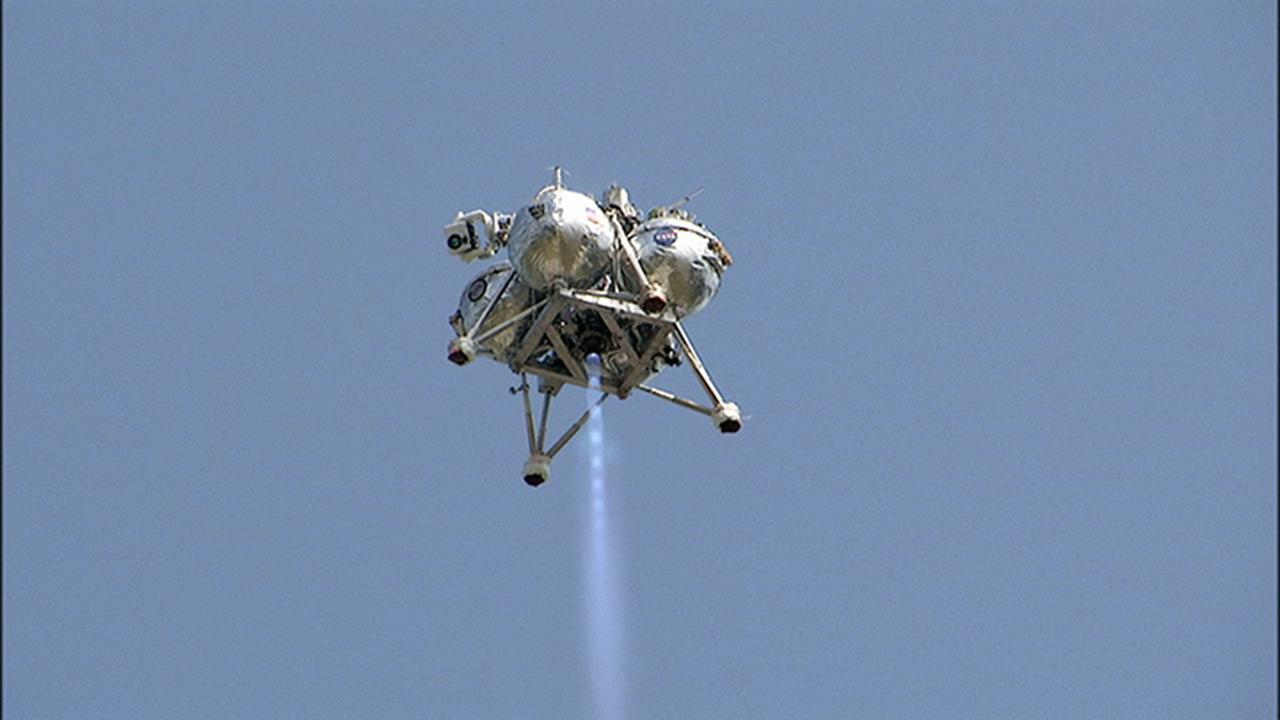
CAPE CANAVERAL, Fla. – NASA's Project Morpheus prototype lander soars high after lifting off on a free-flight test from a new launch pad at the north end of the Shuttle Landing Facility at NASA's Kennedy Space Center in Florida. The 98-second test began at 3:20 p.m. EDT with the Morpheus lander launching from the ground over a flame trench and ascending more than 800 feet at a peak speed of 36 mph. The vehicle, with its recently installed autonomous landing and hazard avoidance technology ALHAT sensors, surveyed the hazard field to determine safe landing sites. Morpheus then flew forward and downward covering approximately 1300 feet while performing a 78-foot divert to simulate a hazard avoidance maneuver. The lander then descended and landed on a dedicated pad inside the autonomous landing and hazard avoidance technology hazard field. Project Morpheus tests NASA’s ALHAT and an engine that runs on liquid oxygen and methane, which are green propellants. These new capabilities could be used in future efforts to deliver cargo to planetary surfaces. The landing facility provides the lander with the kind of field necessary for realistic testing, complete with rocks, craters and hazards to avoid. Morpheus’ ALHAT payload allows it to navigate to clear landing sites amidst rocks, craters and other hazards during its descent. Project Morpheus is being managed under the Advanced Exploration Systems, or AES, Division in NASA’s Human Exploration and Operations Mission Directorate. The efforts in AES pioneer new approaches for rapidly developing prototype systems, demonstrating key capabilities and validating operational concepts for future human missions beyond Earth orbit. For more information on Project Morpheus, visit http://morpheuslander.jsc.nasa.gov/. Photo credit: NASA/Chris Chamberland
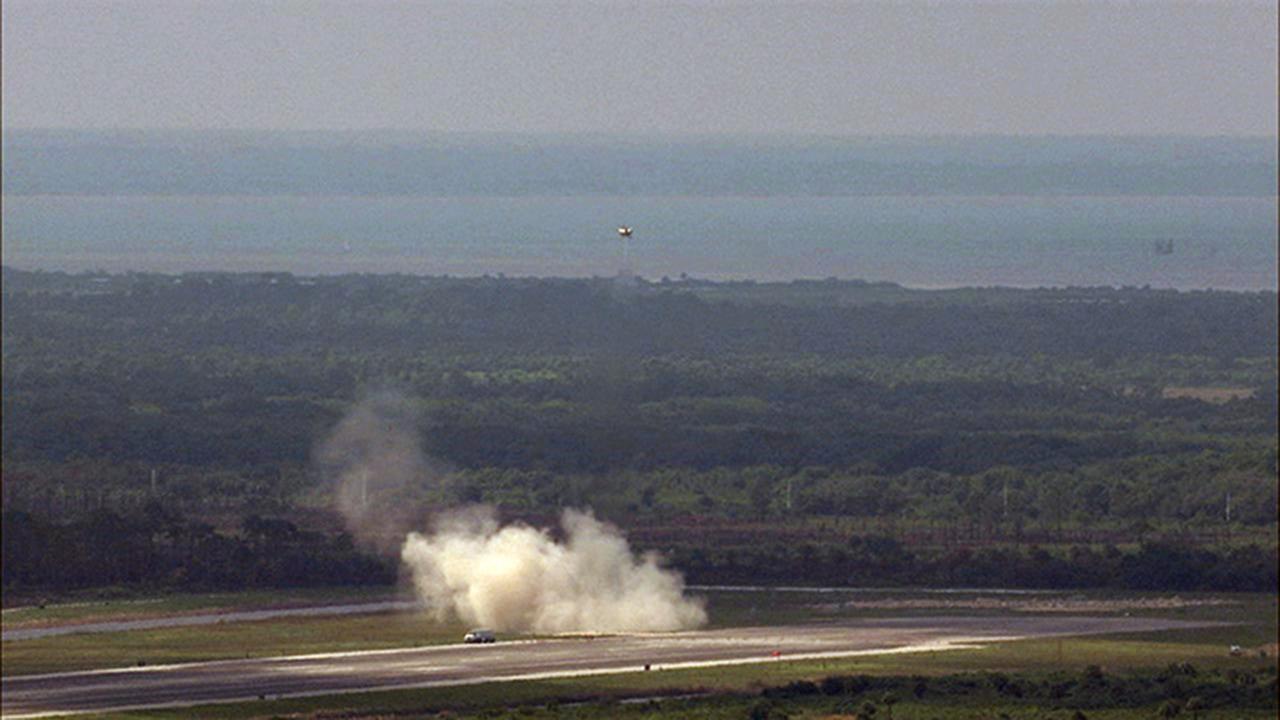
CAPE CANAVERAL, Fla. – NASA's Project Morpheus prototype lander soars high after lifting off on a free-flight test from a new launch pad at the north end of the Shuttle Landing Facility at NASA's Kennedy Space Center in Florida. The 98-second test began at 3:20 p.m. EDT with the Morpheus lander launching from the ground over a flame trench and ascending more than 800 feet at a peak speed of 36 mph. The vehicle, with its recently installed autonomous landing and hazard avoidance technology ALHAT sensors, surveyed the hazard field to determine safe landing sites. Morpheus then flew forward and downward covering approximately 1300 feet while performing a 78-foot divert to simulate a hazard avoidance maneuver. The lander then descended and landed on a dedicated pad inside the autonomous landing and hazard avoidance technology hazard field. Project Morpheus tests NASA’s ALHAT and an engine that runs on liquid oxygen and methane, which are green propellants. These new capabilities could be used in future efforts to deliver cargo to planetary surfaces. The landing facility provides the lander with the kind of field necessary for realistic testing, complete with rocks, craters and hazards to avoid. Morpheus’ ALHAT payload allows it to navigate to clear landing sites amidst rocks, craters and other hazards during its descent. Project Morpheus is being managed under the Advanced Exploration Systems, or AES, Division in NASA’s Human Exploration and Operations Mission Directorate. The efforts in AES pioneer new approaches for rapidly developing prototype systems, demonstrating key capabilities and validating operational concepts for future human missions beyond Earth orbit. For more information on Project Morpheus, visit http://morpheuslander.jsc.nasa.gov/. Photo credit: NASA/Chris Chamberland
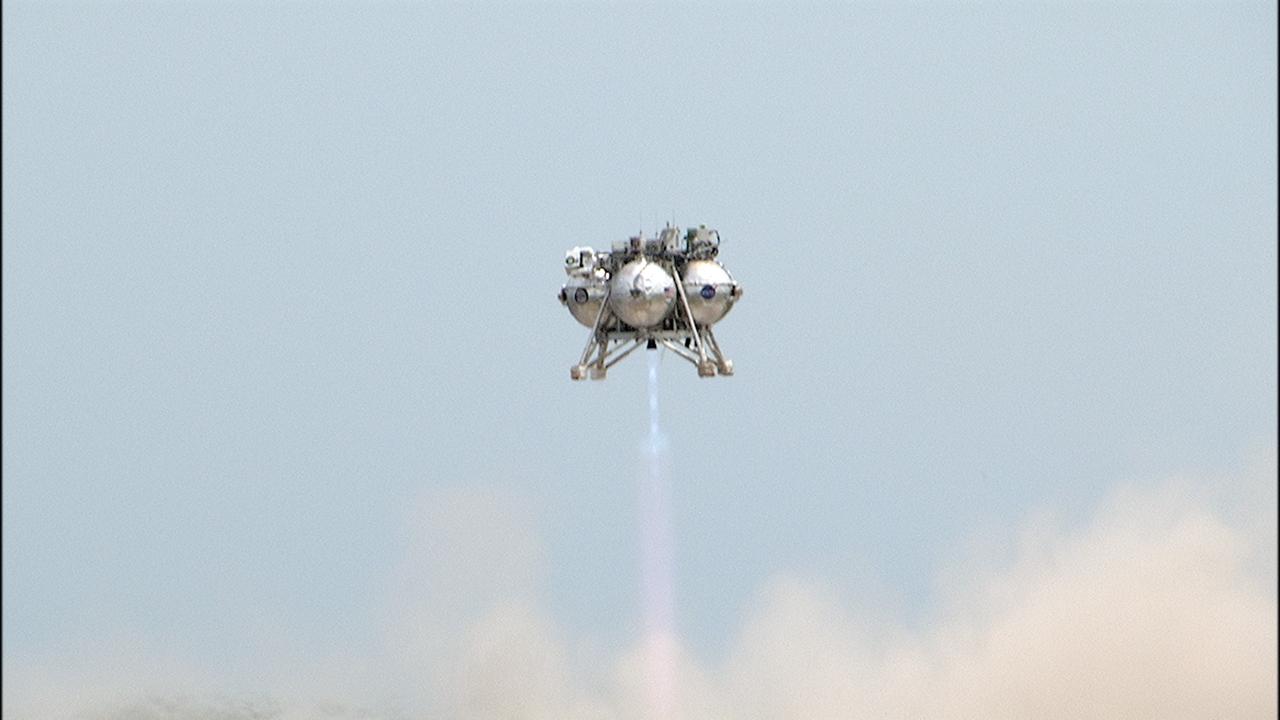
CAPE CANAVERAL, Fla. – NASA's Project Morpheus prototype lander soars high after lifting off on a free-flight test from a new launch pad at the north end of the Shuttle Landing Facility at NASA's Kennedy Space Center in Florida. The 98-second test began at 1:57 p.m. EDT with the Morpheus lander launching from the ground over a flame trench and ascending more than 800 feet at a peak speed of 36 mph. The vehicle, with its recently installed autonomous landing and hazard avoidance technology, or ALHAT, sensors surveyed the hazard field to determine safe landing sites. Morpheus then flew forward and downward covering approximately 1300 feet while performing a 78-foot divert to simulate a hazard avoidance maneuver. The lander descended and landed on a dedicated pad inside the ALHAT hazard field. Project Morpheus tests NASA’s ALHAT and an engine that runs on liquid oxygen and methane, which are green propellants. These new capabilities could be used in future efforts to deliver cargo to planetary surfaces. The landing facility provides the lander with the kind of field necessary for realistic testing, complete with rocks, craters and hazards to avoid. Morpheus’ ALHAT payload allows it to navigate to clear landing sites amidst rocks, craters and other hazards during its descent. Project Morpheus is being managed under the Advanced Exploration Systems, or AES, Division in NASA’s Human Exploration and Operations Mission Directorate. The efforts in AES pioneer new approaches for rapidly developing prototype systems, demonstrating key capabilities and validating operational concepts for future human missions beyond Earth orbit. For more information on Project Morpheus, visit http://morpheuslander.jsc.nasa.gov/. Photo credit: NASA/Frankie Martin
CAPE CANAVERAL, Fla. – The Project Morpheus prototype lander soars high and moves forward after launching on its third free flight test at the north end of the Shuttle Landing Facility at NASA’s Kennedy Space Center in Florida. The 57-second test began at 1:15 p.m. EST with the Morpheus lander launching from the ground over a flame trench and ascending about 187 feet, nearly doubling the target ascent velocity from the last test in December 2013. The lander flew forward, covering about 154 feet in 20 seconds before descending and landing within 11 inches of its target on a dedicated pad inside the autonomous landing and hazard avoidance technology, or ALHAT, hazard field. Project Morpheus tests NASA’s ALHAT and an engine that runs on liquid oxygen and methane, or green propellants, into a fully-operational lander that could deliver cargo to other planetary surfaces. The landing facility provides the lander with the kind of field necessary for realistic testing, complete with rocks, craters and hazards to avoid. Morpheus’ ALHAT payload allows it to navigate to clear landing sites amidst rocks, craters and other hazards during its descent. Project Morpheus is being managed under the Advanced Exploration Systems, or AES, Division in NASA’s Human Exploration and Operations Mission Directorate. The efforts in AES pioneer new approaches for rapidly developing prototype systems, demonstrating key capabilities and validating operational concepts for future human missions beyond Earth orbit. For more information on Project Morpheus, visit http://www.nasa.gov/centers/johnson/exploration/morpheus. Photo credit: NASA/Frankie Martin
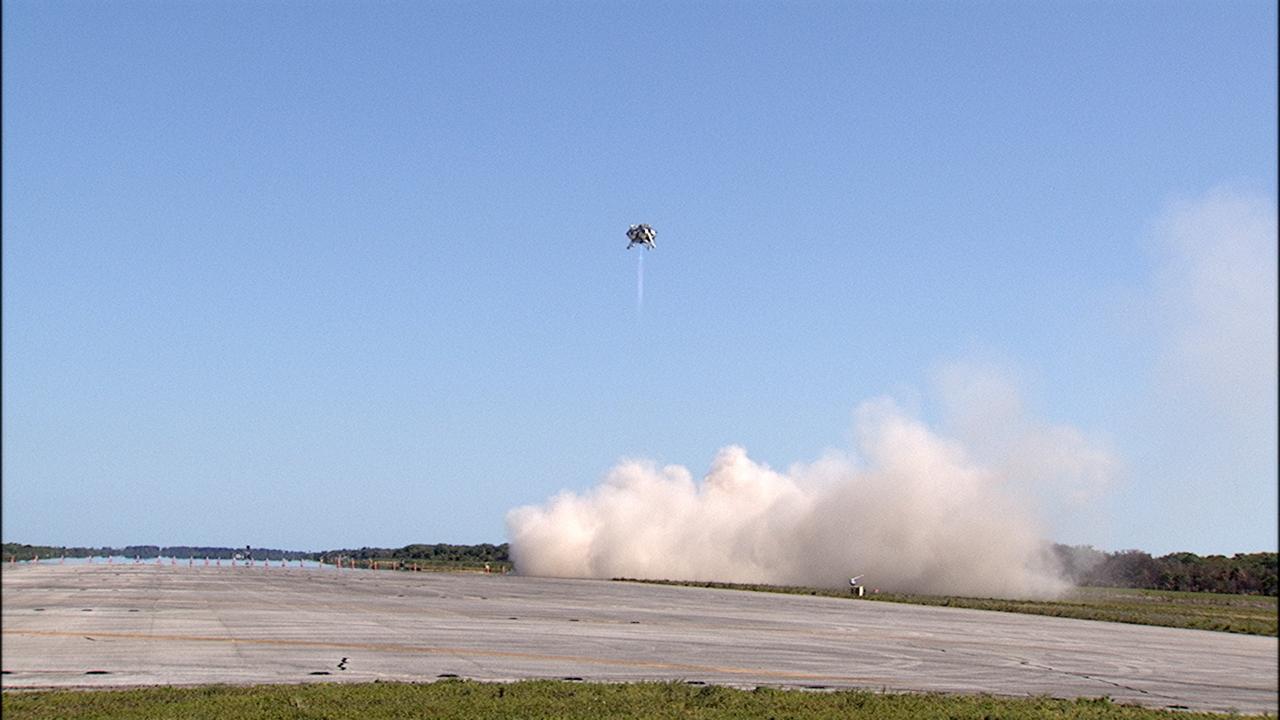
CAPE CANAVERAL, Fla. – NASA's Project Morpheus prototype lander soars high during a free flight test at the north end of the Shuttle Landing Facility at NASA's Kennedy Space Center in Florida. The 96-second test began at 4:21 p.m. EDT with the Morpheus lander launching from the ground over the flame trench at a new launch site and ascending more than 800 feet at a peak speed of 36 mph. The vehicle with its recently installed autonomous landing and hazard avoidance technology, or ALHAT, sensors surveyed the hazard field to determine safe landing sites. Morpheus then flew forward and downward covering 1,300 feet while performing a 78-foot divert to simulate a hazard avoidance maneuver. The lander descended and landed on a dedicated pad inside the ALHAT field. Project Morpheus tests NASA’s ALHAT, and an engine that runs on liquid oxygen and methane, or green propellants, into a fully-operational lander that could deliver cargo to other planetary surfaces. The landing facility provides the lander with the kind of field necessary for realistic testing, complete with rocks, craters and hazards to avoid. Morpheus’ ALHAT payload allows it to navigate to clear landing sites amidst rocks, craters and other hazards during its descent. Project Morpheus is being managed under the Advanced Exploration Systems, or AES, Division in NASA’s Human Exploration and Operations Mission Directorate. The efforts in AES pioneer new approaches for rapidly developing prototype systems, demonstrating key capabilities and validating operational concepts for future human missions beyond Earth orbit. For more information on Project Morpheus, visit http://morpheuslander.jsc.nasa.gov/. Photo credit: NASA/Frankie Martin
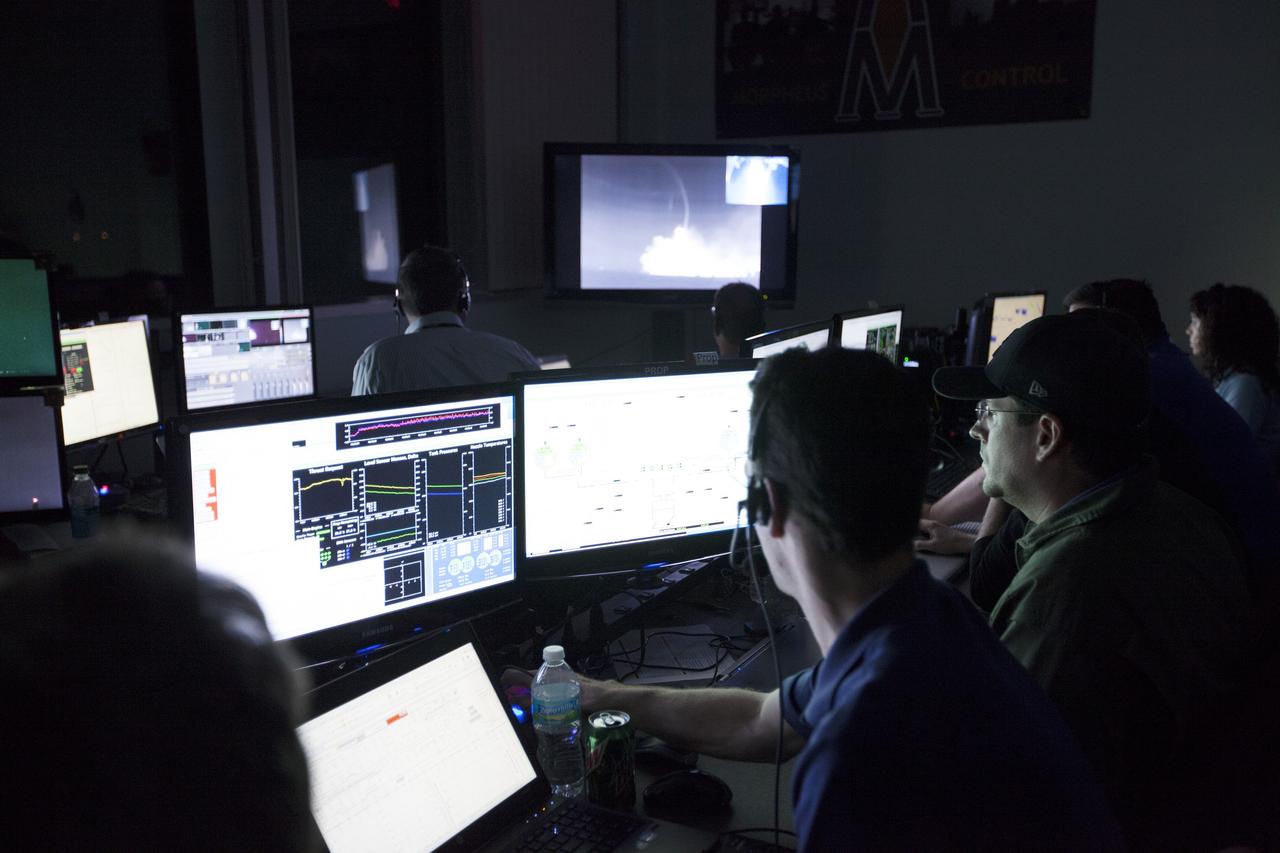
CAPE CANAVERAL, Fla. -- Engineers in the Morpheus Control Room monitor NASA's Project Morpheus prototype lander as it soars high on the first free flight test at night from a launch pad at the north end of the Shuttle Landing Facility at NASA's Kennedy Space Center in Florida. The 98-second test began at 10:02 p.m. EDT with the Morpheus lander launching from the ground over a flame trench and ascending more than 800 feet. The vehicle, with its autonomous landing and hazard avoidance technology, or ALHAT sensors, surveyed the hazard field to determine safe landing sites. Morpheus then flew forward and downward covering approximately 1,300 feet while performing a 78-foot divert to simulate a hazard avoidance maneuver. The lander then descended and landed on a dedicated pad inside the test field. Project Morpheus tests NASA’s ALHAT and an engine that runs on liquid oxygen and methane, which are green propellants. These new capabilities could be used in future efforts to deliver cargo to planetary surfaces. The landing facility provides the lander with the kind of field necessary for realistic testing, complete with rocks, craters and hazards to avoid. Morpheus’ ALHAT payload allows it to navigate to clear landing sites amidst rocks, craters and other hazards during its descent. Project Morpheus is being managed under the Advanced Exploration Systems, or AES, Division in NASA’s Human Exploration and Operations Mission Directorate. The efforts in AES pioneer new approaches for rapidly developing prototype systems, demonstrating key capabilities and validating operational concepts for future human missions beyond Earth orbit. For more information on Project Morpheus, visit http://morpheuslander.jsc.nasa.gov/. Photo credit: NASA/Kim Shiflett
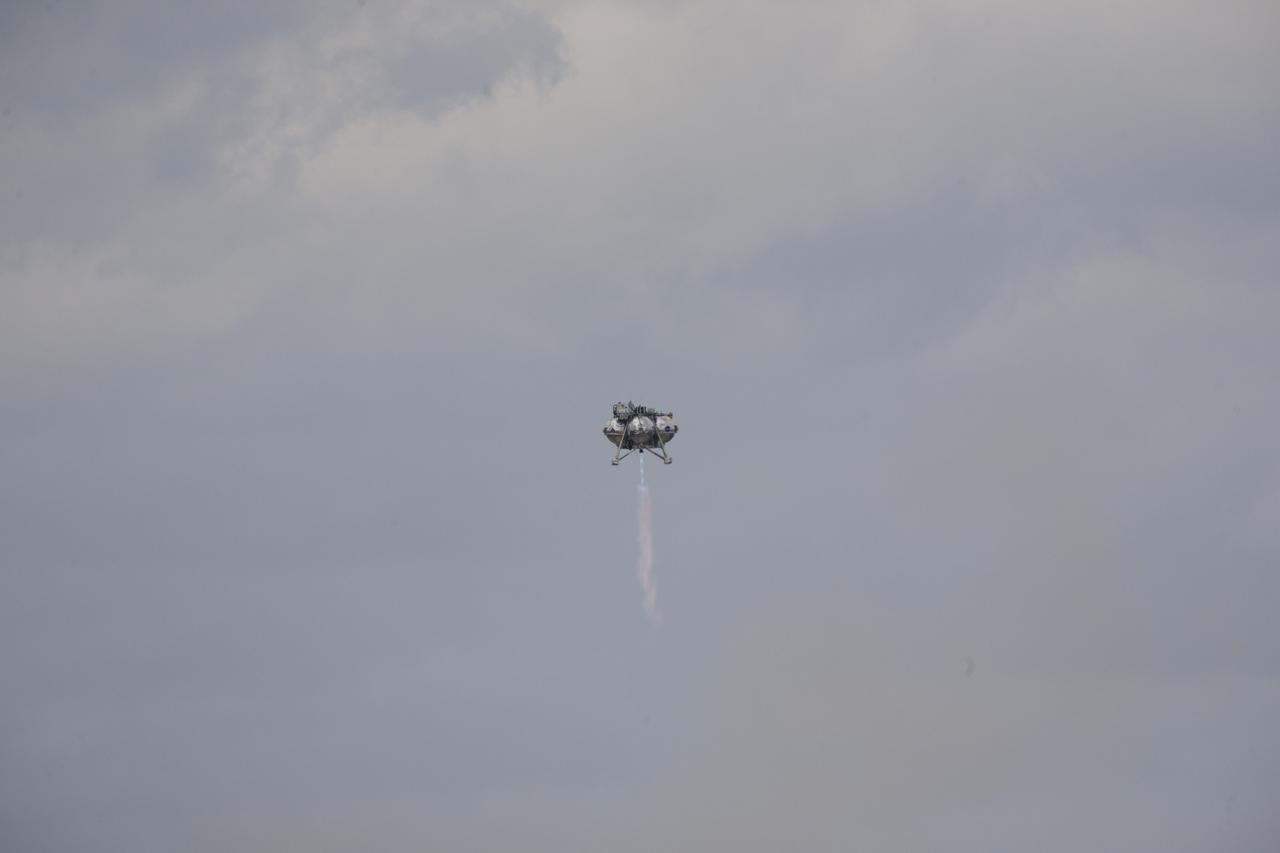
CAPE CANAVERAL, Fla. – The Project Morpheus prototype lander soars high after launching on its fourth free flight test at the north end of the Shuttle Landing Facility at NASA’s Kennedy Space Center in Florida. The 64-second test began at 1:15 p.m. EST with the Morpheus lander launching from the ground over a flame trench and ascending about 305 feet, significantly increasing the ascent velocity from the last test. The lander flew forward, covering about 358 feet in 25 seconds before descending and landing within 15 inches of its target on a dedicated pad inside the autonomous landing and hazard avoidance technology, or ALHAT, hazard field. Project Morpheus tests NASA’s ALHAT and an engine that runs on liquid oxygen and methane, or green propellants, into a fully-operational lander that could deliver cargo to other planetary surfaces. The landing facility provides the lander with the kind of field necessary for realistic testing, complete with rocks, craters and hazards to avoid. Morpheus’ ALHAT payload allows it to navigate to clear landing sites amidst rocks, craters and other hazards during its descent. Project Morpheus is being managed under the Advanced Exploration Systems, or AES, Division in NASA’s Human Exploration and Operations Mission Directorate. The efforts in AES pioneer new approaches for rapidly developing prototype systems, demonstrating key capabilities and validating operational concepts for future human missions beyond Earth orbit. For more information on Project Morpheus, visit http://www.nasa.gov/centers/johnson/exploration/morpheus. Photo credit: NASA/Kim Shiflett
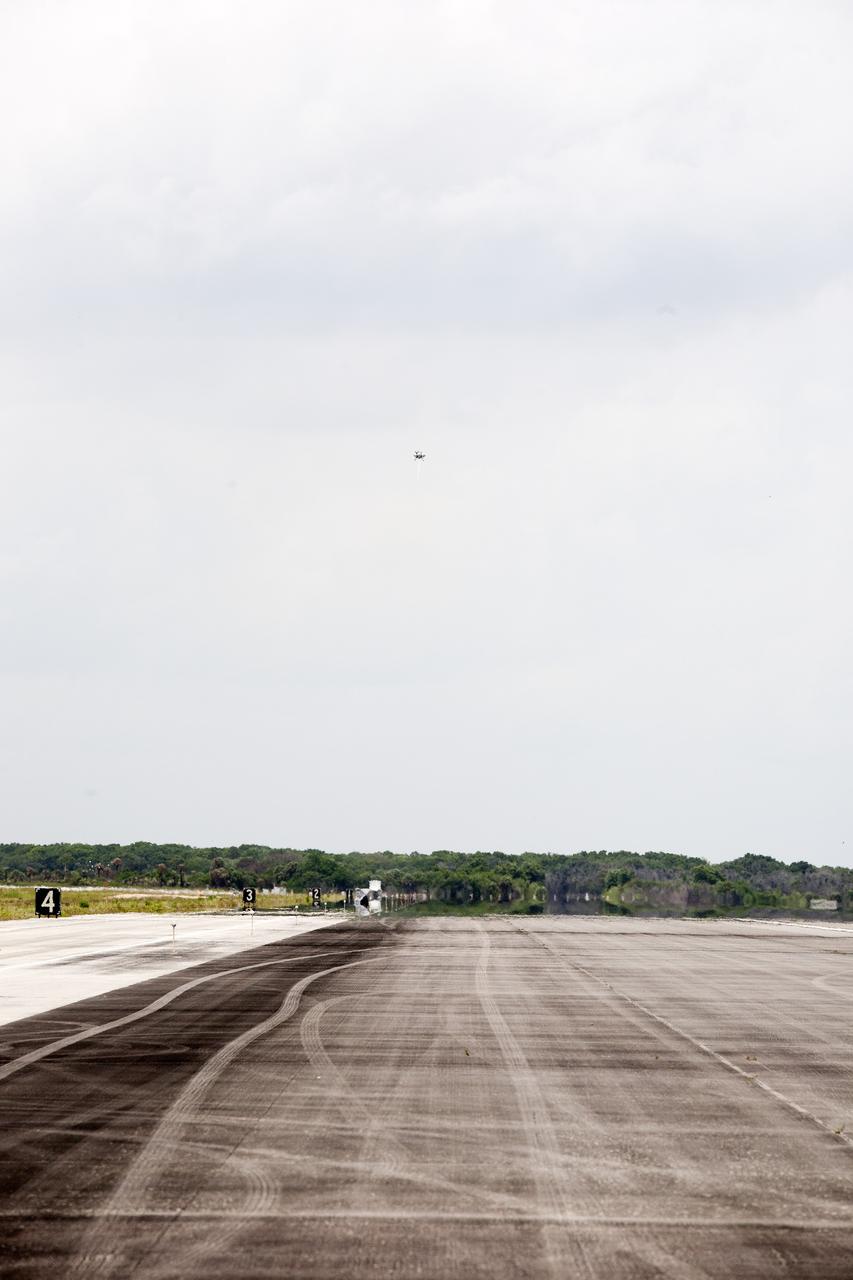
CAPE CANAVERAL, Fla. – NASA's Project Morpheus prototype lander soars high after lifting off on a free-flight test from a new launch pad at the north end of the Shuttle Landing Facility at NASA's Kennedy Space Center in Florida. The 98-second test began at 1:57 p.m. EDT with the Morpheus lander launching from the ground over a flame trench and ascending more than 800 feet at a peak speed of 36 mph. The vehicle, with its recently installed autonomous landing and hazard avoidance technology, or ALHAT, sensors surveyed the hazard field to determine safe landing sites. Morpheus then flew forward and downward covering approximately 1300 feet while performing a 78-foot divert to simulate a hazard avoidance maneuver. The lander descended and landed on a dedicated pad inside the ALHAT hazard field. Project Morpheus tests NASA’s ALHAT and an engine that runs on liquid oxygen and methane, which are green propellants. These new capabilities could be used in future efforts to deliver cargo to planetary surfaces. The landing facility provides the lander with the kind of field necessary for realistic testing, complete with rocks, craters and hazards to avoid. Morpheus’ ALHAT payload allows it to navigate to clear landing sites amidst rocks, craters and other hazards during its descent. Project Morpheus is being managed under the Advanced Exploration Systems, or AES, Division in NASA’s Human Exploration and Operations Mission Directorate. The efforts in AES pioneer new approaches for rapidly developing prototype systems, demonstrating key capabilities and validating operational concepts for future human missions beyond Earth orbit. For more information on Project Morpheus, visit http://morpheuslander.jsc.nasa.gov/. Photo credit: NASA/Kim Shiflett
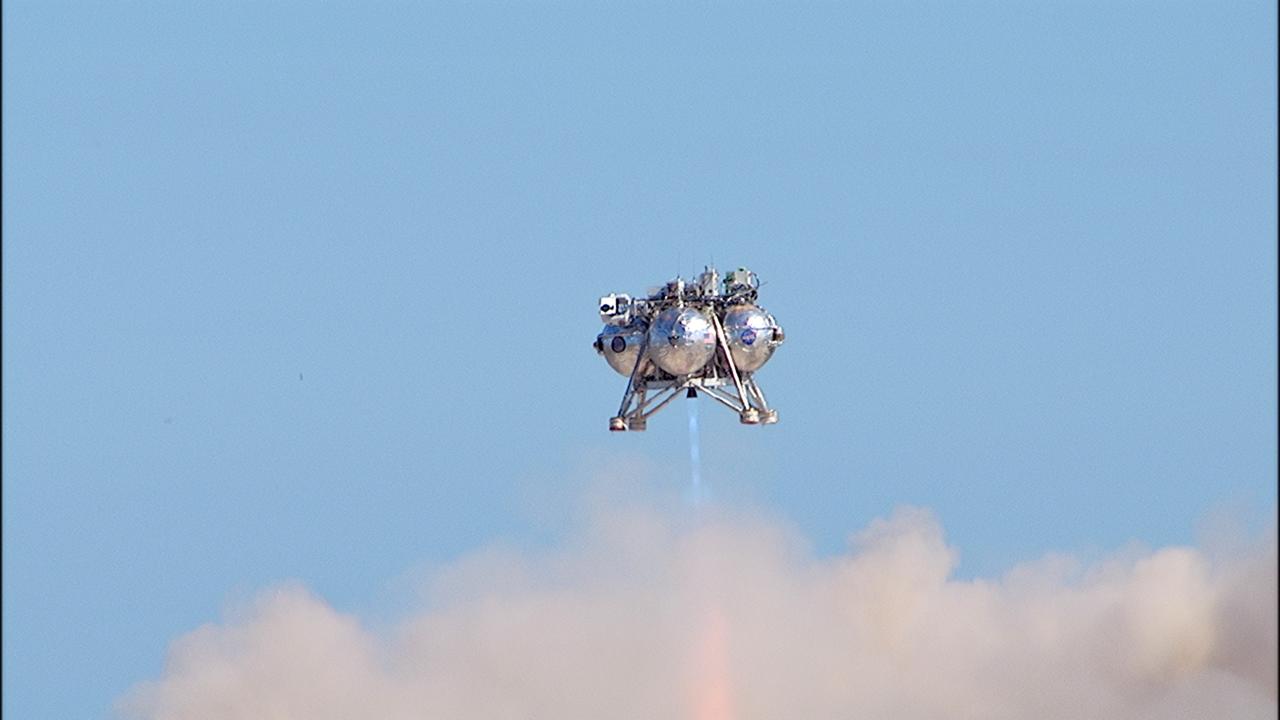
CAPE CANAVERAL, Fla. – NASA's Project Morpheus prototype lander soars high during a free flight test at the north end of the Shuttle Landing Facility at NASA's Kennedy Space Center in Florida. The 96-second test began at 4:21 p.m. EDT with the Morpheus lander launching from the ground over the flame trench at a new launch site and ascending more than 800 feet at a peak speed of 36 mph. The vehicle with its recently installed autonomous landing and hazard avoidance technology, or ALHAT, sensors surveyed the hazard field to determine safe landing sites. Morpheus then flew forward and downward covering 1,300 feet while performing a 78-foot divert to simulate a hazard avoidance maneuver. The lander descended and landed on a dedicated pad inside the ALHAT field. Project Morpheus tests NASA’s ALHAT, and an engine that runs on liquid oxygen and methane, or green propellants, into a fully-operational lander that could deliver cargo to other planetary surfaces. The landing facility provides the lander with the kind of field necessary for realistic testing, complete with rocks, craters and hazards to avoid. Morpheus’ ALHAT payload allows it to navigate to clear landing sites amidst rocks, craters and other hazards during its descent. Project Morpheus is being managed under the Advanced Exploration Systems, or AES, Division in NASA’s Human Exploration and Operations Mission Directorate. The efforts in AES pioneer new approaches for rapidly developing prototype systems, demonstrating key capabilities and validating operational concepts for future human missions beyond Earth orbit. For more information on Project Morpheus, visit http://morpheuslander.jsc.nasa.gov/. Photo credit: NASA/Frankie Martin
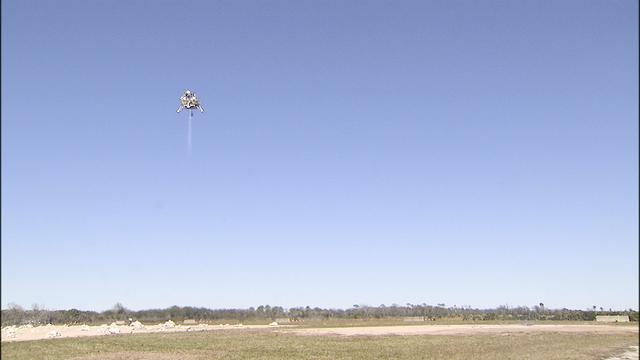
CAPE CANAVERAL, Fla. – The Project Morpheus prototype lander soars high after launching on its third free flight test at the north end of the Shuttle Landing Facility at NASA’s Kennedy Space Center in Florida. The 57-second test began at 1:15 p.m. EST with the Morpheus lander launching from the ground over a flame trench and ascending about 187 feet, nearly doubling the target ascent velocity from the last test in December 2013. The lander flew forward, covering about 154 feet in 20 seconds before descending and landing within 11 inches of its target on a dedicated pad inside the autonomous landing and hazard avoidance technology, or ALHAT, hazard field. Project Morpheus tests NASA’s ALHAT and an engine that runs on liquid oxygen and methane, or green propellants, into a fully-operational lander that could deliver cargo to other planetary surfaces. The landing facility provides the lander with the kind of field necessary for realistic testing, complete with rocks, craters and hazards to avoid. Morpheus’ ALHAT payload allows it to navigate to clear landing sites amidst rocks, craters and other hazards during its descent. Project Morpheus is being managed under the Advanced Exploration Systems, or AES, Division in NASA’s Human Exploration and Operations Mission Directorate. The efforts in AES pioneer new approaches for rapidly developing prototype systems, demonstrating key capabilities and validating operational concepts for future human missions beyond Earth orbit. For more information on Project Morpheus, visit http://www.nasa.gov/centers/johnson/exploration/morpheus. Photo credit: NASA/Frankie Martin
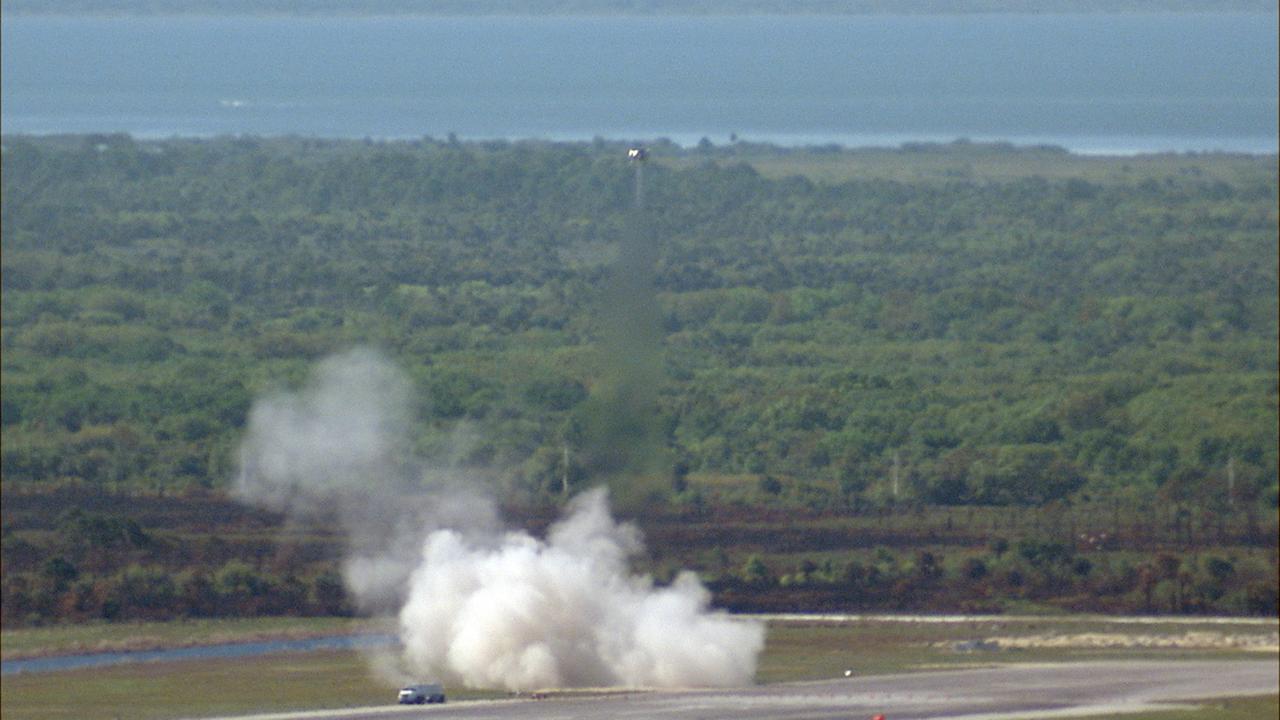
CAPE CANAVERAL, Fla. – NASA's Project Morpheus prototype lander soars high during a free flight test at the north end of the Shuttle Landing Facility at NASA's Kennedy Space Center in Florida. The 96-second test began at 4:21 p.m. EDT with the Morpheus lander launching from the ground over the flame trench at a new launch site and ascending more than 800 feet at a peak speed of 36 mph. The vehicle with its recently installed autonomous landing and hazard avoidance technology, or ALHAT, sensors surveyed the hazard field to determine safe landing sites. Morpheus then flew forward and downward covering 1,300 feet while performing a 78-foot divert to simulate a hazard avoidance maneuver. The lander descended and landed on a dedicated pad inside the ALHAT field. Project Morpheus tests NASA’s ALHAT, and an engine that runs on liquid oxygen and methane, or green propellants, into a fully-operational lander that could deliver cargo to other planetary surfaces. The landing facility provides the lander with the kind of field necessary for realistic testing, complete with rocks, craters and hazards to avoid. Morpheus’ ALHAT payload allows it to navigate to clear landing sites amidst rocks, craters and other hazards during its descent. Project Morpheus is being managed under the Advanced Exploration Systems, or AES, Division in NASA’s Human Exploration and Operations Mission Directorate. The efforts in AES pioneer new approaches for rapidly developing prototype systems, demonstrating key capabilities and validating operational concepts for future human missions beyond Earth orbit. For more information on Project Morpheus, visit http://morpheuslander.jsc.nasa.gov/. Photo credit: NASA/Frankie Martin
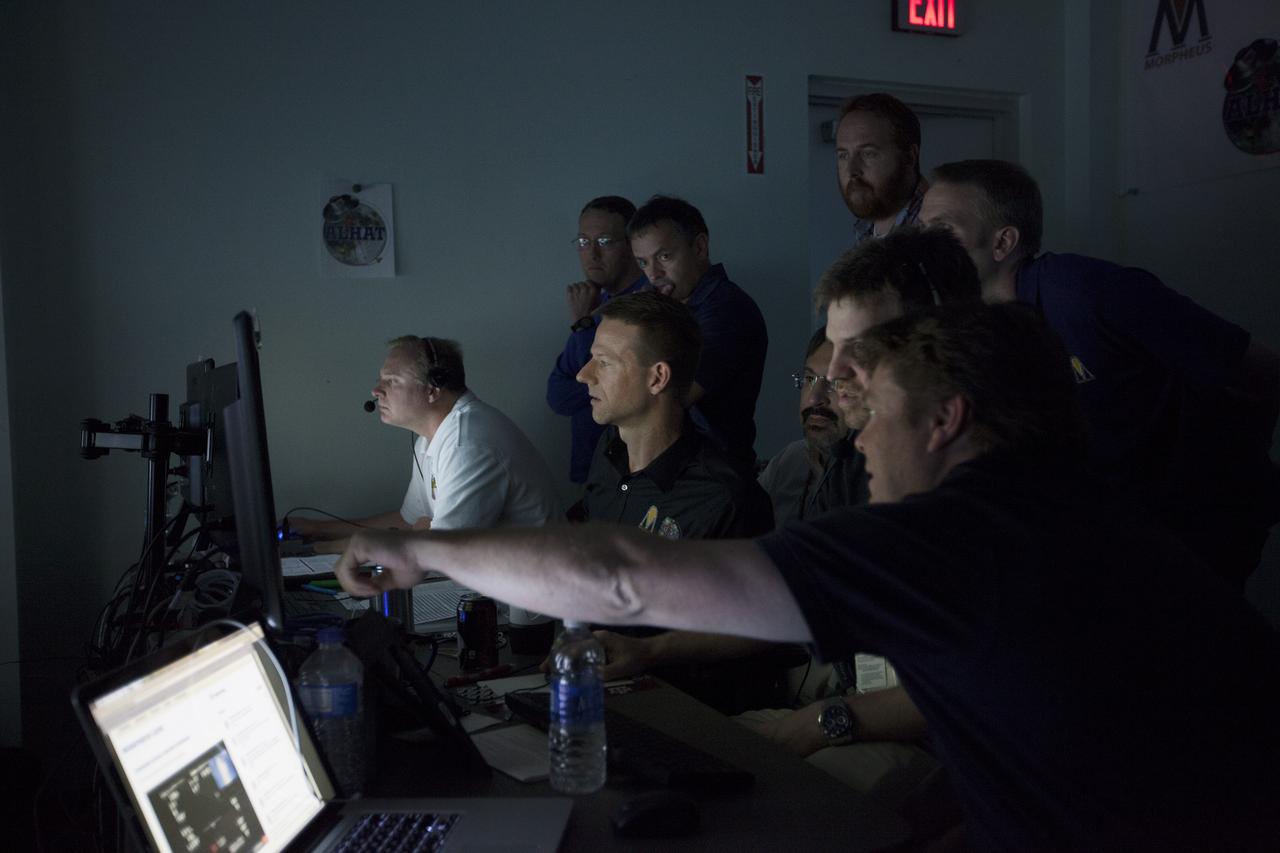
CAPE CANAVERAL, Fla. -- Engineers in the Morpheus Control Room monitor NASA's Project Morpheus prototype lander as it soars high on the first free flight test at night from a launch pad at the north end of the Shuttle Landing Facility at NASA's Kennedy Space Center in Florida. The 98-second test began at 10:02 p.m. EDT with the Morpheus lander launching from the ground over a flame trench and ascending more than 800 feet. The vehicle, with its autonomous landing and hazard avoidance technology, or ALHAT sensors, surveyed the hazard field to determine safe landing sites. Morpheus then flew forward and downward covering approximately 1,300 feet while performing a 78-foot divert to simulate a hazard avoidance maneuver. The lander then descended and landed on a dedicated pad inside the test field. Project Morpheus tests NASA’s ALHAT and an engine that runs on liquid oxygen and methane, which are green propellants. These new capabilities could be used in future efforts to deliver cargo to planetary surfaces. The landing facility provides the lander with the kind of field necessary for realistic testing, complete with rocks, craters and hazards to avoid. Morpheus’ ALHAT payload allows it to navigate to clear landing sites amidst rocks, craters and other hazards during its descent. Project Morpheus is being managed under the Advanced Exploration Systems, or AES, Division in NASA’s Human Exploration and Operations Mission Directorate. The efforts in AES pioneer new approaches for rapidly developing prototype systems, demonstrating key capabilities and validating operational concepts for future human missions beyond Earth orbit. For more information on Project Morpheus, visit http://morpheuslander.jsc.nasa.gov/. Photo credit: NASA/Kim Shiflett
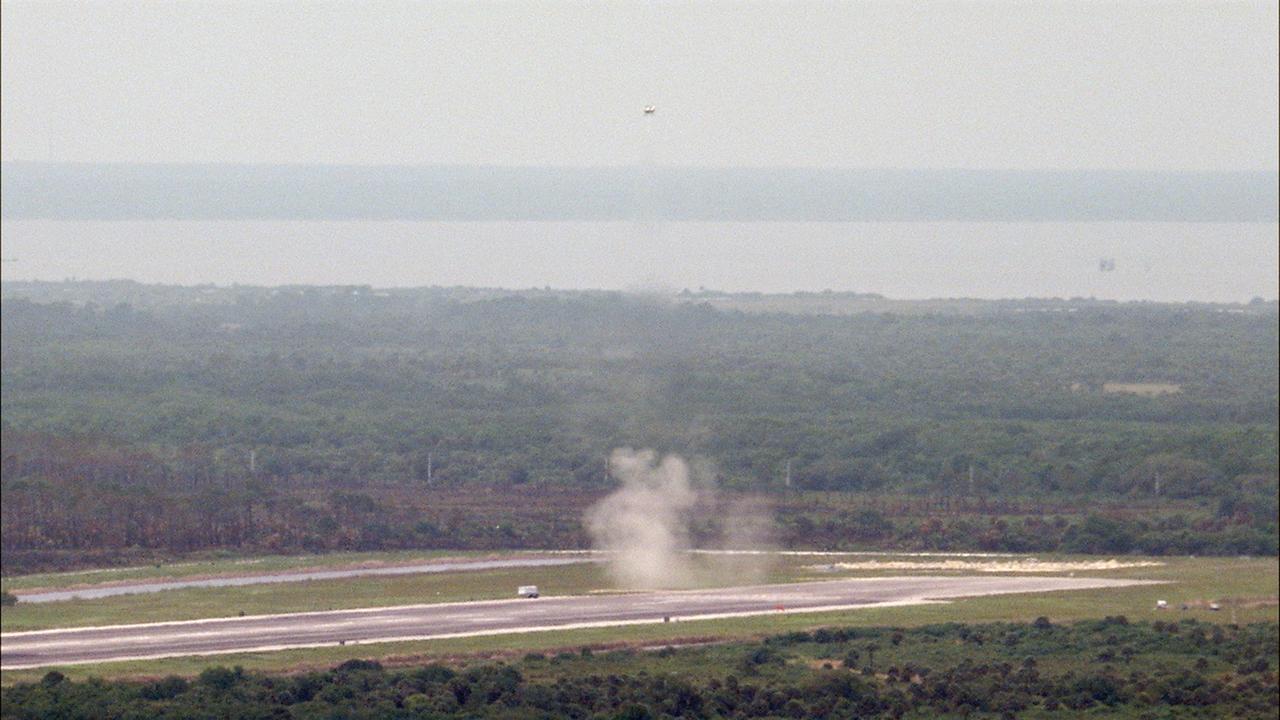
CAPE CANAVERAL, Fla. – NASA's Project Morpheus prototype lander soars high after lifting off on a free-flight test from a new launch pad at the north end of the Shuttle Landing Facility at NASA's Kennedy Space Center in Florida. The 98-second test began at 1:57 p.m. EDT with the Morpheus lander launching from the ground over a flame trench and ascending more than 800 feet at a peak speed of 36 mph. The vehicle, with its recently installed autonomous landing and hazard avoidance technology, or ALHAT, sensors surveyed the hazard field to determine safe landing sites. Morpheus then flew forward and downward covering approximately 1300 feet while performing a 78-foot divert to simulate a hazard avoidance maneuver. The lander descended and landed on a dedicated pad inside the ALHAT hazard field. Project Morpheus tests NASA’s ALHAT and an engine that runs on liquid oxygen and methane, which are green propellants. These new capabilities could be used in future efforts to deliver cargo to planetary surfaces. The landing facility provides the lander with the kind of field necessary for realistic testing, complete with rocks, craters and hazards to avoid. Morpheus’ ALHAT payload allows it to navigate to clear landing sites amidst rocks, craters and other hazards during its descent. Project Morpheus is being managed under the Advanced Exploration Systems, or AES, Division in NASA’s Human Exploration and Operations Mission Directorate. The efforts in AES pioneer new approaches for rapidly developing prototype systems, demonstrating key capabilities and validating operational concepts for future human missions beyond Earth orbit. For more information on Project Morpheus, visit http://morpheuslander.jsc.nasa.gov/. Photo credit: NASA/Frankie Martin
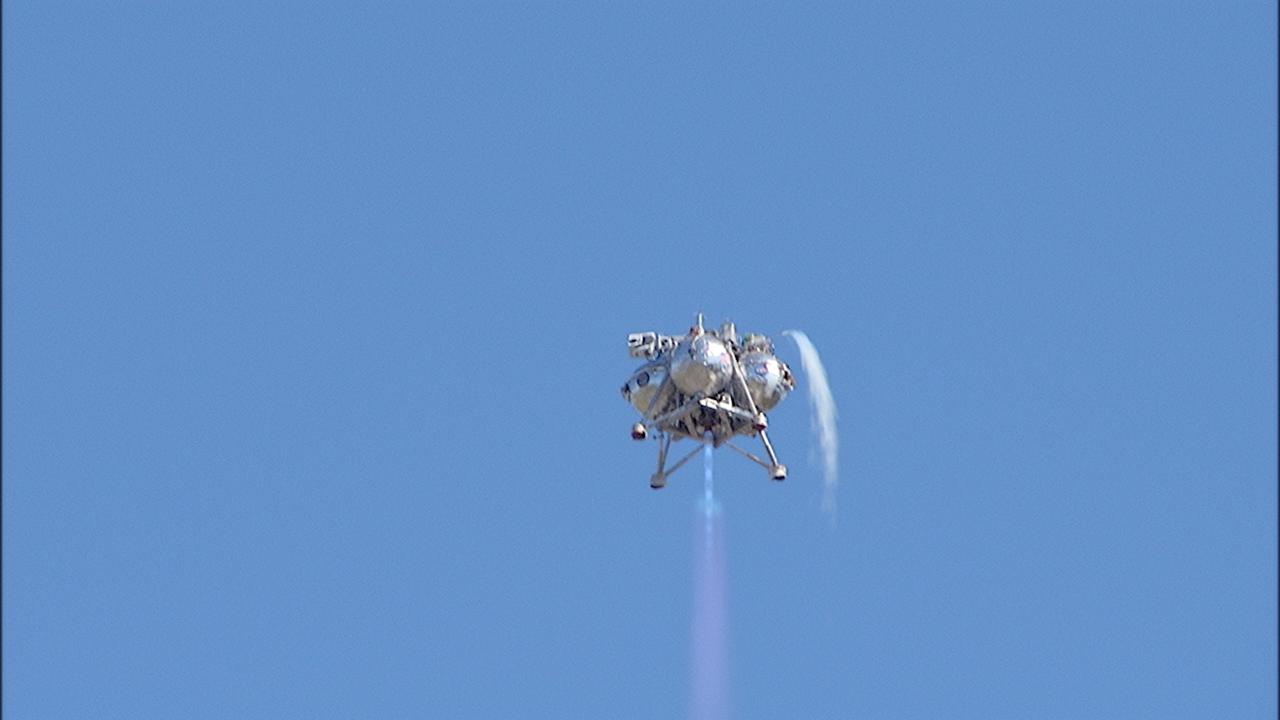
CAPE CANAVERAL, Fla. – NASA's Project Morpheus prototype lander soars high during a free flight test at the north end of the Shuttle Landing Facility at NASA's Kennedy Space Center in Florida. The 96-second test began at 4:21 p.m. EDT with the Morpheus lander launching from the ground over the flame trench at a new launch site and ascending more than 800 feet at a peak speed of 36 mph. The vehicle with its recently installed autonomous landing and hazard avoidance technology, or ALHAT, sensors surveyed the hazard field to determine safe landing sites. Morpheus then flew forward and downward covering 1,300 feet while performing a 78-foot divert to simulate a hazard avoidance maneuver. The lander descended and landed on a dedicated pad inside the ALHAT field. Project Morpheus tests NASA’s ALHAT, and an engine that runs on liquid oxygen and methane, or green propellants, into a fully-operational lander that could deliver cargo to other planetary surfaces. The landing facility provides the lander with the kind of field necessary for realistic testing, complete with rocks, craters and hazards to avoid. Morpheus’ ALHAT payload allows it to navigate to clear landing sites amidst rocks, craters and other hazards during its descent. Project Morpheus is being managed under the Advanced Exploration Systems, or AES, Division in NASA’s Human Exploration and Operations Mission Directorate. The efforts in AES pioneer new approaches for rapidly developing prototype systems, demonstrating key capabilities and validating operational concepts for future human missions beyond Earth orbit. For more information on Project Morpheus, visit http://morpheuslander.jsc.nasa.gov/. Photo credit: NASA/Frankie Martin
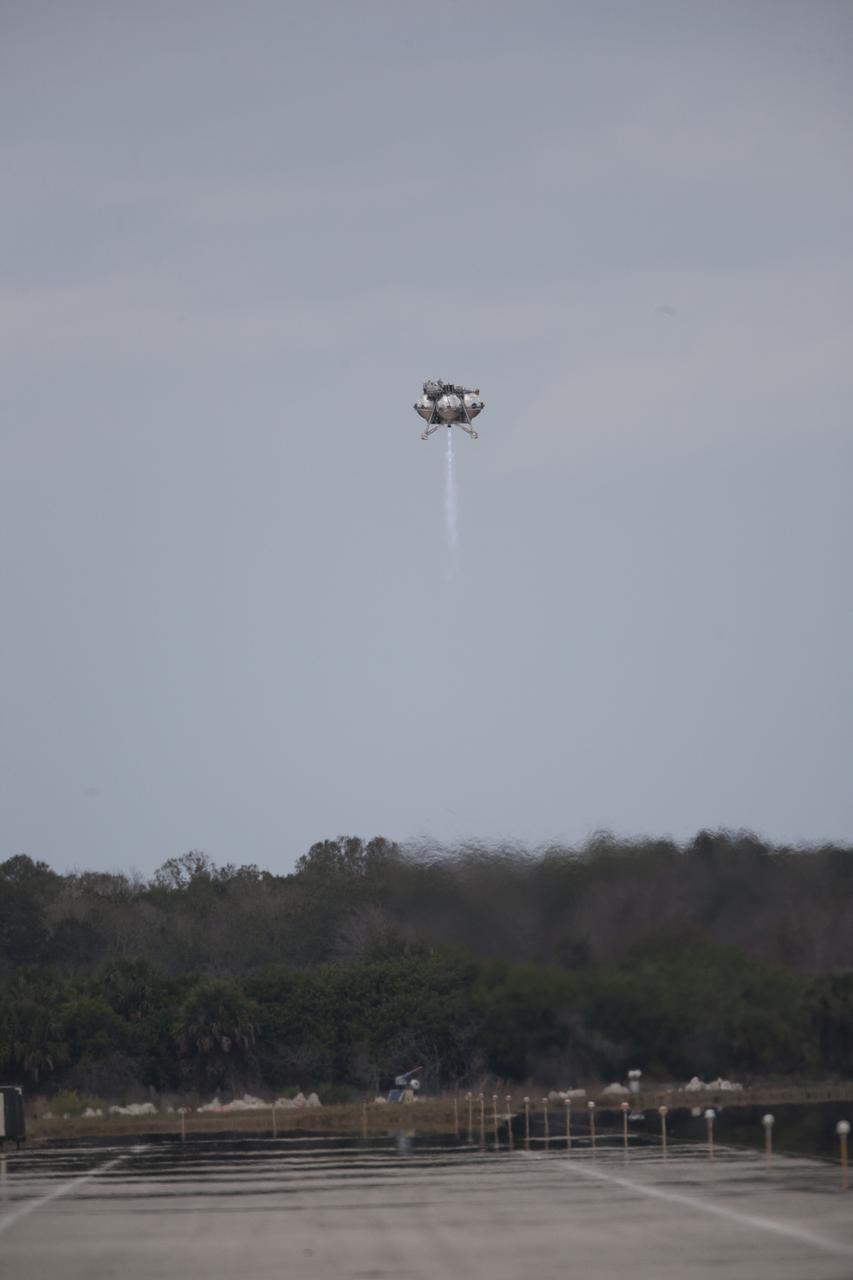
CAPE CANAVERAL, Fla. – The Project Morpheus prototype lander soars high after launching on its fourth free flight test at the north end of the Shuttle Landing Facility at NASA’s Kennedy Space Center in Florida. The 64-second test began at 1:15 p.m. EST with the Morpheus lander launching from the ground over a flame trench and ascending about 305 feet, significantly increasing the ascent velocity from the last test. The lander flew forward, covering about 358 feet in 25 seconds before descending and landing within 15 inches of its target on a dedicated pad inside the autonomous landing and hazard avoidance technology, or ALHAT, hazard field. Project Morpheus tests NASA’s ALHAT and an engine that runs on liquid oxygen and methane, or green propellants, into a fully-operational lander that could deliver cargo to other planetary surfaces. The landing facility provides the lander with the kind of field necessary for realistic testing, complete with rocks, craters and hazards to avoid. Morpheus’ ALHAT payload allows it to navigate to clear landing sites amidst rocks, craters and other hazards during its descent. Project Morpheus is being managed under the Advanced Exploration Systems, or AES, Division in NASA’s Human Exploration and Operations Mission Directorate. The efforts in AES pioneer new approaches for rapidly developing prototype systems, demonstrating key capabilities and validating operational concepts for future human missions beyond Earth orbit. For more information on Project Morpheus, visit http://www.nasa.gov/centers/johnson/exploration/morpheus. Photo credit: NASA/Kim Shiflett
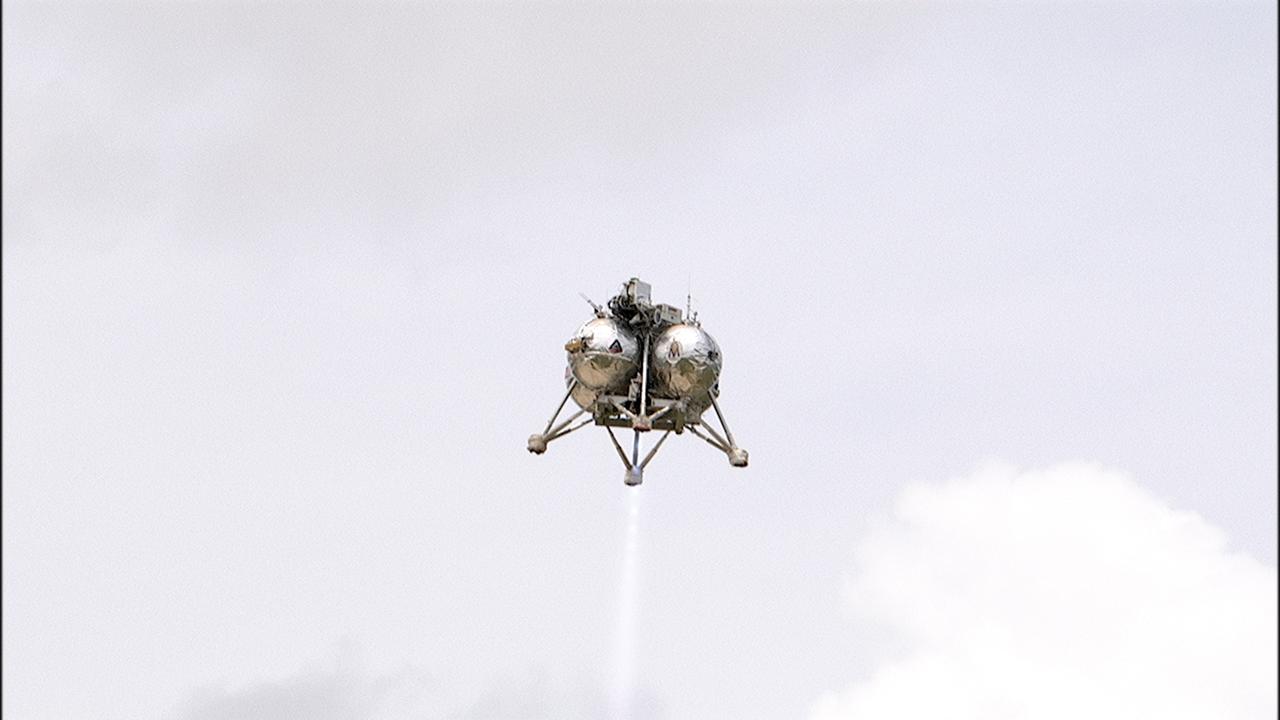
CAPE CANAVERAL, Fla. – NASA's Project Morpheus prototype lander soars high after lifting off on a free-flight test from a new launch pad at the north end of the Shuttle Landing Facility at NASA's Kennedy Space Center in Florida. The 98-second test began at 1:57 p.m. EDT with the Morpheus lander launching from the ground over a flame trench and ascending more than 800 feet at a peak speed of 36 mph. The vehicle, with its recently installed autonomous landing and hazard avoidance technology, or ALHAT, sensors surveyed the hazard field to determine safe landing sites. Morpheus then flew forward and downward covering approximately 1300 feet while performing a 78-foot divert to simulate a hazard avoidance maneuver. The lander descended and landed on a dedicated pad inside the ALHAT hazard field. Project Morpheus tests NASA’s ALHAT and an engine that runs on liquid oxygen and methane, which are green propellants. These new capabilities could be used in future efforts to deliver cargo to planetary surfaces. The landing facility provides the lander with the kind of field necessary for realistic testing, complete with rocks, craters and hazards to avoid. Morpheus’ ALHAT payload allows it to navigate to clear landing sites amidst rocks, craters and other hazards during its descent. Project Morpheus is being managed under the Advanced Exploration Systems, or AES, Division in NASA’s Human Exploration and Operations Mission Directorate. The efforts in AES pioneer new approaches for rapidly developing prototype systems, demonstrating key capabilities and validating operational concepts for future human missions beyond Earth orbit. For more information on Project Morpheus, visit http://morpheuslander.jsc.nasa.gov/. Photo credit: NASA/Frankie Martin

CAPE CANAVERAL, Fla. – The Project Morpheus prototype lander soars high after launching on its fourth free flight test at the north end of the Shuttle Landing Facility at NASA’s Kennedy Space Center in Florida. The 64-second test began at 1:15 p.m. EST with the Morpheus lander launching from the ground over a flame trench and ascending about 305 feet, significantly increasing the ascent velocity from the last test. The lander flew forward, covering about 358 feet in 25 seconds before descending and landing within 15 inches of its target on a dedicated pad inside the autonomous landing and hazard avoidance technology, or ALHAT, hazard field. Project Morpheus tests NASA’s ALHAT and an engine that runs on liquid oxygen and methane, or green propellants, into a fully-operational lander that could deliver cargo to other planetary surfaces. The landing facility provides the lander with the kind of field necessary for realistic testing, complete with rocks, craters and hazards to avoid. Morpheus’ ALHAT payload allows it to navigate to clear landing sites amidst rocks, craters and other hazards during its descent. Project Morpheus is being managed under the Advanced Exploration Systems, or AES, Division in NASA’s Human Exploration and Operations Mission Directorate. The efforts in AES pioneer new approaches for rapidly developing prototype systems, demonstrating key capabilities and validating operational concepts for future human missions beyond Earth orbit. For more information on Project Morpheus, visit http://www.nasa.gov/centers/johnson/exploration/morpheus. Photo credit: NASA/Kim Shiflett
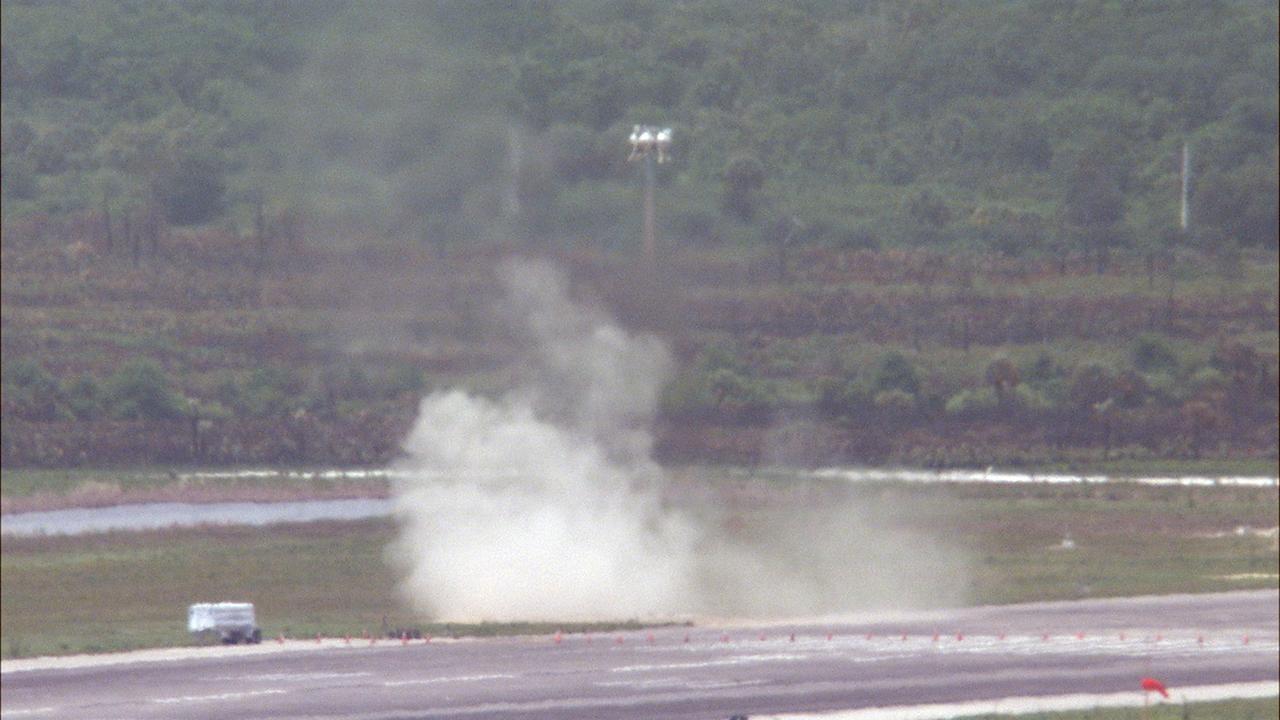
CAPE CANAVERAL, Fla. – NASA's Project Morpheus prototype lander soars high after lifting off on a free-flight test from a new launch pad at the north end of the Shuttle Landing Facility at NASA's Kennedy Space Center in Florida. The 98-second test began at 1:57 p.m. EDT with the Morpheus lander launching from the ground over a flame trench and ascending more than 800 feet at a peak speed of 36 mph. The vehicle, with its recently installed autonomous landing and hazard avoidance technology, or ALHAT, sensors surveyed the hazard field to determine safe landing sites. Morpheus then flew forward and downward covering approximately 1300 feet while performing a 78-foot divert to simulate a hazard avoidance maneuver. The lander descended and landed on a dedicated pad inside the ALHAT hazard field. Project Morpheus tests NASA’s ALHAT and an engine that runs on liquid oxygen and methane, which are green propellants. These new capabilities could be used in future efforts to deliver cargo to planetary surfaces. The landing facility provides the lander with the kind of field necessary for realistic testing, complete with rocks, craters and hazards to avoid. Morpheus’ ALHAT payload allows it to navigate to clear landing sites amidst rocks, craters and other hazards during its descent. Project Morpheus is being managed under the Advanced Exploration Systems, or AES, Division in NASA’s Human Exploration and Operations Mission Directorate. The efforts in AES pioneer new approaches for rapidly developing prototype systems, demonstrating key capabilities and validating operational concepts for future human missions beyond Earth orbit. For more information on Project Morpheus, visit http://morpheuslander.jsc.nasa.gov/. Photo credit: NASA/Frankie Martin