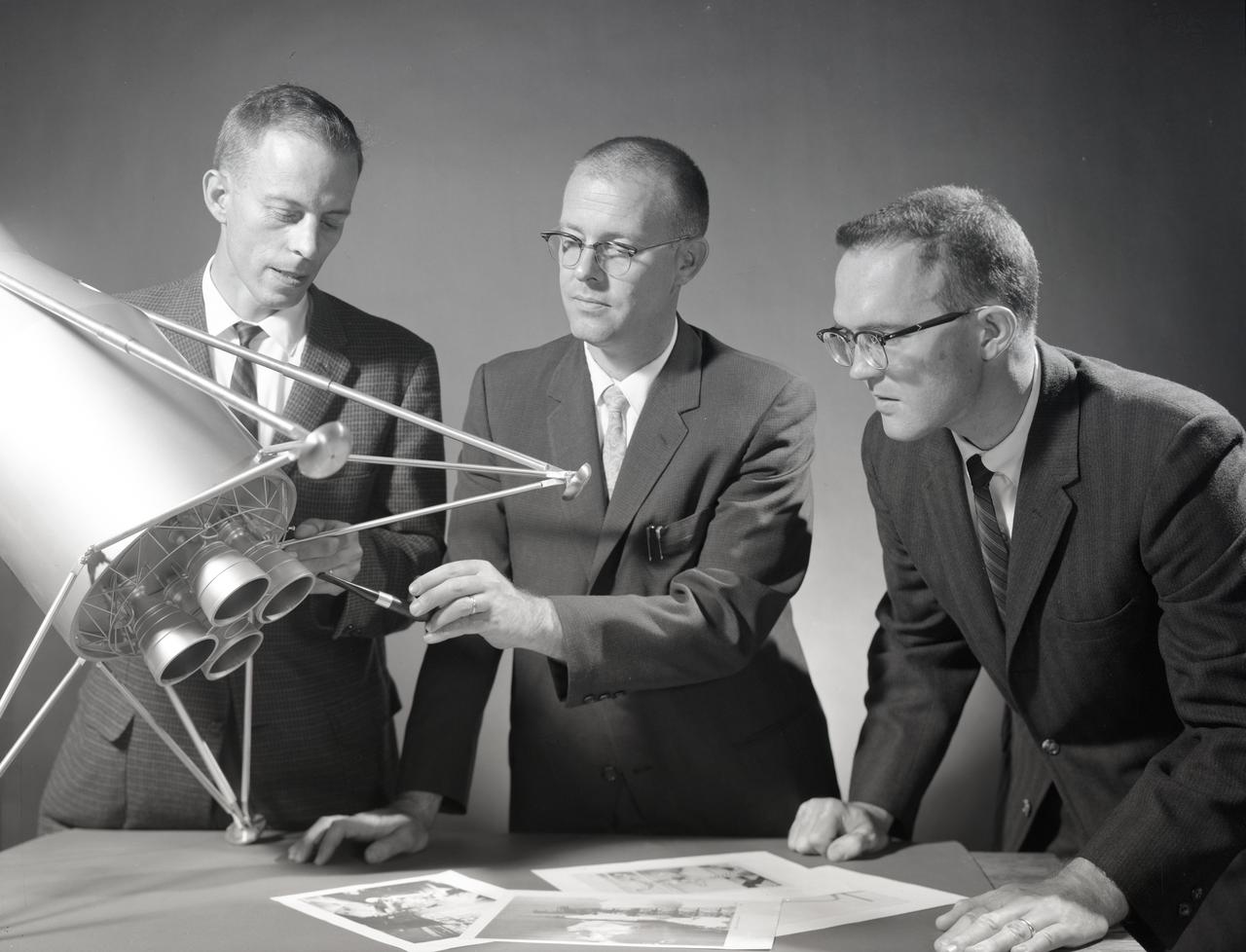
NASA ENGINEERS DISCUSSING APOLLO PROJECT
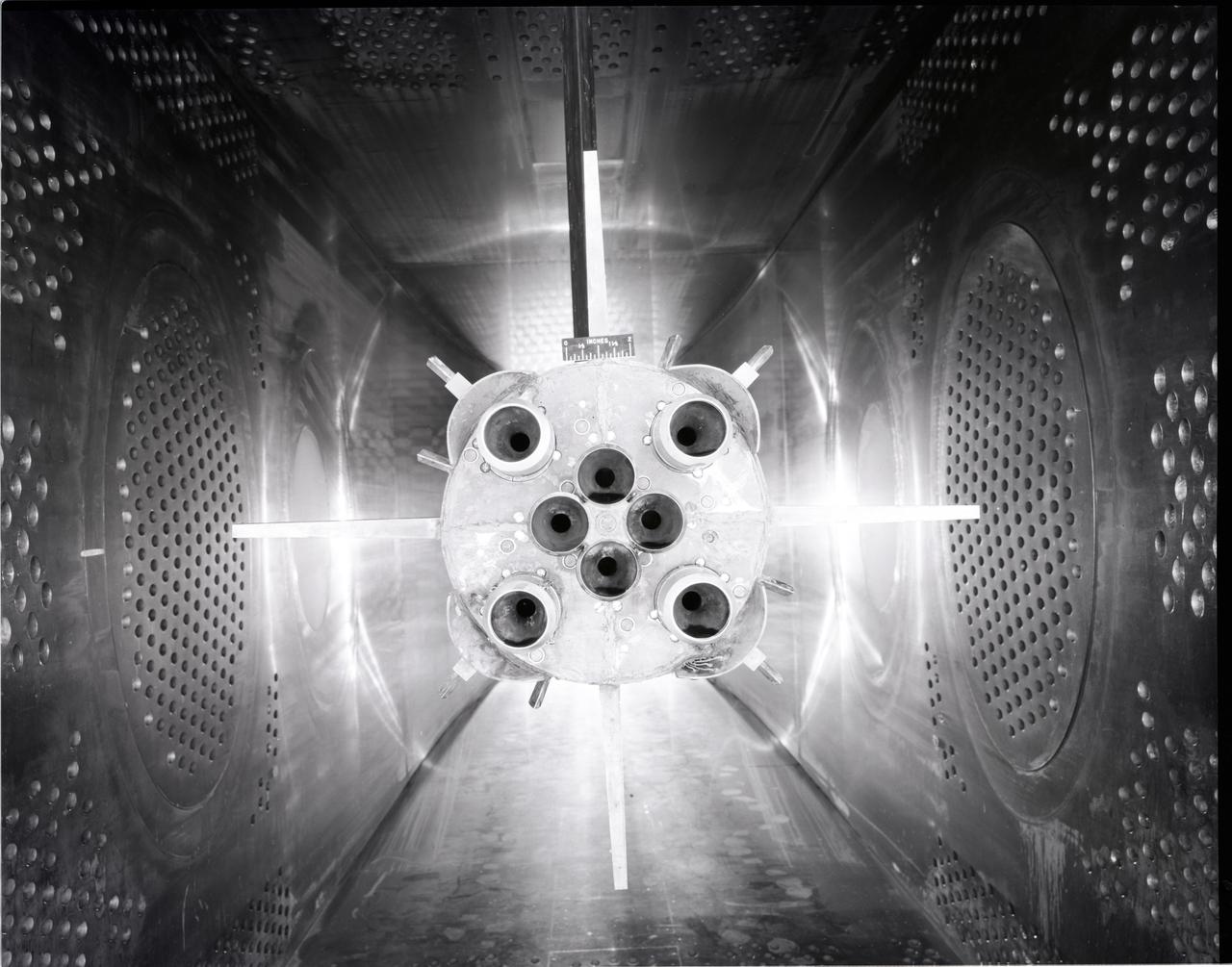
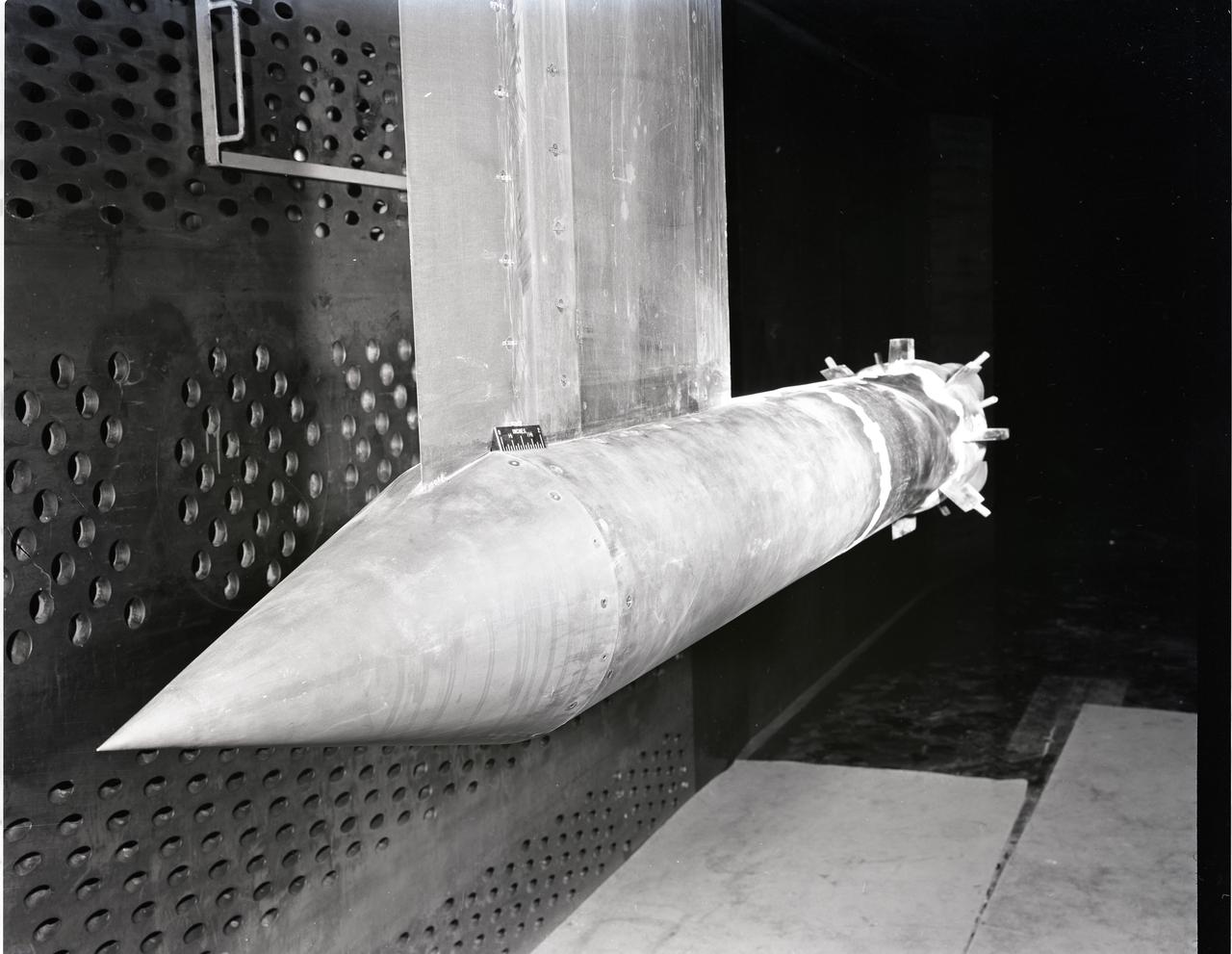
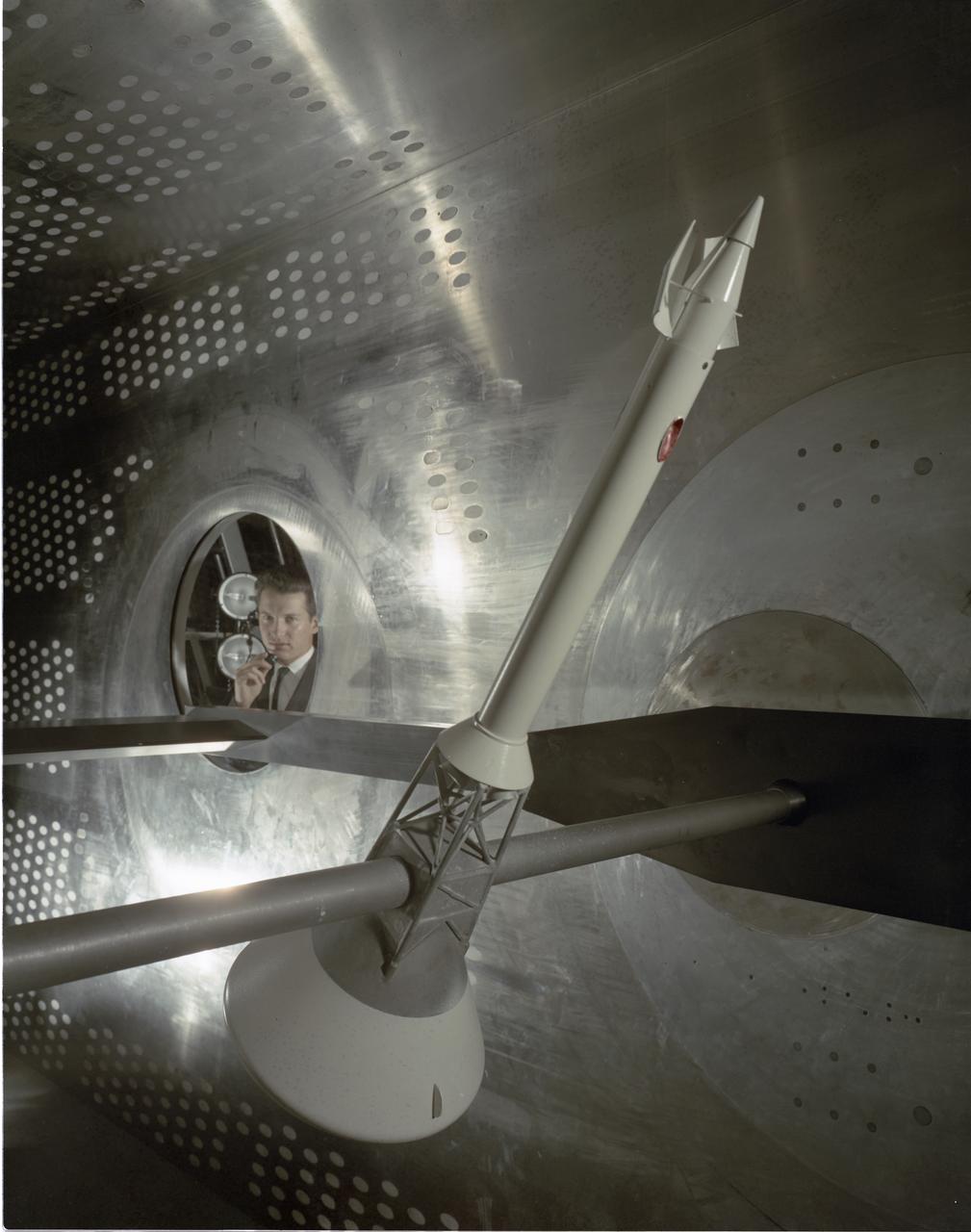
APOLLO CONFIGURATION OF SATURN MODEL IN THE 8X6-FOOT SUPERSONIC WIND TUNNEL
APOLLO CONFIGURATION OF SATURN MODEL IN THE 8X6-FOOT SUPERSONIC
APOLLO CONFIGURATION OF SATURN MODEL IN THE 8X6-FOOT SUPERSONIC WIND TUNNEL
APOLLO CONFIGURATION OF SATURN MODEL IN THE 8X6-FOOT SUPERSONIC
APOLLO CONFIGURATION OF SATURN MODEL IN THE 8X6-FOOT SUPERSONIC WIND TUNNEL
APOLLO CONFIGURATION OF SATURN MODEL IN THE 8X6-FOOT SUPERSONIC
APOLLO CONFIGURATION OF SATURN MODEL IN THE 8X6-FOOT SUPERSONIC WIND TUNNEL
APOLLO CONFIGURATION OF SATURN MODEL IN THE 8X6-FOOT SUPERSONIC
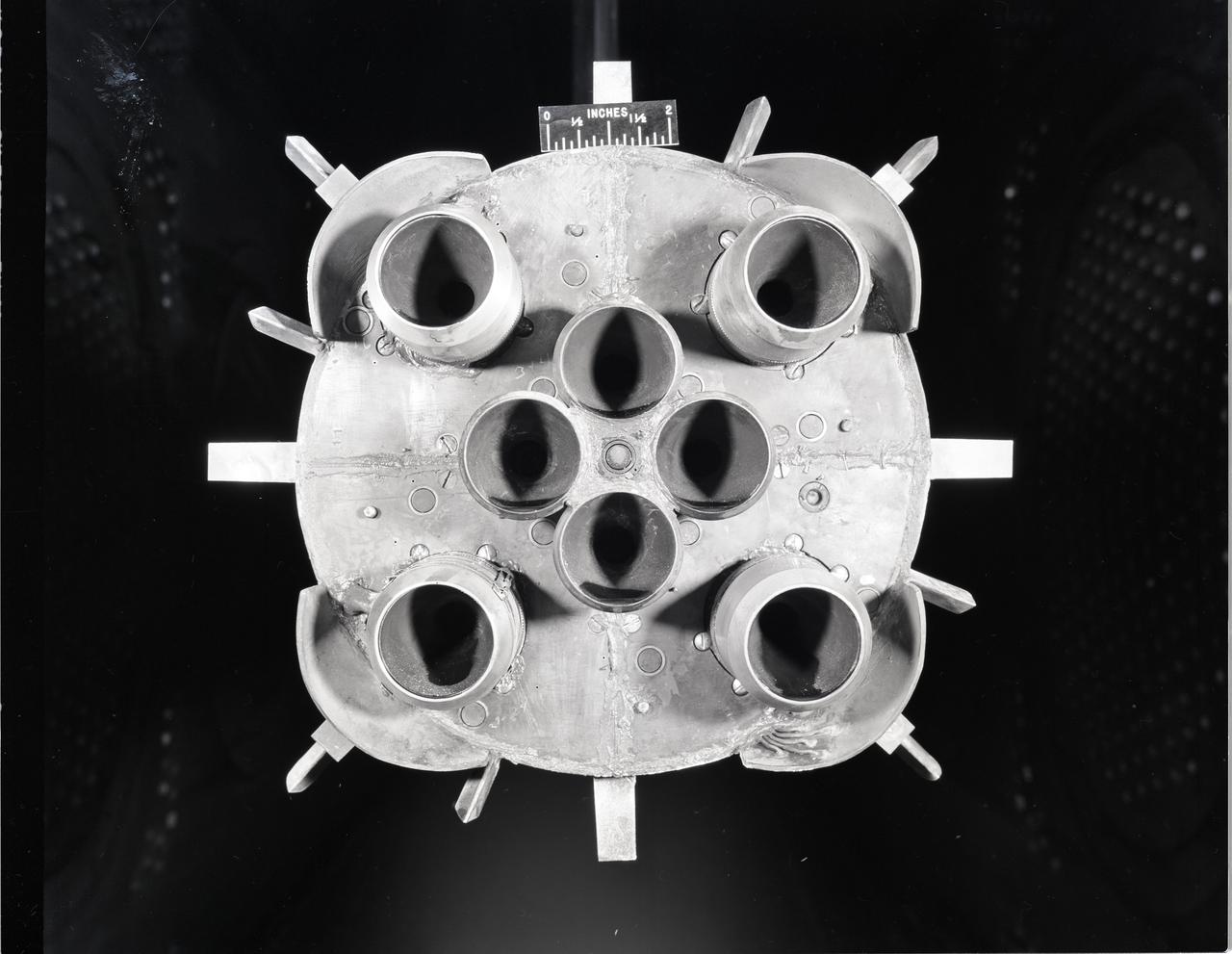
MODEL OF UPPER STAGES OF APOLLO
MODEL OF UPPER STAGES OF APOLLO`
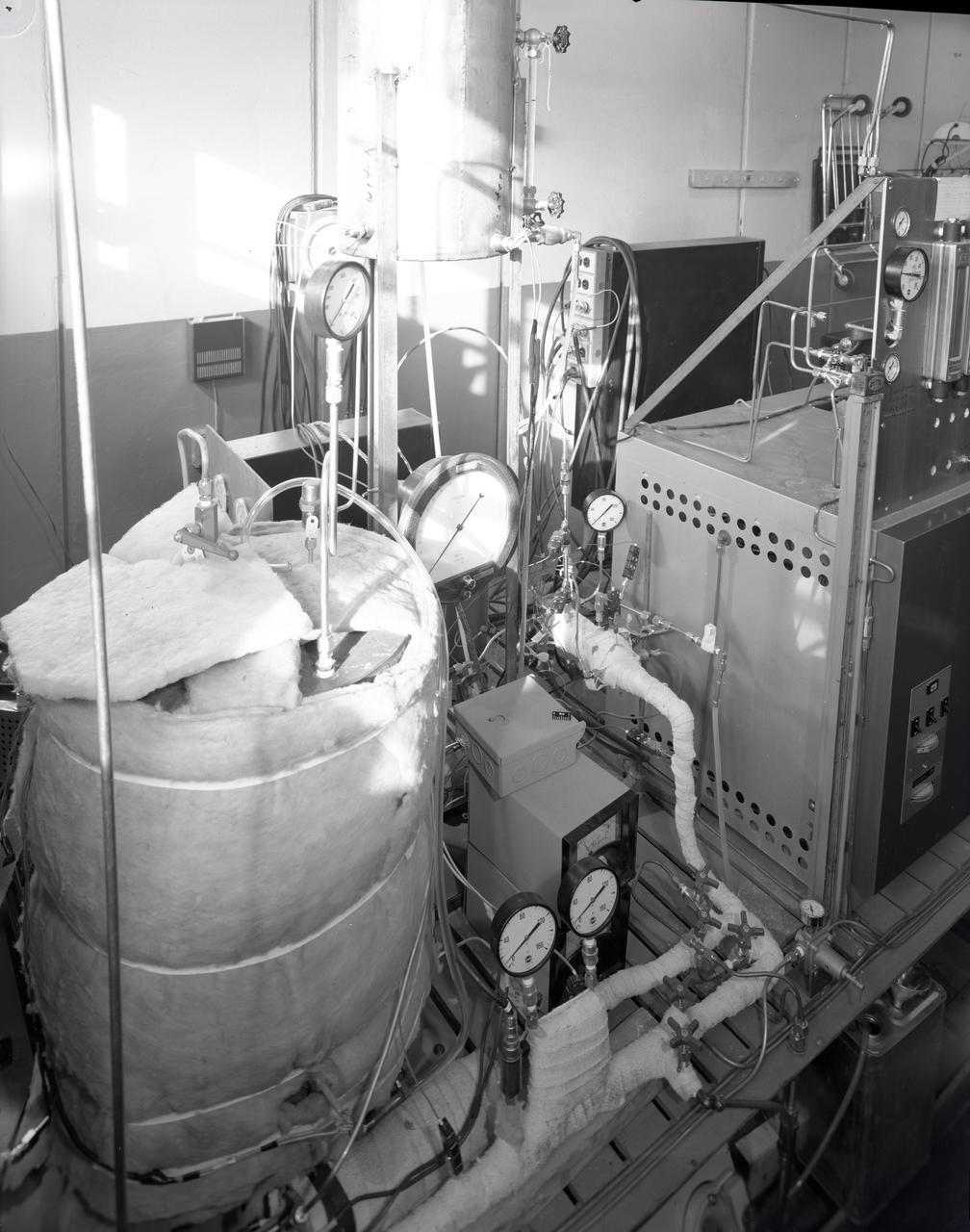
FUEL CELL CONDENSER FOR THE APOLLO SYSTEM TEST RIG
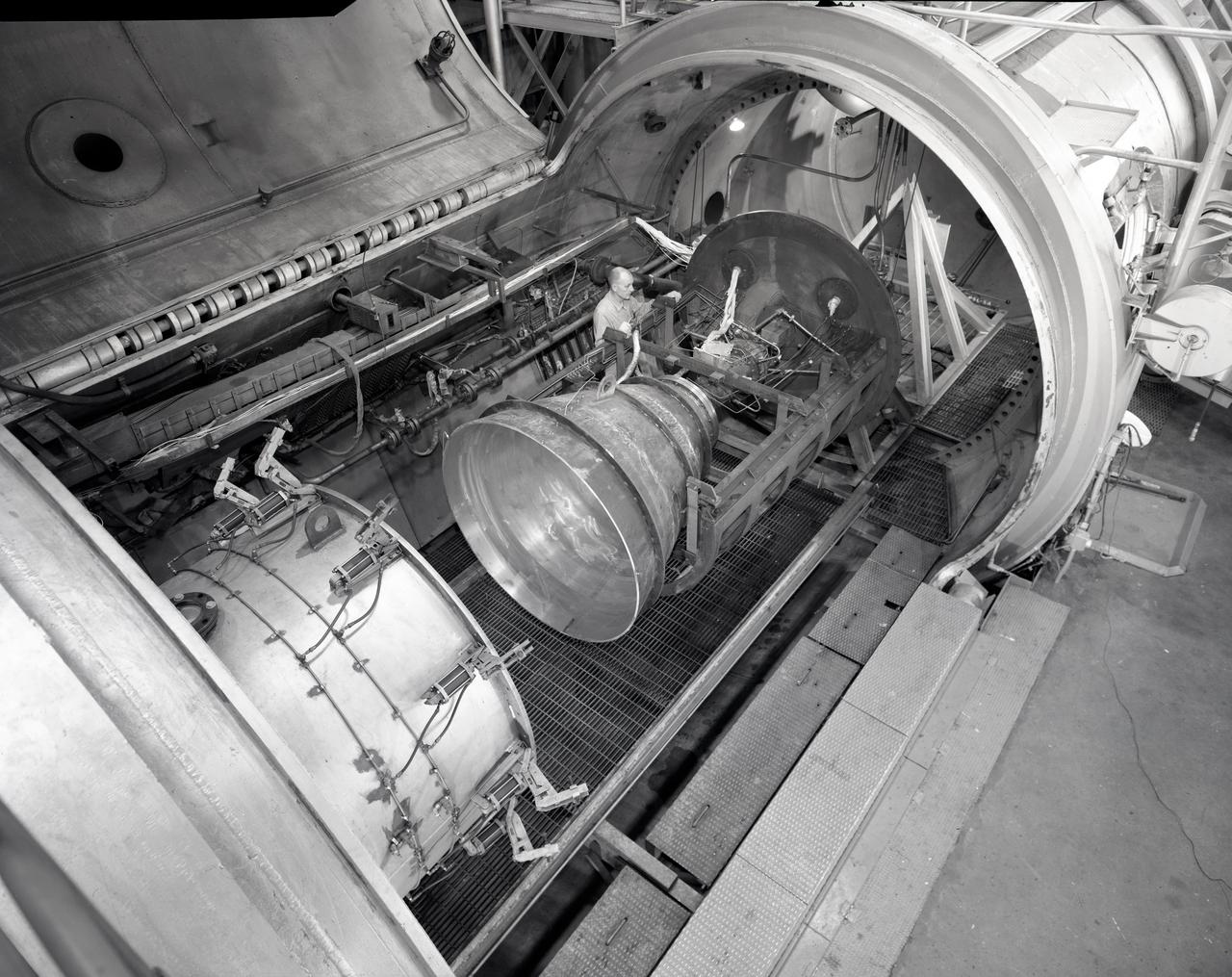
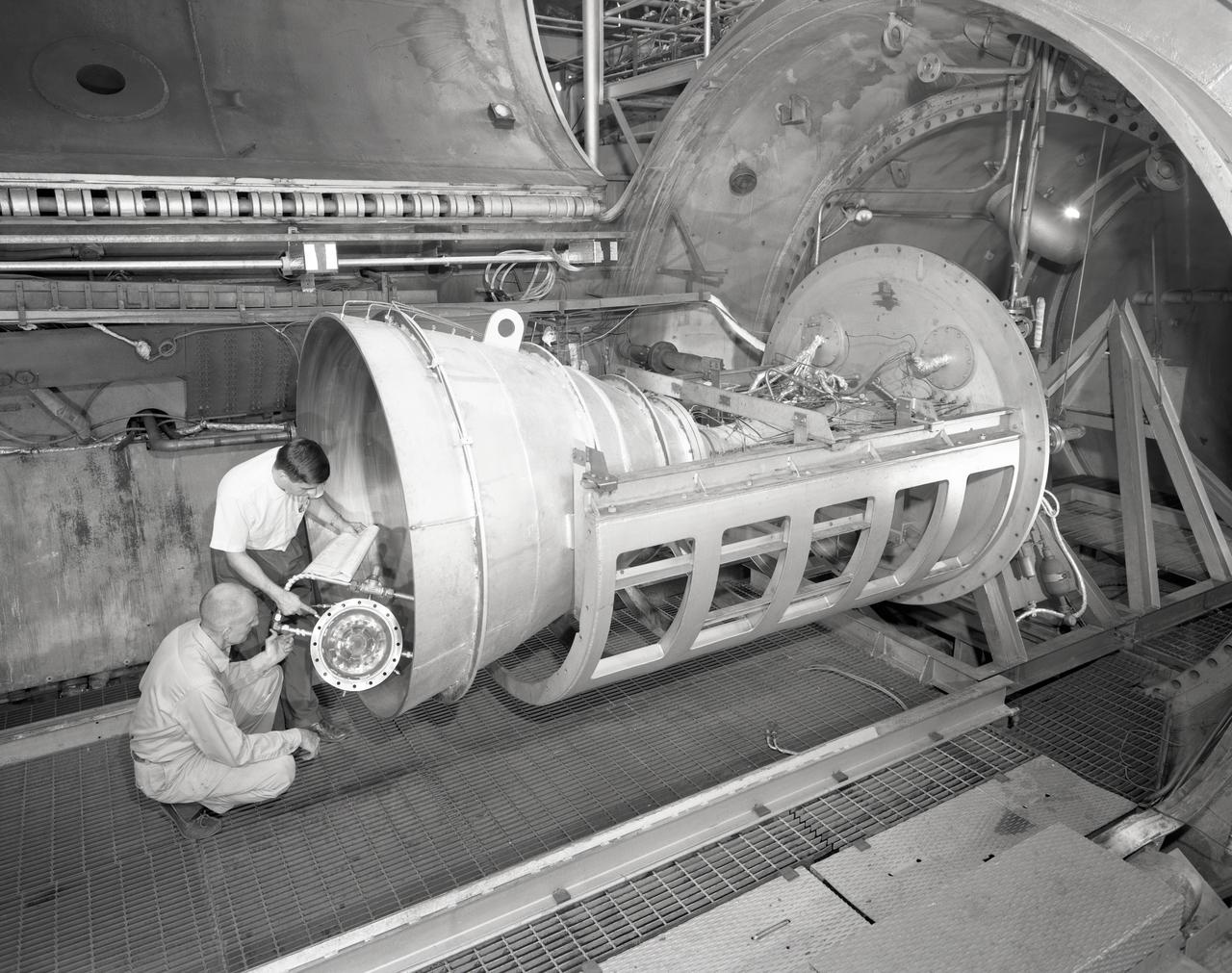
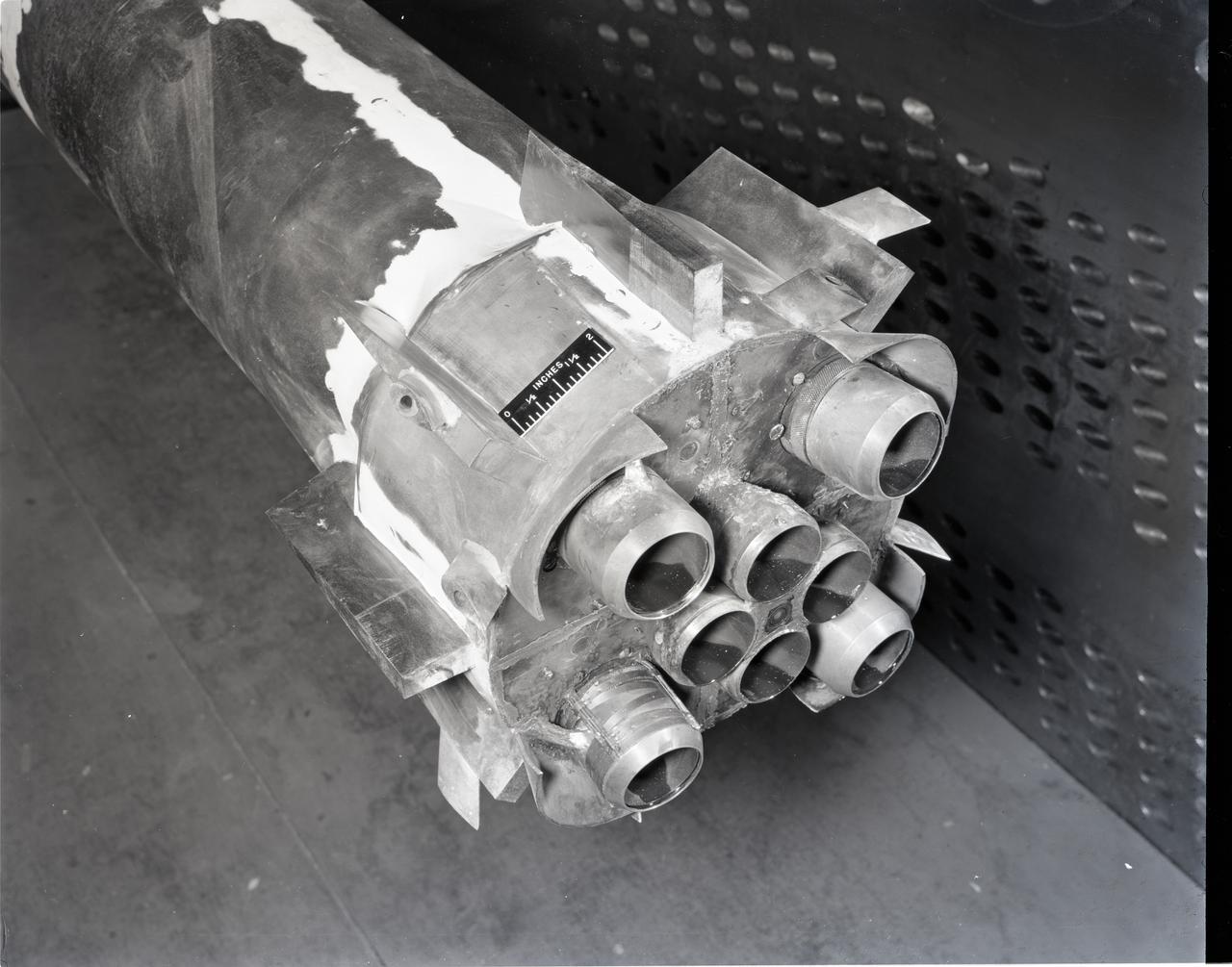
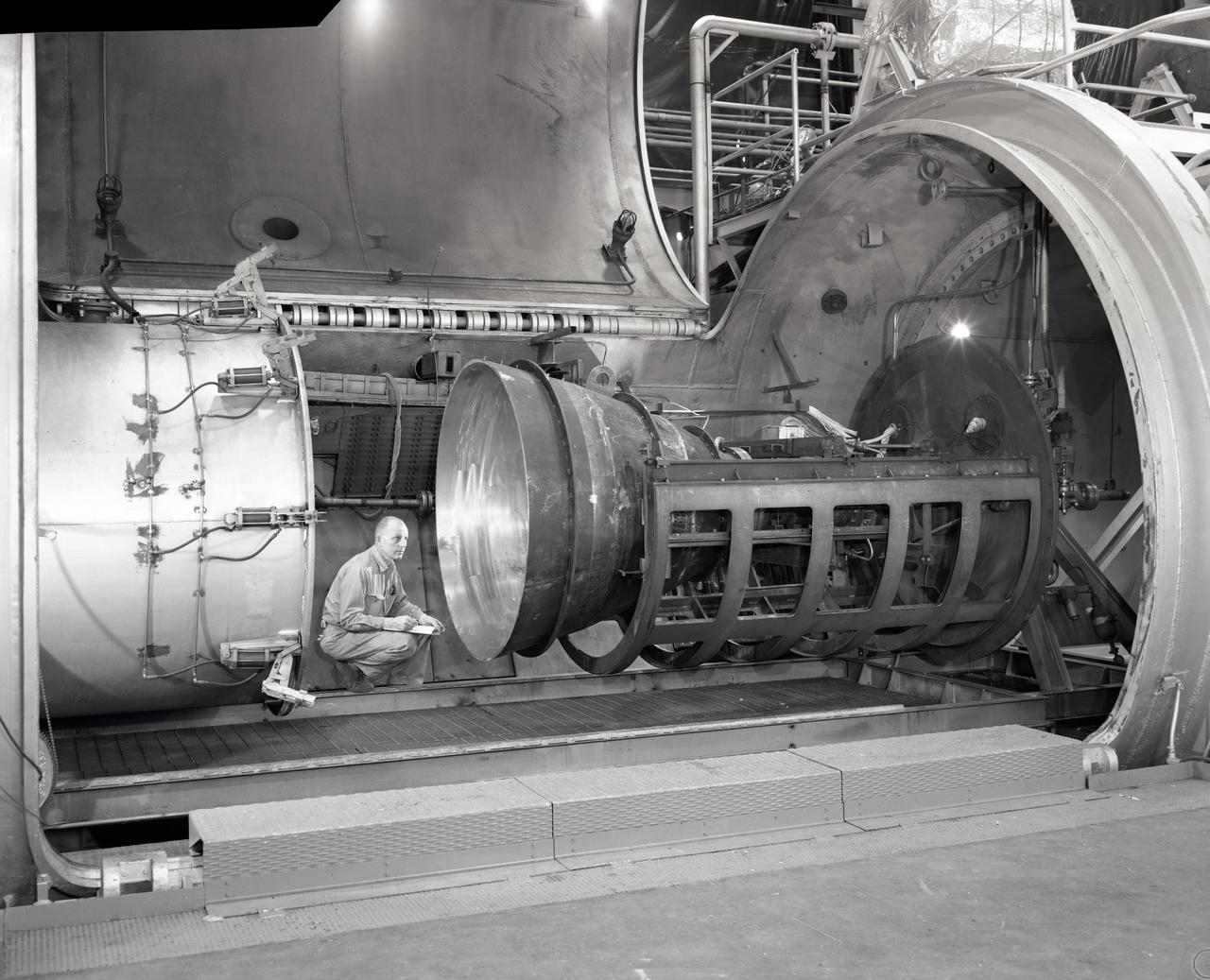
APOLLO CONTOUR ENGINE MOUNTED IN THE PROPULSION SYSTEMS LABORATORY PSL NO. 2 TEST CELL
APOLLO CONTOUR ENGINE MOUNTED IN THE PROPULSION SYSTEMS LABORATO
APOLLO CONTOUR ENGINE MOUNTED IN THE PROPULSION SYSTEMS LABORATORY PSL NO. 2 TEST CELL
APOLLO CONTOUR ENGINE MOUNTED IN THE PROPULSION SYSTEMS LABORATO
APOLLO CONTOUR ENGINE MOUNTED IN THE PROPULSION SYSTEMS LABORATORY PSL NO. 2 TEST CELL
APOLLO CONTOUR ENGINE MOUNTED IN THE PROPULSION SYSTEMS LABORATO
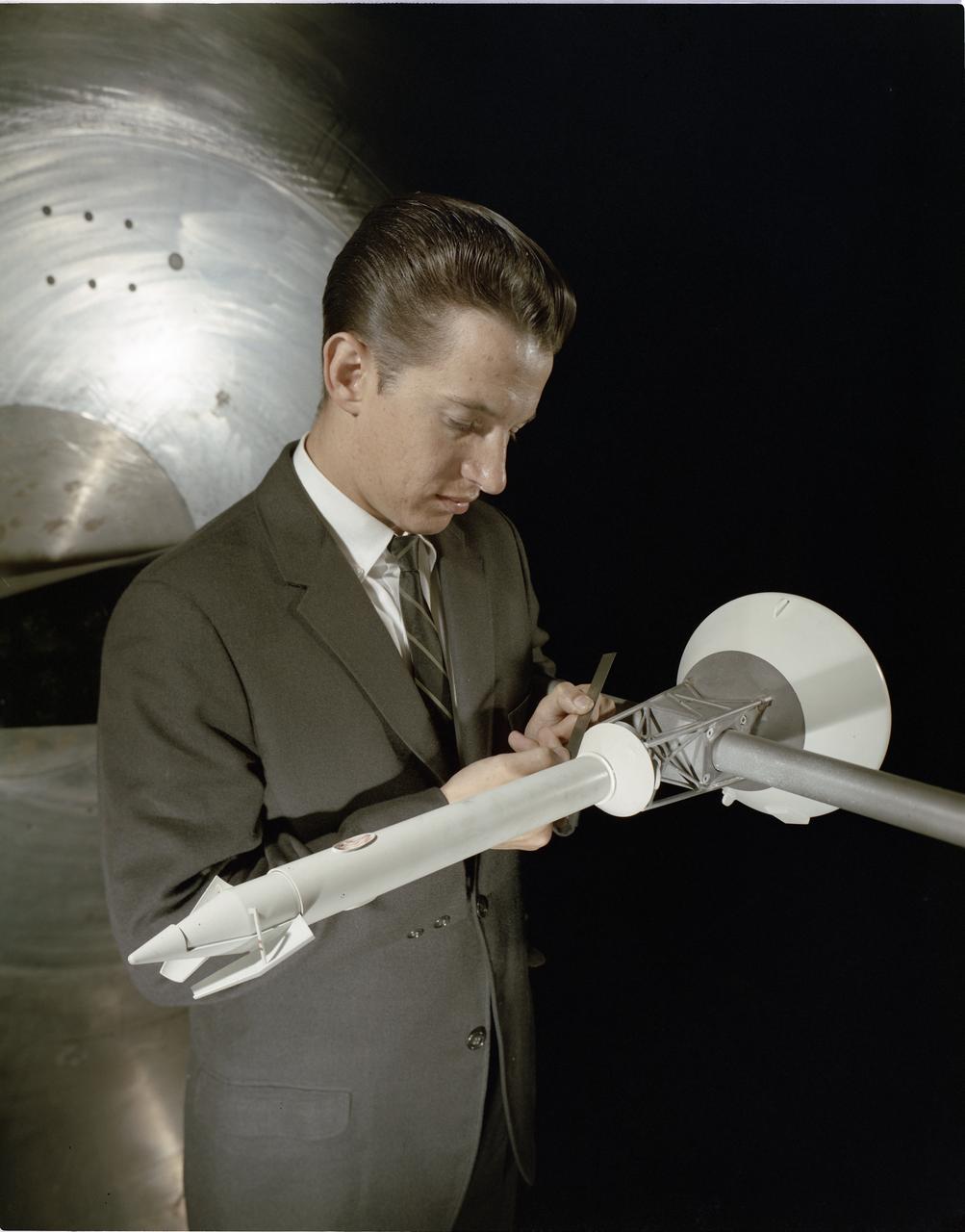
APOLLO STABILITY TEST IN THE 8X6 FOOT WIND TUNNEL - MODEL IS SHOWN WITH MODULE TOWER AND CANARDS
APOLLO STABILITY TEST IN THE 8X6 FOOT WIND TUNNEL - MODEL IS SHO
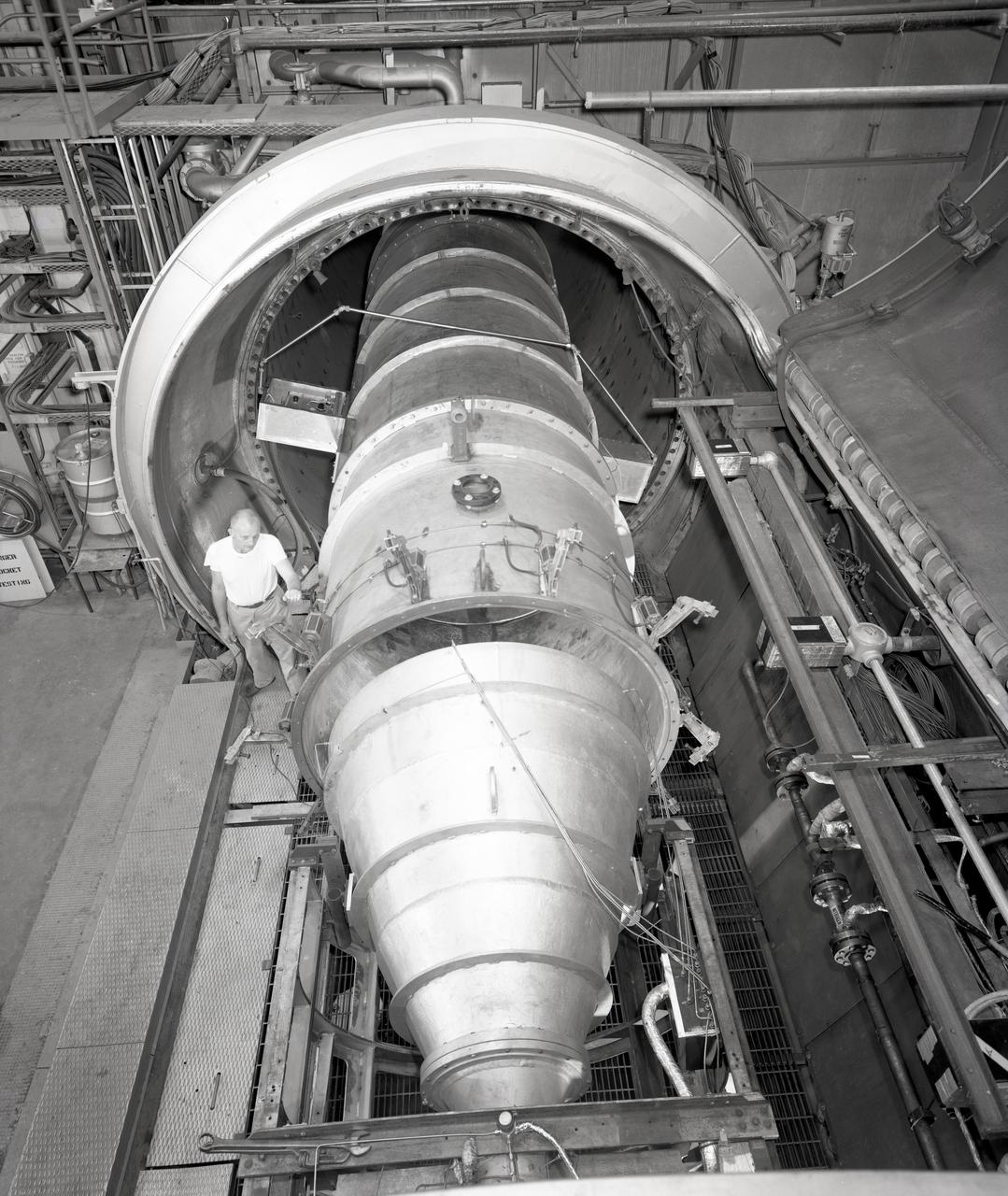
Apollo Contour Engine Model being tested in the NASA Lewis Research Center, Propulsion Systems Laboratory, PSL
Apollo Contour Engine Model being tested in the NASA Lewis Resea
.059 SCALE MODEL OF APOLLO LAUNCH ESCAPE SYSTEM
Apollo Contour Engine Model being tested in the NASA Lewis Research Center, Propulsion Systems Laboratory, PSL
Apollo Contour Engine Model being tested in the NASA Lewis Resea
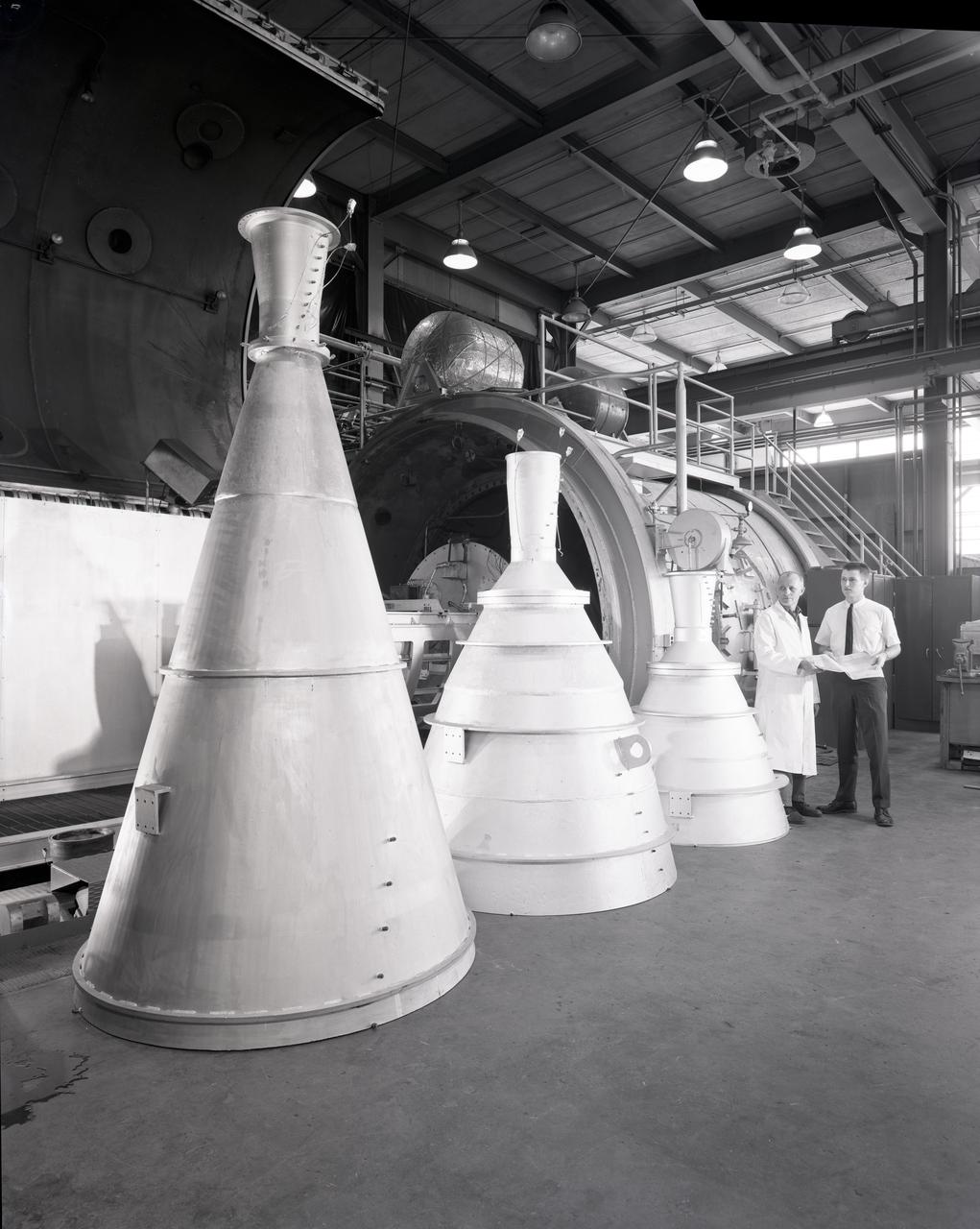
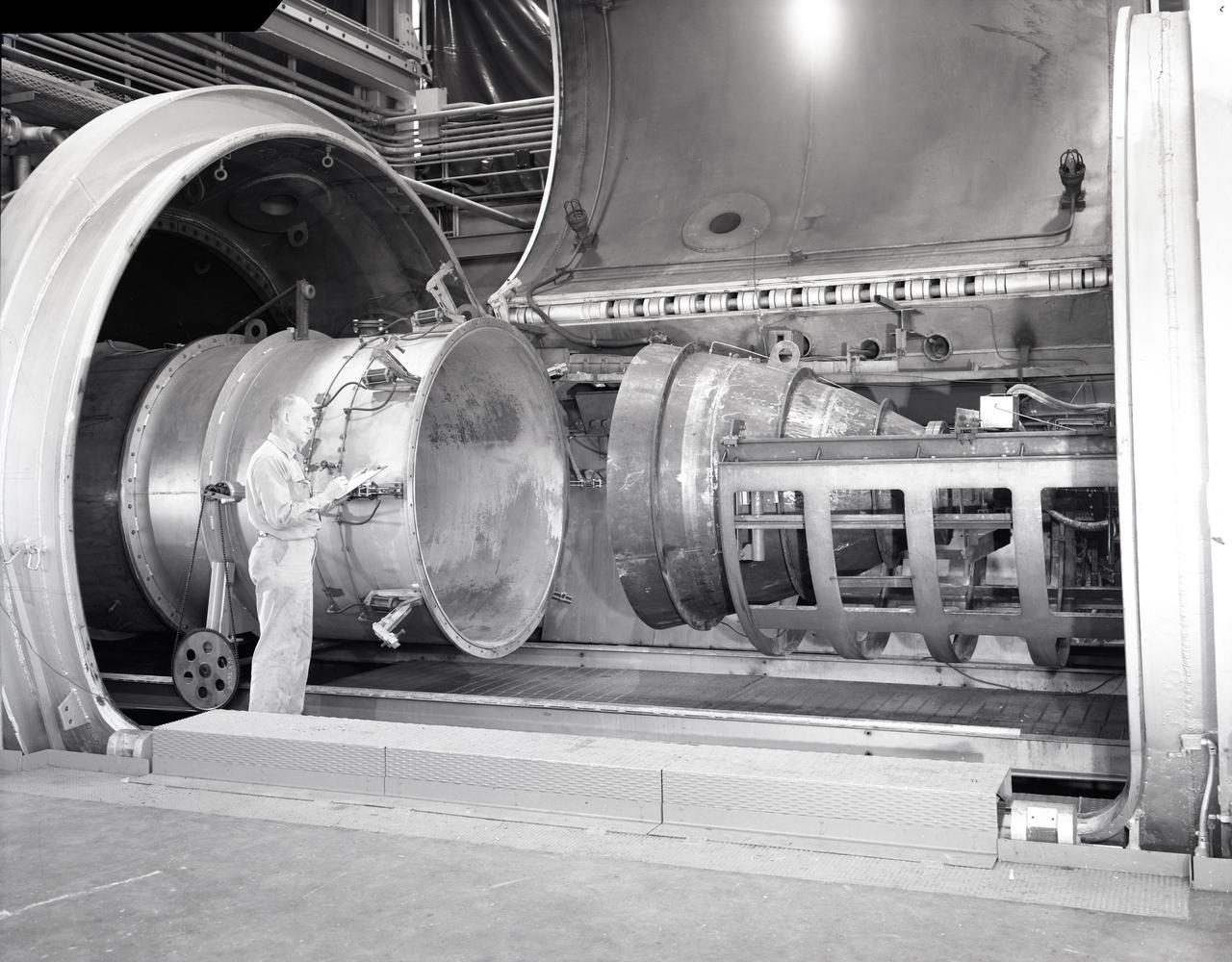
15 DEGREE CONICAL NOZZLE - TITAN TRANSTAGE CONTOUR ENGINE - APOLLO
15 DEGREE CONICAL NOZZLE - TITAN TRANSTAGE CONTOUR ENGINE - APOL
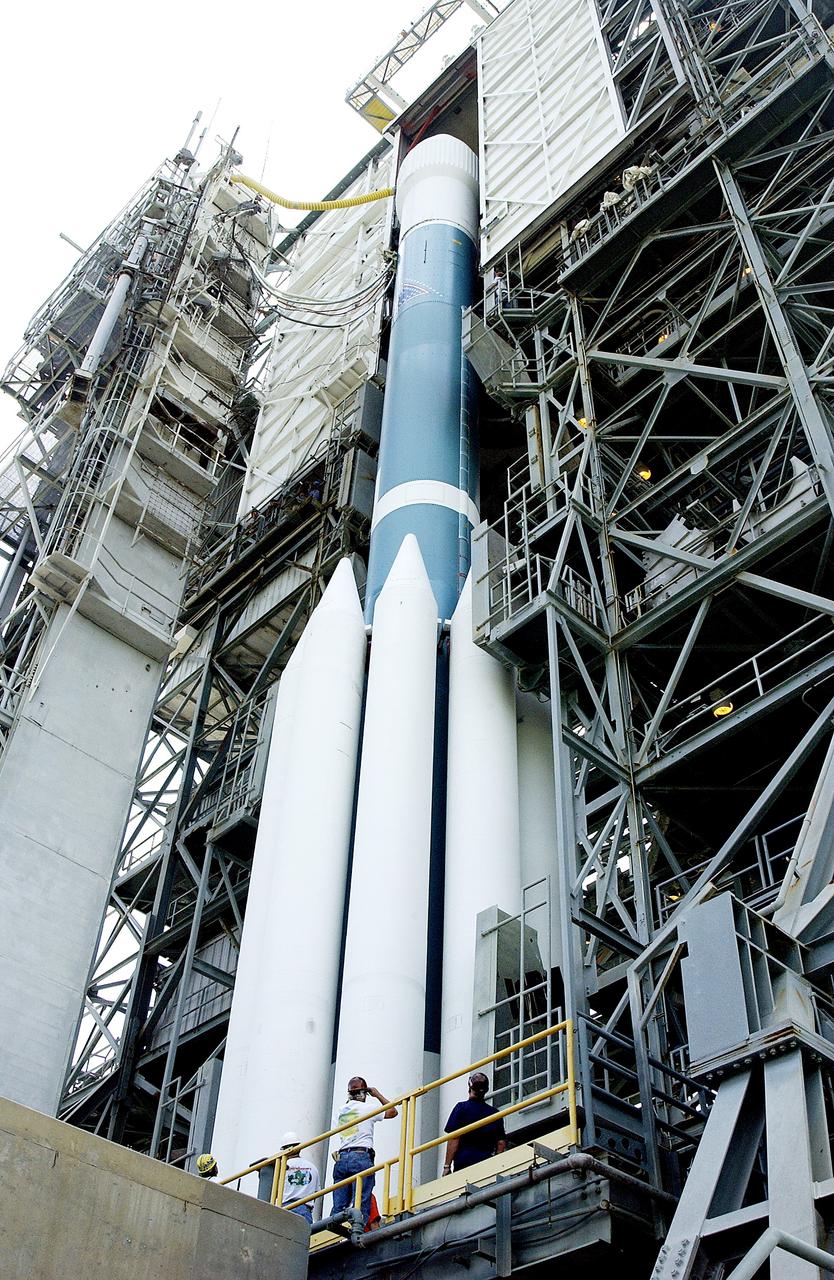
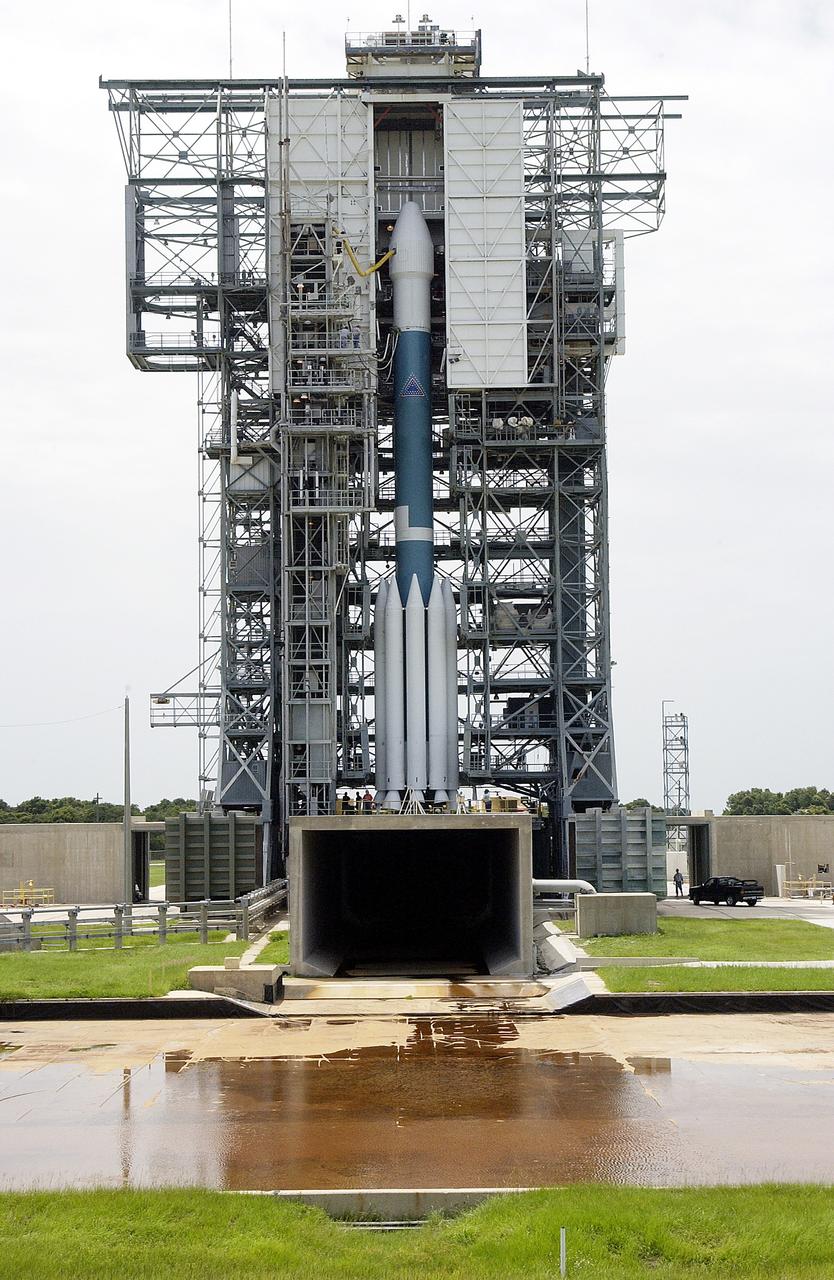
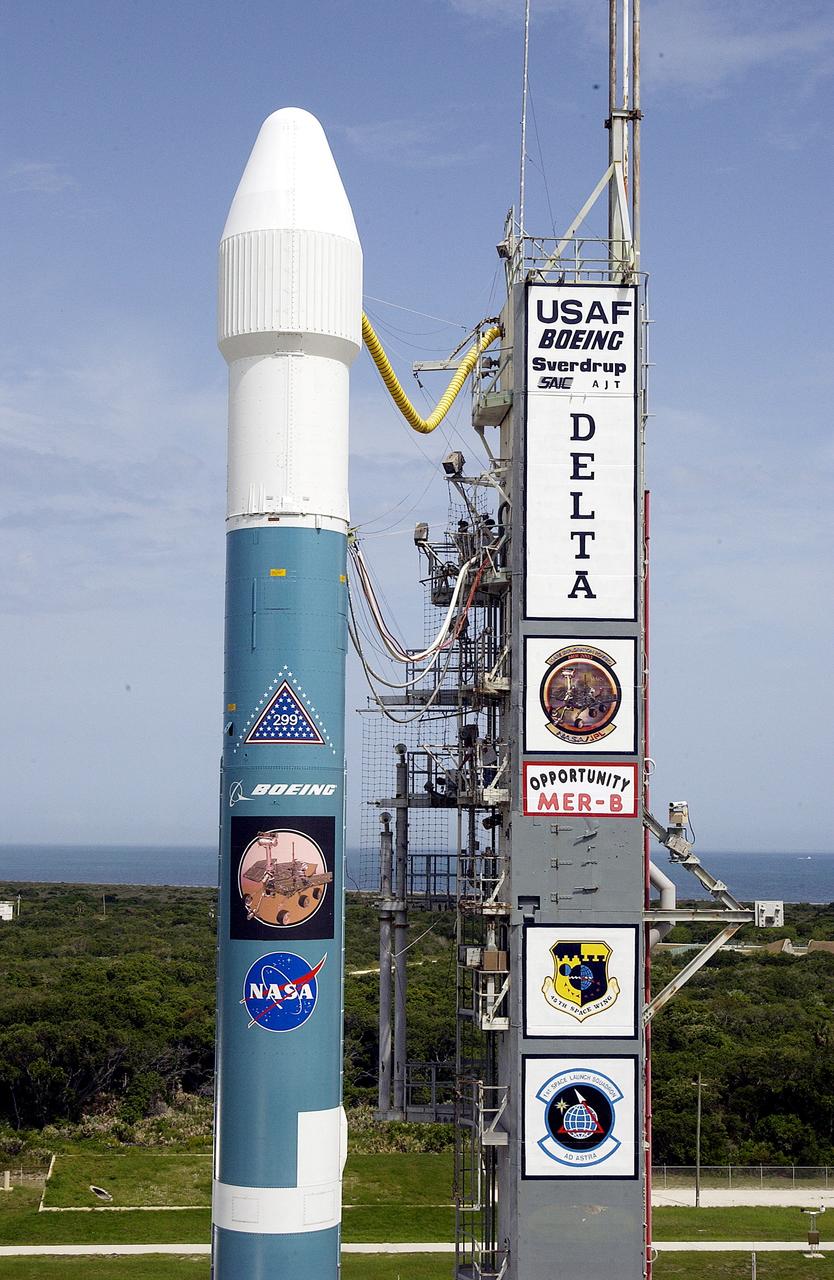
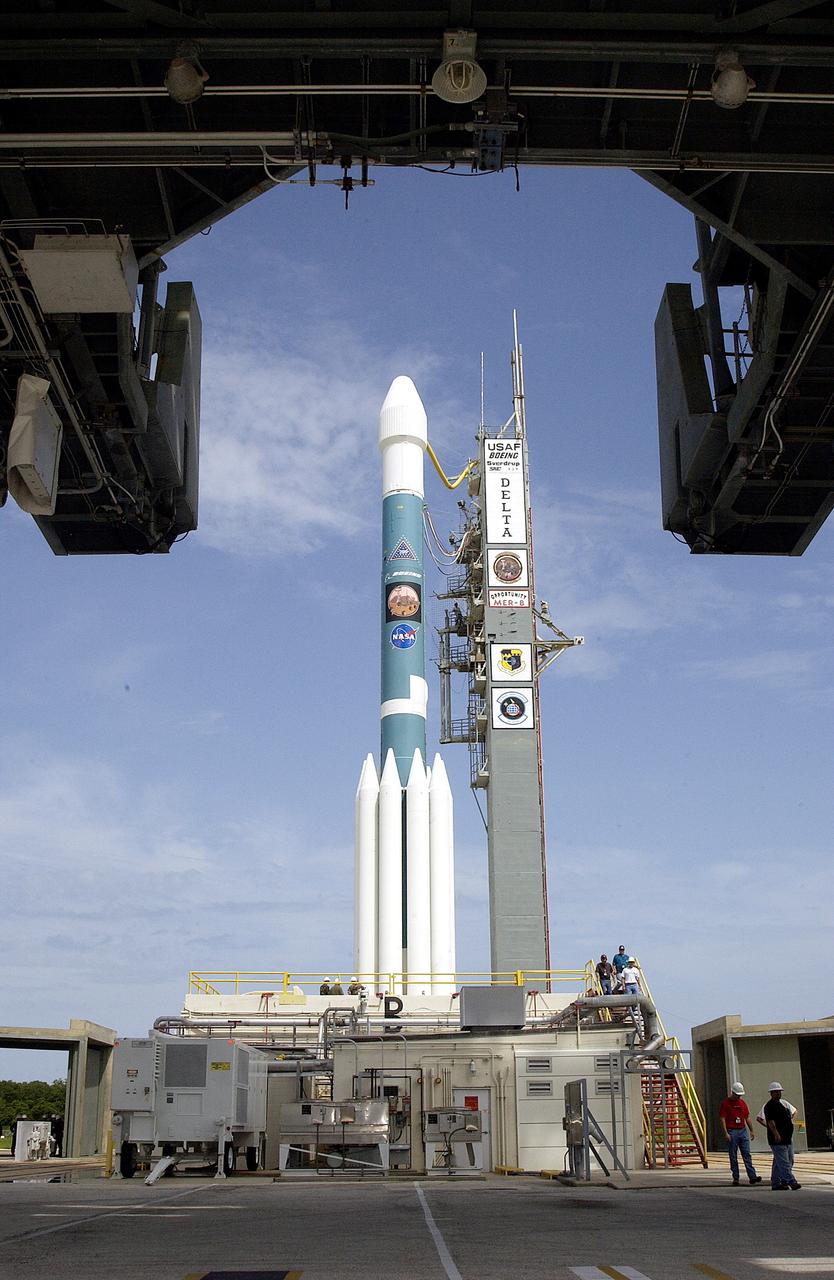
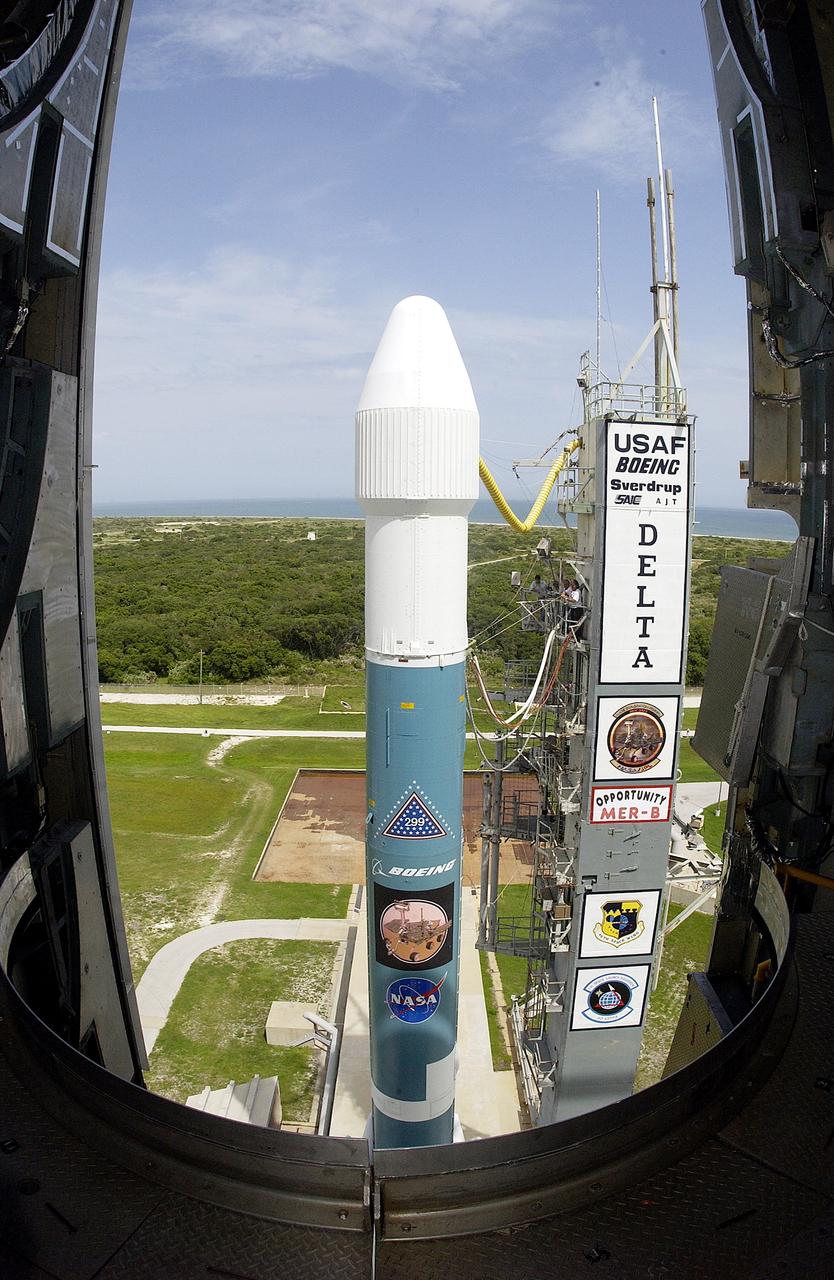
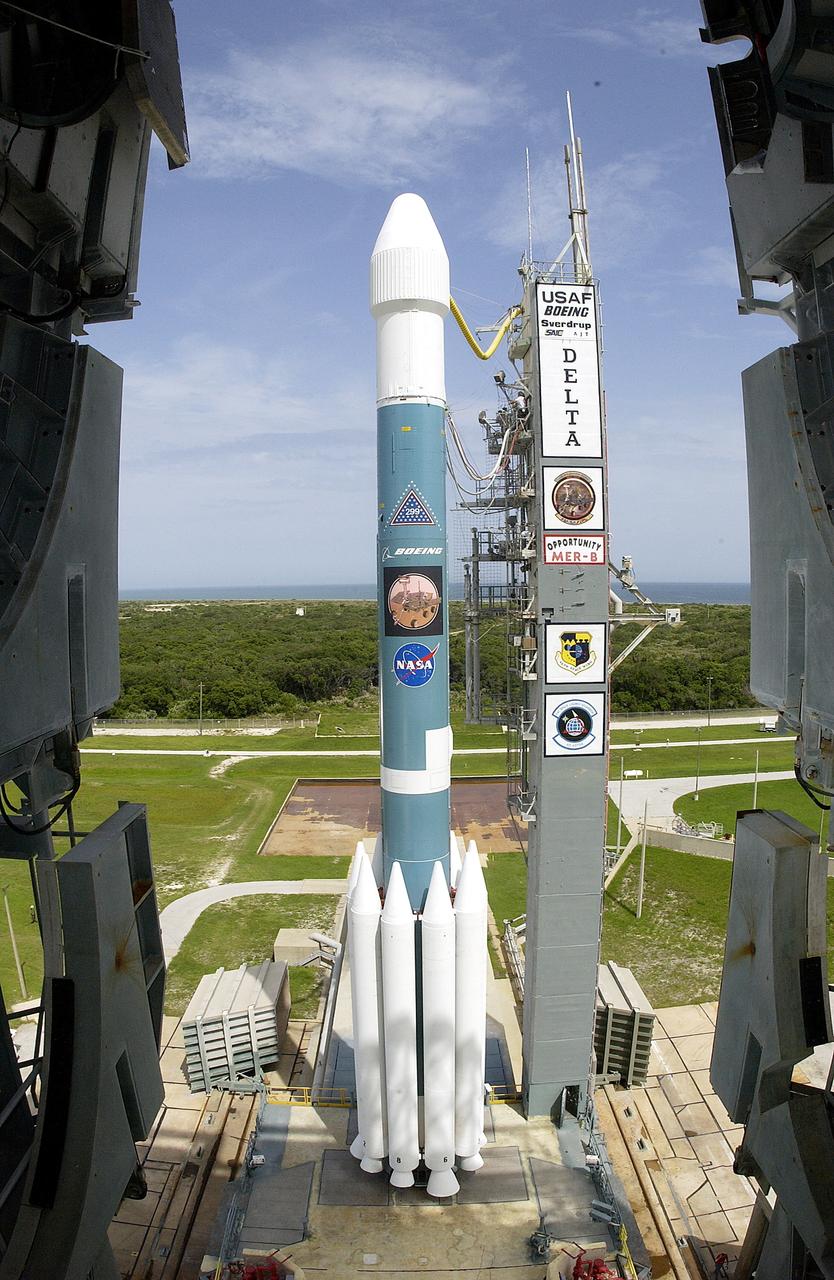
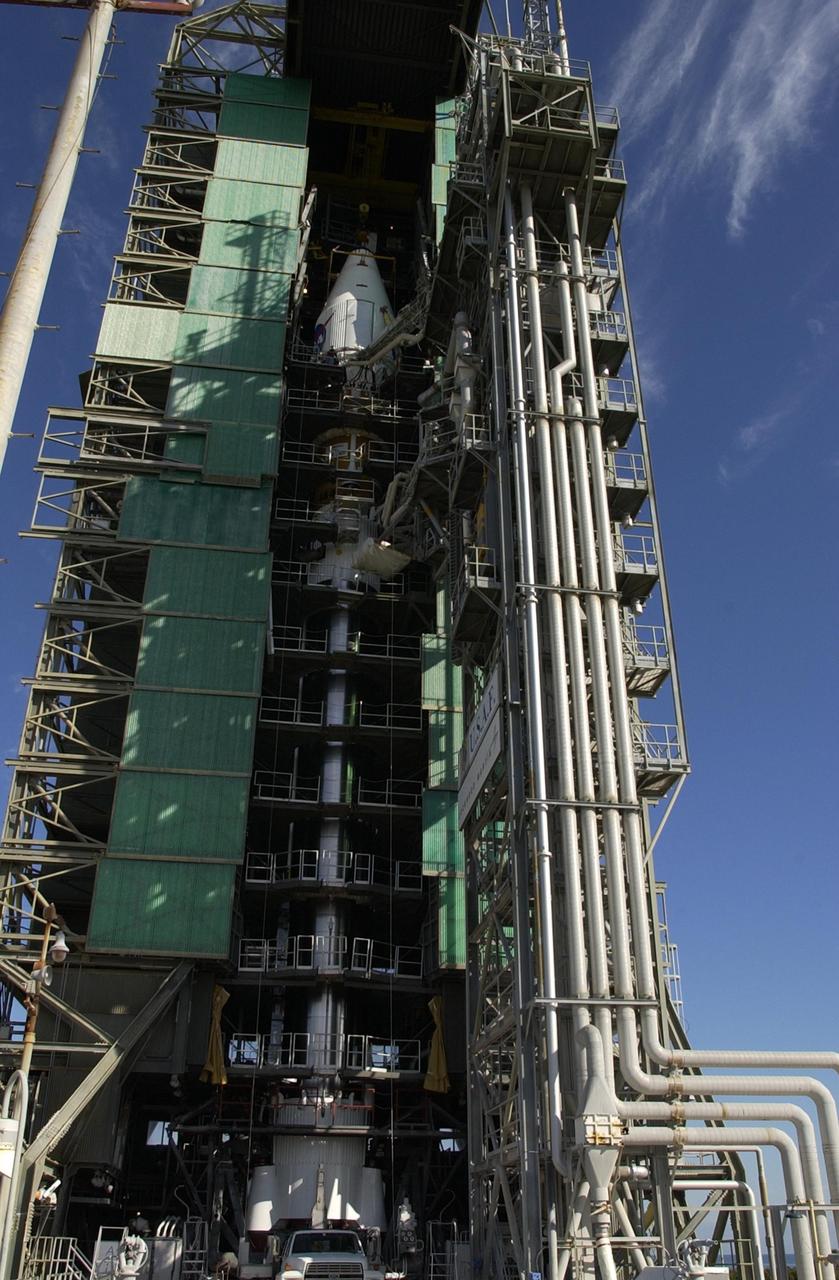
KENNEDY SPACE CENTER, FLA. -  The Mobile Service Tower is rolled back at Space Launch Complex 17B, Cape Canaveral Air Force Station, to reveal the Delta II Heavy launch vehicle ready for launch of the Mars Exploration Rover-B (MER-B) mission, with the rover "Opportunity" aboard. The second of twin rovers being sent to Mars, it is equipped with a robotic arm, a drilling tool, three spectrometers, and four pairs of cameras that allow it to have a human-like, 3D view of the terrain. Each rover could travel as far as 100 meters in one day to act as Mars scientists' eyes and hands, exploring an environment where humans are not yet able to go. MER-B is scheduled to launch on June 28 at one of two available times, 11:56:16 p.m. EDT or 12:37:59 a.m. EDT on June 29.
KENNEDY SPACE CENTER, FLA. - The Mobile Service Tower is rolled back at Space Launch Complex 17B, Cape Canaveral Air Force Station, to reveal the Delta II Heavy launch vehicle ready for launch of the Mars Exploration Rover-B (MER-B) mission, with the rover "Opportunity" aboard. The second of twin rovers being sent to Mars, it is equipped with a robotic arm, a drilling tool, three spectrometers, and four pairs of cameras that allow it to have a human-like, 3D view of the terrain. Each rover could travel as far as 100 meters in one day to act as Mars scientists' eyes and hands, exploring an environment where humans are not yet able to go. MER-B is scheduled to launch on June 28 at one of two available times, 11:56:16 p.m. EDT or 12:37:59 a.m. EDT on June 29.
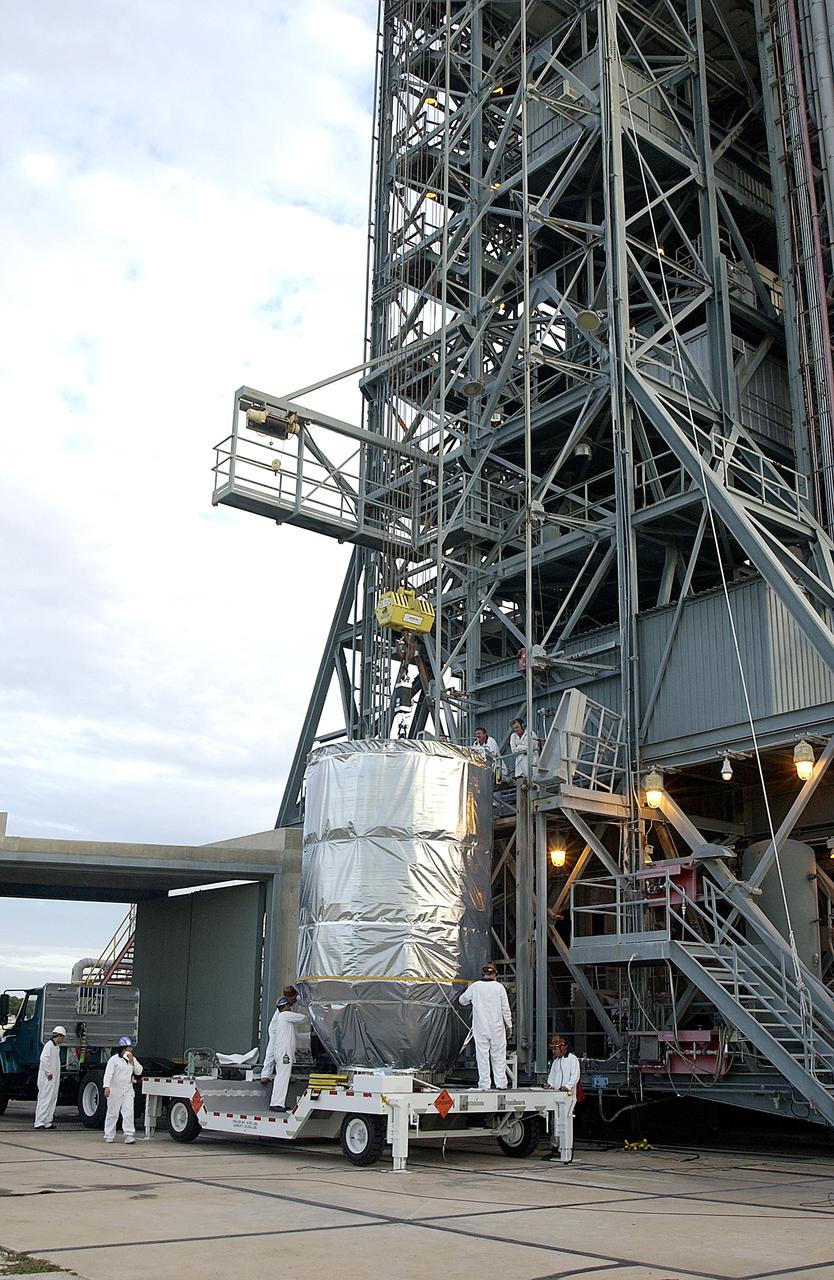
KENNEDY SPACE CENTER, FLA. -  On Launch Pad 17-B, Cape Canaveral Air Force Station, the Mars Exploration Rover 1 (MER-B) is ready to be lifted up the tower for mating with the Delta rocket.  The second of twin rovers being sent to Mars, it is equipped with a robotic arm, a drilling tool, three spectrometers, and four pairs of cameras that allow it to have a human-like, 3D view of the terrain. Each rover could travel as far as 100 meters in one day to act as Mars scientists' eyes and hands, exploring an environment where humans can't yet go.  MER-B is scheduled to launch June 26 at one of two available times,  12:27:31 a.m. EDT or 1:08:45 a.m. EDT.
KENNEDY SPACE CENTER, FLA. - On Launch Pad 17-B, Cape Canaveral Air Force Station, the Mars Exploration Rover 1 (MER-B) is ready to be lifted up the tower for mating with the Delta rocket. The second of twin rovers being sent to Mars, it is equipped with a robotic arm, a drilling tool, three spectrometers, and four pairs of cameras that allow it to have a human-like, 3D view of the terrain. Each rover could travel as far as 100 meters in one day to act as Mars scientists' eyes and hands, exploring an environment where humans can't yet go. MER-B is scheduled to launch June 26 at one of two available times, 12:27:31 a.m. EDT or 1:08:45 a.m. EDT.
KENNEDY SPACE CENTER, FLA. -  The Mobile Service Tower is rolled back at Space Launch Complex 17B, Cape Canaveral Air Force Station, to reveal the Delta II Heavy launch vehicle ready for launch of the Mars Exploration Rover-B (MER-B) mission, with the rover "Opportunity" aboard. The second of twin rovers being sent to Mars, it is equipped with a robotic arm, a drilling tool, three spectrometers, and four pairs of cameras that allow it to have a human-like, 3D view of the terrain. Each rover could travel as far as 100 meters in one day to act as Mars scientists' eyes and hands, exploring an environment where humans are not yet able to go. MER-B is scheduled to launch on June 28 at one of two available times, 11:56:16 p.m. EDT or 12:37:59 a.m. EDT on June 29.
KENNEDY SPACE CENTER, FLA. - The Mobile Service Tower is rolled back at Space Launch Complex 17B, Cape Canaveral Air Force Station, to reveal the Delta II Heavy launch vehicle ready for launch of the Mars Exploration Rover-B (MER-B) mission, with the rover "Opportunity" aboard. The second of twin rovers being sent to Mars, it is equipped with a robotic arm, a drilling tool, three spectrometers, and four pairs of cameras that allow it to have a human-like, 3D view of the terrain. Each rover could travel as far as 100 meters in one day to act as Mars scientists' eyes and hands, exploring an environment where humans are not yet able to go. MER-B is scheduled to launch on June 28 at one of two available times, 11:56:16 p.m. EDT or 12:37:59 a.m. EDT on June 29.
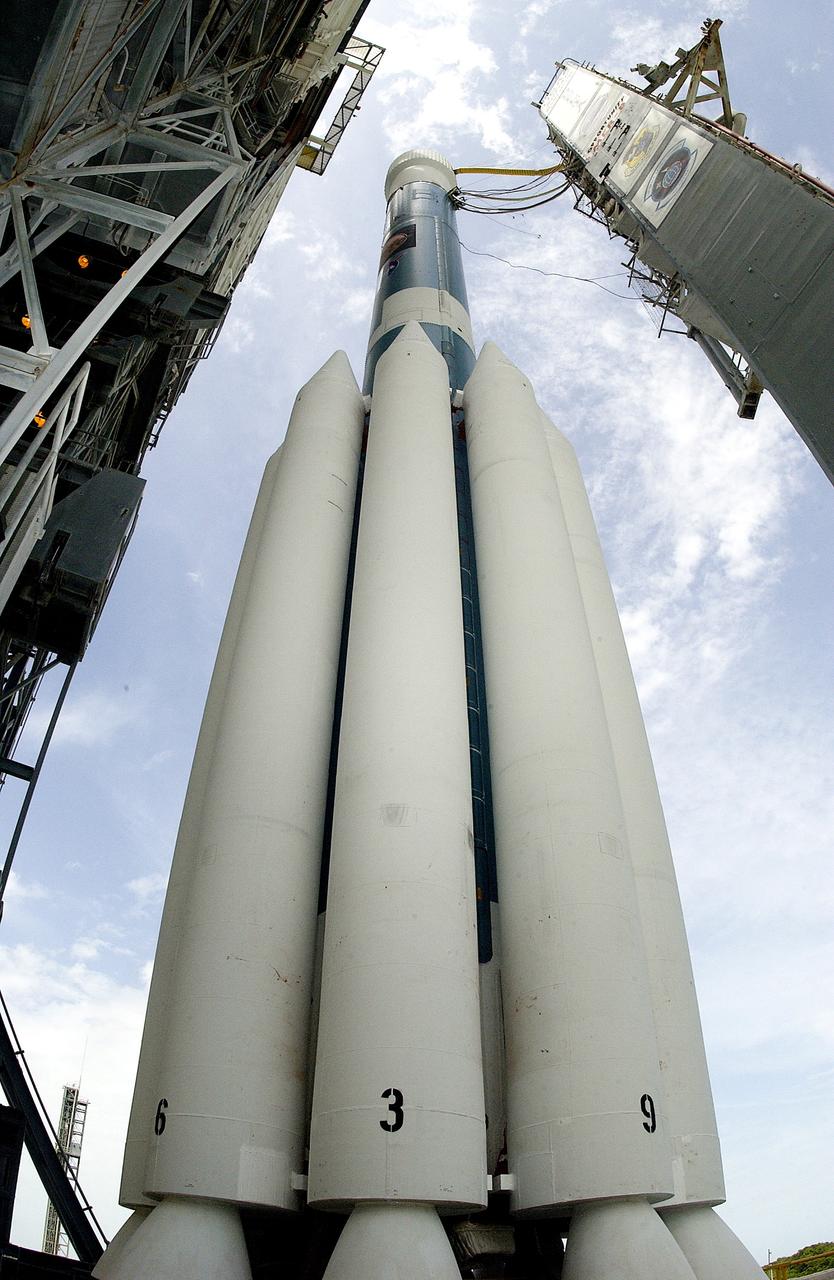
KENNEDY SPACE CENTER, FLA. -  The Mobile Service Tower is rolled back at Space Launch Complex 17B, Cape Canaveral Air Force Station, to reveal the Delta II Heavy launch vehicle ready for launch of the Mars Exploration Rover-B (MER-B) mission, with the rover "Opportunity" aboard. The second of twin rovers being sent to Mars, it is equipped with a robotic arm, a drilling tool, three spectrometers, and four pairs of cameras that allow it to have a human-like, 3D view of the terrain. Each rover could travel as far as 100 meters in one day to act as Mars scientists' eyes and hands, exploring an environment where humans are not yet able to go. MER-B is scheduled to launch on June 28 at one of two available times, 11:56:16 p.m. EDT or 12:37:59 a.m. EDT on June 29.
KENNEDY SPACE CENTER, FLA. - The Mobile Service Tower is rolled back at Space Launch Complex 17B, Cape Canaveral Air Force Station, to reveal the Delta II Heavy launch vehicle ready for launch of the Mars Exploration Rover-B (MER-B) mission, with the rover "Opportunity" aboard. The second of twin rovers being sent to Mars, it is equipped with a robotic arm, a drilling tool, three spectrometers, and four pairs of cameras that allow it to have a human-like, 3D view of the terrain. Each rover could travel as far as 100 meters in one day to act as Mars scientists' eyes and hands, exploring an environment where humans are not yet able to go. MER-B is scheduled to launch on June 28 at one of two available times, 11:56:16 p.m. EDT or 12:37:59 a.m. EDT on June 29.
KENNEDY SPACE CENTER, FLA. -  The Mobile Service Tower is rolled back at Space Launch Complex 17B, Cape Canaveral Air Force Station, to reveal the Delta II Heavy launch vehicle ready for launch of the Mars Exploration Rover-B (MER-B) mission, with the rover "Opportunity" aboard. The second of twin rovers being sent to Mars, it is equipped with a robotic arm, a drilling tool, three spectrometers, and four pairs of cameras that allow it to have a human-like, 3D view of the terrain. Each rover could travel as far as 100 meters in one day to act as Mars scientists' eyes and hands, exploring an environment where humans are not yet able to go. MER-B is scheduled to launch on June 28 at one of two available times, 11:56:16 p.m. EDT or 12:37:59 a.m. EDT on June 29.
KENNEDY SPACE CENTER, FLA. - The Mobile Service Tower is rolled back at Space Launch Complex 17B, Cape Canaveral Air Force Station, to reveal the Delta II Heavy launch vehicle ready for launch of the Mars Exploration Rover-B (MER-B) mission, with the rover "Opportunity" aboard. The second of twin rovers being sent to Mars, it is equipped with a robotic arm, a drilling tool, three spectrometers, and four pairs of cameras that allow it to have a human-like, 3D view of the terrain. Each rover could travel as far as 100 meters in one day to act as Mars scientists' eyes and hands, exploring an environment where humans are not yet able to go. MER-B is scheduled to launch on June 28 at one of two available times, 11:56:16 p.m. EDT or 12:37:59 a.m. EDT on June 29.
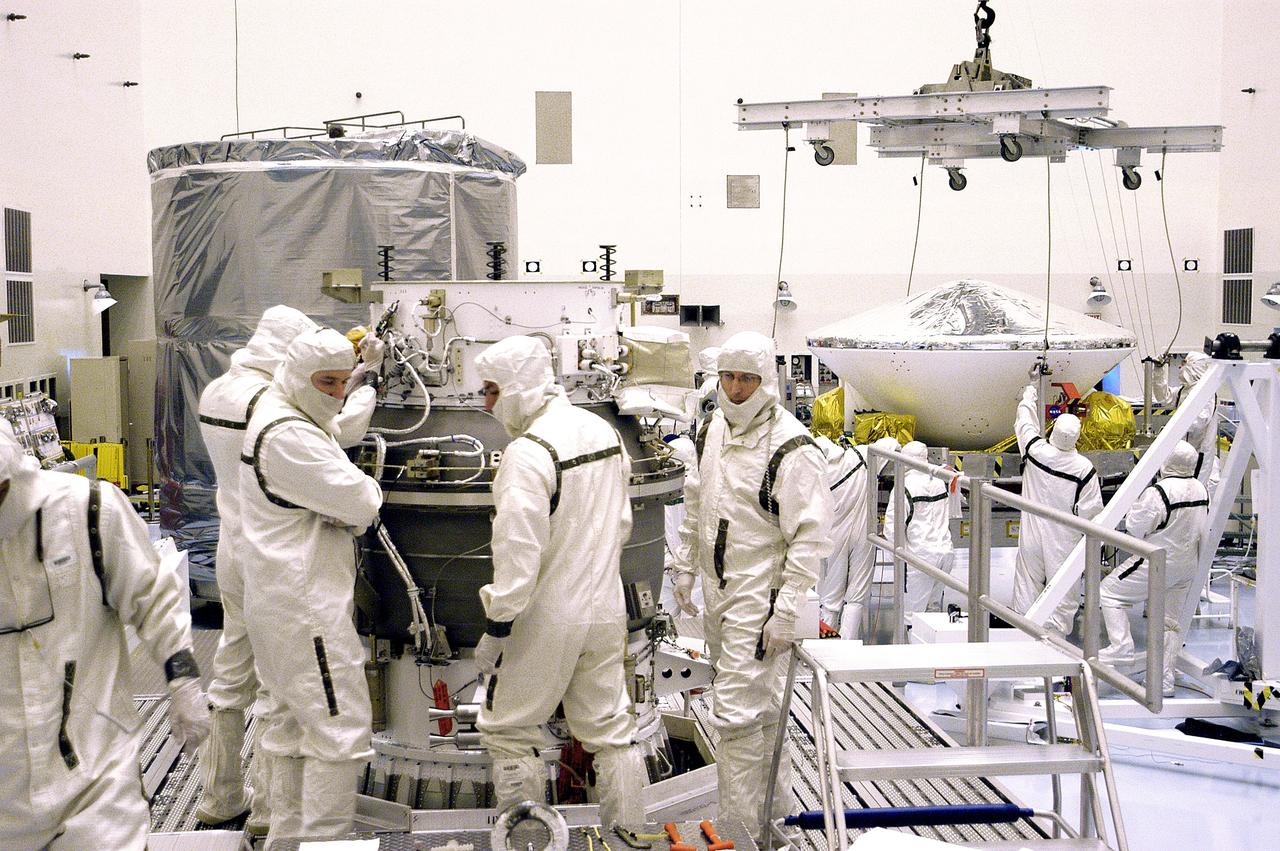
KENNEDY SPACE CENTER, FLA. - In the background, right, workers in the Payload Hazardous Servicing Facility get ready to lift Mars Exploration Rover 1 (MER-B) to the third stage of the Delta rocket (foreground) for mating.  The second of twin rovers being sent to Mars, it is equipped with a robotic arm, a drilling tool, three spectrometers, and four pairs of cameras that allow it to have a human-like, 3D view of the terrain. Each rover could travel as far as 100 meters in one day to act as Mars scientists' eyes and hands, exploring an environment where humans can't yet go.  MER-B is scheduled to launch from Launch Pad 17-B, Cape Canaveral Air Force Station, June 26 at one of two available times,  12:27:31 a.m. EDT or 1:08:45 a.m. EDT.
KENNEDY SPACE CENTER, FLA. - In the background, right, workers in the Payload Hazardous Servicing Facility get ready to lift Mars Exploration Rover 1 (MER-B) to the third stage of the Delta rocket (foreground) for mating. The second of twin rovers being sent to Mars, it is equipped with a robotic arm, a drilling tool, three spectrometers, and four pairs of cameras that allow it to have a human-like, 3D view of the terrain. Each rover could travel as far as 100 meters in one day to act as Mars scientists' eyes and hands, exploring an environment where humans can't yet go. MER-B is scheduled to launch from Launch Pad 17-B, Cape Canaveral Air Force Station, June 26 at one of two available times, 12:27:31 a.m. EDT or 1:08:45 a.m. EDT.
KENNEDY SPACE CENTER, FLA. -  The Mobile Service Tower is rolled back at Space Launch Complex 17B, Cape Canaveral Air Force Station, to reveal the Delta II Heavy launch vehicle ready for launch of the Mars Exploration Rover-B (MER-B) mission, with the rover "Opportunity" aboard. The second of twin rovers being sent to Mars, it is equipped with a robotic arm, a drilling tool, three spectrometers, and four pairs of cameras that allow it to have a human-like, 3D view of the terrain. Each rover could travel as far as 100 meters in one day to act as Mars scientists' eyes and hands, exploring an environment where humans are not yet able to go. MER-B is scheduled to launch on June 28 at one of two available times, 11:56:16 p.m. EDT or 12:37:59 a.m. EDT on June 29.
KENNEDY SPACE CENTER, FLA. - The Mobile Service Tower is rolled back at Space Launch Complex 17B, Cape Canaveral Air Force Station, to reveal the Delta II Heavy launch vehicle ready for launch of the Mars Exploration Rover-B (MER-B) mission, with the rover "Opportunity" aboard. The second of twin rovers being sent to Mars, it is equipped with a robotic arm, a drilling tool, three spectrometers, and four pairs of cameras that allow it to have a human-like, 3D view of the terrain. Each rover could travel as far as 100 meters in one day to act as Mars scientists' eyes and hands, exploring an environment where humans are not yet able to go. MER-B is scheduled to launch on June 28 at one of two available times, 11:56:16 p.m. EDT or 12:37:59 a.m. EDT on June 29.
KENNEDY SPACE CENTER, FLA. -  The Mobile Service Tower is rolled back at Space Launch Complex 17B, Cape Canaveral Air Force Station, to reveal the Delta II Heavy launch vehicle ready for launch of the Mars Exploration Rover-B (MER-B) mission, with the rover "Opportunity" aboard. The second of twin rovers being sent to Mars, it is equipped with a robotic arm, a drilling tool, three spectrometers, and four pairs of cameras that allow it to have a human-like, 3D view of the terrain. Each rover could travel as far as 100 meters in one day to act as Mars scientists' eyes and hands, exploring an environment where humans are not yet able to go. MER-B is scheduled to launch on June 28 at one of two available times, 11:56:16 p.m. EDT or 12:37:59 a.m. EDT on June 29.
KENNEDY SPACE CENTER, FLA. - The Mobile Service Tower is rolled back at Space Launch Complex 17B, Cape Canaveral Air Force Station, to reveal the Delta II Heavy launch vehicle ready for launch of the Mars Exploration Rover-B (MER-B) mission, with the rover "Opportunity" aboard. The second of twin rovers being sent to Mars, it is equipped with a robotic arm, a drilling tool, three spectrometers, and four pairs of cameras that allow it to have a human-like, 3D view of the terrain. Each rover could travel as far as 100 meters in one day to act as Mars scientists' eyes and hands, exploring an environment where humans are not yet able to go. MER-B is scheduled to launch on June 28 at one of two available times, 11:56:16 p.m. EDT or 12:37:59 a.m. EDT on June 29.
KENNEDY SPACE CENTER, FLA. -  The Mobile Service Tower is rolled back at Space Launch Complex 17B, Cape Canaveral Air Force Station, to reveal the Delta II Heavy launch vehicle ready for launch of the Mars Exploration Rover-B (MER-B) mission, with the rover "Opportunity" aboard. The second of twin rovers being sent to Mars, it is equipped with a robotic arm, a drilling tool, three spectrometers, and four pairs of cameras that allow it to have a human-like, 3D view of the terrain. Each rover could travel as far as 100 meters in one day to act as Mars scientists' eyes and hands, exploring an environment where humans are not yet able to go. MER-B is scheduled to launch on June 28 at one of two available times, 11:56:16 p.m. EDT or 12:37:59 a.m. EDT on June 29.
KENNEDY SPACE CENTER, FLA. - The Mobile Service Tower is rolled back at Space Launch Complex 17B, Cape Canaveral Air Force Station, to reveal the Delta II Heavy launch vehicle ready for launch of the Mars Exploration Rover-B (MER-B) mission, with the rover "Opportunity" aboard. The second of twin rovers being sent to Mars, it is equipped with a robotic arm, a drilling tool, three spectrometers, and four pairs of cameras that allow it to have a human-like, 3D view of the terrain. Each rover could travel as far as 100 meters in one day to act as Mars scientists' eyes and hands, exploring an environment where humans are not yet able to go. MER-B is scheduled to launch on June 28 at one of two available times, 11:56:16 p.m. EDT or 12:37:59 a.m. EDT on June 29.
KENNEDY SPACE CENTER, FLA. -  The Mobile Service Tower is rolled back at Space Launch Complex 17B, Cape Canaveral Air Force Station, to reveal the Delta II Heavy launch vehicle ready for launch of the Mars Exploration Rover-B (MER-B) mission, with the rover "Opportunity" aboard. The second of twin rovers being sent to Mars, it is equipped with a robotic arm, a drilling tool, three spectrometers, and four pairs of cameras that allow it to have a human-like, 3D view of the terrain. Each rover could travel as far as 100 meters in one day to act as Mars scientists' eyes and hands, exploring an environment where humans are not yet able to go. MER-B is scheduled to launch on June 28 at one of two available times, 11:56:16 p.m. EDT or 12:37:59 a.m. EDT on June 29.
KENNEDY SPACE CENTER, FLA. - The Mobile Service Tower is rolled back at Space Launch Complex 17B, Cape Canaveral Air Force Station, to reveal the Delta II Heavy launch vehicle ready for launch of the Mars Exploration Rover-B (MER-B) mission, with the rover "Opportunity" aboard. The second of twin rovers being sent to Mars, it is equipped with a robotic arm, a drilling tool, three spectrometers, and four pairs of cameras that allow it to have a human-like, 3D view of the terrain. Each rover could travel as far as 100 meters in one day to act as Mars scientists' eyes and hands, exploring an environment where humans are not yet able to go. MER-B is scheduled to launch on June 28 at one of two available times, 11:56:16 p.m. EDT or 12:37:59 a.m. EDT on June 29.
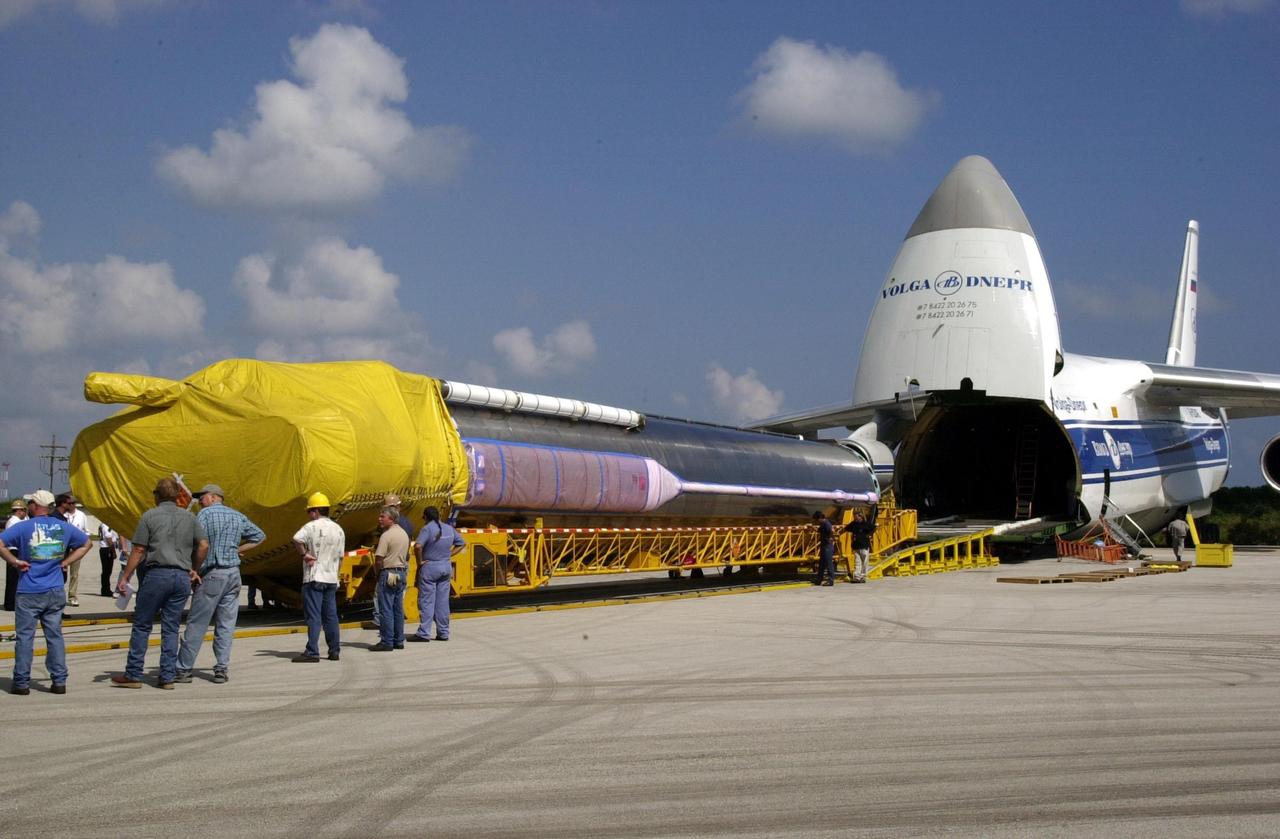
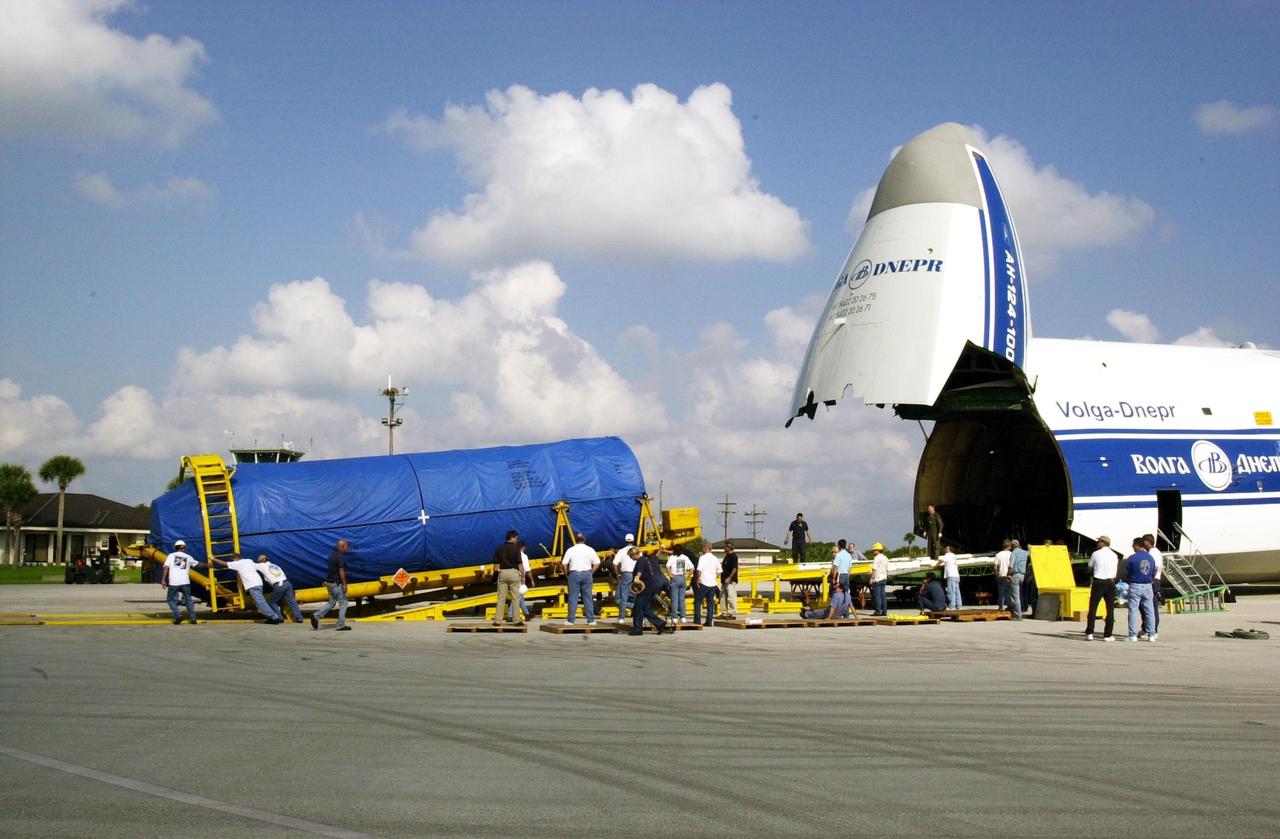
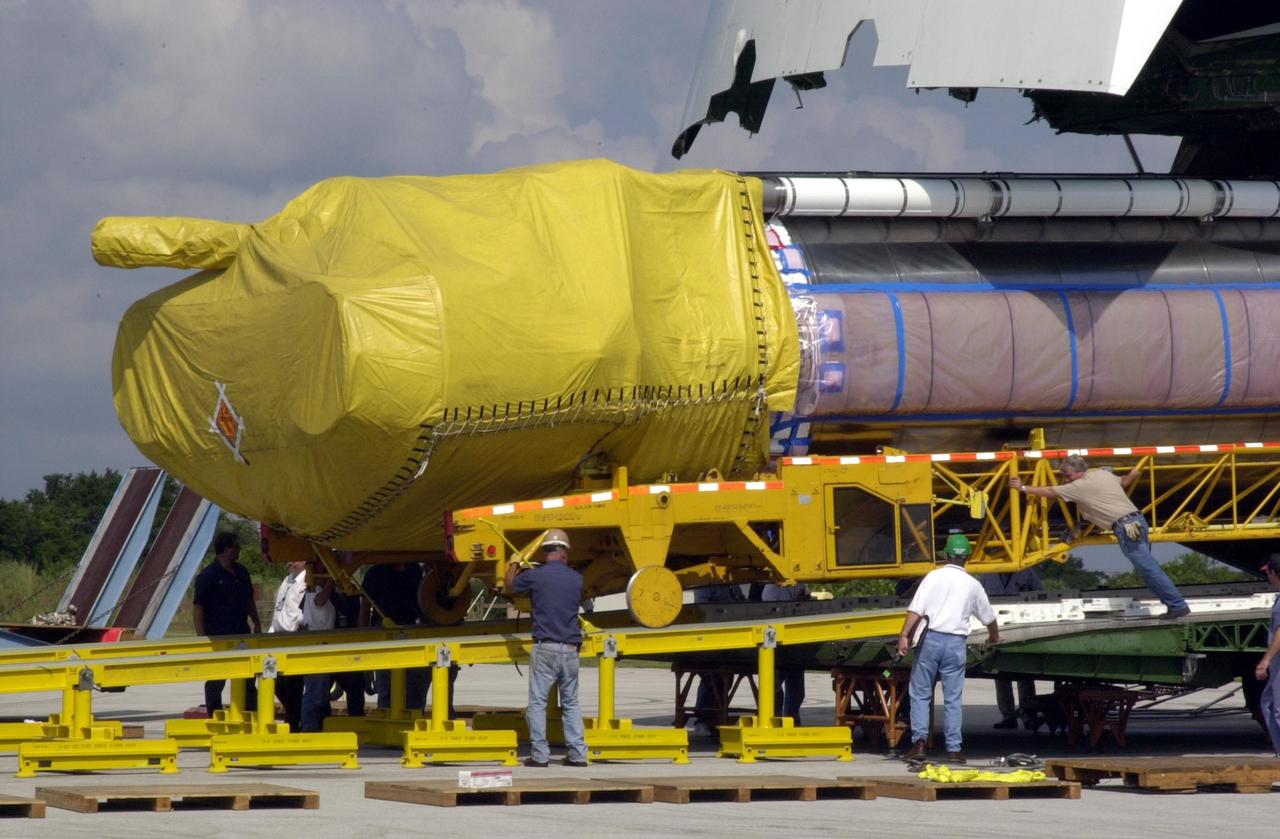
KENNEDY SPACE CENTER, FLA.  -- Following its arrival at Cape Canaveral Air Force Station, an Atlas/Centaur booster is ready for its move to Launch Pad 36A in preparation for the launch of TDRS-J. The third in a series of telemetry satellites, TDRS-J will help replenish the current constellation of geosynchronous TDRS satellites. The TDRS System is the primary source of space-to-ground voice, data and telemetry for the Space Shuttle. It also provides communications with the International Space Station and scientific spacecraft in low-Earth orbit such as the Hubble Space Telescope. This new advanced series of satellites will extend the availability of TDRS communications services until about 2017.
KSC-02pd1493
KENNEDY SPACE CENTER, FLA. - On Launch Complex 36-A, Cape Canaveral Air Force Station, the Atlas IIA launch vehicle with the TDRS-J satellite aboard is ready for launch Dec. 4. The launch window is 9:42 to 10:22 p.m. EST. TDRS-J, the third in a series of telemetry satellites, will help replenish the current constellation of geosynchronous TDRS satellites that are the primary source of space-to-ground voice, data and telemetry for the Space Shuttle. The satellites also provide communications with the International Space Station and scientific spacecraft in low-Earth orbit such as the Hubble Space Telescope. This new advanced series of satellites will extend the availability of TDRS communications services until about 2017.
KSC-02pd1841
KENNEDY SPACE CENTER, FLA.  -- Following its arrival at Cape Canaveral Air Force Station, an Atlas/Centaur booster is offloaded and readied for its move to Launch Pad 36A in preparation for the launch of TDRS-J. The third in a series of telemetry satellites, TDRS-J will help replenish the current constellation of geosynchronous TDRS satellites. The TDRS System is the primary source of space-to-ground voice, data and telemetry for the Space Shuttle. It also provides communications with the International Space Station and scientific spacecraft in low-Earth orbit such as the Hubble Space Telescope. This new advanced series of satellites will extend the availability of TDRS communications services until about 2017.
KSC-02pd1490
KENNEDY SPACE CENTER, FLA. --  The TDRS-J satellite is fully encapsulated and ready for transport to Launch Complex 36-A, Cape Canaveral Air Force Station, Fla.  There it will be mated with the Lockheed Martin Atlas IIA-Centaur rocket for launch on Dec. 4. The third in a series of telemetry satellites, TDRS-J will help replenish the current constellation of geosynchronous TDRS satellites. The TDRS System is the primary source of space-to-ground voice, data and telemetry for the Space Shuttle. It also provides communications with the International Space Station and scientific spacecraft in low-Earth orbit such as the Hubble Space Telescope. This new advanced series of satellites will extend the availability of TDRS communications services until about 2017.
KSC-02pd1781
KENNEDY SPACE CENTER, FLA.  -- Following its arrival at Cape Canaveral Air Force Station, an Atlas/Centaur booster emerges from the nose of its transport aircraft. The booster is being offloaded and readied to move to Launch Pad 36A in preparation for the launch of TDRS-J. The third in a series of telemetry satellites, TDRS-J will help replenish the current constellation of geosynchronous TDRS satellites. The TDRS System is the primary source of space-to-ground voice, data and telemetry for the Space Shuttle. It also provides communications with the International Space Station and scientific spacecraft in low-Earth orbit such as the Hubble Space Telescope. This new advanced series of satellites will extend the availability of TDRS communications services until about 2017.
KSC-02pd1491
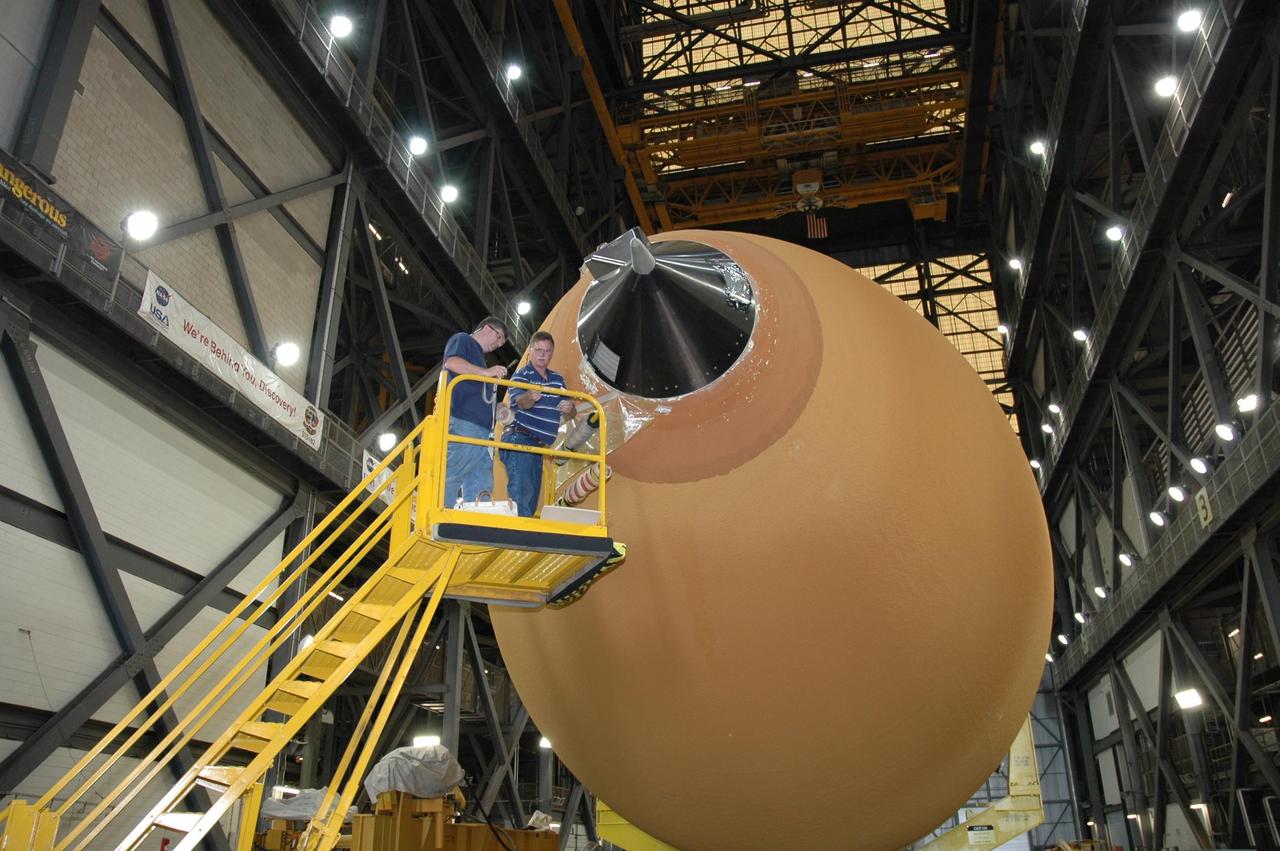
KENNEDY SPACE CENTER, FLA.  -  In the transfer aisle of the Vehicle Assembly Building, workers get ready to ablate the rim around the nose cap of external tank number 119, the tank designated for mission STS-121.  The cap was removed in order to install a new gaseous oxygen vent valve underneath. Vapors are created prior to launch as the liquid oxygen in the external tank boils off. At the forward end of each external tank propellant tank is a vent and relief valve that can be opened before launch for venting or by excessive tank pressure for relief. The vent function is available only before launch. Mission STS-121 to the International Space Station is scheduled for launch in July. Photo credit: NASA/Jim Grossmann
KSC-06pd0614
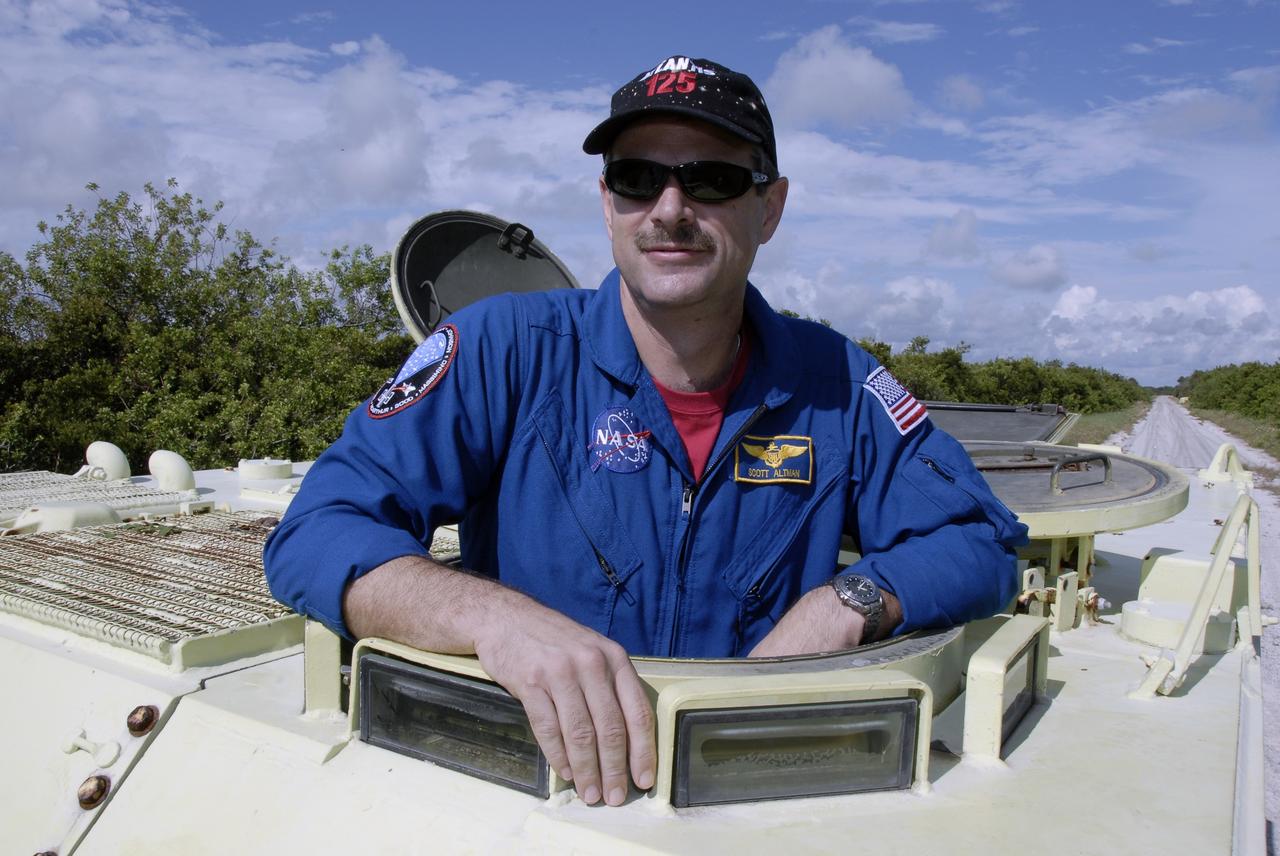
CAPE CANAVERAL, Fla. -  STS-125 Commander Scott Altman is ready to practice driving the M-113 armored personnel carrier.  The crew members of space shuttle Atlantis' STS-125 mission will each practice driving the M-113 in turn as part of their training on emergency egress procedures. An M-113 will be available to transport the crew to safety in the event of a contingency on the pad before their launch. The crew is at NASA's Kennedy Space Center for a dress launch rehearsal called the terminal countdown demonstration test, or TCDT. It provides astronauts and ground crews with an opportunity to participate in various simulated countdown activities, including equipment familiarization,  emergency training and a simulated launch countdown. The STS-125 mission aboard space shuttle Atlantis to service NASA’s Hubble Space Telescope is targeted to launch Oct. 10.    Photo credit: NASA/Kim Shiflett
KSC-08pd2820
KENNEDY SPACE CENTER, FLA.  -- An Atlas/Centaur booster is moved away from the nose of its transport aircraft following its arrival at Cape Canaveral Air Force Station. The booster is being offloaded and readied for the move to Launch Pad 36A in preparation for the launch of TDRS-J. The third in a series of telemetry satellites, TDRS-J will help replenish the current constellation of geosynchronous TDRS satellites. The TDRS System is the primary source of space-to-ground voice, data and telemetry for the Space Shuttle. It also provides communications with the International Space Station and scientific spacecraft in low-Earth orbit such as the Hubble Space Telescope. This new advanced series of satellites will extend the availability of TDRS communications services until about 2017.
KSC-02pd1492
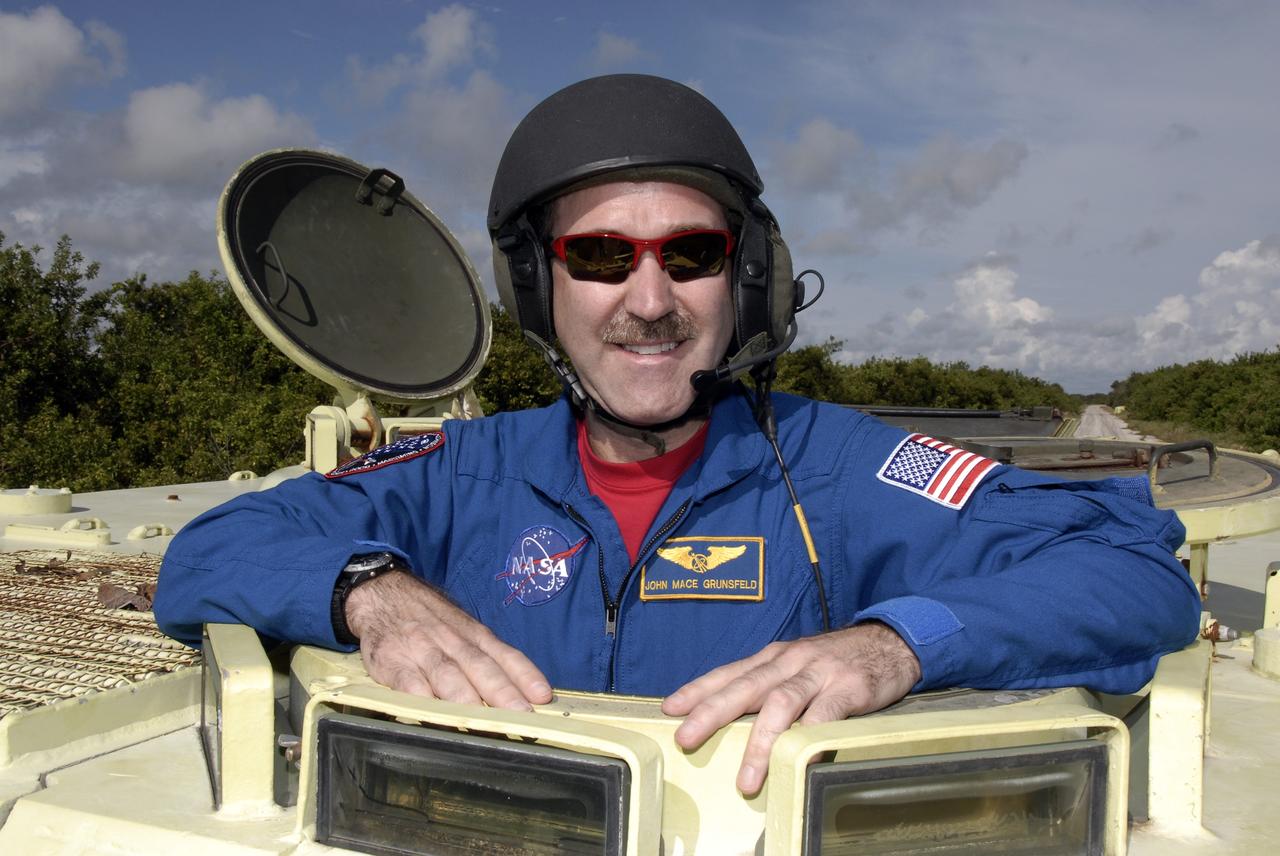
CAPE CANAVERAL, Fla. -  STS-125 Mission Specialist John Grunsfeld is ready to practice driving the M-113 armored personnel carrier. The crew members of space shuttle Atlantis' STS-125 mission will each practice driving the M-113 in turn as part of their training on emergency egress procedures. An M-113 will be available to transport the crew to safety in the event of a contingency on the pad before their launch. The crew is at NASA's Kennedy Space Center for a dress launch rehearsal called the terminal countdown demonstration test, or TCDT. It provides astronauts and ground crews with an opportunity to participate in various simulated countdown activities, including equipment familiarization,  emergency training and a simulated launch countdown. The STS-125 mission aboard space shuttle Atlantis to service NASA’s Hubble Space Telescope is targeted to launch Oct. 10.    Photo credit: NASA/Kim Shiflett
KSC-08pd2814
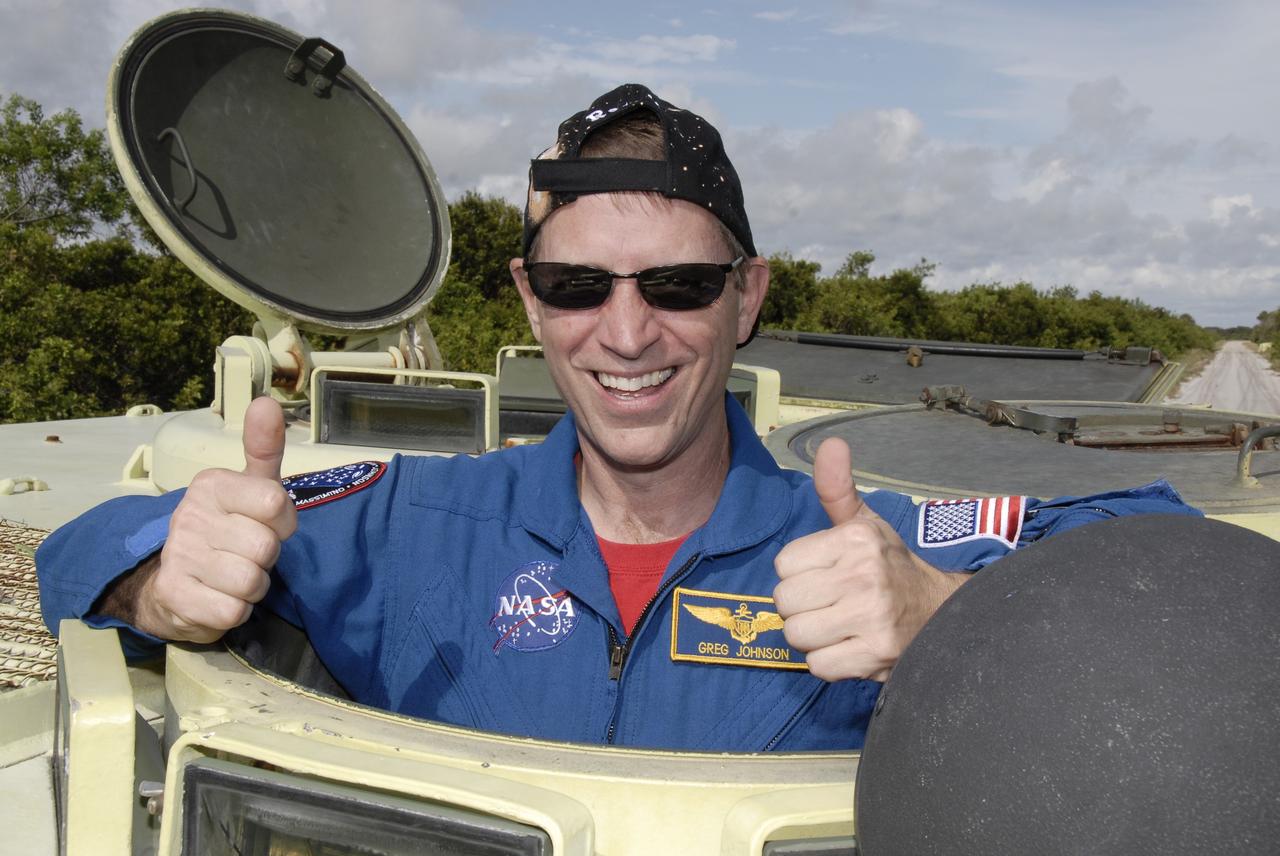
CAPE CANAVERAL, Fla. -  STS-125 Pilot Gregory C. Johnson is ready to practice driving the M-113 armored personnel carrier. The crew members of space shuttle Atlantis' STS-125 mission will each practice driving the M-113 in turn as part of their training on emergency egress procedures. An M-113 will be available to transport the crew to safety in the event of a contingency on the pad before their launch. The crew is at NASA's Kennedy Space Center for a dress launch rehearsal called the terminal countdown demonstration test, or TCDT. It provides astronauts and ground crews with an opportunity to participate in various simulated countdown activities, including equipment familiarization,  emergency training and a simulated launch countdown. The STS-125 mission aboard space shuttle Atlantis to service NASA’s Hubble Space Telescope is targeted to launch Oct. 10.    Photo credit: NASA/Kim Shiflett
KSC-08pd2816
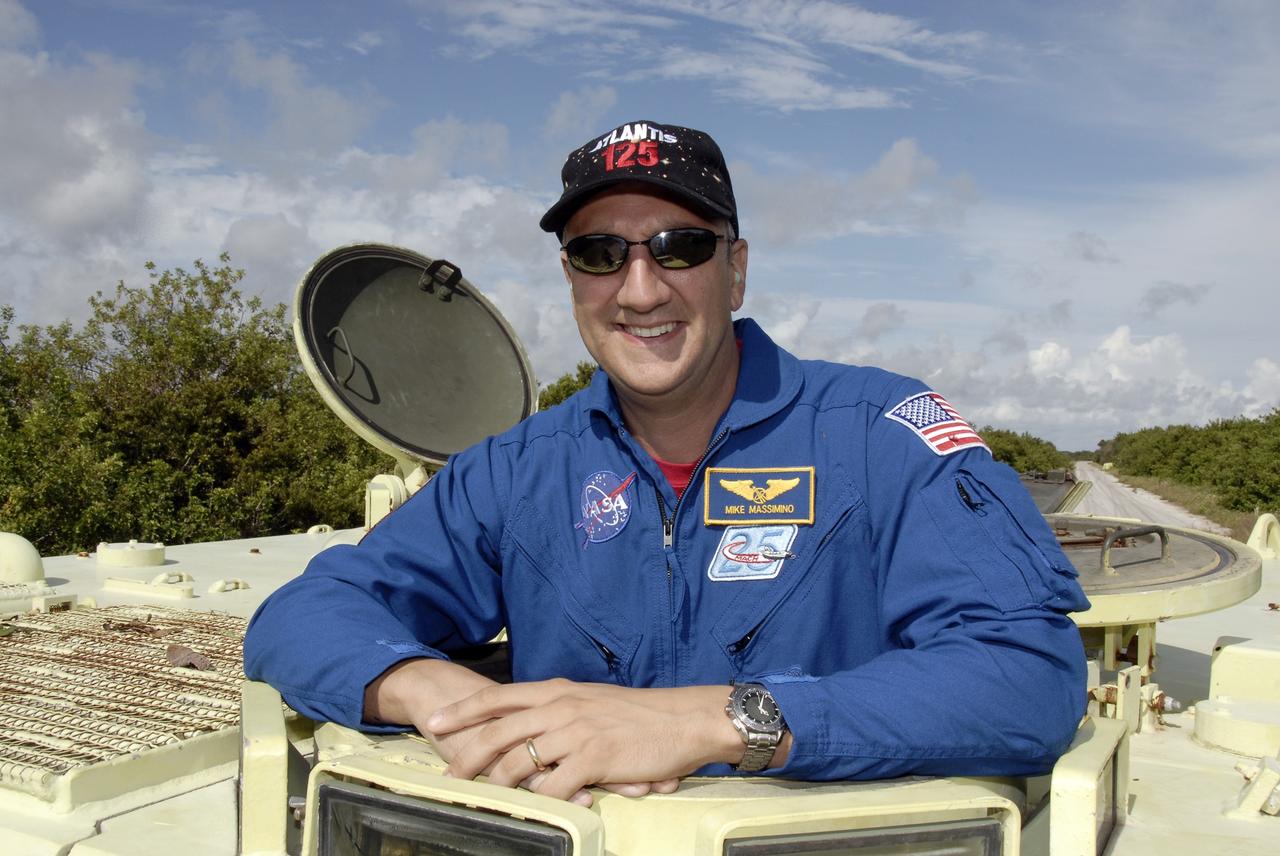
CAPE CANAVERAL, Fla. -  STS-125 Mission Specialist Mike Massimino is ready to practice driving the M-113 armored personnel carrier. The crew members of space shuttle Atlantis' STS-125 mission will each practice driving the M-113 in turn as part of their training on emergency egress procedures. An M-113 will be available to transport the crew to safety in the event of a contingency on the pad before their launch. The crew is at NASA's Kennedy Space Center for a dress launch rehearsal called the terminal countdown demonstration test, or TCDT. It provides astronauts and ground crews with an opportunity to participate in various simulated countdown activities, including equipment familiarization,  emergency training and a simulated launch countdown. The STS-125 mission aboard space shuttle Atlantis to service NASA’s Hubble Space Telescope is targeted to launch Oct. 10.    Photo credit: NASA/Kim Shiflett
KSC-08pd2818
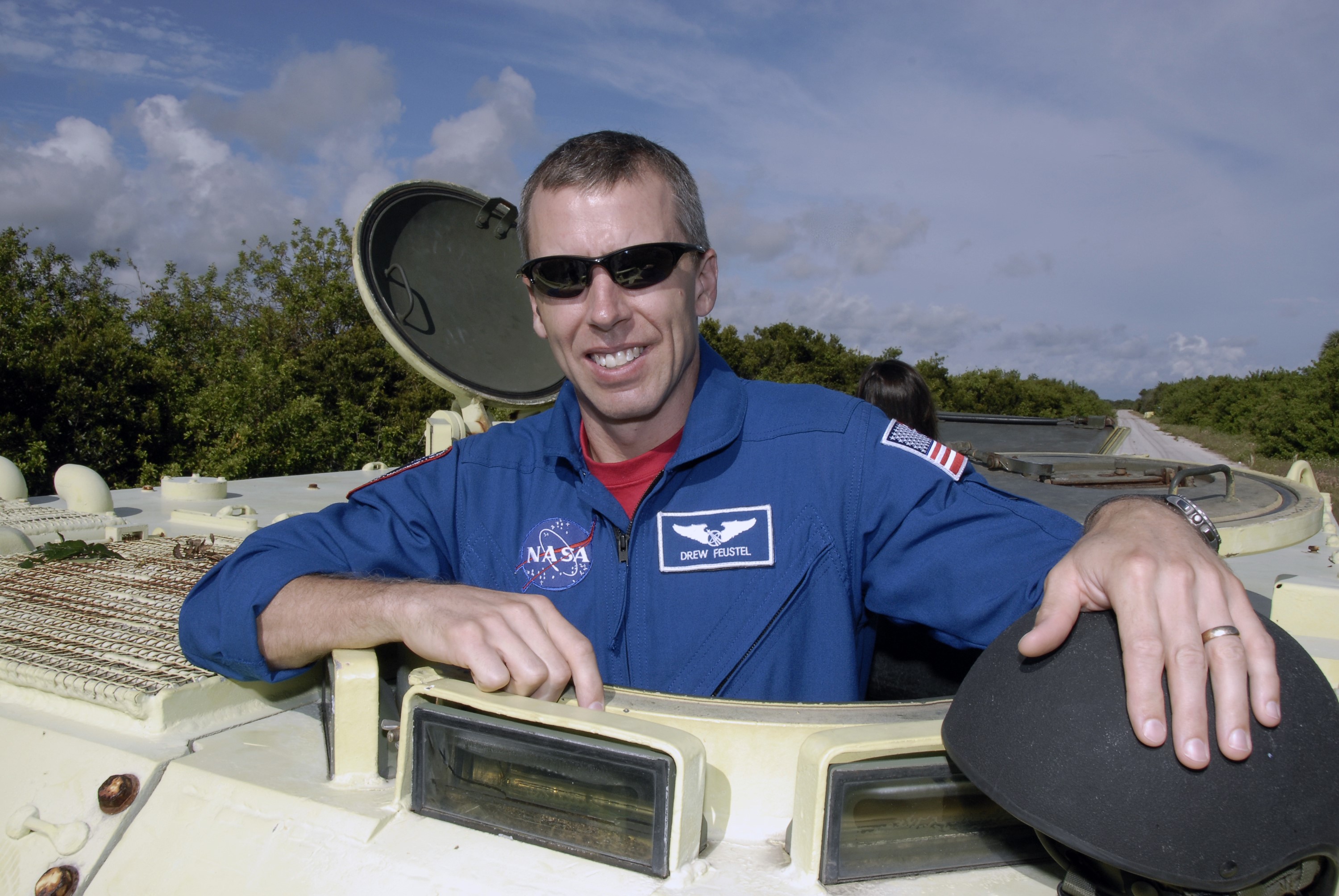
CAPE CANAVERAL, Fla. -  STS-125 Mission Specialist Andrew Feustel is ready to practice driving the M=113 armored personnel carrier. The crew members of space shuttle Atlantis' STS-125 mission will each practice driving the M-113 in turn as part of their training on emergency egress procedures. An M-113 will be available to transport the crew to safety in the event of a contingency on the pad before their launch. The crew is at NASA's Kennedy Space Center for a dress launch rehearsal called the terminal countdown demonstration test, or TCDT. It provides astronauts and ground crews with an opportunity to participate in various simulated countdown activities, including equipment familiarization,  emergency training and a simulated launch countdown. The STS-125 mission aboard space shuttle Atlantis to service NASA’s Hubble Space Telescope is targeted to launch Oct. 10.    Photo credit: NASA/Kim Shiflett
KSC-08pd2810
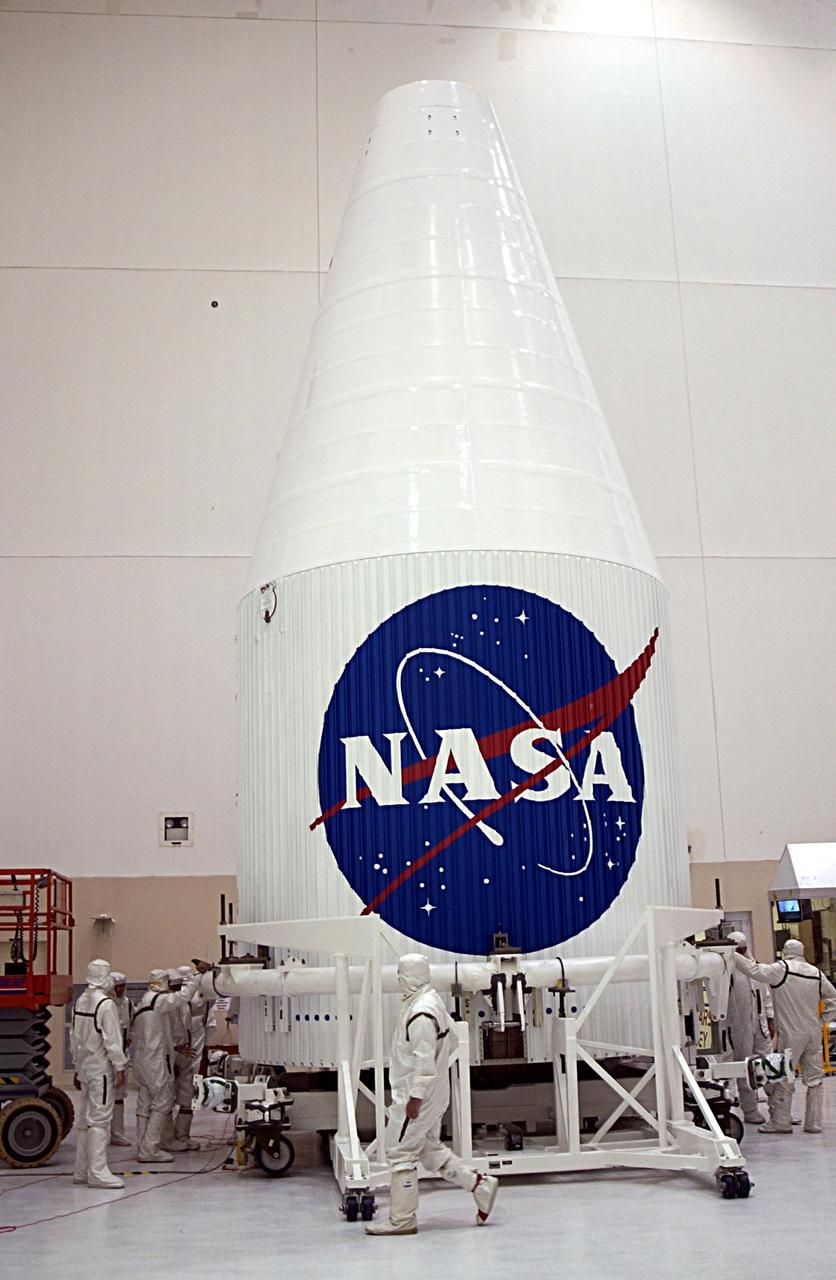
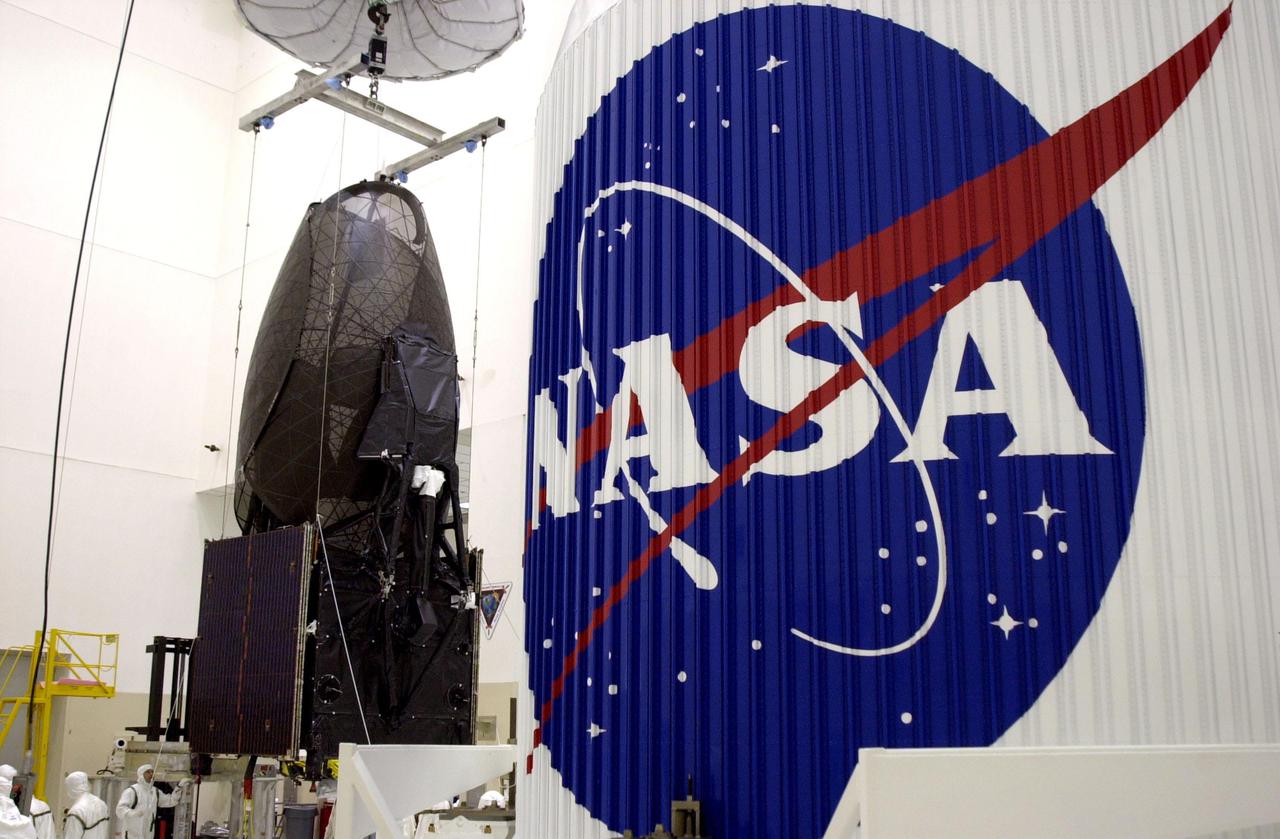
KENNEDY SPACE CENTER, Fla. - The Tracking and Data Relay Satellite-I (TDRS-I) is readied for mating with its nose fairing (in foreground) in the Spacecraft Assembly and Encapsulation Facility-2 (SAEF-2). The second in a new series of telemetry satellites, TDRS-I replenishes the existing on-orbit fleet of six spacecraft. The TDRS System is the primary source of space-to-ground voice, data and telemetry for the Space Shuttle. It also provides communications with the International Space Station and scientific spacecraft in low-Earth orbit such as the Hubble Space Telescope. This new advanced series of satellites will extend the availability of TDRS communications services until about 2017. Launch of TDRS-I is scheduled for March 8 aboard a Lockheed Martin Atlas IIA rocket from Pad 36-A, Cape Canaveral Air Force Station
KSC-02PD-0151
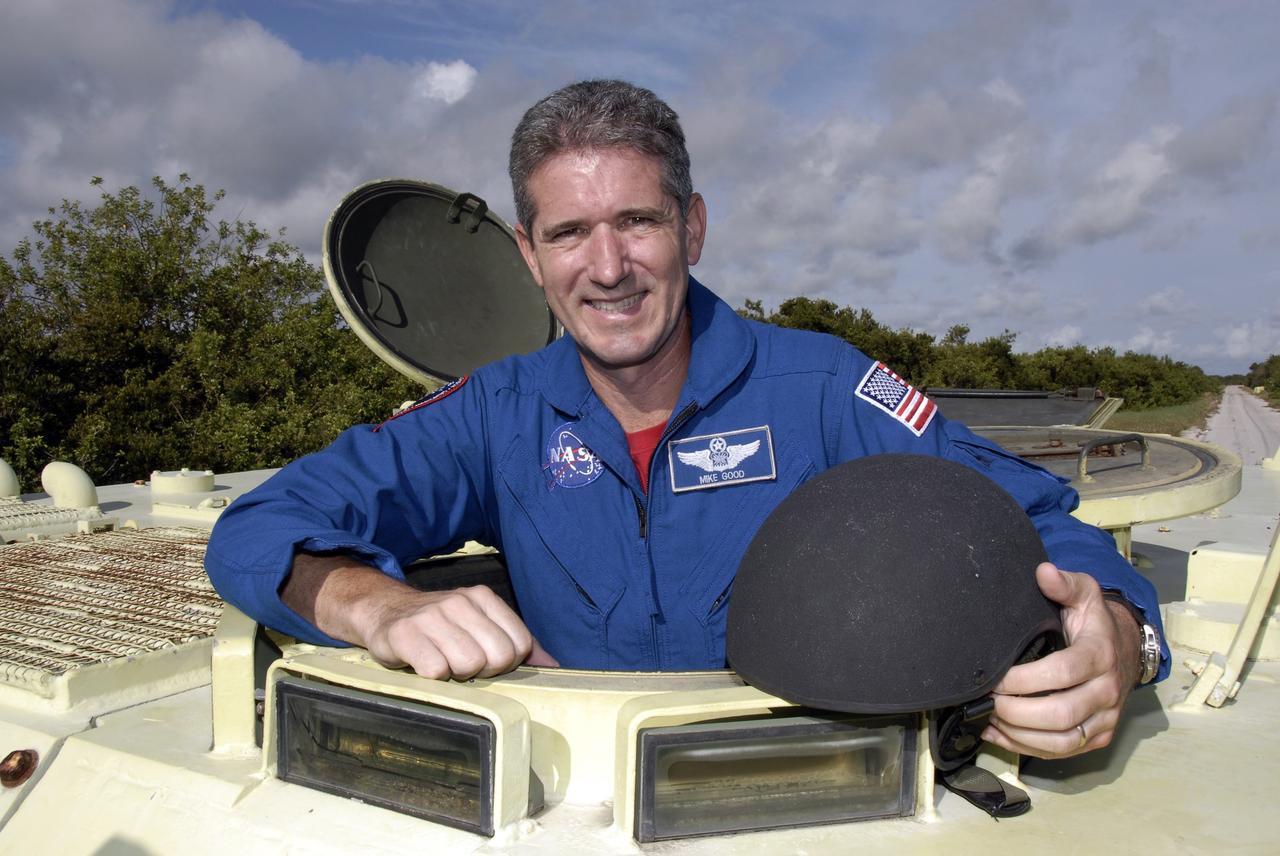
CAPE CANAVERAL, Fla. -  STS-125 Mission Specialist Michael Good is ready to practice driving the M-113 armored personnel carrier. The crew members of space shuttle Atlantis' STS-125 mission will each practice driving the M-113 in turn as part of their training on emergency egress procedures. An M-113 will be available to transport the crew to safety in the event of a contingency on the pad before their launch. The crew is at NASA's Kennedy Space Center for a dress launch rehearsal called the terminal countdown demonstration test, or TCDT. It provides astronauts and ground crews with an opportunity to participate in various simulated countdown activities, including equipment familiarization,  emergency training and a simulated launch countdown. The STS-125 mission aboard space shuttle Atlantis to service NASA’s Hubble Space Telescope is targeted to launch Oct. 10.    Photo credit: NASA/Kim Shiflett
KSC-08pd2808
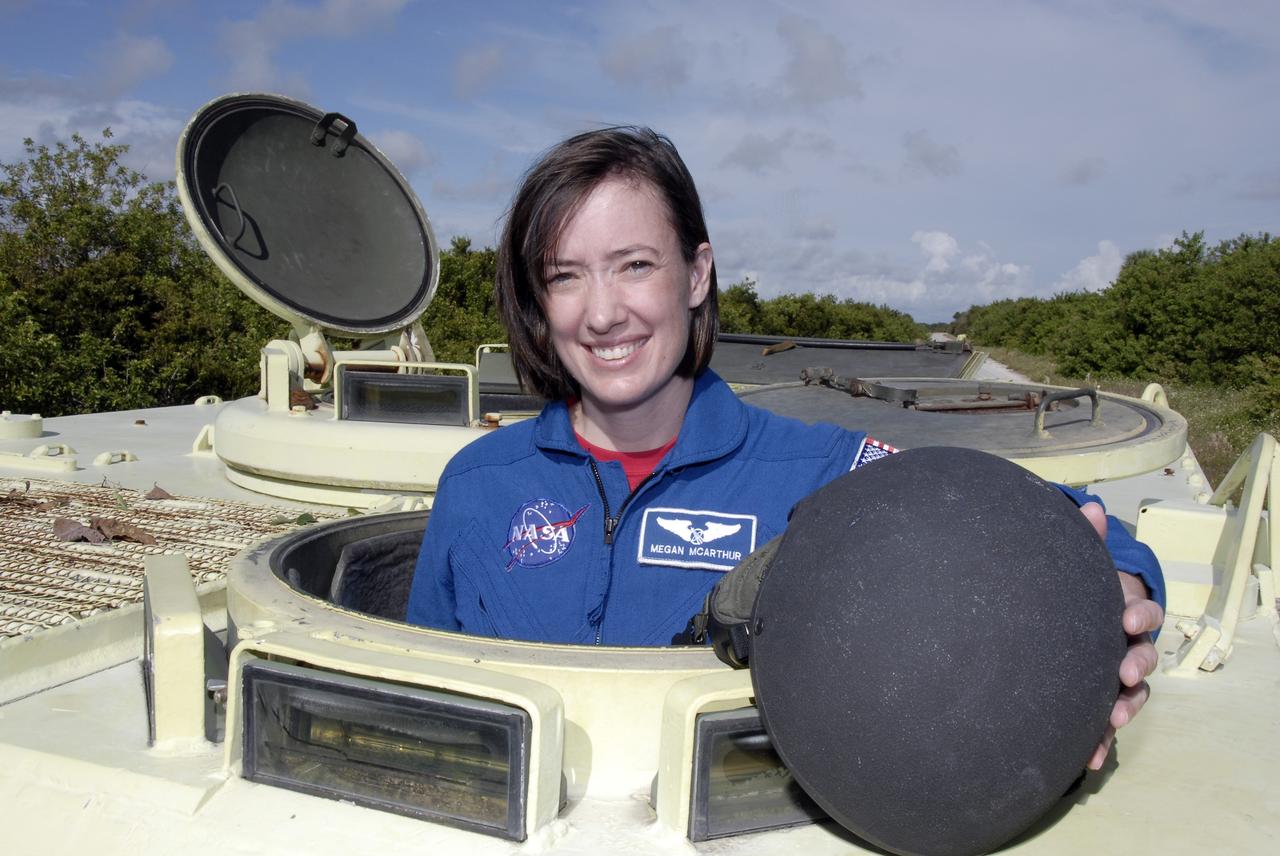
CAPE CANAVERAL, Fla. -  STS-125 Mission Specialist Megan McArthur is ready to practice driving the M-113 armored personnel carrier. The crew members of space shuttle Atlantis' STS-125 mission will each practice driving the M-113 in turn as part of their training on emergency egress procedures. An M-113 will be available to transport the crew to safety in the event of a contingency on the pad before their launch. The crew is at NASA's Kennedy Space Center for a dress launch rehearsal called the terminal countdown demonstration test, or TCDT. It provides astronauts and ground crews with an opportunity to participate in various simulated countdown activities, including equipment familiarization,  emergency training and a simulated launch countdown. The STS-125 mission aboard space shuttle Atlantis to service NASA’s Hubble Space Telescope is targeted to launch Oct. 10.    Photo credit: NASA/Kim Shiflett
KSC-08pd2811
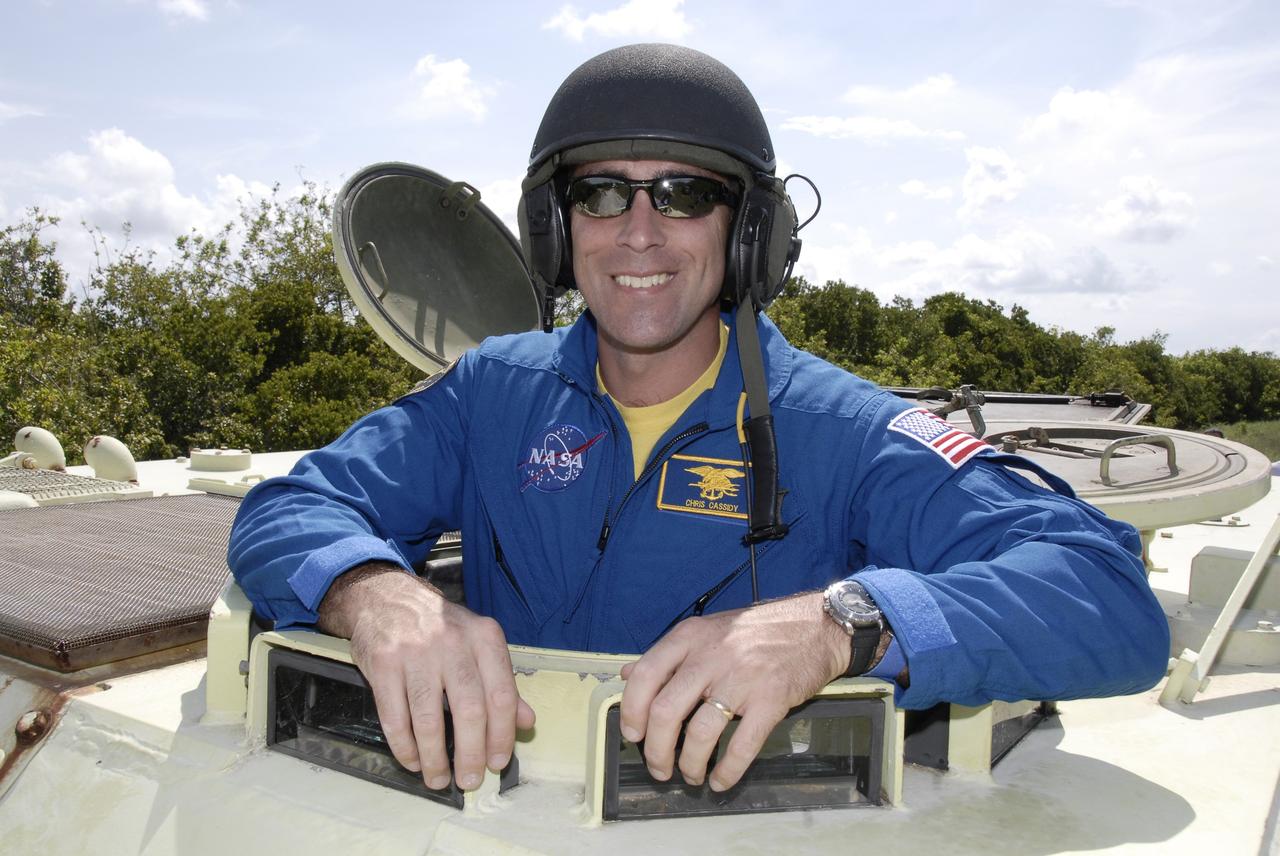
CAPE CANAVERAL, Fla. – STS-127 Mission Specialist Christopher Cassidy is ready to take the wheel to practice driving the M-113 armored personnel carrier, which is part of the training on emergency egress procedures. The crew members of space shuttle Endeavour's STS-127 mission are taking turns driving the M-113.   An M-113 will be available to transport the crew to safety in the event of a contingency on the pad before their launch. The crew is at NASA's Kennedy Space Center for a launch dress rehearsal called the terminal countdown demonstration test, or TCDT, which includes the emergency egress training and equipment familiarization.  The STS-127 mission is the final of three flights dedicated to the assembly of the Japanese Kibo laboratory complex.  Endeavour's launch is targeted for June 13.  Photo credit: NASA/Kim Shiflett
KSC-2009-3375
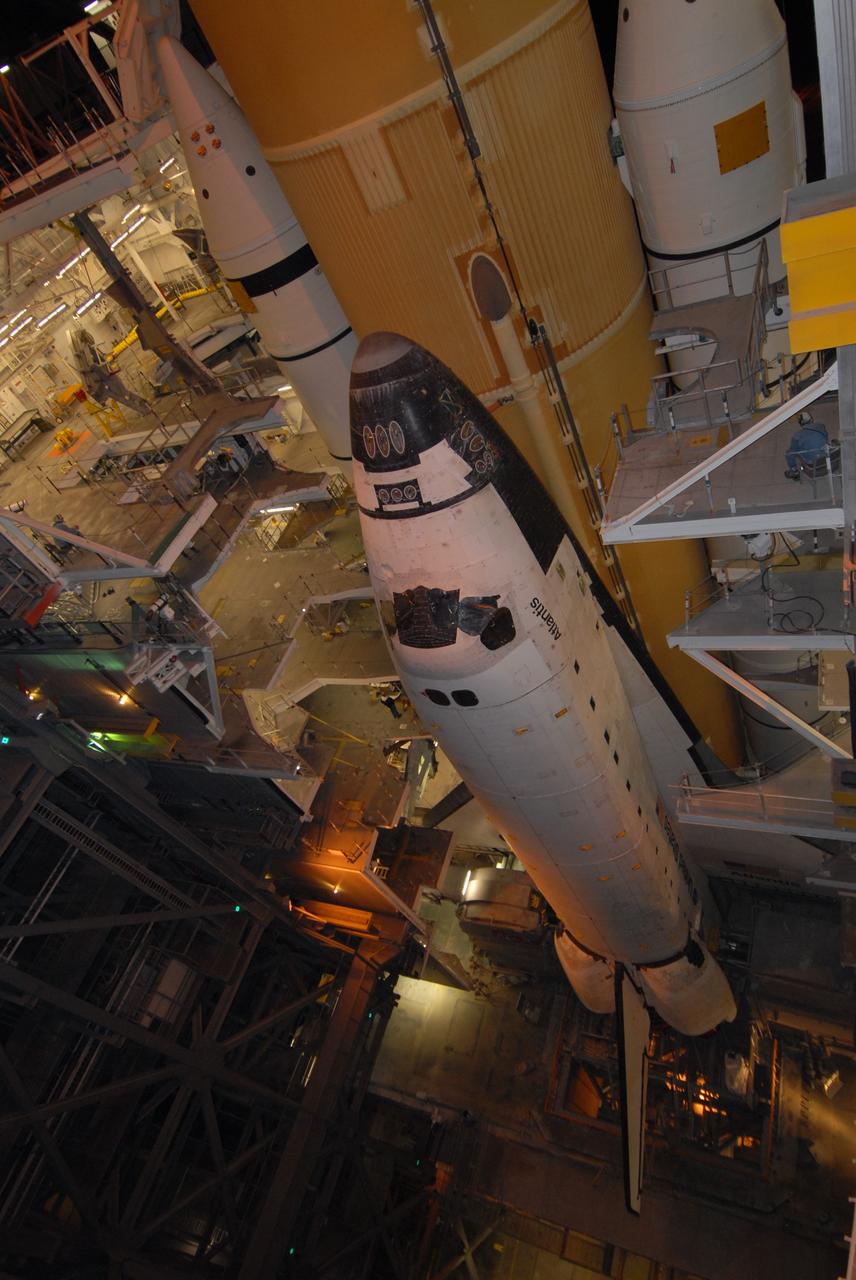
CAPE CANAVERAL, Fla. – Space shuttle Atlantis is ready to roll out of the Vehicle Assembly Building to Launch Pad 39A at NASA's Kennedy Space Center in Florida. Atlantis is targeted to lift off May 12 to service NASA's Hubble Space Telescope. First motion was at 3:54 a.m. EDT. The 3.4-mile trip will take about six hours. During Atlantis' 11-day mission, the crew of seven astronauts will make the final shuttle flight to Hubble. During five spacewalks, they will install two new instruments, repair two inactive ones and replace components. The result will be six working, complementary science instruments with capabilities beyond what is now available, and an extended operational lifespan for the telescope through at least 2014.   Photo credit: NASA/Jack Pfaller
KSC-2009-2436
STS-99 Mission Specialist Mamoru Mohri of Japan and his wife, Akiko, wave before their departure from Patrick Air Force Base and return to Houston. With the postponement of the launch of STS-99 on Jan. 31, the crew have an opportunity for more training and time with their families. During the launch countdown, Endeavour's enhanced master events controller (E-MEC) No. 2 failed a standard preflight test. Launch was postponed and Shuttle managers decided to replace the E-MEC located in the orbiter's aft compartment. Launch controllers will be in a position to begin the STS-99 countdown the morning of Feb. 6 and ready to support a launch midto late next week pending availability of the Eastern Range. Known as the Shuttle Radar Topography Mission, it will chart a new course to produce unrivaled 3-D images of the Earth's surface, using two antennae and a 200-foot-long section of space station-derived mast protruding from the payload bay. The result could be close to 1 trillion measurements of the Earth's topography. Besides contributing to the production of better maps, these measurements could lead to improved water drainage modeling, more realistic flight simulators, better locations for cell phone towers, and enhanced navigation safety
KSC00pp0148
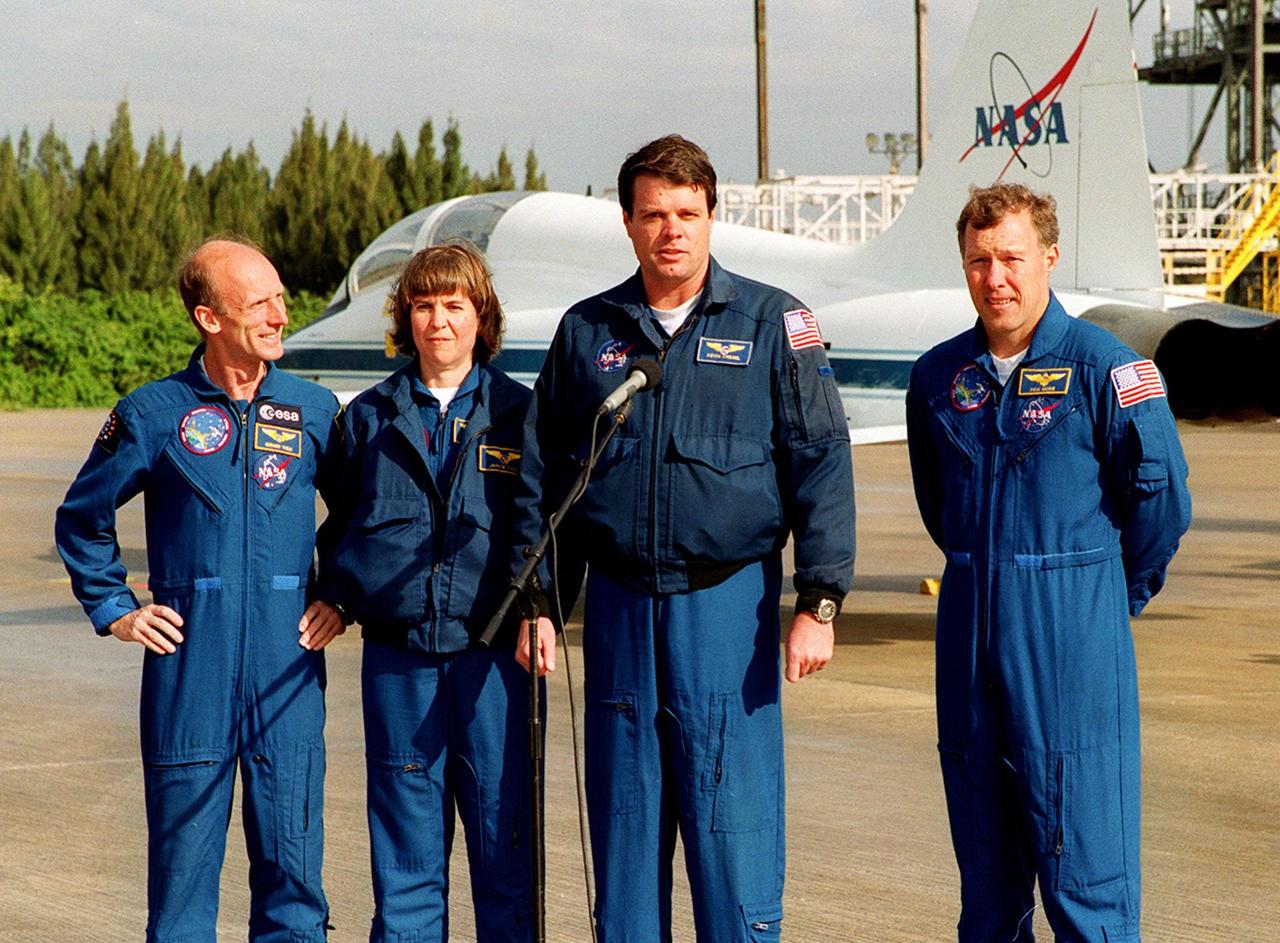
On the runway at the Shuttle Landing Facility, STS-99 crew members Mission Specialists Gerhard Thiele and Janice Voss, Commander Kevin Kregel and Pilot Dominic Gorie briefly talk to the media about their imminent departure to Houston. Kregel and Gorie will be piloting T-38 jets with Voss and Thiele as passengers. During the Jan. 31 launch countdown, Endeavour's enhanced master events controller (E-MEC) No. 2 failed a standard preflight test. Launch was postponed and Shuttle managers decided to replace the E-MEC located in the orbiter's aft compartment. Launch controllers will be in a position to begin the STS-99 countdown the morning of Feb. 6 and ready to support a launch midto late next week pending availability of the Eastern Range. The postponed launch gives the crew an opportunity for more training and time with their families. Known as the Shuttle Radar Topography Mission, it will chart a new course to produce unrivaled 3-D images of the Earth's surface, using two antennae and a 200-foot-long section of space station-derived mast protruding from the payload bay. The result could be close to 1 trillion measurements of the Earth's topography. Besides contributing to the production of better maps, these measurements could lead to improved water drainage modeling, more realistic flight simulators, better locations for cell phone towers, and enhanced navigation safety
KSC00pp0147
STS-99 Mission Specialist Mamoru Mohri of Japan waves before his departure from Patrick Air Force Base and return to Houston. With the postponement of the launch of STS-99 on Jan. 31, the crew have an opportunity for more training and time with their families. During the launch countdown, Endeavour's enhanced master events controller (E-MEC) No. 2 failed a standard preflight test. Launch was postponed and Shuttle managers decided to replace the E-MEC located in the orbiter's aft compartment. Launch controllers will be in a position to begin the STS-99 countdown the morning of Feb. 6 and ready to support a launch midto late next week pending availability of the Eastern Range. Known as the Shuttle Radar Topography Mission, it will chart a new course to produce unrivaled 3-D images of the Earth's surface, using two antennae and a 200-foot-long section of space station-derived mast protruding from the payload bay. The result could be close to 1 trillion measurements of the Earth's topography. Besides contributing to the production of better maps, these measurements could lead to improved water drainage modeling, more realistic flight simulators, better locations for cell phone towers, and enhanced navigation safety
KSC00pp0149
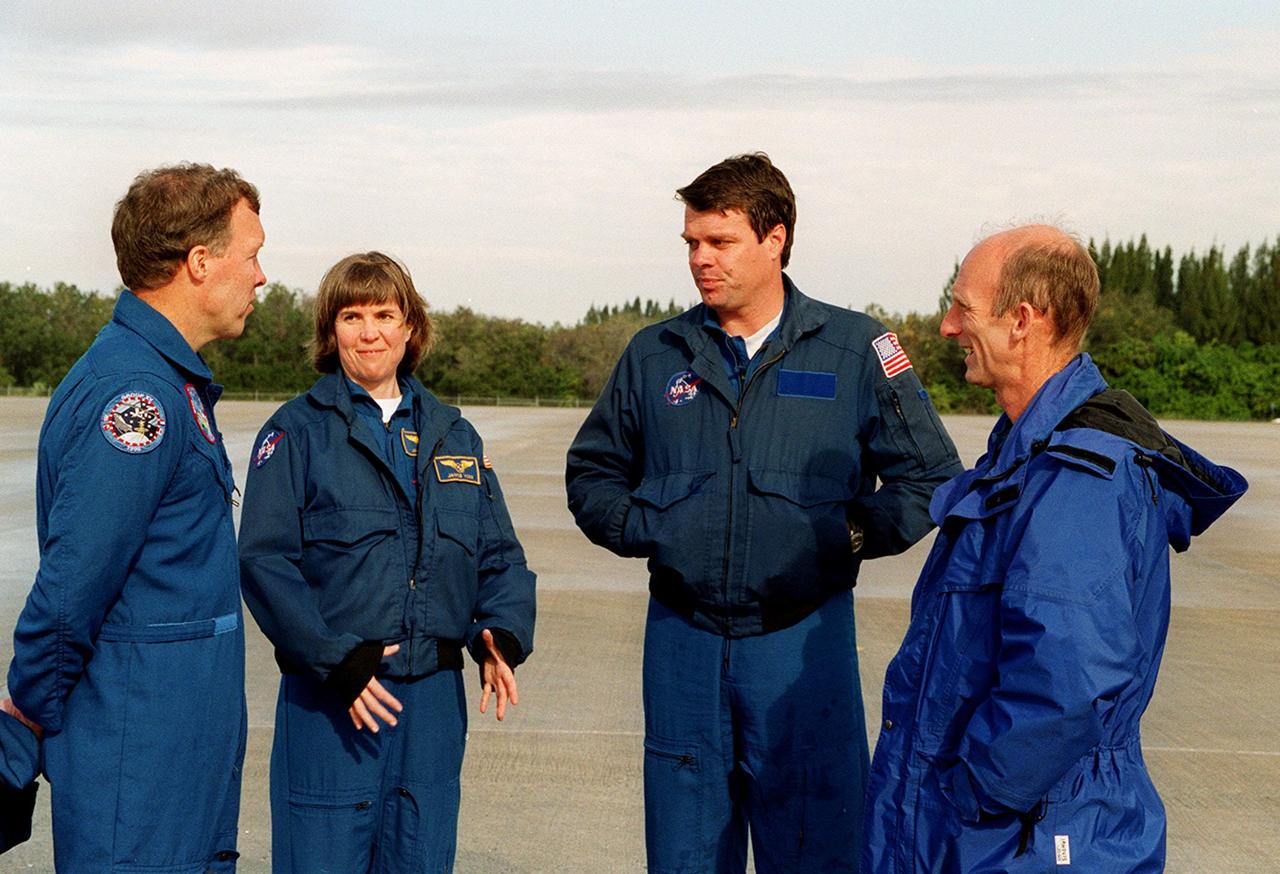
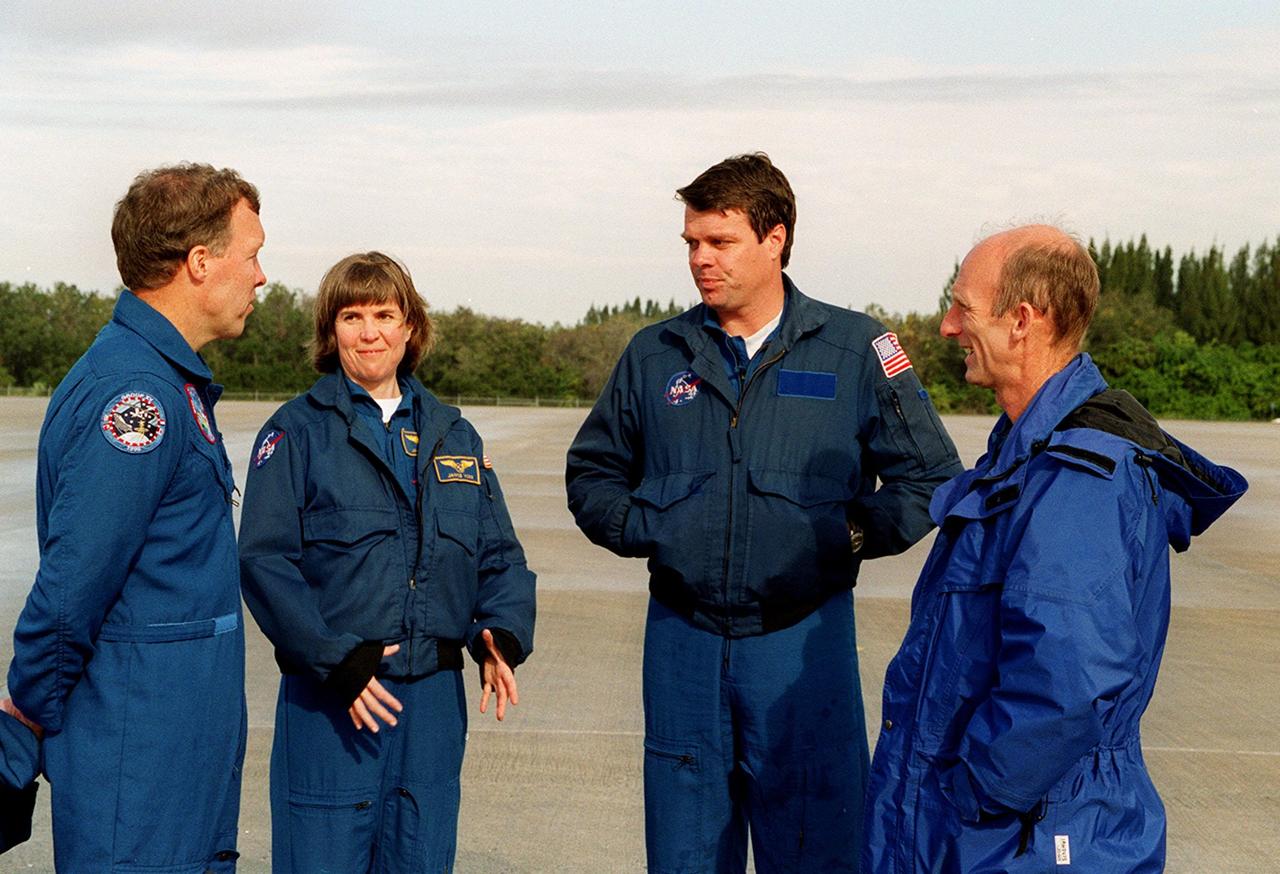
On the runway at the Shuttle Landing Facility, STS-99 crew members Pilot Dominic Gorie, Mission Specialist Janice Voss, Commander Kevin Kregel and Mission Specialist Gerhard Thiele discuss departure plans to Houston. Kregel and Gorie will be piloting T-38 jets with Voss and Thiele as passengers. During the Jan. 31 launch countdown, Endeavour's enhanced master events controller (E-MEC) No. 2 failed a standard preflight test. Launch was postponed and Shuttle managers decided to replace the E-MEC located in the orbiter's aft compartment. Launch controllers will be in a position to begin the STS-99 countdown the morning of Feb. 6 and ready to support a launch midto latenext week pending availability of the Eastern Range. The postponed launch gives the crew an opportunity for more training and time with their families. Known as the Shuttle Radar Topography Mission, it will chart a new course to produce unrivaled 3-D images of the Earth's surface, using two antennae and a 200-foot-long section of space station-derived mast protruding from the payload bay. The result could be close to 1 trillion measurements of the Earth's topography. Besides contributing to the production of better maps, these measurements could lead to improved water drainage modeling, more realistic flight simulators, better locations for cell phone towers, and enhanced navigation safety
KSC-00pp0146
On the runway at the Shuttle Landing Facility, STS-99 crew members Mission Specialists Gerhard Thiele and Janice Voss, Commander Kevin Kregel and Pilot Dominic Gorie briefly talk to the media about their imminent departure to Houston. Kregel and Gorie will be piloting T-38 jets with Voss and Thiele as passengers. During the Jan. 31 launch countdown, Endeavour's enhanced master events controller (E-MEC) No. 2 failed a standard preflight test. Launch was postponed and Shuttle managers decided to replace the E-MEC located in the orbiter's aft compartment. Launch controllers will be in a position to begin the STS-99 countdown the morning of Feb. 6 and ready to support a launch midto late next week pending availability of the Eastern Range. The postponed launch gives the crew an opportunity for more training and time with their families. Known as the Shuttle Radar Topography Mission, it will chart a new course to produce unrivaled 3-D images of the Earth's surface, using two antennae and a 200-foot-long section of space station-derived mast protruding from the payload bay. The result could be close to 1 trillion measurements of the Earth's topography. Besides contributing to the production of better maps, these measurements could lead to improved water drainage modeling, more realistic flight simulators, better locations for cell phone towers, and enhanced navigation safety
KSC-00pp0147
STS-99 Mission Specialist Mamoru Mohri of Japan and his wife, Akiko, wave before their departure from Patrick Air Force Base and return to Houston. With the postponement of the launch of STS-99 on Jan. 31, the crew have an opportunity for more training and time with their families. During the launch countdown, Endeavour's enhanced master events controller (E-MEC) No. 2 failed a standard preflight test. Launch was postponed and Shuttle managers decided to replace the E-MEC located in the orbiter's aft compartment. Launch controllers will be in a position to begin the STS-99 countdown the morning of Feb. 6 and ready to support a launch midto late next week pending availability of the Eastern Range. Known as the Shuttle Radar Topography Mission, it will chart a new course to produce unrivaled 3-D images of the Earth's surface, using two antennae and a 200-foot-long section of space station-derived mast protruding from the payload bay. The result could be close to 1 trillion measurements of the Earth's topography. Besides contributing to the production of better maps, these measurements could lead to improved water drainage modeling, more realistic flight simulators, better locations for cell phone towers, and enhanced navigation safety
KSC-00pp0148
On the runway at the Shuttle Landing Facility, STS-99 crew members Pilot Dominic Gorie, Mission Specialist Janice Voss, Commander Kevin Kregel and Mission Specialist Gerhard Thiele discuss departure plans to Houston. Kregel and Gorie will be piloting T-38 jets with Voss and Thiele as passengers. During the Jan. 31 launch countdown, Endeavour's enhanced master events controller (E-MEC) No. 2 failed a standard preflight test. Launch was postponed and Shuttle managers decided to replace the E-MEC located in the orbiter's aft compartment. Launch controllers will be in a position to begin the STS-99 countdown the morning of Feb. 6 and ready to support a launch midto latenext week pending availability of the Eastern Range. The postponed launch gives the crew an opportunity for more training and time with their families. Known as the Shuttle Radar Topography Mission, it will chart a new course to produce unrivaled 3-D images of the Earth's surface, using two antennae and a 200-foot-long section of space station-derived mast protruding from the payload bay. The result could be close to 1 trillion measurements of the Earth's topography. Besides contributing to the production of better maps, these measurements could lead to improved water drainage modeling, more realistic flight simulators, better locations for cell phone towers, and enhanced navigation safety
KSC00pp0146
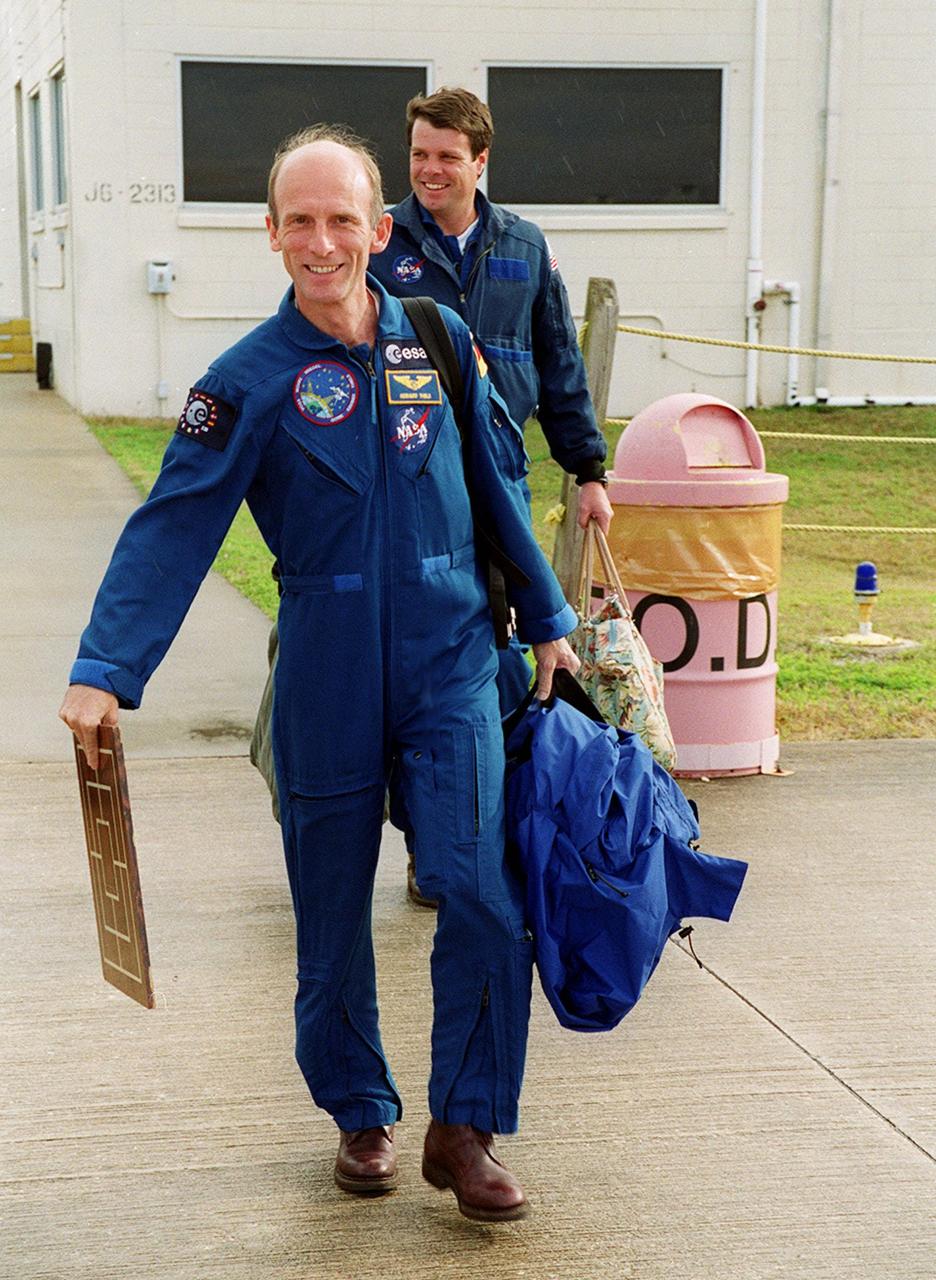
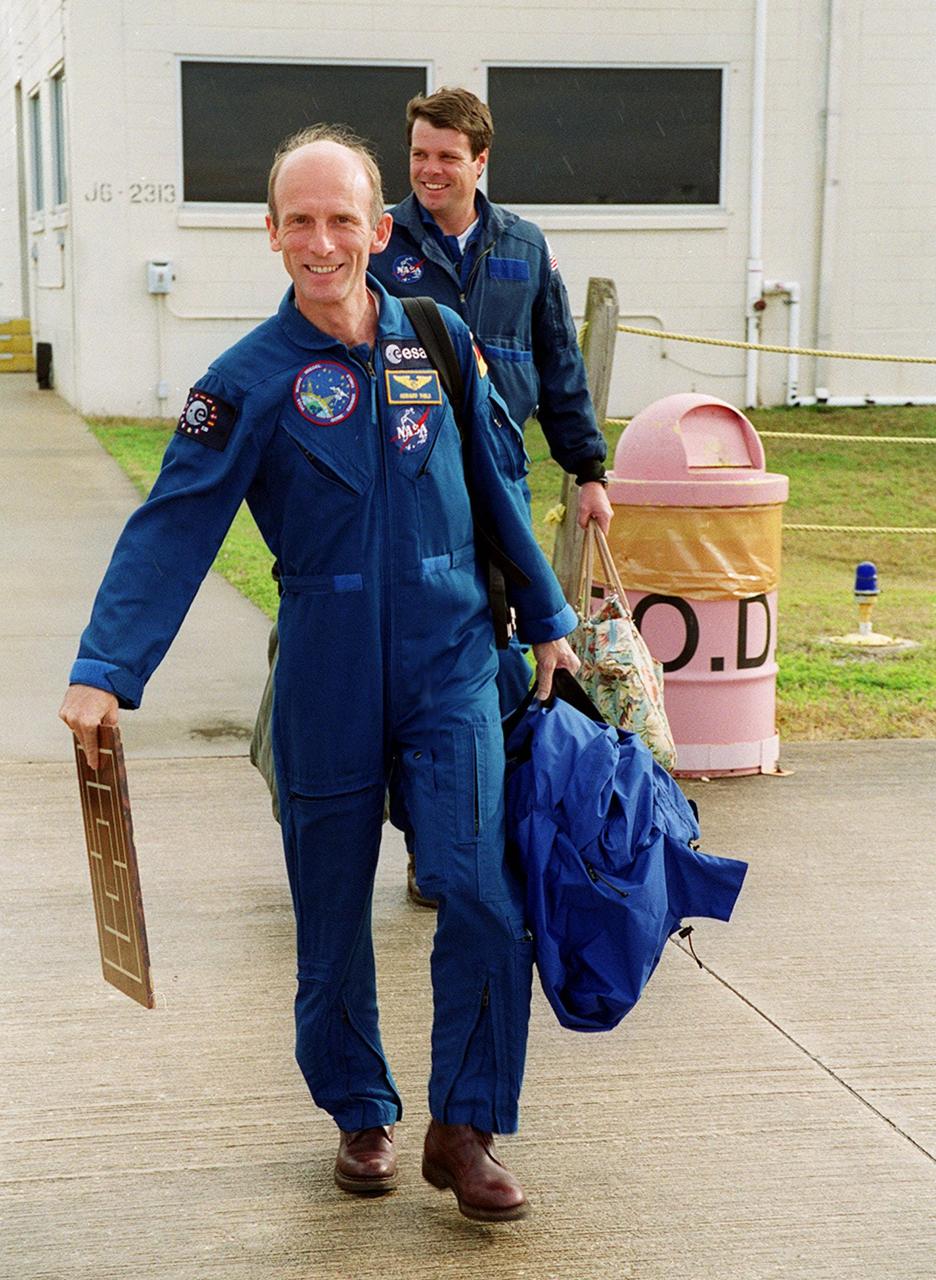
STS-99 Mission Specialist Gerhard Thiele (foreground) and Commander Kevin Kregel make their way to the runway at the Shuttle Landing Facility for a return flight to Houston. During the Jan. 31 launch countdown, Endeavour's enhanced master events controller (E-MEC) No. 2 failed a standard preflight test. Launch was postponed and Shuttle managers decided to replace the E-MEC located in the orbiter's aft compartment. Launch controllers will be in a position to begin the STS-99 countdown the morning of Feb. 6 and ready to support a launch midto late next week pending availability of the Eastern Range. The postponed launch gives the crew an opportunity for more training and time with their families. Known as the Shuttle Radar Topography Mission, it will chart a new course to produce unrivaled 3-D images of the Earth's surface, using two antennae and a 200-foot-long section of space station-derived mast protruding from the payload bay. The result could be close to 1 trillion measurements of the Earth's topography. Besides contributing to the production of better maps, these measurements could lead to improved water drainage modeling, more realistic flight simulators, better locations for cell phone towers, and enhanced navigation safety
KSC00pp0145
STS-99 Mission Specialist Mamoru Mohri of Japan waves before his departure from Patrick Air Force Base and return to Houston. With the postponement of the launch of STS-99 on Jan. 31, the crew have an opportunity for more training and time with their families. During the launch countdown, Endeavour's enhanced master events controller (E-MEC) No. 2 failed a standard preflight test. Launch was postponed and Shuttle managers decided to replace the E-MEC located in the orbiter's aft compartment. Launch controllers will be in a position to begin the STS-99 countdown the morning of Feb. 6 and ready to support a launch midto late next week pending availability of the Eastern Range. Known as the Shuttle Radar Topography Mission, it will chart a new course to produce unrivaled 3-D images of the Earth's surface, using two antennae and a 200-foot-long section of space station-derived mast protruding from the payload bay. The result could be close to 1 trillion measurements of the Earth's topography. Besides contributing to the production of better maps, these measurements could lead to improved water drainage modeling, more realistic flight simulators, better locations for cell phone towers, and enhanced navigation safety
KSC-00pp0149
STS-99 Mission Specialist Gerhard Thiele (foreground) and Commander Kevin Kregel make their way to the runway at the Shuttle Landing Facility for a return flight to Houston. During the Jan. 31 launch countdown, Endeavour's enhanced master events controller (E-MEC) No. 2 failed a standard preflight test. Launch was postponed and Shuttle managers decided to replace the E-MEC located in the orbiter's aft compartment. Launch controllers will be in a position to begin the STS-99 countdown the morning of Feb. 6 and ready to support a launch midto late next week pending availability of the Eastern Range. The postponed launch gives the crew an opportunity for more training and time with their families. Known as the Shuttle Radar Topography Mission, it will chart a new course to produce unrivaled 3-D images of the Earth's surface, using two antennae and a 200-foot-long section of space station-derived mast protruding from the payload bay. The result could be close to 1 trillion measurements of the Earth's topography. Besides contributing to the production of better maps, these measurements could lead to improved water drainage modeling, more realistic flight simulators, better locations for cell phone towers, and enhanced navigation safety
KSC-00pp0145
CAPE CANAVERAL, Fla. -- Florida's Lt. Gov. Jennifer Carroll, left, and NASA Commercial Crew Program Manager Ed Mango shake hands at the National Space Club Florida Committee's August luncheon at the Radisson Resort at the Port in Cape Canaveral, Fla. Mango was the event's guest speaker, discussing the innovative steps the agency is taking with industry partners to develop the next U.S. space transportation capability to and from low Earth orbit, which will eventually be available for use by the U.S. government and other commercial customers. To learn more about the Commercial Crew Program, visit www.nasa.gov/commercialcrew. Photo credit: Kim Shiflett  NASA's Ground Systems Development and Operations Program is leading the 20-year life-extension project for the crawler. A pair of behemoth machines called crawler-transporters has carried the load of taking rockets and spacecraft to the launch pad for more than 40 years at NASA’s Kennedy Space Center in Florida. Each weighing six and a half million pounds and larger in size than a professional baseball infield, the crawler-transporters are powered by locomotive and large electrical power generator engines. The crawler-transporters will stand ready to keep up the work for the next generation of launch vehicles to lift astronauts into space. For more information, visit http://www.nasa.gov/exploration/systems/ground/index.html Photo credit: NASA/Jim Grossmann
KSC-2012-4404