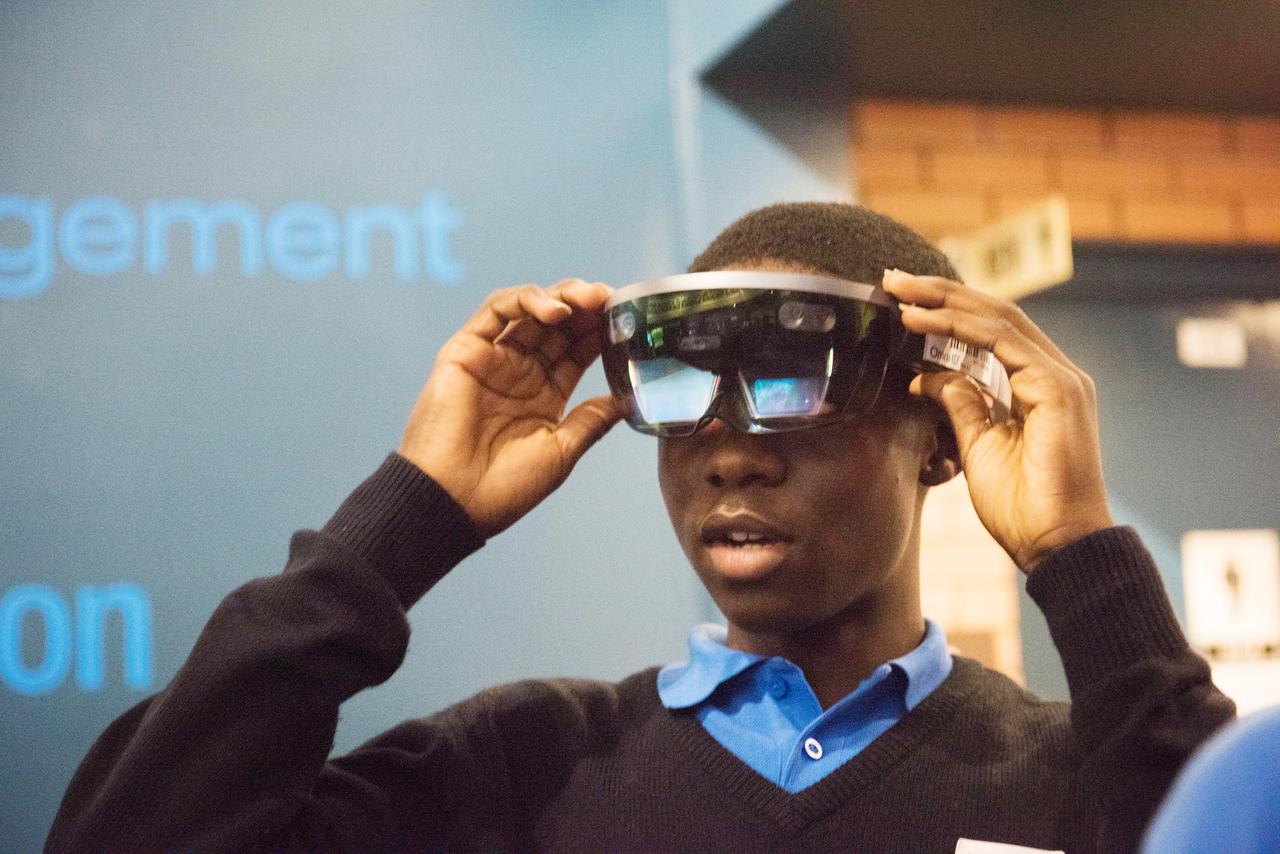
During Avaiation Day, 2018, a Participant uses a Microsoft HoloLens Virtual Reality Headset to view a NASA Created Immersive Visualization
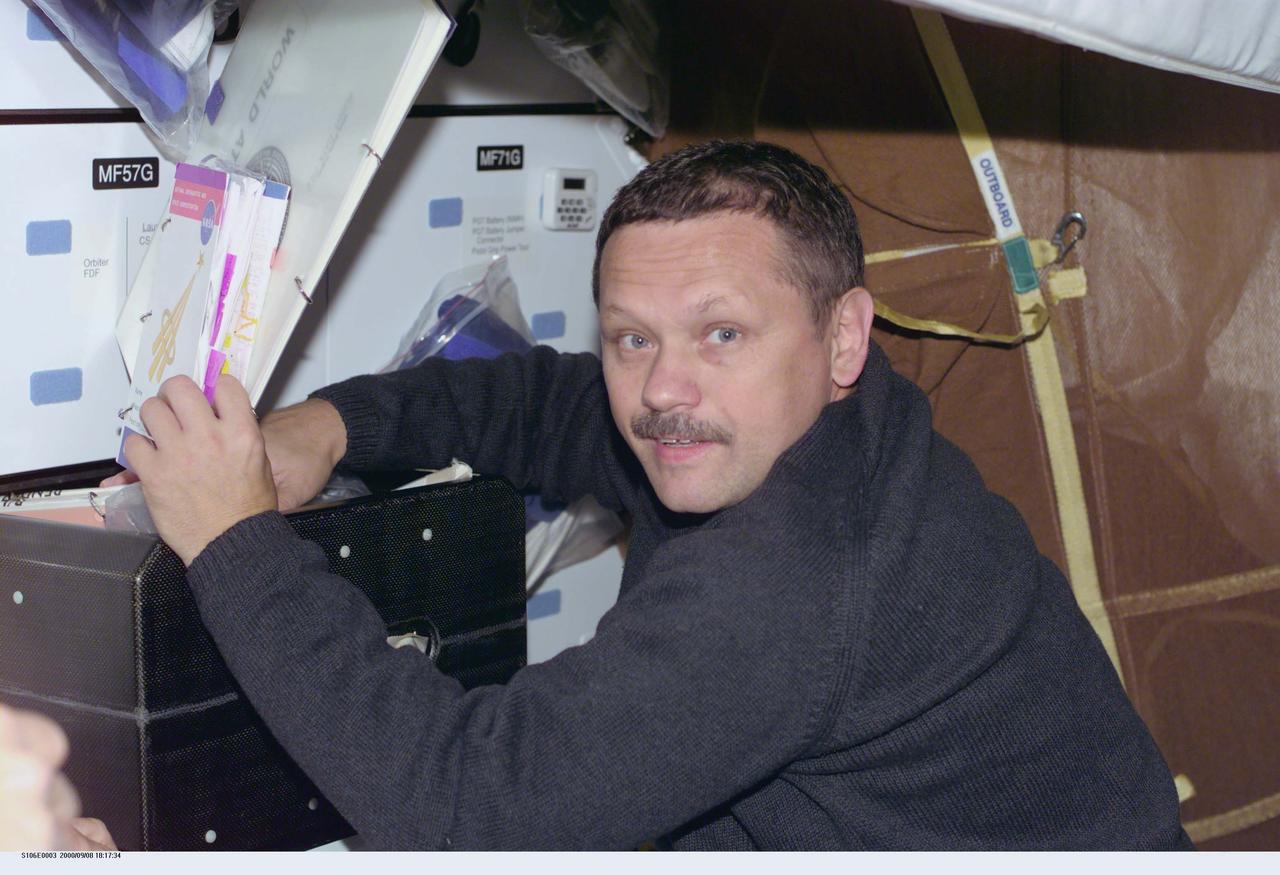
STS106-E-5003 (8 September 2000) --- Cosmonaut Boris V. Morukov, mission specialist representing the Russian Aviation and Space Agency, begins to organize affairs during Flight Day 1 onboard the Earth-orbiting Space Shuttle Atlantis.
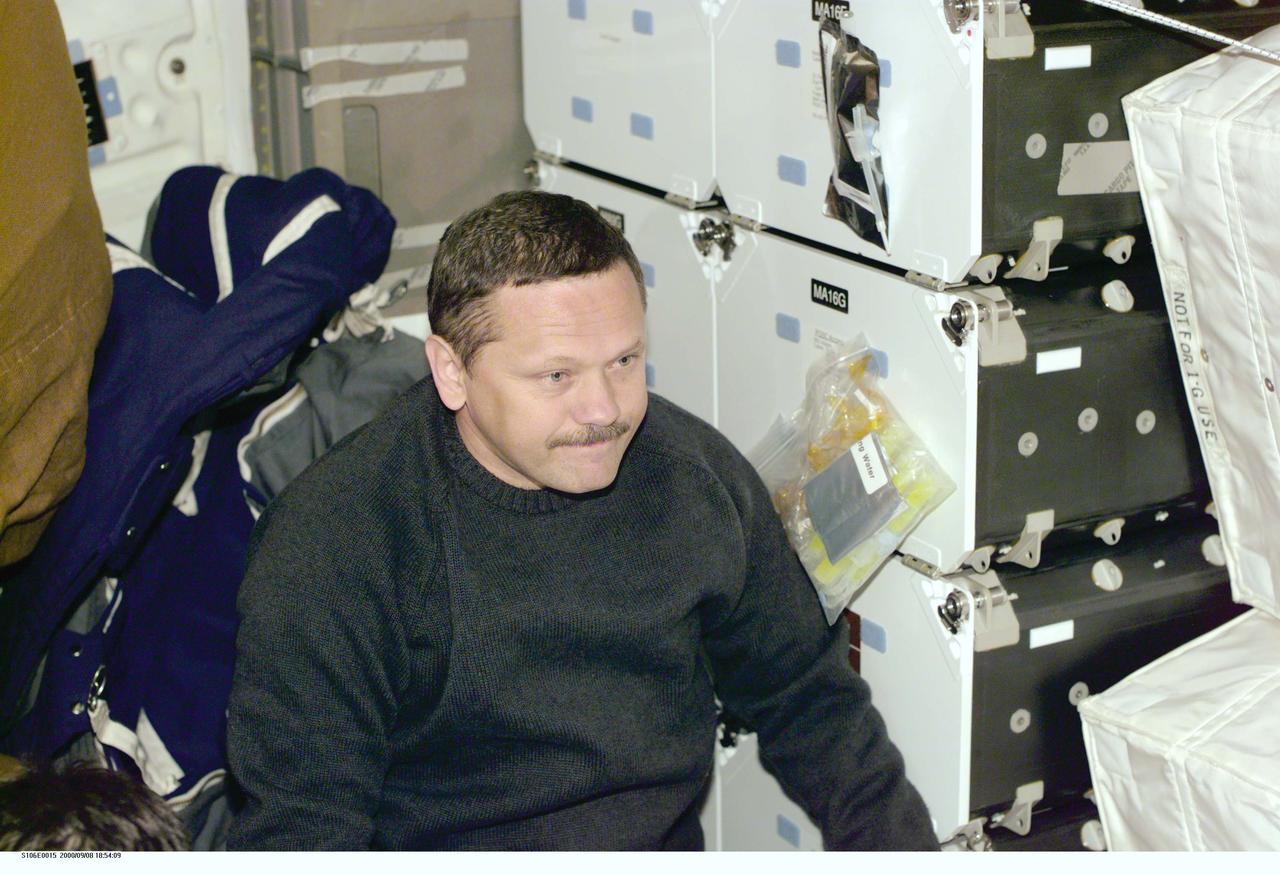
S106-E-5015 (8 September 2000) --- Cosmonaut Boris V. Morukov, mission specialist representing the Russian Aviation and Space Agency, sizes up some of the work ahead over the next several days onboard the Space Shuttle Atlantis.

ISS003-E-7129 (31 October 2001) --- A Soyuz spacecraft departs from the International Space Station (ISS) carrying the Soyuz taxi crew, Commander Victor Afanasyev, Flight Engineer Konstantin Kozeev and French Flight Engineer Claudie Haignere, ending their eight-day stay on the station. Afanasyev and Kozeev represent Rosaviakosmos, and Haignere represents ESA, carrying out a flight program for CNES, the French Space Agency, under a commercial contract with the Russian Aviation and Space Agency. This image was taken with a digital still camera.
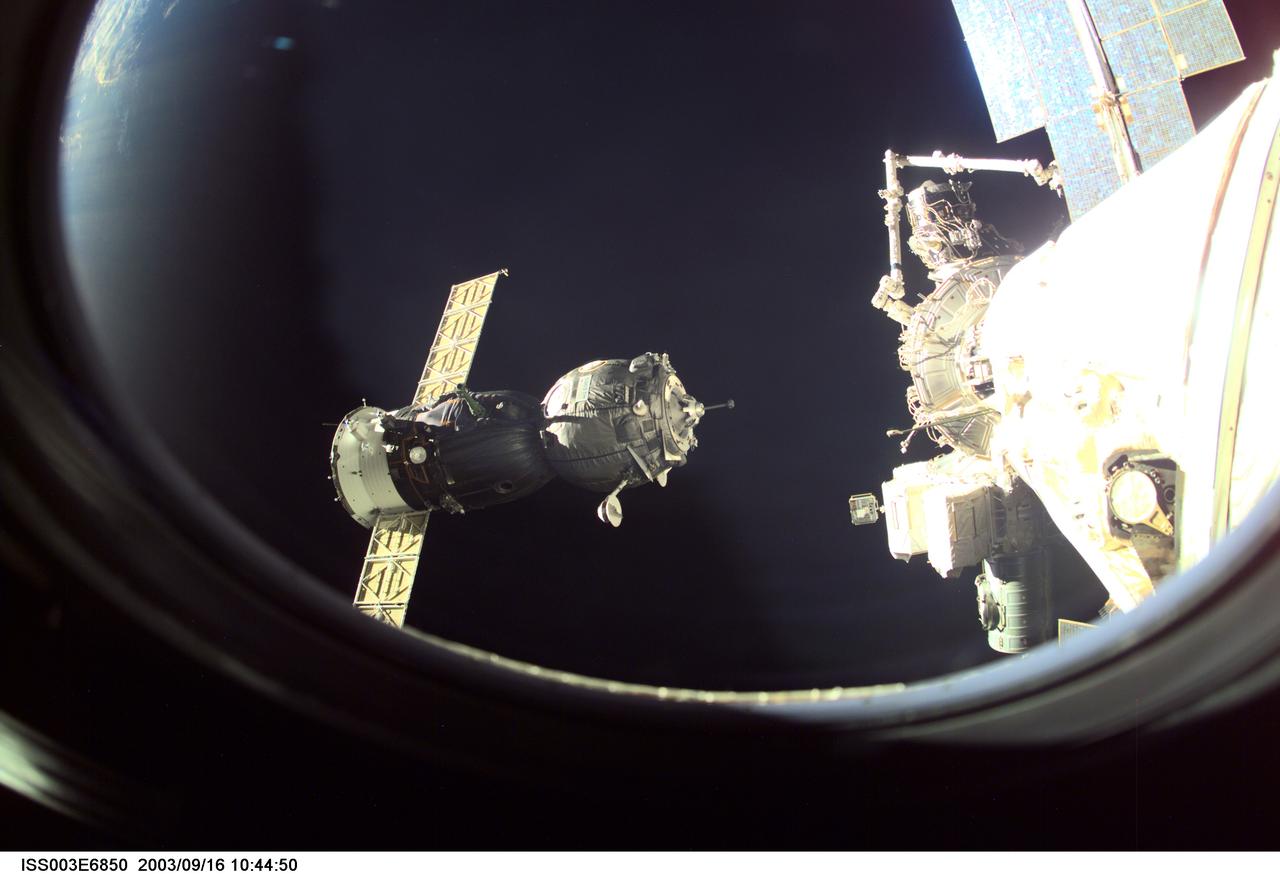
ISS003-E-6850 (23 October 2001) --- A Soyuz spacecraft approaches the International Space Station (ISS) carrying the Soyuz taxi crew, Commander Victor Afanasyev, Flight Engineer Konstantin Kozeev and French Flight Engineer Claudie Haignere for an eight-day stay on the station. Afanasyev and Kozeev represent Rosaviakosmos, and Haignere represents ESA, carrying out a flight program for CNES, the French Space Agency, under a commercial contract with the Russian Aviation and Space Agency. This image was taken with a digital still camera.
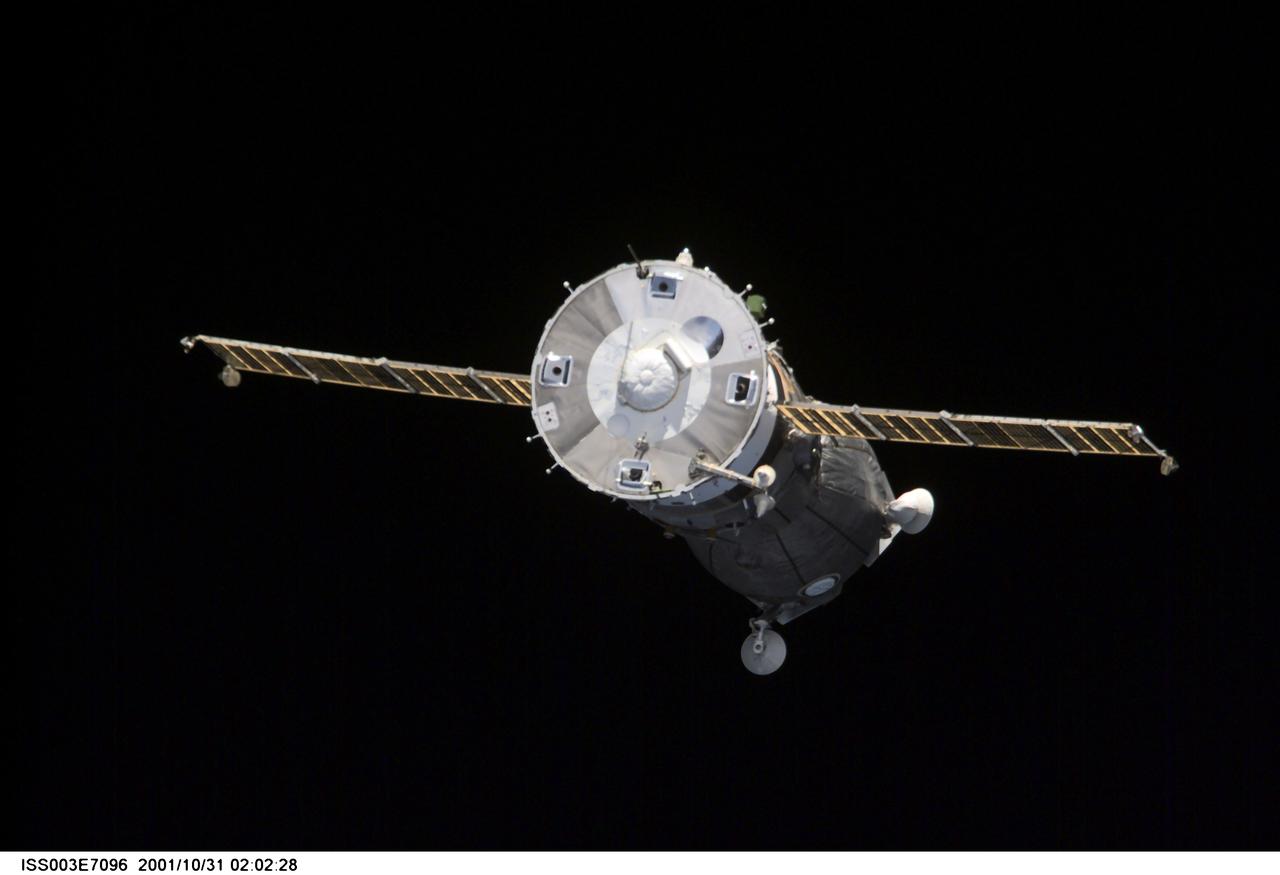
ISS003-E-7096 (31 October 2001) --- A Soyuz spacecraft departs from the International Space Station (ISS) carrying the Soyuz taxi crew, Commander Victor Afanasyev, Flight Engineer Konstantin Kozeev and French Flight Engineer Claudie Haignere, ending their eight-day stay on the station. Afanasyev and Kozeev represent Rosaviakosmos, and Haignere represents ESA, carrying out a flight program for CNES, the French Space Agency, under a commercial contract with the Russian Aviation and Space Agency. This image was taken with a digital still camera.
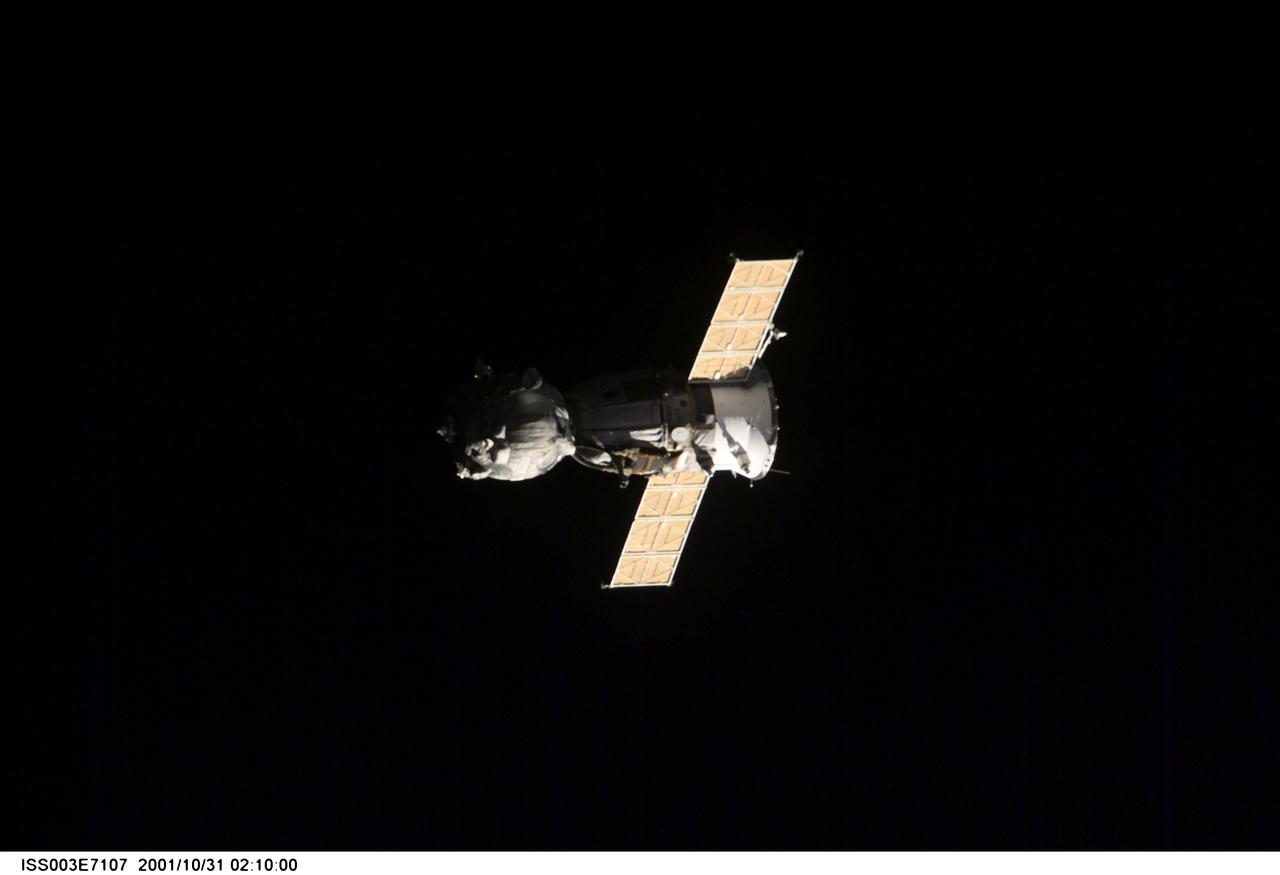
ISS003-E-7107 (31 October 2001) --- A Soyuz spacecraft departs from the International Space Station (ISS) carrying the Soyuz taxi crew, Commander Victor Afanasyev, Flight Engineer Konstantin Kozeev and French Flight Engineer Claudie Haignere, ending their eight-day stay on the station. Afanasyev and Kozeev represent Rosaviakosmos, and Haignere represents ESA, carrying out a flight program for CNES, the French Space Agency, under a commercial contract with the Russian Aviation and Space Agency. This image was taken with a digital still camera.
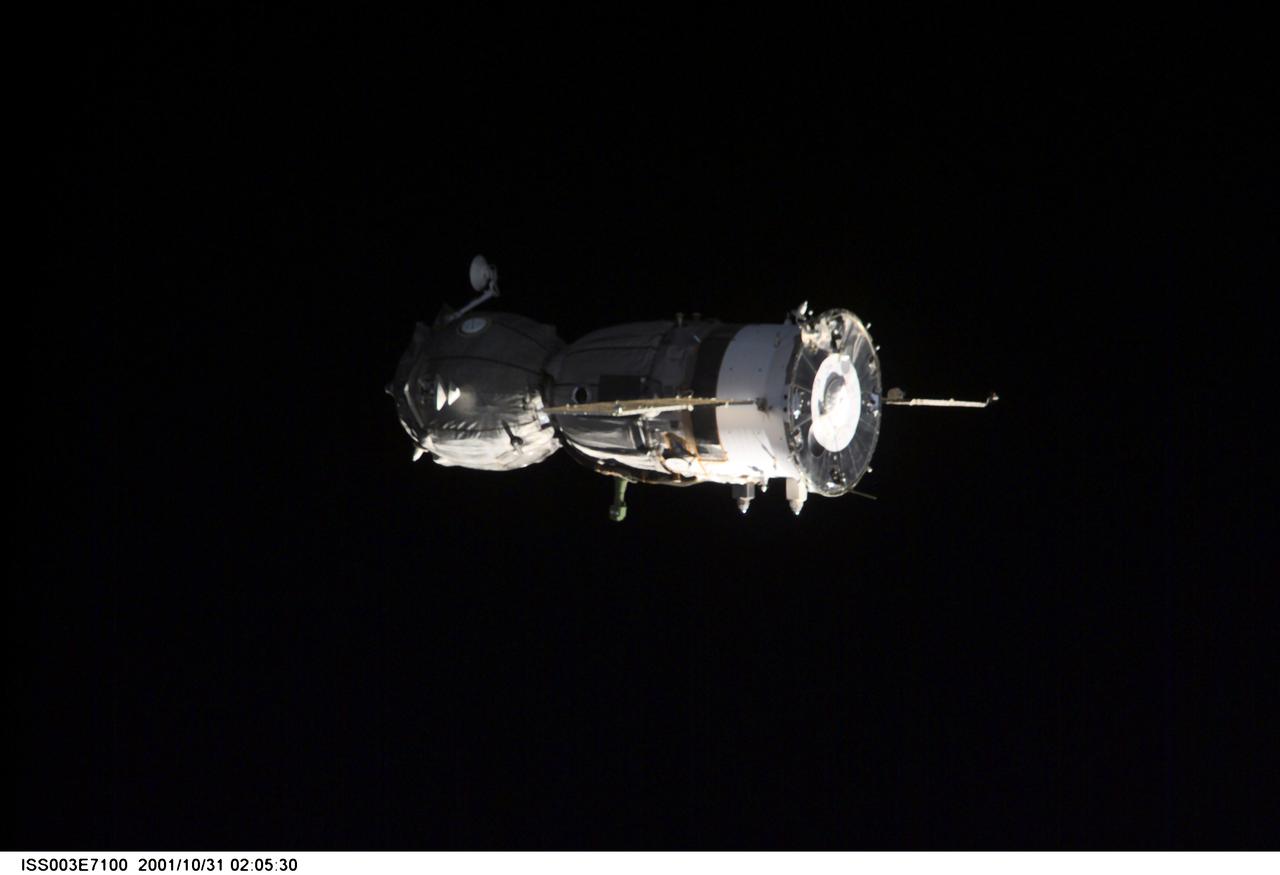
ISS003-E-7100 (31 October 2001) --- A Soyuz spacecraft departs from the International Space Station (ISS) carrying the Soyuz taxi crew, Commander Victor Afanasyev, Flight Engineer Konstantin Kozeev and French Flight Engineer Claudie Haignere, ending their eight-day stay on the station. Afanasyev and Kozeev represent Rosaviakosmos, and Haignere represents ESA, carrying out a flight program for CNES, the French Space Agency, under a commercial contract with the Russian Aviation and Space Agency. This image was taken with a digital still camera.
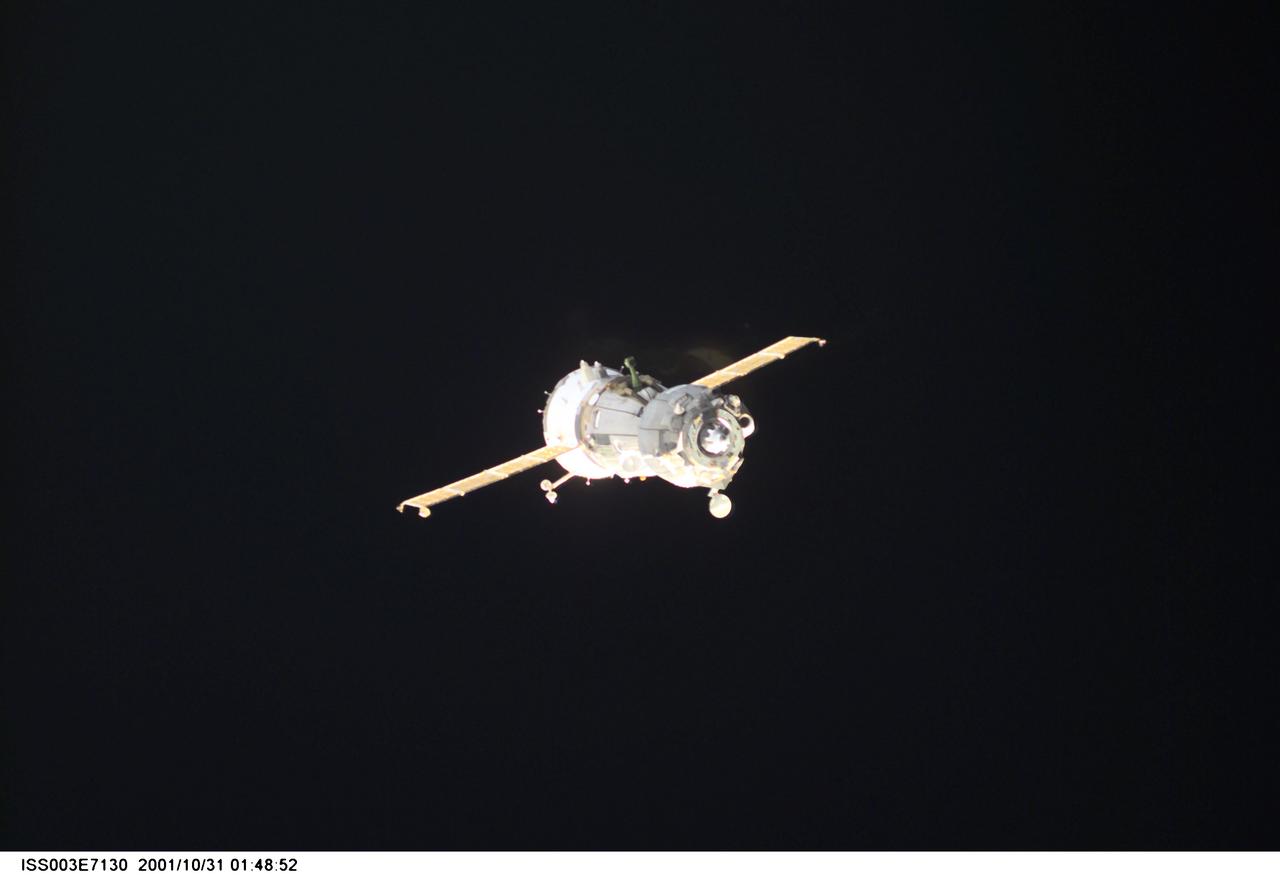
ISS003-E-7130 (31 October 2001) --- A Soyuz spacecraft departs from the International Space Station (ISS) carrying the Soyuz taxi crew, Commander Victor Afanasyev, Flight Engineer Konstantin Kozeev and French Flight Engineer Claudie Haignere, ending their eight-day stay on the station. Afanasyev and Kozeev represent Rosaviakosmos, and Haignere represents ESA, carrying out a flight program for CNES, the French Space Agency, under a commercial contract with the Russian Aviation and Space Agency. This image was taken with a digital still camera.
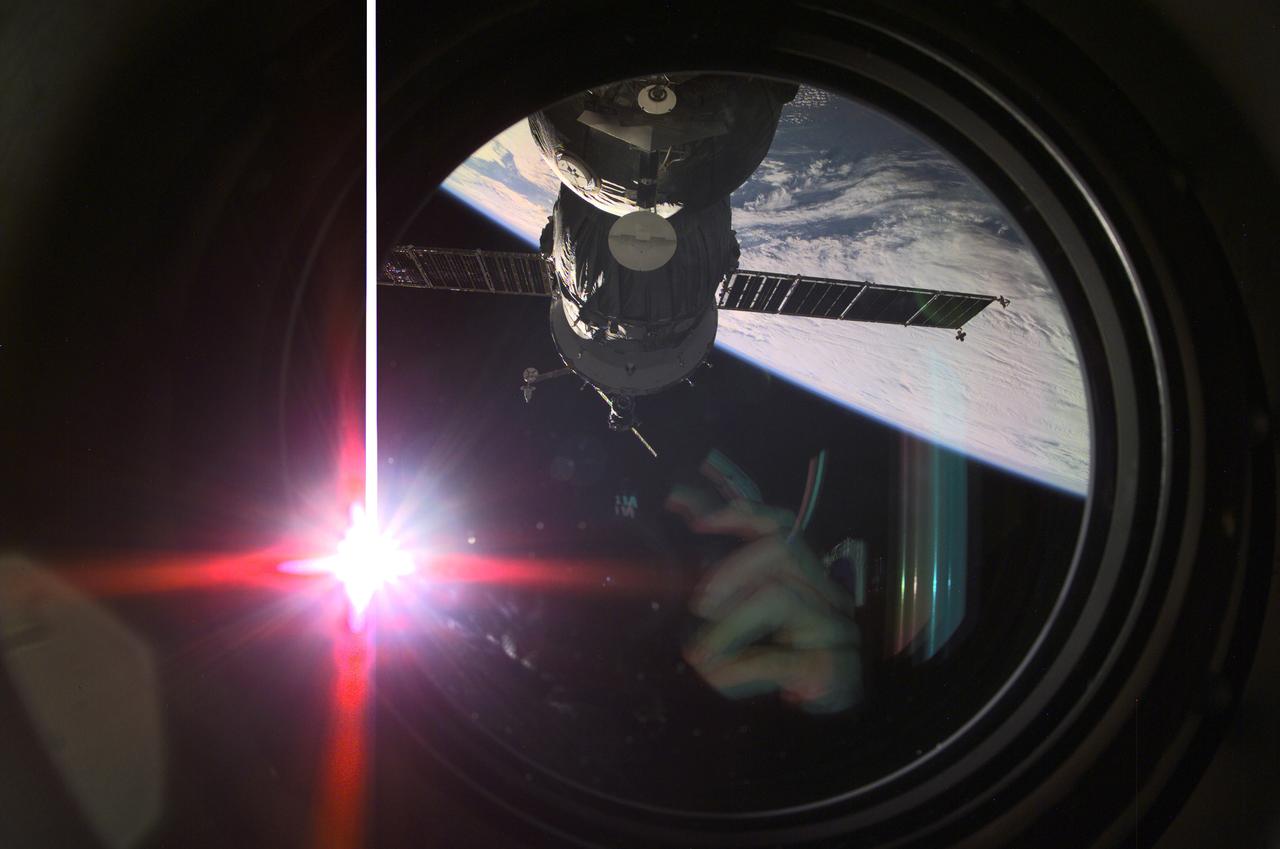
Carrying out a flight program for the French Space Agency (CNES) under a commercial contract with the Russian Aviation and Space Agency, a Russian Soyuz spacecraft approaches the International Space Station (ISS), delivering a crew of three for an eight-day stay. Aboard the craft are Commander Victor Afanasyev, Flight Engineer Konstantin Kozeev, both representing Rosaviakosmos, and French Flight Engineer Claudie Haignere.
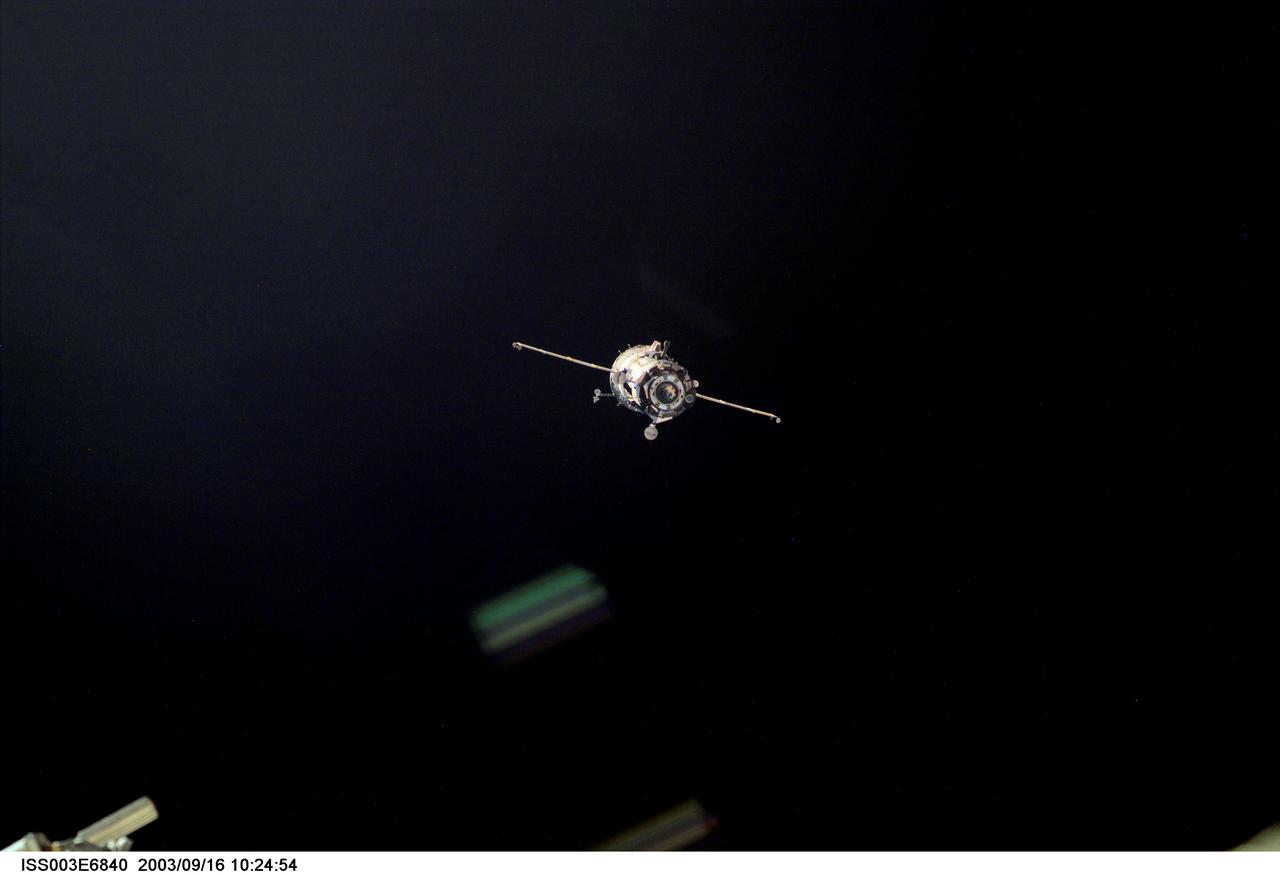
ISS003-E-6840 (23 October 2001) --- A Soyuz spacecraft approaches the International Space Station (ISS) carrying the Soyuz taxi crew, Commander Victor Afanasyev, Flight Engineer Konstantin Kozeev and French Flight Engineer Claudie Haignere for an eight-day stay on the station. Afanasyev and Kozeev represent Rosaviakosmos, and Haignere represents ESA, carrying out a flight program for CNES, the French Space Agency, under a commercial contract with the Russian Aviation and Space Agency. This image was taken with a digital still camera.
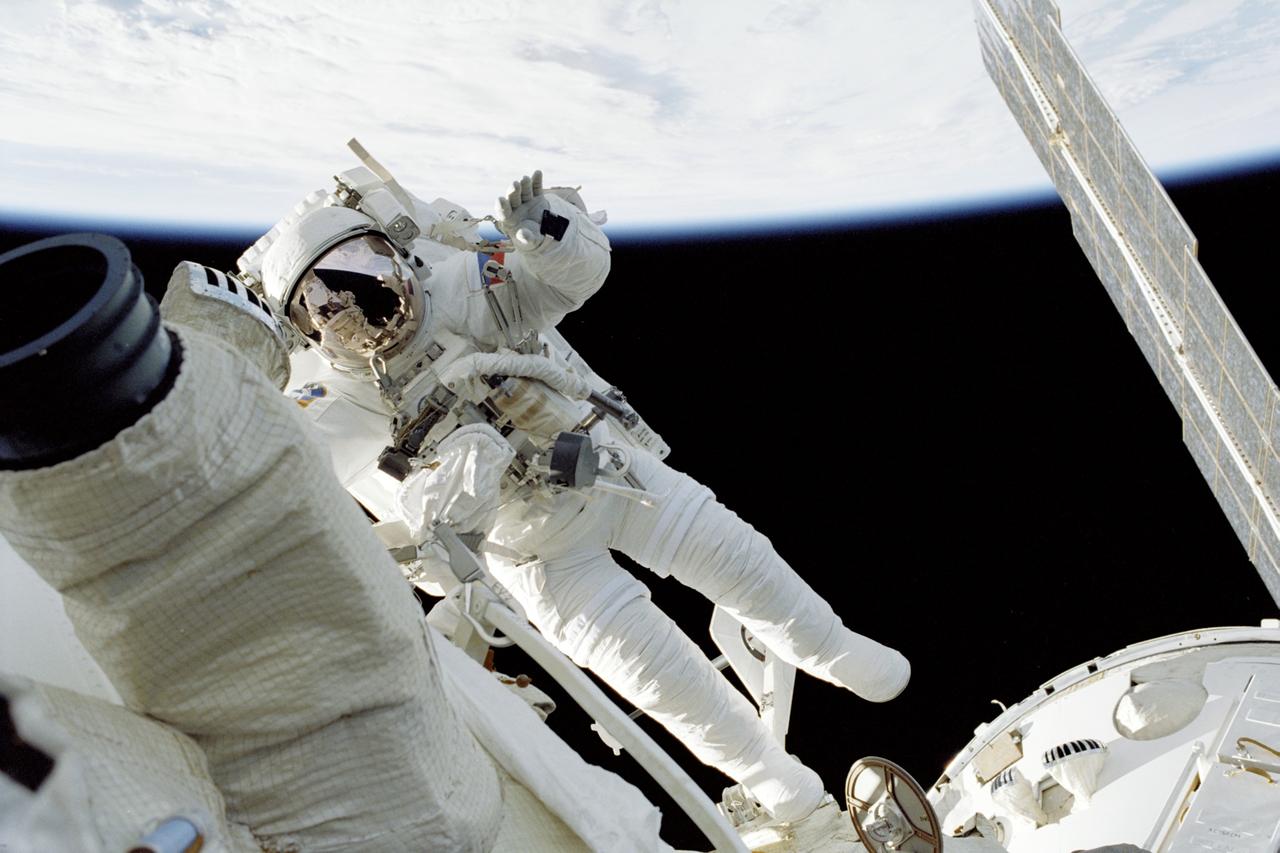
S106-348-012 (11 September 2000) --- Cosmonaut Yuri I. Malenchenko, mission specialist, was captured on film by his spacewalking colleague, astronaut Edward T. Lu, during the 6-hour-plus space walk the two performed on the exterior of the International Space Station (ISS). Malenchenko was one of two mission specialists on the 12-day flight who represented the Russian Aviation and Space Agency.
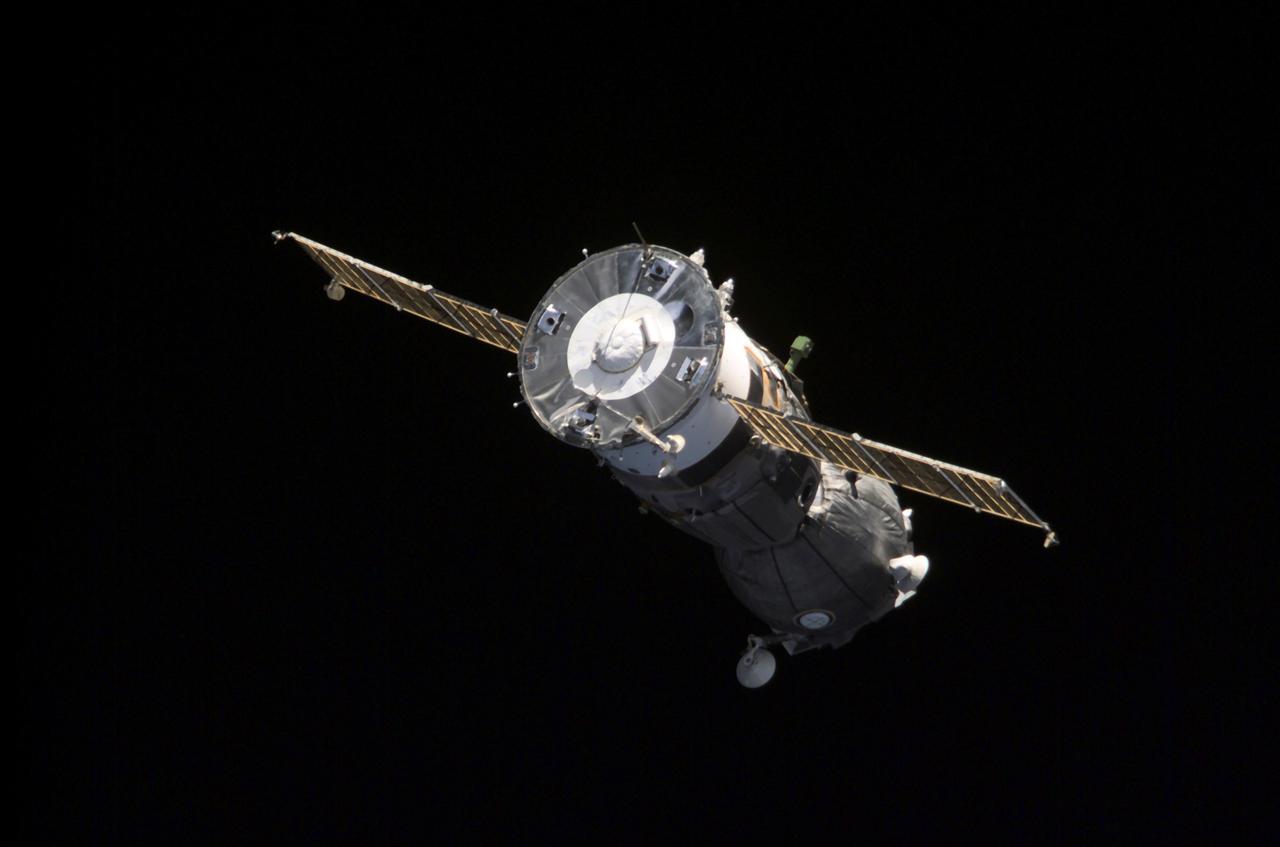
A Russian Soyuz spacecraft departs from the International Space Station (ISS) with its crew of three ending an eight-day stay. Aboard the craft are Commander Victor Afanasyev, Flight Engineer Konstantin Kozeev, both representing Rosaviakosmos, and French Flight Engineer Claudie Haignere. Their mission was to carry out a flight program for the French Space Agency (CNES) under a commercial contract with the Russian Aviation and Space Agency.
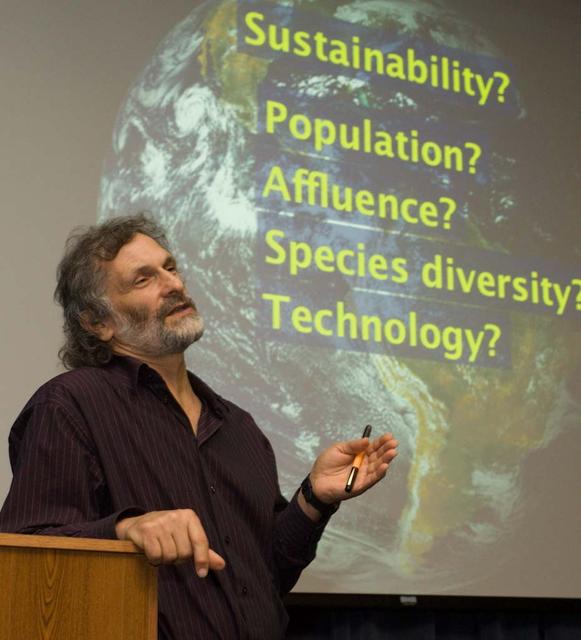
Director's Colloquium; Dr Jonathan Trent, Physical Scientist with NASA Ames Bioengineering Branch presents 'OMEGA and the Future of Aviation Fuels) Abstract: Offshore Membrane Enclosures for Growing Algae (OMEGA) is an innovative approach to growing oil-producing, freshwater algea in off shore enclosures, using municipal wastewater that is currently dumped into the ocean at a rate of >35 billion gals/day.
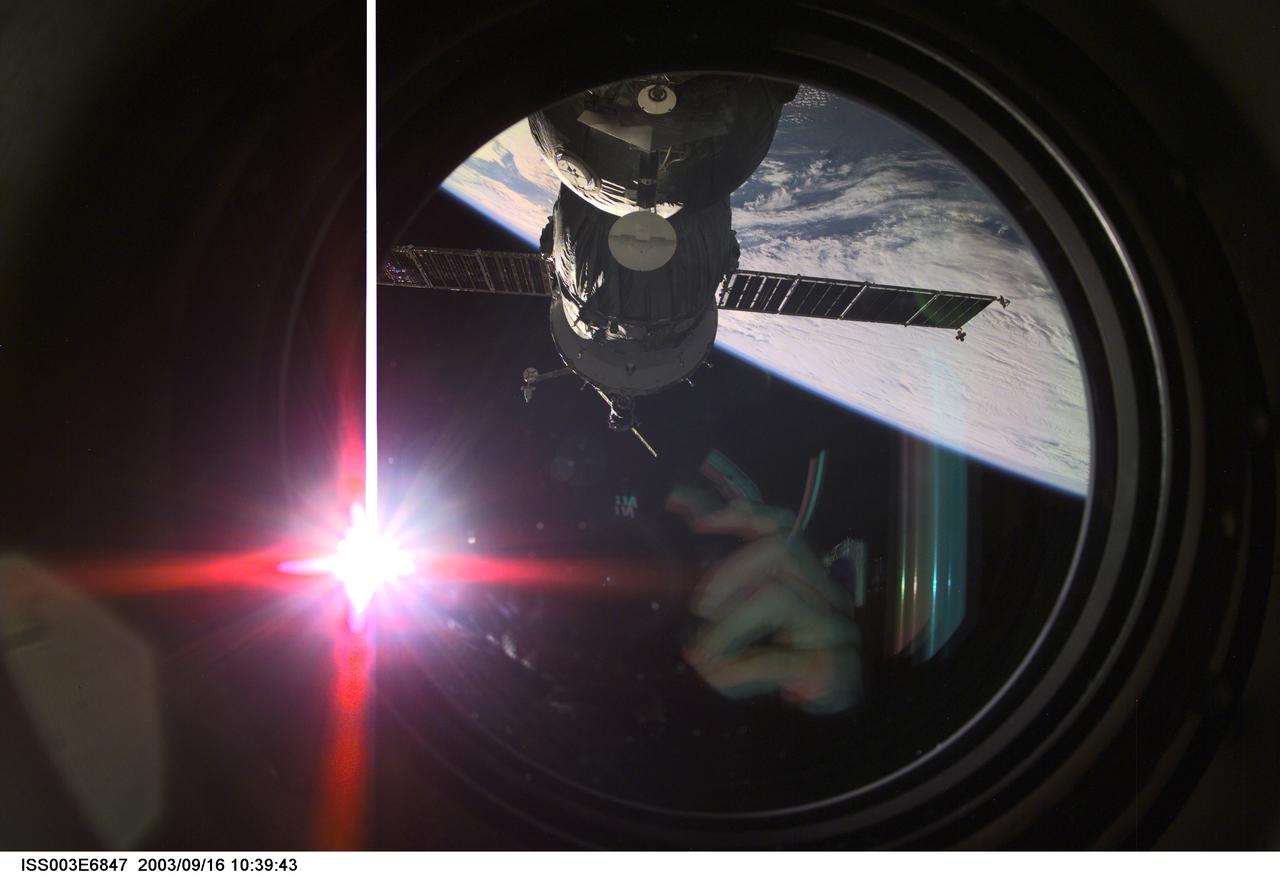
ISS003-E-6847 (23 October 2001) --- A Soyuz spacecraft approaches the International Space Station (ISS) carrying the Soyuz taxi crew, Commander Victor Afanasyev, Flight Engineer Konstantin Kozeev and French Flight Engineer Claudie Haignere for an eight-day stay on the station. Afanasyev and Kozeev represent Rosaviakosmos, and Haignere represents ESA, carrying out a flight program for CNES, the French Space Agency, under a commercial contract with the Russian Aviation and Space Agency. This image was taken with a digital still camera.
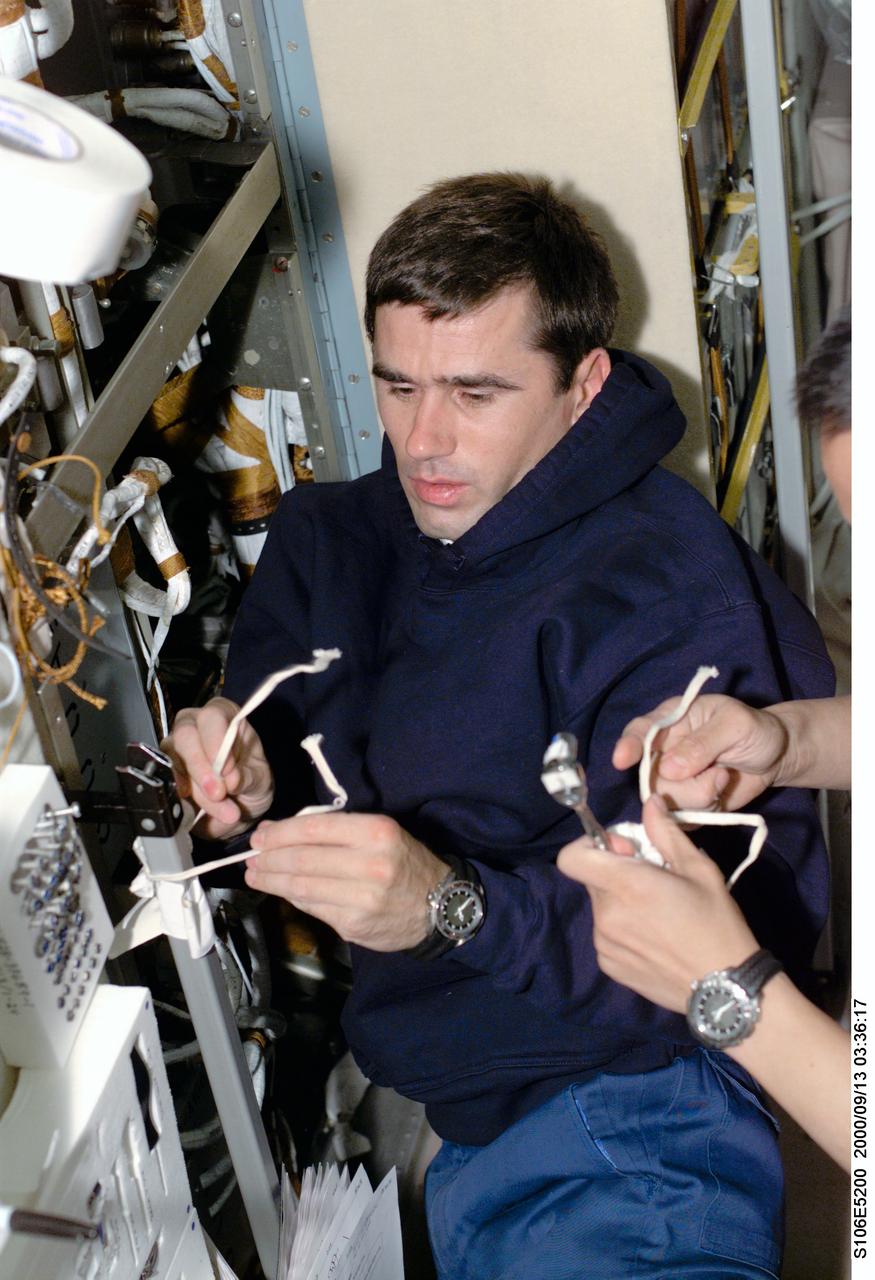
S106-E-5200 (13 September 2000) --- Cosmonaut Yuri I. Malenchenko, mission specialist representing the Russian Aviation and Space Agency, works aboard the Zvezda service module on the International Space Station (ISS). Electrical work was the hallmark of this day as four of the mission specialists aboard ISS (temporarily docked with the Space Shuttle Atlantis) replaced batteries inside the Zarya and Zvezda modules while supply transfer continued around them. Astronaut Edward T. Lu, mission specialist, is out of frame at right.
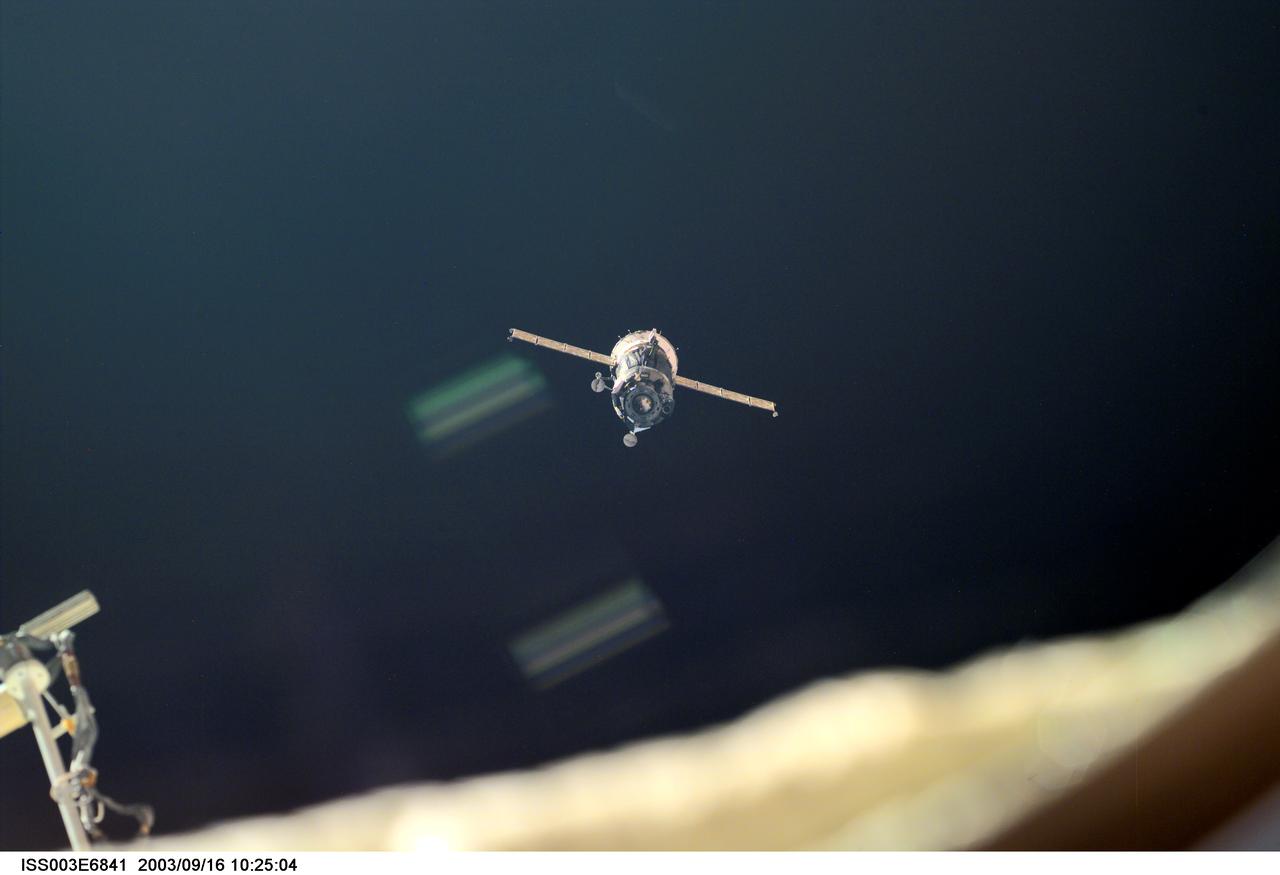
ISS003-E-6841 (23 October 2001) --- A Soyuz spacecraft approaches the International Space Station (ISS) carrying the Soyuz taxi crew, Commander Victor Afanasyev, Flight Engineer Konstantin Kozeev and French Flight Engineer Claudie Haignere for an eight-day stay on the station. Afanasyev and Kozeev represent Rosaviakosmos, and Haignere represents ESA, carrying out a flight program for CNES, the French Space Agency, under a commercial contract with the Russian Aviation and Space Agency. This image was taken with a digital still camera.
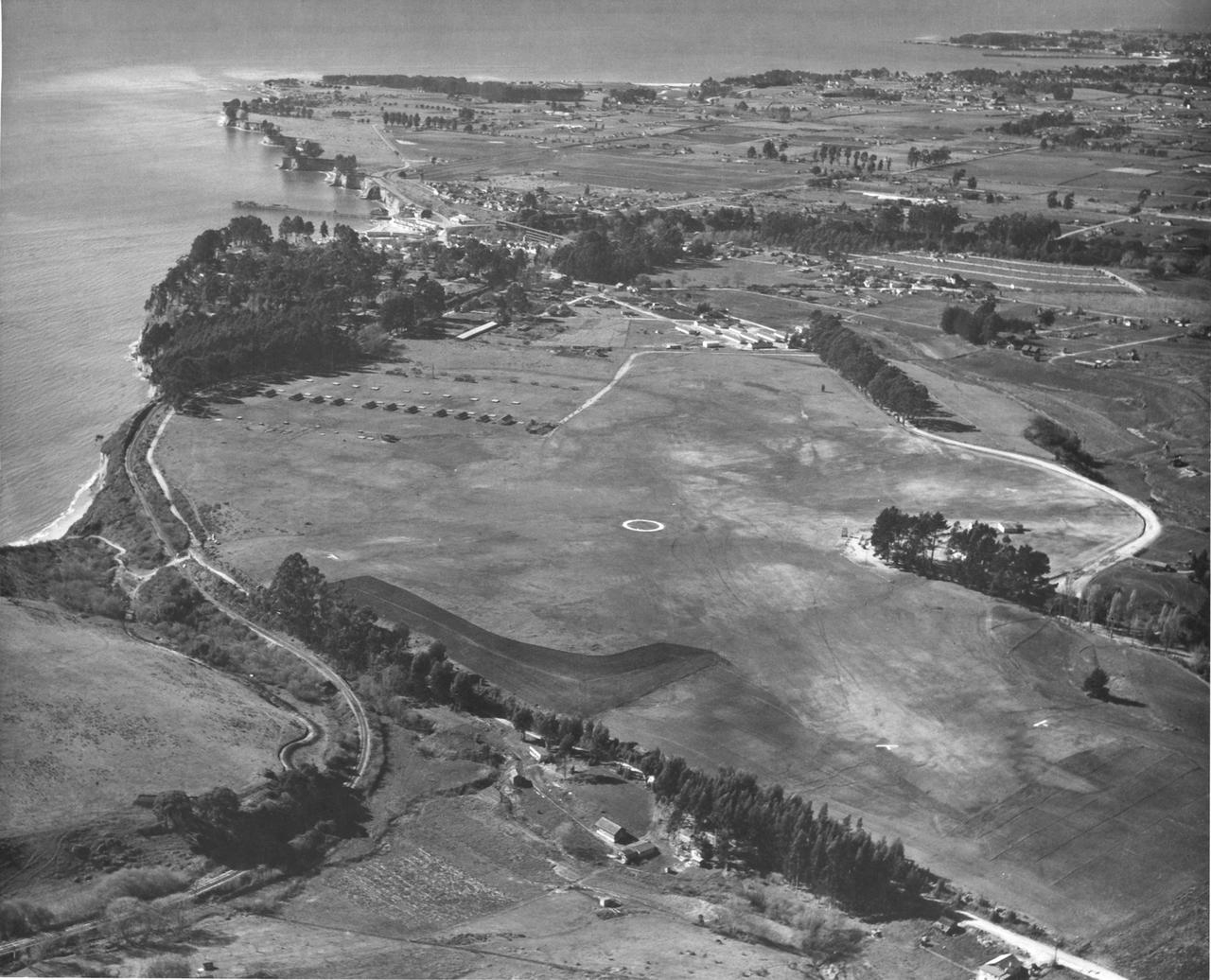
Navy Santa Cruz 'Airport'. Airport looking west: Municipal Rating: Location; 6 miles east of city- Altitude; 75ft - Layout: L-shaped, hard smooth dirt, Drainage; natural. East-west 2,500' X 300' North-South 2,000 X 400' to S.E. trees, to N.E. Hangar and Aviation fuel, Tower: 50' hight - Day Service Only
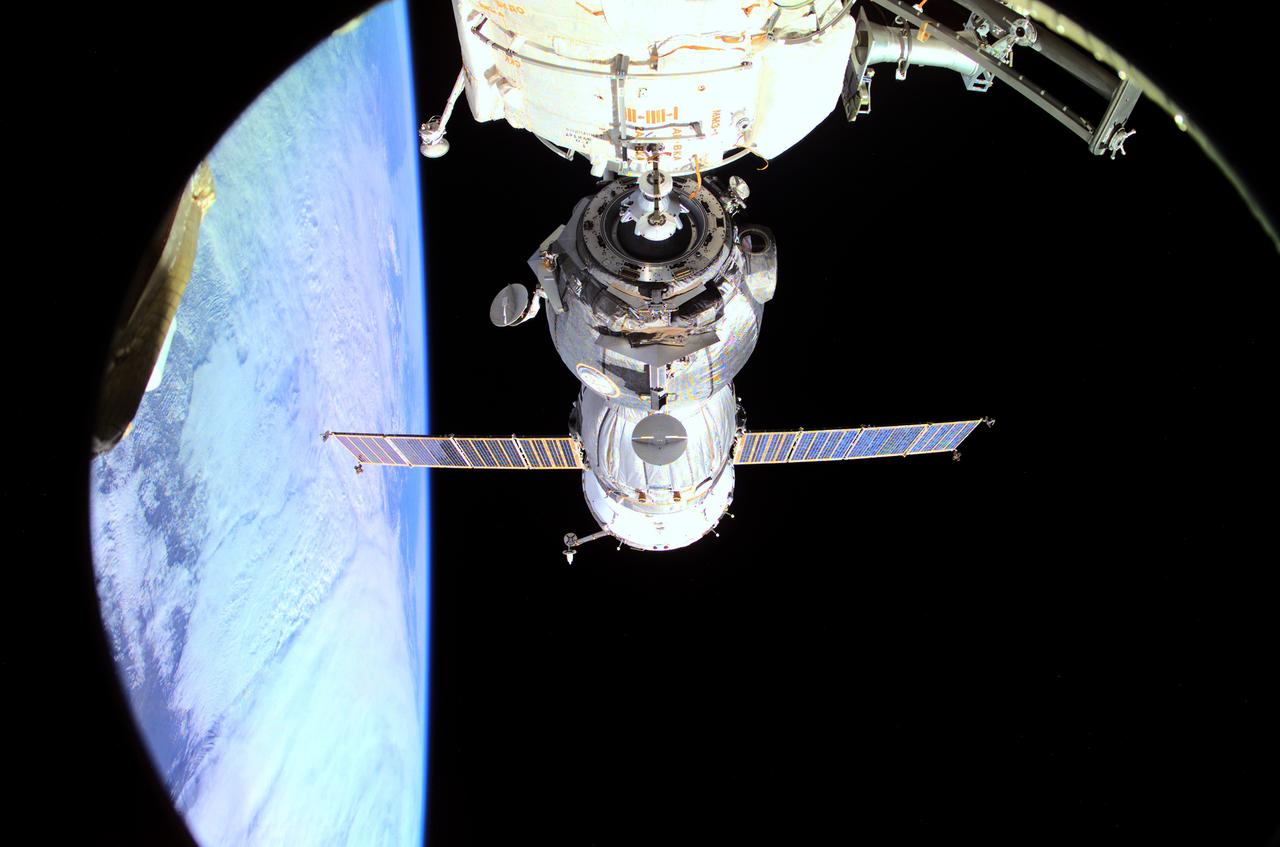
A Russian Soyuz spacecraft undocks from the International Space Station (ISS) with its crew of three ending an eight-day stay. Aboard the craft are Commander Victor Afanasyev, Flight Engineer Konstantin Kozeev, both representing Rosaviakosmos, and French Flight Engineer Claudie Haignere. Their mission was to carry out a flight program for the French Space Agency (CNES) under a commercial contract with the Russian Aviation and Space Agency.
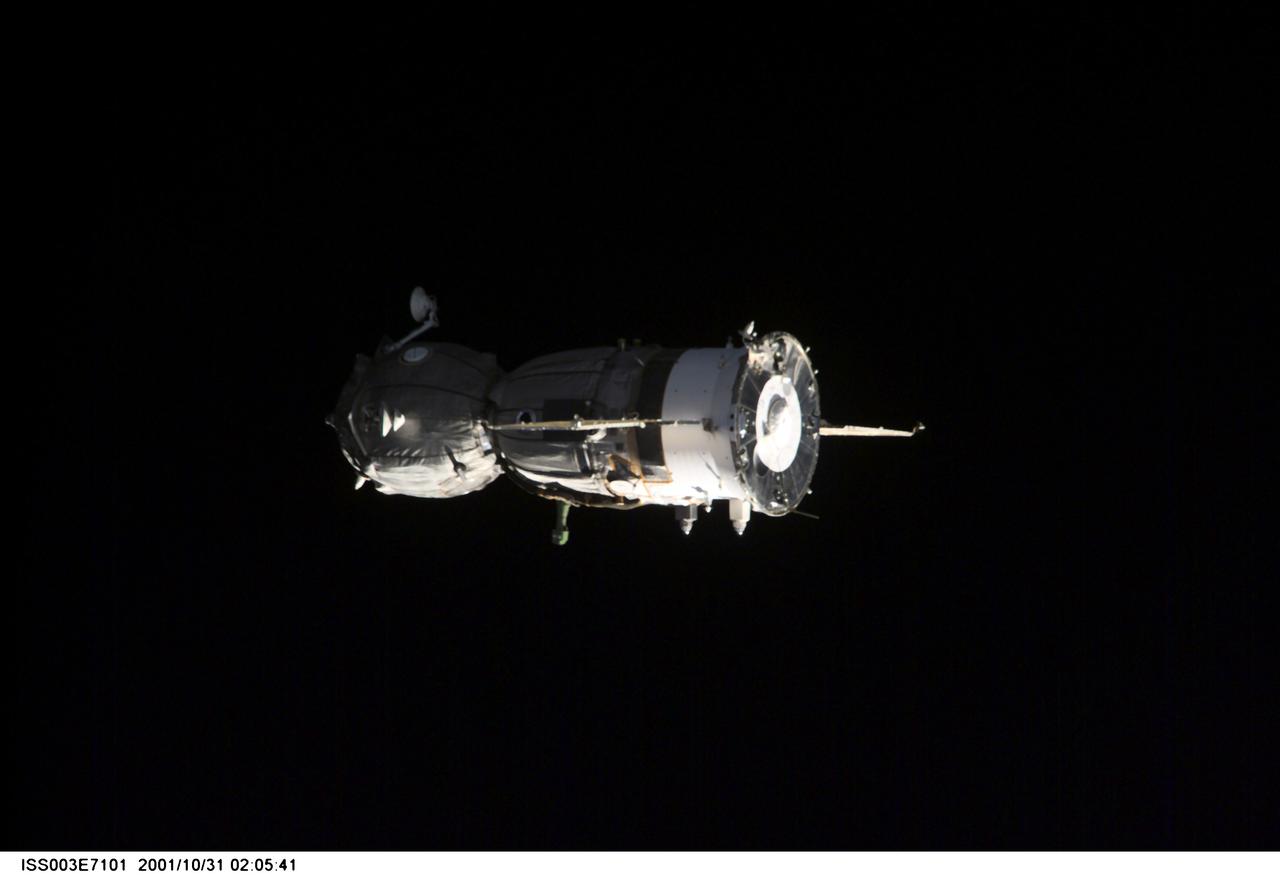
ISS003-E-7101 (31 October 2001) --- A Soyuz spacecraft departs from the International Space Station (ISS) carrying the Soyuz taxi crew, Commander Victor Afanasyev, Flight Engineer Konstantin Kozeev and French Flight Engineer Claudie Haignere, ending their eight-day stay on the station. Afanasyev and Kozeev represent Rosaviakosmos, and Haignere represents ESA, carrying out a flight program for CNES, the French Space Agency, under a commercial contract with the Russian Aviation and Space Agency. This image was taken with a digital still camera.
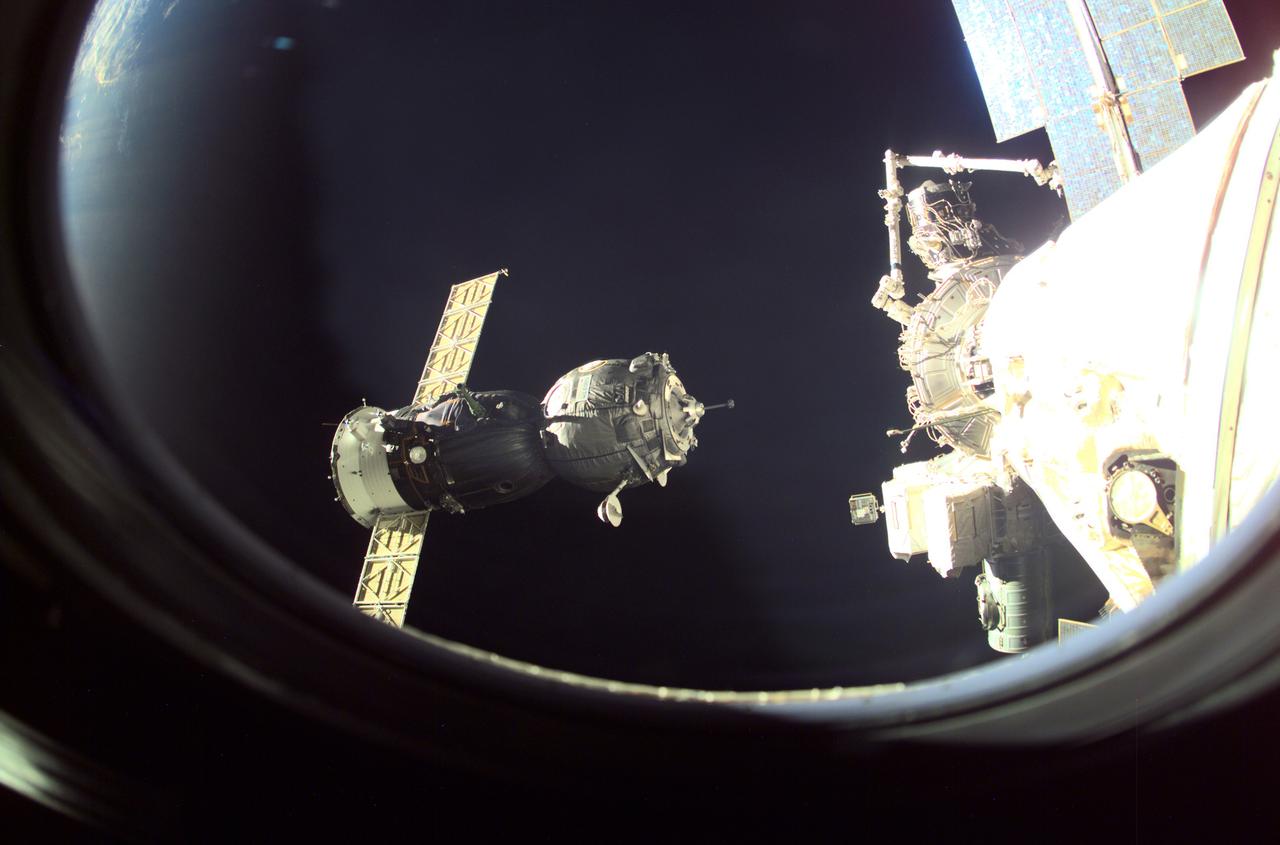
Carrying out a flight program for the French Space Agency (CNES) under a commerial contract with the Russian Aviation and Space Agency, a Russian Soyuz spacecraft approaches the International Space Station (ISS) delivering a crew of three for an eight-day stay. Aboard the craft are Commander Victor Afanasyev, Flight Engineer Konstantin Kozeev, both representing Rosaviakosmos, and French Flight Engineer Claudie Haignere.
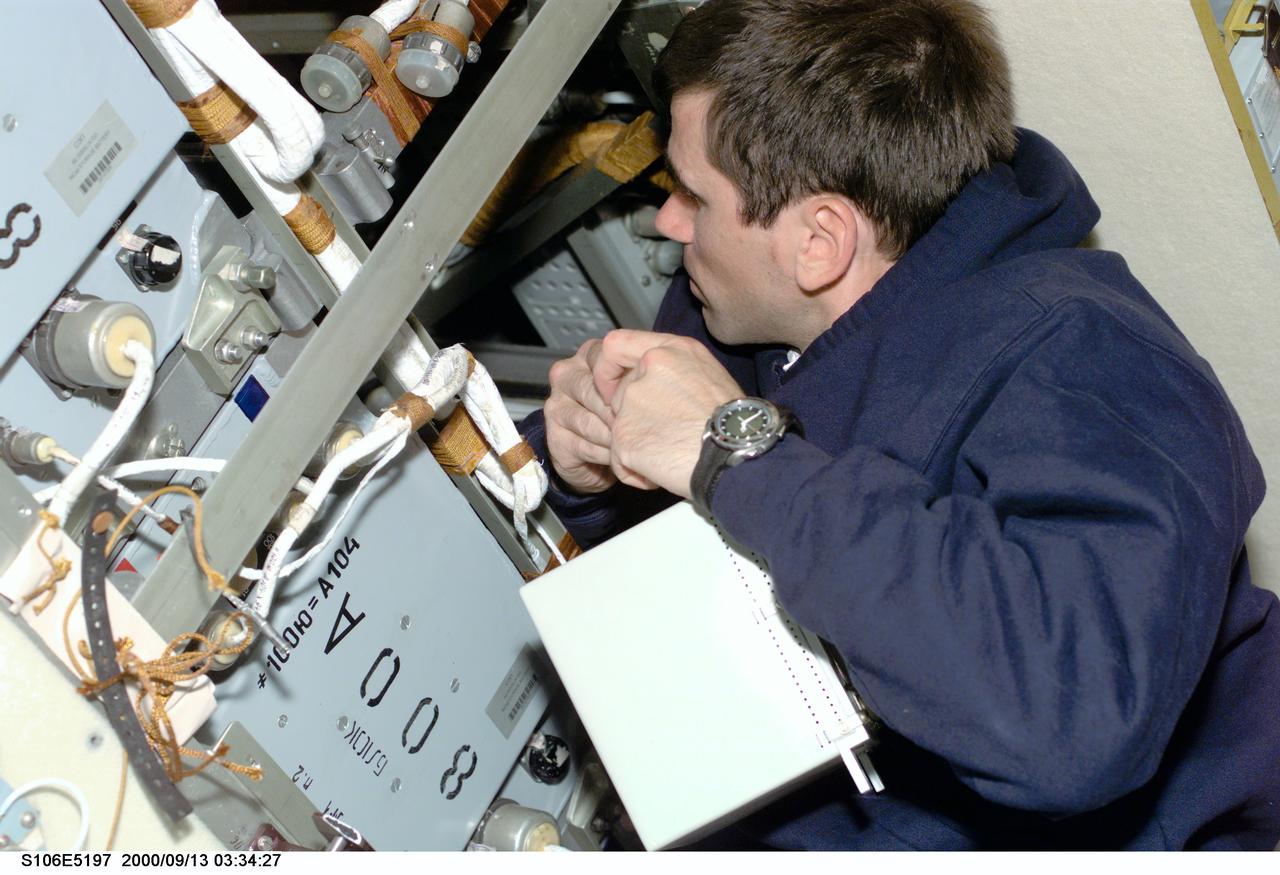
S106-E-5197 (13 September 2000) --- Cosmonaut Yuri I. Malenchenko, mission specialist representing the Russian Aviation and Space Agency, works aboard the Zvezda service module on the International Space Station (ISS). Electrical work was the hallmark of the day as four of the mission specialists aboard ISS (temporarily docked with the Space Shuttle Atlantis) replaced batteries inside the Zarya and Zvezda modules while supply transfer continued around them.
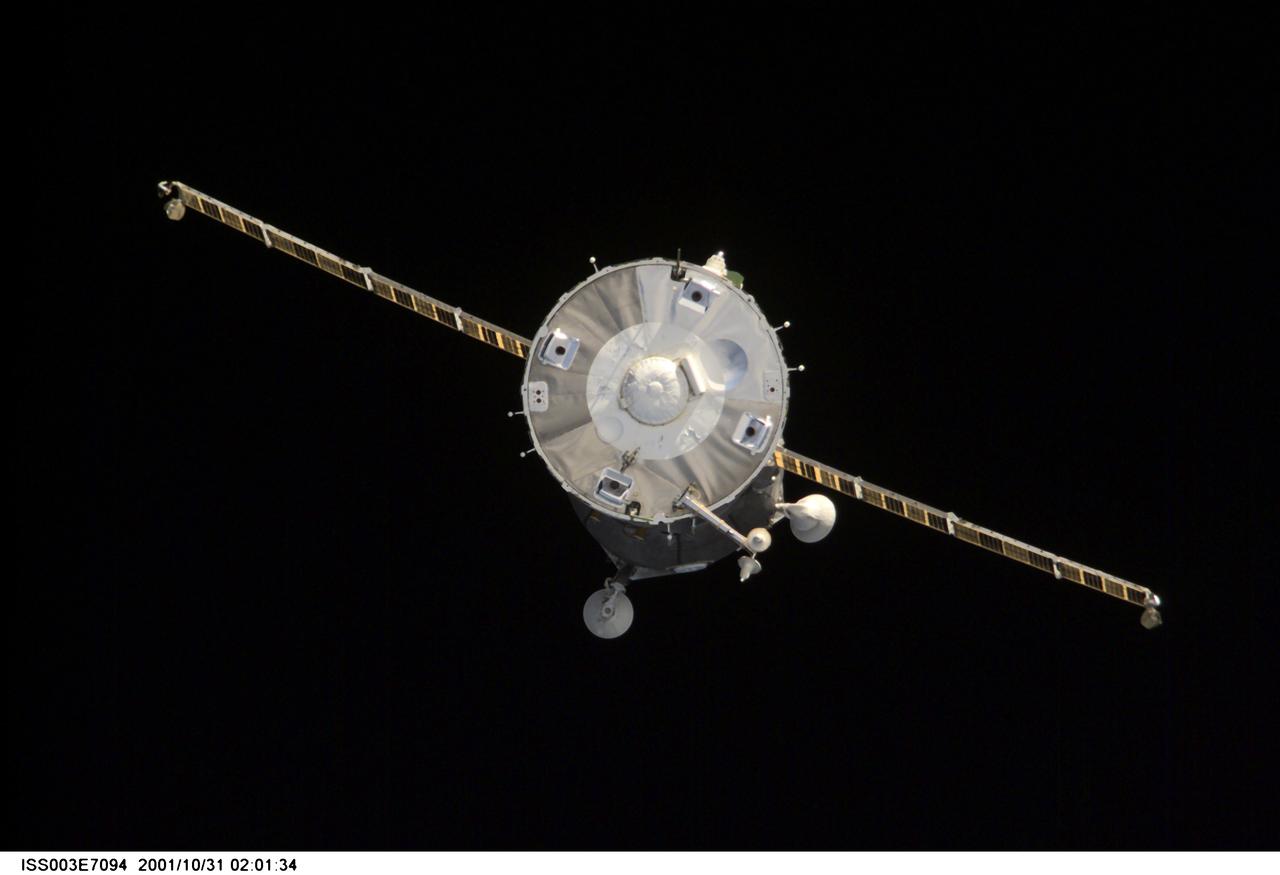
ISS003-E-7094 (31 October 2001) --- A Soyuz spacecraft departs from the International Space Station (ISS) carrying the Soyuz taxi crew, Commander Victor Afanasyev, Flight Engineer Konstantin Kozeev and French Flight Engineer Claudie Haignere, ending their eight-day stay on the station. Afanasyev and Kozeev represent Rosaviakosmos, and Haignere represents ESA, carrying out a flight program for CNES, the French Space Agency, under a commercial contract with the Russian Aviation and Space Agency. This image was taken with a digital still camera.
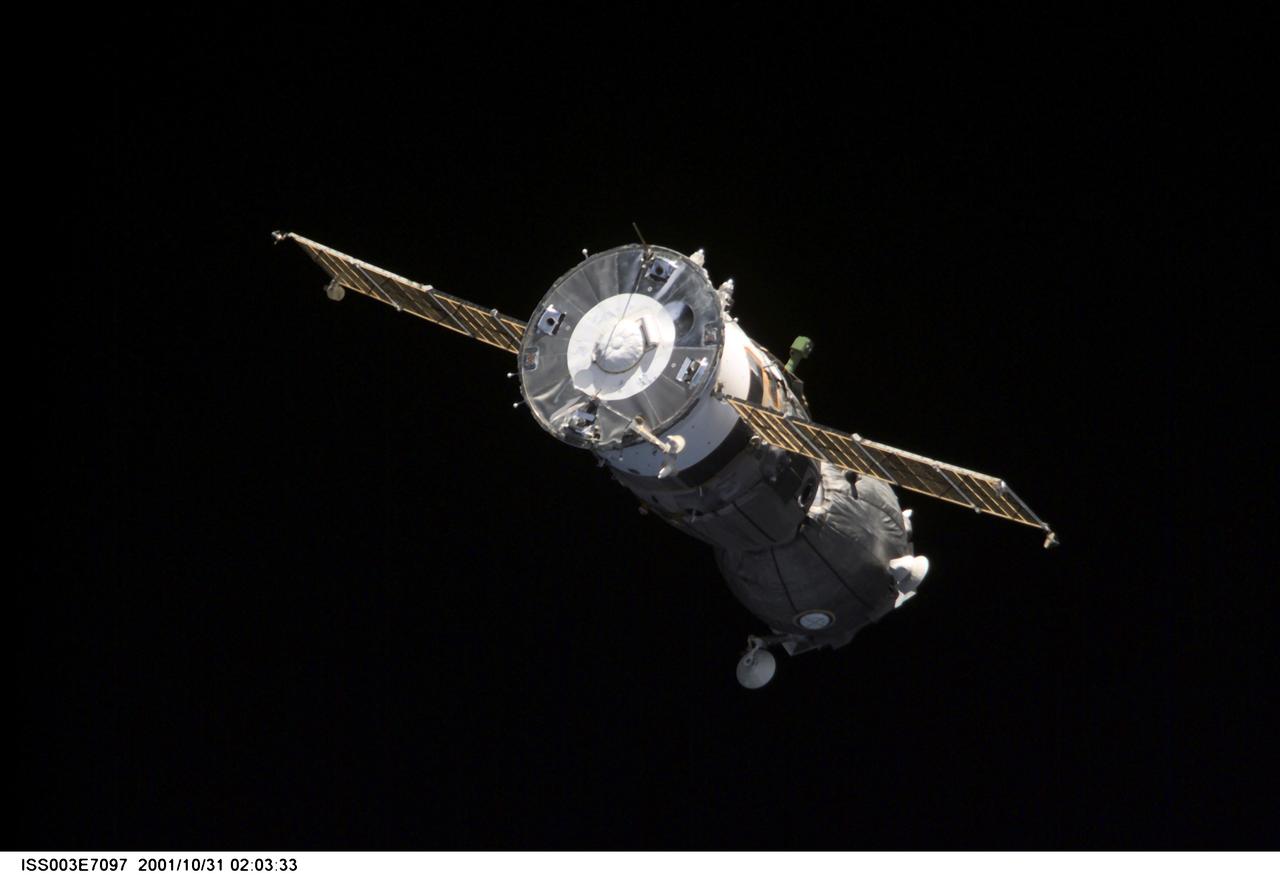
ISS003-E-7097 (31 October 2001) --- A Soyuz spacecraft departs from the International Space Station (ISS) carrying the Soyuz taxi crew, Commander Victor Afanasyev, Flight Engineer Konstantin Kozeev and French Flight Engineer Claudie Haignere, ending their eight-day stay on the station. Afanasyev and Kozeev represent Rosaviakosmos, and Haignere represents ESA, carrying out a flight program for CNES, the French Space Agency, under a commercial contract with the Russian Aviation and Space Agency. This image was taken with a digital still camera.
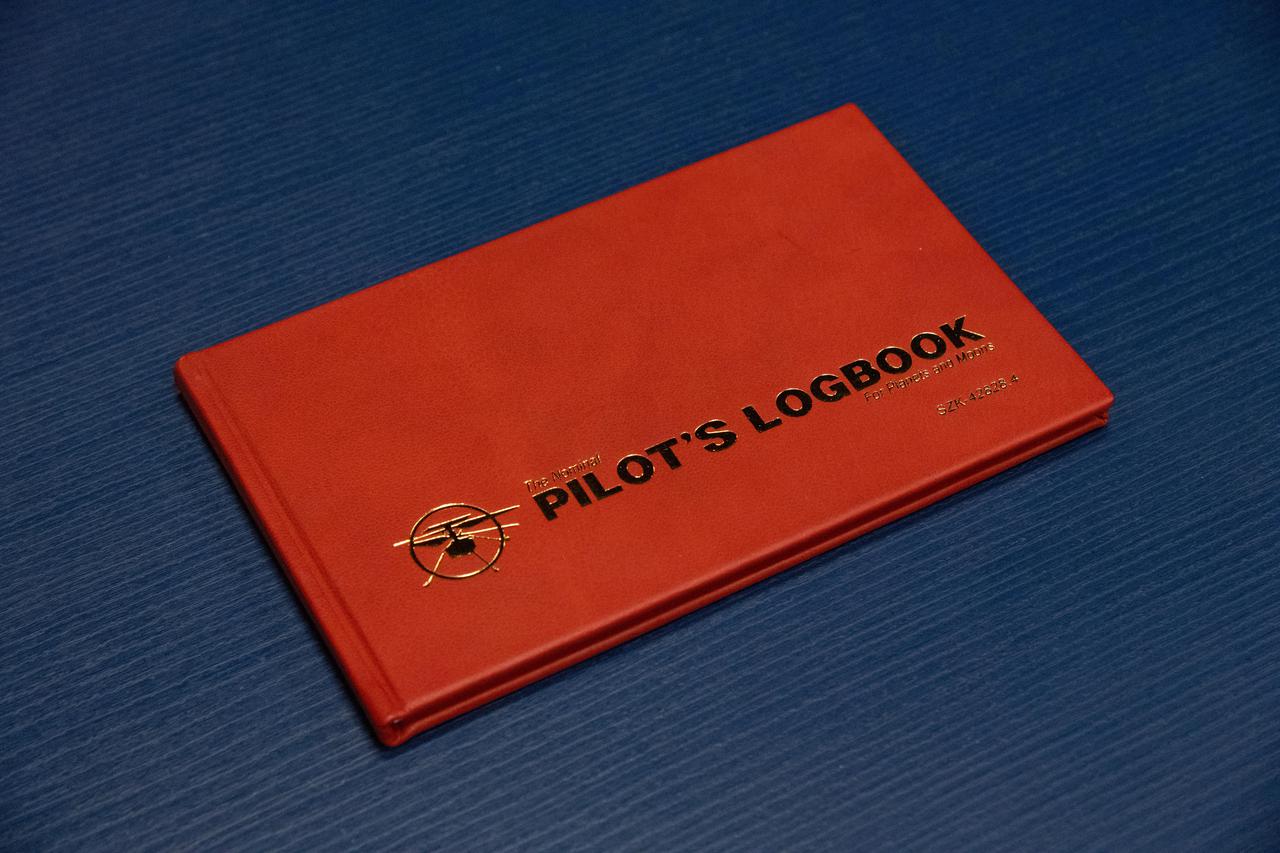
This image of the official pilot's logbook for the Ingenuity Mars Helicopter flights — the "Nominal Pilot's Logbook for Planets and Moons" — was taken at NASA's Jet Propulsion Laboratory in Southern California on April 19, 2021, the day of Ingenuity's first historic flight. Pilot logbooks are used by aviators to provide a record of their flights, including current and accumulated flight time, number and locations of takeoffs and landings, as well as unique operating conditions and certifications. https://photojournal.jpl.nasa.gov/catalog/PIA24440
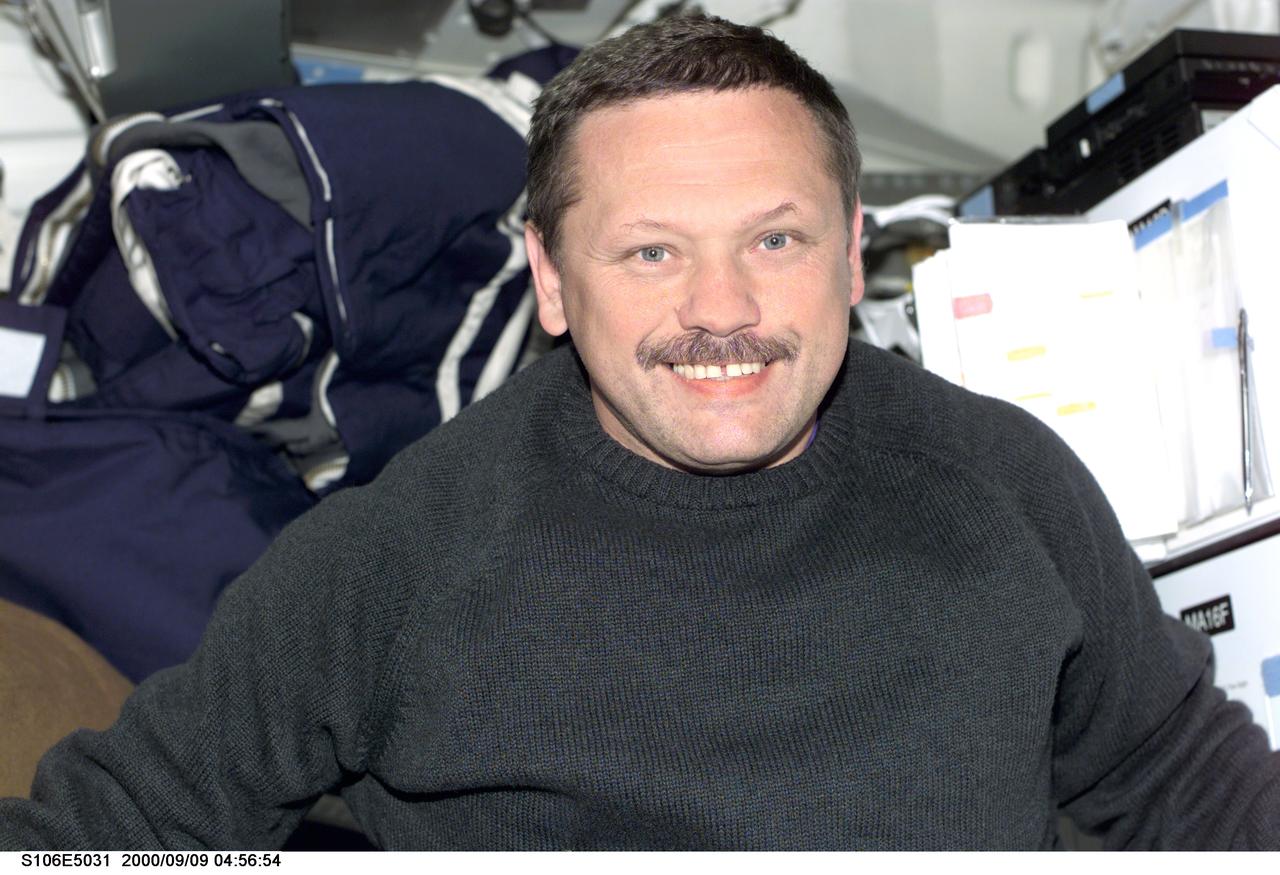
S106-E-5031 (9 September 2000) --- Cosmonaut Boris V. Morukov, one of two mission specialists who represent the Russian Aviation and Space Agency on this scheduled 11-day mission, appears to like the progress of the effort by the seven-member crew to keep up its busy agenda onboard the Space Shuttle Atlantis. The crew is less than 24 hours away from Atlantis' scheduled docking with the International Space Station (ISS).
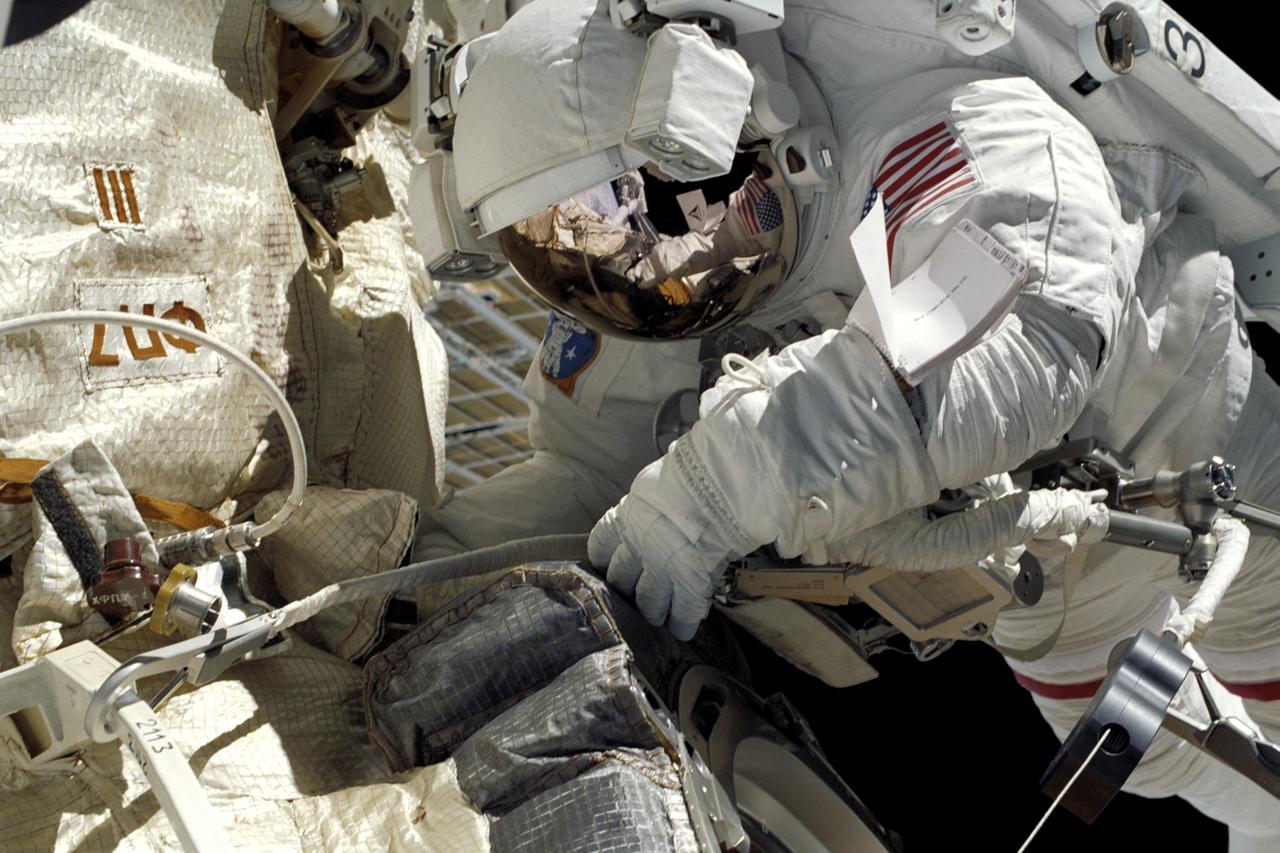
S106-349-012 (11 September 2000) --- Astronaut Edward T. Lu, mission specialist, was captured on film by his spacewalking colleague, cosmonaut Yuri I. Malenchenko, during the 6-hour-plus space walk the two performed on the exterior of the International Space Station (ISS). Malenchenko was one of two mission specialists on the 12-day flight who represented the Russian Aviation and Space Agency.
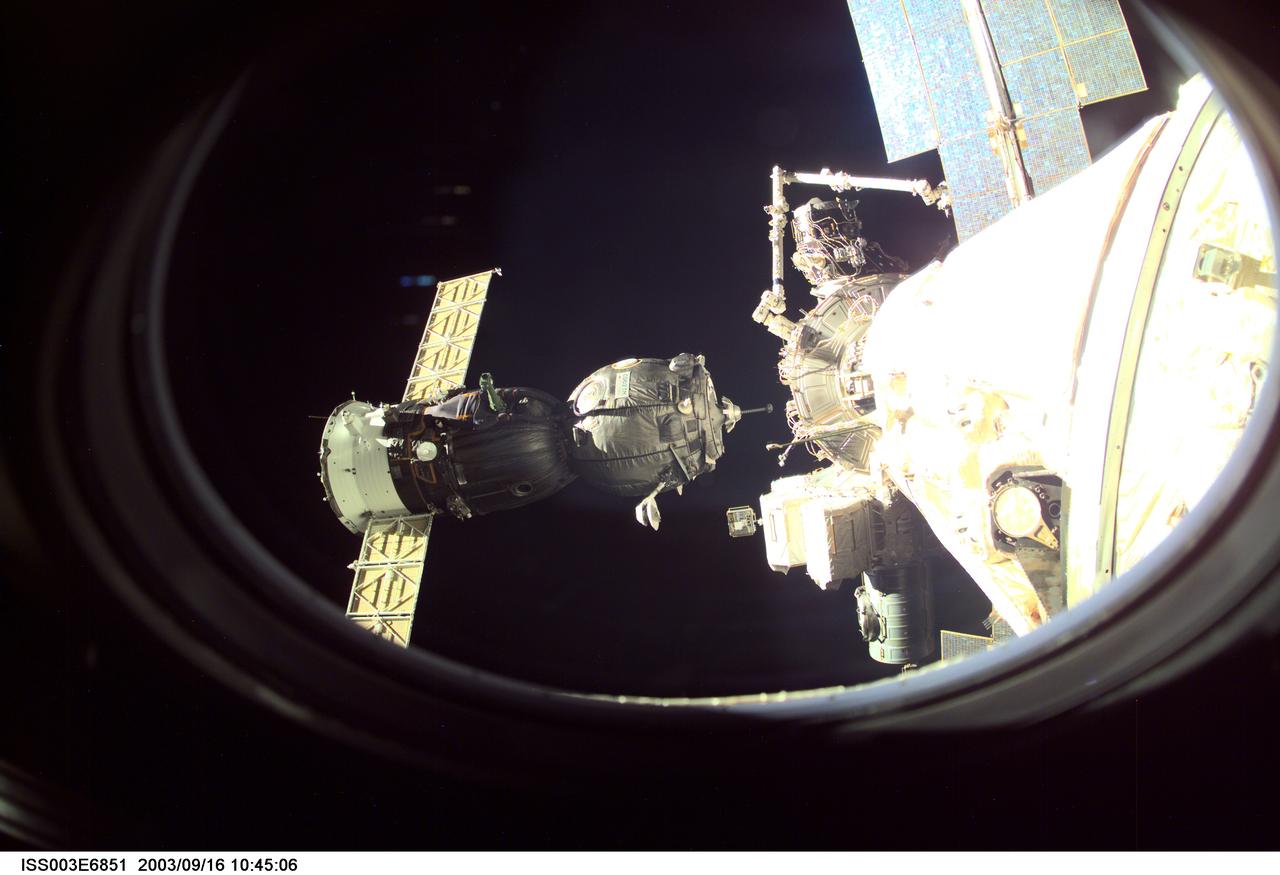
ISS003-E-6851 (23 October 2001) --- A Soyuz spacecraft approaches the International Space Station (ISS) carrying the Soyuz taxi crew, Commander Victor Afanasyev, Flight Engineer Konstantin Kozeev and French Flight Engineer Claudie Haignere for an eight-day stay on the station. Afanasyev and Kozeev represent Rosaviakosmos, and Haignere represents ESA, carrying out a flight program for CNES, the French Space Agency, under a commercial contract with the Russian Aviation and Space Agency. This image was taken with a digital still camera.
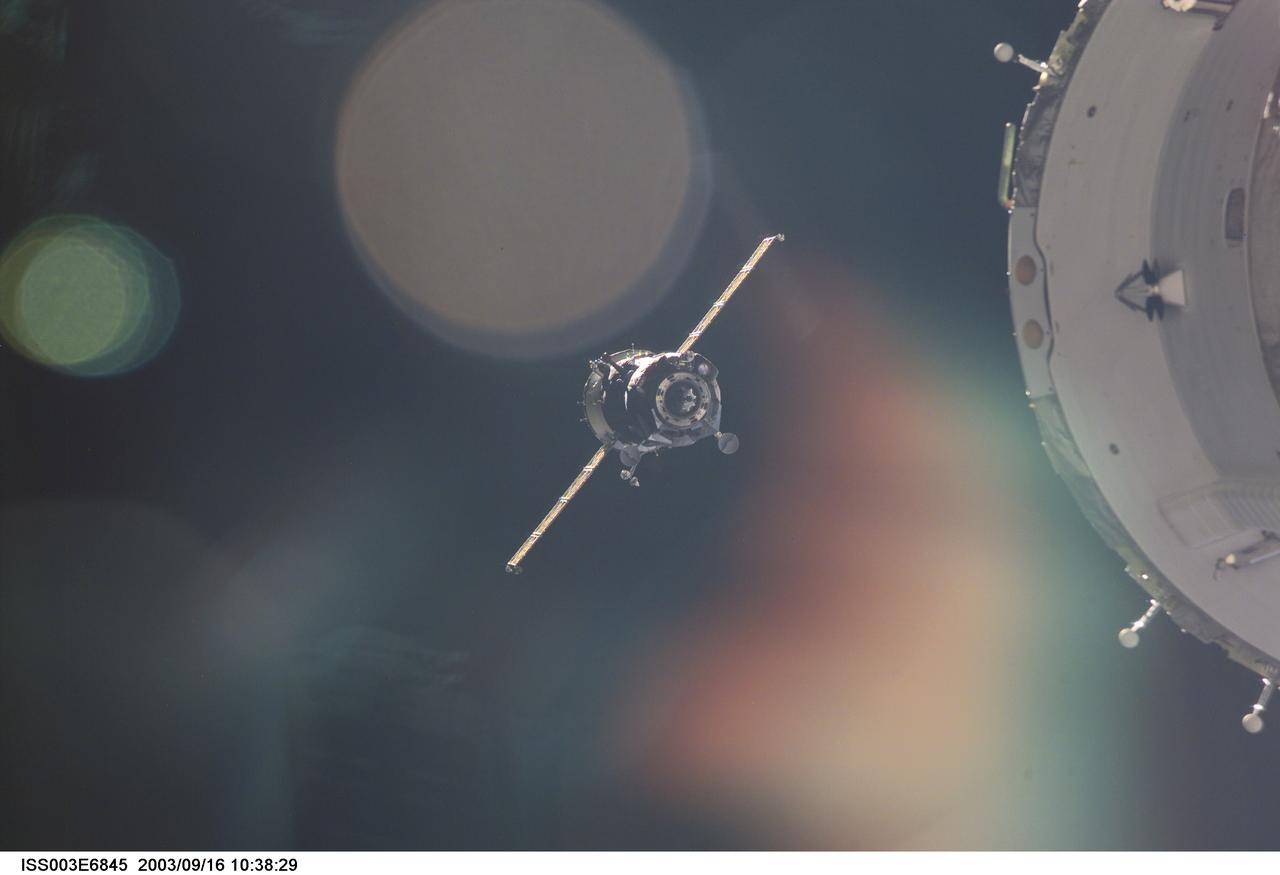
ISS003-E-6845 (23 October 2001) --- A Soyuz spacecraft approaches the International Space Station (ISS) carrying the Soyuz taxi crew, Commander Victor Afanasyev, Flight Engineer Konstantin Kozeev and French Flight Engineer Claudie Haignere for an eight-day stay on the station. Afanasyev and Kozeev represent Rosaviakosmos, and Haignere represents ESA, carrying out a flight program for CNES, the French Space Agency, under a commercial contract with the Russian Aviation and Space Agency. This image was taken with a digital still camera.
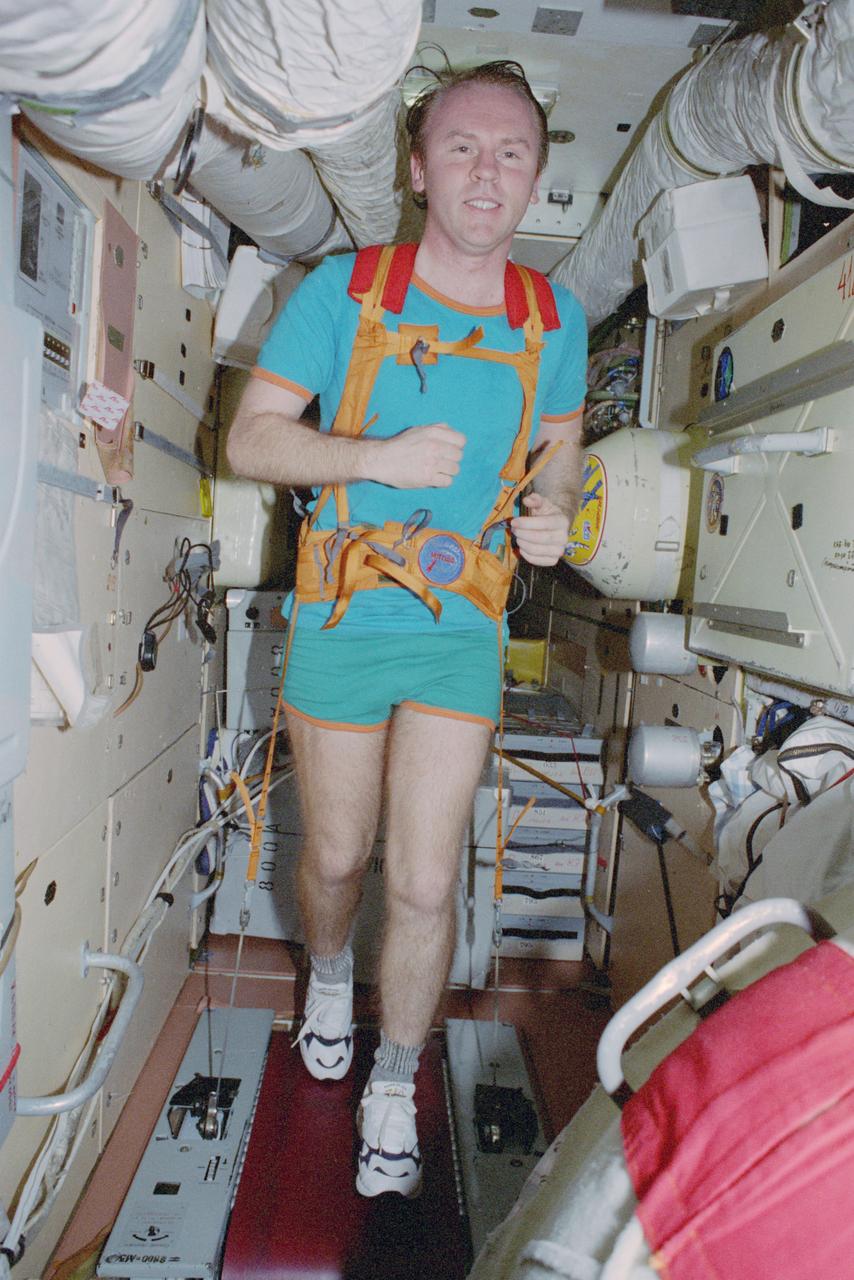
STS091-375-011 (2-12 June 1998) --- Andrew S.W. Thomas makes a treadmill run onboard the Kristall module before joining the STS-91 crew for a journey home that will complete 141 days in space for the NASA astronaut. Thomas is the final of seven NASA astronauts assigned to indvidual long-duration stays aboard Russia's Mir space station as cosmonaut guest researchers. Photo Credit: National Aeronautics and Space Administration (NASA) and the Russian Aviation and Space Agency.
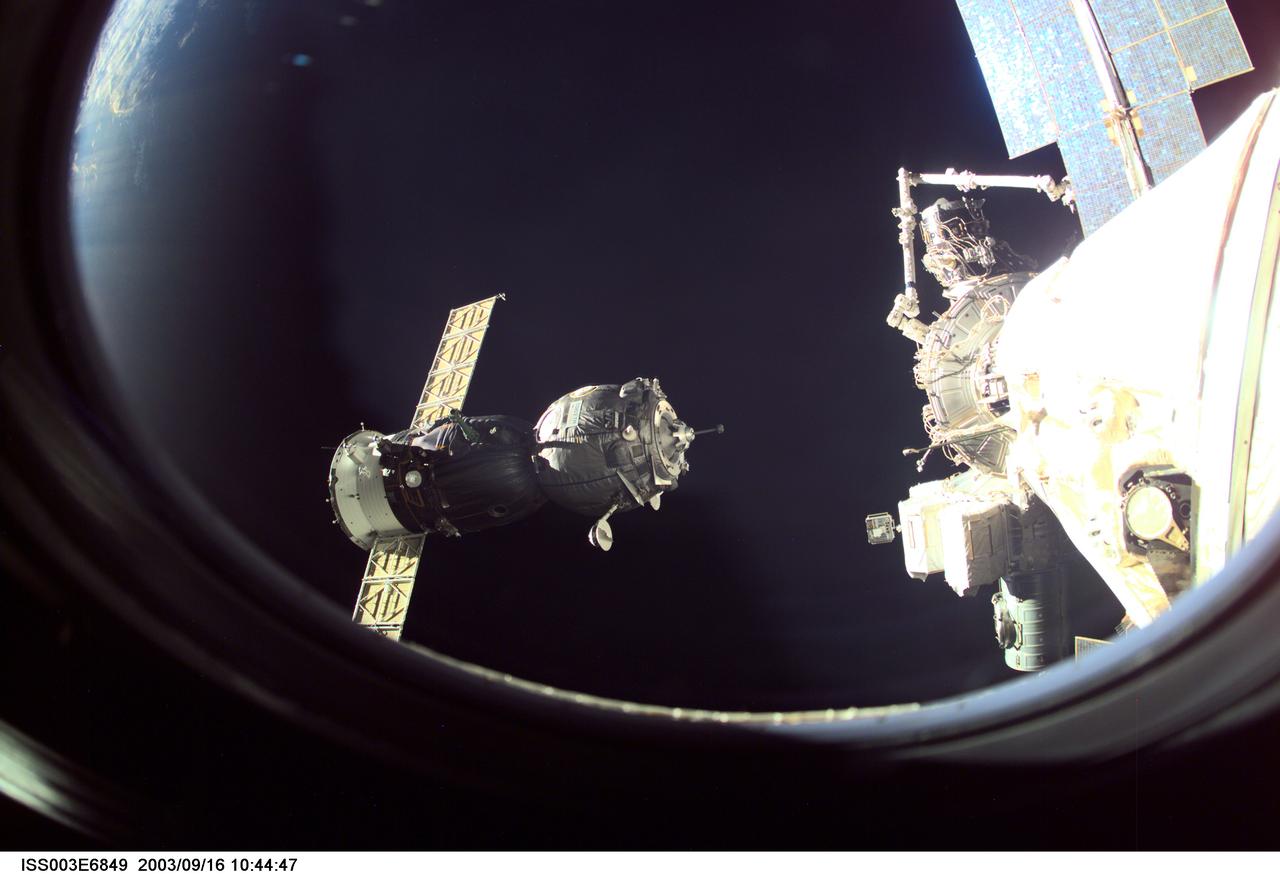
ISS003-E-6849 (23 October 2001) --- A Soyuz spacecraft approaches the International Space Station (ISS) carrying the Soyuz taxi crew, Commander Victor Afanasyev, Flight Engineer Konstantin Kozeev and French Flight Engineer Claudie Haignere for an eight-day stay on the station. Afanasyev and Kozeev represent Rosaviakosmos, and Haignere represents ESA, carrying out a flight program for CNES, the French Space Agency, under a commercial contract with the Russian Aviation and Space Agency. This image was taken with a digital still camera.
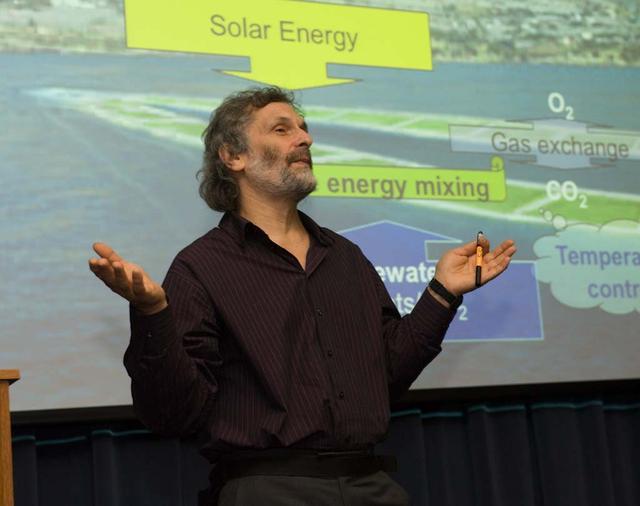
Director's Colloquium; Dr Jonathan Trent, Physical Scientist with NASA Ames Bioengineering Branch presents 'OMEGA and the Future of Aviation Fuels) Abstract: Offshore Membrane Enclosures for Growing Algae (OMEGA) is an innovative approach to growing oil-producing, freshwater algea in off shore enclosures, using municipal wastewater that is currently dumped into the ocean at a rate of >35 billion gals/day.
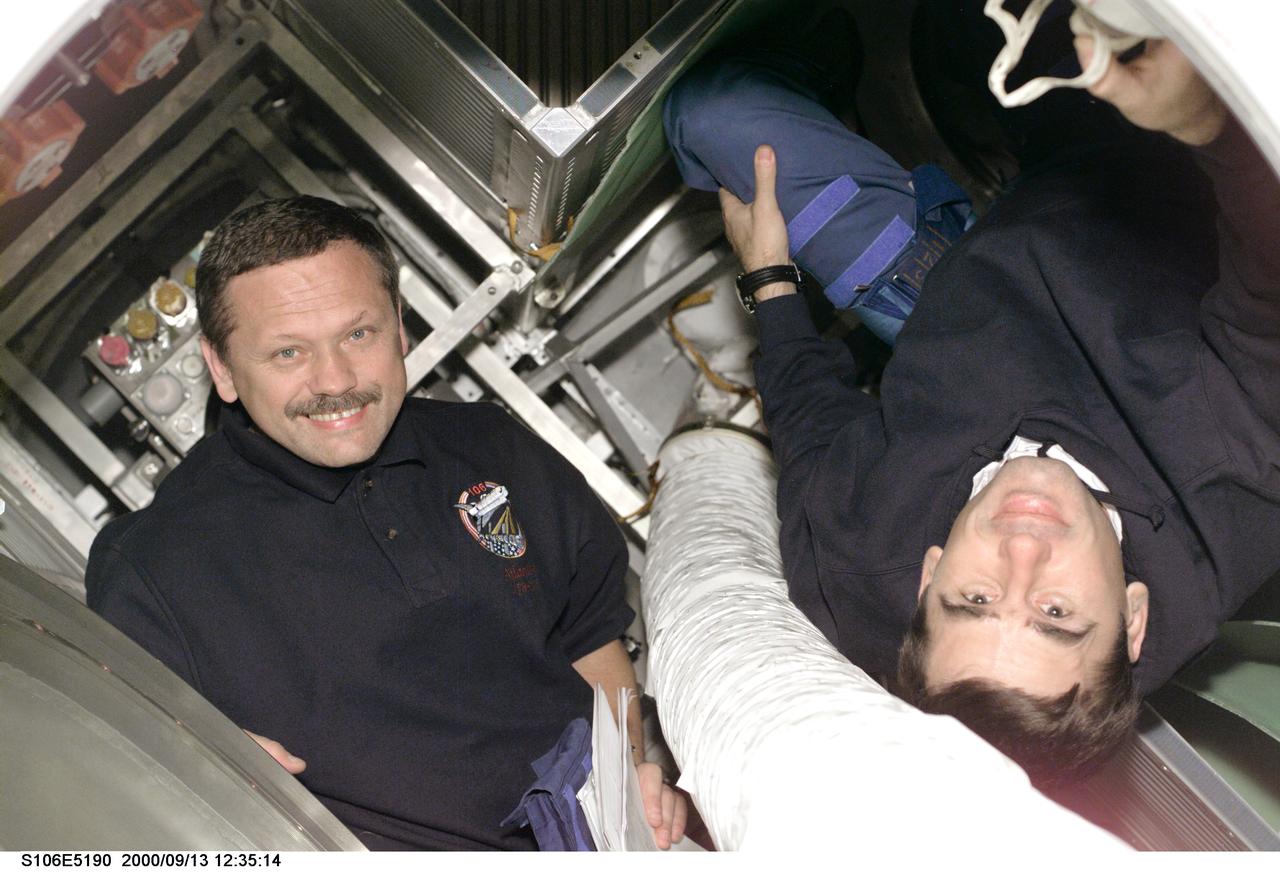
S106-E-5190 (13 September 2000) --- Part of Flight Day 5 activity included interface with the Progress supply vehicle which joined the International Space Station (ISS) last month. Pictured in the supply vehicle are cosmonauts Boris V. Morukov, left, and Yuri I. Malenchenko, both mission specialists representing the Russian Aviation and Space Agency.
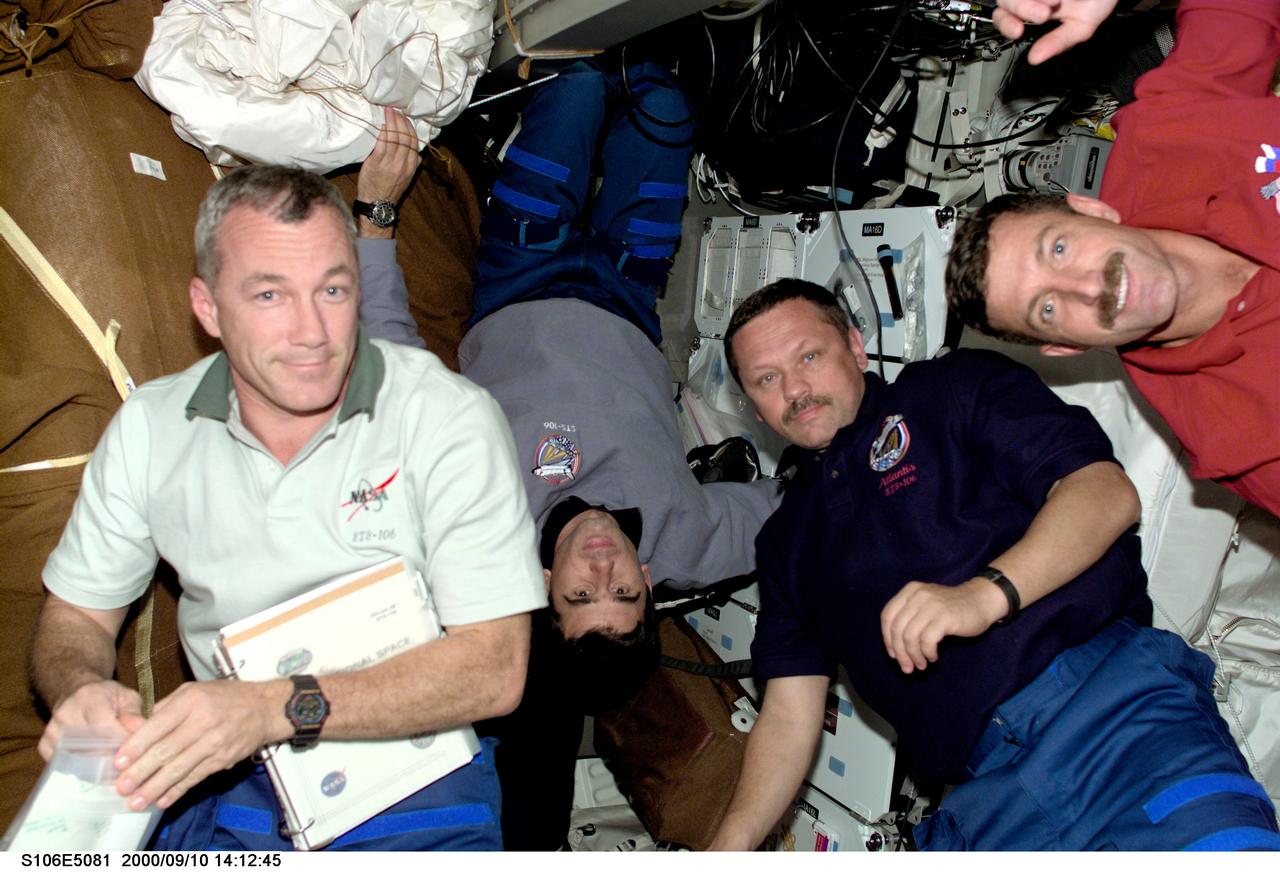
S106-E-5081 (10 September 2000) --- Two cosmonauts and two astronauts discuss supplies to be moved from Atlantis mid deck during Flight Day 3 activity. From the left are astronaut Terrence W. Wilcutt, mission commander; cosmonauts Yuri I. Malenchenko and Boris V. Morukov, mission specialists representing the Russian Aviation and Space Agency; along with astronaut Daniel C. Burbank, mission specialist.
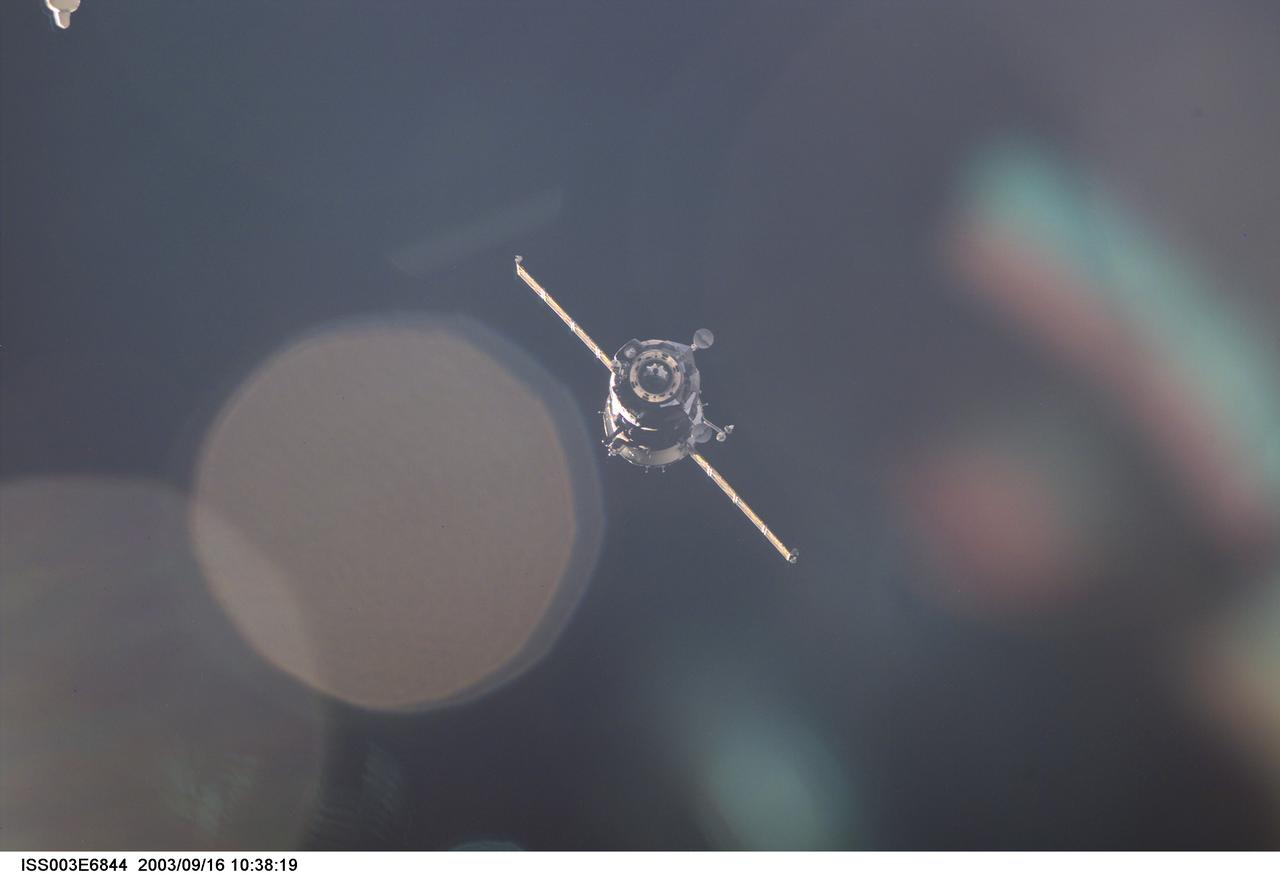
ISS003-E-6844 (23 October 2001) --- A Soyuz spacecraft approaches the International Space Station (ISS) carrying the Soyuz taxi crew, Commander Victor Afanasyev, Flight Engineer Konstantin Kozeev and French Flight Engineer Claudie Haignere for an eight-day stay on the station. Afanasyev and Kozeev represent Rosaviakosmos, and Haignere represents ESA, carrying out a flight program for CNES, the French Space Agency, under a commercial contract with the Russian Aviation and Space Agency. This image was taken with a digital still camera.
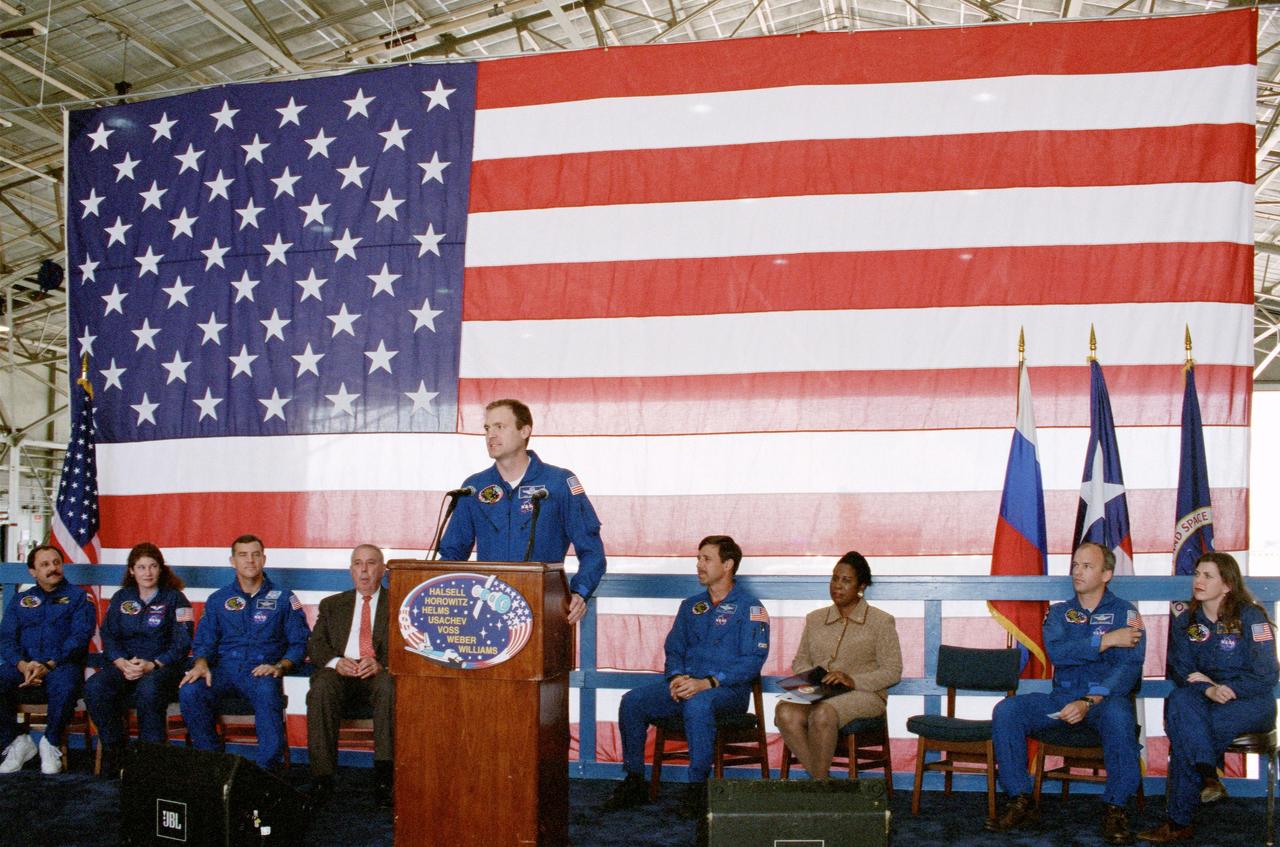
JSC2000-04607 (30 May 2000) --- Astronaut James D. Halsell, Jr., mission commander, speaks to a crowd at the crew-welcoming ceremony at Ellington Field on the day following the completion of the STS-101 mission. Other speakers, seated behind the lecturn, are (from the left) cosmonaut Yury V. Usachev, representing the Russian Aviation and Space Agency; Susan J. Helms and James S. Voss, all mission specialists; JSC Director George W.S. Abbey; astronaut Scott J. Horowitz, pilot; U.S. Congresswoman Sheila Jackson Lee (D.-Houston); along with astronauts Jeffrey N. Williams and Mary Ellen Weber, both mission specialists.
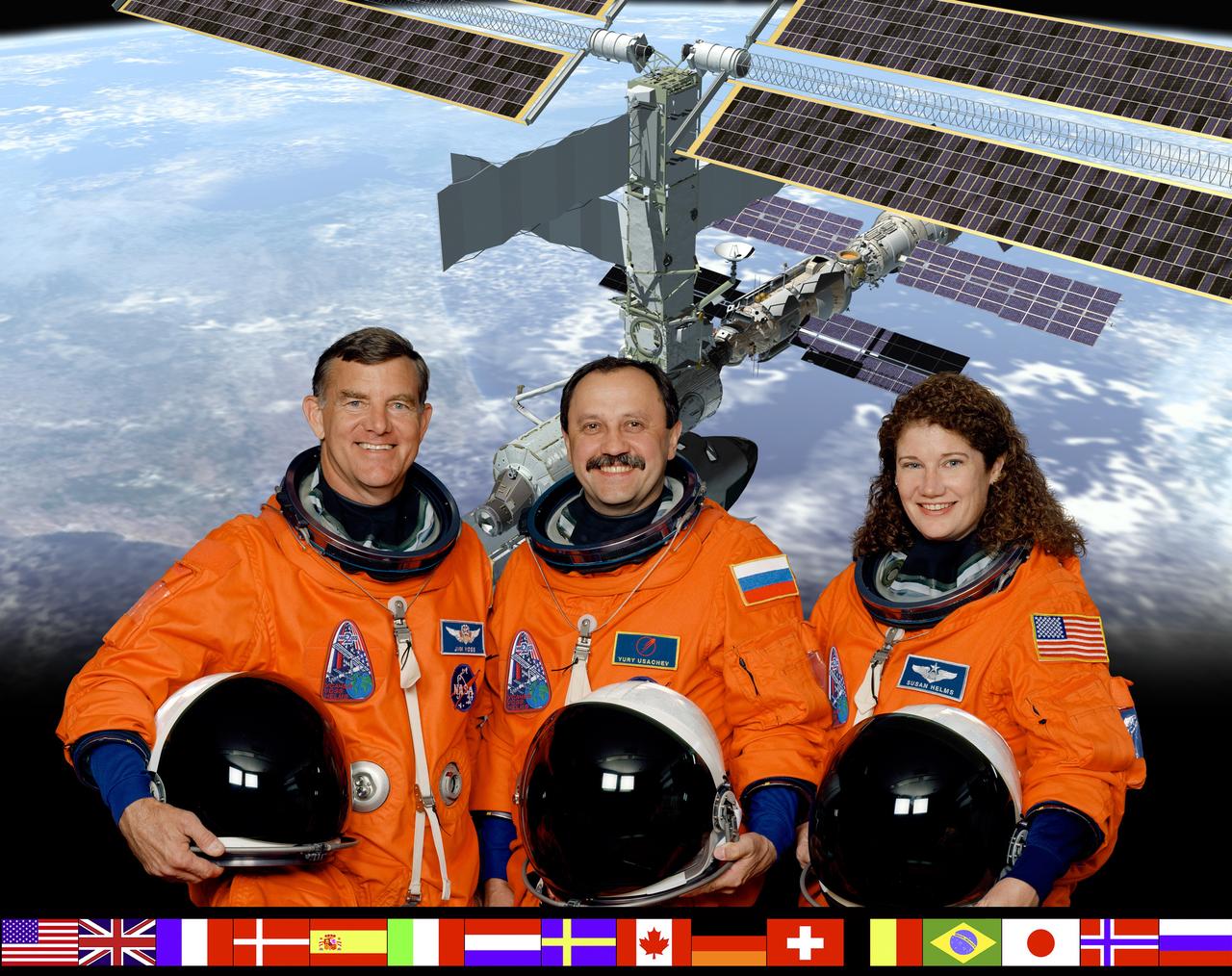
This is a crew portrait of the International Space Station (ISS) Expedition Two. Left to right are Astronaut James S. Voss, flight engineer; Cosmonaut Yury V. Usachev, commander; and Astronaut Susan J. Helms, flight engineer. The crew was launched on March 8, 2001 aboard the STS-102 mission Space Shuttle Orbiter Discovery for an extended stay on the ISS. After living and working on the ISS for the duration of 165 days, the crew returned to Earth on August 22, 2001 aboard the STS-105 mission Space Shuttle Orbiter Discovery. Cosmonaut Usachev represents the Russian Aviation and Space Agency. The flags representing all the international partners are arrayed at bottom.
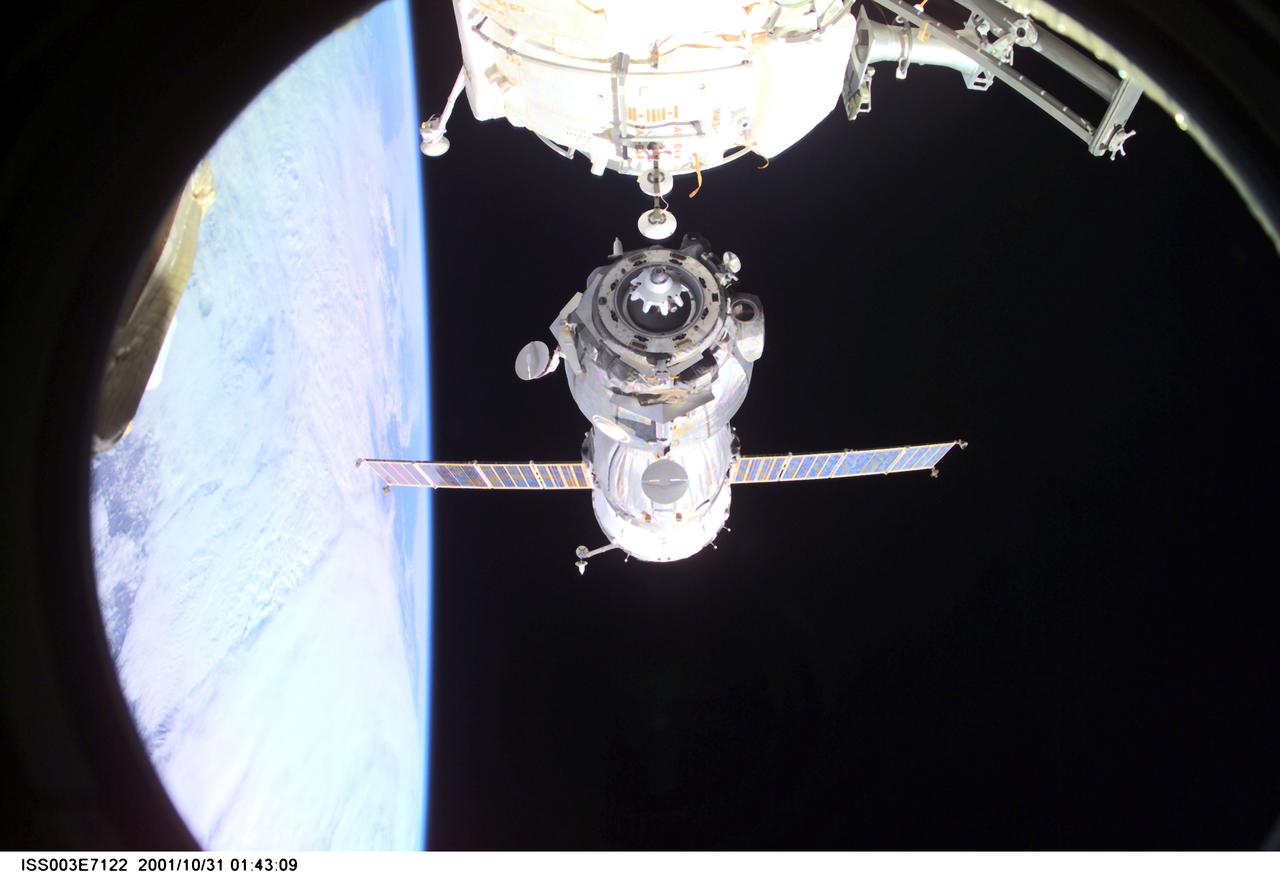
ISS003-E-7122 (31 October 2001) --- Backdropped by Earth’s horizon and the blackness of space, a Soyuz spacecraft undocks from the International Space Station (ISS) carrying the Soyuz taxi crew, Commander Victor Afanasyev, Flight Engineer Konstantin Kozeev and French Flight Engineer Claudie Haignere, ending their eight-day stay on the station. Afanasyev and Kozeev represent Rosaviakosmos, and Haignere represents ESA, carrying out a flight program for CNES, the French Space Agency, under a commercial contract with the Russian Aviation and Space Agency. This image was taken with a digital still camera.
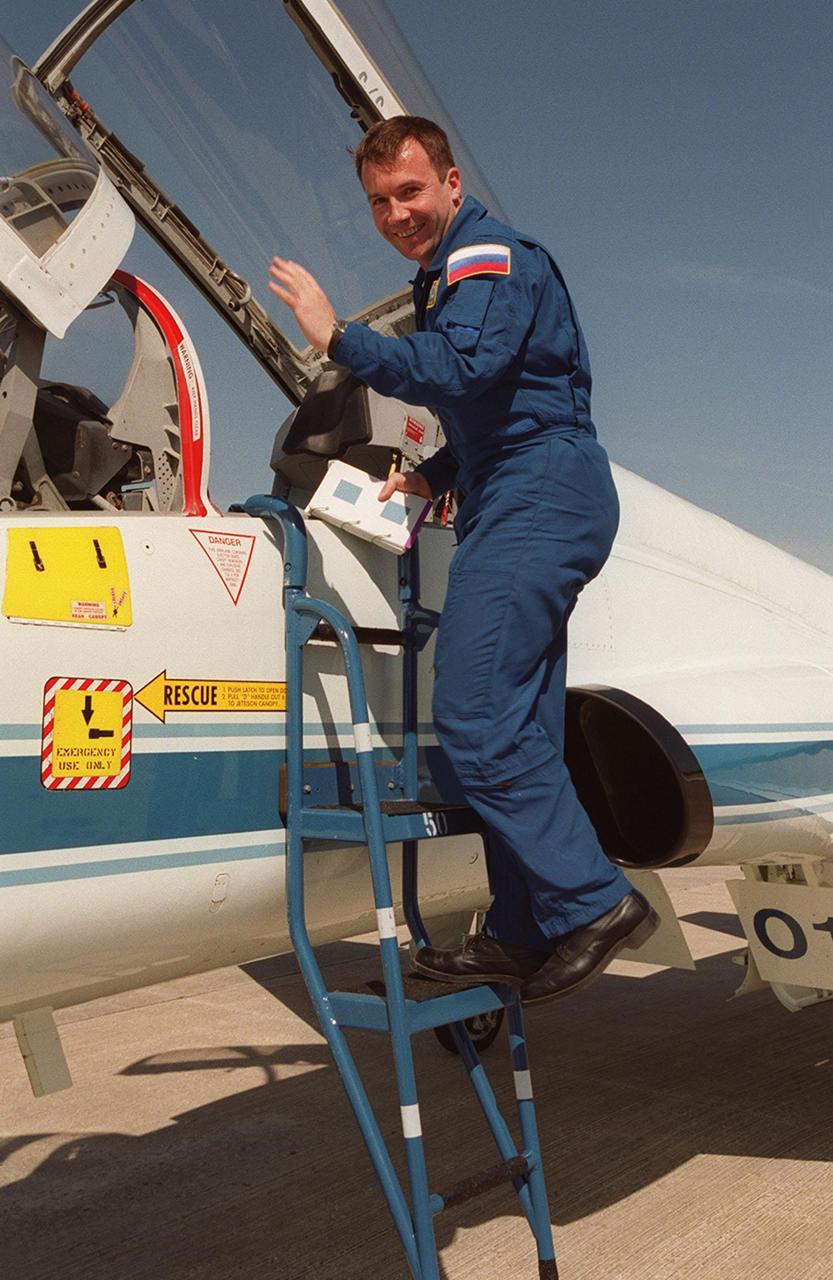
STS-100 Mission Specialist Yuri V. Lonchakov climbs out of the T-38 jet aircraft at the Shuttle Landing Facility. Lonchakov, who is with the Russian Aviation and Space Agency, and the rest of the crew will get ready for launch on April 19. The 11-day mission to the International Space Station will deliver and integrate the Spacelab Logistics Pallet/Launch Deployment Assembly, which includes the Space Station Remote Manipulator system and the UHF Antenna, and the Multi-Purpose Logistics Module Raffaello. Liftoff on mission STS-100 is scheduled at 2:41 p.m. EDT April 19
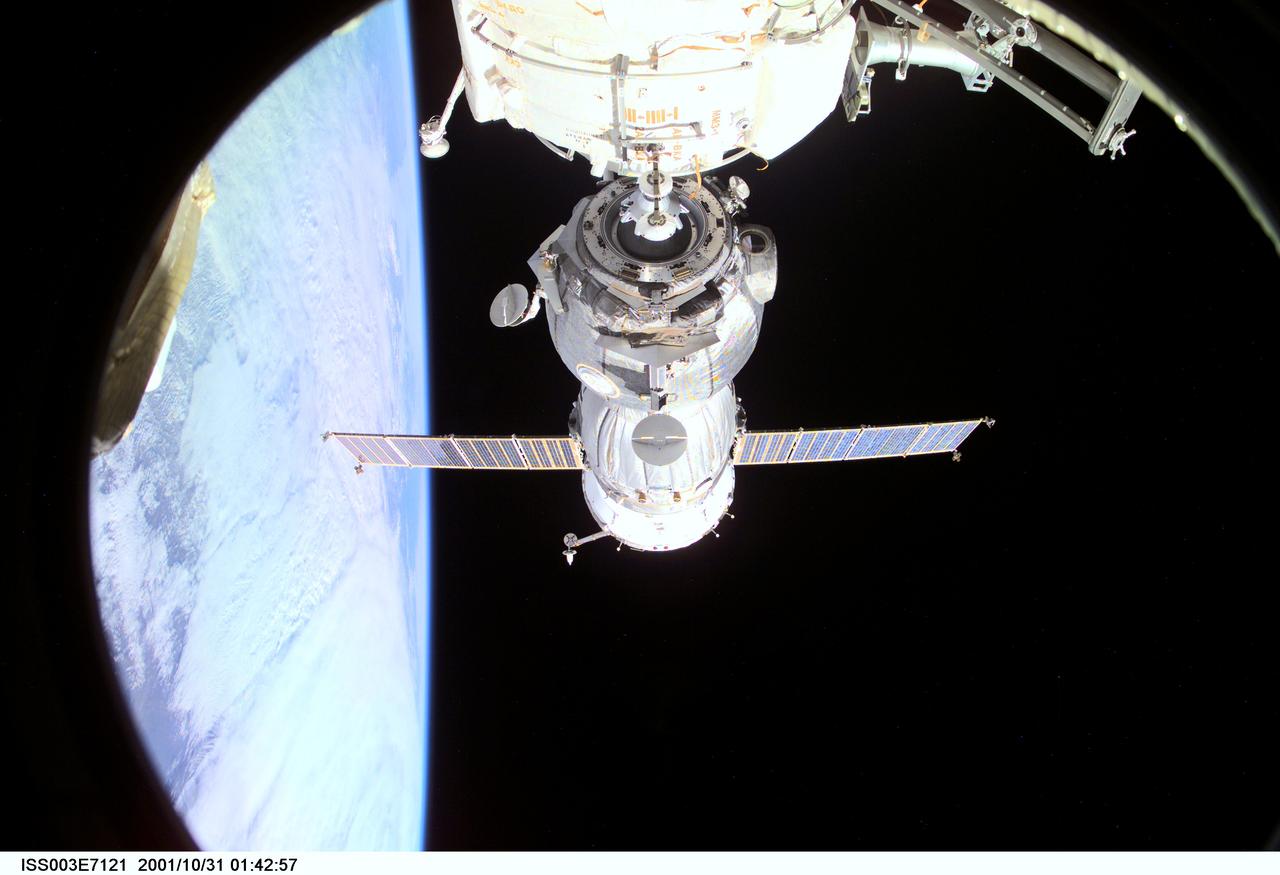
ISS003-E-7121 (31 October 2001) --- Backdropped by Earth’s horizon and the blackness of space, a Soyuz spacecraft undocks from the International Space Station (ISS) carrying the Soyuz taxi crew, Commander Victor Afanasyev, Flight Engineer Konstantin Kozeev and French Flight Engineer Claudie Haignere, ending their eight-day stay on the station. Afanasyev and Kozeev represent Rosaviakosmos, and Haignere represents ESA, carrying out a flight program for CNES, the French Space Agency, under a commercial contract with the Russian Aviation and Space Agency. This image was taken with a digital still camera.
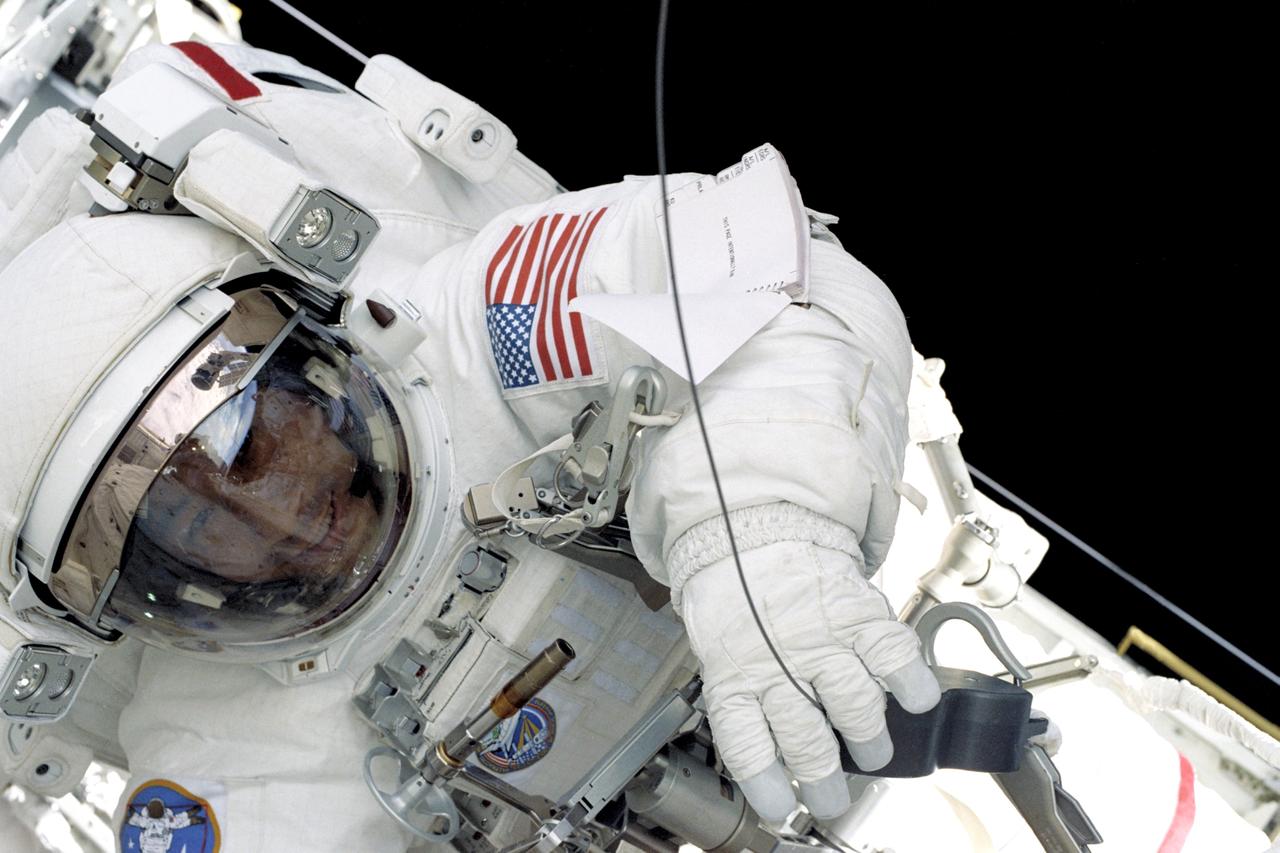
S106-349-026 (11 September 2000) --- Astronaut Edward T. Lu, mission specialist, was captured on film by his spacewalking colleague, cosmonaut Yuri I. Malenchenko, during the 6-hour-plus space walk the two performed on the exterior of the International Space Station (ISS). Lu, although he spent the majority of the space walk several meters away on the other end of International Space Station (ISS) is near the cargo bay longerons of the Space Shuttle Atlantis in this scene. Malenchenko was one of two mission specialists on the 12-day flight who represented the Russian Aviation and Space Agency.
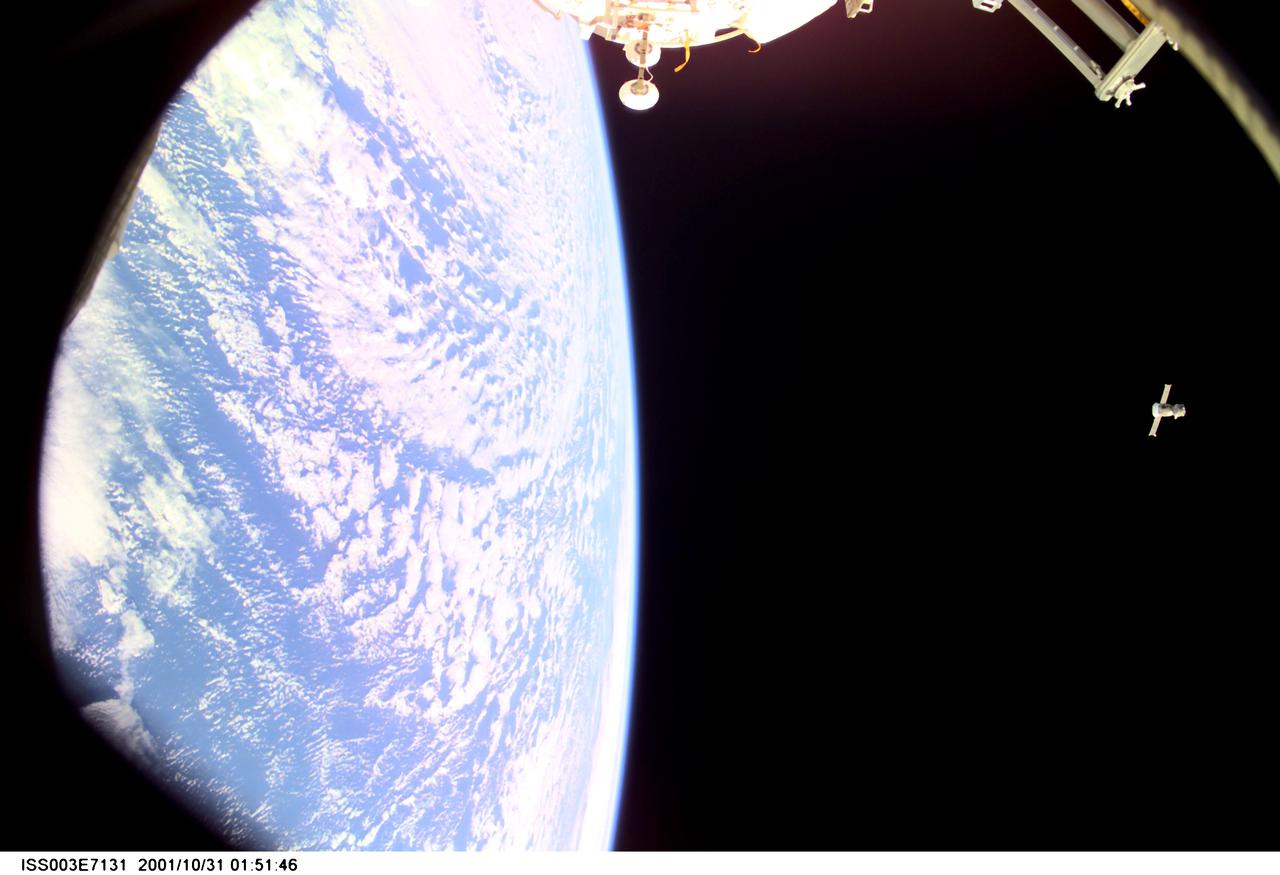
ISS003-E-7131 (31 October 2001) --- Backdropped by Earth’s horizon and the blackness of space, this distant view shows a Soyuz spacecraft after undocking from the International Space Station (ISS) carrying the Soyuz taxi crew, Commander Victor Afanasyev, Flight Engineer Konstantin Kozeev and French Flight Engineer Claudie Haignere, ending their eight-day stay on the station. Afanasyev and Kozeev represent Rosaviakosmos, and Haignere represents ESA, carrying out a flight program for CNES, the French Space Agency, under a commercial contract with the Russian Aviation and Space Agency. This image was taken with a digital still camera.
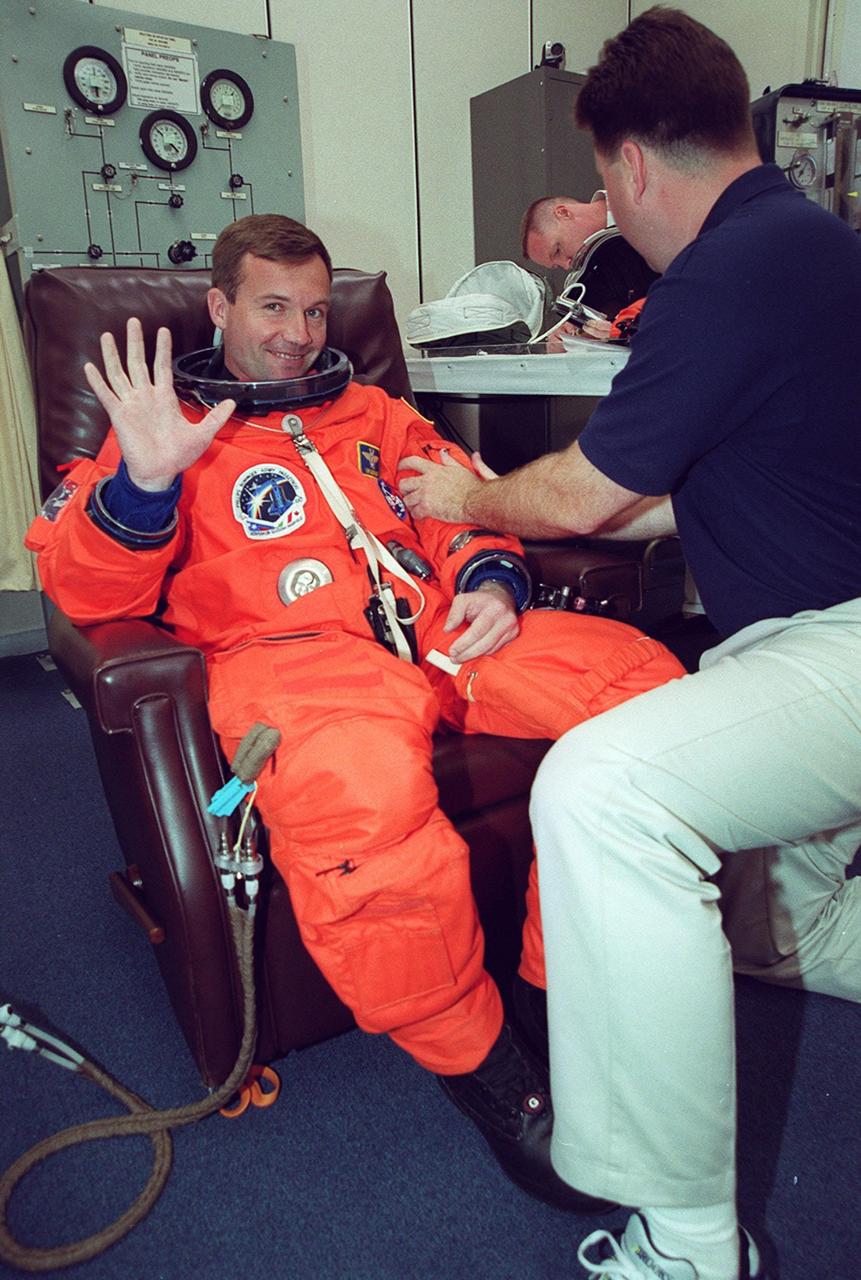
Smiling, STS-100 Mission Specialist Yuri V. Lonchakov waves as he suits up for launch in the Operations and Checkout Building. Lonchakov is with the Russian Aviation and Space Agency. The 11-day mission to the International Space Station will deliver and integrate the Spacelab Logistics Pallet/Launch Deployment Assembly, which includes the Space Station Remote Manipulator system and the UHF Antenna, and the Multi-Purpose Logistics Module Raffaello. The mission includes two planned spacewalks for installation of the SSRMS. The mission is also the inaugural flight of Raffaello, carrying resupply stowage racks and resupply/return stowage platforms. Liftoff on mission STS-100 is scheduled at 2:41 p.m. EDT April 19
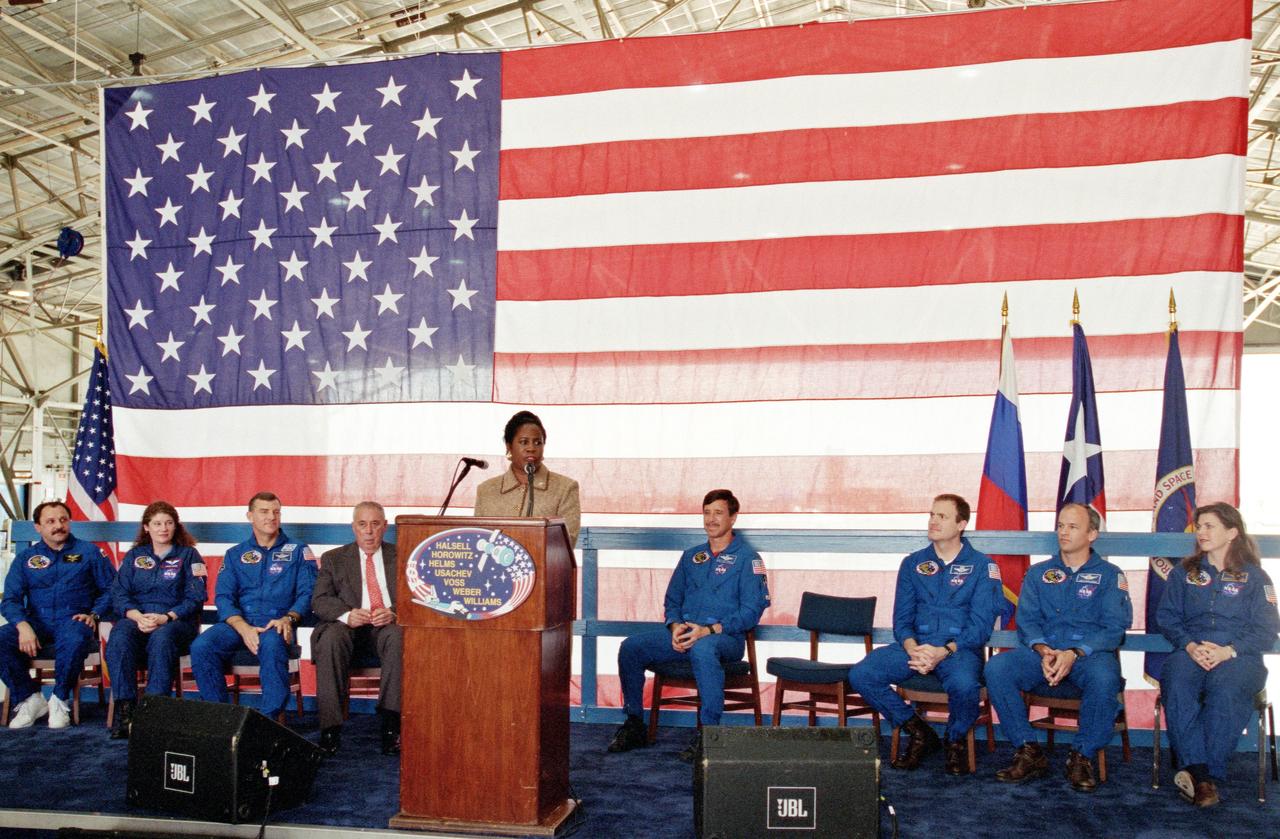
JSC2000-04603 (30 May 2000) --- U.S. Congresswoman Sheila Jackson Lee (D.-Houston) speaks to a crowd at the crew-welcoming ceremony at Ellington Field on the day following the completion of the STS-101 mission. Other speakers, seated behind the lecturn, are (from the left) cosmonaut Yury V. Usachev, representing the Russian Aviation and Space Agency; Susan J. Helms and James S. Voss, all mission specialists; JSC Director George W.S. Abbey; astronaut Scott J. Horowitz, pilot; along with astronauts James D. Halsell, Jr., mission commander; and Jeffrey N. Williams and Mary Ellen Weber, both mission specialists.
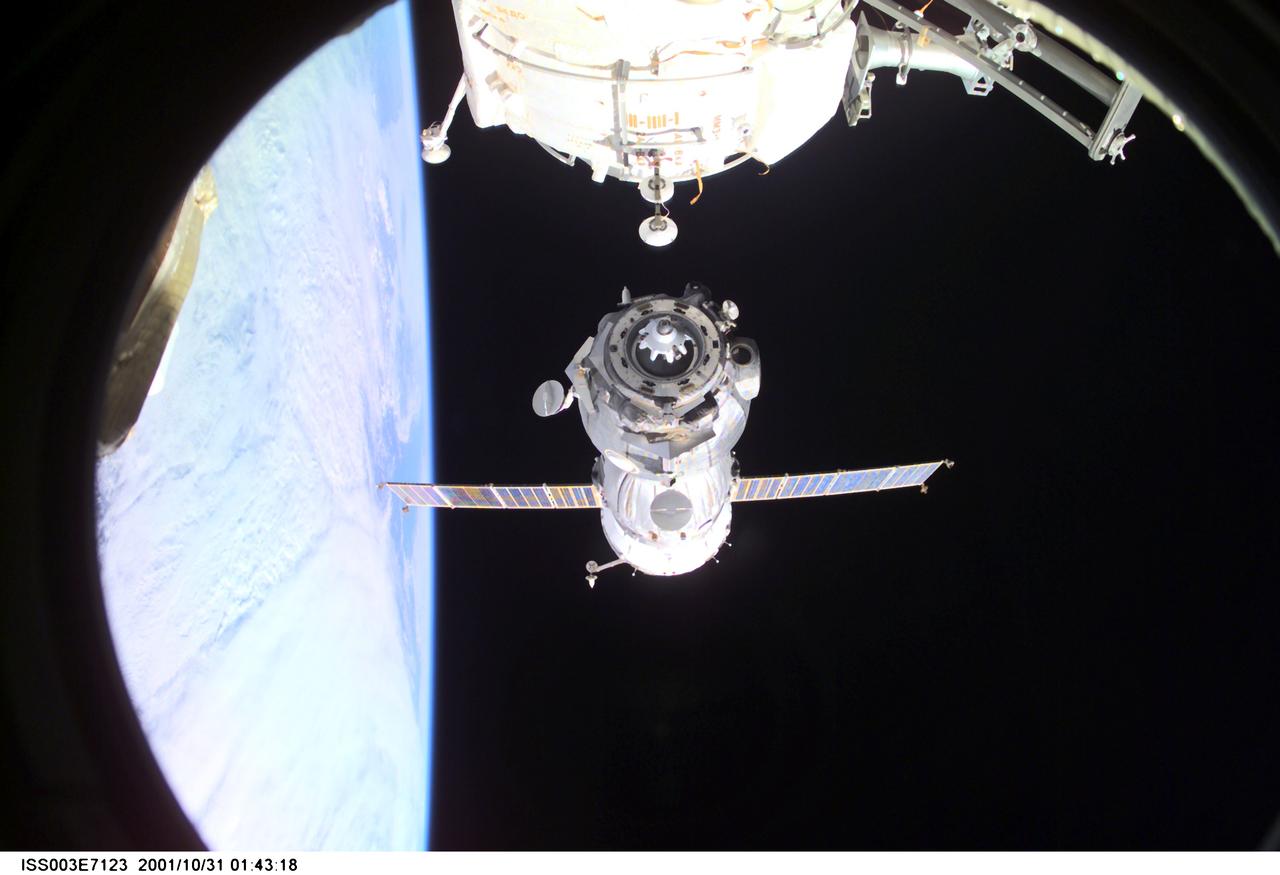
ISS003-E-7123 (31 October 2001) --- Backdropped by Earth’s horizon and the blackness of space, a Soyuz spacecraft undocks from the International Space Station (ISS) carrying the Soyuz taxi crew, Commander Victor Afanasyev, Flight Engineer Konstantin Kozeev and French Flight Engineer Claudie Haignere, ending their eight-day stay on the station. Afanasyev and Kozeev represent Rosaviakosmos, and Haignere represents ESA, carrying out a flight program for CNES, the French Space Agency, under a commercial contract with the Russian Aviation and Space Agency. This image was taken with a digital still camera.
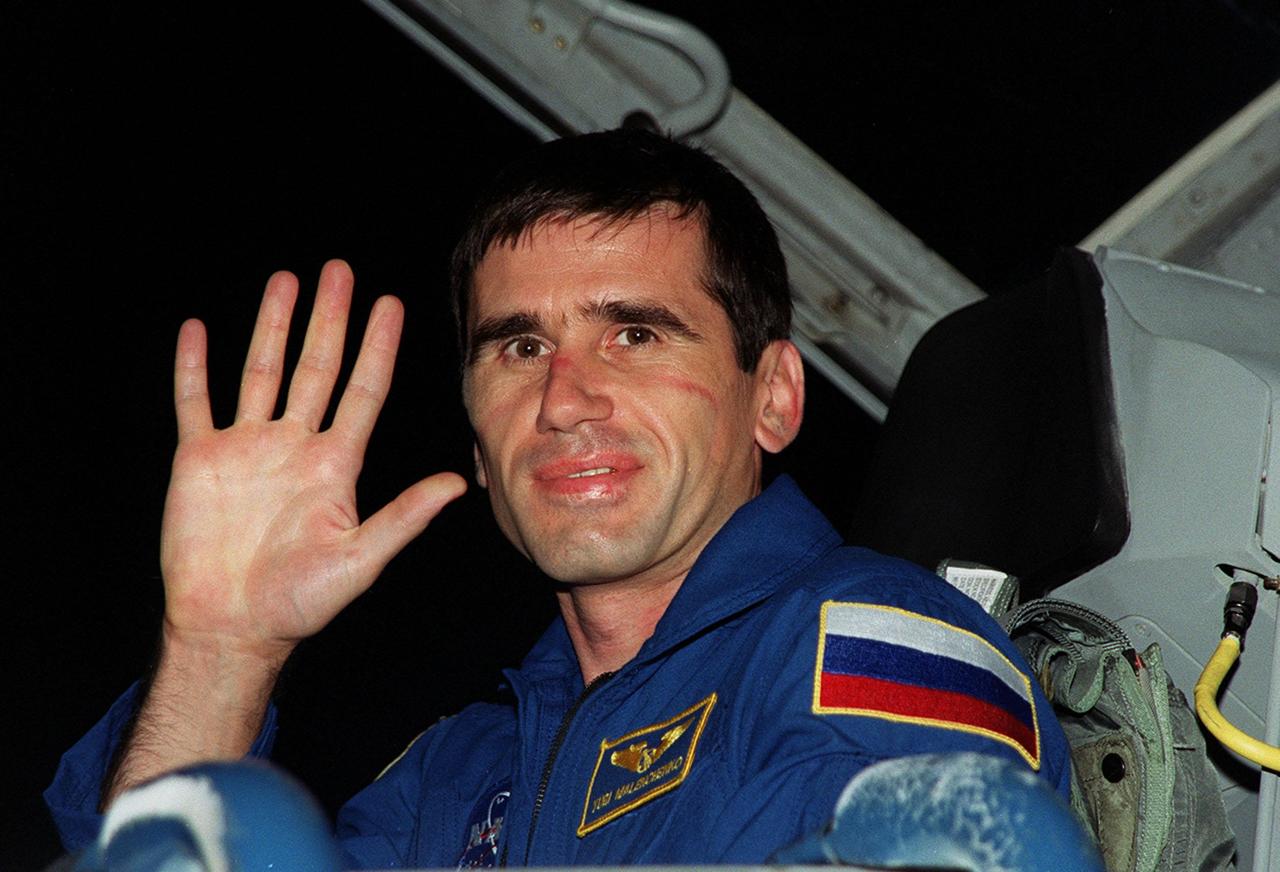
STS-106 Mission Specialist Yuri I. Malenchenko waves for the camera as he arrives at the KSC Shuttle Landing Facility. Malenchenko is with the Russian Aviation and Space Agency. He and the rest of the crew will be making pre-launch preparations for the fourth flight to the International Space Station. STS-106 is scheduled to launch Sept. 8, 2000, at 8:45 a.m. EDT from Launch Pad 39B. On the 11-day mission, the seven-member crew will perform support tasks on orbit, transfer supplies and prepare the living quarters in the newly arrived Zvezda Service Module. The first long-duration crew, dubbed "Expedition One," is due to arrive at the Station in late fall
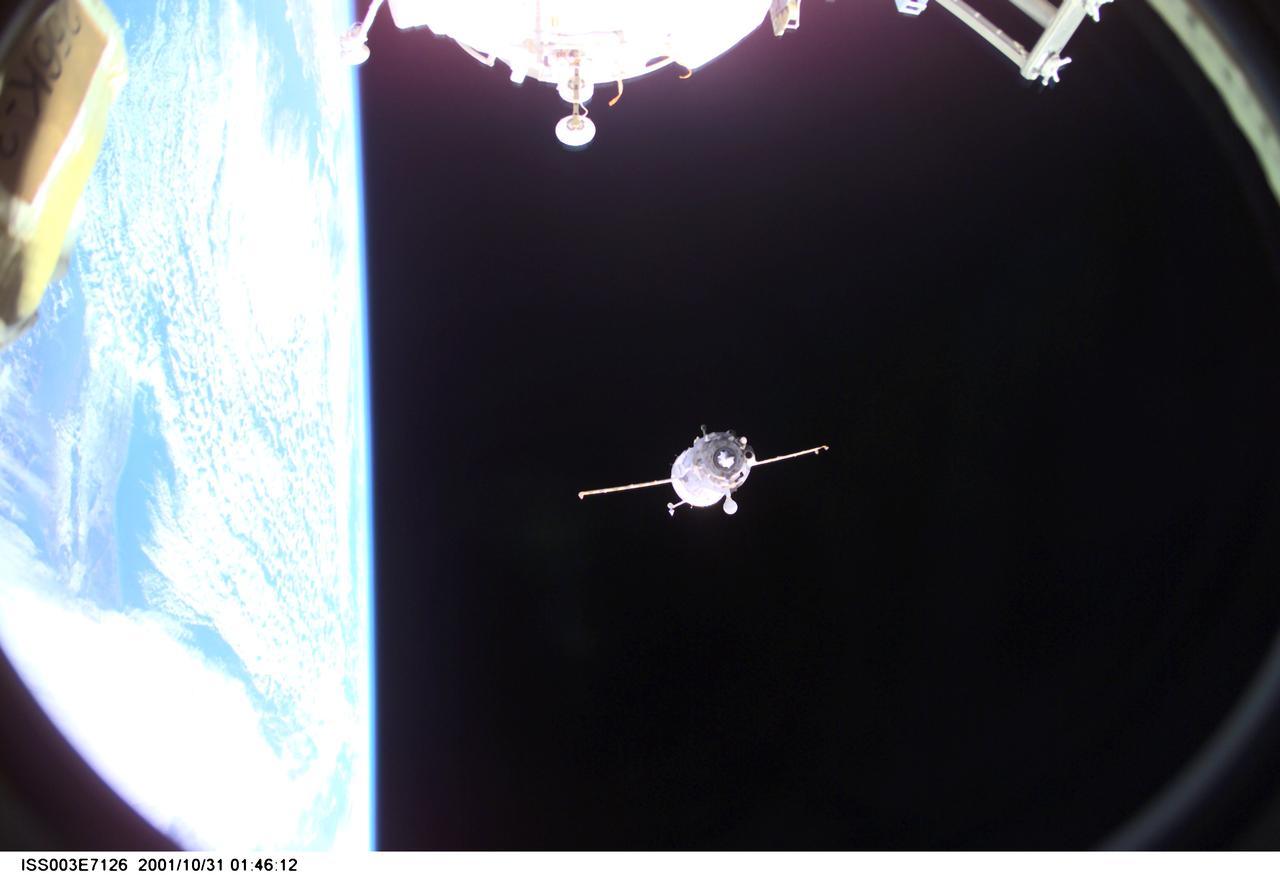
ISS003-E-7126 (31 October 2001) --- Backdropped by Earth’s horizon and the blackness of space, a Soyuz spacecraft undocks from the International Space Station (ISS) carrying the Soyuz taxi crew, Commander Victor Afanasyev, Flight Engineer Konstantin Kozeev and French Flight Engineer Claudie Haignere, ending their eight-day stay on the station. Afanasyev and Kozeev represent Rosaviakosmos, and Haignere represents ESA, carrying out a flight program for CNES, the French Space Agency, under a commercial contract with the Russian Aviation and Space Agency. This image was taken with a digital still camera.
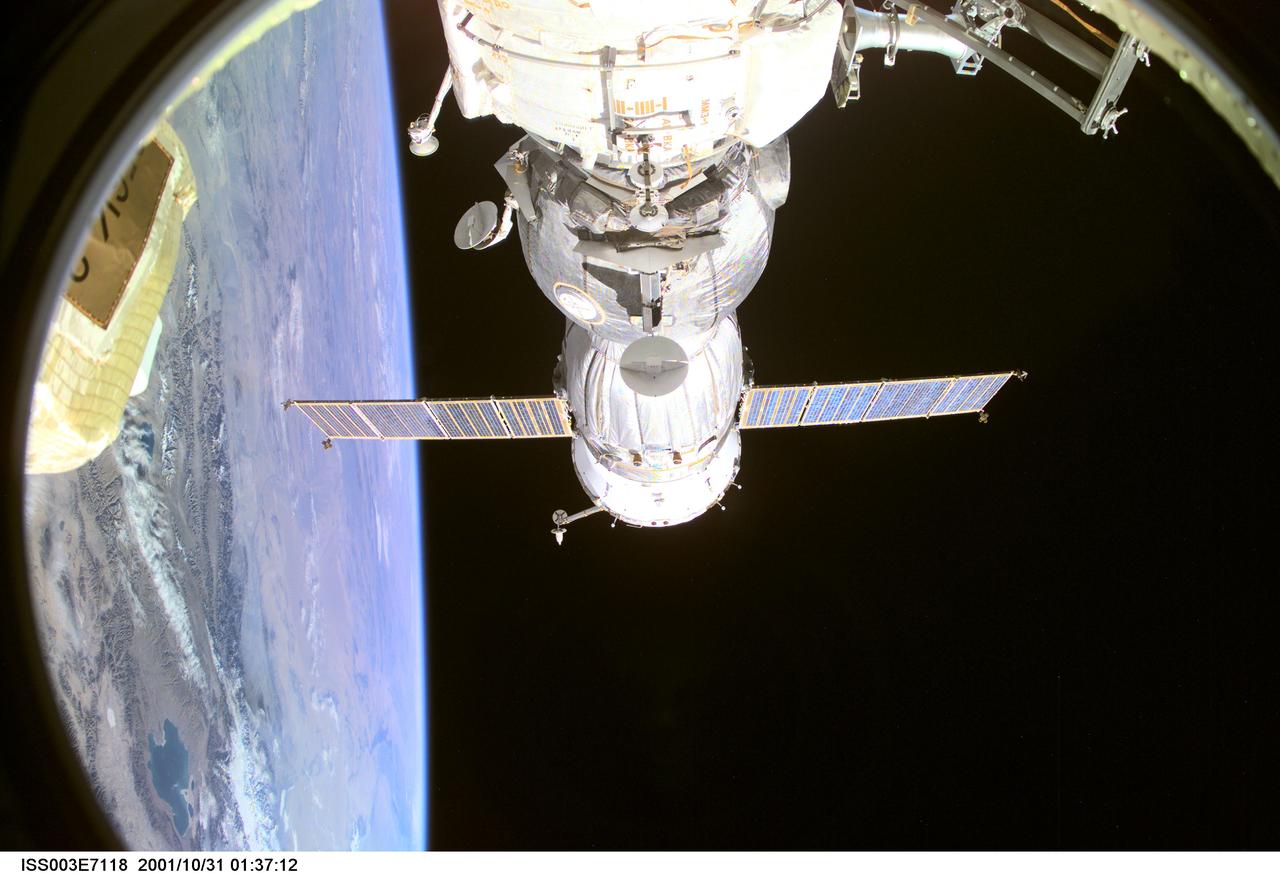
ISS003-E-7118 (31 October 2001) --- A Soyuz spacecraft, backdropped by Earth’s horizon and the blackness of space, is photographed prior to departure from the International Space Station (ISS), carrying the Soyuz taxi crew back to Earth, ending their eight-day stay on the station. The crewmembers are Commander Victor Afanasyev, Flight Engineer Konstantin Kozeev and French Flight Engineer Claudie Haignere. Afanasyev and Kozeev represent Rosaviakosmos, and Haignere represents ESA, carrying out a flight program for CNES, the French Space Agency, under a commercial contract with the Russian Aviation and Space Agency. This image was taken with a digital still camera.
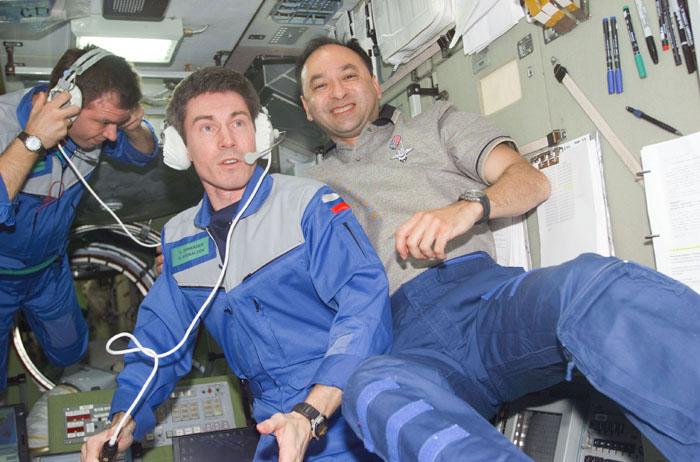
STS98-E-5061 (9 February 2001) --- Cosmonauts Sergei K. Krikalev (center), Expedition One flight engineer, and Yuri P. Gidzenko (left), Soyuz commander for the first station expedition crew, are pictured with astronaut Mark L. Polansky, STS-98 pilot, in the Zvezda Service Module of the International Space Station. The cosmonauts, who represent the Russian Aviation and Space Agency, are communicating with ground controllers in Russia. The scene was recorded with a digital still camera shortly after the outpost's hatches were opened on STS-98 Flight Day 3.
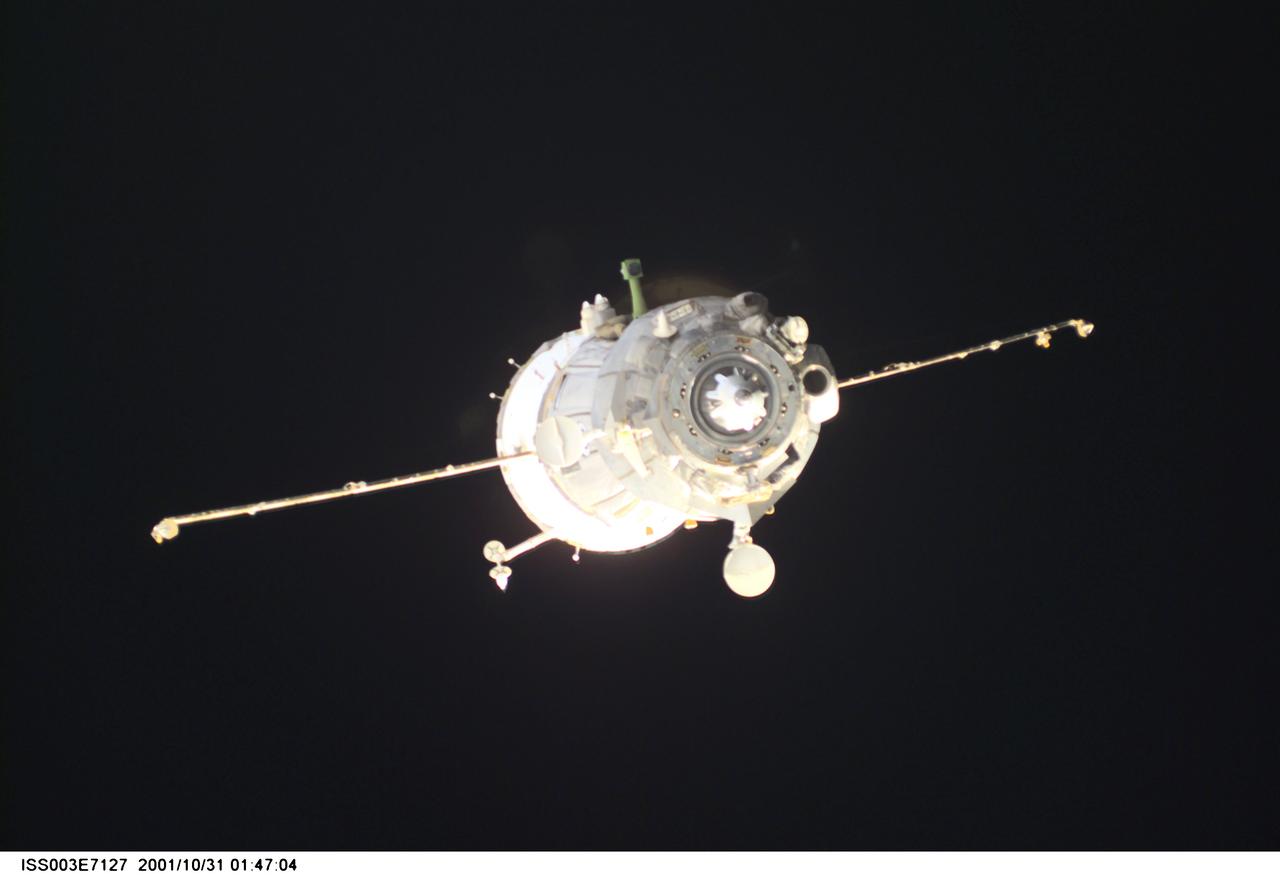
ISS003-E-7127 (31 October 2001) --- Backdropped by the blackness of space, a Soyuz spacecraft departs from the International Space Station (ISS) carrying the Soyuz taxi crew, Commander Victor Afanasyev, Flight Engineer Konstantin Kozeev and French Flight Engineer Claudie Haignere, ending their eight-day stay on the station. Afanasyev and Kozeev represent Rosaviakosmos, and Haignere represents ESA, carrying out a flight program for CNES, the French Space Agency, under a commercial contract with the Russian Aviation and Space Agency. This image was taken with a digital still camera.
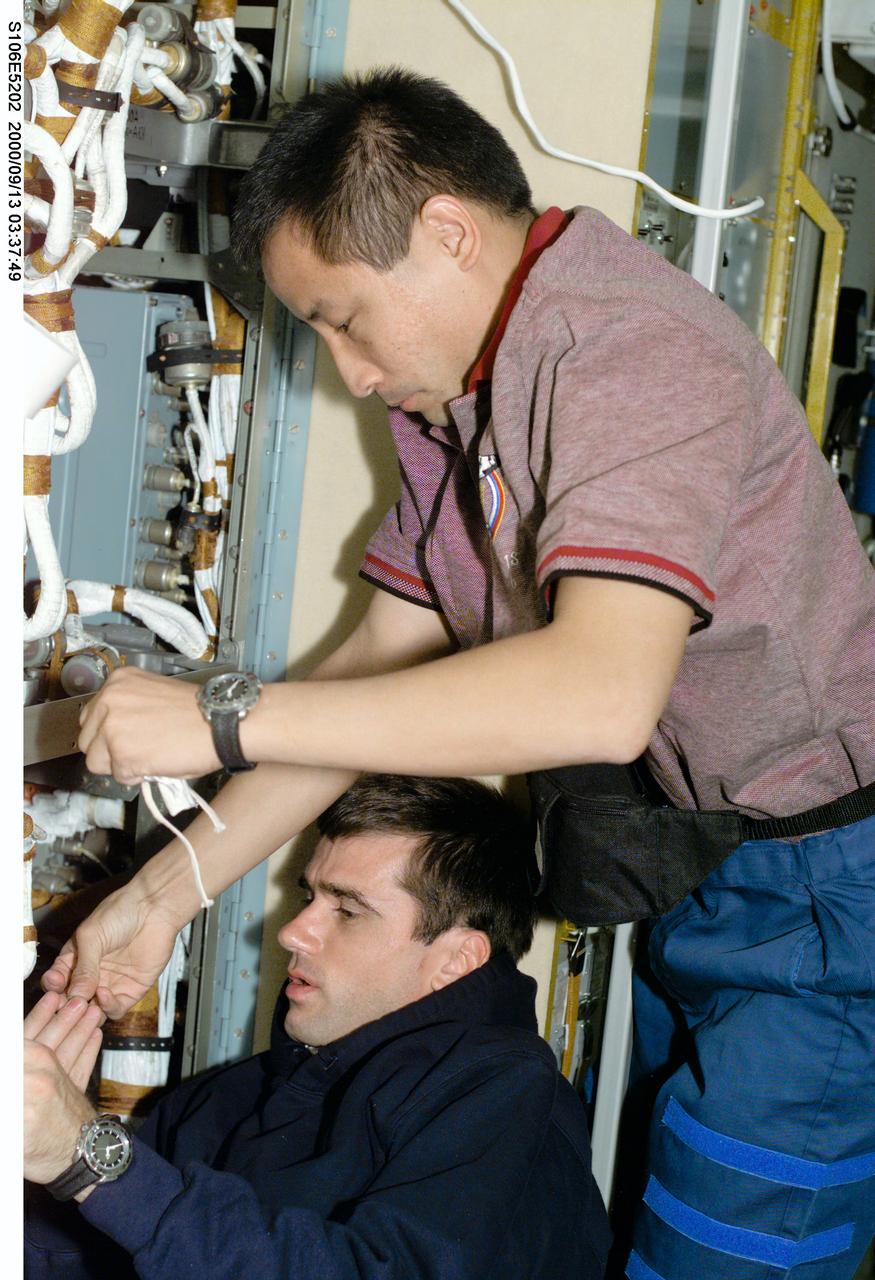
S106-E-5202 (13 September 2000) --- Cosmonaut Yuri I. Malenchenko, mission specialist representing the Russian Aviation and Space Agency, teams up with astronaut Edward T. Lu for some electrical work aboard the Zvezda service module on the International Space Station (ISS). Electrical work was the hallmark of the day as four of the mission specialists aboard ISS (temporarily docked with the Space Shuttle Atlantis) replaced batteries inside the Zarya and Zvezda modules while supply transfer continued around them. Astronaut Edward T. Lu, is out of frame at right.
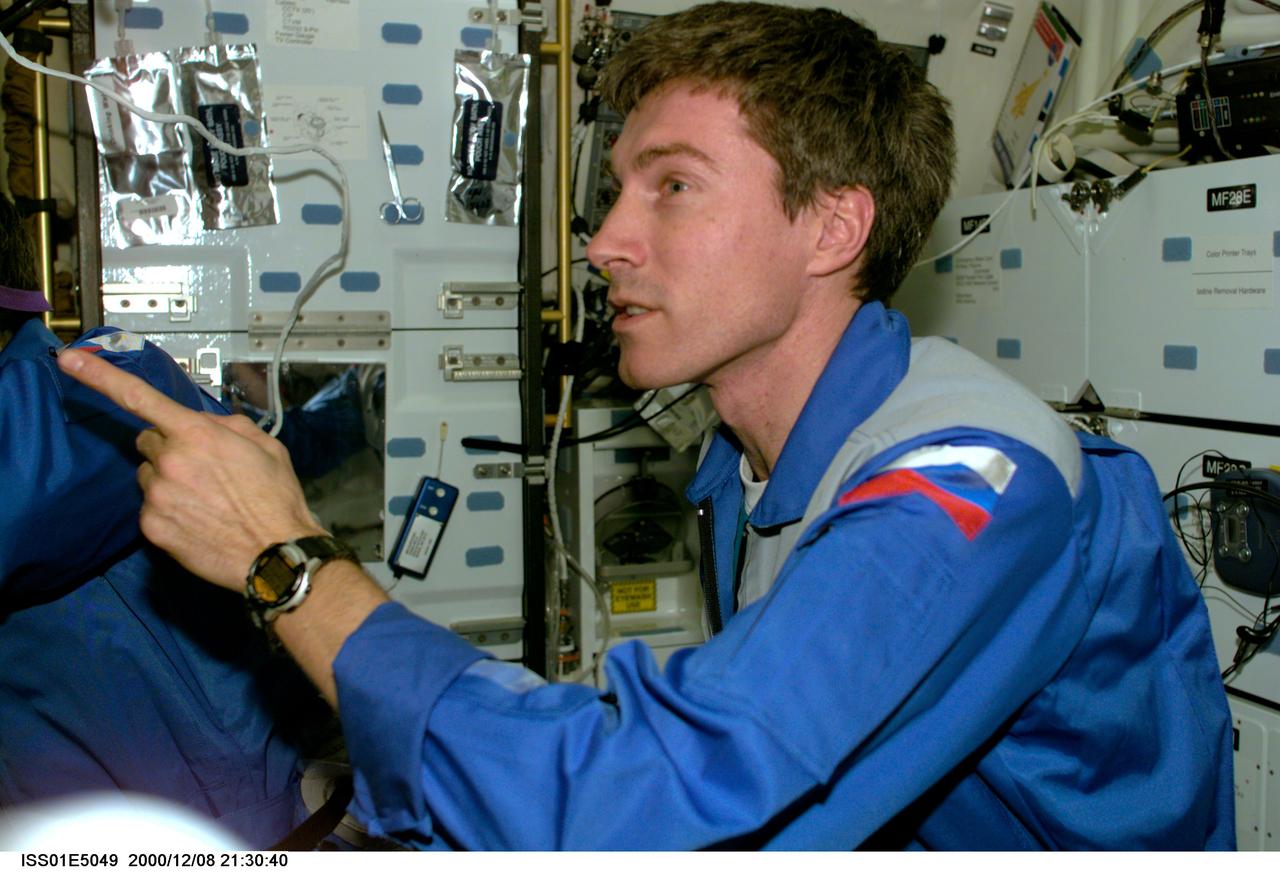
ISS01-E-5049 (8 December 2000) --- Expedition One flight engineer Sergei K. Krikalev reminisces for a brief moment during his visit aboard the Space Shuttle Endeavour. Krikalev is on the mid deck in this scene. Now assigned to a three-month stint aboard the International Space Station (ISS), the cosmonaut and his two Expedition One crew mates enjoyed a reunion with the STS-97 astronauts on Flight Day 9. In his cosmonaut career Krikalev has been assigned duty on missions aboard the shuttle, ISS, and the Russian Aviation and Space Agency's space station Mir.
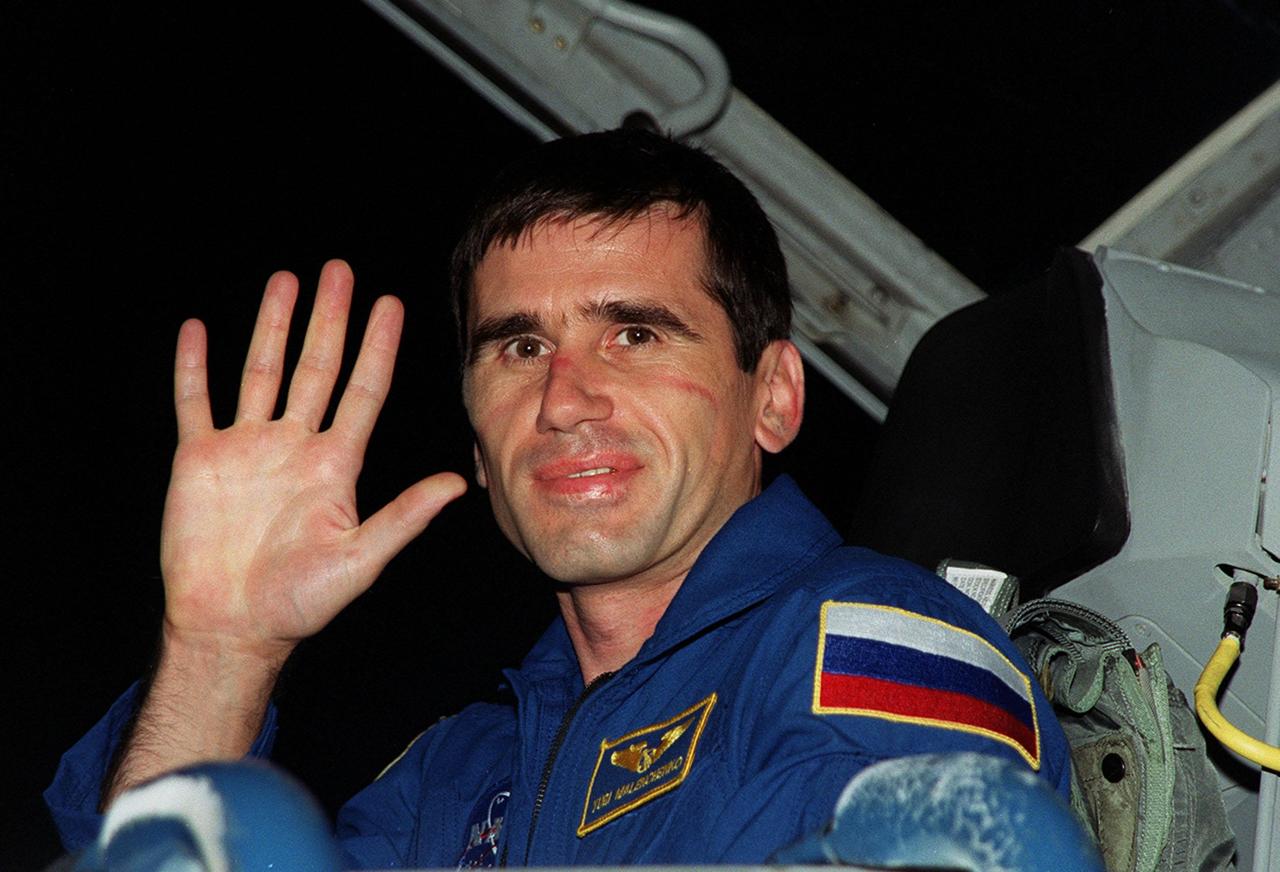
STS-106 Mission Specialist Yuri I. Malenchenko waves for the camera as he arrives at the KSC Shuttle Landing Facility. Malenchenko is with the Russian Aviation and Space Agency. He and the rest of the crew will be making pre-launch preparations for the fourth flight to the International Space Station. STS-106 is scheduled to launch Sept. 8, 2000, at 8:45 a.m. EDT from Launch Pad 39B. On the 11-day mission, the seven-member crew will perform support tasks on orbit, transfer supplies and prepare the living quarters in the newly arrived Zvezda Service Module. The first long-duration crew, dubbed "Expedition One," is due to arrive at the Station in late fall
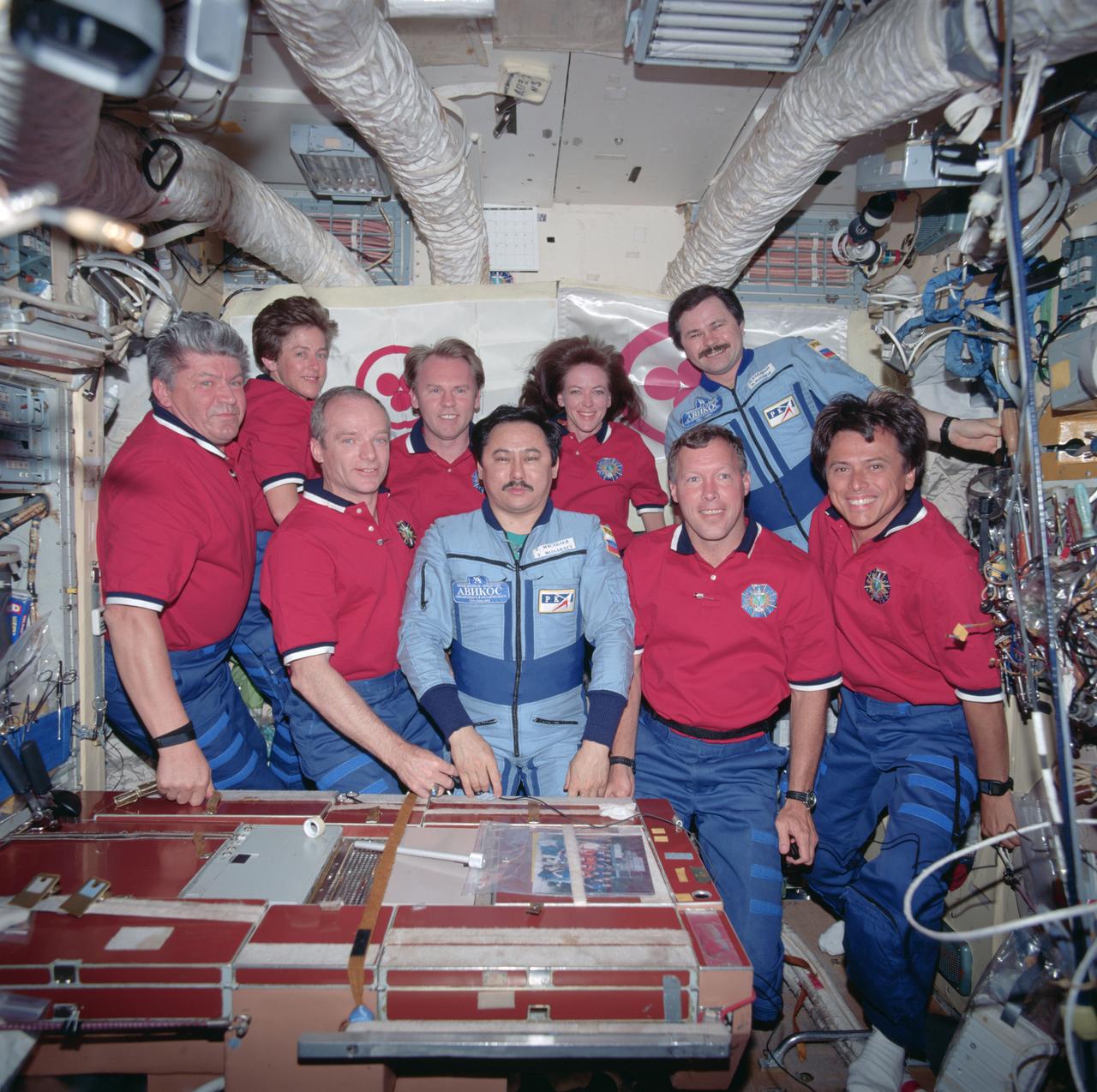
STS091-703-031 (2-12 June 1998) --- The STS-91 crew and the Mir-25 cosmonauts currently manning Russia's space station pose for the final joint inflight NASA-Mir portrait in the core module. Left to right are Valery V. Ryumin, Wendy B. Lawrence, Charles J. Precourt, Andrew S.W. Thomas, Talgat Musabayev, Janet L. Kavandi, Dominic C. Gorie, Nikolai Budarin and Franklin R. Chang-Diaz. Ryumin represents the Russian Aviation and Space Agency. Thomas ended up spending 141 days in space on this journey, including time aboard Endeavour and Discovery, which delivered and retrieved him to and from the Mir, respectively. Later the Discovery made the final undocking of an American Shuttle from the Mir complex, leaving Musabayev and Budarin, the current Mir crewmembers, behind. A pre-set 70-mm camera recorded the portrait. Photo Credit: National Aeronautics and Space Administration (NASA) and the Russian Aviation and Space Agency.
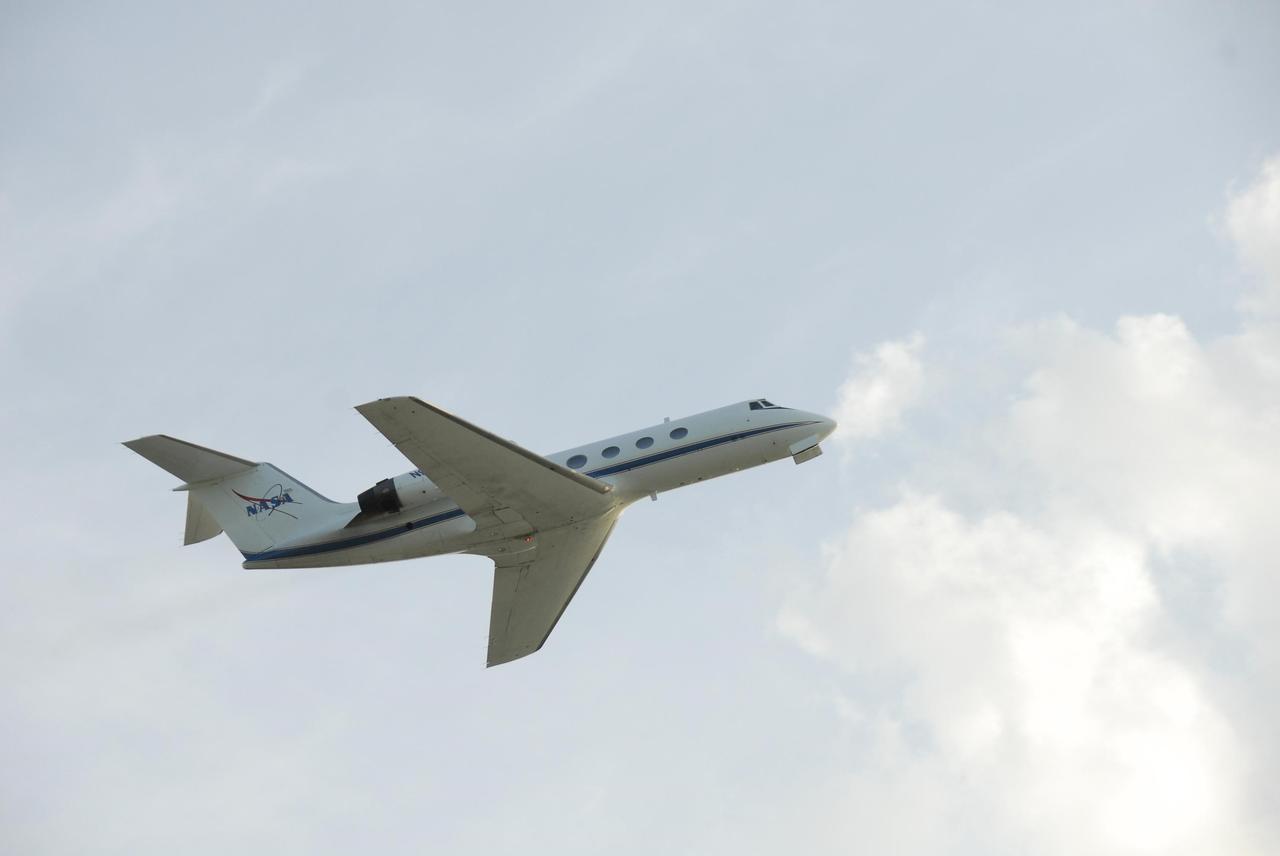
KENNEDY SPACE CENTER, FLA. -- STS-117 Commander Frederick Sturckow and Pilot Lee Archambault aim high to begin landing practice in the shuttle training aircraft (STA). The STA is a Grumman American Aviation-built Gulf Stream II jet that was modified to simulate an orbiter's cockpit, motion and visual cues, and handling qualities. In flight, the STA duplicates the orbiter's atmospheric descent trajectory from approximately 35,000 feet altitude to landing on a runway. STS-117 is scheduled to launch at 7:38 p.m. June 8. During the 11-day mission and three spacewalks, the crew will work with flight controllers at NASA's Johnson Space Center in Houston to install the 17-ton segment on the station's girder-like truss and deploy the set of solar arrays, S3/S4. The mission will increase the space station's power capability in preparation for the arrival of new science modules from the European and Japanese space agencies. Photo credit: NASA/Kim Shiflett

KENNEDY SPACE CENTER, FLA. -- At SPACEHAB members of the STS-106 crew check out equipment they will be using during their mission to the International Space Station. Starting second from left, they are Mission Specialists Daniel C. Burbank, Edward T. Lu, and Yuri I. Malenchenkov; Pilot Scott D. Altman, and Mission Specialists Richard A. Mastracchio and Boris V. Morukov. Not seen is Commander Terrence W. Wilcutt. Malenchenko and Morukov represent the Russian Aviation and Space Agency. The crew is taking part in Crew Equipment Interface Test activities at KSC. On the 11-day mission, the seven-member crew will perform support tasks on orbit, transfer supplies and prepare the living quarters in the newly arrived Zvezda Service Module for the first long-duration crew, dubbed “Expedition One,” which is due to arrive at the Station in late fall. STS-106 is scheduled to launch Sept. 8, 2000, at 8:31 a.m. EDT from Launch Pad 39B
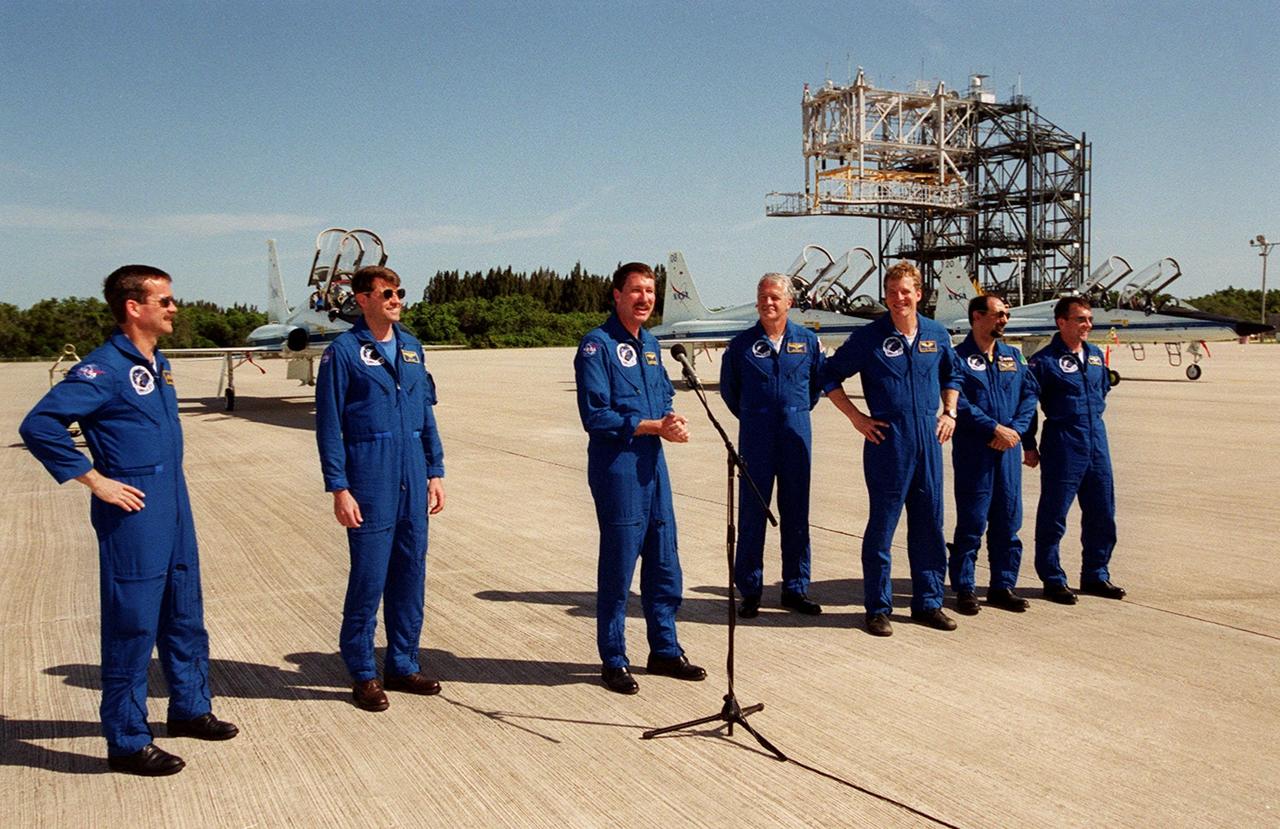
The STS-100 crew speak to the media after their arrival at the KSC Shuttle Landing Facility. Standing, from left, are Mission Specialist Chris A. Hadfield, Pilot Jeffrey S. Ashby, Commander Kent V. Rominger at the microphone, and Mission Specialists John L. Phillips, Scott E. Parazynski, Umberto Guidoni and Yuri V. Lonchakov. The international crew represents, along with America, the Canadian Space Agency (Hadfield) , the European Space Agency (Guidoni), and the Russian Aviation and Space Agency (Lonchakov). The 11-day mission to the International Space Station will deliver and integrate the Spacelab Logistics Pallet/Launch Deployment Assembly, which includes the Space Station Remote Manipulator system and the UHF Antenna, and the Multi-Purpose Logistics Module Raffaello. Liftoff on mission STS-100 is scheduled at 2:41 p.m. EDT April 19
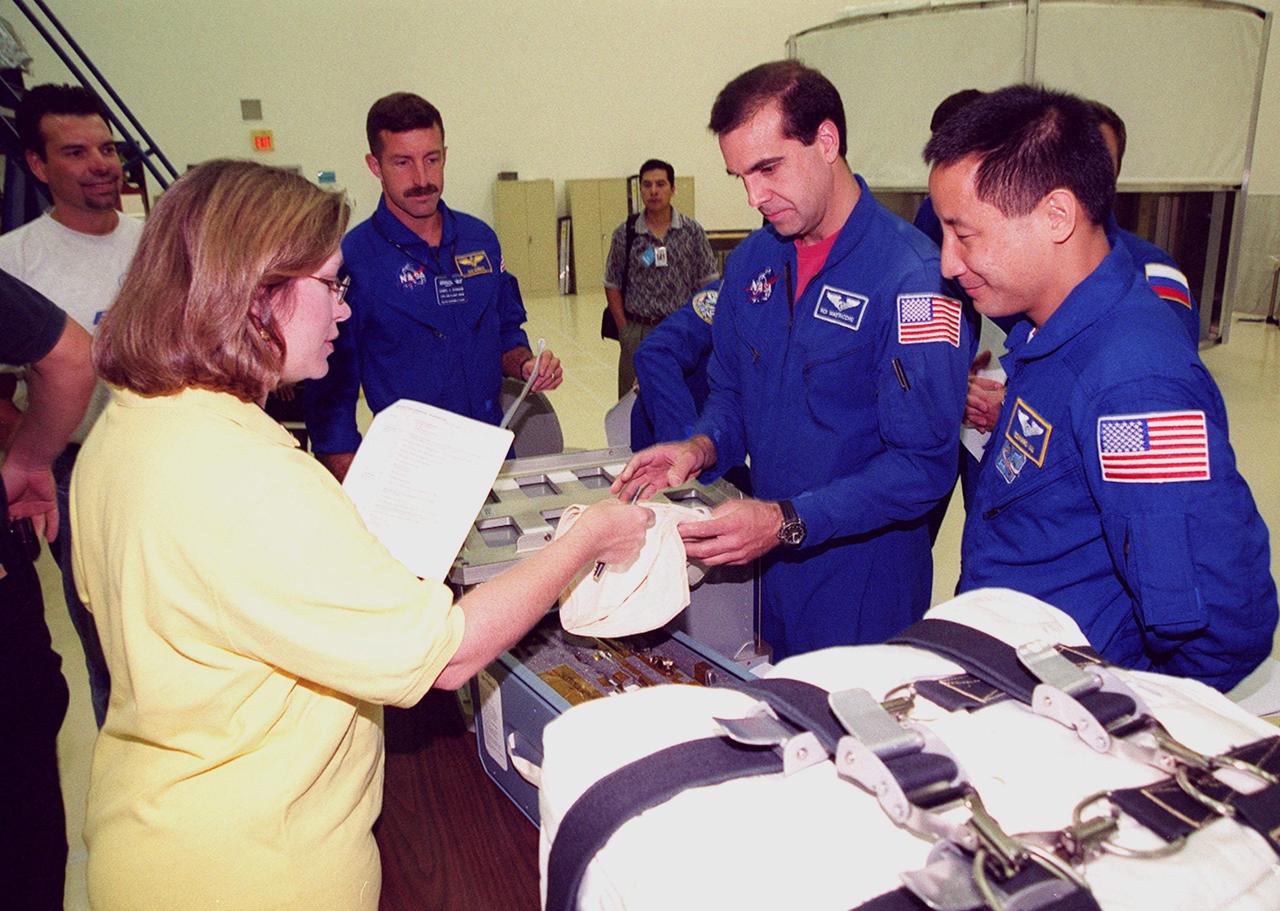
KENNEDY SPACE CENTER, FLA. -- During Crew Equipment Interface Test activities at SPACEHAB, STS-106 crew members check out some of the equipment they will be using on their mission to the International Space Station. At left is Mission Specialist Daniel C. Burbank; at right are Mission Specialists Richard A. Mastracchio and Edward T. Lu. Malenchenko and Morukov represent the Russian Aviation and Space Agency. STS-106 is scheduled to launch Sept. 8, 2000, at 8:31 a.m. EDT from Launch Pad 39B on an 11-day mission. The seven-member crew will prepare the Space Station for its first resident crew and begin outfitting the newly arrived Zvezda Service Module. They will perform support tasks on orbit, transfer supplies and prepare the Zvezda living quarters for the first long-duration crew, dubbed “Expedition One,” which is due to arrive at the Station in late fall
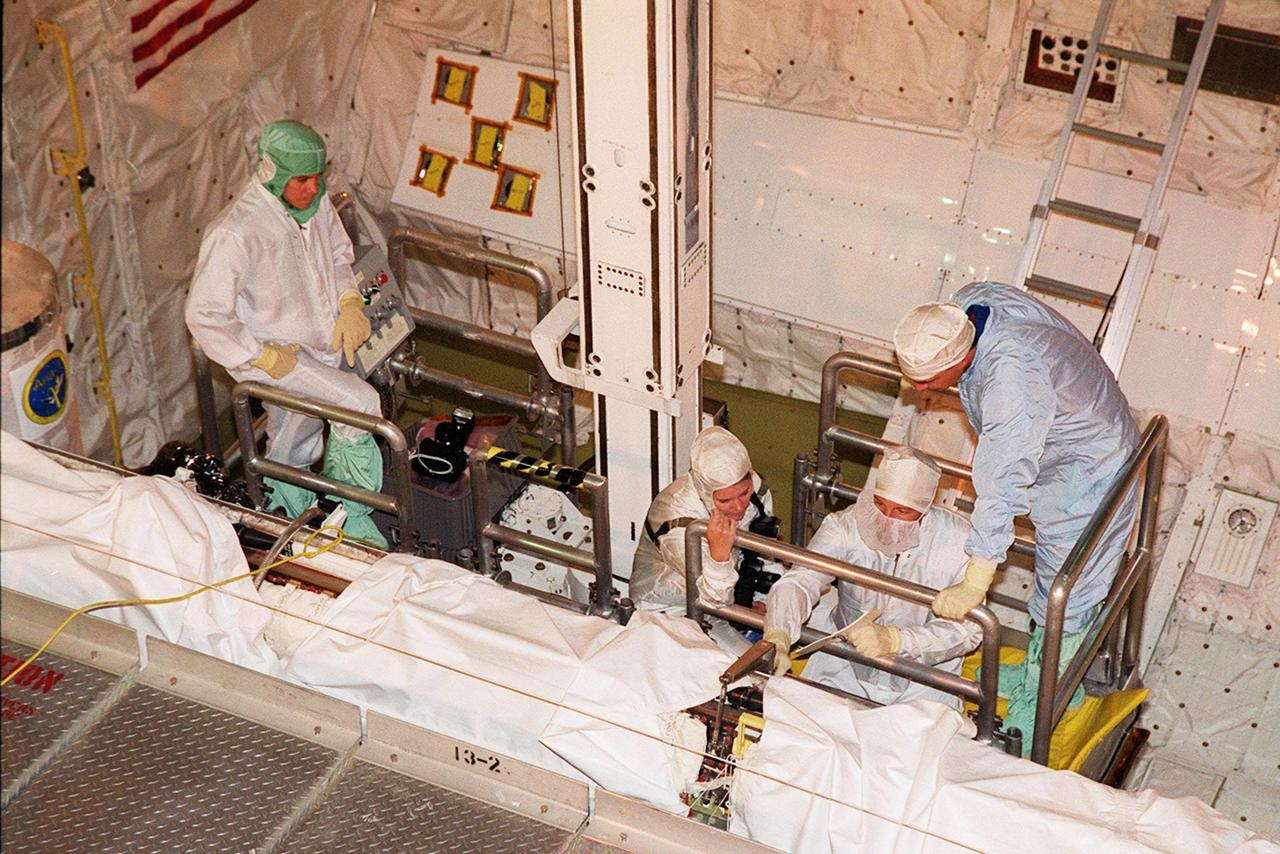
In Orbiter Processing Facility bay 3, members of the STS-106 crew familiarize themselves with equipment in the payload bay of Space Shuttle orbiter Atlantis with the help of KSC employees as part of Crew Equipment Interface Test (CEIT) activities for their mission. The STS-106 crew members are Commander Terrence W. Wilcutt, Pilot Scott D. Altman, and Mission Specialists Edward T. Lu, Daniel C. Burbank, Yuri I. Malenchenko, Boris V. Morukov and Richard A. Mastracchio. Malenchenko and Morukov represent the Russian Aviation and Space Agency. On the 11-day mission, the seven-member crew will perform support tasks on orbit, transfer supplies and prepare the living quarters in the newly arrived Zvezda Service Module for the first long-duration crew, dubbed "Expedition One," which is due to arrive at the Station in late fall. STS-106 is scheduled to launch Sept. 8, 2000, at 8:31 a.m. EDT from Launch Pad 39B
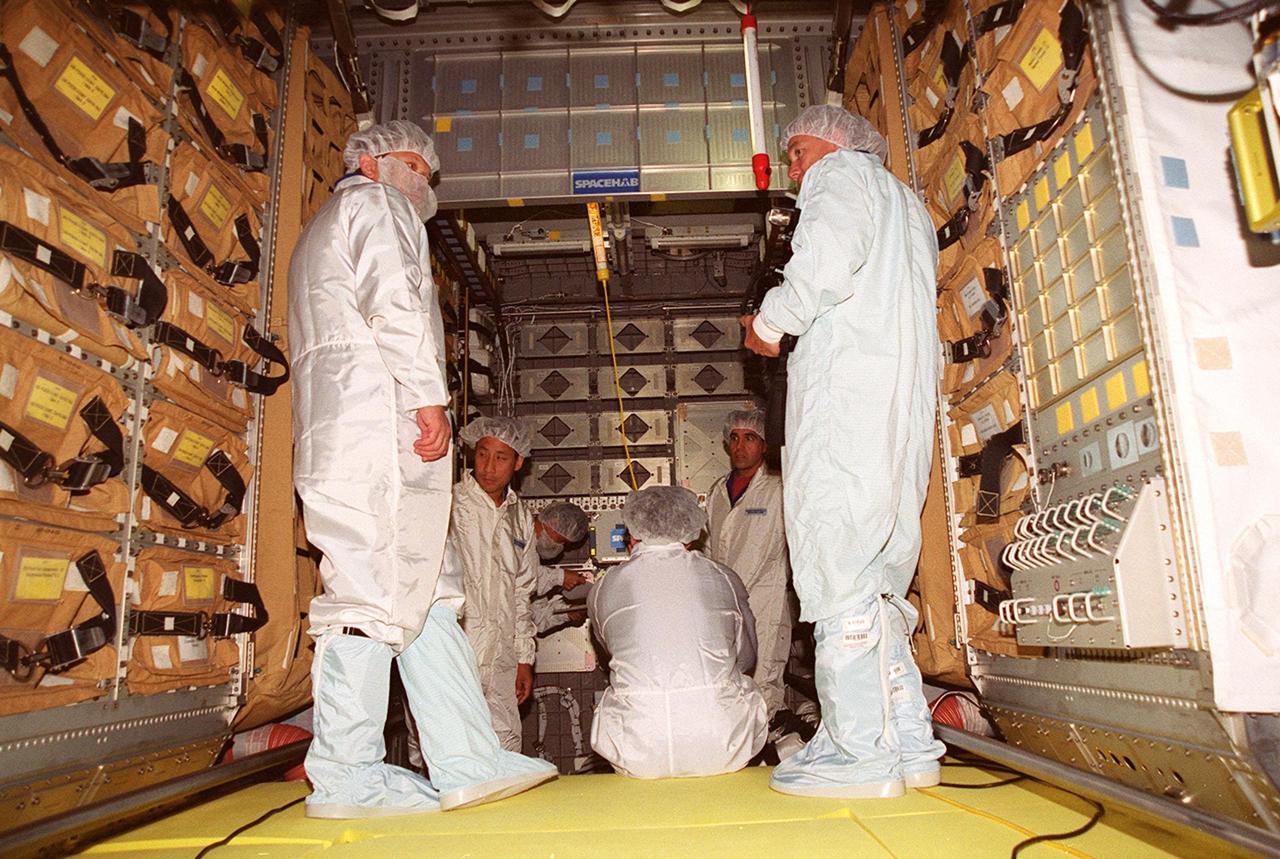
KENNEDY SPACE CENTER, FLA. -- During Crew Equipment Interface Test activities, the STS-106 crew check out equipment inside the SPACEHAB module. From left are Mission Specialists Boris V. Morukov, Edward T. Lu (kneeling), Yuri I. Malenchenko (back to camera) and Richard A. Mastracchio; and Commander Terrence W. Wilcutt. Malenchenko and Morukov represent the Russian Aviation and Space Agency. STS-106 is scheduled to launch Sept. 8, 2000, at 8:31 a.m. EDT from Launch Pad 39B on an 11-day mission to the International Space Station. The seven-member crew will prepare the Space Station for its first resident crew and begin outfitting the newly arrived Zvezda Service Module. They will perform support tasks on orbit, transfer supplies and prepare the Zvezda living quarters for the first long-duration crew, dubbed “Expedition One,” which is due to arrive at the Station in late fall
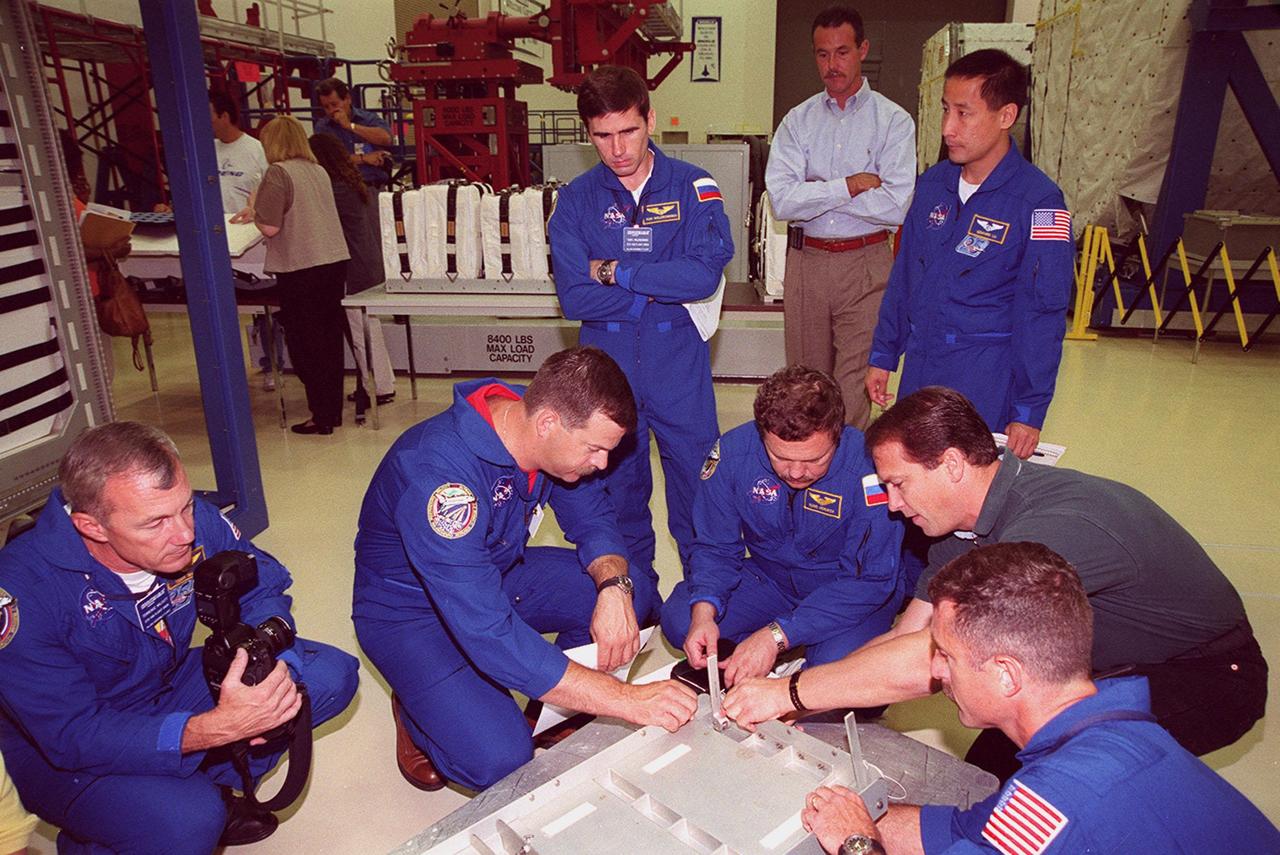
KENNEDY SPACE CENTER, FLA. -- At SPACEHAB members of the STS-106 crew check out equipment they will be using during their mission to the International Space Station. From left are Commander Terrence W. Wilcutt, Pilot Scott D. Altman, and Mission Specialists Yuri I. Malenchenko (standing), Boris V. Morukov, Edward T. Lu (also standing), and (in the foreground, right) Daniel C. Burbank. Malenchenko and Morukov represent the Russian Aviation and Space Agency. STS-106 is scheduled to launch Sept. 8, 2000, at 8:31 a.m. EDT from Launch Pad 39B on an 11-day mission. The seven-member crew will prepare the Space Station for its first resident crew and begin outfitting the newly arrived Zvezda Service Module. They will perform support tasks on orbit, transfer supplies and prepare the Zvezda living quarters for the first long-duration crew, dubbed “Expedition One,” which is due to arrive at the Station in late fall
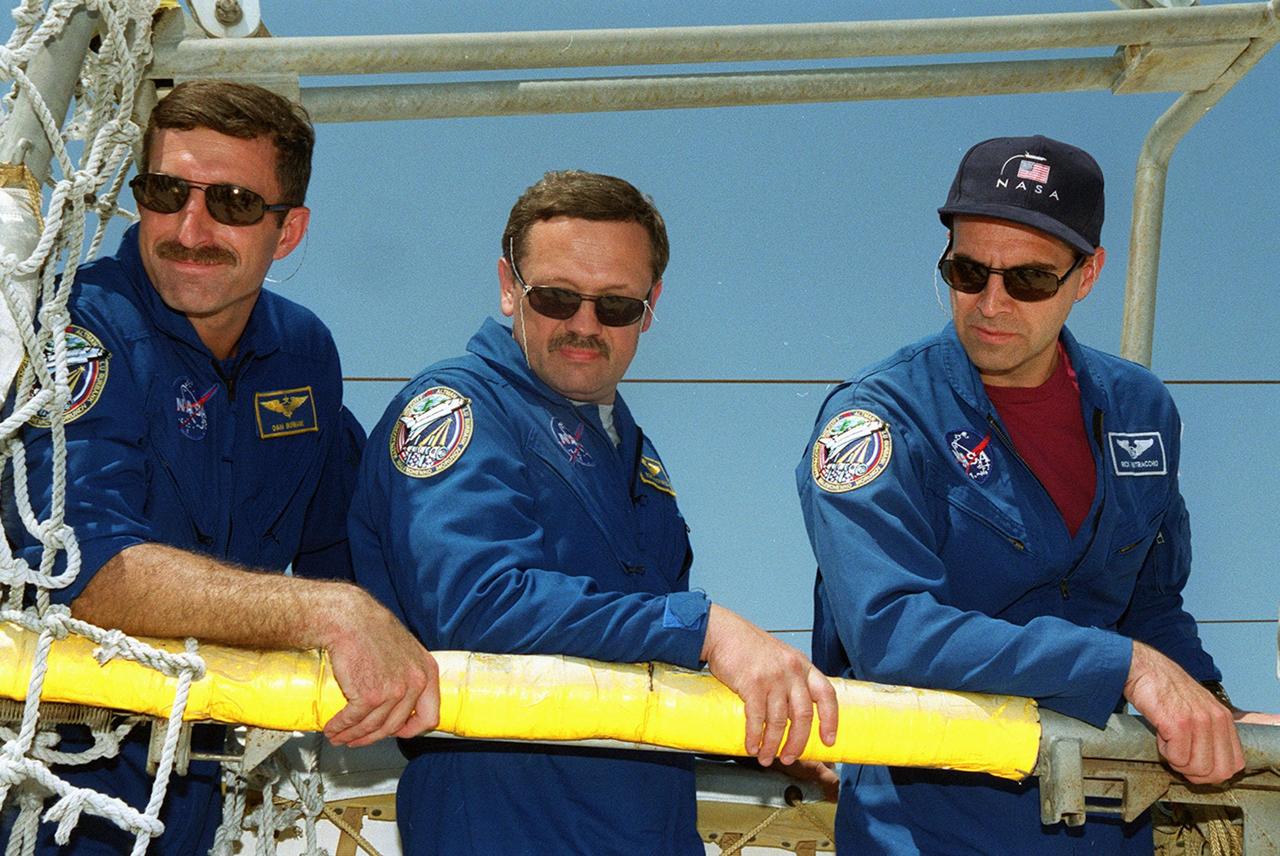
KENNEDY SPACE CENTER, Fla. -- STS-106 Mission Specialists stand in a slide wire basket at the foot of Launch Pad 39-B. Pictured from left are Daniel C. Burbank, Boris V. Morukov and Yuri I. Malenchenko. Malenchenko and Morukov are with the Russian Aviation and Space Agency. The flight crew were at Kennedy Space Center to take part in Terminal Countdown Demonstration Test (TCDT) activities. The TCDT provides the crew with emergency egress training and opportunities to inspect their mission payload in the orbiter’s payload bay. STS-106 is scheduled to launch Sept. 8, 2000, at 8:31 a.m. EDT from Launch Pad 39B. On the 11-day mission, the seven-member crew will perform support tasks on orbit, transfer supplies and prepare the living quarters in the newly arrived Zvezda Service Module. The first long-duration crew, dubbed “Expedition One,” is due to arrive at the Station in late fall
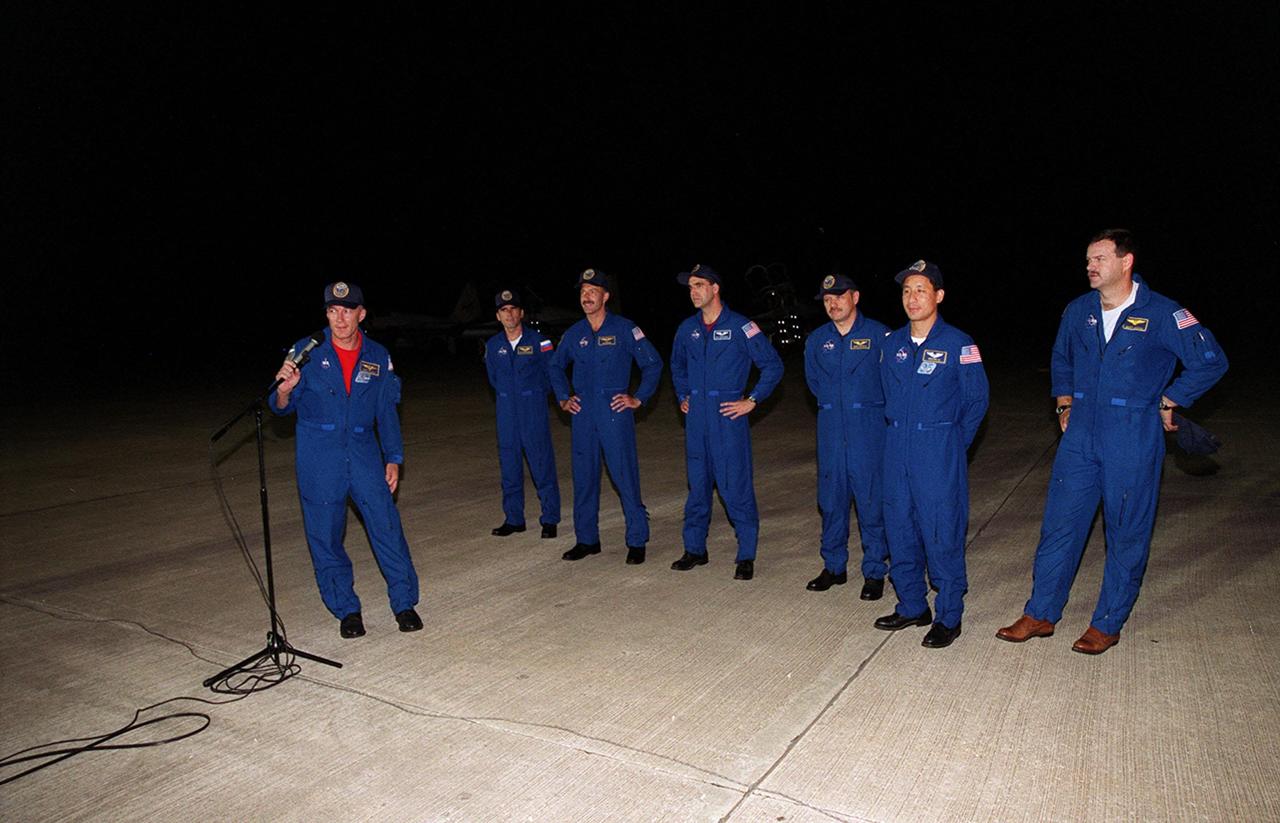
After their arrival at the KSC Shuttle Landing Facility, the STS-106 crew meet the media. Commander Terrence W. Wilcutt, at the microphone, says a few words; the rest of the crew waits behind him. From left, they are Mission Specialists Yuri I. Malenchenko, Daniel C. Burbank, Richard A. Mastracchio, Boris V. Morukov and Edward T. Lu; and Pilot Scott D. Altman. Malenchenko and Morukov are with the Russian Aviation and Space Agency. The crew will be making pre-launch preparations for the fourth flight to the International Space Station. STS-106 is scheduled to launch Sept. 8, 2000, at 8:45 a.m. EDT from Launch Pad 39B. On the 11-day mission, the seven-member crew will perform support tasks on orbit, transfer supplies and prepare the living quarters in the newly arrived Zvezda Service Module. The first long-duration crew, dubbed “Expedition One,” is due to arrive at the Station in late fall
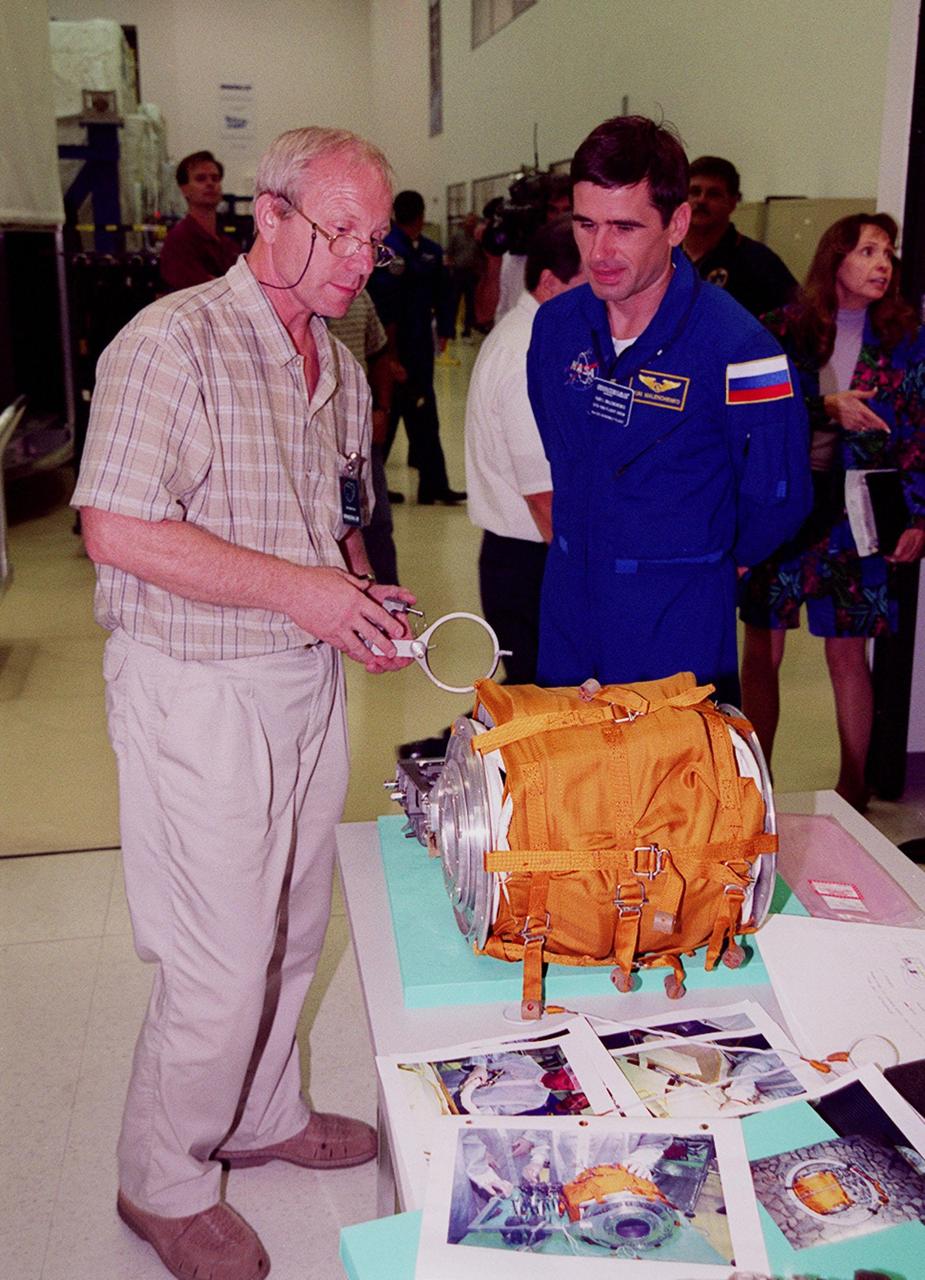
KENNEDY SPACE CENTER, FLA. -- STS-106 Mission Specialist Yuri I. Malenchenko (right) examines equipment at SPACEHAB, part of the payload on the mission to the International Space Station. He and the other crew members Commander Terrence W. Wilcutt, Pilot Scott D. Altman, and Mission Specialists Edward T. Lu, Daniel C. Burbank, Boris V. Morukov and Richard A. Mastracchio are taking part in Crew Equipment Interface Test (CEIT) activities at SPACEHAB. Malenchenko and Morukov represent the Russian Aviation and Space Agency. On the 11-day mission, the seven-member crew will perform support tasks on orbit, transfer supplies and prepare the living quarters in the newly arrived Zvezda Service Module for the first long-duration crew, dubbed "Expedition One," which is due to arrive at the Station in late fall. STS-106 is scheduled to launch Sept. 8, 2000, at 8:31 a.m. EDT from Launch Pad 39B
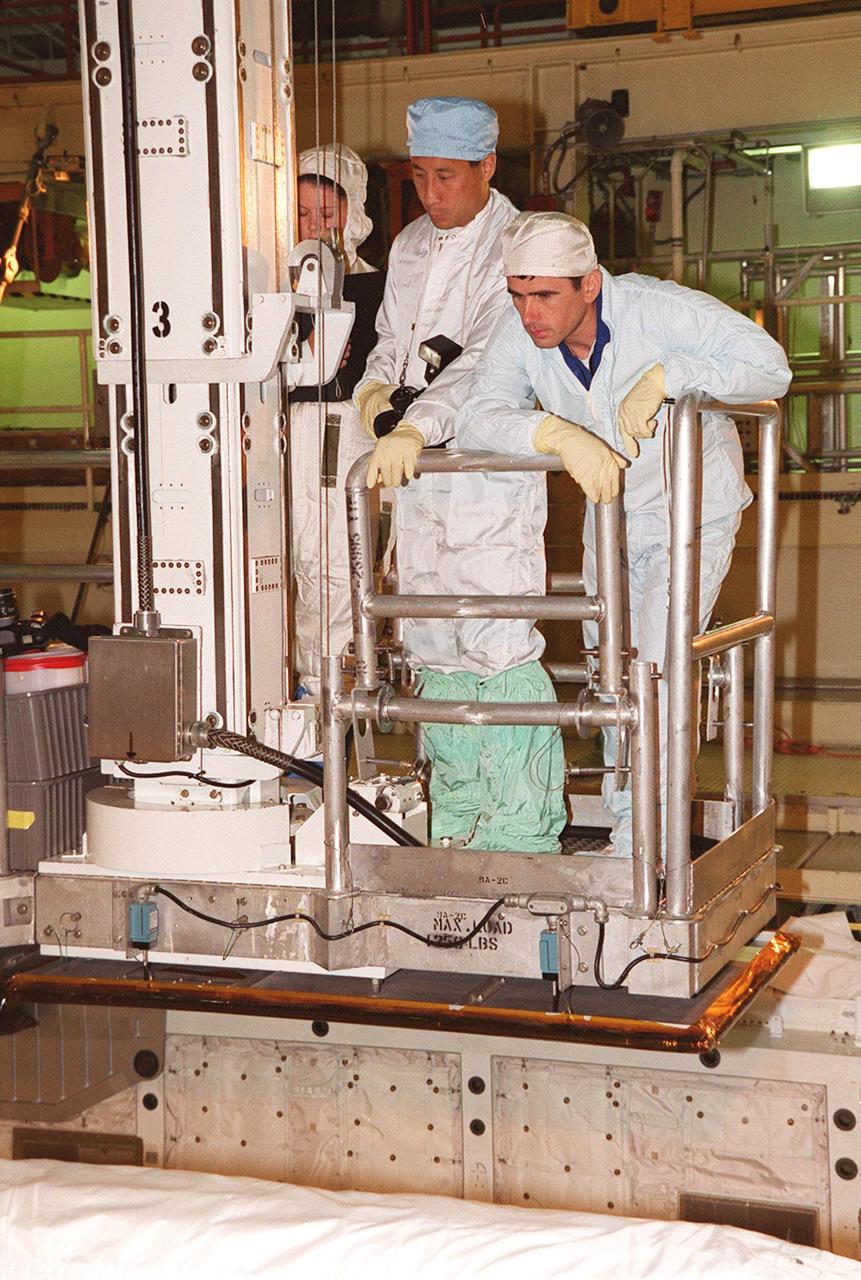
In Orbiter Processing Facility bay 3, STS-106 Mission Specialists Edward T. Lu (center) and Yuri I. Malenchenko (right) familiarize themselves with equipment in the payload bay of Space Shuttle orbiter Atlantis with the help of KSC employees as part of Crew Equipment Interface Test (CEIT) activities for their mission. The other crew members are Commander Terrence W. Wilcutt, Pilot Scott D. Altman, and Mission Specialists Daniel C. Burbank, Boris V. Morukov and Richard A. Mastracchio. Malenchenko and Morukov represent the Russian Aviation and Space Agency. On the 11-day mission, the seven-member crew will perform support tasks on orbit, transfer supplies and prepare the living quarters in the newly arrived Zvezda Service Module for the first long-duration crew, dubbed "Expedition One," which is due to arrive at the Station in late fall. STS-106 is scheduled to launch Sept. 8, 2000, at 8:31 a.m. EDT from Launch Pad 39B
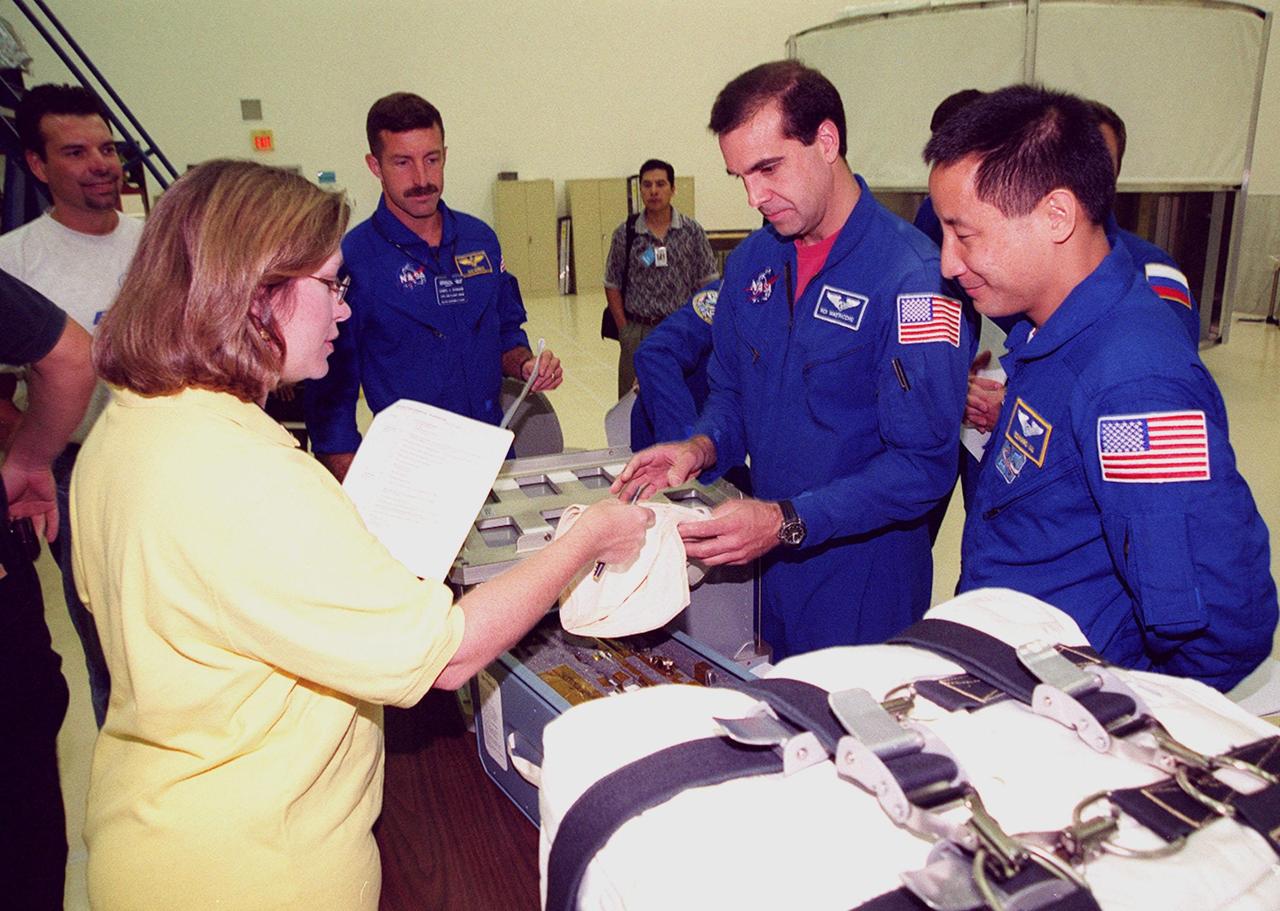
KENNEDY SPACE CENTER, FLA. -- During Crew Equipment Interface Test activities at SPACEHAB, STS-106 crew members check out some of the equipment they will be using on their mission to the International Space Station. At left is Mission Specialist Daniel C. Burbank; at right are Mission Specialists Richard A. Mastracchio and Edward T. Lu. Malenchenko and Morukov represent the Russian Aviation and Space Agency. STS-106 is scheduled to launch Sept. 8, 2000, at 8:31 a.m. EDT from Launch Pad 39B on an 11-day mission. The seven-member crew will prepare the Space Station for its first resident crew and begin outfitting the newly arrived Zvezda Service Module. They will perform support tasks on orbit, transfer supplies and prepare the Zvezda living quarters for the first long-duration crew, dubbed “Expedition One,” which is due to arrive at the Station in late fall
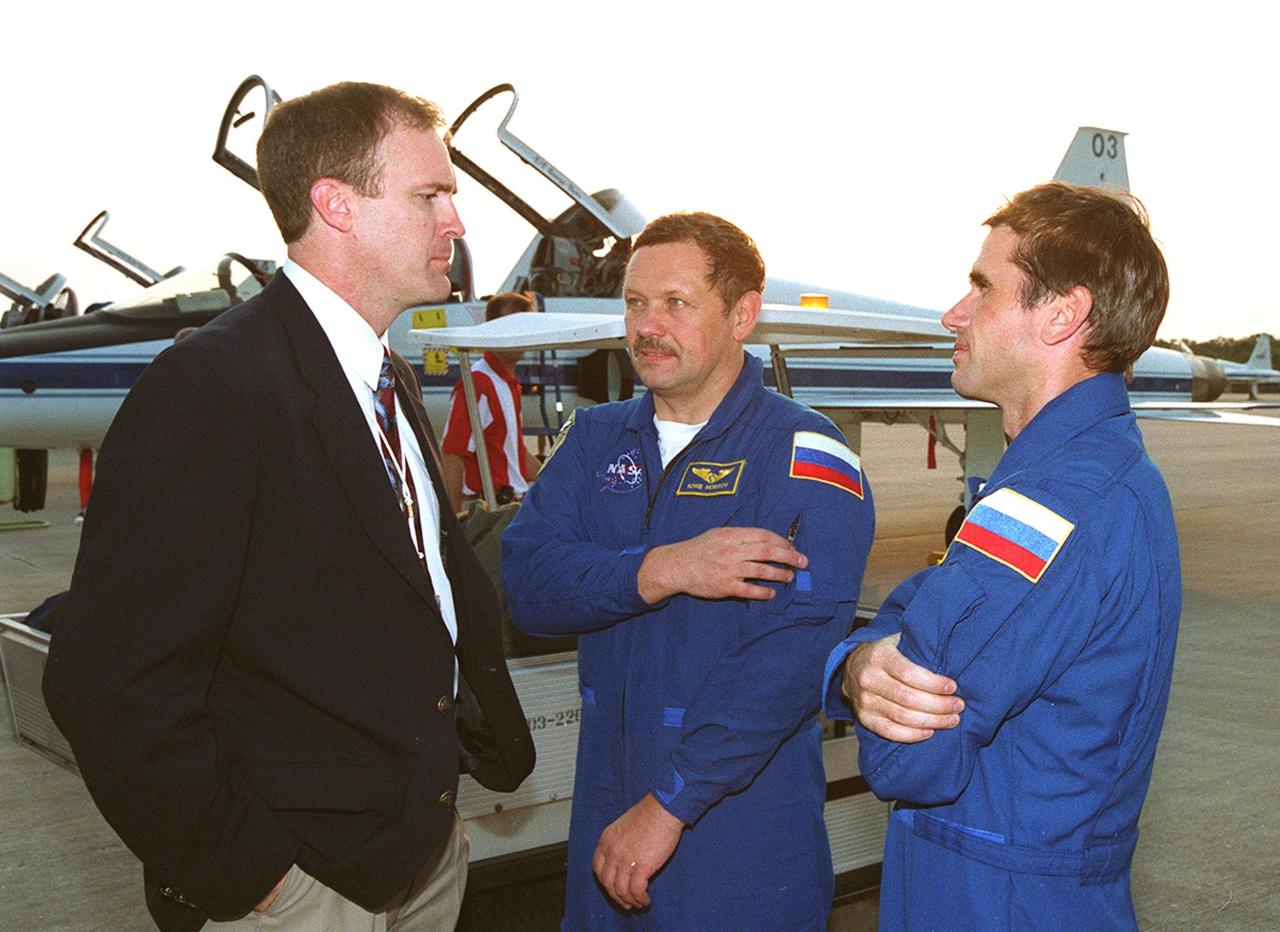
Jim Halsell Jr. (left), former mission commander and now the manager, Shuttle Program Integration Office, chats with STS-106 Mission Specialists Boris V. Morukov (center) and Yuri I. Malenchenko (right) after their arrival at KSC. Morukov and Malenchenko, who are with the Russian Aviation and Space Agency, are at KSC with the rest of the crew to take part in Terminal Countdown Demonstration Test activities, which include emergency egress training and a simulated launch countdown. STS-106 is scheduled to launch Sept. 8, 2000, at 8:31 a.m. EDT from Launch Pad 39B. On the 11-day mission, the seven-member crew will perform support tasks on orbit, transfer supplies and prepare the living quarters in the newly arrived Zvezda Service Module. The first long-duration crew, dubbed “Expedition One,” is due to arrive at the Station in late fall
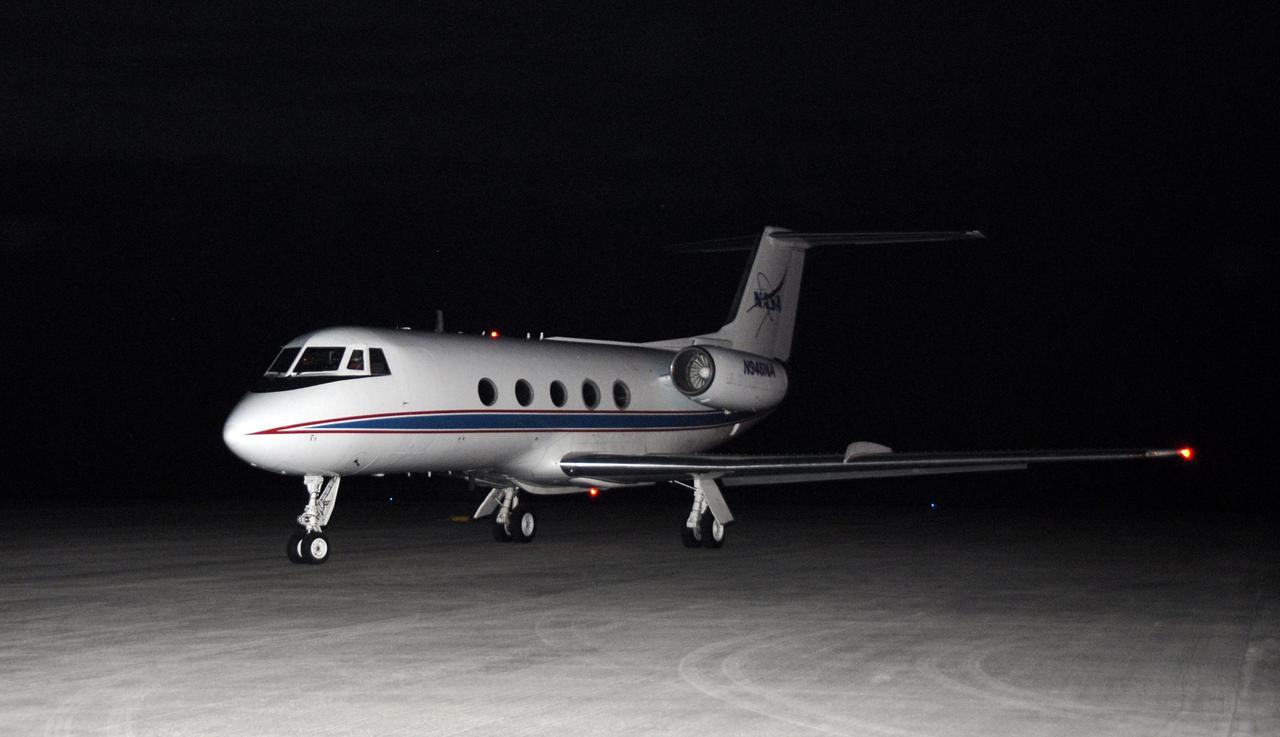
CAPE CANAVERAL, Fla. – On the Shuttle Landing Facility at NASA's Kennedy Space Center in Florida, a shuttle training aircraft is ready for takeoff. STS-119 Commander Lee Archambault and Pilot Tony Antonelli are practicing shuttle landings as part of the Terminal Countdown Demonstration Test activities. The TCDT includes equipment familiarization and a simulated launch countdown. The STA is a Grumman American Aviation-built Gulf Stream II jet that was modified to simulate a shuttle’s cockpit, motion and visual cues, and handling qualities. In flight, the aircraft duplicates the shuttle’s atmospheric descent trajectory from approximately 35,000 feet to landing. The crew of space shuttle Discovery is targeted to launch on the STS-119 mission Feb. 12. During Discovery's 14-day mission, the crew will install the S6 truss segment and solar arrays to the starboard side of the International Space Station, completing the station's truss, or backbone. Photo credit: NASA/Kim Shiflett
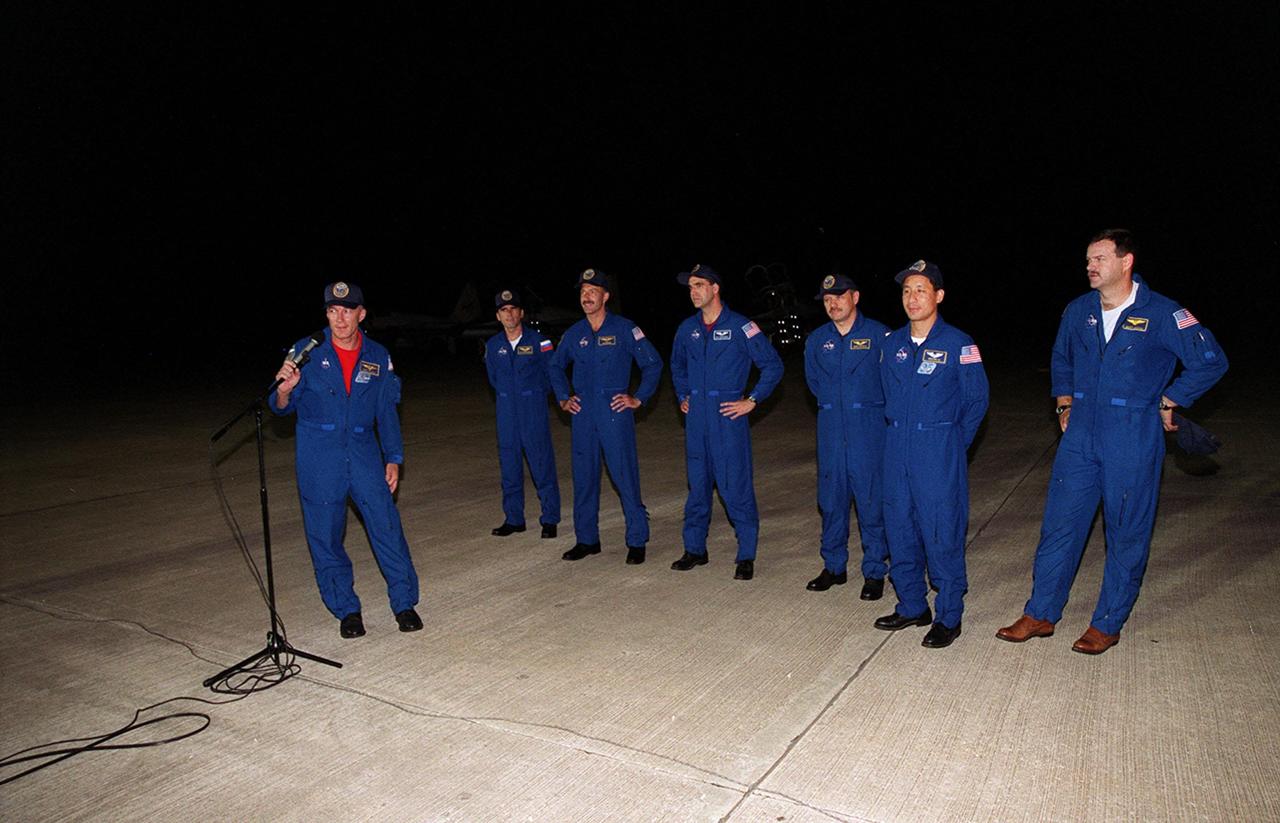
After their arrival at the KSC Shuttle Landing Facility, the STS-106 crew meet the media. Commander Terrence W. Wilcutt, at the microphone, says a few words; the rest of the crew waits behind him. From left, they are Mission Specialists Yuri I. Malenchenko, Daniel C. Burbank, Richard A. Mastracchio, Boris V. Morukov and Edward T. Lu; and Pilot Scott D. Altman. Malenchenko and Morukov are with the Russian Aviation and Space Agency. The crew will be making pre-launch preparations for the fourth flight to the International Space Station. STS-106 is scheduled to launch Sept. 8, 2000, at 8:45 a.m. EDT from Launch Pad 39B. On the 11-day mission, the seven-member crew will perform support tasks on orbit, transfer supplies and prepare the living quarters in the newly arrived Zvezda Service Module. The first long-duration crew, dubbed “Expedition One,” is due to arrive at the Station in late fall
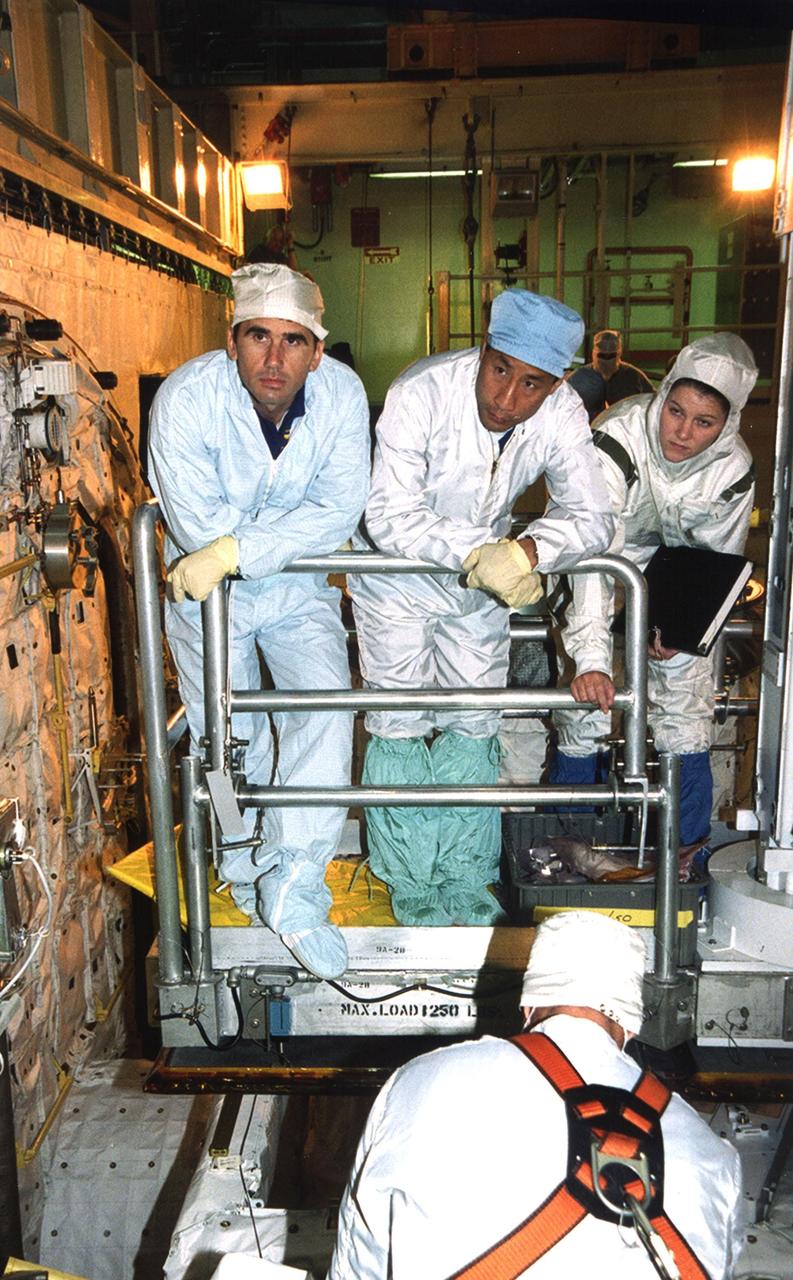
In Orbiter Processing Facility bay 3, STS-106 Mission Specialists Yuri I. Malenchenko (left) and Edward T. Lu (center) familiarize themselves with equipment in the payload bay of Space Shuttle orbiter Atlantis with the help of KSC employees as part of Crew Equipment Interface Test (CEIT) activities for their mission. The other crew members are Commander Terrence W. Wilcutt, Pilot Scott D. Altman, and Mission Specialists Daniel C. Burbank, Boris V. Morukov and Richard A. Mastracchio. Malenchenko and Morukov represent the Russian Aviation and Space Agency. On the 11-day mission, the seven-member crew will perform support tasks on orbit, transfer supplies and prepare the living quarters in the newly arrived Zvezda Service Module for the first long-duration crew, dubbed "Expedition One," which is due to arrive at the Station in late fall. STS-106 is scheduled to launch Sept. 8, 2000, at 8:31 a.m. EDT from Launch Pad 39B
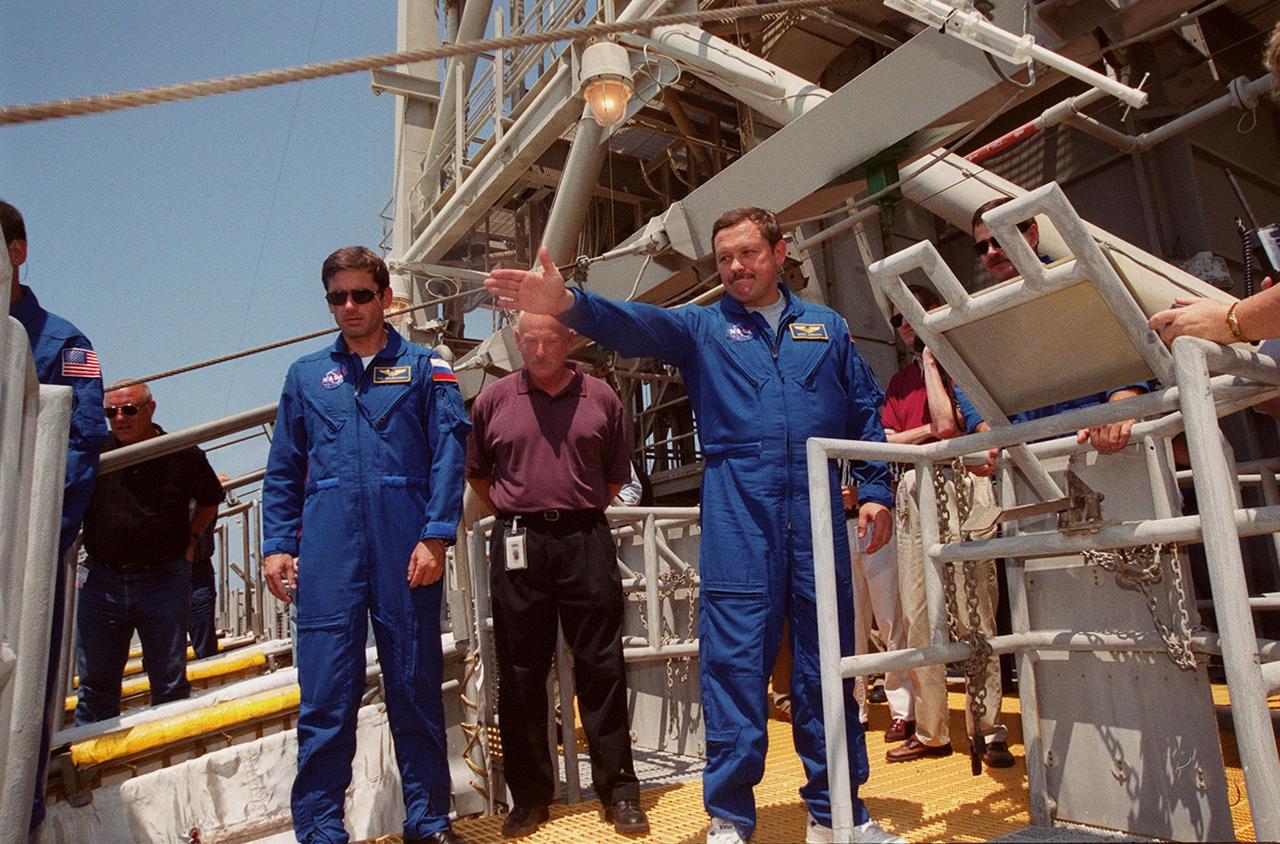
KENNEDY SPACE CENTER, Fla. -- STS-106 Mission Specialist Yuri I. Malenchenko, left, looks on after Boris V. Morukov releases a slide wire basket at the 195-foot level of Launch Pad 39-B. Malenchenko and Morukov are with the Russian Aviation and Space Agency. The flight crew were at Kennedy Space Center to take part in Terminal Countdown Demonstration Test (TCDT) activities. The TCDT provides the crew with emergency egress training and opportunities to inspect their mission payload in the orbiter’s payload bay. STS-106 is scheduled to launch Sept. 8, 2000, at 8:31 a.m. EDT from Launch Pad 39B. On the 11-day mission, the seven-member crew will perform support tasks on orbit, transfer supplies and prepare the living quarters in the newly arrived Zvezda Service Module. The first long-duration crew, dubbed “Expedition One,” is due to arrive at the Station in late fall
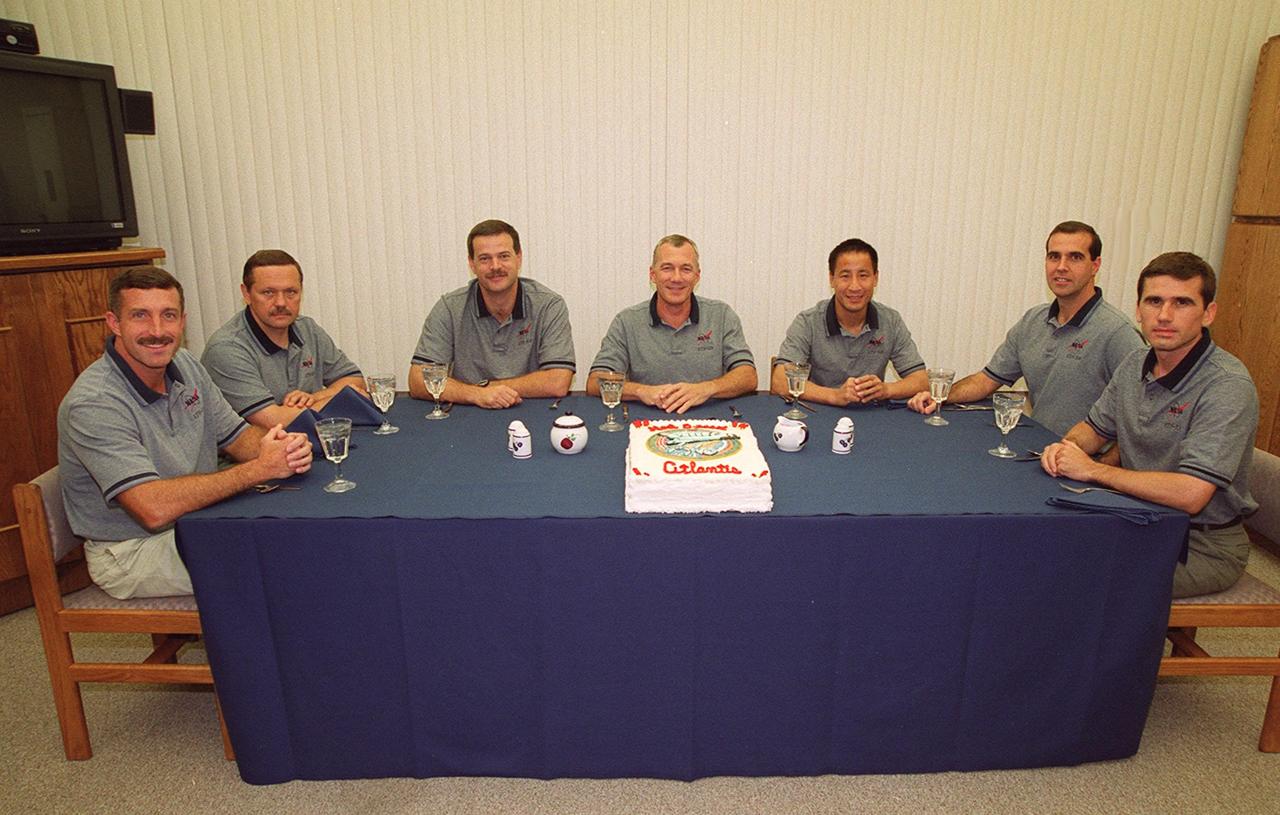
The STS-106 crew relax after breakfast and before suitup for launch. Seated (left to right) are Mission Specialists Daniel C. Burbank and Boris V. Morukov; Pilot Scott D. Altman; Commander Terrence W. Wilcutt; and Mission Specialists Edward T. Lu, Richard A. Mastracchio and Yuri I. Malenchenko. Morukov and Malenchenko are with the Russian Aviation and Space Agency. Launch of Space Shuttle Atlantis is set for 8:45 a.m. EDT on the fourth flight to the International Space Station. On the 11-day mission, the seven-member crew will perform support tasks on orbit, transfer supplies and prepare the living quarters in the newly arrived Zvezda Service Module. The first long-duration crew, dubbed “Expedition One,” is due to arrive at the Station in late fall
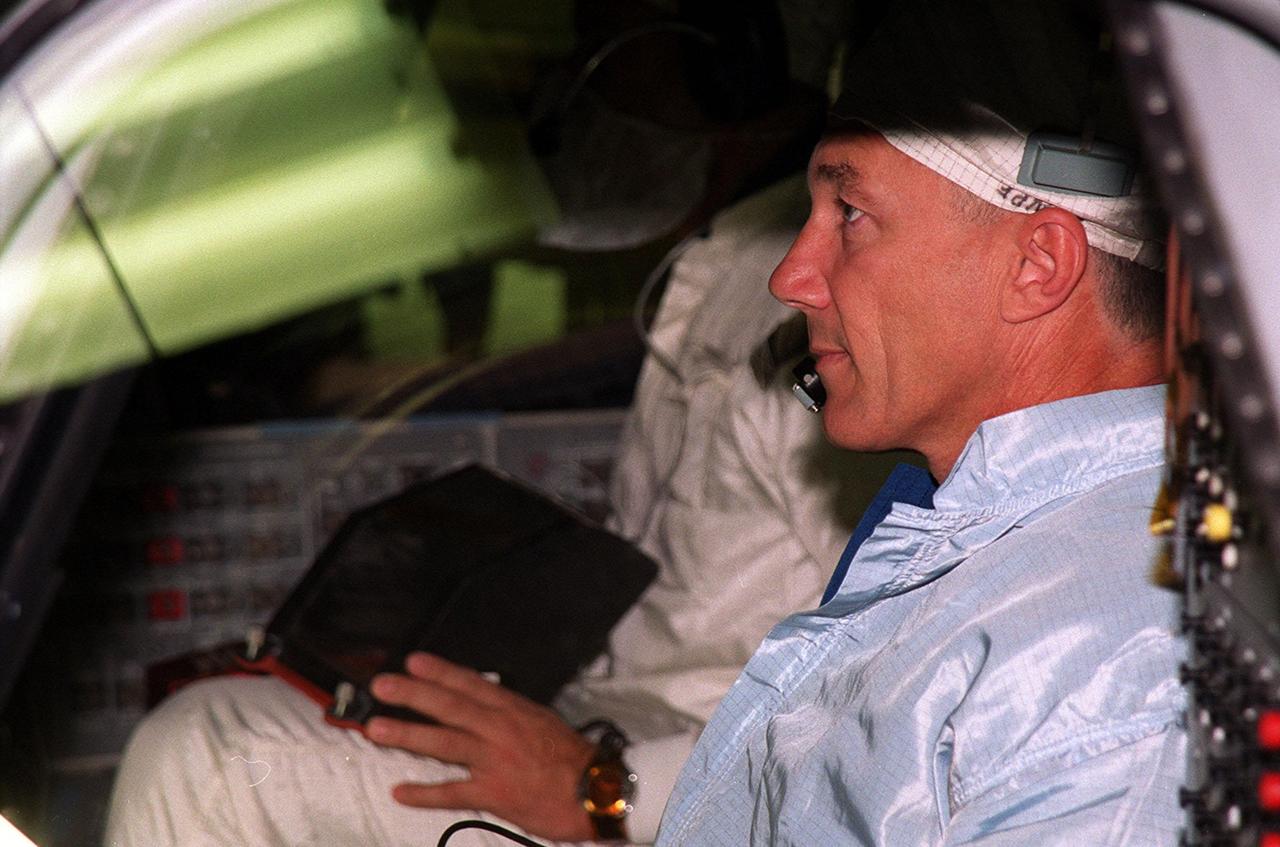
STS-106 Mission Commander Terrence W. Wilcutt checks out the windows in Space Shuttle orbiter Atlantis in Orbiter Processing Facility bay 3. He and the other crew members Pilot Scott D. Altman and Mission Specialists Edward T. Lu, Daniel C. Burbank, Yuri I. Malenchenko, Boris V. Morukov and Richard A. Mastracchio are taking part in Crew Equipment Interface Test (CEIT) activities. Malenchenko and Morukov represent the Russian Aviation and Space Agency. On the 11-day mission, the seven-member crew will perform support tasks on orbit, transfer supplies and prepare the living quarters in the newly arrived Zvezda Service Module for the first long-duration crew, dubbed "Expedition One," which is due to arrive at the Station in late fall. STS-106 is scheduled to launch Sept. 8, 2000, at 8:31 a.m. EDT from Launch Pad 39B
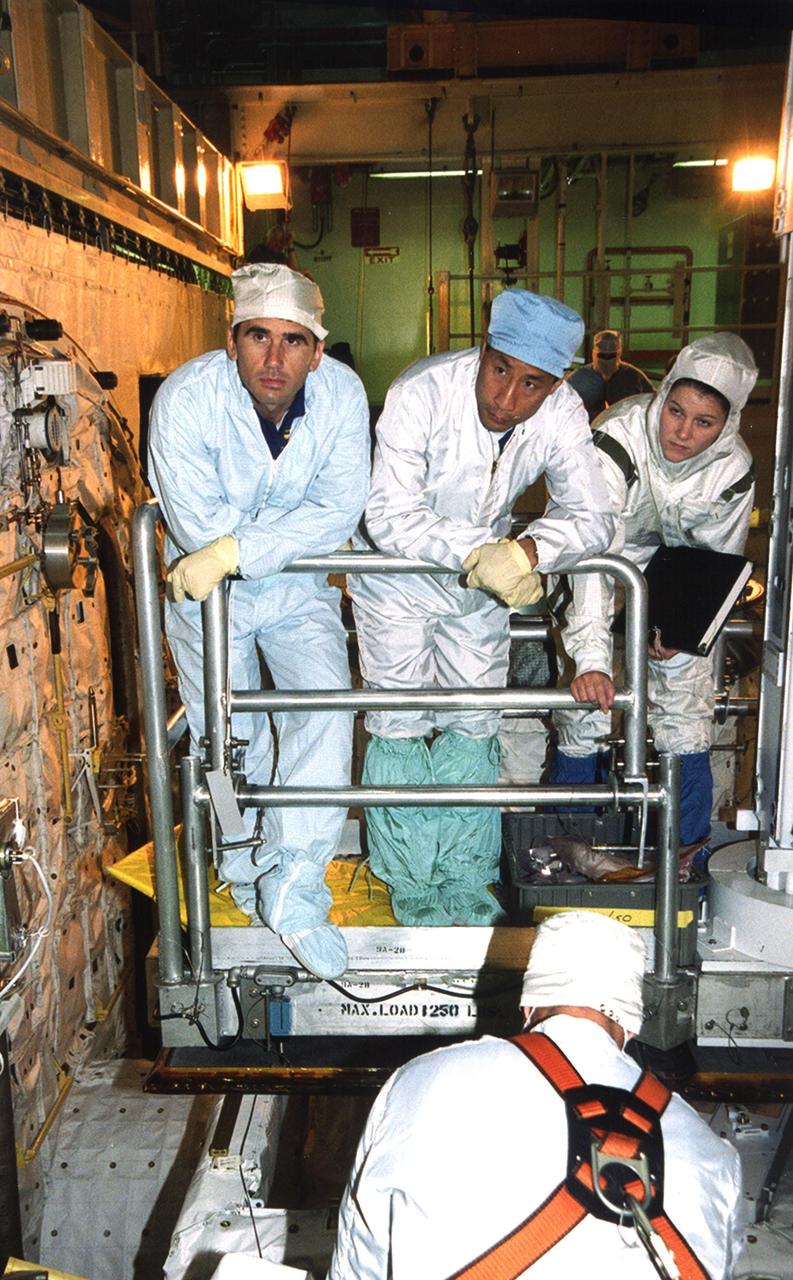
In Orbiter Processing Facility bay 3, STS-106 Mission Specialists Yuri I. Malenchenko (left) and Edward T. Lu (center) familiarize themselves with equipment in the payload bay of Space Shuttle orbiter Atlantis with the help of KSC employees as part of Crew Equipment Interface Test (CEIT) activities for their mission. The other crew members are Commander Terrence W. Wilcutt, Pilot Scott D. Altman, and Mission Specialists Daniel C. Burbank, Boris V. Morukov and Richard A. Mastracchio. Malenchenko and Morukov represent the Russian Aviation and Space Agency. On the 11-day mission, the seven-member crew will perform support tasks on orbit, transfer supplies and prepare the living quarters in the newly arrived Zvezda Service Module for the first long-duration crew, dubbed "Expedition One," which is due to arrive at the Station in late fall. STS-106 is scheduled to launch Sept. 8, 2000, at 8:31 a.m. EDT from Launch Pad 39B
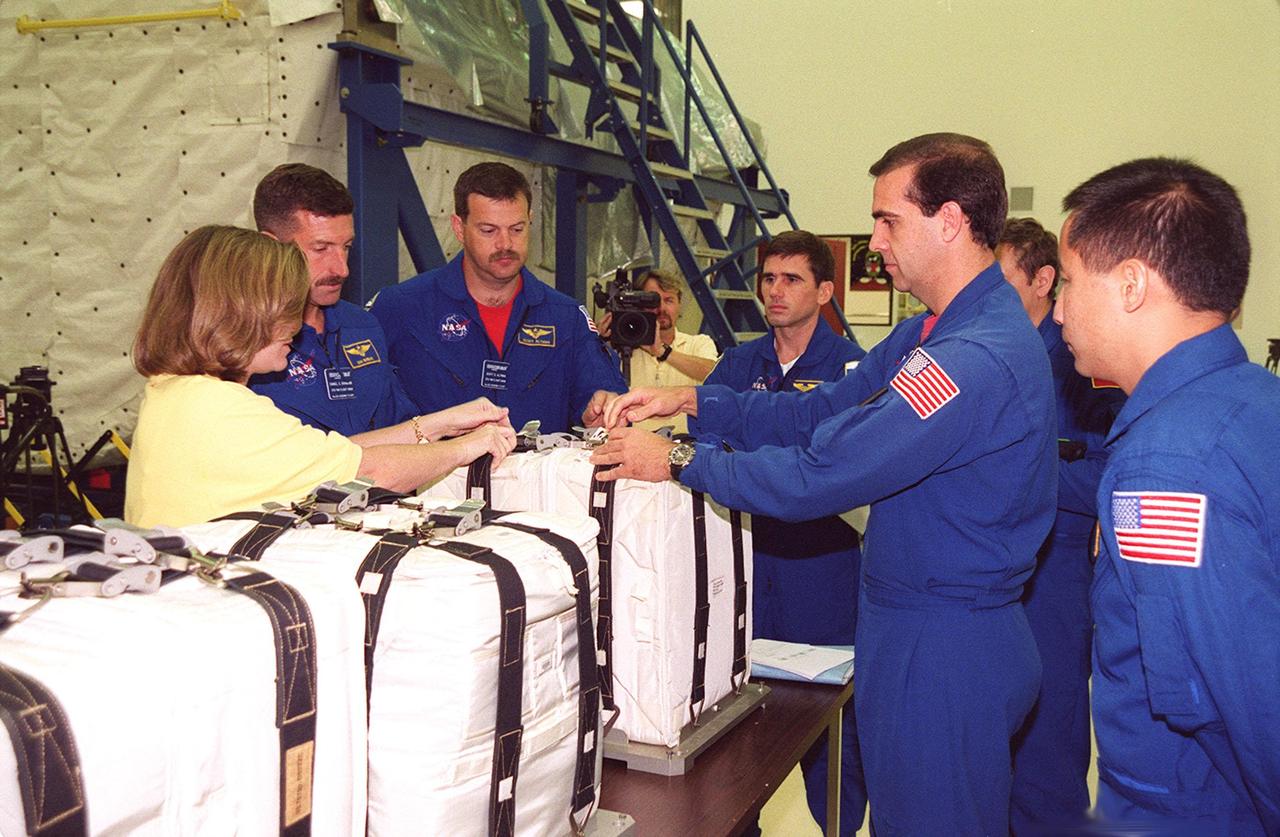
KENNEDY SPACE CENTER, FLA. -- At SPACEHAB members of the STS-106 crew check out equipment they will be using during their mission to the International Space Station. From left are (next to trainer) Mission Specialist Daniel C. Burbank, Pilot Scott D. Altman, and Mission Specialists Yuri I. Malenchenko, Richard A. Mastracchio and Edward T. Lu. Malenchenko and Morukov represent the Russian Aviation and Space Agency. STS-106 is scheduled to launch Sept. 8, 2000, at 8:31 a.m. EDT from Launch Pad 39B on an 11-day mission. The seven-member crew will prepare the Space Station for its first resident crew and begin outfitting the newly arrived Zvezda Service Module. They will perform support tasks on orbit, transfer supplies and prepare the Zvezda living quarters for the first long-duration crew, dubbed “Expedition One,” which is due to arrive at the Station in late fall.
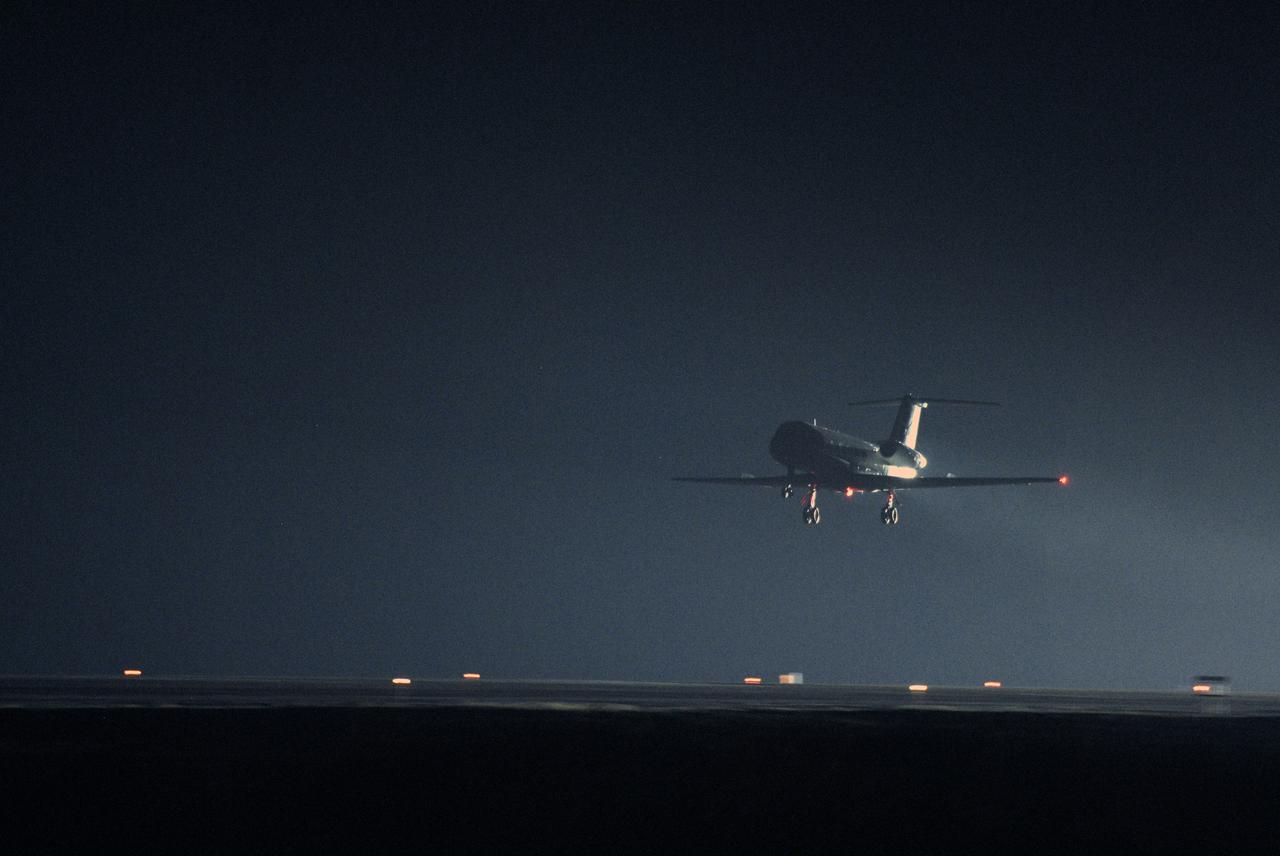
CAPE CANAVERAL, Fla. – A shuttle training aircraft drops for touchdown on the Shuttle Landing Facility runway at NASA's Kennedy Space Center in Florida. STS-119 Commander Lee Archambault and Pilot Tony Antonelli are practicing shuttle landings as part of the Terminal Countdown Demonstration Test activities. The TCDT includes equipment familiarization and a simulated launch countdown. The STA is a Grumman American Aviation-built Gulf Stream II jet that was modified to simulate a shuttle’s cockpit, motion and visual cues, and handling qualities. In flight, the aircraft duplicates the shuttle’s atmospheric descent trajectory from approximately 35,000 feet to landing. The crew of space shuttle Discovery is targeted to launch on the STS-119 mission Feb. 12. During Discovery's 14-day mission, the crew will install the S6 truss segment and solar arrays to the starboard side of the International Space Station, completing the station's truss, or backbone. Photo credit: NASA/Kim Shiflett
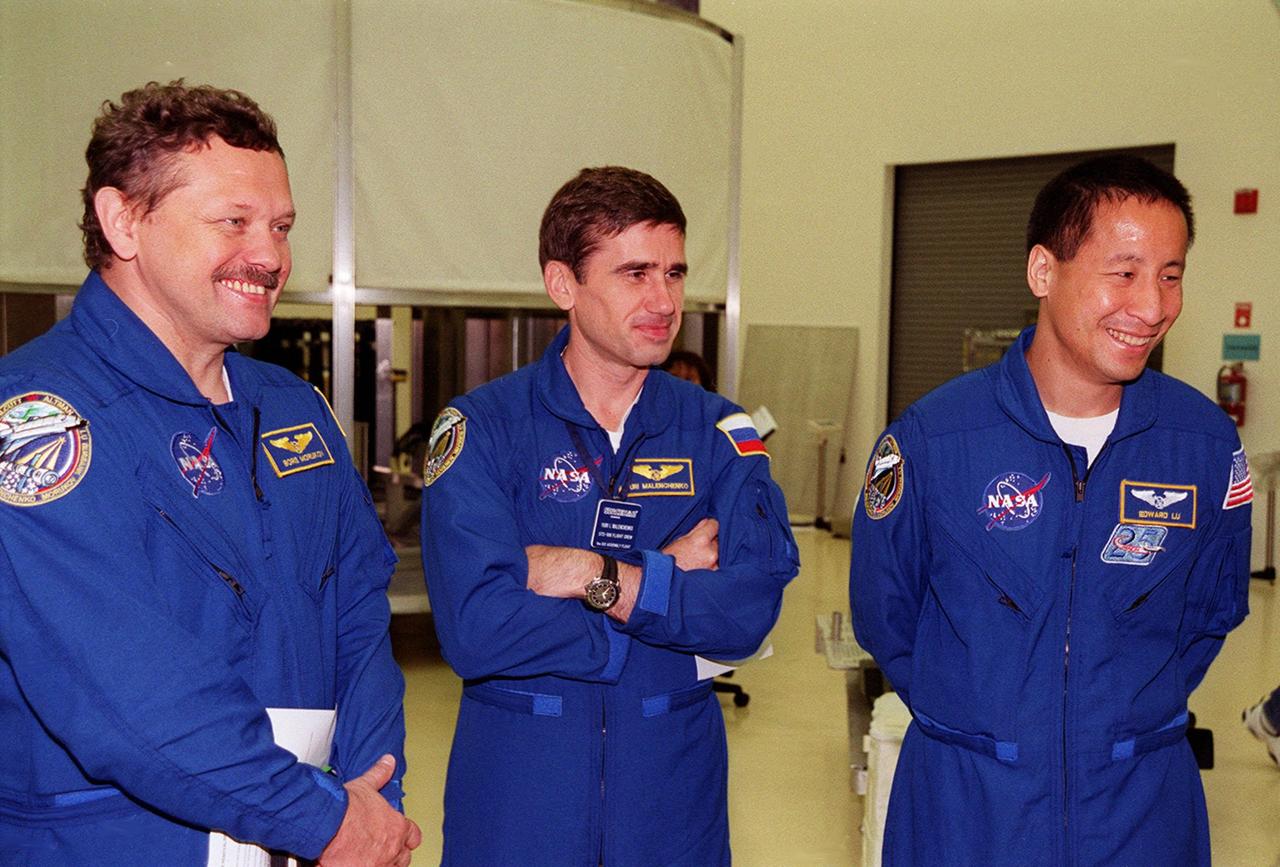
KENNEDY SPACE CENTER, FLA. -- Taking a break during Crew Equipment Interface Test activities at SPACEHAB are STS-106 Mission Specialists Boris V. Morukov, Yuri I. Malenchenko and Edward T. Lu. Malenchenko and Morukov represent the Russian Aviation and Space Agency. STS-106 is scheduled to launch Sept. 8, 2000, at 8:31 a.m. EDT from Launch Pad 39B on an 11-day mission to the International Space Station. The seven-member crew will prepare the Space Station for its first resident crew and begin outfitting the newly arrived Zvezda Service Module. They will perform support tasks on orbit, transfer supplies and prepare the Zvezda living quarters for the first long-duration crew, dubbed “Expedition One,” which is due to arrive at the Station in late fall
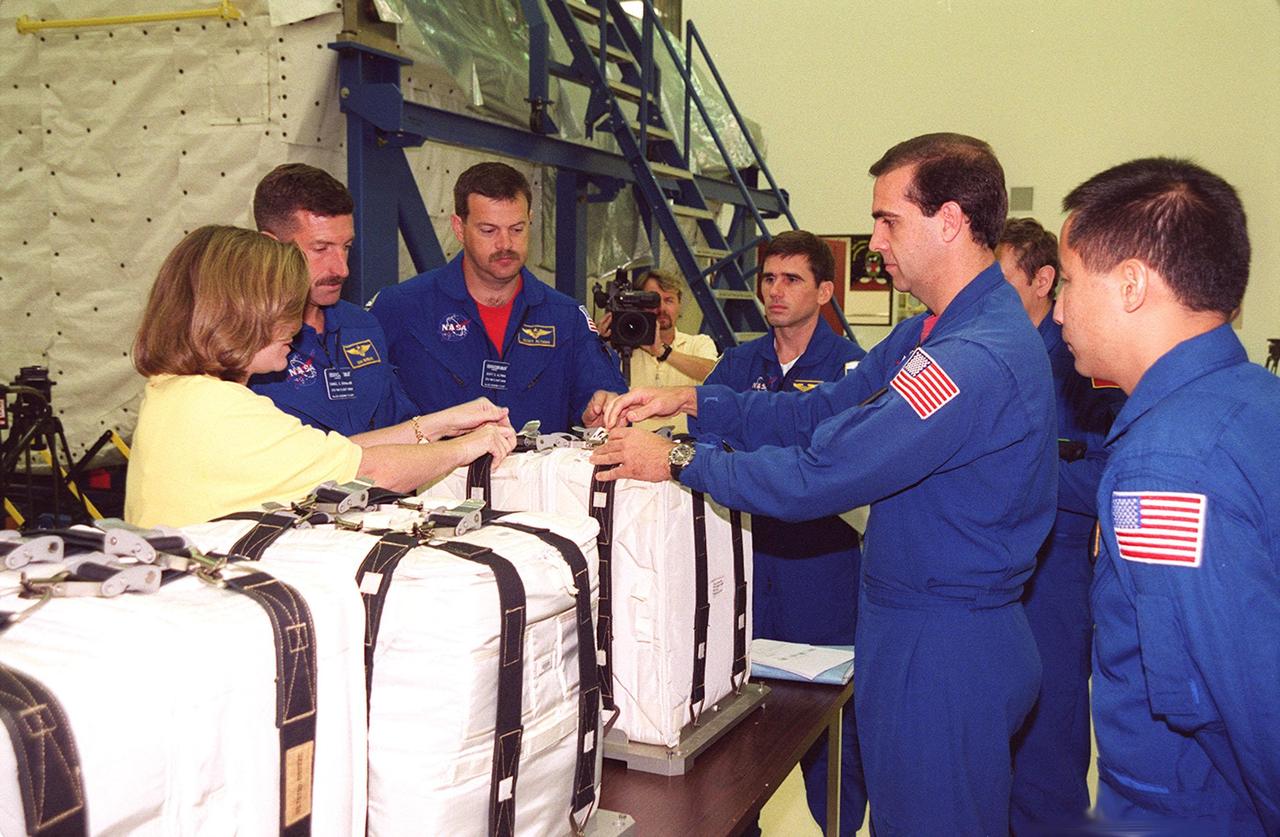
KENNEDY SPACE CENTER, FLA. -- At SPACEHAB members of the STS-106 crew check out equipment they will be using during their mission to the International Space Station. From left are (next to trainer) Mission Specialist Daniel C. Burbank, Pilot Scott D. Altman, and Mission Specialists Yuri I. Malenchenko, Richard A. Mastracchio and Edward T. Lu. Malenchenko and Morukov represent the Russian Aviation and Space Agency. STS-106 is scheduled to launch Sept. 8, 2000, at 8:31 a.m. EDT from Launch Pad 39B on an 11-day mission. The seven-member crew will prepare the Space Station for its first resident crew and begin outfitting the newly arrived Zvezda Service Module. They will perform support tasks on orbit, transfer supplies and prepare the Zvezda living quarters for the first long-duration crew, dubbed “Expedition One,” which is due to arrive at the Station in late fall.
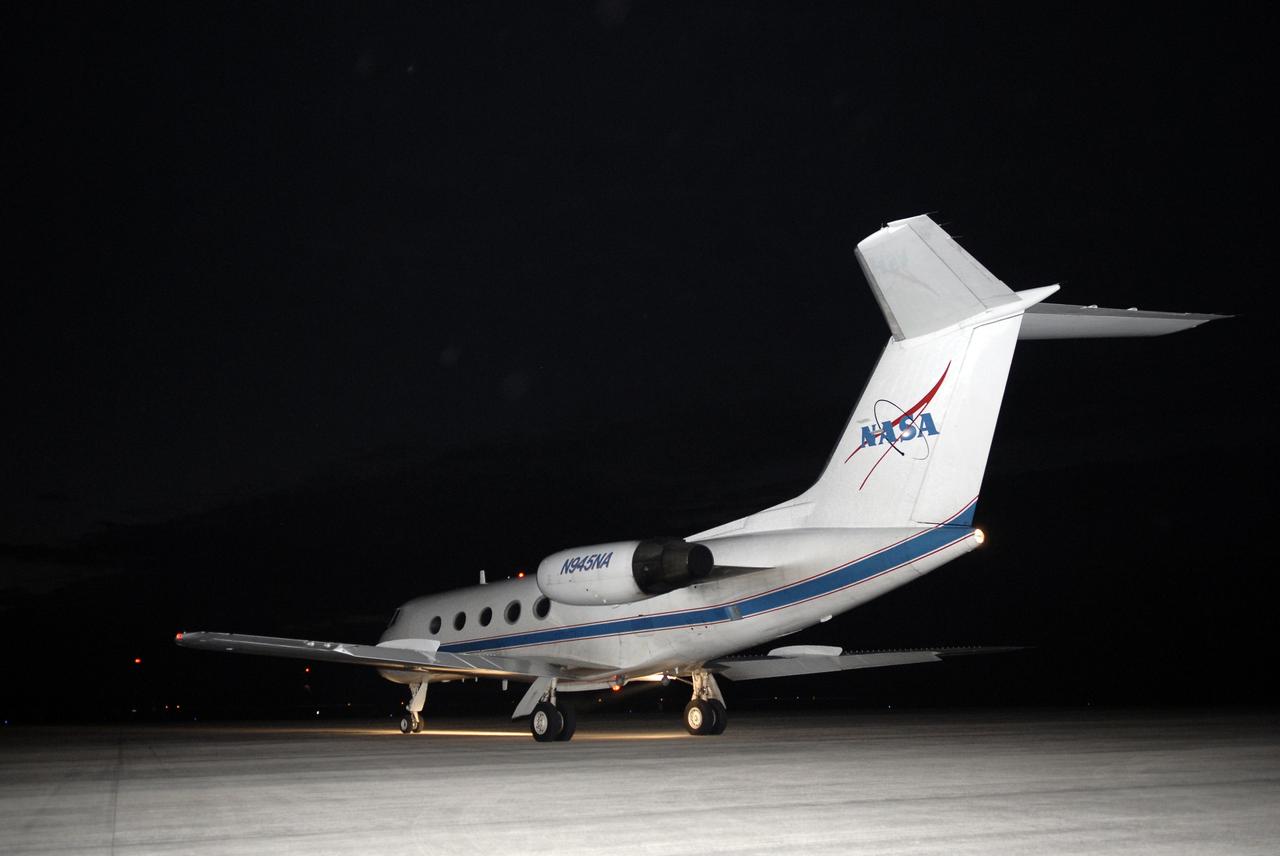
CAPE CANAVERAL, Fla. – On the Shuttle Landing Facility at NASA's Kennedy Space Center in Florida, a shuttle training aircraft taxis toward the runway for takeoff. STS-119 Commander Lee Archambault and Pilot Tony Antonelli are practicing shuttle landings as part of the Terminal Countdown Demonstration Test activities. The TCDT includes equipment familiarization and a simulated launch countdown. The STA is a Grumman American Aviation-built Gulf Stream II jet that was modified to simulate a shuttle’s cockpit, motion and visual cues, and handling qualities. In flight, the aircraft duplicates the shuttle’s atmospheric descent trajectory from approximately 35,000 feet to landing. The crew of space shuttle Discovery is targeted to launch on the STS-119 mission Feb. 12. During Discovery's 14-day mission, the crew will install the S6 truss segment and solar arrays to the starboard side of the International Space Station, completing the station's truss, or backbone. Photo credit: NASA/Kim Shiflett
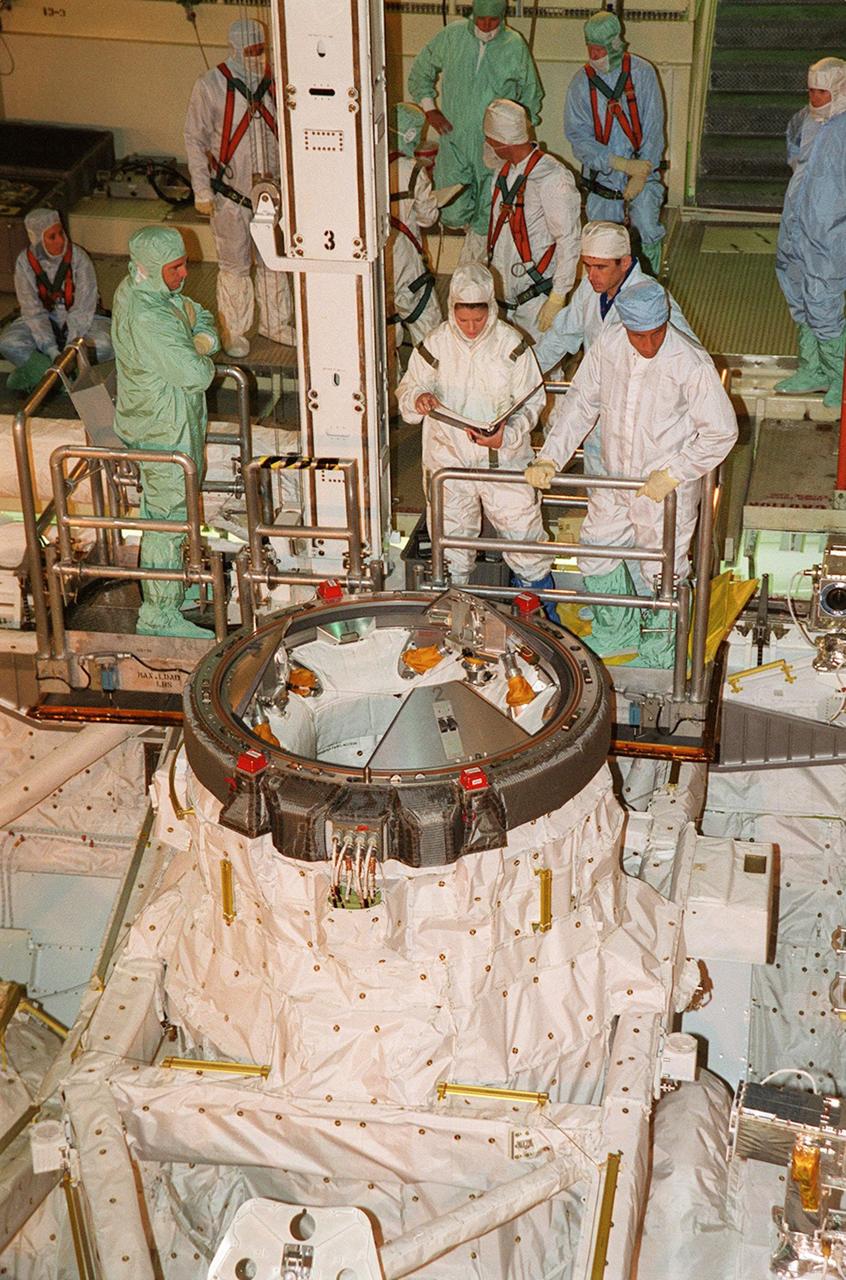
In Orbiter Processing Facility bay 3, the STS-106 crew familiarizes themselves with equipment in the payload bay of Space Shuttle orbiter Atlantis with the help of KSC employees as part of Crew Equipment Interface Test (CEIT) activities for their mission. The STS-106 crew members are Commander Terrence W. Wilcutt, Pilot Scott D. Altman, and Mission Specialists Edward T. Lu, Daniel C. Burbank, Yuri I. Malenchenko, Boris V. Morukov and Richard A. Mastracchio. Malenchenko and Morukov represent the Russian Aviation and Space Agency. On the 11-day mission, the seven-member crew will perform support tasks on orbit, transfer supplies and prepare the living quarters in the newly arrived Zvezda Service Module for the first long-duration crew, dubbed "Expedition One," which is due to arrive at the Station in late fall. STS-106 is scheduled to launch Sept. 8, 2000, at 8:31 a.m. EDT from Launch Pad 39B
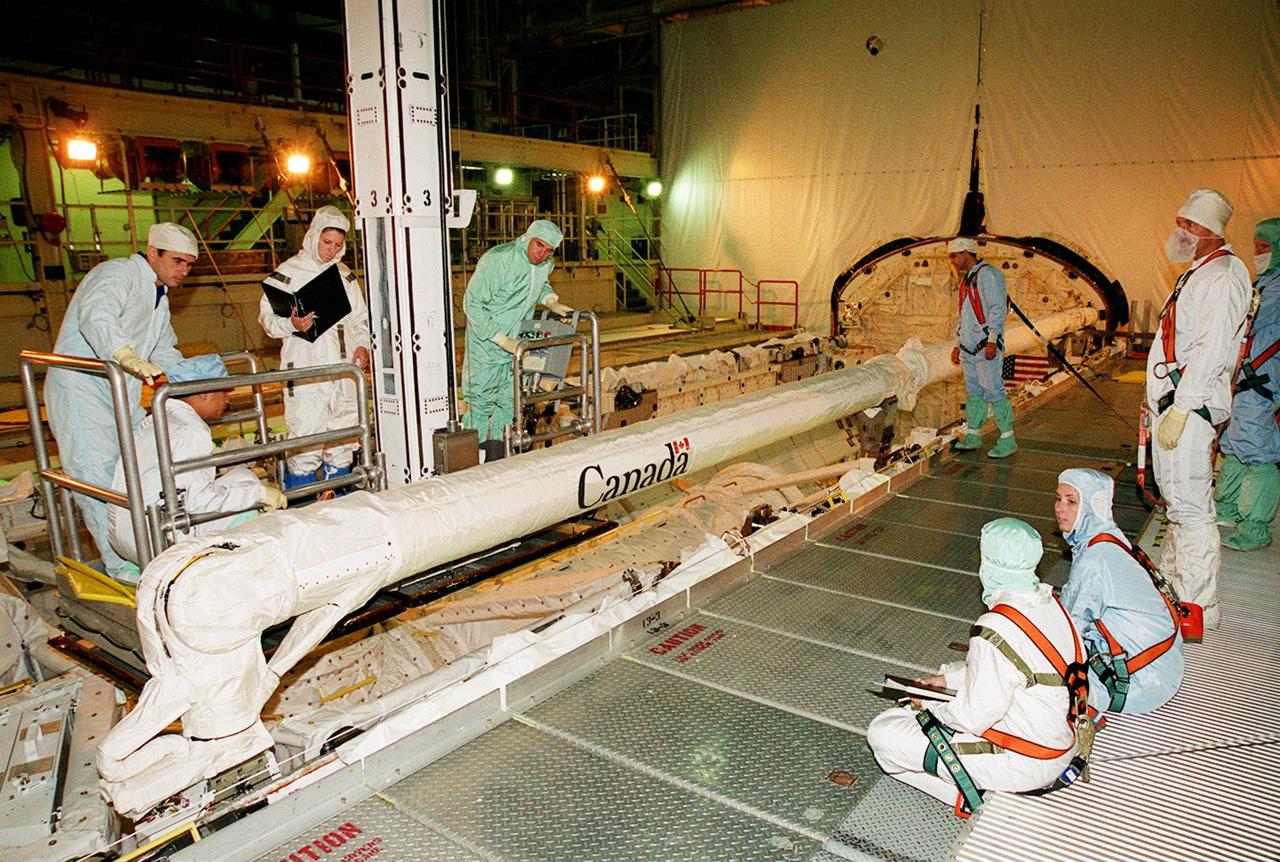
In Orbiter Processing Facility bay 3, the STS-106 crew familiarizes themselves with the payload bay of Space Shuttle orbiter Atlantis with the help of KSC employees as part of Crew Equipment Interface Test (CEIT) activities for their mission. The STS-106 crew members are Commander Terrence W. Wilcutt, Pilot Scott D. Altman, and Mission Specialists Edward T. Lu, Daniel C. Burbank, Yuri I. Malenchenko, Boris V. Morukov and Richard A. Mastracchio. Malenchenko and Morukov represent the Russian Aviation and Space Agency. On the 11-day mission, the seven-member crew will perform support tasks on orbit, transfer supplies and prepare the living quarters in the newly arrived Zvezda Service Module for the first long-duration crew, dubbed "Expedition One," which is due to arrive at the Station in late fall. STS-106 is scheduled to launch Sept. 8, 2000, at 8:31 a.m. EDT from Launch Pad 39B
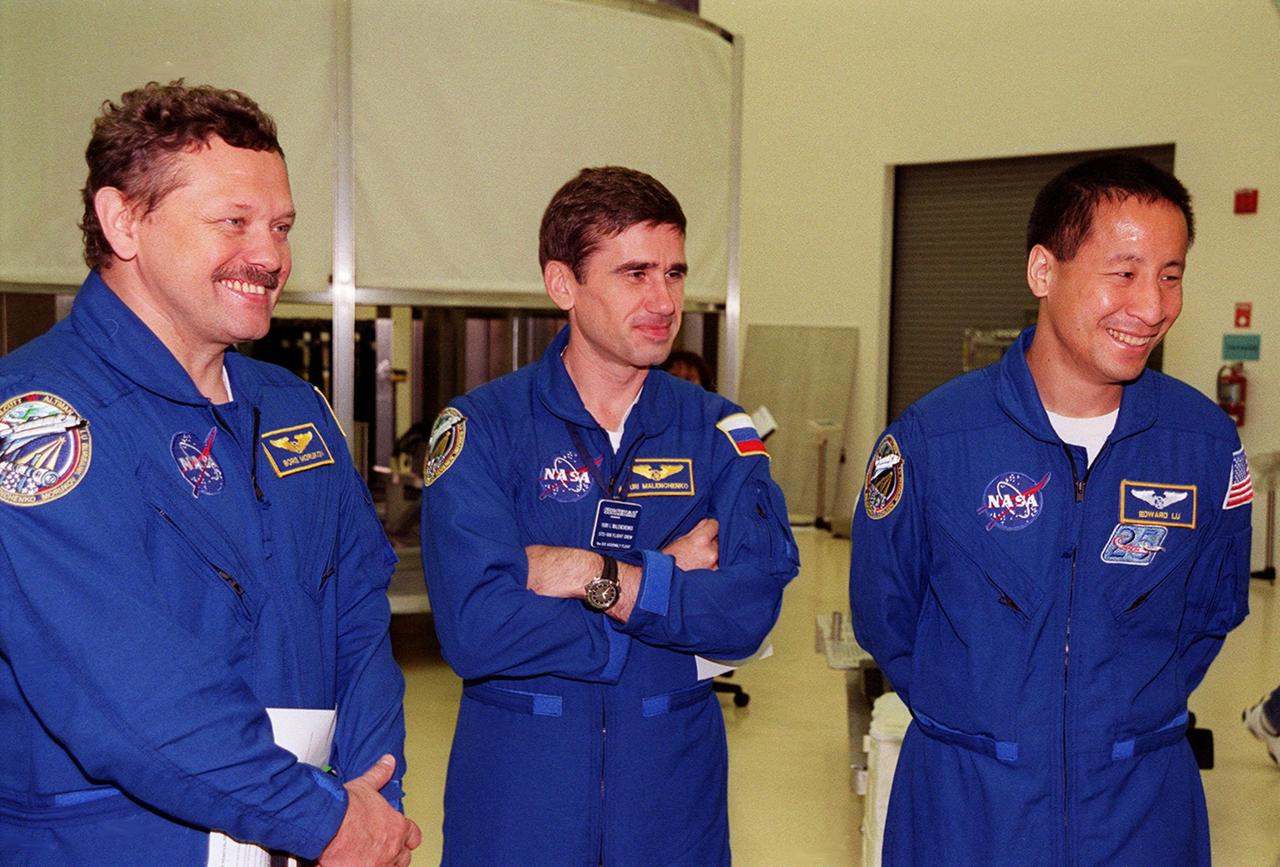
KENNEDY SPACE CENTER, FLA. -- Taking a break during Crew Equipment Interface Test activities at SPACEHAB are STS-106 Mission Specialists Boris V. Morukov, Yuri I. Malenchenko and Edward T. Lu. Malenchenko and Morukov represent the Russian Aviation and Space Agency. STS-106 is scheduled to launch Sept. 8, 2000, at 8:31 a.m. EDT from Launch Pad 39B on an 11-day mission to the International Space Station. The seven-member crew will prepare the Space Station for its first resident crew and begin outfitting the newly arrived Zvezda Service Module. They will perform support tasks on orbit, transfer supplies and prepare the Zvezda living quarters for the first long-duration crew, dubbed “Expedition One,” which is due to arrive at the Station in late fall
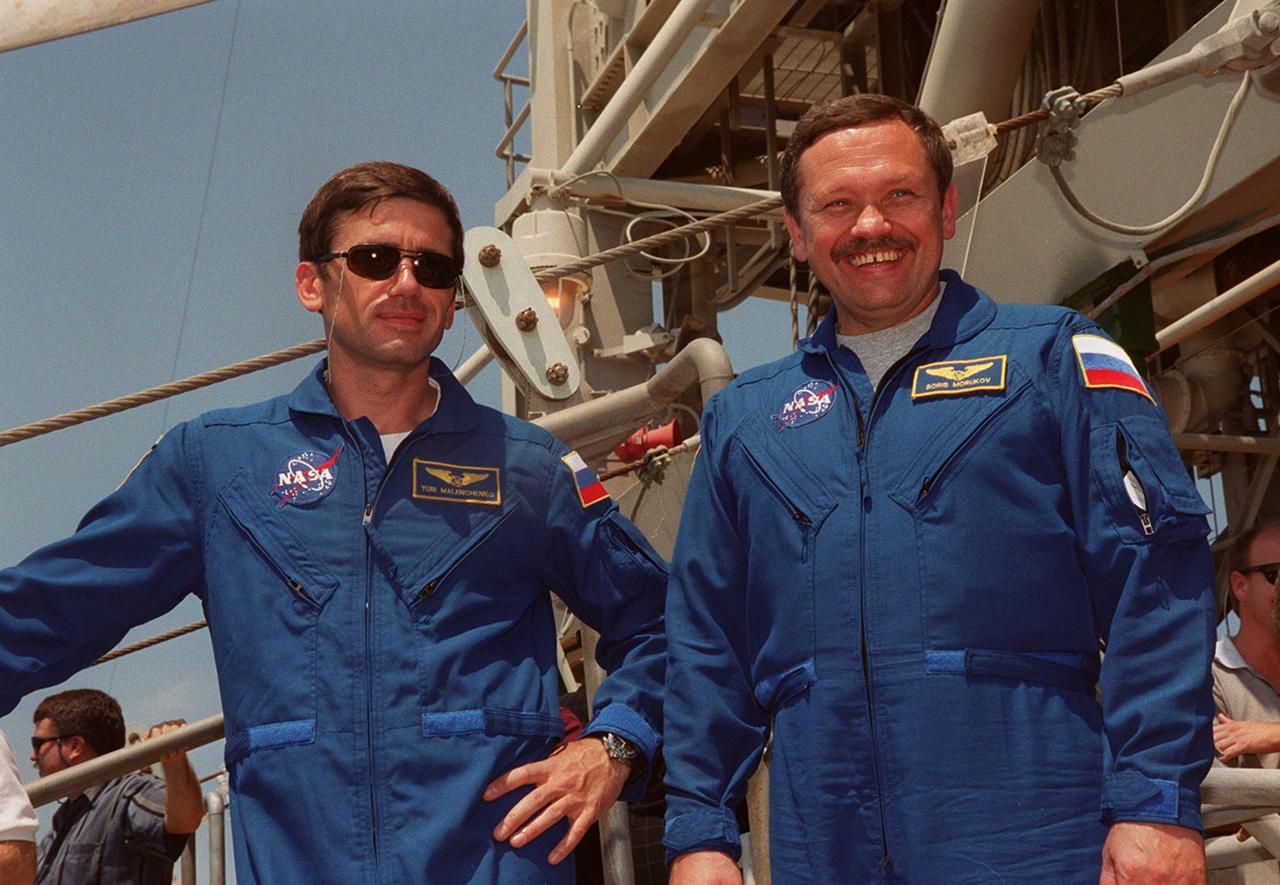
KENNEDY SPACE CENTER, Fla. -- STS-106 Mission Specialists Yuri I. Malenchenko, left, and Boris V. Morukov pause at the 195-foot level of Launch Pad 39-B. Malenchenko and Morukov are with the Russian Aviation and Space Agency. The flight crew were at Kennedy Space Center to take part in Terminal Countdown Demonstration Test (TCDT) activities. The TCDT provides the crew with emergency egress training and opportunities to inspect their mission payload in the orbiter’s payload bay. STS-106 is scheduled to launch Sept. 8, 2000, at 8:31 a.m. EDT from Launch Pad 39B. On the 11-day mission, the seven-member crew will perform support tasks on orbit, transfer supplies and prepare the living quarters in the newly arrived Zvezda Service Module. The first long-duration crew, dubbed “Expedition One,” is due to arrive at the Station in late fall
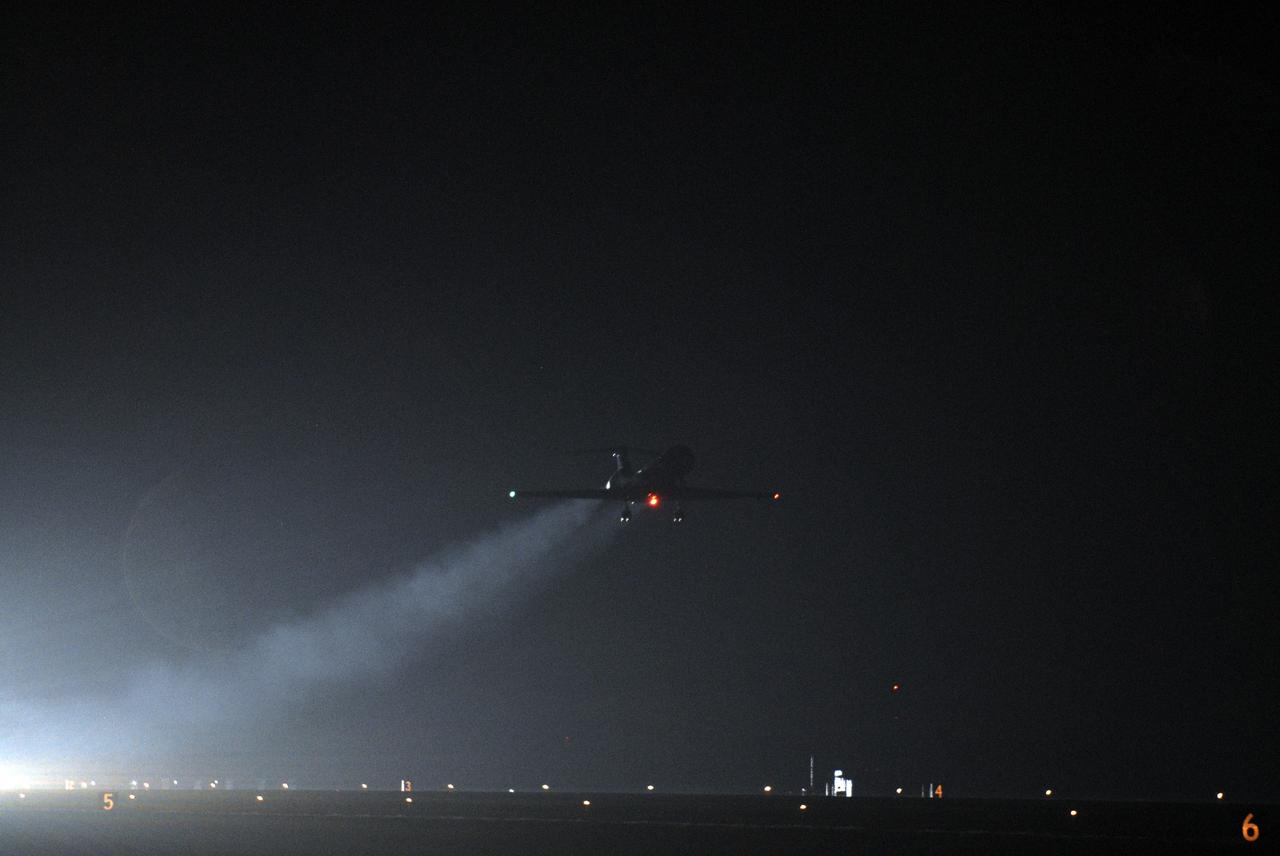
CAPE CANAVERAL, Fla. – From the Shuttle Landing Facility at NASA's Kennedy Space Center in Florida, a shuttle training aircraft takes off into the night sky. STS-119 Commander Lee Archambault and Pilot Tony Antonelli are practicing shuttle landings as part of the Terminal Countdown Demonstration Test activities. The TCDT includes equipment familiarization and a simulated launch countdown. The STA is a Grumman American Aviation-built Gulf Stream II jet that was modified to simulate a shuttle’s cockpit, motion and visual cues, and handling qualities. In flight, the aircraft duplicates the shuttle’s atmospheric descent trajectory from approximately 35,000 feet to landing. The crew of space shuttle Discovery is targeted to launch on the STS-119 mission Feb. 12. During Discovery's 14-day mission, the crew will install the S6 truss segment and solar arrays to the starboard side of the International Space Station, completing the station's truss, or backbone. Photo credit: NASA/Kim Shiflett
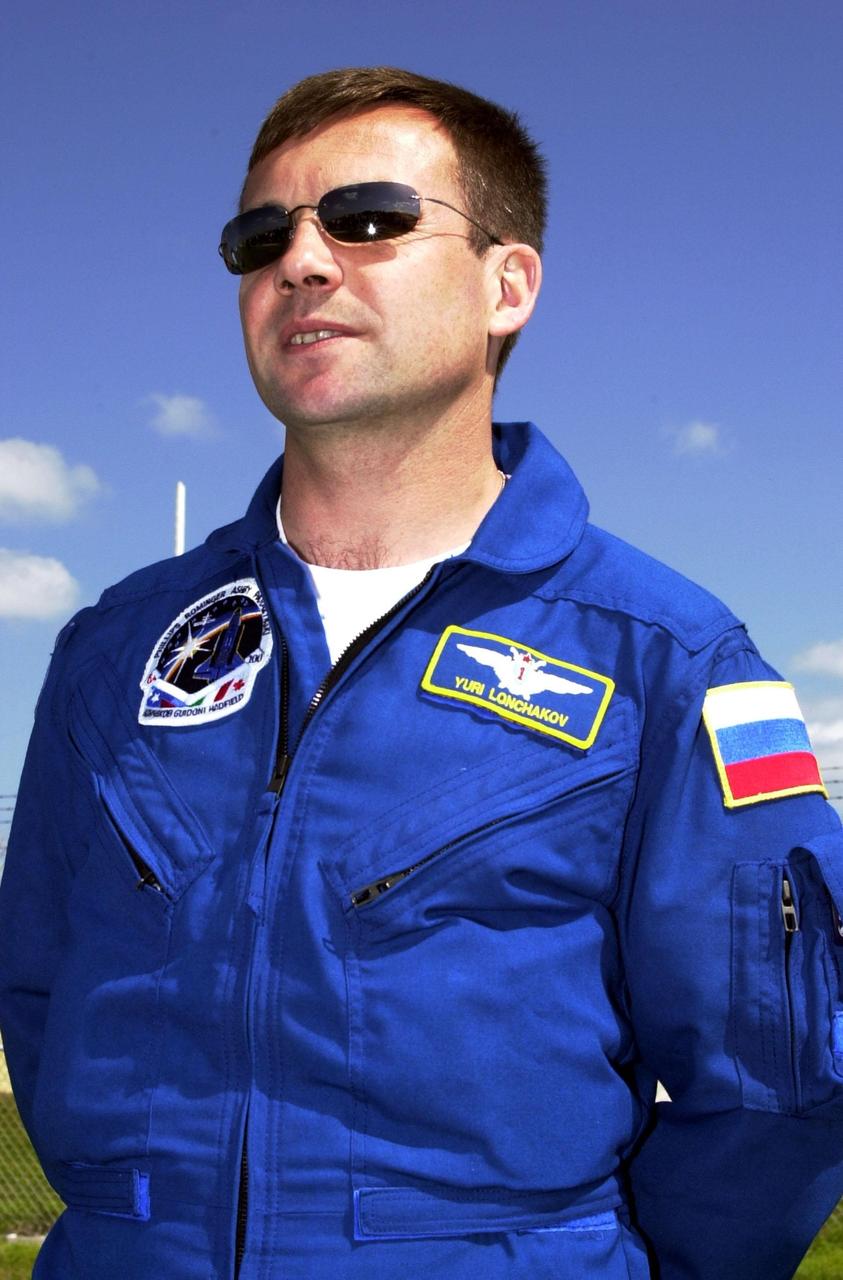
KENNEDY SPACE CENTER, FLA. -- STS-100 Mission Specialist Yuri V. Lonchakov stands near Launch Pad 39A to greet family and friends. Lonchakov is with the Russian Aviation and Space Agency. The crew is at KSC to complete final flight plan reviews in anticipation of launch. The 11-day mission to the International Space Station will deliver and integrate the Spacelab Logistics Pallet/Launch Deployment Assembly, which includes the Space Station Remote Manipulator system and the UHF Antenna, and the Multi-Purpose Logistics Module Raffaello. The mission includes two planned spacewalks for installation of the SSRMS. The mission is also the inaugural flight of the MPLM Raffaello, carrying resupply stowage racks and resupply/return stowage platforms. Liftoff on mission STS-100 is scheduled at 2:41 p.m. EDT April 19
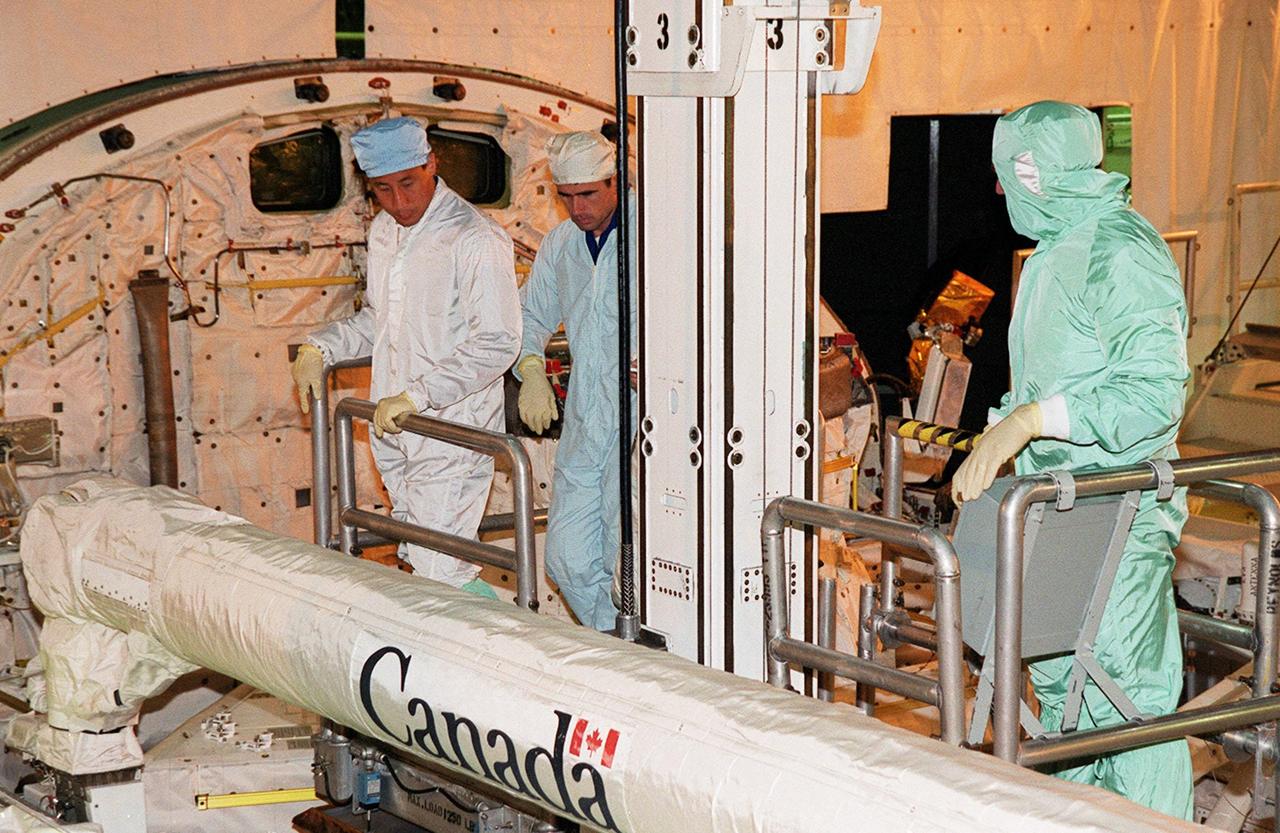
In Orbiter Processing Facility bay 3, STS-106 Mission Specialists Edward T. Lu (left) and Yuri I. Malenchenko (center) familiarize themselves with equipment in the payload bay of Space Shuttle orbiter Atlantis with the help of KSC employees as part of Crew Equipment Interface Test (CEIT) activities for their mission. The other crew members are Commander Terrence W. Wilcutt, Pilot Scott D. Altman, and Mission Specialists Daniel C. Burbank, Boris V. Morukov and Richard A. Mastracchio. Malenchenko and Morukov represent the Russian Aviation and Space Agency. On the 11-day mission, the seven-member crew will perform support tasks on orbit, transfer supplies and prepare the living quarters in the newly arrived Zvezda Service Module for the first long-duration crew, dubbed "Expedition One," which is due to arrive at the Station in late fall. STS-106 is scheduled to launch Sept. 8, 2000, at 8:31 a.m. EDT from Launch Pad 39B
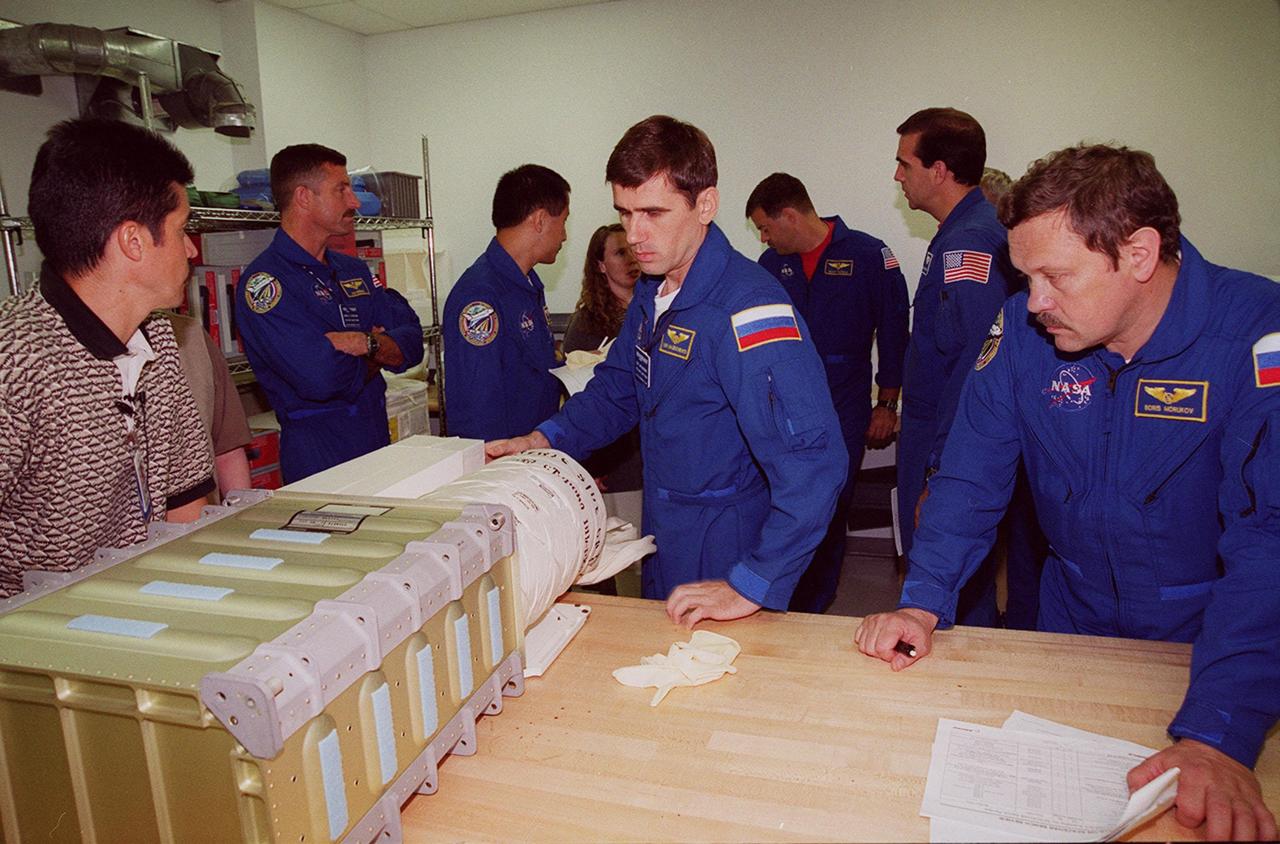
KENNEDY SPACE CENTER, FLA. -- At SPACEHAB members of the STS-106 crew check out equipment they will be using during their mission to the International Space Station. Starting second from left, they are Mission Specialists Daniel C. Burbank, Edward T. Lu, and Yuri I. Malenchenkov; Pilot Scott D. Altman, and Mission Specialists Richard A. Mastracchio and Boris V. Morukov. Not seen is Commander Terrence W. Wilcutt. Malenchenko and Morukov represent the Russian Aviation and Space Agency. The crew is taking part in Crew Equipment Interface Test activities at KSC. On the 11-day mission, the seven-member crew will perform support tasks on orbit, transfer supplies and prepare the living quarters in the newly arrived Zvezda Service Module for the first long-duration crew, dubbed “Expedition One,” which is due to arrive at the Station in late fall. STS-106 is scheduled to launch Sept. 8, 2000, at 8:31 a.m. EDT from Launch Pad 39B
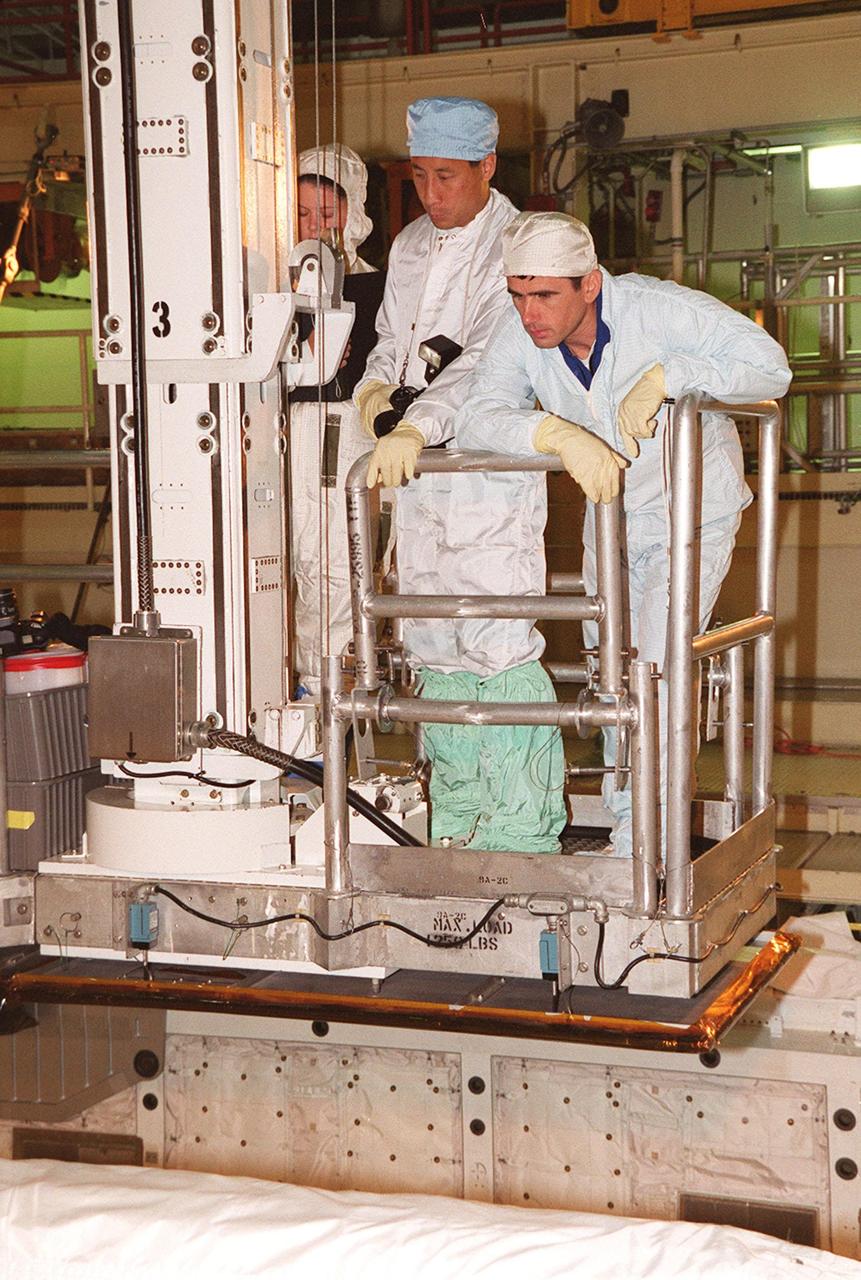
In Orbiter Processing Facility bay 3, STS-106 Mission Specialists Edward T. Lu (center) and Yuri I. Malenchenko (right) familiarize themselves with equipment in the payload bay of Space Shuttle orbiter Atlantis with the help of KSC employees as part of Crew Equipment Interface Test (CEIT) activities for their mission. The other crew members are Commander Terrence W. Wilcutt, Pilot Scott D. Altman, and Mission Specialists Daniel C. Burbank, Boris V. Morukov and Richard A. Mastracchio. Malenchenko and Morukov represent the Russian Aviation and Space Agency. On the 11-day mission, the seven-member crew will perform support tasks on orbit, transfer supplies and prepare the living quarters in the newly arrived Zvezda Service Module for the first long-duration crew, dubbed "Expedition One," which is due to arrive at the Station in late fall. STS-106 is scheduled to launch Sept. 8, 2000, at 8:31 a.m. EDT from Launch Pad 39B

October 13, 2003. Baikonur Cosmodrome, Kazakhstan. The prime and backup crews for Saturday's launch of the Soyuz TMA-3 spacecraft from the Baikonur Cosmodrome in Kazakhstan to the International Space Station receive a briefing from a Cosmodrome official prior to a final inspection of the capsule in the complex' integration facility. The prime crew consists of Expedition 8 ISS Commander and NASA Science Officer Mike Foale (far left), Expedition 8 Soyuz Commander and ISS Flight Engineer Alexander Kaleri (second from the left) and European Space Agency Astronaut Pedro Duque of Spain (third from the left), who is flying to the ISS for just over a week under a commercial contract between ESA and the Russian Aviation and Space Agency. Foale and Kaleri will spend almost 200 days on the ISS. Photo Credit"NASA/Bill Ingalls"

In Orbiter Processing Facility bay 3, members of the STS-106 crew familiarize themselves with equipment in the payload bay of Space Shuttle orbiter Atlantis with the help of KSC employees as part of Crew Equipment Interface Test (CEIT) activities for their mission. The STS-106 crew members are Commander Terrence W. Wilcutt, Pilot Scott D. Altman, and Mission Specialists Edward T. Lu, Daniel C. Burbank, Yuri I. Malenchenko, Boris V. Morukov and Richard A. Mastracchio. Malenchenko and Morukov represent the Russian Aviation and Space Agency. On the 11-day mission, the seven-member crew will perform support tasks on orbit, transfer supplies and prepare the living quarters in the newly arrived Zvezda Service Module for the first long-duration crew, dubbed "Expedition One," which is due to arrive at the Station in late fall. STS-106 is scheduled to launch Sept. 8, 2000, at 8:31 a.m. EDT from Launch Pad 39B
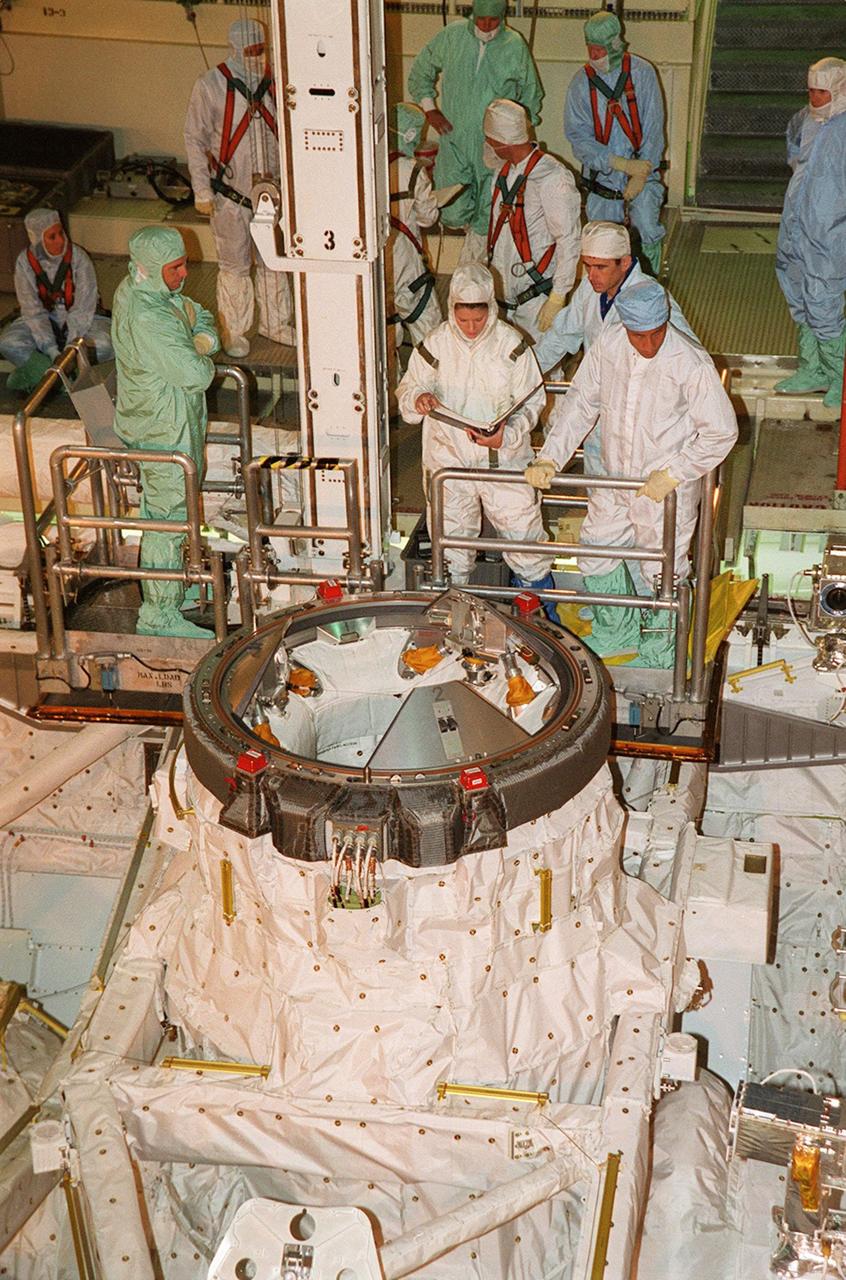
In Orbiter Processing Facility bay 3, the STS-106 crew familiarizes themselves with equipment in the payload bay of Space Shuttle orbiter Atlantis with the help of KSC employees as part of Crew Equipment Interface Test (CEIT) activities for their mission. The STS-106 crew members are Commander Terrence W. Wilcutt, Pilot Scott D. Altman, and Mission Specialists Edward T. Lu, Daniel C. Burbank, Yuri I. Malenchenko, Boris V. Morukov and Richard A. Mastracchio. Malenchenko and Morukov represent the Russian Aviation and Space Agency. On the 11-day mission, the seven-member crew will perform support tasks on orbit, transfer supplies and prepare the living quarters in the newly arrived Zvezda Service Module for the first long-duration crew, dubbed "Expedition One," which is due to arrive at the Station in late fall. STS-106 is scheduled to launch Sept. 8, 2000, at 8:31 a.m. EDT from Launch Pad 39B
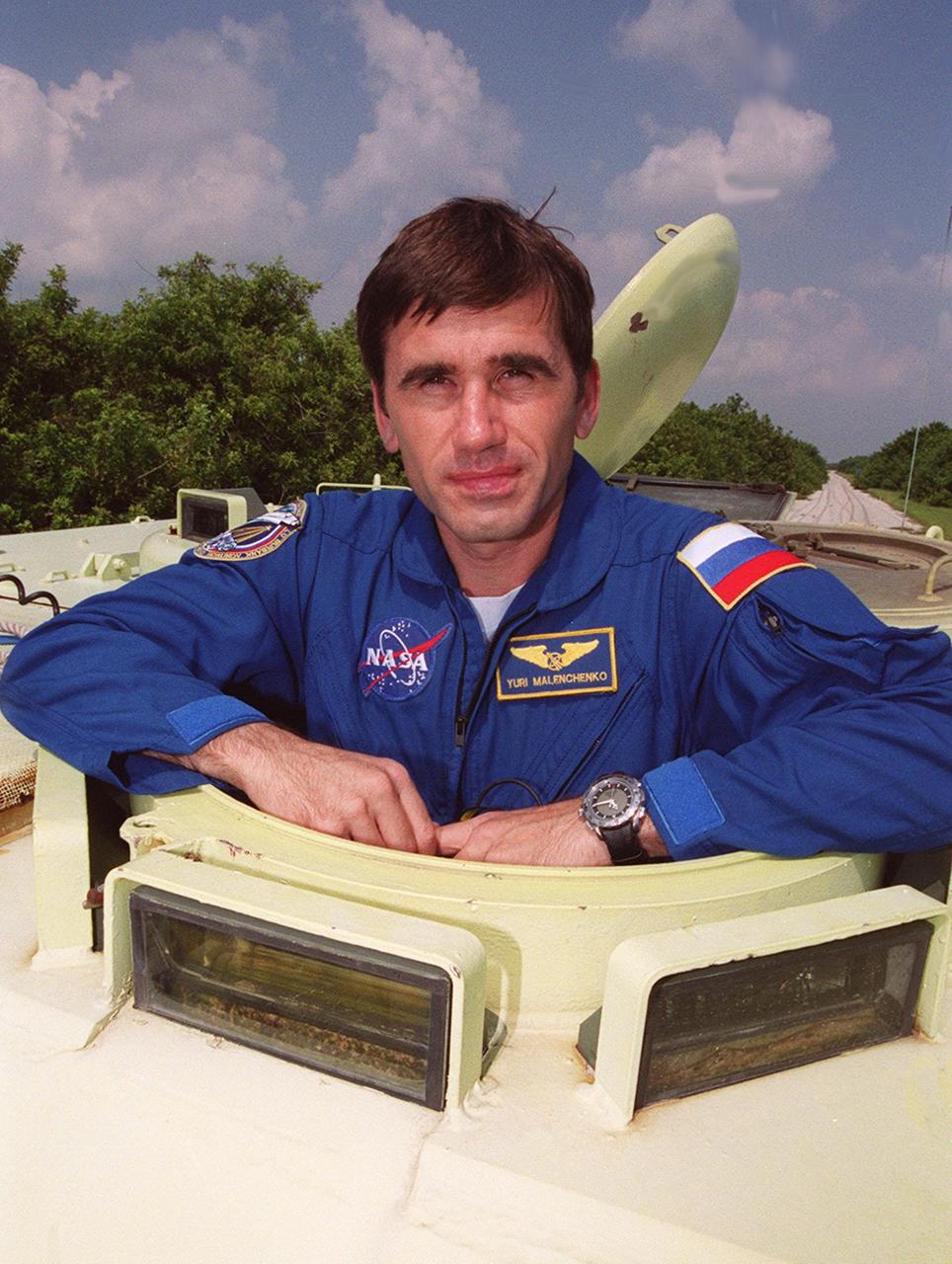
STS-106 Mission Specialist Yuri I. Malenchenko, who is with the Russian Aviation and Space Agency, is ready to practice driving the M113, an armored personnel carrier, that is part of emergency egress training duringTerminal Countdown Demonstration Test (TCDT) activities. The tracked vehicle could be used by the crew in the event of an emergency at the pad during which the crew must make a quick exit from the area. The TCDT also provides simulated countdown exercises and opportunities to inspect the mission payloads in the orbiter’s payload bay. STS-106 is scheduled to launch Sept. 8, 2000, at 8:31 a.m. EDT from Launch Pad 39B. On the 11-day mission, the seven-member crew will perform support tasks on orbit, transfer supplies and prepare the living quarters in the newly arrived Zvezda Service Module. The first long-duration crew, dubbed “Expedition One,” is due to arrive at the Station in late fall
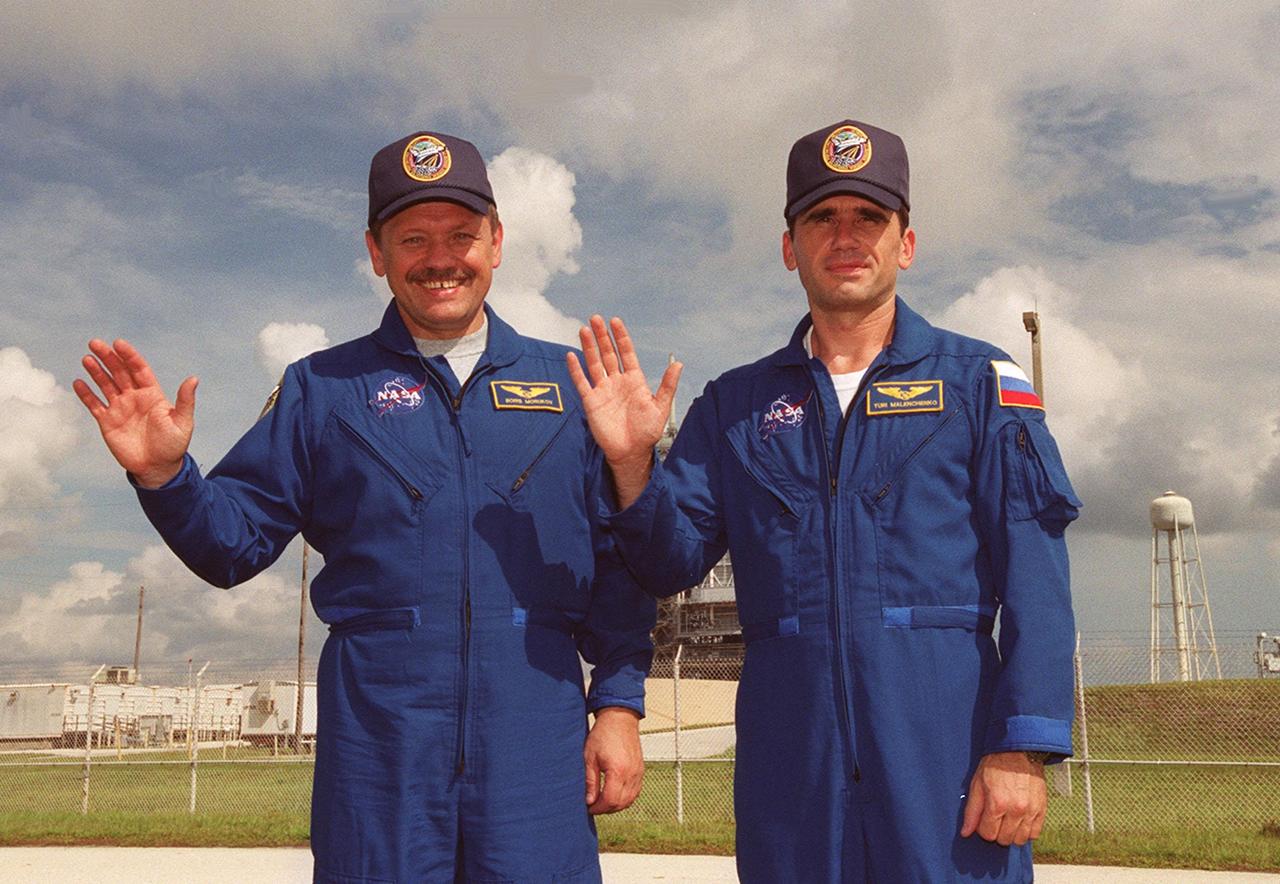
Russian cosmonauts Boris V. Morukov and Yuri I. Malenchenko wave for the photo while standing in front of Launch Pad 39B where Space Shuttle Atlantis awaits launch. The cosmonauts are with the Russian Aviation and Space Agency. STS-106 is scheduled to launch Sept. 8, 2000, at 8:45 a.m. EDT from Launch Pad 39B. On the 11-day mission, the seven-member crew will perform support tasks on orbit, transfer supplies and prepare the living quarters in the newly arrived Zvezda Service Module. Malenchenko will perform a six-and-a-half-hour space walk, along with Mission Specialist Edward T. Lu, during the mission. Landing is targeted for Sept. 19 at 4:59 a.m. EDT at the KSC Shuttle Landing Facility
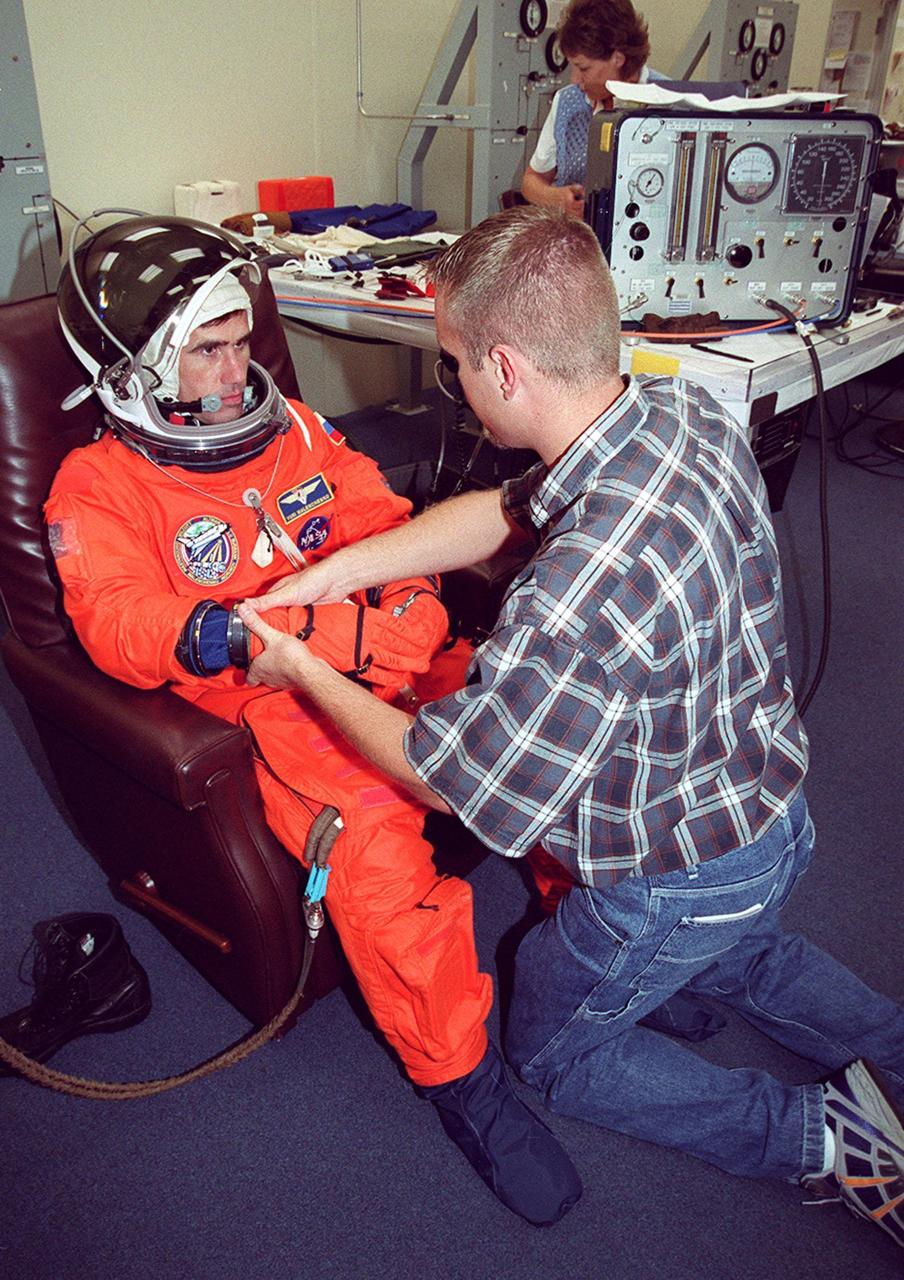
STS-106 Mission Specialist Yuri I. Malenchenko, with the Russian Aviation and Space Agency, has his launch and entry suit checked as part of fit check during Terminal Countdown Demonstration Test activities (TCDT). The TCDT also provides emergency egress training, simulated countdown exercises and opportunities for the crew to inspect the mission payloads in the orbiter’s payload bay. STS-106 is scheduled to launch Sept. 8, 2000, at 8:31 a.m. EDT from Launch Pad 39B. On the 11-day mission, the seven-member crew will perform support tasks on orbit, transfer supplies and prepare the living quarters in the newly arrived Zvezda Service Module. The first long-duration crew, dubbed “Expedition One,” is due to arrive at the Station in late fall
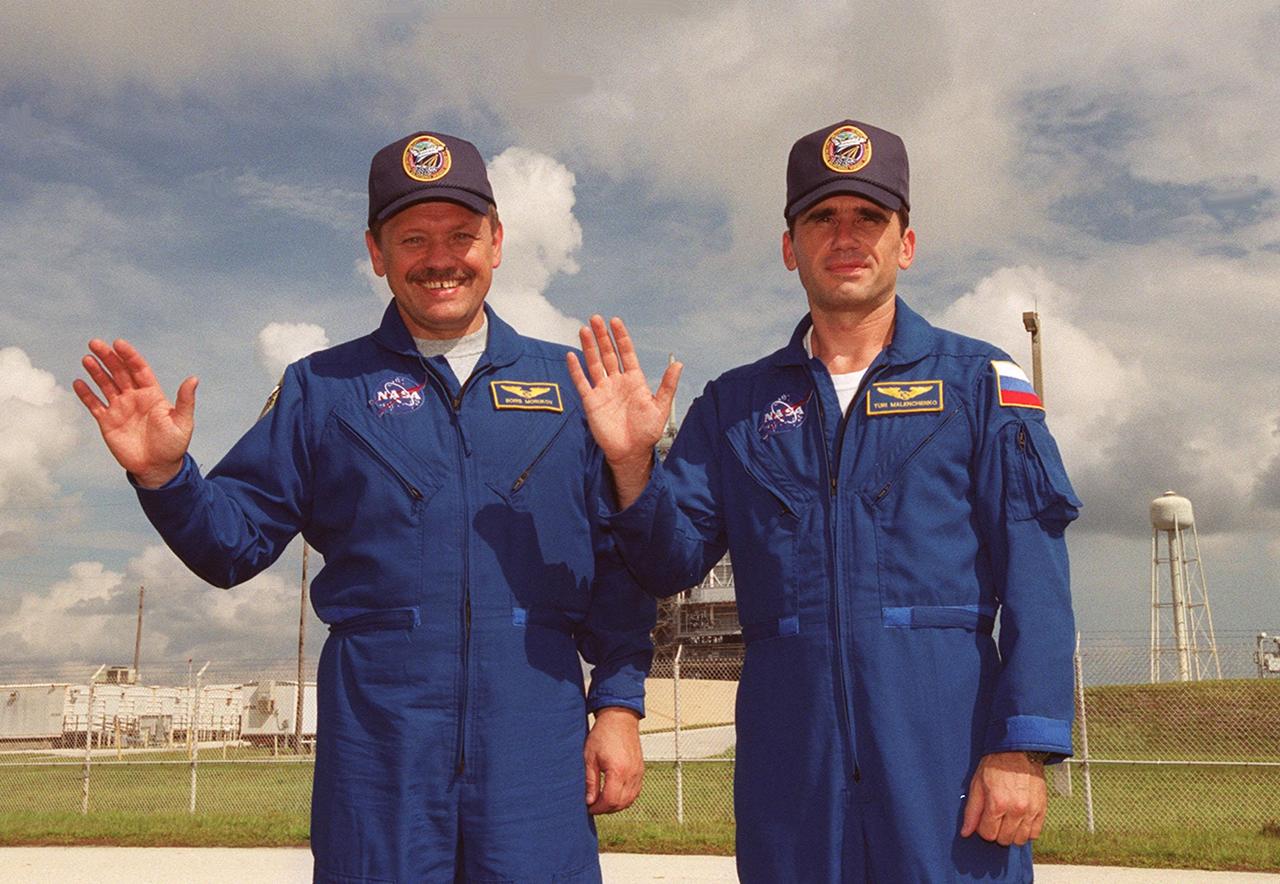
Russian cosmonauts Boris V. Morukov and Yuri I. Malenchenko wave for the photo while standing in front of Launch Pad 39B where Space Shuttle Atlantis awaits launch. The cosmonauts are with the Russian Aviation and Space Agency. STS-106 is scheduled to launch Sept. 8, 2000, at 8:45 a.m. EDT from Launch Pad 39B. On the 11-day mission, the seven-member crew will perform support tasks on orbit, transfer supplies and prepare the living quarters in the newly arrived Zvezda Service Module. Malenchenko will perform a six-and-a-half-hour space walk, along with Mission Specialist Edward T. Lu, during the mission. Landing is targeted for Sept. 19 at 4:59 a.m. EDT at the KSC Shuttle Landing Facility
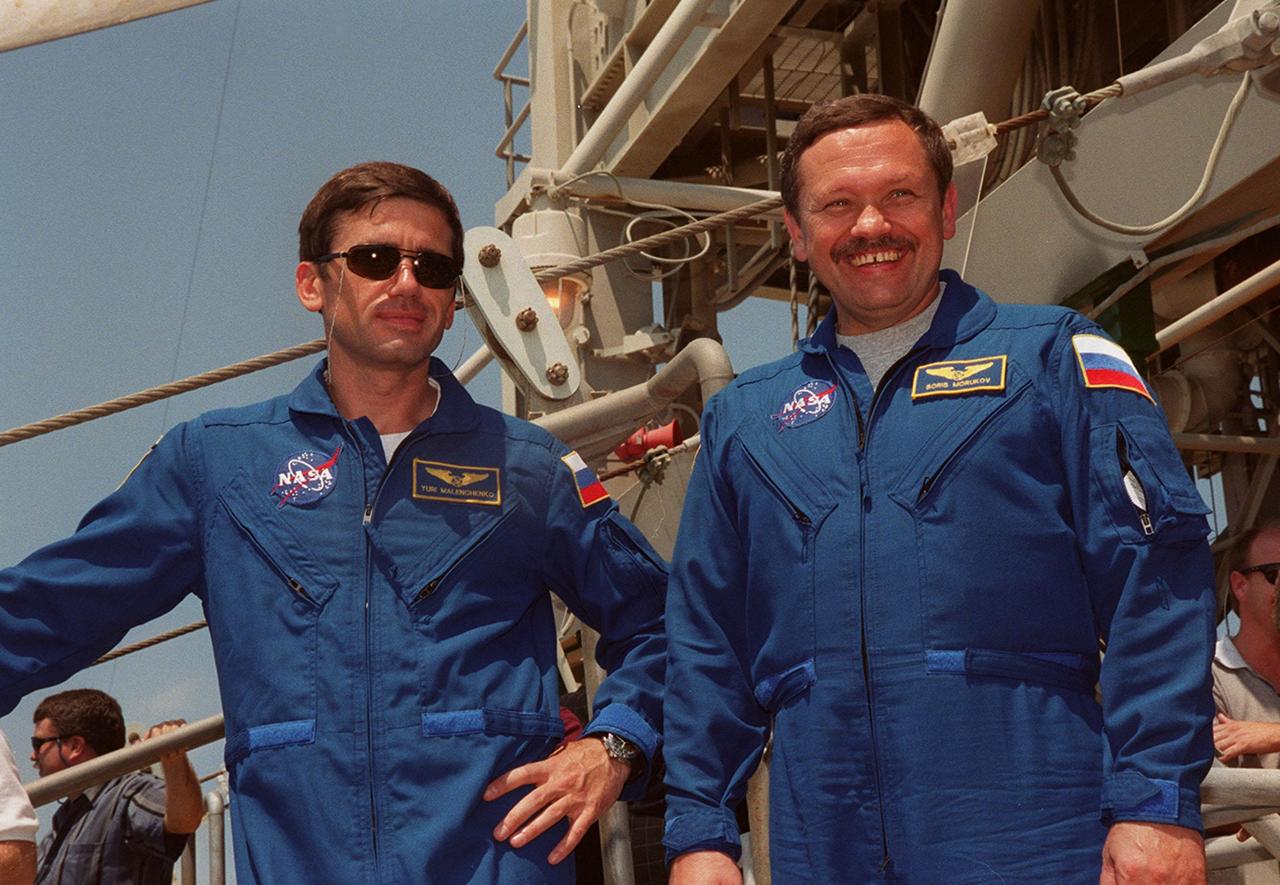
KENNEDY SPACE CENTER, Fla. -- STS-106 Mission Specialists Yuri I. Malenchenko, left, and Boris V. Morukov pause at the 195-foot level of Launch Pad 39-B. Malenchenko and Morukov are with the Russian Aviation and Space Agency. The flight crew were at Kennedy Space Center to take part in Terminal Countdown Demonstration Test (TCDT) activities. The TCDT provides the crew with emergency egress training and opportunities to inspect their mission payload in the orbiter’s payload bay. STS-106 is scheduled to launch Sept. 8, 2000, at 8:31 a.m. EDT from Launch Pad 39B. On the 11-day mission, the seven-member crew will perform support tasks on orbit, transfer supplies and prepare the living quarters in the newly arrived Zvezda Service Module. The first long-duration crew, dubbed “Expedition One,” is due to arrive at the Station in late fall
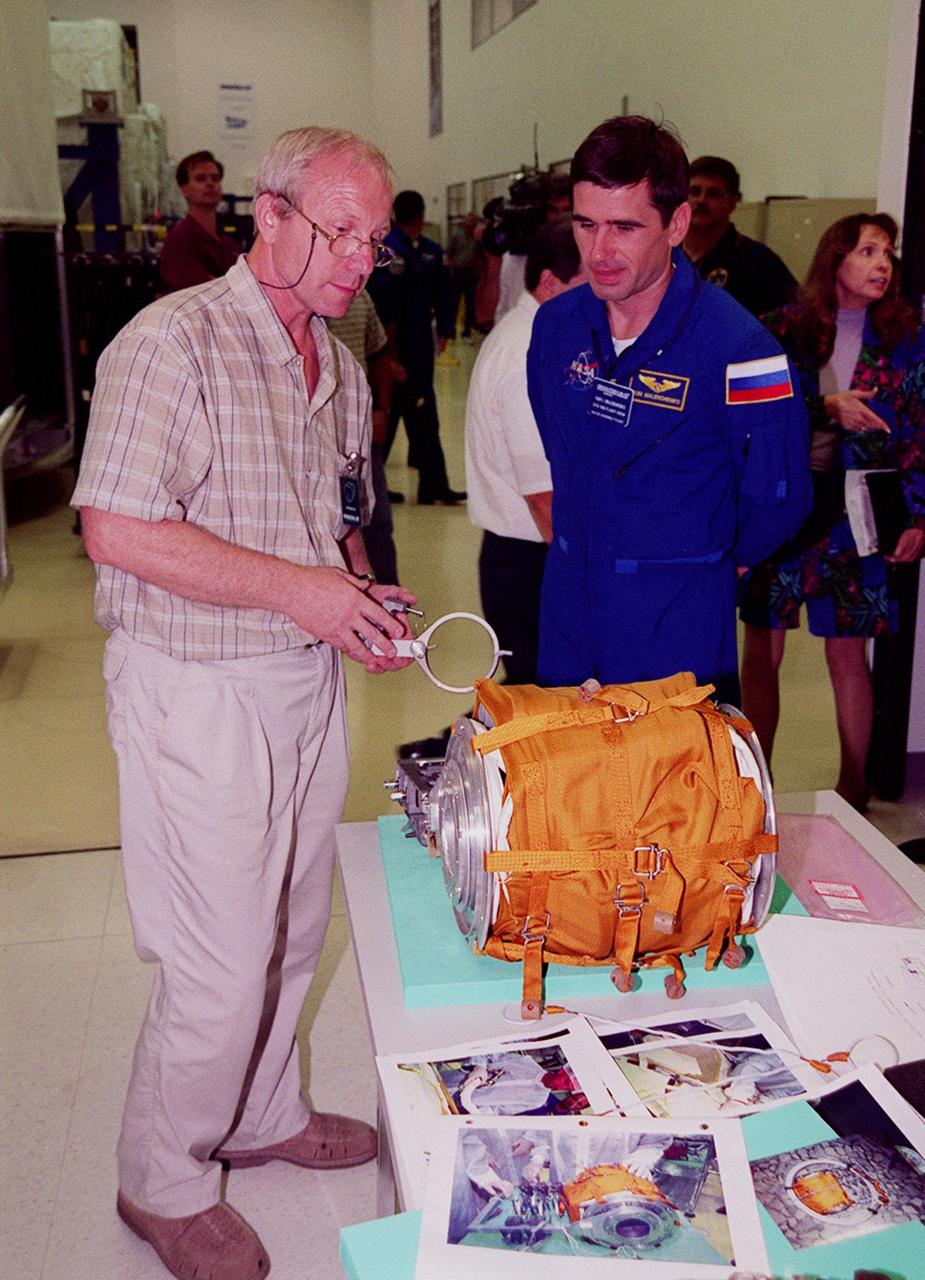
KENNEDY SPACE CENTER, FLA. -- STS-106 Mission Specialist Yuri I. Malenchenko (right) examines equipment at SPACEHAB, part of the payload on the mission to the International Space Station. He and the other crew members Commander Terrence W. Wilcutt, Pilot Scott D. Altman, and Mission Specialists Edward T. Lu, Daniel C. Burbank, Boris V. Morukov and Richard A. Mastracchio are taking part in Crew Equipment Interface Test (CEIT) activities at SPACEHAB. Malenchenko and Morukov represent the Russian Aviation and Space Agency. On the 11-day mission, the seven-member crew will perform support tasks on orbit, transfer supplies and prepare the living quarters in the newly arrived Zvezda Service Module for the first long-duration crew, dubbed "Expedition One," which is due to arrive at the Station in late fall. STS-106 is scheduled to launch Sept. 8, 2000, at 8:31 a.m. EDT from Launch Pad 39B
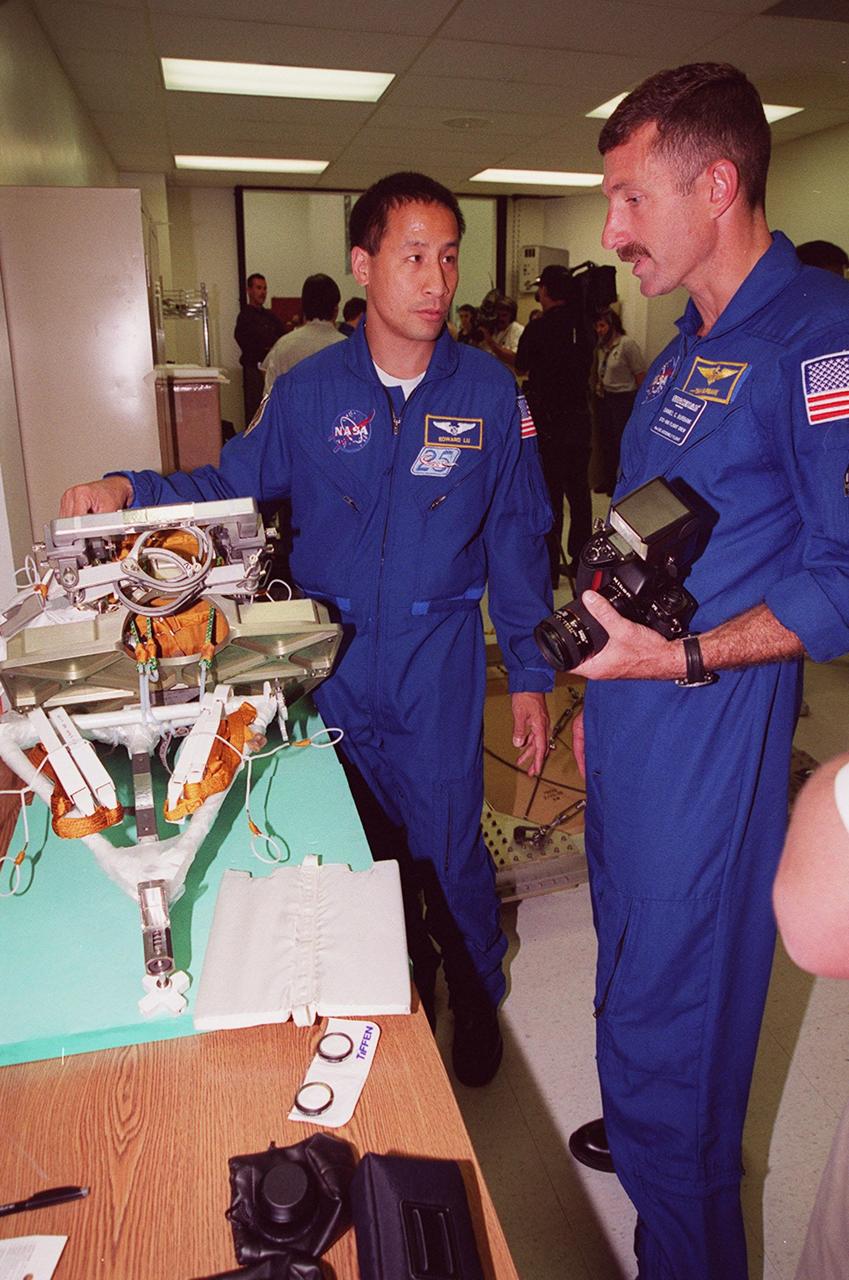
KENNEDY SPACE CENTER, FLA. -- STS-106 Mission Specialists Edward T. Lu (left) and Daniel C. Burbank examine equipment at SPACEHAB, part of the payload on the mission to the International Space Station. They and the other crew members Commander Terrence W. Wilcutt, Pilot Scott D. Altman, and Mission Specialists Yuri I. Malenchenko, Boris V. Morukov and Richard A. Mastracchio are taking part in Crew Equipment Interface Test (CEIT) activities at SPACEHAB. Malenchenko and Morukov represent the Russian Aviation and Space Agency. On the 11-day mission, the seven-member crew will perform support tasks on orbit, transfer supplies and prepare the living quarters in the newly arrived Zvezda Service Module for the first long-duration crew, dubbed "Expedition One," which is due to arrive at the Station in late fall. STS-106 is scheduled to launch Sept. 8, 2000, at 8:31 a.m. EDT from Launch Pad 39B

In Orbiter Processing Facility bay 3, STS-106 Mission Specialists Edward T. Lu (left) and Yuri I. Malenchenko (center) familiarize themselves with equipment in the payload bay of Space Shuttle orbiter Atlantis with the help of KSC employees as part of Crew Equipment Interface Test (CEIT) activities for their mission. The other crew members are Commander Terrence W. Wilcutt, Pilot Scott D. Altman, and Mission Specialists Daniel C. Burbank, Boris V. Morukov and Richard A. Mastracchio. Malenchenko and Morukov represent the Russian Aviation and Space Agency. On the 11-day mission, the seven-member crew will perform support tasks on orbit, transfer supplies and prepare the living quarters in the newly arrived Zvezda Service Module for the first long-duration crew, dubbed "Expedition One," which is due to arrive at the Station in late fall. STS-106 is scheduled to launch Sept. 8, 2000, at 8:31 a.m. EDT from Launch Pad 39B
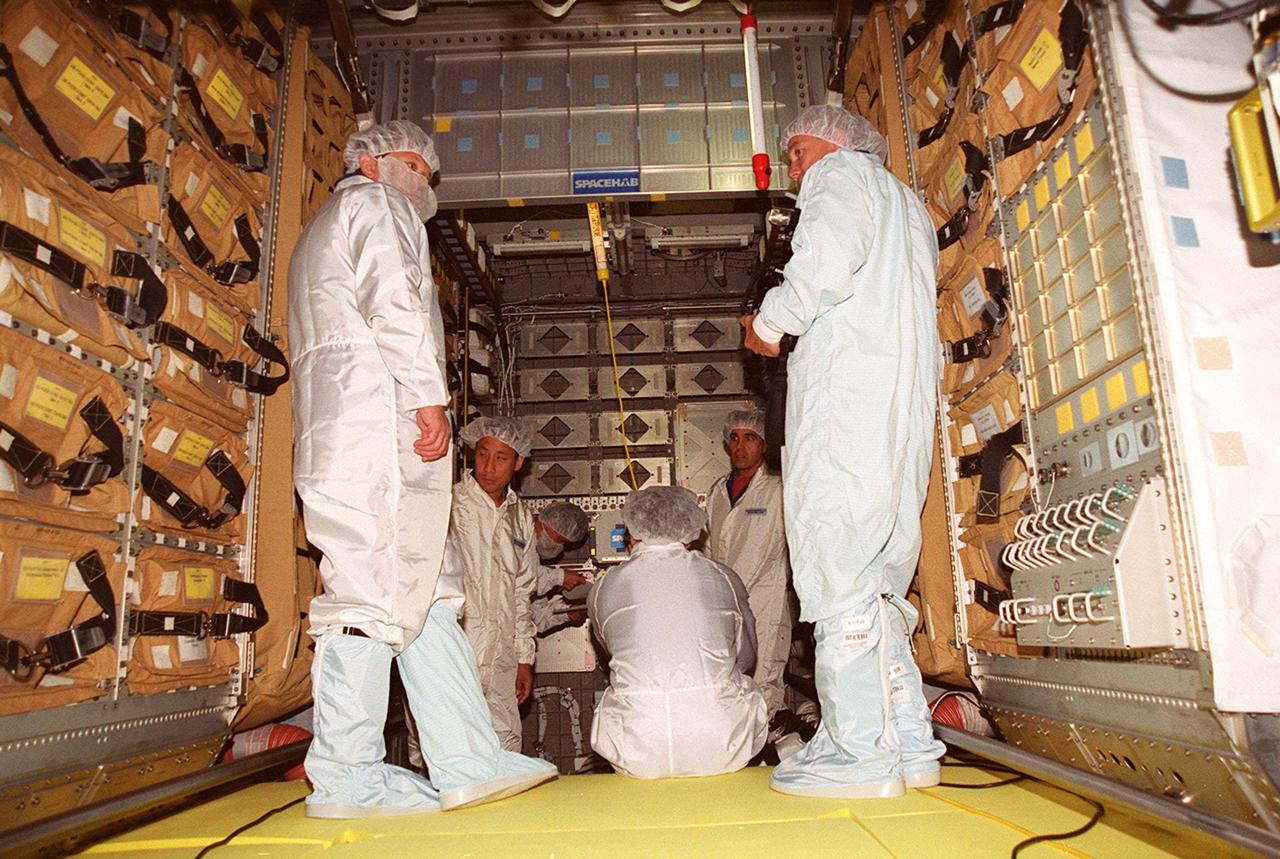
KENNEDY SPACE CENTER, FLA. -- During Crew Equipment Interface Test activities, the STS-106 crew check out equipment inside the SPACEHAB module. From left are Mission Specialists Boris V. Morukov, Edward T. Lu (kneeling), Yuri I. Malenchenko (back to camera) and Richard A. Mastracchio; and Commander Terrence W. Wilcutt. Malenchenko and Morukov represent the Russian Aviation and Space Agency. STS-106 is scheduled to launch Sept. 8, 2000, at 8:31 a.m. EDT from Launch Pad 39B on an 11-day mission to the International Space Station. The seven-member crew will prepare the Space Station for its first resident crew and begin outfitting the newly arrived Zvezda Service Module. They will perform support tasks on orbit, transfer supplies and prepare the Zvezda living quarters for the first long-duration crew, dubbed “Expedition One,” which is due to arrive at the Station in late fall