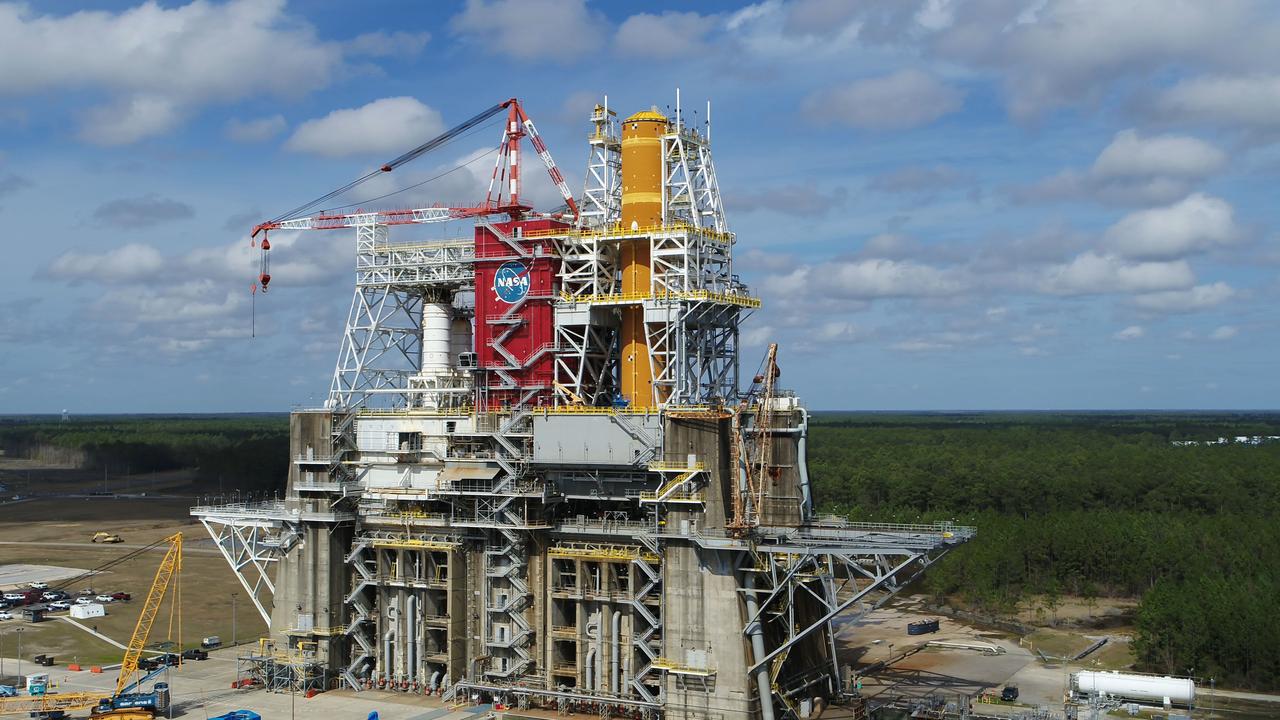
A NASA drone photo offers a bird’s-eye view of the B-2 Test Stand at NASA’s Stennis Space Center with the first flight core stage for NASA’s new Space Launch System (SLS) installed for Green Run testing. The SLS core stage is undergoing a series of tests on its integrated systems prior to its use on the Artemis I mission. NASA is building SLS to return humans, including the first woman, to the Moon as part of the Artemis program and to prepare for eventual missions to Mars. The Green Run series at Stennis culminates with a hot fire of the core stage’s four RS-25 engines, just as during an actual launch.
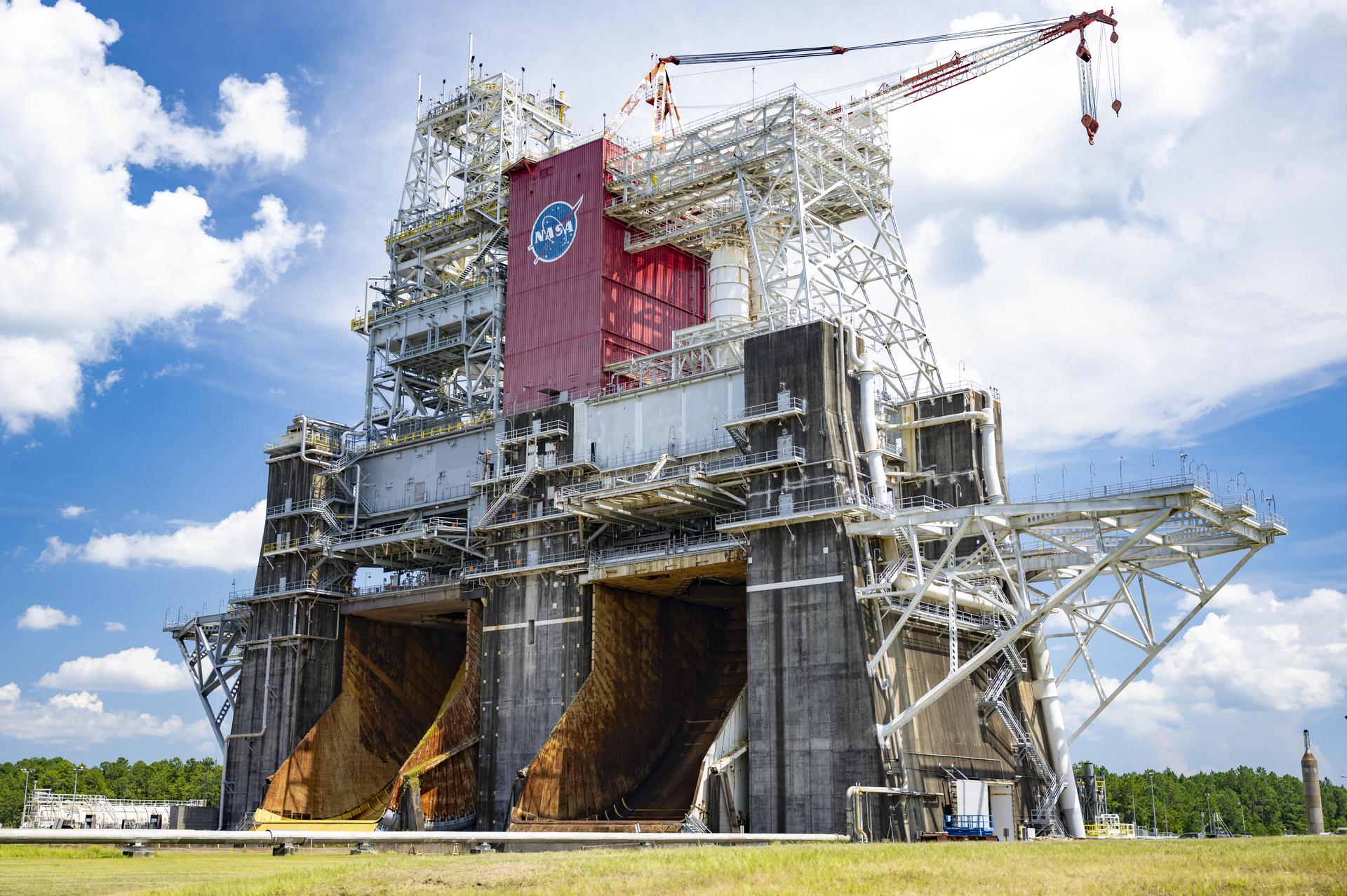
An image shows the Thad Cochran Test Stand (B-1/B-2) at NASA’s Stennis Space Center near Bay St. Louis, Mississippi, on July 7. The test stand features dual, vertical firing positions built in the 1960s to test Saturn V rocket stages that carried humans to the Moon during the Apollo program. The B 1 position, right, is equipped for single engine tests, while the B 2 position is designed to test full rocket stages.
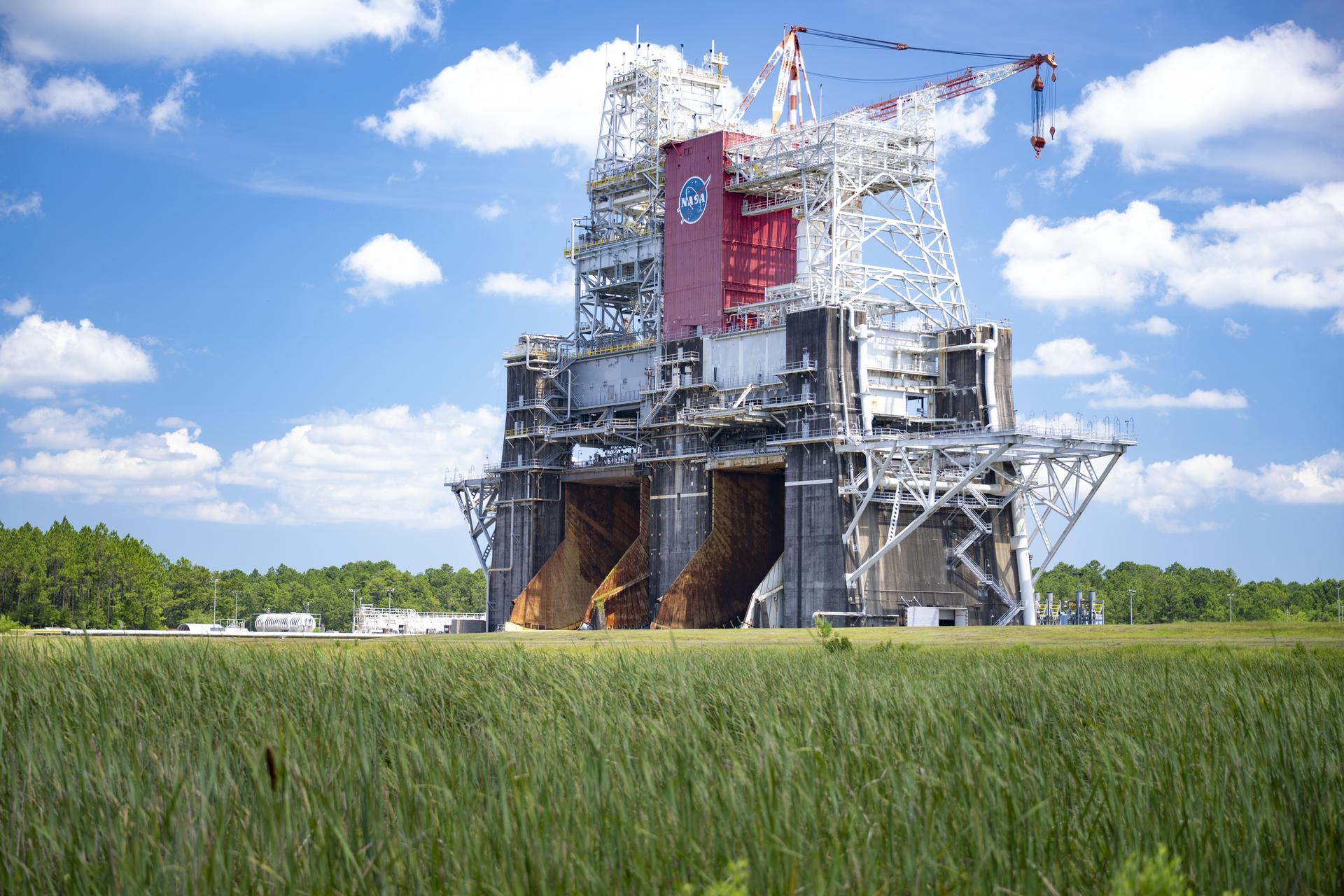
An image shows the Thad Cochran Test Stand (B-1/B-2) at NASA’s Stennis Space Center near Bay St. Louis, Mississippi, on July 7. The test stand features dual, vertical firing positions built in the 1960s to test Saturn V rocket stages that carried humans to the Moon during the Apollo program. The B 1 position, right, is equipped for single engine tests, while the B 2 position is designed to test full rocket stages.
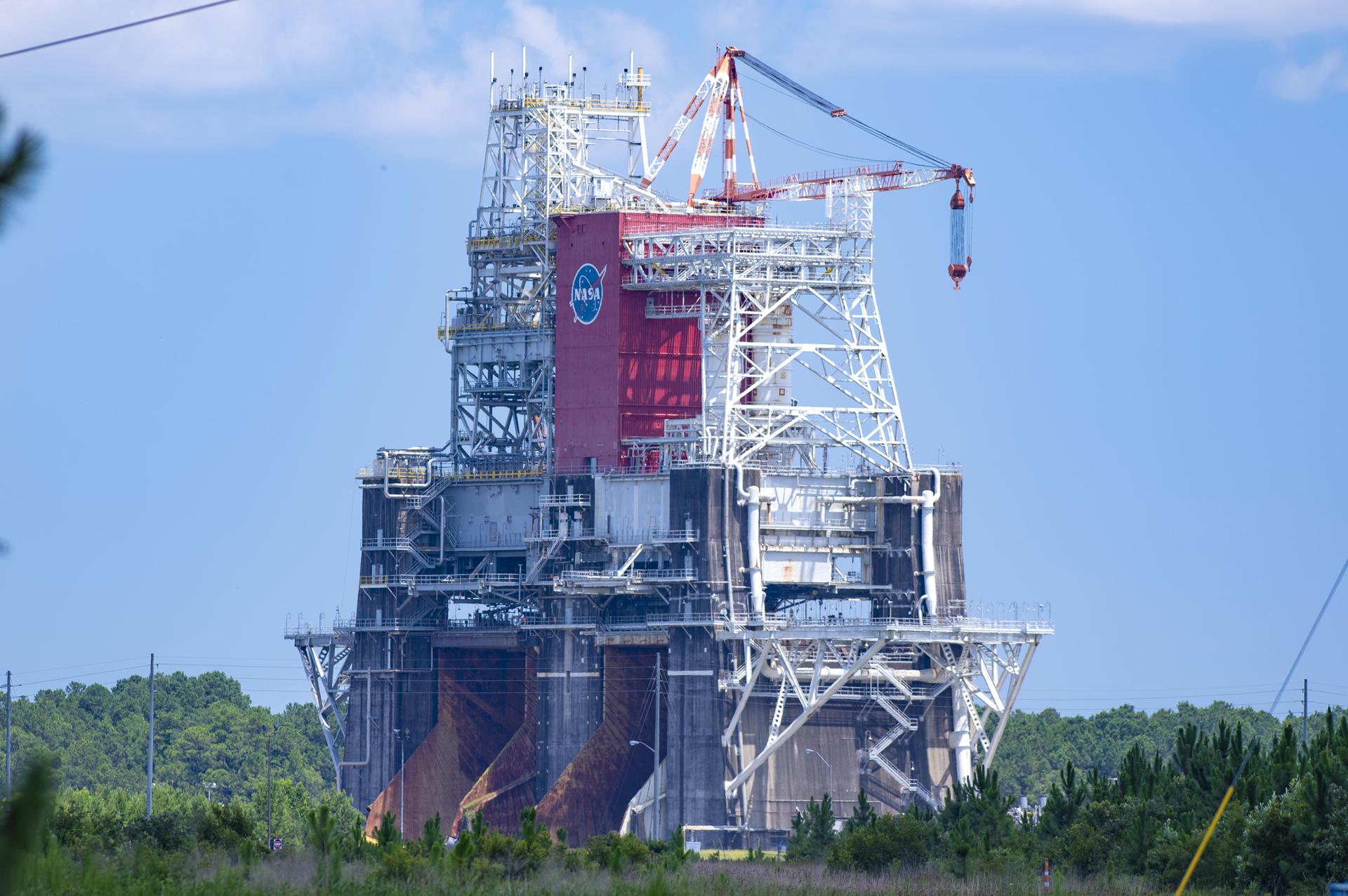
An image shows the Thad Cochran Test Stand (B-1/B-2) at NASA’s Stennis Space Center near Bay St. Louis, Mississippi, on July 7. The test stand features dual, vertical firing positions built in the 1960s to test Saturn V rocket stages that carried humans to the Moon during the Apollo program. The B 1 position, right, is equipped for single engine tests, while the B 2 position is designed to test full rocket stages.
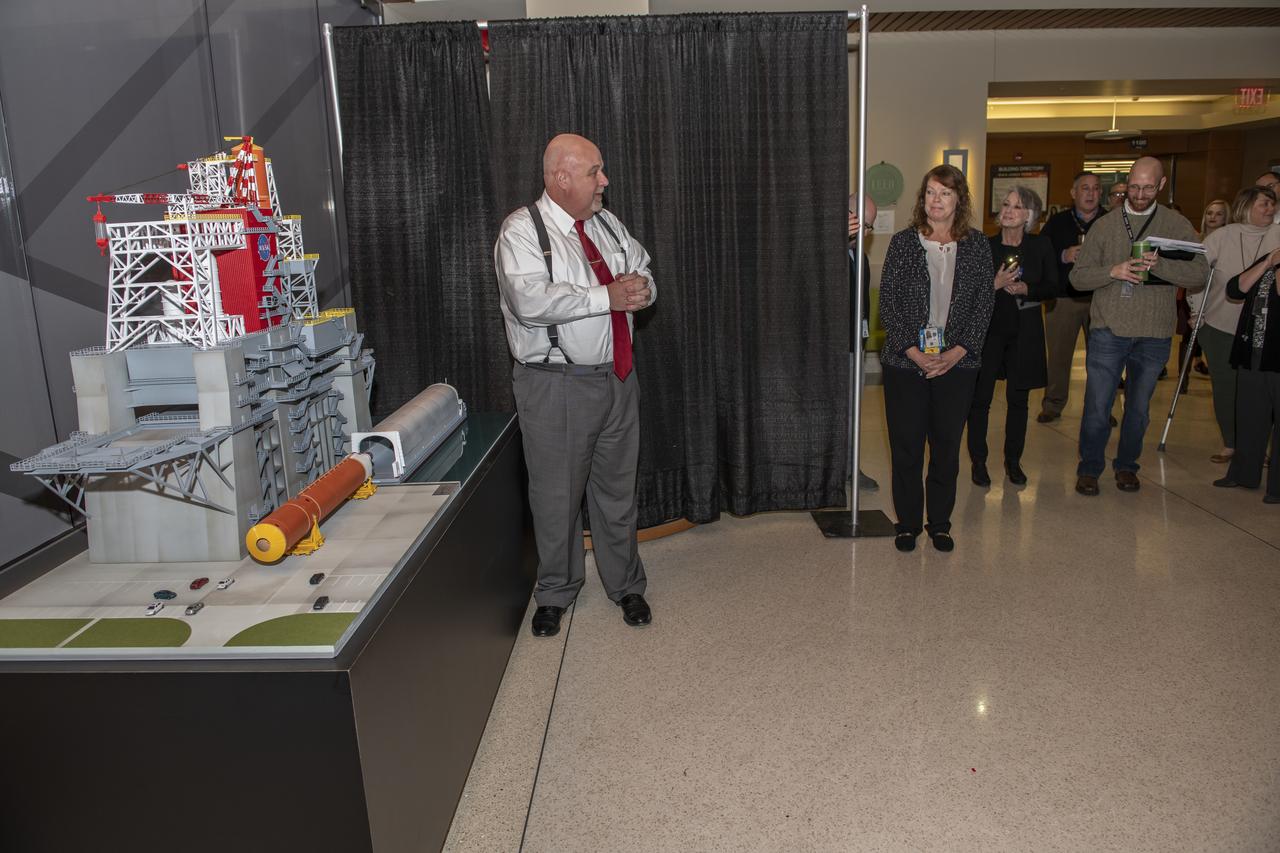
The unveiling of the B-2 Test Stand model for the SLS management team and employees in building 4220. Taking part was John Honeycutt and Julie Bassler.
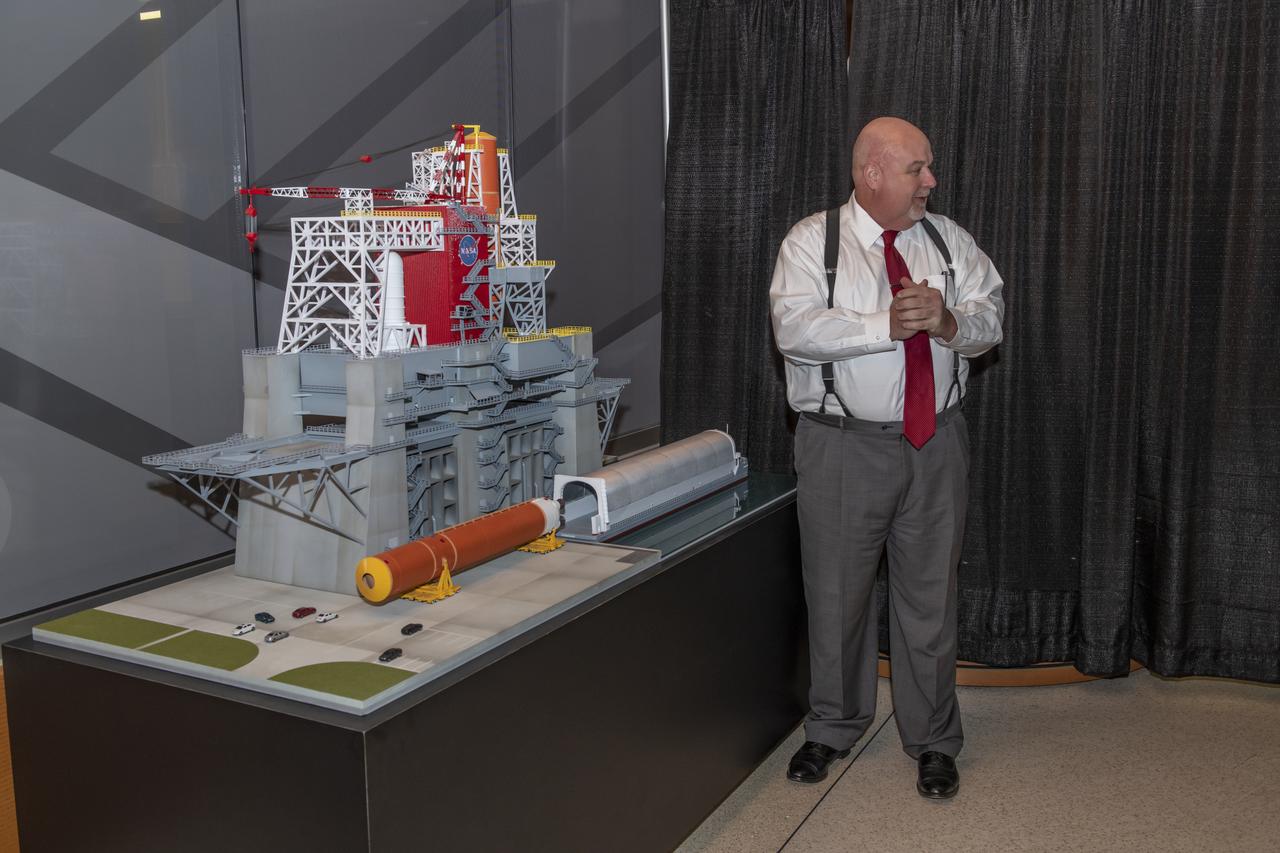
The unveiling of the B-2 Test Stand model for the SLS management team and employees in building 4220. Taking part was John Honeycutt and Julie Bassler.
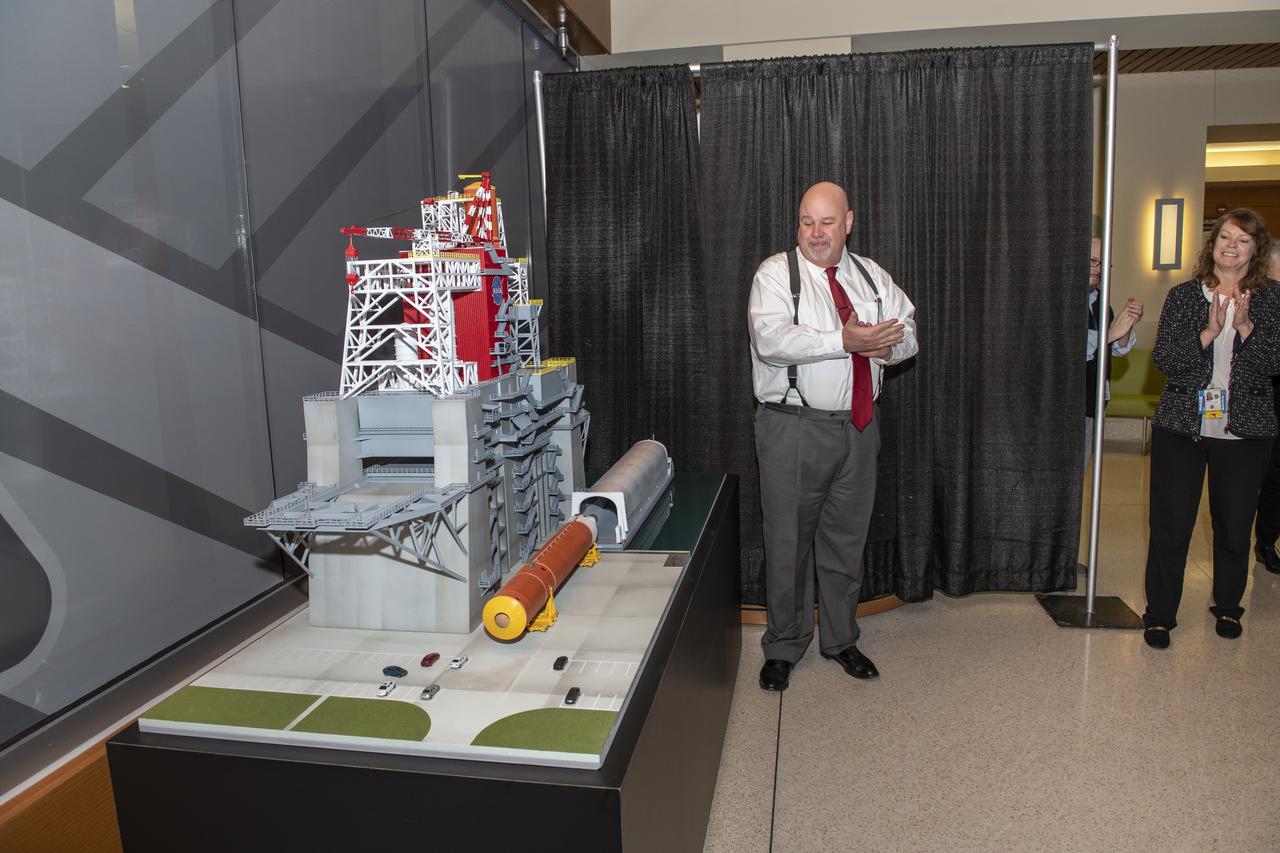
The unveiling of the B-2 Test Stand model for the SLS management team and employees in building 4220. Taking part was John Honeycutt and Julie Bassler.
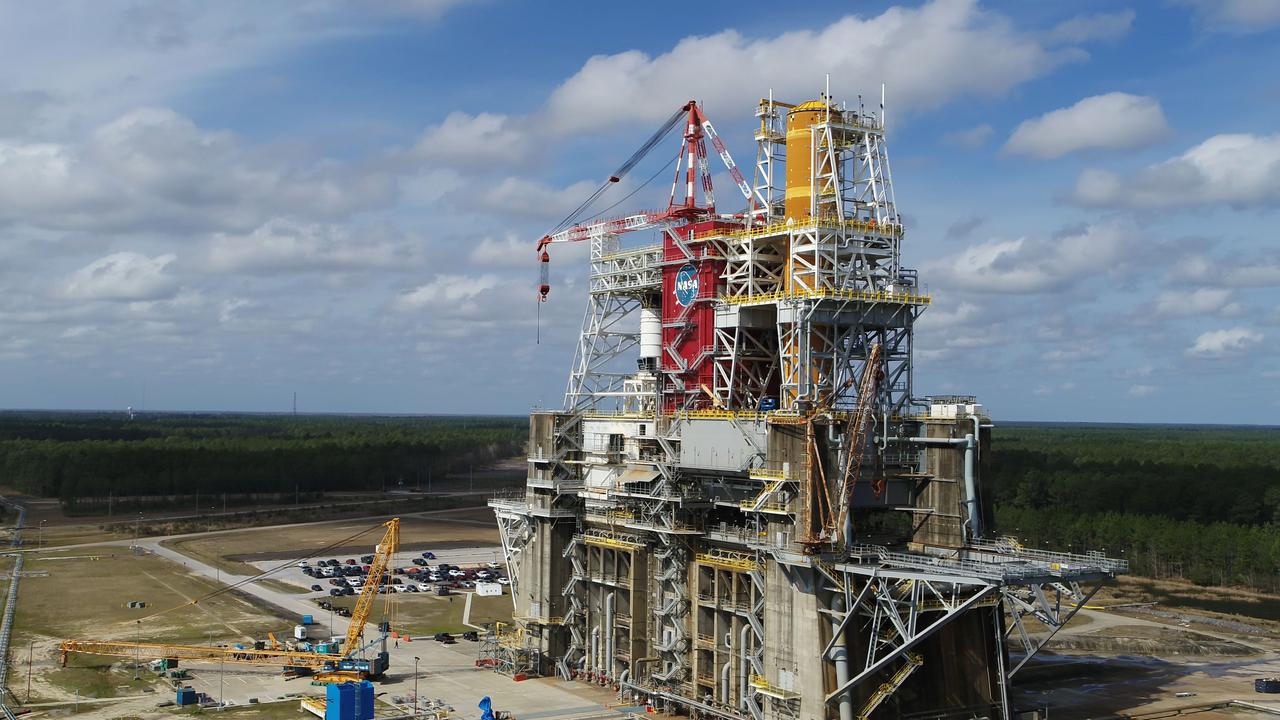
A NASA drone photo offers a bird’s-eye view of the B-2 Test Stand at NASA’s Stennis Space Center with the first flight core stage for NASA’s new Space Launch System (SLS) installed for Green Run testing. The SLS core stage is undergoing a series of tests on its integrated systems prior to its use on the Artemis I mission. NASA is building SLS to return humans, including the first woman, to the Moon as part of the Artemis program and to prepare for eventual missions to Mars. The Green Run series at Stennis culminates with a hot fire of the core stage’s four RS-25 engines, just as during an actual launch.
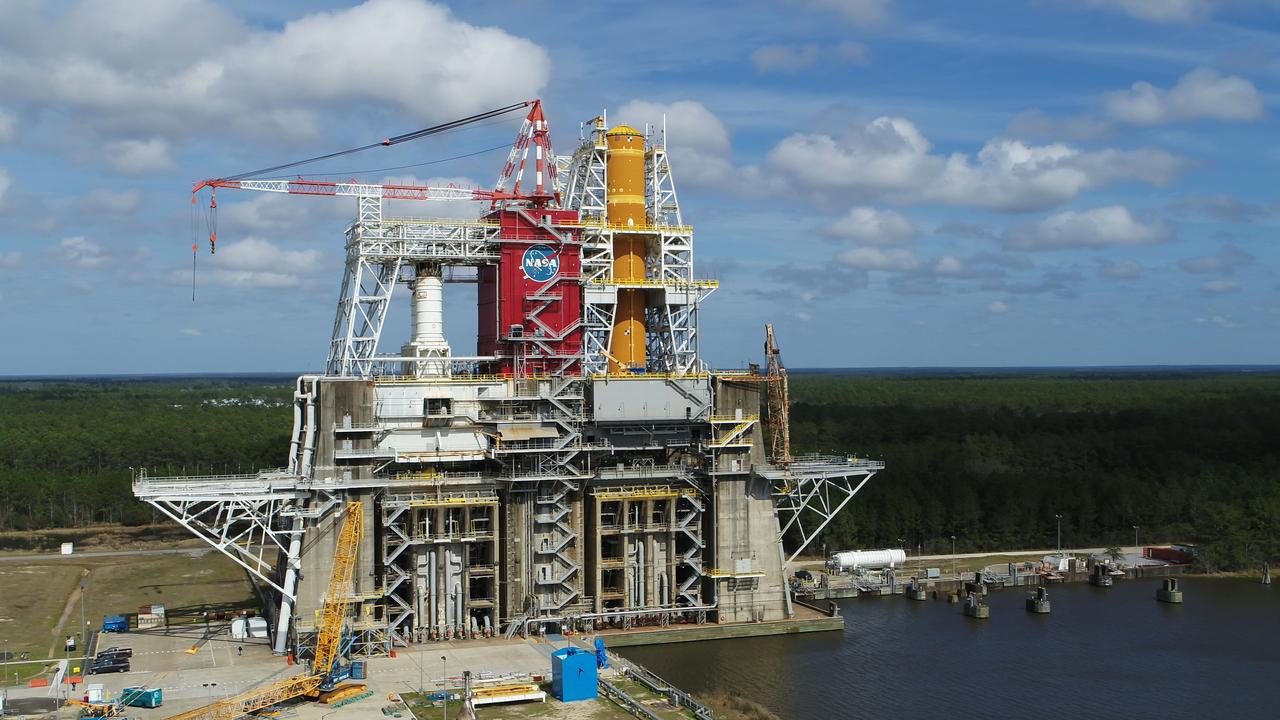
A NASA drone photo offers a bird’s-eye view of the B-2 Test Stand at NASA’s Stennis Space Center with the first flight core stage for NASA’s new Space Launch System (SLS) installed for Green Run testing. The SLS core stage is undergoing a series of tests on its integrated systems prior to its use on the Artemis I mission. NASA is building SLS to return humans, including the first woman, to the Moon as part of the Artemis program and to prepare for eventual missions to Mars. The Green Run series at Stennis culminates with a hot fire of the core stage’s four RS-25 engines, just as during an actual launch.
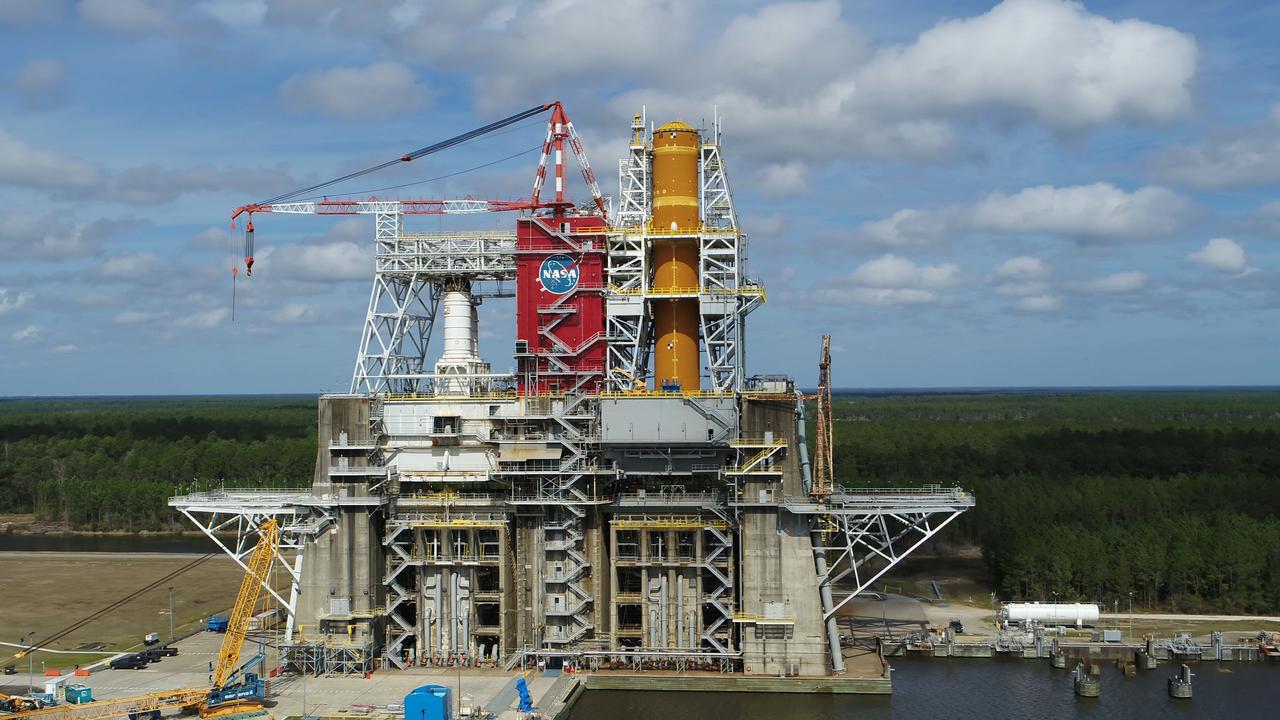
A NASA drone photo offers a bird’s-eye view of the B-2 Test Stand at NASA’s Stennis Space Center with the first flight core stage for NASA’s new Space Launch System (SLS) installed for Green Run testing. The SLS core stage is undergoing a series of tests on its integrated systems prior to its use on the Artemis I mission. NASA is building SLS to return humans, including the first woman, to the Moon as part of the Artemis program and to prepare for eventual missions to Mars. The Green Run series at Stennis culminates with a hot fire of the core stage’s four RS-25 engines, just as during an actual launch.
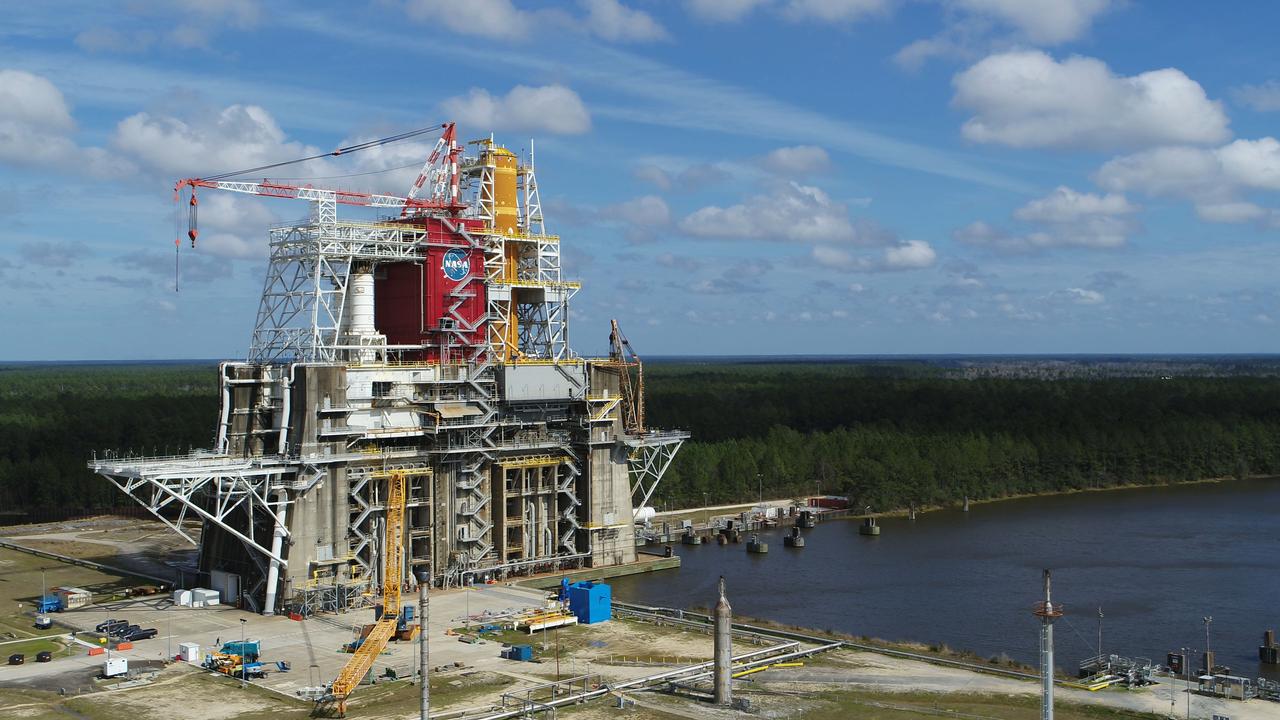
A NASA drone photo offers a bird’s-eye view of the B-2 Test Stand at NASA’s Stennis Space Center with the first flight core stage for NASA’s new Space Launch System (SLS) installed for Green Run testing. The SLS core stage is undergoing a series of tests on its integrated systems prior to its use on the Artemis I mission. NASA is building SLS to return humans, including the first woman, to the Moon as part of the Artemis program and to prepare for eventual missions to Mars. The Green Run series at Stennis culminates with a hot fire of the core stage’s four RS-25 engines, just as during an actual launch.
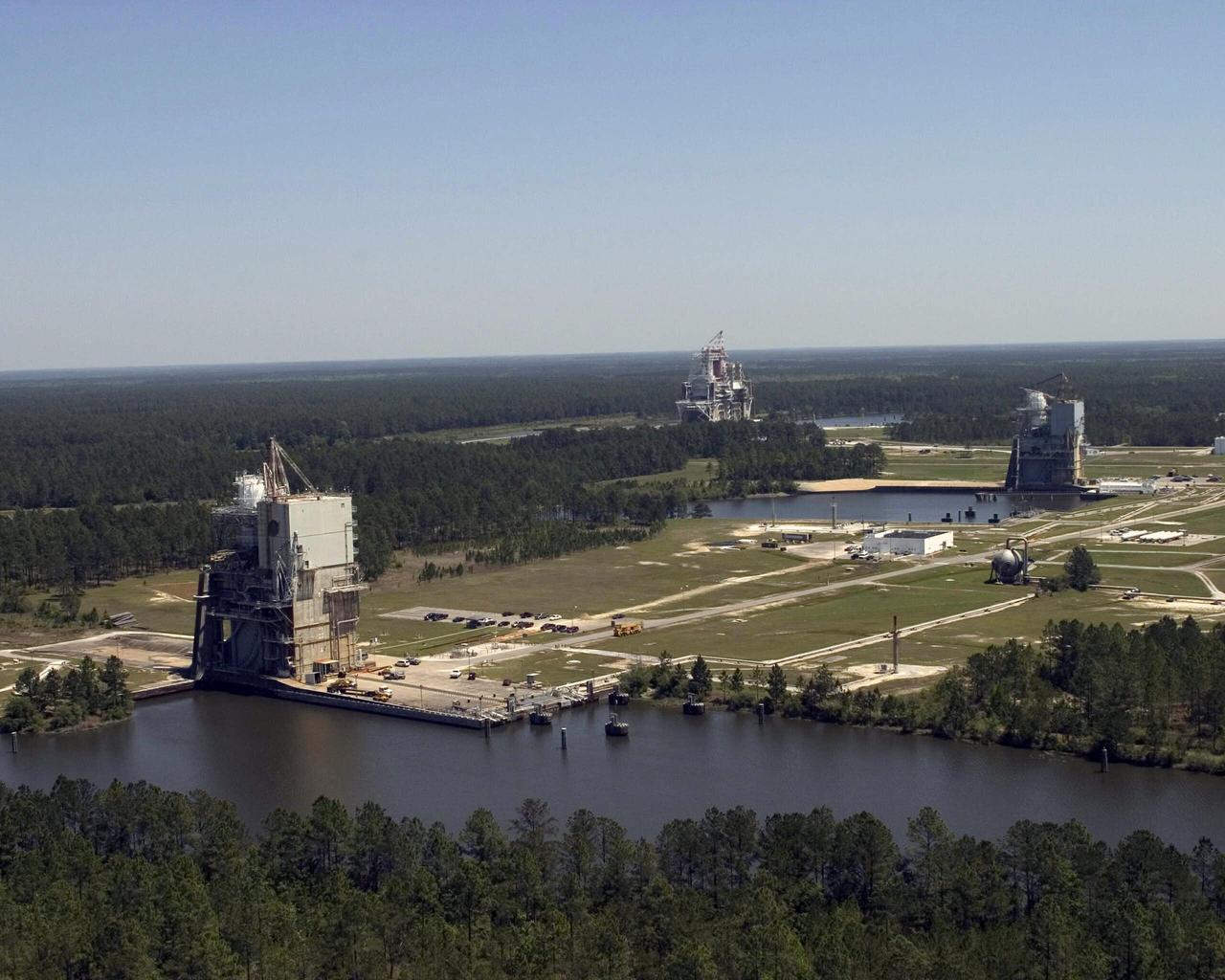
SSC's A-1, A-2 and B test stands were built in the early 1960s to test the first and second stages of the Apollo Saturn V rocket that safely transported Americans to the moon. The A-1 Stand (foreground) will soon test the J-2X engines that will power the rockets to take Americans back to the moon.
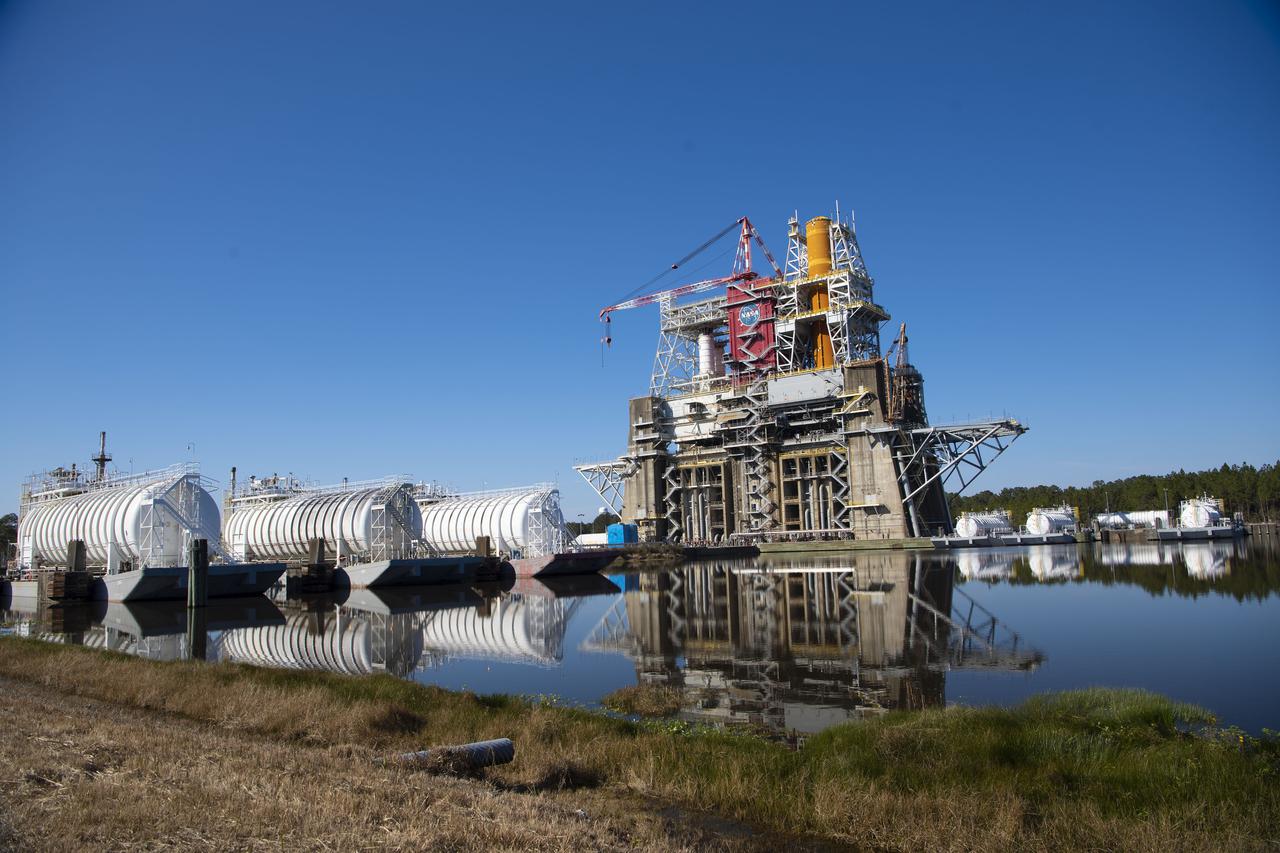
Propellant barges are docked at the B-2 Test Stand at NASA’s Stennis Space Center near Bay St. Louis, Mississippi, prior the hot fire test of the core stage for the agency’s Space Launch System rocket. The hot fire test Jan. 16, 2021 of the stage’s four RS-25 engines generated a combined 1.6 million pounds of thrust, just as will occur during an actual launch. The hot fire is the final test of the Green Run test series, a comprehensive assessment of the SLS core stage prior to launching the Artemis I mission to the Moon.
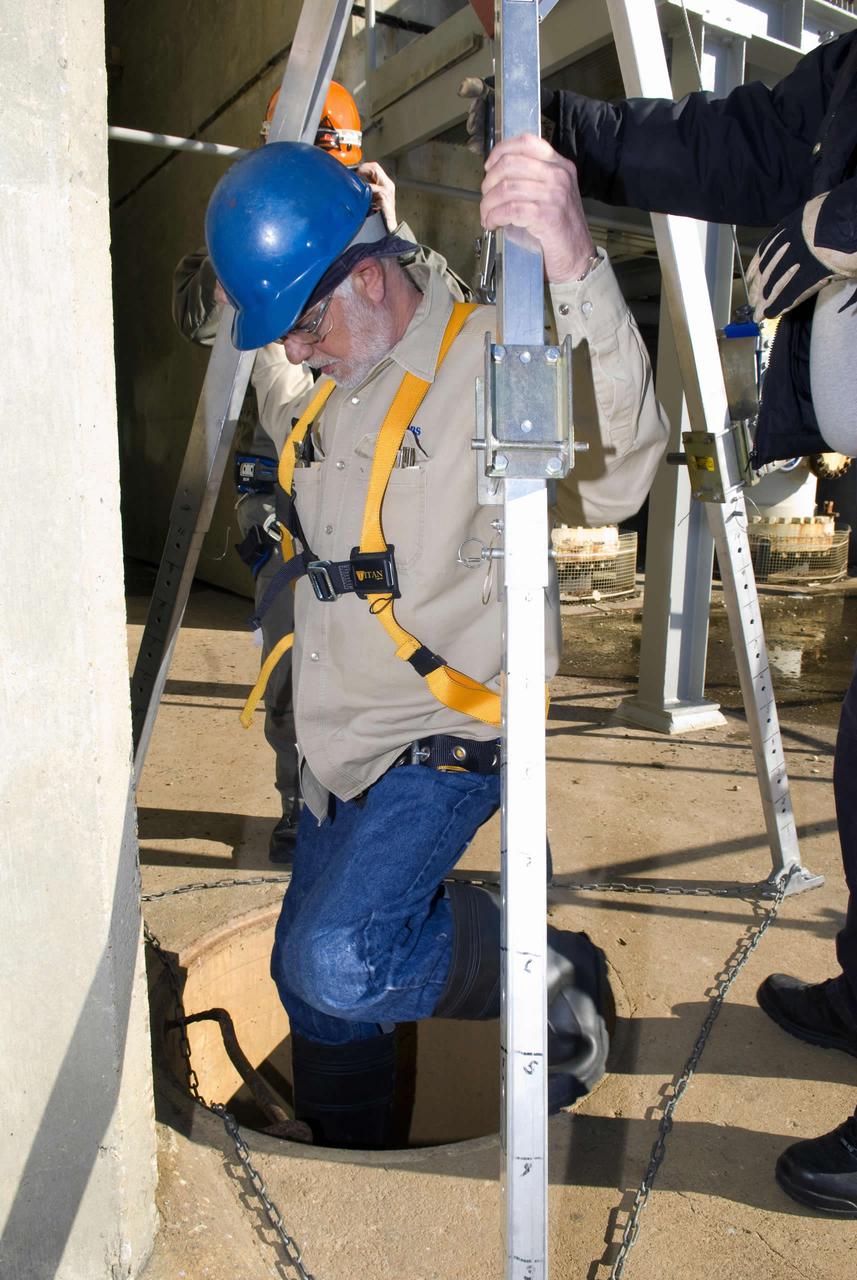
Robert Hayward of Jacobs FOSC descends beneath the B-1 Test Stand to perform maintenance.
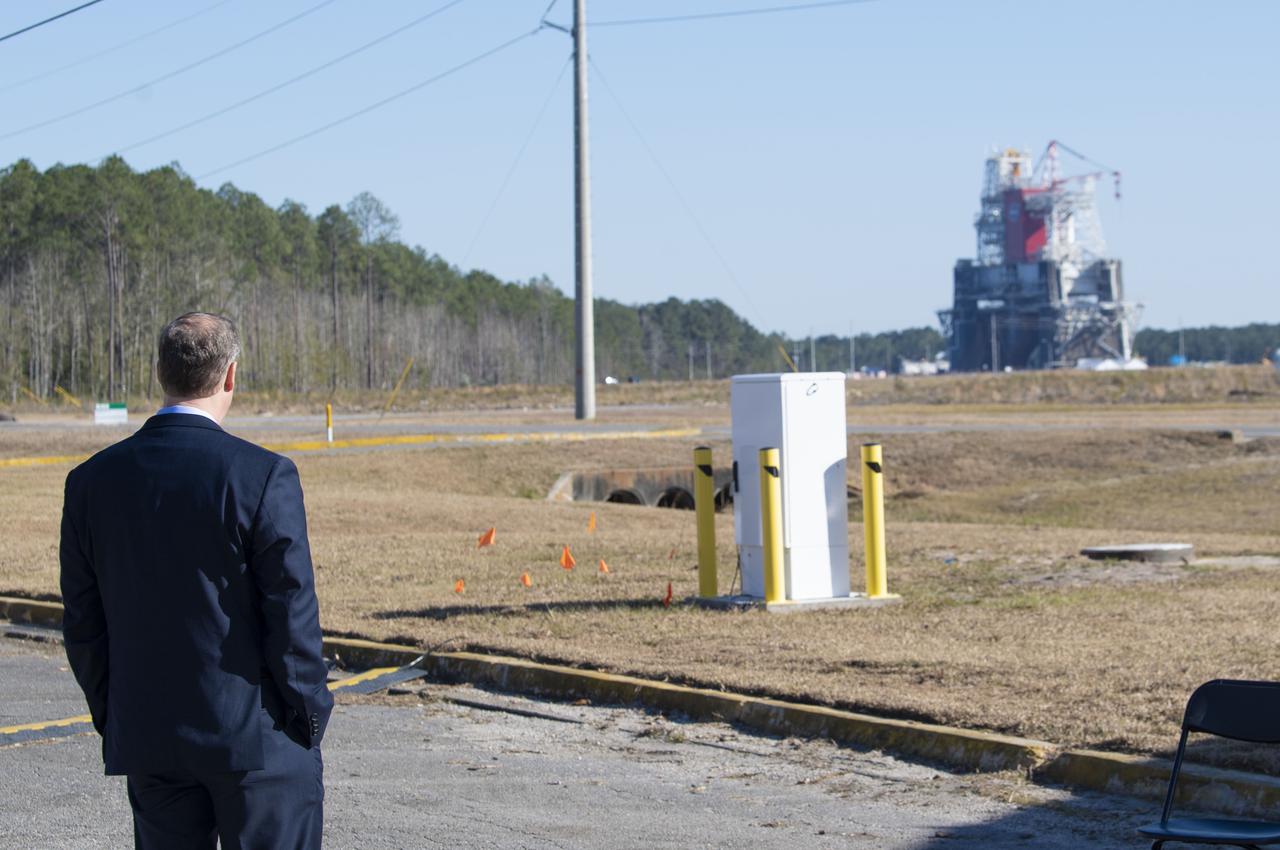
Outgoing NASA Administrator Jim Bridenstine peers at the B-2 Test Stand at Stennis Space Center near Bay St. Louis, Mississippi, prior to a hot fire test Jan. 16, 2021, of the core stage for the agency’s Space Launch System rocket. The hot fire test of the stage’s four RS-25 engines generated a combined 1.6 million pounds of thrust, just as will occur during an actual launch. The hot fire at the B-2 Test Stand culminated a series of eight Green Run tests on the core stage and its integrated systems. The core stage now will be prepared and transported to Kennedy Space Center to be joined with the rest of the SLS rocket for launch on the Artemis I test mission.
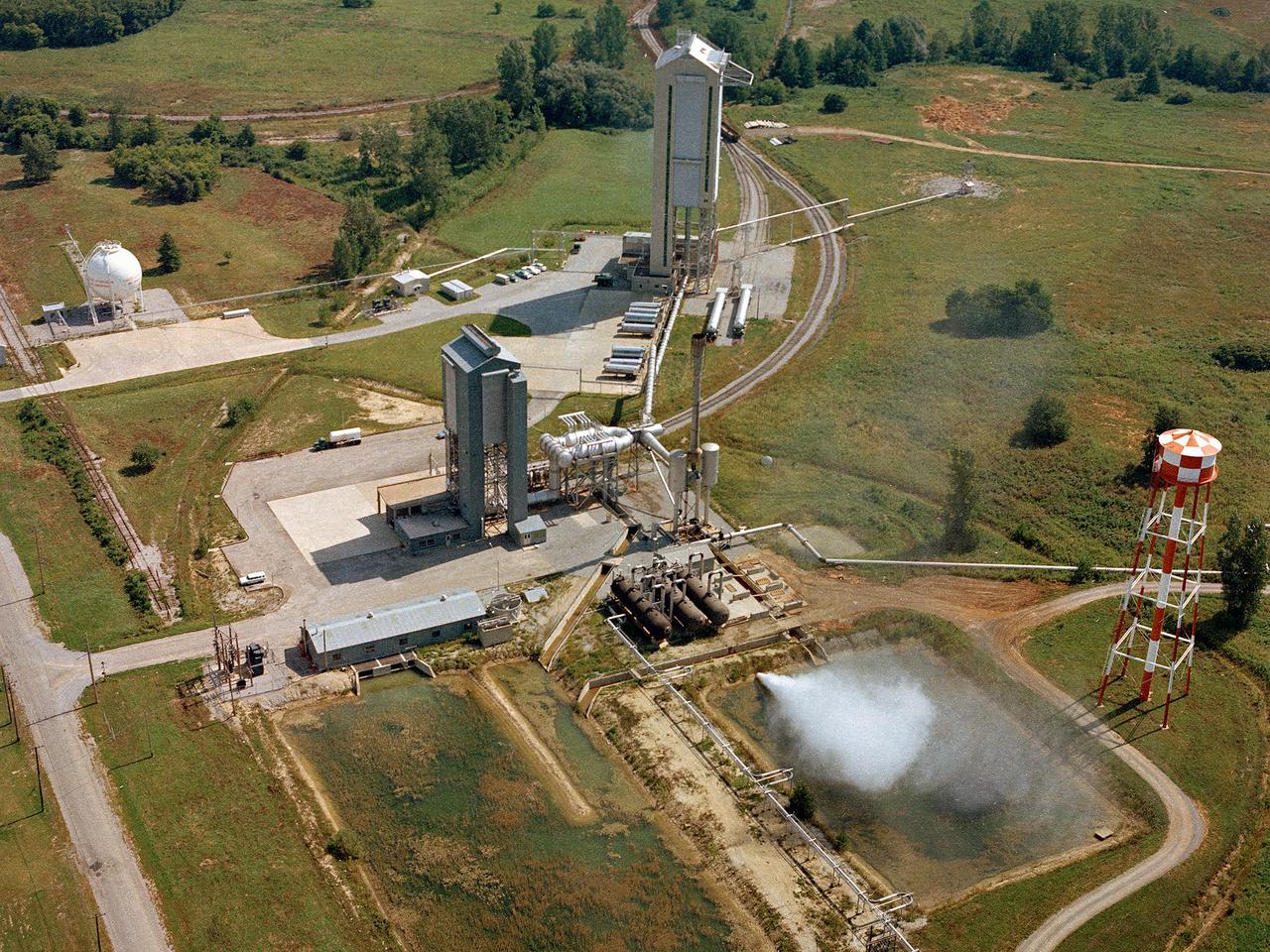
Operation of the High Energy Rocket Engine Research Facility (B-1), left, and Nuclear Rocket Dynamics and Control Facility (B-3) at the National Aeronautics and Space Administration’s (NASA) Plum Brook Station in Sandusky, Ohio. The test stands were constructed in the early 1960s to test full-scale liquid hydrogen fuel systems in simulated altitude conditions. Over the next decade each stand was used for two major series of liquid hydrogen rocket tests: the Nuclear Engine for Rocket Vehicle Application (NERVA) and the Centaur second-stage rocket program. The different components of these rocket engines could be studied under flight conditions and adjusted without having to fire the engine. Once the preliminary studies were complete, the entire engine could be fired in larger facilities. The test stands were vertical towers with cryogenic fuel and steam ejector systems. B-1 was 135 feet tall, and B-3 was 210 feet tall. Each test stand had several levels, a test section, and ground floor shop areas. The test stands relied on an array of support buildings to conduct their tests, including a control building, steam exhaust system, and fuel storage and pumping facilities. A large steam-powered altitude exhaust system reduced the pressure at the exhaust nozzle exit of each test stand. This allowed B-1 and B-3 to test turbopump performance in conditions that matched the altitudes of space.
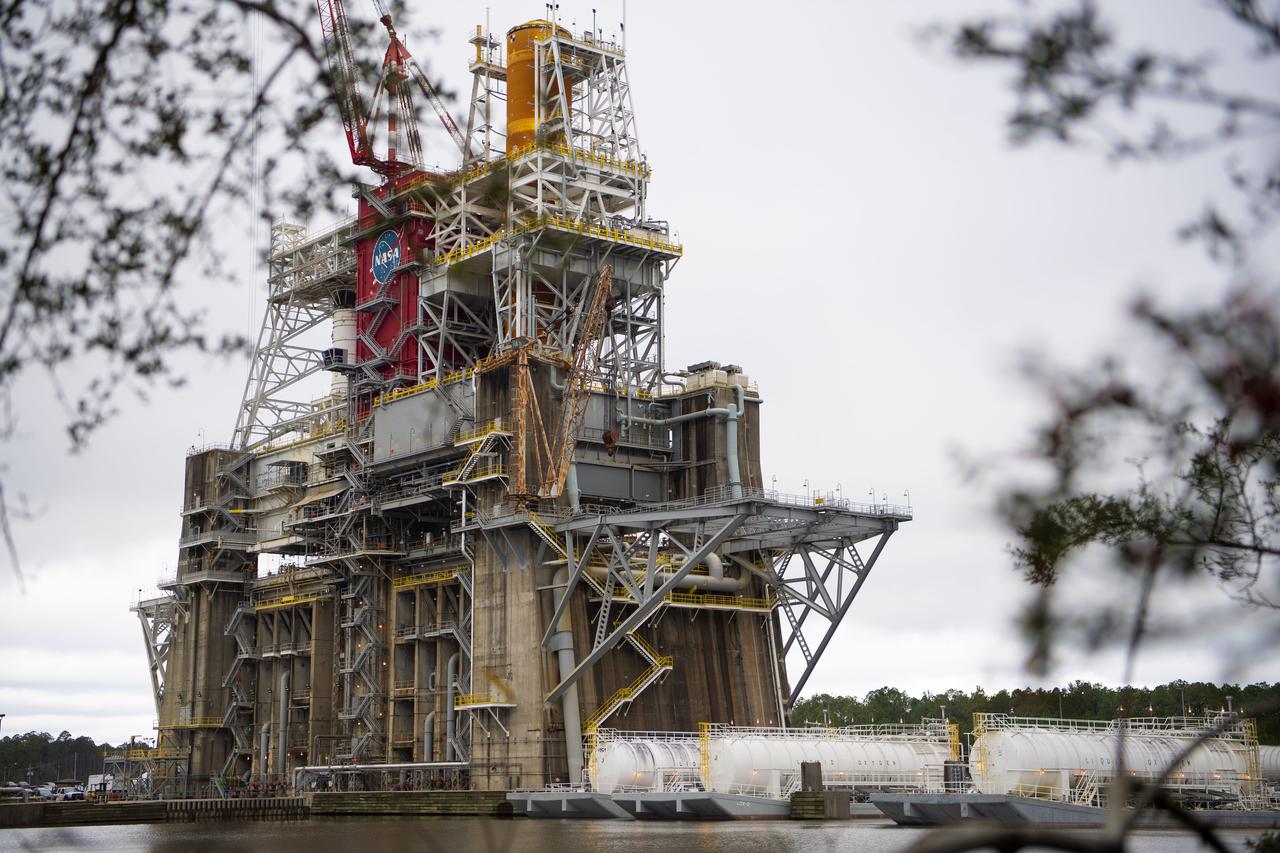
Barges are docked at the B-2 Test Stand at Stennis Space Center on Dec. 4, 2020, in preparation for upcoming Green Run test activities. Teams at the center have been performing Green Run tests of NASA’s Space Launch System core stage and its integrated systems throughout 2020. In mid-December, teams performed the seventh test of the Green Run series – a wet dress rehearsal of a countdown to hot fire. It marked the first time the stage tanks had been loaded with liquid oxygen and liquid hydrogen propellants supplied by the docked barges.
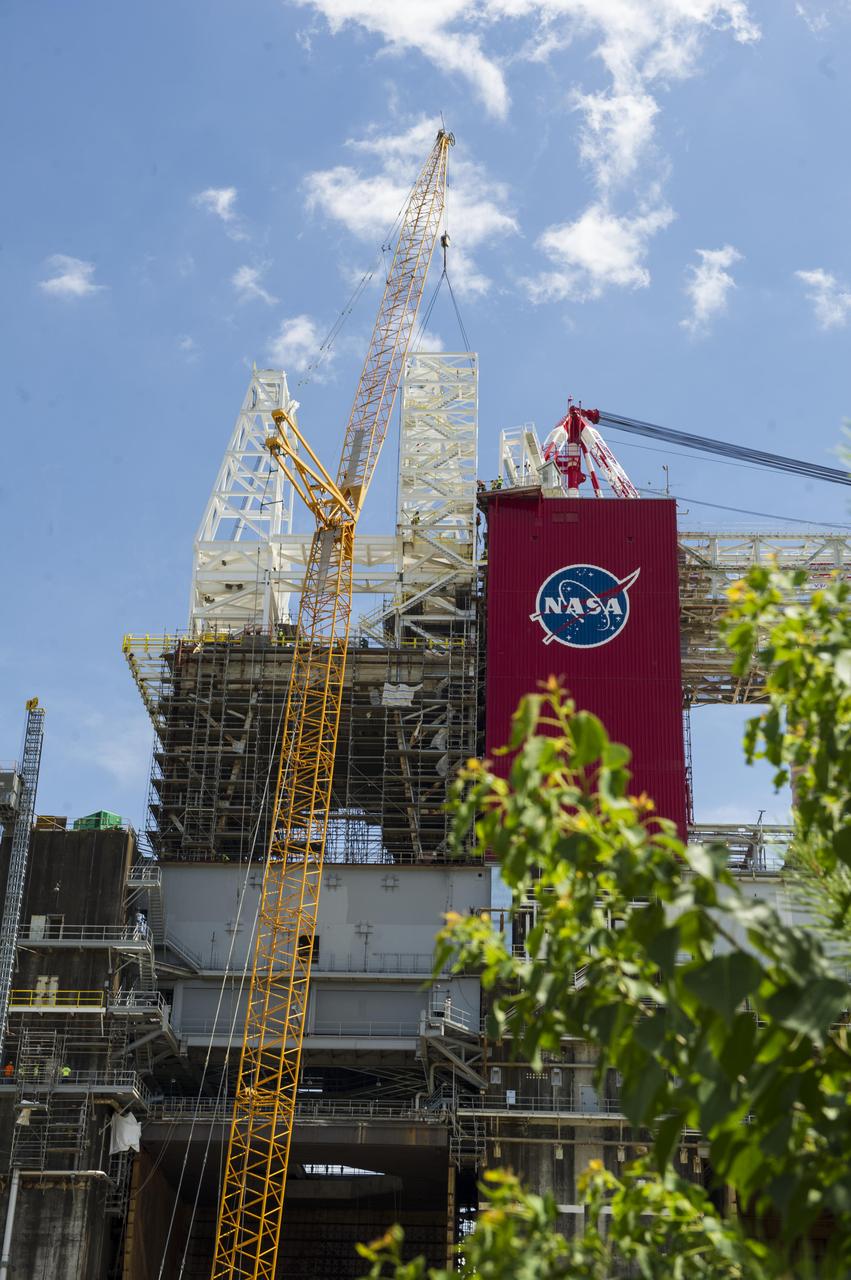
A structural steel section is lifted into place atop the B-2 Test Stand at NASA’s Stennis Space Center as part of modification work to prepare for testing the core stage of NASA’s new Space Launch System. The section is part of the Main Propulsion Test Article (MPTA) framework, which will support the SLS core stage for testing. The existing framework was installed on the stand in the late 1970s to test the shuttle MPTA. However, that framework had to be repositioned and modified to accommodate the larger SLS stage. About 1 million pounds of structural steel has been added, extending the framework about 100 feet higher and providing a new look to the Stennis skyline. Stennis will test the actual flight core stage for the first uncrewed SLS mission, Exploration Mission-1.

Members of the 2007 class of Partners in Leadership toured NASA Stennis Space Center in Hancock County, Miss., on Jan. 11. They visited the center's B Test Stand, part of the center's rocket engine test complex. The Partners in Leadership training program is designed to teach Pearl River County leaders about their county's government, economic development, health and human services, history and arts, environment and education during a 10-month period. The program, sponsored by the Partners for Pearl River County, helps fulfill the mission of the economic and community development agency.
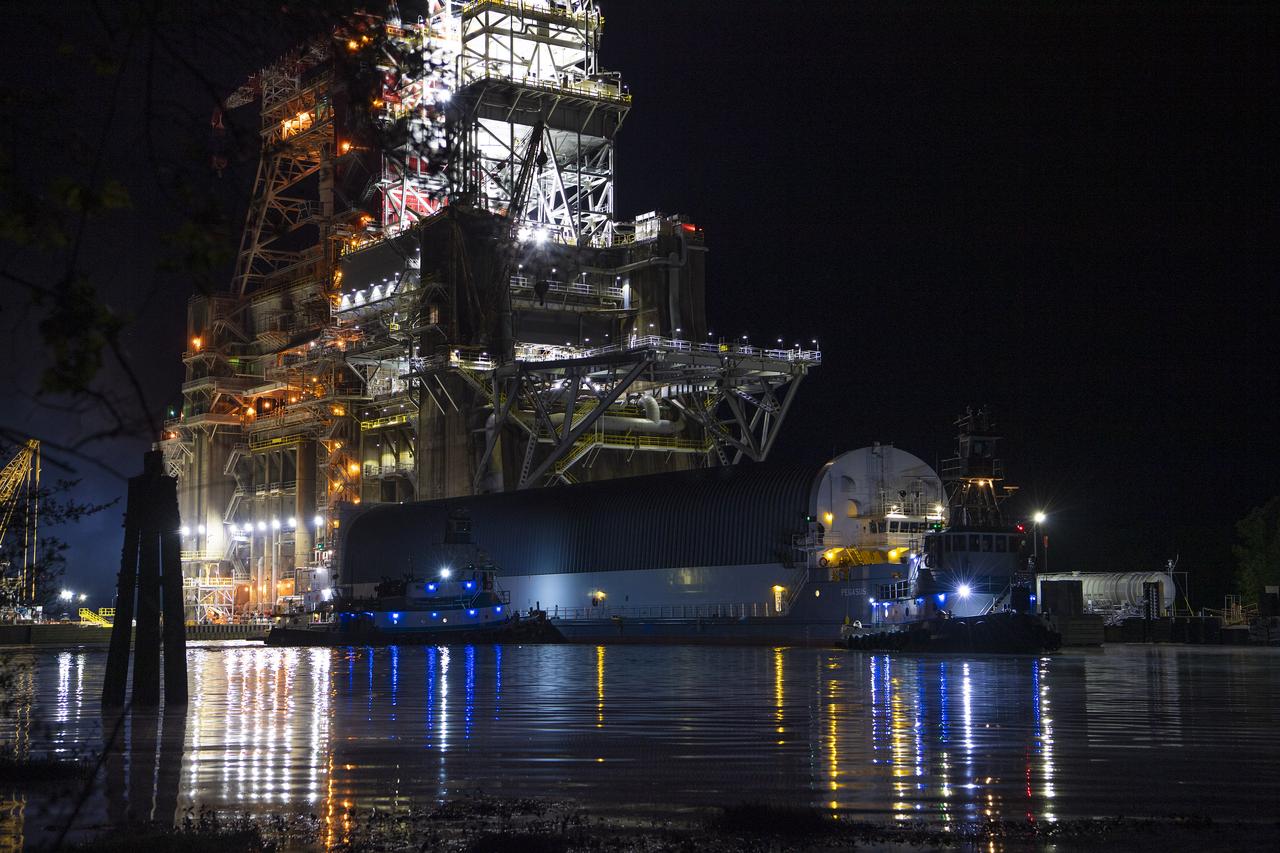
After a series of successful tests conducted the B-2 Test Stand at Stennis Space Center, NASA’s Space Launch System (SLS) core stage was loaded on the Pegasus barge and departed the test stand in the early morning hours of April 22, 2021, beginning its journey to Kennedy Space Center.
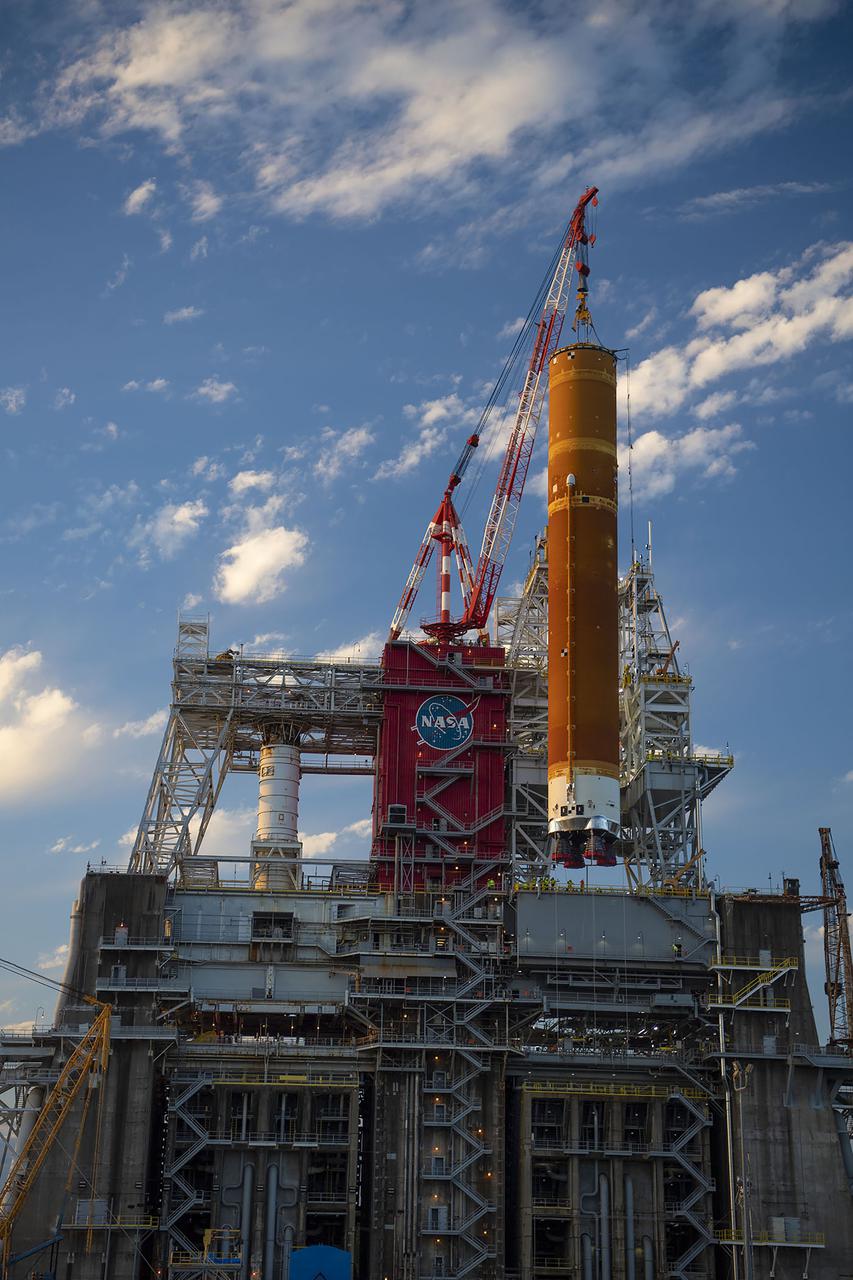
Following a successful Green Run hot fire at NASA’s Stennis Space Center near Bay St. Louis, Mississippi, on March 18, members of a blended team work April 19-20 to remove the first core stage of the agency’s Space Launch System (SLS) rocket from the B-2 Test Stand. The work required crews to lift the core stage from its vertical placement in the stand and lower it to a horizontal position on the B-2 Test Stand tarmac. The stage now will be loaded on NASA’s Pegasus barge for transport to Kennedy, where it will be prepared for launch of the Artemis I mission. Removal of the largest rocket stage ever built by NASA followed completion of a series of eight Green Run tests over the past year. During the Green Run series, teams performed a comprehensive test of the stand’s sophisticated and integrated systems. Photo Credit: NASA
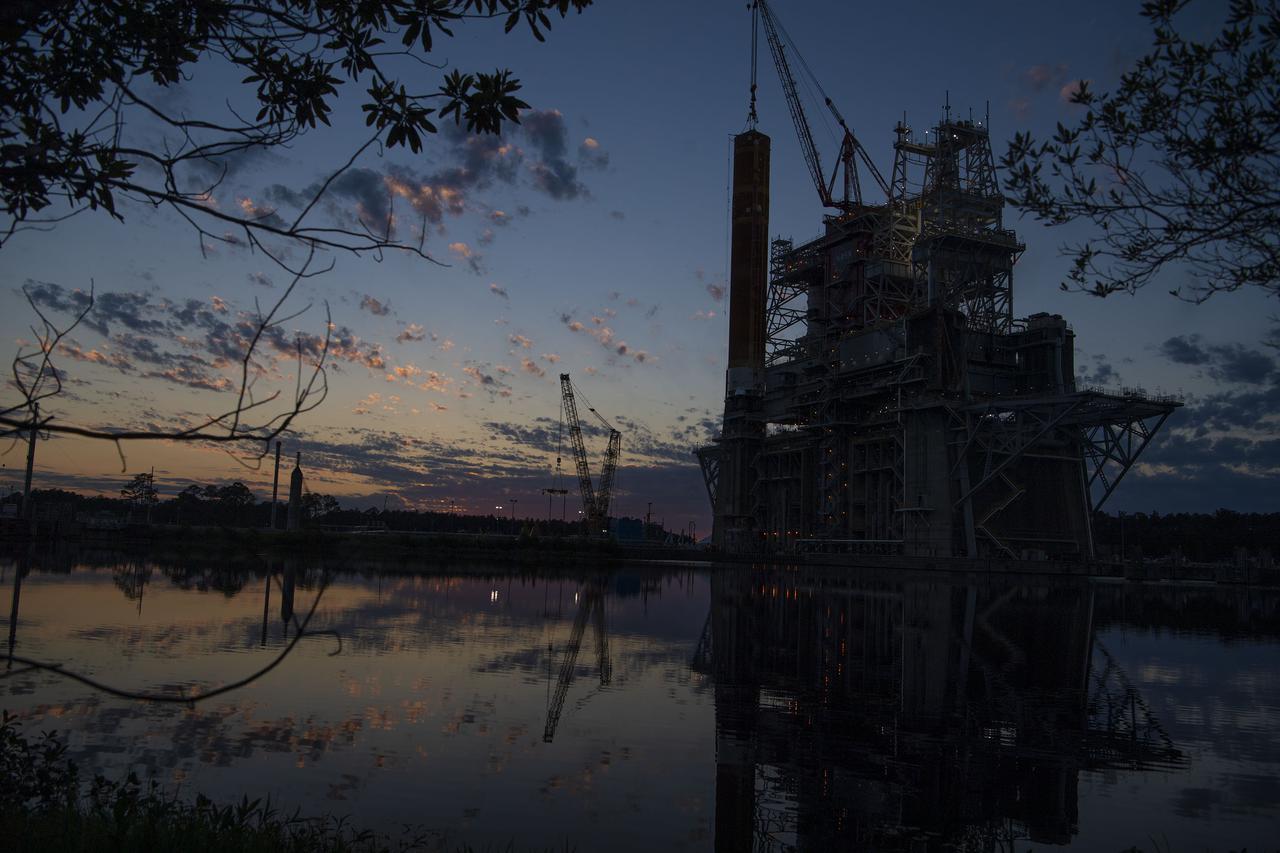
Following a successful Green Run hot fire at NASA’s Stennis Space Center near Bay St. Louis, Mississippi, on March 18, members of a blended team work April 19-20 to remove the first core stage of the agency’s Space Launch System (SLS) rocket from the B-2 Test Stand. The work required crews to lift the core stage from its vertical placement in the stand and lower it to a horizontal position on the B-2 Test Stand tarmac. The stage now will be loaded on NASA’s Pegasus barge for transport to Kennedy, where it will be prepared for launch of the Artemis I mission. Removal of the largest rocket stage ever built by NASA followed completion of a series of eight Green Run tests over the past year. During the Green Run series, teams performed a comprehensive test of the stand’s sophisticated and integrated systems. Photo Credit: NASA

Following a successful Green Run hot fire at NASA’s Stennis Space Center near Bay St. Louis, Mississippi, on March 18, members of a blended team work April 19-20 to remove the first core stage of the agency’s Space Launch System (SLS) rocket from the B-2 Test Stand. The work required crews to lift the core stage from its vertical placement in the stand and lower it to a horizontal position on the B-2 Test Stand tarmac. The stage now will be loaded on NASA’s Pegasus barge for transport to Kennedy, where it will be prepared for launch of the Artemis I mission. Removal of the largest rocket stage ever built by NASA followed completion of a series of eight Green Run tests over the past year. During the Green Run series, teams performed a comprehensive test of the stand’s sophisticated and integrated systems. Photo Credit: NASA
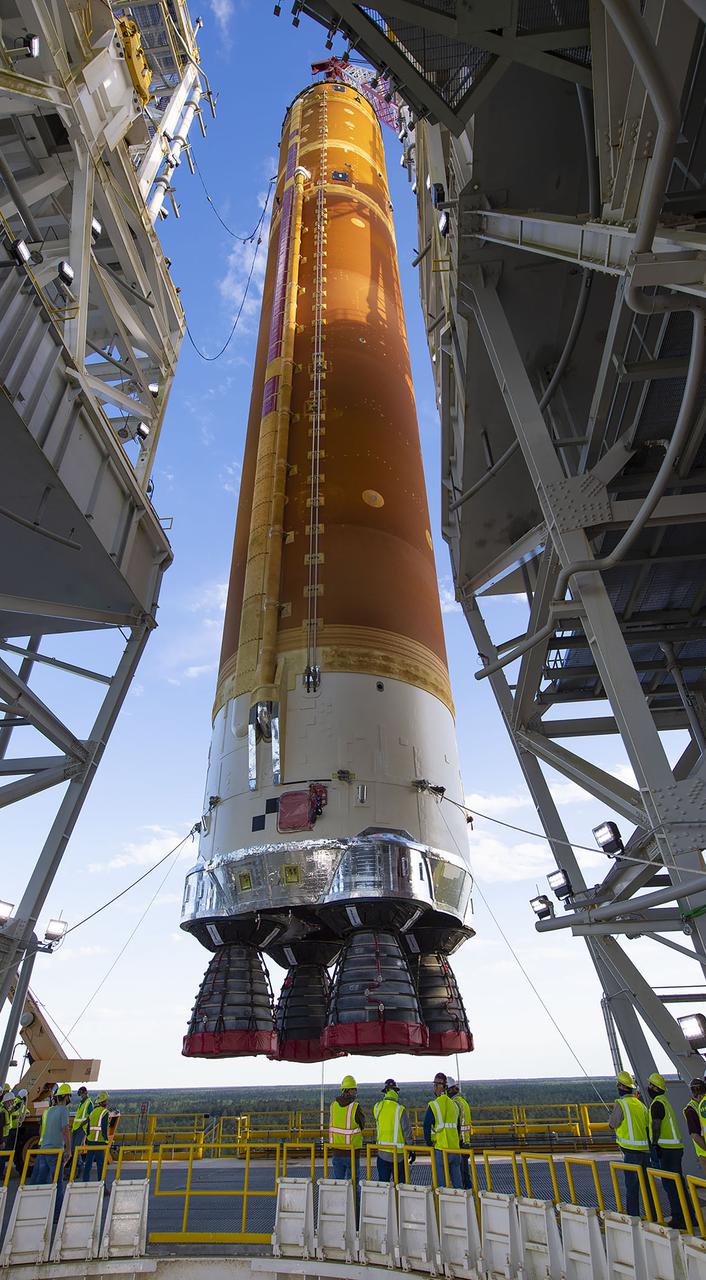
Following a successful Green Run hot fire at NASA’s Stennis Space Center near Bay St. Louis, Mississippi, on March 18, members of a blended team work April 19-20 to remove the first core stage of the agency’s Space Launch System (SLS) rocket from the B-2 Test Stand. The work required crews to lift the core stage from its vertical placement in the stand and lower it to a horizontal position on the B-2 Test Stand tarmac. The stage now will be loaded on NASA’s Pegasus barge for transport to Kennedy, where it will be prepared for launch of the Artemis I mission. Removal of the largest rocket stage ever built by NASA followed completion of a series of eight Green Run tests over the past year. During the Green Run series, teams performed a comprehensive test of the stand’s sophisticated and integrated systems. Photo Credit: NASA
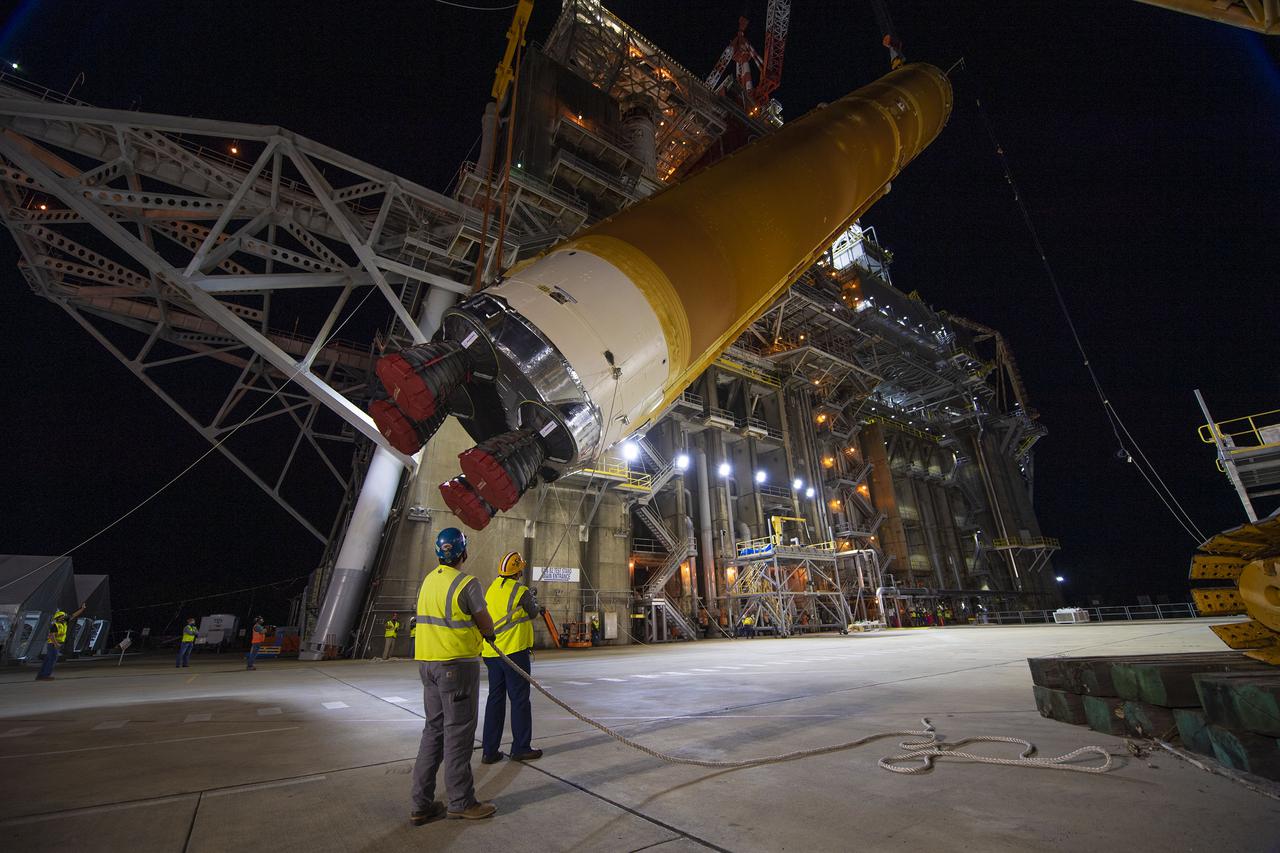
Following a successful Green Run hot fire at NASA’s Stennis Space Center near Bay St. Louis, Mississippi, on March 18, members of a blended team work April 19-20 to remove the first core stage of the agency’s Space Launch System (SLS) rocket from the B-2 Test Stand. The work required crews to lift the core stage from its vertical placement in the stand and lower it to a horizontal position on the B-2 Test Stand tarmac. The stage now will be loaded on NASA’s Pegasus barge for transport to Kennedy, where it will be prepared for launch of the Artemis I mission. Removal of the largest rocket stage ever built by NASA followed completion of a series of eight Green Run tests over the past year. During the Green Run series, teams performed a comprehensive test of the stand’s sophisticated and integrated systems. Photo Credit: NASA
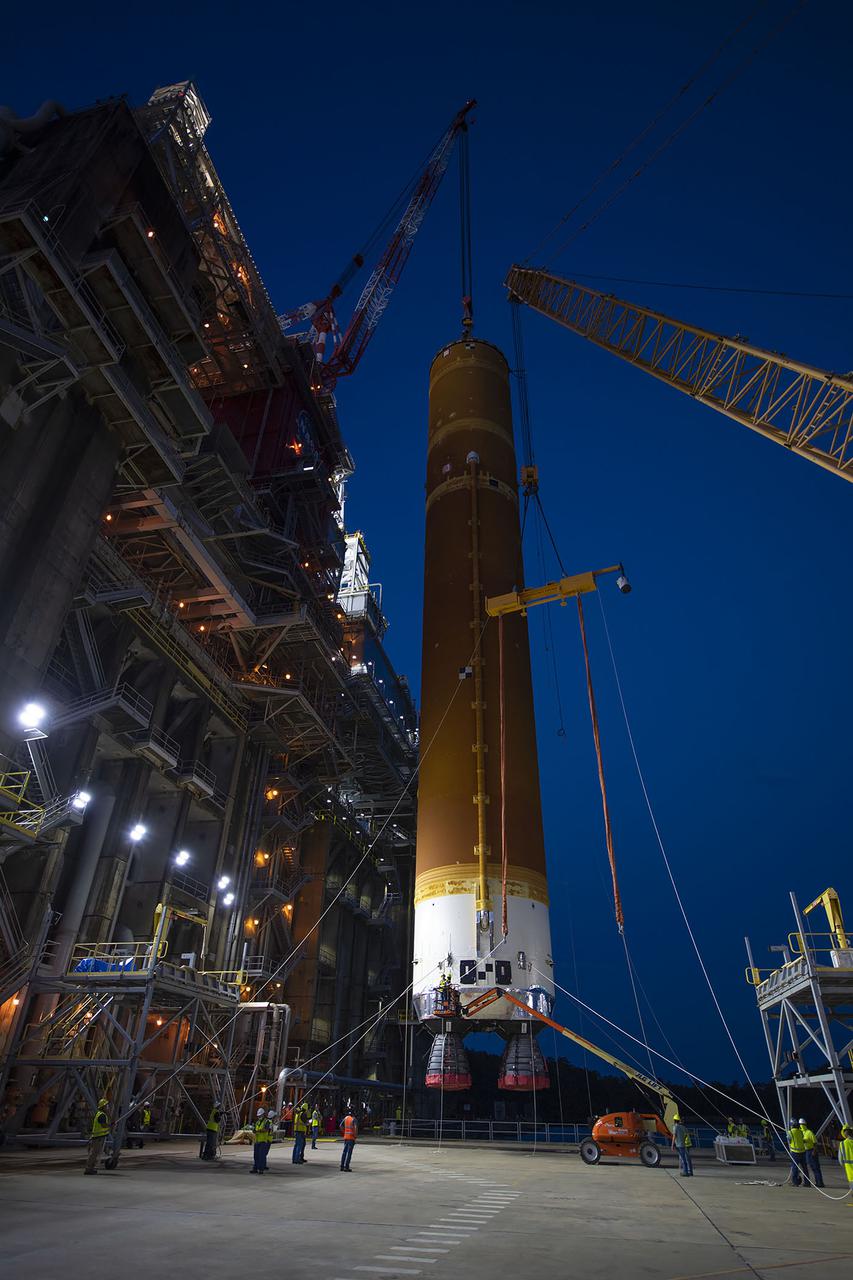
Following a successful Green Run hot fire at NASA’s Stennis Space Center near Bay St. Louis, Mississippi, on March 18, members of a blended team work April 19-20 to remove the first core stage of the agency’s Space Launch System (SLS) rocket from the B-2 Test Stand. The work required crews to lift the core stage from its vertical placement in the stand and lower it to a horizontal position on the B-2 Test Stand tarmac. The stage now will be loaded on NASA’s Pegasus barge for transport to Kennedy, where it will be prepared for launch of the Artemis I mission. Removal of the largest rocket stage ever built by NASA followed completion of a series of eight Green Run tests over the past year. During the Green Run series, teams performed a comprehensive test of the stand’s sophisticated and integrated systems. Photo Credit: NASA
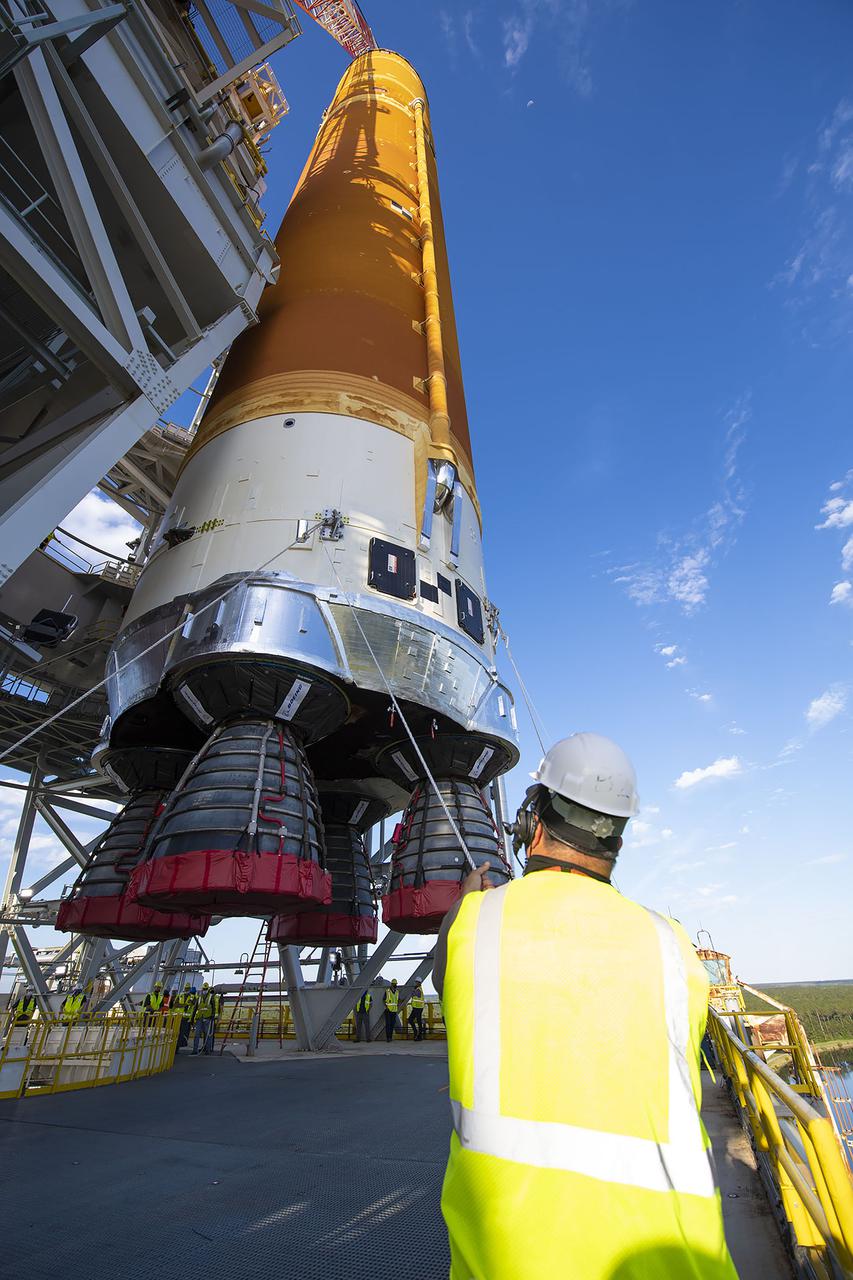
Following a successful Green Run hot fire at NASA’s Stennis Space Center near Bay St. Louis, Mississippi, on March 18, members of a blended team work April 19-20 to remove the first core stage of the agency’s Space Launch System (SLS) rocket from the B-2 Test Stand. The work required crews to lift the core stage from its vertical placement in the stand and lower it to a horizontal position on the B-2 Test Stand tarmac. The stage now will be loaded on NASA’s Pegasus barge for transport to Kennedy, where it will be prepared for launch of the Artemis I mission. Removal of the largest rocket stage ever built by NASA followed completion of a series of eight Green Run tests over the past year. During the Green Run series, teams performed a comprehensive test of the stand’s sophisticated and integrated systems. Photo Credit: NASA
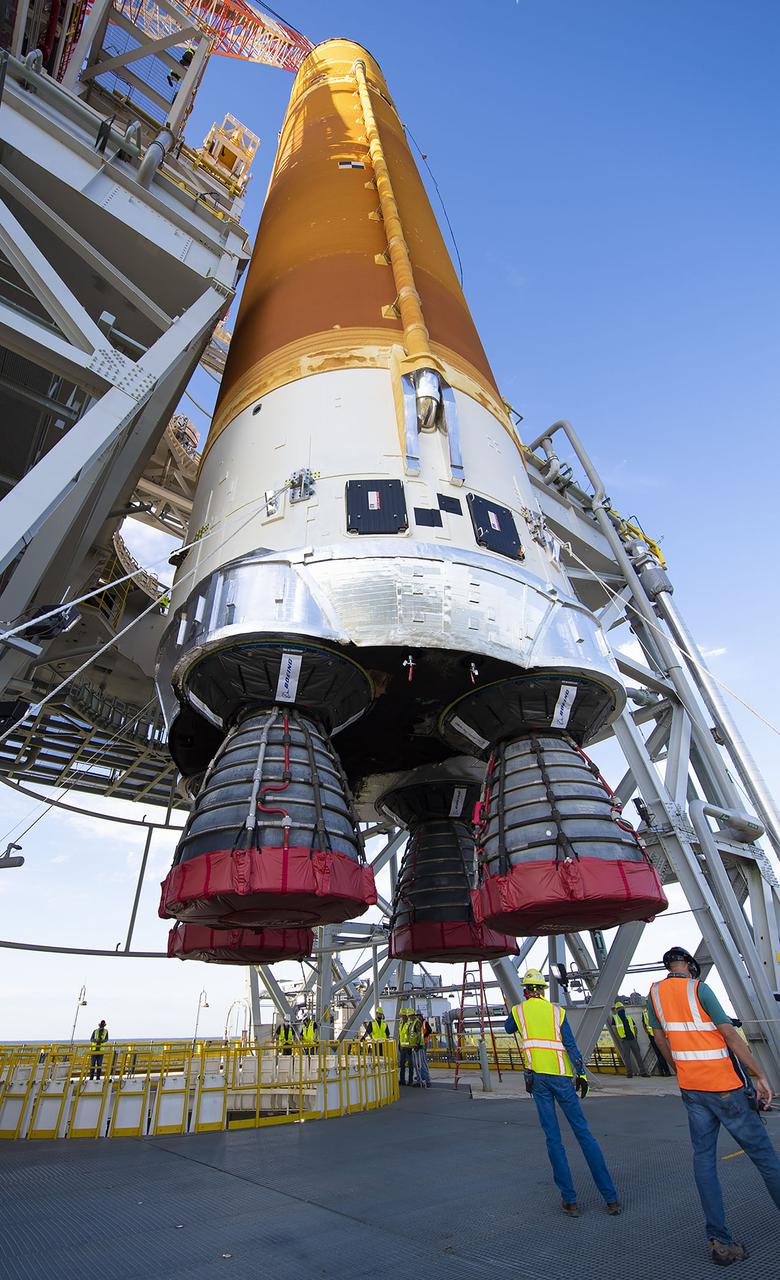
Following a successful Green Run hot fire at NASA’s Stennis Space Center near Bay St. Louis, Mississippi, on March 18, members of a blended team work April 19-20 to remove the first core stage of the agency’s Space Launch System (SLS) rocket from the B-2 Test Stand. The work required crews to lift the core stage from its vertical placement in the stand and lower it to a horizontal position on the B-2 Test Stand tarmac. The stage now will be loaded on NASA’s Pegasus barge for transport to Kennedy, where it will be prepared for launch of the Artemis I mission. Removal of the largest rocket stage ever built by NASA followed completion of a series of eight Green Run tests over the past year. During the Green Run series, teams performed a comprehensive test of the stand’s sophisticated and integrated systems. Photo Credit: NASA
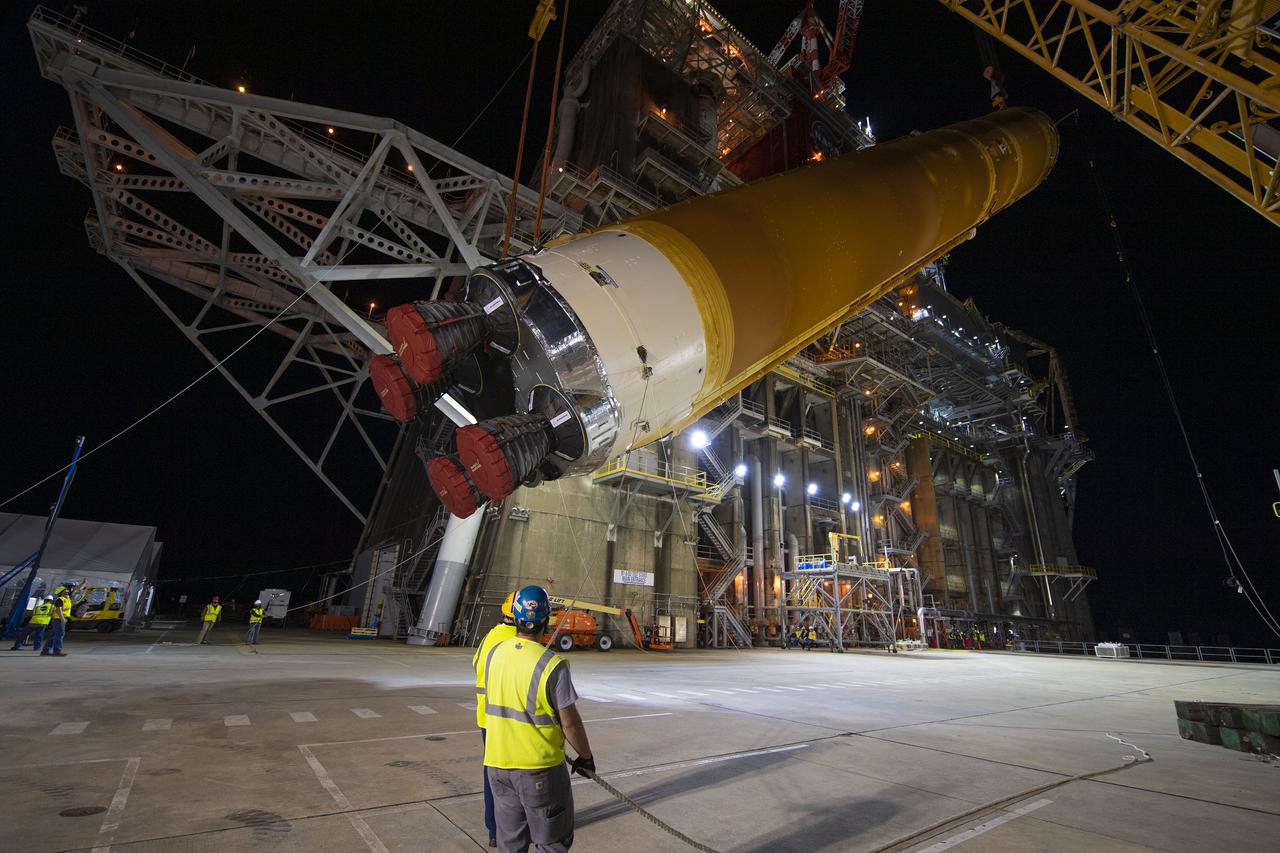
Following a successful Green Run hot fire at NASA’s Stennis Space Center near Bay St. Louis, Mississippi, on March 18, members of a blended team work April 19-20 to remove the first core stage of the agency’s Space Launch System (SLS) rocket from the B-2 Test Stand. The work required crews to lift the core stage from its vertical placement in the stand and lower it to a horizontal position on the B-2 Test Stand tarmac. The stage now will be loaded on NASA’s Pegasus barge for transport to Kennedy, where it will be prepared for launch of the Artemis I mission. Removal of the largest rocket stage ever built by NASA followed completion of a series of eight Green Run tests over the past year. During the Green Run series, teams performed a comprehensive test of the stand’s sophisticated and integrated systems. Photo Credit: NASA
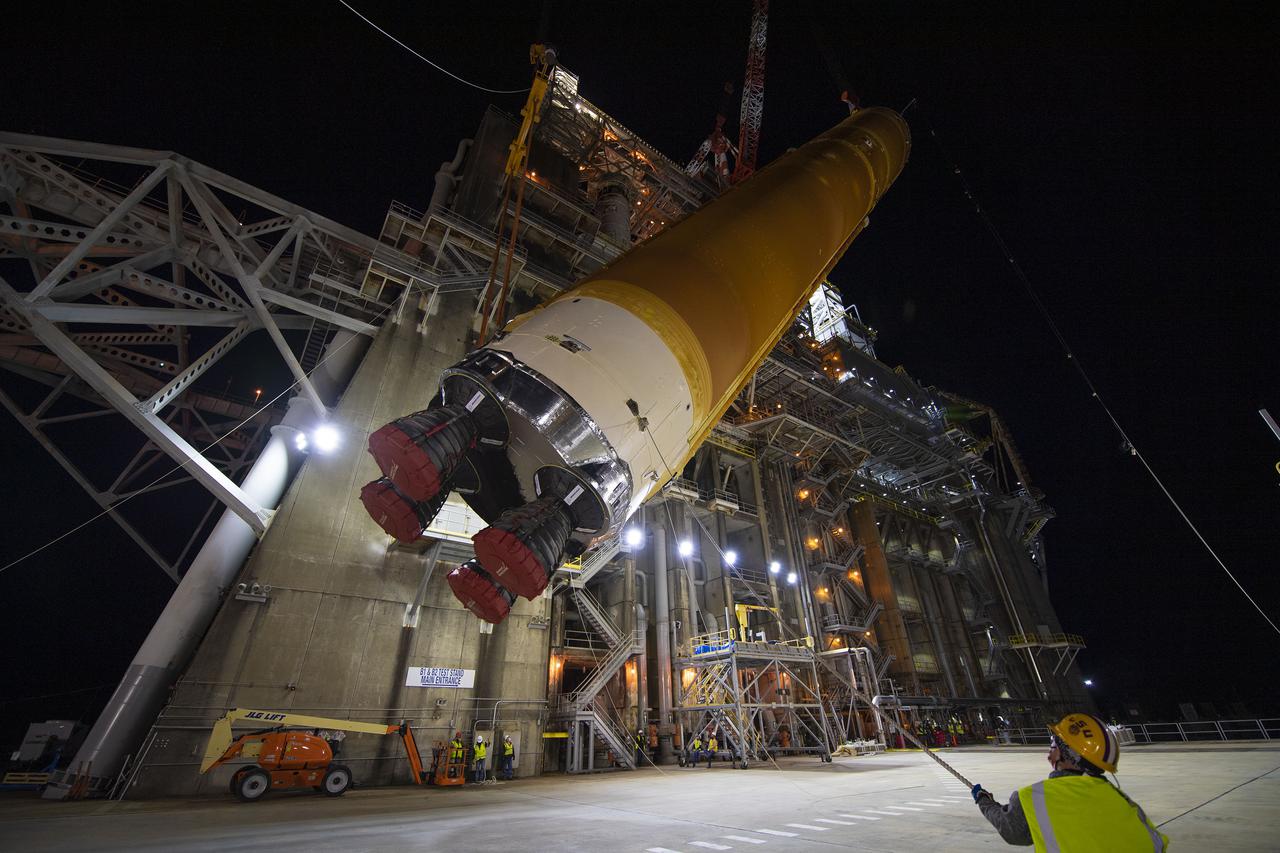
Following a successful Green Run hot fire at NASA’s Stennis Space Center near Bay St. Louis, Mississippi, on March 18, members of a blended team work April 19-20 to remove the first core stage of the agency’s Space Launch System (SLS) rocket from the B-2 Test Stand. The work required crews to lift the core stage from its vertical placement in the stand and lower it to a horizontal position on the B-2 Test Stand tarmac. The stage now will be loaded on NASA’s Pegasus barge for transport to Kennedy, where it will be prepared for launch of the Artemis I mission. Removal of the largest rocket stage ever built by NASA followed completion of a series of eight Green Run tests over the past year. During the Green Run series, teams performed a comprehensive test of the stand’s sophisticated and integrated systems. Photo Credit: NASA
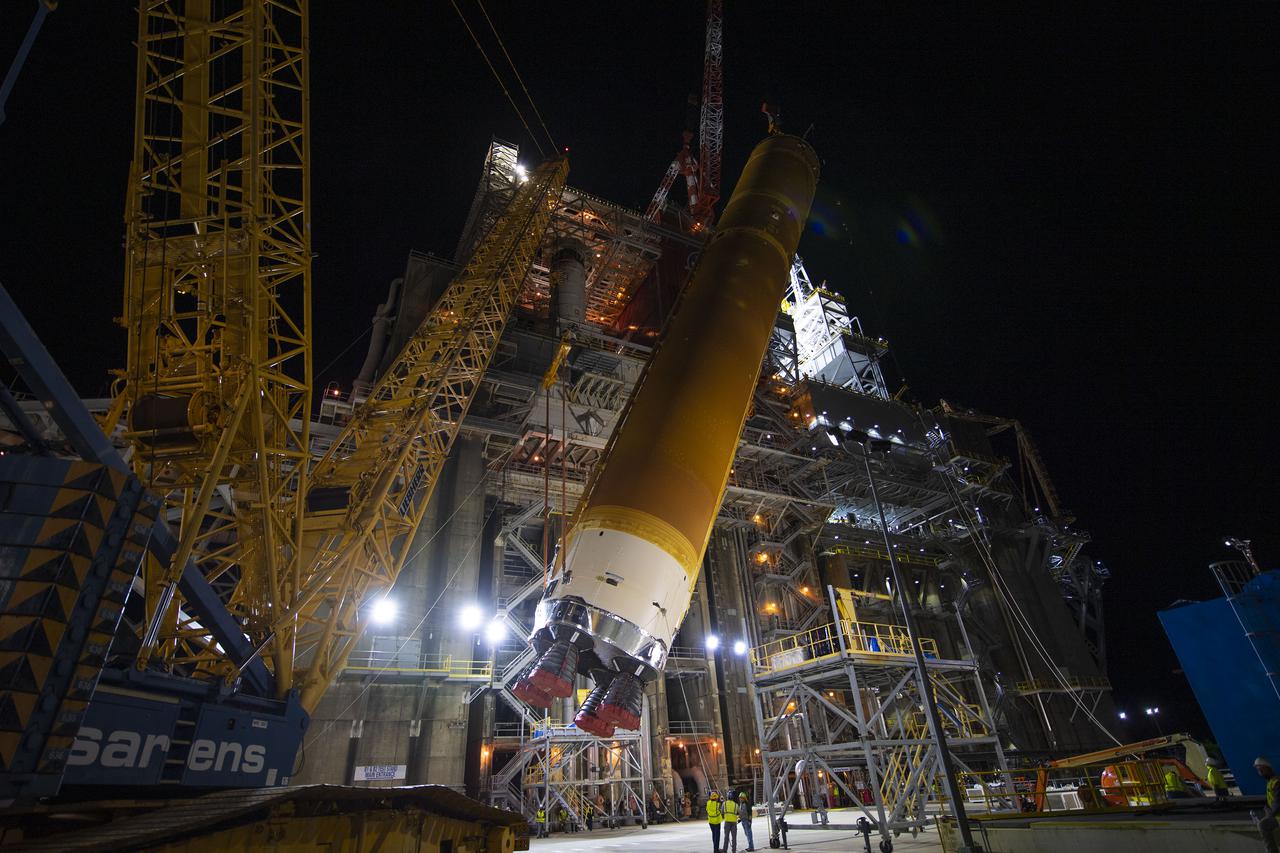
Following a successful Green Run hot fire at NASA’s Stennis Space Center near Bay St. Louis, Mississippi, on March 18, members of a blended team work April 19-20 to remove the first core stage of the agency’s Space Launch System (SLS) rocket from the B-2 Test Stand. The work required crews to lift the core stage from its vertical placement in the stand and lower it to a horizontal position on the B-2 Test Stand tarmac. The stage now will be loaded on NASA’s Pegasus barge for transport to Kennedy, where it will be prepared for launch of the Artemis I mission. Removal of the largest rocket stage ever built by NASA followed completion of a series of eight Green Run tests over the past year. During the Green Run series, teams performed a comprehensive test of the stand’s sophisticated and integrated systems. Photo Credit: NASA
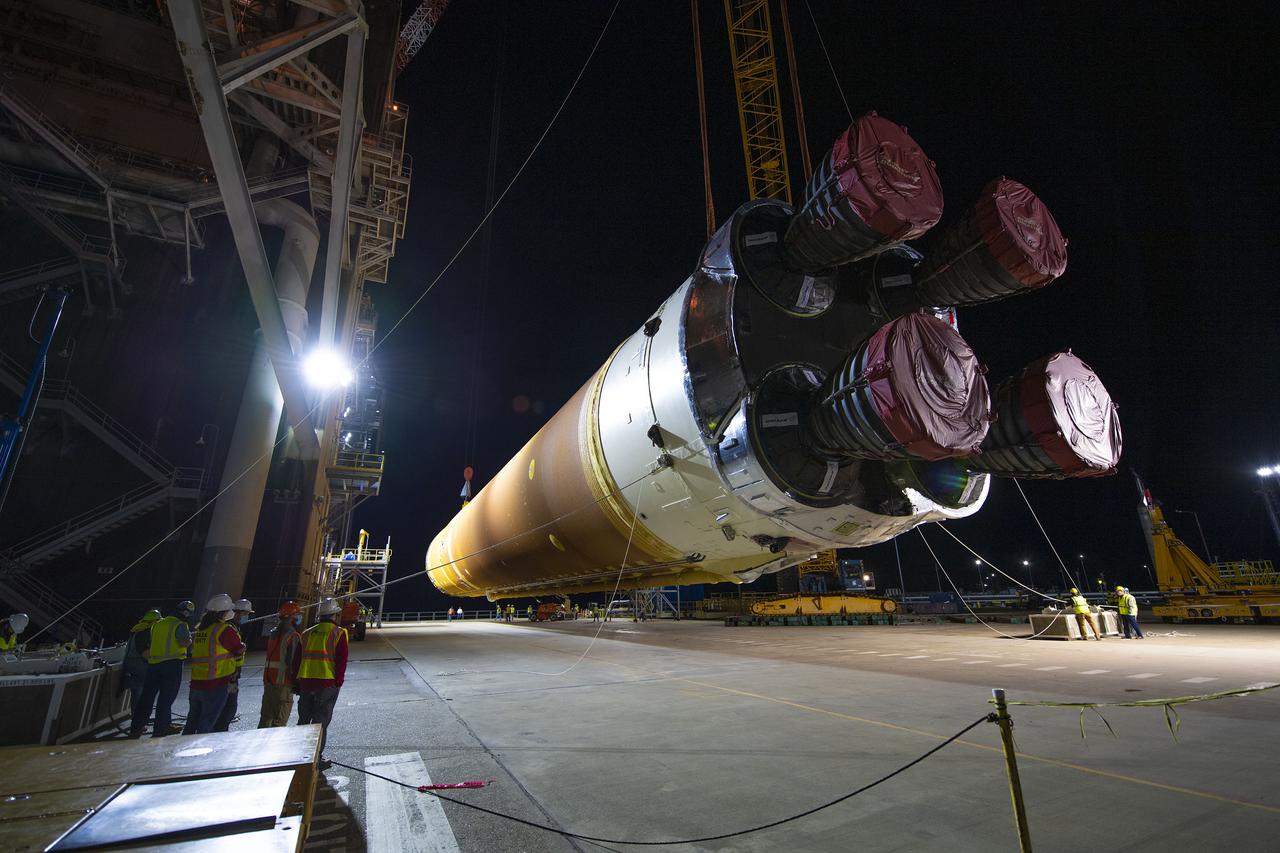
Following a successful Green Run hot fire at NASA’s Stennis Space Center near Bay St. Louis, Mississippi, on March 18, members of a blended team work April 19-20 to remove the first core stage of the agency’s Space Launch System (SLS) rocket from the B-2 Test Stand. The work required crews to lift the core stage from its vertical placement in the stand and lower it to a horizontal position on the B-2 Test Stand tarmac. The stage now will be loaded on NASA’s Pegasus barge for transport to Kennedy, where it will be prepared for launch of the Artemis I mission. Removal of the largest rocket stage ever built by NASA followed completion of a series of eight Green Run tests over the past year. During the Green Run series, teams performed a comprehensive test of the stand’s sophisticated and integrated systems. Photo Credit: NASA

Following a successful Green Run hot fire at NASA’s Stennis Space Center near Bay St. Louis, Mississippi, on March 18, members of a blended team work April 19-20 to remove the first core stage of the agency’s Space Launch System (SLS) rocket from the B-2 Test Stand. The work required crews to lift the core stage from its vertical placement in the stand and lower it to a horizontal position on the B-2 Test Stand tarmac. The stage now will be loaded on NASA’s Pegasus barge for transport to Kennedy, where it will be prepared for launch of the Artemis I mission. Removal of the largest rocket stage ever built by NASA followed completion of a series of eight Green Run tests over the past year. During the Green Run series, teams performed a comprehensive test of the stand’s sophisticated and integrated systems. Photo Credit: NASA
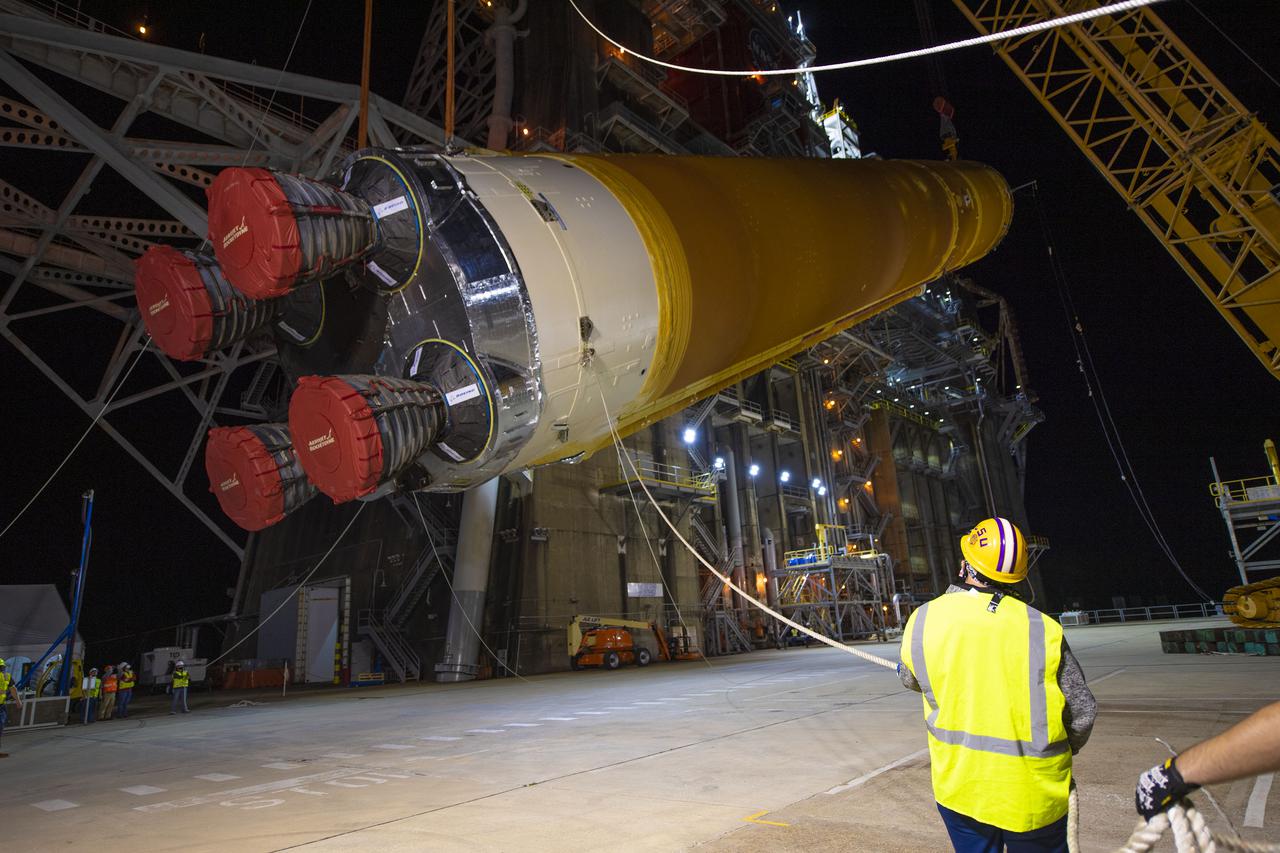
Following a successful Green Run hot fire at NASA’s Stennis Space Center near Bay St. Louis, Mississippi, on March 18, members of a blended team work April 19-20 to remove the first core stage of the agency’s Space Launch System (SLS) rocket from the B-2 Test Stand. The work required crews to lift the core stage from its vertical placement in the stand and lower it to a horizontal position on the B-2 Test Stand tarmac. The stage now will be loaded on NASA’s Pegasus barge for transport to Kennedy, where it will be prepared for launch of the Artemis I mission. Removal of the largest rocket stage ever built by NASA followed completion of a series of eight Green Run tests over the past year. During the Green Run series, teams performed a comprehensive test of the stand’s sophisticated and integrated systems. Photo Credit: NASA
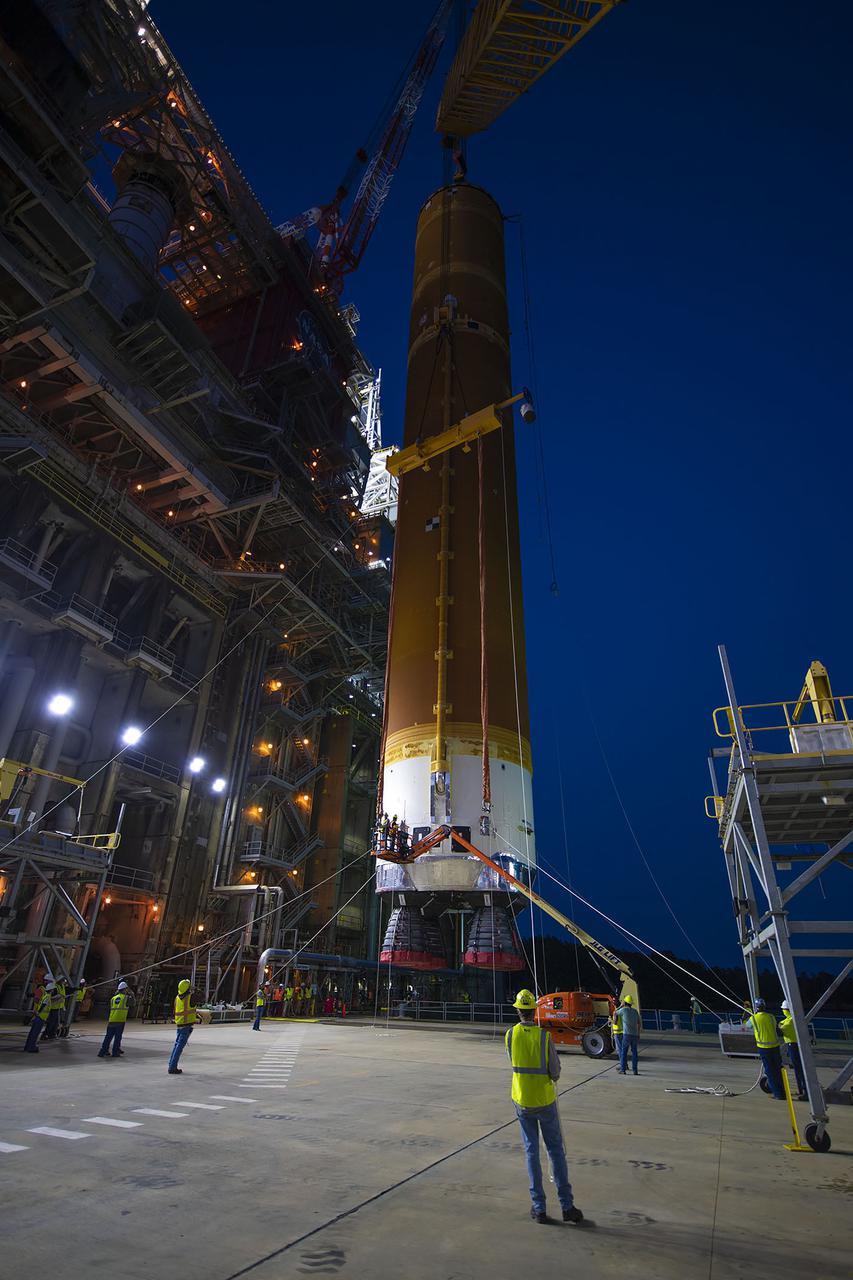
Following a successful Green Run hot fire at NASA’s Stennis Space Center near Bay St. Louis, Mississippi, on March 18, members of a blended team work April 19-20 to remove the first core stage of the agency’s Space Launch System (SLS) rocket from the B-2 Test Stand. The work required crews to lift the core stage from its vertical placement in the stand and lower it to a horizontal position on the B-2 Test Stand tarmac. The stage now will be loaded on NASA’s Pegasus barge for transport to Kennedy, where it will be prepared for launch of the Artemis I mission. Removal of the largest rocket stage ever built by NASA followed completion of a series of eight Green Run tests over the past year. During the Green Run series, teams performed a comprehensive test of the stand’s sophisticated and integrated systems. Photo Credit: NASA
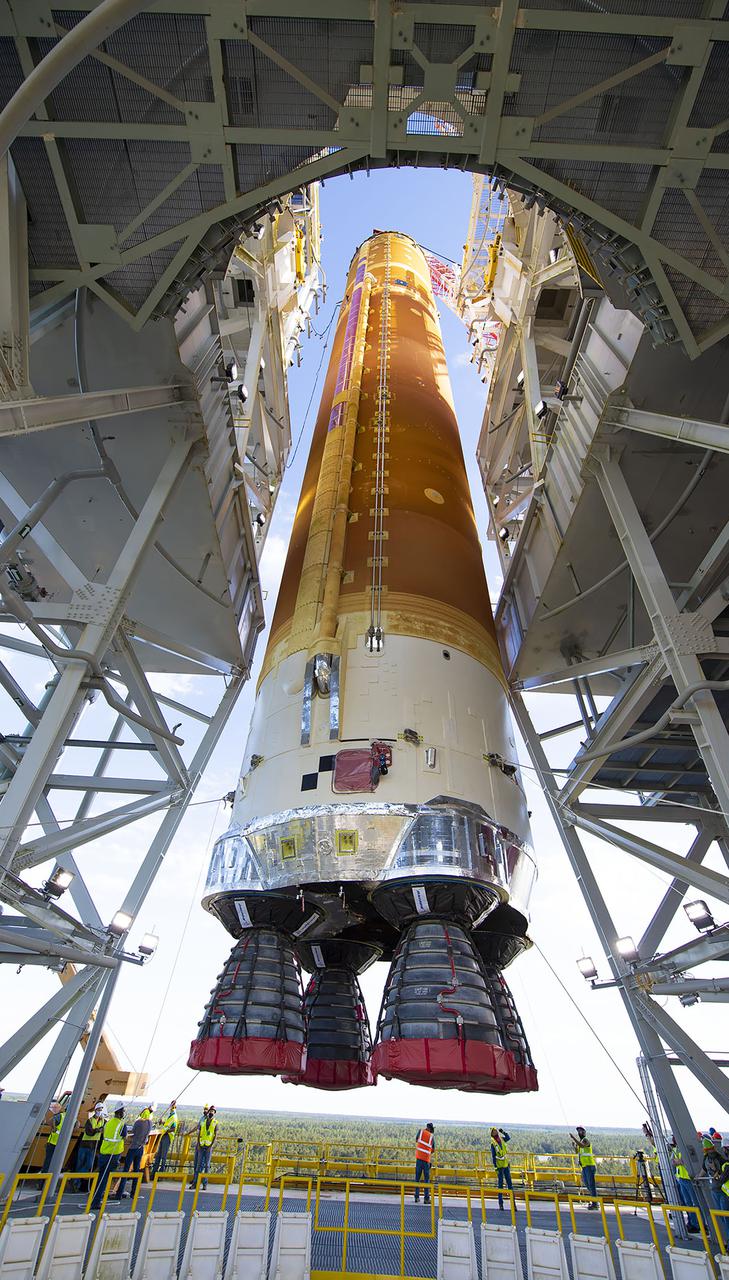
Following a successful Green Run hot fire at NASA’s Stennis Space Center near Bay St. Louis, Mississippi, on March 18, members of a blended team work April 19-20 to remove the first core stage of the agency’s Space Launch System (SLS) rocket from the B-2 Test Stand. The work required crews to lift the core stage from its vertical placement in the stand and lower it to a horizontal position on the B-2 Test Stand tarmac. The stage now will be loaded on NASA’s Pegasus barge for transport to Kennedy, where it will be prepared for launch of the Artemis I mission. Removal of the largest rocket stage ever built by NASA followed completion of a series of eight Green Run tests over the past year. During the Green Run series, teams performed a comprehensive test of the stand’s sophisticated and integrated systems. Photo Credit: NASA

Following a successful Green Run hot fire at NASA’s Stennis Space Center near Bay St. Louis, Mississippi, on March 18, members of a blended team work April 19-20 to remove the first core stage of the agency’s Space Launch System (SLS) rocket from the B-2 Test Stand. The work required crews to lift the core stage from its vertical placement in the stand and lower it to a horizontal position on the B-2 Test Stand tarmac. The stage now will be loaded on NASA’s Pegasus barge for transport to Kennedy, where it will be prepared for launch of the Artemis I mission. Removal of the largest rocket stage ever built by NASA followed completion of a series of eight Green Run tests over the past year. During the Green Run series, teams performed a comprehensive test of the stand’s sophisticated and integrated systems. Photo Credit: NASA
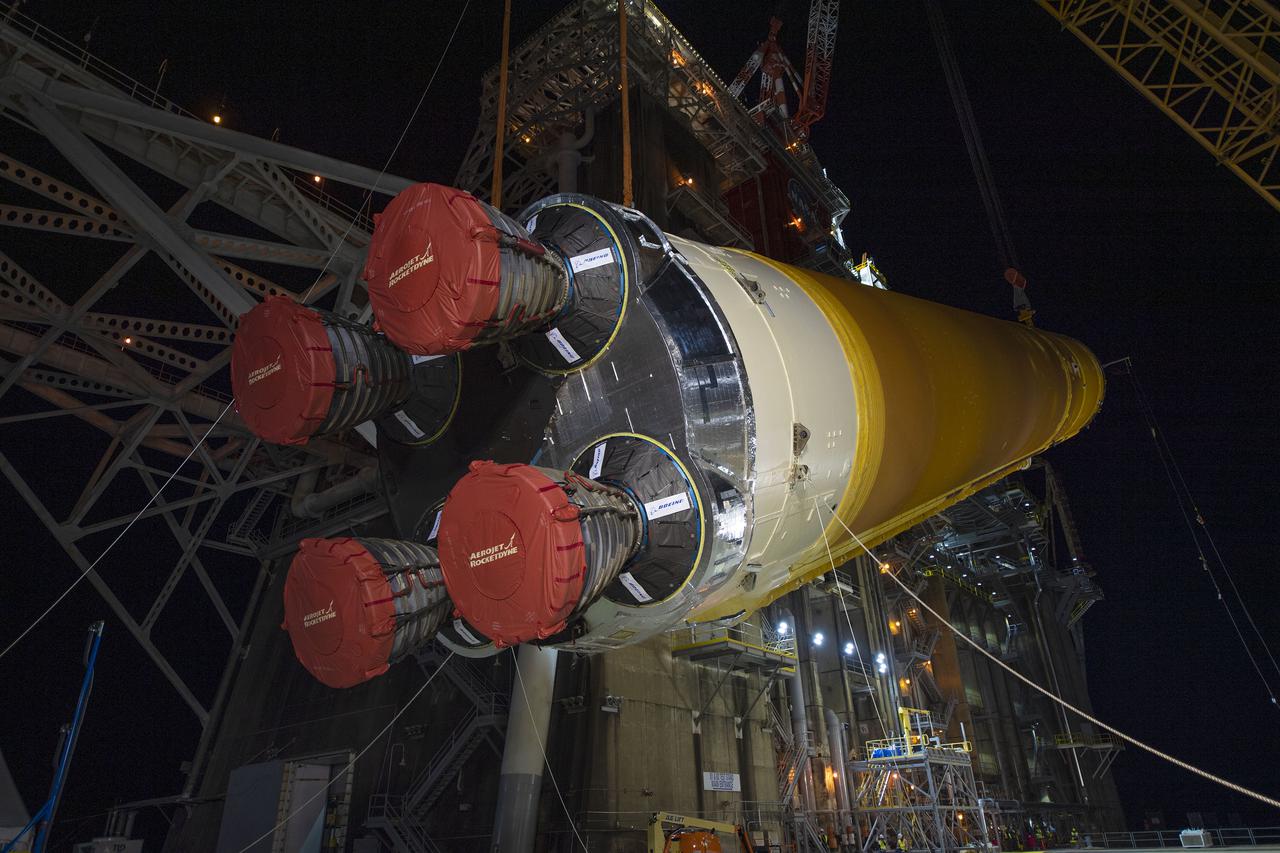
Following a successful Green Run hot fire at NASA’s Stennis Space Center near Bay St. Louis, Mississippi, on March 18, members of a blended team work April 19-20 to remove the first core stage of the agency’s Space Launch System (SLS) rocket from the B-2 Test Stand. The work required crews to lift the core stage from its vertical placement in the stand and lower it to a horizontal position on the B-2 Test Stand tarmac. The stage now will be loaded on NASA’s Pegasus barge for transport to Kennedy, where it will be prepared for launch of the Artemis I mission. Removal of the largest rocket stage ever built by NASA followed completion of a series of eight Green Run tests over the past year. During the Green Run series, teams performed a comprehensive test of the stand’s sophisticated and integrated systems. Photo Credit: NASA
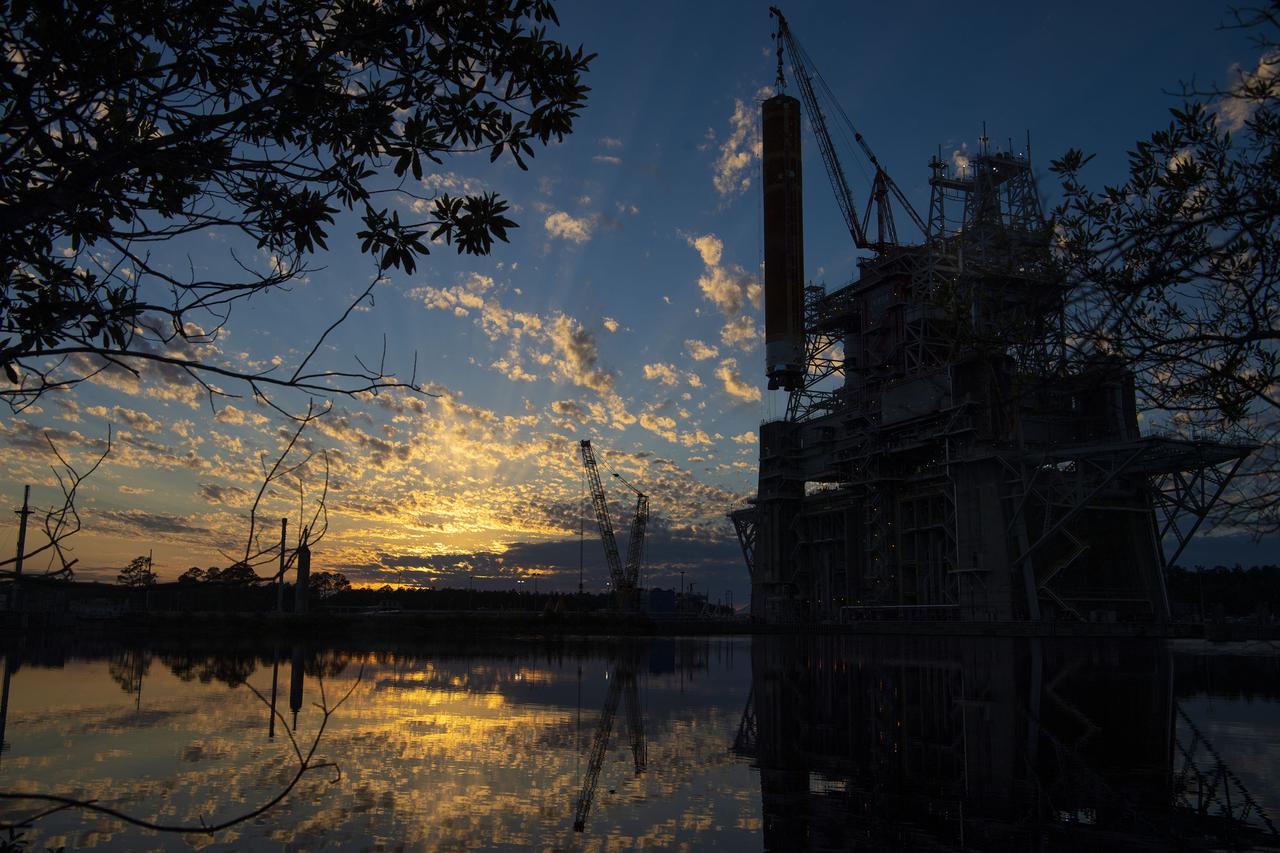
Following a successful Green Run hot fire at NASA’s Stennis Space Center near Bay St. Louis, Mississippi, on March 18, members of a blended team work April 19-20 to remove the first core stage of the agency’s Space Launch System (SLS) rocket from the B-2 Test Stand. The work required crews to lift the core stage from its vertical placement in the stand and lower it to a horizontal position on the B-2 Test Stand tarmac. The stage now will be loaded on NASA’s Pegasus barge for transport to Kennedy, where it will be prepared for launch of the Artemis I mission. Removal of the largest rocket stage ever built by NASA followed completion of a series of eight Green Run tests over the past year. During the Green Run series, teams performed a comprehensive test of the stand’s sophisticated and integrated systems. Photo Credit: NASA
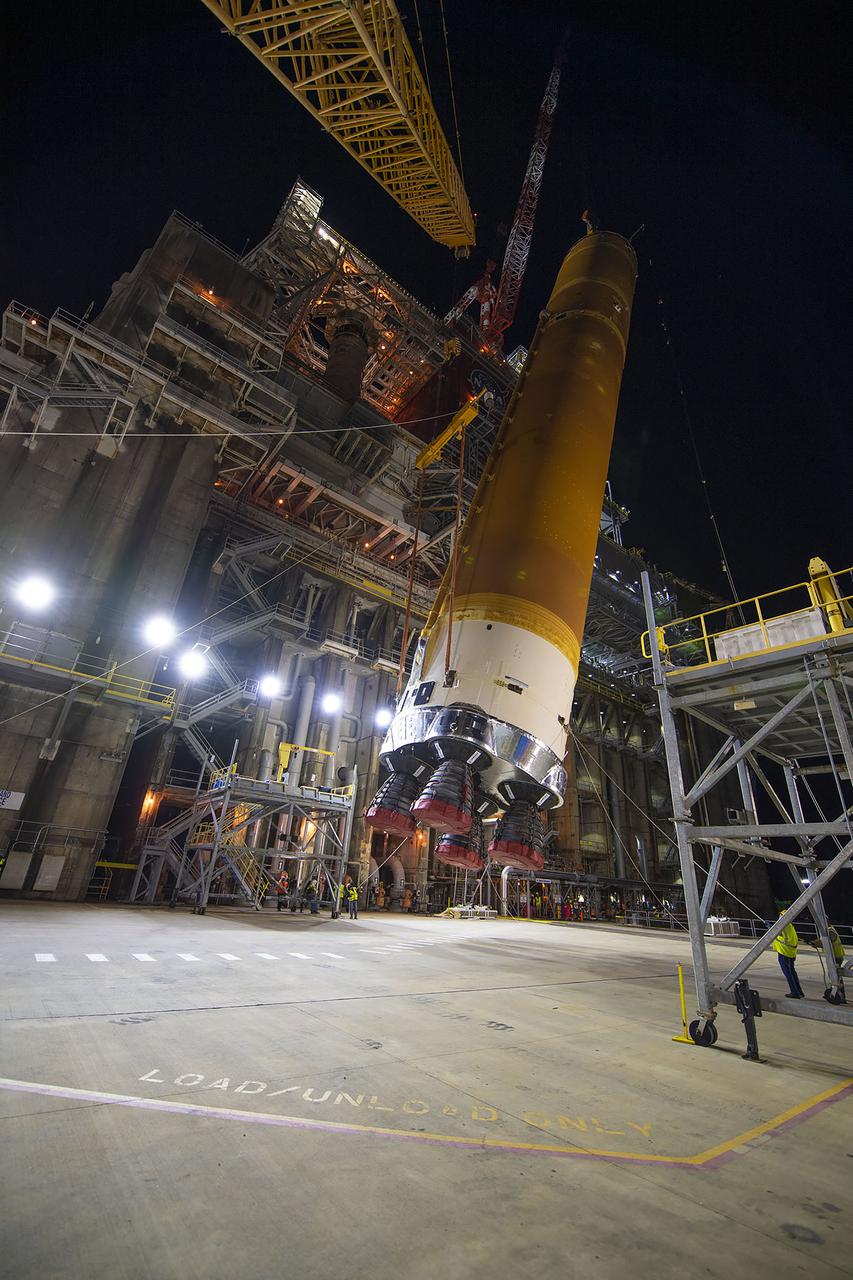
Following a successful Green Run hot fire at NASA’s Stennis Space Center near Bay St. Louis, Mississippi, on March 18, members of a blended team work April 19-20 to remove the first core stage of the agency’s Space Launch System (SLS) rocket from the B-2 Test Stand. The work required crews to lift the core stage from its vertical placement in the stand and lower it to a horizontal position on the B-2 Test Stand tarmac. The stage now will be loaded on NASA’s Pegasus barge for transport to Kennedy, where it will be prepared for launch of the Artemis I mission. Removal of the largest rocket stage ever built by NASA followed completion of a series of eight Green Run tests over the past year. During the Green Run series, teams performed a comprehensive test of the stand’s sophisticated and integrated systems. Photo Credit: NASA
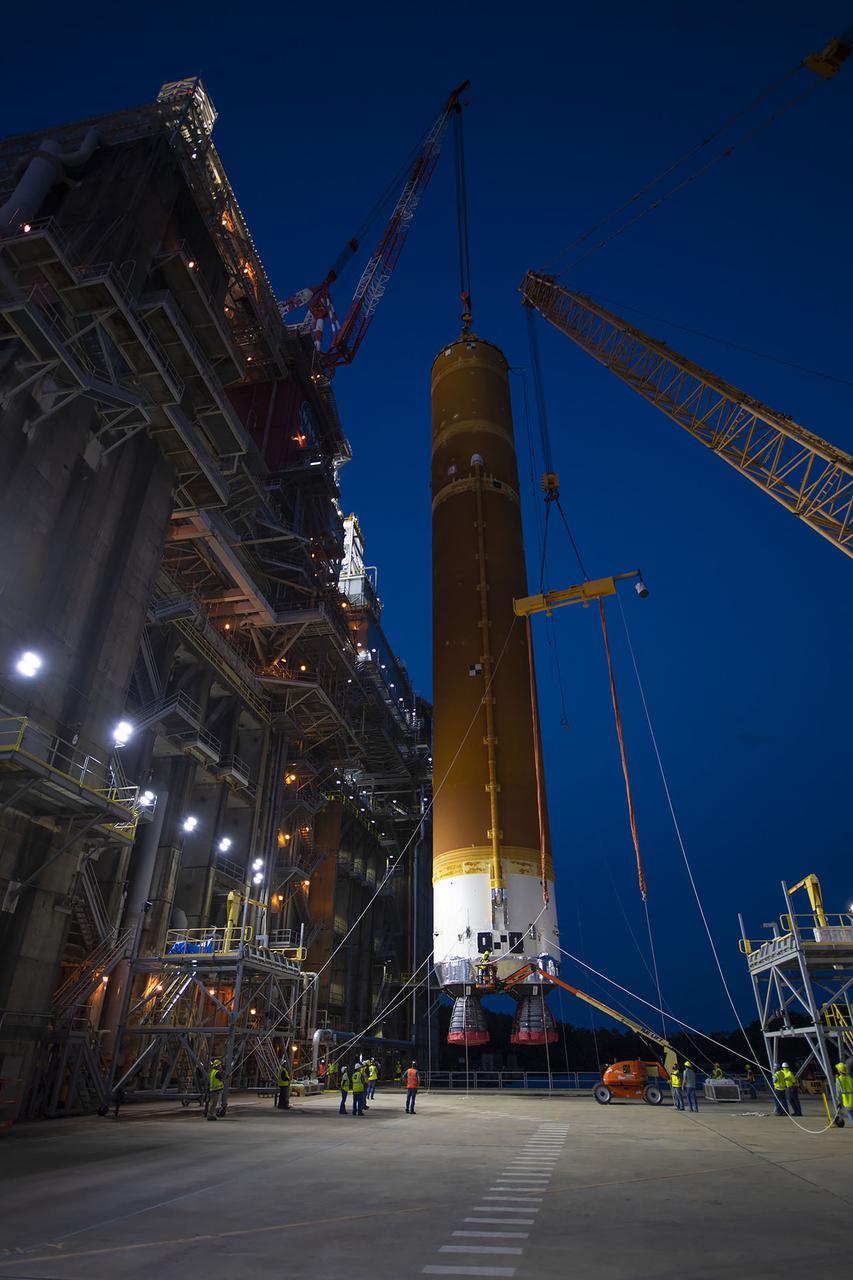
Following a successful Green Run hot fire at NASA’s Stennis Space Center near Bay St. Louis, Mississippi, on March 18, members of a blended team work April 19-20 to remove the first core stage of the agency’s Space Launch System (SLS) rocket from the B-2 Test Stand. The work required crews to lift the core stage from its vertical placement in the stand and lower it to a horizontal position on the B-2 Test Stand tarmac. The stage now will be loaded on NASA’s Pegasus barge for transport to Kennedy, where it will be prepared for launch of the Artemis I mission. Removal of the largest rocket stage ever built by NASA followed completion of a series of eight Green Run tests over the past year. During the Green Run series, teams performed a comprehensive test of the stand’s sophisticated and integrated systems. Photo Credit: NASA
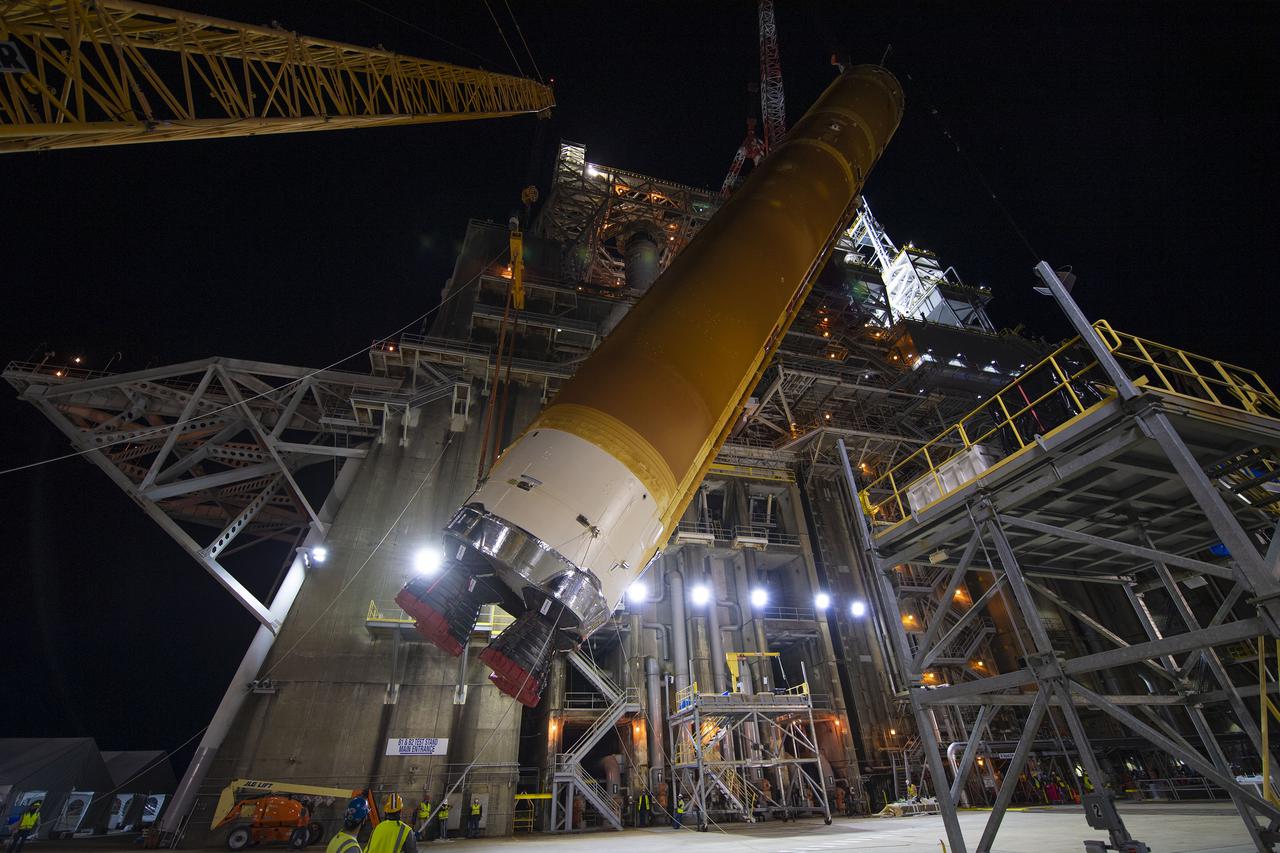
Following a successful Green Run hot fire at NASA’s Stennis Space Center near Bay St. Louis, Mississippi, on March 18, members of a blended team work April 19-20 to remove the first core stage of the agency’s Space Launch System (SLS) rocket from the B-2 Test Stand. The work required crews to lift the core stage from its vertical placement in the stand and lower it to a horizontal position on the B-2 Test Stand tarmac. The stage now will be loaded on NASA’s Pegasus barge for transport to Kennedy, where it will be prepared for launch of the Artemis I mission. Removal of the largest rocket stage ever built by NASA followed completion of a series of eight Green Run tests over the past year. During the Green Run series, teams performed a comprehensive test of the stand’s sophisticated and integrated systems. Photo Credit: NASA
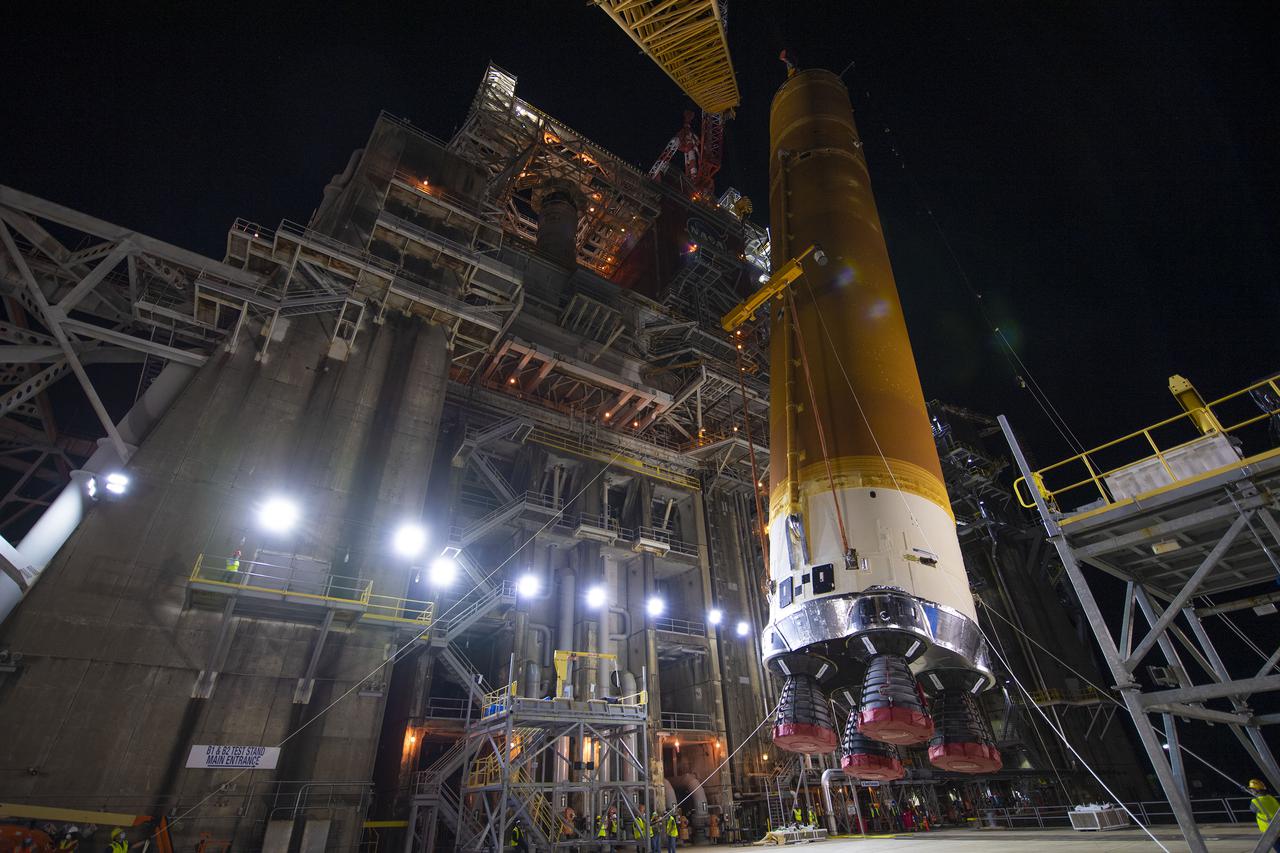
Following a successful Green Run hot fire at NASA’s Stennis Space Center near Bay St. Louis, Mississippi, on March 18, members of a blended team work April 19-20 to remove the first core stage of the agency’s Space Launch System (SLS) rocket from the B-2 Test Stand. The work required crews to lift the core stage from its vertical placement in the stand and lower it to a horizontal position on the B-2 Test Stand tarmac. The stage now will be loaded on NASA’s Pegasus barge for transport to Kennedy, where it will be prepared for launch of the Artemis I mission. Removal of the largest rocket stage ever built by NASA followed completion of a series of eight Green Run tests over the past year. During the Green Run series, teams performed a comprehensive test of the stand’s sophisticated and integrated systems. Photo Credit: NASA
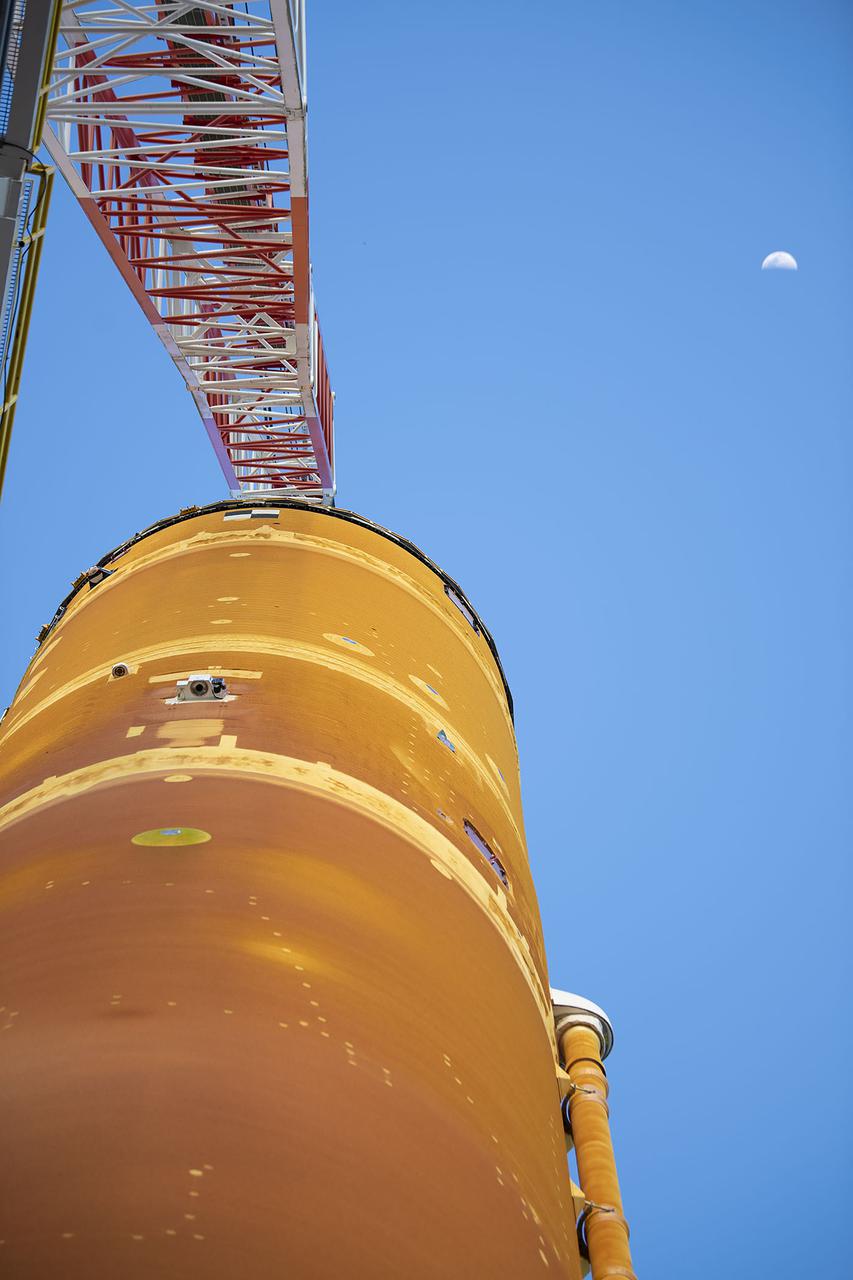
Following a successful Green Run hot fire at NASA’s Stennis Space Center near Bay St. Louis, Mississippi, on March 18, members of a blended team work April 19-20 to remove the first core stage of the agency’s Space Launch System (SLS) rocket from the B-2 Test Stand. The work required crews to lift the core stage from its vertical placement in the stand and lower it to a horizontal position on the B-2 Test Stand tarmac. The stage now will be loaded on NASA’s Pegasus barge for transport to Kennedy, where it will be prepared for launch of the Artemis I mission. Removal of the largest rocket stage ever built by NASA followed completion of a series of eight Green Run tests over the past year. During the Green Run series, teams performed a comprehensive test of the stand’s sophisticated and integrated systems. Photo Credit: NASA
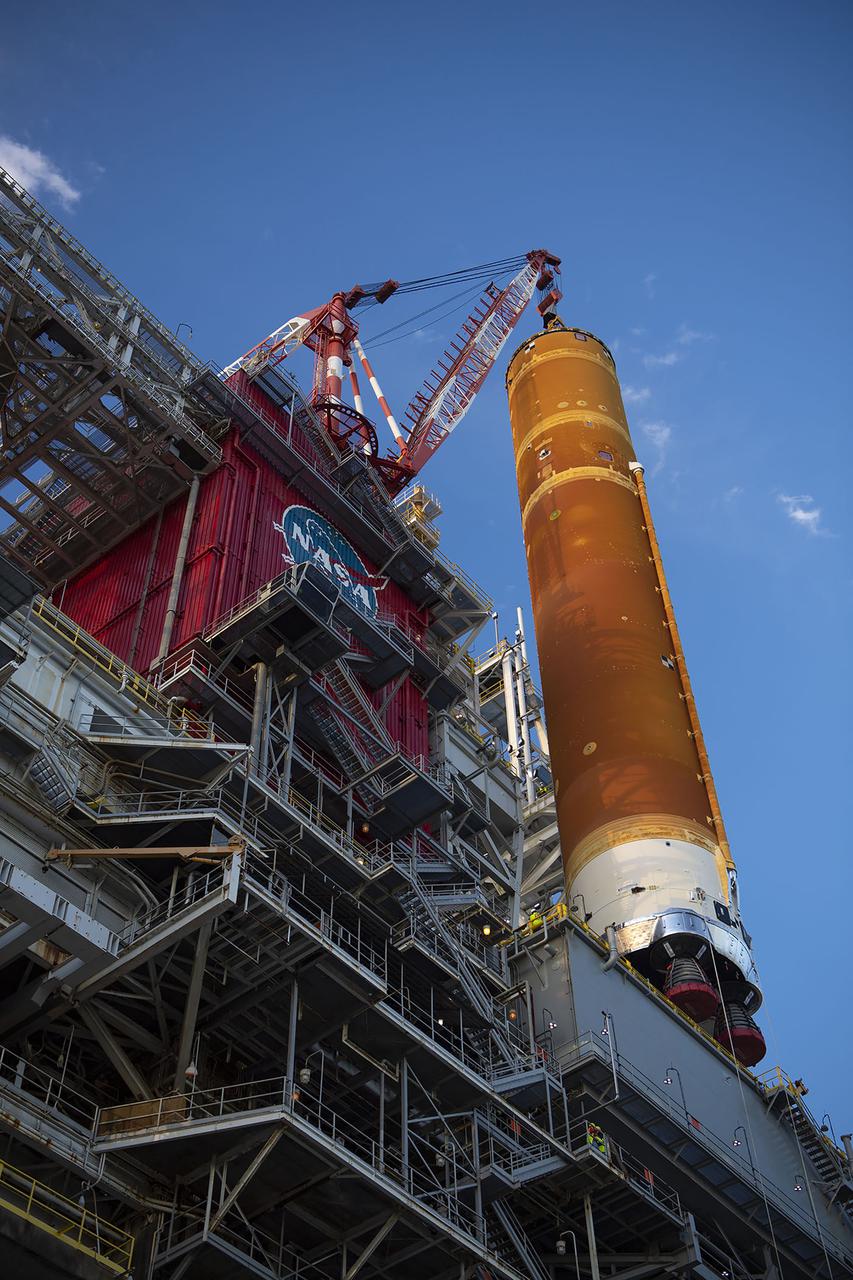
Following a successful Green Run hot fire at NASA’s Stennis Space Center near Bay St. Louis, Mississippi, on March 18, members of a blended team work April 19-20 to remove the first core stage of the agency’s Space Launch System (SLS) rocket from the B-2 Test Stand. The work required crews to lift the core stage from its vertical placement in the stand and lower it to a horizontal position on the B-2 Test Stand tarmac. The stage now will be loaded on NASA’s Pegasus barge for transport to Kennedy, where it will be prepared for launch of the Artemis I mission. Removal of the largest rocket stage ever built by NASA followed completion of a series of eight Green Run tests over the past year. During the Green Run series, teams performed a comprehensive test of the stand’s sophisticated and integrated systems. Photo Credit: NASA
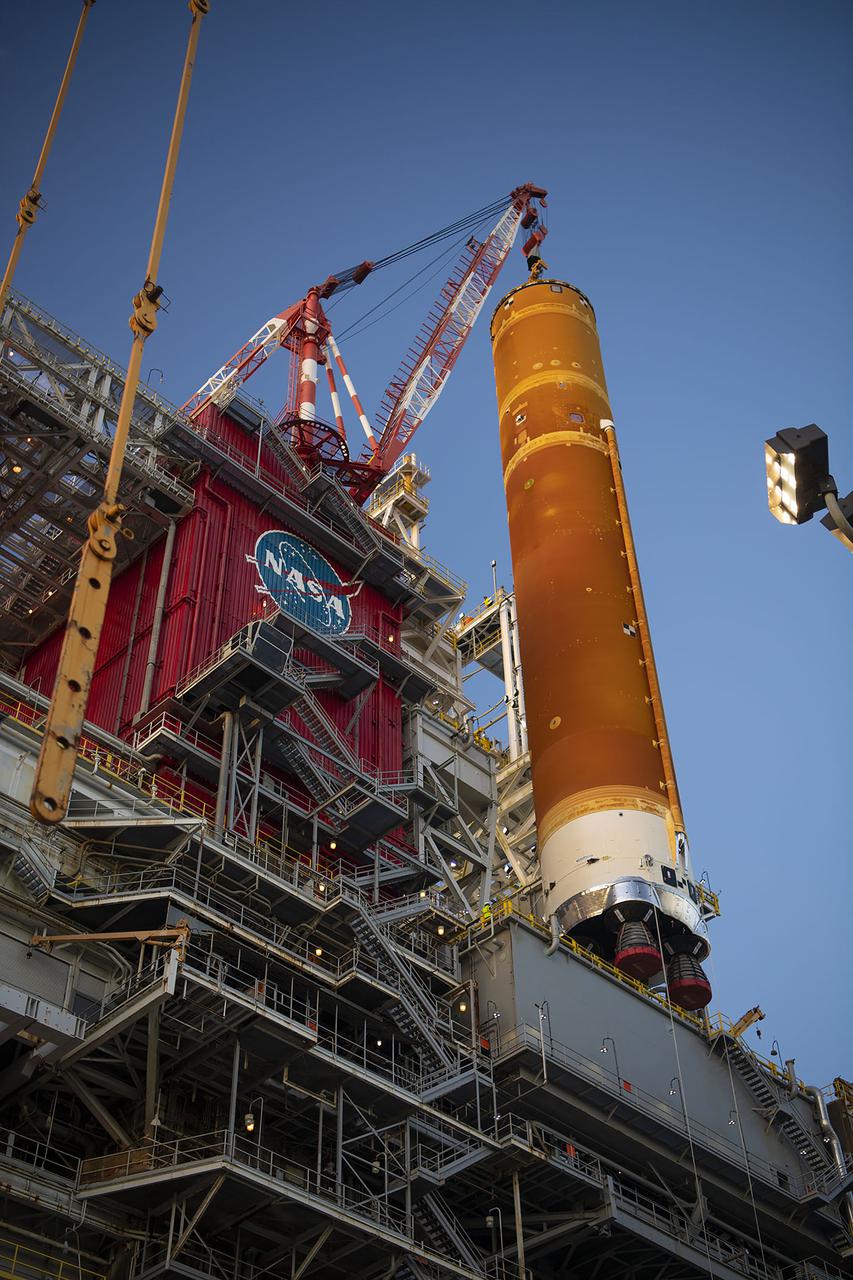
Following a successful Green Run hot fire at NASA’s Stennis Space Center near Bay St. Louis, Mississippi, on March 18, members of a blended team work April 19-20 to remove the first core stage of the agency’s Space Launch System (SLS) rocket from the B-2 Test Stand. The work required crews to lift the core stage from its vertical placement in the stand and lower it to a horizontal position on the B-2 Test Stand tarmac. The stage now will be loaded on NASA’s Pegasus barge for transport to Kennedy, where it will be prepared for launch of the Artemis I mission. Removal of the largest rocket stage ever built by NASA followed completion of a series of eight Green Run tests over the past year. During the Green Run series, teams performed a comprehensive test of the stand’s sophisticated and integrated systems. Photo Credit: NASA
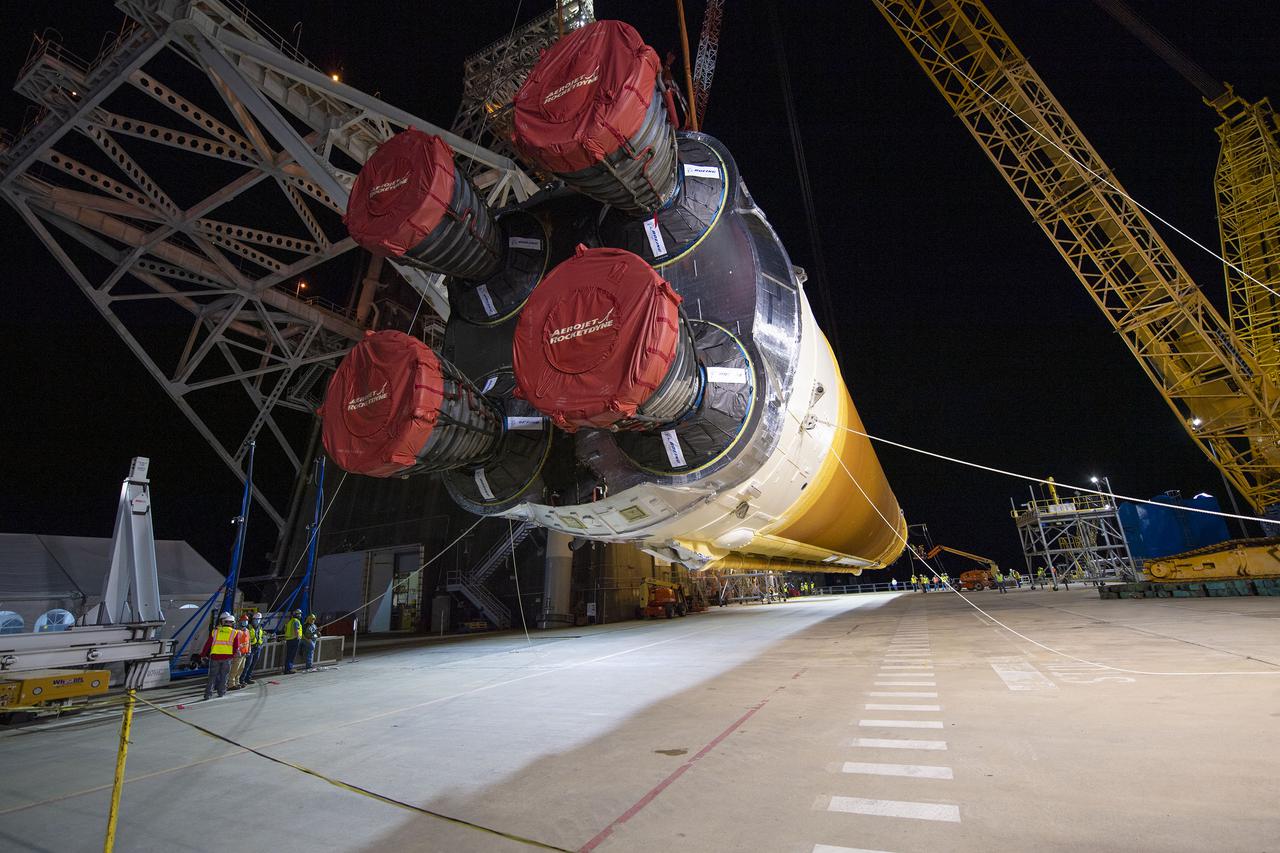
Following a successful Green Run hot fire at NASA’s Stennis Space Center near Bay St. Louis, Mississippi, on March 18, members of a blended team work April 19-20 to remove the first core stage of the agency’s Space Launch System (SLS) rocket from the B-2 Test Stand. The work required crews to lift the core stage from its vertical placement in the stand and lower it to a horizontal position on the B-2 Test Stand tarmac. The stage now will be loaded on NASA’s Pegasus barge for transport to Kennedy, where it will be prepared for launch of the Artemis I mission. Removal of the largest rocket stage ever built by NASA followed completion of a series of eight Green Run tests over the past year. During the Green Run series, teams performed a comprehensive test of the stand’s sophisticated and integrated systems. Photo Credit: NASA
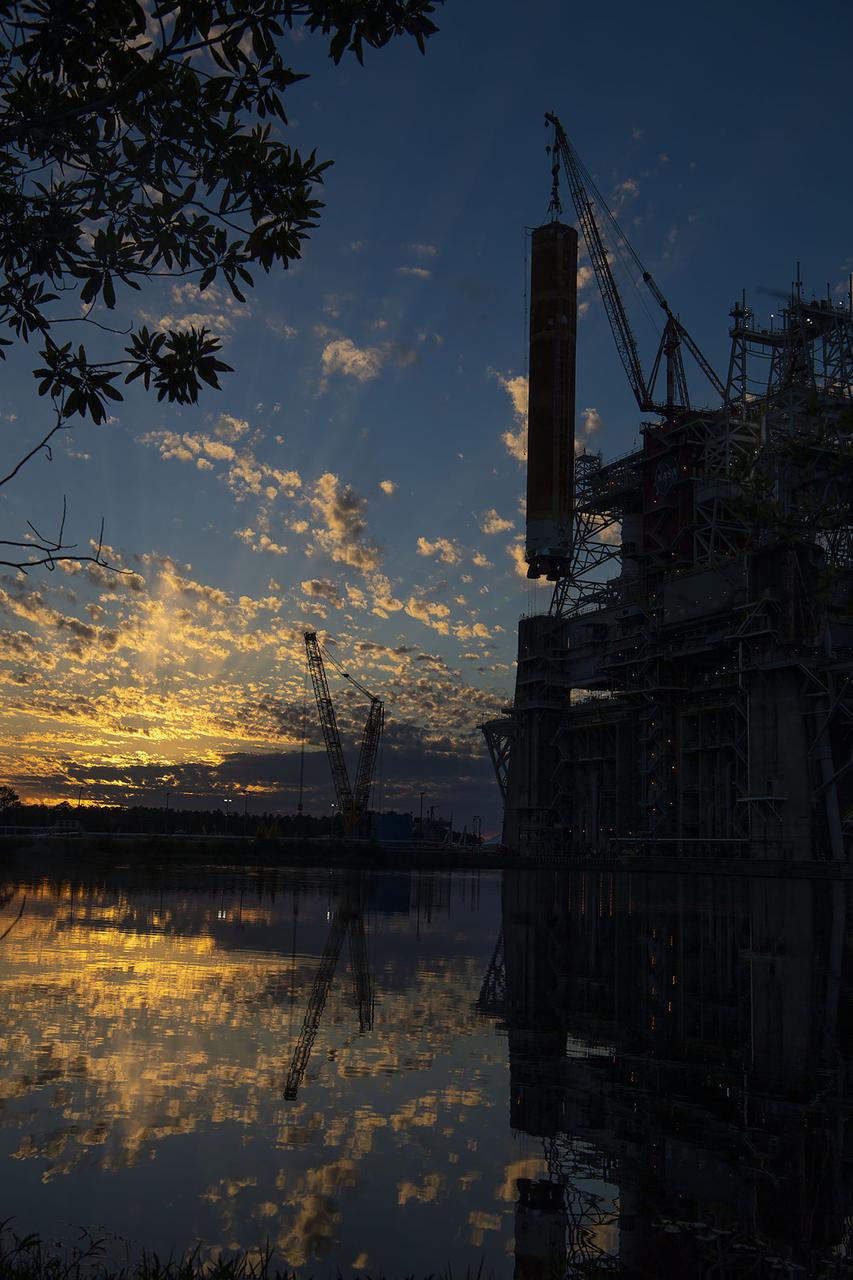
Following a successful Green Run hot fire at NASA’s Stennis Space Center near Bay St. Louis, Mississippi, on March 18, members of a blended team work April 19-20 to remove the first core stage of the agency’s Space Launch System (SLS) rocket from the B-2 Test Stand. The work required crews to lift the core stage from its vertical placement in the stand and lower it to a horizontal position on the B-2 Test Stand tarmac. The stage now will be loaded on NASA’s Pegasus barge for transport to Kennedy, where it will be prepared for launch of the Artemis I mission. Removal of the largest rocket stage ever built by NASA followed completion of a series of eight Green Run tests over the past year. During the Green Run series, teams performed a comprehensive test of the stand’s sophisticated and integrated systems. Photo Credit: NASA
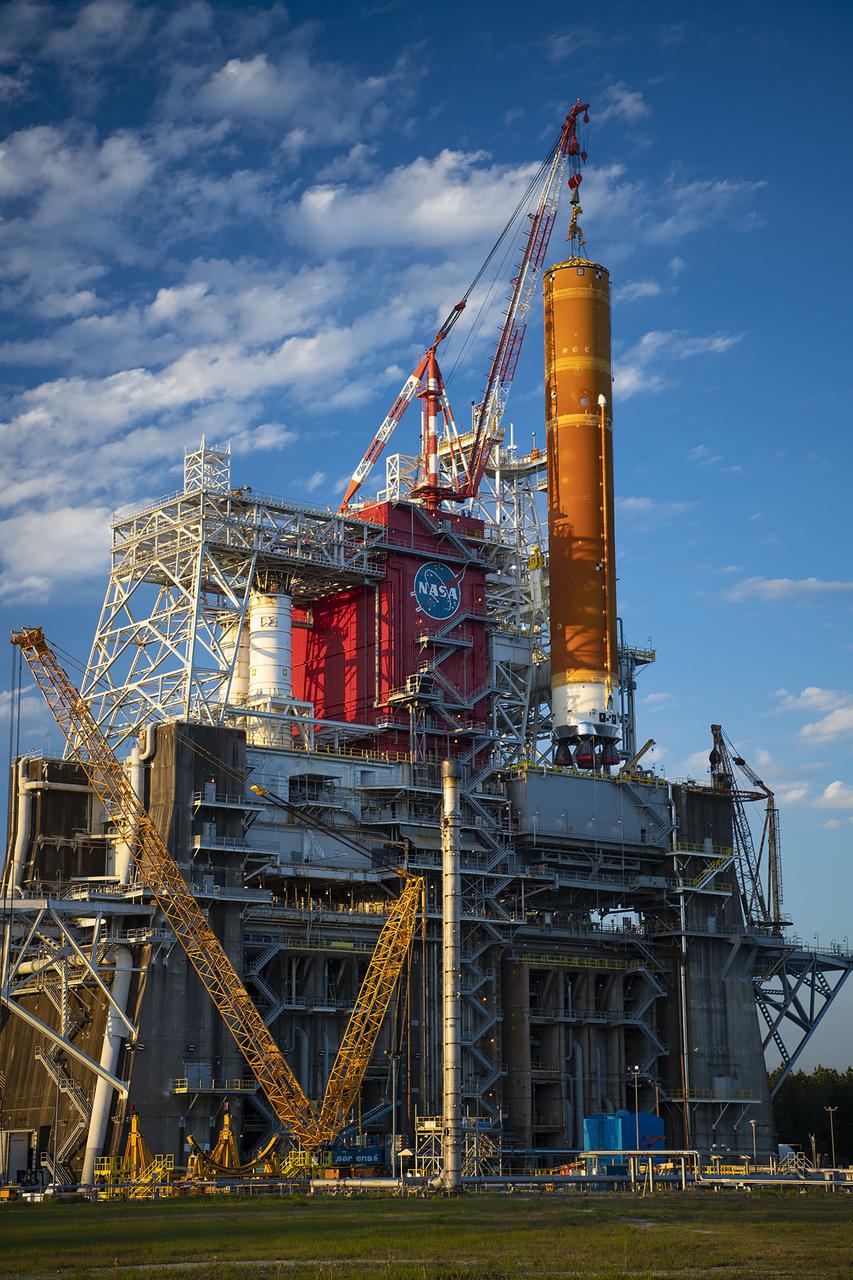
Following a successful Green Run hot fire at NASA’s Stennis Space Center near Bay St. Louis, Mississippi, on March 18, members of a blended team work April 19-20 to remove the first core stage of the agency’s Space Launch System (SLS) rocket from the B-2 Test Stand. The work required crews to lift the core stage from its vertical placement in the stand and lower it to a horizontal position on the B-2 Test Stand tarmac. The stage now will be loaded on NASA’s Pegasus barge for transport to Kennedy, where it will be prepared for launch of the Artemis I mission. Removal of the largest rocket stage ever built by NASA followed completion of a series of eight Green Run tests over the past year. During the Green Run series, teams performed a comprehensive test of the stand’s sophisticated and integrated systems. Photo Credit: NASA
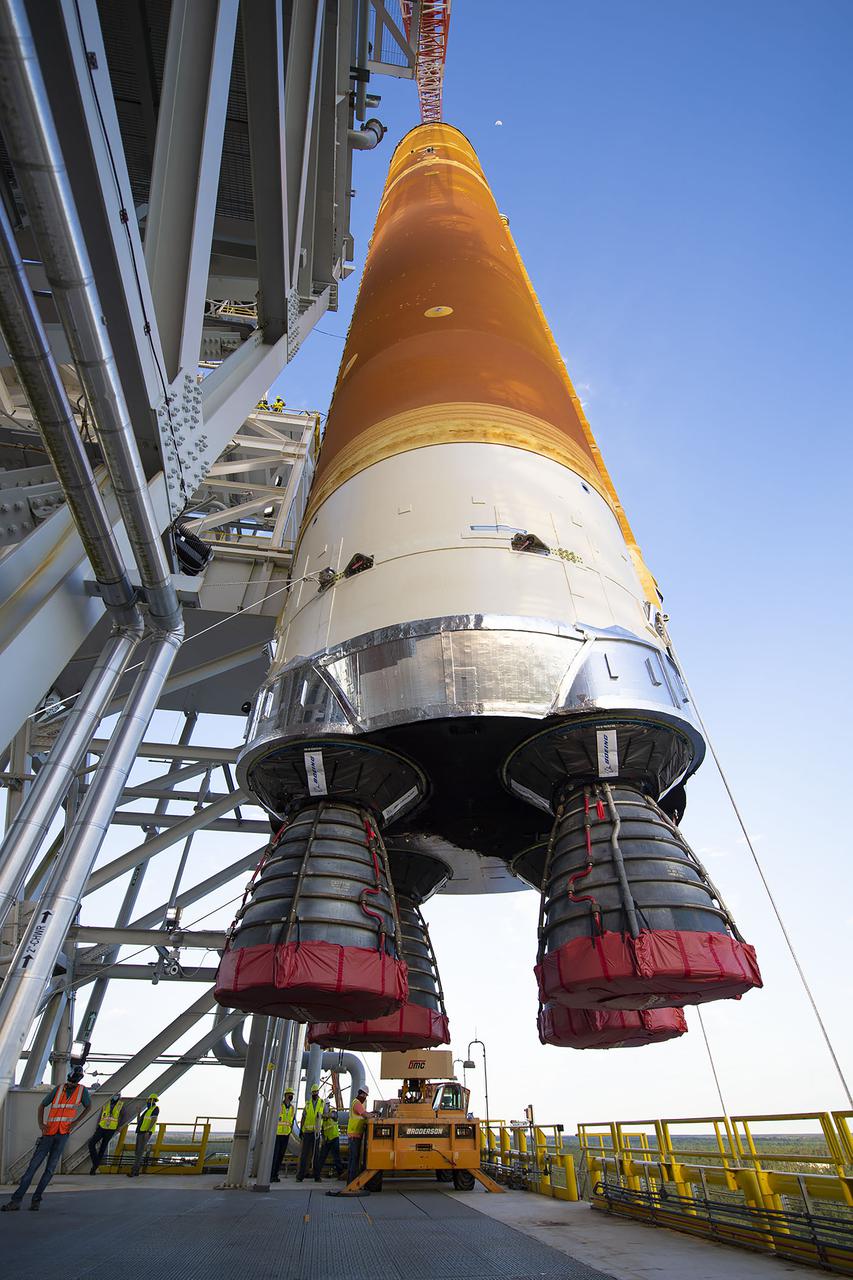
Following a successful Green Run hot fire at NASA’s Stennis Space Center near Bay St. Louis, Mississippi, on March 18, members of a blended team work April 19-20 to remove the first core stage of the agency’s Space Launch System (SLS) rocket from the B-2 Test Stand. The work required crews to lift the core stage from its vertical placement in the stand and lower it to a horizontal position on the B-2 Test Stand tarmac. The stage now will be loaded on NASA’s Pegasus barge for transport to Kennedy, where it will be prepared for launch of the Artemis I mission. Removal of the largest rocket stage ever built by NASA followed completion of a series of eight Green Run tests over the past year. During the Green Run series, teams performed a comprehensive test of the stand’s sophisticated and integrated systems. Photo Credit: NASA
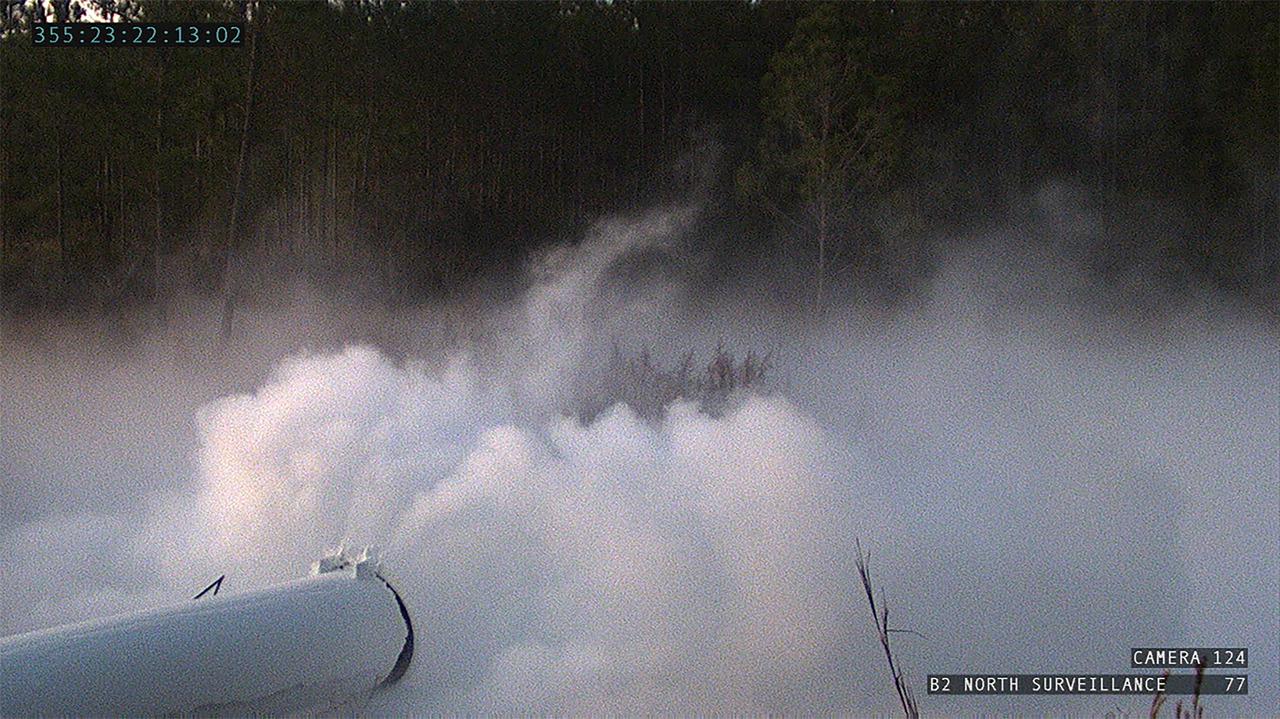
Operators at the B-2 Test Stand at Stennis Space Center near Bay St. Louis, Mississippi, conducted a wet dress rehearsal for the hot fire test of the core stage of NASA’s Space Launch System on Dec. 21, 2020. In this image, liquid oxygen can be seen venting from B-2 Test Stand piping. Following the wet dress rehearsal, operators will conduct a full hot fire test of the core stage and its four RS-25 engines. The hot fire will conclude a series of eight Green Run tests of all core stage systems before it is transported to Kennedy Space Center for launch on the Artemis I mission.
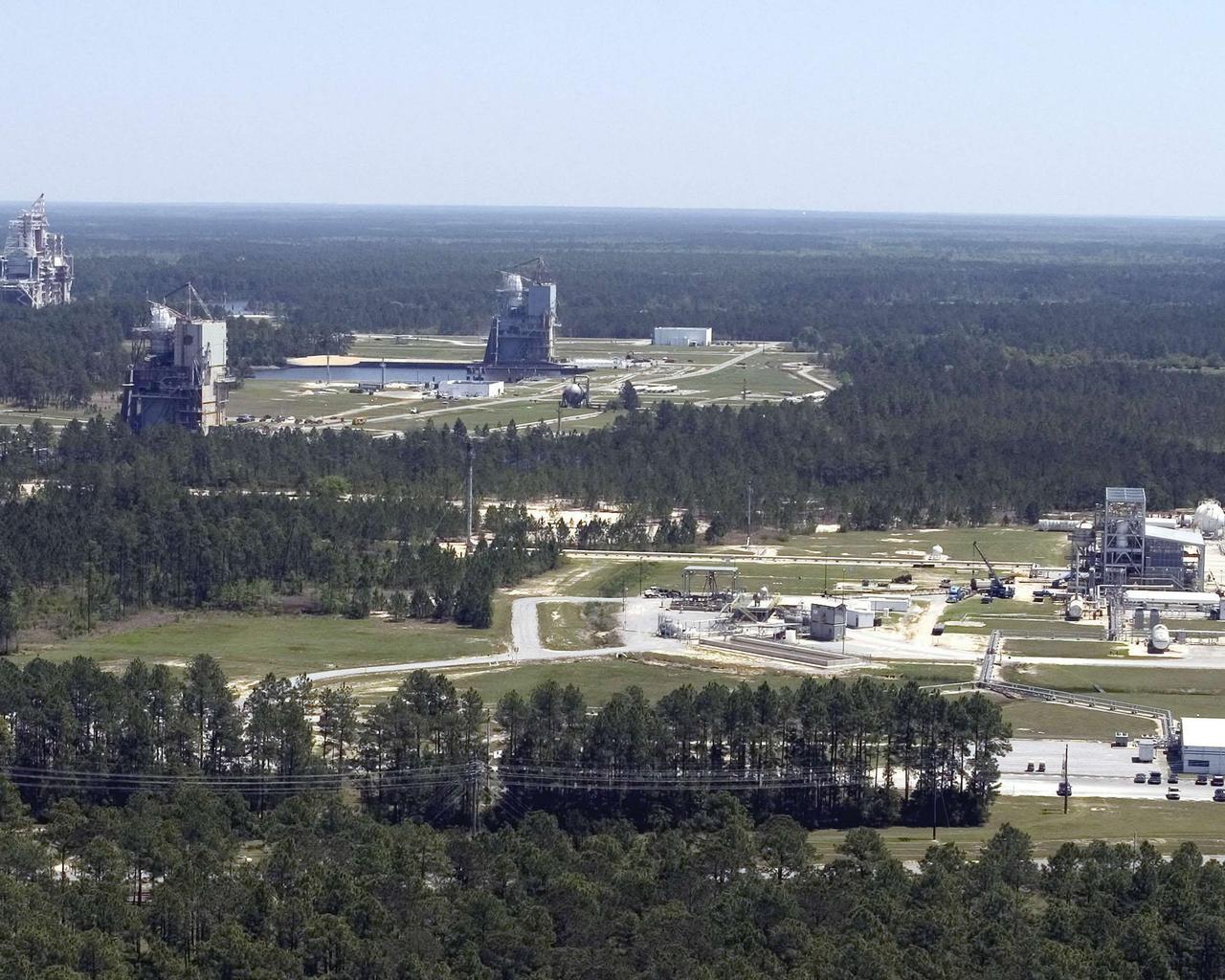
SSC's rocket engine test complex and its four unique test stands provide test operations for the development and certification of propulsion systems, subsystems and components.
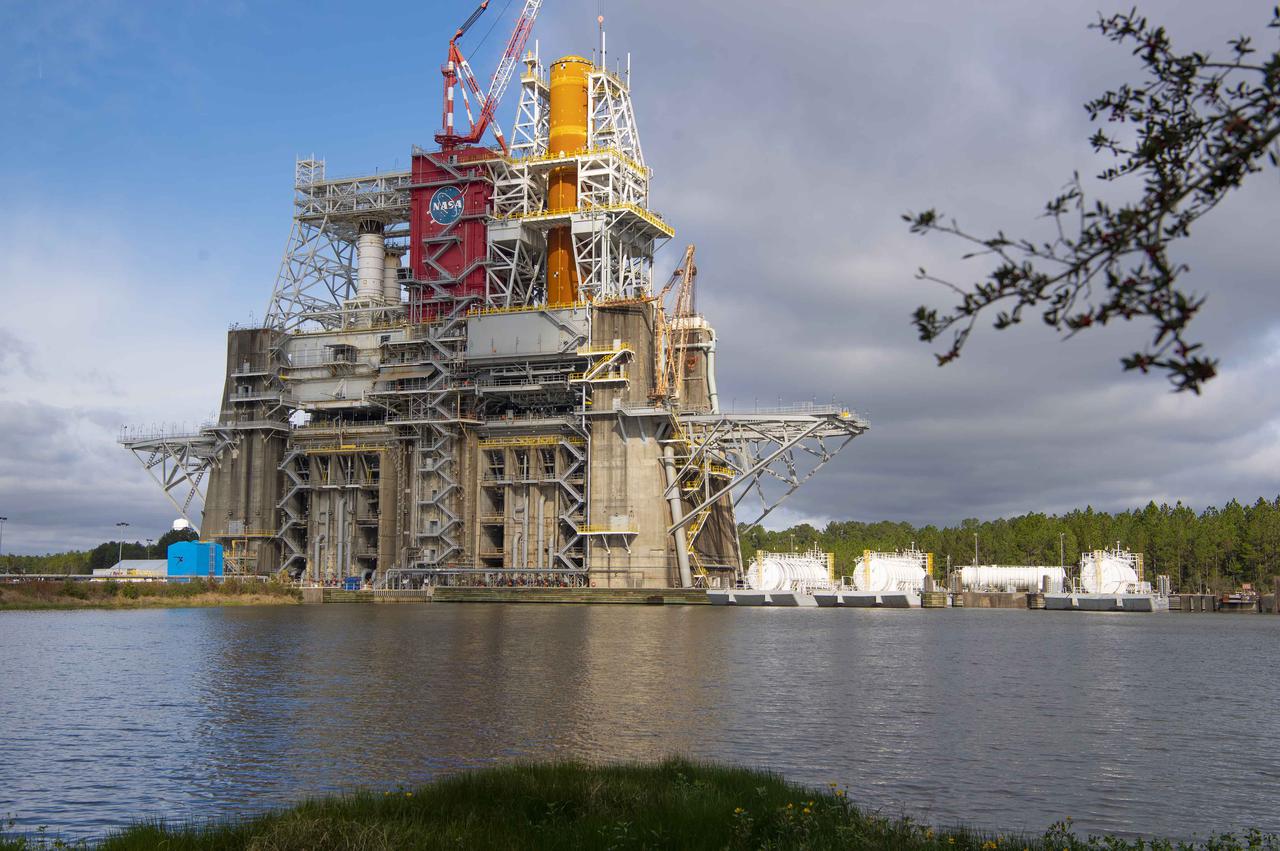
Barges are docked at the B-2 Test Stand at Stennis Space Center near Bay St. Louis, Mississippi, during preparations for a wet dress rehearsal exercise with the core stage of NASA’s Space Launch System rocket. During the wet dress rehearsal, operators will fully load the core stage’s propellant tanks for the first time and countdown just shy of engine ignition. The wet dress rehearsal is the seventh in a series of eight Green Run tests of the core stage’s integrated systems prior to its transport to Kennedy Space Center and launch on the Artemis I mission.
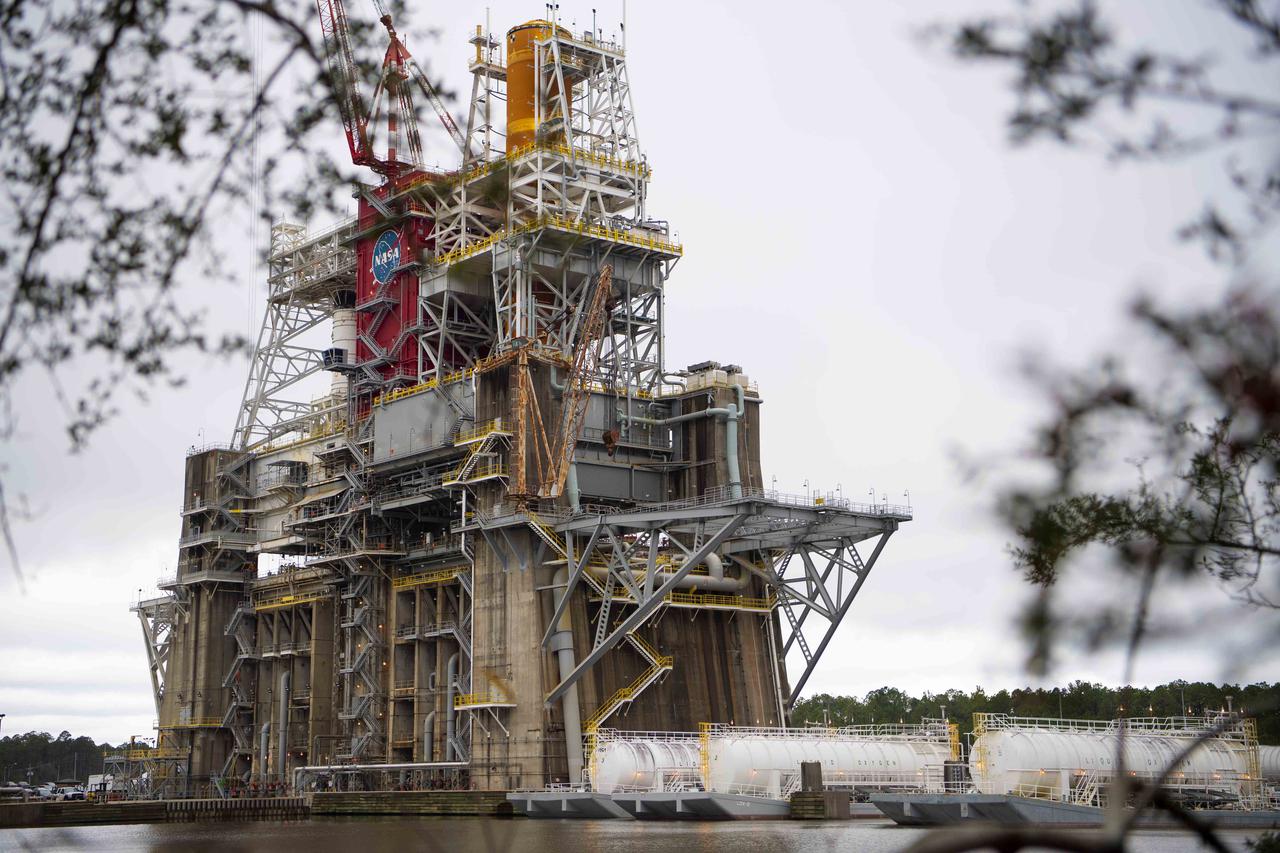
Barges are docked at the B-2 Test Stand at Stennis Space Center near Bay St. Louis, Mississippi, during preparations for a wet dress rehearsal exercise with the core stage of NASA’s Space Launch System rocket. During the wet dress rehearsal, operators will fully load the core stage’s propellant tanks for the first time and countdown just shy of engine ignition. The wet dress rehearsal is the seventh in a series of eight Green Run tests of the core stage’s integrated systems prior to its transport to Kennedy Space Center and launch on the Artemis I mission.
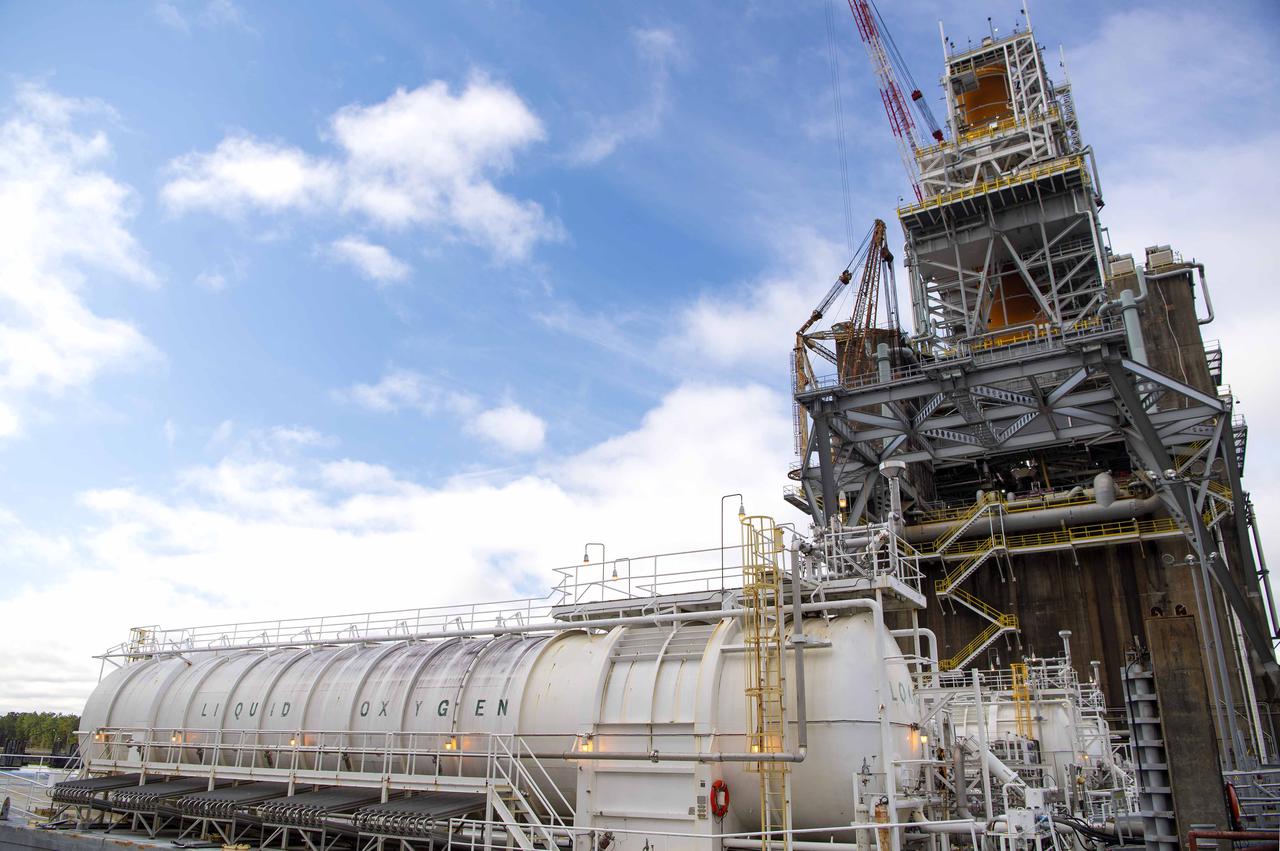
Barges are docked at the B-2 Test Stand at Stennis Space Center near Bay St. Louis, Mississippi, during preparations for a wet dress rehearsal exercise with the core stage of NASA’s Space Launch System rocket. During the wet dress rehearsal, operators will fully load the core stage’s propellant tanks for the first time and countdown just shy of engine ignition. The wet dress rehearsal is the seventh in a series of eight Green Run tests of the core stage’s integrated systems prior to its transport to Kennedy Space Center and launch on the Artemis I mission.
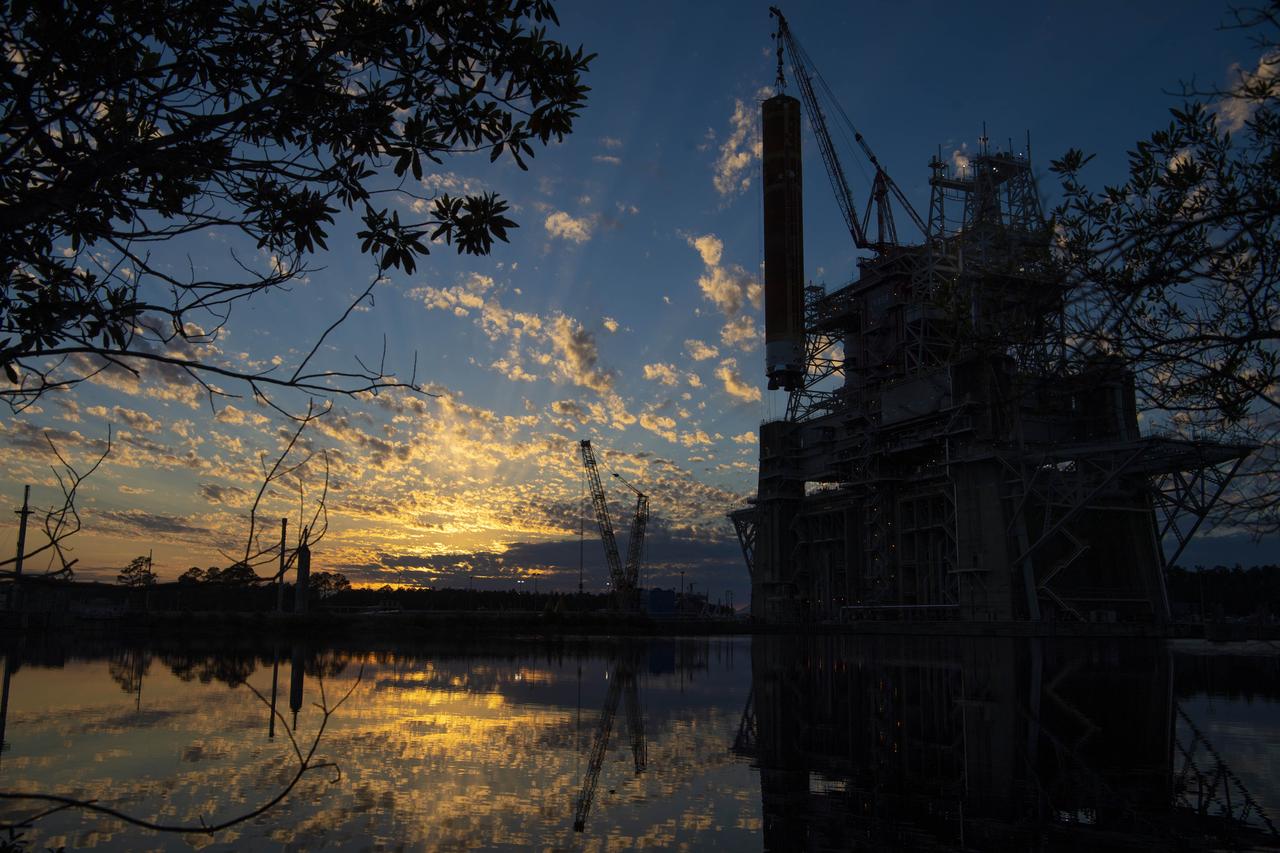
The first flight core stage of NASA’s Space Launch System rocket is removed from the B-2 Test Stand on April 19, 2021, following completion of a series of eight Green Run tests conducted at Stennis Space Center.
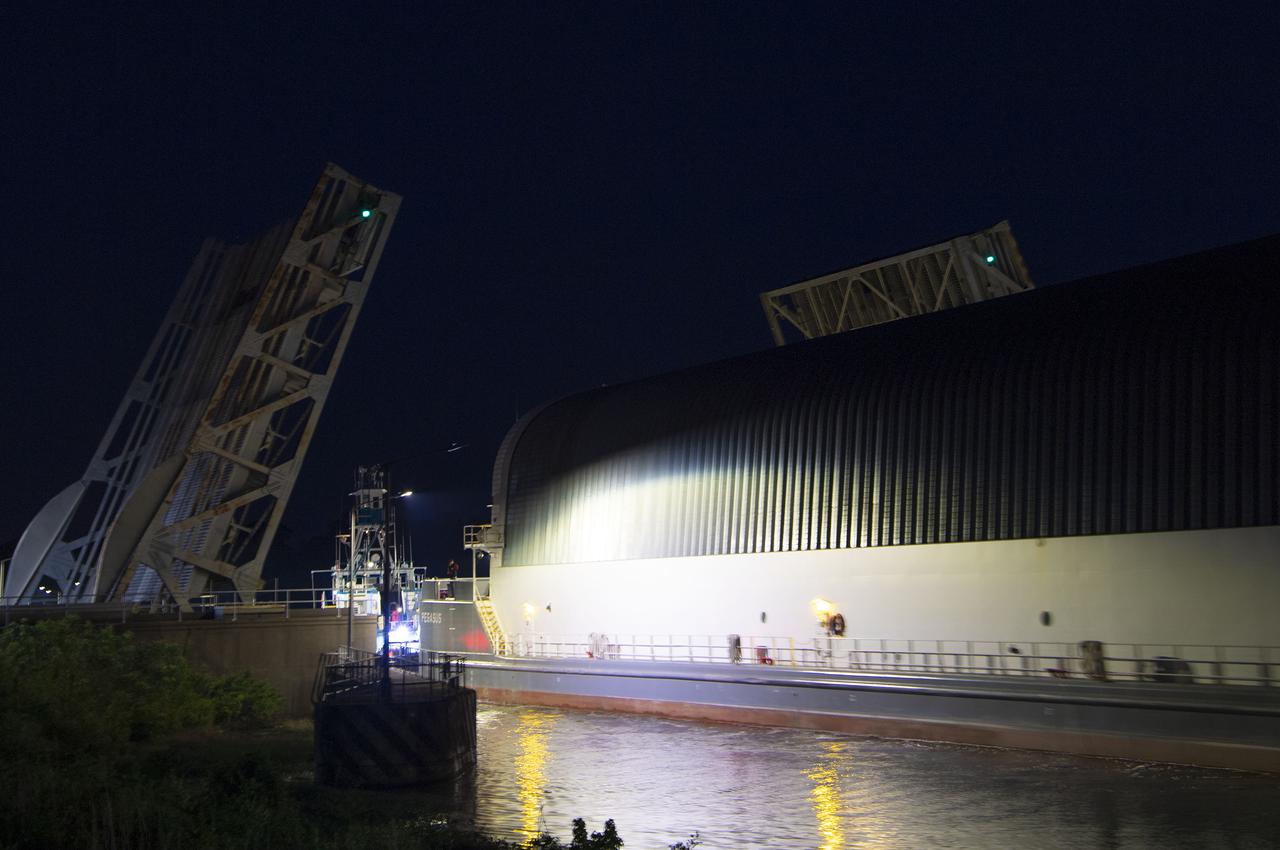
The first core stage of NASA’s Space Launch System (SLS) rocket, loaded onto the agency’s Pegasus barge, departs Stennis Space Center near Bay St. Louis, Mississippi, headed to Kennedy Space Center in Florida. The departure of the core stage in mid-April 2021 followed completion of a Green Run test series of the stage systems in preparation for its launch on the Artemis I mission. The Green Run series concluded with a March 18 hot fire of the stage’s four RS-25 engines on the B-2 Test Stand at Stennis, just as during an actual launch. Following refurbishment work, the stage was removed from the B-2 stand and loaded onto the Pegasus barge for transport. Once at Kennedy, the will be integrated with the rest of SLS rocket and prepared for the launch of the Artemis I mission to the Moon. Photo Credit: NASA
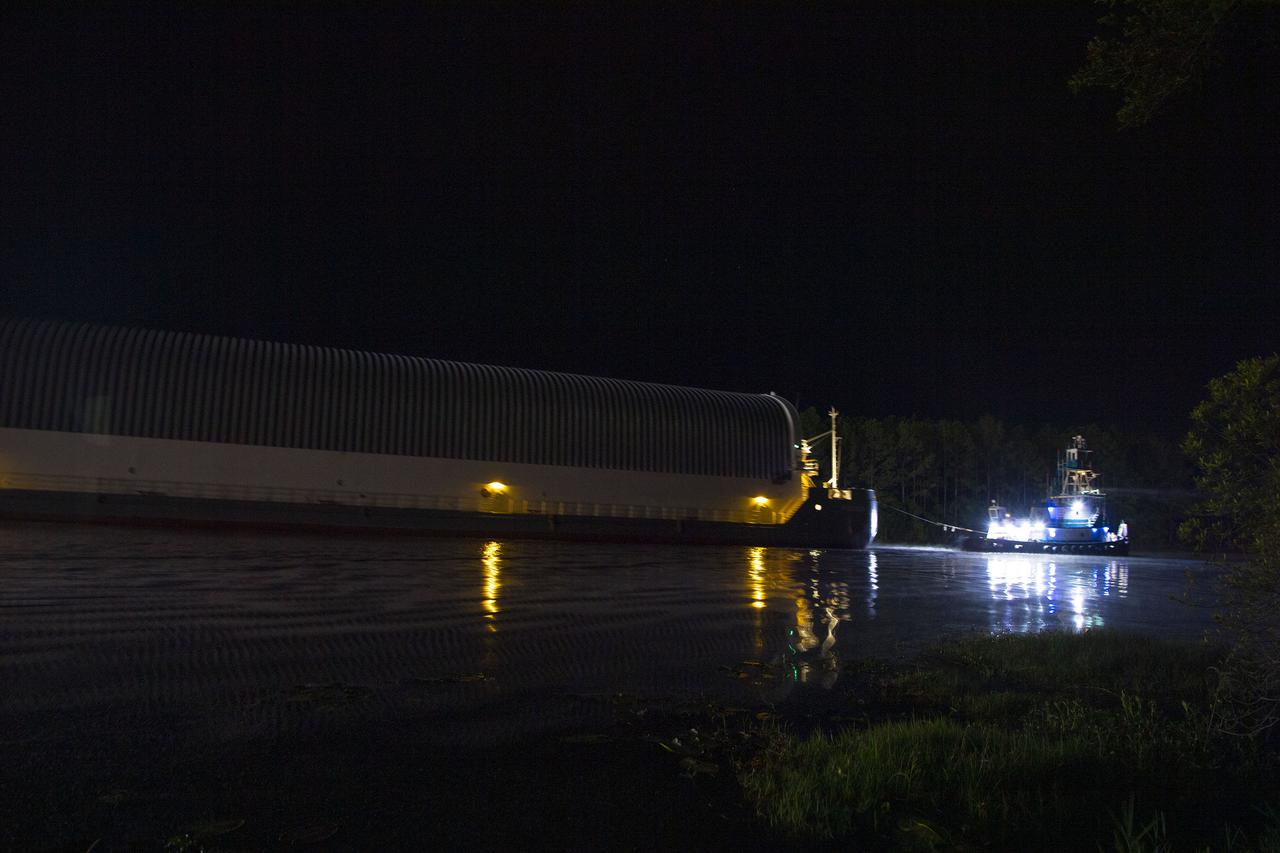
The first core stage of NASA’s Space Launch System (SLS) rocket, loaded onto the agency’s Pegasus barge, departs Stennis Space Center near Bay St. Louis, Mississippi, headed to Kennedy Space Center in Florida. The departure of the core stage in mid-April 2021 followed completion of a Green Run test series of the stage systems in preparation for its launch on the Artemis I mission. The Green Run series concluded with a March 18 hot fire of the stage’s four RS-25 engines on the B-2 Test Stand at Stennis, just as during an actual launch. Following refurbishment work, the stage was removed from the B-2 stand and loaded onto the Pegasus barge for transport. Once at Kennedy, the will be integrated with the rest of SLS rocket and prepared for the launch of the Artemis I mission to the Moon. Photo Credit: NASA
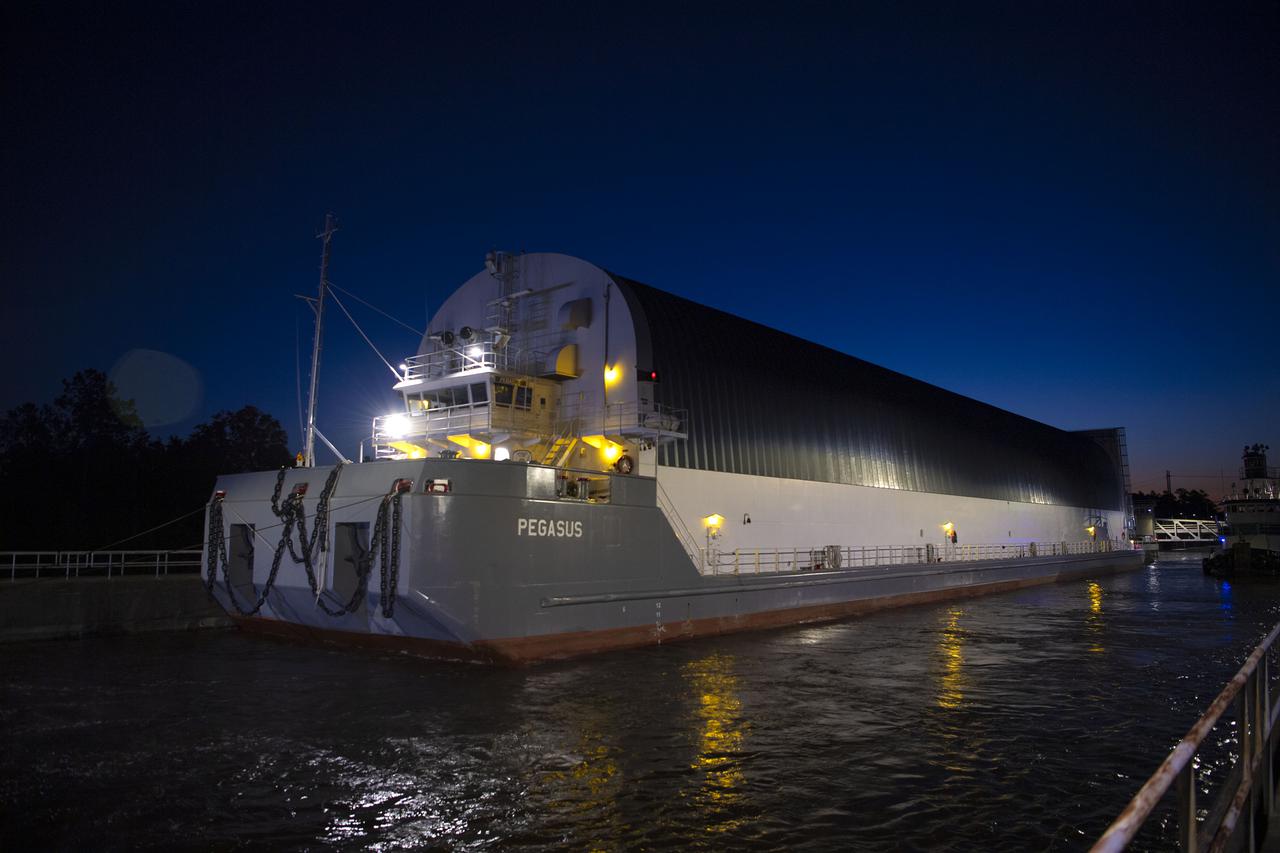
The first core stage of NASA’s Space Launch System (SLS) rocket, loaded onto the agency’s Pegasus barge, departs Stennis Space Center near Bay St. Louis, Mississippi, headed to Kennedy Space Center in Florida. The departure of the core stage in mid-April 2021 followed completion of a Green Run test series of the stage systems in preparation for its launch on the Artemis I mission. The Green Run series concluded with a March 18 hot fire of the stage’s four RS-25 engines on the B-2 Test Stand at Stennis, just as during an actual launch. Following refurbishment work, the stage was removed from the B-2 stand and loaded onto the Pegasus barge for transport. Once at Kennedy, the will be integrated with the rest of SLS rocket and prepared for the launch of the Artemis I mission to the Moon. Photo Credit: NASA
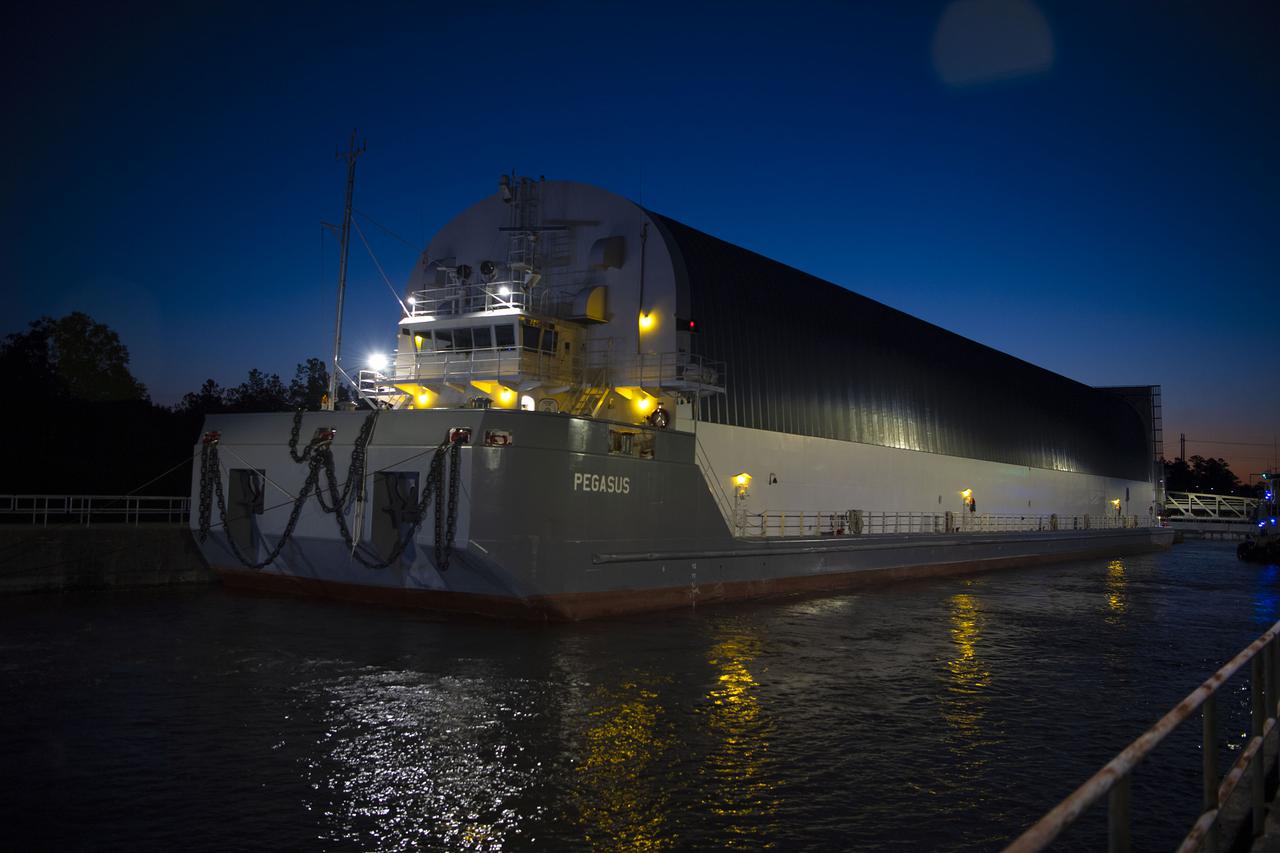
The first core stage of NASA’s Space Launch System (SLS) rocket, loaded onto the agency’s Pegasus barge, departs Stennis Space Center near Bay St. Louis, Mississippi, headed to Kennedy Space Center in Florida. The departure of the core stage in mid-April 2021 followed completion of a Green Run test series of the stage systems in preparation for its launch on the Artemis I mission. The Green Run series concluded with a March 18 hot fire of the stage’s four RS-25 engines on the B-2 Test Stand at Stennis, just as during an actual launch. Following refurbishment work, the stage was removed from the B-2 stand and loaded onto the Pegasus barge for transport. Once at Kennedy, the will be integrated with the rest of SLS rocket and prepared for the launch of the Artemis I mission to the Moon. Photo Credit: NASA
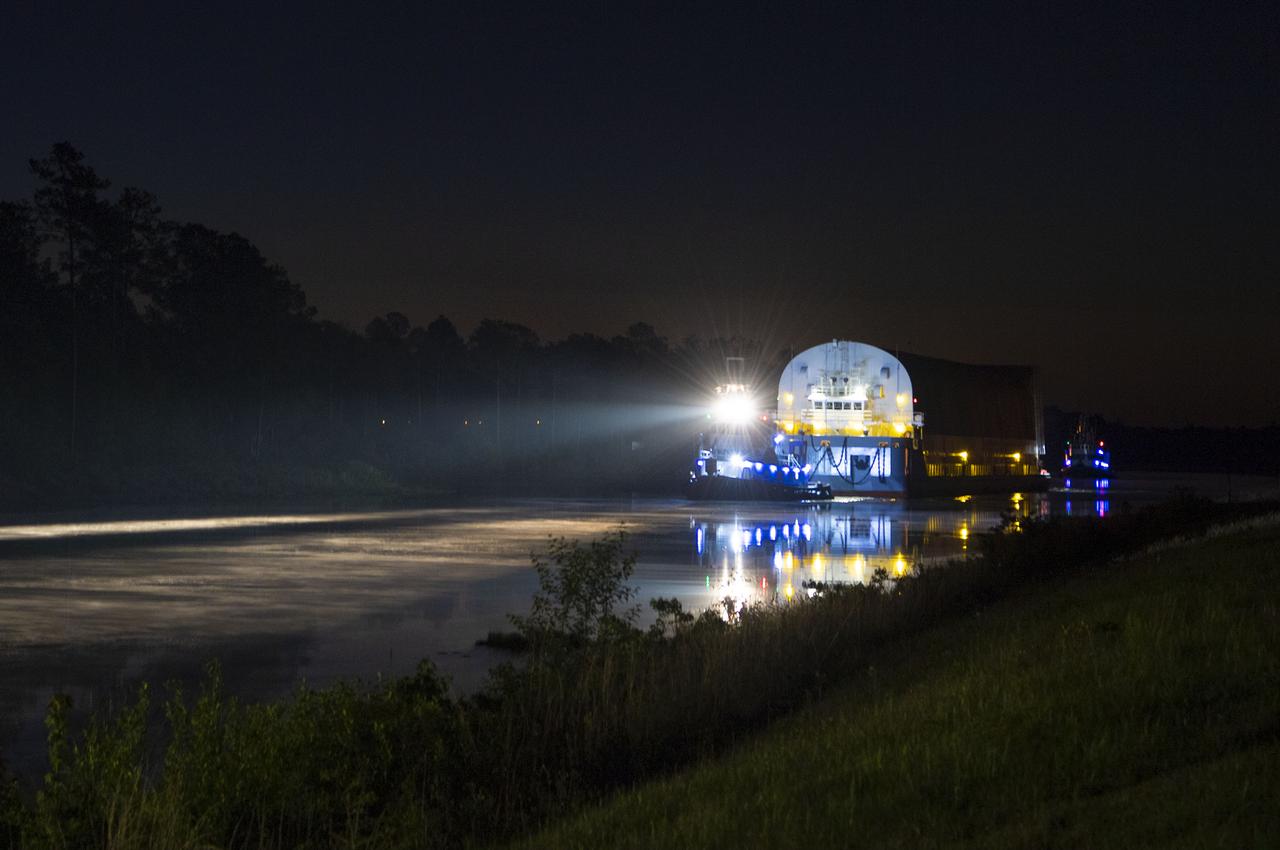
The first core stage of NASA’s Space Launch System (SLS) rocket, loaded onto the agency’s Pegasus barge, departs Stennis Space Center near Bay St. Louis, Mississippi, headed to Kennedy Space Center in Florida. The departure of the core stage in mid-April 2021 followed completion of a Green Run test series of the stage systems in preparation for its launch on the Artemis I mission. The Green Run series concluded with a March 18 hot fire of the stage’s four RS-25 engines on the B-2 Test Stand at Stennis, just as during an actual launch. Following refurbishment work, the stage was removed from the B-2 stand and loaded onto the Pegasus barge for transport. Once at Kennedy, the will be integrated with the rest of SLS rocket and prepared for the launch of the Artemis I mission to the Moon. Photo Credit: NASA
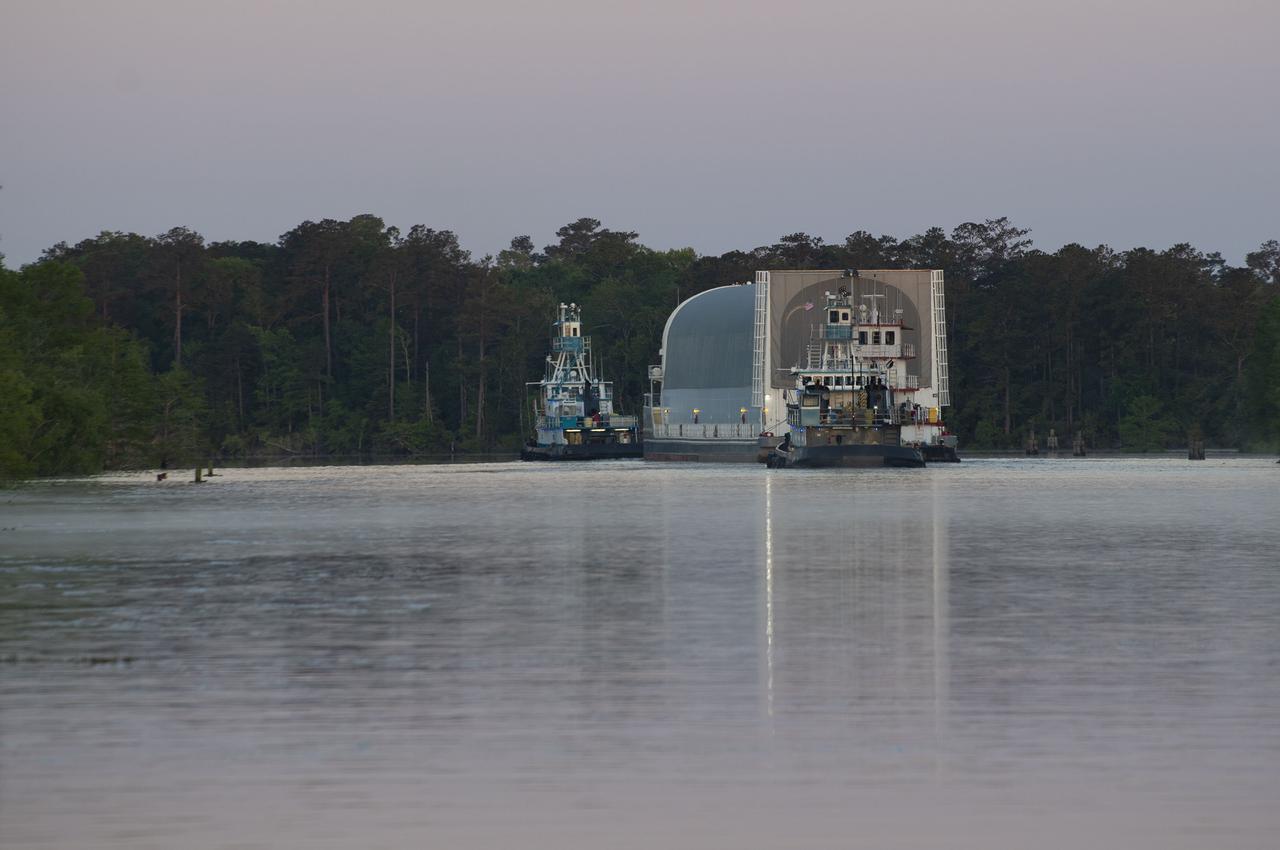
The first core stage of NASA’s Space Launch System (SLS) rocket, loaded onto the agency’s Pegasus barge, departs Stennis Space Center near Bay St. Louis, Mississippi, headed to Kennedy Space Center in Florida. The departure of the core stage in mid-April 2021 followed completion of a Green Run test series of the stage systems in preparation for its launch on the Artemis I mission. The Green Run series concluded with a March 18 hot fire of the stage’s four RS-25 engines on the B-2 Test Stand at Stennis, just as during an actual launch. Following refurbishment work, the stage was removed from the B-2 stand and loaded onto the Pegasus barge for transport. Once at Kennedy, the will be integrated with the rest of SLS rocket and prepared for the launch of the Artemis I mission to the Moon. Photo Credit: NASA
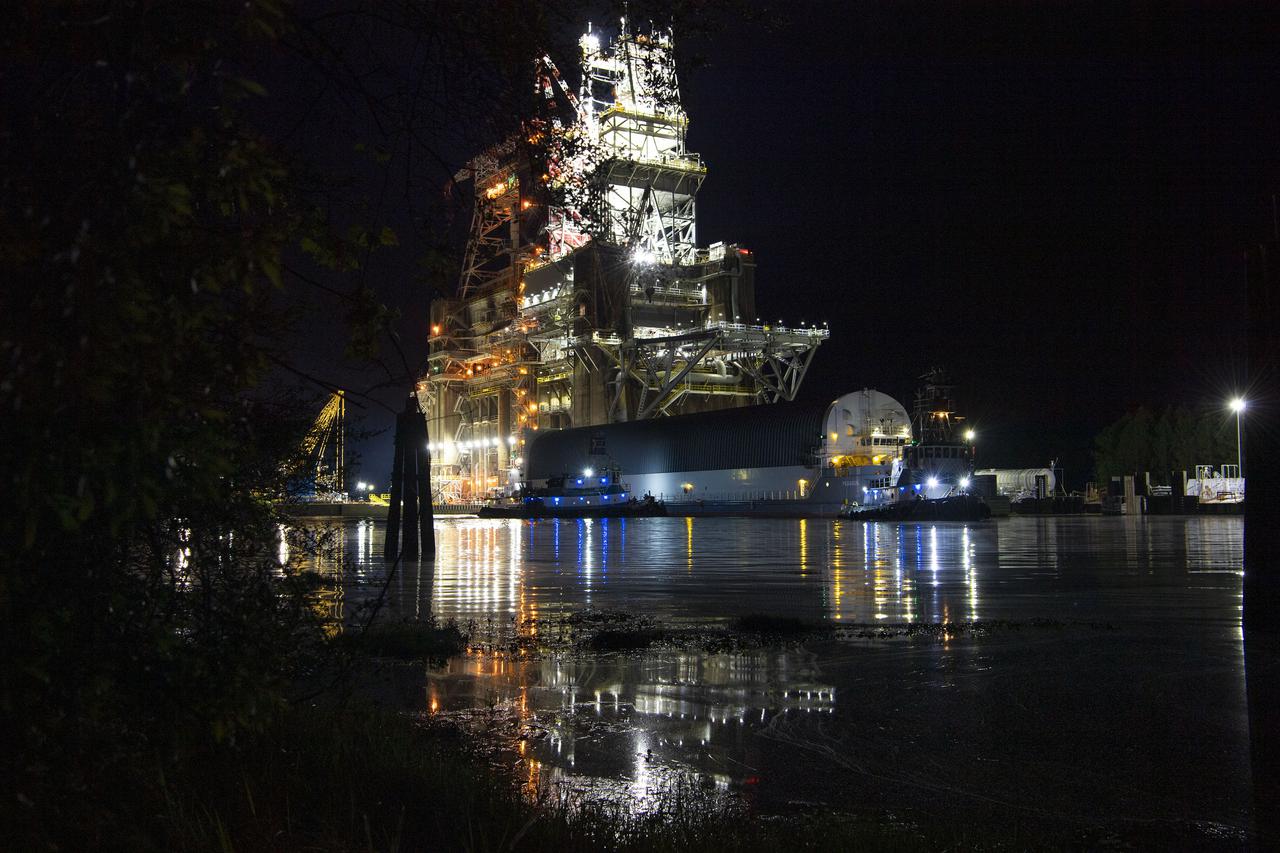
The first core stage of NASA’s Space Launch System (SLS) rocket, loaded onto the agency’s Pegasus barge, departs Stennis Space Center near Bay St. Louis, Mississippi, headed to Kennedy Space Center in Florida. The departure of the core stage in mid-April 2021 followed completion of a Green Run test series of the stage systems in preparation for its launch on the Artemis I mission. The Green Run series concluded with a March 18 hot fire of the stage’s four RS-25 engines on the B-2 Test Stand at Stennis, just as during an actual launch. Following refurbishment work, the stage was removed from the B-2 stand and loaded onto the Pegasus barge for transport. Once at Kennedy, the will be integrated with the rest of SLS rocket and prepared for the launch of the Artemis I mission to the Moon. Photo Credit: NASA
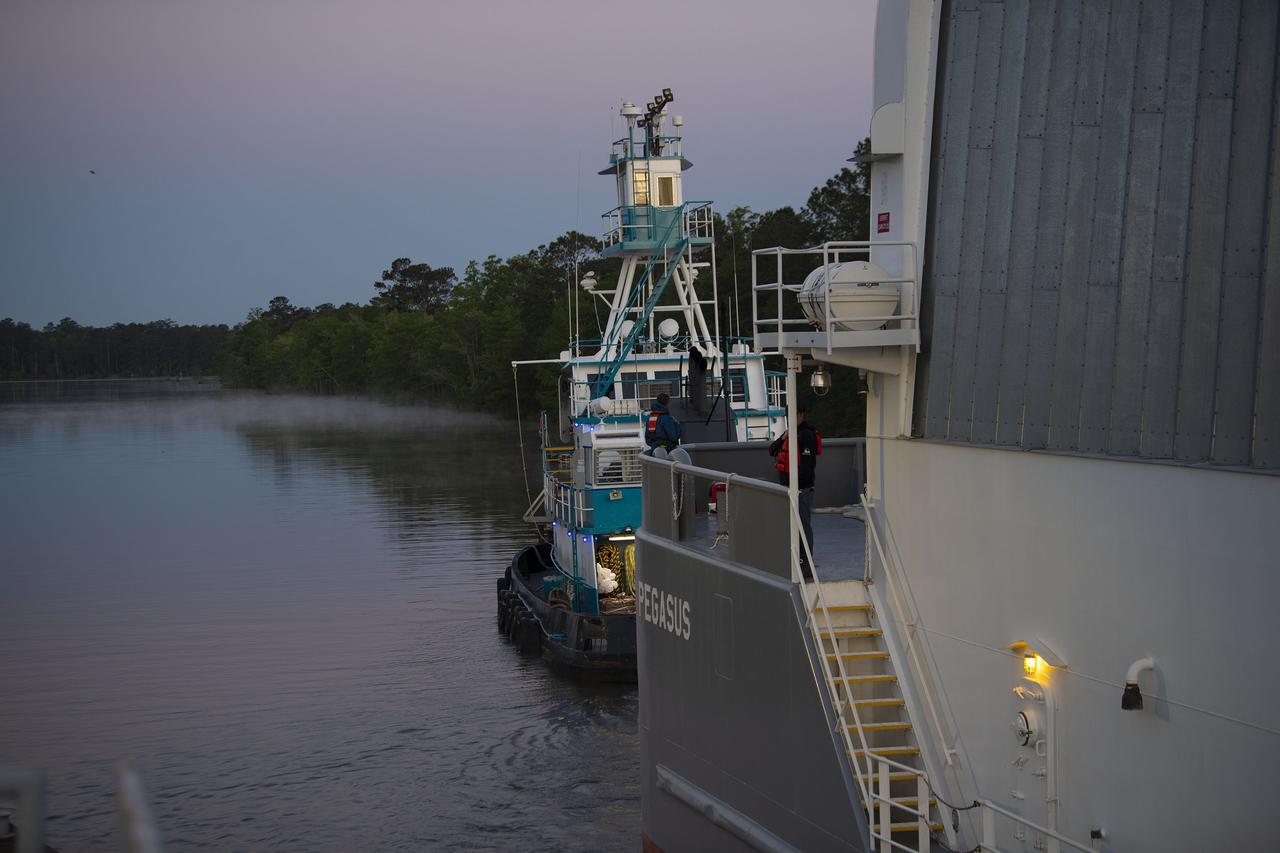
The first core stage of NASA’s Space Launch System (SLS) rocket, loaded onto the agency’s Pegasus barge, departs Stennis Space Center near Bay St. Louis, Mississippi, headed to Kennedy Space Center in Florida. The departure of the core stage in mid-April 2021 followed completion of a Green Run test series of the stage systems in preparation for its launch on the Artemis I mission. The Green Run series concluded with a March 18 hot fire of the stage’s four RS-25 engines on the B-2 Test Stand at Stennis, just as during an actual launch. Following refurbishment work, the stage was removed from the B-2 stand and loaded onto the Pegasus barge for transport. Once at Kennedy, the will be integrated with the rest of SLS rocket and prepared for the launch of the Artemis I mission to the Moon. Photo Credit: NASA
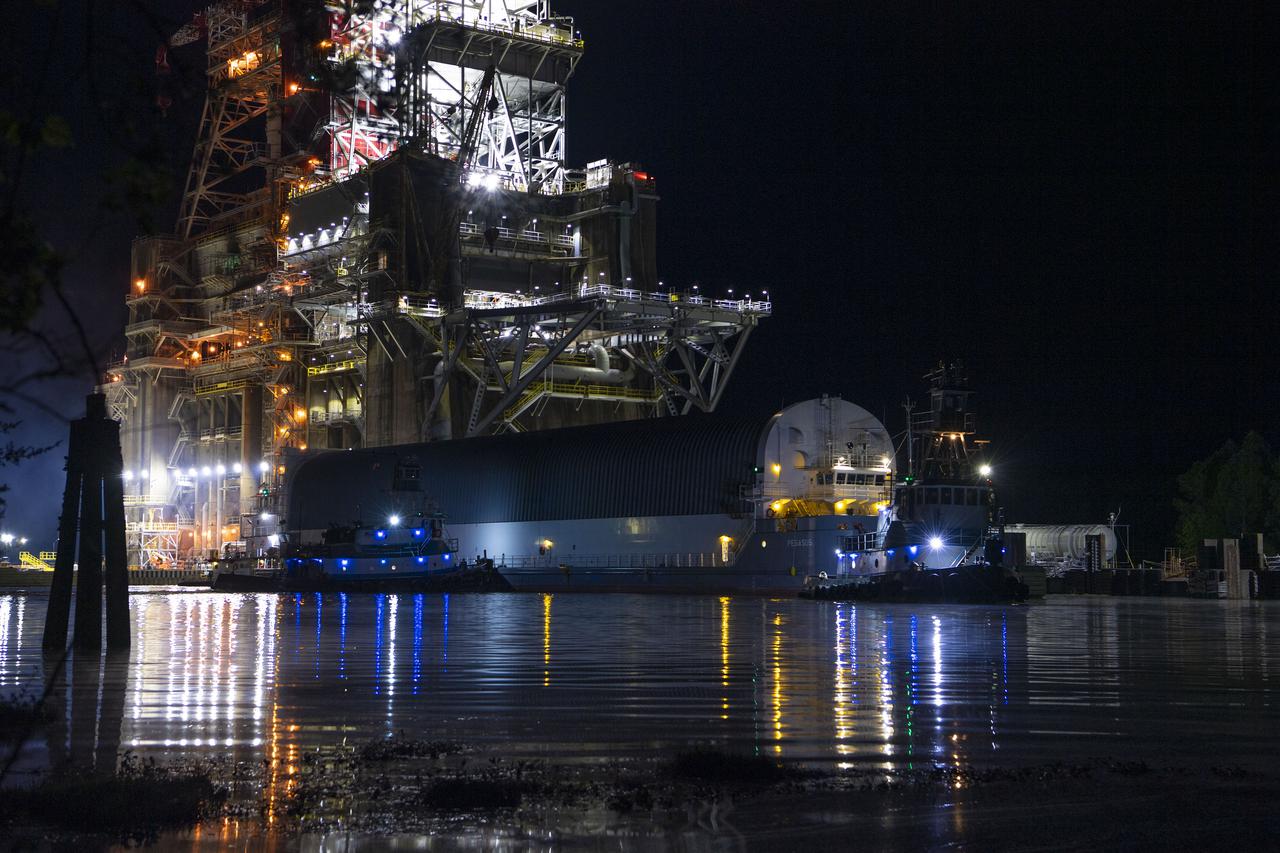
The first core stage of NASA’s Space Launch System (SLS) rocket, loaded onto the agency’s Pegasus barge, departs Stennis Space Center near Bay St. Louis, Mississippi, headed to Kennedy Space Center in Florida. The departure of the core stage in mid-April 2021 followed completion of a Green Run test series of the stage systems in preparation for its launch on the Artemis I mission. The Green Run series concluded with a March 18 hot fire of the stage’s four RS-25 engines on the B-2 Test Stand at Stennis, just as during an actual launch. Following refurbishment work, the stage was removed from the B-2 stand and loaded onto the Pegasus barge for transport. Once at Kennedy, the will be integrated with the rest of SLS rocket and prepared for the launch of the Artemis I mission to the Moon. Photo Credit: NASA
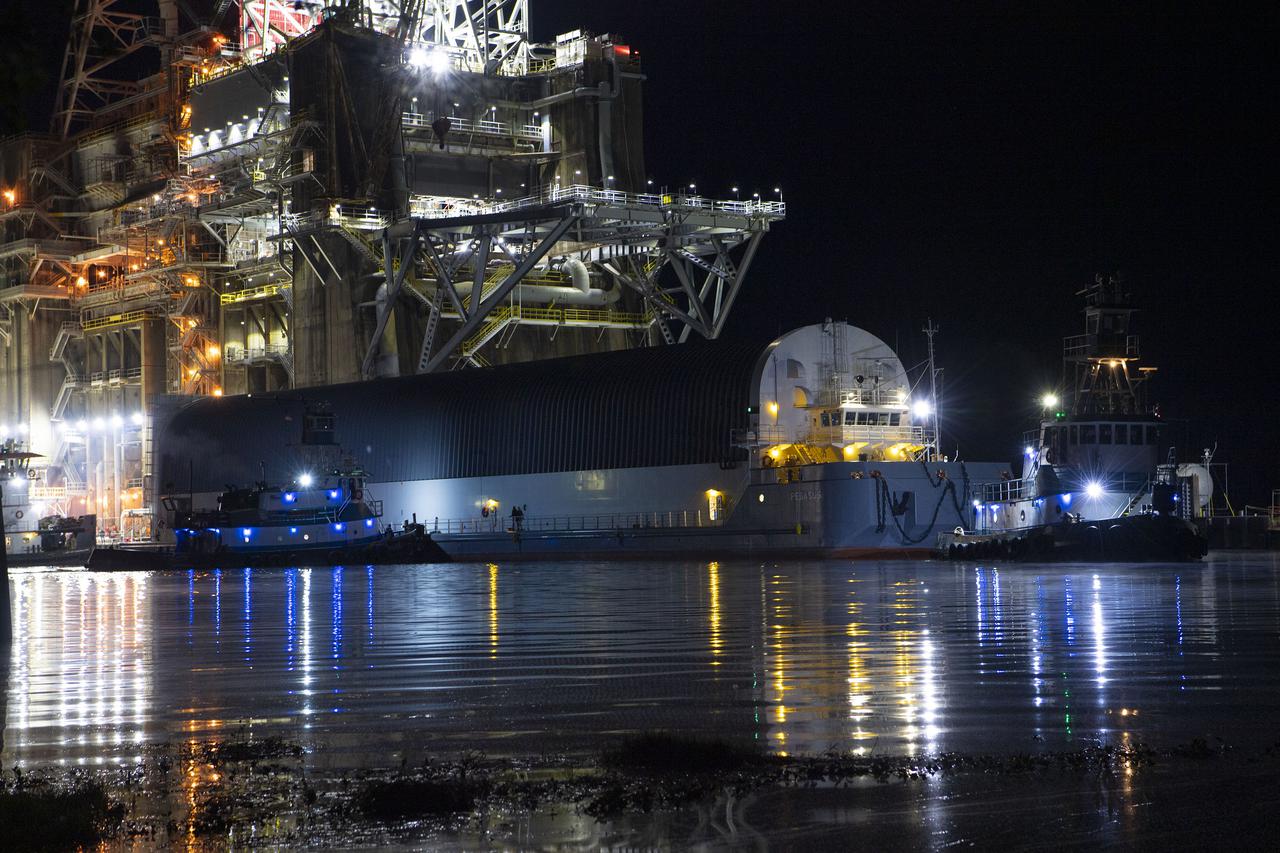
The first core stage of NASA’s Space Launch System (SLS) rocket, loaded onto the agency’s Pegasus barge, departs Stennis Space Center near Bay St. Louis, Mississippi, headed to Kennedy Space Center in Florida. The departure of the core stage in mid-April 2021 followed completion of a Green Run test series of the stage systems in preparation for its launch on the Artemis I mission. The Green Run series concluded with a March 18 hot fire of the stage’s four RS-25 engines on the B-2 Test Stand at Stennis, just as during an actual launch. Following refurbishment work, the stage was removed from the B-2 stand and loaded onto the Pegasus barge for transport. Once at Kennedy, the will be integrated with the rest of SLS rocket and prepared for the launch of the Artemis I mission to the Moon. Photo Credit: NASA
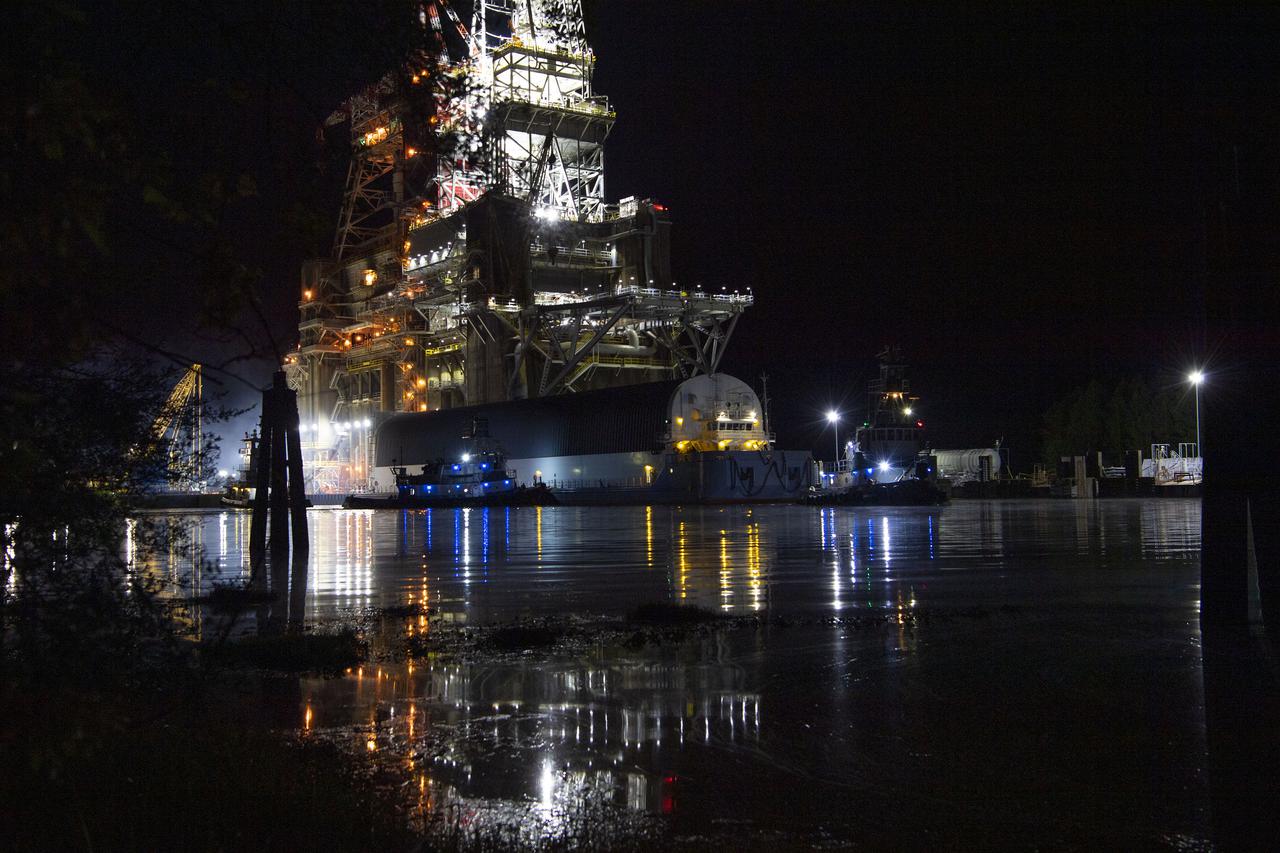
The first core stage of NASA’s Space Launch System (SLS) rocket, loaded onto the agency’s Pegasus barge, departs Stennis Space Center near Bay St. Louis, Mississippi, headed to Kennedy Space Center in Florida. The departure of the core stage in mid-April 2021 followed completion of a Green Run test series of the stage systems in preparation for its launch on the Artemis I mission. The Green Run series concluded with a March 18 hot fire of the stage’s four RS-25 engines on the B-2 Test Stand at Stennis, just as during an actual launch. Following refurbishment work, the stage was removed from the B-2 stand and loaded onto the Pegasus barge for transport. Once at Kennedy, the will be integrated with the rest of SLS rocket and prepared for the launch of the Artemis I mission to the Moon. Photo Credit: NASA
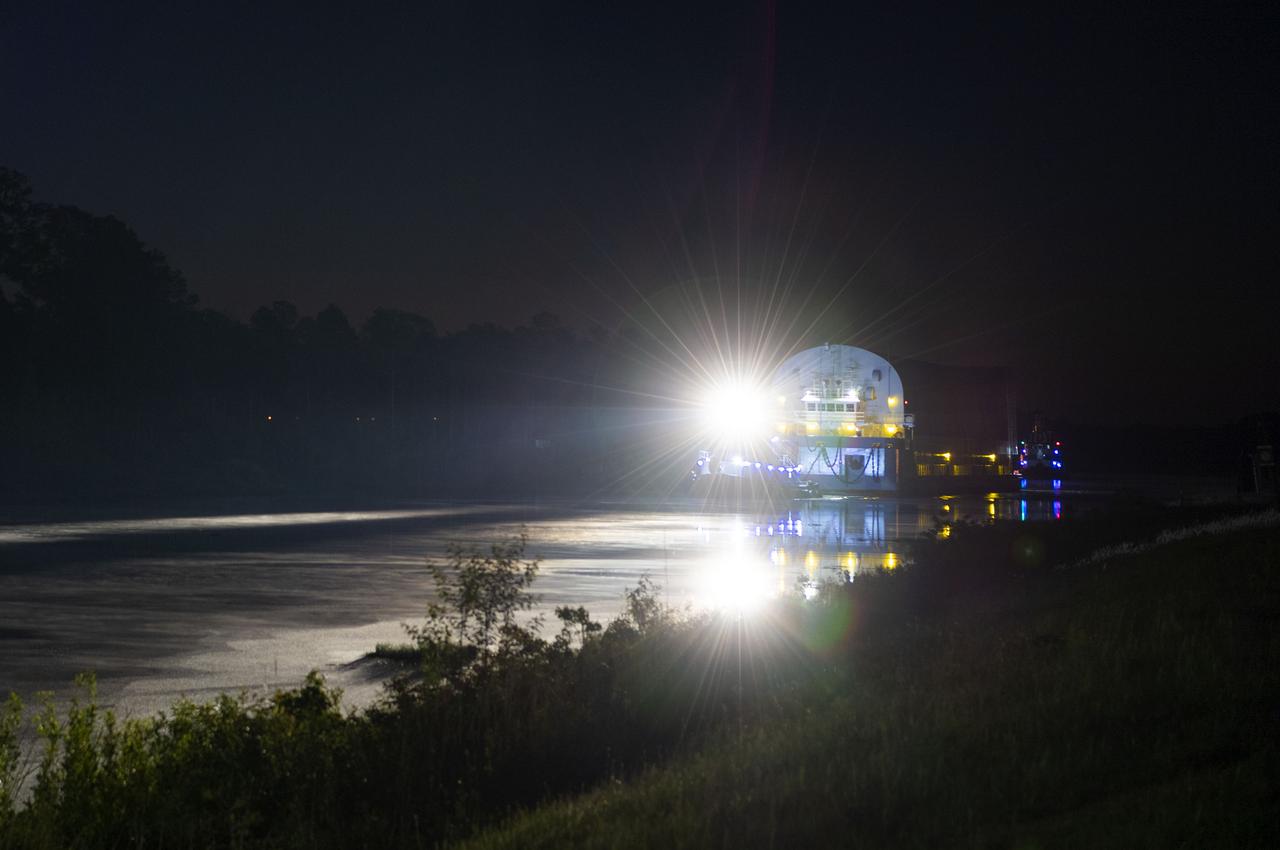
The first core stage of NASA’s Space Launch System (SLS) rocket, loaded onto the agency’s Pegasus barge, departs Stennis Space Center near Bay St. Louis, Mississippi, headed to Kennedy Space Center in Florida. The departure of the core stage in mid-April 2021 followed completion of a Green Run test series of the stage systems in preparation for its launch on the Artemis I mission. The Green Run series concluded with a March 18 hot fire of the stage’s four RS-25 engines on the B-2 Test Stand at Stennis, just as during an actual launch. Following refurbishment work, the stage was removed from the B-2 stand and loaded onto the Pegasus barge for transport. Once at Kennedy, the will be integrated with the rest of SLS rocket and prepared for the launch of the Artemis I mission to the Moon. Photo Credit: NASA
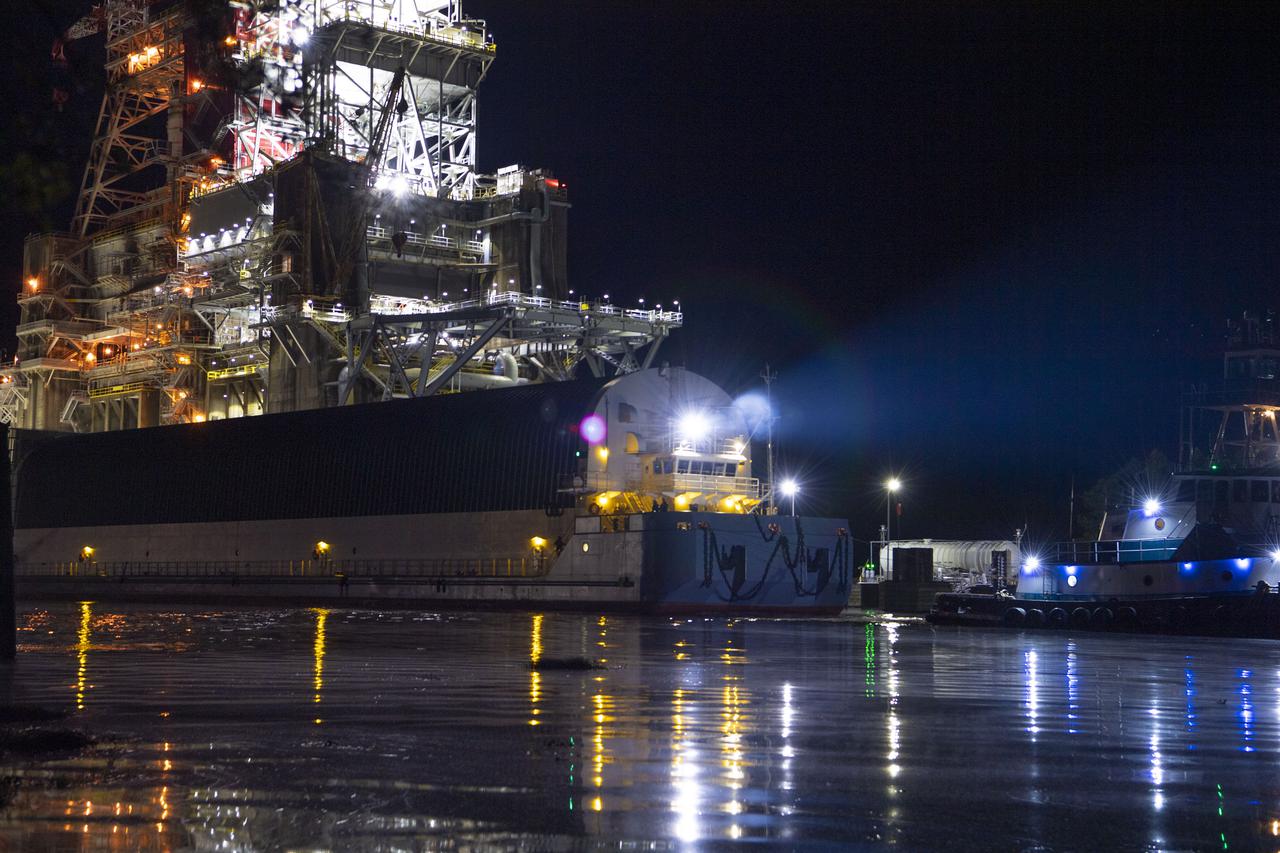
The first core stage of NASA’s Space Launch System (SLS) rocket, loaded onto the agency’s Pegasus barge, departs Stennis Space Center near Bay St. Louis, Mississippi, headed to Kennedy Space Center in Florida. The departure of the core stage in mid-April 2021 followed completion of a Green Run test series of the stage systems in preparation for its launch on the Artemis I mission. The Green Run series concluded with a March 18 hot fire of the stage’s four RS-25 engines on the B-2 Test Stand at Stennis, just as during an actual launch. Following refurbishment work, the stage was removed from the B-2 stand and loaded onto the Pegasus barge for transport. Once at Kennedy, the will be integrated with the rest of SLS rocket and prepared for the launch of the Artemis I mission to the Moon. Photo Credit: NASA
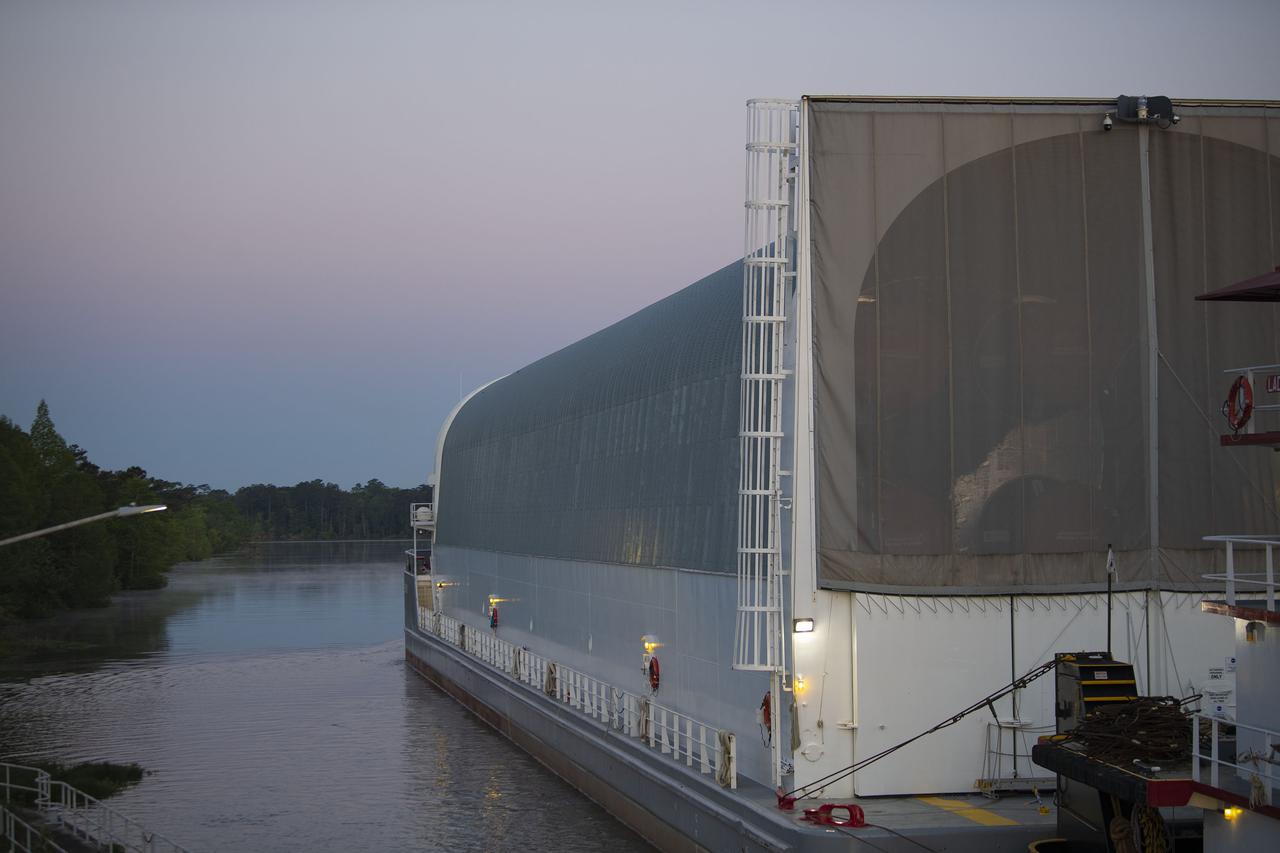
The first core stage of NASA’s Space Launch System (SLS) rocket, loaded onto the agency’s Pegasus barge, departs Stennis Space Center near Bay St. Louis, Mississippi, headed to Kennedy Space Center in Florida. The departure of the core stage in mid-April 2021 followed completion of a Green Run test series of the stage systems in preparation for its launch on the Artemis I mission. The Green Run series concluded with a March 18 hot fire of the stage’s four RS-25 engines on the B-2 Test Stand at Stennis, just as during an actual launch. Following refurbishment work, the stage was removed from the B-2 stand and loaded onto the Pegasus barge for transport. Once at Kennedy, the will be integrated with the rest of SLS rocket and prepared for the launch of the Artemis I mission to the Moon. Photo Credit: NASA
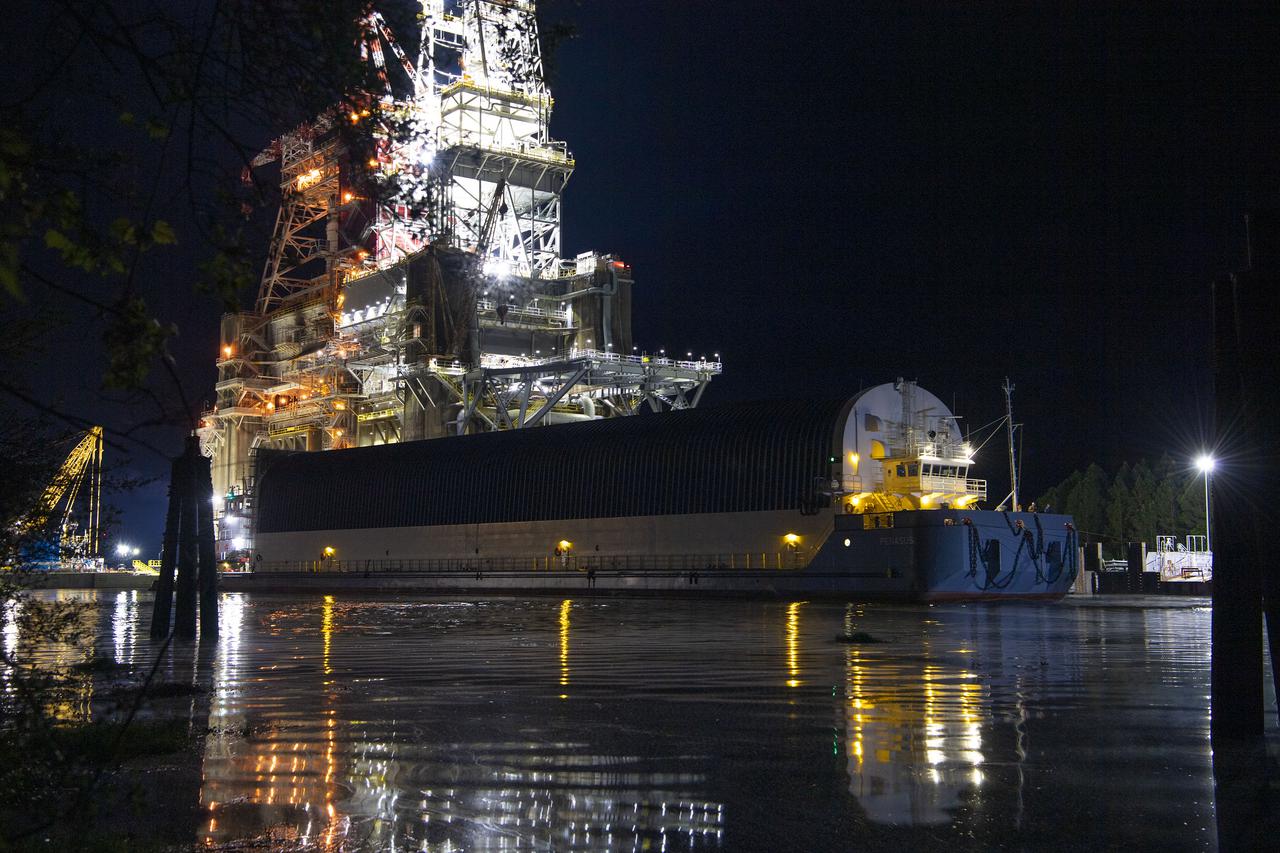
The first core stage of NASA’s Space Launch System (SLS) rocket, loaded onto the agency’s Pegasus barge, departs Stennis Space Center near Bay St. Louis, Mississippi, headed to Kennedy Space Center in Florida. The departure of the core stage in mid-April 2021 followed completion of a Green Run test series of the stage systems in preparation for its launch on the Artemis I mission. The Green Run series concluded with a March 18 hot fire of the stage’s four RS-25 engines on the B-2 Test Stand at Stennis, just as during an actual launch. Following refurbishment work, the stage was removed from the B-2 stand and loaded onto the Pegasus barge for transport. Once at Kennedy, the will be integrated with the rest of SLS rocket and prepared for the launch of the Artemis I mission to the Moon. Photo Credit: NASA
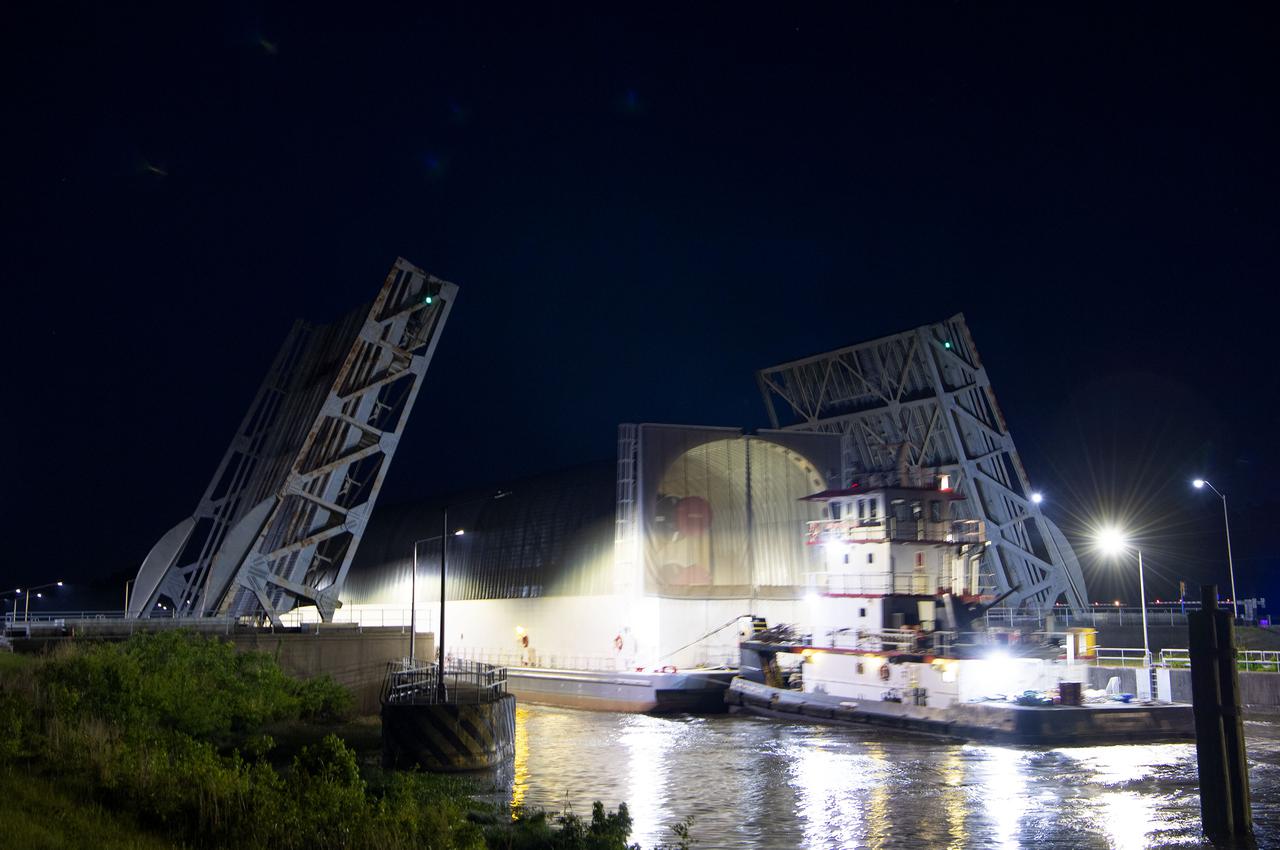
The first core stage of NASA’s Space Launch System (SLS) rocket, loaded onto the agency’s Pegasus barge, departs Stennis Space Center near Bay St. Louis, Mississippi, headed to Kennedy Space Center in Florida. The departure of the core stage in mid-April 2021 followed completion of a Green Run test series of the stage systems in preparation for its launch on the Artemis I mission. The Green Run series concluded with a March 18 hot fire of the stage’s four RS-25 engines on the B-2 Test Stand at Stennis, just as during an actual launch. Following refurbishment work, the stage was removed from the B-2 stand and loaded onto the Pegasus barge for transport. Once at Kennedy, the will be integrated with the rest of SLS rocket and prepared for the launch of the Artemis I mission to the Moon. Photo Credit: NASA
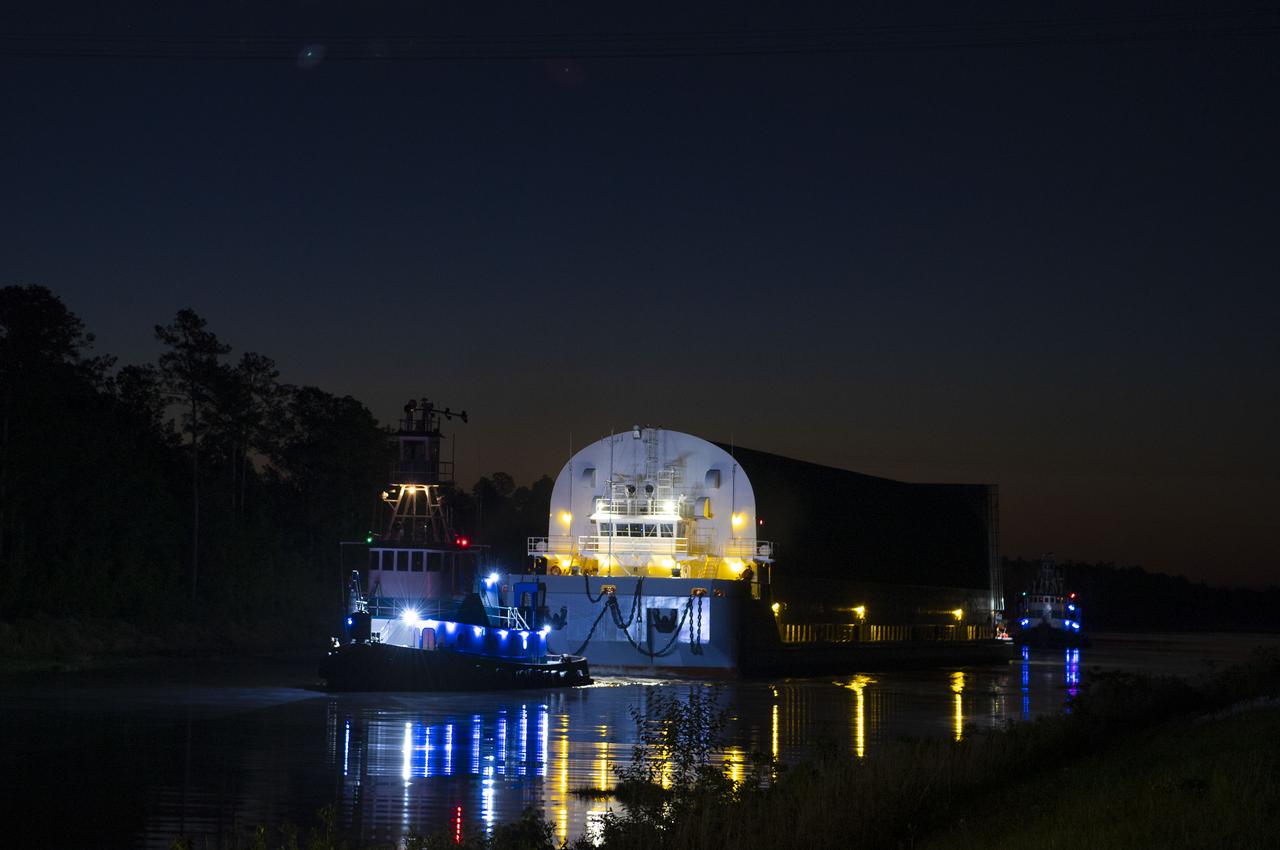
The first core stage of NASA’s Space Launch System (SLS) rocket, loaded onto the agency’s Pegasus barge, departs Stennis Space Center near Bay St. Louis, Mississippi, headed to Kennedy Space Center in Florida. The departure of the core stage in mid-April 2021 followed completion of a Green Run test series of the stage systems in preparation for its launch on the Artemis I mission. The Green Run series concluded with a March 18 hot fire of the stage’s four RS-25 engines on the B-2 Test Stand at Stennis, just as during an actual launch. Following refurbishment work, the stage was removed from the B-2 stand and loaded onto the Pegasus barge for transport. Once at Kennedy, the will be integrated with the rest of SLS rocket and prepared for the launch of the Artemis I mission to the Moon. Photo Credit: NASA
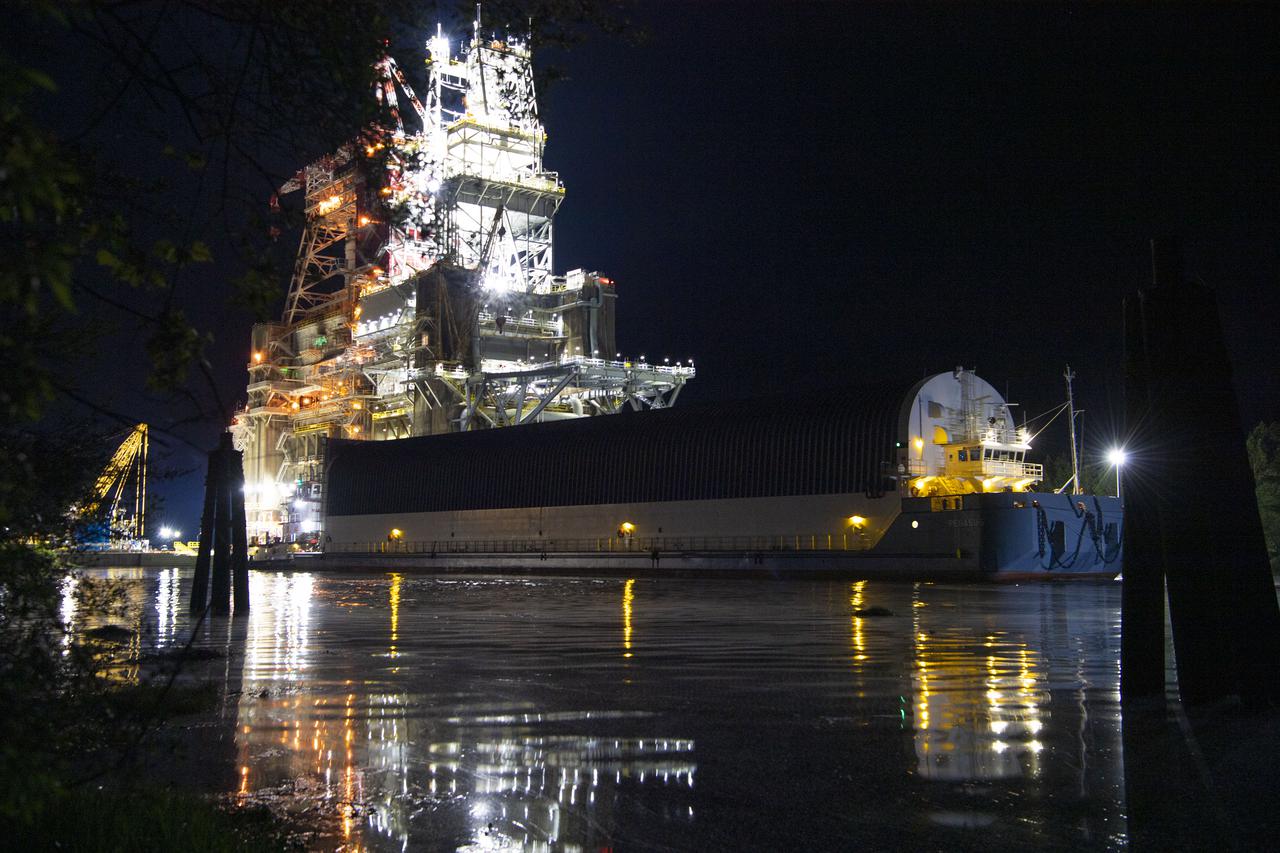
The first core stage of NASA’s Space Launch System (SLS) rocket, loaded onto the agency’s Pegasus barge, departs Stennis Space Center near Bay St. Louis, Mississippi, headed to Kennedy Space Center in Florida. The departure of the core stage in mid-April 2021 followed completion of a Green Run test series of the stage systems in preparation for its launch on the Artemis I mission. The Green Run series concluded with a March 18 hot fire of the stage’s four RS-25 engines on the B-2 Test Stand at Stennis, just as during an actual launch. Following refurbishment work, the stage was removed from the B-2 stand and loaded onto the Pegasus barge for transport. Once at Kennedy, the will be integrated with the rest of SLS rocket and prepared for the launch of the Artemis I mission to the Moon. Photo Credit: NASA
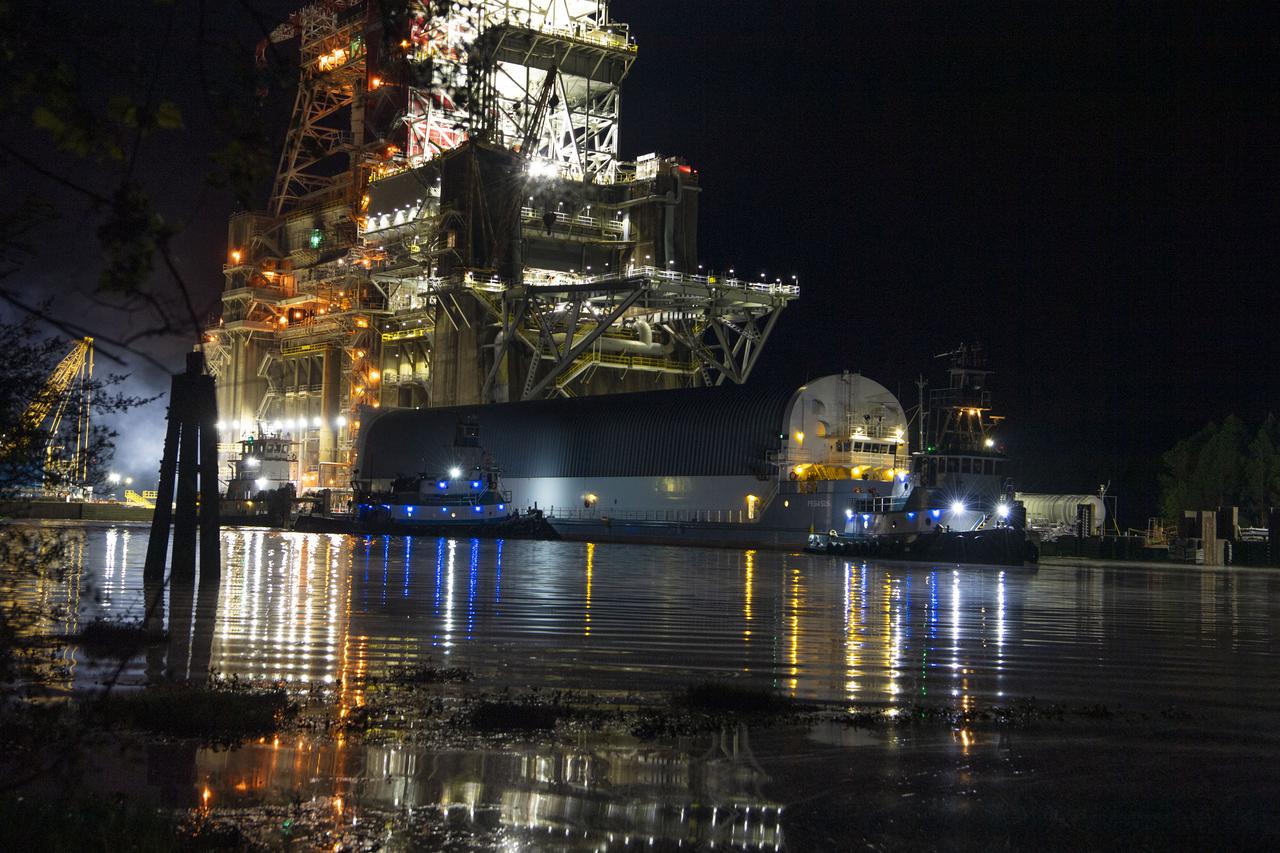
The first core stage of NASA’s Space Launch System (SLS) rocket, loaded onto the agency’s Pegasus barge, departs Stennis Space Center near Bay St. Louis, Mississippi, headed to Kennedy Space Center in Florida. The departure of the core stage in mid-April 2021 followed completion of a Green Run test series of the stage systems in preparation for its launch on the Artemis I mission. The Green Run series concluded with a March 18 hot fire of the stage’s four RS-25 engines on the B-2 Test Stand at Stennis, just as during an actual launch. Following refurbishment work, the stage was removed from the B-2 stand and loaded onto the Pegasus barge for transport. Once at Kennedy, the will be integrated with the rest of SLS rocket and prepared for the launch of the Artemis I mission to the Moon. Photo Credit: NASA
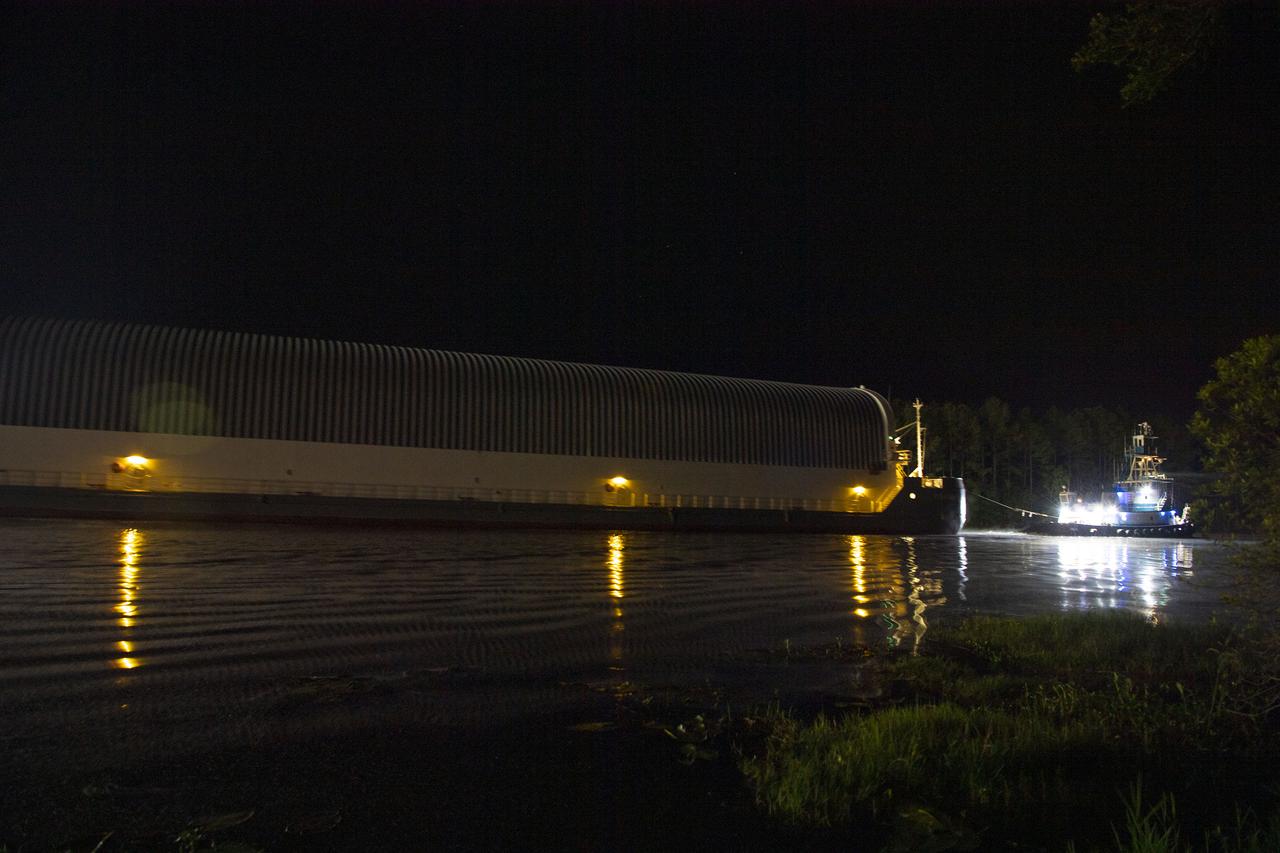
The first core stage of NASA’s Space Launch System (SLS) rocket, loaded onto the agency’s Pegasus barge, departs Stennis Space Center near Bay St. Louis, Mississippi, headed to Kennedy Space Center in Florida. The departure of the core stage in mid-April 2021 followed completion of a Green Run test series of the stage systems in preparation for its launch on the Artemis I mission. The Green Run series concluded with a March 18 hot fire of the stage’s four RS-25 engines on the B-2 Test Stand at Stennis, just as during an actual launch. Following refurbishment work, the stage was removed from the B-2 stand and loaded onto the Pegasus barge for transport. Once at Kennedy, the will be integrated with the rest of SLS rocket and prepared for the launch of the Artemis I mission to the Moon. Photo Credit: NASA
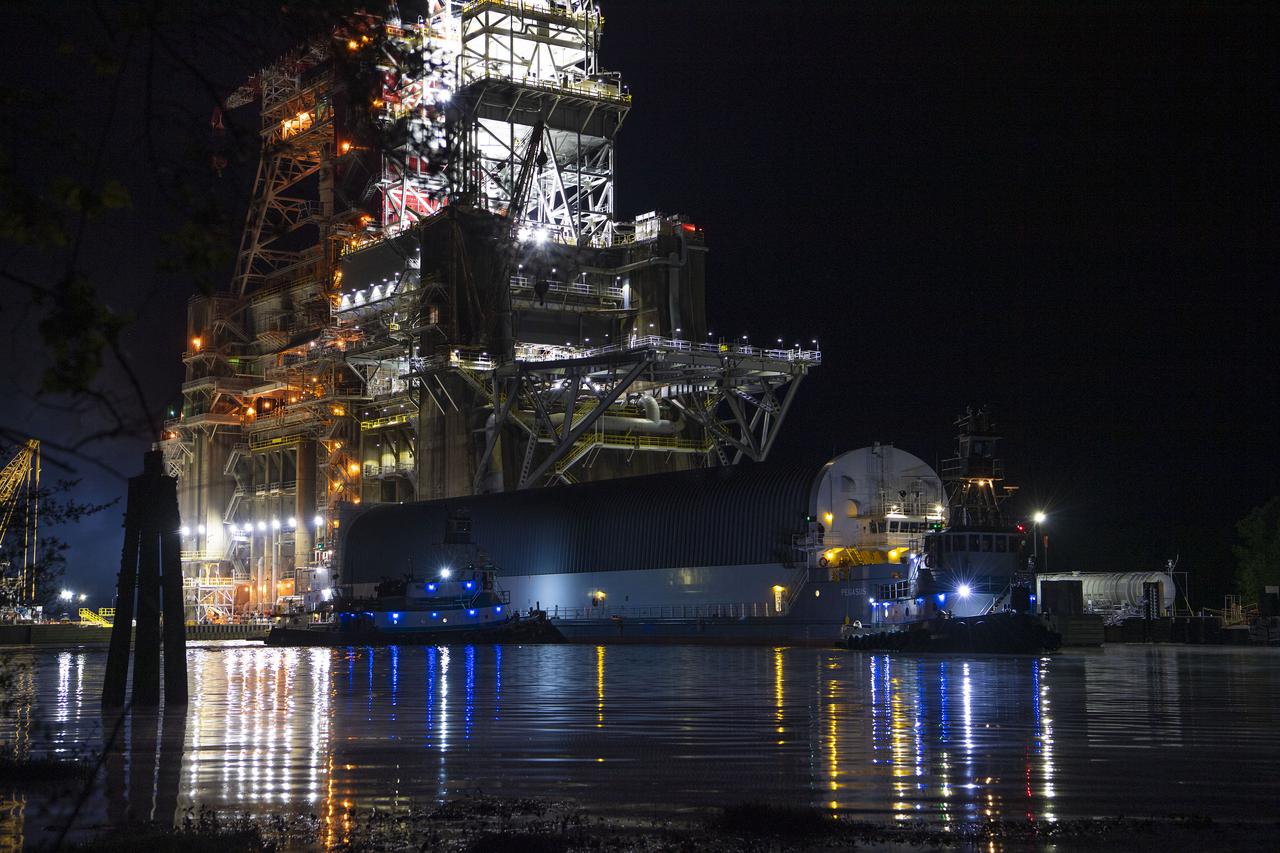
The first core stage of NASA’s Space Launch System (SLS) rocket, loaded onto the agency’s Pegasus barge, departs Stennis Space Center near Bay St. Louis, Mississippi, headed to Kennedy Space Center in Florida. The departure of the core stage in mid-April 2021 followed completion of a Green Run test series of the stage systems in preparation for its launch on the Artemis I mission. The Green Run series concluded with a March 18 hot fire of the stage’s four RS-25 engines on the B-2 Test Stand at Stennis, just as during an actual launch. Following refurbishment work, the stage was removed from the B-2 stand and loaded onto the Pegasus barge for transport. Once at Kennedy, the will be integrated with the rest of SLS rocket and prepared for the launch of the Artemis I mission to the Moon. Photo Credit: NASA
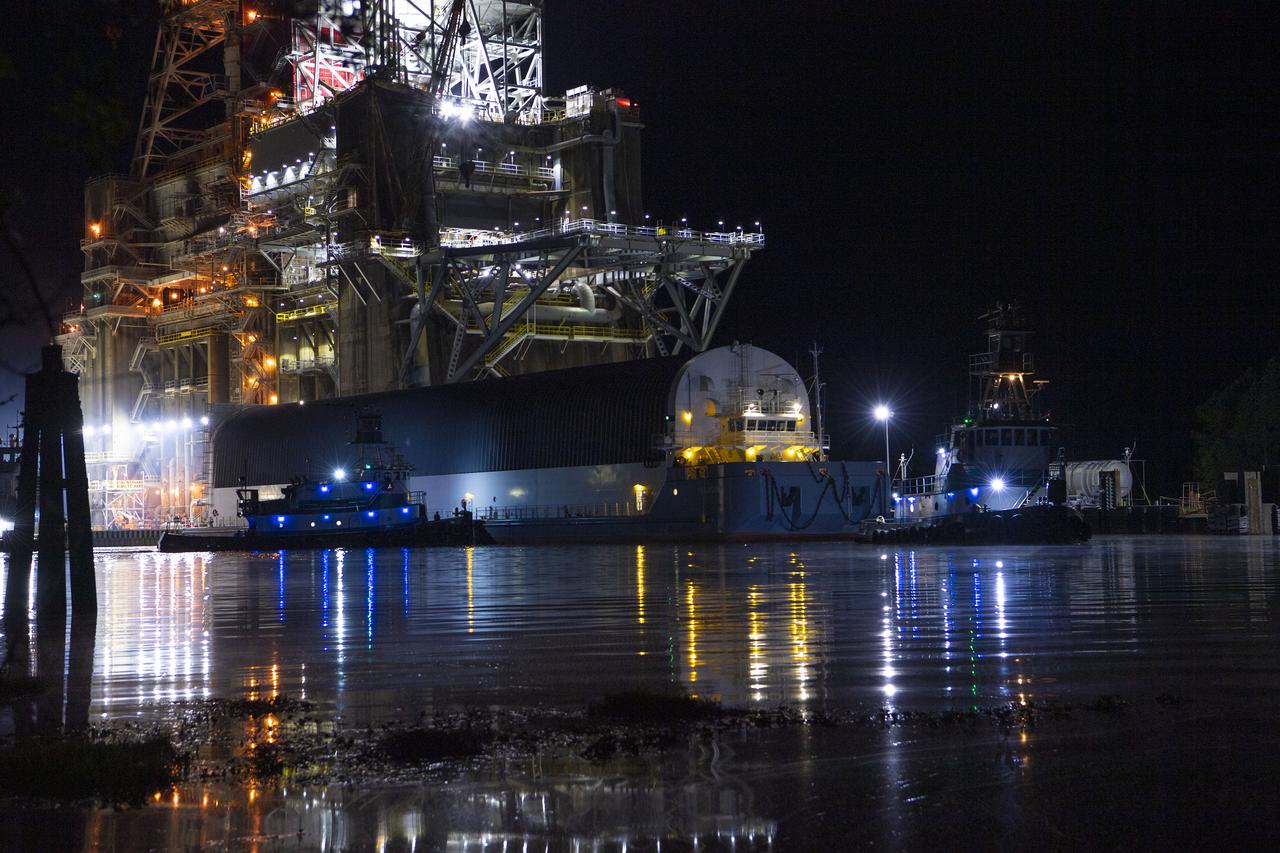
The first core stage of NASA’s Space Launch System (SLS) rocket, loaded onto the agency’s Pegasus barge, departs Stennis Space Center near Bay St. Louis, Mississippi, headed to Kennedy Space Center in Florida. The departure of the core stage in mid-April 2021 followed completion of a Green Run test series of the stage systems in preparation for its launch on the Artemis I mission. The Green Run series concluded with a March 18 hot fire of the stage’s four RS-25 engines on the B-2 Test Stand at Stennis, just as during an actual launch. Following refurbishment work, the stage was removed from the B-2 stand and loaded onto the Pegasus barge for transport. Once at Kennedy, the will be integrated with the rest of SLS rocket and prepared for the launch of the Artemis I mission to the Moon. Photo Credit: NASA
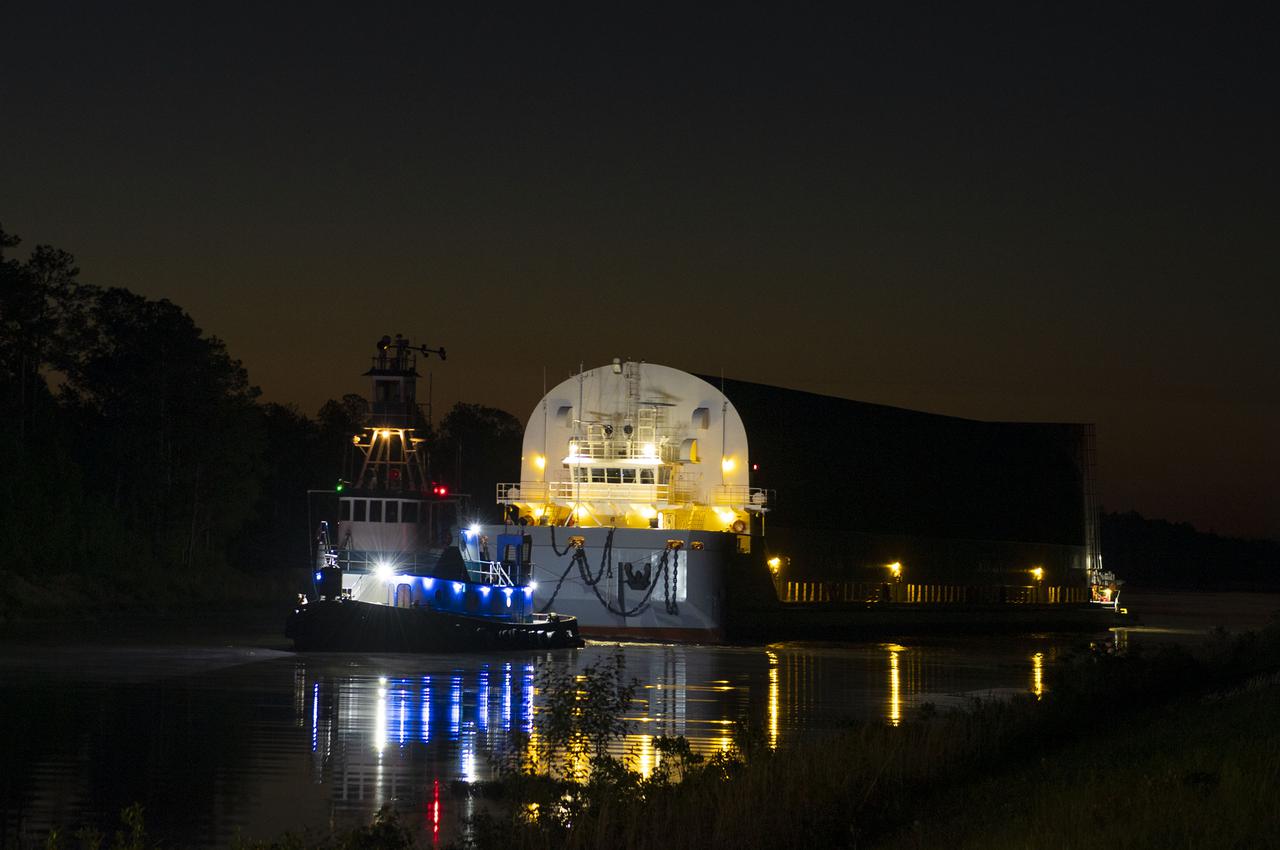
The first core stage of NASA’s Space Launch System (SLS) rocket, loaded onto the agency’s Pegasus barge, departs Stennis Space Center near Bay St. Louis, Mississippi, headed to Kennedy Space Center in Florida. The departure of the core stage in mid-April 2021 followed completion of a Green Run test series of the stage systems in preparation for its launch on the Artemis I mission. The Green Run series concluded with a March 18 hot fire of the stage’s four RS-25 engines on the B-2 Test Stand at Stennis, just as during an actual launch. Following refurbishment work, the stage was removed from the B-2 stand and loaded onto the Pegasus barge for transport. Once at Kennedy, the will be integrated with the rest of SLS rocket and prepared for the launch of the Artemis I mission to the Moon. Photo Credit: NASA
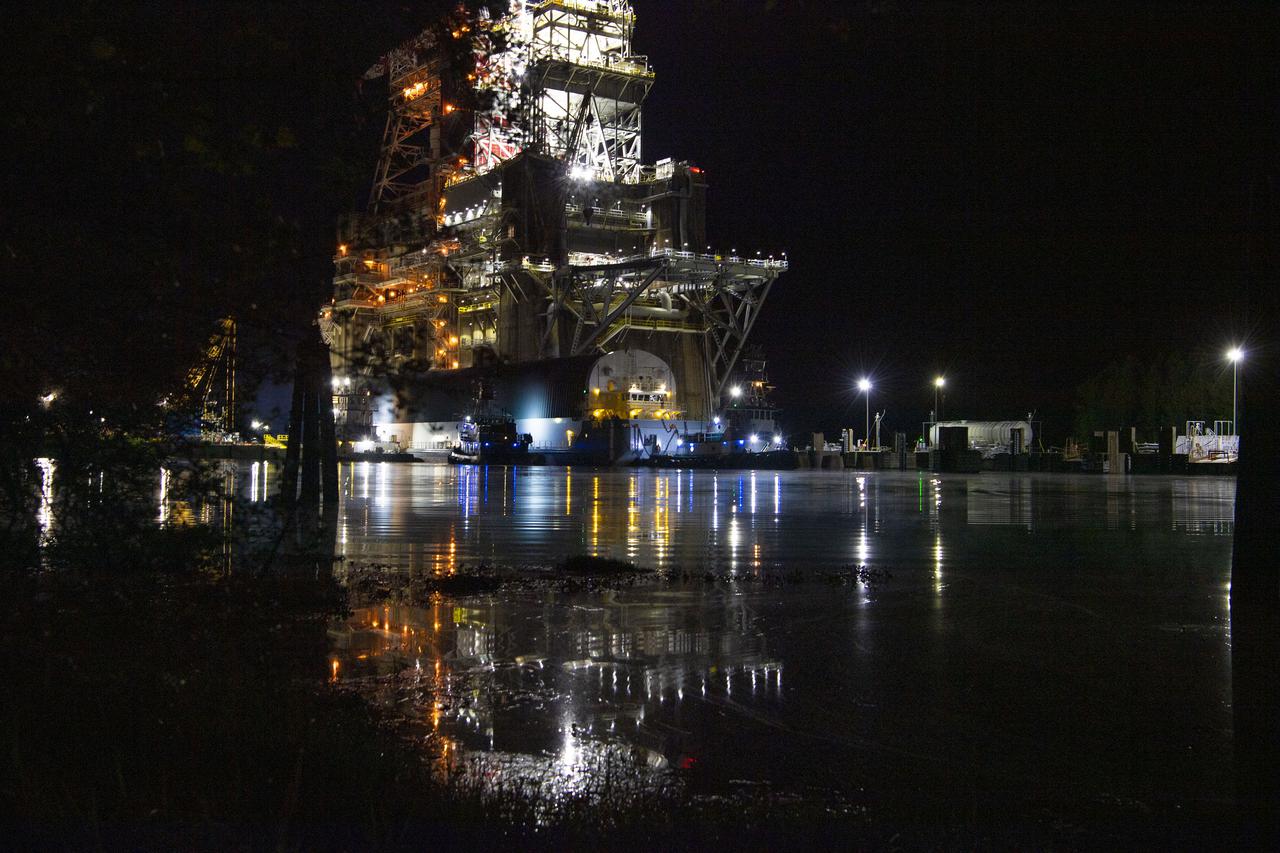
The first core stage of NASA’s Space Launch System (SLS) rocket, loaded onto the agency’s Pegasus barge, departs Stennis Space Center near Bay St. Louis, Mississippi, headed to Kennedy Space Center in Florida. The departure of the core stage in mid-April 2021 followed completion of a Green Run test series of the stage systems in preparation for its launch on the Artemis I mission. The Green Run series concluded with a March 18 hot fire of the stage’s four RS-25 engines on the B-2 Test Stand at Stennis, just as during an actual launch. Following refurbishment work, the stage was removed from the B-2 stand and loaded onto the Pegasus barge for transport. Once at Kennedy, the will be integrated with the rest of SLS rocket and prepared for the launch of the Artemis I mission to the Moon. Photo Credit: NASA
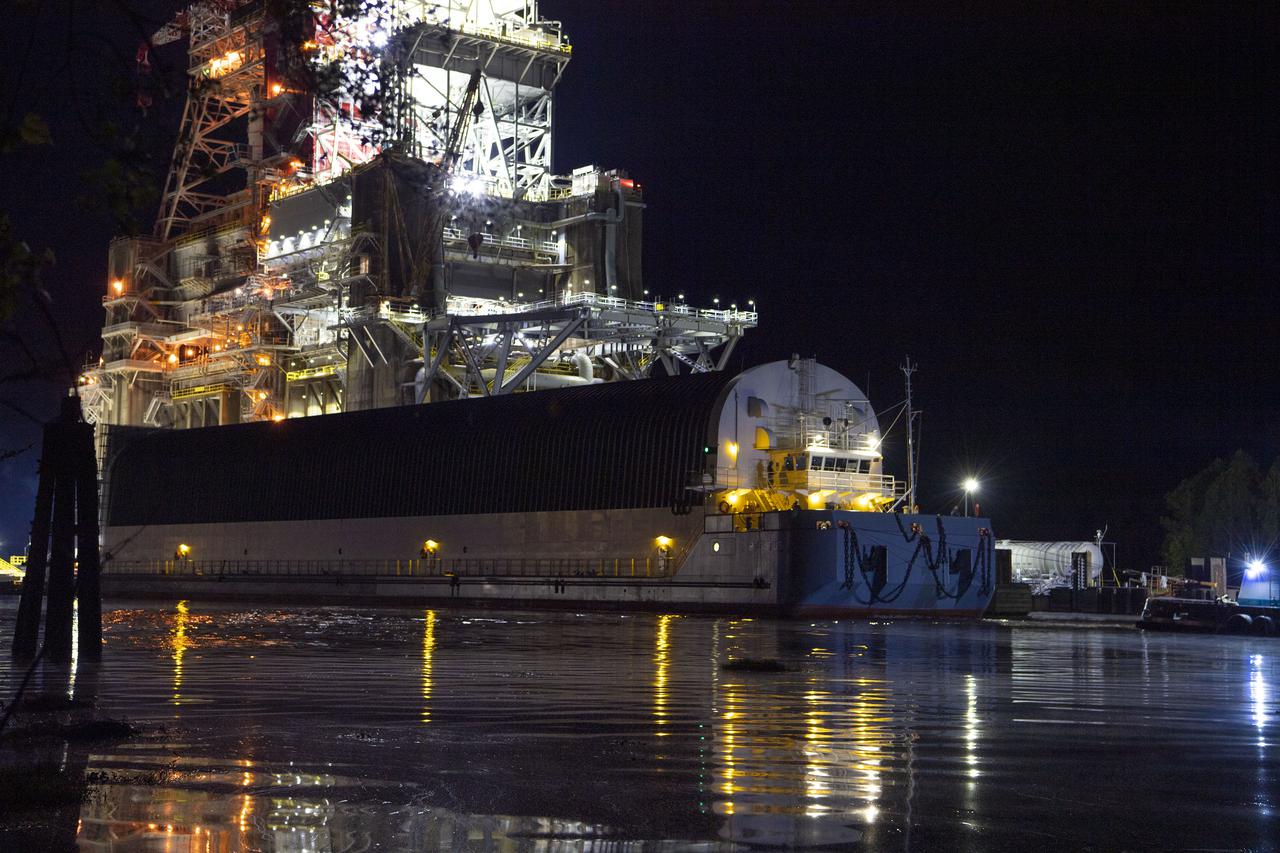
The first core stage of NASA’s Space Launch System (SLS) rocket, loaded onto the agency’s Pegasus barge, departs Stennis Space Center near Bay St. Louis, Mississippi, headed to Kennedy Space Center in Florida. The departure of the core stage in mid-April 2021 followed completion of a Green Run test series of the stage systems in preparation for its launch on the Artemis I mission. The Green Run series concluded with a March 18 hot fire of the stage’s four RS-25 engines on the B-2 Test Stand at Stennis, just as during an actual launch. Following refurbishment work, the stage was removed from the B-2 stand and loaded onto the Pegasus barge for transport. Once at Kennedy, the will be integrated with the rest of SLS rocket and prepared for the launch of the Artemis I mission to the Moon. Photo Credit: NASA
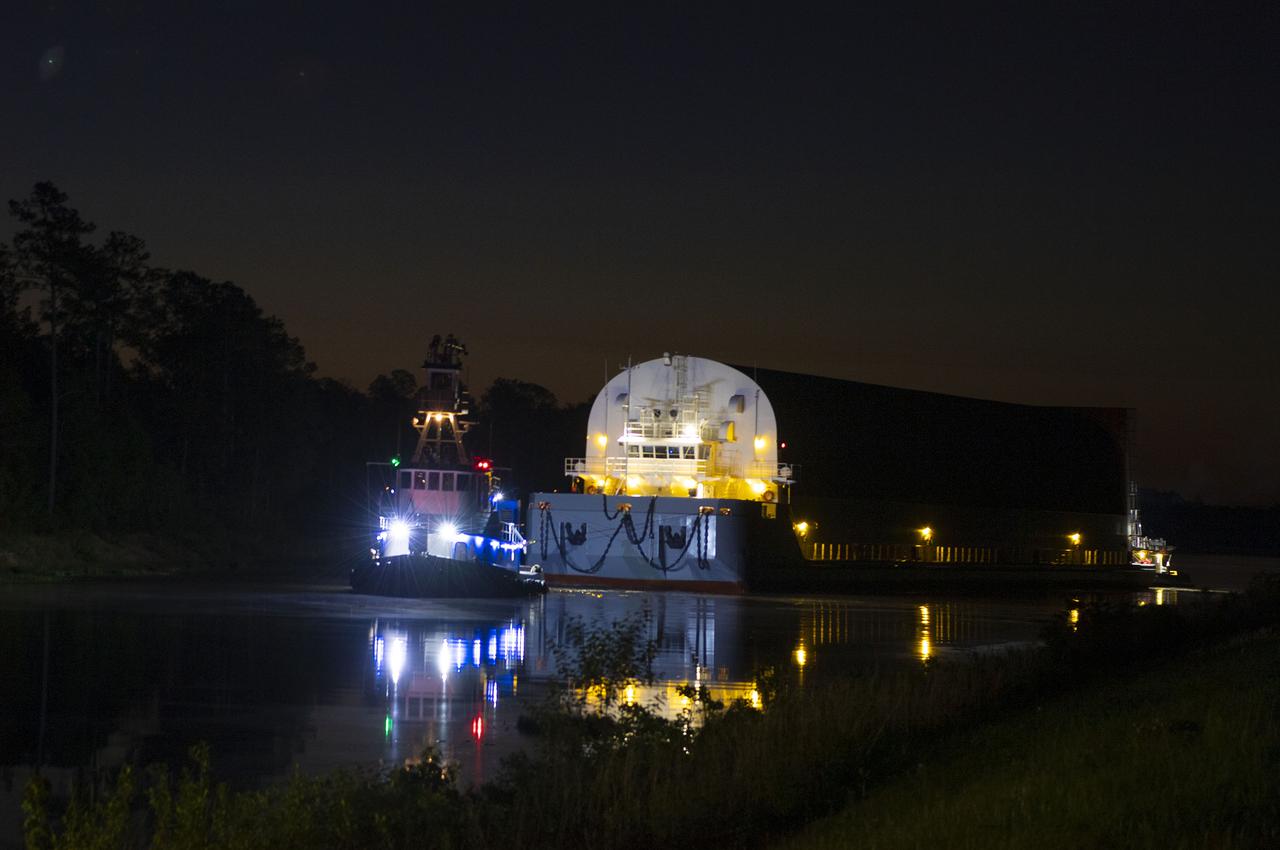
The first core stage of NASA’s Space Launch System (SLS) rocket, loaded onto the agency’s Pegasus barge, departs Stennis Space Center near Bay St. Louis, Mississippi, headed to Kennedy Space Center in Florida. The departure of the core stage in mid-April 2021 followed completion of a Green Run test series of the stage systems in preparation for its launch on the Artemis I mission. The Green Run series concluded with a March 18 hot fire of the stage’s four RS-25 engines on the B-2 Test Stand at Stennis, just as during an actual launch. Following refurbishment work, the stage was removed from the B-2 stand and loaded onto the Pegasus barge for transport. Once at Kennedy, the will be integrated with the rest of SLS rocket and prepared for the launch of the Artemis I mission to the Moon. Photo Credit: NASA
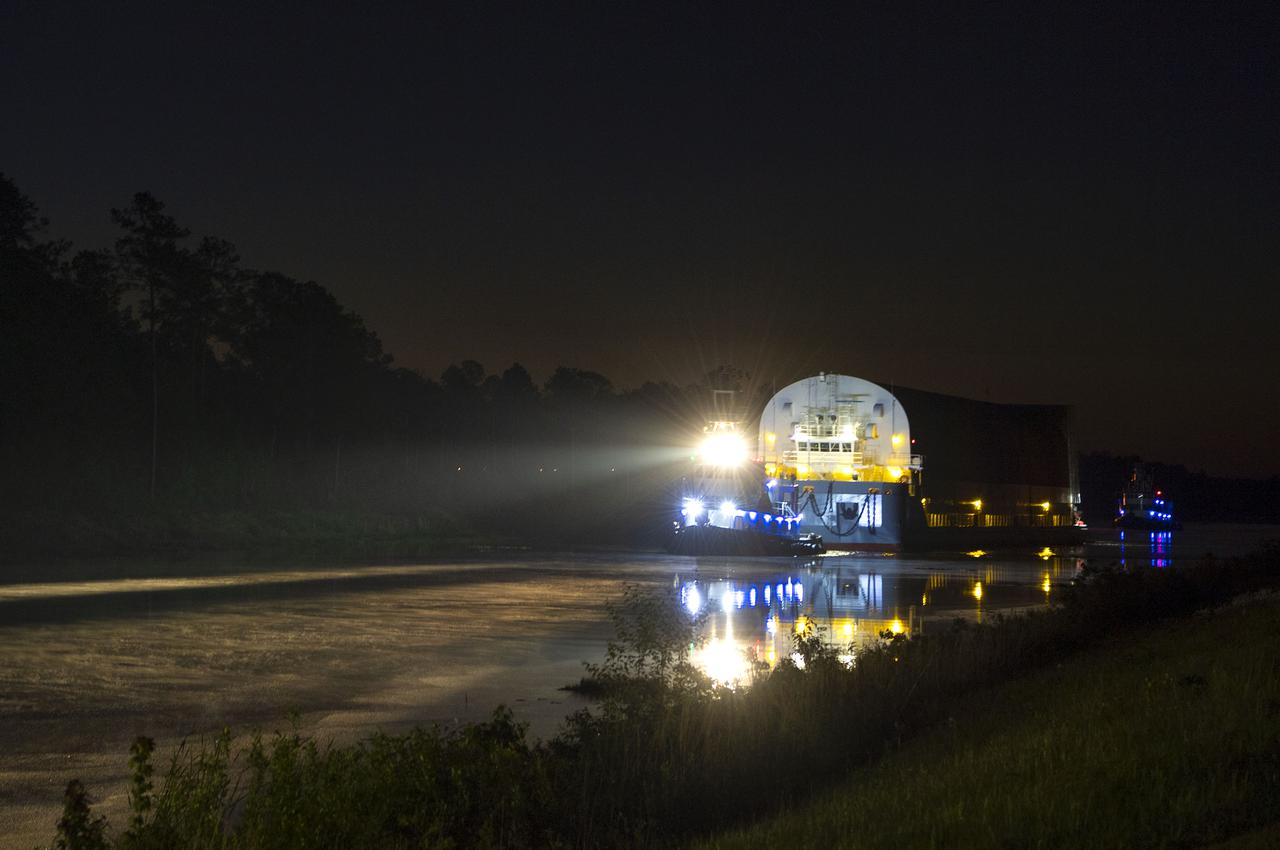
The first core stage of NASA’s Space Launch System (SLS) rocket, loaded onto the agency’s Pegasus barge, departs Stennis Space Center near Bay St. Louis, Mississippi, headed to Kennedy Space Center in Florida. The departure of the core stage in mid-April 2021 followed completion of a Green Run test series of the stage systems in preparation for its launch on the Artemis I mission. The Green Run series concluded with a March 18 hot fire of the stage’s four RS-25 engines on the B-2 Test Stand at Stennis, just as during an actual launch. Following refurbishment work, the stage was removed from the B-2 stand and loaded onto the Pegasus barge for transport. Once at Kennedy, the will be integrated with the rest of SLS rocket and prepared for the launch of the Artemis I mission to the Moon. Photo Credit: NASA
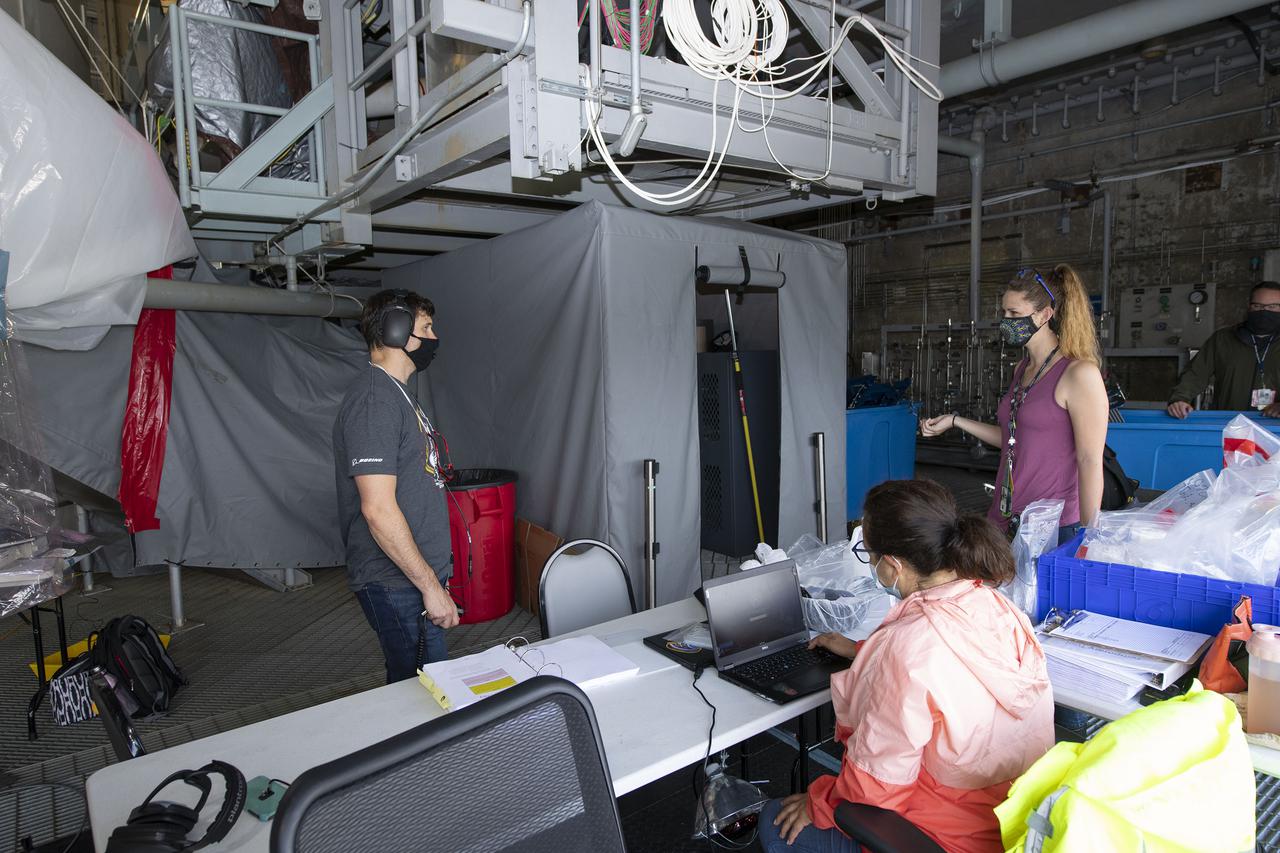
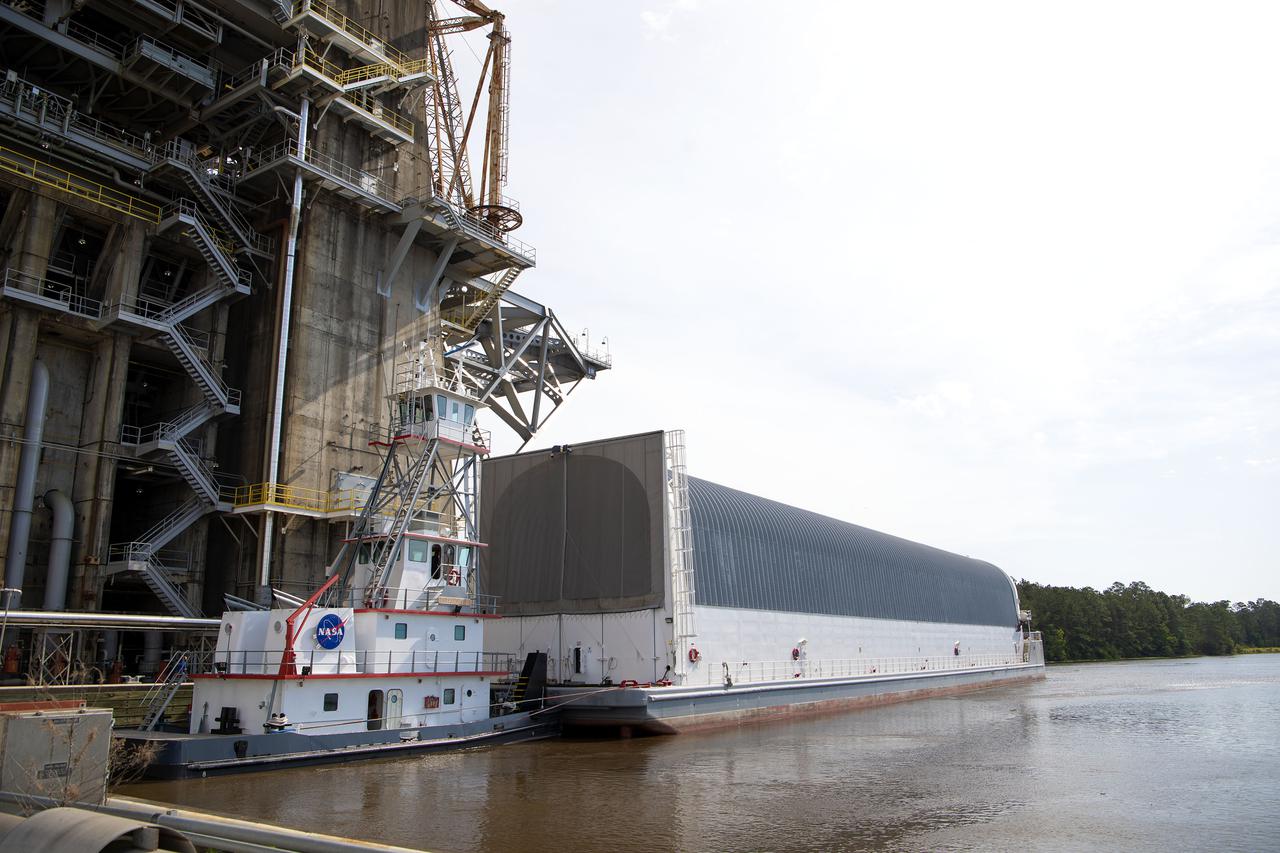
Team members at NASA’s Stennis Space Center near Bay St. Louis, Mississippi, complete refurbishment work on the first core stage of the agency’s Space Launch System (SLS) rocket. The work followed a successful hot fire of the stage and its four RS-25 engines March 18. The hot fire marked the culmination of a yearlong Green Run series of tests of the stage and its integrated systems. Following refurbishment work, the core stage will be removed from the test stand and transported to Kennedy Space Center in Florida, aboard NASA’s Pegasus barge, shown delivering equipment to the B-2 Test Stand. At Kennedy, the core stage will be integrated with the rest of SLS rocket and prepared for the launch of the Artemis I mission to the Moon. Photo Credit: NASA
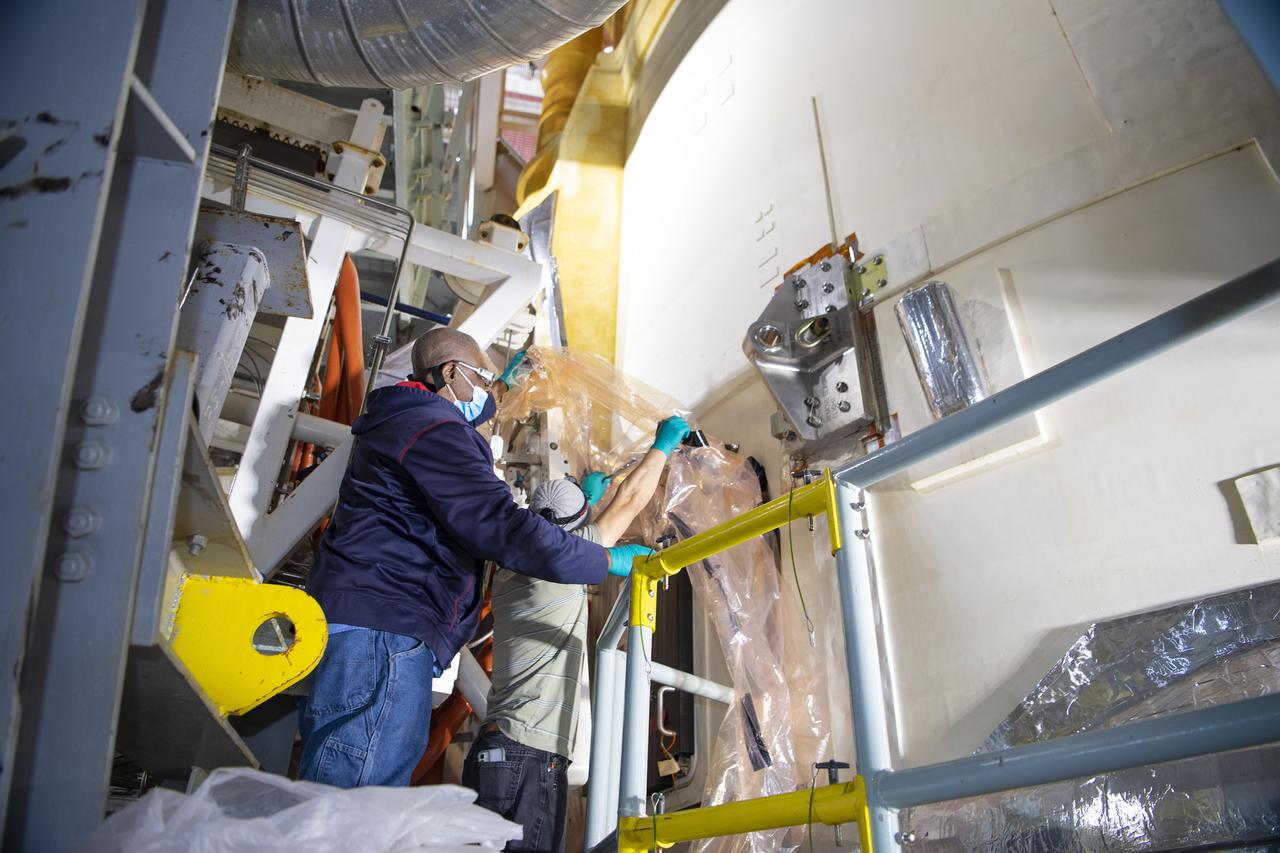
Team members at NASA’s Stennis Space Center near Bay St. Louis, Mississippi, complete refurbishment work on the first core stage of the agency’s Space Launch System (SLS) rocket. The work followed a successful hot fire of the stage and its four RS-25 engines March 18. The hot fire marked the culmination of a yearlong Green Run series of tests of the stage and its integrated systems. Following refurbishment work, the core stage will be removed from the test stand and transported to Kennedy Space Center in Florida, aboard NASA’s Pegasus barge, shown delivering equipment to the B-2 Test Stand. At Kennedy, the core stage will be integrated with the rest of SLS rocket and prepared for the launch of the Artemis I mission to the Moon. Photo Credit: NASA
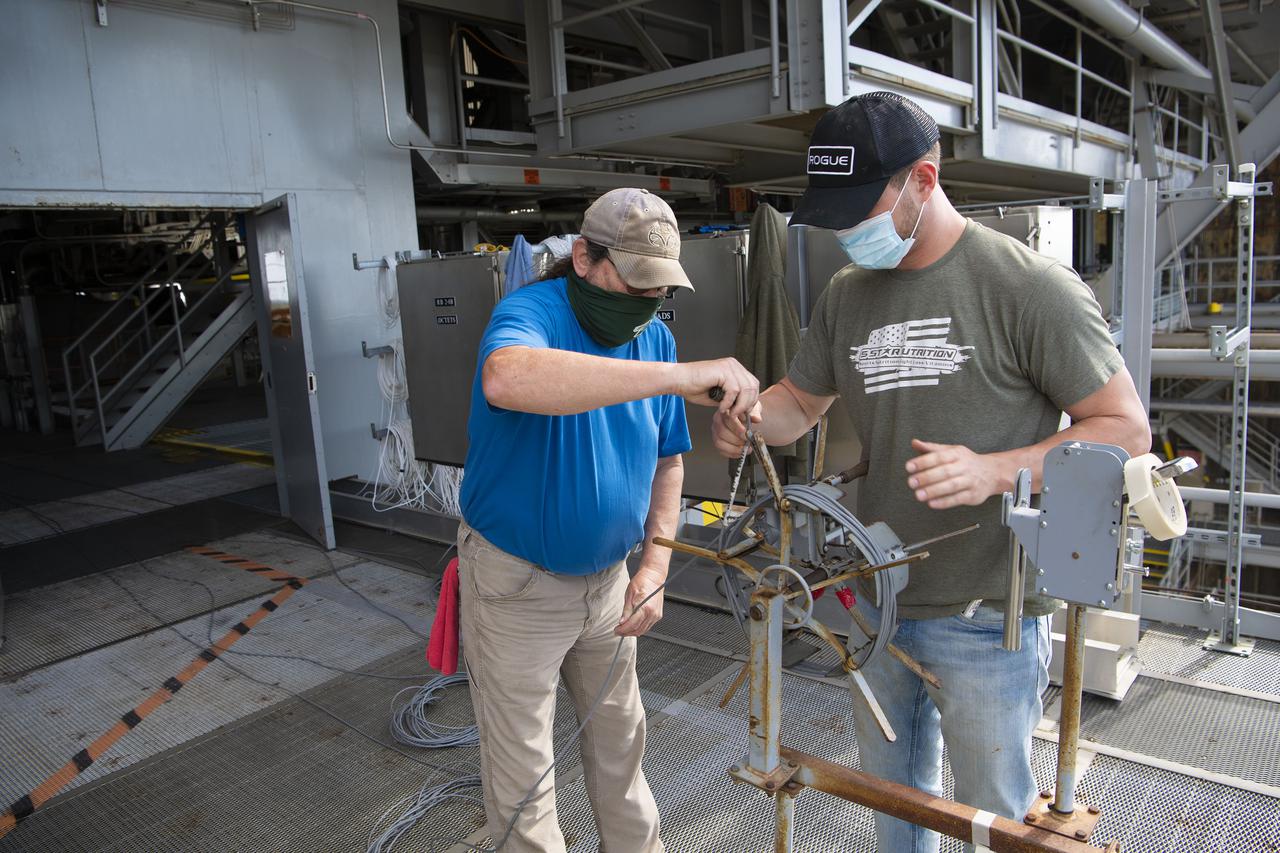
Team members at NASA’s Stennis Space Center near Bay St. Louis, Mississippi, complete refurbishment work on the first core stage of the agency’s Space Launch System (SLS) rocket. The work followed a successful hot fire of the stage and its four RS-25 engines March 18. The hot fire marked the culmination of a yearlong Green Run series of tests of the stage and its integrated systems. Following refurbishment work, the core stage will be removed from the test stand and transported to Kennedy Space Center in Florida, aboard NASA’s Pegasus barge, shown delivering equipment to the B-2 Test Stand. At Kennedy, the core stage will be integrated with the rest of SLS rocket and prepared for the launch of the Artemis I mission to the Moon. Photo Credit: NASA
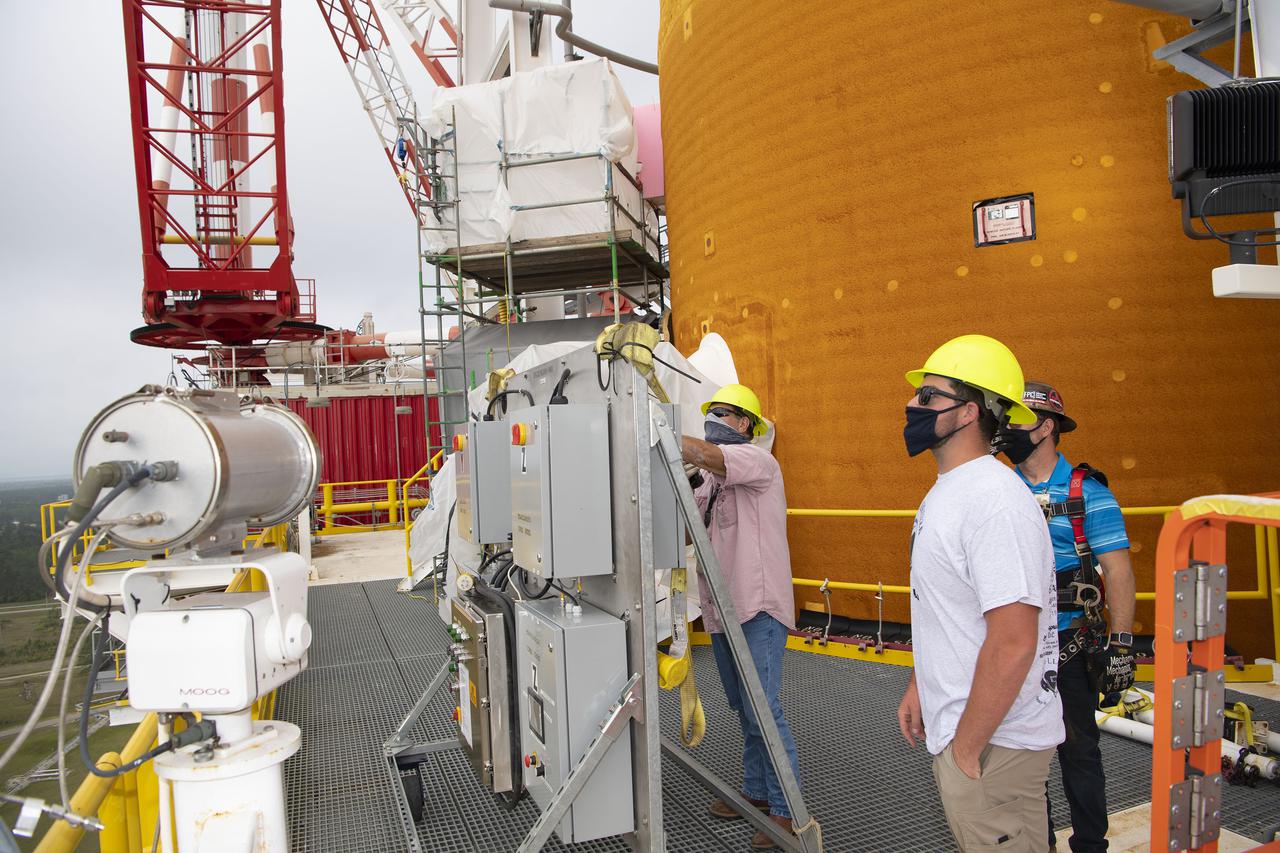
Team members at NASA’s Stennis Space Center near Bay St. Louis, Mississippi, complete refurbishment work on the first core stage of the agency’s Space Launch System (SLS) rocket. The work followed a successful hot fire of the stage and its four RS-25 engines March 18. The hot fire marked the culmination of a yearlong Green Run series of tests of the stage and its integrated systems. Following refurbishment work, the core stage will be removed from the test stand and transported to Kennedy Space Center in Florida, aboard NASA’s Pegasus barge, shown delivering equipment to the B-2 Test Stand. At Kennedy, the core stage will be integrated with the rest of SLS rocket and prepared for the launch of the Artemis I mission to the Moon. Photo Credit: NASA
Team members at NASA’s Stennis Space Center near Bay St. Louis, Mississippi, complete refurbishment work on the first core stage of the agency’s Space Launch System (SLS) rocket. The work followed a successful hot fire of the stage and its four RS-25 engines March 18. The hot fire marked the culmination of a yearlong Green Run series of tests of the stage and its integrated systems. Following refurbishment work, the core stage will be removed from the test stand and transported to Kennedy Space Center in Florida, aboard NASA’s Pegasus barge, shown delivering equipment to the B-2 Test Stand. At Kennedy, the core stage will be integrated with the rest of SLS rocket and prepared for the launch of the Artemis I mission to the Moon. Photo Credit: NASA
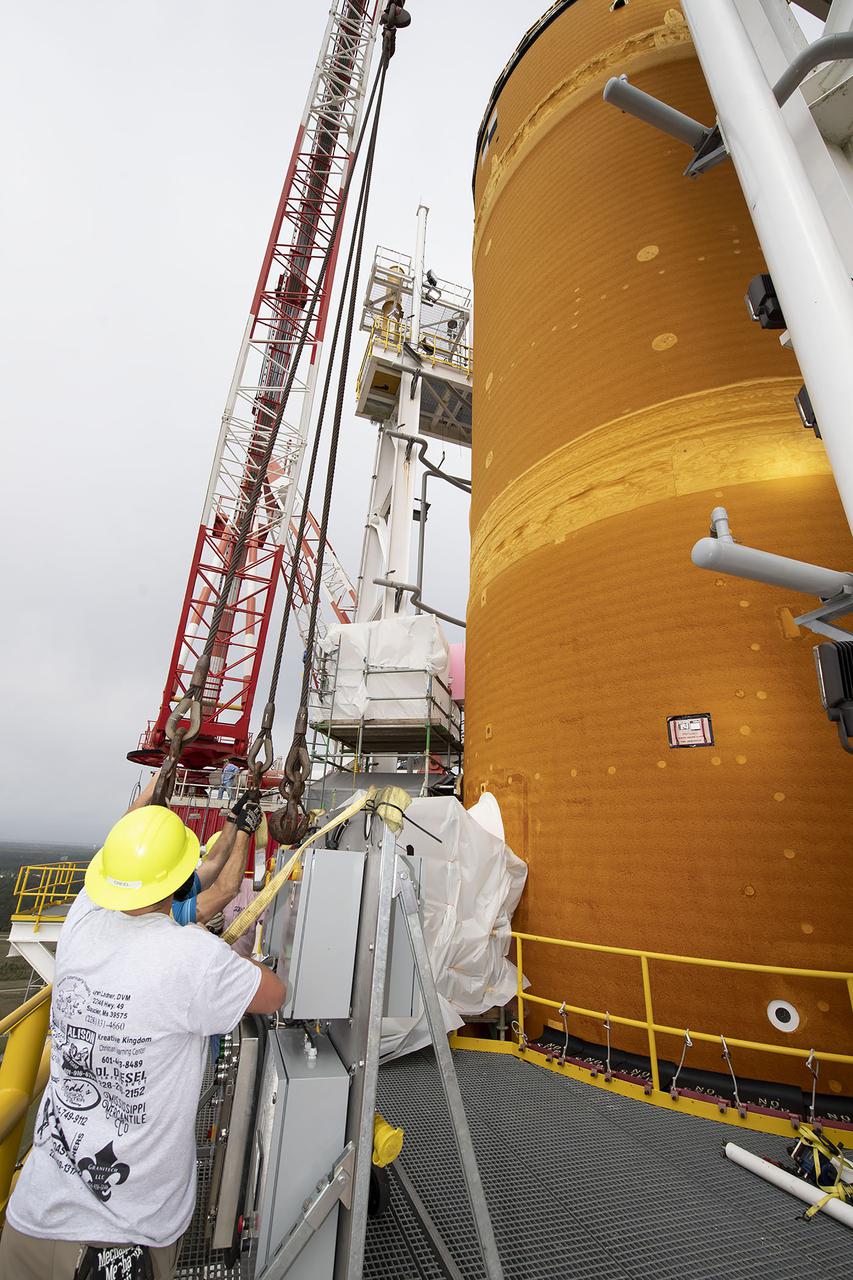
Team members at NASA’s Stennis Space Center near Bay St. Louis, Mississippi, complete refurbishment work on the first core stage of the agency’s Space Launch System (SLS) rocket. The work followed a successful hot fire of the stage and its four RS-25 engines March 18. The hot fire marked the culmination of a yearlong Green Run series of tests of the stage and its integrated systems. Following refurbishment work, the core stage will be removed from the test stand and transported to Kennedy Space Center in Florida, aboard NASA’s Pegasus barge, shown delivering equipment to the B-2 Test Stand. At Kennedy, the core stage will be integrated with the rest of SLS rocket and prepared for the launch of the Artemis I mission to the Moon. Photo Credit: NASA
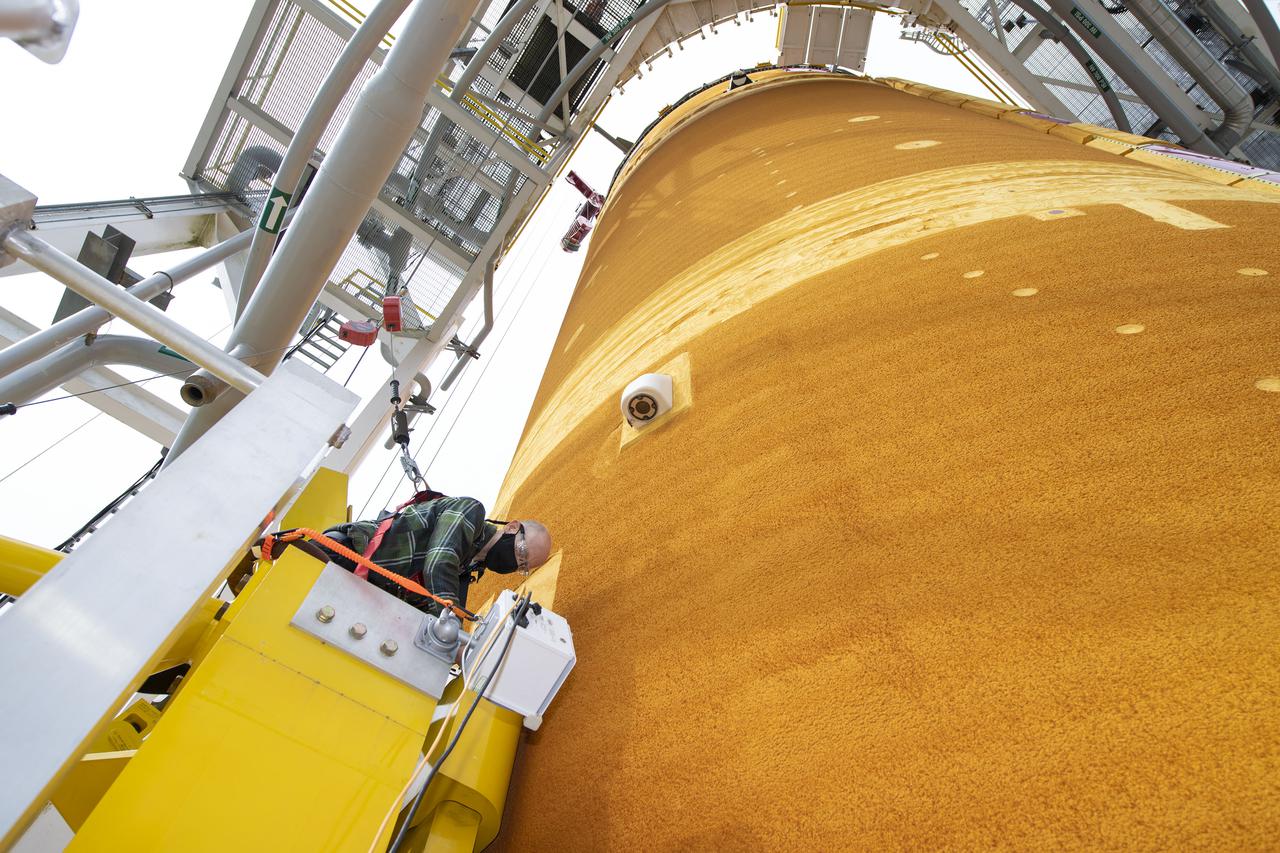
Team members at NASA’s Stennis Space Center near Bay St. Louis, Mississippi, complete refurbishment work on the first core stage of the agency’s Space Launch System (SLS) rocket. The work followed a successful hot fire of the stage and its four RS-25 engines March 18. The hot fire marked the culmination of a yearlong Green Run series of tests of the stage and its integrated systems. Following refurbishment work, the core stage will be removed from the test stand and transported to Kennedy Space Center in Florida, aboard NASA’s Pegasus barge, shown delivering equipment to the B-2 Test Stand. At Kennedy, the core stage will be integrated with the rest of SLS rocket and prepared for the launch of the Artemis I mission to the Moon. Photo Credit: NASA
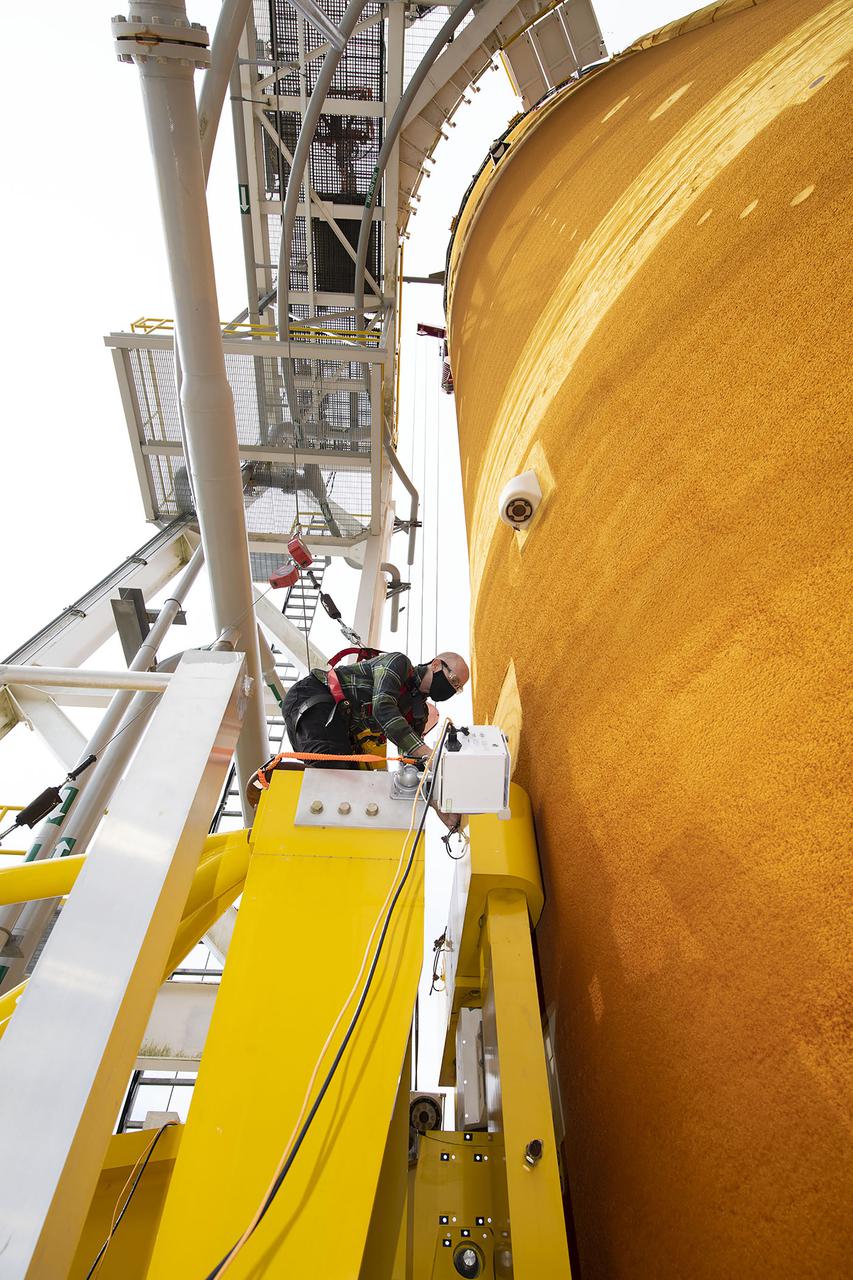
Team members at NASA’s Stennis Space Center near Bay St. Louis, Mississippi, complete refurbishment work on the first core stage of the agency’s Space Launch System (SLS) rocket. The work followed a successful hot fire of the stage and its four RS-25 engines March 18. The hot fire marked the culmination of a yearlong Green Run series of tests of the stage and its integrated systems. Following refurbishment work, the core stage will be removed from the test stand and transported to Kennedy Space Center in Florida, aboard NASA’s Pegasus barge, shown delivering equipment to the B-2 Test Stand. At Kennedy, the core stage will be integrated with the rest of SLS rocket and prepared for the launch of the Artemis I mission to the Moon. Photo Credit: NASA

Team members at NASA’s Stennis Space Center near Bay St. Louis, Mississippi, complete refurbishment work on the first core stage of the agency’s Space Launch System (SLS) rocket. The work followed a successful hot fire of the stage and its four RS-25 engines March 18. The hot fire marked the culmination of a yearlong Green Run series of tests of the stage and its integrated systems. Following refurbishment work, the core stage will be removed from the test stand and transported to Kennedy Space Center in Florida, aboard NASA’s Pegasus barge, shown delivering equipment to the B-2 Test Stand. At Kennedy, the core stage will be integrated with the rest of SLS rocket and prepared for the launch of the Artemis I mission to the Moon. Photo Credit: NASA
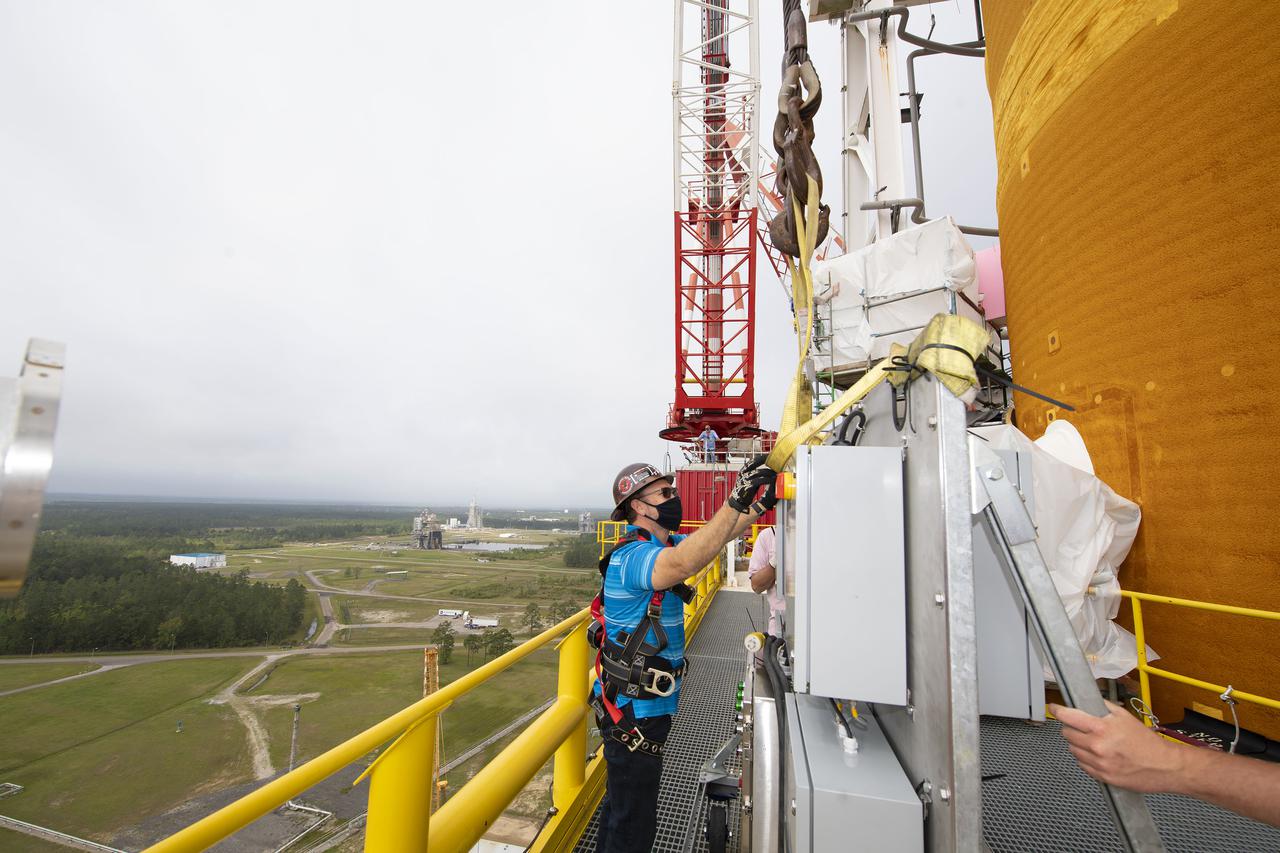
Team members at NASA’s Stennis Space Center near Bay St. Louis, Mississippi, complete refurbishment work on the first core stage of the agency’s Space Launch System (SLS) rocket. The work followed a successful hot fire of the stage and its four RS-25 engines March 18. The hot fire marked the culmination of a yearlong Green Run series of tests of the stage and its integrated systems. Following refurbishment work, the core stage will be removed from the test stand and transported to Kennedy Space Center in Florida, aboard NASA’s Pegasus barge, shown delivering equipment to the B-2 Test Stand. At Kennedy, the core stage will be integrated with the rest of SLS rocket and prepared for the launch of the Artemis I mission to the Moon. Photo Credit: NASA
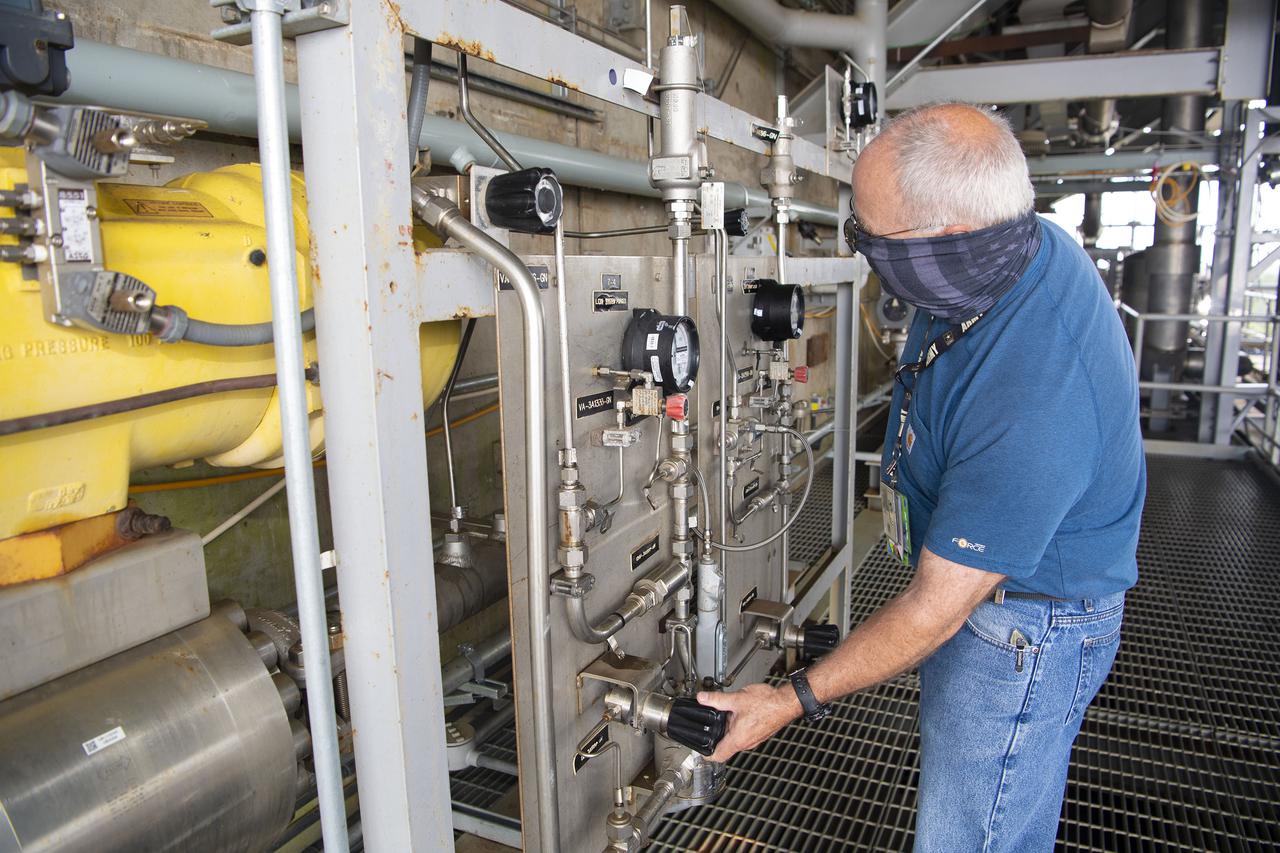
Team members at NASA’s Stennis Space Center near Bay St. Louis, Mississippi, complete refurbishment work on the first core stage of the agency’s Space Launch System (SLS) rocket. The work followed a successful hot fire of the stage and its four RS-25 engines March 18. The hot fire marked the culmination of a yearlong Green Run series of tests of the stage and its integrated systems. Following refurbishment work, the core stage will be removed from the test stand and transported to Kennedy Space Center in Florida, aboard NASA’s Pegasus barge, shown delivering equipment to the B-2 Test Stand. At Kennedy, the core stage will be integrated with the rest of SLS rocket and prepared for the launch of the Artemis I mission to the Moon. Photo Credit: NASA
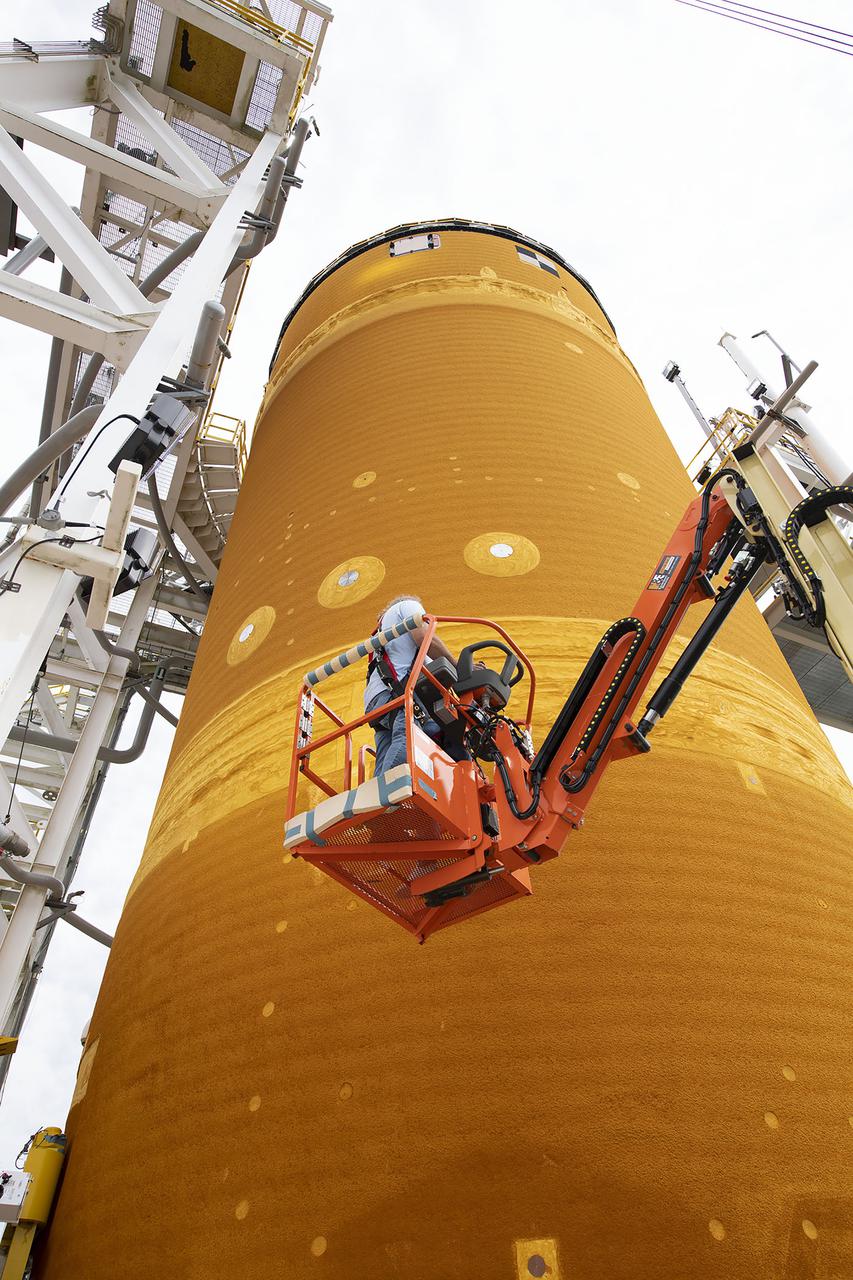
Team members at NASA’s Stennis Space Center near Bay St. Louis, Mississippi, complete refurbishment work on the first core stage of the agency’s Space Launch System (SLS) rocket. The work followed a successful hot fire of the stage and its four RS-25 engines March 18. The hot fire marked the culmination of a yearlong Green Run series of tests of the stage and its integrated systems. Following refurbishment work, the core stage will be removed from the test stand and transported to Kennedy Space Center in Florida, aboard NASA’s Pegasus barge, shown delivering equipment to the B-2 Test Stand. At Kennedy, the core stage will be integrated with the rest of SLS rocket and prepared for the launch of the Artemis I mission to the Moon. Photo Credit: NASA

Team members at NASA’s Stennis Space Center near Bay St. Louis, Mississippi, complete refurbishment work on the first core stage of the agency’s Space Launch System (SLS) rocket. The work followed a successful hot fire of the stage and its four RS-25 engines March 18. The hot fire marked the culmination of a yearlong Green Run series of tests of the stage and its integrated systems. Following refurbishment work, the core stage will be removed from the test stand and transported to Kennedy Space Center in Florida, aboard NASA’s Pegasus barge, shown delivering equipment to the B-2 Test Stand. At Kennedy, the core stage will be integrated with the rest of SLS rocket and prepared for the launch of the Artemis I mission to the Moon. Photo Credit: NASA
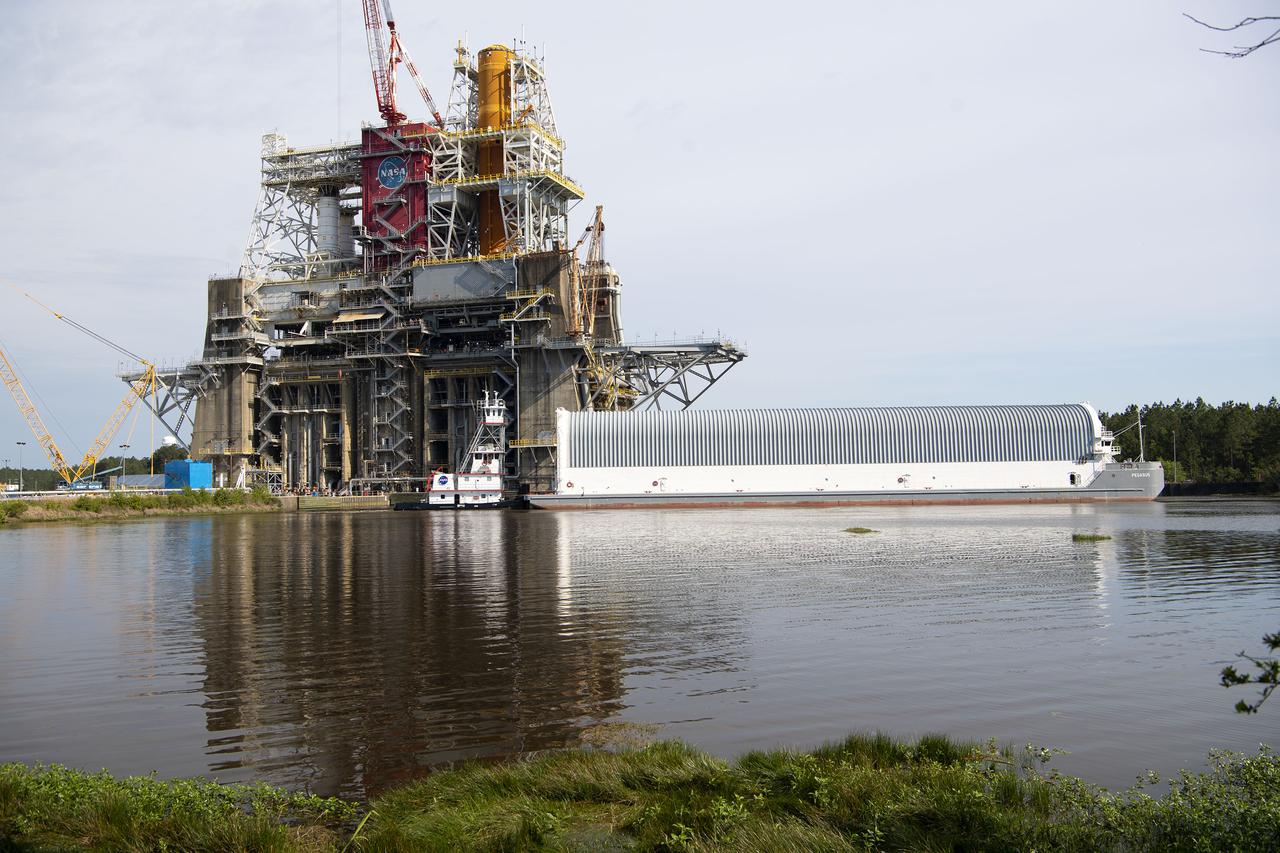
Team members at NASA’s Stennis Space Center near Bay St. Louis, Mississippi, complete refurbishment work on the first core stage of the agency’s Space Launch System (SLS) rocket. The work followed a successful hot fire of the stage and its four RS-25 engines March 18. The hot fire marked the culmination of a yearlong Green Run series of tests of the stage and its integrated systems. Following refurbishment work, the core stage will be removed from the test stand and transported to Kennedy Space Center in Florida, aboard NASA’s Pegasus barge, shown delivering equipment to the B-2 Test Stand. At Kennedy, the core stage will be integrated with the rest of SLS rocket and prepared for the launch of the Artemis I mission to the Moon. Photo Credit: NASA
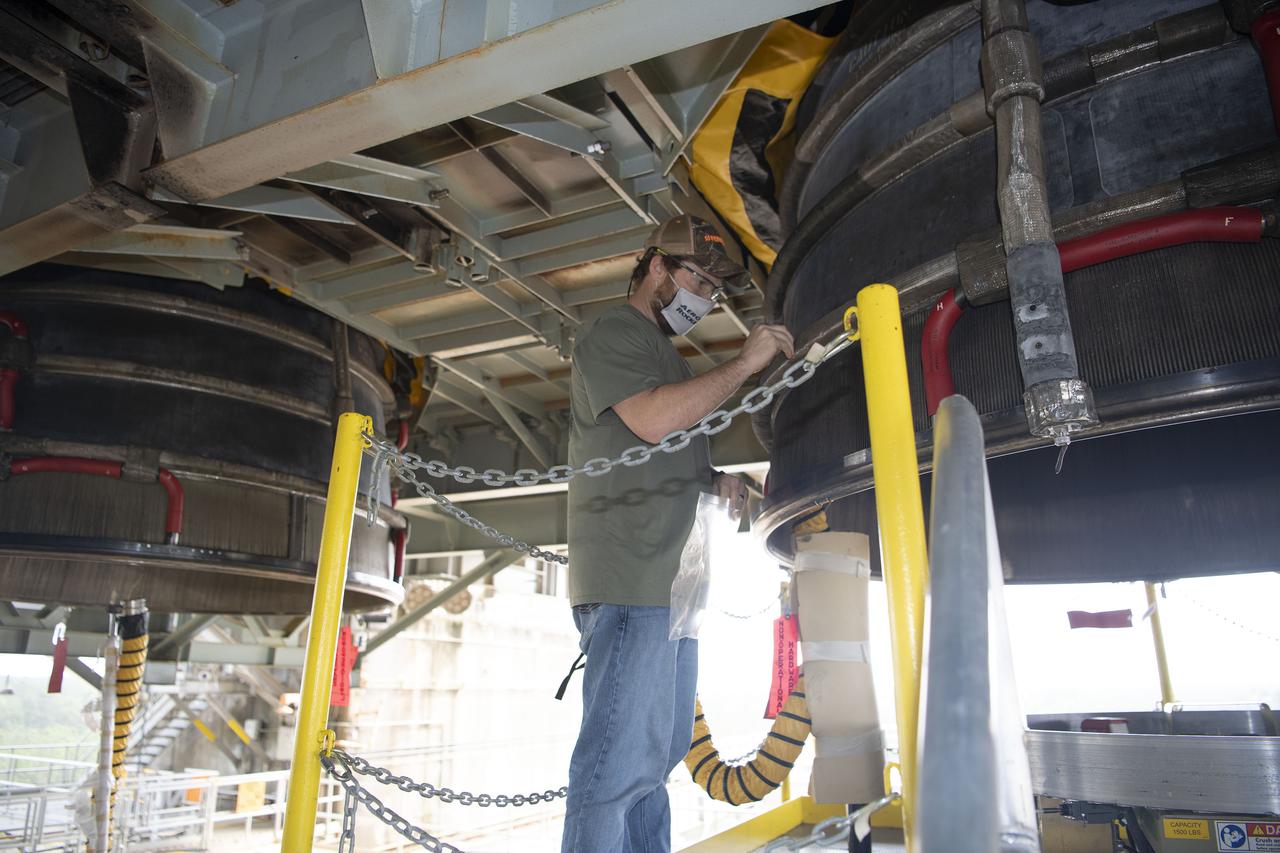
Team members at NASA’s Stennis Space Center near Bay St. Louis, Mississippi, complete refurbishment work on the first core stage of the agency’s Space Launch System (SLS) rocket. The work followed a successful hot fire of the stage and its four RS-25 engines March 18. The hot fire marked the culmination of a yearlong Green Run series of tests of the stage and its integrated systems. Following refurbishment work, the core stage will be removed from the test stand and transported to Kennedy Space Center in Florida, aboard NASA’s Pegasus barge, shown delivering equipment to the B-2 Test Stand. At Kennedy, the core stage will be integrated with the rest of SLS rocket and prepared for the launch of the Artemis I mission to the Moon. Photo Credit: NASA
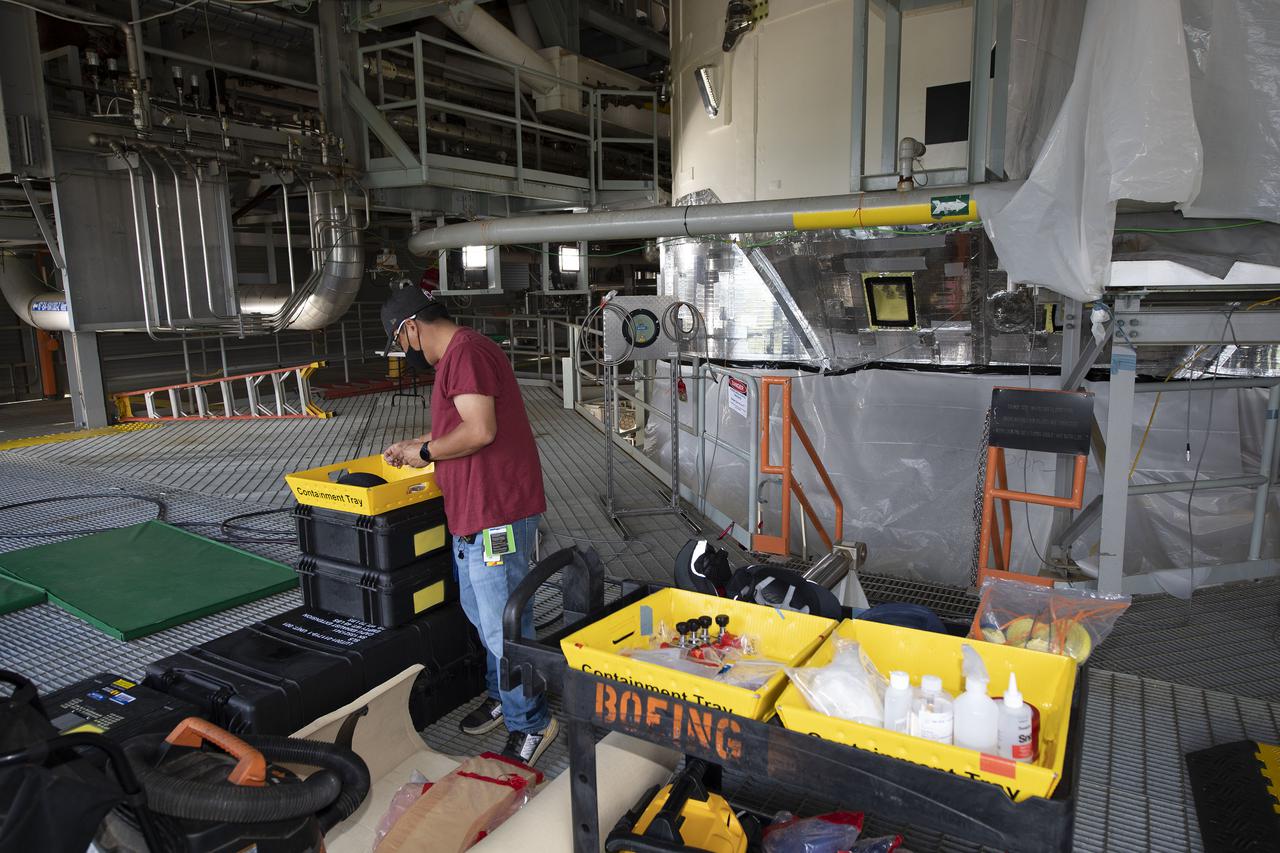
Team members at NASA’s Stennis Space Center near Bay St. Louis, Mississippi, complete refurbishment work on the first core stage of the agency’s Space Launch System (SLS) rocket. The work followed a successful hot fire of the stage and its four RS-25 engines March 18. The hot fire marked the culmination of a yearlong Green Run series of tests of the stage and its integrated systems. Following refurbishment work, the core stage will be removed from the test stand and transported to Kennedy Space Center in Florida, aboard NASA’s Pegasus barge, shown delivering equipment to the B-2 Test Stand. At Kennedy, the core stage will be integrated with the rest of SLS rocket and prepared for the launch of the Artemis I mission to the Moon. Photo Credit: NASA
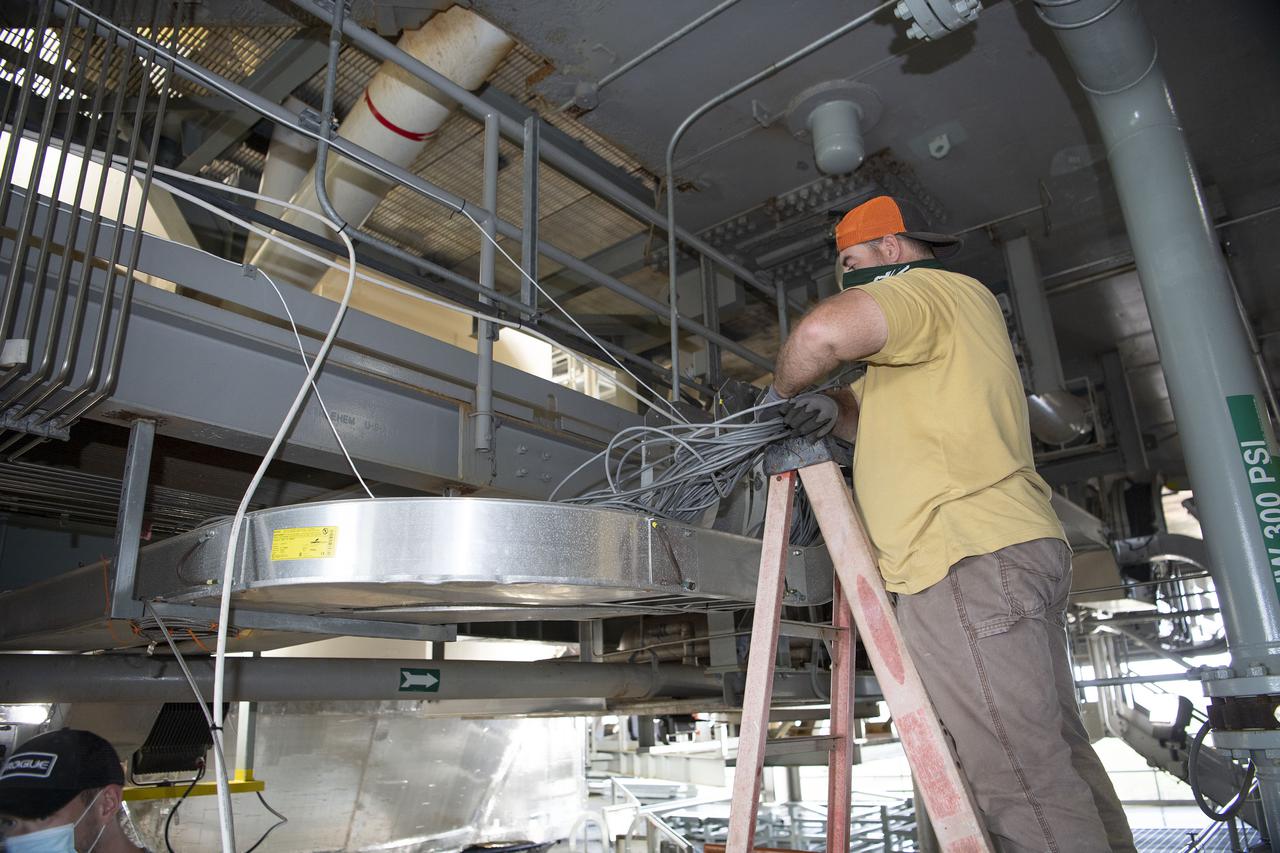
Team members at NASA’s Stennis Space Center near Bay St. Louis, Mississippi, complete refurbishment work on the first core stage of the agency’s Space Launch System (SLS) rocket. The work followed a successful hot fire of the stage and its four RS-25 engines March 18. The hot fire marked the culmination of a yearlong Green Run series of tests of the stage and its integrated systems. Following refurbishment work, the core stage will be removed from the test stand and transported to Kennedy Space Center in Florida, aboard NASA’s Pegasus barge, shown delivering equipment to the B-2 Test Stand. At Kennedy, the core stage will be integrated with the rest of SLS rocket and prepared for the launch of the Artemis I mission to the Moon. Photo Credit: NASA