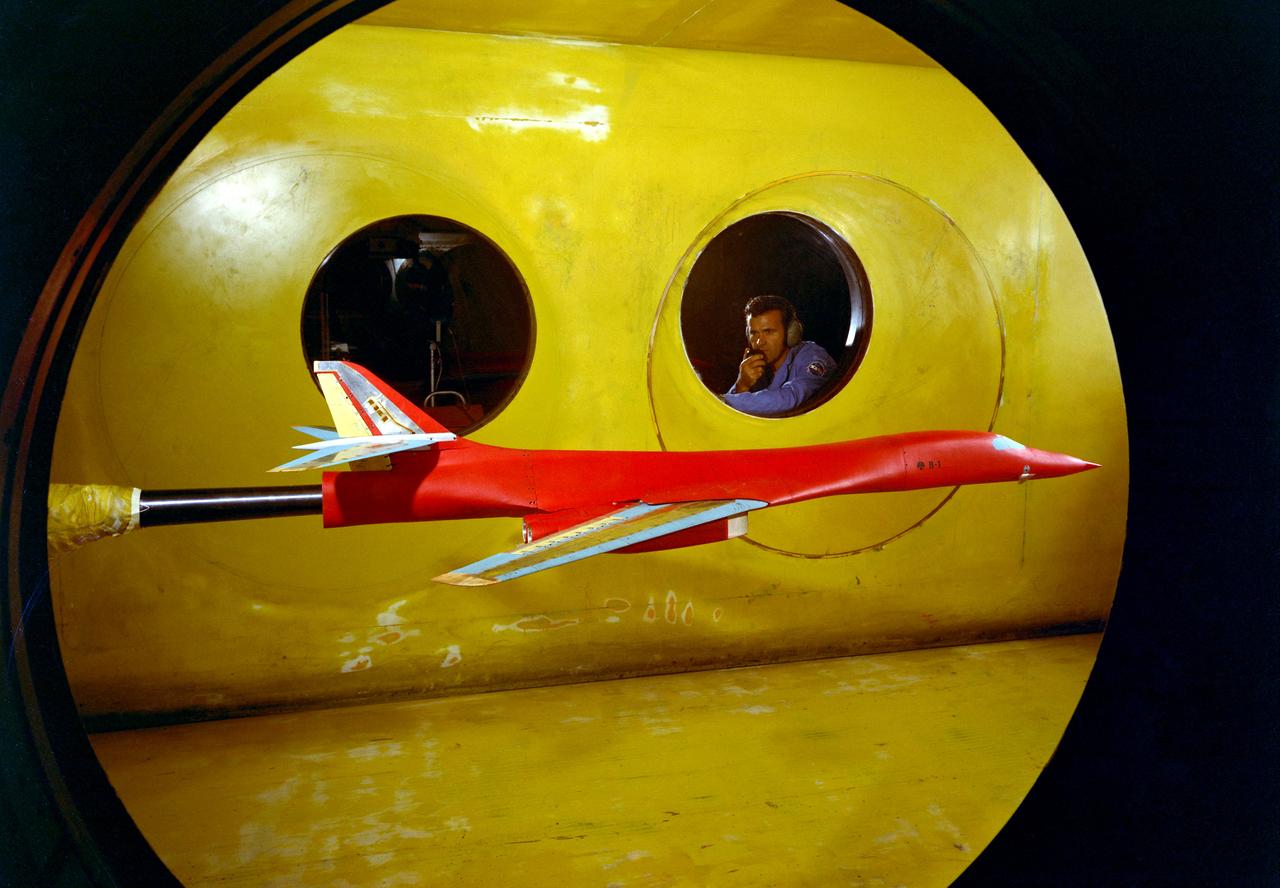
North American B-1.  9 x 7ft Wind Tunnel (Test 97-619).  test-619
ARC-1973-AC73-4329
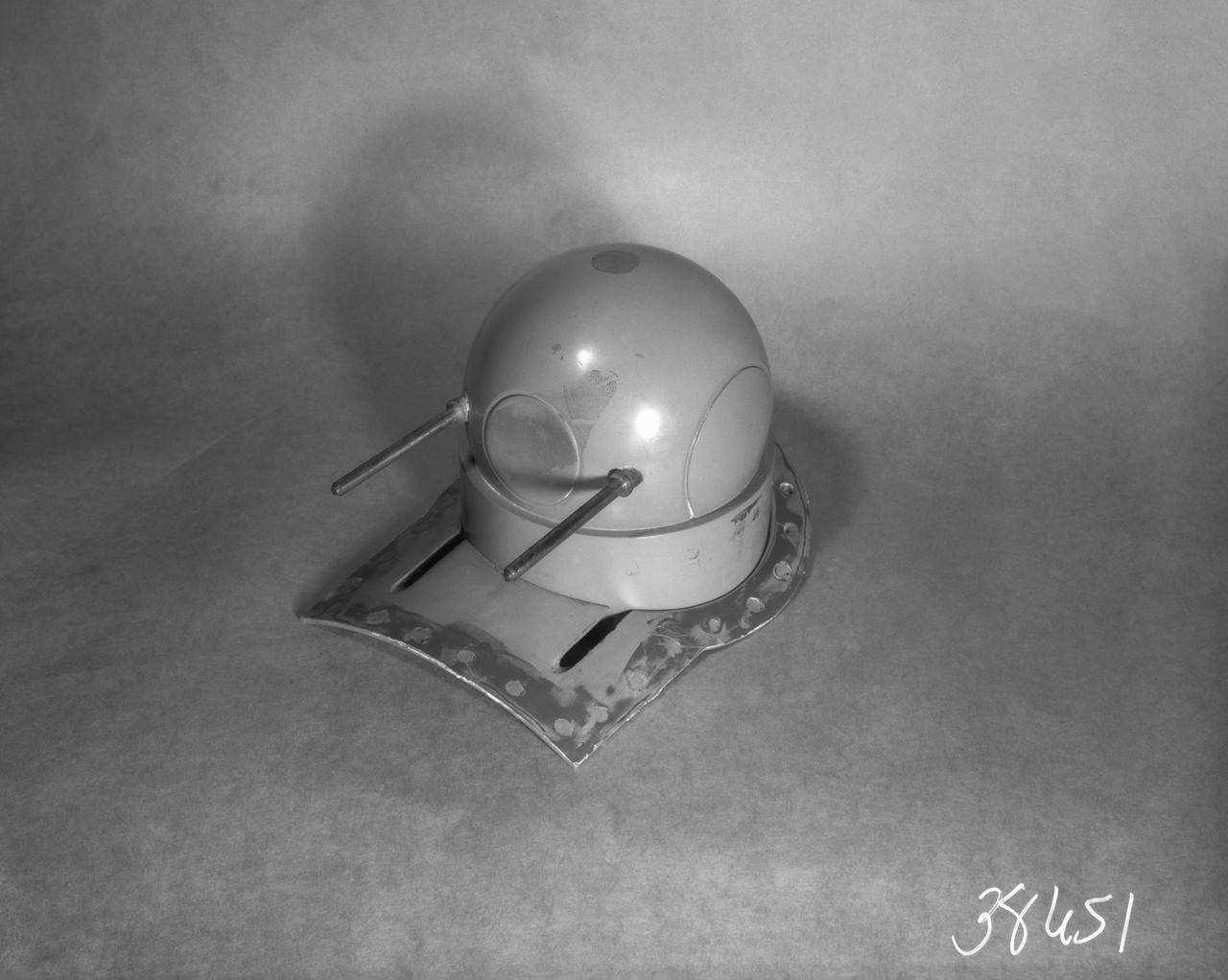
1/8 Scale B-32 Turrets.  Test conducted in the NACA 19 foot pressure tunnel LMAL-38560 NACA document.
1/8 Scale B-32 Turrets
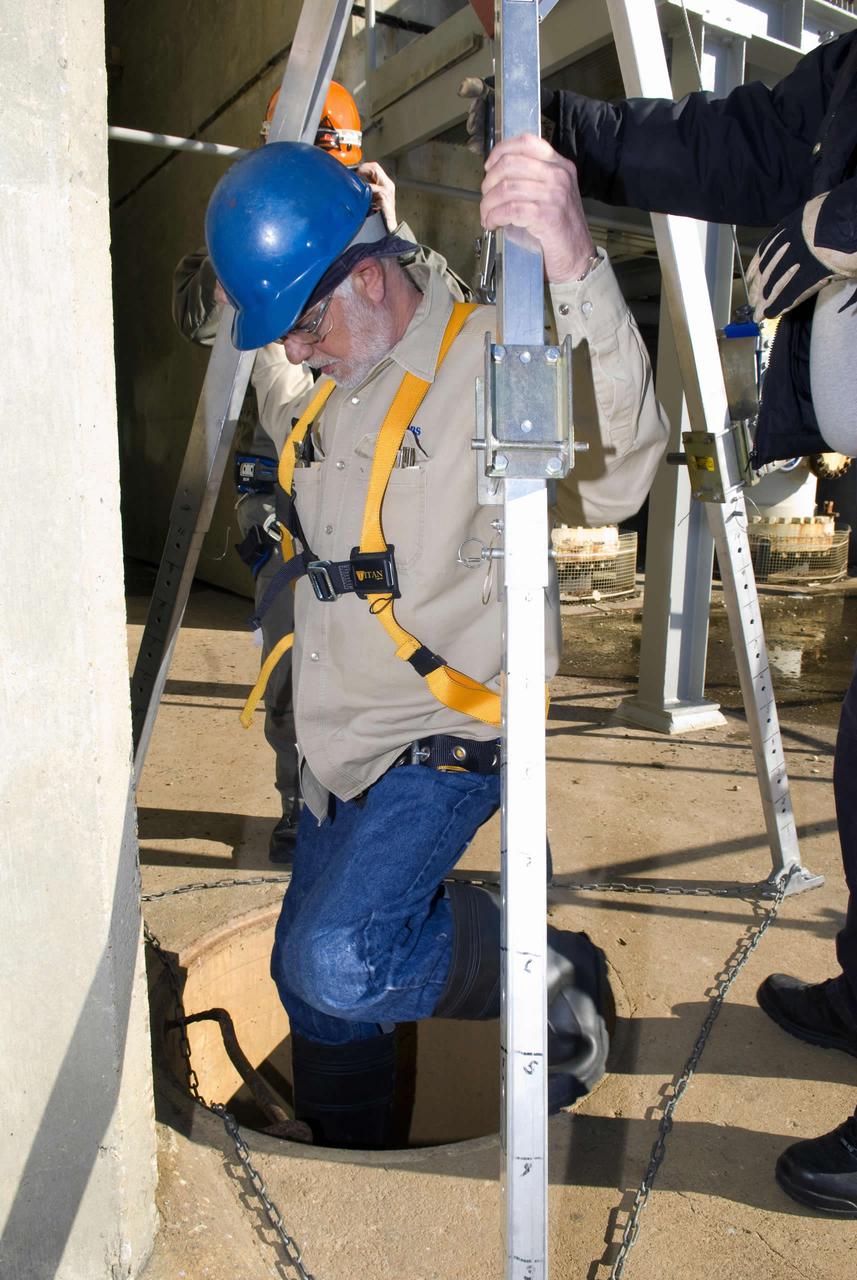
Robert Hayward of Jacobs FOSC descends beneath the B-1 Test Stand to perform maintenance.
Daily life at Stennis
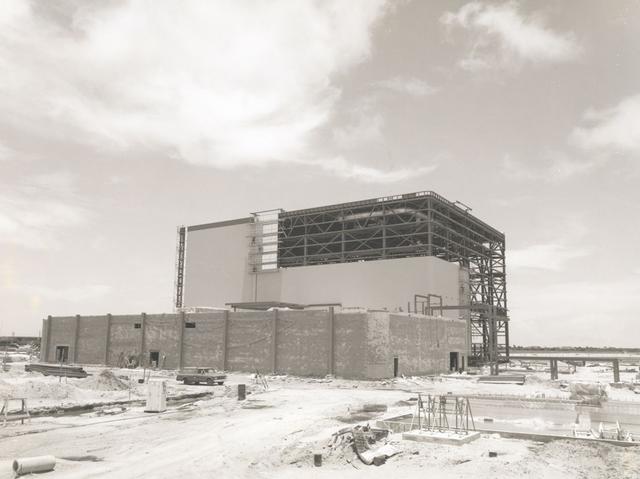
View of OPF High Bay No. 1 and Low Bay construction, 1976
KSC-20120208-PH-UK_OPF3_Figure-B-1
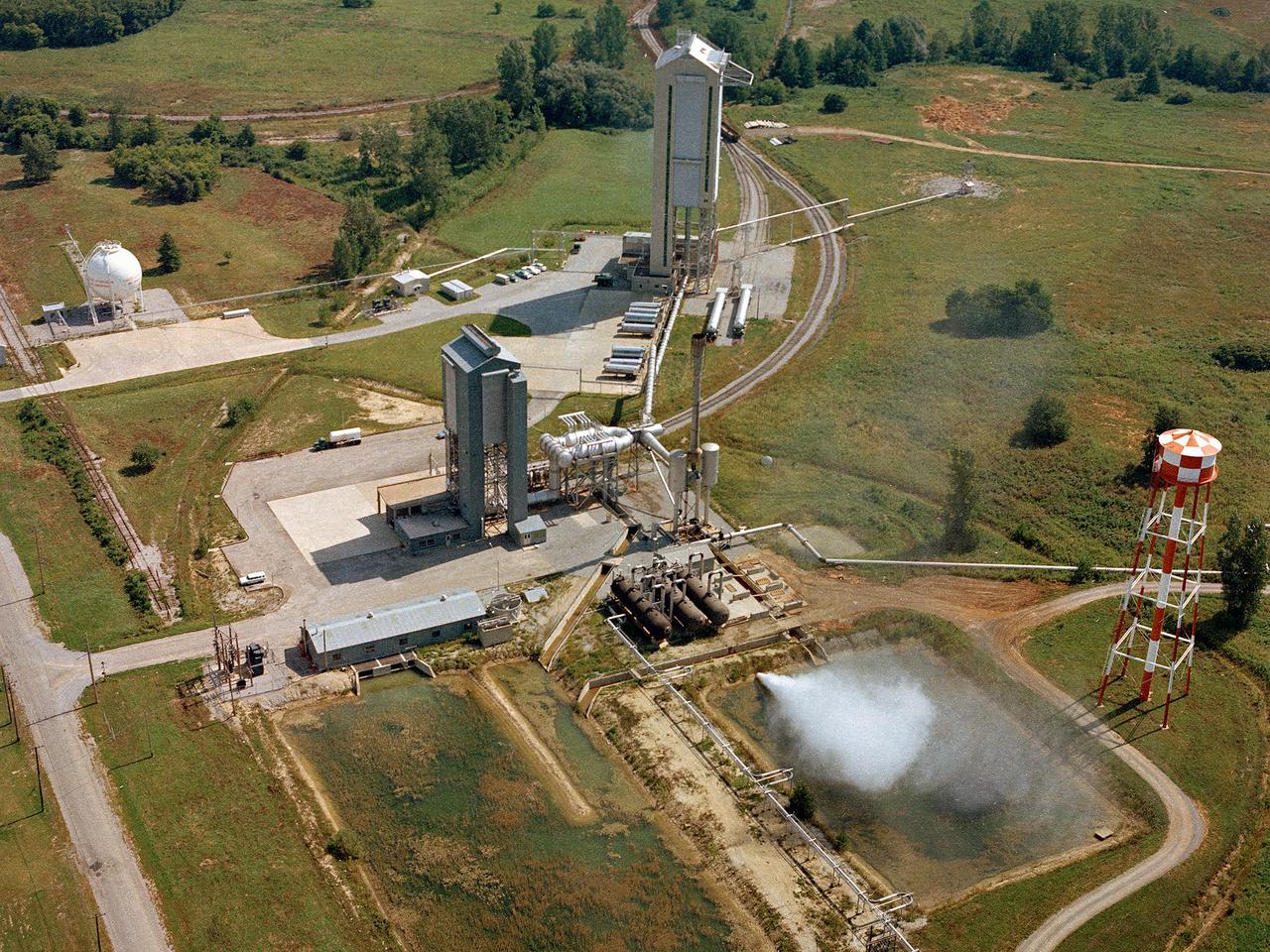
Operation of the High Energy Rocket Engine Research Facility (B-1), left, and Nuclear Rocket Dynamics and Control Facility (B-3) at the National Aeronautics and Space Administration’s (NASA) Plum Brook Station in Sandusky, Ohio. The test stands were constructed in the early 1960s to test full-scale liquid hydrogen fuel systems in simulated altitude conditions. Over the next decade each stand was used for two major series of liquid hydrogen rocket tests: the Nuclear Engine for Rocket Vehicle Application (NERVA) and the Centaur second-stage rocket program. The different components of these rocket engines could be studied under flight conditions and adjusted without having to fire the engine. Once the preliminary studies were complete, the entire engine could be fired in larger facilities.    The test stands were vertical towers with cryogenic fuel and steam ejector systems. B-1 was 135 feet tall, and B-3 was 210 feet tall. Each test stand had several levels, a test section, and ground floor shop areas. The test stands relied on an array of support buildings to conduct their tests, including a control building, steam exhaust system, and fuel storage and pumping facilities.    A large steam-powered altitude exhaust system reduced the pressure at the exhaust nozzle exit of each test stand. This allowed B-1 and B-3 to test turbopump performance in conditions that matched the altitudes of space.
B-1 and B-3 Test Stands at NASA’s Plum Brook Station
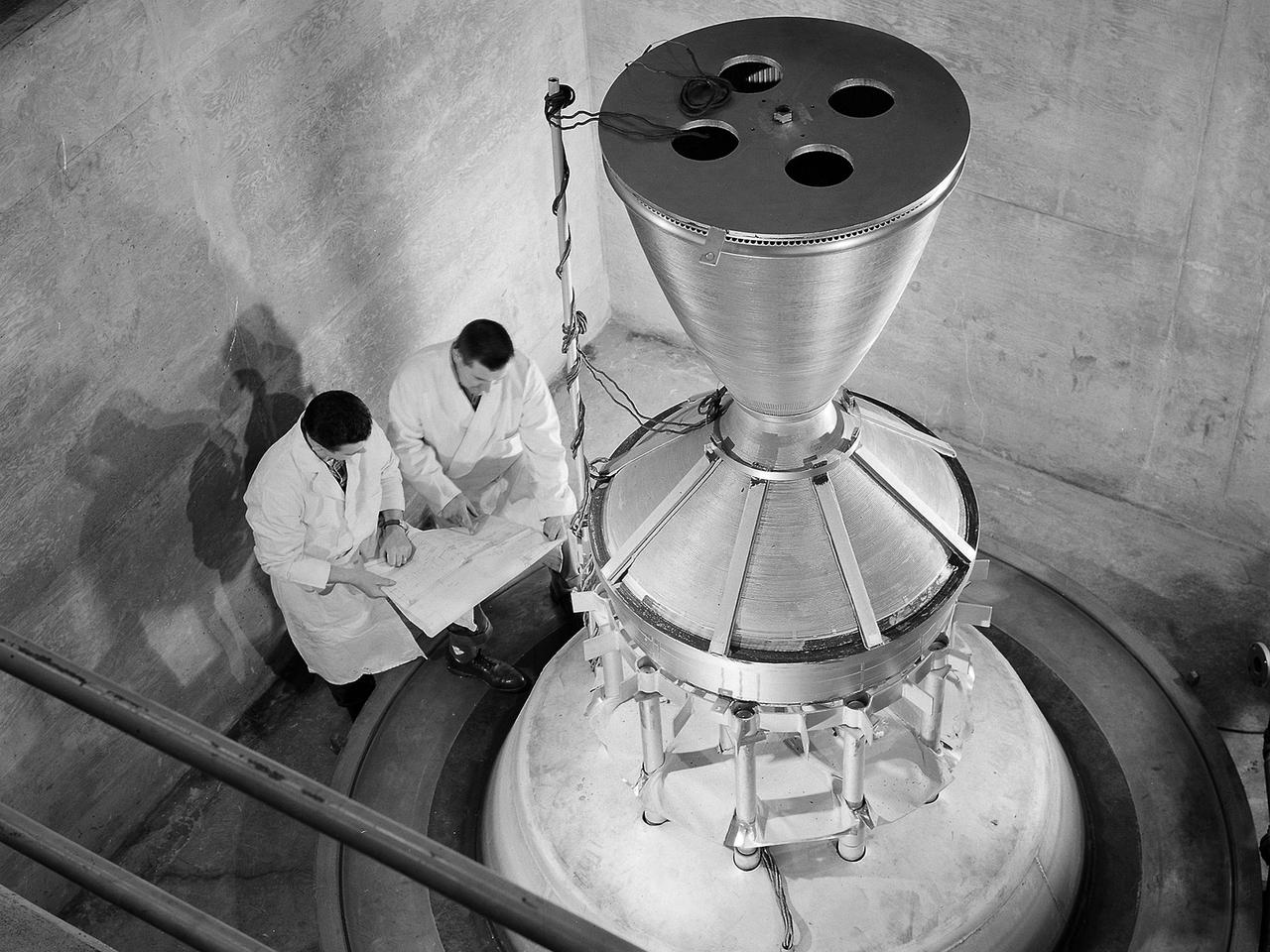
Technicians manufacture a nozzle for the Kiwi B-1-B nuclear rocket engine in the Fabrication Shop’s vacuum oven at the National Aeronautics and Space Administration (NASA) Lewis Research Center. The Nuclear Engine for Rocket Vehicle Applications (NERVA) was a joint NASA and Atomic Energy Commission (AEC) endeavor to develop a nuclear-powered rocket for both long-range missions to Mars and as a possible upper-stage for the Apollo Program. The early portion of the program consisted of basic reactor and fuel system research. This was followed by a series of Kiwi reactors built to test basic nuclear rocket principles in a non-flying nuclear engine. The next phase, NERVA, would create an entire flyable engine. The final phase of the program, called Reactor-In-Flight-Test, would be an actual launch test.    The AEC was responsible for designing the nuclear reactor and overall engine. NASA Lewis was responsible for developing the liquid-hydrogen fuel system. The turbopump, which pumped the fuels from the storage tanks to the engine, was the primary tool for restarting the engine. The NERVA had to be able to restart in space on its own using a safe preprogrammed startup system. Lewis researchers endeavored to design and test this system.     This non-nuclear Kiwi engine, seen here, was being prepared for tests at Lewis’ High Energy Rocket Engine Research Facility (B-1) located at Plum Brook Station. The tests were designed to start an unfueled Kiwi B-1-B reactor and its Aerojet Mark IX turbopump without any external power.
Technicians Manufacture a Nozzle for the Kiwi B-1-B Engine
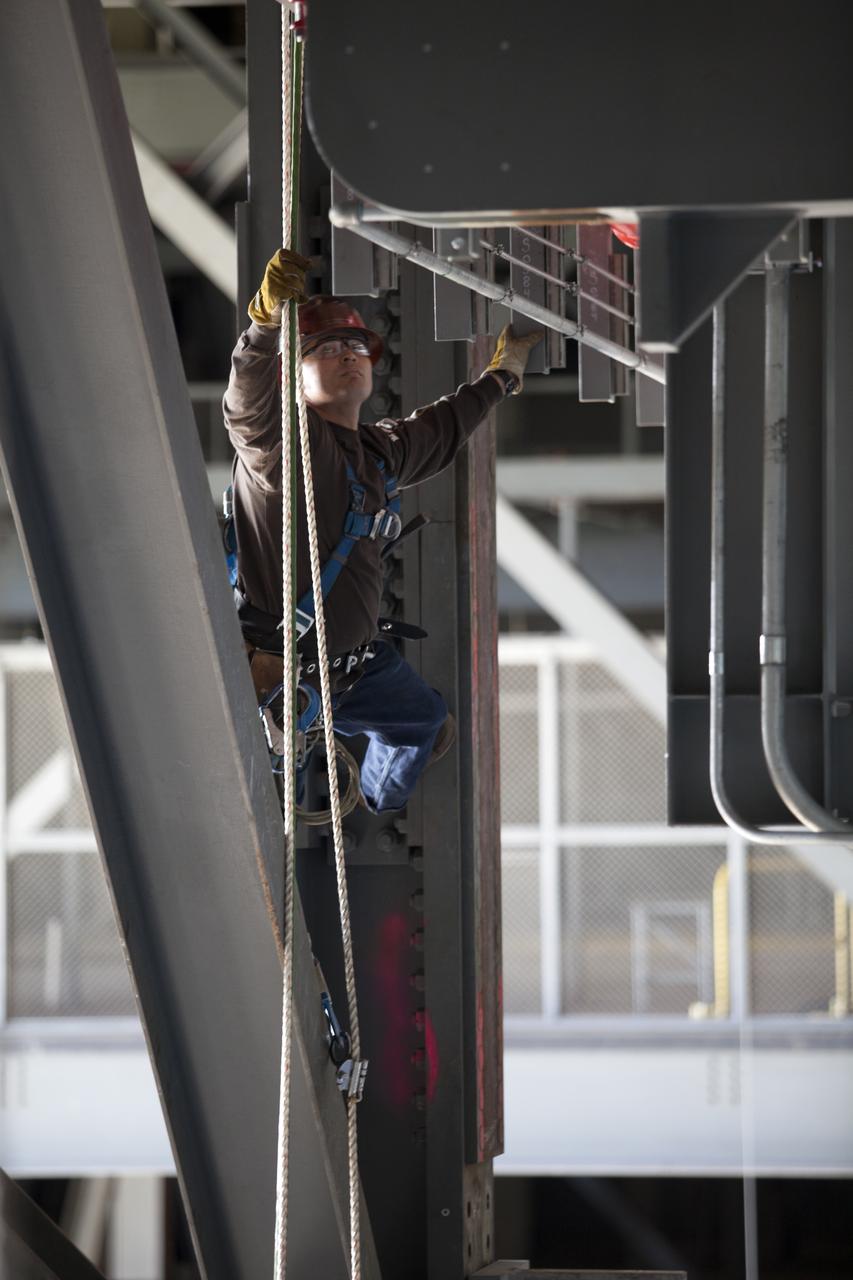
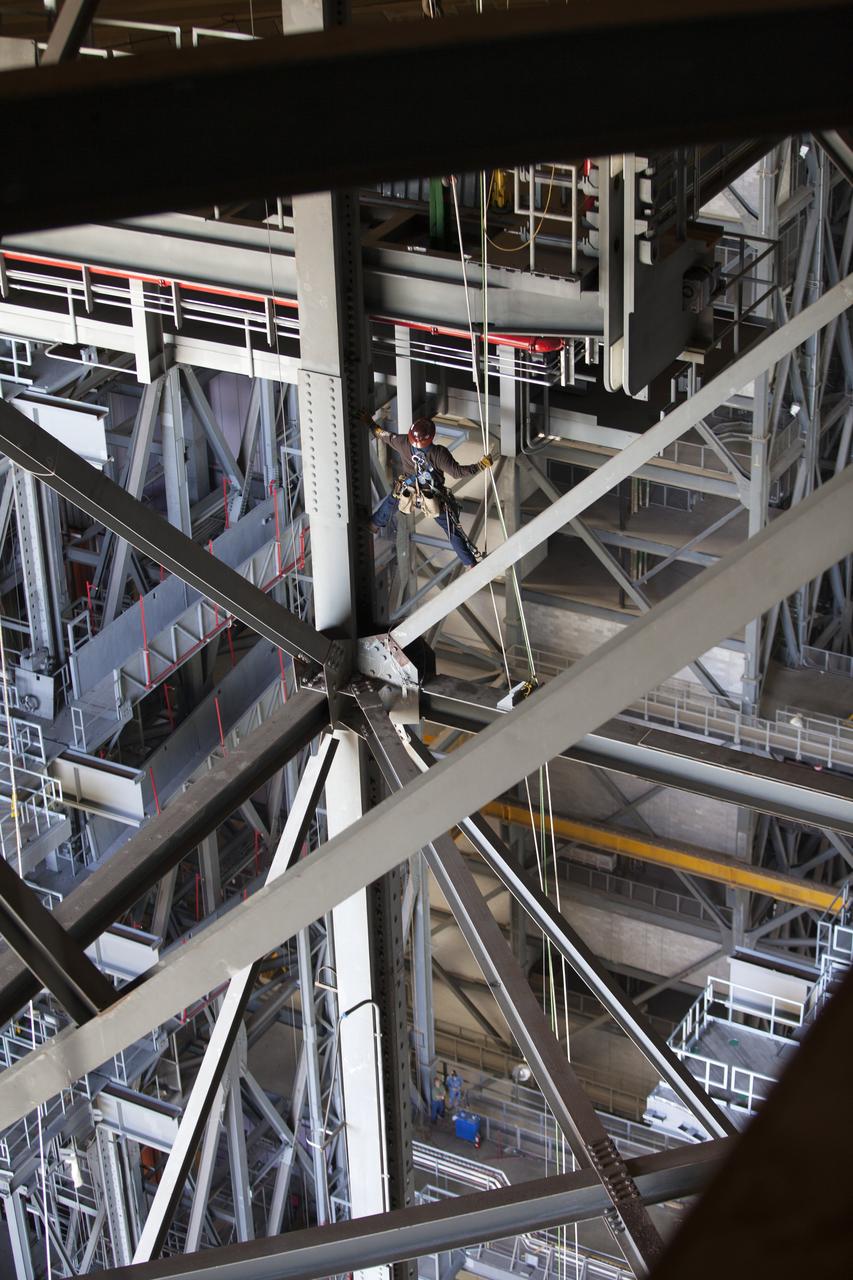
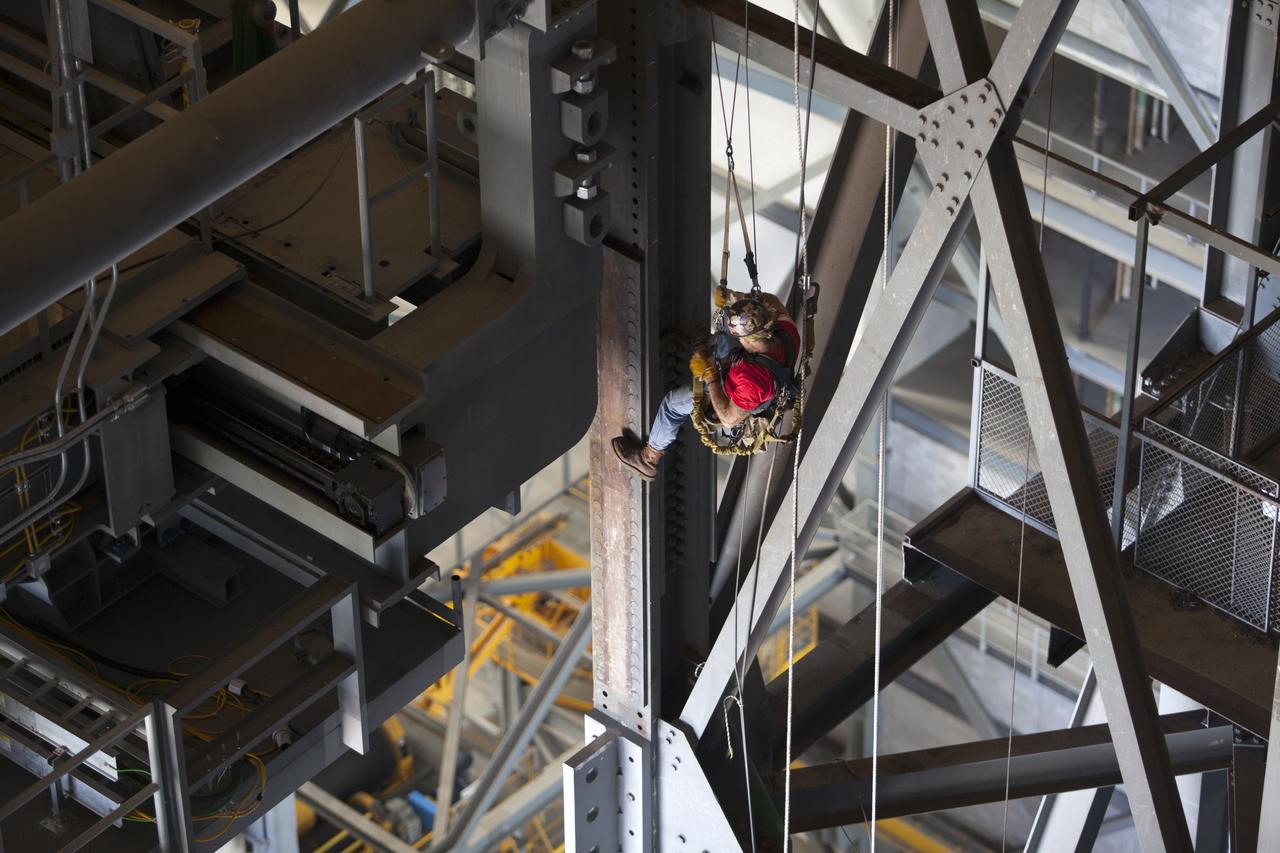
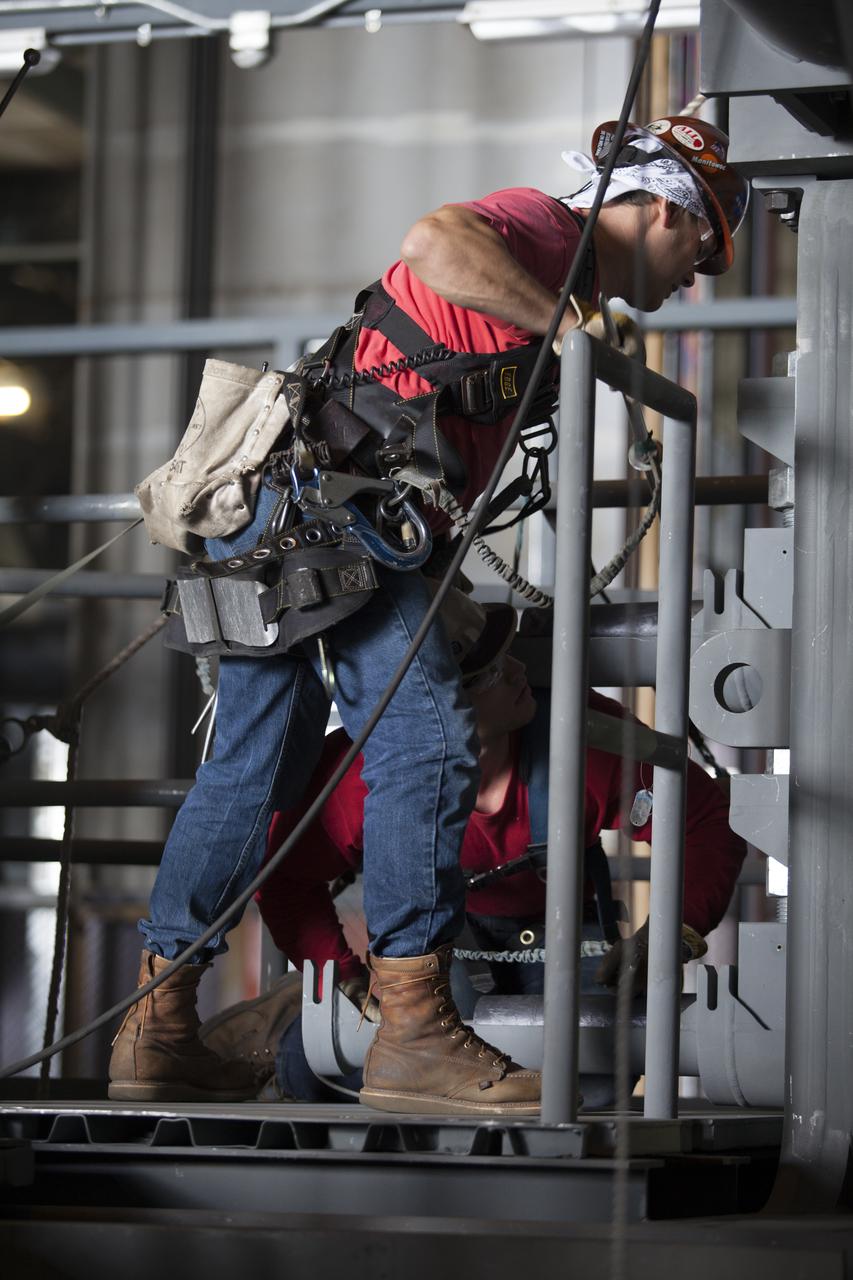
A construction worker wearing a safety harness and tethered lines monitors the progress during the installation of the second half of the B-level work platforms, B north, for NASA’s Space Launch System (SLS) rocket, high up in the Vehicle Assembly Building (VAB) at NASA’s Kennedy Space Center in Florida.  The B platform will be installed on the north side of High Bay 3. The B platforms are the ninth of 10 levels of work platforms that will surround and provide access to the SLS rocket and Orion spacecraft for Exploration Mission 1. The Ground Systems Development and Operations Program is overseeing upgrades and modifications to VAB High Bay 3, including installation of the new work platforms, to prepare for NASA’s Journey to Mars.
Platform B North Installation
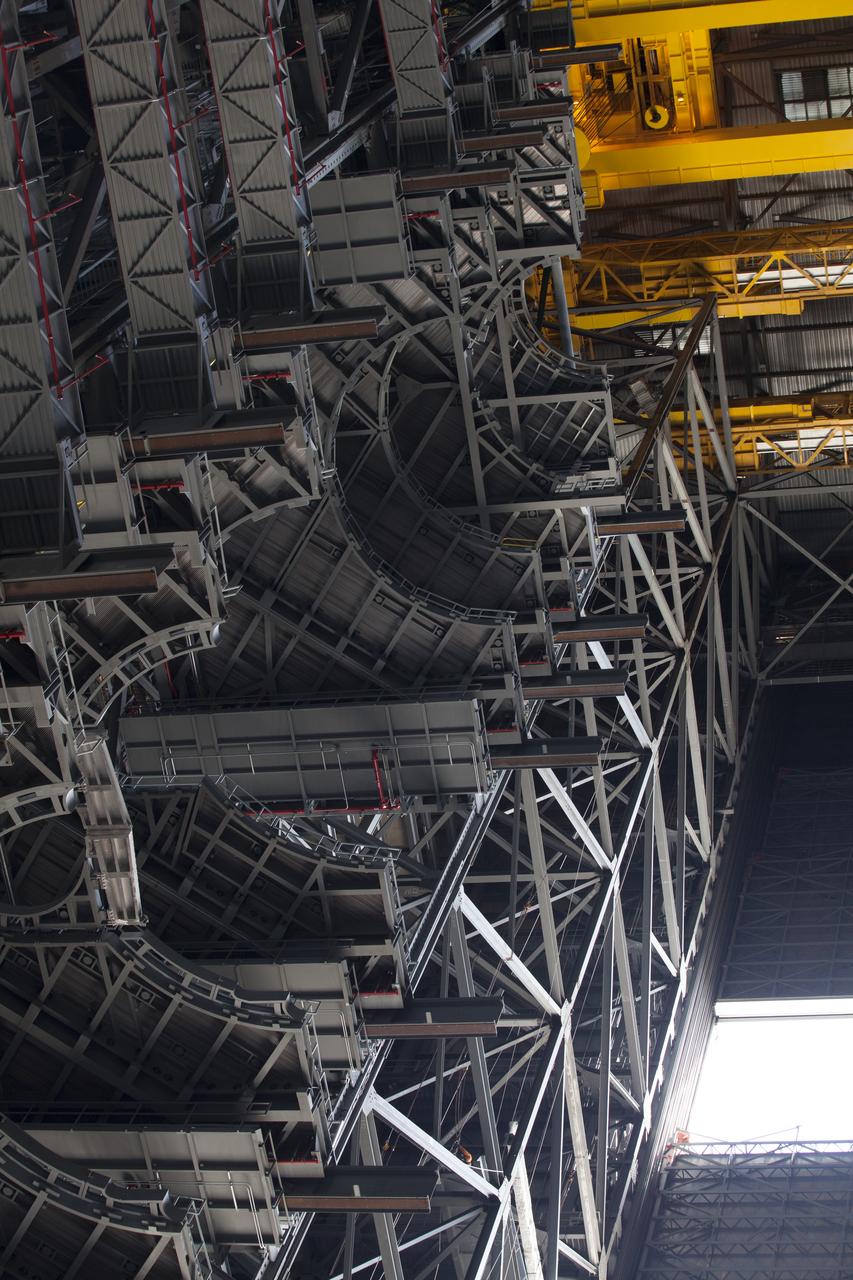
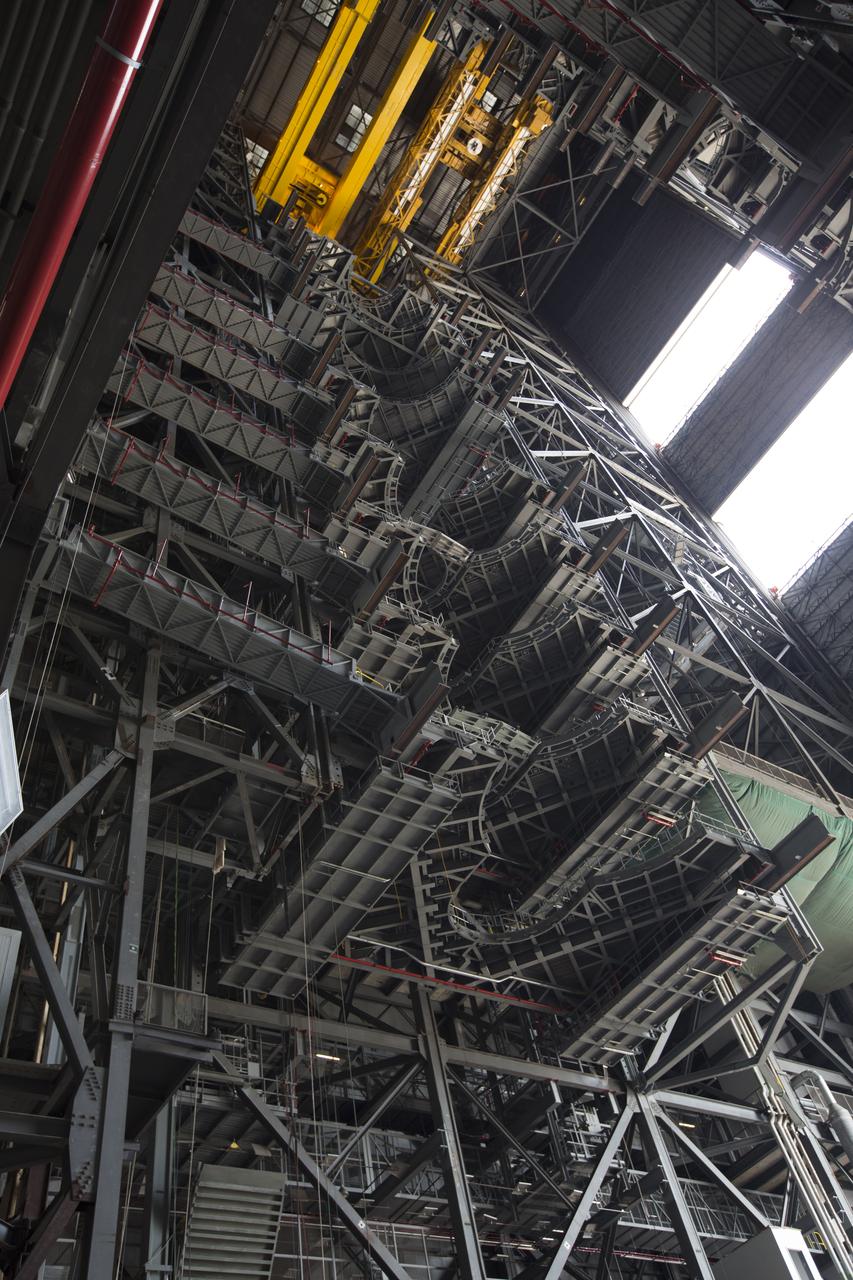
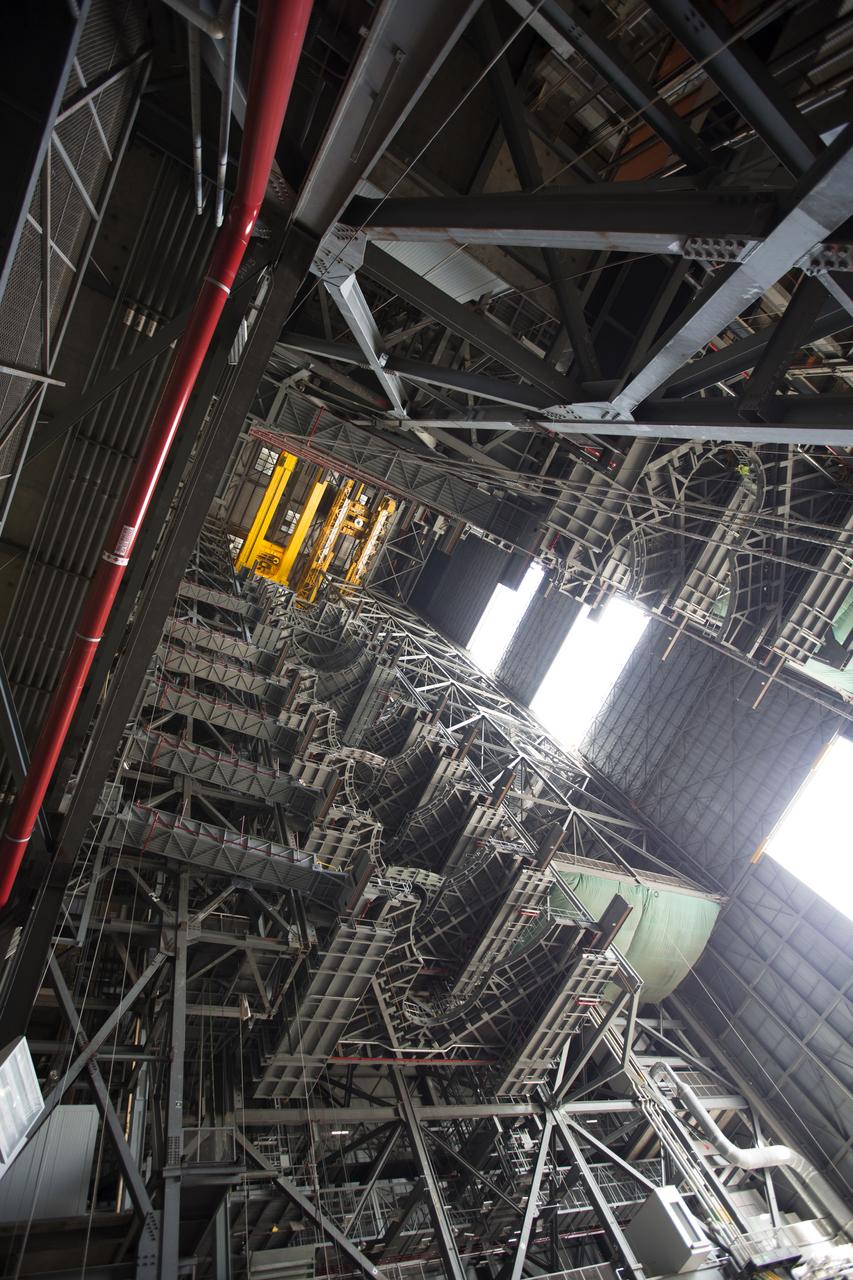
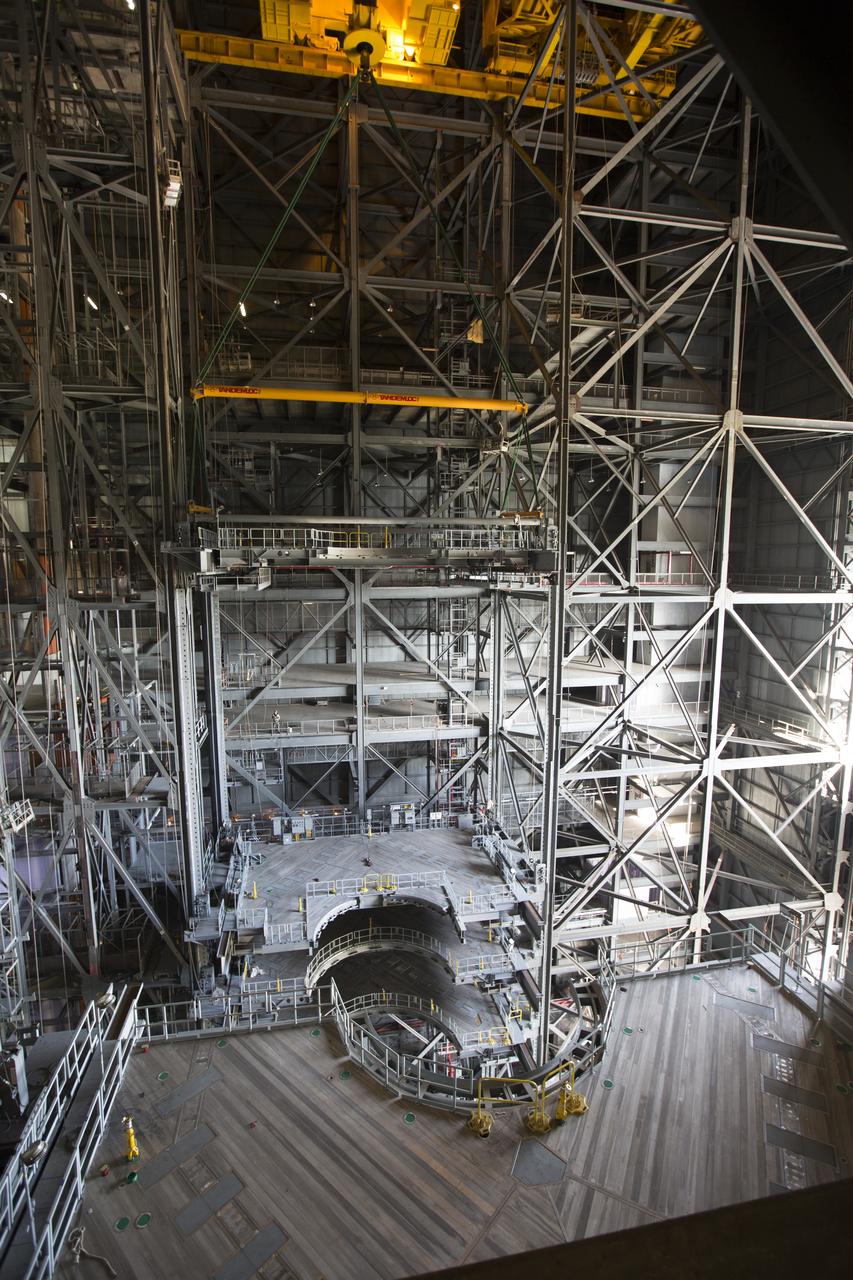
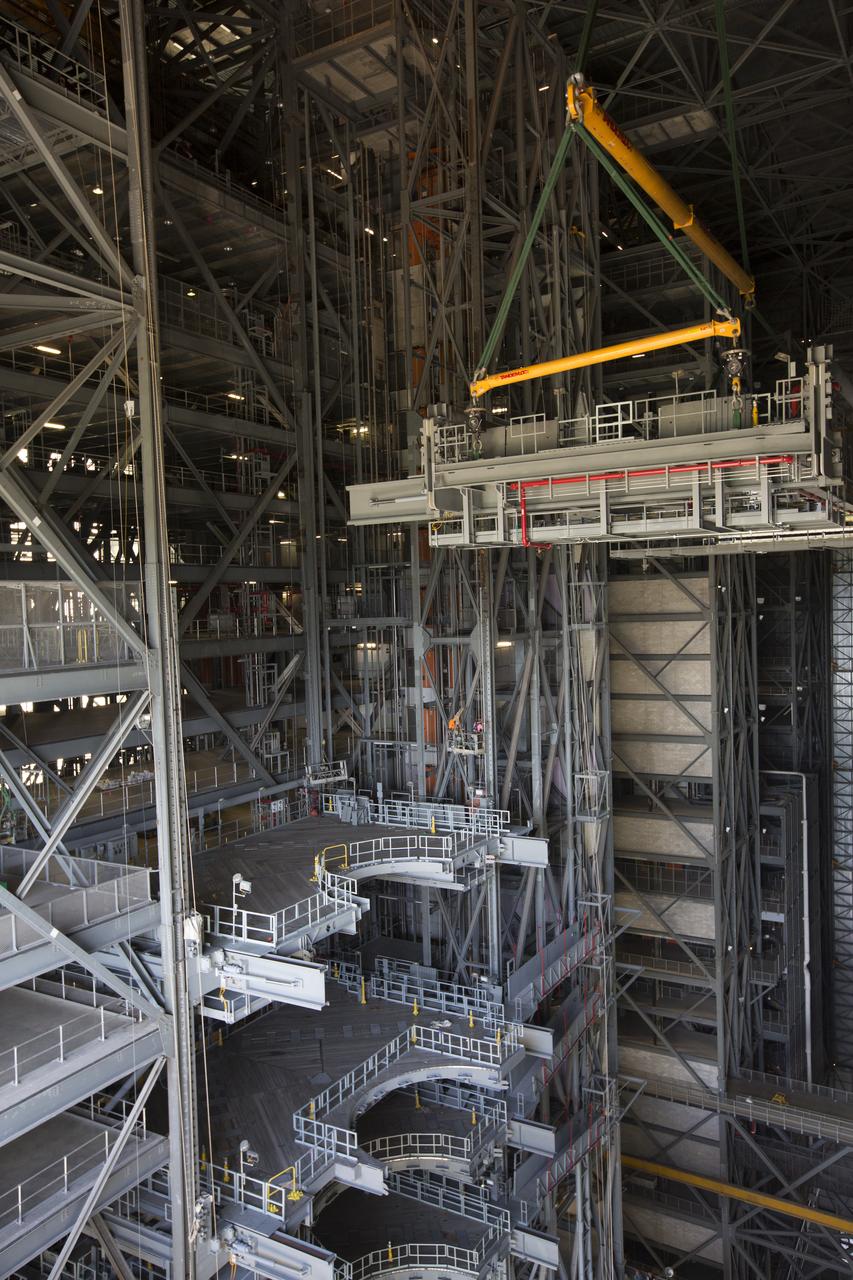
High up in the Vehicle Assembly Building (VAB) at NASA's Kennedy Space Center in Florida, a crane lowers the second half of the B-level work platforms, B north, for NASA's Space Launch System (SLS) rocket, for installation in High Bay 3. The B platform will be installed on the north side of high bay. In view below are several levels of previously installed platforms. The B platforms are the ninth of 10 levels of work platforms that will surround and provide access to the SLS rocket and Orion spacecraft for Exploration Mission 1. The Ground Systems Development and Operations Program is overseeing upgrades and modifications to VAB High Bay 3, including installation of the new work platforms, to prepare for NASA’s Journey to Mars.
Platform B North Installation
A crane lifts the second half of the B-level work platforms, B north, for NASA's Space Launch System (SLS) rocket, high up in the transfer aisle of the Vehicle Assembly Building (VAB) at NASA’s Kennedy Space Center in Florida. The B north platform will lowered into High Bay 3 for installation on the north side of the high bay. The B platforms are the ninth of 10 levels of work platforms that will surround and provide access to the SLS rocket and Orion spacecraft for Exploration Mission 1. The Ground Systems Development and Operations Program is overseeing upgrades and modifications to VAB High Bay 3, including installation of the new work platforms, to prepare for NASA’s Journey to Mars.
Platform B North Installation
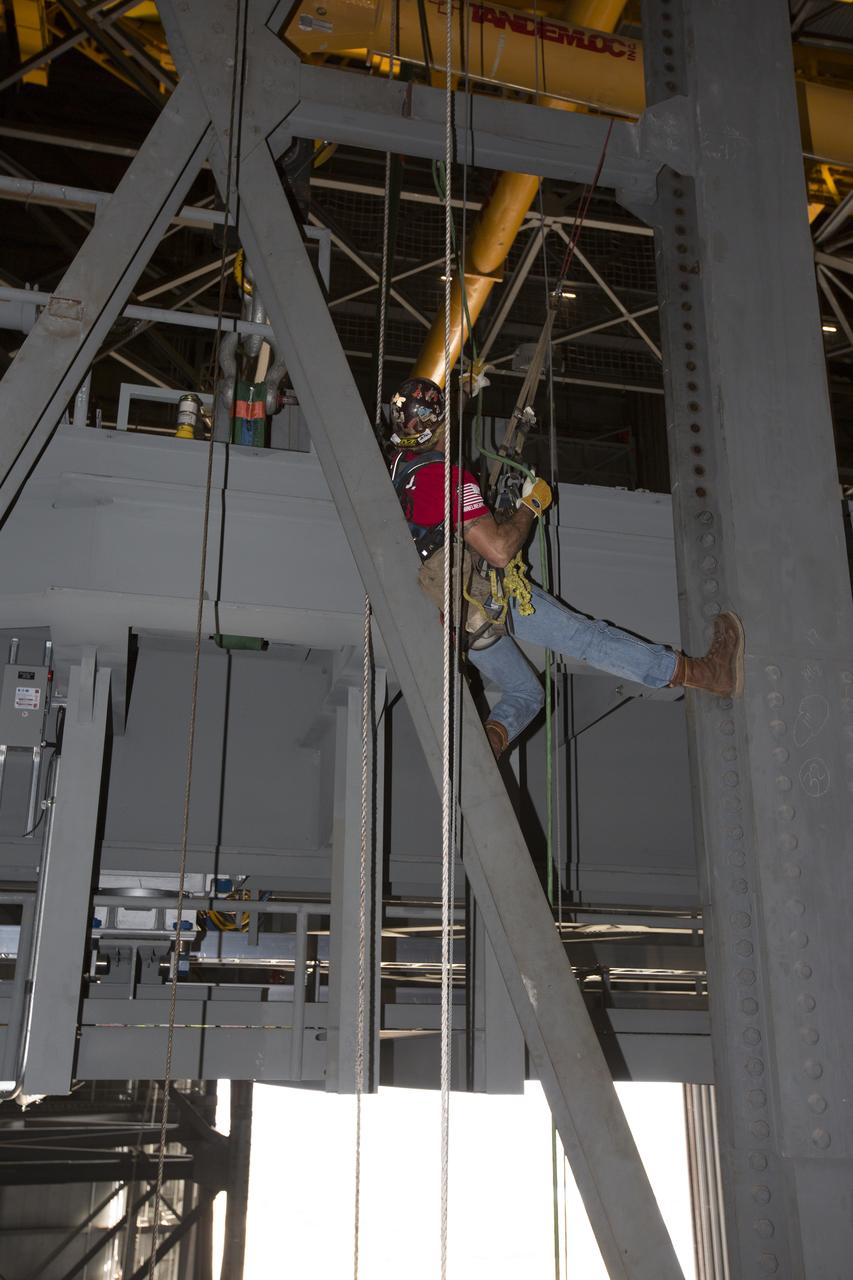
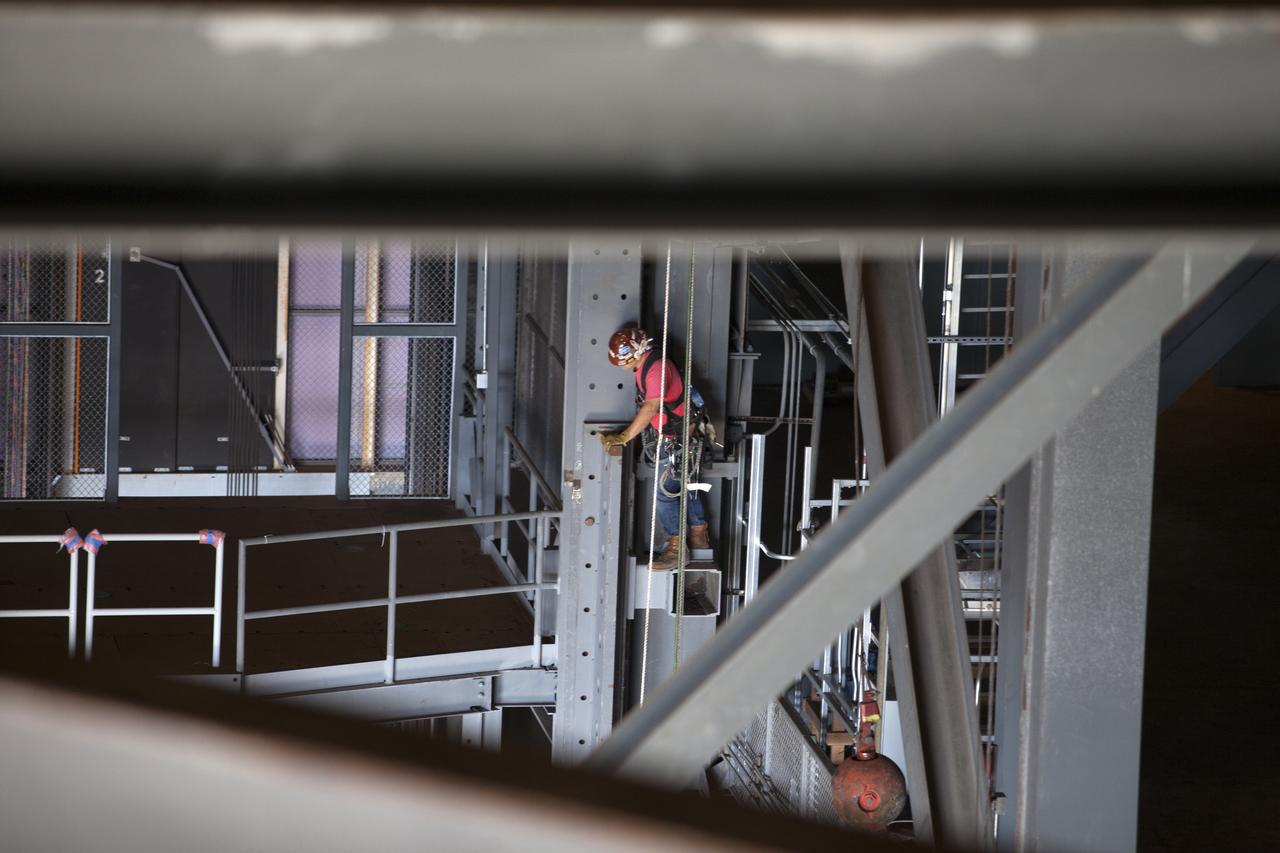
A construction worker wearing a safety harness and tethered lines prepares to assist with the installation of the second half of the B-level work platforms, B north, for NASA’s Space Launch System (SLS) rocket, high up in the Vehicle Assembly Building (VAB) at NASA’s Kennedy Space Center in Florida. The B platform will be installed on the north side of High Bay 3. The B platforms are the ninth of 10 levels of work platforms that will surround and provide access to the SLS rocket and Orion spacecraft for Exploration Mission 1. The Ground Systems Development and Operations Program is overseeing upgrades and modifications to VAB High Bay 3, including installation of the new work platforms, to prepare for NASA’s Journey to Mars.
Platform B North Installation
A construction worker wearing a safety harness and tethered lines monitors the progress during the installation of the second half of the B-level work platforms, B north, for NASA’s Space Launch System (SLS) rocket, high up in the Vehicle Assembly Building (VAB) at NASA’s Kennedy Space Center in Florida.  The B platform will be installed on the north side of High Bay 3. The B platforms are the ninth of 10 levels of work platforms that will surround and provide access to the SLS rocket and Orion spacecraft for Exploration Mission 1. The Ground Systems Development and Operations Program is overseeing upgrades and modifications to VAB High Bay 3, including installation of the new work platforms, to prepare for NASA’s Journey to Mars.
Platform B North Installation
A construction worker wearing a safety harness and tethered lines prepares to assist with the installation of the second half of the B-level work platforms, B north, for NASA’s Space Launch System (SLS) rocket, high up in the Vehicle Assembly Building (VAB) at NASA’s Kennedy Space Center in Florida. The B platform will be installed on the north side of High Bay 3. The B platforms are the ninth of 10 levels of work platforms that will surround and provide access to the SLS rocket and Orion spacecraft for Exploration Mission 1. The Ground Systems Development and Operations Program is overseeing upgrades and modifications to VAB High Bay 3, including installation of the new work platforms, to prepare for NASA’s Journey to Mars.
Platform B North Installation
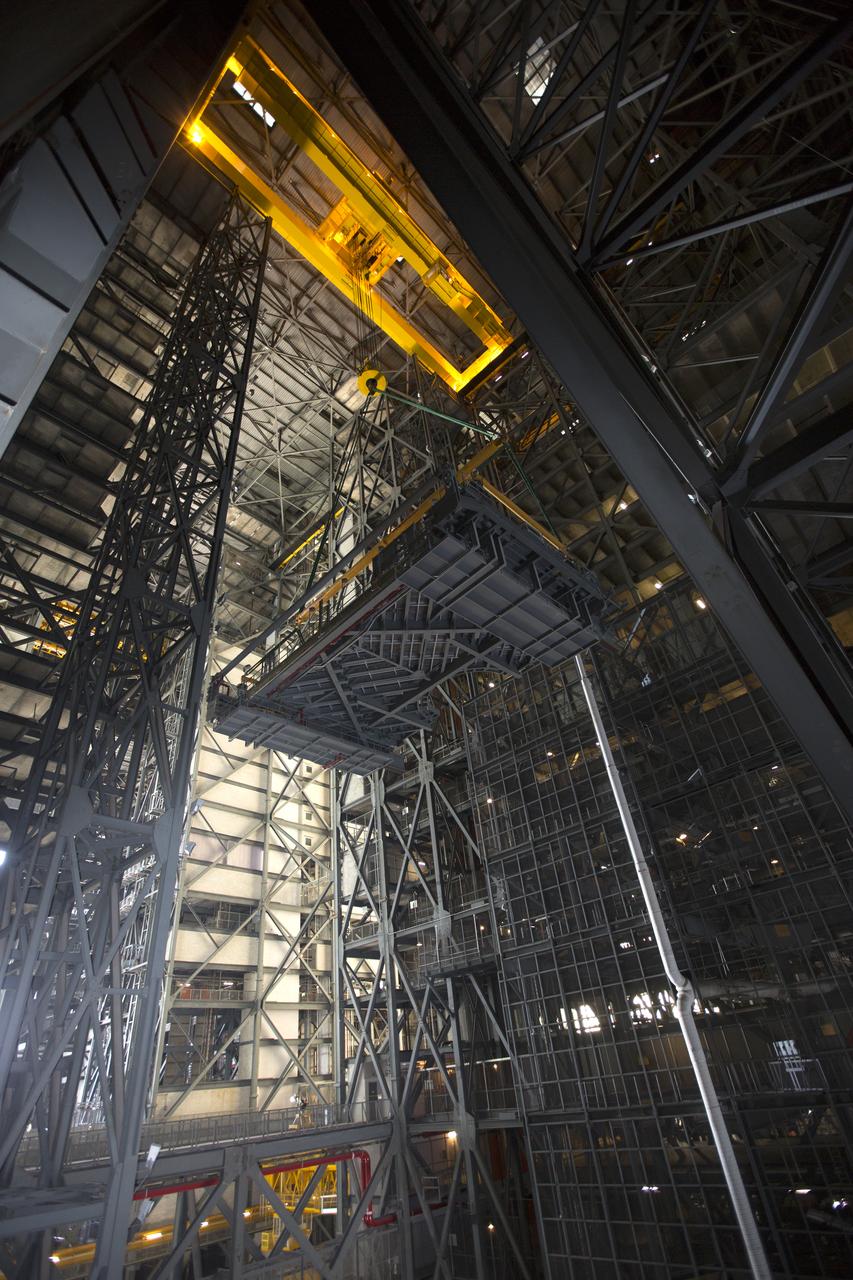
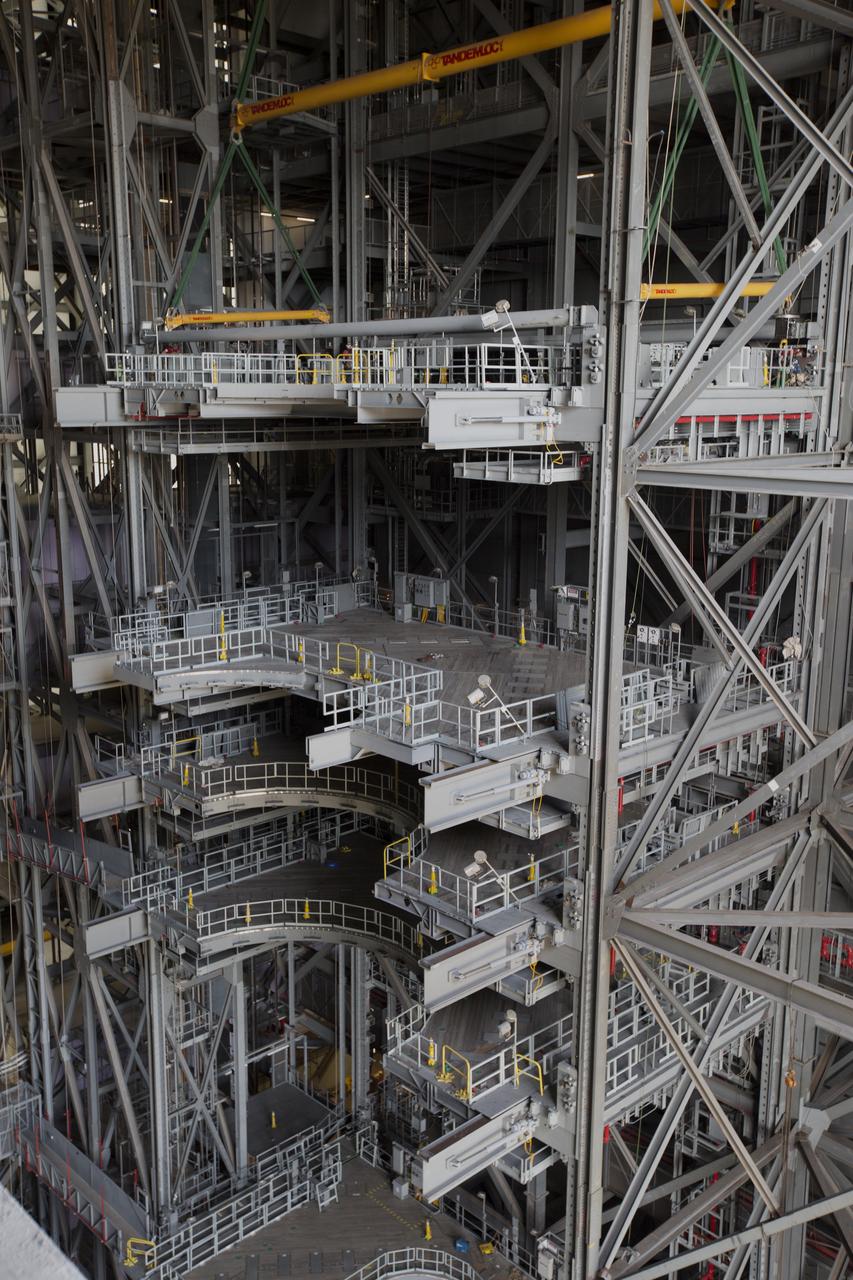
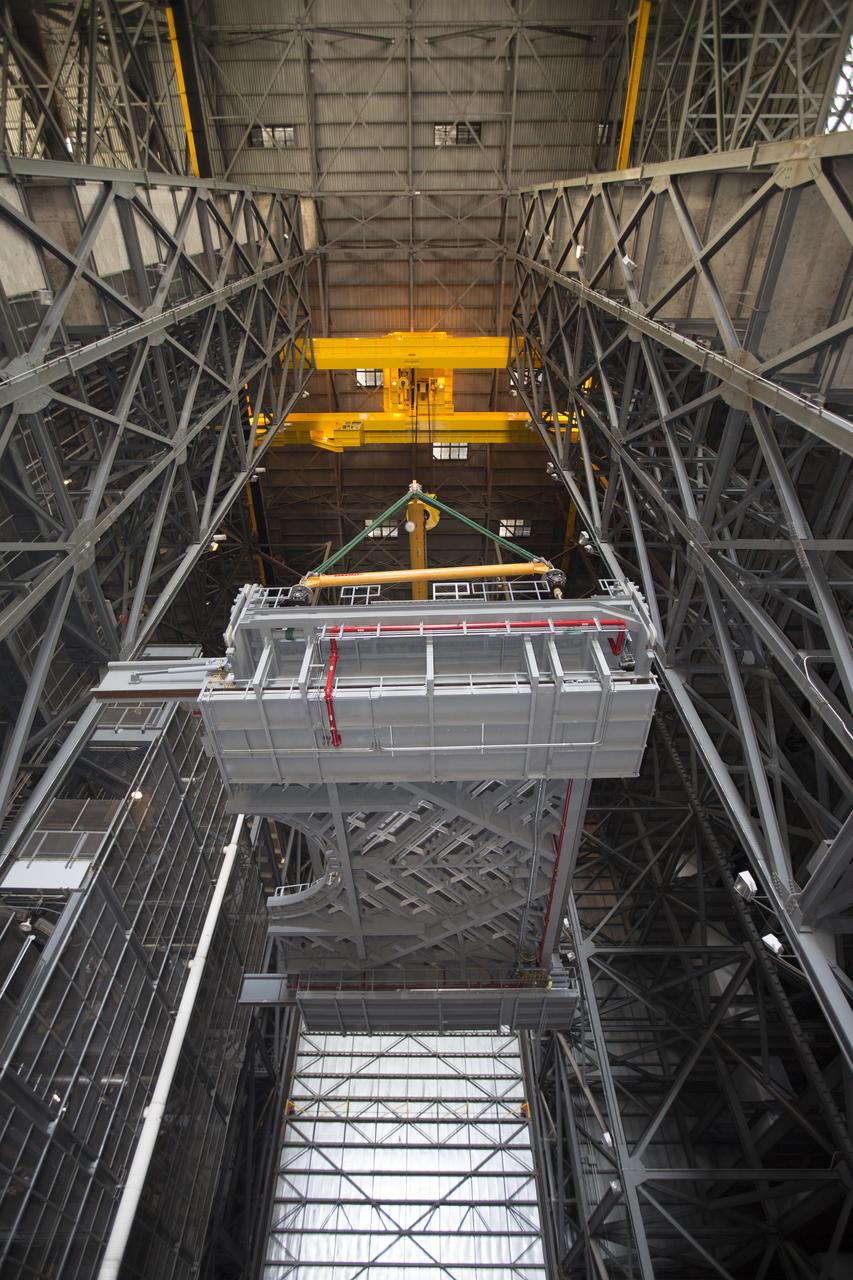
High up in the Vehicle Assembly Building (VAB) at NASA's Kennedy Space Center in Florida, a crane lowers the second half of the B-level work platforms, B north, for NASA's Space Launch System (SLS) rocket, for installation in High Bay 3. The B platform will be installed on the north side of high bay. In view below are eight levels of previously installed platforms. The B platforms are the ninth of 10 levels of work platforms that will surround and provide access to the SLS rocket and Orion spacecraft for Exploration Mission 1. The Ground Systems Development and Operations Program is overseeing upgrades and modifications to VAB High Bay 3, including installation of the new work platforms, to prepare for NASA’s Journey to Mars.
Platform B North Installation
A construction worker wearing a safety harness and tethered lines prepares to assist with the installation of the second half of the B-level work platforms, B north, for NASA’s Space Launch System (SLS) rocket, high up in the Vehicle Assembly Building (VAB) at NASA’s Kennedy Space Center in Florida. The B platform will be installed on the north side of High Bay 3. The B platforms are the ninth of 10 levels of work platforms that will surround and provide access to the SLS rocket and Orion spacecraft for Exploration Mission 1. The Ground Systems Development and Operations Program is overseeing upgrades and modifications to VAB High Bay 3, including installation of the new work platforms, to prepare for NASA’s Journey to Mars.
Platform B North Installation
High up in the Vehicle Assembly Building (VAB)  at NASA's Kennedy Space Center in Florida, a crane lowers the second half of the B-level work platforms, B north, for NASA's Space Launch System (SLS) rocket, for installation in High Bay 3. The B platform will be installed on the north side of high bay. In view below are eight levels of previously installed platforms. The B platforms are the ninth of 10 levels of work platforms that will surround and provide access to the SLS rocket and Orion spacecraft for Exploration Mission 1. The Ground Systems Development and Operations Program is overseeing upgrades and modifications to VAB High Bay 3, including installation of the new work platforms, to prepare for NASA’s Journey to Mars.
Platform B North Installation
High up in the Vehicle Assembly Building (VAB) at NASA's Kennedy Space Center in Florida, a crane lowers the second half of the B-level work platforms, B north, for NASA's Space Launch System (SLS) rocket, for installation in High Bay 3. The B platform will be installed on the north side of high bay. The B platforms are the ninth of 10 levels of work platforms that will surround and provide access to the SLS rocket and Orion spacecraft for Exploration Mission 1. The Ground Systems Development and Operations Program is overseeing upgrades and modifications to VAB High Bay 3, including installation of the new work platforms, to prepare for NASA’s Journey to Mars.
Platform B North Installation
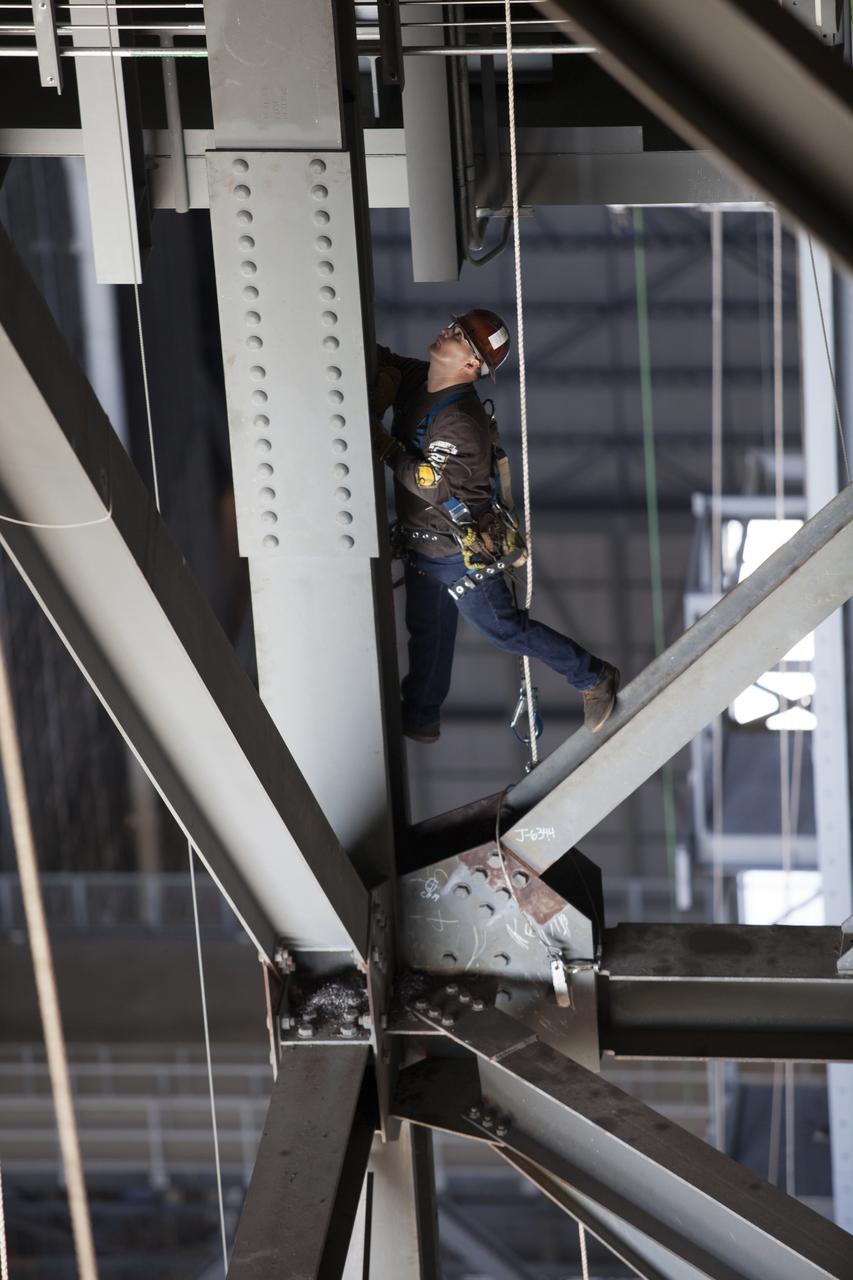
A construction worker wearing a safety harness and tethered lines assists with the installation of the second half of the B-level work platforms, B north, for NASA’s Space Launch System (SLS) rocket, high up in the Vehicle Assembly Building (VAB) at NASA’s Kennedy Space Center in Florida. The B platform will be installed on the north side of High Bay 3. The B platforms are the ninth of 10 levels of work platforms that will surround and provide access to the SLS rocket and Orion spacecraft for Exploration Mission 1. The Ground Systems Development and Operations Program is overseeing upgrades and modifications to VAB High Bay 3, including installation of the new work platforms, to prepare for NASA’s Journey to Mars.
Platform B North Installation
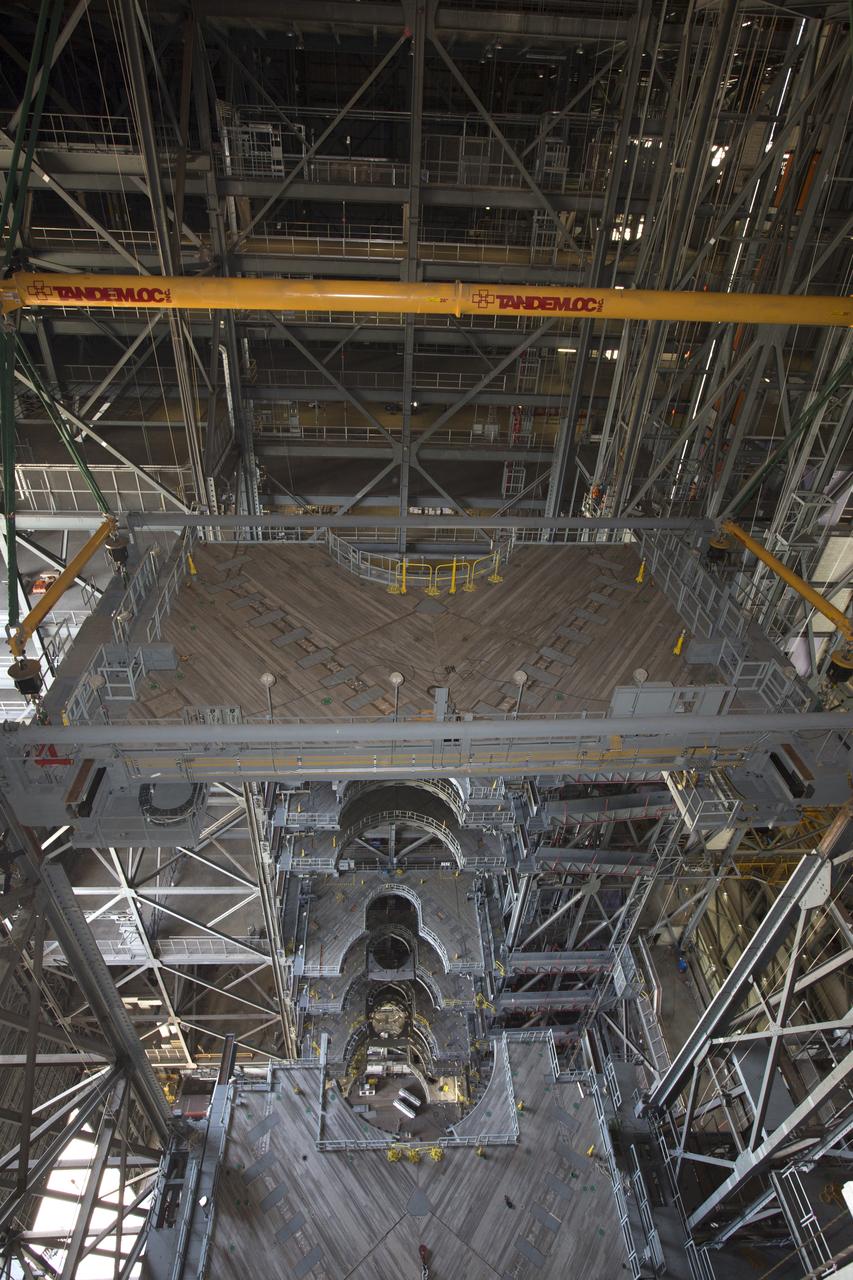
High up in the Vehicle Assembly Building (VAB) at NASA's Kennedy Space Center in Florida, the second half of the B-level work platforms, B north, for NASA's Space Launch System (SLS) rocket, has been lowered into place for installation on the north wall of High Bay 3. In view below are several levels of previously installed platforms. The B platforms are the ninth of 10 levels of work platforms that will surround and provide access to the SLS rocket and Orion spacecraft for Exploration Mission 1. The Ground Systems Development and Operations Program is overseeing upgrades and modifications to VAB High Bay 3, including installation of the new work platforms, to prepare for NASA’s Journey to Mars.
Platform B North Installation
The second half of the B-level work platforms, B north, for NASA's Space Launch System (SLS) rocket, is lowered by crane for installation on the north side of High Bay 3 in the Vehicle Assembly Building (VAB) at NASA's Kennedy Space Center in Florida. Construction workers will secure the large bolts that hold the platform in place on the north wall. The B platforms are the ninth of 10 levels of work platforms that will surround and provide access to the SLS rocket and Orion spacecraft for Exploration Mission 1. The Ground Systems Development and Operations Program is overseeing upgrades and modifications to VAB High Bay 3, including installation of the new work platforms, to prepare for NASA’s Journey to Mars.
Platform B North Installation
A construction worker makes adjustments to a section of steel during the installation of the second half of the B-level work platforms, B north, for NASA's Space Launch System (SLS) rocket, in High Bay 3 in the Vehicle Assembly Building (VAB) at NASA's Kennedy Space Center in Florida. Construction workers will secure the large bolts that hold the platform in place on the north wall. The B platforms are the ninth of 10 levels of work platforms that will surround and provide access to the SLS rocket and Orion spacecraft for Exploration Mission 1. The Ground Systems Development and Operations Program is overseeing upgrades and modifications to VAB High Bay 3, including installation of the new work platforms, to prepare for NASA’s Journey to Mars.
Platform B North Installation
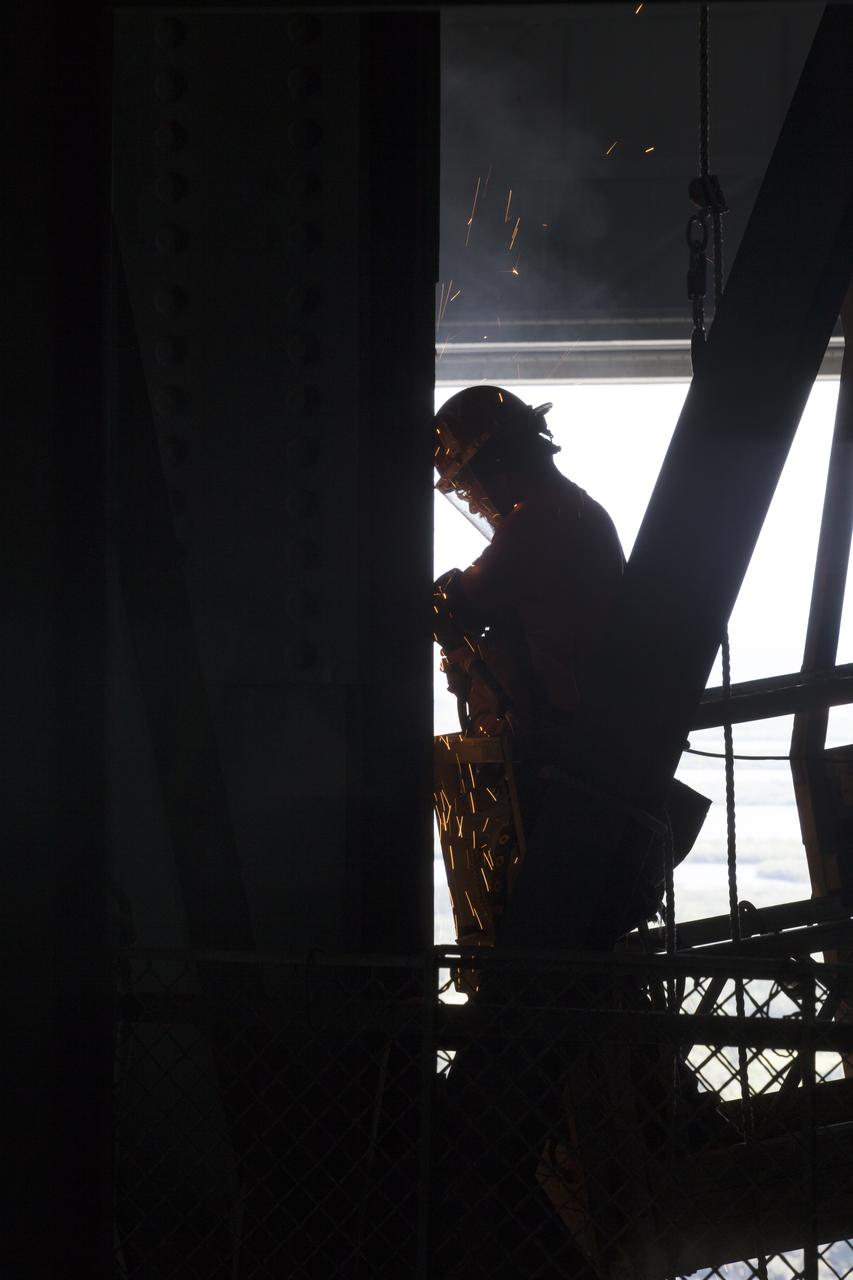
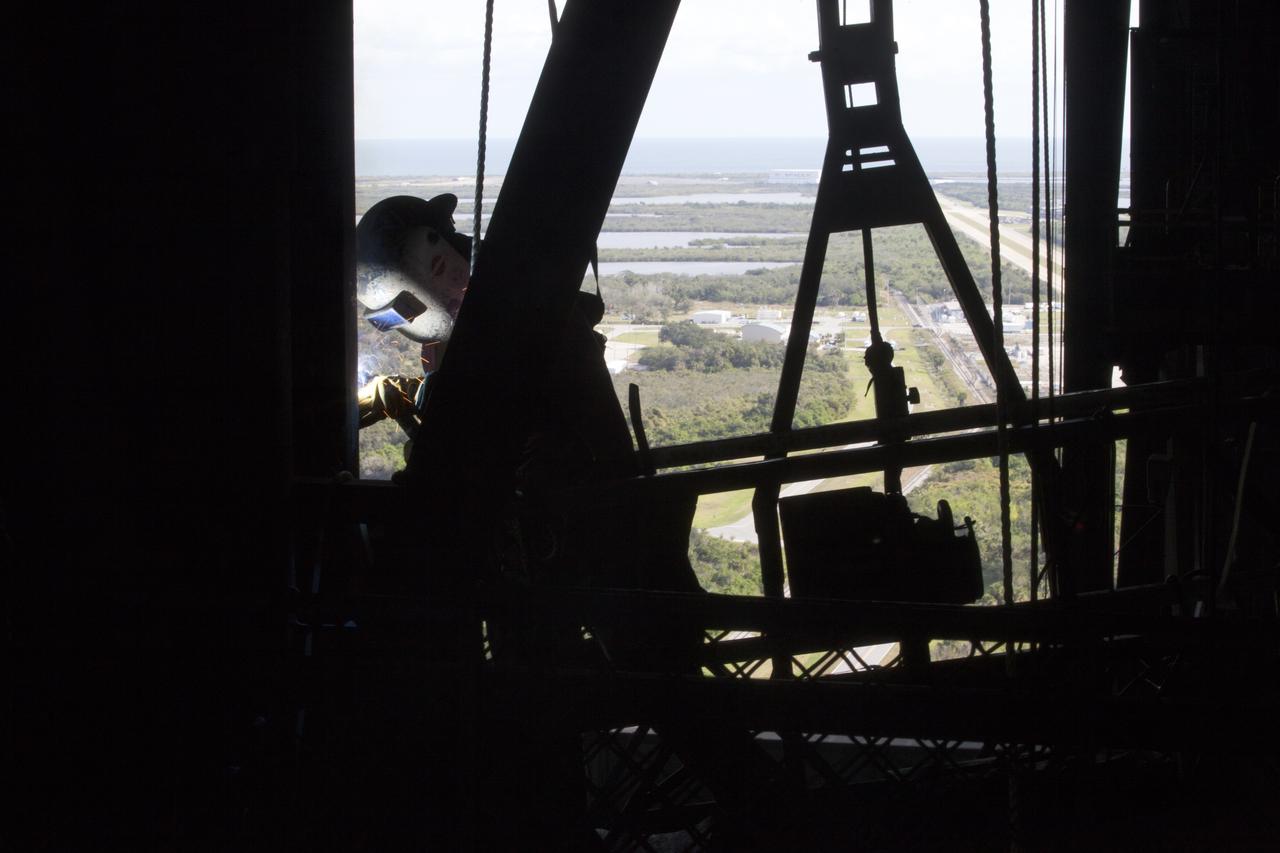
A construction worker solders a section of steel during the installation of the second half of the B-level work platforms, B north, for NASA's Space Launch System (SLS) rocket, in High Bay 3 in the Vehicle Assembly Building (VAB) at NASA's Kennedy Space Center in Florida. Construction workers will secure the large bolts that hold the platform in place on the north wall. The B platforms are the ninth of 10 levels of work platforms that will surround and provide access to the SLS rocket and Orion spacecraft for Exploration Mission 1. The Ground Systems Development and Operations Program is overseeing upgrades and modifications to VAB High Bay 3, including installation of the new work platforms, to prepare for NASA’s Journey to Mars.
Platform B North Installation
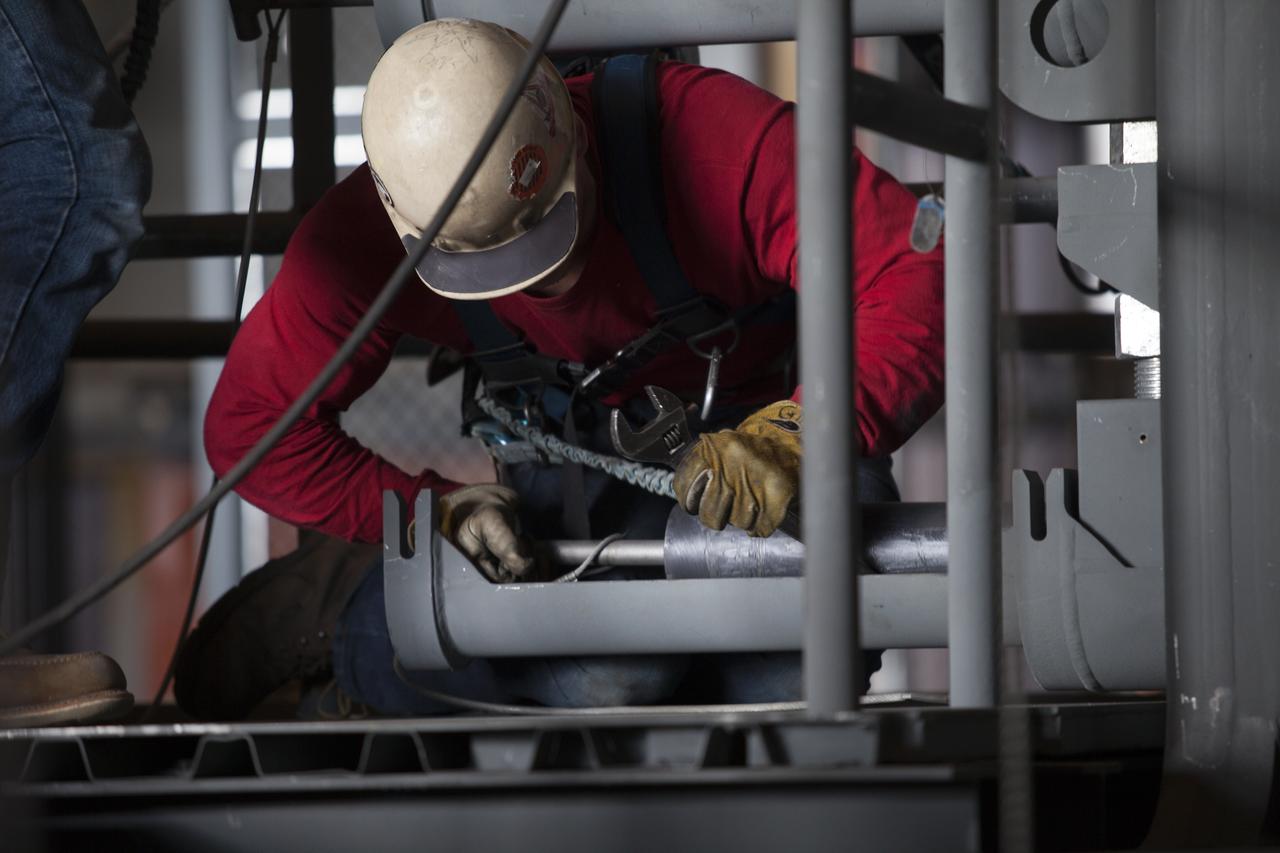
A construction worker wearing a safety harness and tethered lines turns a bolt to help secure the second half of the B-level work platforms, B north, for NASA's Space Launch System (SLS) rocket, during installation in High Bay 3 of the Vehicle Assembly Building (VAB) at NASA's Kennedy Space Center in Florida. The B platform is being installed on the north side of the high bay. The B platforms are the ninth of 10 levels of work platforms that will surround and provide access to the SLS rocket and Orion spacecraft for Exploration Mission 1. The Ground Systems Development and Operations Program is overseeing upgrades and modifications to VAB High Bay 3, including installation of the new work platforms, to prepare for NASA’s Journey to Mars.
Platform B North Installation
The second half of the B-level work platforms, B north, for NASA's Space Launch System (SLS) rocket, is lifted up by crane in the transfer aisle of the Vehicle Assembly Building (VAB) at NASA's Kennedy Space Center in Florida. The platform will be lowered into High Bay 3 and installed on the north side of the high bay. Construction workers will secure the large bolts that hold the platform in place on the north wall. The B platforms are the ninth of 10 levels of work platforms that will surround and provide access to the SLS rocket and Orion spacecraft for Exploration Mission 1. The Ground Systems Development and Operations Program is overseeing upgrades and modifications to VAB High Bay 3, including installation of the new work platforms, to prepare for NASA’s Journey to Mars.
Platform B North Installation
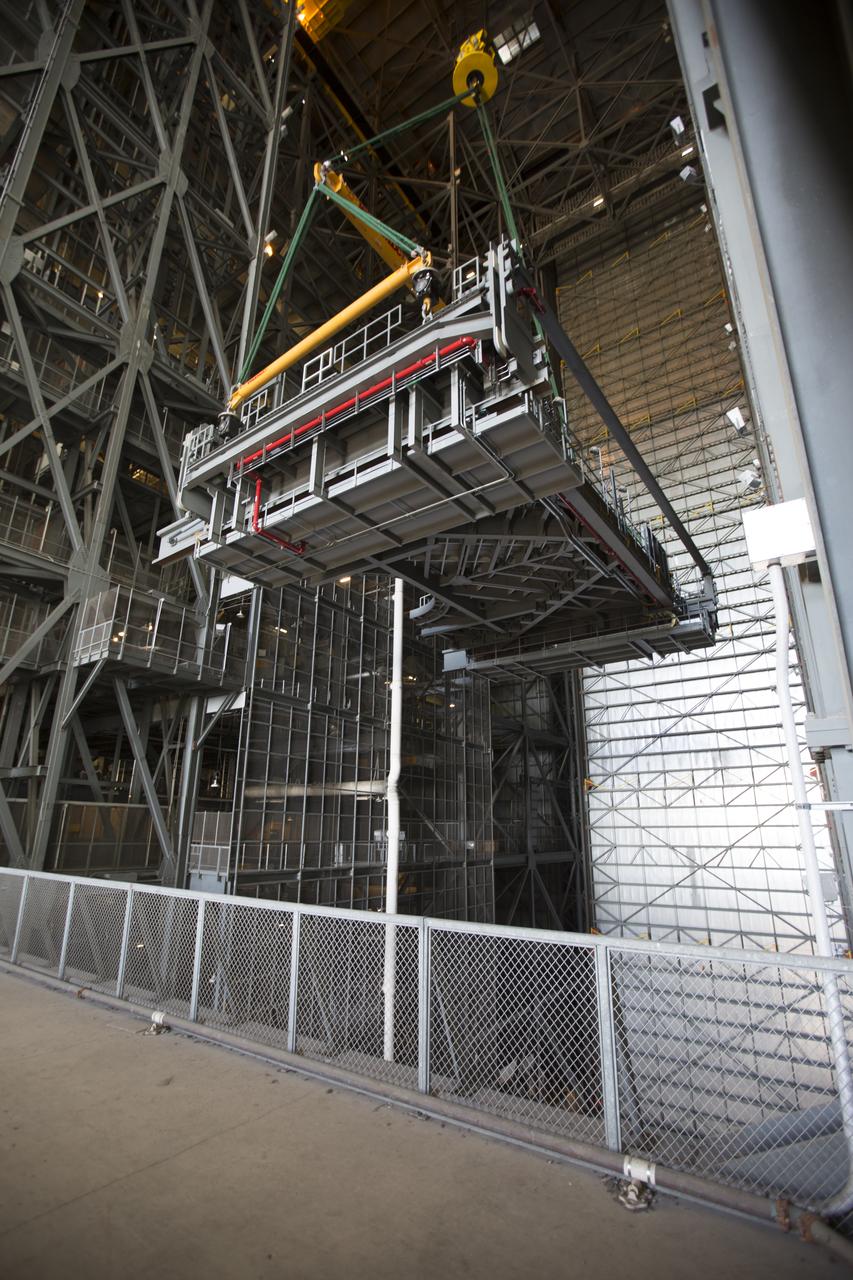
The second half of the B-level work platforms, B north, for NASA's Space Launch System (SLS) rocket, is lowered by crane for installation on the north side of High Bay 3 in the Vehicle Assembly Building (VAB) at NASA's Kennedy Space Center in Florida. Large Tandemloc bars have been attached to the platform to keep it level during lifting, lowering and installation. In view below are several levels of previously installed platforms. The B platforms are the ninth of 10 levels of work platforms that will surround and provide access to the SLS rocket and Orion spacecraft for Exploration Mission 1. The Ground Systems Development and Operations Program is overseeing upgrades and modifications to VAB High Bay 3, including installation of the new work platforms, to prepare for NASA’s Journey to Mars.
Platform B North Installation
The second half of the B-level work platforms, B north, for NASA's Space Launch System (SLS) rocket, is lifted up by crane in the transfer aisle of the Vehicle Assembly Building (VAB) at NASA's Kennedy Space Center in Florida. The platform will be lowered into High Bay 3 and installed on the north side of the high bay. Construction workers will secure the large bolts that hold the platform in place on the north wall. The B platforms are the ninth of 10 levels of work platforms that will surround and provide access to the SLS rocket and Orion spacecraft for Exploration Mission 1. The Ground Systems Development and Operations Program is overseeing upgrades and modifications to VAB High Bay 3, including installation of the new work platforms, to prepare for NASA’s Journey to Mars.
Platform B North Installation
Construction workers wearing safety harnesses and tethered lines assist with the installation of the second half of the B-level work platforms, B north, for NASA’s Space Launch System (SLS) rocket, high up in the Vehicle Assembly Building (VAB) at NASA’s Kennedy Space Center in Florida. They are securing the large bolts that hold the platform securely in place on the north side of High Bay 3. The B platforms are the ninth of 10 levels of work platforms that will surround and provide access to the SLS rocket and Orion spacecraft for Exploration Mission 1. The Ground Systems Development and Operations Program is overseeing upgrades and modifications to VAB High Bay 3, including installation of the new work platforms, to prepare for NASA’s Journey to Mars.
Platform B North Installation
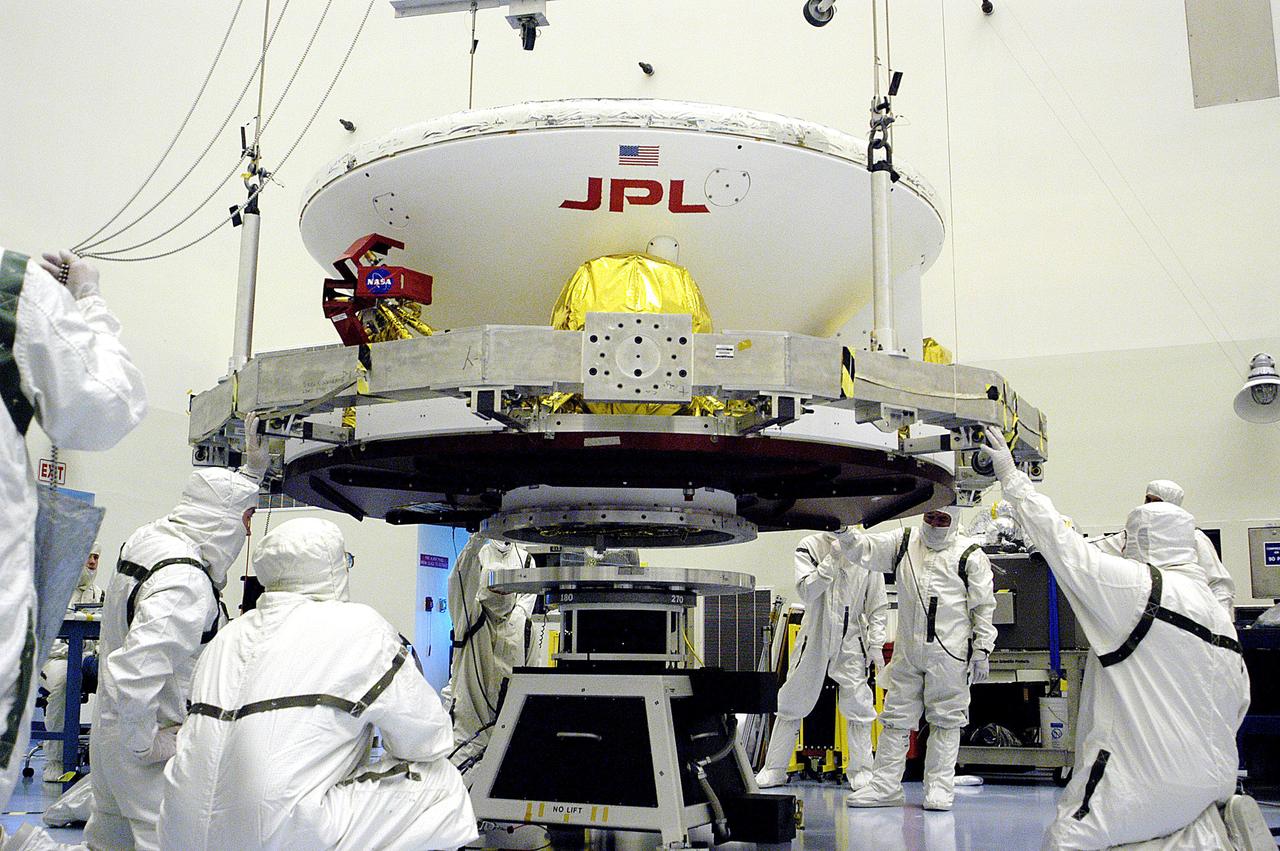
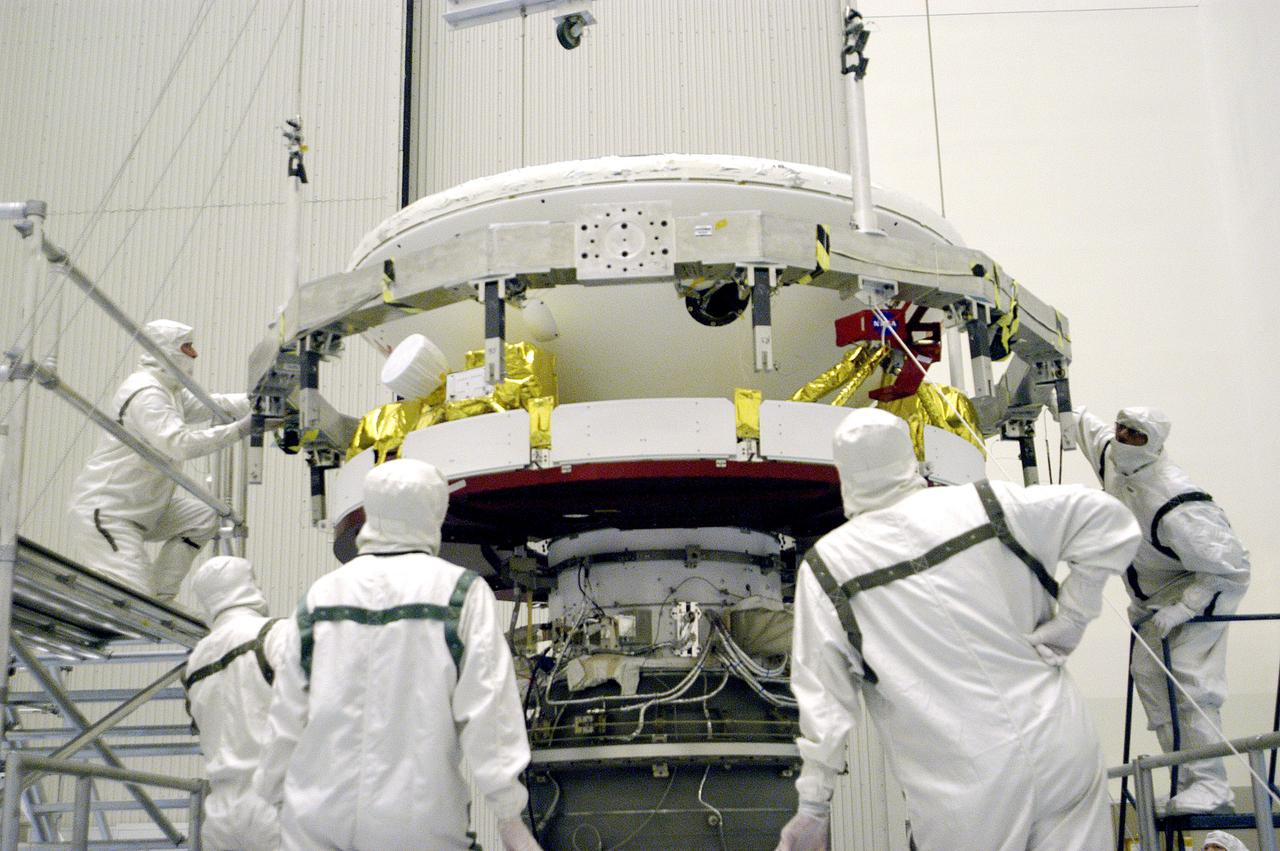
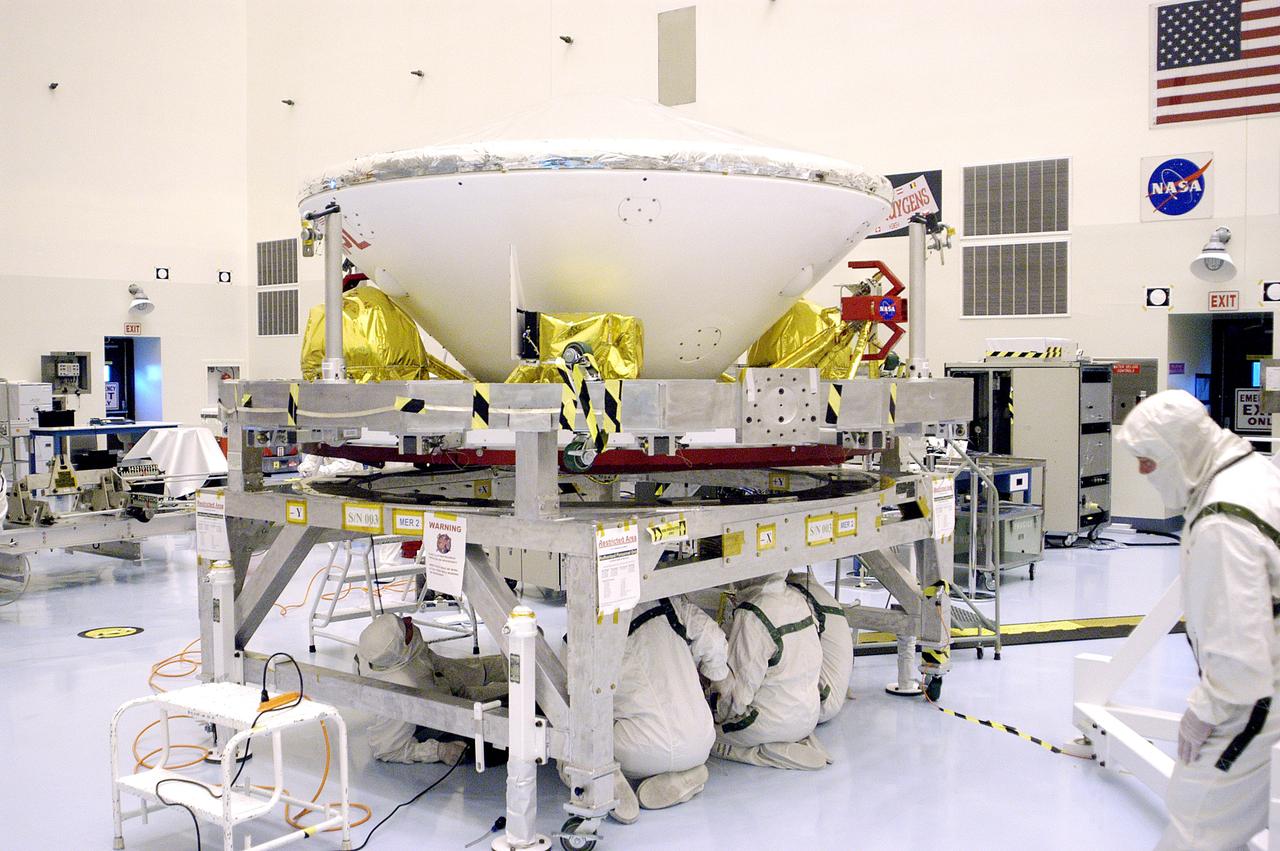
In the Payload Hazardous Servicing Facility, workers prepare to lift the Mars Exploration Rover-1 MER-B onto a spin table during preflight processing of the spacecraft.
Preflight Processing
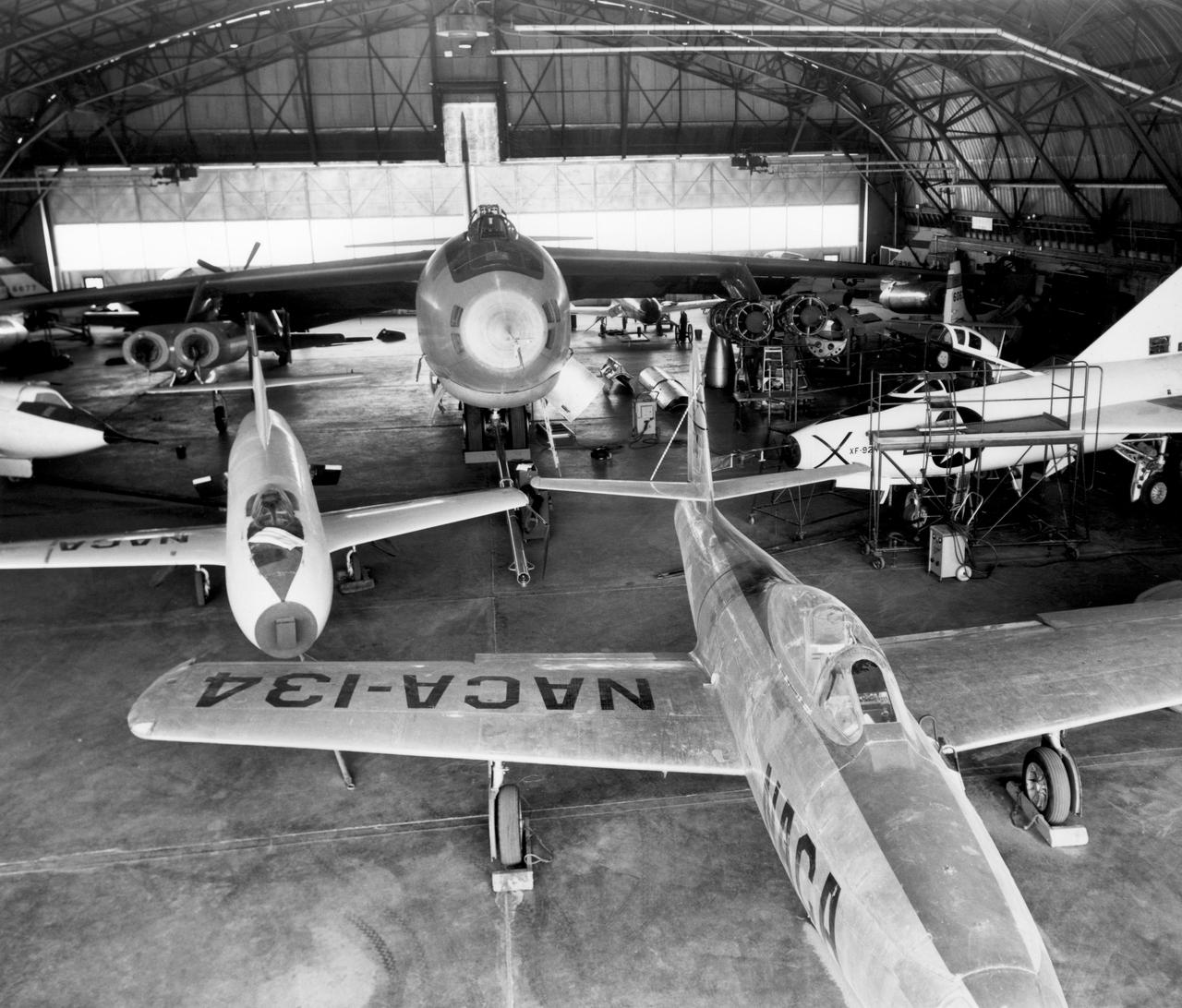
In the center foreground of this 1953 hangar photo is the YF-84A (NACA 134/Air Force 45-59490) used for vortex generator research. It arrived on November 28, 1949, and departed on April 21, 1954. Beside it is the third D-558-1 aircraft (NACA 142/Navy 37972). This aircraft was used for a total of 78 transonic research flights from April 1949 to June 1954. It replaced the second D-558-1, lost in the crash which killed Howard Lilly. Just visible on the left edge is the nose of the first D-558-2 (NACA 143/Navy 37973). Douglas turned the aircraft over to NACA on August 31, 1951, after the contractor had completed its initial test flights. NACA only made a single flight with the aircraft, on September 17, 1956, before the program was cancelled. In the center of the photo is the B-47A (NACA 150/Air Force 49-1900). The B-47 jet bomber, with its thin, swept-back wings, and six podded engines, represented the state of the art in aircraft design in the early 1950s. The aircraft undertook a number of research activities between May 1953 and its 78th and final research flight on November 22, 1957. The tests showed that the aircraft had a buffeting problem at speeds above Mach 0.8. Among the pilots who flew the B-47 were later X-15 pilots Joe Walker, A. Scott Crossfield, John B. McKay, and Neil A. Armstrong.  On the right side of the B-47 is NACA's X-1 (Air Force 46-063). The second XS-1 aircraft built, it was fitted with a thicker wing than that on the first aircraft, which had exceeded Mach 1 on October 14, 1947. Flight research by NACA pilots indicated that this thicker wing produced 30 percent more drag at transonic speeds compared to the thinner wing on the first X-1. After a final flight on October 23, 1951, the aircraft was grounded due to the possibility of fatigue failure of the nitrogen spheres used to pressurize the fuel tanks. At the time of this photo, in 1953, the aircraft was in storage. In 1955, the aircraft was extensively modified, becoming the X-1E.  In front o
E-960
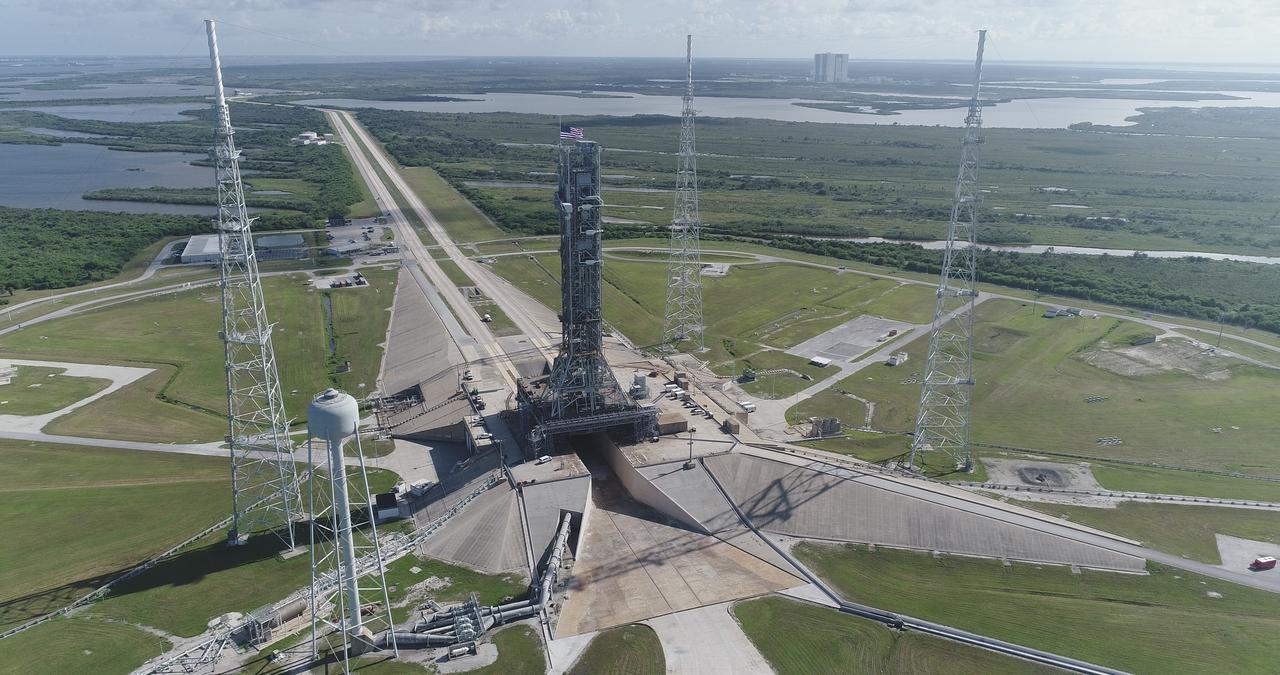
NASA's mobile launcher (ML) atop crawler-transporter 2 is at the top of Launch Pad 39B on Aug. 31, 2018, at the agency's Kennedy Space Center in Florida. The ML will undergo a fit check, followed by several days of systems testing. The 380-foot-tall mobile launcher is equipped with the crew access arm and several umbilicals that will provide power, environmental control, pneumatics, communication and electrical connections to NASA's Space Launch System (SLS) and Orion spacecraft. Exploration Ground Systems is preparing the ground systems necessary to launch SLS and Orion on Exploration Mission-1, missions to the Moon and on to Mars. Photo credit: NASA/Jamie Peer <b><a href="http://www.nasa.gov/audience/formedia/features/MP_Photo_Guidelines.html" rel="nofollow">NASA image use policy.</a></b>
Mobile Launcher Moves Toward EM-1 - Arrives at Launch Complex 39
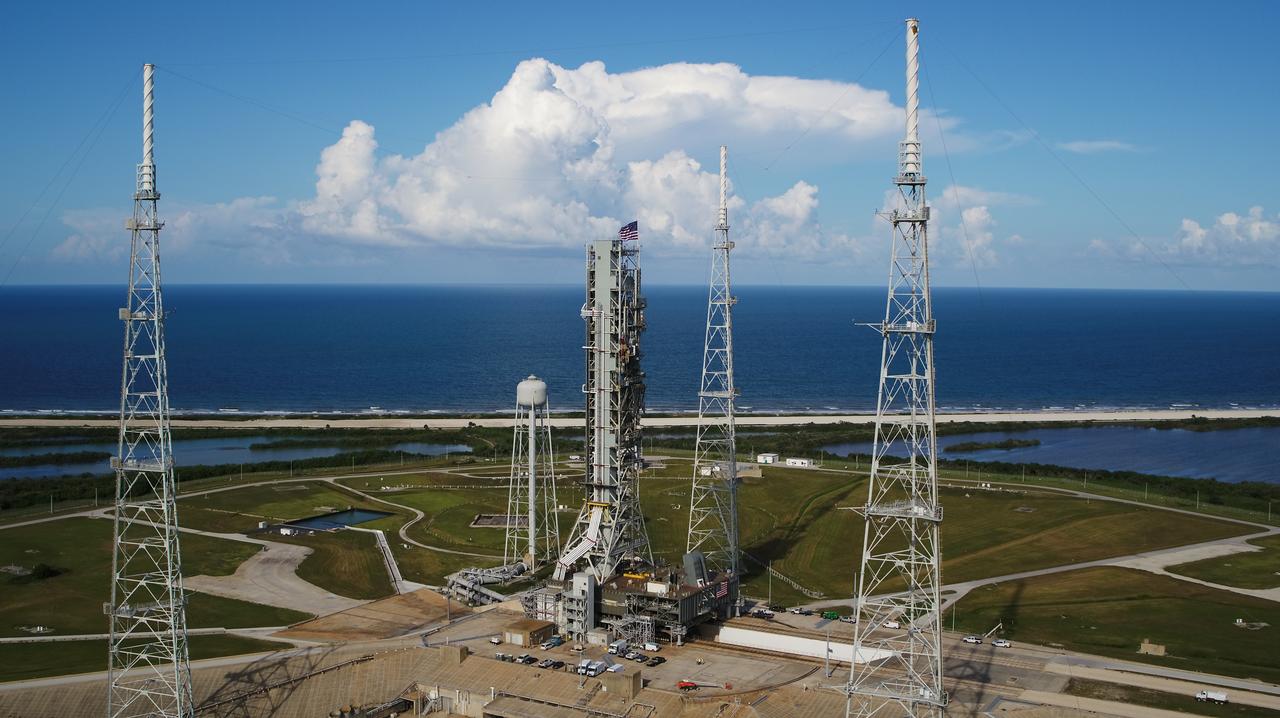
NASA's mobile launcher (ML) atop crawler-transporter 2 is at the top of Launch Pad 39B on Aug. 31, 2018, at the agency's Kennedy Space Center in Florida. The ML will undergo a fit check, followed by several days of systems testing. The 380-foot-tall mobile launcher is equipped with the crew access arm and several umbilicals that will provide power, environmental control, pneumatics, communication and electrical connections to NASA's Space Launch System (SLS) and Orion spacecraft. Exploration Ground Systems is preparing the ground systems necessary to launch SLS and Orion on Exploration Mission-1, missions to the Moon and on to Mars. Photo credit: NASA/Jamie Peer <b><a href="http://www.nasa.gov/audience/formedia/features/MP_Photo_Guidelines.html" rel="nofollow">NASA image use policy.</a></b>
Mobile Launcher Moves Toward EM-1 - Arrives at Launch Complex 39
NASA's mobile launcher (ML) atop crawler-transporter 2 is at the top of Launch Pad 39B on Aug. 31, 2018, at the agency's Kennedy Space Center in Florida. The ML will undergo a fit check, followed by several days of systems testing. The 380-foot-tall mobile launcher is equipped with the crew access arm and several umbilicals that will provide power, environmental control, pneumatics, communication and electrical connections to NASA's Space Launch System (SLS) and Orion spacecraft. Exploration Ground Systems is preparing the ground systems necessary to launch SLS and Orion on Exploration Mission-1, missions to the Moon and on to Mars. Photo credit: NASA/Jamie Peer <b><a href="http://www.nasa.gov/audience/formedia/features/MP_Photo_Guidelines.html" rel="nofollow">NASA image use policy.</a></b>
Mobile Launcher Moves Toward EM-1 - Arrives at Launch Complex 39
The Apollo 1 grave sites of Virgil I. “Gus” Grissom, and Roger B. Chaffee are seen with flowers as part of NASA's Day of Remembrance, Thursday, Jan. 23, 2025, at Arlington National Cemetery in Arlington, Va. Photo Credit: (NASA/Bill Ingalls)
Day of Remembrance
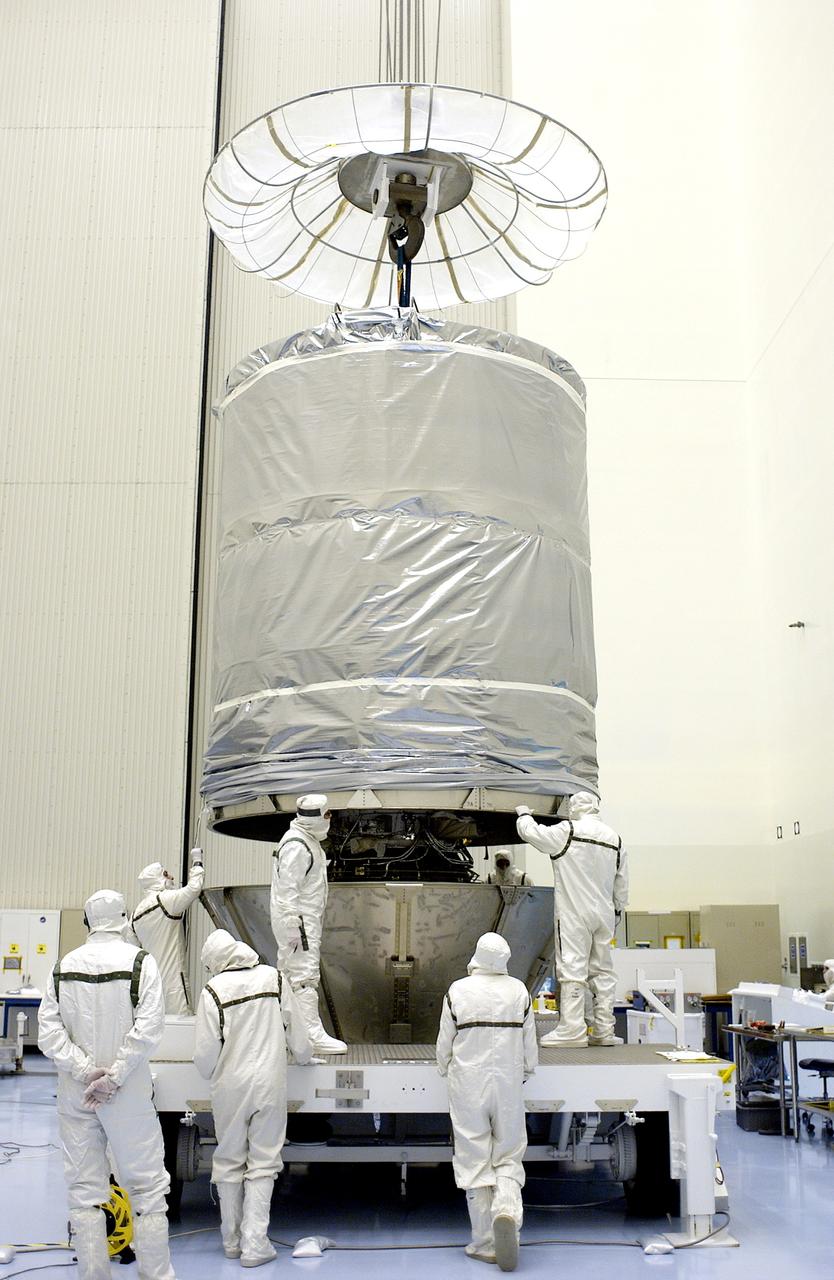
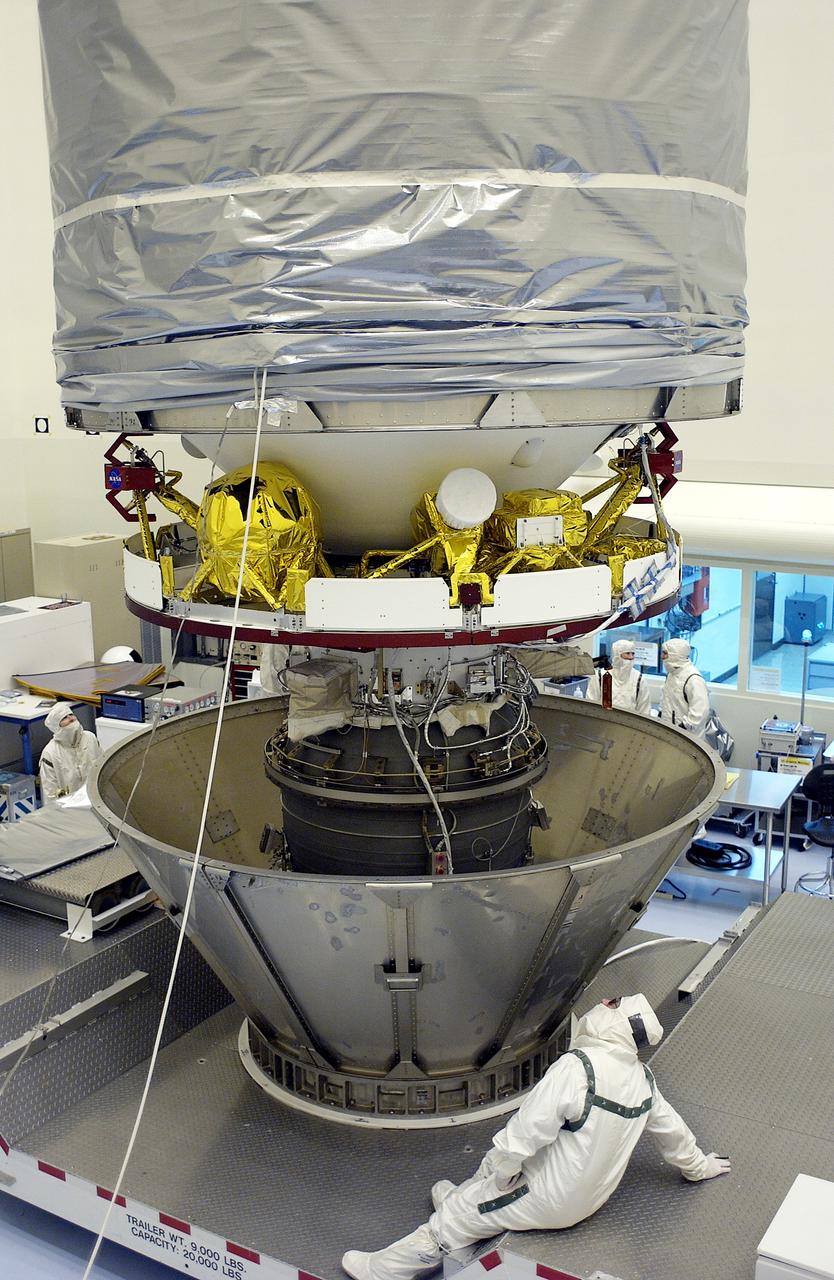
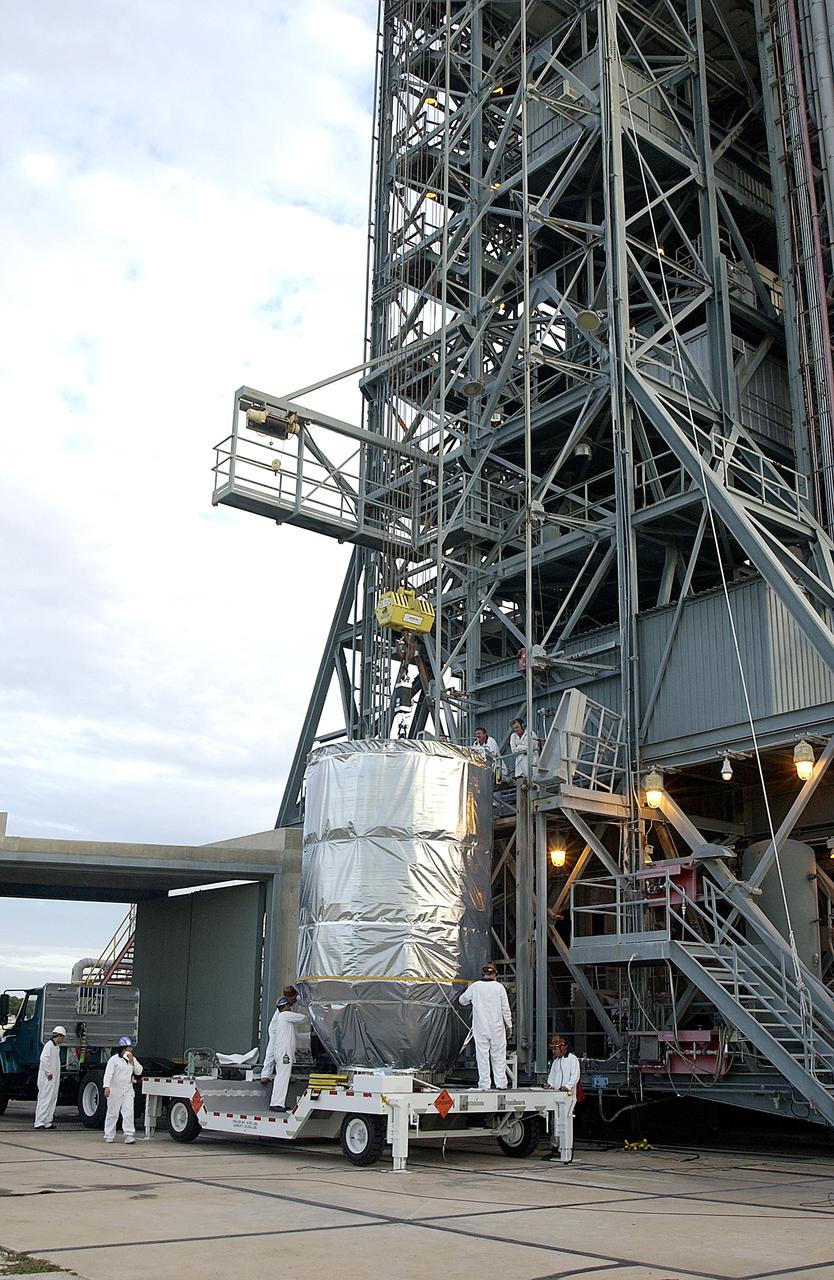
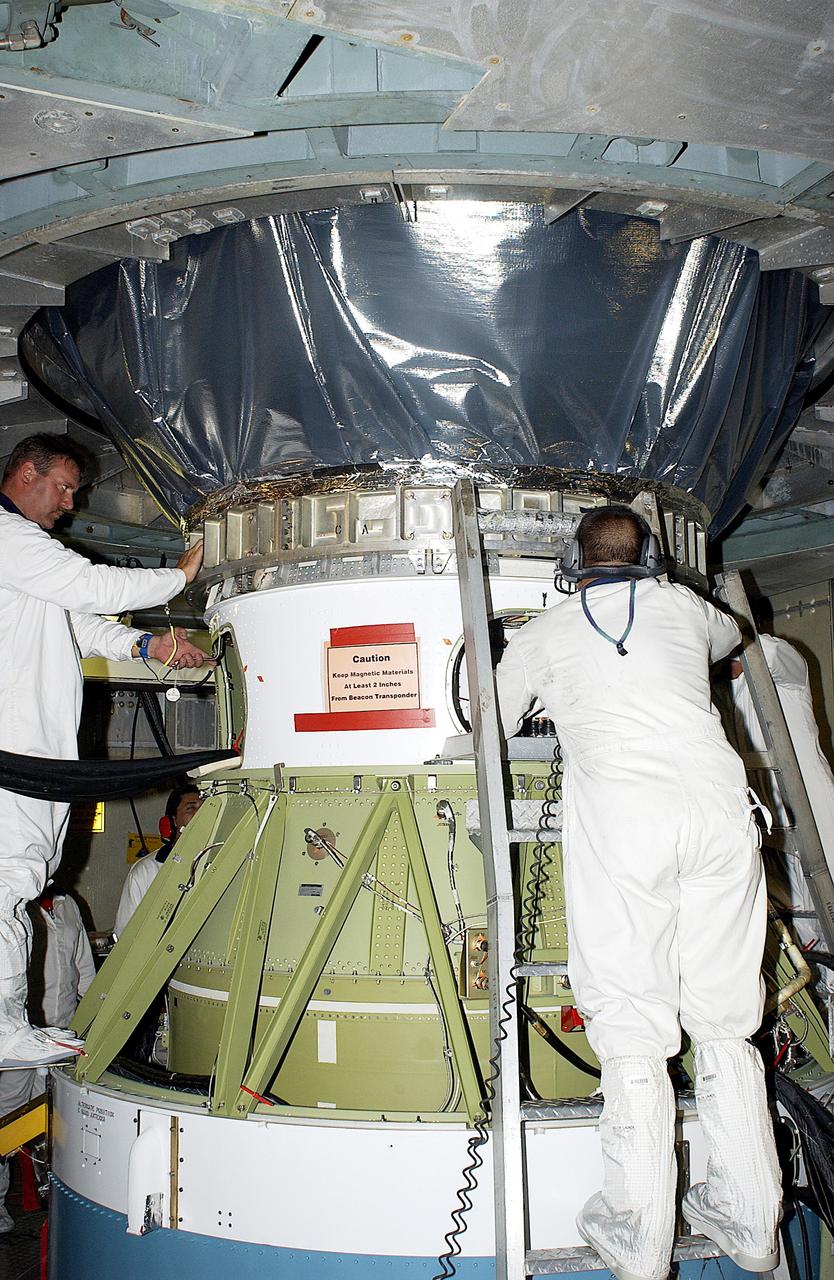
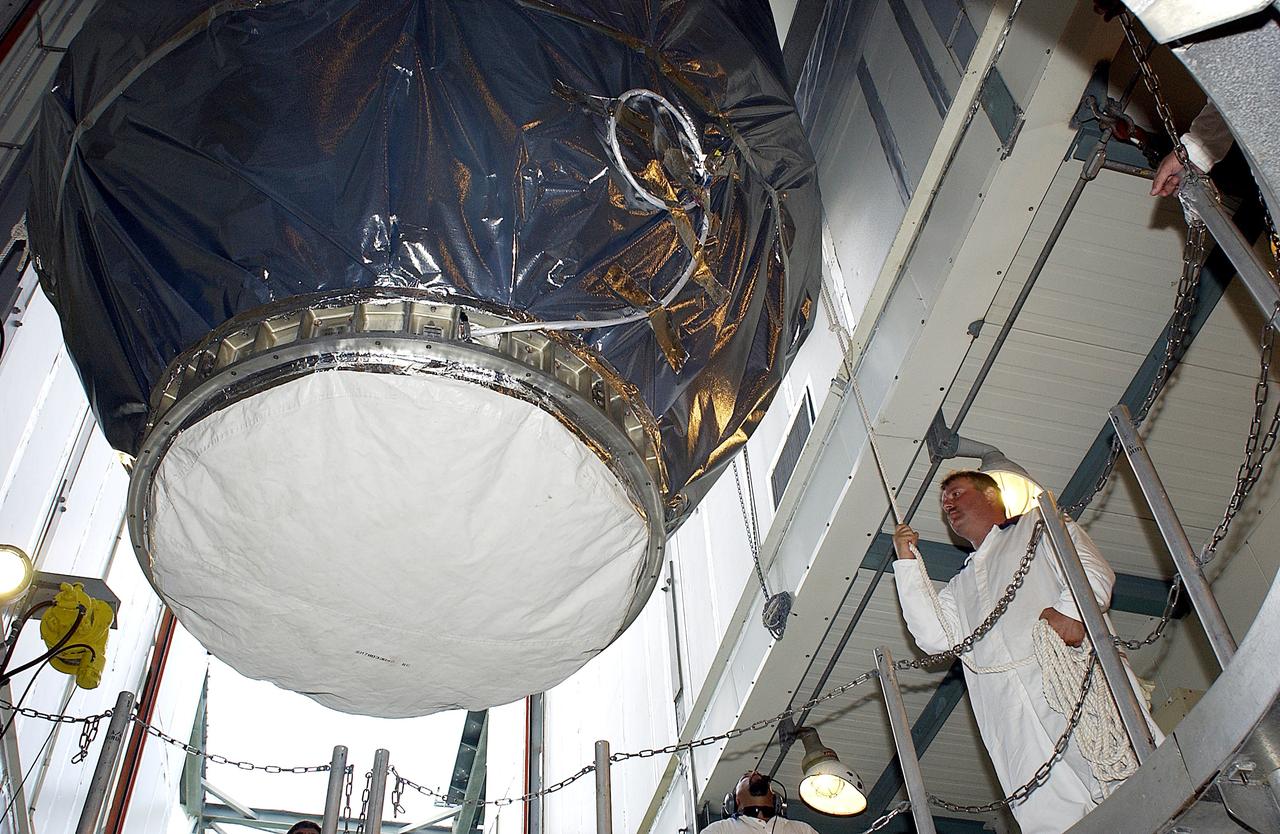
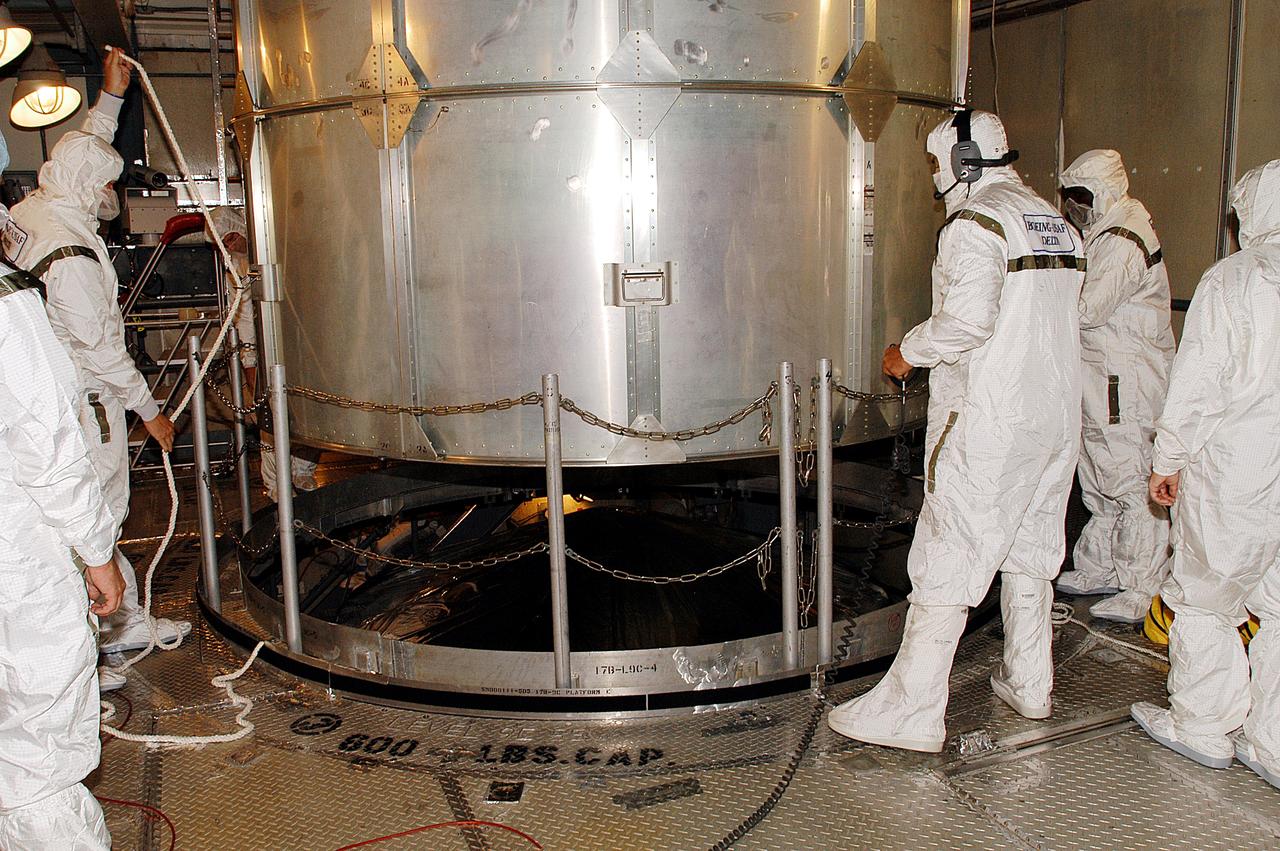
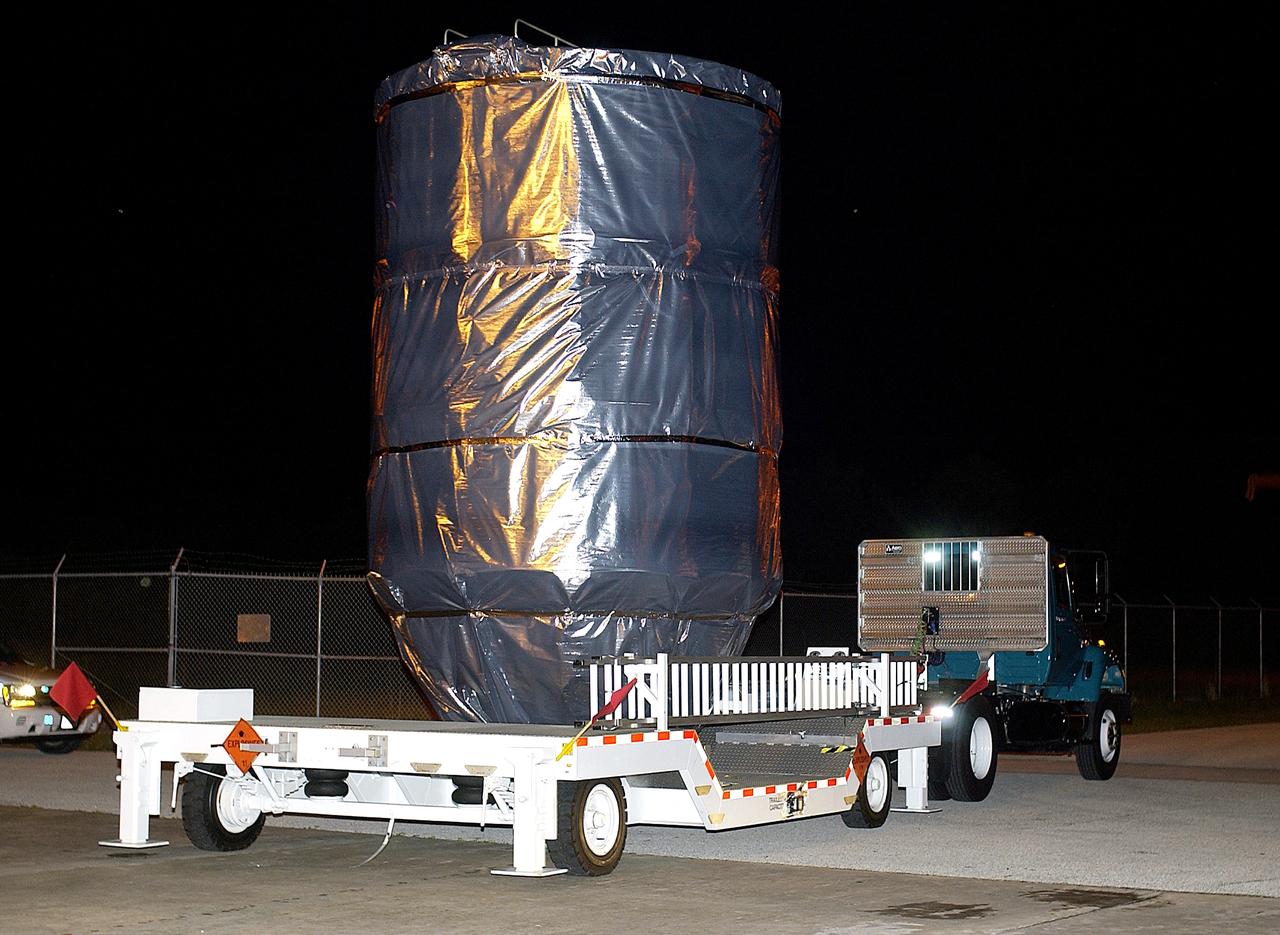
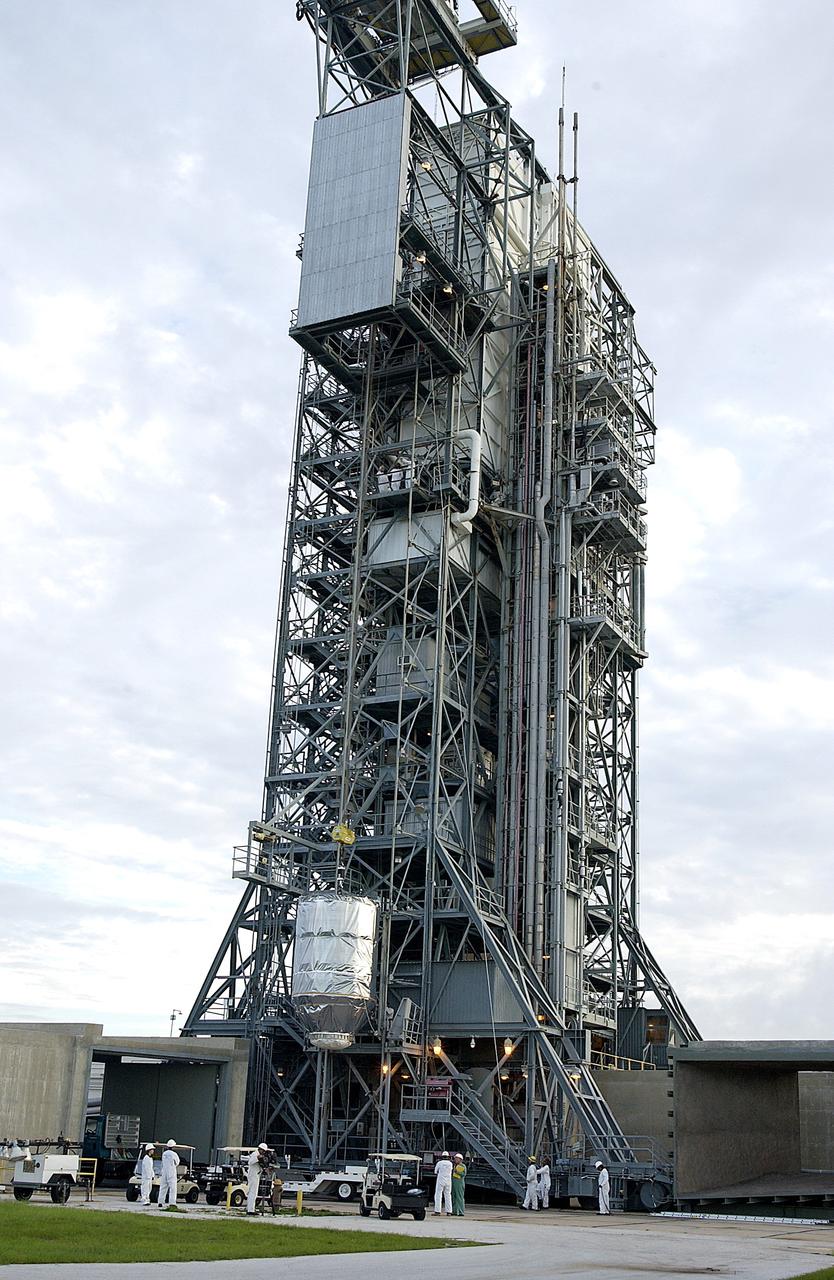
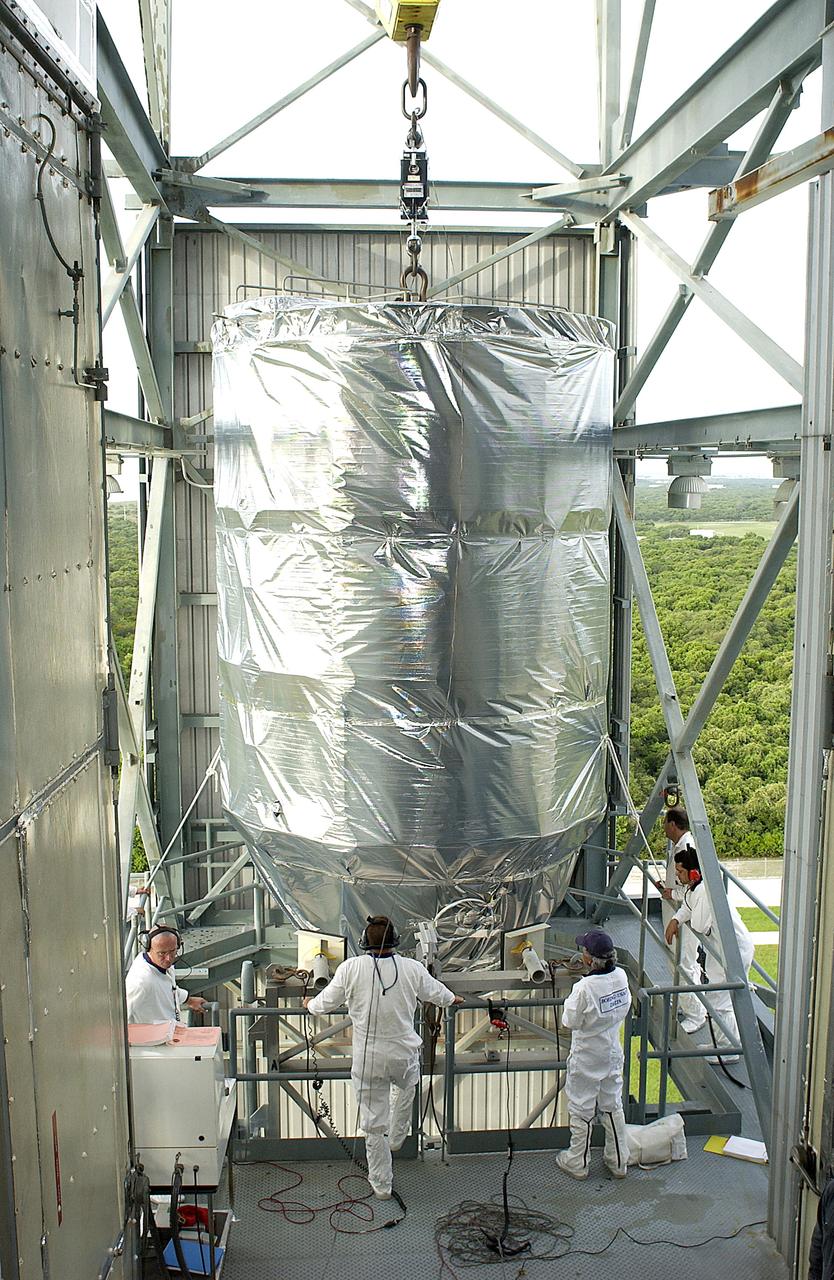
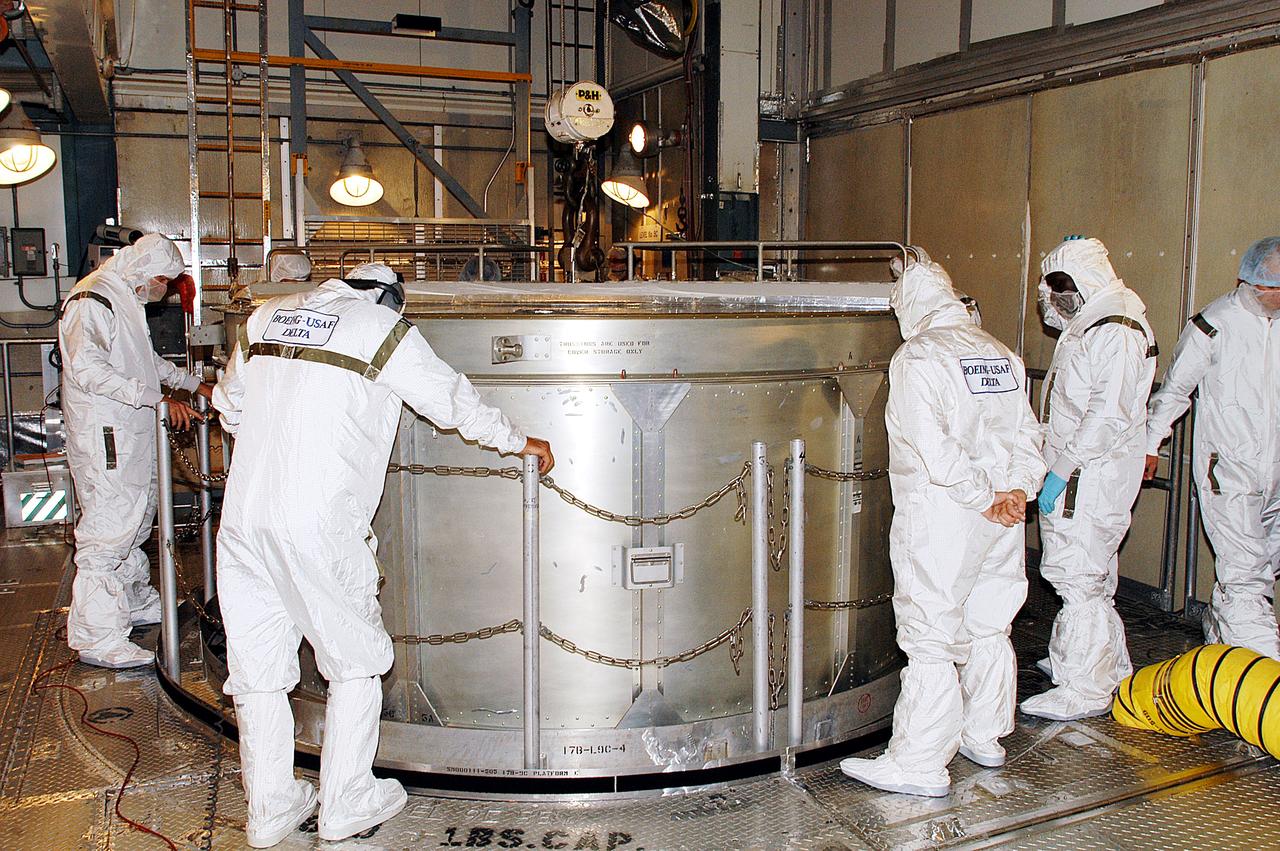
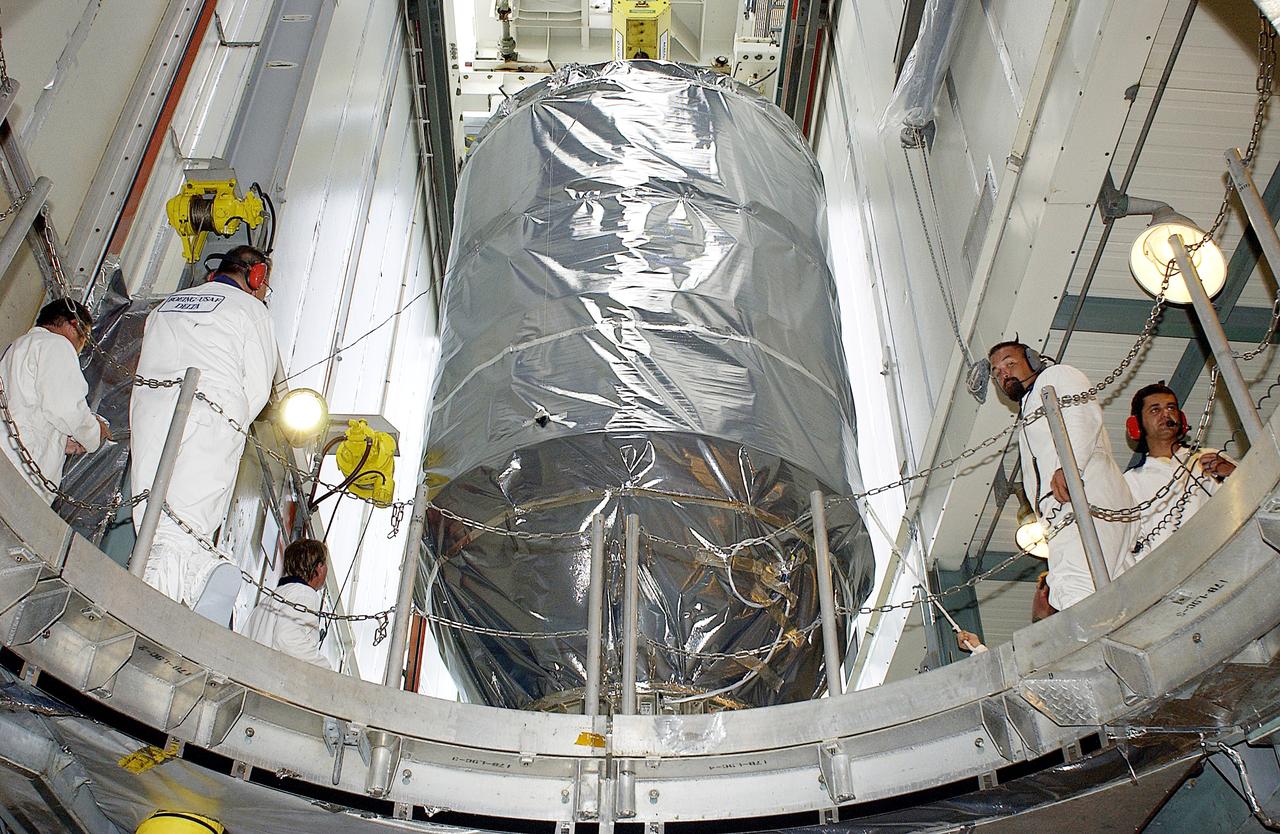
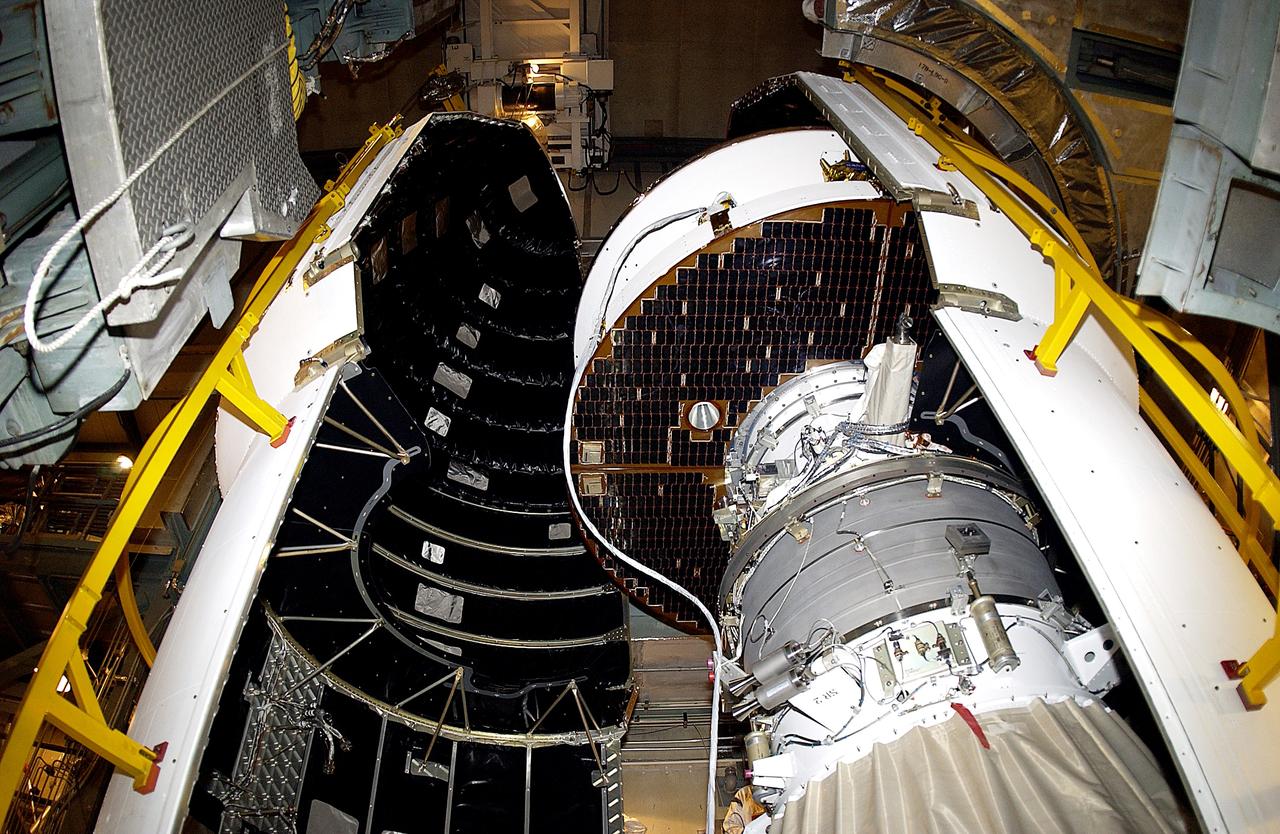
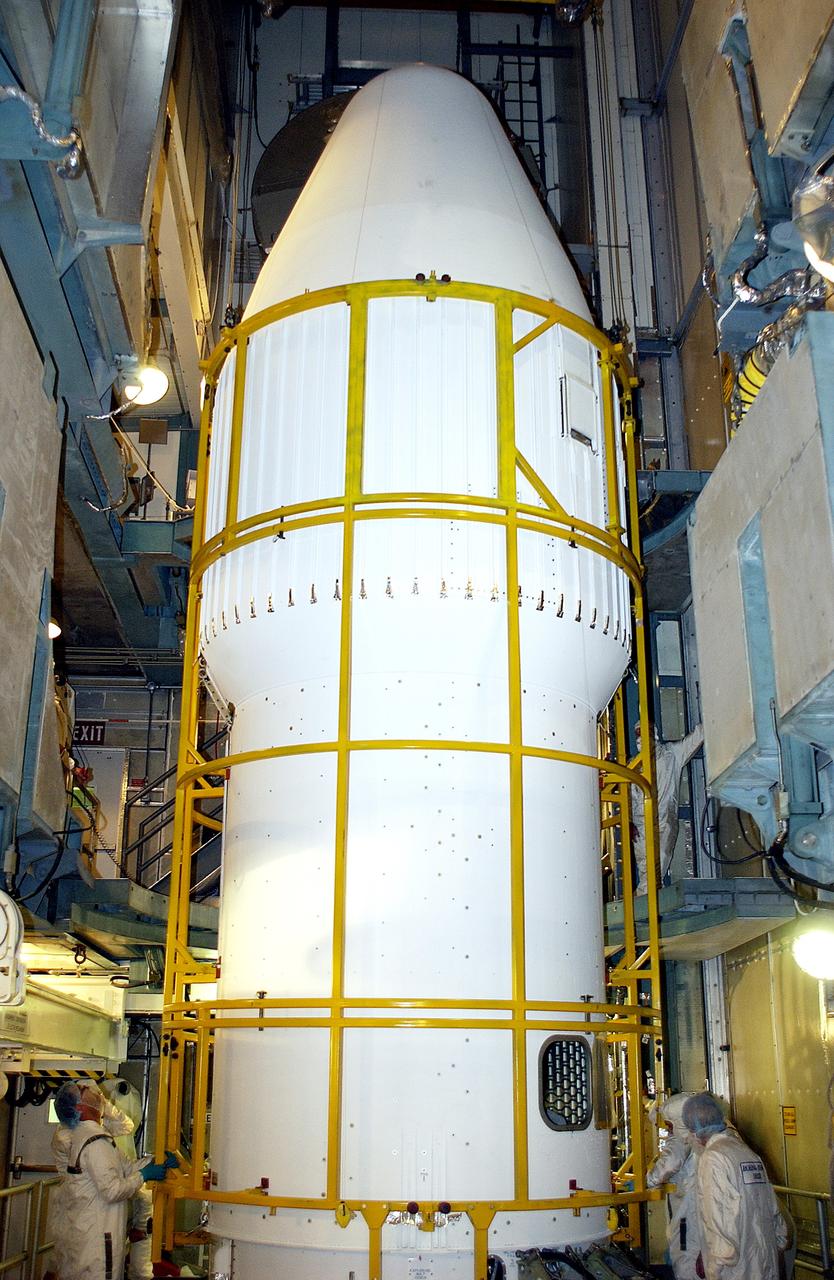
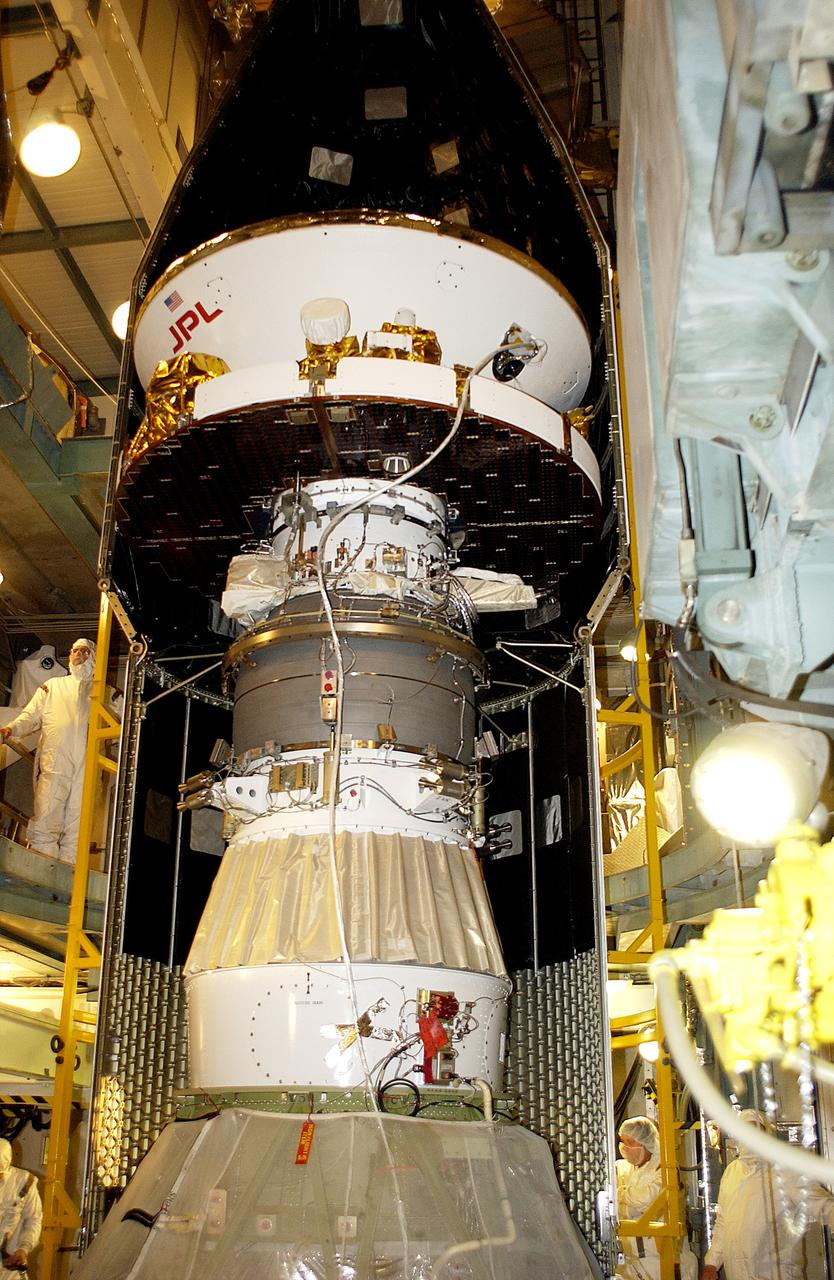
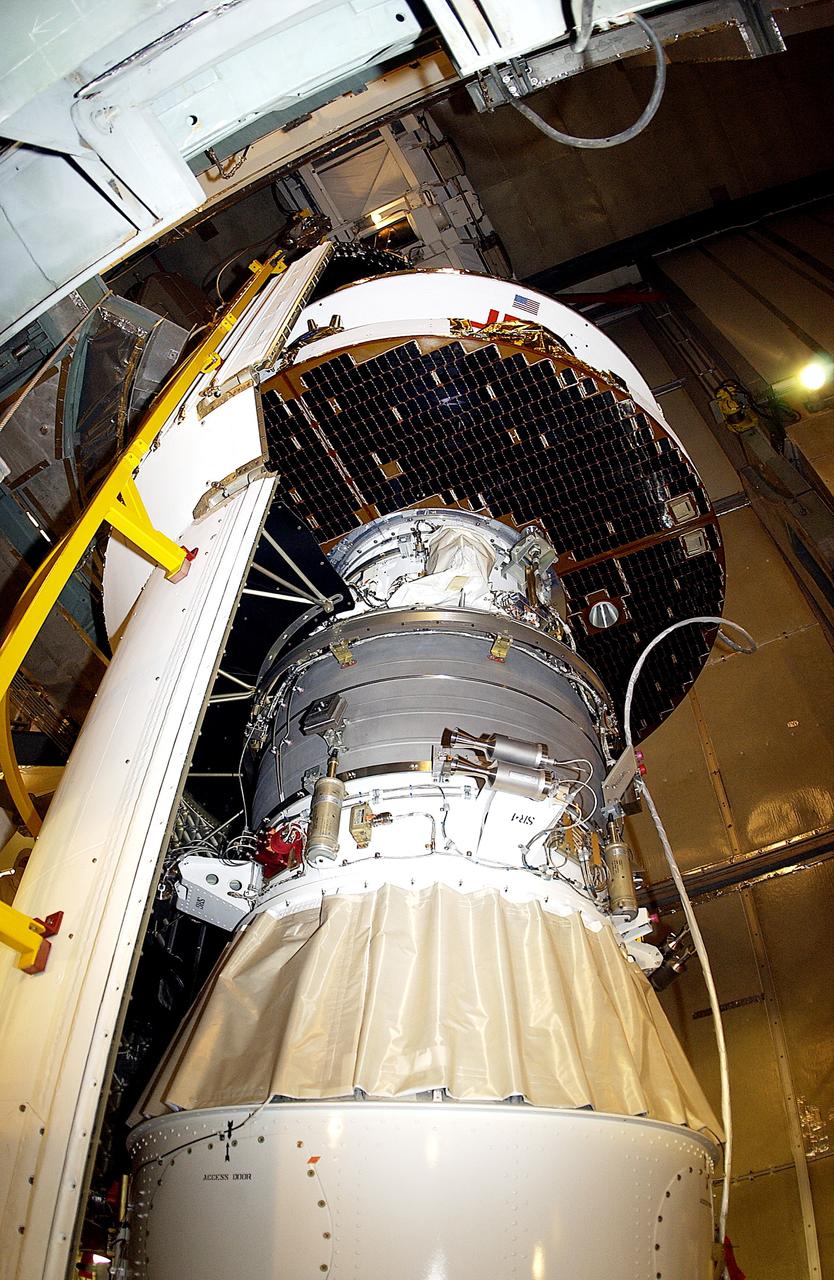
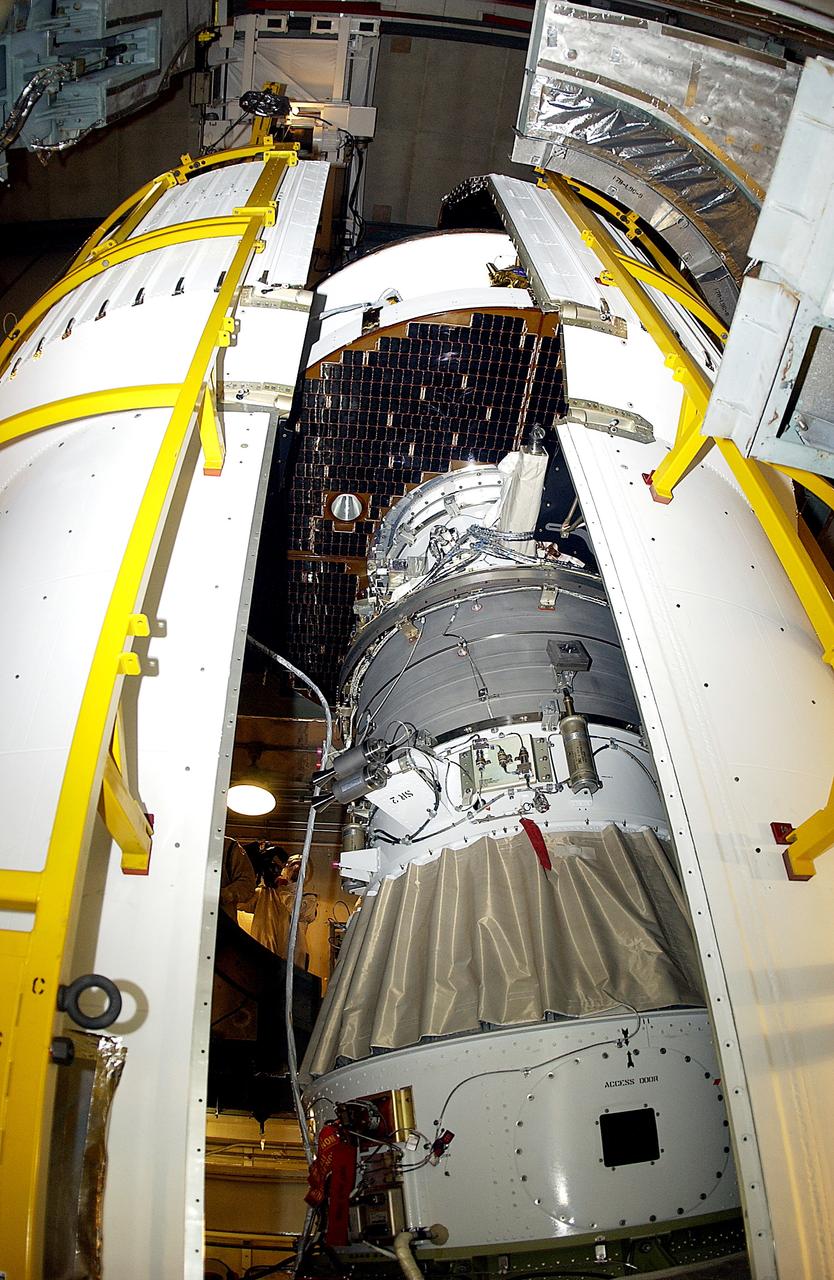
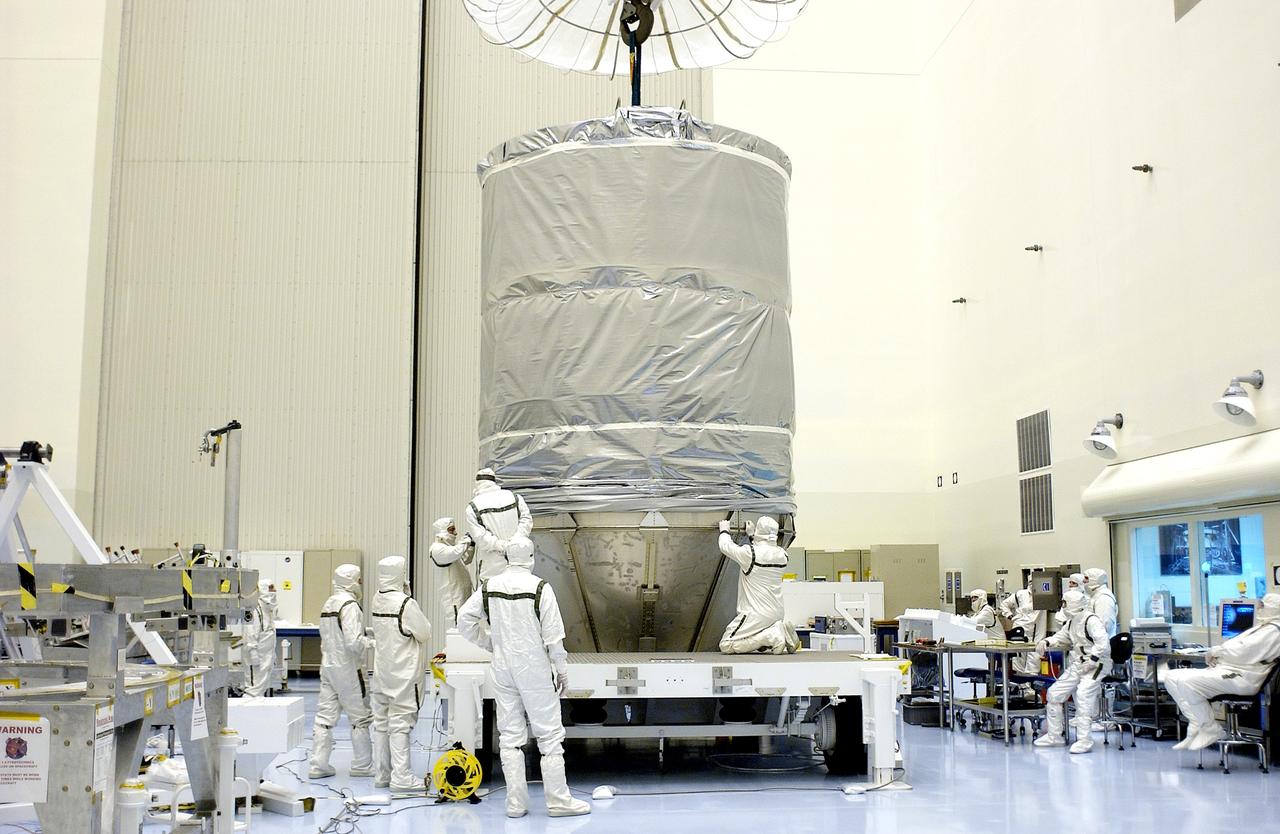
KENNEDY SPACE CENTER, FLA. - In the Payload Hazardous Servicing Facility, the cylindrical payload canister is lowered around Mars Exploration Rover 1 (MER-B).  Once secure inside the canister, the rover will be transported to Launch Complex 17-B, Cape Canaveral Air Force Station, for mating with the Delta rocket.  The second of twin rovers being sent to Mars, it is equipped with a robotic arm, a drilling tool, three spectrometers, and four pairs of cameras that allow it to have a human-like, 3D view of the terrain. Each rover could travel as far as 100 meters in one day to act as Mars scientists' eyes and hands, exploring an environment where humans can't yet go.  MER-B is scheduled to launch from Pad 17-B June 26 at one of two available times,  12:27:31 a.m. EDT or 1:08:45 a.m. EDT.
KENNEDY SPACE CENTER, FLA. - In the Payload Hazardous Servicing Facility, the cylindrical payload canister is lowered around Mars Exploration Rover 1 (MER-B). Once secure inside the canister, the rover will be transported to Launch Complex 17-B, Cape Canaveral Air Force Station, for mating with the Delta rocket. The second of twin rovers being sent to Mars, it is equipped with a robotic arm, a drilling tool, three spectrometers, and four pairs of cameras that allow it to have a human-like, 3D view of the terrain. Each rover could travel as far as 100 meters in one day to act as Mars scientists' eyes and hands, exploring an environment where humans can't yet go. MER-B is scheduled to launch from Pad 17-B June 26 at one of two available times, 12:27:31 a.m. EDT or 1:08:45 a.m. EDT.
KENNEDY SPACE CENTER, FLA. - In the Payload Hazardous Servicing Facility, workers maneuver the cylindrical payload canister into place around Mars Exploration Rover 1 (MER-B).  Once secure inside the canister, the rover will be transported to Launch Complex 17-B, Cape Canaveral Air Force Station, for mating with the Delta rocket.  The second of twin rovers being sent to Mars, it is equipped with a robotic arm, a drilling tool, three spectrometers, and four pairs of cameras that allow it to have a human-like, 3D view of the terrain. Each rover could travel as far as 100 meters in one day to act as Mars scientists' eyes and hands, exploring an environment where humans can't yet go.  MER-B is scheduled to launch from Pad 17-B June 26 at one of two available times,  12:27:31 a.m. EDT or 1:08:45 a.m. EDT.
KENNEDY SPACE CENTER, FLA. - In the Payload Hazardous Servicing Facility, workers maneuver the cylindrical payload canister into place around Mars Exploration Rover 1 (MER-B). Once secure inside the canister, the rover will be transported to Launch Complex 17-B, Cape Canaveral Air Force Station, for mating with the Delta rocket. The second of twin rovers being sent to Mars, it is equipped with a robotic arm, a drilling tool, three spectrometers, and four pairs of cameras that allow it to have a human-like, 3D view of the terrain. Each rover could travel as far as 100 meters in one day to act as Mars scientists' eyes and hands, exploring an environment where humans can't yet go. MER-B is scheduled to launch from Pad 17-B June 26 at one of two available times, 12:27:31 a.m. EDT or 1:08:45 a.m. EDT.
KENNEDY SPACE CENTER, FLA. - Workers in the Payload Hazardous Servicing Facility secure the lower panels of a payload canister around Mars Exploration Rover 1 (MER-B).  The rover will be transported to Launch Complex 17-B, Cape Canaveral Air Force Station, for mating with the Delta rocket.  The second of twin rovers being sent to Mars, it is equipped with a robotic arm, a drilling tool, three spectrometers, and four pairs of cameras that allow it to have a human-like, 3D view of the terrain. Each rover could travel as far as 100 meters in one day to act as Mars scientists' eyes and hands, exploring an environment where humans can't yet go.  MER-B is scheduled to launch from Pad 17-B June 26 at one of two available times,  12:27:31 a.m. EDT or 1:08:45 a.m. EDT.
KENNEDY SPACE CENTER, FLA. - Workers in the Payload Hazardous Servicing Facility secure the lower panels of a payload canister around Mars Exploration Rover 1 (MER-B). The rover will be transported to Launch Complex 17-B, Cape Canaveral Air Force Station, for mating with the Delta rocket. The second of twin rovers being sent to Mars, it is equipped with a robotic arm, a drilling tool, three spectrometers, and four pairs of cameras that allow it to have a human-like, 3D view of the terrain. Each rover could travel as far as 100 meters in one day to act as Mars scientists' eyes and hands, exploring an environment where humans can't yet go. MER-B is scheduled to launch from Pad 17-B June 26 at one of two available times, 12:27:31 a.m. EDT or 1:08:45 a.m. EDT.
KENNEDY SPACE CENTER, FLA. - In the Payload Hazardous Servicing Facility, workers secure the cylindrical payload canister to the lower panels surrounding Mars Exploration Rover 1 (MER-B).  Once secure inside the canister, the rover will be transported to Launch Complex 17-B, Cape Canaveral Air Force Station, for mating with the Delta rocket.  The second of twin rovers being sent to Mars, it is equipped with a robotic arm, a drilling tool, three spectrometers, and four pairs of cameras that allow it to have a human-like, 3D view of the terrain. Each rover could travel as far as 100 meters in one day to act as Mars scientists' eyes and hands, exploring an environment where humans can't yet go.  MER-B is scheduled to launch from Pad 17-B June 26 at one of two available times,  12:27:31 a.m. EDT or 1:08:45 a.m. EDT.
KENNEDY SPACE CENTER, FLA. - In the Payload Hazardous Servicing Facility, workers secure the cylindrical payload canister to the lower panels surrounding Mars Exploration Rover 1 (MER-B). Once secure inside the canister, the rover will be transported to Launch Complex 17-B, Cape Canaveral Air Force Station, for mating with the Delta rocket. The second of twin rovers being sent to Mars, it is equipped with a robotic arm, a drilling tool, three spectrometers, and four pairs of cameras that allow it to have a human-like, 3D view of the terrain. Each rover could travel as far as 100 meters in one day to act as Mars scientists' eyes and hands, exploring an environment where humans can't yet go. MER-B is scheduled to launch from Pad 17-B June 26 at one of two available times, 12:27:31 a.m. EDT or 1:08:45 a.m. EDT.
NASA acting Administrator Janet Petro, background, and NASA Astronaut Kayla Barron, place flowers at the Apollo 1 grave sites of Virgil I. “Gus” Grissom, and Roger B. Chaffee as part of NASA's Day of Remembrance, Thursday, Jan. 23, 2025, at Arlington National Cemetery in Arlington, Va. Photo Credit: (NASA/Bill Ingalls)
Day of Remembrance
NASA acting Administrator Janet Petro, background, and NASA Astronaut Kayla Barron, place flowers at the Apollo 1 grave sites of Virgil I. “Gus” Grissom, and Roger B. Chaffee as part of NASA's Day of Remembrance, Thursday, Jan. 23, 2025, at Arlington National Cemetery in Arlington, Va. Photo Credit: (NASA/Bill Ingalls)
Day of Remembrance
KENNEDY SPACE CENTER, FLA. -   On Launch Pad 17-B, Cape Canaveral Air Force Station, the Mars Exploration Rover 1 (MER-B) arrives at the tower landing where it will be mated with the Delta rocket.  The second of twin rovers being sent to Mars, it is equipped with a robotic arm, a drilling tool, three spectrometers, and four pairs of cameras that allow it to have a human-like, 3D view of the terrain. Each rover could travel as far as 100 meters in one day to act as Mars scientists' eyes and hands, exploring an environment where humans can't yet go.  MER-B is scheduled to launch June 26 at one of two available times,  12:27:31 a.m. EDT or 1:08:45 a.m. EDT.
KENNEDY SPACE CENTER, FLA. - On Launch Pad 17-B, Cape Canaveral Air Force Station, the Mars Exploration Rover 1 (MER-B) arrives at the tower landing where it will be mated with the Delta rocket. The second of twin rovers being sent to Mars, it is equipped with a robotic arm, a drilling tool, three spectrometers, and four pairs of cameras that allow it to have a human-like, 3D view of the terrain. Each rover could travel as far as 100 meters in one day to act as Mars scientists' eyes and hands, exploring an environment where humans can't yet go. MER-B is scheduled to launch June 26 at one of two available times, 12:27:31 a.m. EDT or 1:08:45 a.m. EDT.
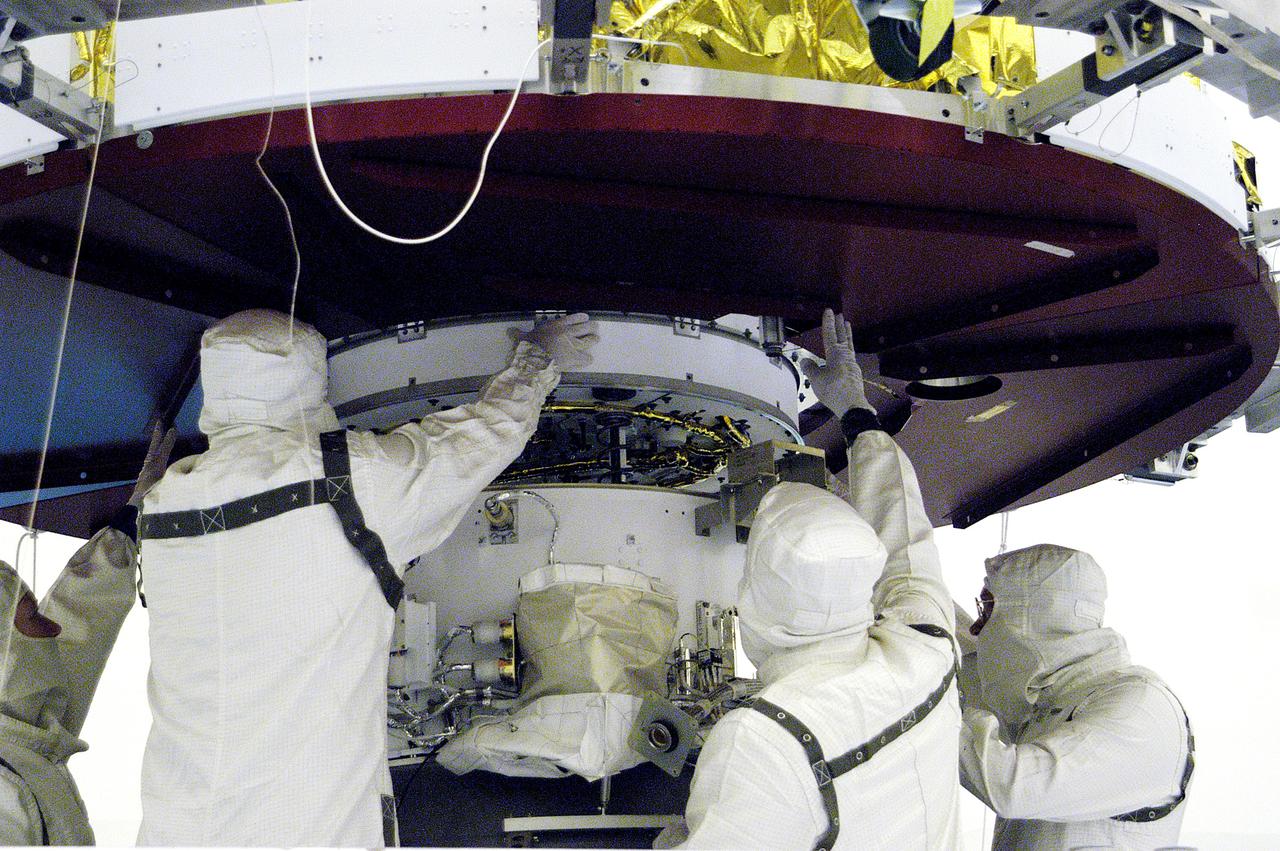
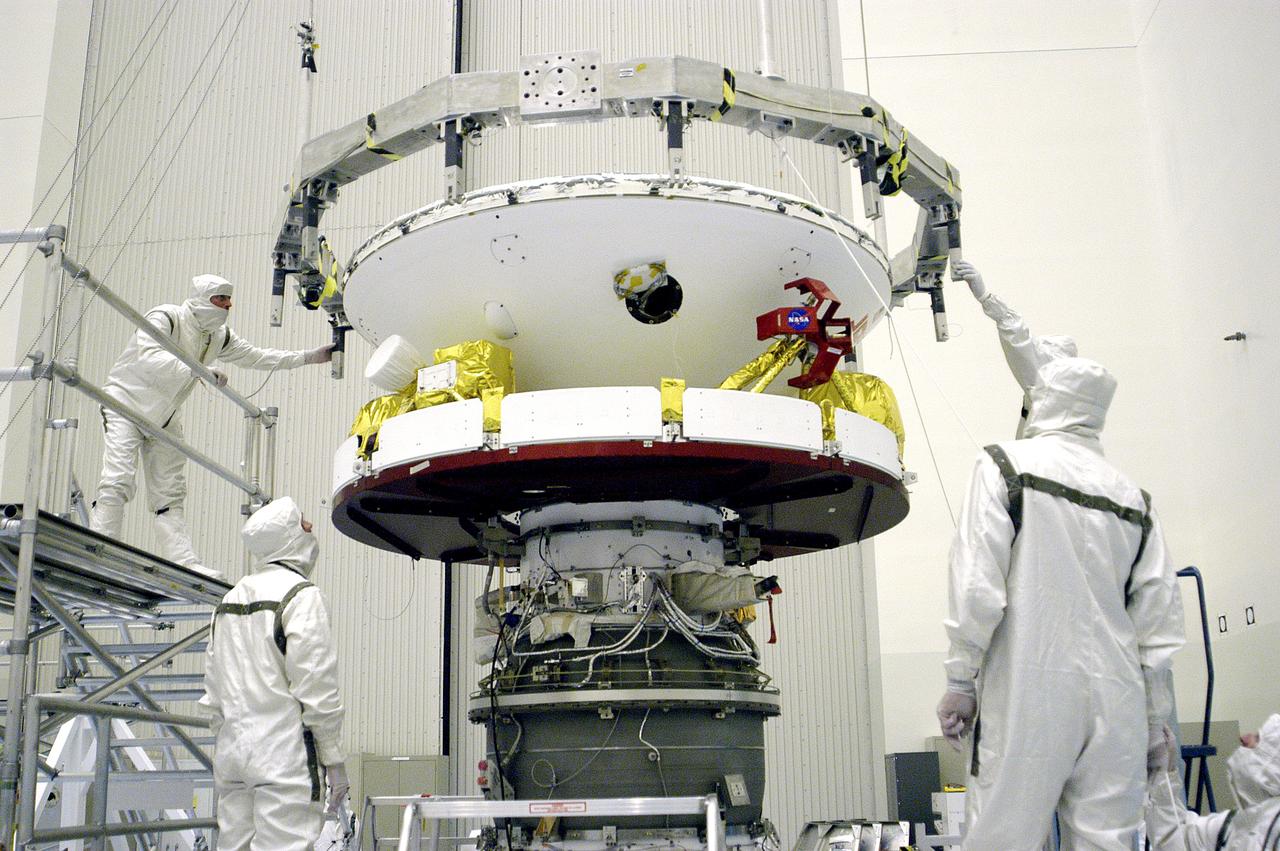
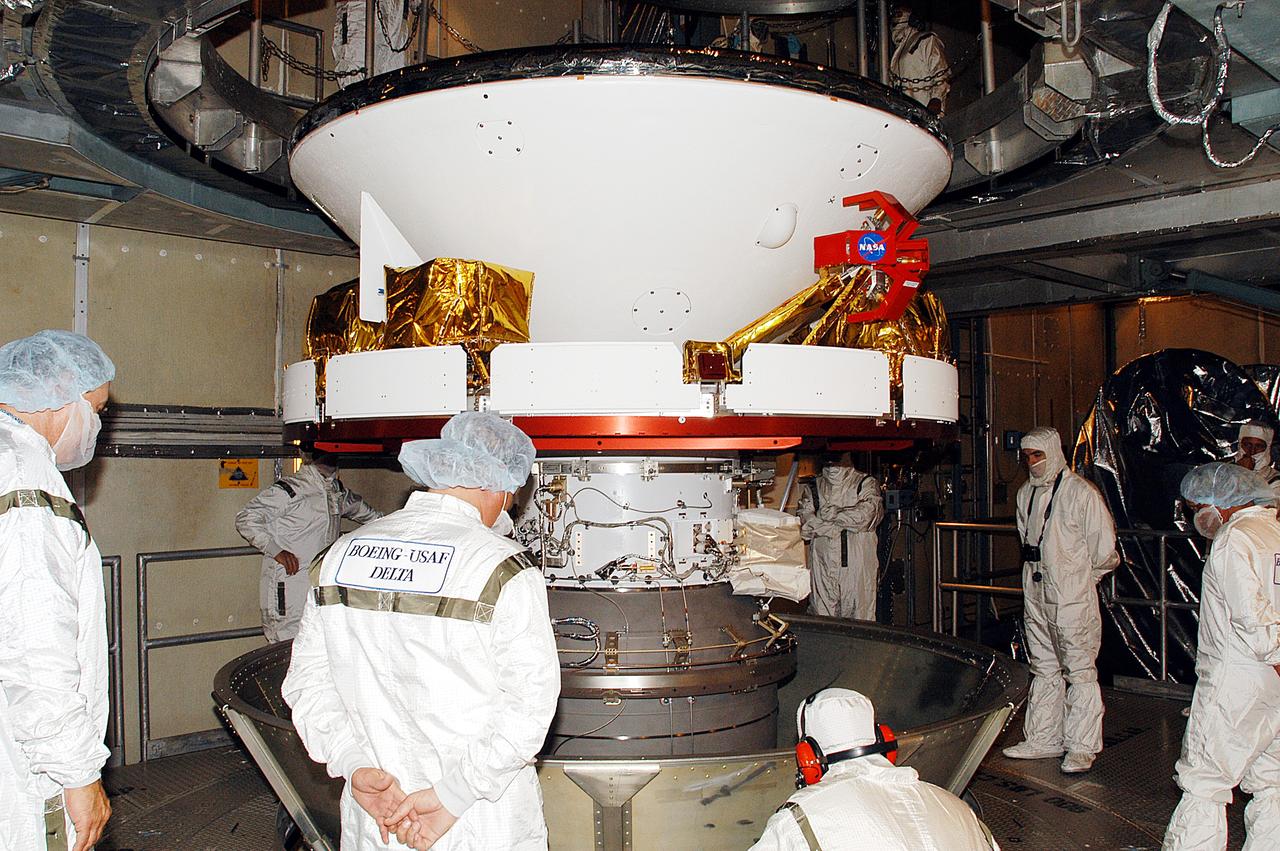
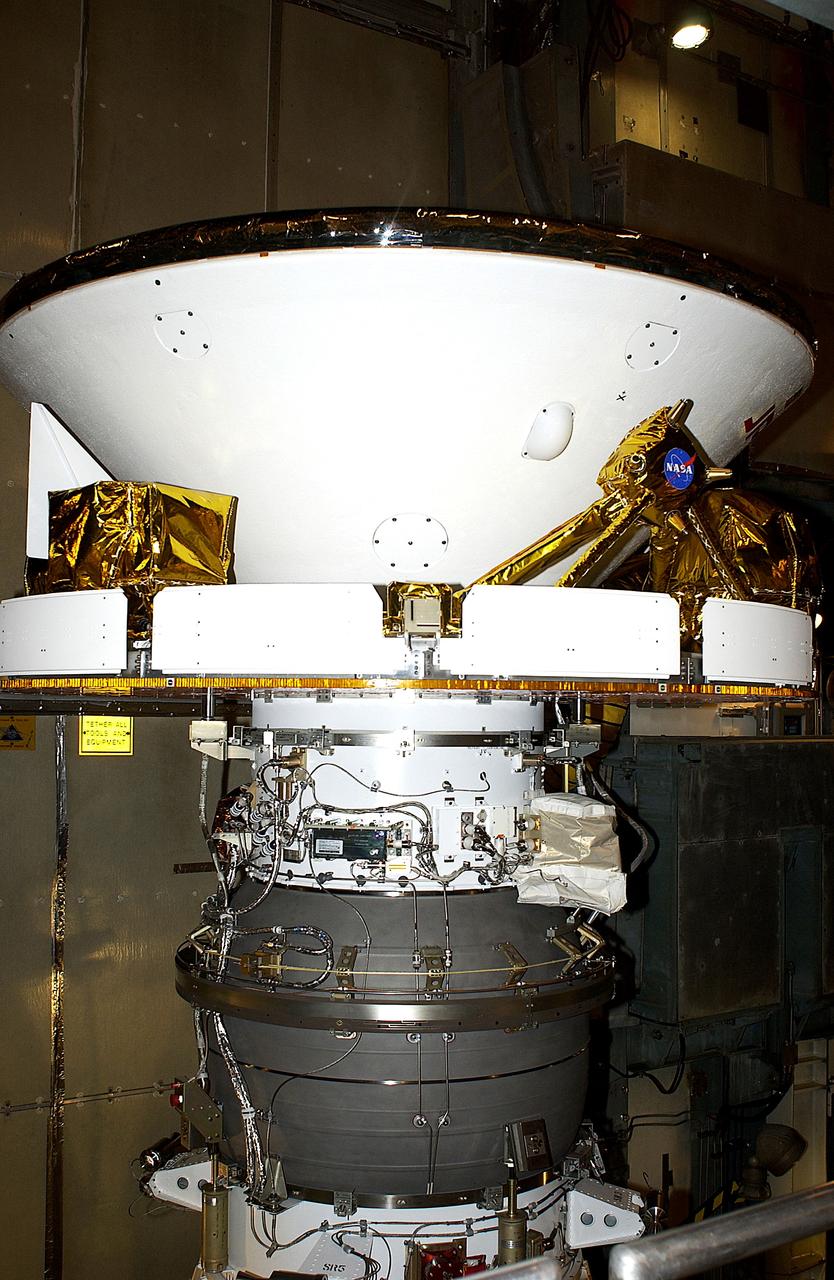
KENNEDY SPACE CENTER, FLA. - In the Payload Hazardous Servicing Facility, workers prepare to mate the Mars Exploration Rover 1 (MER-B) above with the third stage of the Delta rocket below.  The second of twin rovers being sent to Mars, it is equipped with a robotic arm, a drilling tool, three spectrometers, and four pairs of cameras that allow it to have a human-like, 3D view of the terrain. Each rover could travel as far as 100 meters in one day to act as Mars scientists' eyes and hands, exploring an environment where humans can't yet go.  MER-B is scheduled to launch from Launch Pad 17-B, Cape Canaveral Air Force Station, June 26 at one of two available times,  12:27:31 a.m. EDT or 1:08:45 a.m. EDT.
KENNEDY SPACE CENTER, FLA. - In the Payload Hazardous Servicing Facility, workers prepare to mate the Mars Exploration Rover 1 (MER-B) above with the third stage of the Delta rocket below. The second of twin rovers being sent to Mars, it is equipped with a robotic arm, a drilling tool, three spectrometers, and four pairs of cameras that allow it to have a human-like, 3D view of the terrain. Each rover could travel as far as 100 meters in one day to act as Mars scientists' eyes and hands, exploring an environment where humans can't yet go. MER-B is scheduled to launch from Launch Pad 17-B, Cape Canaveral Air Force Station, June 26 at one of two available times, 12:27:31 a.m. EDT or 1:08:45 a.m. EDT.
KENNEDY SPACE CENTER, FLA. -   The canister is lifted off the Mars Exploration Rover 1 (MER-B) in the gantry on Launch Complex 17-B, Cape Canaveral Air Force Station.  The second of twin rovers being sent to Mars, it is equipped with a robotic arm, a drilling tool, three spectrometers, and four pairs of cameras that allow it to have a human-like, 3D view of the terrain. Each rover could travel as far as 100 meters in one day to act as Mars scientists' eyes and hands, exploring an environment where humans can't yet go.  MER-B is scheduled to launch June 26 at one of two available times,  12:27:31 a.m. EDT or 1:08:45 a.m. EDT.
KENNEDY SPACE CENTER, FLA. - The canister is lifted off the Mars Exploration Rover 1 (MER-B) in the gantry on Launch Complex 17-B, Cape Canaveral Air Force Station. The second of twin rovers being sent to Mars, it is equipped with a robotic arm, a drilling tool, three spectrometers, and four pairs of cameras that allow it to have a human-like, 3D view of the terrain. Each rover could travel as far as 100 meters in one day to act as Mars scientists' eyes and hands, exploring an environment where humans can't yet go. MER-B is scheduled to launch June 26 at one of two available times, 12:27:31 a.m. EDT or 1:08:45 a.m. EDT.
KENNEDY SPACE CENTER, FLA. -    Workers on Launch Pad 17-B, Cape Canaveral Air Force Station, complete mating of the Mars Exploration Rover 1 (MER-B), above, to the Delta rocket below.  The second of twin rovers being sent to Mars, it is equipped with a robotic arm, a drilling tool, three spectrometers, and four pairs of cameras that allow it to have a human-like, 3D view of the terrain. Each rover could travel as far as 100 meters in one day to act as Mars scientists' eyes and hands, exploring an environment where humans can't yet go.  MER-B is scheduled to launch June 26 at one of two available times,  12:27:31 a.m. EDT or 1:08:45 a.m. EDT.
KENNEDY SPACE CENTER, FLA. - Workers on Launch Pad 17-B, Cape Canaveral Air Force Station, complete mating of the Mars Exploration Rover 1 (MER-B), above, to the Delta rocket below. The second of twin rovers being sent to Mars, it is equipped with a robotic arm, a drilling tool, three spectrometers, and four pairs of cameras that allow it to have a human-like, 3D view of the terrain. Each rover could travel as far as 100 meters in one day to act as Mars scientists' eyes and hands, exploring an environment where humans can't yet go. MER-B is scheduled to launch June 26 at one of two available times, 12:27:31 a.m. EDT or 1:08:45 a.m. EDT.
KENNEDY SPACE CENTER, FLA. -   On Launch Pad 17-B, Cape Canaveral Air Force Station, the Mars Exploration Rover 1 (MER-B) is moved toward the opening above the Delta rocket.  The rover will then be mated with the rocket for launch.  The second of twin rovers being sent to Mars, it is equipped with a robotic arm, a drilling tool, three spectrometers, and four pairs of cameras that allow it to have a human-like, 3D view of the terrain. Each rover could travel as far as 100 meters in one day to act as Mars scientists' eyes and hands, exploring an environment where humans can't yet go.  MER-B is scheduled to launch June 26 at one of two available times,  12:27:31 a.m. EDT or 1:08:45 a.m. EDT.
KENNEDY SPACE CENTER, FLA. - On Launch Pad 17-B, Cape Canaveral Air Force Station, the Mars Exploration Rover 1 (MER-B) is moved toward the opening above the Delta rocket. The rover will then be mated with the rocket for launch. The second of twin rovers being sent to Mars, it is equipped with a robotic arm, a drilling tool, three spectrometers, and four pairs of cameras that allow it to have a human-like, 3D view of the terrain. Each rover could travel as far as 100 meters in one day to act as Mars scientists' eyes and hands, exploring an environment where humans can't yet go. MER-B is scheduled to launch June 26 at one of two available times, 12:27:31 a.m. EDT or 1:08:45 a.m. EDT.
KENNEDY SPACE CENTER, FLA. -  On Launch Pad 17-B, Cape Canaveral Air Force Station, the Mars Exploration Rover 1 (MER-B) is lifted up the tower for mating with the Delta rocket.  The second of twin rovers being sent to Mars, it is equipped with a robotic arm, a drilling tool, three spectrometers, and four pairs of cameras that allow it to have a human-like, 3D view of the terrain. Each rover could travel as far as 100 meters in one day to act as Mars scientists' eyes and hands, exploring an environment where humans can't yet go.  MER-B is scheduled to launch June 26 at one of two available times,  12:27:31 a.m. EDT or 1:08:45 a.m. EDT.
KENNEDY SPACE CENTER, FLA. - On Launch Pad 17-B, Cape Canaveral Air Force Station, the Mars Exploration Rover 1 (MER-B) is lifted up the tower for mating with the Delta rocket. The second of twin rovers being sent to Mars, it is equipped with a robotic arm, a drilling tool, three spectrometers, and four pairs of cameras that allow it to have a human-like, 3D view of the terrain. Each rover could travel as far as 100 meters in one day to act as Mars scientists' eyes and hands, exploring an environment where humans can't yet go. MER-B is scheduled to launch June 26 at one of two available times, 12:27:31 a.m. EDT or 1:08:45 a.m. EDT.
KENNEDY SPACE CENTER, FLA. -    In the gantry on Launch Complex 17-B, Cape Canaveral Air Force Station, Mars Exploration Rover 1 (MER-B) is revealed after removal of the canister.  The second of twin rovers being sent to Mars, it is equipped with a robotic arm, a drilling tool, three spectrometers, and four pairs of cameras that allow it to have a human-like, 3D view of the terrain. Each rover could travel as far as 100 meters in one day to act as Mars scientists' eyes and hands, exploring an environment where humans can't yet go.  MER-B is scheduled to launch June 26 at one of two available times,  12:27:31 a.m. EDT or 1:08:45 a.m. EDT.
KENNEDY SPACE CENTER, FLA. - In the gantry on Launch Complex 17-B, Cape Canaveral Air Force Station, Mars Exploration Rover 1 (MER-B) is revealed after removal of the canister. The second of twin rovers being sent to Mars, it is equipped with a robotic arm, a drilling tool, three spectrometers, and four pairs of cameras that allow it to have a human-like, 3D view of the terrain. Each rover could travel as far as 100 meters in one day to act as Mars scientists' eyes and hands, exploring an environment where humans can't yet go. MER-B is scheduled to launch June 26 at one of two available times, 12:27:31 a.m. EDT or 1:08:45 a.m. EDT.
KENNEDY SPACE CENTER, FLA. -  On Launch Pad 17-B, Cape Canaveral Air Force Station, the Mars Exploration Rover 1 (MER-B) is ready to be lifted up the tower for mating with the Delta rocket.  The second of twin rovers being sent to Mars, it is equipped with a robotic arm, a drilling tool, three spectrometers, and four pairs of cameras that allow it to have a human-like, 3D view of the terrain. Each rover could travel as far as 100 meters in one day to act as Mars scientists' eyes and hands, exploring an environment where humans can't yet go.  MER-B is scheduled to launch June 26 at one of two available times,  12:27:31 a.m. EDT or 1:08:45 a.m. EDT.
KENNEDY SPACE CENTER, FLA. - On Launch Pad 17-B, Cape Canaveral Air Force Station, the Mars Exploration Rover 1 (MER-B) is ready to be lifted up the tower for mating with the Delta rocket. The second of twin rovers being sent to Mars, it is equipped with a robotic arm, a drilling tool, three spectrometers, and four pairs of cameras that allow it to have a human-like, 3D view of the terrain. Each rover could travel as far as 100 meters in one day to act as Mars scientists' eyes and hands, exploring an environment where humans can't yet go. MER-B is scheduled to launch June 26 at one of two available times, 12:27:31 a.m. EDT or 1:08:45 a.m. EDT.
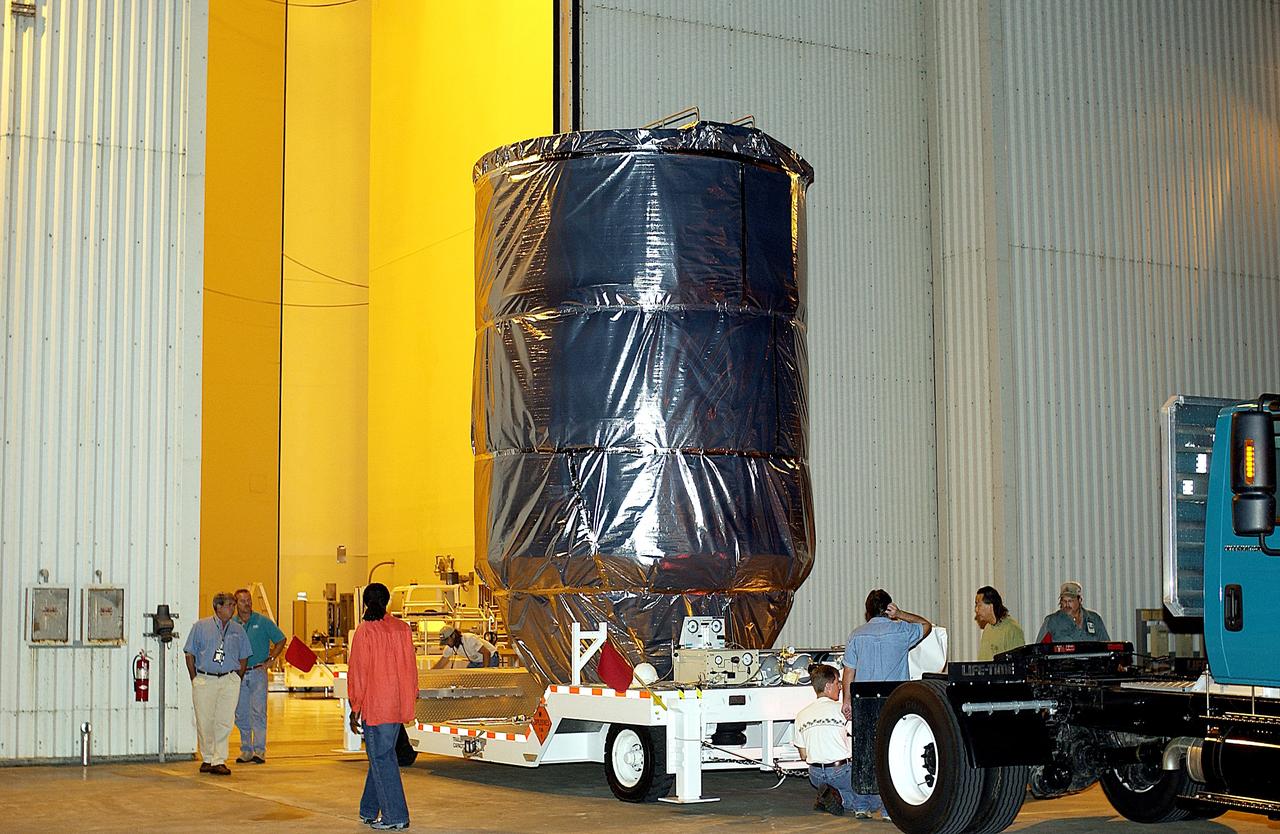
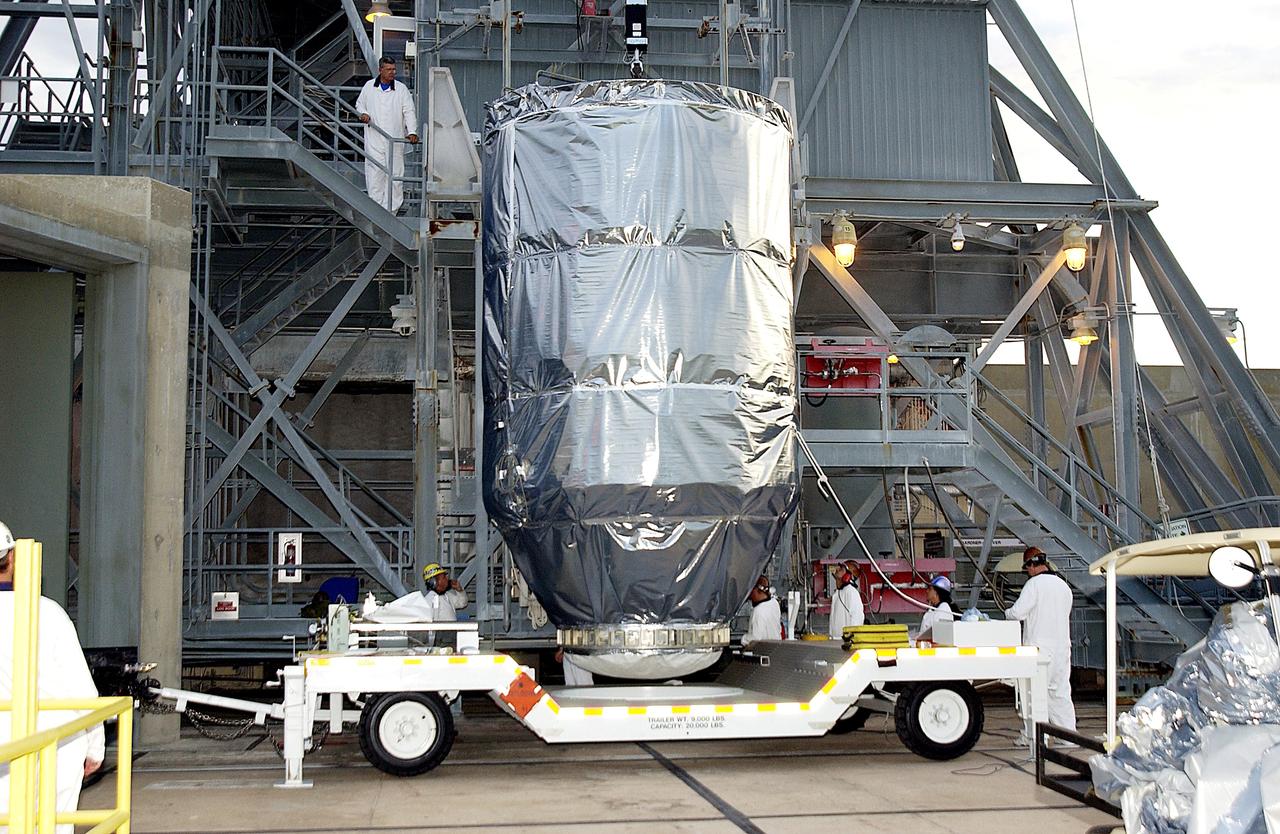
KENNEDY SPACE CENTER, FLA. -  The Mars Exploration Rover 1 (MER-B) is moved  out of the Payload Hazardous Servicing Facility for transfer to Launch Pad 17-B, Cape Canaveral Air Force Station.  The second of twin rovers being sent to Mars, it is equipped with a robotic arm, a drilling tool, three spectrometers, and four pairs of cameras that allow it to have a human-like, 3D view of the terrain. Each rover could travel as far as 100 meters in one day to act as Mars scientists' eyes and hands, exploring an environment where humans can't yet go.  MER-B is scheduled to launch June 26 at one of two available times,  12:27:31 a.m. EDT or 1:08:45 a.m. EDT.
KENNEDY SPACE CENTER, FLA. - The Mars Exploration Rover 1 (MER-B) is moved out of the Payload Hazardous Servicing Facility for transfer to Launch Pad 17-B, Cape Canaveral Air Force Station. The second of twin rovers being sent to Mars, it is equipped with a robotic arm, a drilling tool, three spectrometers, and four pairs of cameras that allow it to have a human-like, 3D view of the terrain. Each rover could travel as far as 100 meters in one day to act as Mars scientists' eyes and hands, exploring an environment where humans can't yet go. MER-B is scheduled to launch June 26 at one of two available times, 12:27:31 a.m. EDT or 1:08:45 a.m. EDT.
KENNEDY SPACE CENTER, FLA. -   In the gantry on Launch Complex 17-B, Cape Canaveral Air Force Station, workers start removing the canister from around the Mars Exploration Rover 1 (MER-B).  The second of twin rovers being sent to Mars, it is equipped with a robotic arm, a drilling tool, three spectrometers, and four pairs of cameras that allow it to have a human-like, 3D view of the terrain. Each rover could travel as far as 100 meters in one day to act as Mars scientists' eyes and hands, exploring an environment where humans can't yet go.  MER-B is scheduled to launch June 26 at one of two available times,  12:27:31 a.m. EDT or 1:08:45 a.m. EDT.
KENNEDY SPACE CENTER, FLA. - In the gantry on Launch Complex 17-B, Cape Canaveral Air Force Station, workers start removing the canister from around the Mars Exploration Rover 1 (MER-B). The second of twin rovers being sent to Mars, it is equipped with a robotic arm, a drilling tool, three spectrometers, and four pairs of cameras that allow it to have a human-like, 3D view of the terrain. Each rover could travel as far as 100 meters in one day to act as Mars scientists' eyes and hands, exploring an environment where humans can't yet go. MER-B is scheduled to launch June 26 at one of two available times, 12:27:31 a.m. EDT or 1:08:45 a.m. EDT.
KENNEDY SPACE CENTER, FLA. -    In the gantry on Launch Complex 17-B, Cape Canaveral Air Force Station, Mars Exploration Rover 1 (MER-B) is revealed after removal of the canister.  The second of twin rovers being sent to Mars, it is equipped with a robotic arm, a drilling tool, three spectrometers, and four pairs of cameras that allow it to have a human-like, 3D view of the terrain. Each rover could travel as far as 100 meters in one day to act as Mars scientists' eyes and hands, exploring an environment where humans can't yet go.  MER-B is scheduled to launch June 26 at one of two available times,  12:27:31 a.m. EDT or 1:08:45 a.m. EDT.
KENNEDY SPACE CENTER, FLA. - In the gantry on Launch Complex 17-B, Cape Canaveral Air Force Station, Mars Exploration Rover 1 (MER-B) is revealed after removal of the canister. The second of twin rovers being sent to Mars, it is equipped with a robotic arm, a drilling tool, three spectrometers, and four pairs of cameras that allow it to have a human-like, 3D view of the terrain. Each rover could travel as far as 100 meters in one day to act as Mars scientists' eyes and hands, exploring an environment where humans can't yet go. MER-B is scheduled to launch June 26 at one of two available times, 12:27:31 a.m. EDT or 1:08:45 a.m. EDT.
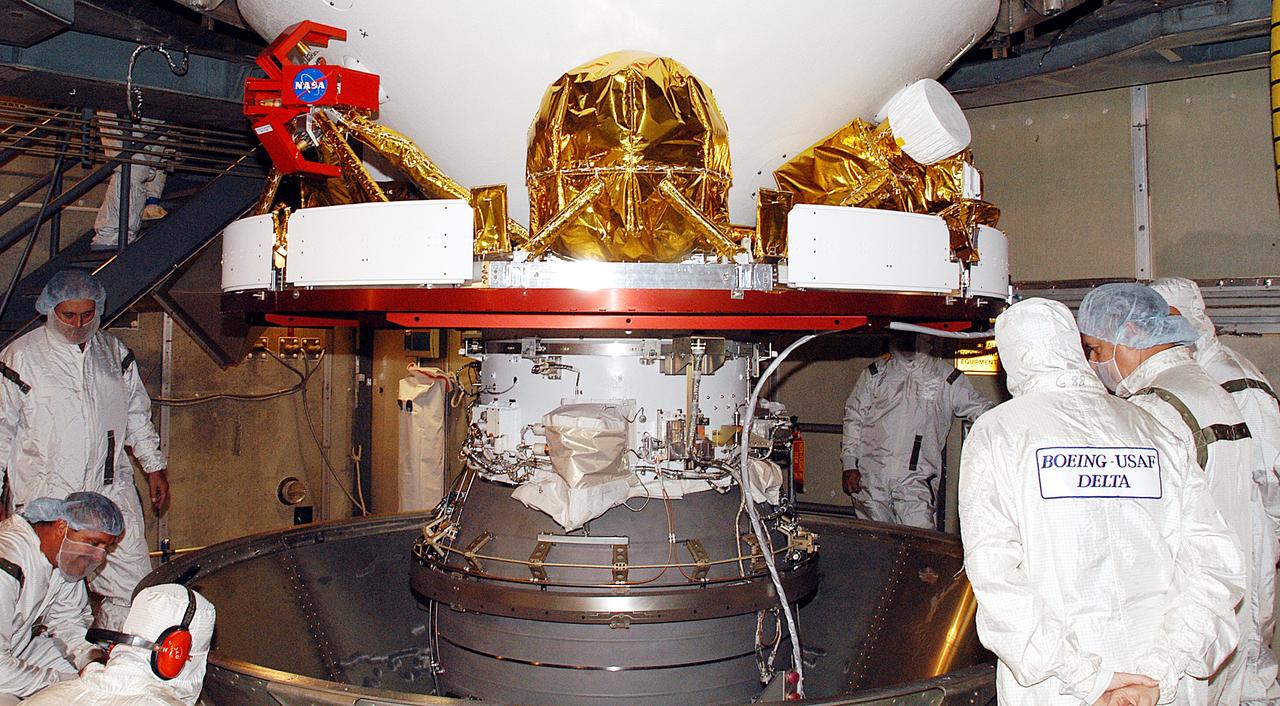
KENNEDY SPACE CENTER, FLA. -  In the Payload Hazardous Servicing Facility, workers check the connections after the Mars Exploration Rover 1 (MER-B) above was mated with the third stage of the Delta rocket below.  The second of twin rovers being sent to Mars, it is equipped with a robotic arm, a drilling tool, three spectrometers, and four pairs of cameras that allow it to have a human-like, 3D view of the terrain. Each rover could travel as far as 100 meters in one day to act as Mars scientists' eyes and hands, exploring an environment where humans can't yet go.  MER-B is scheduled to launch from Launch Pad 17-B, Cape Canaveral Air Force Station, June 26 at one of two available times,  12:27:31 a.m. EDT or 1:08:45 a.m. EDT.
KENNEDY SPACE CENTER, FLA. - In the Payload Hazardous Servicing Facility, workers check the connections after the Mars Exploration Rover 1 (MER-B) above was mated with the third stage of the Delta rocket below. The second of twin rovers being sent to Mars, it is equipped with a robotic arm, a drilling tool, three spectrometers, and four pairs of cameras that allow it to have a human-like, 3D view of the terrain. Each rover could travel as far as 100 meters in one day to act as Mars scientists' eyes and hands, exploring an environment where humans can't yet go. MER-B is scheduled to launch from Launch Pad 17-B, Cape Canaveral Air Force Station, June 26 at one of two available times, 12:27:31 a.m. EDT or 1:08:45 a.m. EDT.
KENNEDY SPACE CENTER, FLA. -  The Mars Exploration Rover 1 (MER-B) is moved  out of the Payload Hazardous Servicing Facility for transfer to Launch Pad 17-B, Cape Canaveral Air Force Station.  The second of twin rovers being sent to Mars, it is equipped with a robotic arm, a drilling tool, three spectrometers, and four pairs of cameras that allow it to have a human-like, 3D view of the terrain. Each rover could travel as far as 100 meters in one day to act as Mars scientists' eyes and hands, exploring an environment where humans can't yet go.  MER-B is scheduled to launch June 26 at one of two available times,  12:27:31 a.m. EDT or 1:08:45 a.m. EDT.
KENNEDY SPACE CENTER, FLA. - The Mars Exploration Rover 1 (MER-B) is moved out of the Payload Hazardous Servicing Facility for transfer to Launch Pad 17-B, Cape Canaveral Air Force Station. The second of twin rovers being sent to Mars, it is equipped with a robotic arm, a drilling tool, three spectrometers, and four pairs of cameras that allow it to have a human-like, 3D view of the terrain. Each rover could travel as far as 100 meters in one day to act as Mars scientists' eyes and hands, exploring an environment where humans can't yet go. MER-B is scheduled to launch June 26 at one of two available times, 12:27:31 a.m. EDT or 1:08:45 a.m. EDT.
KENNEDY SPACE CENTER, FLA. -   On Launch Pad 17-B, Cape Canaveral Air Force Station, the Mars Exploration Rover 1 (MER-B) is lowered toward the Delta rocket for mating.  The second of twin rovers being sent to Mars, it is equipped with a robotic arm, a drilling tool, three spectrometers, and four pairs of cameras that allow it to have a human-like, 3D view of the terrain. Each rover could travel as far as 100 meters in one day to act as Mars scientists' eyes and hands, exploring an environment where humans can't yet go.  MER-B is scheduled to launch June 26 at one of two available times,  12:27:31 a.m. EDT or 1:08:45 a.m. EDT.
KENNEDY SPACE CENTER, FLA. - On Launch Pad 17-B, Cape Canaveral Air Force Station, the Mars Exploration Rover 1 (MER-B) is lowered toward the Delta rocket for mating. The second of twin rovers being sent to Mars, it is equipped with a robotic arm, a drilling tool, three spectrometers, and four pairs of cameras that allow it to have a human-like, 3D view of the terrain. Each rover could travel as far as 100 meters in one day to act as Mars scientists' eyes and hands, exploring an environment where humans can't yet go. MER-B is scheduled to launch June 26 at one of two available times, 12:27:31 a.m. EDT or 1:08:45 a.m. EDT.
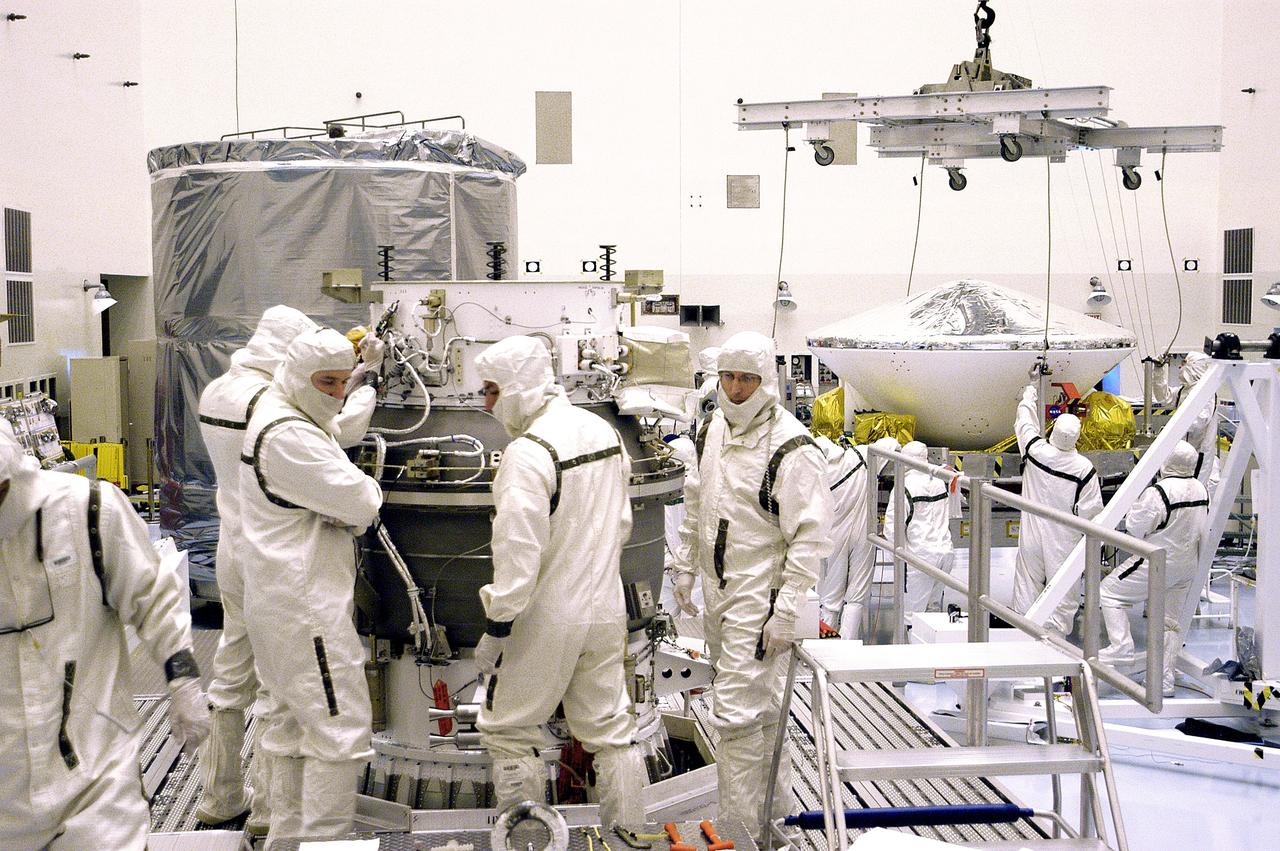
KENNEDY SPACE CENTER, FLA. - In the background, right, workers in the Payload Hazardous Servicing Facility get ready to lift Mars Exploration Rover 1 (MER-B) to the third stage of the Delta rocket (foreground) for mating.  The second of twin rovers being sent to Mars, it is equipped with a robotic arm, a drilling tool, three spectrometers, and four pairs of cameras that allow it to have a human-like, 3D view of the terrain. Each rover could travel as far as 100 meters in one day to act as Mars scientists' eyes and hands, exploring an environment where humans can't yet go.  MER-B is scheduled to launch from Launch Pad 17-B, Cape Canaveral Air Force Station, June 26 at one of two available times,  12:27:31 a.m. EDT or 1:08:45 a.m. EDT.
KENNEDY SPACE CENTER, FLA. - In the background, right, workers in the Payload Hazardous Servicing Facility get ready to lift Mars Exploration Rover 1 (MER-B) to the third stage of the Delta rocket (foreground) for mating. The second of twin rovers being sent to Mars, it is equipped with a robotic arm, a drilling tool, three spectrometers, and four pairs of cameras that allow it to have a human-like, 3D view of the terrain. Each rover could travel as far as 100 meters in one day to act as Mars scientists' eyes and hands, exploring an environment where humans can't yet go. MER-B is scheduled to launch from Launch Pad 17-B, Cape Canaveral Air Force Station, June 26 at one of two available times, 12:27:31 a.m. EDT or 1:08:45 a.m. EDT.
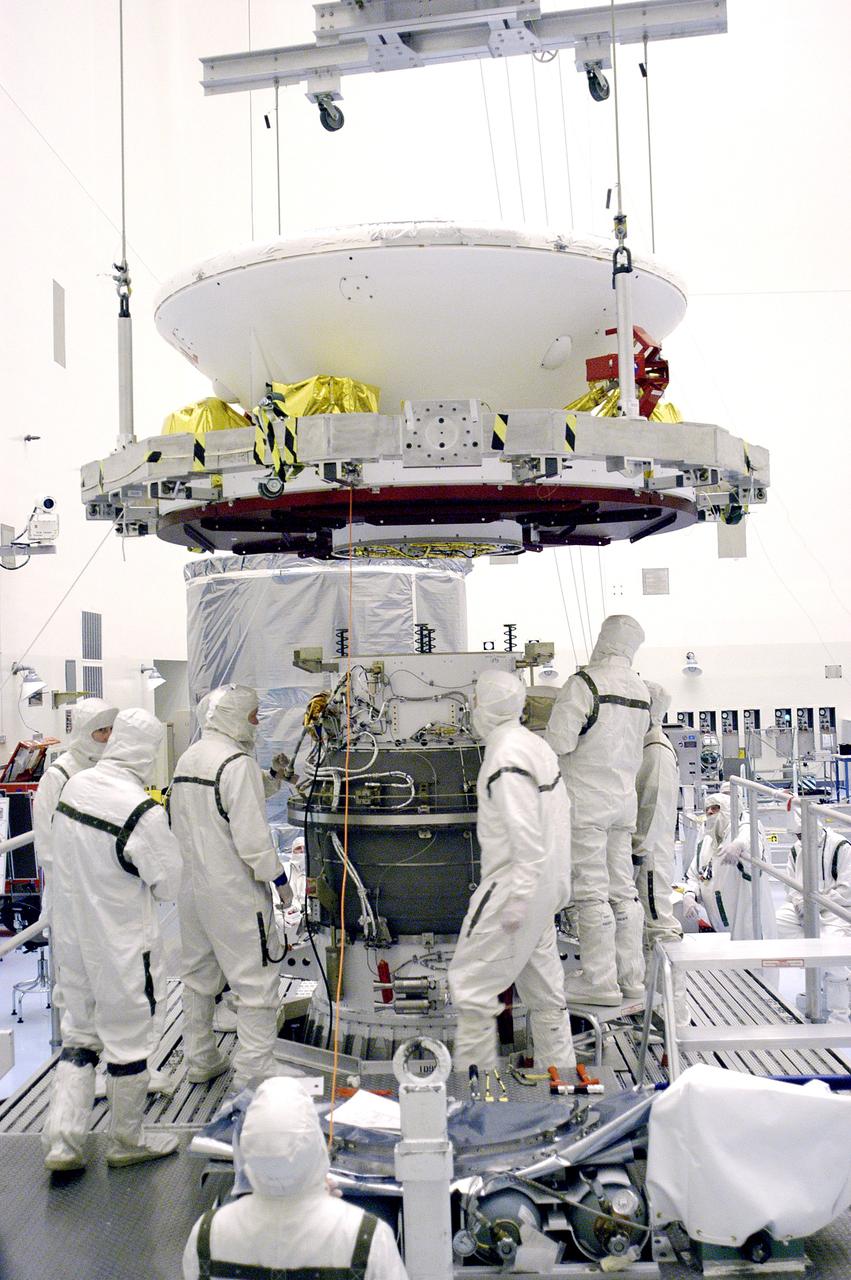
KENNEDY SPACE CENTER, FLA. - In the Payload Hazardous Servicing Facility, an overhead crane lowers Mars Exploration Rover 1 (MER-B) over the third stage of the Delta rocket.  The rover will be mated to the third stage for launch.  The second of twin rovers being sent to Mars, it is equipped with a robotic arm, a drilling tool, three spectrometers, and four pairs of cameras that allow it to have a human-like, 3D view of the terrain. Each rover could travel as far as 100 meters in one day to act as Mars scientists' eyes and hands, exploring an environment where humans can't yet go.  MER-B is scheduled to launch from Launch Pad 17-B, Cape Canaveral Air Force Station, June 26 at one of two available times,  12:27:31 a.m. EDT or 1:08:45 a.m. EDT.
KENNEDY SPACE CENTER, FLA. - In the Payload Hazardous Servicing Facility, an overhead crane lowers Mars Exploration Rover 1 (MER-B) over the third stage of the Delta rocket. The rover will be mated to the third stage for launch. The second of twin rovers being sent to Mars, it is equipped with a robotic arm, a drilling tool, three spectrometers, and four pairs of cameras that allow it to have a human-like, 3D view of the terrain. Each rover could travel as far as 100 meters in one day to act as Mars scientists' eyes and hands, exploring an environment where humans can't yet go. MER-B is scheduled to launch from Launch Pad 17-B, Cape Canaveral Air Force Station, June 26 at one of two available times, 12:27:31 a.m. EDT or 1:08:45 a.m. EDT.
KENNEDY SPACE CENTER, FLA. -In the Payload Hazardous Servicing Facility, workers prepare to mate the Mars Exploration Rover 1 (MER-B) above with the third stage of the Delta rocket below.  The second of twin rovers being sent to Mars, it is equipped with a robotic arm, a drilling tool, three spectrometers, and four pairs of cameras that allow it to have a human-like, 3D view of the terrain. Each rover could travel as far as 100 meters in one day to act as Mars scientists' eyes and hands, exploring an environment where humans can't yet go.  MER-B is scheduled to launch from Launch Pad 17-B, Cape Canaveral Air Force Station, June 26 at one of two available times,  12:27:31 a.m. EDT or 1:08:45 a.m. EDT.
KENNEDY SPACE CENTER, FLA. -In the Payload Hazardous Servicing Facility, workers prepare to mate the Mars Exploration Rover 1 (MER-B) above with the third stage of the Delta rocket below. The second of twin rovers being sent to Mars, it is equipped with a robotic arm, a drilling tool, three spectrometers, and four pairs of cameras that allow it to have a human-like, 3D view of the terrain. Each rover could travel as far as 100 meters in one day to act as Mars scientists' eyes and hands, exploring an environment where humans can't yet go. MER-B is scheduled to launch from Launch Pad 17-B, Cape Canaveral Air Force Station, June 26 at one of two available times, 12:27:31 a.m. EDT or 1:08:45 a.m. EDT.
KENNEDY SPACE CENTER, FLA. -   On Launch Pad 17-B, Cape Canaveral Air Force Station, the Mars Exploration Rover 1 (MER-B) is lifted up the tower for mating with the Delta rocket.  The second of twin rovers being sent to Mars, it is equipped with a robotic arm, a drilling tool, three spectrometers, and four pairs of cameras that allow it to have a human-like, 3D view of the terrain. Each rover could travel as far as 100 meters in one day to act as Mars scientists' eyes and hands, exploring an environment where humans can't yet go.  MER-B is scheduled to launch June 26 at one of two available times,  12:27:31 a.m. EDT or 1:08:45 a.m. EDT.
KENNEDY SPACE CENTER, FLA. - On Launch Pad 17-B, Cape Canaveral Air Force Station, the Mars Exploration Rover 1 (MER-B) is lifted up the tower for mating with the Delta rocket. The second of twin rovers being sent to Mars, it is equipped with a robotic arm, a drilling tool, three spectrometers, and four pairs of cameras that allow it to have a human-like, 3D view of the terrain. Each rover could travel as far as 100 meters in one day to act as Mars scientists' eyes and hands, exploring an environment where humans can't yet go. MER-B is scheduled to launch June 26 at one of two available times, 12:27:31 a.m. EDT or 1:08:45 a.m. EDT.
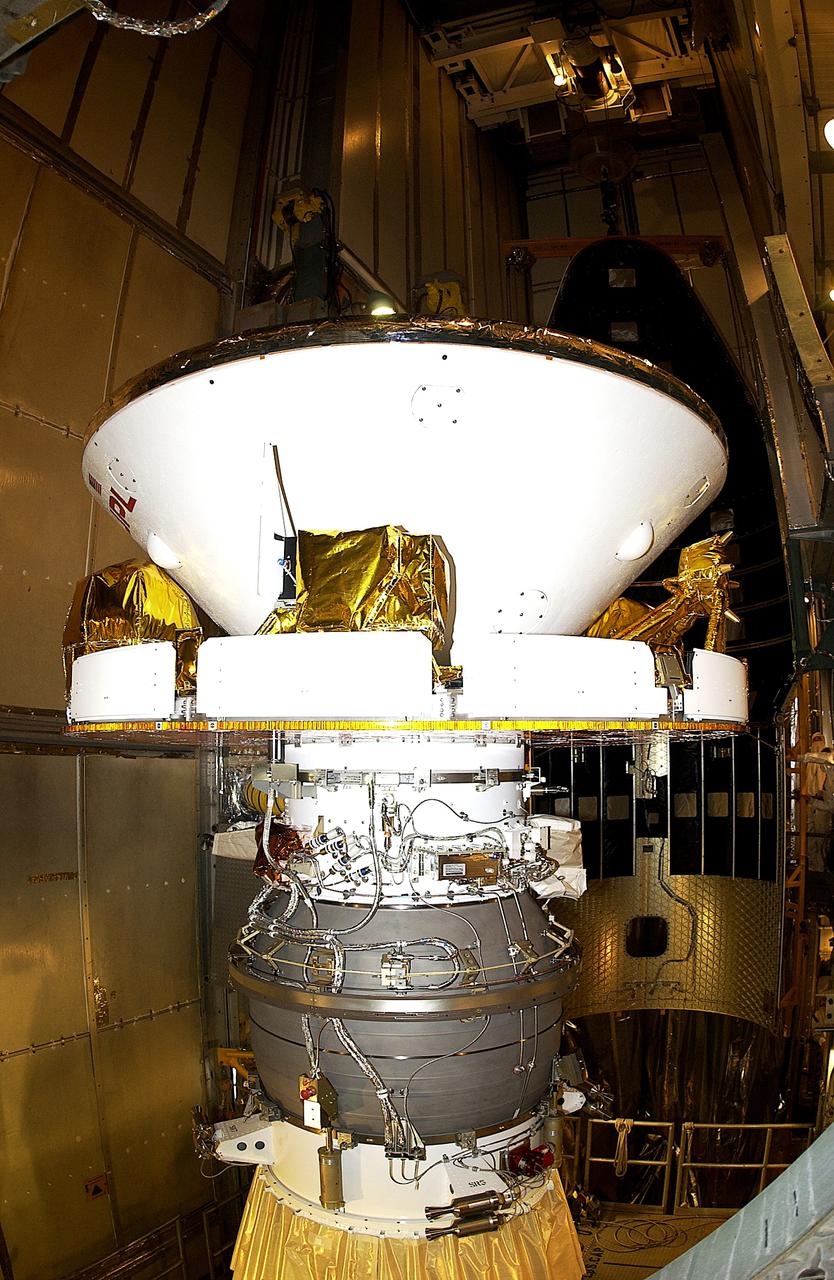
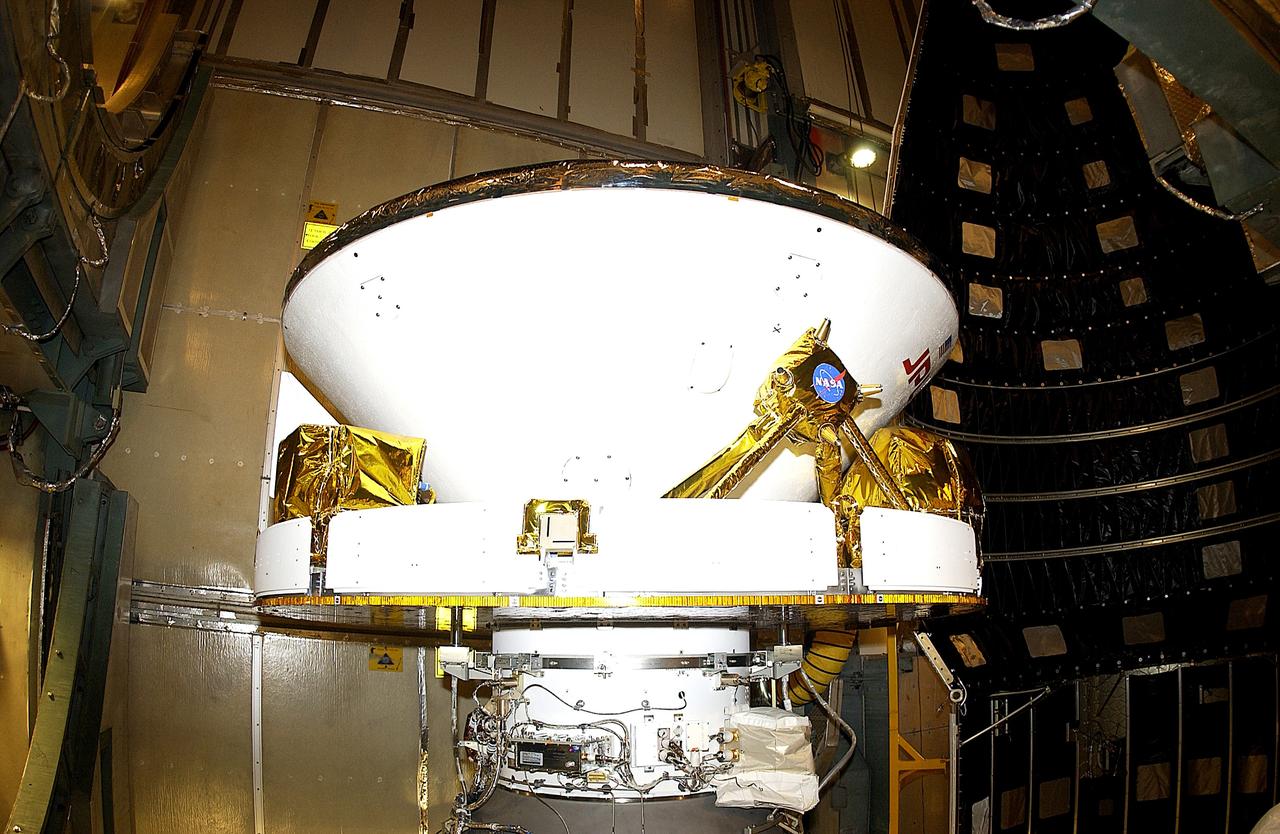
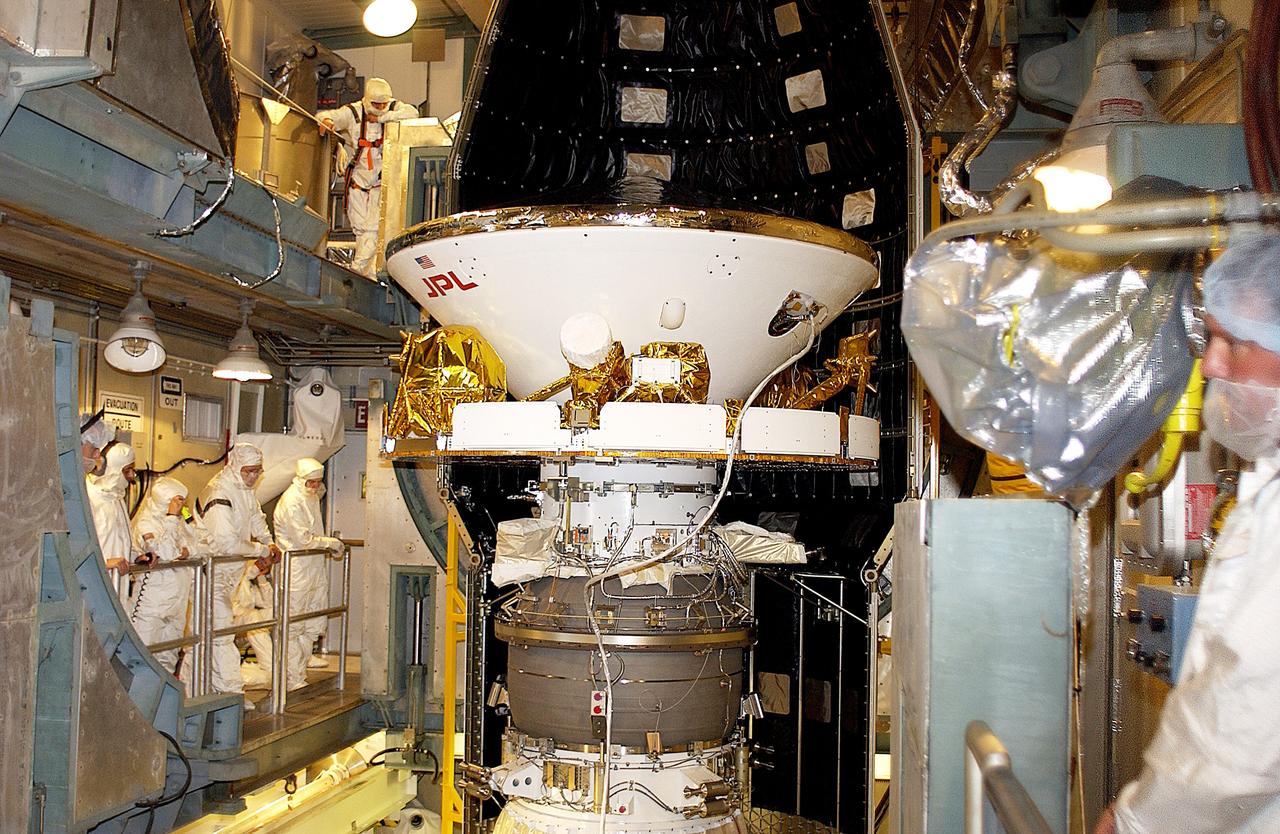
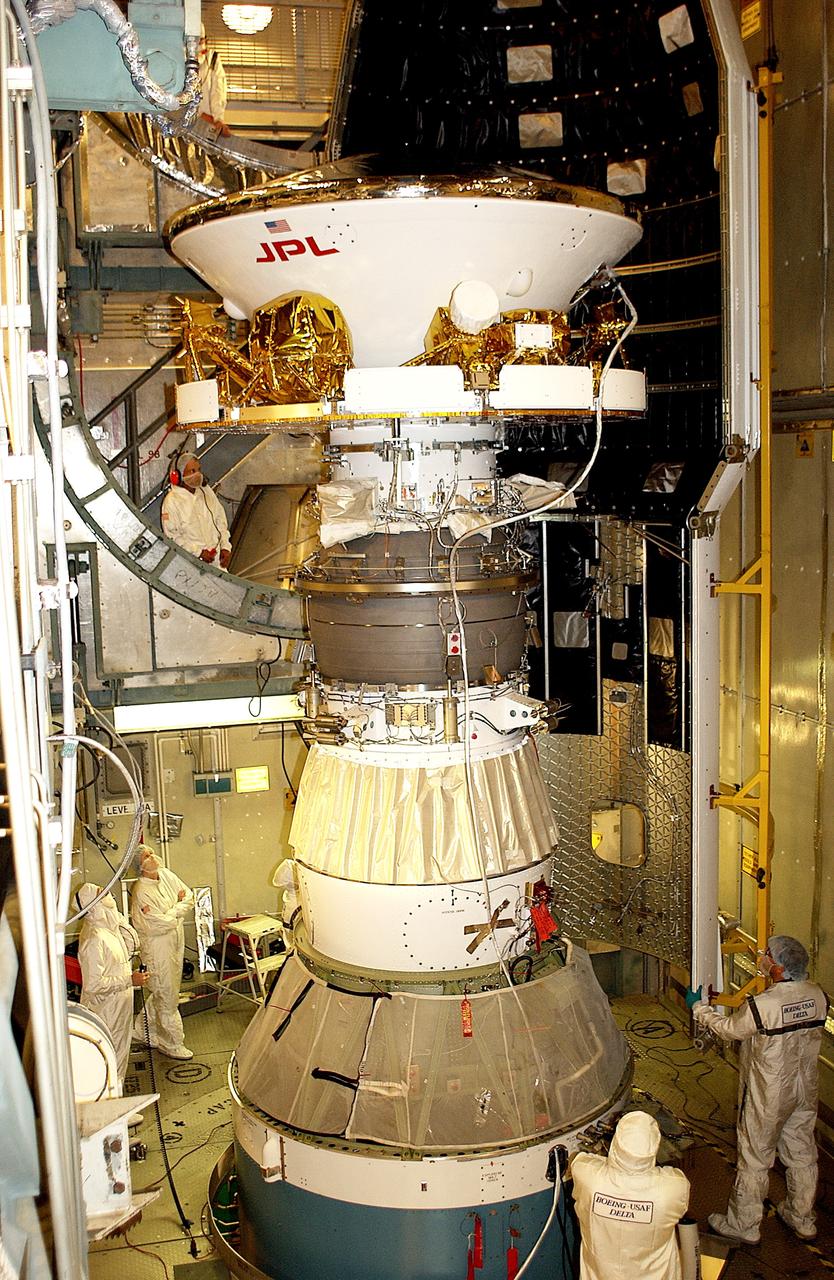
KENNEDY SPACE CENTER, FLA. - Workers in the Payload Hazardous Servicing Facility prepare Mars Exploration Rover 1 (MER-B) to be mated with the third stage of the Delta rocket that will launch it to Mars.  The second of twin rovers being sent to Mars, it is equipped with a robotic arm, a drilling tool, three spectrometers, and four pairs of cameras that allow it to have a human-like, 3D view of the terrain. Each rover could travel as far as 100 meters in one day to act as Mars scientists' eyes and hands, exploring an environment where humans can't yet go.  MER-B is scheduled to launch from Launch Pad 17-B, Cape Canaveral Air Force Station, June 26 at one of two available times,  12:27:31 a.m. EDT or 1:08:45 a.m. EDT.
KENNEDY SPACE CENTER, FLA. - Workers in the Payload Hazardous Servicing Facility prepare Mars Exploration Rover 1 (MER-B) to be mated with the third stage of the Delta rocket that will launch it to Mars. The second of twin rovers being sent to Mars, it is equipped with a robotic arm, a drilling tool, three spectrometers, and four pairs of cameras that allow it to have a human-like, 3D view of the terrain. Each rover could travel as far as 100 meters in one day to act as Mars scientists' eyes and hands, exploring an environment where humans can't yet go. MER-B is scheduled to launch from Launch Pad 17-B, Cape Canaveral Air Force Station, June 26 at one of two available times, 12:27:31 a.m. EDT or 1:08:45 a.m. EDT.
KENNEDY SPACE CENTER, FLA. - The Mars Exploration Rover 1 (MER-B) arrives at Launch Pad 17-B, Cape Canaveral Air Force Station, where it will be mated with the Delta rocket for launch.  The second of twin rovers being sent to Mars, it is equipped with a robotic arm, a drilling tool, three spectrometers, and four pairs of cameras that allow it to have a human-like, 3D view of the terrain. Each rover could travel as far as 100 meters in one day to act as Mars scientists' eyes and hands, exploring an environment where humans can't yet go.  MER-B is scheduled to launch June 26 at one of two available times,  12:27:31 a.m. EDT or 1:08:45 a.m. EDT.
KENNEDY SPACE CENTER, FLA. - The Mars Exploration Rover 1 (MER-B) arrives at Launch Pad 17-B, Cape Canaveral Air Force Station, where it will be mated with the Delta rocket for launch. The second of twin rovers being sent to Mars, it is equipped with a robotic arm, a drilling tool, three spectrometers, and four pairs of cameras that allow it to have a human-like, 3D view of the terrain. Each rover could travel as far as 100 meters in one day to act as Mars scientists' eyes and hands, exploring an environment where humans can't yet go. MER-B is scheduled to launch June 26 at one of two available times, 12:27:31 a.m. EDT or 1:08:45 a.m. EDT.
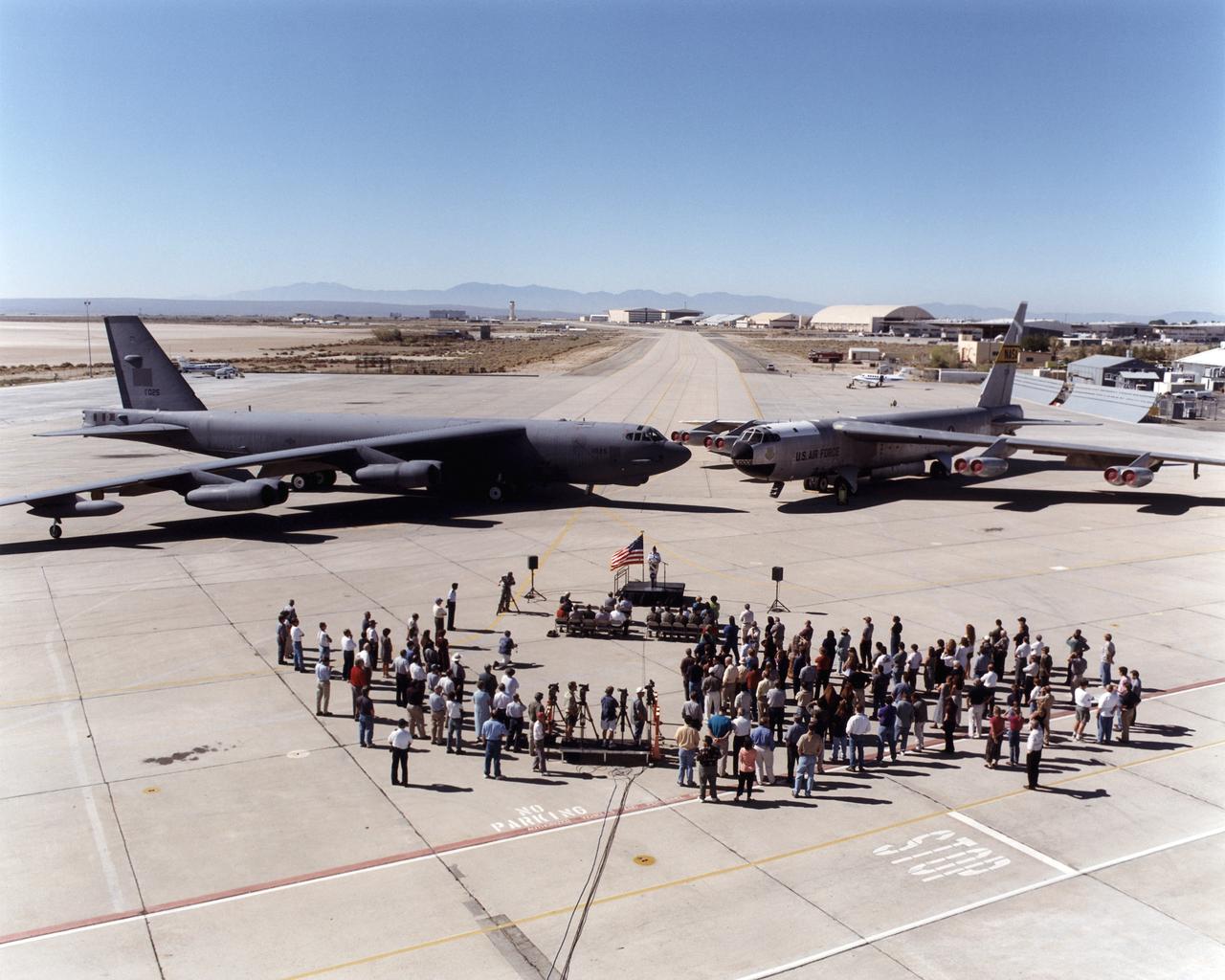
A newly arrived B-52H is seen here alongside NASA Dryden's venerable B-52 "B" model during its arrival ceremony on August 1, 2001.
EC01-0223-1
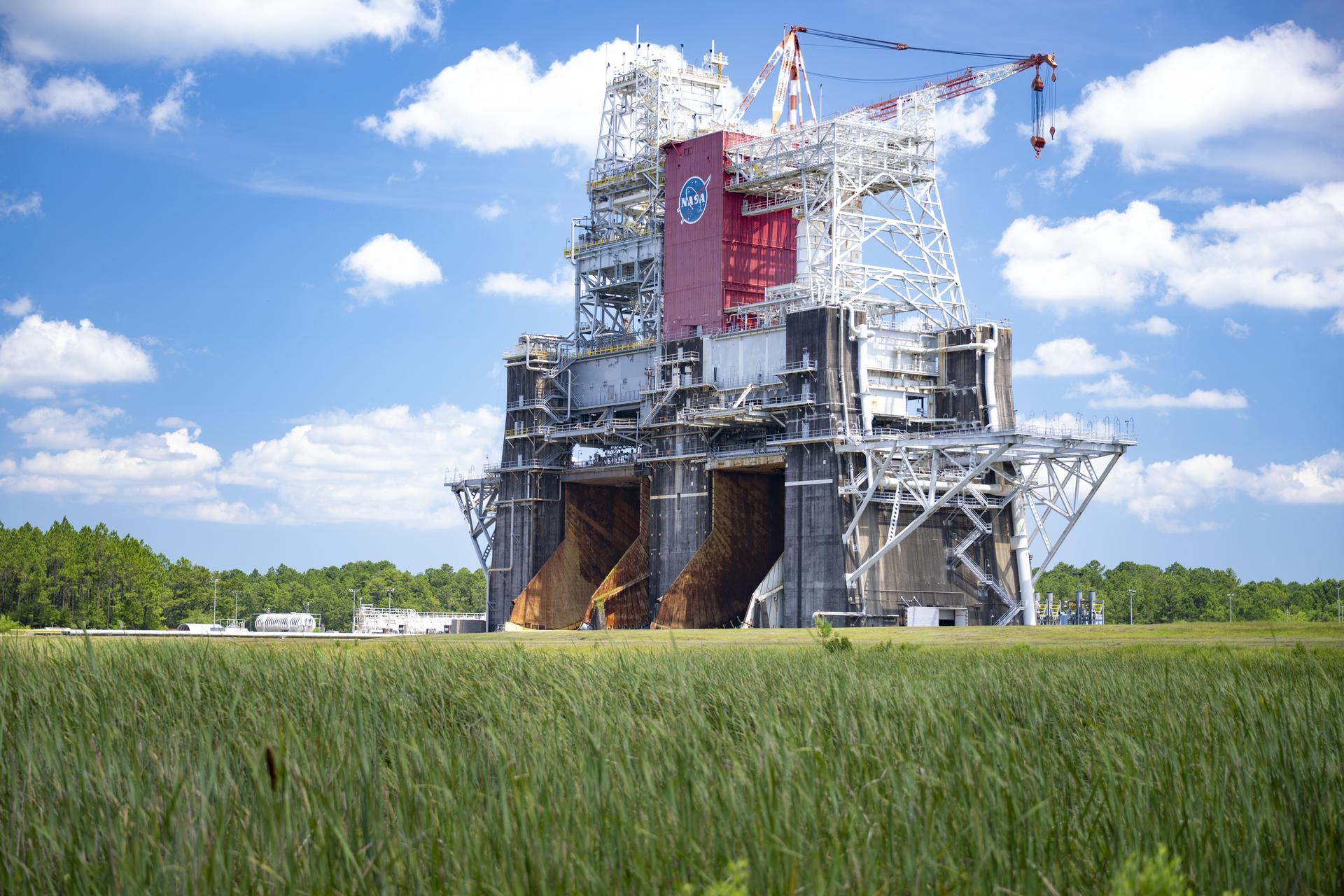
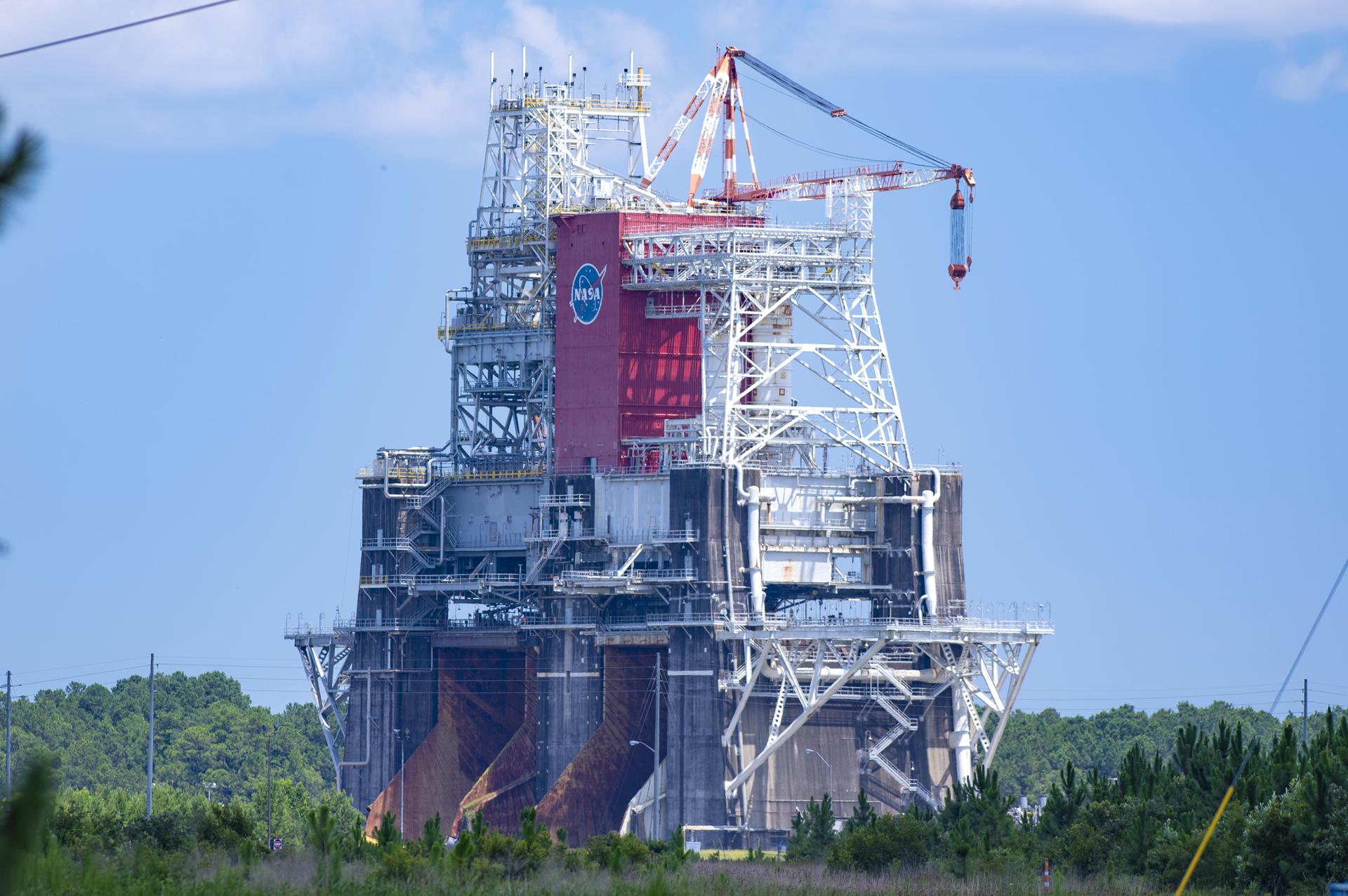
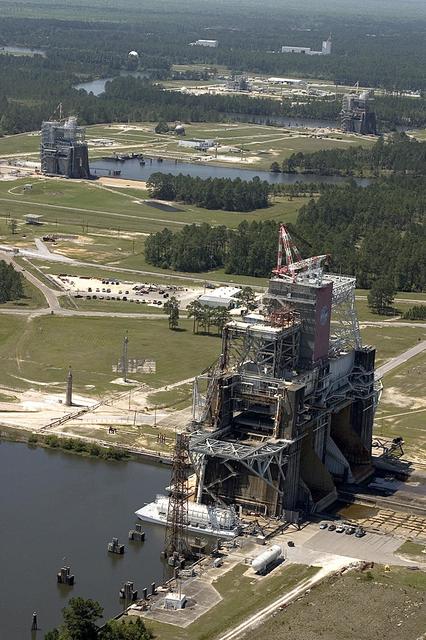
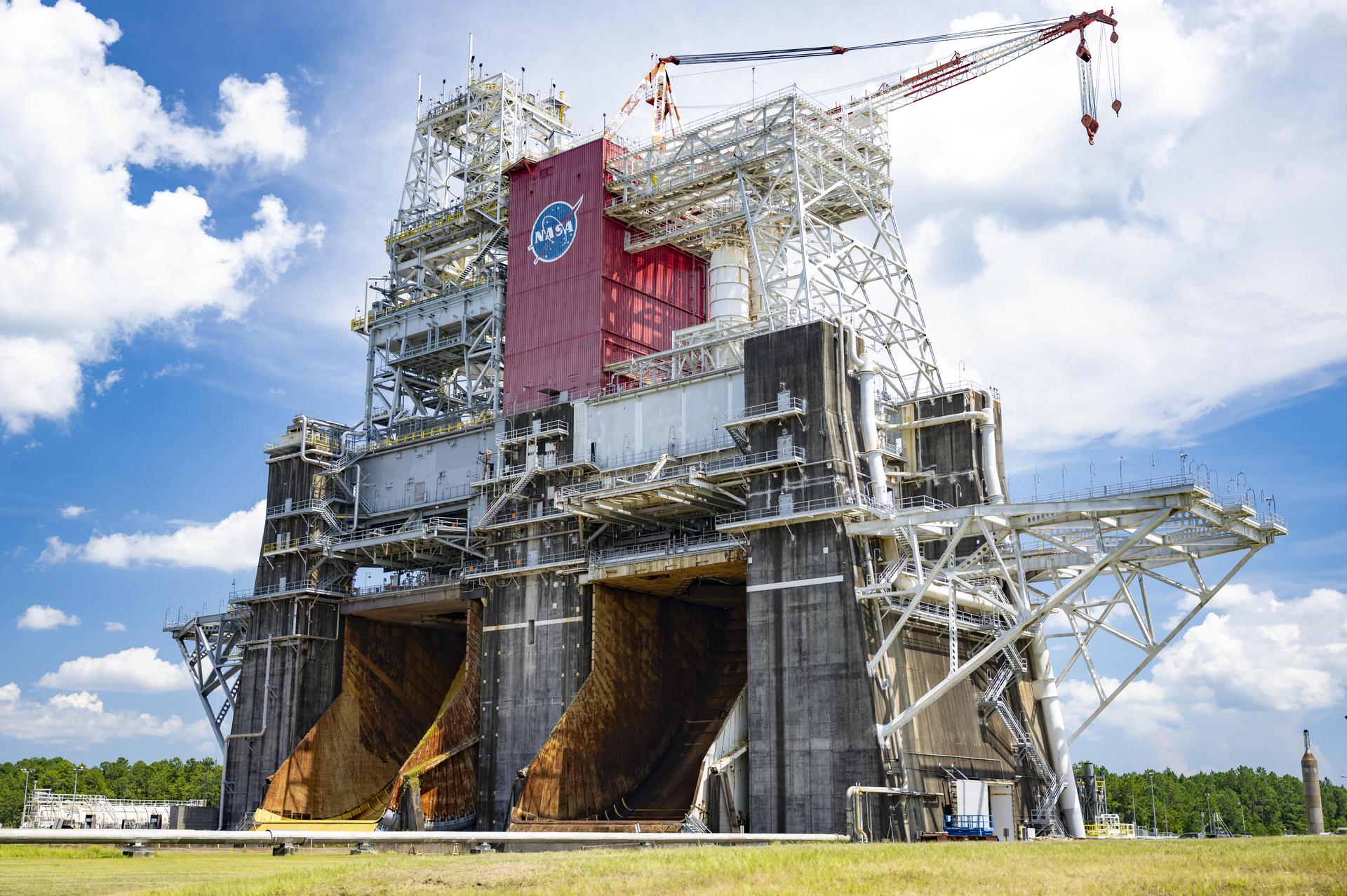
An aerial photo shows the B-1/B-2 Test Stand (foreground), A-2 Test Stand (middle) and A-1 Test Stand (back). The historic stands have been used to test engines used on every manned Apollo and space shuttle mission.
Aerial shows Stennis test stands
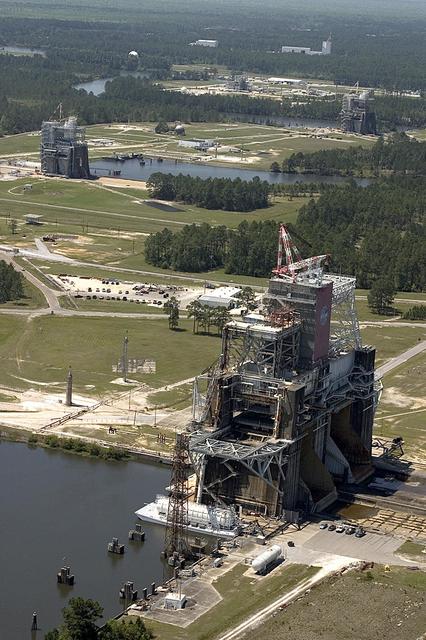
An aerial photo shows the B-1/B-2 Test Stand (foreground), A-2 Test Stand (middle) and A-1 Test Stand (back). The historic stands have been used to test engines used on every manned Apollo and space shuttle mission.
Aerial shows Stennis test stands
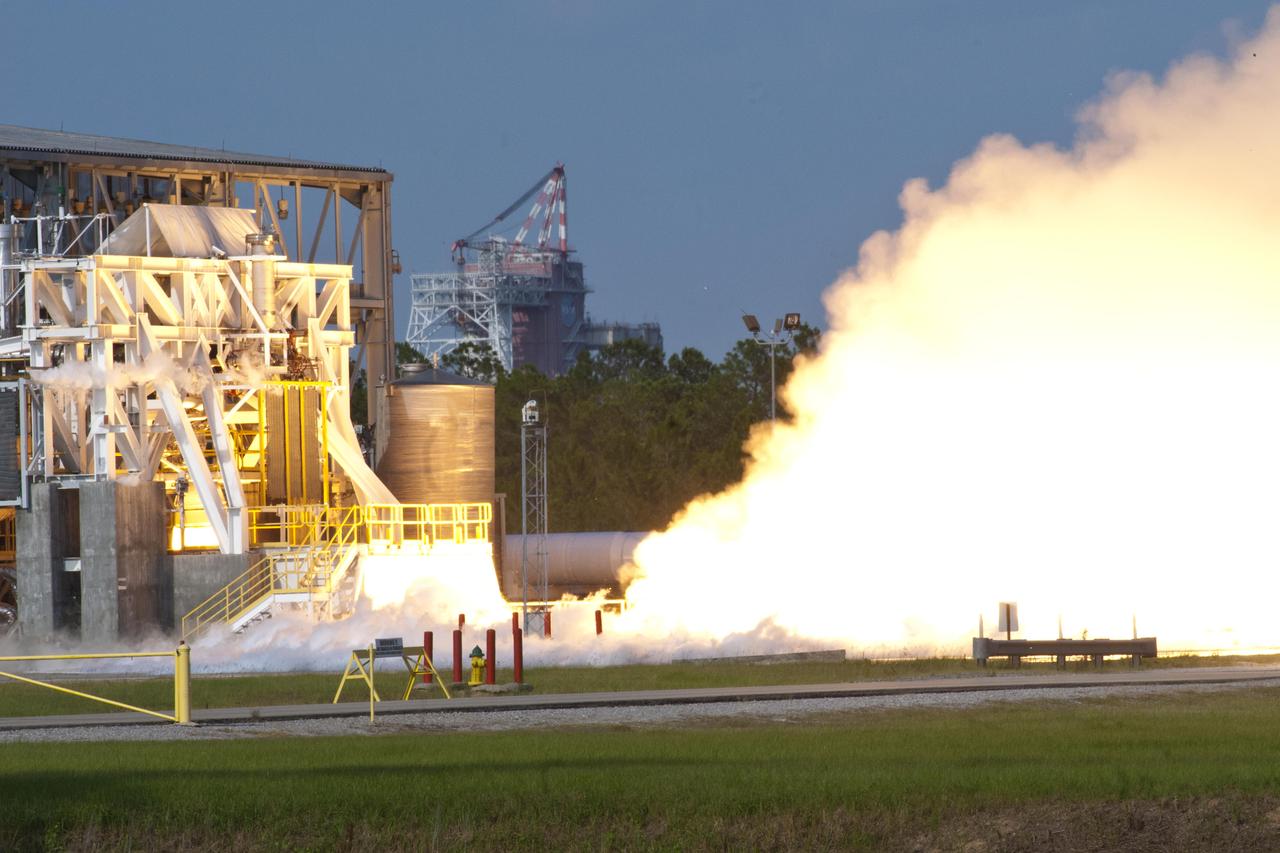
NASA engineers tested an Aerojet AJ26 rocket engine on the E-1 Test Stand at Stennis Space Center on June 25, 2012, against the backdrop of the B-1/B-2 Test Stand. The engine will be used by Orbital Sciences Corporation to power commercial cargo flights to the International Space Station.
AJ26 engine test
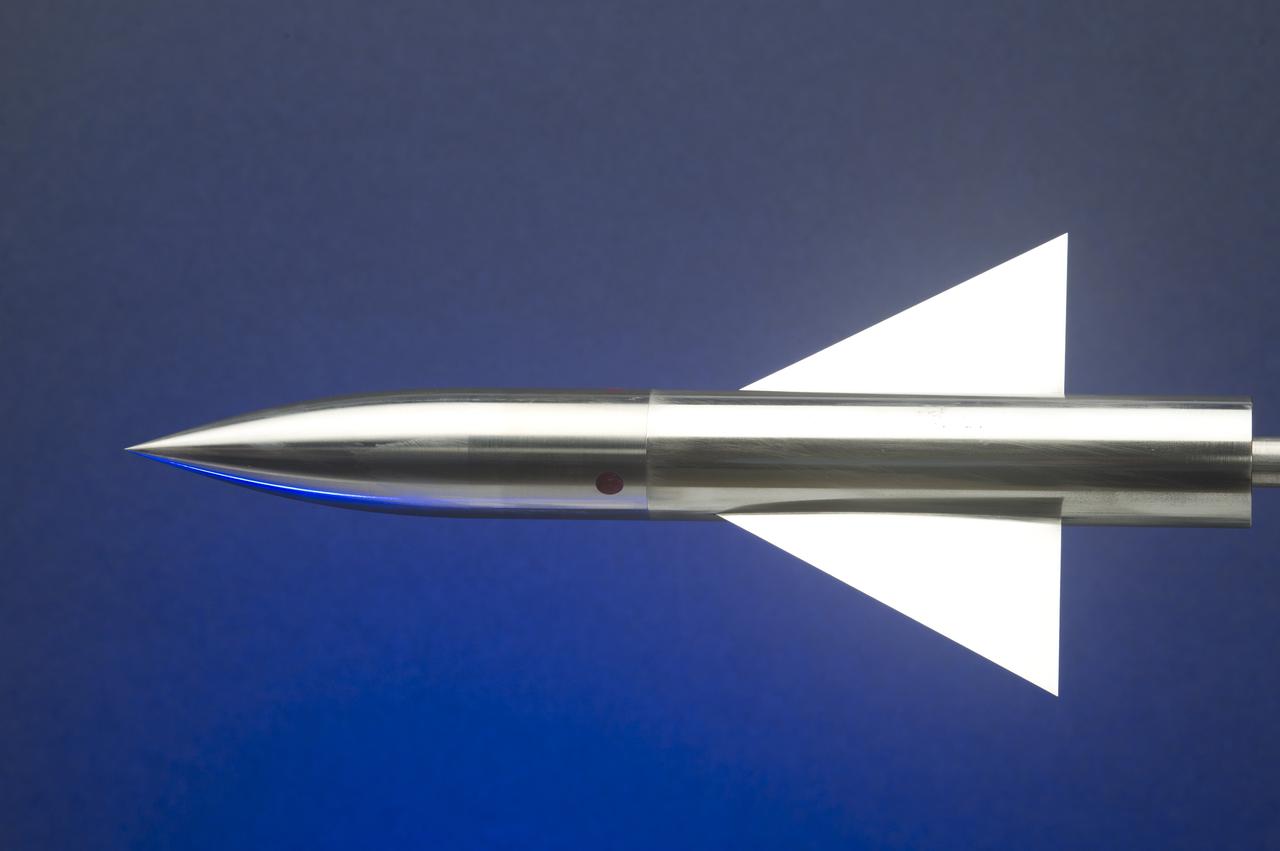
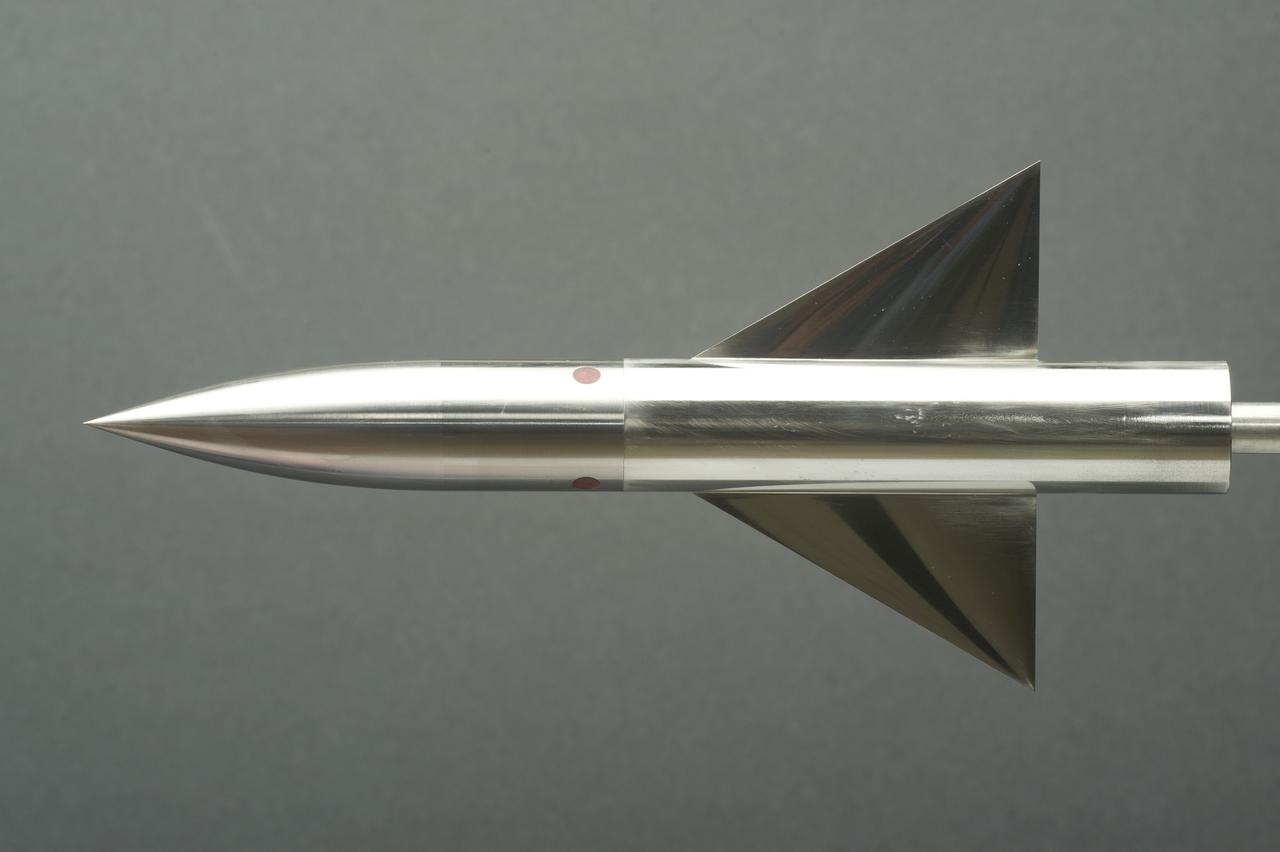
AGARD-B WIND TUNNEL MODEL, VIEW 1 OF 3
1001315
AGARD-B WIND TUNNEL MODEL, VIEW 1 OF 3
1001314
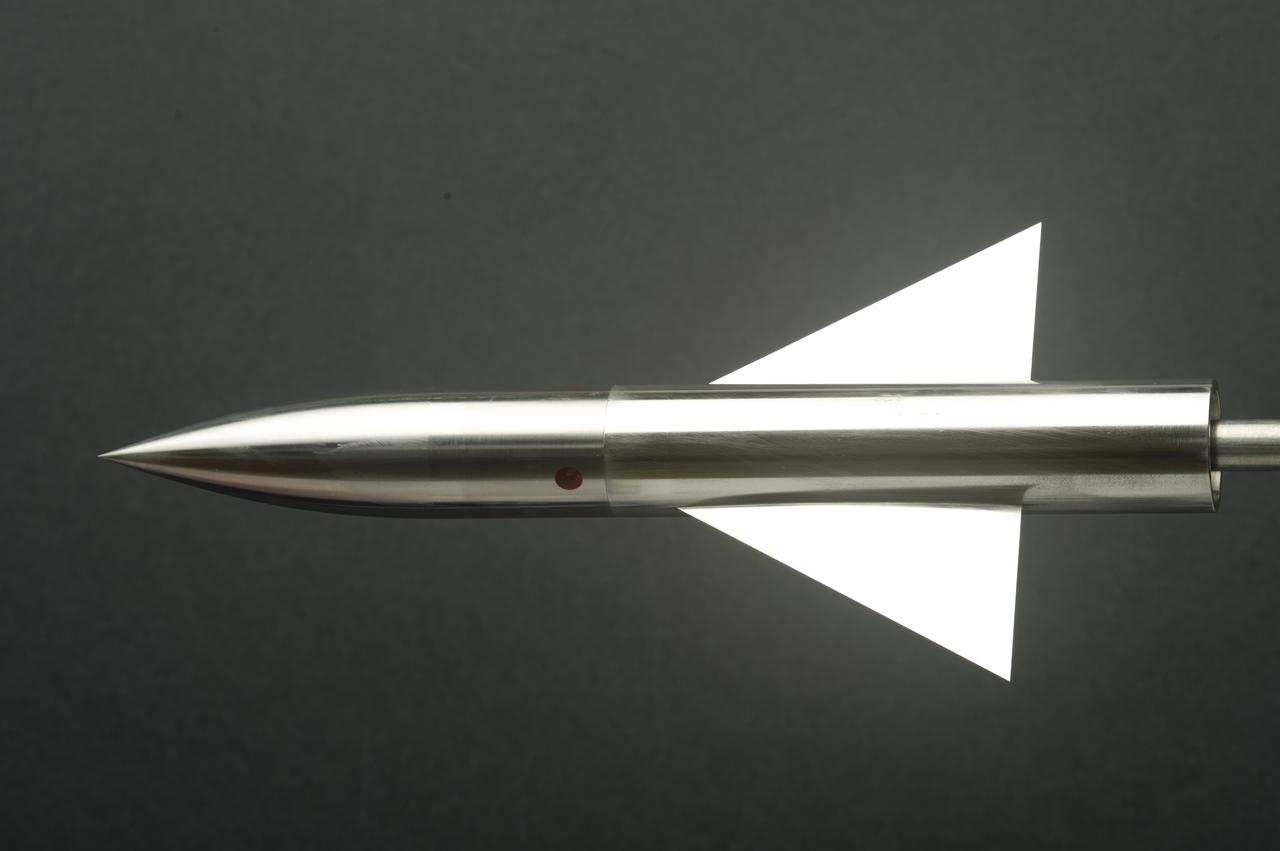
AGARD-B WIND TUNNEL MODEL, VIEW 1 OF 3
1001316
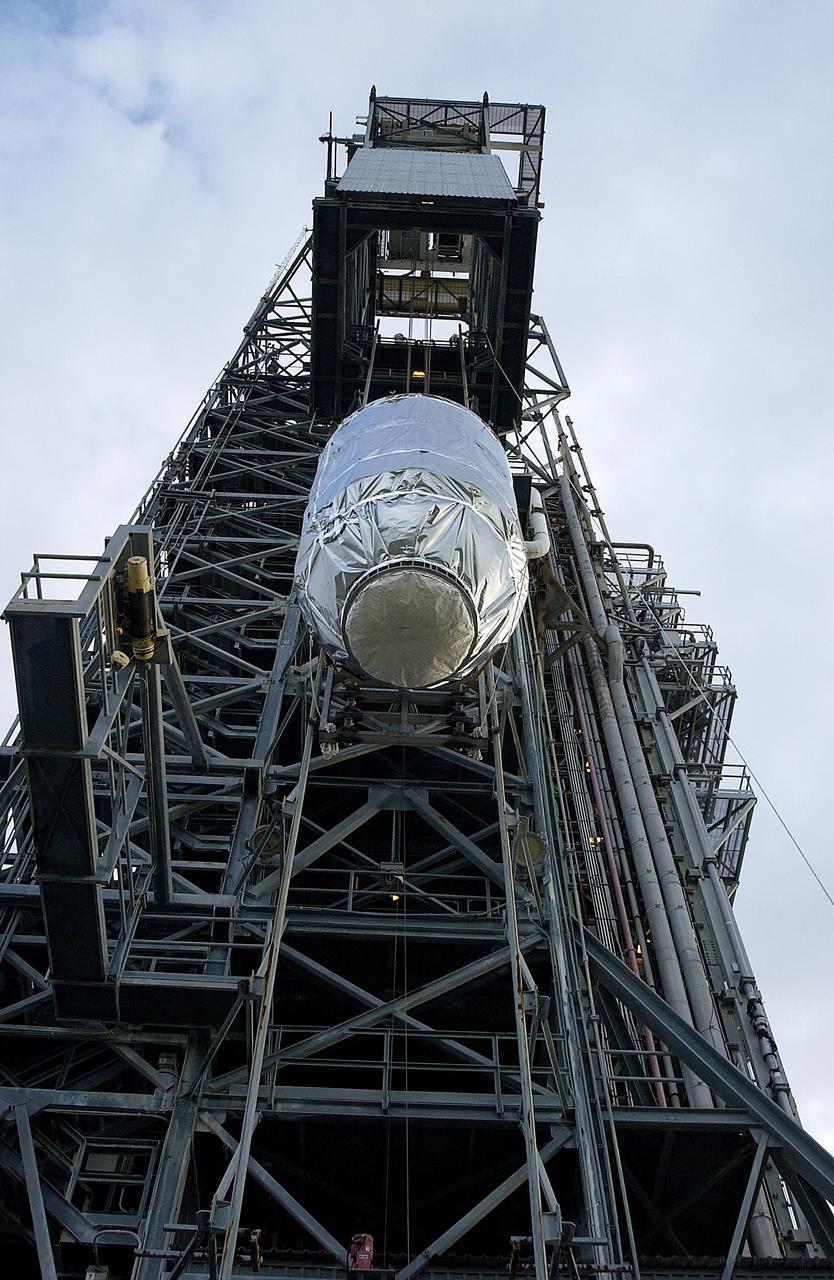
KENNEDY SPACE CENTER, FLA. - At Launch Complex 17-B, Cape Canaveral Air Force Station, a final view of the Mars Exploration Rover-1 (MER-B) is captured before it is encapsulated into its spacecraft fairing for launch. The second of twin rovers being sent to Mars, it is equipped with a robotic arm, a drilling tool, three spectrometers, and four pairs of cameras that allow it to have a human-like, 3D view of the terrain. Each rover could travel as far as 100 meters in one day to act as Mars scientists' eyes and hands, exploring an environment where humans are not yet able to go. MER-B is scheduled to launch no earlier than June 28 at one of two available times, 11:56:16 p.m. EDT or 12:37:59 a.m. EDT.
KENNEDY SPACE CENTER, FLA. - At Launch Complex 17-B, Cape Canaveral Air Force Station, Mars Exploration Rover-1 (MER-B) "Opportunity" awaits installation of its spacecraft fairing. The second of twin rovers being sent to Mars, it is equipped with a robotic arm, a drilling tool, three spectrometers, and four pairs of cameras that allow it to have a human-like, 3D view of the terrain. Each rover could travel as far as 100 meters in one day to act as Mars scientists' eyes and hands, exploring an environment where humans are not yet able to go. MER-B is scheduled to launch no earlier than June 28 at one of two available times, 11:56:16 p.m. EDT or 12:37:59 a.m. EDT.
KENNEDY SPACE CENTER, FLA. - At Launch Complex 17-B, Cape Canaveral Air Force Station, workers prepare to encapsulate the Mars Exploration Rover-1 (MER-B) into its spacecraft fairing. The second of twin rovers being sent to Mars, it is equipped with a robotic arm, a drilling tool, three spectrometers, and four pairs of cameras that allow it to have a human-like, 3D view of the terrain. Each rover could travel as far as 100 meters in one day to act as Mars scientists' eyes and hands, exploring an environment where humans are not yet able to go. MER-B is scheduled to launch no earlier than June 28 at one of two available times, 11:56:16 p.m. EDT or 12:37:59 a.m. EDT.
KENNEDY SPACE CENTER, FLA. - At Launch Complex 17-B, Cape Canaveral Air Force Station, workers complete the installation of the spacecraft fairing around the Mars Exploration Rover-1 (MER-B) for launch. The second of twin rovers being sent to Mars, it is equipped with a robotic arm, a drilling tool, three spectrometers, and four pairs of cameras that allow it to have a human-like, 3D view of the terrain. Each rover could travel as far as 100 meters in one day to act as Mars scientists' eyes and hands, exploring an environment where humans are not yet able to go. MER-B is scheduled to launch no earlier than June 28 at one of two available times, 11:56:16 p.m. EDT or 12:37:59 a.m. EDT.
KENNEDY SPACE CENTER, FLA. - At Launch Complex 17-B, Cape Canaveral Air Force Station, the spacecraft fairing is being installed around the Mars Exploration Rover-1 (MER-B). The second of twin rovers being sent to Mars, it is equipped with a robotic arm, a drilling tool, three spectrometers, and four pairs of cameras that allow it to have a human-like, 3D view of the terrain. Each rover could travel as far as 100 meters in one day to act as Mars scientists' eyes and hands, exploring an environment where humans are not yet able to go. MER-B is scheduled to launch no earlier than June 28 at one of two available times, 11:56:16 p.m. EDT or 12:37:59 a.m. EDT.
KENNEDY SPACE CENTER, FLA. - At Launch Complex 17-B, Cape Canaveral Air Force Station, Mars Exploration Rover-1 (MER-B) is prepared for the installation of its spacecraft fairing. The second of twin rovers being sent to Mars, it is equipped with a robotic arm, a drilling tool, three spectrometers, and four pairs of cameras that allow it to have a human-like, 3D view of the terrain. Each rover could travel as far as 100 meters in one day to act as Mars scientists' eyes and hands, exploring an environment where humans are not yet able to go. MER-B is scheduled to launch no earlier than June 28 at one of two available times, 11:56:16 p.m. EDT or 12:37:59 a.m. EDT.
KENNEDY SPACE CENTER, FLA. - At Launch Complex 17-B, Cape Canaveral Air Force Station, the spacecraft fairing is being installed around the Mars Exploration Rover-1 (MER-B). The second of twin rovers being sent to Mars, it is equipped with a robotic arm, a drilling tool, three spectrometers, and four pairs of cameras that allow it to have a human-like, 3D view of the terrain. Each rover could travel as far as 100 meters in one day to act as Mars scientists' eyes and hands, exploring an environment where humans are not yet able to go. MER-B is scheduled to launch no earlier than June 28 at one of two available times, 11:56:16 p.m. EDT or 12:37:59 a.m. EDT.
KENNEDY SPACE CENTER, FLA. - At Launch Complex 17-B, Cape Canaveral Air Force Station, a final glimpse of the Mars Exploration Rover-1 (MER-B) is captured before it is enclosed by its spacecraft fairing for launch. The second of twin rovers being sent to Mars, it is equipped with a robotic arm, a drilling tool, three spectrometers, and four pairs of cameras that allow it to have a human-like, 3D view of the terrain. Each rover could travel as far as 100 meters in one day to act as Mars scientists' eyes and hands, exploring an environment where humans are not yet able to go. MER-B is scheduled to launch no earlier than June 28 at one of two available times, 11:56:16 p.m. EDT or 12:37:59 a.m. EDT.
KENNEDY SPACE CENTER, FLA. - At Launch Complex 17-B, Cape Canaveral Air Force Station, workers prepare to install the spacecraft fairing around the Mars Exploration Rover-1 (MER-B). The second of twin rovers being sent to Mars, it is equipped with a robotic arm, a drilling tool, three spectrometers, and four pairs of cameras that allow it to have a human-like, 3D view of the terrain. Each rover could travel as far as 100 meters in one day to act as Mars scientists' eyes and hands, exploring an environment where humans are not yet able to go. MER-B is scheduled to launch no earlier than June 28 at one of two available times, 11:56:16 p.m. EDT or 12:37:59 a.m. EDT.
KENNEDY SPACE CENTER, FLA. - At Launch Complex 17-B, Cape Canaveral Air Force Station, Mars Exploration Rover-1 (MER-B) is prepared for the installation of its spacecraft fairing. The second of twin rovers being sent to Mars, it is equipped with a robotic arm, a drilling tool, three spectrometers, and four pairs of cameras that allow it to have a human-like, 3D view of the terrain. Each rover could travel as far as 100 meters in one day to act as Mars scientists' eyes and hands, exploring an environment where humans are not yet able to go. MER-B is scheduled to launch no earlier than June 28 at one of two available times, 11:56:16 p.m. EDT or 12:37:59 a.m. EDT.
Family members of Apollo 1 astronaut Roger B. Chaffee are joined by NASA Administrator Bill Nelson as they place flowers at the Apollo 1 Monument during its dedication at Arlington National Cemetery, Thursday, June 2, 2022, in Arlington, Va. The monument honors and memorializes the Apollo 1 crew of Virgil I. “Gus” Grissom, Edward H. White II, and Roger B. Chaffee.  Photo Credit: (NASA/Bill Ingalls)
Apollo 1 Monument Dedication
Sheryl Chaffee, daughter of Apollo 1 astronaut Roger B. Chaffee, delivers remarks at a reception following the dedication of the Apollo 1 monument, Thursday, June 2, 2022, in the Reception Hall of the Military Women’s Memorial at Arlington National Cemetery in Arlington, Va. The monument honors and memorializes the Apollo 1 crew of Virgil I. “Gus” Grissom, Edward H. White II, and Roger B. Chaffee.  Photo Credit: (NASA/Bill Ingalls)
Apollo 1 Monument Dedication
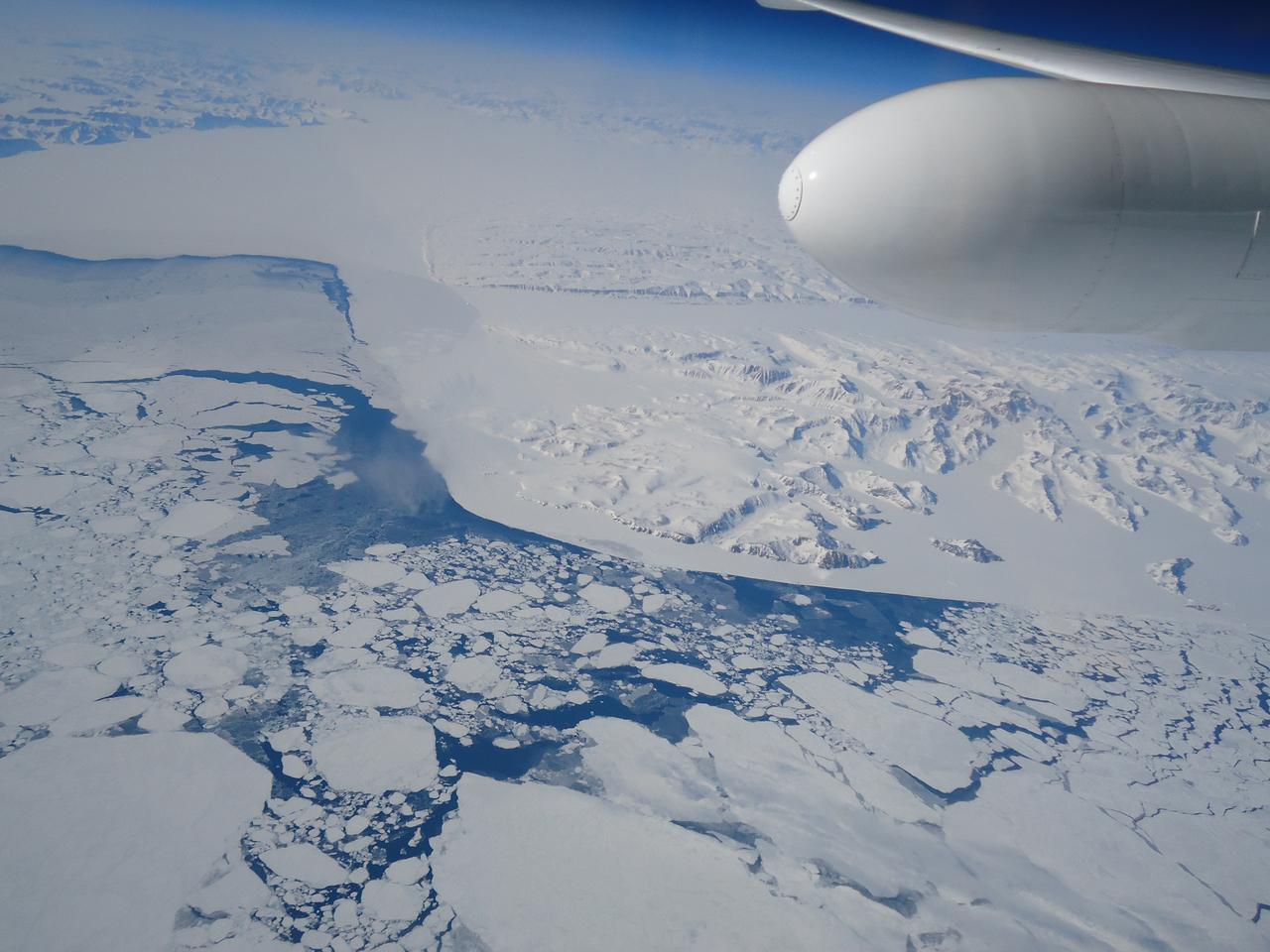
The sea ice cap of the Arctic appeared to reach its annual maximum winter extent on Feb. 25, according to data from the NASA-supported National Snow and Ice Data Center (NSIDC) at the University of Colorado, Boulder. At 5.61 million square miles (14.54 million square kilometers), this year’s maximum extent was the smallest on the satellite record and also one of the earliest.  Read more: <a href="http://1.usa.gov/1Eyvelz" rel="nofollow">1.usa.gov/1Eyvelz</a>  Credit:  NASA's Goddard Space Flight Center  <b><a href="http://www.nasa.gov/audience/formedia/features/MP_Photo_Guidelines.html" rel="nofollow">NASA image use policy.</a></b>  <b><a href="http://www.nasa.gov/centers/goddard/home/index.html" rel="nofollow">NASA Goddard Space Flight Center</a></b> enables NASA’s mission through four scientific endeavors: Earth Science, Heliophysics, Solar System Exploration, and Astrophysics. Goddard plays a leading role in NASA’s accomplishments by contributing compelling scientific knowledge to advance the Agency’s mission.  <b>Follow us on <a href="http://twitter.com/NASAGoddardPix" rel="nofollow">Twitter</a></b>  <b>Like us on <a href="http://www.facebook.com/pages/Greenbelt-MD/NASA-Goddard/395013845897?ref=tsd" rel="nofollow">Facebook</a></b>  <b>Find us on <a href="http://instagrid.me/nasagoddard/?vm=grid" rel="nofollow">Instagram</a></b>
2015 Arctic Sea Ice Maximum Annual Extent Is Lowest On Record
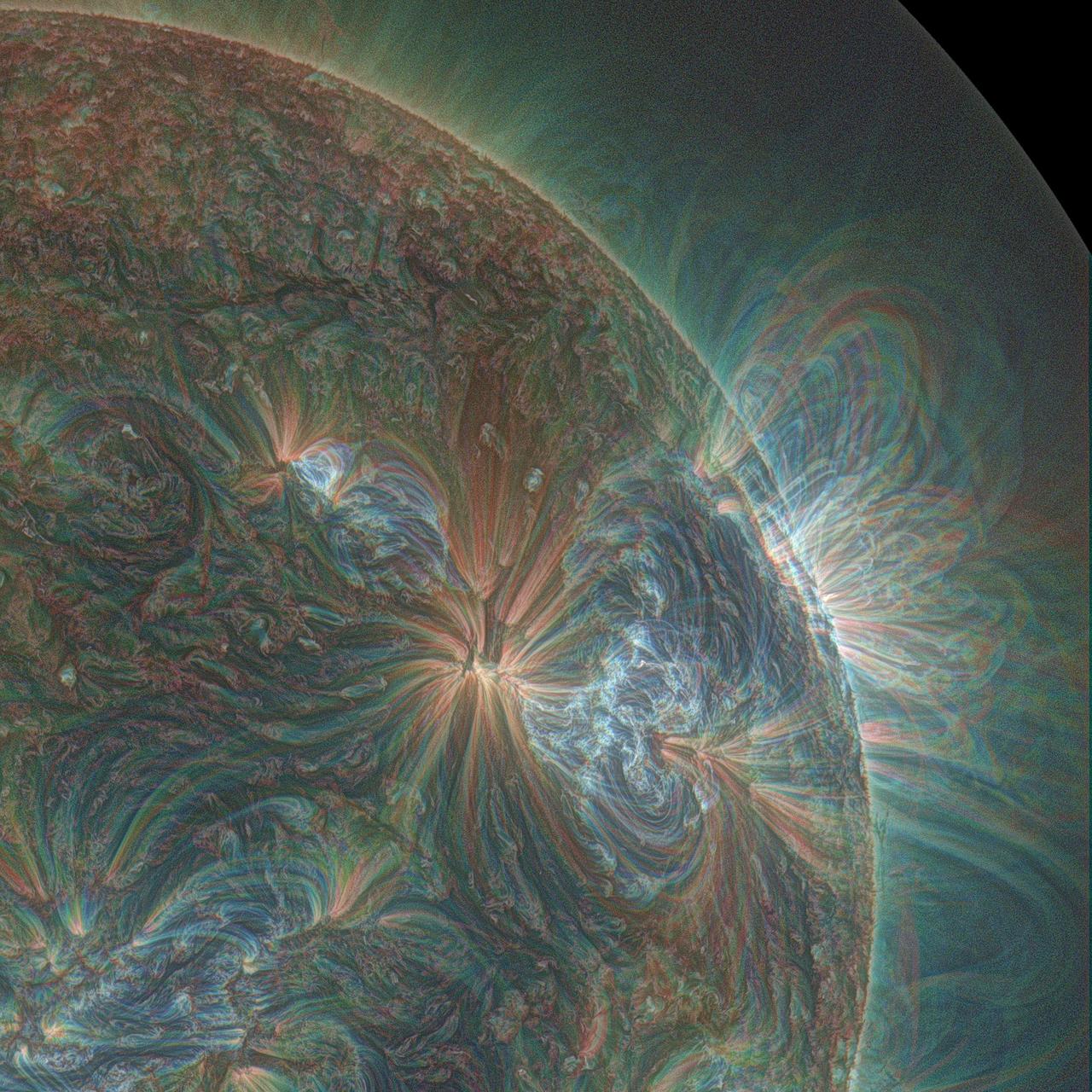
This combination of three wavelengths of light from NASA's Solar Dynamics Observatory shows one of the multiple jets that led to a series of slow coronal puffs on Jan. 17, 2013. The light has been colorized in red, green and blue.  Read more: <a href="http://1.usa.gov/UQi41p" rel="nofollow">1.usa.gov/UQi41p</a>  Credit: NASA//SDO/Alzate  <b><a href="http://www.nasa.gov/audience/formedia/features/MP_Photo_Guidelines.html" rel="nofollow">NASA image use policy.</a></b>   <b><a href="http://www.nasa.gov/centers/goddard/home/index.html" rel="nofollow">NASA Goddard Space Flight Center</a></b> enables NASA’s mission through four scientific endeavors: Earth Science, Heliophysics, Solar System Exploration, and Astrophysics. Goddard plays a leading role in NASA’s accomplishments by contributing compelling scientific knowledge to advance the Agency’s mission.   <b>Follow us on <a href="http://twitter.com/NASAGoddardPix" rel="nofollow">Twitter</a></b>   <b>Like us on <a href="http://www.facebook.com/pages/Greenbelt-MD/NASA-Goddard/395013845897?ref=tsd" rel="nofollow">Facebook</a></b>   <b>Find us on <a href="http://instagram.com/nasagoddard?vm=grid" rel="nofollow">Instagram</a></b>
Puffing Sun Gives Birth To Reluctant Eruption
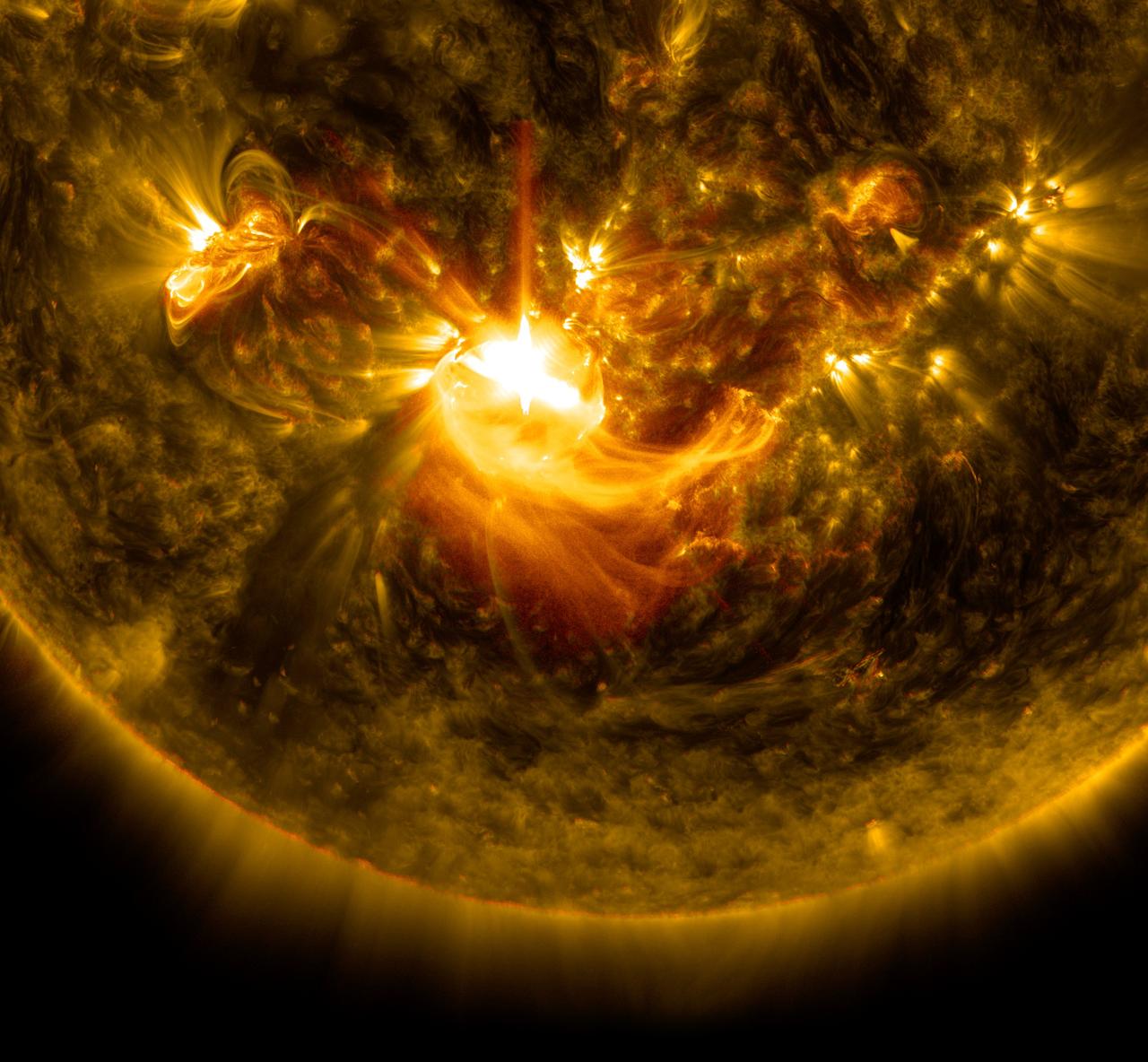
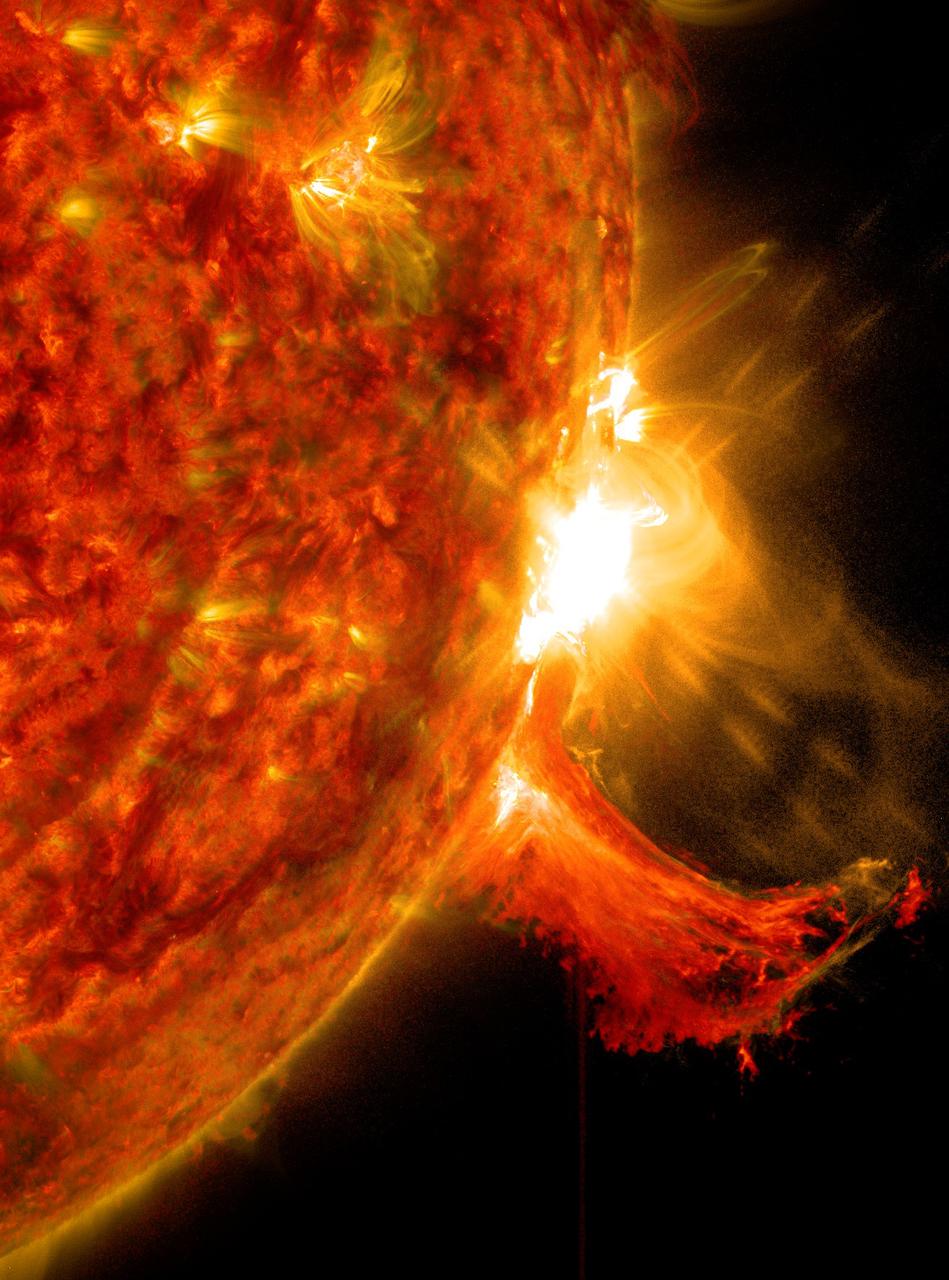
The sun emitted a mid-level solar flare on Dec. 4, 2014, an M6.1-class, seen as the flash of light in the lower right of this image from NASA's Solar Dynamics Observatory. The image blends two wavelengths of extreme ultraviolet light – 131 and 171 Angstroms – which are typically colored in teal and gold, respectively.  Read more: <a href="http://1.usa.gov/121n7PP" rel="nofollow">1.usa.gov/121n7PP</a>  Image Credit: NASA/SDO  <b><a href="http://www.nasa.gov/audience/formedia/features/MP_Photo_Guidelines.html" rel="nofollow">NASA image use policy.</a></b>  <b><a href="http://www.nasa.gov/centers/goddard/home/index.html" rel="nofollow">NASA Goddard Space Flight Center</a></b> enables NASA’s mission through four scientific endeavors: Earth Science, Heliophysics, Solar System Exploration, and Astrophysics. Goddard plays a leading role in NASA’s accomplishments by contributing compelling scientific knowledge to advance the Agency’s mission. <b>Follow us on <a href="http://twitter.com/NASAGoddardPix" rel="nofollow">Twitter</a></b> <b>Like us on <a href="http://www.facebook.com/pages/Greenbelt-MD/NASA-Goddard/395013845897?ref=tsd" rel="nofollow">Facebook</a></b> <b>Find us on <a href="http://instagram.com/nasagoddard?vm=grid" rel="nofollow">Instagram</a></b>
Sun Emits a Mid-Level Flare on Dec. 4, 2014
Goddard visualizers show us how five garbage patches formed in the world's oceans using 35 years of data.   Read more: <a href="http://1.usa.gov/1Lnj7xV" rel="nofollow">1.usa.gov/1Lnj7xV</a>  Credit: NASA's Scientific Visualization Studio  <b><a href="http://www.nasa.gov/audience/formedia/features/MP_Photo_Guidelines.html" rel="nofollow">NASA image use policy.</a></b>  <b><a href="http://www.nasa.gov/centers/goddard/home/index.html" rel="nofollow">NASA Goddard Space Flight Center</a></b> enables NASA’s mission through four scientific endeavors: Earth Science, Heliophysics, Solar System Exploration, and Astrophysics. Goddard plays a leading role in NASA’s accomplishments by contributing compelling scientific knowledge to advance the Agency’s mission.  <b>Follow us on <a href="http://twitter.com/NASAGoddardPix" rel="nofollow">Twitter</a></b>  <b>Like us on <a href="http://www.facebook.com/pages/Greenbelt-MD/NASA-Goddard/395013845897?ref=tsd" rel="nofollow">Facebook</a></b>  <b>Find us on <a href="http://instagrid.me/nasagoddard/?vm=grid" rel="nofollow">Instagram</a></b>
Garbage Patch Visualization Experiment
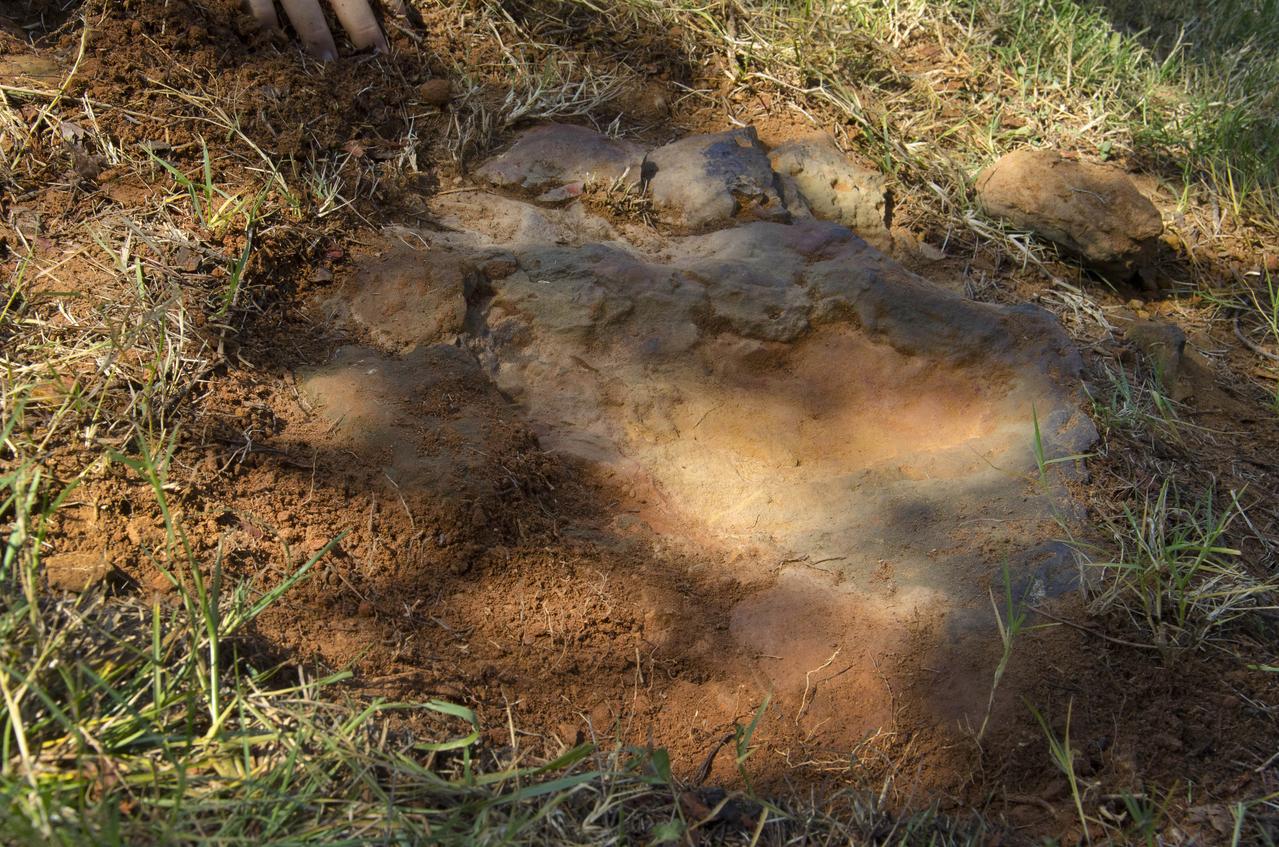
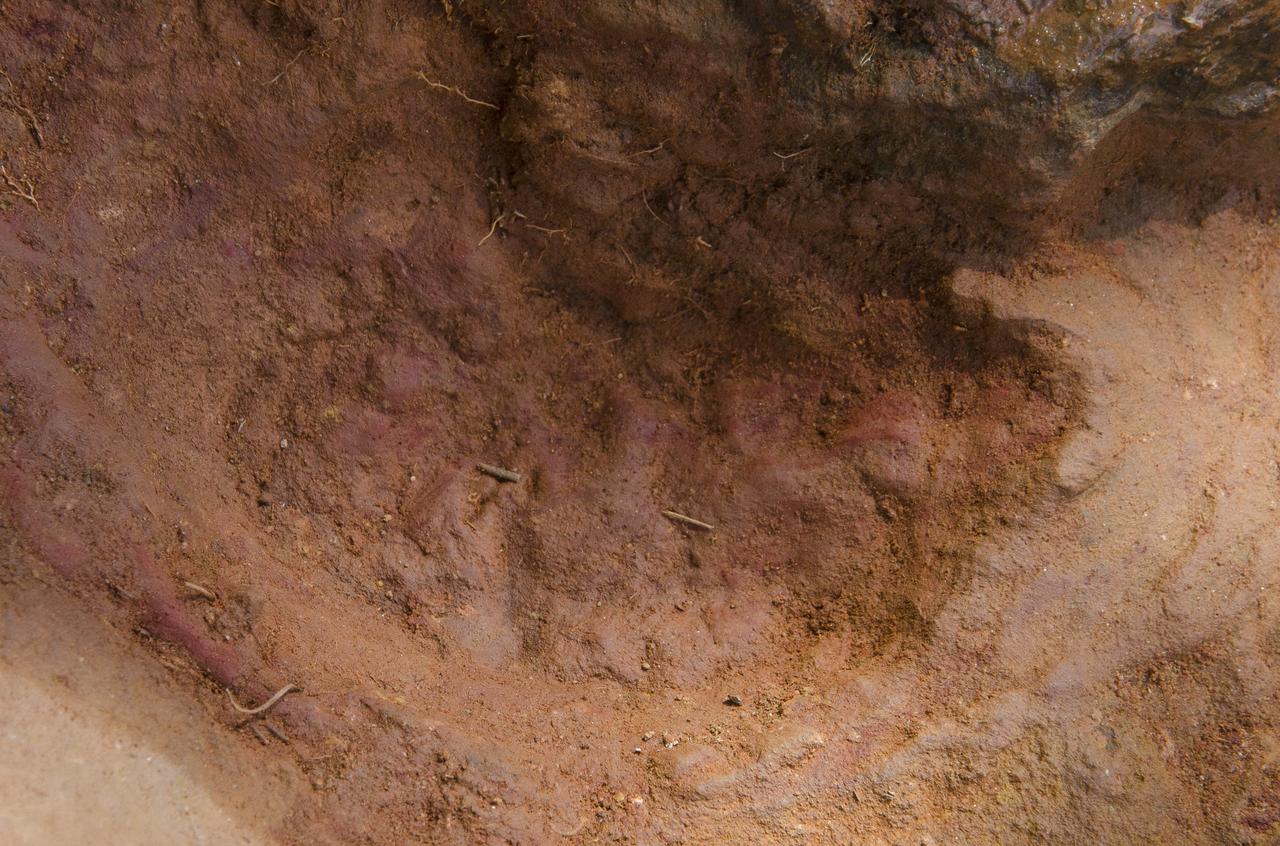
This imprint shows the right rear foot of a nodosaur - a low-slung, spiny leaf-eater - apparently moving in haste as the heel did not fully settle in the cretaceous mud, according to dinosaur tracker Ray Stanford. It was found recently on NASA's Goddard Space Flight Center campus and is being preserved for study.   To read more go to: <a href="http://1.usa.gov/P9NYg7" rel="nofollow">1.usa.gov/P9NYg7</a>  Credit: NASA/GSFC/Rebecca Roth  <b><a href="http://www.nasa.gov/audience/formedia/features/MP_Photo_Guidelines.html" rel="nofollow">NASA image use policy.</a></b>  <b><a href="http://www.nasa.gov/centers/goddard/home/index.html" rel="nofollow">NASA Goddard Space Flight Center</a></b> enables NASA’s mission through four scientific endeavors: Earth Science, Heliophysics, Solar System Exploration, and Astrophysics. Goddard plays a leading role in NASA’s accomplishments by contributing compelling scientific knowledge to advance the Agency’s mission.  <b>Follow us on <a href="http://twitter.com/NASA_GoddardPix" rel="nofollow">Twitter</a></b>  <b>Like us on <a href="http://www.facebook.com/pages/Greenbelt-MD/NASA-Goddard/395013845897?ref=tsd" rel="nofollow">Facebook</a></b>  <b>Find us on <a href="http://instagrid.me/nasagoddard/?vm=grid" rel="nofollow">Instagram</a></b>
Nodosaur Footprint Verified
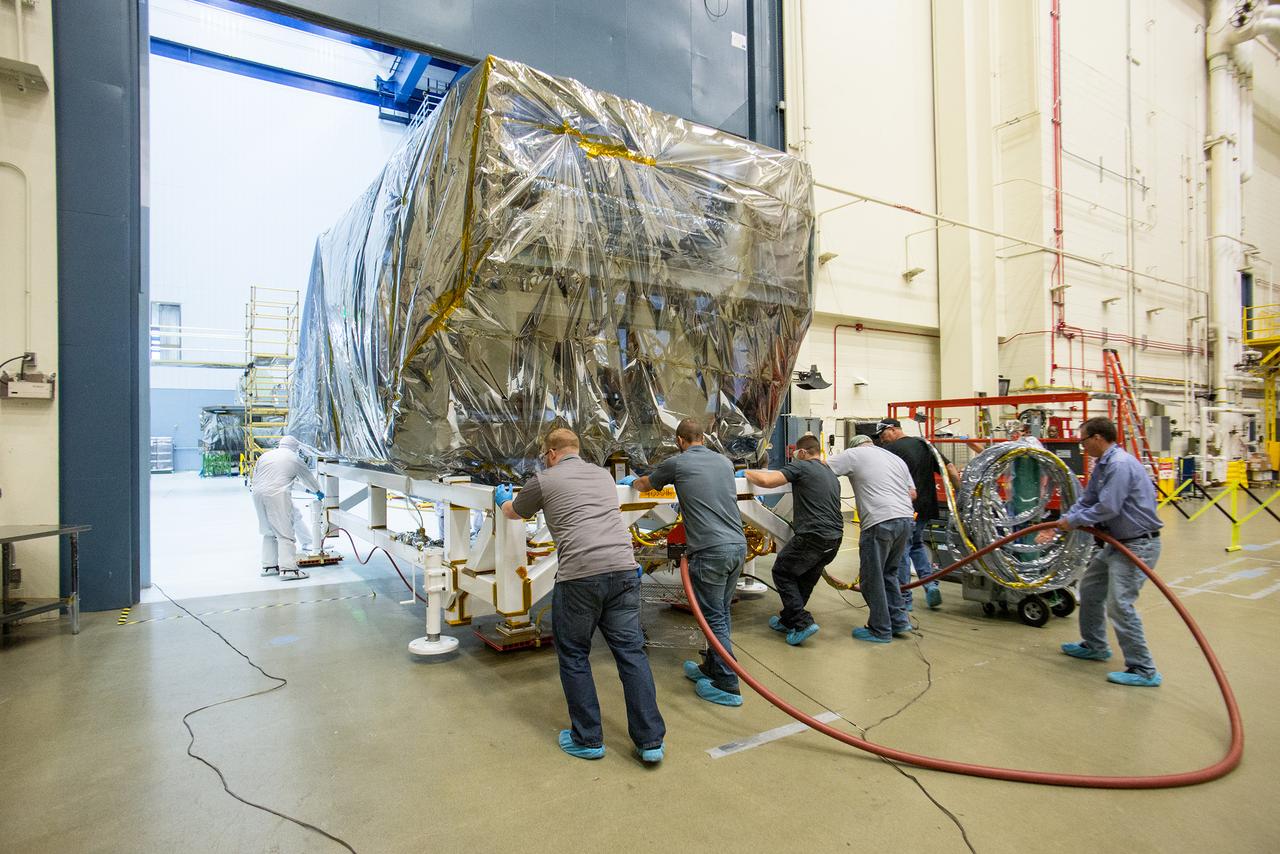
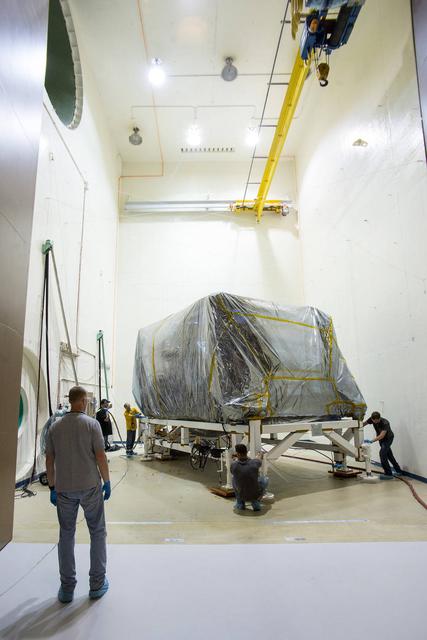
The ISIM structure wrapped up and waiting for sound testing in the acoustics chamber at NASA Goddard. Credits: NASA/Desiree Stover    Read more: <a href="http://1.usa.gov/1KvoY4p" rel="nofollow">1.usa.gov/1KvoY4p</a>  <b><a href="http://www.nasa.gov/audience/formedia/features/MP_Photo_Guidelines.html" rel="nofollow">NASA image use policy.</a></b>  <b><a href="http://www.nasa.gov/centers/goddard/home/index.html" rel="nofollow">NASA Goddard Space Flight Center</a></b> enables NASA’s mission through four scientific endeavors: Earth Science, Heliophysics, Solar System Exploration, and Astrophysics. Goddard plays a leading role in NASA’s accomplishments by contributing compelling scientific knowledge to advance the Agency’s mission.  <b>Follow us on <a href="http://twitter.com/NASAGoddardPix" rel="nofollow">Twitter</a></b>  <b>Like us on <a href="http://www.facebook.com/pages/Greenbelt-MD/NASA-Goddard/395013845897?ref=tsd" rel="nofollow">Facebook</a></b>  <b>Find us on <a href="http://instagrid.me/nasagoddard/?vm=grid" rel="nofollow">Instagram</a></b>
James Webb Space Telescope's ISIM Passes Severe-Sound Test
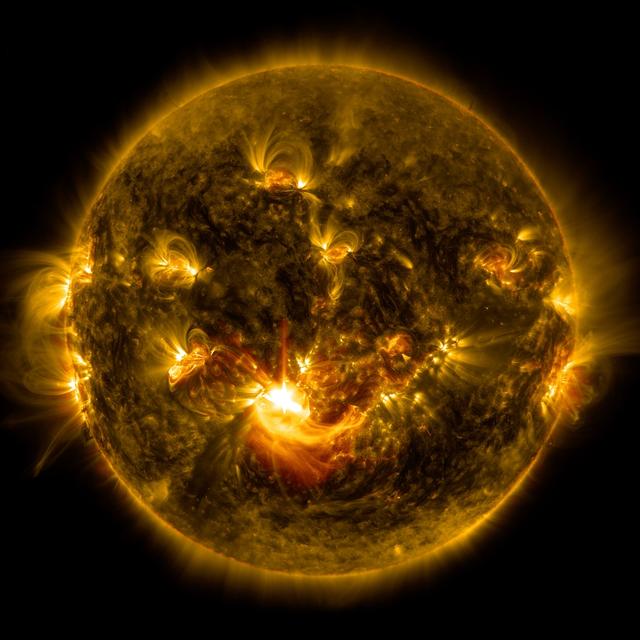
NASA's Solar Dynamics Observatory captured this image of a mid-level solar flare – as seen in the bright flash in the middle –on Dec. 16, 2014 shortly before midnight EST.  Read more: <a href="http://1.usa.gov/1BYLxsE" rel="nofollow">1.usa.gov/1BYLxsE</a>  Image Credit: NASA/Goddard/SDO  <b><a href="http://www.nasa.gov/audience/formedia/features/MP_Photo_Guidelines.html" rel="nofollow">NASA image use policy.</a></b>  <b><a href="http://www.nasa.gov/centers/goddard/home/index.html" rel="nofollow">NASA Goddard Space Flight Center</a></b> enables NASA’s mission through four scientific endeavors: Earth Science, Heliophysics, Solar System Exploration, and Astrophysics. Goddard plays a leading role in NASA’s accomplishments by contributing compelling scientific knowledge to advance the Agency’s mission. <b>Follow us on <a href="http://twitter.com/NASAGoddardPix" rel="nofollow">Twitter</a></b> <b>Like us on <a href="http://www.facebook.com/pages/Greenbelt-MD/NASA-Goddard/395013845897?ref=tsd" rel="nofollow">Facebook</a></b> <b>Find us on <a href="http://instagram.com/nasagoddard?vm=grid" rel="nofollow">Instagram</a></b>
Sun Release M8.7-Class Solar Flare on Dec. 17, 2014
NASA Administrator Charles Bolden issued the following statement regarding NASA's selection by the Partnership for Public Service as the Best Place to Work in Government:  &quot;NASA’s selection as the Best Place to Work in Government for the second year in a row is a testament to the excellence of our workforce and their determination to maintain America’s leadership in space exploration.&quot;  We are also pleased to announce that NASA Goddard was ranked 13th best agency subcomponent.  Read more: <a href="http://1.usa.gov/1cTQHIC" rel="nofollow">1.usa.gov/1cTQHIC</a>  <b><a href="http://www.nasa.gov/audience/formedia/features/MP_Photo_Guidelines.html" rel="nofollow">NASA image use policy.</a></b>  <b><a href="http://www.nasa.gov/centers/goddard/home/index.html" rel="nofollow">NASA Goddard Space Flight Center</a></b> enables NASA’s mission through four scientific endeavors: Earth Science, Heliophysics, Solar System Exploration, and Astrophysics. Goddard plays a leading role in NASA’s accomplishments by contributing compelling scientific knowledge to advance the Agency’s mission.  <b>Follow us on <a href="http://twitter.com/NASA_GoddardPix" rel="nofollow">Twitter</a></b>  <b>Like us on <a href="http://www.facebook.com/pages/Greenbelt-MD/NASA-Goddard/395013845897?ref=tsd" rel="nofollow">Facebook</a></b>  <b>Find us on <a href="http://instagram.com/nasagoddard?vm=grid" rel="nofollow">Instagram</a></b>
NASA Ranked Best Place to Work in Government for Second Year in a Row
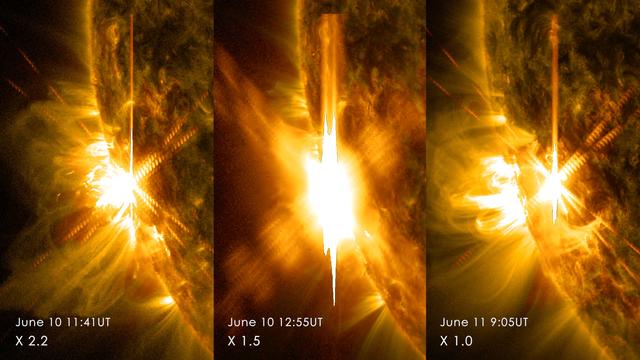
Three X-class flares erupted from the left side of the sun June 10-11, 2014. These images are from NASA's Solar Dynamics Observatory and show light in a blend of two ultraviolet wavelengths: 171 and 131 angstroms. The former is colorized in yellow; the latter, in red.  Read more: <a href="http://1.usa.gov/1lneJ3p" rel="nofollow">1.usa.gov/1lneJ3p</a>  Credit: NASA/SDO <b><a href="http://www.nasa.gov/audience/formedia/features/MP_Photo_Guidelines.html" rel="nofollow">NASA image use policy.</a></b>  <b><a href="http://www.nasa.gov/centers/goddard/home/index.html" rel="nofollow">NASA Goddard Space Flight Center</a></b> enables NASA’s mission through four scientific endeavors: Earth Science, Heliophysics, Solar System Exploration, and Astrophysics. Goddard plays a leading role in NASA’s accomplishments by contributing compelling scientific knowledge to advance the Agency’s mission.  <b>Follow us on <a href="http://twitter.com/NASAGoddardPix" rel="nofollow">Twitter</a></b>  <b>Like us on <a href="http://www.facebook.com/pages/Greenbelt-MD/NASA-Goddard/395013845897?ref=tsd" rel="nofollow">Facebook</a></b>  <b>Find us on <a href="http://instagram.com/nasagoddard?vm=grid" rel="nofollow">Instagram</a></b>
Sun Emits 3 X-class Flares in 2 Days
The wrapped up ISIM structure pushed back to the clean room post acoustics-test, to prepare for the EMI test. Credits: NASA/Desiree Stover    Read more: <a href="http://1.usa.gov/1KvoY4p" rel="nofollow">1.usa.gov/1KvoY4p</a>  <b><a href="http://www.nasa.gov/audience/formedia/features/MP_Photo_Guidelines.html" rel="nofollow">NASA image use policy.</a></b>  <b><a href="http://www.nasa.gov/centers/goddard/home/index.html" rel="nofollow">NASA Goddard Space Flight Center</a></b> enables NASA’s mission through four scientific endeavors: Earth Science, Heliophysics, Solar System Exploration, and Astrophysics. Goddard plays a leading role in NASA’s accomplishments by contributing compelling scientific knowledge to advance the Agency’s mission.  <b>Follow us on <a href="http://twitter.com/NASAGoddardPix" rel="nofollow">Twitter</a></b>  <b>Like us on <a href="http://www.facebook.com/pages/Greenbelt-MD/NASA-Goddard/395013845897?ref=tsd" rel="nofollow">Facebook</a></b>  <b>Find us on <a href="http://instagrid.me/nasagoddard/?vm=grid" rel="nofollow">Instagram</a></b>
James Webb Space Telescope's ISIM Passes Severe-Sound Test
NASA's Multiple Altimeter Beam Experimental Lidar flew over Southwest Greenland's glaciers and sea ice to test a new method of measuring the height of Earth from space.  Read more here: <a href="http://1.usa.gov/1fkvoBp" rel="nofollow">1.usa.gov/1fkvoBp</a>  Credit: NASA/Tim Williams  <b><a href="http://www.nasa.gov/audience/formedia/features/MP_Photo_Guidelines.html" rel="nofollow">NASA image use policy.</a></b>  <b><a href="http://www.nasa.gov/centers/goddard/home/index.html" rel="nofollow">NASA Goddard Space Flight Center</a></b> enables NASA’s mission through four scientific endeavors: Earth Science, Heliophysics, Solar System Exploration, and Astrophysics. Goddard plays a leading role in NASA’s accomplishments by contributing compelling scientific knowledge to advance the Agency’s mission.  <b>Follow us on <a href="http://twitter.com/NASAGoddardPix" rel="nofollow">Twitter</a></b>  <b>Like us on <a href="http://www.facebook.com/pages/Greenbelt-MD/NASA-Goddard/395013845897?ref=tsd" rel="nofollow">Facebook</a></b>  <b>Find us on <a href="http://instagram.com/nasagoddard?vm=grid" rel="nofollow">Instagram</a></b>
New NASA Laser Technology Reveals How Ice Measures Up
NASA's Solar Dynamics Observatory captured this image of a mid-level solar flare – as seen in the bright flash in the middle –on Dec. 16, 2014 shortly before midnight EST.  Read more: <a href="http://1.usa.gov/1BYLxsE" rel="nofollow">1.usa.gov/1BYLxsE</a>  Image Credit: NASA/Goddard/SDO  <b><a href="http://www.nasa.gov/audience/formedia/features/MP_Photo_Guidelines.html" rel="nofollow">NASA image use policy.</a></b>  <b><a href="http://www.nasa.gov/centers/goddard/home/index.html" rel="nofollow">NASA Goddard Space Flight Center</a></b> enables NASA’s mission through four scientific endeavors: Earth Science, Heliophysics, Solar System Exploration, and Astrophysics. Goddard plays a leading role in NASA’s accomplishments by contributing compelling scientific knowledge to advance the Agency’s mission. <b>Follow us on <a href="http://twitter.com/NASAGoddardPix" rel="nofollow">Twitter</a></b> <b>Like us on <a href="http://www.facebook.com/pages/Greenbelt-MD/NASA-Goddard/395013845897?ref=tsd" rel="nofollow">Facebook</a></b> <b>Find us on <a href="http://instagram.com/nasagoddard?vm=grid" rel="nofollow">Instagram</a></b>
Sun Release M8.7-Class Solar Flare on Dec. 17, 2014
NASA's Aqua satellite captured this image of Hurricane Joaquin over the Bahamas on Oct. 1 at 17:55 UTC (1:55 p.m. EDT).  Recently upgraded to Category 4, Hurricane Joaquin has maximum sustained winds of 130 mph which may grow stronger.  Credit: NASA Goddard MODIS Rapid Response Team  <b><a href="http://www.nasa.gov/audience/formedia/features/MP_Photo_Guidelines.html" rel="nofollow">NASA image use policy.</a></b>  <b><a href="http://www.nasa.gov/centers/goddard/home/index.html" rel="nofollow">NASA Goddard Space Flight Center</a></b> enables NASA’s mission through four scientific endeavors: Earth Science, Heliophysics, Solar System Exploration, and Astrophysics. Goddard plays a leading role in NASA’s accomplishments by contributing compelling scientific knowledge to advance the Agency’s mission.  <b>Follow us on <a href="http://twitter.com/NASAGoddardPix" rel="nofollow">Twitter</a></b>  <b>Like us on <a href="http://www.facebook.com/pages/Greenbelt-MD/NASA-Goddard/395013845897?ref=tsd" rel="nofollow">Facebook</a></b>  <b>Find us on <a href="http://instagrid.me/nasagoddard/?vm=grid" rel="nofollow">Instagram</a></b>
Hurricane Joaquin over the Bahamas
NASA's Solar Dynamics Observatory captured these images of a solar flare on Oct. 2, 2014. The solar flare is the bright flash of light on the right limb of the sun. A burst of solar material erupting out into space can be seen just below it.  Read more: <a href="http://1.usa.gov/1mW8rel" rel="nofollow">1.usa.gov/1mW8rel</a>  Credit: NASA/Goddard/SDO  <b><a href="http://www.nasa.gov/audience/formedia/features/MP_Photo_Guidelines.html" rel="nofollow">NASA image use policy.</a></b>  <b><a href="http://www.nasa.gov/centers/goddard/home/index.html" rel="nofollow">NASA Goddard Space Flight Center</a></b> enables NASA’s mission through four scientific endeavors: Earth Science, Heliophysics, Solar System Exploration, and Astrophysics. Goddard plays a leading role in NASA’s accomplishments by contributing compelling scientific knowledge to advance the Agency’s mission. <b>Follow us on <a href="http://twitter.com/NASAGoddardPix" rel="nofollow">Twitter</a></b> <b>Like us on <a href="http://www.facebook.com/pages/Greenbelt-MD/NASA-Goddard/395013845897?ref=tsd" rel="nofollow">Facebook</a></b> <b>Find us on <a href="http://instagram.com/nasagoddard?vm=grid" rel="nofollow">Instagram</a></b>
Mid-level Solar Flare
On Dec. 4 at 02:10 UTC, the MODIS instrument aboard NASA's Terra satellite took this visible image of Super Typhoon Hagupit approaching the Philippines.  Image Credit:  NASA Goddard's MODIS Rapid Response Team  Read more: <a href="http://1.usa.gov/12q3ssK" rel="nofollow">1.usa.gov/12q3ssK</a>  <b><a href="http://www.nasa.gov/audience/formedia/features/MP_Photo_Guidelines.html" rel="nofollow">NASA image use policy.</a></b>  <b><a href="http://www.nasa.gov/centers/goddard/home/index.html" rel="nofollow">NASA Goddard Space Flight Center</a></b> enables NASA’s mission through four scientific endeavors: Earth Science, Heliophysics, Solar System Exploration, and Astrophysics. Goddard plays a leading role in NASA’s accomplishments by contributing compelling scientific knowledge to advance the Agency’s mission. <b>Follow us on <a href="http://twitter.com/NASAGoddardPix" rel="nofollow">Twitter</a></b> <b>Like us on <a href="http://www.facebook.com/pages/Greenbelt-MD/NASA-Goddard/395013845897?ref=tsd" rel="nofollow">Facebook</a></b> <b>Find us on <a href="http://instagram.com/nasagoddard?vm=grid" rel="nofollow">Instagram</a></b>
NASA Observes Super Typhoon Hagupit; Philippines Under Warnings
Two donuts of seething radiation that surround Earth, called the Van Allen radiation belts, have been found to contain a nearly impenetrable barrier that prevents the fastest, most energetic electrons from reaching Earth.  Read more: <a href="http://1.usa.gov/11v7nUW" rel="nofollow">1.usa.gov/11v7nUW</a>  Caption: This is a visualization of the radiation belts with confined charged particles (blue &amp; yellow) and plasmapause boundary (blue-green surface)  Caption: NASA's Scientific Visualization Studio  <b><a href="http://www.nasa.gov/audience/formedia/features/MP_Photo_Guidelines.html" rel="nofollow">NASA image use policy.</a></b>  <b><a href="http://www.nasa.gov/centers/goddard/home/index.html" rel="nofollow">NASA Goddard Space Flight Center</a></b> enables NASA’s mission through four scientific endeavors: Earth Science, Heliophysics, Solar System Exploration, and Astrophysics. Goddard plays a leading role in NASA’s accomplishments by contributing compelling scientific knowledge to advance the Agency’s mission.  <b>Follow us on <a href="http://twitter.com/NASAGoddardPix" rel="nofollow">Twitter</a></b>  <b>Like us on <a href="http://www.facebook.com/pages/Greenbelt-MD/NASA-Goddard/395013845897?ref=tsd" rel="nofollow">Facebook</a></b>  <b>Find us on <a href="http://instagrid.me/nasagoddard/?vm=grid" rel="nofollow">Instagram</a></b>
NASA's Van Allen Probes Spot an Impenetrable Barrier in Space
Not one, but two nodosaurs passed through the Goddard campus 110 to 112 million years ago, a USGS paleontologist confirmed.    Pictured here the second track, overlapping the first, looks to be a young version of the same creature, perhaps following and sniffing along after, said Rob Weems, emeritus paleontologist and stratigrapher with the USGS. “It’s definitely a track.”  To read more go to: <a href="http://1.usa.gov/P9NYg7" rel="nofollow">1.usa.gov/P9NYg7</a>  Credit: NASA/GSFC/Rebecca Roth  <b><a href="http://www.nasa.gov/audience/formedia/features/MP_Photo_Guidelines.html" rel="nofollow">NASA image use policy.</a></b>  <b><a href="http://www.nasa.gov/centers/goddard/home/index.html" rel="nofollow">NASA Goddard Space Flight Center</a></b> enables NASA’s mission through four scientific endeavors: Earth Science, Heliophysics, Solar System Exploration, and Astrophysics. Goddard plays a leading role in NASA’s accomplishments by contributing compelling scientific knowledge to advance the Agency’s mission.  <b>Follow us on <a href="http://twitter.com/NASA_GoddardPix" rel="nofollow">Twitter</a></b>  <b>Like us on <a href="http://www.facebook.com/pages/Greenbelt-MD/NASA-Goddard/395013845897?ref=tsd" rel="nofollow">Facebook</a></b>  <b>Find us on <a href="http://instagrid.me/nasagoddard/?vm=grid" rel="nofollow">Instagram</a></b>
Nodosaur Footprint Verified - Detail of Baby Footprint
STS-51E Crewman Jeff Hoffman in 1-G Trainer with Space Experiment toys and camera, 01/17/1985, .            1.  STS-51E - EXPERIMENTS (TOYS)             JSC, HOUSTON, TX            Also available in 35 B&W
CREW TRAINING (TOYS) - STS-51E - JSC
STS-51E Crewman Jeff Hoffman in 1-G Trainer with space experiment toys and camera, 01/17/1985, .                  1.  STS-51E - EXPERIMENTS (TOYS)                   JSC, HOUSTON, TX                  Also available in 35 B&W
CREW TRAINING (TOYS) - STS-51E - JSC
NASA GOES-11 satellite image showing the US west coast on March 24, 2010 1:45 PM EDT.  <b><a href="http://goes.gsfc.nasa.gov/" rel="nofollow">Credit: NOAA/NASA GOES Project</a><b>  <b><a href="http://www.nasa.gov/centers/goddard/home/index.html" rel="nofollow">NASA Goddard Space Flight Center</a></b>  is home to the nation's largest organization of combined scientists, engineers and technologists that build spacecraft, instruments and new technology to study the Earth, the sun, our solar system, and the universe.  <b>Follow us on <a href="http://twitter.com/NASA_GoddardPix" rel="nofollow">Twitter</a></b>  <b>Join us on <a href="http://www.facebook.com/pages/Greenbelt-MD/NASA-Goddard/395013845897?ref=tsd" rel="nofollow">Facebook</a></b></b></b>
NASA GOES-11 West Coast view March 24, 2010
More than 9,000 years ago, a catastrophic volcanic eruption created a huge caldera on the southern end of Onekotan Island, one of the Kuril Islands, located off the southern tip of Russia’s Kamchatka Peninsula. Today, the ancient Tao-Rusyr Caldera is filled by the deep blue waters of Kal’tsevoe Lake.  The Advanced Land Imager (ALI) on NASA’s Earth Observing-1 (EO-1) satellite acquired this true-color image of southern Onekotan on June 10, 2009. In this late-spring shot, snow or ice lingers on the land, forming white streaks on a brown-and-green land surface. In the northwest quadrant of the caldera is Krenitzyn Peak, which rises to a height of 1,325 meters (4,347 feet).  Like the other Kuril Islands, Onekotan lies along the Pacific “Ring of Fire.” The Kuril Island volcanoes are fueled by magma generated by the subduction of the Pacific Plate under the Eurasian Plate, which takes place along a deep trench about 200 kilometers (120 miles) to the islands’ east. The only historical eruption at Krenitzyn Peak occurred in 1952, a week after a magnitude 9.0 earthquake along the subduction fault.  NASA Earth Observatory image created by Robert Simmon, using EO-1 ALI data provided courtesy of the NASA EO-1 team. Caption by Michon Scott and Rebecca Lindsey.   <b><a href="http://www.nasa.gov/audience/formedia/features/MP_Photo_Guidelines.html" rel="nofollow">NASA image use policy.</a></b>  <b><a href="http://www.nasa.gov/centers/goddard/home/index.html" rel="nofollow">NASA Goddard Space Flight Center</a></b> enables NASA’s mission through four scientific endeavors: Earth Science, Heliophysics, Solar System Exploration, and Astrophysics. Goddard plays a leading role in NASA’s accomplishments by contributing compelling scientific knowledge to advance the Agency’s mission.  <b>Follow us on <a href="http://twitter.com/NASAGoddardPix" rel="nofollow">Twitter</a></b>  <b>Like us on <a href="http://www.facebook.com/pages/Greenbelt-MD/NASA-Goddard/395013845897?ref=tsd" rel="nofollow">Facebook</a></b>  <b>Find us on <a href="http://instagrid.me/nasagoddard/?vm=grid" rel="nofollow">Instagram</a></b>
Tao-Rusyr Caldera, Onekotan Island, Kuril Islands
The islands and coral atolls of French Polynesia, located in the southern Pacific Ocean, epitomize the idea of tropical paradise: white sandy beaches, turquoise lagoons, and palm trees. Even from the distance of space, the view of these atolls is beautiful. This image from the Advanced Land Imager on NASA’s Earth Observing-1 (EO-1) satellite shows the southern part of Tikehau Atoll, one of the 78 coral atolls that make up the Tuamotu Archipelago. Patches of coral make star-like spots across the turquoise expanse of the lagoon. A line of tree-covered islets encircles the lagoon. At the southernmost tip of the atoll, a large islet accommodates a small village and an air strip.  NASA image created by Jesse Allen, using EO-1 ALI data provided courtesy of the NASA EO-1 Team. Caption by Rebecca Lindsey.   <b><a href="http://www.nasa.gov/audience/formedia/features/MP_Photo_Guidelines.html" rel="nofollow">NASA image use policy.</a></b>  <b><a href="http://www.nasa.gov/centers/goddard/home/index.html" rel="nofollow">NASA Goddard Space Flight Center</a></b> enables NASA’s mission through four scientific endeavors: Earth Science, Heliophysics, Solar System Exploration, and Astrophysics. Goddard plays a leading role in NASA’s accomplishments by contributing compelling scientific knowledge to advance the Agency’s mission.  <b>Follow us on <a href="http://twitter.com/NASAGoddardPix" rel="nofollow">Twitter</a></b>  <b>Like us on <a href="http://www.facebook.com/pages/Greenbelt-MD/NASA-Goddard/395013845897?ref=tsd" rel="nofollow">Facebook</a></b>  <b>Find us on <a href="http://instagrid.me/nasagoddard/?vm=grid" rel="nofollow">Instagram</a></b>
Tikehau Atoll, French Polynesia
A tethered Stennis Space Center employee climbs an A-3 Test Stand ladder June 8, 2012, against the backdrop of the A-2 and B-1/B-2 stands. The new A-3 Test Stand will enable simulated high-altitude testing of next-generation rocket engines.
A-3 Test Stand