From December 10, 1966, until his retirement on February 27, 1976, Stanley P. Butchart served as Chief (later, Director) of Flight Operations at NASA's Flight Research Center (renamed on March 26, 1976, the Hugh L. Dryden Flight Research Center). Initially, his responsibilities in this position included the Research Pilots Branch, a Maintenance and Manufacturing Branch, and an Operations Engineering Branch, the last of which not only included propulsion and electrical/electronic sections but project engineers for the X-15 and lifting bodies. During his tenure, however, the responsibilities of his directorate came to include not only Flight Test Engineering Support but Flight Systems and Loads laboratories. Before becoming Chief of Flight Operations, Butchart had served since June of 1966 as head of the Research Pilots Branch (Chief Pilot) and then as acting chief of Flight Operations. He had joined the Center (then known as the National Advisory Committee for Aeronautics' High-Speed Flight Research Station) as a research pilot on May 10, 1951. During his career as a research pilot, he flew a great variety of research and air-launch aircraft including the D-558-I, D-558-II, B-29 (plus its Navy version, the P2B), X-4, X-5, KC-135, CV-880, CV-990, B-47, B-52, B-747, F-100A, F-101, F-102, F-104, PA-30 Twin Comanche, JetStar, F-111, R4D, B-720, and B-47. Although previously a single-engine pilot, he became the Center's principal multi-engine pilot during a period of air-launches in which the pilot of the air-launch aircraft (B-29 or P2B) basically directed the operations. It was he who called for the chase planes before each drop, directed the positioning of fire rescue vehicles, and released the experimental aircraft after ensuring that all was ready for the drop. As pilot of the B-29 and P2B, Butchart launched the X-1A once, the X-1B 13 times, the X-1E 22 times, and the D-558-II 102 times. In addition, he towed the M2-F1 lightweight lifting body 14 times behind an R4
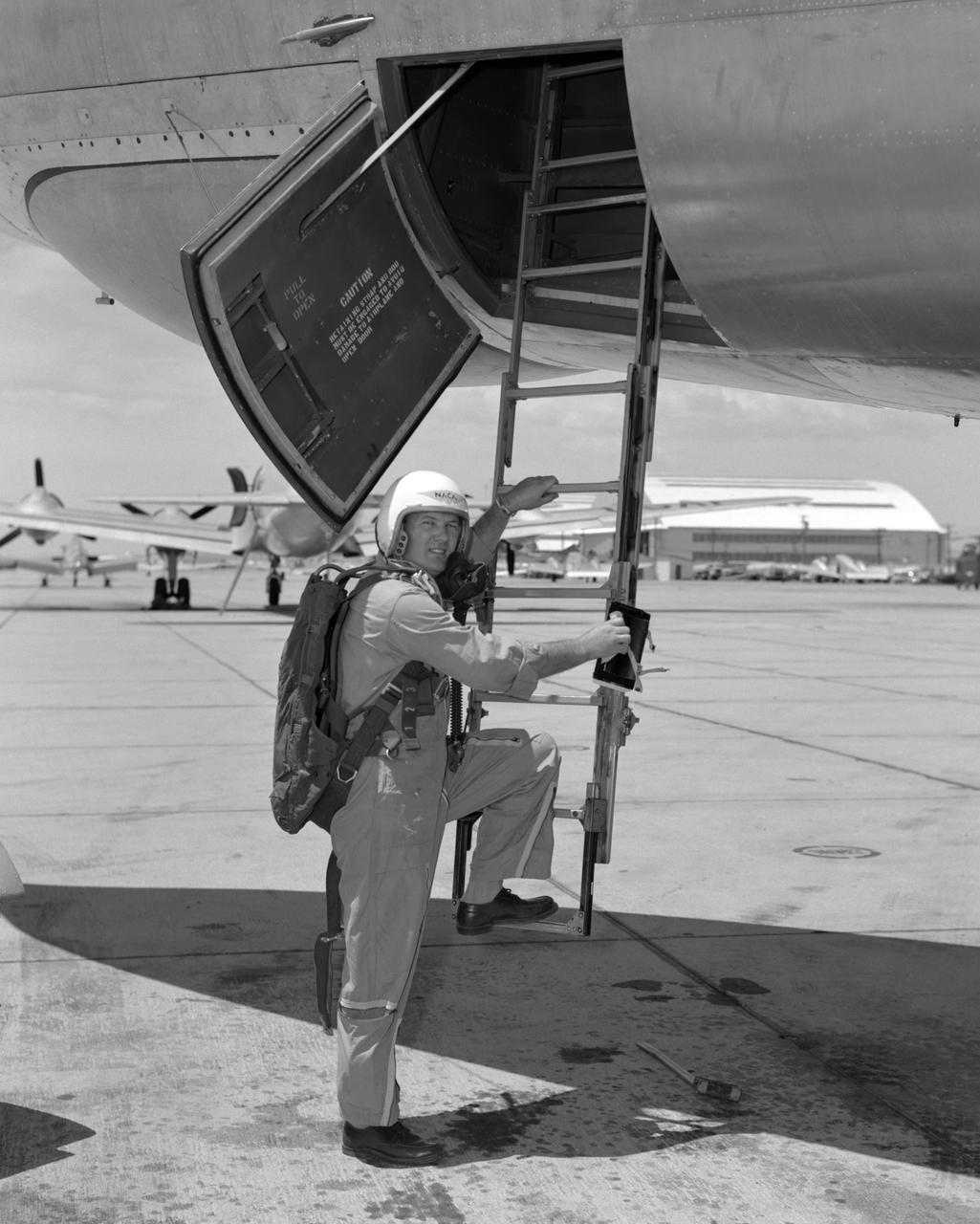
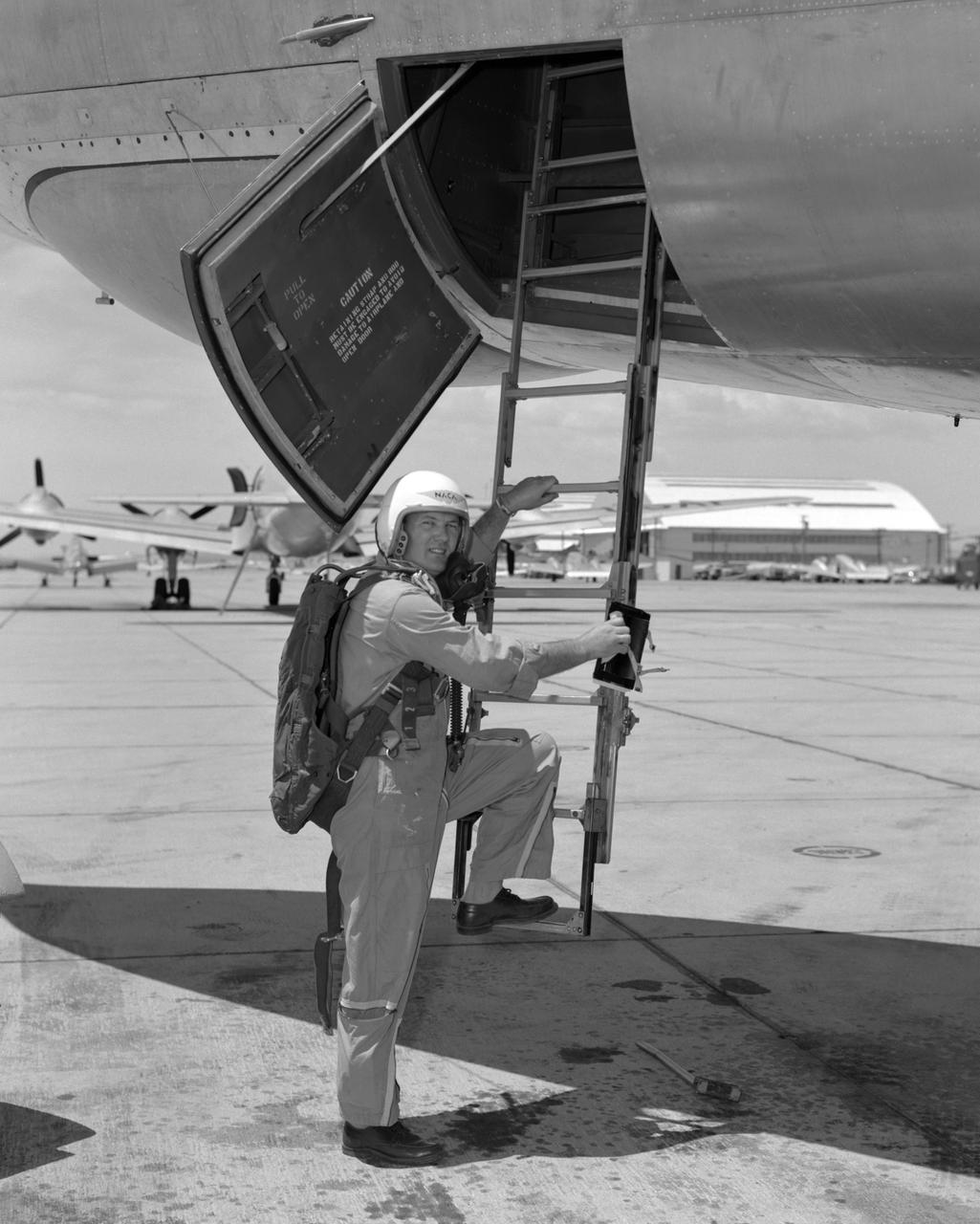
Stan Butchart climbing into B-47.
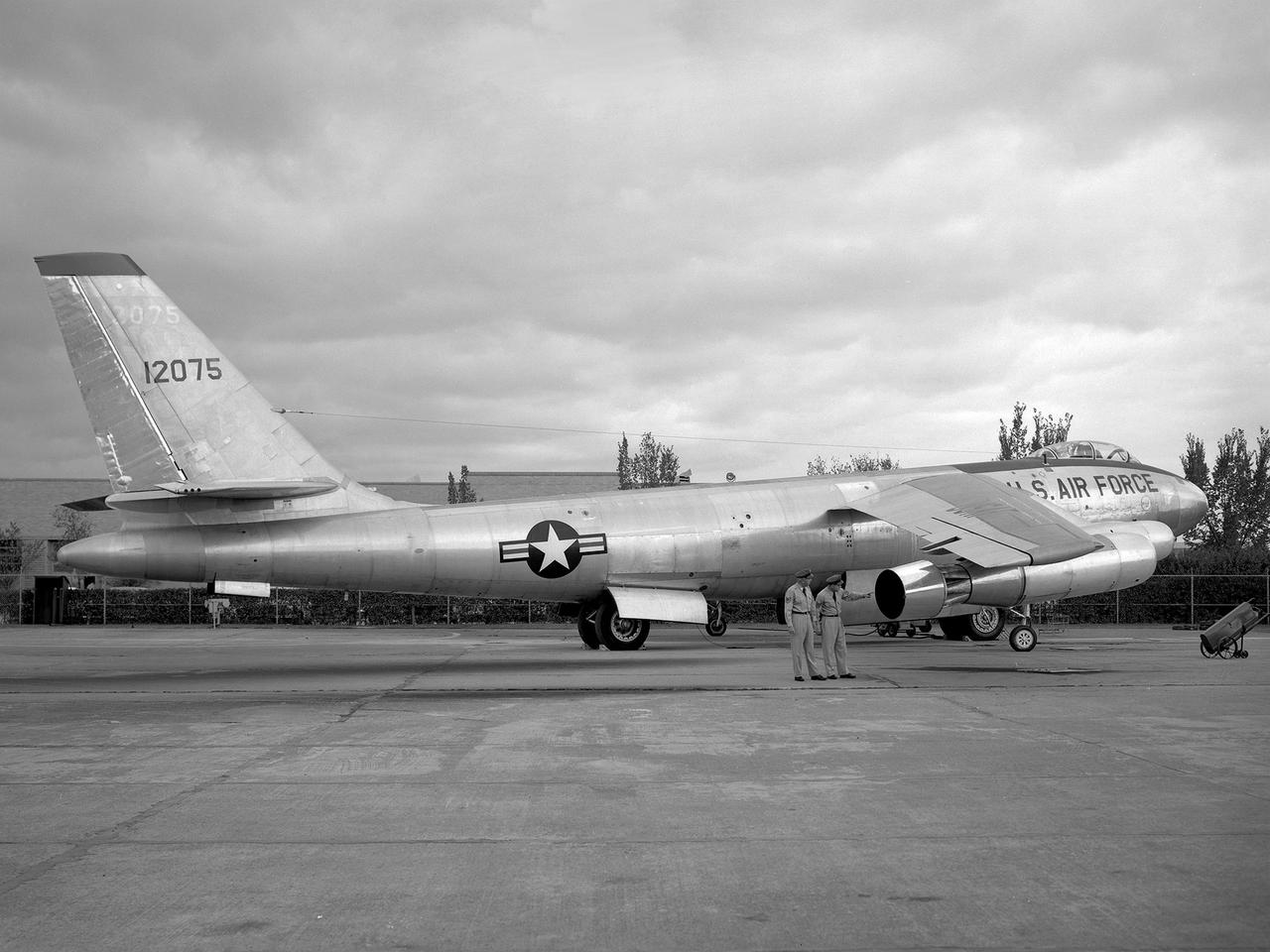
A Boeing B-47 Stratojet bomber with a noise-reducing ejector on its engine at the 1957 Inspection of the National Advisory Committee for Aeronautics (NACA) Lewis Flight Propulsion Laboratory. Representatives from the military, aeronautical industry, universities, and the press were invited to the laboratory to be briefed on the NACA’s latest research efforts and tour the state- of- the- art test facilities. Over 1700 people visited the NACA Lewis in Cleveland, Ohio during October 7 - 10, 1957. By the mid-1950s, the aircraft industry was close to introducing jet airliners to the nation’s airways. The noise produced by the large jet engines, however, would pose a considerable problem for communities near airports. This problem was demonstrated at the 1957 Inspection by an NACA Lewis researcher who played longplay (LP) audio records of military jet engines for an audience. Tests showed that the source of the loudest noise was not the engine itself, but the mixing of the engine’s exhaust with the surrounding air in the atmosphere. The pressures resulting from this turbulence produced sound waves. One of Lewis’ first studies sought to design an exhaust nozzle that reduced the turbulence. A Pratt and Whitney J57 was tested in the Altitude Wind Tunnel with many of these nozzle configurations from January to May 1957. Researchers found that the various nozzle types did reduce the noise levels but also reduced the aircraft’s thrust. Afterwards, they determined that the addition of an NACA-developed ejector reduced the noise levels without diminishing thrust.
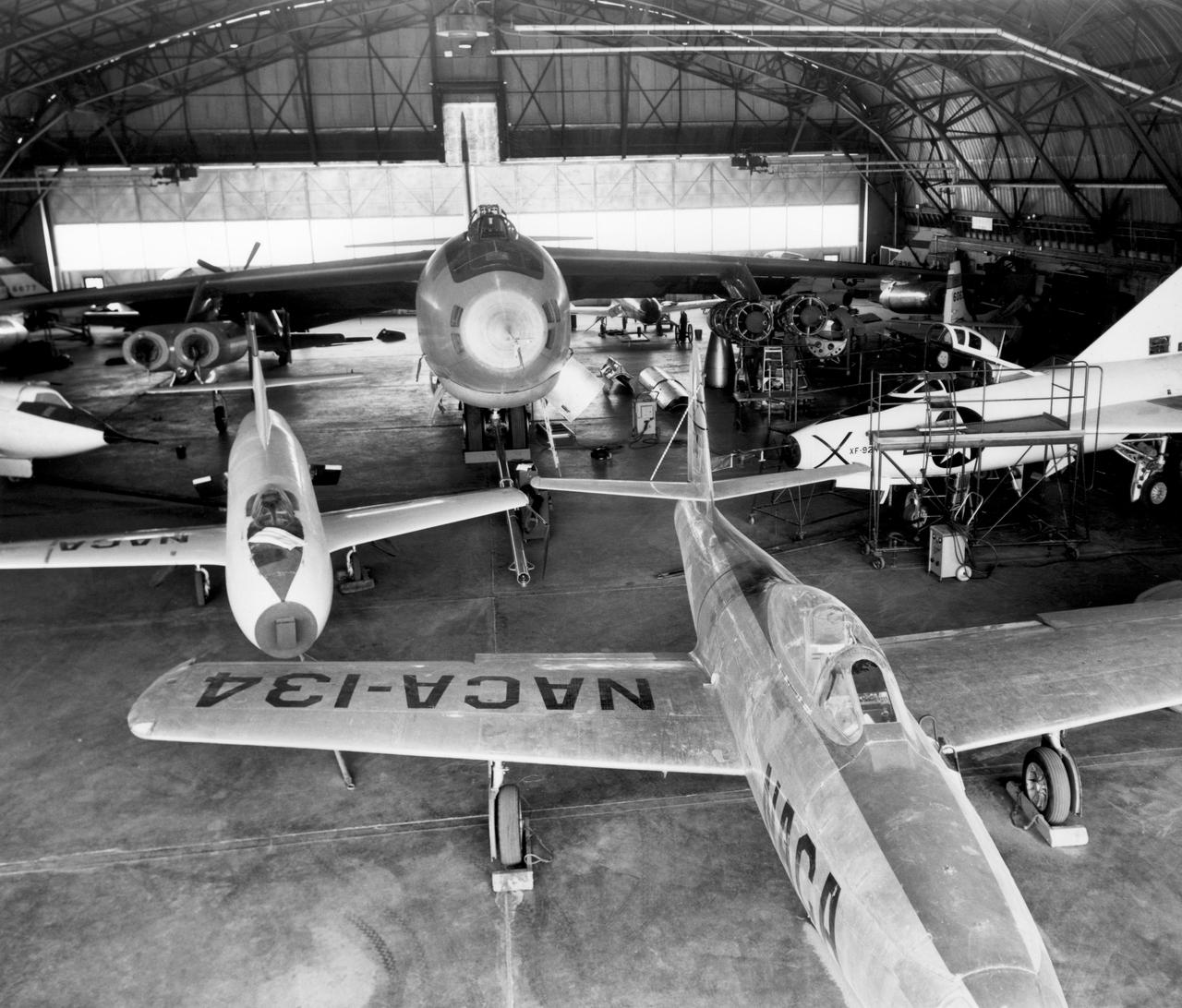
In the center foreground of this 1953 hangar photo is the YF-84A (NACA 134/Air Force 45-59490) used for vortex generator research. It arrived on November 28, 1949, and departed on April 21, 1954. Beside it is the third D-558-1 aircraft (NACA 142/Navy 37972). This aircraft was used for a total of 78 transonic research flights from April 1949 to June 1954. It replaced the second D-558-1, lost in the crash which killed Howard Lilly. Just visible on the left edge is the nose of the first D-558-2 (NACA 143/Navy 37973). Douglas turned the aircraft over to NACA on August 31, 1951, after the contractor had completed its initial test flights. NACA only made a single flight with the aircraft, on September 17, 1956, before the program was cancelled. In the center of the photo is the B-47A (NACA 150/Air Force 49-1900). The B-47 jet bomber, with its thin, swept-back wings, and six podded engines, represented the state of the art in aircraft design in the early 1950s. The aircraft undertook a number of research activities between May 1953 and its 78th and final research flight on November 22, 1957. The tests showed that the aircraft had a buffeting problem at speeds above Mach 0.8. Among the pilots who flew the B-47 were later X-15 pilots Joe Walker, A. Scott Crossfield, John B. McKay, and Neil A. Armstrong. On the right side of the B-47 is NACA's X-1 (Air Force 46-063). The second XS-1 aircraft built, it was fitted with a thicker wing than that on the first aircraft, which had exceeded Mach 1 on October 14, 1947. Flight research by NACA pilots indicated that this thicker wing produced 30 percent more drag at transonic speeds compared to the thinner wing on the first X-1. After a final flight on October 23, 1951, the aircraft was grounded due to the possibility of fatigue failure of the nitrogen spheres used to pressurize the fuel tanks. At the time of this photo, in 1953, the aircraft was in storage. In 1955, the aircraft was extensively modified, becoming the X-1E. In front o
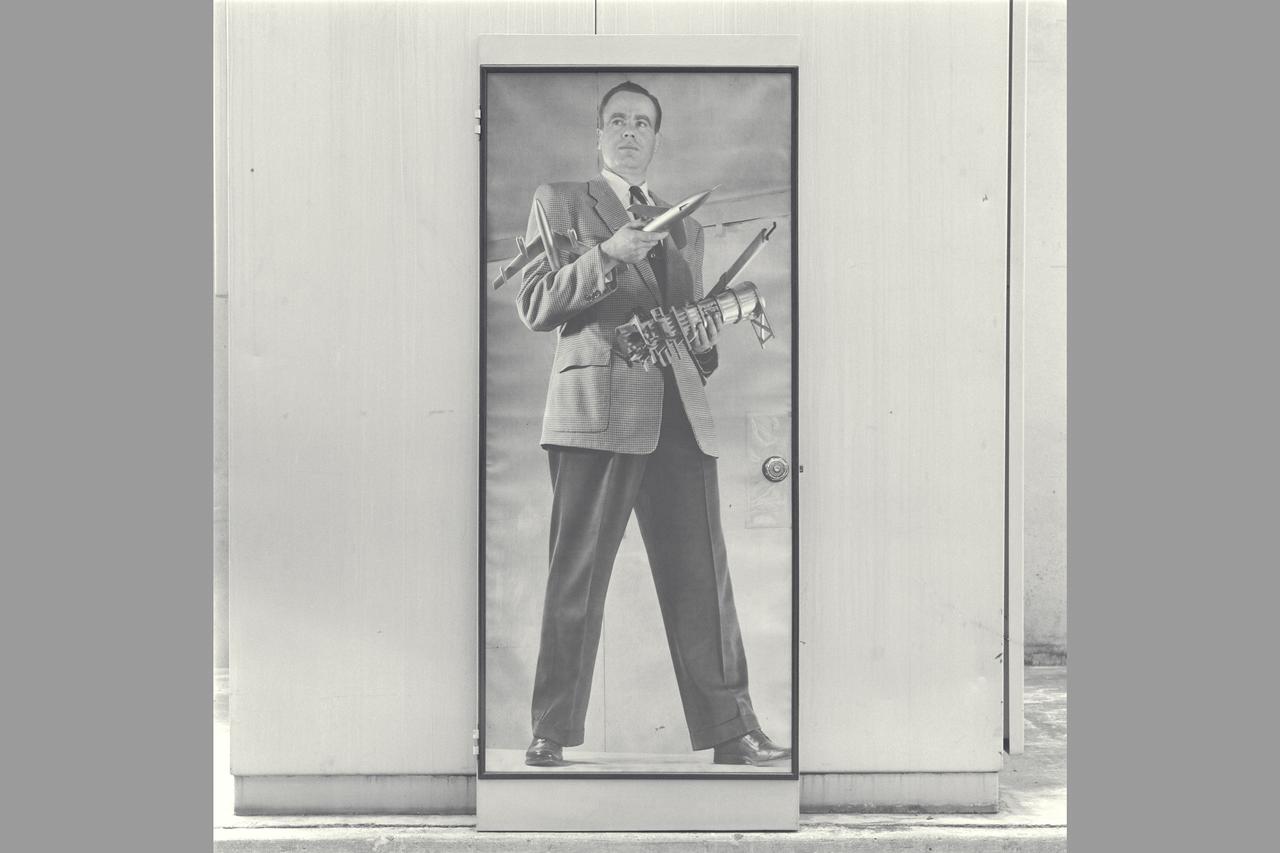
Historical Recruiting poster of Cleve E Voss holding model of B-47, Douglas D-558-2, 6x6ft w.t. & slide rule (on Display at Macy's San Francisco 1947 - 1950 ish) NOTE: Poster recovered from Voss's wife and copied from the (bedroom) door to which it had been adhered.
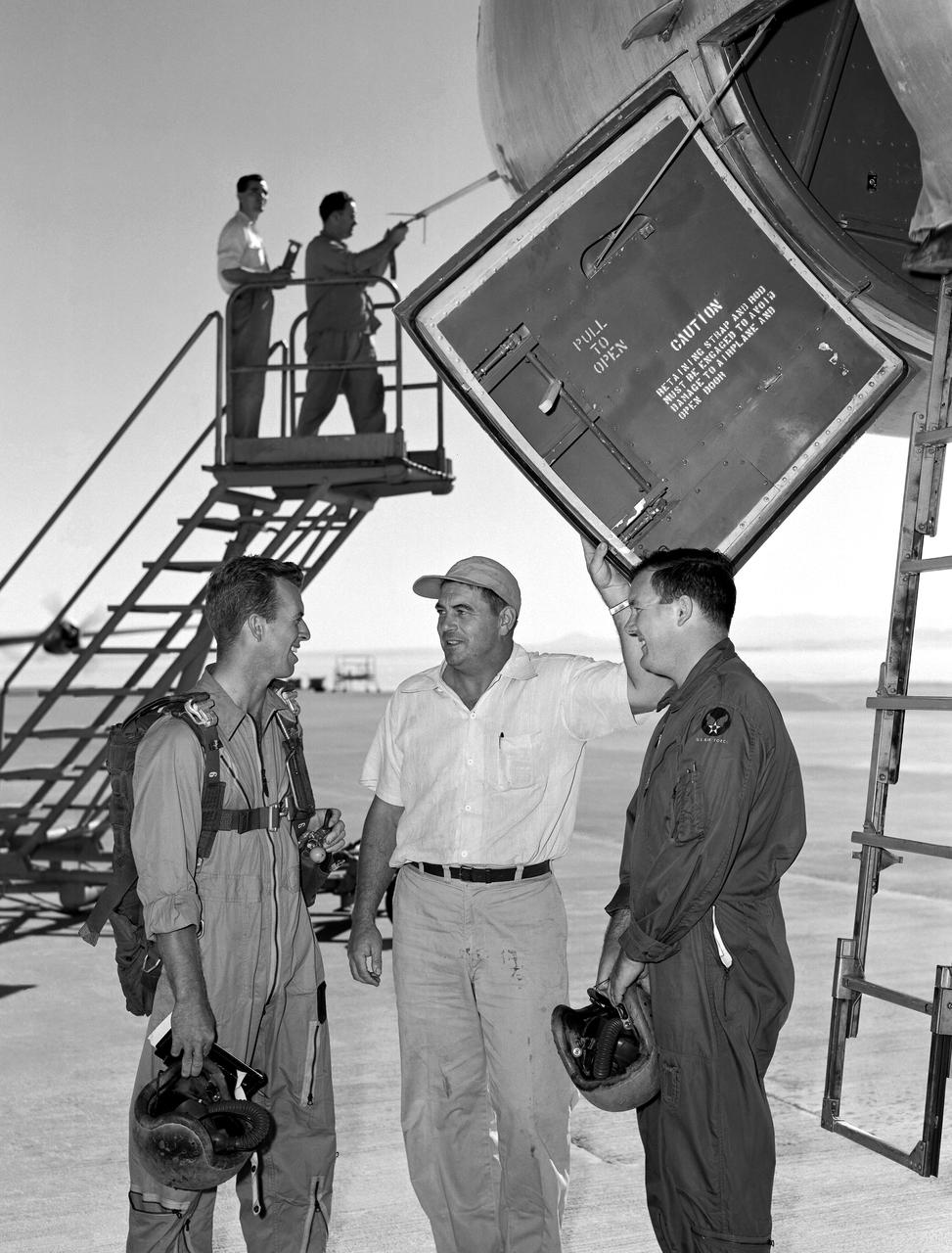
B-47A Stratojet on ramp with pilots and crew. In 1954 after a research flight in the Boeing B-47A Stratojet Crew Chief Wilbur McClenaghan (center) asks of the pilots if there are any "squawks" that should be taken care of before the next flight. Pilots are Joe Walker on the viewer's left and Stanley Butchart on the right. Data system technician Merle Curtis, in coveralls, is busy checking the airdata head mounted on the nose boom with the help of Instrumentation Crew Chief Raymond Langley. The door to the cockpit area is open showing a view of the ladder that folds down to be used by the pilots to enter and leave the area.
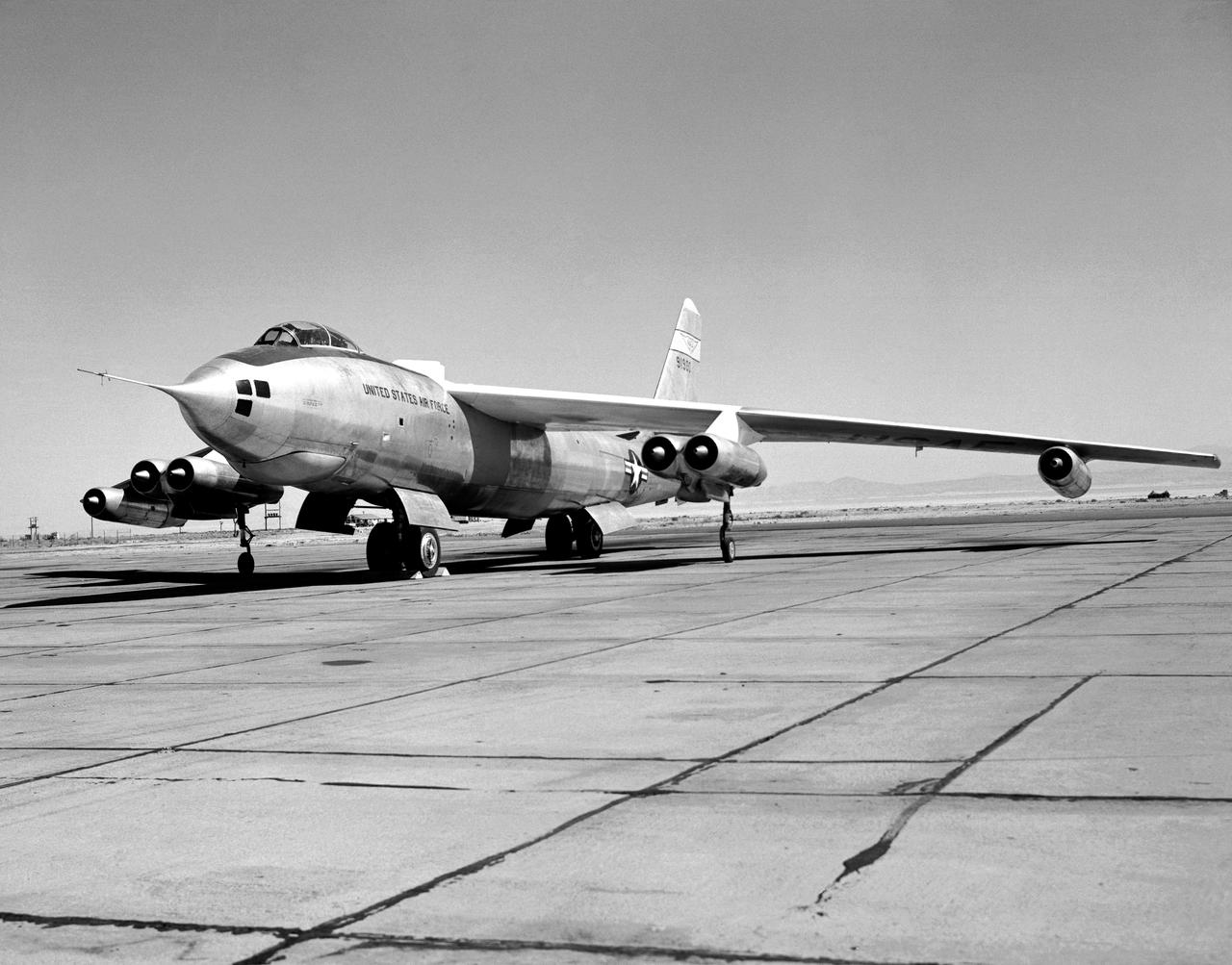
B-47A on ramp
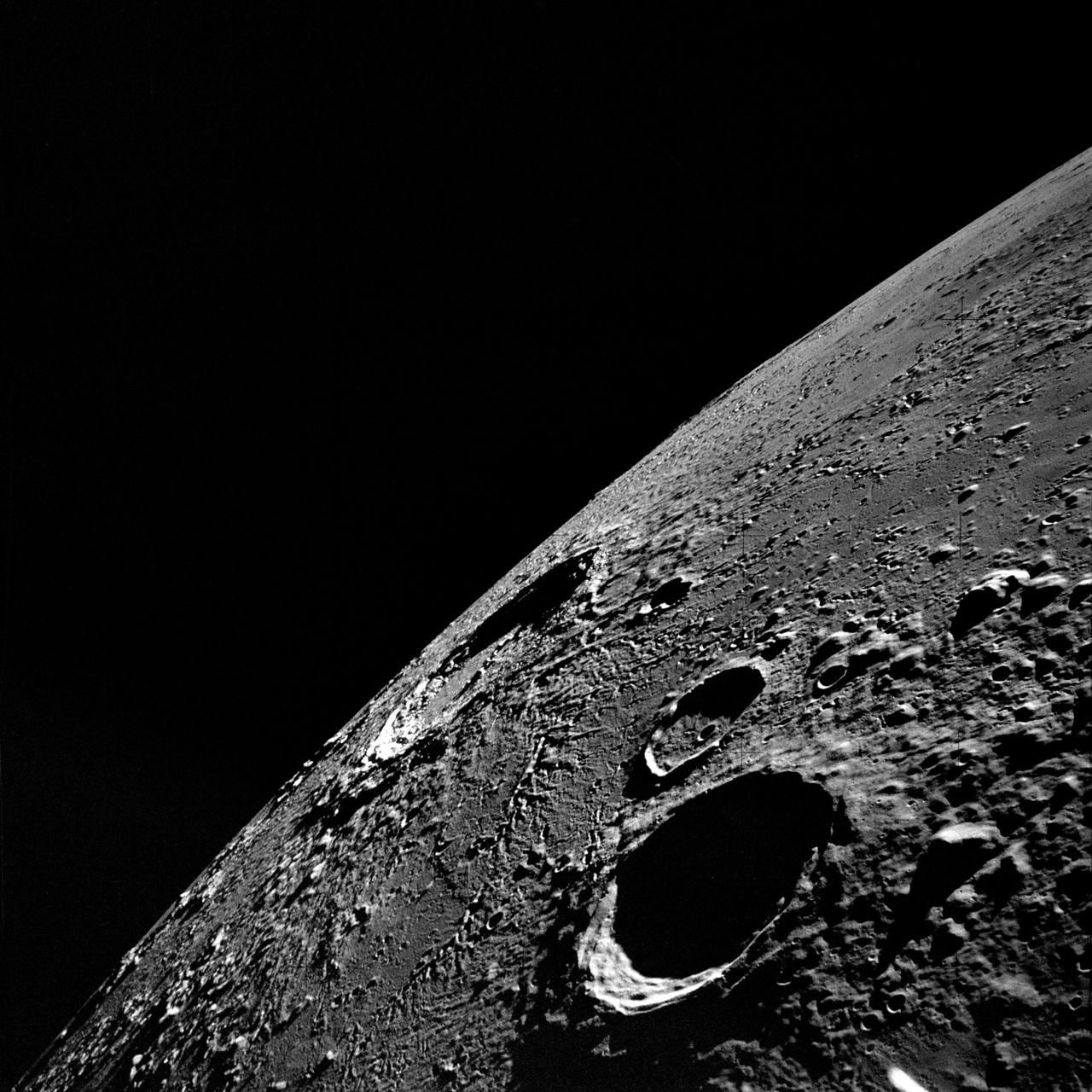
AS12-47-6876 (November 1969) --- An Apollo 12 high-oblique view of the lunar nearside looking northeast toward the crater Copernicus (in center near horizon), as photographed from lunar orbit. The shaded crater in the foreground is Reinhold. Reinhold B is the crater next to Reinhold which as the small crater in the center of it. Also, visible is the keyhole-shaped crater Fauth near the crater Copernicus.
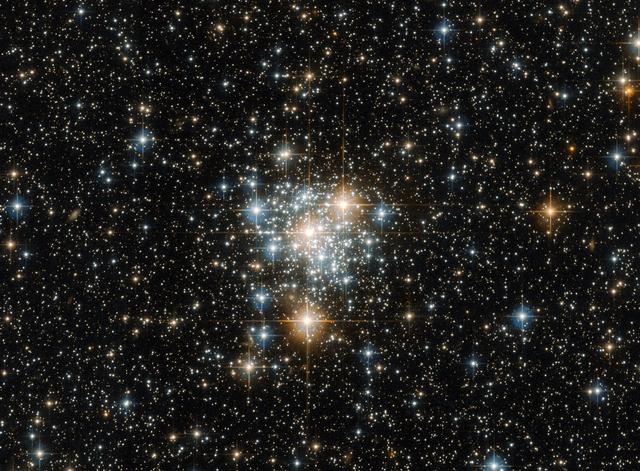
It may be famous for hosting spectacular sights such as the Tucana Dwarf Galaxy and 47 Tucanae (heic1510), the second brightest globular cluster in the night sky, but the southern constellation of Tucana (The Toucan) also possesses a variety of unsung cosmic beauties. One such beauty is NGC 299, an open star cluster located within the Small Magellanic Cloud just under 200,000 light-years away. Open clusters such as this are collections of stars weakly bound by the shackles of gravity, all of which formed from the same massive molecular cloud of gas and dust. Because of this, all the stars have the same age and composition, but vary in their mass because they formed at different positions within the cloud. This unique property not only ensures a spectacular sight when viewed through a sophisticated instrument attached to a telescope such as Hubble’s Advanced Camera for Surveys, but gives astronomers a cosmic laboratory in which to study the formation and evolution of stars — a process that is thought to depend strongly on a star’s mass. Credit: ESA/Hubble & NASA <b><a href="http://www.nasa.gov/audience/formedia/features/MP_Photo_Guidelines.html" rel="nofollow">NASA image use policy.</a></b> <b><a href="http://www.nasa.gov/centers/goddard/home/index.html" rel="nofollow">NASA Goddard Space Flight Center</a></b> enables NASA’s mission through four scientific endeavors: Earth Science, Heliophysics, Solar System Exploration, and Astrophysics. Goddard plays a leading role in NASA’s accomplishments by contributing compelling scientific knowledge to advance the Agency’s mission. <b>Follow us on <a href="http://twitter.com/NASAGoddardPix" rel="nofollow">Twitter</a></b> <b>Like us on <a href="http://www.facebook.com/pages/Greenbelt-MD/NASA-Goddard/395013845897?ref=tsd" rel="nofollow">Facebook</a></b> <b>Find us on <a href="http://instagrid.me/nasagoddard/?vm=grid" rel="nofollow">Instagram</a></b>
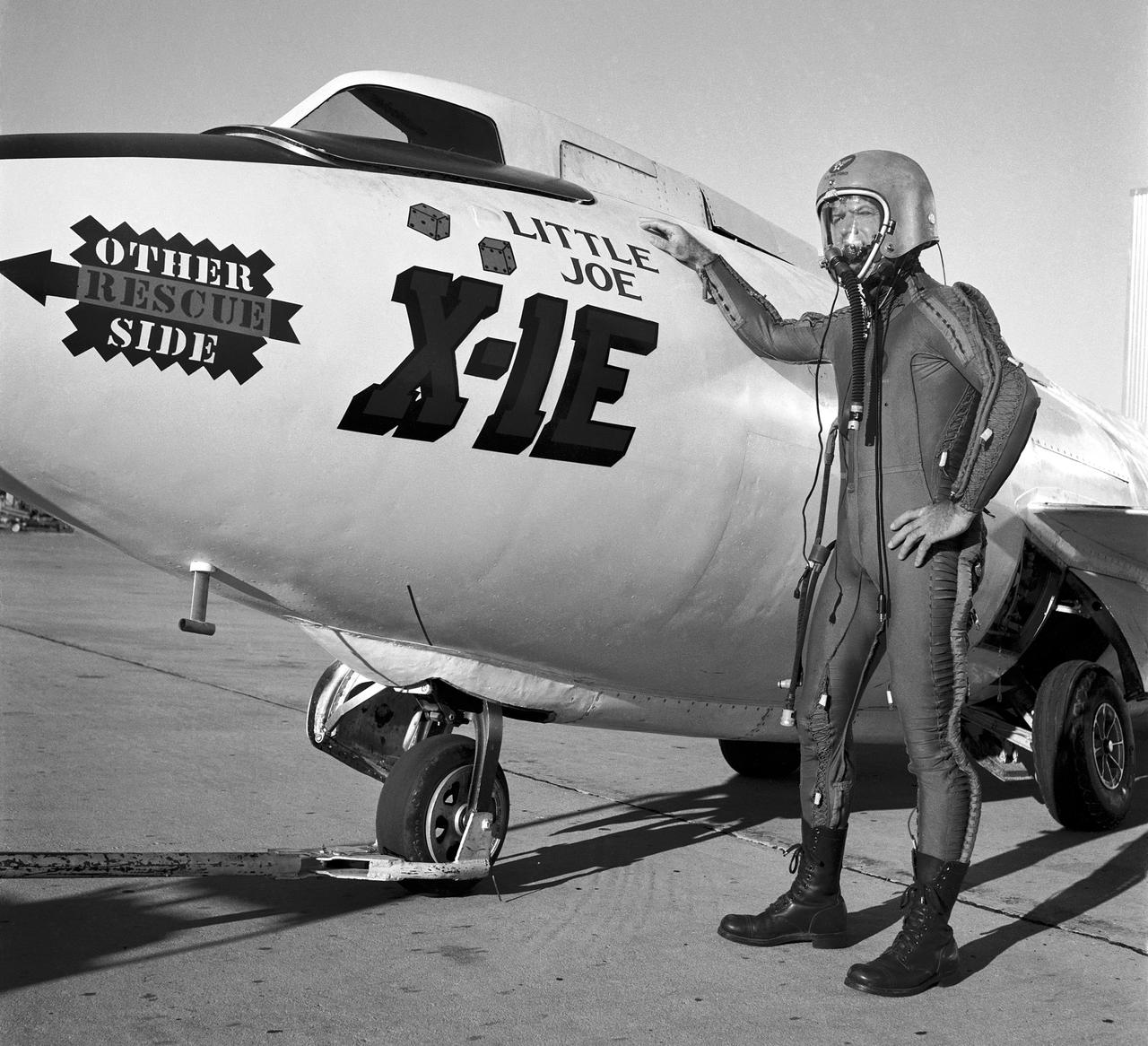
Joe Walker in a pressure suit beside the X-1E at the NASA High-Speed Flight Station, Edwards,California. The dice and "Little Joe" are prominently displayed under the cockpit area. (Little Joe is a dice players slang term for two deuces.) Walker is shown in the photo wearing an early Air Force partial pressure suit. This protected the pilot if cockpit pressure was lost above 50,000 feet. Similar suits were used in such aircraft as B-47s, B-52s, F-104s, U-2s, and the X-2 and D-558-II research aircraft. Five years later, Walker reached 354,200 feet in the X-15. Similar artwork - reading "Little Joe the II" - was applied for the record flight. These cases are two of the few times that research aircraft carried such nose art.
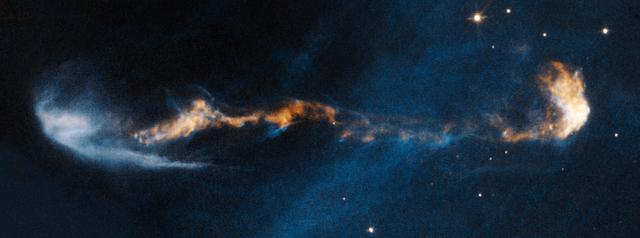
AUGUST 31, 2011: A team of scientists has collected enough high-resolution Hubble Space Telescope images over a 14-year period to stitch together time-lapse movies of powerful jets ejected from three young stars. The jets, a byproduct of gas accretion around newly forming stars, shoot off at supersonic speeds in opposite directions through space. These phenomena are providing clues about the final stages of a star’s birth, offering a peek at how our Sun came into existence 4.5 billion years ago. Hubble’s unprecedented sharpness allows astronomers to see changes in the jets over just a few years’ time. Most astronomical processes change over timescales that are much longer than a human lifetime. To read more go to: <a href="http://www.nasa.gov/mission_pages/hubble/science/supersonic-jets.html" rel="nofollow">www.nasa.gov/mission_pages/hubble/science/supersonic-jets...</a> Object Name: HH 47 Image Type: Astronomical Credit: NASA, ESA, and P. Hartigan (Rice University)..<b><a href="http://www.nasa.gov/centers/goddard/home/index.html" rel="nofollow">NASA Goddard Space Flight Center</a></b> enables NASA’s mission through four scientific endeavors: Earth Science, Heliophysics, Solar System Exploration, and Astrophysics. Goddard plays a leading role in NASA’s accomplishments by contributing compelling scientific knowledge to advance the Agency’s mission. <b>Follow us on <a href="http://twitter.com/NASA_GoddardPix" rel="nofollow">Twitter</a></b> <b>Like us on <a href="http://www.facebook.com/pages/Greenbelt-MD/NASA-Goddard/395013845897?ref=tsd" rel="nofollow">Facebook</a></b> <b>Find us on <a href="http://instagrid.me/nasagoddard/?vm=grid" rel="nofollow">Instagram</a></b>

Using NASA’s Hubble Space Telescope, astronomers have captured for the first time snapshots of fledging white dwarf stars beginning their slow-paced, 40-million-year migration from the crowded center of an ancient star cluster to the less populated suburbs. White dwarfs are the burned-out relics of stars that rapidly lose mass, cool down and shut off their nuclear furnaces. As these glowing carcasses age and shed weight, their orbits begin to expand outward from the star cluster’s packed downtown. This migration is caused by a gravitational tussle among stars inside the cluster. Globular star clusters sort out stars according to their mass, governed by a gravitational billiard ball game where lower mass stars rob momentum from more massive stars. The result is that heavier stars slow down and sink to the cluster's core, while lighter stars pick up speed and move across the cluster to the edge. This process is known as "mass segregation." Until these Hubble observations, astronomers had never definitively seen the dynamical conveyor belt in action. Astronomers used Hubble to watch the white-dwarf exodus in the globular star cluster 47 Tucanae, a dense swarm of hundreds of thousands of stars in our Milky Way galaxy. The cluster resides 16,700 light-years away in the southern constellation Tucana. Read more: <a href="http://www.nasa.gov/feature/goddard/hubble-catches-stellar-exodus-in-action" rel="nofollow">www.nasa.gov/feature/goddard/hubble-catches-stellar-exodu...</a> Credits: NASA, ESA, and H. Richer and J. Heyl (University of British Columbia, Vancouver, Canada); acknowledgement: J. Mack (STScI) and G. Piotto (University of Padova, Italy) <b><a href="http://www.nasa.gov/audience/formedia/features/MP_Photo_Guidelines.html" rel="nofollow">NASA image use policy.</a></b> <b><a href="http://www.nasa.gov/centers/goddard/home/index.html" rel="nofollow">NASA Goddard Space Flight Center</a></b> enables NASA’s mission through four scientific endeavors: Earth Science, Heliophysics, Solar System Exploration, and Astrophysics. Goddard plays a leading role in NASA’s accomplishments by contributing compelling scientific knowledge to advance the Agency’s mission. <b>Follow us on <a href="http://twitter.com/NASAGoddardPix" rel="nofollow">Twitter</a></b> <b>Like us on <a href="http://www.facebook.com/pages/Greenbelt-MD/NASA-Goddard/395013845897?ref=tsd" rel="nofollow">Facebook</a></b> <b>Find us on <a href="http://instagrid.me/nasagoddard/?vm=grid" rel="nofollow">Instagram</a></b>
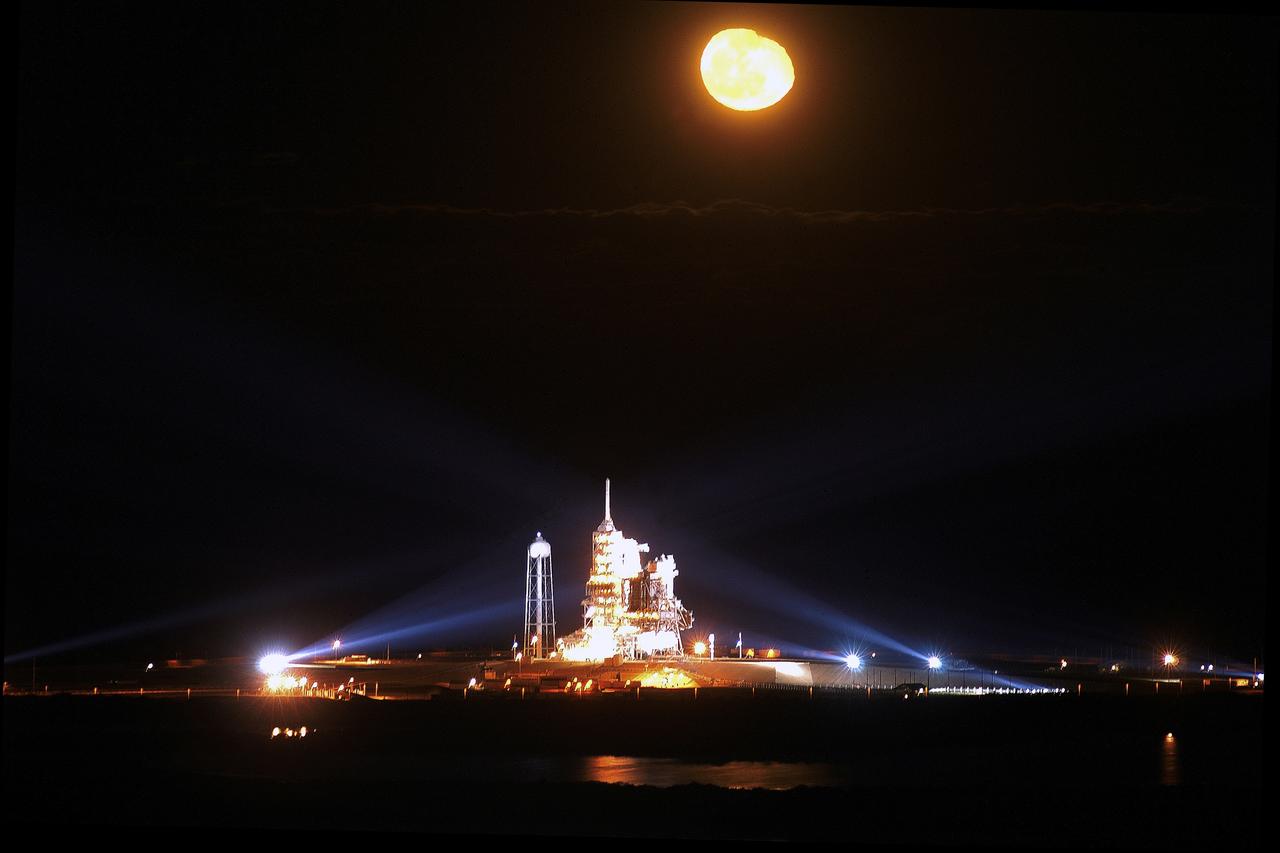
STS113-S-012 (23 November 2002) --- The Space Shuttle Endeavour is pictured on a lighted launch pad at Kennedy Space Center’s (KSC) Launch Complex 39 with a gibbous moon shining brightly in the night sky. Liftoff from KSC occurred at 7:49:47 p.m. (EST), November 23, 2002. The launch is the 19th for Endeavour, and the 112th flight in the Shuttle program. Mission STS-113 is the 16th assembly flight to the International Space Station, carrying another structure for the Station, the P1 integrated truss. Crewmembers onboard were astronauts James D. Wetherbee, commander; Paul S. Lockhart, pilot, along with astronauts Michael E. Lopez-Alegria and John B. Herrington, both mission specialists. Also onboard were the Expedition 6 crewmembers--astronauts Kenneth D. Bowersox and Donald R. Pettit, along with cosmonaut Nikolai M. Budarin--who went on to replace Expedition 5 aboard the Station.
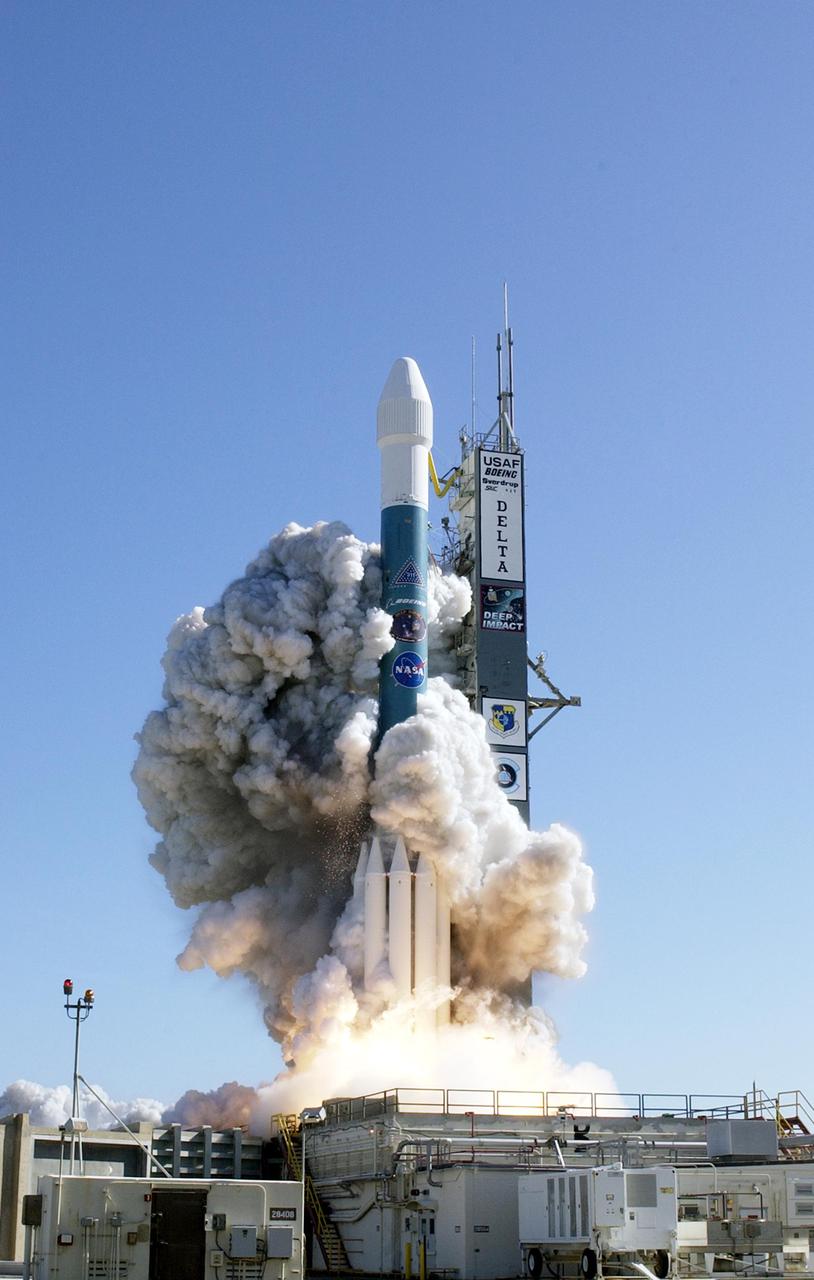
KENNEDY SPACE CENTER, FLA. - Engulfed by flames and smoke, NASA’s Deep Impact spacecraft lifts off at 1:47 p.m. EST today from Launch Pad 17-B, Cape Canaveral Air Force Station, Fla. A NASA Discovery mission, Deep Impact is heading for space and a rendezvous 83 million miles from Earth with Comet Tempel 1. After releasing a 3- by 3-foot projectile (impactor) to crash onto the surface July 4, 2005, Deep Impact’s flyby spacecraft will reveal the secrets of the comet’s interior by collecting pictures and data of how the crater forms, measuring the crater’s depth and diameter as well as the composition of the interior of the crater and any material thrown out, and determining the changes in natural outgassing produced by the impact. It will send the data back to Earth through the antennas of the Deep Space Network.
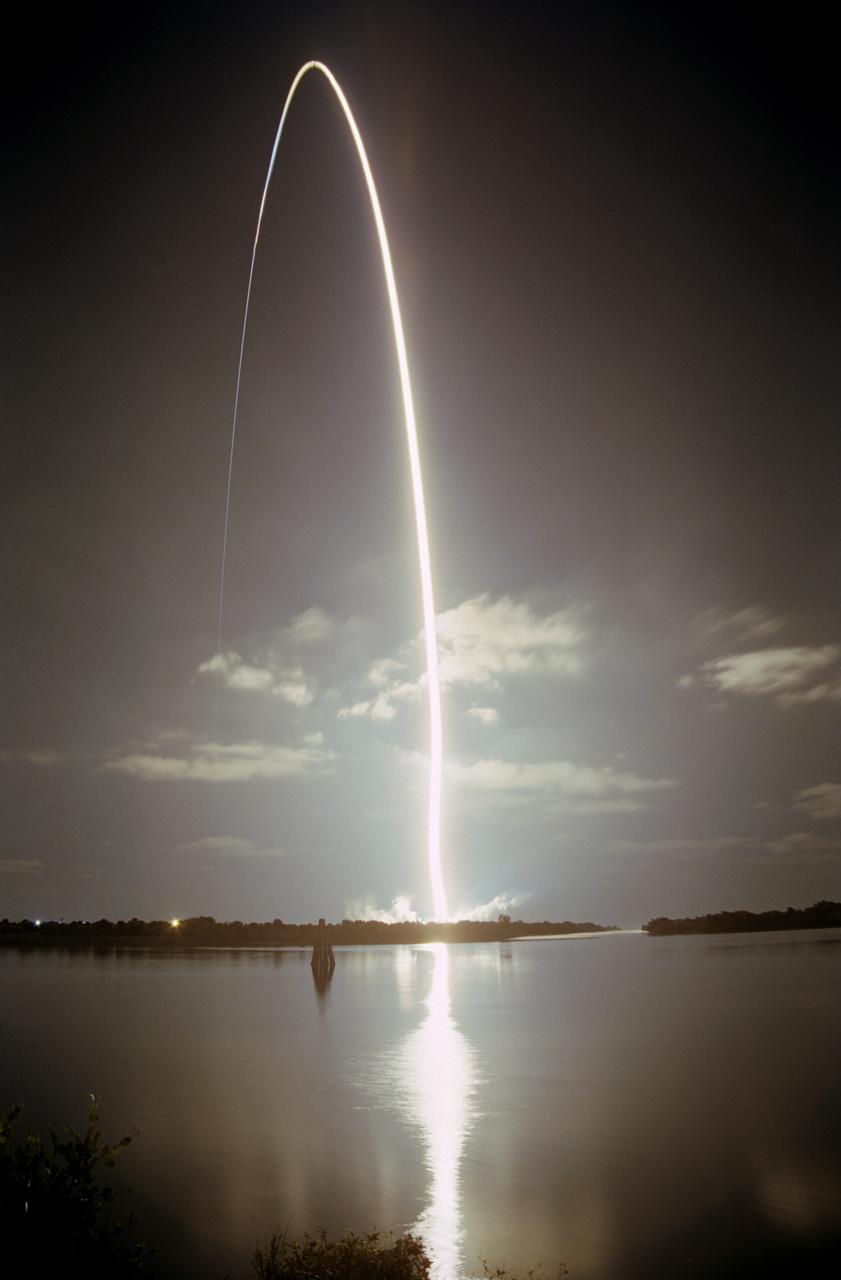
STS113-S-035 (23 November 2002) --- The Space Shuttle Endeavour arcs into the still-black sky over the Atlantic Ocean, casting a fiery glow on its way. Liftoff from the Kennedy Space Center's Launch Complex 39 occurred at 7:49:47 p.m. (EST), November 23, 2002. The launch is the 19th for Endeavour, and the 112th flight in the Shuttle program. Mission STS-113 is the 16th assembly flight to the International Space Station, carrying another structure for the Station, the P1 integrated truss. Crewmembers onboard were astronauts James D. Wetherbee, commander; Paul S. Lockhart, pilot, along with astronauts Michael E. Lopez-Alegria and John B. Herrington, both mission specialists. Also onboard were the Expedition 6 crewmembers--astronauts Kenneth D. Bowersox and Donald R. Pettit, along with cosmonaut Nikolai M. Budarin--who went on to replace Expedition 5 aboard the Station.
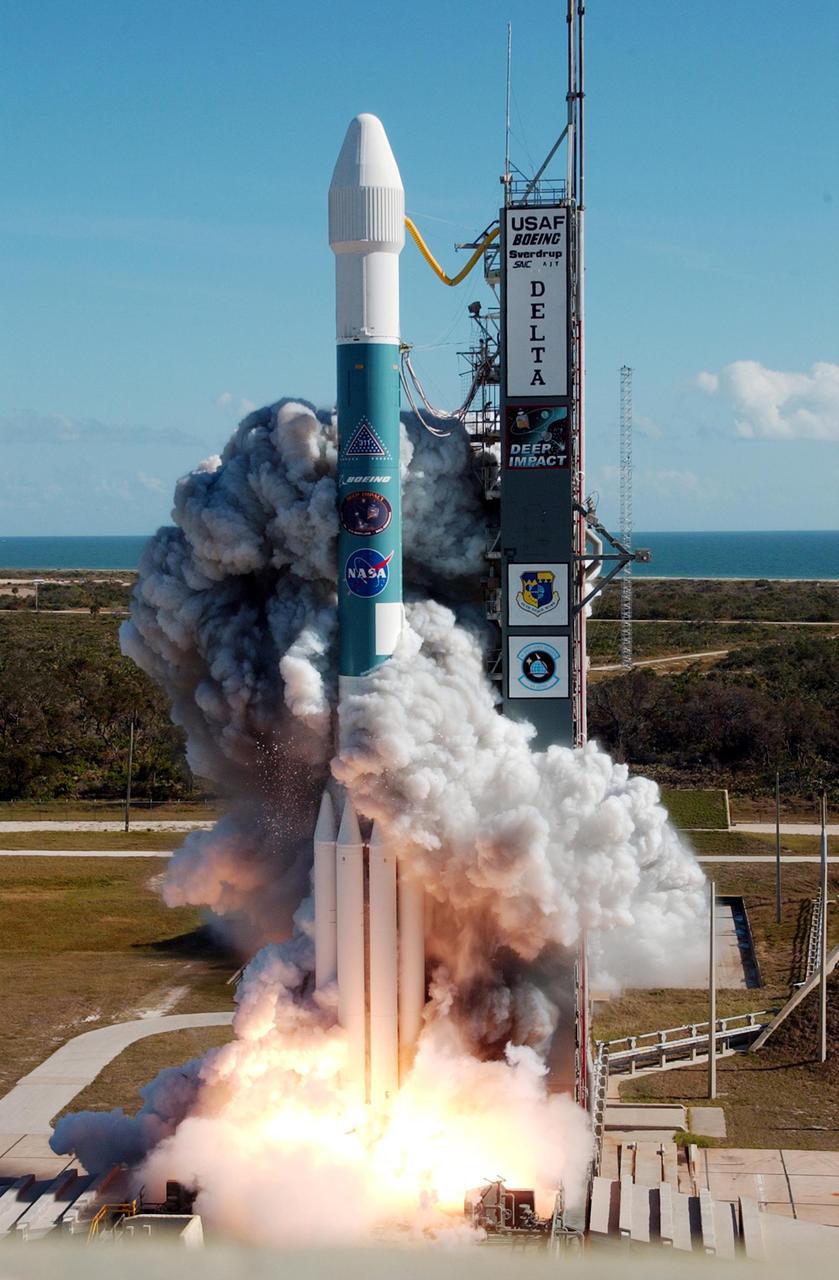
KENNEDY SPACE CENTER, FLA. - Erupting from the flames and smoke beneath it, NASA’s Deep Impact spacecraft lifts off at 1:47 p.m. EST today from Launch Pad 17-B, Cape Canaveral Air Force Station, Fla. A NASA Discovery mission, Deep Impact is heading for space and a rendezvous 83 million miles from Earth with Comet Tempel 1. After releasing a 3- by 3-foot projectile (impactor) to crash onto the surface July 4, 2005, Deep Impact’s flyby spacecraft will reveal the secrets of the comet’s interior by collecting pictures and data of how the crater forms, measuring the crater’s depth and diameter as well as the composition of the interior of the crater and any material thrown out, and determining the changes in natural outgassing produced by the impact. It will send the data back to Earth through the antennas of the Deep Space Network.
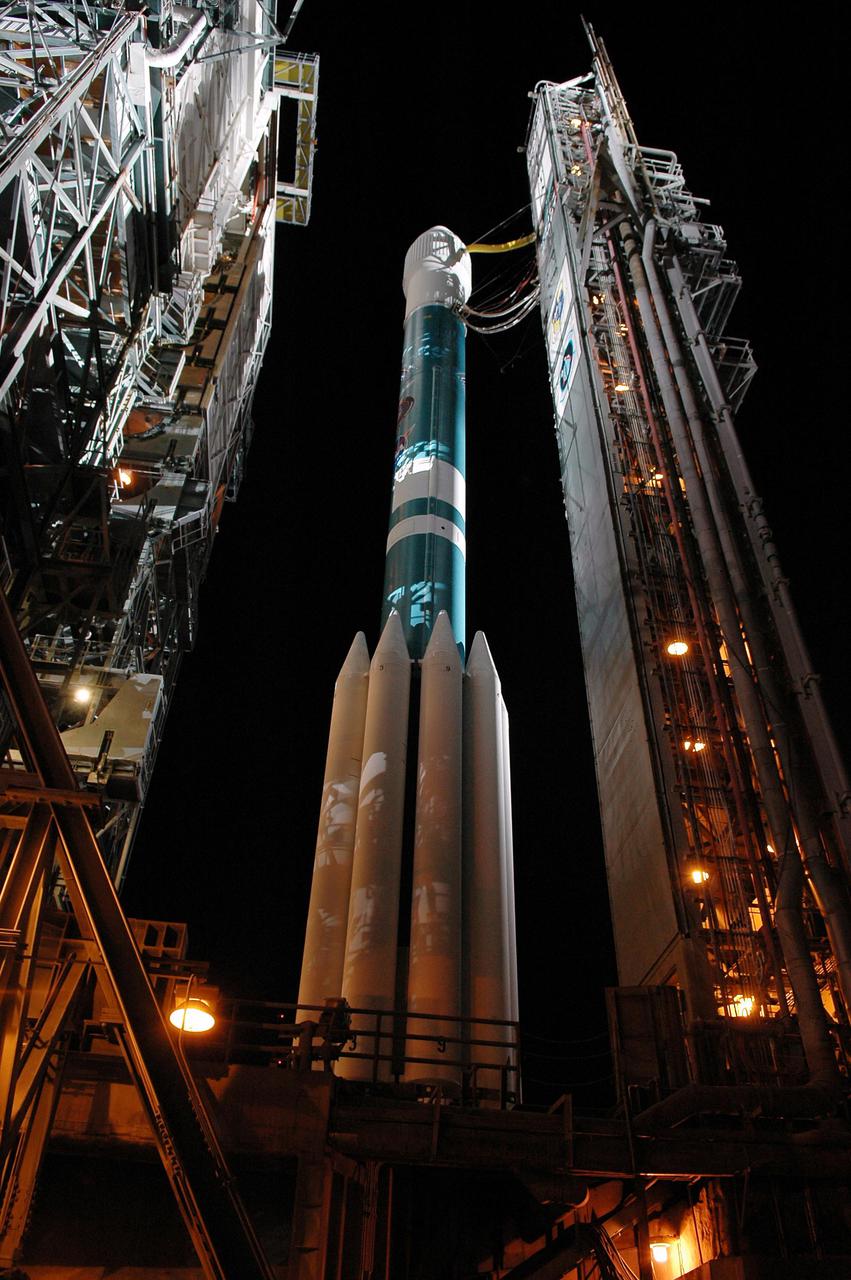
KENNEDY SPACE CENTER, FLA. - On Launch Pad 17-B, Cape Canaveral Air Force Station, Fla., shadows paint the Boeing Delta II rocket carrying the Deep Impact spacecraft as the mobile service tower at left is rolled back before launch.Scheduled for liftoff at 1:47 p.m. EST today, Deep Impact will head for space and a rendezvous with Comet Tempel 1 when the comet is 83 million miles from Earth. After releasing a 3- by 3-foot projectile (impactor) to crash onto the surface July 4, 2005, Deep Impact’s flyby spacecraft will reveal the secrets of the comet’s interior by collecting pictures and data of how the crater forms, measuring the crater’s depth and diameter as well as the composition of the interior of the crater and any material thrown out, and determining the changes in natural outgassing produced by the impact. It will send the data back to Earth through the antennas of the Deep Space Network. Deep Impact is a NASA Discovery mission.
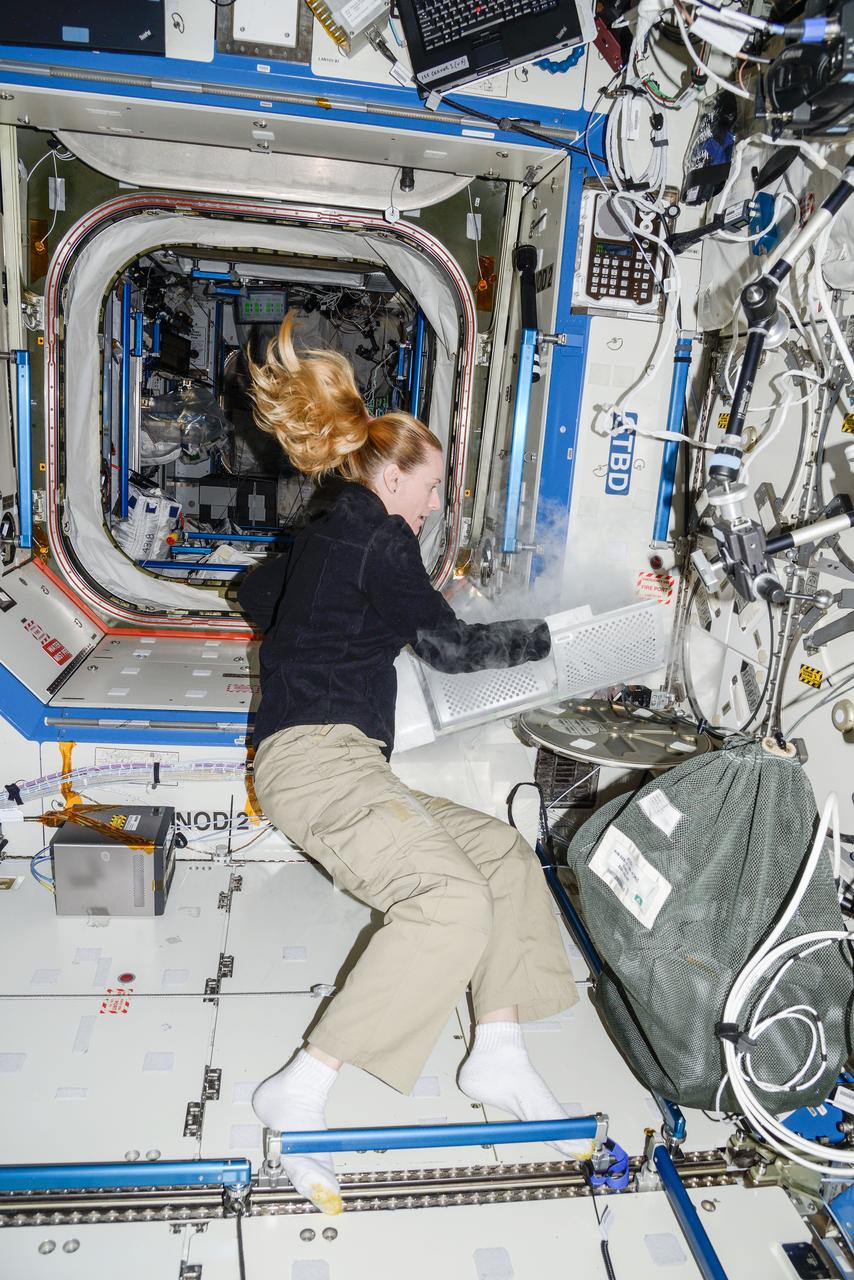
iss049e053079 (9/23/2016) --- NASA astronaut Kate Rubins is photographed in U.S. lab aboard the International Space Station (ISS) performing the second harvest of the Plant RNA Regulation experiment by stowing the European Modular Cultivation System (EMCS) Seed Cassettes from EMCS Rotors A and B in an EMCS Cold Stowage Pouch and placing them in Minus Eighty-Degree Laboratory Freezer for ISS (MELFI). The Plant RNA Regulation investigation studies the first steps of gene expression involved in development of roots and shoots. Scientists expect to find new molecules that play a role in how plants adapt and respond to the microgravity environment of space, which provides new insight into growing plants for food and oxygen supplies on long-duration missions. Sent as part of Russian Return imagery on 47S.
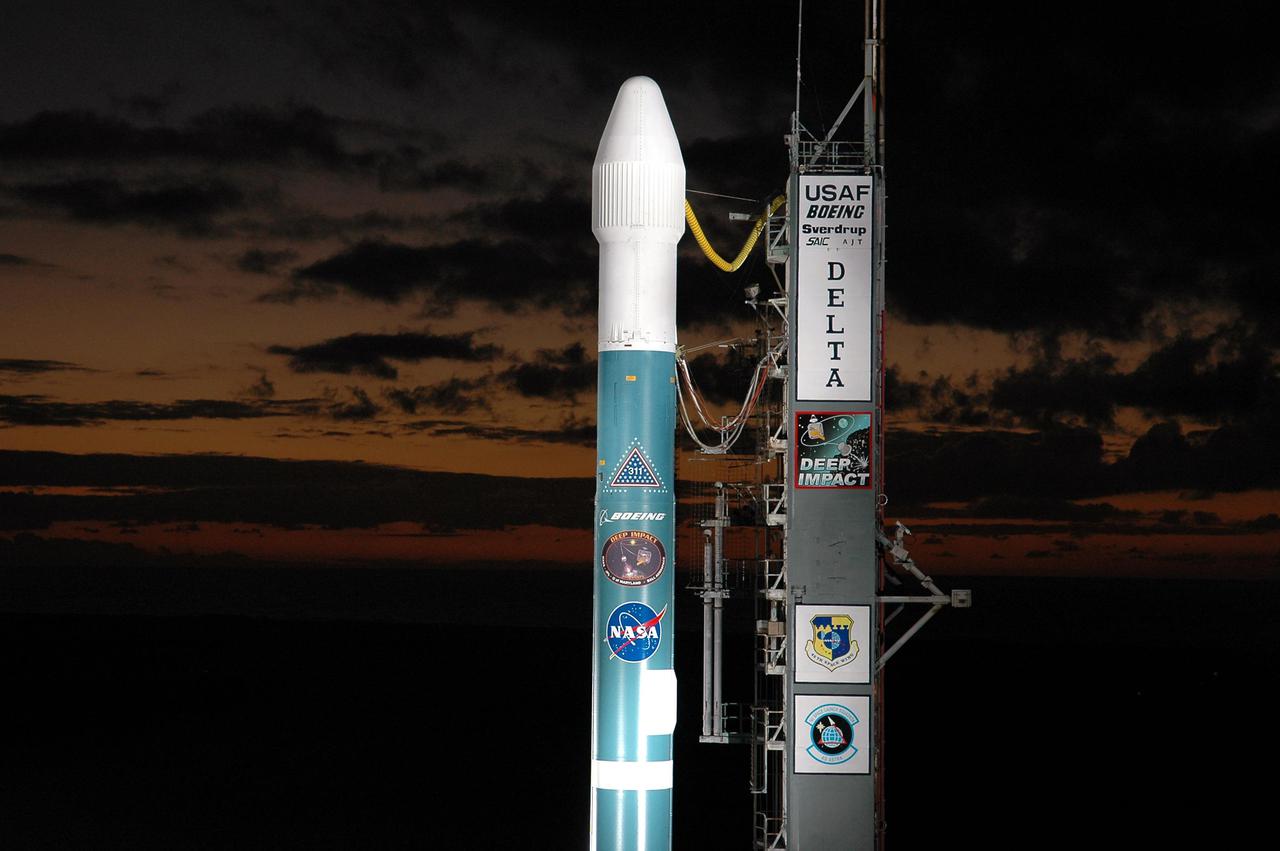
KENNEDY SPACE CENTER, FLA. - On Launch Pad 17-B, Cape Canaveral Air Force Station, Fla., the Boeing Delta II rocket carrying the Deep Impact spacecraft stands out against an early dawn sky. Scheduled for liftoff at 1:47 p.m. EST today, Deep Impact will head for space and a rendezvous with Comet Tempel 1 when the comet is 83 million miles from Earth. After releasing a 3- by 3-foot projectile (impactor) to crash onto the surface July 4, 2005, Deep Impact’s flyby spacecraft will reveal the secrets of the comet’s interior by collecting pictures and data of how the crater forms, measuring the crater’s depth and diameter as well as the composition of the interior of the crater and any material thrown out, and determining the changes in natural outgassing produced by the impact. It will send the data back to Earth through the antennas of the Deep Space Network. Deep Impact is a NASA Discovery mission.
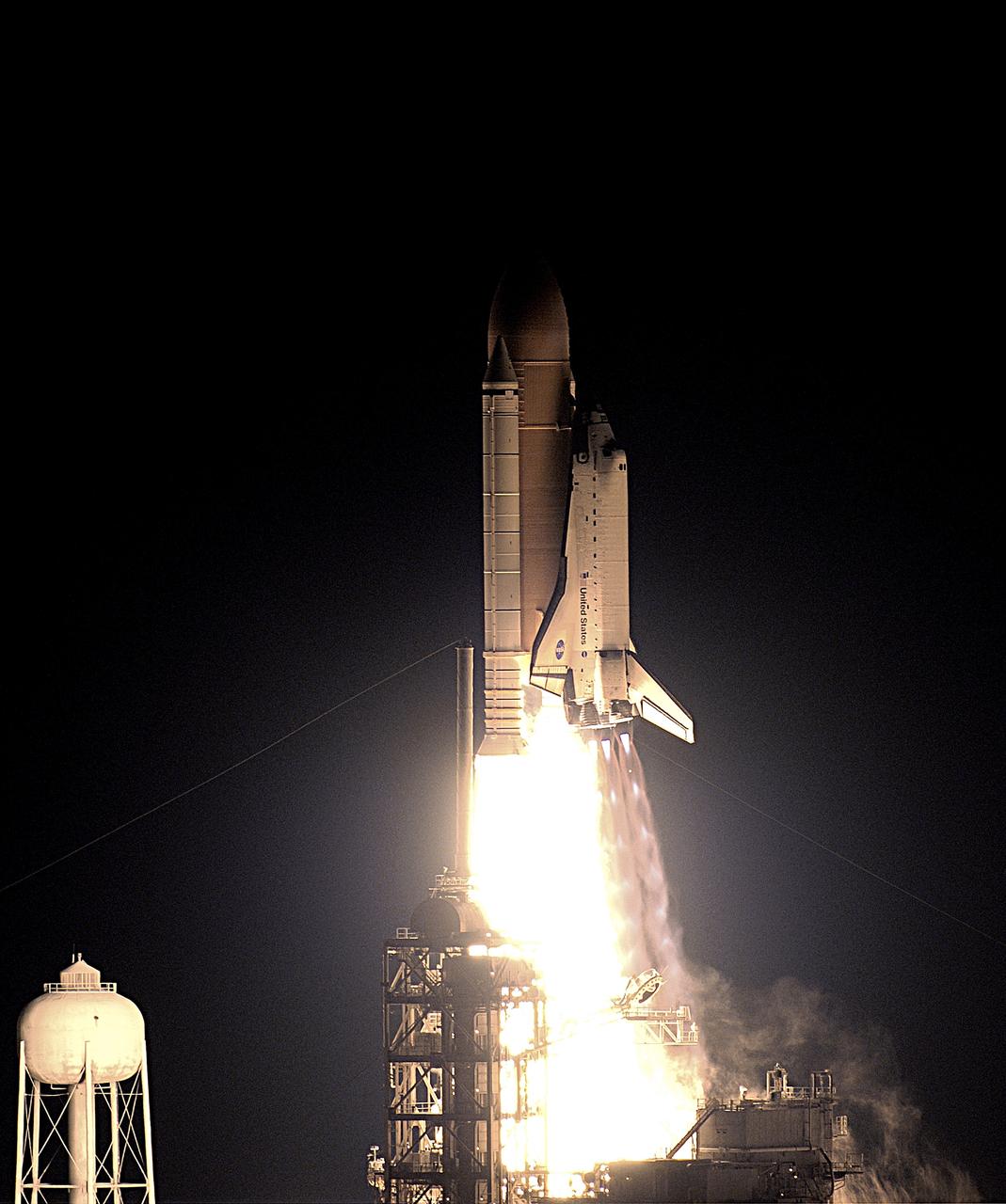
STS113-S-011 (23 November 2002) --- Against a black night sky, the Space Shuttle Endeavour heads toward Earth orbit and a scheduled link-up with the International Space Station (ISS). Liftoff from the Kennedy Space Center's Launch Complex 39 occurred at 7:49:47 p.m. (EST), November 23, 2002. The launch is the 19th for Endeavour, and the 112th flight in the Shuttle program. Mission STS-113 is the 16th assembly flight to the International Space Station, carrying another structure for the Station, the P1 integrated truss. Crewmembers onboard were astronauts James D. Wetherbee, commander; Paul S. Lockhart, pilot, along with astronauts Michael E. Lopez-Alegria and John B. Herrington, both mission specialists. Also onboard were the Expedition 6 crewmembers--astronauts Kenneth D. Bowersox and Donald R. Pettit, along with cosmonaut Nikolai M. Budarin--who went on to replace Expedition 5 aboard the Station.

KENNEDY SPACE CENTER, FLA. - On Launch Pad 17-B, Cape Canaveral Air Force Station, Fla., the Boeing Delta II rocket carrying the Deep Impact spacecraft is bathed in light waiting for tower rollback before launch. Scheduled for liftoff at 1:47 p.m. EST today, Deep Impact will head for space and a rendezvous with Comet Tempel 1 when the comet is 83 million miles from Earth. After releasing a 3- by 3-foot projectile (impactor) to crash onto the surface July 4, 2005, Deep Impact’s flyby spacecraft will reveal the secrets of the comet’s interior by collecting pictures and data of how the crater forms, measuring the crater’s depth and diameter as well as the composition of the interior of the crater and any material thrown out, and determining the changes in natural outgassing produced by the impact. It will send the data back to Earth through the antennas of the Deep Space Network. Deep Impact is a NASA Discovery mission.
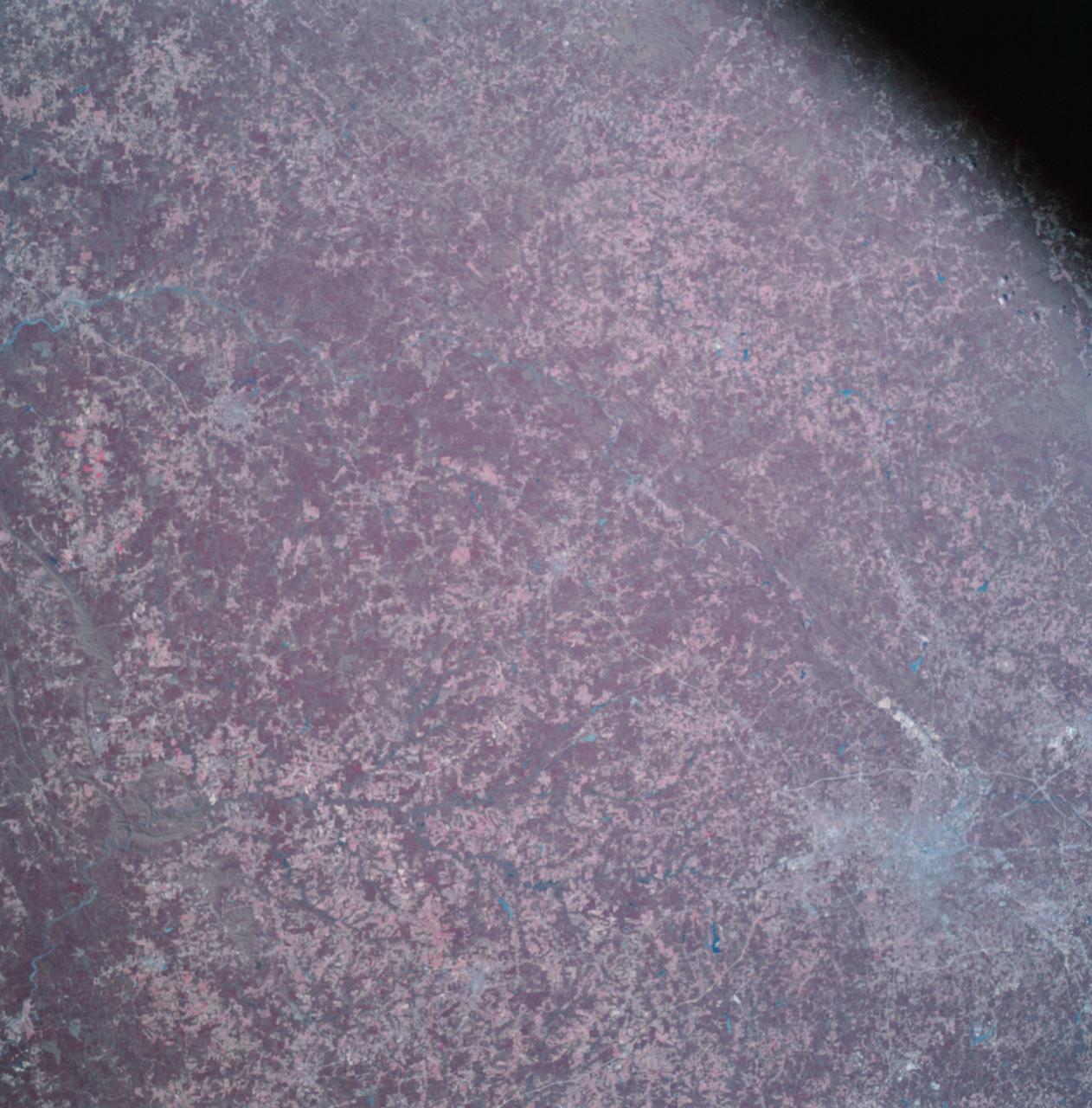
AS09-26A-3792A (11 March 1969) --- Color infrared photograph of the Atlanta, Georgia area taken on March 11, 1969, by one of the four synchronized cameras of the Apollo 9 Earth Resources Survey (SO-65) experiment. At 11:21 a.m. (EST) when this picture was taken, the Apollo 9 spacecraft was at an altitude of 106 nautical miles, and the sun elevation was 47 degrees above the horizon. The location of the point on Earth's surface at which the four-camera combination was aimed was 33 degrees 10 minutes north latitude, and 84 degrees and 40 minutes west longitude. The other three cameras used: (B) black and white film with a red filter; (C) black and white infrared film; and (D) black and white film with a green filter.
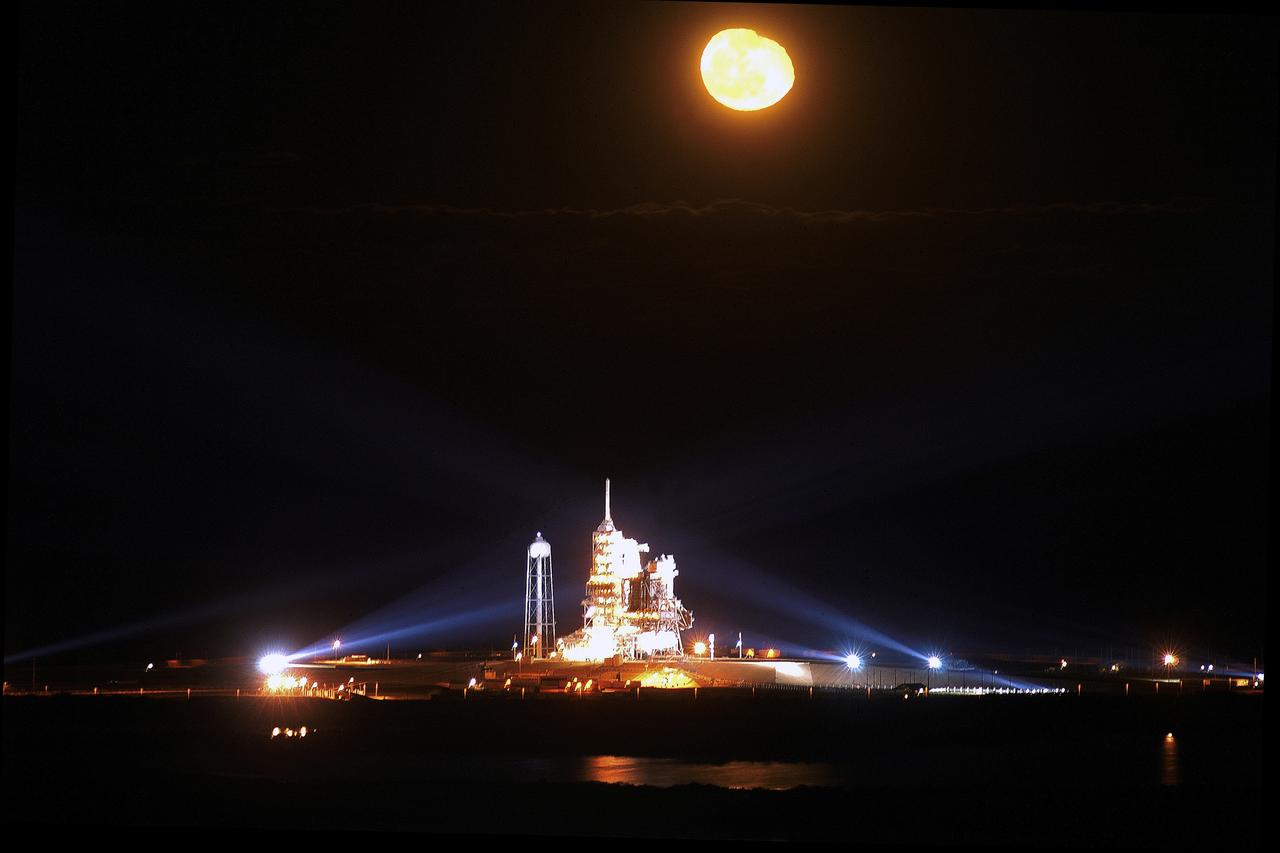
The Space Shuttle Endeavour is pictured on a lighted launch pad at Kennedy Space Center's (KSC) Launch Complex 39 with a gibbous moon shining brightly in the night sky. Liftoff from KSC occurred at 7:49:47 p.m. (EST), November 23, 2002. The launch is the 19th for Endeavour, and the 112th flight in the Shuttle program. Mission STS-113 is the 16th assembly flight to the International Space Station (ISS), carrying another structure for the Station, the P1 integrated truss. STS-113 crew members onboard were astronauts James D. Wetherbee, commander; Paul S. Lockhart, pilot, along with astronauts Michael E. Lopez-Alegria and John B. Herrington, both mission specialists. Also onboard were the Expedition 6 crew members: Astronauts Kenneth D. Bowersox and Donald R. Pettit, along with cosmonaut Nikolai M. Budarin, who went on to replace Expedition 5 aboard the Station.
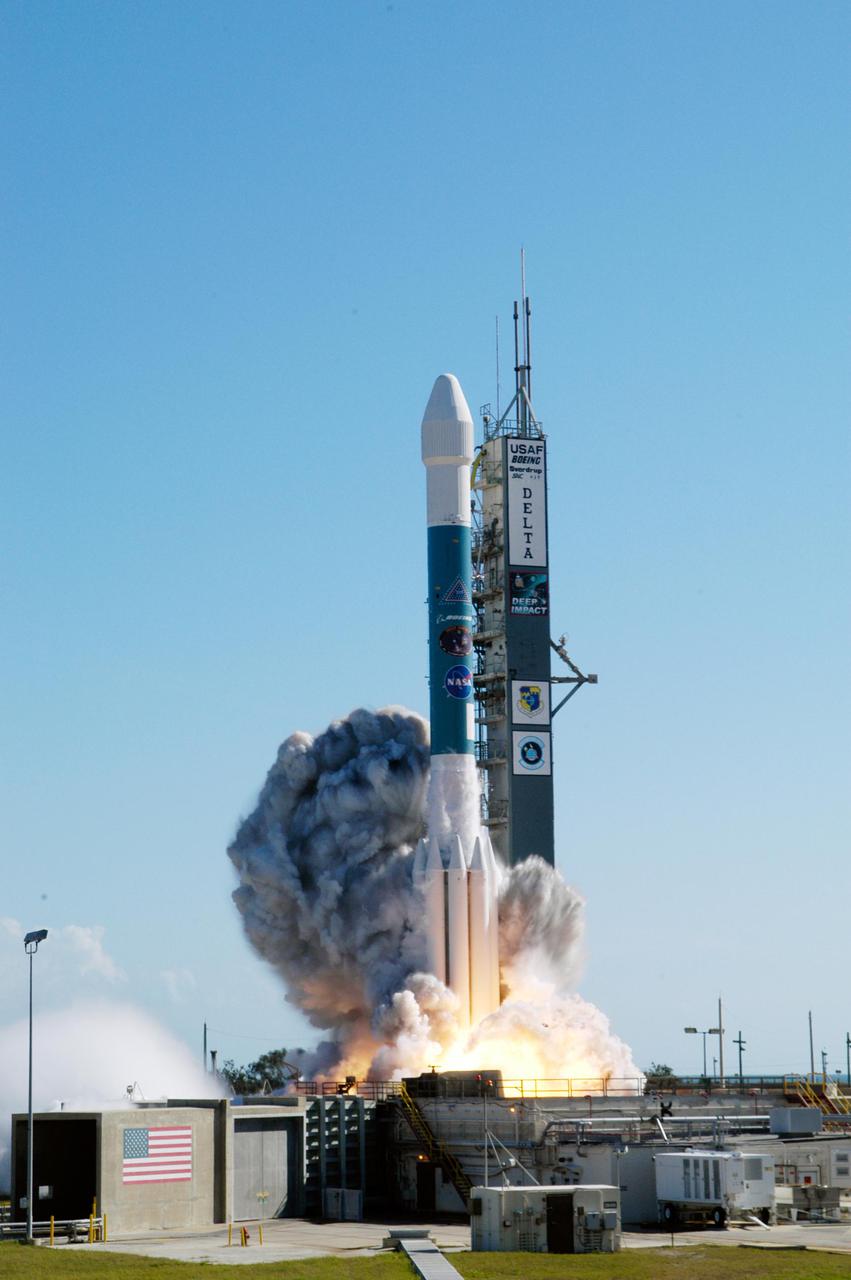
KENNEDY SPACE CENTER, FLA. - Erupting from the flames and smoke beneath it, NASA’s Deep Impact spacecraft lifts off at 1:47 p.m. EST today from Launch Pad 17-B, Cape Canaveral Air Force Station, Fla. A NASA Discovery mission, Deep Impact is heading for space and a rendezvous 83 million miles from Earth with Comet Tempel 1. After releasing a 3- by 3-foot projectile (impactor) to crash onto the surface July 4, 2005, Deep Impact’s flyby spacecraft will reveal the secrets of the comet’s interior by collecting pictures and data of how the crater forms, measuring the crater’s depth and diameter as well as the composition of the interior of the crater and any material thrown out, and determining the changes in natural outgassing produced by the impact. It will send the data back to Earth through the antennas of the Deep Space Network.
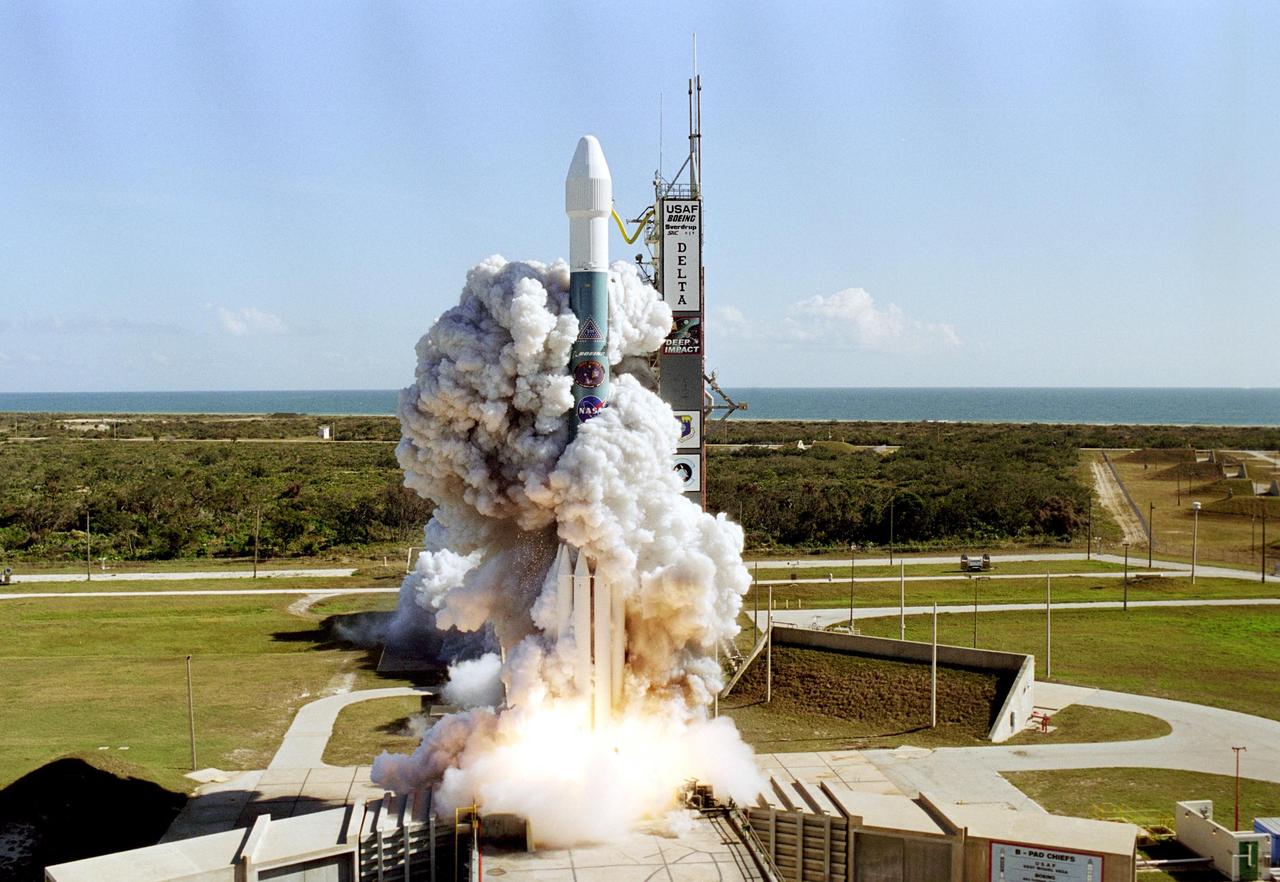
KENNEDY SPACE CENTER, FLA. - Emerging through the smoke and steam, the Boeing Delta II rocket carrying NASA’s Deep Impact spacecraft lifts off at 1:47 p.m. EST from Launch Pad 17-B, Cape Canaveral Air Force Station, Fla. A NASA Discovery mission, Deep Impact is heading for space and a rendezvous 83 million miles from Earth with Comet Tempel 1. After releasing a 3- by 3-foot projectile (impactor) to crash onto the surface July 4, 2005, Deep Impact’s flyby spacecraft will reveal the secrets of the comet’s interior by collecting pictures and data of how the crater forms, measuring the crater’s depth and diameter as well as the composition of the interior of the crater and any material thrown out, and determining the changes in natural outgassing produced by the impact. It will send the data back to Earth through the antennas of the Deep Space Network.
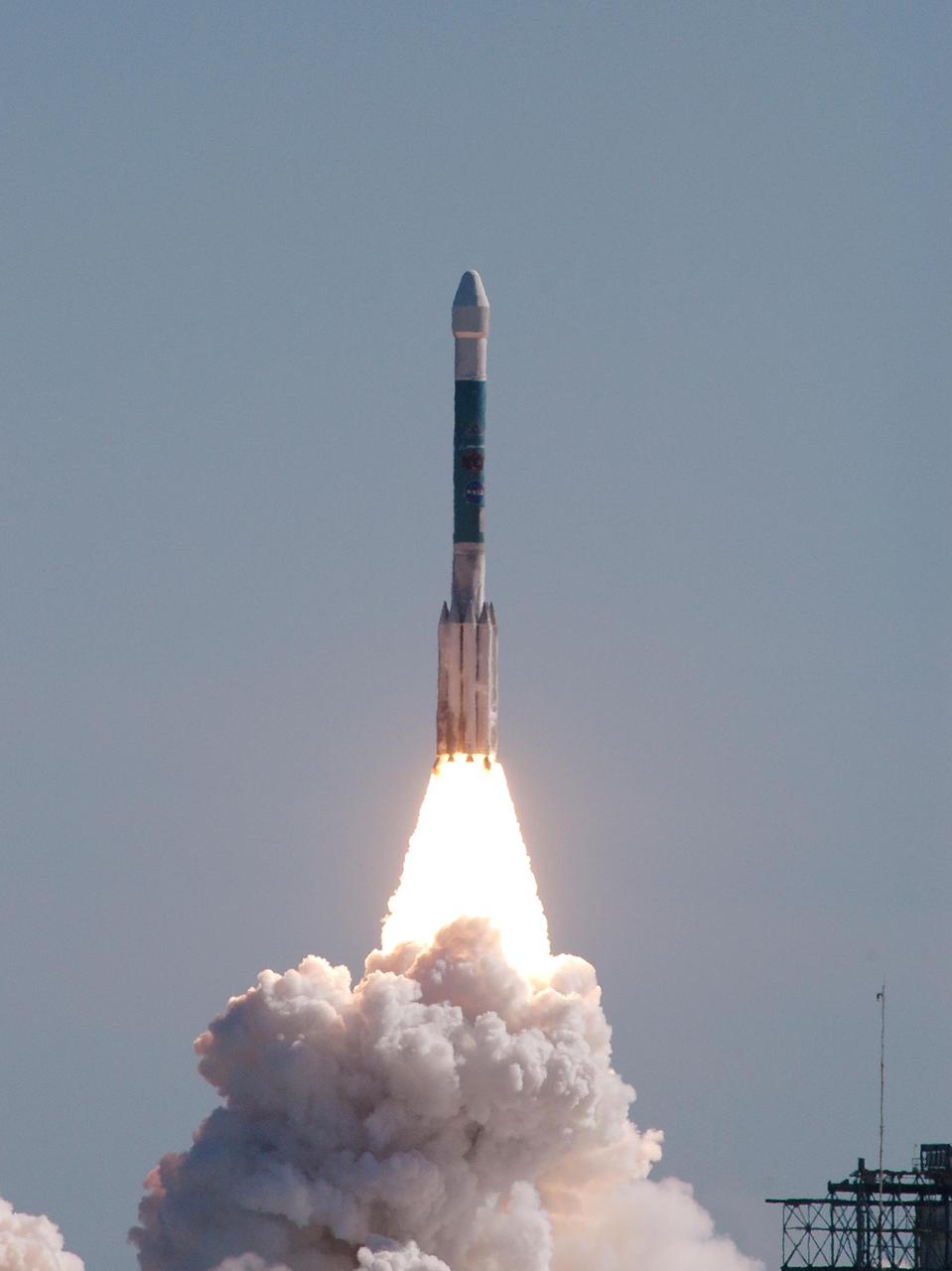
KENNEDY SPACE CENTER, FLA. - Erupting from the flames and smoke beneath it, NASA’s Deep Impact spacecraft lifts off at 1:47 p.m. EST today from Launch Pad 17-B, Cape Canaveral Air Force Station, Fla. A NASA Discovery mission, Deep Impact is heading for space and a rendezvous 83 million miles from Earth with Comet Tempel 1. After releasing a 3- by 3-foot projectile (impactor) to crash onto the surface July 4, 2005, Deep Impact’s flyby spacecraft will reveal the secrets of the comet’s interior by collecting pictures and data of how the crater forms, measuring the crater’s depth and diameter as well as the composition of the interior of the crater and any material thrown out, and determining the changes in natural outgassing produced by the impact. It will send the data back to Earth through the antennas of the Deep Space Network.
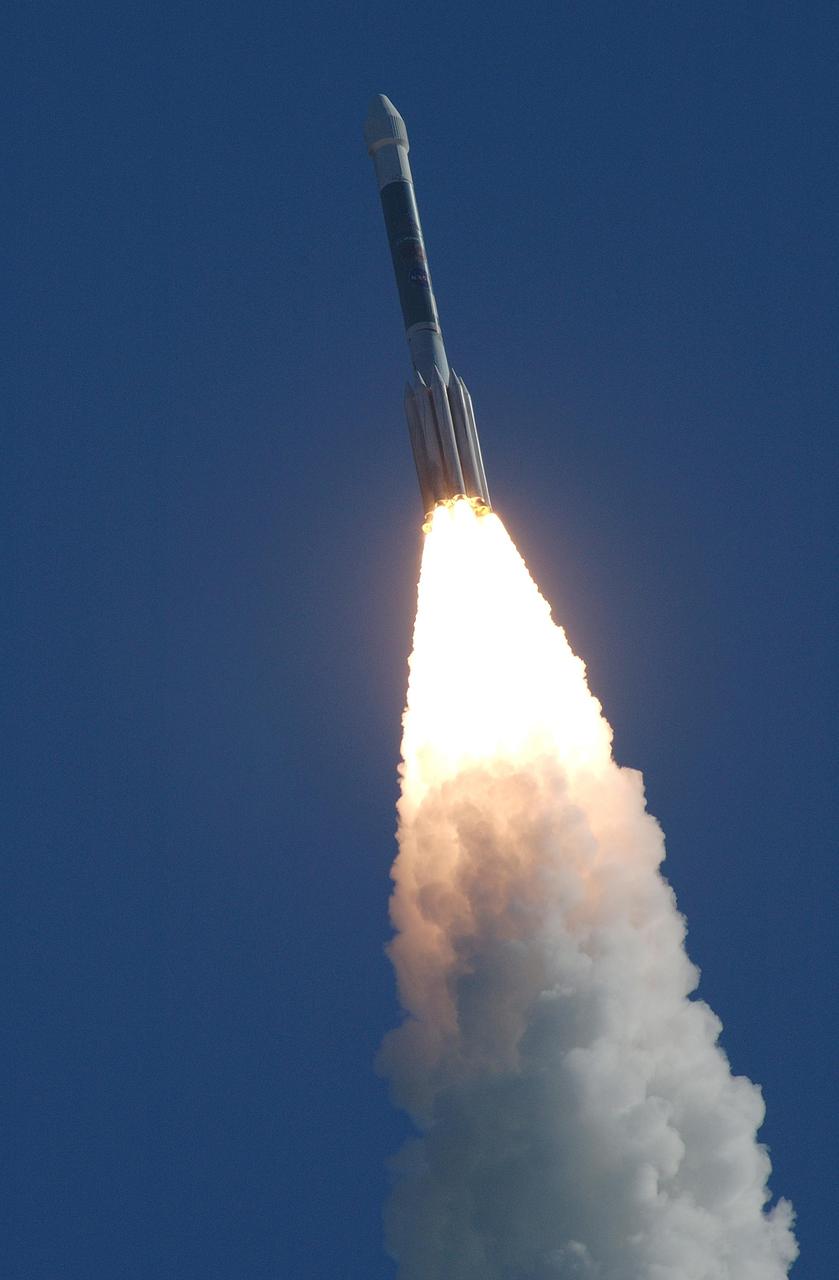
KENNEDY SPACE CENTER, FLA. - After a perfect liftoff at 1:47 p.m. EST today from Launch Pad 17-B, Cape Canaveral Air Force Station, Fla., the Boeing Delta II rocket with Deep Impact spacecraft aboard soars through the clear blue sky. A NASA Discovery mission, Deep Impact is heading for space and a rendezvous 83 million miles from Earth with Comet Tempel 1. After releasing a 3- by 3-foot projectile (impactor) to crash onto the surface July 4, 2005, Deep Impact’s flyby spacecraft will reveal the secrets of the comet’s interior by collecting pictures and data of how the crater forms, measuring the crater’s depth and diameter as well as the composition of the interior of the crater and any material thrown out, and determining the changes in natural outgassing produced by the impact. It will send the data back to Earth through the antennas of the Deep Space Network.
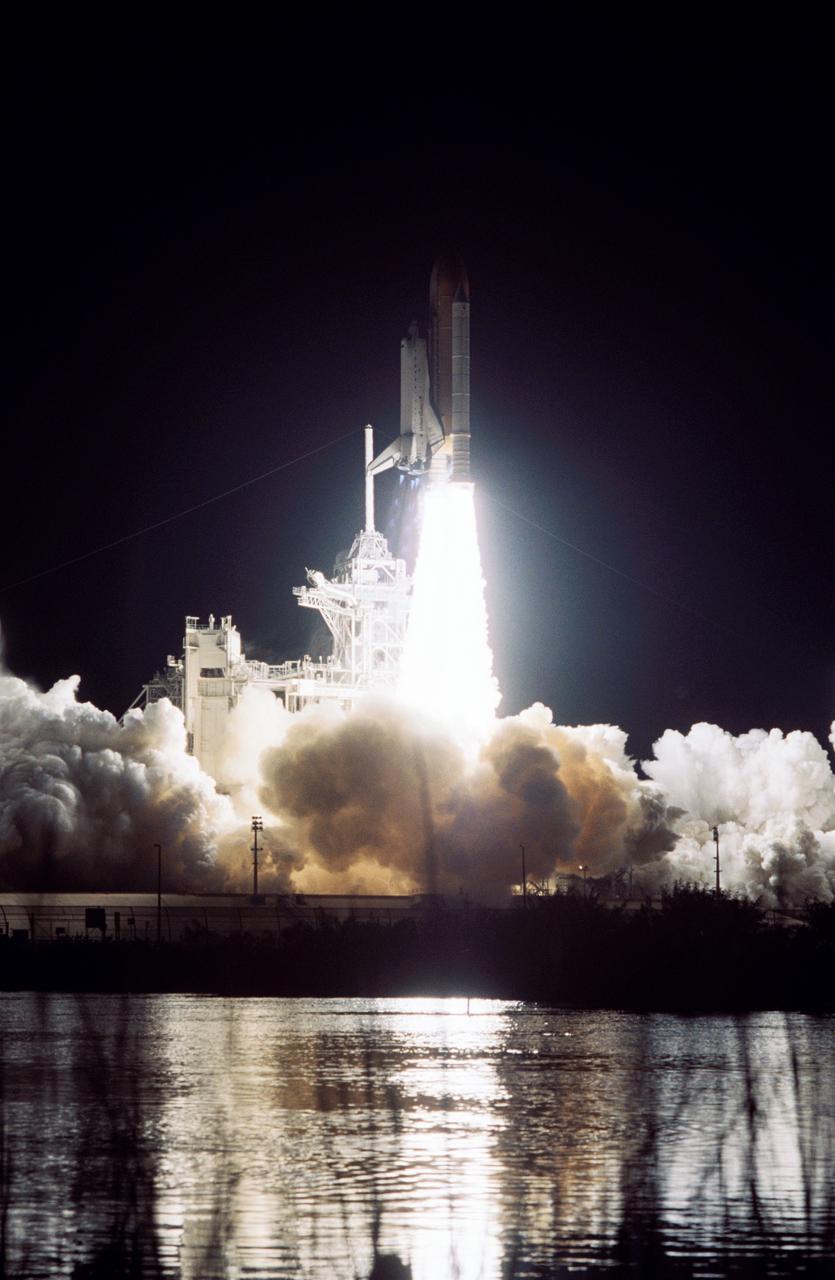
STS113-S-005 (23 November 2002) --- Against a black night sky, the Space Shuttle Endeavour heads toward Earth orbit and a scheduled link-up with the International Space Station (ISS). Liftoff from the Kennedy Space Center's Launch Complex 39 occurred at 7:49:47 p.m. (EST), November 23, 2002. The launch is the 19th for Endeavour, and the 112th flight in the Shuttle program. Mission STS-113 is the 16th assembly flight to the International Space Station, carrying another structure for the Station, the P1 integrated truss. Crewmembers onboard were astronauts James D. Wetherbee, commander; Paul S. Lockhart, pilot, along with astronauts Michael E. Lopez-Alegria and John B. Herrington, both mission specialists. Also onboard were the Expedition 6 crewmembers--astronauts Kenneth D. Bowersox and Donald R. Pettit, along with cosmonaut Nikolai M. Budarin--who went on to replace Expedition 5 aboard the Station.
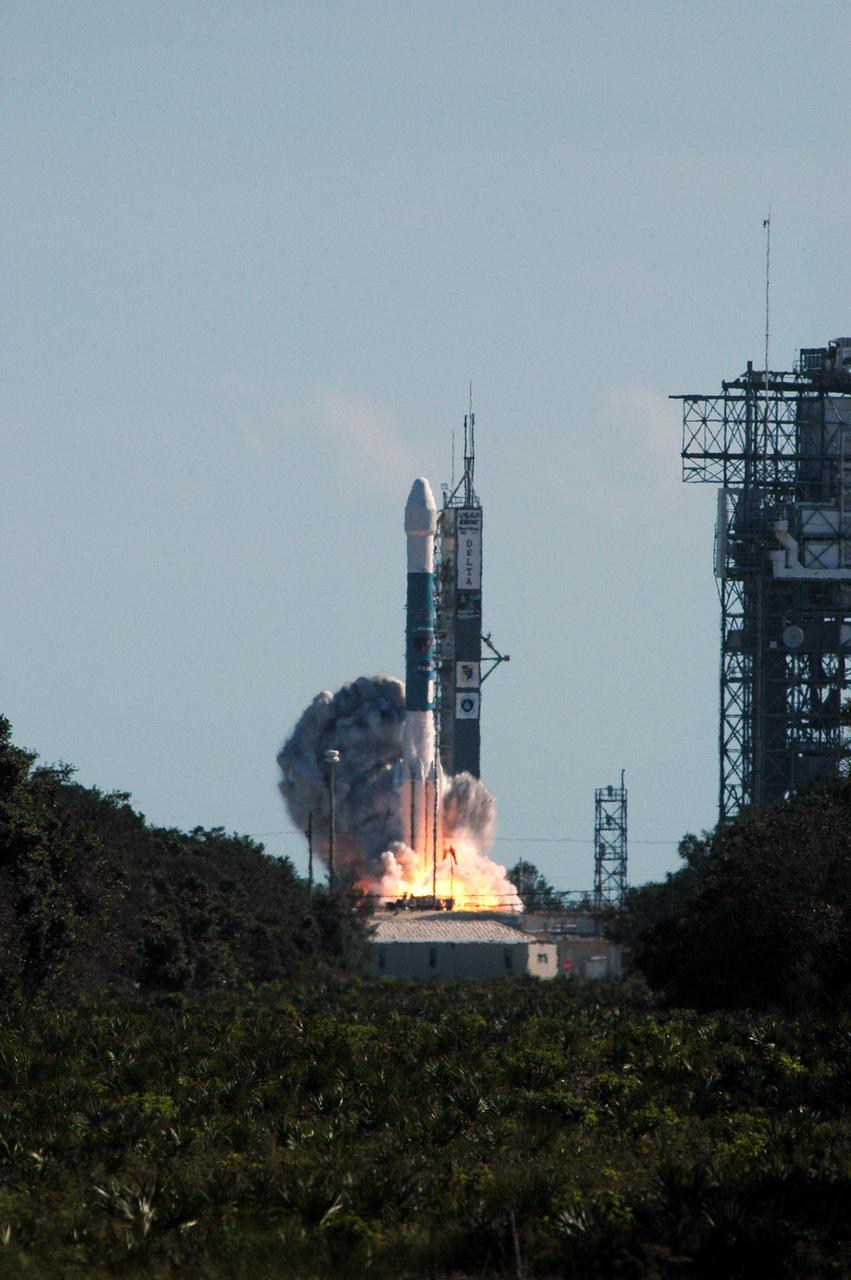
KENNEDY SPACE CENTER, FLA. - With a burst of flames, NASA’s Deep Impact spacecraft lifts off at 1:47 p.m. EST today from Launch Pad 17-B, Cape Canaveral Air Force Station, Fla. A NASA Discovery mission, Deep Impact is heading for space and a rendezvous 83 million miles from Earth with Comet Tempel 1. After releasing a 3- by 3-foot projectile (impactor) to crash onto the surface July 4, 2005, Deep Impact’s flyby spacecraft will reveal the secrets of the comet’s interior by collecting pictures and data of how the crater forms, measuring the crater’s depth and diameter as well as the composition of the interior of the crater and any material thrown out, and determining the changes in natural outgassing produced by the impact. It will send the data back to Earth through the antennas of the Deep Space Network.
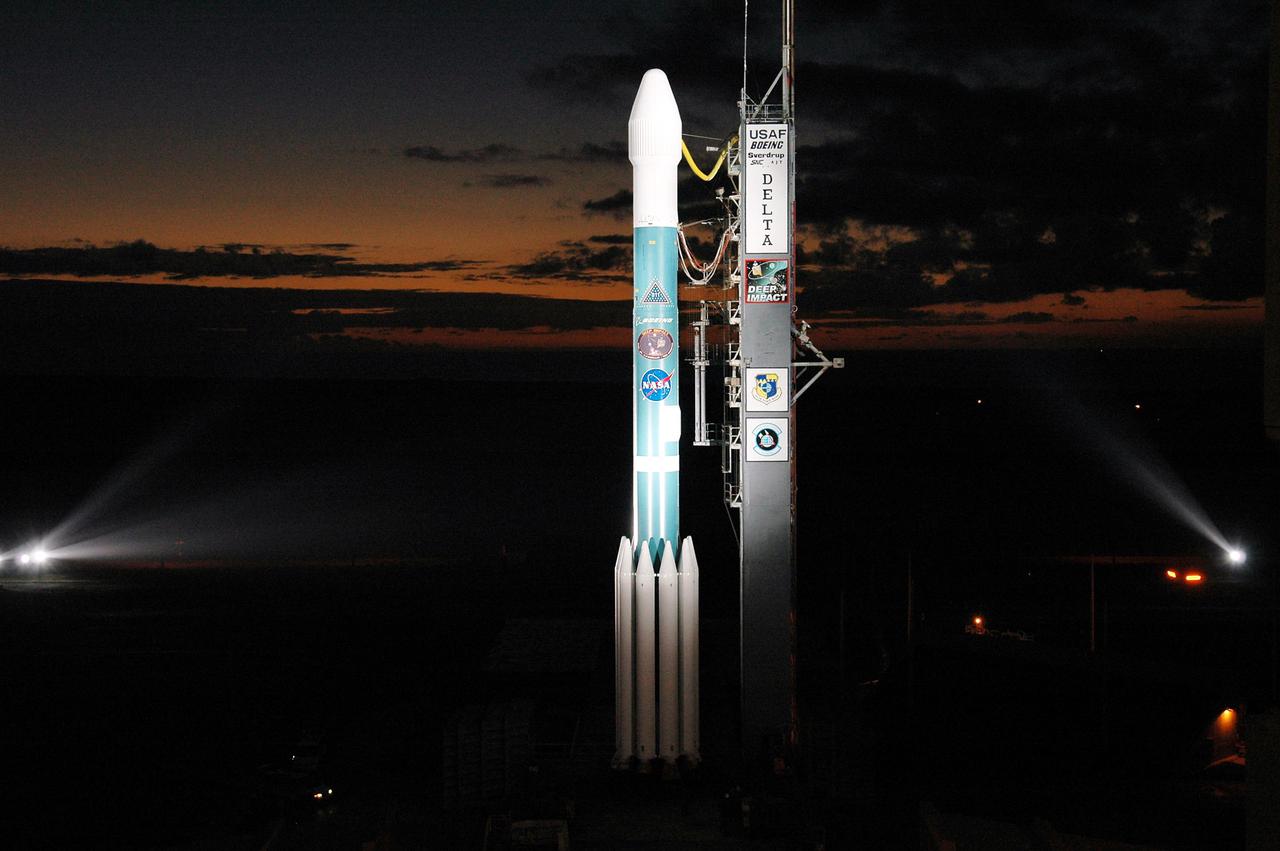
KENNEDY SPACE CENTER, FLA. - On Launch Pad 17-B, Cape Canaveral Air Force Station, Fla., the Boeing Delta II carrying the Deep Impact spacecraft rocket shines under spotlights in the early dawn hours as it waits for launch. Scheduled for liftoff at 1:47 p.m. EST today, Deep Impact will head for space and a rendezvous with Comet Tempel 1 when the comet is 83 million miles from Earth. After releasing a 3- by 3-foot projectile (impactor) to crash onto the surface July 4, 2005, Deep Impact’s flyby spacecraft will reveal the secrets of the comet’s interior by collecting pictures and data of how the crater forms, measuring the crater’s depth and diameter as well as the composition of the interior of the crater and any material thrown out, and determining the changes in natural outgassing produced by the impact. It will send the data back to Earth through the antennas of the Deep Space Network. Deep Impact is a NASA Discovery mission.
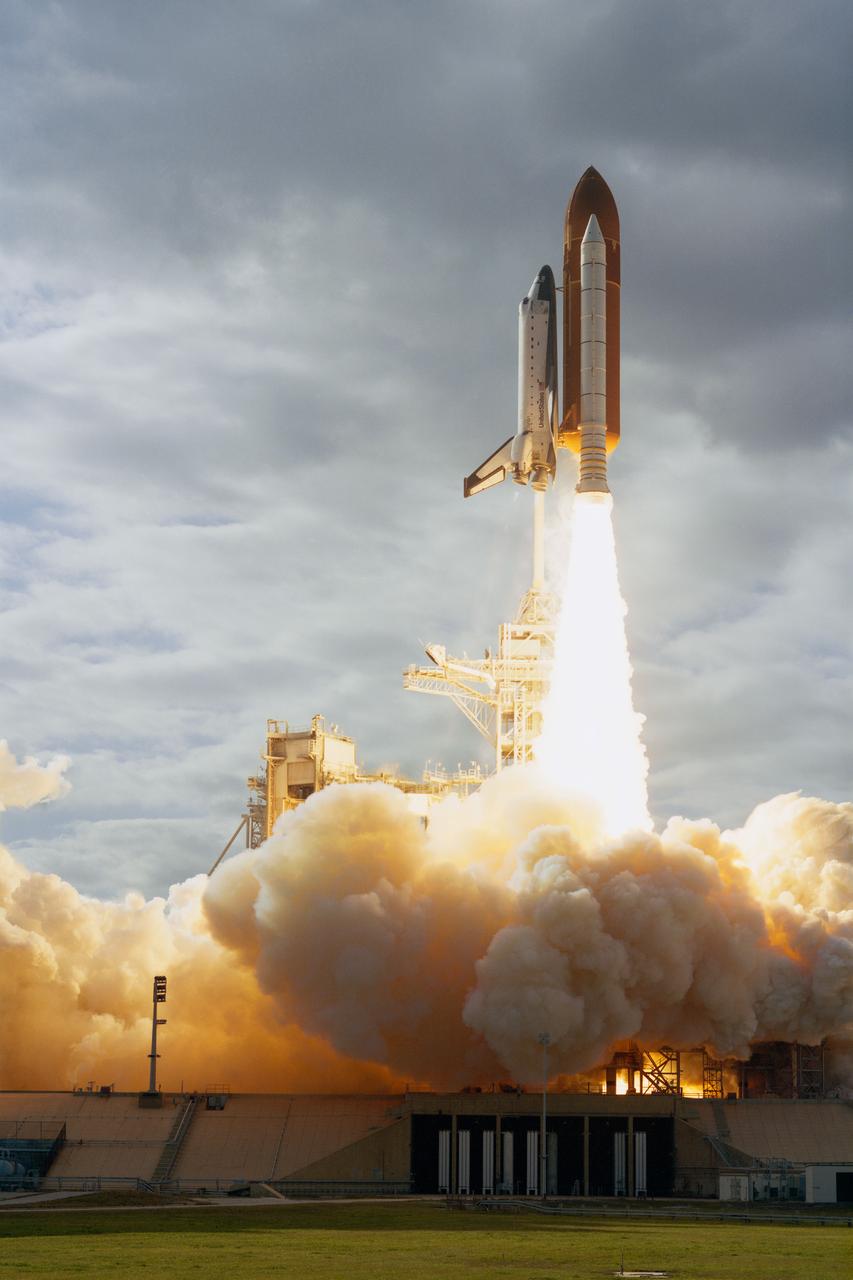
STS080-S-007 (19 Nov. 1996) --- One of the nearest remote camera stations to Launch Pad B captured this profile image of space shuttle Columbia's liftoff from the Kennedy Space Center's (KSC) Launch Complex 39 at 2:55:47 p.m. (EST), November 19, 1996. Onboard are astronauts Kenneth D. Cockrell, mission commander; Kent V. Rominger, pilot; along with Story Musgrave, Tamara E. Jernigan and Thomas D. Jones, all mission specialists. The two primary payloads for STS-80 stowed in Columbia?s cargo bay for later deployment and testing are the Wake Shield Facility (WSF-3) and the Orbiting and Retrievable Far and Extreme Ultraviolet Spectrometer (ORFEUS) with its associated Shuttle Pallet Satellite (SPAS).
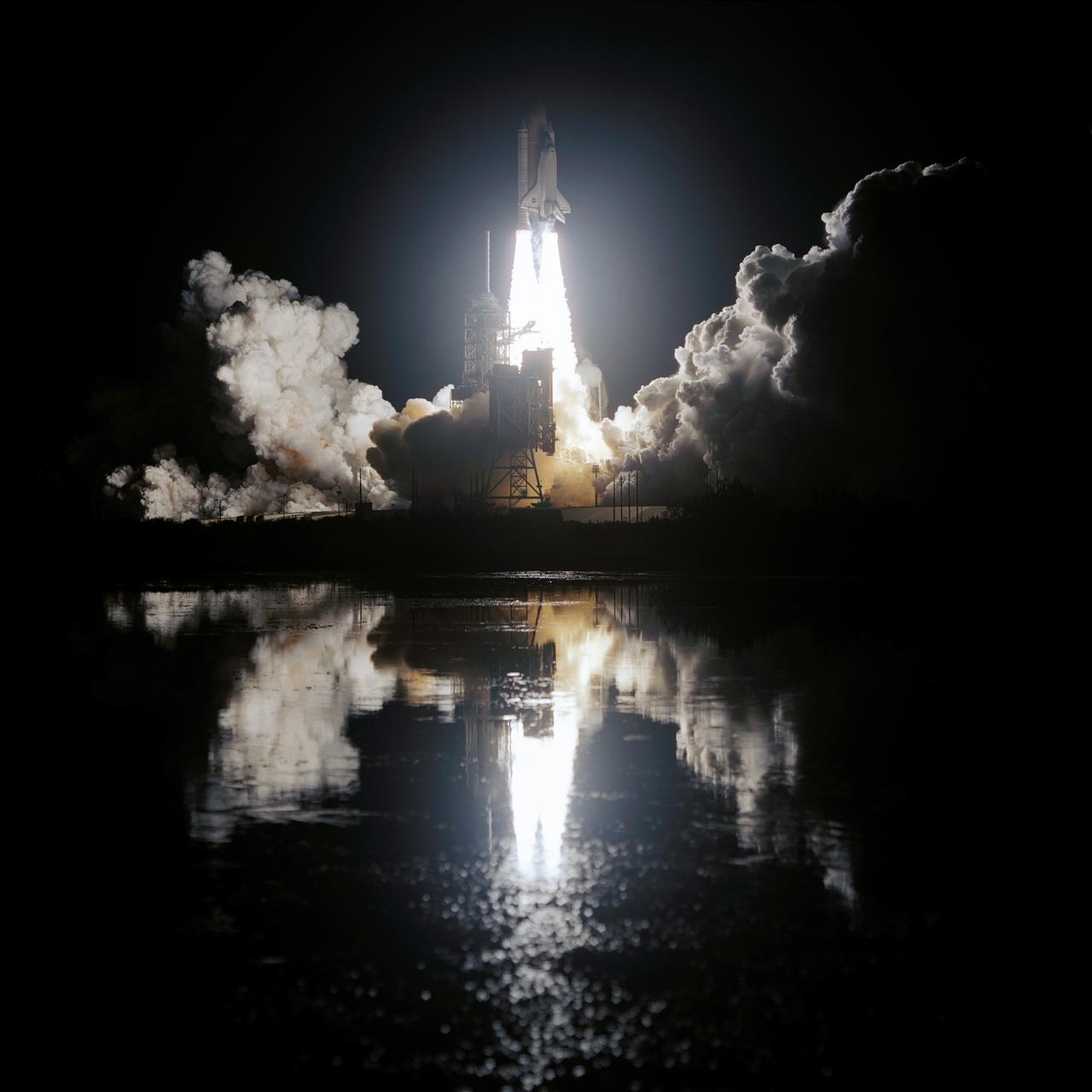
STS113-S-007 (23 November 2002) --- Against a black night sky, the Space Shuttle Endeavour heads toward Earth orbit and a scheduled link-up with the International Space Station (ISS). Liftoff from the Kennedy Space Center's Launch Complex 39 occurred at 7:49:47 p.m. (EST), November 23, 2002. The launch is the 19th for Endeavour, and the 112th flight in the Shuttle program. Mission STS-113 is the 16th assembly flight to the International Space Station, carrying another structure for the Station, the P1 integrated truss. Crewmembers onboard were astronauts James D. Wetherbee, commander; Paul S. Lockhart, pilot, along with astronauts Michael E. Lopez-Alegria and John B. Herrington, both mission specialists. Also onboard were the Expedition 6 crewmembers--astronauts Kenneth D. Bowersox and Donald R. Pettit, along with cosmonaut Nikolai M. Budarin--who went on to replace Expedition 5 aboard the Station.
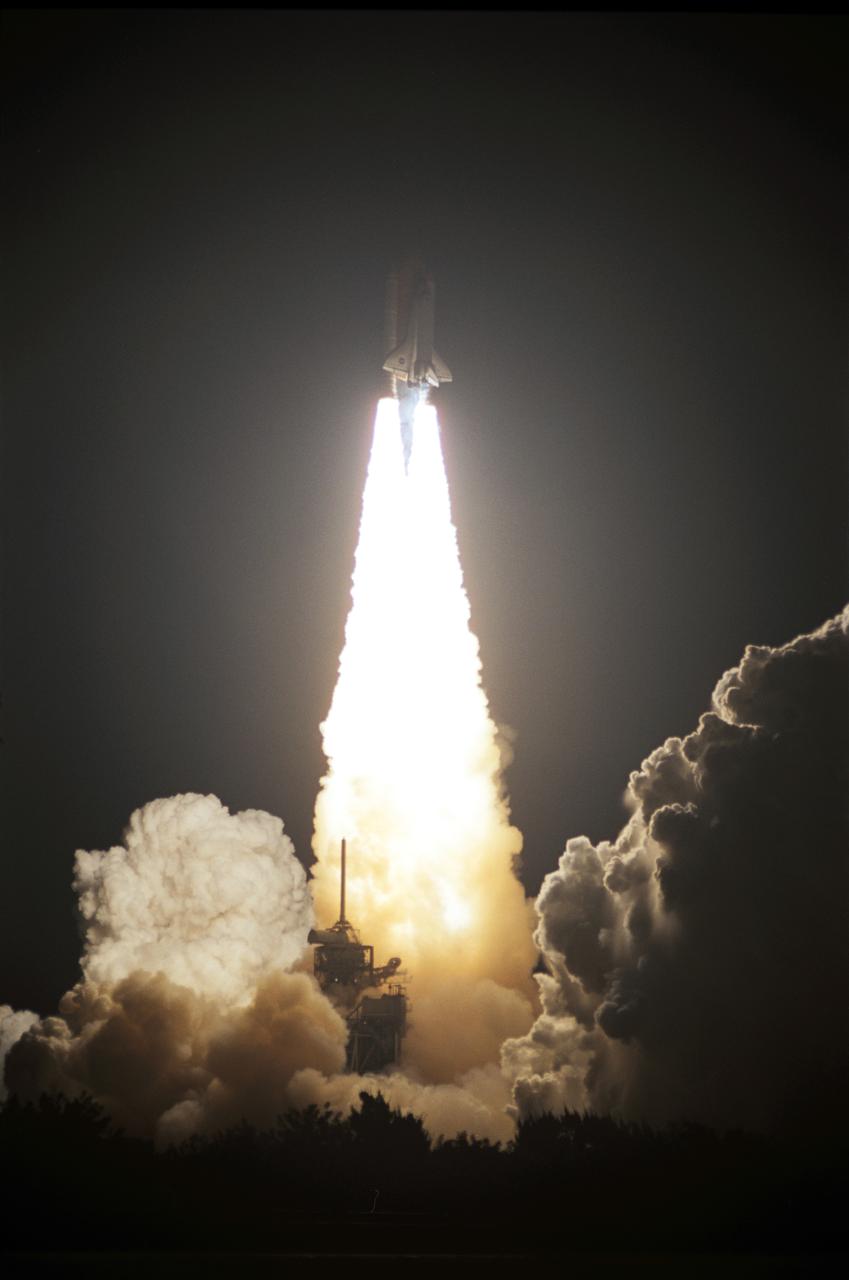
STS113-S-037 (23 November 2002) --- Against a black night sky, the Space Shuttle Endeavour heads toward Earth orbit and a scheduled link-up with the International Space Station (ISS). Liftoff from the Kennedy Space Center's Launch Complex 39 occurred at 7:49:47 p.m. (EST), November 23, 2002. The launch is the 19th for Endeavour, and the 112th flight in the Shuttle program. Mission STS-113 is the 16th assembly flight to the International Space Station, carrying another structure for the Station, the P1 integrated truss. Crewmembers onboard were astronauts James D. Wetherbee, commander; Paul S. Lockhart, pilot, along with astronauts Michael E. Lopez-Alegria and John B. Herrington, both mission specialists. Also onboard were the Expedition 6 crewmembers--astronauts Kenneth D. Bowersox and Donald R. Pettit, along with cosmonaut Nikolai M. Budarin--who went on to replace Expedition 5 aboard the Station.
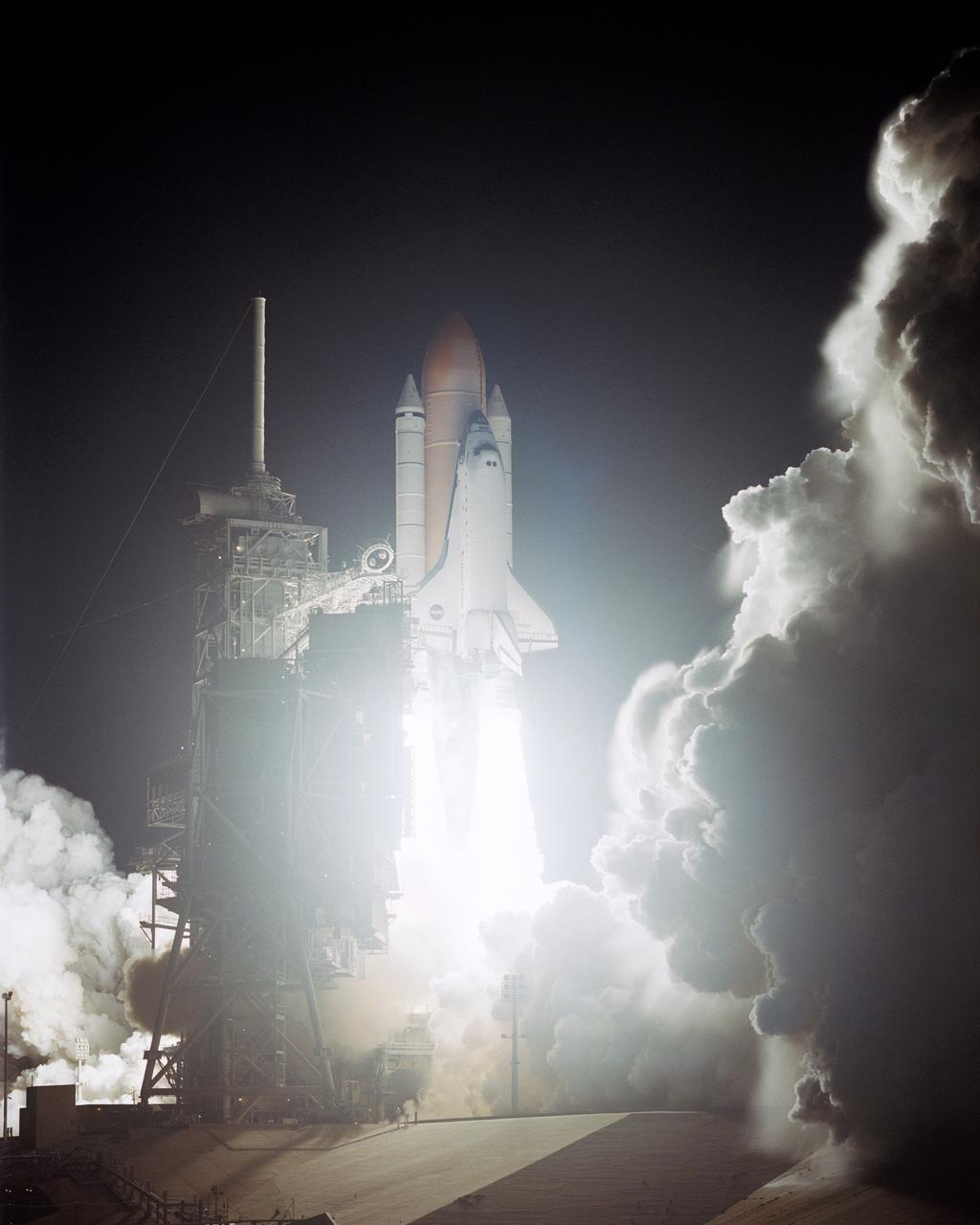
STS113-S-009 (23 November 2002) --- Against a black night sky, the Space Shuttle Endeavour heads toward Earth orbit and a scheduled link-up with the International Space Station (ISS). Liftoff from the Kennedy Space Center's Launch Complex 39 occurred at 7:49:47 p.m. (EST), November 23, 2002. The launch is the 19th for Endeavour, and the 112th flight in the Shuttle program. Mission STS-113 is the 16th assembly flight to the International Space Station, carrying another structure for the Station, the P1 integrated truss. Crewmembers onboard were astronauts James D. Wetherbee, commander; Paul S. Lockhart, pilot, along with astronauts Michael E. Lopez-Alegria and John B. Herrington, both mission specialists. Also onboard were the Expedition 6 crewmembers--astronauts Kenneth D. Bowersox and Donald R. Pettit, along with cosmonaut Nikolai M. Budarin--who went on to replace Expedition 5 aboard the Station.
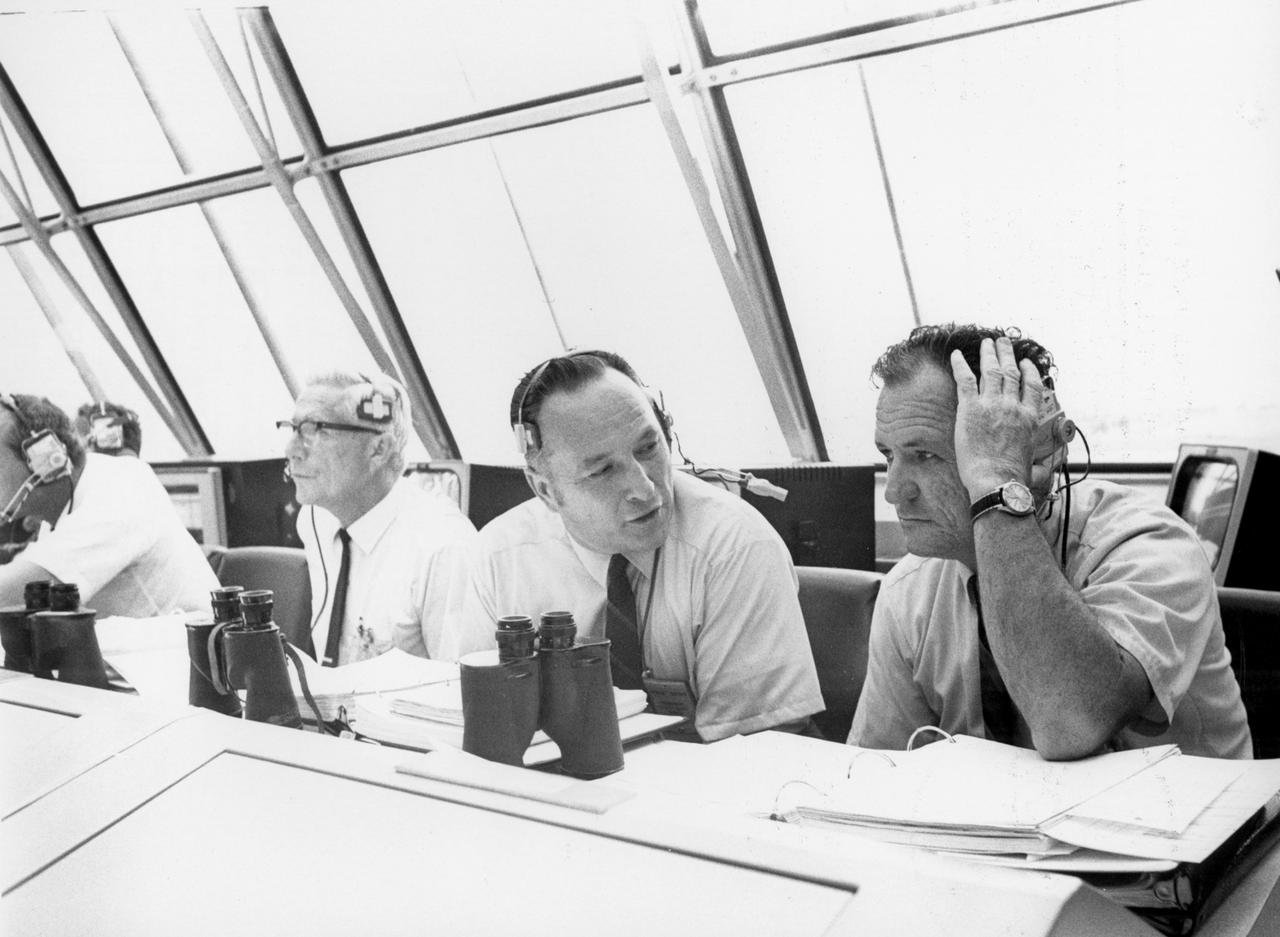
Lee B. James (left), manager of the Saturn Program at the Marshall Space flight Center (MSFC), talks with Isom Pigell in the firing room 1 of the Kennedy Space Center (KSC) control center during the countdown demonstration test for the Apollo 11 mission. At left is Dr. Hans C. Gruen of KSC. The Apollo 11 mission, the first lunar landing mission, launched from the KSC in Florida via the MSFC developed Saturn V launch vehicle on July 16, 1969 and safely returned to Earth on July 24, 1969. Aboard the space craft were astronauts Neil A. Armstrong, commander; Michael Collins, Command Module (CM) pilot; and Edwin E. (Buzz) Aldrin Jr., Lunar Module (LM) pilot. The CM, “Columbia”, piloted by Collins, remained in a parking orbit around the Moon while the LM, “Eagle’’, carrying astronauts Armstrong and Aldrin, landed on the Moon. On July 20, 1969, Armstrong was the first human to ever stand on the lunar surface, followed by Aldrin. During 2½ hours of surface exploration, the crew collected 47 pounds of lunar surface material for analysis back on Earth. With the success of Apollo 11, the national objective to land men on the Moon and return them safely to Earth had been accomplished.
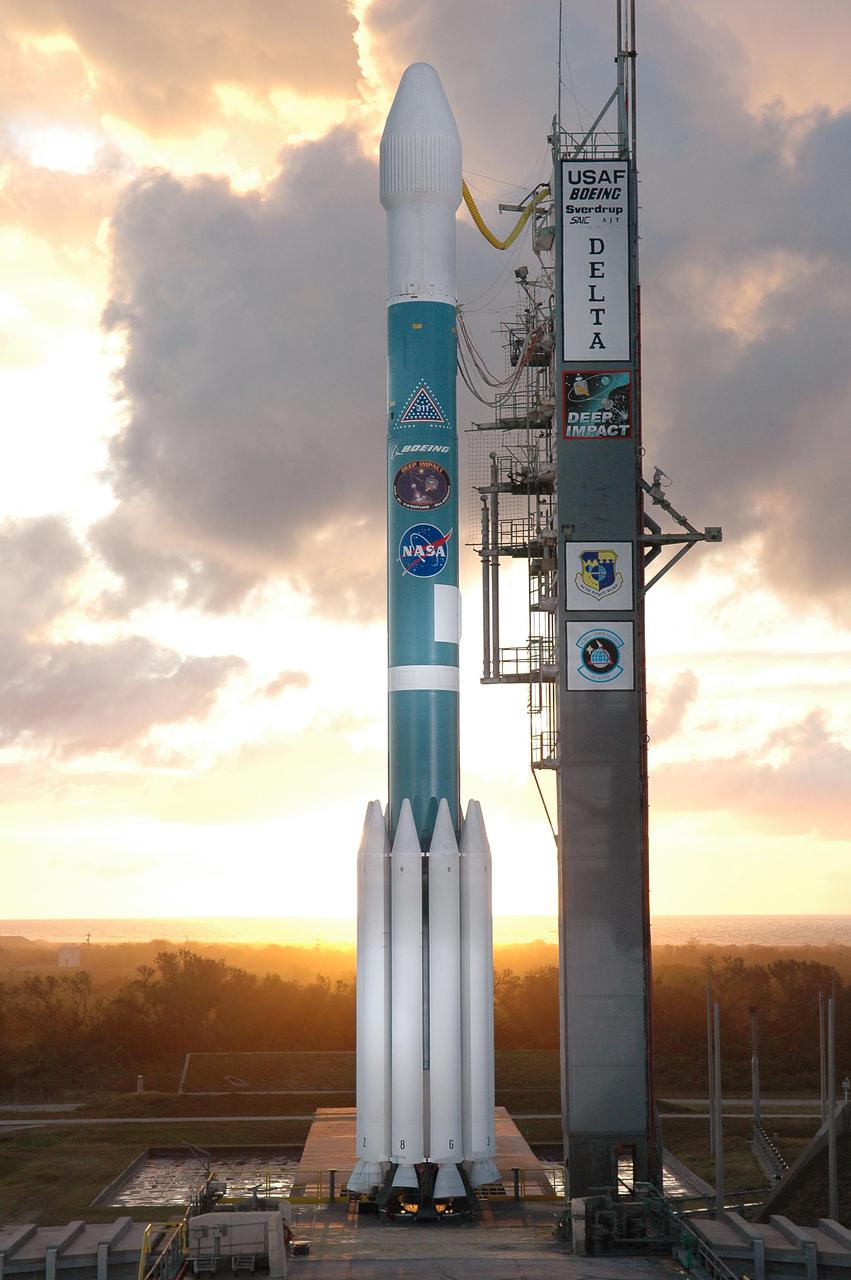
KENNEDY SPACE CENTER, FLA. - The sun rises behind Launch Pad 17-B, Cape Canaveral Air Force Station, Fla., where the Boeing Delta II rocket carrying the Deep Impact spacecraft waits for launch. Gray clouds above the horizon belie the favorable weather forecast for the afternoon launch. Scheduled for liftoff at 1:47 p.m. EST today, Deep Impact will head for space and a rendezvous with Comet Tempel 1 when the comet is 83 million miles from Earth. After releasing a 3- by 3-foot projectile (impactor) to crash onto the surface July 4, 2005, Deep Impact’s flyby spacecraft will reveal the secrets of the comet’s interior by collecting pictures and data of how the crater forms, measuring the crater’s depth and diameter as well as the composition of the interior of the crater and any material thrown out, and determining the changes in natural outgassing produced by the impact. It will send the data back to Earth through the antennas of the Deep Space Network. Deep Impact is a NASA Discovery mission.
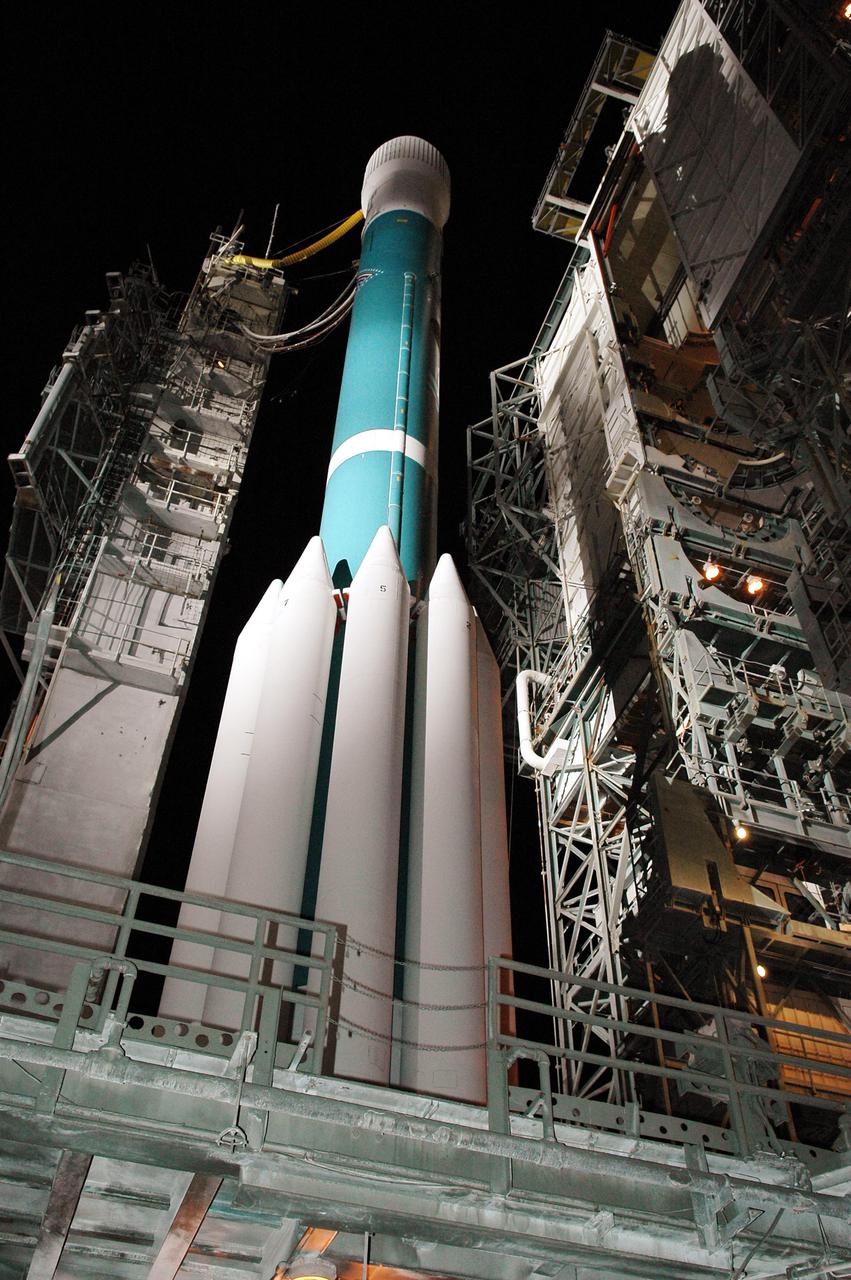
KENNEDY SPACE CENTER, FLA. - On Launch Pad 17-B, Cape Canaveral Air Force Station, Fla., the Boeing Delta II rocket carrying the Deep Impact spacecraft looms into the night sky as the mobile service tower at right is rolled back before launch. Scheduled for liftoff at 1:47 p.m. EST today, Deep Impact will head for space and a rendezvous with Comet Tempel 1 when the comet is 83 million miles from Earth. After releasing a 3- by 3-foot projectile (impactor) to crash onto the surface July 4, 2005, Deep Impact’s flyby spacecraft will reveal the secrets of the comet’s interior by collecting pictures and data of how the crater forms, measuring the crater’s depth and diameter as well as the composition of the interior of the crater and any material thrown out, and determining the changes in natural outgassing produced by the impact. It will send the data back to Earth through the antennas of the Deep Space Network. Deep Impact is a NASA Discovery mission.
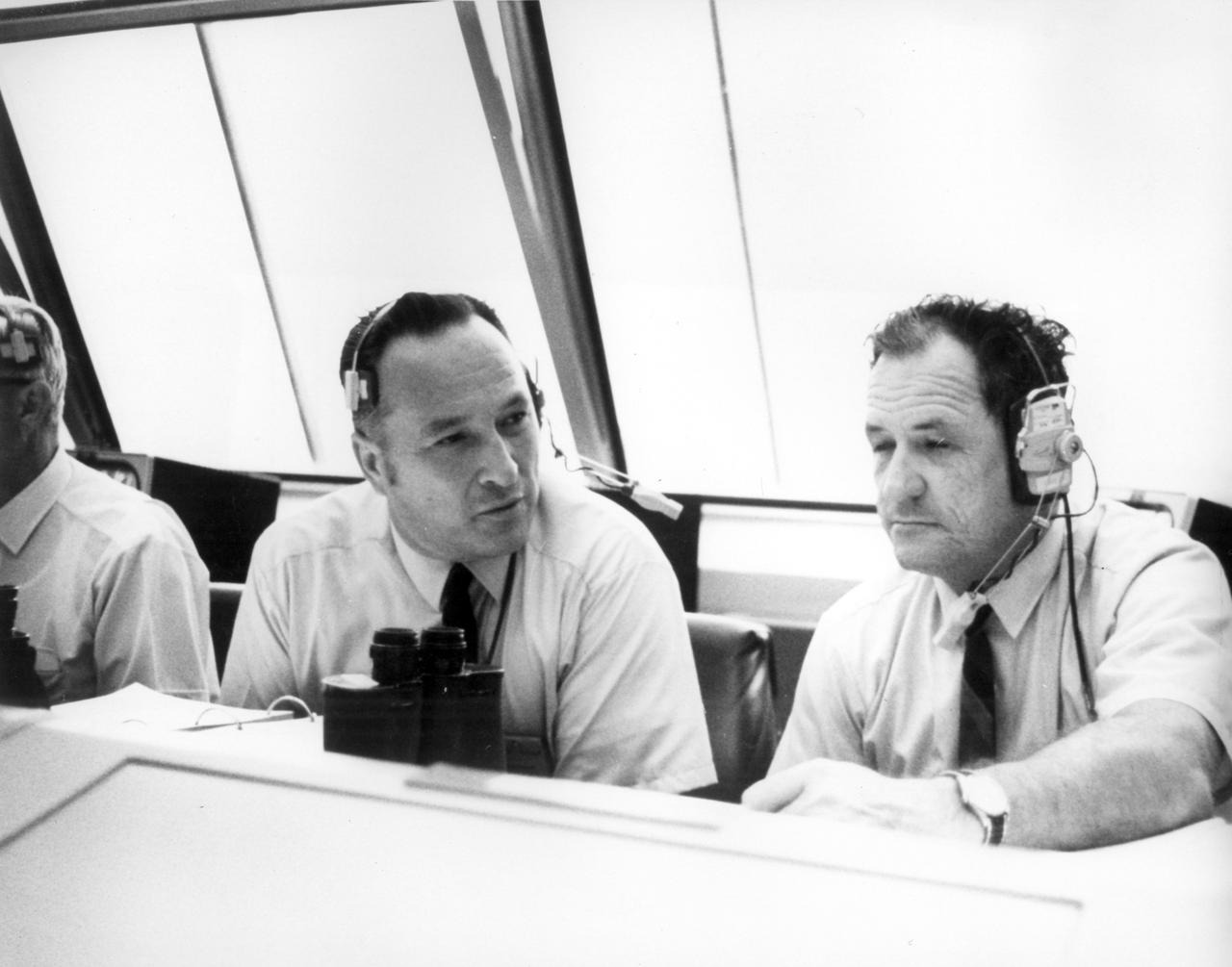
Lee B. James (left), manager of the Saturn Program at the Marshall Space flight Center (MSFC), talks with Isom Pigell in the firing room 1 of the Kennedy Space Center (KSC) control center during the countdown demonstration test for the Apollo 11 mission. The Apollo 11 mission, the first lunar landing mission, launched from the KSC in Florida via the MSFC developed Saturn V launch vehicle on July 16, 1969 and safely returned to Earth on July 24, 1969. Aboard the space craft were astronauts Neil A. Armstrong, commander; Michael Collins, Command Module (CM) pilot; and Edwin E. (Buzz) Aldrin Jr., Lunar Module (LM) pilot. The CM, “Columbia”, piloted by Collins, remained in a parking orbit around the Moon while the LM, “Eagle’’, carrying astronauts Armstrong and Aldrin, landed on the Moon. On July 20, 1969, Armstrong was the first human to ever stand on the lunar surface, followed by Aldrin. During 2½ hours of surface exploration, the crew collected 47 pounds of lunar surface material for analysis back on Earth. With the success of Apollo 11, the national objective to land men on the Moon and return them safely to Earth had been accomplished.
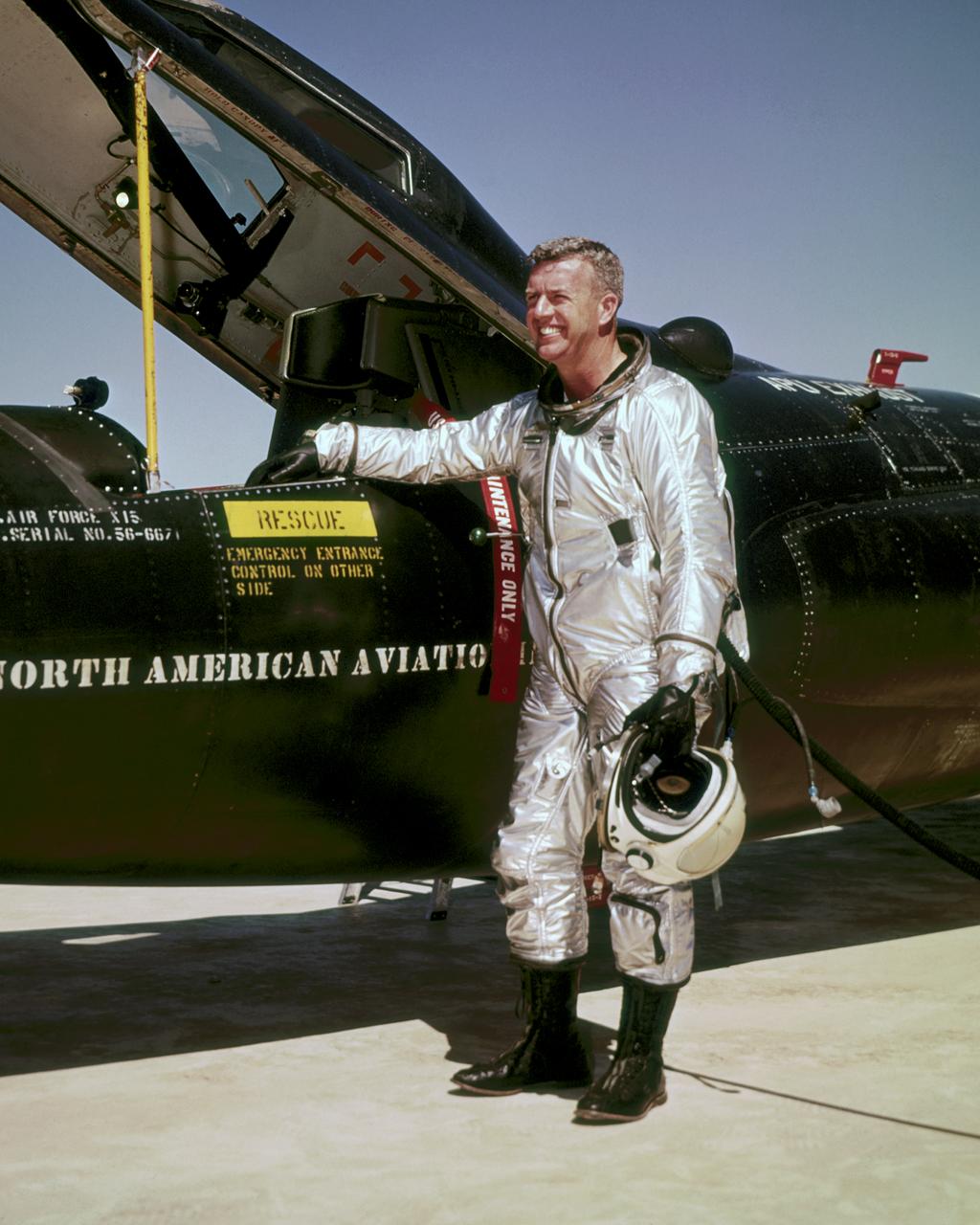
Joseph A. Walker was a Chief Research Pilot at the NASA Dryden Flight Research Center during the mid-1960s. He joined the NACA in March 1945, and served as project pilot at the Edwards flight research facility on such pioneering research projects as the D-558-1, D-558-2, X-1, X-3, X-4, X-5, and the X-15. He also flew programs involving the F-100, F-101, F-102, F-104, and the B-47. Walker made the first NASA X-15 flight on March 25, 1960. He flew the research aircraft 24 times and achieved its fastest speed and highest altitude. He attained a speed of 4,104 mph (Mach 5.92) during a flight on June 27, 1962, and reached an altitude of 354,300 feet on August 22, 1963 (his last X-15 flight). He was the first man to pilot the Lunar Landing Research Vehicle (LLRV) that was used to develop piloting and operational techniques for lunar landings. Walker was born February 20, 1921, in Washington, Pa. He lived there until graduating from Washington and Jefferson College in 1942, with a B.A. degree in Physics. During World War II he flew P-38 fighters for the Air Force, earning the Distinguished Flying Cross and the Air Medal with Seven Oak Clusters. Walker was the recipient of many awards during his 21 years as a research pilot. These include the 1961 Robert J. Collier Trophy, 1961 Harmon International Trophy for Aviators, the 1961 Kincheloe Award and 1961 Octave Chanute Award. He received an honorary Doctor of Aeronautical Sciences degree from his alma mater in June of 1962. Walker was named Pilot of the Year in 1963 by the National Pilots Association. He was a charter member of the Society of Experimental Test Pilots, and one of the first to be designated a Fellow. He was fatally injured on June 8, 1966, in a mid-air collision between an F-104 he was piloting and the XB-70.
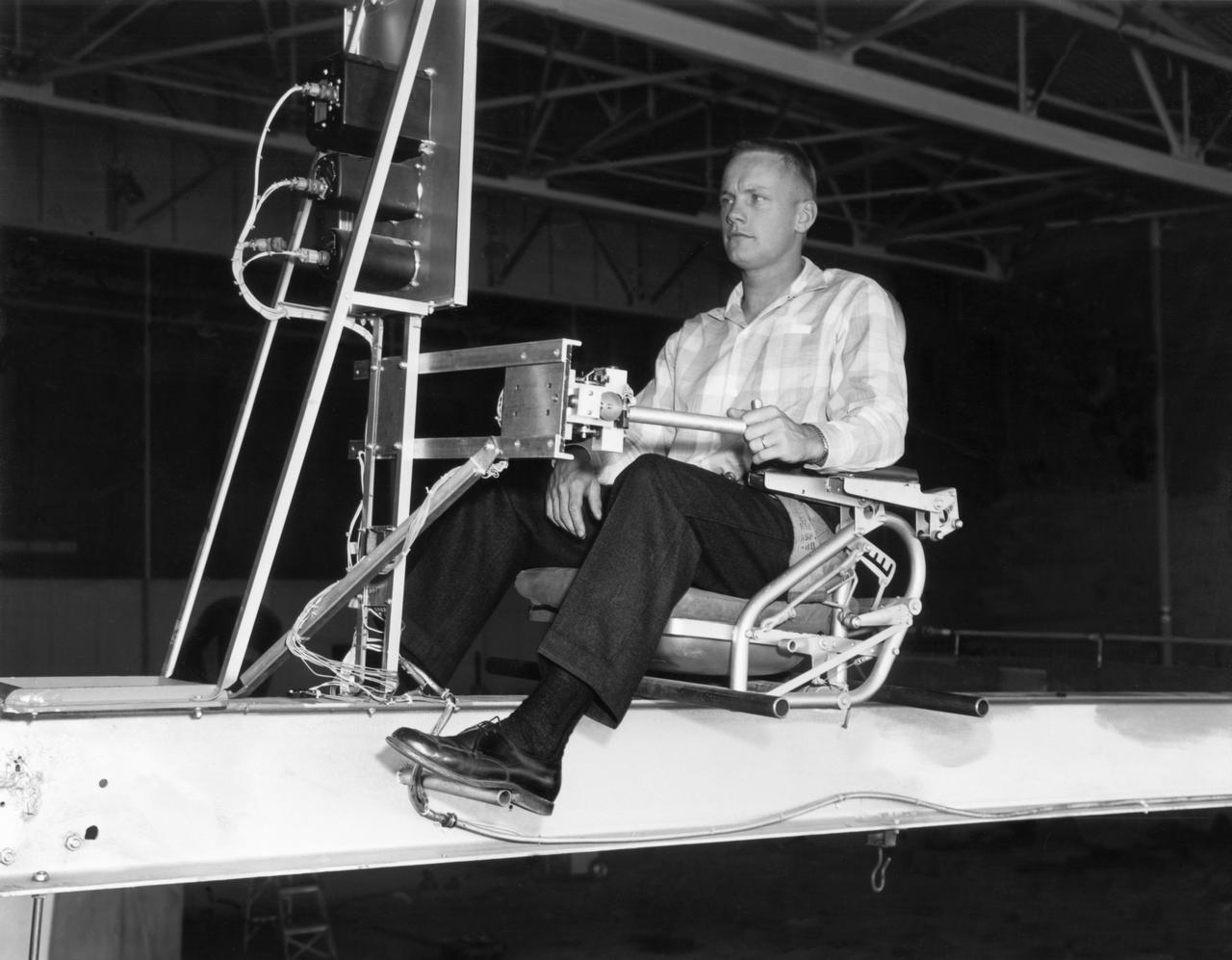
Famed astronaut Neil A. Armstrong, the first man to set foot on the moon during the historic Apollo 11 space mission in July 1969, served for seven years as a research pilot at the NACA-NASA High-Speed Flight Station, now the Dryden Flight Research Center, at Edwards, California, before he entered the space program. Armstrong joined the National Advisory Committee for Aeronautics (NACA) at the Lewis Flight Propulsion Laboratory (later NASA's Lewis Research Center, Cleveland, Ohio, and today the Glenn Research Center) in 1955. Later that year, he transferred to the High-Speed Flight Station at Edwards as an aeronautical research scientist and then as a pilot, a position he held until becoming an astronaut in 1962. He was one of nine NASA astronauts in the second class to be chosen. As a research pilot Armstrong served as project pilot on the F-100A and F-100C aircraft, F-101, and the F-104A. He also flew the X-1B, X-5, F-105, F-106, B-47, KC-135, and Paresev. He left Dryden with a total of over 2450 flying hours. He was a member of the USAF-NASA Dyna-Soar Pilot Consultant Group before the Dyna-Soar project was cancelled, and studied X-20 Dyna-Soar approaches and abort maneuvers through use of the F-102A and F5D jet aircraft. Armstrong was actively engaged in both piloting and engineering aspects of the X-15 program from its inception. He completed the first flight in the aircraft equipped with a new flow-direction sensor (ball nose) and the initial flight in an X-15 equipped with a self-adaptive flight control system. He worked closely with designers and engineers in development of the adaptive system, and made seven flights in the rocket plane from December 1960 until July 1962. During those fights he reached a peak altitude of 207,500 feet in the X-15-3, and a speed of 3,989 mph (Mach 5.74) in the X-15-1. Armstrong has a total of 8 days and 14 hours in space, including 2 hours and 48 minutes walking on the Moon. In March 1966 he was commander of the Gemini 8 or
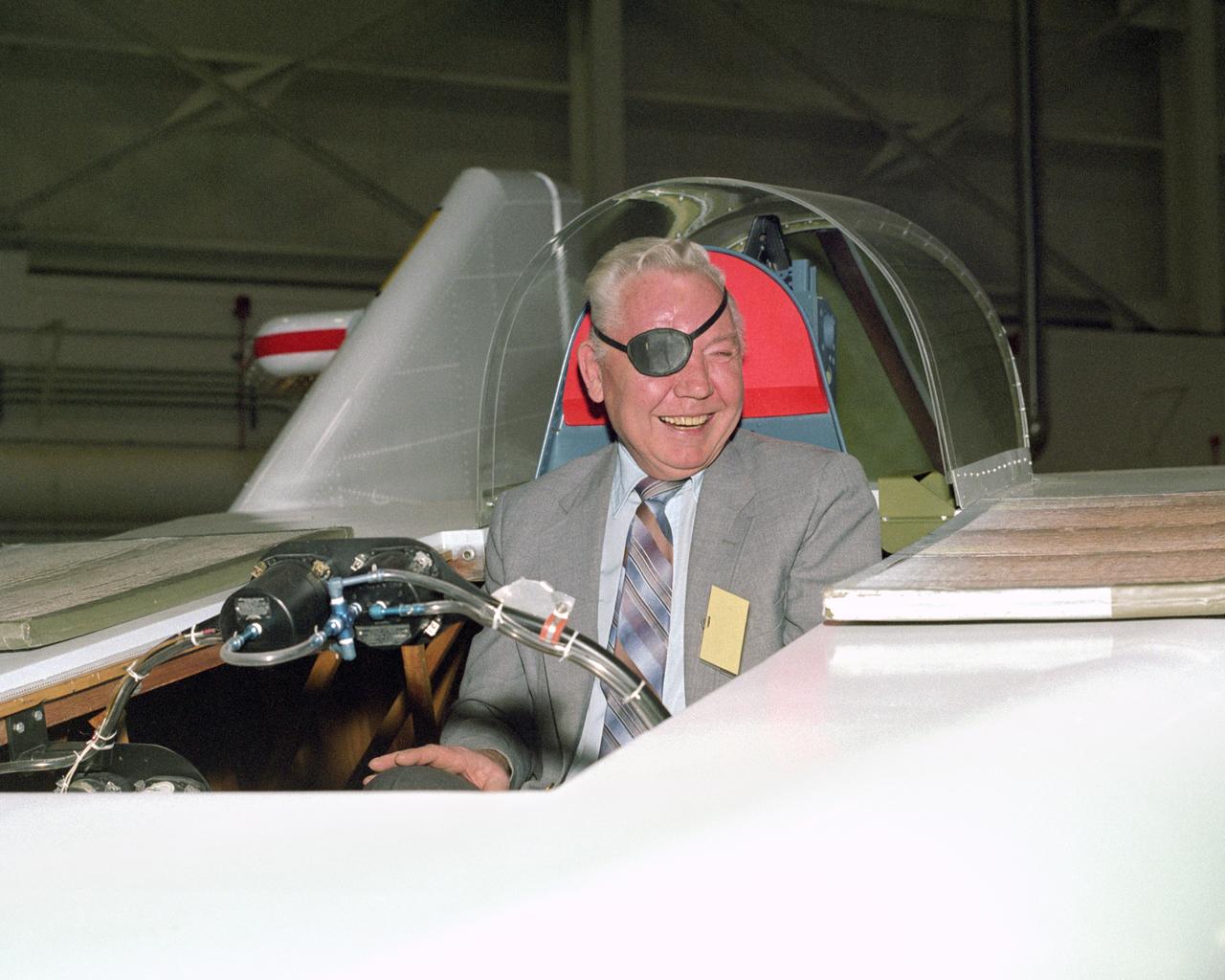
NASA Pilot Bruce Peterson in the cockpit of the restored M2-F1 Lifting Body.
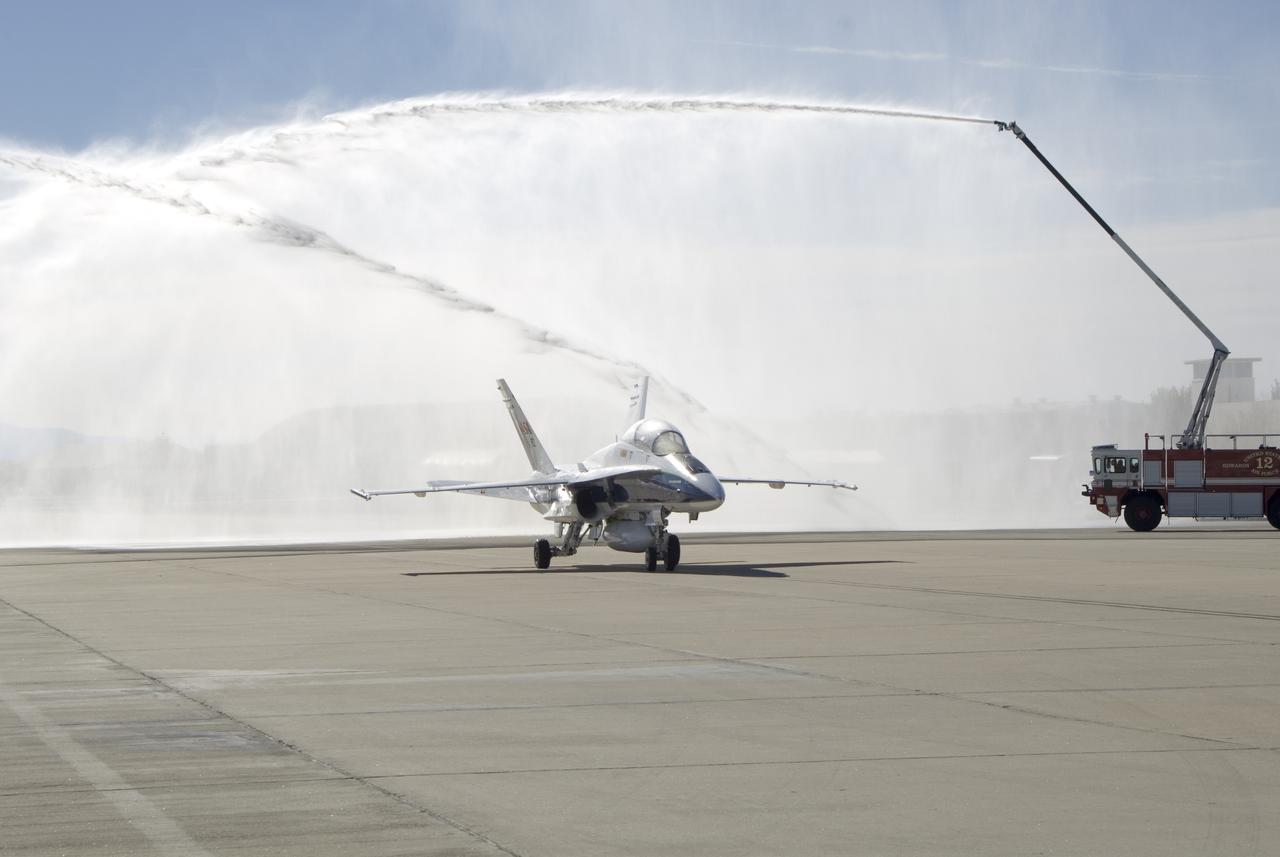
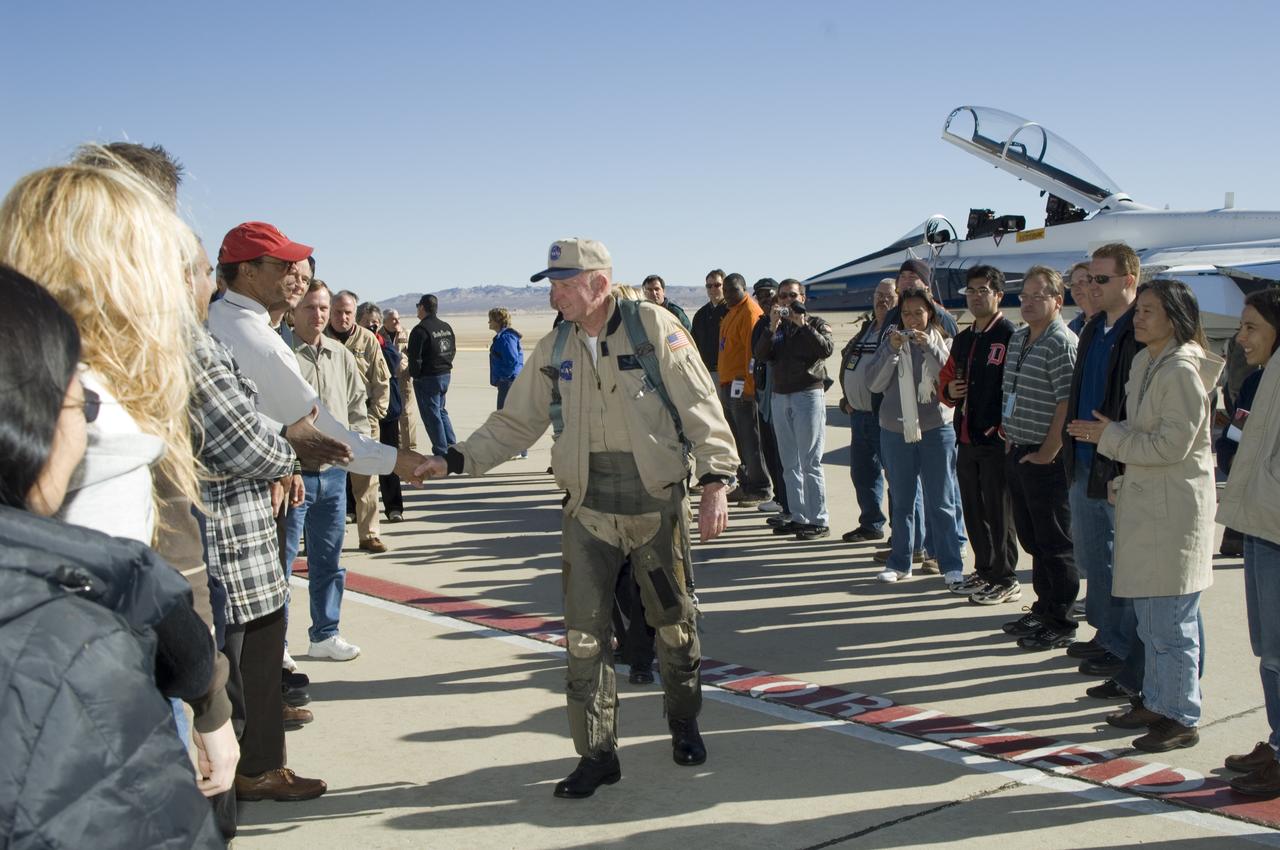
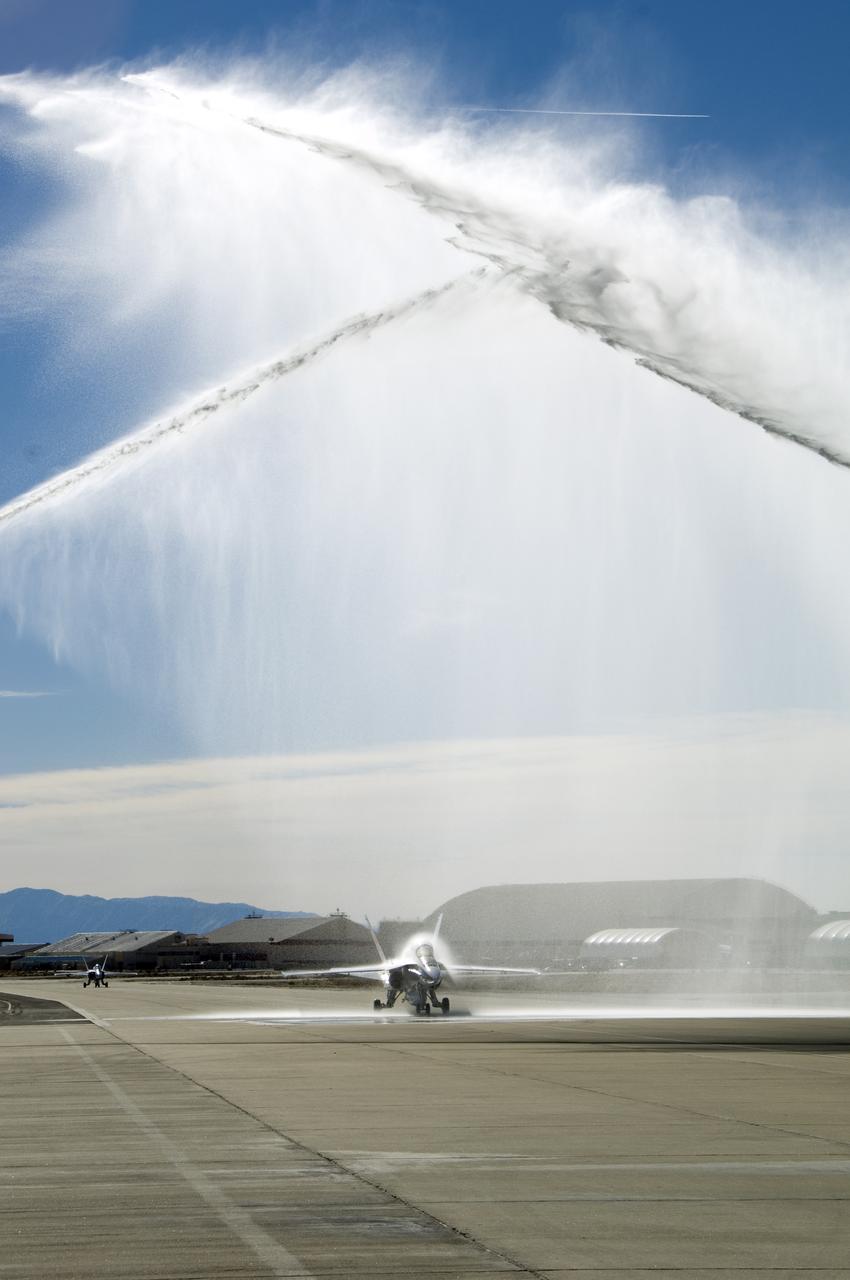
Long-time NASA Dryden research pilot and former astronaut C. Gordon Fullerton capped an almost 50-year flying career, including more than 38 years with NASA, with a final flight in a NASA F/A-18 on Dec. 21, 2007. Fullerton and Dryden research pilot Jim Smolka flew a 90-minute pilot proficiency formation aerobatics flight with another Dryden F/A-18 and a Dryden T-38 before concluding with two low-level formation flyovers of Dryden before landing. Fullerton was honored with a water-cannon spray arch provided by two fire trucks from the Edwards Air Force Base fire department as he taxied the F/A-18 up to the Dryden ramp, and was then greeted by his wife Marie and several hundred Dryden staff after his final flight. Fullerton began his flying career with the U.S. Air Force in 1958 after earning bachelor's and master's degrees in mechanical engineering from the California Institute of Technology. Initially trained as a fighter pilot, he later transitioned to multi-engine bombers and became a bomber operations test pilot after attending the Air Force Aerospace Research Pilot School at Edwards Air Force Base, Calif. He then was assigned to the flight crew for the planned Air Force Manned Orbital Laboratory in 1966. Upon cancellation of that program, the Air Force assigned Fullerton to NASA's astronaut corps in 1969. He served on the support crews for the Apollo 14, 15, 16 and 17 lunar missions, and was later assigned to one of the two flight crews that piloted the space shuttle prototype Enterprise during the Approach and Landing Test program at Dryden. He then logged some 382 hours in space when he flew on two early space shuttle missions, STS-3 on Columbia in 1982 and STS-51F on Challenger in 1985. He joined the flight crew branch at NASA Dryden after leaving the astronaut corps in 1986. During his 21 years at Dryden, Fullerton was project pilot on a number of high-profile research efforts, including the Propulsion Controlled Aircraft, the high-speed landing tests of
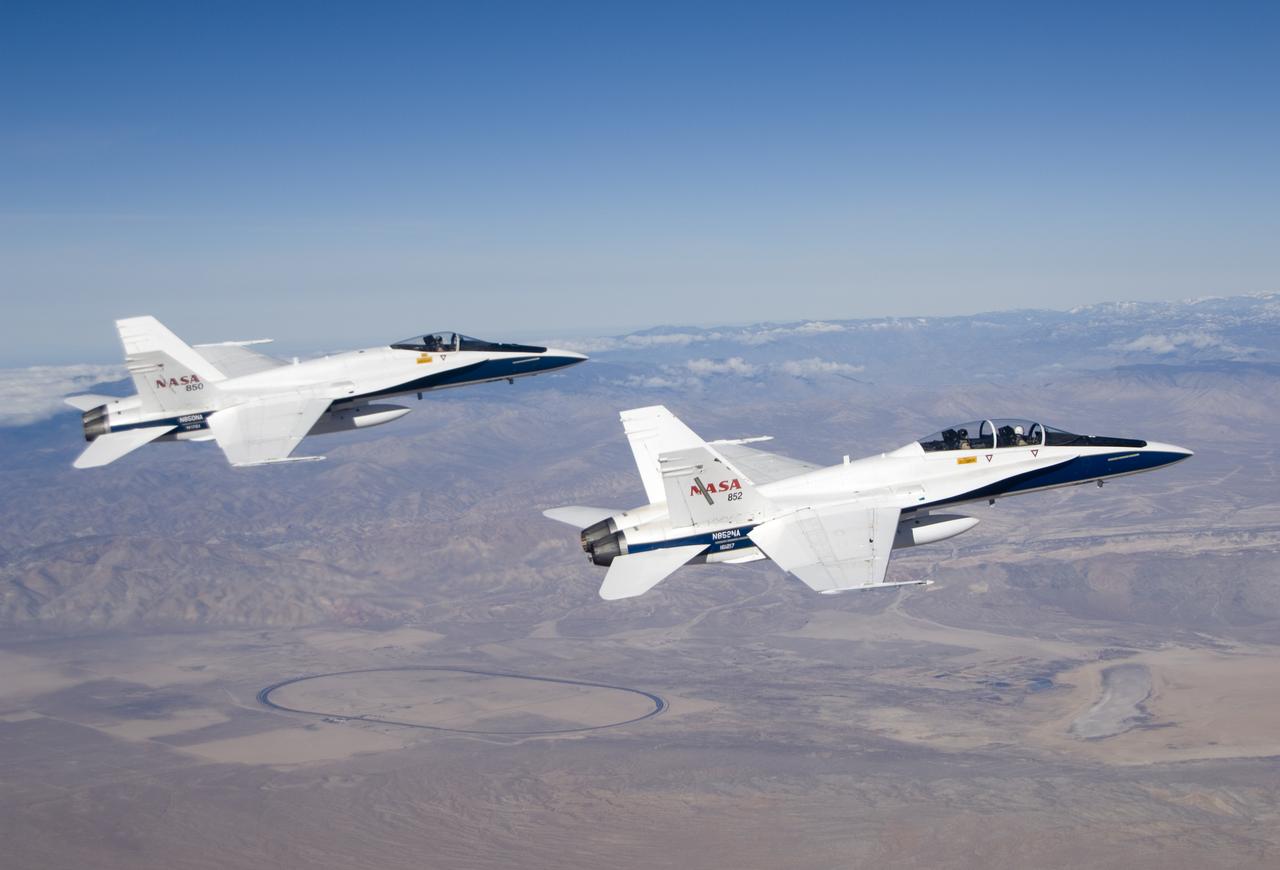
Long-time NASA Dryden research pilot and former astronaut C. Gordon Fullerton capped an almost 50-year flying career, including more than 38 years with NASA, with a final flight in a NASA F/A-18 on Dec. 21, 2007. Fullerton and Dryden research pilot Jim Smolka flew a 90-minute pilot proficiency formation aerobatics flight with another Dryden F/A-18 and a Dryden T-38 before concluding with two low-level formation flyovers of Dryden before landing. Fullerton was honored with a water-cannon spray arch provided by two fire trucks from the Edwards Air Force Base fire department as he taxied the F/A-18 up to the Dryden ramp, and was then greeted by his wife Marie and several hundred Dryden staff after his final flight. Fullerton began his flying career with the U.S. Air Force in 1958 after earning bachelor's and master's degrees in mechanical engineering from the California Institute of Technology. Initially trained as a fighter pilot, he later transitioned to multi-engine bombers and became a bomber operations test pilot after attending the Air Force Aerospace Research Pilot School at Edwards Air Force Base, Calif. He then was assigned to the flight crew for the planned Air Force Manned Orbital Laboratory in 1966. Upon cancellation of that program, the Air Force assigned Fullerton to NASA's astronaut corps in 1969. He served on the support crews for the Apollo 14, 15, 16 and 17 lunar missions, and was later assigned to one of the two flight crews that piloted the space shuttle prototype Enterprise during the Approach and Landing Test program at Dryden. He then logged some 382 hours in space when he flew on two early space shuttle missions, STS-3 on Columbia in 1982 and STS-51F on Challenger in 1985. He joined the flight crew branch at NASA Dryden after leaving the astronaut corps in 1986. During his 21 years at Dryden, Fullerton was project pilot on a number of high-profile research efforts, including the Propulsion Controlled Aircraft, the high-speed landing tests of sp
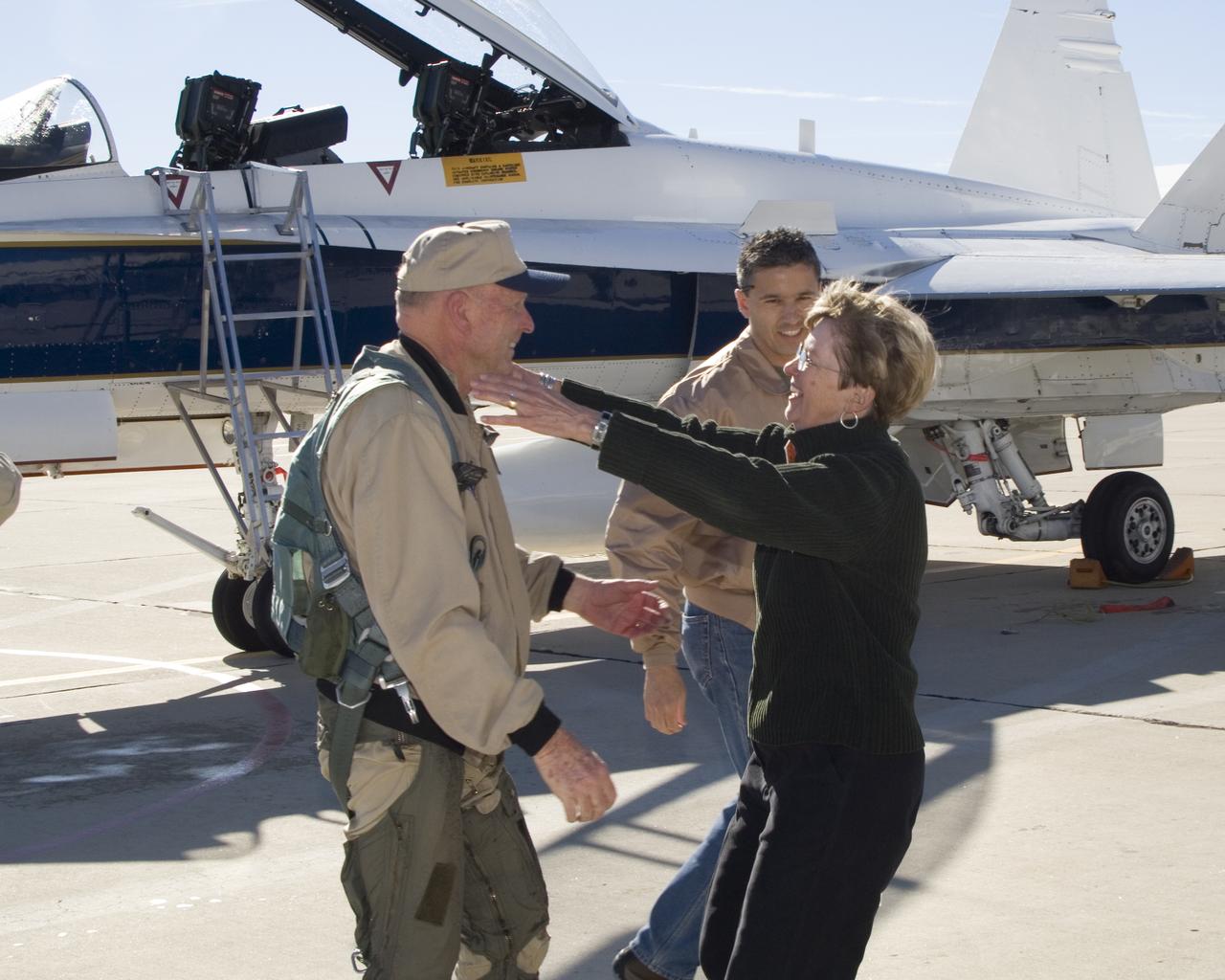
NASA Dryden research pilot Gordon Fullerton is greeted by his wife Marie on the Dryden ramp after his final flight in a NASA F/A-18 on Dec. 21, 2007.
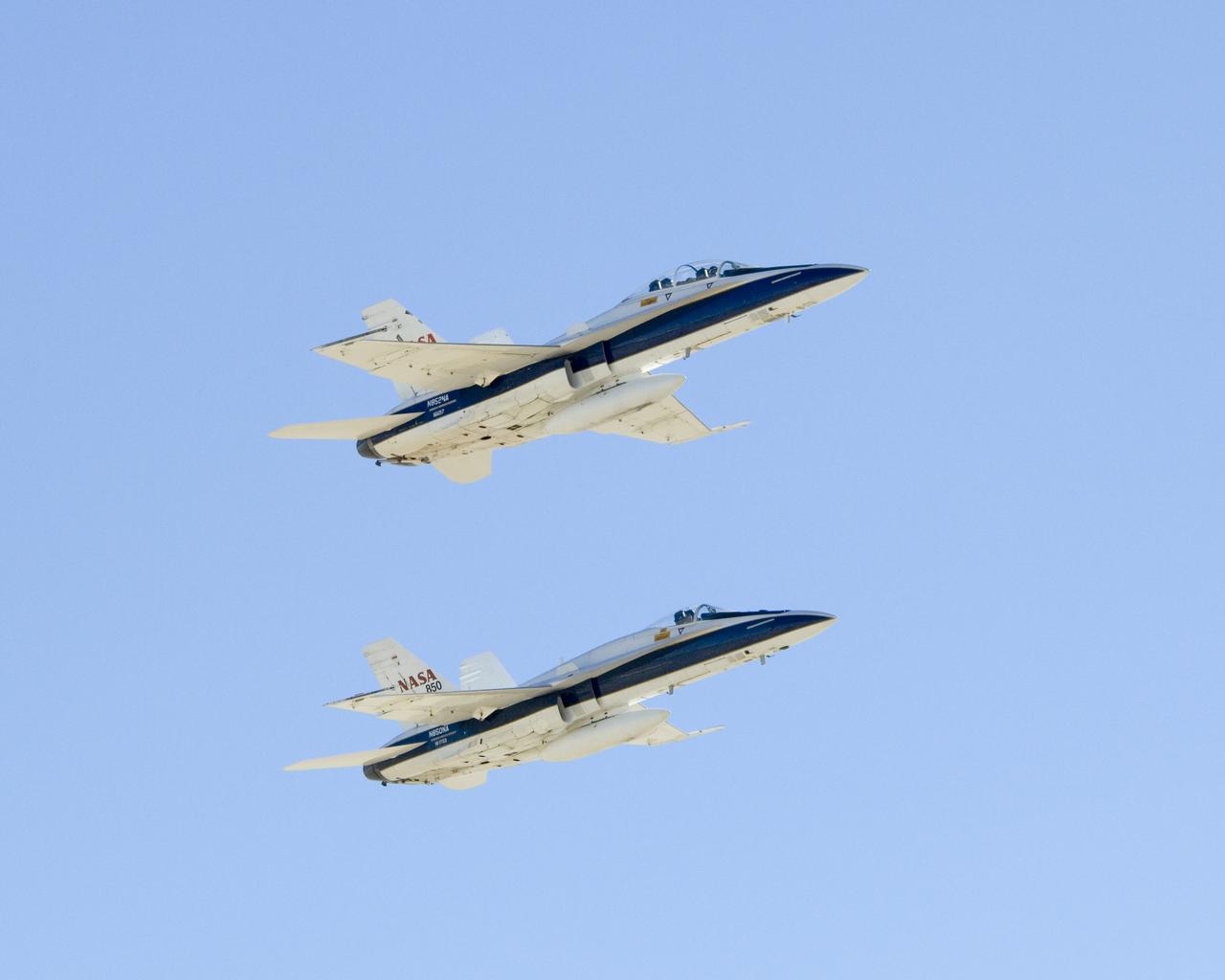
Long-time NASA Dryden research pilot and former astronaut C. Gordon Fullerton capped an almost 50-year flying career, including more than 38 years with NASA, with a final flight in a NASA F/A-18 on Dec. 21, 2007. Fullerton and Dryden research pilot Jim Smolka flew a 90-minute pilot proficiency formation aerobatics flight with another Dryden F/A-18 and a Dryden T-38 before concluding with two low-level formation flyovers of Dryden before landing. Fullerton was honored with a water-cannon spray arch provided by two fire trucks from the Edwards Air Force Base fire department as he taxied the F/A-18 up to the Dryden ramp, and was then greeted by his wife Marie and several hundred Dryden staff after his final flight. Fullerton began his flying career with the U.S. Air Force in 1958 after earning bachelor's and master's degrees in mechanical engineering from the California Institute of Technology. Initially trained as a fighter pilot, he later transitioned to multi-engine bombers and became a bomber operations test pilot after attending the Air Force Aerospace Research Pilot School at Edwards Air Force Base, Calif. He then was assigned to the flight crew for the planned Air Force Manned Orbital Laboratory in 1966. Upon cancellation of that program, the Air Force assigned Fullerton to NASA's astronaut corps in 1969. He served on the support crews for the Apollo 14, 15, 16 and 17 lunar missions, and was later assigned to one of the two flight crews that piloted the space shuttle prototype Enterprise during the Approach and Landing Test program at Dryden. He then logged some 382 hours in space when he flew on two early space shuttle missions, STS-3 on Columbia in 1982 and STS-51F on Challenger in 1985. He joined the flight crew branch at NASA Dryden after leaving the astronaut corps in 1986. During his 21 years at Dryden, Fullerton was project pilot on a number of high-profile research efforts, including the Propulsion Controlled Aircraft, the high-speed landing tests of
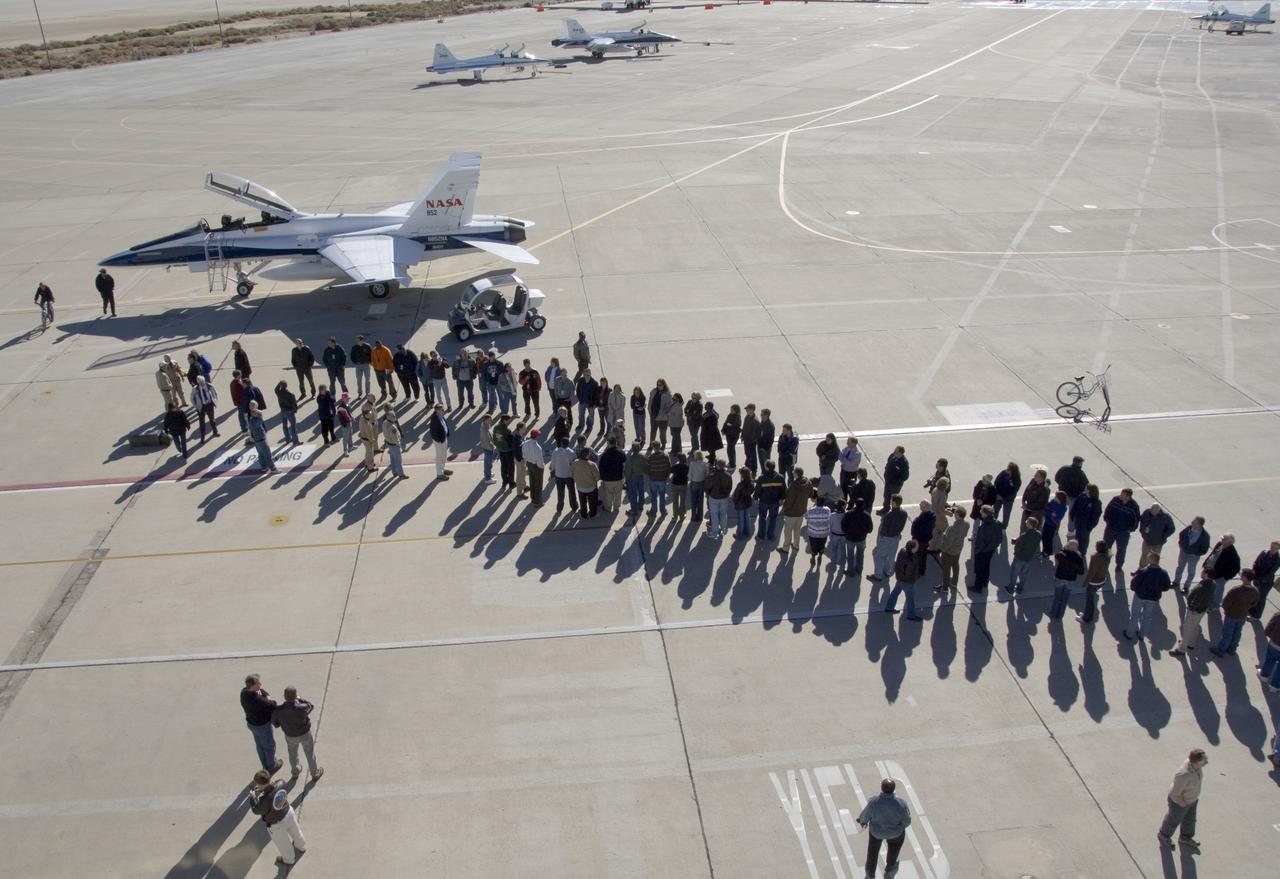
Long-time NASA Dryden research pilot and former astronaut C. Gordon Fullerton capped an almost 50-year flying career, including more than 38 years with NASA, with a final flight in a NASA F/A-18 on Dec. 21, 2007. Fullerton and Dryden research pilot Jim Smolka flew a 90-minute pilot proficiency formation aerobatics flight with another Dryden F/A-18 and a Dryden T-38 before concluding with two low-level formation flyovers of Dryden before landing. Fullerton was honored with a water-cannon spray arch provided by two fire trucks from the Edwards Air Force Base fire department as he taxied the F/A-18 up to the Dryden ramp, and was then greeted by his wife Marie and several hundred Dryden staff after his final flight. Fullerton began his flying career with the U.S. Air Force in 1958 after earning bachelor's and master's degrees in mechanical engineering from the California Institute of Technology. Initially trained as a fighter pilot, he later transitioned to multi-engine bombers and became a bomber operations test pilot after attending the Air Force Aerospace Research Pilot School at Edwards Air Force Base, Calif. He then was assigned to the flight crew for the planned Air Force Manned Orbital Laboratory in 1966. Upon cancellation of that program, the Air Force assigned Fullerton to NASA's astronaut corps in 1969. He served on the support crews for the Apollo 14, 15, 16 and 17 lunar missions, and was later assigned to one of the two flight crews that piloted the space shuttle prototype Enterprise during the Approach and Landing Test program at Dryden. He then logged some 382 hours in space when he flew on two early space shuttle missions, STS-3 on Columbia in 1982 and STS-51F on Challenger in 1985. He joined the flight crew branch at NASA Dryden after leaving the astronaut corps in 1986. During his 21 years at Dryden, Fullerton was project pilot on a number of high-profile research efforts, including the Propulsion Controlled Aircraft, the high-speed landing tests of
Long-time NASA Dryden research pilot and former astronaut C. Gordon Fullerton capped an almost 50-year flying career, including more than 38 years with NASA, with a final flight in a NASA F/A-18 on Dec. 21, 2007. Fullerton and Dryden research pilot Jim Smolka flew a 90-minute pilot proficiency formation aerobatics flight with another Dryden F/A-18 and a Dryden T-38 before concluding with two low-level formation flyovers of Dryden before landing. Fullerton was honored with a water-cannon spray arch provided by two fire trucks from the Edwards Air Force Base fire department as he taxied the F/A-18 up to the Dryden ramp, and was then greeted by his wife Marie and several hundred Dryden staff after his final flight. Fullerton began his flying career with the U.S. Air Force in 1958 after earning bachelor's and master's degrees in mechanical engineering from the California Institute of Technology. Initially trained as a fighter pilot, he later transitioned to multi-engine bombers and became a bomber operations test pilot after attending the Air Force Aerospace Research Pilot School at Edwards Air Force Base, Calif. He then was assigned to the flight crew for the planned Air Force Manned Orbital Laboratory in 1966. Upon cancellation of that program, the Air Force assigned Fullerton to NASA's astronaut corps in 1969. He served on the support crews for the Apollo 14, 15, 16 and 17 lunar missions, and was later assigned to one of the two flight crews that piloted the space shuttle prototype Enterprise during the Approach and Landing Test program at Dryden. He then logged some 382 hours in space when he flew on two early space shuttle missions, STS-3 on Columbia in 1982 and STS-51F on Challenger in 1985. He joined the flight crew branch at NASA Dryden after leaving the astronaut corps in 1986. During his 21 years at Dryden, Fullerton was project pilot on a number of high-profile research efforts, including the Propulsion Controlled Aircraft, the high-speed landing tests of
Long-time NASA Dryden research pilot and former astronaut C. Gordon Fullerton capped an almost 50-year flying career, including more than 38 years with NASA, with a final flight in a NASA F/A-18 on Dec. 21, 2007. Fullerton and Dryden research pilot Jim Smolka flew a 90-minute pilot proficiency formation aerobatics flight with another Dryden F/A-18 and a Dryden T-38 before concluding with two low-level formation flyovers of Dryden before landing. Fullerton was honored with a water-cannon spray arch provided by two fire trucks from the Edwards Air Force Base fire department as he taxied the F/A-18 up to the Dryden ramp, and was then greeted by his wife Marie and several hundred Dryden staff after his final flight. Fullerton began his flying career with the U.S. Air Force in 1958 after earning bachelor's and master's degrees in mechanical engineering from the California Institute of Technology. Initially trained as a fighter pilot, he later transitioned to multi-engine bombers and became a bomber operations test pilot after attending the Air Force Aerospace Research Pilot School at Edwards Air Force Base, Calif. He then was assigned to the flight crew for the planned Air Force Manned Orbital Laboratory in 1966. Upon cancellation of that program, the Air Force assigned Fullerton to NASA's astronaut corps in 1969. He served on the support crews for the Apollo 14, 15, 16 and 17 lunar missions, and was later assigned to one of the two flight crews that piloted the space shuttle prototype Enterprise during the Approach and Landing Test program at Dryden. He then logged some 382 hours in space when he flew on two early space shuttle missions, STS-3 on Columbia in 1982 and STS-51F on Challenger in 1985. He joined the flight crew branch at NASA Dryden after leaving the astronaut corps in 1986. During his 21 years at Dryden, Fullerton was project pilot on a number of high-profile research efforts, including the Propulsion Controlled Aircraft, the high-speed landing tests of
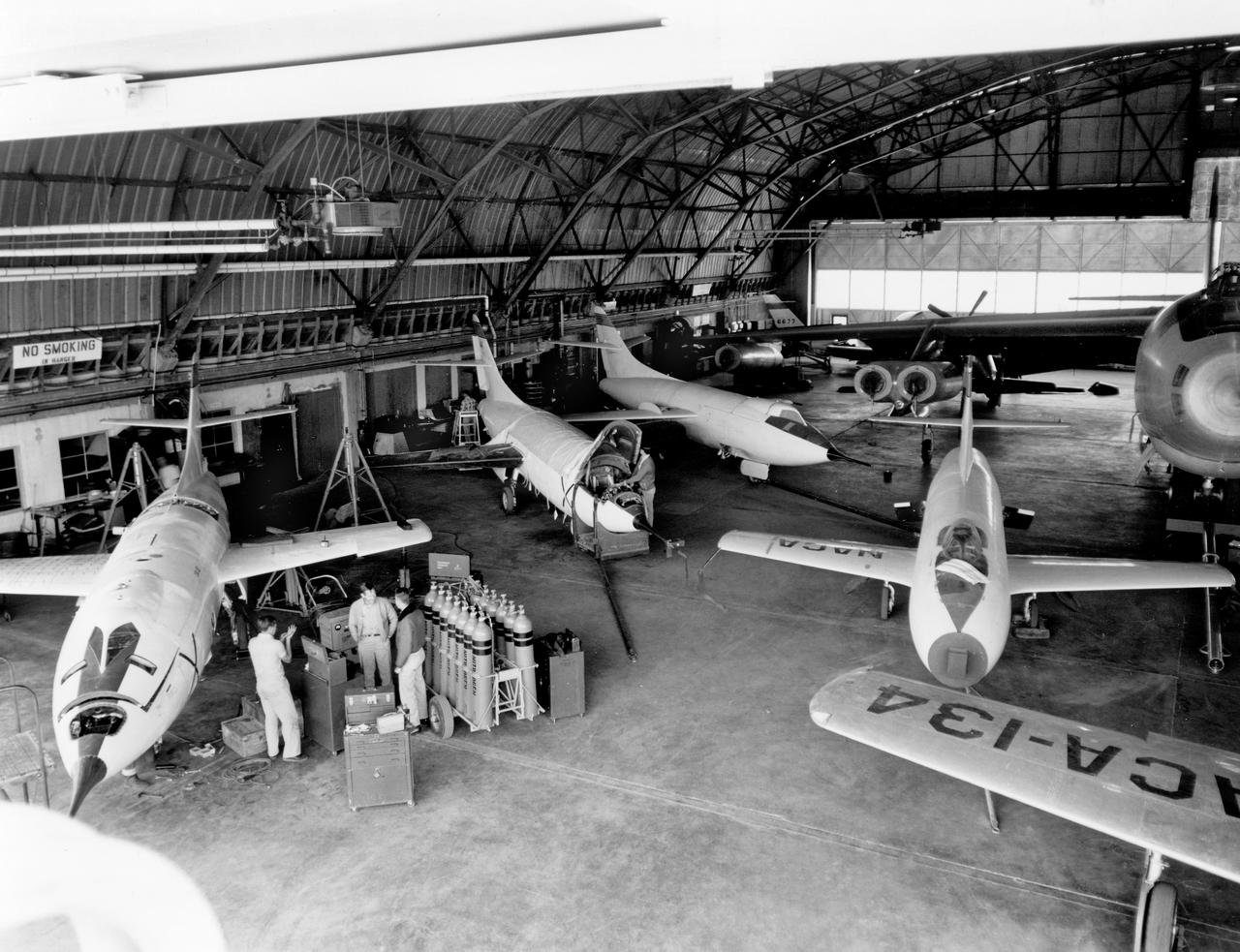
The aircraft in this 1953 photo of the National Advisory Committee for Aeronautics (NACA) hangar at South Base of Edwards Air Force Base showed the wide range of research activities being undertaken. On the left side of the hangar are the three D-558-2 research aircraft. These were designed to test swept wings at supersonic speeds approaching Mach 2. The front D-558-2 is the third built (NACA 145/Navy 37975). It has been modified with a leading-edge chord extension. This was one of a number of wing modifications, using different configurations of slats and/or wing fences, to ease the airplane's tendency to pitch-up. NACA 145 had both a jet and a rocket engine. The middle aircraft is NACA 144 (Navy 37974), the second built. It was all-rocket powered, and Scott Crossfield made the first Mach 2 flight in this aircraft on November 20, 1953. The aircraft in the back is D-558-2 number 1. NACA 143 (Navy 37973) was also carried both a jet and a rocket engine in 1953. It had been used for the Douglas contractor flights, then was turned over to the NACA. The aircraft was not converted to all-rocket power until June 1954. It made only a single NACA flight before NACA's D-558-2 program ended in 1956. Beside the three D-558-2s is the third D-558-1. Unlike the supersonic D-558-2s, it was designed for flight research at transonic speeds, up to Mach 1. The D-558-1 was jet-powered, and took off from the ground. The D-558-1's handling was poor as it approached Mach 1. Given the designation NACA 142 (Navy 37972), it made a total of 78 research flights, with the last in June 1953. In the back of the hangar is the X-4 (Air Force 46-677). This was a Northrop-built research aircraft which tested a swept wing design without horizontal stabilizers. The aircraft proved unstable in flight at speeds above Mach 0.88. The aircraft showed combined pitching, rolling, and yawing motions, and the design was considered unsuitable. The aircraft, the second X-4 built, was then used as a pilot traine