TrackAir Nanotrack pilot display mounted on pilot’s yoke.
Geo Digital Installation on the NASA Langley B200 Aircraft
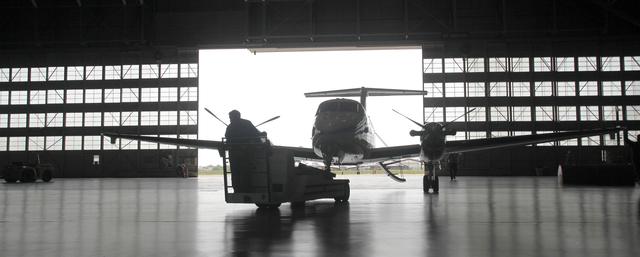
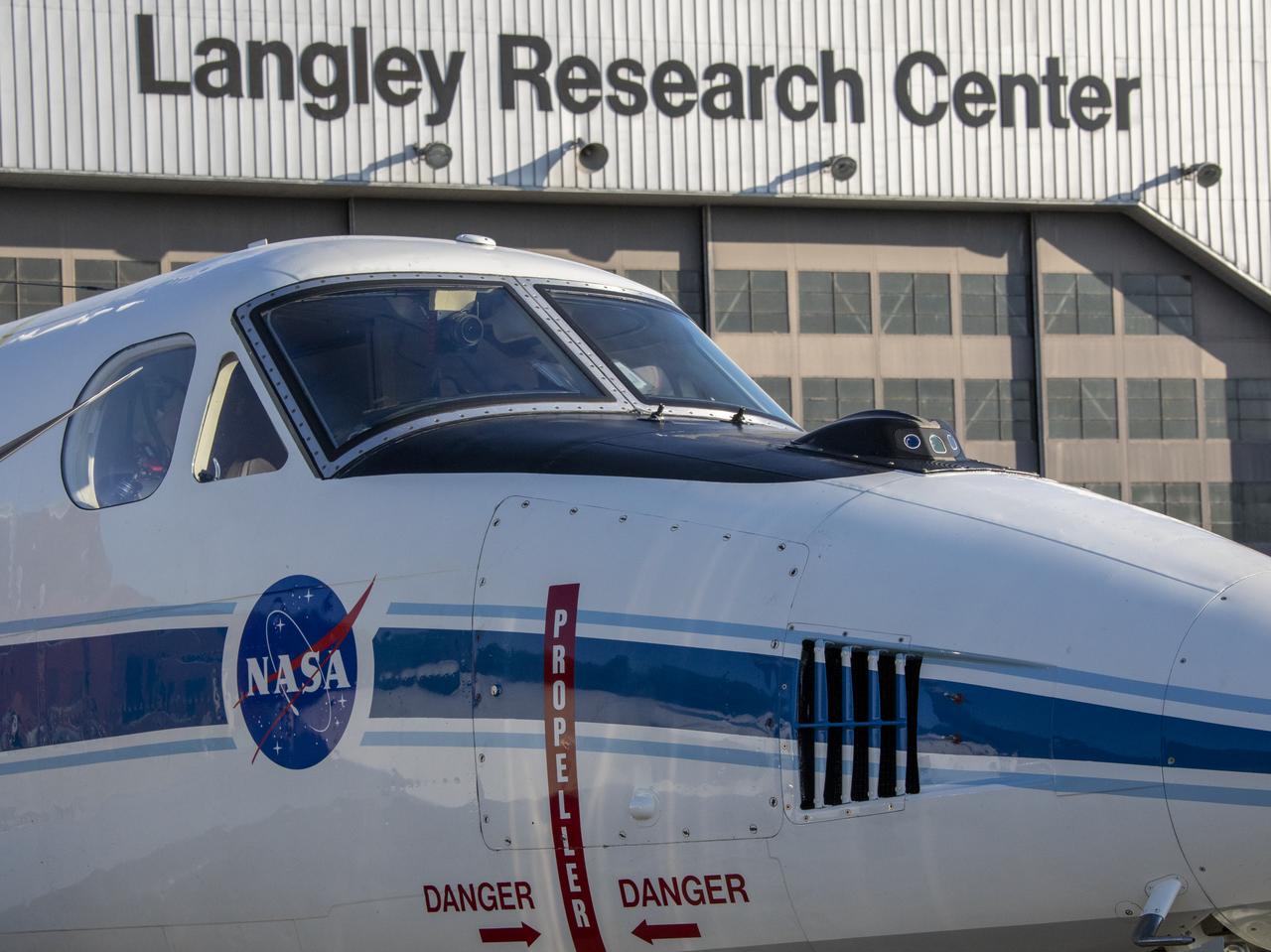
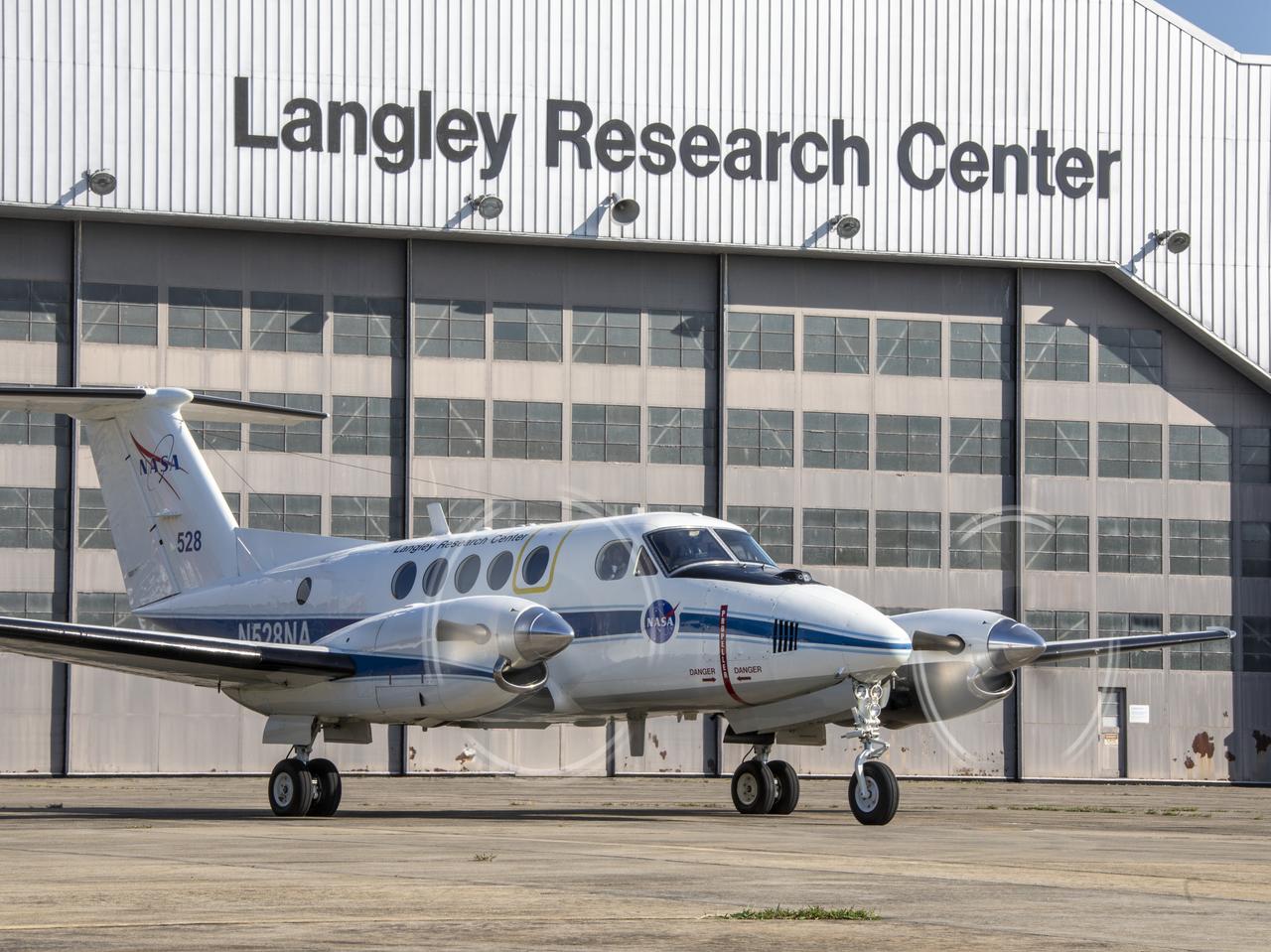
The NASA Langley's twin-engine turboprop, Beechcraft King Air B200 aircraft is towed through the large doors and inside the hangar of the Research Center, Building 1244.
The NASA Langley's Beechcraft King Air B200 Aircraft is Towed Th
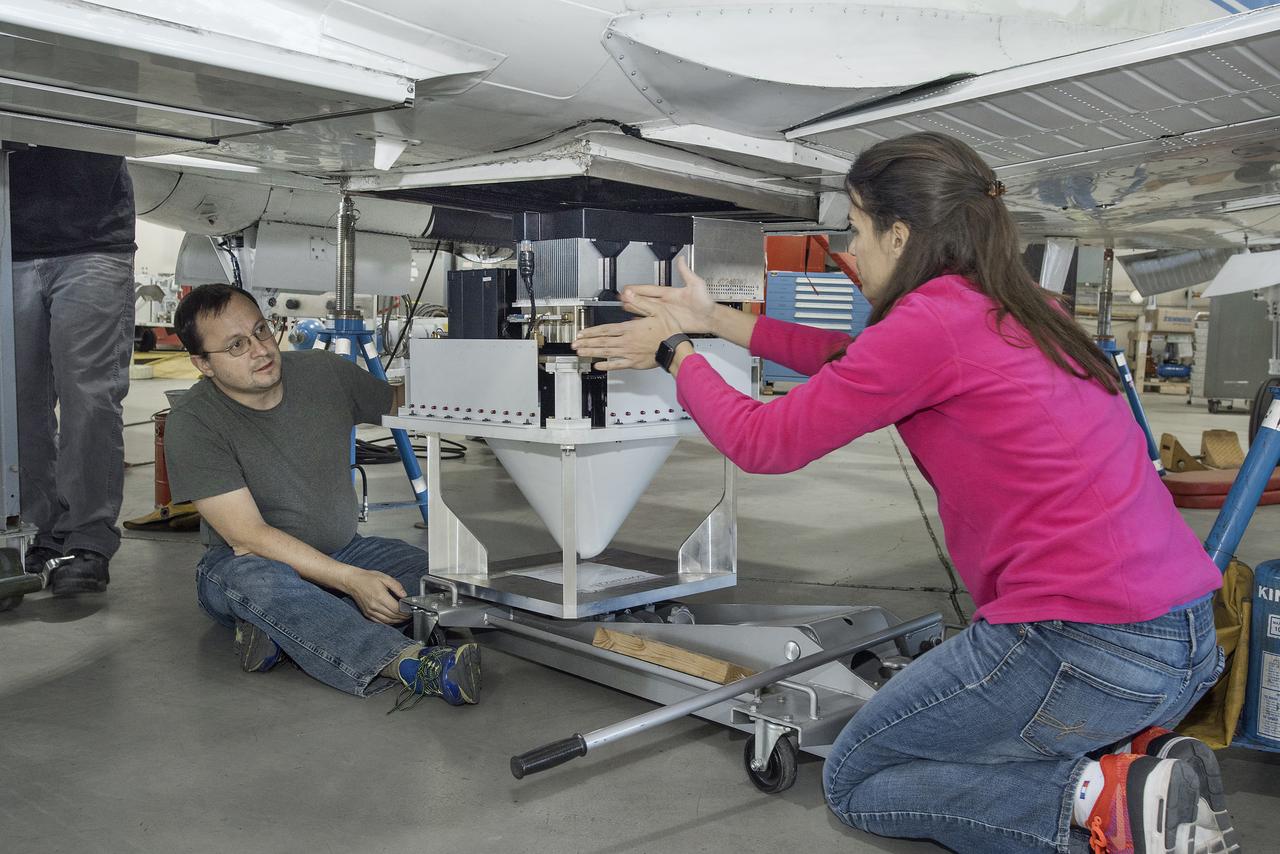
Engineers Raquel Rodriguez Monje and Fabien Nicaise discuss placement of the DopplerScatt radar instrument on the NASA B200 before its final installation onto the aircraft’s fuselage.
NASA Engineers Install DopplerScatt Instrument
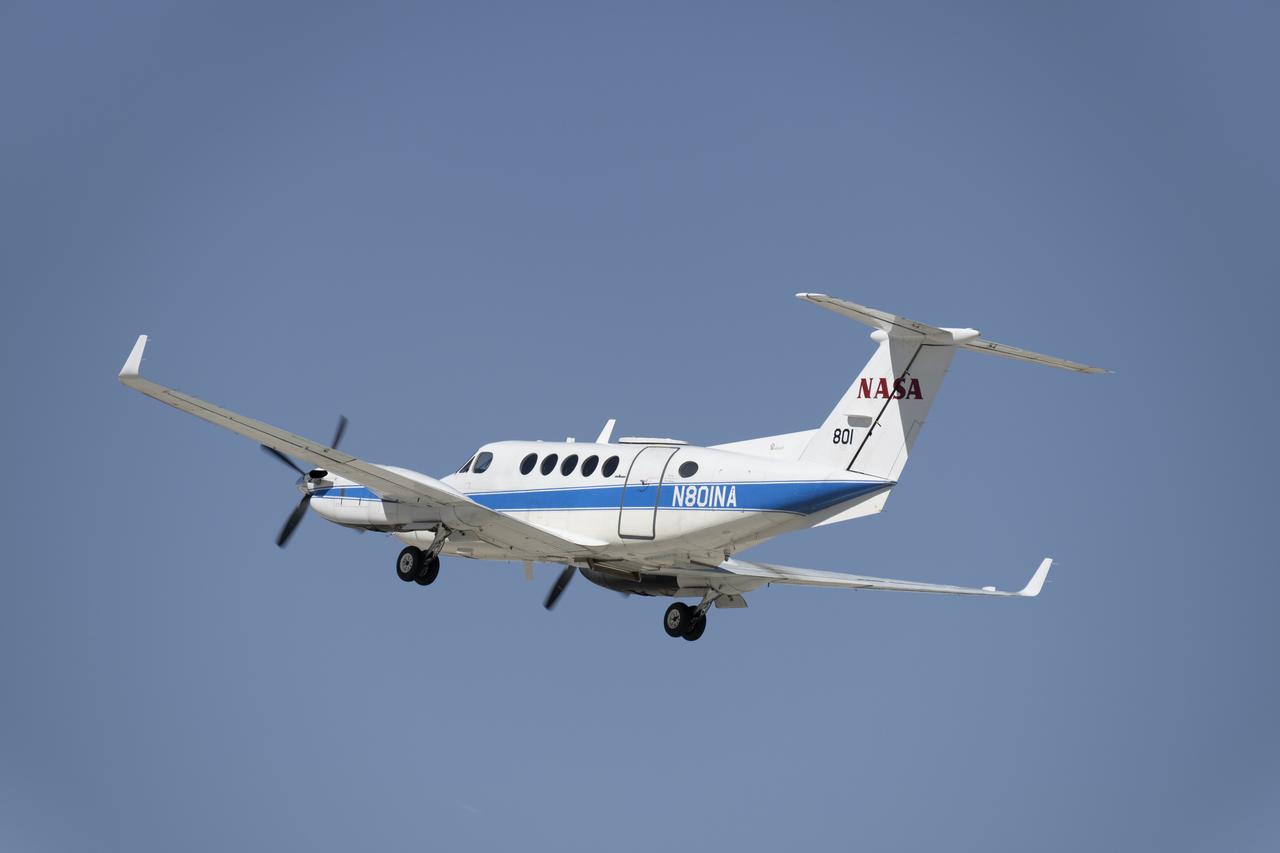
NASA’s B200 taking off for an eight-hour science flight on March 5. Located on the center of the aircraft’s fuselage is the DopplerScatt radar instrument, developed by NASA’s Jet Propulsion Laboratory in California.
DopplerScatt B200 Takeoff
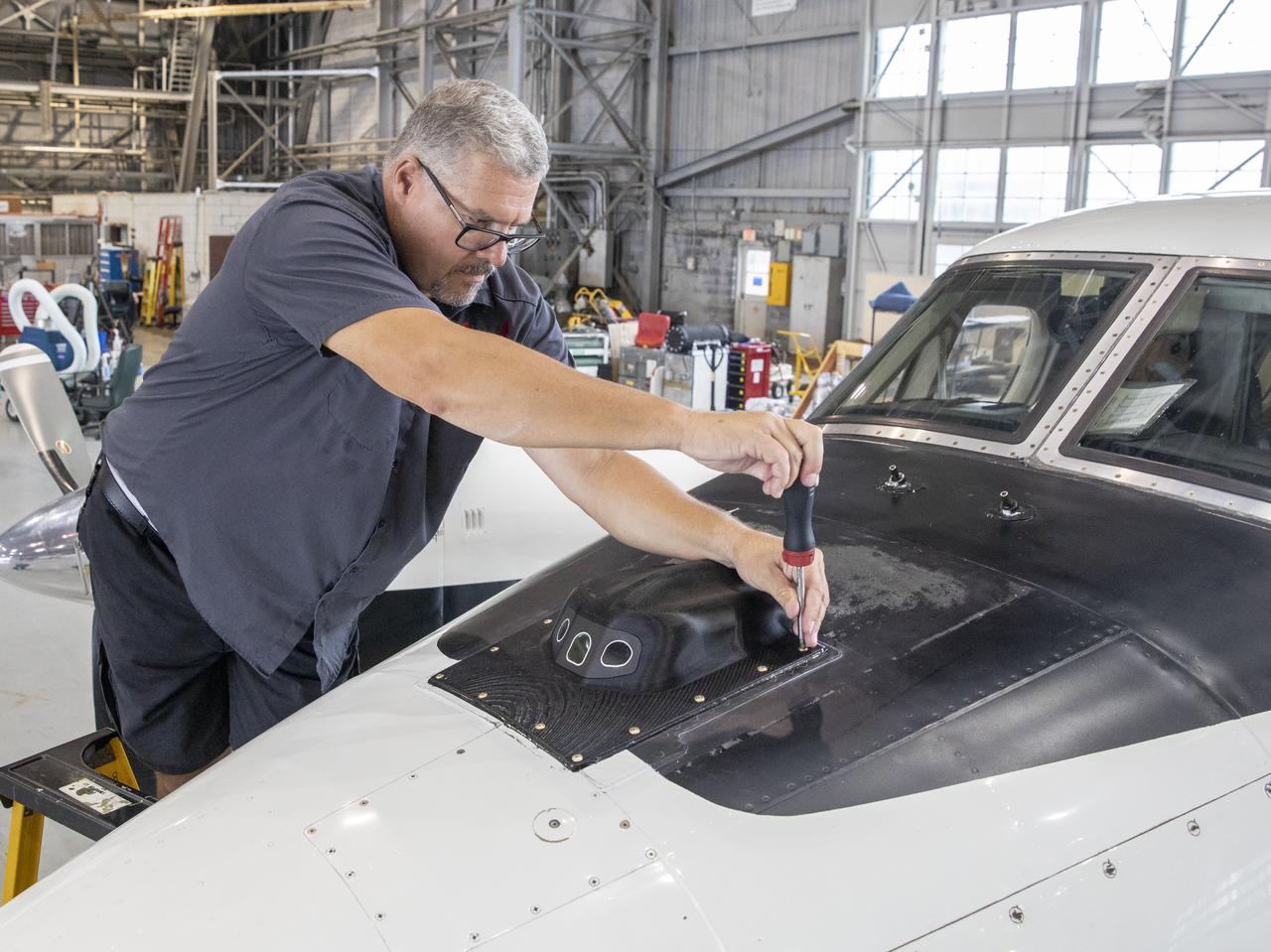
Aircraft mechanic C. Garber working on the camera housing for the flight display for the X59 to tested on the B200 King Air.
Testing of the External Vision System (XVS) Software on the B200 King Air
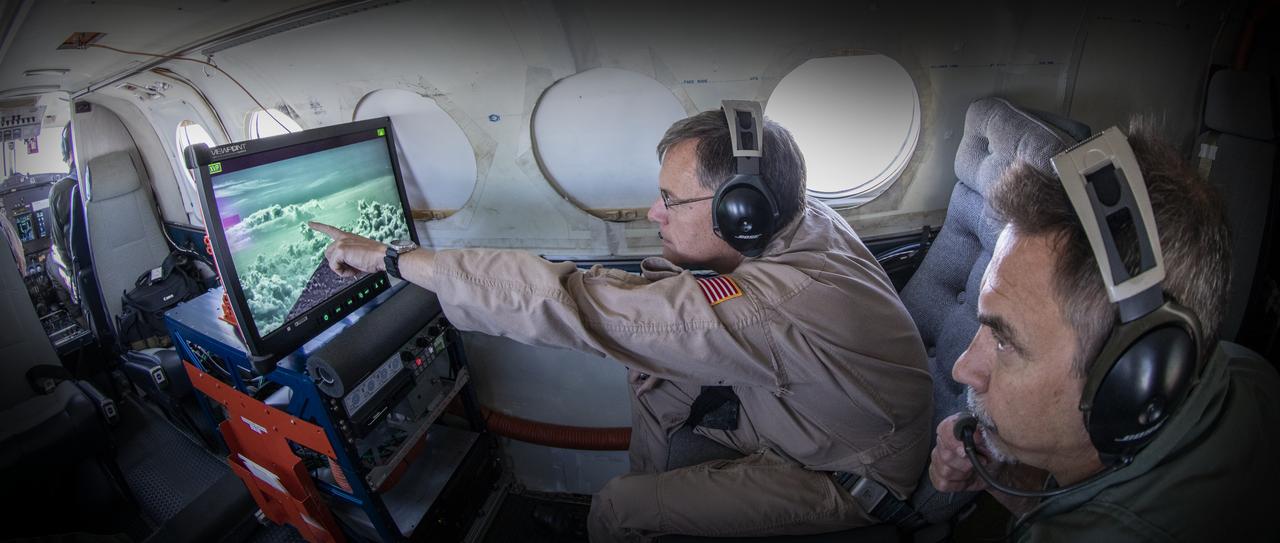
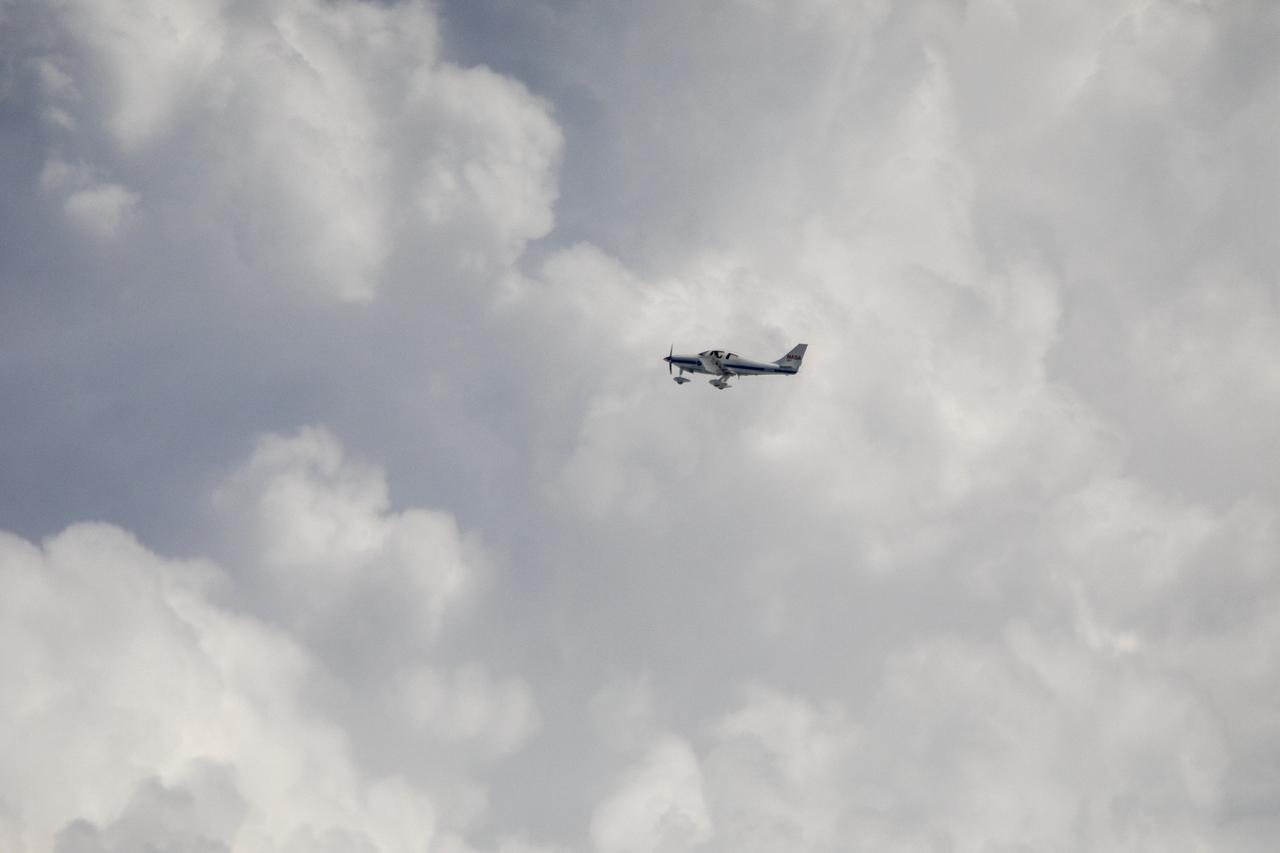
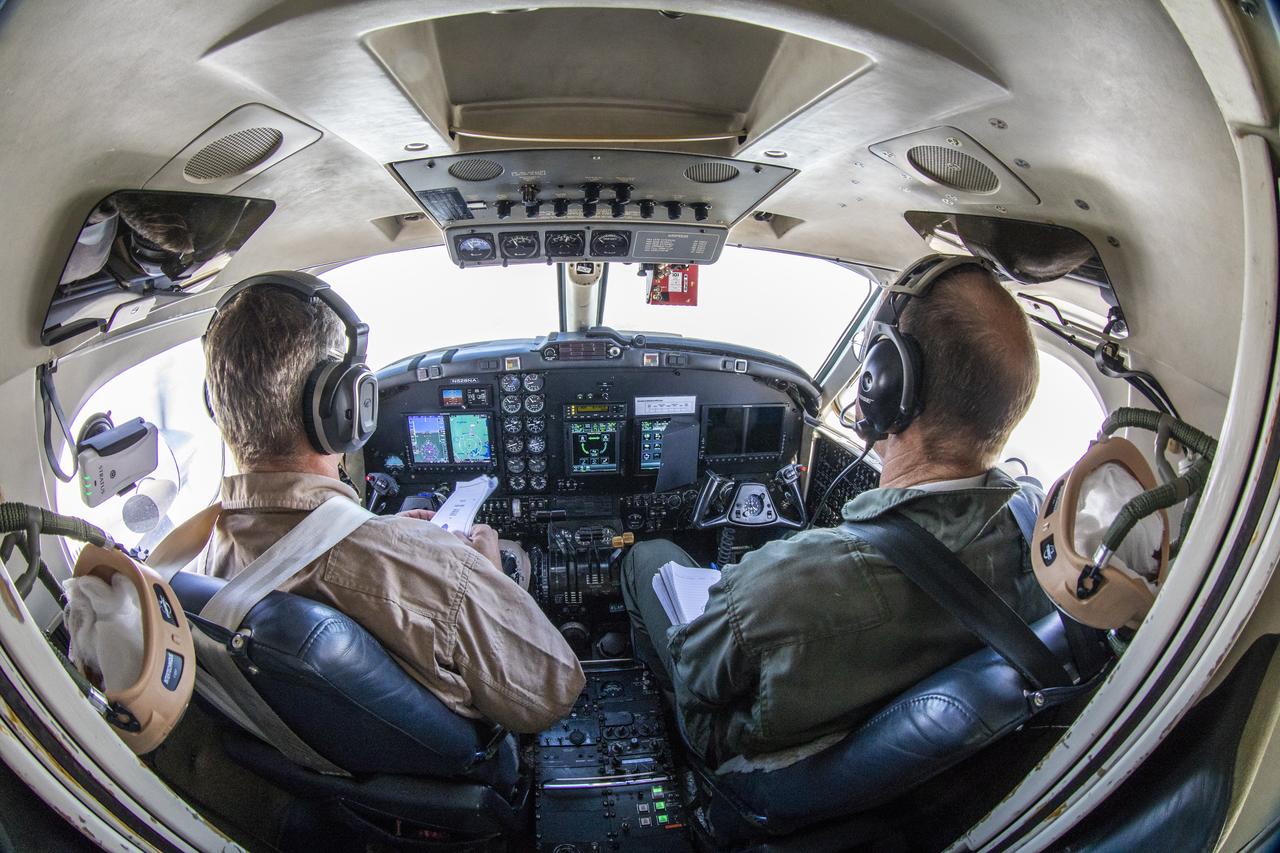
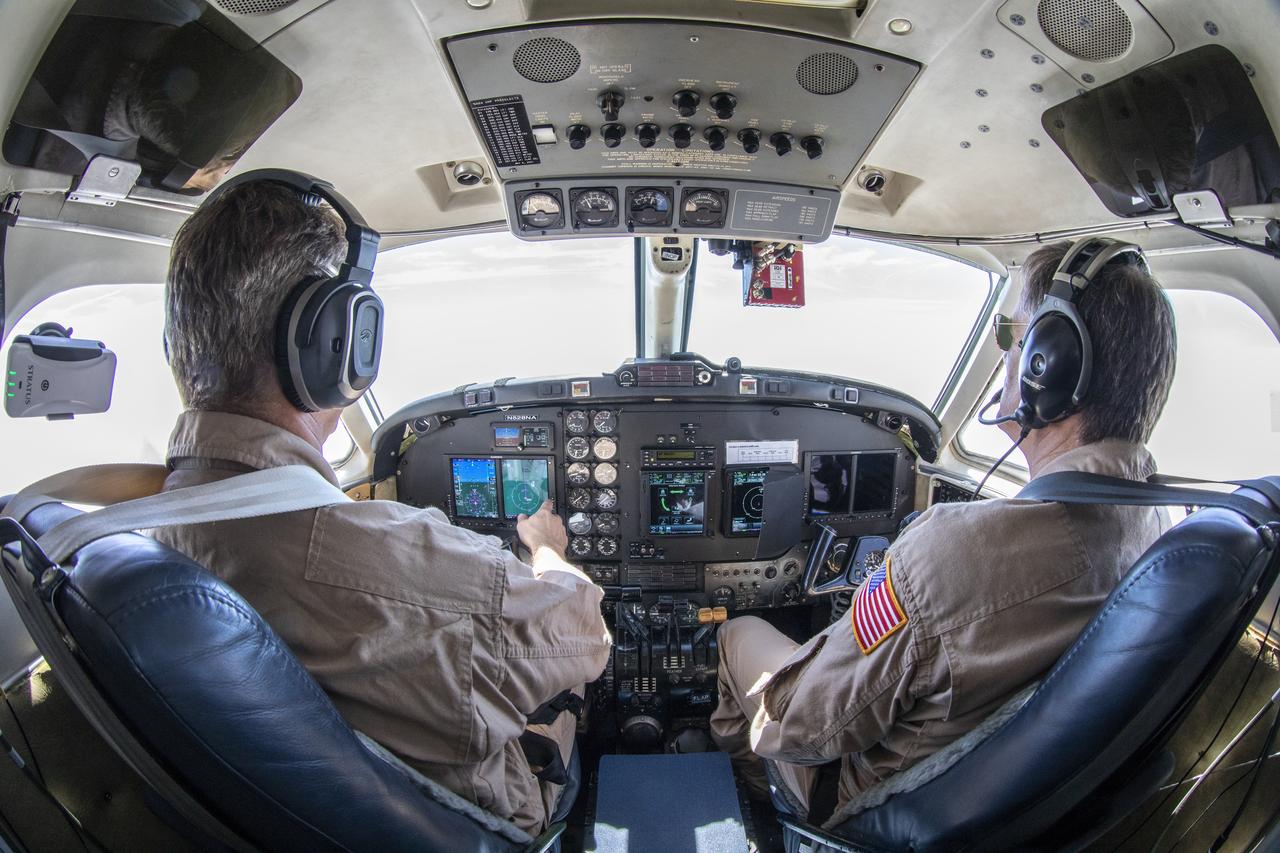
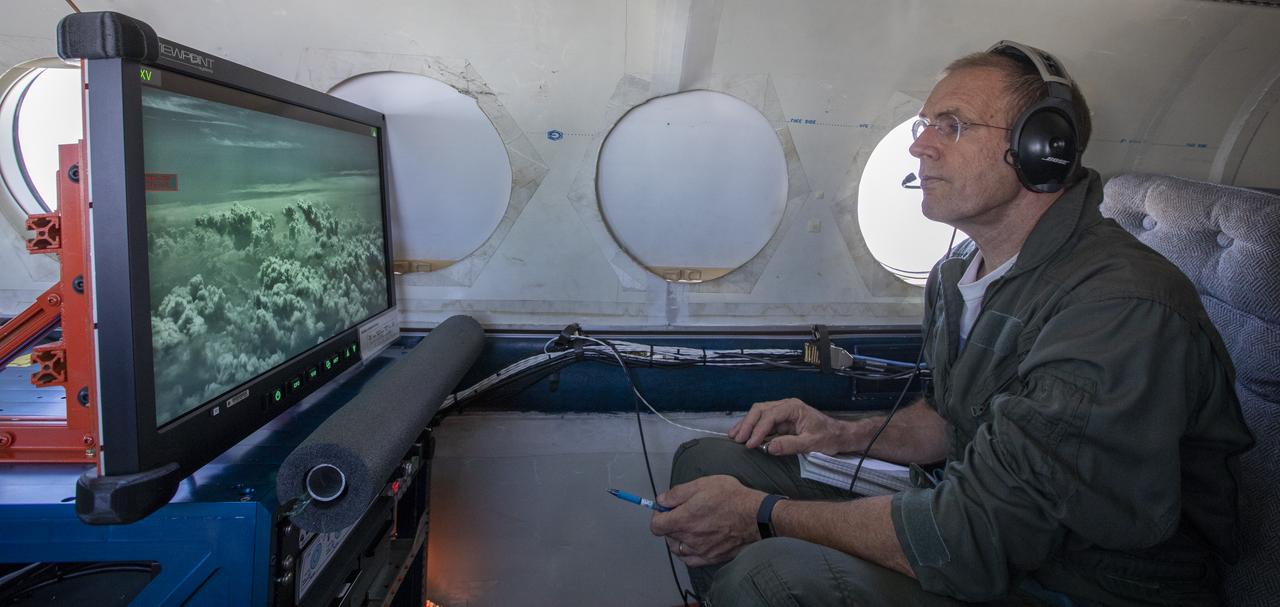
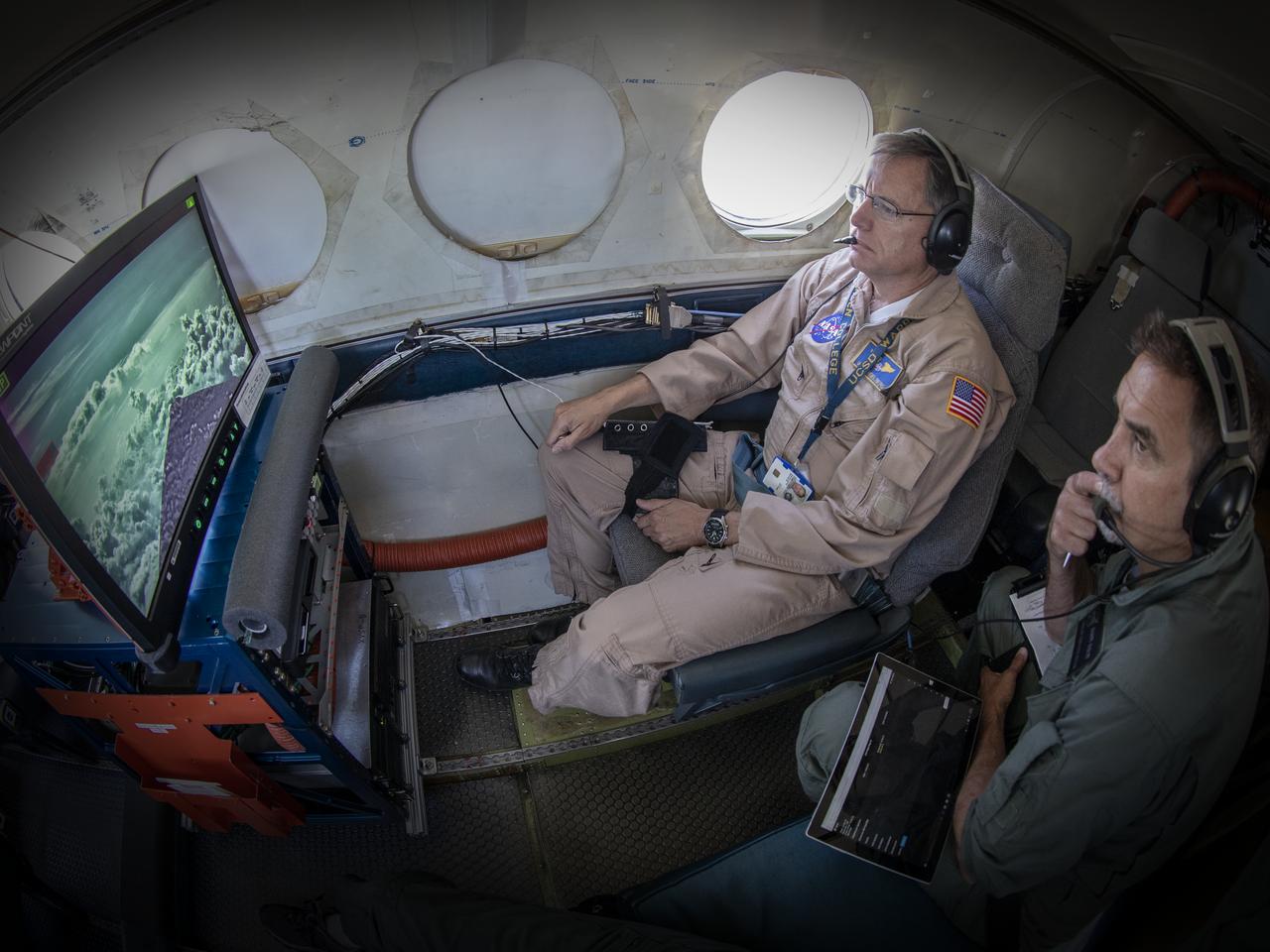
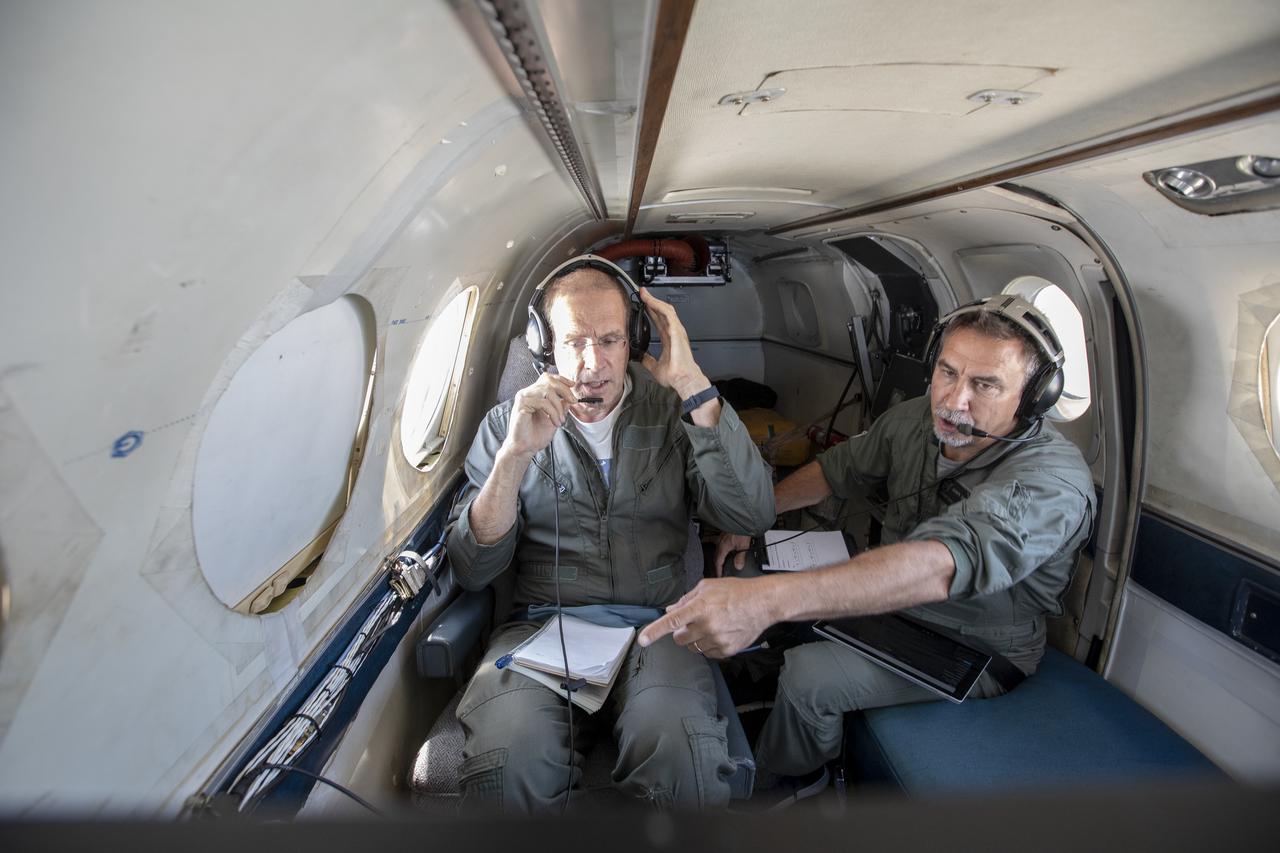
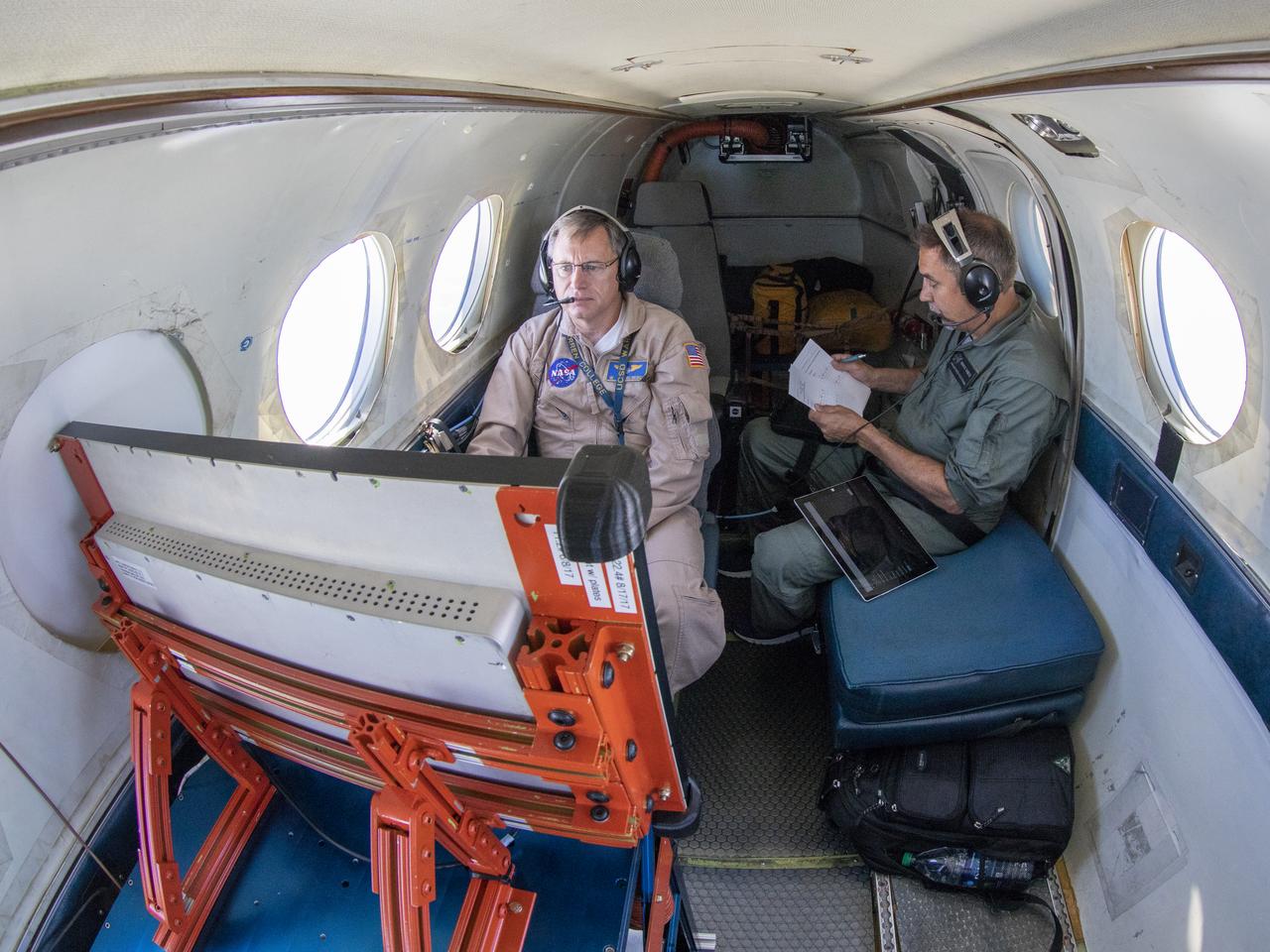
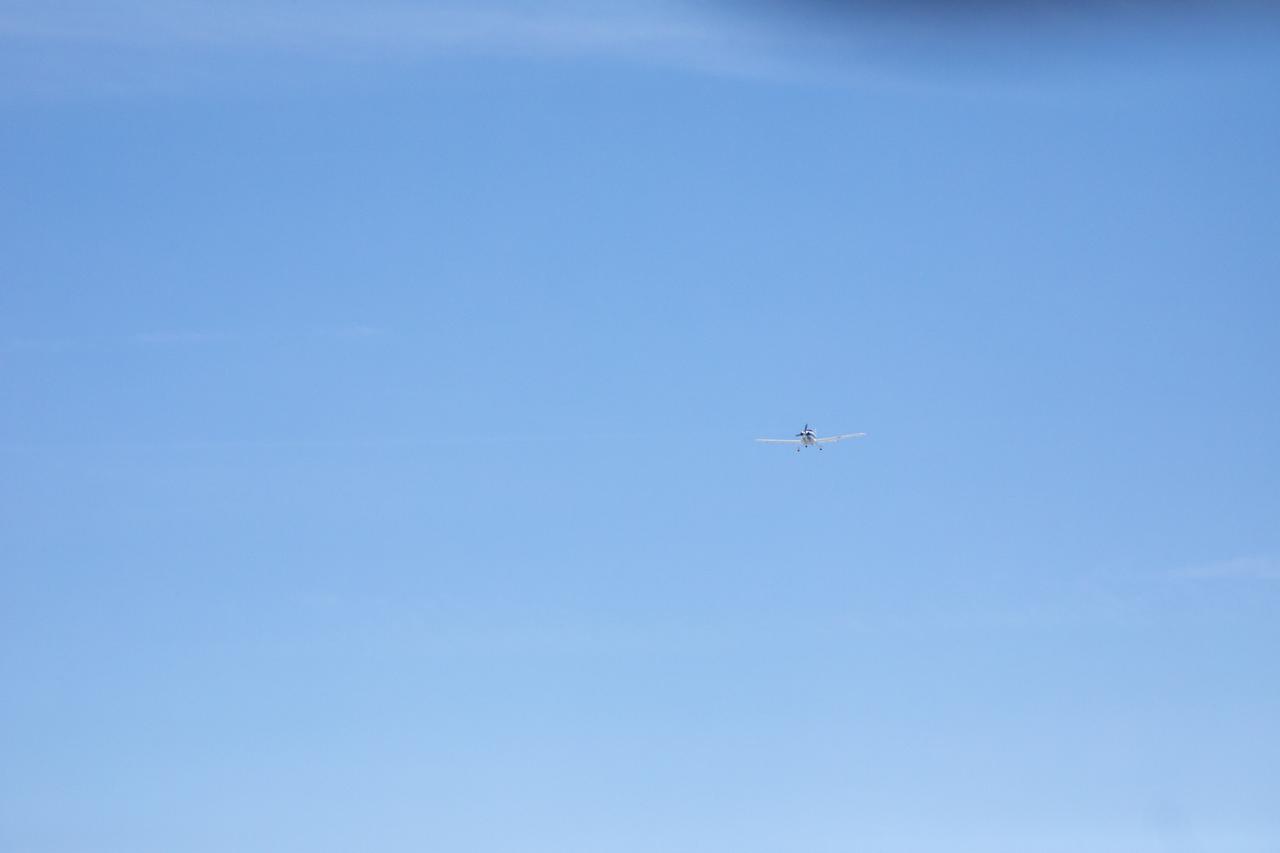
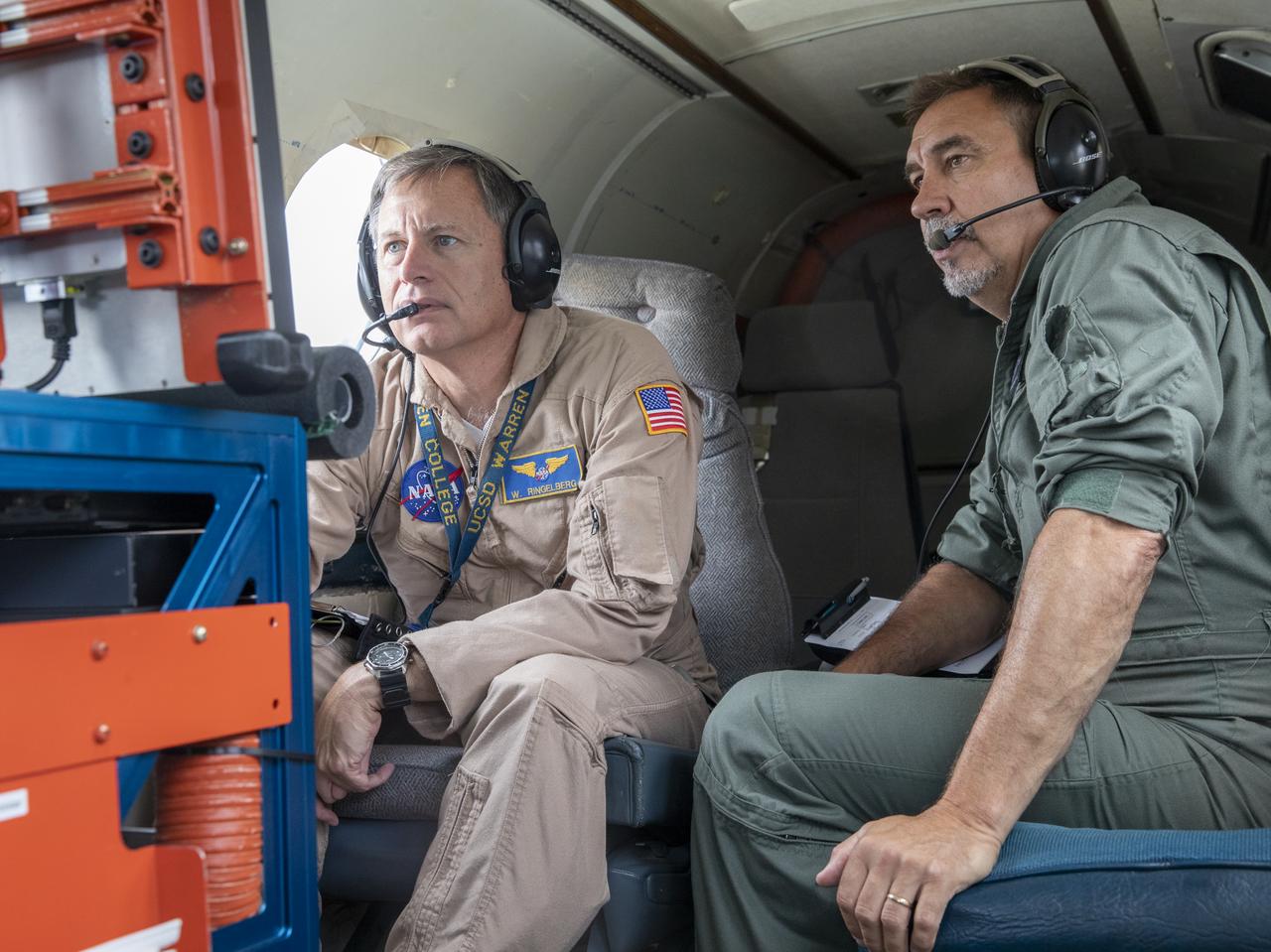
Testing the External Vision System (XVS) software on the B200 King Air. Pilots, Peter Coen and Wayne Ringelberg attempt to spot an incoming aircraft on the XVS monitor.
Testing of the External Vision System (XVS) Software on the B200 King Air
Testing the External Vision System (XVS) software on the B200 King Air. Pilots, Peter Coen and Wayne Ringelberg attempt to spot an incoming aircraft on the XVS monitor.
Testing of the External Vision System (XVS) Software on the B200 King Air
Testing the External Vision System (XVS) software on the B200 King Air. Pilots, Peter Coen and Wayne Ringelberg attempt to spot an incoming aircraft on the XVS monitor.
Testing of the External Vision System (XVS) Software on the B200 King Air
Testing the External Vision System (XVS) software on the B200 King Air. Pilots, Peter Coen and Wayne Ringelberg attempt to spot an incoming aircraft on the XVS monitor.
Testing of the External Vision System (XVS) Software on the B200 King Air
Testing the External Vision System (XVS) software on the B200 King Air. Pilots, Peter Coen and Wayne Ringelberg attempt to spot an incoming aircraft on the XVS monitor.
Testing of the External Vision System (XVS) Software on the B200 King Air
Testing the External Vision System (XVS) software on the B200 King Air. Pilots, Peter Coen and Wayne Ringelberg attempt to spot an incoming aircraft on the XVS monitor.
Testing of the External Vision System (XVS) Software on the B200 King Air
Testing the External Vision System (XVS) software on the B200 King Air. Pilots, Peter Coen and Wayne Ringelberg attempt to spot an incoming aircraft on the XVS monitor.
Testing of the External Vision System (XVS) Software on the B200 King Air
Testing the External Vision System (XVS) software on the B200 King Air. Pilots, Peter Coen and Wayne Ringelberg attempt to spot an incoming aircraft on the XVS monitor.
Testing of the External Vision System (XVS) Software on the B200 King Air
Testing the External Vision System (XVS) software on the B200 King Air. Pilots, Peter Coen and Wayne Ringelberg attempt to spot an incoming aircraft on the XVS monitor.
Testing of the External Vision System (XVS) Software on the B200 King Air
Testing the External Vision System (XVS) software on the B200 King Air. Pilots, Peter Coen and Wayne Ringelberg attempt to spot an incoming aircraft on the XVS monitor.
Testing of the External Vision System (XVS) Software on the B200 King Air
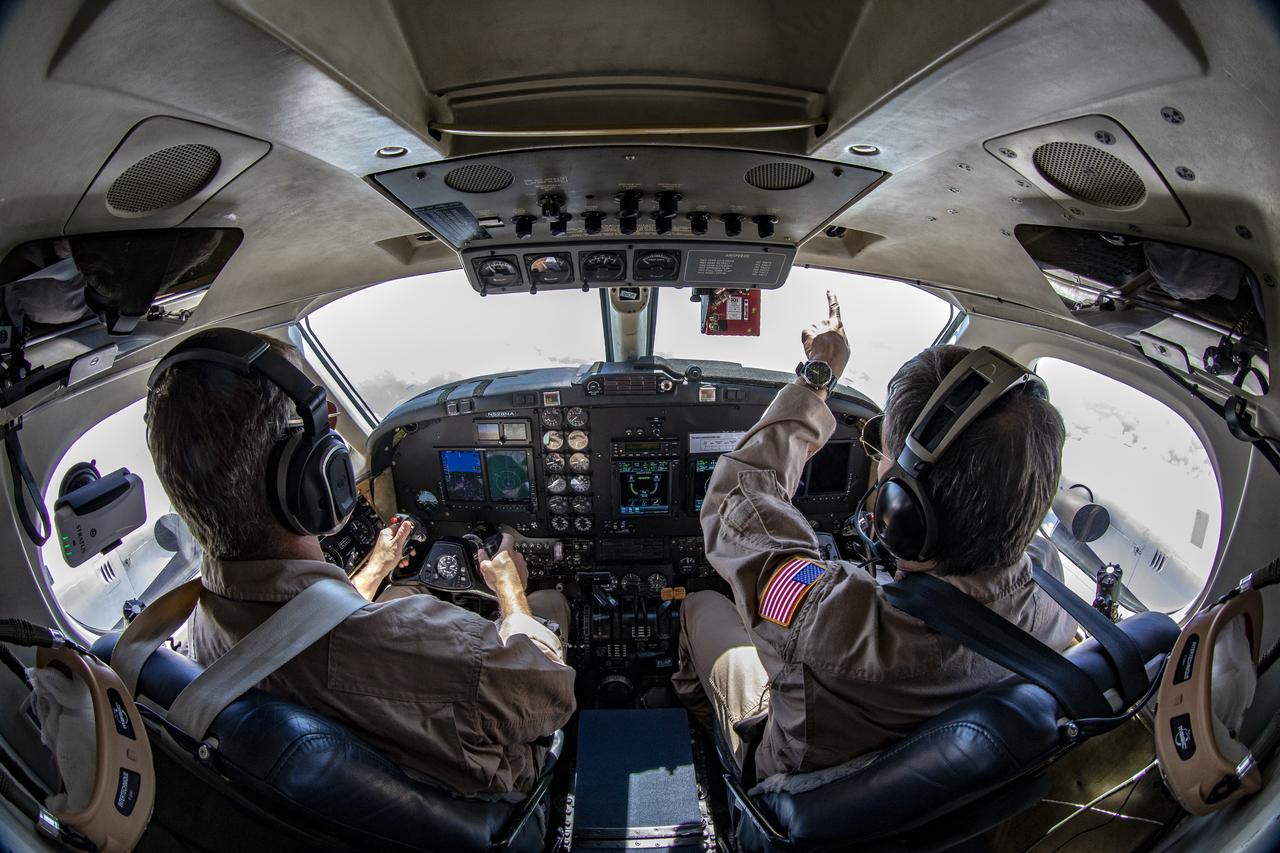
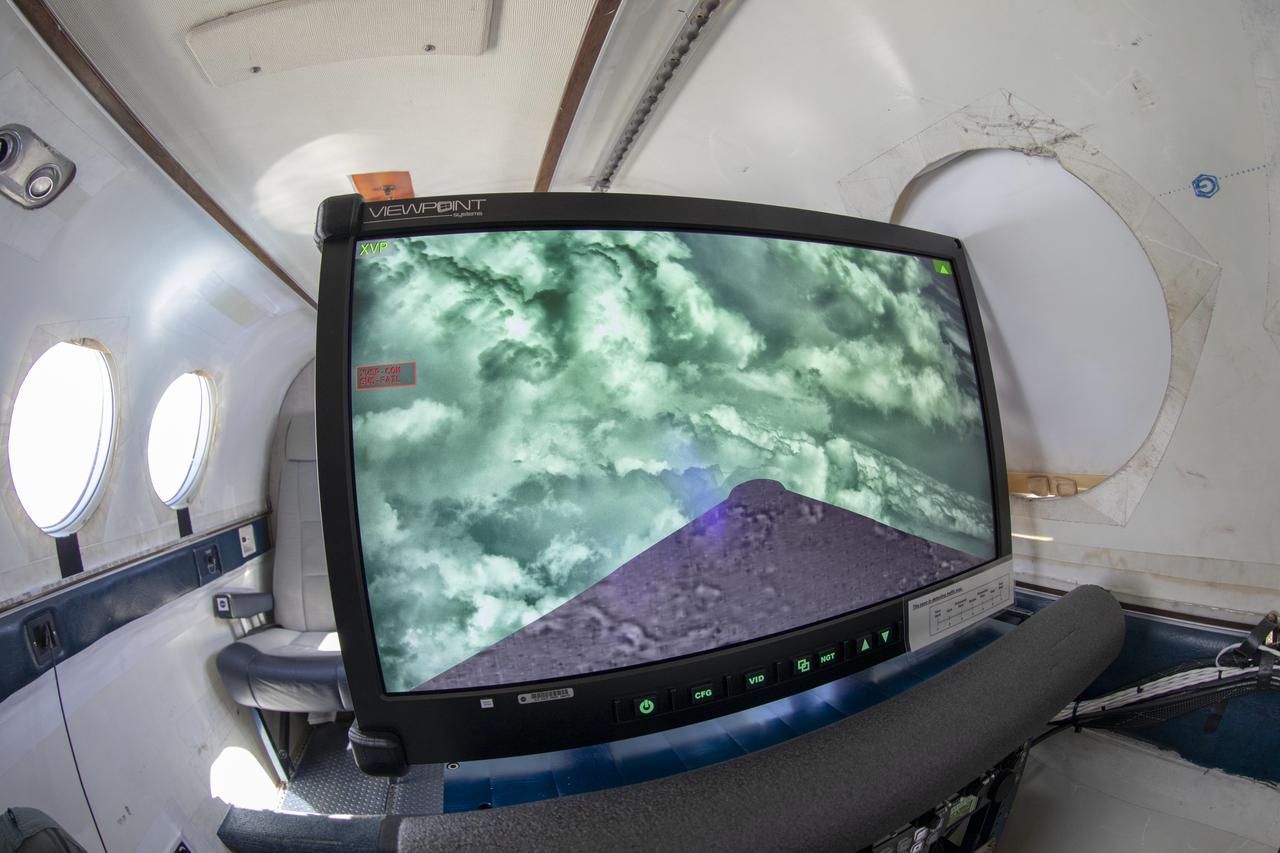
First test flight testing the visual display for the X59. The XVS display is aboard the B200 and the camera is mounted on the nose of the aircraft and inside the cockpit.
Testing of the External Vision System (XVS) Software on the B200 King Air
Testing the External Vision System (XVS) software on the B200 King Air. Pilots, Peter Coen and Wayne Ringelberg attempt to spot an incoming aircraft on the XVS monitor.
Testing of the External Vision System (XVS) Software on the B200 King Air
Testing the External Vision System (XVS) software on the B200 King Air. Pilots, Peter Coen and Wayne Ringelberg attempt to spot an incoming aircraft on the XVS monitor.
Testing of the External Vision System (XVS) Software on the B200 King Air
Testing the External Vision System (XVS) software on the B200 King Air. Pilots, Peter Coen and Wayne Ringelberg attempt to spot an incoming aircraft on the XVS monitor.
Testing of the External Vision System (XVS) Software on the B200 King Air
Testing the External Vision System (XVS) software on the B200 King Air. Pilots, Peter Coen and Wayne Ringelberg attempt to spot an incoming aircraft on the XVS monitor.
Testing of the External Vision System (XVS) Software on the B200 King Air
Testing the External Vision System (XVS) software on the B200 King Air. Pilots, Peter Coen and Wayne Ringelberg attempt to spot an incoming aircraft on the XVS monitor.
Testing of the External Vision System (XVS) Software on the B200 King Air
Testing the External Vision System (XVS) software on the B200 King Air. Pilots, Peter Coen and Wayne Ringelberg attempt to spot an incoming aircraft on the XVS monitor.
Testing of the External Vision System (XVS) Software on the B200 King Air
Testing the External Vision System (XVS) software on the B200 King Air. Pilots, Peter Coen and Wayne Ringelberg attempt to spot an incoming aircraft on the XVS monitor.
Testing of the External Vision System (XVS) Software on the B200 King Air
Testing the External Vision System (XVS) software on the B200 King Air. Pilots, Peter Coen and Wayne Ringelberg attempt to spot an incoming aircraft on the XVS monitor.
Testing of the External Vision System (XVS) Software on the B200 King Air
First test flight testing the visual display for the X59. The XVS display is aboard the B200 and the camera is mounted on the nose of the aircraft and inside the cockpit.
Testing of the External Vision System (XVS) Software on the B200 King Air
NASA’s B200 King Air team includes, from left, principal engineer Cory Hill, operations engineer KC Sujan, pilot Tracy Phelps, crew chief Mario Soto, aircraft technician Ruben Saiza, quality assurance technician Scott Silver, and senior engineer Alexander Soibel. The compact Fire Infrared Radiance Spectral Tracker (c-FIRST) instrument was tested on the B200 aircraft – based at NASA’s Armstrong Flight Research Center in Edwards, California – over the wildfires in the Pacific Palisades and Altadena, California, on November 21, 2024.
NASA Researchers Prepare for Airborne Wildfire Study
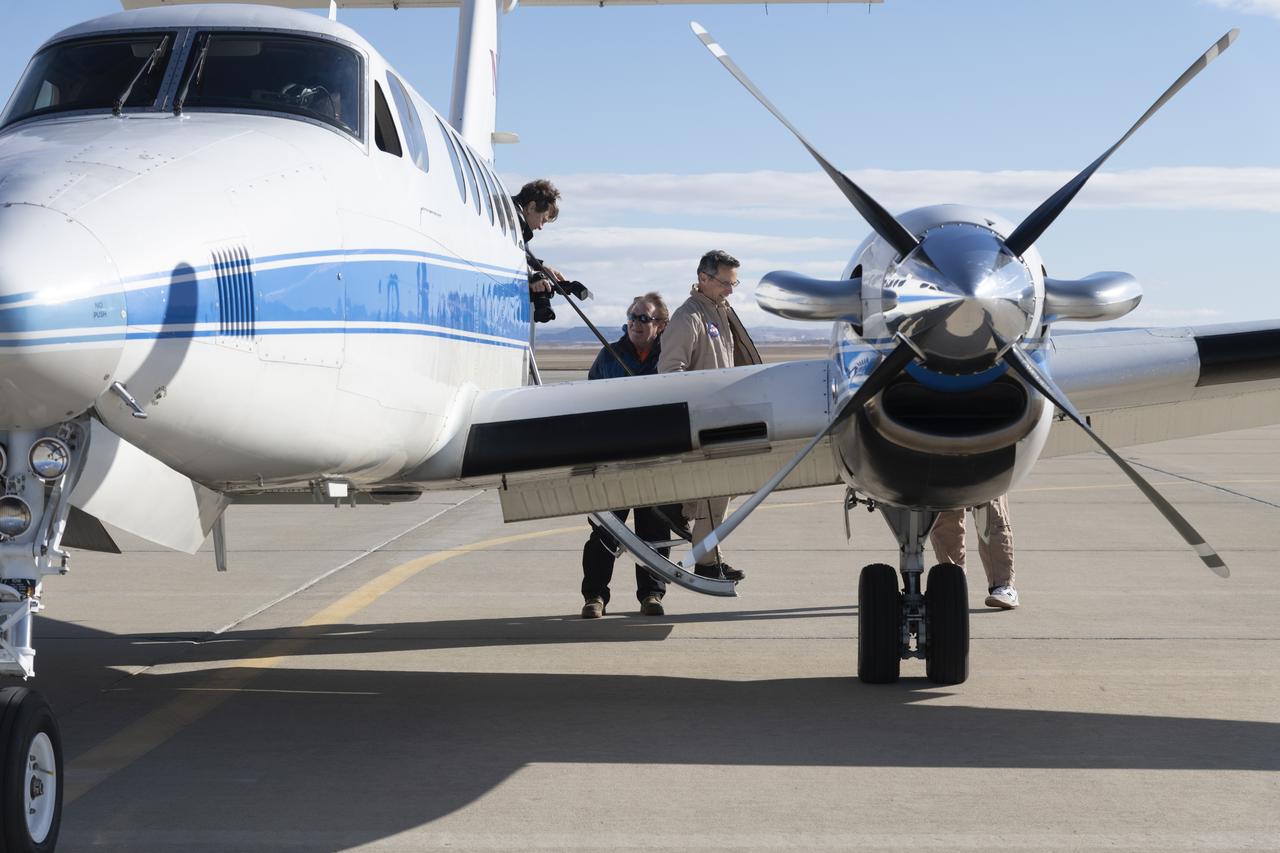
NASA’s Armstrong Flight Research Center in Edwards, California, flew the B200 King Air in support of the Signals of Opportunity Synthetic Aperture Radar (SoOpSAR) campaign. Prior to deploying the plane, NASA research pilot Jeff Borton provides ground checks of the aircraft on Feb. 27, 2023.
King Air N801NA SoOpSAR Deployment
NASA’s Armstrong Flight Research Center in Edwards, California, flew the B200 King Air in support of the Signals of Opportunity Synthetic Aperture Radar (SoOpSAR) campaign. Prior to deploying the plane, NASA research pilot Jeff Borton provides ground checks of the aircraft on Feb. 27, 2023.
King Air N801NA SoOpSAR Deployment
NASA’s Armstrong Flight Research Center in Edwards, California, flew the B200 King Air in support of the Signals of Opportunity Synthetic Aperture Radar (SoOpSAR) campaign. Prior to deploying the plane, NASA research pilot Jeff Borton provides ground checks of the aircraft on Feb. 27, 2023.
King Air N801NA SoOpSAR Deployment
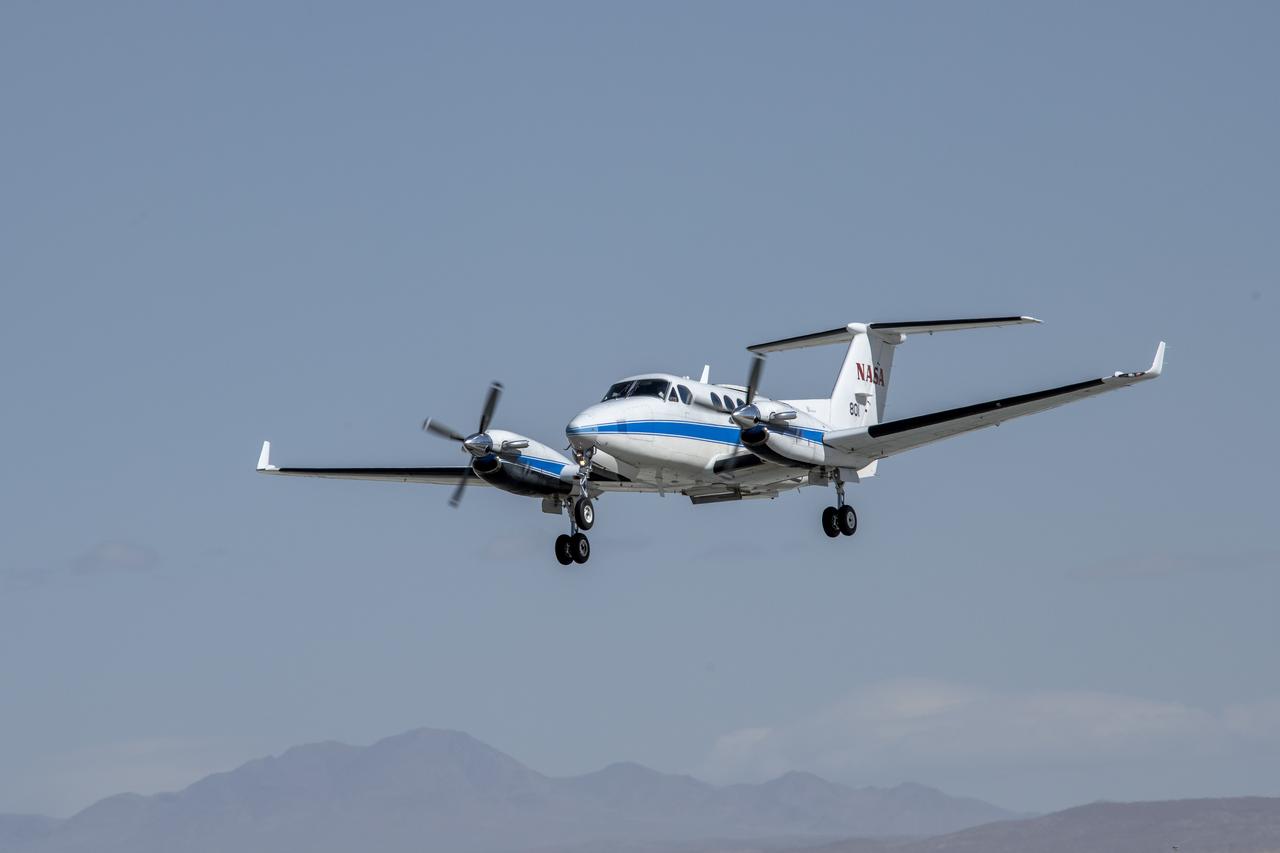
NASA’s B200 King Air aircraft – based at NASA’s Armstrong Flight Research Center in Edwards, California – ascends to support a prescribed burn in Geneva State Forest, about 100 miles south of Montgomery, Alabama, on March 17, 2025. The effort is part of NASA’s multi-year FireSense project, which aims to test technology that predicts fire and smoke behavior. This data could eventually benefit the U.S. Forest Service as well as local, state, and other federal wildland fire agencies.
NASA’s B200 Takes Flight for Wildfire Mission
NASA’s B200 King Air aircraft – based at NASA’s Armstrong Flight Research Center in Edwards, California – ascends to support a prescribed burn in Geneva State Forest, about 100 miles south of Montgomery, Alabama, on March 17, 2025. The effort is part of NASA’s multi-year FireSense project, which aims to test technology that predicts fire and smoke behavior. This data could eventually benefit the U.S. Forest Service as well as local, state, and other federal wildland fire agencies.
NASA’s B200 Takes Flight for Wildfire Mission
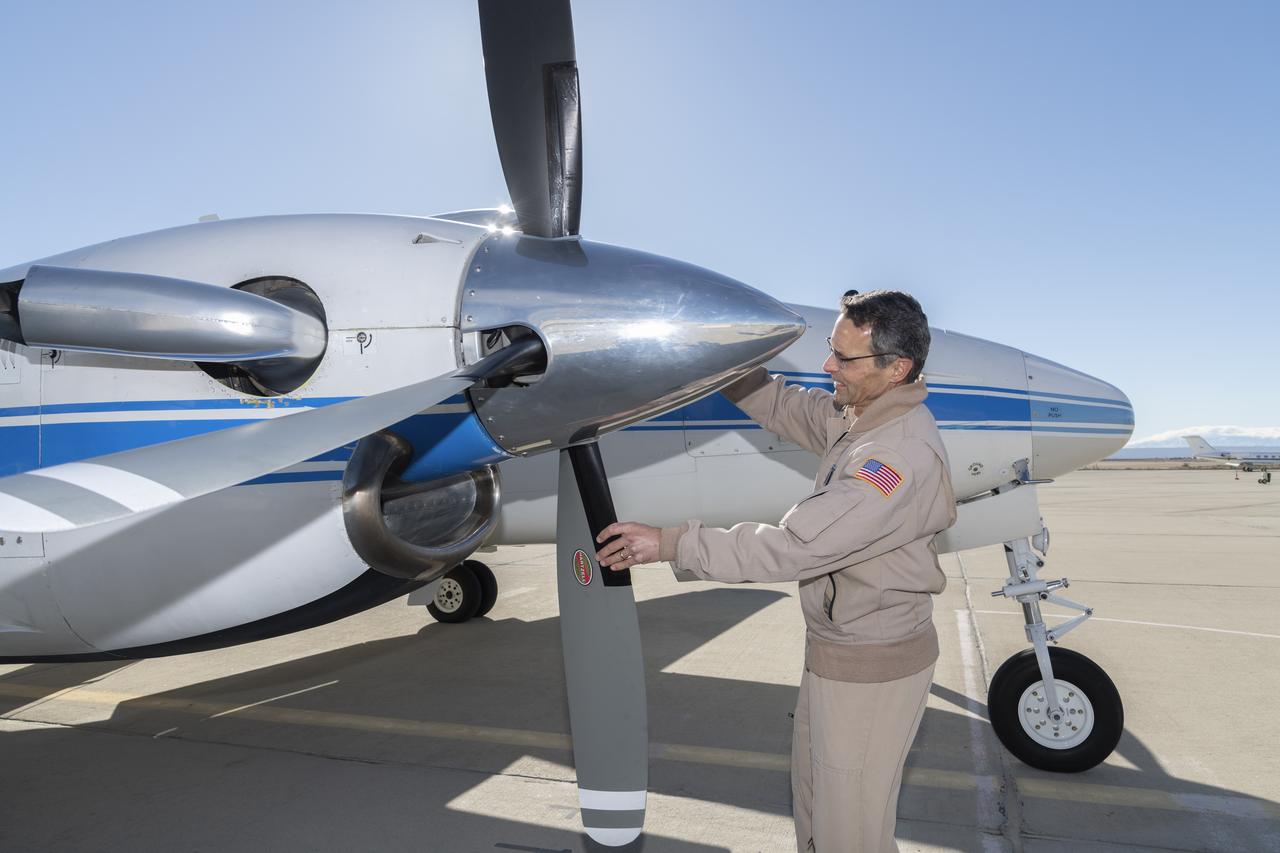
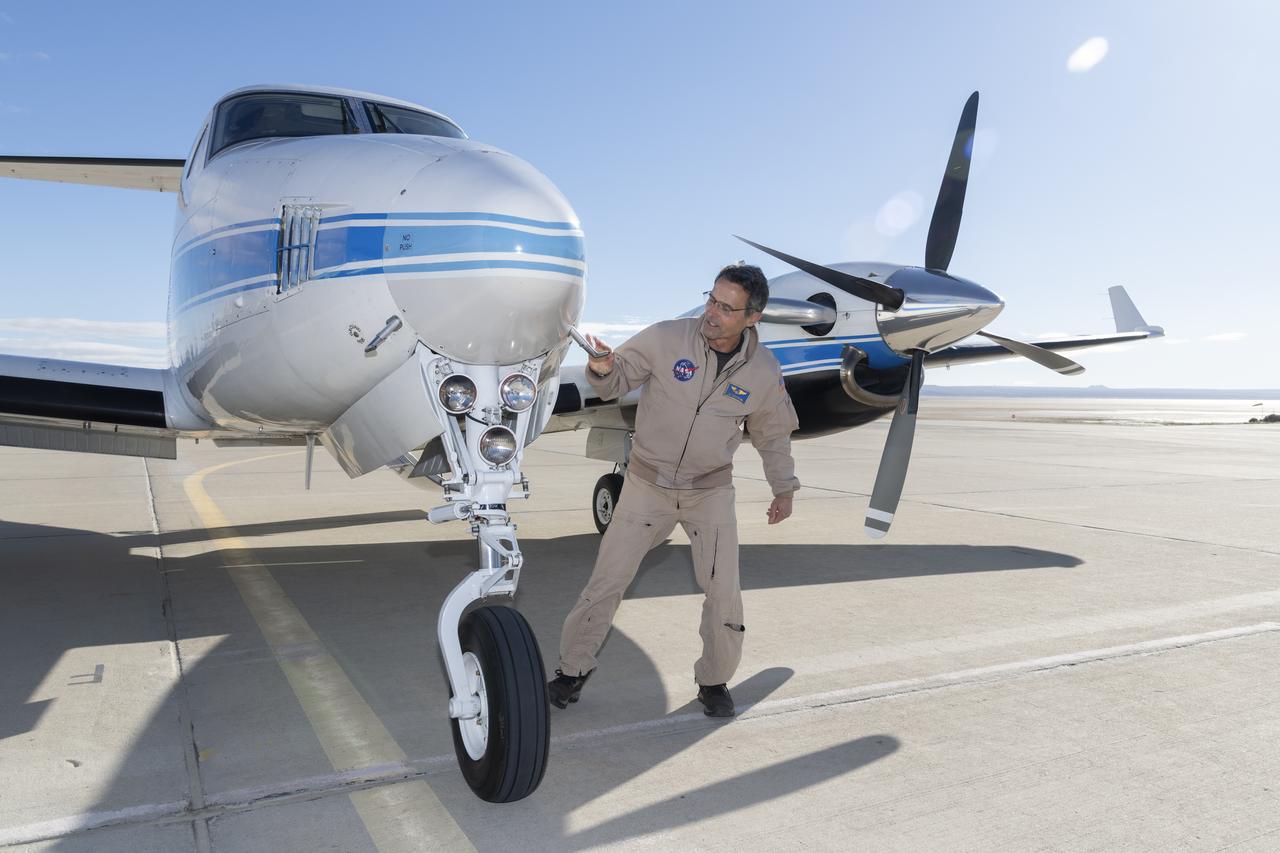
Mark Pestana is a research pilot and project manager at the NASA Dryden Flight Research Center, Edwards, Calif. He is a pilot for the Beech B200 King Air, the T-34C and the Predator B. He flies the F-18 Hornet as a co-pilot and flight test engineer. Pestana has accumulated more than 4,000 hours of military and civilian flight experience. He was also a flight engineer on the NASA DC-8 flying laboratory.  Pestana was the project manager and pilot for the Hi–rate Wireless Airborne Network Demonstration flown on the NASA B200 research aircraft. He flew B200 research missions for the X-38 Space Integrated Inertial Navigation Global Positioning System experiment. Pestana also participated in several deployments of the DC-8, including Earth science expeditions ranging from hurricane research over the Caribbean Sea to ozone studies over the North Pole, atmospheric chemistry over the South Pacific, rain forest health in Central America, Rocky Mountain ice pack assessment, and volcanic and tectonic activity around the Pacific Rim.  He came to Dryden as a DC-8 mission manager in June 1998 from NASA Johnson Space Center, Houston, where he served as the Earth and Space Science discipline manager for the International Space Station Program at Johnson. Pestana also served as a flight crew operations engineer in the Astronaut Office, developing the controls, displays, tools, crew accommodations and procedures for on-orbit assembly, test, and checkout of the International Space Station. He led the analysis and technical negotiations for modification of the Russian Soyuz spacecraft as an emergency crew return vehicle for space station crews.  He joined the U.S. Air Force Reserve in 1991 and held various positions as a research and development engineer, intelligence analyst, and Delta II launch vehicle systems engineer. He retired from the U.S. Air Force Reserve with the rank of colonel in 2005.  Prior to 1990, Pestana was on active duty with the U.S. Air Force as the director of mi
Research pilot Mark Pestana
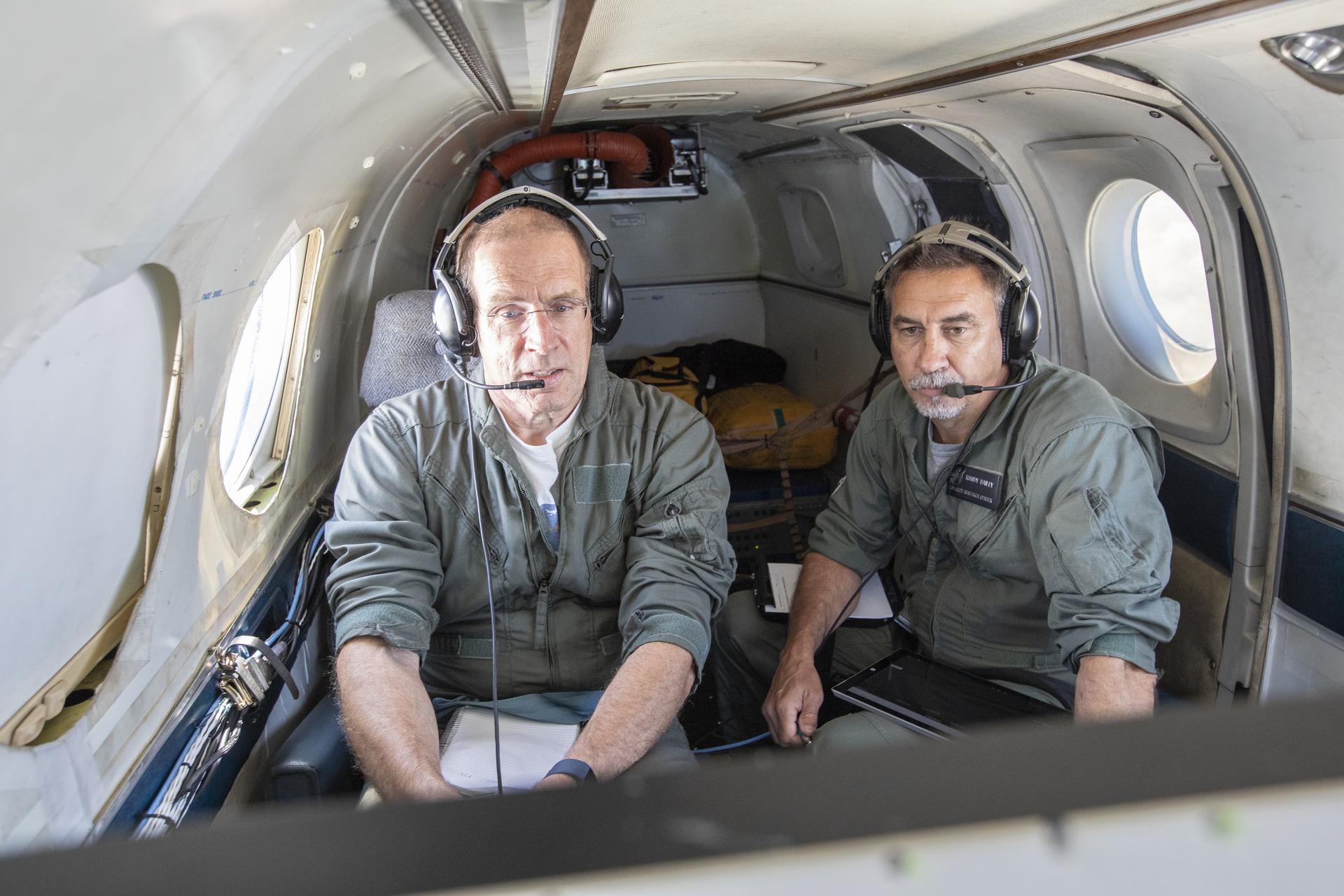
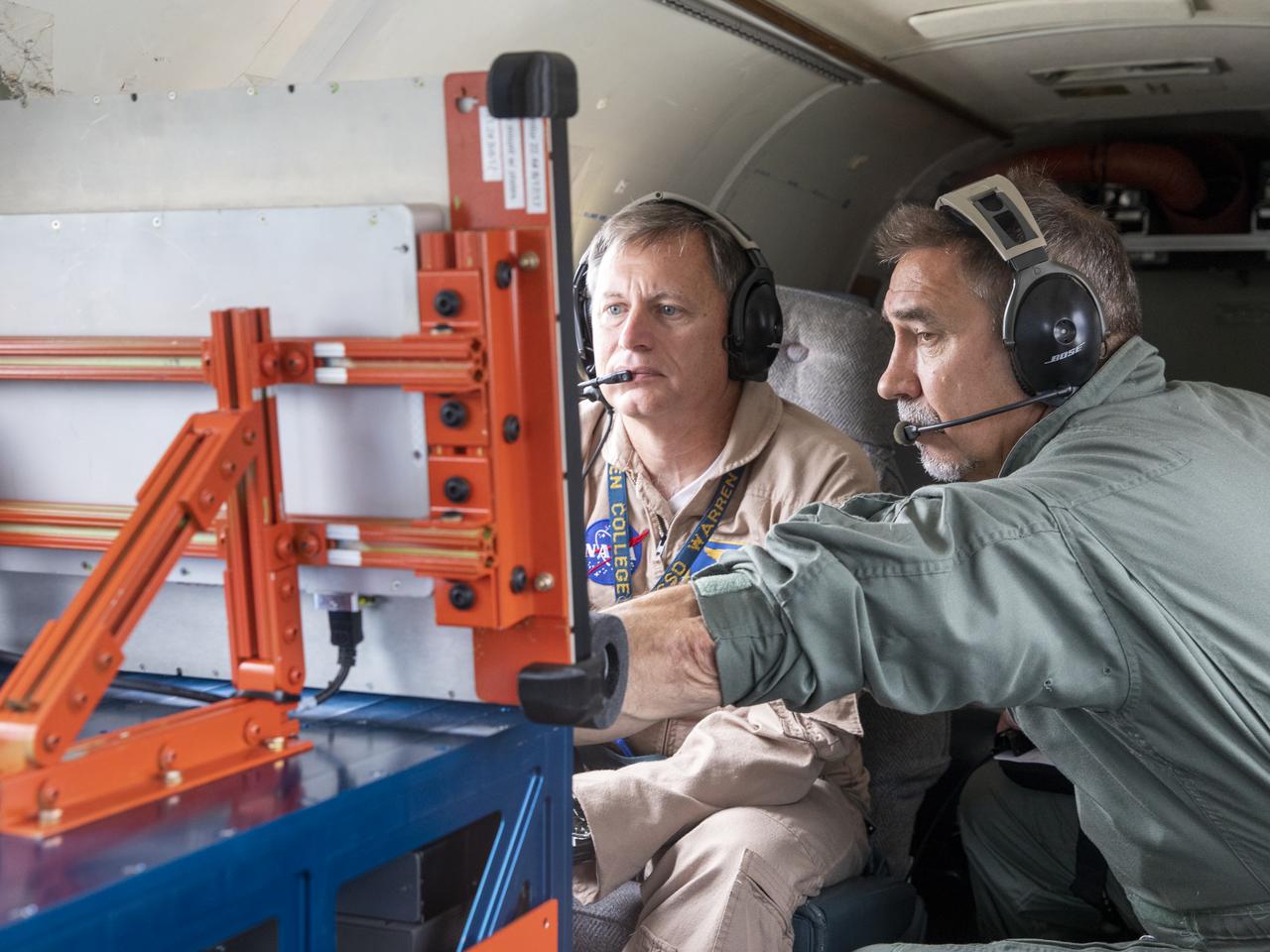
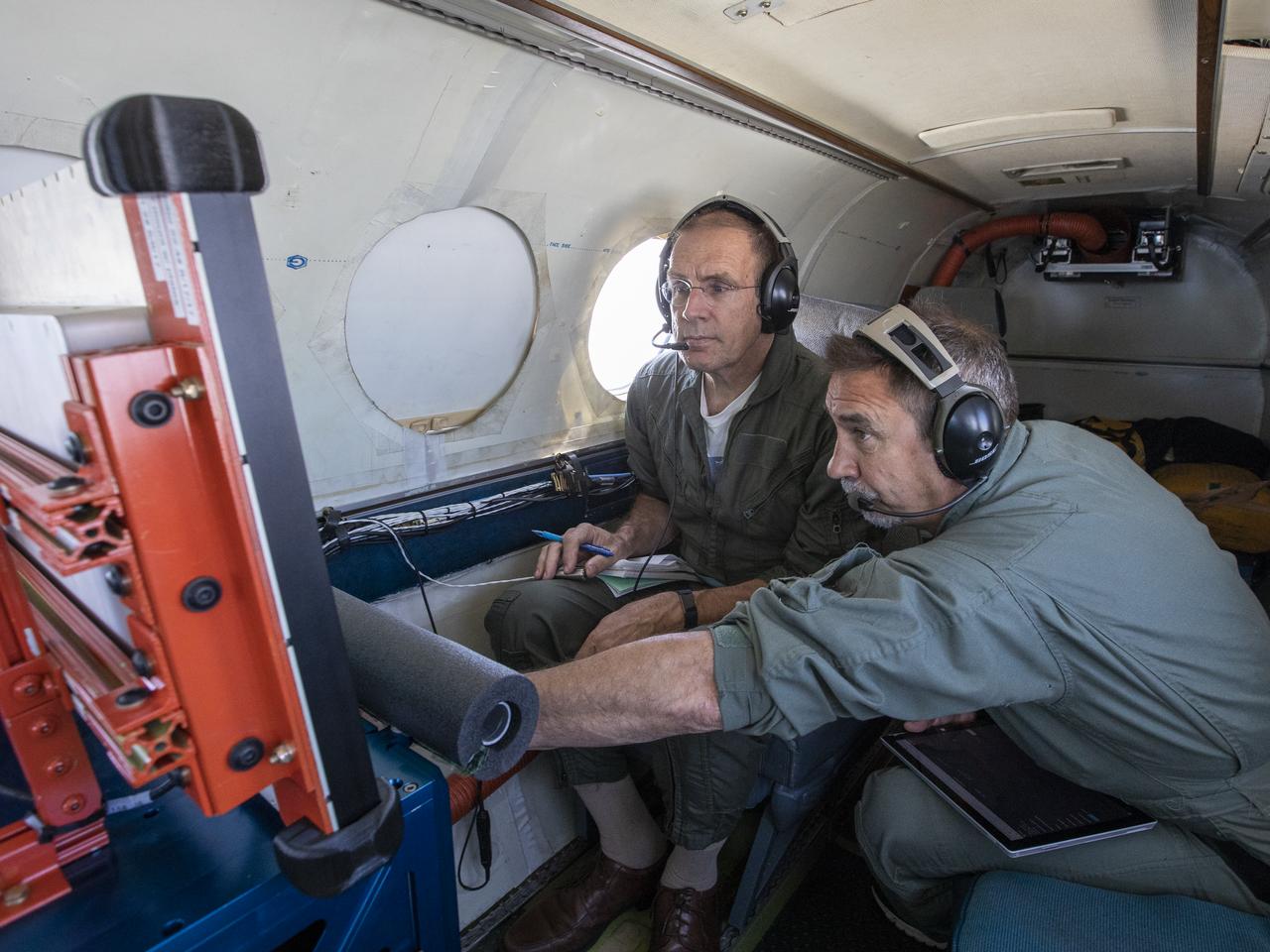
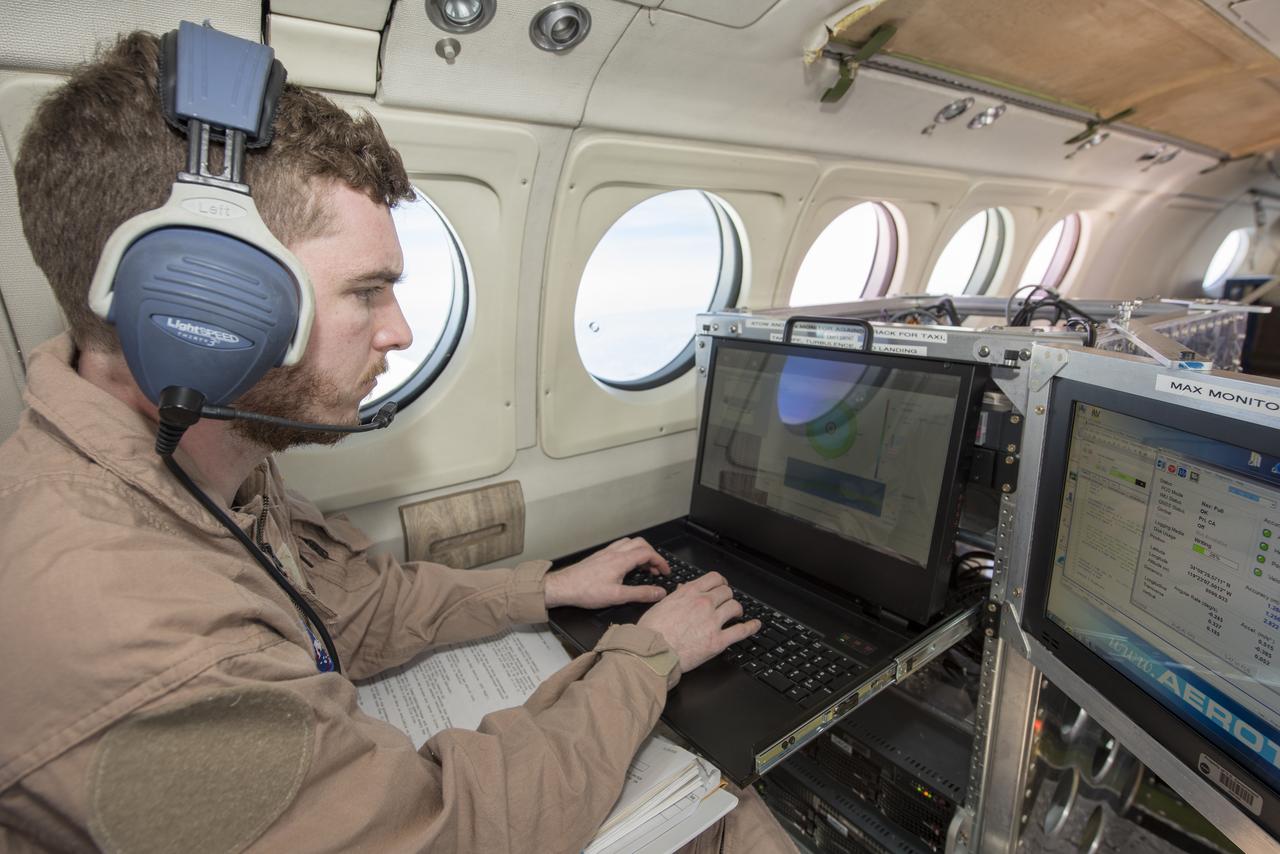
Radar operator Alexander Winteer monitors incoming wind data from the  DopplerScatt radar instrument during a science flight off the California Coast on March 5, 2018.
Instrument Operator Monitors Wind Data