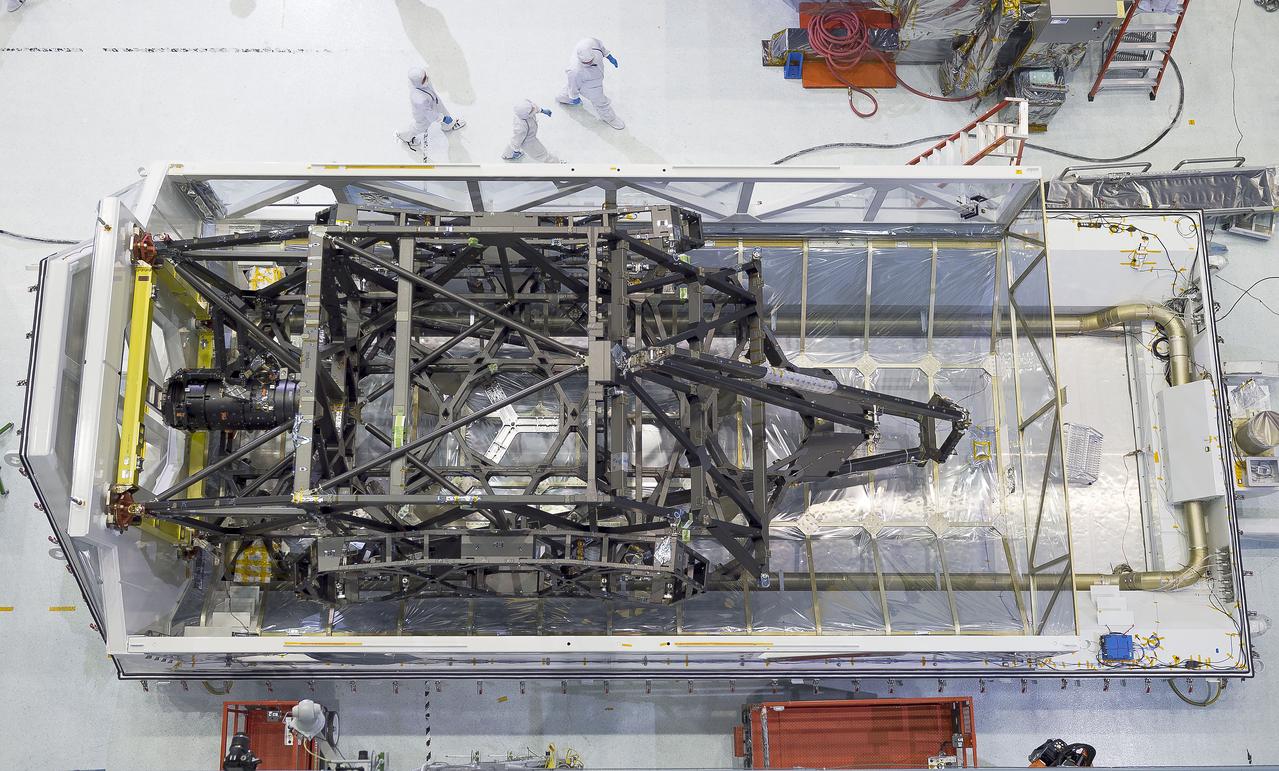
The James Webb Space Telescope's "spine" or backplane arrived on Aug. 25 at NASA's Goddard Space Flight Center in Greenbelt, Maryland from Northrop Grumman. Credits: NASA Goddard/Chris Gunn Read more: <a href="http://go.nasa.gov/1K2v8J2" rel="nofollow">go.nasa.gov/1K2v8J2</a> <b><a href="http://www.nasa.gov/audience/formedia/features/MP_Photo_Guidelines.html" rel="nofollow">NASA image use policy.</a></b> <b><a href="http://www.nasa.gov/centers/goddard/home/index.html" rel="nofollow">NASA Goddard Space Flight Center</a></b> enables NASA’s mission through four scientific endeavors: Earth Science, Heliophysics, Solar System Exploration, and Astrophysics. Goddard plays a leading role in NASA’s accomplishments by contributing compelling scientific knowledge to advance the Agency’s mission. <b>Follow us on <a href="http://twitter.com/NASAGoddardPix" rel="nofollow">Twitter</a></b> <b>Like us on <a href="http://www.facebook.com/pages/Greenbelt-MD/NASA-Goddard/395013845897?ref=tsd" rel="nofollow">Facebook</a></b> <b>Find us on <a href="http://instagrid.me/nasagoddard/?vm=grid" rel="nofollow">Instagram</a></b>
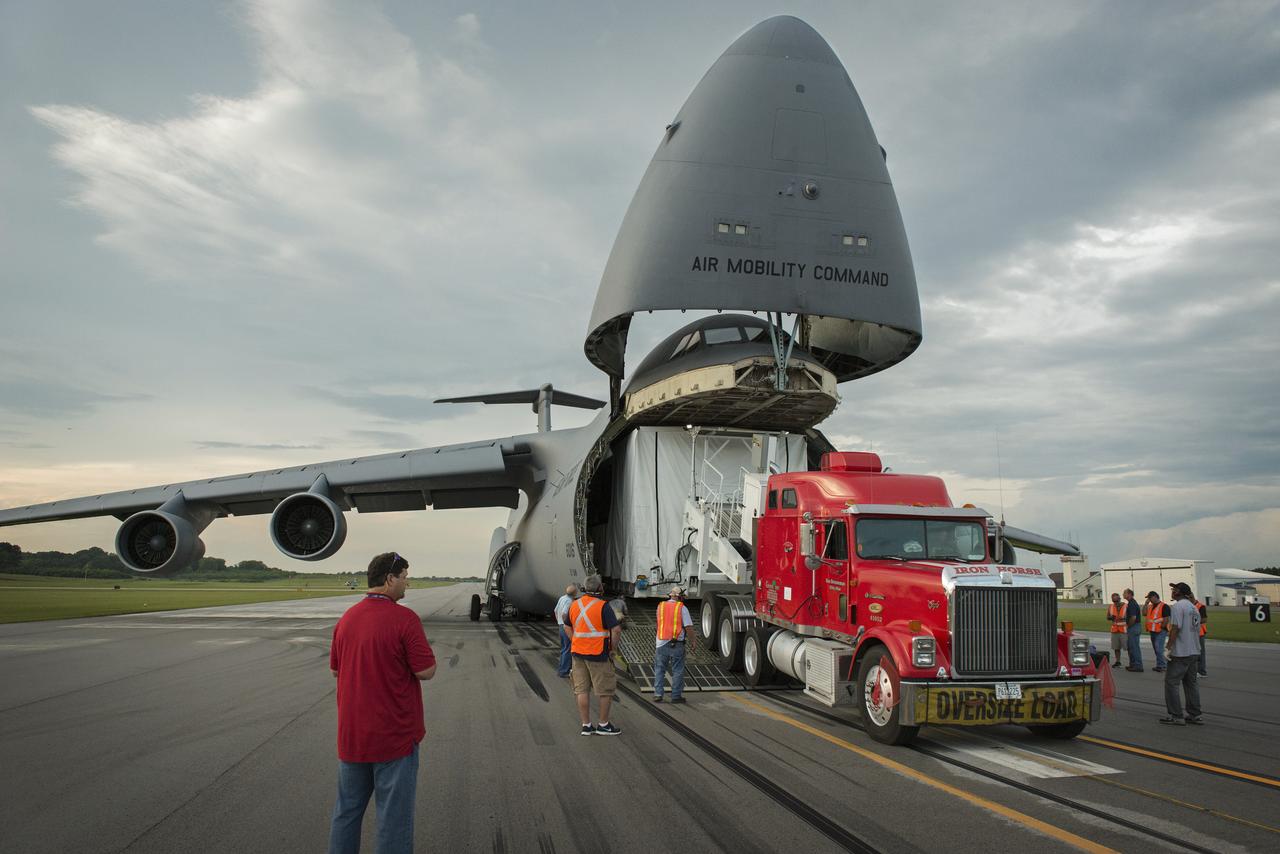
THE TRAILER CONTAINING THE JAMES WEBB SPACE TELESCOPE (JWST) BACKPLANE TEST ARTICLE IS UNLOADED FROM THE C5A AIRCRAFT AT REDSTONE AIRFIELD. THE TEST ARTICLE IS SCHEDULED TO UNDERGO TESTING AT THE X-RAY CALIBRATION FACILITY (XRCF) AT MSFC.
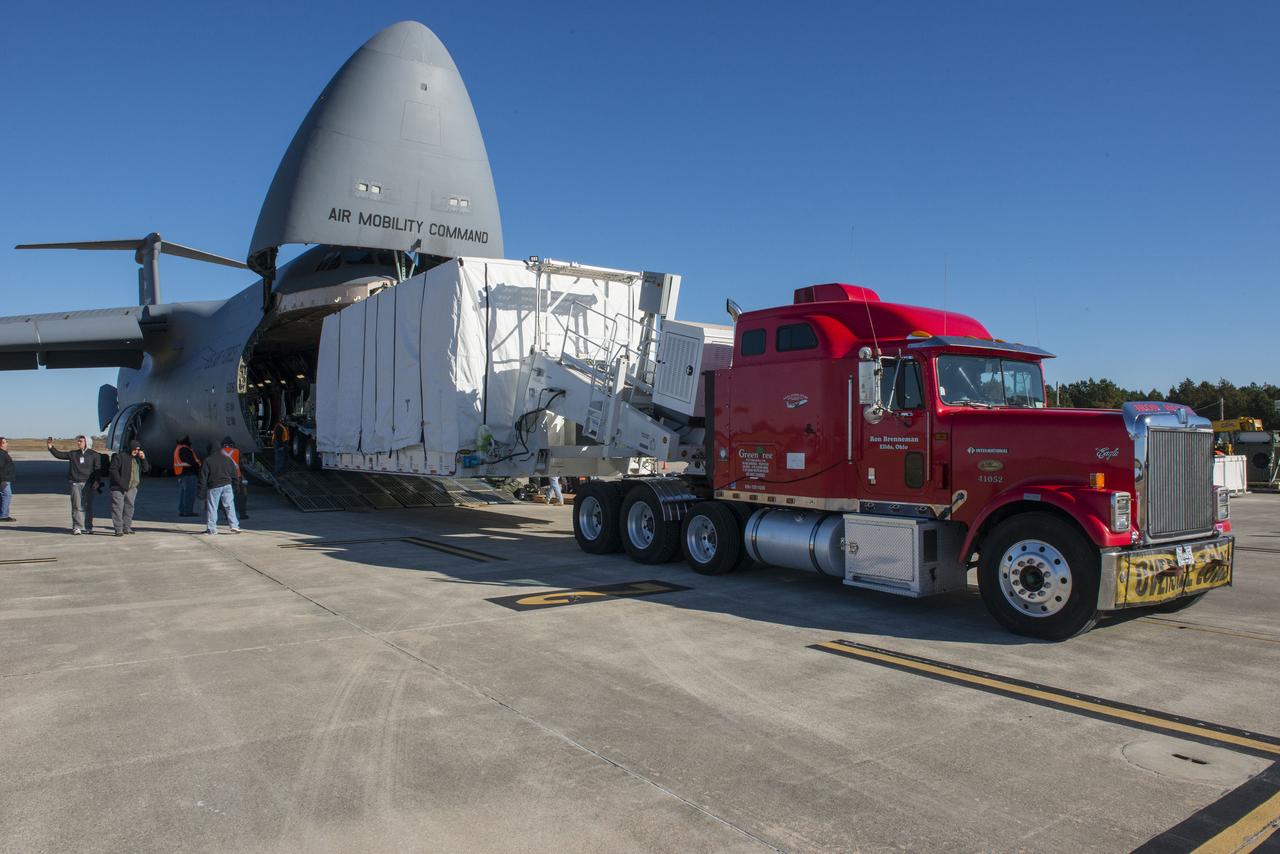
JAMES WEBB SPACE TELESCOPE (JWST) BACKPLANE MOVE FROM MARSHALL SPACE FLIGHT CENTER’S X-RAY CALIBRATION FACILITY (XCRF) TO THE REDSTONE ARSENAL AIRFIELD WHERE THE TEST ARTICLE WAS PLACED IN A USAF C-5 GALAXY FOR IT’S FLIGHT BACK TO THE MANUFACTURER.
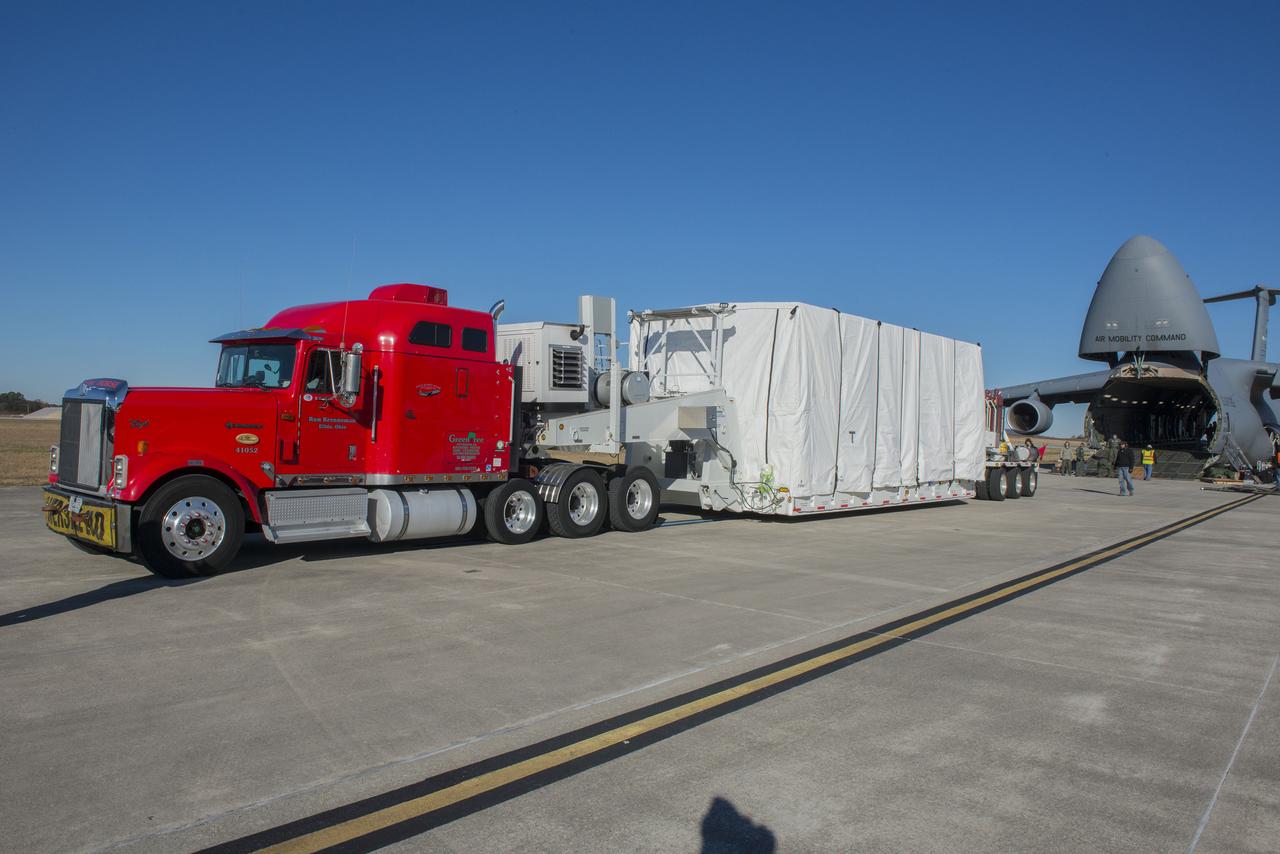
JAMES WEBB SPACE TELESCOPE (JWST) BACKPLANE MOVE FROM MARSHALL SPACE FLIGHT CENTER’S X-RAY CALIBRATION FACILITY (XCRF) TO THE REDSTONE ARSENAL AIRFIELD WHERE THE TEST ARTICLE WAS PLACED IN A USAF C-5 GALAXY FOR IT’S FLIGHT BACK TO THE MANUFACTURER.
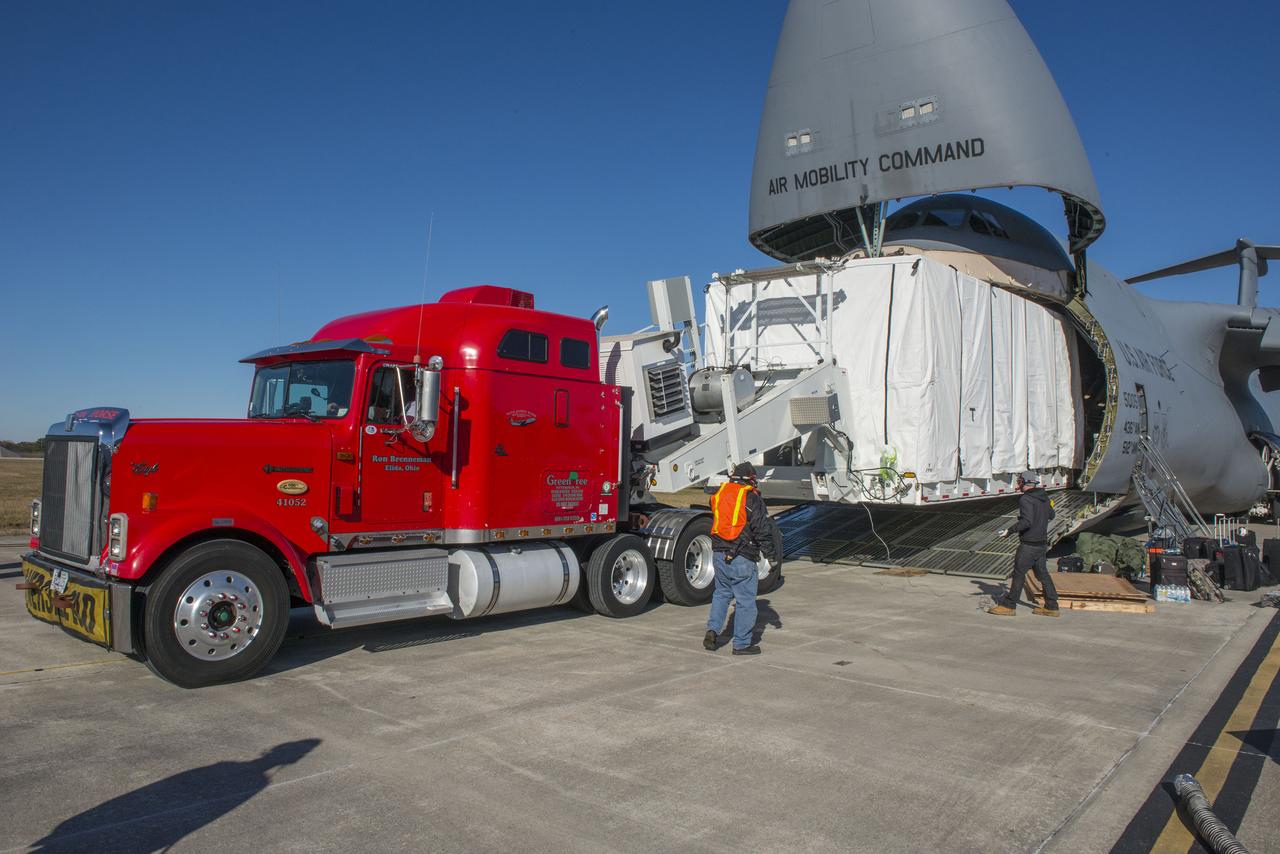
JAMES WEBB SPACE TELESCOPE (JWST) BACKPLANE MOVE FROM MARSHALL SPACE FLIGHT CENTER’S X-RAY CALIBRATION FACILITY (XCRF) TO THE REDSTONE ARSENAL AIRFIELD WHERE THE TEST ARTICLE WAS PLACED IN A USAF C-5 GALAXY FOR IT’S FLIGHT BACK TO THE MANUFACTURER.
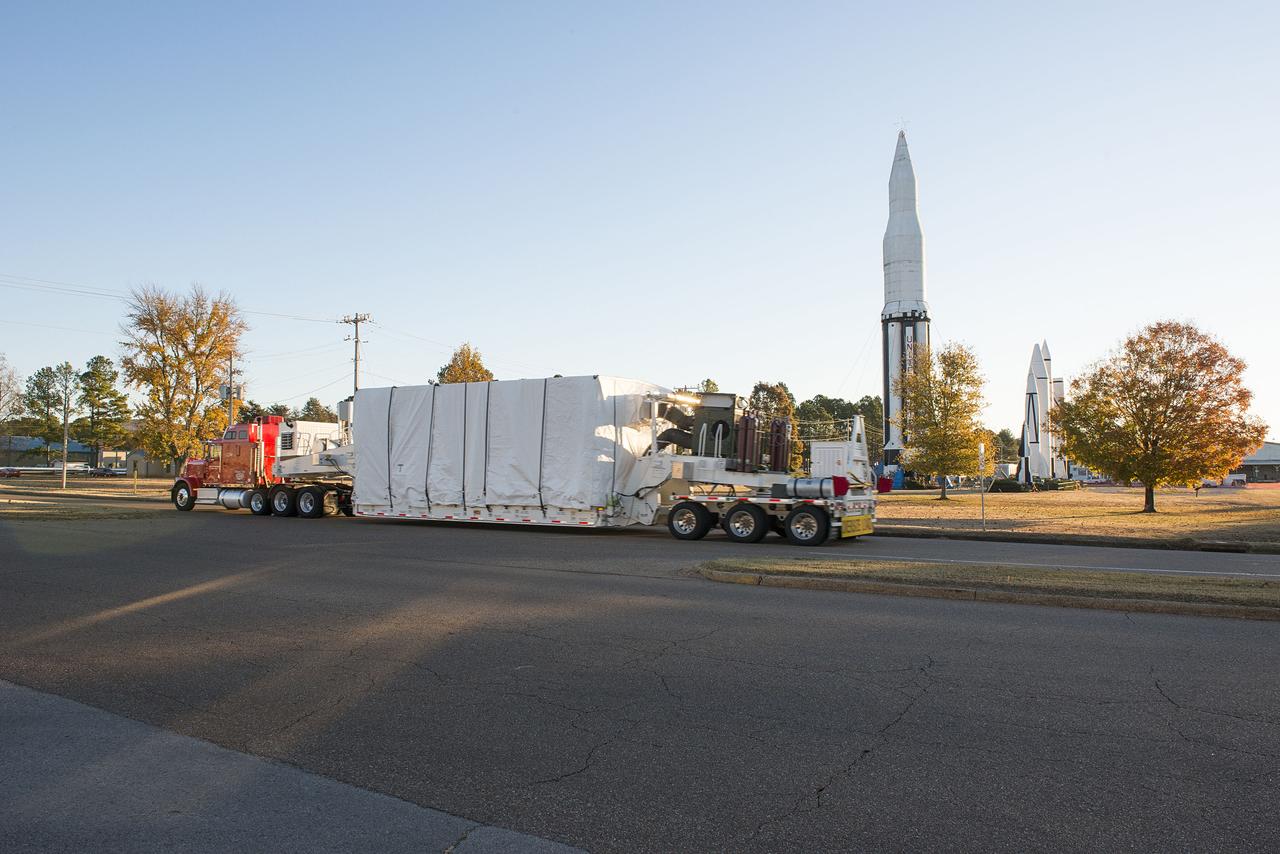
JAMES WEBB SPACE TELESCOPE (JWST) BACKPLANE MOVE FROM MARSHALL SPACE FLIGHT CENTER’S X-RAY CALIBRATION FACILITY (XCRF) TO THE REDSTONE ARSENAL AIRFIELD WHERE THE TEST ARTICLE WAS PLACED IN A USAF C-5 GALAXY FOR IT’S FLIGHT BACK TO THE MANUFACTURER.

JAMES WEBB SPACE TELESCOPE (JWST) BACKPLANE MOVE FROM MARSHALL SPACE FLIGHT CENTER’S X-RAY CALIBRATION FACILITY (XCRF) TO THE REDSTONE ARSENAL AIRFIELD WHERE THE TEST ARTICLE WAS PLACED IN A USAF C-5 GALAXY FOR IT’S FLIGHT BACK TO THE MANUFACTURER.
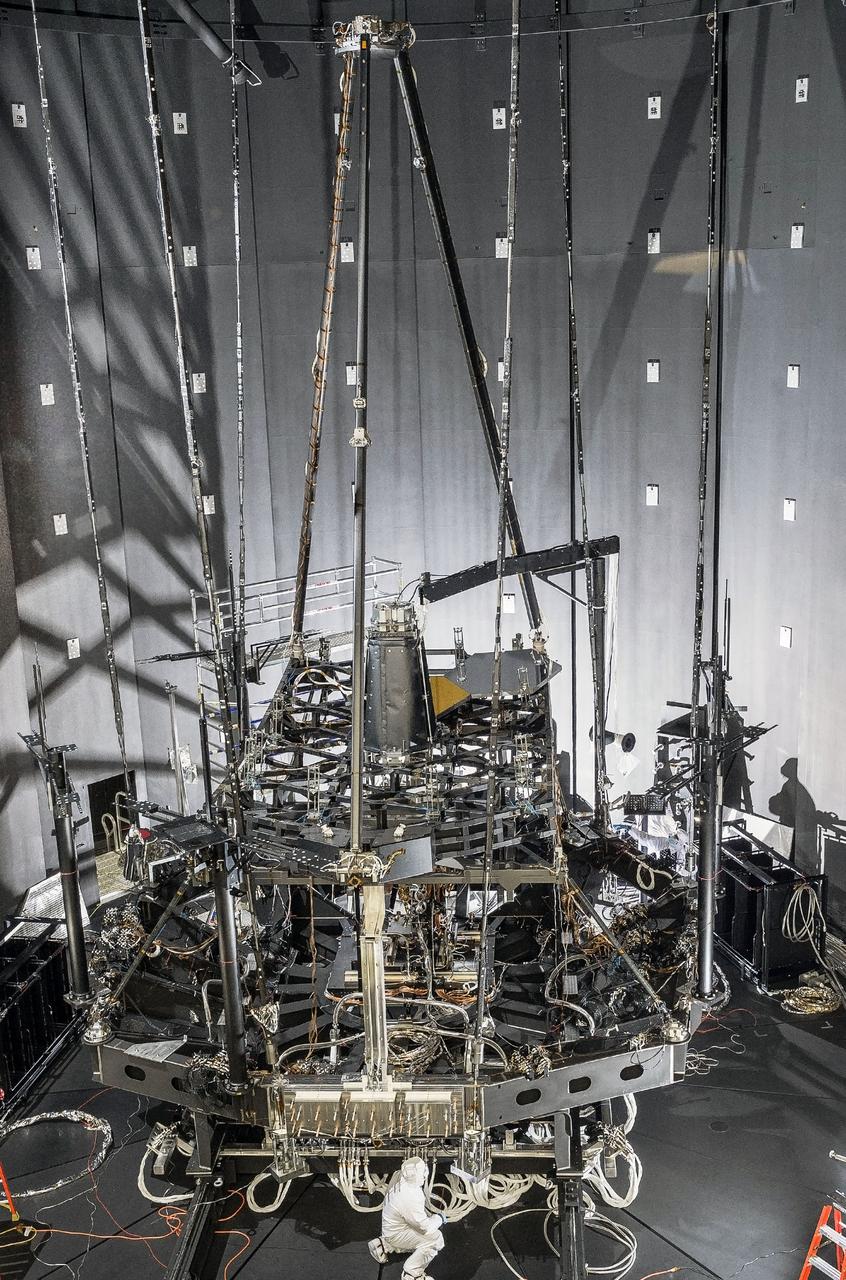
Testing is crucial part of NASA's success on Earth and in space. So, as the actual flight components of NASA's James Webb Space Telescope come together, engineers are testing the non-flight equipment to ensure that tests on the real Webb telescope later goes safely and according to plan. Recently, the "pathfinder telescope," or just “Pathfinder,” completed its first super-cold optical test that resulted in many first-of-a-kind demonstrations. "This test is the first dry-run of the equipment and procedures we will use to conduct an end-to-end optical test of the flight telescope and instruments," said Mark Clampin, Webb telescope Observatory Project Scientist at NASA's Goddard Space Flight Center in Greenbelt, Maryland. "It provides confidence that once the flight telescope is ready, we are fully prepared for a successful test of the flight hardware." The Pathfinder is a non-flight replica of the Webb telescope’s center section backplane, or “backbone,” that includes mirrors. The flight backplane comes in three segments, a center section and two wing-like parts, all of which will support large hexagonal mirrors on the Webb telescope. The pathfinder only consists of the center part of the backplane. However, during the test, it held two full size spare primary mirror segments and a full size spare secondary mirror to demonstrate the ability to optically test and align the telescope at the planned operating temperatures of -400 degrees Fahrenheit (-240 Celsius). Read more: <a href="http://www.nasa.gov/feature/goddard/nasas-webb-pathfinder-telescope-successfully-completes-first-super-cold-optical-test" rel="nofollow">www.nasa.gov/feature/goddard/nasas-webb-pathfinder-telesc...</a> Credit: NASA/Goddard/Chris Gunn <b><a href="http://www.nasa.gov/audience/formedia/features/MP_Photo_Guidelines.html" rel="nofollow">NASA image use policy.</a></b> <b><a href="http://www.nasa.gov/centers/goddard/home/index.html" rel="nofollow">NASA Goddard Space Flight Center</a></b> enables NASA’s mission through four scientific endeavors: Earth Science, Heliophysics, Solar System Exploration, and Astrophysics. Goddard plays a leading role in NASA’s accomplishments by contributing compelling scientific knowledge to advance the Agency’s mission. <b>Follow us on <a href="http://twitter.com/NASAGoddardPix" rel="nofollow">Twitter</a></b> <b>Like us on <a href="http://www.facebook.com/pages/Greenbelt-MD/NASA-Goddard/395013845897?ref=tsd" rel="nofollow">Facebook</a></b> <b>Find us on <a href="http://instagrid.me/nasagoddard/?vm=grid" rel="nofollow">Instagram</a></b>
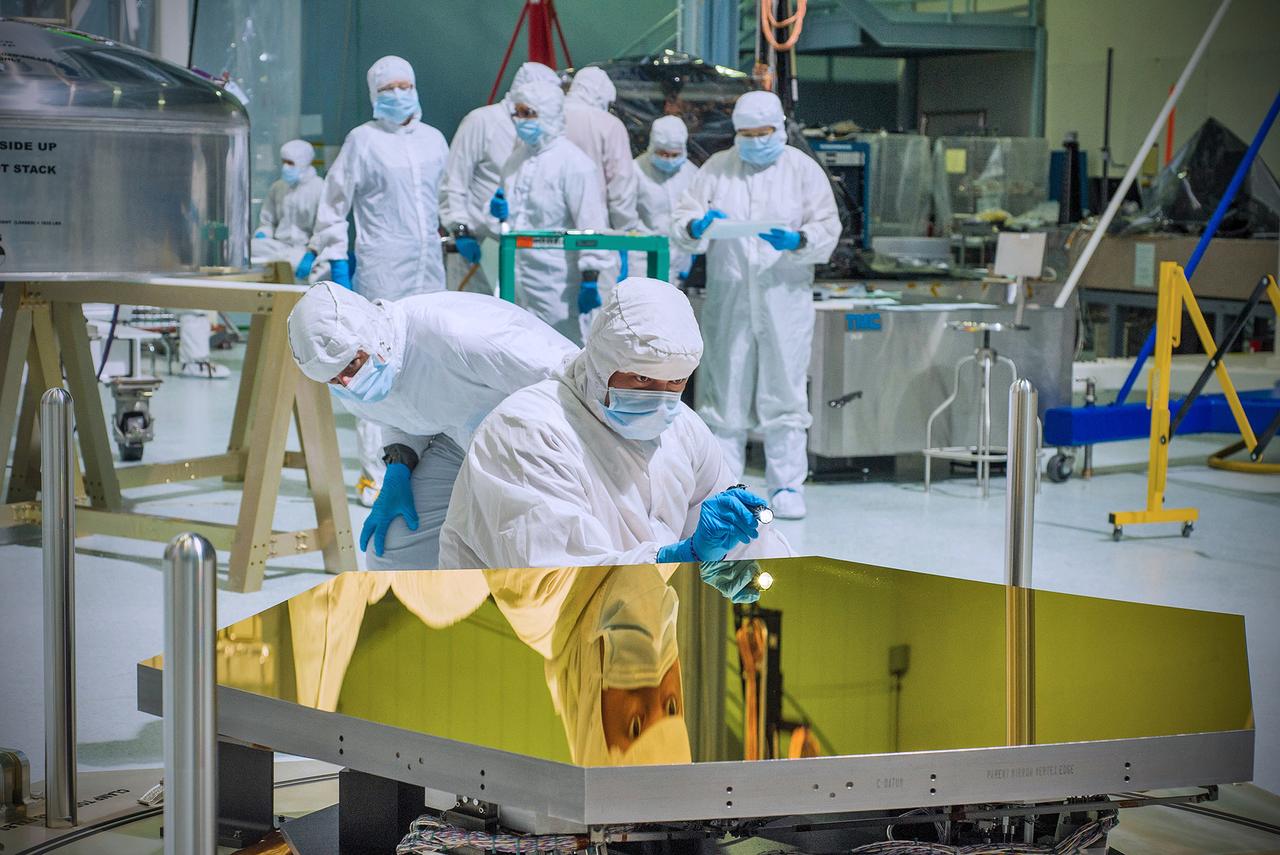
Technicians and scientists check out one of the Webb telescope's first two flight mirrors in the clean room at NASA's Goddard Space Flight Center in Greenbelt, Md. Credit: NASA/Chris Gunn ----- The first two of the 18 primary mirrors to fly aboard NASA’s James Webb Space Telescope arrived at NASA’s Goddard Space Flight Center in Greenbelt, Md. The mirrors are going through receiving and inspection and will then be stored in the Goddard cleanroom until engineers are ready to assemble them onto the telescope's backplane structure that will support them. Ball Aerospace, Boulder, Colo., under contract to Northrop Grumman, is responsible for the Webb’s optical technology and lightweight mirror system. On September 17, 2012, Ball Aerospace shipped the first two mirrors in custom containers designed specifically for the multiple trips the mirrors made through eight U.S. states while completing their manufacturing. The remaining 16 mirrors will make their way from Ball Aerospace to Goddard over the next 12 months as they await telescope integration in 2015. To read more go to: <a href="http://www.nasa.gov/topics/technology/features/webb-tech-mirrors-delivered.html" rel="nofollow">www.nasa.gov/topics/technology/features/webb-tech-mirrors...</a> <b><a href="http://www.nasa.gov/audience/formedia/features/MP_Photo_Guidelines.html" rel="nofollow">NASA image use policy.</a></b> <b><a href="http://www.nasa.gov/centers/goddard/home/index.html" rel="nofollow">NASA Goddard Space Flight Center</a></b> enables NASA’s mission through four scientific endeavors: Earth Science, Heliophysics, Solar System Exploration, and Astrophysics. Goddard plays a leading role in NASA’s accomplishments by contributing compelling scientific knowledge to advance the Agency’s mission. <b>Follow us on <a href="http://twitter.com/NASA_GoddardPix" rel="nofollow">Twitter</a></b> <b>Like us on <a href="http://www.facebook.com/pages/Greenbelt-MD/NASA-Goddard/395013845897?ref=tsd" rel="nofollow">Facebook</a></b> <b>Find us on <a href="http://instagrid.me/nasagoddard/?vm=grid" rel="nofollow">Instagram</a></b>
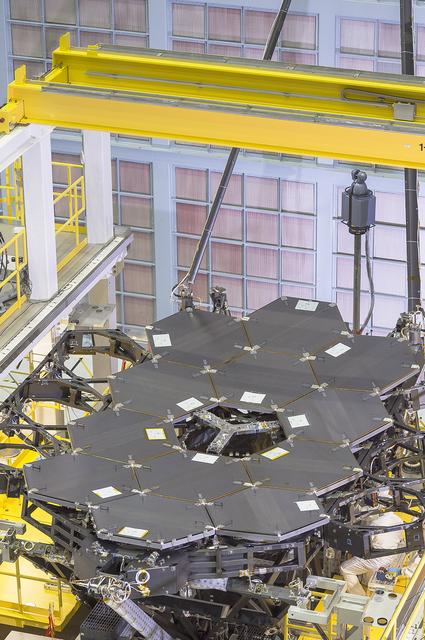
A view of the one dozen (out of 18) flight mirror segments that make up the primary mirror on NASA's James Webb Space Telescope have been installed at NASA's Goddard Space Flight Center. Credits: NASA/Chris Gunn More: Since December 2015, the team of scientists and engineers have been working tirelessly to install all the primary mirror segments onto the telescope structure in the large clean room at NASA's Goddard Space Flight Center in Greenbelt, Maryland. The twelfth mirror was installed on January 2, 2016. "This milestone signifies that all of the hexagonal shaped mirrors on the fixed central section of the telescope structure are installed and only the 3 mirrors on each wing are left for installation," said Lee Feinberg, NASA's Optical Telescope Element Manager at NASA Goddard. "The incredibly skilled and dedicated team assembling the telescope continues to find ways to do things faster and more efficiently." Each hexagonal-shaped segment measures just over 4.2 feet (1.3 meters) across and weighs approximately 88 pounds (40 kilograms). After being pieced together, the 18 primary mirror segments will work together as one large 21.3-foot (6.5-meter) mirror. The primary mirror will unfold and adjust to shape after launch. The mirrors are made of ultra-lightweight beryllium. The mirrors are placed on the telescope's backplane using a robotic arm, guided by engineers. The full installation is expected to be completed in a few months. The mirrors were built by Ball Aerospace & Technologies Corp., Boulder, Colorado. Ball is the principal subcontractor to Northrop Grumman for the optical technology and lightweight mirror system. The installation of the mirrors onto the telescope structure is performed by Harris Corporation of Rochester, New York. Harris Corporation leads integration and testing for the telescope. While the mirror assembly is a very significant milestone, there are many more steps involved in assembling the Webb telescope. The primary mirror and the tennis-court-sized sunshield are the largest and most visible components of the Webb telescope. However, there are four smaller components that are less visible, yet critical. The instruments that will fly aboard Webb - cameras and spectrographs with detectors able to record extremely faint signals — are part of the Integrated Science Instrument Module (ISIM), which is currently undergoing its final cryogenic vacuum test and will be integrated with the mirror later this year.
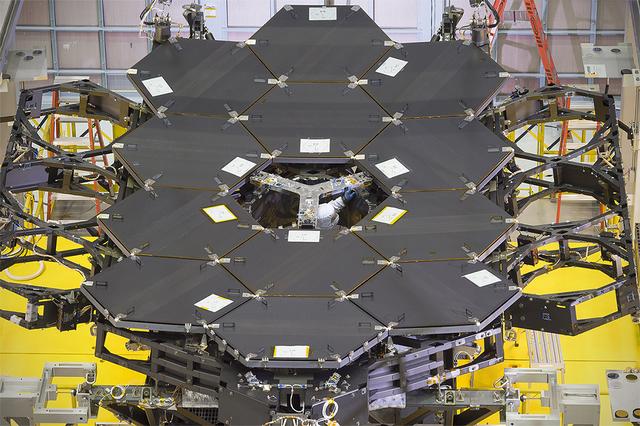
Caption: One dozen (out of 18) flight mirror segments that make up the primary mirror on NASA's James Webb Space Telescope have been installed at NASA's Goddard Space Flight Center. Credits: NASA/Chris Gunn More: Since December 2015, the team of scientists and engineers have been working tirelessly to install all the primary mirror segments onto the telescope structure in the large clean room at NASA's Goddard Space Flight Center in Greenbelt, Maryland. The twelfth mirror was installed on January 2, 2016. "This milestone signifies that all of the hexagonal shaped mirrors on the fixed central section of the telescope structure are installed and only the 3 mirrors on each wing are left for installation," said Lee Feinberg, NASA's Optical Telescope Element Manager at NASA Goddard. "The incredibly skilled and dedicated team assembling the telescope continues to find ways to do things faster and more efficiently." Each hexagonal-shaped segment measures just over 4.2 feet (1.3 meters) across and weighs approximately 88 pounds (40 kilograms). After being pieced together, the 18 primary mirror segments will work together as one large 21.3-foot (6.5-meter) mirror. The primary mirror will unfold and adjust to shape after launch. The mirrors are made of ultra-lightweight beryllium. The mirrors are placed on the telescope's backplane using a robotic arm, guided by engineers. The full installation is expected to be completed in a few months. The mirrors were built by Ball Aerospace & Technologies Corp., Boulder, Colorado. Ball is the principal subcontractor to Northrop Grumman for the optical technology and lightweight mirror system. The installation of the mirrors onto the telescope structure is performed by Harris Corporation of Rochester, New York. Harris Corporation leads integration and testing for the telescope. While the mirror assembly is a very significant milestone, there are many more steps involved in assembling the Webb telescope. The primary mirror and the tennis-court-sized sunshield are the largest and most visible components of the Webb telescope. However, there are four smaller components that are less visible, yet critical. The instruments that will fly aboard Webb - cameras and spectrographs with detectors able to record extremely faint signals — are part of the Integrated Science Instrument Module (ISIM), which is currently undergoing its final cryogenic vacuum test and will be integrated with the mirror later this year.
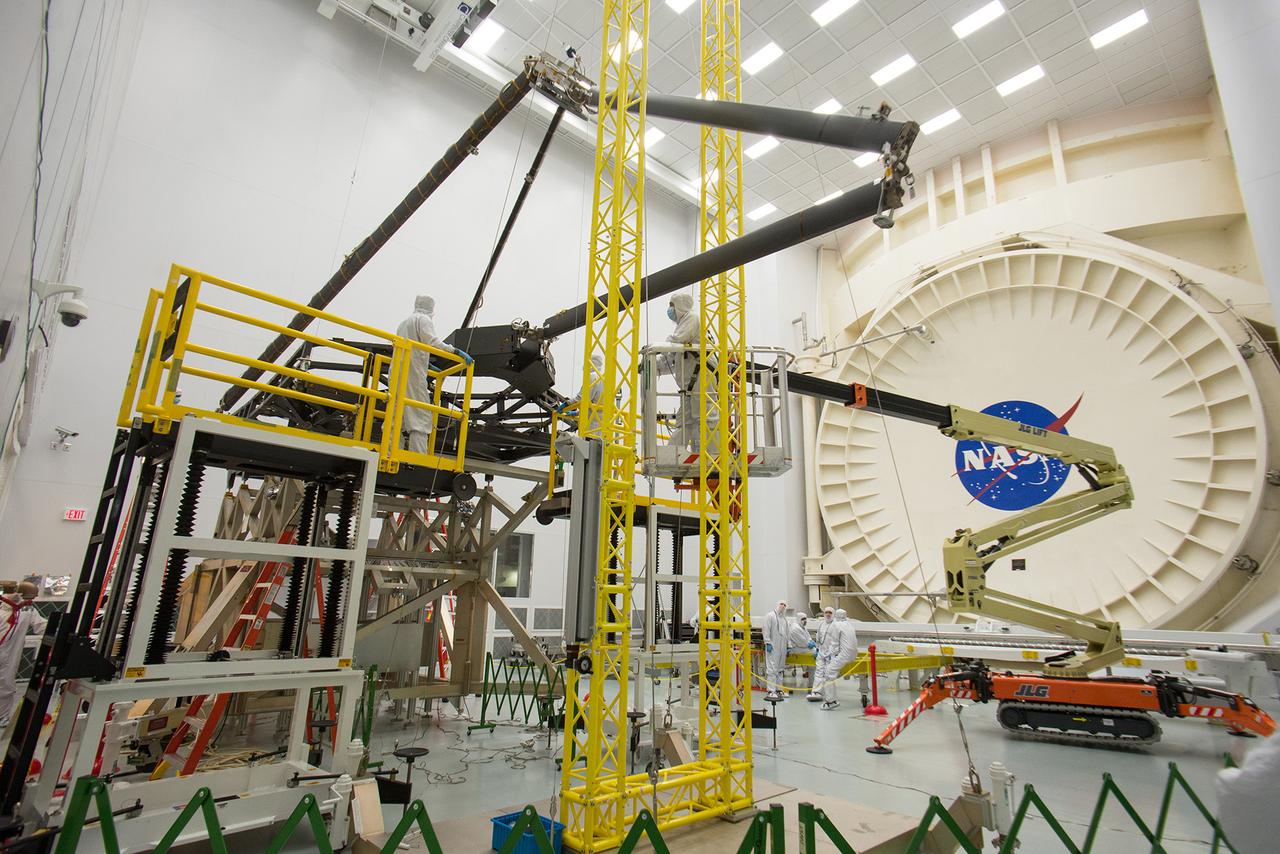
Engineers and technicians manually deployed the secondary mirror support structure (SMSS) of the James Webb Space Telescope's Pathfinder backplane test model, outside of a giant space simulation chamber called Chamber A, at NASA's Johnson Space Center in Houston. This historic test chamber was previously used in manned spaceflight missions and is being readied for a cryogenic test of a Webb telescope component. In the weightless environment of space, the SMSS is deployed by electric motors. On the ground, specially trained operators use a hand crank and a collection of mechanical ground support equipment to overcome the force of gravity. "This structure needs to be in the deployed configuration during the cryogenic test to see how the structure will operate in the frigid temperatures of space," said Will Rowland, senior mechanical test engineer for Northrop Grumman Aerospace Systems, Redondo Beach, California. "The test also demonstrates that the system works and can be successfully deployed." After the deployment was completed, Chamber A's circular door was opened and the rails (seen in the background of the photo) were installed so that the Pathfinder unit could be lifted, installed and rolled into the chamber on a cart. The team completed a fit check for the Pathfinder. Afterwards they readied the chamber for the cryogenic test, which will simulate the frigid temperatures the Webb telescope will encounter in space. “The team has been doing a great job keeping everything on schedule to getting our first optical test results, " said Lee Feinberg, NASA Optical Telescope Element Manager. The James Webb Space Telescope is the scientific successor to NASA's Hubble Space Telescope. It will be the most powerful space telescope ever built. Webb is an international project led by NASA with its partners, the European Space Agency and the Canadian Space Agency. Image credit: NASA/Desiree Stover Text credit: Laura Betz, NASA's Goddard Space Flight Center, Greenbelt, Maryland <b><a href="http://www.nasa.gov/audience/formedia/features/MP_Photo_Guidelines.html" rel="nofollow">NASA image use policy.</a></b> <b><a href="http://www.nasa.gov/centers/goddard/home/index.html" rel="nofollow">NASA Goddard Space Flight Center</a></b> enables NASA’s mission through four scientific endeavors: Earth Science, Heliophysics, Solar System Exploration, and Astrophysics. Goddard plays a leading role in NASA’s accomplishments by contributing compelling scientific knowledge to advance the Agency’s mission. <b>Follow us on <a href="http://twitter.com/NASAGoddardPix" rel="nofollow">Twitter</a></b> <b>Like us on <a href="http://www.facebook.com/pages/Greenbelt-MD/NASA-Goddard/395013845897?ref=tsd" rel="nofollow">Facebook</a></b> <b>Find us on <a href="http://instagrid.me/nasagoddard/?vm=grid" rel="nofollow">Instagram</a></b>
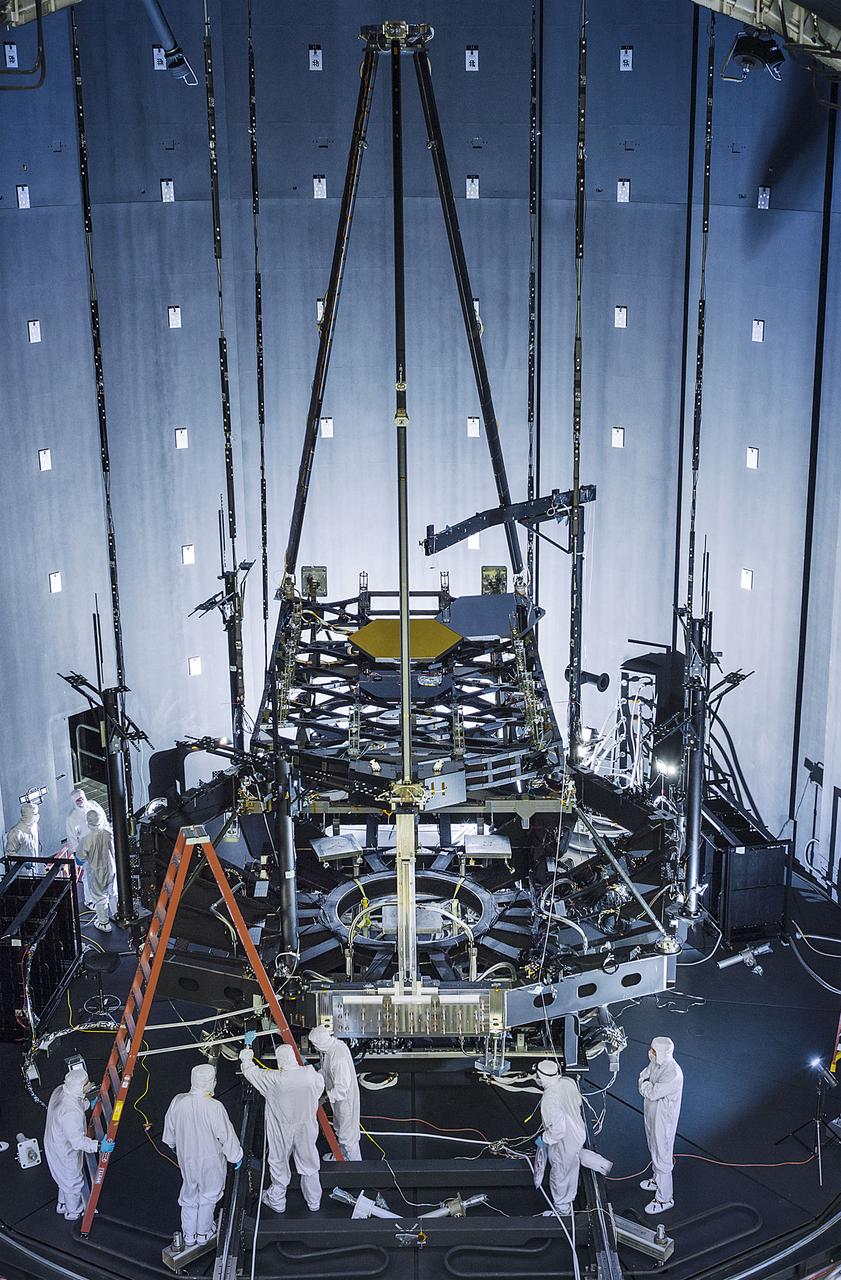
Inside NASA's giant thermal vacuum chamber, called Chamber A, at NASA's Johnson Space Center in Houston, the James Webb Space Telescope's Pathfinder backplane test model, is being prepared for its cryogenic test. Previously used for manned spaceflight missions, this historic chamber is now filled with engineers and technicians preparing for a crucial test. Exelis developed and installed the optical test equipment in the chamber. "The optical test equipment was developed and installed in the chamber by Exelis," said Thomas Scorse, Exelis JWST Program Manager. "The Pathfinder telescope gives us our first opportunity for an end-to-end checkout of our equipment." "This will be the first time on the program that we will be aligning two primary mirror segments together," said Lee Feinberg, NASA Optical Telescope Element Manager. "In the past, we have always tested one mirror at a time but this time we will use a single test system and align both mirrors to it as though they are a single monolithic mirror." The James Webb Space Telescope is the scientific successor to NASA's Hubble Space Telescope. It will be the most powerful space telescope ever built. Webb is an international project led by NASA with its partners, the European Space Agency and the Canadian Space Agency. Image credit: NASA/Chris Gunn Text credit: Laura Betz, NASA's Goddard Space Flight Center, Greenbelt, Maryland <b><a href="http://www.nasa.gov/audience/formedia/features/MP_Photo_Guidelines.html" rel="nofollow">NASA image use policy.</a></b> <b><a href="http://www.nasa.gov/centers/goddard/home/index.html" rel="nofollow">NASA Goddard Space Flight Center</a></b> enables NASA’s mission through four scientific endeavors: Earth Science, Heliophysics, Solar System Exploration, and Astrophysics. Goddard plays a leading role in NASA’s accomplishments by contributing compelling scientific knowledge to advance the Agency’s mission. <b>Follow us on <a href="http://twitter.com/NASAGoddardPix" rel="nofollow">Twitter</a></b> <b>Like us on <a href="http://www.facebook.com/pages/Greenbelt-MD/NASA-Goddard/395013845897?ref=tsd" rel="nofollow">Facebook</a></b> <b>Find us on <a href="http://instagrid.me/nasagoddard/?vm=grid" rel="nofollow">Instagram</a></b>
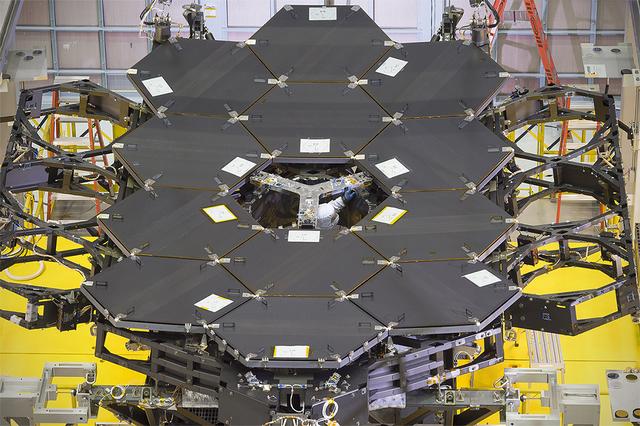
Caption: One dozen (out of 18) flight mirror segments that make up the primary mirror on NASA's James Webb Space Telescope have been installed at NASA's Goddard Space Flight Center. Credits: NASA/Chris Gunn More: Since December 2015, the team of scientists and engineers have been working tirelessly to install all the primary mirror segments onto the telescope structure in the large clean room at NASA's Goddard Space Flight Center in Greenbelt, Maryland. The twelfth mirror was installed on January 2, 2016. "This milestone signifies that all of the hexagonal shaped mirrors on the fixed central section of the telescope structure are installed and only the 3 mirrors on each wing are left for installation," said Lee Feinberg, NASA's Optical Telescope Element Manager at NASA Goddard. "The incredibly skilled and dedicated team assembling the telescope continues to find ways to do things faster and more efficiently." Each hexagonal-shaped segment measures just over 4.2 feet (1.3 meters) across and weighs approximately 88 pounds (40 kilograms). After being pieced together, the 18 primary mirror segments will work together as one large 21.3-foot (6.5-meter) mirror. The primary mirror will unfold and adjust to shape after launch. The mirrors are made of ultra-lightweight beryllium. The mirrors are placed on the telescope's backplane using a robotic arm, guided by engineers. The full installation is expected to be completed in a few months. The mirrors were built by Ball Aerospace & Technologies Corp., Boulder, Colorado. Ball is the principal subcontractor to Northrop Grumman for the optical technology and lightweight mirror system. The installation of the mirrors onto the telescope structure is performed by Harris Corporation of Rochester, New York. Harris Corporation leads integration and testing for the telescope. While the mirror assembly is a very significant milestone, there are many more steps involved in assembling the Webb telescope. The primary mirror and the tennis-court-sized sunshield are the largest and most visible components of the Webb telescope. However, there are four smaller components that are less visible, yet critical. The instruments that will fly aboard Webb - cameras and spectrographs with detectors able to record extremely faint signals — are part of the Integrated Science Instrument Module (ISIM), which is currently undergoing its final cryogenic vacuum test and will be integrated with the mirror later this year. Read more: <a href="http://www.nasa.gov/feature/goddard/2016/by-the-dozen-nasas-james-webb-space-telescope-mirrors" rel="nofollow">www.nasa.gov/feature/goddard/2016/by-the-dozen-nasas-jame...</a> <b><a href="http://www.nasa.gov/audience/formedia/features/MP_Photo_Guidelines.html" rel="nofollow">NASA image use policy.</a></b> <b><a href="http://www.nasa.gov/centers/goddard/home/index.html" rel="nofollow">NASA Goddard Space Flight Center</a></b> enables NASA’s mission through four scientific endeavors: Earth Science, Heliophysics, Solar System Exploration, and Astrophysics. Goddard plays a leading role in NASA’s accomplishments by contributing compelling scientific knowledge to advance the Agency’s mission. <b>Follow us on <a href="http://twitter.com/NASAGoddardPix" rel="nofollow">Twitter</a></b> <b>Like us on <a href="http://www.facebook.com/pages/Greenbelt-MD/NASA-Goddard/395013845897?ref=tsd" rel="nofollow">Facebook</a></b> <b>Find us on <a href="http://instagrid.me/nasagoddard/?vm=grid" rel="nofollow">Instagram</a></b>
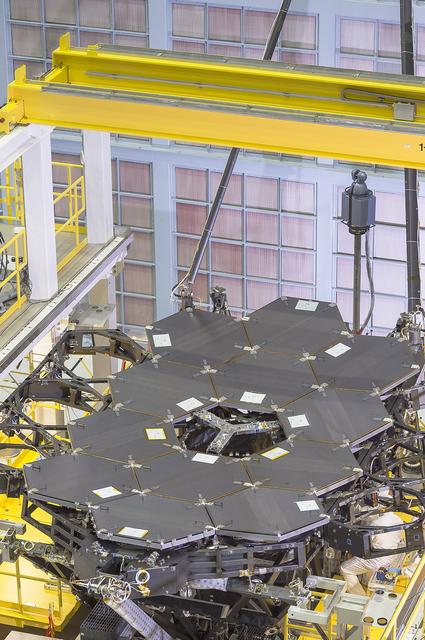
A view of the one dozen (out of 18) flight mirror segments that make up the primary mirror on NASA's James Webb Space Telescope have been installed at NASA's Goddard Space Flight Center. Credits: NASA/Chris Gunn More: Since December 2015, the team of scientists and engineers have been working tirelessly to install all the primary mirror segments onto the telescope structure in the large clean room at NASA's Goddard Space Flight Center in Greenbelt, Maryland. The twelfth mirror was installed on January 2, 2016. "This milestone signifies that all of the hexagonal shaped mirrors on the fixed central section of the telescope structure are installed and only the 3 mirrors on each wing are left for installation," said Lee Feinberg, NASA's Optical Telescope Element Manager at NASA Goddard. "The incredibly skilled and dedicated team assembling the telescope continues to find ways to do things faster and more efficiently." Each hexagonal-shaped segment measures just over 4.2 feet (1.3 meters) across and weighs approximately 88 pounds (40 kilograms). After being pieced together, the 18 primary mirror segments will work together as one large 21.3-foot (6.5-meter) mirror. The primary mirror will unfold and adjust to shape after launch. The mirrors are made of ultra-lightweight beryllium. The mirrors are placed on the telescope's backplane using a robotic arm, guided by engineers. The full installation is expected to be completed in a few months. The mirrors were built by Ball Aerospace & Technologies Corp., Boulder, Colorado. Ball is the principal subcontractor to Northrop Grumman for the optical technology and lightweight mirror system. The installation of the mirrors onto the telescope structure is performed by Harris Corporation of Rochester, New York. Harris Corporation leads integration and testing for the telescope. While the mirror assembly is a very significant milestone, there are many more steps involved in assembling the Webb telescope. The primary mirror and the tennis-court-sized sunshield are the largest and most visible components of the Webb telescope. However, there are four smaller components that are less visible, yet critical. The instruments that will fly aboard Webb - cameras and spectrographs with detectors able to record extremely faint signals — are part of the Integrated Science Instrument Module (ISIM), which is currently undergoing its final cryogenic vacuum test and will be integrated with the mirror later this year. Read more: <a href="http://www.nasa.gov/feature/goddard/2016/by-the-dozen-nasas-james-webb-space-telescope-mirrors" rel="nofollow">www.nasa.gov/feature/goddard/2016/by-the-dozen-nasas-jame...</a> <b><a href="http://www.nasa.gov/audience/formedia/features/MP_Photo_Guidelines.html" rel="nofollow">NASA image use policy.</a></b> <b><a href="http://www.nasa.gov/centers/goddard/home/index.html" rel="nofollow">NASA Goddard Space Flight Center</a></b> enables NASA’s mission through four scientific endeavors: Earth Science, Heliophysics, Solar System Exploration, and Astrophysics. Goddard plays a leading role in NASA’s accomplishments by contributing compelling scientific knowledge to advance the Agency’s mission. <b>Follow us on <a href="http://twitter.com/NASAGoddardPix" rel="nofollow">Twitter</a></b> <b>Like us on <a href="http://www.facebook.com/pages/Greenbelt-MD/NASA-Goddard/395013845897?ref=tsd" rel="nofollow">Facebook</a></b> <b>Find us on <a href="http://instagrid.me/nasagoddard/?vm=grid" rel="nofollow">Instagram</a></b>