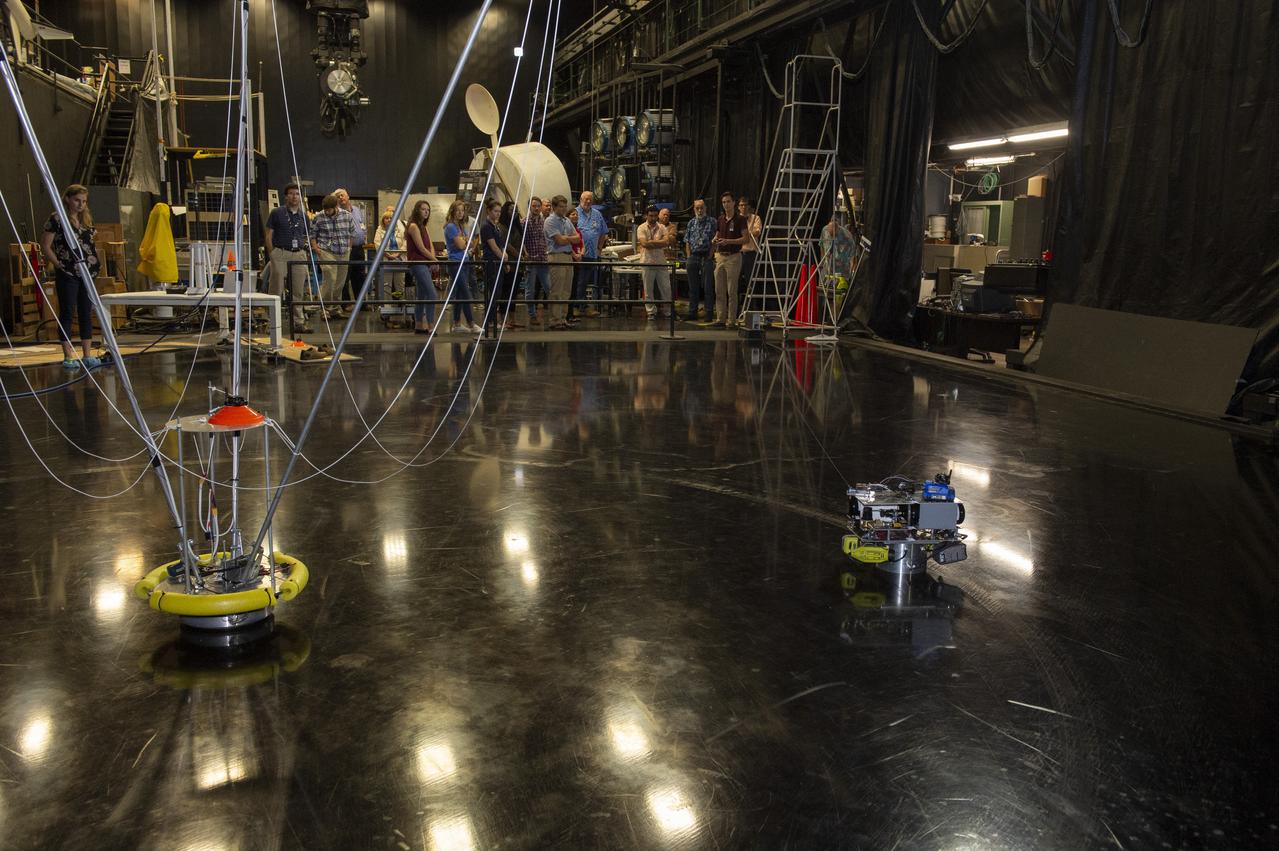
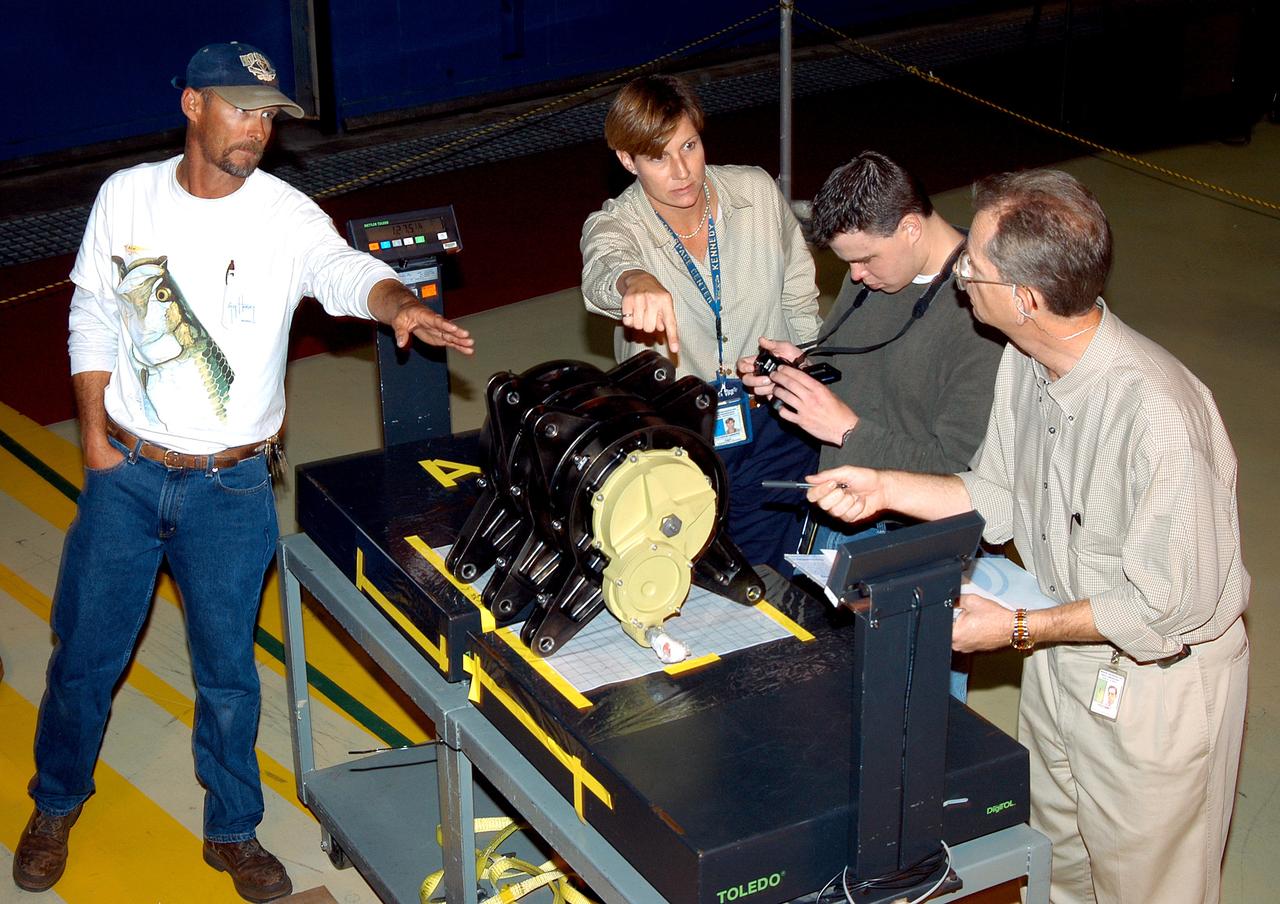
PATHWAYS INTERN ALEXANDRA BOEHM, AND JACOBS INTERN, PEYTON NELSON DEMONSTRATE STEERABLE AIR BEARING TETHER DEPLOYMENT SYSTEM TO MSFC SENIOR MANAGEMENT. ALSO WORKING ON THE PROJECT BUT NOT PICTURED WERE SUMMER INTERN ALI BERTELSMAN, PATHWAYS INTERN ANNA SHIPMAN, AND JACOBS FULL-TIME EMPLOYEE BRANDON MOORE.
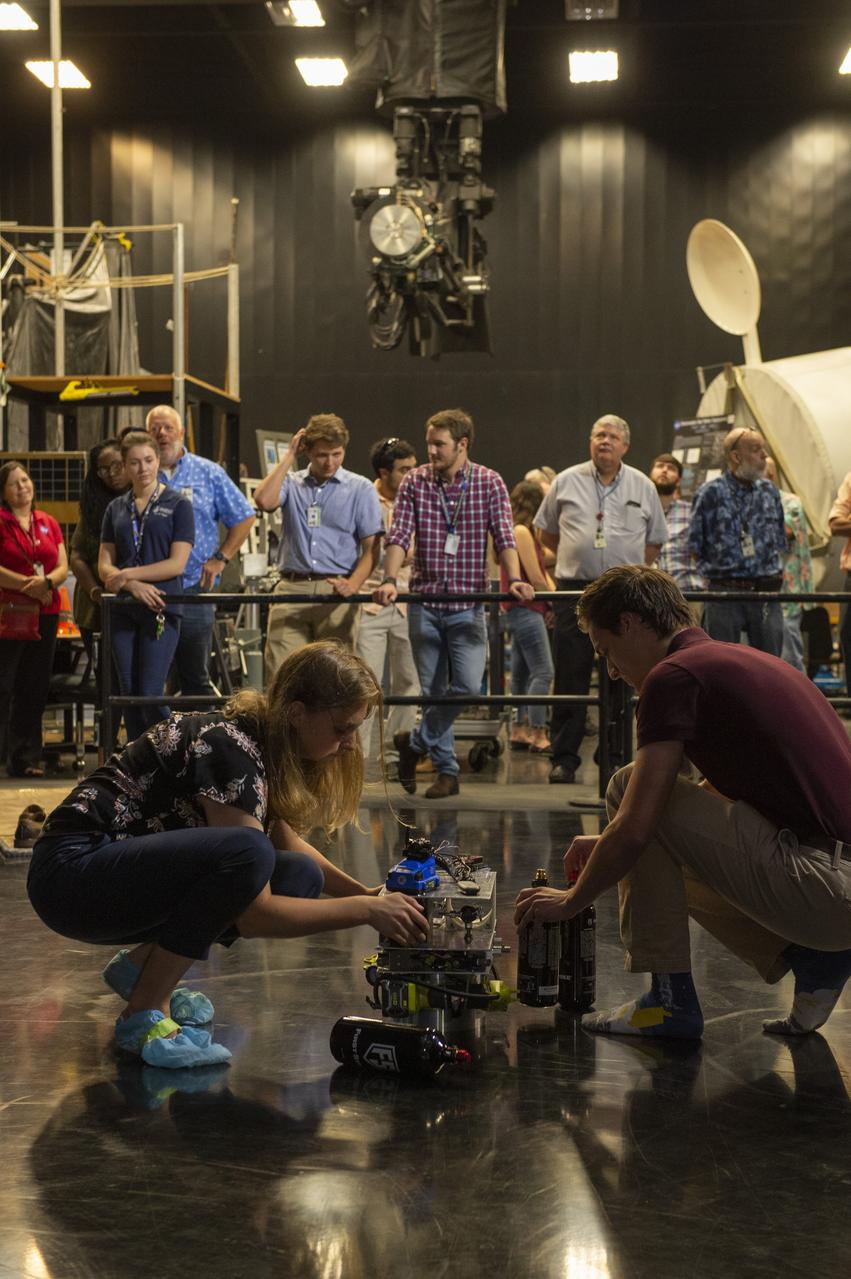
PATHWAYS INTERN ALEXANDRA BOEHM, AND JACOBS INTERN, PEYTON NELSON DEMONSTRATE STEERABLE AIR BEARING TETHER DEPLOYMENT SYSTEM TO MSFC SENIOR MANAGEMENT. ALSO WORKING ON THE PROJECT BUT NOT PICTURED WERE SUMMER INTERN ALI BERTELSMAN, PATHWAYS INTERN ANNA SHIPMAN, AND JACOBS FULL-TIME EMPLOYEE BRANDON MOORE.
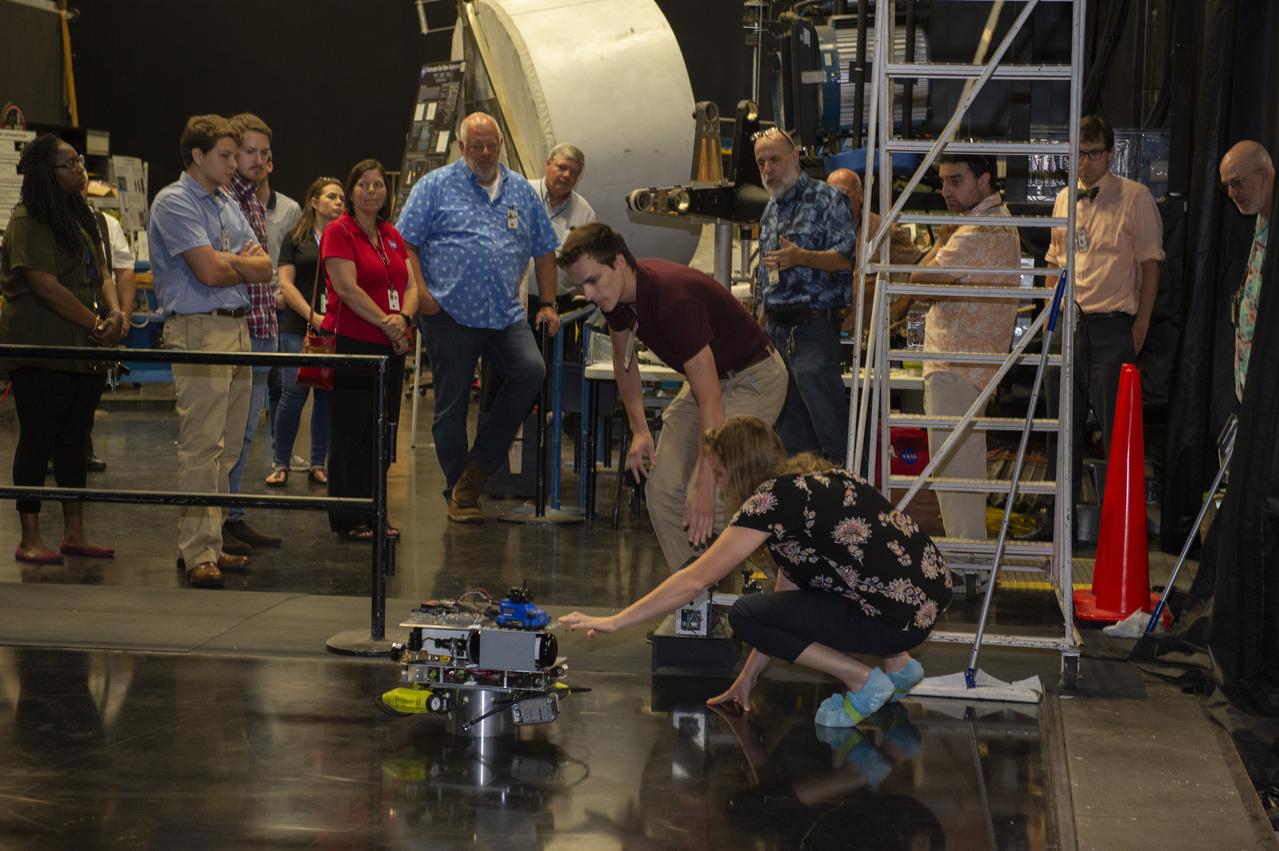
PATHWAYS INTERN ALEXANDRA BOEHM, AND JACOBS INTERN, PEYTON NELSON DEMONSTRATE STEERABLE AIR BEARING TETHER DEPLOYMENT SYSTEM TO MSFC SENIOR MANAGEMENT. ALSO WORKING ON THE PROJECT BUT NOT PICTURED WERE SUMMER INTERN ALI BERTELSMAN, PATHWAYS INTERN ANNA SHIPMAN, AND JACOBS FULL-TIME EMPLOYEE BRANDON MOORE.
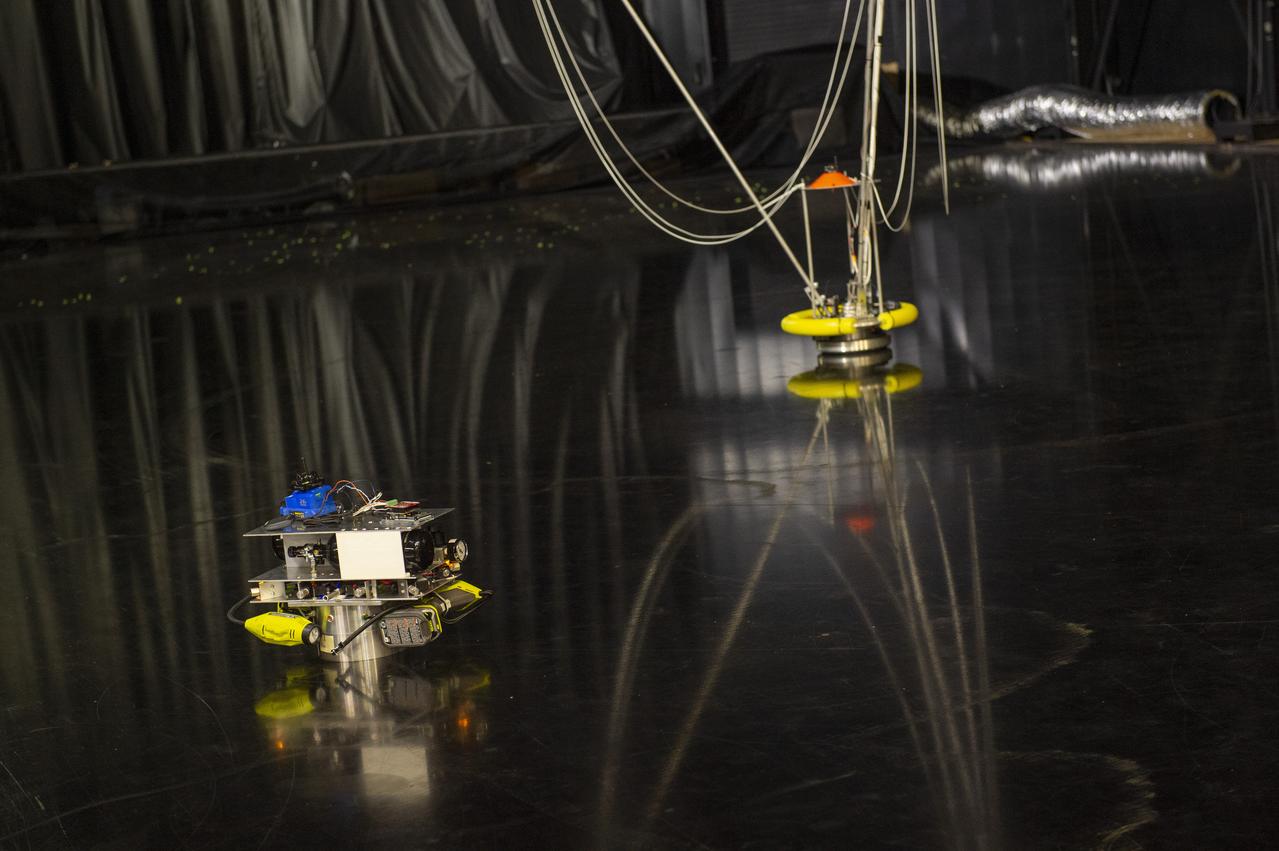
PATHWAYS INTERN ALEXANDRA BOEHM, AND JACOBS INTERN, PEYTON NELSON DEMONSTRATE STEERABLE AIR BEARING TETHER DEPLOYMENT SYSTEM TO MSFC SENIOR MANAGEMENT. ALSO WORKING ON THE PROJECT BUT NOT PICTURED WERE SUMMER INTERN ALI BERTELSMAN, PATHWAYS INTERN ANNA SHIPMAN, AND JACOBS FULL-TIME EMPLOYEE BRANDON MOORE.
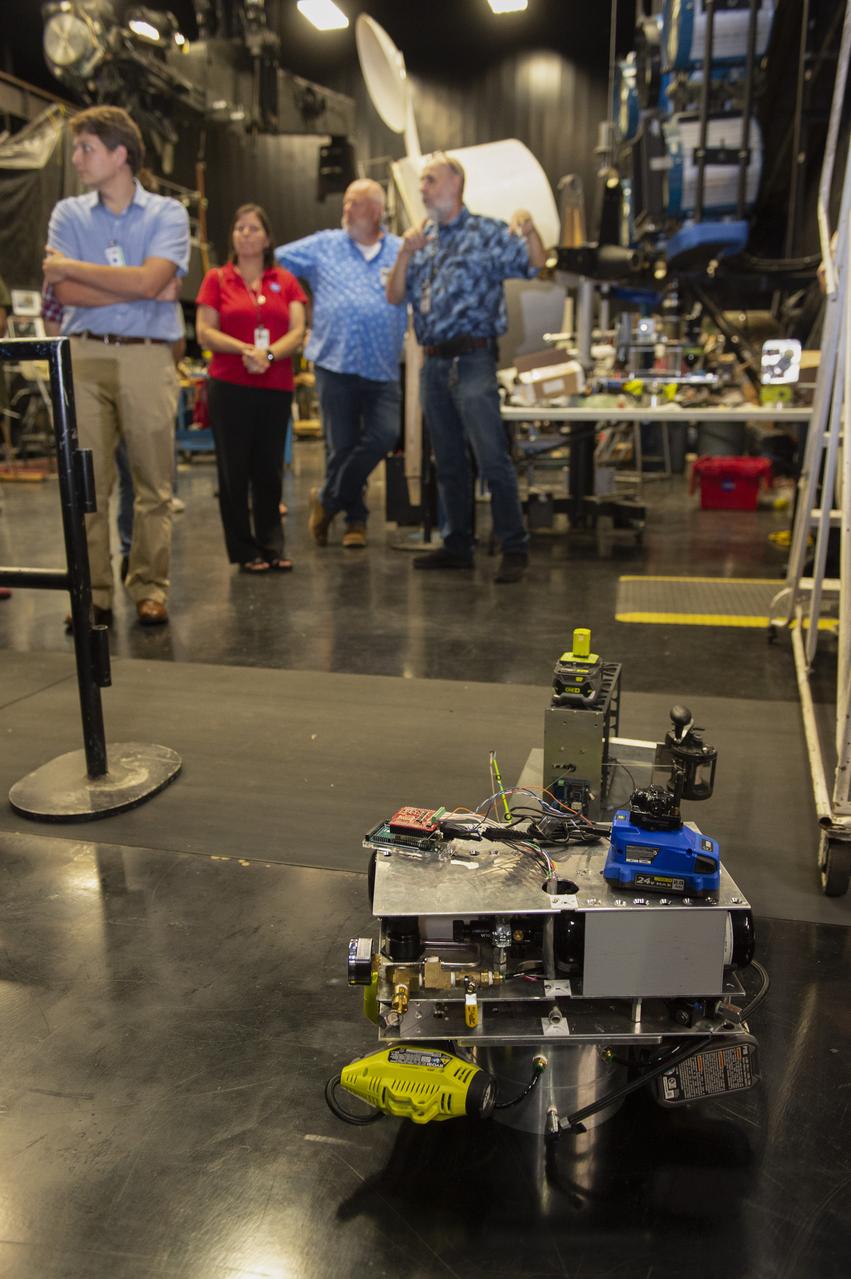
PATHWAYS INTERN ALEXANDRA BOEHM, AND JACOBS INTERN, PEYTON NELSON DEMONSTRATE STEERABLE AIR BEARING TETHER DEPLOYMENT SYSTEM TO MSFC SENIOR MANAGEMENT. ALSO WORKING ON THE PROJECT BUT NOT PICTURED WERE SUMMER INTERN ALI BERTELSMAN, PATHWAYS INTERN ANNA SHIPMAN, AND JACOBS FULL-TIME EMPLOYEE BRANDON MOORE.
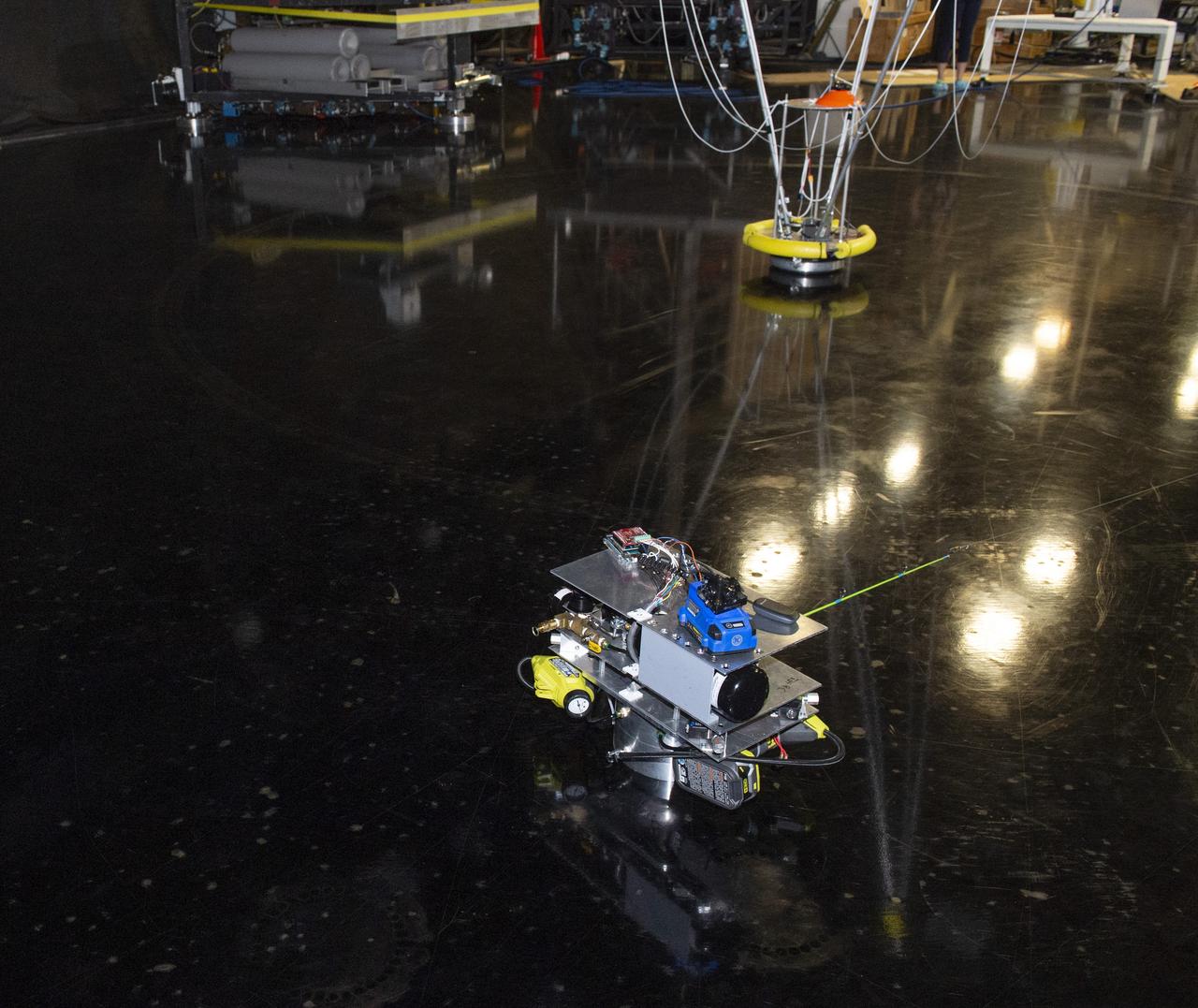
PATHWAYS INTERN ALEXANDRA BOEHM, AND JACOBS INTERN, PEYTON NELSON DEMONSTRATE STEERABLE AIR BEARING TETHER DEPLOYMENT SYSTEM TO MSFC SENIOR MANAGEMENT. ALSO WORKING ON THE PROJECT BUT NOT PICTURED WERE SUMMER INTERN ALI BERTELSMAN, PATHWAYS INTERN ANNA SHIPMAN, AND JACOBS FULL-TIME EMPLOYEE BRANDON MOORE.
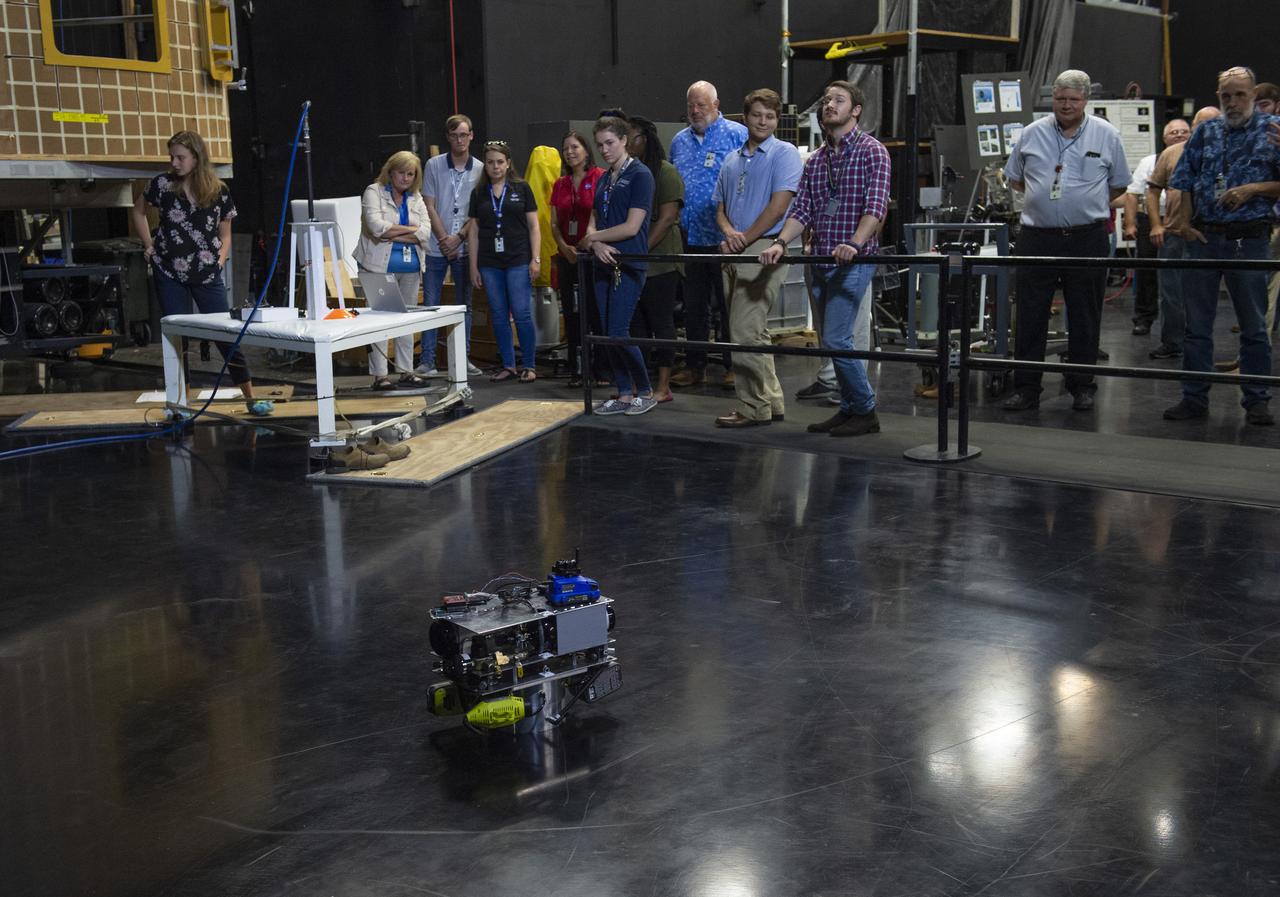
PATHWAYS INTERN ALEXANDRA BOEHM, AND JACOBS INTERN, PEYTON NELSON DEMONSTRATE STEERABLE AIR BEARING TETHER DEPLOYMENT SYSTEM TO MSFC SENIOR MANAGEMENT. ALSO WORKING ON THE PROJECT BUT NOT PICTURED WERE SUMMER INTERN ALI BERTELSMAN, PATHWAYS INTERN ANNA SHIPMAN, AND JACOBS FULL-TIME EMPLOYEE BRANDON MOORE.

PATHWAYS INTERN ALEXANDRA BOEHM, AND JACOBS INTERN, PEYTON NELSON DEMONSTRATE STEERABLE AIR BEARING TETHER DEPLOYMENT SYSTEM TO MSFC SENIOR MANAGEMENT. ALSO WORKING ON THE PROJECT BUT NOT PICTURED WERE SUMMER INTERN ALI BERTELSMAN, PATHWAYS INTERN ANNA SHIPMAN, AND JACOBS FULL-TIME EMPLOYEE BRANDON MOORE.
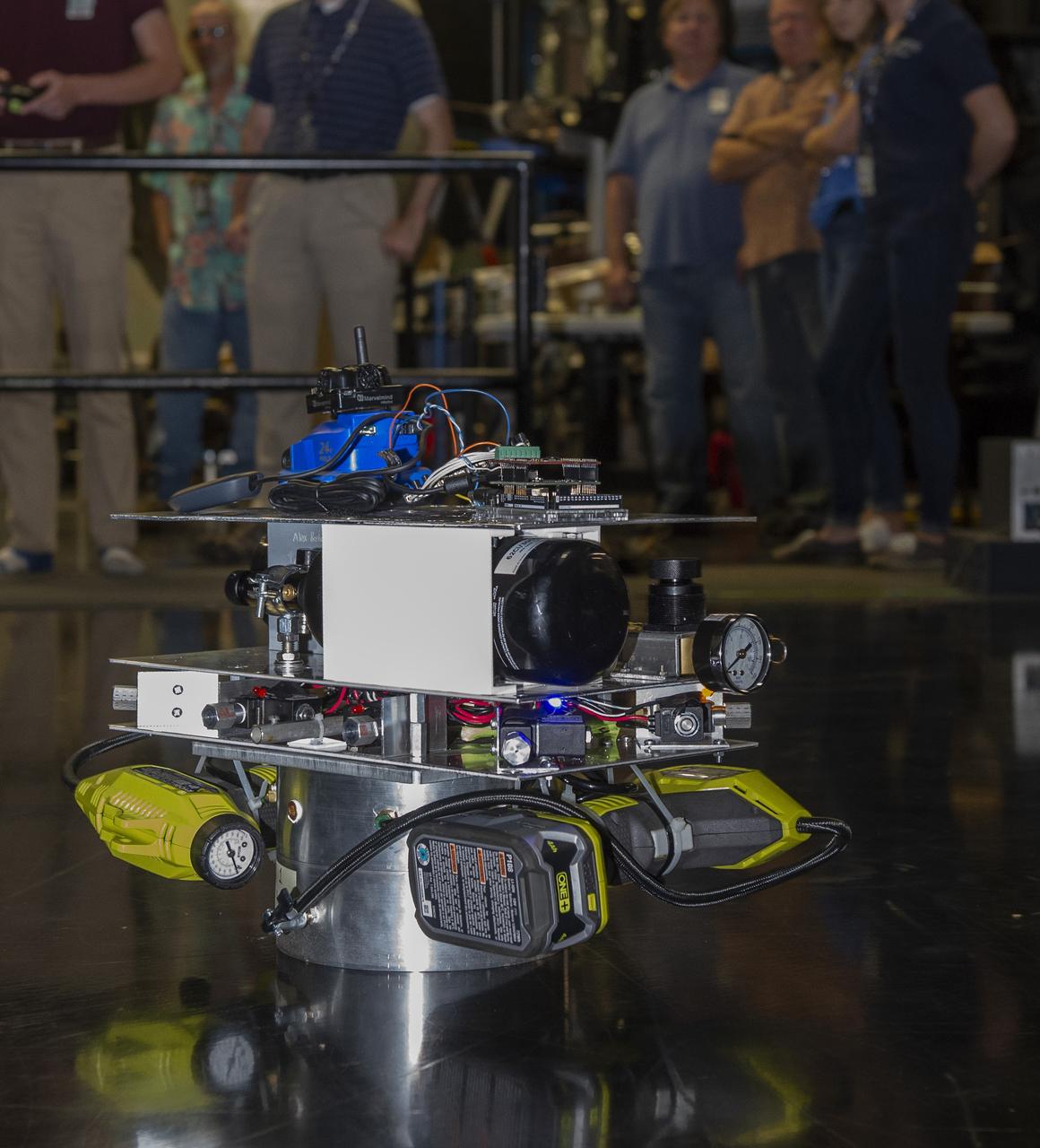
PATHWAYS INTERN ALEXANDRA BOEHM, AND JACOBS INTERN, PEYTON NELSON DEMONSTRATE STEERABLE AIR BEARING TETHER DEPLOYMENT SYSTEM TO MSFC SENIOR MANAGEMENT. ALSO WORKING ON THE PROJECT BUT NOT PICTURED WERE SUMMER INTERN ALI BERTELSMAN, PATHWAYS INTERN ANNA SHIPMAN, AND JACOBS FULL-TIME EMPLOYEE BRANDON MOORE.
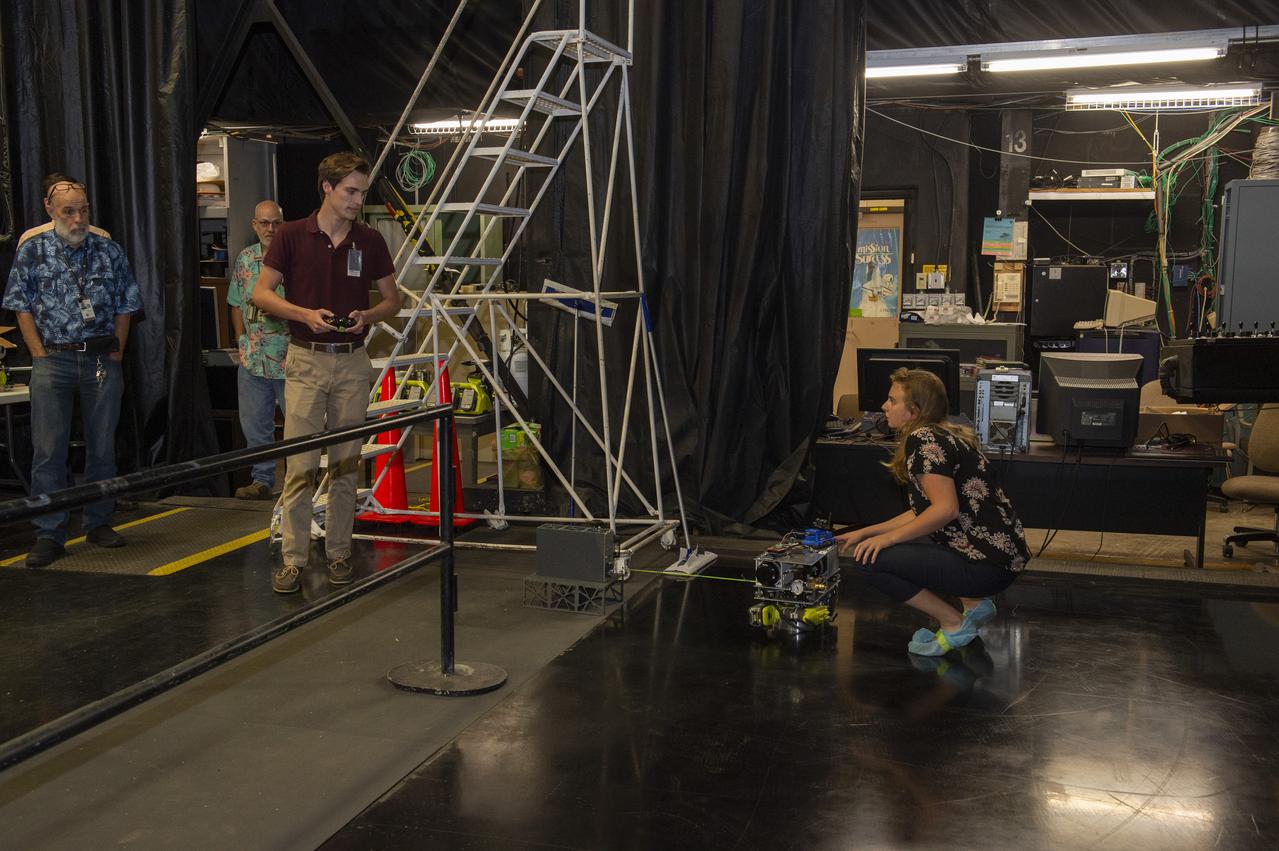
PATHWAYS INTERN ALEXANDRA BOEHM, AND JACOBS INTERN, PEYTON NELSON DEMONSTRATE STEERABLE AIR BEARING TETHER DEPLOYMENT SYSTEM TO MSFC SENIOR MANAGEMENT. ALSO WORKING ON THE PROJECT BUT NOT PICTURED WERE SUMMER INTERN ALI BERTELSMAN, PATHWAYS INTERN ANNA SHIPMAN, AND JACOBS FULL-TIME EMPLOYEE BRANDON MOORE.
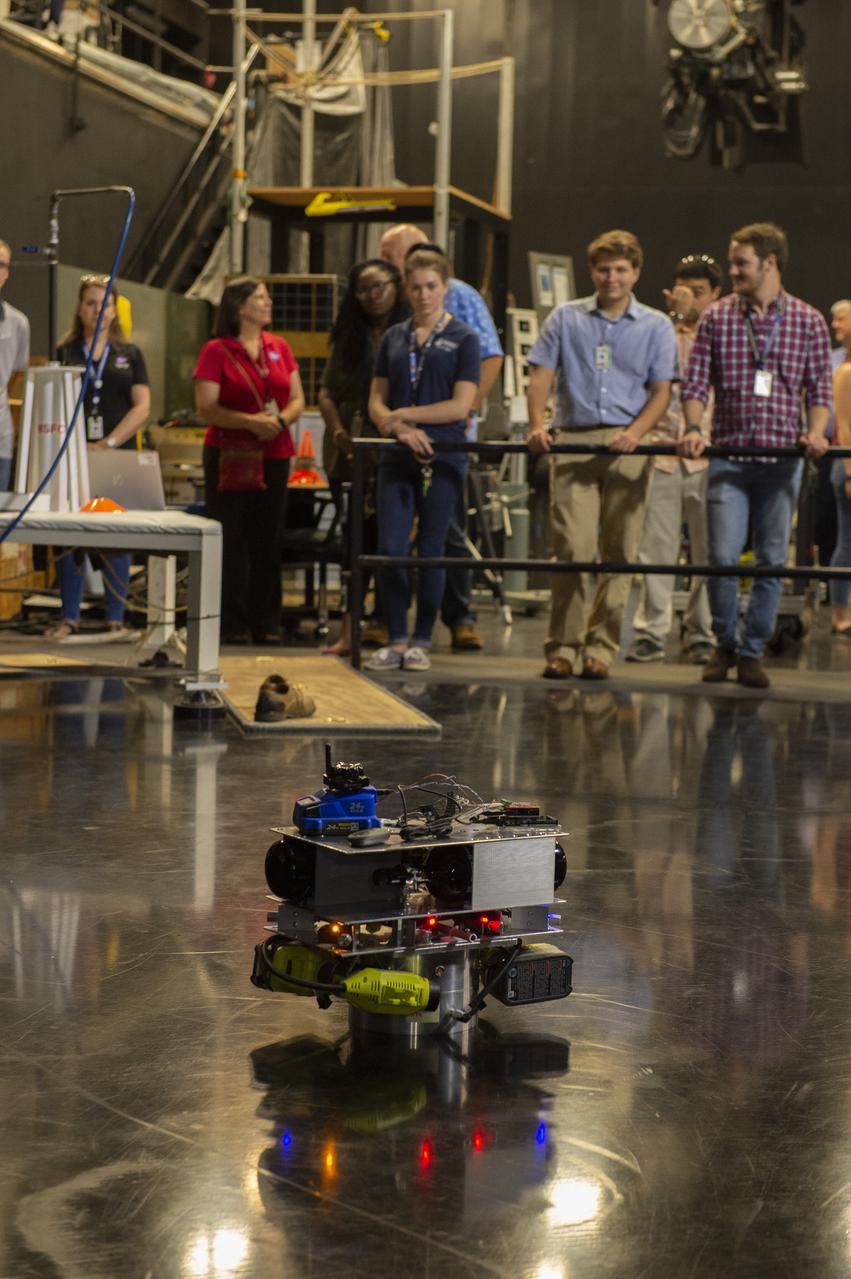
PATHWAYS INTERN ALEXANDRA BOEHM, AND JACOBS INTERN, PEYTON NELSON DEMONSTRATE STEERABLE AIR BEARING TETHER DEPLOYMENT SYSTEM TO MSFC SENIOR MANAGEMENT. ALSO WORKING ON THE PROJECT BUT NOT PICTURED WERE SUMMER INTERN ALI BERTELSMAN, PATHWAYS INTERN ANNA SHIPMAN, AND JACOBS FULL-TIME EMPLOYEE BRANDON MOORE.
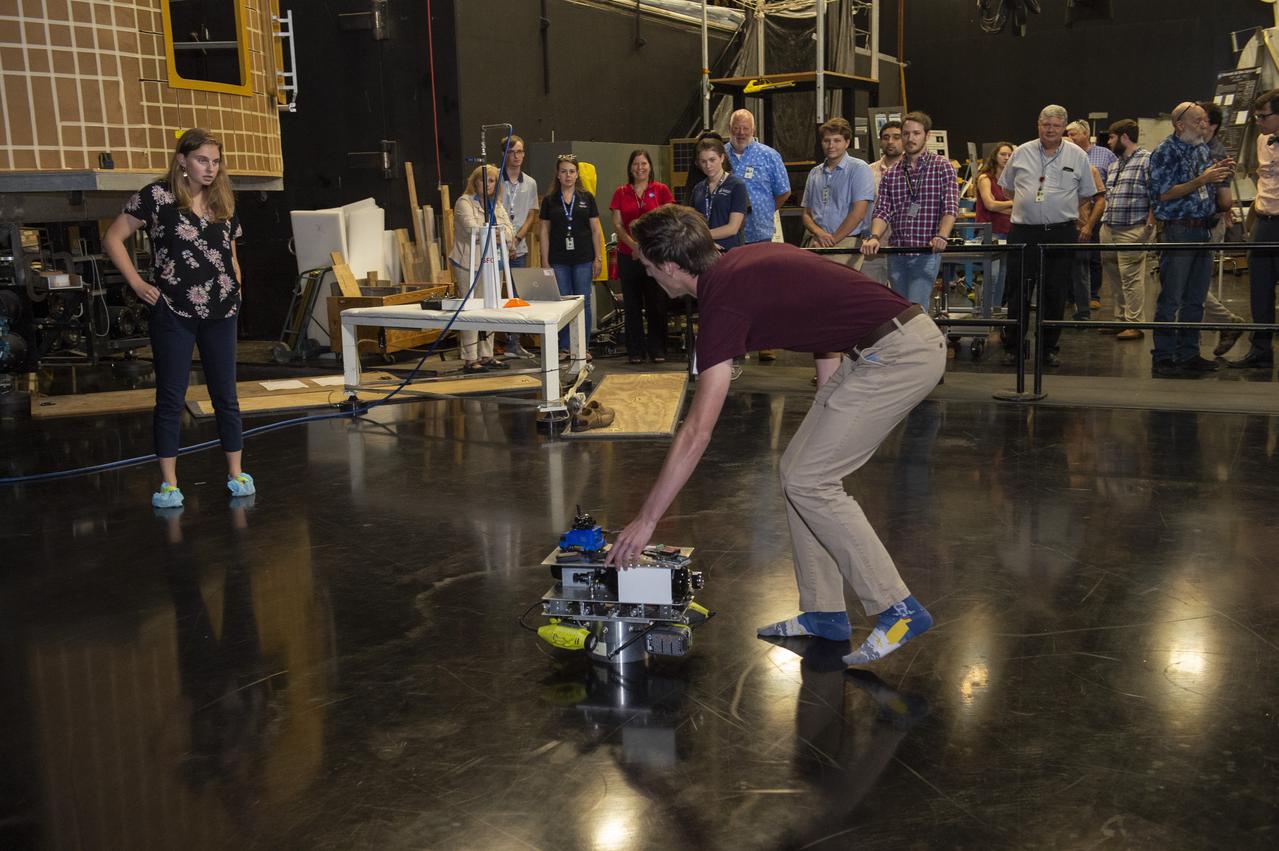
PATHWAYS INTERN ALEXANDRA BOEHM, AND JACOBS INTERN, PEYTON NELSON DEMONSTRATE STEERABLE AIR BEARING TETHER DEPLOYMENT SYSTEM TO MSFC SENIOR MANAGEMENT. ALSO WORKING ON THE PROJECT BUT NOT PICTURED WERE SUMMER INTERN ALI BERTELSMAN, PATHWAYS INTERN ANNA SHIPMAN, AND JACOBS FULL-TIME EMPLOYEE BRANDON MOORE.
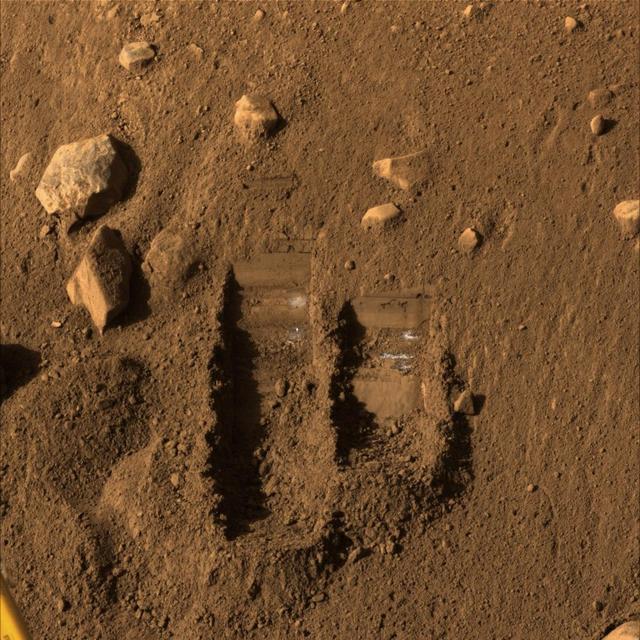
Color View Dodo and Baby Bear Trenches
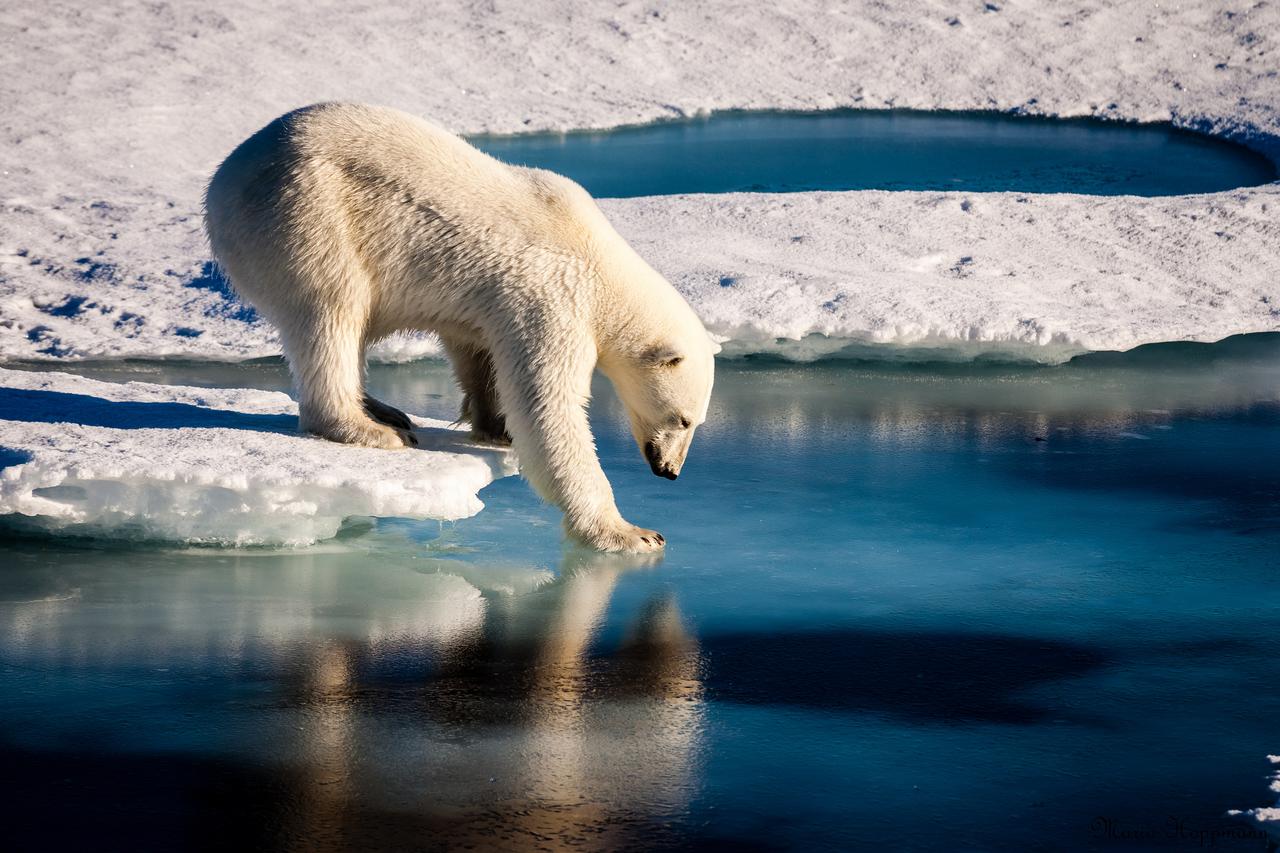
Polar bears already face shorter ice seasons - limiting prime hunting and breeding opportunities. Nineteen separate polar bear subpopulations live throughout the Arctic, spending their winters and springs roaming on sea ice and hunting. The bears have evolved mainly to eat seals, which provide necessary fats and nutrients in the harsh Arctic environment. Polar bears can't outswim their prey, so instead they perch on the ice as a platform and ambush seals at breathing holes or break through the ice to access their dens. The total number of ice-covered days declined at the rate of seven to 19 days per decade between 1979 and 2014. The decline was even greater in the Barents Sea and the Arctic basin. Sea ice concentration during the summer months — an important measure because summertime is when some subpopulations are forced to fast on land — also declined in all regions, by 1 percent to 9 percent per decade. Read more: <a href="http://go.nasa.gov/2cIZSSc" rel="nofollow">go.nasa.gov/2cIZSSc</a> Photo credit: Mario Hoppmann
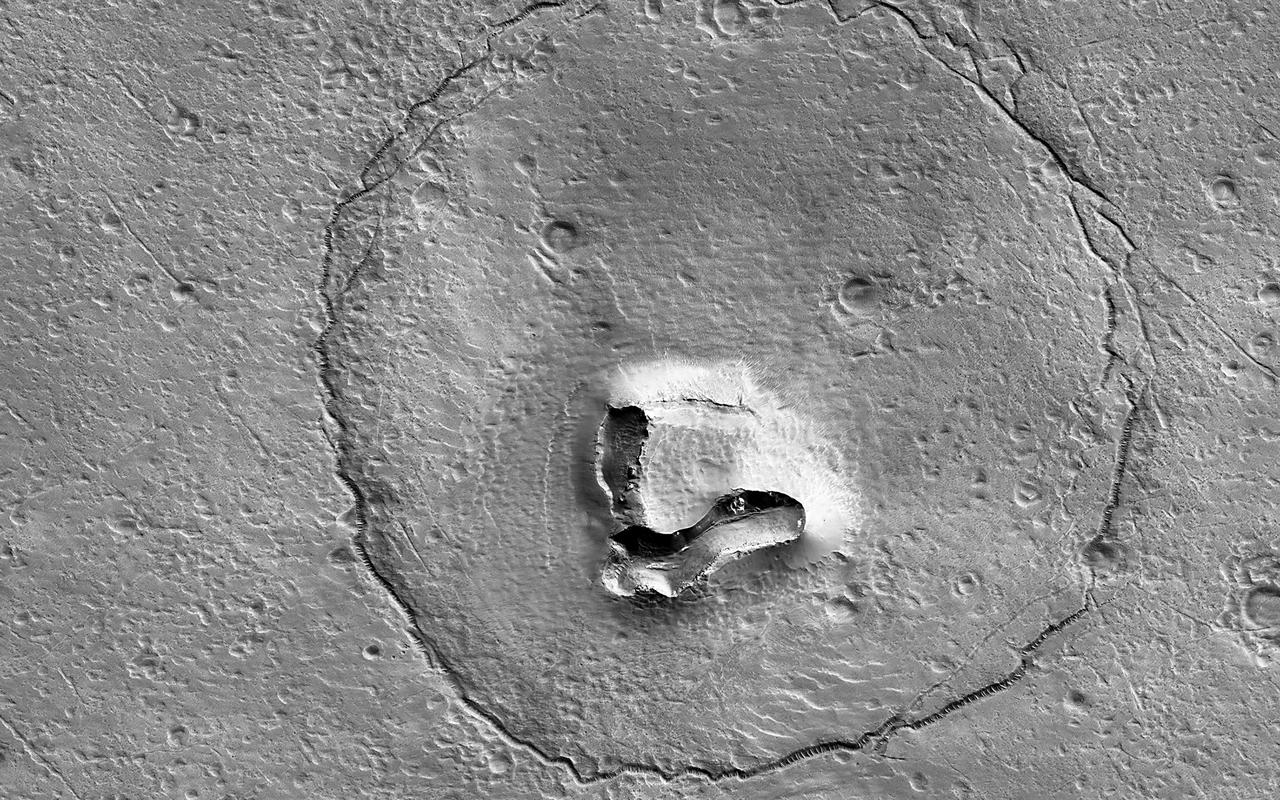
This feature looks a bit like a bear's face. What is it really? There's a hill with a V-shaped collapse structure (the nose), two craters (the eyes), and a circular fracture pattern (the head). The circular fracture pattern might be due to the settling of a deposit over a buried impact crater. Maybe the nose is a volcanic or mud vent and the deposit could be lava or mud flows? Maybe just grin and bear it. https://photojournal.jpl.nasa.gov/catalog/PIA25709
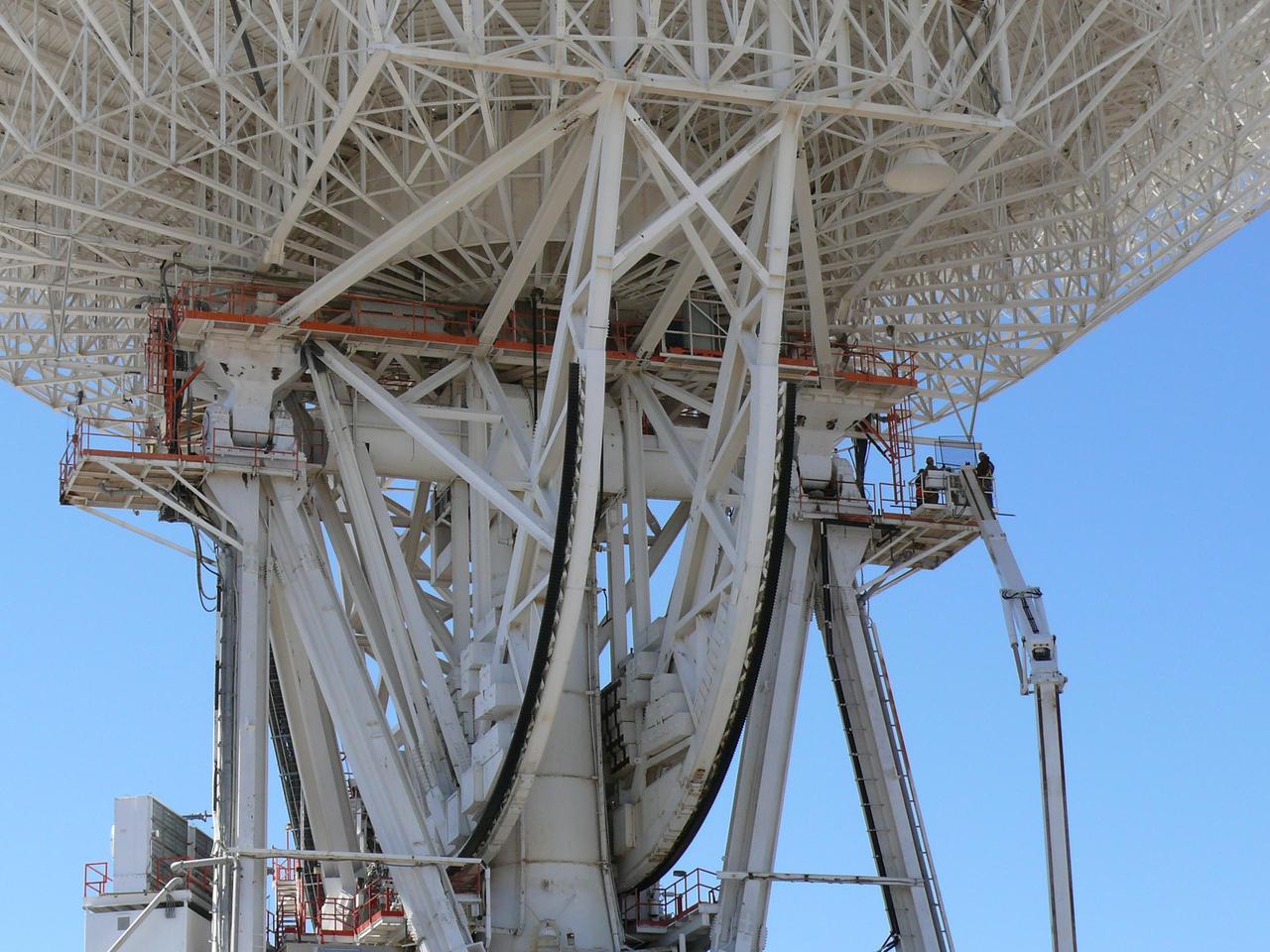
Work began on March 11, 2010 to replace a set of elevation bearings on the giant Mars antenna at NASA Deep Space Network complex in Goldstone, Calif.
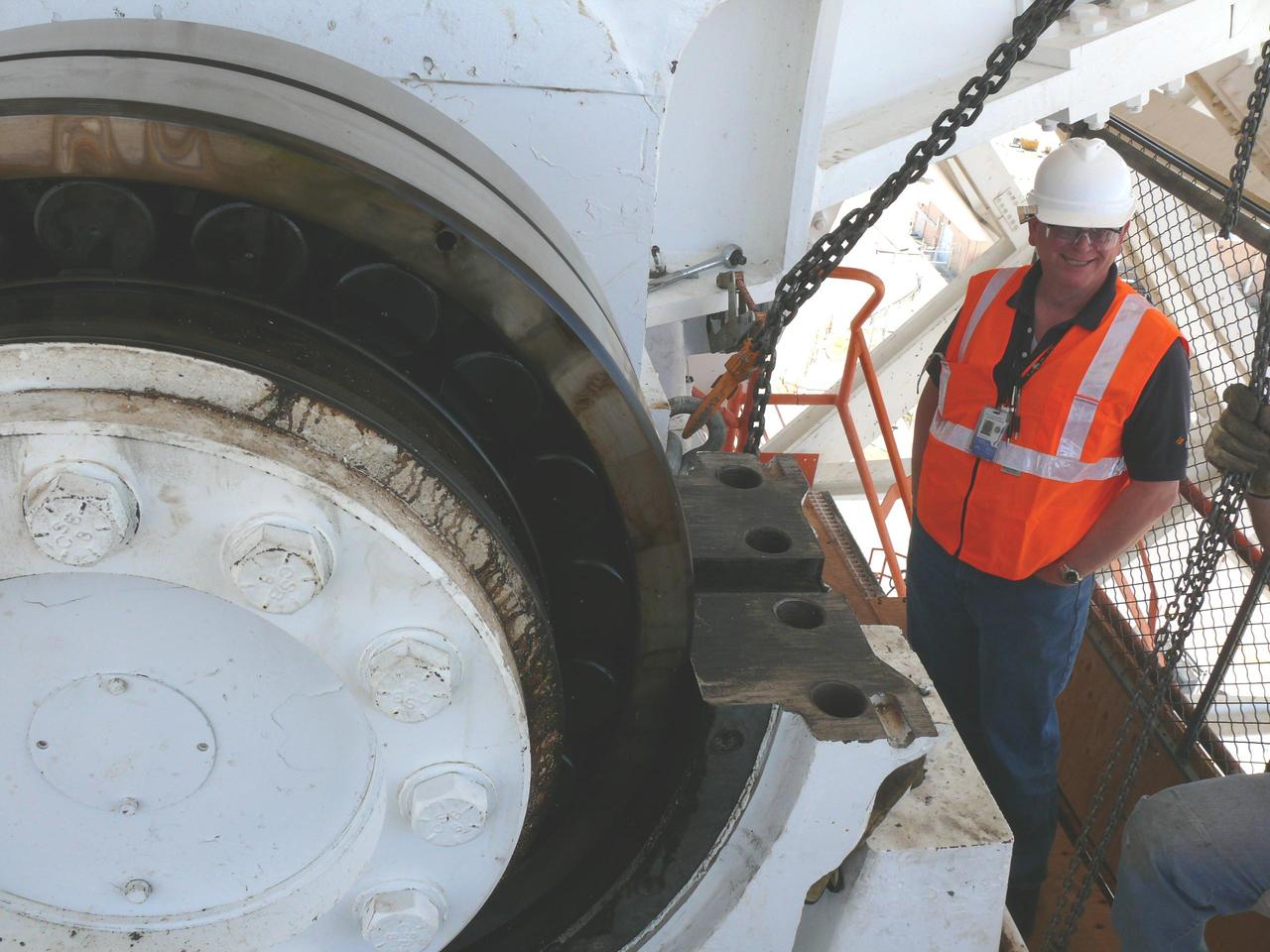
The giant Mars antenna at NASA Deep Space Network Goldstone Deep Space Communications Complex replaced four elevation bearings as part of a major refurbishment.
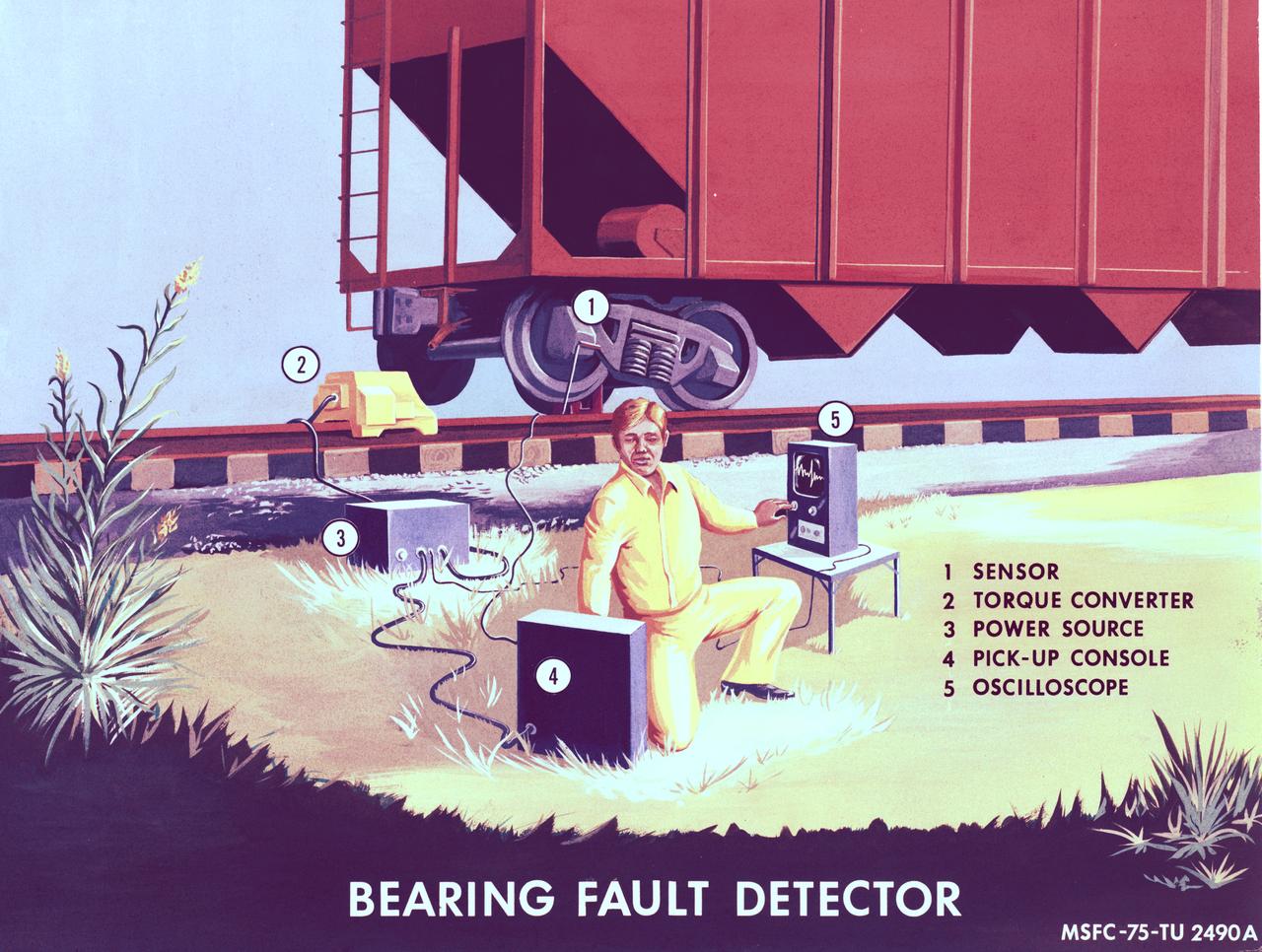
Technology derived by NASA for monitoring control gyros in the Skylab program is directly applicable to the problems of fault detection of railroad wheel bearings. Marhsall Space Flight Center's scientists have developed a detection concept based on the fact that bearing defects excite resonant frequency of rolling elements of the bearing as they impact the defect. By detecting resonant frequency and subsequently analyzing the character of this signal, bearing defects may be detected and identified as to source.
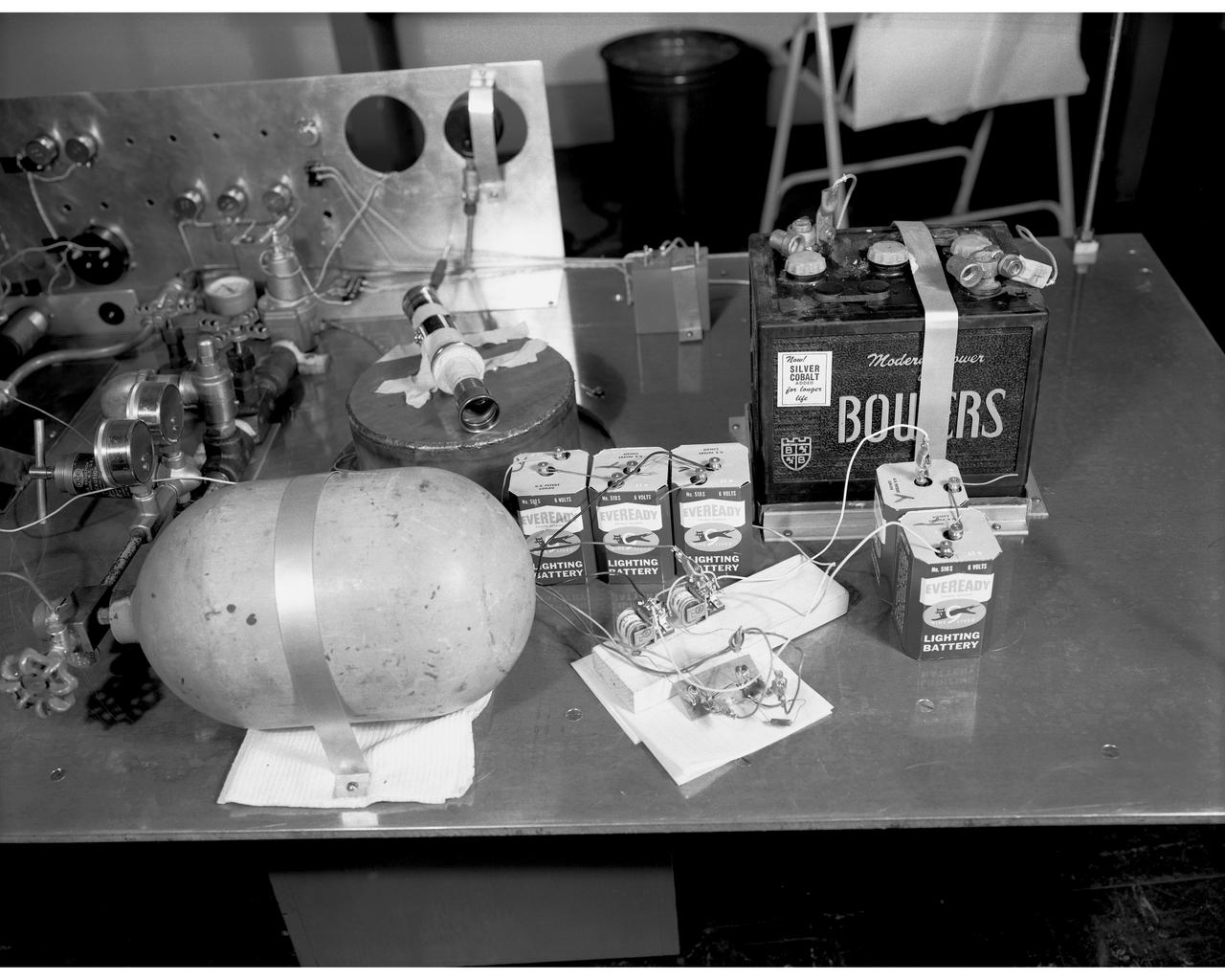
Air Bearings and Stable Platform
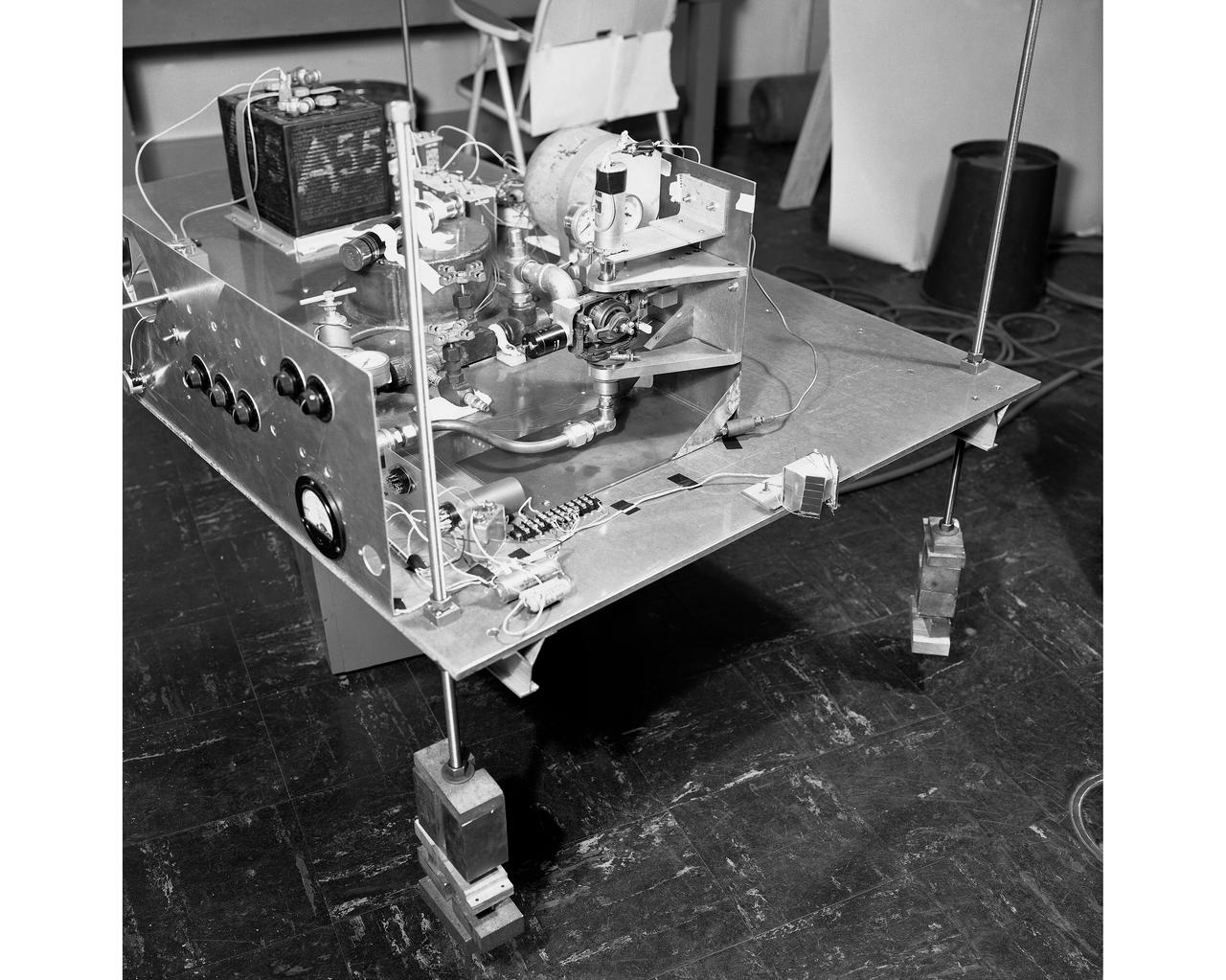
Air Bearings and Stable Platform
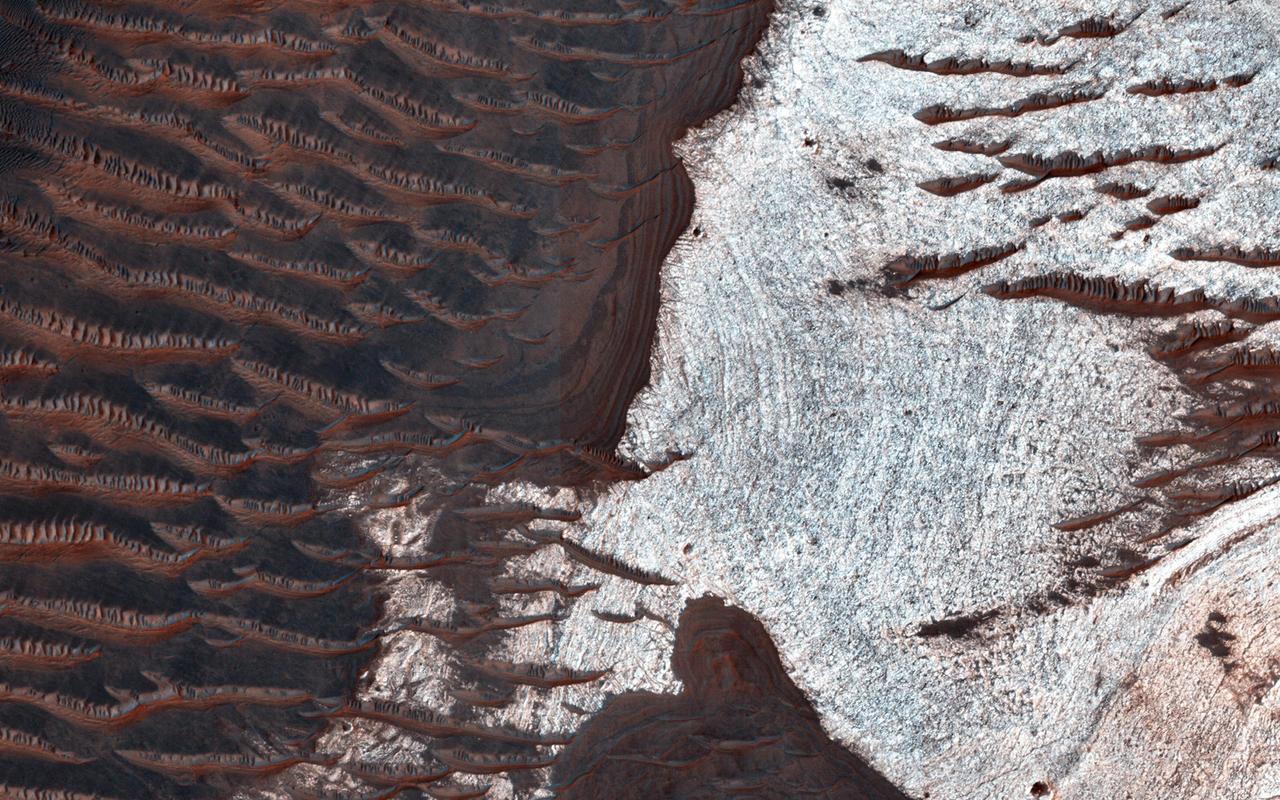
Many of the depressions in Noctis Labyrinthus contain water-bearing minerals, suggesting that water was available and persistent in this region during the Late Hesperian to Amazonian epochs on Mars, as seen by NASA Mars Reconnaissance Orbiter.
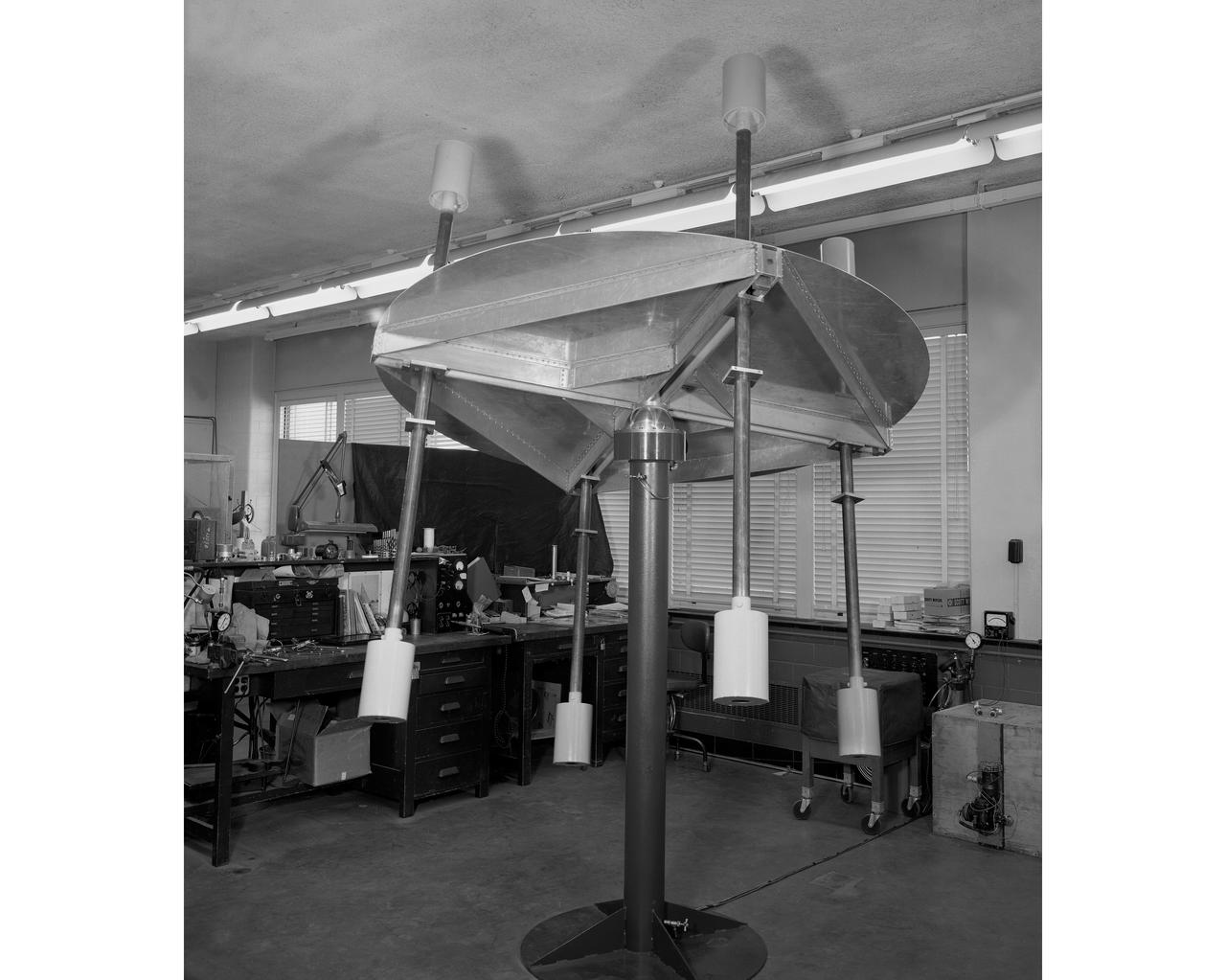
Spherical Air Bearing Satellite Simulator
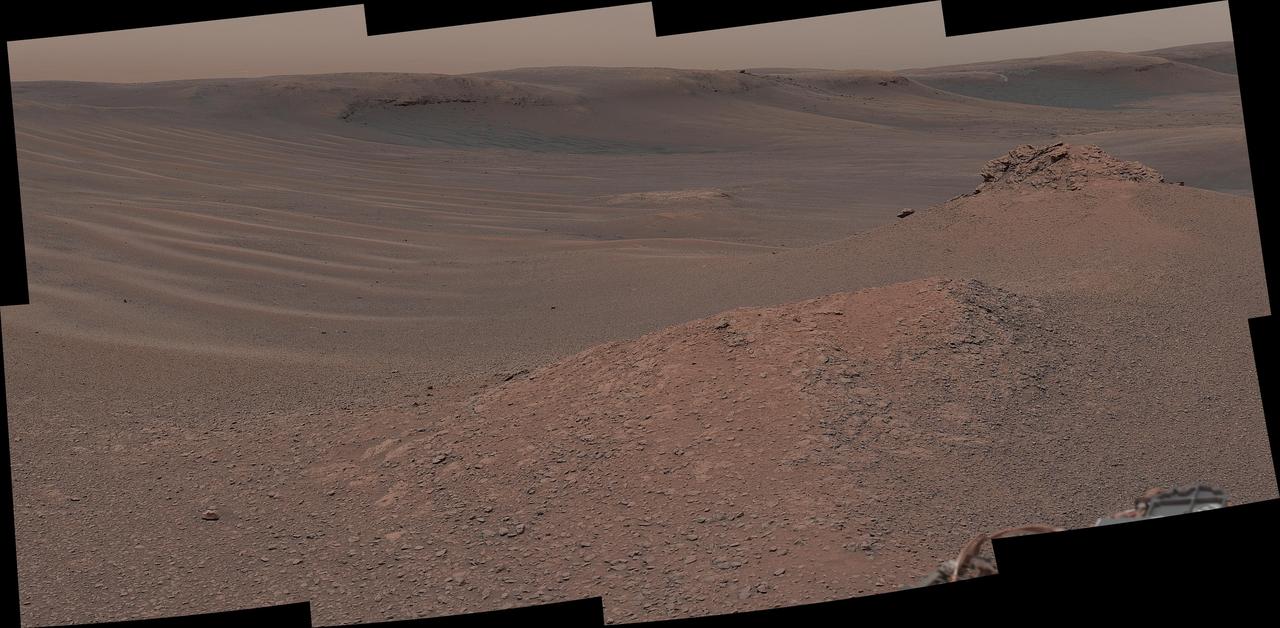
The Mast Camera (Mastcam) on NASA's Curiosity Mars rover captured this mosaic as it explored the "clay-bearing unit" on Feb. 3, 2019 (Sol 2309). This landscape includes the rocky landmark nicknamed "Knockfarril Hill" (center right) and the edge of Vera Rubin Ridge, which runs along the top of the scene. Made of many individual images, this mosaic includes a variety of geological features, such as several kinds of bedrock and sand. The clay-bearing unit has been an important scientific destination since before Curiosity launched. NASA's Mars Reconnaissance Orbiter (MRO) spied a strong clay "signal" in this region, indicating that water may have played a role in its formation. On its long trek since landing in 2012, Curiosity has discovered many examples of mudstones containing clay minerals. The scene is presented with a color adjustment that approximates white balancing to resemble how the rocks and sand would appear under daytime lighting conditions on Earth. https://photojournal.jpl.nasa.gov/catalog/PIA23139
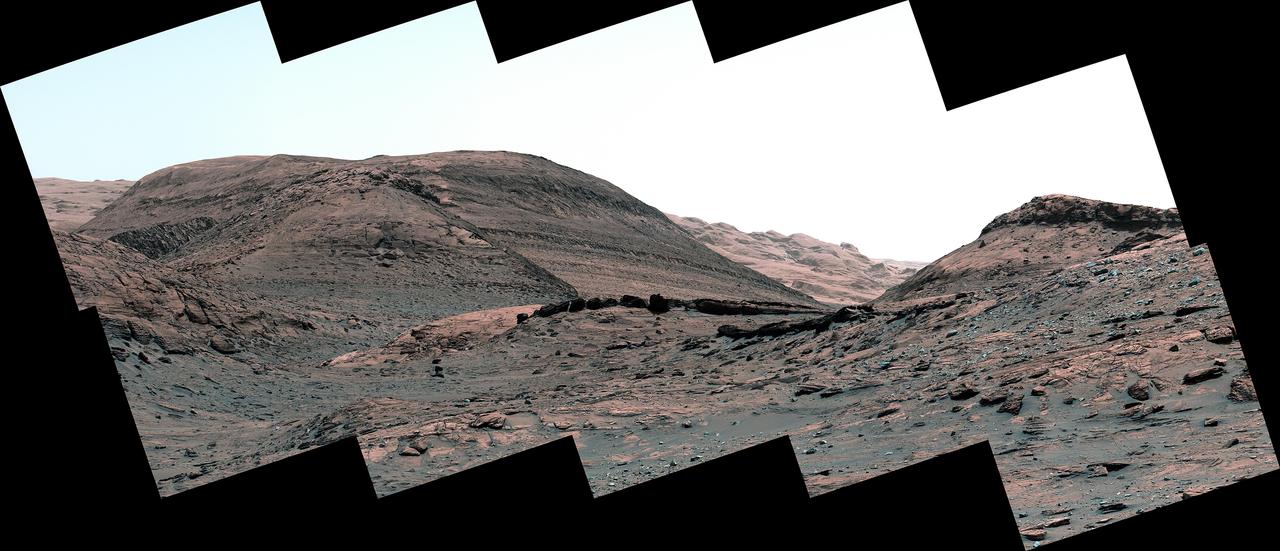
NASA's Curiosity Mars rover captured this view of a sulfate-bearing region ahead of its current location. Dark boulders near the center of the panorama are thought to have formed from sand deposited in ancient streams or ponds. Scattered gray rocks covering the hillside on the right are all that remain of a sandstone capping unit that once covered this area. This panorama is made up of 10 individual images that were captured by Curiosity's Mast Camera, or Mastcam, on May 2, 2022, the 3,462nd Martian day, or sol, of the mission. The images were stitched together after they were sent back to Earth. Behind the dark boulders – in the middle of the image – is a mountain that makes up part of the sulfate-bearing region; layers within this region can be seen as stripes across the mountainside. These layers represent an excellent record of how Mars' water and climate changed over time. https://photojournal.jpl.nasa.gov/catalog/PIA25367
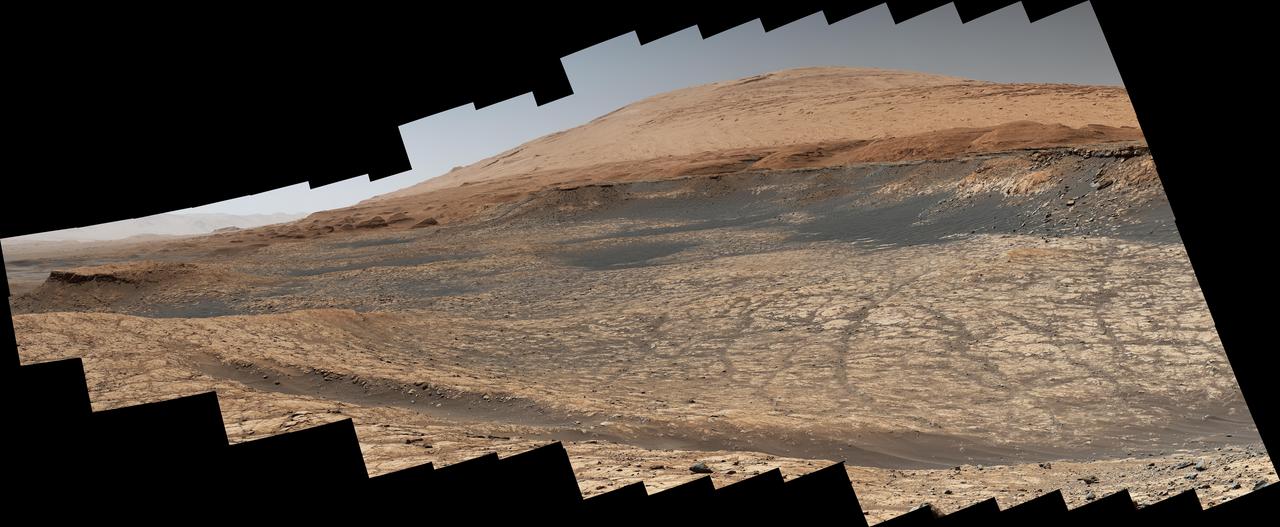
Stitched together from 116 images, this view captured by NASA's Curiosity Mars rover shows the path it will take in the summer of 2020 as it drives to the "sulfate-bearing unit," the next layer it will be investigating on the 3-mile-tall (5-kilometer-tall) Mount Sharp. Curiosity has to drive around a large sand patch in order to reach a place where it can ascend to the sulfate-rich region. The upper part of the mountain looms at the top image. The images were taken by the rover's Mast Camera, or Mastcam, on Jan. 10, 2020, the 2,641st Martian day, or sol, of the mission. The panorama has been white-balanced so that the colors of the rock materials resemble how they would appear under daytime lighting conditions on Earth. https://photojournal.jpl.nasa.gov/catalog/PIA23973
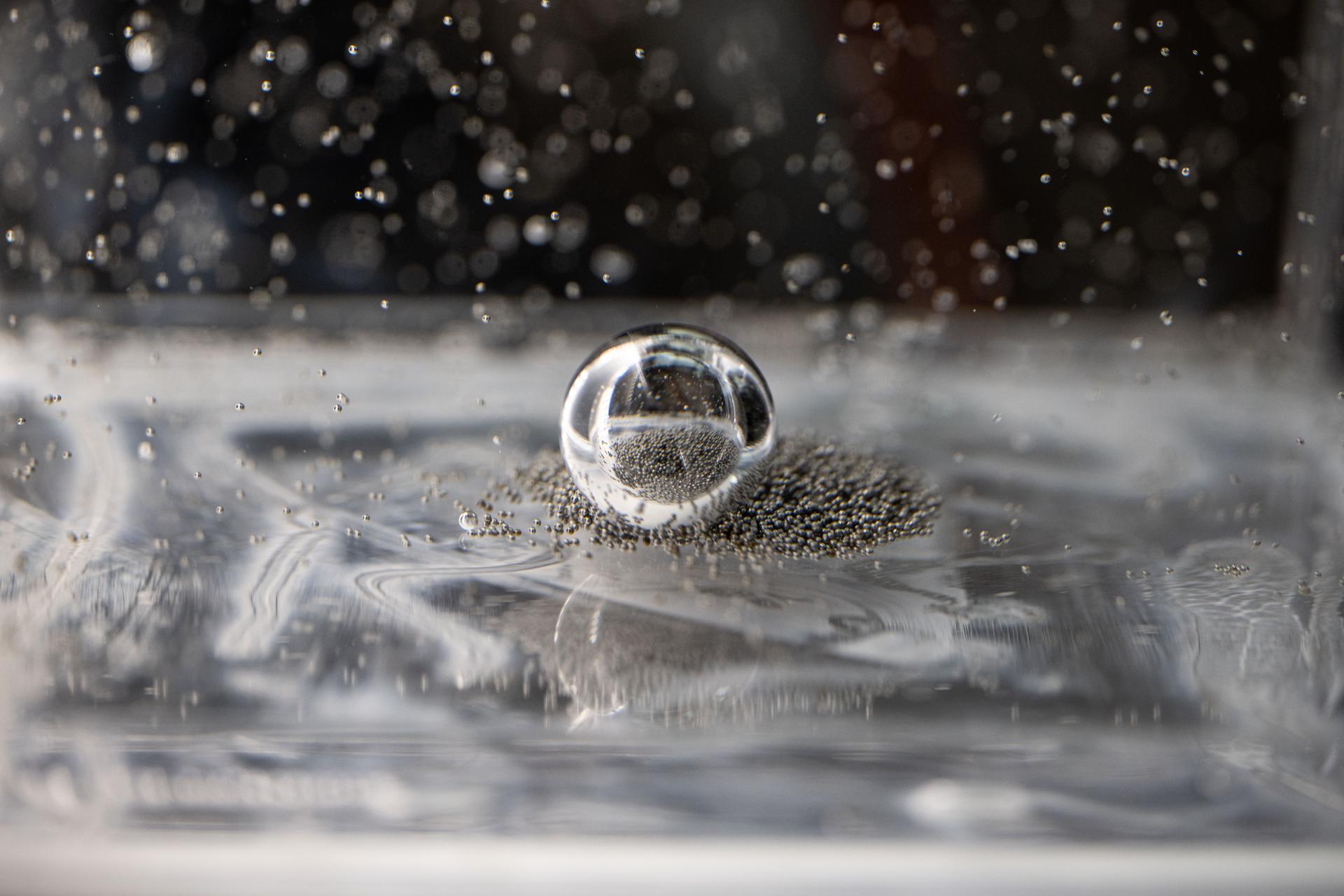
iss073e0917381 (Oct. 20, 2025) --- Tiny ball bearings surround a larger central bearing during the Fluid Particles experiment, conducted inside the Microgravity Science Glovebox (MSG) aboard the International Space Station’s Destiny laboratory module. A bulk container installed in the MSG, filled with viscous fluid and embedded particles, is subjected to oscillating frequencies to observe how the particles cluster and form larger structures in microgravity. Insights from this research may advance fire suppression, lunar dust mitigation, and plant growth in space. On Earth, the findings could inform our understanding of pollen dispersion, algae blooms, plastic pollution, and sea salt transport during storms.
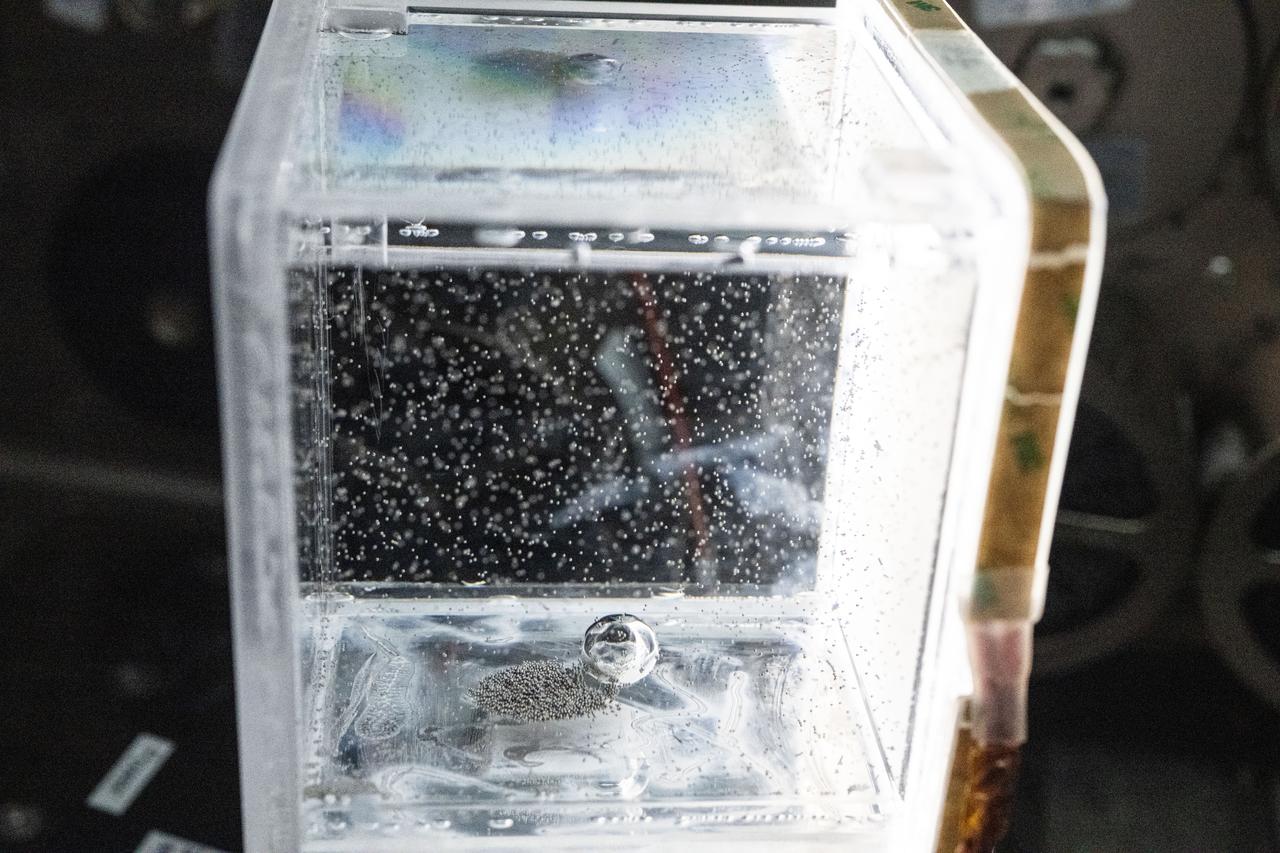
iss073e0917376 (Oct. 20, 2025) --- Tiny ball bearings surround a larger central bearing during the Fluid Particles experiment, conducted inside the Microgravity Science Glovebox (MSG) aboard the International Space Station’s Destiny laboratory module. A bulk container installed in the MSG, filled with viscous fluid and embedded particles, is subjected to oscillating frequencies to observe how the particles cluster and form larger structures in microgravity. Insights from this research may advance fire suppression, lunar dust mitigation, and plant growth in space. On Earth, the findings could inform our understanding of pollen dispersion, algae blooms, plastic pollution, and sea salt transport during storms.
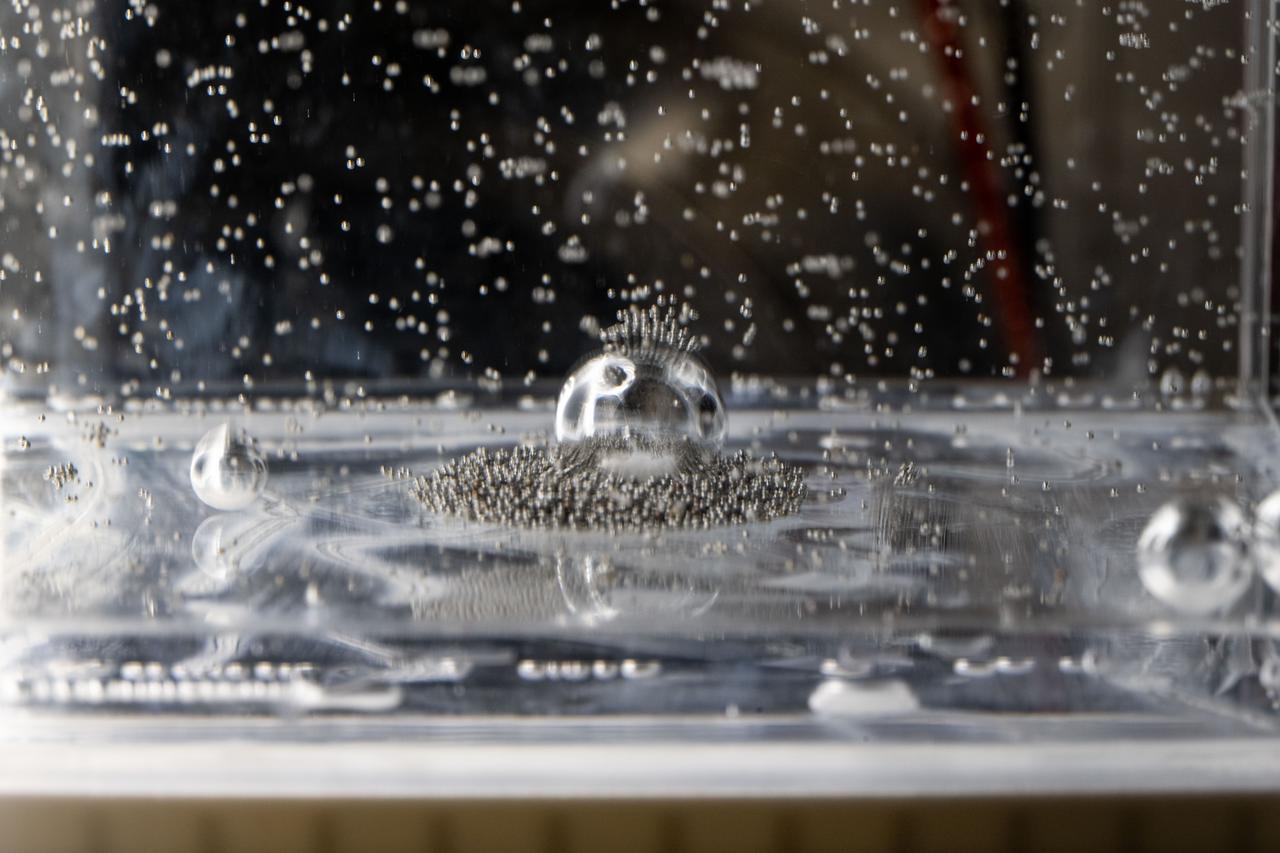
iss073e0917383 (Oct. 20, 2025) --- Tiny ball bearings surround a larger central bearing during the Fluid Particles experiment, conducted inside the Microgravity Science Glovebox (MSG) aboard the International Space Station’s Destiny laboratory module. A bulk container installed in the MSG, filled with viscous fluid and embedded particles, is subjected to oscillating frequencies to observe how the particles cluster and form larger structures in microgravity. Insights from this research may advance fire suppression, lunar dust mitigation, and plant growth in space. On Earth, the findings could inform our understanding of pollen dispersion, algae blooms, plastic pollution, and sea salt transport during storms.
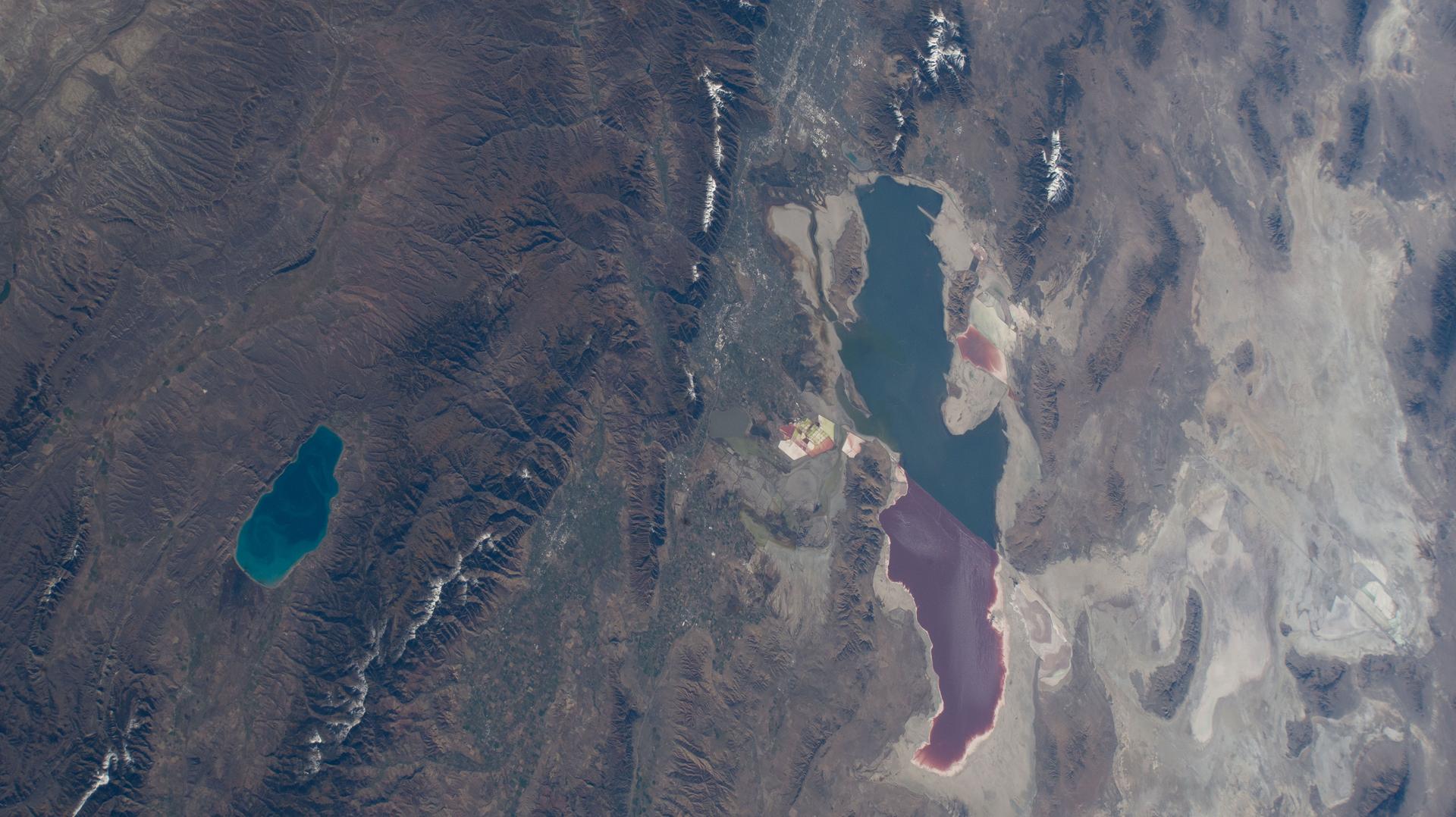
iss073e0865636 (Oct. 7, 2025) --- Bear Lake (left) is a freshwater lake spanning Idaho and Utah, and is smaller and much deeper than Utah's Great Salt Lake—averaging 208 feet compared to just 14 feet. The distinct color differences in the Great Salt Lake are caused by a railroad causeway: the red portion has much higher salinity than the blue, less saline section.
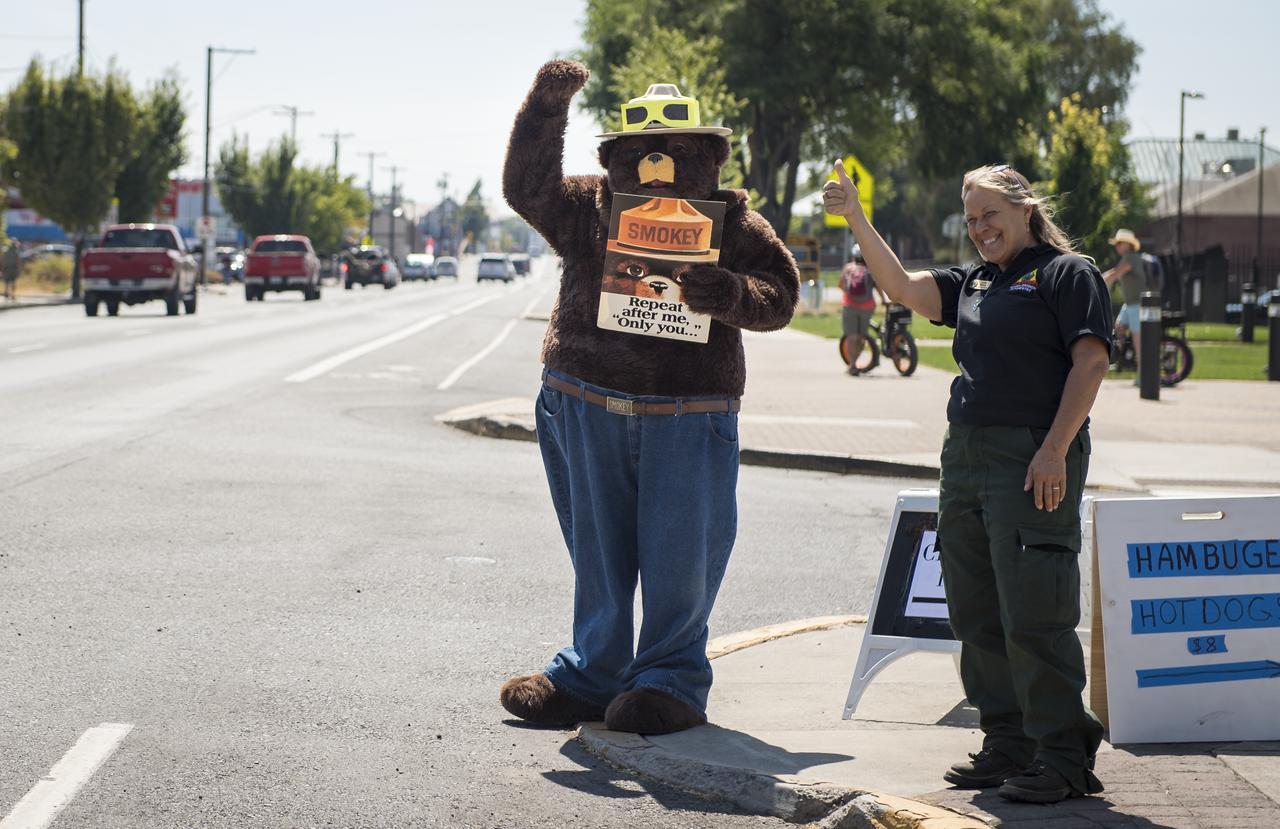
Smokey Bear, left, and Judy Reese of the Crooked River National Grassland, right, wave at passersby as crowds arrive to watch the total solar eclipse in Madras, Oregon on Saturday, August 19, 2017. The eclipse will be sweeping across a narrow portion of the contiguous United States from Lincoln Beach, Oregon to Charleston, South Carolina on August 21. A partial solar eclipse will be visible across the entire North American continent along with parts of South America, Africa, and Europe. Photo Credit: (NASA/Aubrey Gemignani)
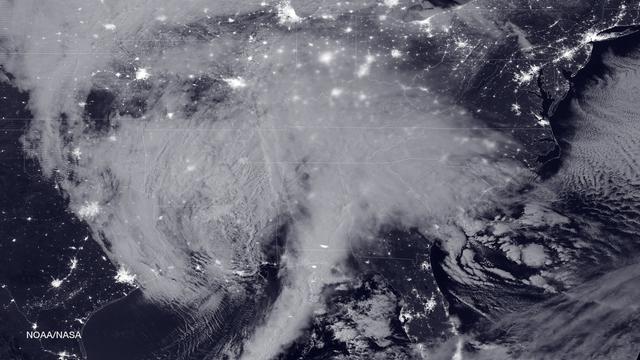
NASA and NOAA satellites are tracking the large winter storm that is expected to bring heavy snowfall to the U.S. mid-Atlantic region on Jan. 22 and 23. NASA-NOAA's Suomi NPP satellite snapped this image of the approaching blizzard around 2:35 a.m. EST on Jan. 22, 2016 using the Visible Infrared Imaging Radiometer Suite (VIIRS) instrument's Day-Night band. Image Credit: NOAA/NASA <b><a href="http://www.nasa.gov/audience/formedia/features/MP_Photo_Guidelines.html" rel="nofollow">NASA image use policy.</a></b> <b><a href="http://www.nasa.gov/centers/goddard/home/index.html" rel="nofollow">NASA Goddard Space Flight Center</a></b> enables NASA’s mission through four scientific endeavors: Earth Science, Heliophysics, Solar System Exploration, and Astrophysics. Goddard plays a leading role in NASA’s accomplishments by contributing compelling scientific knowledge to advance the Agency’s mission. <b>Follow us on <a href="http://twitter.com/NASAGoddardPix" rel="nofollow">Twitter</a></b> <b>Like us on <a href="http://www.facebook.com/pages/Greenbelt-MD/NASA-Goddard/395013845897?ref=tsd" rel="nofollow">Facebook</a></b> <b>Find us on <a href="http://instagrid.me/nasagoddard/?vm=grid" rel="nofollow">Instagram</a></b>
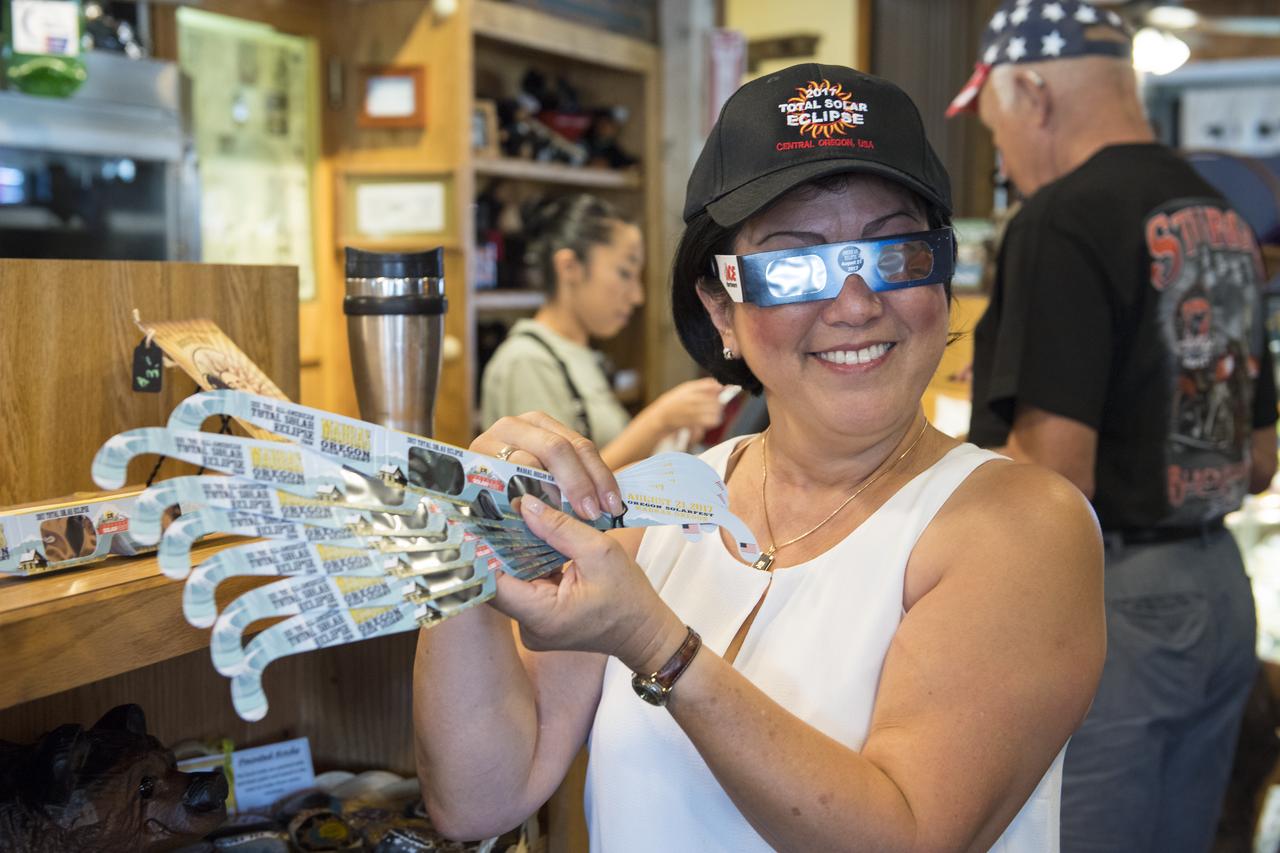
Carol Jensen, a produce purveyor for Black Bear Diner, is seen displaying solar glasses for sale at Black Bear Diner in Madras, Oregon on Saturday, August 19, 2017. She is volunteering her time to help prepare for the crowds arriving to watch the total solar eclipse. The eclipse will be sweeping across a narrow portion of the contiguous United States from Lincoln Beach, Oregon to Charleston, South Carolina on August 21. A partial solar eclipse will be visible across the entire North American continent along with parts of South America, Africa, and Europe. Photo Credit: (NASA/Aubrey Gemignani)
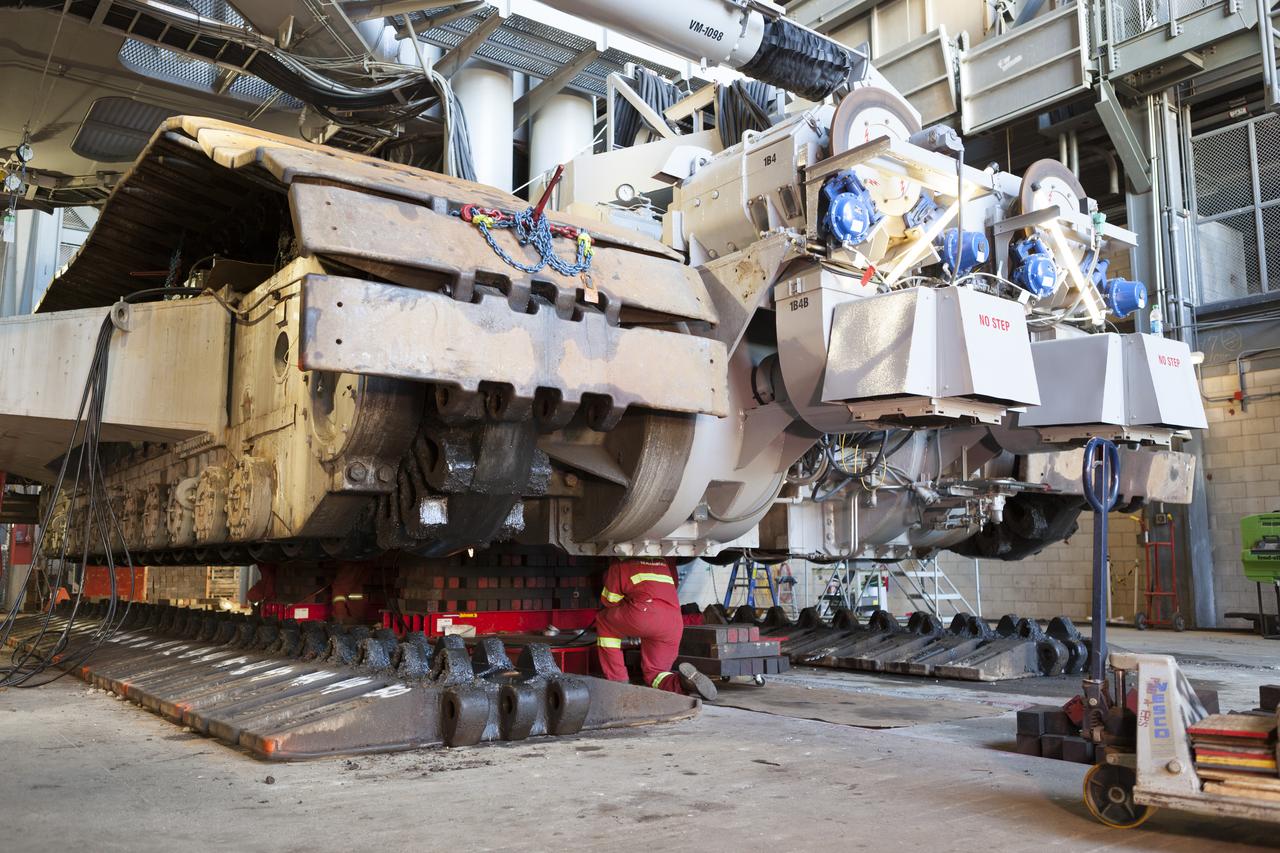
CAPE CANAVERAL, Fla. – Inside the Vehicle Assembly Building at NASA’s Kennedy Space Center in Florida, a technician monitors the progress as the B and D truck sections of crawler-transporter 2, or CT-2, are raised up to prepare for installation of new roller bearing assemblies. Sections of the crawler’s large metal tracks have been removed. Work continues in high bay 2 to upgrade CT-2. The modifications are designed to ensure CT-2’s ability to transport launch vehicles currently in development, such as the agency’s Space Launch System, to the launch pad. The Ground Systems Development and Operations Program office at Kennedy is overseeing the upgrades. For more than 45 years the crawler-transporters were used to transport the mobile launcher platform and the Apollo-Saturn V rockets and, later, space shuttles to Launch Pads 39A and B. For more information, visit: http://www.nasa.gov/exploration/systems/ground/crawler-transporter. Photo credit: NASA/Dimitri Gerondidakis
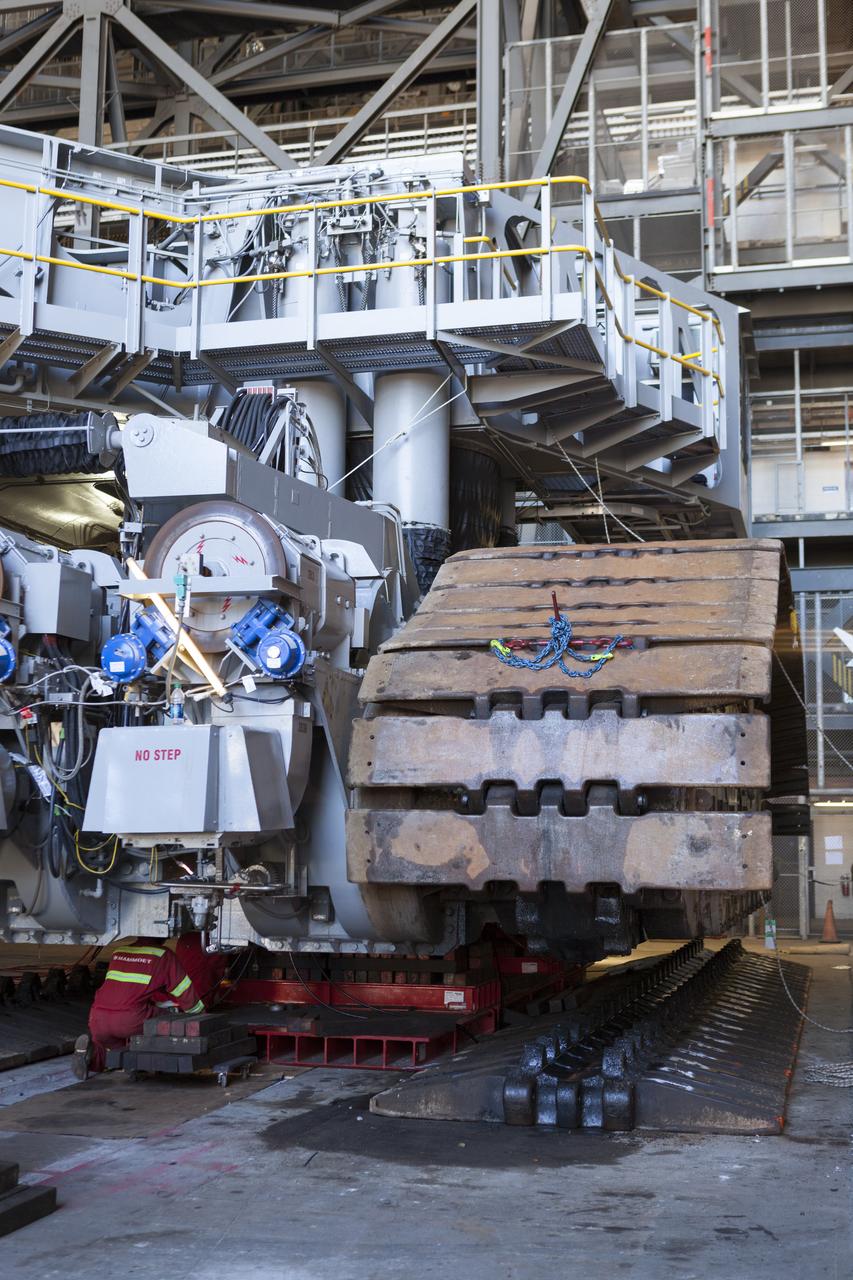
CAPE CANAVERAL, Fla. – Inside the Vehicle Assembly Building at NASA’s Kennedy Space Center in Florida, the B and D truck sections of crawler-transporter 2, or CT-2, are being raised up to prepare for installation of new roller bearing assemblies. Sections of the crawler’s large metal tracks have been removed. Work continues in high bay 2 to upgrade CT-2. The modifications are designed to ensure CT-2’s ability to transport launch vehicles currently in development, such as the agency’s Space Launch System, to the launch pad. The Ground Systems Development and Operations Program office at Kennedy is overseeing the upgrades. For more than 45 years the crawler-transporters were used to transport the mobile launcher platform and the Apollo-Saturn V rockets and, later, space shuttles to Launch Pads 39A and B. For more information, visit: http://www.nasa.gov/exploration/systems/ground/crawler-transporter. Photo credit: NASA/Dimitri Gerondidakis
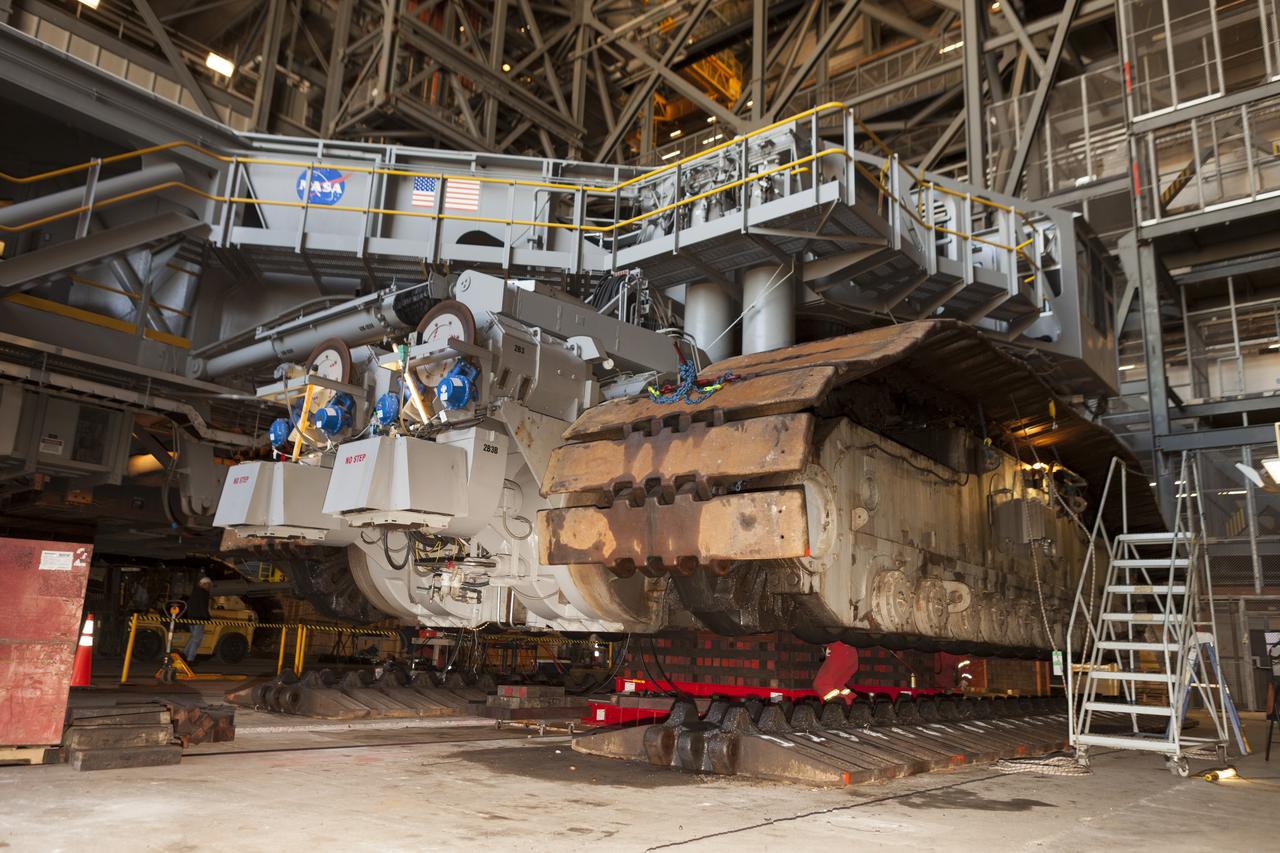
CAPE CANAVERAL, Fla. – Inside the Vehicle Assembly Building at NASA’s Kennedy Space Center in Florida, the B and D truck sections of crawler-transporter 2, or CT-2, have been raised up to prepare for installation of new roller bearing assemblies. Sections of the crawler’s large metal tracks have been removed. Work continues in high bay 2 to upgrade CT-2. The modifications are designed to ensure CT-2’s ability to transport launch vehicles currently in development, such as the agency’s Space Launch System, to the launch pad. The Ground Systems Development and Operations Program office at Kennedy is overseeing the upgrades. For more than 45 years the crawler-transporters were used to transport the mobile launcher platform and the Apollo-Saturn V rockets and, later, space shuttles to Launch Pads 39A and B. For more information, visit: http://www.nasa.gov/exploration/systems/ground/crawler-transporter. Photo credit: NASA/Dimitri Gerondidakis
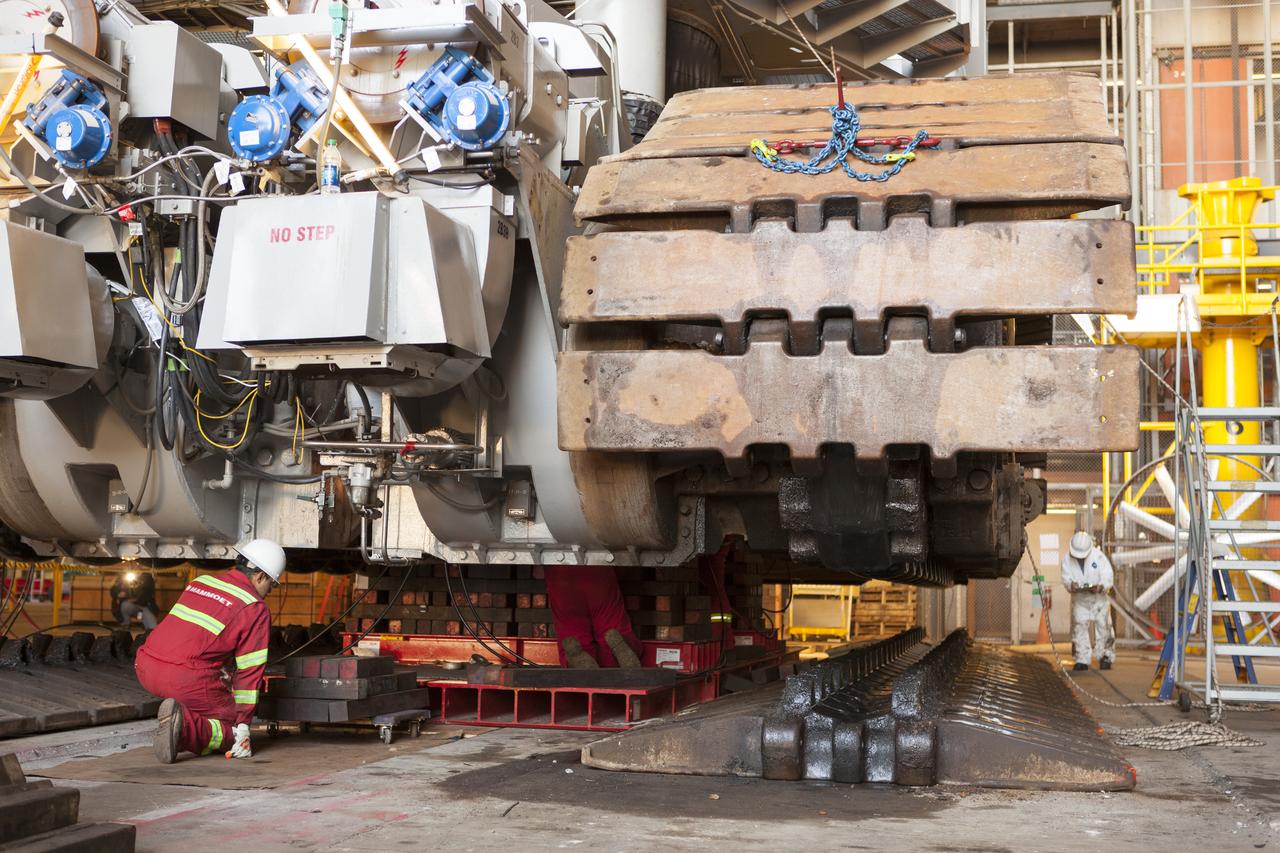
CAPE CANAVERAL, Fla. – Inside the Vehicle Assembly Building at NASA’s Kennedy Space Center in Florida, ground support technicians monitor the progress as the B and D truck sections of crawler-transporter 2, or CT-2, are being raised up to prepare for installation of new roller bearing assemblies. Sections of the crawler’s large metal tracks have been removed. Work continues in high bay 2 to upgrade CT-2. The modifications are designed to ensure CT-2’s ability to transport launch vehicles currently in development, such as the agency’s Space Launch System, to the launch pad. The Ground Systems Development and Operations Program office at Kennedy is overseeing the upgrades. For more than 45 years the crawler-transporters were used to transport the mobile launcher platform and the Apollo-Saturn V rockets and, later, space shuttles to Launch Pads 39A and B. For more information, visit: http://www.nasa.gov/exploration/systems/ground/crawler-transporter. Photo credit: NASA/Dimitri Gerondidakis
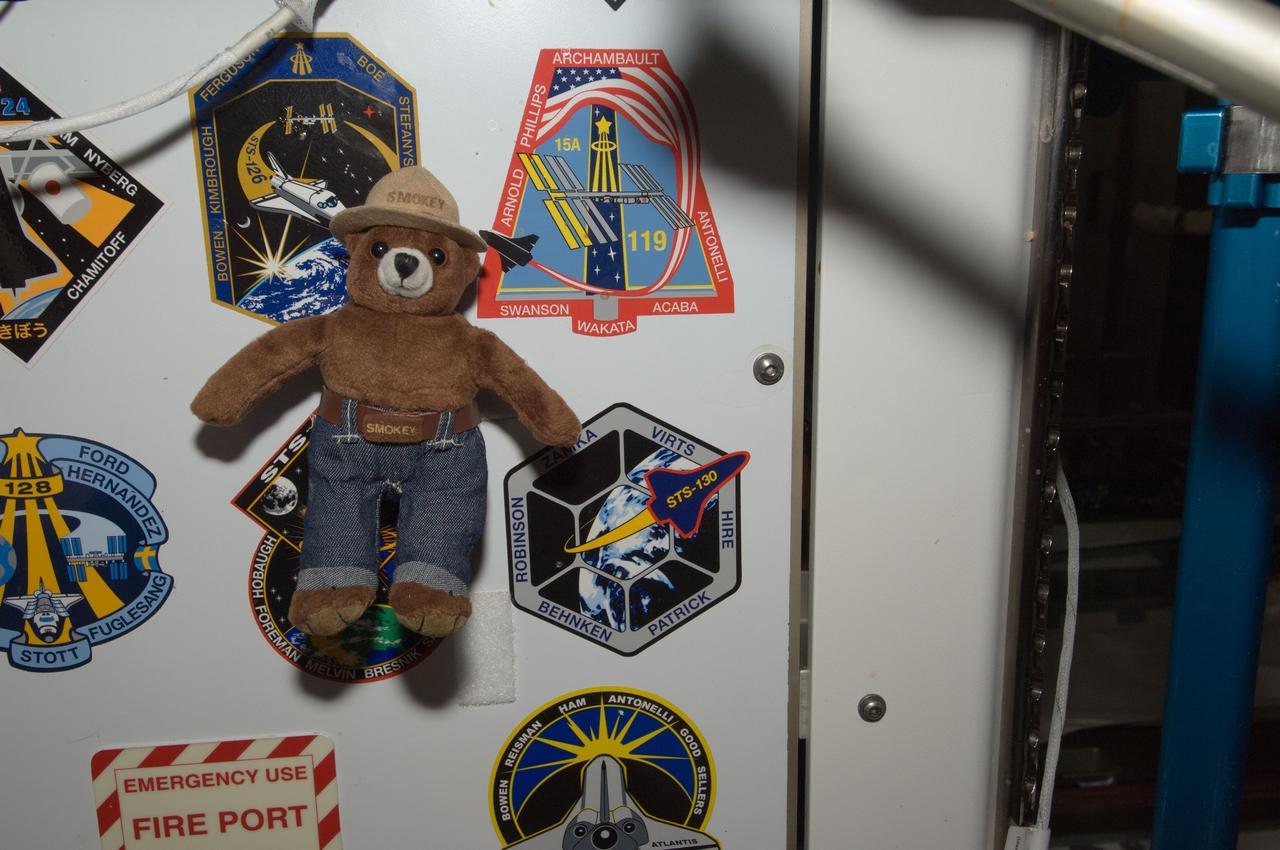
ISS032-E-011654 (3 Aug. 2012) --- Smokey Bear floats freely near crew insignias placed in the Unity node of the International Space Station. On May 15, 2012, Smokey traveled aboard the Soyuz spacecraft with NASA astronaut Joe Acaba and Russian cosmonauts Gennady Padalka and Sergei Revin to the space station. As a recognized symbol for wildland fire prevention, his presence on the orbiting complex also highlights the many areas of active space station research related to Earth observations, plant growth and combustion and materials sciences, as well as existing spinoff technologies in these areas. NASA, the U.S. Forest Service (USFS) and the Texas Forest Service are teaming up to celebrate Smokey's 68th birthday Aug. 9 at NASA's Johnson Space Center in Houston.
ISS032-E-011662 (3 Aug. 2012) --- Smokey Bear floats freely in the Unity node of the International Space Station. On May 15, 2012, Smokey traveled aboard the Soyuz spacecraft with NASA astronaut Joe Acaba and Russian cosmonauts Gennady Padalka and Sergei Revin to the space station. As a recognized symbol for wildland fire prevention, his presence on the orbiting complex also highlights the many areas of active space station research related to Earth observations, plant growth and combustion and materials sciences, as well as existing spinoff technologies in these areas. NASA, the U.S. Forest Service (USFS) and the Texas Forest Service are teaming up to celebrate Smokey's 68th birthday Aug. 9 at NASA's Johnson Space Center in Houston.

This image was taken by GOES East at 1445Z on October 23, 2015. Credit: NASA/NOAA via <b><a href="www.nnvl.noaa.gov/" rel="nofollow"> NOAA Environmental Visualization Laboratory</a></b> <b><a href="http://www.nasa.gov/audience/formedia/features/MP_Photo_Guidelines.html" rel="nofollow">NASA image use policy.</a></b> <b><a href="http://www.nasa.gov/centers/goddard/home/index.html" rel="nofollow">NASA Goddard Space Flight Center</a></b> enables NASA’s mission through four scientific endeavors: Earth Science, Heliophysics, Solar System Exploration, and Astrophysics. Goddard plays a leading role in NASA’s accomplishments by contributing compelling scientific knowledge to advance the Agency’s mission. <b>Follow us on <a href="http://twitter.com/NASAGoddardPix" rel="nofollow">Twitter</a></b> <b>Like us on <a href="http://www.facebook.com/pages/Greenbelt-MD/NASA-Goddard/395013845897?ref=tsd" rel="nofollow">Facebook</a></b> <b>Find us on <a href="http://instagrid.me/nasagoddard/?vm=grid" rel="nofollow">Instagram</a></b>

Bear Ride, the sister of pioneering astronaut Sally Ride, speaks during “The Legacy of Sally Ride: The First American Woman in Space” event at Kennedy Space Center in Florida on June 15, 2023. Forty years ago, Ride made her trailblazing flight into space. A hero to millions, Ride was a steadfast advocate for inclusion in STEM (science, technology, engineering, mathematics) – especially for girls and young women – until her death in 2012 from pancreatic cancer.
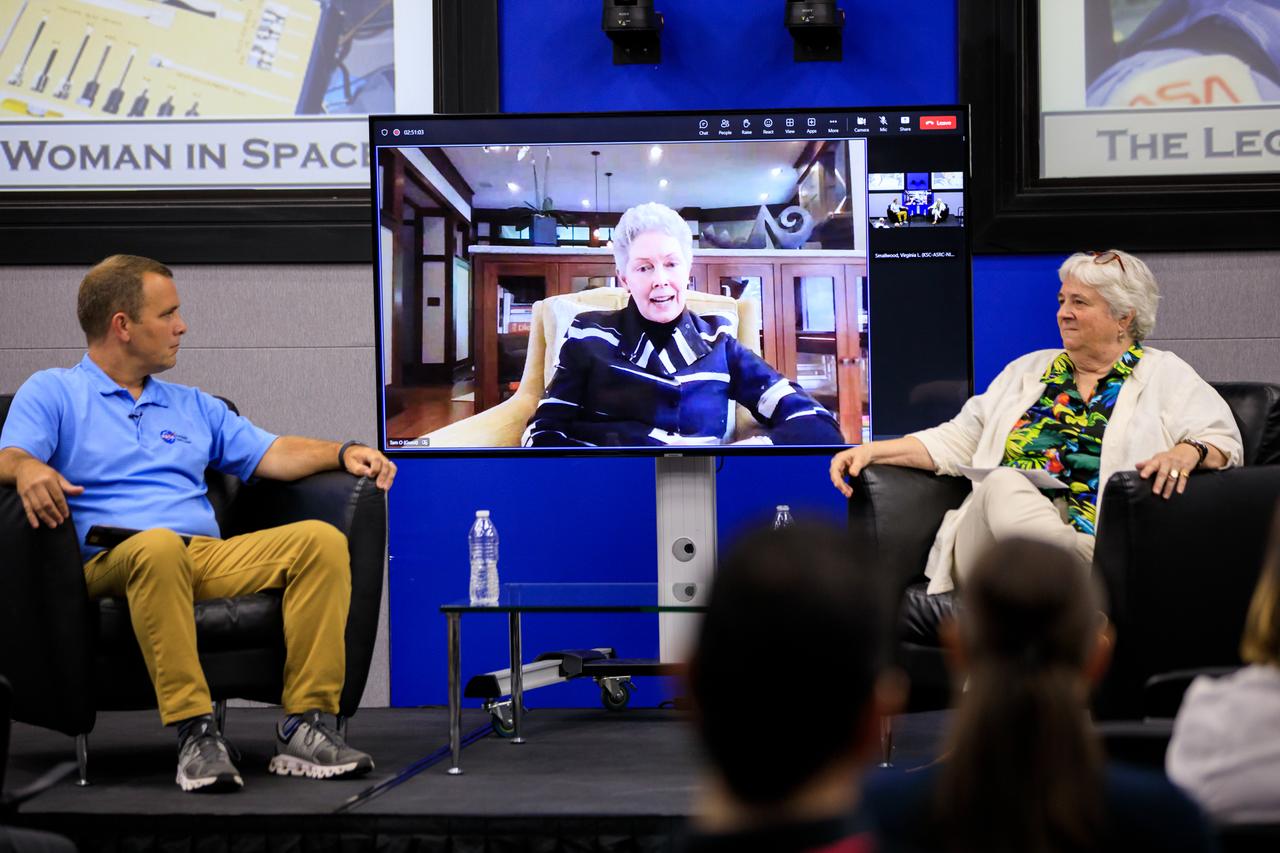
Tam O’Shaughnessy, center (on the monitor), speaks during “The Legacy of Sally Ride: The First American Woman in Space” event at Kennedy Space Center in Florida on June 15, 2023. O’Shaughnessy was Ride’s lifetime partner for 27 years, until the pioneering astronaut died in 2012 at age 61 from pancreatic cancer. NASA Chief Historian Brian Odom, left, and Bear Ride, Sally Ride’s sister, also participated in the event. Forty years ago, Ride made her trailblazing flight into space. She also was a physicist and a steadfast advocate for inclusion in STEM (science, technology, engineering, mathematics) – especially for girls and young women.

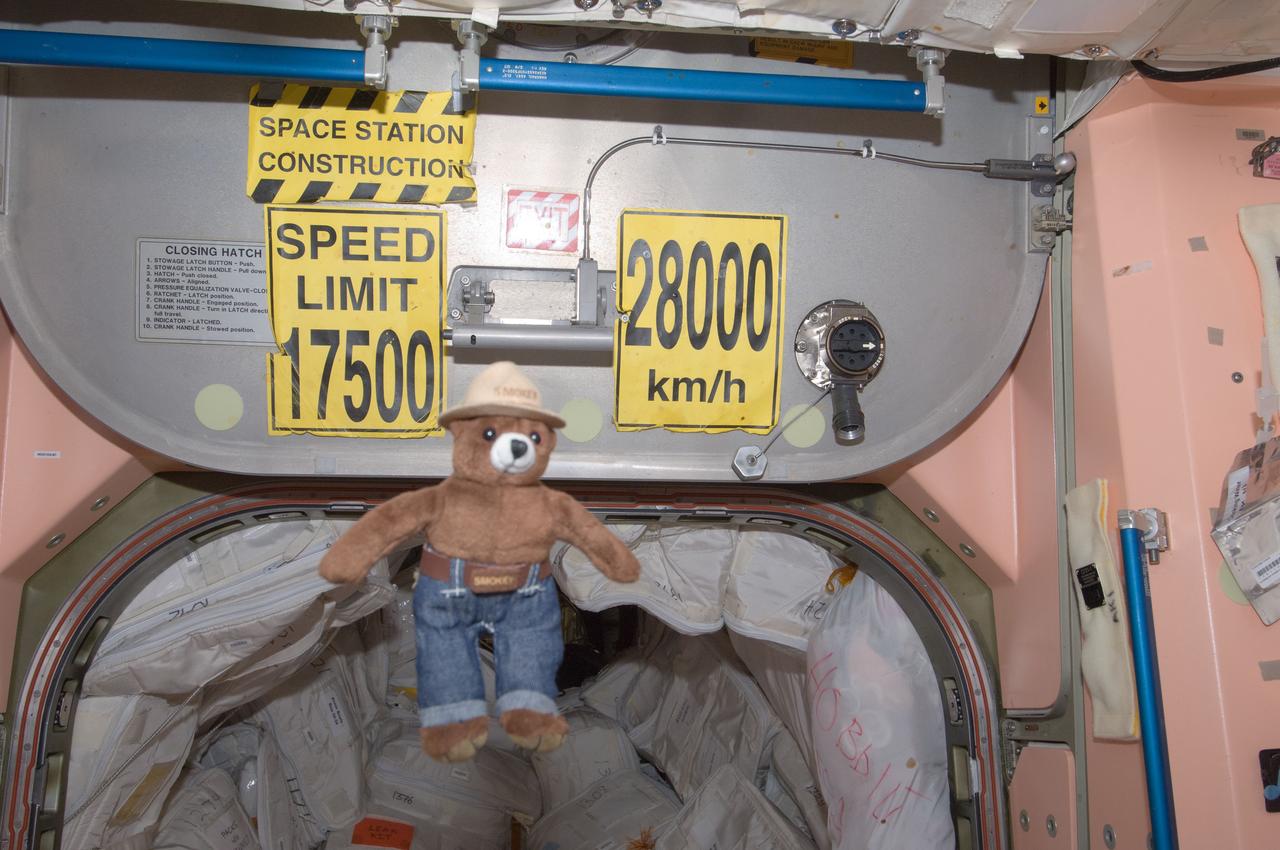
ISS032-E-011678 (3 Aug. 2012) --- Smokey Bear floats freely near a hatchway on the International Space Station. On May 15, 2012, Smokey traveled aboard the Soyuz spacecraft with NASA astronaut Joe Acaba and Russian cosmonauts Gennady Padalka and Sergei Revin to the space station. As a recognized symbol for wildland fire prevention, his presence on the orbiting complex also highlights the many areas of active space station research related to Earth observations, plant growth and combustion and materials sciences, as well as existing spinoff technologies in these areas. NASA, the U.S. Forest Service (USFS) and the Texas Forest Service are teaming up to celebrate Smokey's 68th birthday Aug. 9 at NASA's Johnson Space Center in Houston.
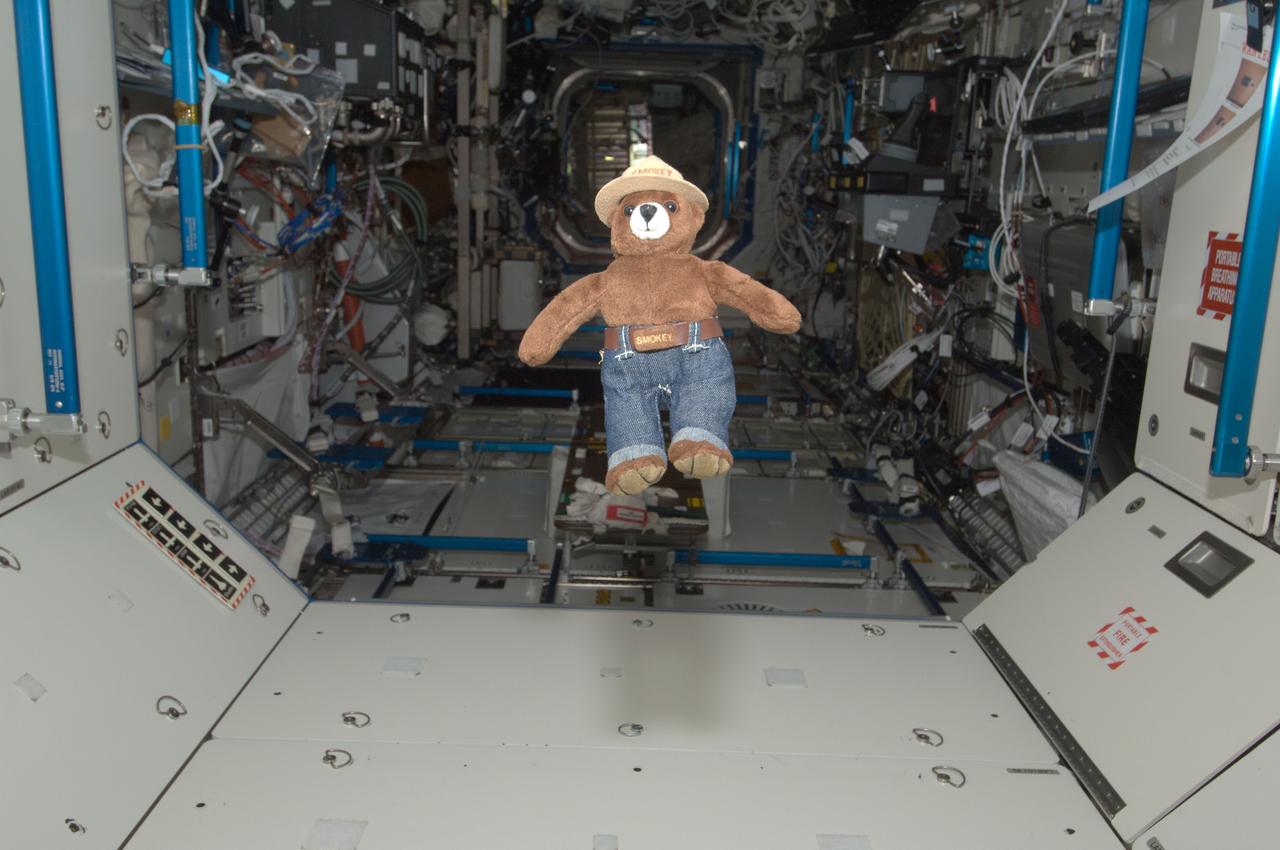
ISS032-E-011666 (3 Aug. 2012) --- Smokey Bear floats freely in the hatchway of the International Space Station’s Destiny laboratory. On May 15, 2012, Smokey traveled aboard the Soyuz spacecraft with NASA astronaut Joe Acaba and Russian cosmonauts Gennady Padalka and Sergei Revin to the space station. As a recognized symbol for wildland fire prevention, his presence on the orbiting complex also highlights the many areas of active space station research related to Earth observations, plant growth and combustion and materials sciences, as well as existing spinoff technologies in these areas. NASA, the U.S. Forest Service (USFS) and the Texas Forest Service are teaming up to celebrate Smokey's 68th birthday Aug. 9 at NASA's Johnson Space Center in Houston.
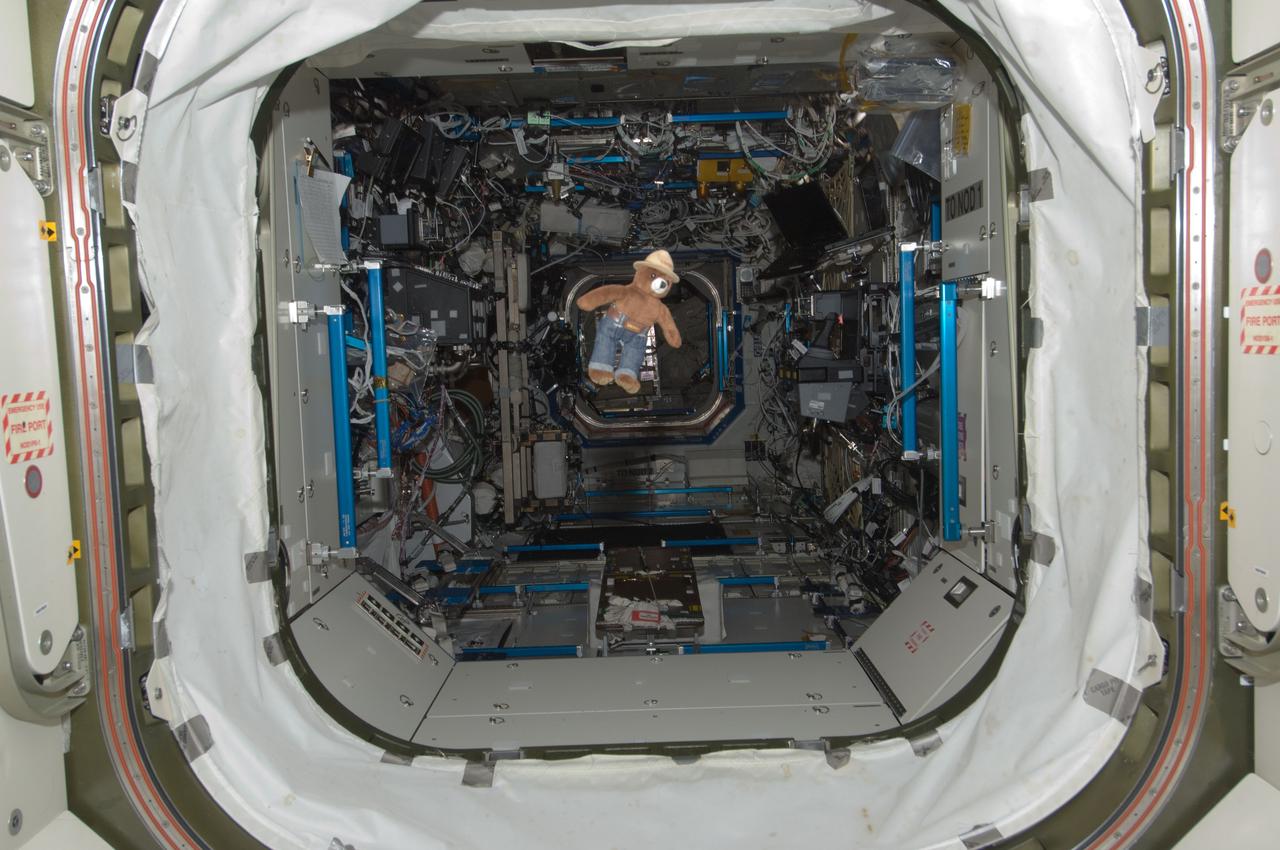
ISS032-E-011664 (3 Aug. 2012) --- Smokey Bear floats freely in the hatchway of the International Space Station’s Destiny laboratory. On May 15, 2012, Smokey traveled aboard the Soyuz spacecraft with NASA astronaut Joe Acaba and Russian cosmonauts Gennady Padalka and Sergei Revin to the space station. As a recognized symbol for wildland fire prevention, his presence on the orbiting complex also highlights the many areas of active space station research related to Earth observations, plant growth and combustion and materials sciences, as well as existing spinoff technologies in these areas. NASA, the U.S. Forest Service (USFS) and the Texas Forest Service are teaming up to celebrate Smokey's 68th birthday Aug. 9 at NASA's Johnson Space Center in Houston.
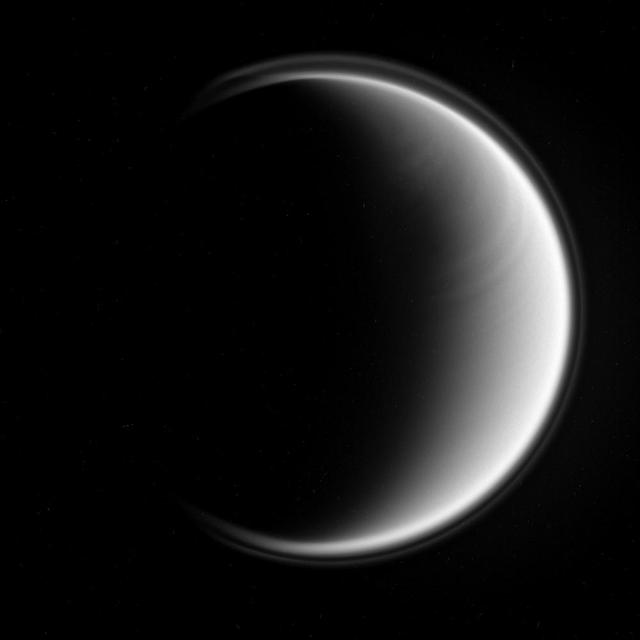
Titan bears a distinct east-west banded pattern in this Cassini spacecraft image taken in the ultraviolet
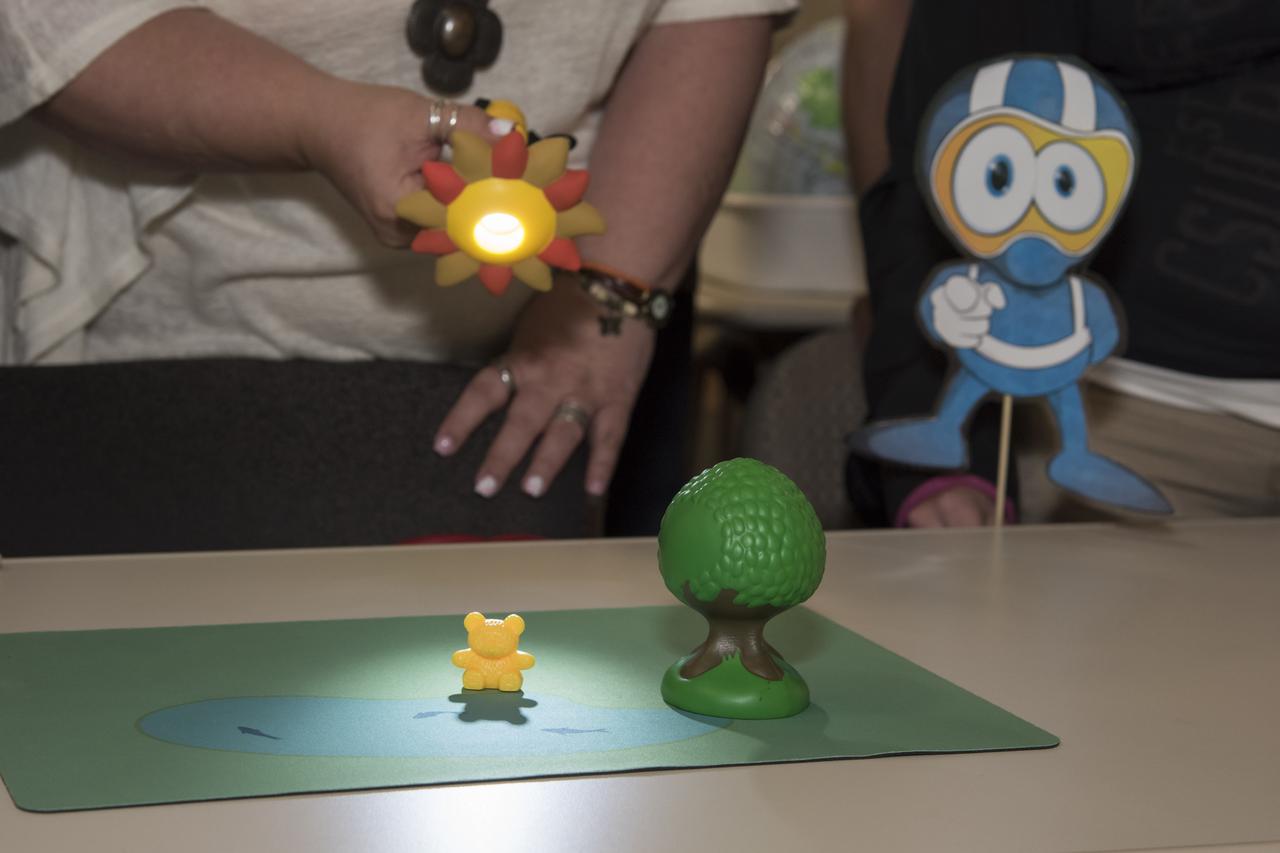
Educators shine a flashlight onto a toy bear to simulate the physics behind solar eclipses.
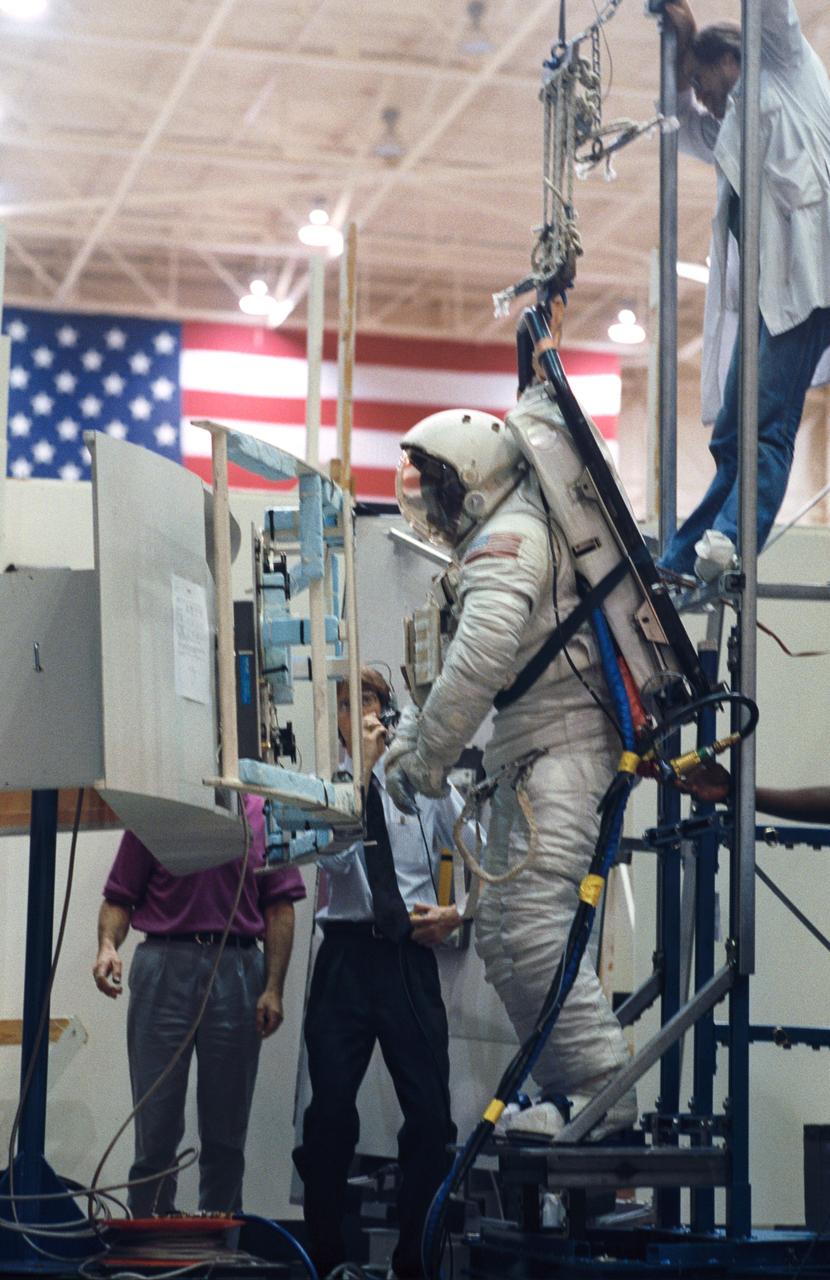
Making use of the air-bearing floor in JSC's Shuttle mockup and integration laboratory, Astronaut Jeffrey A. Hoffman practices working with the Hubble Space Telescope's Wide Field/Planetary Camera (WF/PC). Changing out the large camera is one of several jobs to be performed by STS-61.
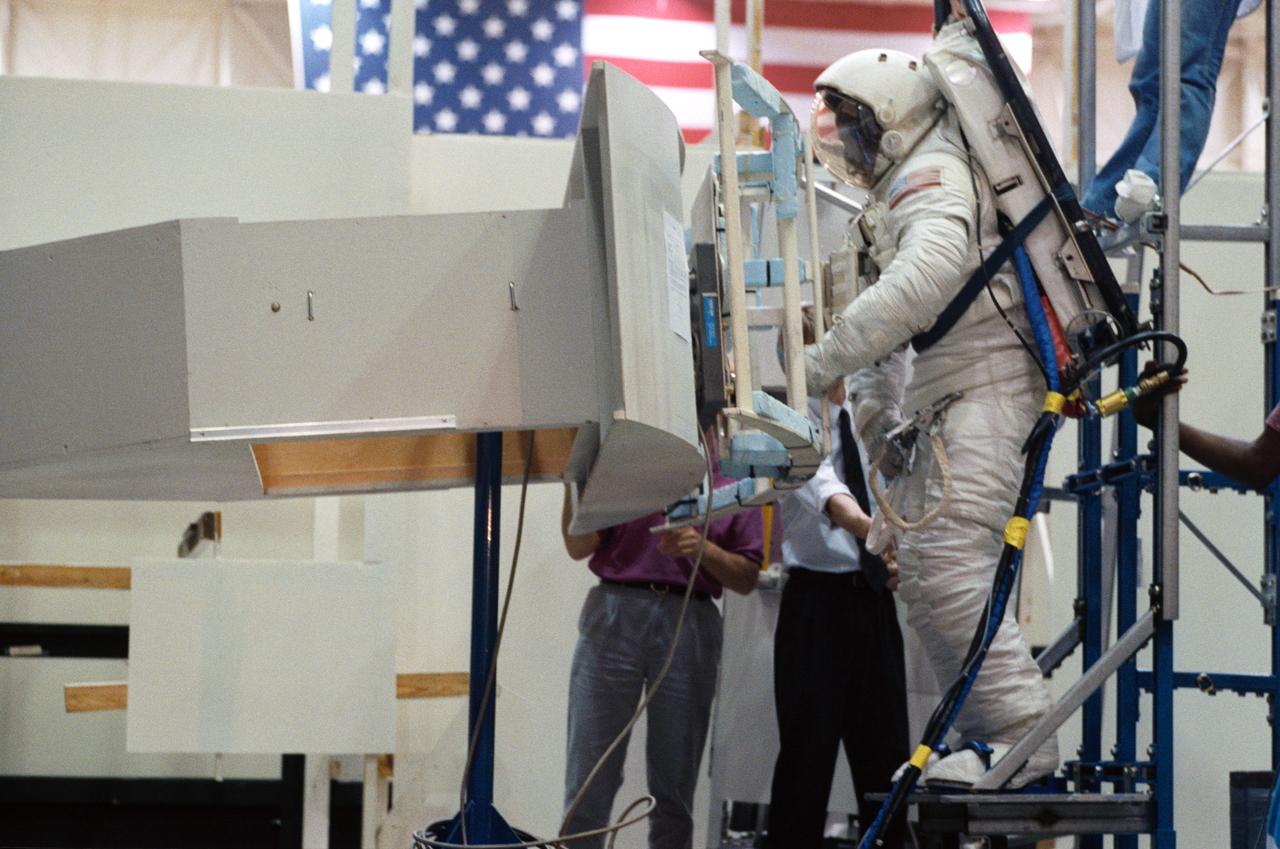
Making use of the air-bearing floor in JSC's Shuttle mockup and integration laboratory, Astronaut Jeffrey A. Hoffman practices working with the Hubble Space Telescope's Wide Field/Planetary Camera (WF/PC). Changing out the large camera is one of several jobs to be performed by STS-61.
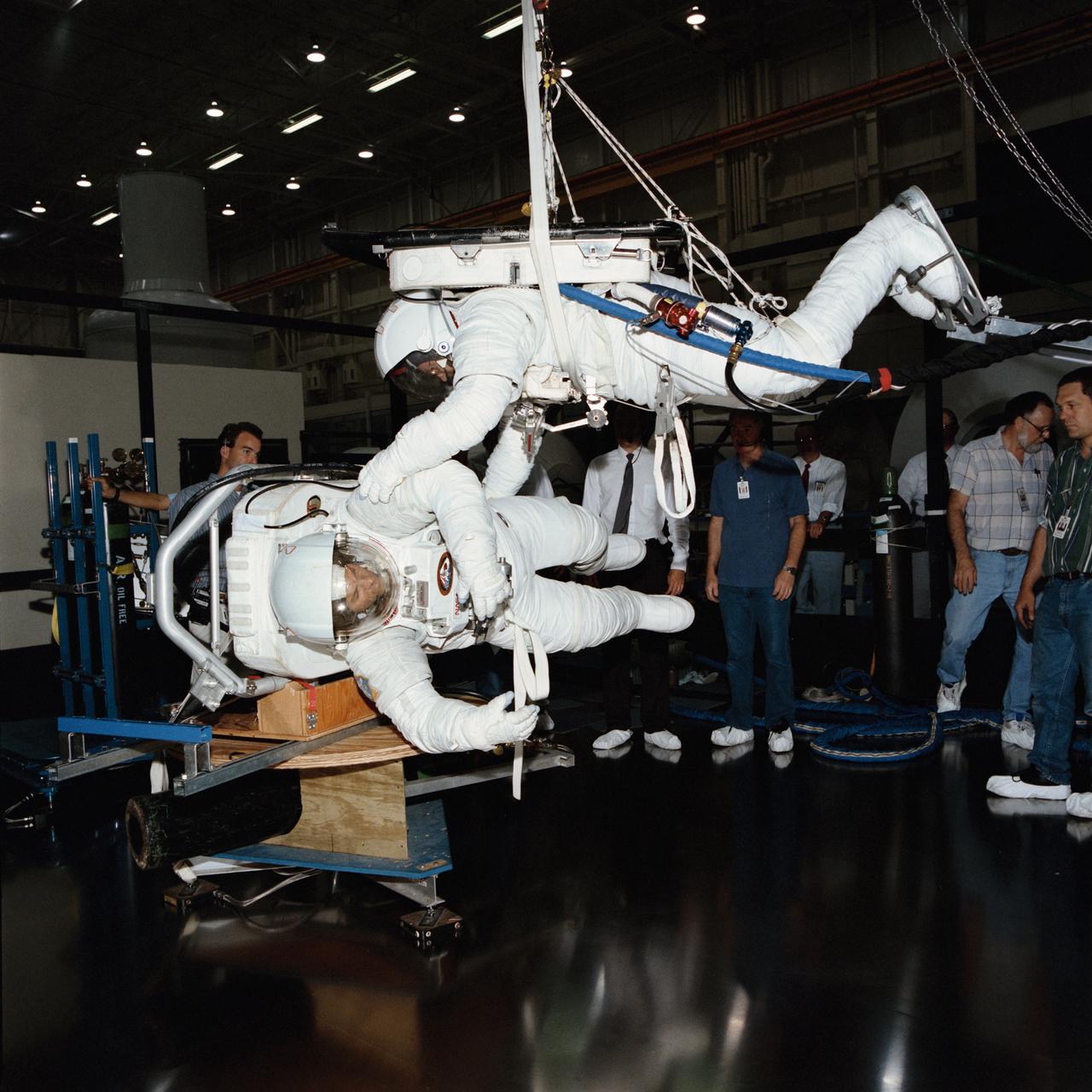
S94-33357 (1994) --- Scott Bleiseth, top, prepares to spin Mike Hess, a fellow EVA engineer, during a test on the air-bearing floor in the Shuttle Mock-up and Integration Laboratory at NASA's Johnson Space Center. The hardware being tested is part of the Simplified Aid for EVA Rescue (SAFER). The pair was developing techniques by which the non-SAFER equipped spacewalker will impart a rotation to the SAFER-using spacewalker during the STS-64 mission. Once the SAFER astronaut is spinning, the device will be activated and its automatic attitude hold capability will be tested. SAFER is to fly on STS-76 as well. Photo credit: NASA or National Aeronautics and Space Administration
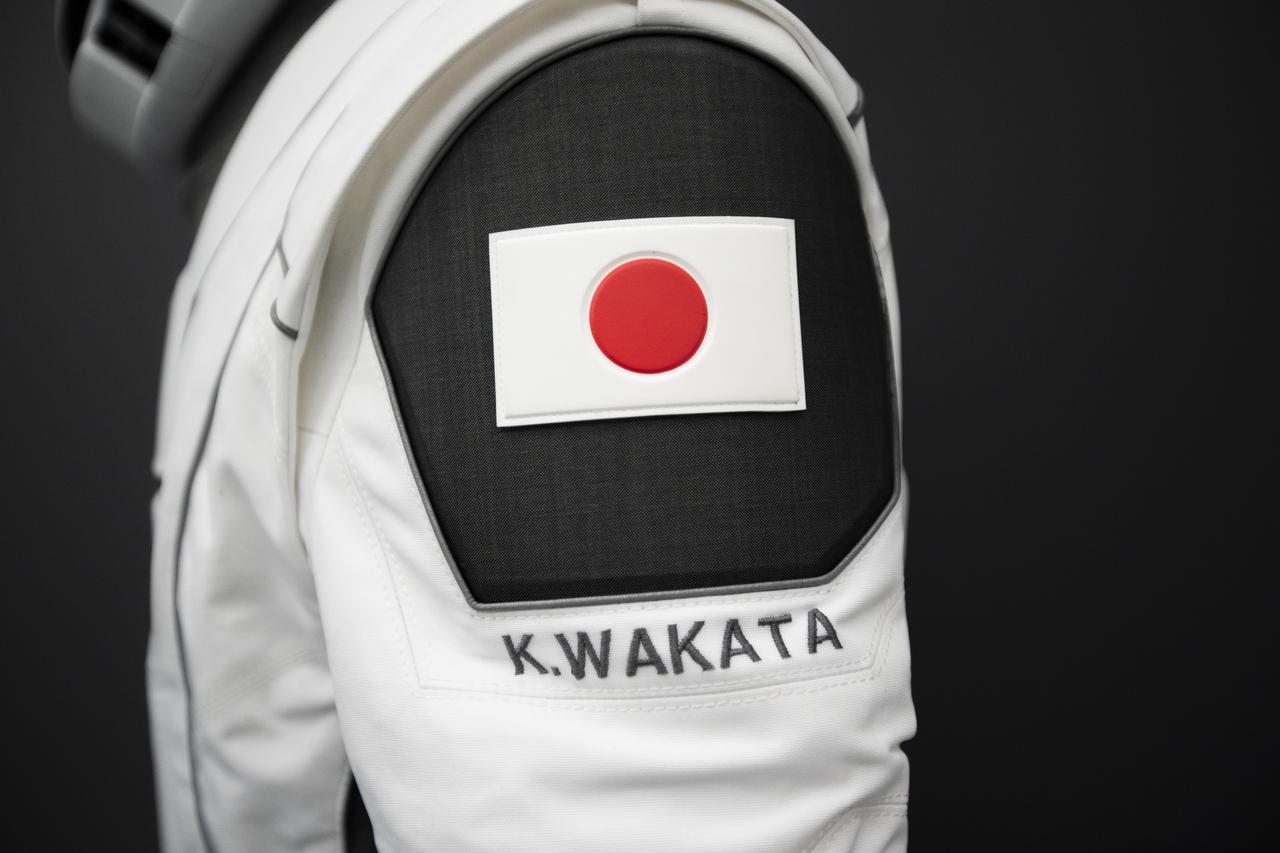
A SpaceX launch and entry suit bears a Japanese flag, and the name of JAXA astronaut Koichi Wakata – a crewmember of NASA's SpaceX Crew-5 mission to the International Space Station.
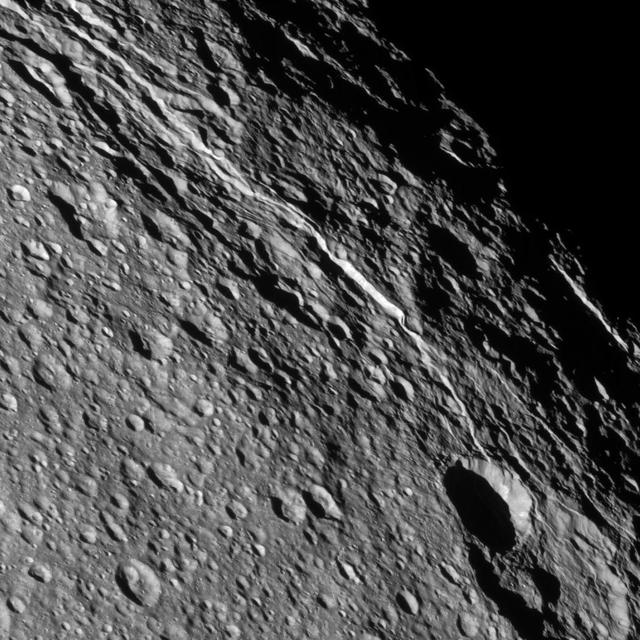
The surface of Saturn moon Rhea bears witness to its violent history. Each crater seen here by NASA Cassini spacecraft records an impact in the moon past.
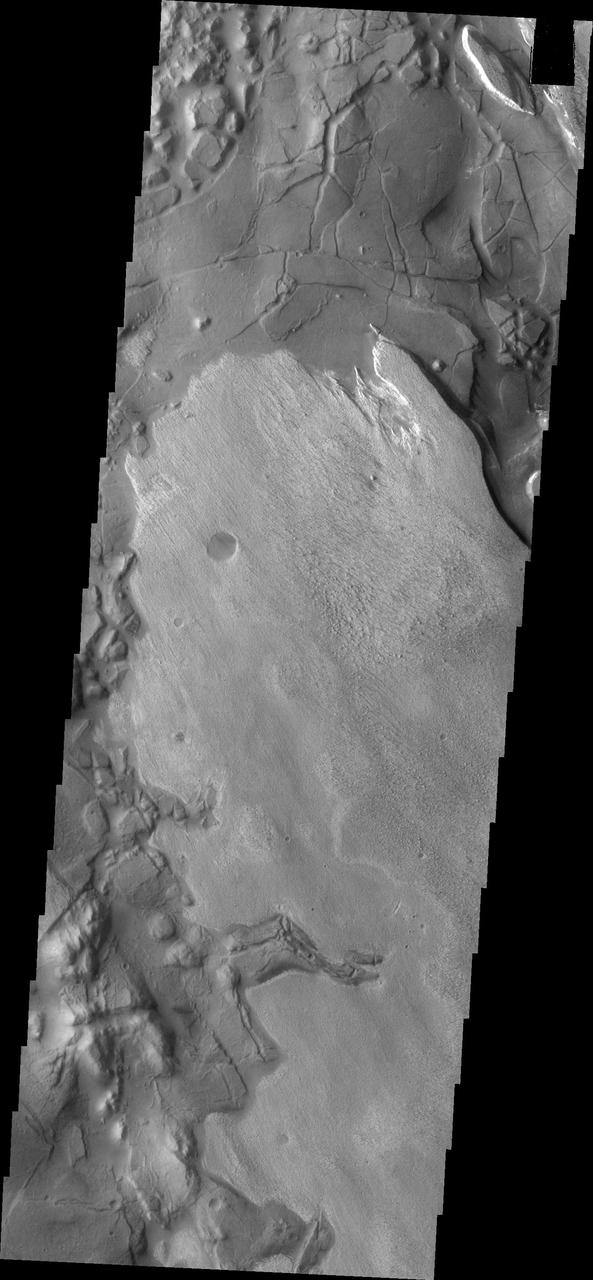
Do you see what I see in this image from NASA Mars Odyssey spacecraft? These layered deposits look like a giant bear facing to the left.
KENNEDY SPACE CENTER, FLA. - Workers in the Orbiter Processing Facility measure the alignment of bearings on a rudder speed brake actuator. Actuators move an orbiter’s rudder, speed brake, elevons and main engines during flight.
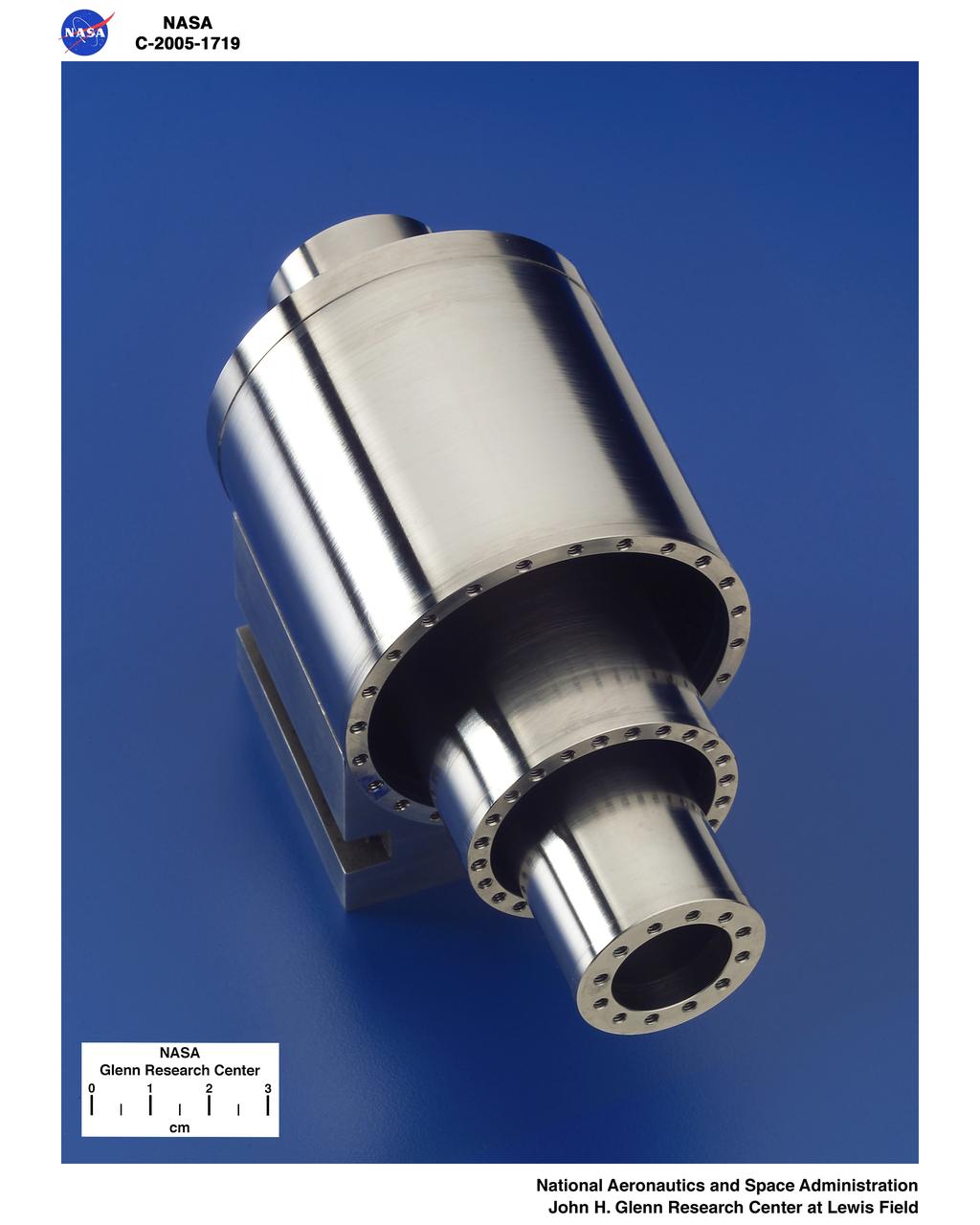
Large Diameter (L/D) Foil Bearings and Journal Bearing Shafts
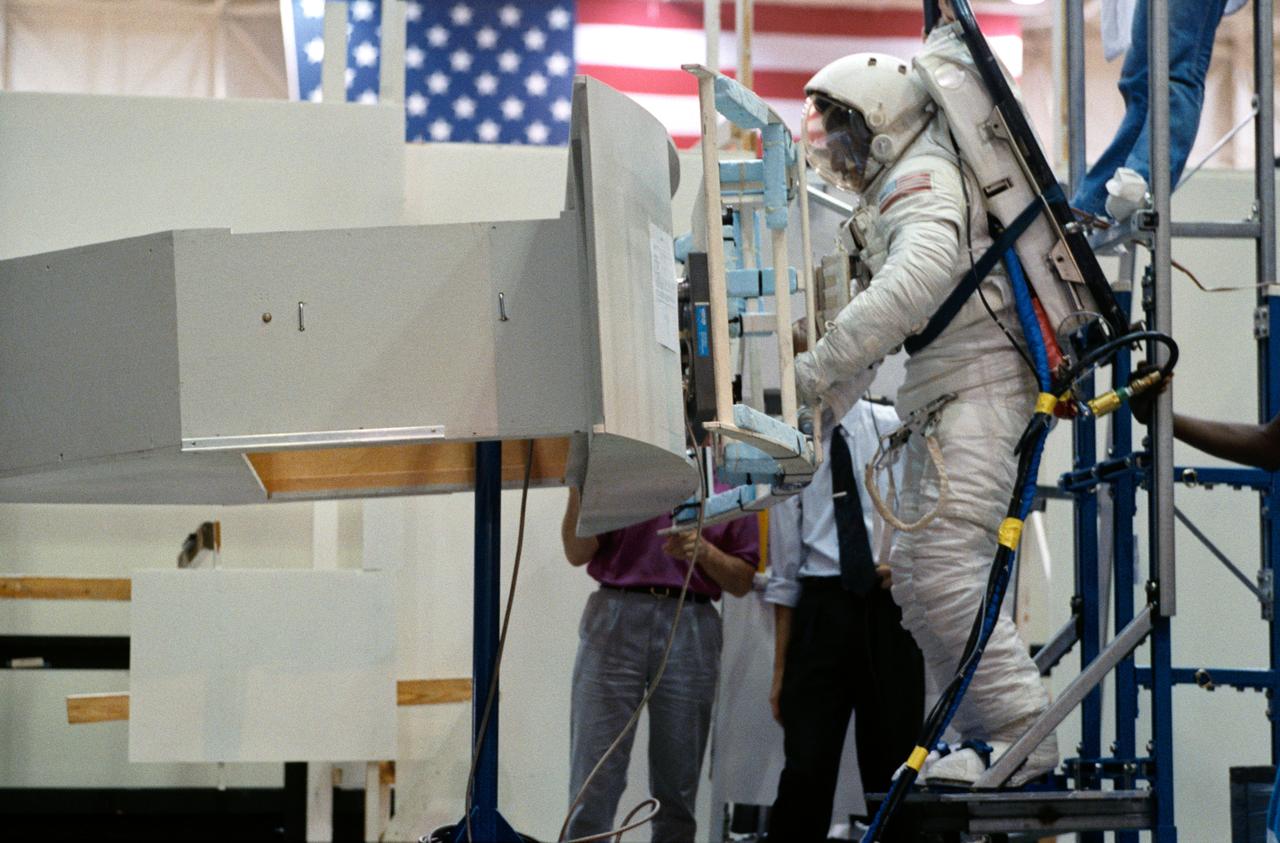
S93-35696 (7 June 1993) --- Making use of the air-bearing floor in Johnson Space Center's (JSC) Shuttle Mockup and Integration Laboratory, astronaut Jeffrey A. Hoffman practices working with the Hubble Space Telescope's (HST) Wide Field/Planetary Camera (WF/PC). Hoffman is one of four mission specialists who will participate in HST servicing on the scheduled December mission. Changing out the large camera is one of several chores to be performed by the four. Photo credit: NASA
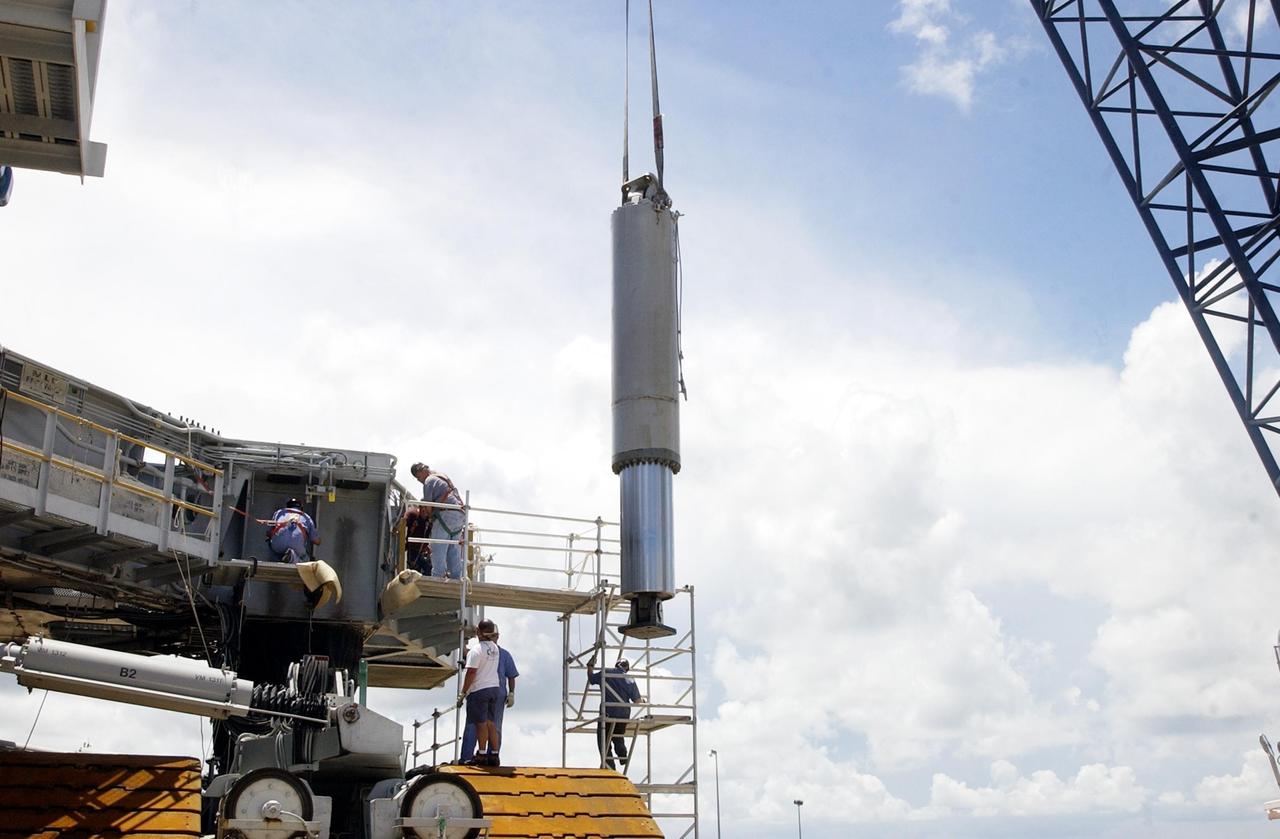
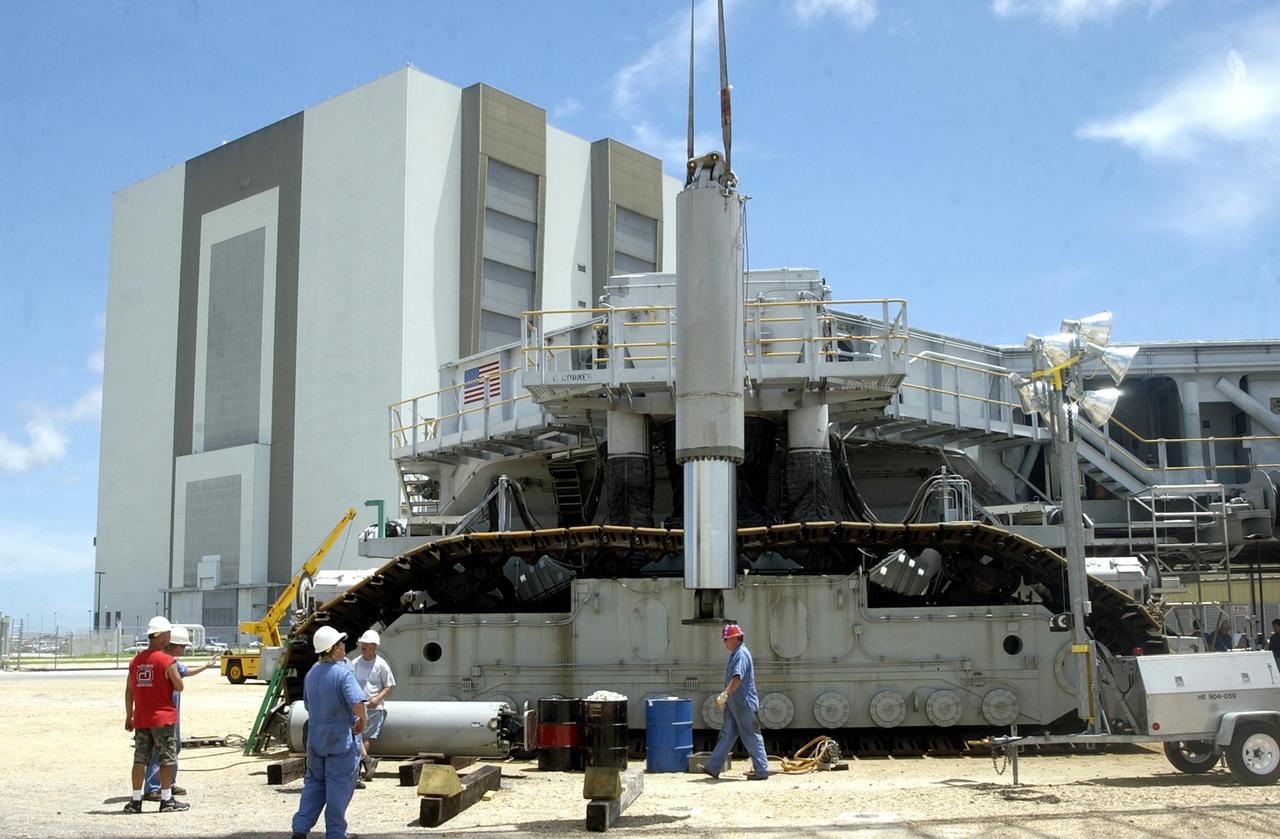
KENNEDY SPACE CENTER, FLA. -- A crane lifts a jacking, equalization and leveling (JEL) cylinder and bearing from Crawler-Transporter No. 2. During routine maintenance inspections last week, technicians removed two of the 16 JEL cylinders on the crawler to gain access to the bearings and found three of the four bearings cracked. Further eddy current inspections indicated that cracks are present on 15 of the bearings. There are 16 cylinders and 32 bearings per crawler. Engineers are evaluating the situation to determine the cause of the cracks and an appropriate solution to the problem.
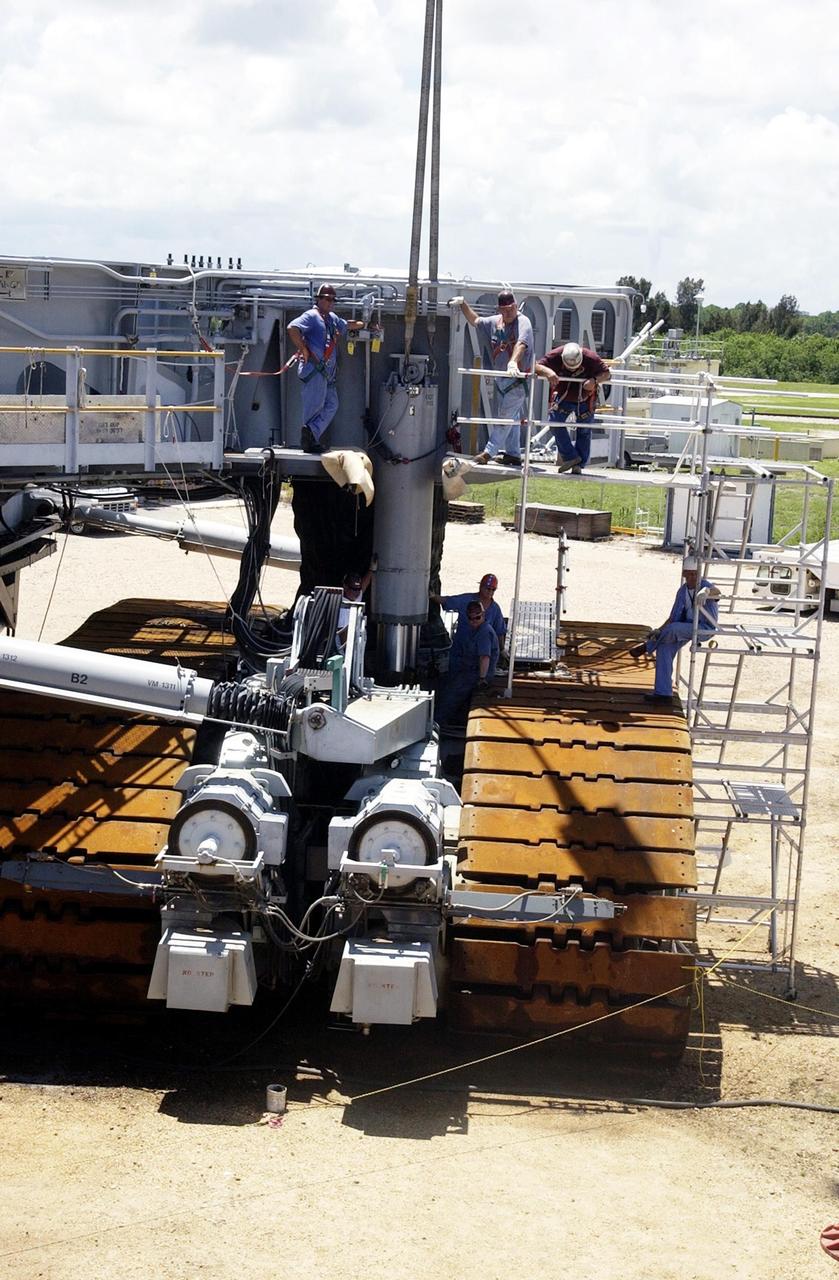
KENNEDY SPACE CENTER, FLA. -- A jacking, equalization and leveling (JEL) cylinder and bearing from Crawler-Transporter No. 2 is lowered by a crane to a position on the ground. During routine maintenance inspections last week, technicians removed two of the 16 JEL cylinders on the crawler to gain access to the bearings and found three of the four bearings cracked. Further eddy current inspections indicated that cracks are present on 15 of the bearings. There are 16 cylinders and 32 bearings per crawler.
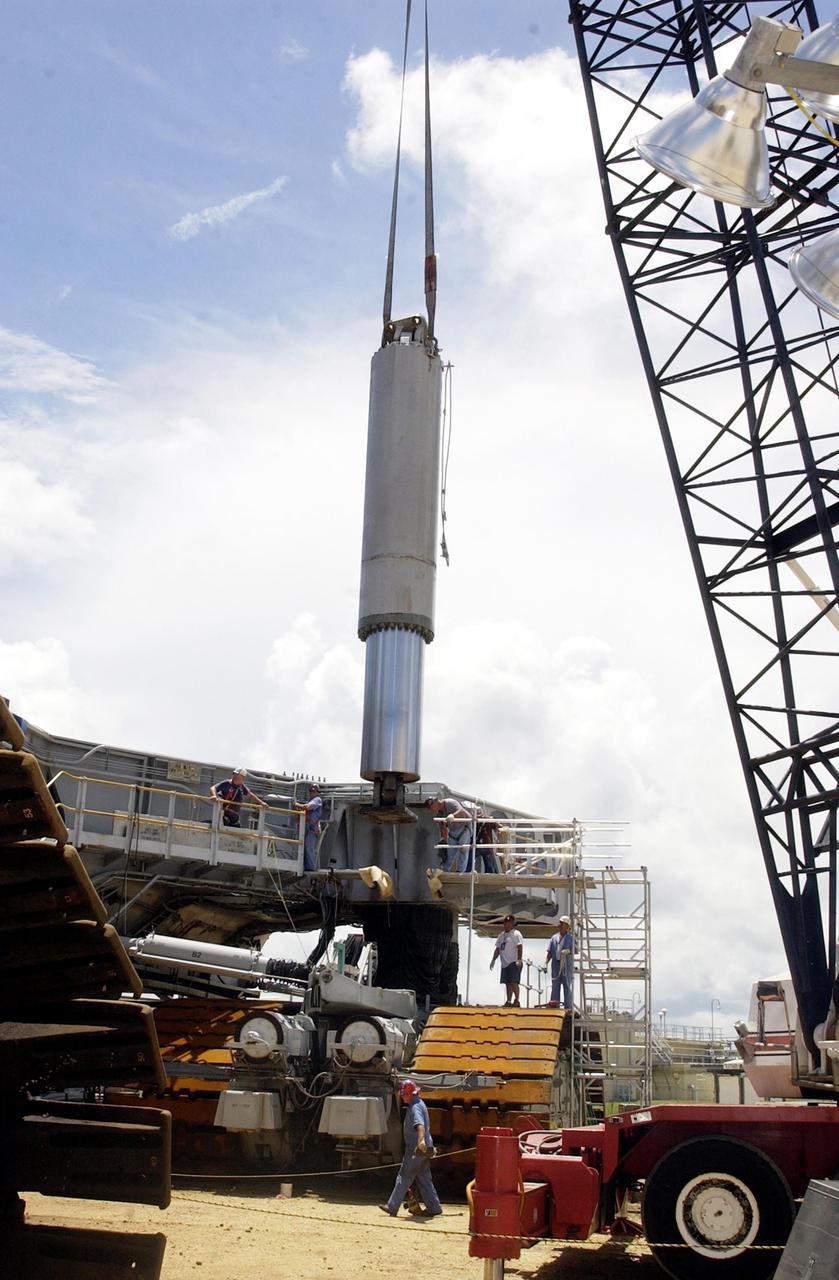
KENNEDY SPACE CENTER, FLA. -- A crane lowers a jacking, equalization and leveling (JEL) cylinder and bearing from Crawler-Transporter No. 2 to a position on the ground. During routine maintenance inspections last week, technicians removed two of the 16 JEL cylinders on the crawler to gain access to the bearings and found three of the four bearings cracked. Further eddy current inspections indicated that cracks are present on 15 of the bearings. There are 16 cylinders and 32 bearings per crawler. Engineers are evaluating the situation to determine the cause of the cracks and an appropriate solution to the problem.
KENNEDY SPACE CENTER, FLA. -- Technicians hook a crane to a jacking, equalization and leveling (JEL) cylinder and bearing on Crawler-Transporter No. 2 in preparation for its removal. During routine maintenance inspections last week, technicians removed two of the 16 JEL cylinders on the crawler to gain access to the bearings and found three of the four bearings cracked. Further eddy current inspections indicated that cracks are present on 15 of the bearings. There are 16 cylinders and 32 bearings per crawler. Engineers are evaluating the situation to determine the cause of the cracks and an appropriate solution to the problem.
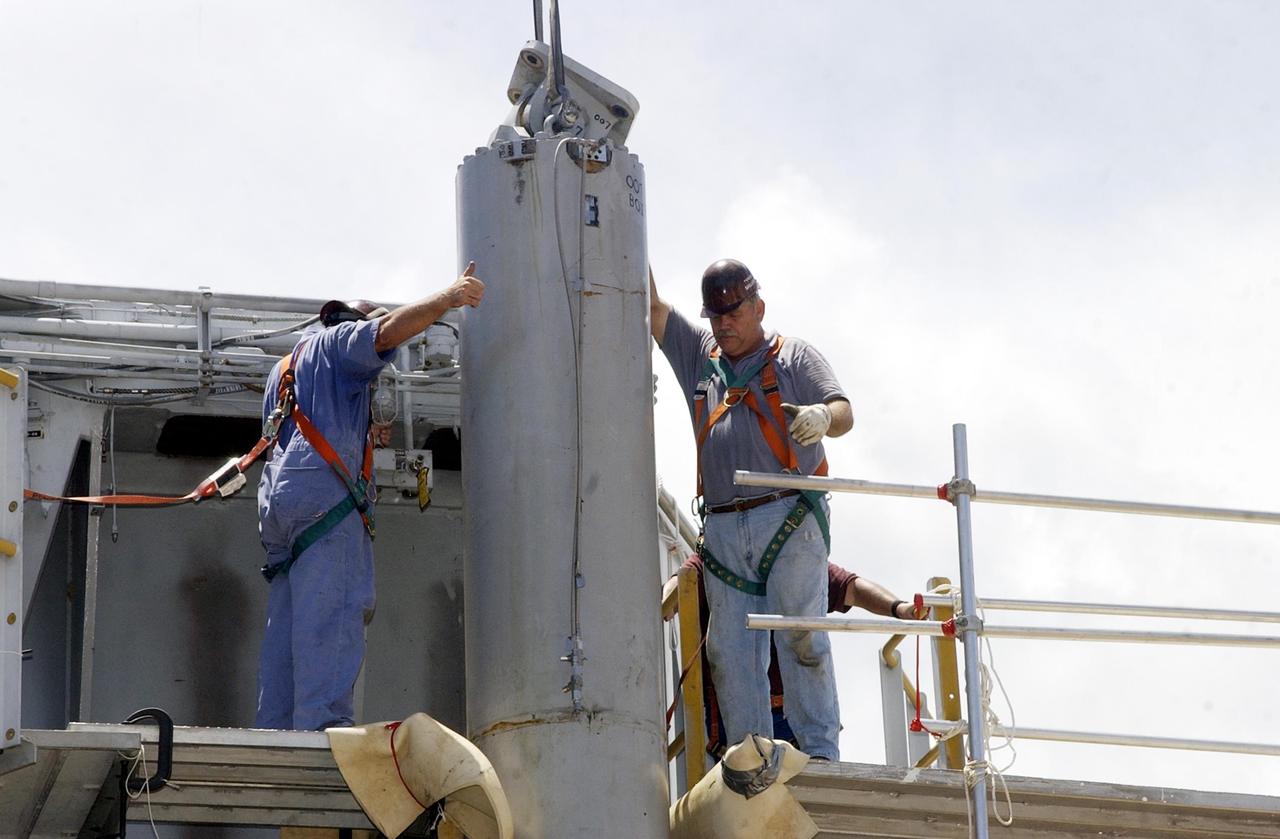
KENNEDY SPACE CENTER, FLA. -- Technicians give the signal for a crane to begin lifting a jacking, equalization and leveling (JEL) cylinder and bearing on Crawler-Transporter No. 2. During routine maintenance inspections last week, technicians removed two of the 16 JEL cylinders on the crawler to gain access to the bearings and found three of the four bearings cracked. Further eddy current inspections indicated that cracks are present on 15 of the bearings. There are 16 cylinders and 32 bearings per crawler. Engineers are evaluating the situation to determine the cause of the cracks and an appropriate solution to the problem.
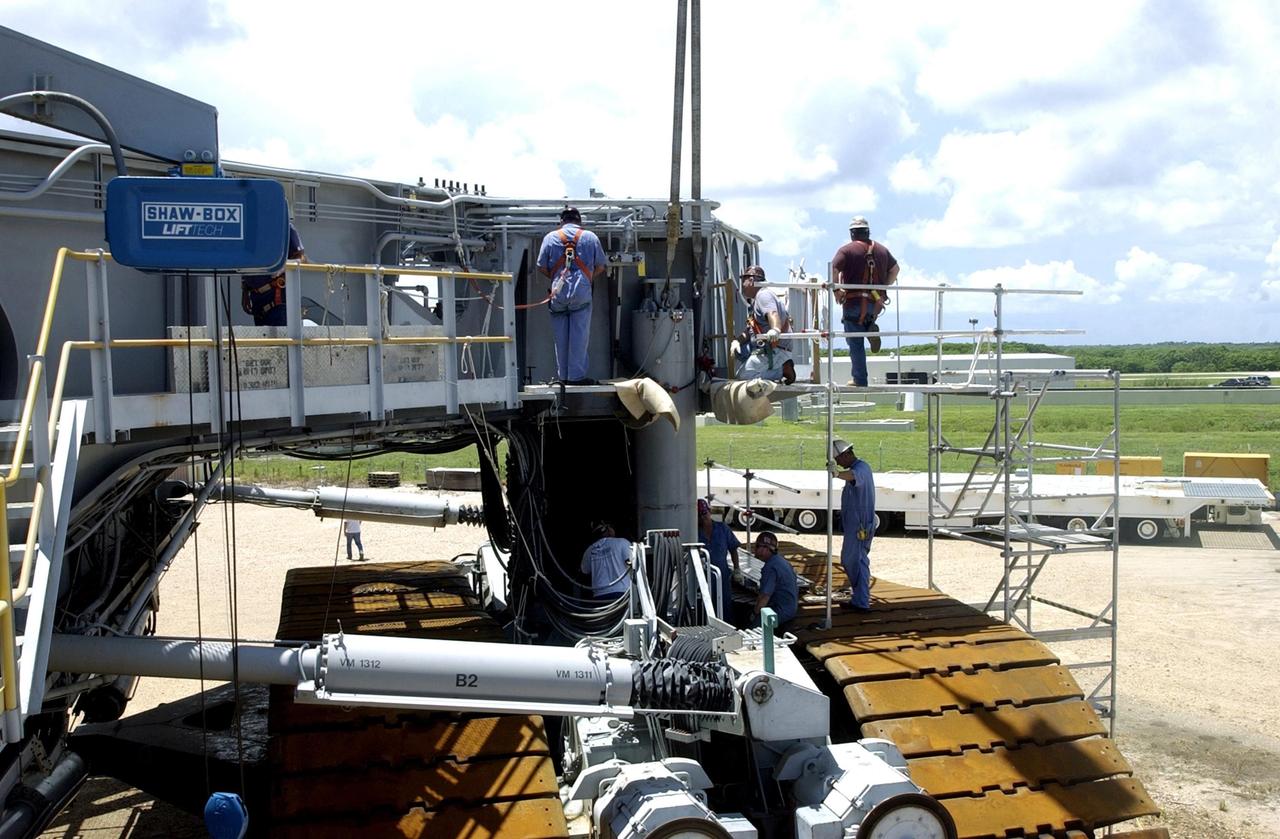
KENNEDY SPACE CENTER, FLA. -- Technicians hook a crane to a jacking, equalization and leveling (JEL) cylinder and bearing on Crawler-Transporter No. 2 in preparation for its removal. During routine maintenance inspections last week, technicians removed two of the 16 JEL cylinders on the crawler to gain access to the bearings and found three of the four bearings cracked. Further eddy current inspections indicated that cracks are present on 15 of the bearings. There are 16 cylinders and 32 bearings per crawler. Engineers are evaluating the situation to determine the cause of the cracks and an appropriate solution to the problem.
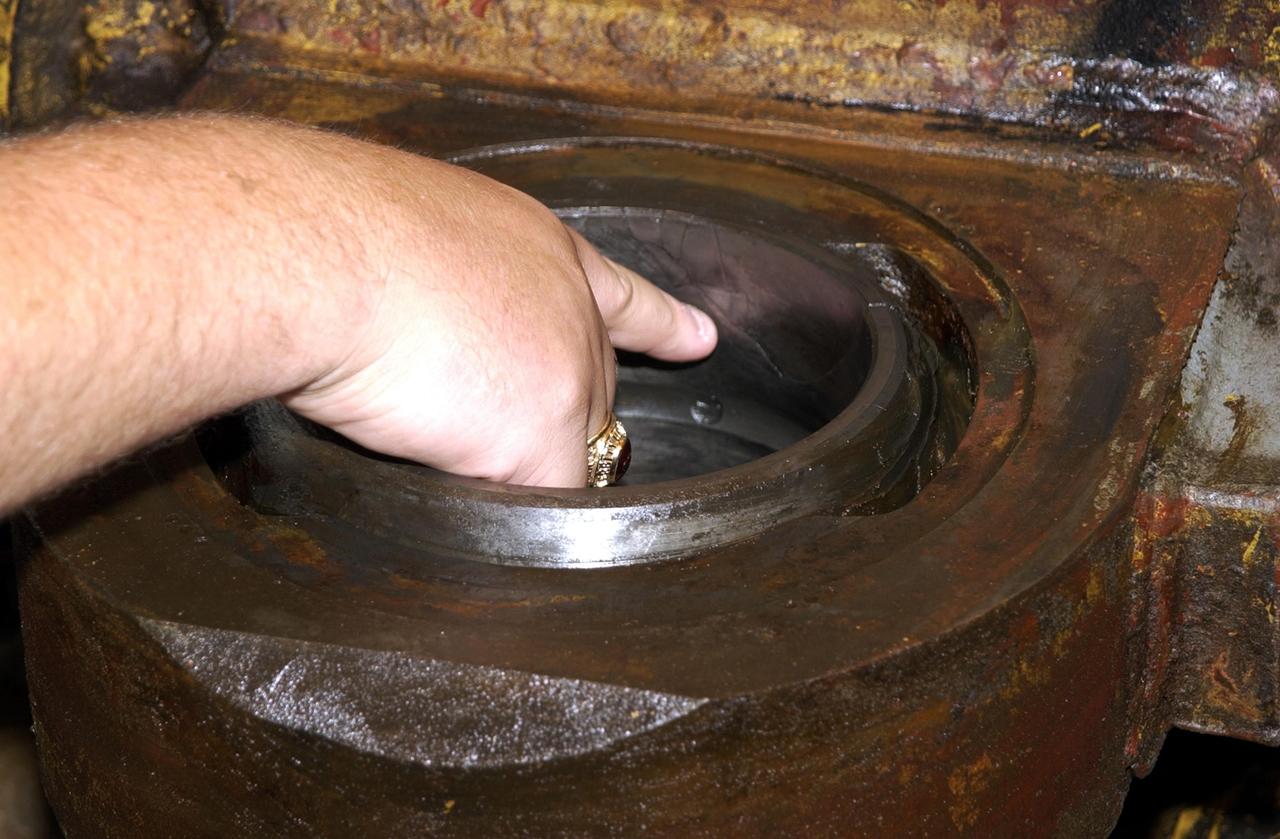
KENNEDY SPACE CENTER, FLA. -- Perry Becker, an engineer with NASA, points to a crack in a bearing from one of the jacking, equalization and leveling (JEL) cylinders on Crawler-Transporter No. 2. During inspections, technicians removed two of the 16 JEL cylinders on the vehicle to gain access to the bearings for routine maintenance and found three of the four bearings had cracks. Of the three bearings, two had extensive damage. Further eddy current inspections indicate that cracks are present on 15 of the bearings. There are 16 cylinders and 32 bearings per crawler. Although no cause for the cracks is known at this time, engineers are currently evaluating the situation to determine the most appropriate solution.
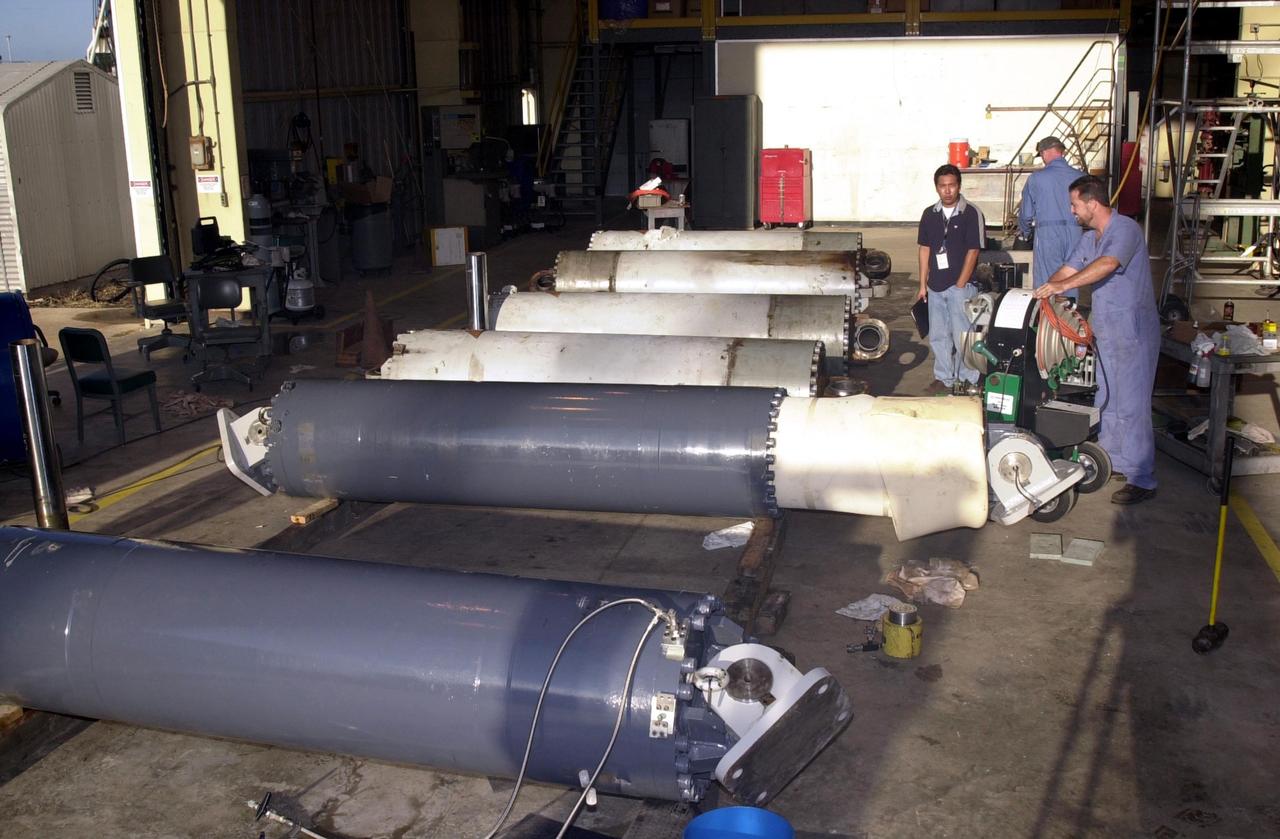
KENNEDY SPACE CENTER, FLA. -- Jacking, Equalization and Leveling (JEL) cylinders with repaired bearings are ready to be moved to Crawler Transporter No. 2. There are 16 cylinders and 32 bearings per crawler. During recent routine maintenance inspections, technicians removed two of the 16 JEL cylinders on the crawler to gain access to the bearings and found three of the four bearings cracked. Further eddy current inspections indicated that cracks were present on 15 of the bearings. Technicians have removed and replaced 14 of the bearings on CT-2, which is being repaired in order to enable Atlantis' rollout for mission STS-112, scheduled for launch no earlier than Oct. 2.

KENNEDY SPACE CENTER, FLA. -- Perry Becker, an engineer with NASA, looks at a spacer on the bearing in one of the jacking, equalization and leveling (JEL) cylinders on Crawler-Transporter No. 2. During inspections, technicians removed two of the 16 JEL cylinders on the vehicle to gain access to the bearings for routine maintenance and found three of the four bearings had cracks. Of the three bearings, two had extensive damage. Further eddy current inspections indicate that cracks are present on 15 of the bearings. There are 16 cylinders and 32 bearings per crawler. Although no cause for the cracks is known at this time, engineers are currently evaluating the situation to determine the most appropriate solution.
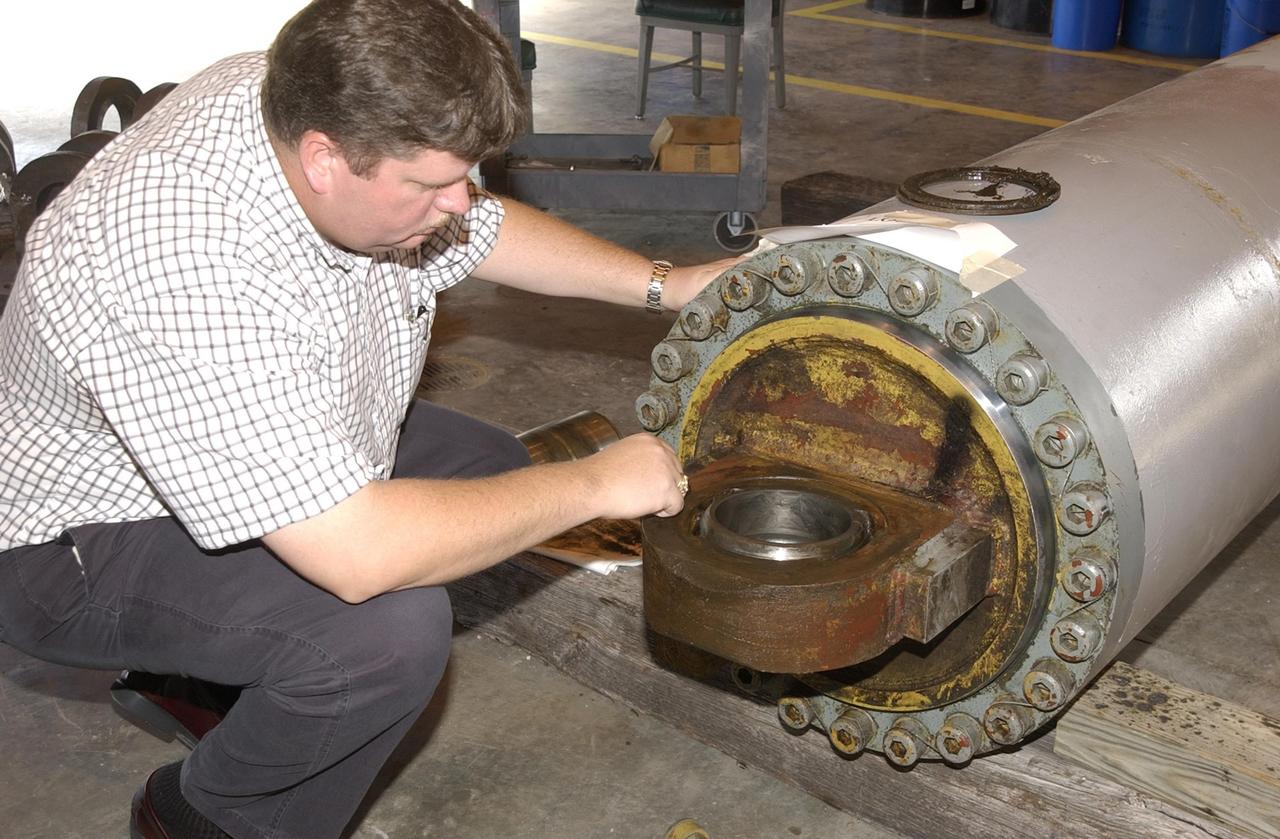
KENNEDY SPACE CENTER, FLA. -- Perry Becker, an engineer with NASA, looks at a bearing from one of the jacking, equalization and leveling (JEL) cylinders on Crawler-Transporter No. 2. During inspections, technicians removed two of the 16 JEL cylinders on the vehicle to gain access to the bearings for routine maintenance and found three of the four bearings had cracks. Of the three bearings, two had extensive damage. Further eddy current inspections indicate that cracks are present on 15 of the bearings. There are 16 cylinders and 32 bearings per crawler. Although no cause for the cracks is known at this time, engineers are currently evaluating the situation to determine the most appropriate solution.
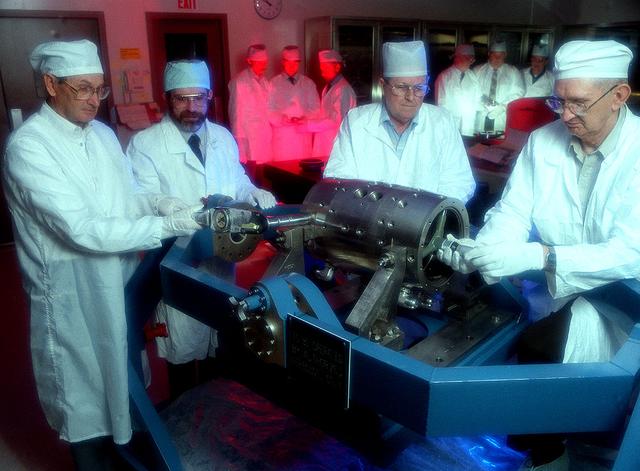
Test of bearing and seal materials in order to develop improved life bearing designs for operating in liquid turbomachinery.
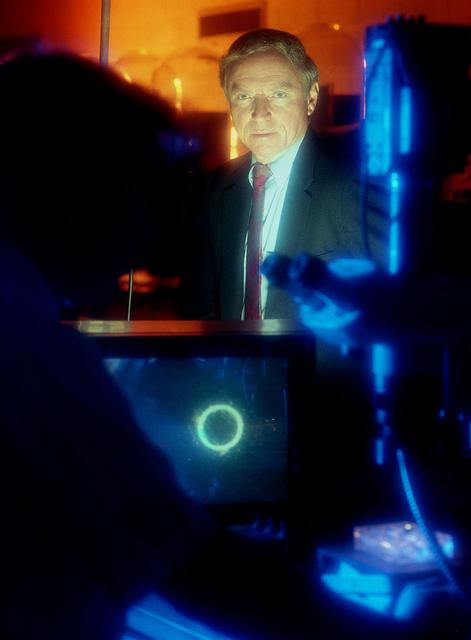
Test of bearing and seal materials in order to develop improved life bearing designs for operating in liquid turbomachinery.
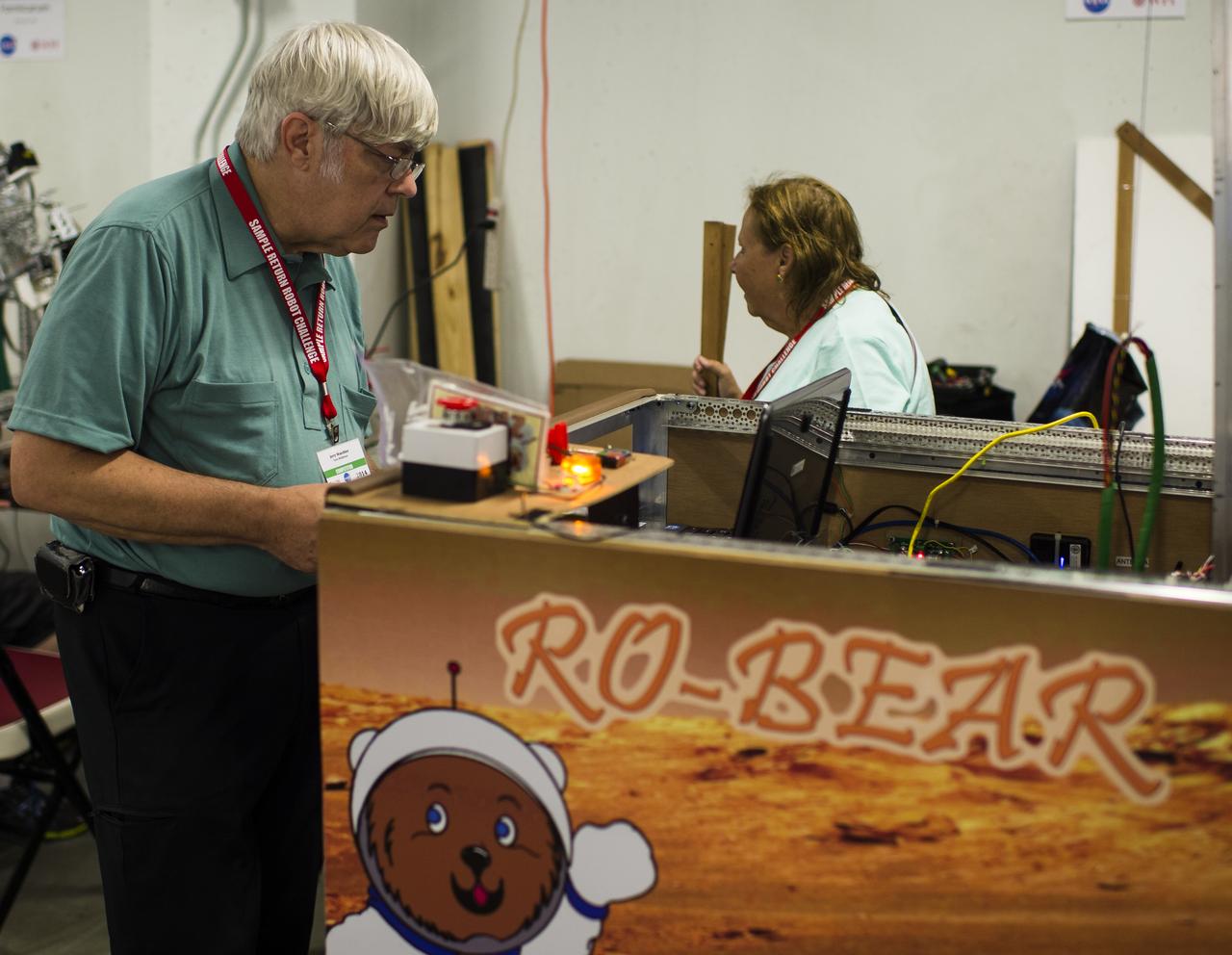
Jerry Waechter of team Middleman from Dunedin, Florida, works on their robot named Ro-Bear during the 2014 NASA Centennial Challenges Sample Return Robot Challenge, Tuesday, June 10, 2014, at the Worcester Polytechnic Institute (WPI) in Worcester, Mass. Team Middleman is one of eighteen teams competing for a $1.5 million NASA prize purse. Teams will be required to demonstrate autonomous robots that can locate and collect samples from a wide and varied terrain, operating without human control. The objective of this NASA-WPI Centennial Challenge is to encourage innovations in autonomous navigation and robotics technologies. Innovations stemming from the challenge may improve NASA's capability to explore a variety of destinations in space, as well as enhance the nation's robotic technology for use in industries and applications on Earth. Photo Credit: (NASA/Joel Kowsky)

KENNEDY SPACE CENTER, FLA. -- Technicians supervise a jacking, equalization and leveling (JEL) cylinder and bearing from Crawler-Transporter No. 2 as it is lowered by a crane to a position on the ground. During routine maintenance inspections last week, technicians removed two of the 16 JEL cylinders on the crawler to gain access to the bearings and found three of the four bearings cracked. Further eddy current inspections indicated that cracks are present on 15 of the bearings. There are 16 cylinders and 32 bearings per crawler. Engineers are evaluating the situation to determine the cause of the cracks and an appropriate solution to the problem.
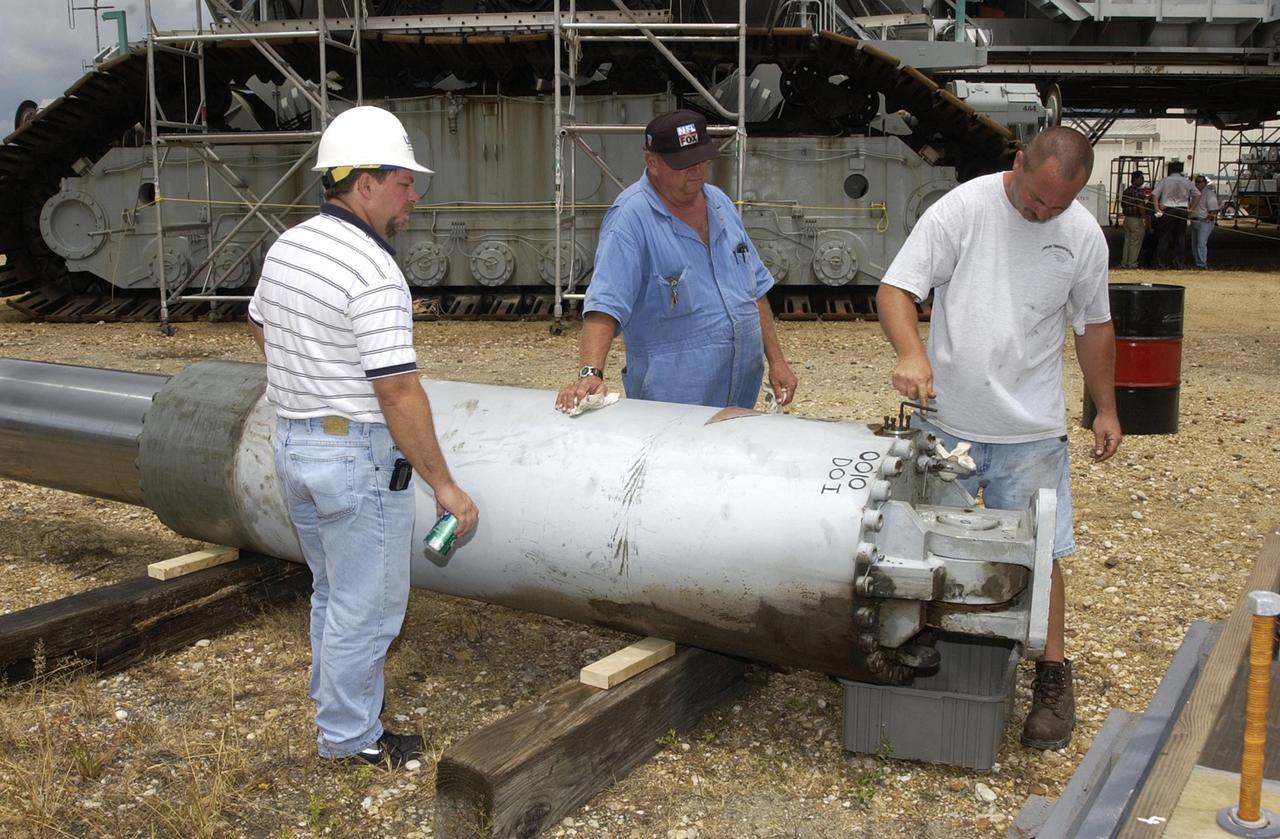
KENNEDY SPACE CENTER, FLA. -- Technicians check out a jacking, equalization and leveling (JEL) cylinders from Crawler-Transporter No. 2. During inspections, technicians removed two of the 16 JEL cylinders on the vehicle to gain access to the bearings for routine maintenance and found three of the four bearings had cracks. Of the three bearings, two had extensive damage. Further eddy current inspections indicate that cracks are present on 15 of the bearings. There are 16 cylinders and 32 bearings per crawler. Although no cause for the cracks is known at this time, engineers are currently evaluating the situation to determine the most appropriate solution. The crawler is in the background.
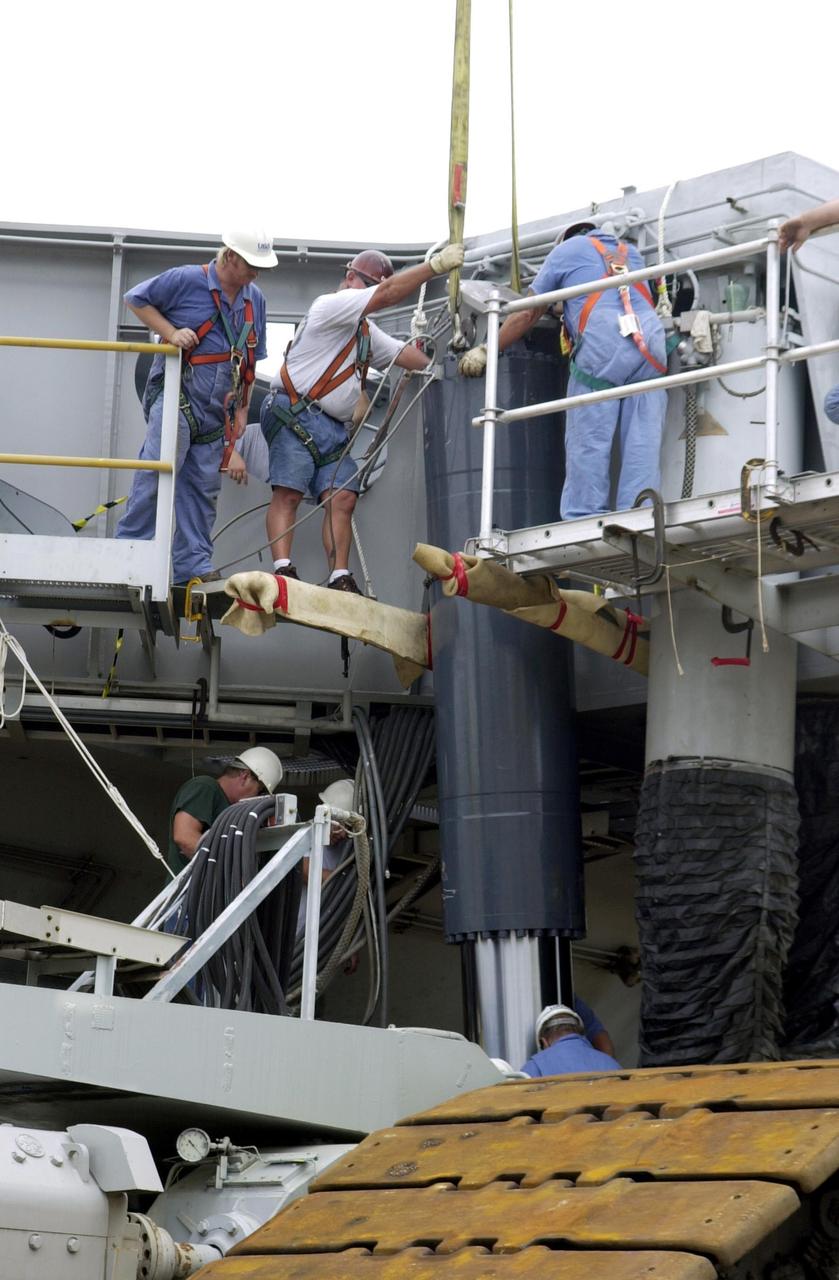
KENNEDY SPACE CENTER, FLA. -- Workers on Crawler Transporter No. 2 help guide a repaired Jacking, Equalization and Leveling (JEL) cylinder as it is lowered into place. There are 16 cylinders and 32 bearings per crawler. During recent routine maintenance inspections, technicians removed two of the 16 JEL cylinders on the crawler to gain access to the bearings and found three of the four bearings cracked. Further eddy current inspections indicated that cracks were present on 15 of the bearings.. Technicians have removed and replaced 14 of the bearings on CT-2, which is being repaired in order to enable Atlantis' rollout for mission STS-112, scheduled for launch no earlier than Oct. 2.
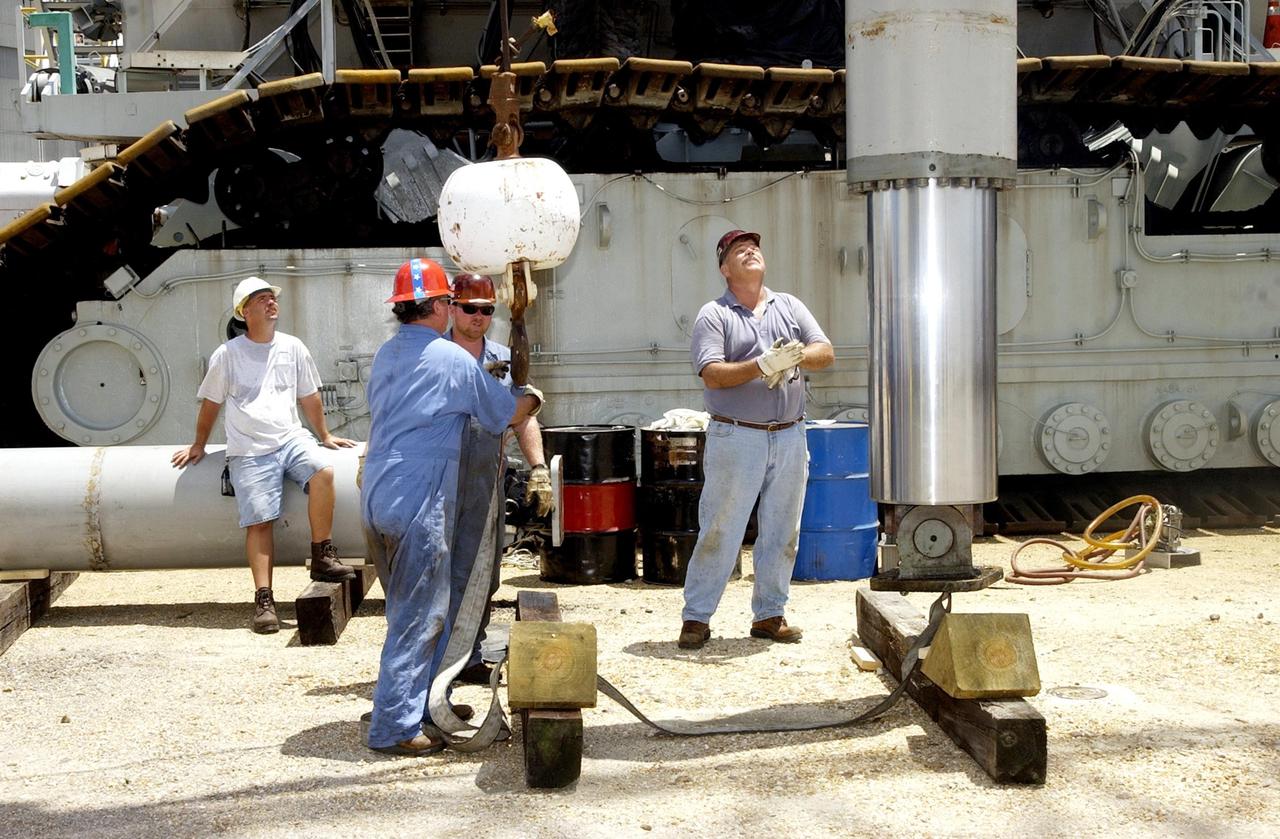
KENNEDY SPACE CENTER, FLA. -- Technicians closely monitor a jacking, equalization and leveling (JEL) cylinder and bearing from Crawler-Transporter No. 2 as it lowered by a crane to a position on the ground. During routine maintenance inspections last week, technicians removed two of the 16 JEL cylinders on the crawler to gain access to the bearings and found three of the four bearings cracked. Further eddy current inspections indicated that cracks are present on 15 of the bearings. There are 16 cylinders and 32 bearings per crawler. Engineers are evaluating the situation to determine the cause of the cracks and an appropriate solution to the problem.
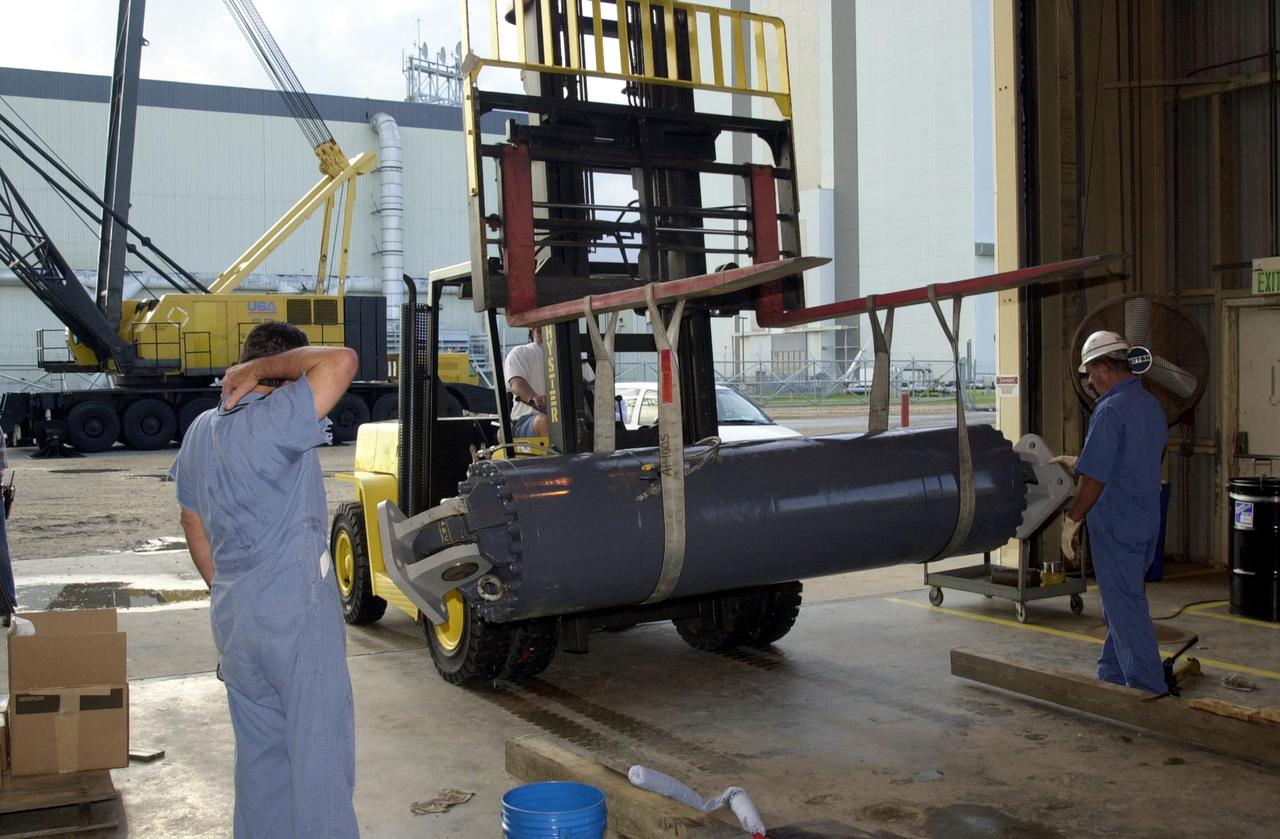
KENNEDY SPACE CENTER, FLA. -- One of the repaired Jacking, Equalization and Leveling (JEL) cylinders is moved from the repair site for installation into Crawler Transporter No. 2. There are 16 cylinders and 32 bearings per crawler. During recent routine maintenance inspections, technicians removed two of the 16 JEL cylinders on the crawler to gain access to the bearings and found three of the four bearings cracked. Further eddy current inspections indicated that cracks were present on 15 of the bearings.. Technicians have removed and replaced 14 of the bearings on CT-2, which is being repaired in order to enable Atlantis' rollout for mission STS-112, scheduled for launch no earlier than Oct. 2.
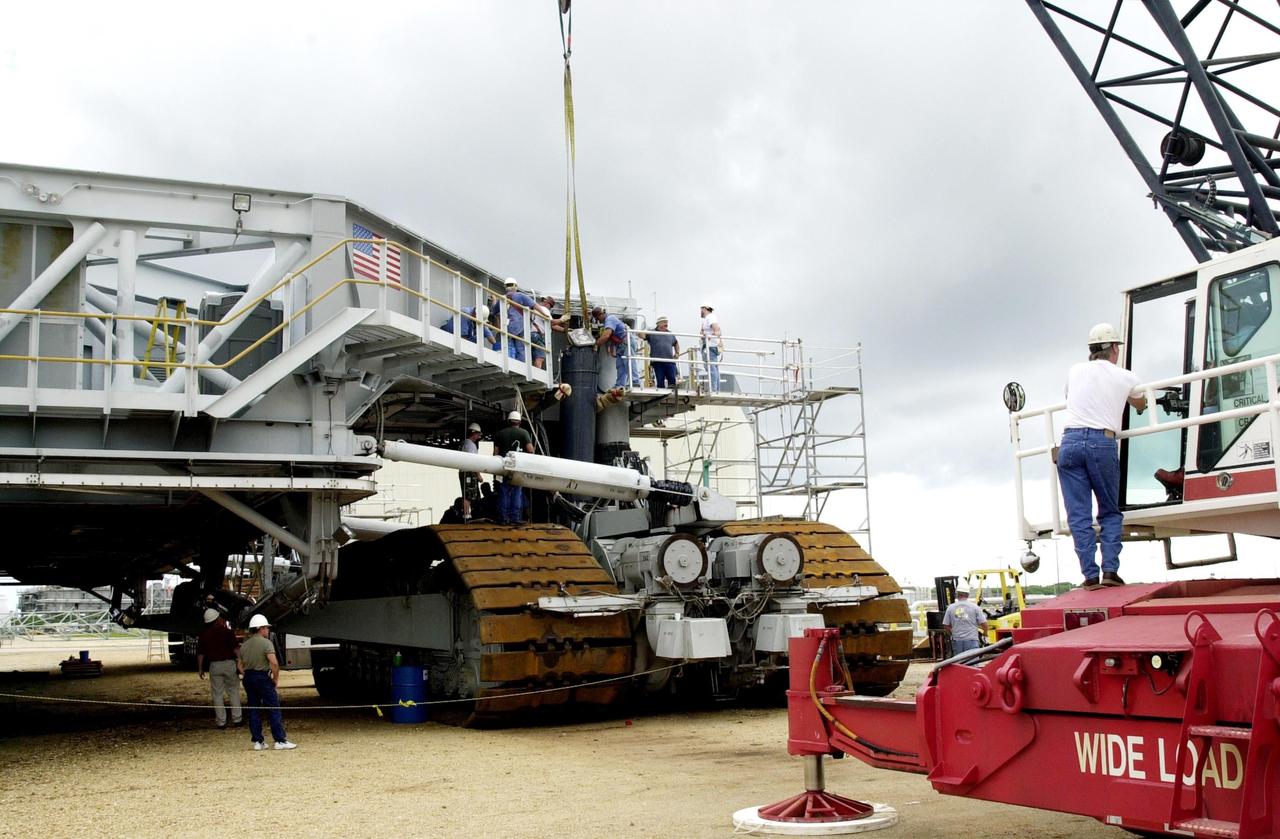
KENNEDY SPACE CENTER, FLA. -- Supported by the overhead crane and maneuvered by several workers, a repaired Jacking, Equalization and Leveling (JEL) cylinder is lifted into position on Crawler Transporter No. 2. There are 16 cylinders and 32 bearings per crawler. During recent routine maintenance inspections, technicians removed two of the 16 JEL cylinders on the crawler to gain access to the bearings and found three of the four bearings cracked. Further eddy current inspections indicated that cracks were present on 15 of the bearings.. Technicians have removed and replaced 14 of the bearings on CT-2, which is being repaired in order to enable Atlantis' rollout for mission STS-112, scheduled for launch no earlier than Oct. 2.
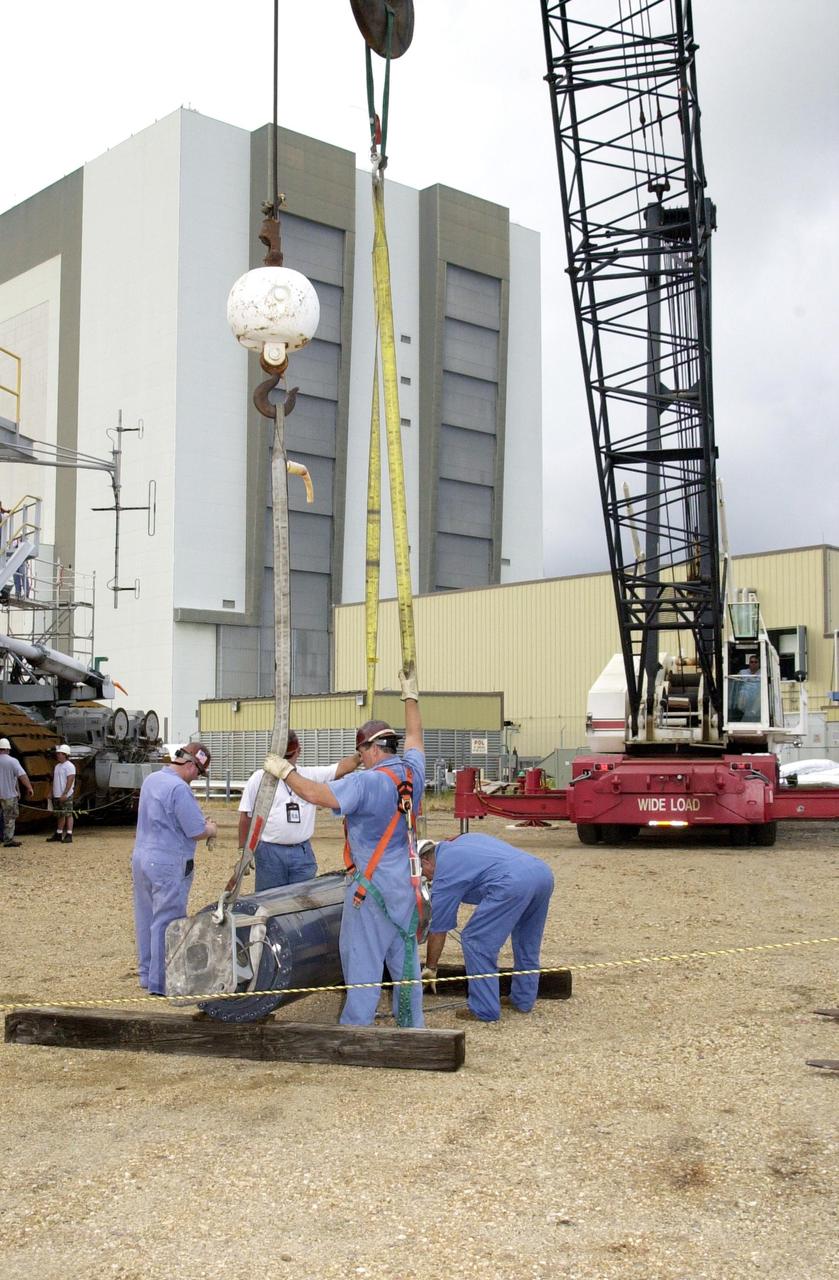
KENNEDY SPACE CENTER, FLA. -- The repaired Jacking, Equalization and Leveling (JEL) cylinder is attached to a crane. The crane will lift the JEL for placement in Crawler Transporter No. 2. There are 16 cylinders and 32 bearings per crawler. During recent routine maintenance inspections, technicians removed two of the 16 JEL cylinders on the crawler to gain access to the bearings and found three of the four bearings cracked. Further eddy current inspections indicated that cracks were present on 15 of the bearings.. Technicians have removed and replaced 14 of the bearings on CT-2, which is being repaired in order to enable Atlantis' rollout for mission STS-112, scheduled for launch no earlier than Oct. 2.
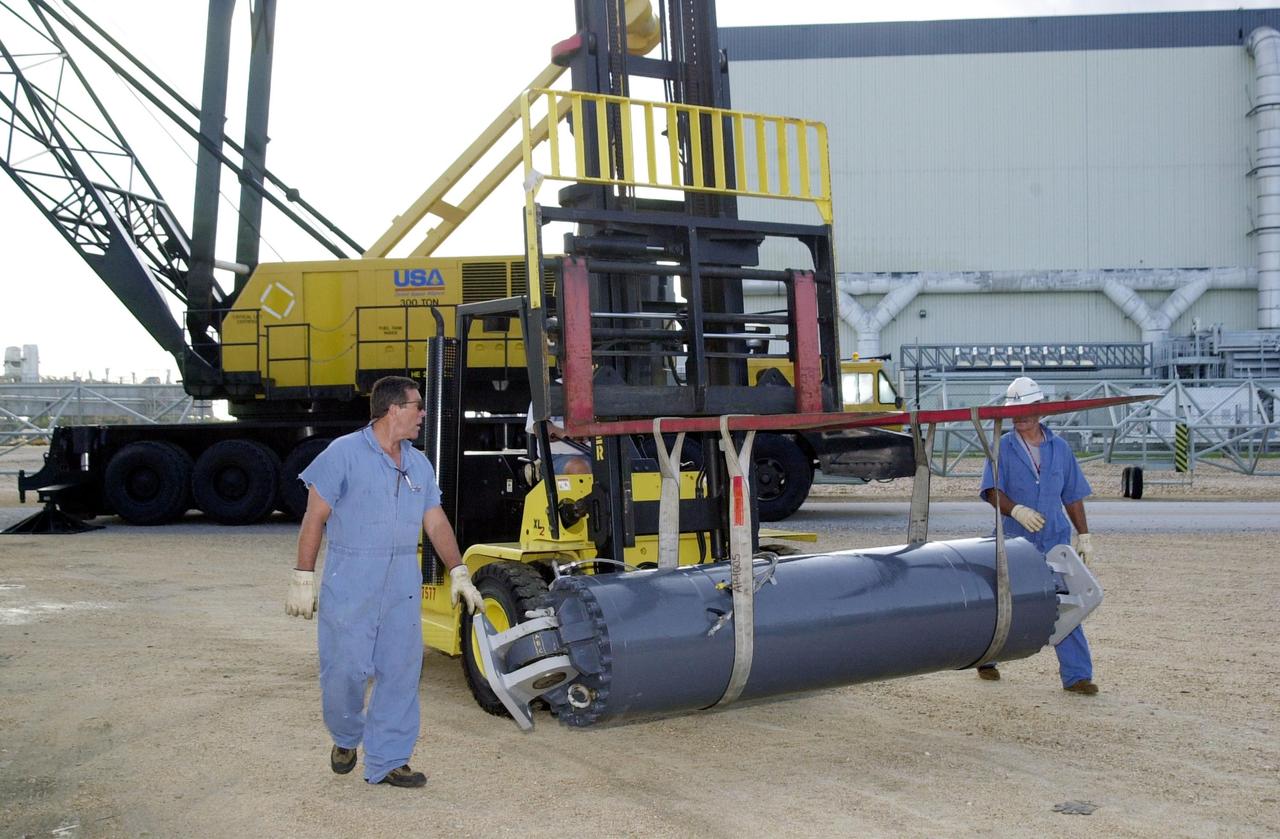
KENNEDY SPACE CENTER, FLA. -- Workers accompany the repaired Jacking, Equalization and Leveling (JEL) cylinder as it is moved from the repair site for installation into Crawler Transporter No. 2. There are 16 cylinders and 32 bearings per crawler. During recent routine maintenance inspections, technicians removed two of the 16 JEL cylinders on the crawler to gain access to the bearings and found three of the four bearings cracked. Further eddy current inspections indicated that cracks were present on 15 of the bearings.. Technicians have removed and replaced 14 of the bearings on CT-2, which is being repaired in order to enable Atlantis' rollout for mission STS-112, scheduled for launch no earlier than Oct. 2.
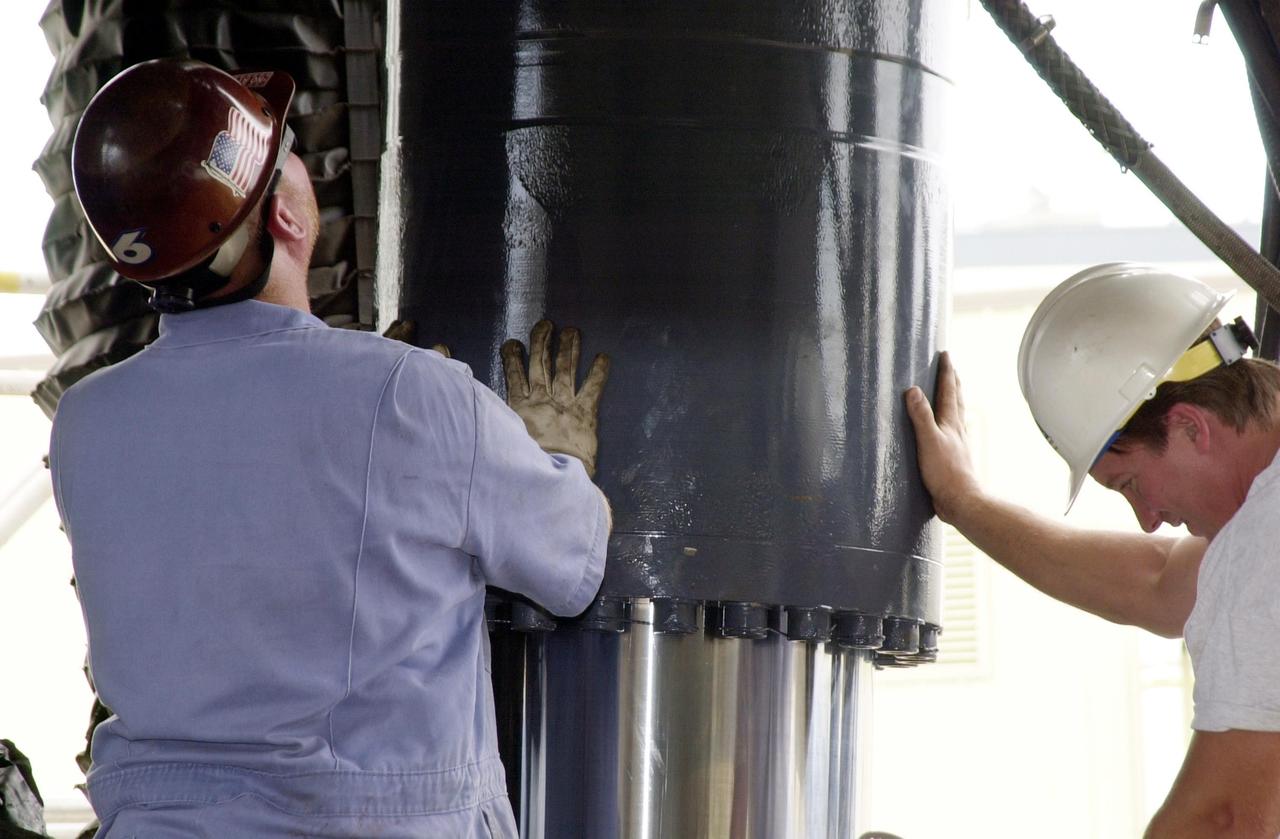
KENNEDY SPACE CENTER, FLA. -- Two workers help maneuver a repaired Jacking, Equalization and Leveling (JEL) cylinder as it is lowered into place on Crawler Transporter No. 2. There are 16 cylinders and 32 bearings per crawler. During recent routine maintenance inspections, technicians removed two of the 16 JEL cylinders on the crawler to gain access to the bearings and found three of the four bearings cracked. Further eddy current inspections indicated that cracks were present on 15 of the bearings.. Technicians have removed and replaced 14 of the bearings on CT-2, which is being repaired in order to enable Atlantis' rollout for mission STS-112, scheduled for launch no earlier than Oct. 2.
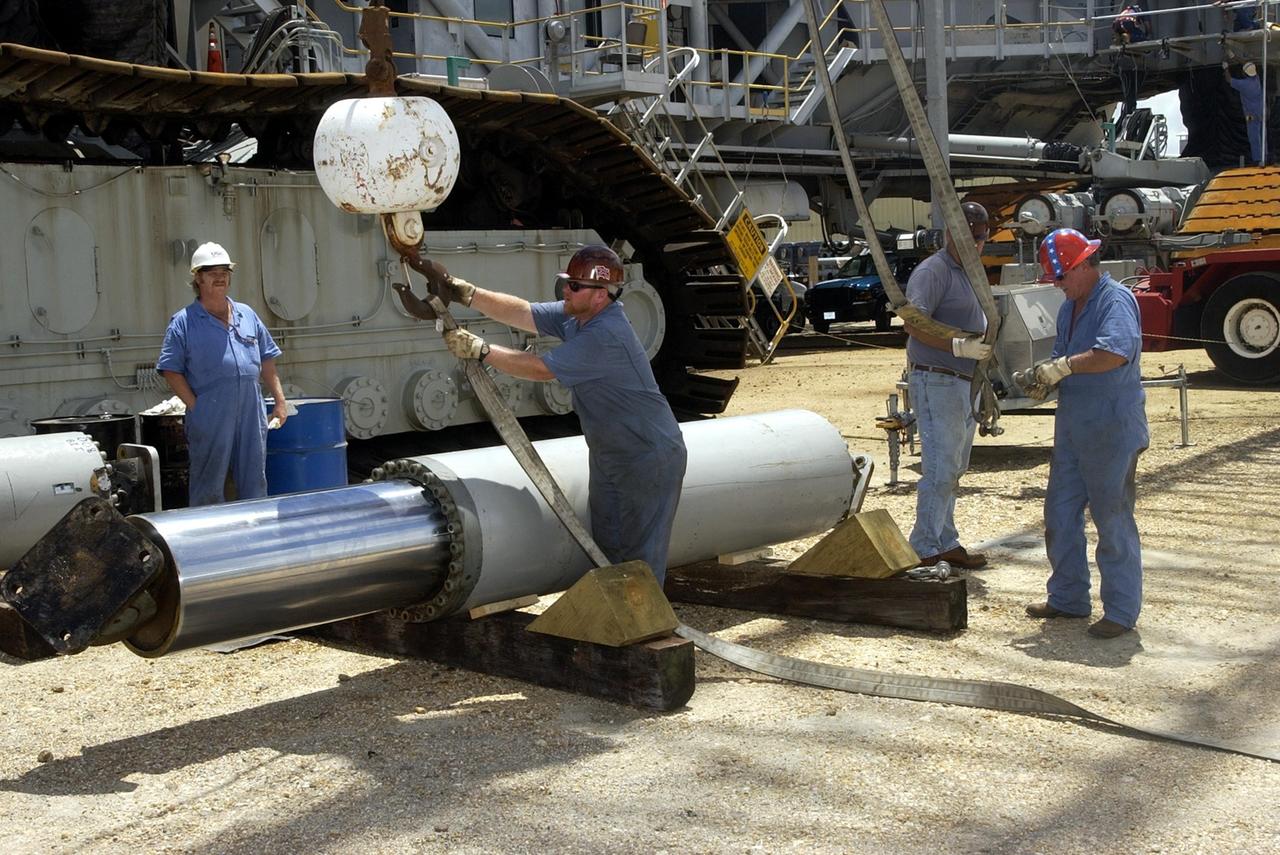
KENNEDY SPACE CENTER, FLA. -- Technicians remove the crane straps from a jacking, equalization and leveling (JEL) cylinder and bearing from Crawler-Transporter No. 2 after it is lowered by a crane to a resting position on the ground. During routine maintenance inspections last week, technicians removed two of the 16 JEL cylinders on the crawler to gain access to the bearings and found three of the four bearings cracked. Further eddy current inspections indicated that cracks are present on 15 of the bearings. There are 16 cylinders and 32 bearings per crawler. Engineers are evaluating the situation to determine the cause of the cracks and an appropriate solution to the problem.
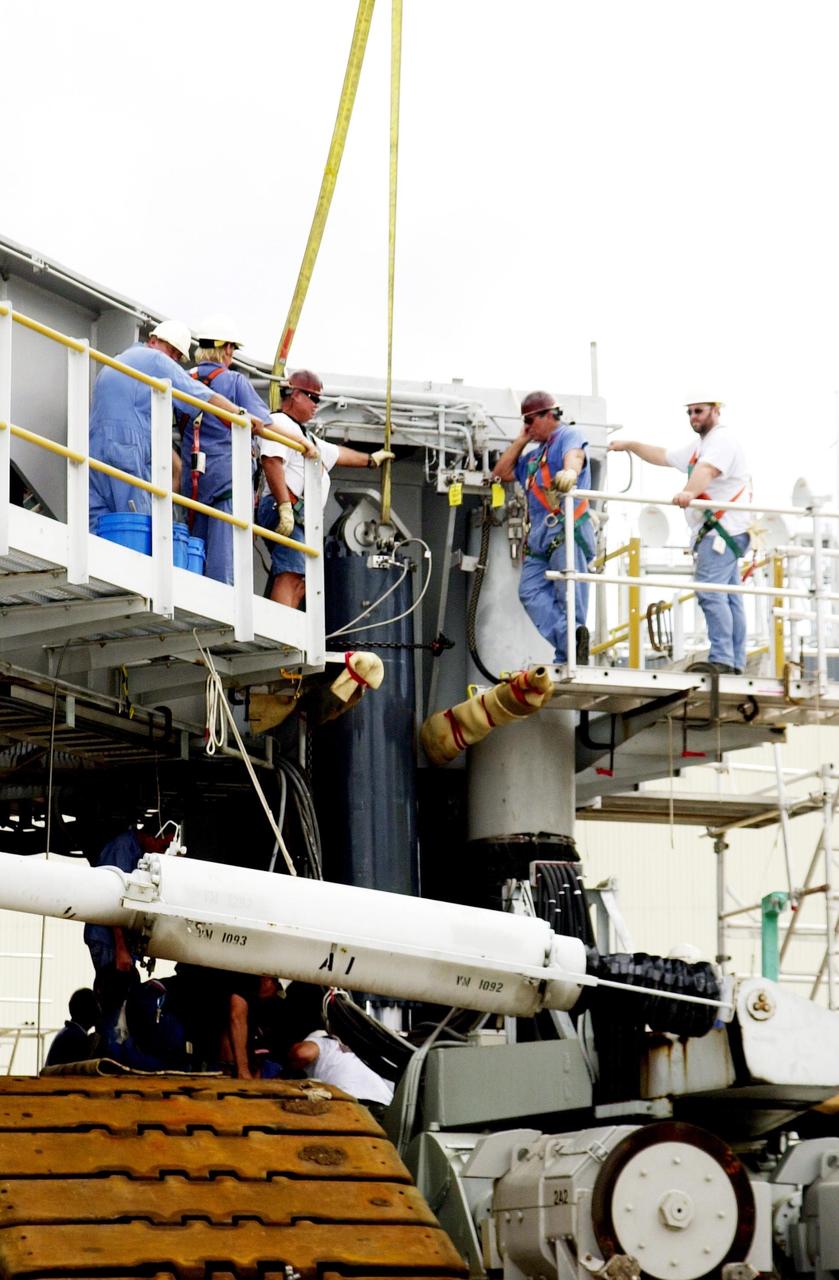
KENNEDY SPACE CENTER, FLA. -- Near the bottom of the repaired Jacking, Equalization and Leveling (JEL) cylinder, workers fasten the JEL to Crawler Transporter No. 2. There are 16 cylinders and 32 bearings per crawler. During recent routine maintenance inspections, technicians removed two of the 16 JEL cylinders on the crawler to gain access to the bearings and found three of the four bearings cracked. Further eddy current inspections indicated that cracks were present on 15 of the bearings.. Technicians have removed and replaced 14 of the bearings on CT-2, which is being repaired in order to enable Atlantis' rollout for mission STS-112, scheduled for launch no earlier than Oct. 2.
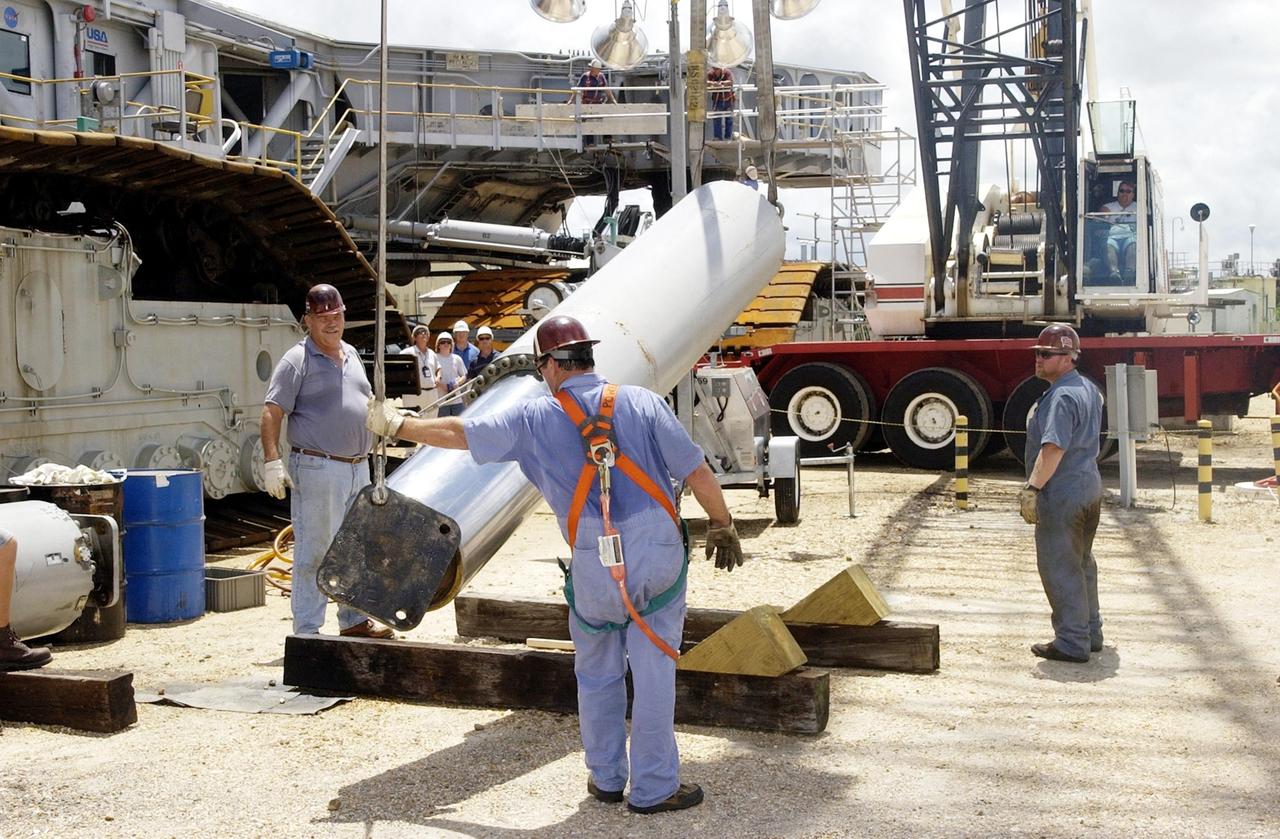
KENNEDY SPACE CENTER, FLA. -- A technician holds a crane strap to steady and guide a jacking, equalization and leveling (JEL) cylinder and bearing from Crawler-Transporter No. 2 as it is lowered by a crane to a resting position on the ground. During routine maintenance inspections last week, technicians removed two of the 16 JEL cylinders on the crawler to gain access to the bearings and found three of the four bearings cracked. Further eddy current inspections indicated that cracks are present on 15 of the bearings. There are 16 cylinders and 32 bearings per crawler. Engineers are evaluating the situation to determine the cause of the cracks and an appropriate solution to the problem.
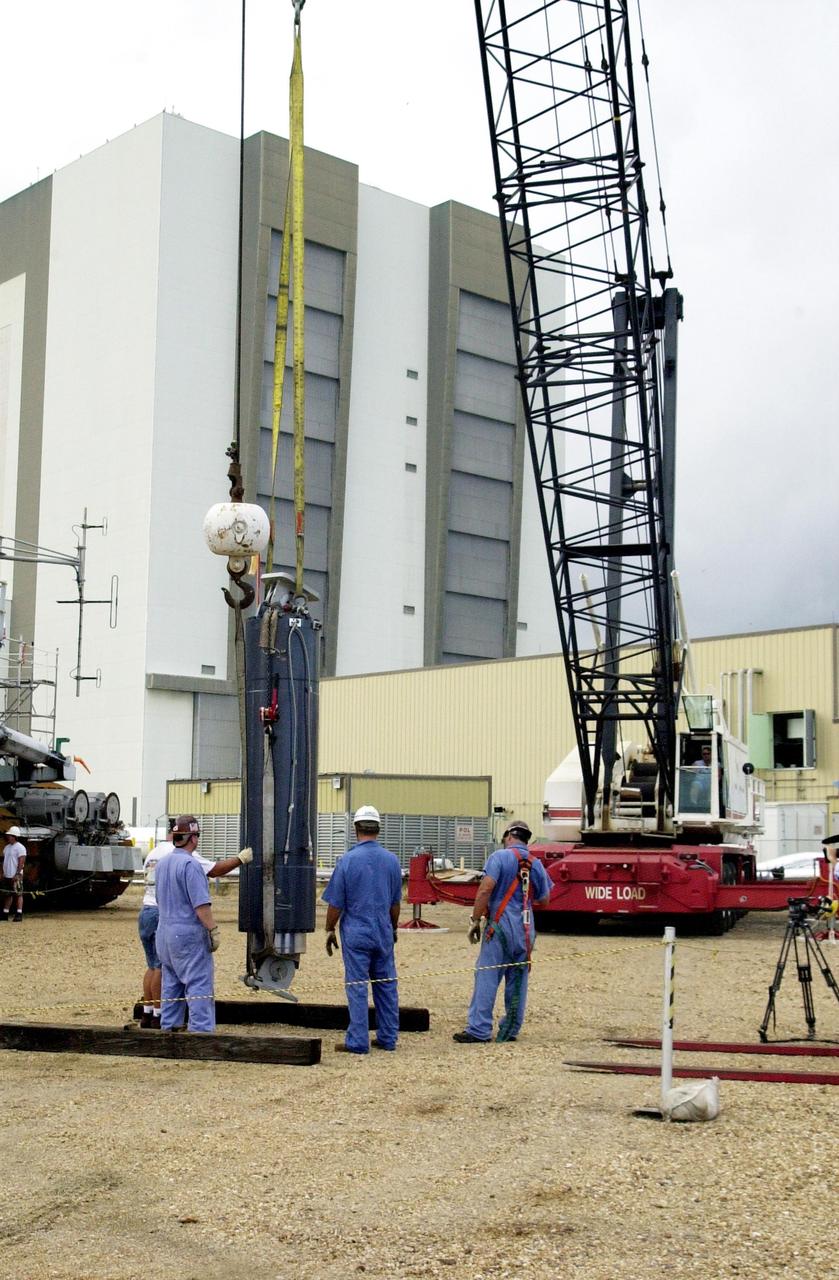
KENNEDY SPACE CENTER, FLA. -- A crane lifts the repaired Jacking, Equalization and Leveling (JEL) cylinder to move into to Crawler Transporter No. 2. There are 16 cylinders and 32 bearings per crawler. During recent routine maintenance inspections, technicians removed two of the 16 JEL cylinders on the crawler to gain access to the bearings and found three of the four bearings cracked. Further eddy current inspections indicated that cracks were present on 15 of the bearings.. Technicians have removed and replaced 14 of the bearings on CT-2, which is being repaired in order to enable Atlantis' rollout for mission STS-112, scheduled for launch no earlier than Oct. 2.
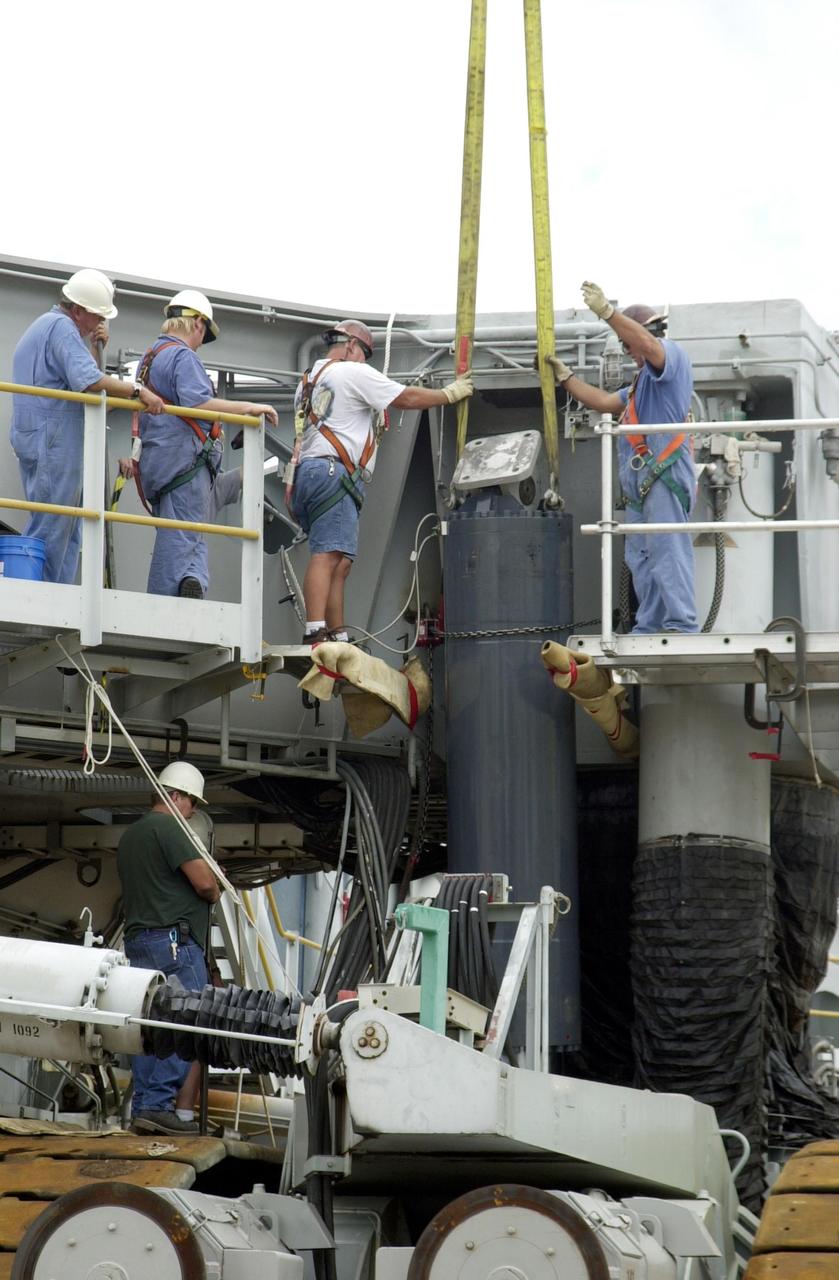
KENNEDY SPACE CENTER, FLA. -- Workers on Crawler Transporter No. 2 help guide a repaired Jacking, Equalization and Leveling (JEL) cylinder into place. There are 16 cylinders and 32 bearings per crawler. During recent routine maintenance inspections, technicians removed two of the 16 JEL cylinders on the crawler to gain access to the bearings and found three of the four bearings cracked. Further eddy current inspections indicated that cracks were present on 15 of the bearings. Technicians have removed and replaced 14 of the bearings on CT-2, which is being repaired in order to enable Atlantis' rollout for mission STS-112, scheduled for launch no earlier than Oct. 2.
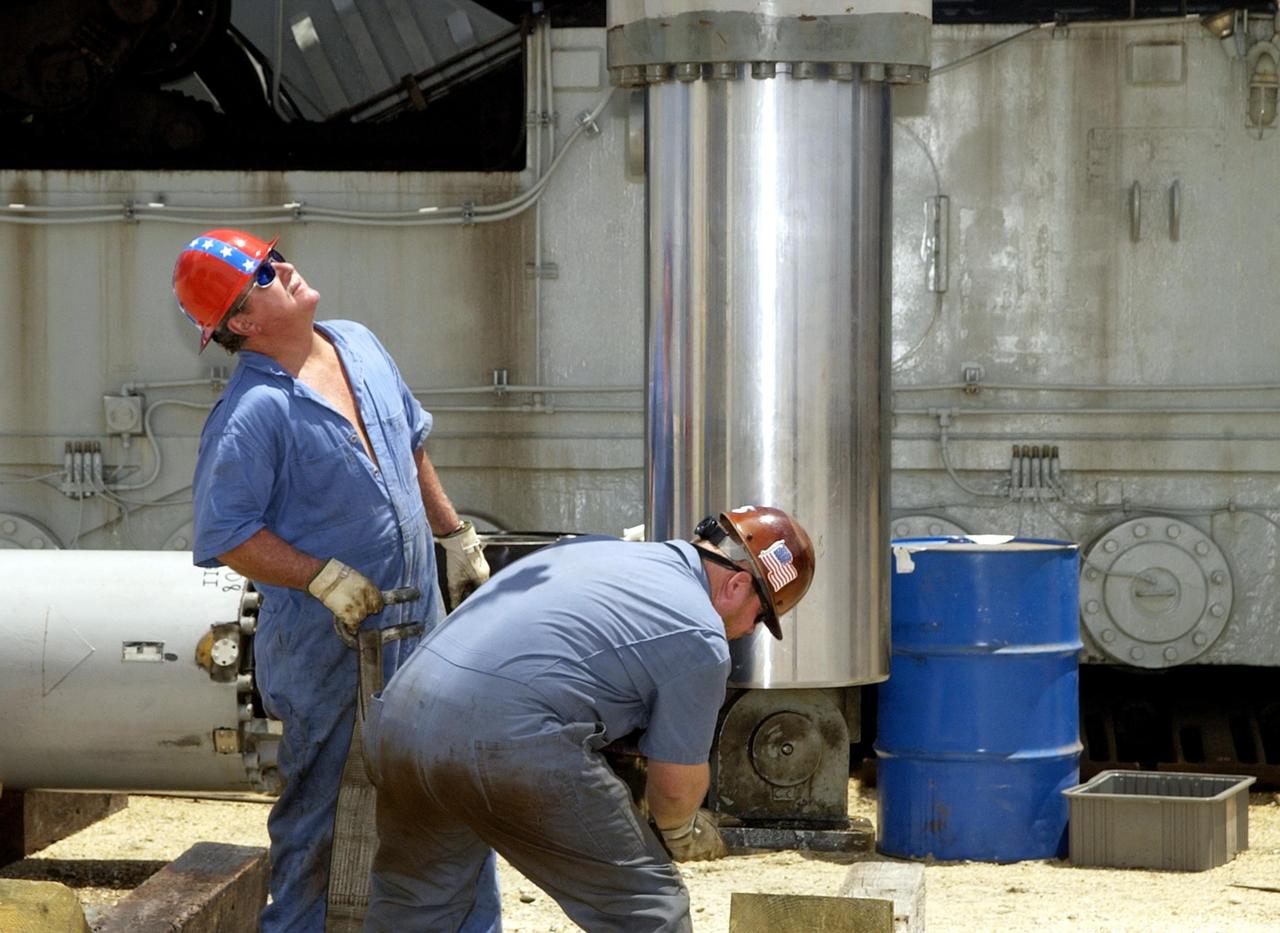
KENNEDY SPACE CENTER, FLA. -- Technicians closely monitor a jacking, equalization and leveling (JEL) cylinder and bearing from Crawler-Transporter No. 2 as it lowered by a crane to a position on the ground. During routine maintenance inspections last week, technicians removed two of the 16 JEL cylinders on the crawler to gain access to the bearings and found three of the four bearings cracked. Further eddy current inspections indicated that cracks are present on 15 of the bearings. There are 16 cylinders and 32 bearings per crawler. Engineers are evaluating the situation to determine the cause of the cracks and an appropriate solution to the problem.
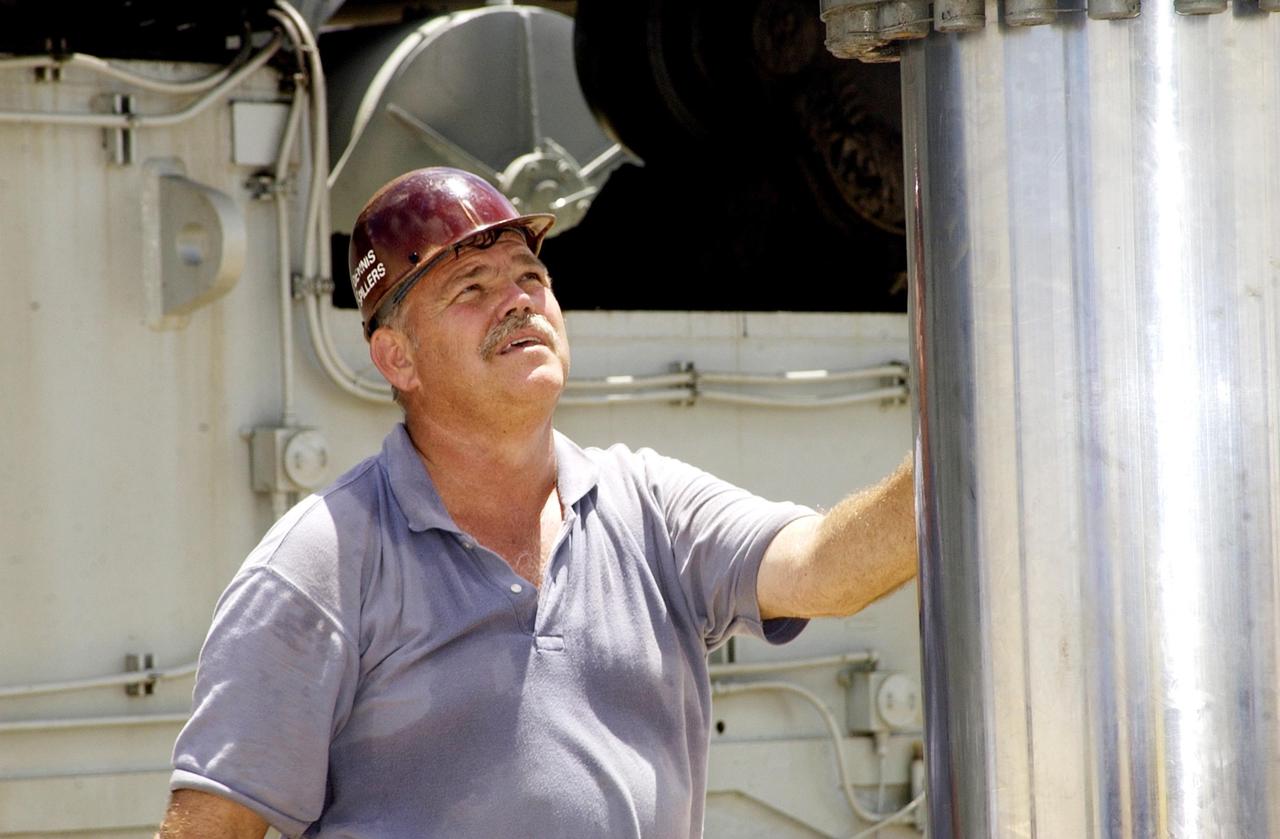
KENNEDY SPACE CENTER, FLA. -- A technician steadies a jacking, equalization and leveling (JEL) cylinder and bearing from Crawler-Transporter No. 2 as it is lowered by a crane to a position on the ground. During routine maintenance inspections last week, technicians removed two of the 16 JEL cylinders on the crawler to gain access to the bearings and found three of the four bearings cracked. Further eddy current inspections indicated that cracks are present on 15 of the bearings. There are 16 cylinders and 32 bearings per crawler. Engineers are evaluating the situation to determine the cause of the cracks and an appropriate solution to the problem.
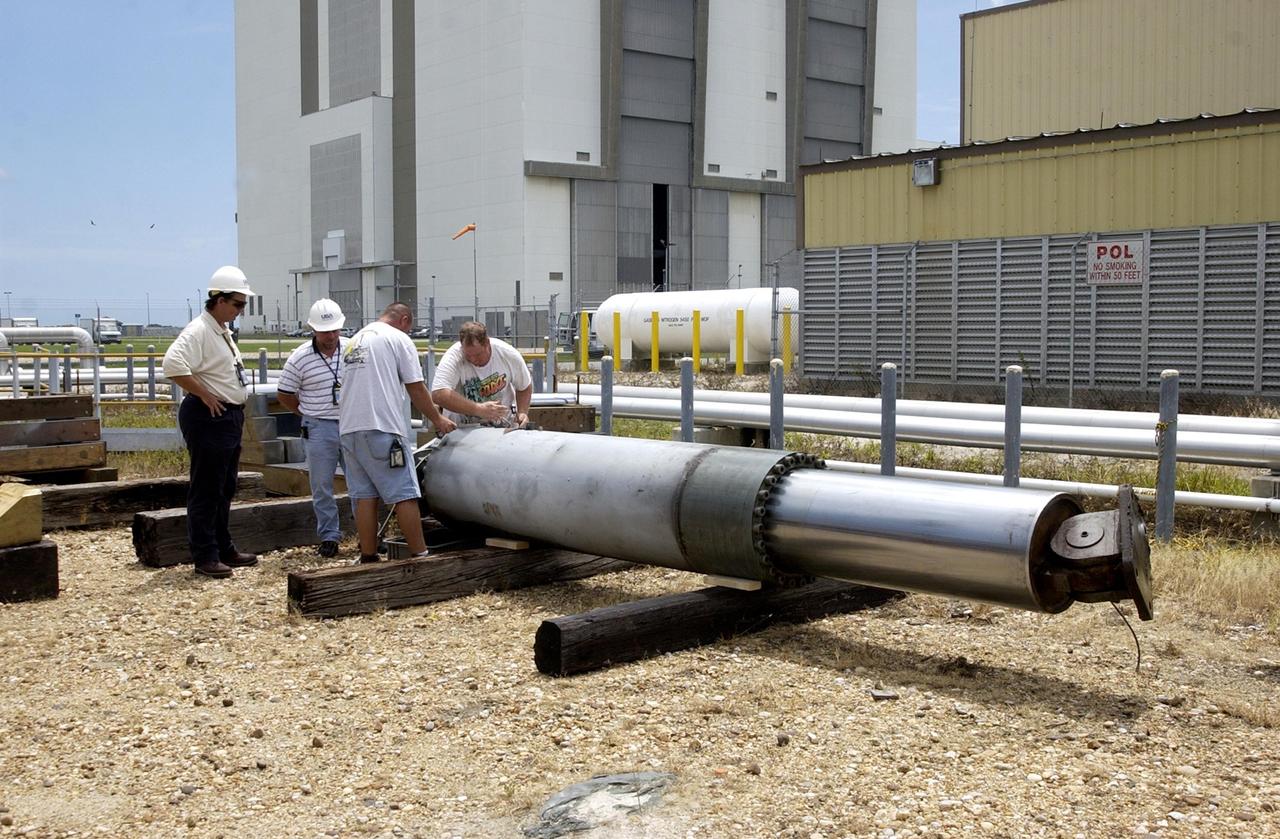
KENNEDY SPACE CENTER, FLA. -- Technicians check out a jacking, equalization and leveling (JEL) cylinders from Crawler-Transporter No. 2. During inspections, technicians removed two of the 16 JEL cylinders on the vehicle to gain access to the bearings for routine maintenance and found three of the four bearings had cracks. Of the three bearings, two had extensive damage. Further eddy current inspections indicate that cracks are present on 15 of the bearings. There are 16 cylinders and 32 bearings per crawler. Although no cause for the cracks is known at this time, engineers are currently evaluating the situation to determine the most appropriate solution.
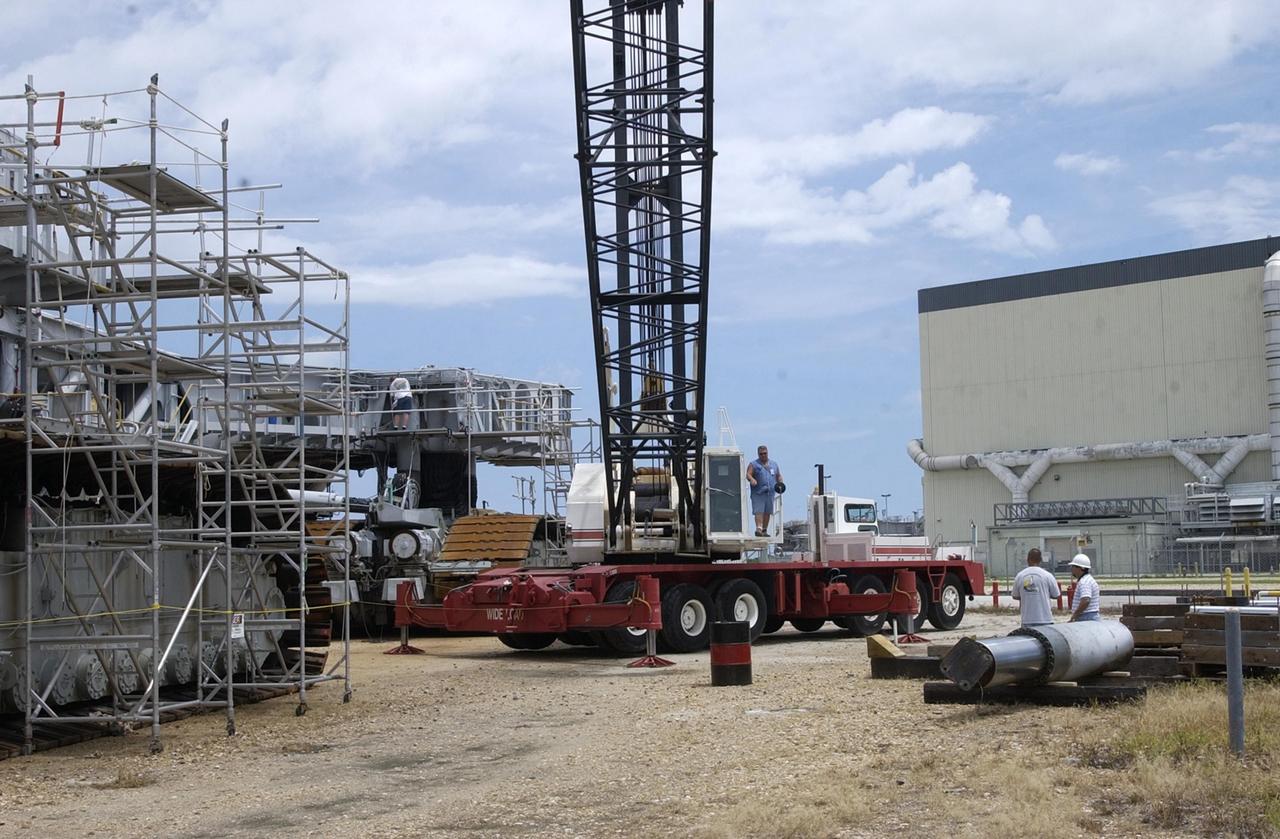
KENNEDY SPACE CENTER, FLA. -- A crane operator (center) talks with technicians (right) standing next to one of the jacking, equalization and leveling (JEL) cylinders from Crawler-Transporter No. 2. During inspections, technicians removed two of the 16 JEL cylinders on the vehicle to gain access to the bearings for routine maintenance and found three of the four bearings had cracks. Of the three bearings, two had extensive damage. Further eddy current inspections indicate that cracks are present on 15 of the bearings. There are 16 cylinders and 32 bearings per crawler. Although no cause for the cracks is known at this time, engineers are currently evaluating the situation to determine the most appropriate solution.
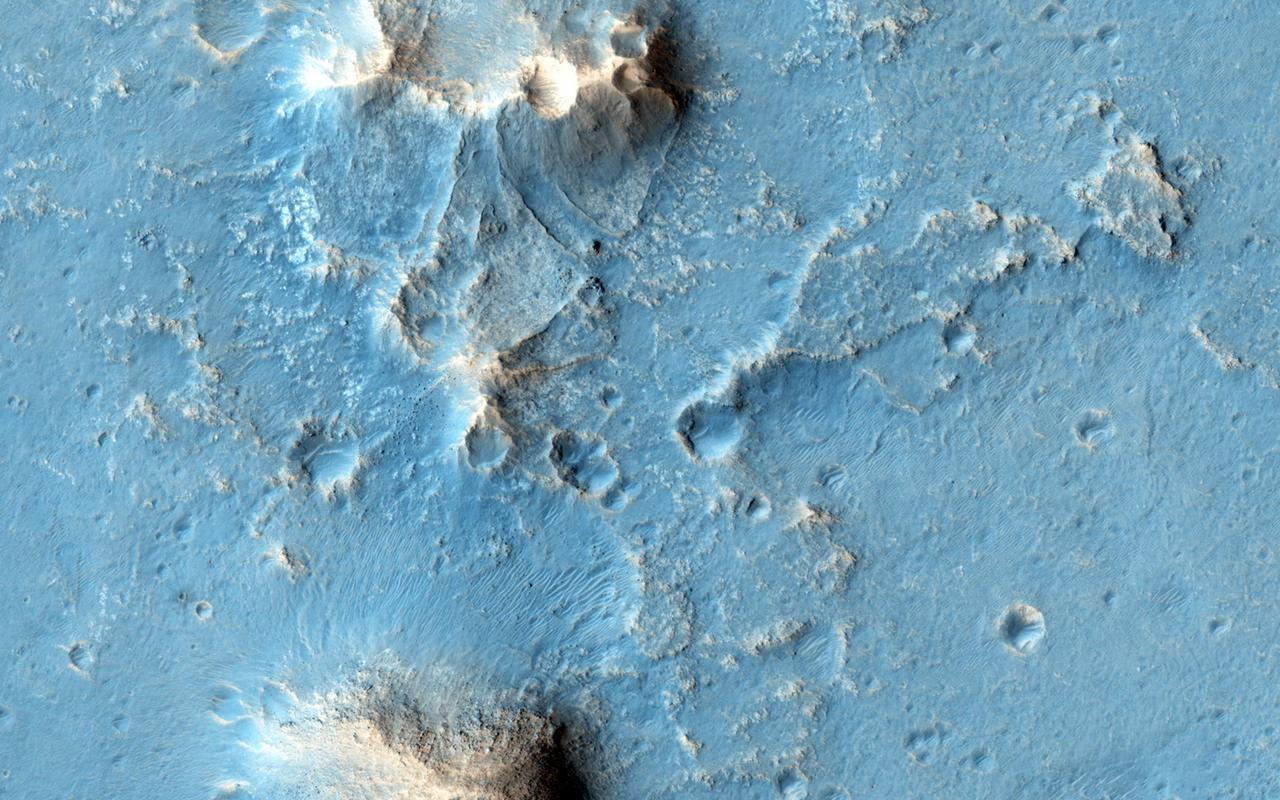
Oxia Planum is broad clay-bearing surface between Mawrth and Ares Vallis that has been proposed as a future landing site on Mars. This image is from NASA Mars Reconnaissance Orbiter.
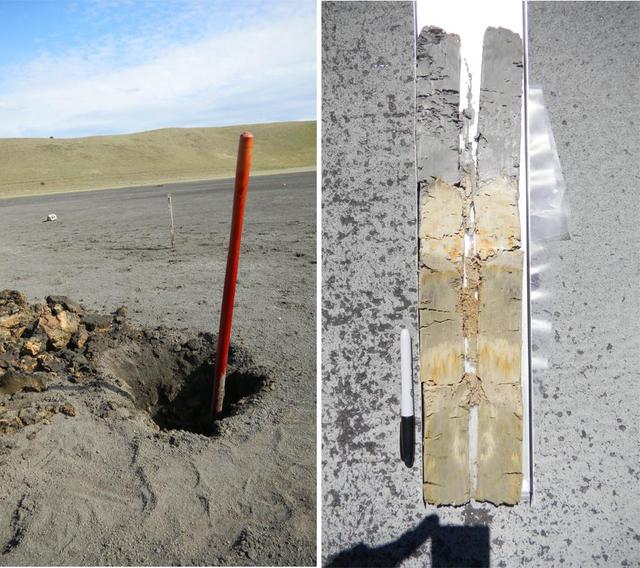
A sampling pit exposing clay-bearing lake sediments, deposited in a basaltic basin in southern Australia -- a modern terrestrial analog to the Yellowknife Bay area that NASA Curiosity rover is exploring.
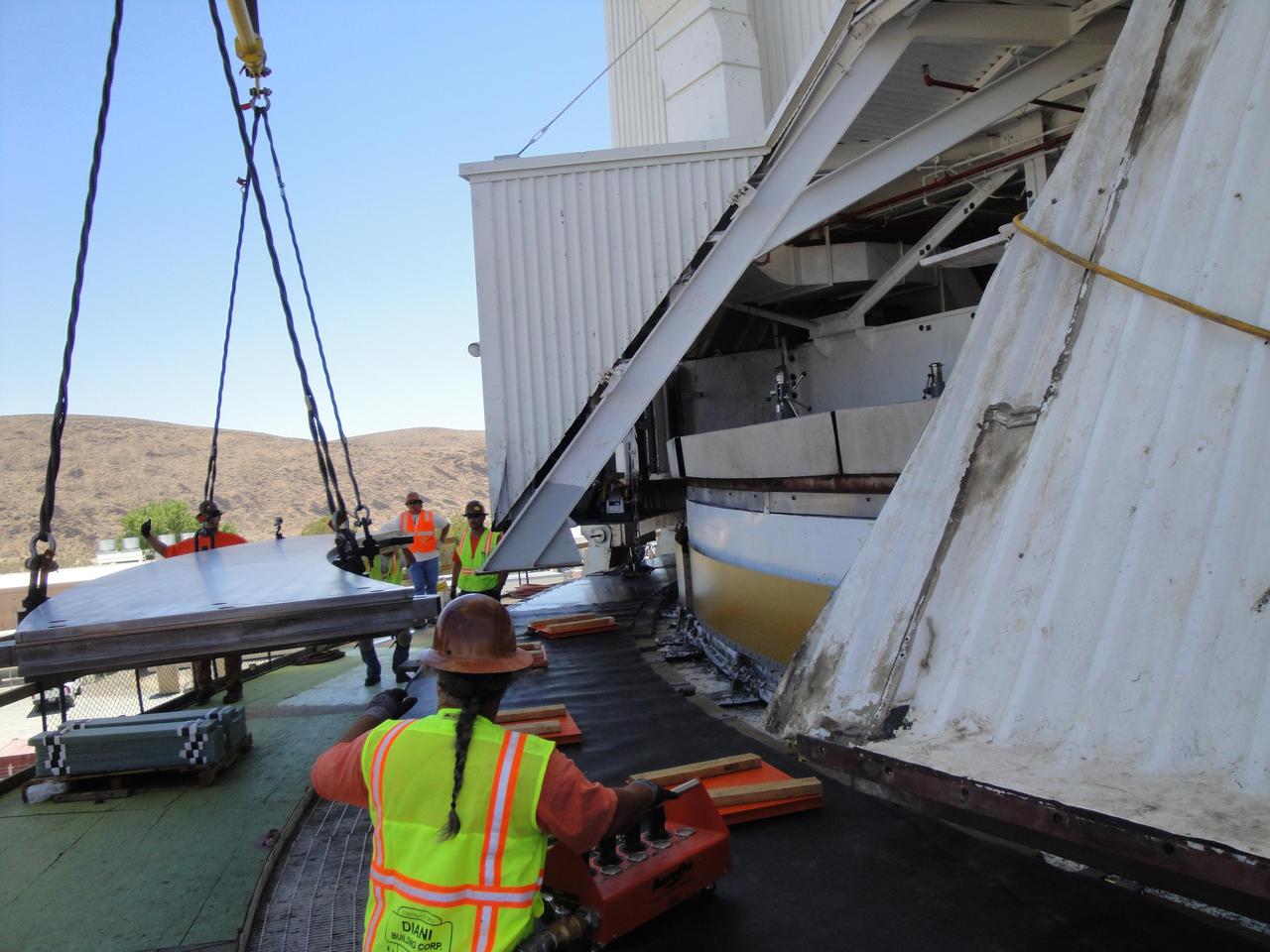
Workers in Goldstone, Calif., guide a new runner segment into the hydrostatic bearing assembly of a giant, 70-meter-wide 230-foot-wide antenna that is a critical part of NASA Deep Space Network.
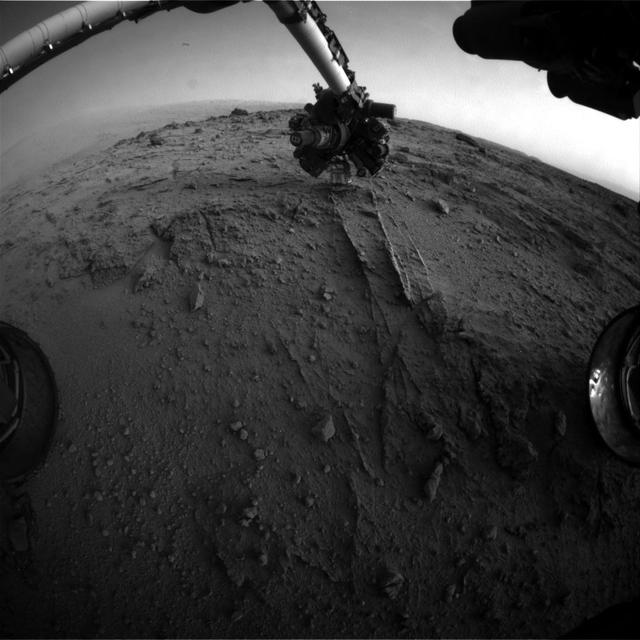
NASA Mars rover Curiosity used a new technique, with added autonomy for the rover, in placement of the tool-bearing turret on its robotic arm. The technique is used to assess how close the instrument is to a soil or rock surface.
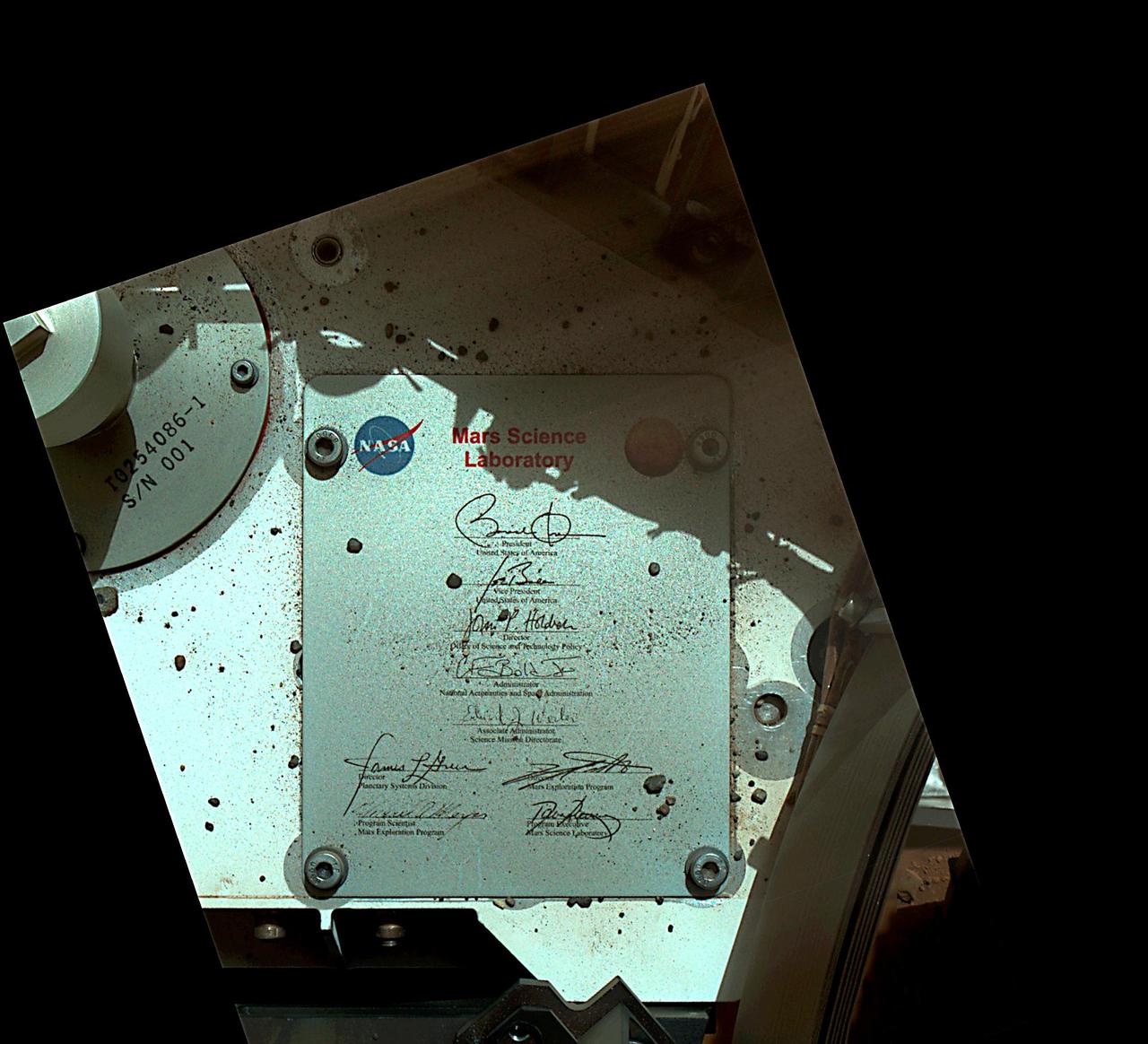
This view of Curiosity deck shows a plaque bearing several signatures of US officials, including that of President Obama and Vice President Biden. The image was taken by the rover Mars Hand Lens Imager MAHLI.
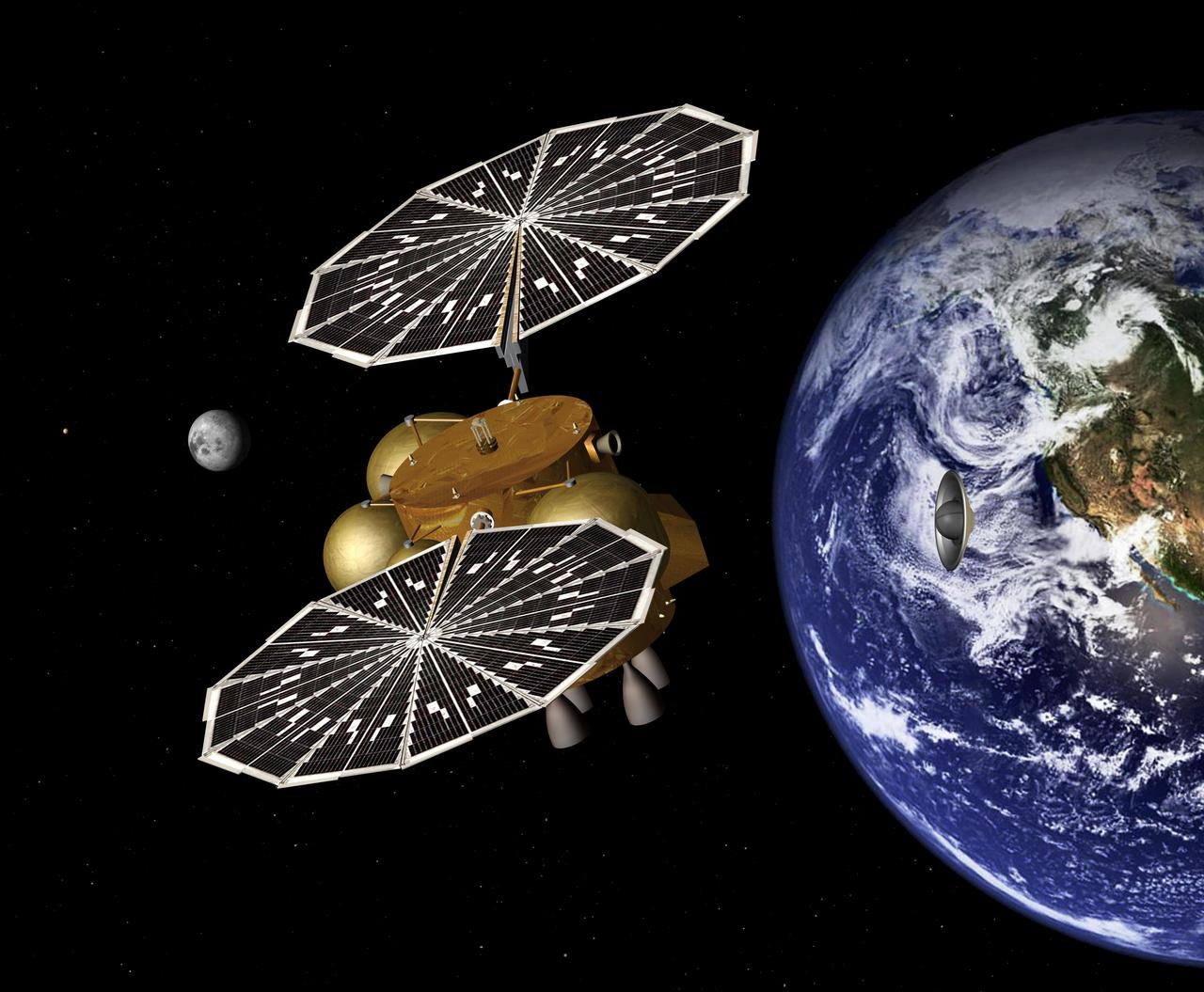
This artist concept of a proposed Mars sample return mission portrays the separation of an Earth entry vehicle, bearing a container of Martian rock samples, from the main spacecraft that would have carried it from Martian orbit nearly to Earth.
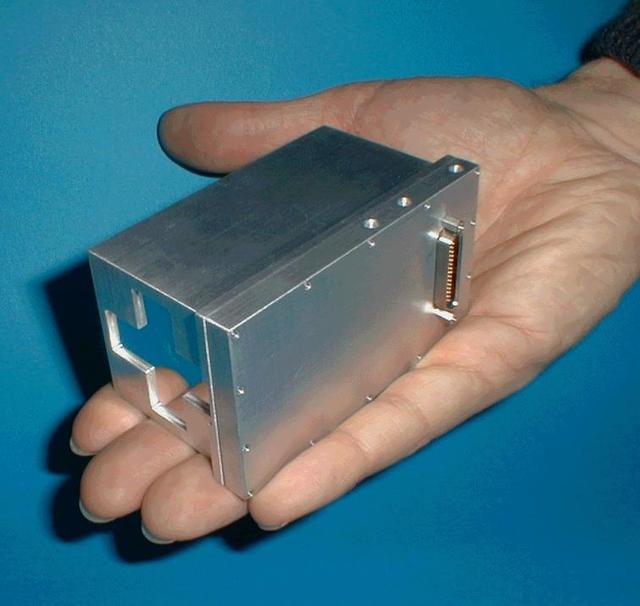
This image taken at NASA Jet Propulsion Laboratory shows the Moessbauer spectrometer, an instrument on NASA Mars Exploration Rover Spirit that detects iron-bearing minerals in martian rocks and soil.
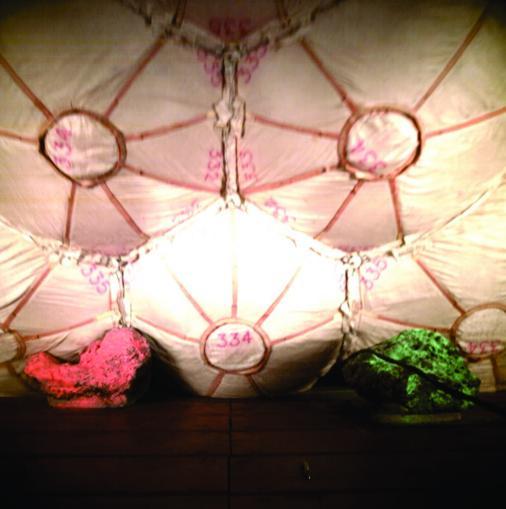
Bearing a striking resemblance to a cluster of paper lanterns, these inflated airbags show a pattern of seams exactly like those left in the martian soil by the Mars Exploration Rover Opportunity during landing at Meridiani Planum, Mars.
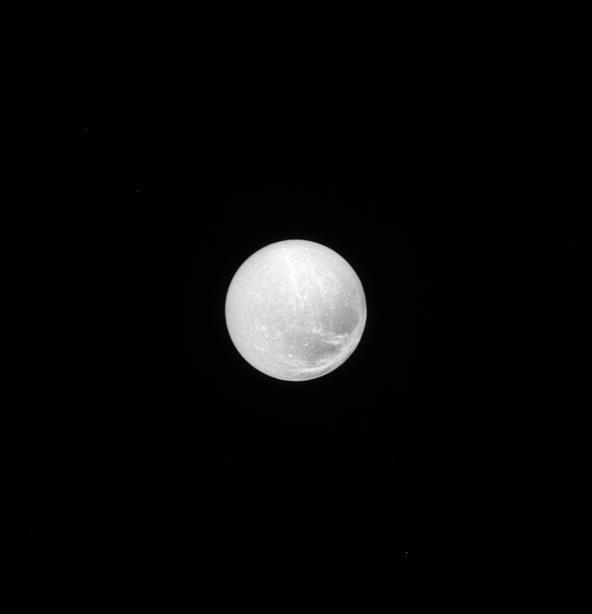
As seen by NASA Cassini spacecraft, the surface of Dione is covered in craters, reminding us of the impacts that have shaped all of the worlds of our solar system; the surface also bears linear features that suggest geological activity in the past.
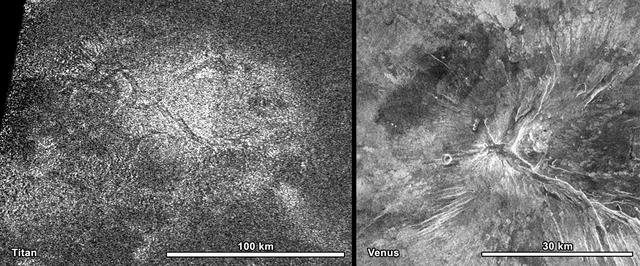
NASA Cassini spacecraft obtained this image of a feature shaped like a hot cross bun in the northern region of Titan left that bears a striking resemblance to a similar feature on Venus right.
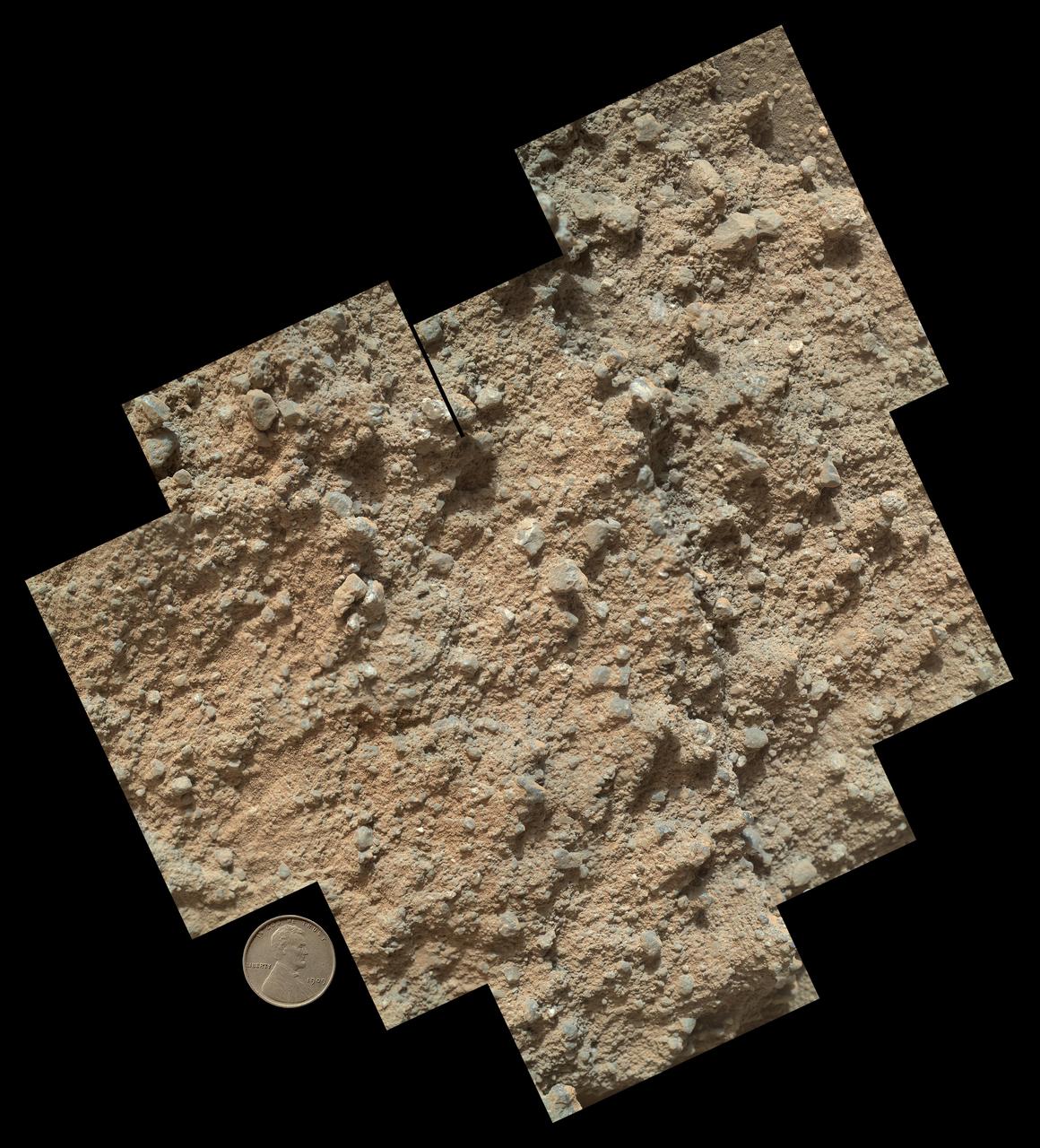
This mosaic of nine images taken at a location called Darwin, inside Gale Crater, were taken by NASA Mars rover Curiosity and shows detailed texture in a conglomerate rock bearing small pebbles and sand-size particles.
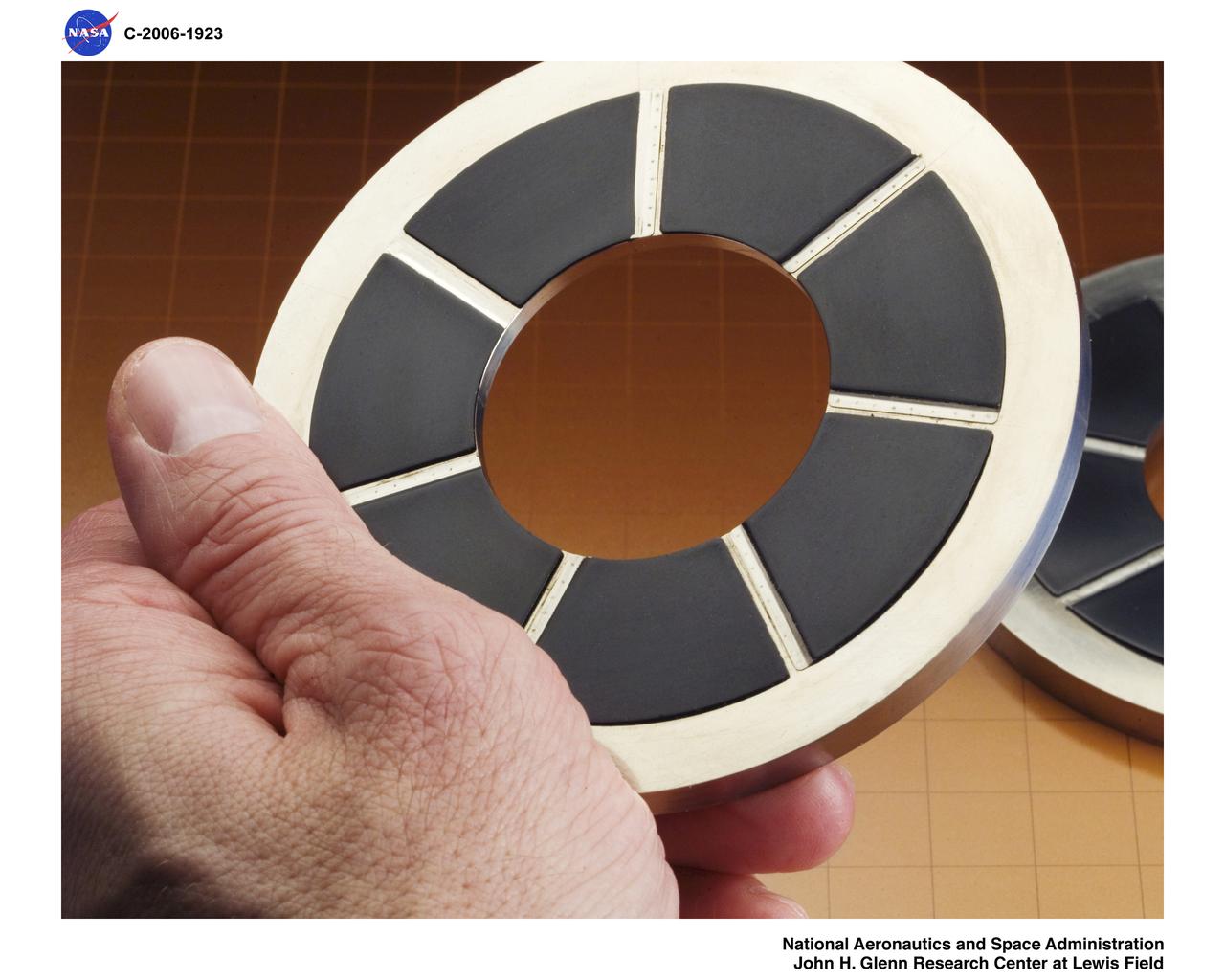
Thrust Foil Air Bearing
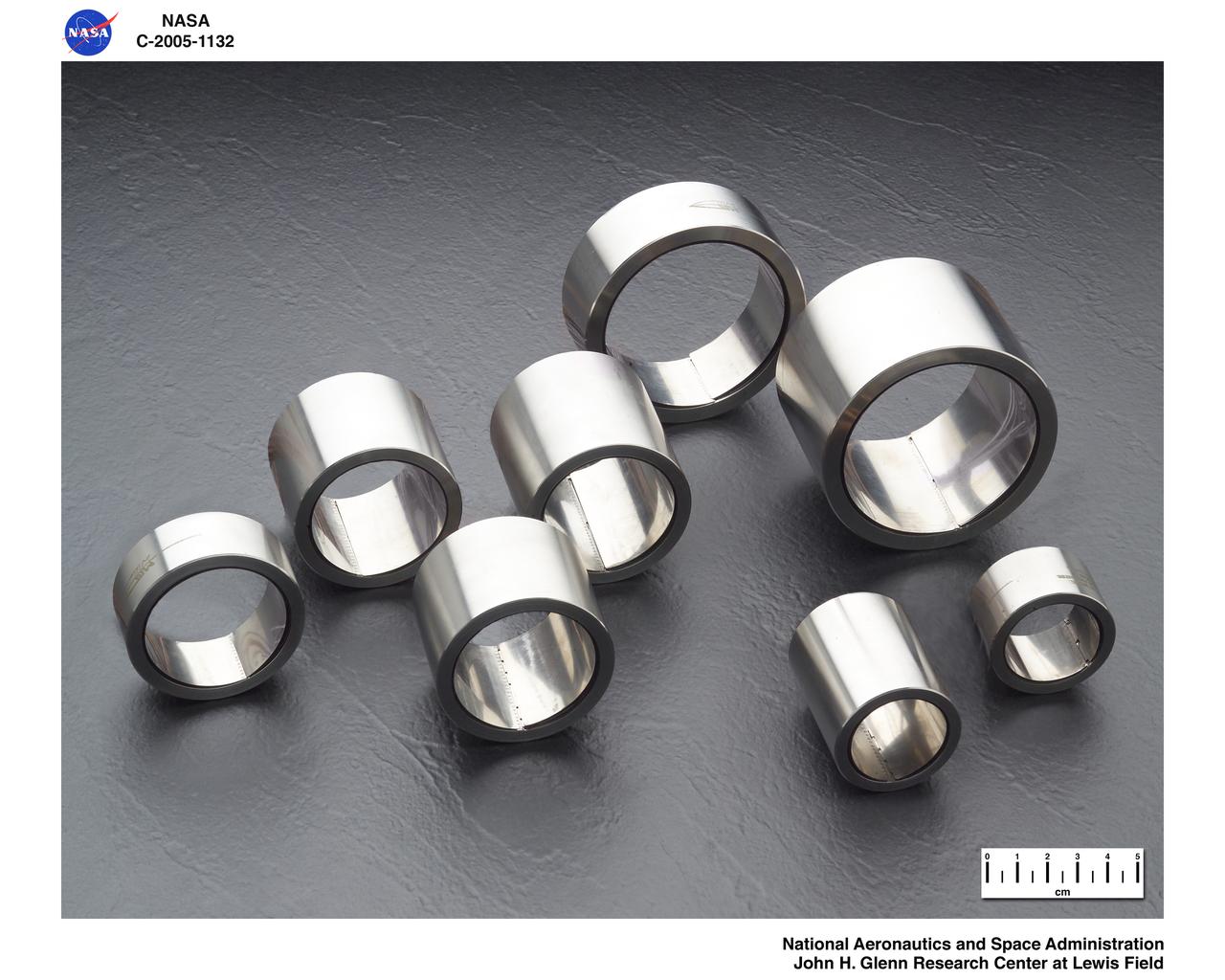
Foil Bearing Test Specimens
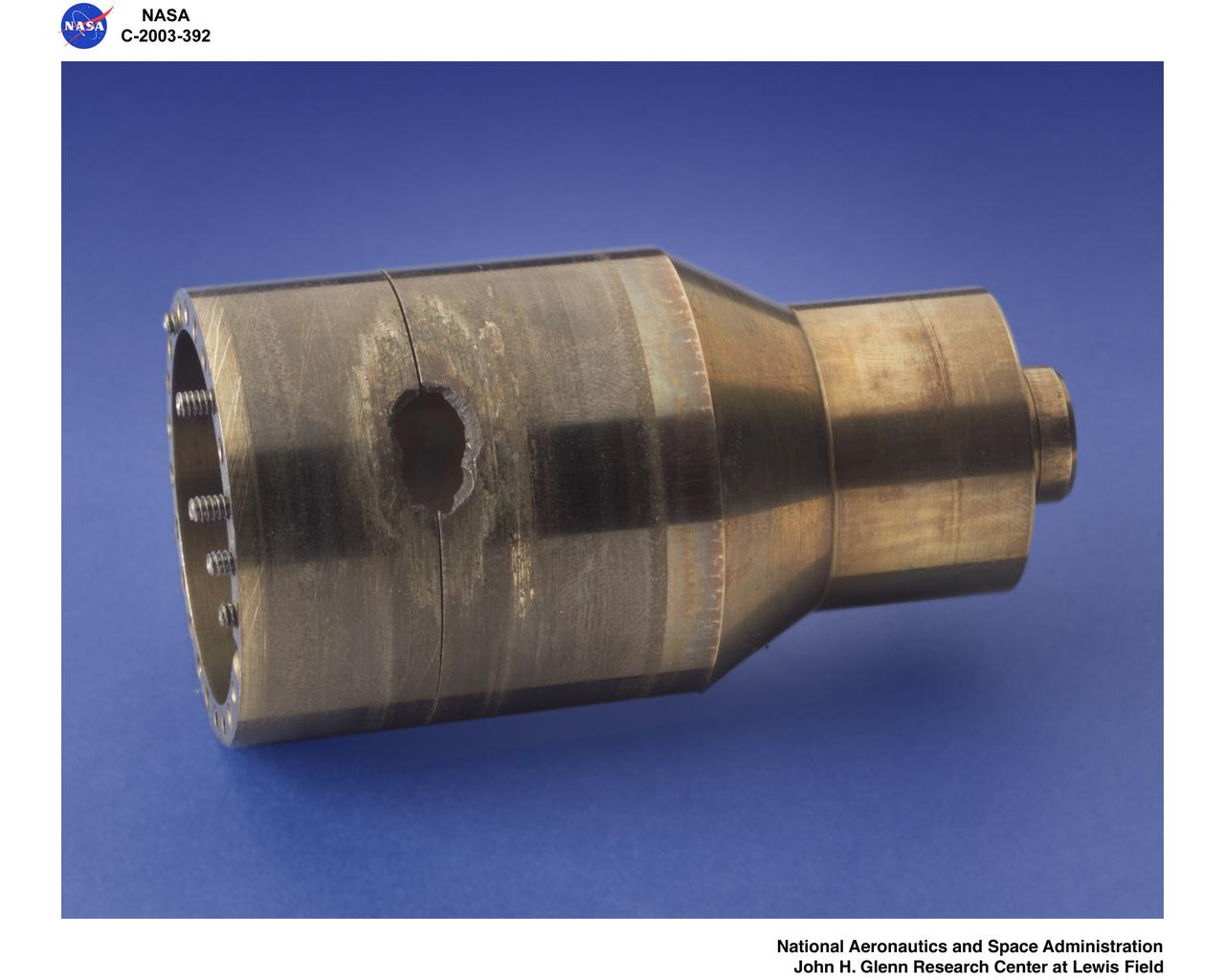
FOIL BEARING TEST JOURNAL