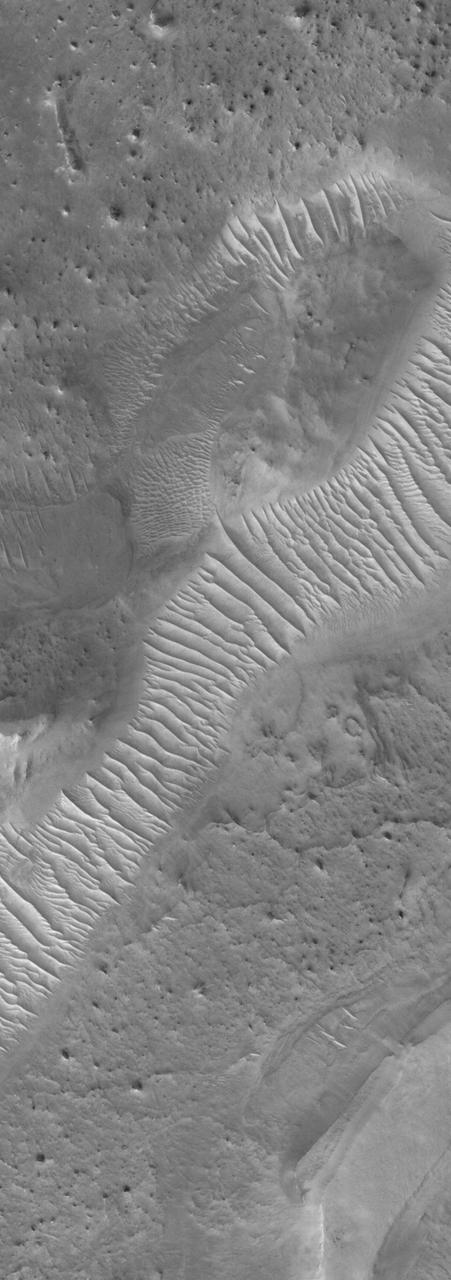
Ripple Belt
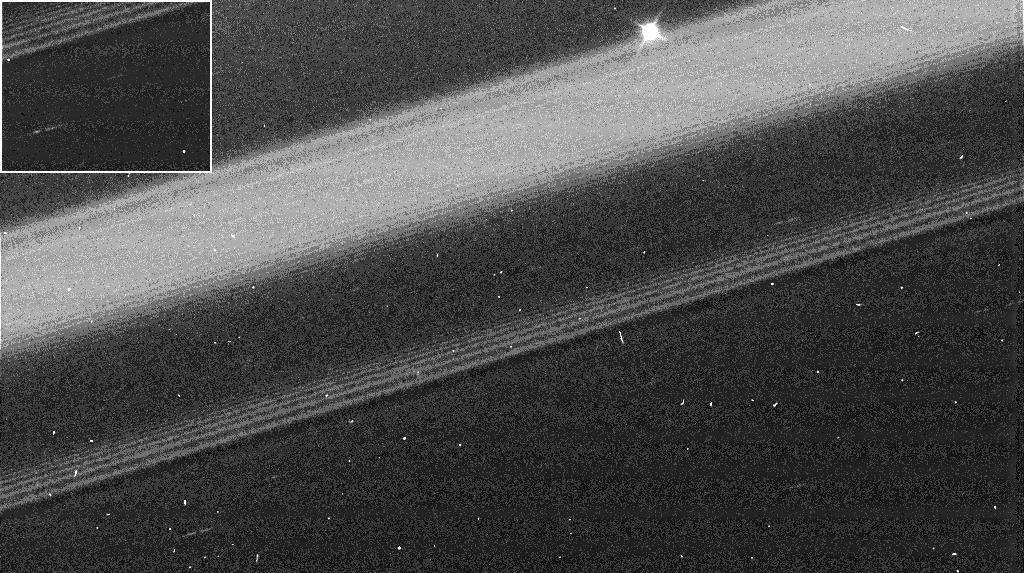
Propeller Belt

SCI2017_0004: Artist's illustration of the Epsilon Eridani system showing Epsilon Eridani b, right foreground, a Jupiter-mass planet orbiting its parent star at the outside edge of an asteroid belt. In the background can be seen another narrow asteroid or comet belt plus an outermost belt similar in size to our solar system's Kuiper Belt. The similarity of the structure of the Epsilon Eridani system to our solar system is remarkable, although Epsilon Eridani is much younger than our sun. SOFIA observations confirmed the existence of the asteroid belt adjacent to the orbit of the Jovian planet. Credit: NASA/SOFIA/Lynette Cook
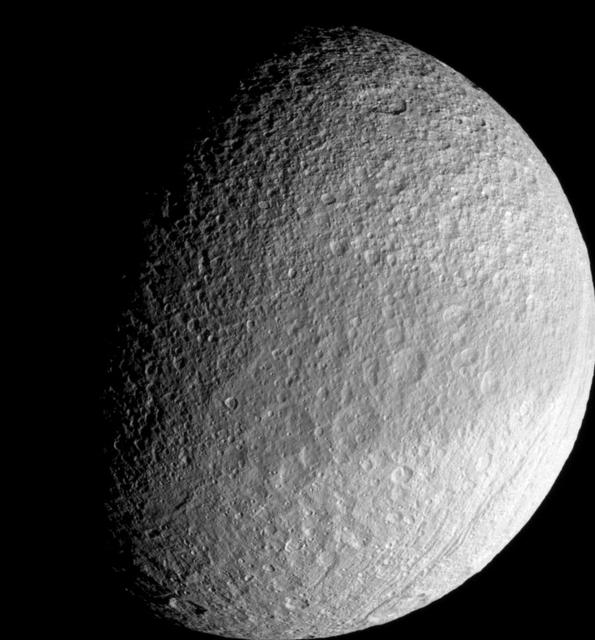
Dark Belt of Tethys
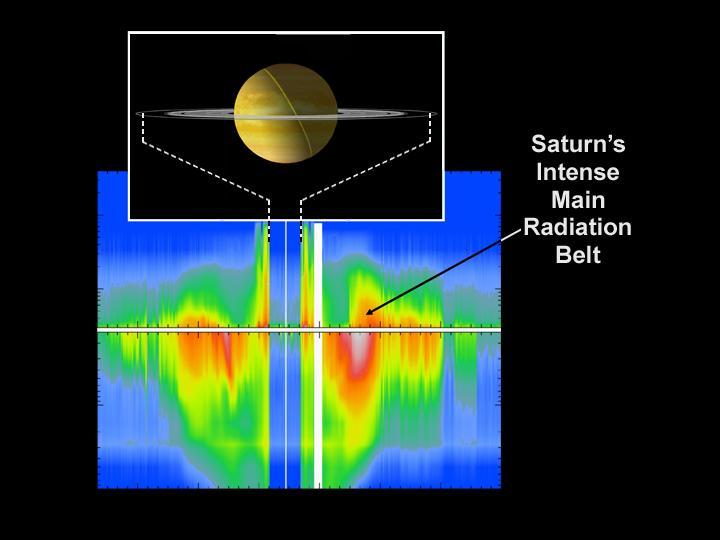
Saturn Main Radiation Belt
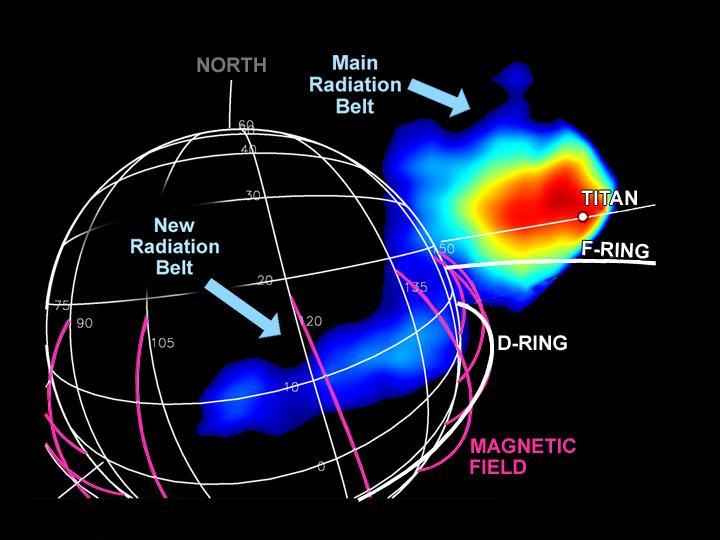
New Radiation Belt

Inner Radiation Belts of Jupiter
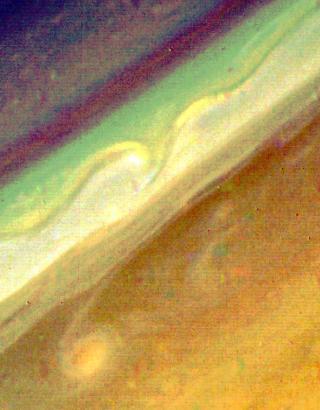
Saturn North Temperate Belt
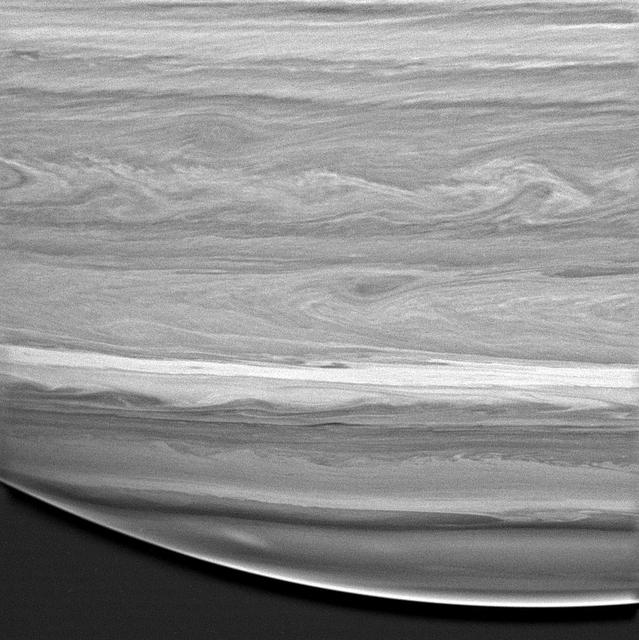
Feathery Belts and Zones
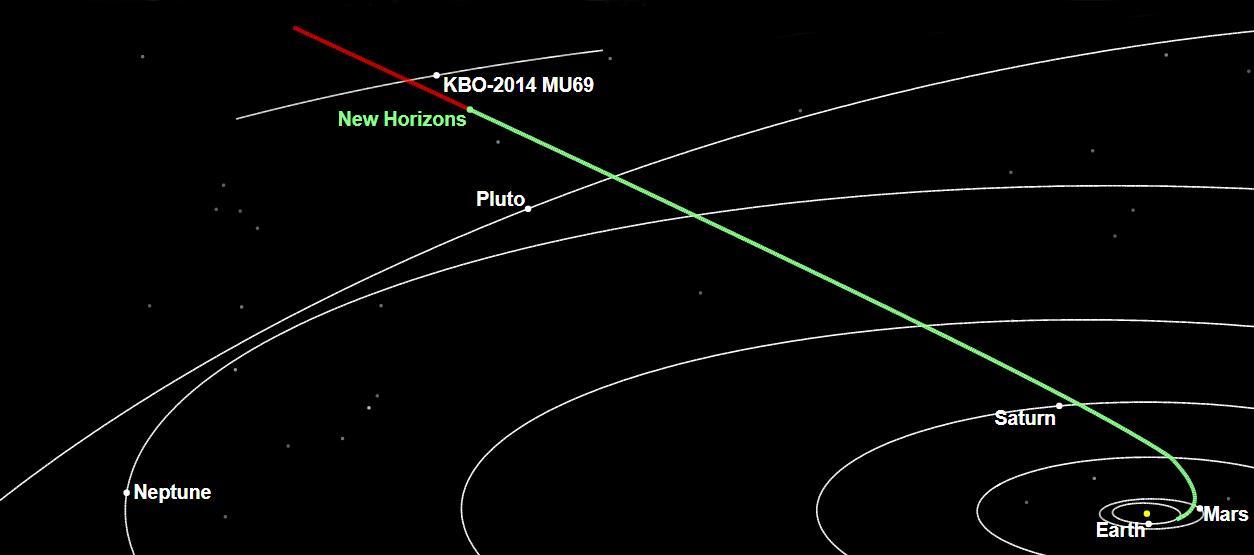
The New Horizons spacecraft is about 300 million miles (483 million kilometers) from 2014 MU69, the Kuiper Belt object it will encounter on Jan. 1, 2019. https://photojournal.jpl.nasa.gov/catalog/PIA22188
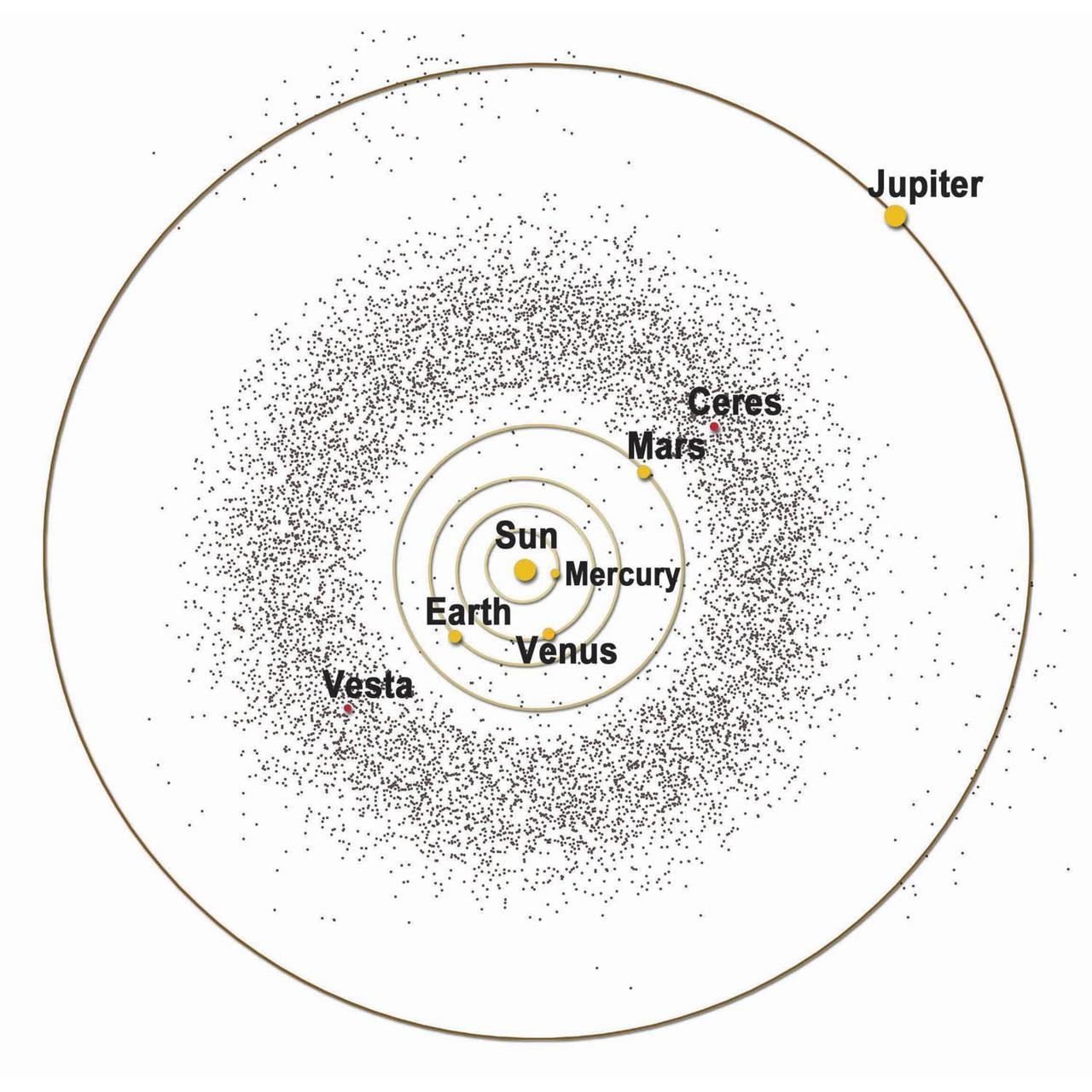
Artist graphic of the asteroid belt, part of Dawn Mission Art series. http://photojournal.jpl.nasa.gov/catalog/PIA19380
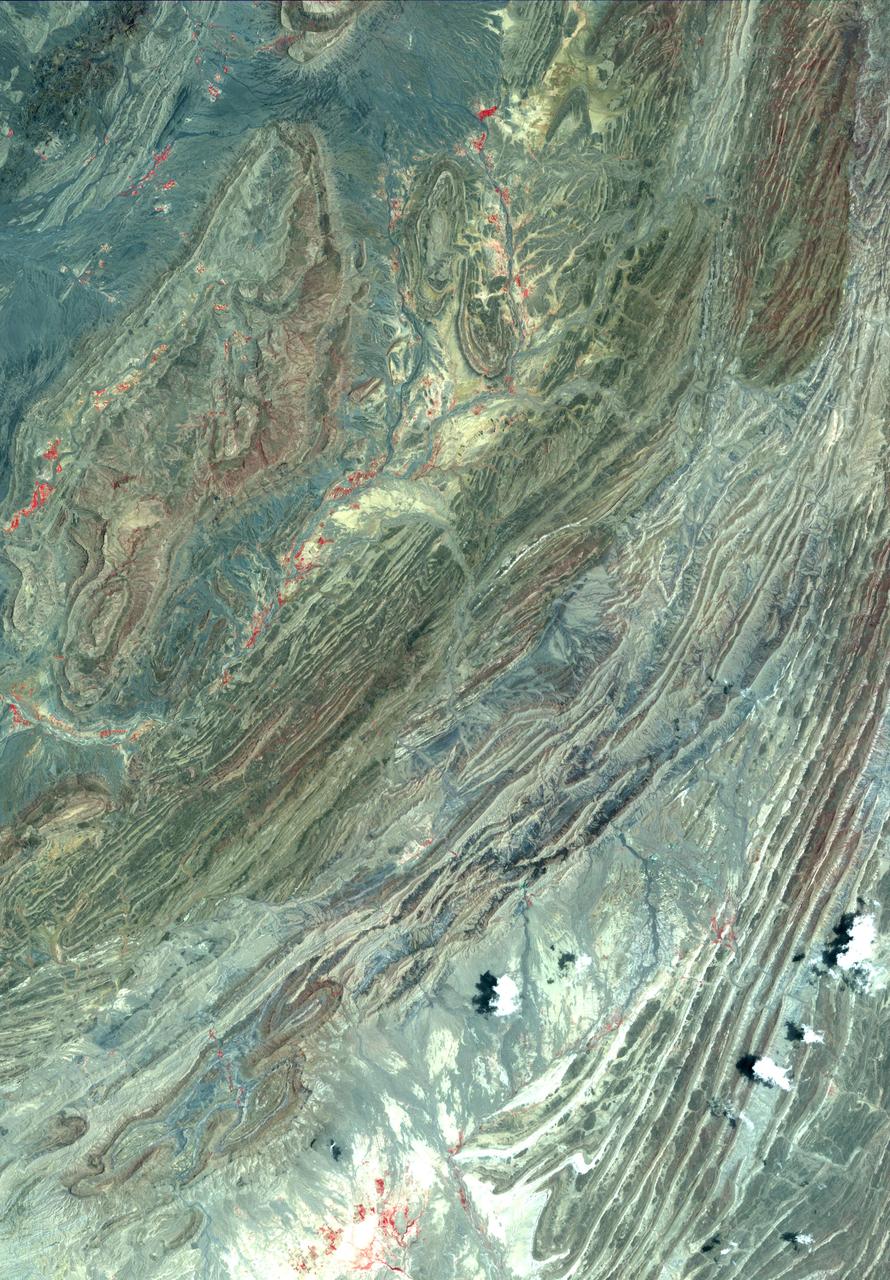
This image acquired by NASA Terra spacecraft shows the Sulaiman fold-thrust belt in northwestern Pakistan, a linear or arcuate belt in which compression has produced a combination of thrust faults and folds.
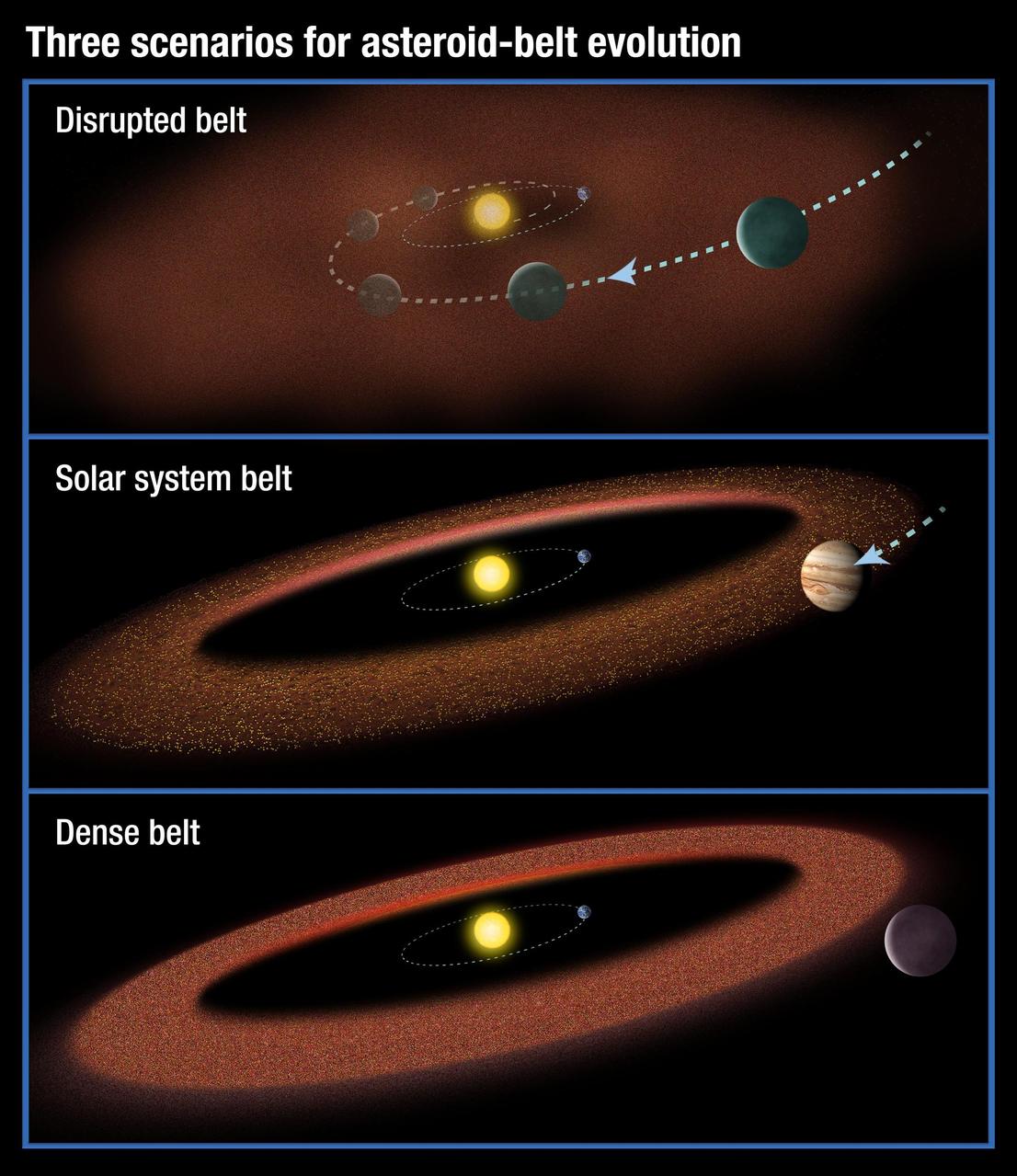
This illustration shows three possible scenarios for the evolution of asteroid belts. At the top, a Jupiter-size planet migrates through the asteroid belt, scattering material and inhibiting the formation of life on planets.
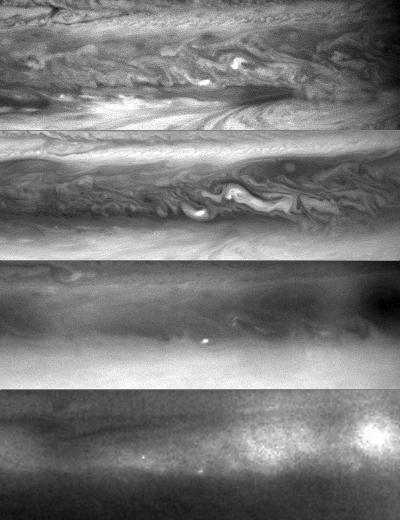
A four-panel frame shows a section of Jupiter north equatorial belt viewed by NASA Cassini spacecraft at four different wavelengths, and a separate reference frame shows the location of the belt on the planet.
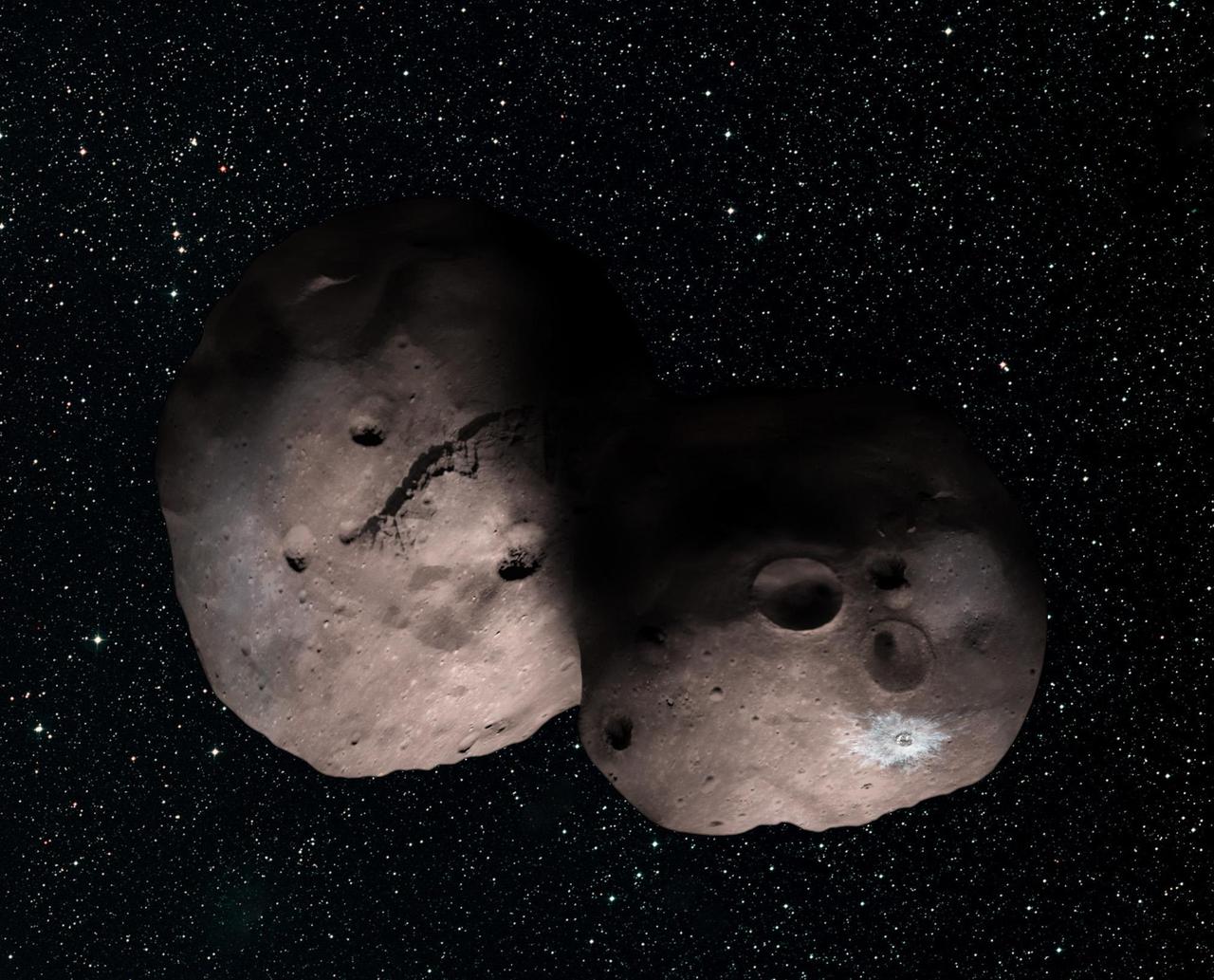
This is one artist's concept of Kuiper Belt object 2014 MU69, the next flyby target for NASA's New Horizons mission. This binary concept is based on telescope observations made at Patagonia, Argentina, on July 17, 2017, when MU69 passed in front of a star. New Horizons scientists theorize that it could be a single body with a large chunk taken out of it, or two bodies that are close together or even touching. https://photojournal.jpl.nasa.gov/catalog/PIA21867

Winds Near Jupiter Belt-Zone Boundary

False Color Mosaic of Jupiter Belt-Zone Boundary
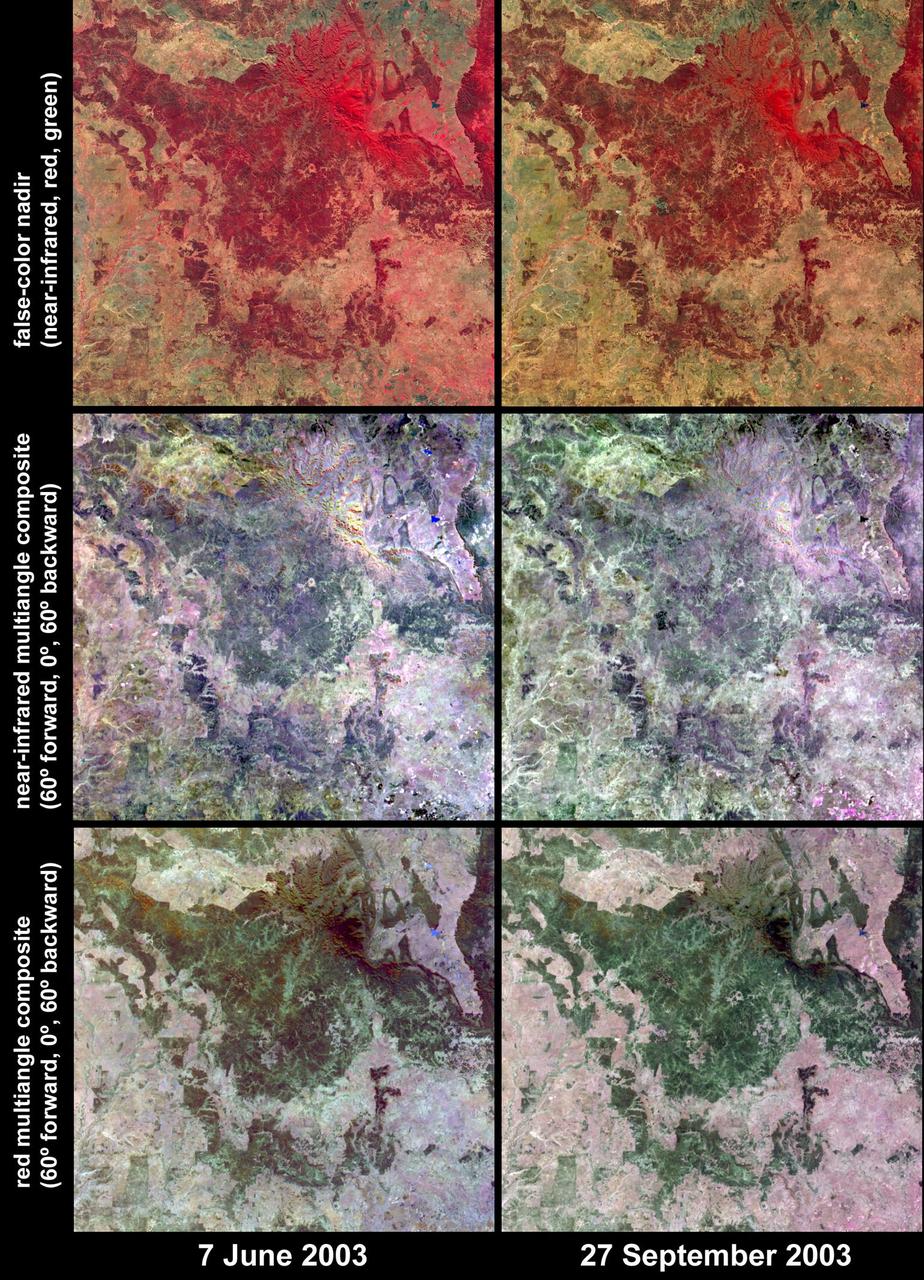
Austral winter and spring in Queensland Brigalow Belt as seen by NASA Terra spacecraft.
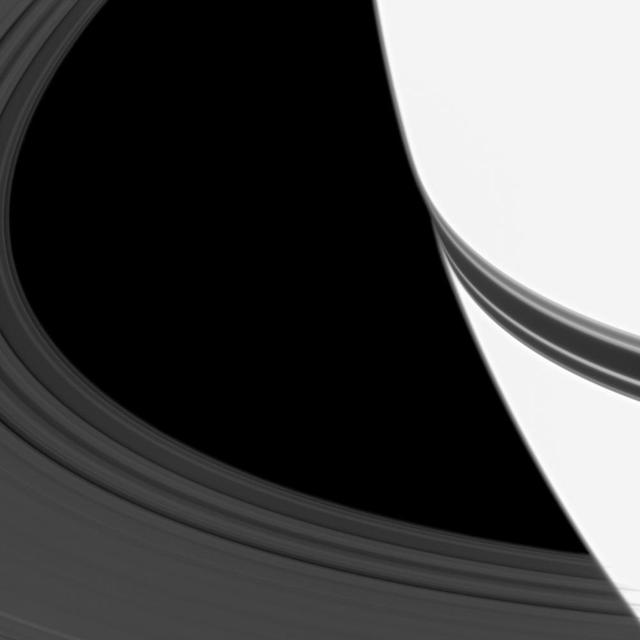
The shadow of Saturn rings looks like a belt fastened around the planet equator in this image. Overexposure to bring out the ring details makes Saturn appear especially bright.
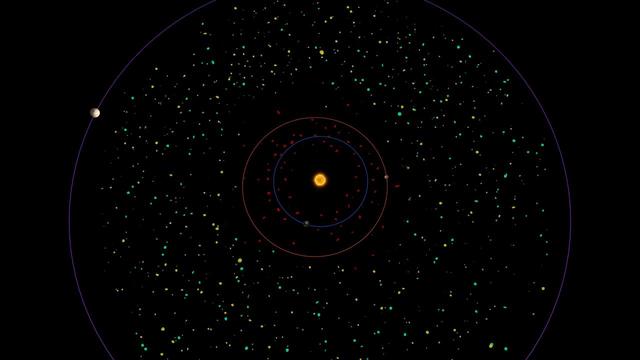
This diagram shows a bird eye view of our asteroid belt, which lies between the orbits of Mars red and Jupiter purple.
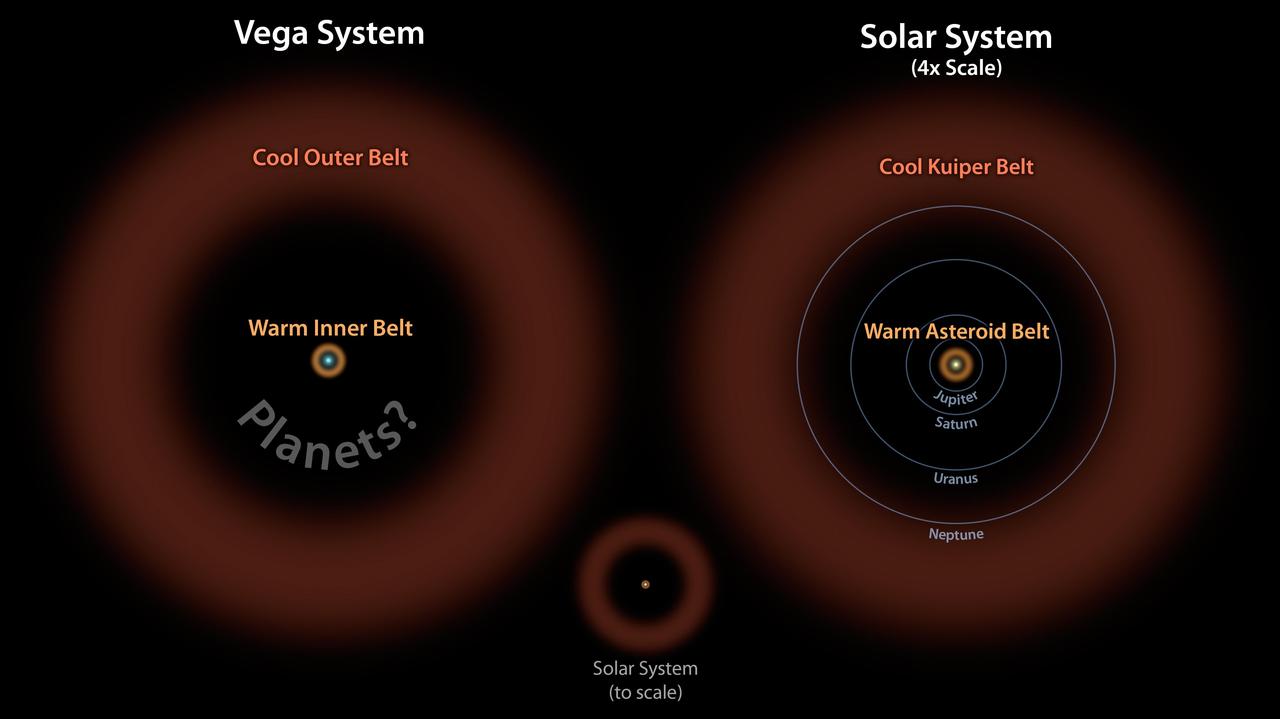
In this diagram, the Vega system, which was already known to have a cooler outer belt of comets orange, is compared to our solar system with its asteroid and Kuiper belts. The ring of warm, rocky debris was detected using NASA Spitzer Space Telescope,

Colorful swirling cloud belts dominate Jupiter's southern hemisphere in this image captured by NASA's Juno spacecraft. Jupiter appears in this color-enhanced image as a tapestry of vibrant cloud bands and storms. The dark region in the far left is called the South Temperate Belt. Intersecting the belt is a ghost-like feature of slithering white clouds. This is the largest feature in Jupiter's low latitudes that's a cyclone (rotating with clockwise motion). This image was taken on Dec. 16, 2017 at 10:12 PST (1:12 p.m. EST), as Juno performed its tenth close flyby of Jupiter. At the time the image was taken, the spacecraft was about 8,453 miles (13,604 kilometers) from the tops of the clouds of the planet at a latitude of 27.9 degrees south. The spatial scale in this image is 5.6 miles/pixel (9.1 kilometers/pixel). Citizen scientist Kevin M. Gill processed this image using data from the JunoCam imager. https://photojournal.jpl.nasa.gov/catalog/PIA21974 . - Enhanced image by Kevin M. Gill (CC-BY) based on images provided courtesy of NASA/JPL-Caltech/SwRI/MSSS
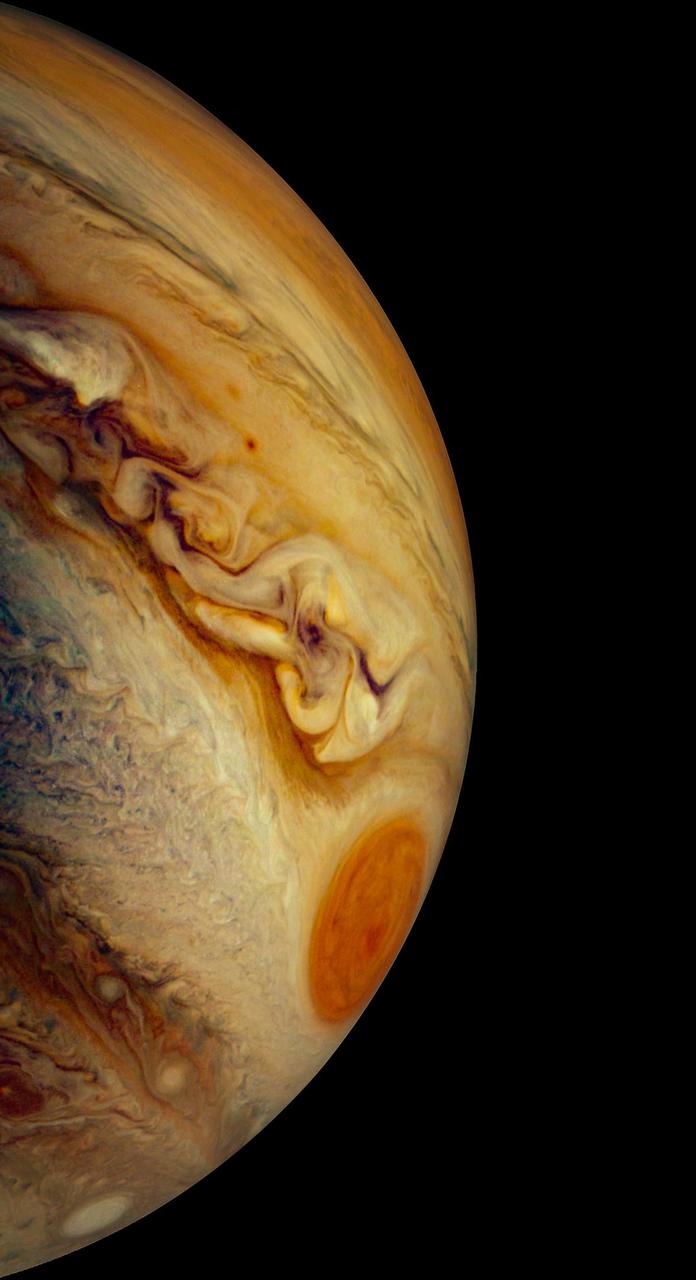
This JunoCam image of Jupiter's south temperate belt and Great Red Spot was taken on Dec. 30, 2020. Wide enough to contain Earth, the Great Red Spot is the most dominant atmospheric feature in the planet's southern hemisphere. https://photojournal.jpl.nasa.gov/catalog/PIA24962
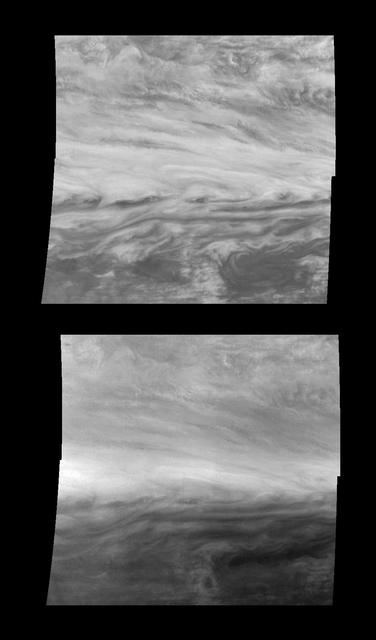
Jupiter Belt-Zone Boundary in Near-Infrared and Violet Light
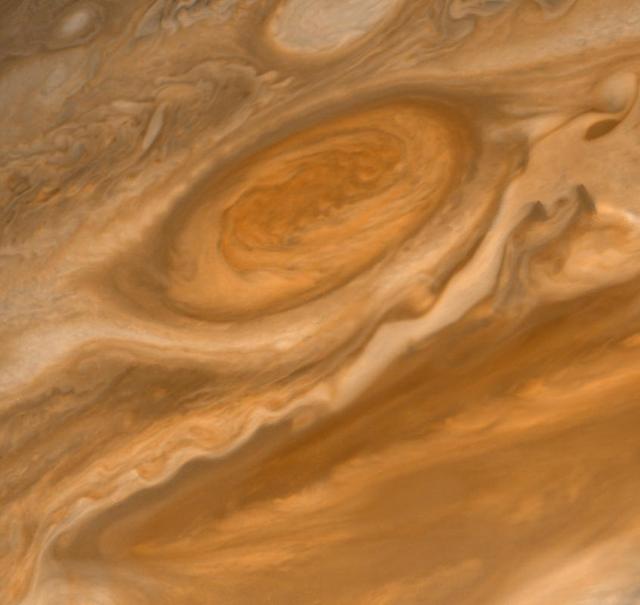
NASA Voyager 2 shows the Great Red Spot and the south equatorial belt extending into the equatorial region. At right is an interchange of material between the south equatorial belt and the equatorial zone. The clouds in the equatorial zone are more diffuse and do not display the structures seen in other locations. Considerable structure is evident within the Great Red Spot. http://photojournal.jpl.nasa.gov/catalog/PIA00456
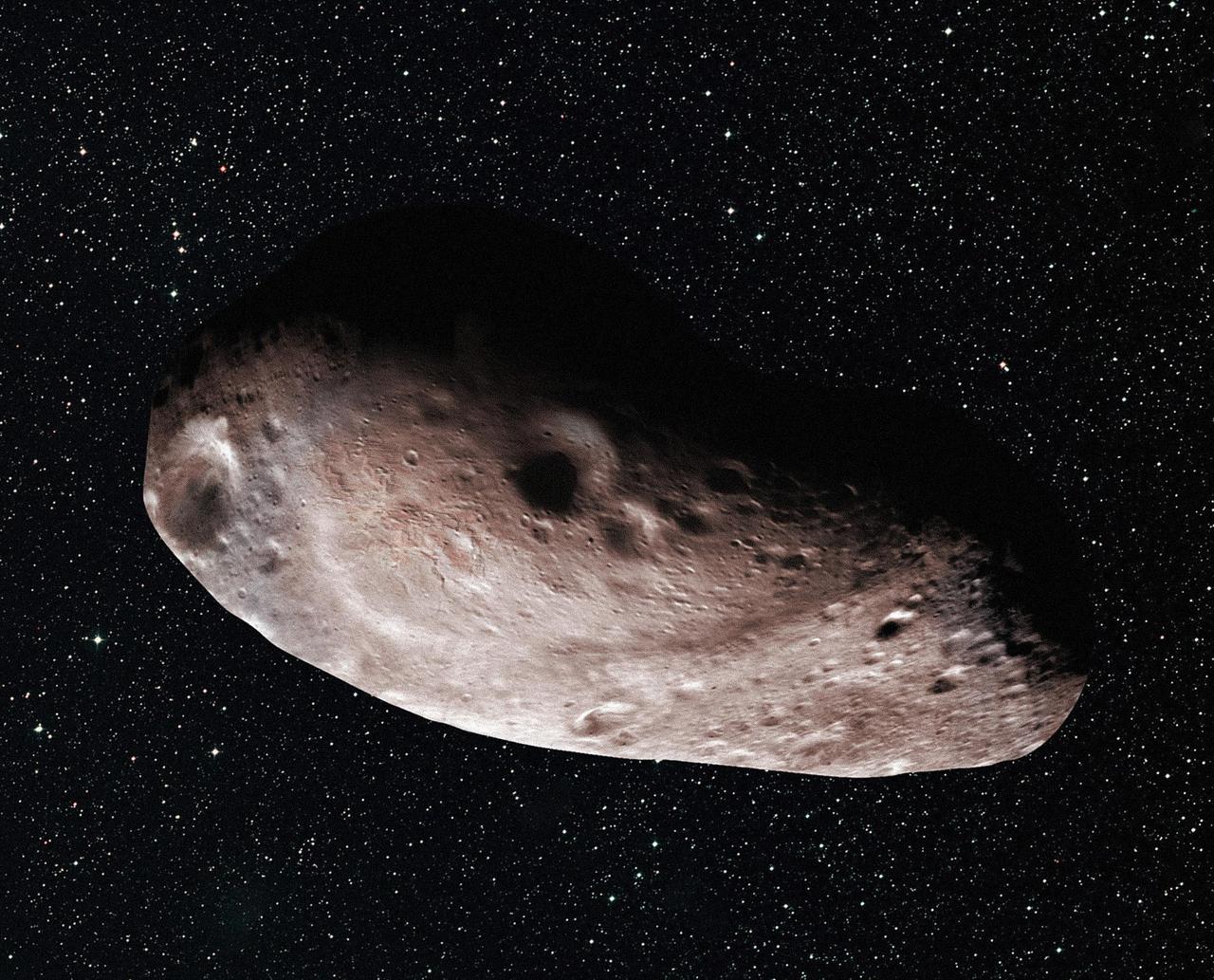
Artist's concept of Kuiper Belt object 2014 MU69, which is the next flyby target for NASA's New Horizons mission. Scientists speculate that the Kuiper Belt object could be a single body (above) with a large chunk taken out of it, or two bodies that are close together or even touching. https://photojournal.jpl.nasa.gov/catalog/PIA21868

Nine Galileo Views in Exaggerated Color of Main-Belt Asteroid Ida http://photojournal.jpl.nasa.gov/catalog/PIA00331

Nine Galileo Views in Natural Color of Main-Belt Asteroid Ida http://photojournal.jpl.nasa.gov/catalog/PIA00330
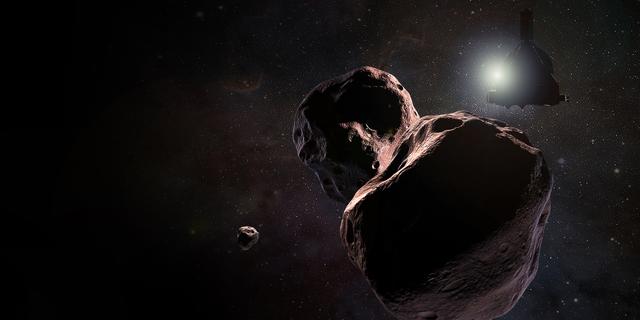
Artist's impression of NASA's New Horizons spacecraft encountering 2014 MU69, a Kuiper Belt object that orbits one billion miles (1.6 billion kilometers) beyond Pluto, on Jan. 1, 2019. https://photojournal.jpl.nasa.gov/catalog/PIA22190
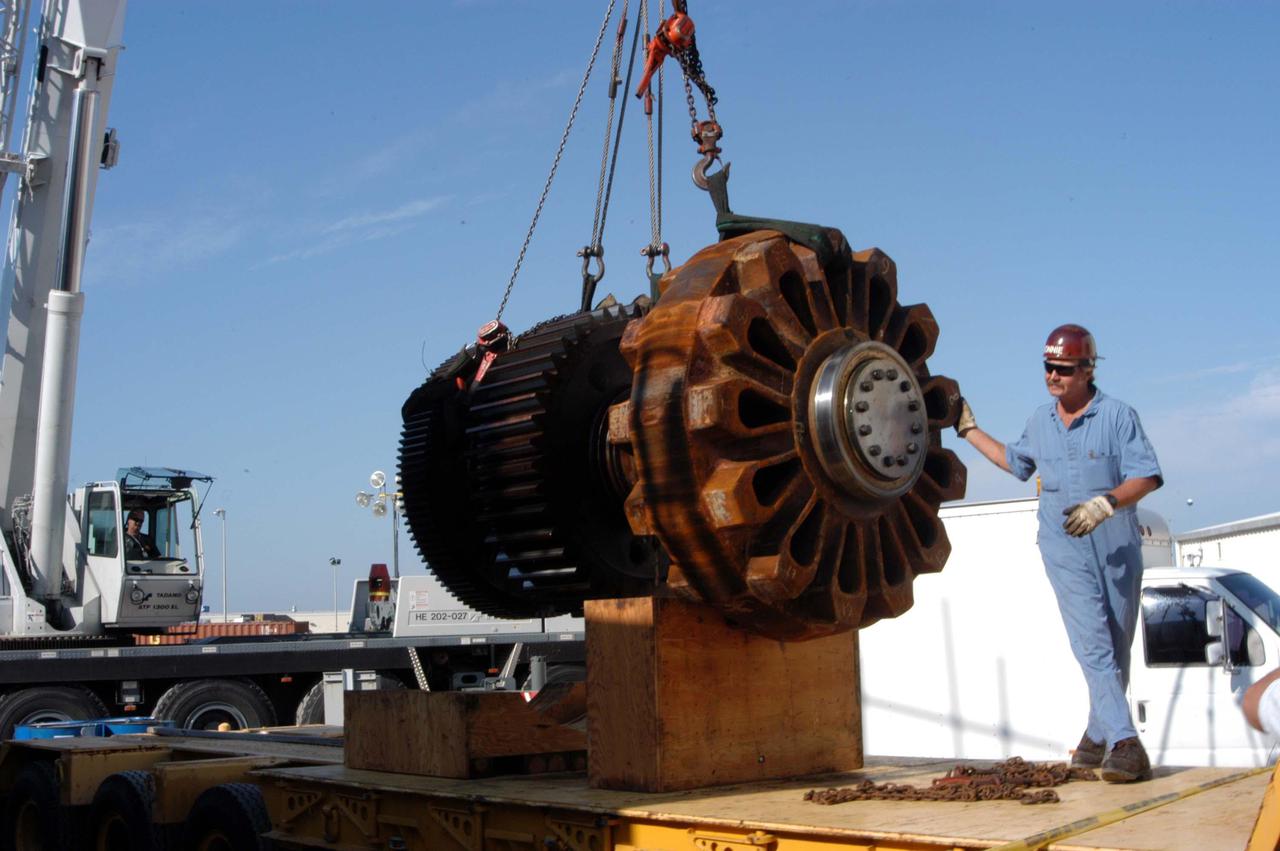
KENNEDY SPACE CENTER, FLA. - A worker watches as the giant-sized gear (left side) and sprocket (right side) is moved. It will be installed on a Crawler-Tranporter (CT). The drive sprocket turns the belt on the CT. The sprocket is mated to the gear that attaches to the drive motor. The CT travels on eight tracked tread belts, each containing 57 tread belt shoes, for a combined weight of 957,600 pounds. The CT carries the Space Shuttle atop its Mobile Launcher Platform, adding another 12 million pounds, from the Vehicle Assembly Building to the launch pad. NASA and United Space Alliance (USA) CT system engineers and USA technicians are repairing the sprockets and rollers on each belt before new shoes are installed. Replacement of the sprockets, gears and shoes is part of the most extensive maintenance work performed on the CT in its history.
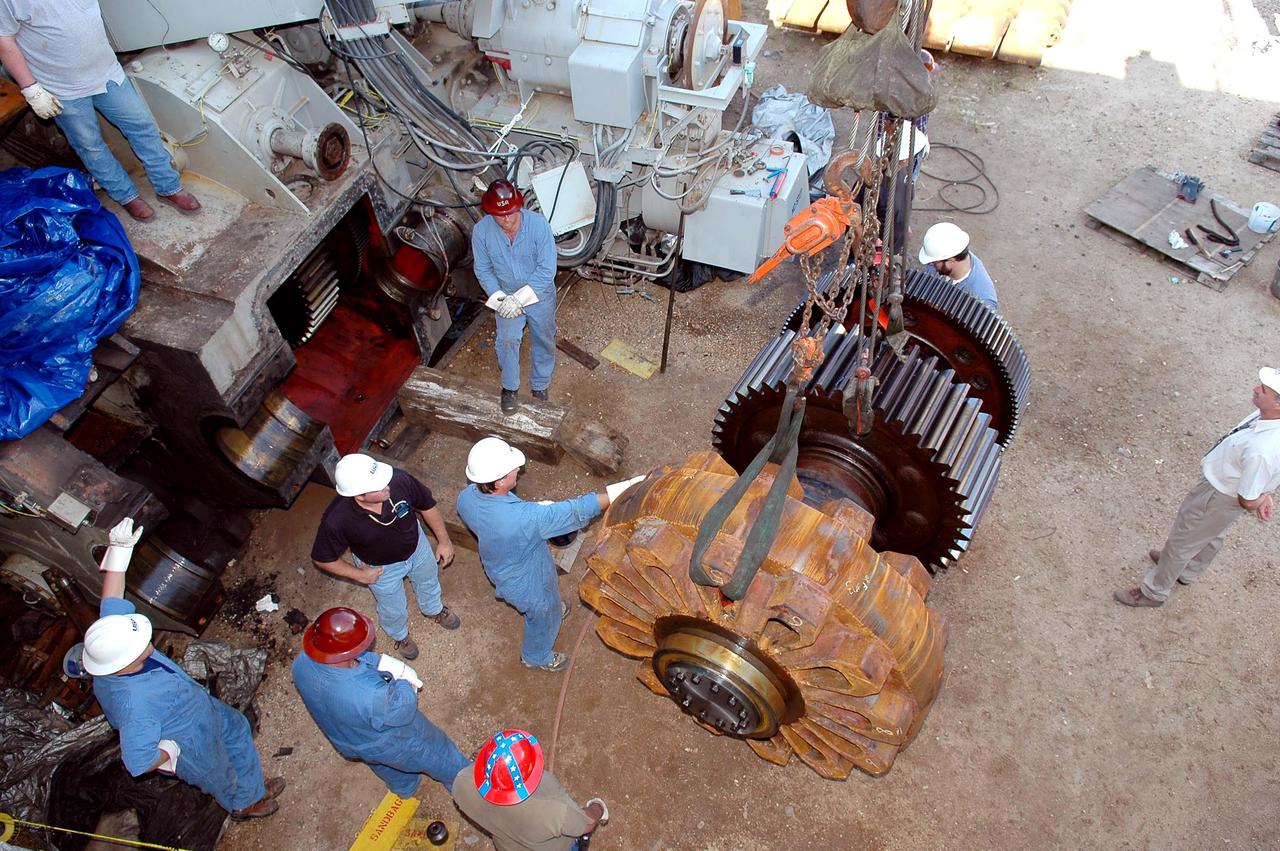
KENNEDY SPACE CENTER, FLA. - Workers get ready to install the giant-sized sprocket (left side) and gear (right side) on the Crawler-Transporter at left. The drive sprocket turns the belt on the CT. The sprocket is mated to the gear that attaches to the drive motor. The CT travels on eight tracked tread belts, each containing 57 tread belt shoes, for a combined weight of 957,600 pounds. The CT carries the Space Shuttle atop its Mobile Launcher Platform, adding another 12 million pounds, from the Vehicle Assembly Building to the launch pad. NASA and United Space Alliance (USA) CT system engineers and USA technicians are repairing the sprockets and rollers on each belt before new shoes are installed. Replacement of the sprockets, gears and shoes is part of the most extensive maintenance work performed on the CT in its history.
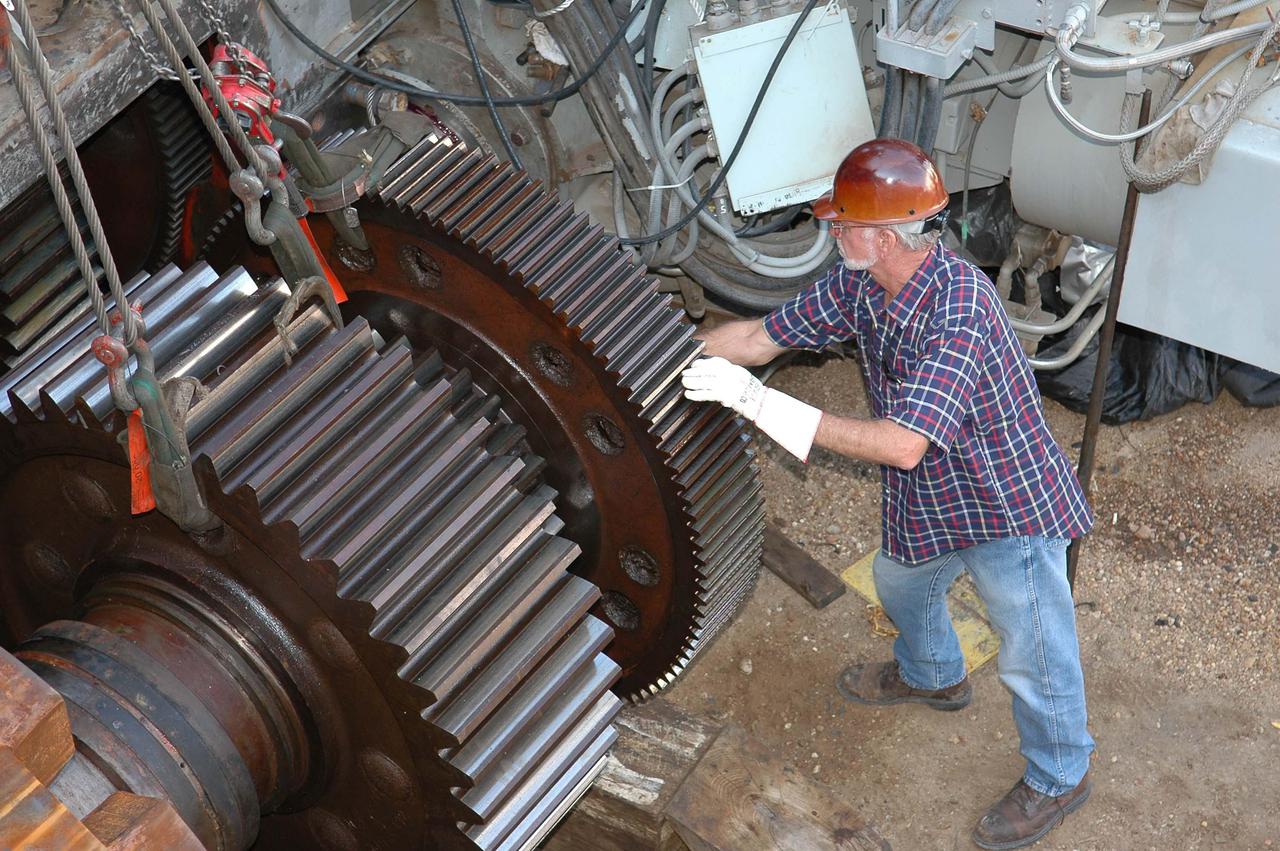
KENNEDY SPACE CENTER, FLA. - A worker maneuvers the gear into position on the Crawler-Transporter. At far left is the giant-sized sprocket. The drive sprocket turns the belt on the CT. The sprocket is mated to the gear that attaches to the drive motor. The CT travels on eight tracked tread belts, each containing 57 tread belt shoes, for a combined weight of 957,600 pounds. The CT carries the Space Shuttle atop its Mobile Launcher Platform, adding another 12 million pounds, from the Vehicle Assembly Building to the launch pad. NASA and United Space Alliance (USA) CT system engineers and USA technicians are repairing the sprockets and rollers on each belt before new shoes are installed. Replacement of the sprockets, gears and shoes is part of the most extensive maintenance work performed on the CT in its history.
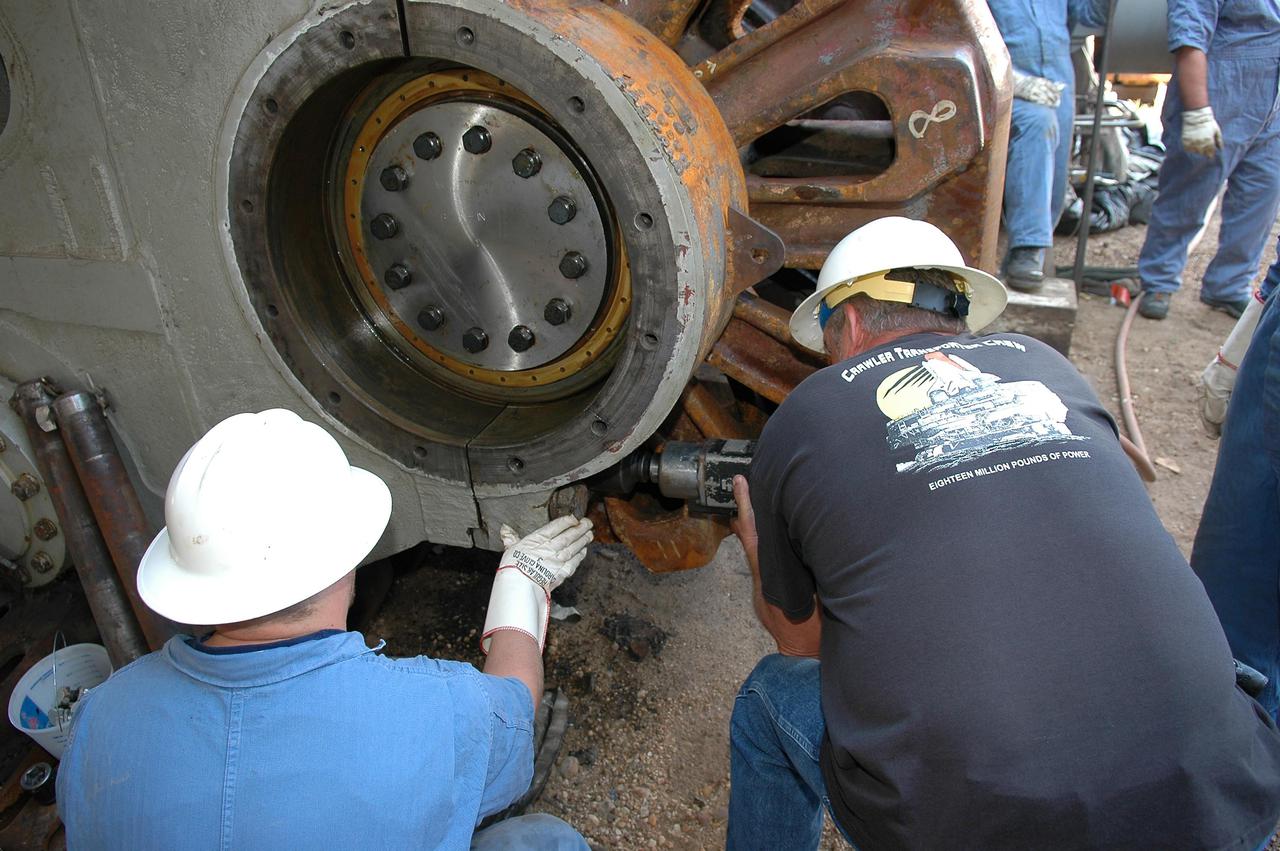
KENNEDY SPACE CENTER, FLA. - Workers attach the giant sprocket and attached gear onto the Crawler-Transporter. The drive sprocket turns the belt on the CT. The sprocket is mated to the gear that attaches to the drive motor. The CT travels on eight tracked tread belts, each containing 57 tread belt shoes, for a combined weight of 957,600 pounds. The CT carries the Space Shuttle atop its Mobile Launcher Platform, adding another 12 million pounds, from the Vehicle Assembly Building to the launch pad. NASA and United Space Alliance (USA) CT system engineers and USA technicians are repairing the sprockets and rollers on each belt before new shoes are installed. Replacement of the sprockets, gears and shoes is part of the most extensive maintenance work performed on the CT in its history.
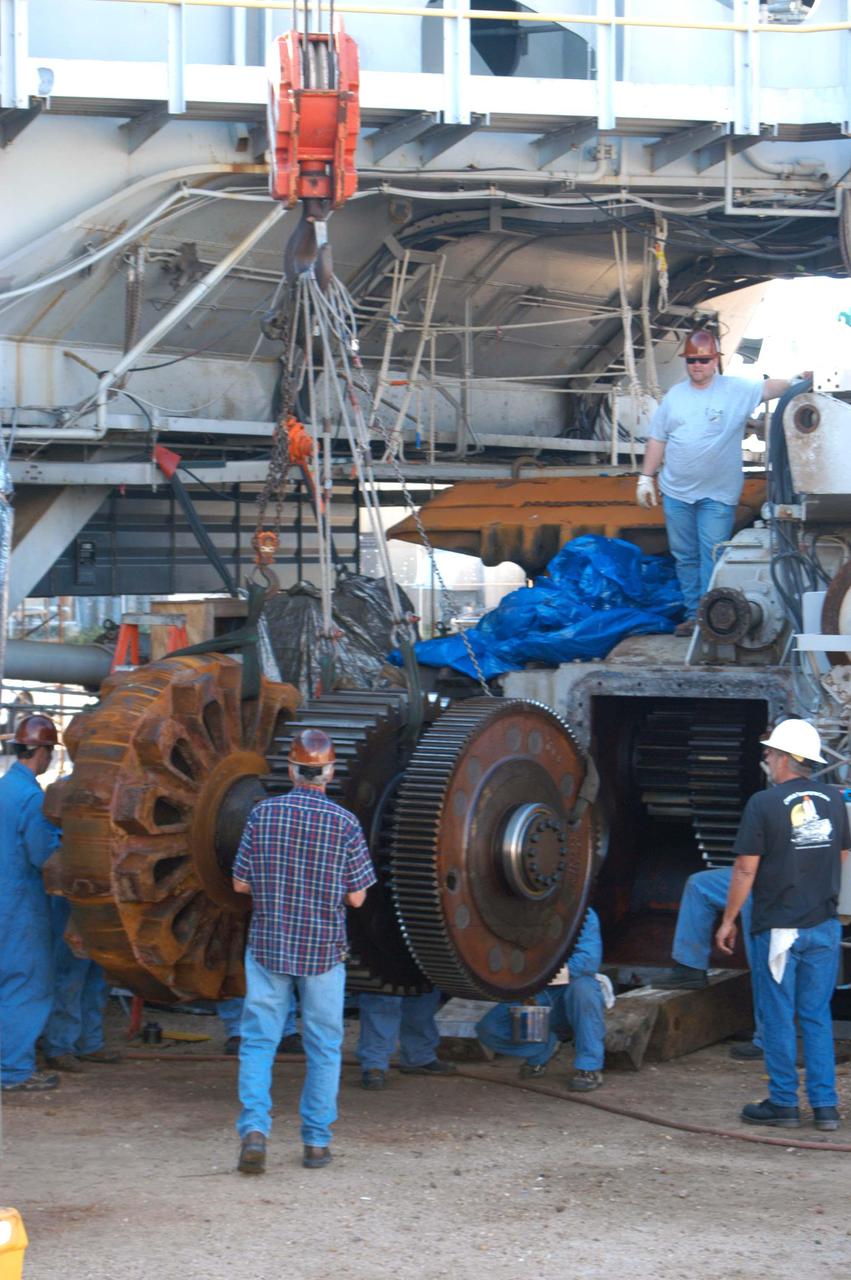
KENNEDY SPACE CENTER, FLA. - Workers get ready to install the giant-sized sprocket (left side) and gear (right side) on the Crawler-Transporter behind it.The drive sprocket turns the belt on the CT. The sprocket is mated to the gear that attaches to the drive motor. The CT travels on eight tracked tread belts, each containing 57 tread belt shoes, for a combined weight of 957,600 pounds. The CT carries the Space Shuttle atop its Mobile Launcher Platform, adding another 12 million pounds, from the Vehicle Assembly Building to the launch pad. NASA and United Space Alliance (USA) CT system engineers and USA technicians are repairing the sprockets and rollers on each belt before new shoes are installed. Replacement of the sprockets, gears and shoes is part of the most extensive maintenance work performed on the CT in its history.
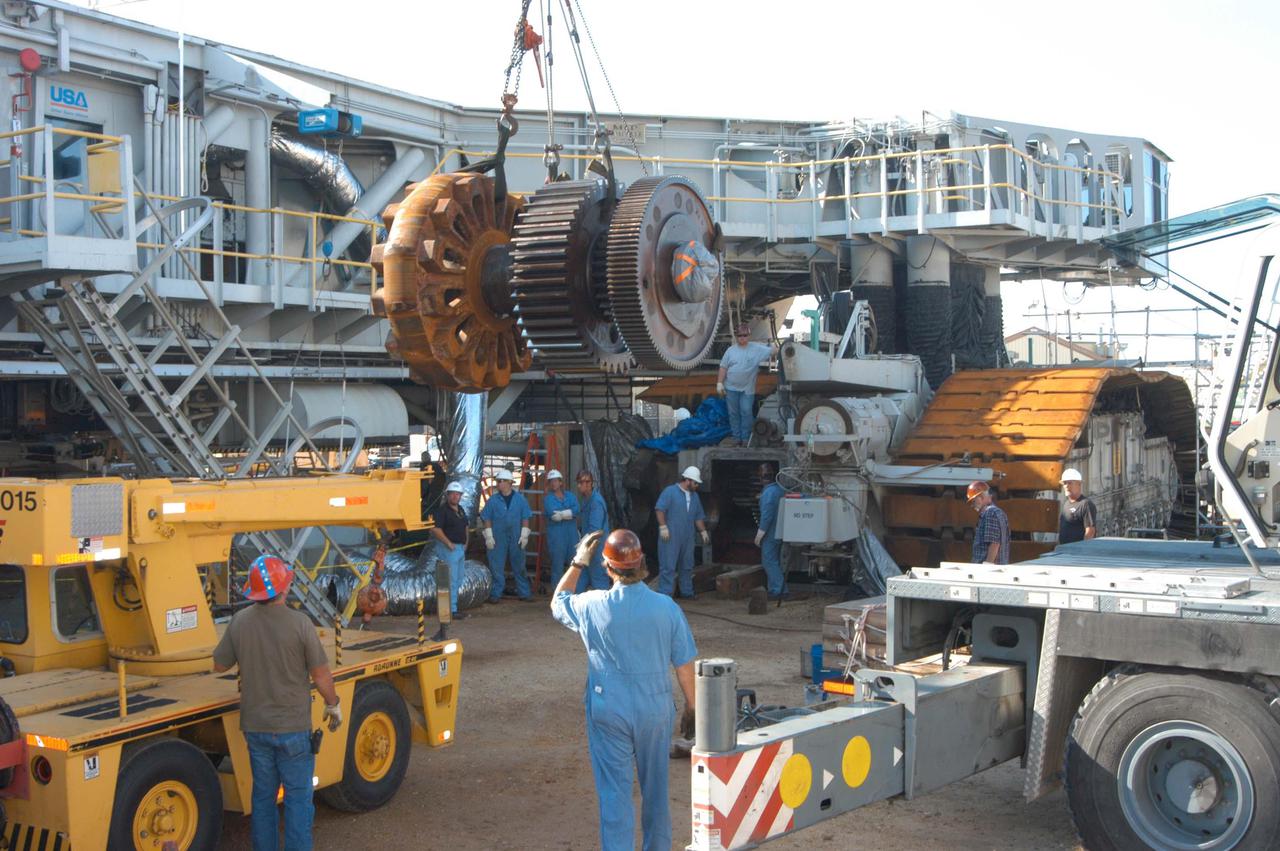
KENNEDY SPACE CENTER, FLA. - The giant-sized sprocket (left) and gear (right) is moved toward the Crawler-Transporter in the background for installation. The drive sprocket turns the belt on the CT. The sprocket is mated to the gear that attaches to the drive motor. The CT travels on eight tracked tread belts, each containing 57 tread belt shoes, for a combined weight of 957,600 pounds. The CT carries the Space Shuttle atop its Mobile Launcher Platform, adding another 12 million pounds, from the Vehicle Assembly Building to the launch pad. NASA and United Space Alliance (USA) CT system engineers and USA technicians are repairing the sprockets and rollers on each belt before new shoes are installed. Replacement of the sprockets, gears and shoes is part of the most extensive maintenance work performed on the CT in its history.
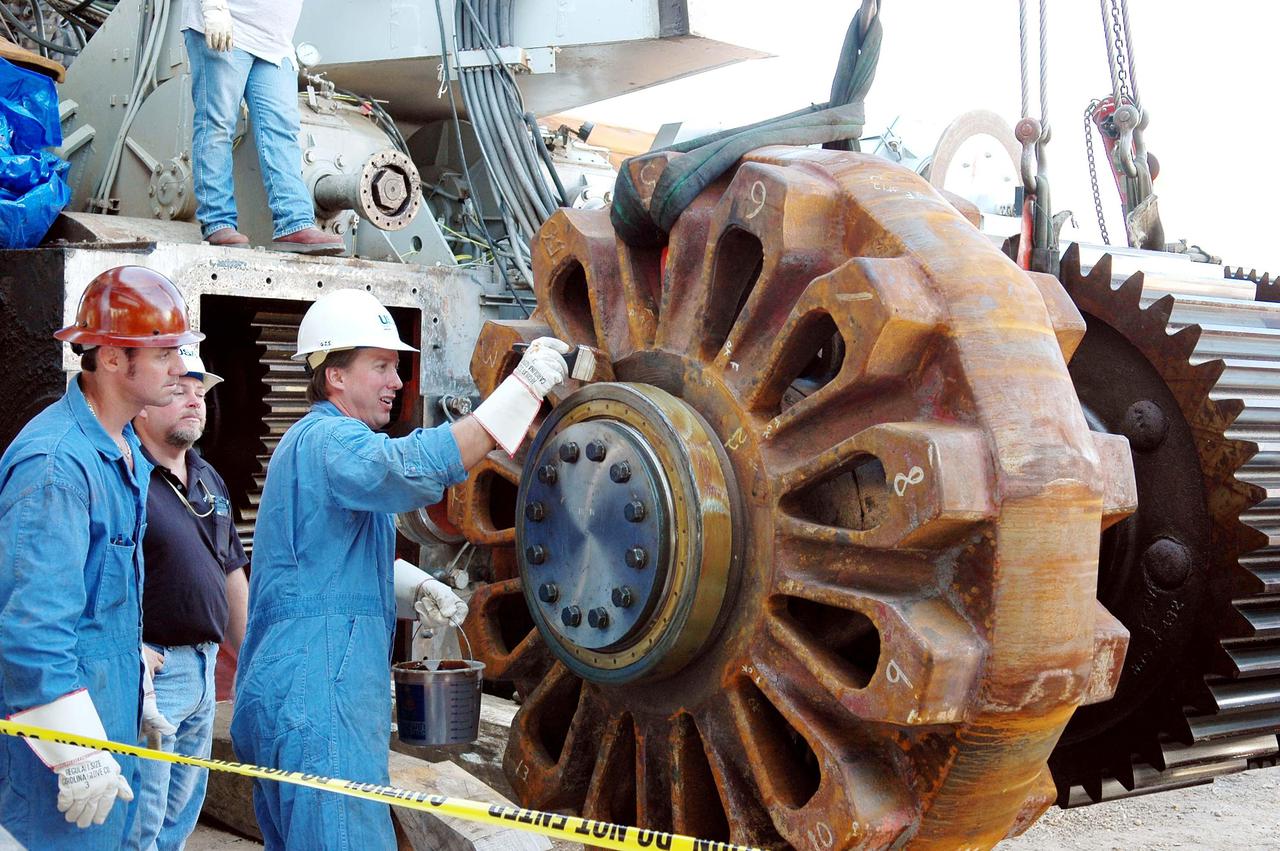
KENNEDY SPACE CENTER, FLA. - A worker greases the giant sprocket that will be installed on the Crawler-Transporter (background). The drive sprocket turns the belt on the CT. The sprocket is mated to the gear that attaches to the drive motor. The CT travels on eight tracked tread belts, each containing 57 tread belt shoes, for a combined weight of 957,600 pounds. The CT carries the Space Shuttle atop its Mobile Launcher Platform, adding another 12 million pounds, from the Vehicle Assembly Building to the launch pad. NASA and United Space Alliance (USA) CT system engineers and USA technicians are repairing the sprockets and rollers on each belt before new shoes are installed. Replacement of the sprockets, gears and shoes is part of the most extensive maintenance work performed on the CT in its history.
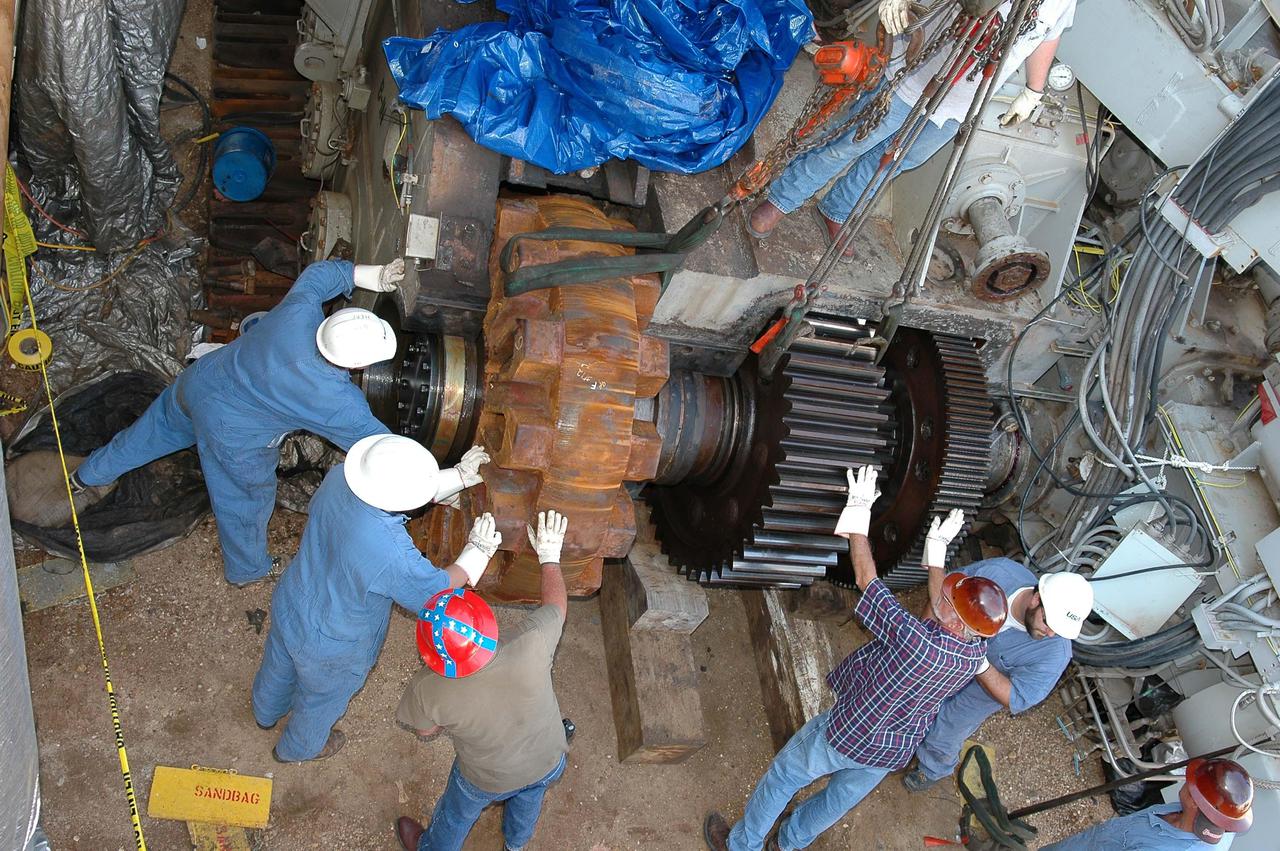
KENNEDY SPACE CENTER, FLA. - Workers maneuver the giant sprocket (left) and attached gear (right) into position on the Crawler-Transporter. The drive sprocket turns the belt on the CT. The sprocket is mated to the gear that attaches to the drive motor. The CT travels on eight tracked tread belts, each containing 57 tread belt shoes, for a combined weight of 957,600 pounds. The CT carries the Space Shuttle atop its Mobile Launcher Platform, adding another 12 million pounds, from the Vehicle Assembly Building to the launch pad. NASA and United Space Alliance (USA) CT system engineers and USA technicians are repairing the sprockets and rollers on each belt before new shoes are installed. Replacement of the sprockets, gears and shoes is part of the most extensive maintenance work performed on the CT in its history.
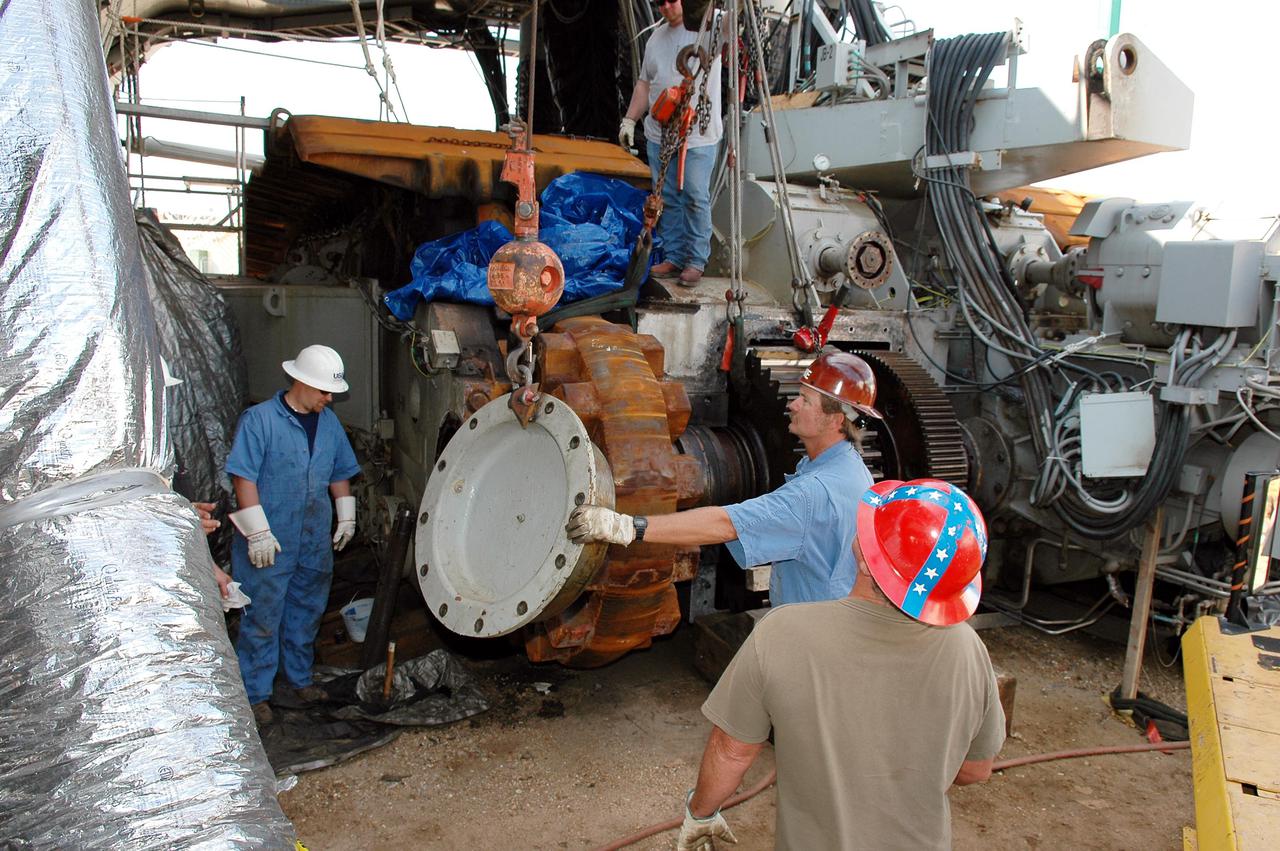
KENNEDY SPACE CENTER, FLA. - Workers move the hub toward the gear, where it will be attached, on the Crawler-Transporter. The drive sprocket turns the belt on the CT. The sprocket is mated to the gear that attaches to the drive motor. The CT travels on eight tracked tread belts, each containing 57 tread belt shoes, for a combined weight of 957,600 pounds. The CT carries the Space Shuttle atop its Mobile Launcher Platform, adding another 12 million pounds, from the Vehicle Assembly Building to the launch pad. NASA and United Space Alliance (USA) CT system engineers and USA technicians are repairing the sprockets and rollers on each belt before new shoes are installed. Replacement of the sprockets, gears and shoes is part of the most extensive maintenance work performed on the CT in its history.
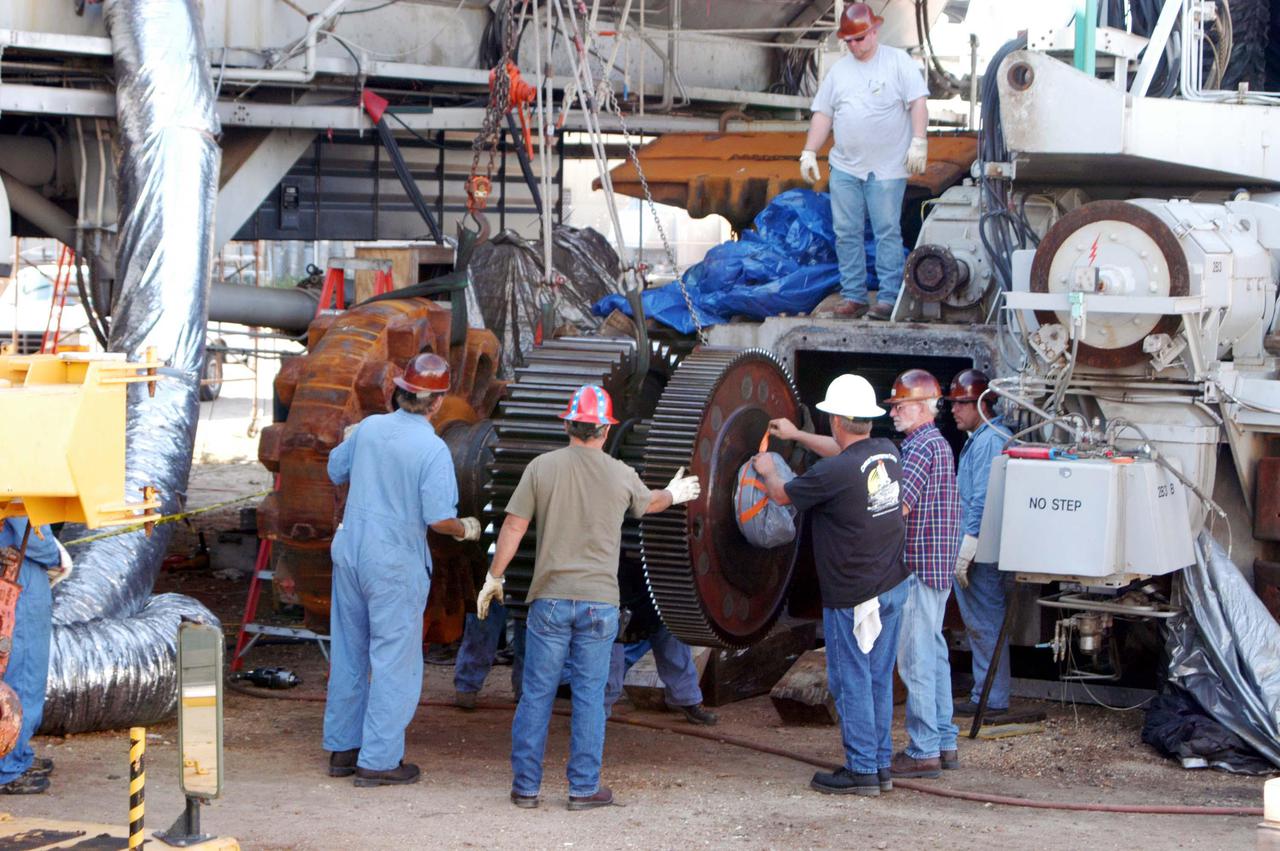
KENNEDY SPACE CENTER, FLA. - Workers maneuver the giant-sized sprocket (left side) and gear (right side) for installation on the Crawler-Transporter behind it. The drive sprocket turns the belt on the CT. The sprocket is mated to the gear that attaches to the drive motor. The CT travels on eight tracked tread belts, each containing 57 tread belt shoes, for a combined weight of 957,600 pounds. The CT carries the Space Shuttle atop its Mobile Launcher Platform, adding another 12 million pounds, from the Vehicle Assembly Building to the launch pad. NASA and United Space Alliance (USA) CT system engineers and USA technicians are repairing the sprockets and rollers on each belt before new shoes are installed. Replacement of the sprockets, gears and shoes is part of the most extensive maintenance work performed on the CT in its history.

Mosaic of a belt-zone boundary near Jupiter equator as seen by NASA Galileo orbiter in 1996.
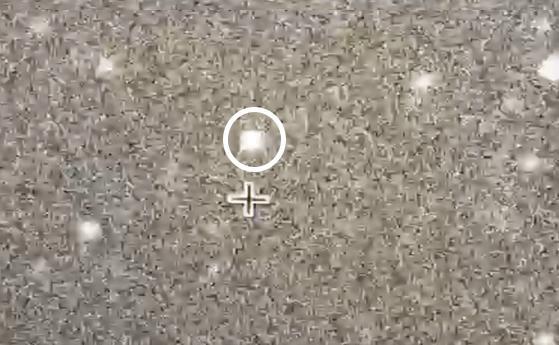
NASA's New Horizons team trained mobile telescopes on an unnamed star (circled) from a remote area of Argentina on July 17, 2017. A Kuiper Belt object 4.1 billion miles from Earth -- known as 2014 MU69 -- briefly blocked the light from the background star, in what's known as an occultation. The time difference between frames is 200 milliseconds, or 0.2 seconds. This data will help scientists better measure the shape, size and environment around the object. The New Horizons spacecraft will fly by this ancient relic of solar system formation on Jan. 1, 2019. It will be the most distant object ever explored by a spacecraft. A video is available at https://photojournal.jpl.nasa.gov/catalog/PIA21865
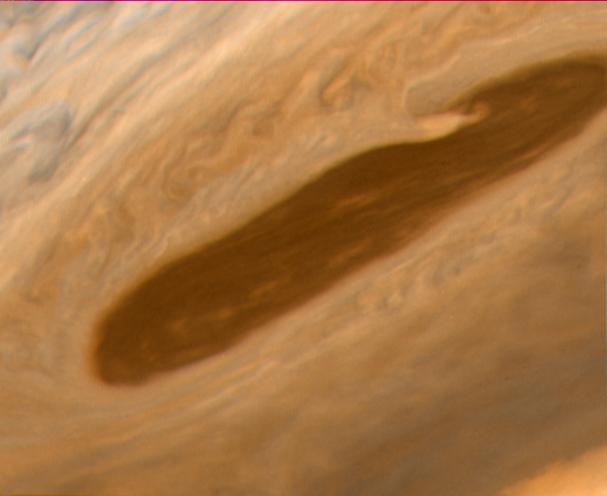
This image returned NASA Voyager 2 shows one of the long dark clouds observed in the North Equatorial Belt of Jupiter. A high, white cloud is seen moving over the darker cloud, providing an indication of the structure of the cloud layers. At right, blue areas, free of high clouds, are seen. This photo was taken on July 6 from a distance of 3.2 million kilometers. http://photojournal.jpl.nasa.gov/catalog/PIA00458
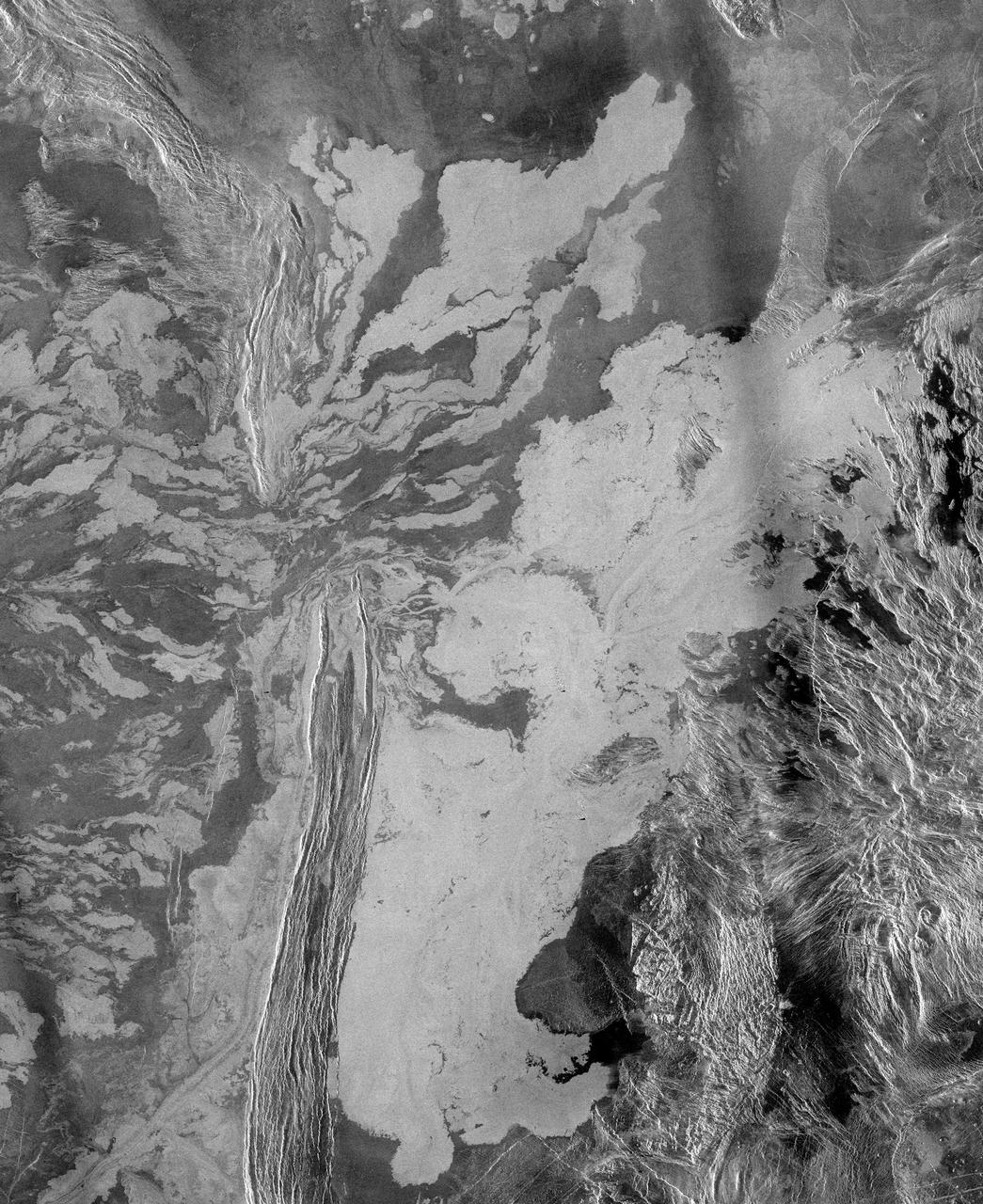
This radar image mosaic of Venus from NASA Magellan spacecraft, is in the Lada region. The mosaic shows a system of east-trending radar-bright and dark lava flows encountering and breaching a north-trending ridge belt left of center.
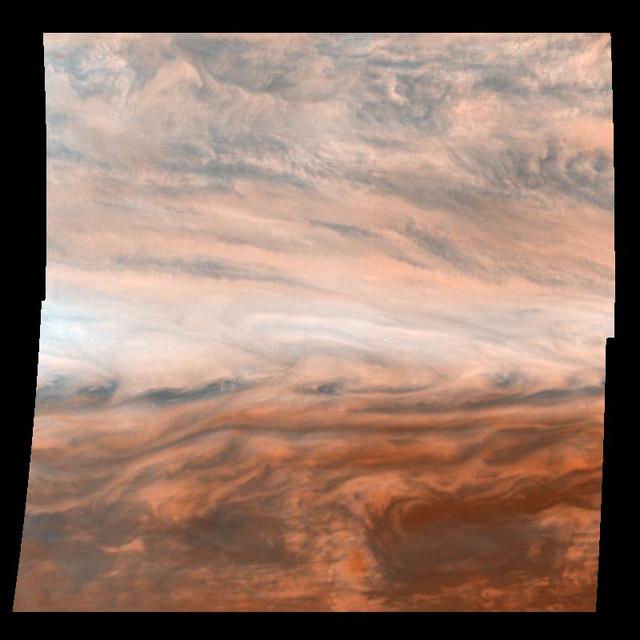
Pseudo-true color mosaic of a belt-zone boundary near Jupiter equator. The images that make up the four quadrants of this mosaic were taken within a few minutes of each other by NASA Galileo orbiter.
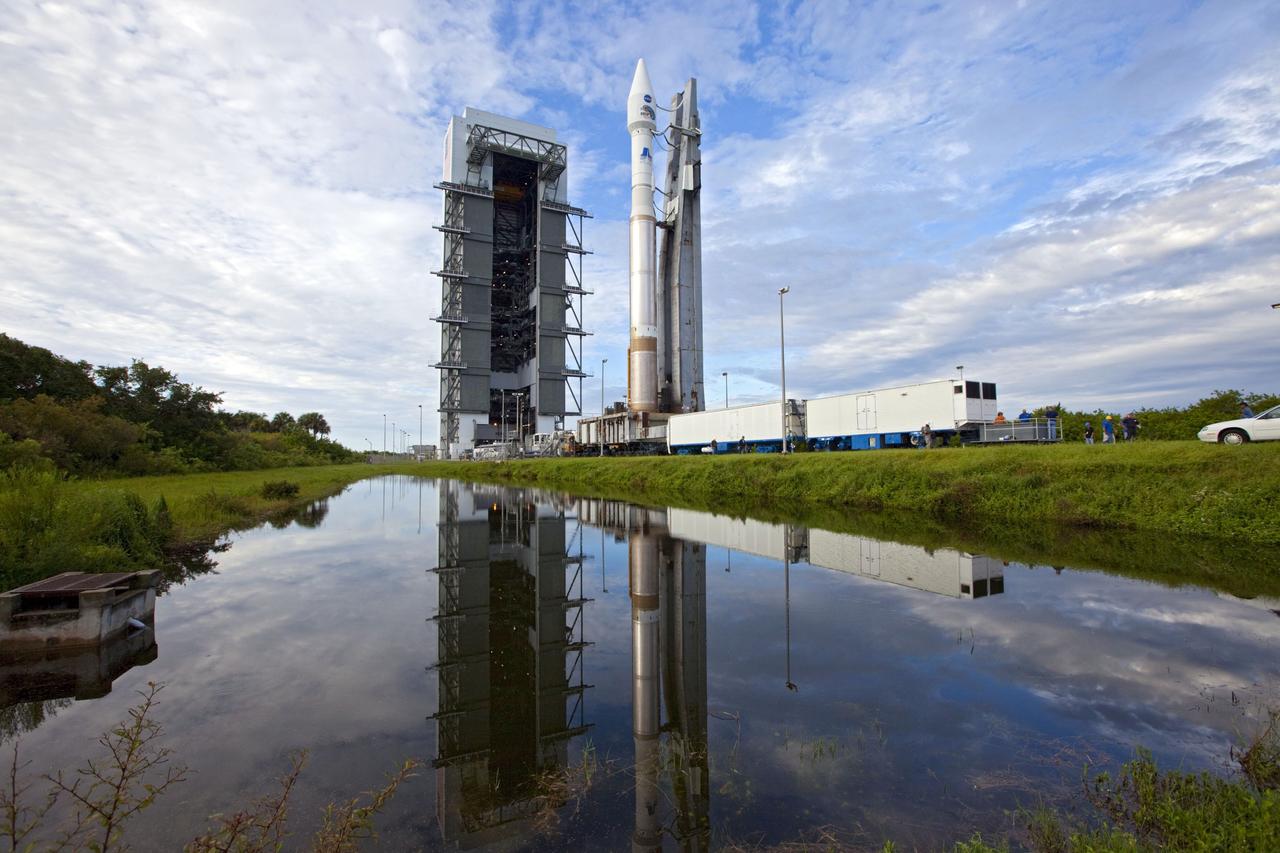
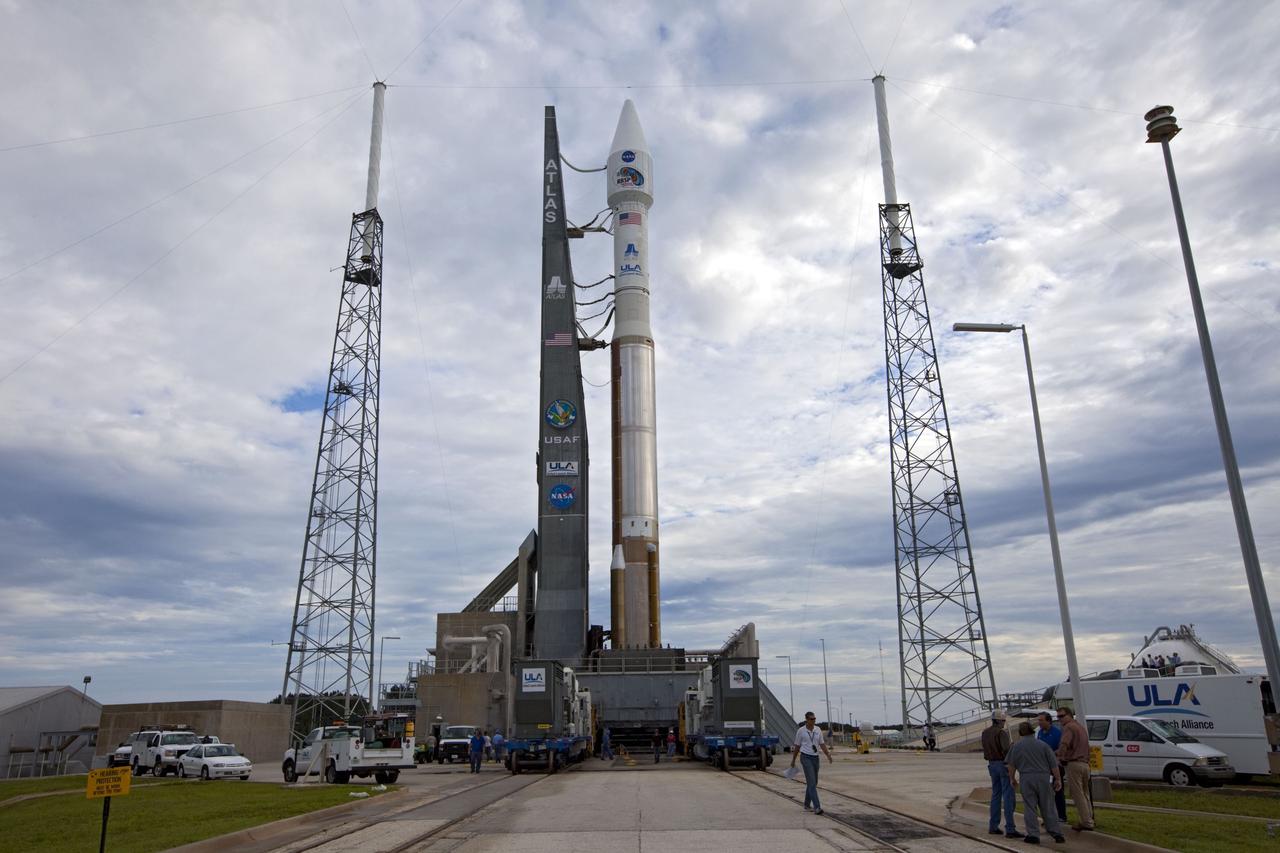
CAPE CANAVERAL, Fla. – The United Launch Alliance Atlas V rocket with the Radiation Belt Storm Probes, or RBSP, spacecraft aboard rolls to the launch pad at Space Launch Complex 41 at Cape Canaveral Air Force Station. NASA’s RBSP mission will help researchers understand the sun’s influence on Earth and near-Earth space by studying the Earth’s radiation belts on various scales of space and time. RBSP will begin its mission of exploration of Earth’s Van Allen radiation belts and the extremes of space weather after its launch aboard an Atlas V rocket. Launch is targeted for Aug. 24. Photo credit: NASA/Kim Shiflett
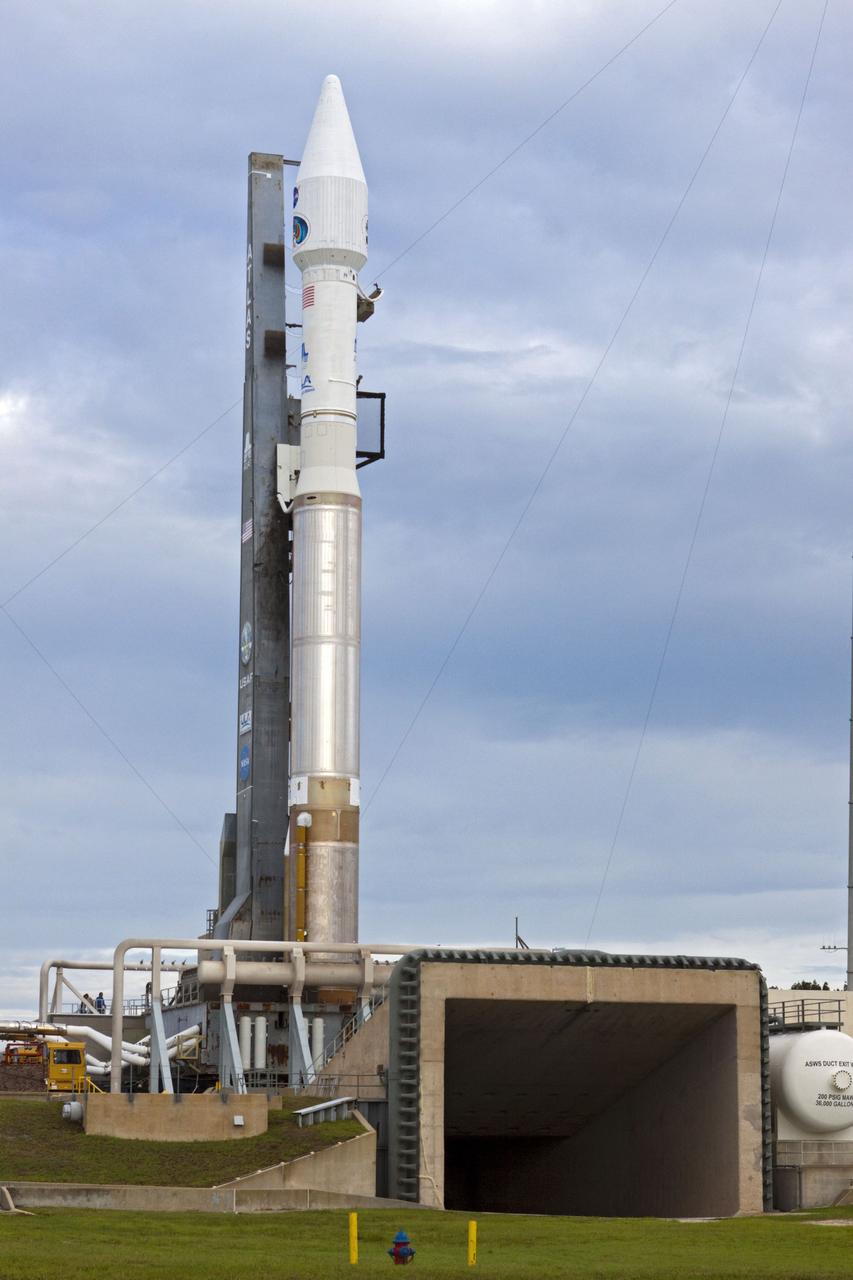
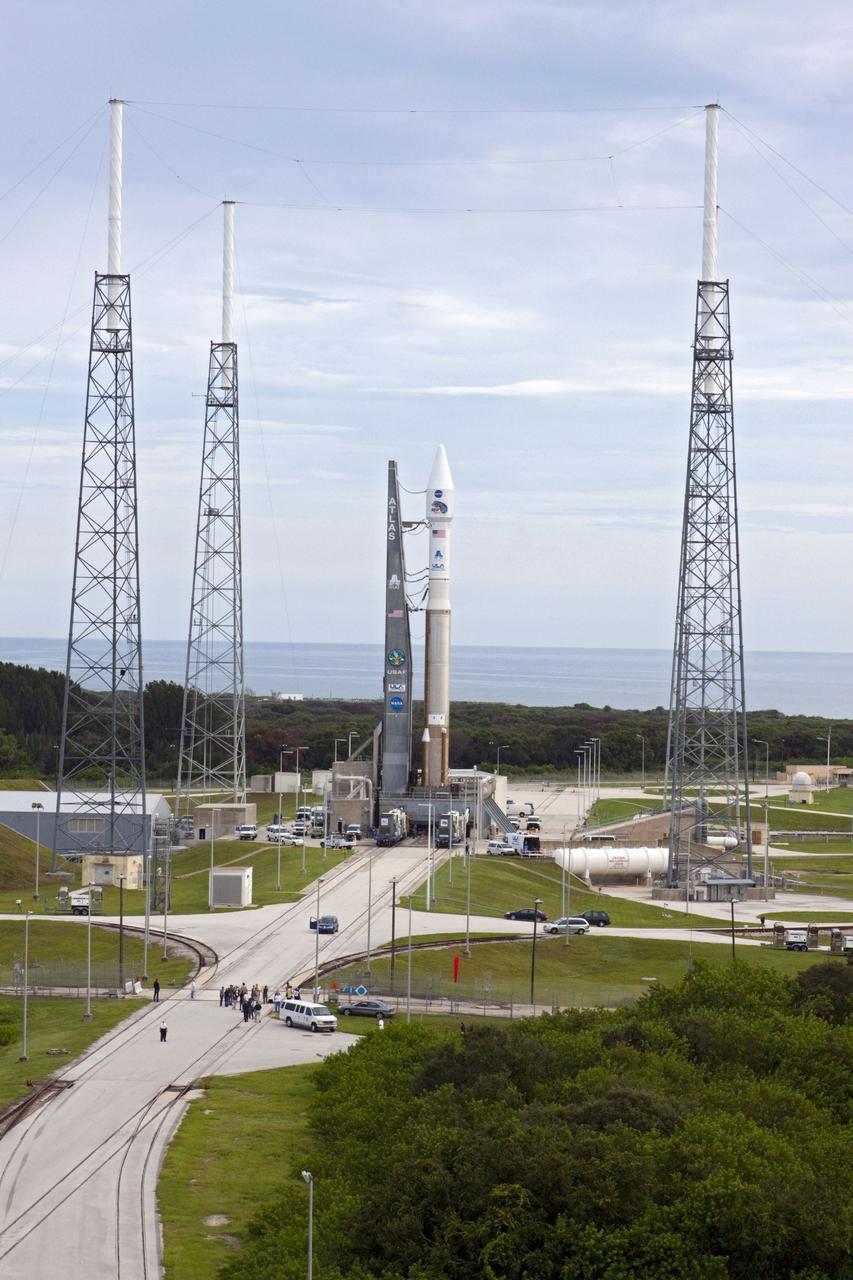
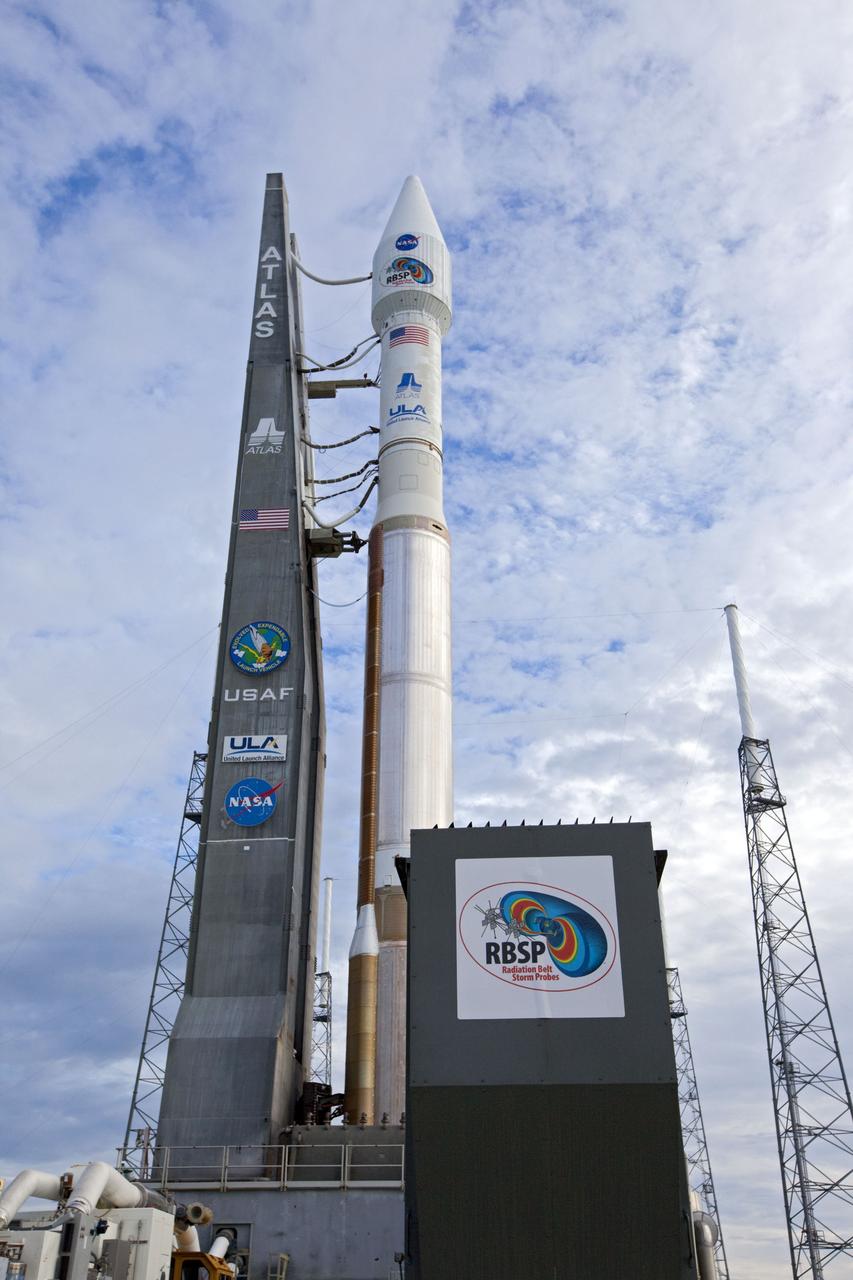
CAPE CANAVERAL, Fla. – The United Launch Alliance Atlas V rocket with the Radiation Belt Storm Probes, or RBSP, spacecraft aboard stands at the launch pad at Space Launch Complex 41 at Cape Canaveral Air Force Station. NASA’s RBSP mission will help researchers understand the sun’s influence on Earth and near-Earth space by studying the Earth’s radiation belts on various scales of space and time. RBSP will begin its mission of exploration of Earth’s Van Allen radiation belts and the extremes of space weather after its launch aboard an Atlas V rocket. Launch is targeted for Aug. 24. Photo credit: NASA/Kim Shiflett
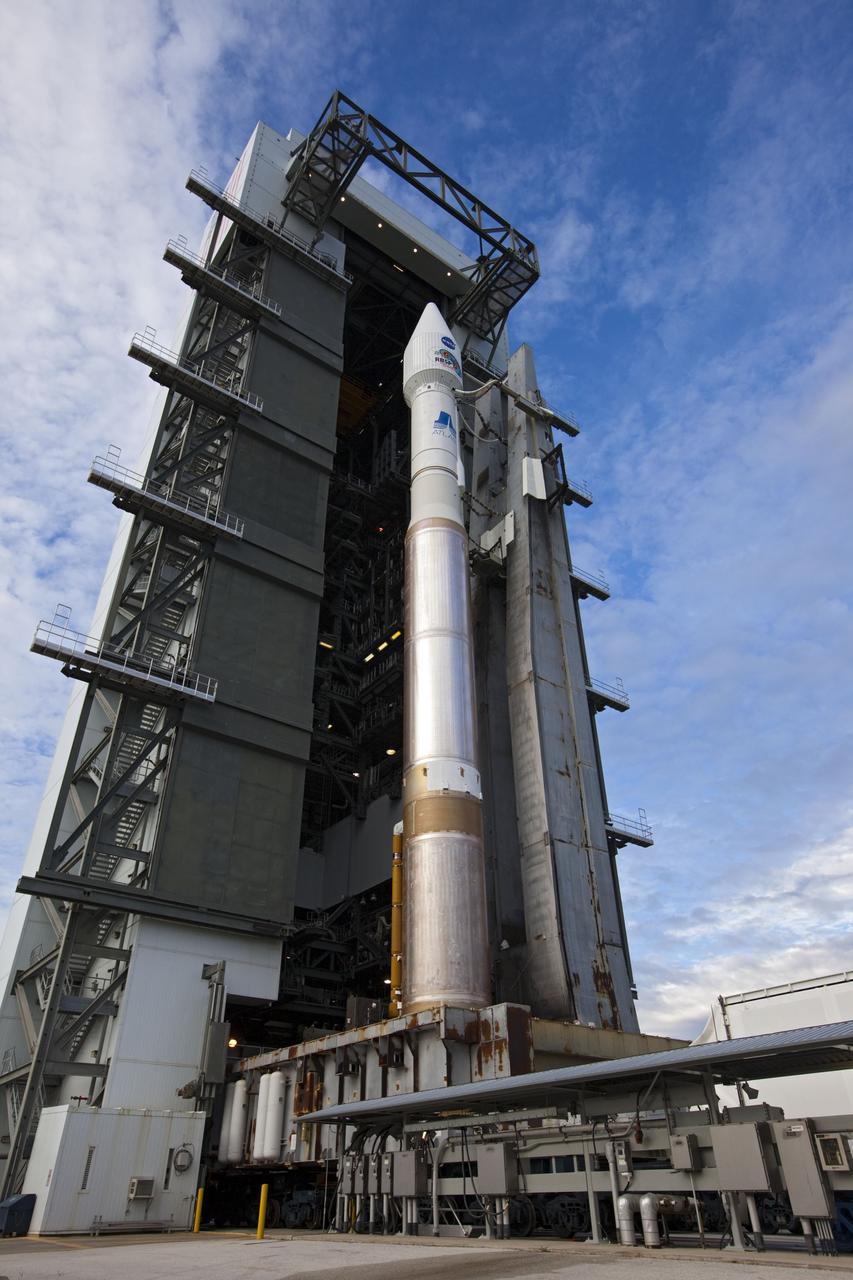
CAPE CANAVERAL, Fla. – The United Launch Alliance Atlas V rocket with the Radiation Belt Storm Probes, or RBSP, spacecraft aboard is readied for rollout to the launch pad at Space Launch Complex 41 at Cape Canaveral Air Force Station. NASA’s RBSP mission will help researchers understand the sun’s influence on Earth and near-Earth space by studying the Earth’s radiation belts on various scales of space and time. RBSP will begin its mission of exploration of Earth’s Van Allen radiation belts and the extremes of space weather after its launch aboard an Atlas V rocket. Launch is targeted for Aug. 24. Photo credit: NASA/Kim Shiflett
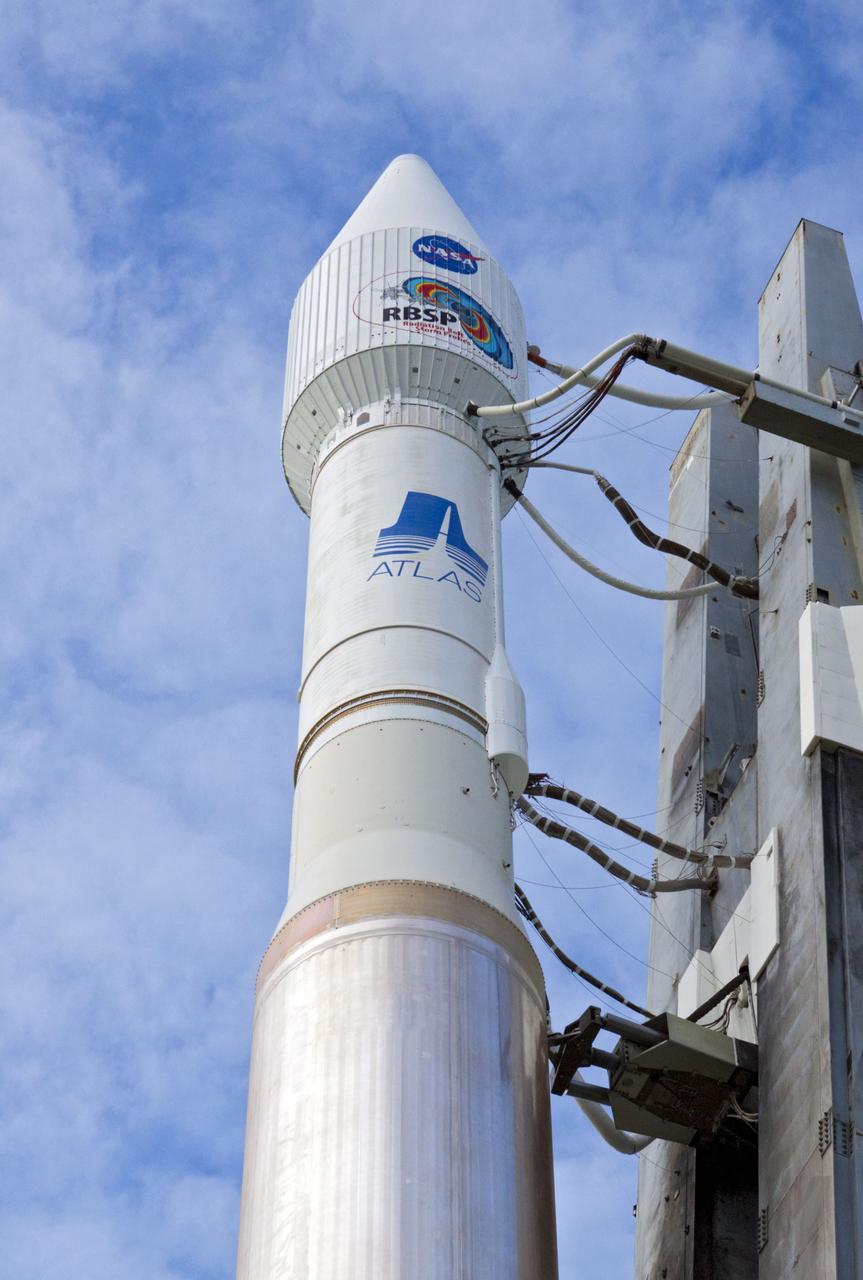
CAPE CANAVERAL, Fla. – The United Launch Alliance Atlas V rocket with the Radiation Belt Storm Probes, or RBSP, spacecraft aboard stands at the launch pad at Space Launch Complex 41 at Cape Canaveral Air Force Station. NASA’s RBSP mission will help researchers understand the sun’s influence on Earth and near-Earth space by studying the Earth’s radiation belts on various scales of space and time. RBSP will begin its mission of exploration of Earth’s Van Allen radiation belts and the extremes of space weather after its launch aboard an Atlas V rocket. Launch is targeted for Aug. 24. Photo credit: NASA/Kim Shiflett
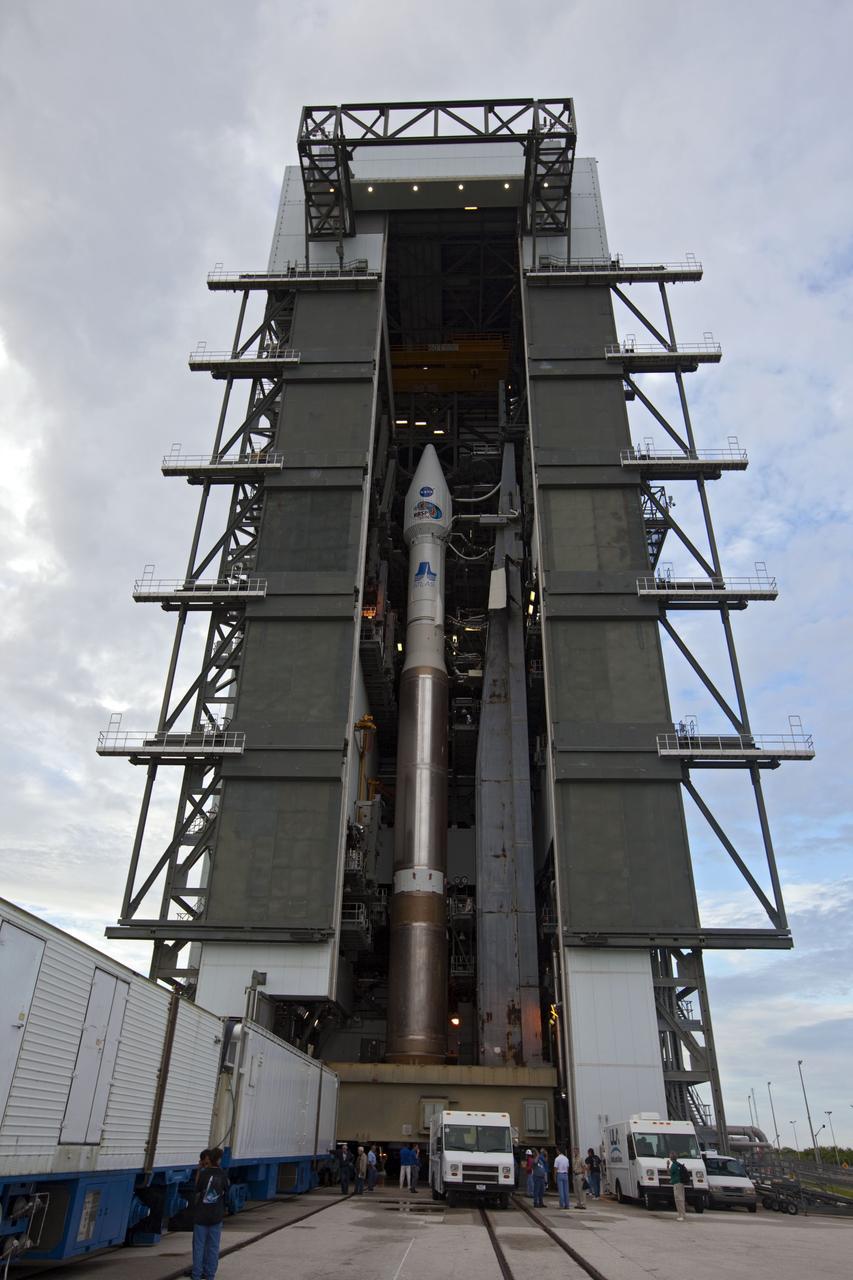
CAPE CANAVERAL, Fla. – The United Launch Alliance Atlas V rocket with the Radiation Belt Storm Probes, or RBSP, spacecraft aboard is readied for rollout to the launch pad at Space Launch Complex 41 at Cape Canaveral Air Force Station. NASA’s RBSP mission will help researchers understand the sun’s influence on Earth and near-Earth space by studying the Earth’s radiation belts on various scales of space and time. RBSP will begin its mission of exploration of Earth’s Van Allen radiation belts and the extremes of space weather after its launch aboard an Atlas V rocket. Launch is targeted for Aug. 24. Photo credit: NASA/Kim Shiflett
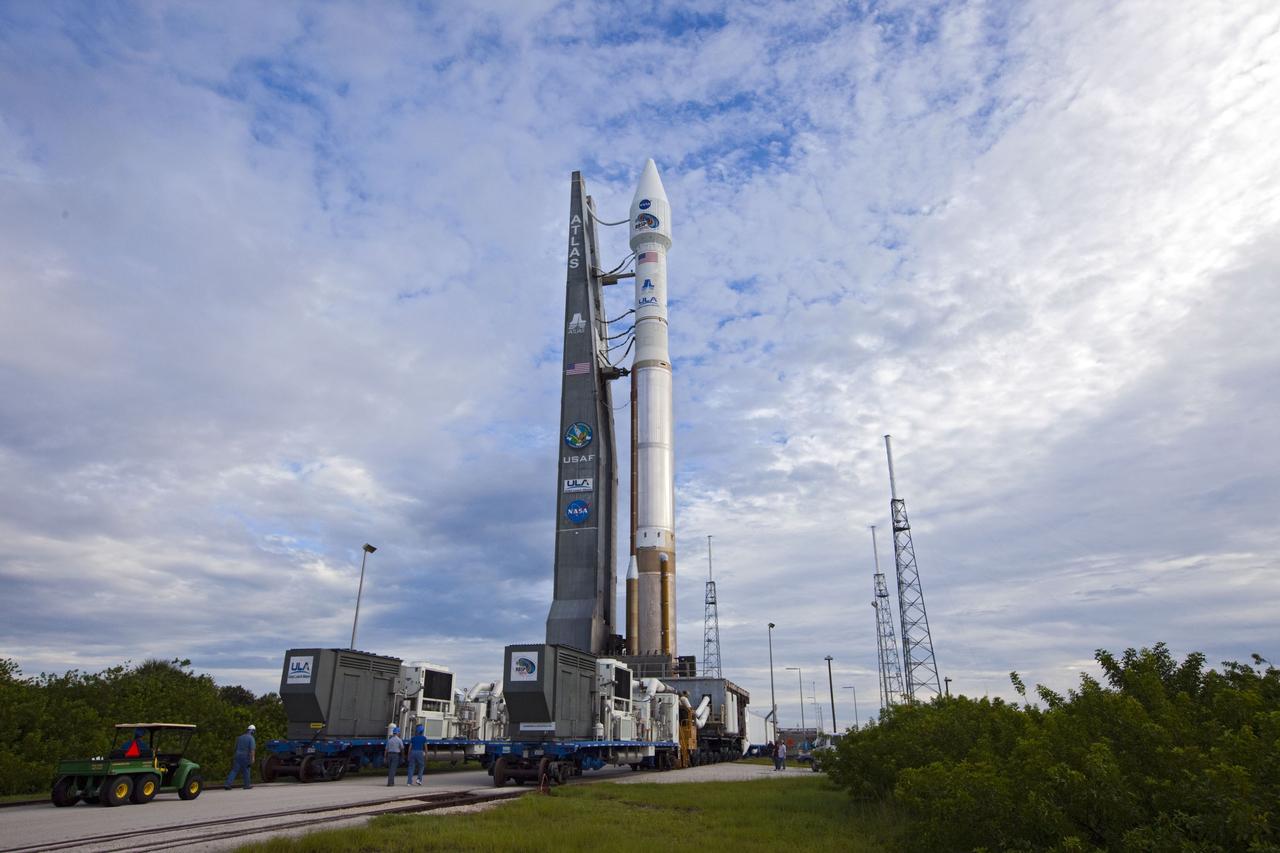
CAPE CANAVERAL, Fla. – Workers help guide the United Launch Alliance Atlas V rocket with the Radiation Belt Storm Probes, or RBSP, spacecraft aboard as it moves to the launch pad at Space Launch Complex 41 at Cape Canaveral Air Force Station. NASA’s RBSP mission will help researchers understand the sun’s influence on Earth and near-Earth space by studying the Earth’s radiation belts on various scales of space and time. RBSP will begin its mission of exploration of Earth’s Van Allen radiation belts and the extremes of space weather after its launch aboard an Atlas V rocket. Launch is targeted for Aug. 24. Photo credit: NASA/Kim Shiflett
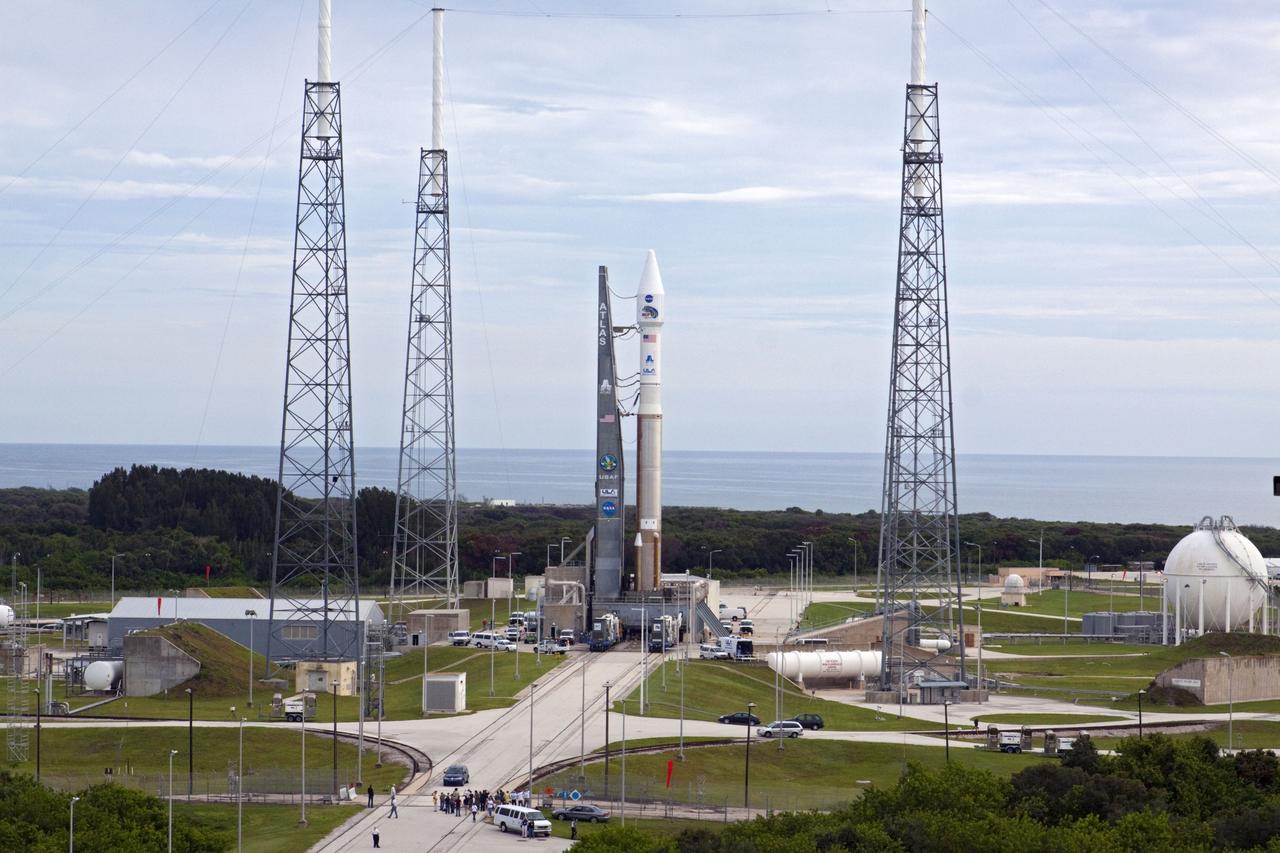
CAPE CANAVERAL, Fla. – The United Launch Alliance Atlas V rocket with the Radiation Belt Storm Probes, or RBSP, spacecraft aboard stands at the launch pad at Space Launch Complex 41 at Cape Canaveral Air Force Station. NASA’s RBSP mission will help researchers understand the sun’s influence on Earth and near-Earth space by studying the Earth’s radiation belts on various scales of space and time. RBSP will begin its mission of exploration of Earth’s Van Allen radiation belts and the extremes of space weather after its launch aboard an Atlas V rocket. Launch is targeted for Aug. 24. Photo credit: NASA/Kim Shiflett
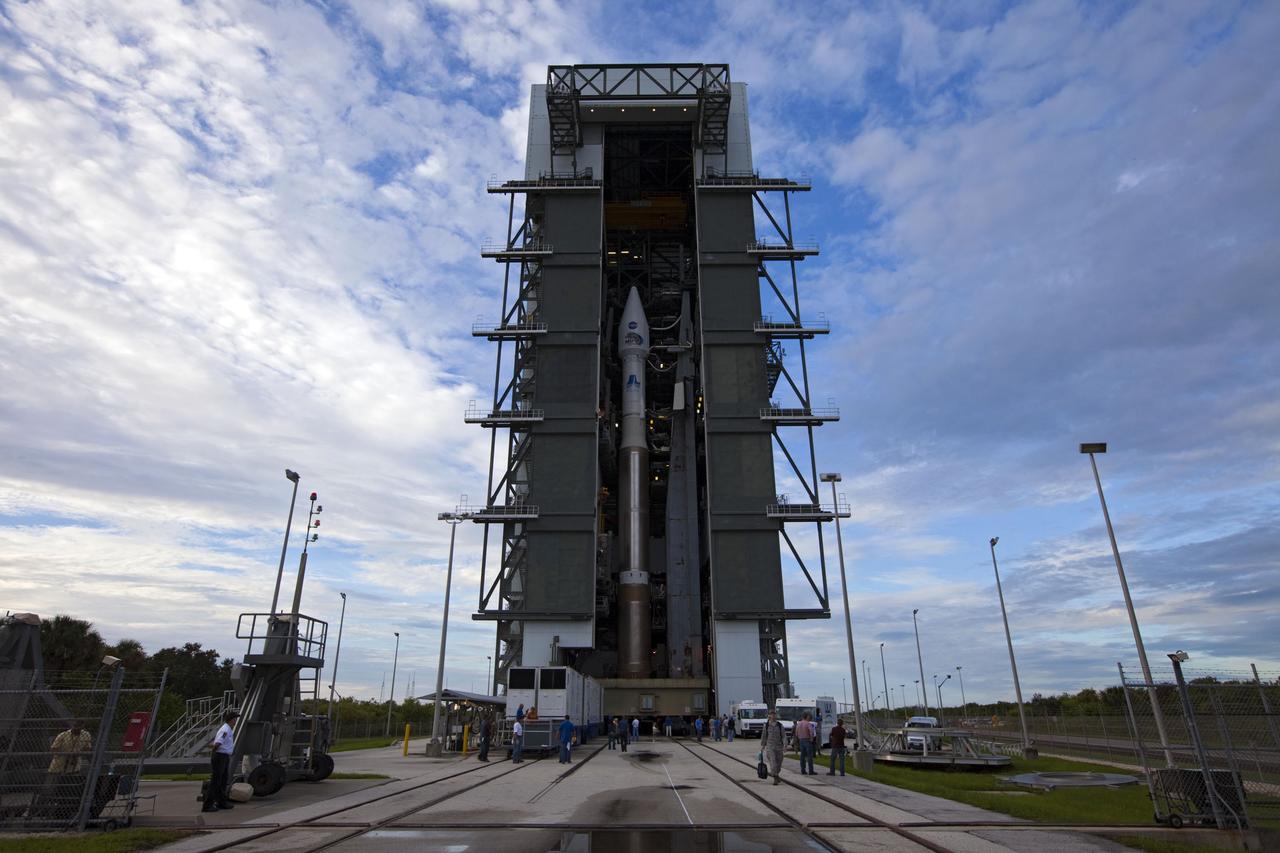
CAPE CANAVERAL, Fla. – The United Launch Alliance Atlas V rocket with the Radiation Belt Storm Probes, or RBSP, spacecraft aboard is readied for rollout to the launch pad at Space Launch Complex 41 at Cape Canaveral Air Force Station. NASA’s RBSP mission will help researchers understand the sun’s influence on Earth and near-Earth space by studying the Earth’s radiation belts on various scales of space and time. RBSP will begin its mission of exploration of Earth’s Van Allen radiation belts and the extremes of space weather after its launch aboard an Atlas V rocket. Launch is targeted for Aug. 24. Photo credit: NASA/Kim Shiflett
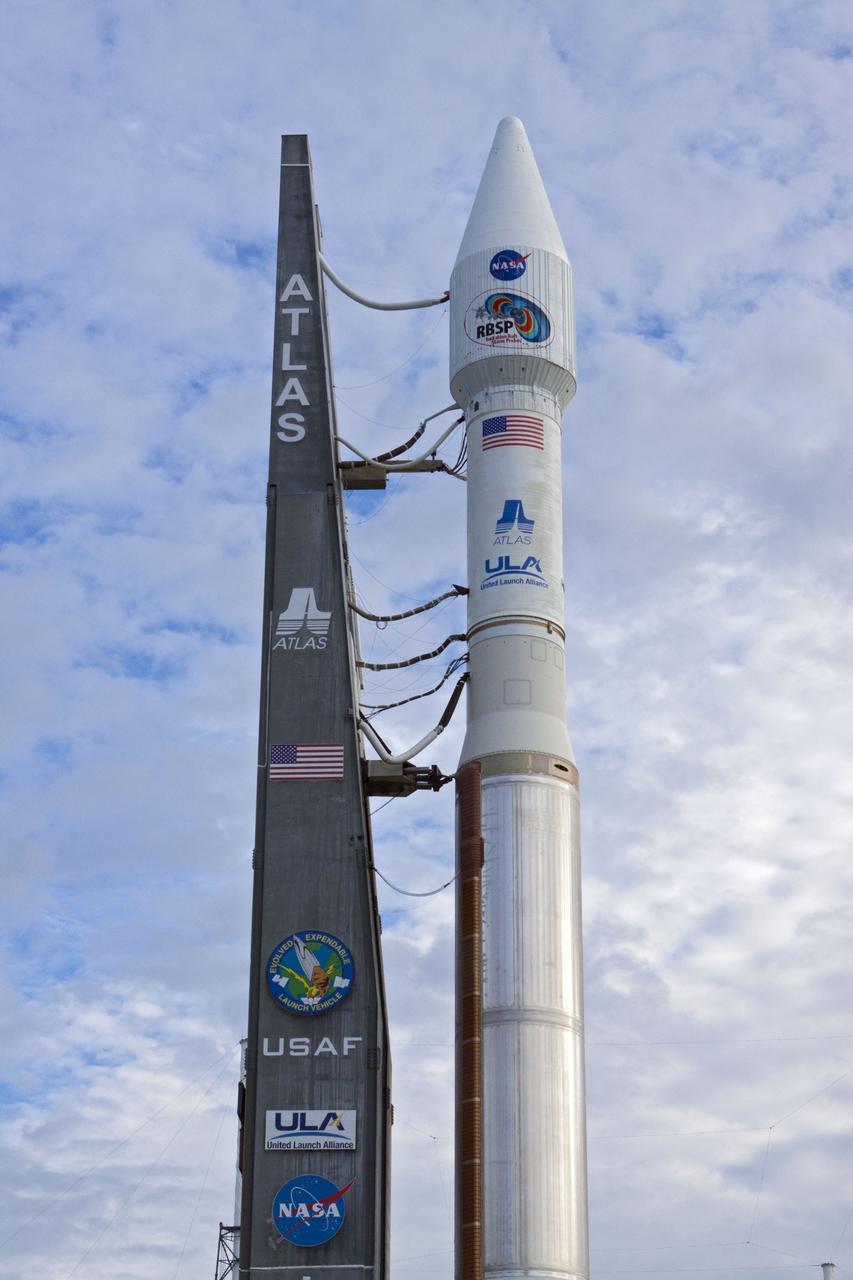
CAPE CANAVERAL, Fla. – The United Launch Alliance Atlas V rocket with the Radiation Belt Storm Probes, or RBSP, spacecraft aboard stands at the launch pad at Space Launch Complex 41 at Cape Canaveral Air Force Station. NASA’s RBSP mission will help researchers understand the sun’s influence on Earth and near-Earth space by studying the Earth’s radiation belts on various scales of space and time. RBSP will begin its mission of exploration of Earth’s Van Allen radiation belts and the extremes of space weather after its launch aboard an Atlas V rocket. Launch is targeted for Aug. 24. Photo credit: NASA/Kim Shiflett
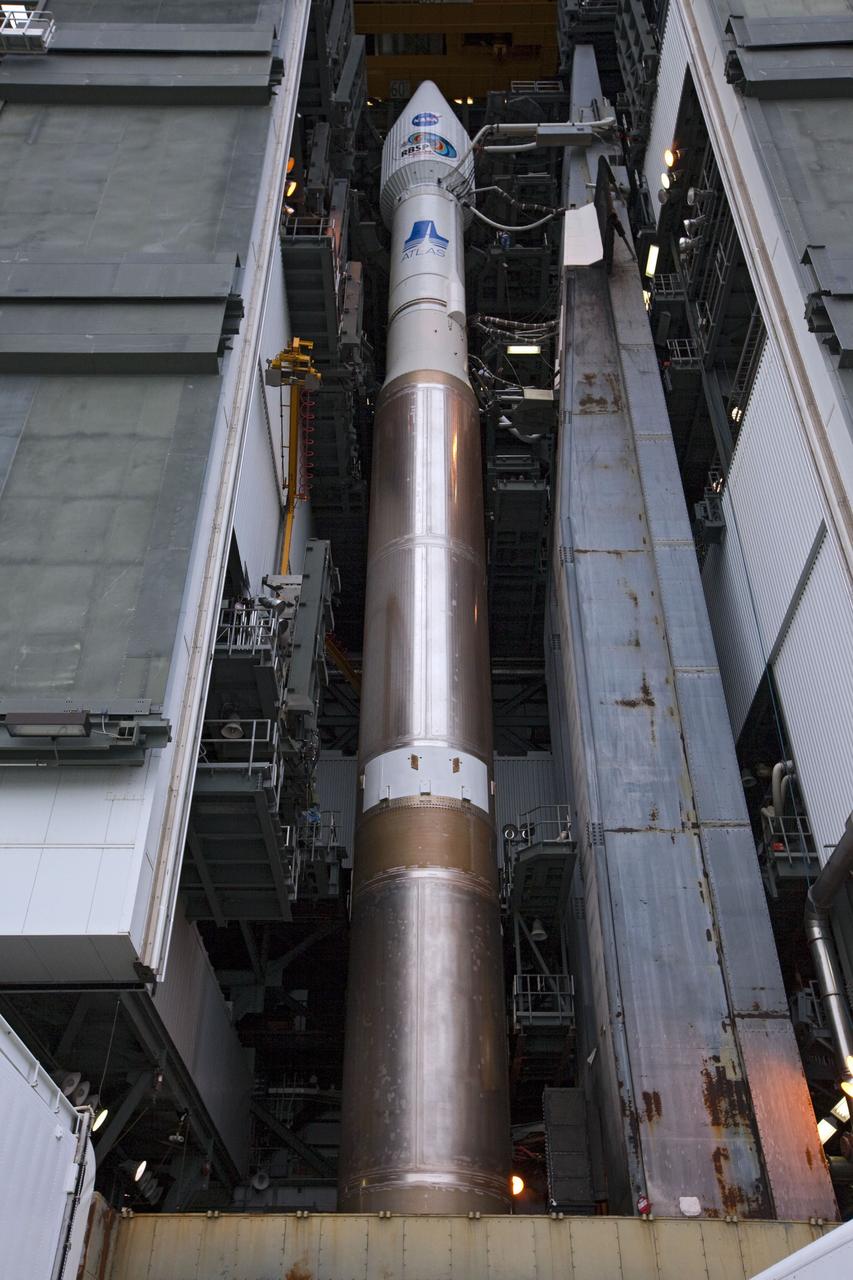
CAPE CANAVERAL, Fla. – The United Launch Alliance Atlas V rocket with the Radiation Belt Storm Probes, or RBSP, spacecraft aboard is readied for rollout to the launch pad at Space Launch Complex 41 at Cape Canaveral Air Force Station. NASA’s RBSP mission will help researchers understand the sun’s influence on Earth and near-Earth space by studying the Earth’s radiation belts on various scales of space and time. RBSP will begin its mission of exploration of Earth’s Van Allen radiation belts and the extremes of space weather after its launch aboard an Atlas V rocket. Launch is targeted for Aug. 24. Photo credit: NASA/Kim Shiflett

CAPE CANAVERAL, Fla. – Workers help guide the United Launch Alliance Atlas V rocket with the Radiation Belt Storm Probes, or RBSP, spacecraft aboard as it moves to the launch pad at Space Launch Complex 41 at Cape Canaveral Air Force Station. NASA’s RBSP mission will help researchers understand the sun’s influence on Earth and near-Earth space by studying the Earth’s radiation belts on various scales of space and time. RBSP will begin its mission of exploration of Earth’s Van Allen radiation belts and the extremes of space weather after its launch aboard an Atlas V rocket. Launch is targeted for Aug. 24. Photo credit: NASA/Kim Shiflett
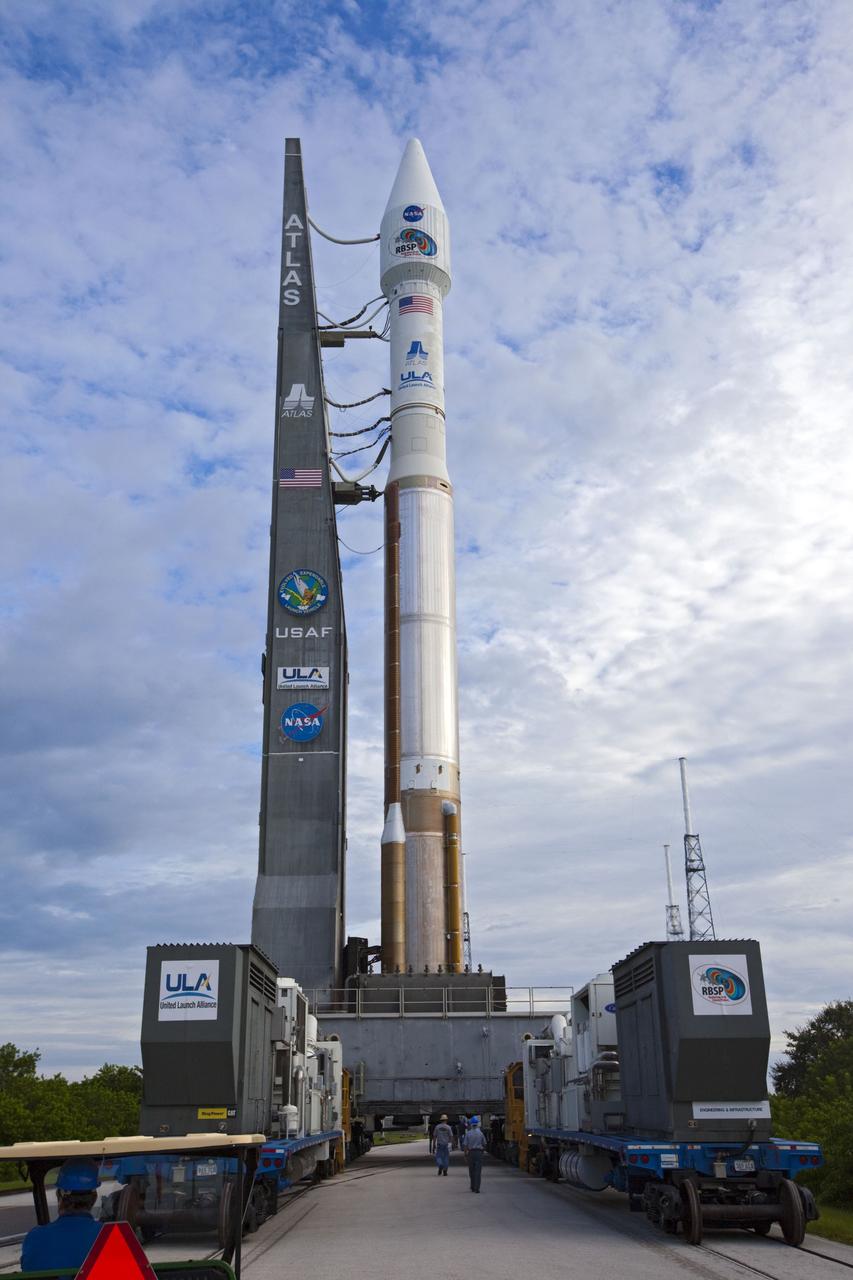
CAPE CANAVERAL, Fla. – Workers help guide the United Launch Alliance Atlas V rocket with the Radiation Belt Storm Probes, or RBSP, spacecraft aboard as it moves to the launch pad at Space Launch Complex 41 at Cape Canaveral Air Force Station. NASA’s RBSP mission will help researchers understand the sun’s influence on Earth and near-Earth space by studying the Earth’s radiation belts on various scales of space and time. RBSP will begin its mission of exploration of Earth’s Van Allen radiation belts and the extremes of space weather after its launch aboard an Atlas V rocket. Launch is targeted for Aug. 24. Photo credit: NASA/Kim Shiflett
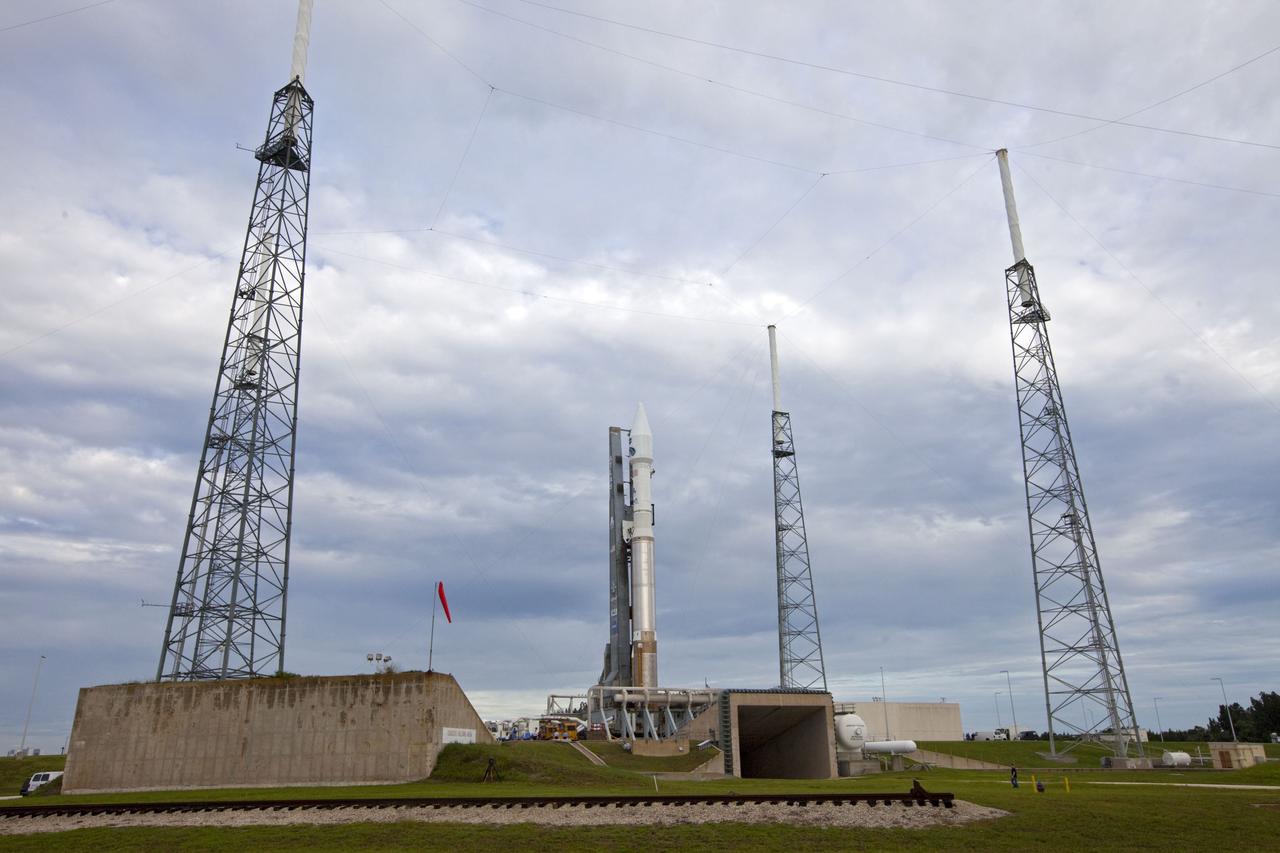
CAPE CANAVERAL, Fla. – The United Launch Alliance Atlas V rocket with the Radiation Belt Storm Probes, or RBSP, spacecraft aboard stands at the launch pad at Space Launch Complex 41 at Cape Canaveral Air Force Station. NASA’s RBSP mission will help researchers understand the sun’s influence on Earth and near-Earth space by studying the Earth’s radiation belts on various scales of space and time. RBSP will begin its mission of exploration of Earth’s Van Allen radiation belts and the extremes of space weather after its launch aboard an Atlas V rocket. Launch is targeted for Aug. 24. Photo credit: NASA/Kim Shiflett
CAPE CANAVERAL, Fla. – The United Launch Alliance Atlas V rocket with the Radiation Belt Storm Probes, or RBSP, spacecraft aboard stands at the launch pad at Space Launch Complex 41 at Cape Canaveral Air Force Station. NASA’s RBSP mission will help researchers understand the sun’s influence on Earth and near-Earth space by studying the Earth’s radiation belts on various scales of space and time. RBSP will begin its mission of exploration of Earth’s Van Allen radiation belts and the extremes of space weather after its launch aboard an Atlas V rocket. Launch is targeted for Aug. 24. Photo credit: NASA/Kim Shiflett
CAPE CANAVERAL, Fla. – The United Launch Alliance Atlas V rocket with the Radiation Belt Storm Probes, or RBSP, spacecraft aboard stands at the launch pad at Space Launch Complex 41 at Cape Canaveral Air Force Station. NASA’s RBSP mission will help researchers understand the sun’s influence on Earth and near-Earth space by studying the Earth’s radiation belts on various scales of space and time. RBSP will begin its mission of exploration of Earth’s Van Allen radiation belts and the extremes of space weather after its launch aboard an Atlas V rocket. Launch is targeted for Aug. 24. Photo credit: NASA/Kim Shiflett
CAPE CANAVERAL, Fla. – The United Launch Alliance Atlas V rocket with the Radiation Belt Storm Probes, or RBSP, spacecraft aboard rolls to the launch pad at Space Launch Complex 41 at Cape Canaveral Air Force Station. NASA’s RBSP mission will help researchers understand the sun’s influence on Earth and near-Earth space by studying the Earth’s radiation belts on various scales of space and time. RBSP will begin its mission of exploration of Earth’s Van Allen radiation belts and the extremes of space weather after its launch aboard an Atlas V rocket. Launch is targeted for Aug. 24. Photo credit: NASA/Kim Shiflett
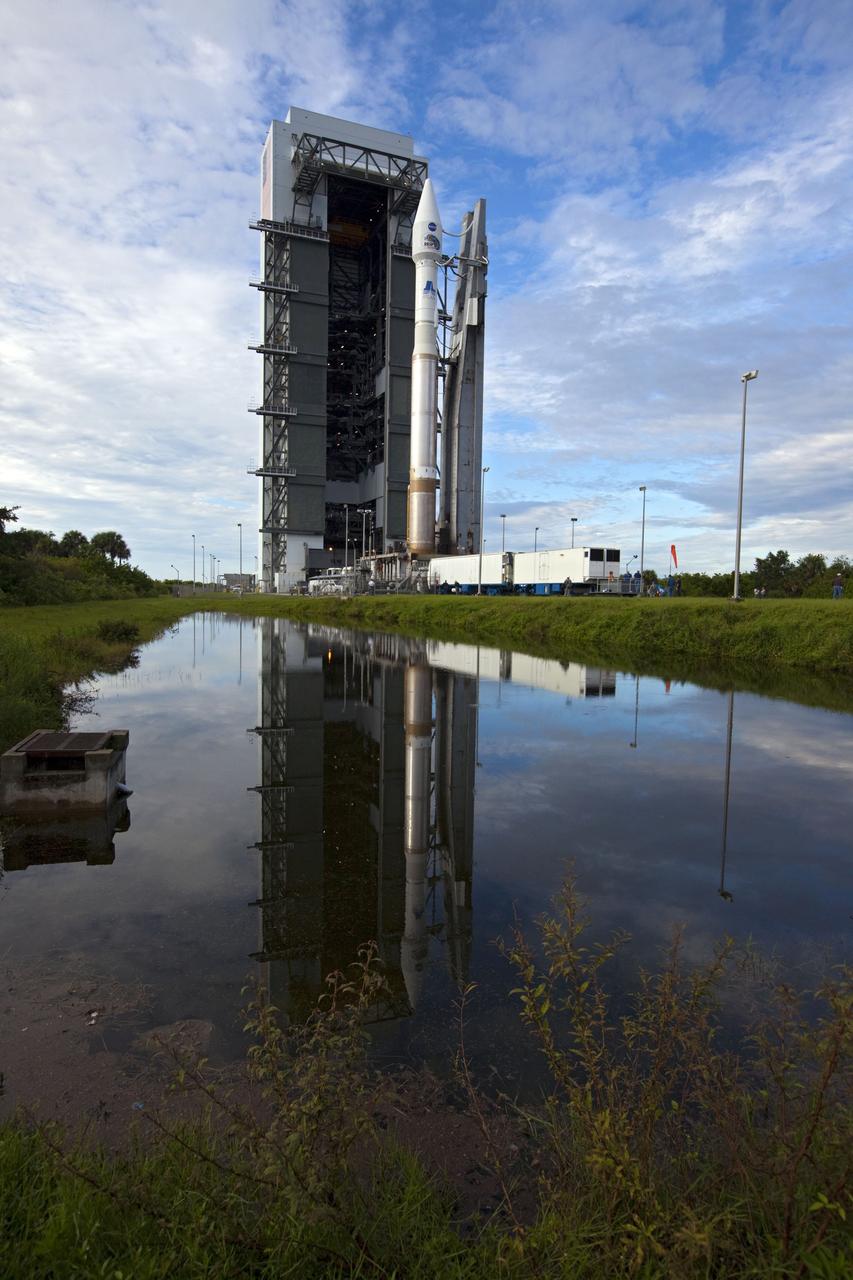
CAPE CANAVERAL, Fla. – The United Launch Alliance Atlas V rocket with the Radiation Belt Storm Probes, or RBSP, spacecraft aboard rolls to the launch pad at Space Launch Complex 41 at Cape Canaveral Air Force Station. NASA’s RBSP mission will help researchers understand the sun’s influence on Earth and near-Earth space by studying the Earth’s radiation belts on various scales of space and time. RBSP will begin its mission of exploration of Earth’s Van Allen radiation belts and the extremes of space weather after its launch aboard an Atlas V rocket. Launch is targeted for Aug. 24. Photo credit: NASA/Kim Shiflett
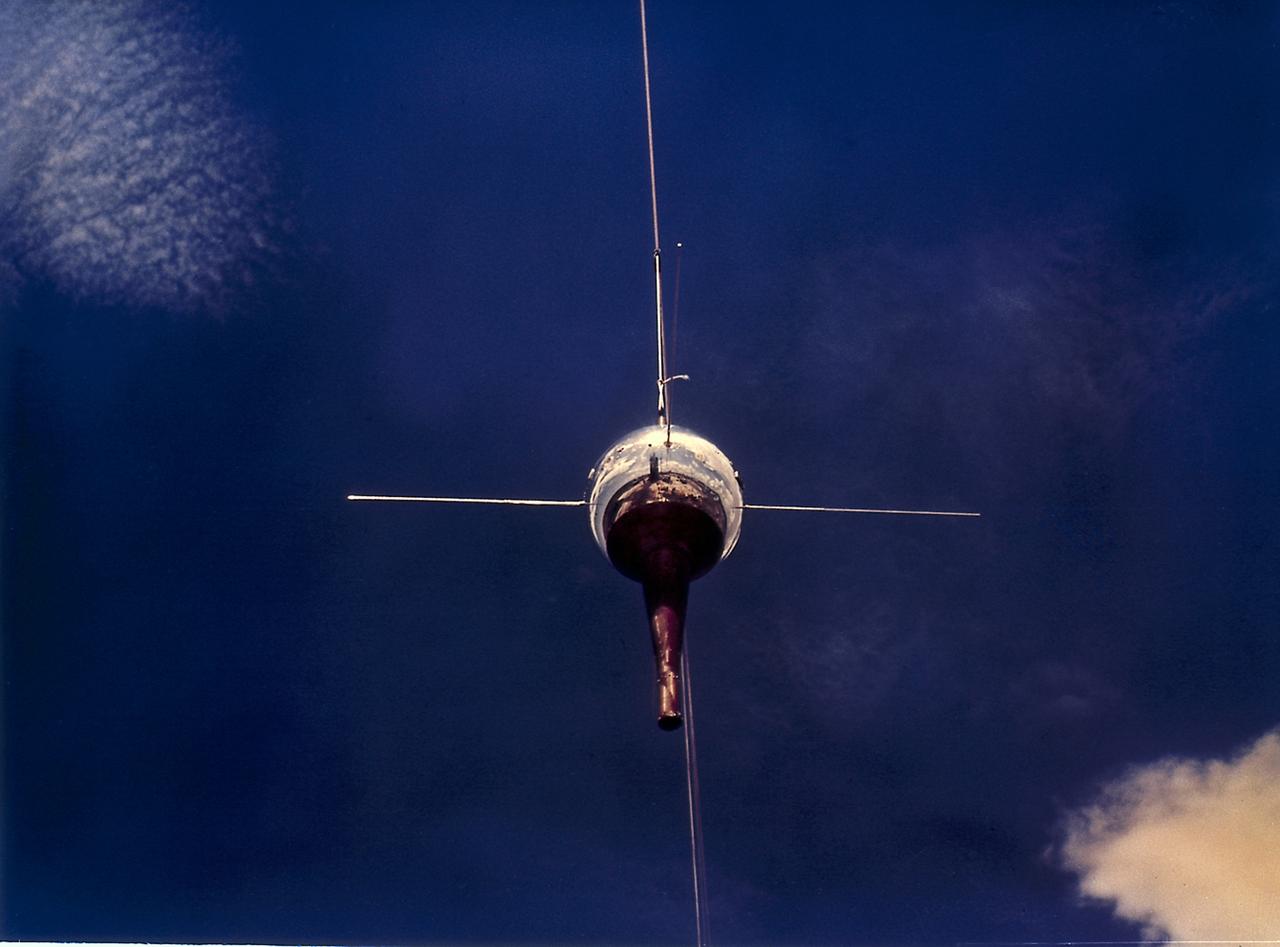
The Vangard III satellite to study the magnetic field and radiation belt in orbit. NASA successfully launched Vanguard III (SLV-7) from Cape Canaveral, Florida on September 18, 1959.
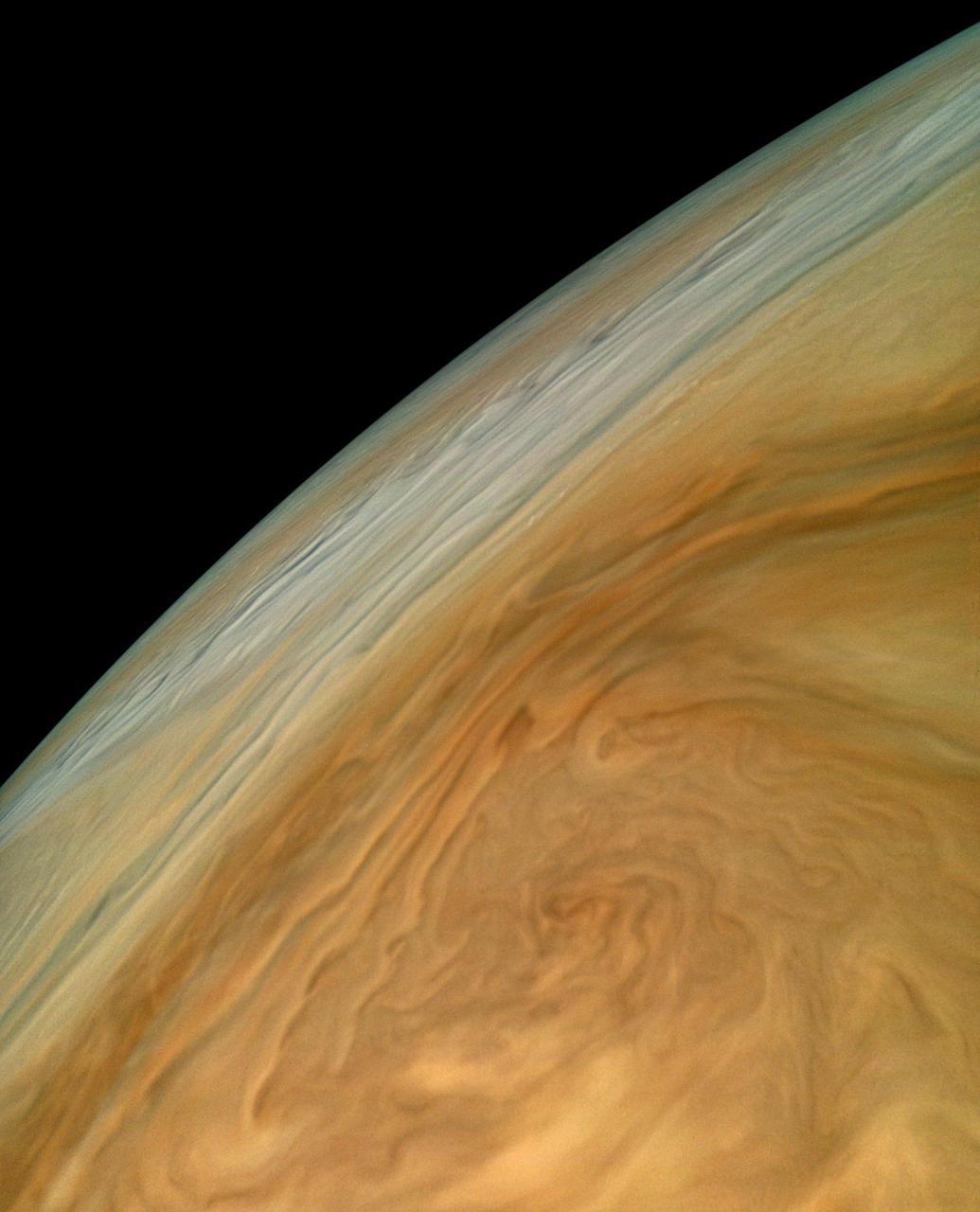
Colorful swirling clouds in Jupiter's North Equatorial Belt practically fill this image from NASA's Juno spacecraft. This is the closest image captured of the Jovian clouds during this recent flyby of the gas giant planet. The color-enhanced image was taken at 2:08 p.m. PDT (5:08 p.m. EDT) on Oct. 29, 2018 as the spacecraft performed its 16th close flyby of Jupiter. At the time, Juno was about 2,100 miles (3,400 kilometers) from the planet's cloud tops, at approximately 14 degrees north latitude. In other words, the spacecraft was about as close to Jupiter as San Francisco is to Chicago, which is quite close when racing over a planet that's 11 times wider than Earth. Citizen scientist Björn Jónsson created this image using data from the spacecraft's JunoCam imager. https://photojournal.jpl.nasa.gov/catalog/PIA22695. - Enhanced image by Björn Jónsson (CC-NC-SA) based on images provided courtesy of NASA/JPL-Caltech/SwRI/MSSS
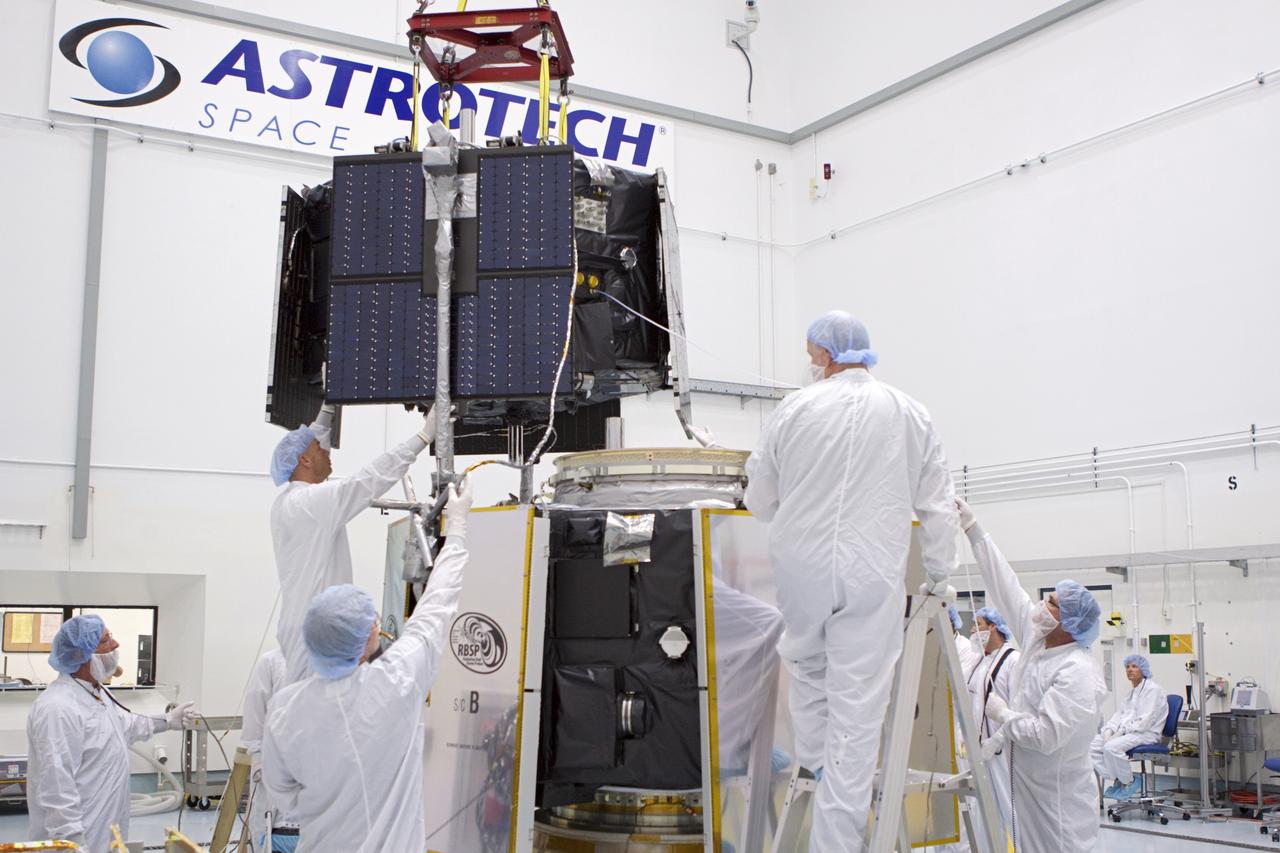
TITUSVILLE, Fla. - Inside the Astrotech payload processing facility in Titusville, Fla. near NASA’s Kennedy Space Center, technicians use a crane to move the Radiation Belt Storm Probes, or RBSP, spacecraft A into position for stacking atop RBSP B. NASA’s RBSP mission will help us understand the sun’s influence on Earth and near-Earth space by studying the Earth’s radiation belts on various scales of space and time. RBSP will begin its mission of exploration of Earth’s Van Allen radiation belts and the extremes of space weather after its liftoff aboard a United Launch Alliance Atlas V from Space Launch Complex 41 at Cape Canaveral Air Force Station, Fla. Liftoff is targeted for Aug. 23, 2012. For more information, visit http://www.nasa.gov/rbsp. Photo credit: NASA/Jim Grossmann
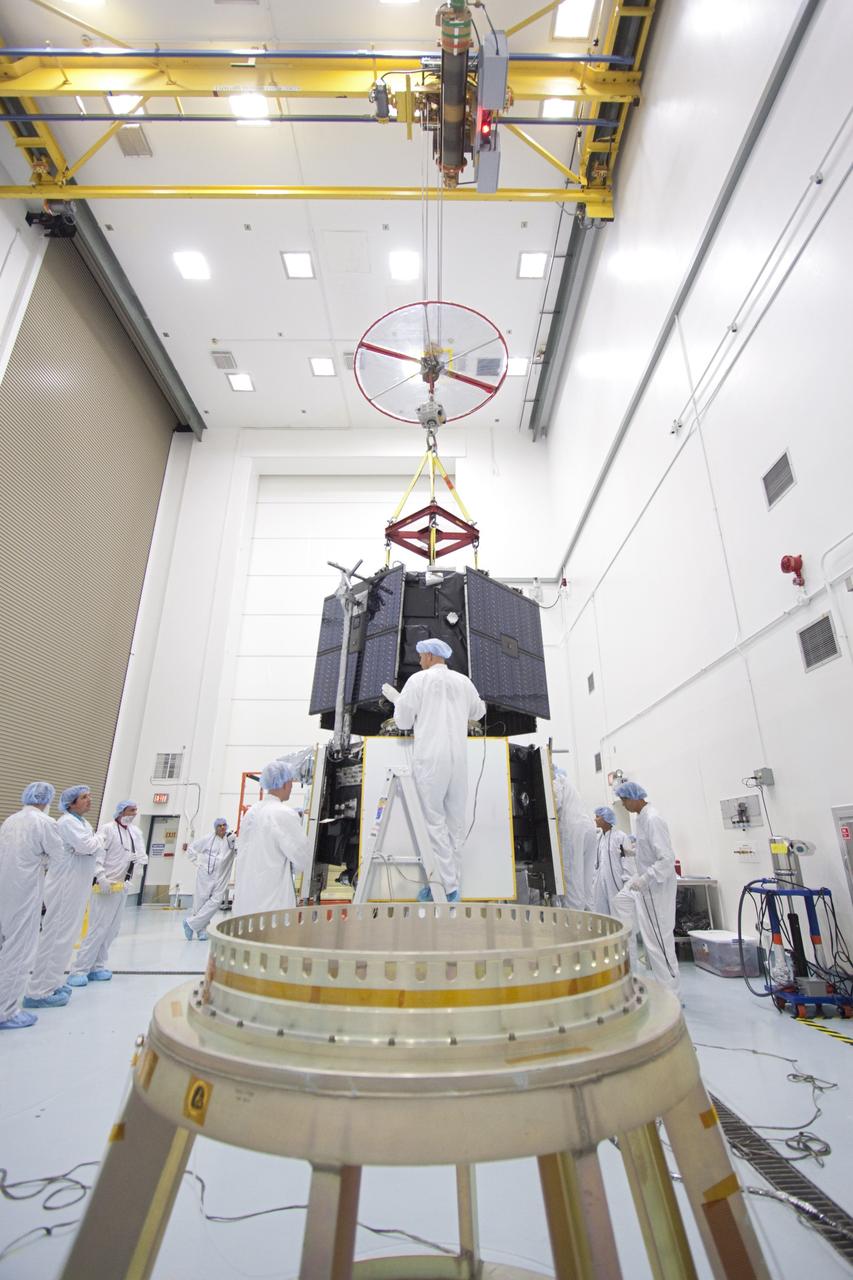
TITUSVILLE, Fla. - Inside the Astrotech payload processing facility in Titusville, Fla. near NASA’s Kennedy Space Center, technicians use a crane to position the Radiation Belt Storm Probes, or RBSP, spacecraft A atop RBSP B. NASA’s RBSP mission will help us understand the sun’s influence on Earth and near-Earth space by studying the Earth’s radiation belts on various scales of space and time. RBSP will begin its mission of exploration of Earth’s Van Allen radiation belts and the extremes of space weather after its liftoff aboard a United Launch Alliance Atlas V from Space Launch Complex 41 at Cape Canaveral Air Force Station, Fla. Liftoff is targeted for Aug. 23, 2012. For more information, visit http://www.nasa.gov/rbsp. Photo credit: NASA/Jim Grossmann
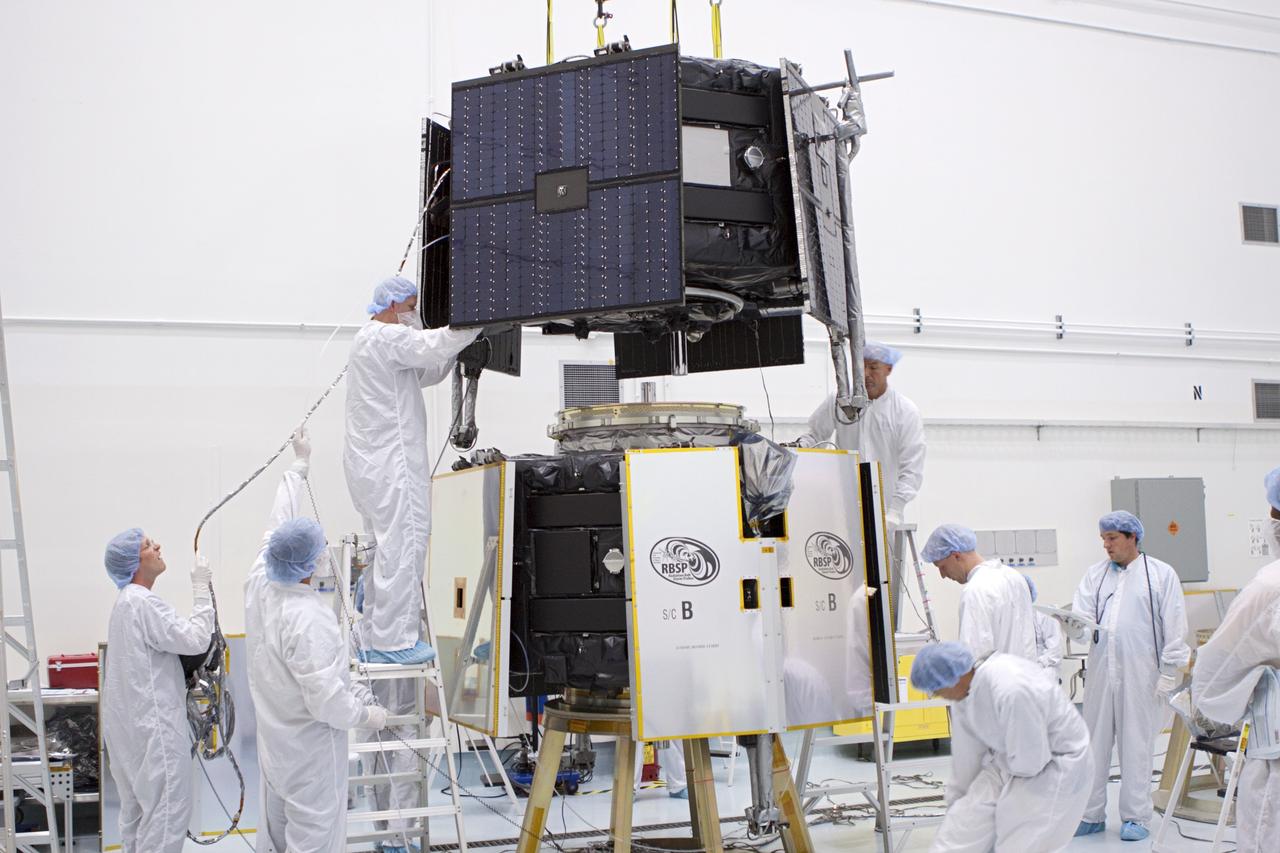
TITUSVILLE, Fla. - Inside the Astrotech payload processing facility in Titusville, Fla. near NASA’s Kennedy Space Center, technicians use a crane to position the Radiation Belt Storm Probes, or RBSP, spacecraft A for stacking atop RBSP B. NASA’s RBSP mission will help us understand the sun’s influence on Earth and near-Earth space by studying the Earth’s radiation belts on various scales of space and time. RBSP will begin its mission of exploration of Earth’s Van Allen radiation belts and the extremes of space weather after its liftoff aboard a United Launch Alliance Atlas V from Space Launch Complex 41 at Cape Canaveral Air Force Station, Fla. Liftoff is targeted for Aug. 23, 2012. For more information, visit http://www.nasa.gov/rbsp. Photo credit: NASA/Jim Grossmann
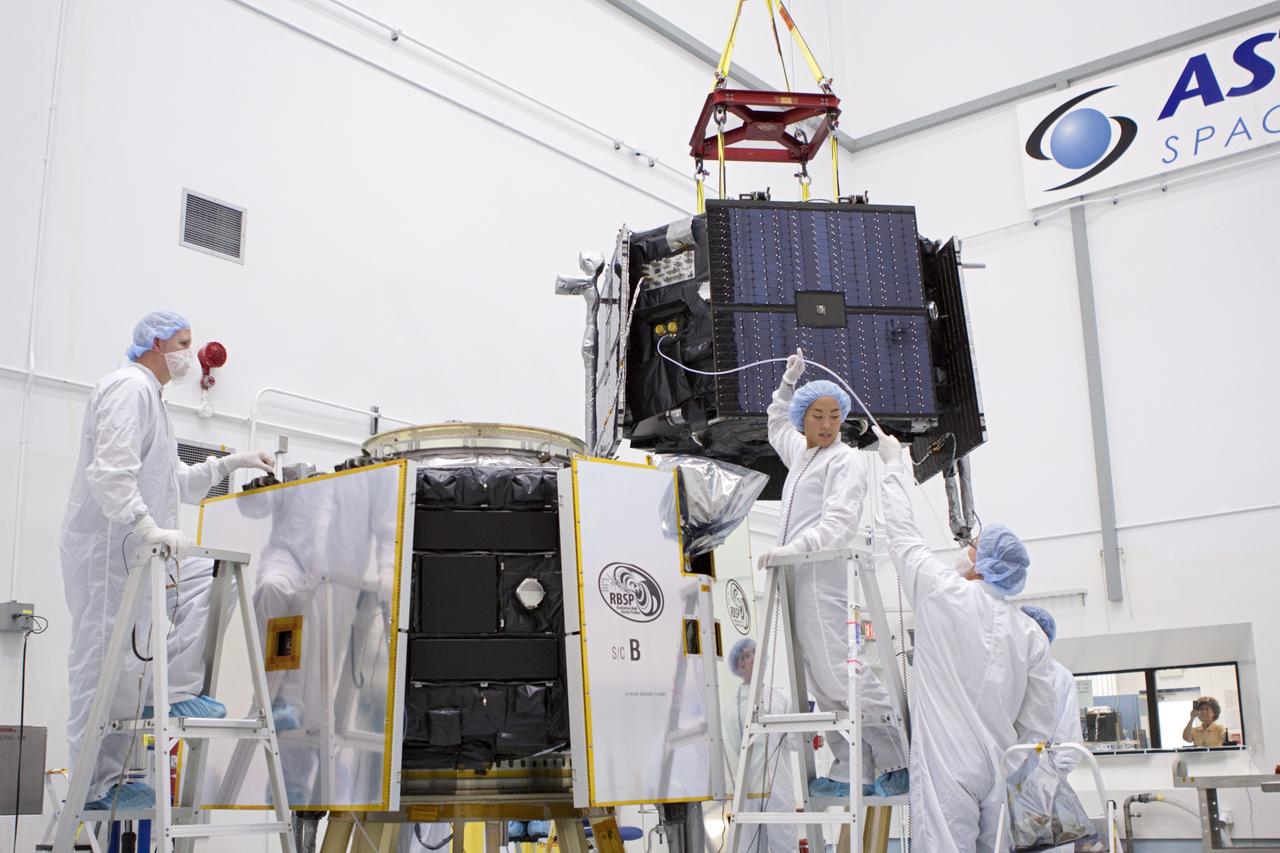
TITUSVILLE, Fla. - Inside the Astrotech payload processing facility in Titusville, Fla. near NASA’s Kennedy Space Center, technicians use a crane to move the Radiation Belt Storm Probes, or RBSP, spacecraft A into position for stacking atop RBSP B. NASA’s RBSP mission will help us understand the sun’s influence on Earth and near-Earth space by studying the Earth’s radiation belts on various scales of space and time. RBSP will begin its mission of exploration of Earth’s Van Allen radiation belts and the extremes of space weather after its liftoff aboard a United Launch Alliance Atlas V from Space Launch Complex 41 at Cape Canaveral Air Force Station, Fla. Liftoff is targeted for Aug. 23, 2012. For more information, visit http://www.nasa.gov/rbsp. Photo credit: NASA/Jim Grossmann
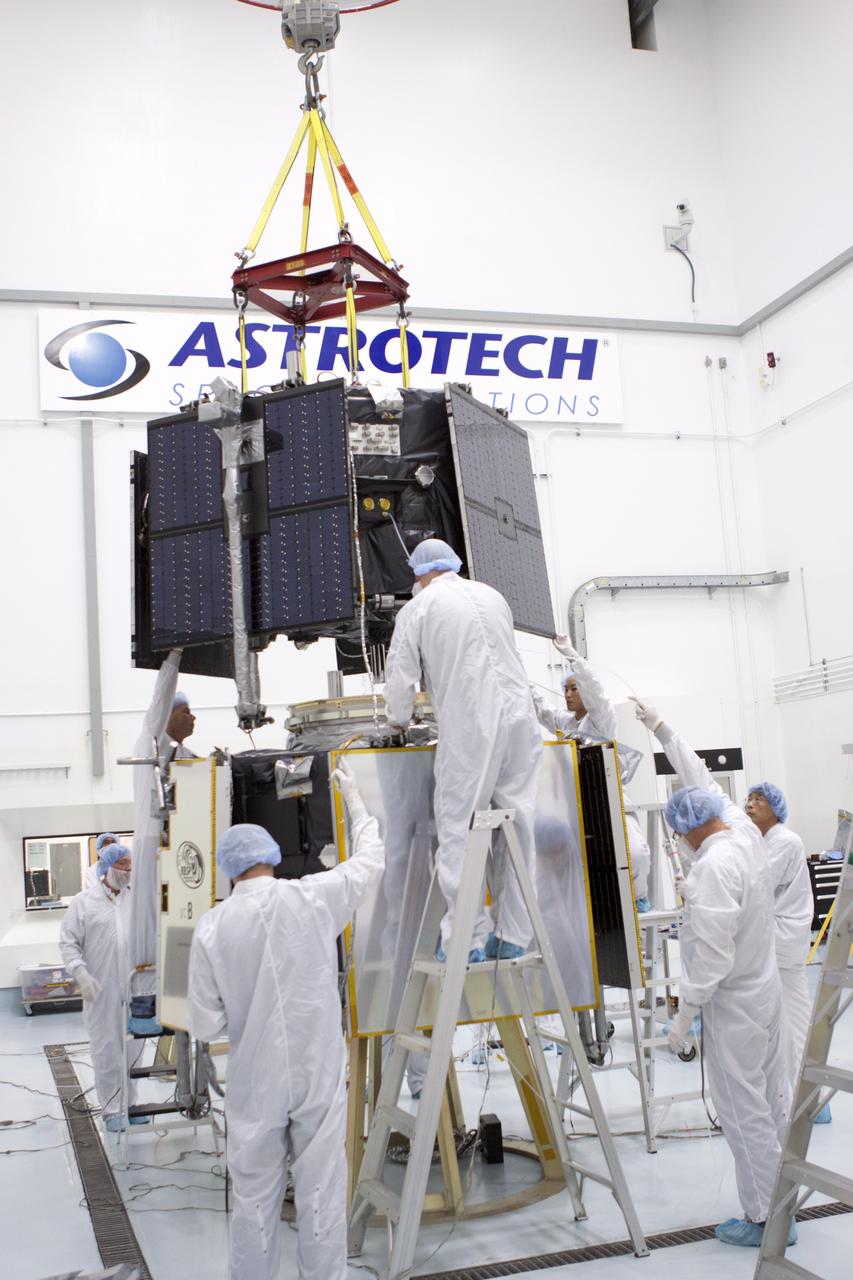
TITUSVILLE, Fla. - Inside the Astrotech payload processing facility in Titusville, Fla. near NASA’s Kennedy Space Center, technicians use a crane to move the Radiation Belt Storm Probes, or RBSP, spacecraft A into position for stacking atop RBSP B. NASA’s RBSP mission will help us understand the sun’s influence on Earth and near-Earth space by studying the Earth’s radiation belts on various scales of space and time. RBSP will begin its mission of exploration of Earth’s Van Allen radiation belts and the extremes of space weather after its liftoff aboard a United Launch Alliance Atlas V from Space Launch Complex 41 at Cape Canaveral Air Force Station, Fla. Liftoff is targeted for Aug. 23, 2012. For more information, visit http://www.nasa.gov/rbsp. Photo credit: NASA/Jim Grossmann
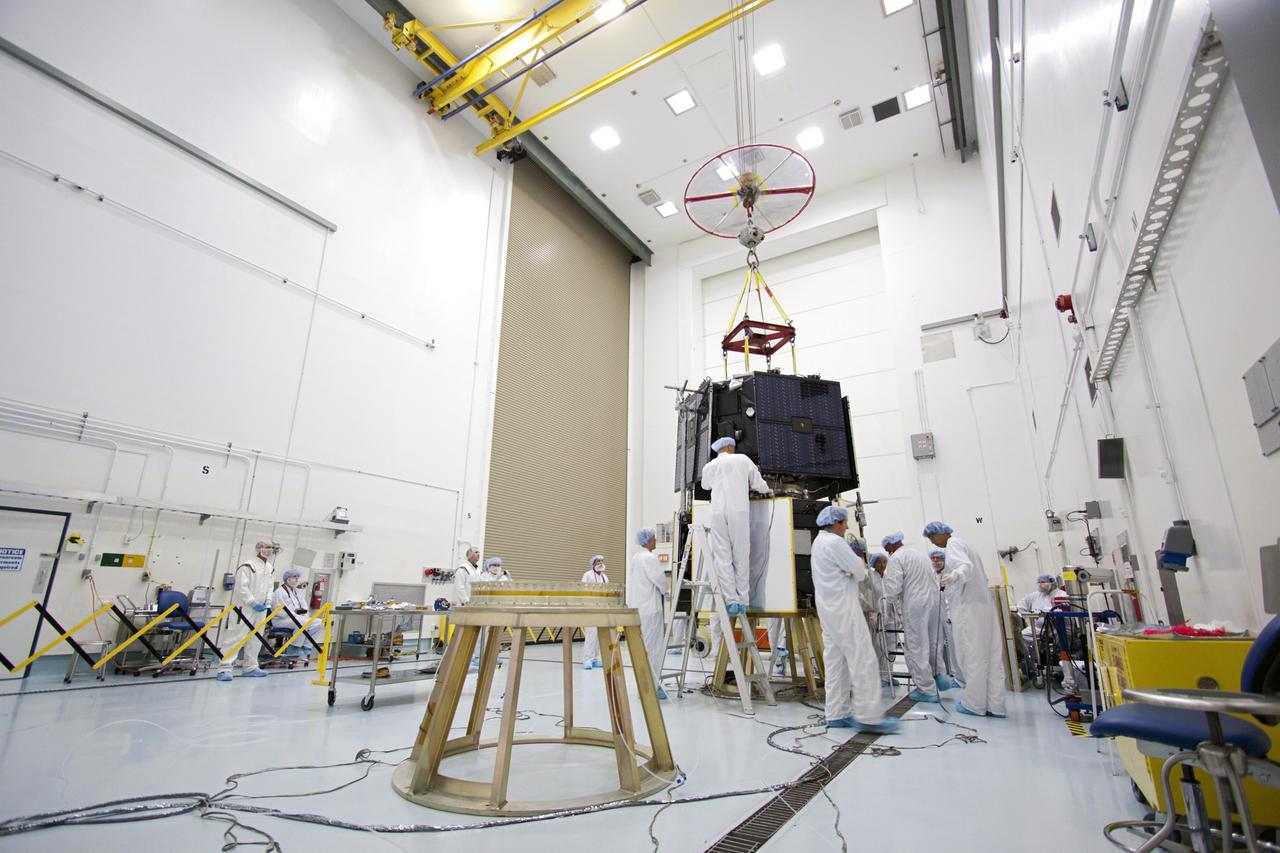
TITUSVILLE, Fla. - Inside the Astrotech payload processing facility in Titusville, Fla. near NASA’s Kennedy Space Center, technicians use a crane to position the Radiation Belt Storm Probes, or RBSP, spacecraft A atop RBSP B. NASA’s RBSP mission will help us understand the sun’s influence on Earth and near-Earth space by studying the Earth’s radiation belts on various scales of space and time. RBSP will begin its mission of exploration of Earth’s Van Allen radiation belts and the extremes of space weather after its liftoff aboard a United Launch Alliance Atlas V from Space Launch Complex 41 at Cape Canaveral Air Force Station, Fla. Liftoff is targeted for Aug. 23, 2012. For more information, visit http://www.nasa.gov/rbsp. Photo credit: NASA/Jim Grossmann
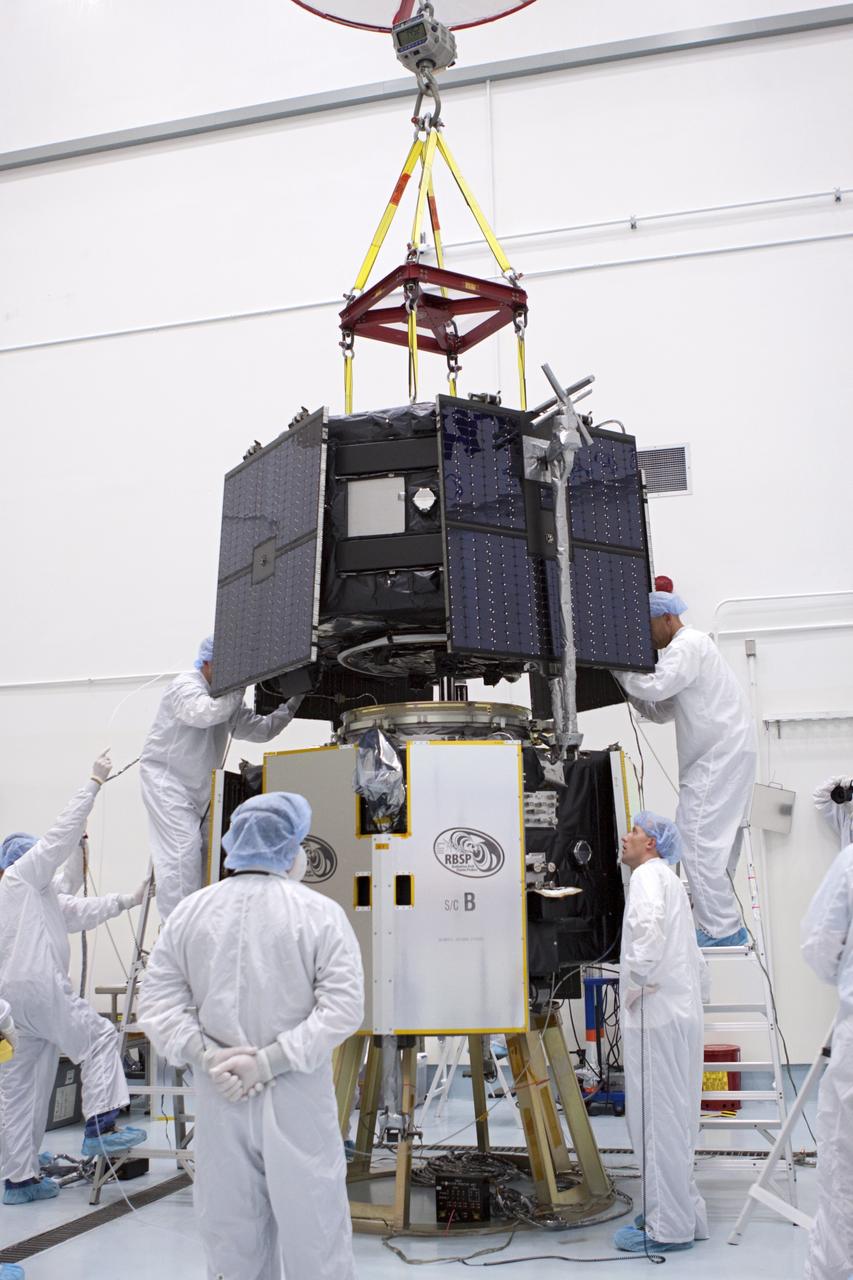
TITUSVILLE, Fla. - Inside the Astrotech payload processing facility in Titusville, Fla. near NASA’s Kennedy Space Center, technicians use a crane to position the Radiation Belt Storm Probes, or RBSP, spacecraft A atop RBSP B. NASA’s RBSP mission will help us understand the sun’s influence on Earth and near-Earth space by studying the Earth’s radiation belts on various scales of space and time. RBSP will begin its mission of exploration of Earth’s Van Allen radiation belts and the extremes of space weather after its liftoff aboard a United Launch Alliance Atlas V from Space Launch Complex 41 at Cape Canaveral Air Force Station, Fla. Liftoff is targeted for Aug. 23, 2012. For more information, visit http://www.nasa.gov/rbsp. Photo credit: NASA/Jim Grossmann
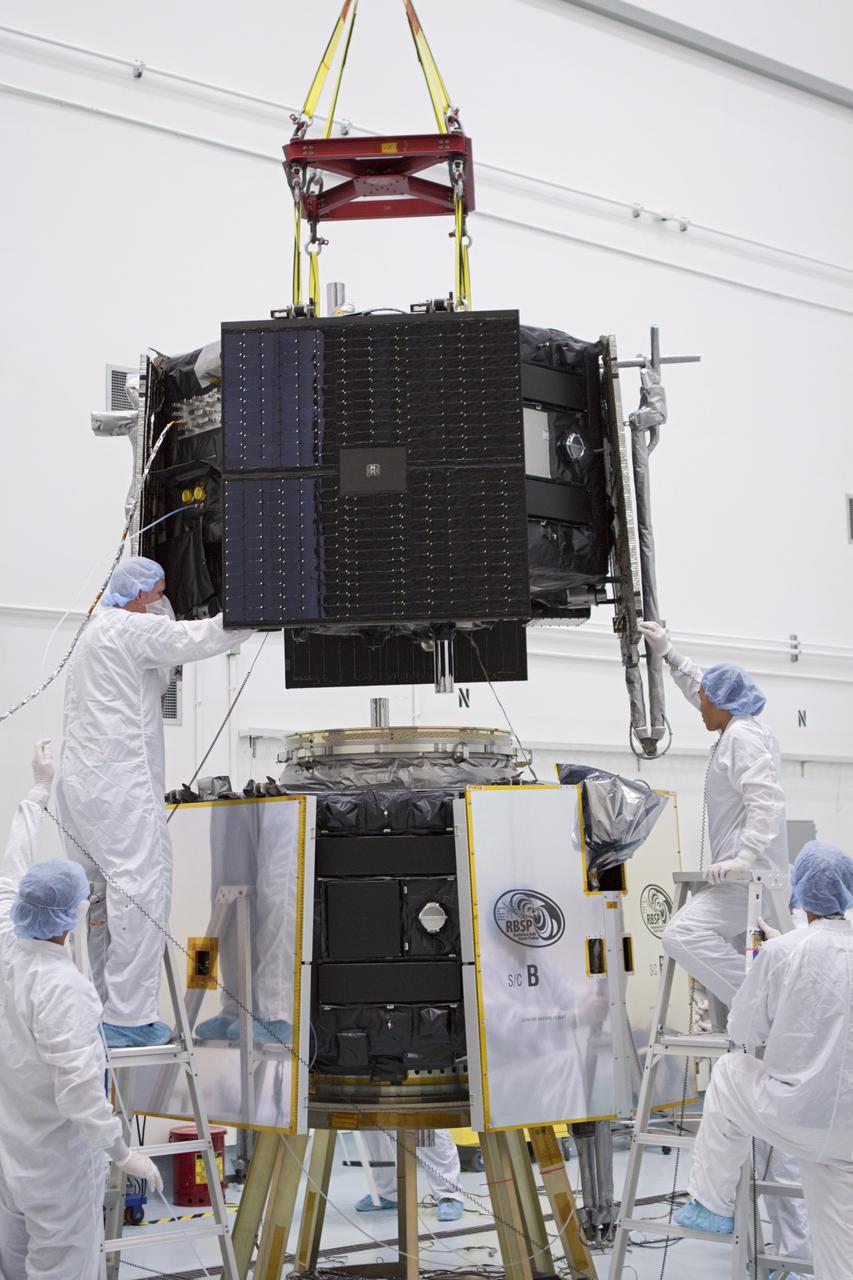
TITUSVILLE, Fla. - Inside the Astrotech payload processing facility in Titusville, Fla. near NASA’s Kennedy Space Center, technicians use a crane to position the Radiation Belt Storm Probes, or RBSP, spacecraft A for stacking atop RBSP B. NASA’s RBSP mission will help us understand the sun’s influence on Earth and near-Earth space by studying the Earth’s radiation belts on various scales of space and time. RBSP will begin its mission of exploration of Earth’s Van Allen radiation belts and the extremes of space weather after its liftoff aboard a United Launch Alliance Atlas V from Space Launch Complex 41 at Cape Canaveral Air Force Station, Fla. Liftoff is targeted for Aug. 23, 2012. For more information, visit http://www.nasa.gov/rbsp. Photo credit: NASA/Jim Grossmann
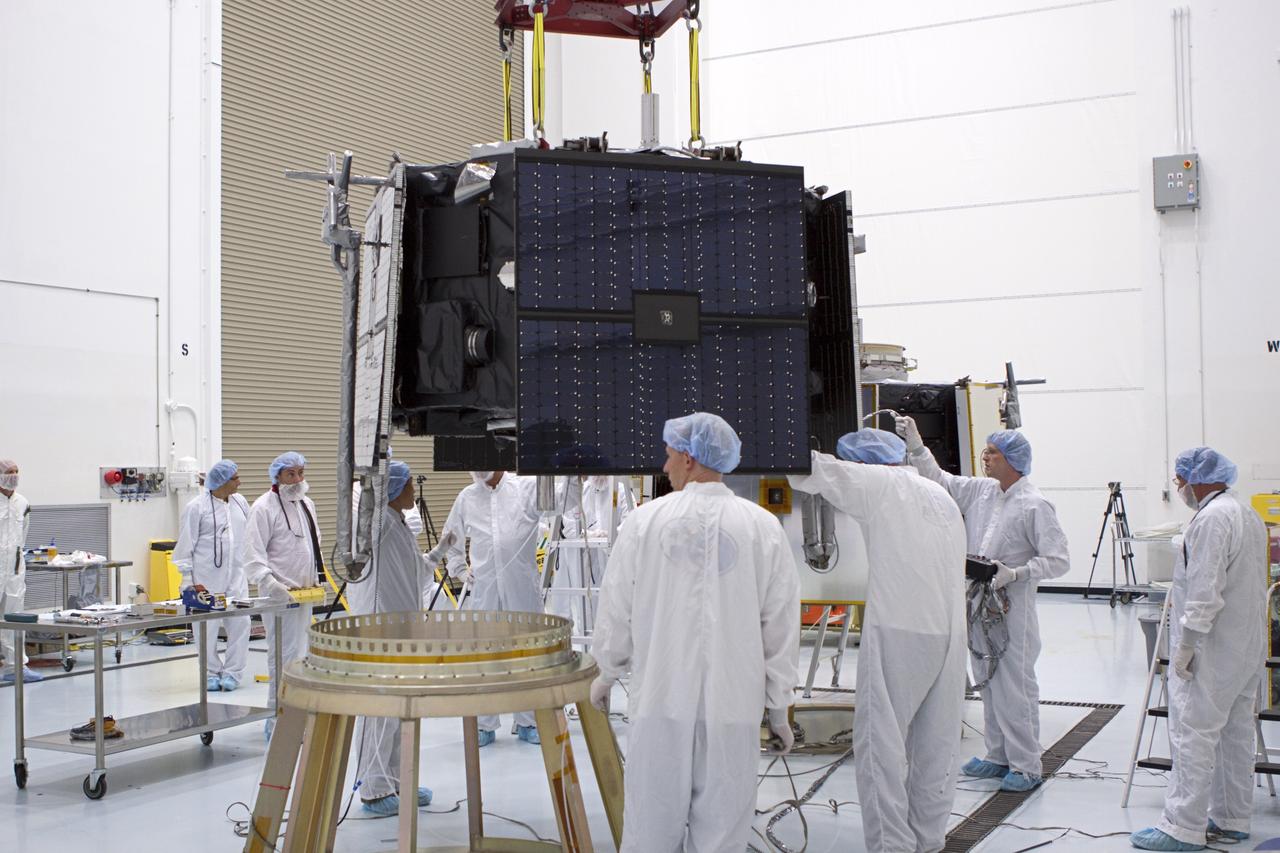
TITUSVILLE, Fla. - Inside the Astrotech payload processing facility in Titusville, Fla. near NASA’s Kennedy Space Center, technicians use a crane to lift the Radiation Belt Storm Probes, or RBSP, spacecraft A for stacking atop RBSP B. NASA’s RBSP mission will help us understand the sun’s influence on Earth and near-Earth space by studying the Earth’s radiation belts on various scales of space and time. RBSP will begin its mission of exploration of Earth’s Van Allen radiation belts and the extremes of space weather after its liftoff aboard a United Launch Alliance Atlas V from Space Launch Complex 41 at Cape Canaveral Air Force Station, Fla. Liftoff is targeted for Aug. 23, 2012. For more information, visit http://www.nasa.gov/rbsp. Photo credit: NASA/Jim Grossmann
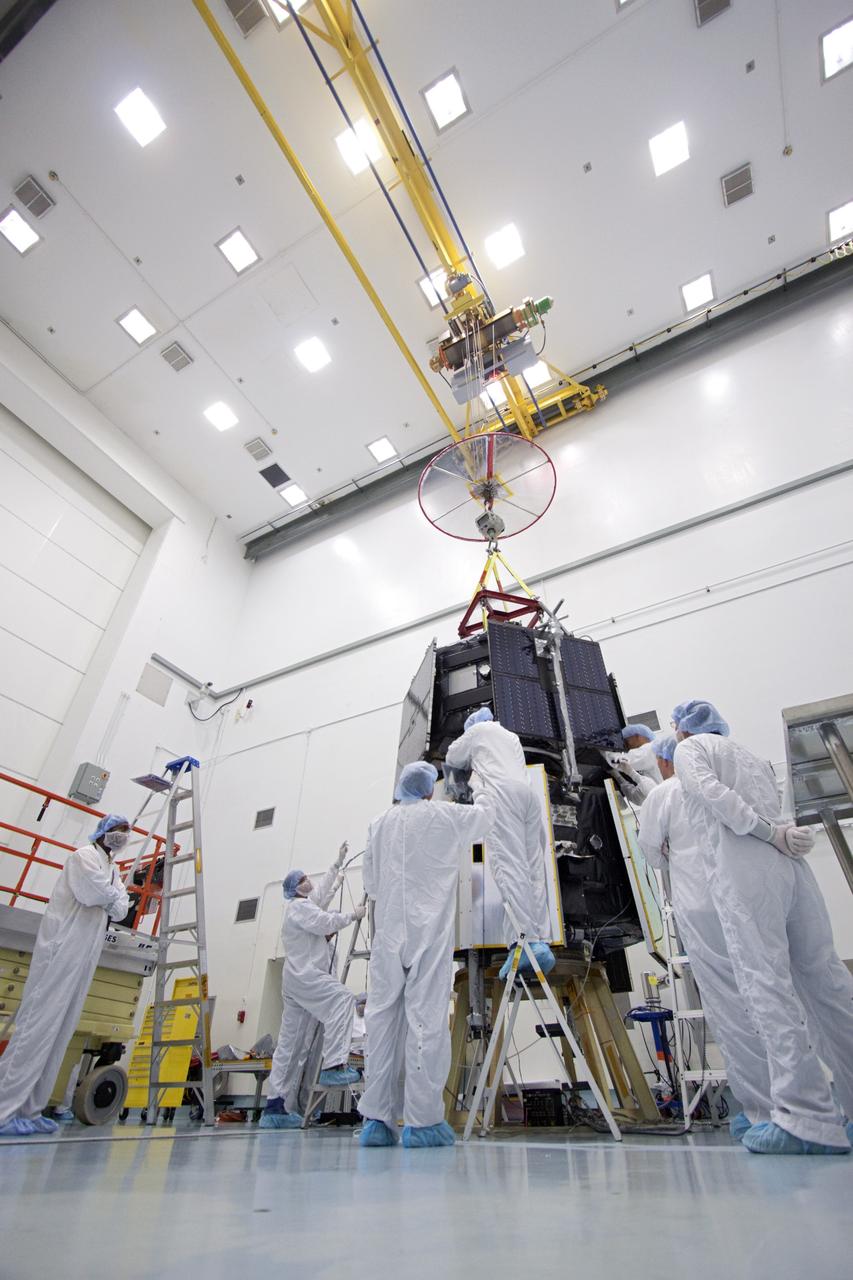
TITUSVILLE, Fla. - Inside the Astrotech payload processing facility in Titusville, Fla. near NASA’s Kennedy Space Center, technicians use a crane to position the Radiation Belt Storm Probes, or RBSP, spacecraft A atop RBSP B. NASA’s RBSP mission will help us understand the sun’s influence on Earth and near-Earth space by studying the Earth’s radiation belts on various scales of space and time. RBSP will begin its mission of exploration of Earth’s Van Allen radiation belts and the extremes of space weather after its liftoff aboard a United Launch Alliance Atlas V from Space Launch Complex 41 at Cape Canaveral Air Force Station, Fla. Liftoff is targeted for Aug. 23, 2012. For more information, visit http://www.nasa.gov/rbsp. Photo credit: NASA/Jim Grossmann
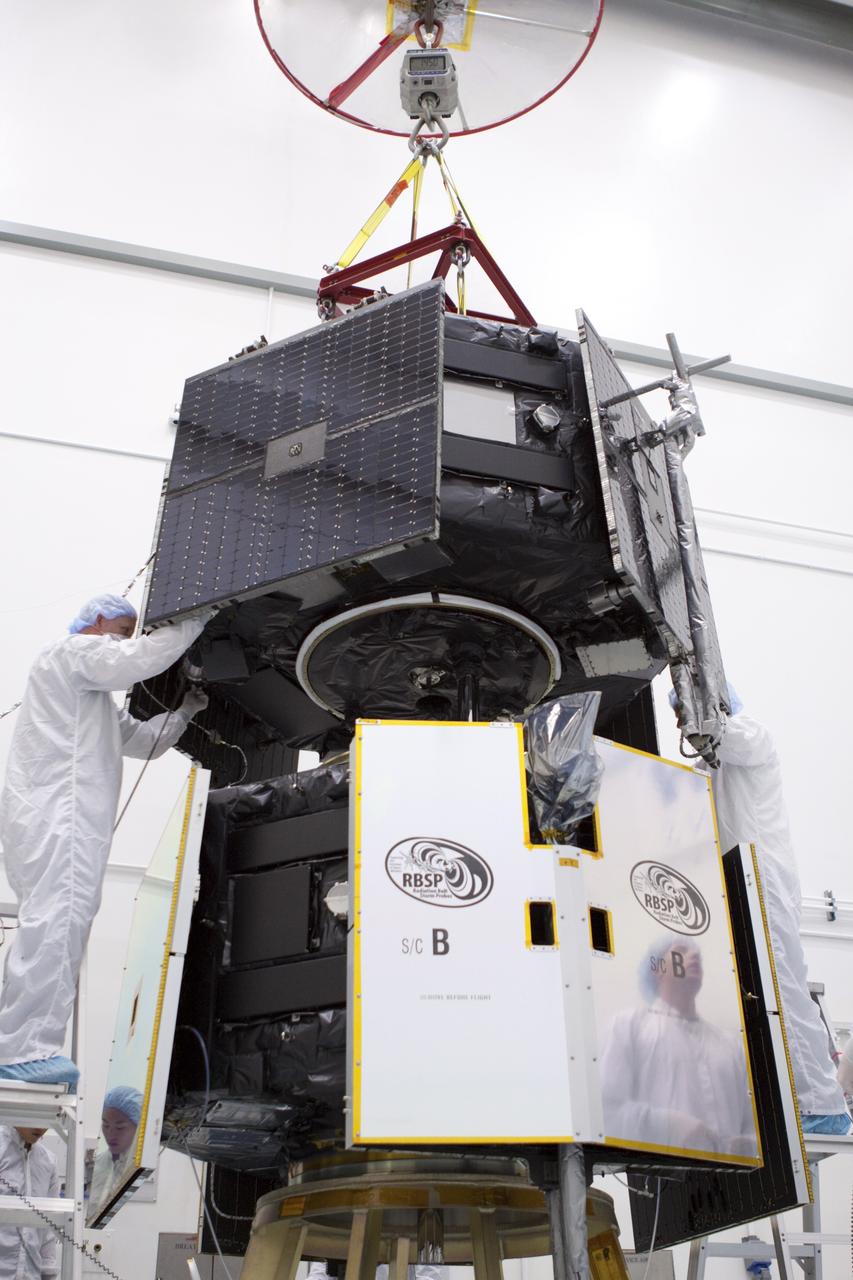
TITUSVILLE, Fla. - Inside the Astrotech payload processing facility in Titusville, Fla. near NASA’s Kennedy Space Center, technicians use a crane to position the Radiation Belt Storm Probes, or RBSP, spacecraft A for stacking atop RBSP B. NASA’s RBSP mission will help us understand the sun’s influence on Earth and near-Earth space by studying the Earth’s radiation belts on various scales of space and time. RBSP will begin its mission of exploration of Earth’s Van Allen radiation belts and the extremes of space weather after its liftoff aboard a United Launch Alliance Atlas V from Space Launch Complex 41 at Cape Canaveral Air Force Station, Fla. Liftoff is targeted for Aug. 23, 2012. For more information, visit http://www.nasa.gov/rbsp. Photo credit: NASA/Jim Grossmann
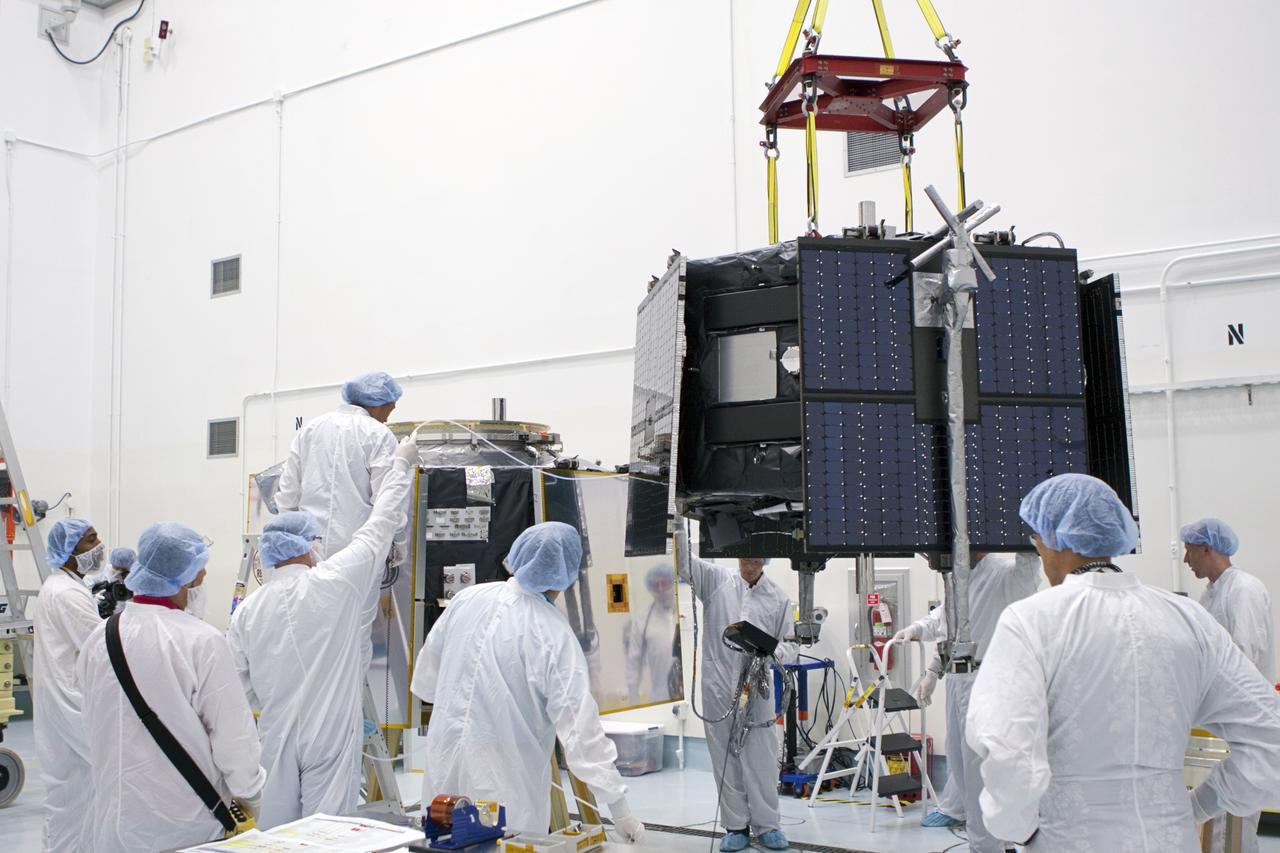
TITUSVILLE, Fla. - Inside the Astrotech payload processing facility in Titusville, Fla. near NASA’s Kennedy Space Center, technicians use a crane to move the Radiation Belt Storm Probes, or RBSP, spacecraft A into position for stacking atop RBSP B. NASA’s RBSP mission will help us understand the sun’s influence on Earth and near-Earth space by studying the Earth’s radiation belts on various scales of space and time. RBSP will begin its mission of exploration of Earth’s Van Allen radiation belts and the extremes of space weather after its liftoff aboard a United Launch Alliance Atlas V from Space Launch Complex 41 at Cape Canaveral Air Force Station, Fla. Liftoff is targeted for Aug. 23, 2012. For more information, visit http://www.nasa.gov/rbsp. Photo credit: NASA/Jim Grossmann
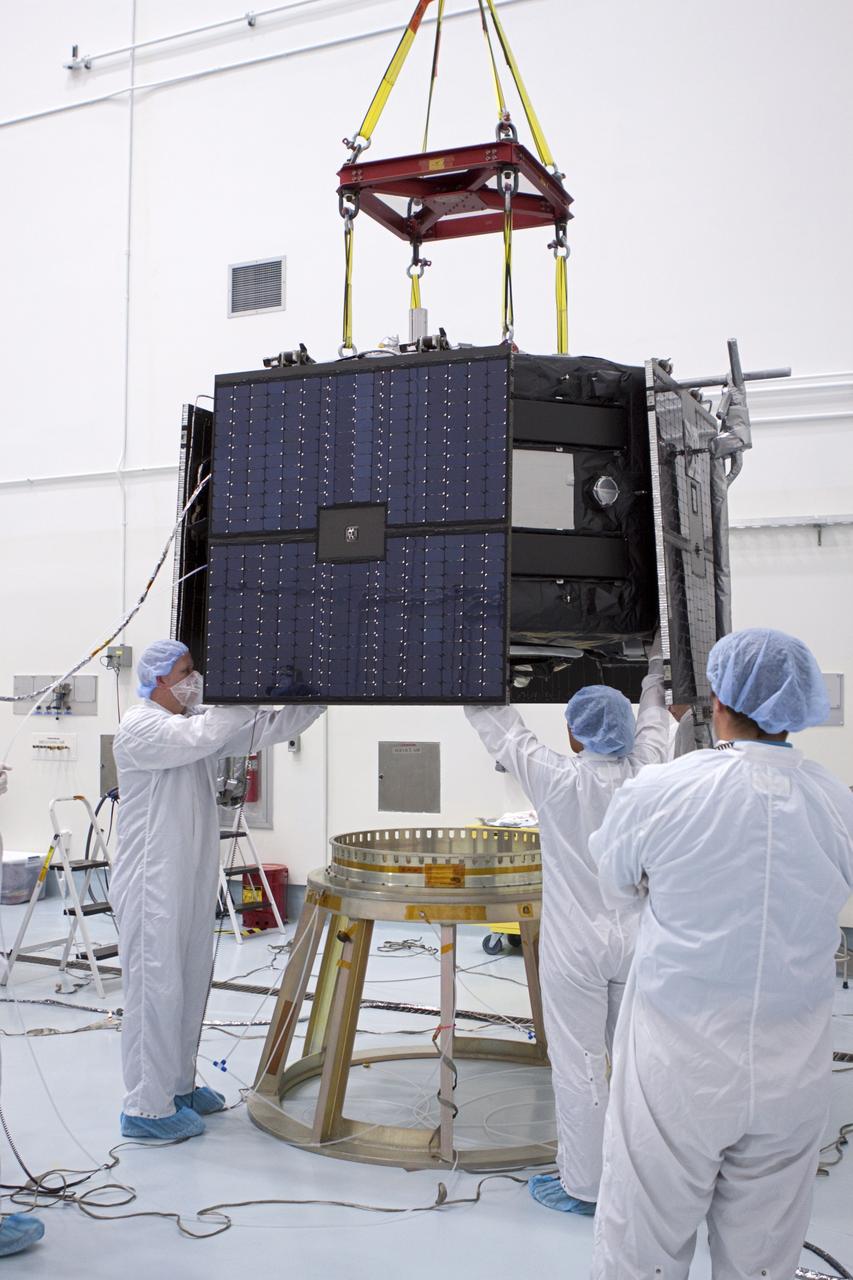
TITUSVILLE, Fla. - Inside the Astrotech payload processing facility in Titusville, Fla. near NASA’s Kennedy Space Center, technicians use a crane to lift the Radiation Belt Storm Probes, or RBSP, spacecraft A for stacking atop RBSP B. NASA’s RBSP mission will help us understand the sun’s influence on Earth and near-Earth space by studying the Earth’s radiation belts on various scales of space and time. RBSP will begin its mission of exploration of Earth’s Van Allen radiation belts and the extremes of space weather after its liftoff aboard a United Launch Alliance Atlas V from Space Launch Complex 41 at Cape Canaveral Air Force Station, Fla. Liftoff is targeted for Aug. 23, 2012. For more information, visit http://www.nasa.gov/rbsp. Photo credit: NASA/Jim Grossmann
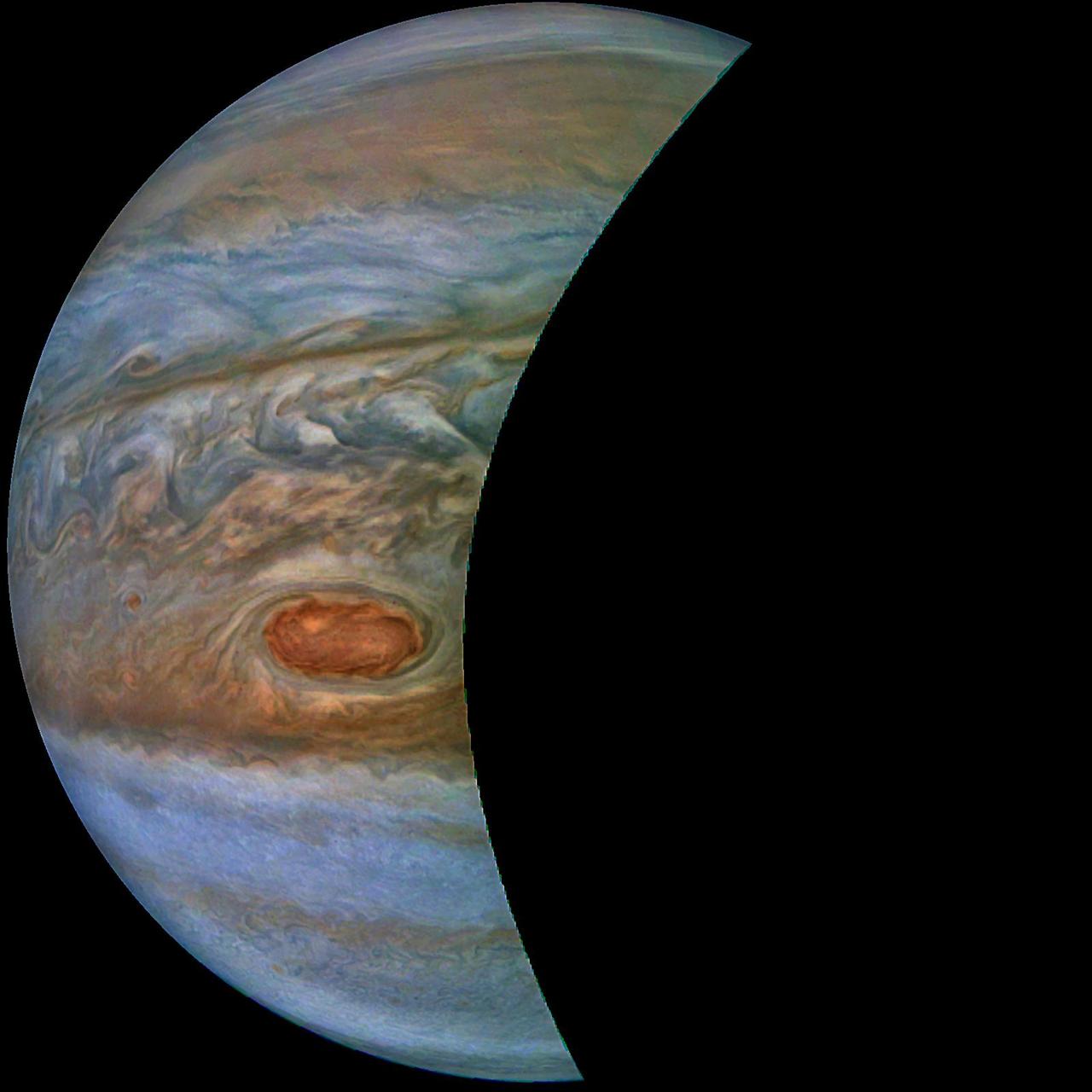
A "brown barge" in Jupiter's South Equatorial Belt is captured in this color-enhanced image from NASA's Juno spacecraft. This color-enhanced image was taken at 10:28 p.m. PDT on July 15, 2018 (1:28 a.m. EDT on July 16), as the spacecraft performed its 14th close flyby of Jupiter. Citizen scientist Joaquin Camarena created this image using data from the spacecraft's JunoCam imager. https://photojournal.jpl.nasa.gov/catalog/PIA22940. Enhanced image by Joaquin Camarena based on images provided courtesy of NASA/JPL-Caltech/SwRI/MSSS
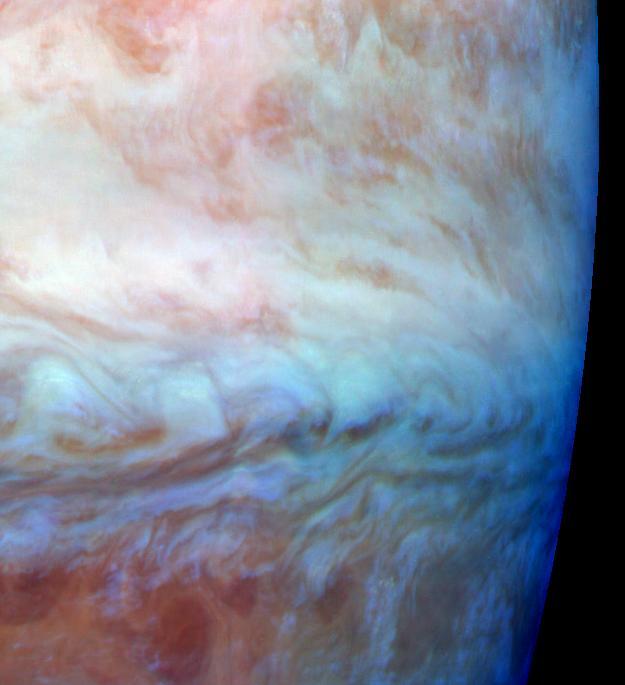
This false color mosaic shows a belt-zone boundary near Jupiter equator. The images that make up the four quadrants of this mosaic were taken within a few minutes of each other. These images were taken on Nov. 5, 1996 by NASA Galileo orbiter.
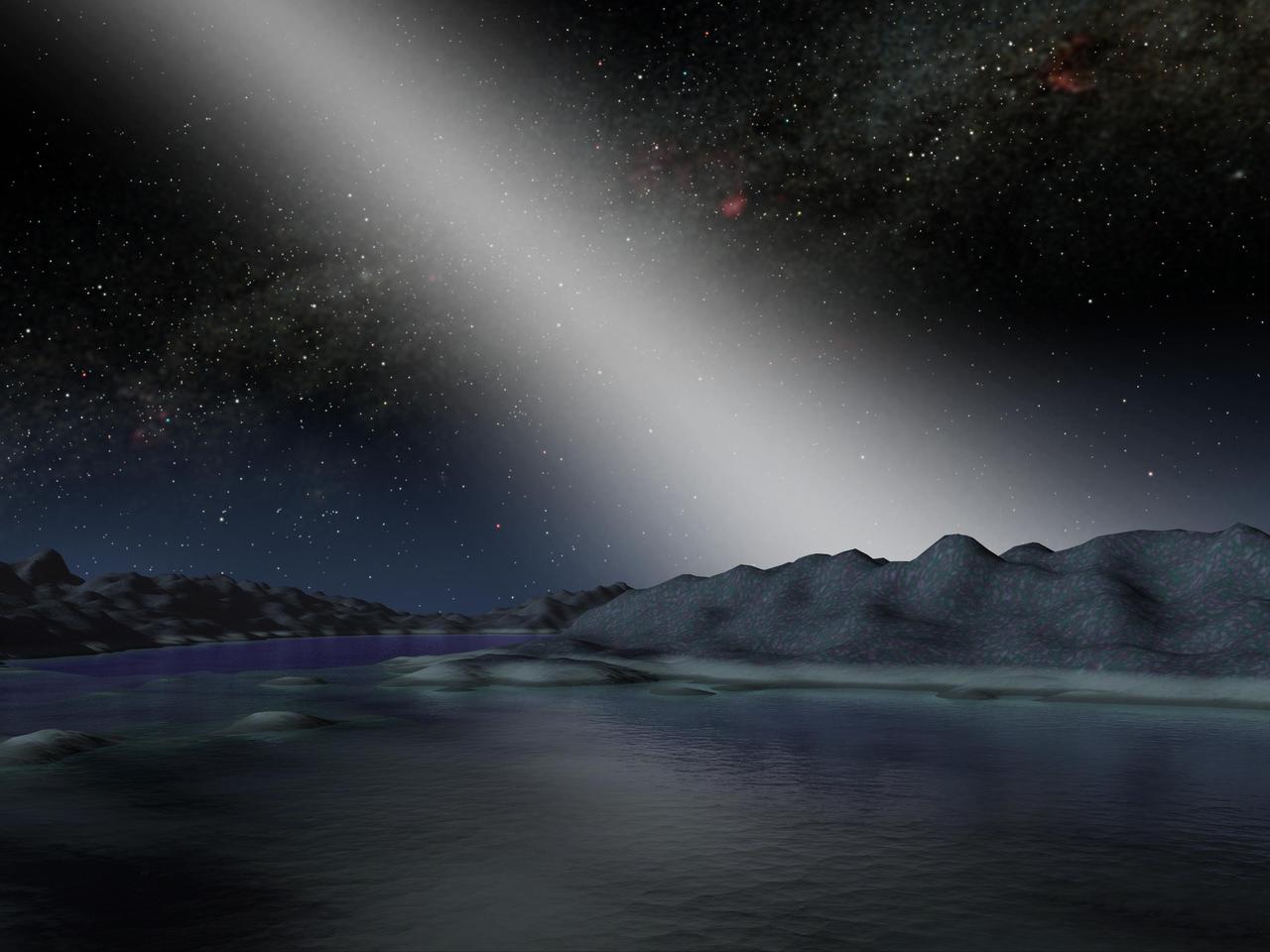
This artist concept shows what the night sky might look like from a hypothetical alien planet in a star system with an asteroid belt 25 times as massive as the one in our own solar system.
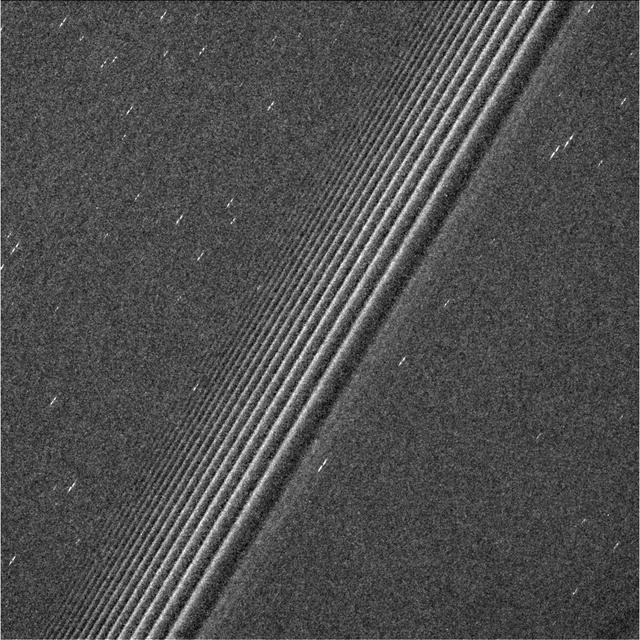
This view from NASA's Cassini spacecraft is the sharpest ever taken of belts of the features called propellers in the middle part of Saturn's A ring. The propellers are the small, bright features that look like double dashes, visible on both sides of the wave pattern that crosses the image diagonally from top to bottom. The original discovery of propellers in this region in Saturn's rings was made using several images taken from very close to the rings during Cassini's 2004 arrival at Saturn. Those discovery images were of low resolution and were difficult to interpret, and there were few clues as to how the small propellers seen in those images were related to the larger propellers Cassini observed later in the mission. This image, for the first time, shows swarms of propellers of a wide range of sizes, putting the ones Cassini observed in its Saturn arrival images in context. Scientists will use this information to derive a "particle size distribution" for propeller moons, which is an important clue to their origins. The image was taken using the Cassini spacecraft's narrow-angle camera on April 19. The view was has an image scale of 0.24 mile (385 meters) per pixel, and was taken at a sun-ring-spacecraft angle, or phase angle, of 108 degrees. The view looks toward a point approximately 80,000 miles (129,000 kilometers) from Saturn's center. https://photojournal.jpl.nasa.gov/catalog/PIA21448
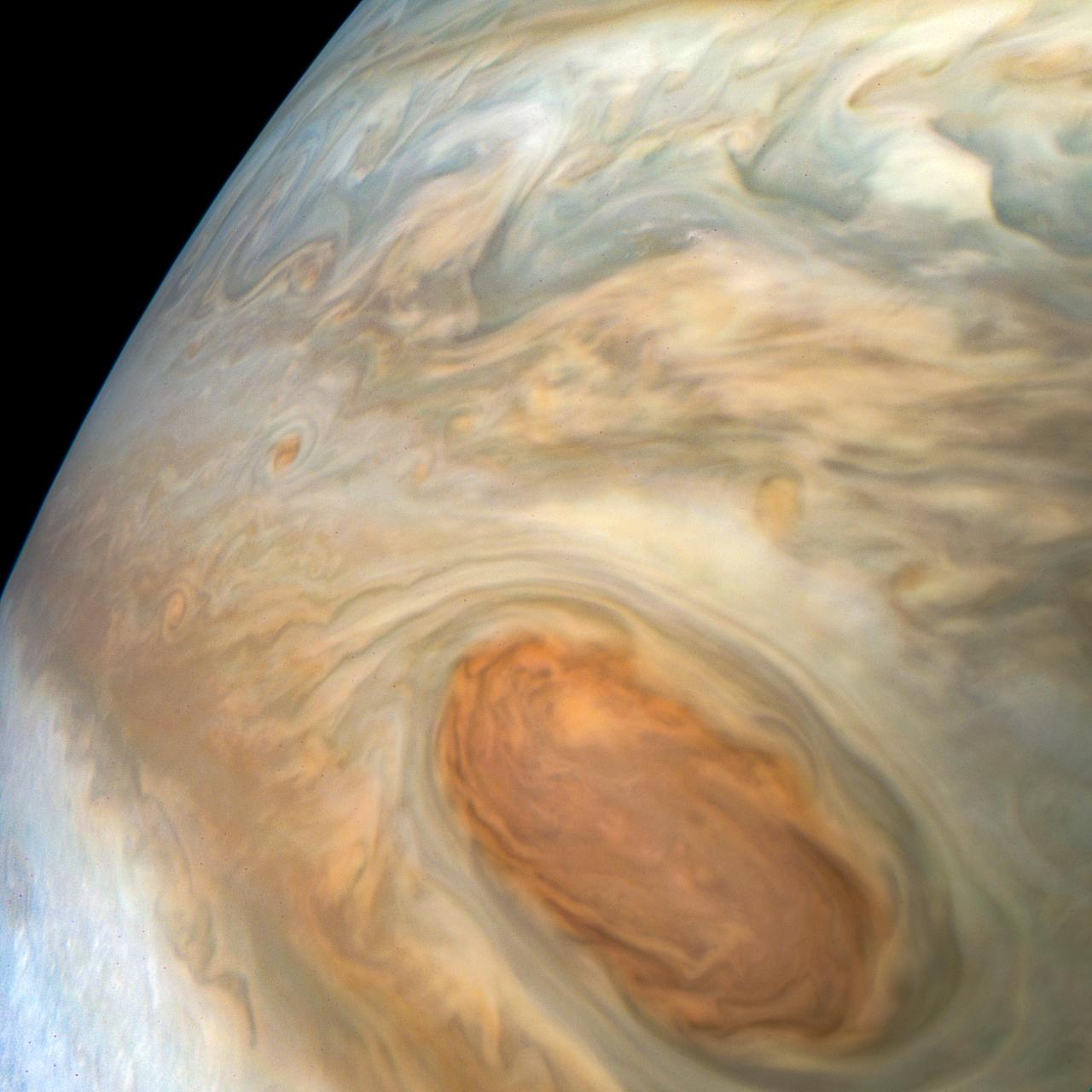
Detailed structure in the clouds of Jupiter's South Equatorial Belt brown barge is visible in this color-enhanced image taken at 10:28 p.m. PDT on July 15, 2018 (1:28 a.m. EDT on July 16), as the spacecraft performed its 14th close flyby of the gas giant planet. Citizen scientist Kevin M. Gill created this image using data from the spacecraft's JunoCam imager. https://photojournal.jpl.nasa.gov/catalog/PIA22941. Enhanced image by Kevin M. Gill (CC-BY) based on images provided courtesy of NASA/JPL-Caltech/SwRI/MSSS
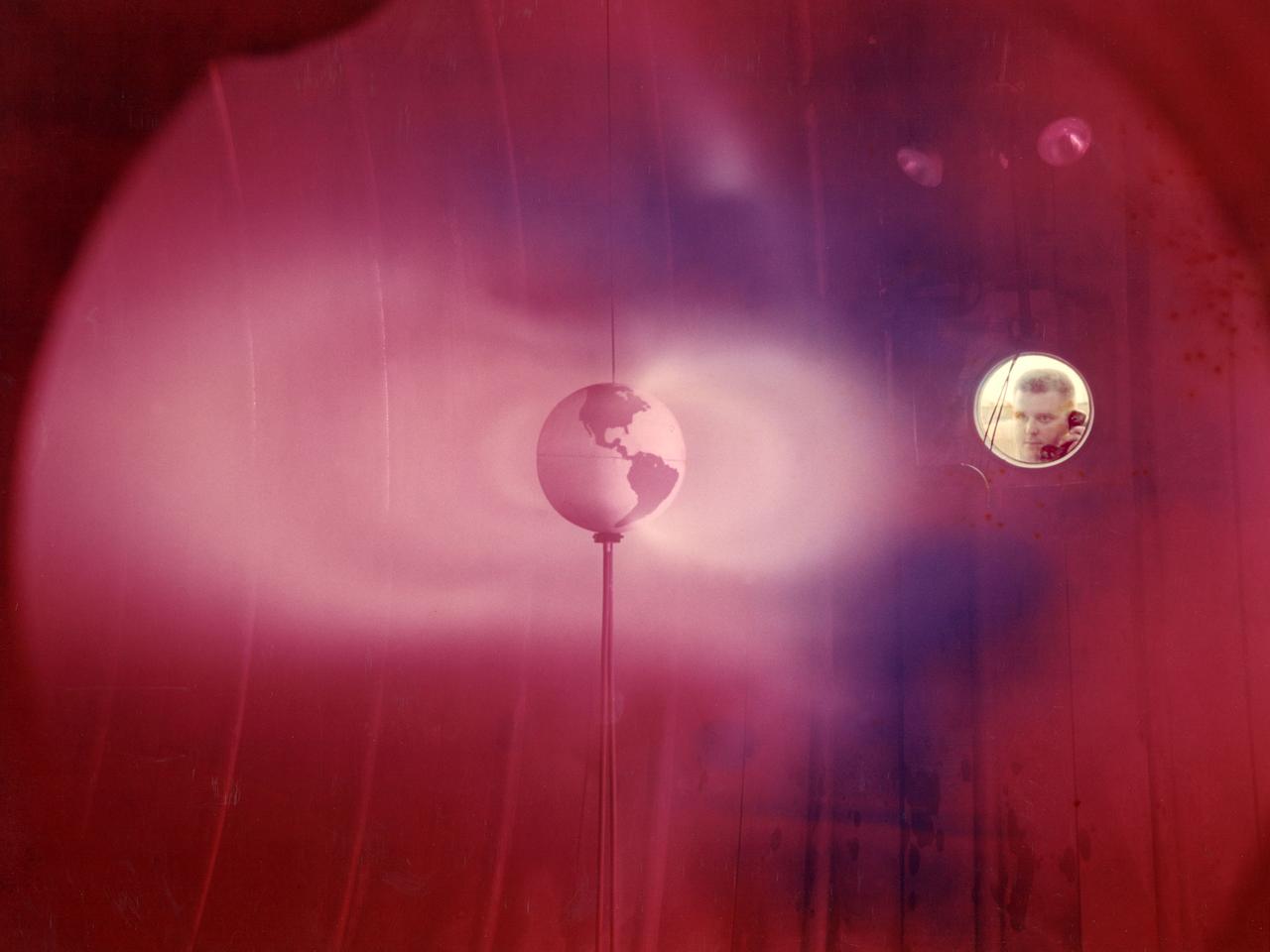
The model of the Earth housed inside Vacuum Tank 5 contained a coil which produced a magnetic field simulating that of the Earth. It was bombarded with a stream of ionized particles simulating the solar wind which impinges on the Earth's magnetic field. The bands or belts of luminous plasma seen in this image were suggestive of the Van Allen belts found around the Earth. Scientists at Lewis probed the plasma around the model and studied scaling laws in an attempt to find an explanation for the actual formation of the Van Allen belt.
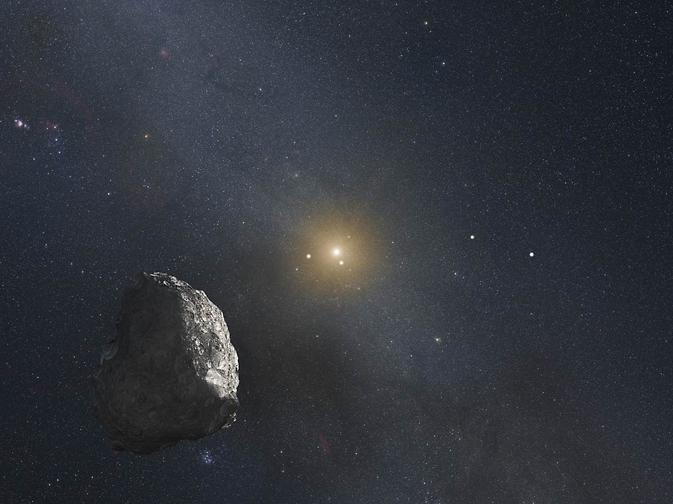
This is an artist’s impression of a Kuiper Belt object (KBO), located on the outer rim of our solar system at a staggering distance of 4 billion miles from the Sun. A HST survey uncovered three KBOs that are potentially reachable by NASA’s New Horizons spacecraft after it passes by Pluto in mid-2015. Credit: NASA, ESA, and G. Bacon (STScI) --- Peering out to the dim, outer reaches of our solar system, NASA’s Hubble Space Telescope has uncovered three Kuiper Belt objects (KBOs) the agency’s New Horizons spacecraft could potentially visit after it flies by Pluto in July 2015. The KBOs were detected through a dedicated Hubble observing program by a New Horizons search team that was awarded telescope time for this purpose. “This has been a very challenging search and it’s great that in the end Hubble could accomplish a detection – one NASA mission helping another,” said Alan Stern of the Southwest Research Institute (SwRI) in Boulder, Colorado, principal investigator of the New Horizons mission. The Kuiper Belt is a vast rim of primordial debris encircling our solar system. KBOs belong to a unique class of solar system objects that has never been visited by spacecraft and which contain clues to the origin of our solar system. The KBOs Hubble found are each about 10 times larger than typical comets, but only about 1-2 percent of the size of Pluto. Unlike asteroids, KBOs have not been heated by the sun and are thought to represent a pristine, well preserved deep-freeze sample of what the outer solar system was like following its birth 4.6 billion years ago. The KBOs found in the Hubble data are thought to be the building blocks of dwarf planets such as Pluto. Read more: <a href="http://1.usa.gov/1vzUcyK" rel="nofollow">1.usa.gov/1vzUcyK</a> <b><a href="http://www.nasa.gov/audience/formedia/features/MP_Photo_Guidelines.html" rel="nofollow">NASA image use policy.</a></b> <b><a href="http://www.nasa.gov/centers/goddard/home/index.html" rel="nofollow">NASA Goddard Space Flight Center</a></b> enables NASA’s mission through four scientific endeavors: Earth Science, Heliophysics, Solar System Exploration, and Astrophysics. Goddard plays a leading role in NASA’s accomplishments by contributing compelling scientific knowledge to advance the Agency’s mission. <b>Follow us on <a href="http://twitter.com/NASAGoddardPix" rel="nofollow">Twitter</a></b> <b>Like us on <a href="http://www.facebook.com/pages/Greenbelt-MD/NASA-Goddard/395013845897?ref=tsd" rel="nofollow">Facebook</a></b> <b>Find us on <a href="http://instagram.com/nasagoddard?vm=grid" rel="nofollow">Instagram</a></b>
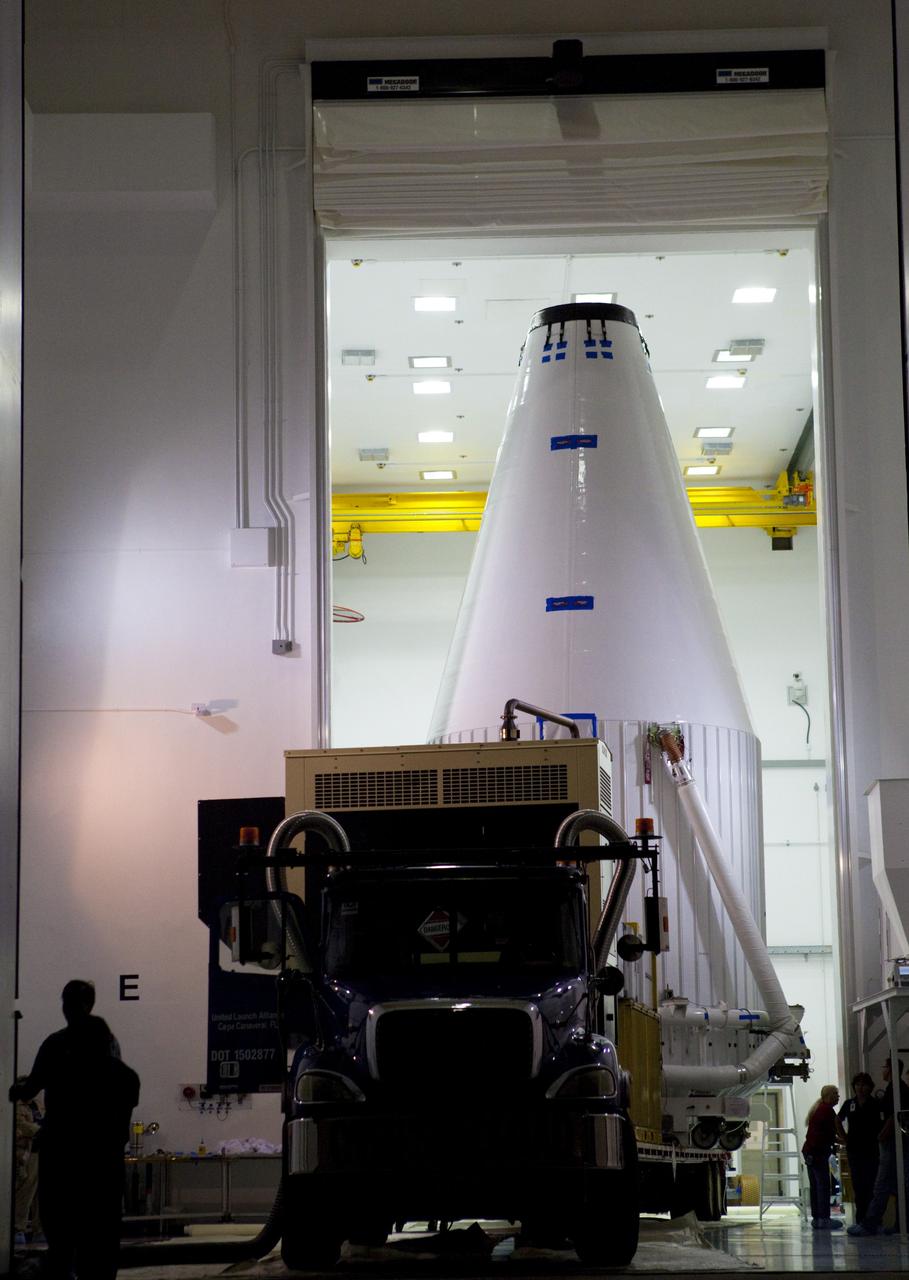
CAPE CANAVERAL, Fla. – The Radiation Belt Storm Probes, or RBSP, spacecraft are moved inside their payload fairing on the payload transporter from the Astrotech payload processing facility in Titusville, Fla. to Space Launch Complex-41 at Cape Canaveral Air Force Station. The fairing, which holds the twin RBSP spacecraft, will be lifted to the top of a United Launch Alliance Atlas V rocket for launch later in August. The two spacecraft are designed to study the Van Allen radiation belts in unprecedented detail. Photo credit: NASA/Dmitri Gerondidakis
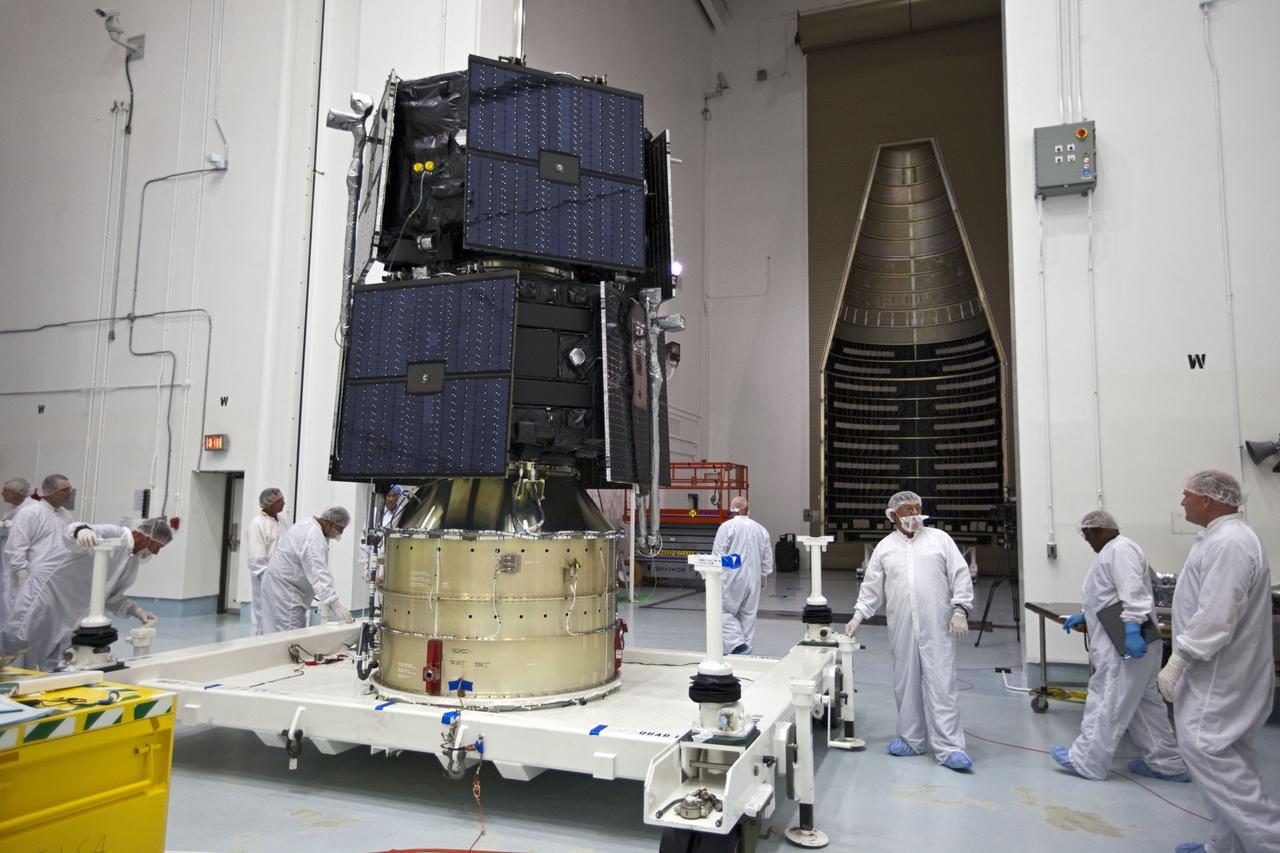
TITUSVILLE, Fla. - Inside the Astrotech payload processing facility in Titusville, Fla. near NASA’s Kennedy Space Center, technicians prepare the two Radiation Belt Storm Probes, or RBSP, spacecraft prior for encapsulation in payload faring. The fairing will house and protect the RBSP during liftoff and flight through the atmosphere aboard an Atlas V rocket. NASA’s RBSP mission will help us understand the sun’s influence on Earth and near-Earth space by studying the Earth’s radiation belts on various scales of space and time. RBSP will begin its mission of exploration of Earth’s Van Allen radiation belts and the extremes of space weather after its liftoff aboard a United Launch Alliance Atlas V from Space Launch Complex 41 at Cape Canaveral Air Force Station, Fla. Liftoff is targeted for Aug. 23, 2012. For more information, visit http://www.nasa.gov/rbsp. Photo credit: NASA/ Kim Shiflett
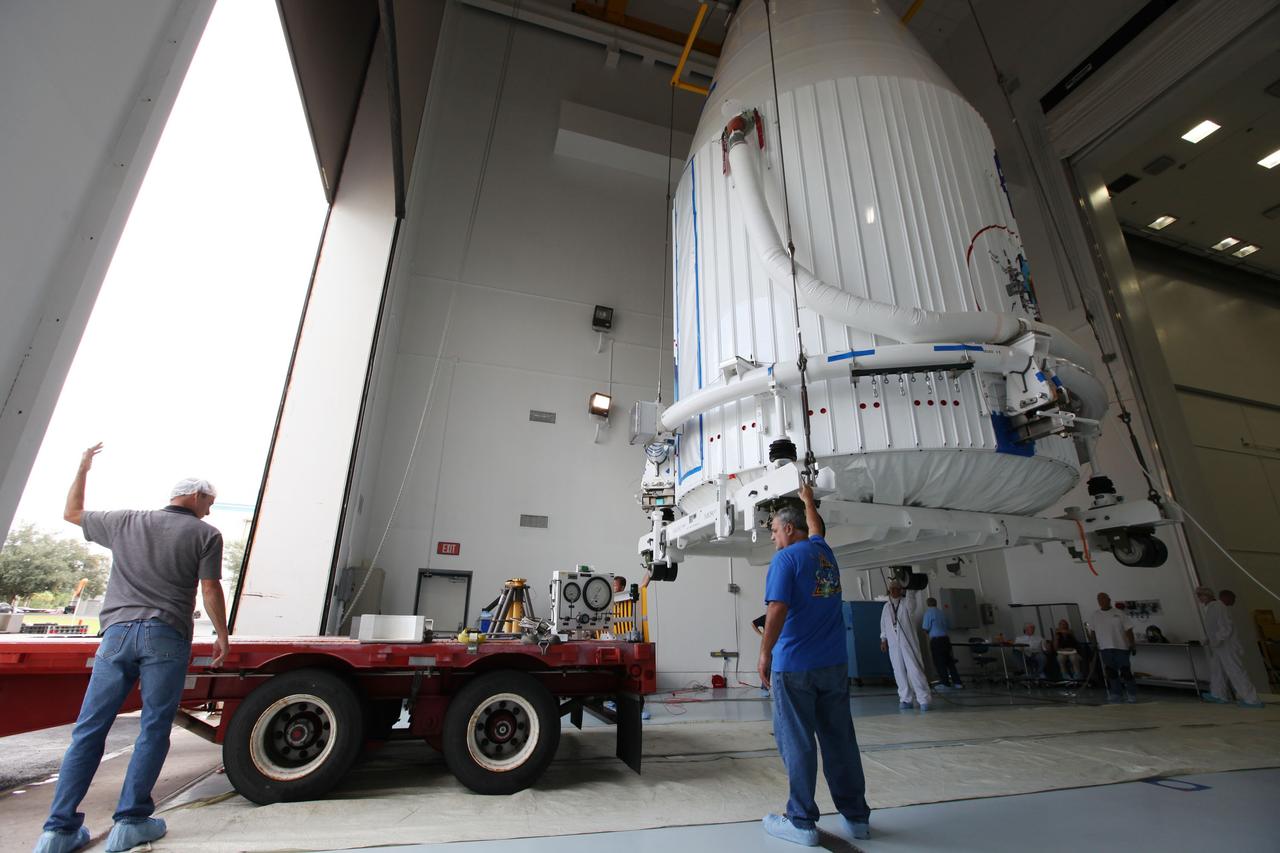
TITUSVILLE, Fla. - Inside the Astrotech payload processing facility in Titusville, Fla. near NASA’s Kennedy Space Center, technicians use a crane to lift the payload faring containing the two Radiation Belt Storm Probes, or RBSP, spacecraft as a transporter moves into position. NASA’s RBSP mission will help us understand the sun’s influence on Earth and near-Earth space by studying the Earth’s radiation belts on various scales of space and time. RBSP will begin its mission of exploration of Earth’s Van Allen radiation belts and the extremes of space weather after its liftoff aboard a United Launch Alliance Atlas V rocket from Space Launch Complex 41 at Cape Canaveral Air Force Station, Fla. Liftoff is targeted for Aug. 23, 2012. For more information, visit http://www.nasa.gov/rbsp Photo credit: NASA/ Kim Shiflett
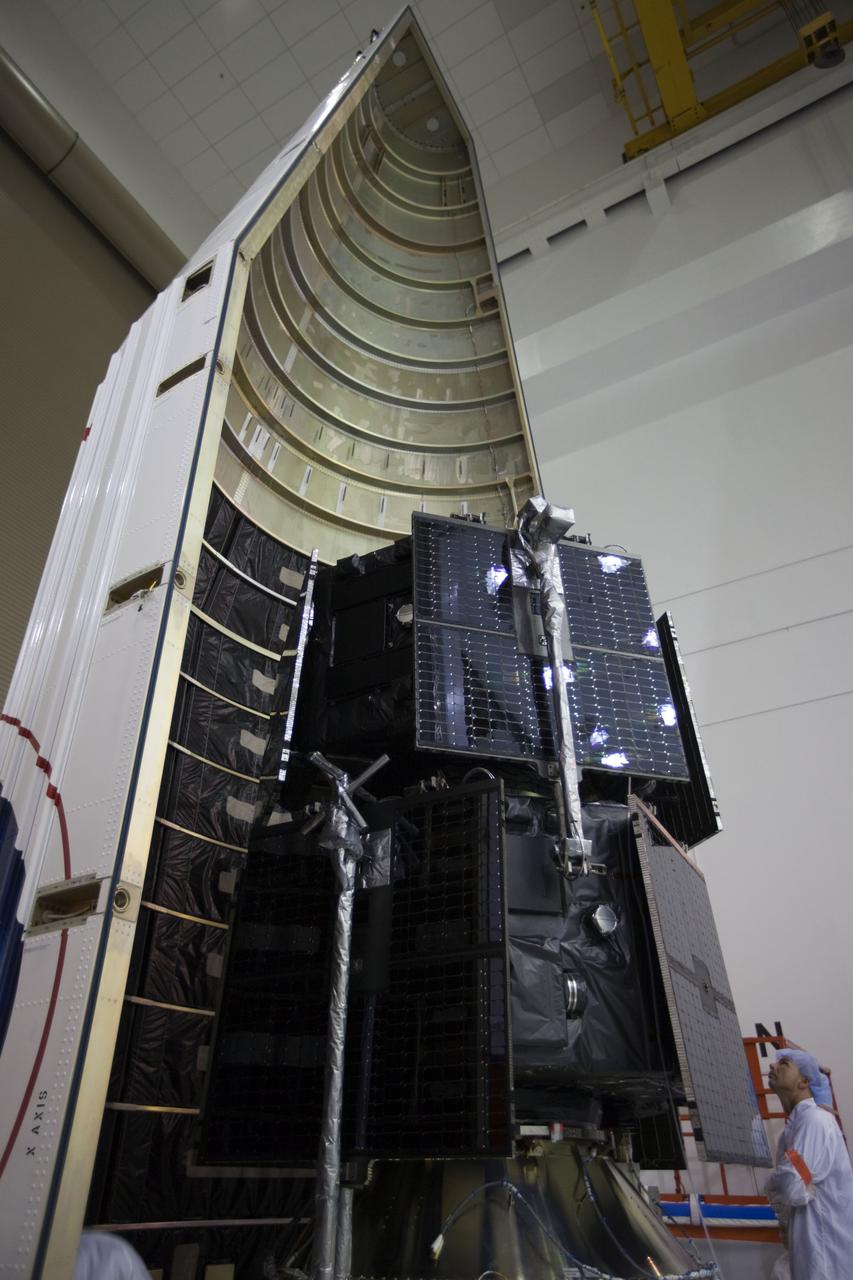
TITUSVILLE, Fla. - Inside the Astrotech payload processing facility in Titusville, Fla. near NASA’s Kennedy Space Center, a technician checks out the two Radiation Belt Storm Probes, or RBSP, spacecraft as they are being encapsulated in the payload faring. The fairing will house and protect the RBSP during liftoff and flight through the atmosphere aboard an Atlas V rocket. NASA’s RBSP mission will help us understand the sun’s influence on Earth and near-Earth space by studying the Earth’s radiation belts on various scales of space and time. RBSP will begin its mission of exploration of Earth’s Van Allen radiation belts and the extremes of space weather after its liftoff aboard a United Launch Alliance Atlas V from Space Launch Complex 41 at Cape Canaveral Air Force Station, Fla. Liftoff is targeted for Aug. 23, 2012. For more information, visit http://www.nasa.gov/rbsp. Photo credit: NASA/ Kim Shiflett
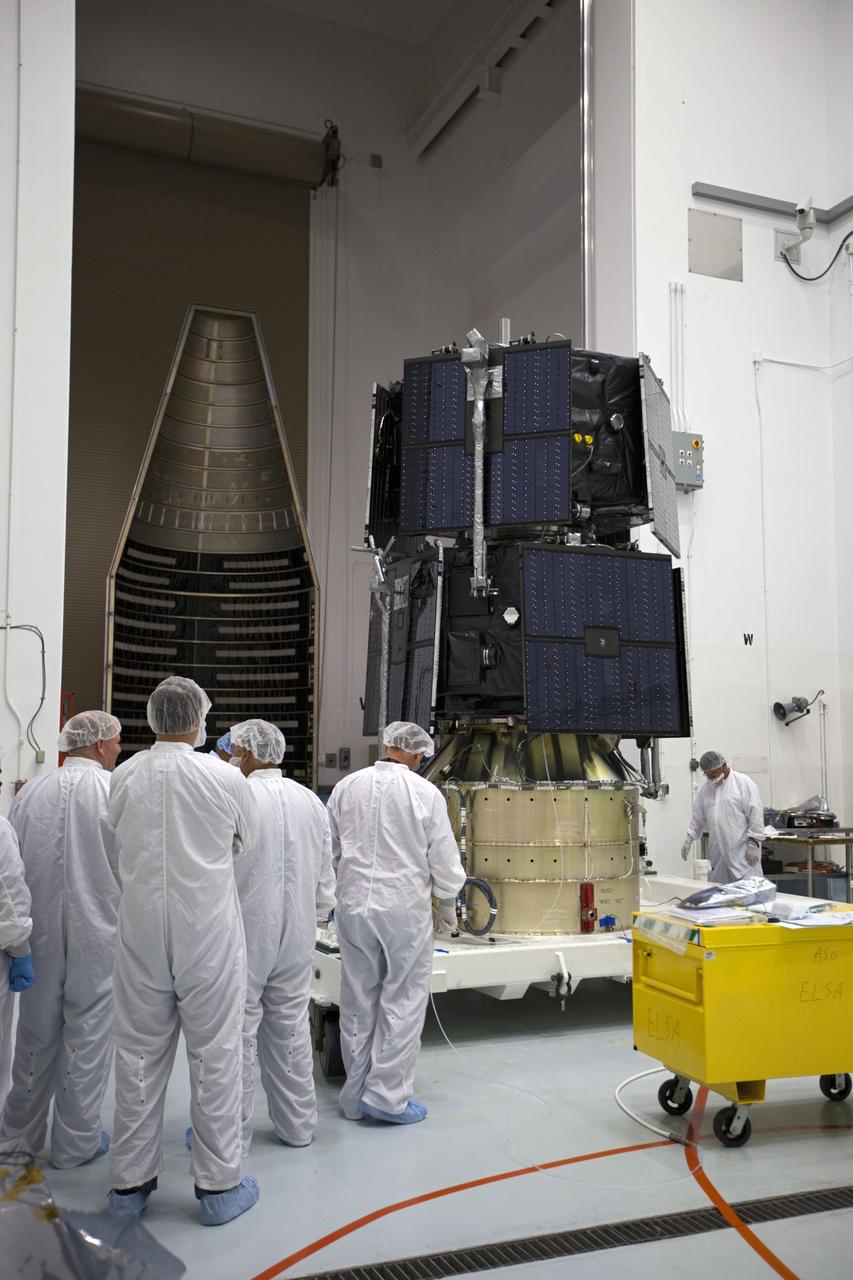
TITUSVILLE, Fla. - Inside the Astrotech payload processing facility in Titusville, Fla. near NASA’s Kennedy Space Center, technicians prepare the two Radiation Belt Storm Probes, or RBSP, spacecraft prior for encapsulation in the payload faring. The fairing will house and protect the RBSP during liftoff and flight through the atmosphere aboard an Atlas V rocket. NASA’s RBSP mission will help us understand the sun’s influence on Earth and near-Earth space by studying the Earth’s radiation belts on various scales of space and time. RBSP will begin its mission of exploration of Earth’s Van Allen radiation belts and the extremes of space weather after its liftoff aboard a United Launch Alliance Atlas V from Space Launch Complex 41 at Cape Canaveral Air Force Station, Fla. Liftoff is targeted for Aug. 23, 2012. For more information, visit http://www.nasa.gov/rbsp. Photo credit: NASA/ Kim Shiflett
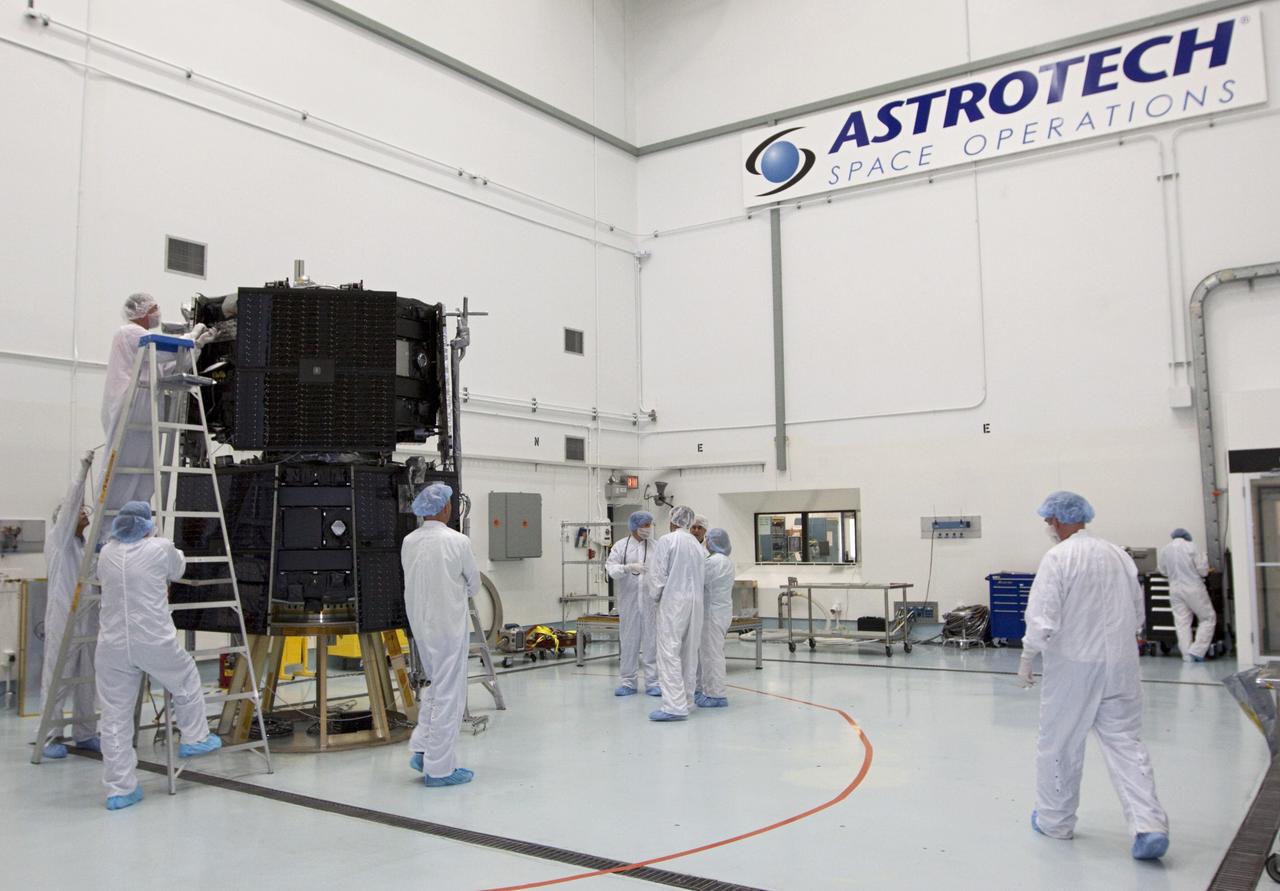
CAPE CANAVERAL, Fla. - Inside the Astrotech payload processing facility near NASA’s Kennedy Space Center in Florida, technicians work on the Radiation Belt Storm Probes, or RBSP, spacecraft. NASA’s RBSP mission will help us understand the sun’s influence on Earth and near-Earth space by studying the Earth’s radiation belts on various scales of space and time. As the spacecraft orbits Earth, the four solar panels will continuously face the sun to provide constant power to its instruments. The boom will provide data of the electric fields that energize radiation particles and modify the structure of the inner magnetosphere. RBSP will begin its mission of exploration of Earth’s Van Allen radiation belts and the extremes of space weather after its launch aboard a United Launch Alliance Atlas V rocket. Launch is targeted for Aug. 23. For more information, visit http://www.nasa.gov/rbsp. Photo credit: NASA/Kim Shiflett
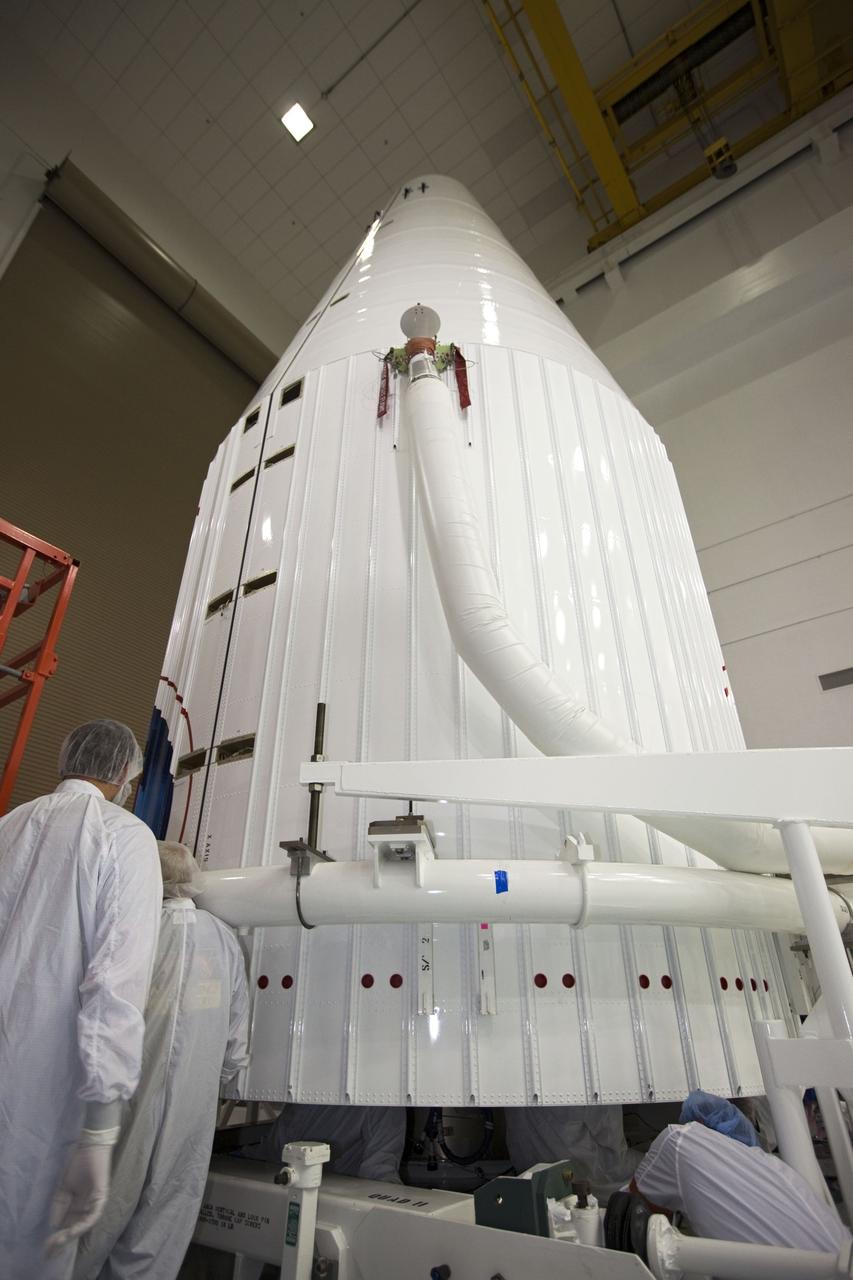
TITUSVILLE, Fla. - Inside the Astrotech payload processing facility in Titusville, Fla. near NASA’s Kennedy Space Center, technicians complete checkouts following encapsulation of the two Radiation Belt Storm Probes, or RBSP, spacecraft with its payload faring. The fairing will house and protect the RBSP during liftoff and flight through the atmosphere aboard an Atlas V rocket. NASA’s RBSP mission will help us understand the sun’s influence on Earth and near-Earth space by studying the Earth’s radiation belts on various scales of space and time. RBSP will begin its mission of exploration of Earth’s Van Allen radiation belts and the extremes of space weather after its liftoff aboard a United Launch Alliance Atlas V from Space Launch Complex 41 at Cape Canaveral Air Force Station, Fla. Liftoff is targeted for Aug. 23, 2012. For more information, visit http://www.nasa.gov/rbsp. Photo credit: NASA/ Kim Shiflett

TITUSVILLE, Fla. - Inside the Astrotech payload processing facility in Titusville, Fla. near NASA’s Kennedy Space Center, technicians prepare the two Radiation Belt Storm Probes, or RBSP, spacecraft for encapsulation in the payload faring. The fairing will house and protect the RBSP during liftoff and flight through the atmosphere aboard an Atlas V rocket. NASA’s RBSP mission will help us understand the sun’s influence on Earth and near-Earth space by studying the Earth’s radiation belts on various scales of space and time. RBSP will begin its mission of exploration of Earth’s Van Allen radiation belts and the extremes of space weather after its liftoff aboard a United Launch Alliance Atlas V from Space Launch Complex 41 at Cape Canaveral Air Force Station, Fla. Liftoff is targeted for Aug. 23, 2012. For more information, visit http://www.nasa.gov/rbsp. Photo credit: NASA/ Kim Shiflett
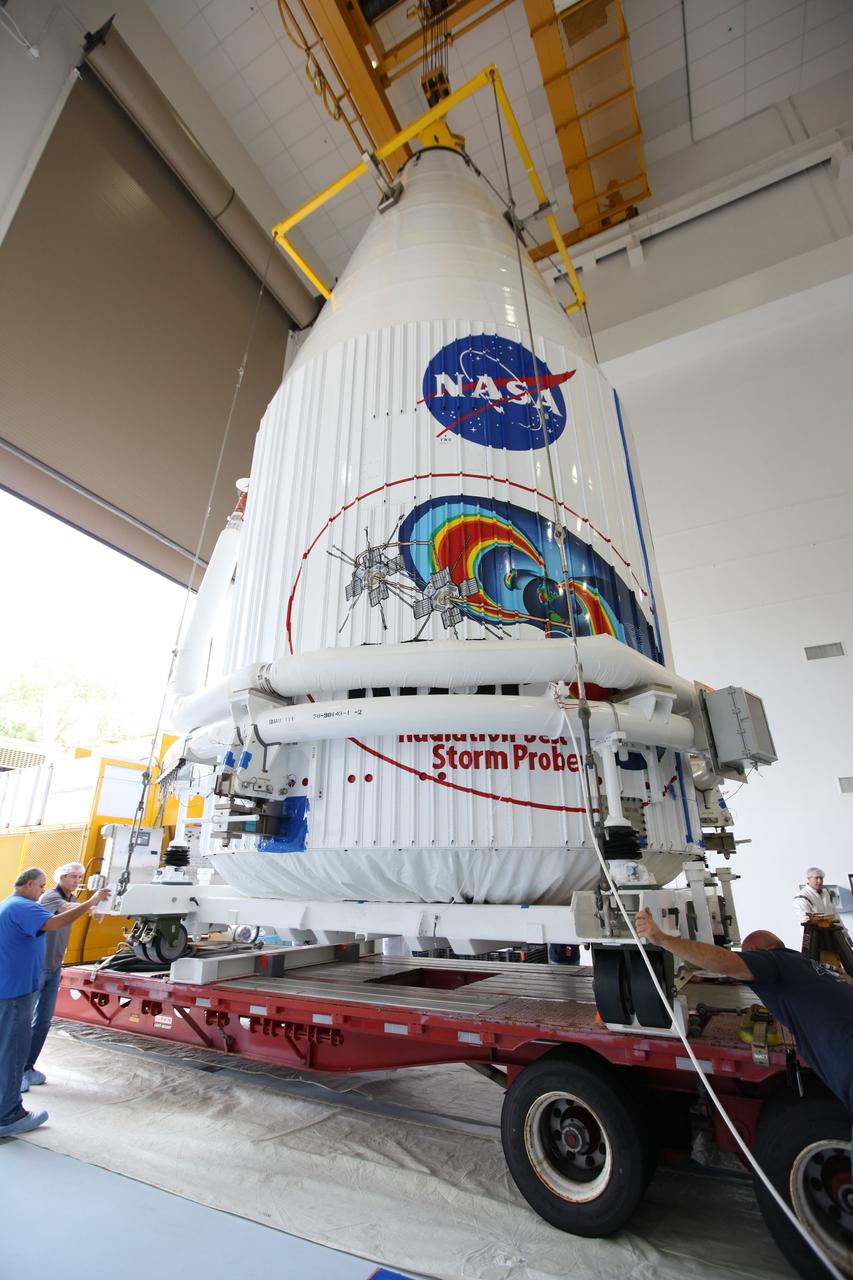
TITUSVILLE, Fla. - Inside the Astrotech payload processing facility in Titusville, Fla. near NASA’s Kennedy Space Center, technicians use a crane to lower the payload faring containing the two Radiation Belt Storm Probes, or RBSP, spacecraft on to a transporter to be moved to the launch complex. NASA’s RBSP mission will help us understand the sun’s influence on Earth and near-Earth space by studying the Earth’s radiation belts on various scales of space and time. RBSP will begin its mission of exploration of Earth’s Van Allen radiation belts and the extremes of space weather after its liftoff aboard a United Launch Alliance Atlas V rocket from Space Launch Complex 41 at Cape Canaveral Air Force Station, Fla. Liftoff is targeted for Aug. 23, 2012. For more information, visit http://www.nasa.gov/rbsp Photo credit: NASA/ Kim Shiflett
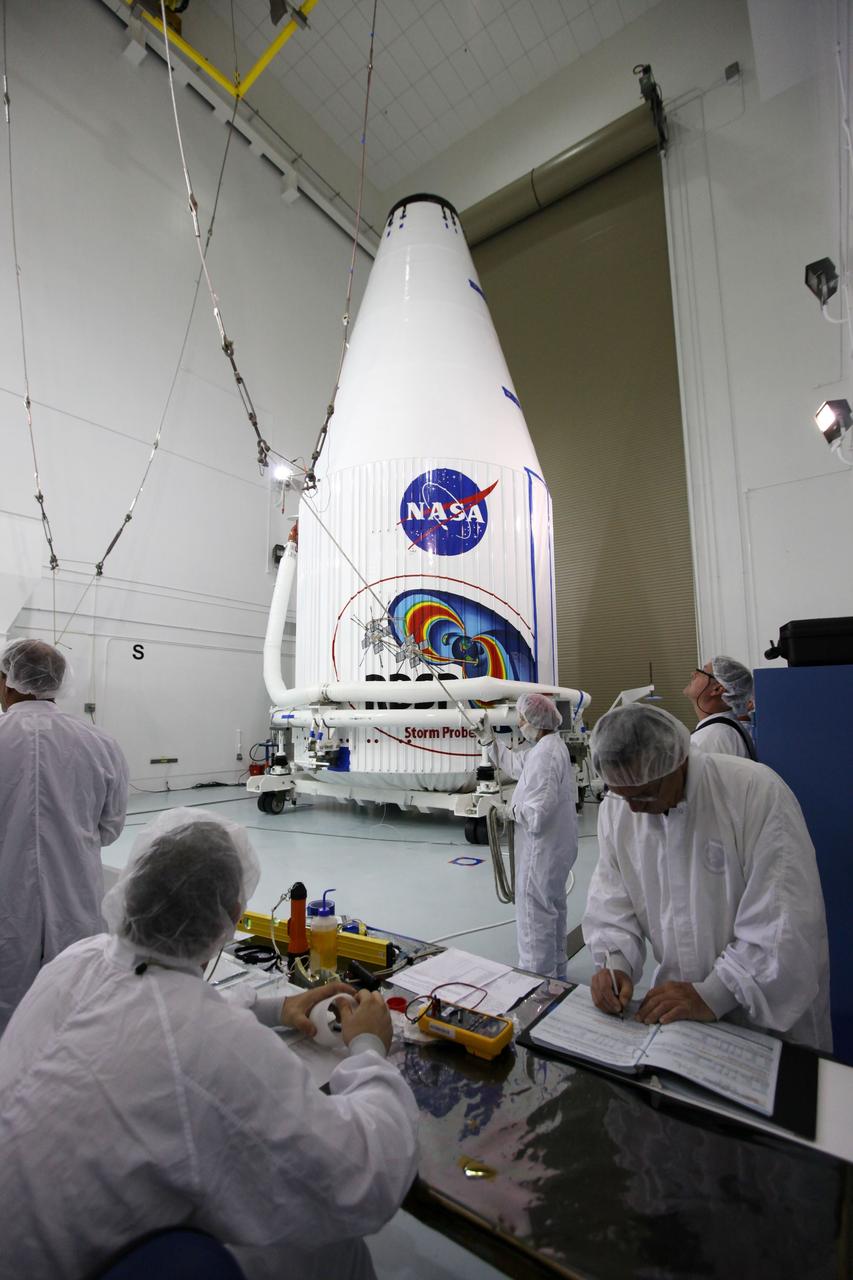
TITUSVILLE, Fla. - Inside the Astrotech payload processing facility in Titusville, Fla. near NASA’s Kennedy Space Center, technicians make final checks prior to lifting the payload faring containing the two Radiation Belt Storm Probes, or RBSP, spacecraft on to a transporter to be moved to the launch complex. NASA’s RBSP mission will help us understand the sun’s influence on Earth and near-Earth space by studying the Earth’s radiation belts on various scales of space and time. RBSP will begin its mission of exploration of Earth’s Van Allen radiation belts and the extremes of space weather after its liftoff aboard a United Launch Alliance Atlas V rocket from Space Launch Complex 41 at Cape Canaveral Air Force Station, Fla. Liftoff is targeted for Aug. 23, 2012. For more information, visit http://www.nasa.gov/rbsp Photo credit: NASA/ Kim Shiflett
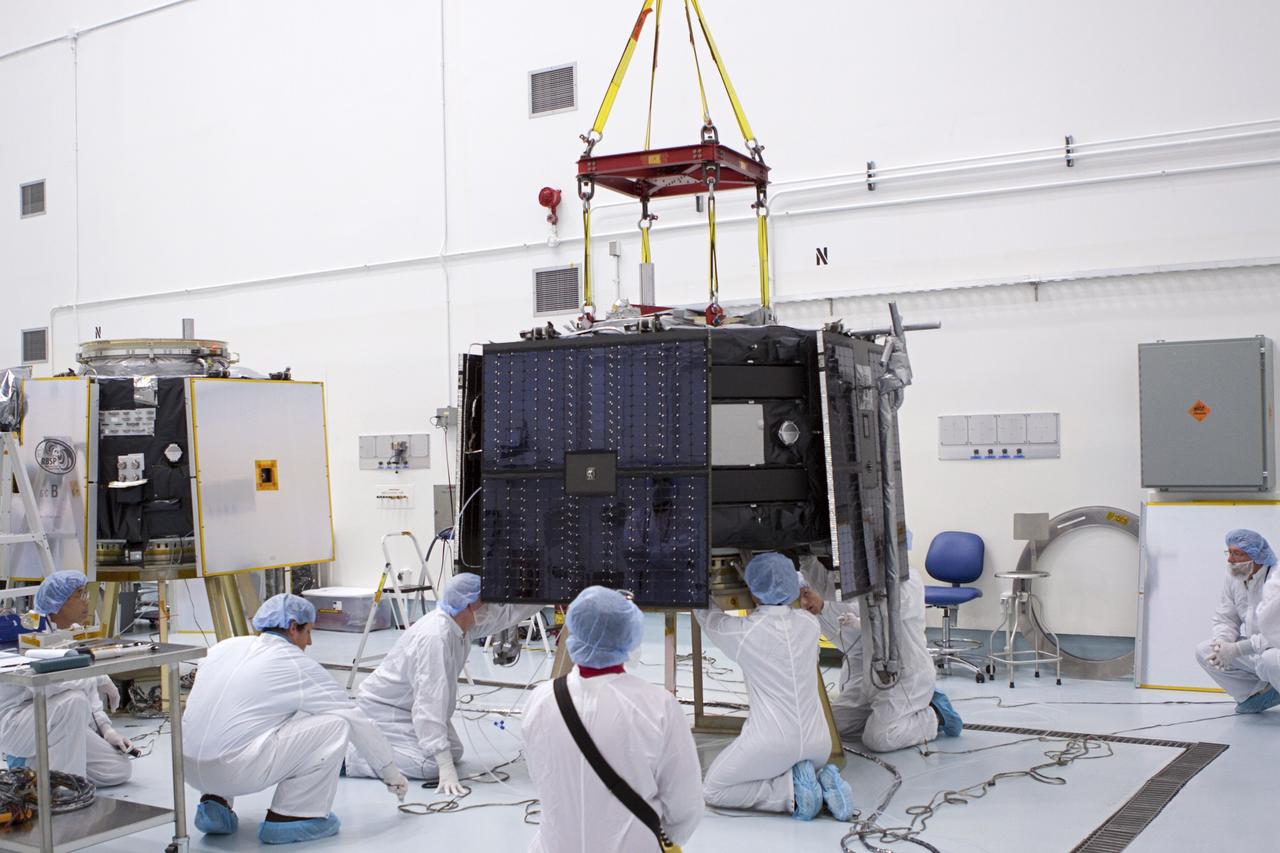
TITUSVILLE, Fla. - Inside the Astrotech payload processing facility in Titusville, Fla. near NASA’s Kennedy Space Center, technicians prepare the Radiation Belt Storm Probes, or RBSP, spacecraft A prior to vertical stacking atop RBSP B. NASA’s RBSP mission will help us understand the sun’s influence on Earth and near-Earth space by studying the Earth’s radiation belts on various scales of space and time. RBSP will begin its mission of exploration of Earth’s Van Allen radiation belts and the extremes of space weather after its liftoff aboard a United Launch Alliance Atlas V from Space Launch Complex 41 at Cape Canaveral Air Force Station, Fla. Liftoff is targeted for Aug. 23, 2012. For more information, visit http://www.nasa.gov/rbsp. Photo credit: NASA/Jim Grossmann
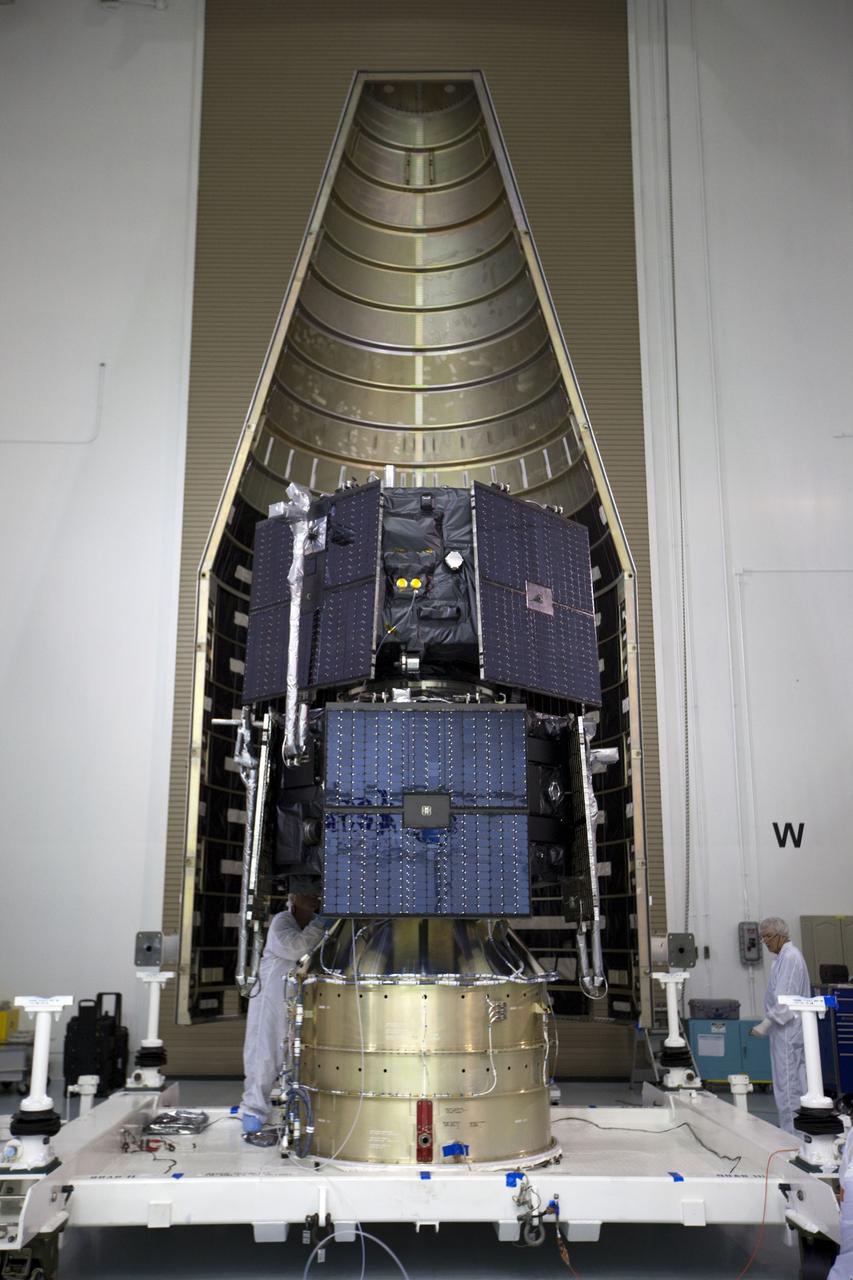
TITUSVILLE, Fla. - Inside the Astrotech payload processing facility in Titusville, Fla. near NASA’s Kennedy Space Center, a technician checks out the two Radiation Belt Storm Probes, or RBSP, spacecraft as they are being encapsulated in the payload faring. The fairing will house and protect the RBSP during liftoff and flight through the atmosphere aboard an Atlas V rocket. NASA’s RBSP mission will help us understand the sun’s influence on Earth and near-Earth space by studying the Earth’s radiation belts on various scales of space and time. RBSP will begin its mission of exploration of Earth’s Van Allen radiation belts and the extremes of space weather after its liftoff aboard a United Launch Alliance Atlas V from Space Launch Complex 41 at Cape Canaveral Air Force Station, Fla. Liftoff is targeted for Aug. 23, 2012. For more information, visit http://www.nasa.gov/rbsp. Photo credit: NASA/ Kim Shiflett
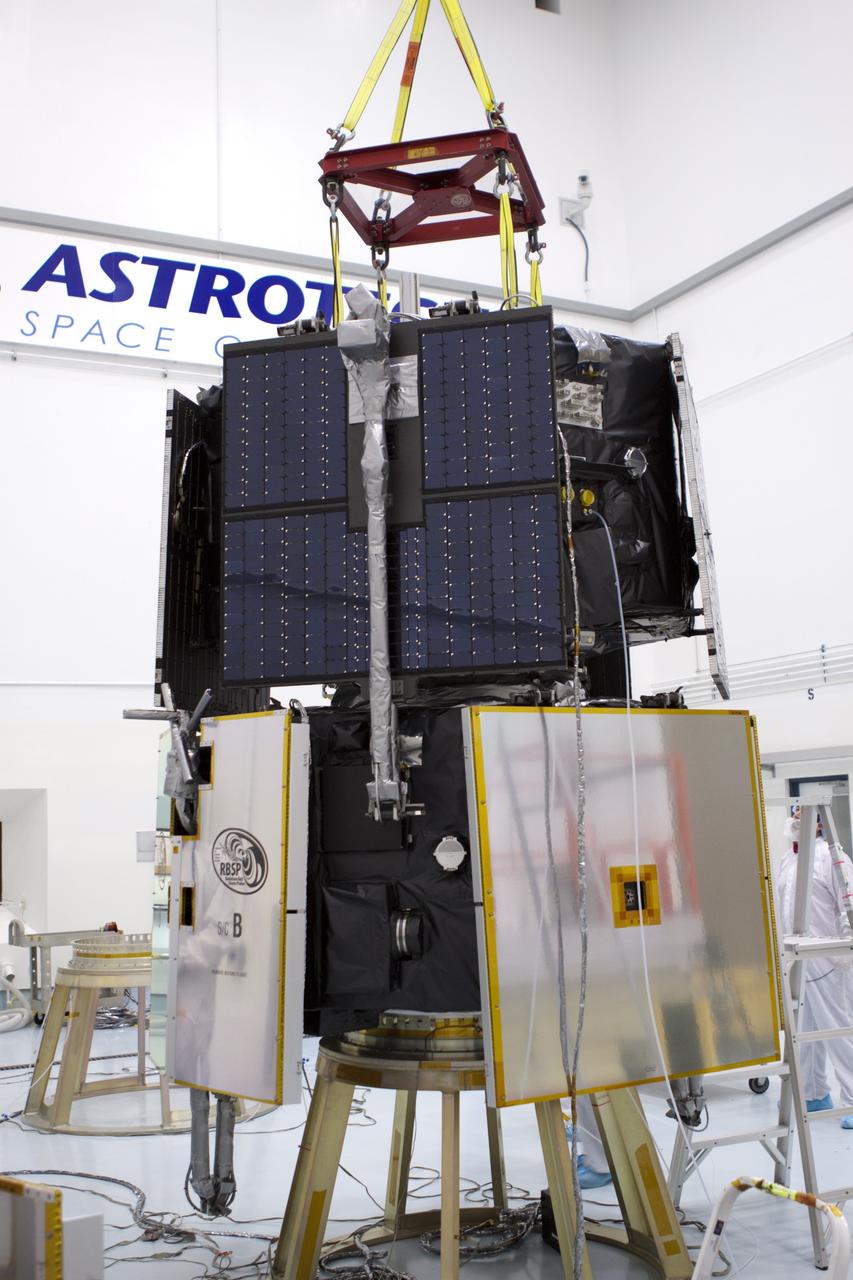
TITUSVILLE, Fla. - Inside the Astrotech payload processing facility in Titusville, Fla. near NASA’s Kennedy Space Center, the Radiation Belt Storm Probes, or RBSP, spacecraft A has been placed atop RBSP B. NASA’s RBSP mission will help us understand the sun’s influence on Earth and near-Earth space by studying the Earth’s radiation belts on various scales of space and time. RBSP will begin its mission of exploration of Earth’s Van Allen radiation belts and the extremes of space weather after its liftoff aboard a United Launch Alliance Atlas V from Space Launch Complex 41 at Cape Canaveral Air Force Station, Fla. Liftoff is targeted for Aug. 23, 2012. For more information, visit http://www.nasa.gov/rbsp. Photo credit: NASA/Jim Grossmann
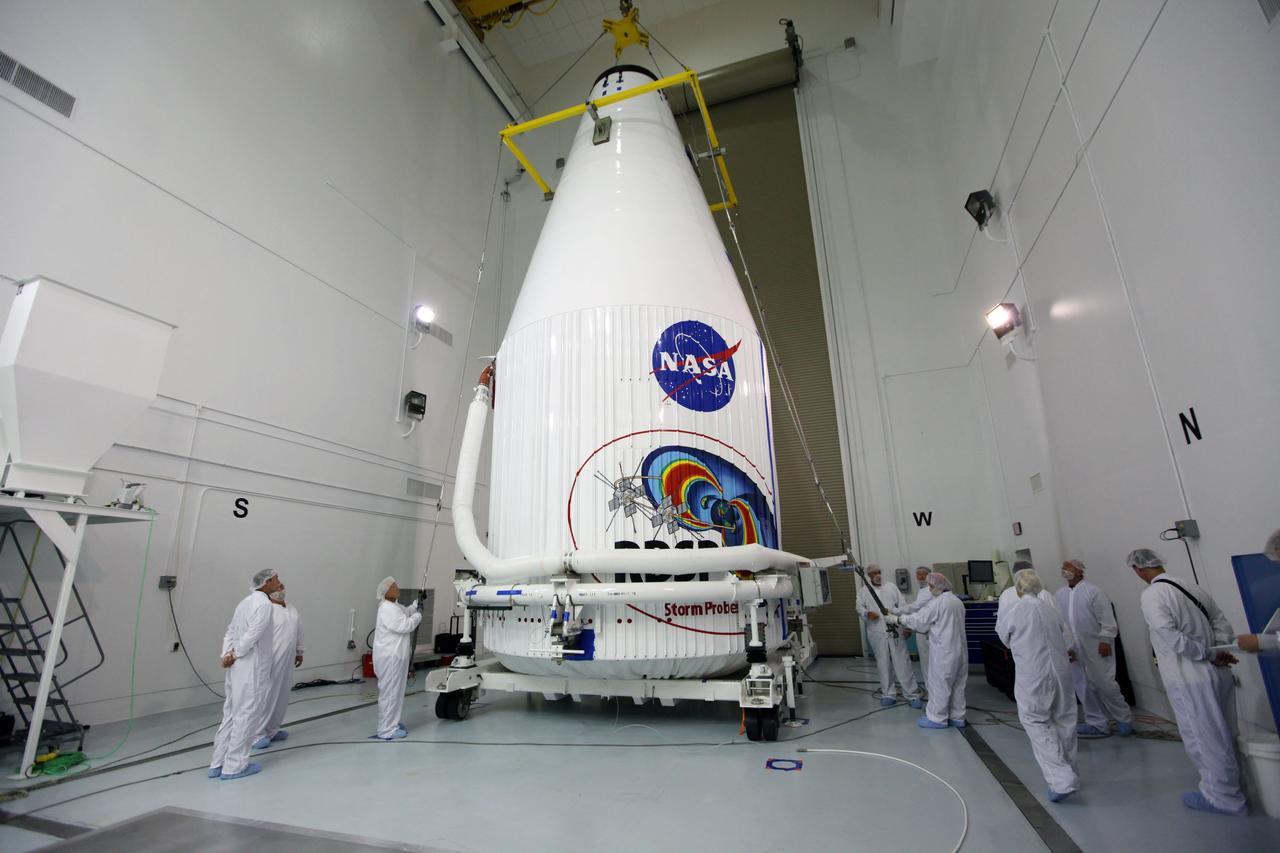
TITUSVILLE, Fla. - Inside the Astrotech payload processing facility in Titusville, Fla. near NASA’s Kennedy Space Center, technicians attach a crane to lift the payload faring containing the two Radiation Belt Storm Probes, or RBSP, spacecraft on to a transporter to be moved to the launch complex. NASA’s RBSP mission will help us understand the sun’s influence on Earth and near-Earth space by studying the Earth’s radiation belts on various scales of space and time. RBSP will begin its mission of exploration of Earth’s Van Allen radiation belts and the extremes of space weather after its liftoff aboard a United Launch Alliance Atlas V rocket from Space Launch Complex 41 at Cape Canaveral Air Force Station, Fla. Liftoff is targeted for Aug. 23, 2012. For more information, visit http://www.nasa.gov/rbsp Photo credit: NASA/ Kim Shiflett
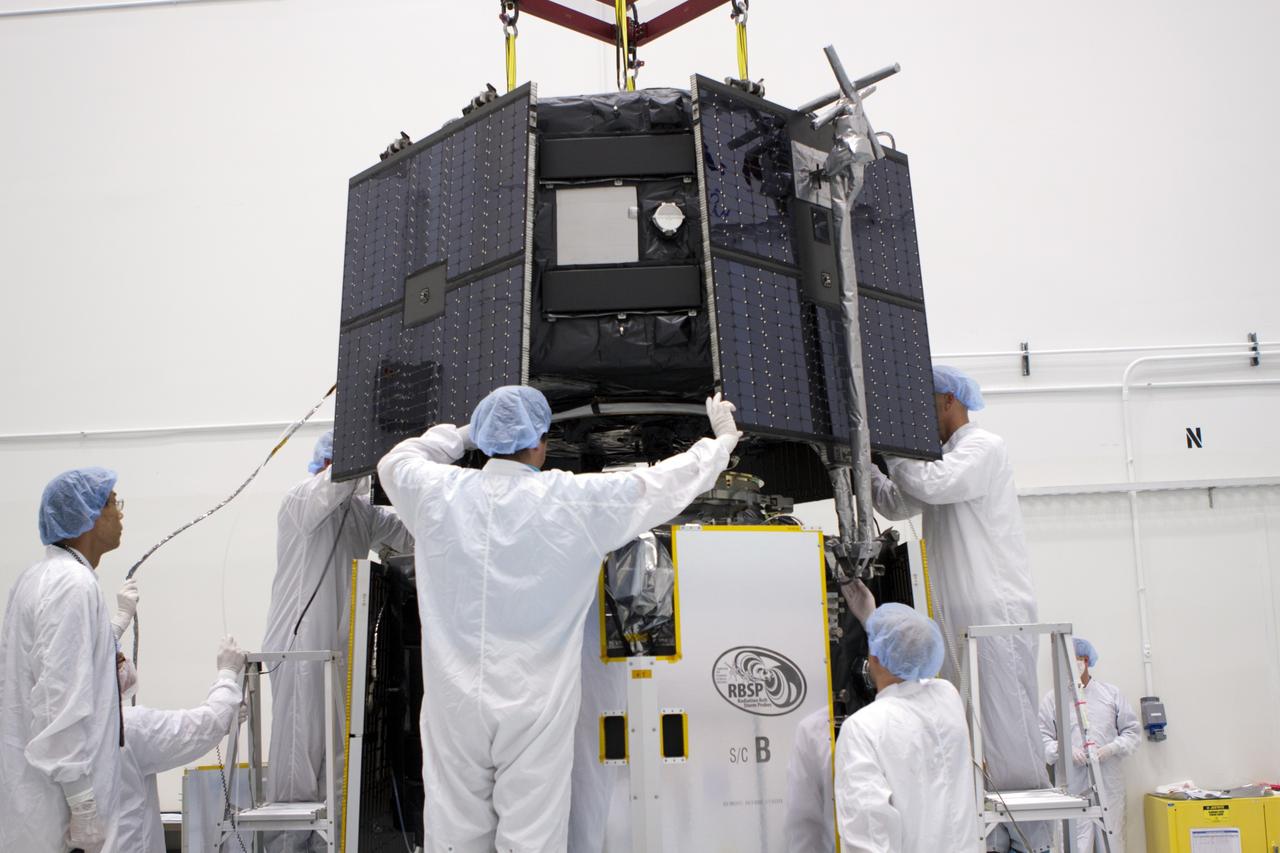
TITUSVILLE, Fla. - Inside the Astrotech payload processing facility in Titusville, Fla. near NASA’s Kennedy Space Center, technicians carefully check the Radiation Belt Storm Probes, or RBSP, spacecraft A as it is being placed atop RBSP B. NASA’s RBSP mission will help us understand the sun’s influence on Earth and near-Earth space by studying the Earth’s radiation belts on various scales of space and time. RBSP will begin its mission of exploration of Earth’s Van Allen radiation belts and the extremes of space weather after its liftoff aboard a United Launch Alliance Atlas V from Space Launch Complex 41 at Cape Canaveral Air Force Station, Fla. Liftoff is targeted for Aug. 23, 2012. For more information, visit http://www.nasa.gov/rbsp. Photo credit: NASA/Jim Grossmann
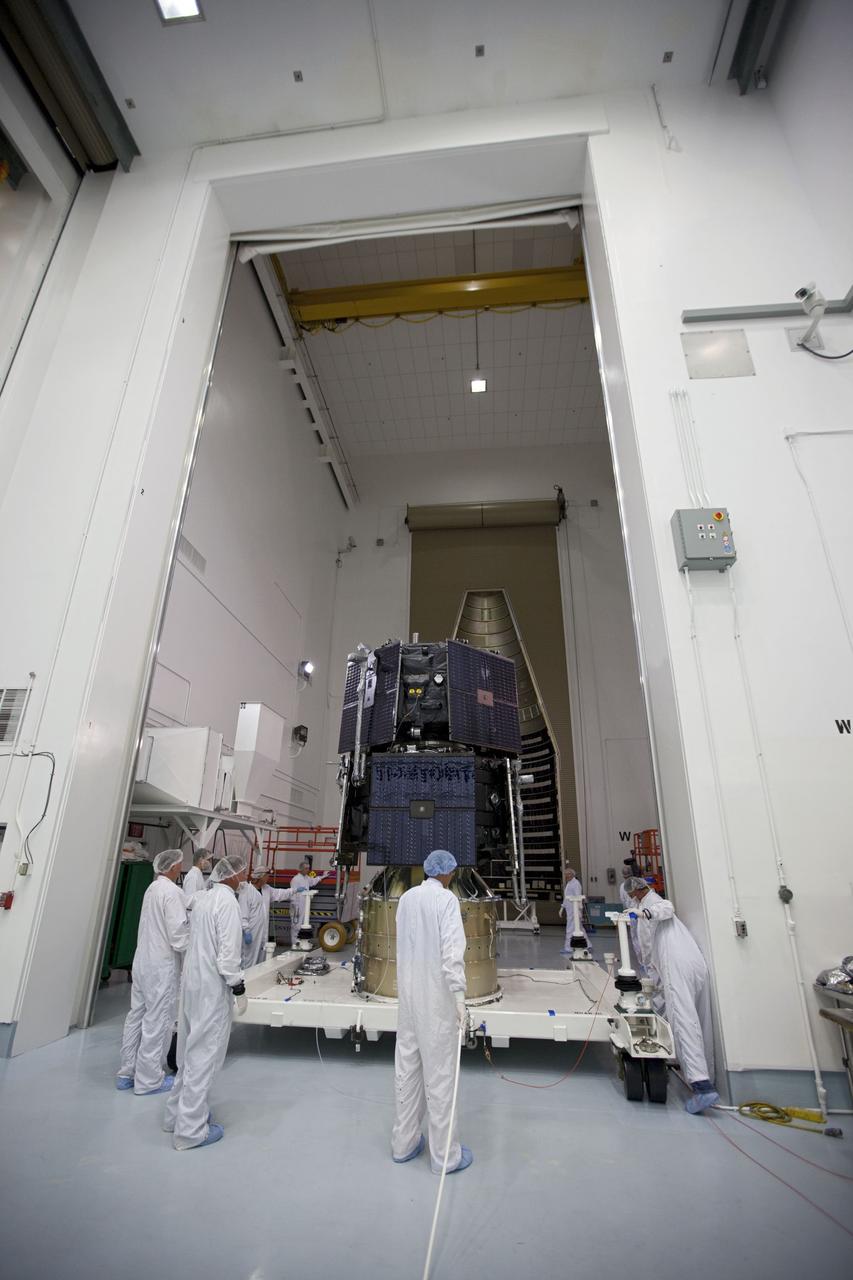
TITUSVILLE, Fla. - Inside the Astrotech payload processing facility in Titusville, Fla. near NASA’s Kennedy Space Center, technicians move the two Radiation Belt Storm Probes, or RBSP, spacecraft into position for encapsulation in the payload faring. The fairing will house and protect the RBSP during liftoff and flight through the atmosphere aboard an Atlas V rocket. NASA’s RBSP mission will help us understand the sun’s influence on Earth and near-Earth space by studying the Earth’s radiation belts on various scales of space and time. RBSP will begin its mission of exploration of Earth’s Van Allen radiation belts and the extremes of space weather after its liftoff aboard a United Launch Alliance Atlas V from Space Launch Complex 41 at Cape Canaveral Air Force Station, Fla. Liftoff is targeted for Aug. 23, 2012. For more information, visit http://www.nasa.gov/rbsp. Photo credit: NASA/ Kim Shiflett
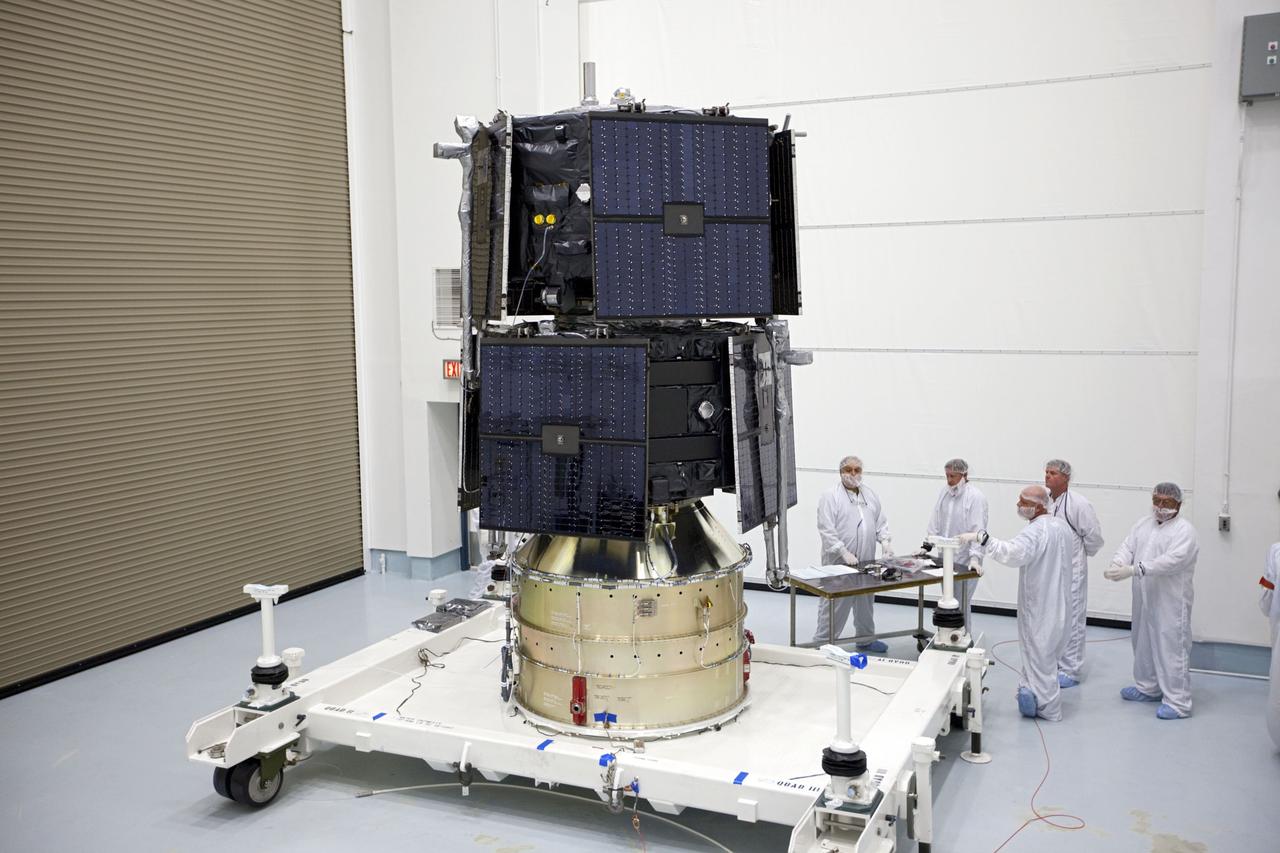
TITUSVILLE, Fla. - Inside the Astrotech payload processing facility in Titusville, Fla. near NASA’s Kennedy Space Center, technicians checkout the two Radiation Belt Storm Probes, or RBSP, spacecraft prior to vertical encapsulation in the payload faring. The fairing will house and protect the RBSP during liftoff and flight through the atmosphere aboard an Atlas V rocket. NASA’s RBSP mission will help us understand the sun’s influence on Earth and near-Earth space by studying the Earth’s radiation belts on various scales of space and time. RBSP will begin its mission of exploration of Earth’s Van Allen radiation belts and the extremes of space weather after its liftoff aboard a United Launch Alliance Atlas V from Space Launch Complex 41 at Cape Canaveral Air Force Station, Fla. Liftoff is targeted for Aug. 23, 2012. For more information, visit http://www.nasa.gov/rbsp. Photo credit: NASA/ Kim Shiflett