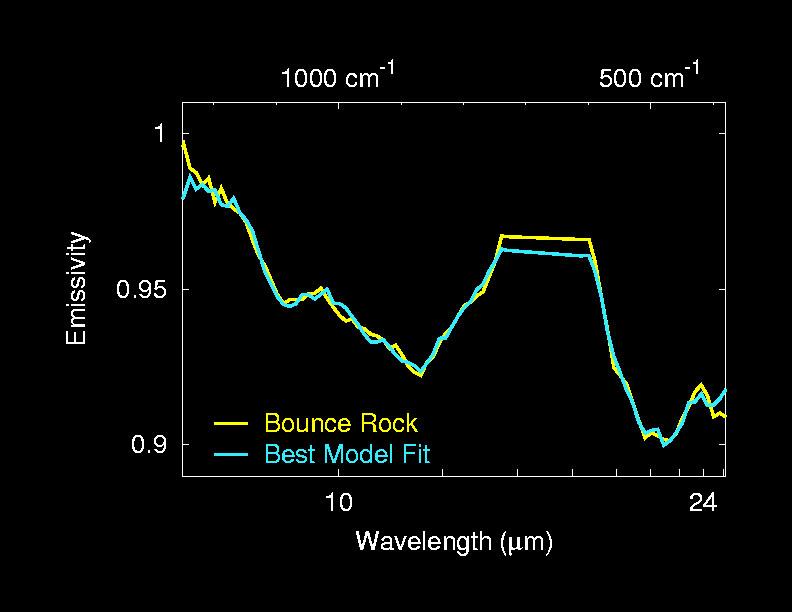
Best Fit for Bounce
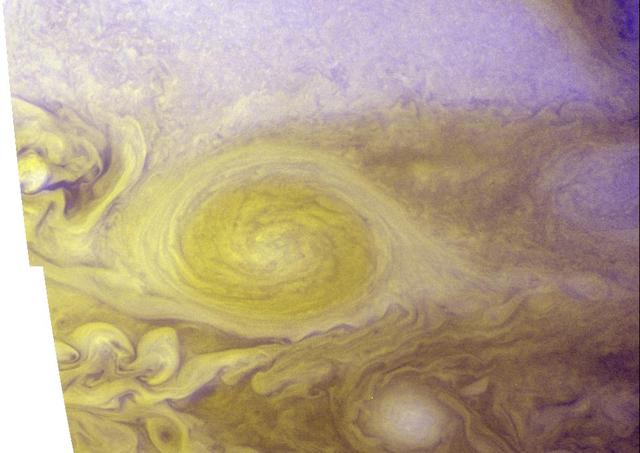
Best Color Image of Jupiter Little Red Spot

Galileo Best View of Loki Volcano on Io
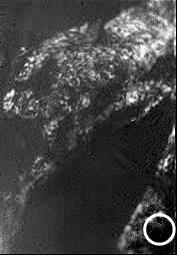
First Best-Guess View of Huygens Landing Site

Springtime on Mars: Hubble Best View of the Red Planet
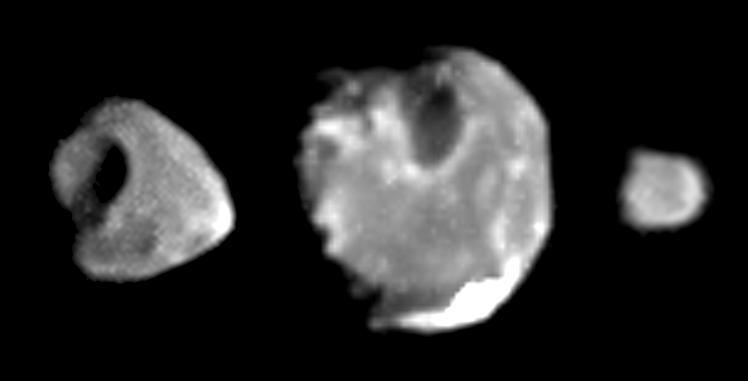
Best images yet of Thebe, Amalthea and Metis
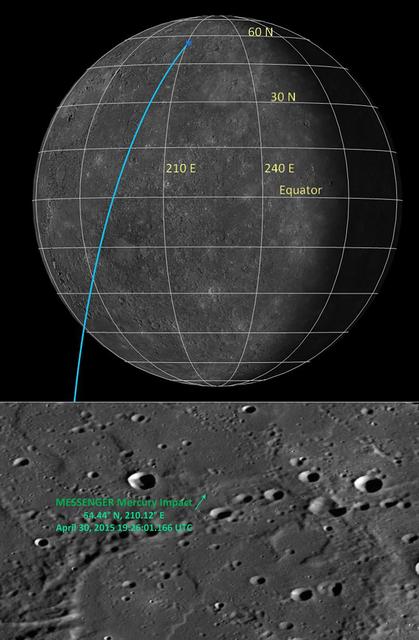
The day before the MESSENGER spacecraft impacted the surface of Mercury, the best prediction for the location and time of the impact was 54.4° N, 210.1° E, on 30 April 2015 at 19.26:02 UTC, as shown in the featured image of that day. In the last month since impact, MESSENGER engineers have completed the final and most accurate determination of where the MESSENGER spacecraft impacted Mercury's surface. The determination indicates that the spacecraft impacted into a part of Mercury's surface that has a gradual incline with an approximate slope of 8.5°. The final estimate of the impact location is at 54.4398° N, 210.1205° E, and 2438.790 km from the center of Mercury. The final determination of the impact time is 19:26:01.166 UTC on 30 April 2015. Traveling at 3.912 kilometers per second (8,750 miles per hour), the MESSENGER spacecraft is estimated to have created a crater 16 meters (52 feet) in diameter at this location. This new best determination of the impact location will help the next Mercury spacecraft to identify MESSENGER's crater, such as the joint ESA-JAXA BepiColombo mission, scheduled for lauch in 2017 and arrival in Mercury orbit in 2024. Bottom Image Scale: This image is roughly 130 km (81 miles) across. http://photojournal.jpl.nasa.gov/catalog/PIA19497

Hubble Captures Best View of Mars Ever Obtained from Earth
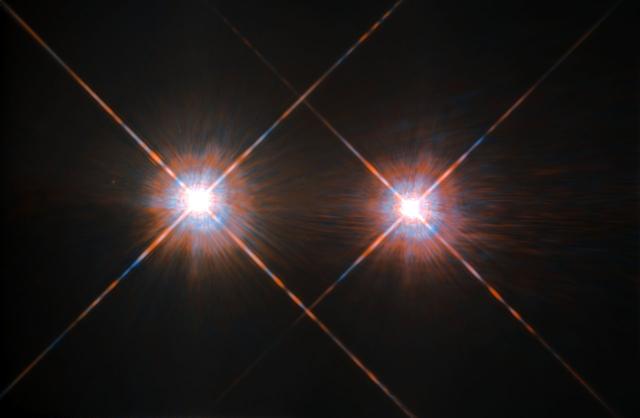
The closest star system to the Earth is the famous Alpha Centauri group. Located in the constellation of Centaurus (The Centaur), at a distance of 4.3 light-years, this system is made up of the binary formed by the stars Alpha Centauri A and Alpha Centauri B, plus the faint red dwarf Alpha Centauri C, also known as Proxima Centauri. This NASA/ESA Hubble Space Telescope has given us this stunning view of the bright Alpha Centauri A (on the left) and Alpha Centauri B (on the right), shining like huge cosmic headlamps in the dark. The image was captured by the Wide-Field and Planetary Camera 2 (WFPC2). WFPC2 was Hubble’s most used instrument for the first 13 years of the space telescope’s life, being replaced in 2009 by Wide-Field Camera 3 (WFC3) during Servicing Mission 4. This portrait of Alpha Centauri was produced by observations carried out at optical and near-infrared wavelengths. Compared to the sun, Alpha Centauri A is of the same stellar type, G2, and slightly bigger, while Alpha Centauri B, a K1-type star, is slightly smaller. They orbit a common center of gravity once every 80 years, with a minimum distance of about 11 times the distance between Earth and the sun. Because these two stars are, together with their sibling Proxima Centauri, the closest to Earth, they are among the best studied by astronomers. And they are also among the prime targets in the hunt for habitable exoplanets. Using the European Space Organization's HARPS instrument, astronomers already discovered a planet orbiting Alpha Centauri B. Then on Aug. 24, 2016, astronomers announced the intriguing discovery of a nearly Earth-sized planet in the habitable zone orbiting the star Proxima Centauri Image credit: ESA/NASA

NASA Administrator Charles Bolden issued the following statement regarding NASA's selection by the Partnership for Public Service as the Best Place to Work in Government: "NASA’s selection as the Best Place to Work in Government for the second year in a row is a testament to the excellence of our workforce and their determination to maintain America’s leadership in space exploration." We are also pleased to announce that NASA Goddard was ranked 13th best agency subcomponent. Read more: <a href="http://1.usa.gov/1cTQHIC" rel="nofollow">1.usa.gov/1cTQHIC</a> <b><a href="http://www.nasa.gov/audience/formedia/features/MP_Photo_Guidelines.html" rel="nofollow">NASA image use policy.</a></b> <b><a href="http://www.nasa.gov/centers/goddard/home/index.html" rel="nofollow">NASA Goddard Space Flight Center</a></b> enables NASA’s mission through four scientific endeavors: Earth Science, Heliophysics, Solar System Exploration, and Astrophysics. Goddard plays a leading role in NASA’s accomplishments by contributing compelling scientific knowledge to advance the Agency’s mission. <b>Follow us on <a href="http://twitter.com/NASA_GoddardPix" rel="nofollow">Twitter</a></b> <b>Like us on <a href="http://www.facebook.com/pages/Greenbelt-MD/NASA-Goddard/395013845897?ref=tsd" rel="nofollow">Facebook</a></b> <b>Find us on <a href="http://instagram.com/nasagoddard?vm=grid" rel="nofollow">Instagram</a></b>

NASA Deputy Administrator Jim Morhard, second from left, poses for a photo with the other awardees, after accepting the Best Place to Work award for large federal government agencies for NASA, Friday, Jan. 10, 2020 at the Ronald Reagan Building in Washington. Photo Credit: (NASA/Aubrey Gemignani)

NASA Deputy Administrator Jim Morhard, center, speaks with guests, after accepting the Best Place to Work award for large federal government agencies for NASA, Friday, Jan. 10, 2020 at the Ronald Reagan Building in Washington. Photo Credit: (NASA/Aubrey Gemignani)

KENNEDY SPACE CENTER, FLA. - At NASA Kennedy Space Center's annual BEST (Black Employee Strategy Team) African-American History Month luncheon, Erin Parrish (left) displays a plaque she received from Elaine Johnson (right) that names Parrish the recipient of the Evelyn Johnson Scholarship. Elaine Johnson is the daughter of Evelyn Johnson, one of the organization's founding members. The Evelyn Johnson Scholarship is given each year by BEST in honor and memory of Evelyn Johnson. Stay-In-School and coop students at Kennedy as well as dependents of KSC civil service employees are eligible. The theme for this year's luncheon was "Creating New Paths From Journeys Past." The luncheon was held in the Kurt H. Debus Center at Kennedy Space Center's Visitor Complex. Photo credit: NASA/George Shelton
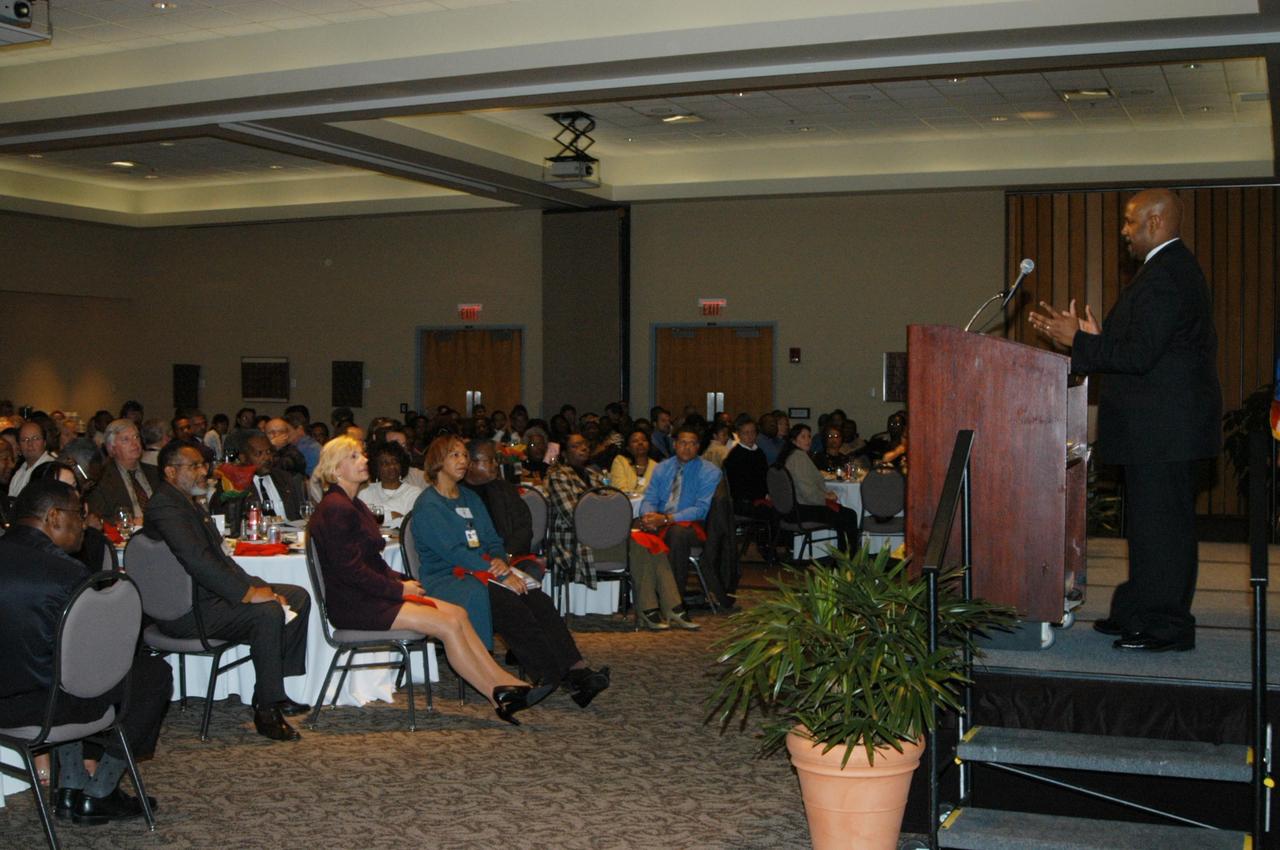
KENNEDY SPACE CENTER, FLA. - At the dais (right), Kwatsi Alibaruho speaks to guests at NASA Kennedy Space Center's annual BEST (Black Employee Strategy Team) African-American History Month luncheon. Among attendees was Center Director Jim Kennedy. The guest speaker for the luncheon, Alibaruho is a flight director from Johnson Space Center Mission Control. The theme for this year's luncheon was "Creating New Paths From Journeys Past." The luncheon was held in the Kurt H. Debus Center at Kennedy Space Center's Visitor Complex. Photo credit: NASA/George Shelton
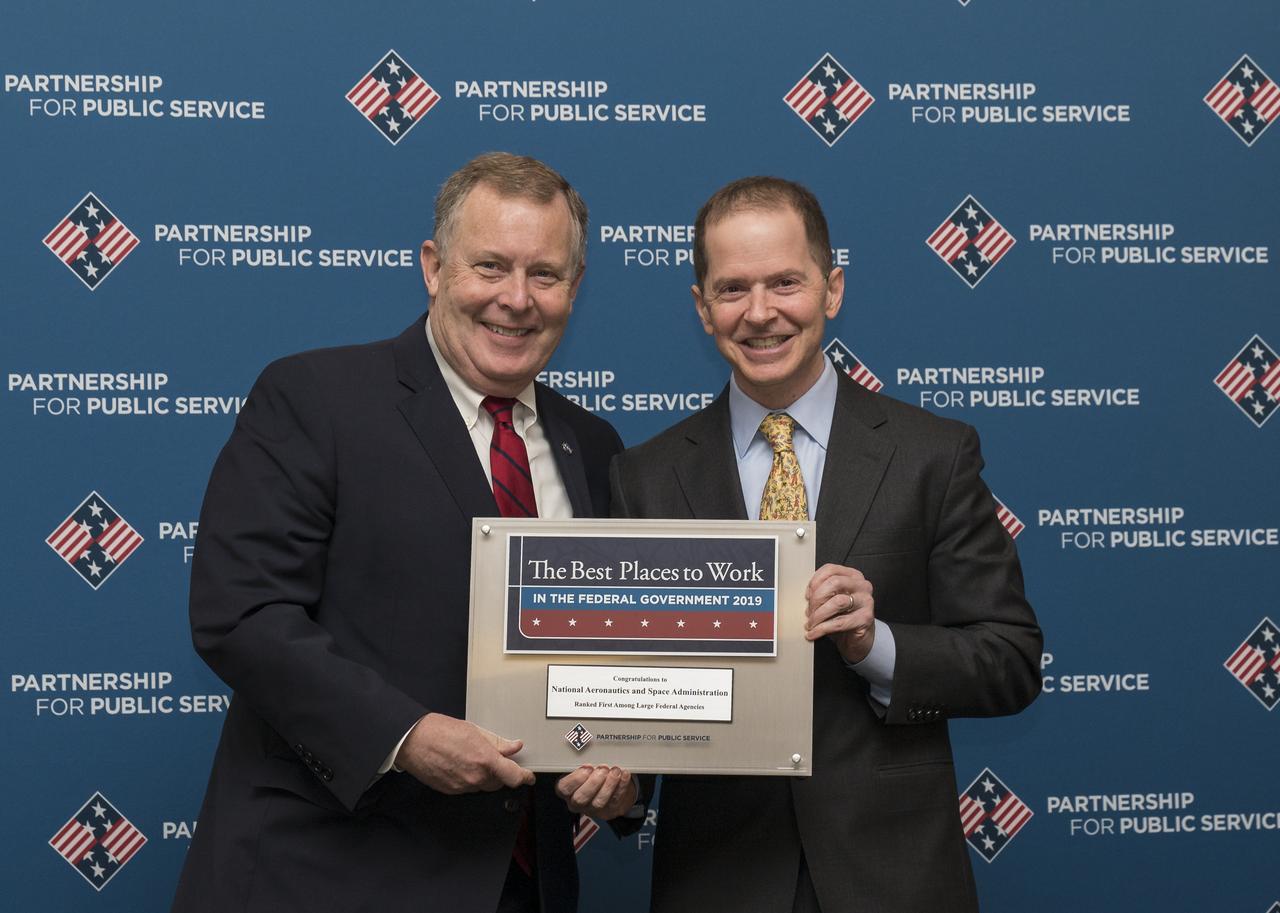
NASA Deputy Administrator Jim Morhard, left, poses for a photo with Max Stier, president and chief executive officer of the Partnership for Public Service, after accepting the Best Place to Work award for large federal government agencies for NASA, Friday, Jan. 10, 2020 at the Ronald Reagan Building in Washington. Photo Credit: (NASA/Aubrey Gemignani)

NASA Administrator Charles Bolden (l to r), NASA Chief Human Capital Officer Jeri Buchholz, Stennis Space Center Director Patrick Scheuermann and NASA's Goddard Space Flight Center Director Rob Strain display certificates designating NASA and Stennis as best places to work in the government. NASA ranks No. 5 on a list of best places to work in the federal government. Stennis sits at the top of the list of NASA centers as the best place to work.

NASA Administrator Charles Bolden (l to r), NASA Chief Human Capital Officer Jeri Buchholz, Stennis Space Center Director Patrick Scheuermann and NASA's Goddard Space Flight Center Director Rob Strain display certificates designating NASA and Stennis as best places to work in the government. NASA ranks No. 5 on a list of best places to work in the federal government. Stennis sits at the top of the list of NASA centers as the best place to work.
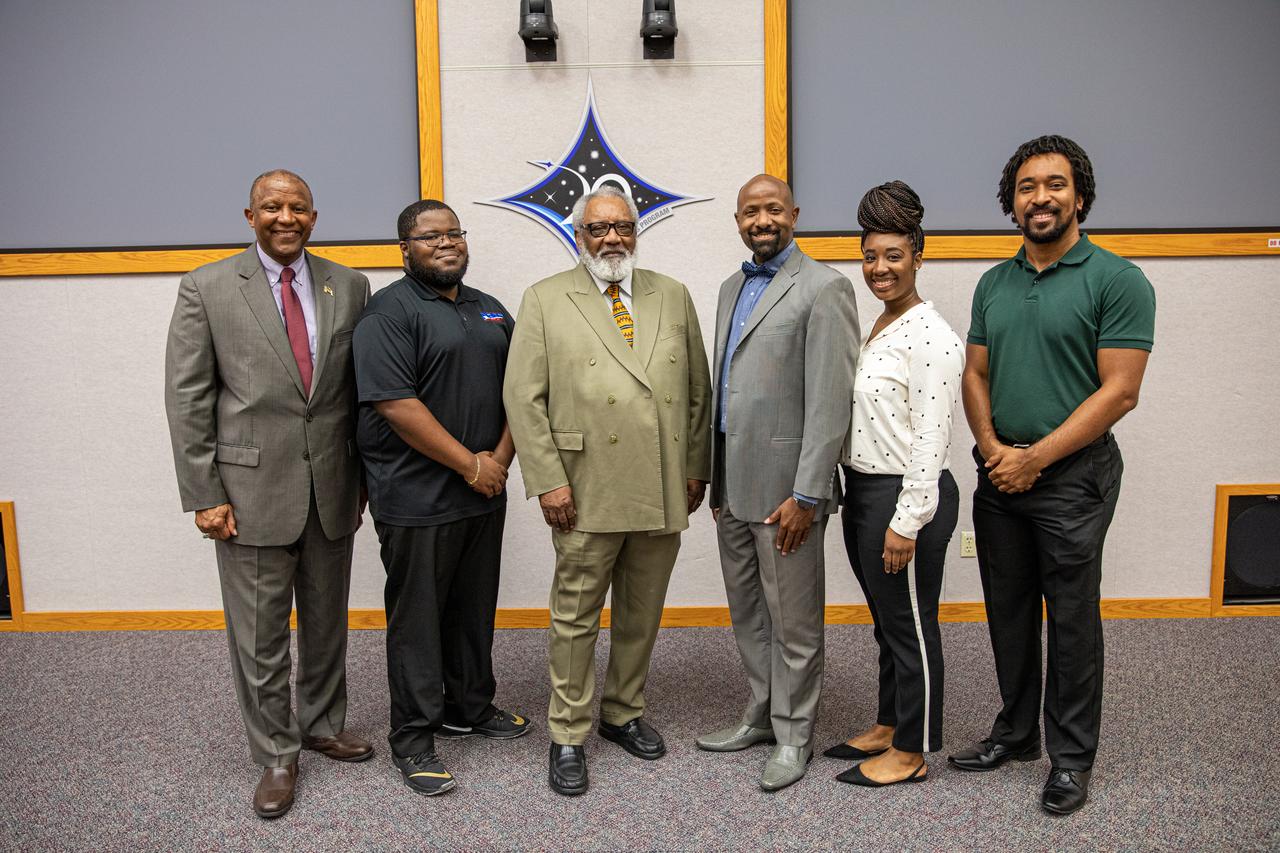
A Black History Month celebration was held on Feb. 18, 2020 at NASA’s Kennedy Space Center in Florida. The program was organized by the Black Employee Strategy Team (BEST), one of the center’s employee resource groups. This year’s theme was “African Americans and the Vote.” From left are Kelvin Manning, Kennedy’s associate director, technical; Daren Etienne, BEST marketing director; James Jennings, keynote speaker, former NASA associate administrator for Institutions and Management and Kennedy’s former deputy director; Martin Hayes, BEST chairperson; Jakebia Keith, program and contract analyst for the IT Resources Management Office and BEST secretary; and Phillip Hargrove, BEST co-chairperson.
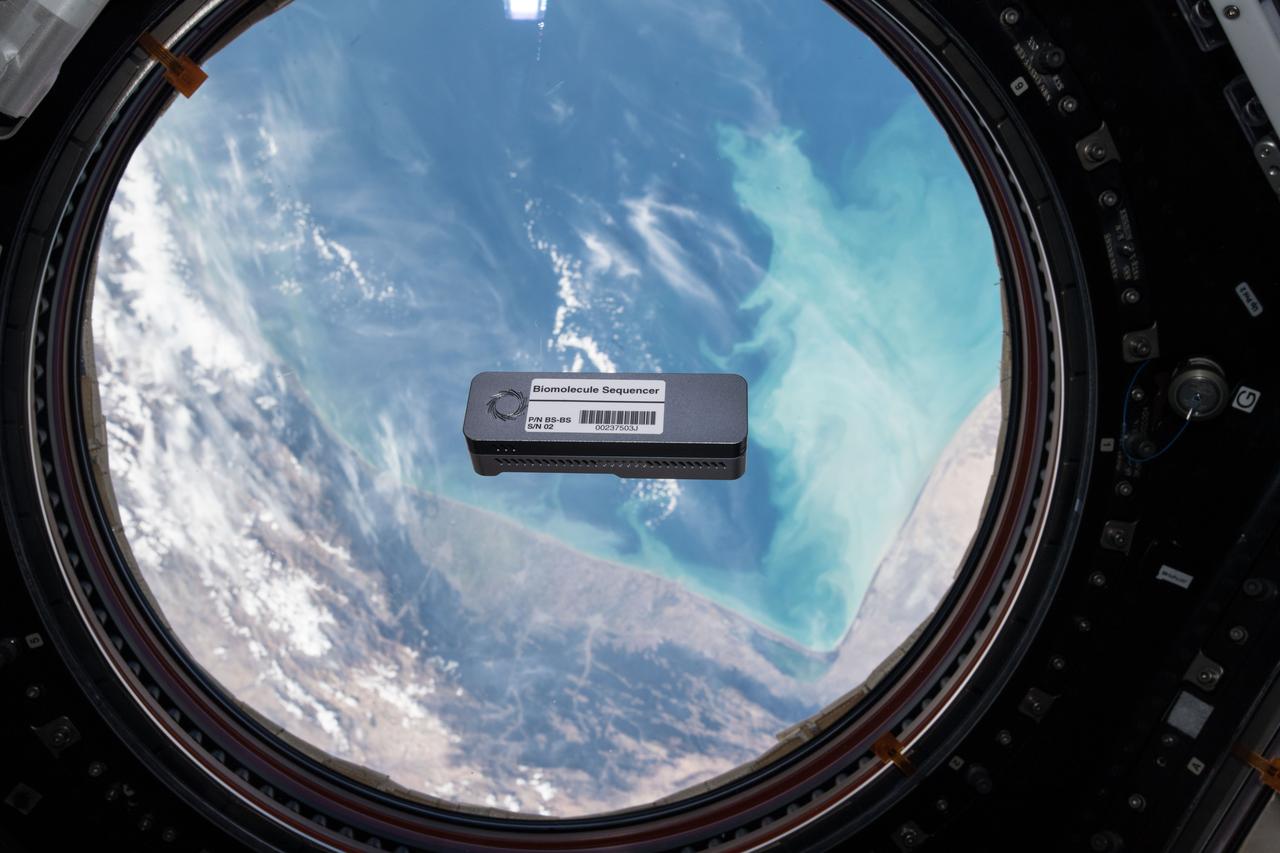
iss057e000180 (10/8/2018) - Biomolecule Sequencer for the BEST experiment floating in front of Window 7 in the Cupola module. Earth is in the background. The Biomolecule Sequencer seeks to demonstrate, for the first time, that DNA sequencing is feasible in an orbiting spacecraft. A space-based DNA sequencer could identify microbes, diagnose diseases and understand crew member health, and potentially help detect DNA-based life elsewhere in the solar system.
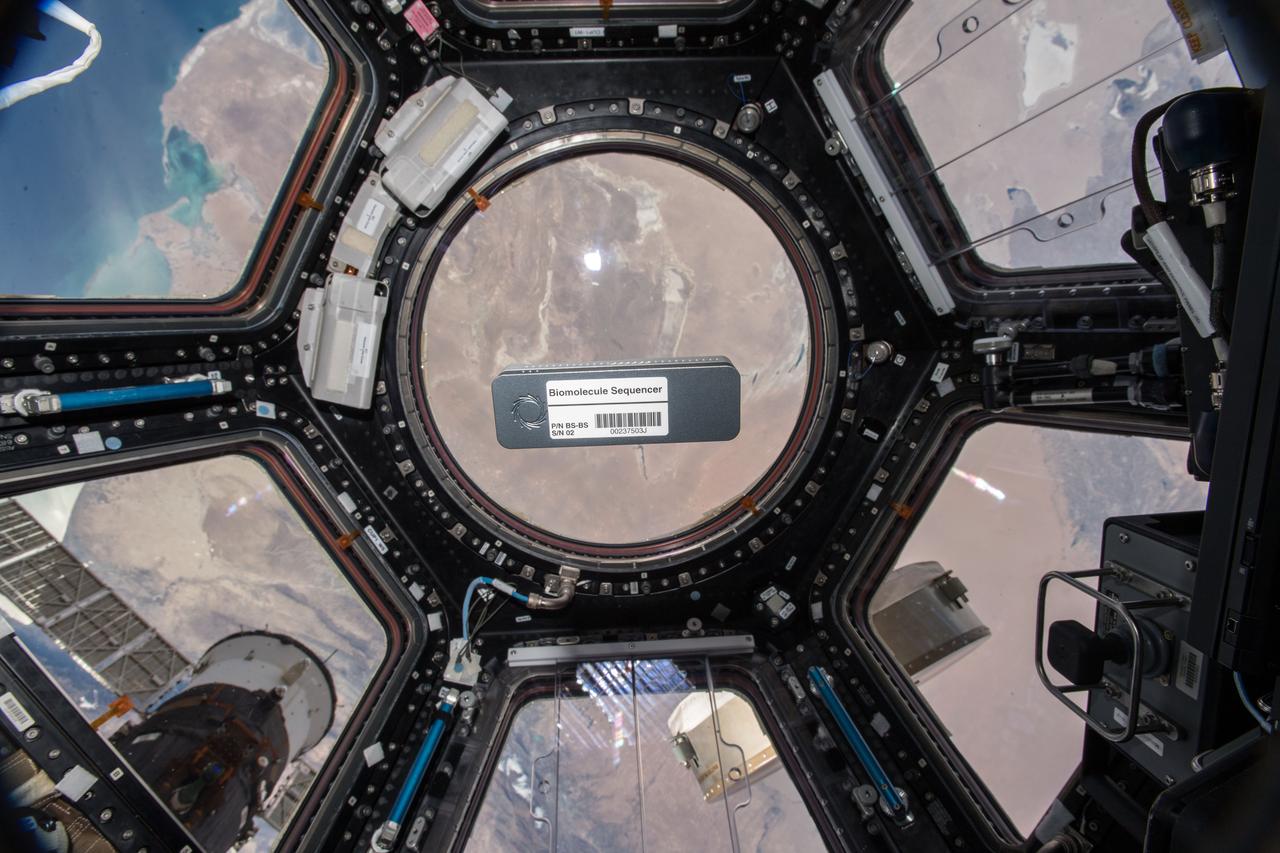
iss057e000185 (10/8/2018) - Biomolecule Sequencer for the BEST experiment floating in front of Window 7 in the Cupola module. Earth is in the background. The Biomolecule Sequencer seeks to demonstrate, for the first time, that DNA sequencing is feasible in an orbiting spacecraft. A space-based DNA sequencer could identify microbes, diagnose diseases and understand crew member health, and potentially help detect DNA-based life elsewhere in the solar system.
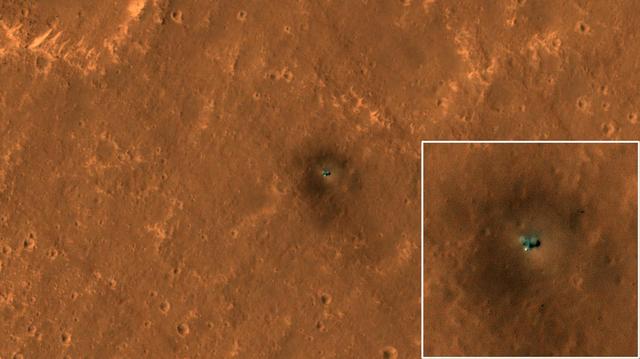
The HiRISE camera on NASA's Mars Reconnaissance Orbiter got its best view yet of the agency's InSight lander on Sept. 23, 2019. HiRISE has been monitoring InSight's landing site on the Red Planet for changes such as dust-devil tracks (the slightly dark diagonals streaks crisscrossing the surface). This new image clearly shows the two circular solar panels on either side of the lander body. From end to end, the panels span 20 feet (6 meters); the image was taken from an elevation of 169 miles (272 kilometers) above the surface. The bright spot on the lower side of the spacecraft is the dome-shaped protective cover over InSight's seismometer. Surrounding the spacecraft is a dark halo created by retrorocket thrusters scouring the surface during landing. Dark streaks seen crossing diagonally across the surface are dust-devil tracks. Several factors make this image crisper than past images. For one thing, there's less dust in the air this time of year compared to before. And shadows are offset from the lander because this is an oblique view looking west. Moreover, the lighting was better for avoiding the bright reflections from the lander or its solar panels that have obscured surrounding pixels in other images. The seismometer cover to the south of the lander is still bright because its dome shape always produces a mirror-like reflection over some small area. https://photojournal.jpl.nasa.gov/catalog/PIA23376
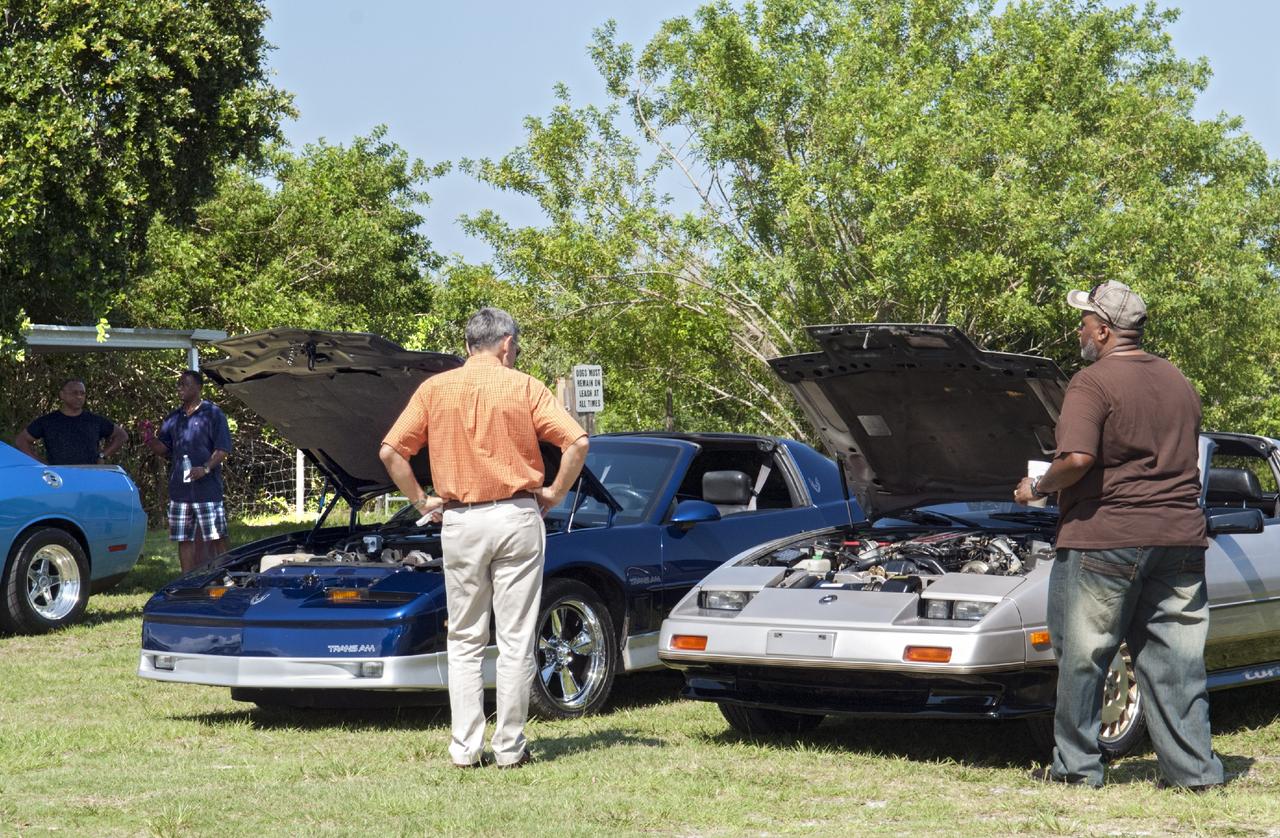
Merritt Island, Fla. – Kennedy Space Center Director Bob Cabana enjoys the automobiles on display in the a noncompetitive car show at 2013 Black Employee Strategy Team BEST BBQ at KARS Park I on Merritt Island. Events also included a spades tournament. BEST hosts the barbecue as a fundraiser for the Evelyn Johnson Scholarship, which is handed out every year to students who exemplify significant achievement both academically and in their community. The scholarship is in honor of Evelyn Johnson, a founding member of BEST and former deputy director of Kennedy’s Diversity and Equal Opportunity Office. Photo credit: NASA/ Charisse Nahser
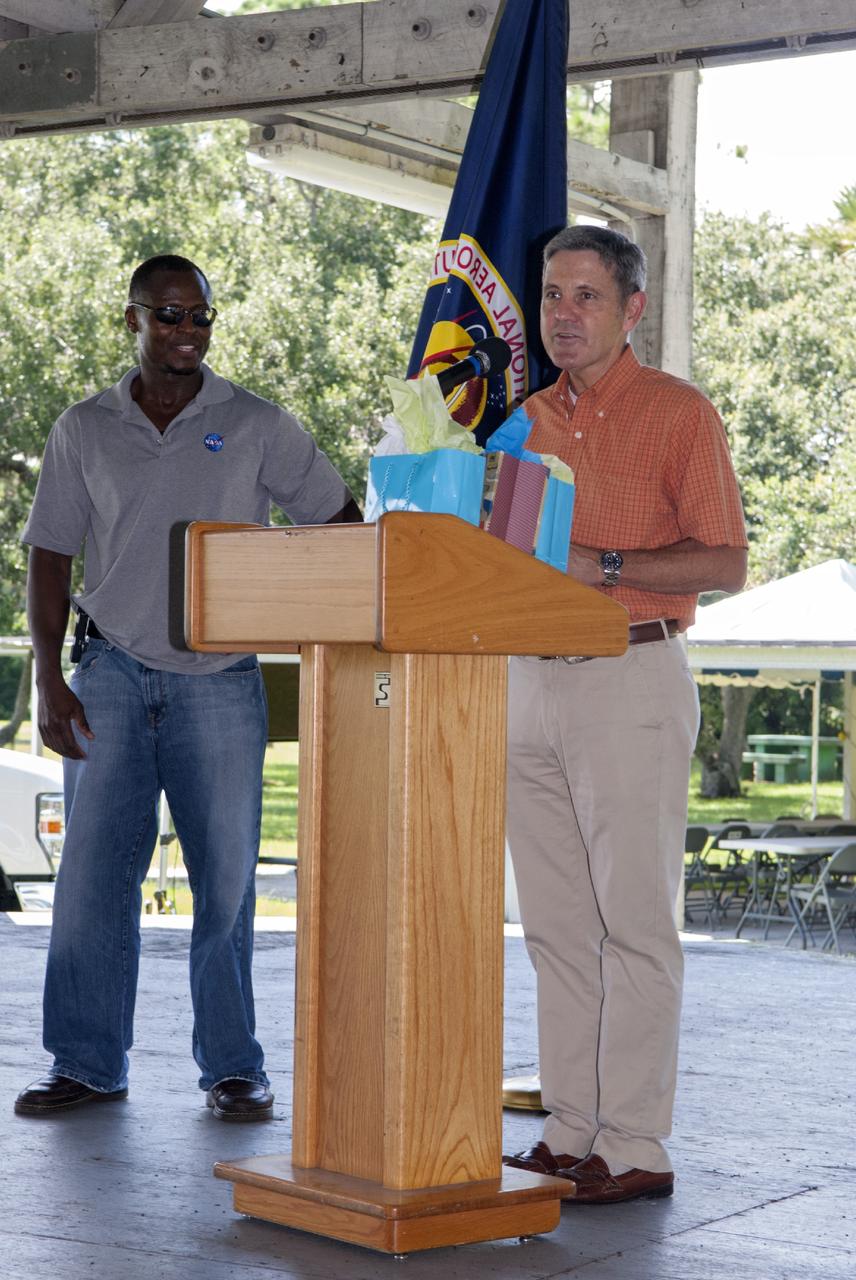
Merritt Island, Fla. – Kennedy Space Center worker Yves Lamothe and Center Director Bob Cabana welcome guests to the 2013 Black Employee Strategy Team BEST BBQ at KARS Park I on Merritt Island. Events included a noncompetitive car show and a spades tournament. BEST hosts the barbecue as a fundraiser for the Evelyn Johnson Scholarship, which is handed out every year to students who exemplify significant achievement both academically and in their community. The scholarship is in honor of Evelyn Johnson, a founding member of BEST and former deputy director of Kennedy’s Diversity and Equal Opportunity Office. Photo credit: NASA/ Charisse Nahser

Merritt Island, Fla. – Kennedy Space Center worker Yves Lamothe and Center Director Bob Cabana welcome guests to the 2013 Black Employee Strategy Team BEST BBQ at KARS Park I on Merritt Island. Events included a noncompetitive car show and a spades tournament. BEST hosts the barbecue as a fundraiser for the Evelyn Johnson Scholarship, which is handed out every year to students who exemplify significant achievement both academically and in their community. The scholarship is in honor of Evelyn Johnson, a founding member of BEST and former deputy director of Kennedy’s Diversity and Equal Opportunity Office. Photo credit: NASA/ Charisse Nahser
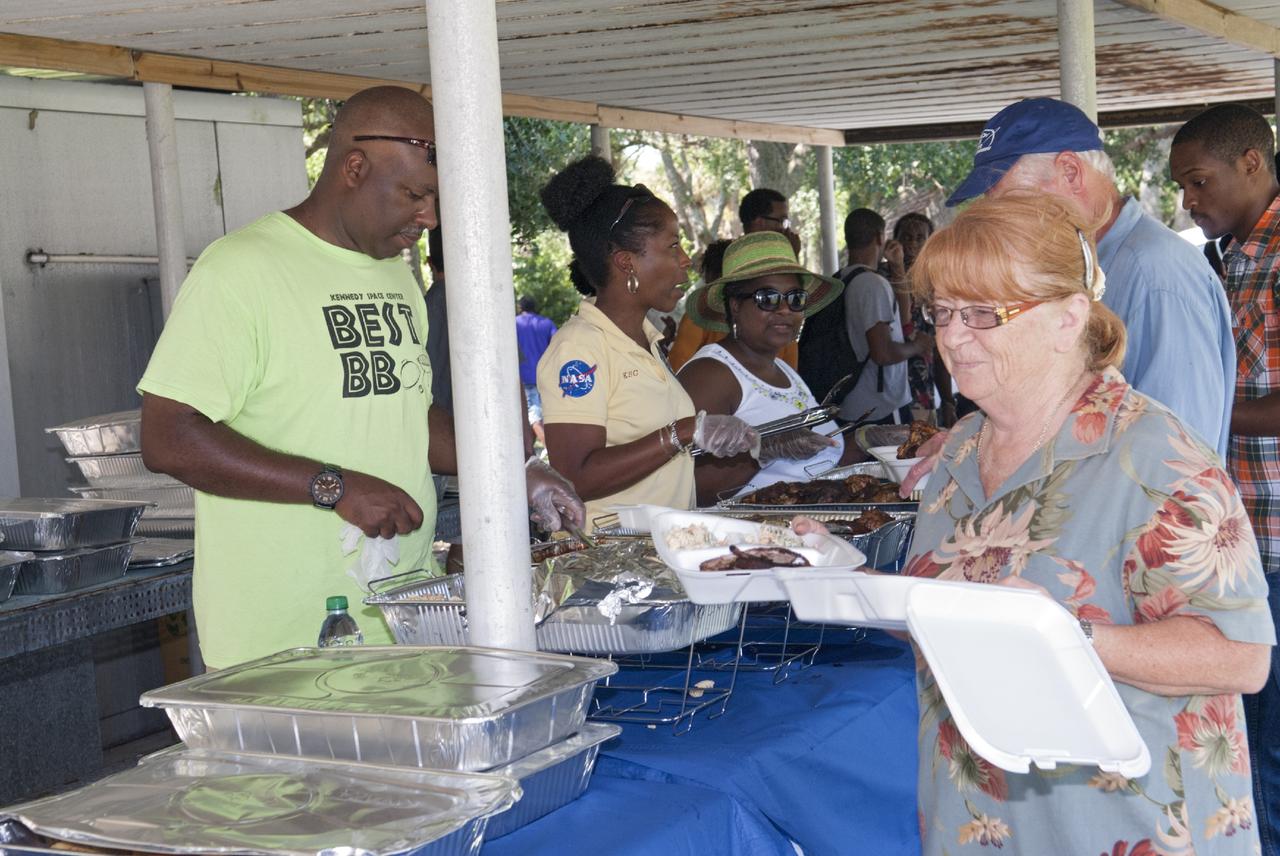
Merritt Island, Fla. – Kennedy Space Center worker James Davis, Maxine Daniels, and Bettye Lee serve delicious food to attendees at the 2013 Black Employee Strategy Team BEST BBQ at KARS I Park on Merritt Island. Events included a noncompetitive car show and a spades tournament. BEST hosts the barbecue as a fundraiser for the Evelyn Johnson Scholarship, which is handed out every year to students who exemplify significant achievement both academically and in their community. The scholarship is in honor of Evelyn Johnson, a founding member of BEST and former deputy director of Kennedy’s Diversity and Equal Opportunity Office. Photo credit: NASA/ Charisse Nahser

Merritt Island, Fla. – Kennedy Space Center worker Bettye Lee serves Center Director Bob Cabana some delicious food at the 2013 The Black Employee Strategy Team BEST BBQ at KARS I Park on Merritt Island. Events included a noncompetitive car show and a spades tournament. BEST hosts the barbecue as a fundraiser for the Evelyn Johnson Scholarship, which is handed out every year to students who exemplify significant achievement both academically and in their community. The scholarship is in honor of Evelyn Johnson, a founding member of BEST and former deputy director of Kennedy’s Diversity and Equal Opportunity office. Photo credit: NASA/ Charisse Nahser
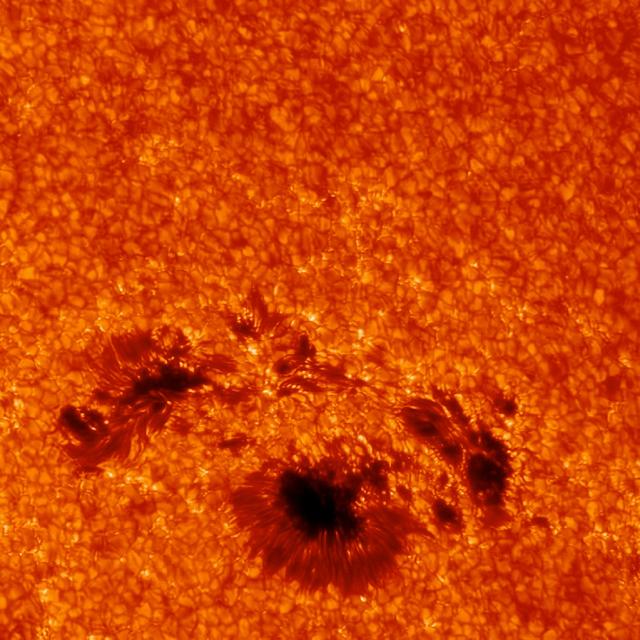
This close-up of the sunspot underneath the March 29, 2014, flare shows incredible detail. The image was captured by the G-band camera at Sacramento Peak in New Mexico. This instrument can focus on only a small area at once, but provide very high resolution. Ground-based telescope data can be hindered by Earth's atmosphere, which blocks much of the sun's ultraviolet and X-ray light, and causes twinkling even in the light it does allow through. As it happens, the March 29 flare occurred at a time of day in New Mexico that often results in the best viewing times from the ground. Credit: Kevin Reardon (National Solar Observatory), Lucia Kleint (BAER Institute) -- On March 29, 2014 the sun released an X-class flare. It was observed by NASA's Interface Region Imaging Spectrograph, or IRIS; NASA's Solar Dynamics Observatory, or SDO; NASA's Reuven Ramaty High Energy Solar Spectroscopic Imager, or RHESSI; the Japanese Aerospace Exploration Agency's Hinode; and the National Solar Observatory's Dunn Solar Telescope located at Sacramento Peak in New Mexico. To have a record of such an intense flare from so many observatories is unprecedented. Such research can help scientists better understand what catalyst sets off these large explosions on the sun. Perhaps we may even some day be able to predict their onset and forewarn of the radio blackouts solar flares can cause near Earth - blackouts that can interfere with airplane, ship and military communications. Read more: <a href="http://1.usa.gov/1kMDQbO" rel="nofollow">1.usa.gov/1kMDQbO</a> Join our Google+ Hangout on May 8 at 2:30pm EST: <a href="http://go.nasa.gov/1mwbBEZ" rel="nofollow">go.nasa.gov/1mwbBEZ</a> Credit: NASA Goddard <b><a href="http://www.nasa.gov/audience/formedia/features/MP_Photo_Guidelines.html" rel="nofollow">NASA image use policy.</a></b> <b><a href="http://www.nasa.gov/centers/goddard/home/index.html" rel="nofollow">NASA Goddard Space Flight Center</a></b> enables NASA’s mission through four scientific endeavors: Earth Science, Heliophysics, Solar System Exploration, and Astrophysics. Goddard plays a leading role in NASA’s accomplishments by contributing compelling scientific knowledge to advance the Agency’s mission. <b>Follow us on <a href="http://twitter.com/NASAGoddardPix" rel="nofollow">Twitter</a></b> <b>Like us on <a href="http://www.facebook.com/pages/Greenbelt-MD/NASA-Goddard/395013845897?ref=tsd" rel="nofollow">Facebook</a></b> <b>Find us on <a href="http://instagram.com/nasagoddard?vm=grid" rel="nofollow">Instagram</a></b>

Jakebia Keith, program and contract analyst for the IT Resources Management Office and secretary for the Black Employee Strategy Team (BEST), one of the center’s employee resource groups, stands during recognition at the Black History Month celebration on Feb. 18, 2020, at NASA’s Kennedy Space Center in Florida. The program was organized by BEST. This year’s theme was “African Americans and the Vote.” James Jennings, former NASA associate administrator for Institutions and Management and former Kennedy Space Center deputy director, was keynote speaker at the event.

Martin Hayes, program analyst with Exploration Ground Systems and chairperson of the Black Employee Strategy Team (BEST), one of the center’s employee resource groups, speaks to attendees during a Black History Month celebration on Feb. 18, 2020, at NASA’s Kennedy Space Center in Florida. The program was organized by BEST. This year’s theme was “African Americans and the Vote.” James Jennings, former NASA associate administrator for Institutions and Management and former Kennedy Space Center deputy director, was keynote speaker at the event.

James Jennings, at left, former NASA associate administrator for Institutions and Management and former Kennedy Space Center deputy director, was the keynote speaker at the center’s Black History Month celebration on Feb. 18, 2020. He received a Certificate of Appreciation from the program’s organizer, the Black Employee Strategy Team (BEST), one of the center’s employee resource groups. At right is Martin Hayes, program analyst with Exploration Ground Systems and BEST chairperson. This year’s theme was “African Americans and the Vote.” Jennings shared advice with workers and managers.

NASA image release May 20, 2011 <b>To see a really cool video related to this image go here: <a href="http://www.flickr.com/photos/gsfc/5740451675/in/photostream">www.flickr.com/photos/gsfc/5740451675/in/photostream</a></b> The giant elliptical galaxy NGC 5128 is the radio source known as Centaurus A. Vast radio-emitting lobes (shown as orange in this optical/radio composite) extend nearly a million light-years from the galaxy. Credit: Capella Observatory (optical), with radio data from Ilana Feain, Tim Cornwell, and Ron Ekers (CSIRO/ATNF), R. Morganti (ASTRON), and N. Junkes (MPIfR). To read more go to: <a href="http://www.nasa.gov/topics/universe/features/radio-particle-jets.html" rel="nofollow">www.nasa.gov/topics/universe/features/radio-particle-jets...</a> <b><a href="http://www.nasa.gov/centers/goddard/home/index.html" rel="nofollow">NASA Goddard Space Flight Center</a></b> enables NASA’s mission through four scientific endeavors: Earth Science, Heliophysics, Solar System Exploration, and Astrophysics. Goddard plays a leading role in NASA’s accomplishments by contributing compelling scientific knowledge to advance the Agency’s mission. <b>Follow us on <a href="http://twitter.com/NASA_GoddardPix" rel="nofollow">Twitter</a></b> <b>Join us on <a href="http://www.facebook.com/pages/Greenbelt-MD/NASA-Goddard/395013845897?ref=tsd" rel="nofollow">Facebook</a></b>

NASA image release May 20, 2011 <b>To see a really cool video related to this image go here: <a href="http://www.flickr.com/photos/gsfc/5740451675/in/photostream">www.flickr.com/photos/gsfc/5740451675/in/photostream</a></b> This composite of visible, microwave (orange) and X-ray (blue) data reveals the jets and radio-emitting lobes emanating from Centaurus A's central black hole. Credit: ESO/WFI (visible); MPIfR/ESO/APEX/A.Weiss et al. (microwave); NASA/CXC/CfA/R.Kraft et al. (X-ray) To read more go to: <a href="http://www.nasa.gov/topics/universe/features/radio-particle-jets.html" rel="nofollow">www.nasa.gov/topics/universe/features/radio-particle-jets...</a> <b><a href="http://www.nasa.gov/centers/goddard/home/index.html" rel="nofollow">NASA Goddard Space Flight Center</a></b> enables NASA’s mission through four scientific endeavors: Earth Science, Heliophysics, Solar System Exploration, and Astrophysics. Goddard plays a leading role in NASA’s accomplishments by contributing compelling scientific knowledge to advance the Agency’s mission. <b>Follow us on <a href="http://twitter.com/NASA_GoddardPix" rel="nofollow">Twitter</a></b> <b>Join us on <a href="http://www.facebook.com/pages/Greenbelt-MD/NASA-Goddard/395013845897?ref=tsd" rel="nofollow">Facebook</a></b>
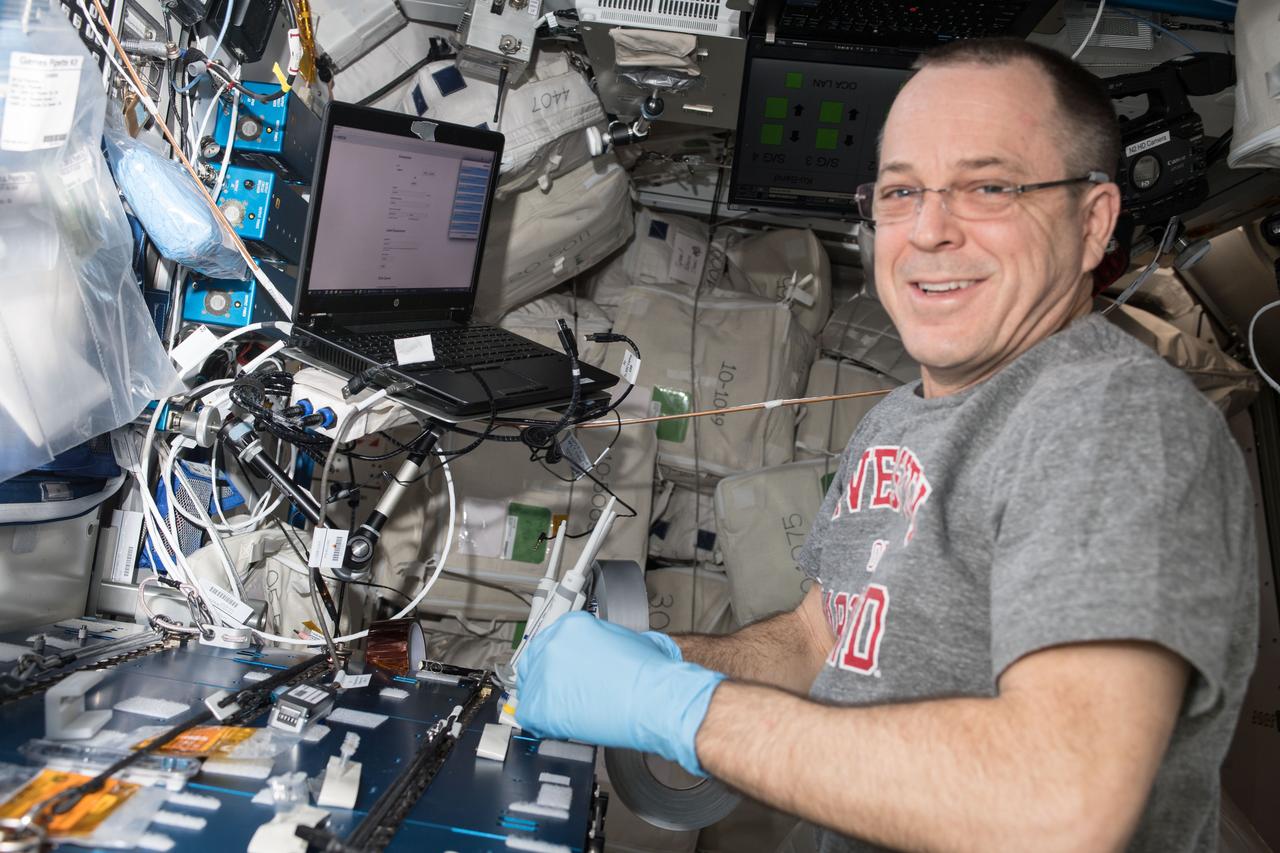
iss056e097518 (July 20, 2018) --- Expedition 56 Flight Engineer Ricky Arnold prepares amplified DNA collected from microbes living aboard the International Space Station for sequencing using the Biomolecule Sequencer. The Biomolecule Extraction and Sequencing Technology (BEST) investigation studies the use of DNA sequencing for the identification of unknown microbial organisms living on the station and to understand how humans, plants and microbes adapt to living in space.
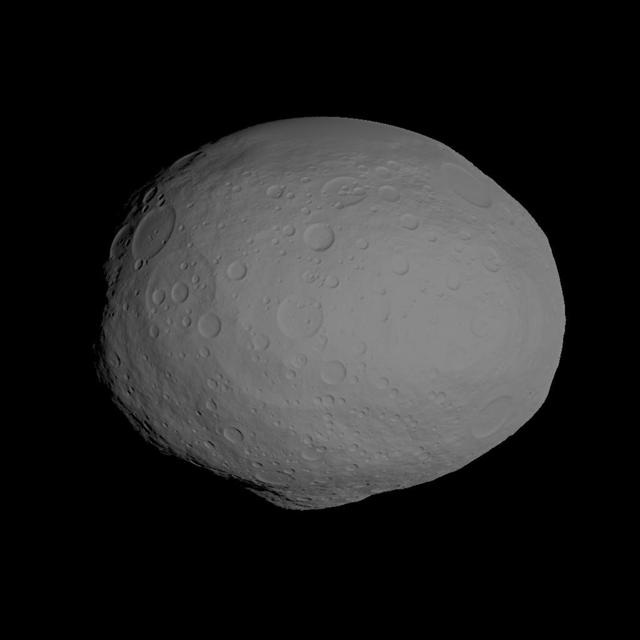
This image incorporates the best data on dimples and bulges of the protoplanet Vesta from ground-based telescopes and NASA Hubble Space Telescope. This model of Vesta uses scientists best guess to date of what the surface might look like.
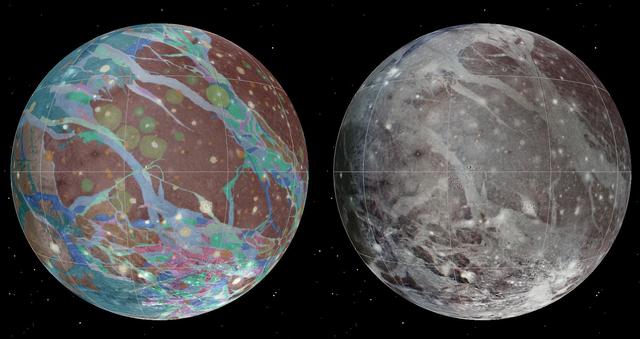
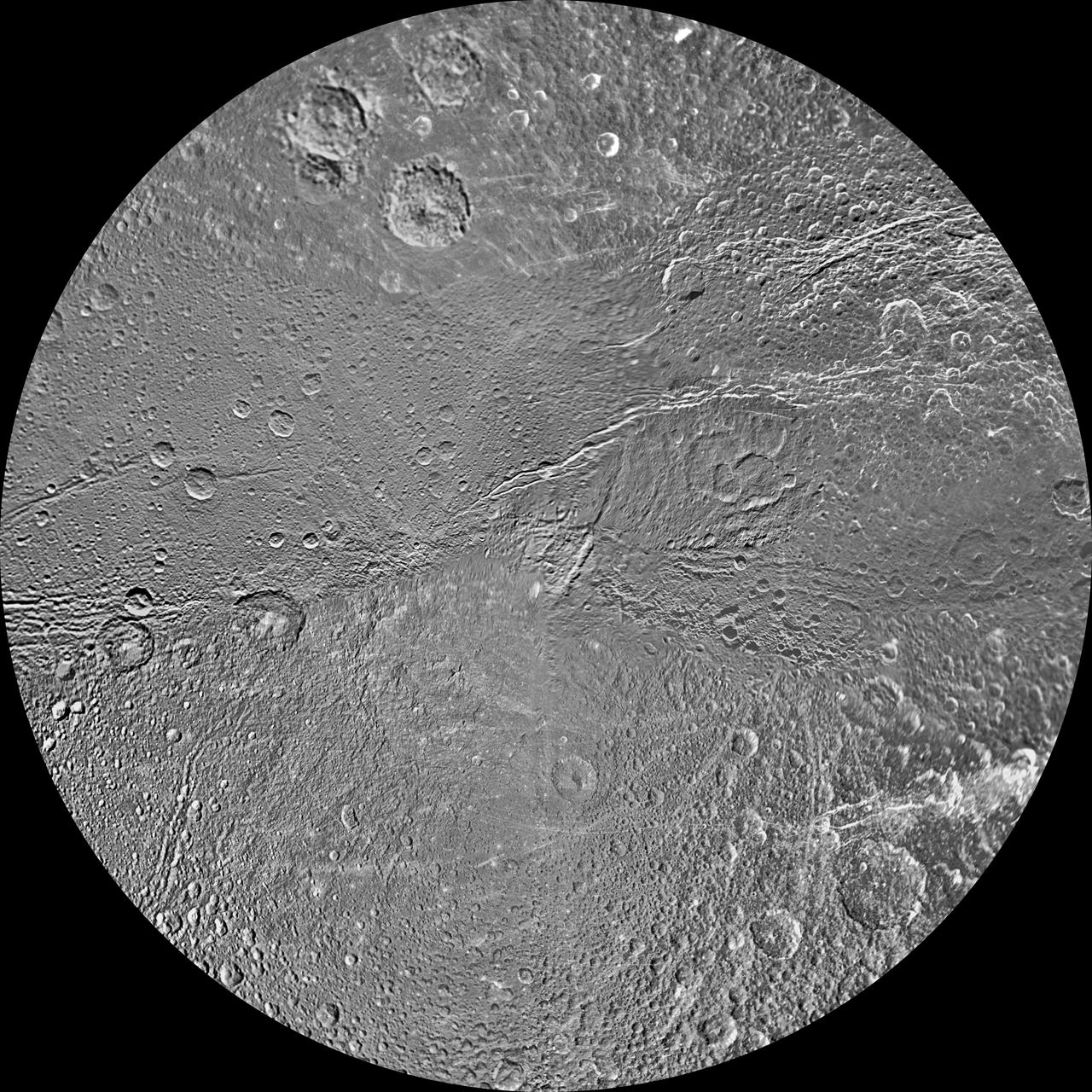
To present the best information in a single view of Jupiter moon Ganymede, a global image mosaic was assembled, incorporating the best available imagery from NASA Voyager 1 and 2 spacecraft and NASA Galileo spacecraft.
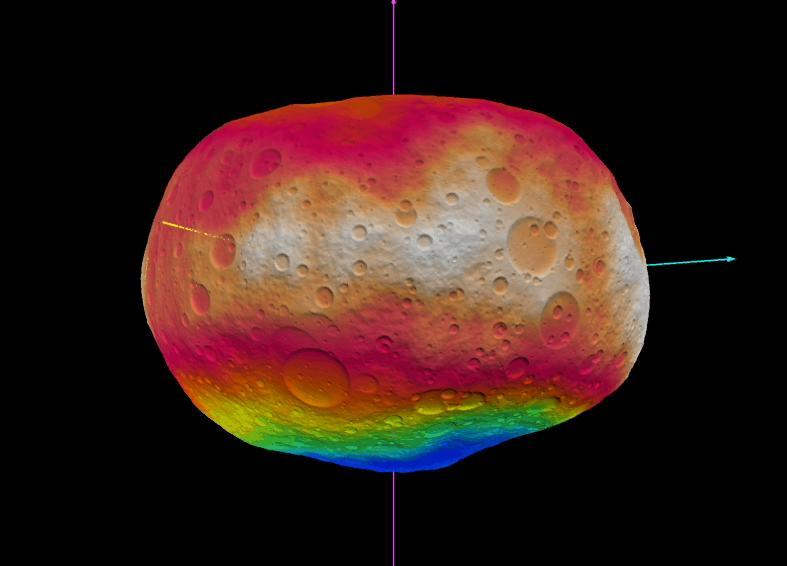
This image shows NASAS Dawn scientists best guess to date of what the surface of the protoplanet Vesta might look like; it incorporates the best data on dimples and bulges from ground-based telescopes and NASA Hubble Space Telescope.
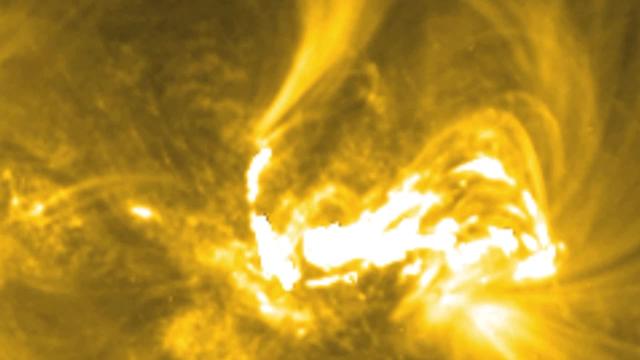
On March 29, 2014 the sun released an X-class flare. It was observed by NASA's Interface Region Imaging Spectrograph, or IRIS; NASA's Solar Dynamics Observatory, or SDO; NASA's Reuven Ramaty High Energy Solar Spectroscopic Imager, or RHESSI; the Japanese Aerospace Exploration Agency's Hinode; and the National Solar Observatory's Dunn Solar Telescope located at Sacramento Peak in New Mexico. To have a record of such an intense flare from so many observatories is unprecedented. Such research can help scientists better understand what catalyst sets off these large explosions on the sun. Perhaps we may even some day be able to predict their onset and forewarn of the radio blackouts solar flares can cause near Earth - blackouts that can interfere with airplane, ship and military communications. Read more: <a href="http://1.usa.gov/1kMDQbO" rel="nofollow">1.usa.gov/1kMDQbO</a> Join our Google+ Hangout on May 8 at 2:30pm EST: <a href="http://go.nasa.gov/1mwbBEZ" rel="nofollow">go.nasa.gov/1mwbBEZ</a> Credit: NASA Goddard <b><a href="http://www.nasa.gov/audience/formedia/features/MP_Photo_Guidelines.html" rel="nofollow">NASA image use policy.</a></b> <b><a href="http://www.nasa.gov/centers/goddard/home/index.html" rel="nofollow">NASA Goddard Space Flight Center</a></b> enables NASA’s mission through four scientific endeavors: Earth Science, Heliophysics, Solar System Exploration, and Astrophysics. Goddard plays a leading role in NASA’s accomplishments by contributing compelling scientific knowledge to advance the Agency’s mission. <b>Follow us on <a href="http://twitter.com/NASAGoddardPix" rel="nofollow">Twitter</a></b> <b>Like us on <a href="http://www.facebook.com/pages/Greenbelt-MD/NASA-Goddard/395013845897?ref=tsd" rel="nofollow">Facebook</a></b> <b>Find us on <a href="http://instagram.com/nasagoddard?vm=grid" rel="nofollow">Instagram</a></b>
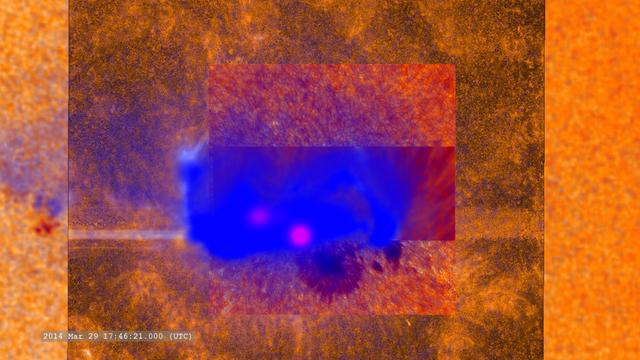
A combination of many (but not all) of the datasets which observed this flare. -- On March 29, 2014 the sun released an X-class flare. It was observed by NASA's Interface Region Imaging Spectrograph, or IRIS; NASA's Solar Dynamics Observatory, or SDO; NASA's Reuven Ramaty High Energy Solar Spectroscopic Imager, or RHESSI; the Japanese Aerospace Exploration Agency's Hinode; and the National Solar Observatory's Dunn Solar Telescope located at Sacramento Peak in New Mexico. To have a record of such an intense flare from so many observatories is unprecedented. Such research can help scientists better understand what catalyst sets off these large explosions on the sun. Perhaps we may even some day be able to predict their onset and forewarn of the radio blackouts solar flares can cause near Earth - blackouts that can interfere with airplane, ship and military communications. Read more: <a href="http://1.usa.gov/1kMDQbO" rel="nofollow">1.usa.gov/1kMDQbO</a> Join our Google+ Hangout on May 8 at 2:30pm EST: <a href="http://go.nasa.gov/1mwbBEZ" rel="nofollow">go.nasa.gov/1mwbBEZ</a> Credit: NASA Goddard <b><a href="http://www.nasa.gov/audience/formedia/features/MP_Photo_Guidelines.html" rel="nofollow">NASA image use policy.</a></b> <b><a href="http://www.nasa.gov/centers/goddard/home/index.html" rel="nofollow">NASA Goddard Space Flight Center</a></b> enables NASA’s mission through four scientific endeavors: Earth Science, Heliophysics, Solar System Exploration, and Astrophysics. Goddard plays a leading role in NASA’s accomplishments by contributing compelling scientific knowledge to advance the Agency’s mission. <b>Follow us on <a href="http://twitter.com/NASAGoddardPix" rel="nofollow">Twitter</a></b> <b>Like us on <a href="http://www.facebook.com/pages/Greenbelt-MD/NASA-Goddard/395013845897?ref=tsd" rel="nofollow">Facebook</a></b> <b>Find us on <a href="http://instagram.com/nasagoddard?vm=grid" rel="nofollow">Instagram</a></b>
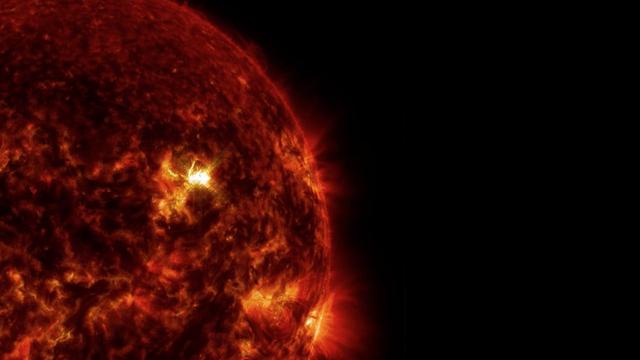
On March 29, 2014 the sun released an X-class flare. It was observed by NASA's Interface Region Imaging Spectrograph, or IRIS; NASA's Solar Dynamics Observatory, or SDO; NASA's Reuven Ramaty High Energy Solar Spectroscopic Imager, or RHESSI; the Japanese Aerospace Exploration Agency's Hinode; and the National Solar Observatory's Dunn Solar Telescope located at Sacramento Peak in New Mexico. To have a record of such an intense flare from so many observatories is unprecedented. Such research can help scientists better understand what catalyst sets off these large explosions on the sun. Perhaps we may even some day be able to predict their onset and forewarn of the radio blackouts solar flares can cause near Earth - blackouts that can interfere with airplane, ship and military communications. Read more: <a href="http://1.usa.gov/1kMDQbO" rel="nofollow">1.usa.gov/1kMDQbO</a> Join our Google+ Hangout on May 8 at 2:30pm EST: <a href="http://go.nasa.gov/1mwbBEZ" rel="nofollow">go.nasa.gov/1mwbBEZ</a> Credit: NASA Goddard <b><a href="http://www.nasa.gov/audience/formedia/features/MP_Photo_Guidelines.html" rel="nofollow">NASA image use policy.</a></b> <b><a href="http://www.nasa.gov/centers/goddard/home/index.html" rel="nofollow">NASA Goddard Space Flight Center</a></b> enables NASA’s mission through four scientific endeavors: Earth Science, Heliophysics, Solar System Exploration, and Astrophysics. Goddard plays a leading role in NASA’s accomplishments by contributing compelling scientific knowledge to advance the Agency’s mission. <b>Follow us on <a href="http://twitter.com/NASAGoddardPix" rel="nofollow">Twitter</a></b> <b>Like us on <a href="http://www.facebook.com/pages/Greenbelt-MD/NASA-Goddard/395013845897?ref=tsd" rel="nofollow">Facebook</a></b> <b>Find us on <a href="http://instagram.com/nasagoddard?vm=grid" rel="nofollow">Instagram</a></b>
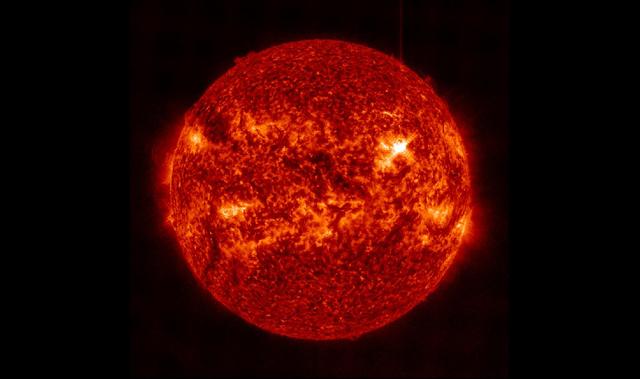
The March 29, 2014, X-class flare appears as a bright light on the upper right in this image from SDO, showing light in the 304 Angstrom wavelength. This wavelength shows material on the sun in what's called the transition region, where the chromosphere transitions into the upper solar atmosphere, the corona. Some light of the flare is clearly visible, but the flare appears brighter in other images that show hotter temperature material. Credit: NASA/SDO/AIA -- On March 29, 2014 the sun released an X-class flare. It was observed by NASA's Interface Region Imaging Spectrograph, or IRIS; NASA's Solar Dynamics Observatory, or SDO; NASA's Reuven Ramaty High Energy Solar Spectroscopic Imager, or RHESSI; the Japanese Aerospace Exploration Agency's Hinode; and the National Solar Observatory's Dunn Solar Telescope located at Sacramento Peak in New Mexico. To have a record of such an intense flare from so many observatories is unprecedented. Such research can help scientists better understand what catalyst sets off these large explosions on the sun. Perhaps we may even some day be able to predict their onset and forewarn of the radio blackouts solar flares can cause near Earth - blackouts that can interfere with airplane, ship and military communications. Read more: <a href="http://1.usa.gov/1kMDQbO" rel="nofollow">1.usa.gov/1kMDQbO</a> Join our Google+ Hangout on May 8 at 2:30pm EST: <a href="http://go.nasa.gov/1mwbBEZ" rel="nofollow">go.nasa.gov/1mwbBEZ</a> <b><a href="http://www.nasa.gov/audience/formedia/features/MP_Photo_Guidelines.html" rel="nofollow">NASA image use policy.</a></b> <b><a href="http://www.nasa.gov/centers/goddard/home/index.html" rel="nofollow">NASA Goddard Space Flight Center</a></b> enables NASA’s mission through four scientific endeavors: Earth Science, Heliophysics, Solar System Exploration, and Astrophysics. Goddard plays a leading role in NASA’s accomplishments by contributing compelling scientific knowledge to advance the Agency’s mission. <b>Follow us on <a href="http://twitter.com/NASAGoddardPix" rel="nofollow">Twitter</a></b> <b>Like us on <a href="http://www.facebook.com/pages/Greenbelt-MD/NASA-Goddard/395013845897?ref=tsd" rel="nofollow">Facebook</a></b> <b>Find us on <a href="http://instagram.com/nasagoddard?vm=grid" rel="nofollow">Instagram</a></b>
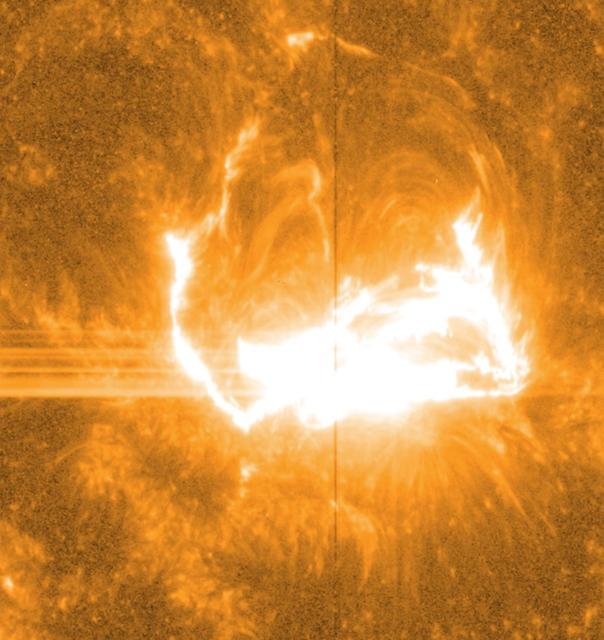
Like almost all solar observatories, NASA's IRIS can provide images of different layers of the sun's atmosphere, which together create a whole picture of what's happening. This image shows light at a wavelength of 1400 Angstrom, which highlights material some 650 miles above the sun's surface. The vertical line in the middle shows the slit for IRIS's spectrograph, which can separate light into its many wavelengths to provide even more information about the temperature and velocity of material during a flare. Credit: NASA/IRIS/Goddard Space Flight Center -- On March 29, 2014 the sun released an X-class flare. It was observed by NASA's Interface Region Imaging Spectrograph, or IRIS; NASA's Solar Dynamics Observatory, or SDO; NASA's Reuven Ramaty High Energy Solar Spectroscopic Imager, or RHESSI; the Japanese Aerospace Exploration Agency's Hinode; and the National Solar Observatory's Dunn Solar Telescope located at Sacramento Peak in New Mexico. To have a record of such an intense flare from so many observatories is unprecedented. Such research can help scientists better understand what catalyst sets off these large explosions on the sun. Perhaps we may even some day be able to predict their onset and forewarn of the radio blackouts solar flares can cause near Earth - blackouts that can interfere with airplane, ship and military communications. Read more: <a href="http://1.usa.gov/1kMDQbO" rel="nofollow">1.usa.gov/1kMDQbO</a> Join our Google+ Hangout on May 8 at 2:30pm EST: <a href="http://go.nasa.gov/1mwbBEZ" rel="nofollow">go.nasa.gov/1mwbBEZ</a> Credit: NASA Goddard <b><a href="http://www.nasa.gov/audience/formedia/features/MP_Photo_Guidelines.html" rel="nofollow">NASA image use policy.</a></b> <b><a href="http://www.nasa.gov/centers/goddard/home/index.html" rel="nofollow">NASA Goddard Space Flight Center</a></b> enables NASA’s mission through four scientific endeavors: Earth Science, Heliophysics, Solar System Exploration, and Astrophysics. Goddard plays a leading role in NASA’s accomplishments by contributing compelling scientific knowledge to advance the Agency’s mission. <b>Follow us on <a href="http://twitter.com/NASAGoddardPix" rel="nofollow">Twitter</a></b> <b>Like us on <a href="http://www.facebook.com/pages/Greenbelt-MD/NASA-Goddard/395013845897?ref=tsd" rel="nofollow">Facebook</a></b> <b>Find us on <a href="http://instagram.com/nasagoddard?vm=grid" rel="nofollow">Instagram</a></b>
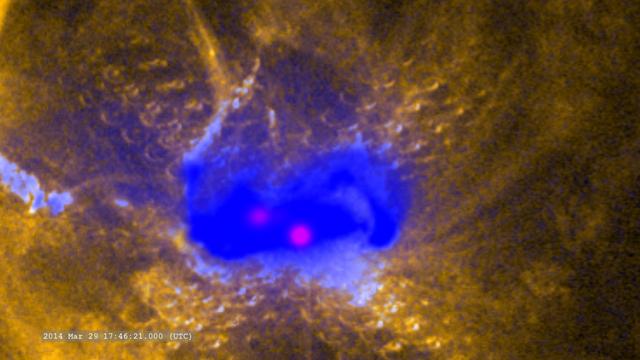
Zoom in on the flare in ultraviolet (SDO/AIA), X-rays (Hinode) and gamma-rays (RHESSI) -- On March 29, 2014 the sun released an X-class flare. It was observed by NASA's Interface Region Imaging Spectrograph, or IRIS; NASA's Solar Dynamics Observatory, or SDO; NASA's Reuven Ramaty High Energy Solar Spectroscopic Imager, or RHESSI; the Japanese Aerospace Exploration Agency's Hinode; and the National Solar Observatory's Dunn Solar Telescope located at Sacramento Peak in New Mexico. To have a record of such an intense flare from so many observatories is unprecedented. Such research can help scientists better understand what catalyst sets off these large explosions on the sun. Perhaps we may even some day be able to predict their onset and forewarn of the radio blackouts solar flares can cause near Earth - blackouts that can interfere with airplane, ship and military communications. Read more: <a href="http://1.usa.gov/1kMDQbO" rel="nofollow">1.usa.gov/1kMDQbO</a> Join our Google+ Hangout on May 8 at 2:30pm EST: <a href="http://go.nasa.gov/1mwbBEZ" rel="nofollow">go.nasa.gov/1mwbBEZ</a> Credit: NASA Goddard <b><a href="http://www.nasa.gov/audience/formedia/features/MP_Photo_Guidelines.html" rel="nofollow">NASA image use policy.</a></b> <b><a href="http://www.nasa.gov/centers/goddard/home/index.html" rel="nofollow">NASA Goddard Space Flight Center</a></b> enables NASA’s mission through four scientific endeavors: Earth Science, Heliophysics, Solar System Exploration, and Astrophysics. Goddard plays a leading role in NASA’s accomplishments by contributing compelling scientific knowledge to advance the Agency’s mission. <b>Follow us on <a href="http://twitter.com/NASAGoddardPix" rel="nofollow">Twitter</a></b> <b>Like us on <a href="http://www.facebook.com/pages/Greenbelt-MD/NASA-Goddard/395013845897?ref=tsd" rel="nofollow">Facebook</a></b> <b>Find us on <a href="http://instagram.com/nasagoddard?vm=grid" rel="nofollow">Instagram</a></b>
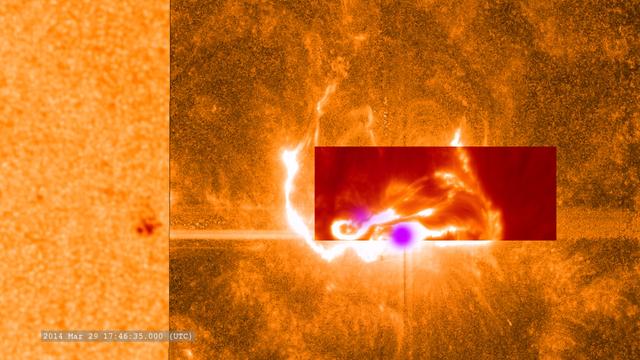
This combined image shows the March 29, 2014, X-class flare as seen through the eyes of different observatories. SDO is on the bottom/left, which helps show the position of the flare on the sun. The darker orange square is IRIS data. The red rectangular inset is from Sacramento Peak. The violet spots show the flare's footpoints from RHESSI. -- On March 29, 2014 the sun released an X-class flare. It was observed by NASA's Interface Region Imaging Spectrograph, or IRIS; NASA's Solar Dynamics Observatory, or SDO; NASA's Reuven Ramaty High Energy Solar Spectroscopic Imager, or RHESSI; the Japanese Aerospace Exploration Agency's Hinode; and the National Solar Observatory's Dunn Solar Telescope located at Sacramento Peak in New Mexico. To have a record of such an intense flare from so many observatories is unprecedented. Such research can help scientists better understand what catalyst sets off these large explosions on the sun. Perhaps we may even some day be able to predict their onset and forewarn of the radio blackouts solar flares can cause near Earth - blackouts that can interfere with airplane, ship and military communications. Read more: <a href="http://1.usa.gov/1kMDQbO" rel="nofollow">1.usa.gov/1kMDQbO</a> Join our Google+ Hangout on May 8 at 2:30pm EST: <a href="http://go.nasa.gov/1mwbBEZ" rel="nofollow">go.nasa.gov/1mwbBEZ</a> Credit: NASA Goddard <b><a href="http://www.nasa.gov/audience/formedia/features/MP_Photo_Guidelines.html" rel="nofollow">NASA image use policy.</a></b> <b><a href="http://www.nasa.gov/centers/goddard/home/index.html" rel="nofollow">NASA Goddard Space Flight Center</a></b> enables NASA’s mission through four scientific endeavors: Earth Science, Heliophysics, Solar System Exploration, and Astrophysics. Goddard plays a leading role in NASA’s accomplishments by contributing compelling scientific knowledge to advance the Agency’s mission. <b>Follow us on <a href="http://twitter.com/NASAGoddardPix" rel="nofollow">Twitter</a></b> <b>Like us on <a href="http://www.facebook.com/pages/Greenbelt-MD/NASA-Goddard/395013845897?ref=tsd" rel="nofollow">Facebook</a></b> <b>Find us on <a href="http://instagram.com/nasagoddard?vm=grid" rel="nofollow">Instagram</a></b>
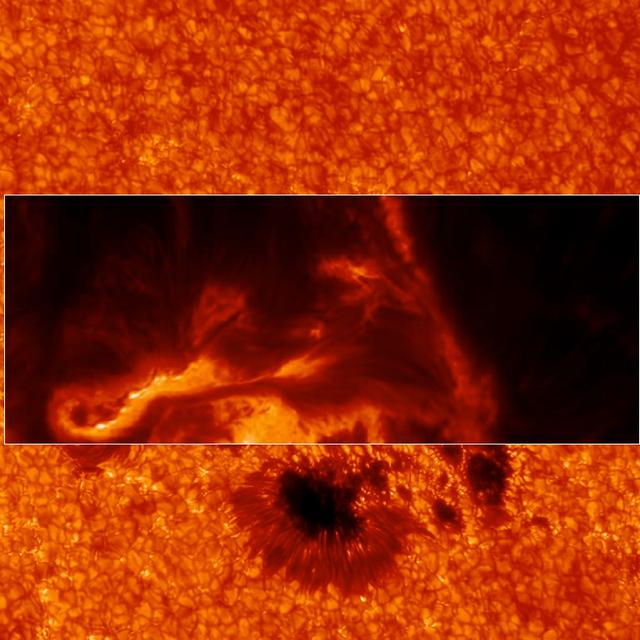
IBIS can focus in on different wavelengths of light, and so reveal different layers at different heights in the sun's lower atmosphere, the chromosphere. This image shows a region slightly higher than the former one. Credit: Lucia Kleint (BAER Institute), Paul Higgins (Trinity College Dublin, Ireland) -- On March 29, 2014 the sun released an X-class flare. It was observed by NASA's Interface Region Imaging Spectrograph, or IRIS; NASA's Solar Dynamics Observatory, or SDO; NASA's Reuven Ramaty High Energy Solar Spectroscopic Imager, or RHESSI; the Japanese Aerospace Exploration Agency's Hinode; and the National Solar Observatory's Dunn Solar Telescope located at Sacramento Peak in New Mexico. To have a record of such an intense flare from so many observatories is unprecedented. Such research can help scientists better understand what catalyst sets off these large explosions on the sun. Perhaps we may even some day be able to predict their onset and forewarn of the radio blackouts solar flares can cause near Earth - blackouts that can interfere with airplane, ship and military communications. Read more: <a href="http://1.usa.gov/1kMDQbO" rel="nofollow">1.usa.gov/1kMDQbO</a> Join our Google+ Hangout on May 8 at 2:30pm EST: <a href="http://go.nasa.gov/1mwbBEZ" rel="nofollow">go.nasa.gov/1mwbBEZ</a> Credit: NASA Goddard <b><a href="http://www.nasa.gov/audience/formedia/features/MP_Photo_Guidelines.html" rel="nofollow">NASA image use policy.</a></b> <b><a href="http://www.nasa.gov/centers/goddard/home/index.html" rel="nofollow">NASA Goddard Space Flight Center</a></b> enables NASA’s mission through four scientific endeavors: Earth Science, Heliophysics, Solar System Exploration, and Astrophysics. Goddard plays a leading role in NASA’s accomplishments by contributing compelling scientific knowledge to advance the Agency’s mission. <b>Follow us on <a href="http://twitter.com/NASAGoddardPix" rel="nofollow">Twitter</a></b> <b>Like us on <a href="http://www.facebook.com/pages/Greenbelt-MD/NASA-Goddard/395013845897?ref=tsd" rel="nofollow">Facebook</a></b> <b>Find us on <a href="http://instagram.com/nasagoddard?vm=grid" rel="nofollow">Instagram</a></b>

James Jennings, former NASA associate administrator for Institutions and Management and former Kennedy Space Center deputy director, was the keynote speaker at the center’s Black History Month celebration on Feb. 18, 2020. The program was organized by the Black Employee Strategy Team (BEST), one of the center’s employee resource groups. This year’s theme was “African Americans and the Vote.” Jennings shared advice with workers and managers.
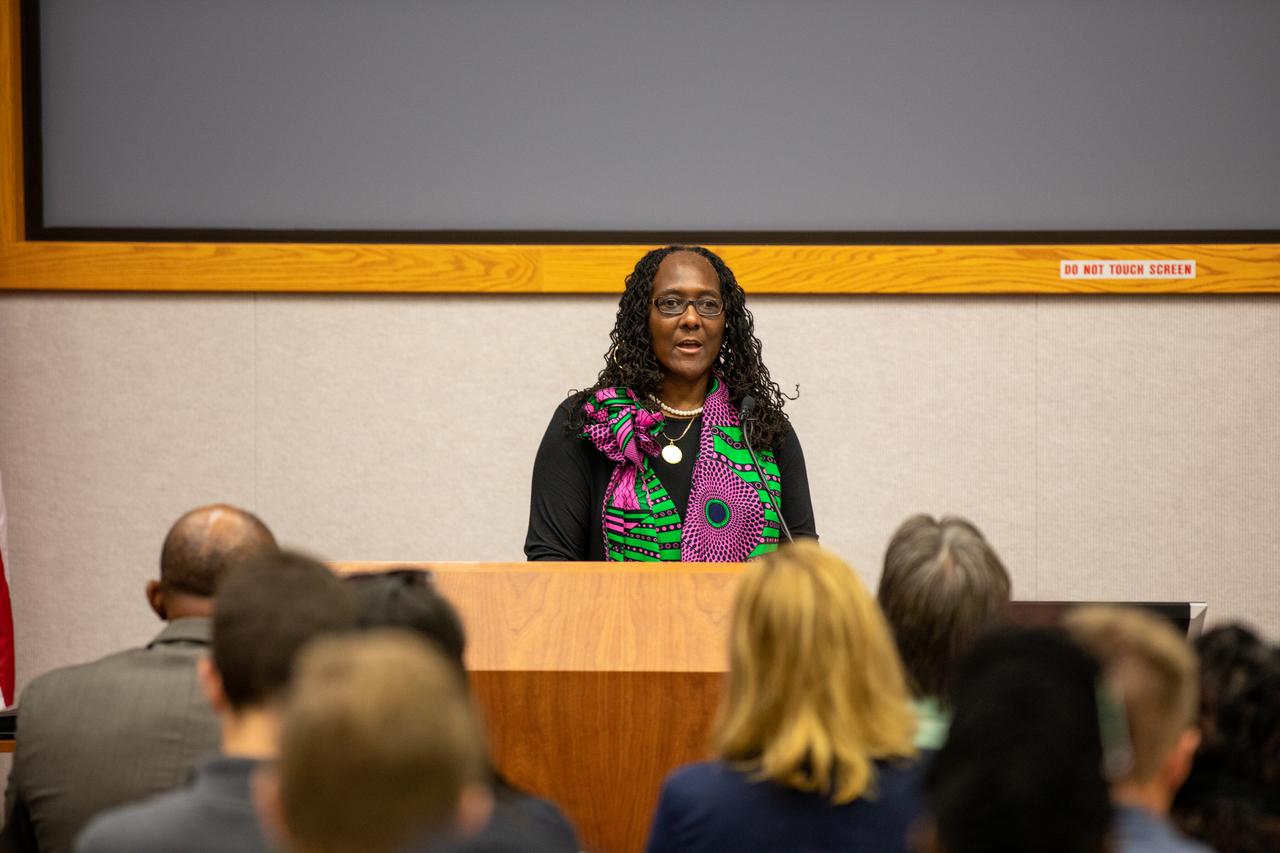
During a Black History Month celebration on Feb. 18, 2020 at NASA’s Kennedy Space Center in Florida, Hortense Diggs, director of Communication and Public Engagement, commemorates the contributions of former NASA employee and mentor Roslyn McKinney. The program was organized by the Black Employee Strategy Team (BEST), one of the center’s employee resource groups. This year’s theme was “African Americans and the Vote.” Keynote speaker was James Jennings, former NASA associate administrator for Institutions and Management and Kennedy’s former deputy director. Jennings shared advice with workers and managers.

NASA and contractor workers attend a Black History Month celebration at Kennedy Space Center in Florida on Feb. 18, 2020. James Jennings, former NASA associate administrator for Institutions and Management and former Kennedy Space Center deputy director, was the keynote speaker. The program was organized by the Black Employee Strategy Team (BEST), one of the center’s employee resource groups. This year’s theme was “African Americans and the Vote.” Jennings shared advice with workers and managers.

A Black History Month celebration was held on Feb. 18, 2020 at NASA’s Kennedy Space Center in Florida. The program was organized by the Black Employee Strategy Team (BEST), one of the center’s employee resource groups. This year’s theme was “African Americans and the Vote.” From left are Kim Carter, associate program manager, Exploration Ground Systems; James Jennings, keynote speaker, former NASA associate administrator for Institutions and Management and Kennedy’s former deputy director; and Hortense Diggs, director of Communication and Public Engagement.
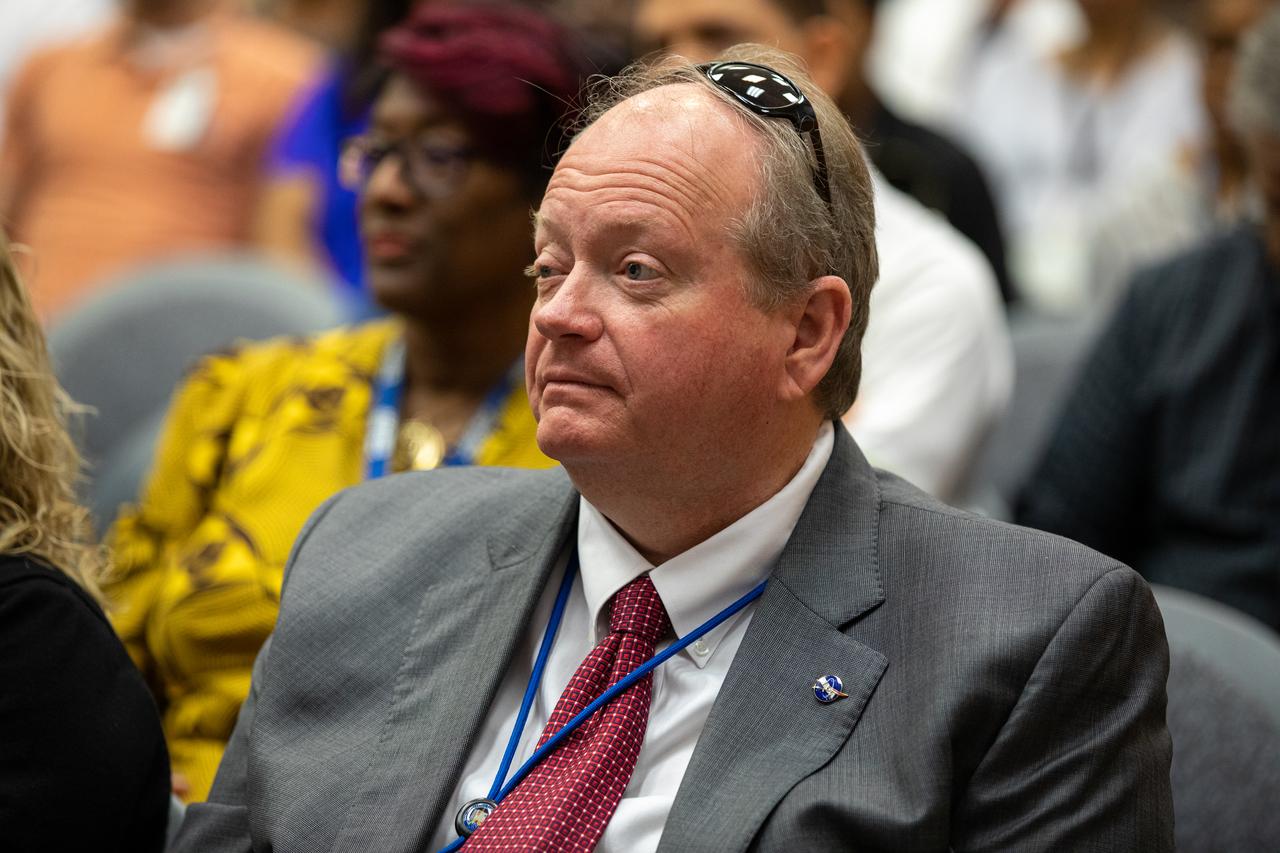
Burt Summerfield, associate director, management, attends the Black History Month celebration at Kennedy Space Center in Florida on Feb. 18, 2020. The program was organized by the Black Employee Strategy Team (BEST), one of the center’s employee resource groups. This year’s theme was “African Americans and the Vote.” Keynote speaker was James Jennings, former NASA associate administrator for Institutions and Management and Kennedy’s former deputy director. Jennings shared advice with workers and managers.

Kelvin Manning, associate director, technical, attends the Black History Month celebration at Kennedy Space Center in Florida on Feb. 18, 2020. The program was organized by the Black Employee Strategy Team (BEST), one of the center’s employee resource groups. This year’s theme was “African Americans and the Vote.” Keynote speaker was James Jennings, former NASA associate administrator for Institutions and Management and Kennedy’s former deputy director. Jennings shared advice with workers and managers.

Jakebia Keith, program and contract analyst for the IT Resources Management Office, welcomes NASA and contractor workers to the Black History Month celebration at NASA’s Kennedy Space Center in Florida on Feb. 18, 2020. The program was organized by the Black Employee Strategy Team (BEST), one of the center’s employee resource groups. This year’s theme was “African Americans and the Vote.” Keynote speaker was James Jennings, former NASA associate administrator for Institutions and Management and Kennedy’s former deputy director. Jennings shared advice with workers and managers.
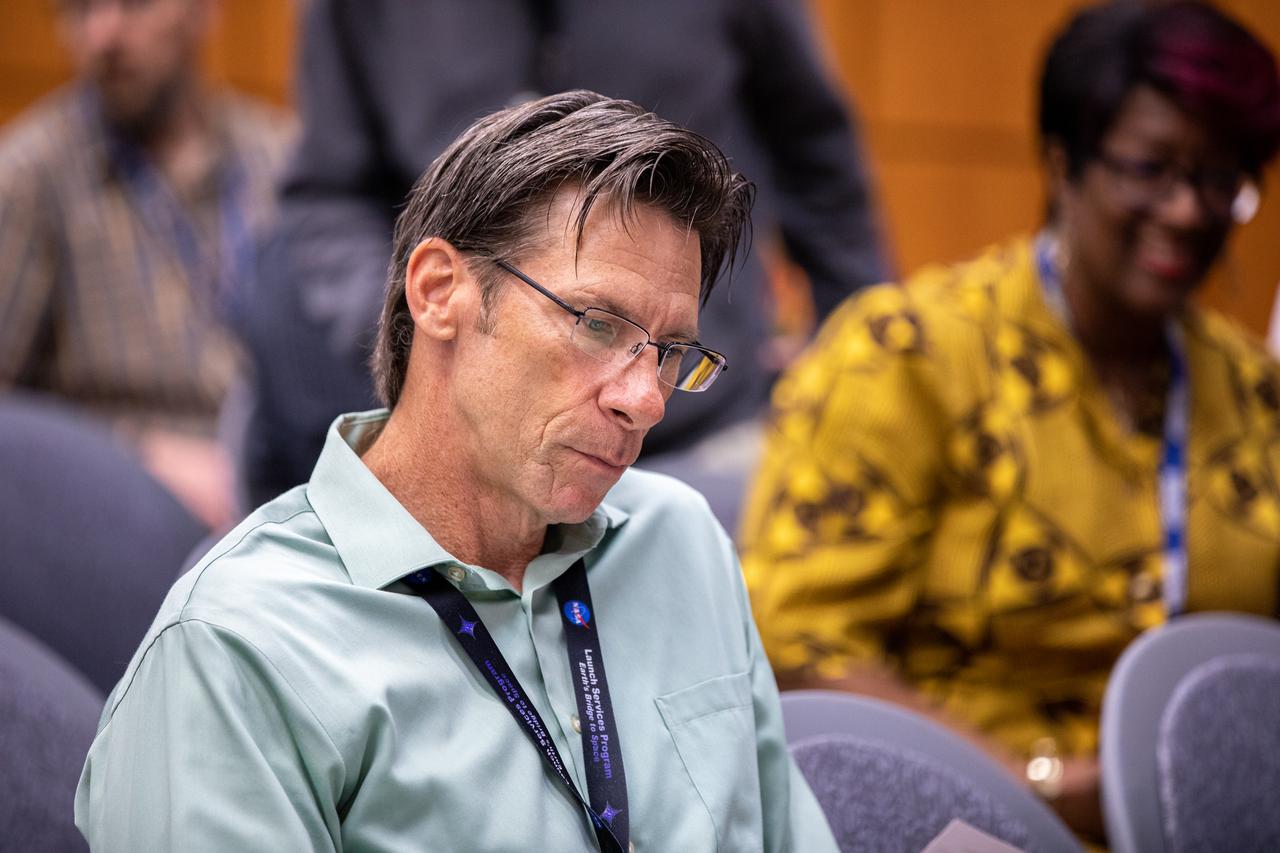
Chuck Dovale, deputy director of NASA’s Launch Services Program, attends the Black History Month celebration at Kennedy Space Center in Florida on Feb. 18, 2020. The program was organized by the Black Employee Strategy Team (BEST), one of the center’s employee resource groups. This year’s theme was “African Americans and the Vote.” Keynote speaker was James Jennings, former NASA associate administrator for Institutions and Management and Kennedy’s former deputy director. Jennings shared advice with workers and managers.
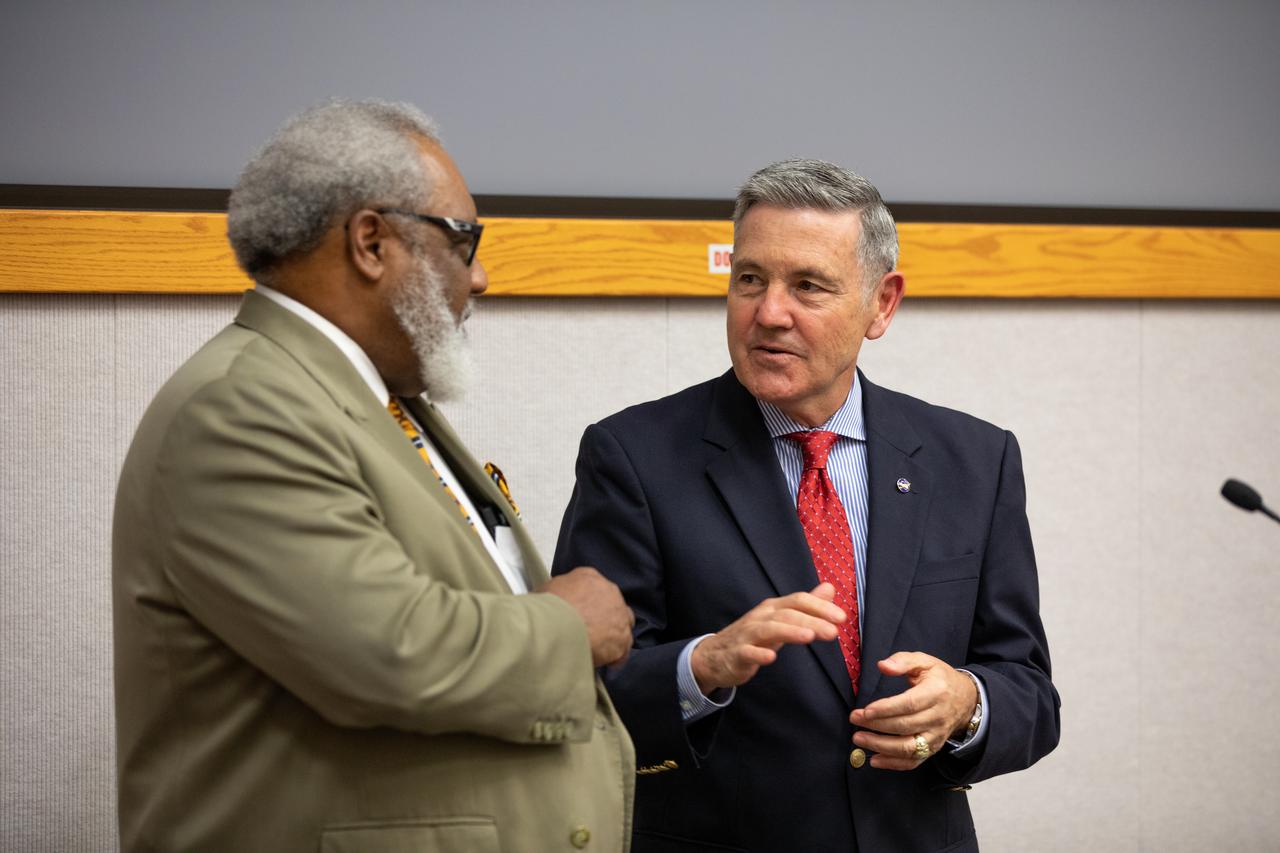
Kennedy Space Center Director Bob Cabana, at right, speaks with James Jennings, former NASA associate administrator for Institutions and Management and former Kennedy deputy director, during the center’s Black History Month celebration on Feb. 18, 2020. Jennings was the keynote speaker. The program was organized by the Black Employee Strategy Team (BEST), one of the center’s employee resource groups. This year’s theme was “African Americans and the Vote.” Jennings shared advice with workers and managers.

Hortense Diggs, director of Communication and Public Engagement, stands during the singing of the National Anthem at the Black History Month celebration at NASA’s Kennedy Space Center in Florida on Feb. 18, 2020. The program was organized by the Black Employee Strategy Team (BEST), one of the center’s employee resource groups. This year’s theme was “African Americans and the Vote.” Keynote speaker was James Jennings, former NASA associate administrator for Institutions and Management and Kennedy’s former deputy director. Jennings shared advice with workers and managers.

Kelvin Manning, Kennedy Space Center’s associate director, technical, addresses the audience during a Black History Month celebration at the center on Feb. 18, 2020. The program was organized by the Black Employee Strategy Team (BEST), one of the center’s employee resource groups. This year’s theme was “African Americans and the Vote.” Keynote speaker was James Jennings, former NASA associate administrator for Institutions and Management and Kennedy’s former deputy director. Jennings shared advice with workers and managers.
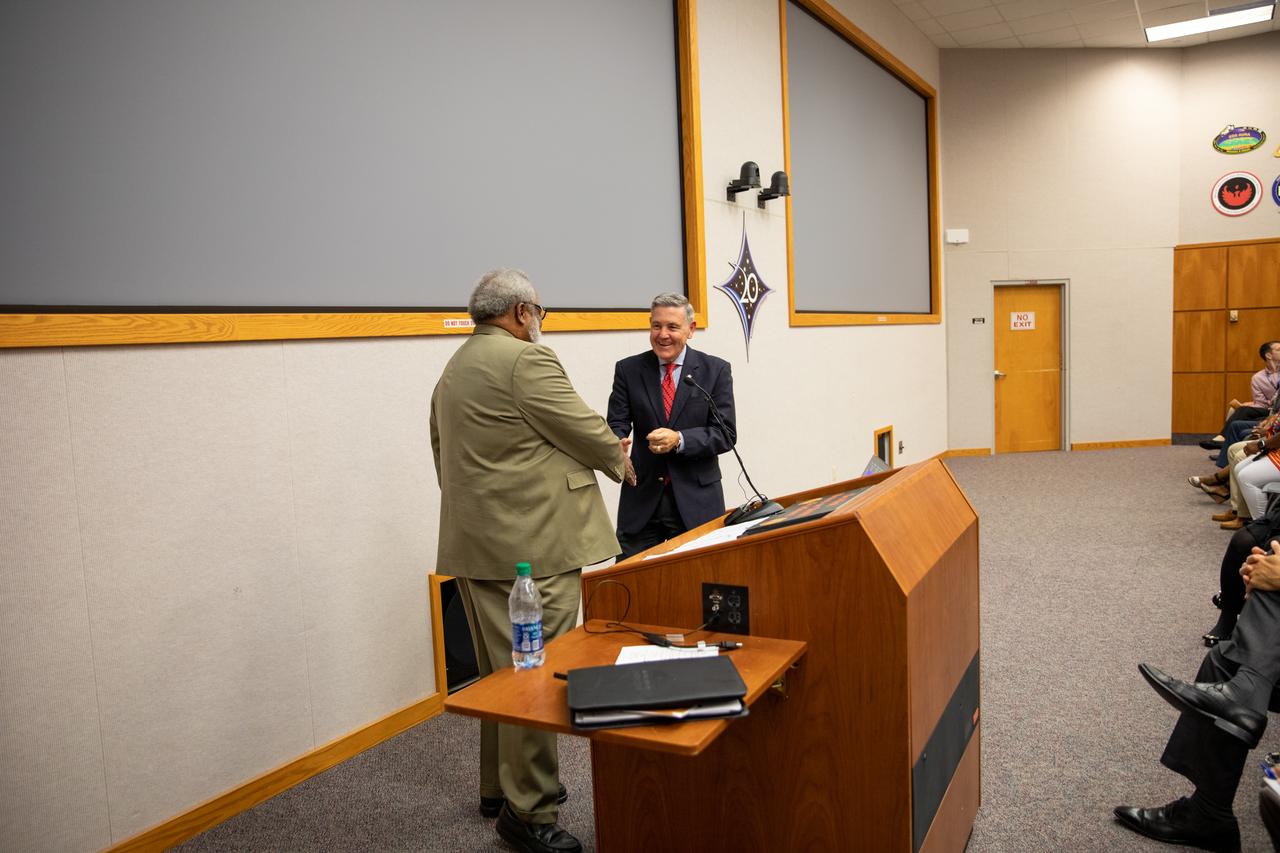
Kennedy Space Center Director Bob Cabana, at right, greets James Jennings, former NASA associate administrator for Institutions and Management and former Kennedy deputy director, during the center’s Black History Month celebration on Feb. 18, 2020. Jennings was the event’s keynote speaker. The program was organized by the Black Employee Strategy Team (BEST), one of the center’s employee resource groups. This year’s theme was “African Americans and the Vote.” Jennings shared advice with workers and managers.
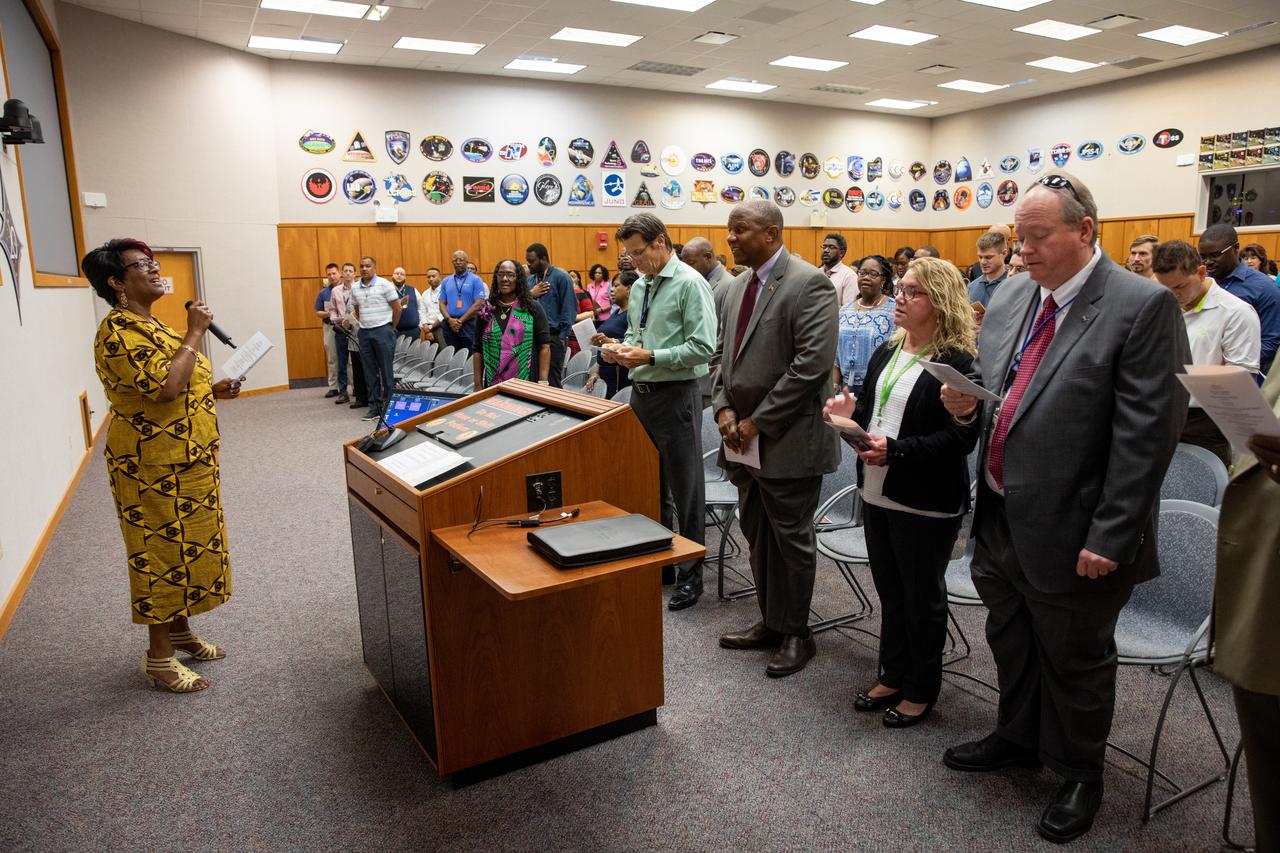
Yvonne Williams, in front, administrative assistant with Jacobs, sings the National Anthem at the start of the Black History Month celebration at NASA’s Kennedy Space Center in Florida on Feb. 18, 2020. The program was organized by the Black Employee Strategy Team (BEST), one of the center’s employee resource groups. This year’s theme was “African Americans and the Vote.” Keynote speaker was James Jennings, former NASA associate administrator for Institutions and Management and Kennedy’s former deputy director. Jennings shared advice with workers and managers.

James Jennings, former NASA associate administrator for Institutions and Management and former Kennedy Space Center deputy director, was the keynote speaker at the center’s Black History Month celebration on Feb. 18, 2020. The program was organized by the Black Employee Strategy Team (BEST), one of the center’s employee resource groups. This year’s theme was “African Americans and the Vote.” Jennings shared advice with workers and managers.

Henrietta Hanner, an administrative assistant in Safety and Mission Assurance, speaks about the theme of this year’s Black History Month celebration at NASA’s Kennedy Space Center in Florida on Feb. 18, 2020. The program was organized by the Black Employee Strategy Team (BEST), one of the center’s employee resource groups. This year’s theme was “African Americans and the Vote.” Keynote speaker was James Jennings, former NASA associate administrator for Institutions and Management and Kennedy’s former deputy director. Jennings shared advice with workers and managers.
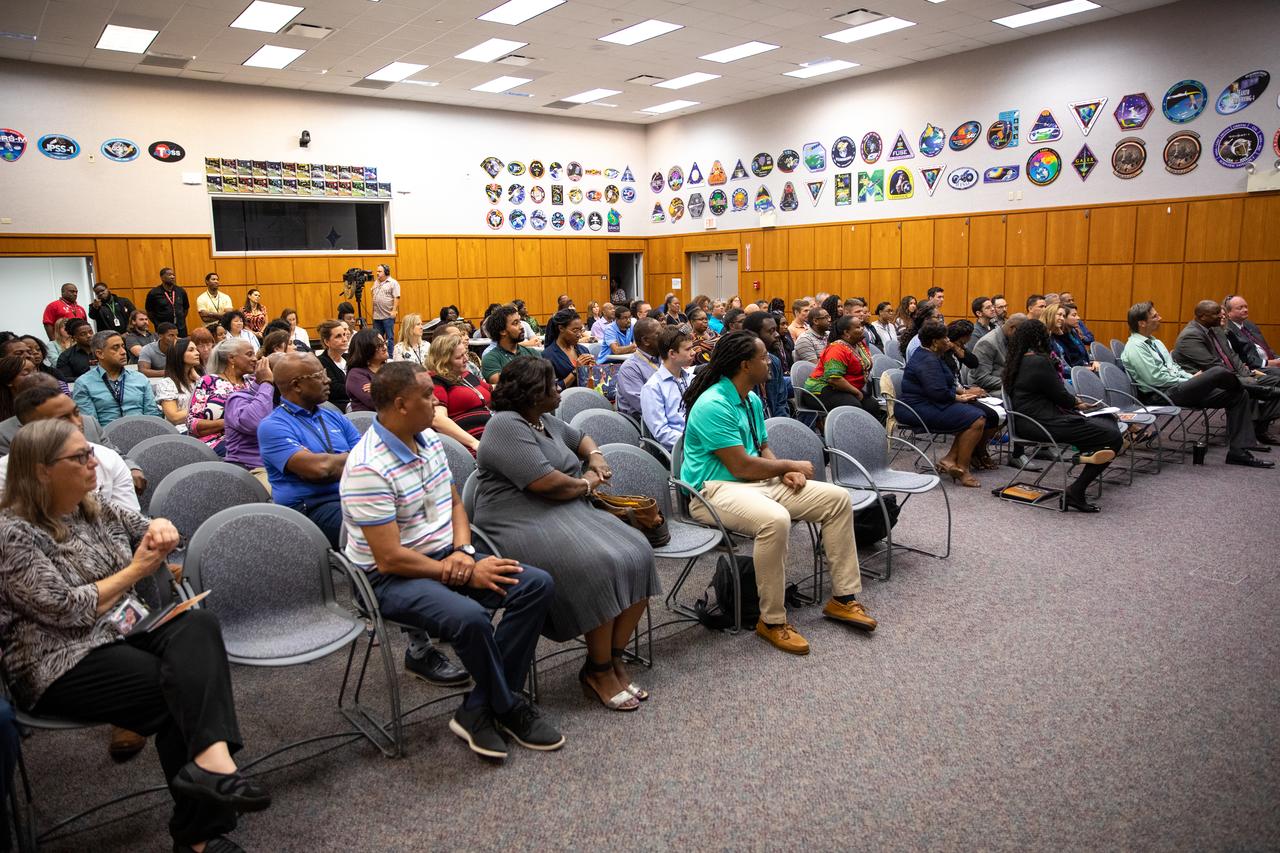
NASA and contractor workers attend a Black History Month celebration at Kennedy Space Center in Florida on Feb. 18, 2020. James Jennings, former NASA associate administrator for Institutions and Management and former Kennedy Space Center deputy director, was the keynote speaker. The program was organized by the Black Employee Strategy Team (BEST), one of the center’s employee resource groups. This year’s theme was “African Americans and the Vote.” Jennings shared advice with workers and managers.

Michael Bell, chief, Knowledge Office, introduces keynote speaker James Jennings during the Black History Month celebration at NASA’s Kennedy Space Center in Florida on Feb. 18, 2020. Jennings is the former associate administrator for NASA Institutions and Management and former deputy director of Kennedy. The program was organized by the Black Employee Strategy Team (BEST), one of the center’s employee resource groups. This year’s theme was “African Americans and the Vote.” Jennings shared advice with workers and managers.
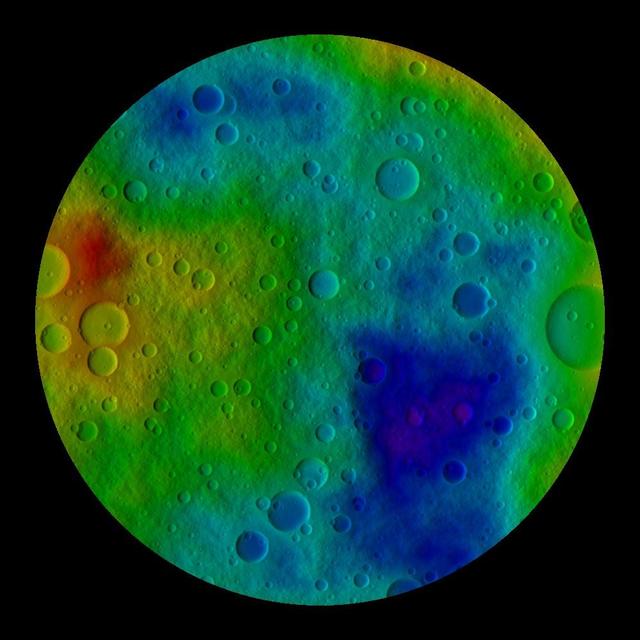
This image shows the scientists best guess to date of what the surface of the protoplanet Vesta might look like from the south pole and incorporates the best data on dimples and bulges Vesta from ground-based telescopes and NASA Hubble Space Telescope.
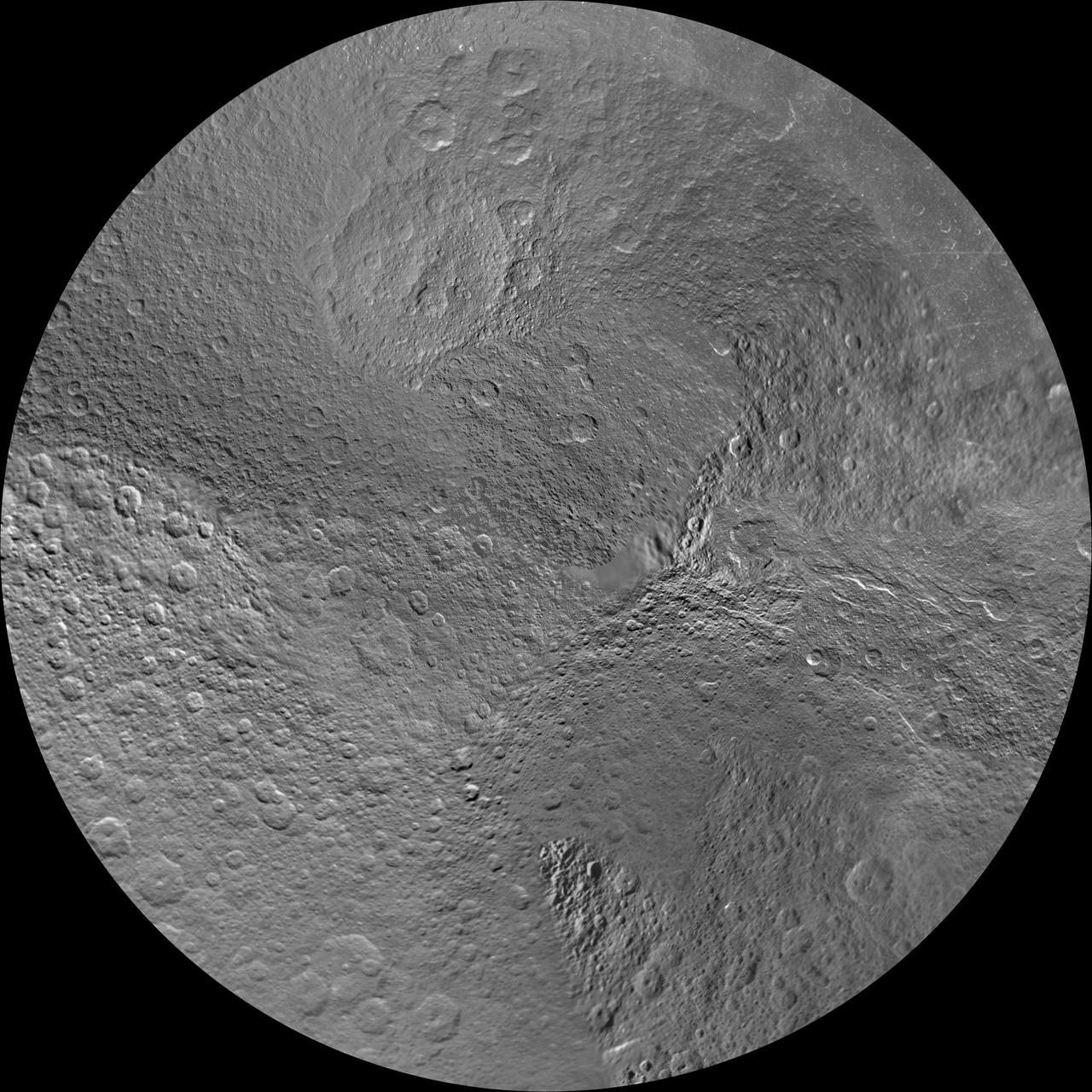
The northern and southern hemispheres of Rhea are seen in these polar stereographic maps, mosaicked from the best-available NASA Cassini and Voyager images.
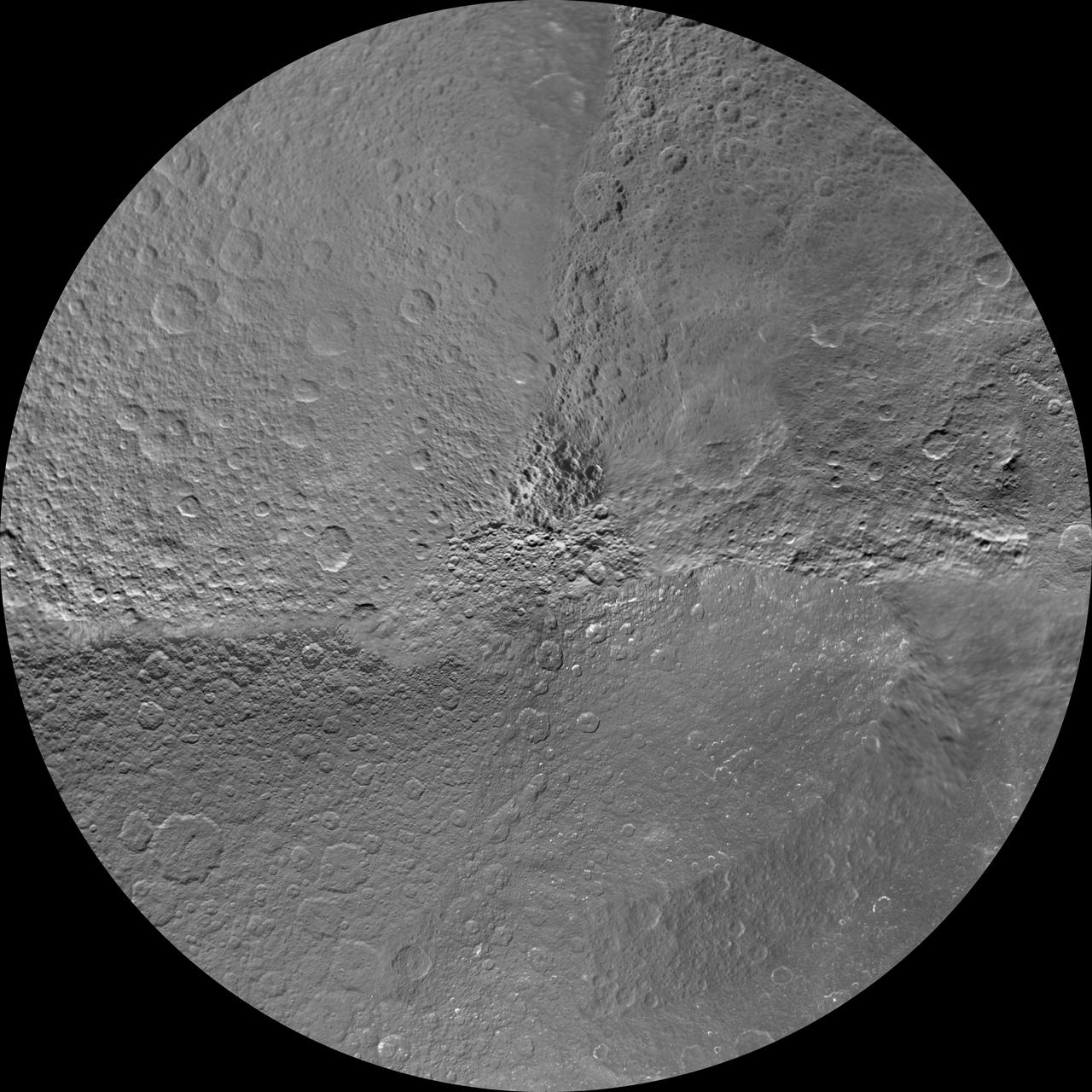
The northern and southern hemispheres of Rhea are seen in these polar stereographic maps, mosaicked from the best-available NASA Cassini and Voyager images.
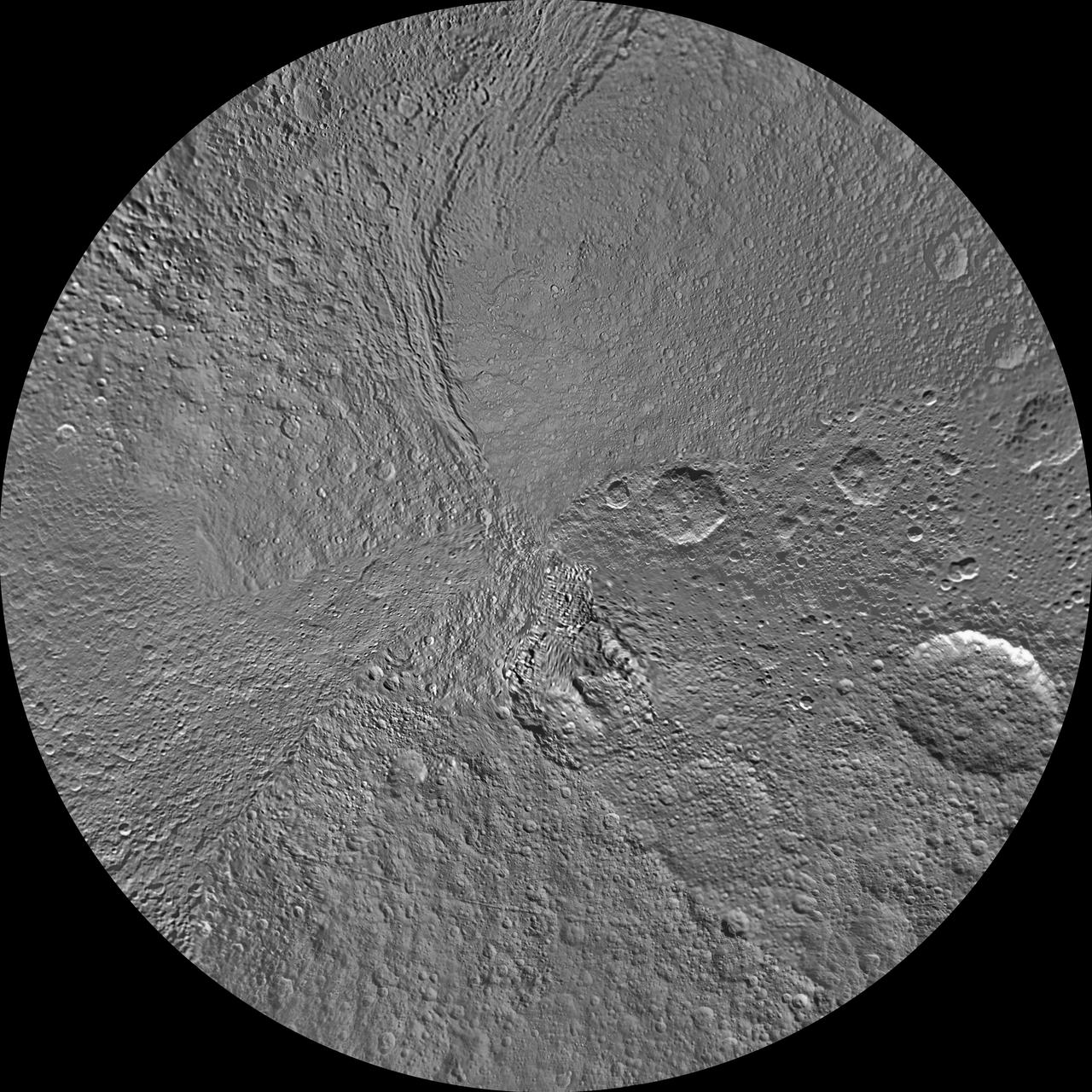
The southern hemisphere of Tethys is seen in this polar stereographic map, mosaicked from the best-available images from NASA Cassini spacecraft.
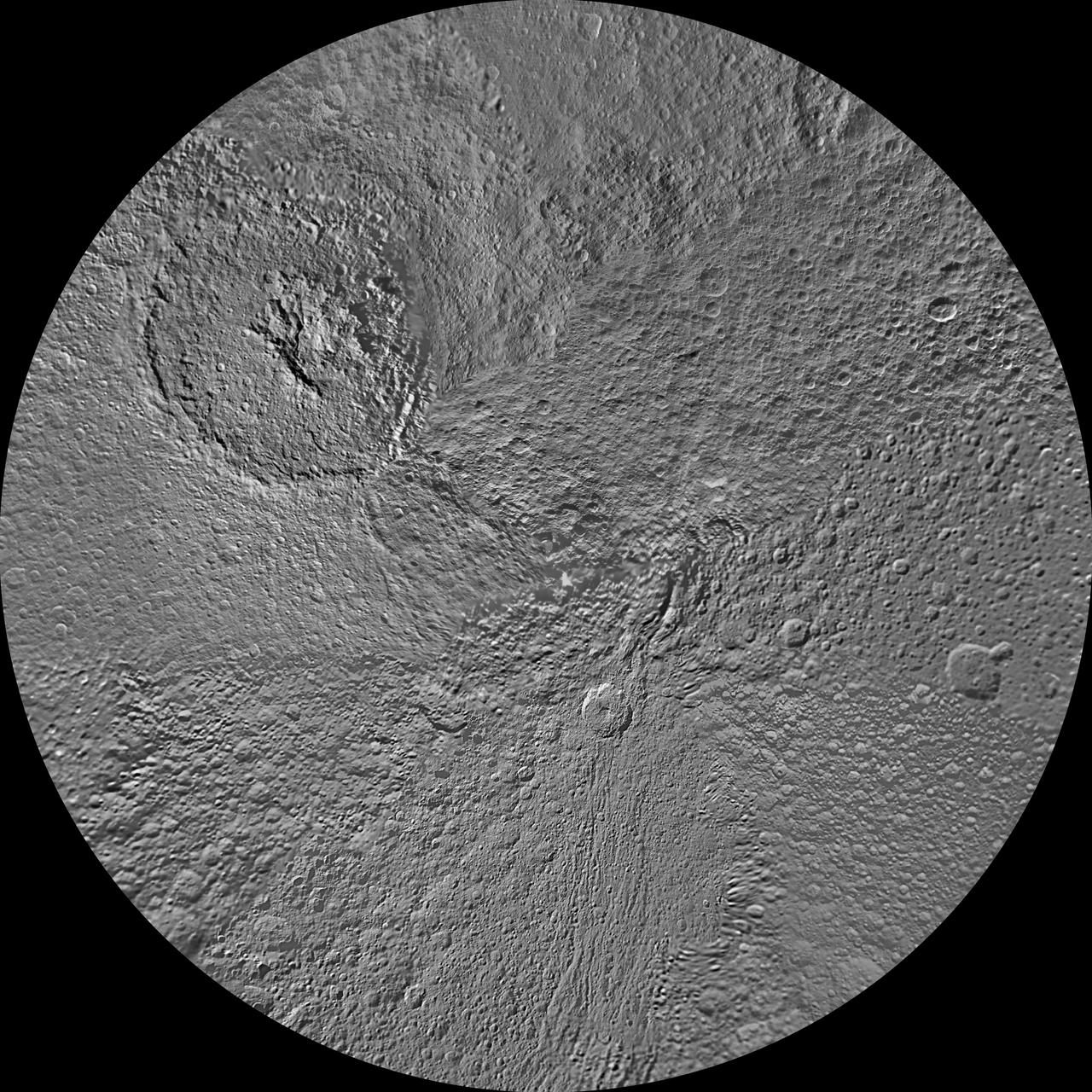
The northern hemisphere of Tethys is seen in this polar stereographic map, mosaicked from the best-available images from NASA Cassini spacecraft.
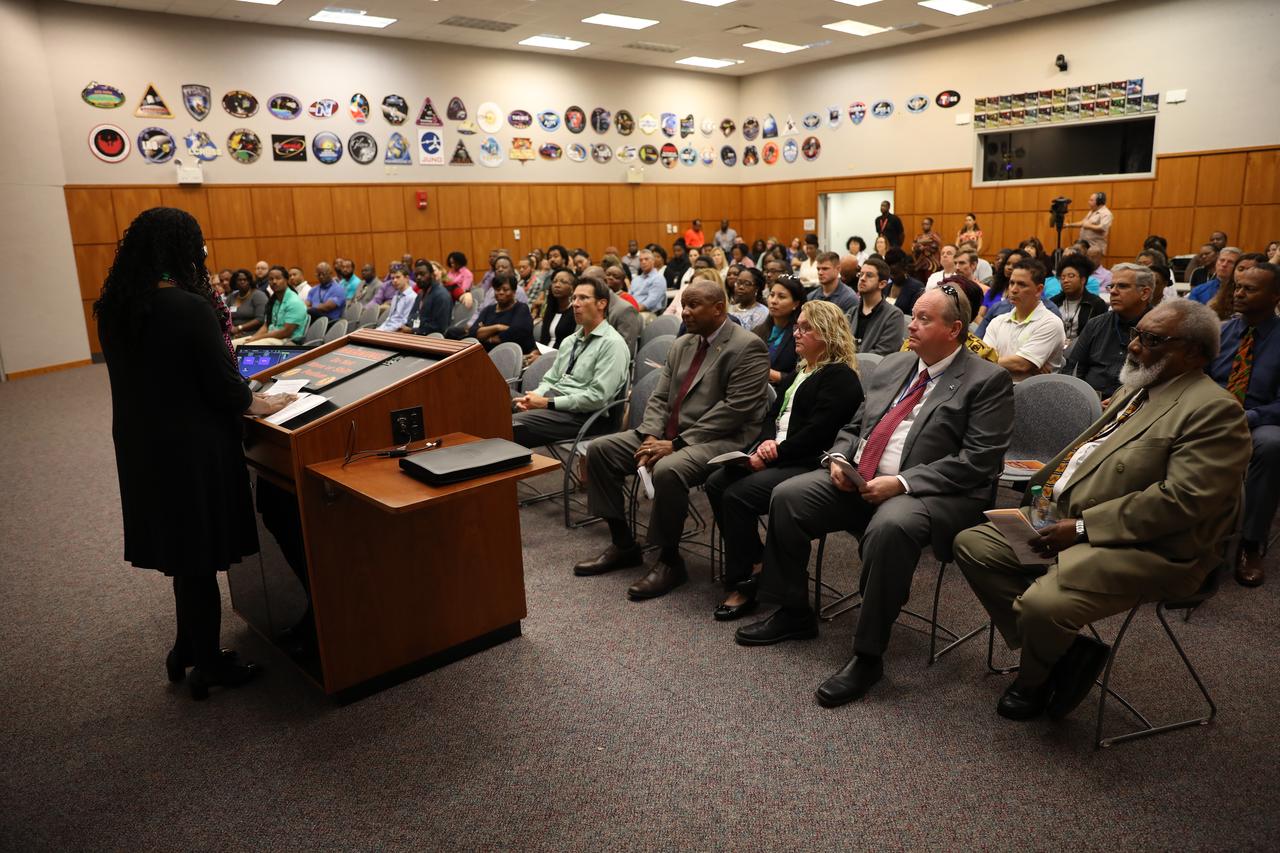
During a Black History Month celebration on Feb. 18, 2020 at NASA’s Kennedy Space Center in Florida, Hortense Diggs, at the podium, director of Communication and Public Engagement, commemorates the contributions of former NASA employee and mentor Roslyn McKinney. The program was organized by the Black Employee Strategy Team (BEST), one of the center’s employee resource groups. This year’s theme was “African Americans and the Vote.” Keynote speaker was James Jennings, seated, far right, former NASA associate administrator for Institutions and Management and Kennedy’s former deputy director. Jennings shared advice with workers and managers.
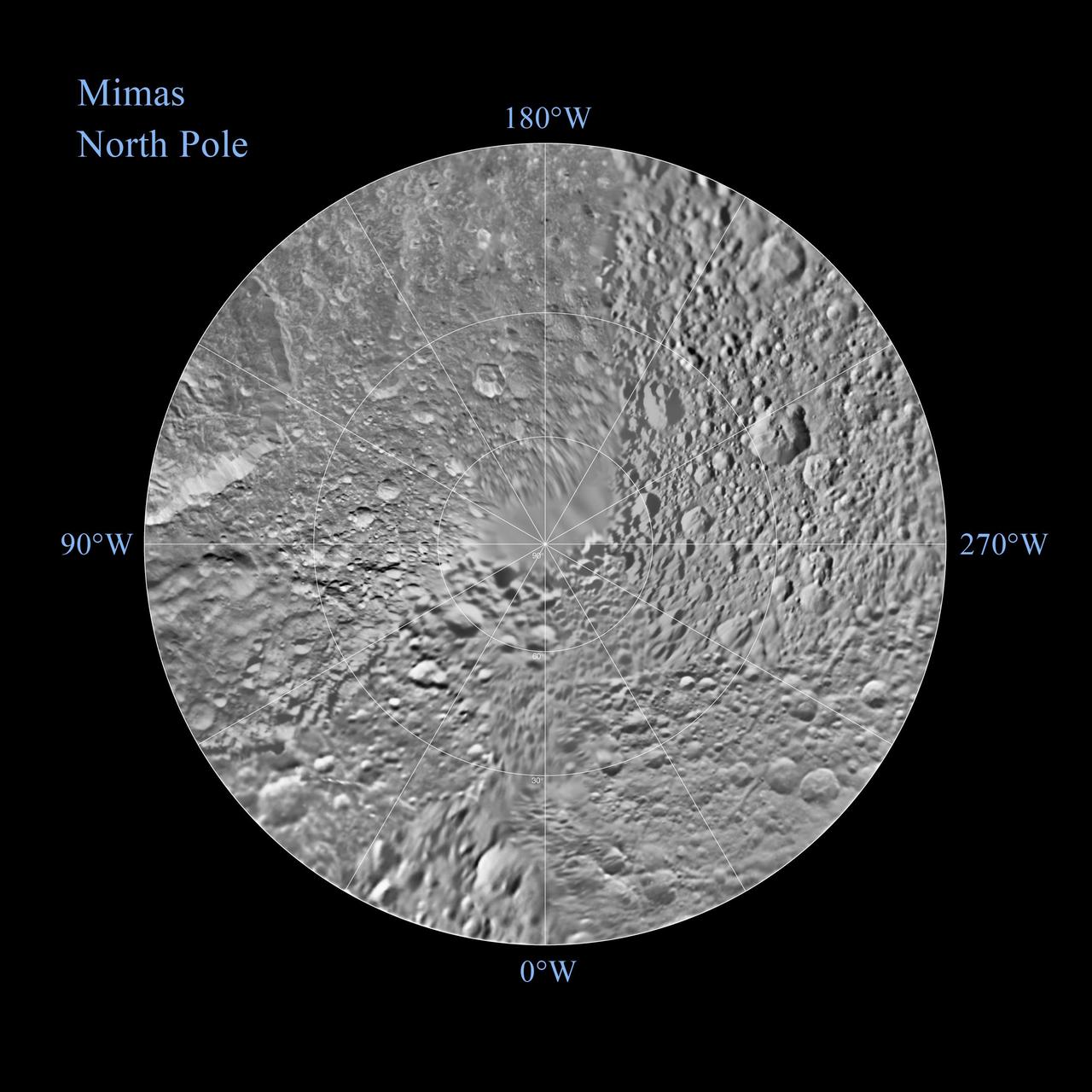
The northern hemisphere of Saturn moon Mimas is seen in these polar stereographic maps, mosaicked from the best-available NASA Cassini and Voyager images.
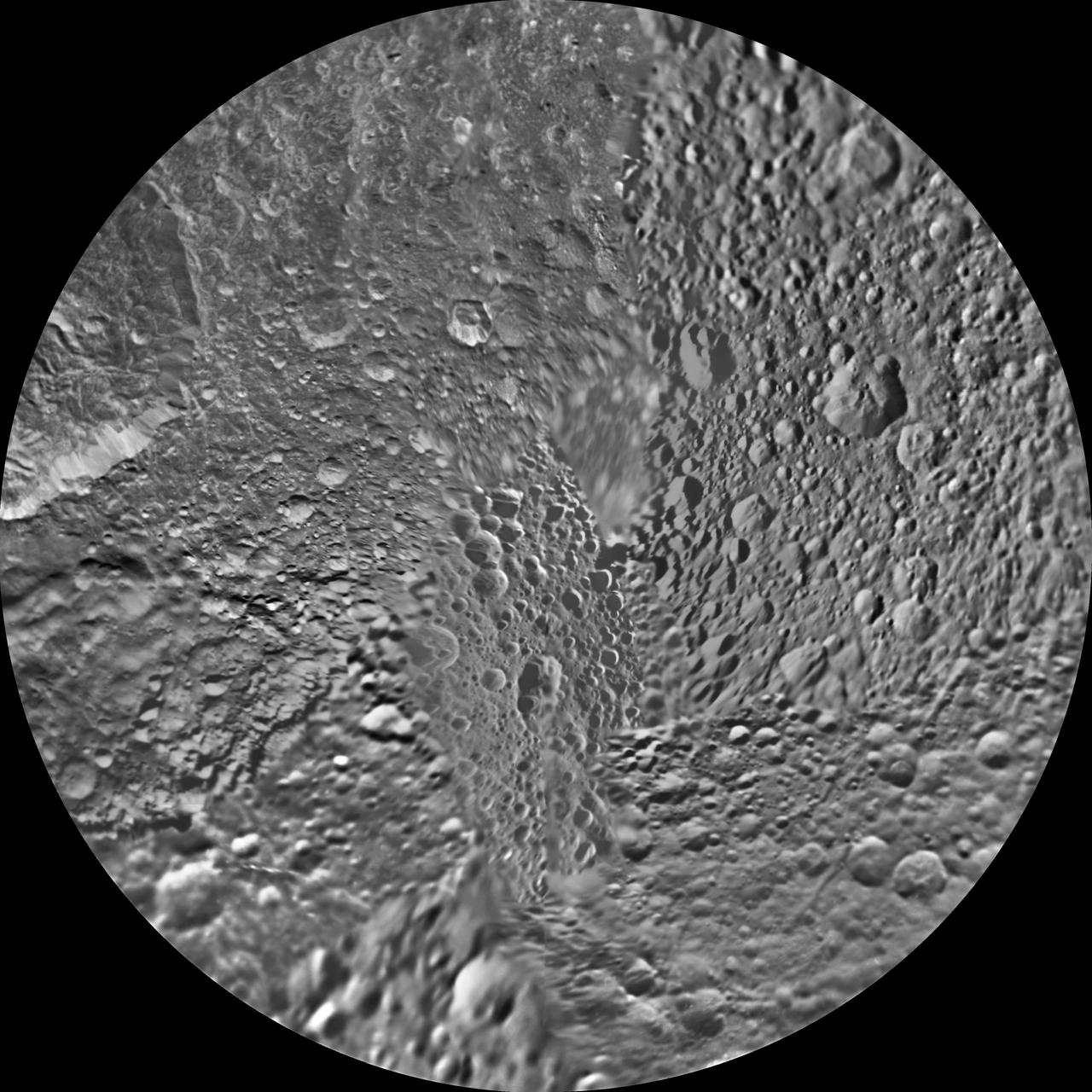
The northern and southern hemispheres of Saturn moon Mimas are seen in these polar stereographic maps, mosaicked from the best-available NASA Cassini and Voyager images.
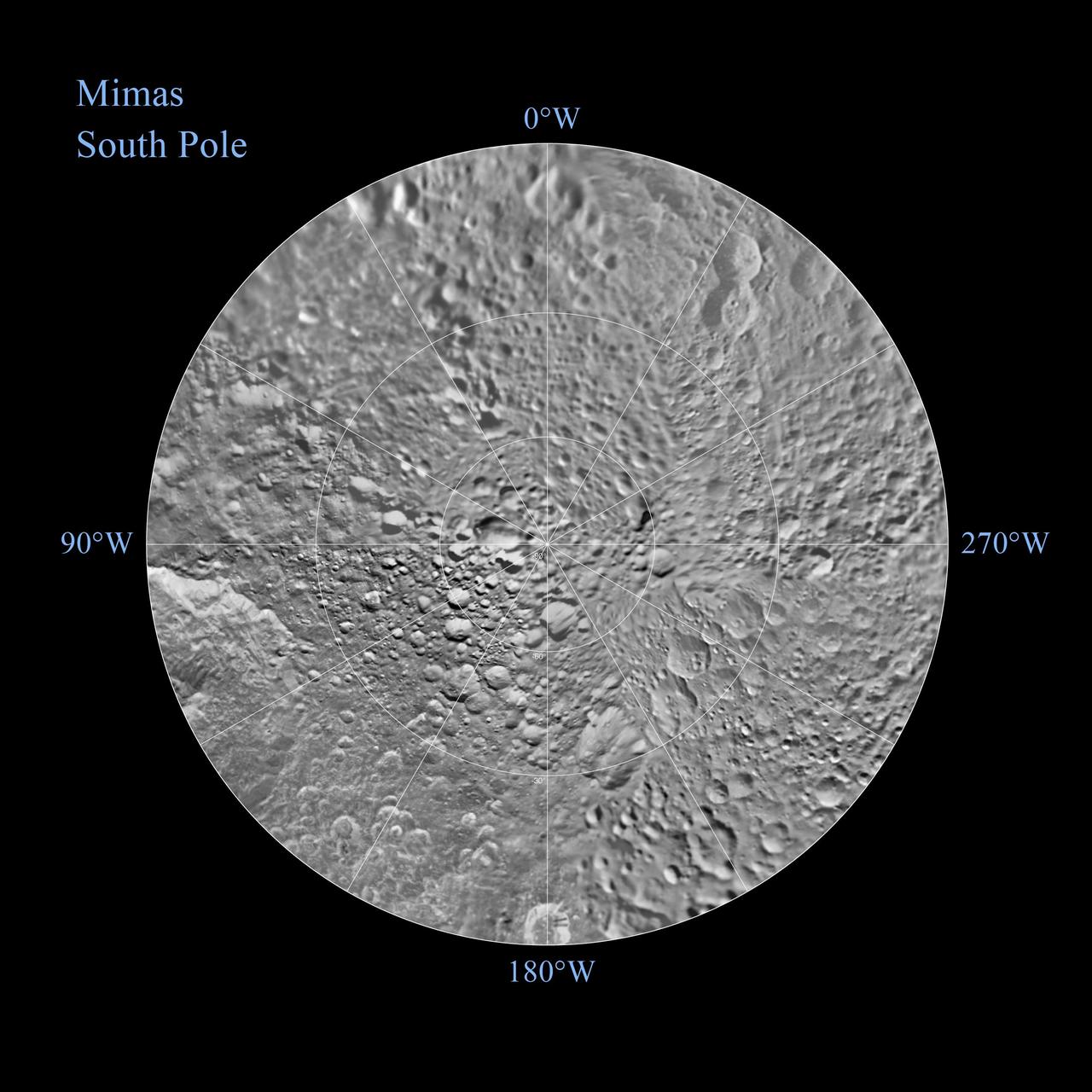
The southern hemisphere of Saturn moon Mimas is seen in these polar stereographic maps, mosaicked from the best-available NASA Cassini and Voyager images.
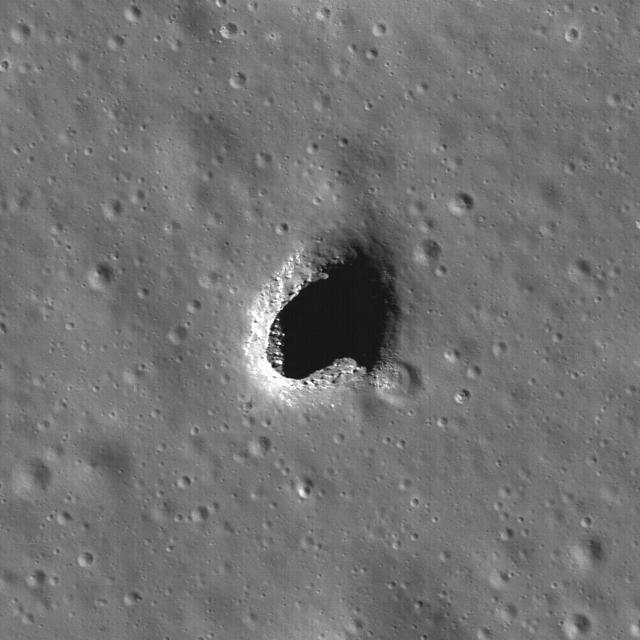
Mare Ingenii may be best known for its prominent lunar swirls, which are high albedo surface features associated with magnetic anomalies.
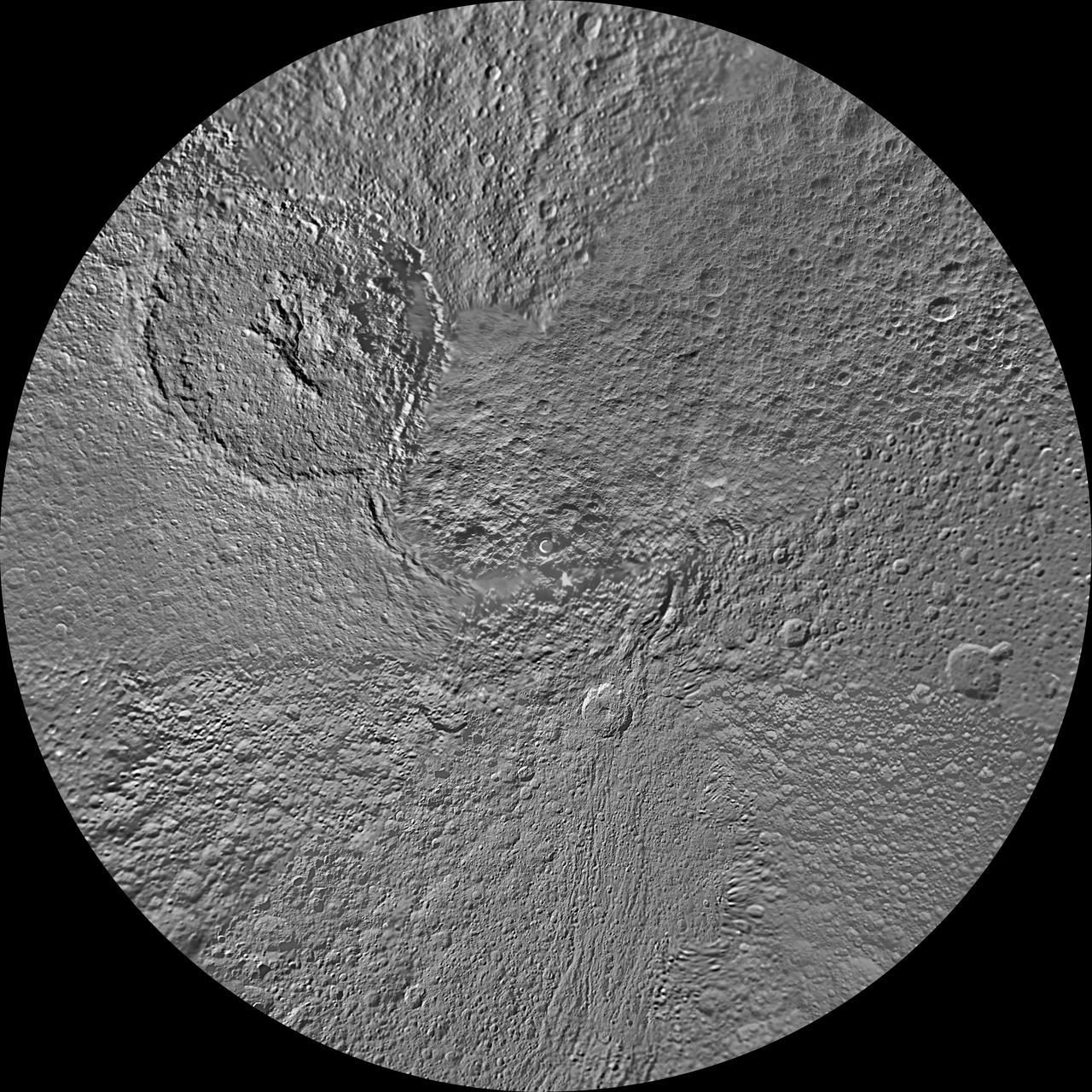
The northern hemisphere of Saturn moon Tethys is seen in this updated polar stereographic map, mosaicked from the best-available images obtained by NASA Cassini spacecraft.
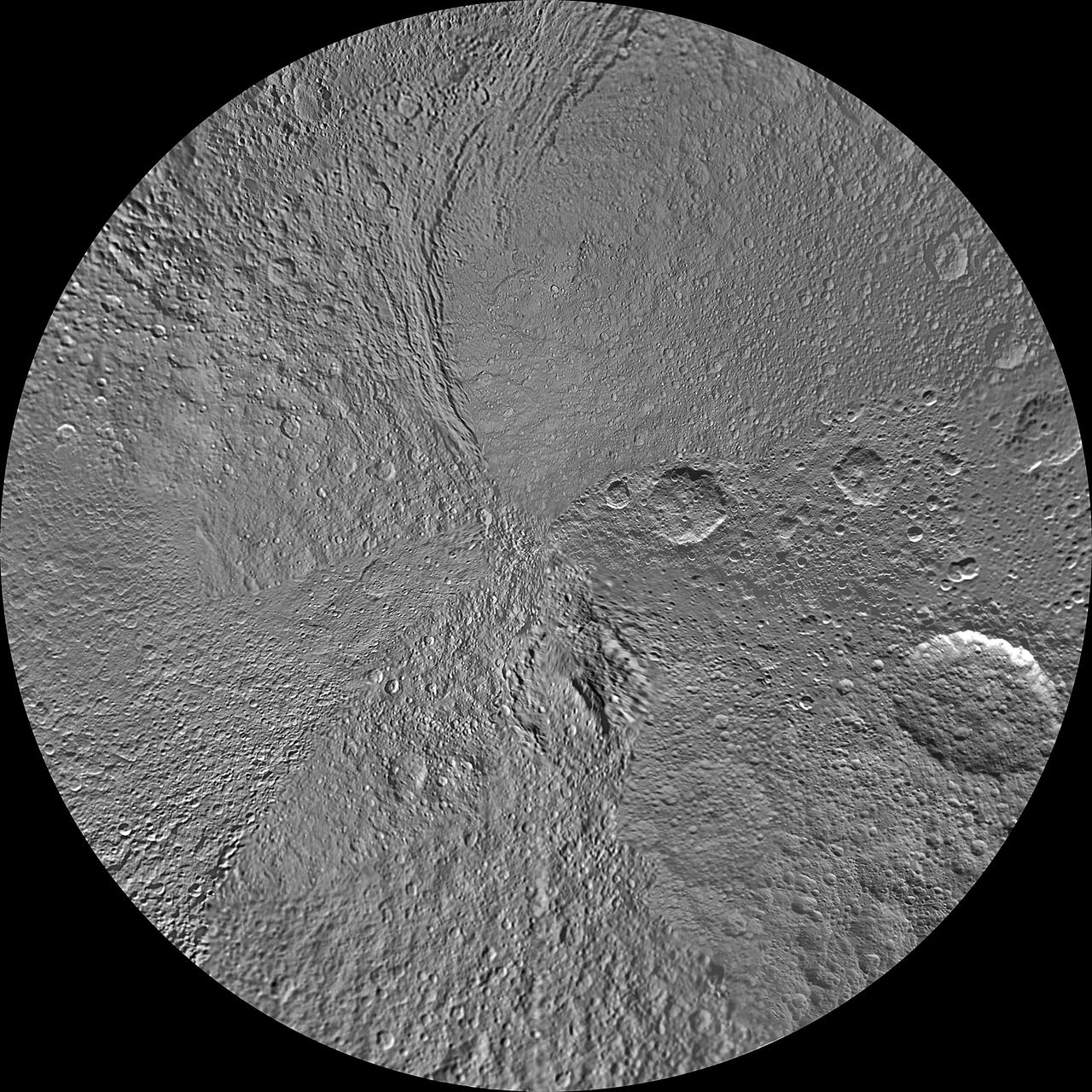
The southern hemisphere of Saturn moon Tethys is seen in this updated polar stereographic maps, mosaicked from the best-available images obtained by NASA Cassini spacecraft.
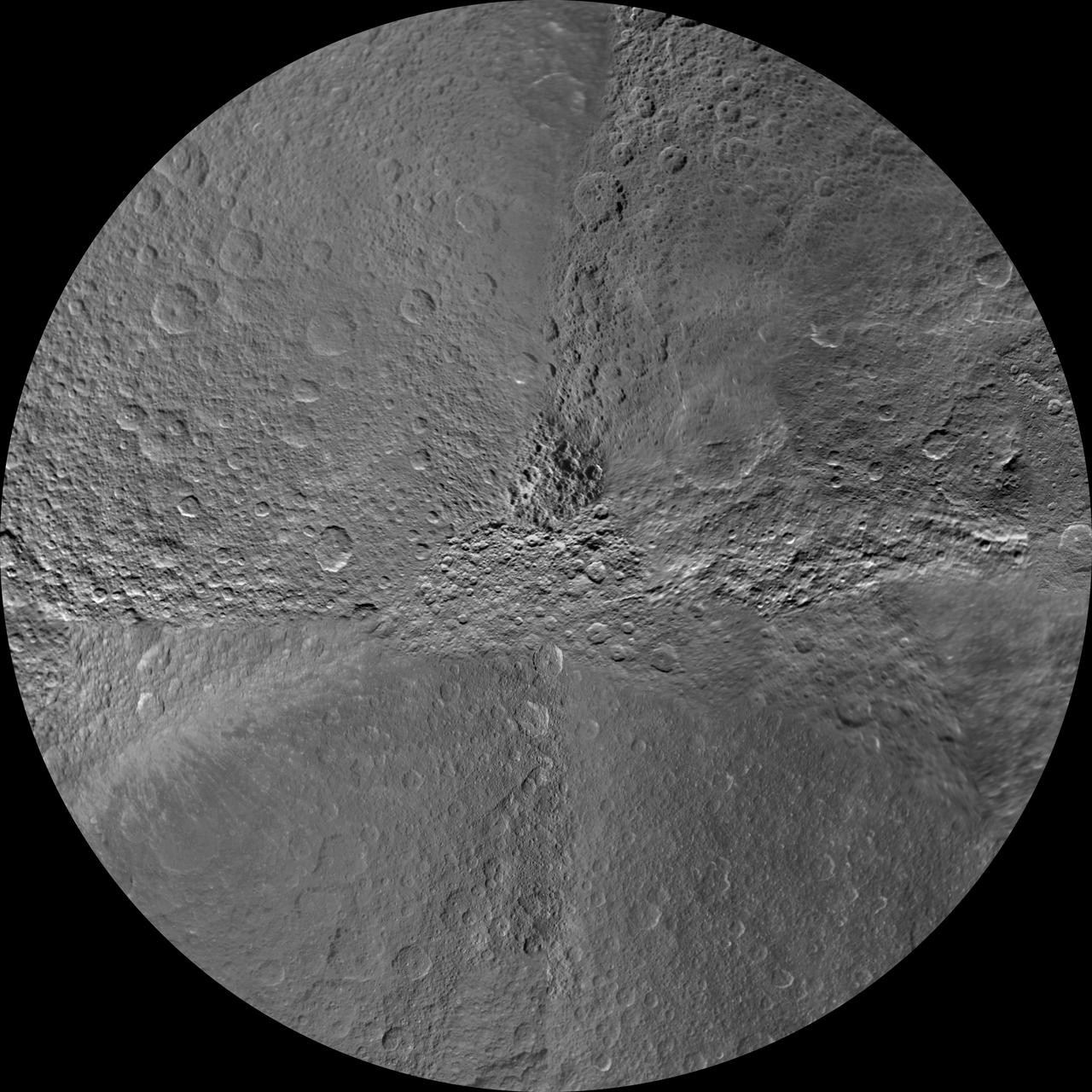
The southern hemisphere of Saturn moon Rhea is seen in this polar stereographic maps, mosaicked from the best-available images obtained by NASA Cassini spacecraft.
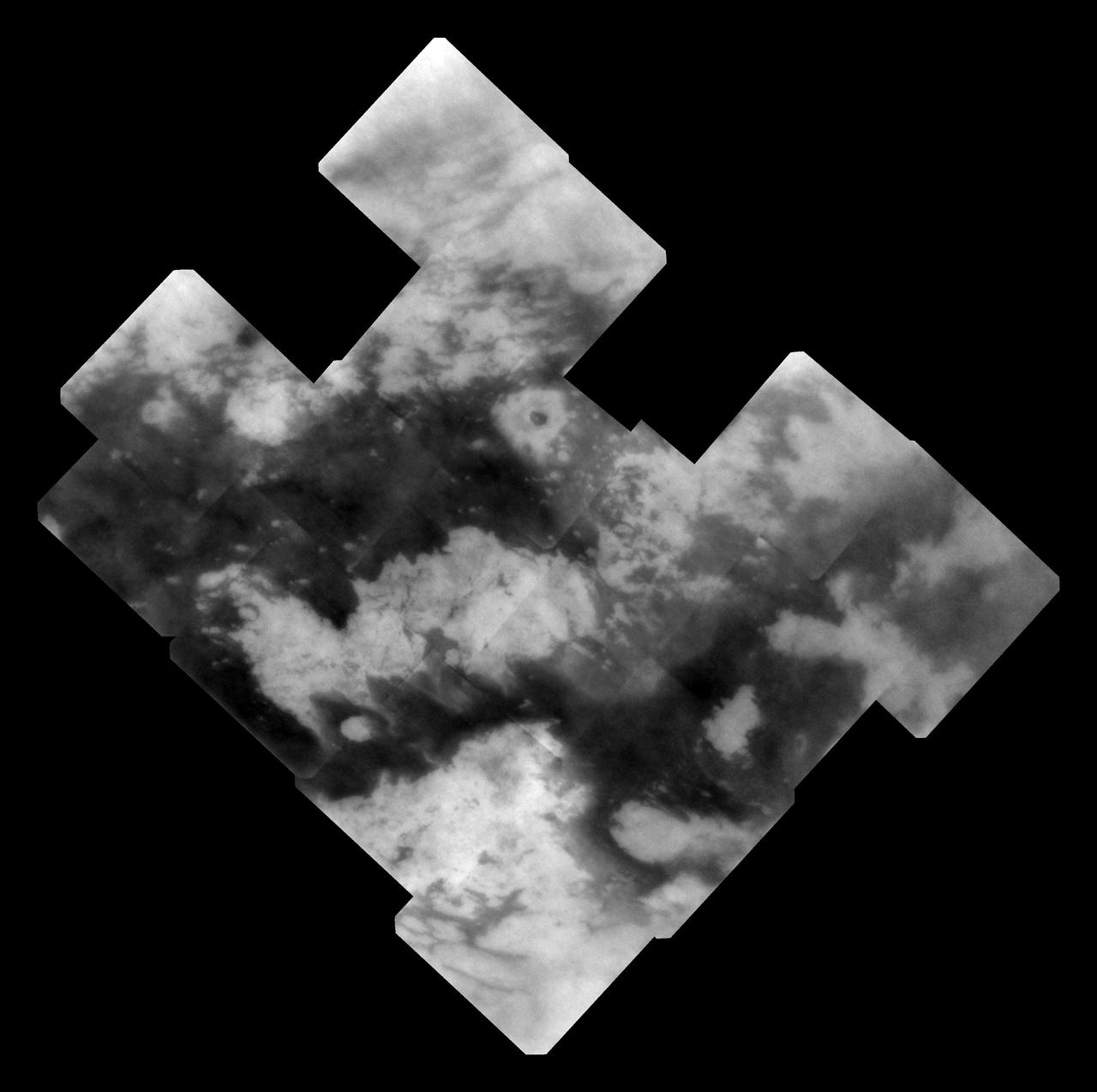
This mosaic provides the best view yet obtained by Cassini cameras, showing terrain on the moon sub-Saturn hemisphere -- the side of the moon that always faces toward Saturn
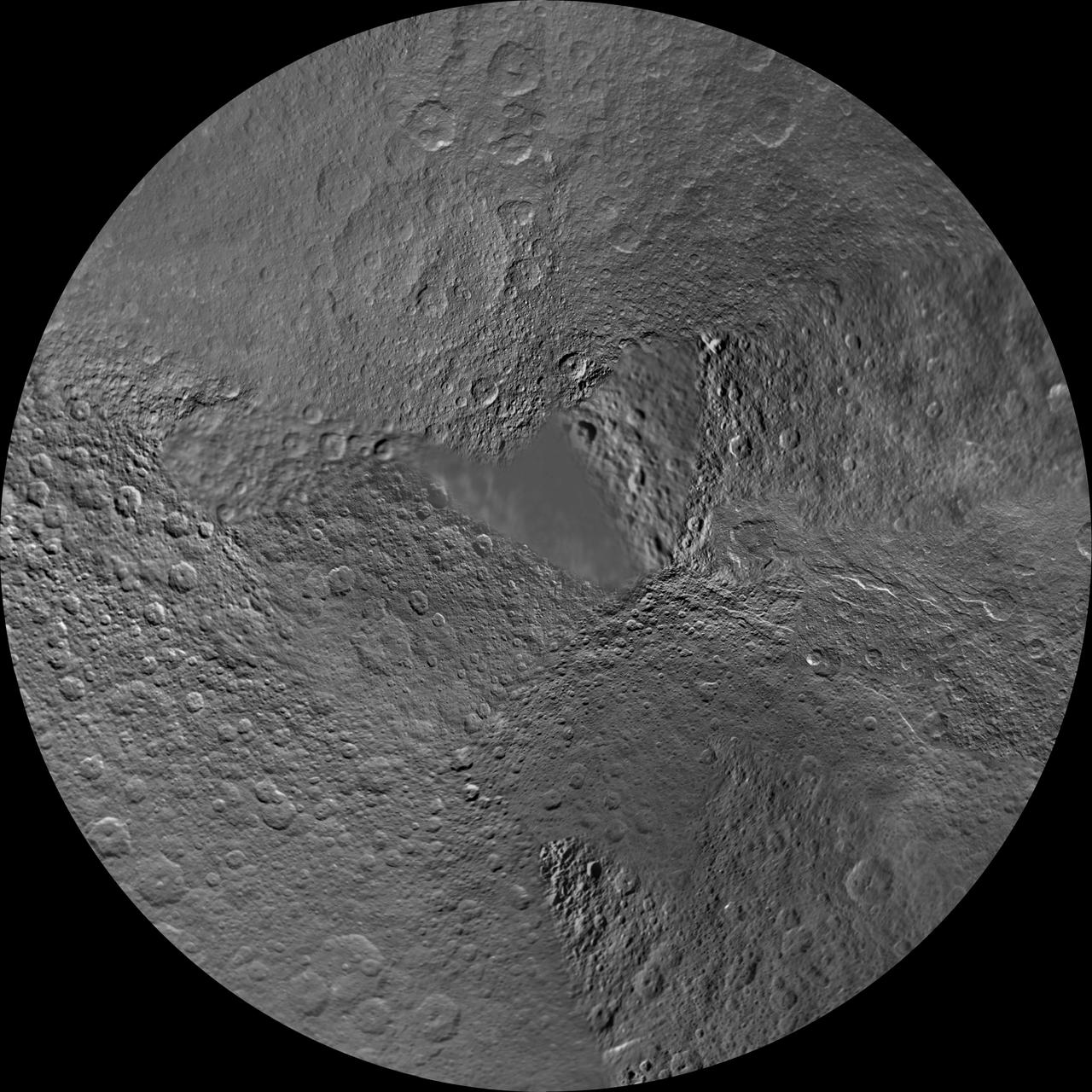
The northern hemisphere of Saturn moon Rhea is seen in this polar stereographic map, mosaicked from the best-available images obtained by NASA Cassini and Voyager spacecraft.
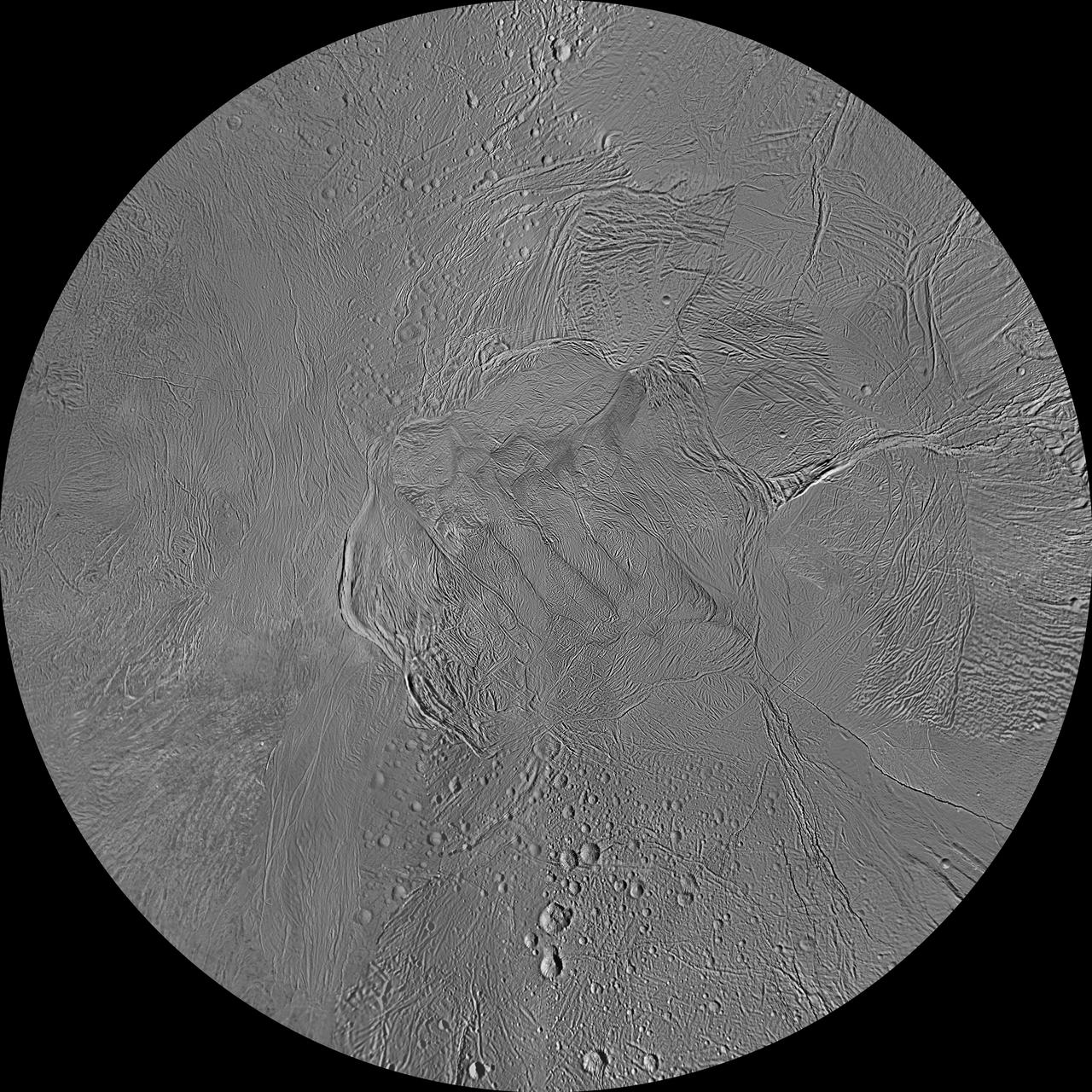
The northern and southern hemispheres of Enceladus are seen in these polar stereographic maps, mosaicked from the best-available NASA Cassini clear-filter images.
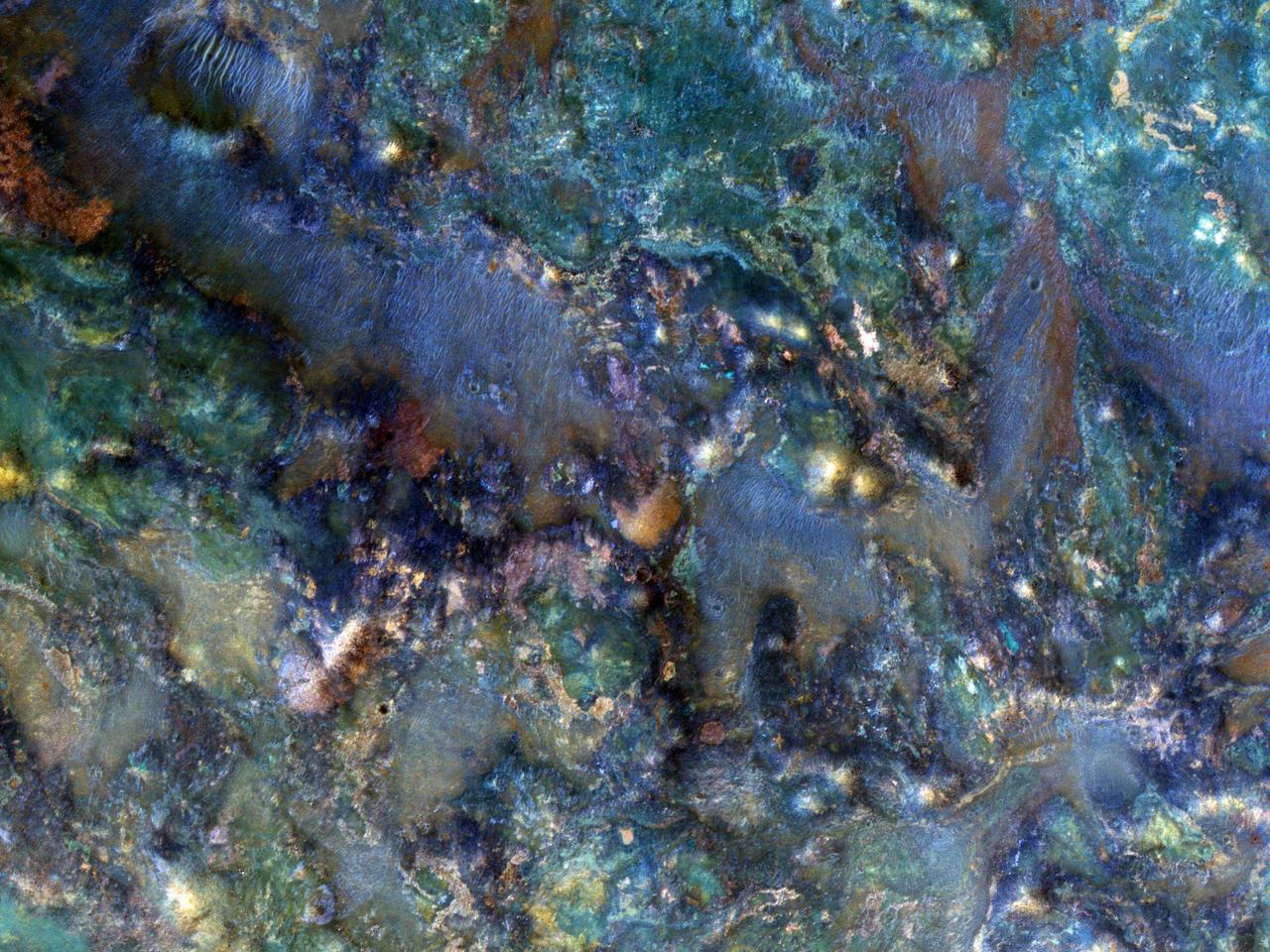
This image from NASA Mars Reconnaissance Orbiter covers a region of Mars near Nili Fossae that contains some of the best exposures of ancient bedrock on Mars.
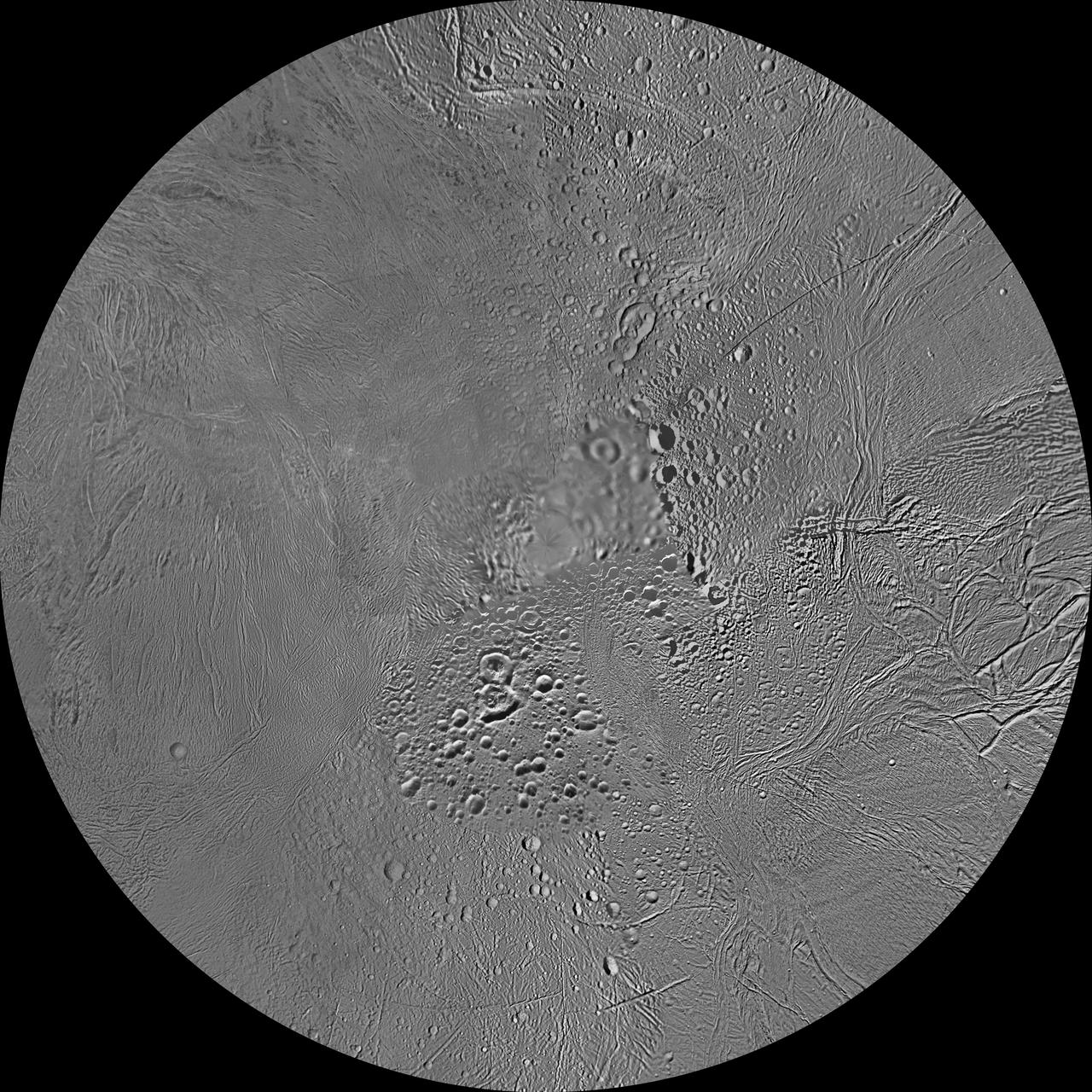
The northern and southern hemispheres of Enceladus are seen in these polar stereographic maps, mosaicked from the best-available NASA Cassini clear-filter images.

Pele, one of Io best-known volcanoes, was observed by NASA Galileo spacecraft, during the flyby of Jupiter moon Io on February 22, 2000.
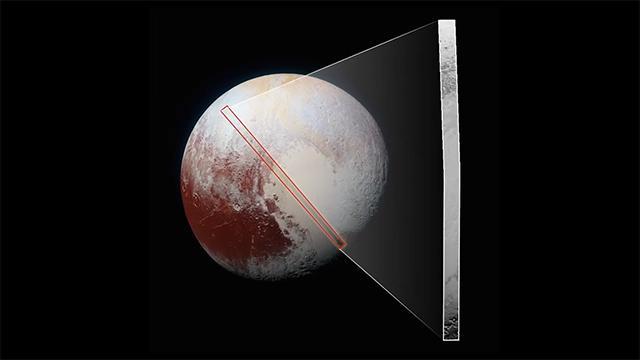
This frame from a movie, which extends across the hemisphere that faced New Horizons spacecraft as it flew past Pluto on July 14, 2015, includes all of the highest-resolution images taken by the NASA probe. With a resolution of about 260 feet (80 meters) per pixel, the movie affords New Horizons scientists and the public the best opportunity to examine the fine details of the various types of terrain the mosaic covers, and determine the processes that formed and shaped them. The view extends from the "limb" of Pluto at the top of the strip, almost to the "terminator" (or day/night line) in the southeast of the encounter hemisphere, seen at the bottom of the strip. The width of the strip ranges from more than 55 miles (90 kilometers) at its northern end to about 45 miles (75 kilometers) at its southern end. The perspective changes greatly along the strip: at its northern end, the view looks out horizontally across the surface, while at its southern end, the view looks straight down onto the surface. This movie pans down the mosaic from top to bottom, offering new views of many of Pluto's distinct landscapes along the way. Starting with hummocky, cratered uplands at top, the view crosses over parallel ridges of the "washboard" terrain; chaotic and angular mountain ranges; the craterless, cellular plains; coarsely "pitted" areas of sublimating nitrogen ice; zones of thin nitrogen ice draped over the topography below; and rugged, dark, mountainous highlands scarred by deep pits. The frames in the movie were obtained by New Horizons' Long Range Reconnaissance Imager (LORRI) approximately 9,850 miles (15,850 kilometers) from Pluto, about 23 minutes before New Horizons' closest approach. LORRI is only capable of obtaining black-and-white images; all color images are made by the Ralph instrument, which has somewhat lower resolution than LORRI. Movies are available at http://photojournal.jpl.nasa.gov/catalog/PIA14457
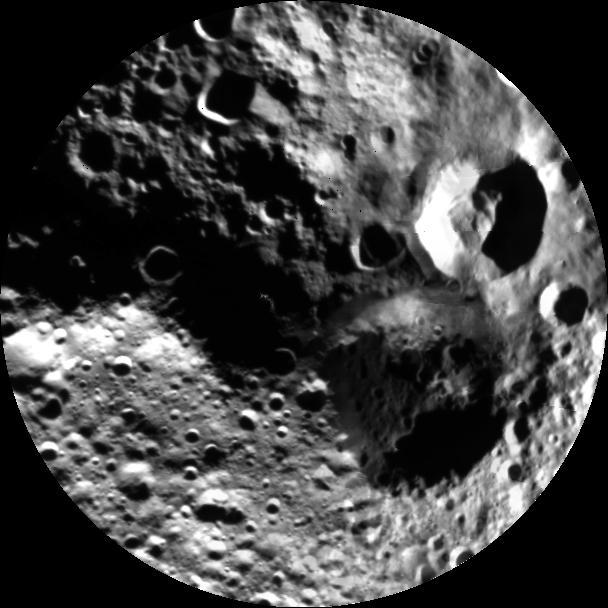
This image from NASA Dawn mission shows a shadowy view of the northern hemisphere of the giant asteroid Vesta during Dawn last look back.

This map shows the oldest light in our universe, as detected with the greatest precision yet by ESA Planck mission. The ancient light, called the cosmic microwave background, was imprinted on the sky when the universe was 370,000 years old.
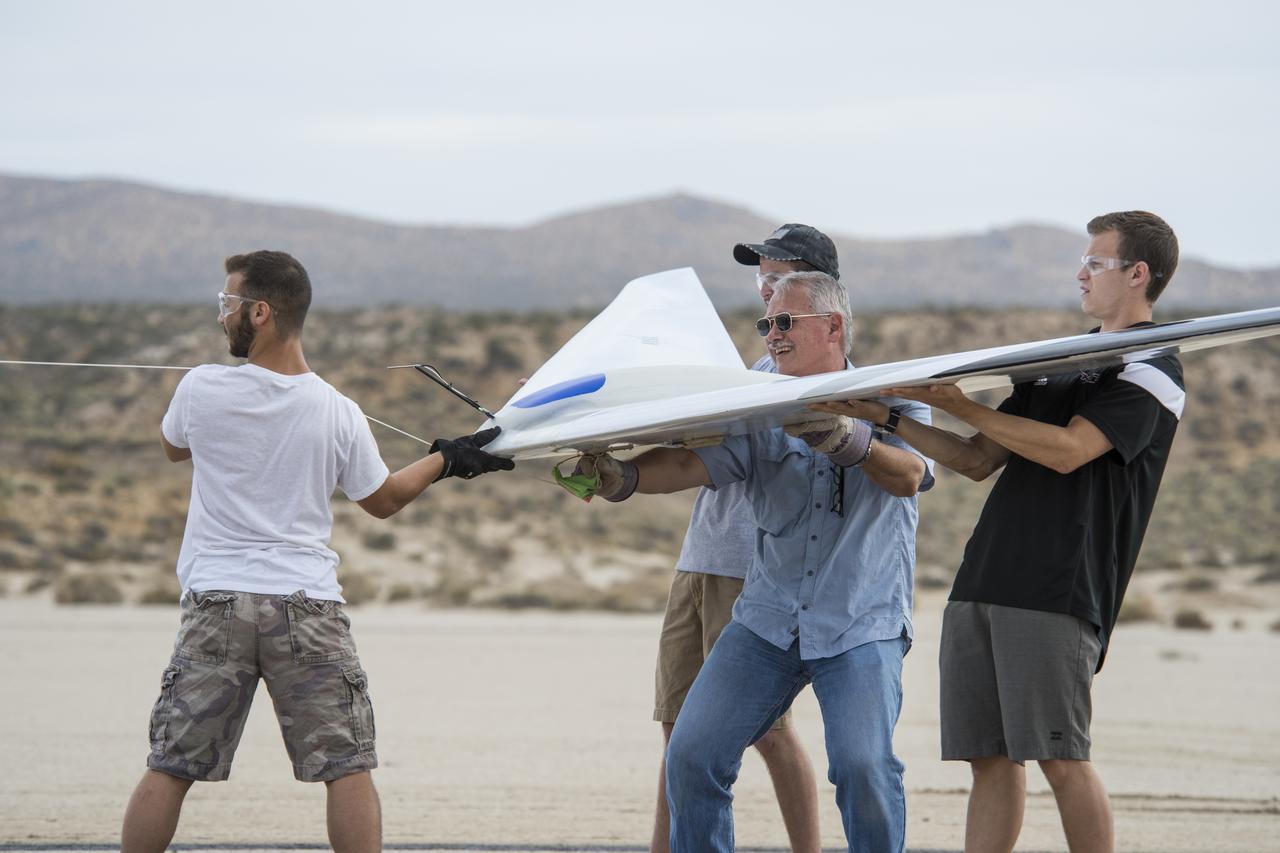
Al Bowers, center, and a group of student interns hook up a bungee cord for a flight of the Prandtl-D 3C subscale glider aircraft.
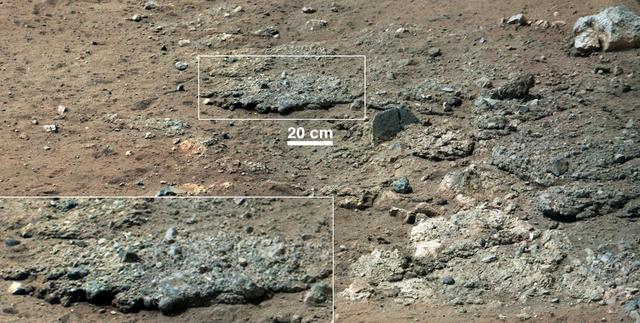
This image from NASA Curiosity Rover shows a high-resolution view of an area that is known as Goulburn Scour, a set of rocks blasted by the engines of Curiosity descent stage on Mars.
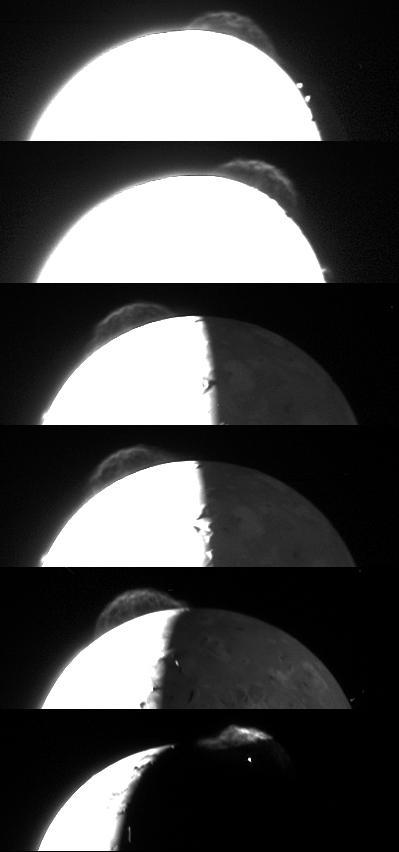
Variations in the appearance of the giant plume from the Tvashtar volcano on Jupiter moon Io are seen in this composite of the best photos taken by the New Horizons Long Range Reconnaissance Imager LORRI during its Jupiter flyby in late February.
The southern hemisphere of Saturn moon Dione is seen in this polar stereographic maps, mosaicked from the best-available clear-filter images from NASA Cassini and Voyager missions.
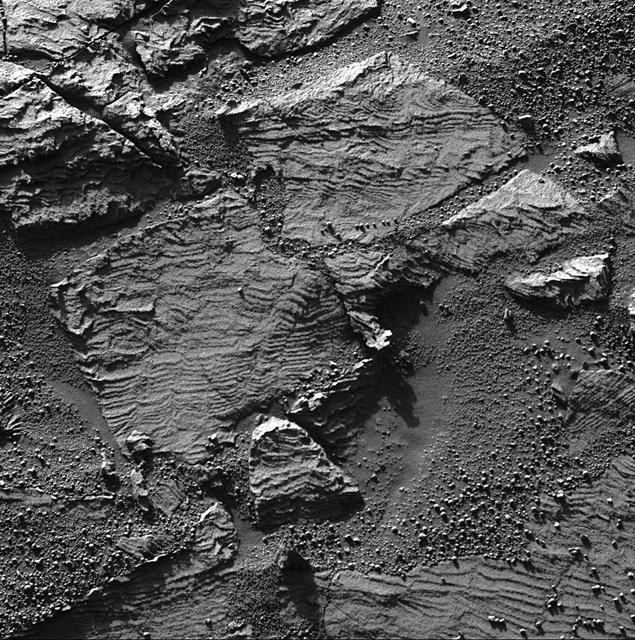
This image from the panoramic camera on NASA Mars Exploration Rover Opportunity shows the best examples yet seen in Meridiani Planum outcrop rocks of well-preserved, fine-scale layering and what geologists call cross-lamination.
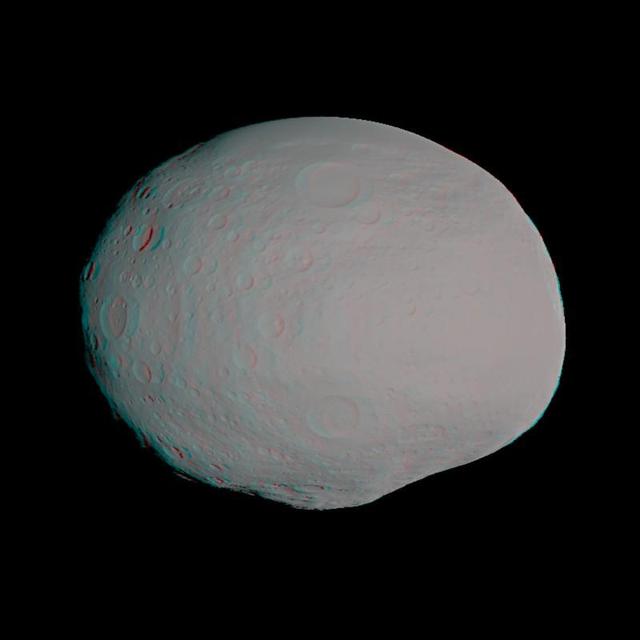
This anaglyph shows a 3-D model of the protoplanet Vesta, using scientists best guess to date of what the surface of the protoplanet might look like. It was created as part of an exercise for NASA Dawn mission. 3D glasses are necessary.

NASA Voyager 2 spacecraft flew by Triton, a moon of Neptune, in the summer of 1989. Dr. Paul Schenk, a scientist at the Lunar and Planetary Institute in Houston, used Voyager data to construct the best-ever global color map of Triton.
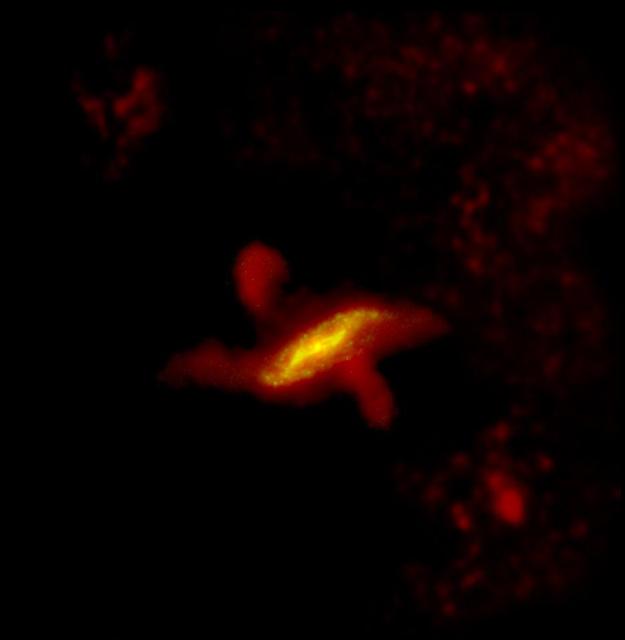
This parallelogram shaped region of dust observed by ESA Herschel Space telescope can be best described using galaxy formation models where a flat spiral galaxy collides with an elliptical galaxy becoming warped in the process.
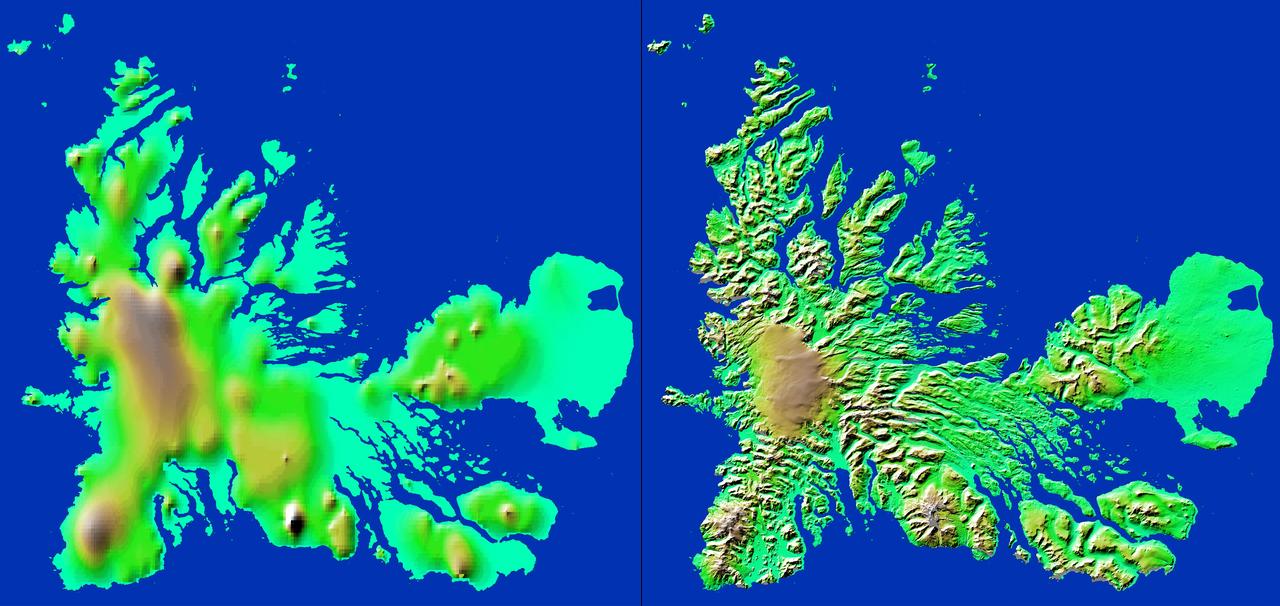
These two images show exactly the same area, Kerguelen Island in the southern Indian Ocean. The image on the left was created using the best global topographic data set previously available, the U.S. Geological Survey GTOPO30.
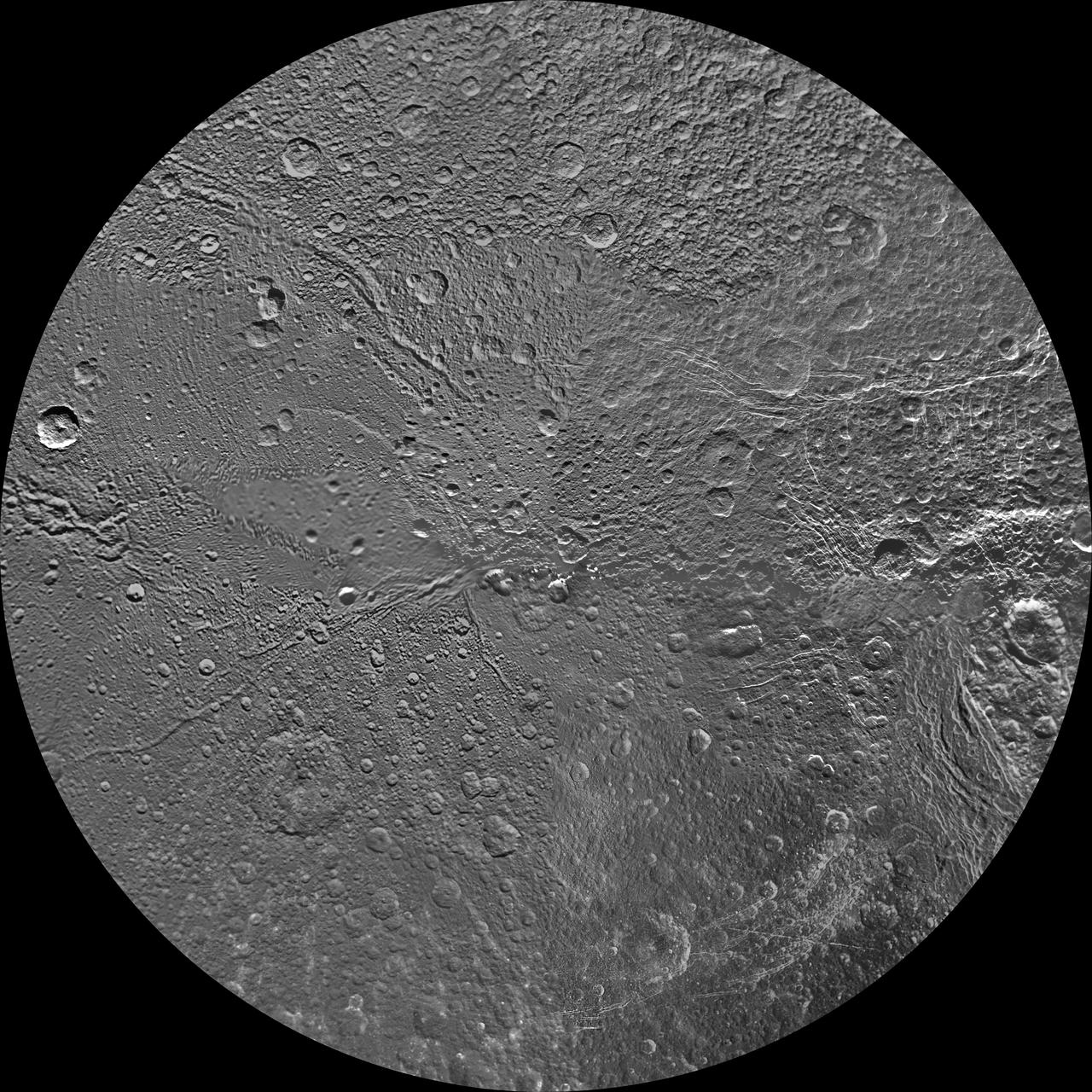
The northern and southern hemispheres of Dione are seen in these polar stereographic maps of the north pole, mosaicked from the best-available clear-filter images from NASA Cassini and Voyager missions.
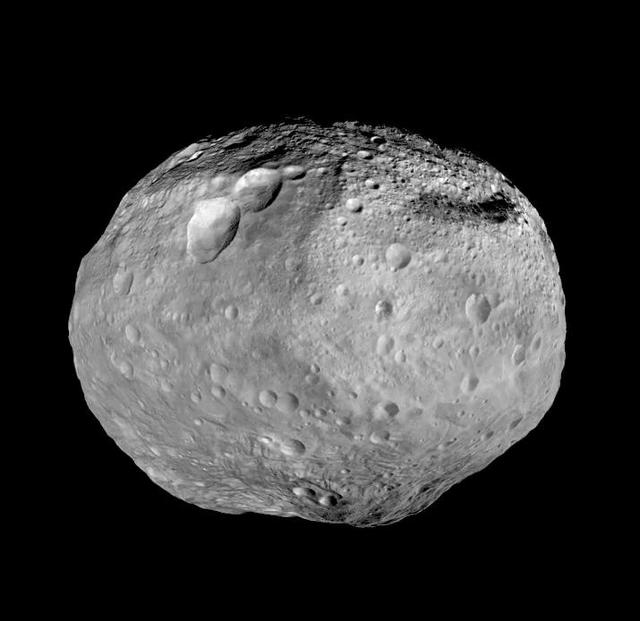
As NASA Dawn spacecraft takes off for its next destination, this mosaic synthesizes some of the best views the spacecraft had of the giant asteroid Vesta. The set of three craters known as the nowman can be seen at the top left.
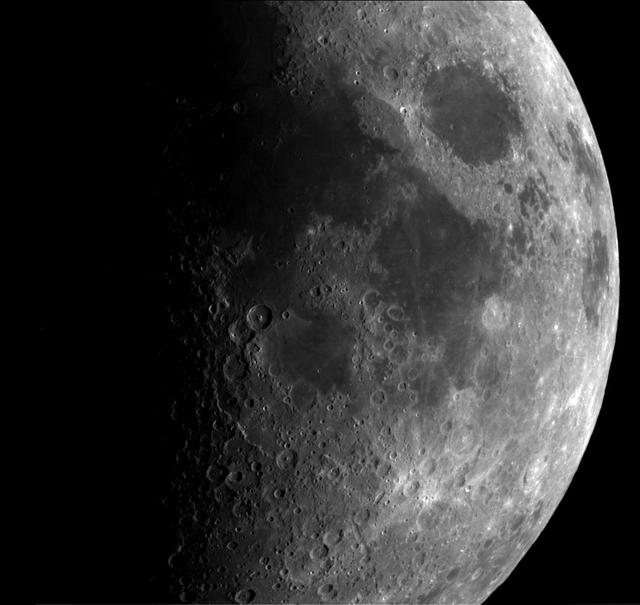
This narrow angle image taken NASA Cassini camera system of the Moon is one of the best of a sequence of narrow angle frames taken as the spacecraft passed by the Moon on the way to its closest approach with Earth on August 17, 1999.
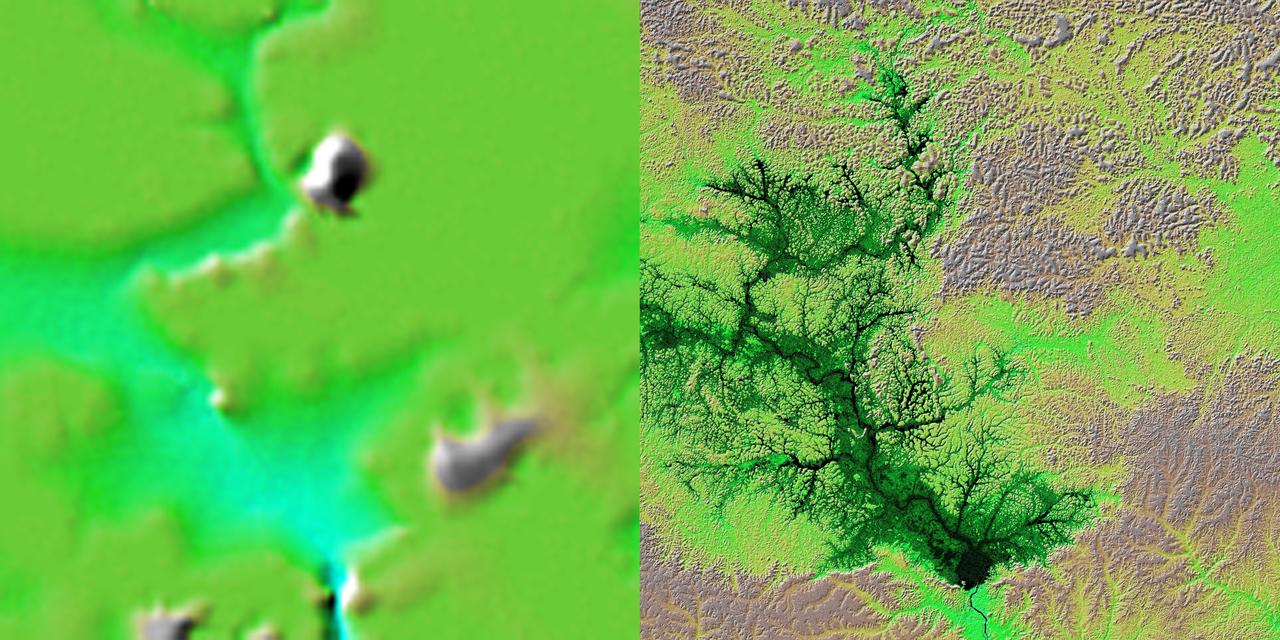
These two images show exactly the same area, Lake Balbina near Manaus, Brazil. The image on the left was created using the best global topographic data set previously available, the U.S. Geological Survey GTOPO30.
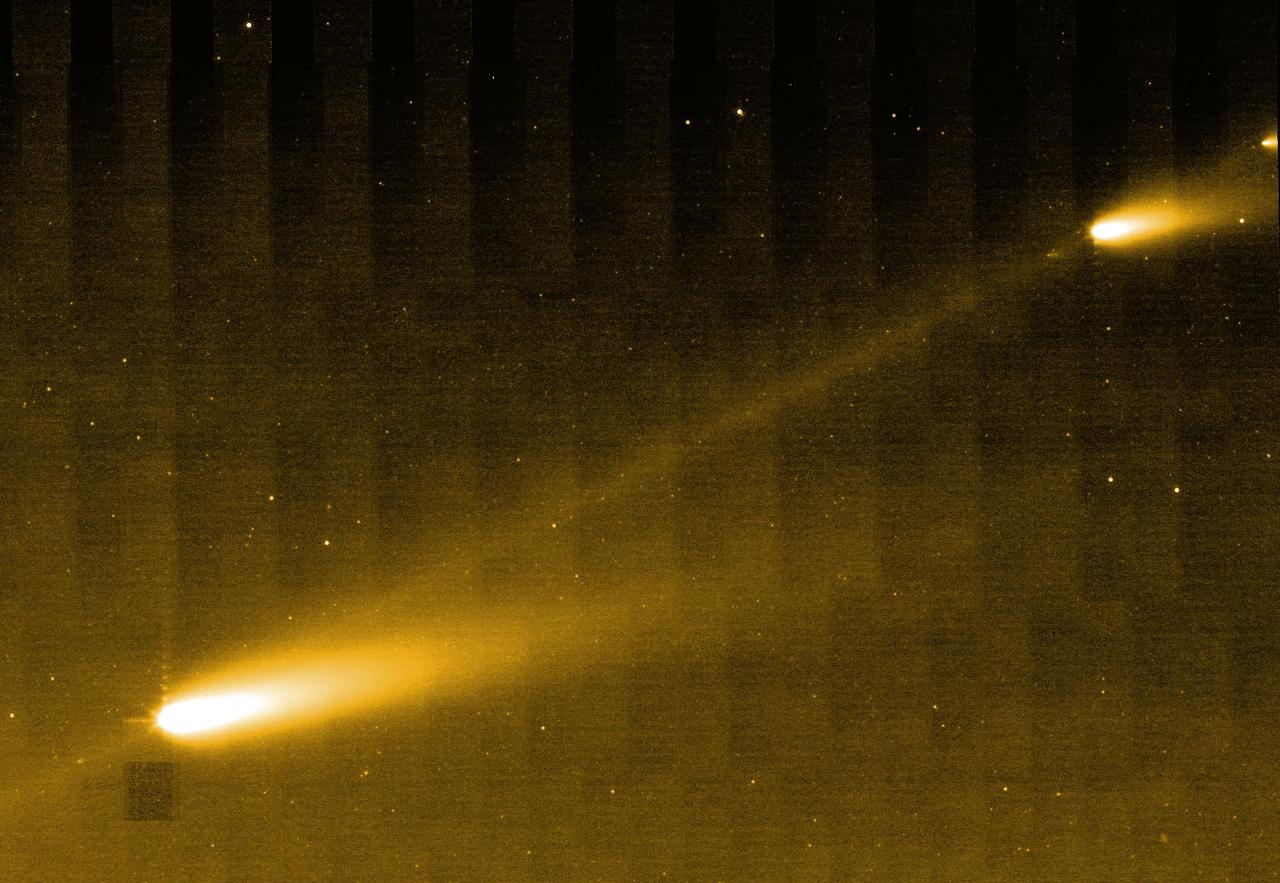
NASA Spitzer Space Telescope shows three of the many fragments making up Comet 73P/Schwassman-Wachmann 3. The picture also provides the best look yet at the crumbling comet trail of debris.
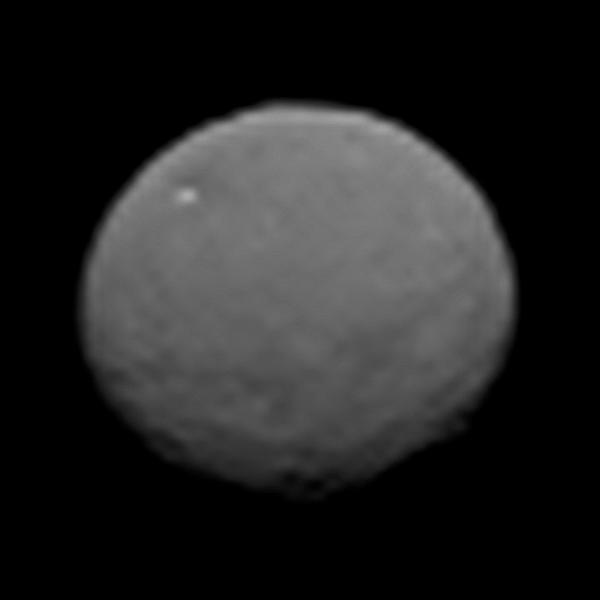
This image, taken 147,000 miles 237,000 kilometers from Ceres on January 25, 2015 by NASA Dawn spacecraft, is part of a series of views representing the best look so far at the dwarf planet. http://photojournal.jpl.nasa.gov/catalog/PIA19172
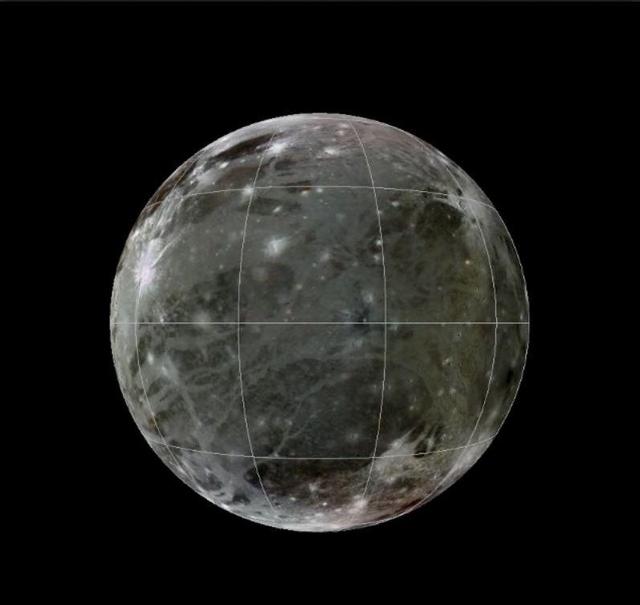
This is a frame from an animation of a rotating globe of Jupiter moon Ganymede, with a geologic map superimposed over a global color mosaic, incorporating the best available imagery from NASA Voyager 1 and 2 spacecraft, and Galileo spacecraft.
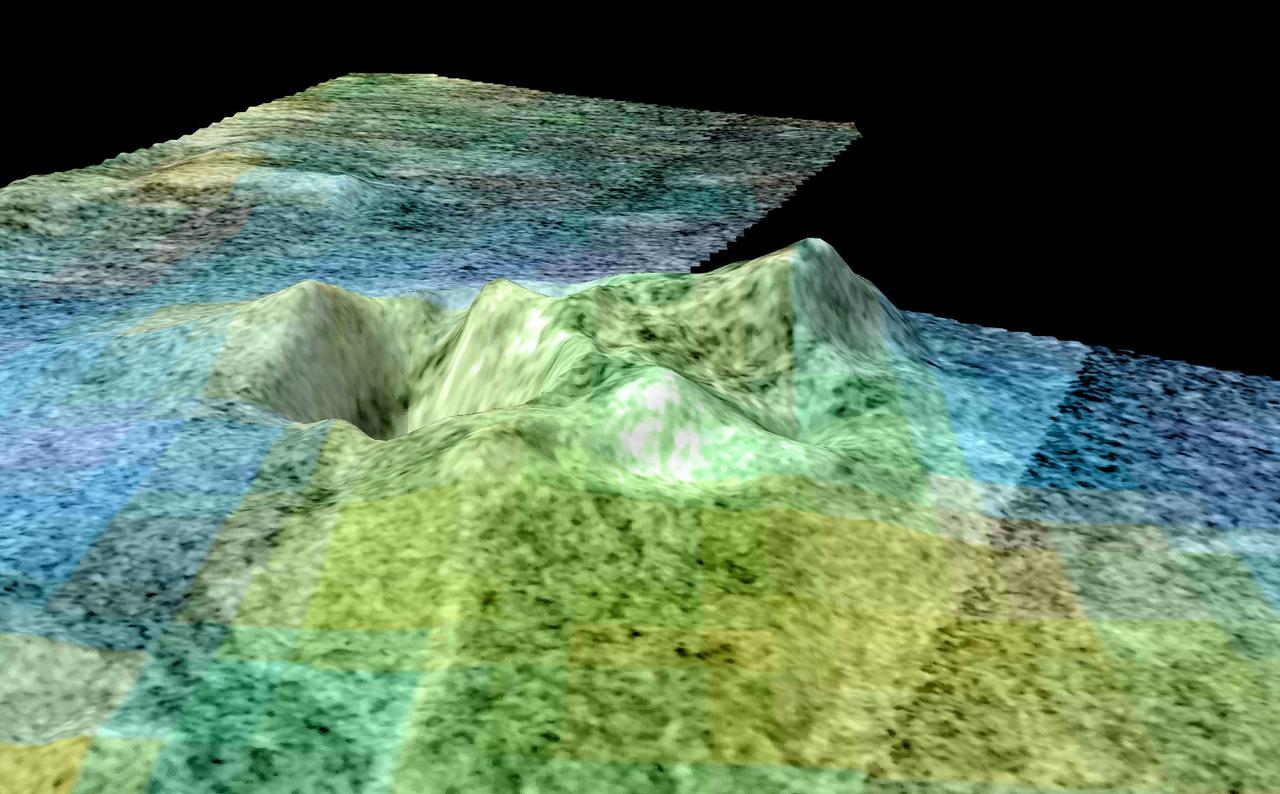
This frame from a movie is based on data from NASA Cassini spacecraft and shows a flyover of an area of Saturn moon Titan known as Sotra Facula. Scientists believe Sotra is the best case for an ice volcano, or cryovolcano, region on Titan.