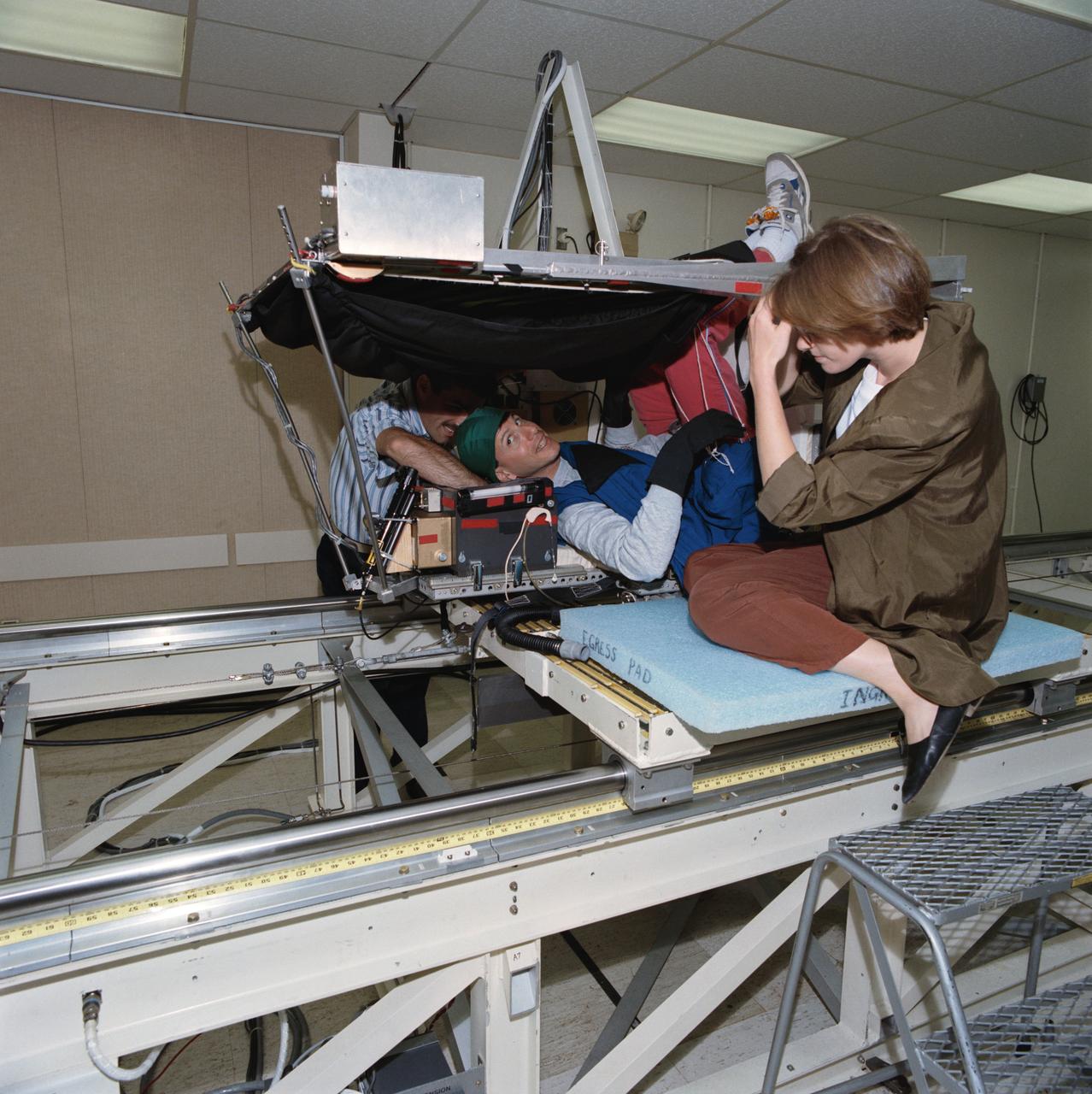
S93-45314 (29 Sept 1993) --- Payload specialist Martin J. Fettman, in an oscillating sled device, participates in a data collection project for neurovestibular functions. The seven Spacelab Life Sciences (SLS-2) crewmembers devoted a full day to miscellaneous biomedical data collection in preparation for next month's two week mission aboard Columbia.
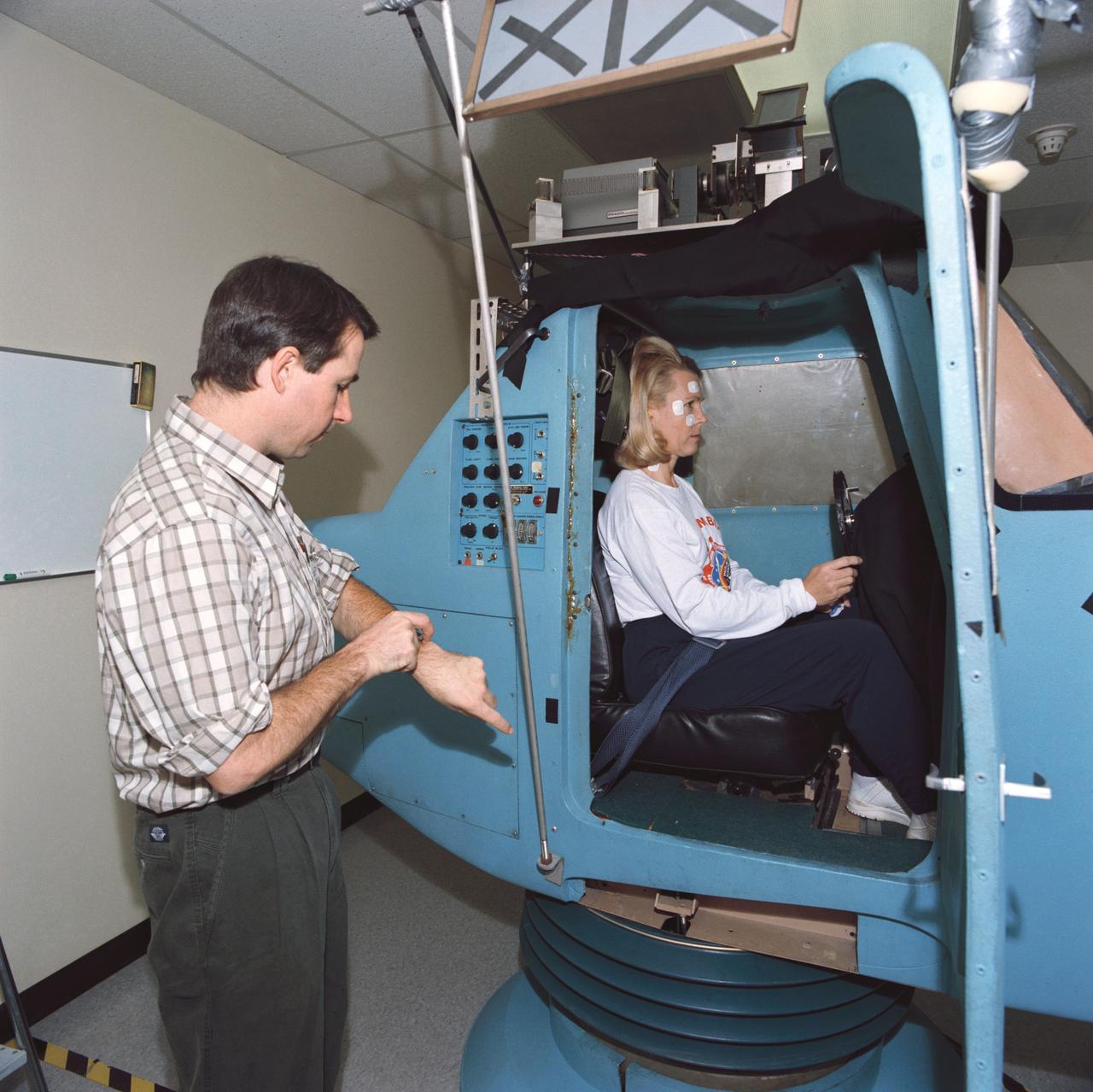
S93-45373 (29 Sept 1993) --- Astronaut Rhea Seddon, STS-58 payload commander, is in a piloting simulator as part of a pre-flight data collection project for neurovestibular functions. The seven Spacelab Life Sciences (SLS-2) crew members devoted a full day to miscellaneous biomedical data collection in preparation for next month's two week mission aboard Columbia.
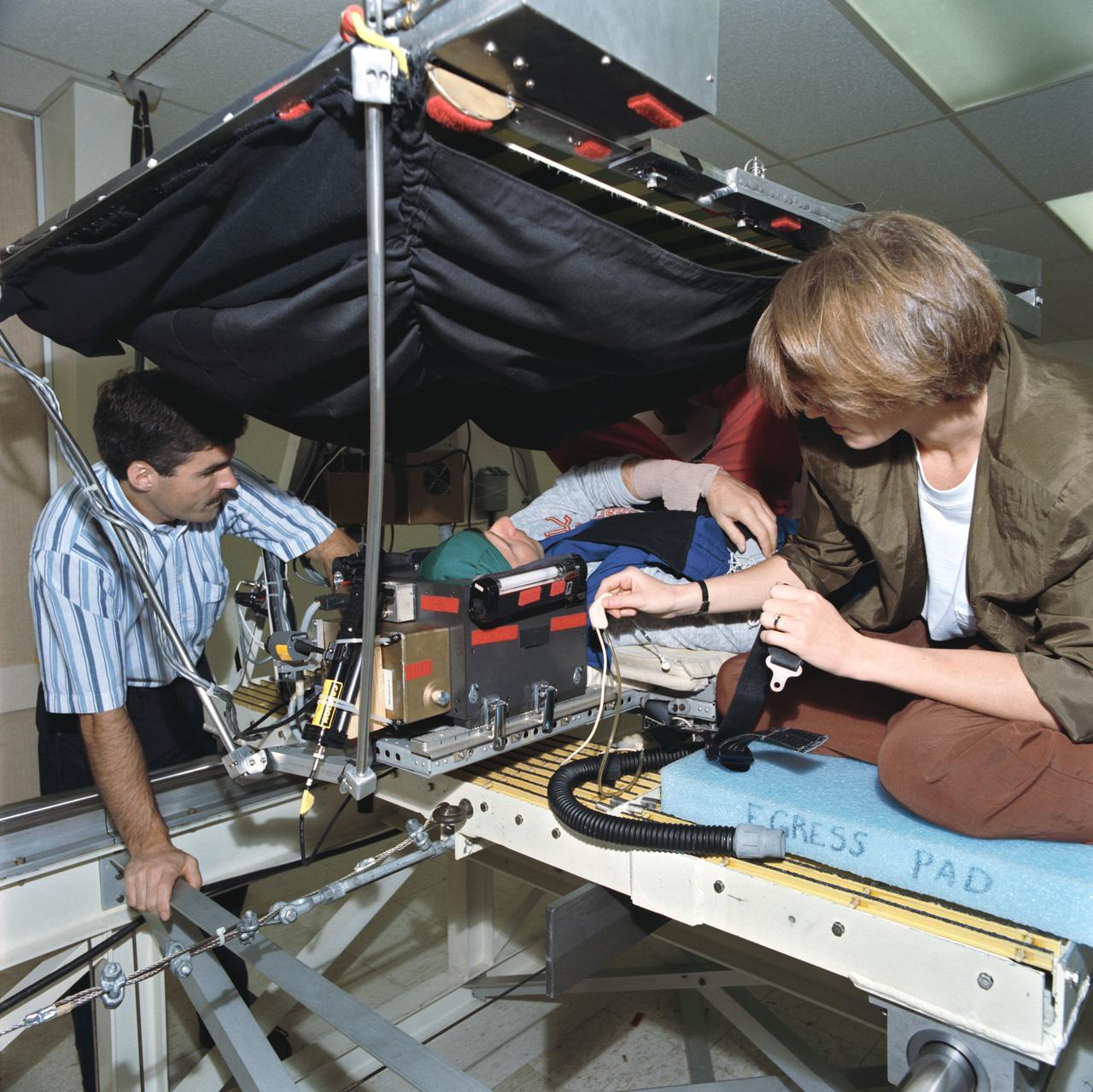
S93-45363 (29 Sept 1993) --- Payload specialist Martin J. Fettman, in an oscillating sled device, participates in a data collection project for neurovestibular functions. The seven Spacelab Life Sciences (SLS-2) crewmembers devoted a full day to miscellaneous biomedical data collection in preparation for next month's two week mission aboard Columbia.
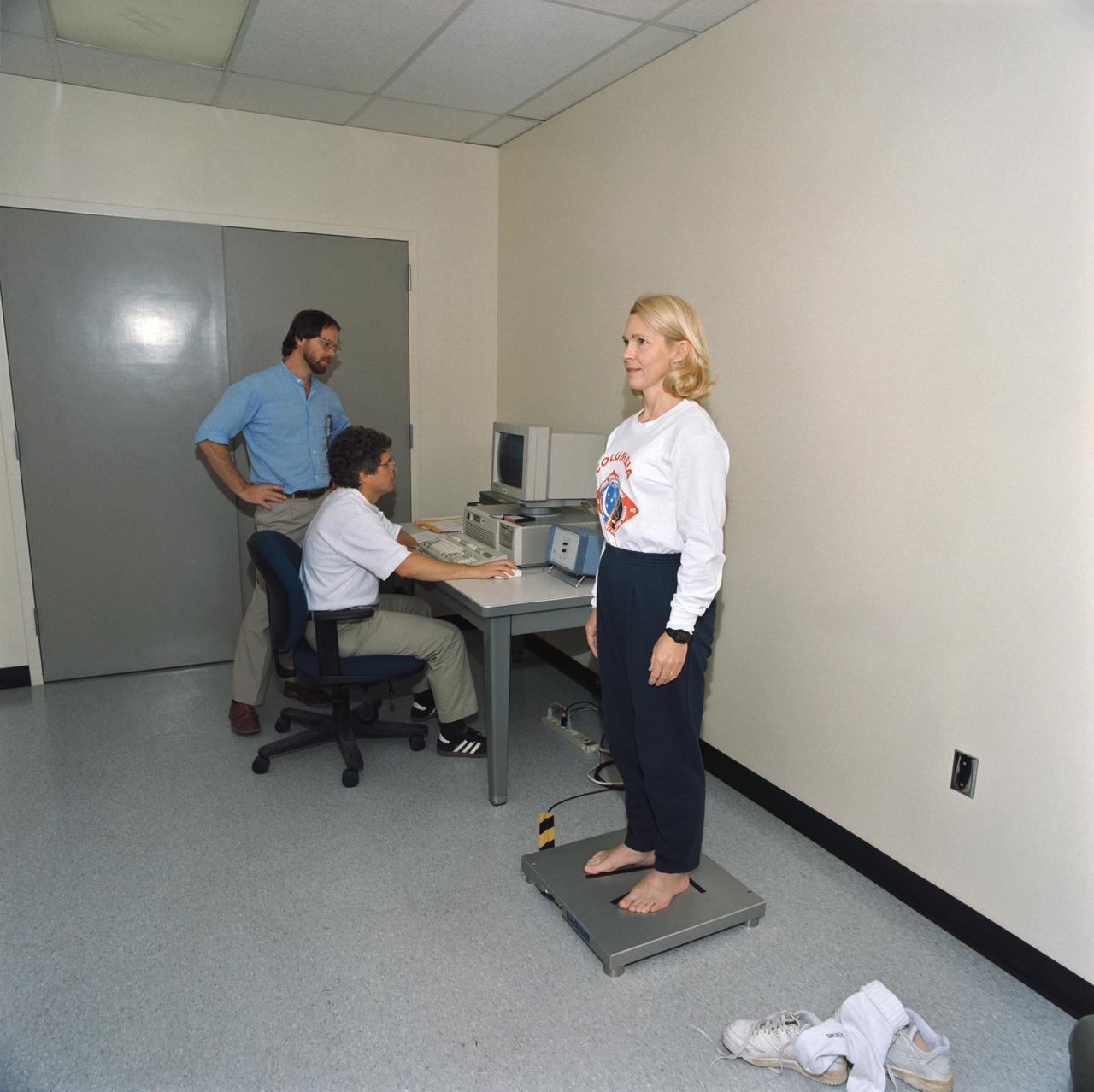
S93-45367 (29 Sept 1993) --- Astronaut Rhea Seddon, STS-58 payload commander, participates in biomedical data collection. The seven member crew spent an entire day recording important pre-flight data in preparation for the two week Spacelab Life Sciences (SLS-2) mission, scheduled for next month.
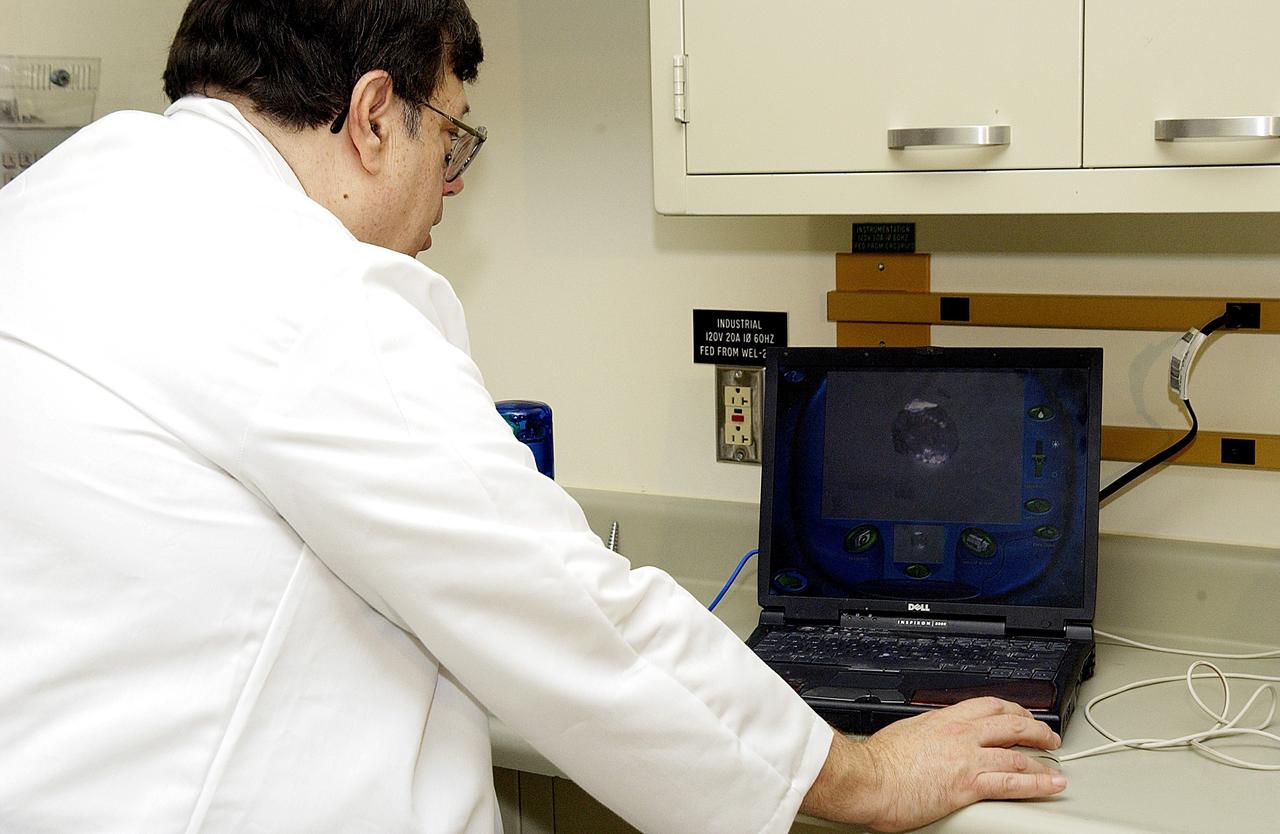
KENNEDY SPACE CENTER, FLA. - Barry Perlman, Pembroke Pines Charter Middle School in Florida, prepares a computer to receive data from an experiment carried on mission STS-107. Several experiments were found during the search for Columbia debris. Included in the Commercial ITA Biomedical Experiments payload on mission STS-107 are urokinase cancer research, microencapsulation of drugs, the Growth of Bacterial Biofilm on Surfaces during Spaceflight (GOBBSS), and tin crystal formation. The latter was sponsored by the Pembroke Pines Charter Middle School.
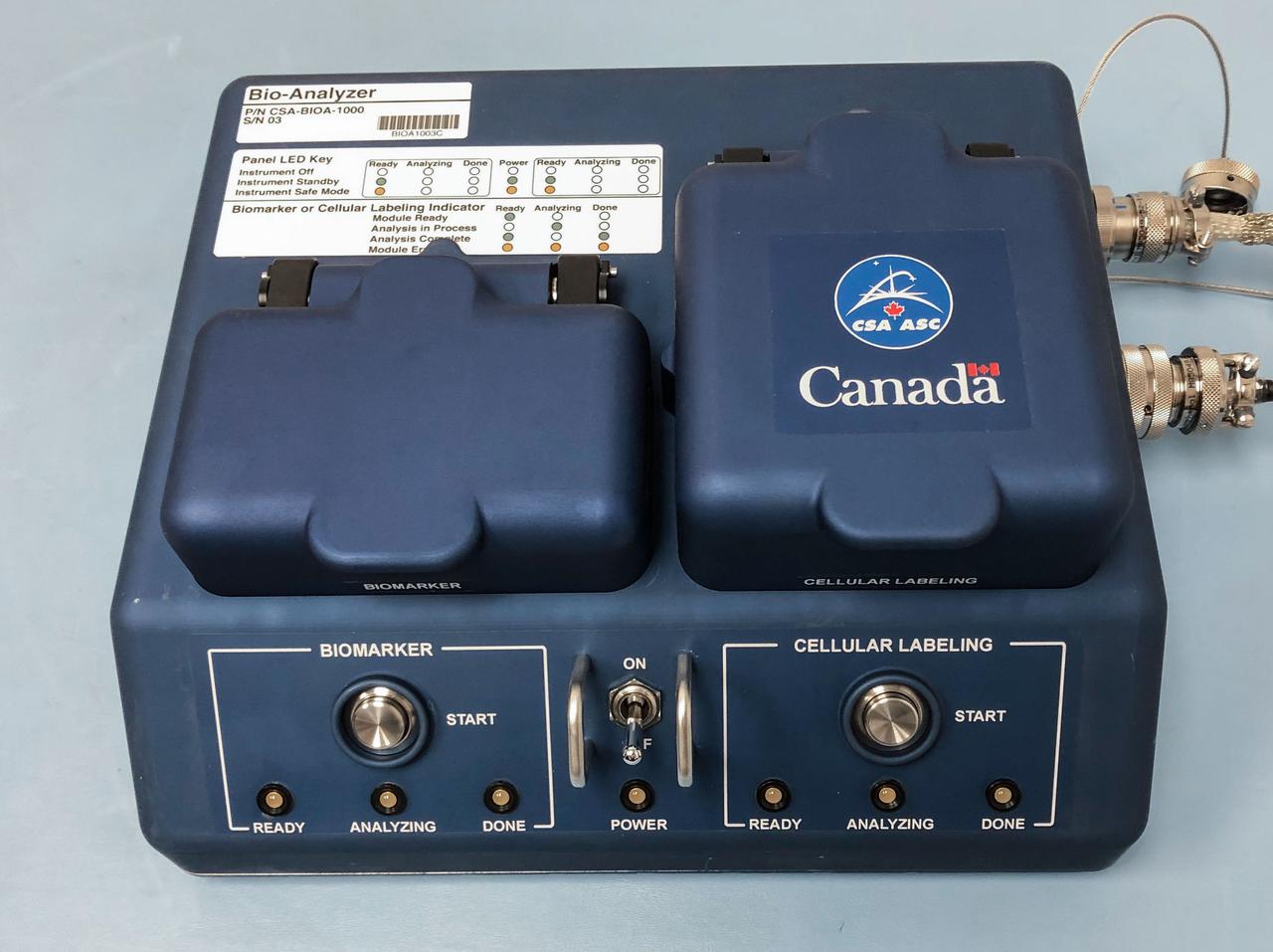
jsc2019e017352 (3/1/2019) --- The Canadian Space Agency's Bio-Analyzer is a liquid sample analysis device that will help astronauts on board the International Space Station accelerate the process of scientific data collection. Using just a few drops of liquid, it quickly returns key biomedical analyses.
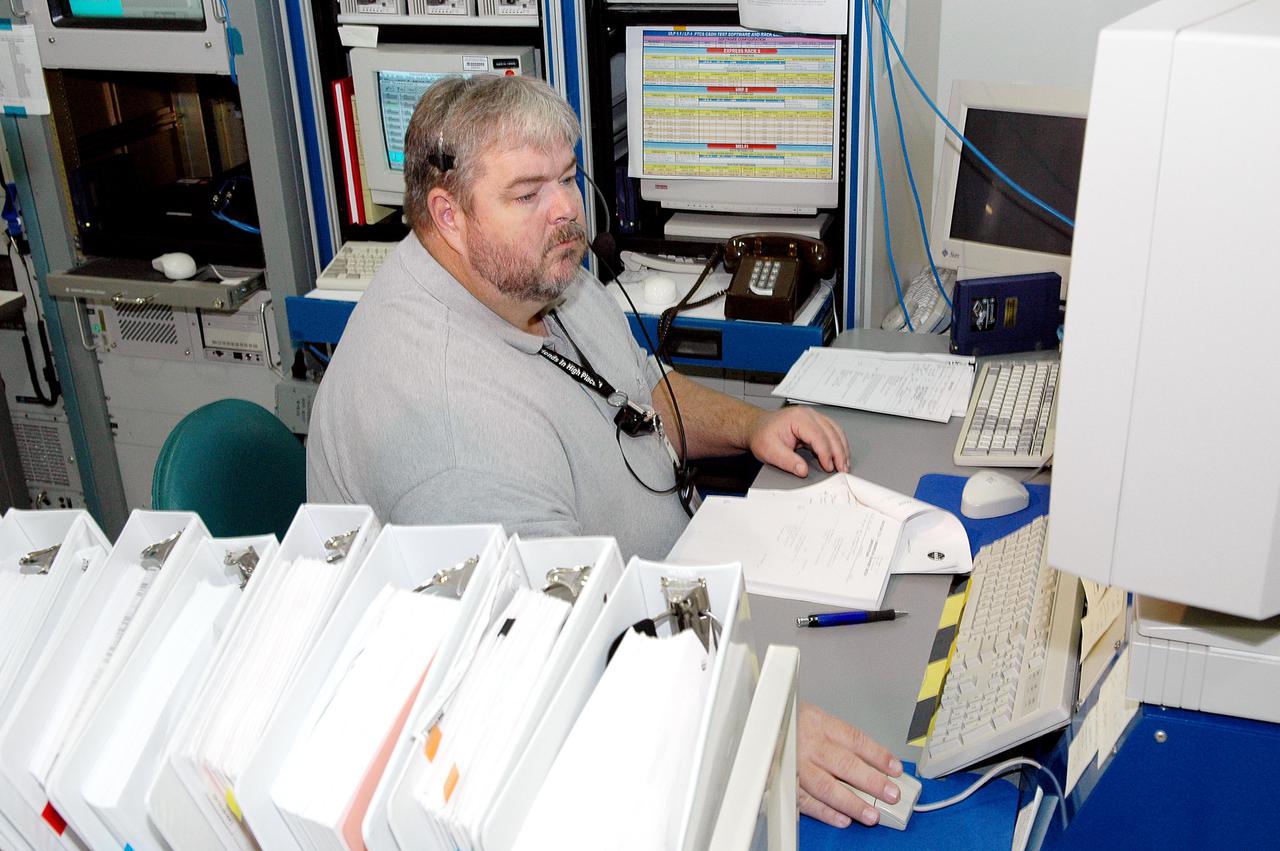
KENNEDY SPACE CENTER, FLA. - Joe Mounts, with Boeing, monitors the Payload Test and Checkout System for the Human Research Facility (HRF) Rack -2 payload. The HRF-2 is scheduled to fly on Return to Flight Space Shuttle mission STS-114. The HRF-2 will deliver additional biomedical instrumentation and research capability to the International Space Station. HRF Rack 1 contains an ultrasound unit and gas analyzer system and has been operational in the U.S. Lab since May 2001. HRF-2 will also be installed in the U. S. Lab and will provide structural, power, thermal, command and data handling, and communication and tracking interfaces between the HRF biomedical instrumentation and the U. S. Lab.
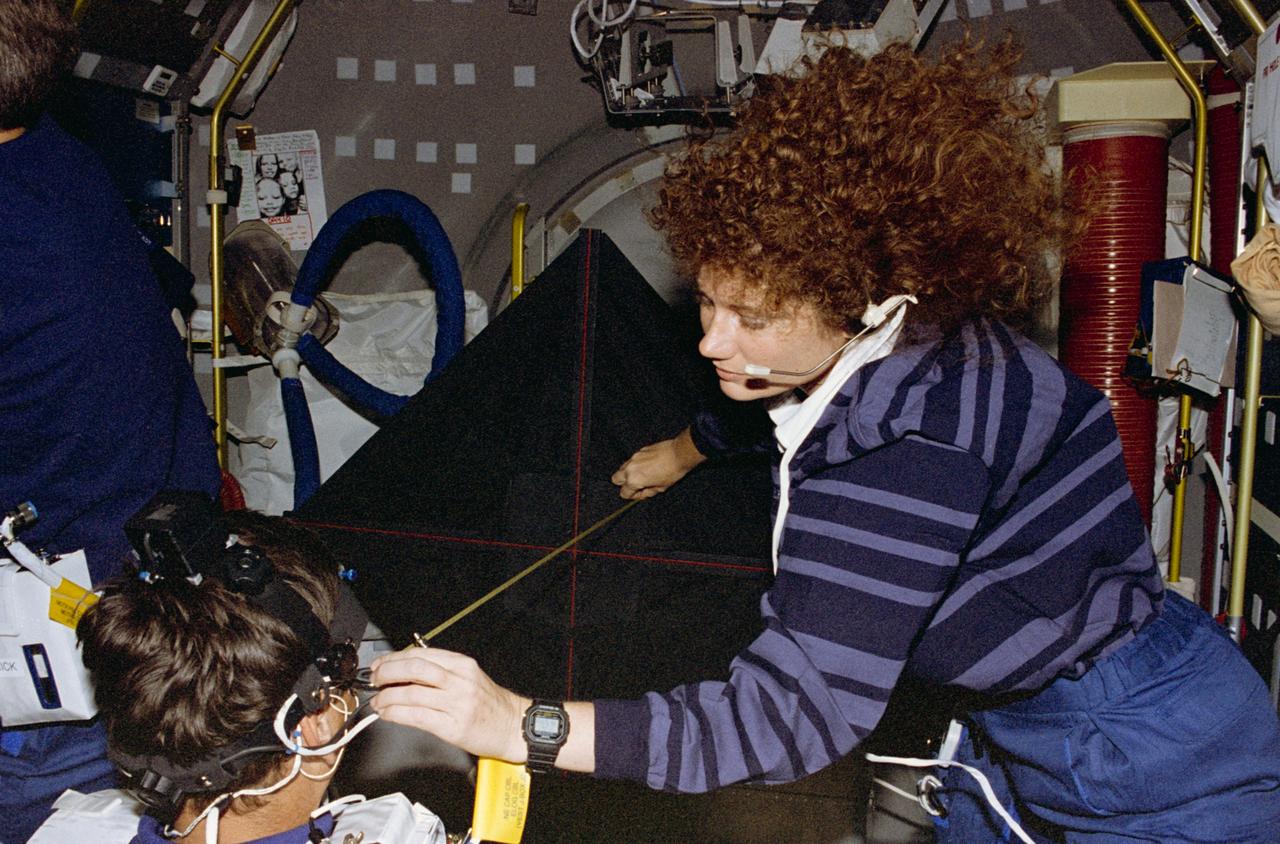
STS078-398-032 (20 June - 7 July 1996) --- Astronaut Susan J. Helms, payload commander, measures the distance between Jean-Jacques Favier’s head and the luminous torque, used for the Canal and Otolith Interaction Study (COIS) on the Life and Microgravity Spacelab (LMS-1) mission. Favier, representing the French Space Agency (CNES), is one of two international payload specialists on the almost-17-day flight. This view shows the Voluntary Head Movement (VHM) segment of the experiment. The VHM is meant to characterize how the coordination of head and eye movement changes as a result of spaceflight. Since most vestibular functions are influenced by gravity, the COIS experiment is meant to measure response differences in microgravity.
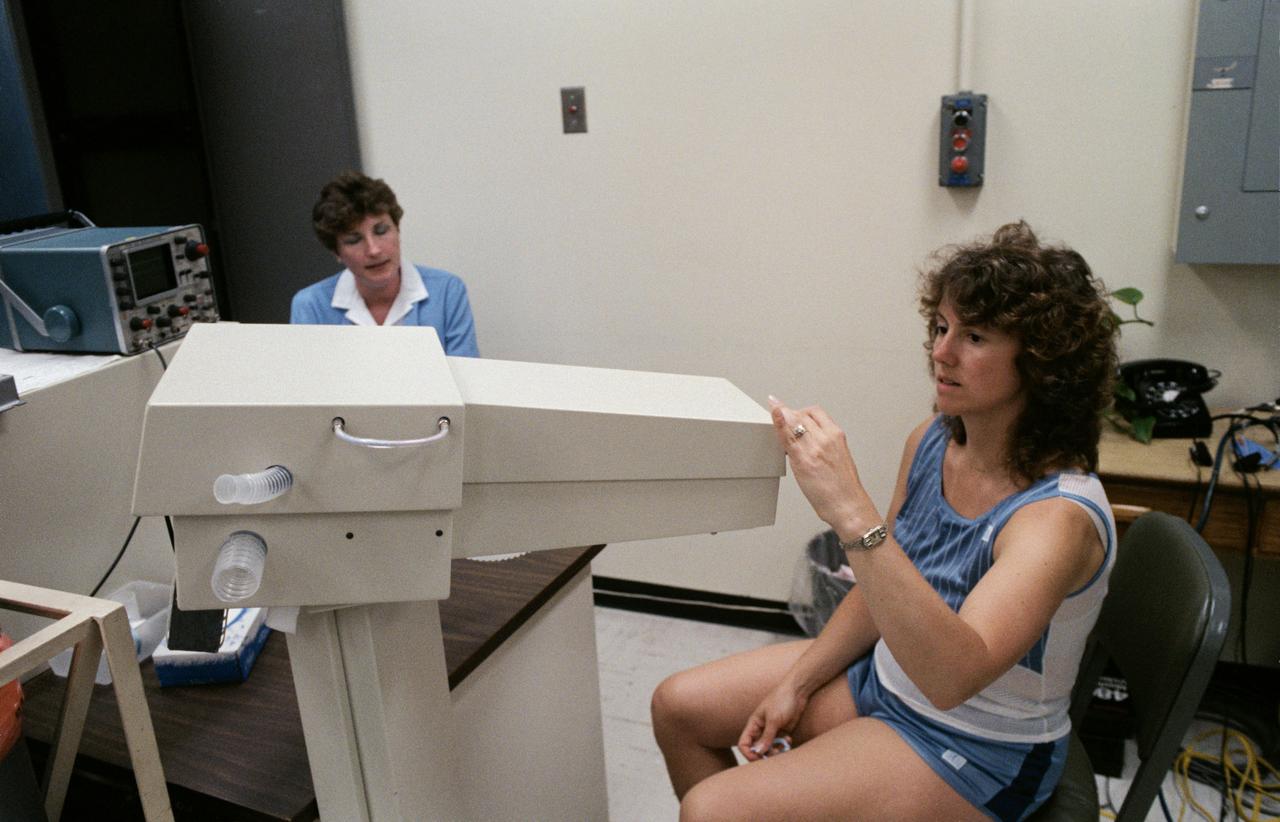
S85-36966 (10 July 1985) --- Teacher Sharon Christa McAuliffe prepares to test her lung capacity during medical examinations at the Johnson Space Center (JSC) clinic. Photo credit: NASA
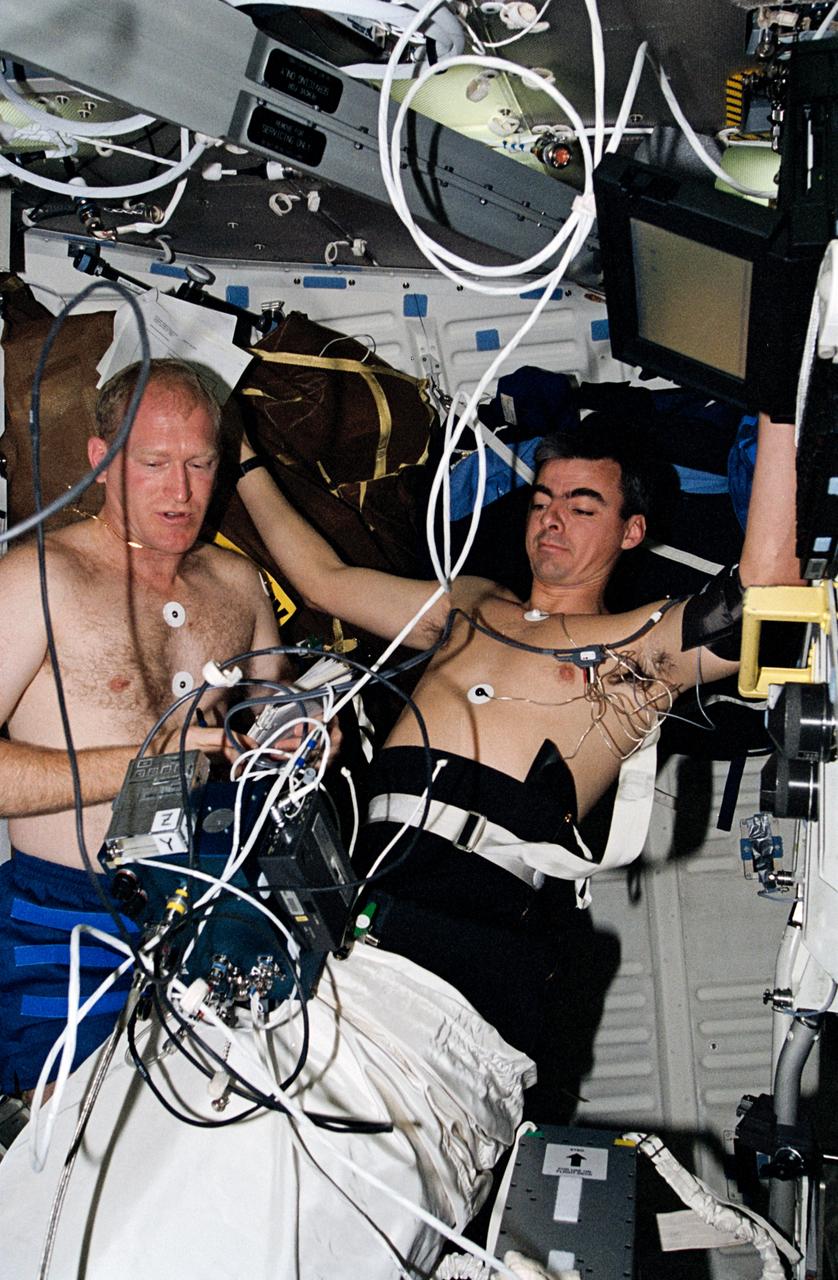
STS062-07-010 (4-18 March 1994) --- Astronaut Andrew M. Allen, pilot, participates in biomedical testing as he does a "soak" in the Lower Body Negative Pressure (LBNP) apparatus on the Columbia's middeck. Astronaut Charles D. (Sam) Gemar, mission specialist, monitors readouts from the test.
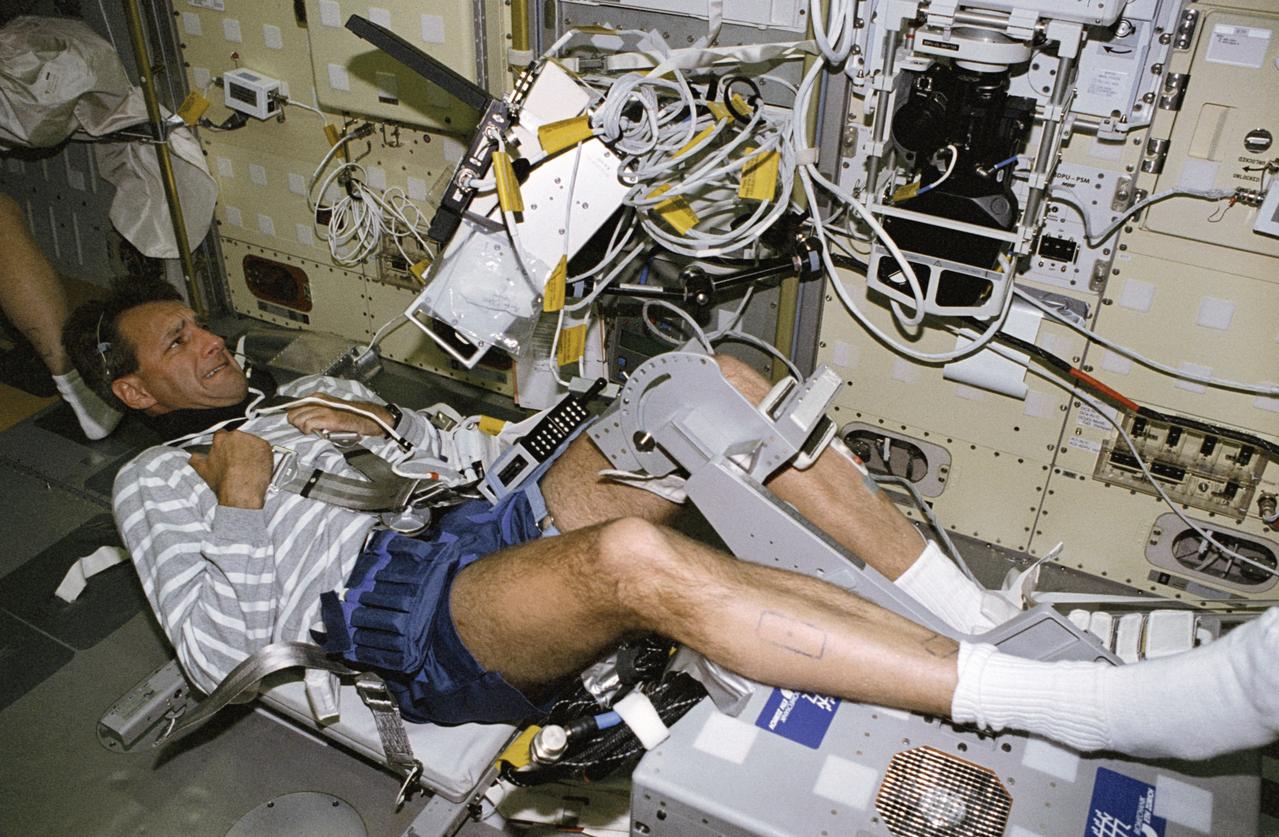
STS078-430-009 (20 June-7 July 1996) --- Astronaut Richard M. Linnehan, mission specialist, performs a test on his leg using the Torque Velocity Dynamometer (TVD). Dr. Thirsk was measuring changes in muscle forces of the leg in this particular view. The TVD hardware is also used to measure arm muscle forces and velocity at the bicep and tricep areas. Crewmembers for the mission performed all experiment protocols prior to flight to develop a baseline and will also perform post-flight tests to complete the analysis. Additionally, muscle biopsies were taken before the flight and will be conducted after the flight.
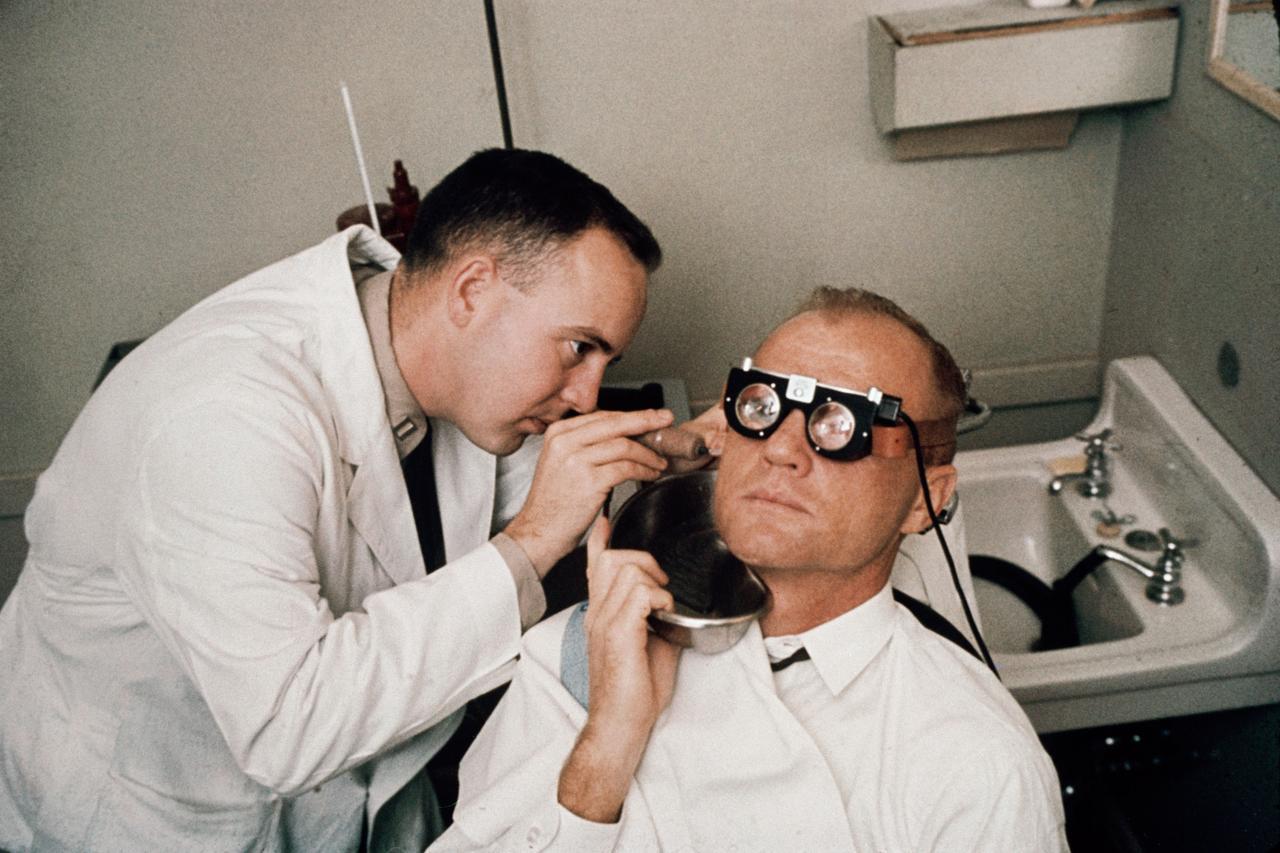
S64-14849 (1962) --- Astronaut John H. Glenn Jr.'s balance mechanism (semi-circular-canals) is tested by running cool water into his ear and measuring effect on eye motions (nystagmus). Photo credit: NASA
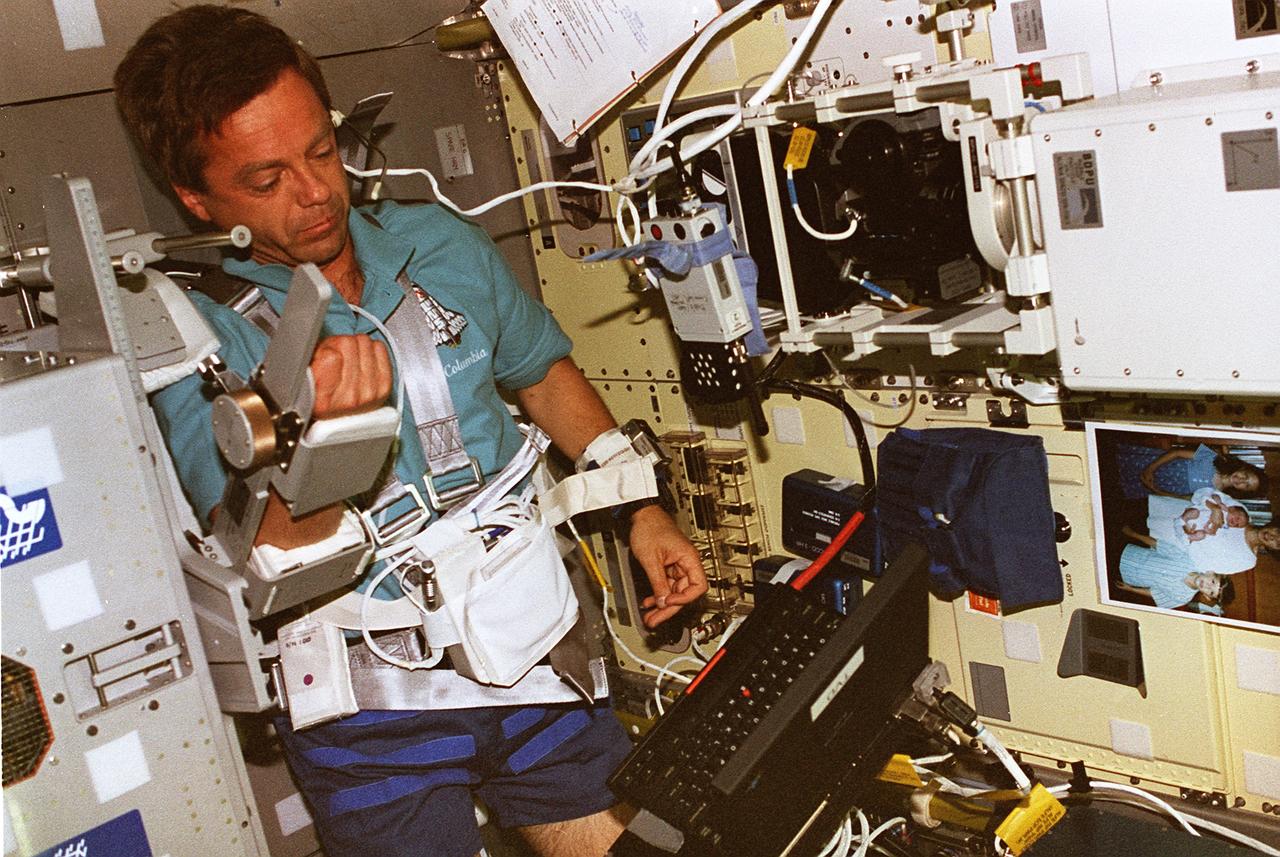
STS078-304-018 (20 June - 7 July 1996) --- Payload specialist Robert B. Thirsk, representing the Canadian Space Agency (CSA), performs a test on his arm using the Torque Velocity Dynamometer (TVD). Dr. Thirsk was measuring changes in muscle forces of the bicep and tricep in this particular view. The TVD hardware is also used to measure leg muscle forces and velocity at the ankle and elbow joints. Crew members for the mission performed all experiment protocols prior to flight to develop a baseline and will also perform post-flight tests to complete the analysis. Additionally, muscle biopsies were taken before the flight and will be conducted after the flight.
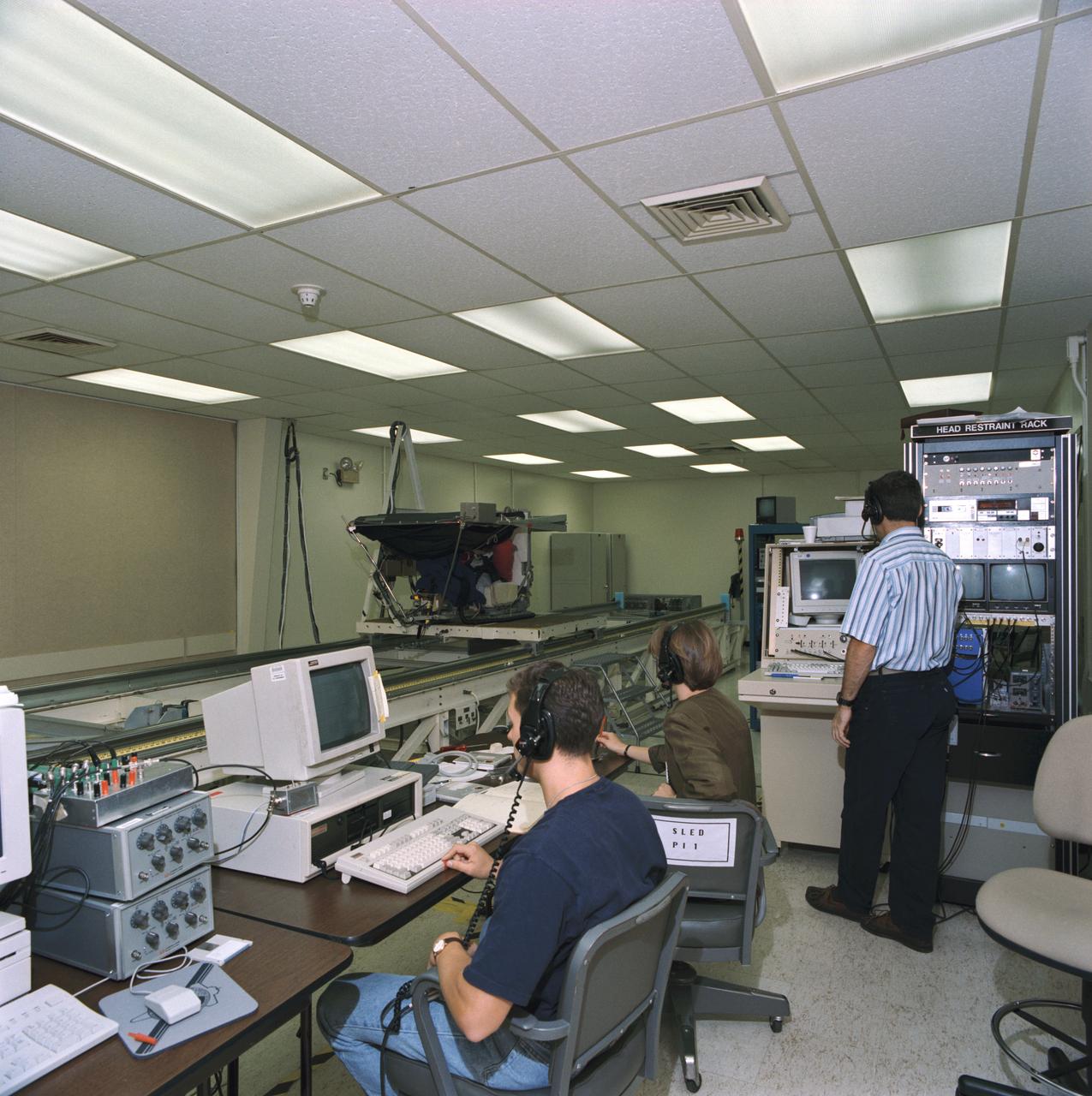
S93-45365 (29 Sept 1993) --- Payload specialist Martin J. Fettman, in an oscillating sled device in upper left, participates in a data collection project for neurovestibular functions. His responses to the sled's movements are recorded by a team of monitors in the foreground. The seven Spacelab Life Sciences (SLS-2) crew members devoted a full day to miscellaneous biomedical data collection in preparation for next month's two week mission aboard Columbia.
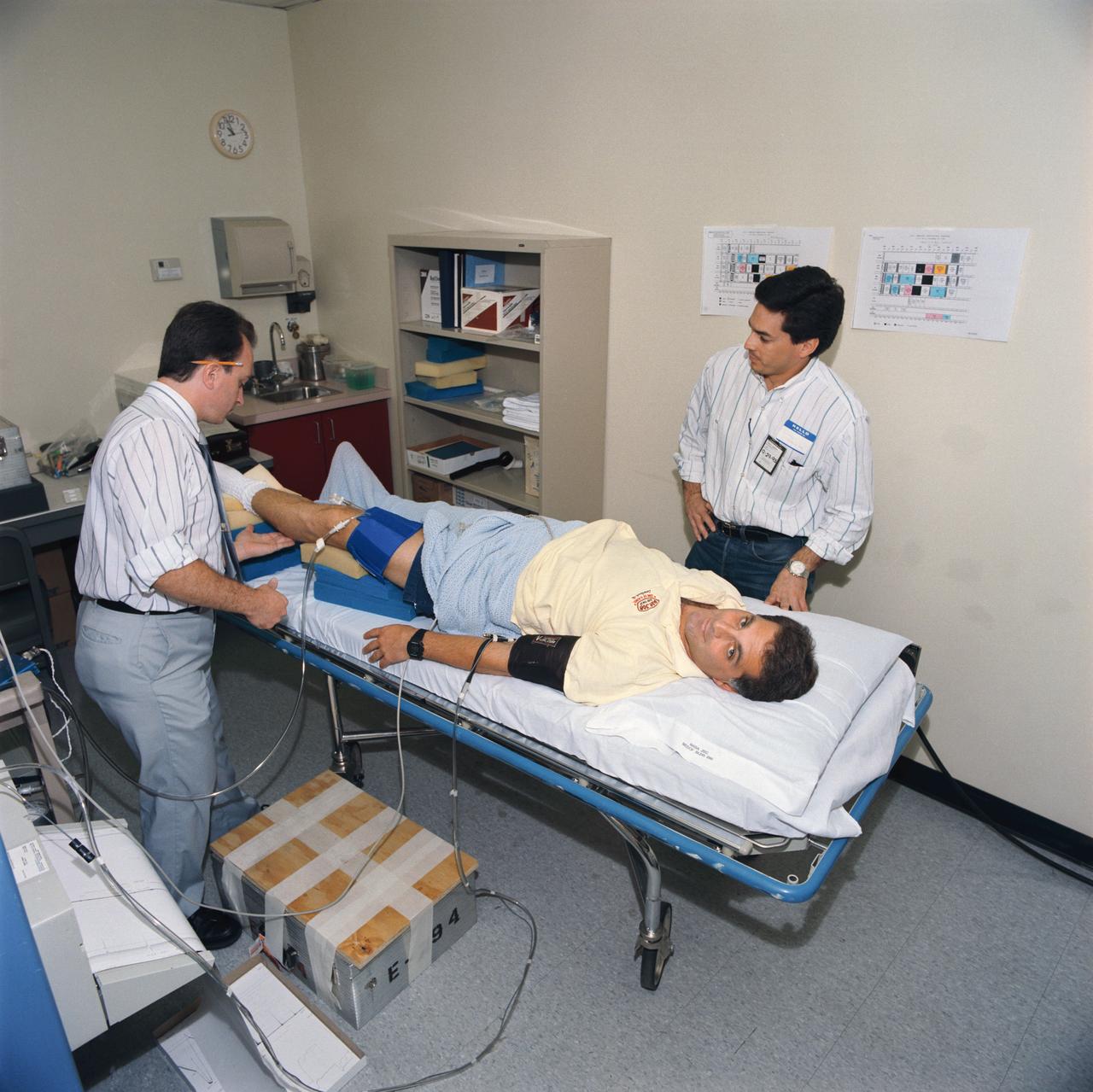
S93-45375 (29 Sept 1993) --- Astronaut David A. Wolf, STS-58 mission specialist, has blood drawn from his leg for volume measuring. The blood draw was part of the cardiovascular function data collection in preparation for the Spacelab Life Sciences (SLS-2) mission. The seven Spacelab Life Sciences crewmembers devoted a full day to miscellaneous biomedical data collection in preparation for next month's two week mission aboard Columbia.
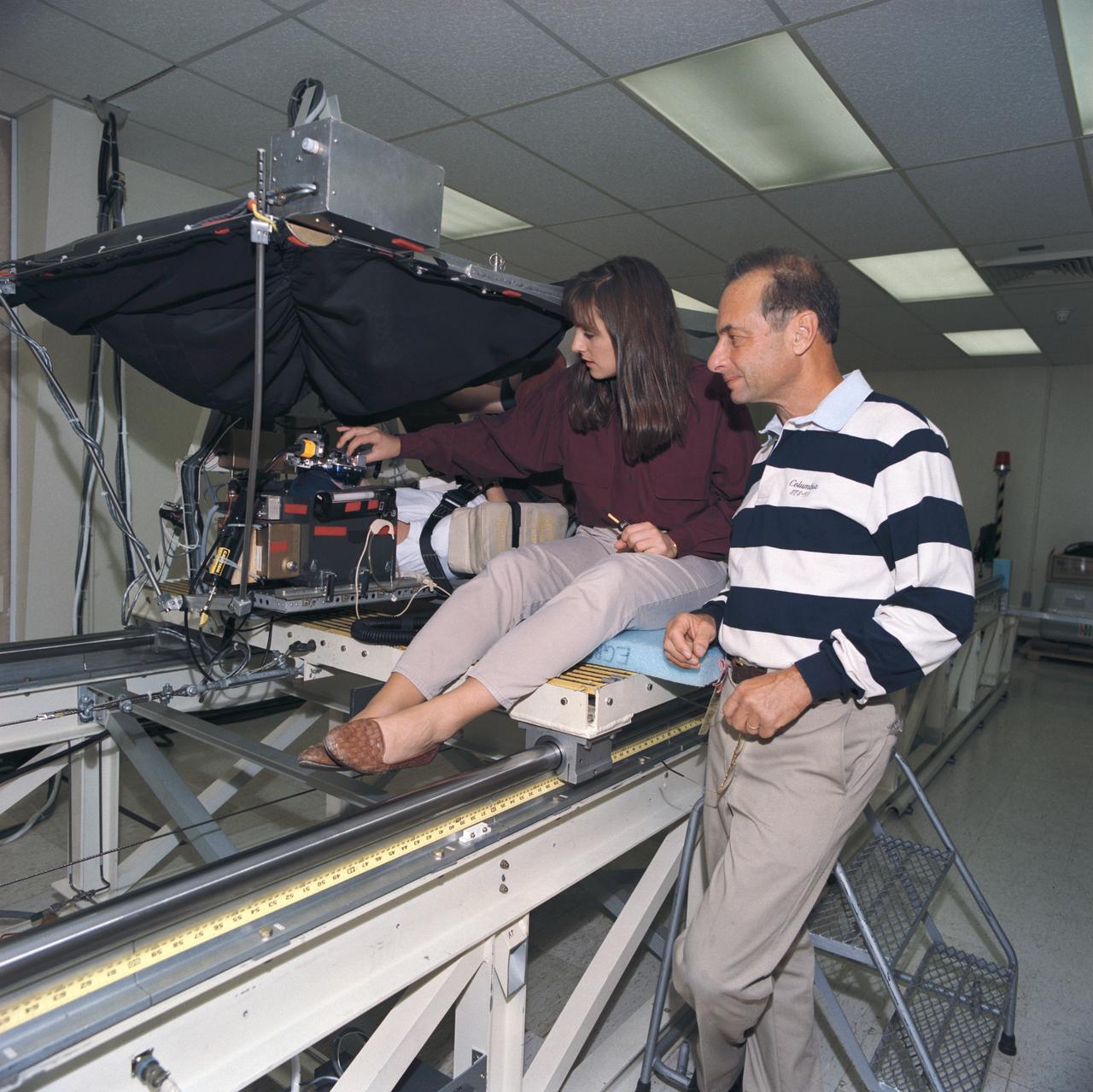
S93-45368 (29 Sept 1993) --- Payload specialist Martin J. Fettman (face obscured), in an oscillating sled device, participates in a data collection project for neurovestibular functions. Assisting the test are Dr. Laurence Young, alternate payload specialist, and an unidentified MIT student. The seven Spacelab Life Sciences (SLS-2) crew members devoted a full day to miscellaneous biomedical data collection in preparation for next month's two week mission aboard Columbia.

KENNEDY SPACE CENTER, FLA. - In the Space Station Processing Facility, a worker stands by as the Rack Insertion Device slowly moves the Human Research Facility-2 (HRF-2) science rack into the Multi-Purpose Logistics Module Raffaello for flight on Space Shuttle Discovery’s Return to Flight mission, STS-114. The HRF-2 will deliver additional biomedical instrumentation and research capability to the International Space Station. HRF-1, installed on the U.S. Lab since May 2001, contains an ultrasound unit and gas analyzer. Both racks provide structural, power, thermal, command and data handling, and communication and tracking interfaces between the HRF biomedical instrumentation and the U.S. Laboratory, Destiny. NASA Kennedy Space Center and their prime contractor responsible for ISS element processing, The Boeing Company, prepared the rack for installation. The HRF Project is managed by NASA Johnson Space Center and implemented through contract with Lockheed Martin, Houston, Texas.
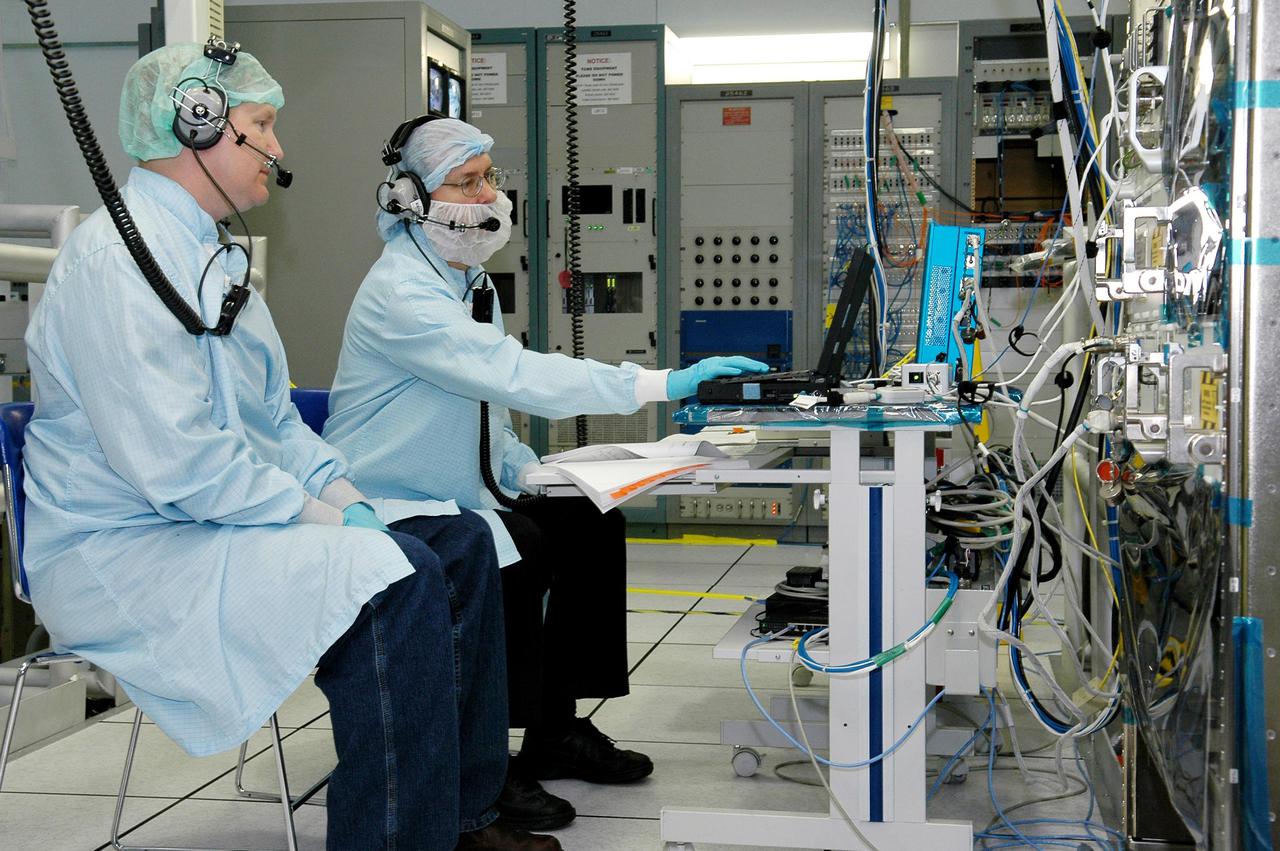
KENNEDY SPACE CENTER, FLA. - - In the Space Station Processing Facility, Gaschen Geissen and Elton Witt, with Lockheed Martin, monitor the Payload Test and Checkout System for the Human Research Facility (HRF) Rack -2 payload. The HRF-2 is scheduled to fly on Return to Flight Space Shuttle mission STS-114. The HRF-2 will deliver additional biomedical instrumentation and research capability to the International Space Station. HRF Rack 1 contains an ultrasound unit and gas analyzer system and has been operational in the U.S. Lab since May 2001. HRF-2 will also be installed in the U. S. Lab and will provide structural, power, thermal, command and data handling, and communication and tracking interfaces between the HRF biomedical instrumentation and the U. S. Lab.
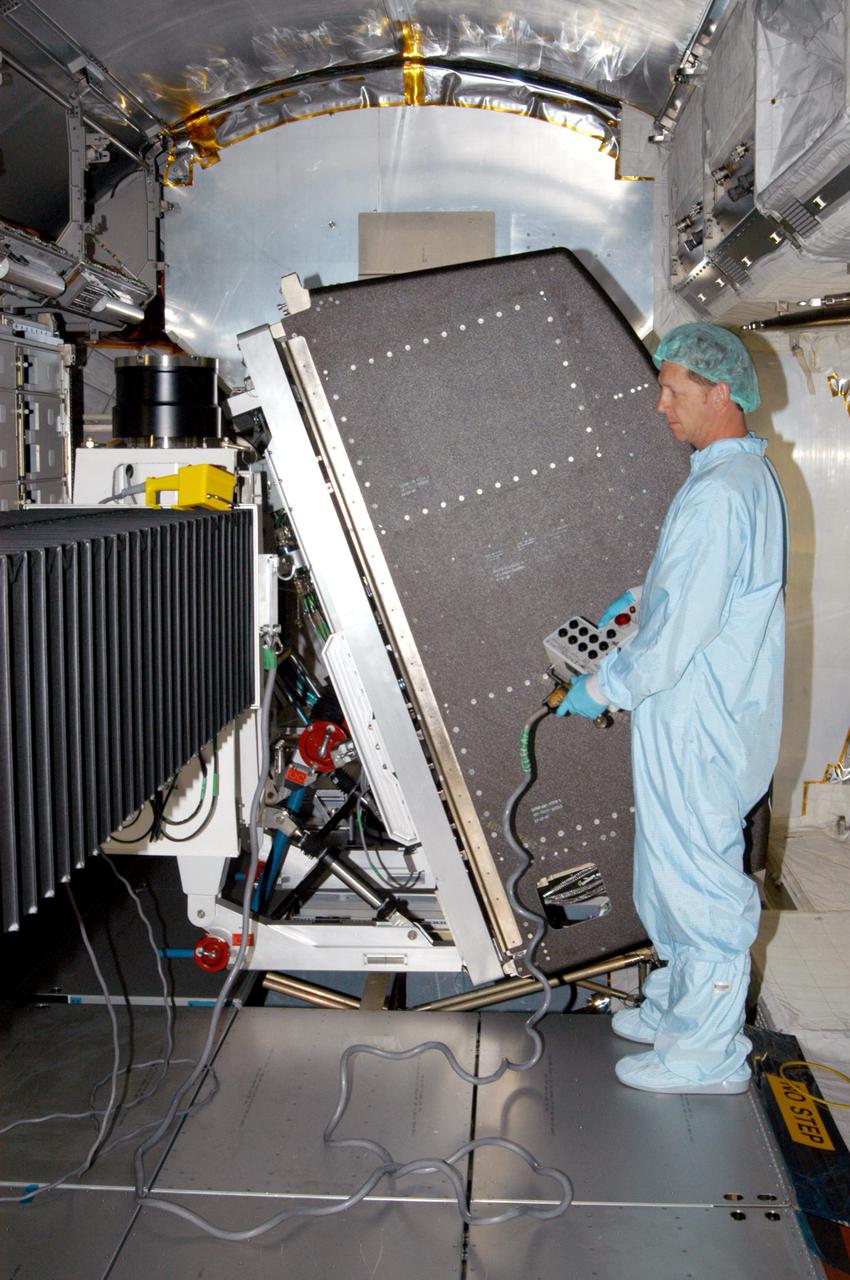
KENNEDY SPACE CENTER, FLA. - In the Space Station Processing Facility, a worker inside the Multi-Purpose Logistics Module Raffaello is ready for installation of the Human Research Facility-2 (HRF-2) science rack. Raffaello will fly on Space Shuttle Discovery’s Return to Flight mission, STS-114. The HRF-2 will deliver additional biomedical instrumentation and research capability to the International Space Station. HRF-1, installed on the U.S. Lab since May 2001, contains an ultrasound unit and gas analyzer. Both racks provide structural, power, thermal, command and data handling, and communication and tracking interfaces between the HRF biomedical instrumentation and the U.S. Laboratory, Destiny. NASA Kennedy Space Center and their prime contractor responsible for ISS element processing, The Boeing Company, prepared the rack for installation. The HRF Project is managed by NASA Johnson Space Center and implemented through contract with Lockheed Martin, Houston, Texas.
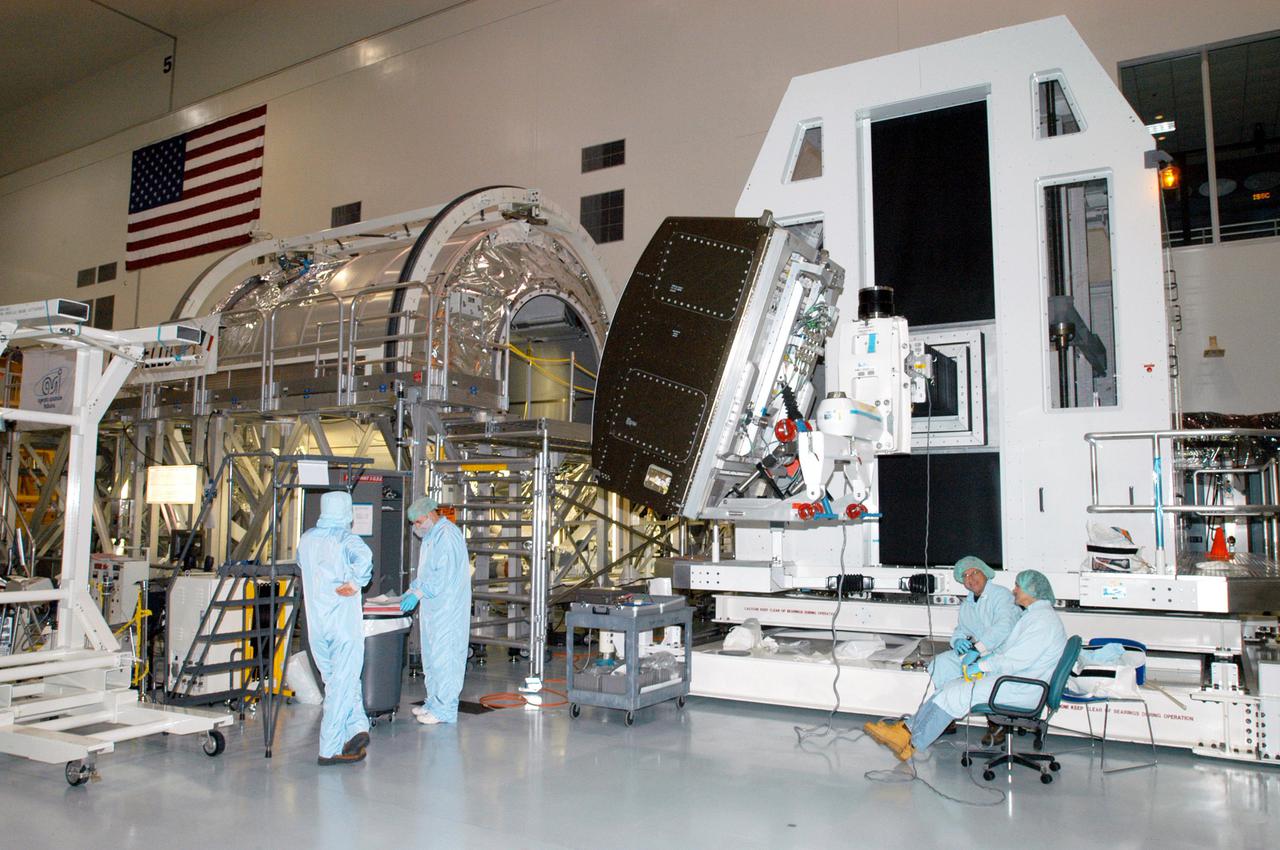
KENNEDY SPACE CENTER, FLA. - In the Space Station Processing Facility, workers prepare to attach the Human Research Facility-2 (HRF-2) science rack onto the Rack Insertion Device. HRF-2 will be installed into the Multi-Purpose Logistics Module Raffaello (at left) for flight on Space Shuttle Discovery’s Return to Flight mission, STS-114. The HRF-2 will deliver additional biomedical instrumentation and research capability to the International Space Station. HRF-1, installed on the U.S. Lab since May 2001, contains an ultrasound unit and gas analyzer. Both racks provide structural, power, thermal, command and data handling, and communication and tracking interfaces between the HRF biomedical instrumentation and the U.S. Laboratory, Destiny. NASA Kennedy Space Center and their prime contractor responsible for ISS element processing, The Boeing Company, prepared the rack for installation. The HRF Project is managed by NASA Johnson Space Center and implemented through contract with Lockheed Martin, Houston, Texas.
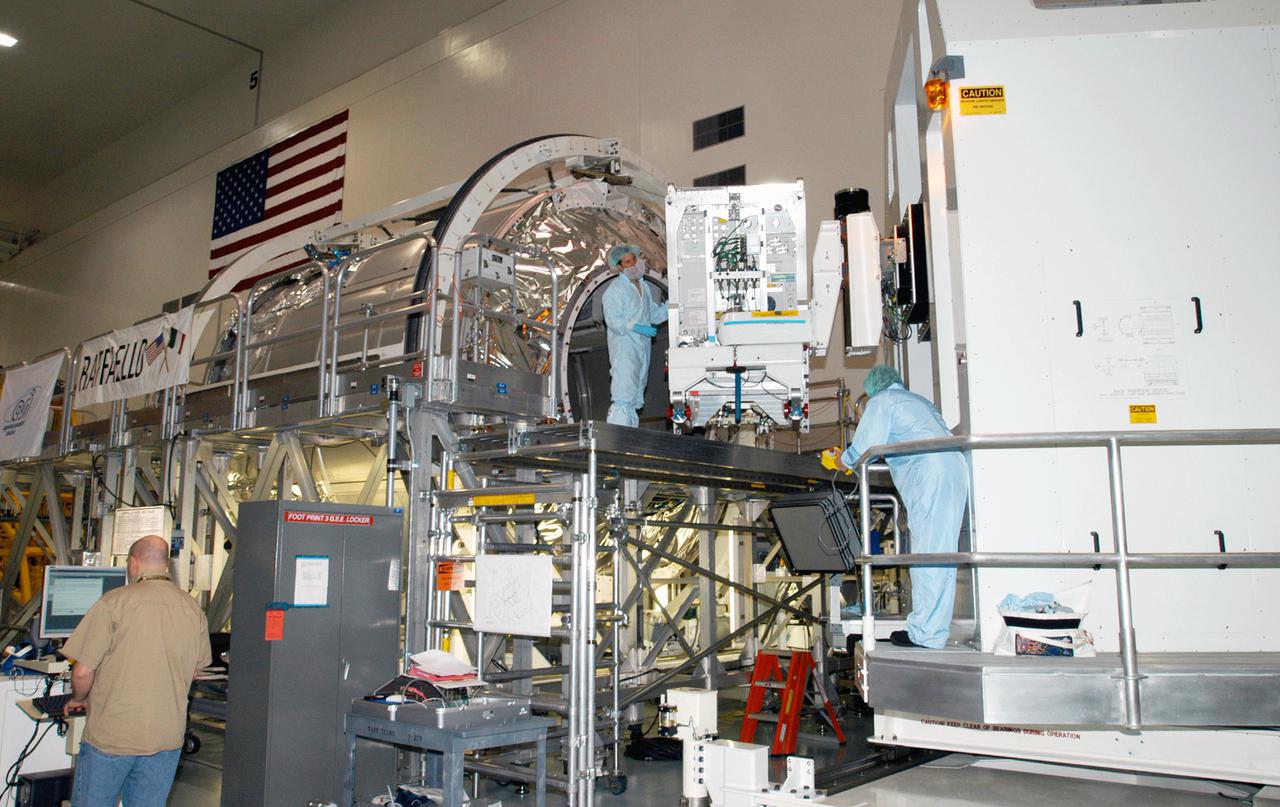
KENNEDY SPACE CENTER, FLA. - In the Space Station Processing Facility, the Rack Insertion Device moves the Human Research Facility-2 (HRF-2) science rack toward the Multi-Purpose Logistics Module Raffaello (at left) for flight on Space Shuttle Discovery’s Return to Flight mission, STS-114. The HRF-2 will deliver additional biomedical instrumentation and research capability to the International Space Station. HRF-1, installed on the U.S. Lab since May 2001, contains an ultrasound unit and gas analyzer. Both racks provide structural, power, thermal, command and data handling, and communication and tracking interfaces between the HRF biomedical instrumentation and the U.S. Laboratory, Destiny. NASA Kennedy Space Center and their prime contractor responsible for ISS element processing, The Boeing Company, prepared the rack for installation. The HRF Project is managed by NASA Johnson Space Center and implemented through contract with Lockheed Martin, Houston, Texas.
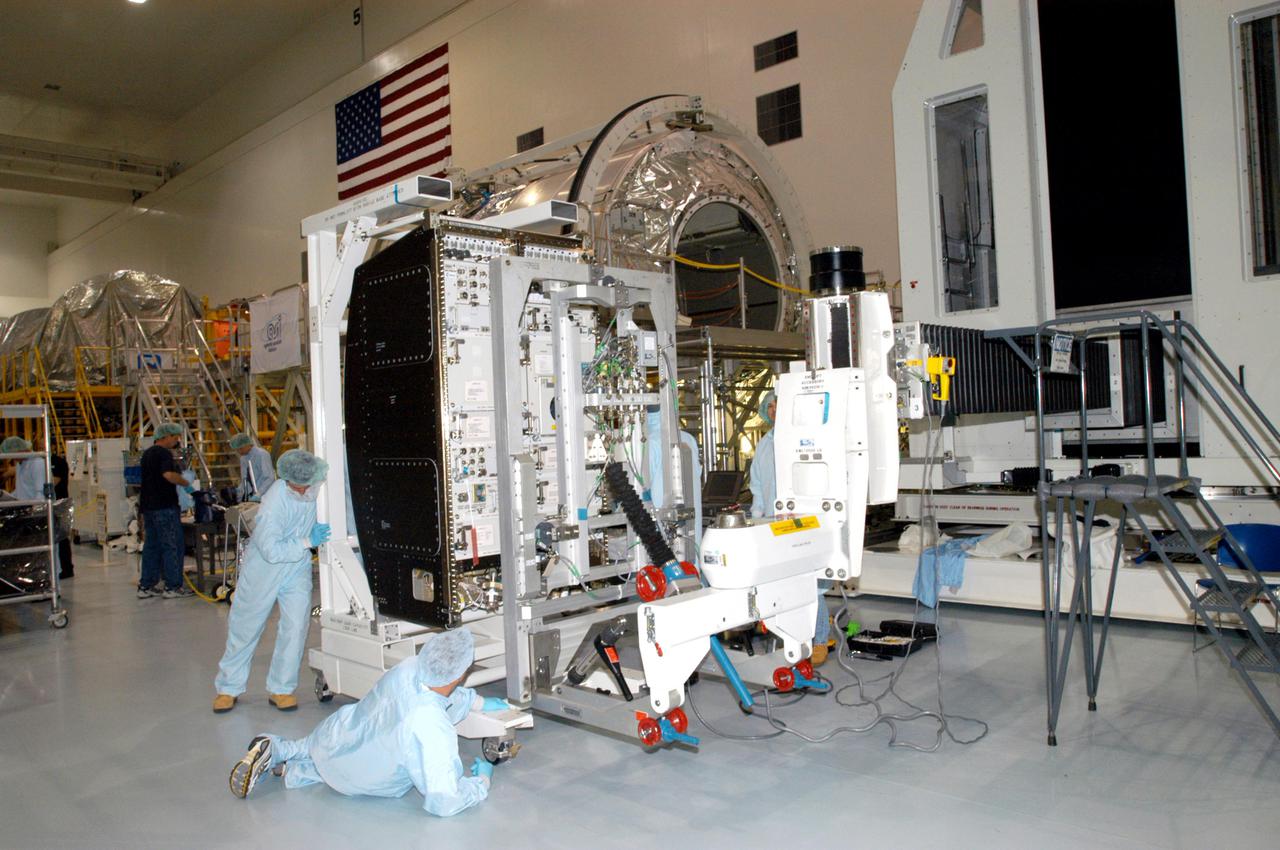
KENNEDY SPACE CENTER, FLA. - In the Space Station Processing Facility, workers prepare the Human Research Facility-2 (HRF-2) science rack for installation into the Multi-Purpose Logistics Module Raffaello for flight on Space Shuttle Discovery’s Return to Flight mission, STS-114. The HRF-2 will deliver additional biomedical instrumentation and research capability to the International Space Station. HRF-1, installed on the U.S. Lab since May 2001, contains an ultrasound unit and gas analyzer. Both racks provide structural, power, thermal, command and data handling, and communication and tracking interfaces between the HRF biomedical instrumentation and the U.S. Laboratory, Destiny. NASA Kennedy Space Center and their prime contractor responsible for ISS element processing, The Boeing Company, prepared the rack for installation. The HRF Project is managed by NASA Johnson Space Center and implemented through contract with Lockheed Martin, Houston, Texas.
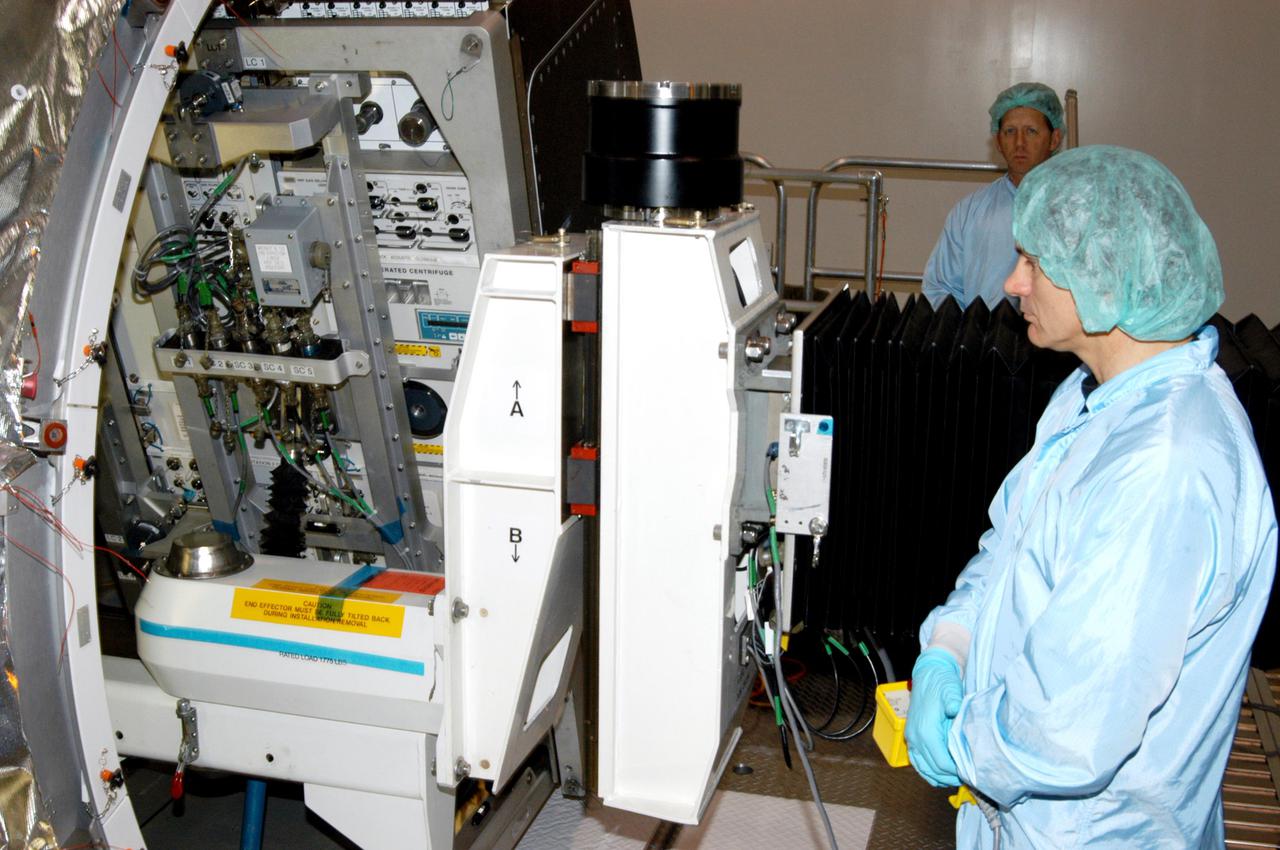
KENNEDY SPACE CENTER, FLA. - In the Space Station Processing Facility, a worker watches as the Rack Insertion Device slowly moves the Human Research Facility-2 (HRF-2) science rack into the Multi-Purpose Logistics Module Raffaello for flight on Space Shuttle Discovery’s Return to Flight mission, STS-114. The HRF-2 will deliver additional biomedical instrumentation and research capability to the International Space Station. HRF-1, installed on the U.S. Lab since May 2001, contains an ultrasound unit and gas analyzer. Both racks provide structural, power, thermal, command and data handling, and communication and tracking interfaces between the HRF biomedical instrumentation and the U.S. Laboratory, Destiny. NASA Kennedy Space Center and their prime contractor responsible for ISS element processing, The Boeing Company, prepared the rack for installation. The HRF Project is managed by NASA Johnson Space Center and implemented through contract with Lockheed Martin, Houston, Texas.
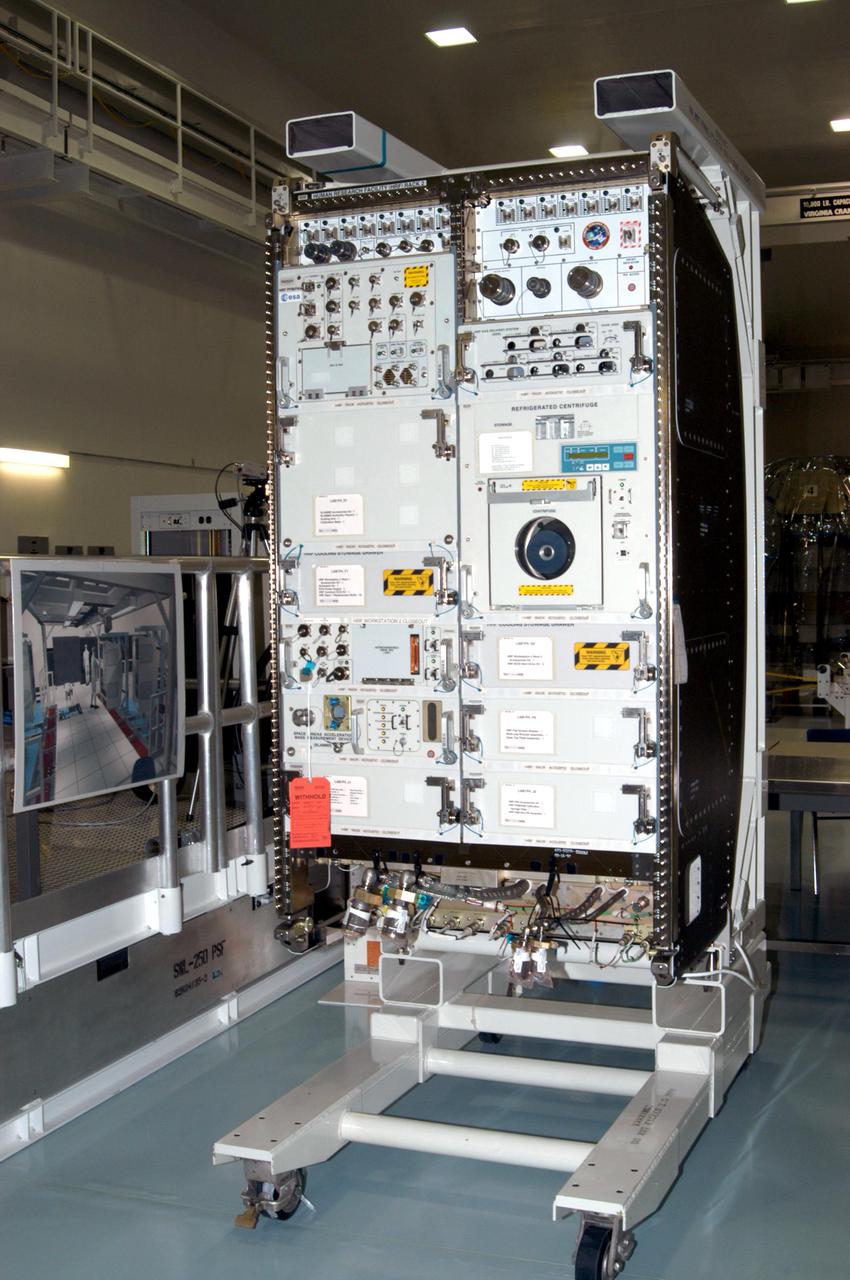
KENNEDY SPACE CENTER, FLA. - In the Space Station Processing Facility, the Human Research Facility-2 (HRF-2) science rack sits on a stand waiting to be installed into the Multi-Purpose Logistics Module Raffaello for flight on Space Shuttle Discovery’s Return to Flight mission, STS-114. The HRF-2 will deliver additional biomedical instrumentation and research capability to the International Space Station. HRF-1, installed on the U.S. Lab since May 2001, contains an ultrasound unit and gas analyzer. Both racks provide structural, power, thermal, command and data handling, and communication and tracking interfaces between the HRF biomedical instrumentation and the U.S. Laboratory, Destiny. NASA Kennedy Space Center and their prime contractor responsible for ISS element processing, The Boeing Company, prepared the rack for installation. The HRF Project is managed by NASA Johnson Space Center and implemented through contract with Lockheed Martin, Houston, Texas.
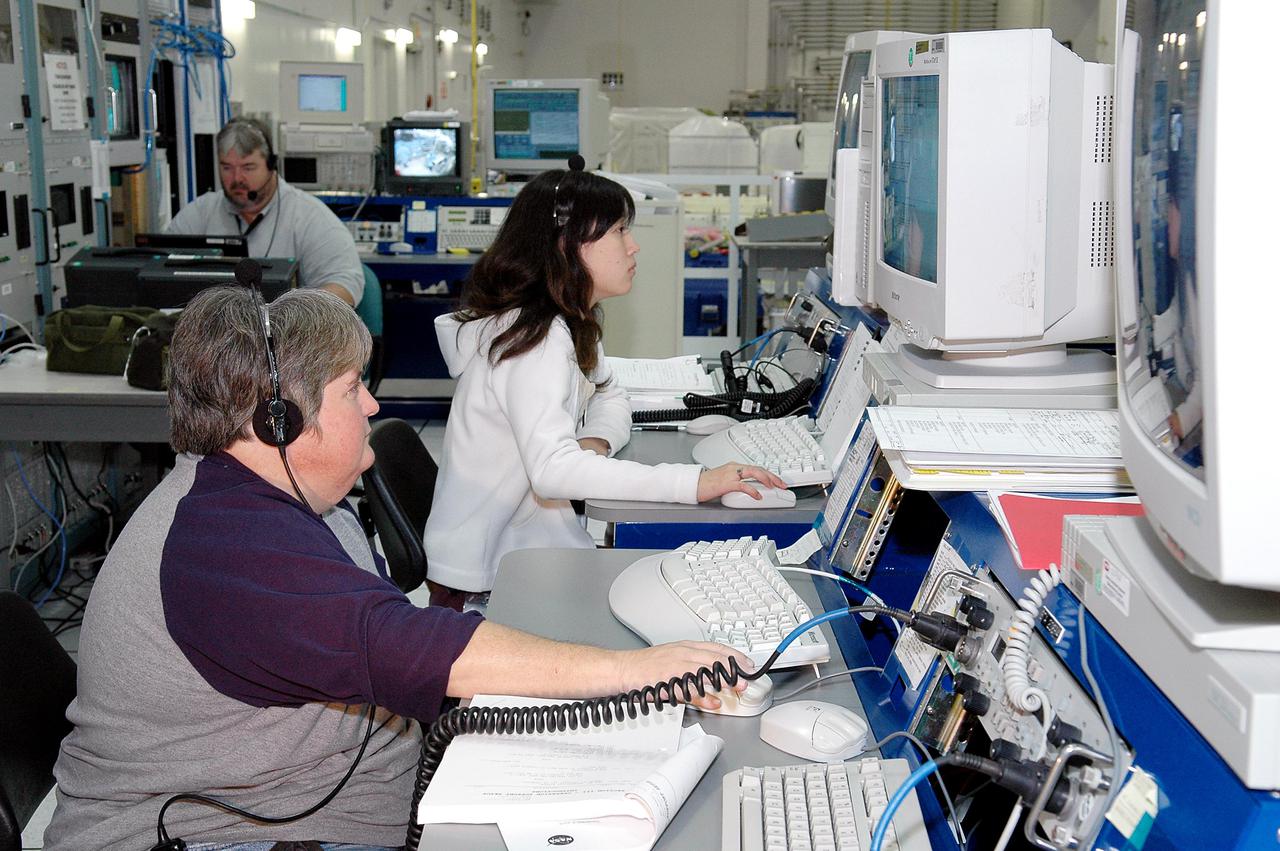
KENNEDY SPACE CENTER, FLA. - Nancy Lowry (left) and Mikiko Ujihara, with Boeing, monitor the Payload Test and Checkout System for the Human Research Facility (HRF) Rack -2 payload. The HRF-2 is scheduled to fly on Return to Flight Space Shuttle mission STS-114. The HRF-2 will deliver additional biomedical instrumentation and research capability to the International Space Station. HRF Rack 1 contains an ultrasound unit and gas analyzer system and has been operational in the U.S. Lab since May 2001. HRF-2 will also be installed in the U. S. Lab and will provide structural, power, thermal, command and data handling, and communication and tracking interfaces between the HRF biomedical instrumentation and the U. S. Lab.
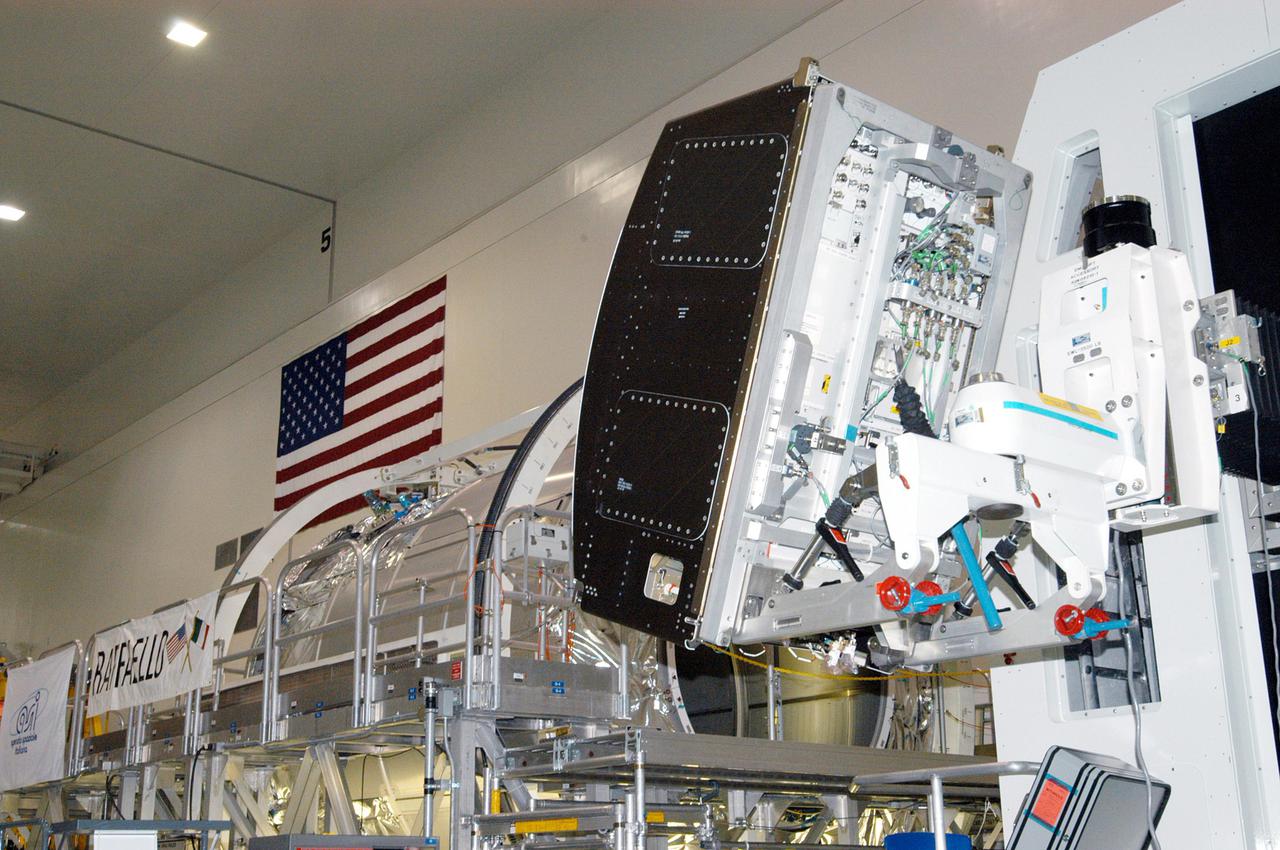
KENNEDY SPACE CENTER, FLA. - In the Space Station Processing Facility, the Human Research Facility-2 (HRF-2) science rack is attached to the Rack Insertion Device that will install it into the Multi-Purpose Logistics Module Raffaello (at left) for flight on Space Shuttle Discovery’s Return to Flight mission, STS-114. The HRF-2 will deliver additional biomedical instrumentation and research capability to the International Space Station. HRF-1, installed on the U.S. Lab since May 2001, contains an ultrasound unit and gas analyzer. Both racks provide structural, power, thermal, command and data handling, and communication and tracking interfaces between the HRF biomedical instrumentation and the U.S. Laboratory, Destiny. NASA Kennedy Space Center and their prime contractor responsible for ISS element processing, The Boeing Company, prepared the rack for installation. The HRF Project is managed by NASA Johnson Space Center and implemented through contract with Lockheed Martin, Houston, Texas.
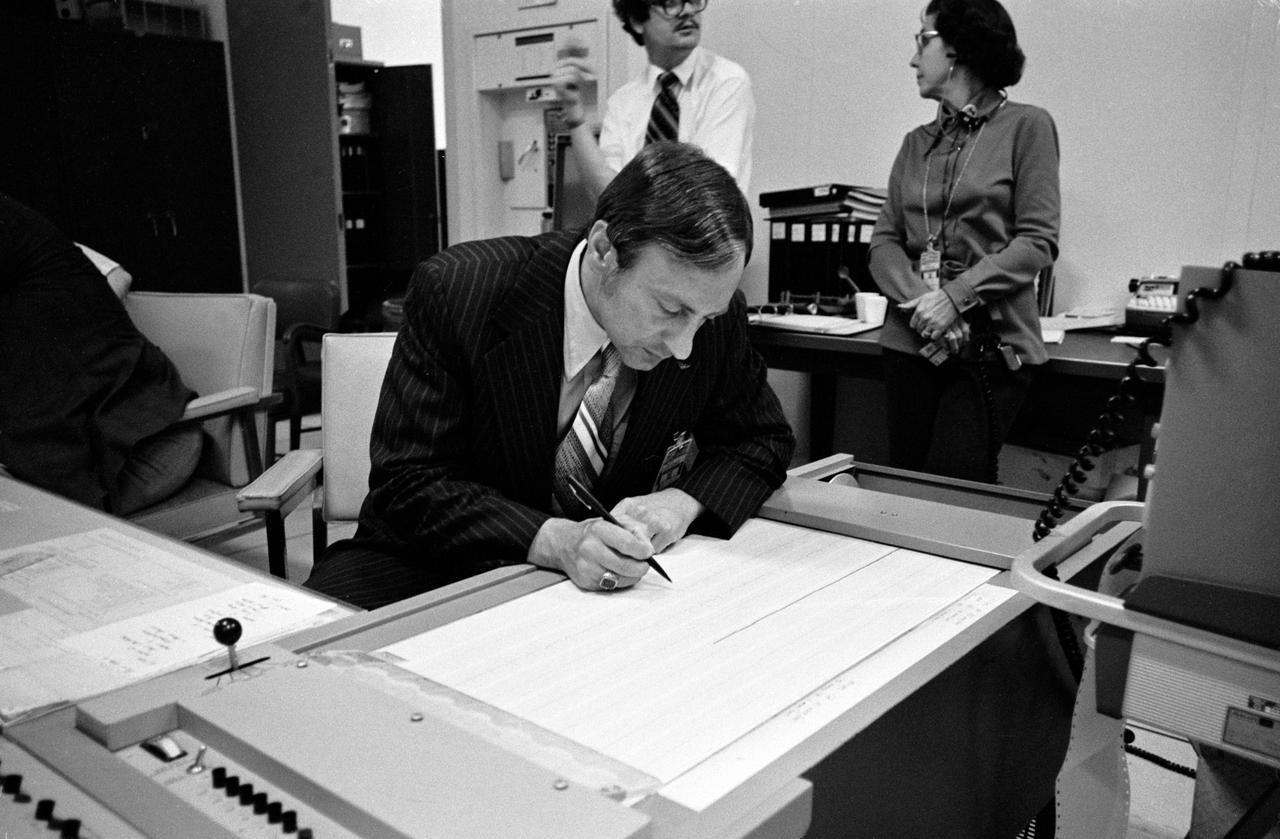
S72-35460 (18 April 1972) --- Dr. J.F. Zieglschmid, M.D., Missions Operations Control Room (MOCR) White Team Surgeon, is seated in the Medical Support Room (MSR) in the Mission Control Center (MCC). He monitors crew biomedical data being received from the Apollo 16 spacecraft on the third day of the lunar landing mission.
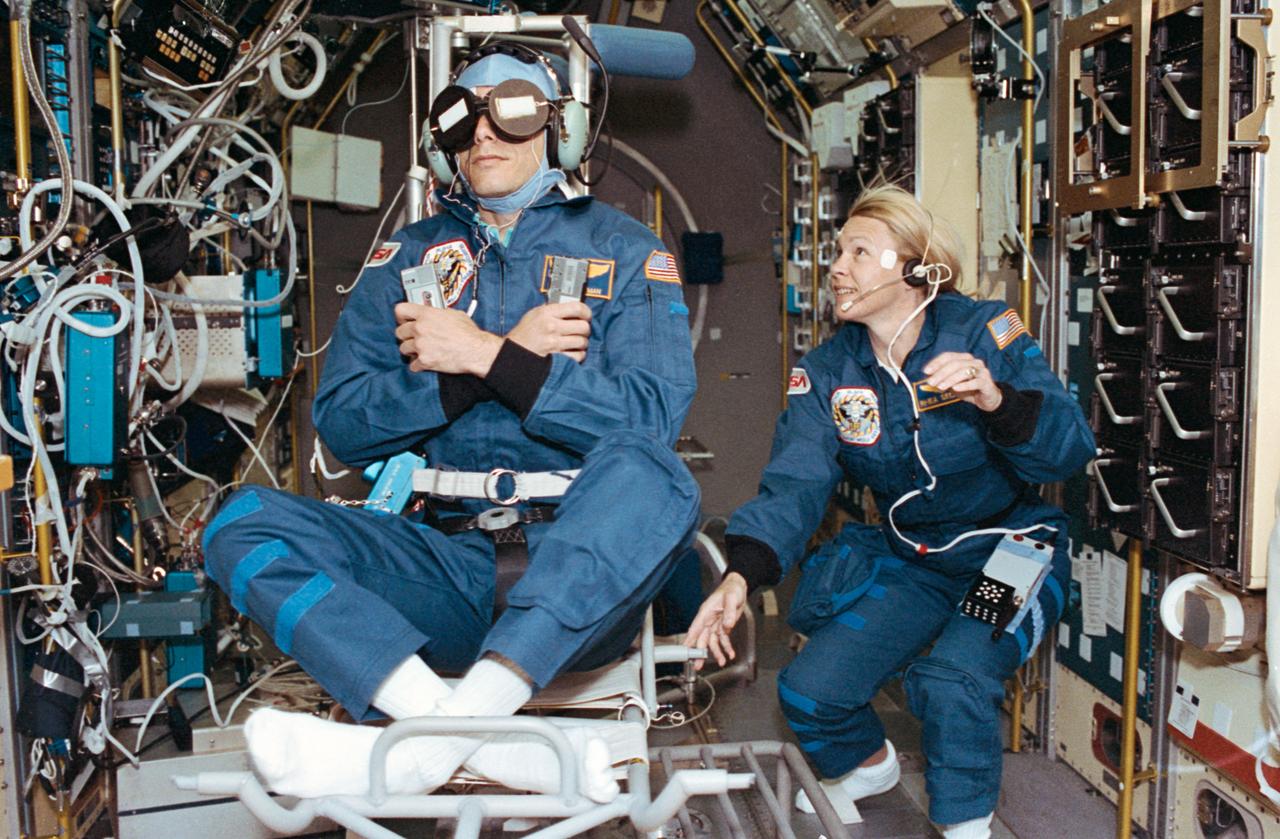
STS058-202-002 (18 Oct.-1 Nov. 1993) --- Astronaut Rhea Seddon, STS-58 payload commander, spins the Spacelab Life Sciences (SLS-2) rotating chair as payload specialist Martin J. Fettman serves as test subject. The two joined five NASA astronauts for fourteen days of medical research aboard the Earth-orbiting space shuttle Columbia. Photo credit: NASA
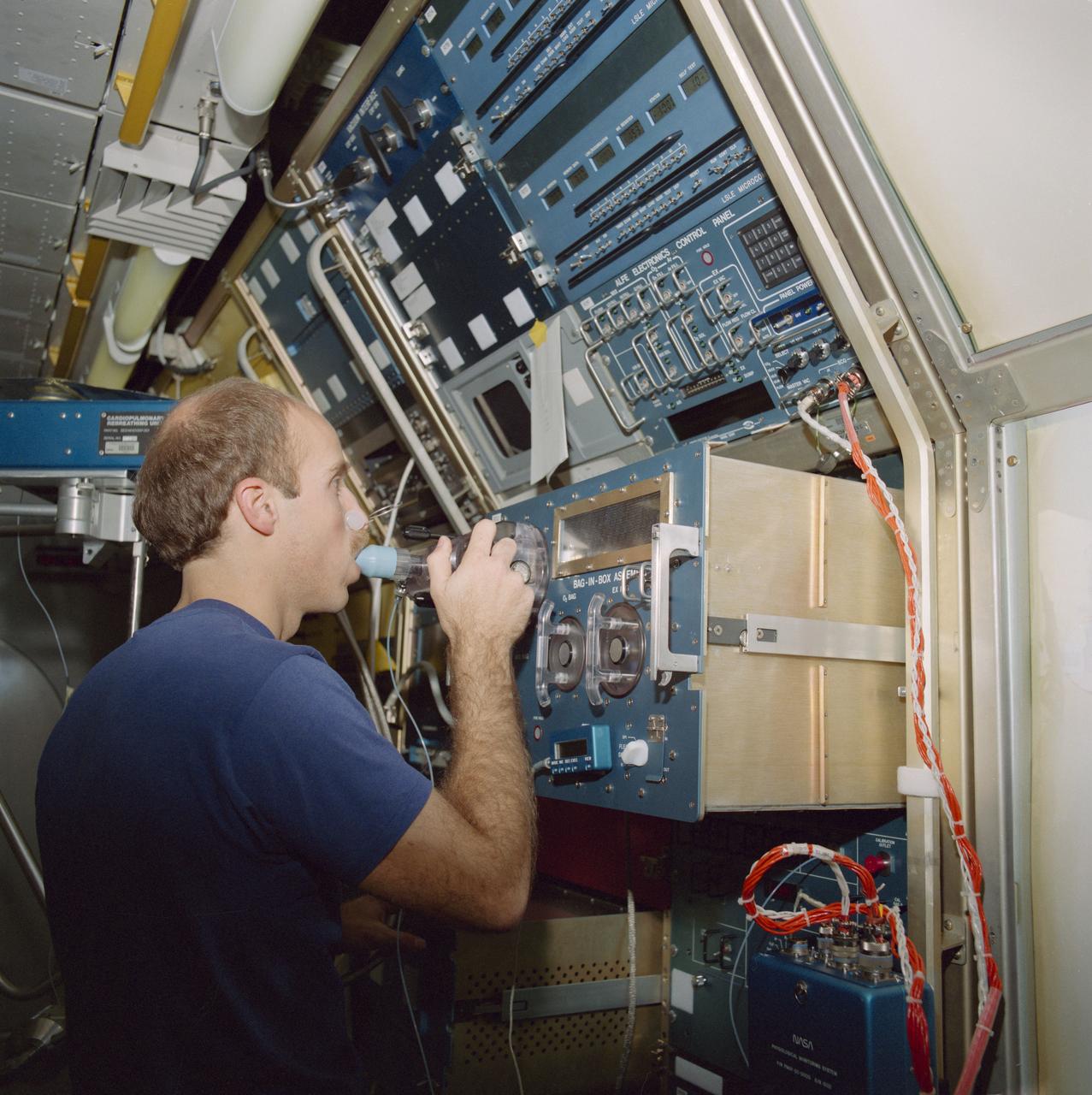
S85-26582 (Feb 1985) --- Training on the rebreathing assembly, astronaut James P. Bagian, STS-40 mission specialist, inhales a predetermined gas composition. A gas analyzer mass spectrometer determines the composition of the gases he exhales. The rebreathing assembly and gas analyzer system are part of an investigation that explores how lung function is altered. Dr. Bagian will be joined by two other mission specialists, the mission commander, the pilot and two payload specialists for the scheduled 10-day Spacelab Life Sciences-1 (SLS-1) mission. The flight is totally dedicated to biological and medical experimentation.
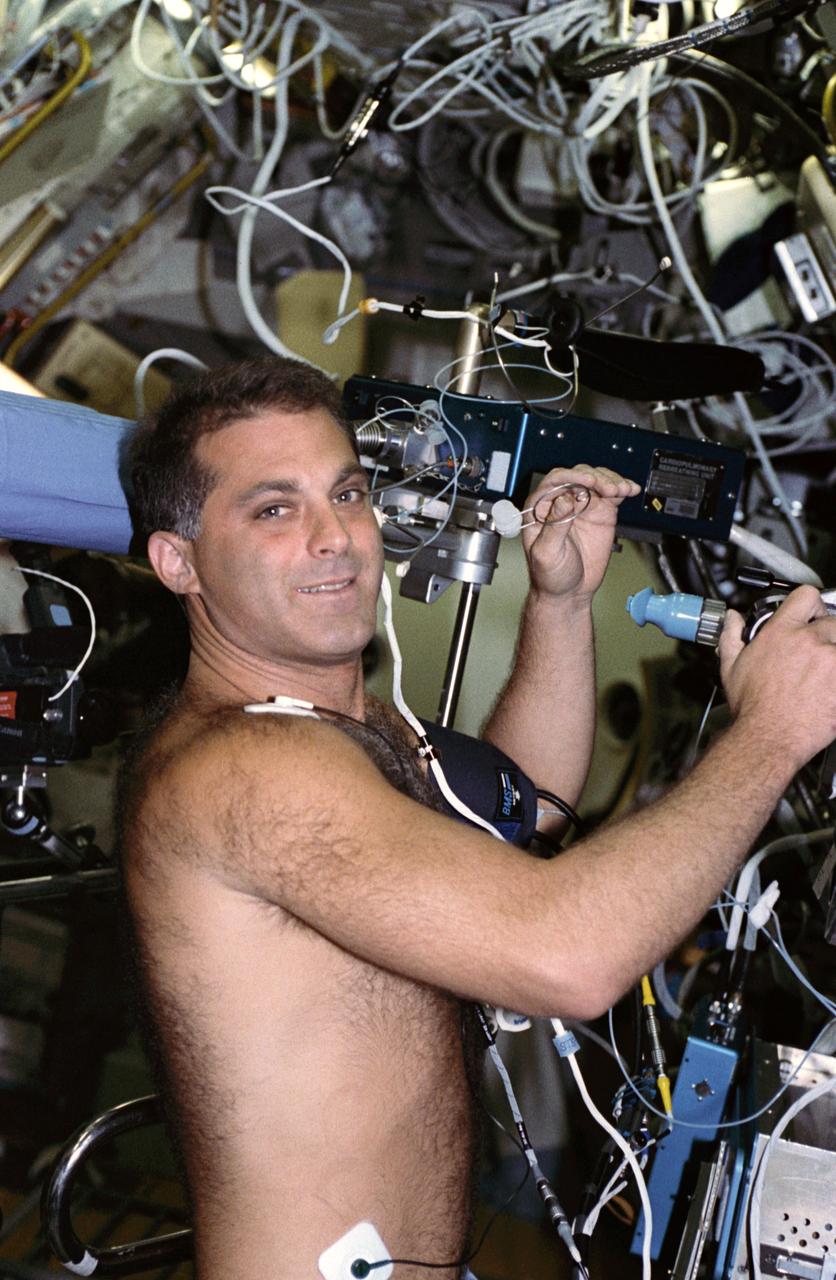
STS058-204-014 (18 Oct.-1 Nov. 1993) --- Astronaut David A. Wolf, mission specialist, participates in an experiment that investigates in-space distribution and movement of blood and gas in the pulmonary system. The data gathered during the two-week flight will be compared with results of tests performed on Earth to determine the changes that occur in pulmonary functions. Photo credit: NASA
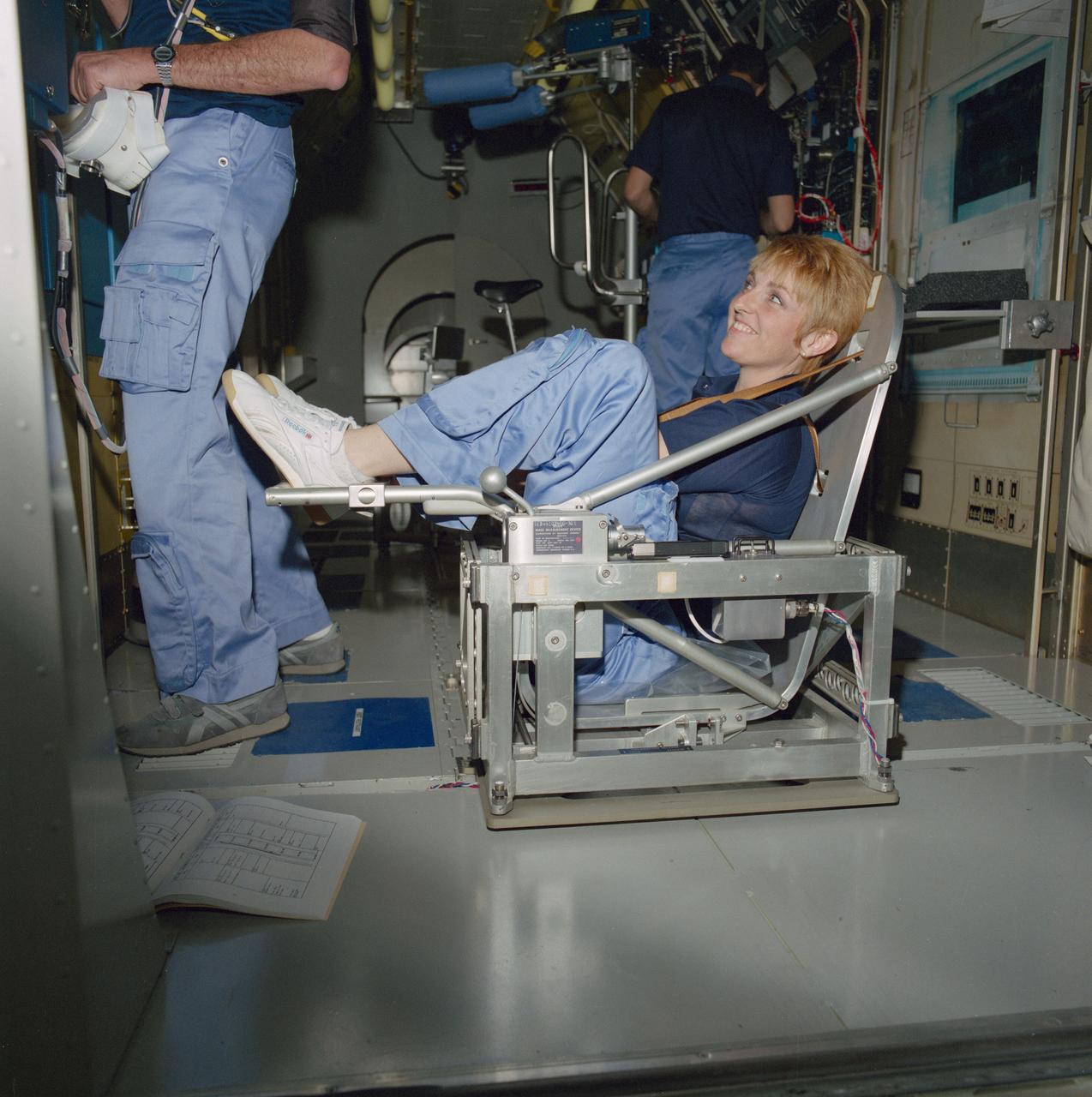
S85-26553 (Feb 1985) --- STS-40/SLS-1 payload specialist Millie Hughes-Fulford sits strapped in the special device scientists have developed for determining mass on orbit. As the chair swings back and forth, a timer records how much the crewmember's mass retards the chair's movement. Dr. Hughes-Fulford will be joined by three mission specialists, the mission commander, the pilot and a second payload specialist for the scheduled 10-day Spacelab Life Sciences-1 (SLS-1) mission. The flight is totally dedicated to biological and medical experimentation.
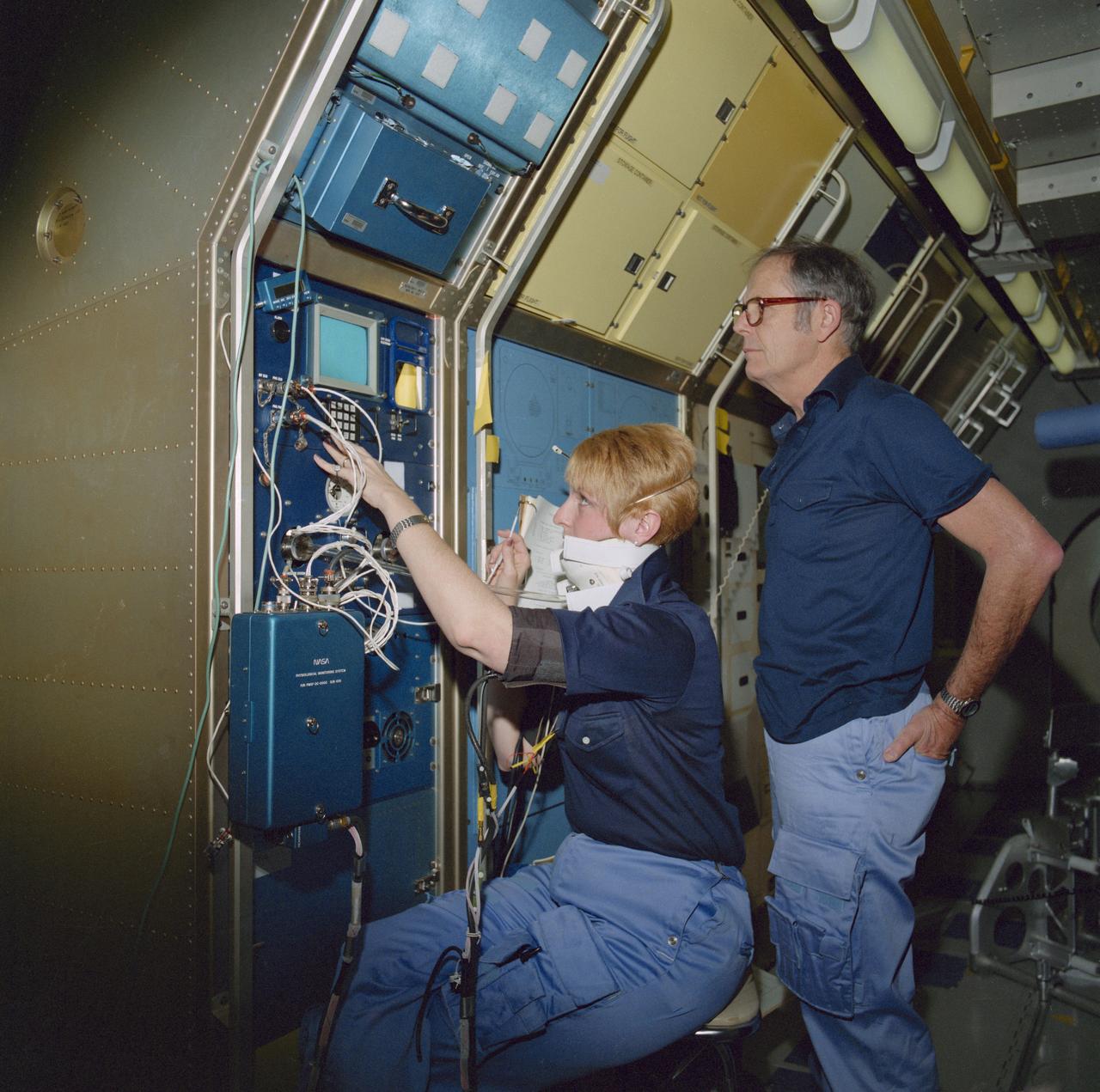
S85-26571 (Feb 1985) --- Wearing a special collar, Millie Hughes-Fulford, payload specialist, practices medical test operations scheduled for the Spacelab Life Sciences (SLS-1) mission. Robert Ward Phillips, backup payload specialist, looks on. The collar, called the baroflex neck pressure chamber, is designed to stimulate the bioceptors in the carotid artery, one of the two main arteries that supply blood to the head.
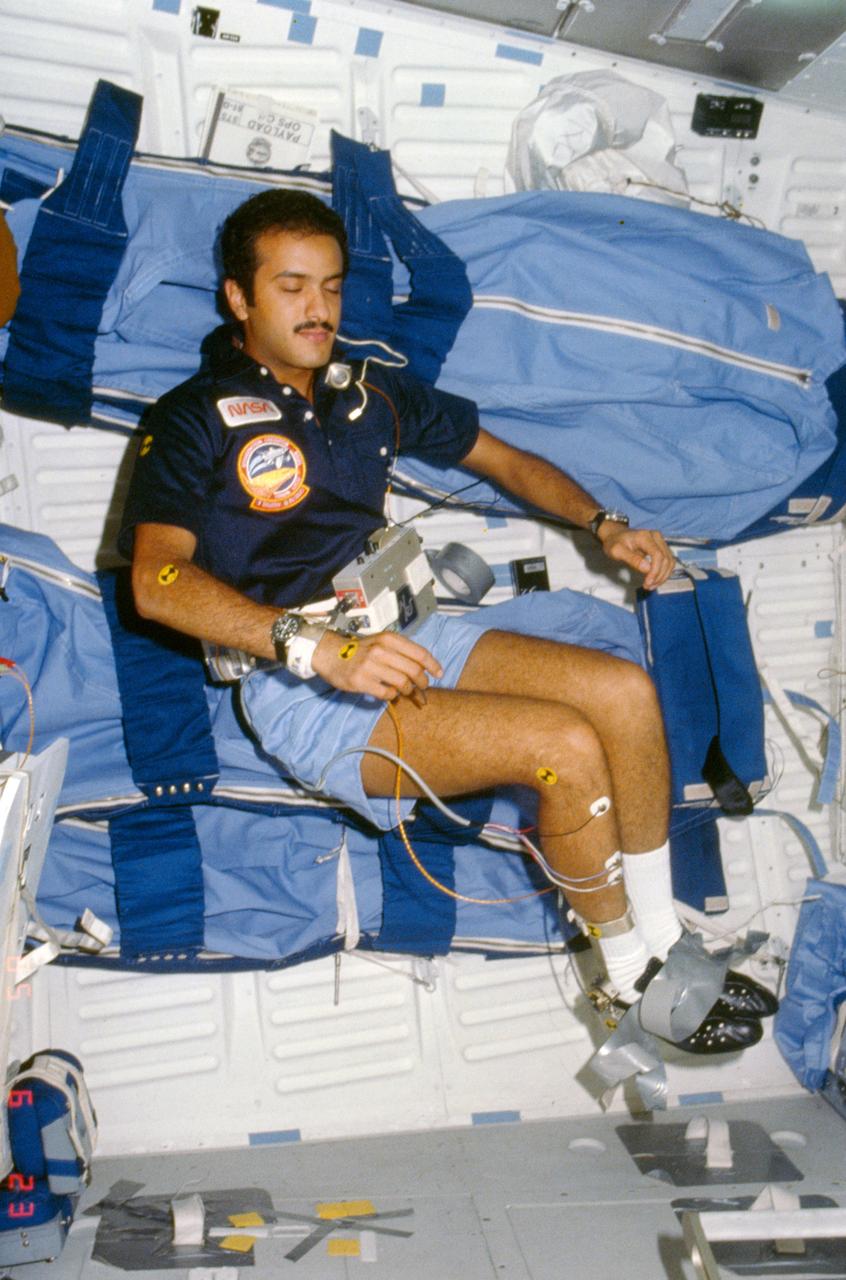
51G-105-030 (17-24 June 1985) --- Payload specialist Sultan Salman Abdelazize Al-Saud participates in the French Postural Experiment (FPE) on the middeck of the earth-orbiting Discovery.
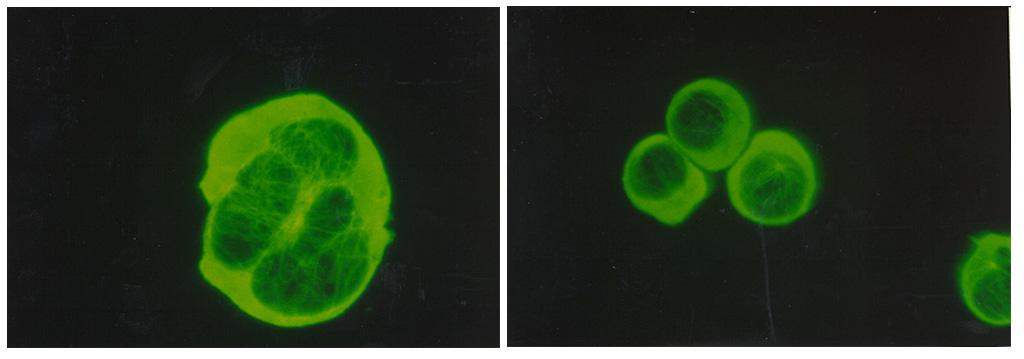
Biomedical research offers hope for a variety of medical problems, from diabetes to the replacement of damaged bone and tissues. Bioreactors, which are used to grow cells and tissue cultures, play a major role in such research and production efforts. The objective of the research was to define a way to differentiate between effects due to microgravity and those due to possible stress from non-optimal spaceflight conditions. These Jurkat cells, a human acute T-cell leukemia was obtained to evaluate three types of potential experimental stressors: a) Temperature elevation; b) Serum starvation; and c) Centrifugal force. The data from previous spaceflight experiments showed that actin filaments and cell shape are significantly different for the control. These normal cells serve as the baseline for future spaceflight experiments.
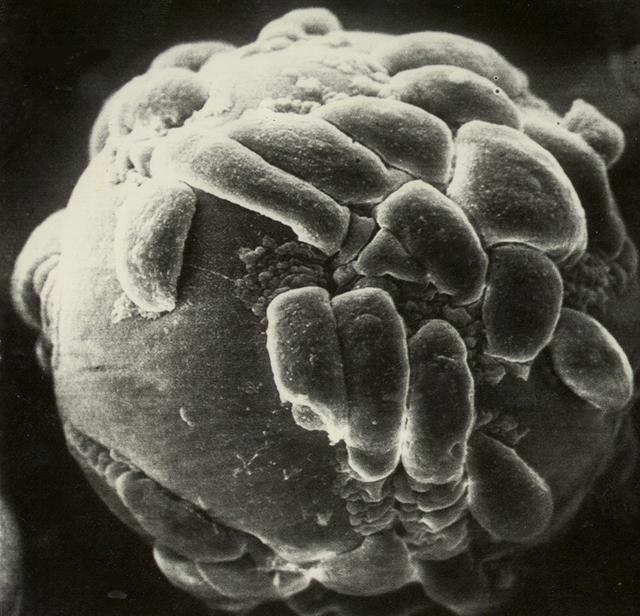
Biomedical research offers hope for a variety of medical problems, from diabetes to the replacement of damaged bone and tissues. Bioreactors, which are used to grow cells and tissue cultures, play a major role in such research and production efforts. Anchorage dependent cells on STS-95 will be grown on beads, similar to these cells produced during previous investigations. Recombinant proteins may offer the possibility of reducing or eliminating transplant rejections. Research by Synthecon, Inc. using the BioDyn Bioreactor will focus on the preliminary process for growing a proprietary recombinant protein that can decrease rejection of transplanted tissue. The cells producing this protein are anchorage dependent, meaning that they must attach to something to grow. These cells will be cultured in the bioreactor in a medium containing polymer microbeads. Synthecon hopes that the data from this mission will lead to the development of a commercial protein that will aid in prevention of transplant rejection.
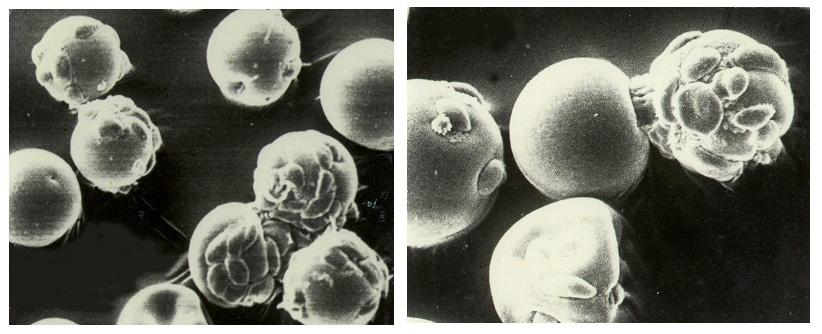
Biomedical research offers hope for a variety of medical problems, from diabetes to the replacement of damaged bone and tissues. Bioreactors, which are used to grow cells and tissue cultures, play a major role in such research and production efforts. Anchorage dependent cells on STS-95 will be grown on beads similar to these cells produced during previous investigations. Recombinant proteins may offer the possibility of reducing or eliminating transplant rejections. Research by Synthecon, Inc. using the BioDyn Bioreactor will focus on the preliminary process for growing a proprietary recombinant protein that can decrease rejection of transplanted tissue. The cells producing this protein are anchorage dependent, meaning that they must attach to something to grow. These cells will be cultured in the bioreactor in a medium containing polymer microbeads. Synthecon hopes that the data from this mission will lead to the development of a commercial protein that will aid in prevention of transplant rejection.