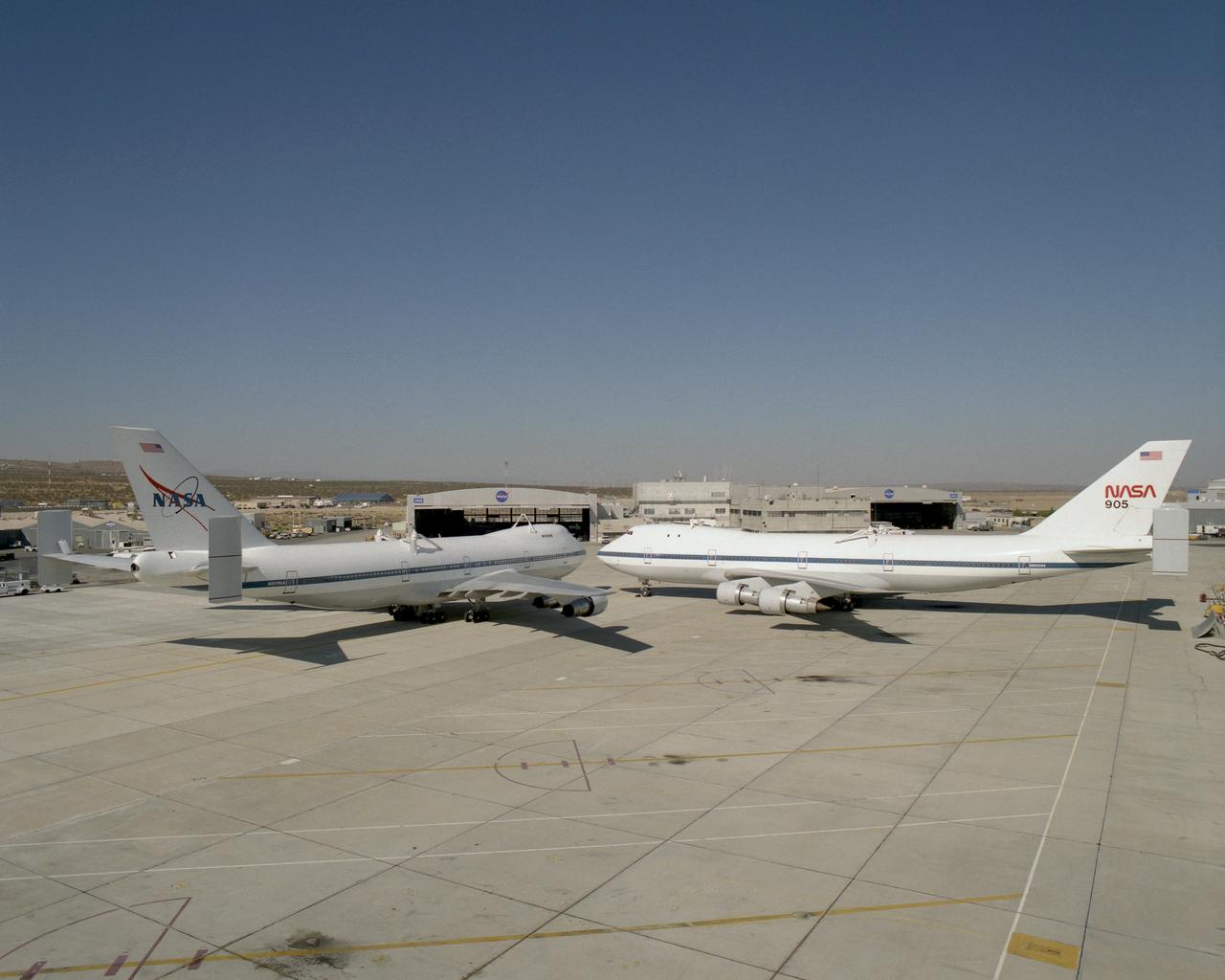
NASA's two modified Boeing 747 Shuttle Carrier Aircraft #911 (left) and #905 (right) were nose-to-nose on the ramp at NASA Dryden in this 1995 photo.
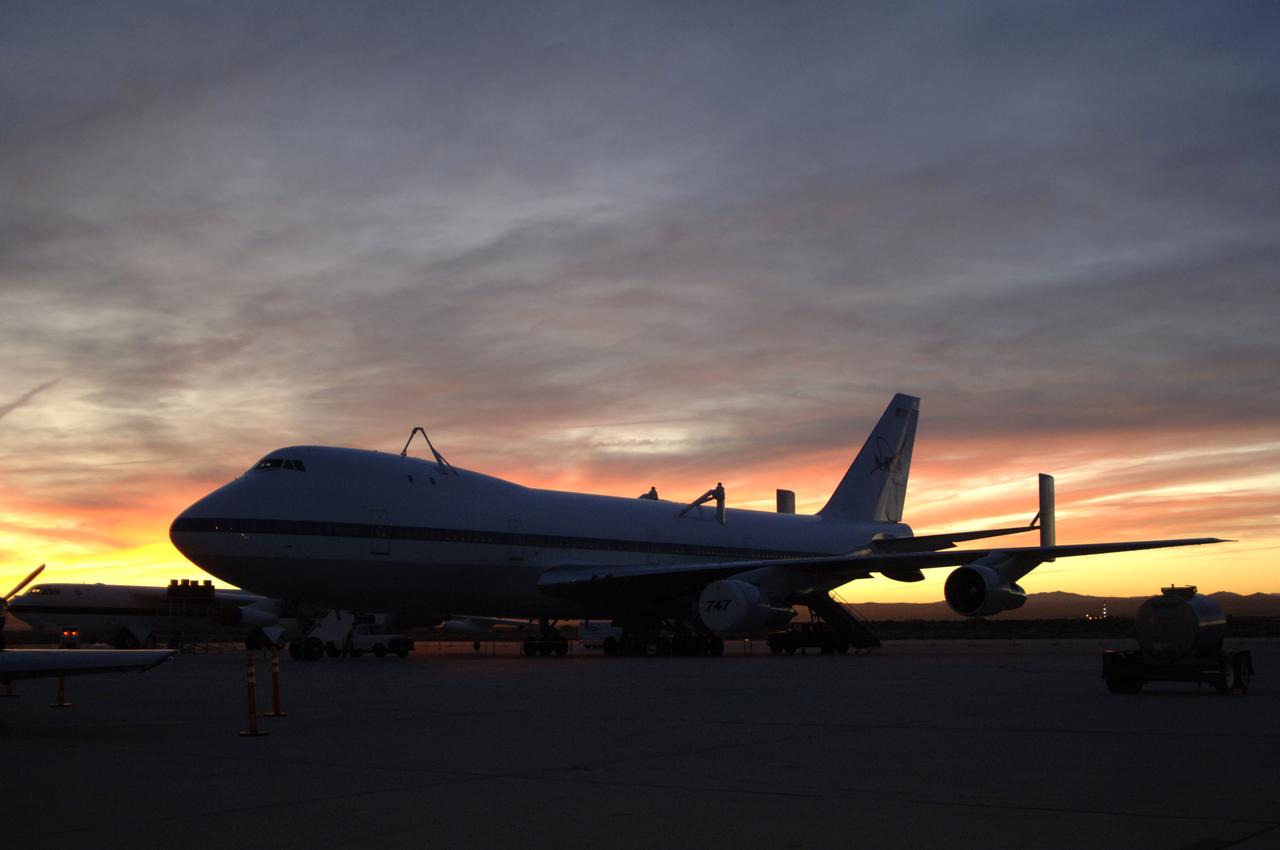
One of NASA's two modified Boeing 747 Shuttle Carrier Aircraft is silhouetted against the morning sky at sunrise on the ramp at Edwards Air Force Base.
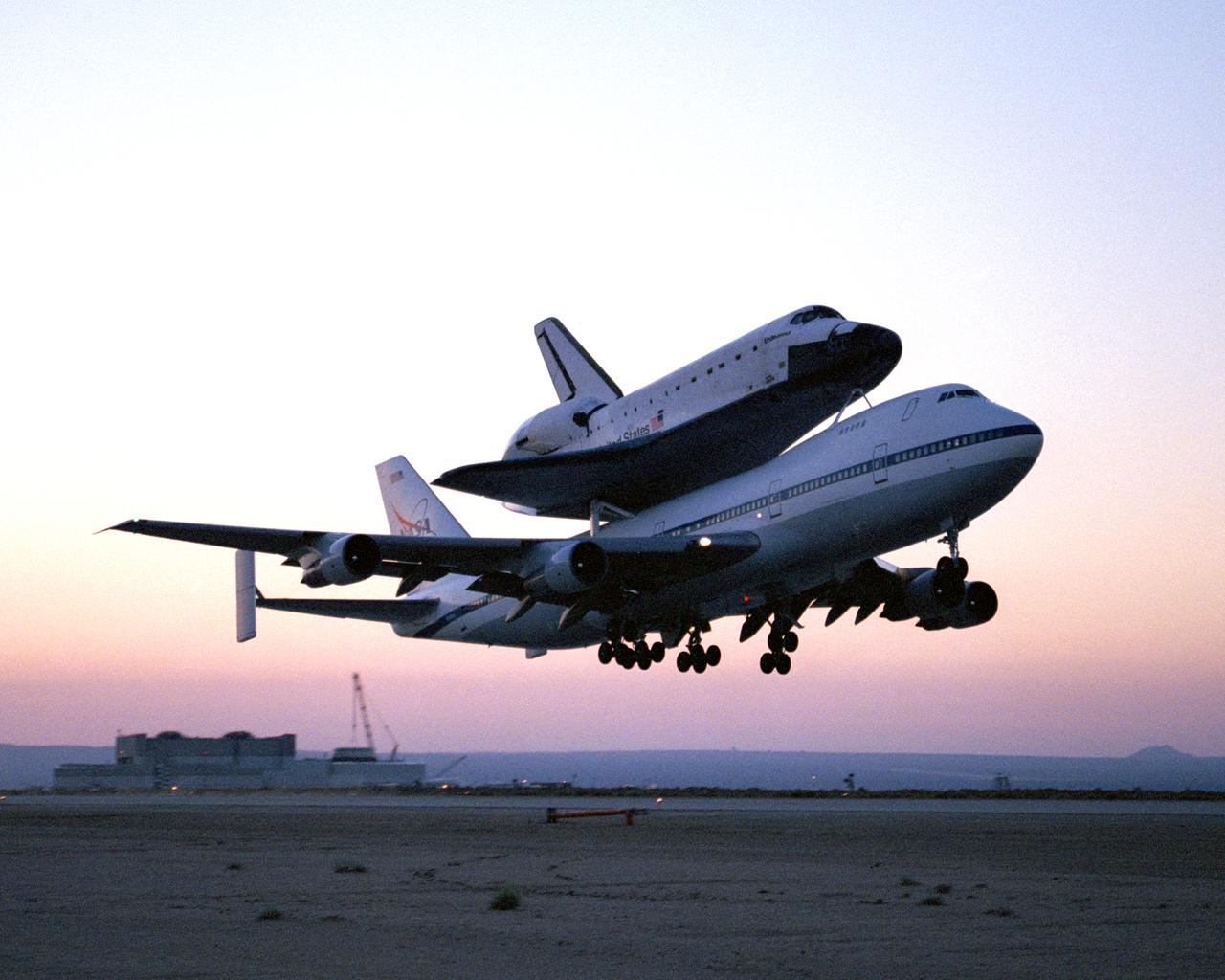
The Space Shuttle Endeavour, mounted securely atop one of NASA's modified Boeing 747 Shuttle Carrier Aircraft, left NASA's Dryden Flight Research Center at Edwards Air Force Base in Southern California at sunrise on Friday, June 28.
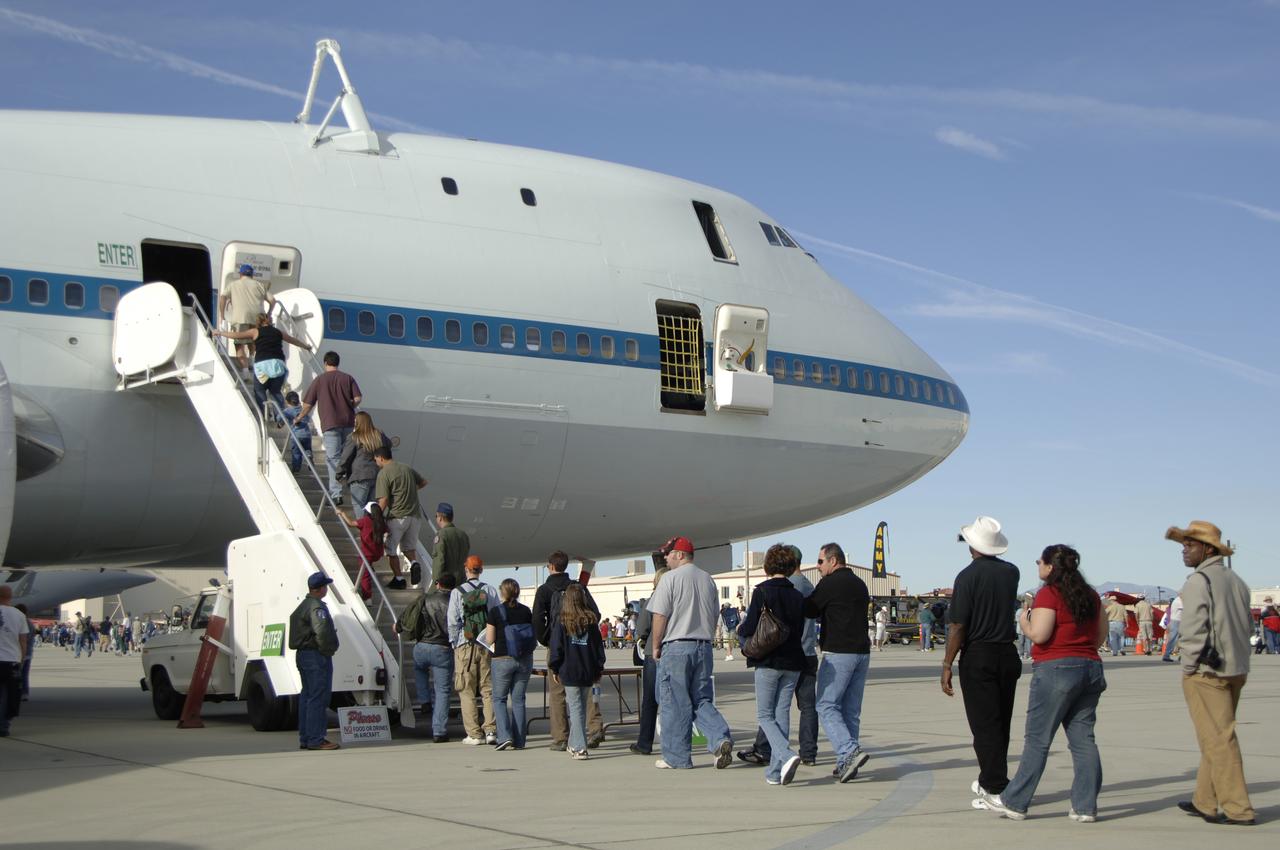
A brief tour through NASA's modified Boeing 747 Shuttle Carrier Aircraft was a popular attraction at the Edwards Air Force Base open house Oct. 28-29, 2006.
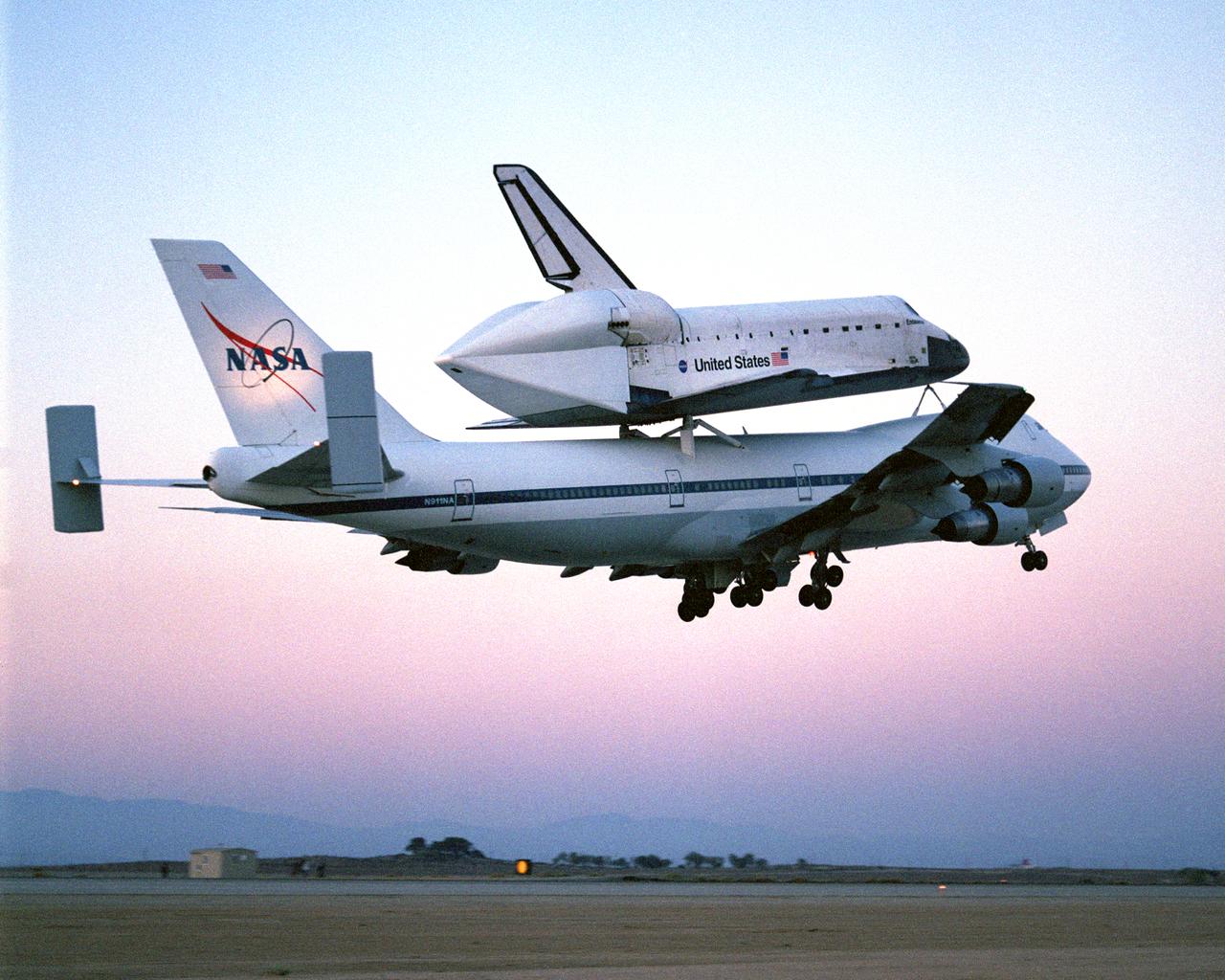
The Space Shuttle Endeavour, mounted securely atop one of NASA's modified Boeing 747 Shuttle Carrier Aircraft, left NASA's Dryden Flight Research Center at Edwards Air Force Base in Southern California at sunrise on Friday, June 28, nine days after concluding mission STS-111 to the International Space Station with a landing at Edwards.
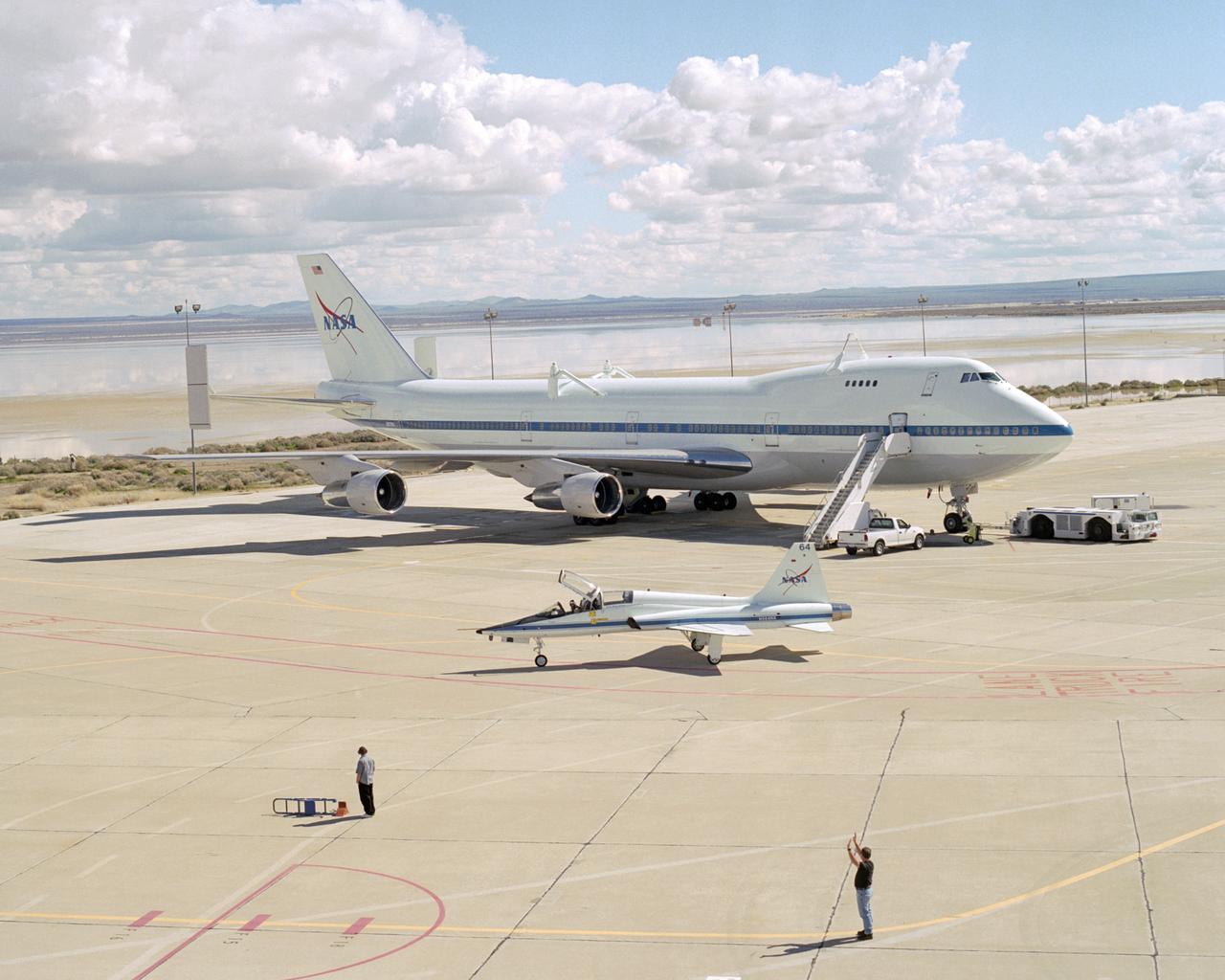
Puffy white clouds and a flooded lakebed form a backdrop as a T-38 support aircraft taxies across the ramp in front of NASA's Boeing 747 Shuttle Carrier Aircraft.
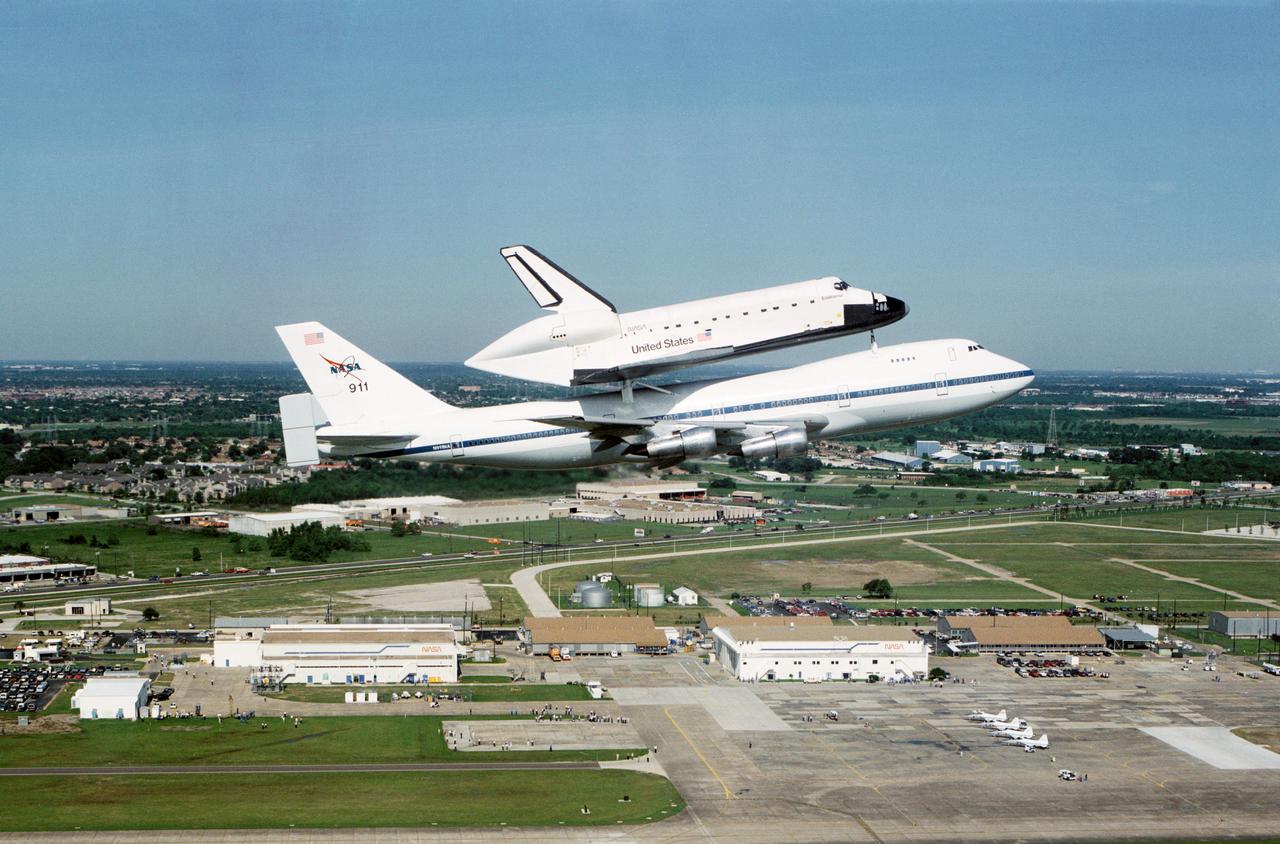
S91-36097 (6 May 1991) --- Air to air view of Endeavour, Orbiter Vehicle (OV) 105, atop a Shuttle Carrier Aircraft (SCA) NASA 911, a modified Boeing 747, approaches touchdown for a brief stopover at Ellington Field, near JSC. Visible below the spacecraft/aircraft combination are the NASA T-38 flight line, NASA aircraft hangars and facilities, and a runway. OV-105 rolled out at Rockwell's Palmdale facility on 04-25-91 to once more bring to four the total of NASA Shuttles available for flight assignment. The spacecraft and aircraft-tandem left Houston later on this day headed for another stop in Mississippi before landing in Florida on 05-07-91. This photograph was taken from a T-38 aircraft by Sheri J. Dunnette of JSC's Image Science Division (ISD).
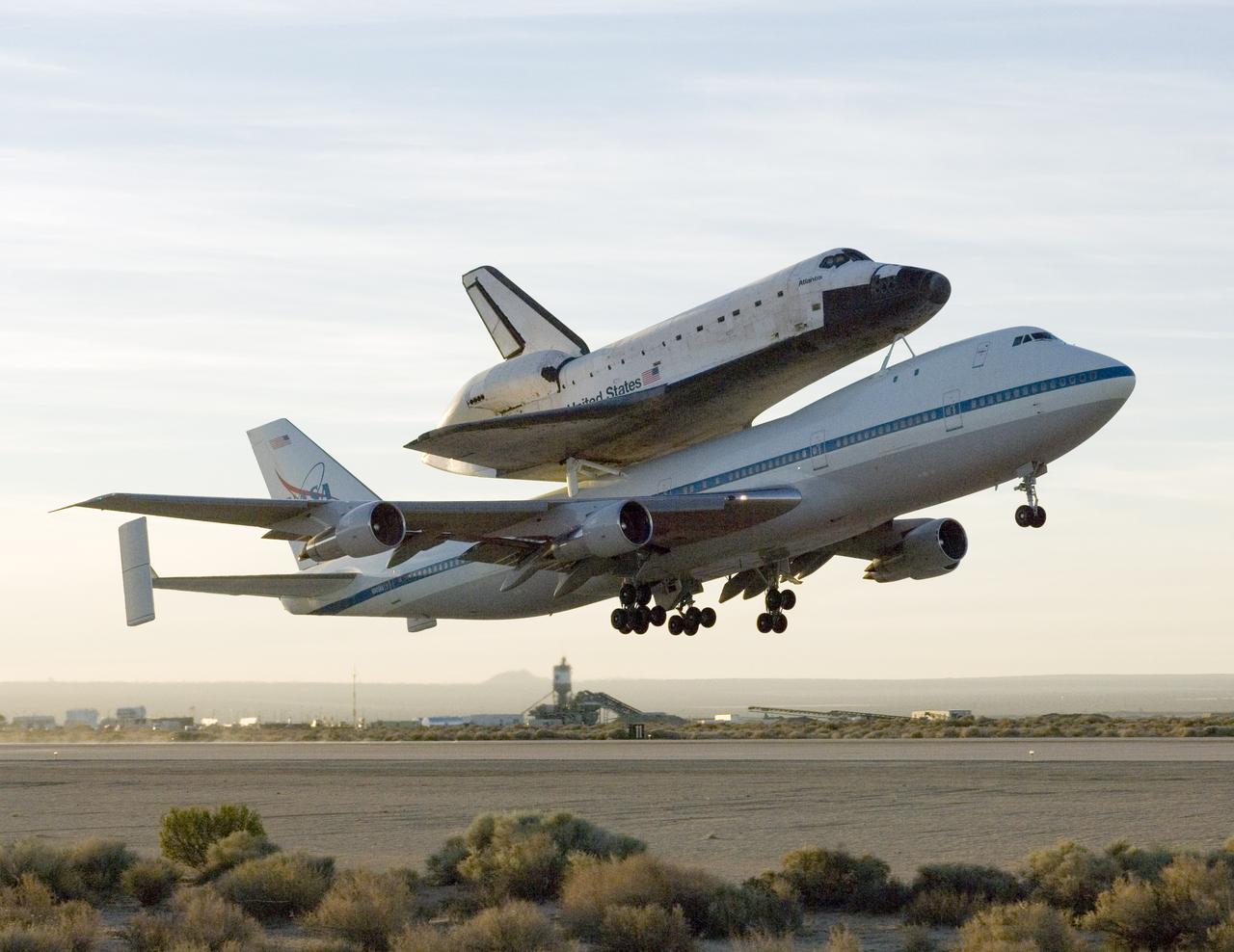
NASA's modified Boeing 747 Shuttle Carrier Aircraft with the Space Shuttle Atlantis on top lifts off from Edwards Air Force Base to begin its ferry flight back to the Kennedy Space Center in Florida. The cross-country journey will take approximately two days, with stops at several intermediate points for refueling.
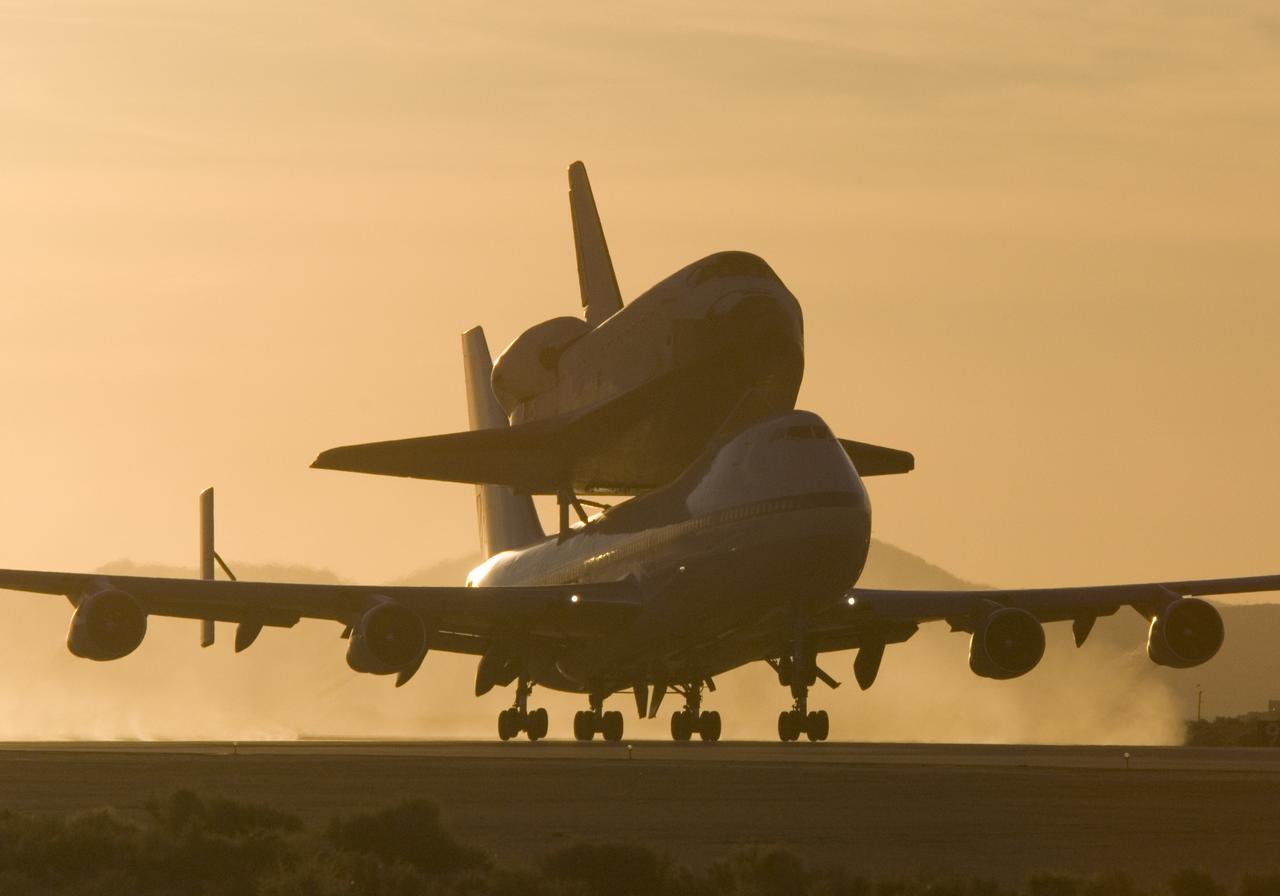
NASA's modified Boeing 747 Shuttle Carrier Aircraft with the Space Shuttle Atlantis on top lifts off from Edwards Air Force Base to begin its ferry flight back to the Kennedy Space Center in Florida. The cross-country journey will take approximately two days, with stops at several intermediate points for refueling.
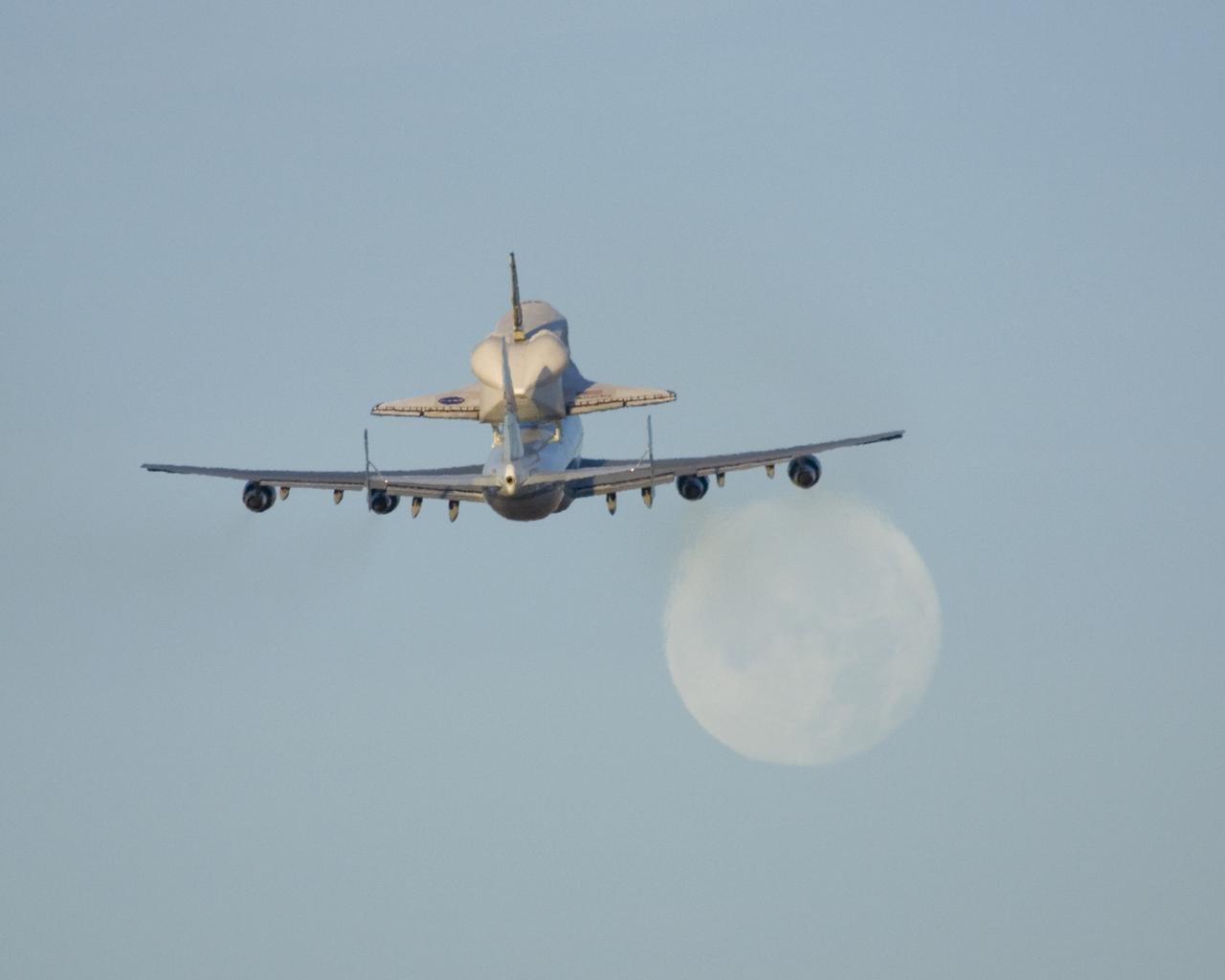
NASA's modified Boeing 747 Shuttle Carrier Aircraft with the Space Shuttle Atlantis on top lifts off from Edwards Air Force Base to begin its ferry flight back to the Kennedy Space Center in Florida. The cross-country journey will take approximately two days, with stops at several intermediate points for refueling.
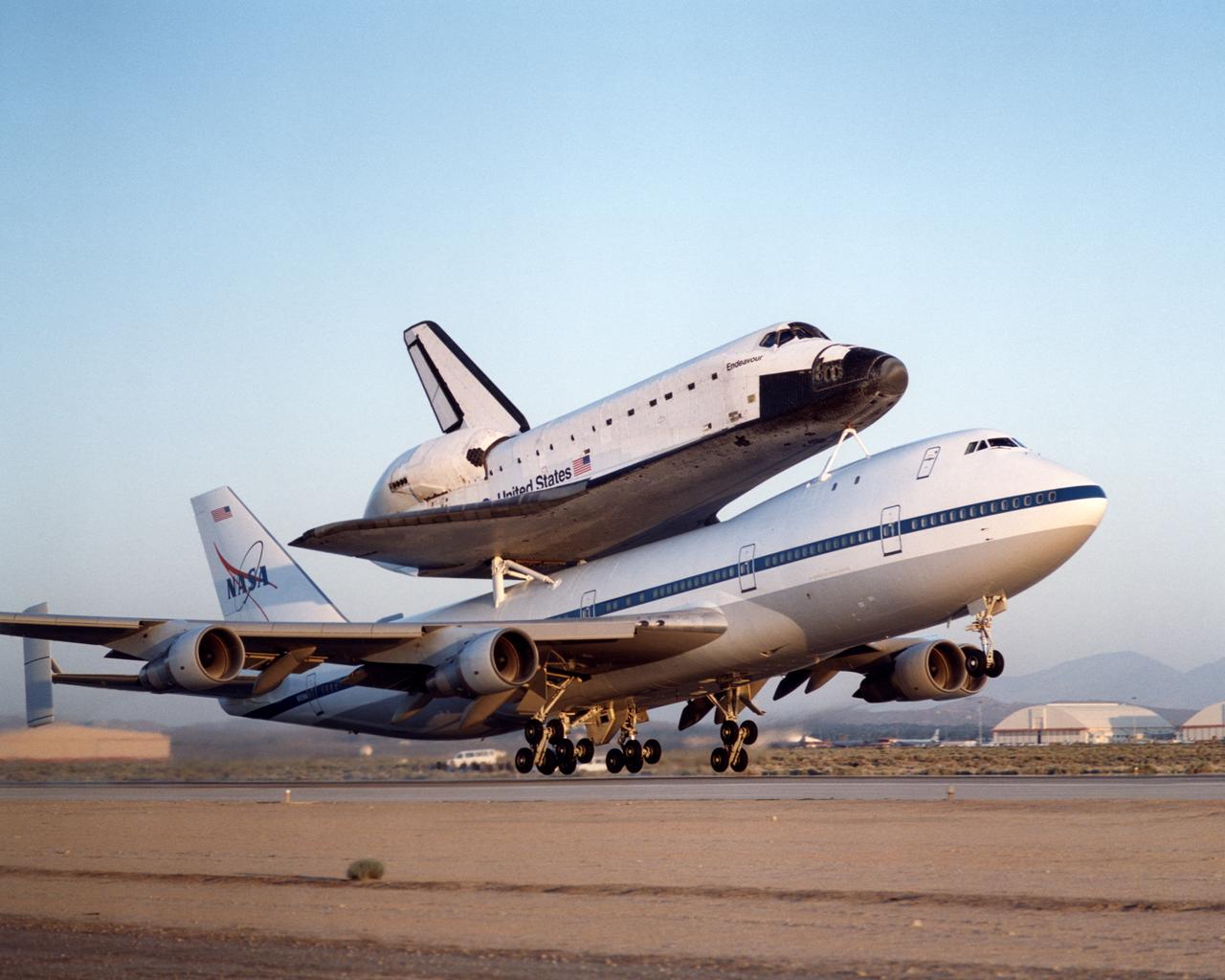
NASA's modified Boeing 747 Shuttle Carrier Aircraft with the Space Shuttle Endeavour on top lifts off from Edwards Air Force Base to begin its ferry flight back to the Kennedy Space Center in Florida.
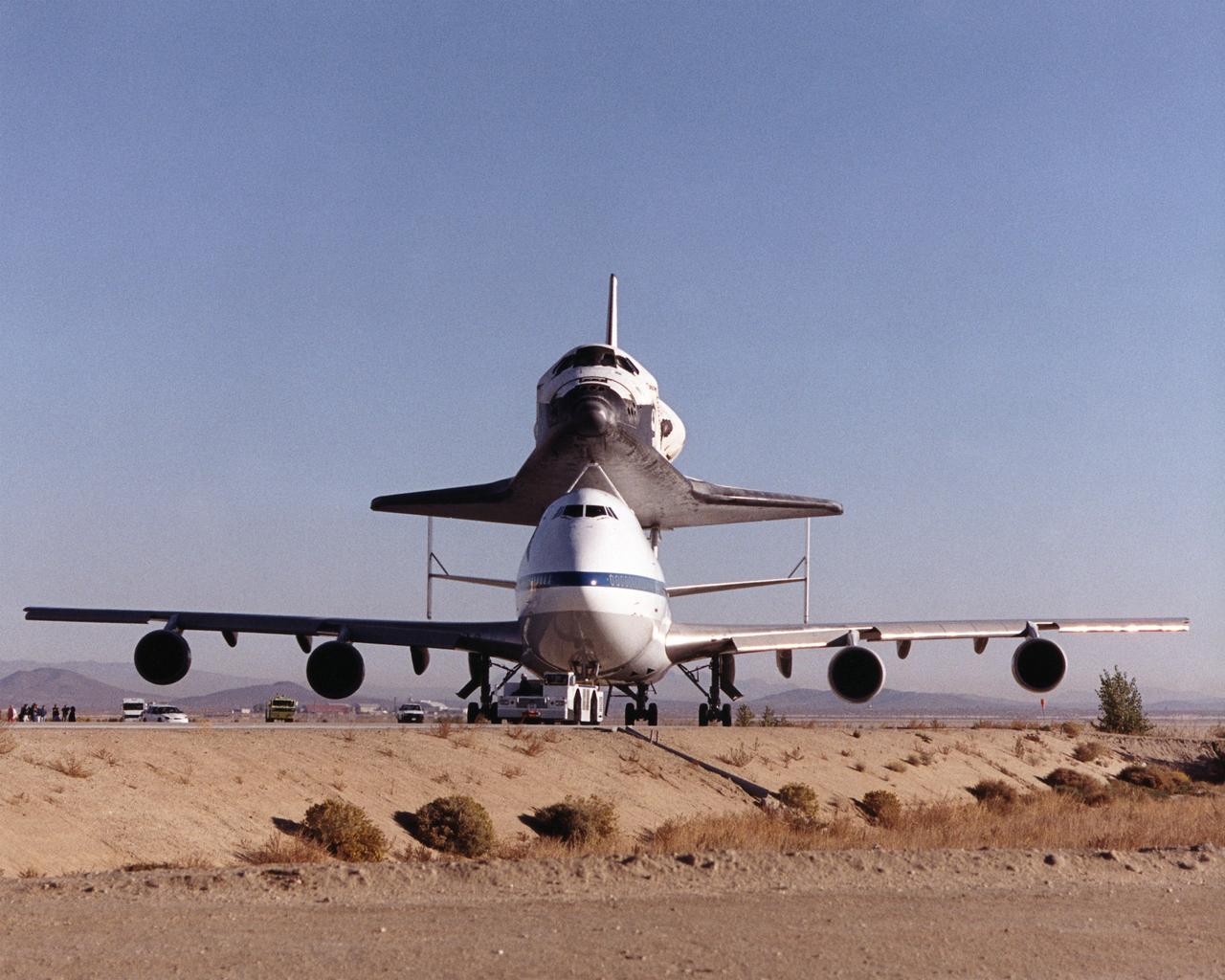
The Space Shuttle Discovery sits atop one of NASA’s modified Boeing 747 Shuttle Carrier Aircraft as the unusual piggyback duo is towed along a taxiway at NASA’s Dryden Flight Research Center at Edwards, California. The Discovery was ferried from NASA Dryden to NASA’s Kennedy Space Center in Florida on November 2, 2000, after extensive pre-ferry servicing and preparations.
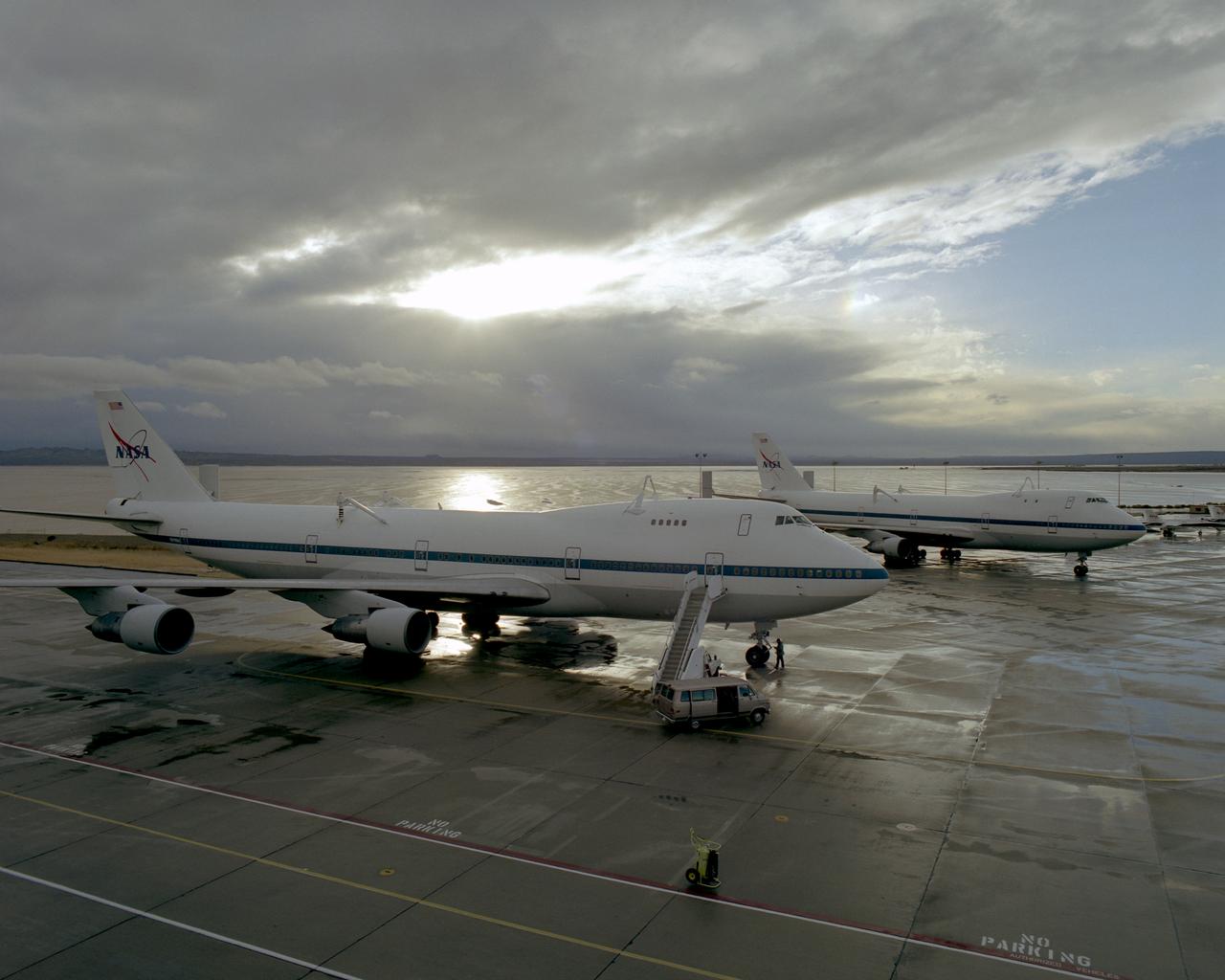
The sun begins to break through the clouds over NASA's two 747 Shuttle Carrier Aircraft on the NASA Dryden ramp after a rain shower in February 2001.
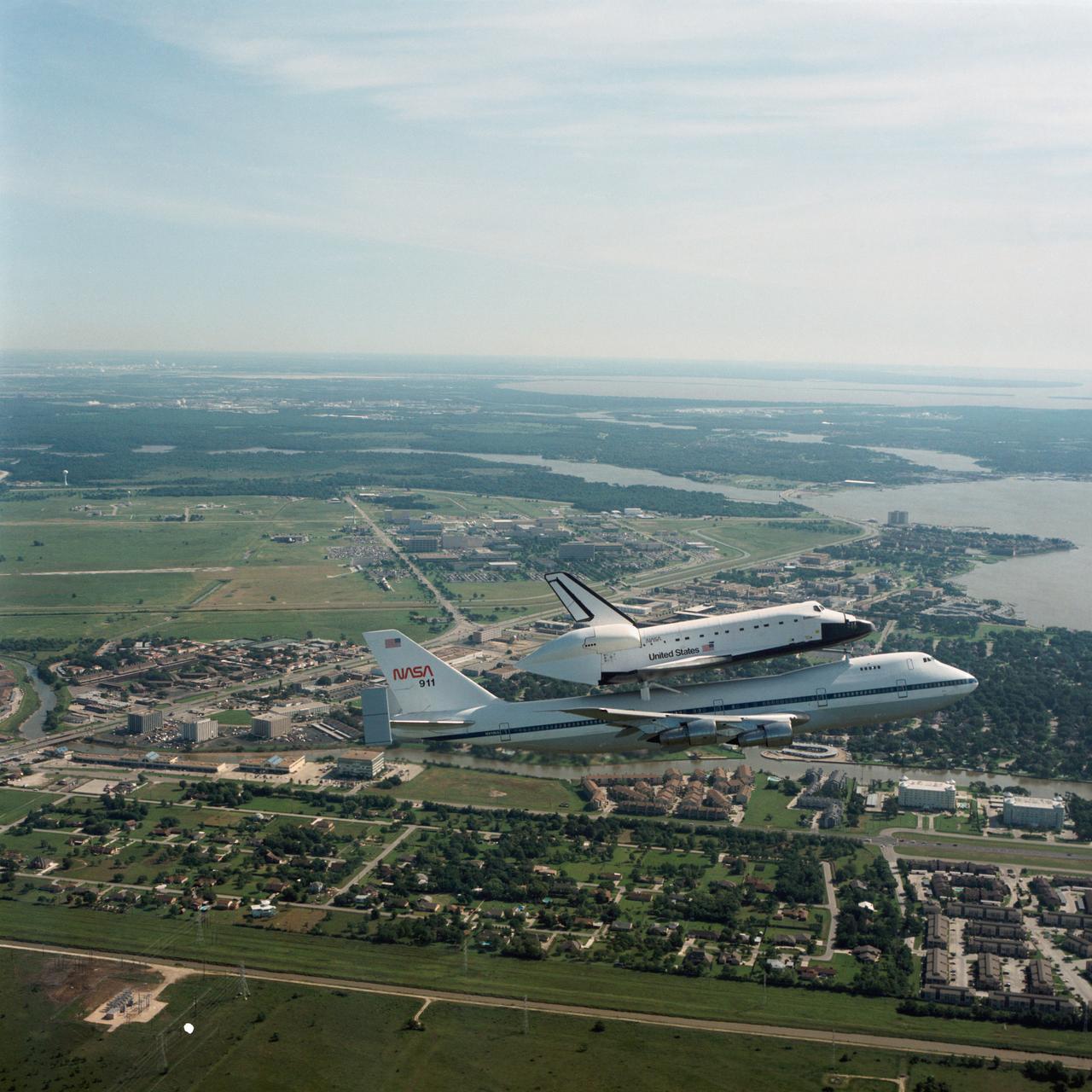
Air to air views of Endeavour, Orbiter Vehicle (OV) 105, transported via the Shuttle Carrier Aircraft (SCA), NASA 911, on its way to KSC, 05-06-91. JSC with Clear Creek and Egret Bay Blvd in the foreground and Clear Lake and Galveston Bay in the background
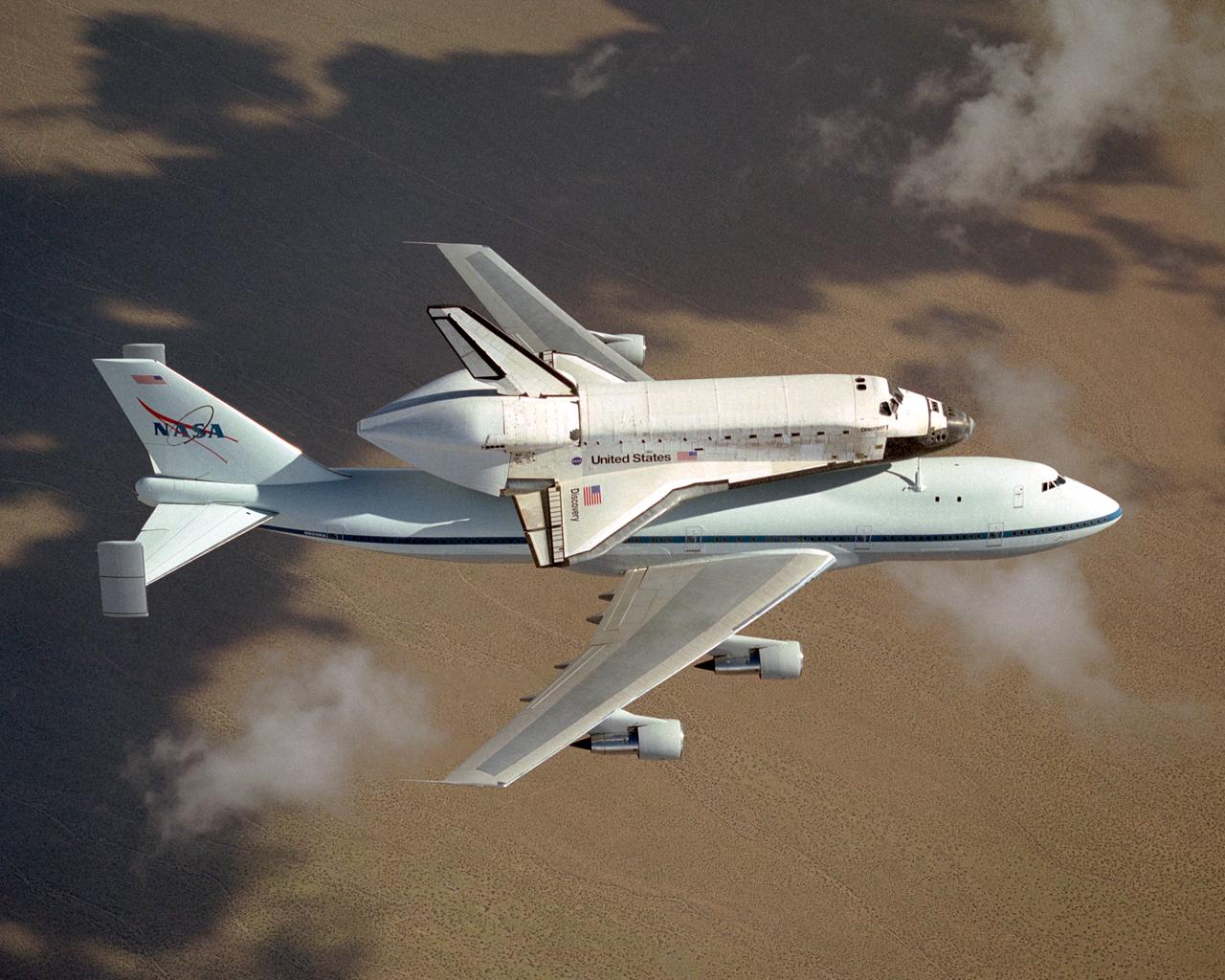
The space shuttle Discovery atop NASA's modified 747 is captured over the Mojave Desert while being ferried from NASA Dryden to the Kennedy Space Center. NASA's modified Boeing 747 Shuttle Carrier Aircraft with the Space Shuttle Discovery on top lifts off from Edwards Air Force Base to begin its ferry flight back to the Kennedy Space Center in Florida. The cross-country journey will take two days, with stops at several intermediate points for refueling. Space shuttle Discovery landed safely at NASA's Dryden Flight Research Center at Edwards Air Force Base in California at 5:11:22 a.m. PDT, August 9, 2005, following the very successful 14-day STS-114 return to flight mission. During their two weeks in space, Commander Eileen Collins and her six crewmates tested out new safety procedures and delivered supplies and equipment the International Space Station. Discovery spent two weeks in space, where the crew demonstrated new methods to inspect and repair the Shuttle in orbit. The crew also delivered supplies, outfitted and performed maintenance on the International Space Station. A number of these tasks were conducted during three spacewalks. In an unprecedented event, spacewalkers were called upon to remove protruding gap fillers from the heat shield on Discovery's underbelly. In other spacewalk activities, astronauts installed an external platform onto the Station's Quest Airlock and replaced one of the orbital outpost's Control Moment Gyroscopes. Inside the Station, the STS-114 crew conducted joint operations with the Expedition 11 crew. They unloaded fresh supplies from the Shuttle and the Raffaello Multi-Purpose Logistics Module. Before Discovery undocked, the crews filled Raffeallo with unneeded items and returned to Shuttle payload bay. Discovery launched on July 26 and spent almost 14 days on orbit.
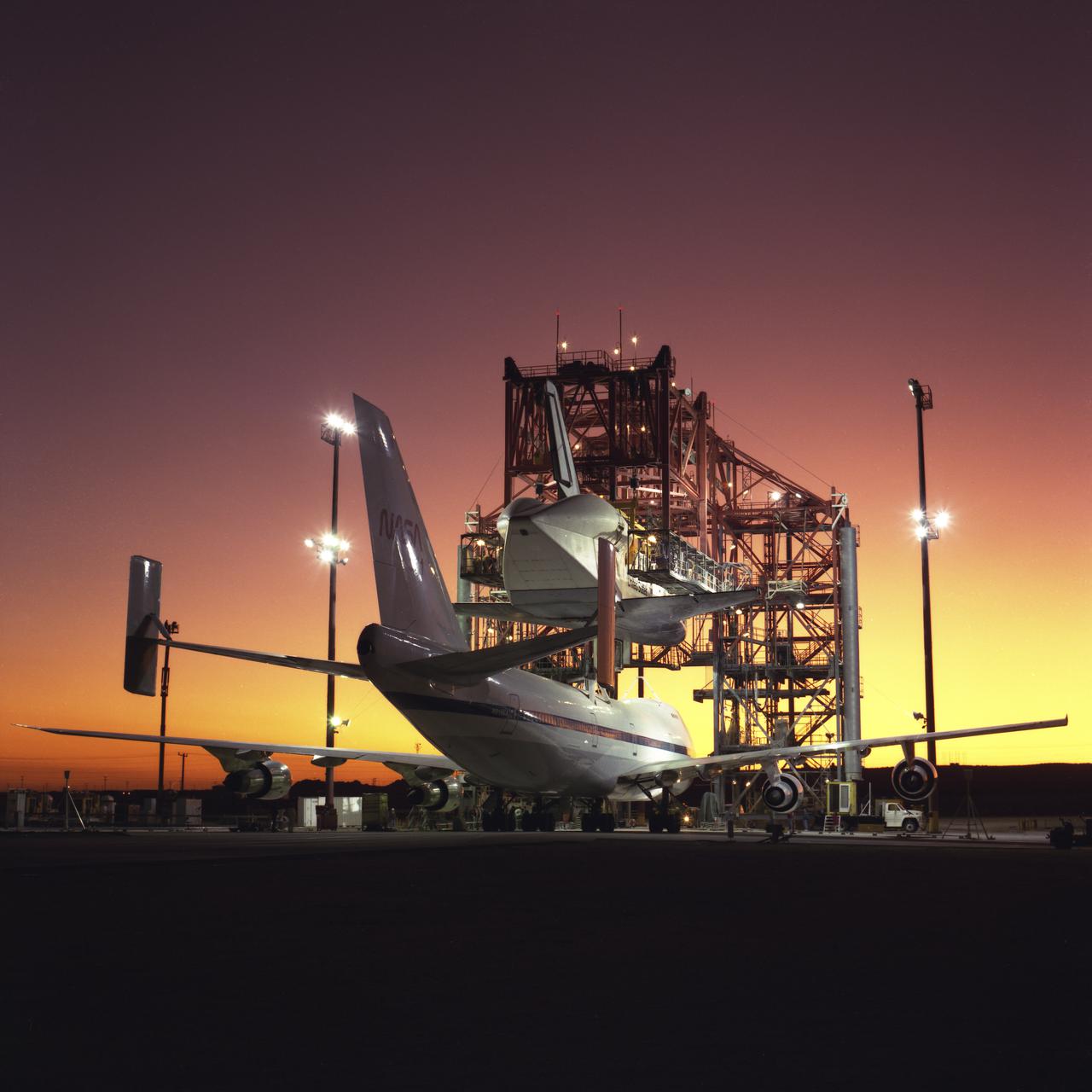
Shuttle Atlantis emerges from the Mate-Demate-Device mounted to Boeing 747 Shuttle Carrier Aircraft for the return flight to Kennedy Space Center in Florida.
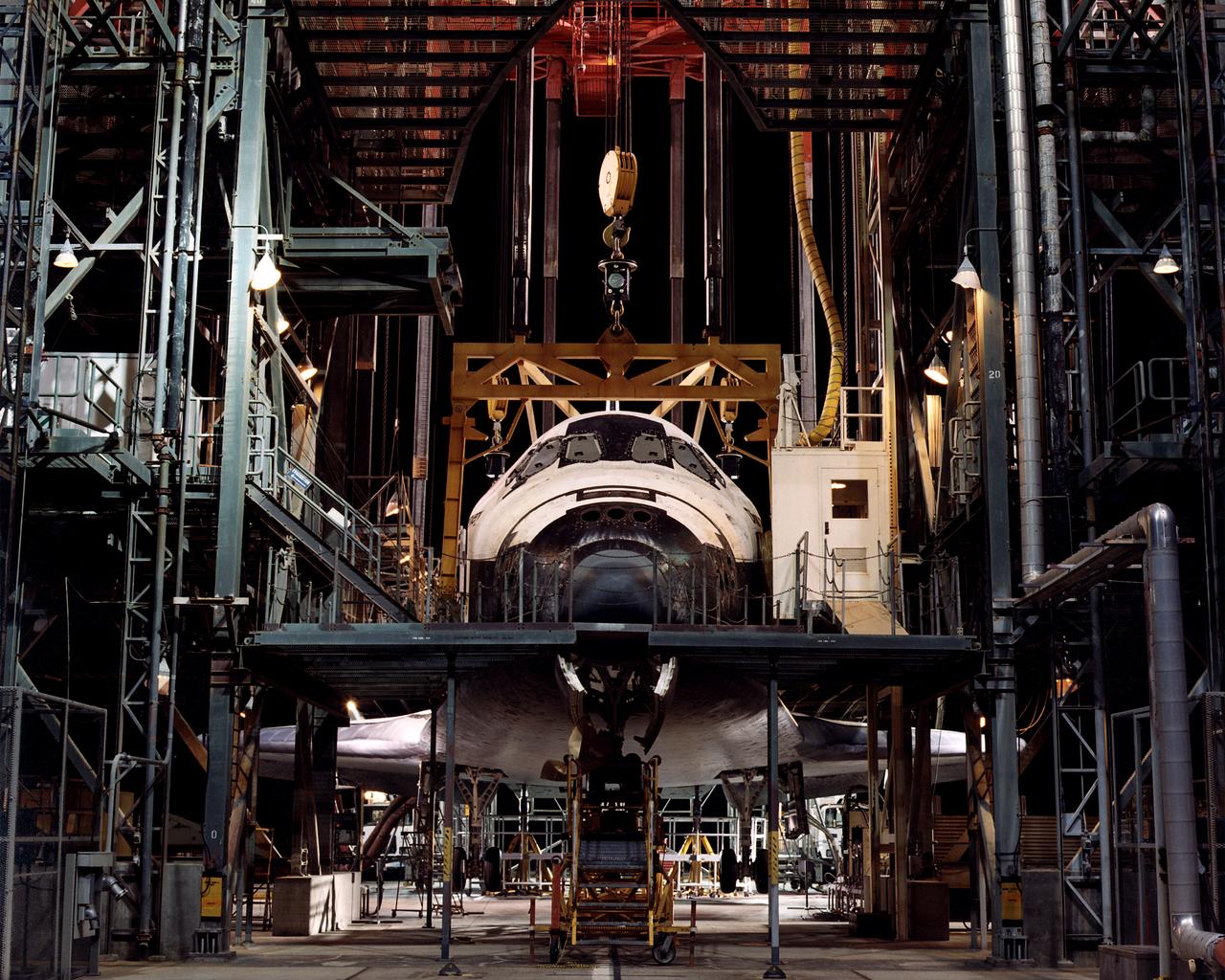
The Space Shuttle Discovery is centered in the Mate-Demate Device (MDD) at NASA’s Dryden Flight Research Center at Edwards, California. The gantry-like MDD structure is used for servicing the shuttle orbiters in preparation for their ferry flight back to the Kennedy Space Center in Florida, including mounting the shuttle atop NASA’s modified Boeing 747 Shuttle Carrier Aircraft.
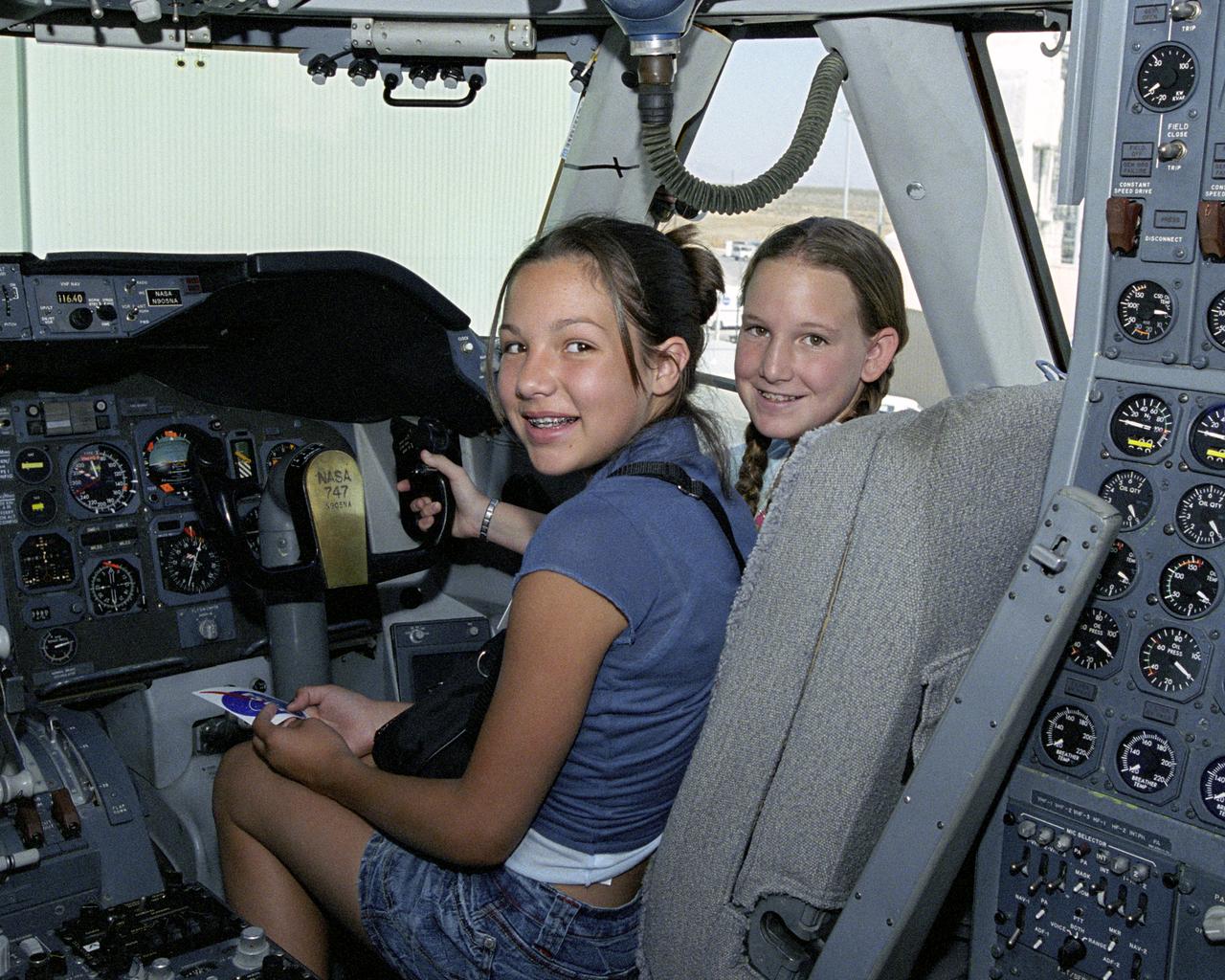
Leah Robson and Bridgette Puljiz of Tehachapi in the flight deck of NASA's modified Boeing 747 space shuttle carrier aircraft during Take Your Children to Work Day June 22 at NASA Dryden Flight Research Center.
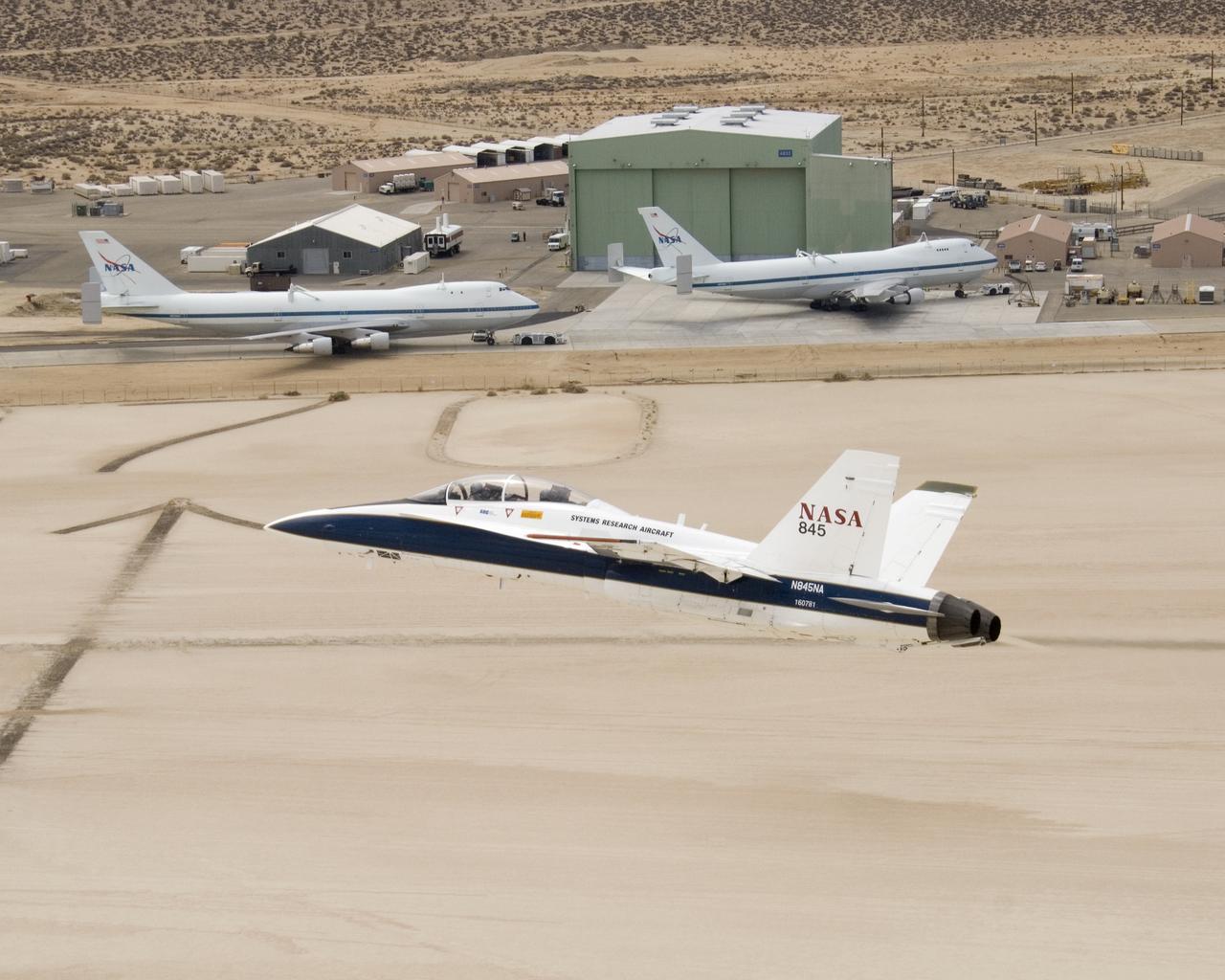
NASA's two Boeing 747 Shuttle Carrier Aircraft form the backdrop as pilot Dick Ewers banks NASA F/A-18 #845 low over Rogers Dry Lake to end a research flight.
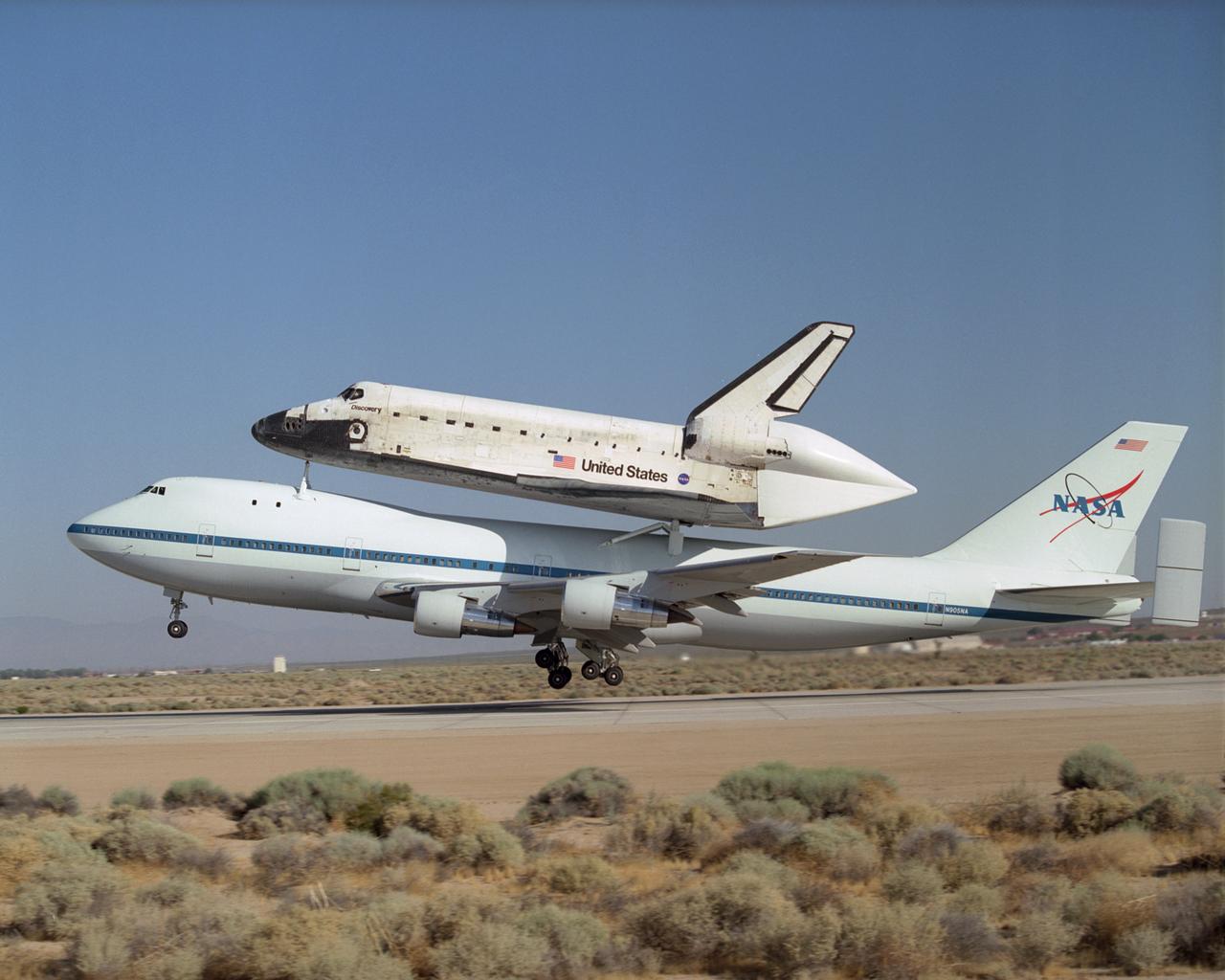
NASA's modified Boeing 747 Shuttle Carrier Aircraft with the Space Shuttle Discovery on top lifts off from Edwards Air Force Base to begin its ferry flight back to the Kennedy Space Center in Florida. The cross-country journey will take two days, with stops at several intermediate points for refueling. Space Shuttle Discovery landed safely at NASA's Dryden Flight Research Center at Edwards Air Force Base in California at 5:11:22 a.m. PDT, August 9, 2005, following the very successful 14-day STS-114 return to flight mission. During their two weeks in space, Commander Eileen Collins and her six crewmates tested out new safety procedures and delivered supplies and equipment the International Space Station. Discovery spent two weeks in space, where the crew demonstrated new methods to inspect and repair the Shuttle in orbit. The crew also delivered supplies, outfitted and performed maintenance on the International Space Station. A number of these tasks were conducted during three spacewalks. In an unprecedented event, spacewalkers were called upon to remove protruding gap fillers from the heat shield on Discovery's underbelly. In other spacewalk activities, astronauts installed an external platform onto the Station's Quest Airlock and replaced one of the orbital outpost's Control Moment Gyroscopes. Inside the Station, the STS-114 crew conducted joint operations with the Expedition 11 crew. They unloaded fresh supplies from the Shuttle and the Raffaello Multi-Purpose Logistics Module. Before Discovery undocked, the crews filled Raffeallo with unneeded items and returned to Shuttle payload bay. Discovery launched on July 26 and spent almost 14 days on orbit.
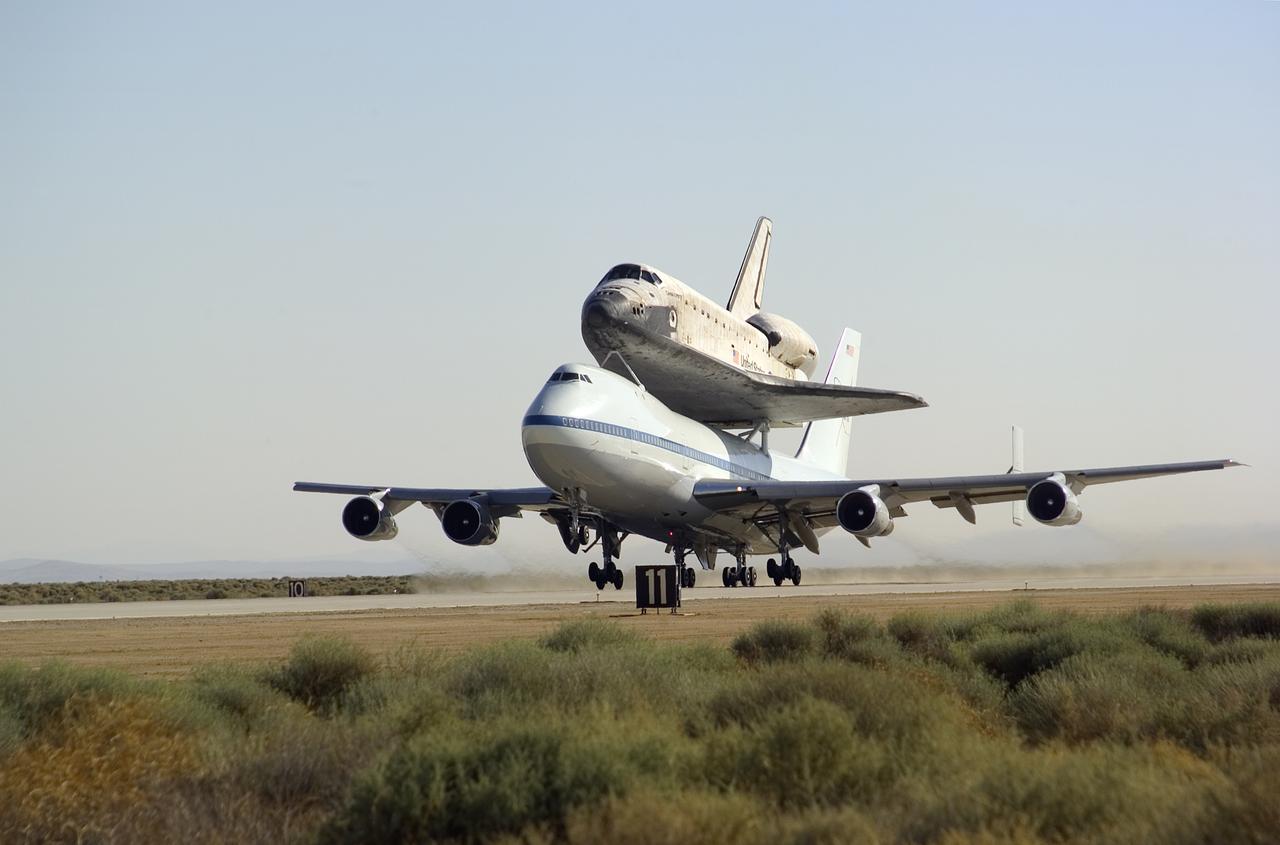
NASA's modified Boeing 747 Shuttle Carrier Aircraft with the Space Shuttle Discovery on top lifts off from Edwards Air Force Base to begin its ferry flight back to the Kennedy Space Center in Florida. The cross-country journey will take two days, with stops at several intermediate points for refueling. Space Shuttle Discovery landed safely at NASA's Dryden Flight Research Center at Edwards Air Force Base in California at 5:11:22 a.m. PDT, August 9, 2005, following the very successful 14-day STS-114 return to flight mission. During their two weeks in space, Commander Eileen Collins and her six crewmates tested out new safety procedures and delivered supplies and equipment the International Space Station. Discovery spent two weeks in space, where the crew demonstrated new methods to inspect and repair the Shuttle in orbit. The crew also delivered supplies, outfitted and performed maintenance on the International Space Station. A number of these tasks were conducted during three spacewalks. In an unprecedented event, spacewalkers were called upon to remove protruding gap fillers from the heat shield on Discovery's underbelly. In other spacewalk activities, astronauts installed an external platform onto the Station's Quest Airlock and replaced one of the orbital outpost's Control Moment Gyroscopes. Inside the Station, the STS-114 crew conducted joint operations with the Expedition 11 crew. They unloaded fresh supplies from the Shuttle and the Raffaello Multi-Purpose Logistics Module. Before Discovery undocked, the crews filled Raffeallo with unneeded items and returned to Shuttle payload bay. Discovery launched on July 26 and spent almost 14 days on orbit.
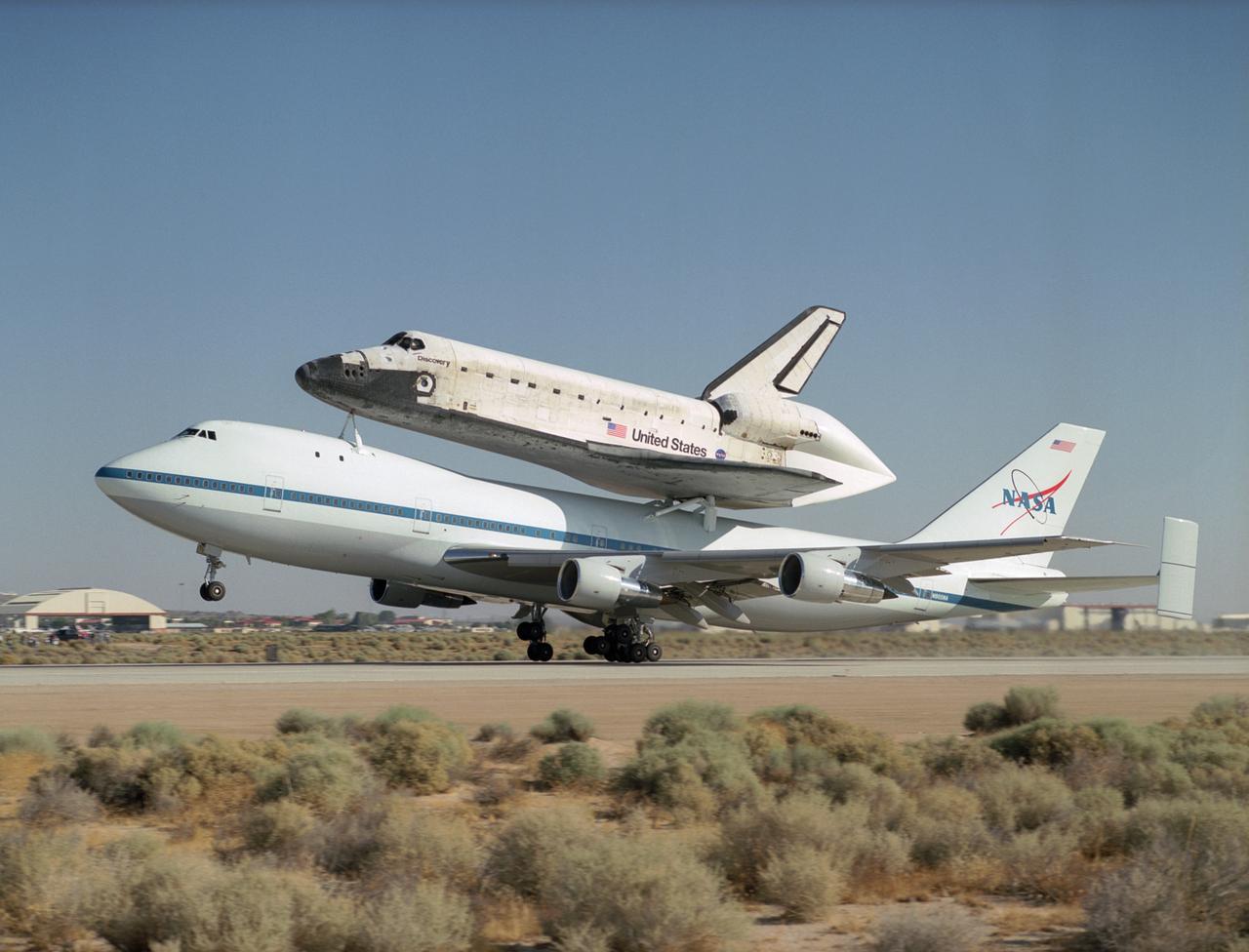
NASA's modified Boeing 747 Shuttle Carrier Aircraft with the Space Shuttle Discovery on top lifts off from Edwards Air Force Base to begin its ferry flight back to the Kennedy Space Center in Florida. The cross-country journey will take two days, with stops at several intermediate points for refueling. Space Shuttle Discovery landed safely at NASA's Dryden Flight Research Center at Edwards Air Force Base in California at 5:11:22 a.m. PDT, August 9, 2005, following the very successful 14-day STS-114 return to flight mission. During their two weeks in space, Commander Eileen Collins and her six crewmates tested out new safety procedures and delivered supplies and equipment the International Space Station. Discovery spent two weeks in space, where the crew demonstrated new methods to inspect and repair the Shuttle in orbit. The crew also delivered supplies, outfitted and performed maintenance on the International Space Station. A number of these tasks were conducted during three spacewalks. In an unprecedented event, spacewalkers were called upon to remove protruding gap fillers from the heat shield on Discovery's underbelly. In other spacewalk activities, astronauts installed an external platform onto the Station's Quest Airlock and replaced one of the orbital outpost's Control Moment Gyroscopes. Inside the Station, the STS-114 crew conducted joint operations with the Expedition 11 crew. They unloaded fresh supplies from the Shuttle and the Raffaello Multi-Purpose Logistics Module. Before Discovery undocked, the crews filled Raffeallo with unneeded items and returned to Shuttle payload bay. Discovery launched on July 26 and spent almost 14 days on orbit.

The NASA Dryden 747 Shuttle Carrier Aircraft crew poses in an engine inlet; Standing L to R - aircraft mechanic John Goleno and SCA Team Leader Pete Seidl; Kneeling L to R - aircraft mechanics Todd Weston and Arvid Knutson, and avionics technician Jim Bedard NASA uses two modified Boeing 747 jetliners, originally manufactured for commercial use, as Space Shuttle Carrier Aircraft (SCA). One is a 747-100 model, while the other is designated a 747-100SR (short range). The two aircraft are identical in appearance and in their performance as Shuttle Carrier Aircraft. The 747 series of aircraft are four-engine intercontinental-range swept-wing "jumbo jets" that entered commercial service in 1969. The SCAs are used to ferry space shuttle orbiters from landing sites back to the launch complex at the Kennedy Space Center, and also to and from other locations too distant for the orbiters to be delivered by ground transportation. The orbiters are placed atop the SCAs by Mate-Demate Devices, large gantry-like structures which hoist the orbiters off the ground for post-flight servicing, and then mate them with the SCAs for ferry flights.
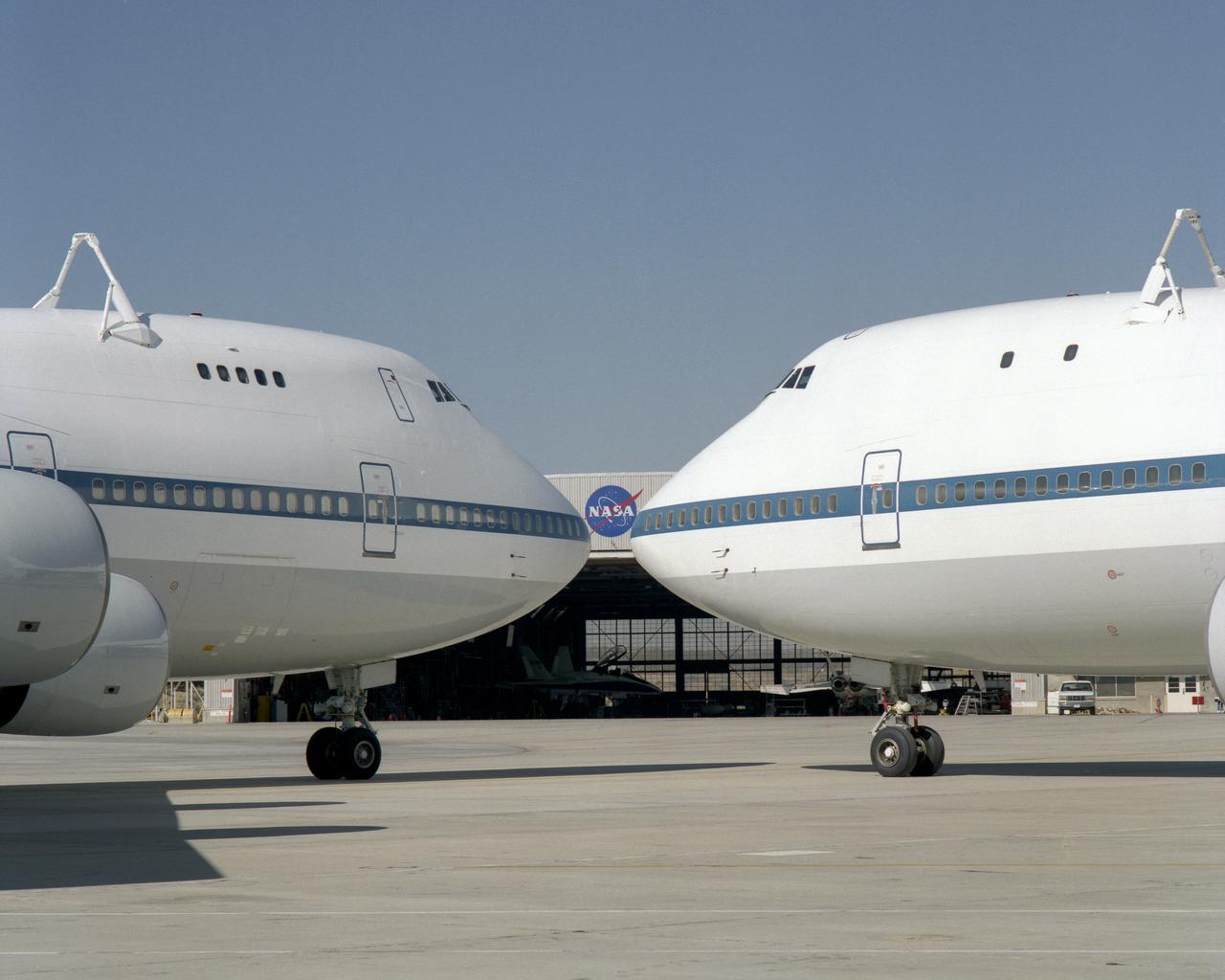
The NASA logo on a hangar is framed by the noses of NASA's two modified 747 Shuttle Carrier Aircraft on the ramp at NASA Dryden in this 1995 photo.
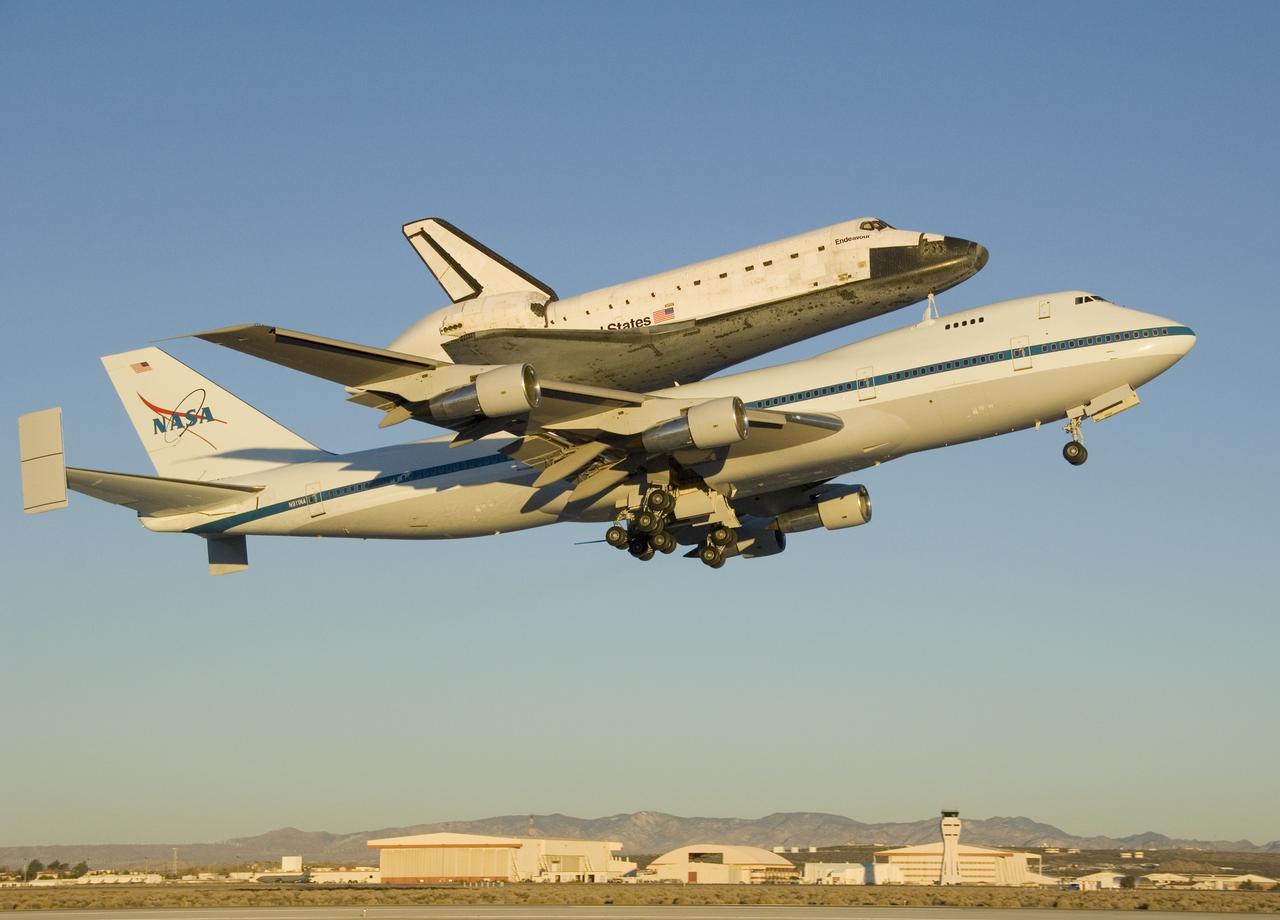
The Space Shuttle Endeavour atop its modified Boeing 747 carrier aircraft lifts off from Edwards Air Force Base on the first leg of its ferry flight back to the Kennedy Space Center just after sunrise on Dec. 10, 2008.
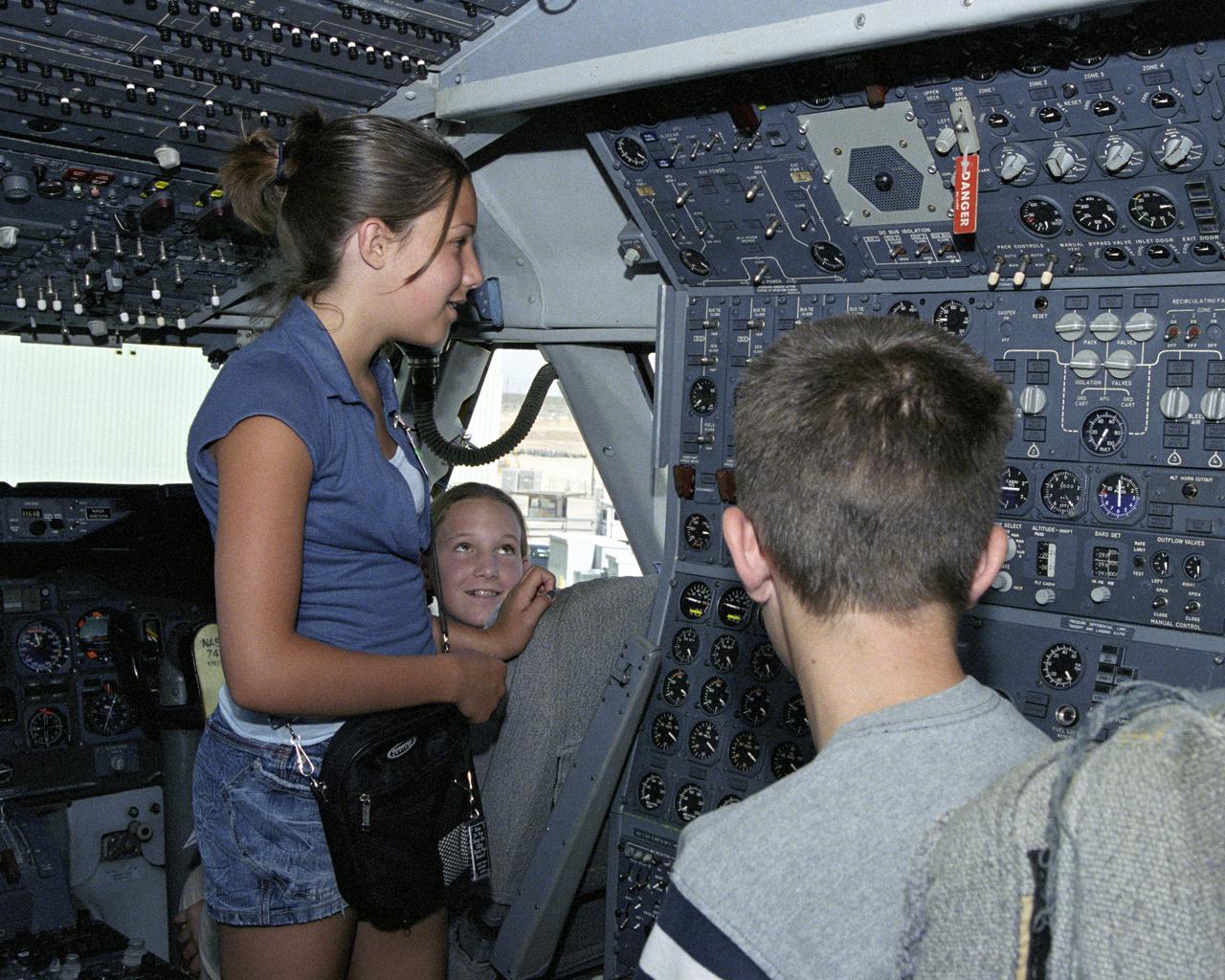
Leah Robson and Bridgette Puljiz of Tehachapi (seated) and Zachary Johnson of Palmdale (back to camera) look over the maze of dials and switches in the flight deck of NASA's modified Boeing 747 space shuttle carrier aircraft during Take Your Children to Work Day June 22 at NASA Dryden Flight Research Center.
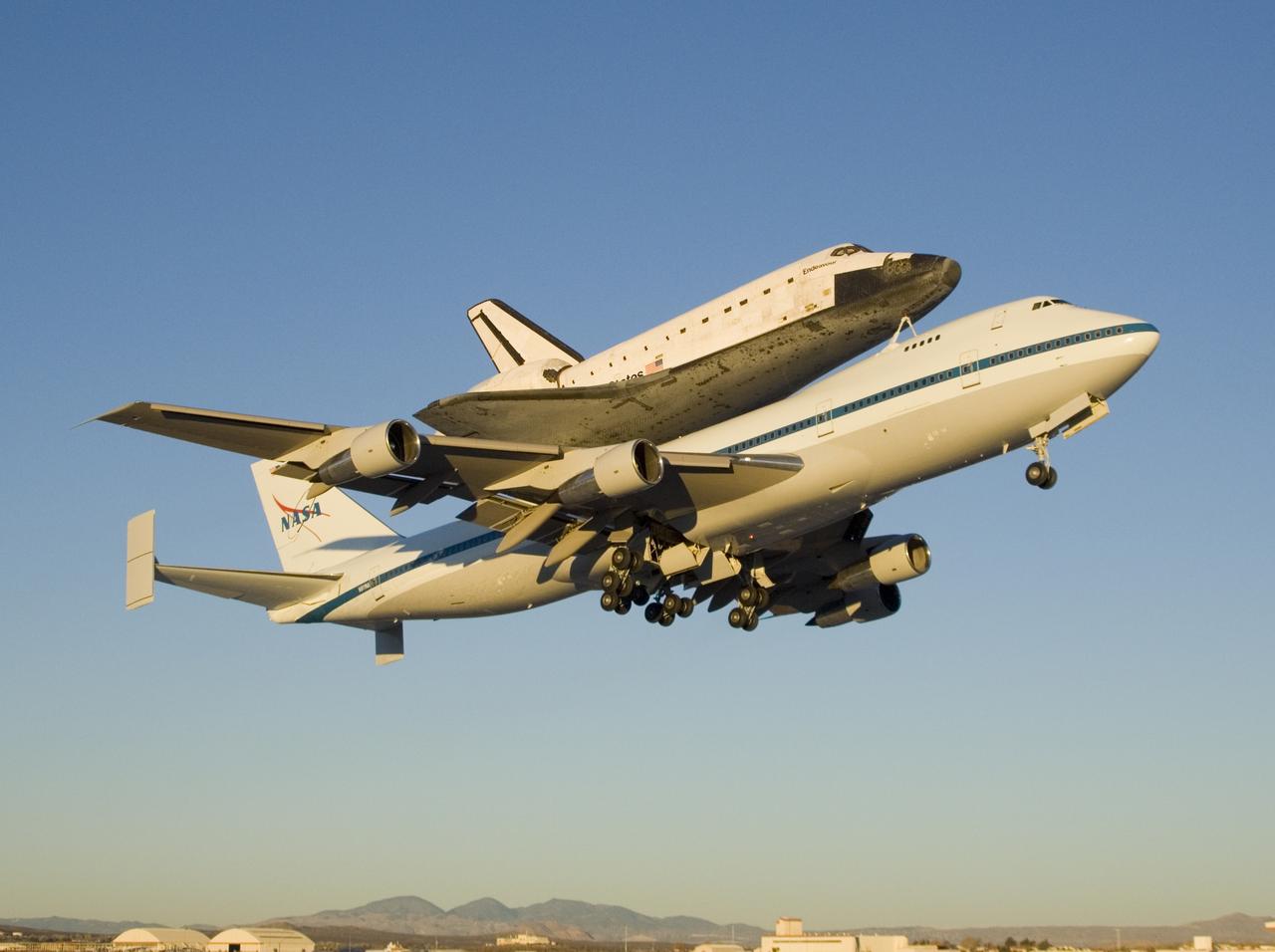
The modified Boeing 747 carrier aircraft carrying the Space Shuttle Endeavour soars aloft from Edwards Air Force Base on the first leg of its ferry flight back to the Kennedy Space Center just after sunrise on Dec. 10, 2008.
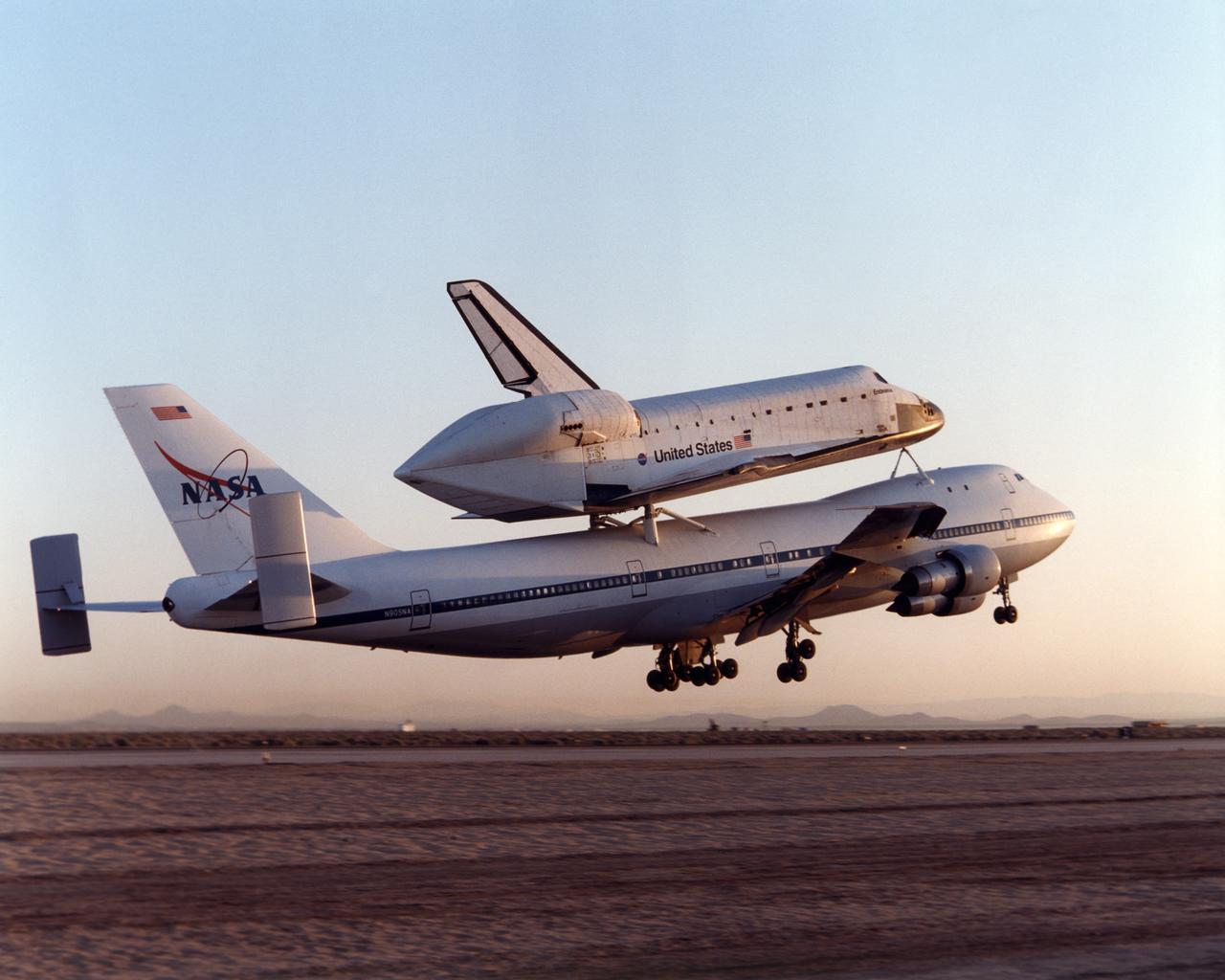
NASA's modified Boeing 747 Shuttle Carrier Aircraft with the Space Shuttle Endeavour on top climbs out after takeoff from Edwards Air Force Base on the first leg of its ferry flight back to the Kennedy Space Center in Florida.
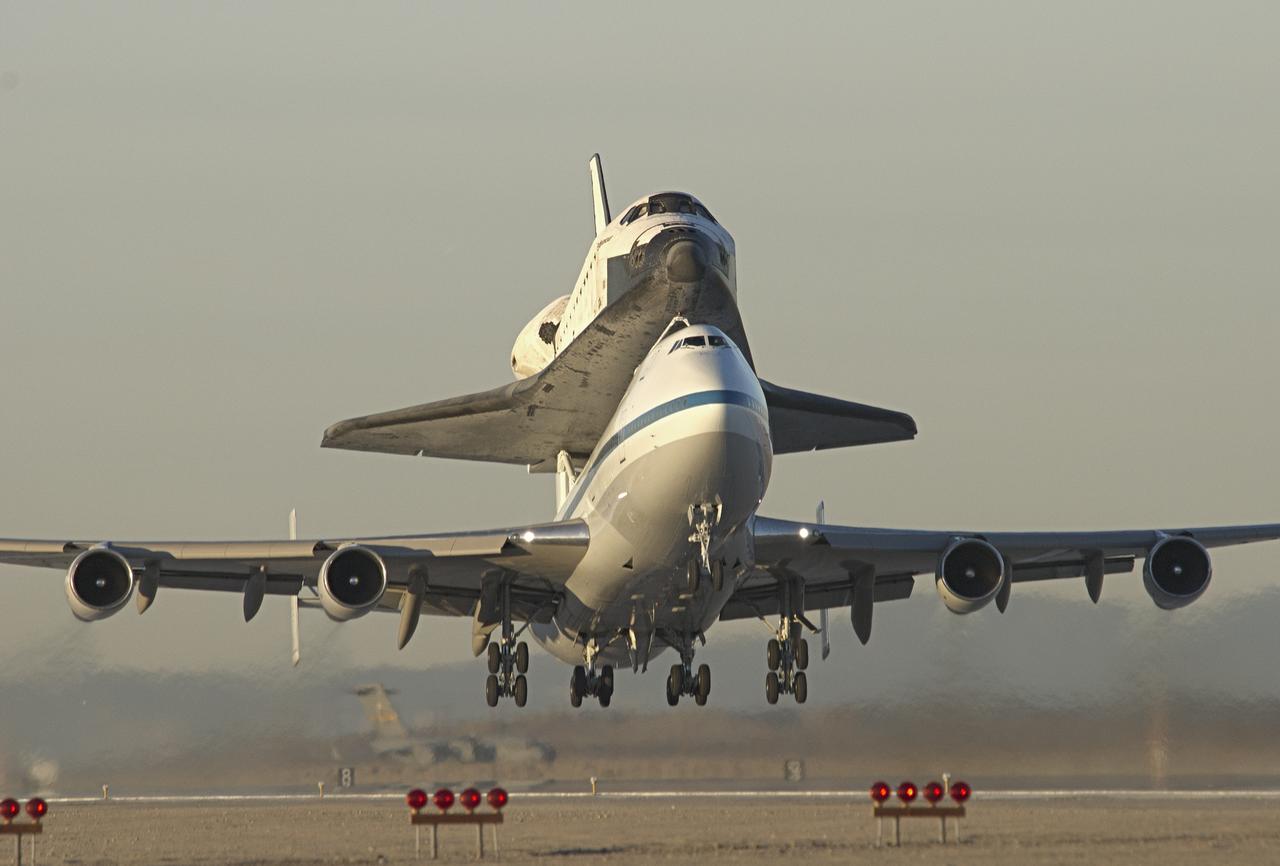
Moments after sunrise, the modified Boeing 747 carrier aircraft carrying the Space Shuttle Endeavour lifts off from Edwards Air Force Base on the first leg of its ferry flight back to the Kennedy Space Center on Dec. 10, 2008.
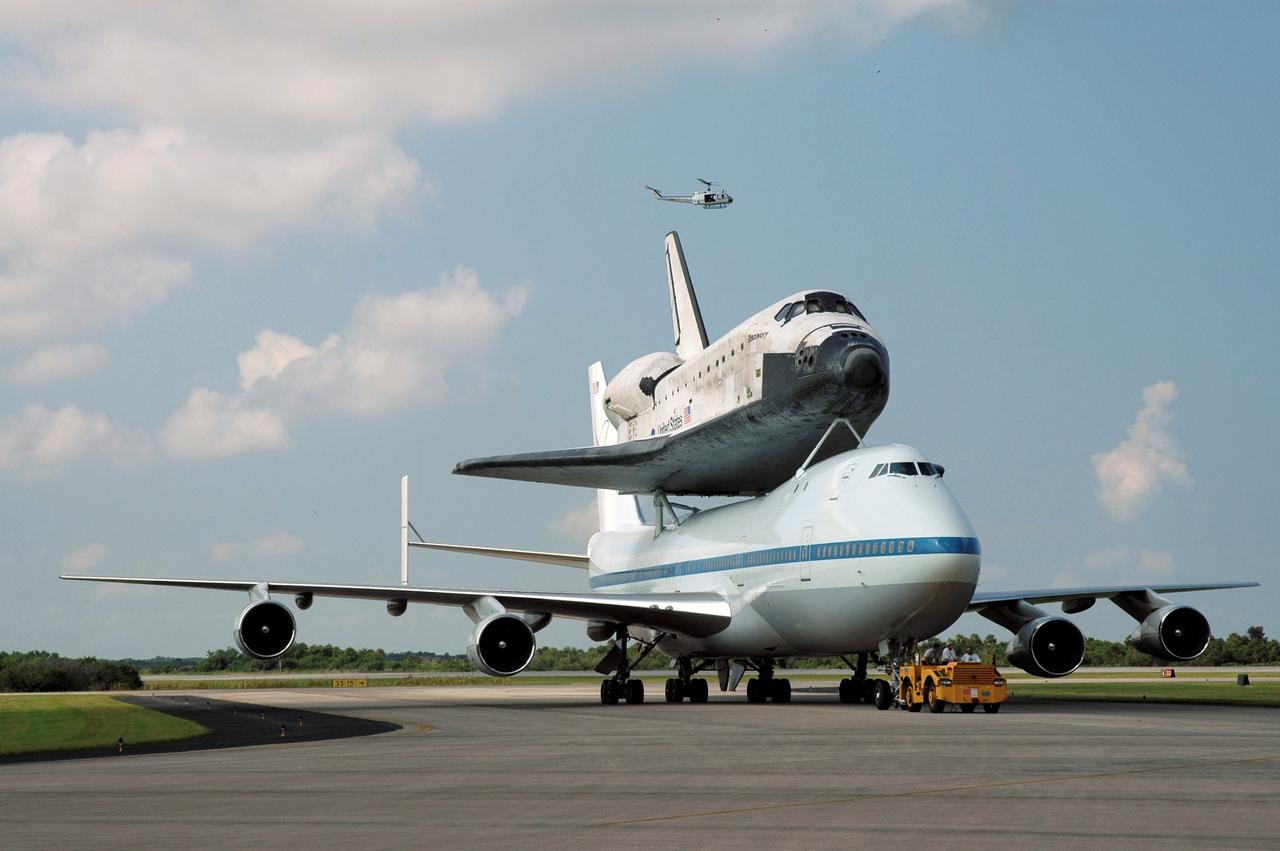
JSC2005-E-36604 (21 August 2005) --- The Space Shuttle Discovery, atop a specially modified Boeing 747, was photographed following touch down at NASA Kennedy Space Center’s (KSC) Shuttle Landing Facility on Aug. 21, 2005 after a ferry flight from Edwards Air Force Base in California, where the shuttle landed Aug. 9. The 747, known as the Shuttle Carrier Aircraft (SCA), brought Discovery home to KSC after completing the historic STS-114 Return to Flight mission.
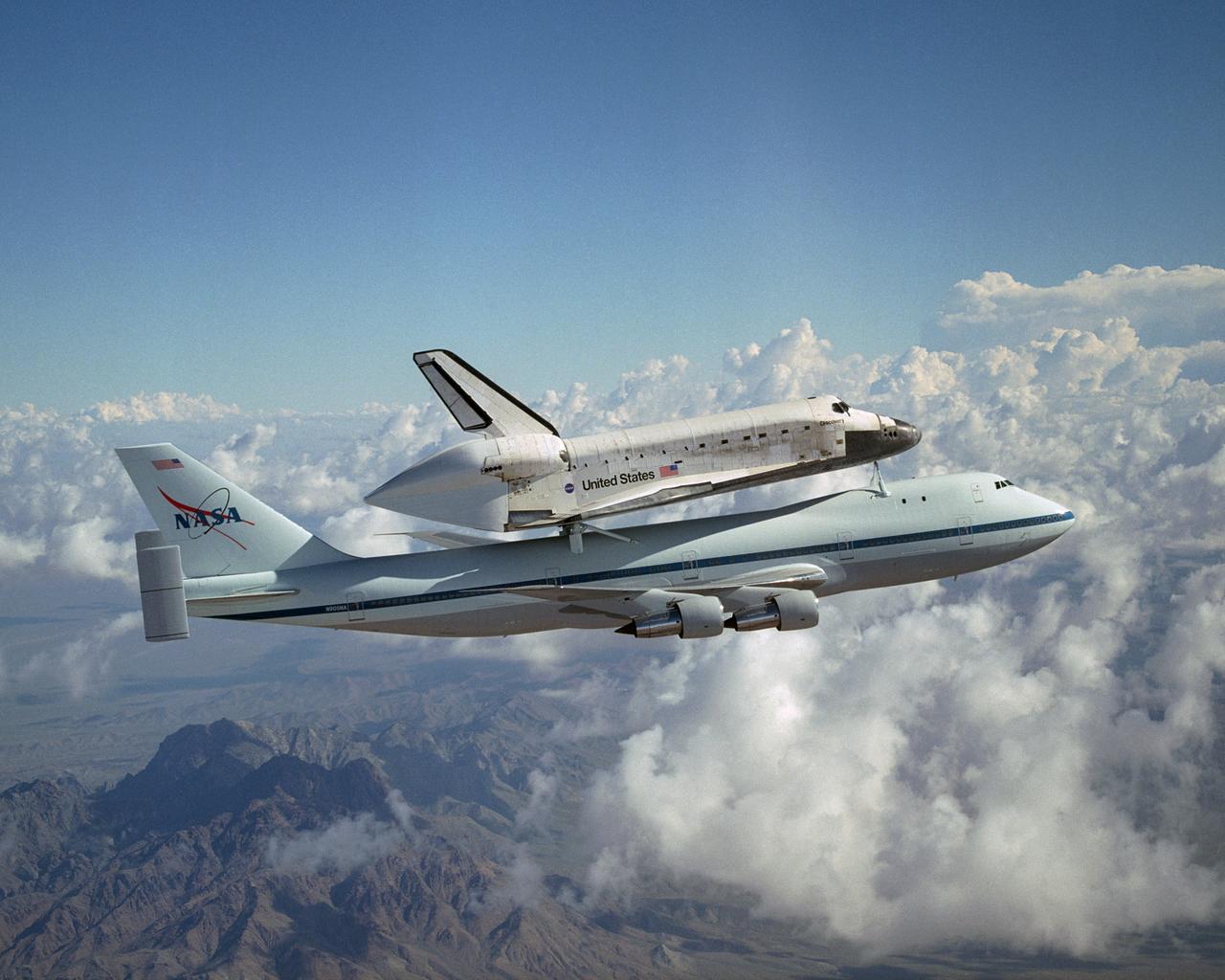
The Space Shuttle Discovery hitched a ride on NASA's modified Boeing 747 Shuttle Carrier Aircraft for the flight from the Dryden Flight Research Center in California, to Kennedy Space Center, Florida, on August 19, 2005. The cross-country ferry flight to return Discovery to Florida after it's landing in California will take two days, with stops at several intermediate points for refueling. Space Shuttle Discovery landed safely at NASA's Dryden Flight Research Center at Edwards Air Force Base in California at 5:11:22 a.m. PDT, August 9, 2005, following the very successful 14-day STS-114 return to flight mission. During their two weeks in space, Commander Eileen Collins and her six crewmates tested out new safety procedures and delivered supplies and equipment the International Space Station. Discovery spent two weeks in space, where the crew demonstrated new methods to inspect and repair the Shuttle in orbit. The crew also delivered supplies, outfitted and performed maintenance on the International Space Station. A number of these tasks were conducted during three spacewalks. In an unprecedented event, spacewalkers were called upon to remove protruding gap fillers from the heat shield on Discovery's underbelly. In other spacewalk activities, astronauts installed an external platform onto the Station's Quest Airlock and replaced one of the orbital outpost's Control Moment Gyroscopes. Inside the Station, the STS-114 crew conducted joint operations with the Expedition 11 crew. They unloaded fresh supplies from the Shuttle and the Raffaello Multi-Purpose Logistics Module. Before Discovery undocked, the crews filled Raffeallo with unneeded items and returned to Shuttle payload bay. Discovery launched on July 26 and spent almost 14 days on orbit.
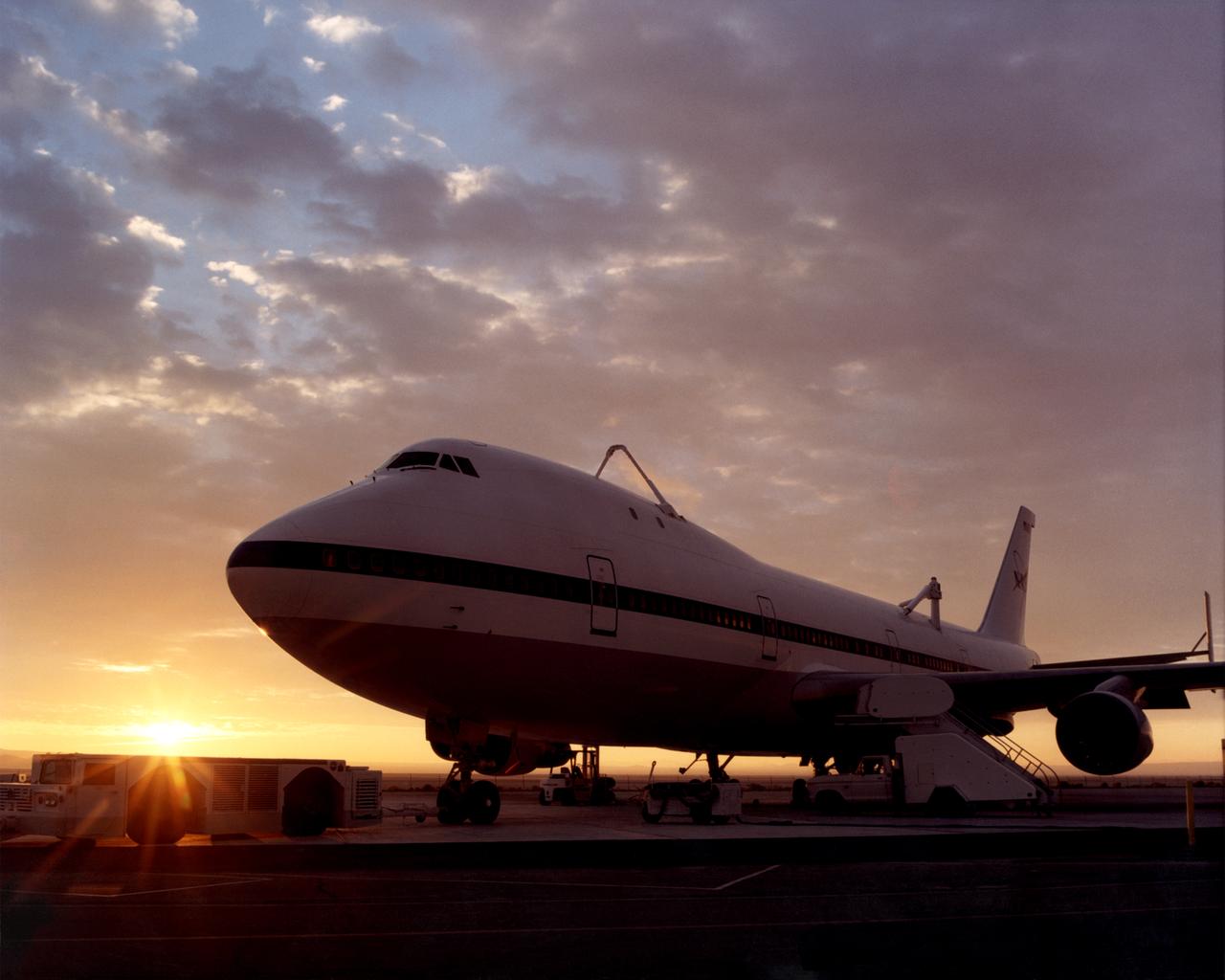
One of NASA’s two modified Boeing 747 Shuttle Carrier Aircraft is bathed in the morning Sun at NASA’s Dryden Flight Research Center at Edwards, California. The modified jumbo jetliners are used to ferry the Space Shuttle orbiters between Dryden and the Kennedy Space Center in Florida and Boeing’s Reusable Space Systems modification facility at Palmdale, California. Features which distinguish the two SCAs from standard 747 jetliners are three struts, with associated interior structural strengthening, which protrude from the top of the fuselage (two aft, one forward) on which the orbiter is attached, and two additional vertical stabilizers, one on each end of the standard horizontal stabilizer, to enhance directional stability. All interior furnishings and equipment aft of the forward No. 1 doors have also been removed to reduce weight. The two SCAs are under the operational control of NASA's Johnson Space Center, Houston, Texas.
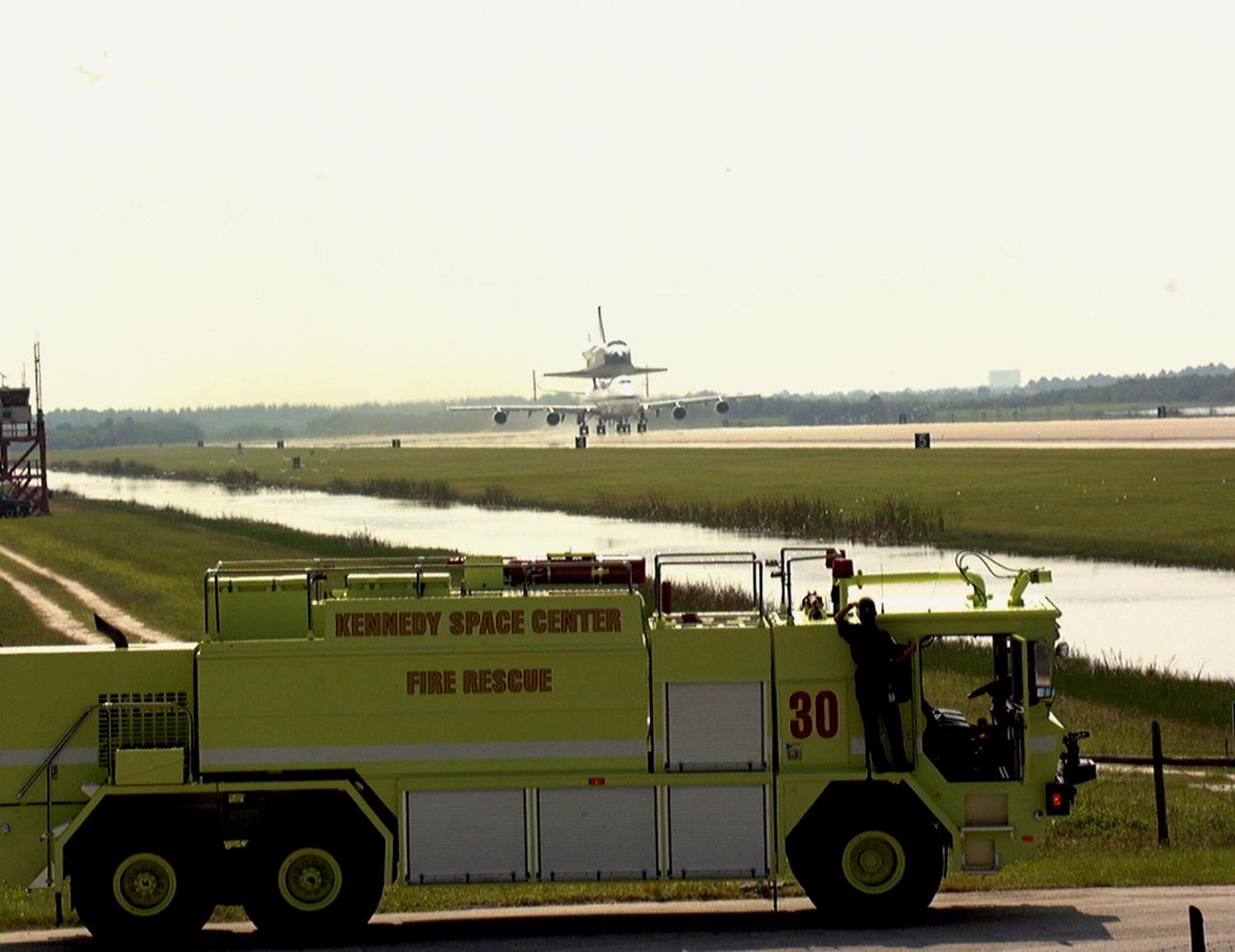
KENNEDY SPACE CENTER, FLA. -- From the Shuttle Landing Facility, the orbiter Columbia leaves Kennedy Space Center on the back of a Boeing 747 Shuttle Carrier Aircraft on a ferry flight to Palmdale, Calif. Columbia, the oldest of four orbiters in NASA's fleet, will undergo extensive inspections and modifications in Boeing's Orbiter Assembly Facility during a nine-month orbiter maintenance down period (OMDP), the second in its history. Orbiters are periodically removed from flight operations for an OMDP. Columbia's first was in 1994. Along with more than 100 modifications on the vehicle, Columbia will be the second orbiter to be outfitted with the multifunctional electronic display system, or "glass cockpit." Columbia is expected to return to KSC in July 2000
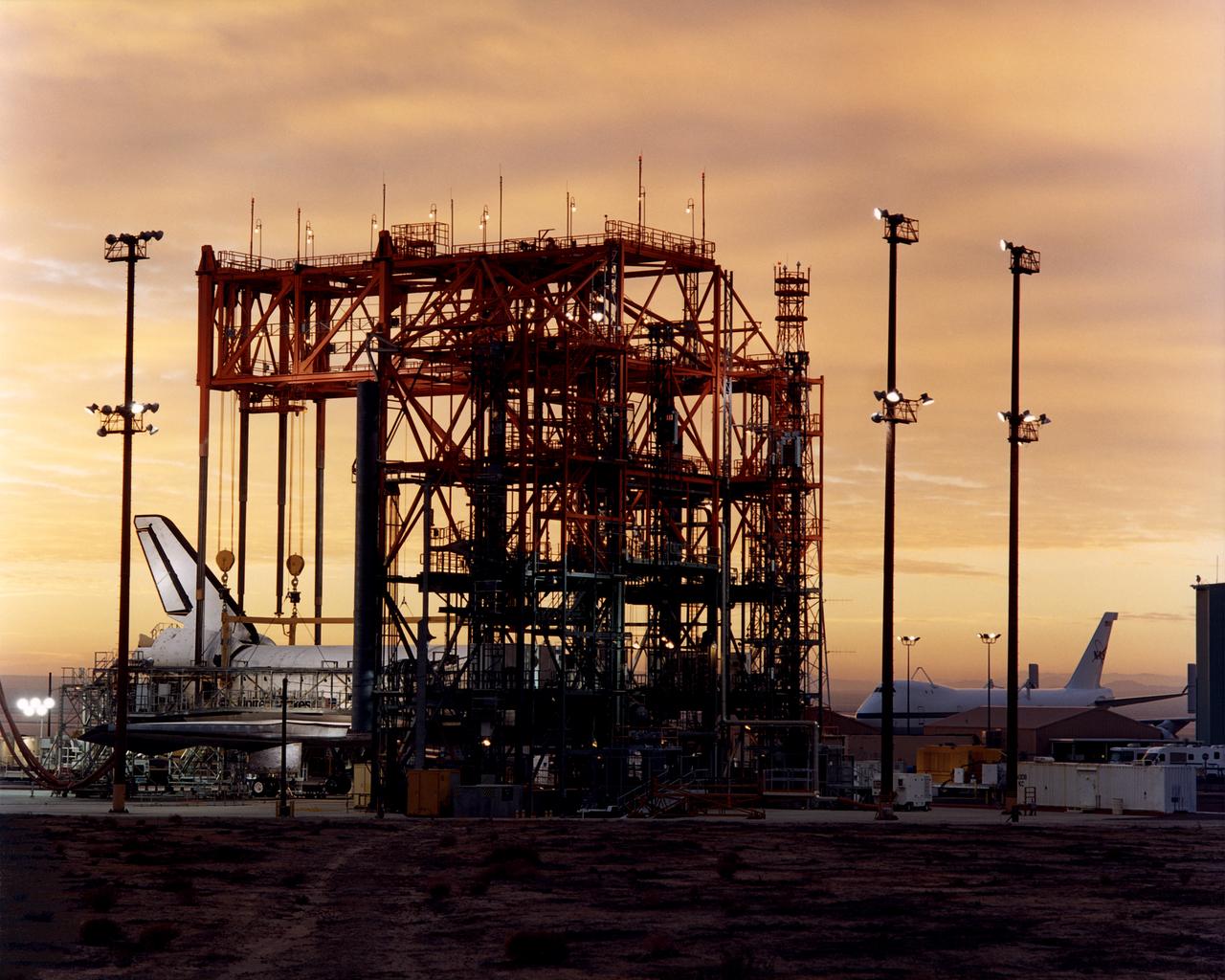
The early-morning Sun provides a golden backdrop to the Space Shuttle Discovery encased in the Mate-Demate Device (MDD) at NASA’s Dryden Flight Research Center at Edwards, California. The gantry-like MDD structure is used to prepare the shuttle for its ferry flight back to the Kennedy Space Center in Florida, including mounting the shuttle atop NASA’s modified Boeing 747 Shuttle Carrier Aircraft.

CAPE CANAVERAL, Fla. – The Shuttle Carrier Aircraft, or SCA, a modified Boeing 747, with space shuttle Atlantis on top, has landed at Biggs Army Air Field in El Paso, Texas, for an overnight stop. Atlantis is being returned to Florida on a ferry flight on the SCA. Atlantis' next assignment is the STS-129 mission, targeted to launch in November 2009. Photo credit: NASA/Ben Smegelsky
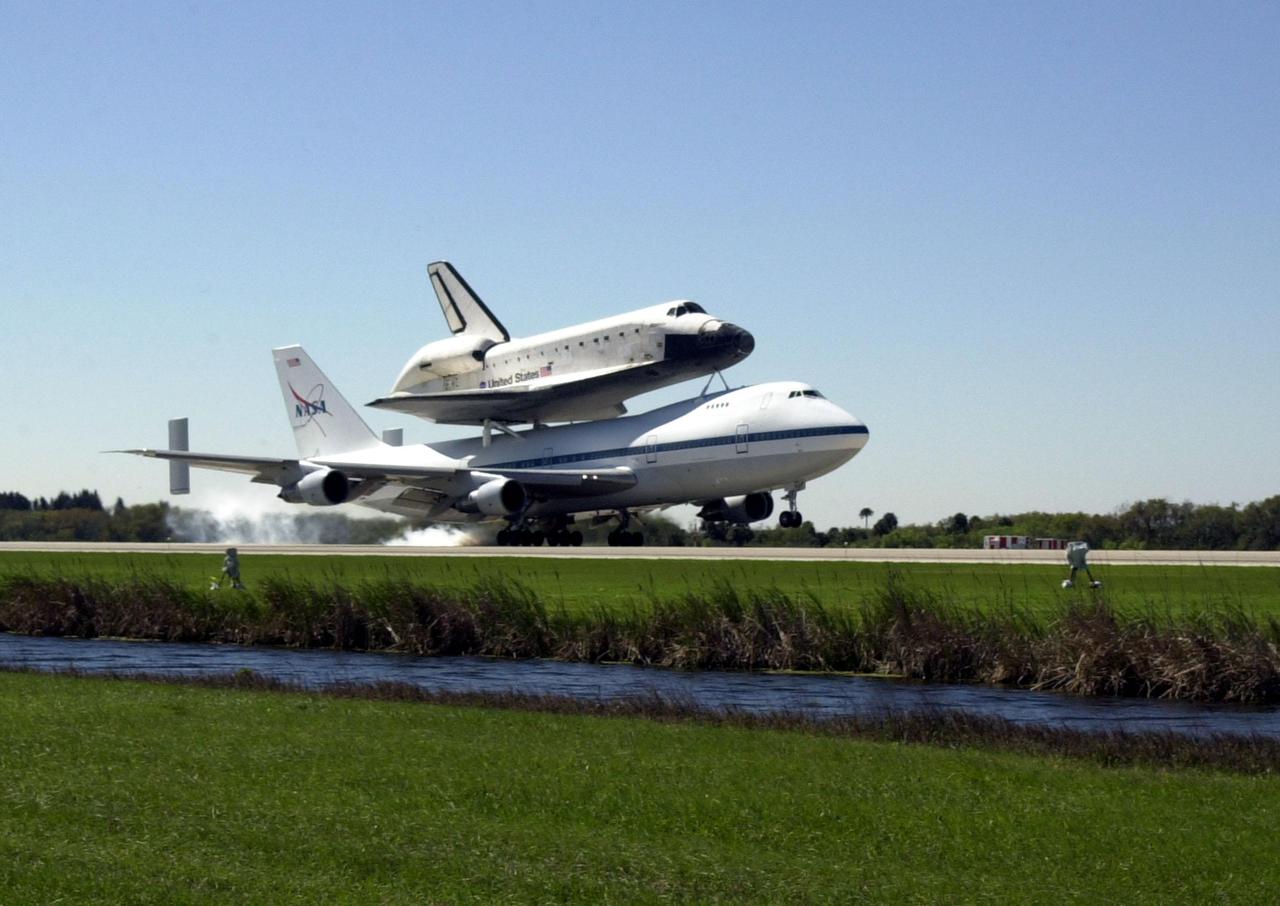
KENNEDY SPACE CENTER, FLA. -- The Shuttle Carrier Aircraft, a modified Boeing 747, kicks up dust as it lands at KSC’s Shuttle Landing Facility with the orbiter Atlantis on top. Atlantis landed in California Feb. 19 concluding mission STS-98. The ferry flight began in California March 1; unfavorable weather conditions kept it on the ground at Altus AFB, Okla., until it could return to Florida. The orbiter will next fly on mission STS-104, the 10th construction flight to the International Space Station, scheduled June 8
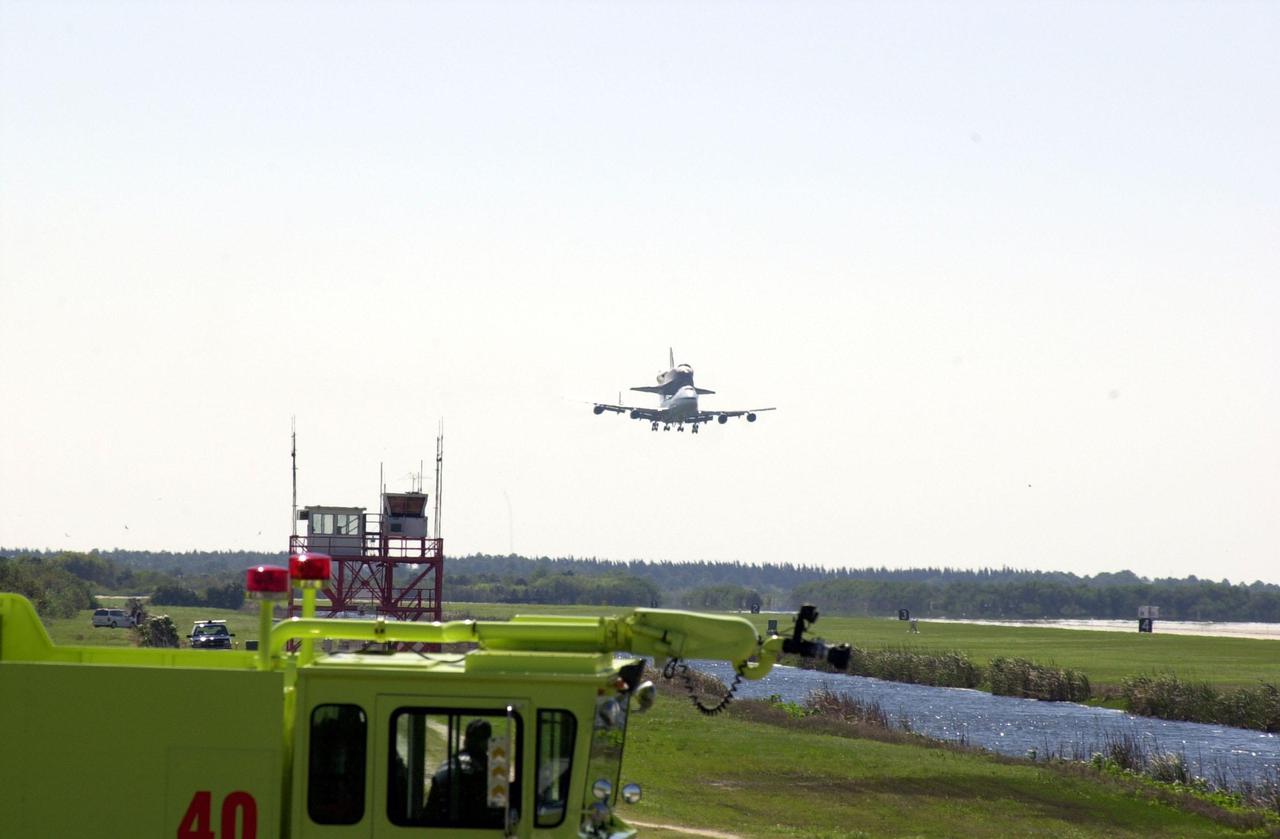
KENNEDY SPACE CENTER, FLA. -- The orbiter Atlantis arrives at KSC’s Shuttle Landing Facility riding piggyback on a Shuttle Carrier Aircraft, a modified Boeing 747. Atlantis landed in California Feb. 19 concluding mission STS-98. The ferry flight began in California March 1; unfavorable weather conditions kept it on the ground at Altus AFB, Okla., until it could return to Florida. The orbiter will next fly on mission STS-104, the 10th construction flight to the International Space Station, scheduled June 8
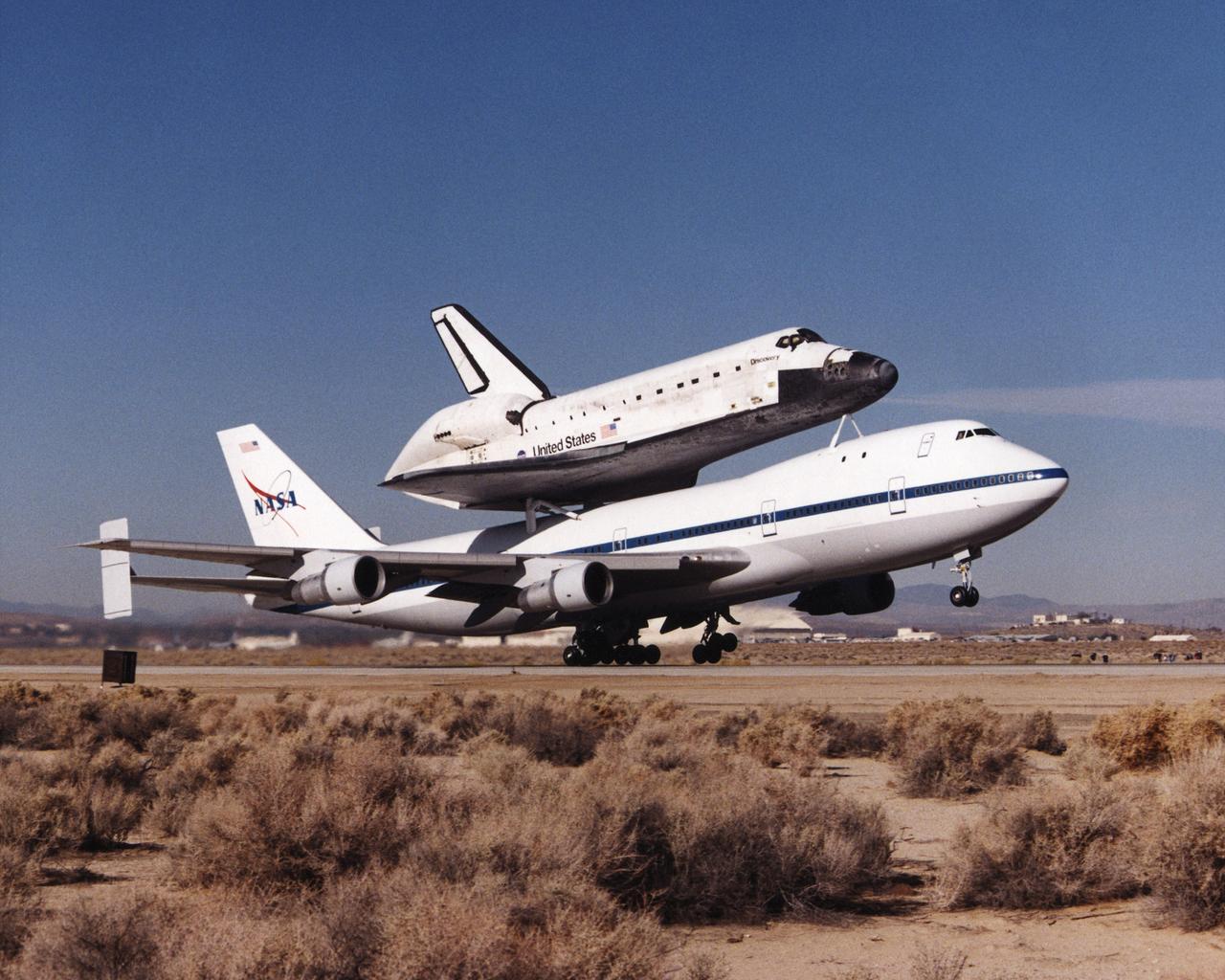
Carrying the Space Shuttle Discovery piggyback, one of NASA’s modified Boeing 747 Shuttle Carrier Aircraft lifts off the runway at Edwards Air Force Base, California. The Discovery was ferried from NASA’s Dryden Flight Research Center at Edwards to NASA’s Kennedy Space Center in Florida on November 2, 2000, after extensive post-landing servicing and ferry flight preparations.
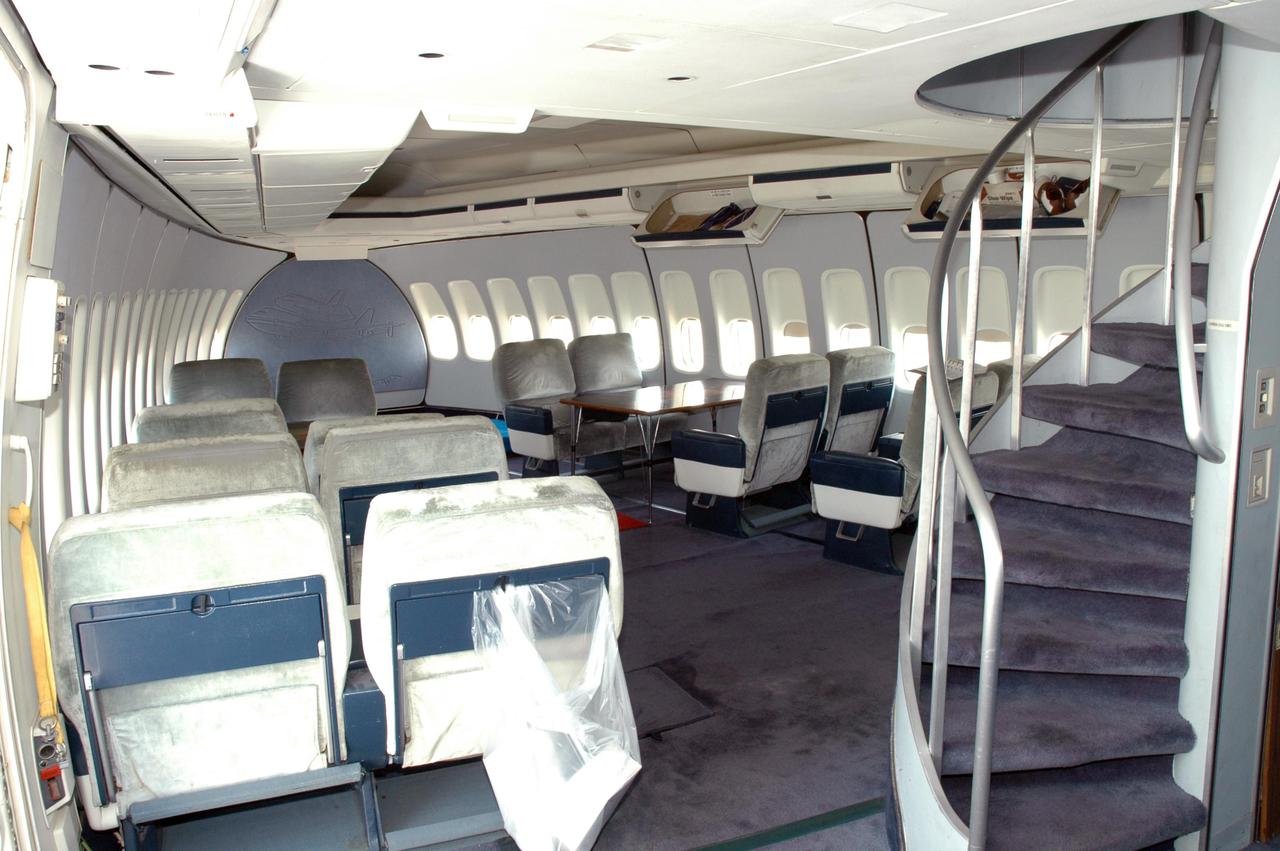
KENNEDY SPACE CENTER, FLA. - A view inside the Shuttle Carrier Aircraft, a modified Boeing 747. The plane carried the orbiter Discovery on a ferry flight to NASA Kennedy Space Center from Edwards Air Force Base in California, arriving Aug. 21. Returning to Earth from Return to Flight mission STS-114, Discovery landed at Edwards Aug. 9 after waive-off from KSC due to weather concerns.
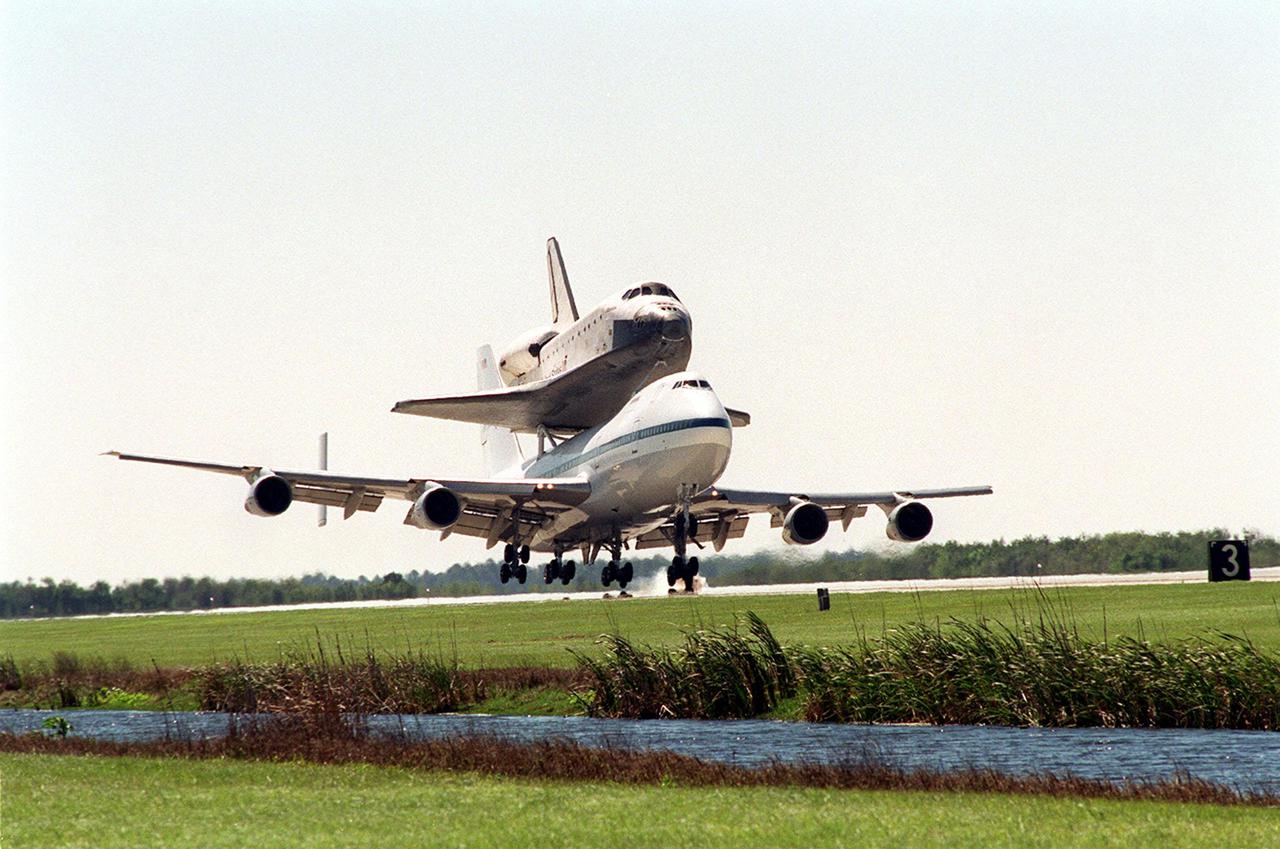
The Shuttle Carrier Aircraft, a modified Boeing 747, kicks up dust as it lands at KSC’s Shuttle Landing Facility with the orbiter Atlantis on top. Atlantis landed in California Feb. 19 concluding mission STS-98. The ferry flight began in California March 1; unfavorable weather conditions kept it on the ground at Altus AFB, Okla., until it could return to Florida. The orbiter will next fly on mission STS-104, the 10th construction flight to the International Space Station, scheduled June 8
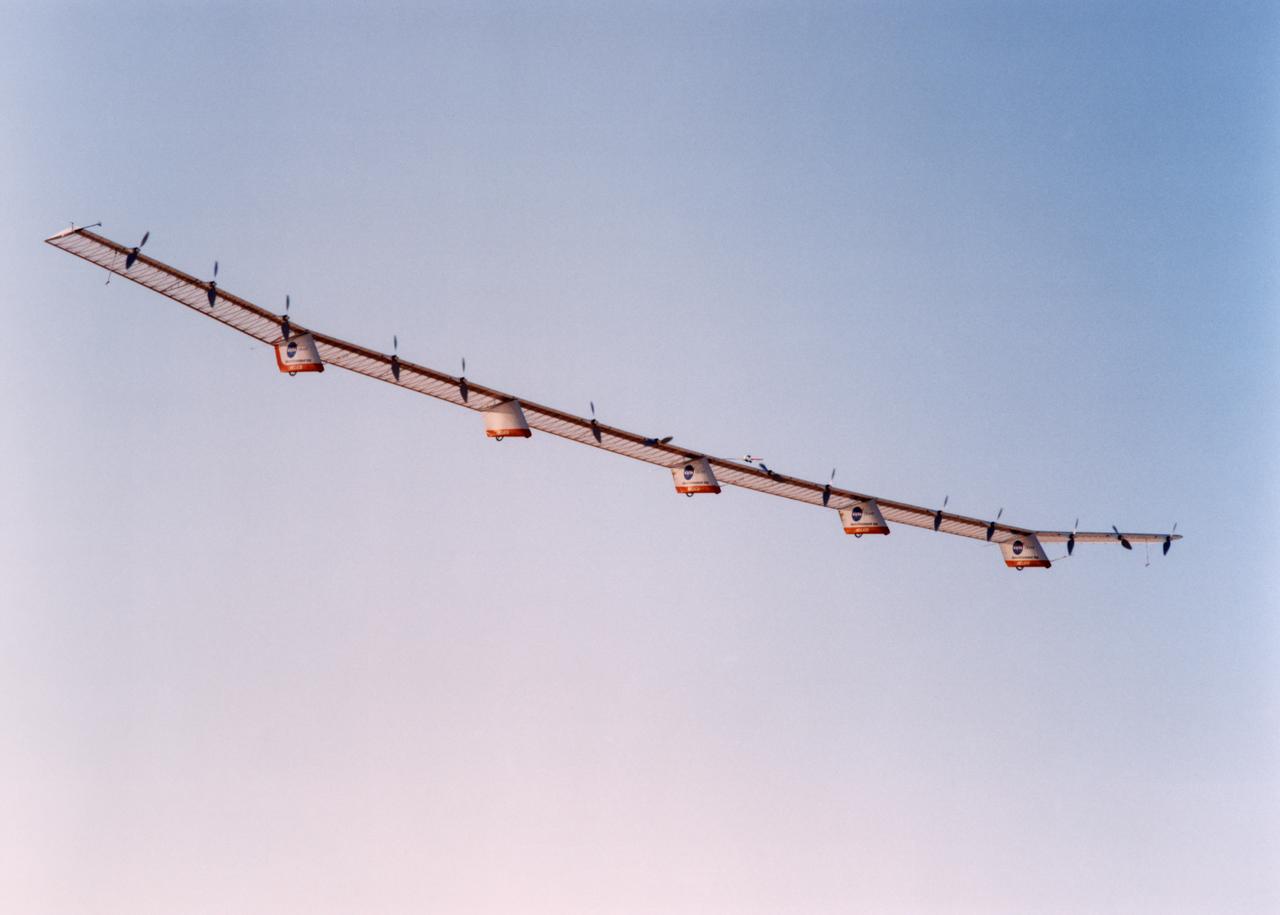
The Helios Prototype is an enlarged version of the Centurion flying wing, which flew a series of test flights at Dryden in late 1998. The craft has a wingspan of 247 feet, 41 feet greater than the Centurion, 2 1/2 times that of its solar-powered Pathfinder flying wing, and longer than either the Boeing 747 jetliner or Lockheed C-5 transport aircraft.
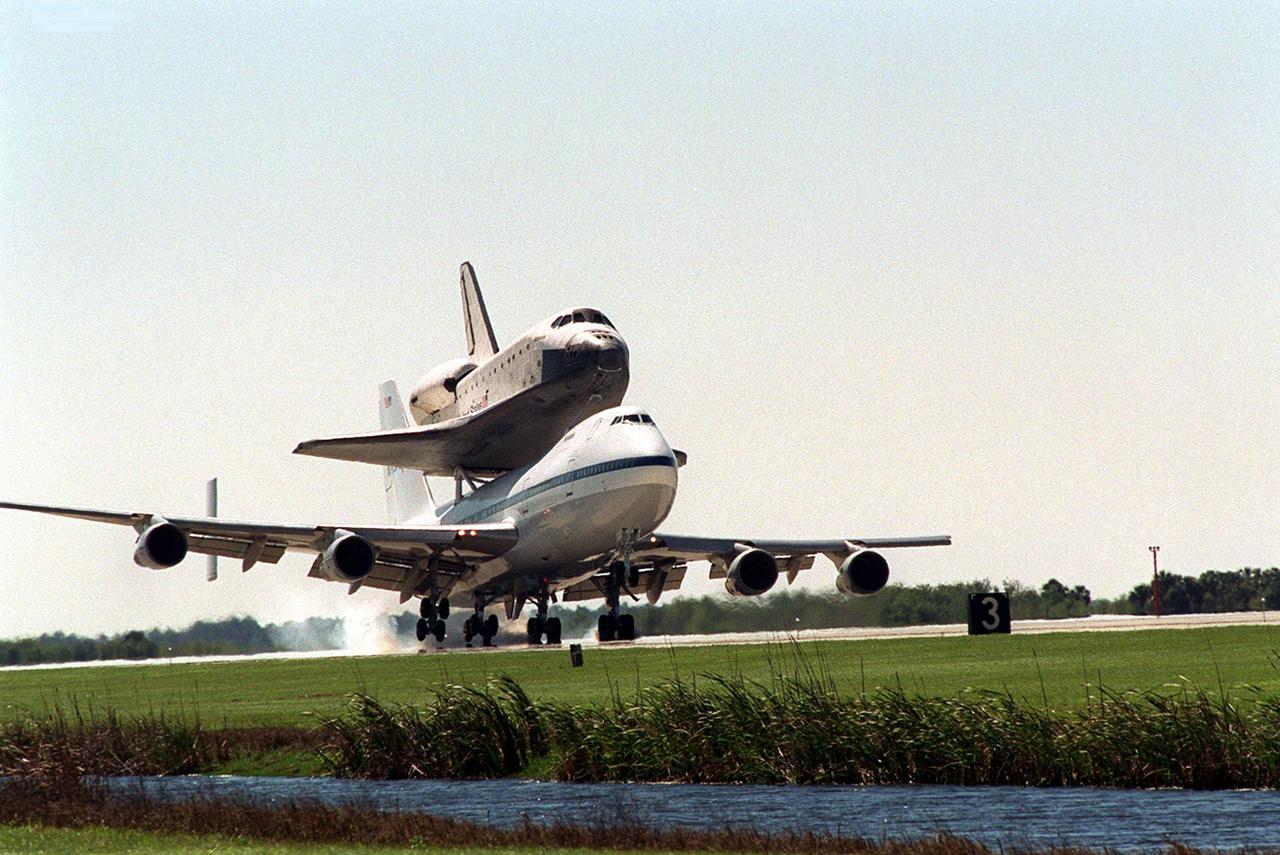
The orbiter Atlantis arrives at KSC’s Shuttle Landing Facility riding piggyback on a Shuttle Carrier Aircraft, a modified Boeing 747. Atlantis landed in California Feb. 19 concluding mission STS-98. The ferry flight began in California March 1; unfavorable weather conditions kept it on the ground at Altus AFB, Okla., until it could return to Florida. The orbiter will next fly on mission STS-104, the 10th construction flight to the International Space Station, scheduled June 8
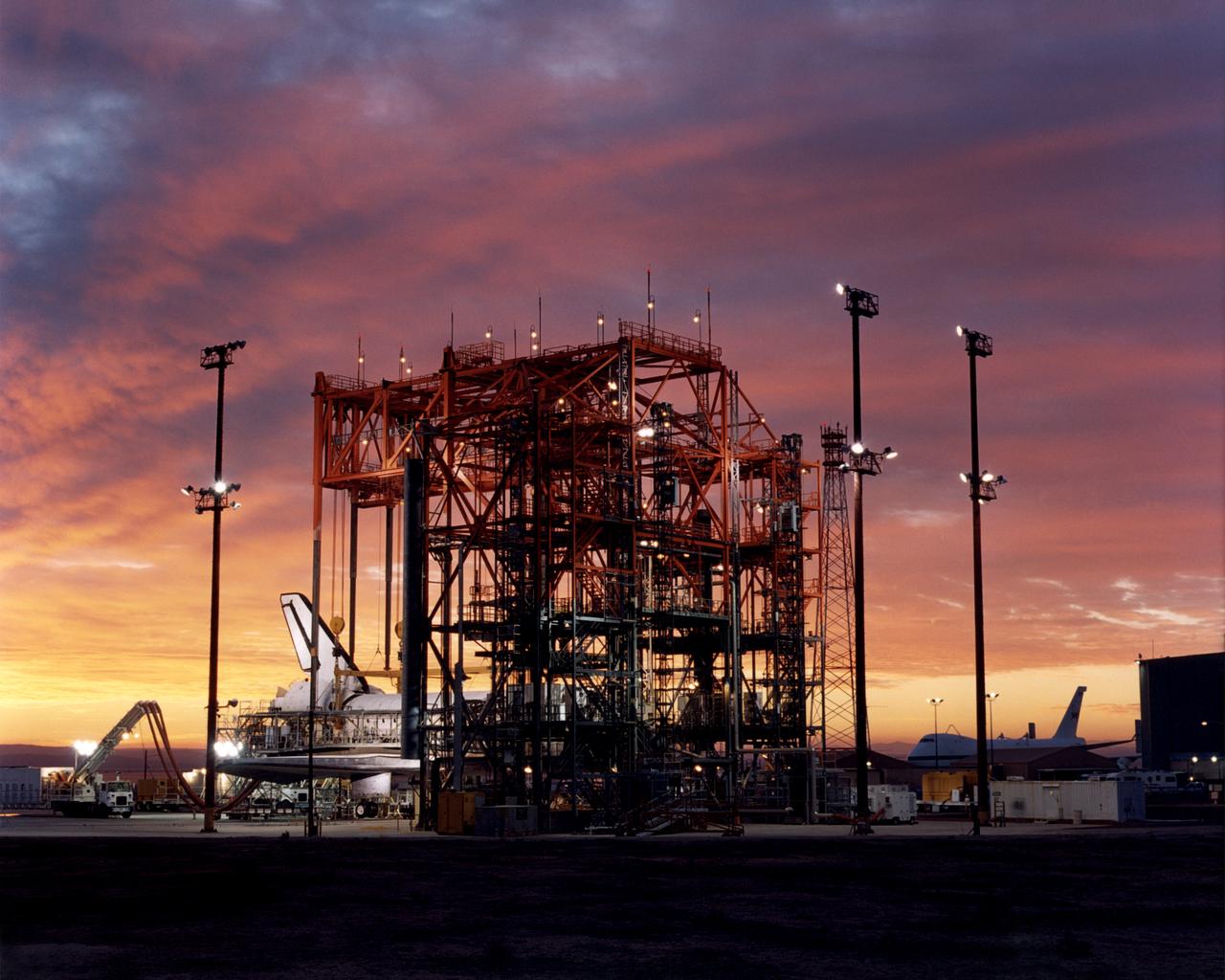
The early-morning Sun bathes the Space Shuttle Discovery in hues of purple, pink and gold as it is encased in the Mate-Demate Device (MDD) at NASA’s Dryden Flight Research Center at Edwards, California. The gantry-like MDD structure is used to prepare the shuttle for its ferry flight back to the Kennedy space Center in Florida, including mounting the shuttle atop NASA’s modified Boeing 747 Shuttle Carrier Aircraft.
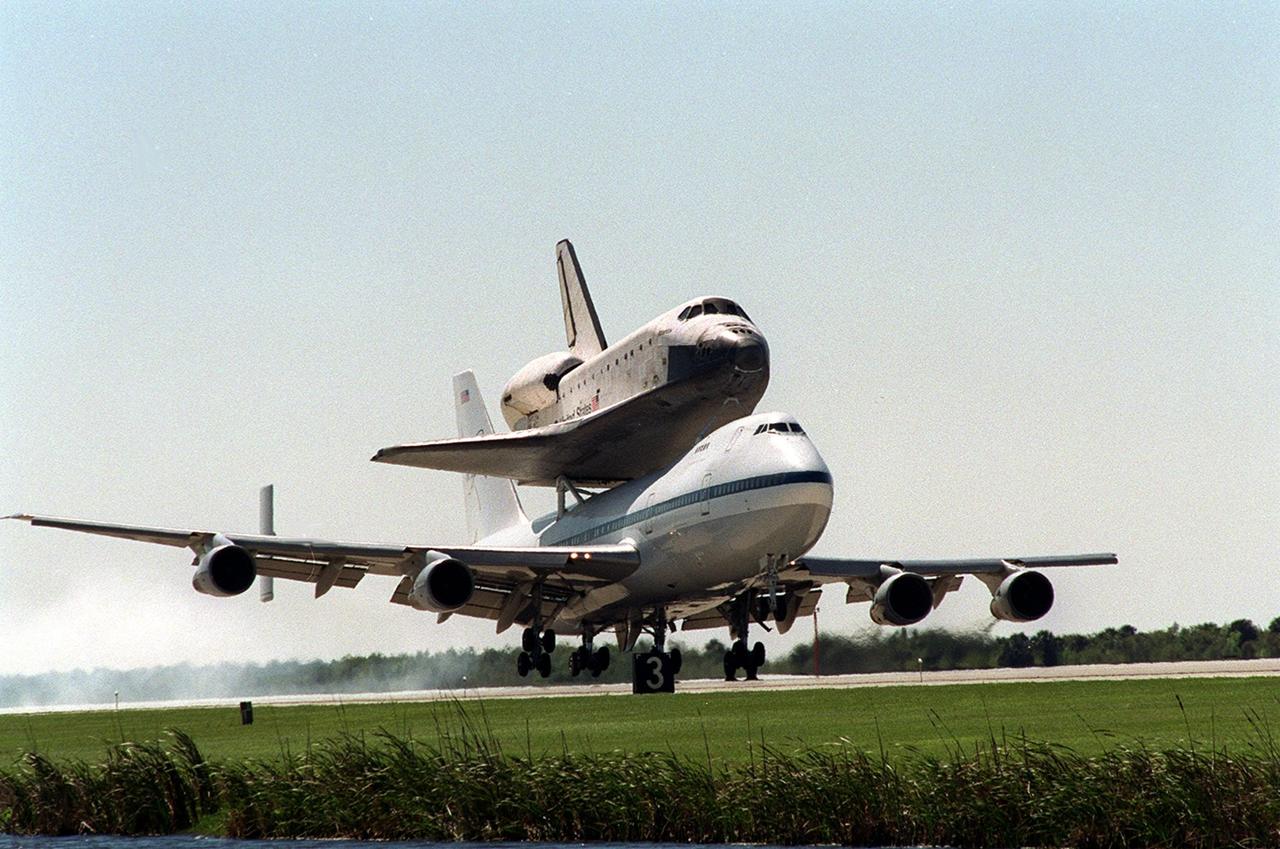
The orbiter Atlantis arrives at KSC’s Shuttle Landing Facility riding piggyback on a Shuttle Carrier Aircraft, a modified Boeing 747. Atlantis landed in California Feb. 19 concluding mission STS-98. The ferry flight began in California March 1; unfavorable weather conditions kept it on the ground at Altus AFB, Okla., until it could return to Florida. The orbiter will next fly on mission STS-104, the 10th construction flight to the International Space Station, scheduled June 8
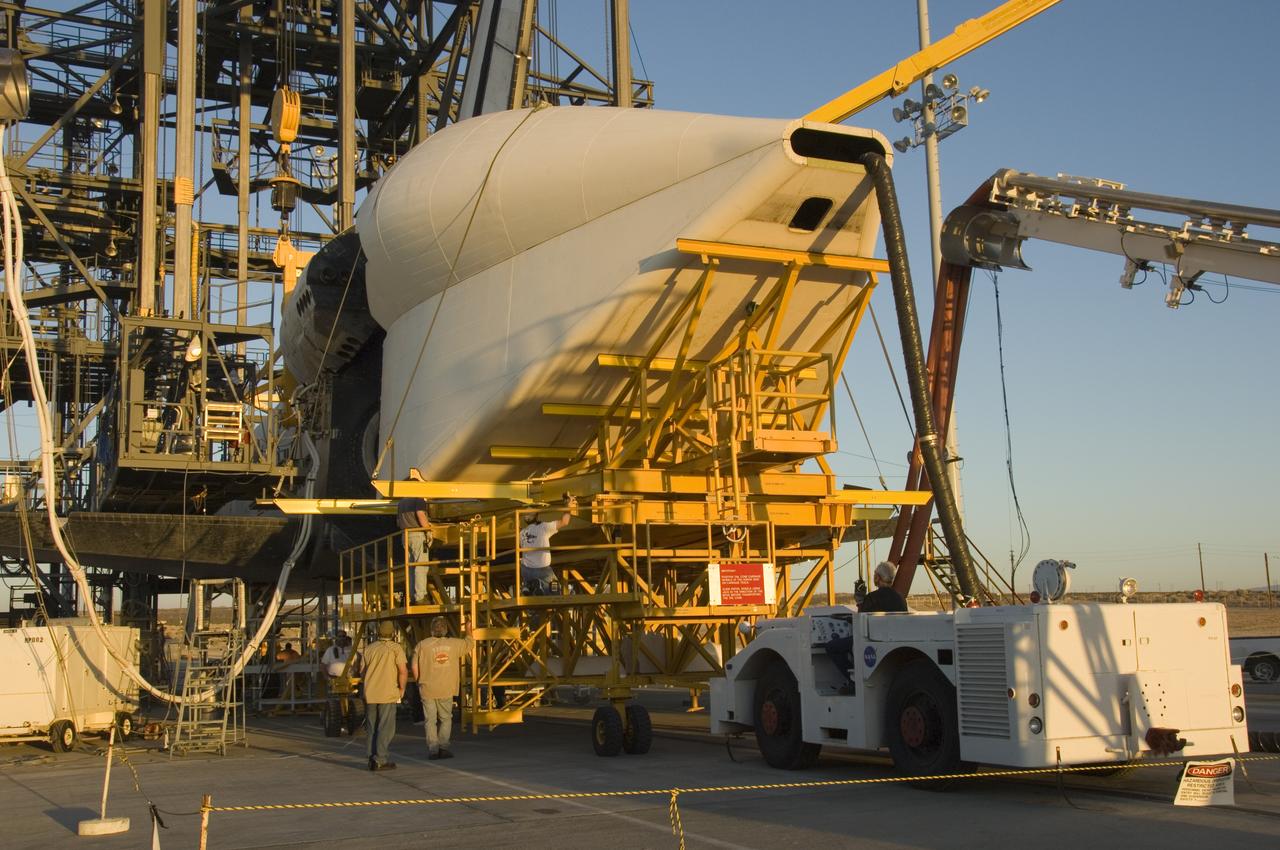
Technicians attach the tail cone, which helps reduce aerodynamic drag and turbulence during its ferry flight, to the Space Shuttle Atlantis in preparation for its return to NASA's Kennedy Space Center in Florida. After the tail-cone is installed, Discovery will be mounted on NASA's modified Boeing 747 Shuttle Carrier Aircraft, or SCA, for the return flight.
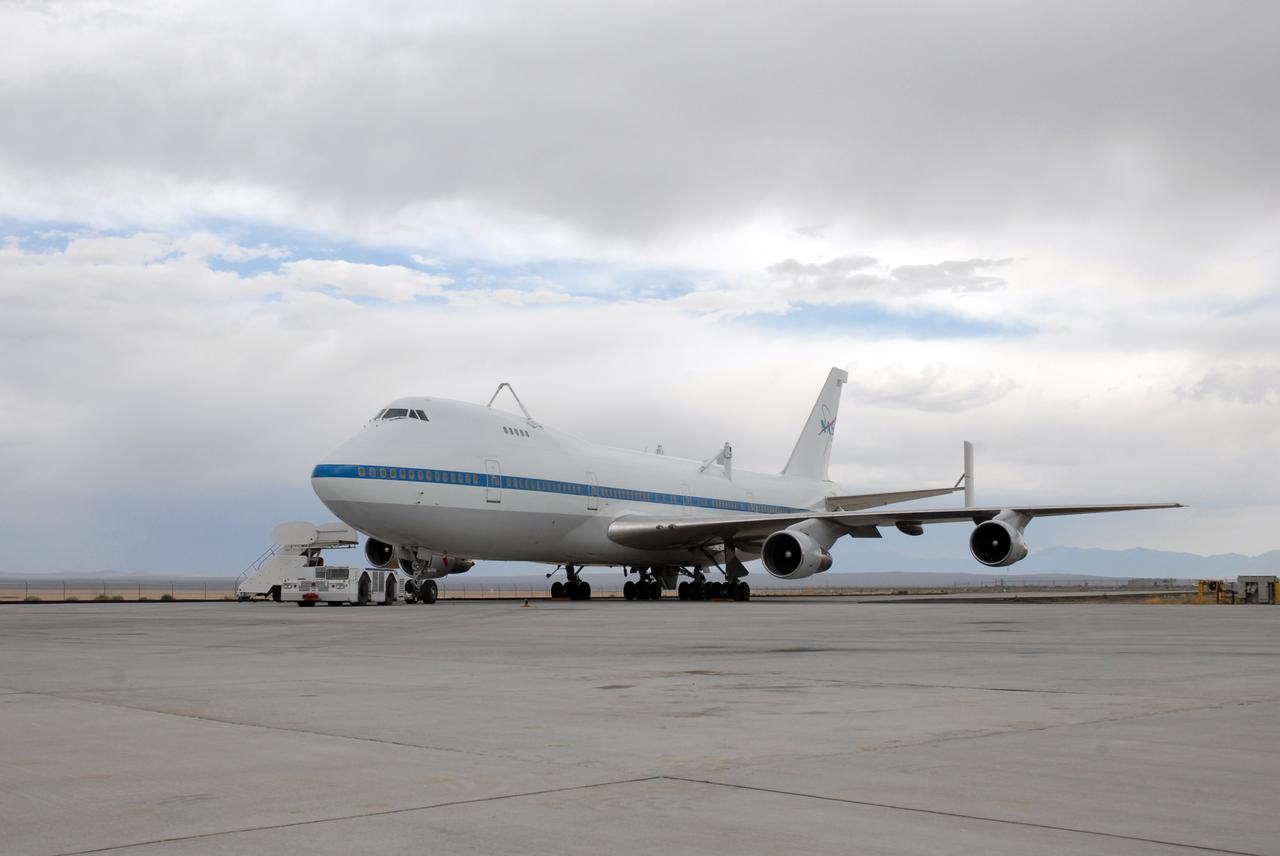
CAPE CANAVERAL, Fla. – This Shuttle Carrier Aircraft, or SCA, a modified Boeing 747, is fitted with struts on top that will attach to space shuttle Atlantis for a piggyback flight. Atlantis landed at Edwards on May 24, which concluded mission STS-125, after two landing opportunities at Kennedy were waved off due to weather concerns. Atlantis is being returned to Florida on a ferry flight on the SCA. Atlantis' next assignment is the STS-129 mission, targeted to launch in November 2009. Photo credit: NASA/Ben Smegelsky
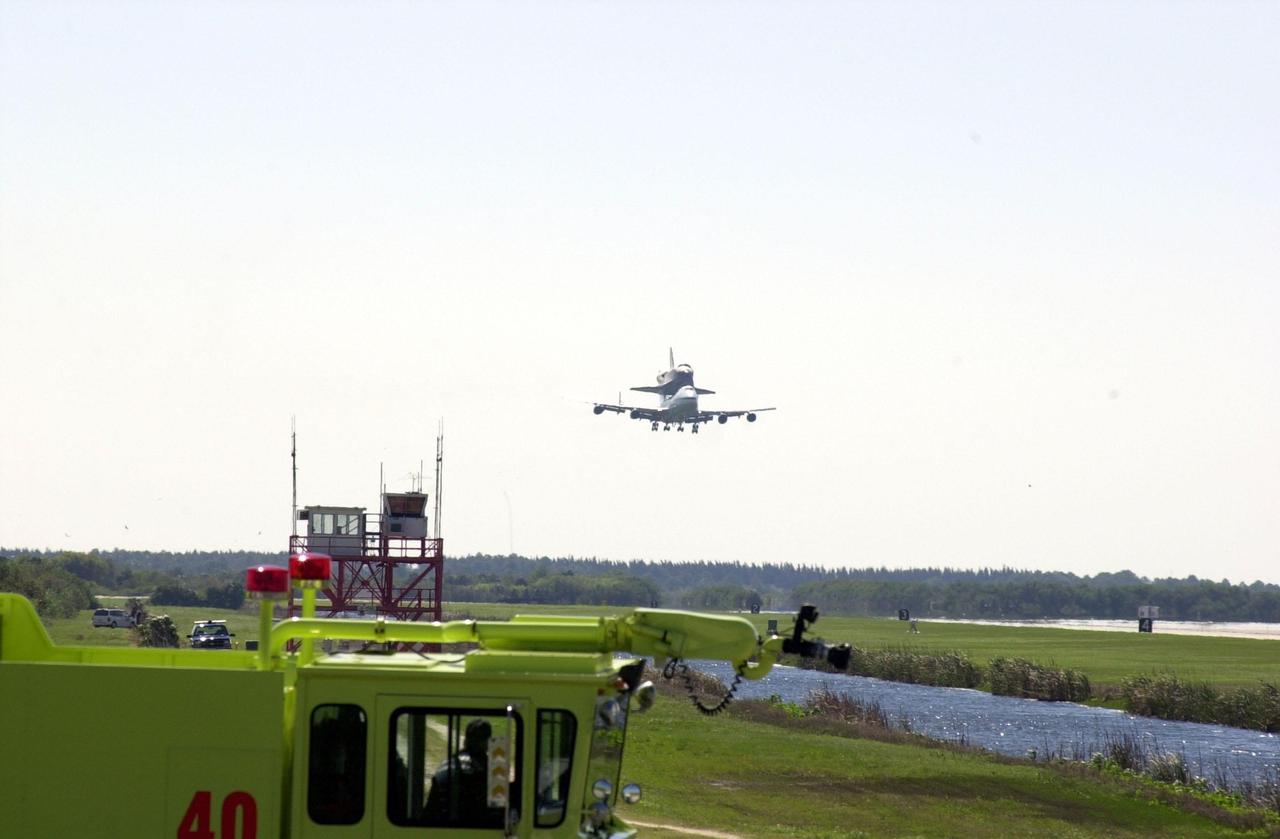
KENNEDY SPACE CENTER, FLA. -- The orbiter Atlantis arrives at KSC’s Shuttle Landing Facility riding piggyback on a Shuttle Carrier Aircraft, a modified Boeing 747. Atlantis landed in California Feb. 19 concluding mission STS-98. The ferry flight began in California March 1; unfavorable weather conditions kept it on the ground at Altus AFB, Okla., until it could return to Florida. The orbiter will next fly on mission STS-104, the 10th construction flight to the International Space Station, scheduled June 8
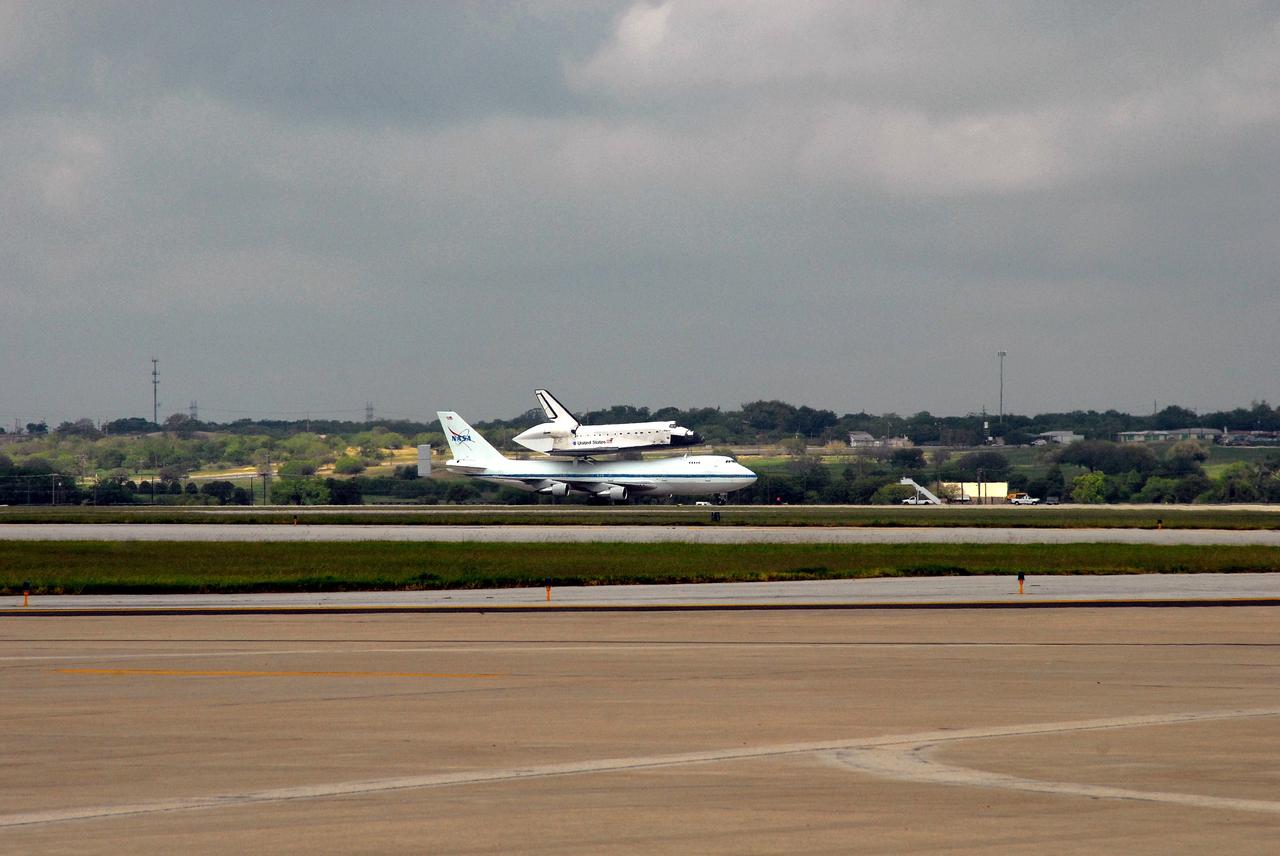
CAPE CANAVERAL, Fla. – Hitching a ride on the Shuttle Carrier Aircraft, or SCA, a modified Boeing 747, space shuttle Atlantis has arrived in Lackland Air Force Base's Kelly Field Annex in Texas for a fuel stop on its journey back to Florida. Atlantis' next assignment is the STS-129 mission, targeted to launch in November 2009. Photo credit: NASA/Ben Smegelsky
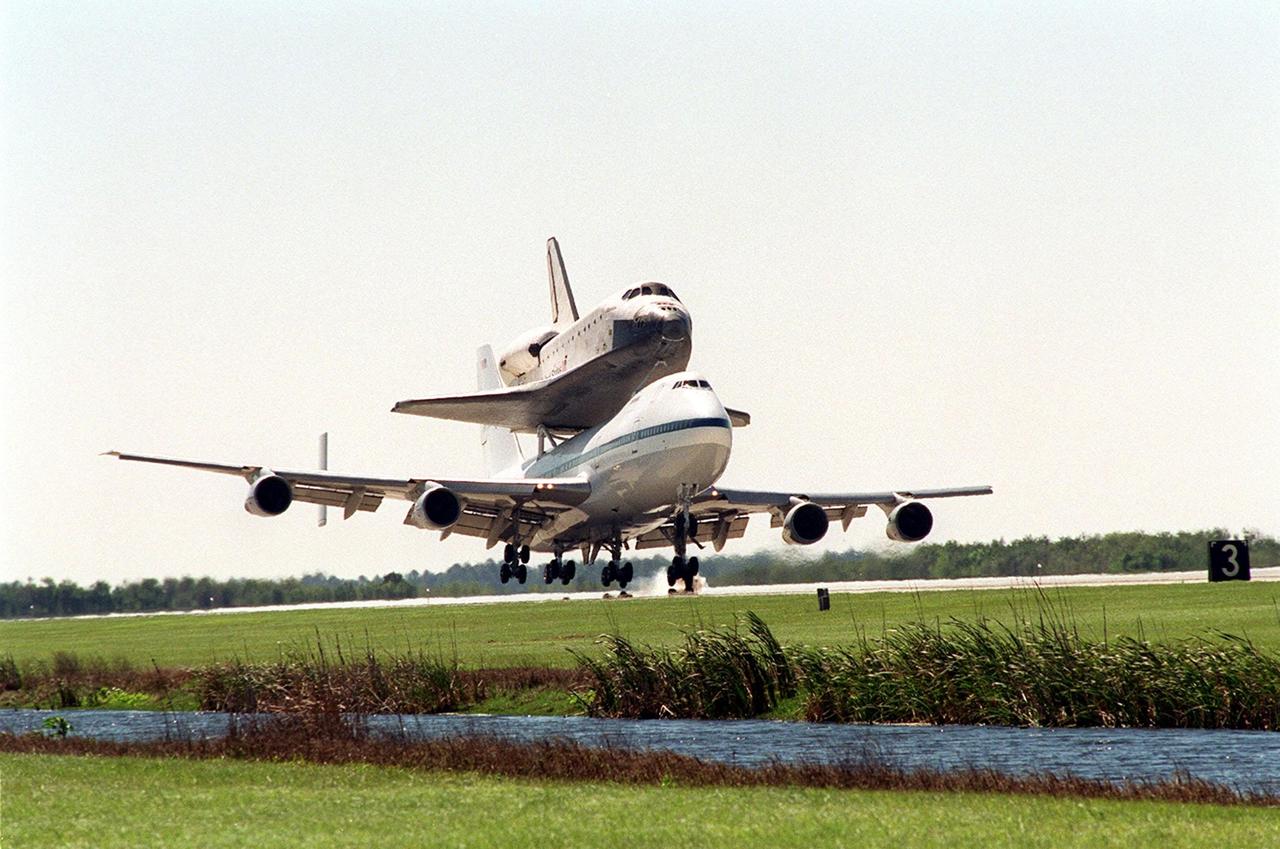
The Shuttle Carrier Aircraft, a modified Boeing 747, kicks up dust as it lands at KSC’s Shuttle Landing Facility with the orbiter Atlantis on top. Atlantis landed in California Feb. 19 concluding mission STS-98. The ferry flight began in California March 1; unfavorable weather conditions kept it on the ground at Altus AFB, Okla., until it could return to Florida. The orbiter will next fly on mission STS-104, the 10th construction flight to the International Space Station, scheduled June 8
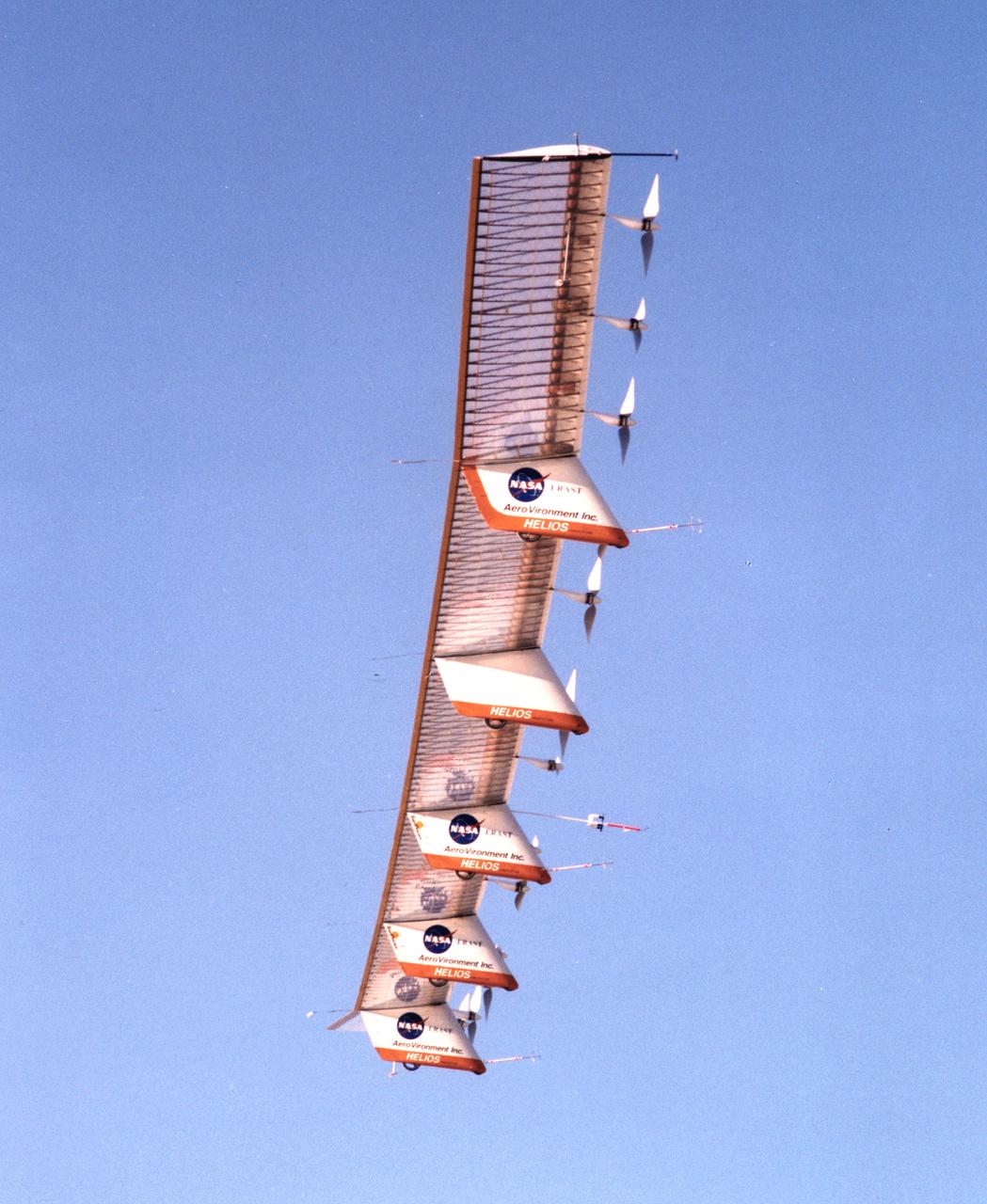
The Helios Prototype is an enlarged version of the Centurion flying wing, which flew a series of test flights at Dryden in late 1998. The craft has a wingspan of 247 feet, 41 feet greater than the Centurion, 2 1/2 times that of its solar-powered Pathfinder flying wing, and longer than either the Boeing 747 jetliner or Lockheed C-5 transport aircraft.
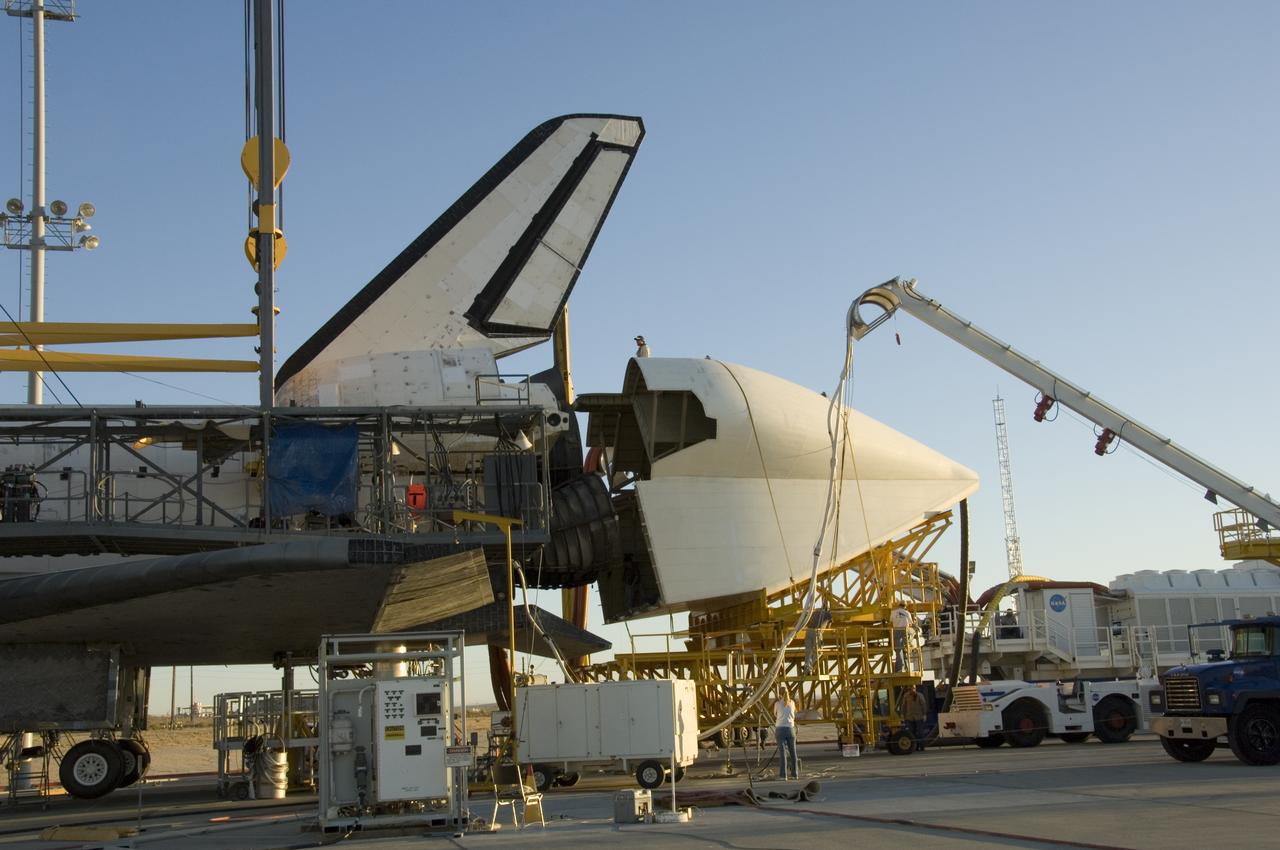
Technicians attach the tail cone, which helps reduce aerodynamic drag and turbulence during its ferry flight, to the Space Shuttle Atlantis in preparation for its return to NASA's Kennedy Space Center in Florida. After the tail-cone is installed, Discovery will be mounted on NASA's modified Boeing 747 Shuttle Carrier Aircraft, or SCA, for the return flight.

Lit by sunlight filtered through the smoke of a distant forest fire, the Space Shuttle Atlantis receives post-flight servicing in the Mate-Demate Device (MDD), following its landing at NASA's Dryden Flight Research Center, Edwards, California. The gantry-like MDD structure is used for servicing the shuttle orbiters in preparation for their ferry flight back to the Kennedy Space Center in Florida, including mounting the shuttle atop NASA's modified Boeing 747 Shuttle Carrier Aircraft.
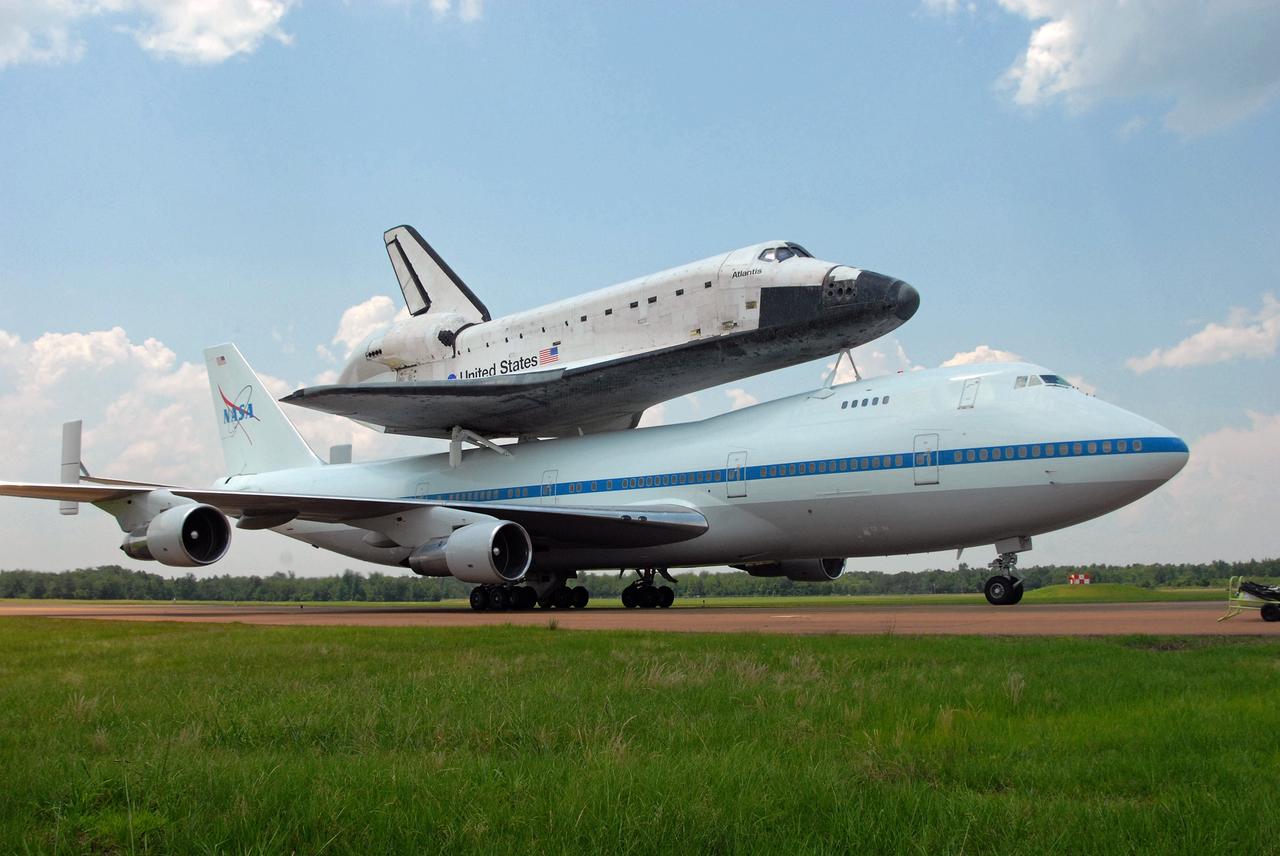
CAPE CANAVERAL, Fla. – Hitching a ride on the Shuttle Carrier Aircraft, or SCA, a modified Boeing 747, space shuttle Atlantis has landed at Columbus Air Force Base in Mississippi for a fuel stop on its journey back to Florida. Atlantis' next assignment is the STS-129 mission, targeted to launch in November 2009. Photo credit: NASA/Ben Smegelsky
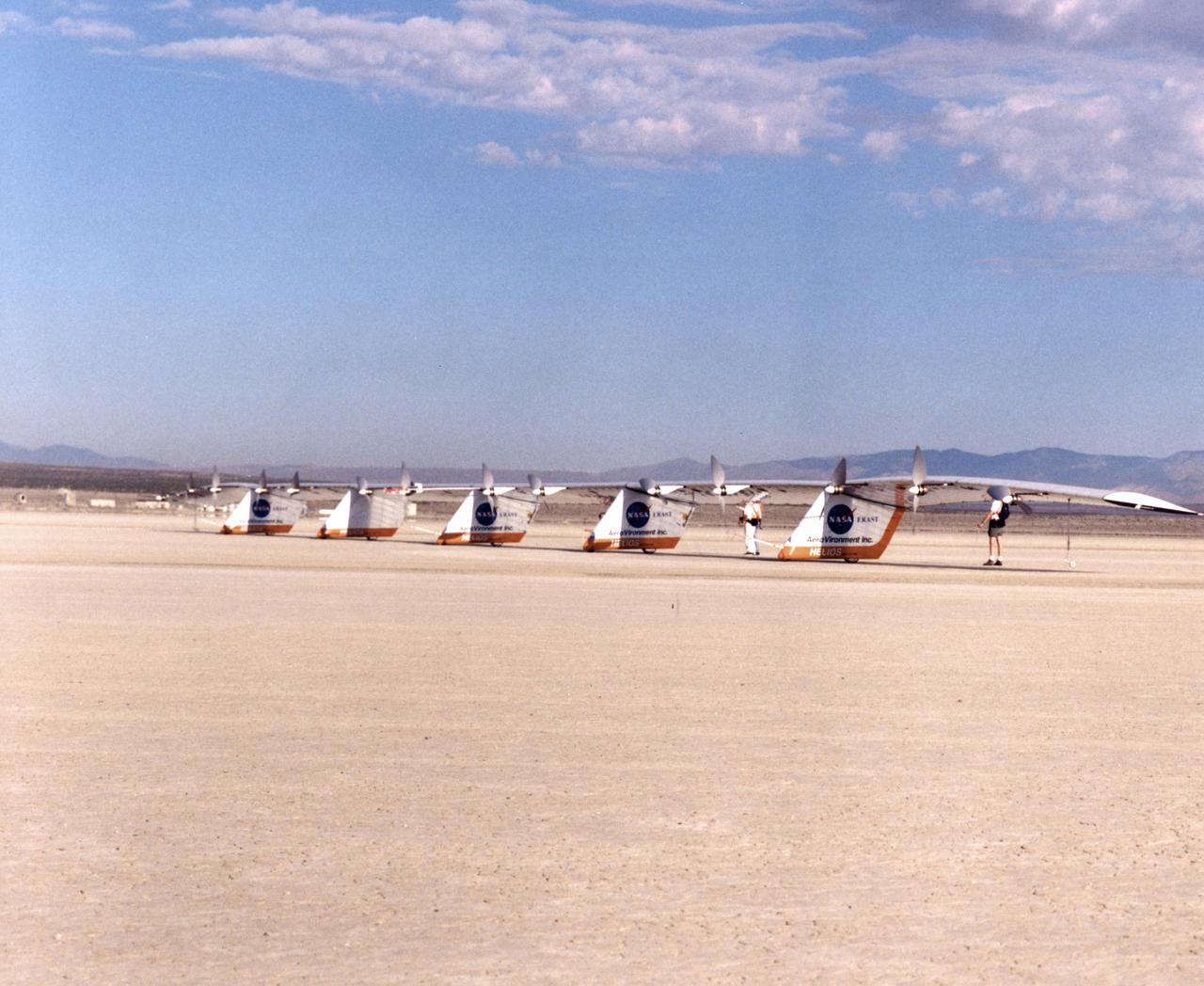
The Helios Prototype is an enlarged version of the Centurion flying wing, which flew a series of test flights at Dryden in late 1998. The craft has a wingspan of 247 feet, 41 feet greater than the Centurion, 2 1/2 times that of its solar-powered Pathfinder flying wing, and longer than either the Boeing 747 jetliner or Lockheed C-5 transport aircraft.
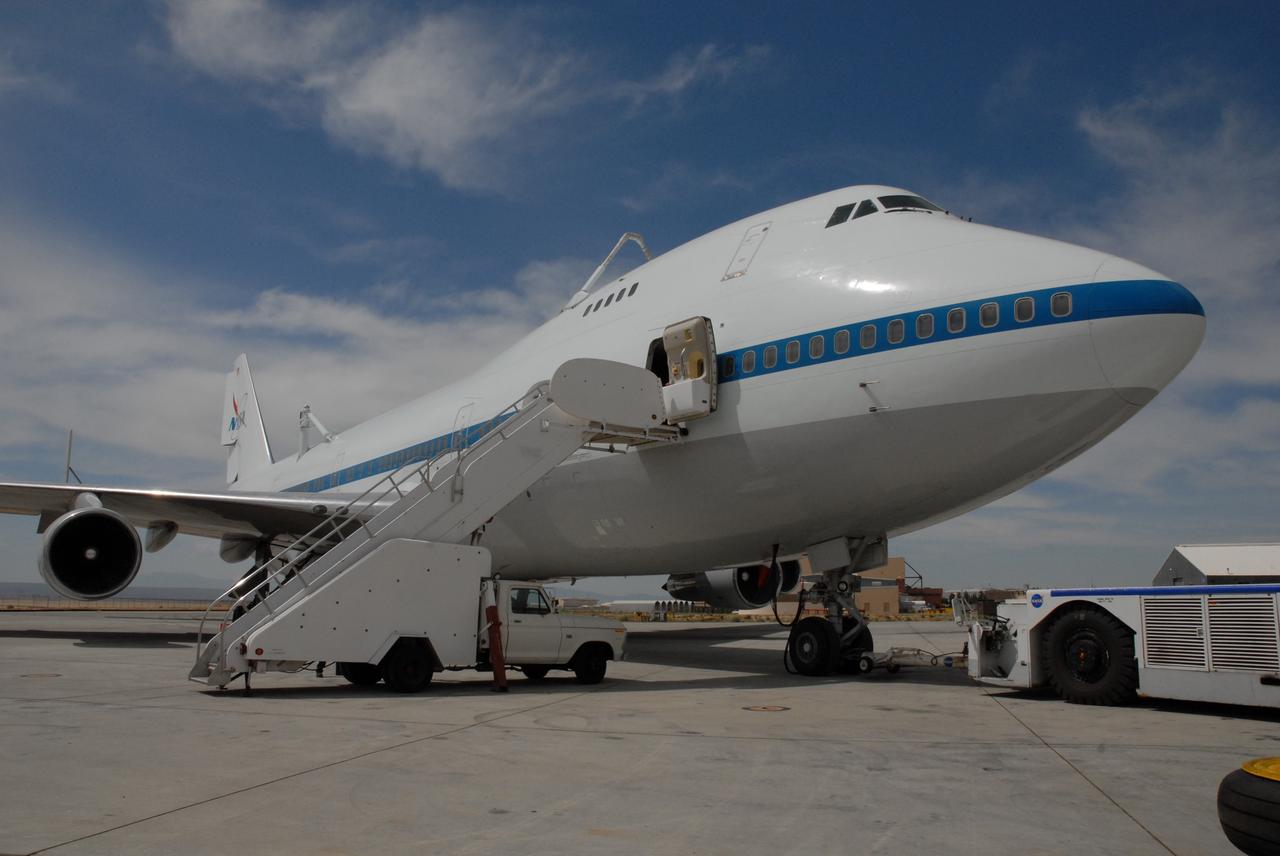
CAPE CANAVERAL, Fla. – This Shuttle Carrier Aircraft, or SCA, a modified Boeing 747, is prepared for its ferry flight to Florida, carrying space shuttle Atlantis. Atlantis landed at Edwards on May 24, which concluded mission STS-125, after two landing opportunities at Kennedy were waved off due to weather concerns. Atlantis is being returned to Florida on a ferry flight on the SCA. Atlantis' next assignment is the STS-129 mission, targeted to launch in November 2009. Photo credit: NASA/Ben Smegelsky
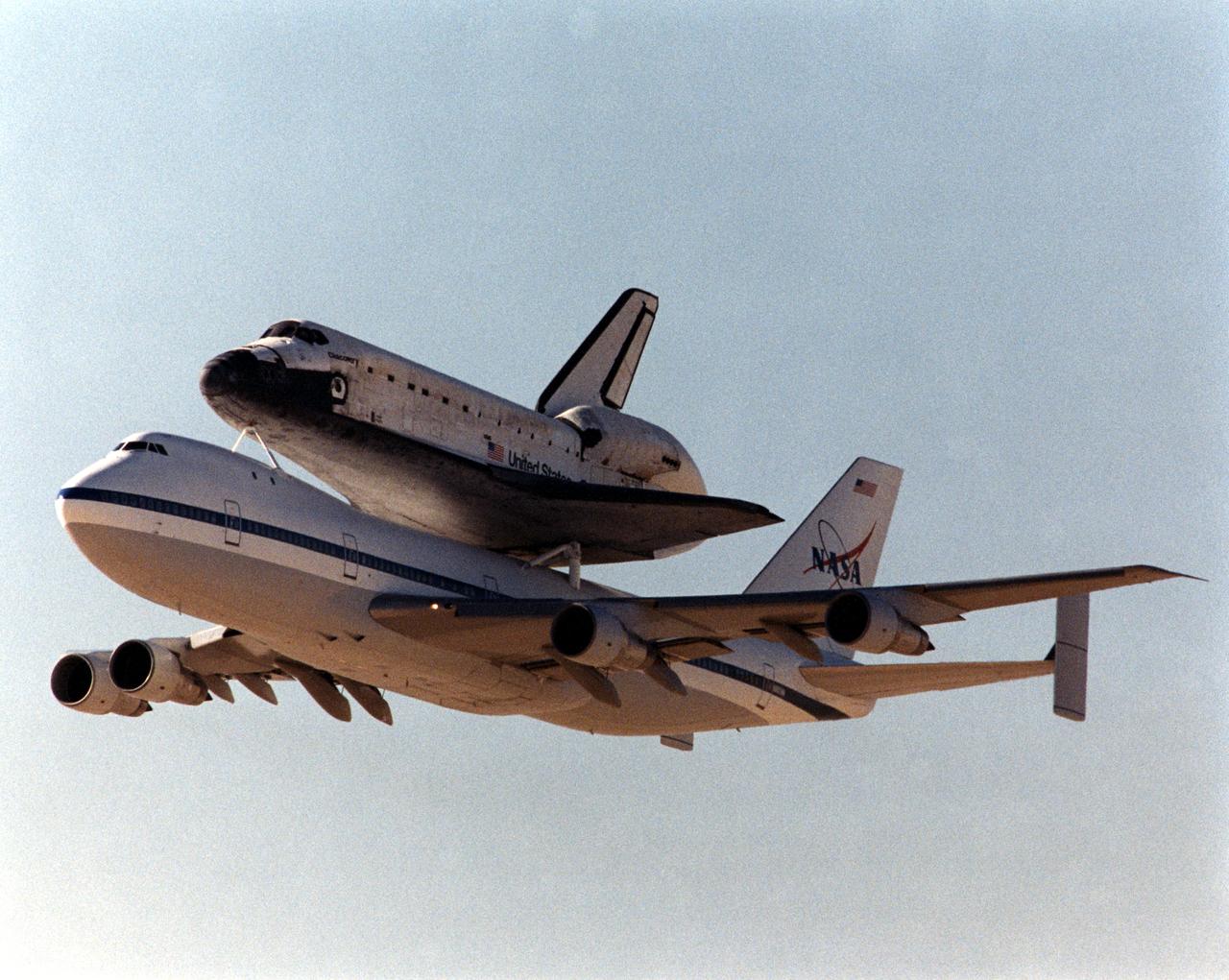
One of NASA’s two modified Boeing 747 Shuttle Carrier Aircraft with the Space Shuttle orbiter Discovery on its back climbs out after takeoff from Edwards Air Force Base, California. The Discovery was ferried from NASA’s Dryden Flight Research Center at Edwards to NASA’s Kennedy Space Center in Florida on November 2, 2000, after extensive post-landing servicing and ferry flight preparations.
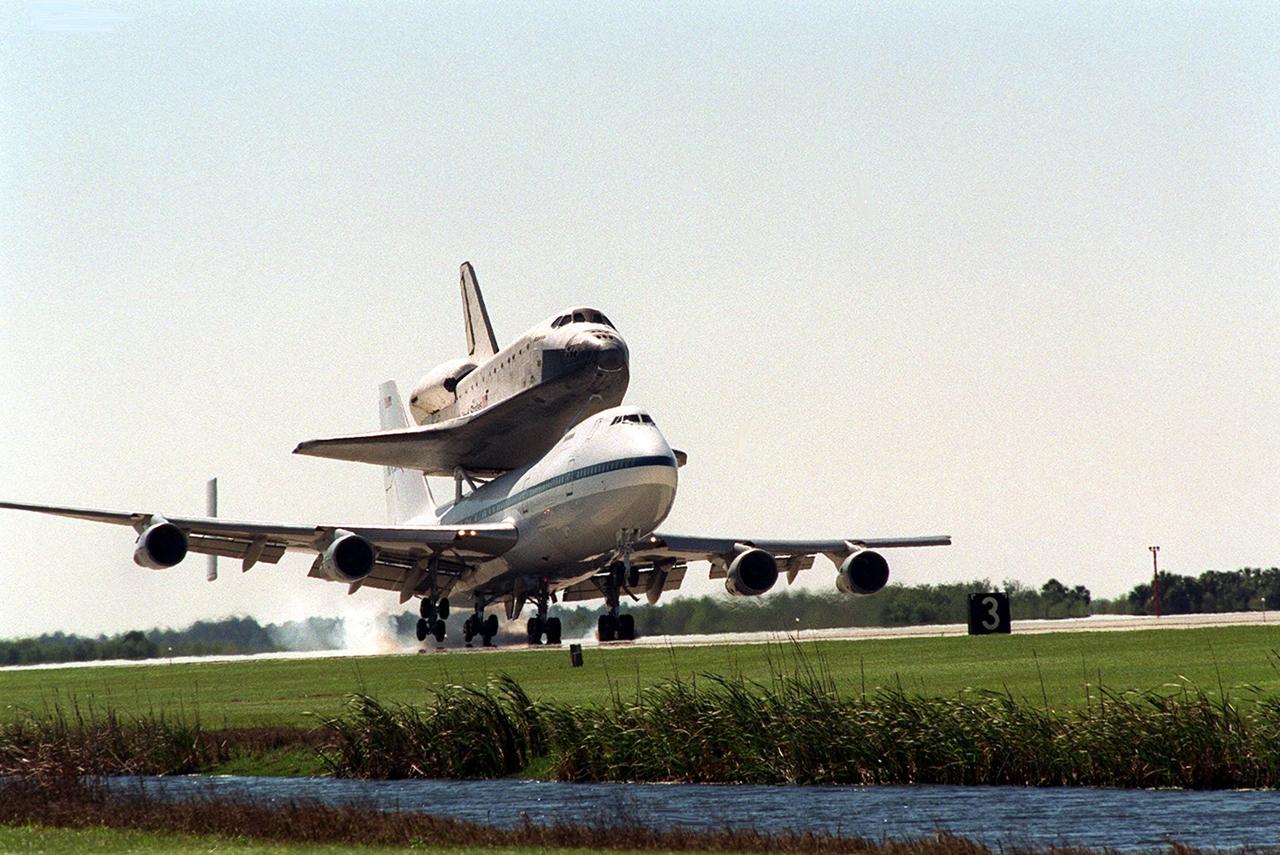
The orbiter Atlantis arrives at KSC’s Shuttle Landing Facility riding piggyback on a Shuttle Carrier Aircraft, a modified Boeing 747. Atlantis landed in California Feb. 19 concluding mission STS-98. The ferry flight began in California March 1; unfavorable weather conditions kept it on the ground at Altus AFB, Okla., until it could return to Florida. The orbiter will next fly on mission STS-104, the 10th construction flight to the International Space Station, scheduled June 8
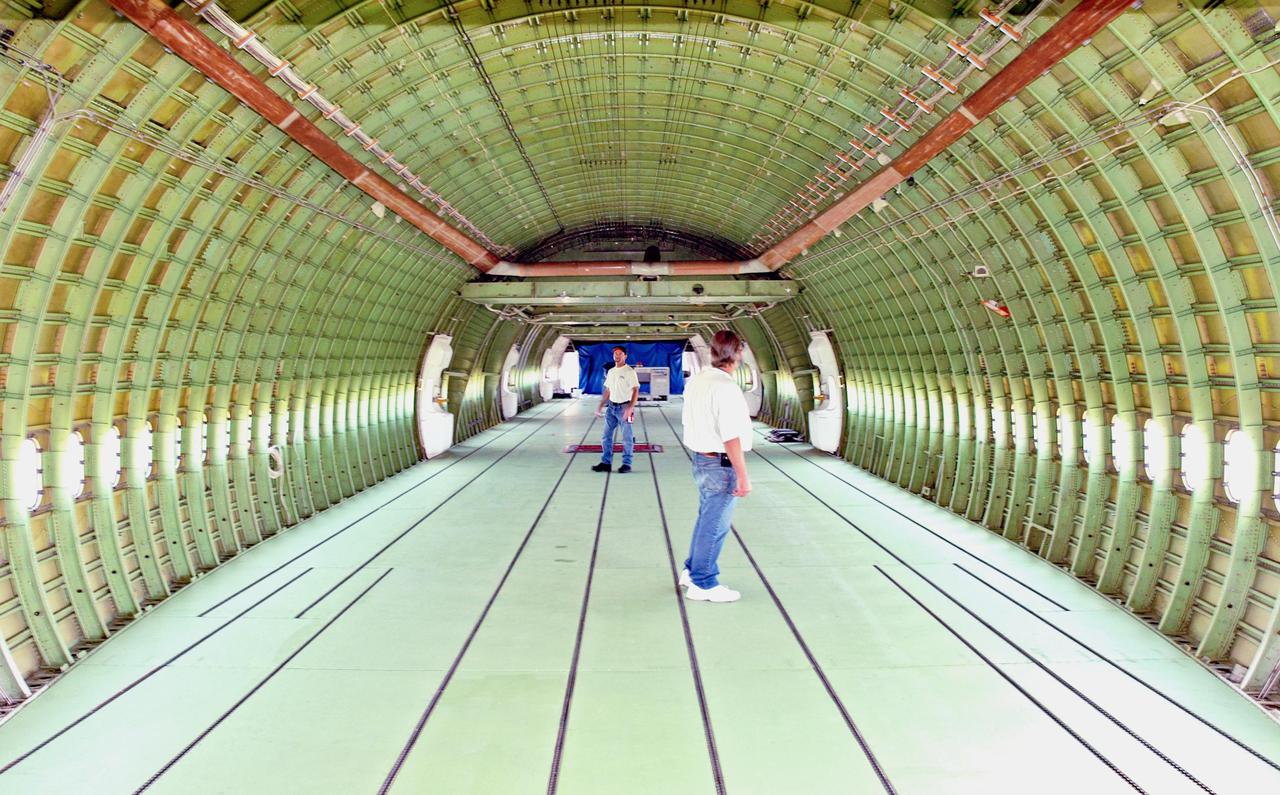
KENNEDY SPACE CENTER, FLA. - A view inside the Shuttle Carrier Aircraft, a modified Boeing 747. The plane carried the orbiter Discovery on a ferry flight to NASA Kennedy Space Center from Edwards Air Force Base in California, arriving Aug. 21. Returning to Earth from Return to Flight mission STS-114, Discovery landed at Edwards Aug. 9 after waive-off from KSC due to weather concerns.
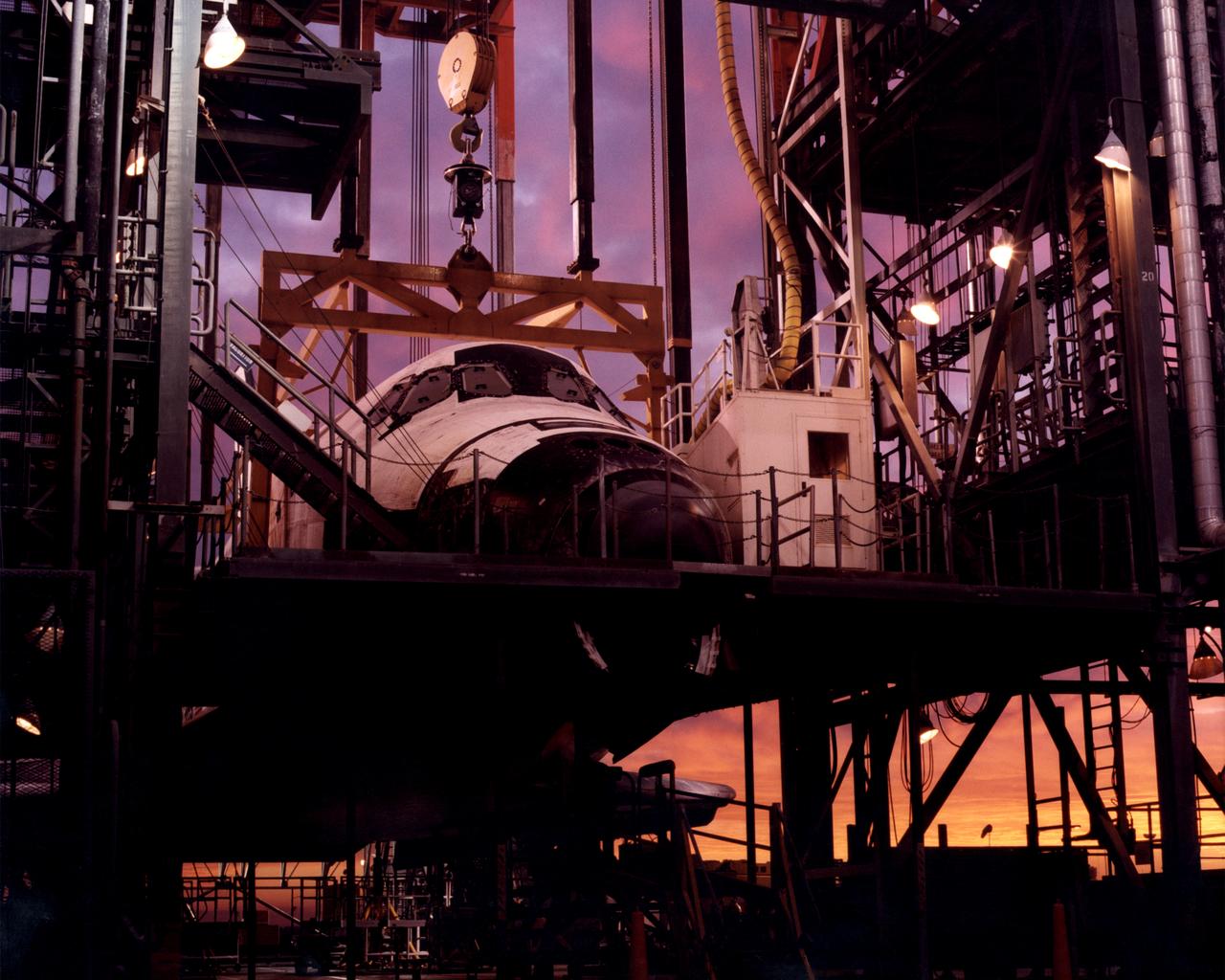
The early-morning Sun bathes the Space Shuttle Discovery in hues of purple, pink and gold as it is encased in the Mate-Demate Device (MDD) at NASA’s Dryden Flight Research Center at Edwards, California. The gantry-like MDD structure is used to prepare the shuttle for its ferry flight back to the Kennedy space Center in Florida, including mounting the shuttle atop NASA’s modified Boeing 747 Shuttle Carrier Aircraft.
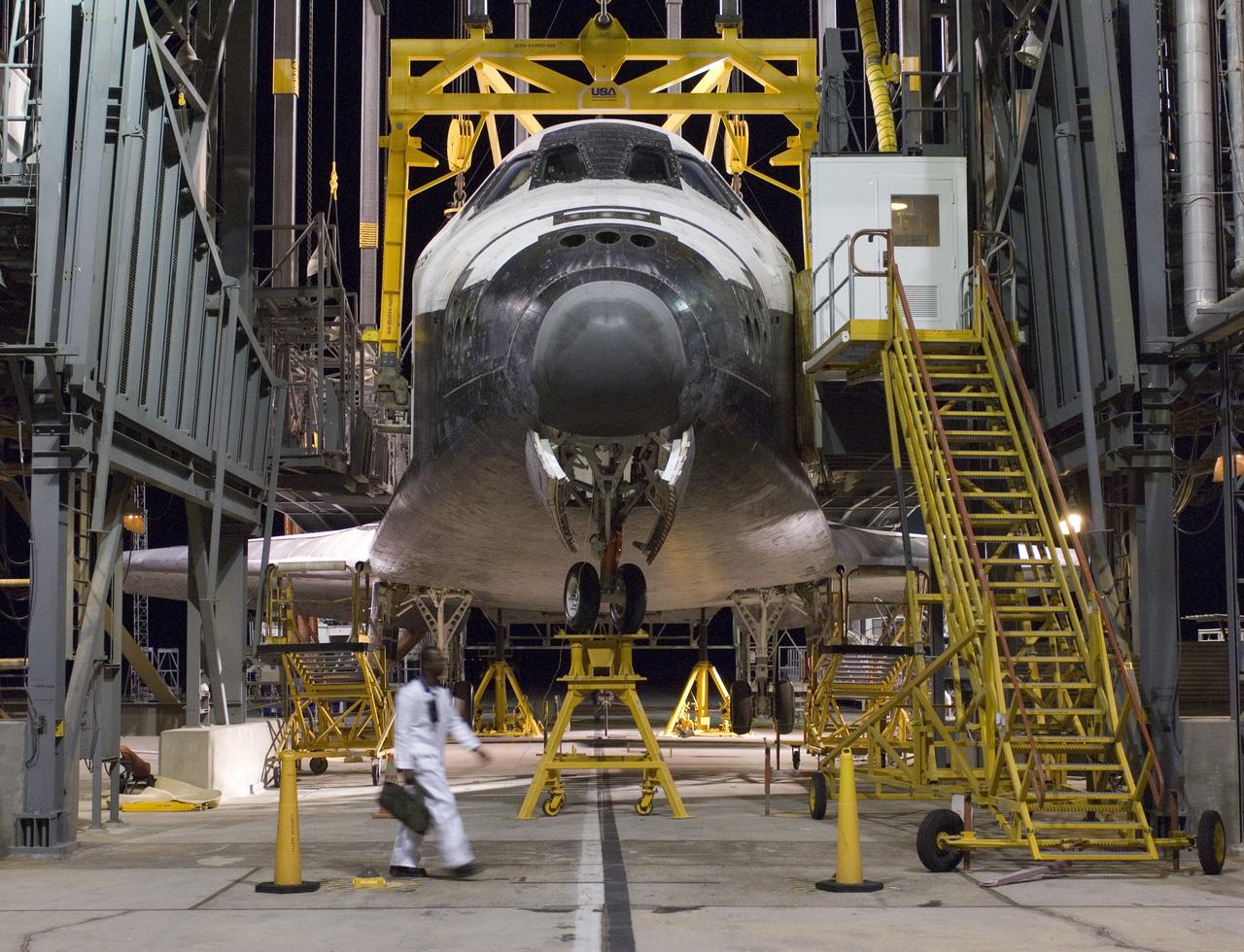
The Space Shuttle Atlantis receives post-flight servicing in the Mate-Demate Device (MDD), following its landing at NASA's Dryden Flight Research Center, Edwards, California, June 22, 2007. The gantry-like MDD structure is used for servicing the shuttle orbiters in preparation for their ferry flight back to the Kennedy Space Center in Florida, including mounting the shuttle atop NASA's modified Boeing 747 Shuttle Carrier Aircraft.
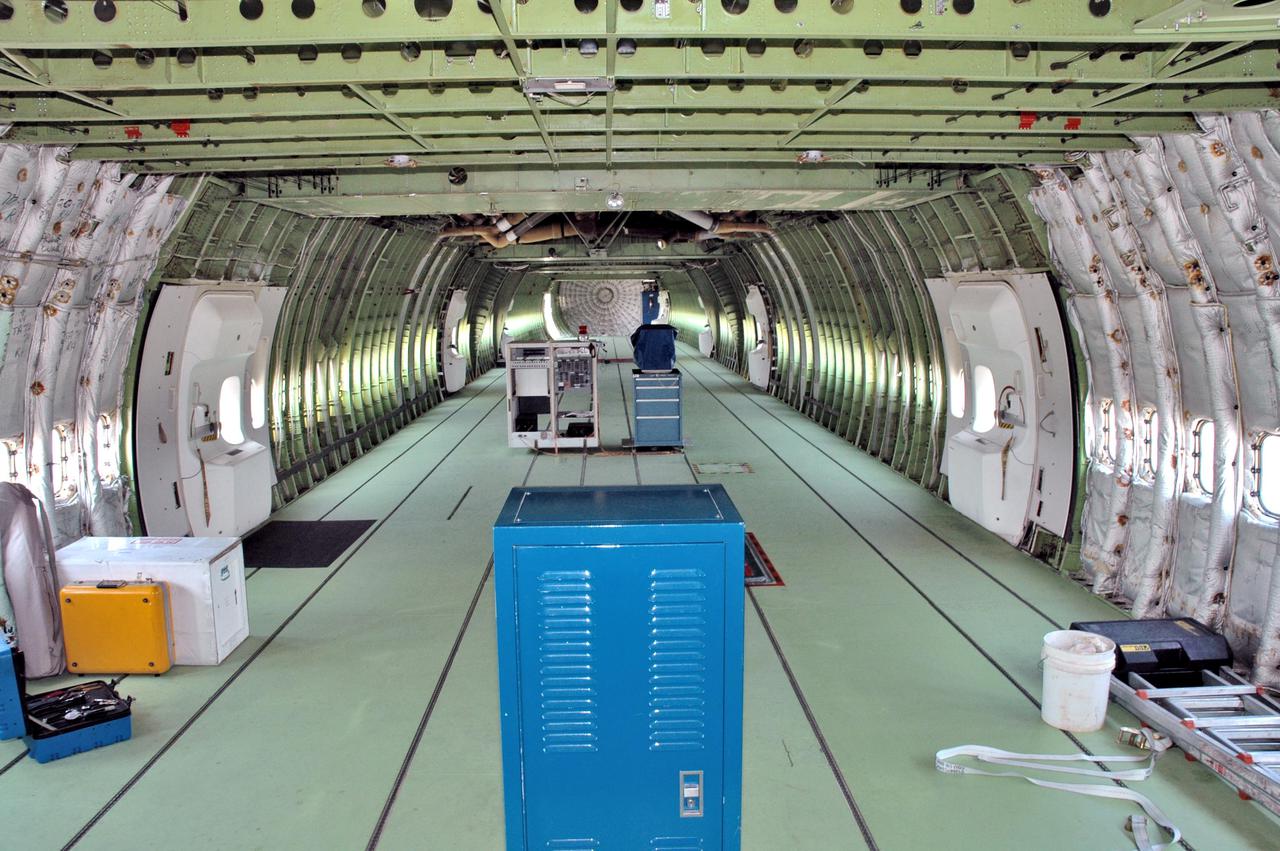
KENNEDY SPACE CENTER, FLA. - A view inside the Shuttle Carrier Aircraft, a modified Boeing 747. The plane carried the orbiter Discovery on a ferry flight to NASA Kennedy Space Center from Edwards Air Force Base in California, arriving Aug. 21. Returning to Earth from Return to Flight mission STS-114, Discovery landed at Edwards Aug. 9 after waive-off from KSC due to weather concerns.
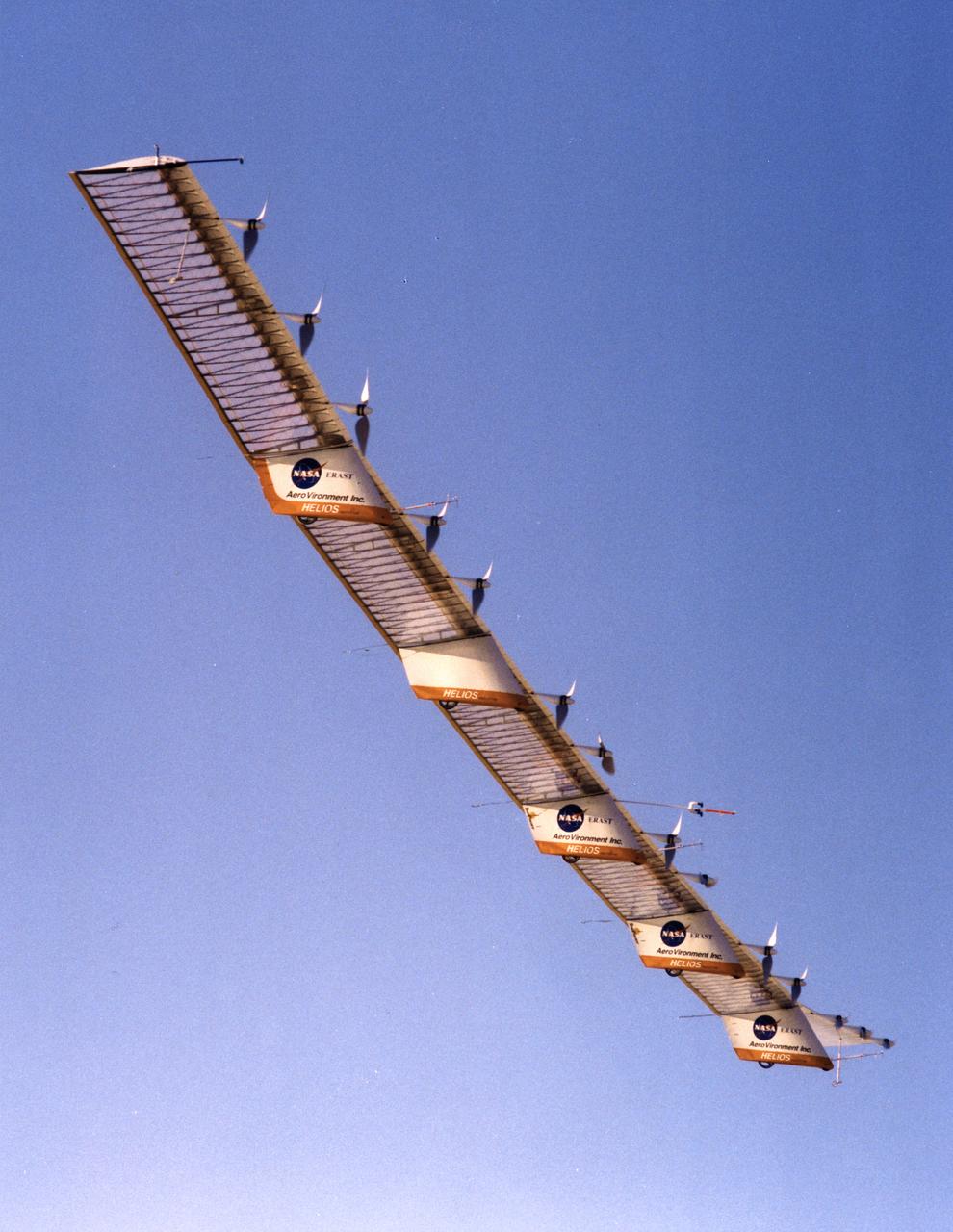
The Helios Prototype is an enlarged version of the Centurion flying wing, which flew a series of test flights at Dryden in late 1998. The craft has a wingspan of 247 feet, 41 feet greater than the Centurion, 2 1/2 times that of its solar-powered Pathfinder flying wing, and longer than either the Boeing 747 jetliner or Lockheed C-5 transport aircraft.

CAPE CANAVERAL, Fla. – At Biggs Army Air Field in El Paso, Texas, the Shuttle Carrier Aircraft, or SCA, a modified Boeing 747, is ready to take off after an overnight stop at Biggs Army Air Field in El Paso, Texas. The shuttle and SCA left Edwards Air Force Base in California for its return to Florida.Atlantis is being returned to Florida on a ferry flight on the SCA. Atlantis' next assignment is the STS-129 mission, targeted to launch in November 2009. Photo credit: NASA/Ben Smegelsky
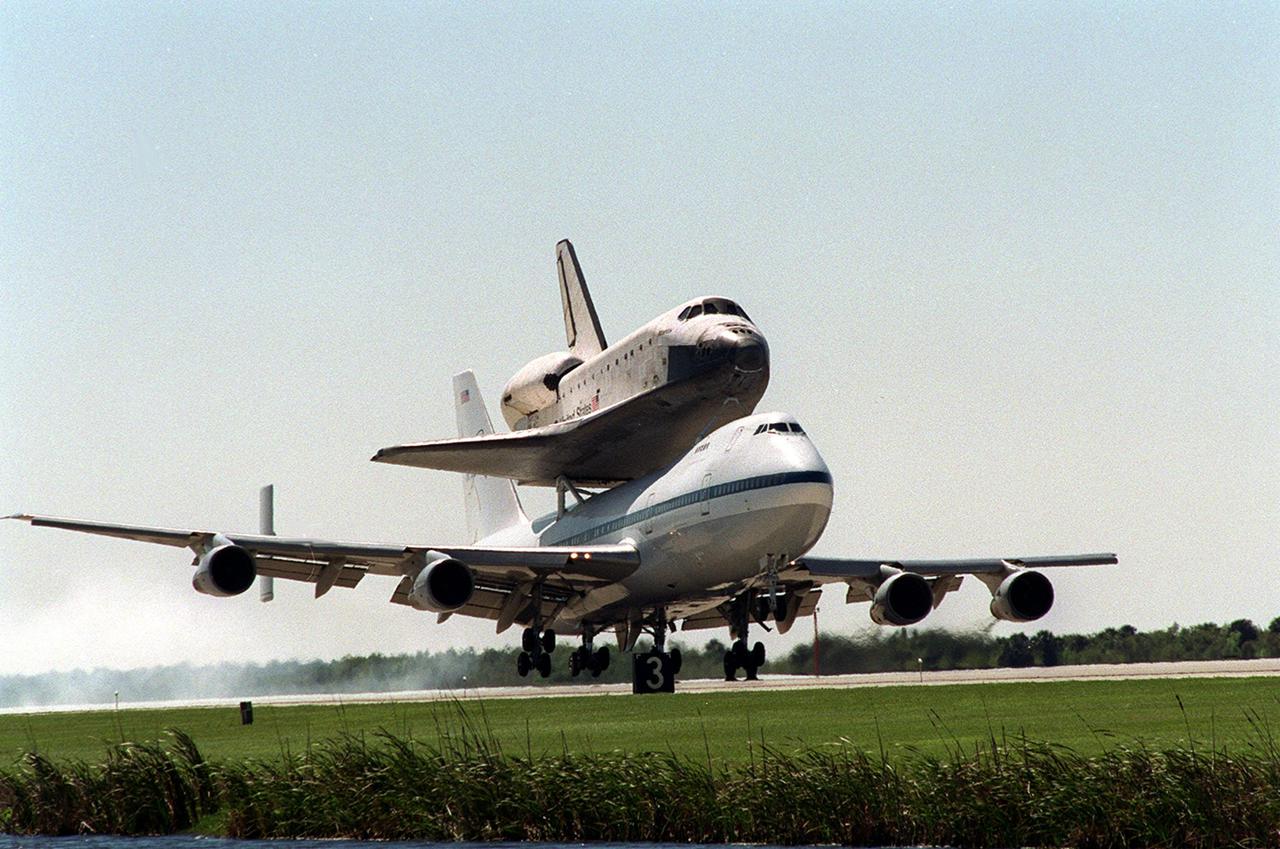
The orbiter Atlantis arrives at KSC’s Shuttle Landing Facility riding piggyback on a Shuttle Carrier Aircraft, a modified Boeing 747. Atlantis landed in California Feb. 19 concluding mission STS-98. The ferry flight began in California March 1; unfavorable weather conditions kept it on the ground at Altus AFB, Okla., until it could return to Florida. The orbiter will next fly on mission STS-104, the 10th construction flight to the International Space Station, scheduled June 8
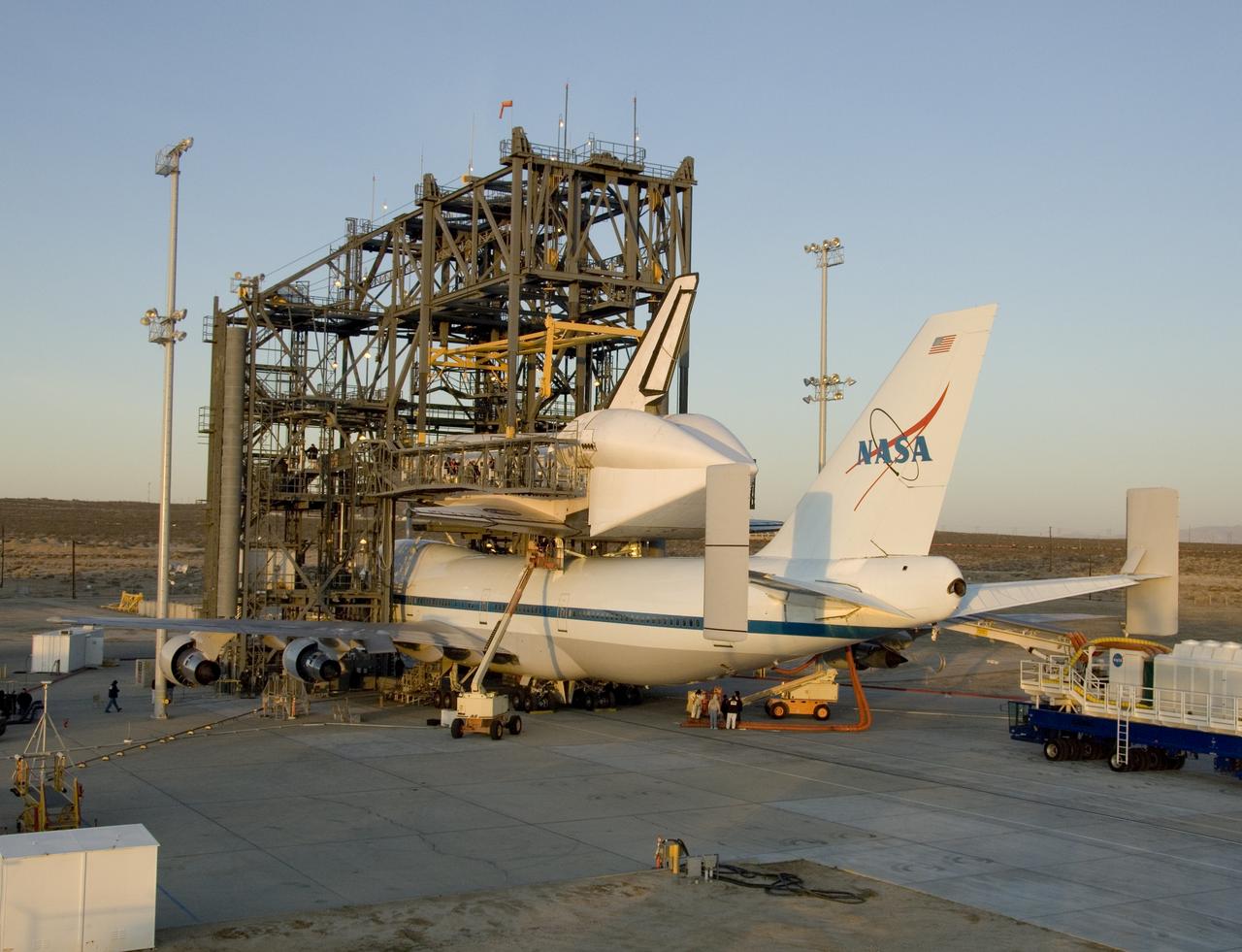
The Space Shuttle Endeavour and its modified Boeing 747 carrier aircraft are illuminated by the morning sun Tuesday after mating of the pair was completed overnight in the Mate-DeMate gantry at NASA Dryden Flight Research Center. The pair are scheduled to depart Edwards Air Force Base on their ferry flight back to the Kennedy Space Center early Wednesday morning, Dec. 10.
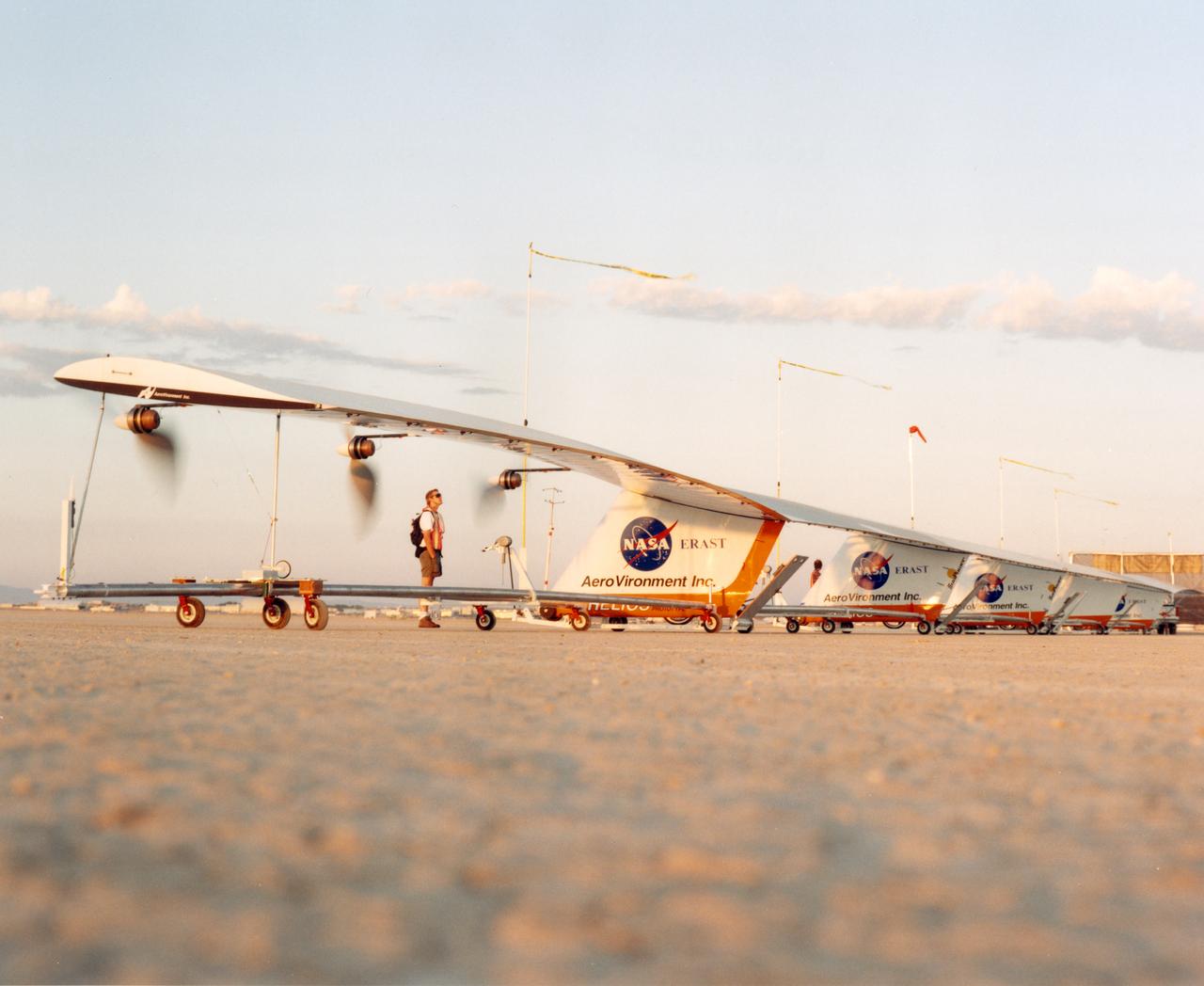
The Helios Prototype is an enlarged version of the Centurion flying wing, which flew a series of test flights at Dryden in late 1998. The craft has a wingspan of 247 feet, 41 feet greater than the Centurion, 2 1/2 times that of its solar-powered Pathfinder flying wing, and longer than either the Boeing 747 jetliner or Lockheed C-5 transport aircraft.
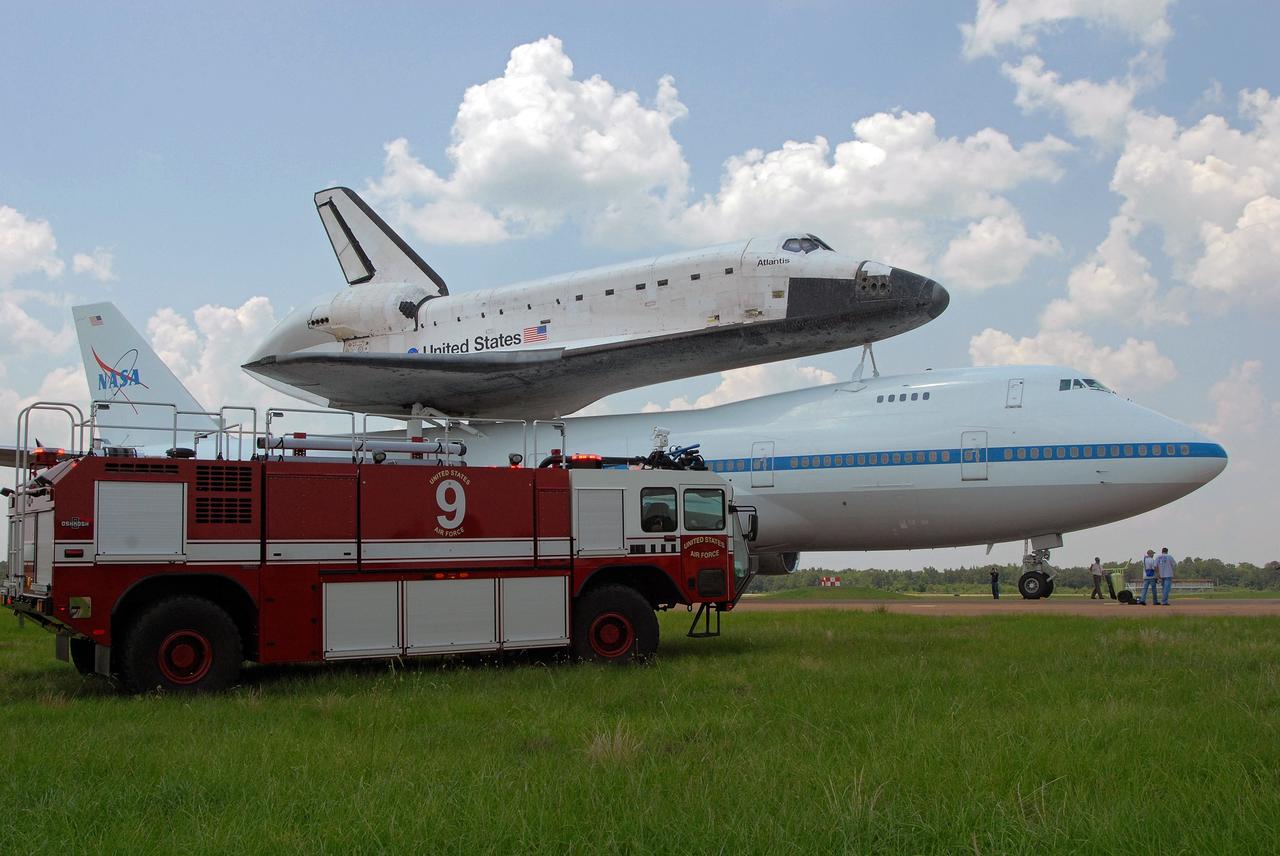
CAPE CANAVERAL, Fla. – Hitching a ride on the Shuttle Carrier Aircraft, or SCA, a modified Boeing 747, space shuttle Atlantis has landed at Columbus Air Force Base in Mississippi for a fuel stop on its journey back to Florida. Atlantis' next assignment is the STS-129 mission, targeted to launch in November 2009. Photo credit: NASA/Ben Smegelsky
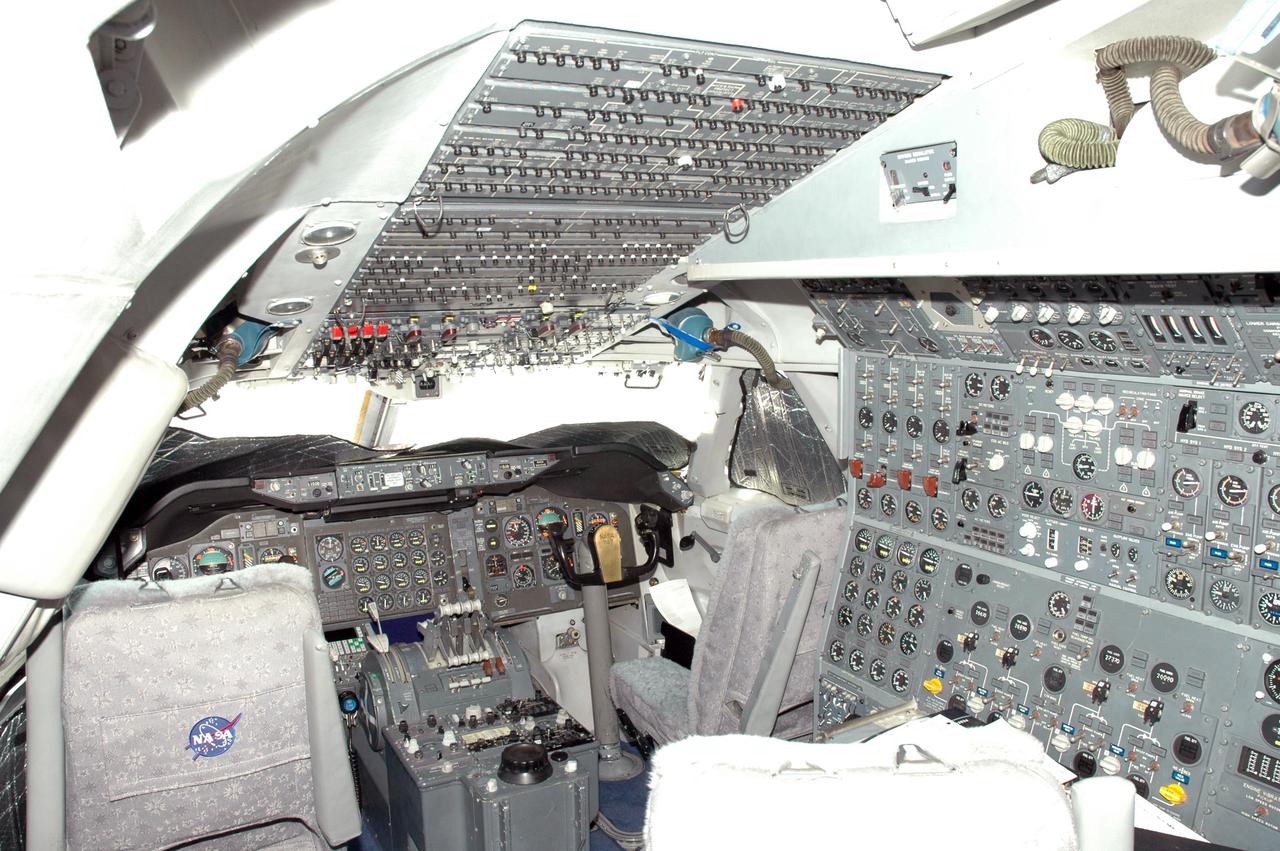
KENNEDY SPACE CENTER, FLA. - A view inside the Shuttle Carrier Aircraft, a modified Boeing 747. The plane carried the orbiter Discovery on a ferry flight to NASA Kennedy Space Center from Edwards Air Force Base in California, arriving Aug. 21. Returning to Earth from Return to Flight mission STS-114, Discovery landed at Edwards Aug. 9 after waive-off from KSC due to weather concerns.
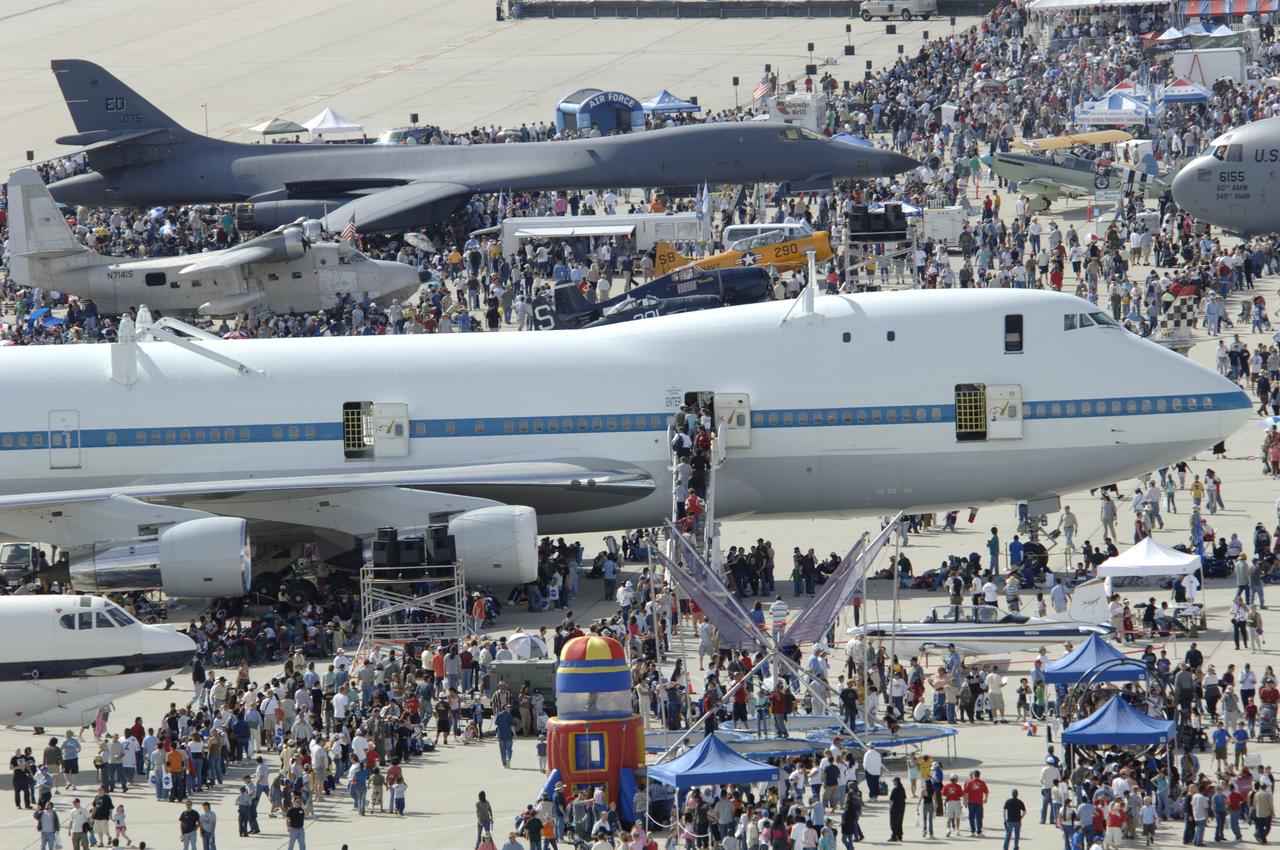
Crowds thronged around NASA's modified 747 Shuttle Carrier Aircraft and an Air Force B-1B Lancer at the Edwards Air Force Base open house Oct. 28-29, 2006.
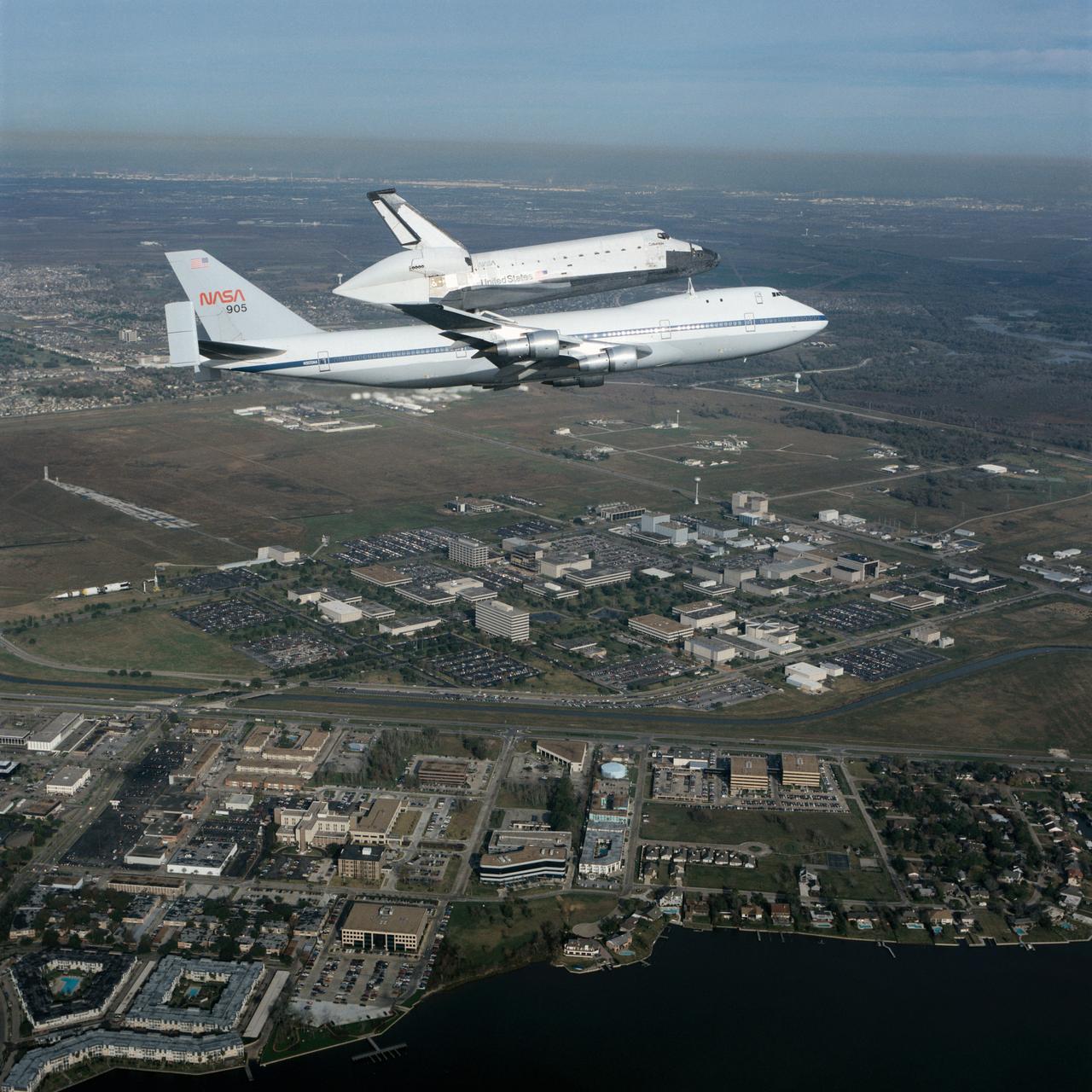
S90-55294 (19 Dec. 1990) --- Johnson Space Center employees and neighbors on the ground didn't get quite this closeup of a view of the Dec. 19 1990 flyover of the Space Shuttle Columbia mounted piggyback atop NASA's Shuttle Carrier Aircraft (SCA--NASA 905). However, hundreds were able to spot it as it passed nearby en route to Florida from California following the successful STS-35 mission. Almost the entire 1625-acre site of the Johnson Space Center is visible in the background, along with a number of businesses and residences in the nearby municipality of Nassau Bay. The air-to-air photograph was taken by Pete Stanley of JSC's Image Services Division who was a passenger in a T-38 jet aircraft.
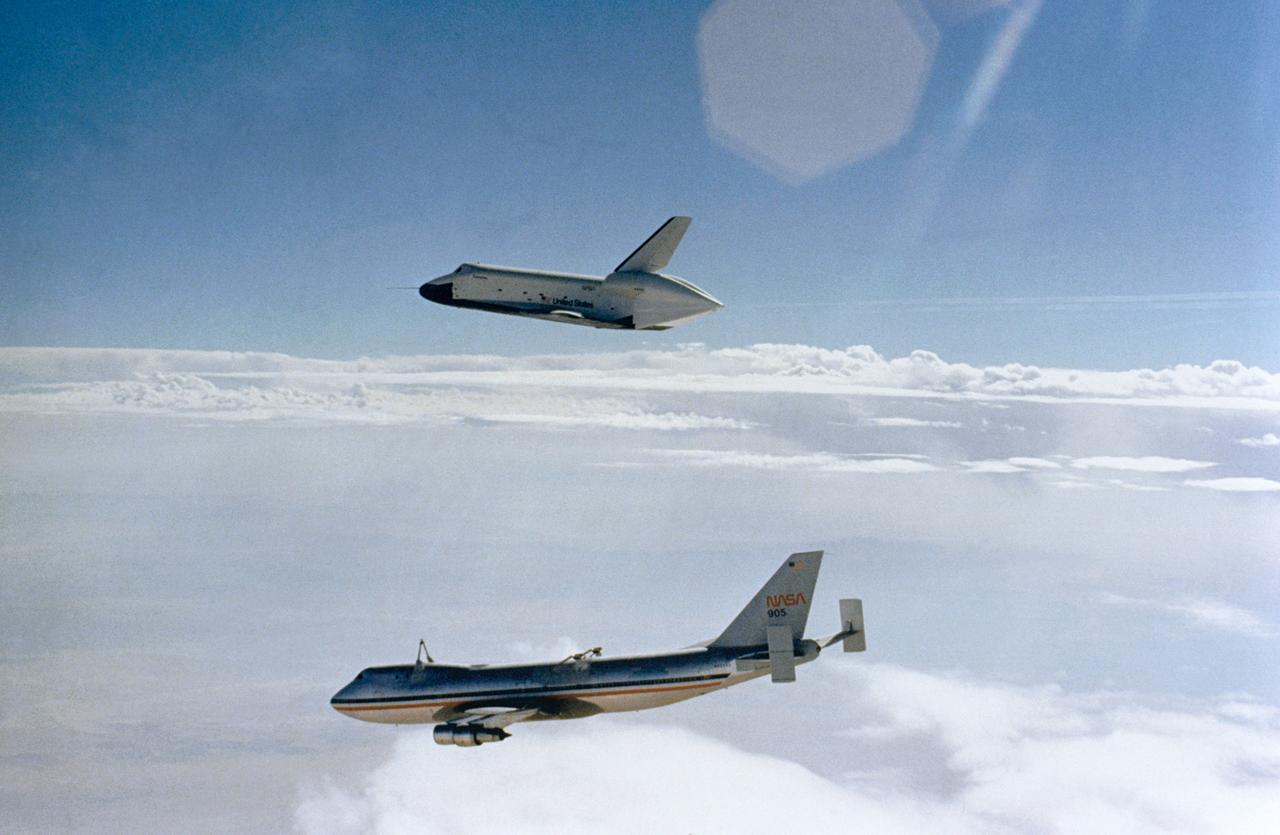
S77-27512 (12 Aug 1977) --- The Shuttle Orbiter 101 "Enterprise" soars above the NASA 747 carrier aircraft only seconds after separating during the first free flight of the Shuttle Approach and Landing Tests (ALTs) conducted on August 12, 1977 at Dryden Flight Research Center in Southern California. Astronauts Fred W. Haise Jr., and C. Gordon Fullerton were the crew of the "Enterprise." The ALT free flights are designed to verify Orbiter subsonic airworthiness, integrated systems operations and pilot-guided approach and landing capability and satisfying prerequisites to automatic flight control and navigation mode.
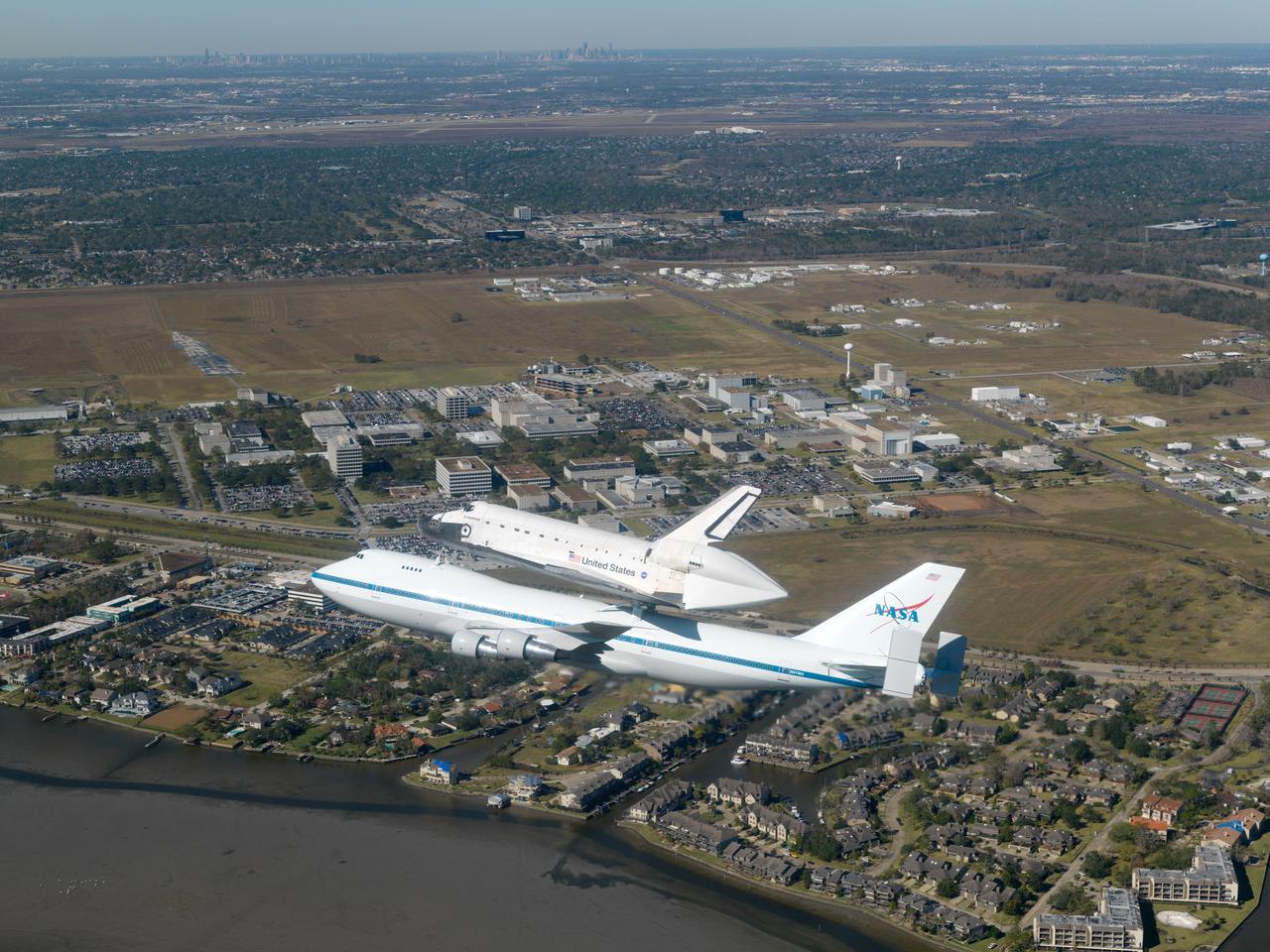
JSC2008-E-154359 (11 Dec. 2008) --- The Space Shuttle Endeavour flies over the Clear Lake area and the Johnson Space Center after having spent the night at a stopover in Tarrant County, while mounted on a modified Boeing 747 shuttle carrier aircraft. Endeavour landed in California on Nov. 30 and was en route back to Florida. This photo, taken from the rear station of a NASA T-38 aircraft, shows the main part of the 1625-acre JSC site. The extremely clear weather allows viewing all the way to Houston's central business district. Harris County Domed Stadium and the Houston NFL franchise's stadium are visible in the upper left quadrant of the photo.
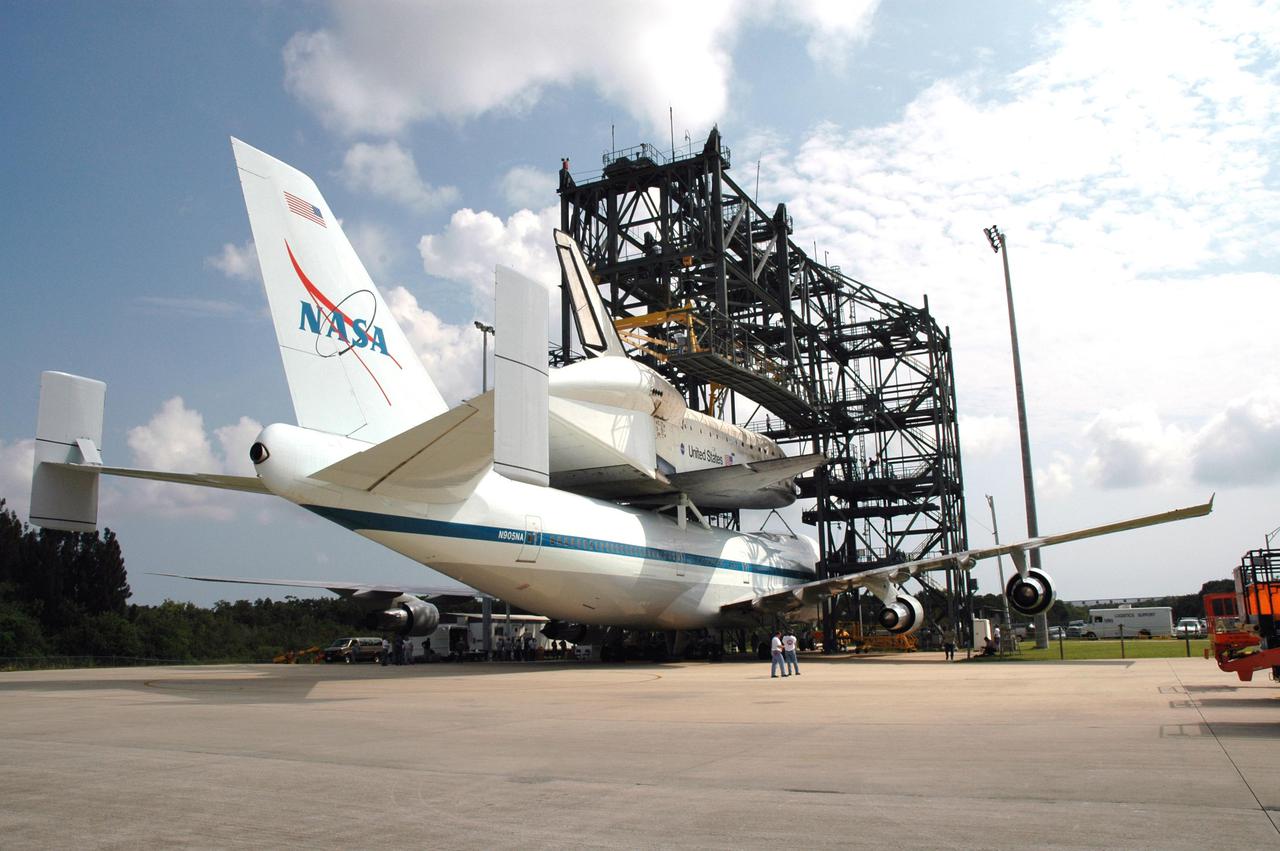
KENNEDY SPACE CENTER, FLA. - The orbiter Discovery on top of the Shuttle Carrier Aircraft, a modified Boeing 747, is towed into the mate_demate device at NASA Kennedy Space Center’s Shuttle Landing Facility. Discovery was returned to Kennedy Space Center on a ferry flight from Edwards Air Force Base in California, where it landed Aug. 9 after 13 days in space on mission STS-114. In the mate_demate device, a horizontal structure mounted at the 80-foot level between two towers controls and guides a large lift beam that attaches to the orbiter to raise and lower it. Once Discovery is lifted off the back of the SCA, the 747 can then roll away and the orbiter will be lowered to the ground. It will then be towed from the SLF to the Orbiter Processing Facility. Once inside the OPF, the payload bay doors will be opened and the MPLM Raffaello brought back from the International Space Station will be unloaded and transferred to the Space Station Processing Facility. This concludes mission STS-114.
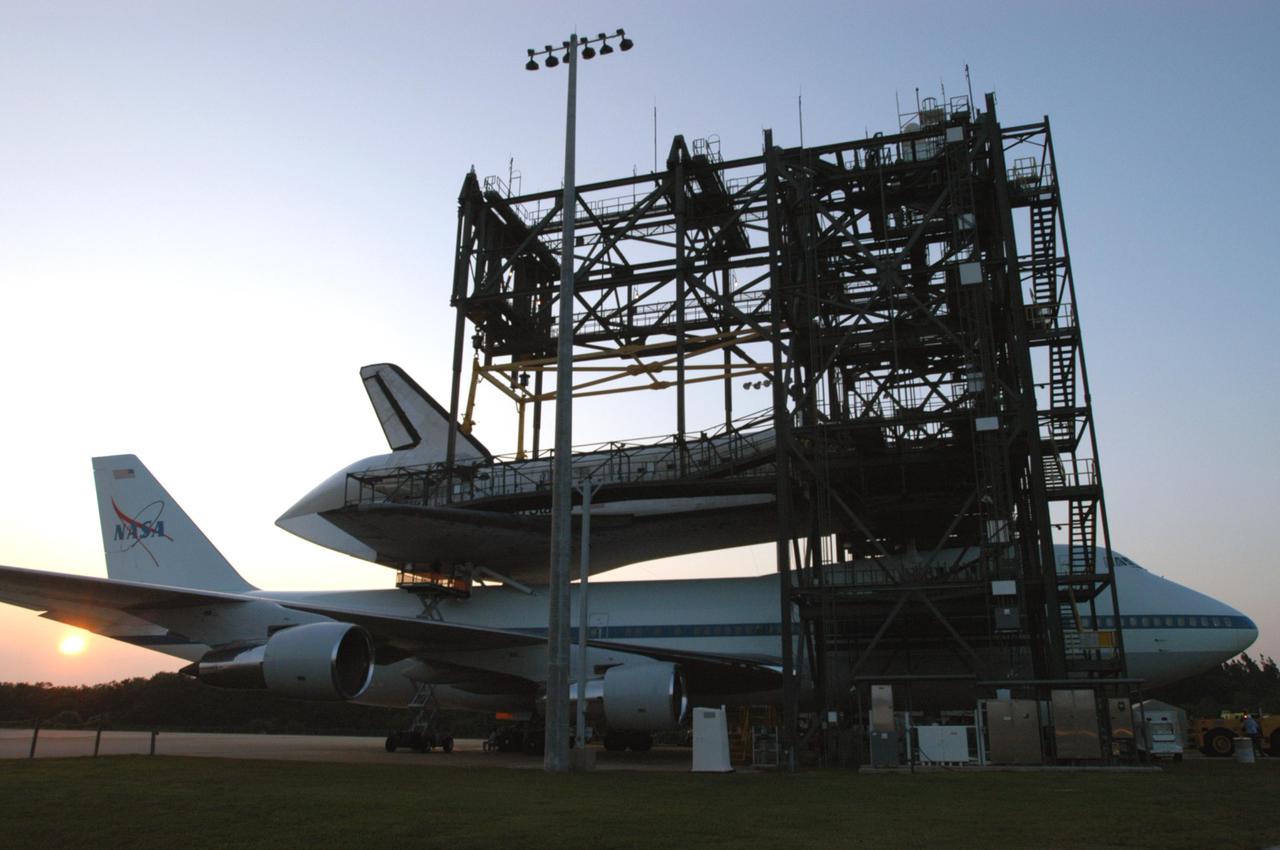
KENNEDY SPACE CENTER, FLA. - The sun is setting behind the tail of the Shuttle Carrier Aircraft, a modified Boeing 747, and orbiter Discovery where they are parked in the mate_demate device. Discovery was returned to Kennedy Space Center on a ferry flight from Edwards Air Force Base in California, where it landed Aug. 9 after 13 days in space on mission STS-114. In the mate_demate device, a horizontal structure mounted at the 80-foot level between two towers controls and guides a large lift beam that attaches to the orbiter to raise and lower it. Once Discovery is lifted off the back of the SCA, the 747 can then roll away and the orbiter will be lowered to the ground. It will then be towed from the SLF to the Orbiter Processing Facility. Once inside the OPF, the payload bay doors will be opened and the MPLM Raffaello brought back from the International Space Station will be unloaded and transferred to the Space Station Processing Facility. This concludes mission STS-114.
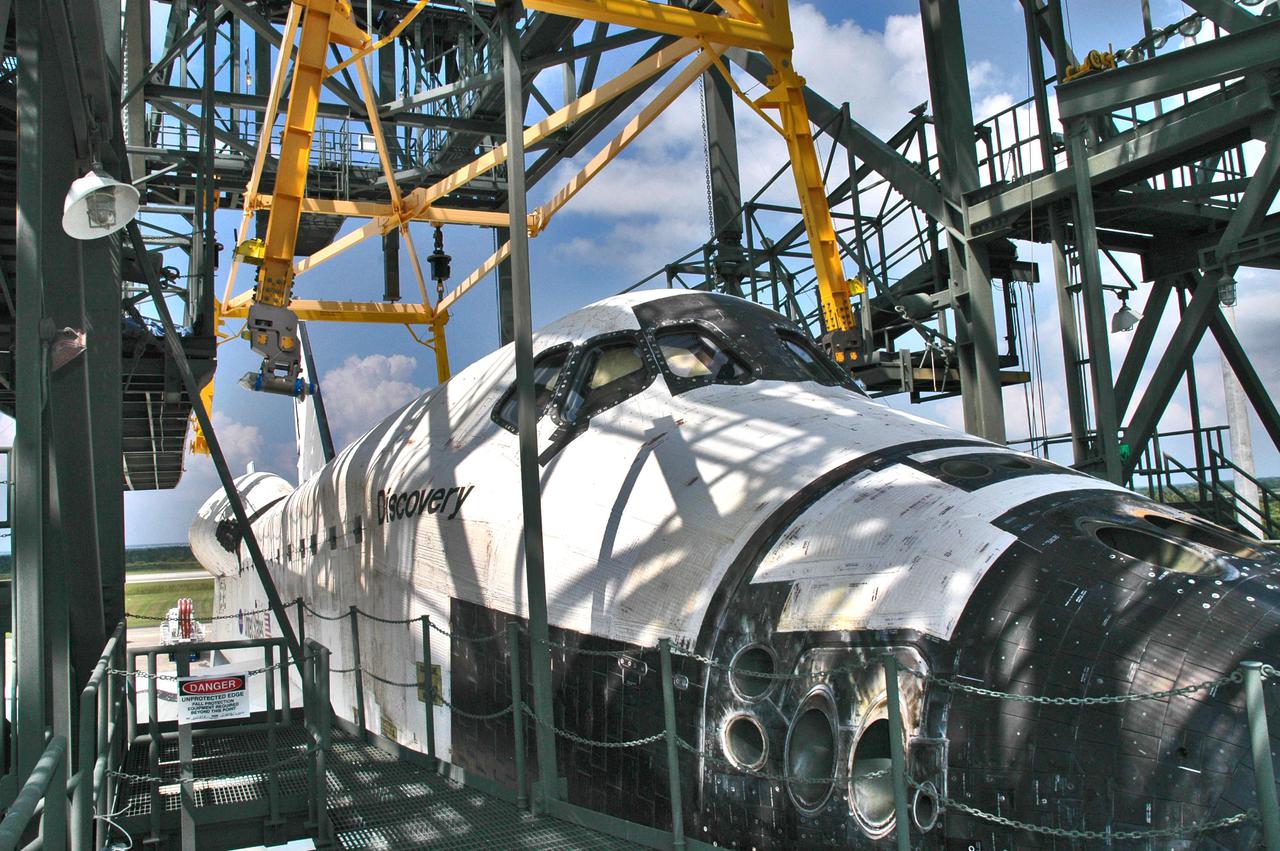
KENNEDY SPACE CENTER, FLA. - The orbiter Discovery on top of the Shuttle Carrier Aircraft, a modified Boeing 747, is in place under the mate_demate device at NASA Kennedy Space Center’s Shuttle Landing Facility. Discovery was returned to Kennedy Space Center on a ferry flight from Edwards Air Force Base in California, where it landed Aug. 9 after 13 days in space on mission STS-114. In the mate_demate device, a horizontal structure mounted at the 80-foot level between two towers controls and guides a large lift beam that attaches to the orbiter to raise and lower it. Once Discovery is lifted off the back of the SCA, the 747 can then roll away and the orbiter will be lowered to the ground. It will then be towed from the SLF to the Orbiter Processing Facility. Once inside the OPF, the payload bay doors will be opened and the MPLM Raffaello brought back from the International Space Station will be unloaded and transferred to the Space Station Processing Facility. This concludes mission STS-114.
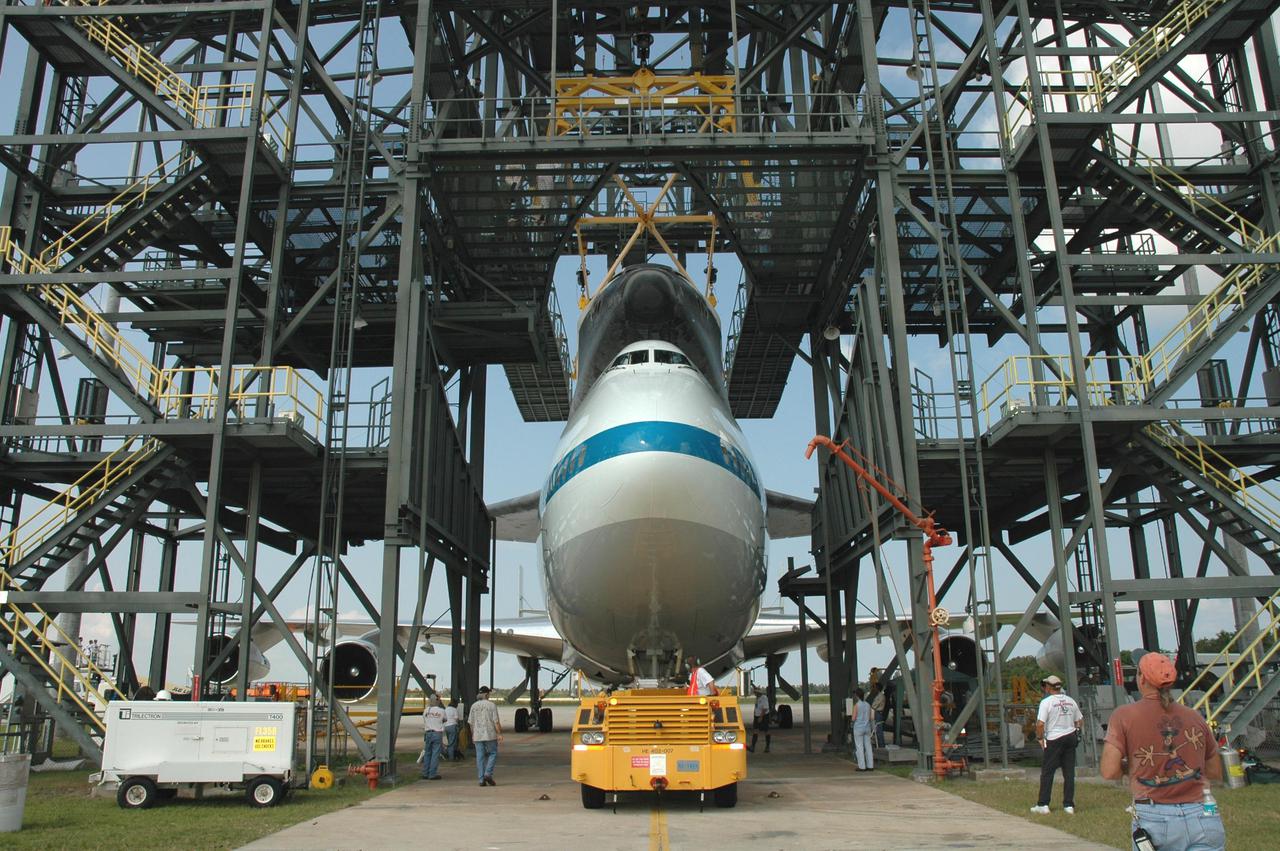
KENNEDY SPACE CENTER, FLA. - The Shuttle Carrier Aircraft, a modified Boeing 747, with the orbiter Discovery on top is towed into the mate_demate device at NASA Kennedy Space Center’s Shuttle Landing Facility. Discovery was returned to Kennedy Space Center on a ferry flight from Edwards Air Force Base in California, where it landed Aug. 9 after 13 days in space on mission STS-114. In the mate_demate device, a horizontal structure mounted at the 80-foot level between two towers controls and guides a large lift beam that attaches to the orbiter to raise and lower it. Once Discovery is lifted off the back of the SCA, the 747 can then roll away and the orbiter will be lowered to the ground. It will then be towed from the SLF to the Orbiter Processing Facility. Once inside the OPF, the payload bay doors will be opened and the MPLM Raffaello brought back from the International Space Station will be unloaded and transferred to the Space Station Processing Facility. This concludes mission STS-114.
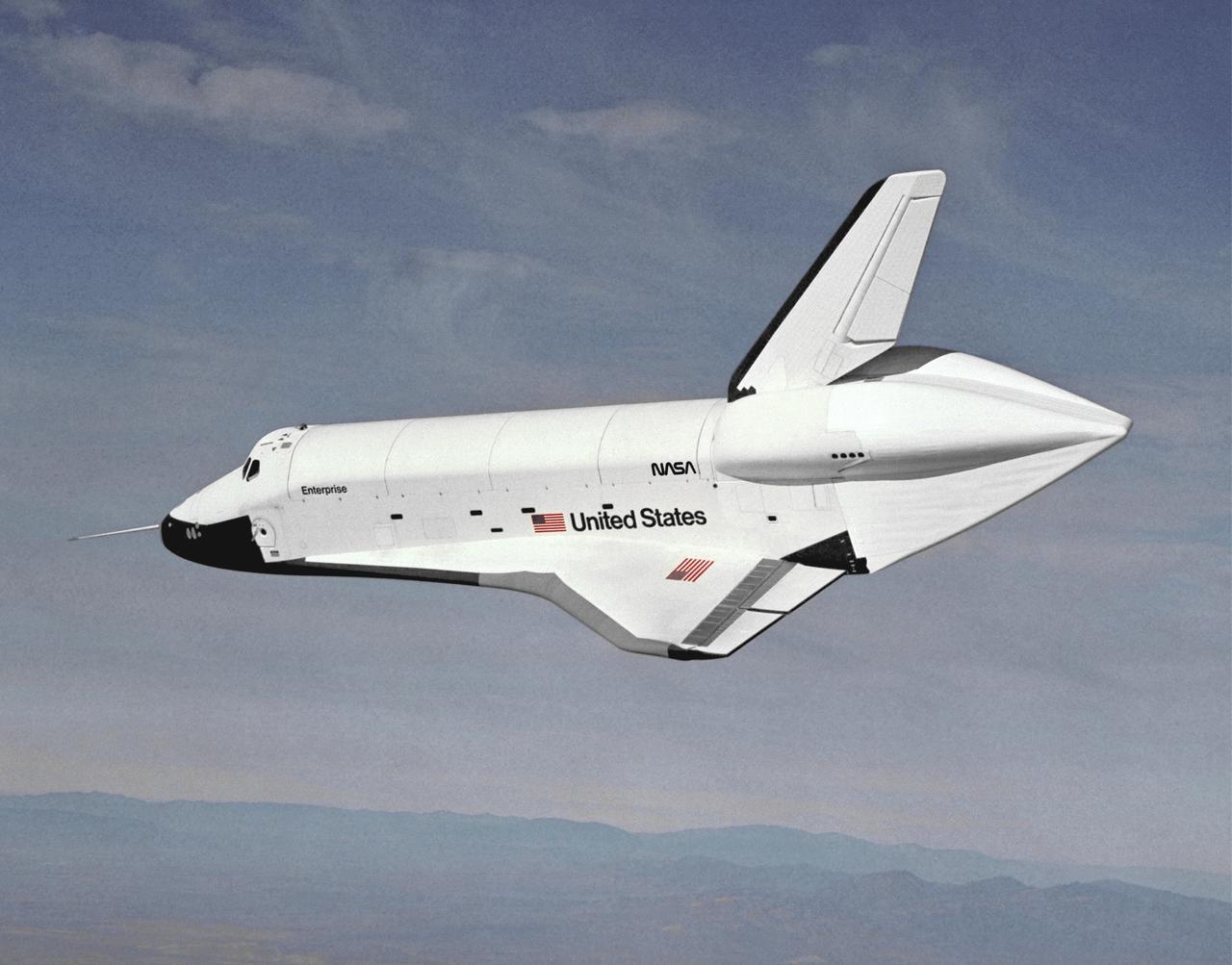
Enterprise - Free Flight after Separation from 747
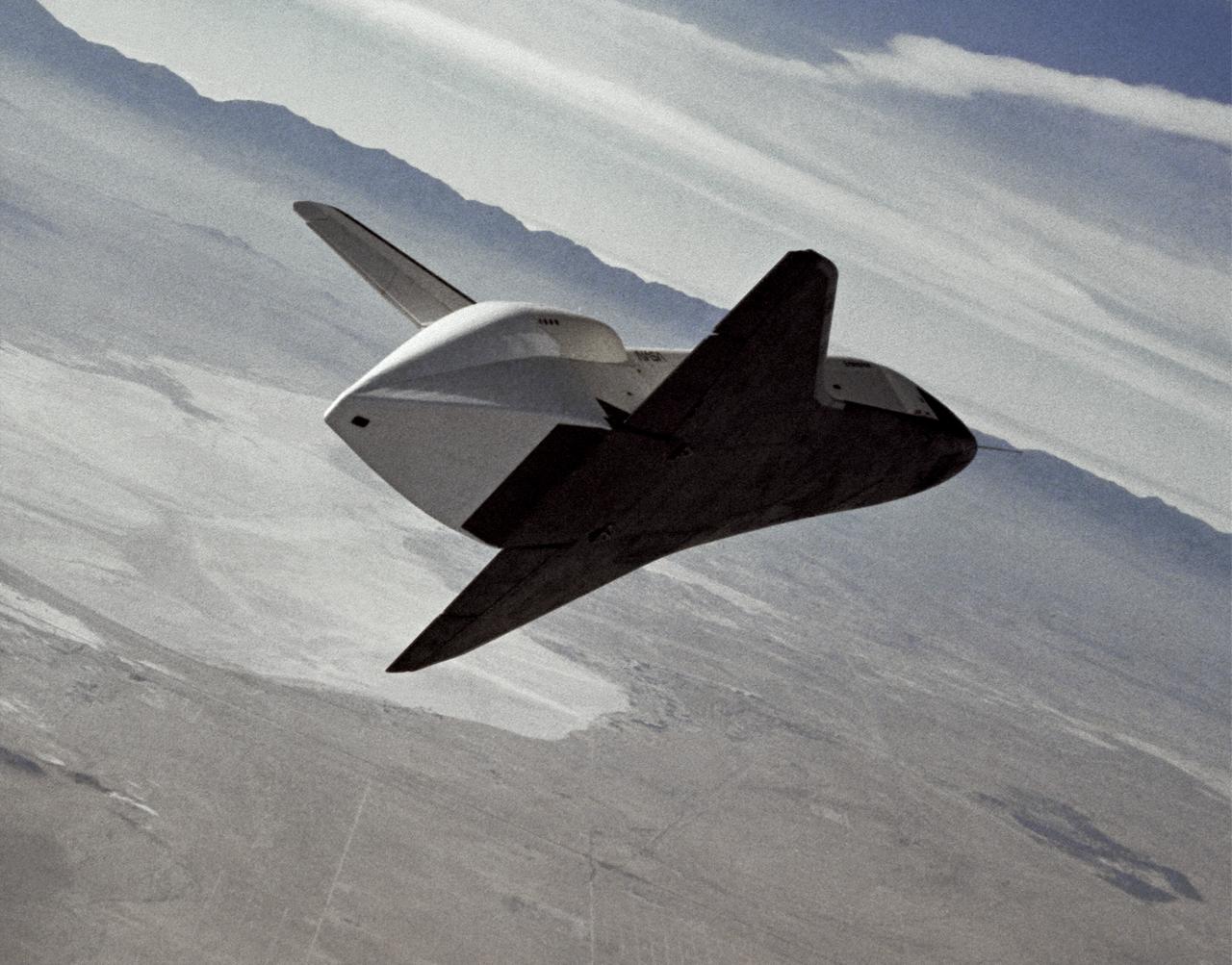
Enterprise - Free Flight after Separation from 747
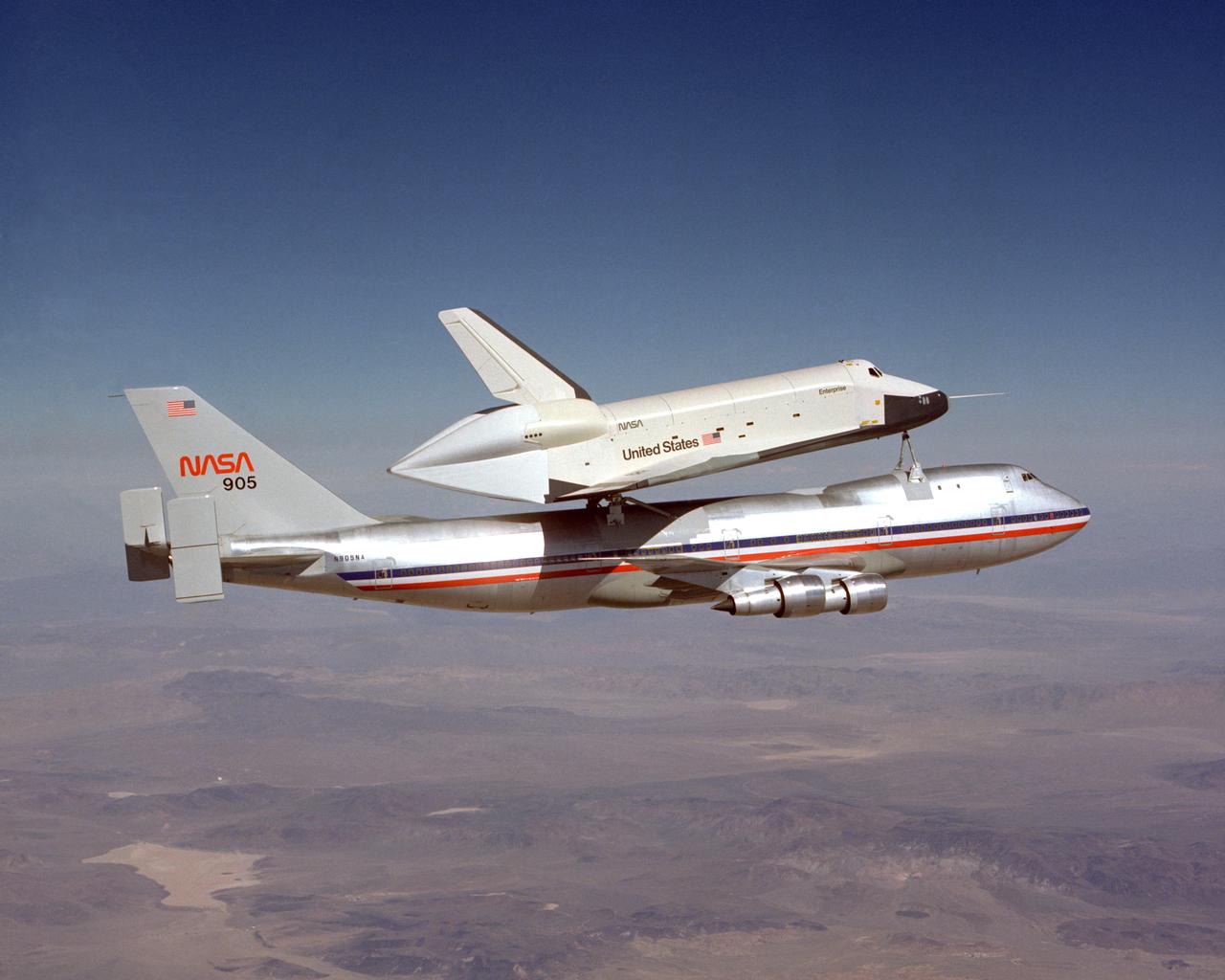
First Shuttle/747 Captive Flight
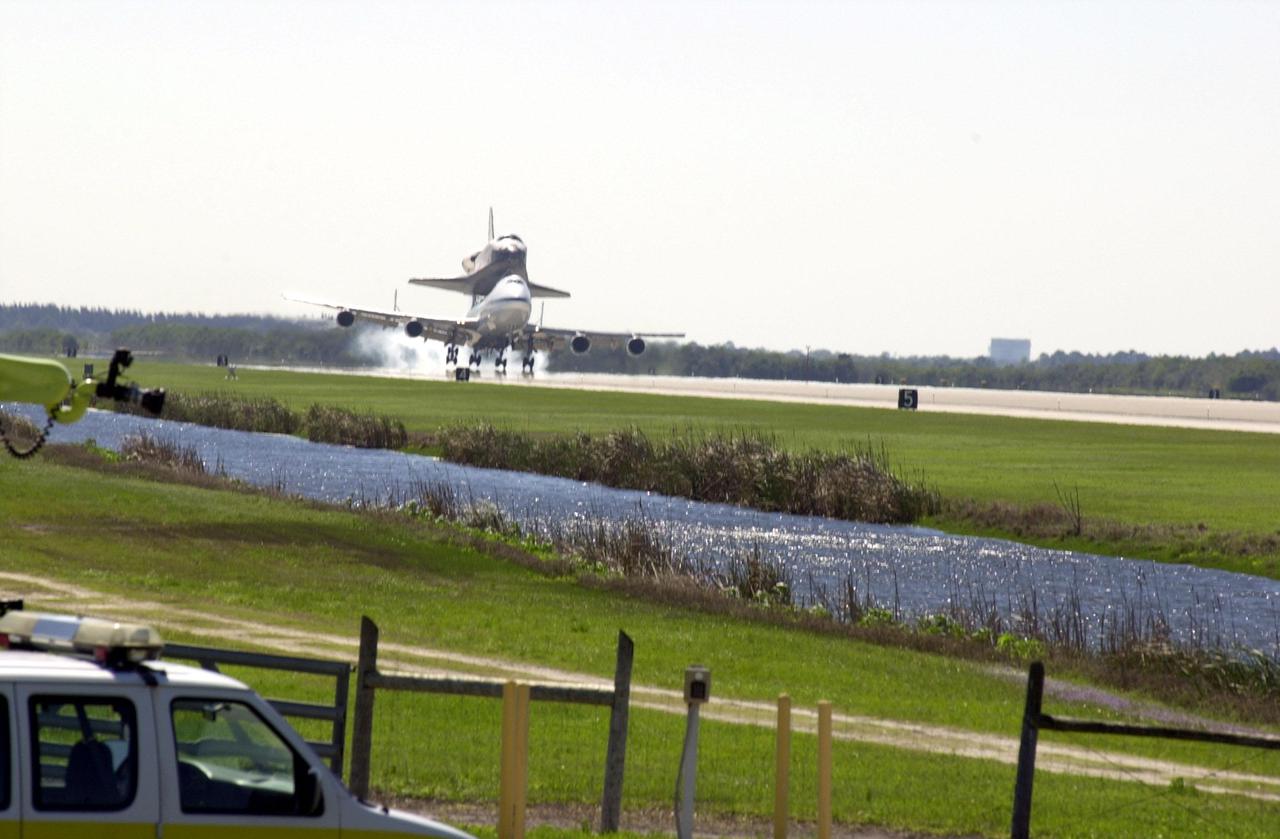
KENNEDY SPACE CENTER, FLA. -- The Shuttle Carrier Aircraft, a modified Boeing 747, kicks up dust as it touches down at KSC’s Shuttle Landing Facility. It is carrying the orbiter Atlantis on top. Strong cross winds caused the SCA to land left wheels first. Atlantis landed in California Feb. 19 concluding mission STS-98. The ferry flight began in California March 1; unfavorable weather conditions kept it on the ground at Altus AFB, Okla., until it could return to Florida. The orbiter will next fly on mission STS-104, the 10th construction flight to the International Space Station, scheduled June 8
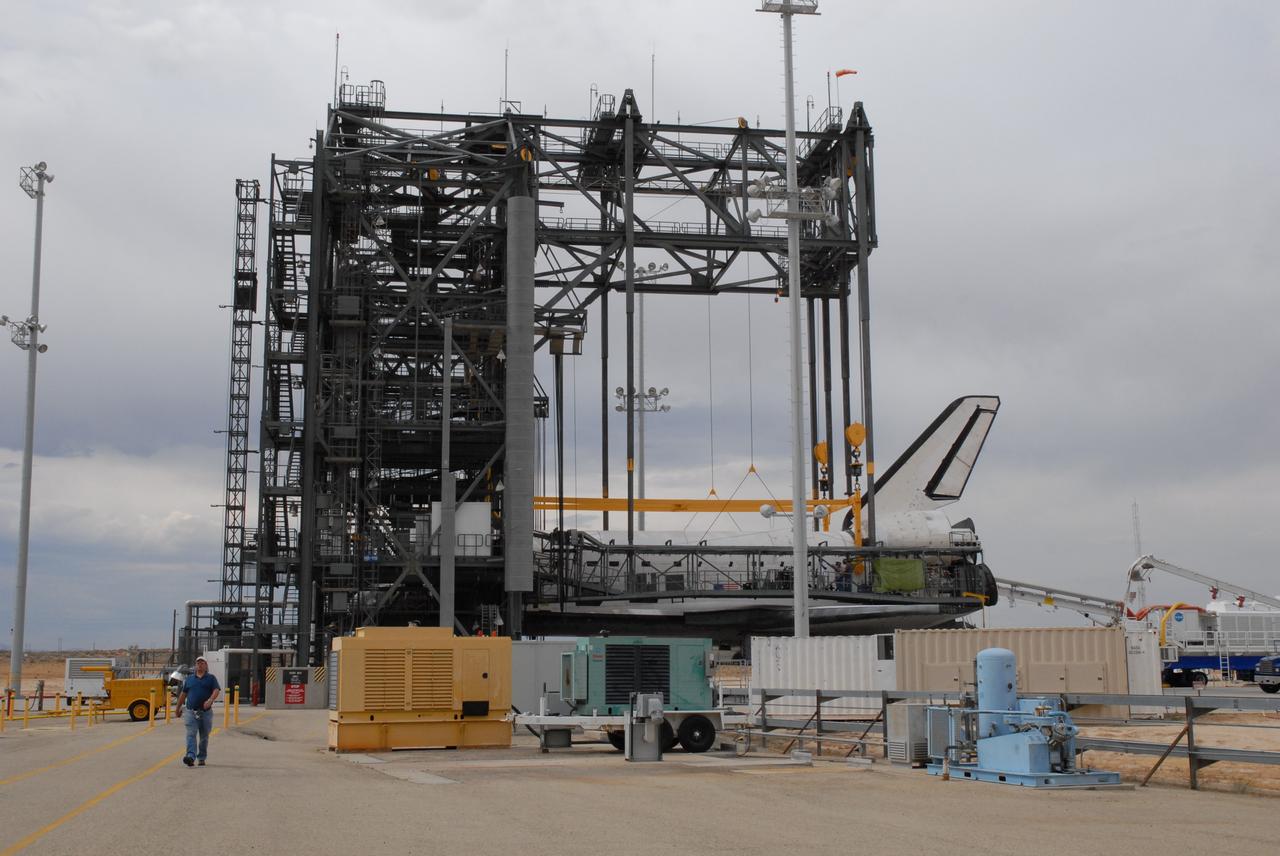
CAPE CANAVERAL, Fla. – At Edwards Air Force Base in California, space shuttle Atlantis is moved inside the mate/demate device for attachment to the Shuttle Carrier Aircraft, or SCA, a modified Boeing 747. Atlantis landed at Edwards on May 24, which concluded mission STS-125, after two landing opportunities at Kennedy were waved off due to weather concerns. Atlantis is being returned to Florida on a ferry flight on the SCA. Atlantis' next assignment is the STS-129 mission, targeted to launch in November 2009. Photo credit: NASA/Ben Smegelsky

CAPE CANAVERAL, Fla. –This modified Boeing 747, with its stripped interior, is the Shuttle Carrier Aircraft, or SCA, at Edwards Air Force Base in California that will carry space shuttle Atlantis on its ferry flight to Florida. Atlantis landed at Edwards on May 24, which concluded mission STS-125, after two landing opportunities at Kennedy were waved off due to weather concerns. Atlantis is being returned to Florida on a ferry flight on the SCA. Atlantis' next assignment is the STS-129 mission, targeted to launch in November 2009. Photo credit: NASA/Ben Smegelsky
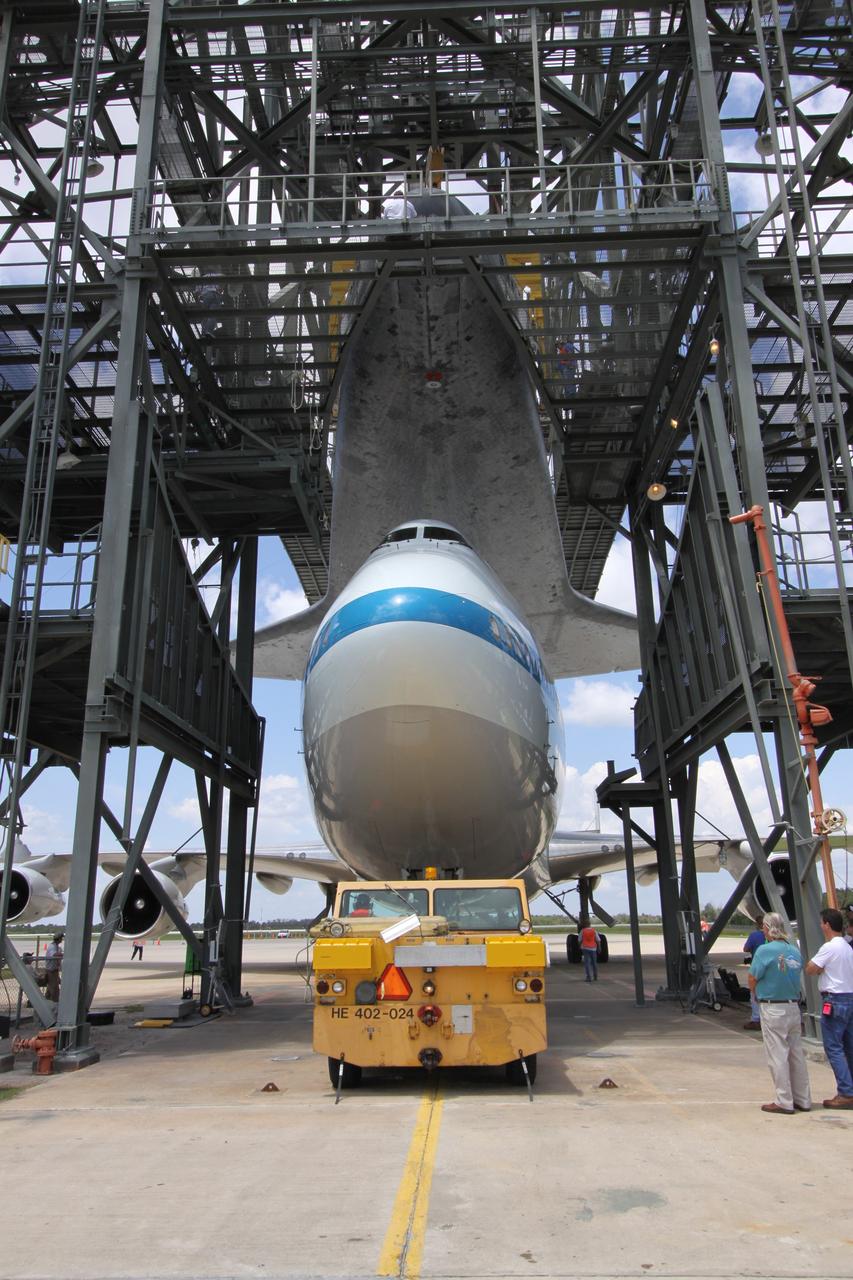
CAPE CANAVERAL, Fla. – On the Shuttle Landing Facility at NASA's Kennedy Space Center in Florida, the Shuttle Carrier Aircraft, or SCA, is moved from underneath space shuttle Atlantis in the mate/demate device. A hoist attached to Atlantis suspends the shuttle while the SCA is moved away. Atlantis returned from California atop the SCA, a modified Boeing 747, after its May 24 landing at Edwards Air Force Base, concluding mission STS-125. The ferry flight from Edwards Air Force Base began June 1. Atlantis' next assignment is the STS-129 mission, targeted to launch in November 2009. Photo credit: NASA/Jack Pfaller
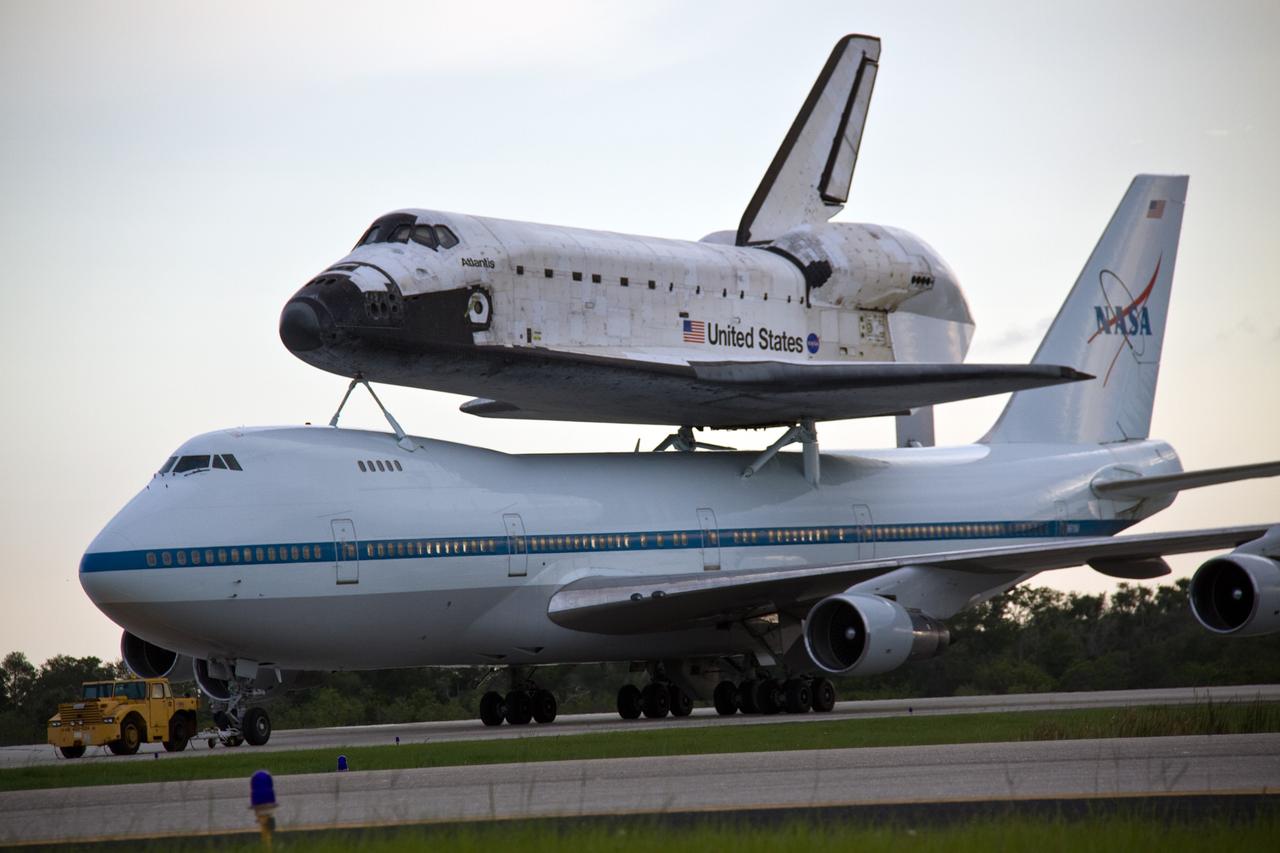
CAPE CANAVERAL, Fla. – After a two-day trip from California, space shuttle Atlantis, atop a Shuttle Carrier Aircraft, or SCA, is towed from the runway at NASA's Kennedy Space Center in Florida. The SCA is a modified Boeing 747 jetliner. Atlantis returned from California atop the SCA after its May 24 landing at Edwards Air Force Base, concluding mission STS-125. The ferry flight from Edwards Air Force Base began June 1. Atlantis' next assignment is the STS-129 mission, targeted to launch in November 2009. Photo credit: NASA/Jack Pfaller
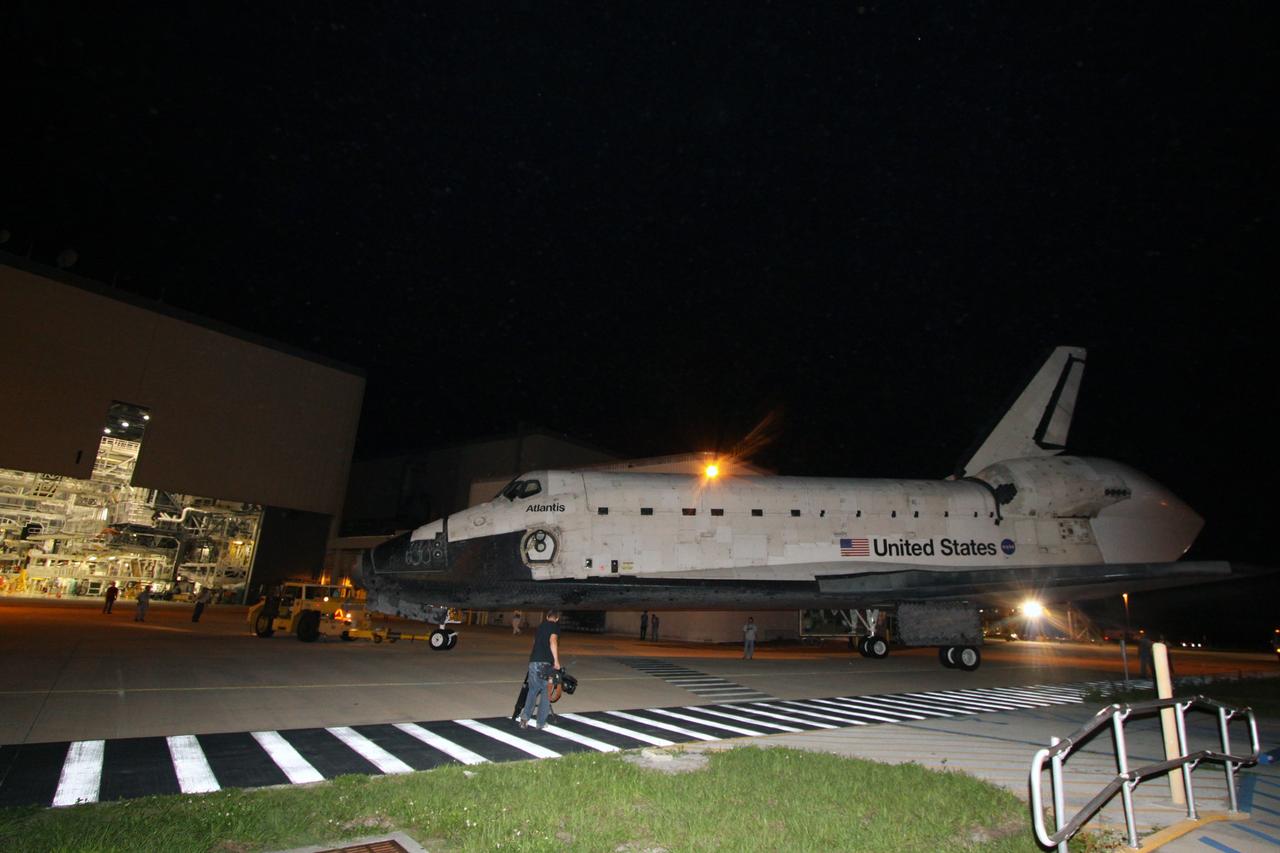
CAPE CANAVERAL, Fla. – At NASA's Kennedy Space Center in Florida, space shuttle Atlantis is towed toward Orbiter Processing Facility 1. Atlantis was demated from the Shuttle Carrier Aircraft, or SCA, via the mate/demate device at the Shuttle Landing Facility. After its May 24 landing at Edwards Air Force Base in California, which concluded its STS-125 mission, the modified Boeing 747 SCA carried the shuttle on a two-day ferry flight from Edwards to Kennedy beginning June 1. Atlantis' next assignment is the STS-129 mission, targeted to launch in November 2009. Photo credit: NASA/Jack Pfaller
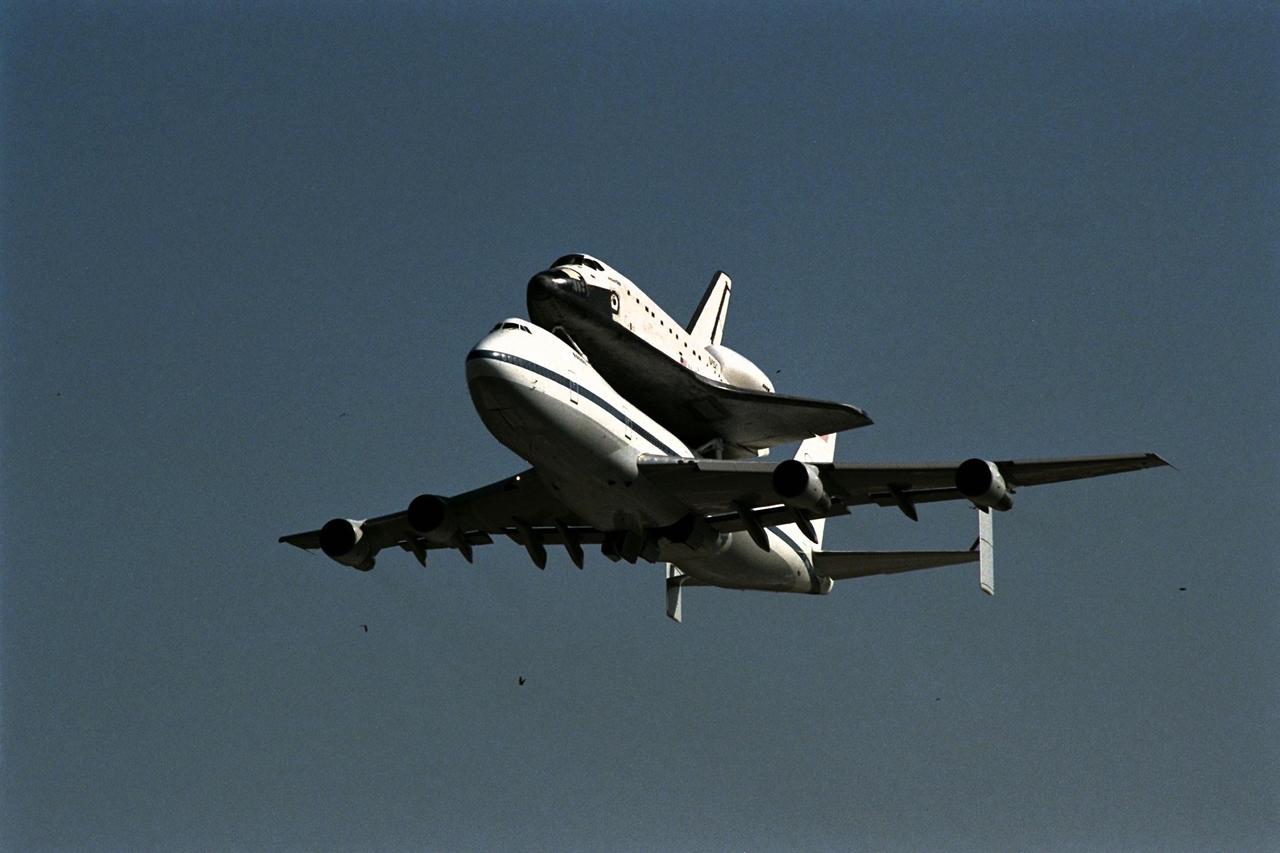
KENNEDY SPACE CENTER, FLA. -- The orbiter Atlantis, riding atop the modified Boeing 747 Shuttle Carrier Aircraft, departed Kennedy Space Center (KSC) at 1:53 p.m. on Nov. 11 en route to Palmdale, Calif., for the planned Orbiter Maintenance Down Period. Atlantis departed from KSC’s Shuttle Landing Facility Runway 33 for Palmdale’s Orbiter Assembly Facility, where it will remain until August 1998. At Palmdale, modifications and structural inspections will be conducted in preparation for Atlantis’ future missions to support International Space Station assembly activities. Atlantis’ next flight into space is scheduled to be Space Shuttle mission STS-92, targeted for launch from KSC in January 1999
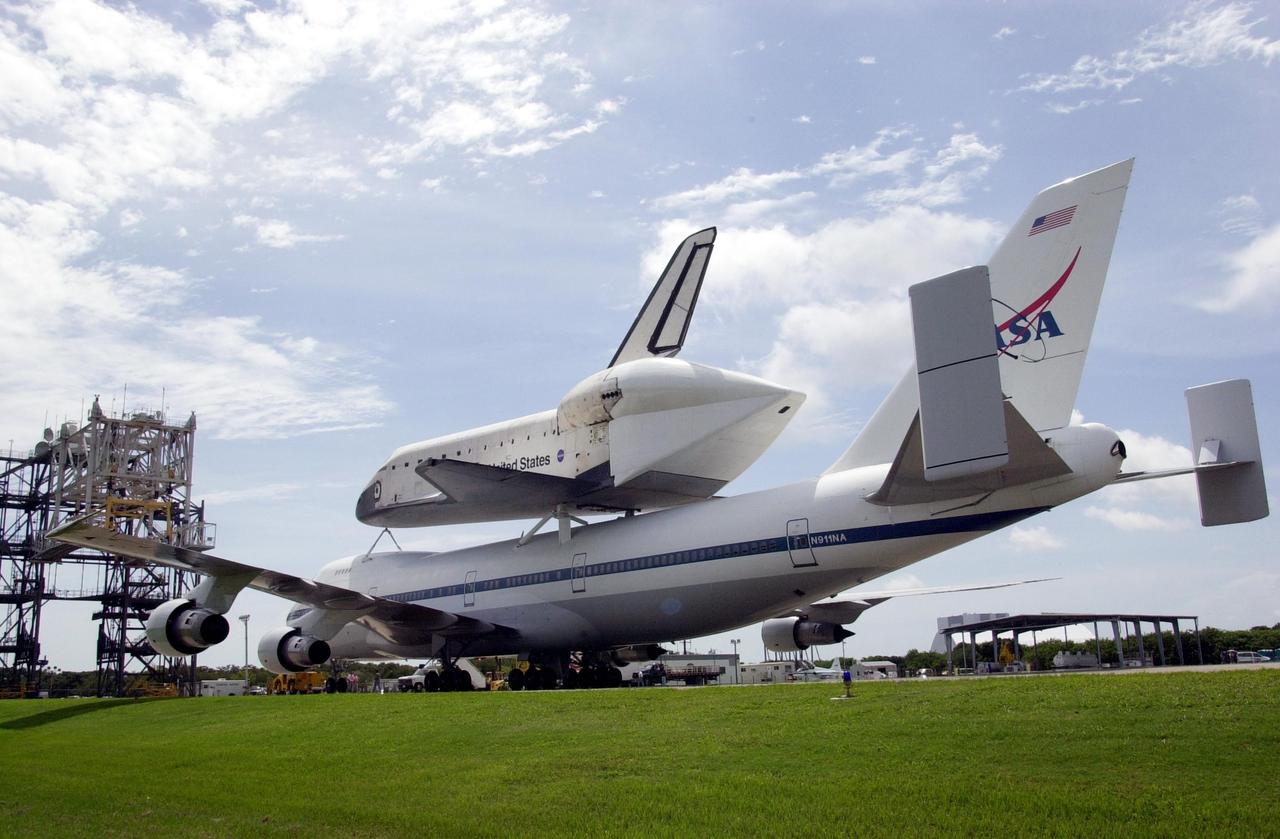
KENNEDY SPACE CENTER, FLA. - Space Shuttle Endeavour approaches the Mate-Demate Device (left) following landing on runway 15 at KSC's Shuttle Landing Facility at 10:58 a.m. EDT atop a modified Boeing 747 Shuttle Carrier Aircraft. The cross-country ferry flight became necessary when three days of unfavorable weather conditions at KSC forced Endeavour to land on runway 22 at Dryden Flight Research Center, Edwards Air Force Base, Calif., on June 19 following mission STS-111. Processing of Endeavour will now begin for the launch of mission STS-113 targeted for October 2002

CAPE CANAVERAL, Fla. – Against a setting sun, space shuttle Atlantis, atop a Shuttle Carrier Aircraft, or SCA, is towed from the runway at NASA's Kennedy Space Center in Florida. The SCA is a modified Boeing 747 jetliner. Atlantis returned from California atop the SCA after its May 24 landing at Edwards Air Force Base, concluding mission STS-125. The ferry flight from Edwards Air Force Base began June 1. Atlantis' next assignment is the STS-129 mission, targeted to launch in November 2009. Photo credit: NASA/Jack Pfaller
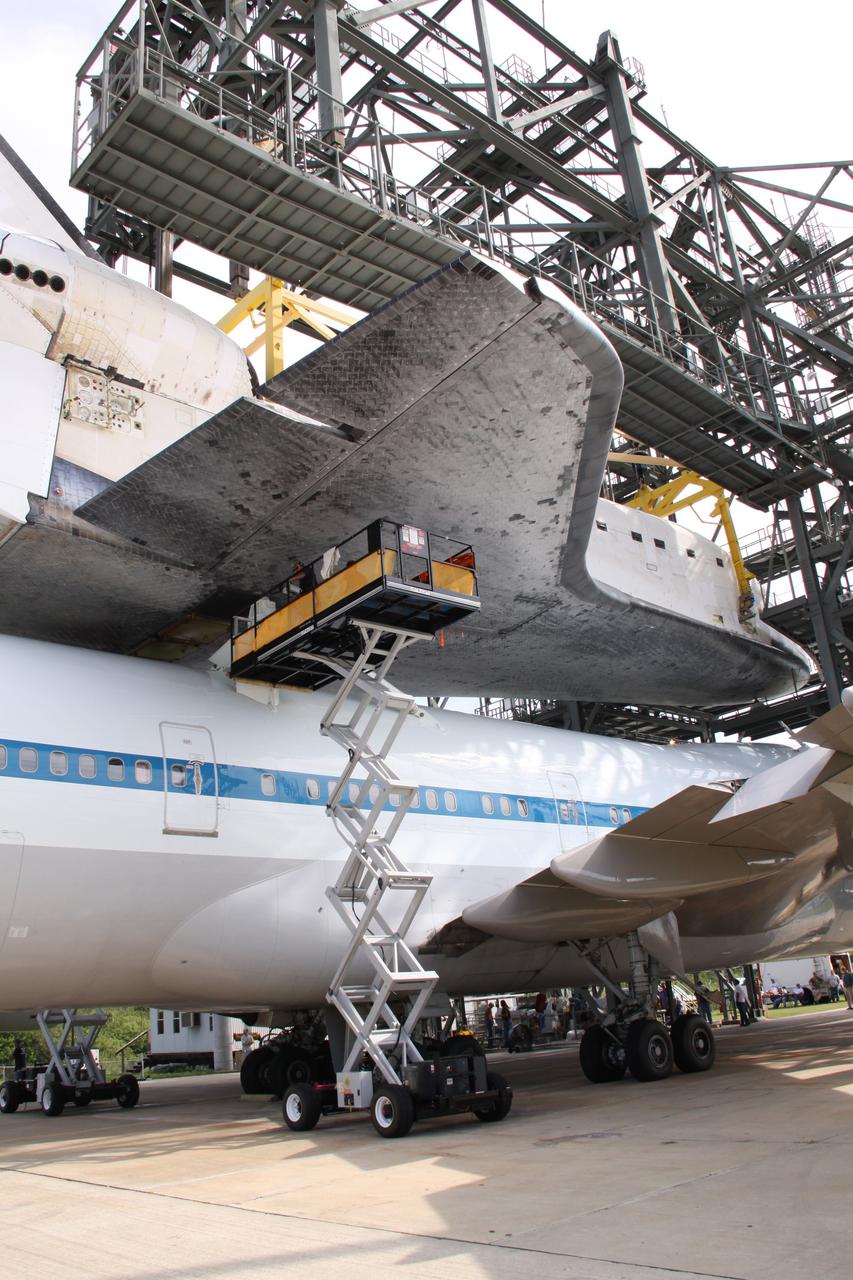
CAPE CANAVERAL, Fla. – Work is under way to separate space shuttle Atlantis from the Shuttle Carrier Aircraft, or SCA, underneath via the mate/demate device on the Shuttle Landing Facility at NASA's Kennedy Space Center in Florida. A hoist is attached to Atlantis to suspend the shuttle and then lower it to the ground. Atlantis returned from California atop the SCA, a modified Boeing 747, after its May 24 landing at Edwards Air Force Base, concluding mission STS-125. The ferry flight from Edwards Air Force Base began June 1. Atlantis' next assignment is the STS-129 mission, targeted to launch in November 2009. Photo credit: NASA/Jack Pfaller
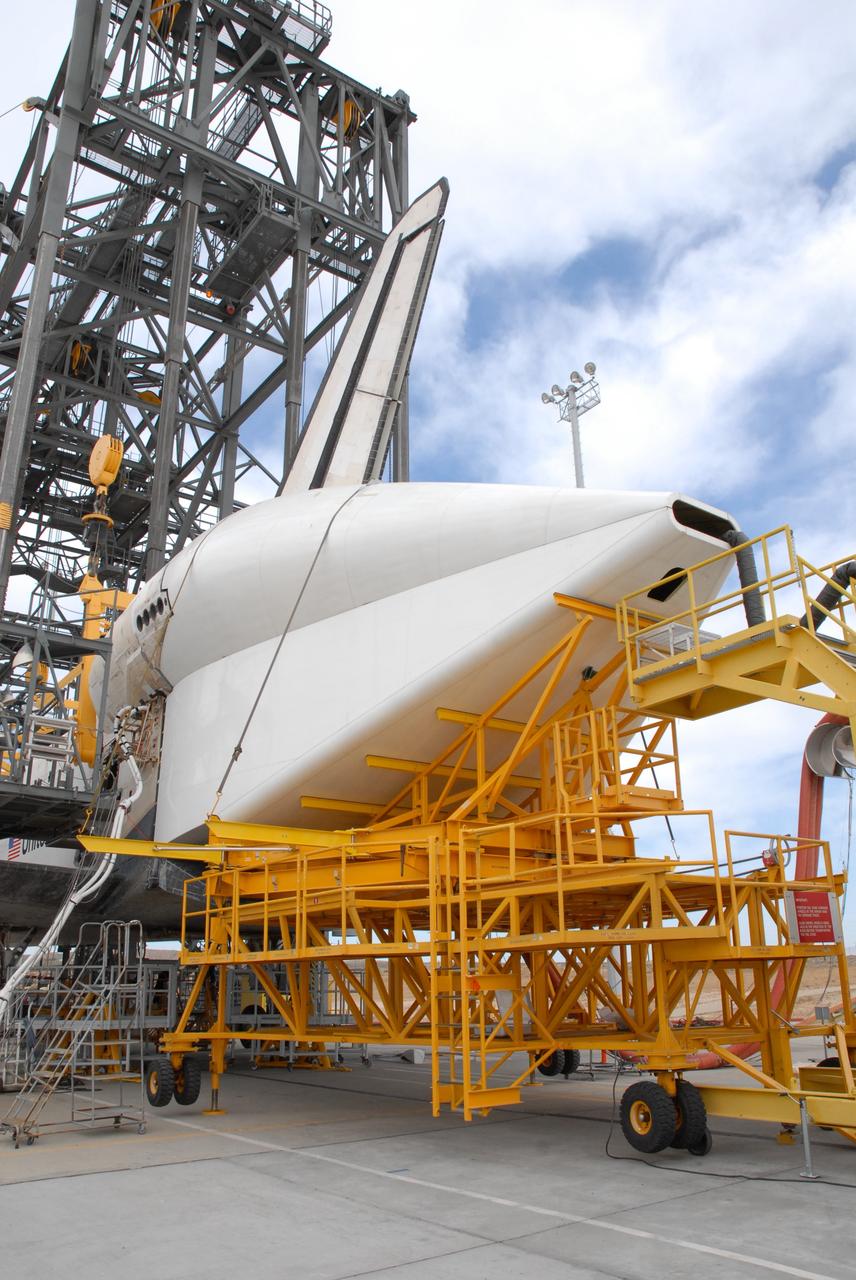
CAPE CANAVERAL, Fla. – At Edwards Air Force Base in California, space shuttle Atlantis is fitted with a tail cone, which protects the aft engine area and provides a more efficient aeronautical dimension during its piggyback flight on the Shuttle Carrier Aircraft, or SCA, a modified Boeing 747. Atlantis landed at Edwards on May 24, which concluded mission STS-125, after two landing opportunities at Kennedy were waved off due to weather concerns. Atlantis is being returned to Florida on a ferry flight on the SCA. Atlantis' next assignment is the STS-129 mission, targeted to launch in November 2009. Photo credit: NASA/Ben Smegelsky
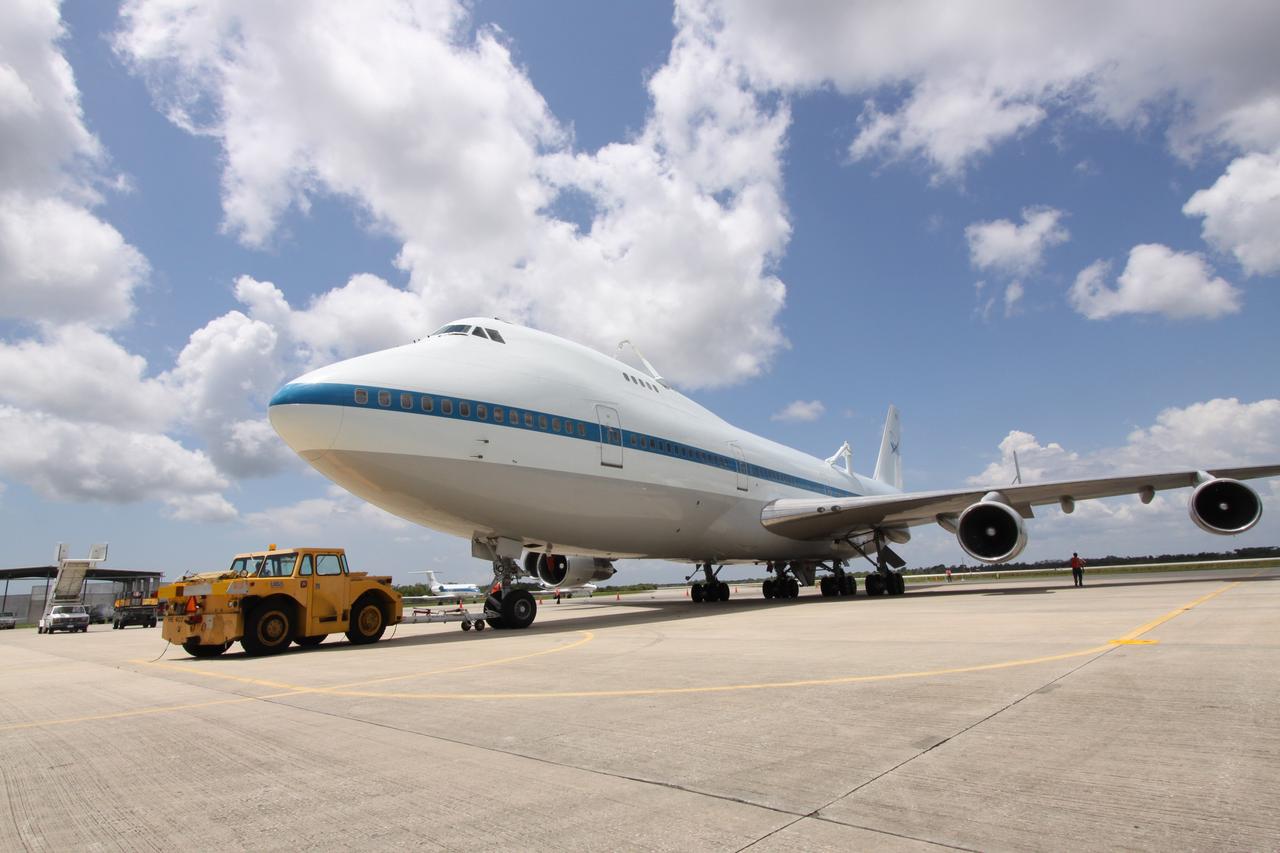
CAPE CANAVERAL, Fla. – On the Shuttle Landing Facility at NASA's Kennedy Space Center in Florida, the Shuttle Carrier Aircraft, or SCA, is towed away from the mate/demate device. The SCA was just demated from the shuttle. Atlantis returned from California atop the SCA, a modified Boeing 747, after its May 24 landing at Edwards Air Force Base, concluding mission STS-125. The ferry flight from Edwards Air Force Base began June 1. Atlantis' next assignment is the STS-129 mission, targeted to launch in November 2009. Photo credit: NASA/Jack Pfaller
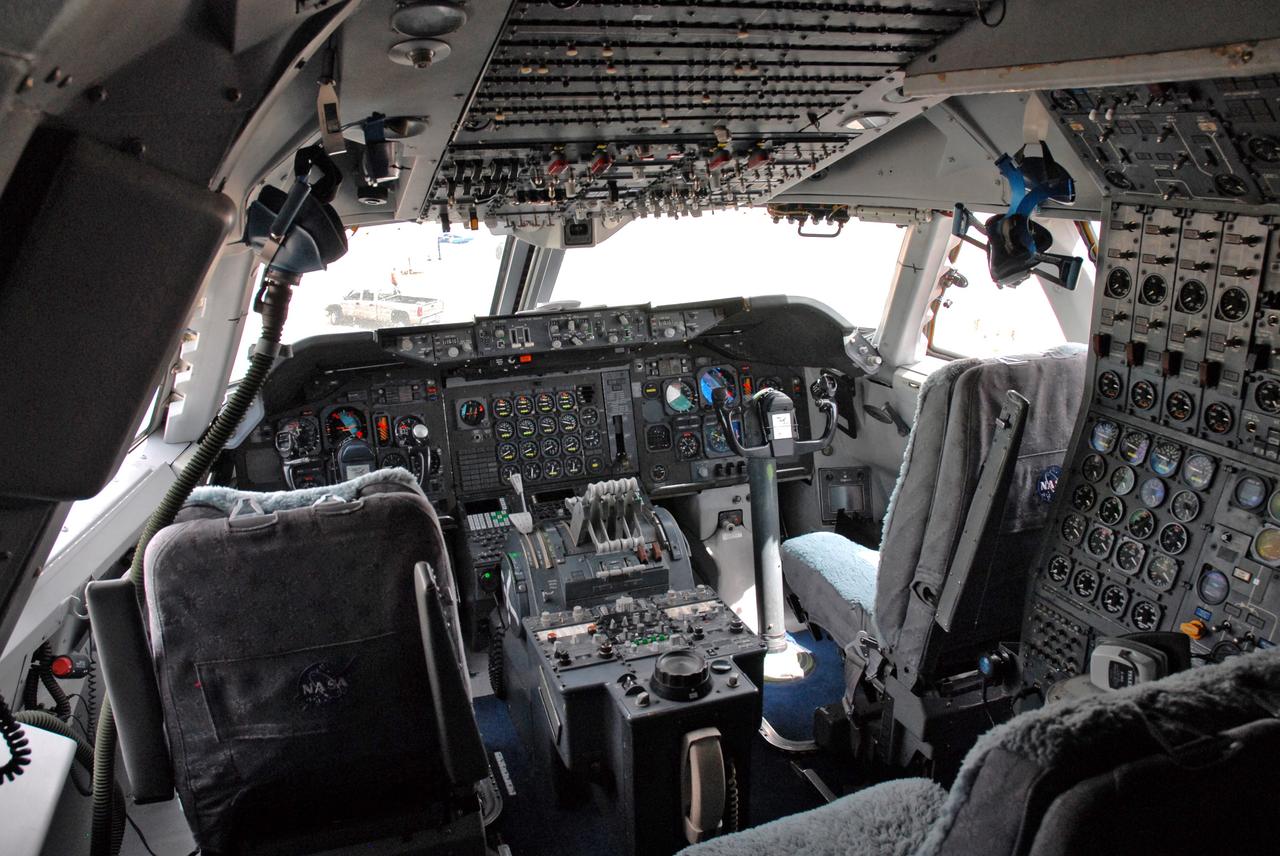
CAPE CANAVERAL, Fla. – This is the cockpit of the Shuttle Carrier Aircraft, or SCA, a modified Boeing 747, at Edwards Air Force Base in California. The SCA will carry space shuttle Atlantis on its ferry flight to Florida. Atlantis landed at Edwards on May 24, which concluded mission STS-125, after two landing opportunities at Kennedy were waved off due to weather concerns. Atlantis is being returned to Florida on a ferry flight on the SCA. Atlantis' next assignment is the STS-129 mission, targeted to launch in November 2009. Photo credit: NASA/Ben Smegelsky
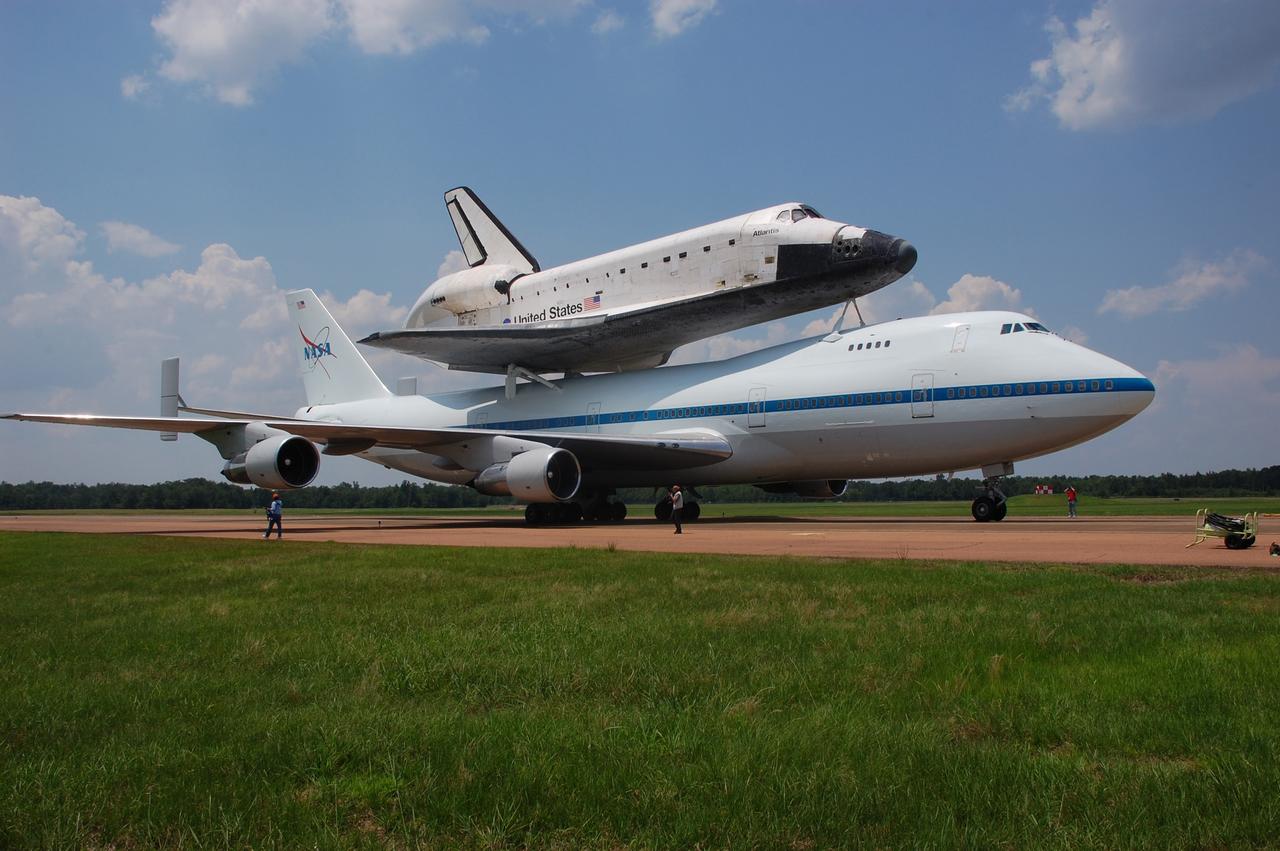
CAPE CANAVERAL, Fla. – Space shuttle Atlantis, atop the Shuttle Carrier Aircraft, or SCA, a modified Boeing 747, is ready for takeoff from Columbus Air Force Base in Mississippi after a fuel stop on its journey back to Florida. Atlantis landed at Edwards Air Force Base in California on May 24, which concluded mission STS-125, after two landing opportunities at Kennedy were waved off due to weather concerns. Atlantis is being returned to Florida on a ferry flight on the SCA. Atlantis' next assignment is the STS-129 mission, targeted to launch in November 2009. Photo credit: NASA/Ben Smegelsky
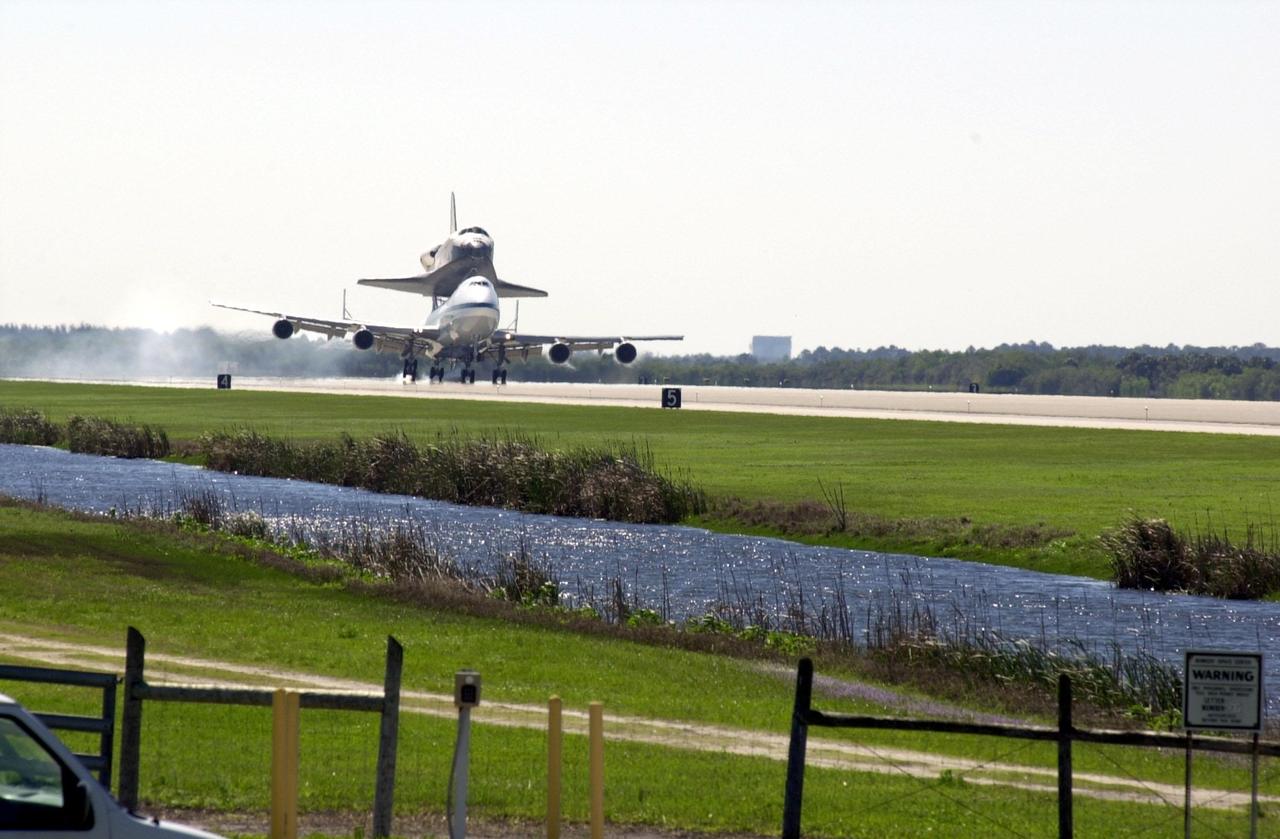
KENNEDY SPACE CENTER, FLA. -- The Shuttle Carrier Aircraft, a modified Boeing 747, straightens out its landing as its right wheels touch down. Strong cross winds caused the SCA to land left wheels first. The SCA is carrying the orbiter Atlantis on top. Atlantis landed in California Feb. 19 concluding mission STS-98. The ferry flight began in California March 1; unfavorable weather conditions kept it on the ground at Altus AFB, Okla., until it could return to Florida. The orbiter will next fly on mission STS-104, the 10th construction flight to the International Space Station, scheduled June 8
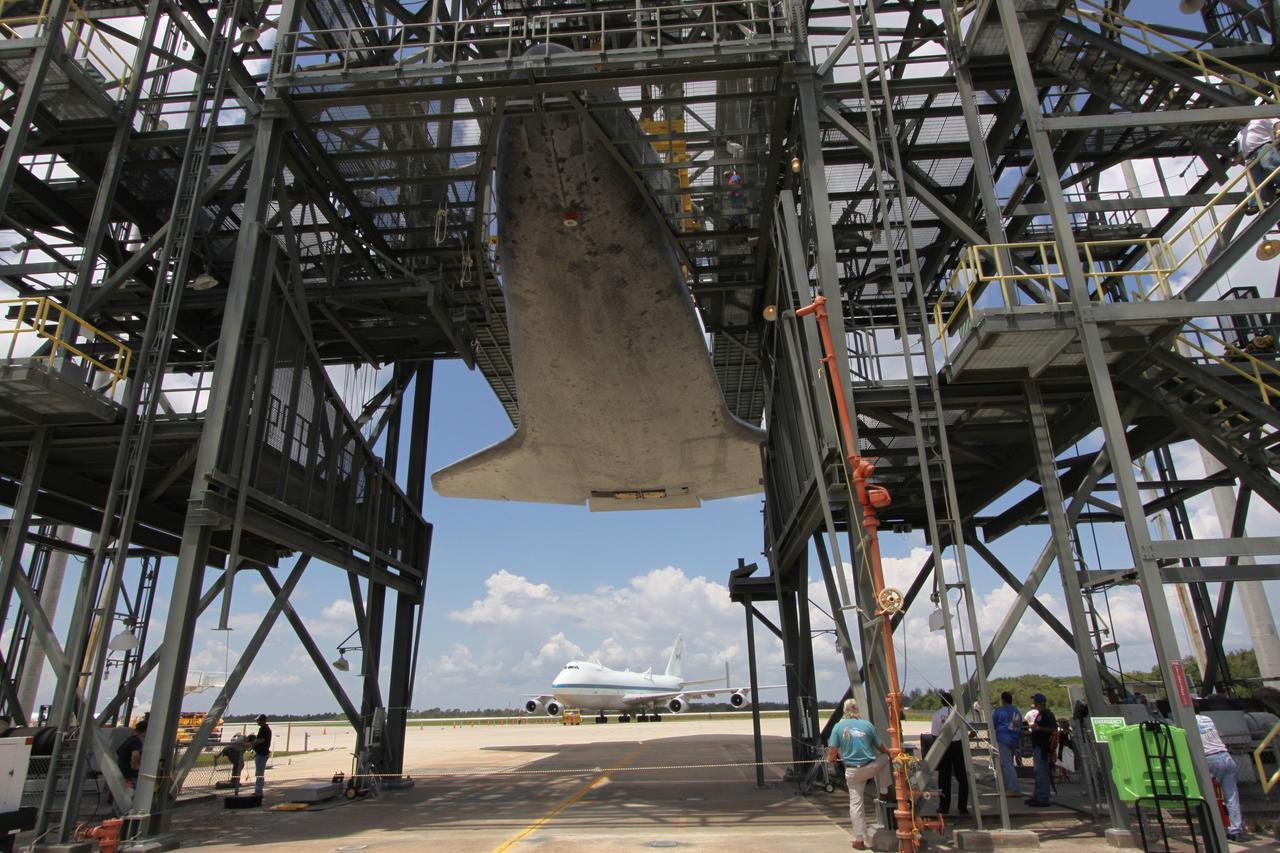
CAPE CANAVERAL, Fla. – On the Shuttle Landing Facility at NASA's Kennedy Space Center in Florida, space shuttle Atlantis remains suspended in the mate/demate device after the Shuttle Carrier Aircraft (below in the background) was moved away. Atlantis will be lowered to the ground via the hoist that is holding it. Atlantis returned from California atop the SCA, a modified Boeing 747, after its May 24 landing at Edwards Air Force Base, concluding mission STS-125. The ferry flight from Edwards Air Force Base began June 1. Atlantis' next assignment is the STS-129 mission, targeted to launch in November 2009. Photo credit: NASA/Jack Pfaller

CAPE CANAVERAL, Fla. – Hitching a ride on the Shuttle Carrier Aircraft, or SCA, a modified Boeing 747, space shuttle Atlantis has arrived at Biggs Armuy Air Field in El Paso, Texas. Atlantis landed at Edwards Air Force Base in California on May 24, which concluded mission STS-125, after two landing opportunities at Kennedy were waved off due to weather concerns. Atlantis is being returned to Florida on a ferry flight on the SCA. Atlantis' next assignment is the STS-129 mission, targeted to launch in November 2009. Photo credit: NASA/Ben Smegelsky
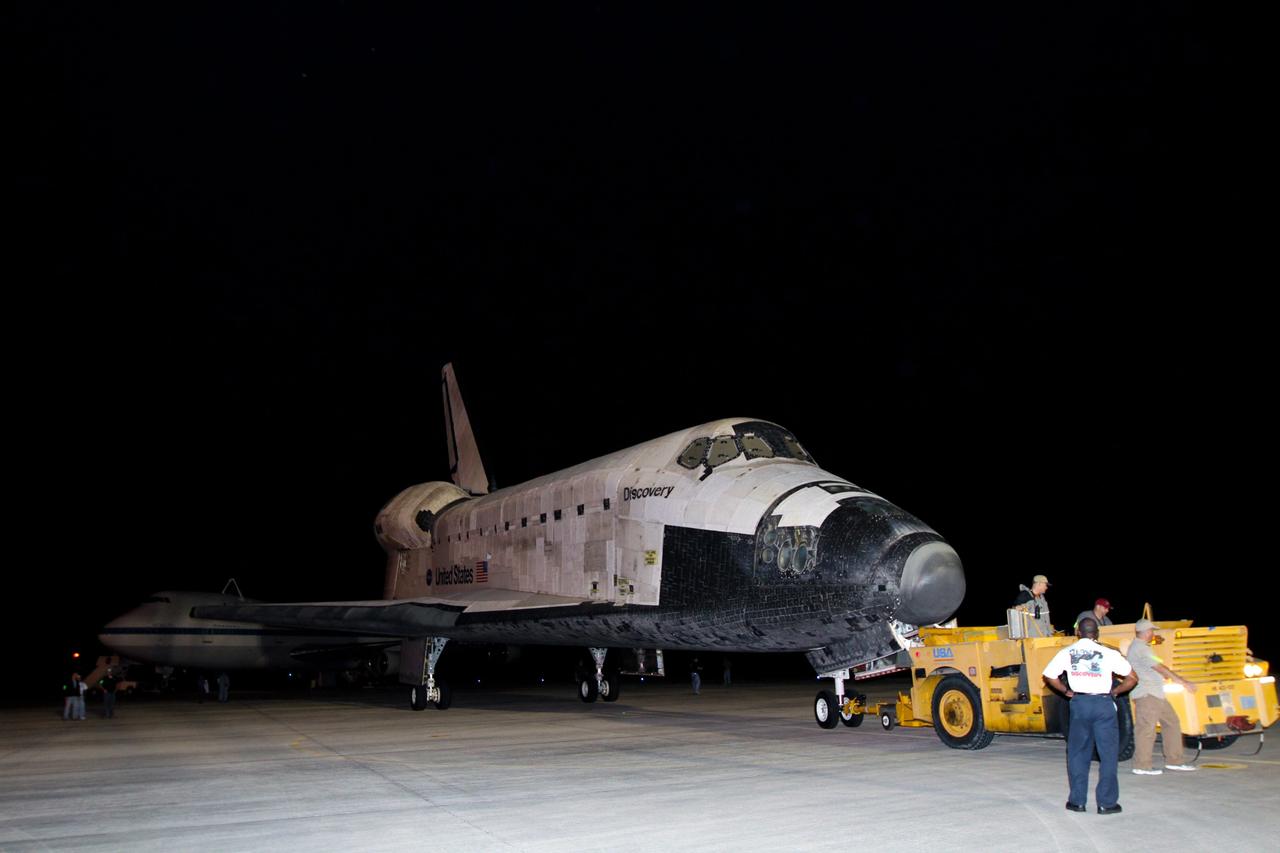
CAPE CANAVERAL, Fla. – Space shuttle Discovery is towed to the Shuttle Landing Facility, or SLF, at NASA’s Kennedy Space Center in Florida. At the SLF, Discovery will be hoisted onto the back of the Shuttle Carrier Aircraft, or SCA, in the background, with the aid of a mate-demate device. The SCA, a modified Boeing 747 jet airliner, is scheduled to ferry Discovery to the Washington Dulles International Airport in Virginia on April 17, after which the shuttle will be placed on permanent public display in the Smithsonian's National Air and Space Museum Steven F. Udvar-Hazy Center. For more information on shuttle transition and retirement activities, visit http://www.nasa.gov/transition. Photo credit: NASA/Kim Shiflett
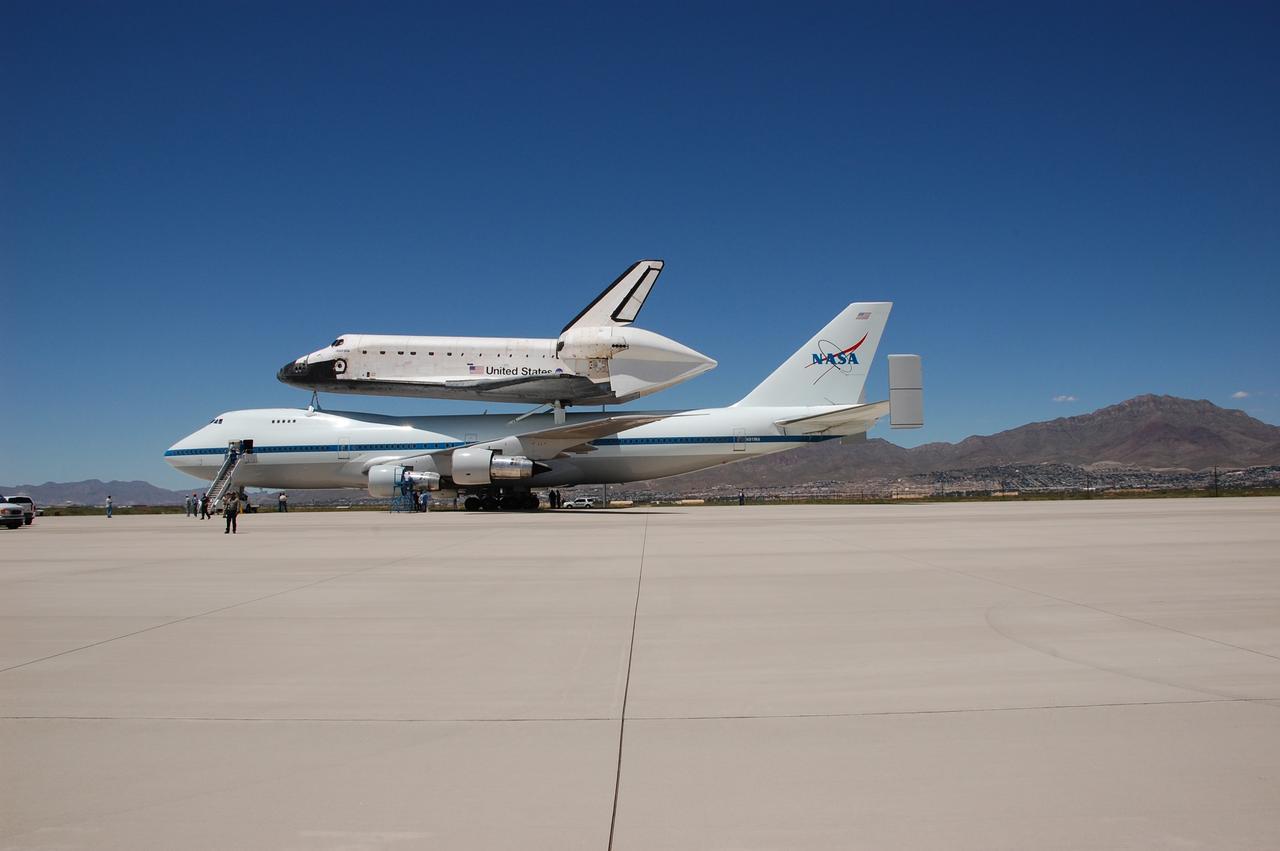
CAPE CANAVERAL, Fla. – Hitching a ride on the Shuttle Carrier Aircraft, or SCA, a modified Boeing 747, space shuttle Atlantis is ready for takeoff from El Paso. Atlantis landed at Edwards Air Force Base in California on May 24, which concluded mission STS-125, after two landing opportunities at Kennedy were waved off due to weather concerns. Atlantis is being returned to Florida on a ferry flight on the SCA. Atlantis' next assignment is the STS-129 mission, targeted to launch in November 2009. Photo credit: NASA/Ben Smegelsky
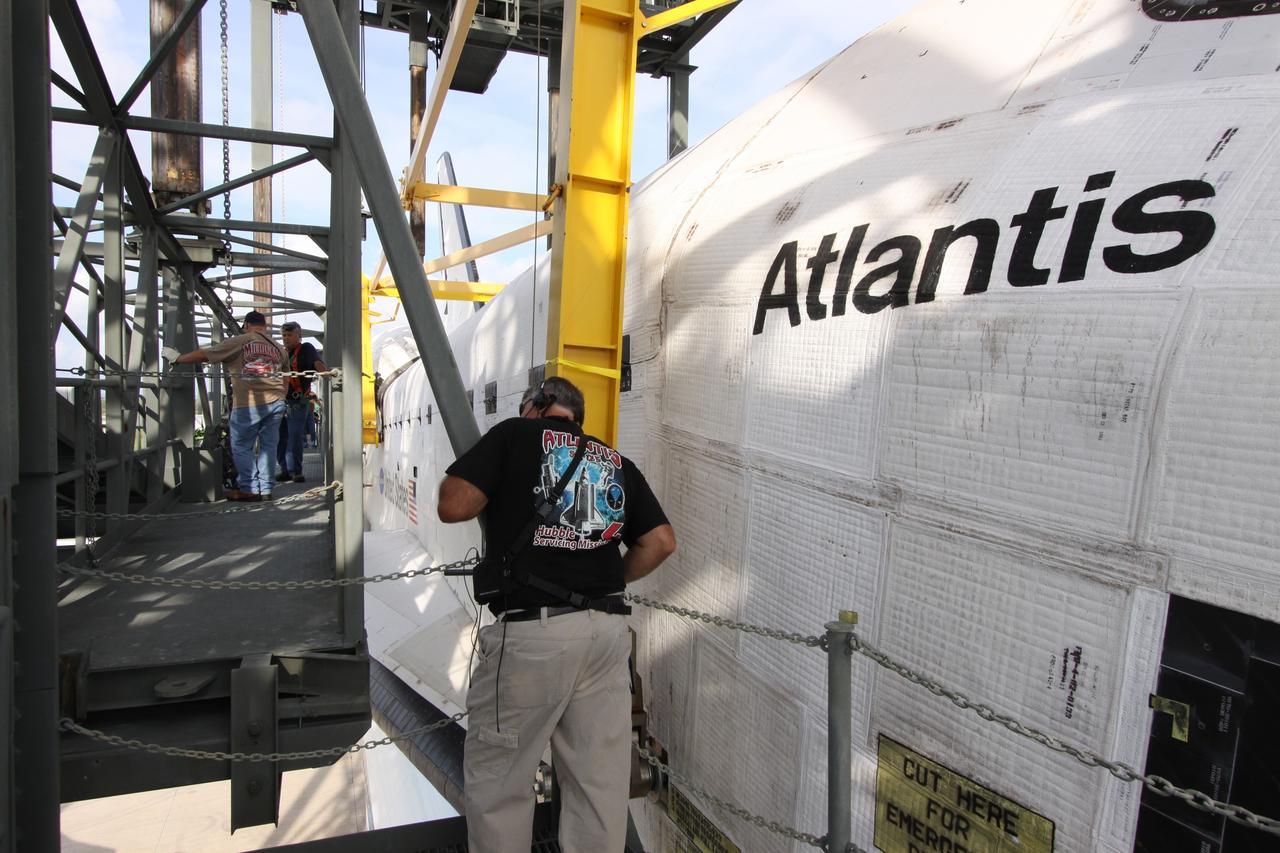
CAPE CANAVERAL, Fla. – Preparations are under way to separate space shuttle Atlantis from the Shuttle Carrier Aircraft, or SCA, underneath via the mate/demate device on the Shuttle Landing Facility at NASA's Kennedy Space Center in Florida. A hoist is attached to Atlantis to lower the shuttle to the ground. Atlantis returned from California atop the SCA, a modified Boeing 747, after its May 24 landing at Edwards Air Force Base, concluding mission STS-125. The ferry flight from Edwards Air Force Base began June 1. Atlantis' next assignment is the STS-129 mission, targeted to launch in November 2009. Photo credit: NASA/Jack Pfaller
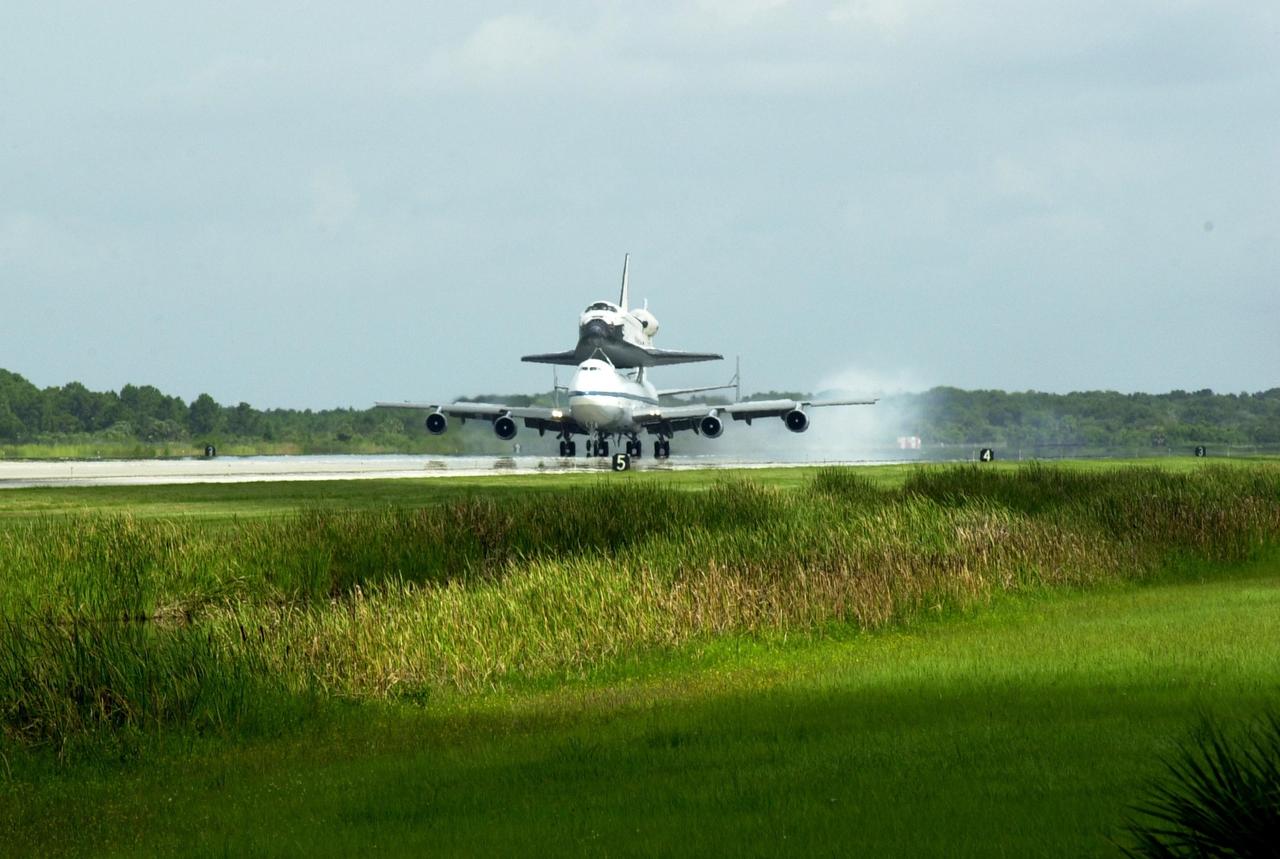
KENNEDY SPACE CENTER, FLA. - Space Shuttle Endeavour lands on runway 15 at KSC's Shuttle Landing Facility at 10:58 a.m. EDT atop a modified Boeing 747 Shuttle Carrier Aircraft. The cross-country ferry flight became necessary when three days of unfavorable weather conditions at KSC forced Endeavour to land on runway 22 at Dryden Flight Research Center, Edwards Air Force Base, Calif., on June 19 following mission STS-111. Processing of Endeavour will now begin for the launch of mission STS-113 targeted for October 2002