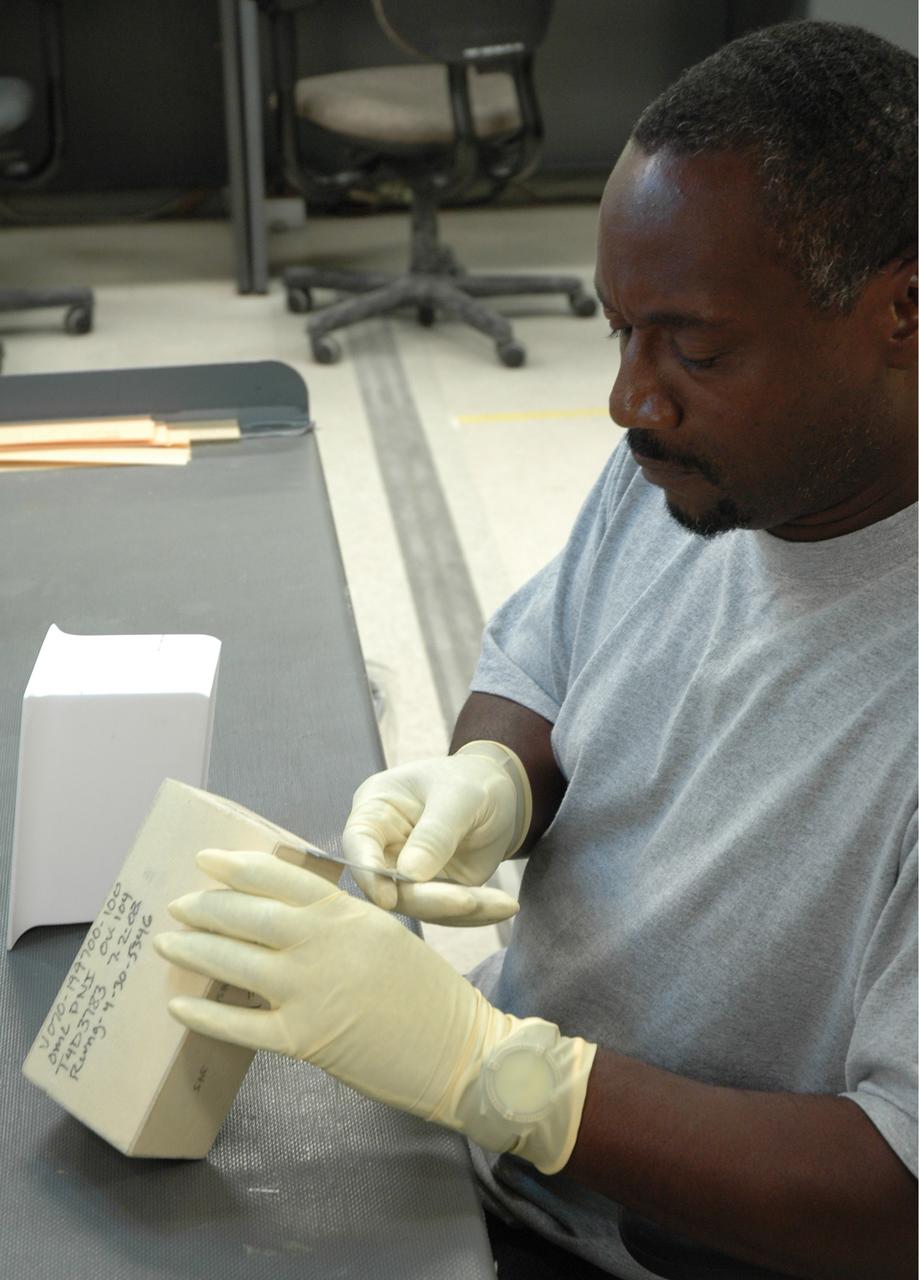
CAPE CANAVERAL, Fla. – In the Tile Shop at NASA's Kennedy Space Center, a United Space Alliance technician checks a Boeing Rigid Insulation-18, or BRI-18, tile. BRI-18 is the strongest material used for thermal insulation on the orbiters and, when coated to produce toughened unipiece fibrous insulation, provides a tile with extremely high-impact resistance. It is replacing tiles on areas of the vehicle where impact risk is high. These areas include the landing gear doors, the wing leading edge and the external tank doors. Photo credit: NASA/Jim Grossmann
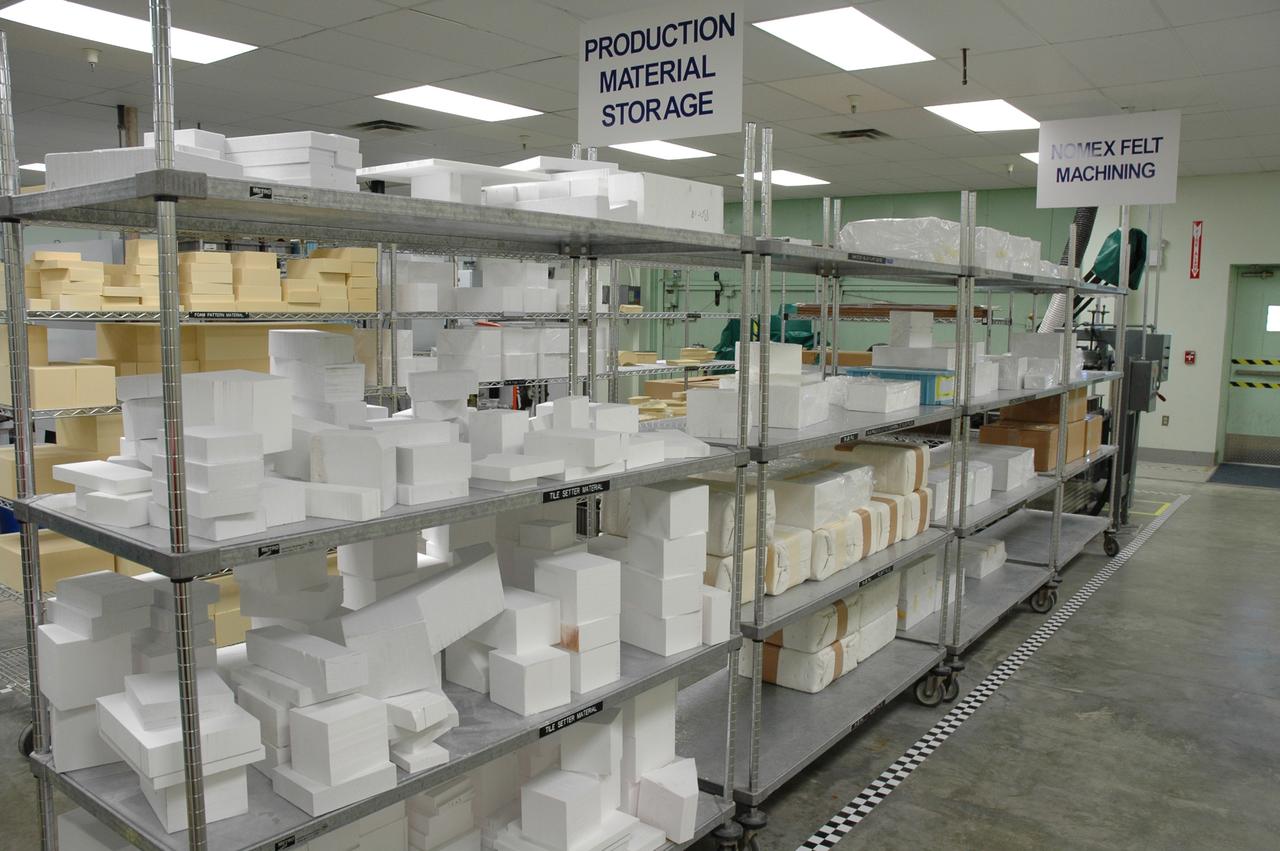
CAPE CANAVERAL, Fla. – In the Tile Shop at NASA's Kennedy Space Center, shelves are stacked with Boeing Rigid Insulation-18, or BRI-18, tiles. BRI-18 is the strongest material used for thermal insulation on the orbiters and, when coated to produce toughened unipiece fibrous insulation, provides a tile with extremely high-impact resistance. It is replacing tiles on areas of the vehicle where impact risk is high. These areas include the landing gear doors, the wing leading edge and the external tank doors. Photo credit: NASA/Jim Grossmann
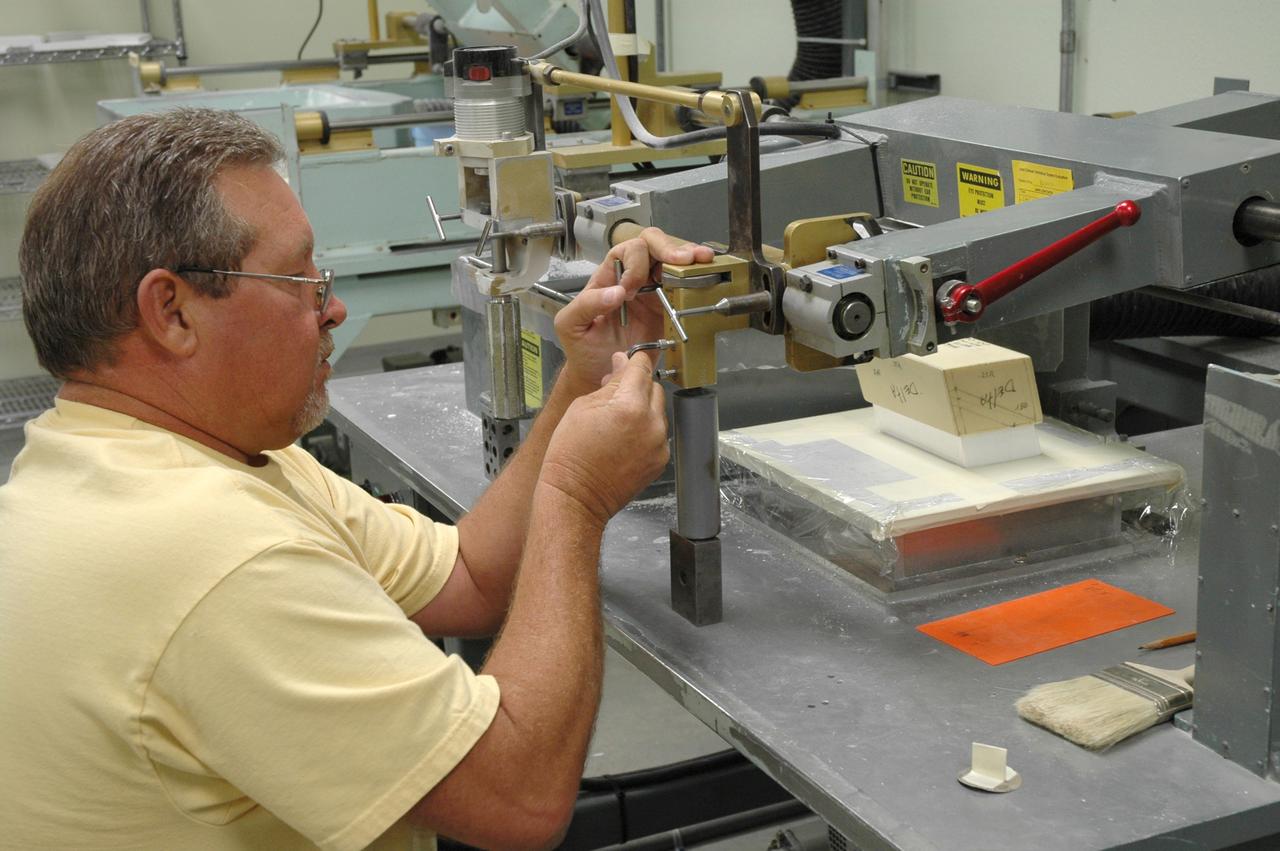
CAPE CANAVERAL, Fla. – In the Tile Shop at NASA's Kennedy Space Center, a United Space Alliance machinist, Tony Rollins, is setting up the tracer mill to machine the Boeing Rigid Insulation-18, or BRI-18, tile. BRI-18 is the strongest material used for thermal insulation on the orbiters and, when coated to produce toughened unipiece fibrous insulation, provides a tile with extremely high-impact resistance. It is replacing tiles on areas of the vehicle where impact risk is high. These areas include the landing gear doors, the wing leading edge and the external tank doors. Photo credit: NASA/Jim Grossmann
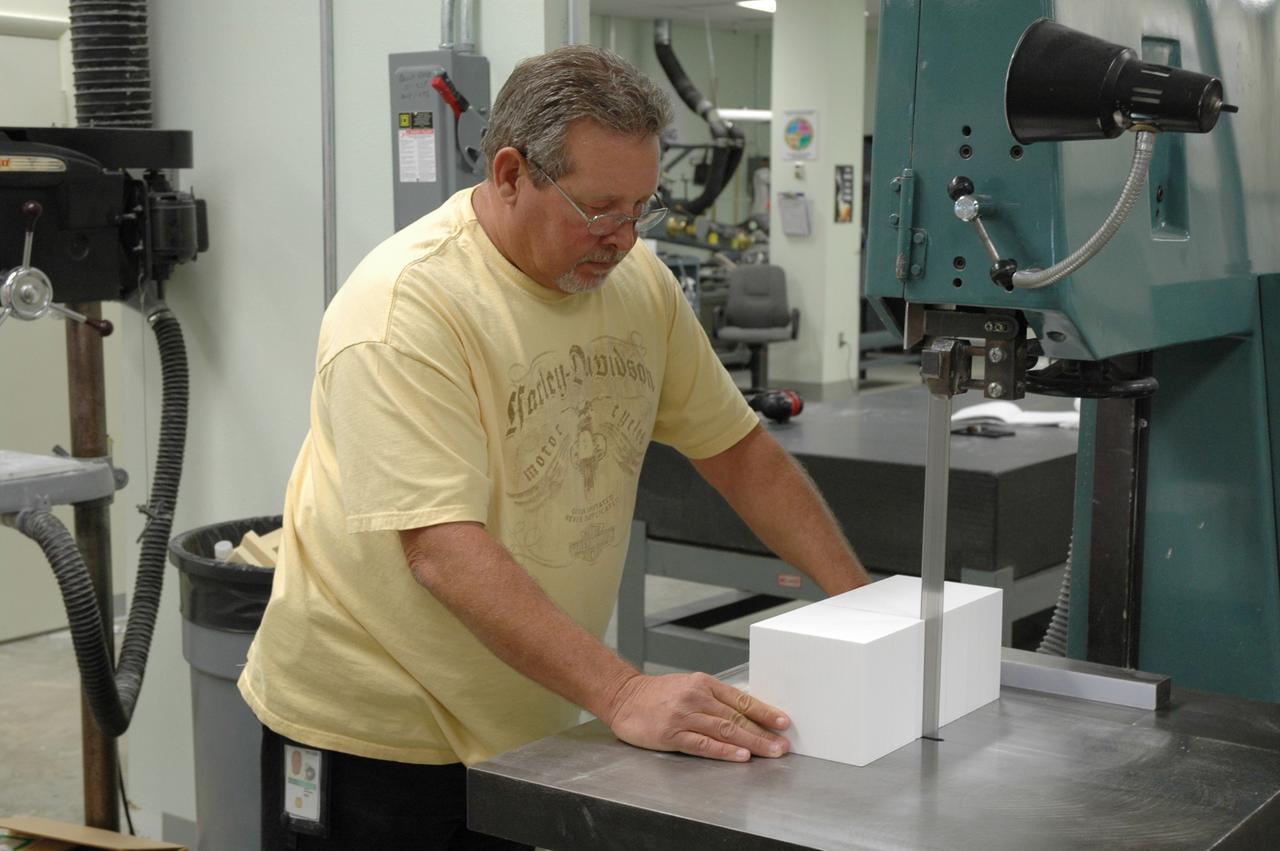
CAPE CANAVERAL, Fla. – In the Tile Shop at NASA's Kennedy Space Center, a United Space Alliance technician cuts a block of Boeing Rigid Insulation-18, or BRI-18, tile. BRI-18 is the strongest material used for thermal insulation on the orbiters and, when coated to produce toughened unipiece fibrous insulation, provides a tile with extremely high-impact resistance. It is replacing tiles on areas of the vehicle where impact risk is high. These areas include the landing gear doors, the wing leading edge and the external tank doors. Photo credit: NASA/Jim Grossmann
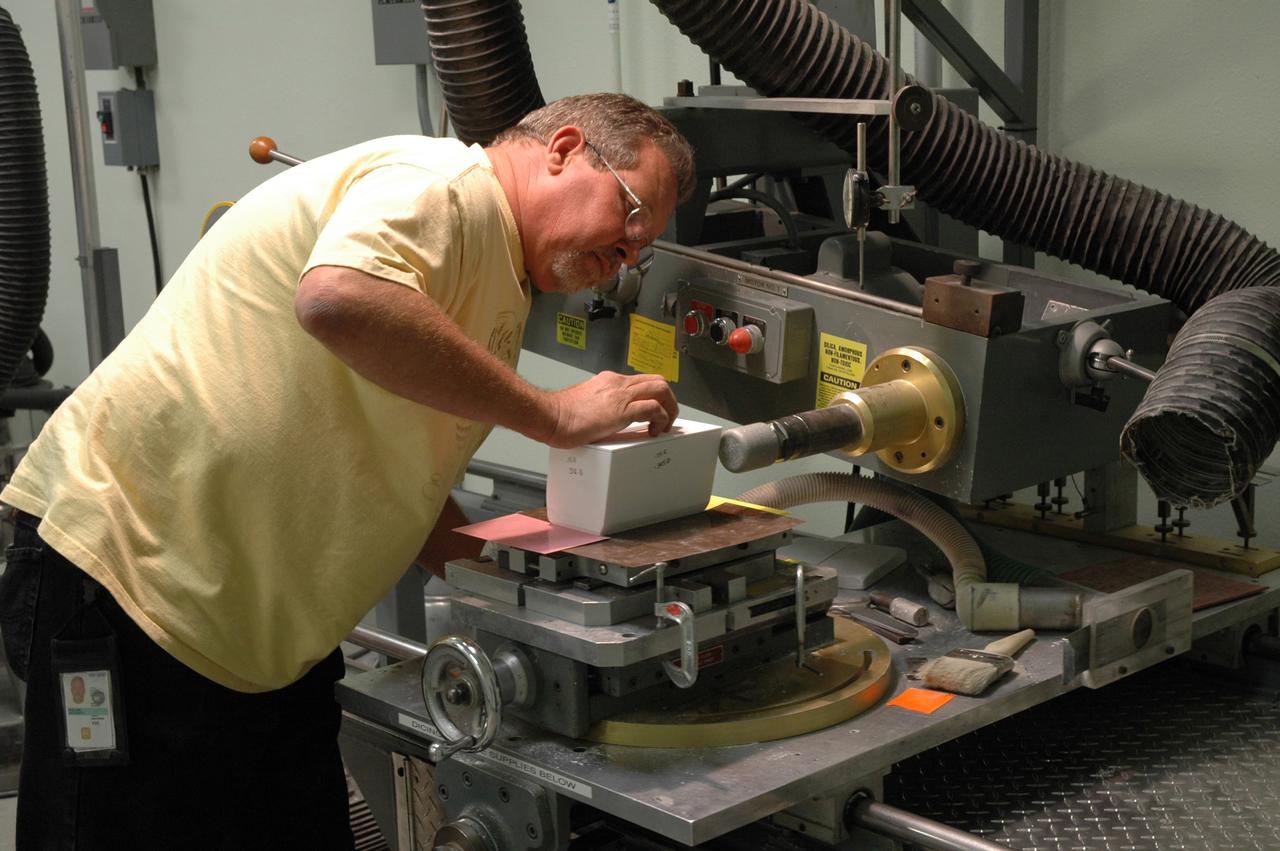
CAPE CANAVERAL, Fla. – In the Tile Shop at NASA's Kennedy Space Center, a United Space Alliance technician checks the Boeing Rigid Insulation-18, or BRI-18, tile he cut. BRI-18 is the strongest material used for thermal insulation on the orbiters and, when coated to produce toughened unipiece fibrous insulation, provides a tile with extremely high-impact resistance. It is replacing tiles on areas of the vehicle where impact risk is high. These areas include the landing gear doors, the wing leading edge and the external tank doors. Photo credit: NASA/Jim Grossmann
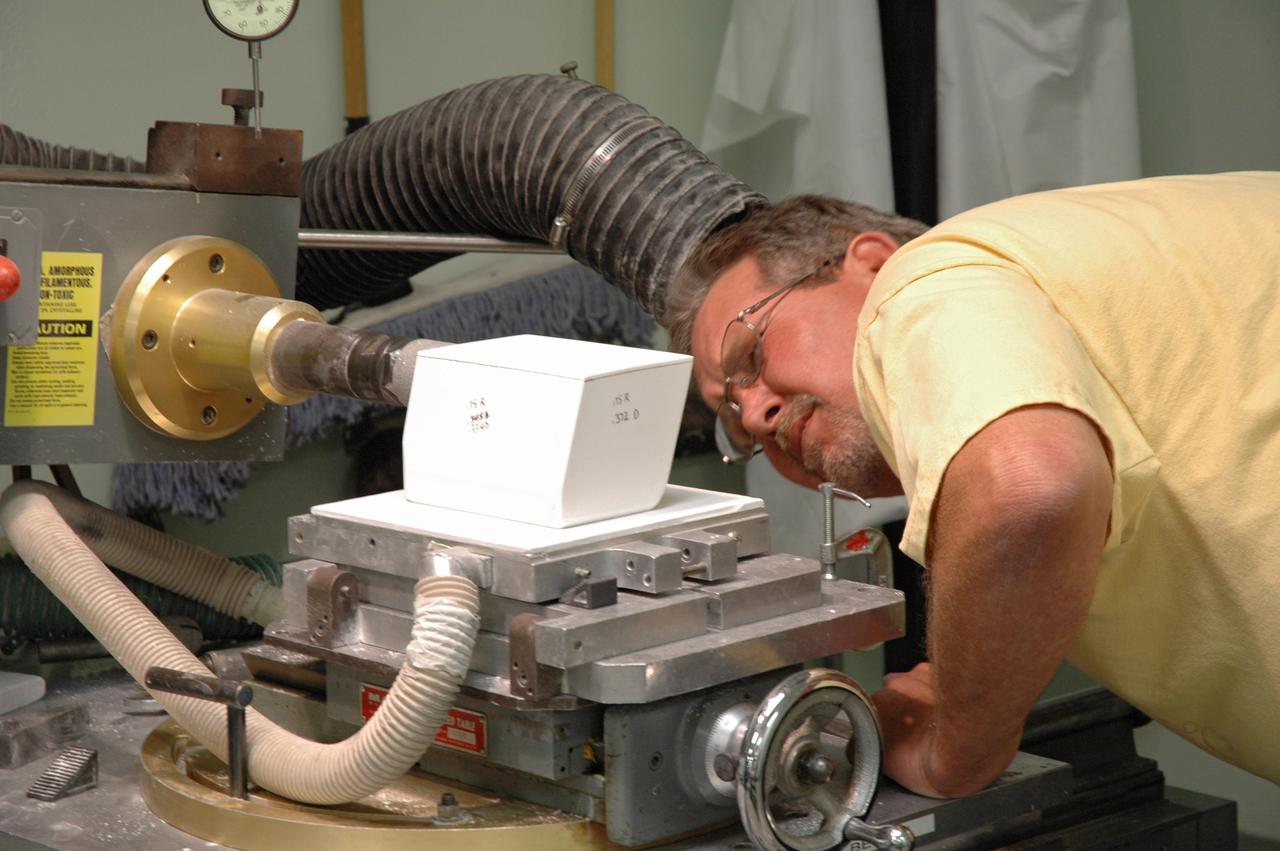
CAPE CANAVERAL, Fla. – In the Tile Shop at NASA's Kennedy Space Center, a United Space Alliance technician checks the shape of Boeing Rigid Insulation-18, or BRI-18, tile he cut. BRI-18 is the strongest material used for thermal insulation on the orbiters and, when coated to produce toughened unipiece fibrous insulation, provides a tile with extremely high-impact resistance. It is replacing tiles on areas of the vehicle where impact risk is high. These areas include the landing gear doors, the wing leading edge and the external tank doors. Photo credit: NASA/Jim Grossmann
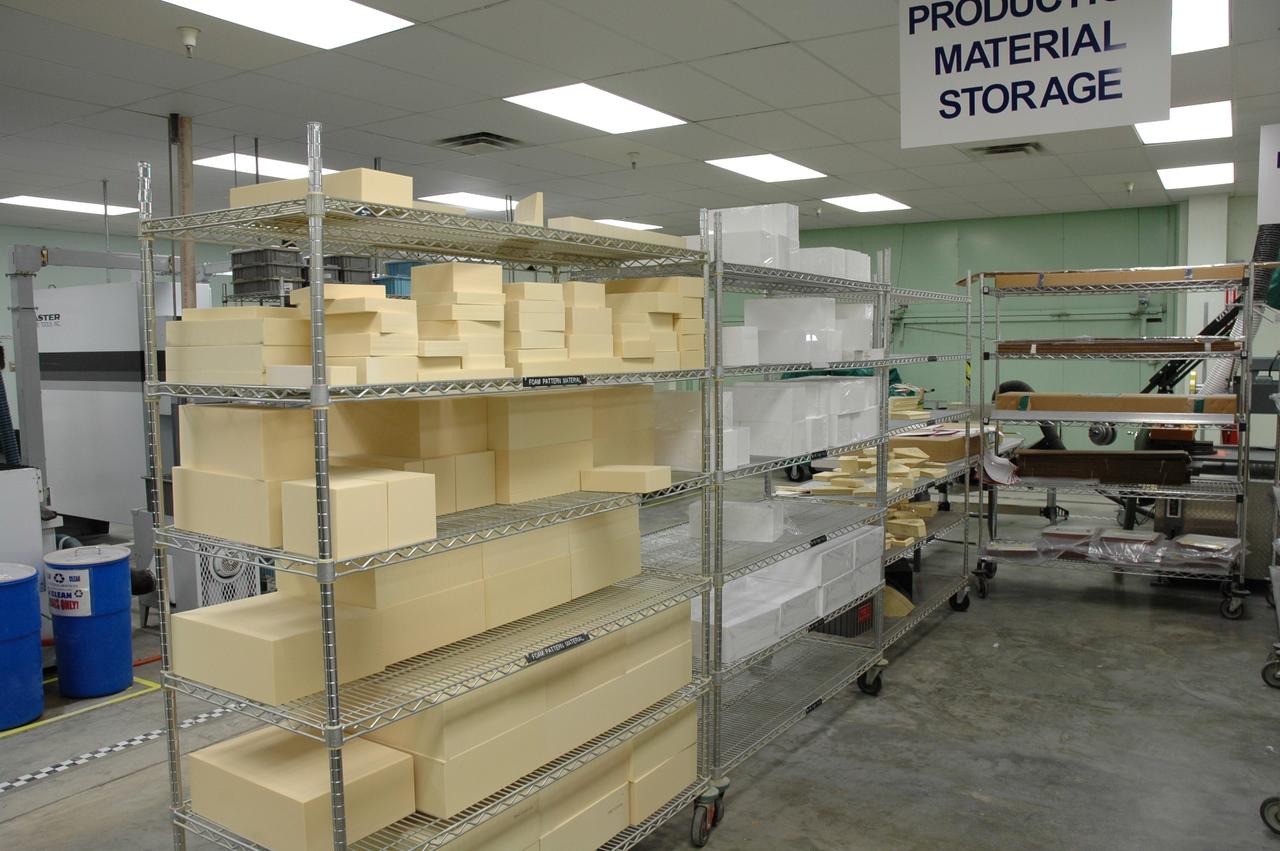
CAPE CANAVERAL, Fla. – In the Tile Shop at NASA's Kennedy Space Center, shelves are stacked with Boeing Rigid Insulation-18, or BRI-18, tiles. BRI-18 is the strongest material used for thermal insulation on the orbiters and, when coated to produce toughened unipiece fibrous insulation, provides a tile with extremely high-impact resistance. It is replacing tiles on areas of the vehicle where impact risk is high. These areas include the landing gear doors, the wing leading edge and the external tank doors. Photo credit: NASA/Jim Grossmann
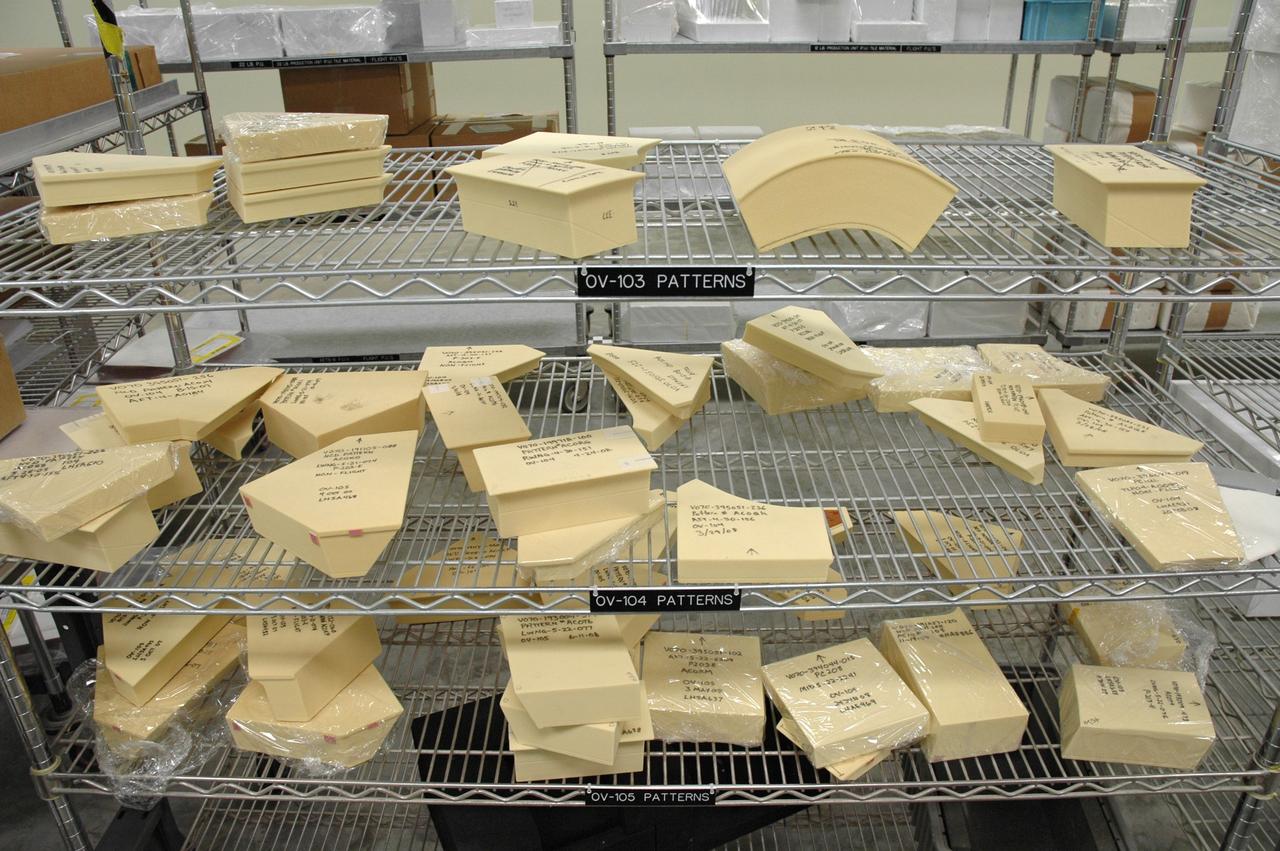
CAPE CANAVERAL, Fla. – In the Tile Shop at NASA's Kennedy Space Center, Boeing Rigid Insulation-18, or BRI-18, tiles of different shapes await use on the three orbiters: Discovery, Atlantis and Endeavour. BRI-18 is the strongest material used for thermal insulation on the orbiters and, when coated to produce toughened unipiece fibrous insulation, provides a tile with extremely high-impact resistance. It is replacing tiles on areas of the vehicle where impact risk is high. These areas include the landing gear doors, the wing leading edge and the external tank doors. Photo credit: NASA/Jim Grossmann