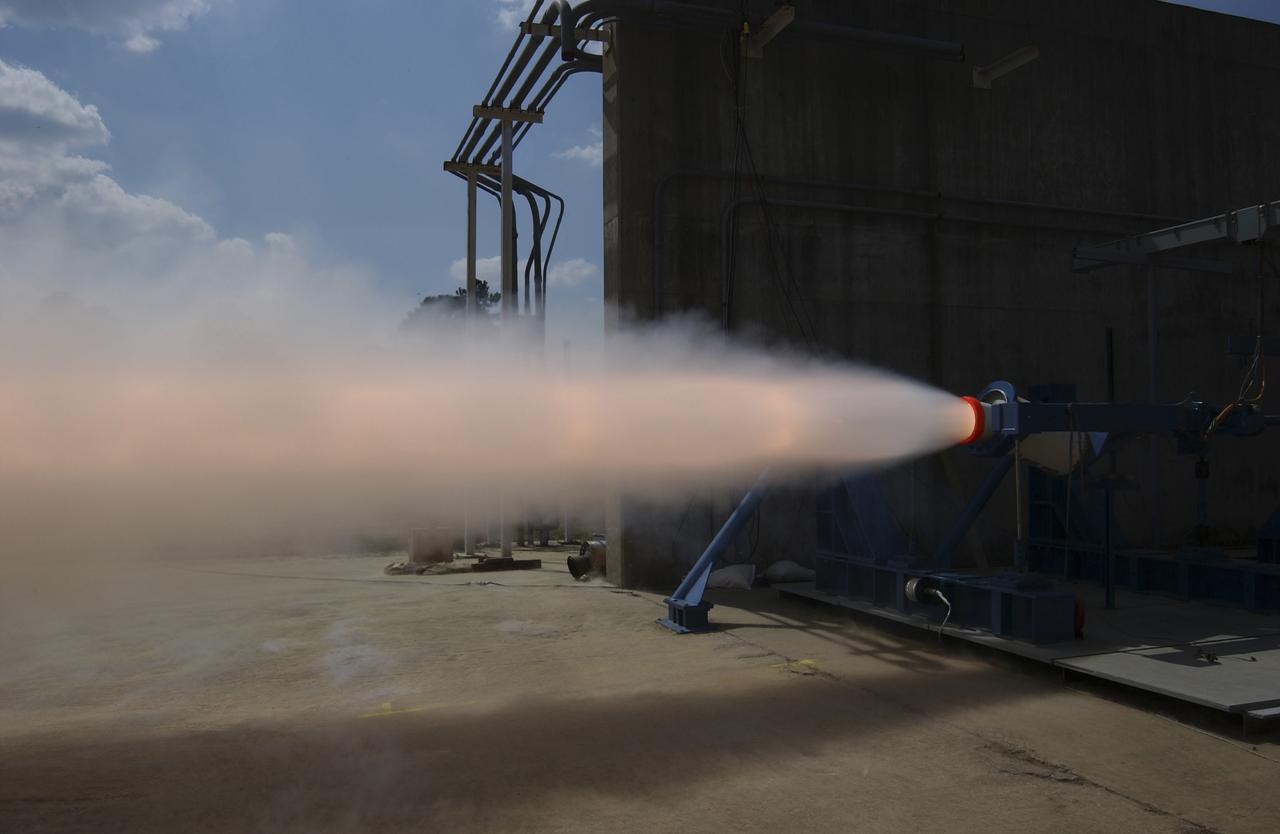
This photograph depicts a hot fire test of the Shuttle Booster Separation Motor (BSM) at the Marshall Space Flight Center (MSFC) test stand 116. The objective of the test was to test the aft heat seal in flight configuration. The function of the motor is to separate the Shuttle vehicle from the boosters that carry it into space.
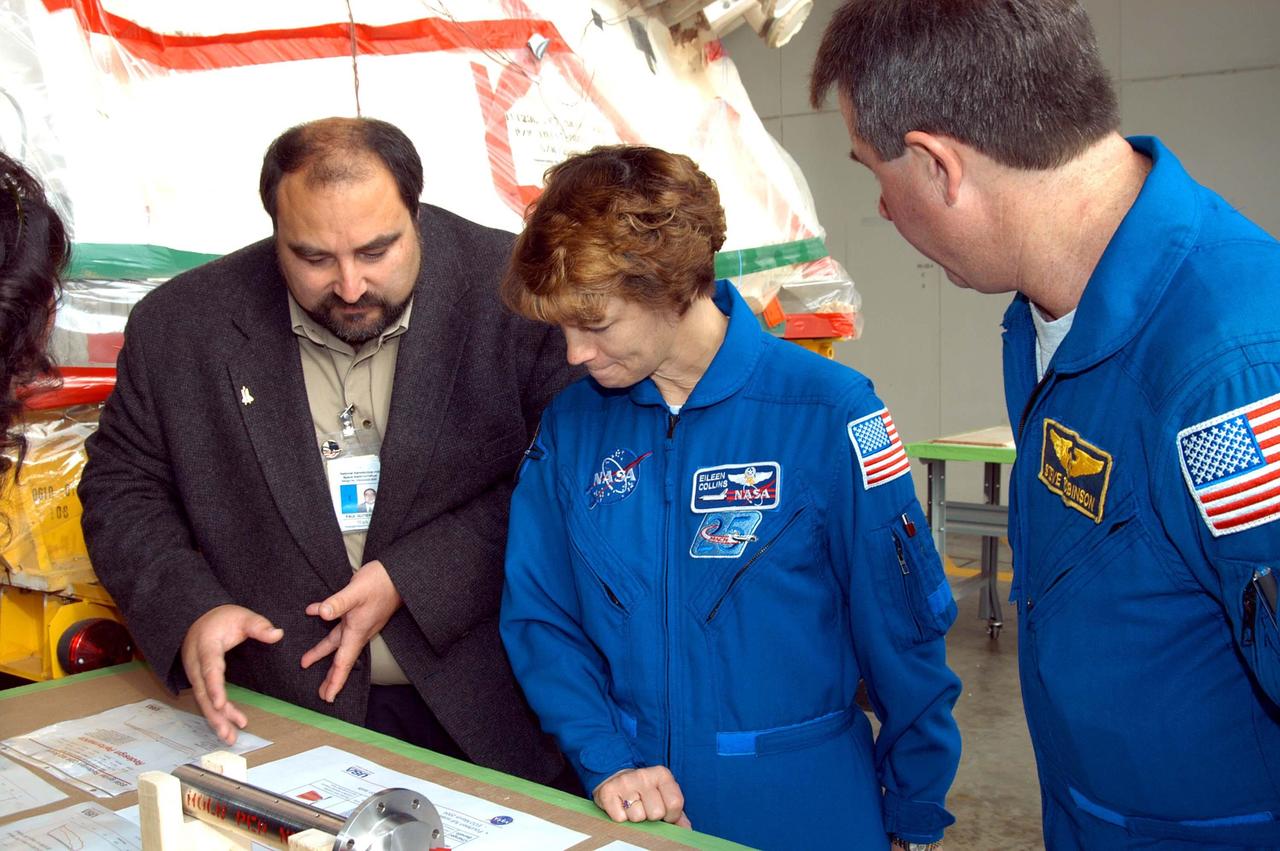
KENNEDY SPACE CENTER, FLA. - At the SRB Assembly and Refurbishment Facility, STS-114 Eileen Collins (center) and Mission Specialist Stephen Robinson look on the table at a mockup of a booster separation motor (BSM) igniter and expanded views of the BSM and igniter. At left is Paul Gutierrez, SRB associate program manager with United Space Alliance. The crew is at KSC for familiarization with Shuttle and mission equipment. The STS-114 mission is Logistics Flight 1, which is scheduled to deliver supplies and equipment, plus the external stowage platform, to the International Space Station.
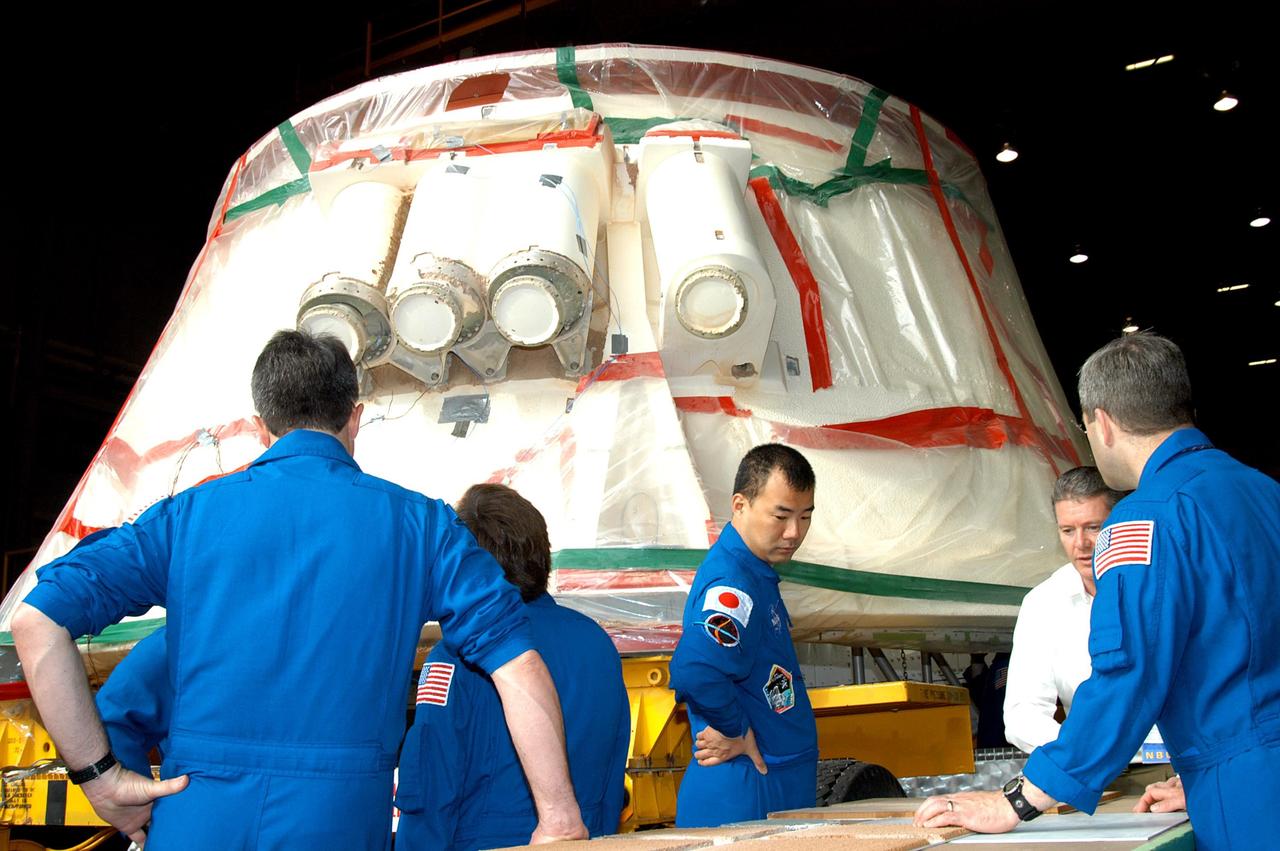
KENNEDY SPACE CENTER, FLA. - At the SRB Assembly and Refurbishment Facility, STS-114 crew members look at the booster separation motors (BSM) on a solid rocket booster aft skirt. The BSMs have had booster trowlable ablative removed by liquid nitrogen cutting. The STS-114 crew is at KSC for familiarization with Shuttle and mission equipment. The mission is Logistics Flight 1, which is scheduled to deliver supplies and equipment, plus the external stowage platform, to the International Space Station.
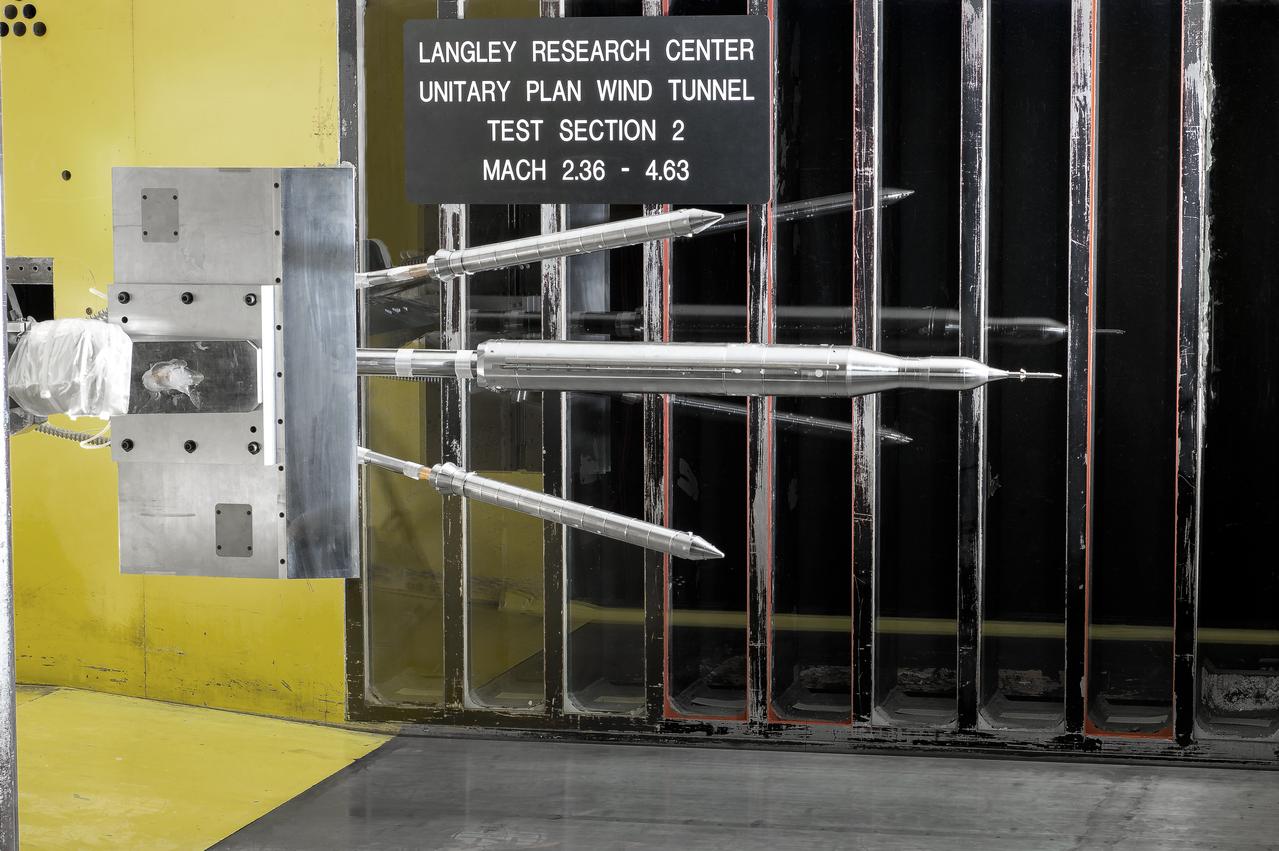
Stage Separation Test of the Space Launch System(SLS) in the Langley Unitary Plan Wind Tunnel (UPWT). The model used High Pressure air blown through the solid rocket boosters. (SRB) to simulate the booster separation motors (BSM) firing.
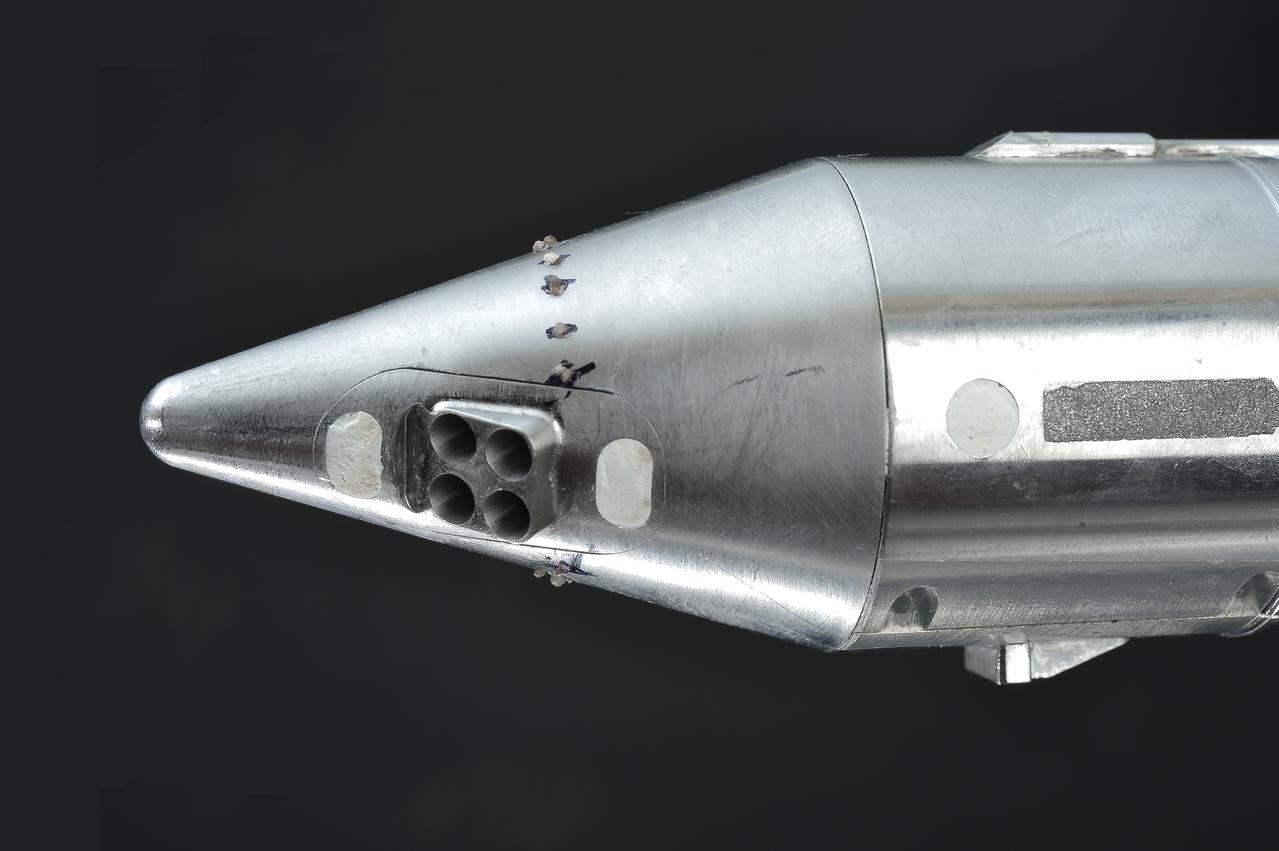
Stage Separation Test of the Space Launch System(SLS) in the Langley Unitary Plan Wind Tunnel (UPWT). The model used High Pressure air blown through the solid rocket boosters. (SRB) to simulate the booster separation motors (BSM) firing.
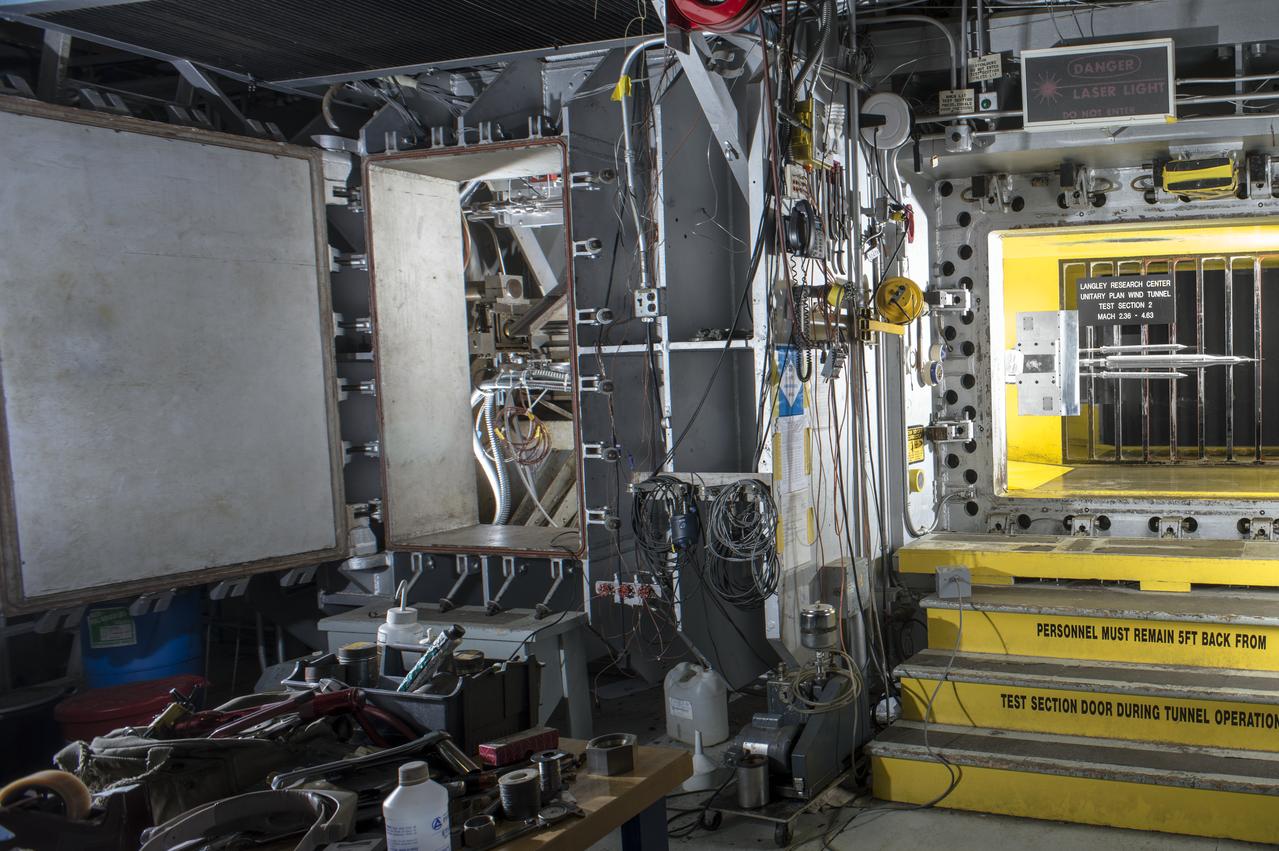
Stage Separation Test of the Space Launch System(SLS) in the Langley Unitary Plan Wind Tunnel (UPWT). The model used High Pressure air blown through the solid rocket boosters. (SRB) to simulate the booster separation motors (BSM) firing.
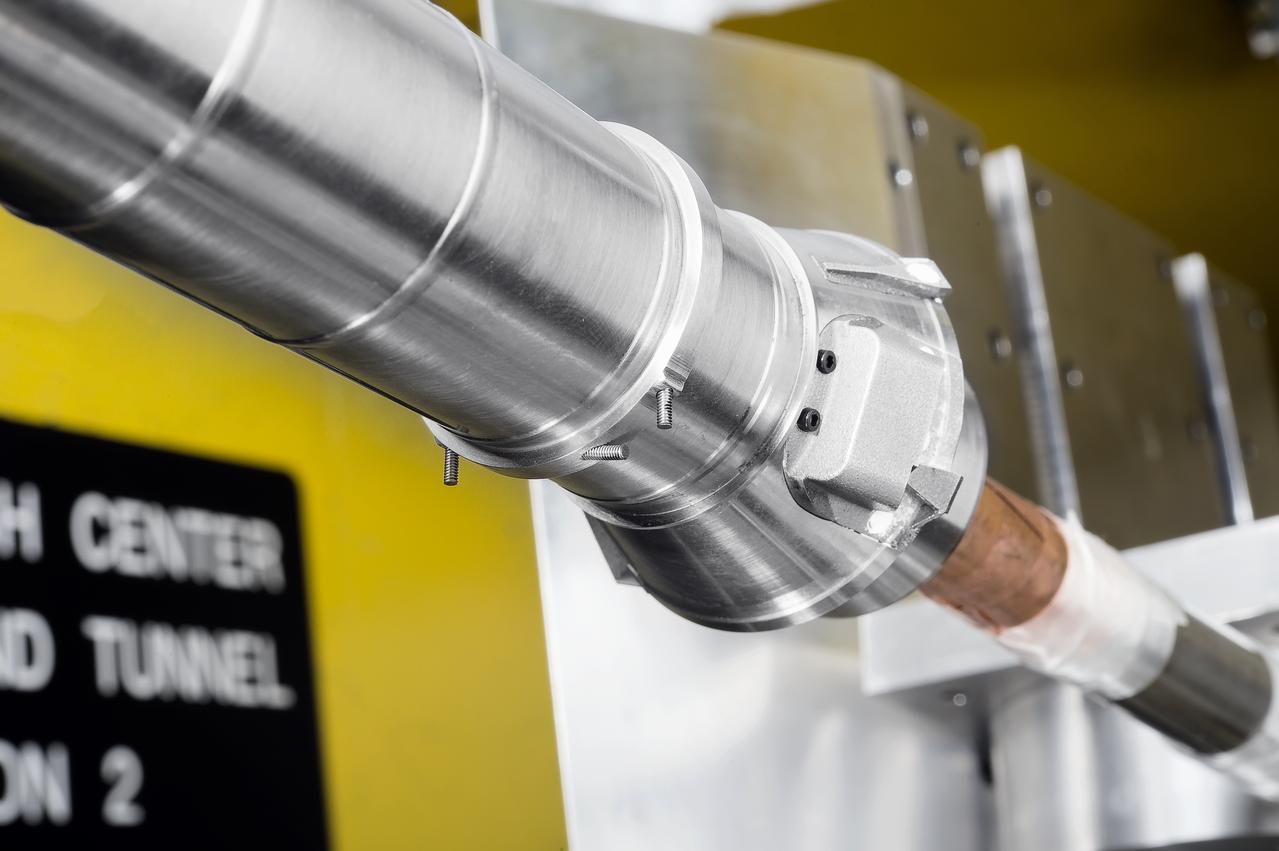
Stage Separation Test of the Space Launch System(SLS) in the Langley Unitary Plan Wind Tunnel (UPWT). The model used High Pressure air blown through the solid rocket boosters. (SRB) to simulate the booster separation motors (BSM) firing.
Stage Separation Test of the Space Launch System(SLS) in the Langley Unitary Plan Wind Tunnel (UPWT). The model used High Pressure air blown through the solid rocket boosters. (SRB) to simulate the booster separation motors (BSM) firing.
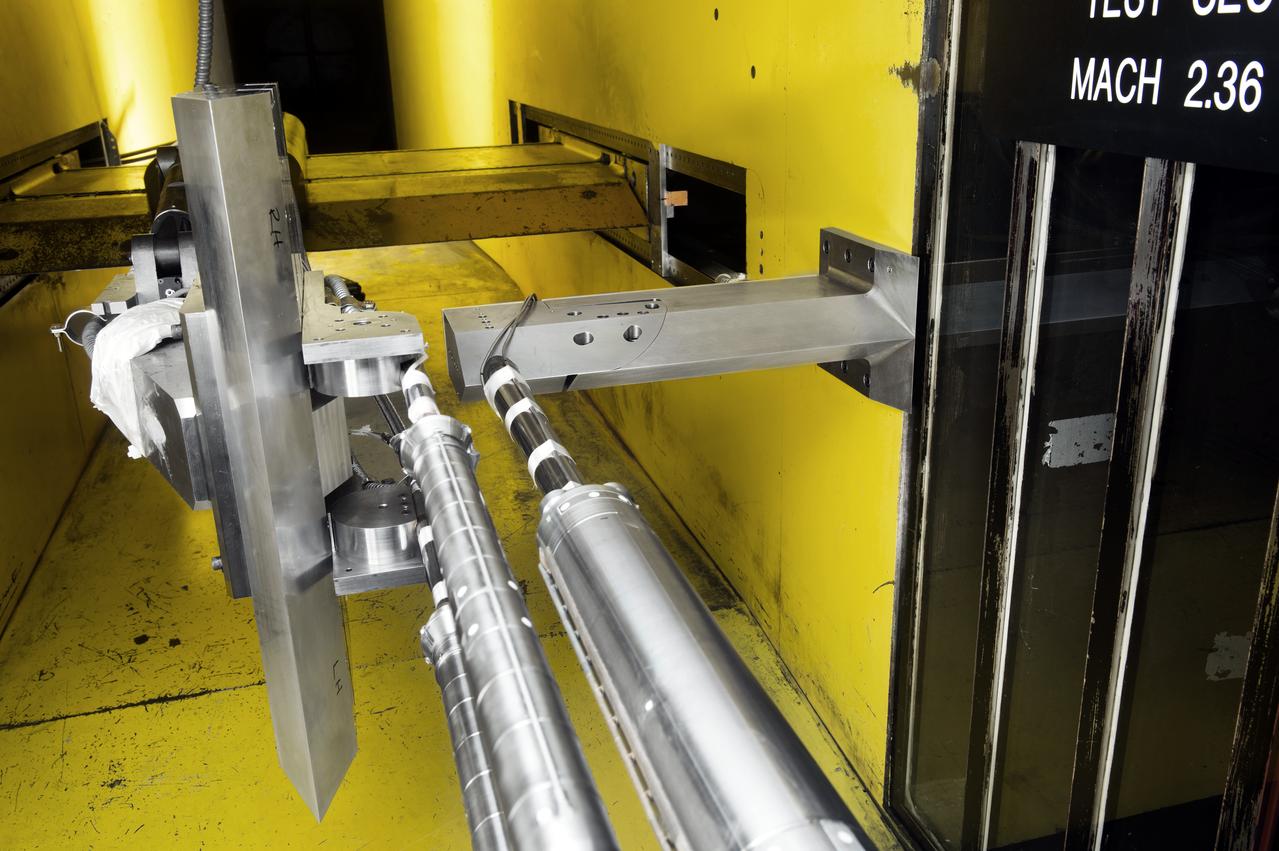
Stage Separation Test of the Space Launch System(SLS) in the Langley Unitary Plan Wind Tunnel (UPWT). The model used High Pressure air blown through the solid rocket boosters. (SRB) to simulate the booster separation motors (BSM) firing.
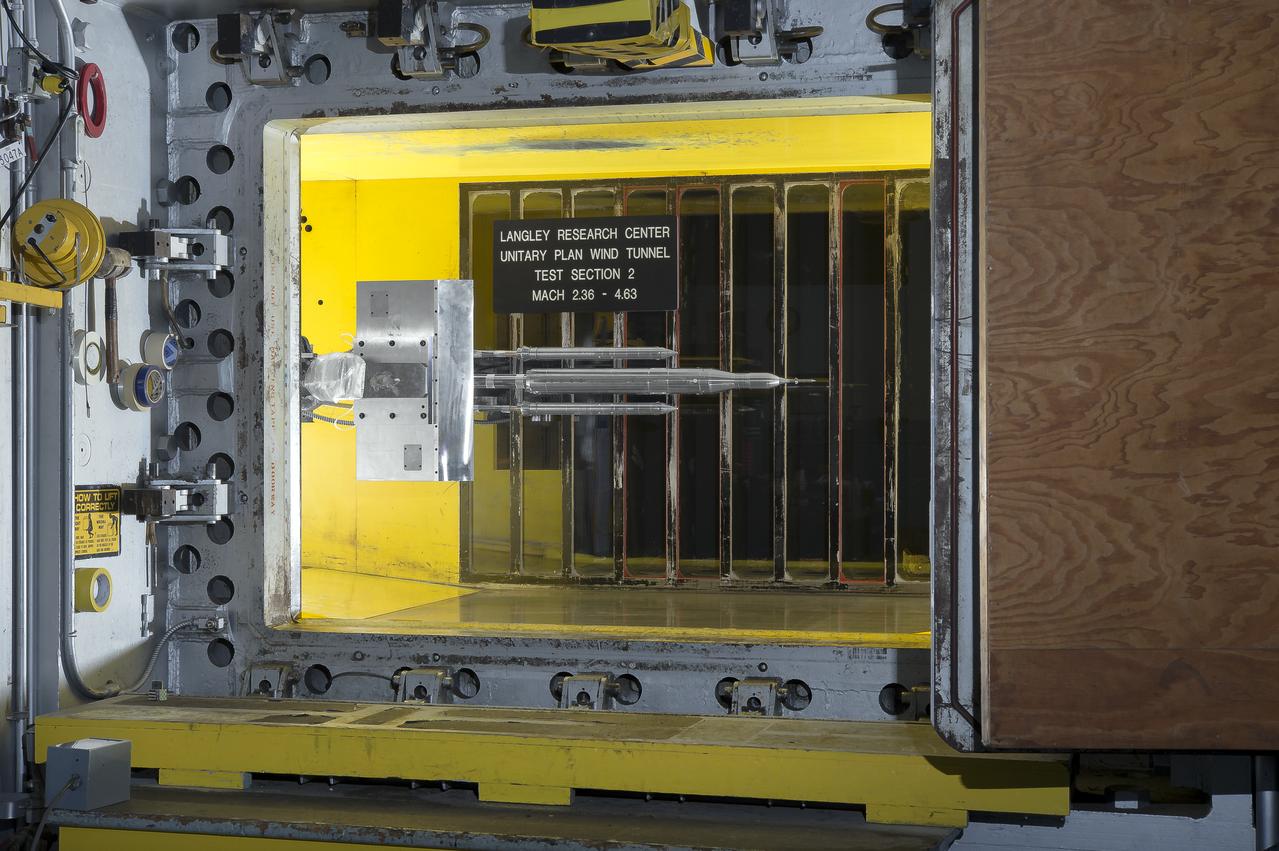
Stage Separation Test of the Space Launch System(SLS) in the Langley Unitary Plan Wind Tunnel (UPWT). The model used High Pressure air blown through the solid rocket boosters. (SRB) to simulate the booster separation motors (BSM) firing.
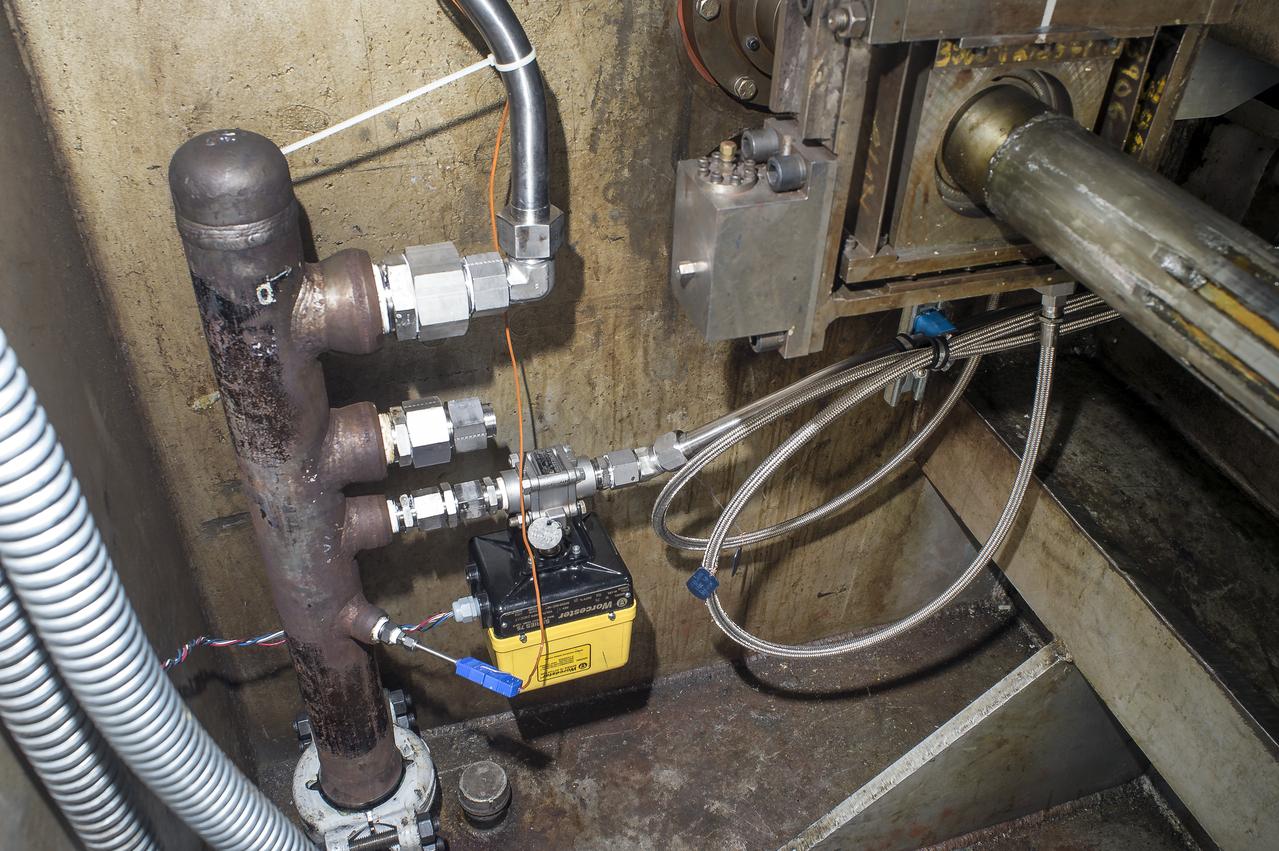
Stage Separation Test of the Space Launch System(SLS) in the Langley Unitary Plan Wind Tunnel (UPWT). The model used High Pressure air blown through the solid rocket boosters. (SRB) to simulate the booster separation motors (BSM) firing.
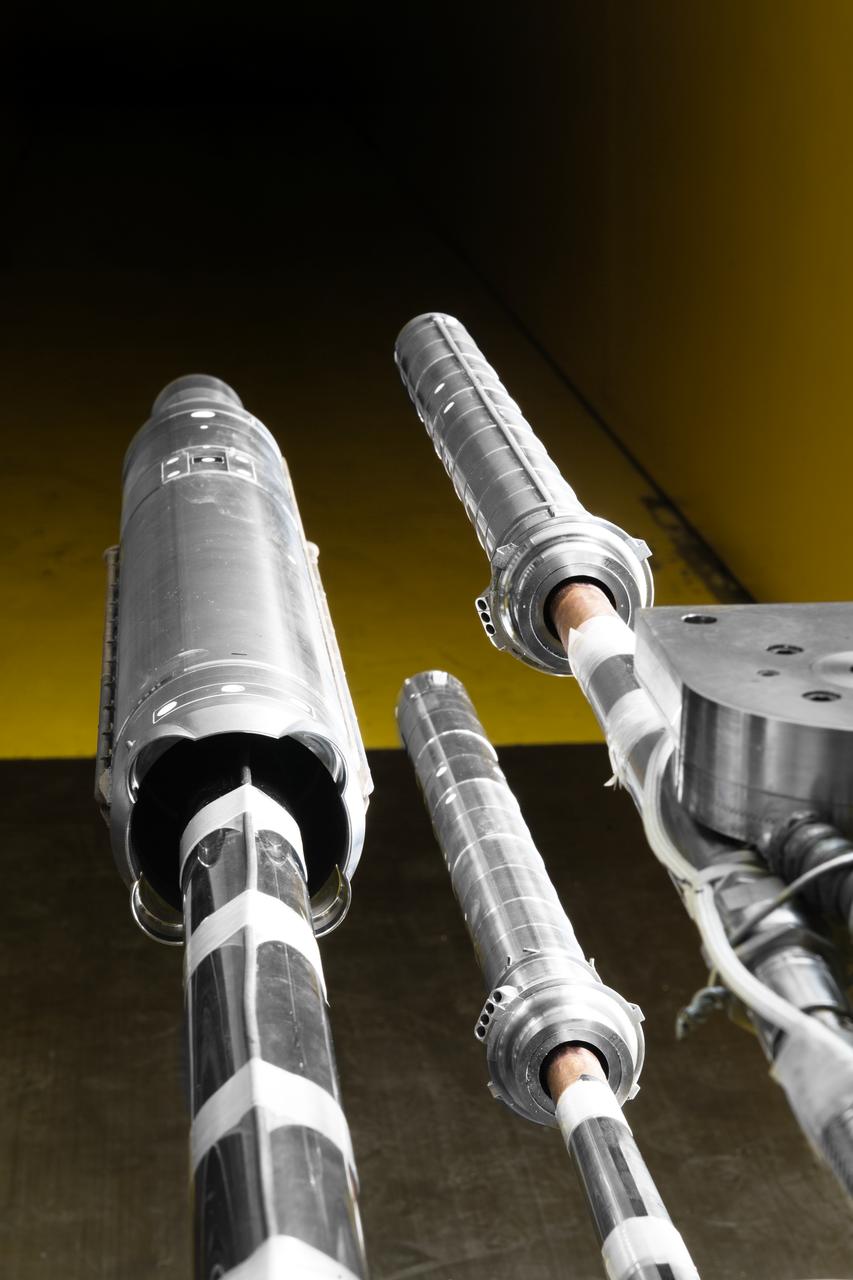
Stage Separation Test of the Space Launch System(SLS) in the Langley Unitary Plan Wind Tunnel (UPWT). The model used High Pressure air blown through the solid rocket boosters. (SRB) to simulate the booster separation motors (BSM) firing.

Stage Separation Test of the Space Launch System(SLS) in the Langley Unitary Plan Wind Tunnel (UPWT). The model used High Pressure air blown through the solid rocket boosters. (SRB) to simulate the booster separation motors (BSM) firing.
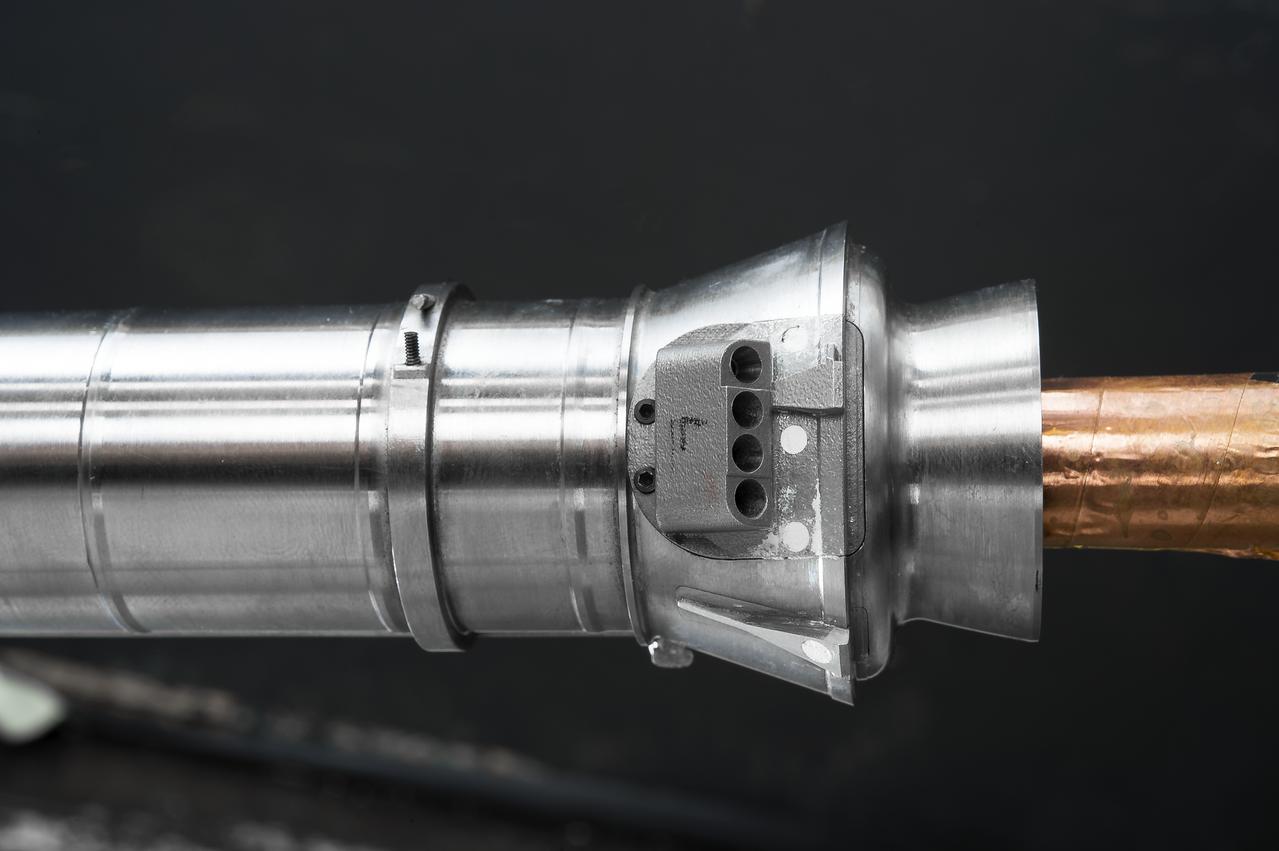
Stage Separation Test of the Space Launch System(SLS) in the Langley Unitary Plan Wind Tunnel (UPWT). The model used High Pressure air blown through the solid rocket boosters. (SRB) to simulate the booster separation motors (BSM) firing.
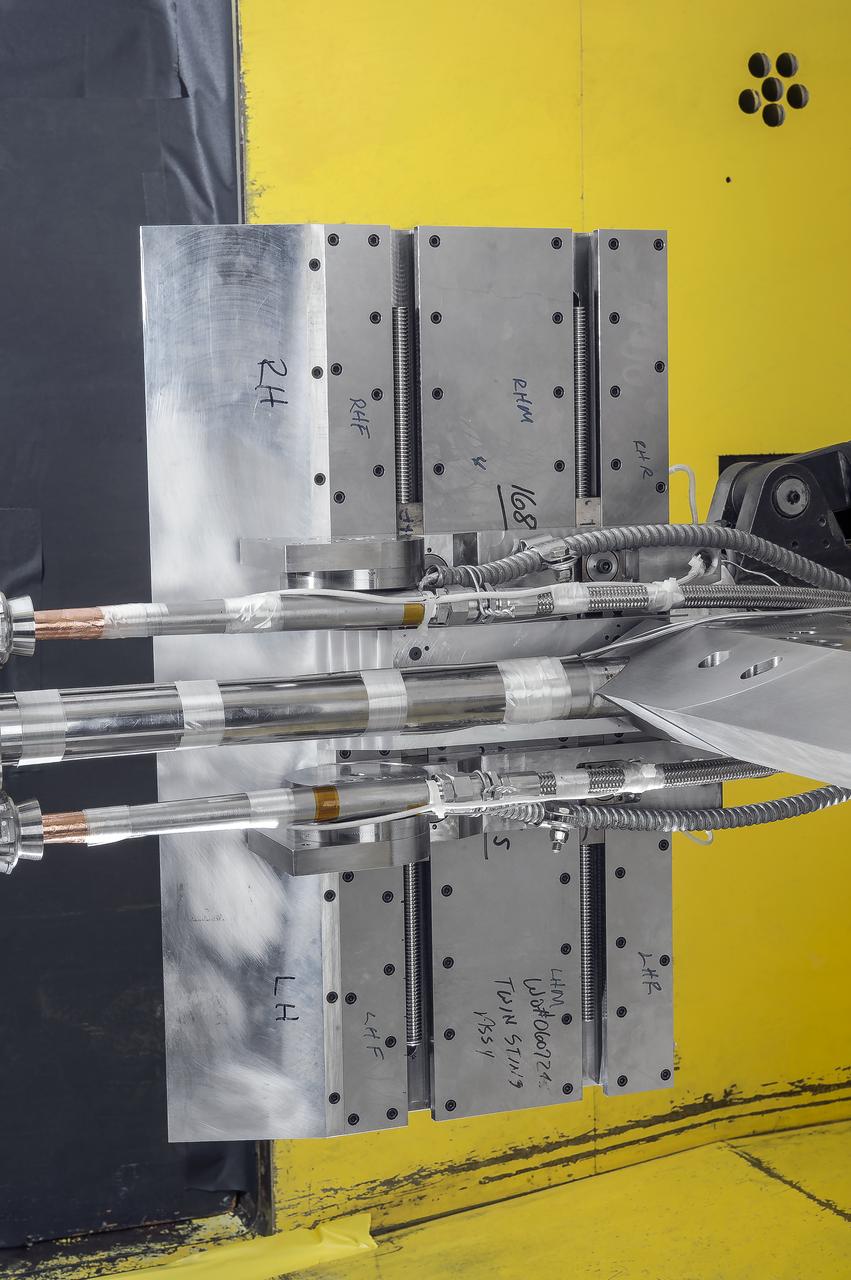
Stage Separation Test of the Space Launch System(SLS) in the Langley Unitary Plan Wind Tunnel (UPWT). The model used High Pressure air blown through the solid rocket boosters. (SRB) to simulate the booster separation motors (BSM) firing.
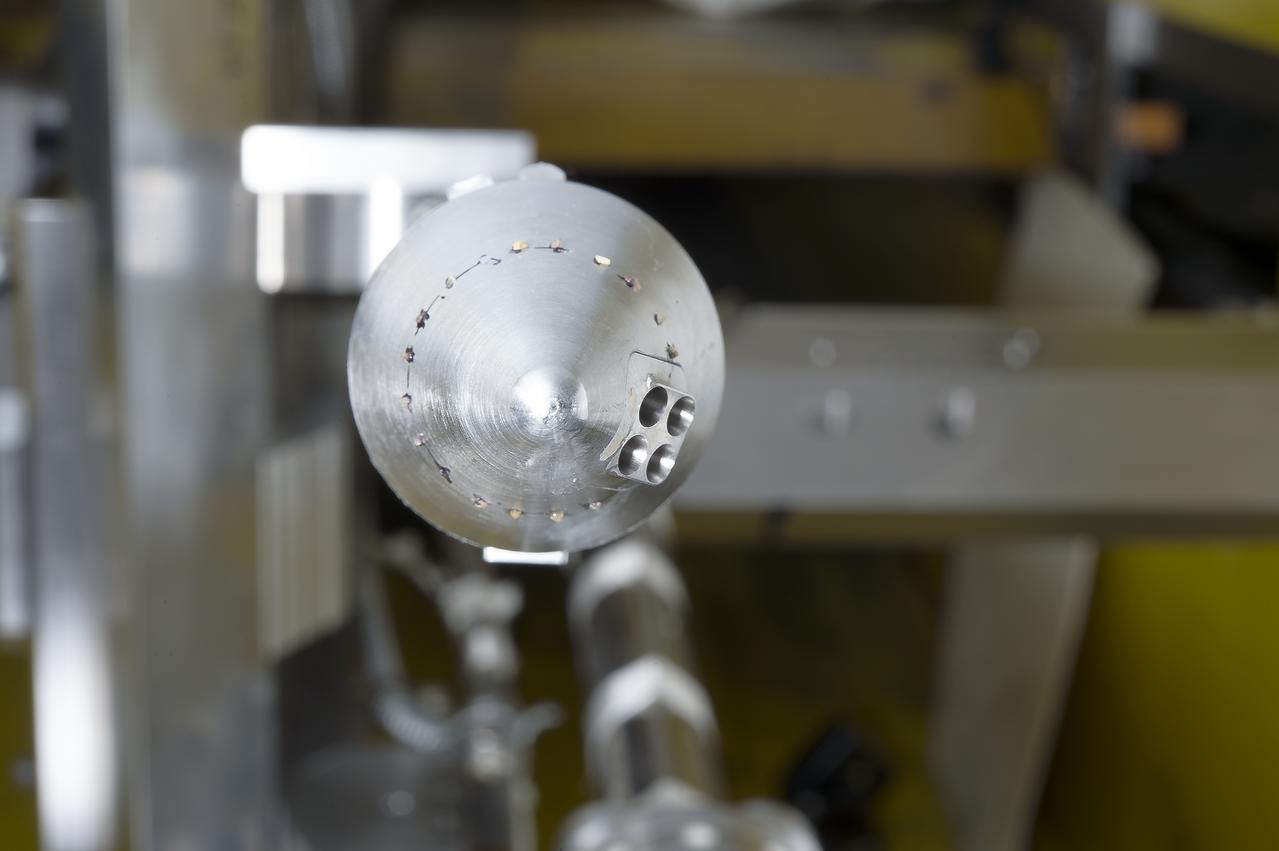
Stage Separation Test of the Space Launch System(SLS) in the Langley Unitary Plan Wind Tunnel (UPWT). The model used High Pressure air blown through the solid rocket boosters. (SRB) to simulate the booster separation motors (BSM) firing.
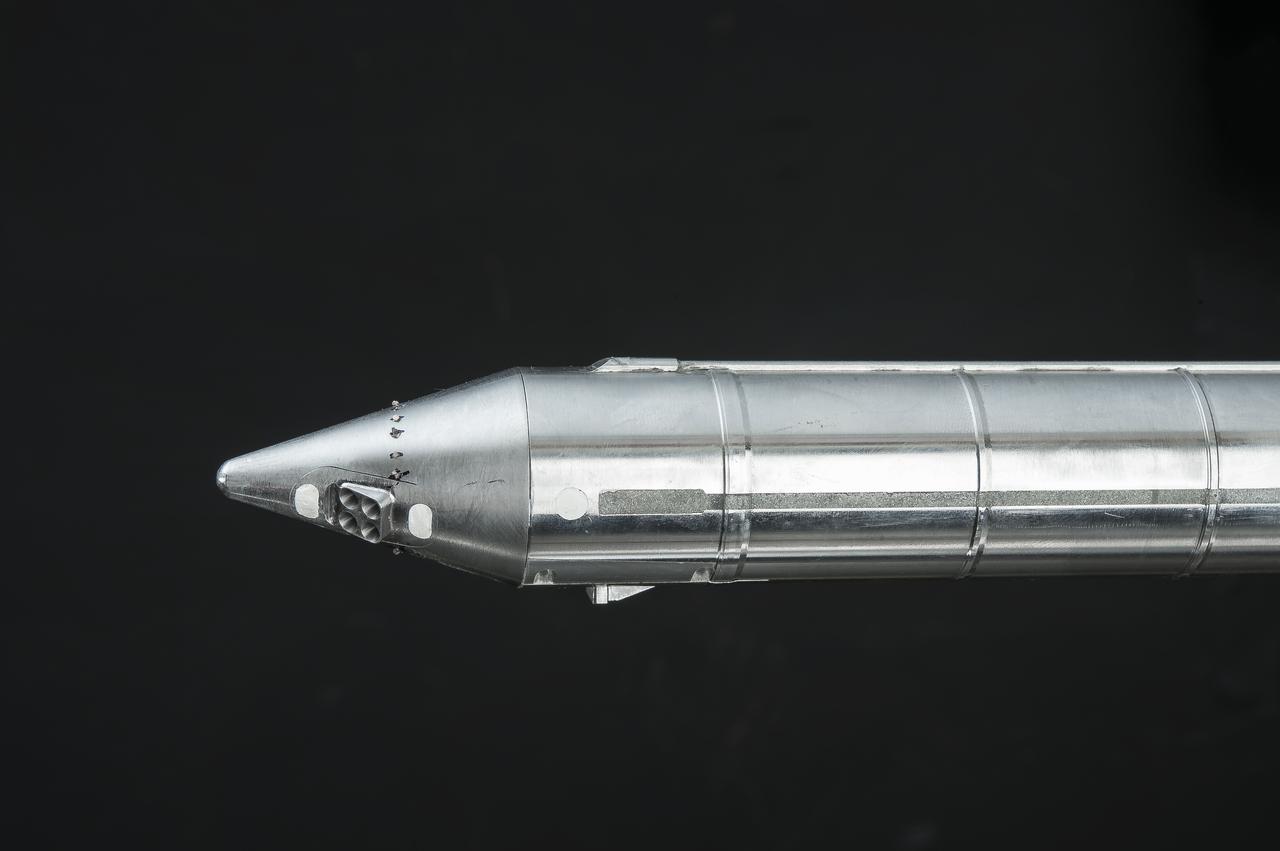
Stage Separation Test of the Space Launch System(SLS) in the Langley Unitary Plan Wind Tunnel (UPWT). The model used High Pressure air blown through the solid rocket boosters. (SRB) to simulate the booster separation motors (BSM) firing.
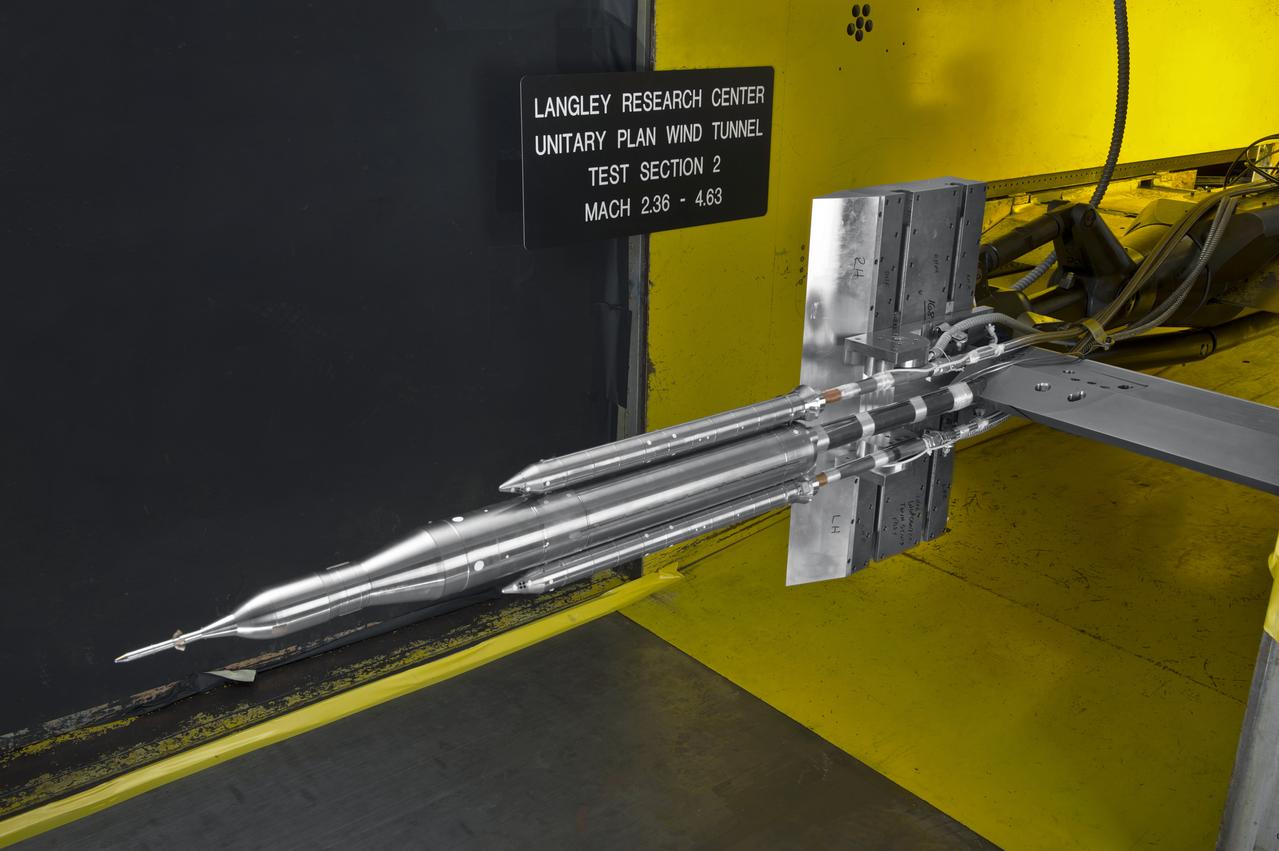
Stage Separation Test of the Space Launch System(SLS) in the Langley Unitary Plan Wind Tunnel (UPWT). The model used High Pressure air blown through the solid rocket boosters. (SRB) to simulate the booster separation motors (BSM) firing.
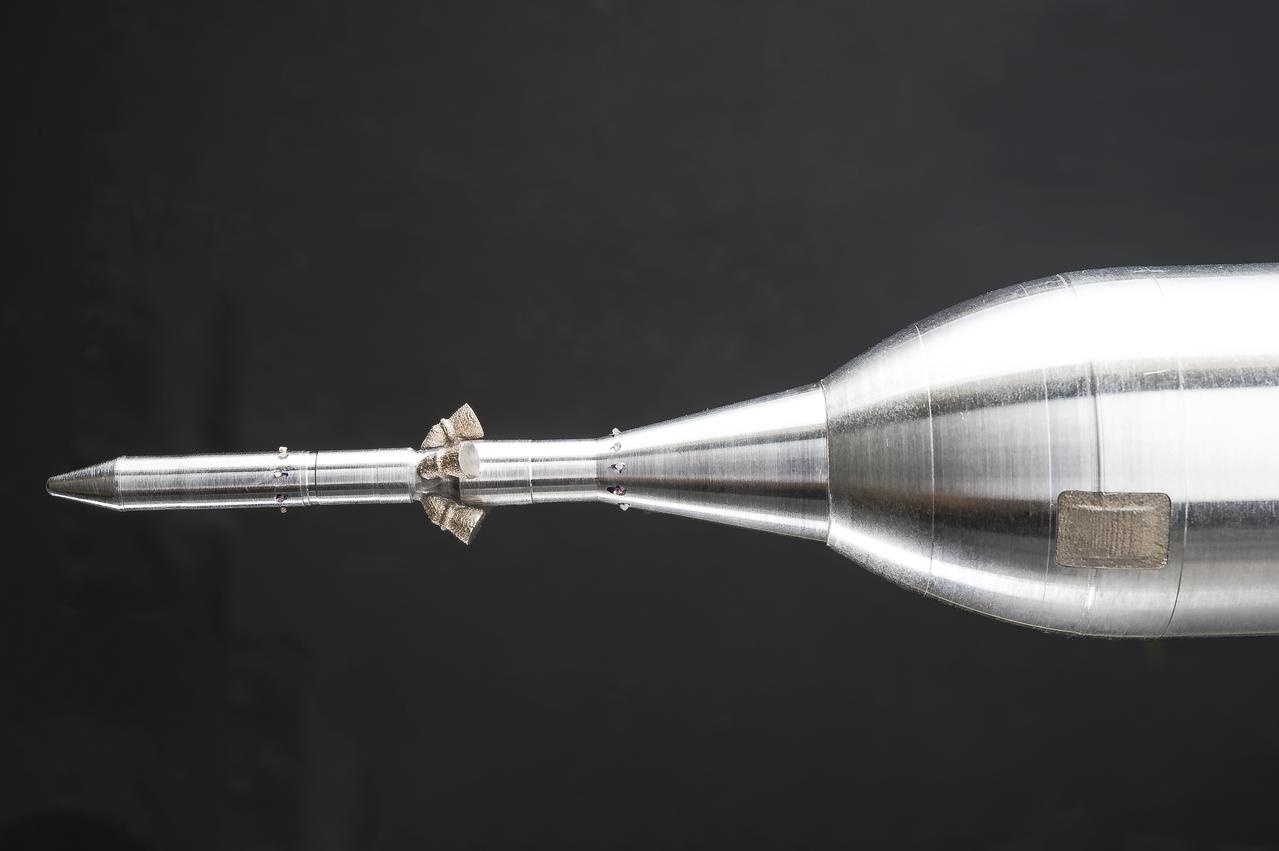
Stage Separation Test of the Space Launch System(SLS) in the Langley Unitary Plan Wind Tunnel (UPWT). The model used High Pressure air blown through the solid rocket boosters. (SRB) to simulate the booster separation motors (BSM) firing.
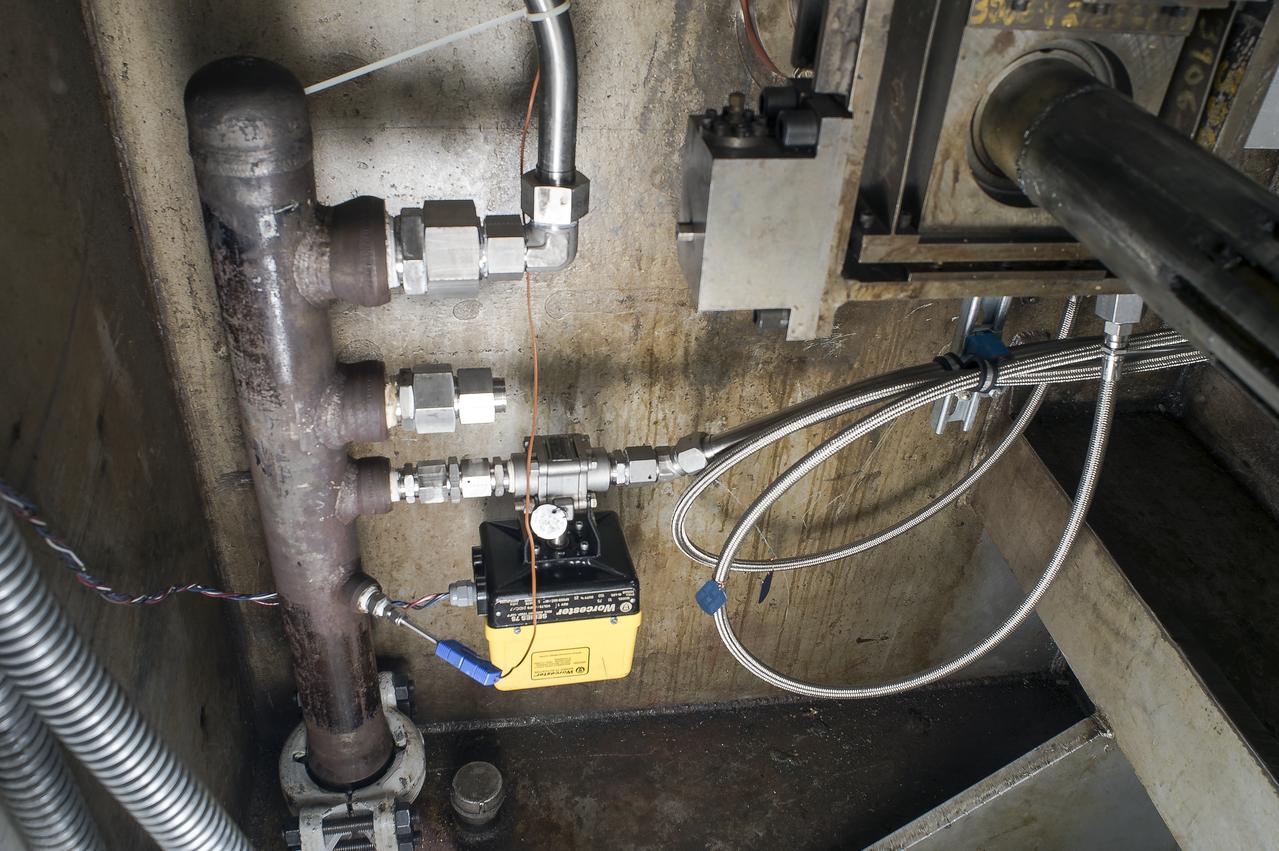
Stage Separation Test of the Space Launch System(SLS) in the Langley Unitary Plan Wind Tunnel (UPWT). The model used High Pressure air blown through the solid rocket boosters. (SRB) to simulate the booster separation motors (BSM) firing.
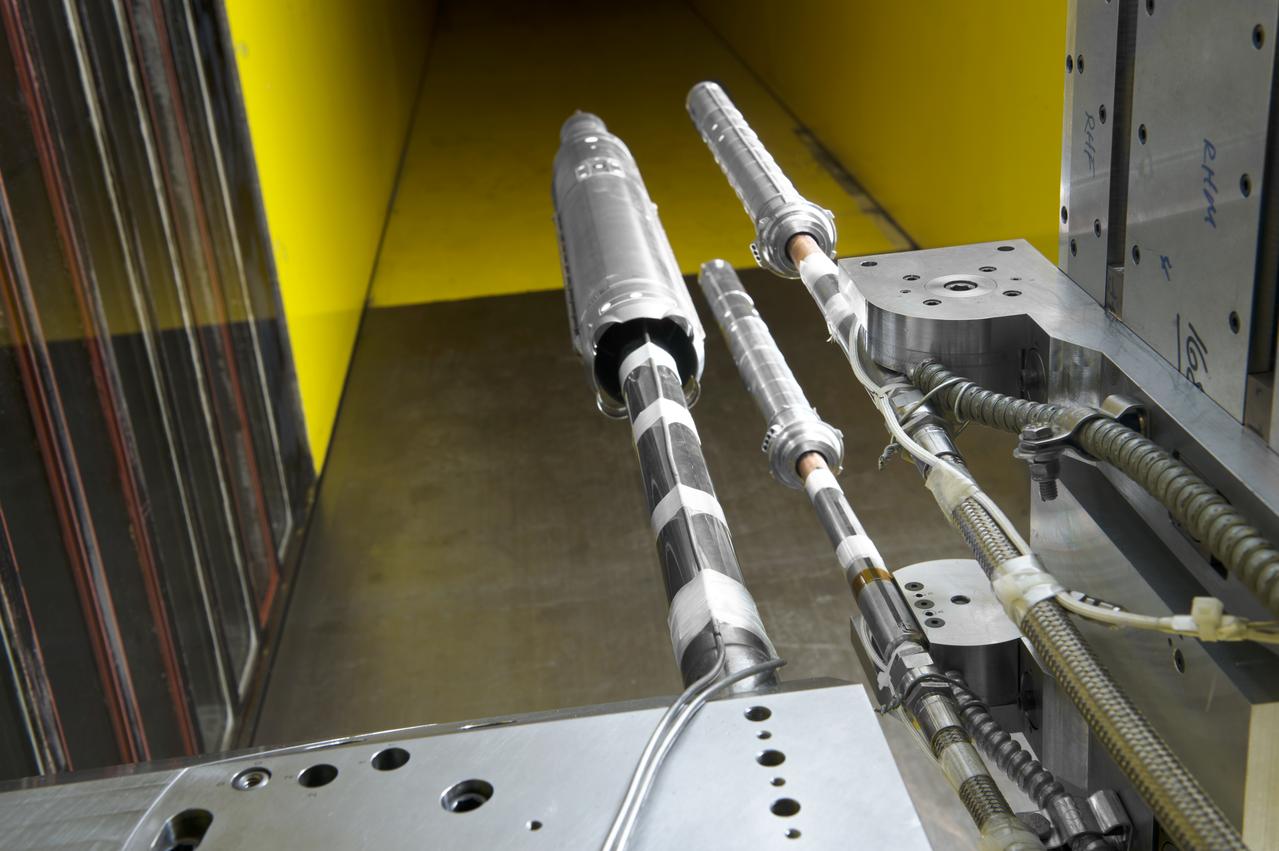
Stage Separation Test of the Space Launch System(SLS) in the Langley Unitary Plan Wind Tunnel (UPWT). The model used High Pressure air blown through the solid rocket boosters. (SRB) to simulate the booster separation motors (BSM) firing.
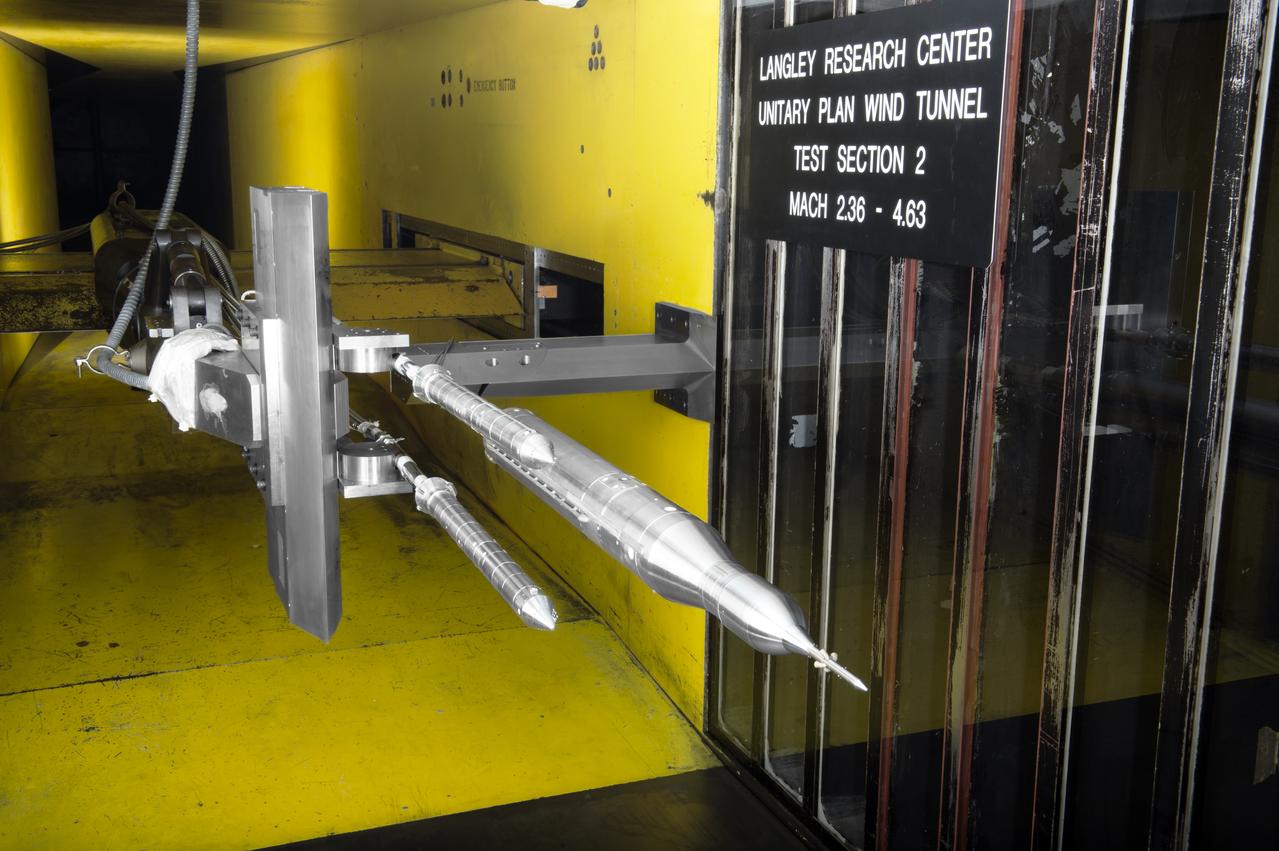
Stage Separation Test of the Space Launch System(SLS) in the Langley Unitary Plan Wind Tunnel (UPWT). The model used High Pressure air blown through the solid rocket boosters. (SRB) to simulate the booster separation motors (BSM) firing.
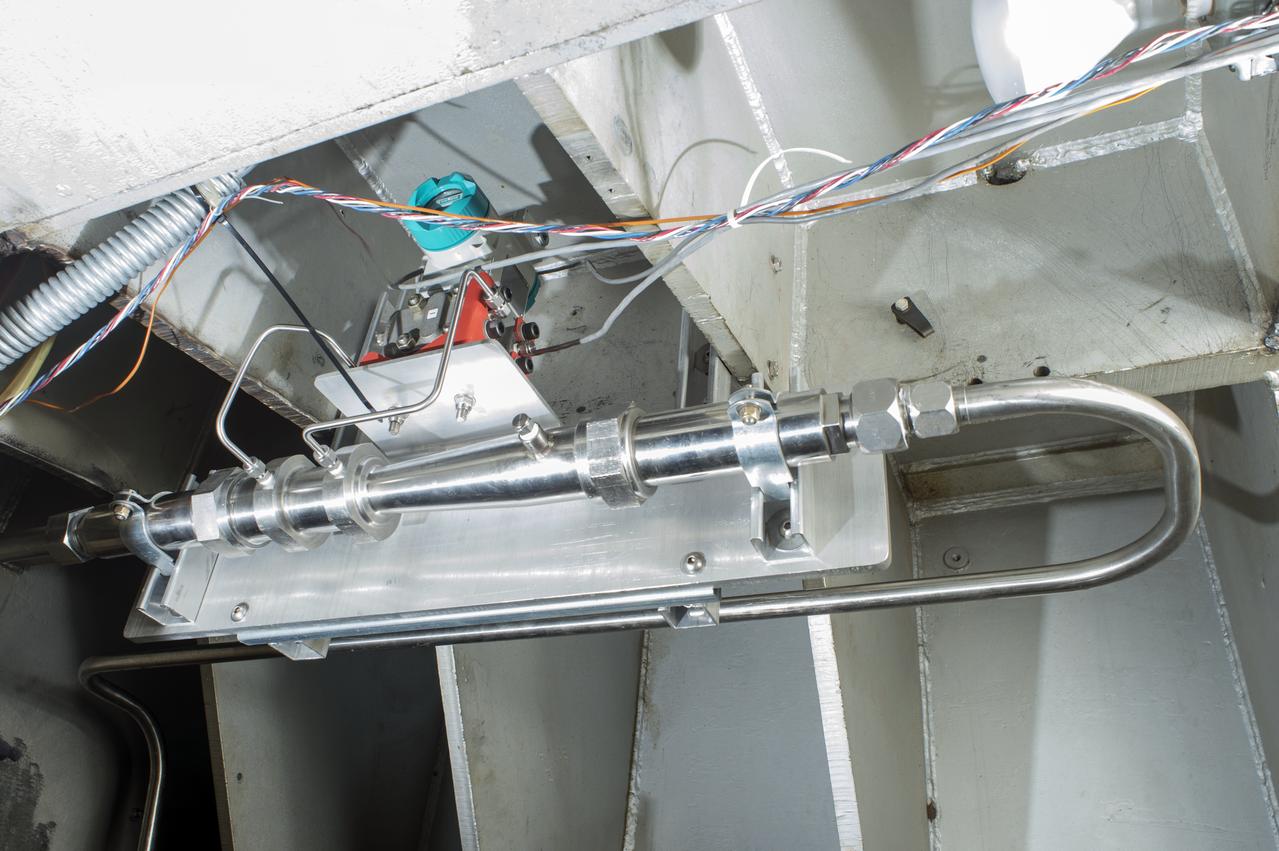
Stage Separation Test of the Space Launch System(SLS) in the Langley Unitary Plan Wind Tunnel (UPWT). The model used High Pressure air blown through the solid rocket boosters. (SRB) to simulate the booster separation motors (BSM) firing.
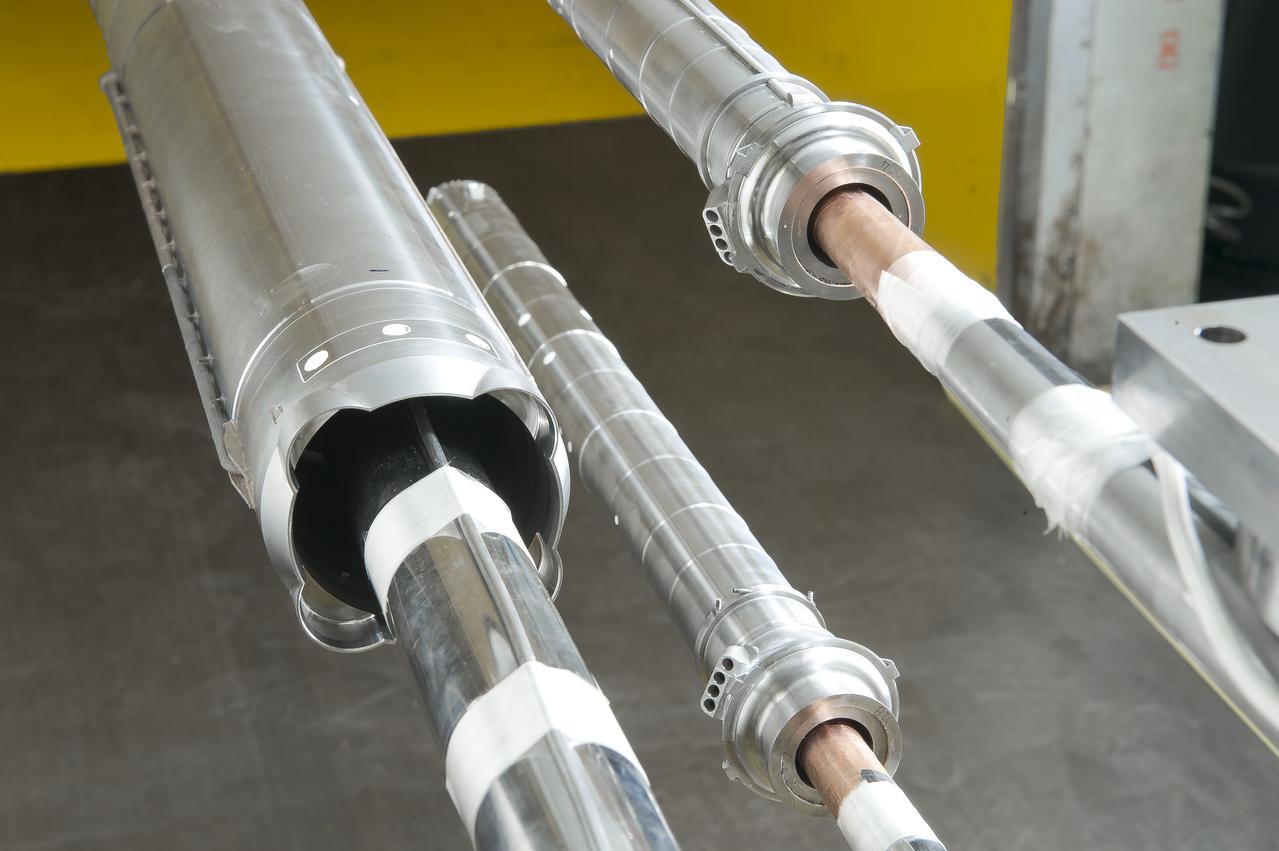
Stage Separation Test of the Space Launch System(SLS) in the Langley Unitary Plan Wind Tunnel (UPWT). The model used High Pressure air blown through the solid rocket boosters. (SRB) to simulate the booster separation motors (BSM) firing.

KENNEDY SPACE CENTER, FLA. - In the SRB Assembly and Refurbishment Facility, STS-114 crew members take a close look at a mock-up of a booster separation motor (BSM) igniter and expanded views of the BSM and igniter on the table. From left are Mission Specialists Soichi Noguchi, Stephen Robinson and Andrew Thomas (holding the igniter); Commander Eileen Collins; and Mission Specialist Charles Camarda. At far right is Paul Gutierrez, SRB associate program manager with United Space Alliance. Not pictured is Mission Specialist Wendy Lawrence. Noguchi is with the Japanese Aerospace and Exploration Agency. The crew is at KSC for familiarization with Shuttle and mission equipment. The STS-114 mission is Logistics Flight 1, which is scheduled to deliver supplies and equipment, plus the external stowage platform, to the International Space Station.
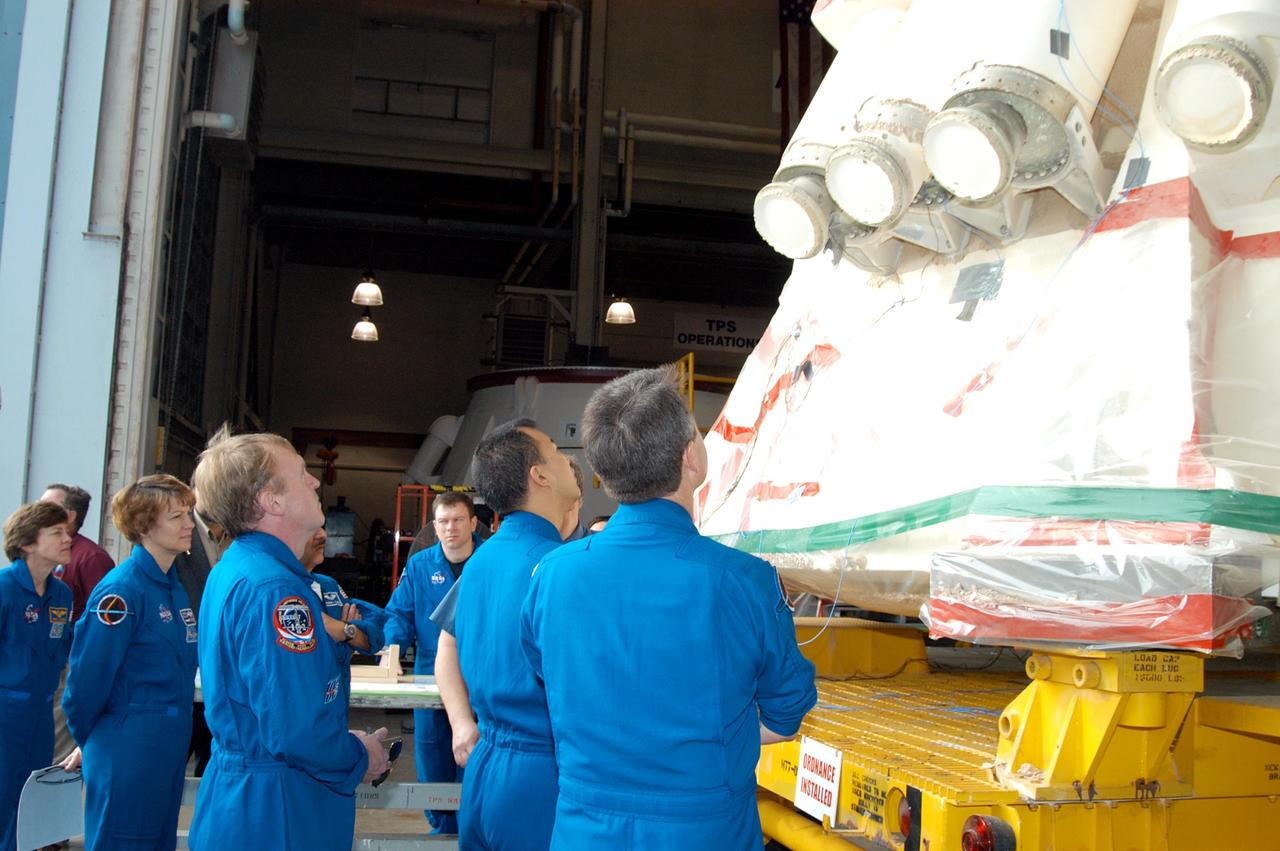
KENNEDY SPACE CENTER, FLA. - At the SRB Assembly and Refurbishment Facility, STS-114 crew members look at booster separation motors (BSM) on an aft skirt that has had booster trowlable ablative removed by liquid nitrogen cutting. The astronauts are learning how the BSMs would be removed from the aft skirt. From left are Mission Specialist Wendy Lawrence; Commander Eileen Collins; Mission Specialist Andrew Thomas; Pilot James Kelly (background); and Mission Specialists Soichi Noguchi and Stephen Robinson. Noguchi is with the Japanese Aerospace and Exploration Agency. The crew is at KSC for familiarization with Shuttle and mission equipment. The STS-114 mission is Logistics Flight 1, which is scheduled to deliver supplies and equipment, plus the external stowage platform, to the International Space Station.
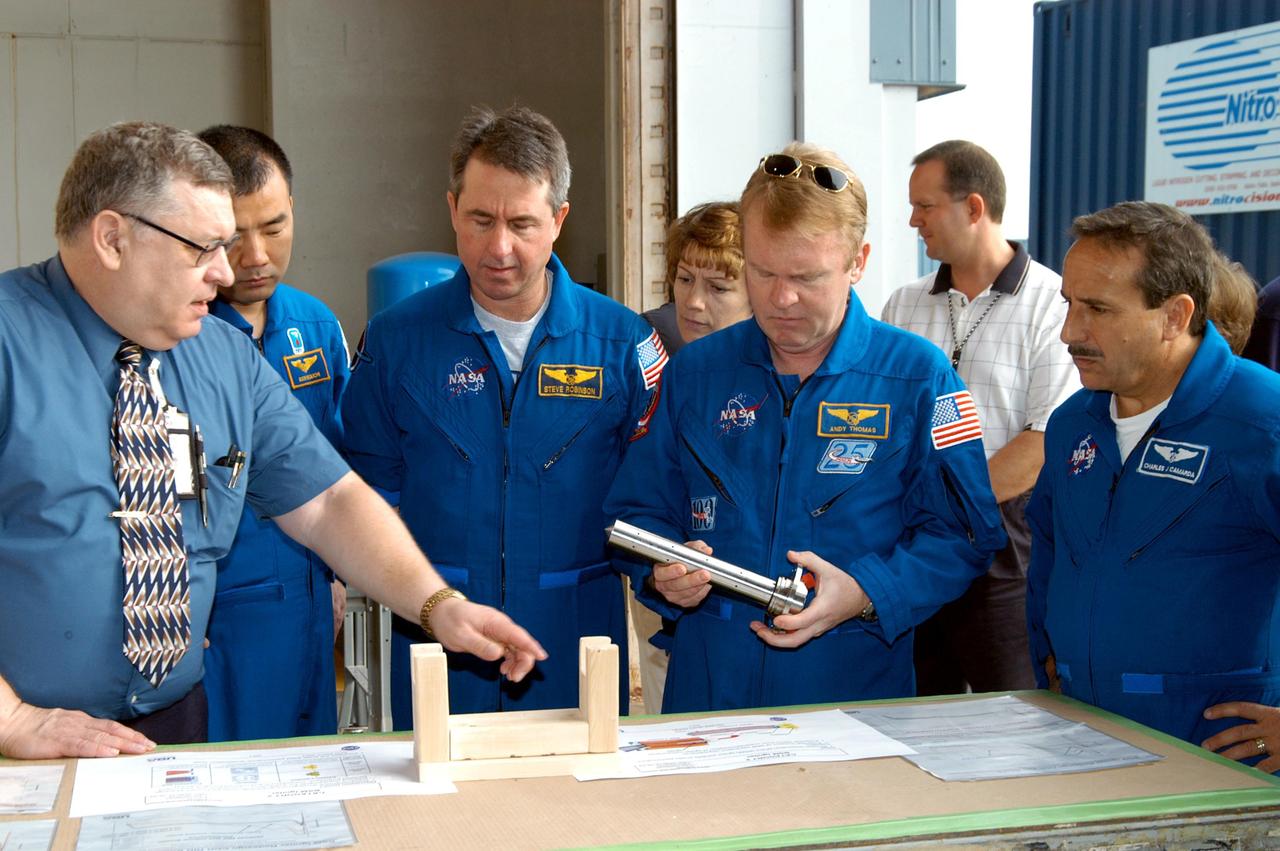
KENNEDY SPACE CENTER, FLA. - - In the SRB Assembly and Refurbishment Facility, some of the STS-114 crew listen to Mike Leppert, Manufacturing Operations project lead with United Space Alliance, talk about a booster separation motor (BSM) igniter. Pictures on the table give expanded views of the BSM and igniter. Next to Leppart, from left, are Mission Specialists Soichi Noguchi and Stephen Robinson; Commander Eileen Collins; and Mission Specialists Andrew Thomas (holding a mockup of an igniter) and Charles Camarda. Noguchi is with the Japanese Aerospace and Exploration Agency. The crew is at KSC for familiarization with Shuttle and mission equipment. The STS-114 mission is Logistics Flight 1, which is scheduled to deliver supplies and equipment, plus the external stowage platform, to the International Space Station.

KENNEDY SPACE CENTER, FLA. - At the SRB Assembly and Refurbishment Facility, STS-114 Mission Specialist Soichi Noguchi looks at a mockup of a booster separation motor (BSM) igniter. Noguchi is with the Japanese Aerospace and Exploration Agency. The crew is at KSC for familiarization with Shuttle and mission equipment. The STS-114 mission is Logistics Flight 1, which is scheduled to deliver supplies and equipment, plus the external stowage platform, to the International Space Station.
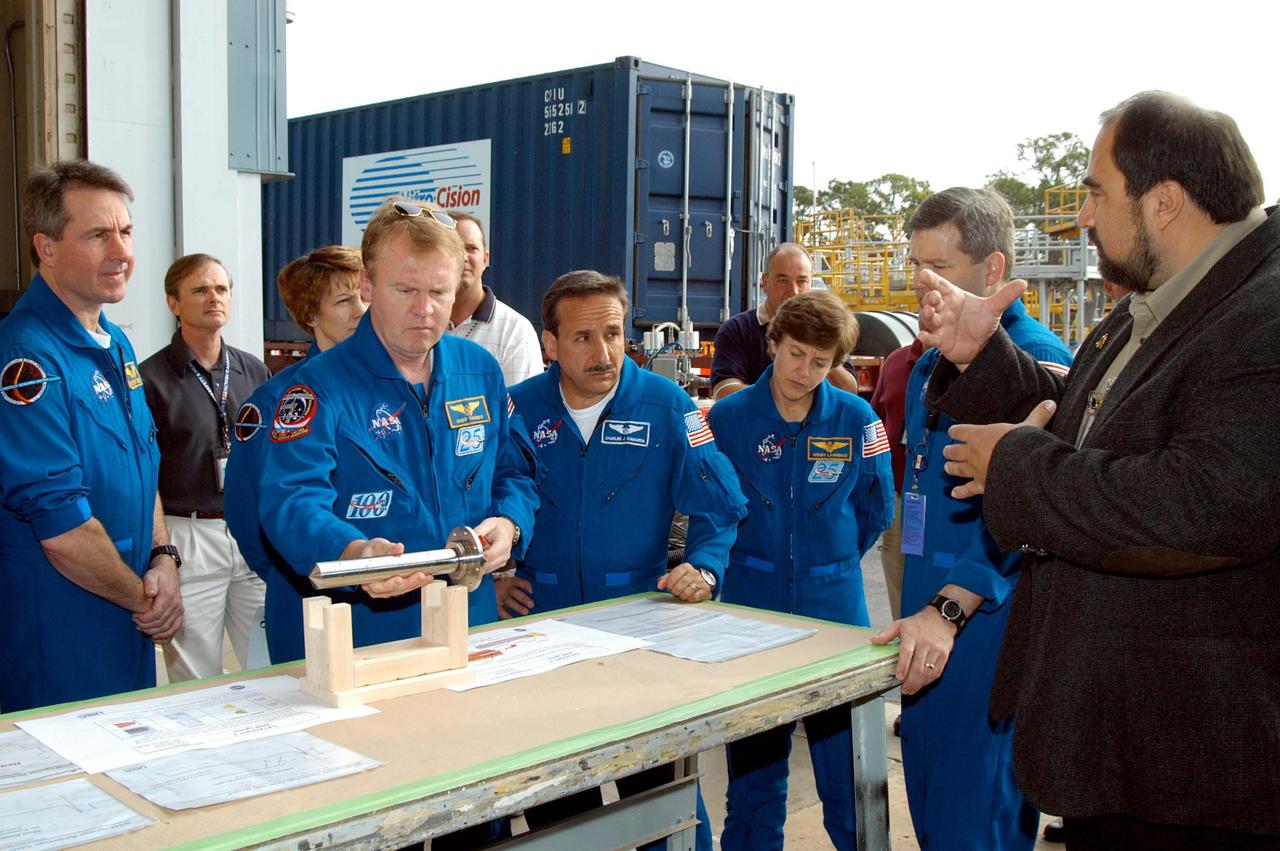
KENNEDY SPACE CENTER, FLA. - Some of the STS-114 crew listen to Paul Gutierrez (right), SRB associate program manager with United Space Alliance, in the SRB Assembly and Refurbishment Facility. They are looking at a booster separation motor (BSM) igniter. Starting from left are Mission Specialist Stephen Robinson; Commander Eileen Collins; Mission Specialists Andrew Thomas (holding the igniter), Charles Camarda and Wendy Lawrence; and Pilot James Kelly. Not seen is Mission Specialist Soichi Noguchi, who is with the Japanese Aerospace and Exploration Agency. The crew is at KSC for familiarization with Shuttle and mission equipment. The STS-114 mission is Logistics Flight 1, which is scheduled to deliver supplies and equipment, plus the external stowage platform, to the International Space Station.