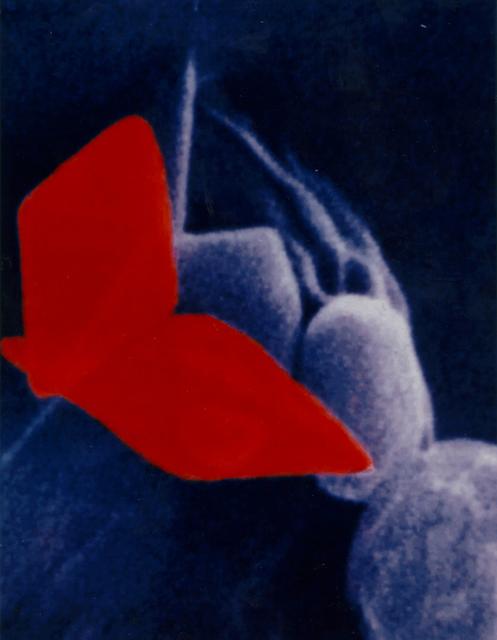
Bacillus thuringiensis (Bt), a natural bacteria found all over the Earth, has a fairly novel way of getting rid of unwanted insects. Bt forms a protein substance (shown on the right) that is not harmful to humans, birds, fish or other vertebrates. When eaten by insect larvae the protein causes a fatal loss of appetite. For over 25 years agricultural chemical companies have relied heavily upon safe Bt pesticides. New space based research promises to give the insecticide a new dimension in effectiveness and applicability. Researchers from the Consortium for Materials Development in Space along with industrial affiliates such as Abott Labs and Pern State University flew Bt on a Space Shuttle mission in the fall of 1996. Researchers expect that the Shuttle's microgravity environment will reveal new information about the protein that will make it more effective against a wider variety of pests.
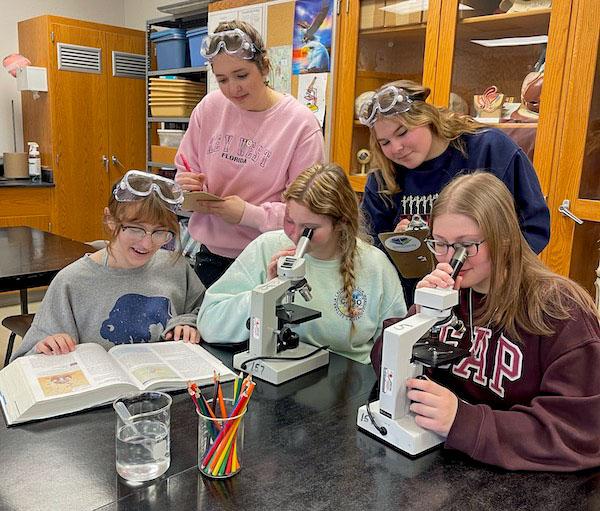
jsc2024e066534 (2/2/2024) --- The North Tonawanda High School student team refine their experiment and expand their knowledge on the behavior of bacteria Bacillus Thuringiensis.Their experiment, The Crystallization of the Spores of Bacillus thuringiensis in a Microgravity Environment, is part of the Nanoracks-National Center for Earth and Space Science Education-Surveyor-Student Spaceflight Experiments Program Mission 18 to ISS (Nanoracks-NCESSE-Surveyor-SSEP).