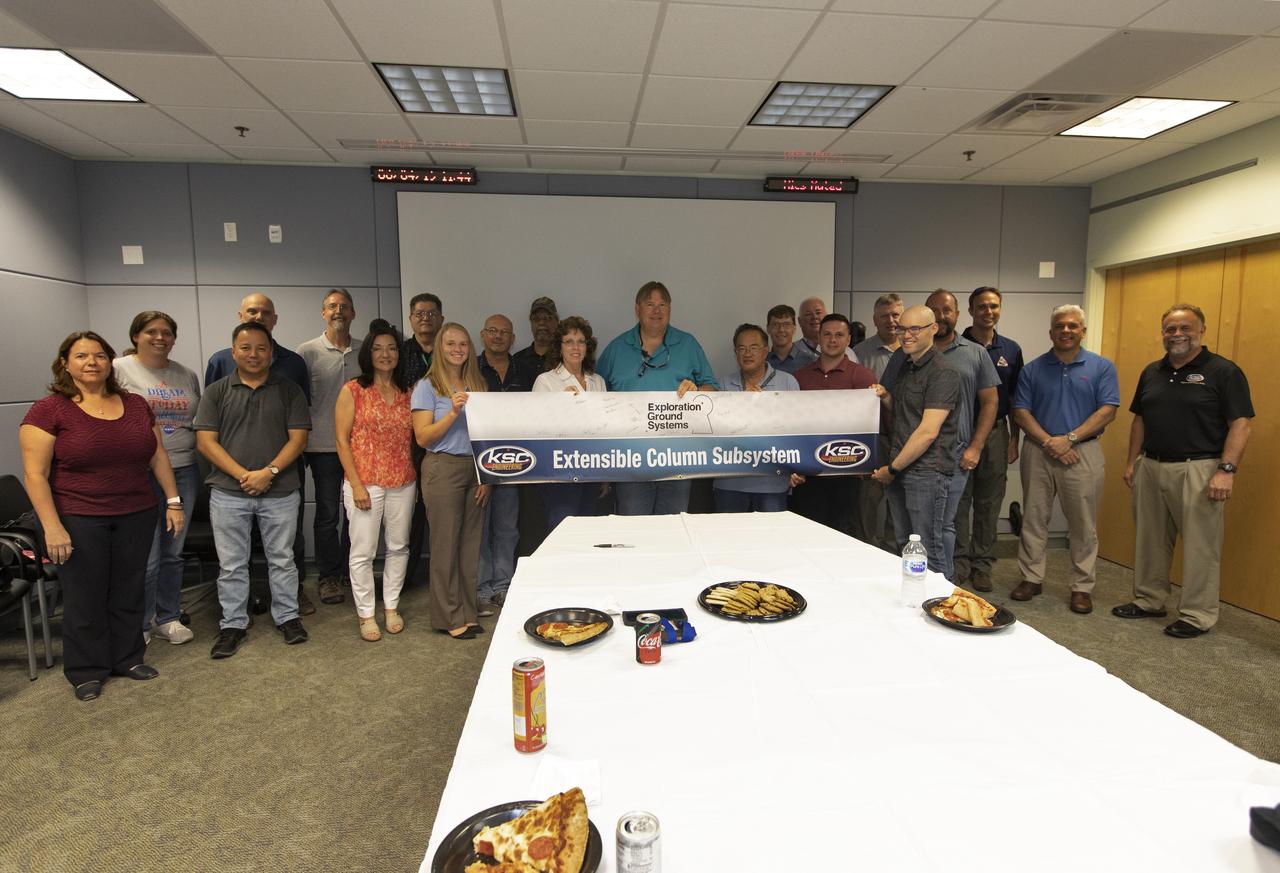
Engineers celebrate the completion of the Extensible Column Subsystem (XCS) project during a banner event held in Operations Support Building II at Kennedy Space Center. The XCS team successfully executed an aggressive schedule, receiving outstanding support from the fabrication contractor, Met-Con. Full functional testing occurred at Met-Con’s facility, with no mechanical or structural issues. All four columns and the test fixture have been delivered to Kennedy. Full-scale testing will take place when the Mobile Launcher gets to the pad later this summer.
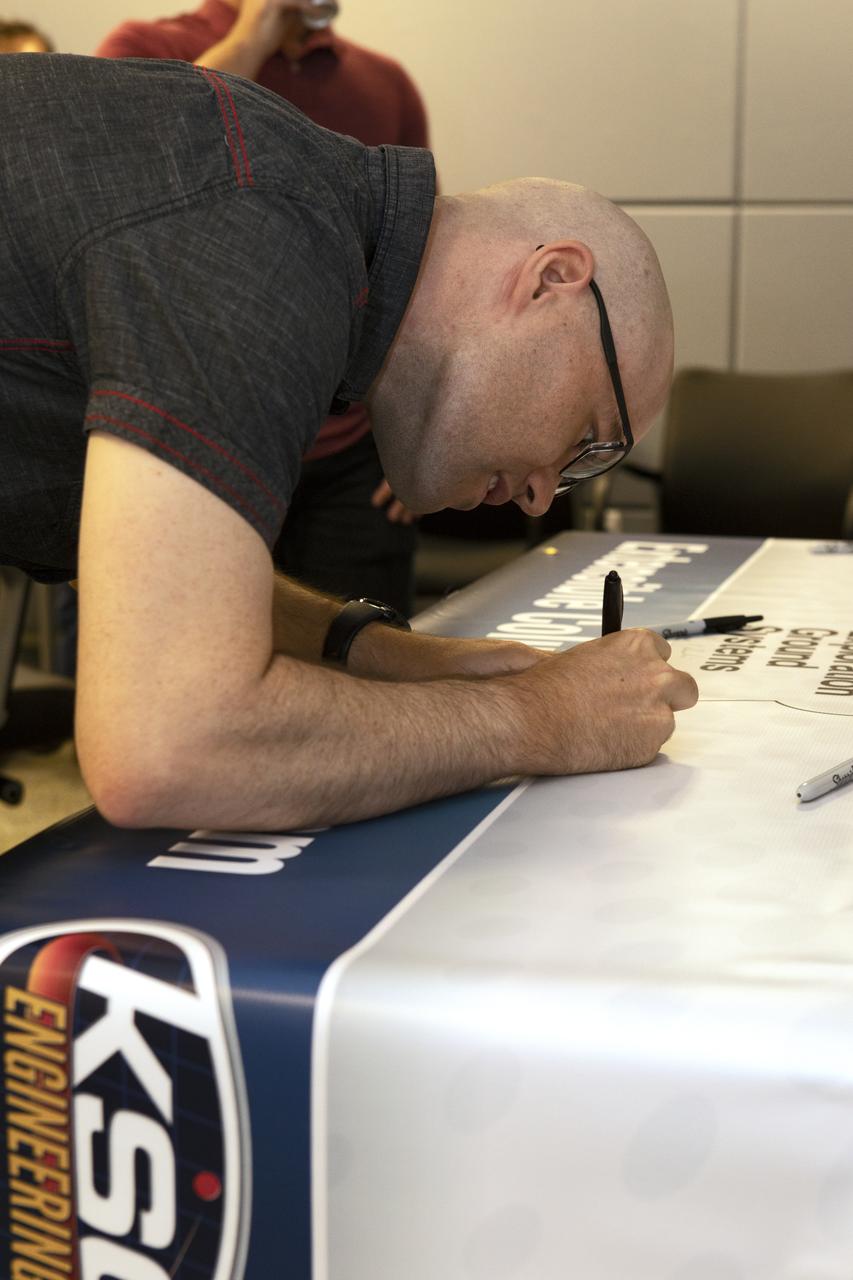
Engineers celebrate the completion of the Extensible Column Subsystem (XCS) project during a banner event held in Operations Support Building II at Kennedy Space Center. The XCS team successfully executed an aggressive schedule, receiving outstanding support from the fabrication contractor, Met-Con. Full functional testing occurred at Met-Con’s facility, with no mechanical or structural issues. All four columns and the test fixture have been delivered to Kennedy. Full-scale testing will take place when the Mobile Launcher gets to the pad later this summer.

Engineers celebrate the completion of the Extensible Column Subsystem (XCS) project during a banner event held in Operations Support Building II at Kennedy Space Center. The XCS team successfully executed an aggressive schedule, receiving outstanding support from the fabrication contractor, Met-Con. Full functional testing occurred at Met-Con’s facility, with no mechanical or structural issues. All four columns and the test fixture have been delivered to Kennedy. Full-scale testing will take place when the Mobile Launcher gets to the pad later this summer.
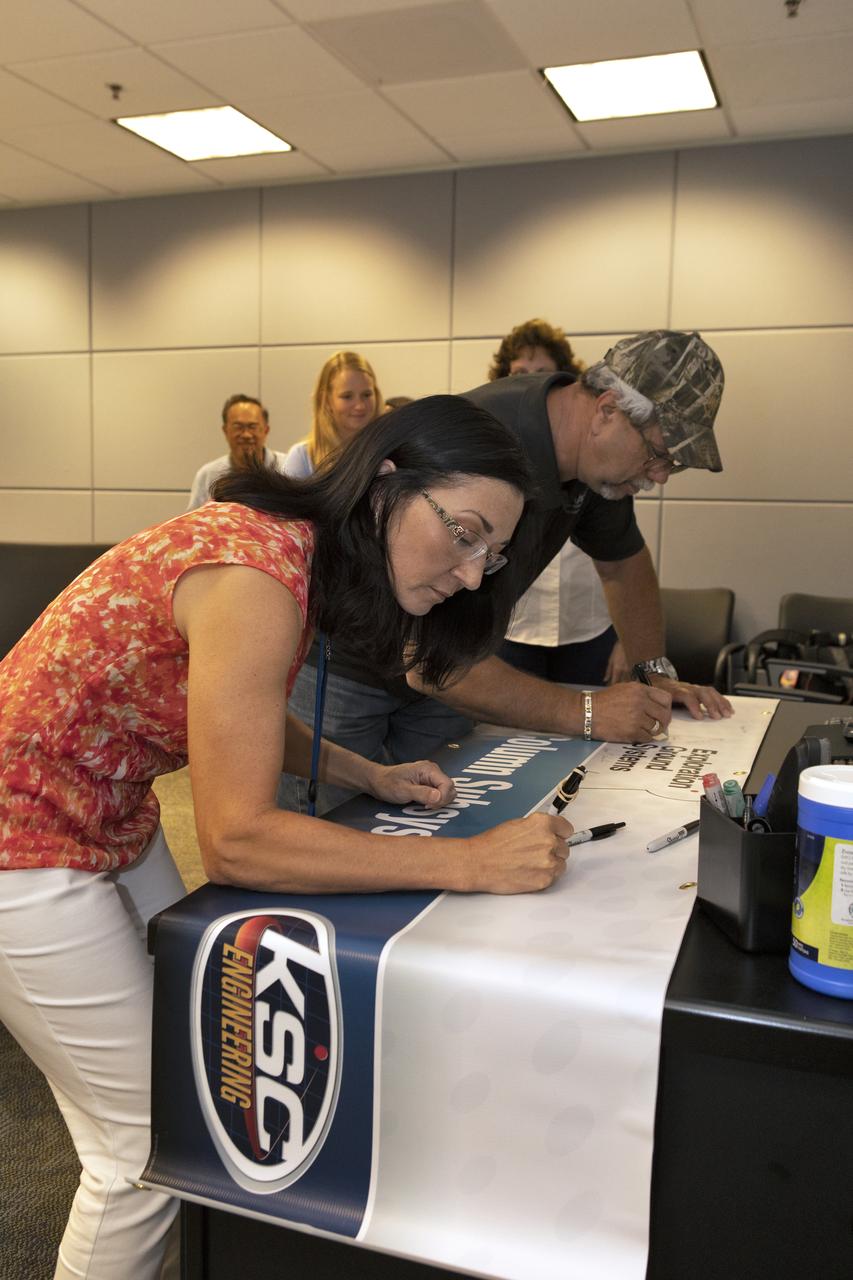
Engineers celebrate the completion of the Extensible Column Subsystem (XCS) project during a banner event held in Operations Support Building II at Kennedy Space Center. The XCS team successfully executed an aggressive schedule, receiving outstanding support from the fabrication contractor, Met-Con. Full functional testing occurred at Met-Con’s facility, with no mechanical or structural issues. All four columns and the test fixture have been delivered to Kennedy. Full-scale testing will take place when the Mobile Launcher gets to the pad later this summer.
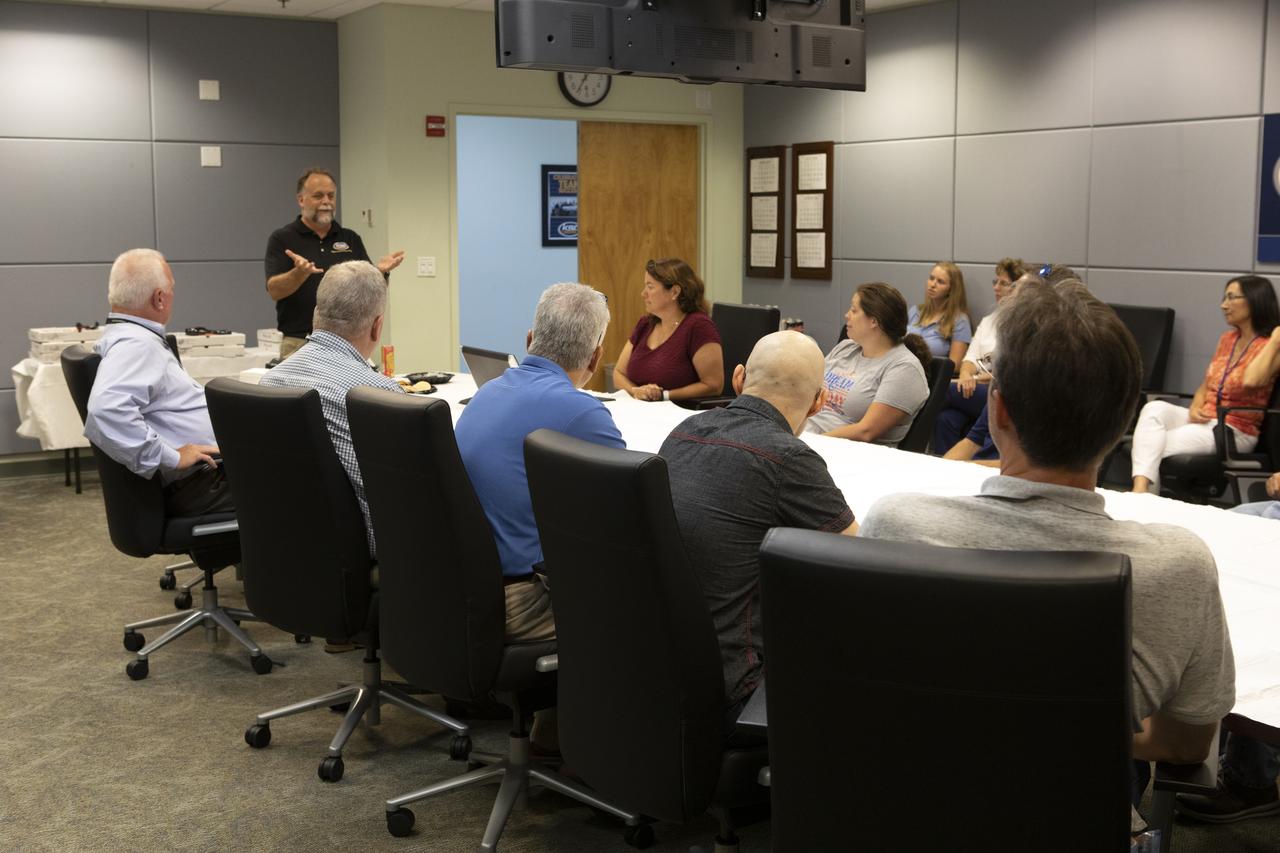
Engineers celebrate the completion of the Extensible Column Subsystem (XCS) project during a banner event held in Operations Support Building II at Kennedy Space Center. The XCS team successfully executed an aggressive schedule, receiving outstanding support from the fabrication contractor, Met-Con. Full functional testing occurred at Met-Con’s facility, with no mechanical or structural issues. All four columns and the test fixture have been delivered to Kennedy. Full-scale testing will take place when the Mobile Launcher gets to the pad later this summer.

Engineers celebrate the completion of the Extensible Column Subsystem (XCS) project during a banner event held in Operations Support Building II at Kennedy Space Center. The XCS team successfully executed an aggressive schedule, receiving outstanding support from the fabrication contractor, Met-Con. Full functional testing occurred at Met-Con’s facility, with no mechanical or structural issues. All four columns and the test fixture have been delivered to Kennedy. Full-scale testing will take place when the Mobile Launcher gets to the pad later this summer.

This composite image of nine pictures shows the progression of a partial solar eclipse near Banner, Wyoming on Monday, Aug. 21, 2017. A total solar eclipse swept across a narrow portion of the contiguous United States from Lincoln Beach, Oregon to Charleston, South Carolina. A partial solar eclipse was visible across the entire North American continent along with parts of South America, Africa, and Europe. Photo Credit: (NASA/Joel Kowsky)

The Moon is seen passing in front of the Sun at the point of the maximum of the partial solar eclipse near Banner, Wyoming on Monday, Aug. 21, 2017. A total solar eclipse swept across a narrow portion of the contiguous United States from Lincoln Beach, Oregon to Charleston, South Carolina. A partial solar eclipse was visible across the entire North American continent along with parts of South America, Africa, and Europe. Photo Credit: (NASA/Joel Kowsky)
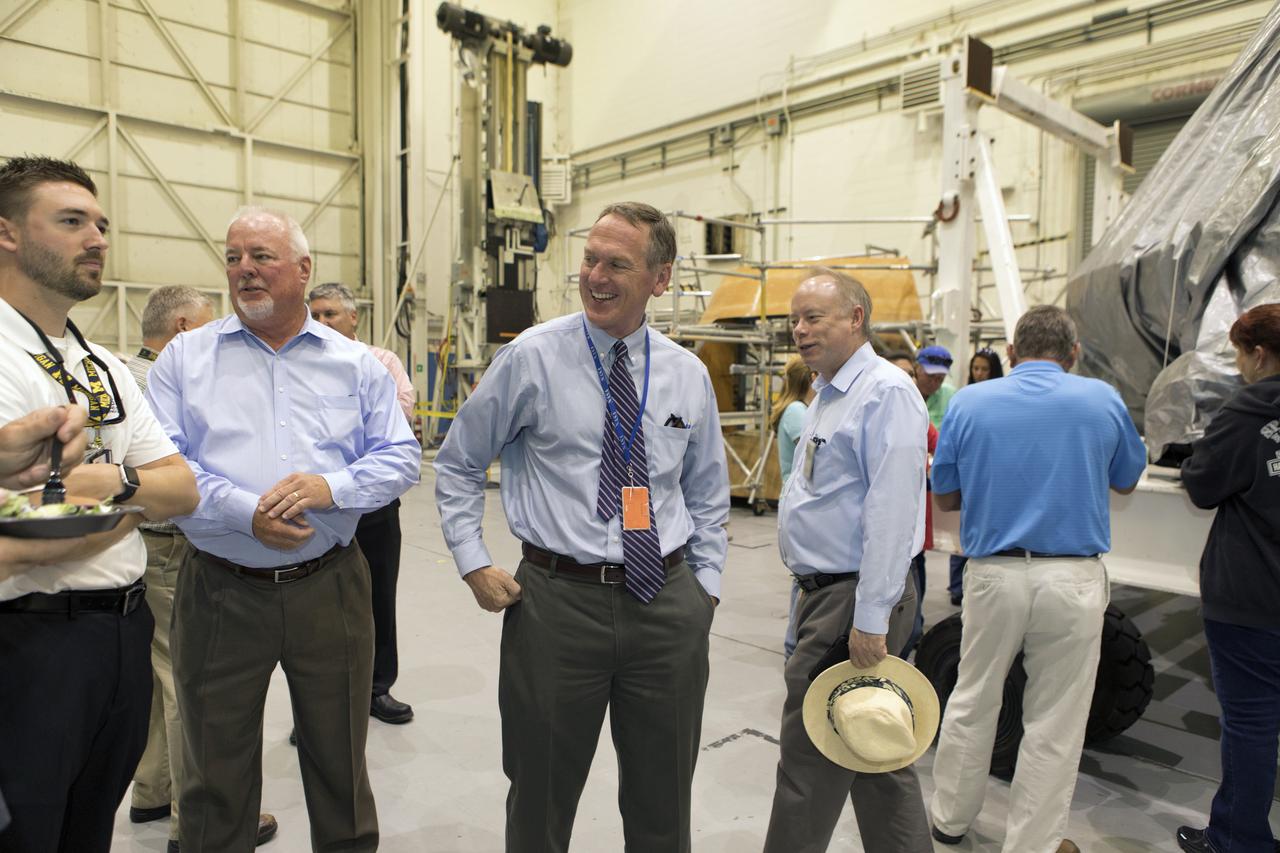
The team that tested the umbilical lines and accessories that will connect from the mobile launcher to NASA's Space Launch System rocket and Orion spacecraft for Exploration Mission-1 hold a banner signing event July 24, 2018, to mark completion of testing at the Launch Equipment Test Facility (LETF) at NASA's Kennedy Space Center in Florida. Attending the event is Mike Bolger, center, Exploration Ground Systems manager. A total of 21 umbilicals and launch accessories were tested on various simulators at the LETF before they were transferred to the mobile launcher for installation.
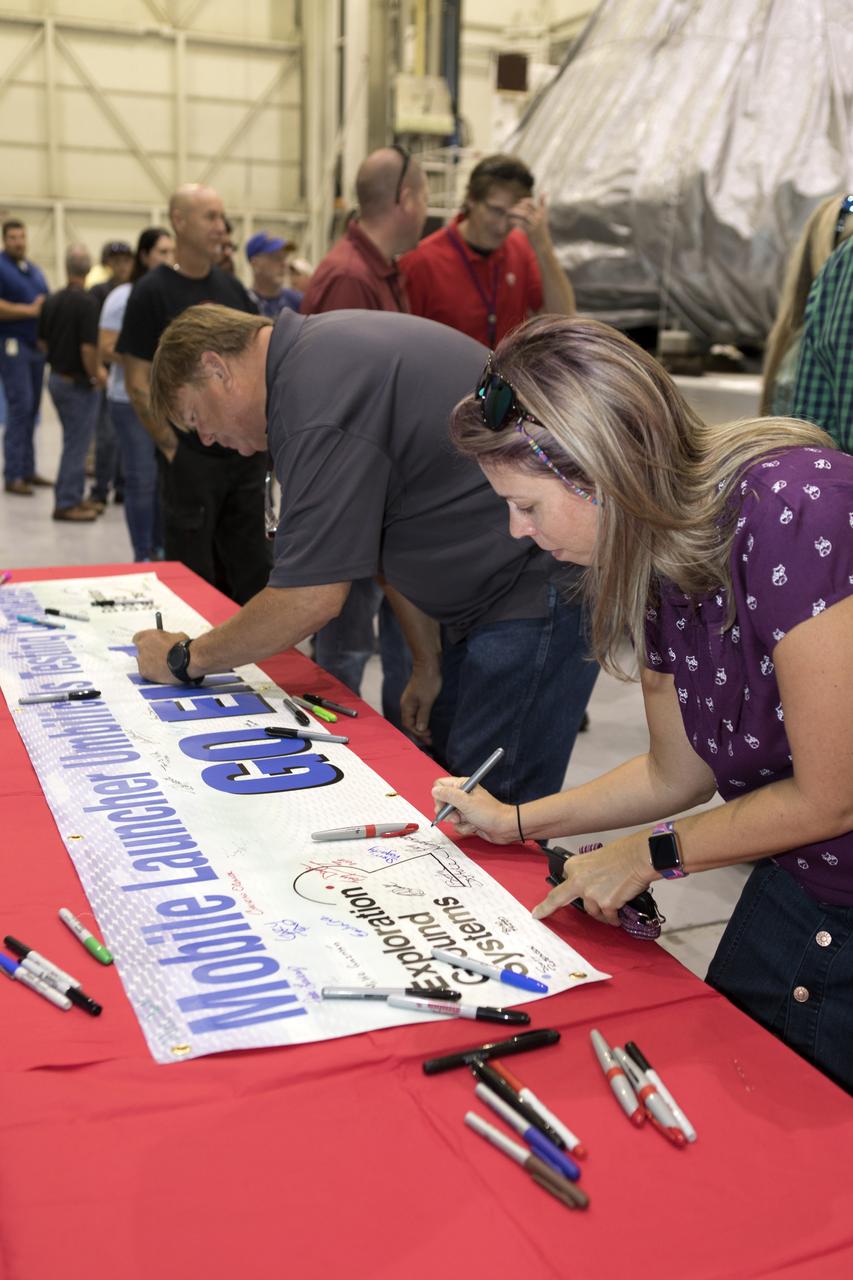
The team that tested the umbilical lines and accessories that will connect from the mobile launcher to NASA's Space Launch System rocket and Orion spacecraft for Exploration Mission-1 hold a banner signing event July 24, 2018, to mark completion of testing at the Launch Equipment Test Facility (LETF) at NASA's Kennedy Space Center in Florida. A total of 21 umbilicals and launch accessories were tested on various simulators at the LETF before they were transferred to the mobile launcher for installation.
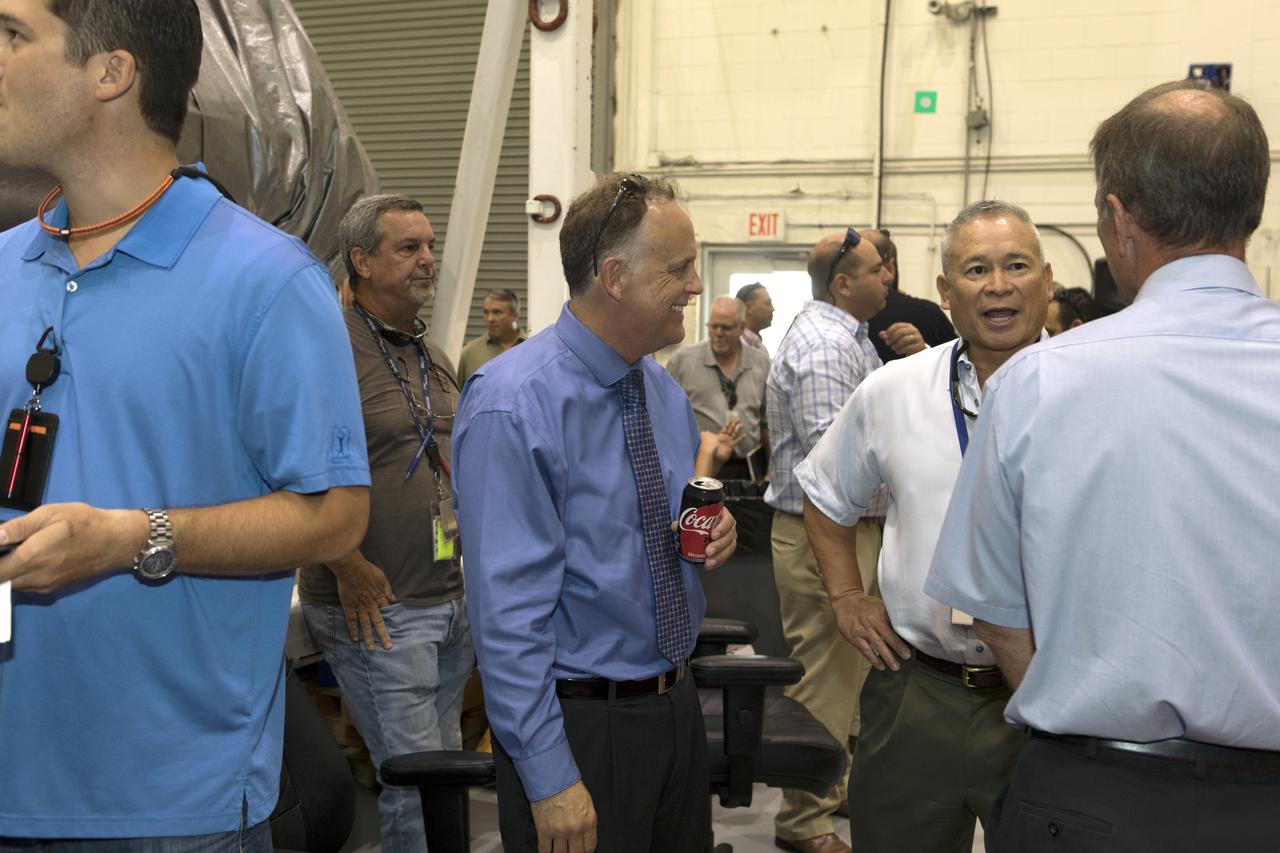
The team that tested the umbilical lines and accessories that will connect from the mobile launcher to NASA's Space Launch System rocket and Orion spacecraft for Exploration Mission-1 hold a banner signing event July 24, 2018, to mark completion of testing at the Launch Equipment Test Facility (LETF) at NASA's Kennedy Space Center in Florida. Attending the event is Shawn Quinn, center, director of Engineering. A total of 21 umbilicals and launch accessories were tested on various simulators at the LETF before they were transferred to the mobile launcher for installation.
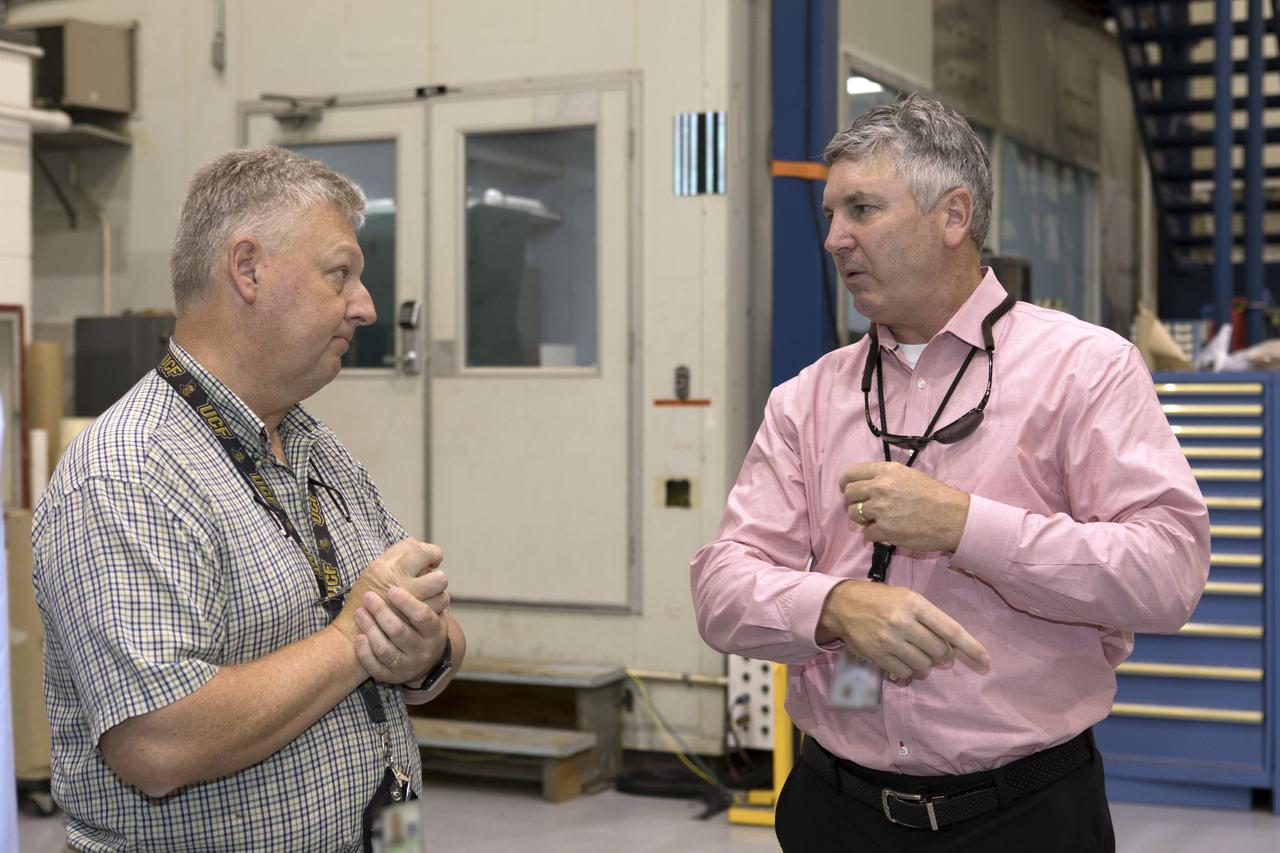
The team that tested the umbilical lines and accessories that will connect from the mobile launcher to NASA's Space Launch System rocket and Orion spacecraft for Exploration Mission-1 hold a banner signing event July 24, 2018, to mark completion of testing at the Launch Equipment Test Facility (LETF) at NASA's Kennedy Space Center in Florida. Attending the event is Scott Colloredo, at right, deputy director of Engineering. A total of 21 umbilicals and launch accessories were tested on various simulators at the LETF before they were transferred to the mobile launcher for installation.
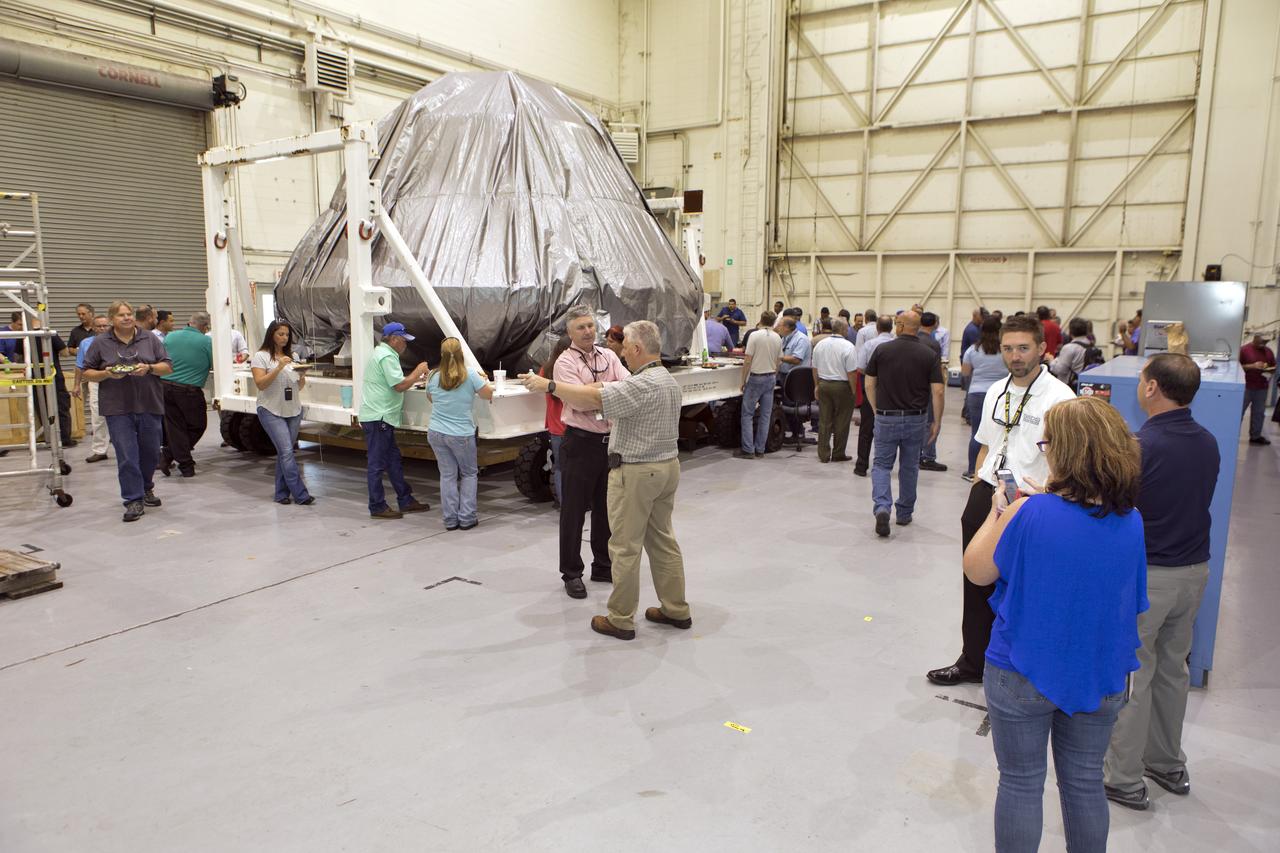
The team that tested the umbilical lines and accessories that will connect from the mobile launcher to NASA's Space Launch System rocket and Orion spacecraft for Exploration Mission-1 hold a banner signing event July 24, 2018, to mark completion of testing at the Launch Equipment Test Facility (LETF) at NASA's Kennedy Space Center in Florida. A total of 21 umbilicals and launch accessories were tested on various simulators at the LETF before they were transferred to the mobile launcher for installation.
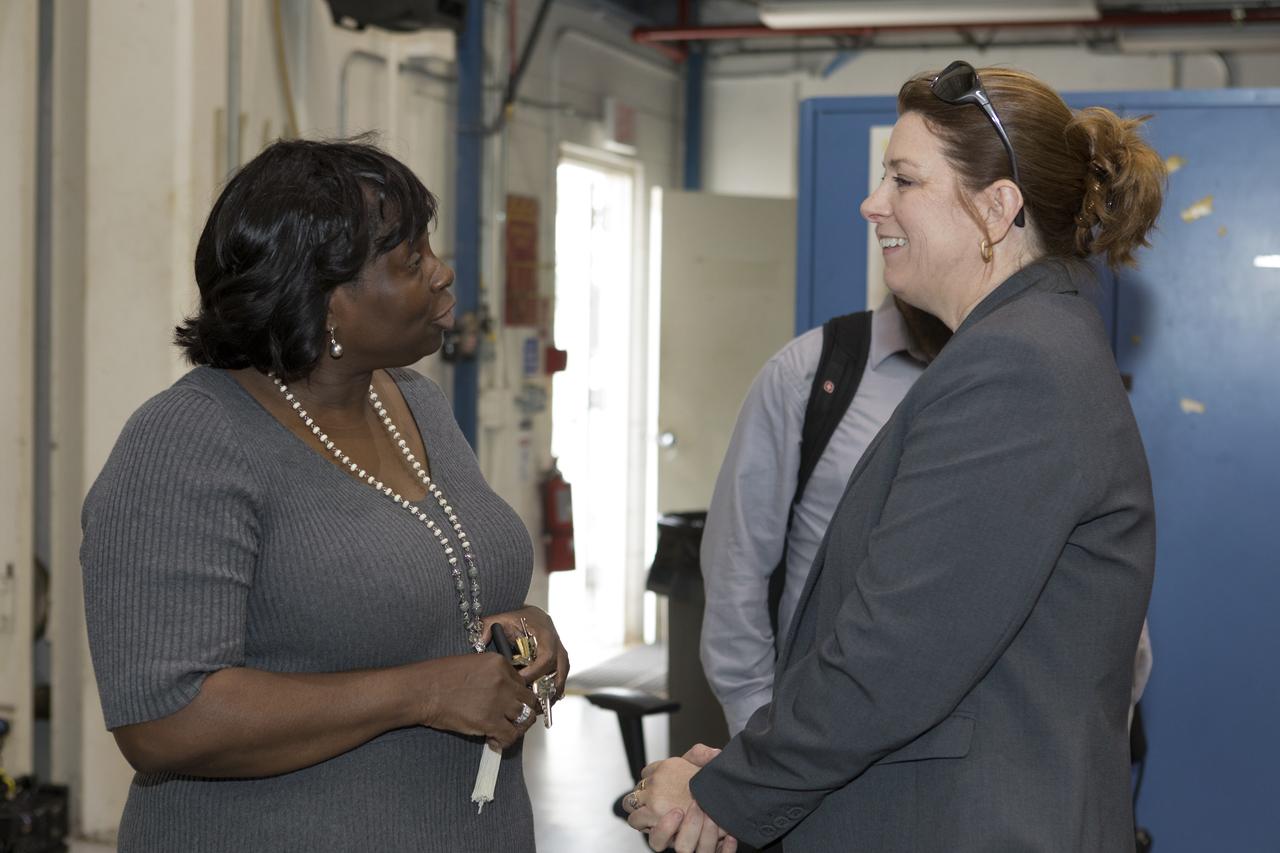
The team that tested the umbilical lines and accessories that will connect from the mobile launcher to NASA's Space Launch System rocket and Orion spacecraft for Exploration Mission-1 hold a banner signing event July 24, 2018, to mark completion of testing at the Launch Equipment Test Facility (LETF) at NASA's Kennedy Space Center in Florida. Attendees visit during the event. A total of 21 umbilicals and launch accessories were tested on various simulators at the LETF before they were transferred to the mobile launcher for installation.
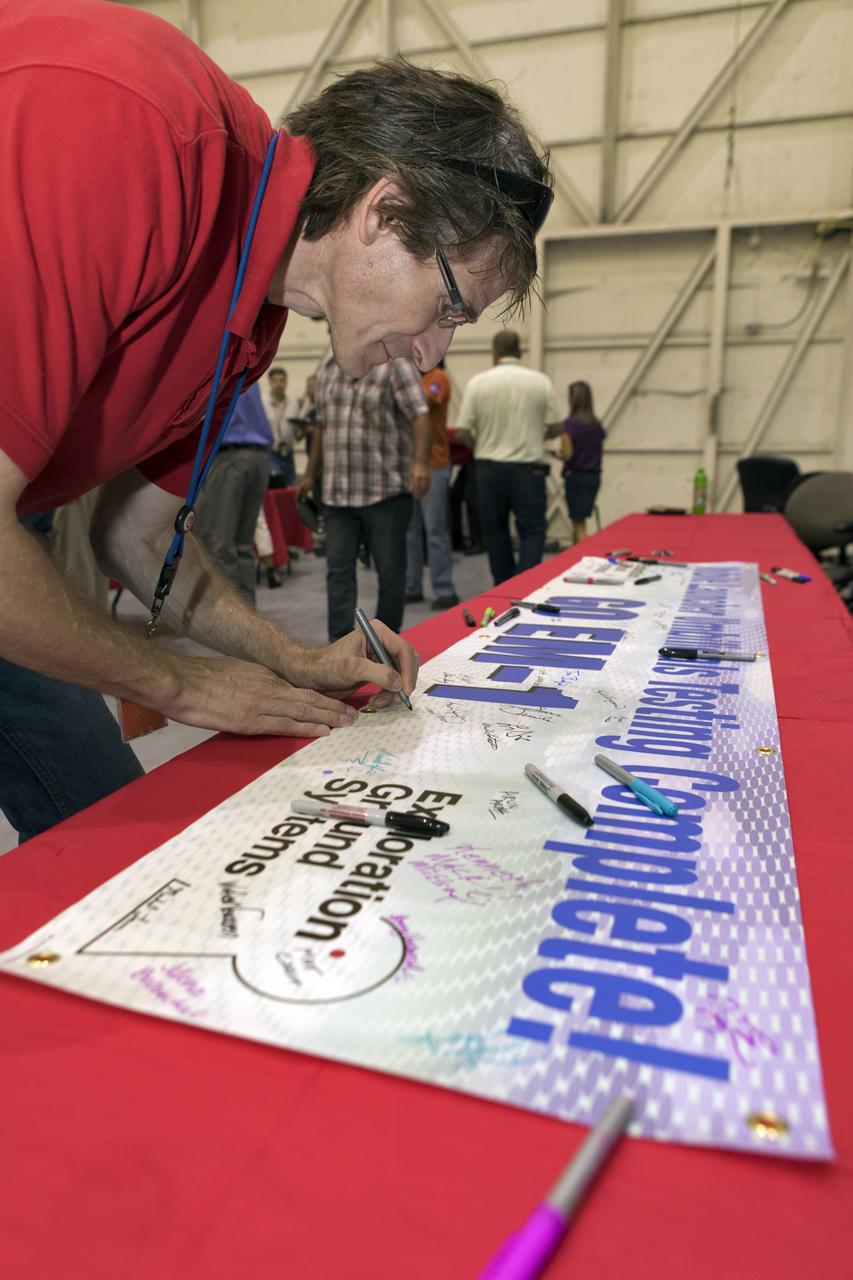
The team that tested the umbilical lines and accessories that will connect from the mobile launcher to NASA's Space Launch System rocket and Orion spacecraft for Exploration Mission-1 hold a banner signing event July 24, 2018, to mark completion of testing at the Launch Equipment Test Facility (LETF) at NASA's Kennedy Space Center in Florida. A total of 21 umbilicals and launch accessories were tested on various simulators at the LETF before they were transferred to the mobile launcher for installation.
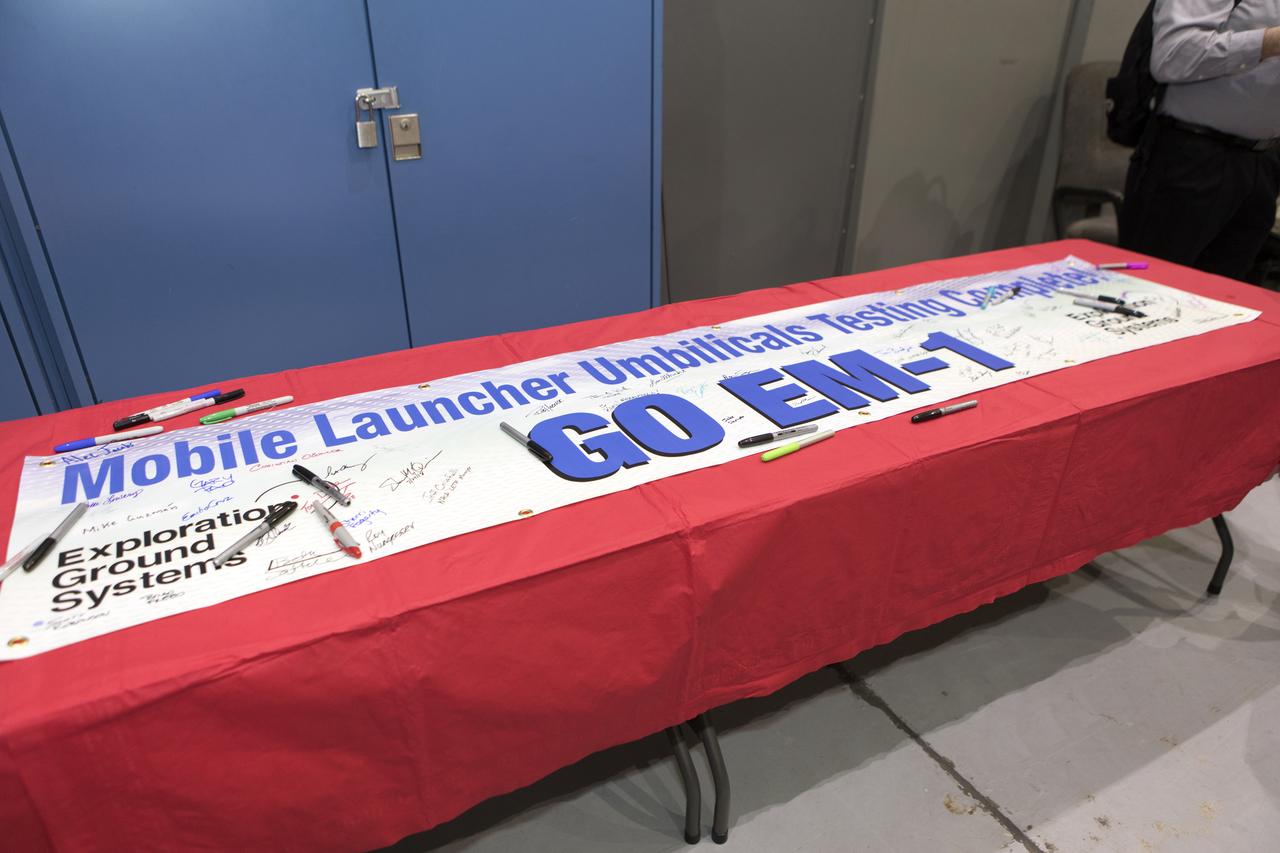
The team that tested the umbilical lines and accessories that will connect from the mobile launcher to NASA's Space Launch System rocket and Orion spacecraft for Exploration Mission-1 hold a banner signing event July 24, 2018, to mark completion of testing at the Launch Equipment Test Facility (LETF) at NASA's Kennedy Space Center in Florida. A total of 21 umbilicals and launch accessories were tested on various simulators at the LETF before they were transferred to the mobile launcher for installation.
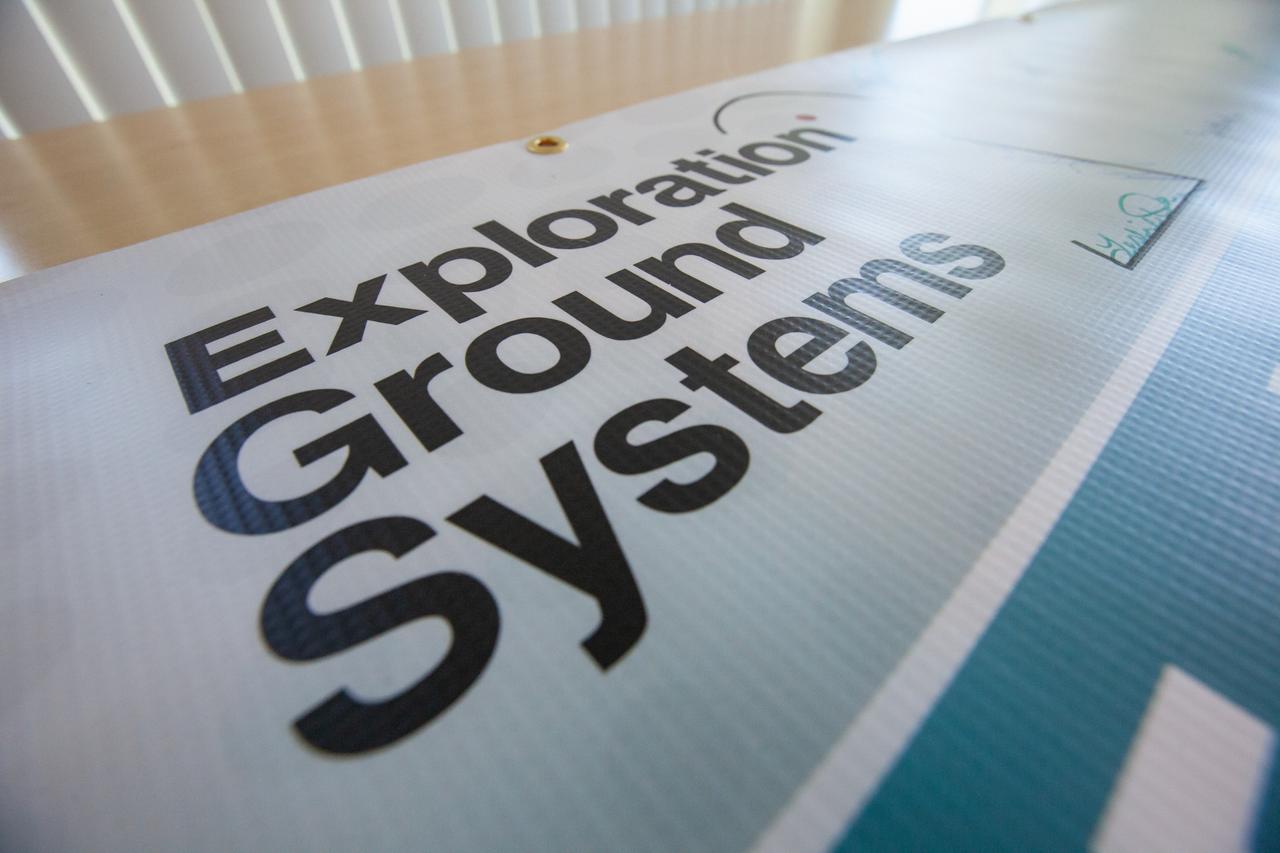
A banner signing event was held April 22, 2019, at NASA’s Kennedy Space Center in Florida, to mark the accomplishments of the Kennedy engineering team that supported the Ground Support Equipment (GSE) Subsystem Software development. This team includes the software leads, local developers, remote developers, modelers, project engineers, software quality assurance, build team members, integrators, system engineers, a chief engineer and some software managers. There are 60 unique instances of GSE Subsystem Software code. As of today, 58 of those 60 instances have completed software Level 5 Verification (L5V) and are in the process of completing Subsystem Verification & Validation.
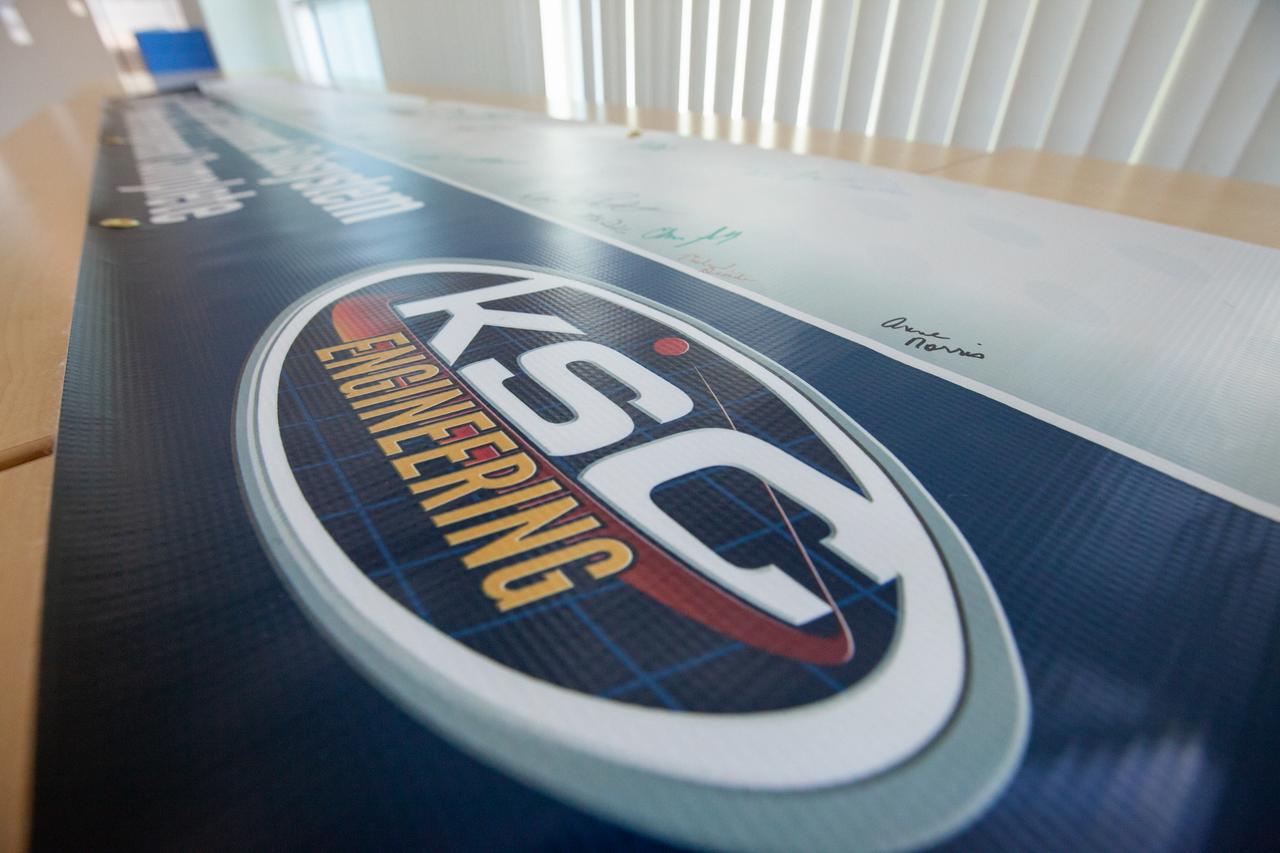
A banner signing event was held April 22, 2019, at NASA’s Kennedy Space Center in Florida, to mark the accomplishments of the Kennedy engineering team that supported the Ground Support Equipment (GSE) Subsystem Software development. This team includes the software leads, local developers, remote developers, modelers, project engineers, software quality assurance, build team members, integrators, system engineers, a chief engineer and some software managers. There are 60 unique instances of GSE Subsystem Software code. As of today, 58 of those 60 instances have completed software Level 5 Verification (L5V) and are in the process of completing Subsystem Verification & Validation.
A banner signing event was held April 22, 2019, at NASA’s Kennedy Space Center in Florida, to mark the accomplishments of the Kennedy engineering team that supported the Ground Support Equipment (GSE) Subsystem Software development. This team includes the software leads, local developers, remote developers, modelers, project engineers, software quality assurance, build team members, integrators, system engineers, a chief engineer and some software managers. There are 60 unique instances of GSE Subsystem Software code. As of today, 58 of those 60 instances have completed software Level 5 Verification (L5V) and are in the process of completing Subsystem Verification & Validation.
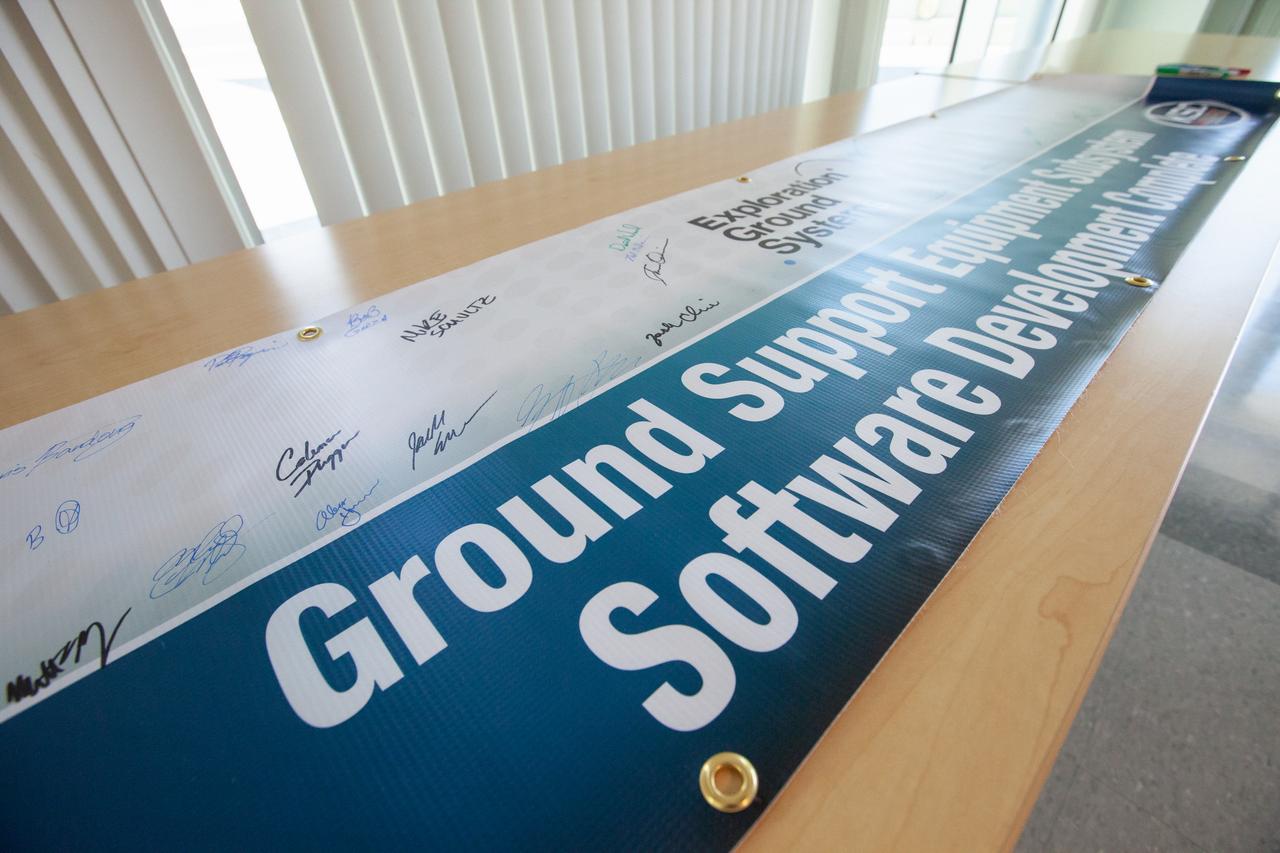
A banner signing event was held April 22, 2019, at NASA’s Kennedy Space Center in Florida, to mark the accomplishments of the Kennedy engineering team that supported the Ground Support Equipment (GSE) Subsystem Software development. This team includes the software leads, local developers, remote developers, modelers, project engineers, software quality assurance, build team members, integrators, system engineers, a chief engineer and some software managers. There are 60 unique instances of GSE Subsystem Software code. As of today, 58 of those 60 instances have completed software Level 5 Verification (L5V) and are in the process of completing Subsystem Verification & Validation.

A banner signing event was held April 22, 2019, at NASA’s Kennedy Space Center in Florida, to mark the accomplishments of the Kennedy engineering team that supported the Ground Support Equipment (GSE) Subsystem Software development. This team includes the software leads, local developers, remote developers, modelers, project engineers, software quality assurance, build team members, integrators, system engineers, a chief engineer and some software managers. There are 60 unique instances of GSE Subsystem Software code. As of today, 58 of those 60 instances have completed software Level 5 Verification (L5V) and are in the process of completing Subsystem Verification & Validation.
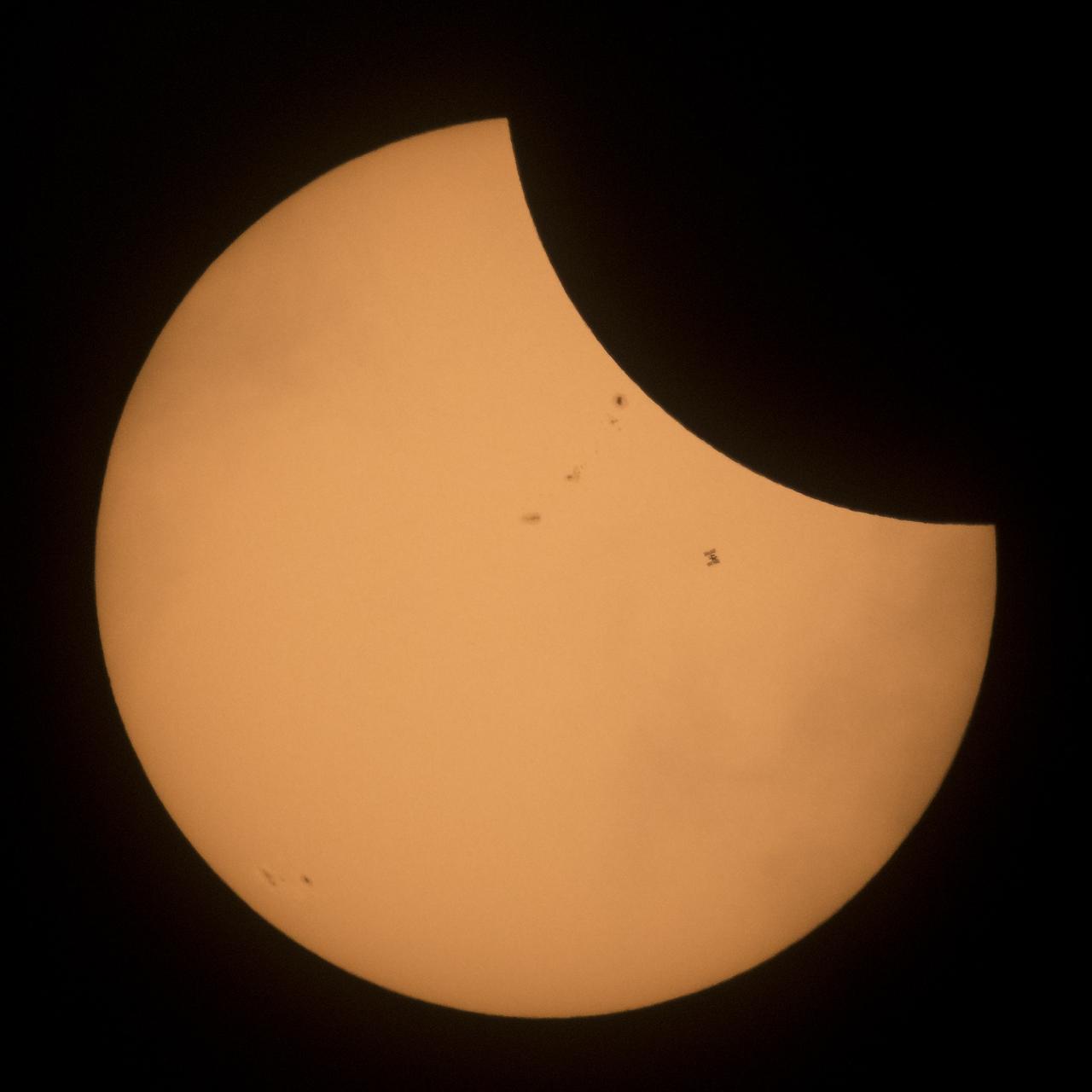
The International Space Station, with a crew of six onboard, is seen in silhouette as it transits the Sun at roughly five miles per second during a partial solar eclipse, Monday, Aug. 21, 2017 near Banner, Wyoming. Onboard as part of Expedition 52 are: NASA astronauts Peggy Whitson, Jack Fischer, and Randy Bresnik; Russian cosmonauts Fyodor Yurchikhin and Sergey Ryazanskiy; and ESA (European Space Agency) astronaut Paolo Nespoli. A total solar eclipse swept across a narrow portion of the contiguous United States from Lincoln Beach, Oregon to Charleston, South Carolina. A partial solar eclipse was visible across the entire North American continent along with parts of South America, Africa, and Europe. Photo Credit: (NASA/Joel Kowsky)
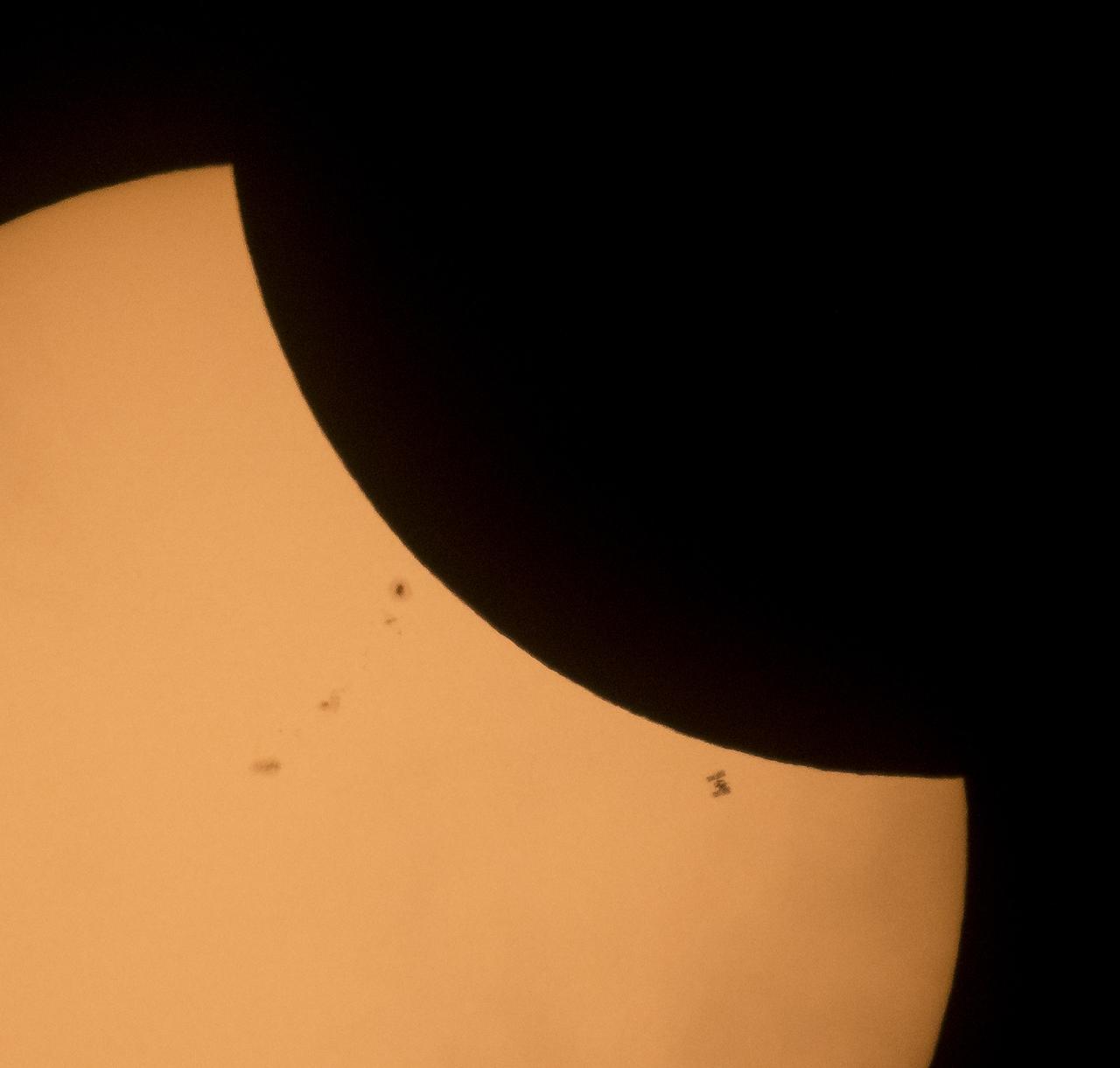
The International Space Station, with a crew of six onboard, is seen in silhouette as it transits the Sun at roughly five miles per second during a partial solar eclipse, Monday, Aug. 21, 2017 near Banner, Wyoming. Onboard as part of Expedition 52 are: NASA astronauts Peggy Whitson, Jack Fischer, and Randy Bresnik; Russian cosmonauts Fyodor Yurchikhin and Sergey Ryazanskiy; and ESA (European Space Agency) astronaut Paolo Nespoli. A total solar eclipse swept across a narrow portion of the contiguous United States from Lincoln Beach, Oregon to Charleston, South Carolina. A partial solar eclipse was visible across the entire North American continent along with parts of South America, Africa, and Europe. Photo Credit: (NASA/Joel Kowsky)

The team that tested the umbilical lines and accessories that will connect from the mobile launcher to NASA's Space Launch System rocket and Orion spacecraft for Exploration Mission-1 hold a banner signing event July 24, 2018, to mark completion of testing at the Launch Equipment Test Facility (LETF) at NASA's Kennedy Space Center in Florida. Speaking at the event is Andy Allen, far right, program manager for Jacobs TOSC. Next to him, from left, are Shawn Quinn, director of Engineering; Scott Colloredo, deputy director of Engineering; and Russ Deloach, director of Safety and Mission Assurance. A total of 21 umbilicals and launch accessories were tested on various simulators at the LETF before they were transferred to the mobile launcher for installation.
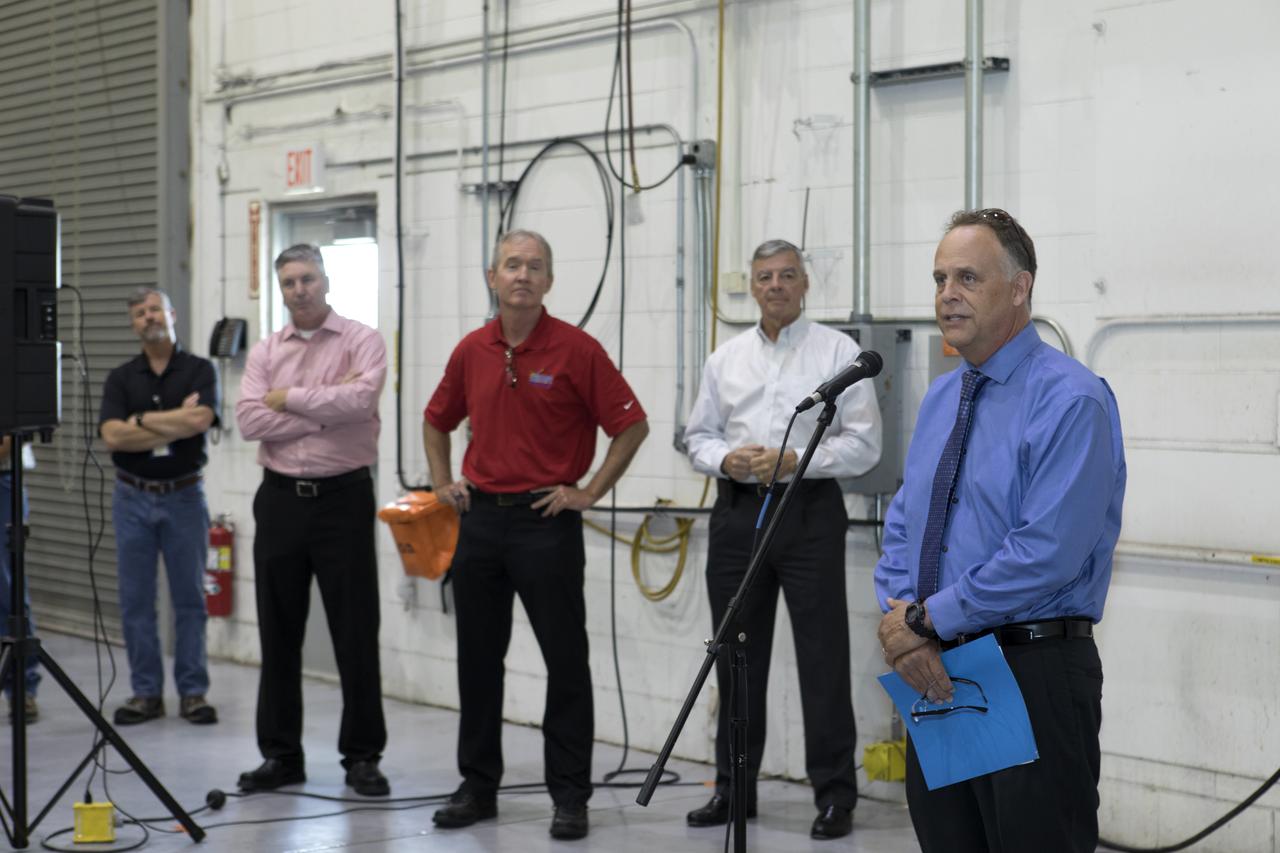
The team that tested the umbilical lines and accessories that will connect from the mobile launcher to NASA's Space Launch System rocket and Orion spacecraft for Exploration Mission-1 hold a banner signing event July 24, 2018, to mark completion of testing at the Launch Equipment Test Facility (LETF) at NASA's Kennedy Space Center in Florida. Speaking at the event is Shawn Quinn, far right, director of Engineering. Next to him, from left, are Scott Colloredo, deputy director of Engineering; Russ Deloach, director of Safety and Mission Assurance; and Andy Allen, program manager for Jacobs TOSC. A total of 21 umbilicals and launch accessories were tested on various simulators at the LETF before they were transferred to the mobile launcher for installation.
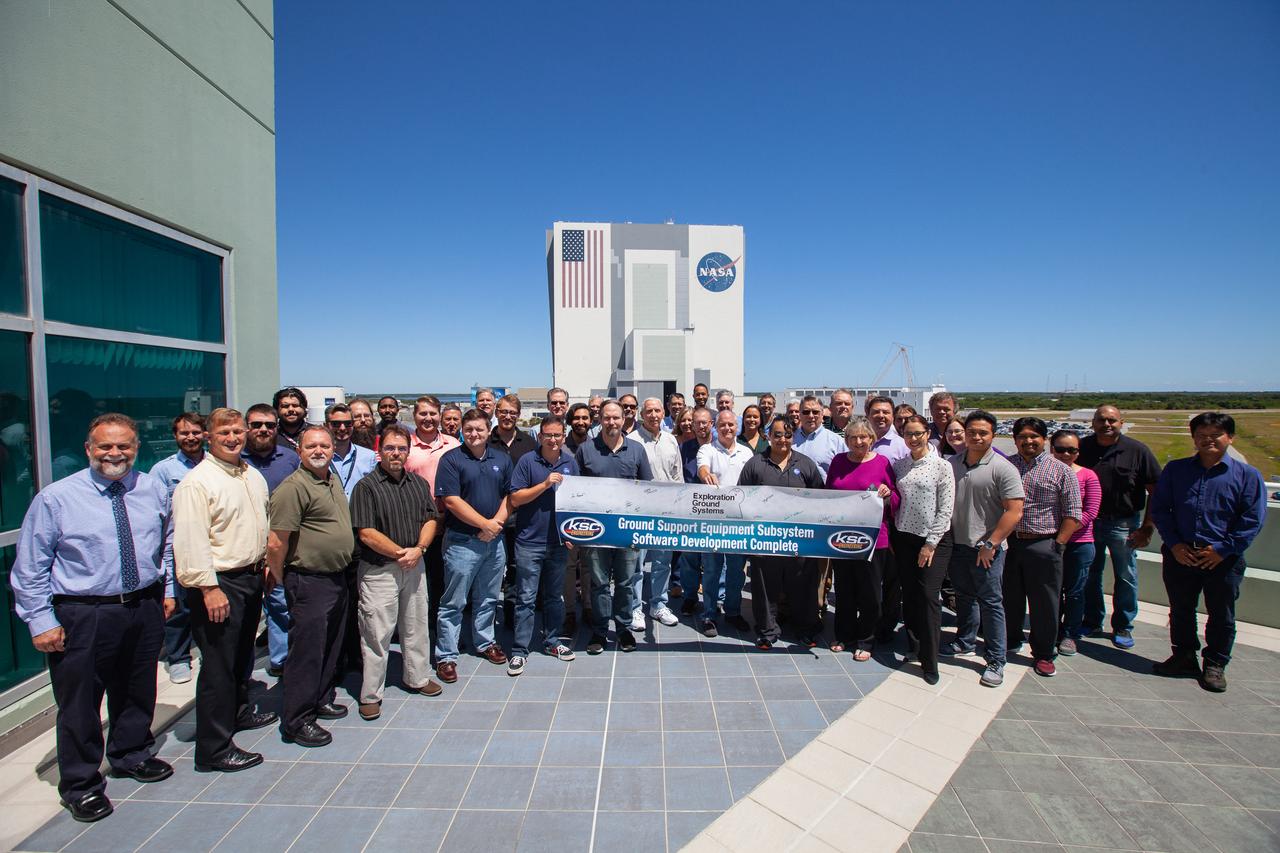
A banner signing event was held April 22, 2019, at NASA’s Kennedy Space Center in Florida, to mark the accomplishments of the Kennedy engineering team that supported the Ground Support Equipment (GSE) Subsystem Software development. The team gathered in the observation area of the Operations Support Building II with a view of the Vehicle Assembly Building behind them. This team includes the software leads, local developers, remote developers, modelers, project engineers, software quality assurance, build team members, integrators, system engineers, a chief engineer and some software managers. There are 60 unique instances of GSE Subsystem Software code. As of today, 58 of those 60 instances have completed software Level 5 Verification (L5V) and are in the process of completing Subsystem Verification & Validation.

The team that tested the umbilical lines and accessories that will connect from the mobile launcher to NASA's Space Launch System rocket and Orion spacecraft for Exploration Mission-1 hold a banner signing event July 24, 2018, to mark completion of testing at the Launch Equipment Test Facility (LETF) at NASA's Kennedy Space Center in Florida. Speaking at the event is Andy Allen, far right, program manager for Jacobs TOSC. Next to him, from left, are Shawn Quinn, director of Engineering; Scott Colloredo, deputy director of Engineering; and Russ Deloach, director of Safety and Mission Assurance. A total of 21 umbilicals and launch accessories were tested on various simulators at the LETF before they were transferred to the mobile launcher for installation.
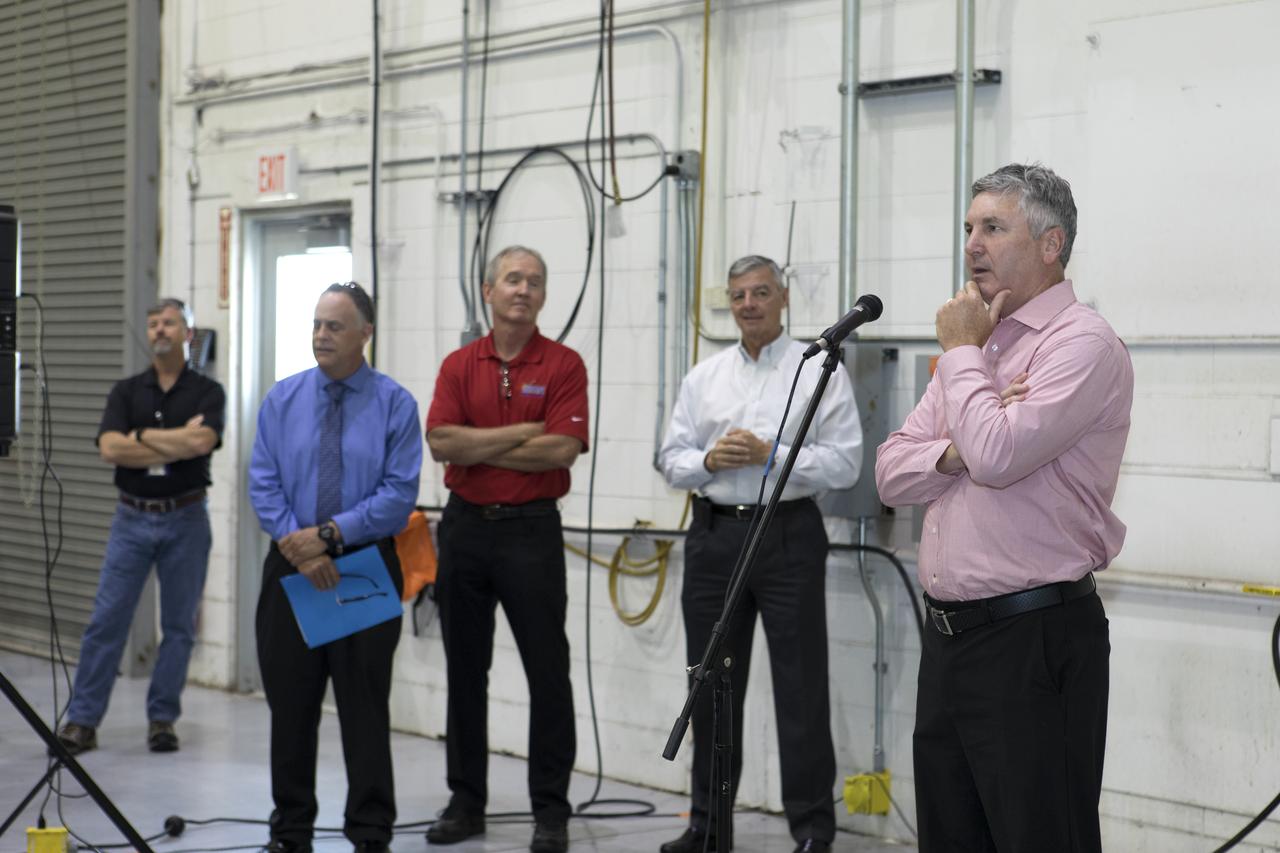
The team that tested the umbilical lines and accessories that will connect from the mobile launcher to NASA's Space Launch System rocket and Orion spacecraft for Exploration Mission-1 hold a banner signing event July 24, 2018, to mark completion of testing at the Launch Equipment Test Facility (LETF) at NASA's Kennedy Space Center in Florida. Speaking at the event is Scott Colloredo, far right, deputy director of Engineering. Next to him, from left, are Shawn Quinn, director of Engineering. Russ Deloach, director of Safety and Mission Assurance; and Andy Allen, program manager for Jacobs TOSC. A total of 21 umbilicals and launch accessories were tested on various simulators at the LETF before they were transferred to the mobile launcher for installation.
NASA Kennedy Space Center's Engineering Directorate held a banner signing event in the Prototype Development Laboratory to mark the successful delivery of a liquid oxygen test tank, called Tardis. Engineers and technicians worked together to develop the tank and build it to support cryogenic testing at Johnson Space Center's White Stands Test Facility in Las Cruces, New Mexico. The 12-foot-tall, 3,810-pound aluminum tank will be shipped to White Sands for testing.
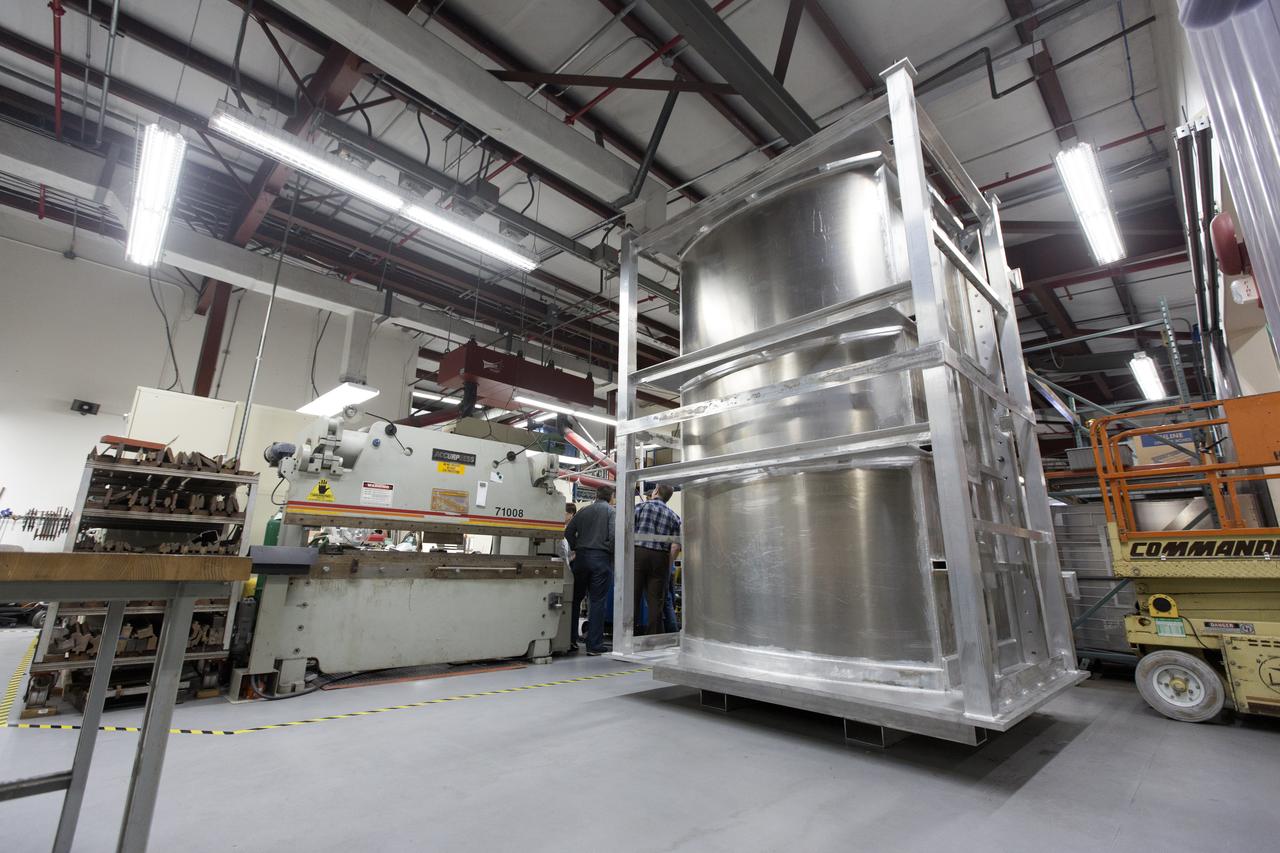
A liquid oxygen test tank was completed in the Prototype Development Laboratory at NASA's Kennedy Space Center in Florida. A banner signing event marked the successful delivery of the tank called Tardis. Engineers and technicians worked together to develop the tank and build it at the lab to support cryogenic testing at Johnson Space Center's White Sands Test Facility in Las Cruces, New Mexico. The 12-foot-tall, 3,810-pound aluminum tank will be shipped to White Sands for testing.
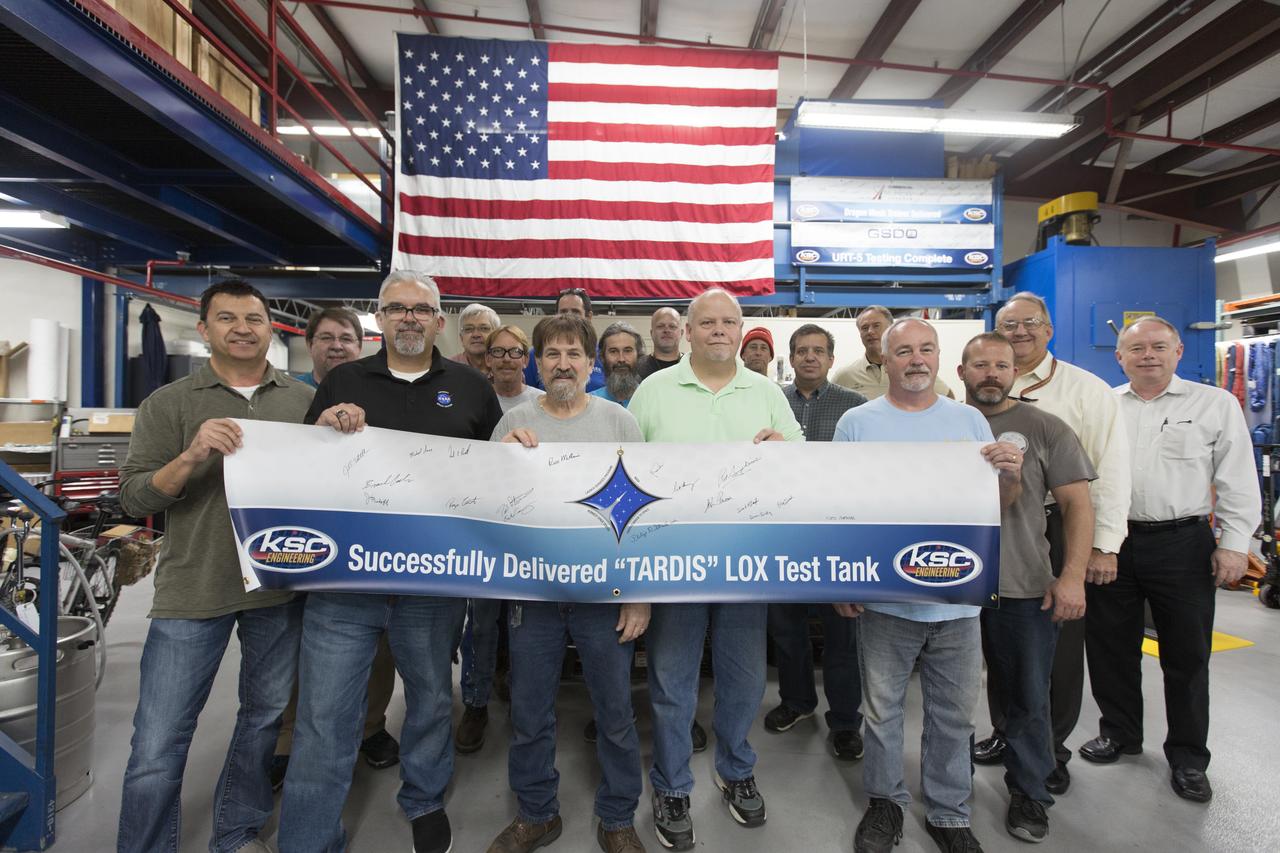
Inside the Prototype Development Laboratory at NASA's Kennedy Space Center in Florida, workers in the lab hold a banner marking the successful delivery of a liquid oxygen test tank called Tardis. Engineers and technicians worked together to develop the tank to build it at the lab to support cryogenic testing at Johnson Space Center's White Sands Test Facility in Las Cruces, New Mexico. The 12-foot-tall, 3,810-pound aluminum tank will be shipped to White Sands for testing.
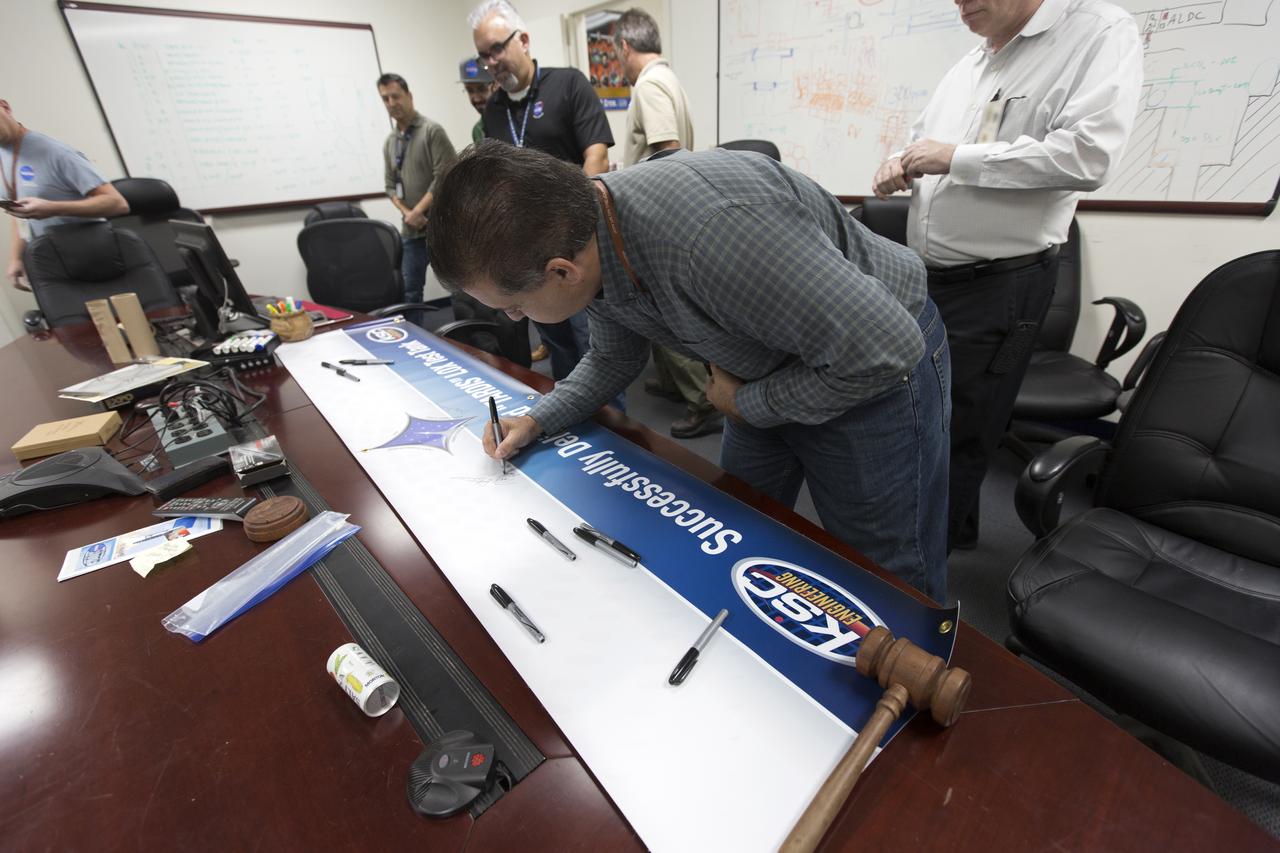
Workers sign the banner marking the successful delivery of a liquid oxygen test tank, called Tardis, in the Prototype Development Laboratory at NASA's Kennedy Space Center in Florida. Engineers and technicians worked together to develop the tank and build it at the lab to support cryogenic testing at Johnson Space Center's White Sands Test Facility in Las Cruces, New Mexico. The 12-foot-tall, 3,810-pound aluminum tank will be shipped to White Sands for testing.
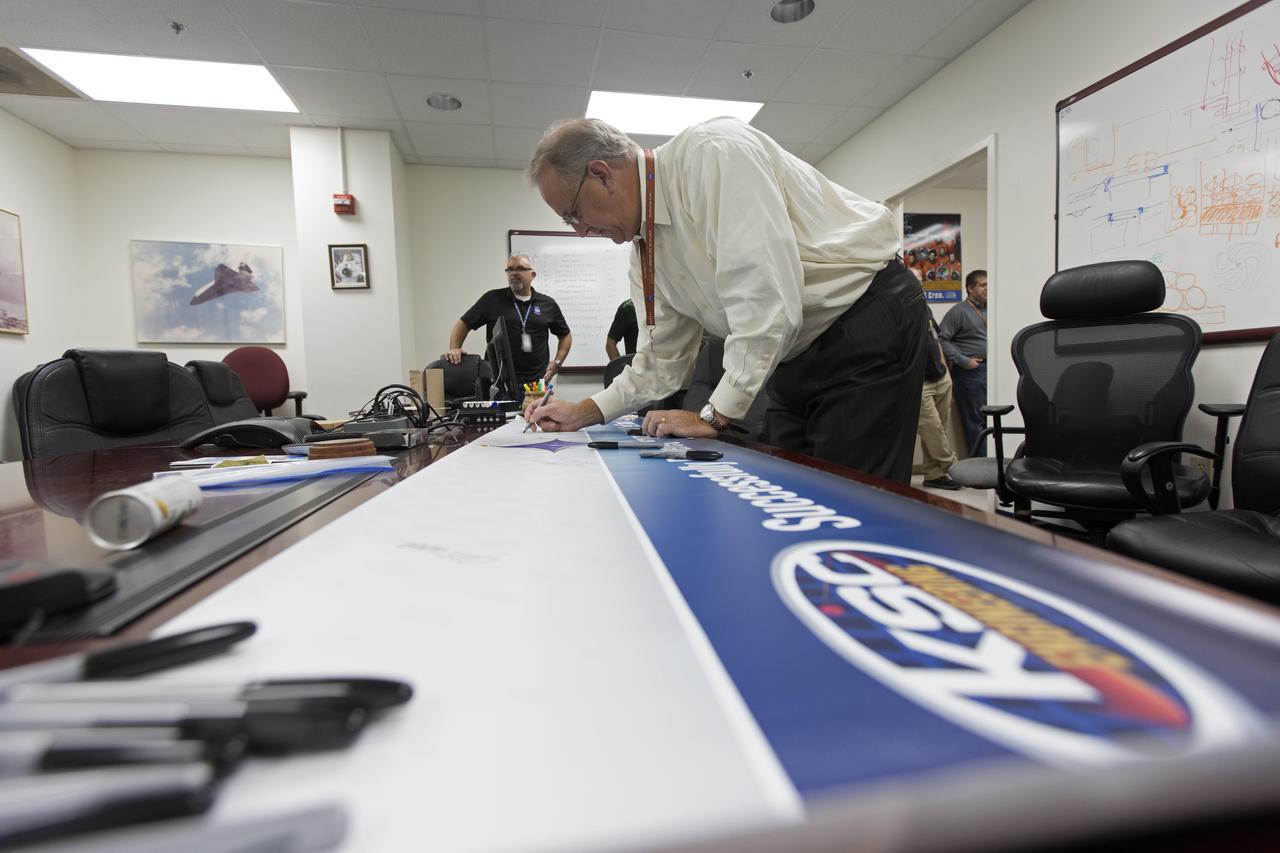
NASA Kennedy Space Center's Engineering Director Pat Simpkins signs the banner marking the successful delivery of a liquid oxygen test tank, called Tardis, in the Prototype Development Laboratory at NASA's Kennedy Space Center in Florida. Engineers and technicians worked together to develop the tank and build it to support cryogenic testing at Johnson Space Center's White Stands Test Facility in Las Cruces, New Mexico. The 12-foot-tall, 3,810-pound aluminum tank will be shipped to White Sands for testing.
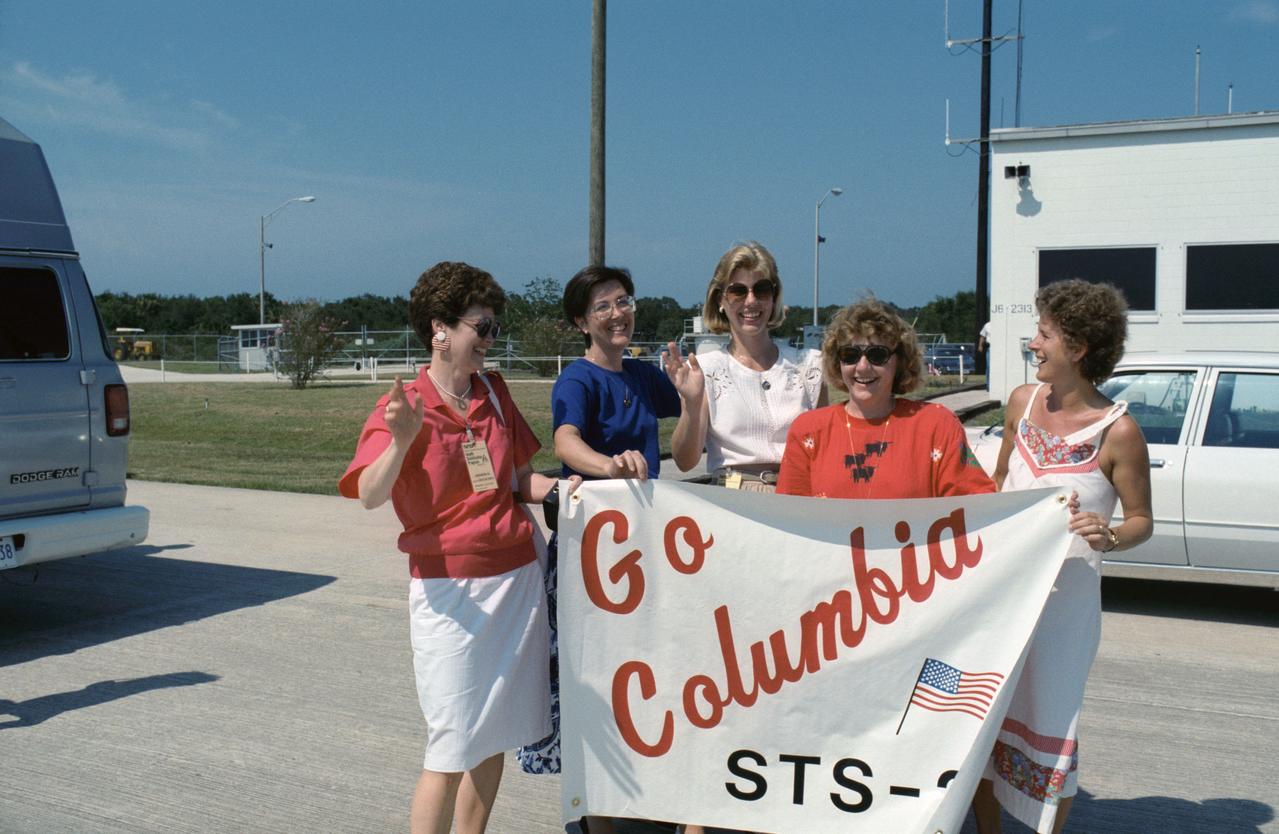
STS028-S-009 (5 Aug 1989) --- Wives of the STS-28 crewmembers display a banner upon the arrival of the astronauts in Florida to begin preparing for their Aug. 8 launch. Left to right are Susan Adamson, Kathleen Ann Shaw, Lynne A. Brown, Lois Richards and Patti K. Leestma. The banner reads, "Go Columbia, STS-28." Launch for the Department of Defense (DOD)-devoted mission is scheduled for August 8.
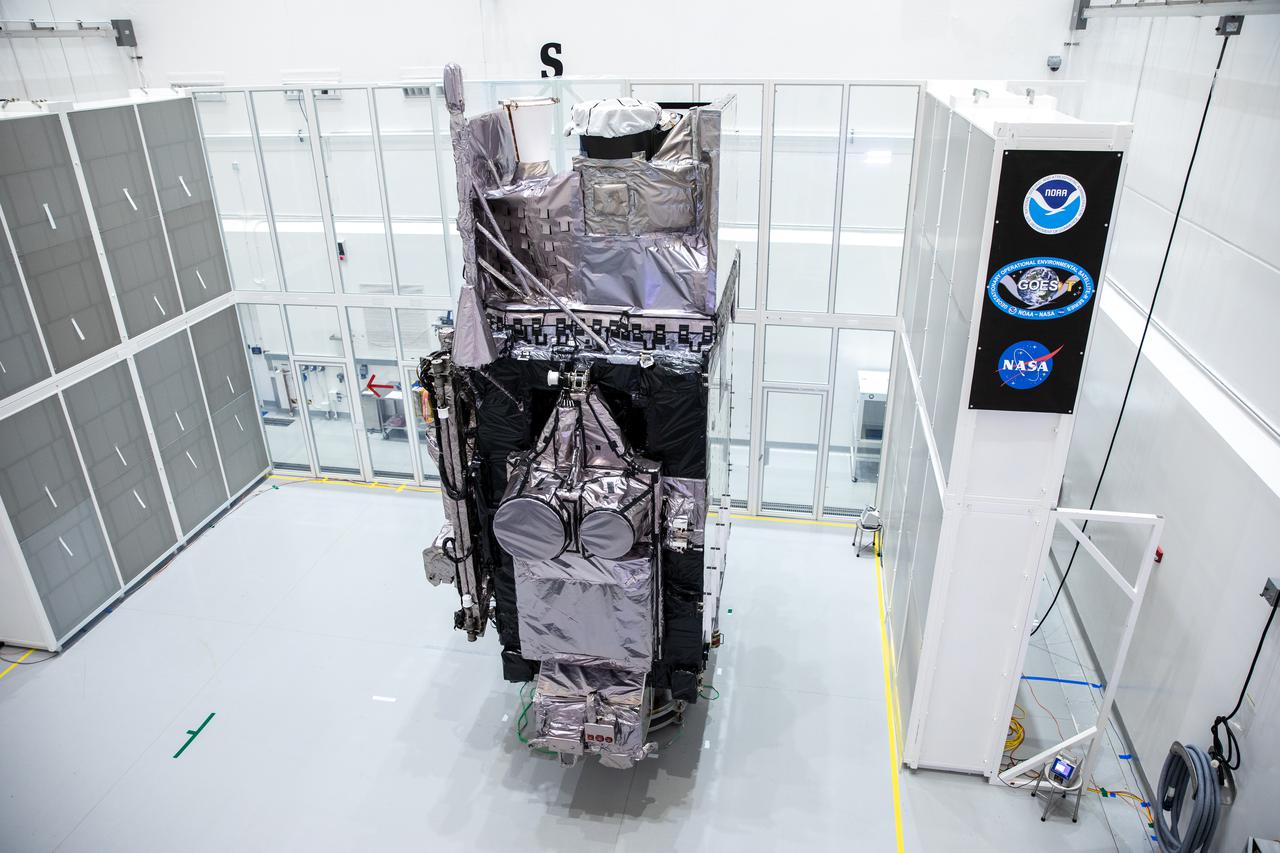
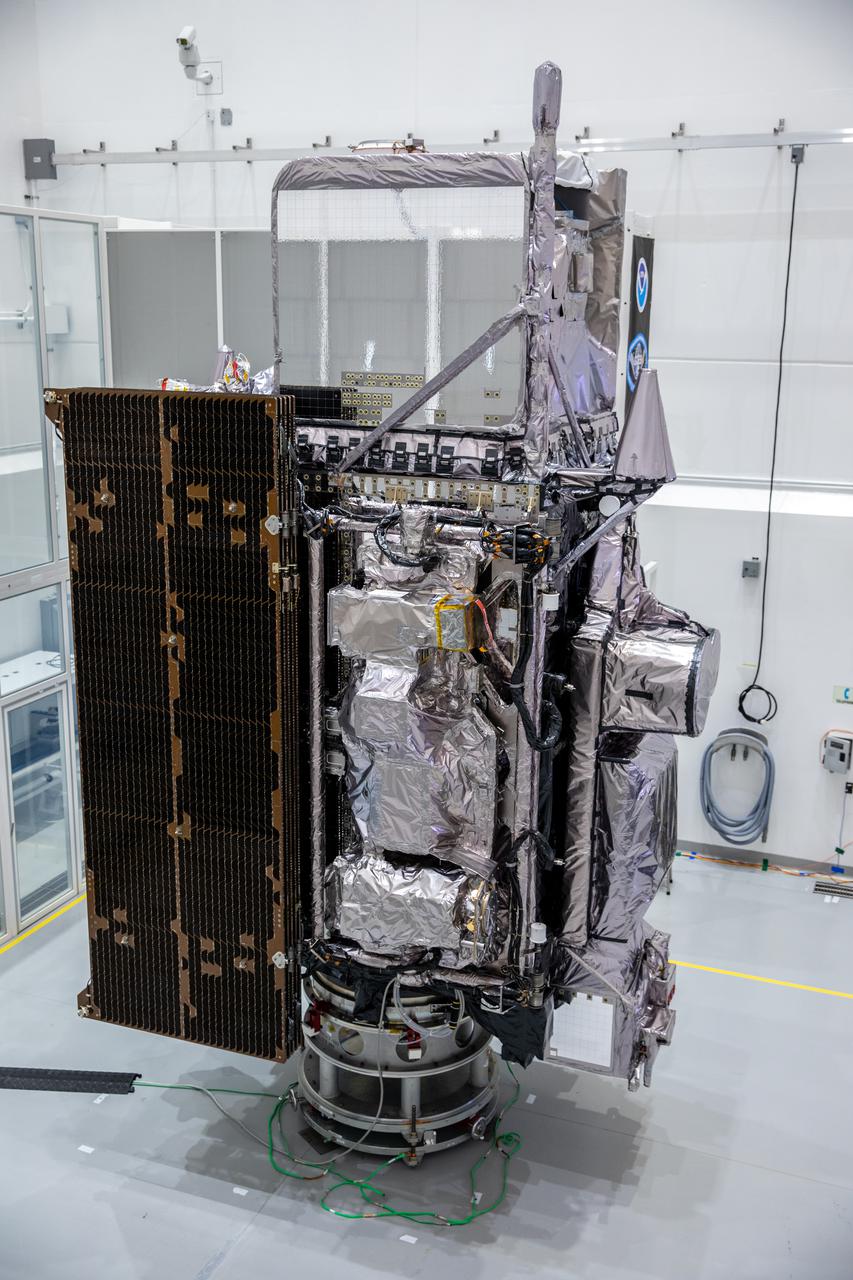
NOAA’s Geostationary Operational Environmental Satellite-T (GOES-T) is in view alongside its banner inside the Astrotech Space Operations facility in Titusville, Florida, on Jan. 20, 2022. GOES-T is scheduled to launch on March 1, 2022, atop a United Launch Alliance (ULA) Atlas V 541 rocket from Space Launch Complex 41 at Cape Canaveral Space Force Station. GOES-T is the third satellite in the GOES-R series that will continue to help meteorologists observe and predict local weather events that affect public safety. The launch is being managed by NASA’s Launch Services Program based at Kennedy Space Center in Florida, America’s multi-user spaceport.
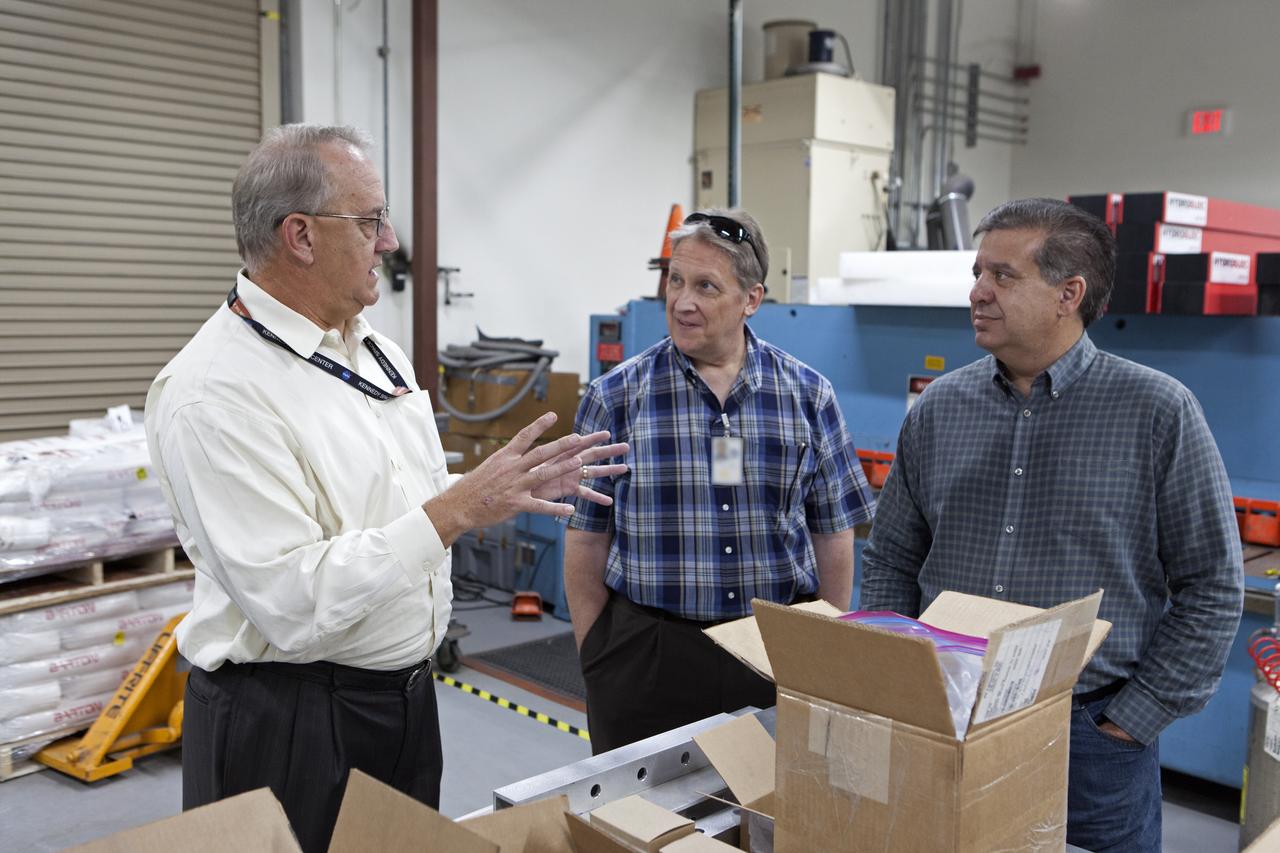
NASA Kennedy Space Center's Engineering Director Pat Simpkins, at left, talks with Michael E. Johnson, a project engineer; and Emilio Cruz, deputy division chief in the Laboratories, Development and Testing Division, inside the Prototype Development Laboratory. A banner signing event was held to mark the successful delivery of a liquid oxygen test tank, called Tardis. Engineers and technicians worked together to develop the tank and build it at the lab to support cryogenic testing at Johnson Space Center's White Sands Test Facility in Las Cruces, New Mexico. The 12-foot-tall, 3,810-pound aluminum tank will be shipped to White Sands for testing.
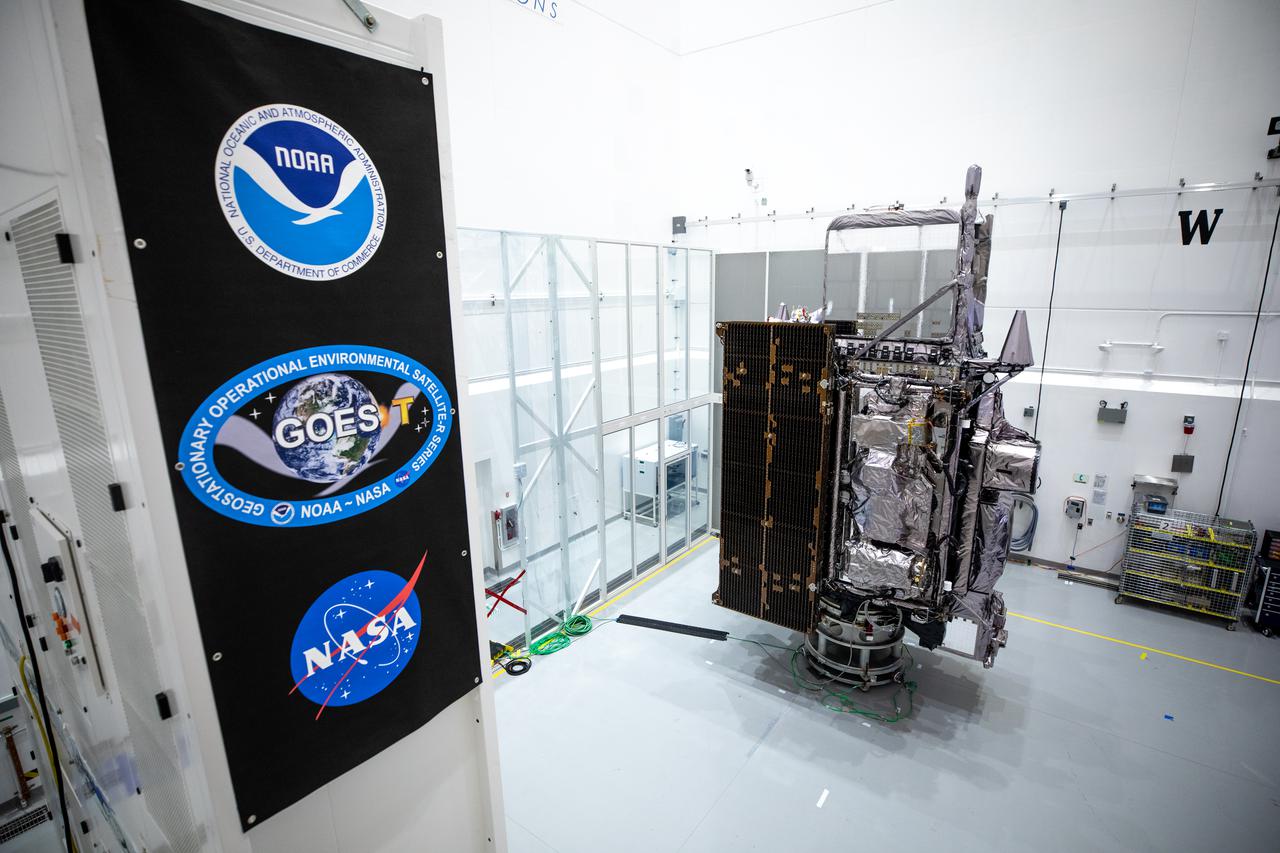
NOAA’s Geostationary Operational Environmental Satellite-T (GOES-T) is in view alongside its banner inside the Astrotech Space Operations facility in Titusville, Florida, on Jan. 20, 2022. GOES-T is scheduled to launch on March 1, 2022, atop a United Launch Alliance (ULA) Atlas V 541 rocket from Space Launch Complex 41 at Cape Canaveral Space Force Station. GOES-T is the third satellite in the GOES-R series that will continue to help meteorologists observe and predict local weather events that affect public safety. The launch is being managed by NASA’s Launch Services Program based at Kennedy Space Center in Florida, America’s multi-user spaceport.
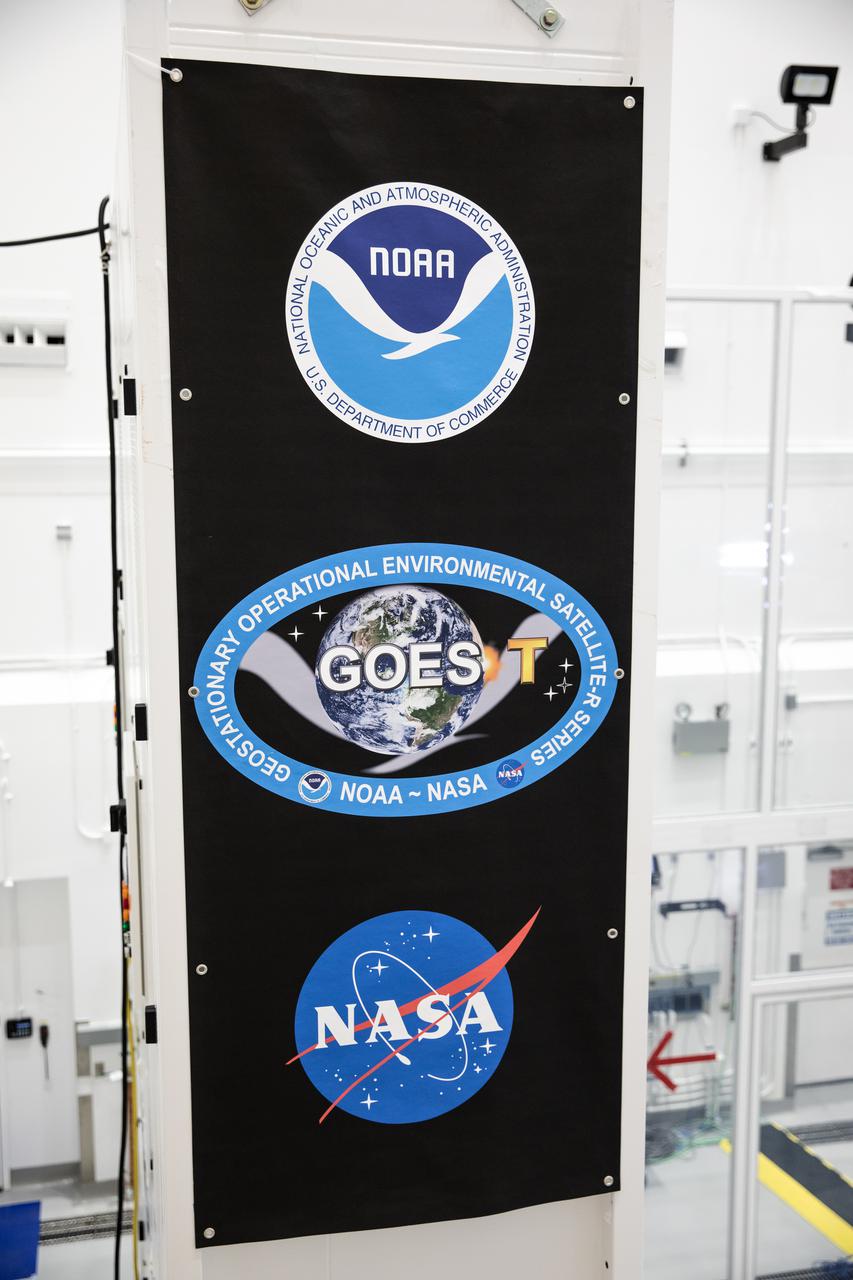
A banner for NOAA’s Geostationary Operational Environmental Satellite-T (GOES-T) is in view inside the Astrotech Space Operations facility in Titusville, Florida, on Jan. 20, 2022. GOES-T is scheduled to launch on March 1, 2022, atop a United Launch Alliance (ULA) Atlas V 541 rocket from Space Launch Complex 41 at Cape Canaveral Space Force Station. GOES-T is the third satellite in the GOES-R series that will continue to help meteorologists observe and predict local weather events that affect public safety. The launch is being managed by NASA’s Launch Services Program based at Kennedy Space Center in Florida, America’s multi-user spaceport.
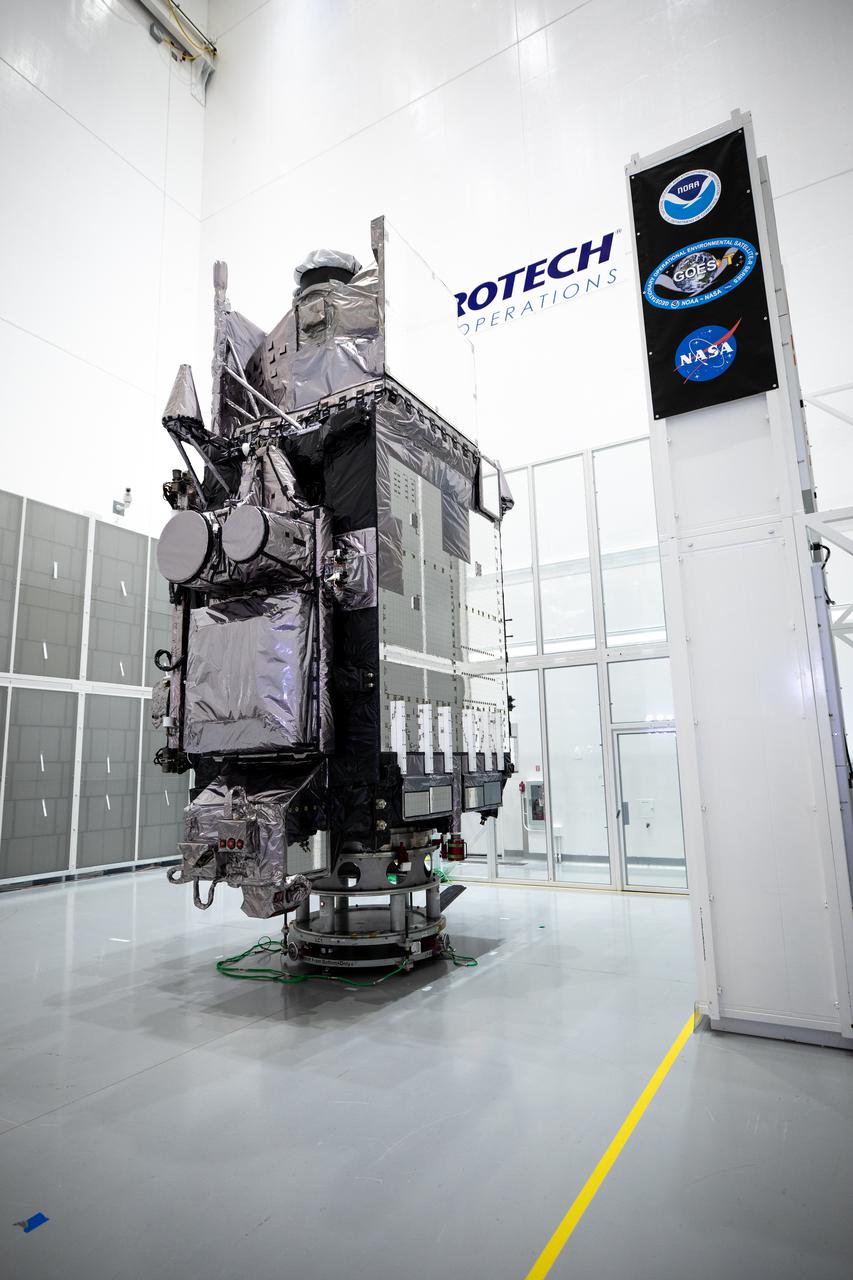
NOAA’s Geostationary Operational Environmental Satellite-T (GOES-T) is in view alongside its banner inside the Astrotech Space Operations facility in Titusville, Florida, on Jan. 20, 2022. GOES-T is scheduled to launch on March 1, 2022, atop a United Launch Alliance (ULA) Atlas V 541 rocket from Space Launch Complex 41 at Cape Canaveral Space Force Station. GOES-T is the third satellite in the GOES-R series that will continue to help meteorologists observe and predict local weather events that affect public safety. The launch is being managed by NASA’s Launch Services Program based at Kennedy Space Center in Florida, America’s multi-user spaceport.
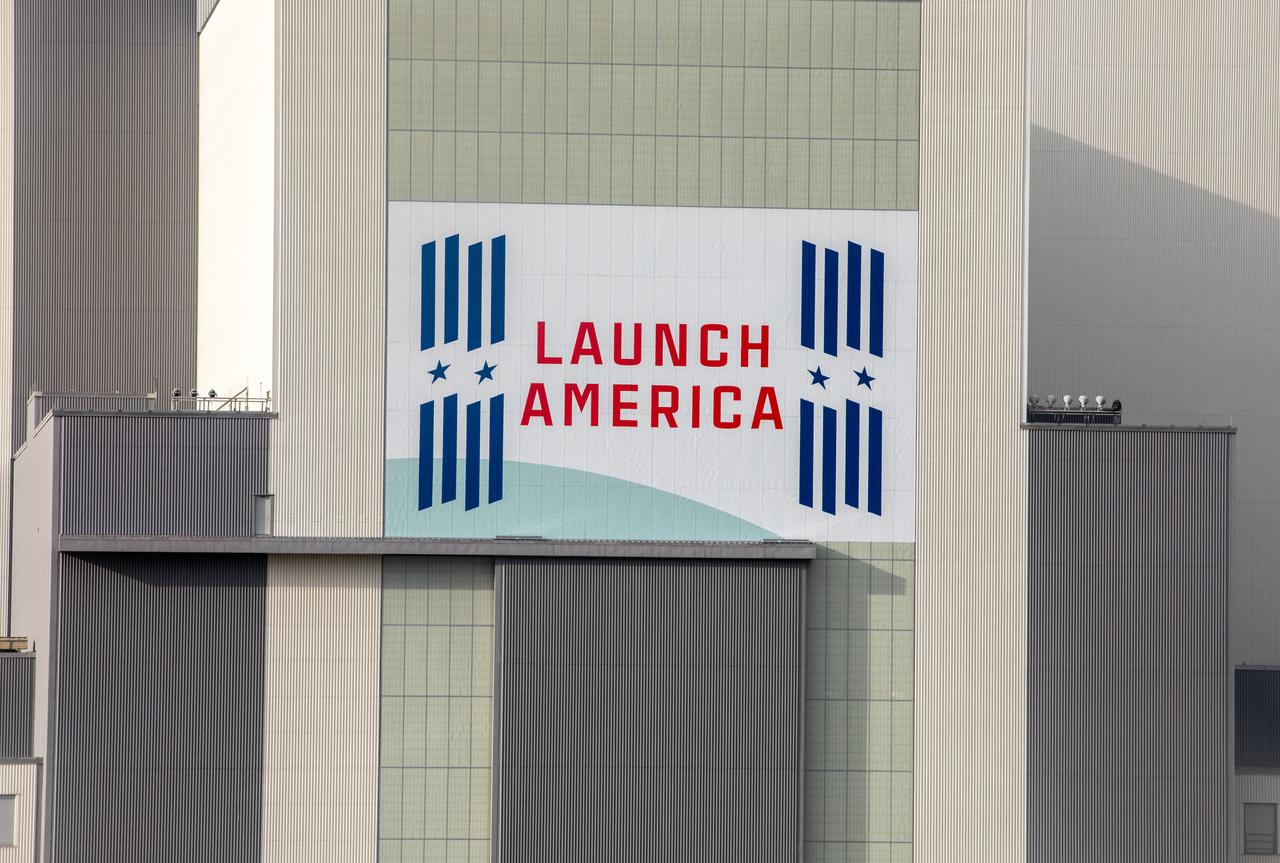
Seen here is the “Launch America” banner for NASA’s Commercial Crew Program (CCP) on the iconic Vehicle Assembly Building at the agency’s Kennedy Space Center in Florida on Oct. 28, 2021. NASA and SpaceX are preparing for Crew-3 – the third crew rotation flight to the International Space Station for CCP – and part of that includes conducting a dress rehearsal ahead of launch. On Oct. 28, NASA’s SpaceX Crew-3 astronauts and launch teams rehearsed countdown operations, concluding with the Go/No-Go poll for Falcon-9 fueling. The Crew-3 mission will carry NASA astronauts Raja Chari, Tom Marshburn, and Kayla Barron, as well as ESA (European Space Agency) astronaut Matthias Maurer to the space station for a six-month stay. SpaceX’s Falcon 9 rocket and Crew Dragon spacecraft are scheduled to lift off from Kennedy’s Launch Complex 39A no earlier than Nov. 6 at 11:36 p.m. EDT.
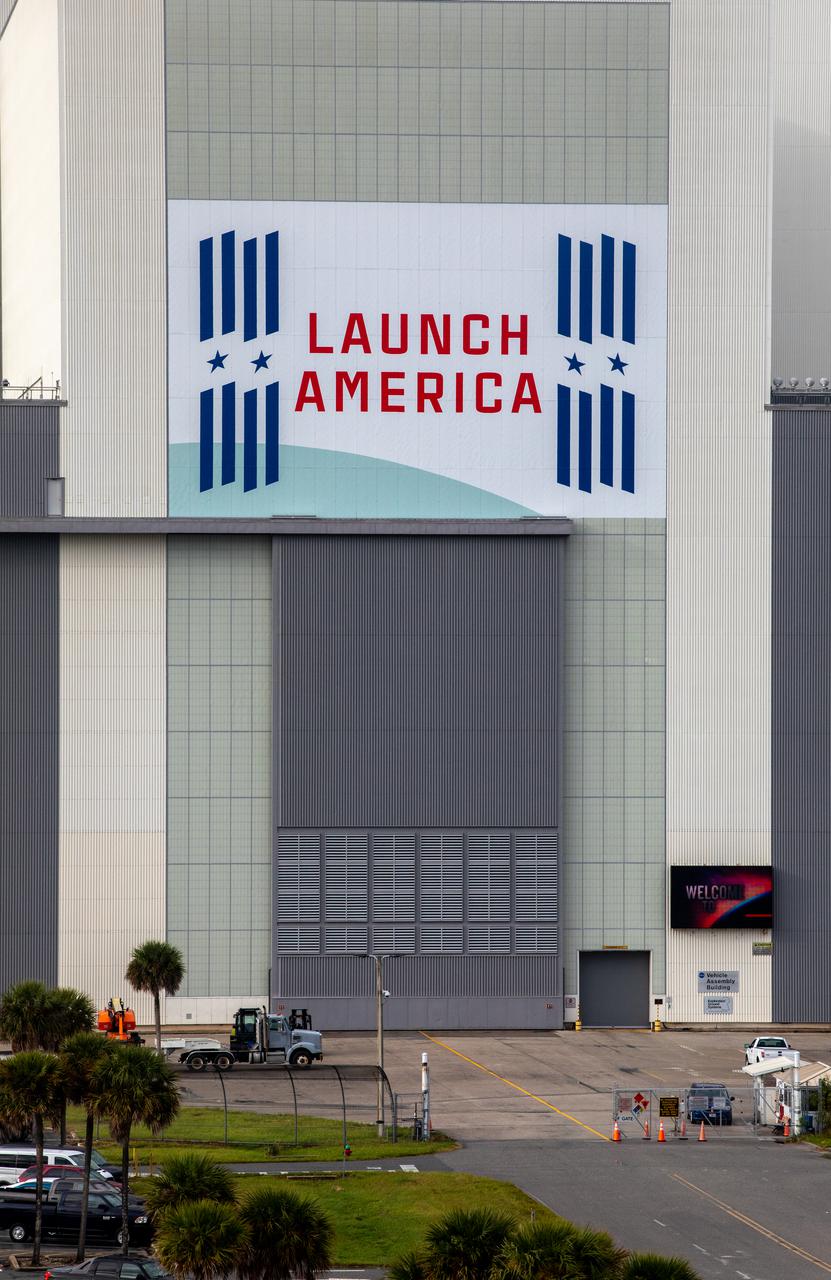
Seen here is the “Launch America” banner for NASA’s Commercial Crew Program (CCP) on the iconic Vehicle Assembly Building at the agency’s Kennedy Space Center in Florida on Oct. 28, 2021. NASA and SpaceX are preparing for Crew-3 – the third crew rotation flight to the International Space Station for CCP – and part of that includes conducting a dress rehearsal ahead of launch. On Oct. 28, NASA’s SpaceX Crew-3 astronauts and launch teams rehearsed countdown operations, concluding with the Go/No-Go poll for Falcon-9 fueling. The Crew-3 mission will carry NASA astronauts Raja Chari, Tom Marshburn, and Kayla Barron, as well as ESA (European Space Agency) astronaut Matthias Maurer to the space station for a six-month stay. SpaceX’s Falcon 9 rocket and Crew Dragon spacecraft are scheduled to lift off from Kennedy’s Launch Complex 39A no earlier than Nov. 6 at 11:36 p.m. EDT.
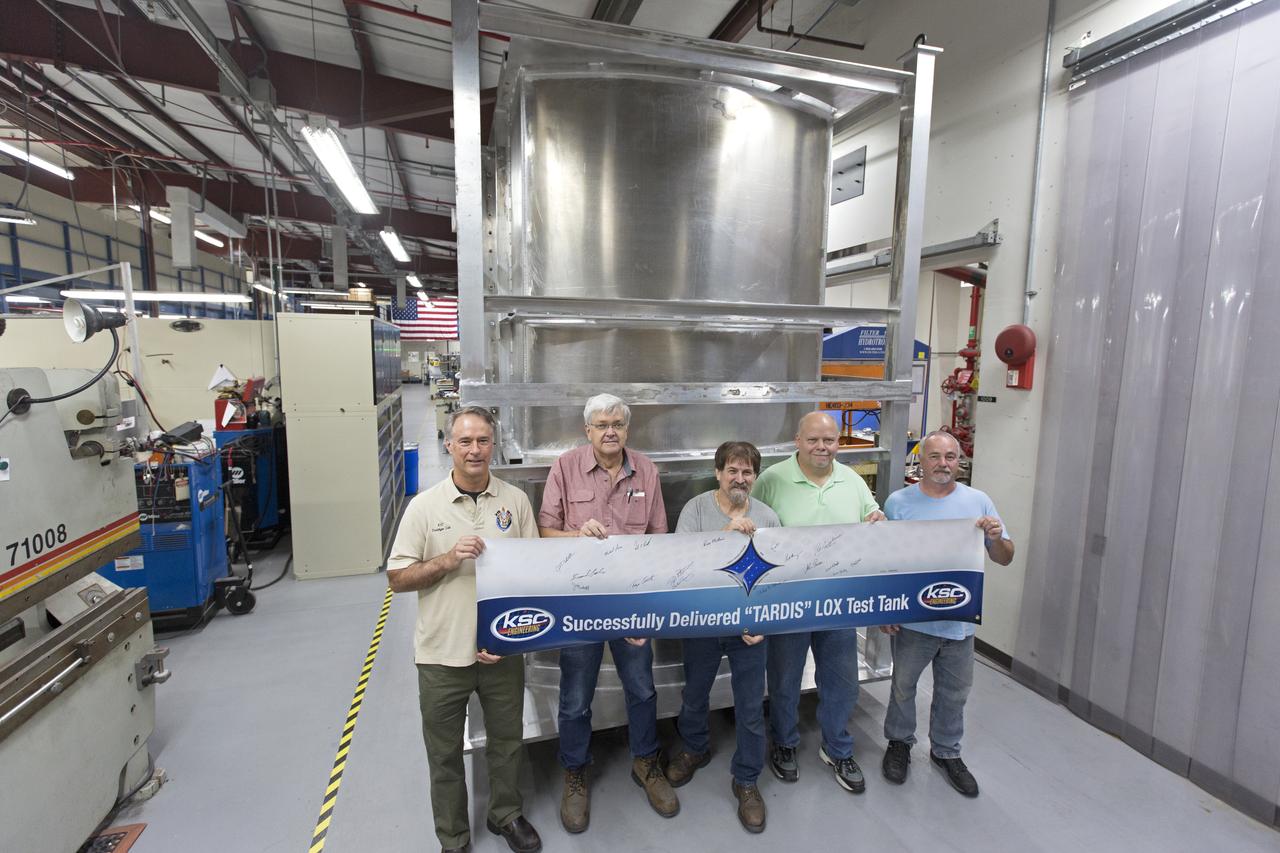
Inside the Prototype Development Laboratory at NASA's Kennedy Space Center in Florida, engineers and technicians hold a banner marking the successful delivery of a liquid oxygen test tank called Tardis. From left, are Todd Steinrock, chief, Fabrication and Development Branch, Prototype Development Lab; David McLaughlin, electrical engineering technician; Phil Stroda, mechanical engineering technician; Perry Dickey, lead electrical engineering technician; and Harold McAmis, lead mechanical engineering technician. Engineers and technicians worked together to develop the tank and build it at the lab to support cryogenic testing at Johnson Space Center's White Sands Test Facility in Las Cruces, New Mexico. The 12-foot-tall, 3,810-pound aluminum tank will be shipped to White Sands for testing.
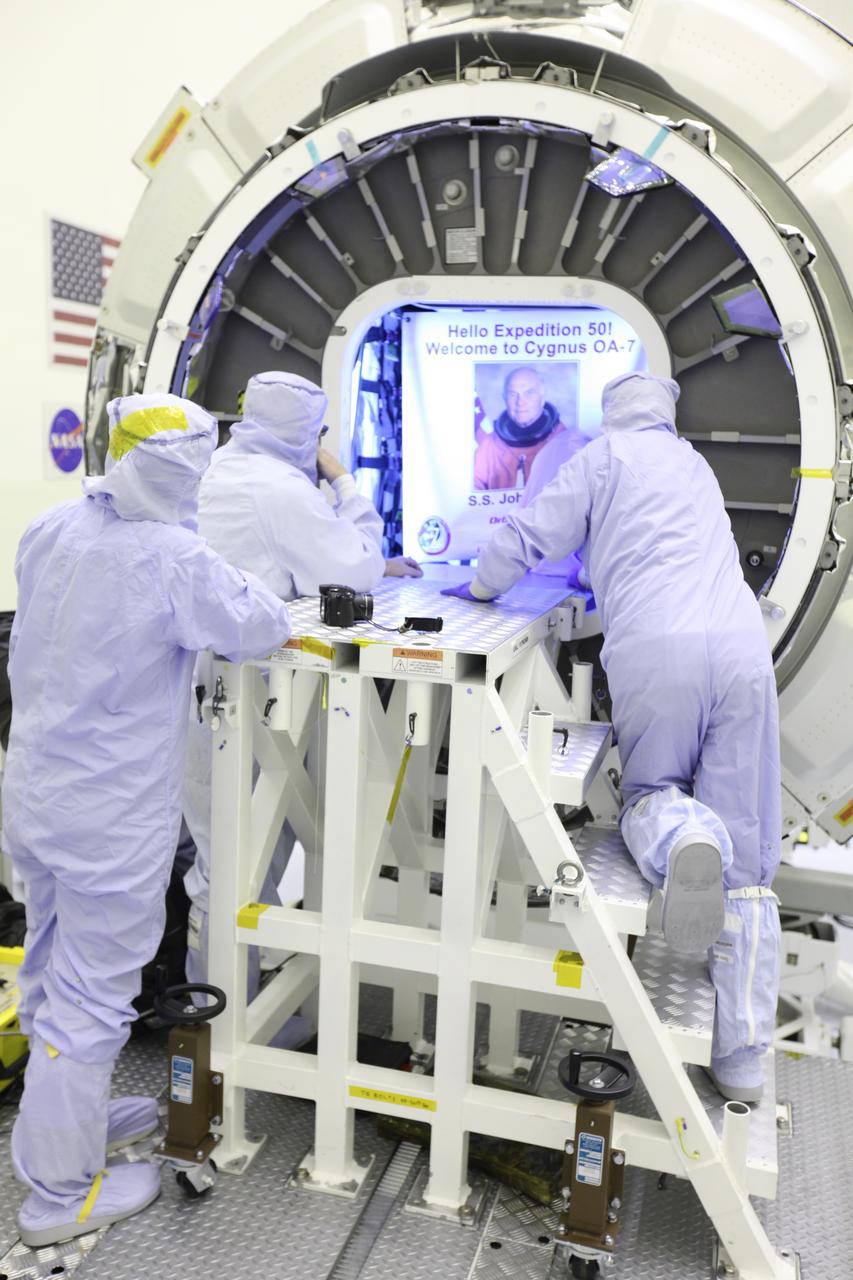
Inside the Payload Hazardous Servicing Facility at NASA's Kennedy Space Center in Florida, technicians attach the John Glenn banner to inside the Orbital ATK Cygnus pressurized cargo module. The Cygnus cargo module has been renamed the S.S. John Glenn to honor the late former Project Mercury and space shuttle astronaut. The Orbital ATK CRS-7 commercial resupply services mission to the International Space Station is scheduled to launch atop a United Launch Alliance Atlas V rocket from Space Launch Complex 41 at Cape Canaveral Air Force Station no earlier than March 21, 2017. Cygnus will deliver 7,600 pounds of supplies, equipment and scientific research materials to the space station.
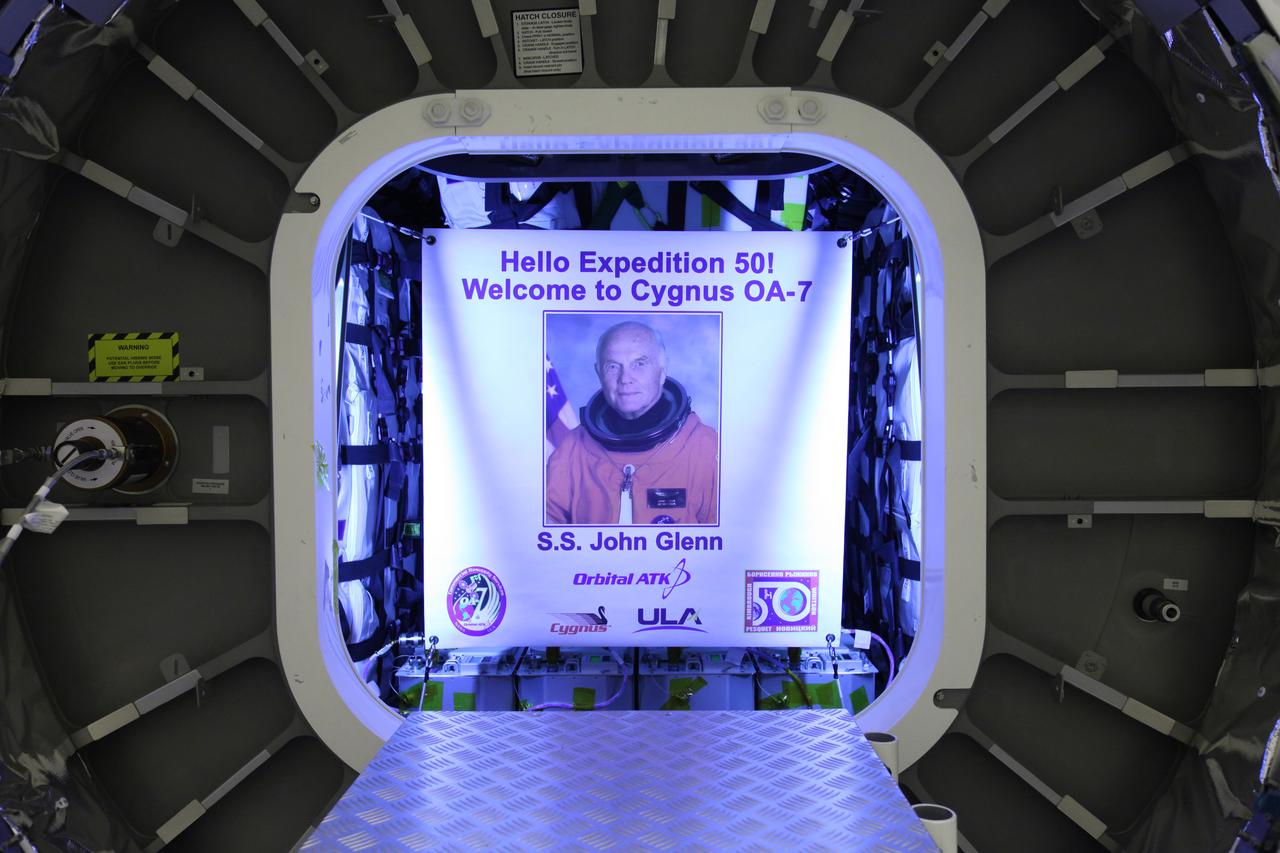
Inside the Payload Hazardous Servicing Facility at NASA's Kennedy Space Center in Florida, the John Glenn banner is attached inside the Orbital ATK Cygnus pressurized cargo module. The Cygnus cargo module has been renamed the S.S. John Glenn to honor the late former Project Mercury and space shuttle astronaut. The Orbital ATK CRS-7 commercial resupply services mission to the International Space Station is scheduled to launch atop a United Launch Alliance Atlas V rocket from Space Launch Complex 41 at Cape Canaveral Air Force Station no earlier than March 21, 2017. Cygnus will deliver 7,600 pounds of supplies, equipment and scientific research materials to the space station.
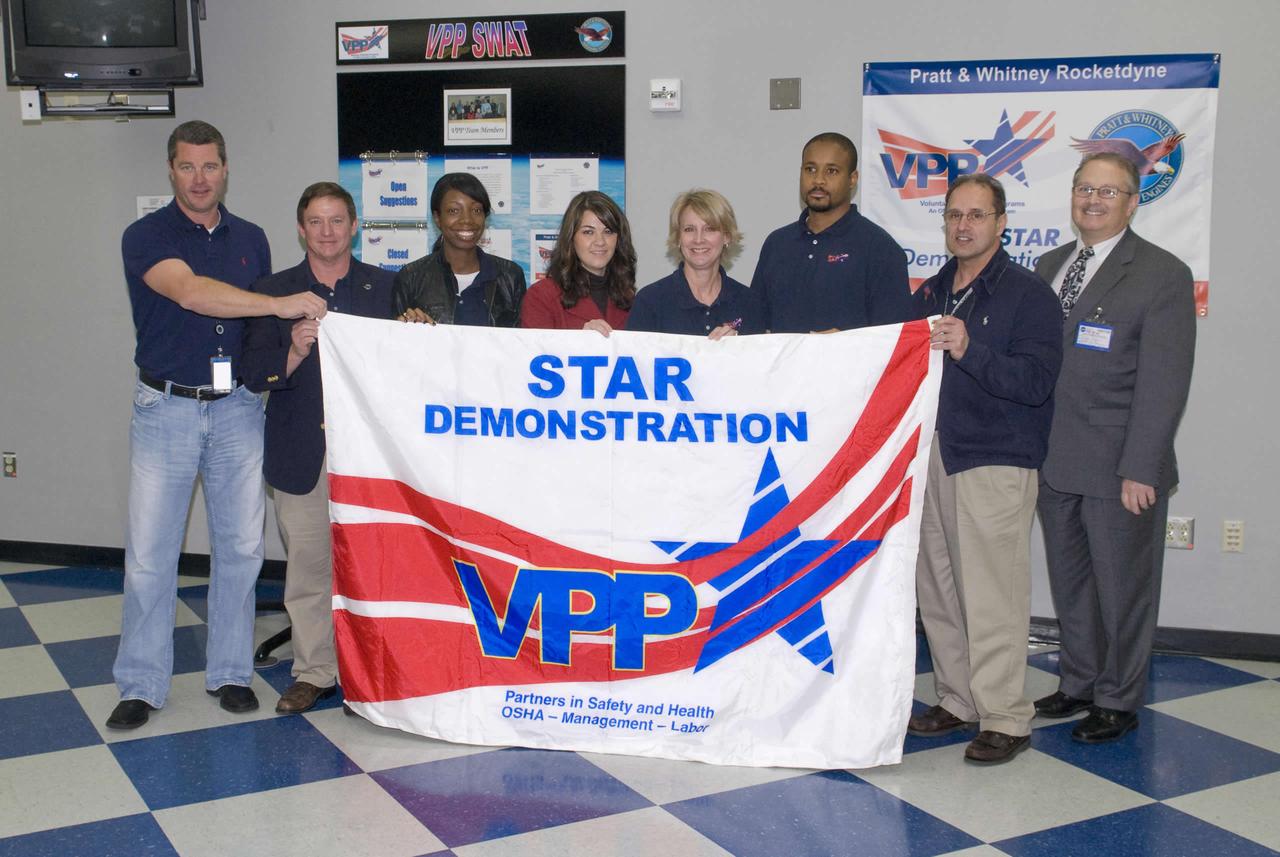
Pratt and Whitney Rocketdyne at NASA's John C. Space Center was presented its Voluntary Protection Programs (VPP) Star Demonstration banner by the Occupational Safety and Health administration (OSHA) during a Dec. 8 ceremony. Pratt Whitney Rocketdyne VPP Safe Working Action Team members Alan Howe (l to r), Mike McDaniel, April Page, Nyla Trumbach, Donna Pullman, Gary Simpson and Frank Pellegrino received the VPP Star Demonstration flag from OSHA Area Director Clyde Payne (right). OSHA established VPP in 1982 as a proactive safety management model so organizations and their employees could be recognized for excellence in safety and health.
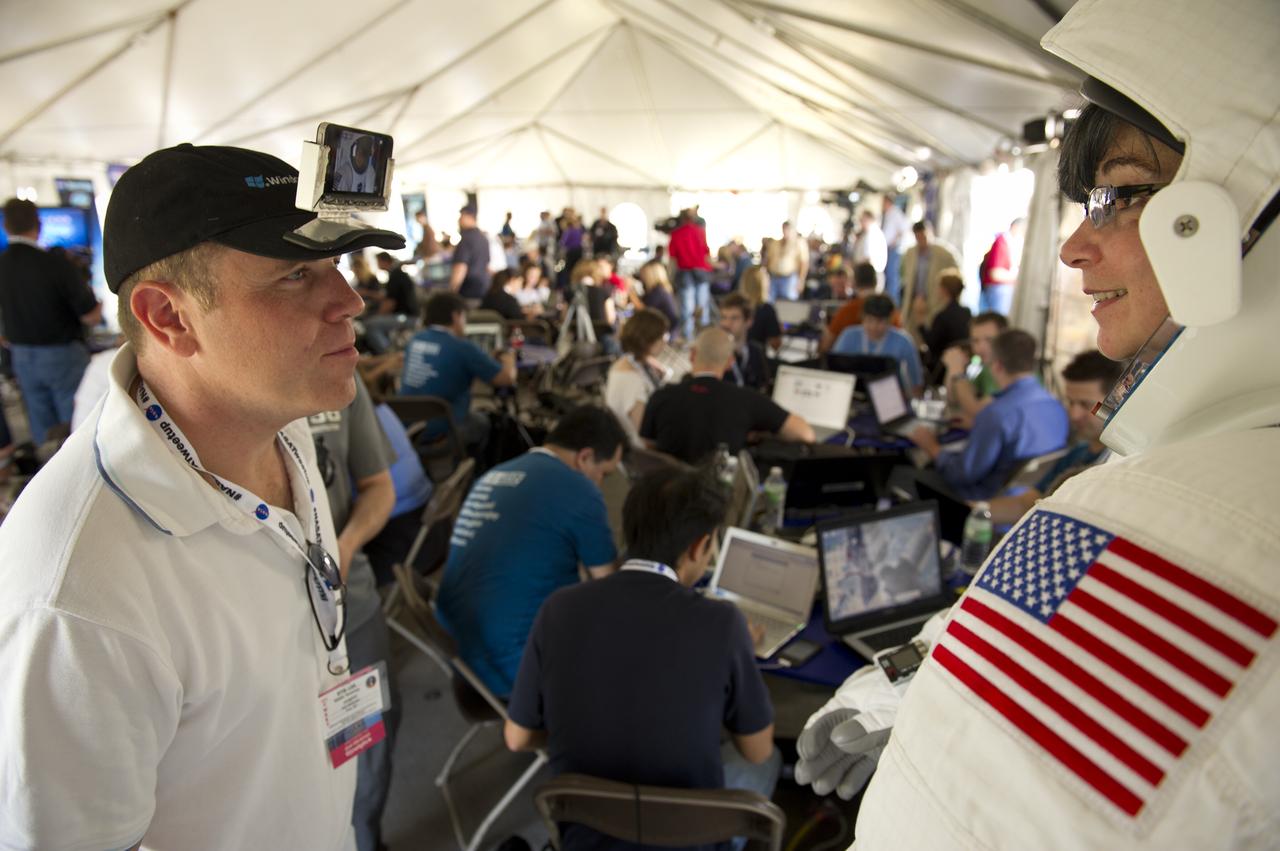
sends streaming live video via a mobile phone attached to his hat to his website of Phylise Banner, who goes by @Phylisebanner on Twitter, as she stands in an astronaut suit on display during the tweetup on Monday, Nov., 1, 2010 at the NASA Kennedy Space Center in Cape Canaveral, Fla. Photo Credit: (NASA/Bill Ingalls)
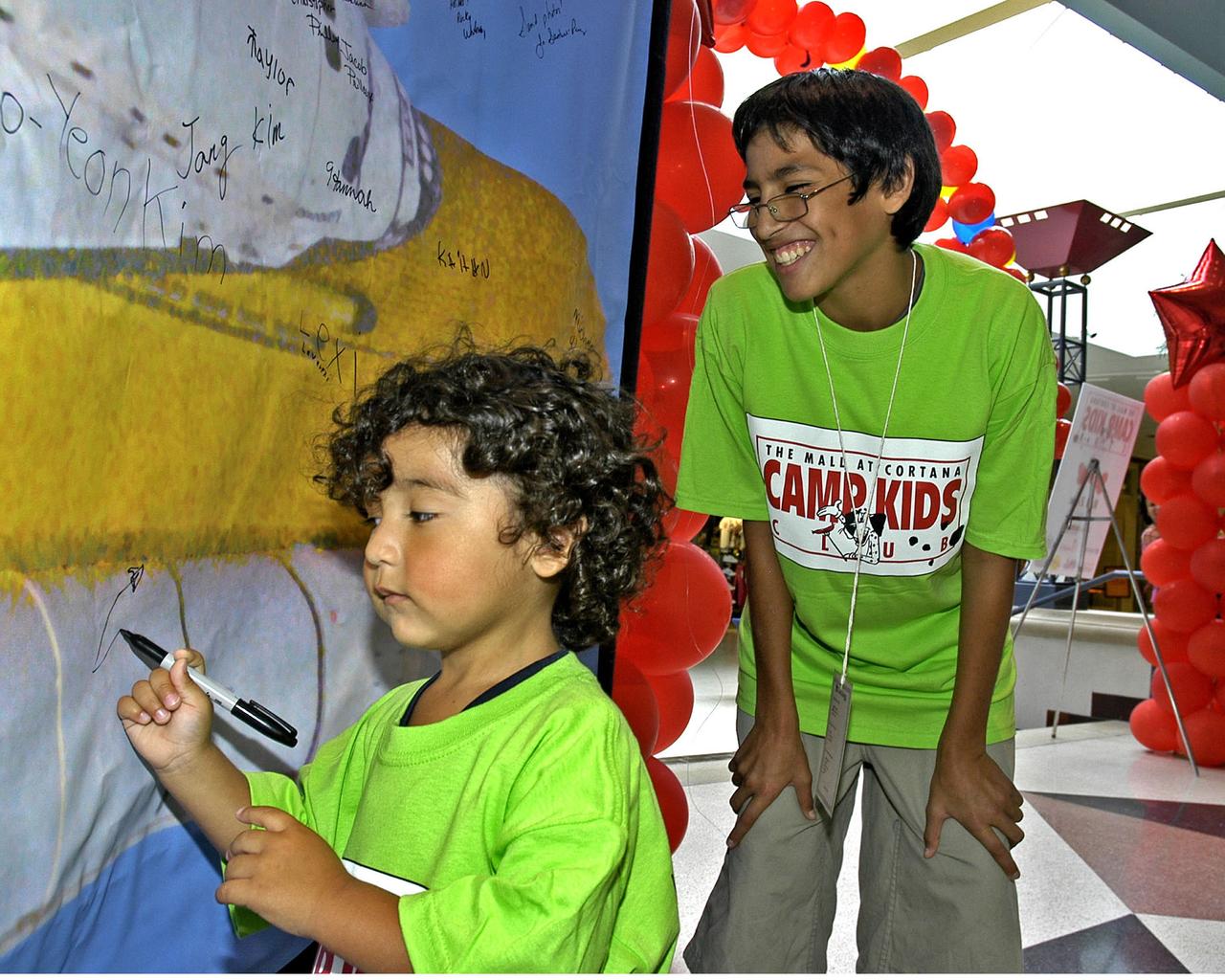
Christian Gonzales, 11 (right), watches as his little brother Walter, 2, adds his own brand of good wishes to a banner encouraging the crew of Space Shuttle Discovery on NASA's Return to Flight mission, scheduled to launch in summer 2005. The brothers, of Baton Rouge, were participating in a Camp Kids event at The Mall at Cortana, where Return to Flight activities were presented by NASA's Stennis Space Center (SSC).
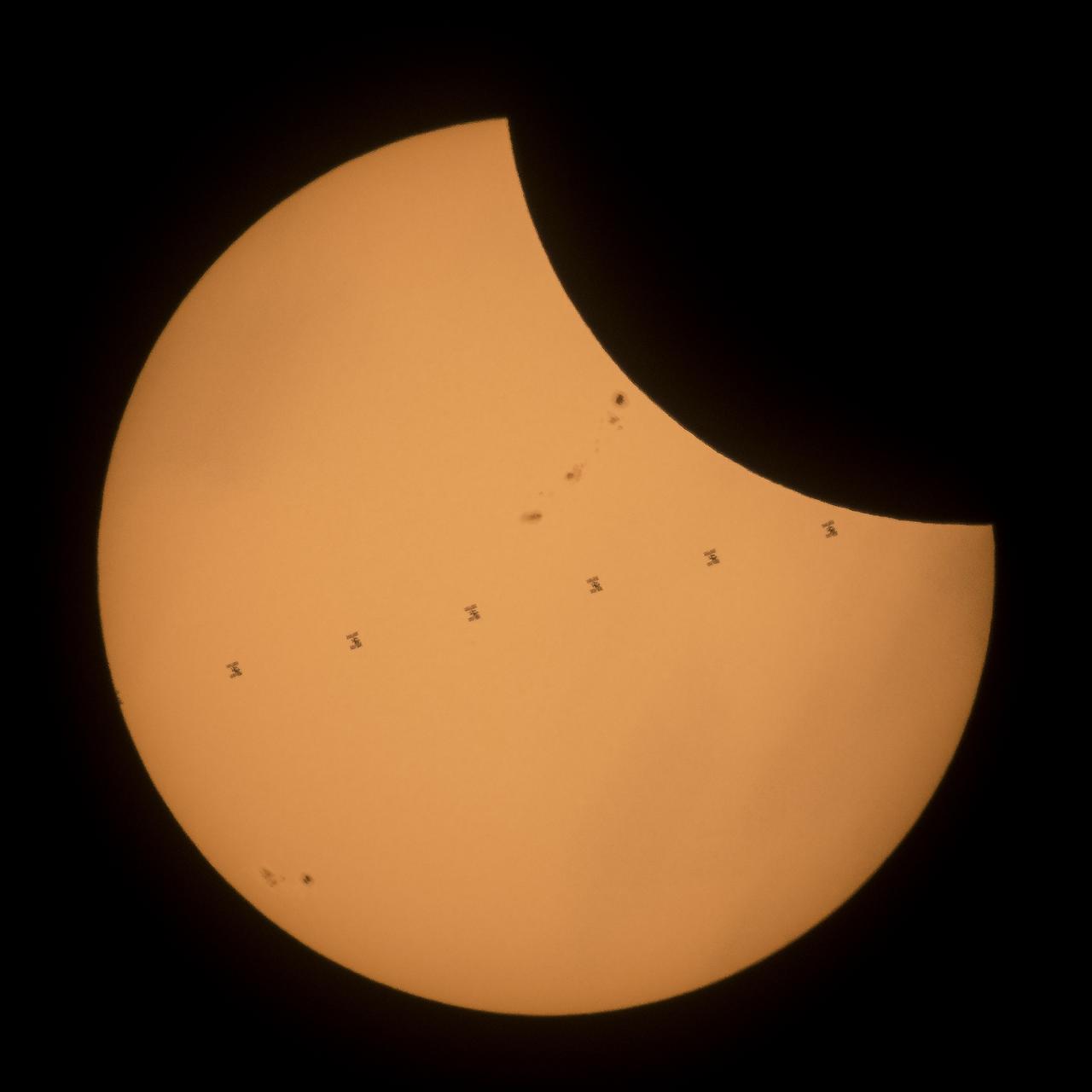
This composite image, made from seven frames, shows the International Space Station, with a crew of six onboard, as it transits the Sun at roughly five miles per second during a partial solar eclipse, Monday, Aug. 21, 2017 near Banner, Wyoming. Onboard as part of Expedition 52 are: NASA astronauts Peggy Whitson, Jack Fischer, and Randy Bresnik; Russian cosmonauts Fyodor Yurchikhin and Sergey Ryazanskiy; and ESA (European Space Agency) astronaut Paolo Nespoli. A total solar eclipse swept across a narrow portion of the contiguous United States from Lincoln Beach, Oregon to Charleston, South Carolina. A partial solar eclipse was visible across the entire North American continent along with parts of South America, Africa, and Europe. Photo Credit: (NASA/Joel Kowsky)
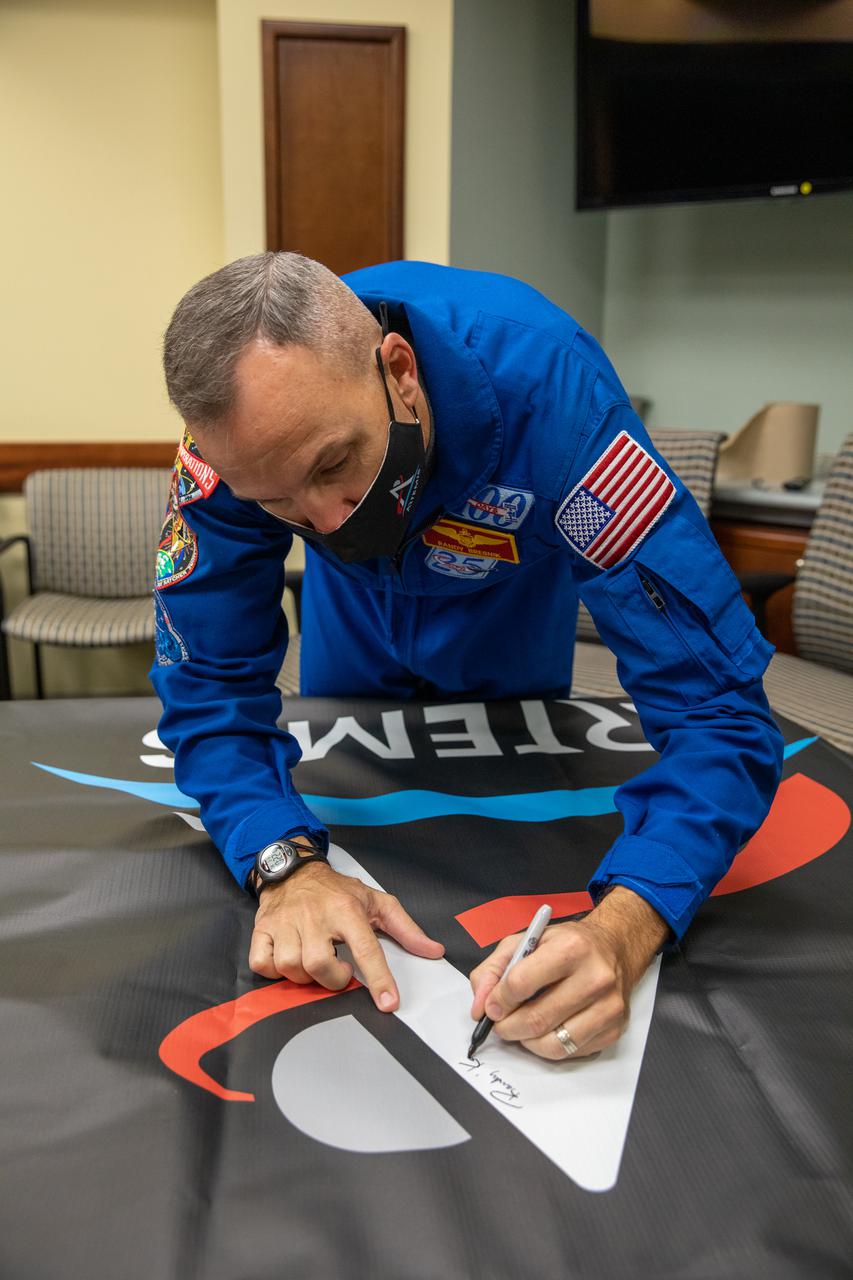
NASA astronaut Randy Bresnik signs an Artemis banner inside the Neil Armstrong Operations and Checkout Building at NASA’s Kennedy Space Center in Florida on Jan. 14, 2021. The banner will be hung on the KAMAG transporter ahead of the spacecraft’s journey to the Multi-Payload Processing Facility to begin ground processing by the Exploration Ground Systems and Jacobs teams.

Ames 70 Year Anniversary Exhibit in downtown Mountain View, California. The banner across Castro Street.
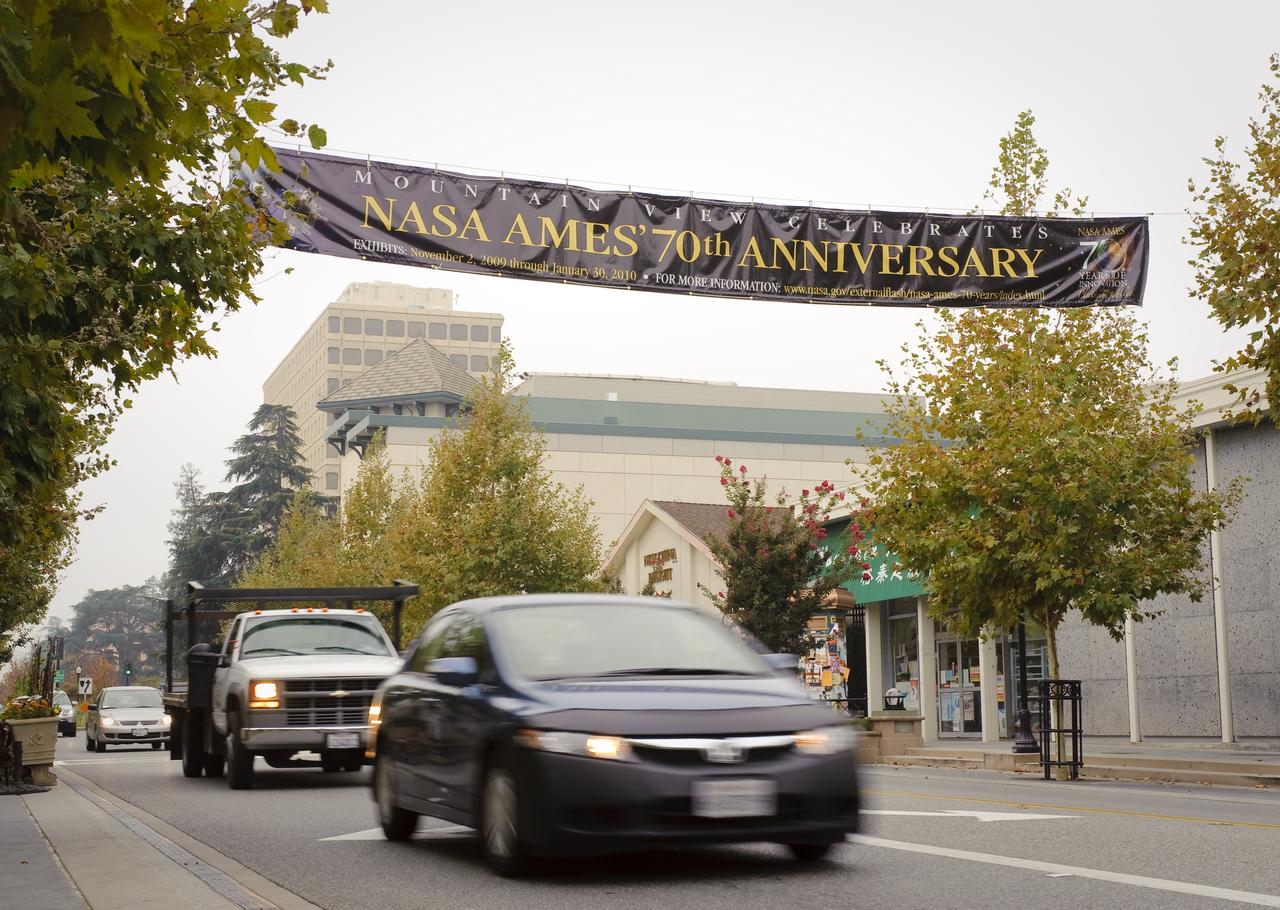
Ames 70 Year Anniversary Exhibit in downtown Mountain View, California. The banner across Castro Street.
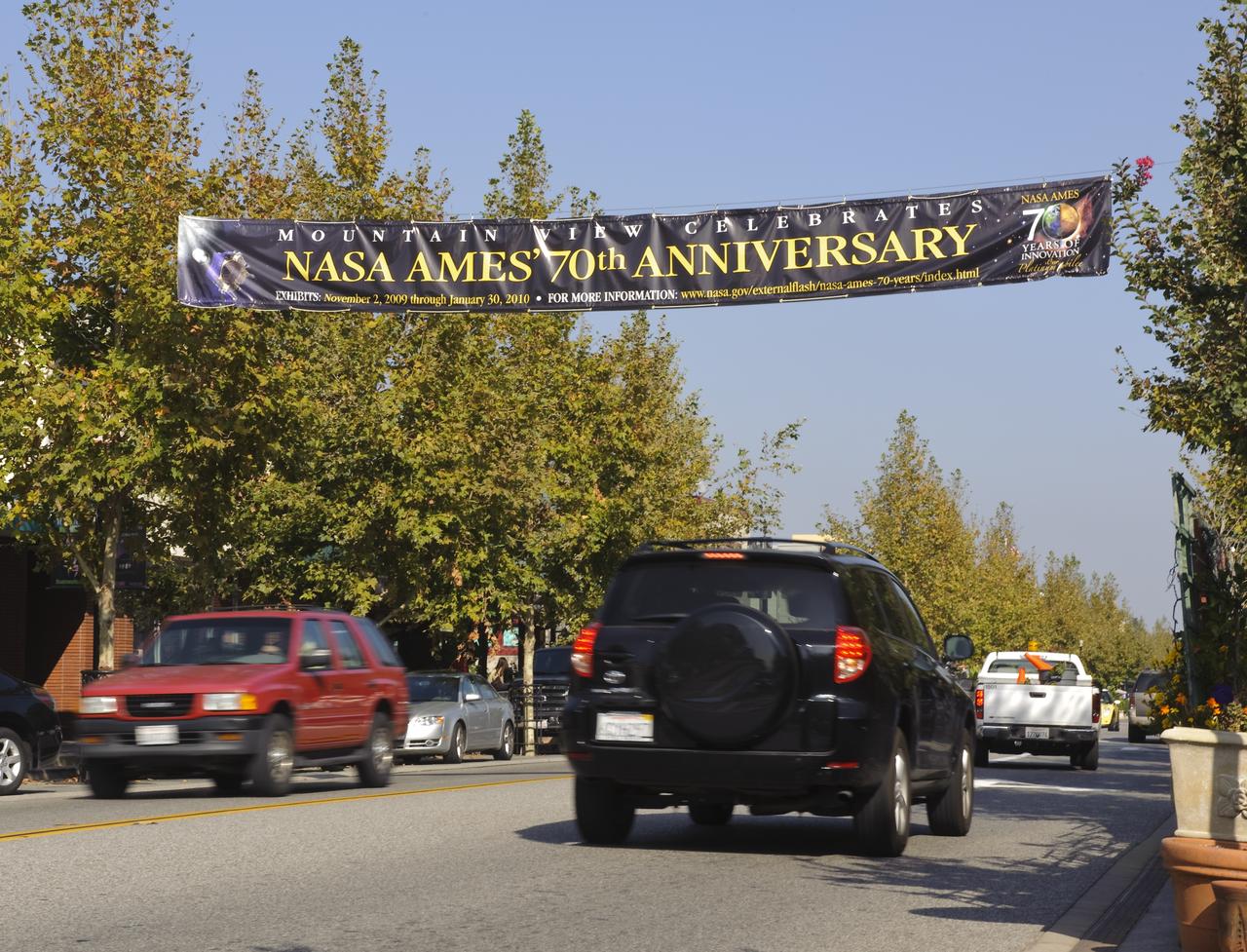
Ames 70 Year Anniversary Exhibit in downtown Mountain View, California. The banner across Castro Street.
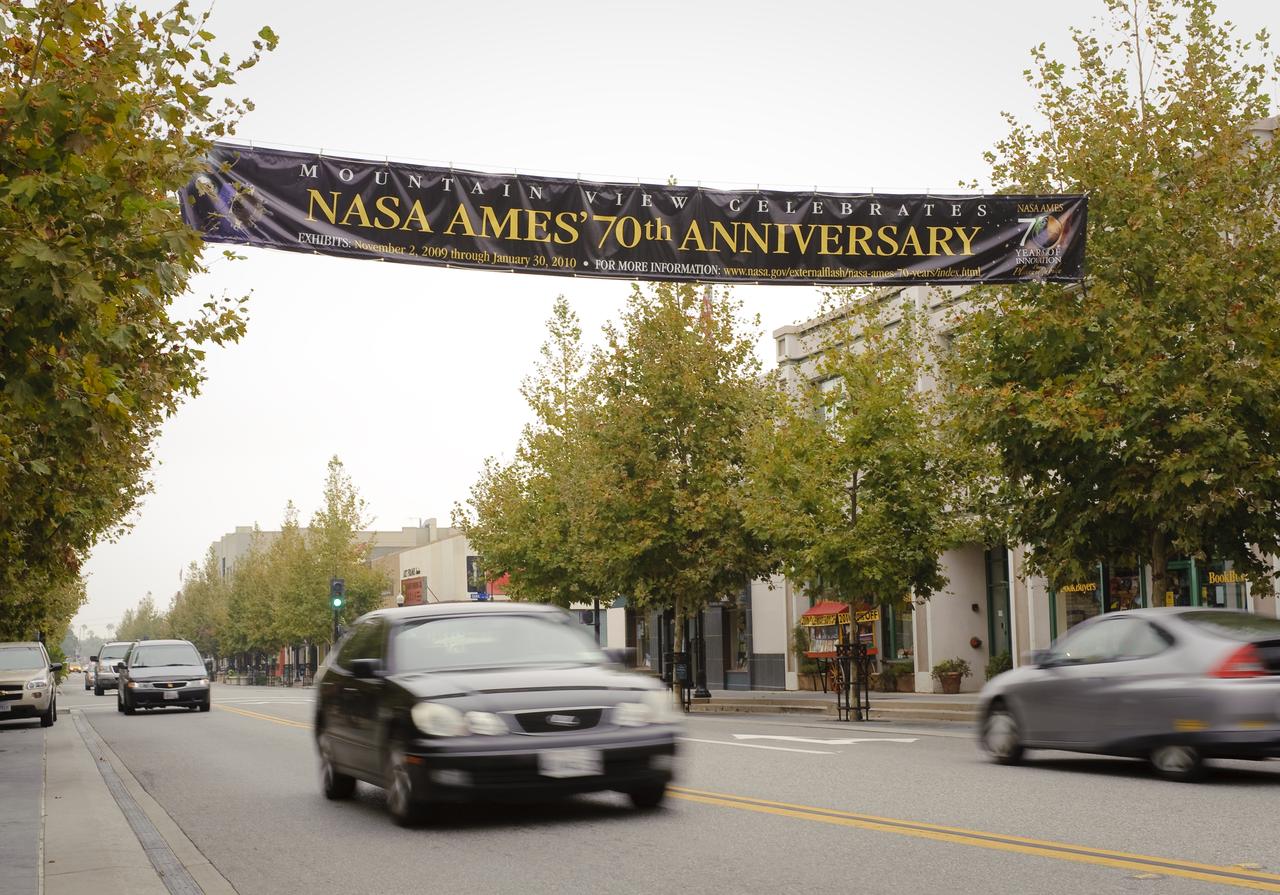
Ames 70 Year Anniversary Exhibit in downtown Mountain View, California. The banner across Castro Street.
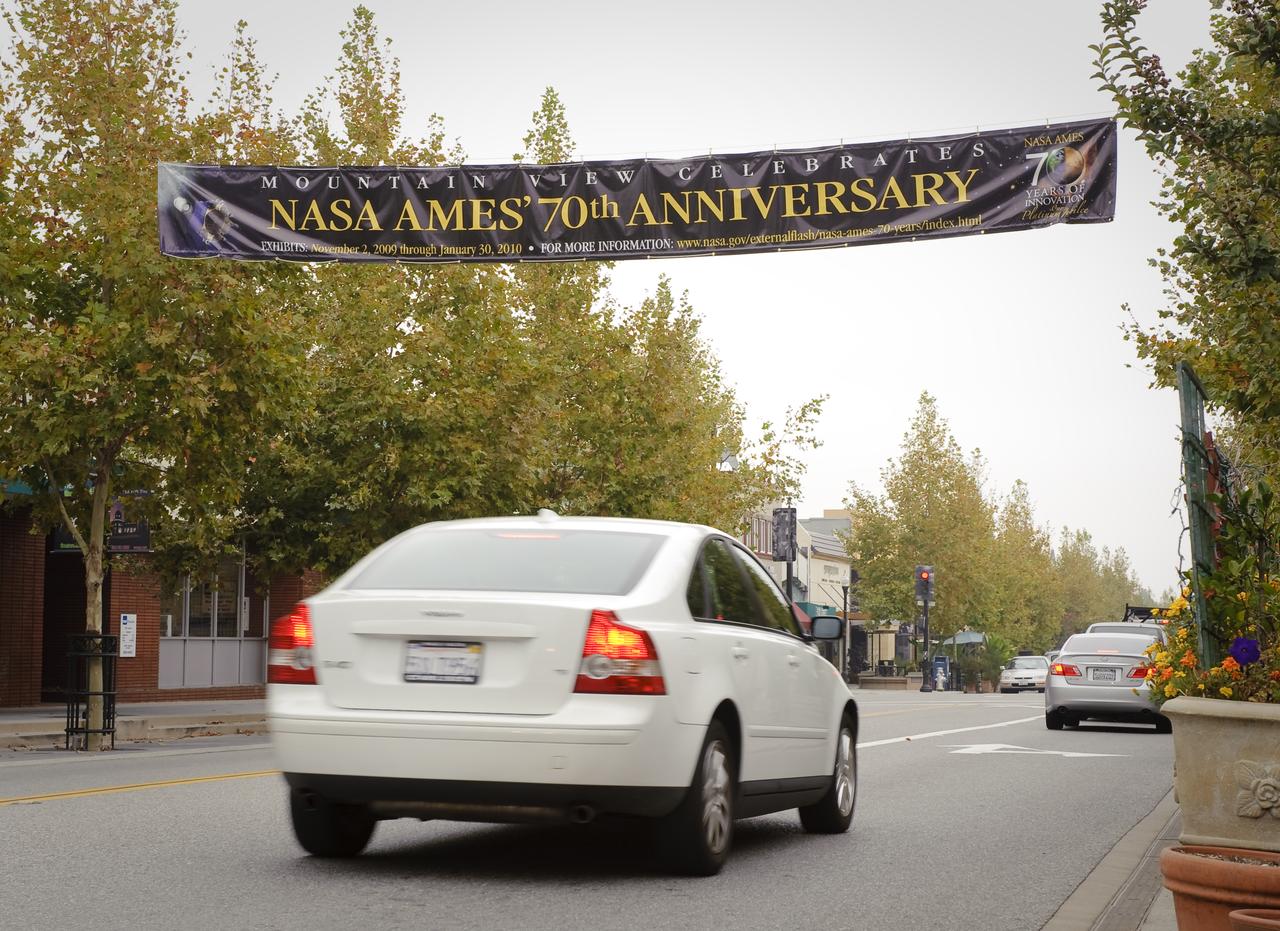
Ames 70 Year Anniversary Exhibit in downtown Mountain View, California. The banner across Castro Street.

Ames 70 Year Anniversary Exhibit in downtown Mountain View, California. The banner across Castro Street.

Swedish Delegation visited Goddard May 3, 2017. Banner display in Building 28 atrium for King of Sweden delegation visit to Goddard.

Amy Marasia, Orion Production Operations Spacecraft Assembly Branch manager, signs an Artemis banner inside the Neil Armstrong Operations and Checkout Building at NASA’s Kennedy Space Center in Florida on Jan. 14, 2021. The banner will be hung on the KAMAG transporter ahead of the spacecraft’s journey to the Multi-Payload Processing Facility to begin ground processing by the Exploration Ground Systems and Jacobs teams.
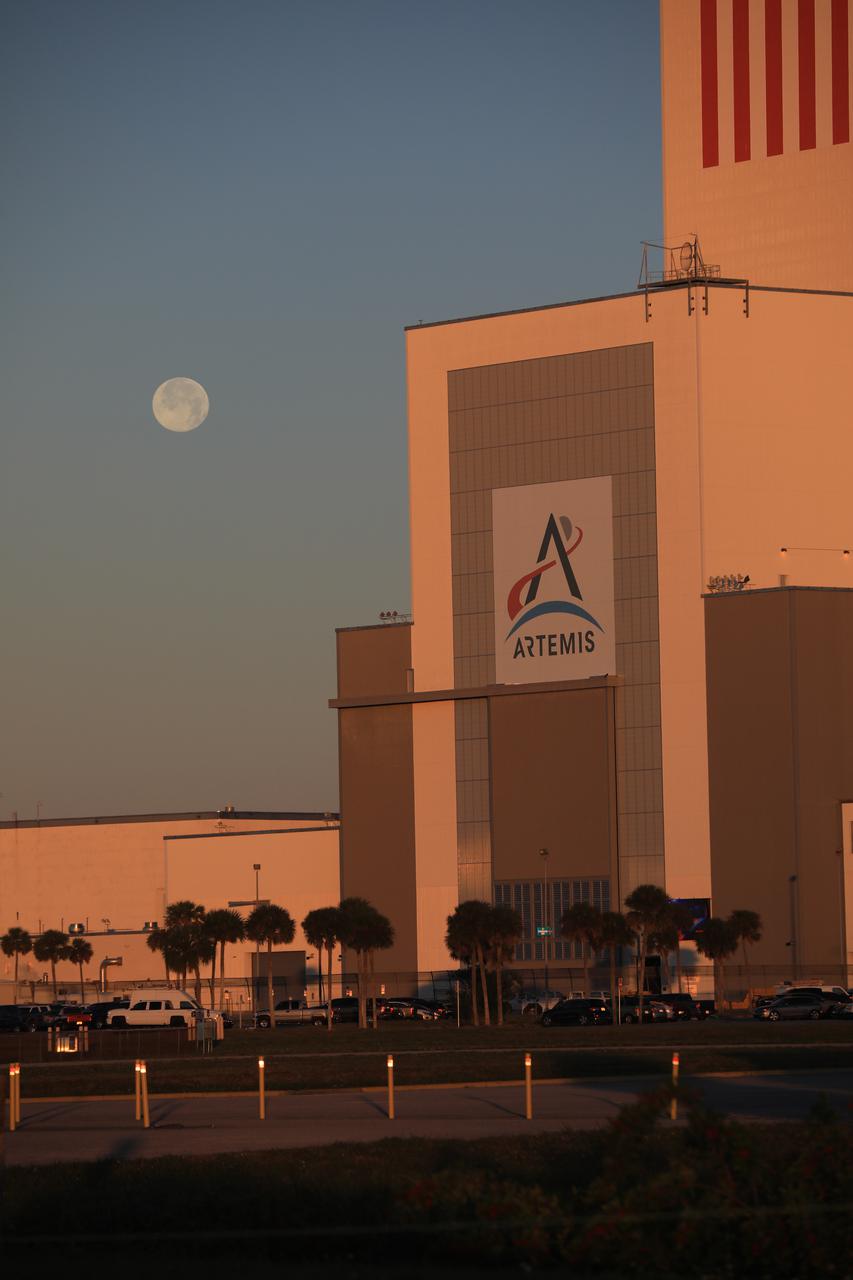
A brilliant Moon serves as the backdrop in this view of the low bay entrance to the Vehicle Assembly Building at NASA’s Kennedy Space Center in Florida on Jan. 18, 2020. An Artemis banner is positioned over the entrance.
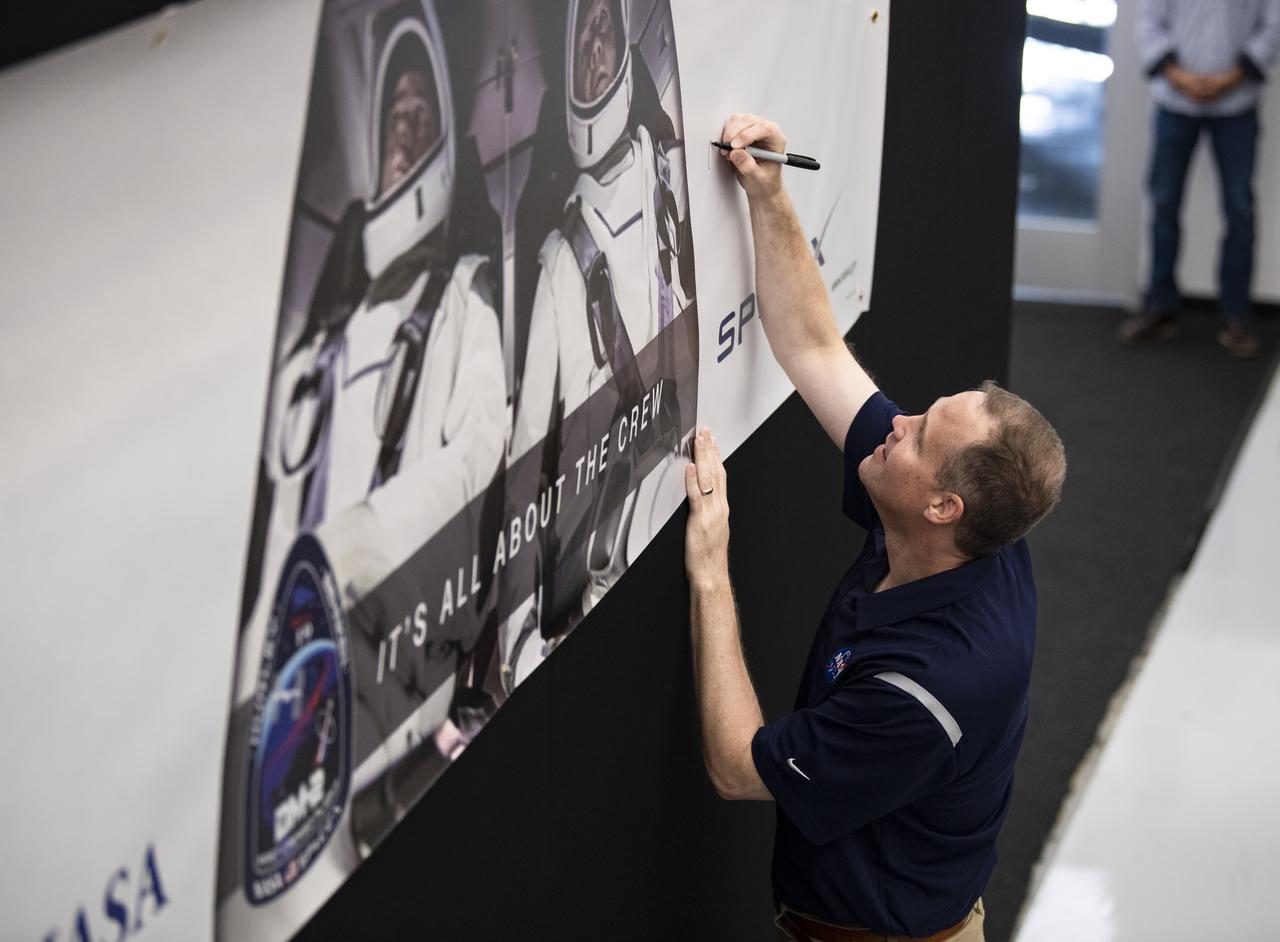
NASA Administrator Jim Bridenstine, signs a banner during a tour of the SpaceX Headquarters, Thursday, Oct. 10, 2019 in Hawthorne, CA. Photo credit: (NASA/Aubrey Gemignani)
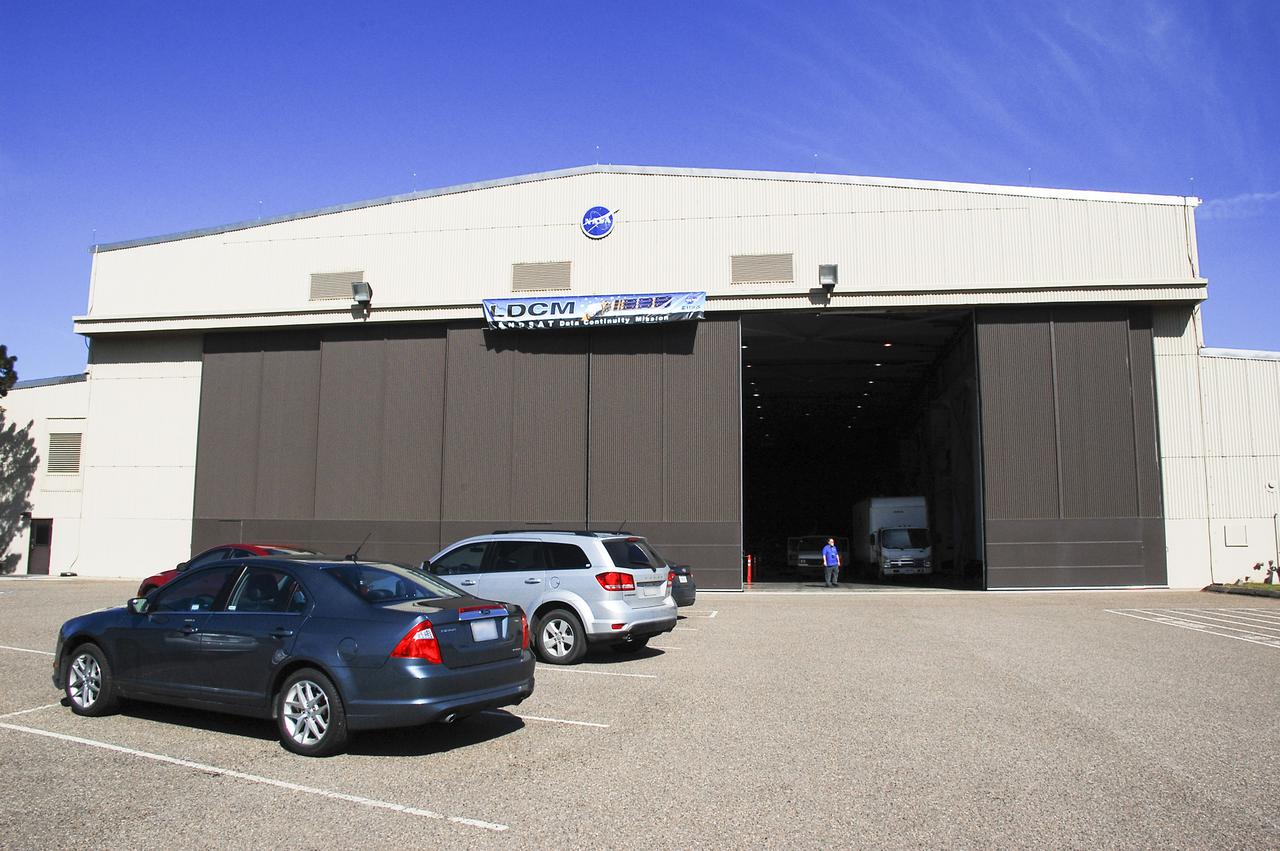
VANDENBERG AFB, Calif. – A NASA hangar at Vandenberg Air Force Base in California shows the upcoming Landsat Data Continuity Mission banner. Photo credit: NASA_Ben Smegelsky
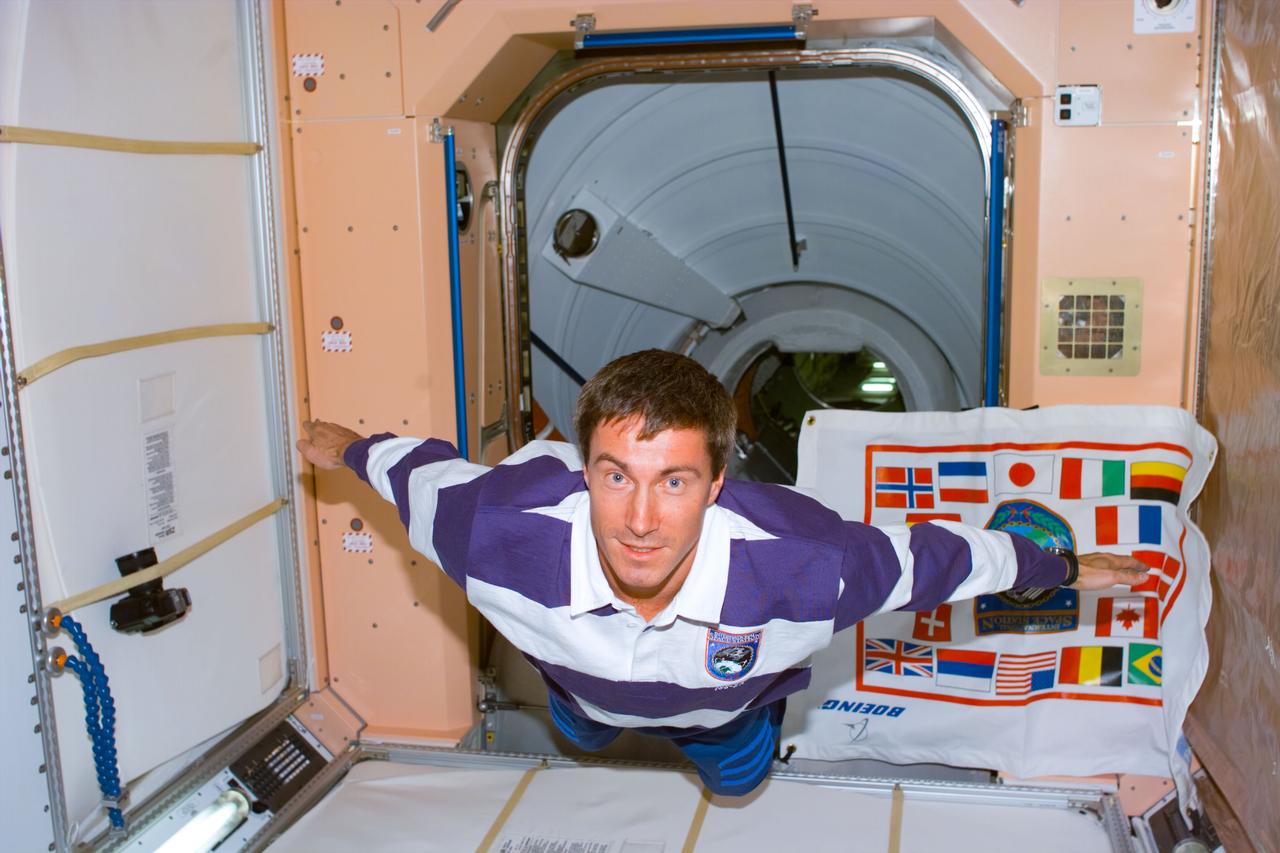
S88-E-5089 (12-11-98) --- Sergei Krikalev, mission specialist representing the Russian Space Agency (RSA), floats in the Unity module on Flight Day 8. A banner displaying the flags of all the ISS participants is at right.

In this illustration, a SpaceX Crew Dragon spacecraft is shown in low-Earth orbit. NASA is partnering with Boeing and SpaceX to build a new generation of human-rated spacecraft capable of taking astronauts to the International Space Station and expanding research opportunities in orbit. SpaceX's upcoming Demo-1 flight test is part of NASA’s Commercial Crew Transportation Capability contract with the goal of returning human spaceflight launch capabilities to the United States.
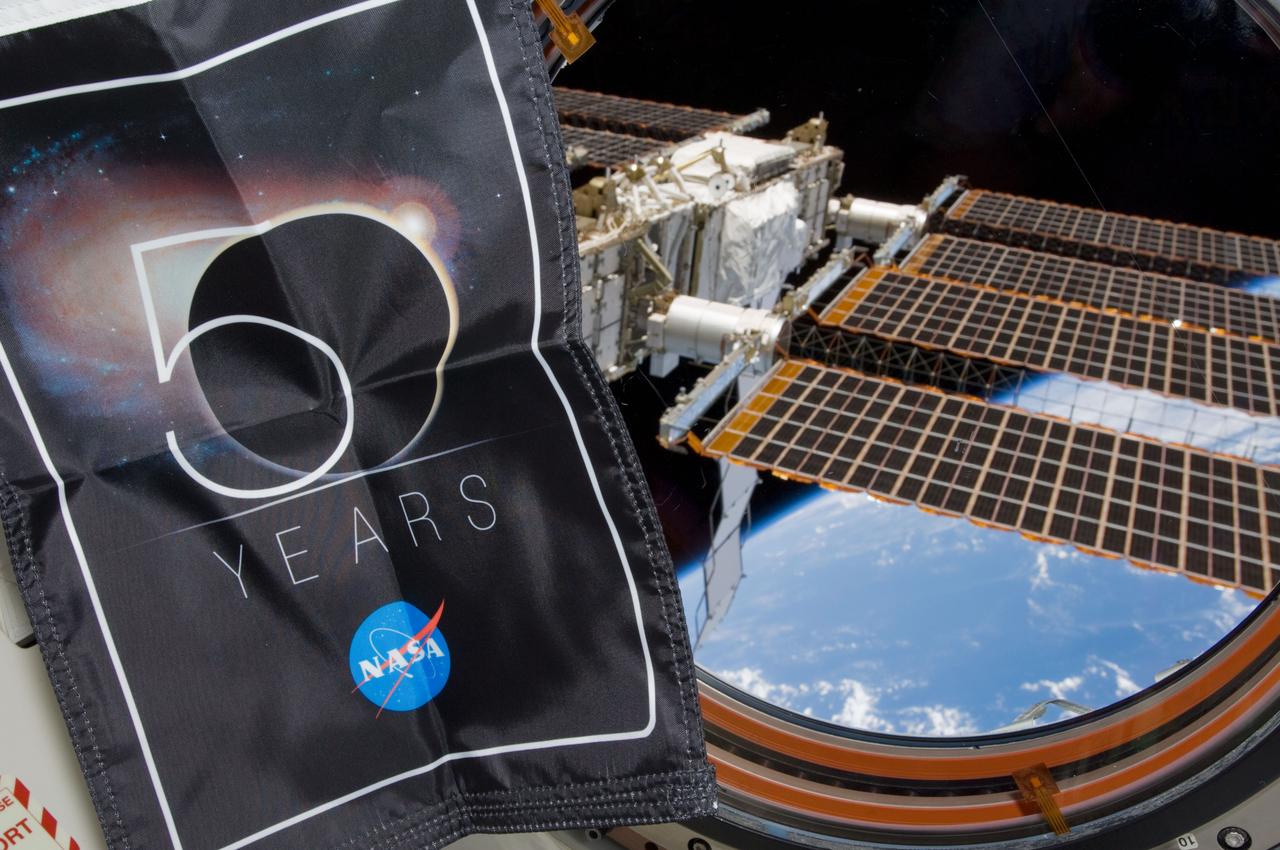
S126-E-013825 (27 Nov. 2008) --- The STS-126 Endeavour astronauts and the Expedition 18 crewmembers during their shared activities aboard the International Space Station honored the 50th Anniversary of NASA in several ways, one of which was to display this special version of the event's poster. The image, showing clouds on Earth and part of the orbital outpost through an ISS window, was taken on Thanksgiving Day.
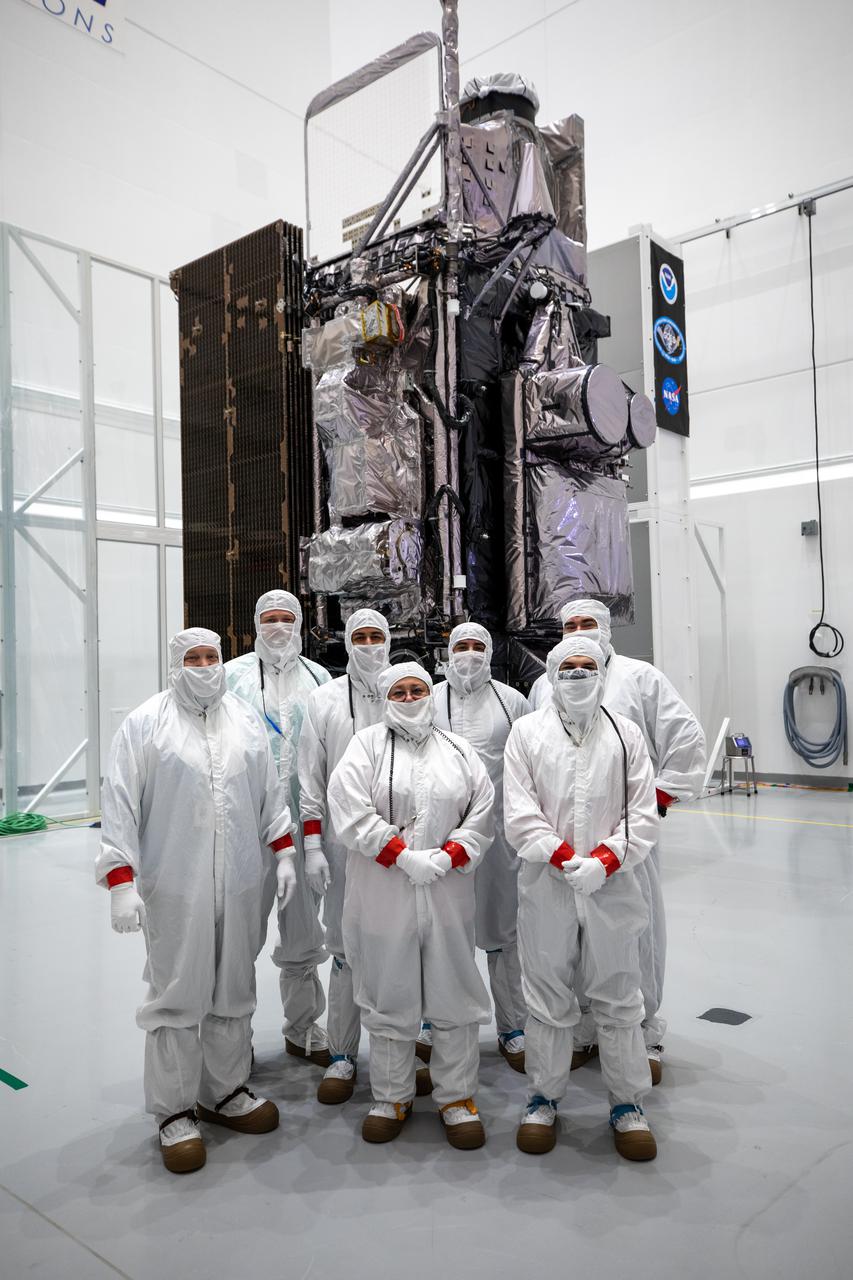
Dressed in clean-room suits, processing team members stand in front of NOAA’s Geostationary Operational Environmental Satellite-T (GOES-T) inside the Astrotech Space Operations facility in Titusville, Florida, on Jan. 20, 2022. GOES-T is scheduled to launch on March 1, 2022, atop a United Launch Alliance (ULA) Atlas V 541 rocket from Space Launch Complex 41 at Cape Canaveral Space Force Station. GOES-T is the third satellite in the GOES-R series that will continue to help meteorologists observe and predict local weather events that affect public safety. The launch is being managed by NASA’s Launch Services Program based at Kennedy Space Center in Florida, America’s multi-user spaceport.
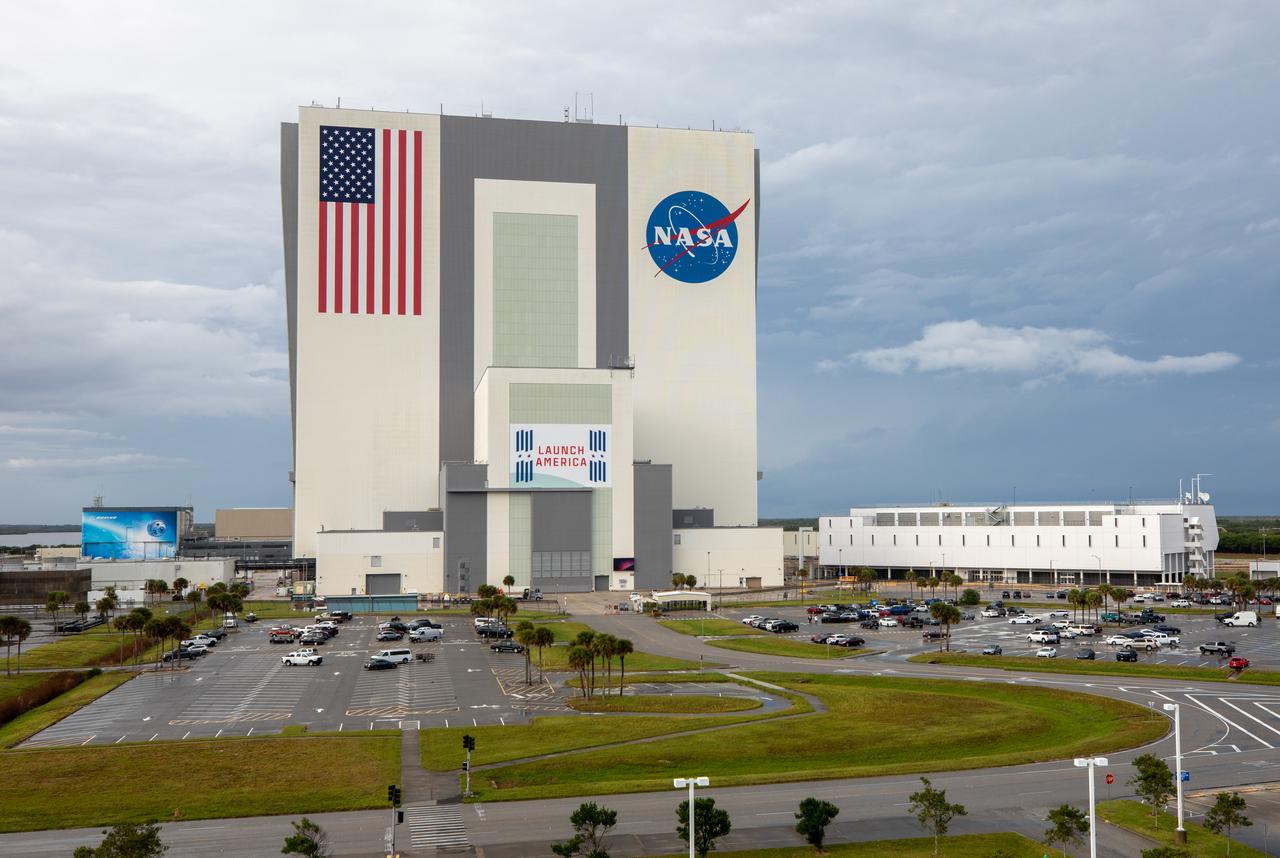
Kennedy Space Center’s iconic Vehicle Assembly Building is photographed just before NASA’s SpaceX Crew-3 astronauts and launch teams participate in a countdown dress rehearsal on Oct. 28, 2021, in preparation for the upcoming Crew-3 launch. The mission will carry NASA astronauts Raja Chari, Tom Marshburn, and Kayla Barron, as well as ESA (European Space Agency) astronaut Matthias Maurer to the International Space Station for a six-month stay. SpaceX’s Falcon 9 rocket and Crew Dragon spacecraft are scheduled to lift off from Kennedy’s Launch Complex 39A in Florida no earlier than Nov. 6 at 11:36 p.m. EDT. Crew-3 is the third crew rotation flight to the space station for NASA’s Commercial Crew Program, and the first flight of a new Crew Dragon spacecraft.
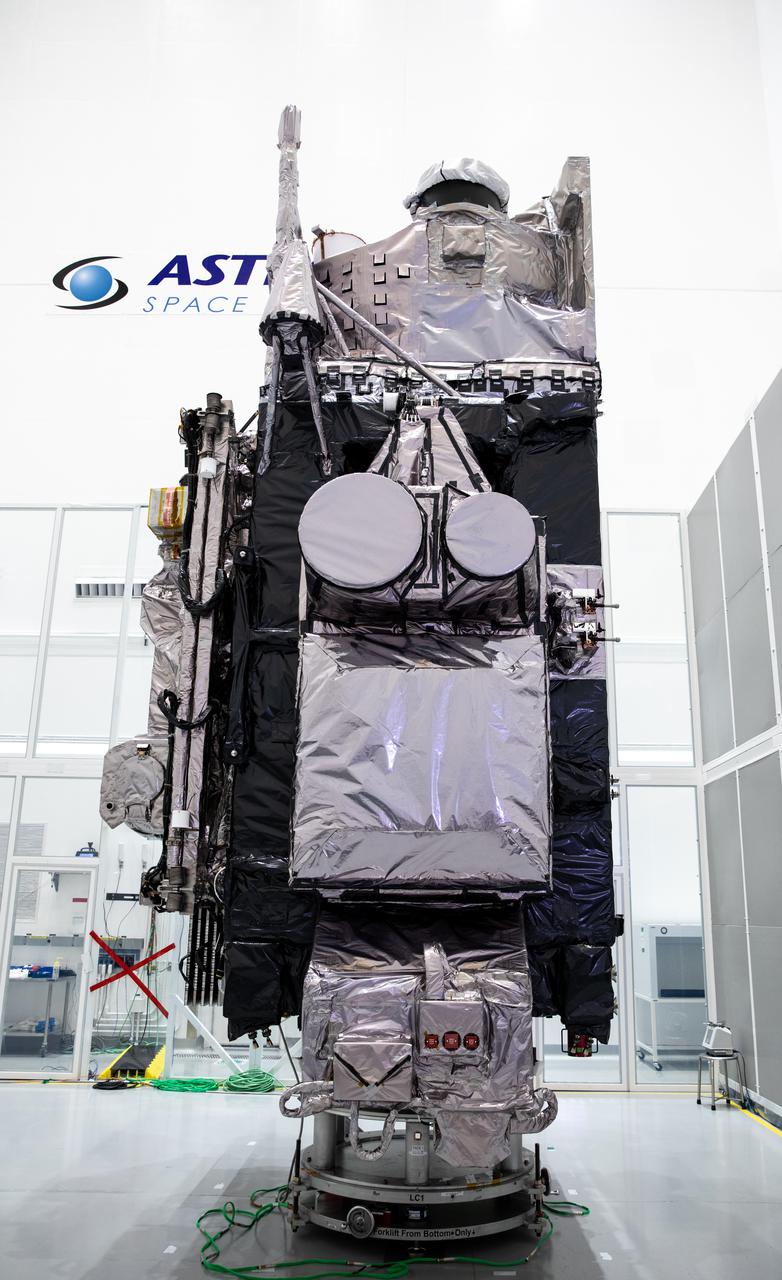
NOAA’s Geostationary Operational Environmental Satellite-T (GOES-T) is in view inside the Astrotech Space Operations facility in Titusville, Florida, on Jan. 20, 2022. GOES-T is scheduled to launch on March 1, 2022, atop a United Launch Alliance (ULA) Atlas V 541 rocket from Space Launch Complex 41 at Cape Canaveral Space Force Station. GOES-T is the third satellite in the GOES-R series that will continue to help meteorologists observe and predict local weather events that affect public safety. The launch is being managed by NASA’s Launch Services Program based at Kennedy Space Center in Florida, America’s multi-user spaceport.
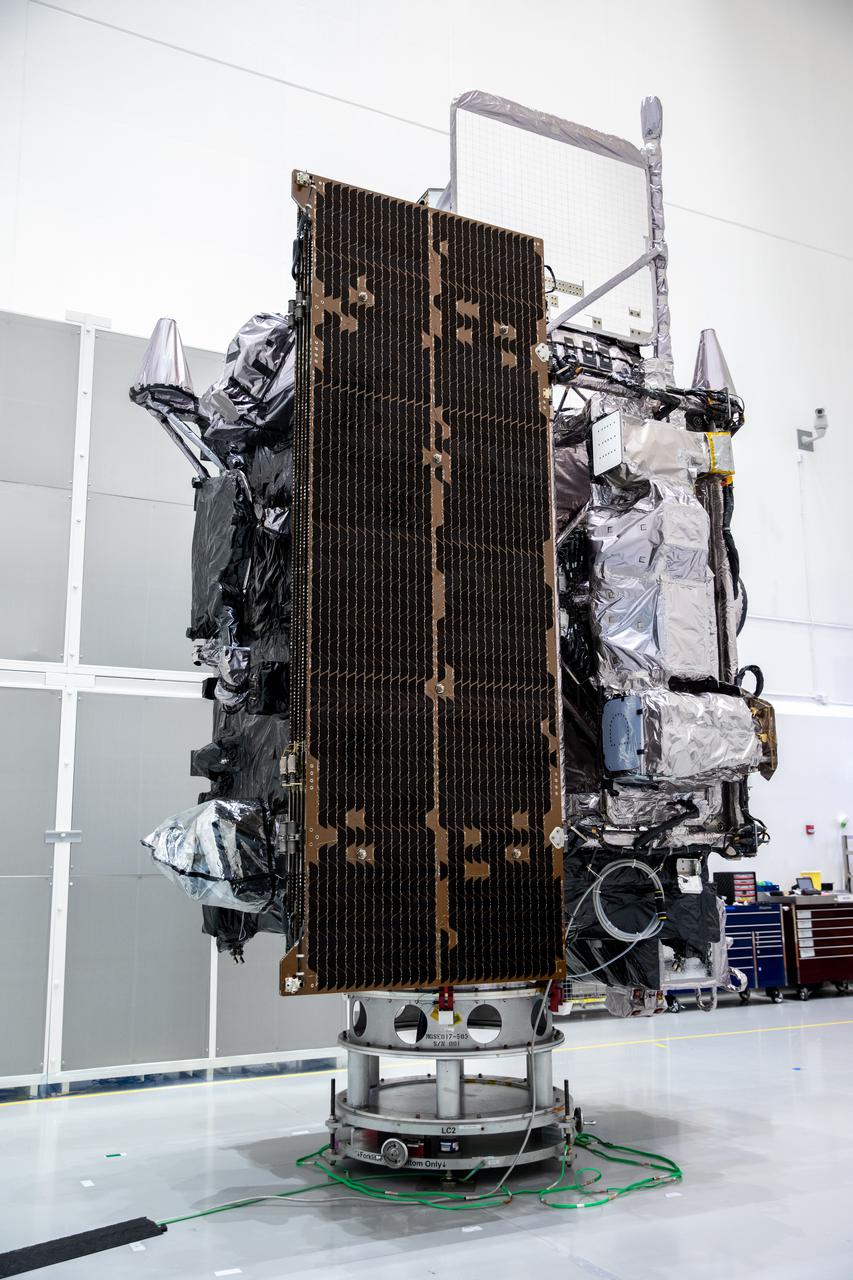
NOAA’s Geostationary Operational Environmental Satellite-T (GOES-T) is in view inside the Astrotech Space Operations facility in Titusville, Florida, on Jan. 20, 2022. GOES-T is scheduled to launch on March 1, 2022, atop a United Launch Alliance (ULA) Atlas V 541 rocket from Space Launch Complex 41 at Cape Canaveral Space Force Station. GOES-T is the third satellite in the GOES-R series that will continue to help meteorologists observe and predict local weather events that affect public safety. The launch is being managed by NASA’s Launch Services Program based at Kennedy Space Center in Florida, America’s multi-user spaceport.
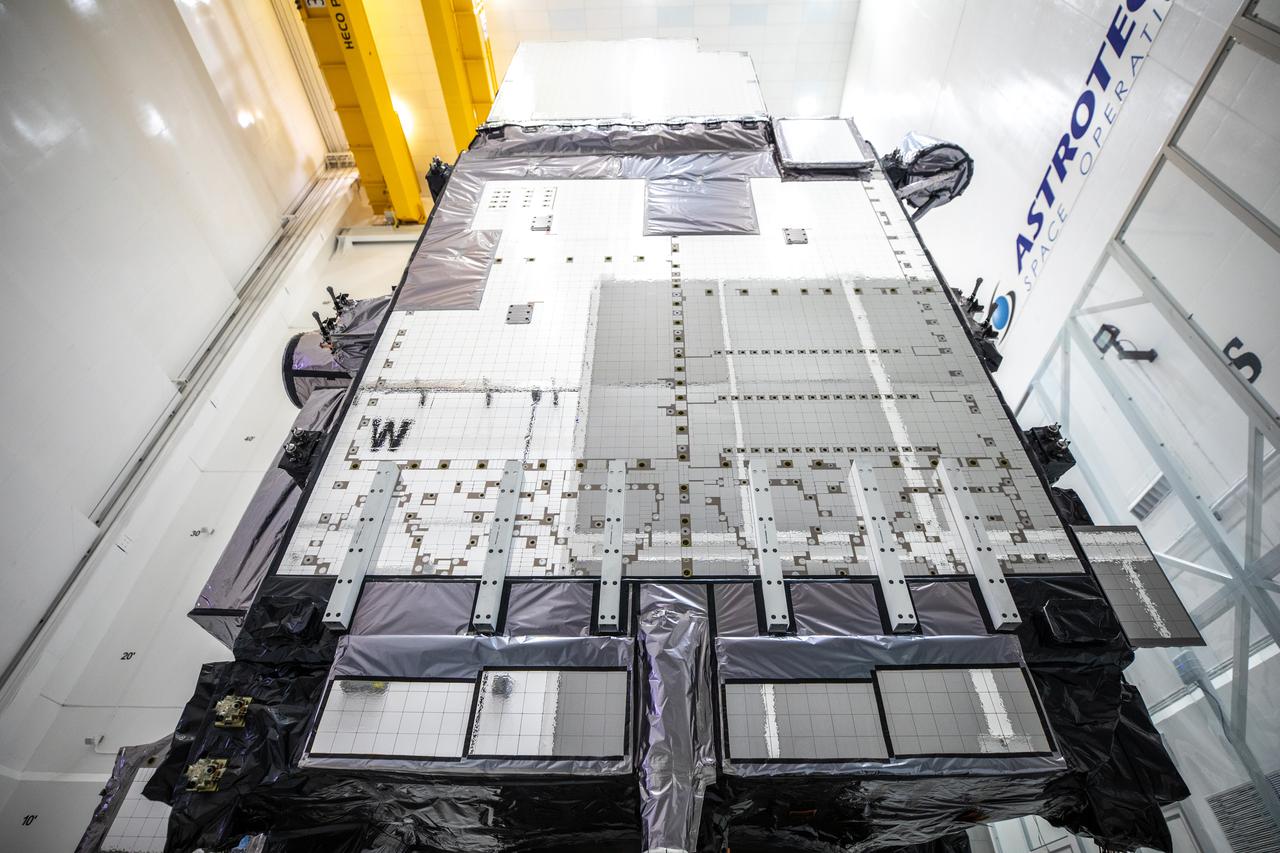
In this view looking up, NOAA’s Geostationary Operational Environmental Satellite-T (GOES-T) is secured on a work stand inside the Astrotech Space Operations facility in Titusville, Florida, on Jan. 20, 2022. GOES-T is scheduled to launch on March 1, 2022, atop a United Launch Alliance (ULA) Atlas V 541 rocket from Space Launch Complex 41 at Cape Canaveral Space Force Station. GOES-T is the third satellite in the GOES-R series that will continue to help meteorologists observe and predict local weather events that affect public safety. The launch is being managed by NASA’s Launch Services Program based at Kennedy Space Center in Florida, America’s multi-user spaceport.
NOAA’s Geostationary Operational Environmental Satellite-T (GOES-T) is in view inside the Astrotech Space Operations facility in Titusville, Florida, on Jan. 20, 2022. GOES-T is scheduled to launch on March 1, 2022, atop a United Launch Alliance (ULA) Atlas V 541 rocket from Space Launch Complex 41 at Cape Canaveral Space Force Station. GOES-T is the third satellite in the GOES-R series that will continue to help meteorologists observe and predict local weather events that affect public safety. The launch is being managed by NASA’s Launch Services Program based at Kennedy Space Center in Florida, America’s multi-user spaceport.
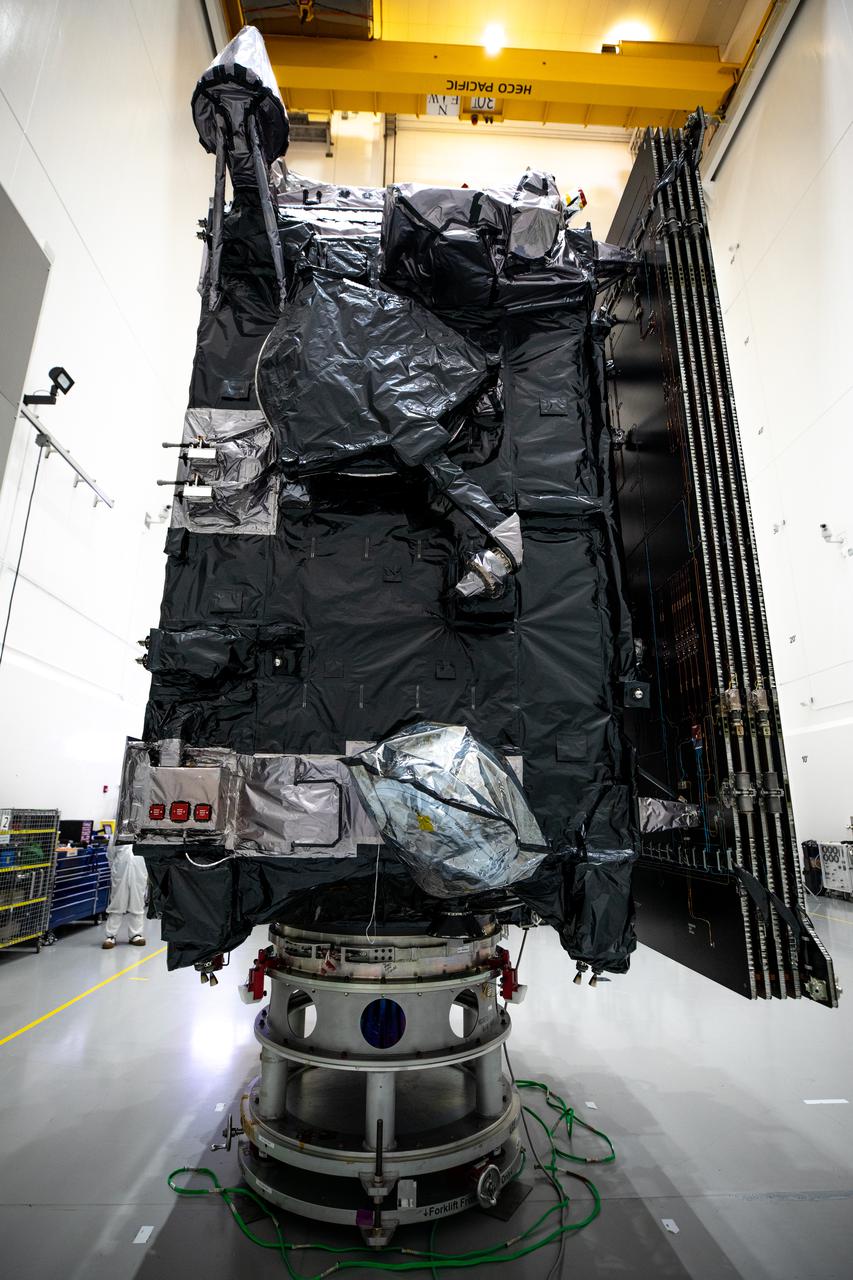
NOAA’s Geostationary Operational Environmental Satellite-T (GOES-T) is in view inside the Astrotech Space Operations facility in Titusville, Florida, on Jan. 20, 2022. GOES-T is scheduled to launch on March 1, 2022, atop a United Launch Alliance (ULA) Atlas V 541 rocket from Space Launch Complex 41 at Cape Canaveral Space Force Station. GOES-T is the third satellite in the GOES-R series that will continue to help meteorologists observe and predict local weather events that affect public safety. The launch is being managed by NASA’s Launch Services Program based at Kennedy Space Center in Florida, America’s multi-user spaceport.
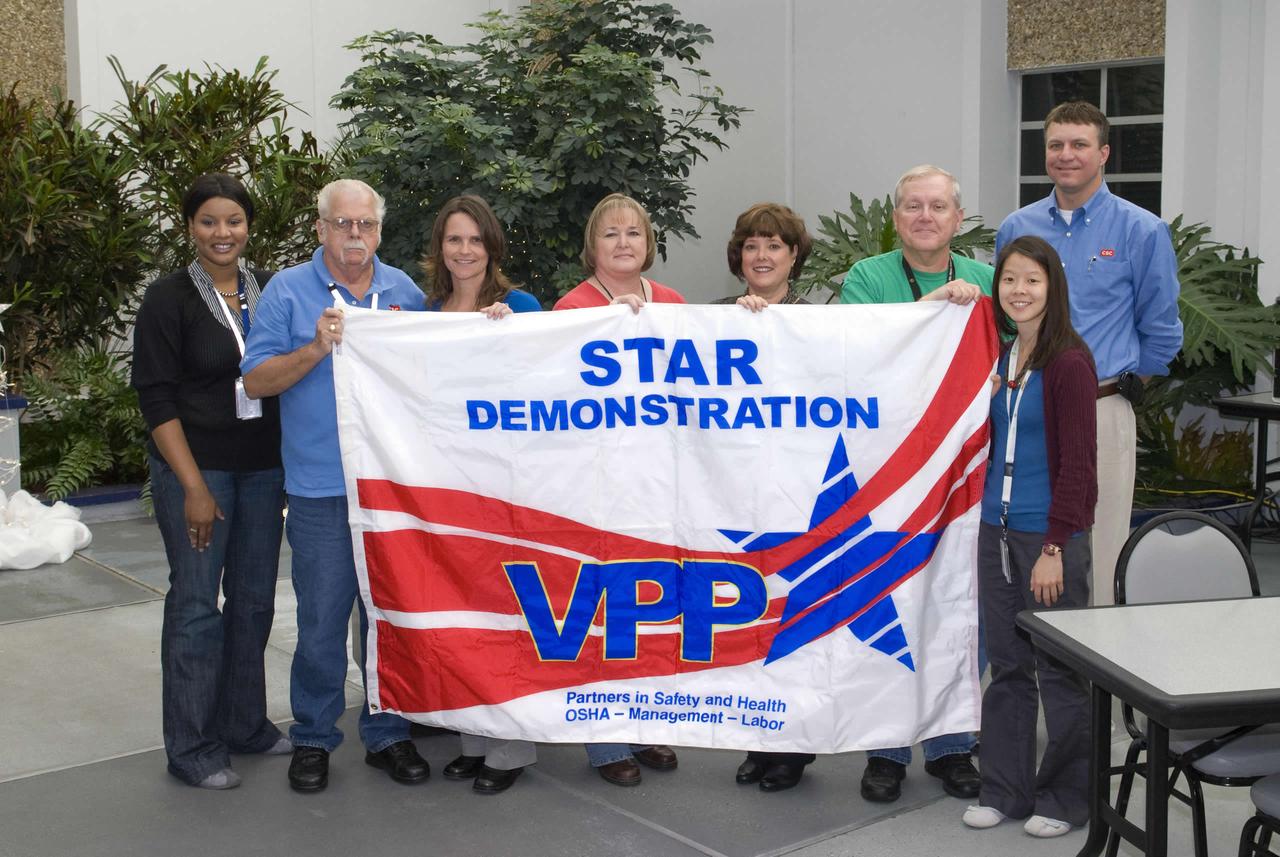
CSC Inc. at NASA's John C. Space Center was presented a Voluntary Protection Programs (VPP) Star Demonstration banner by the Occupational Safety and Health administration (OSHA) during a Dec. 9 ceremony. From left, CSC Employee Safety Committee members LaSonya Pulliam (l to r), Jim Sever, Stacy Brunson, Debbie Duke, Sheliah Wilson, Fred Voss and Beth Nguyen, and CSC Program Manager Tony Lisotta received the banner. OSHA established VPP in 1982 as a proactive safety management model so organizations and their employees could be recognized for excellence in safety and health.
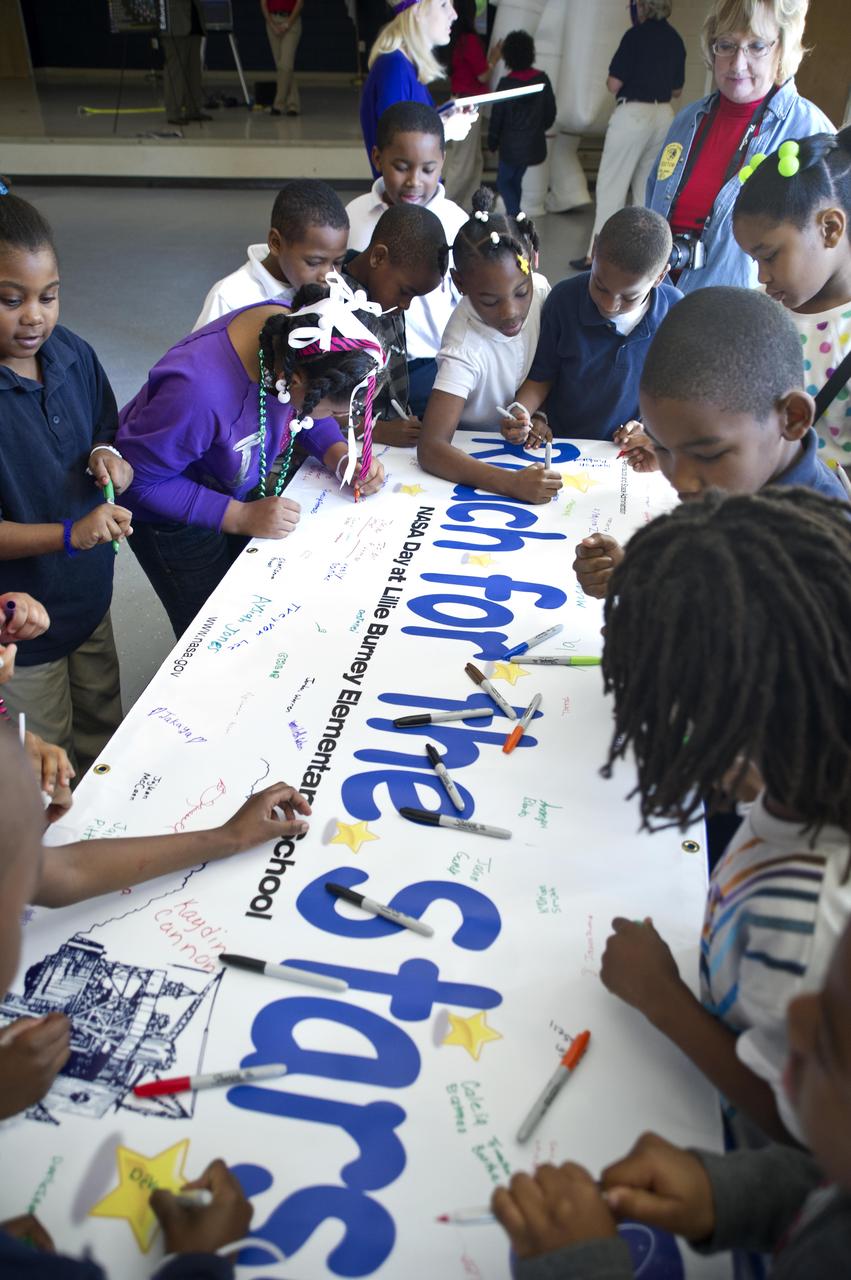
Students at Lillie Burney Elementary School in Hattiesburg, Miss., sign a 'Reach for the Stars' banner to be displayed at their school. NASA senior staff members from Stennis Space Center visited the school Jan. 27, 2012, for a morning of activities and outreach to students and school officials.
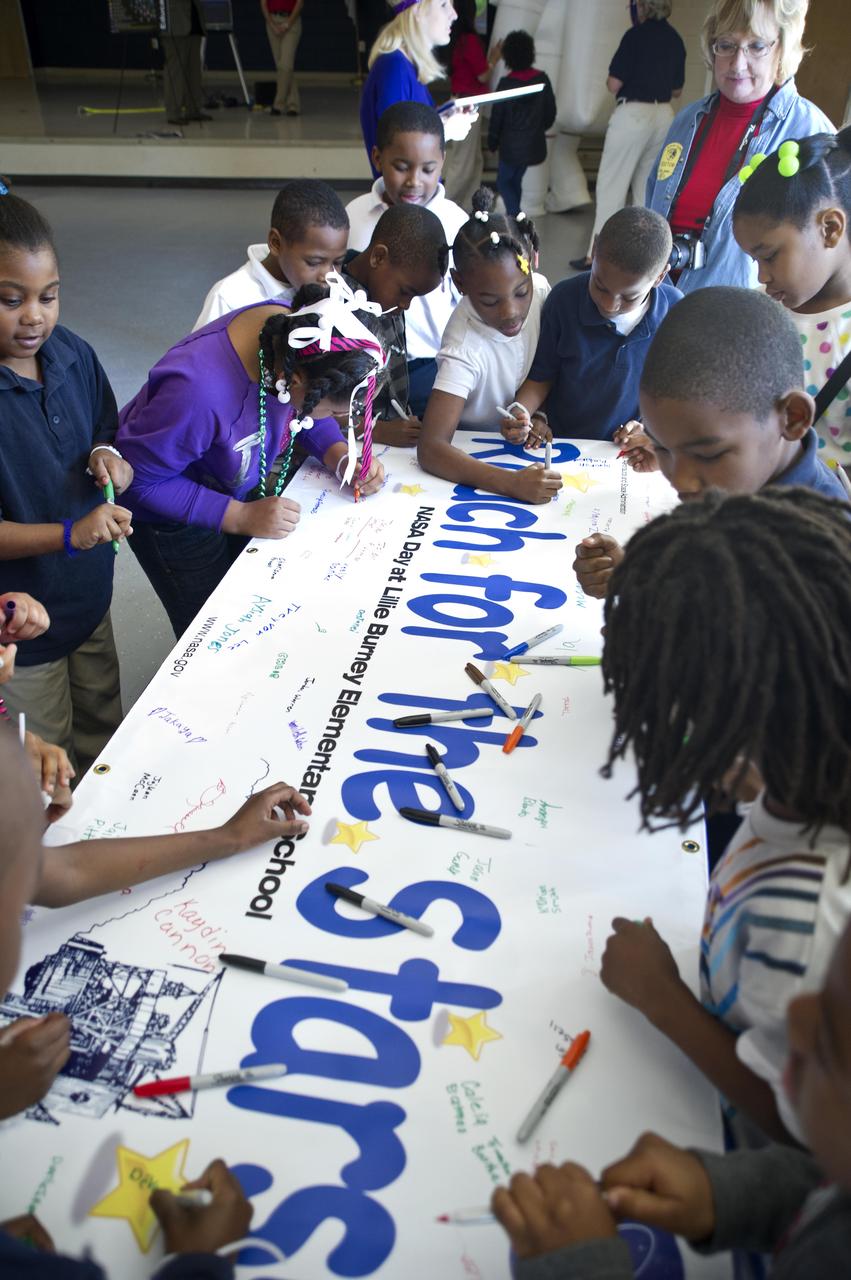
Students at Lillie Burney Elementary School in Hattiesburg, Miss., sign a 'Reach for the Stars' banner to be displayed at their school. NASA senior staff members from Stennis Space Center visited the school Jan. 27, 2012, for a morning of activities and outreach to students and school officials.
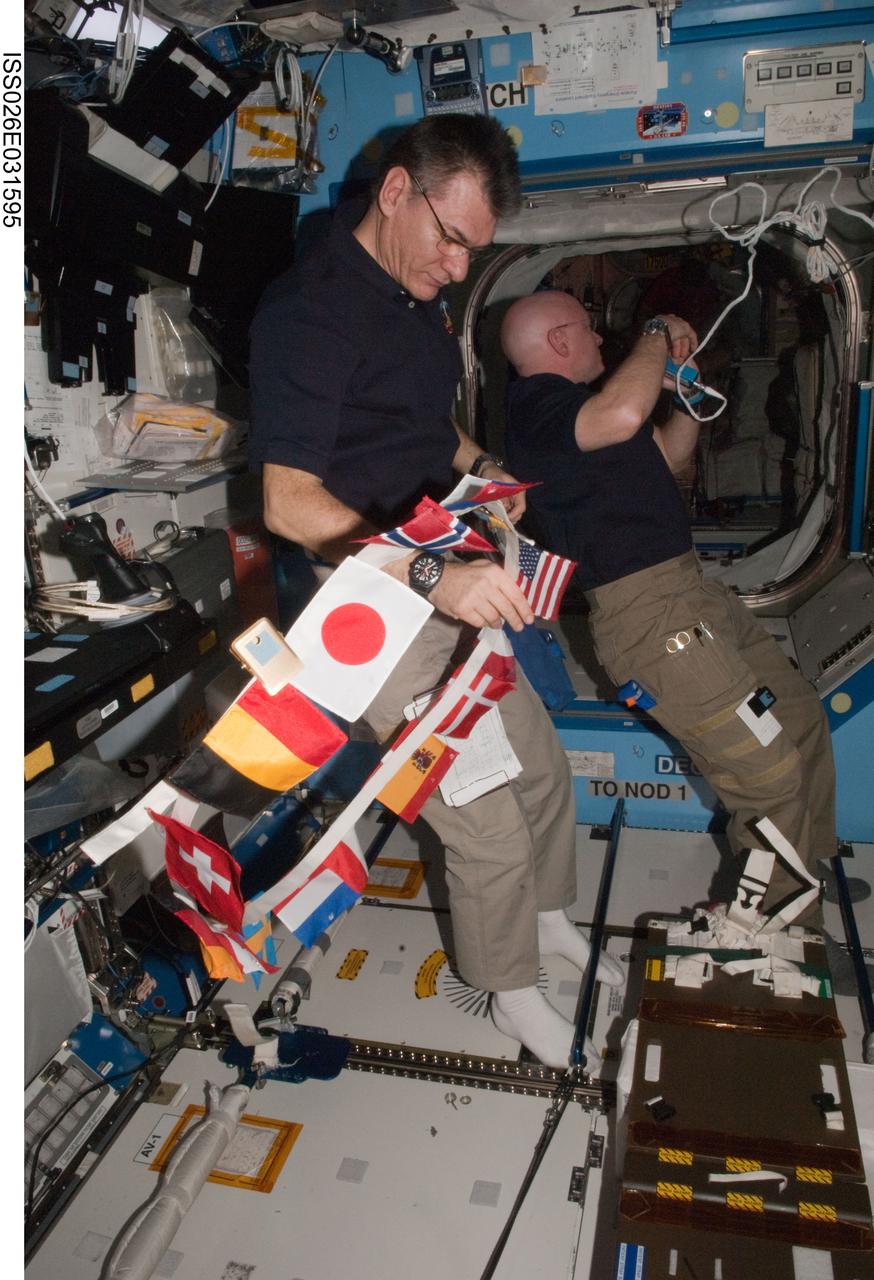
ISS026-E-031595 (3 March 2011) --- Inside the U.S. lab Destiny on the International Space Station, European Space Agency astronaut Paolo Nespoli (foreground) holds a string banner honoring the international partners. NASA astronaut Scott Kelly, Expedition 26 commander, is in the background.
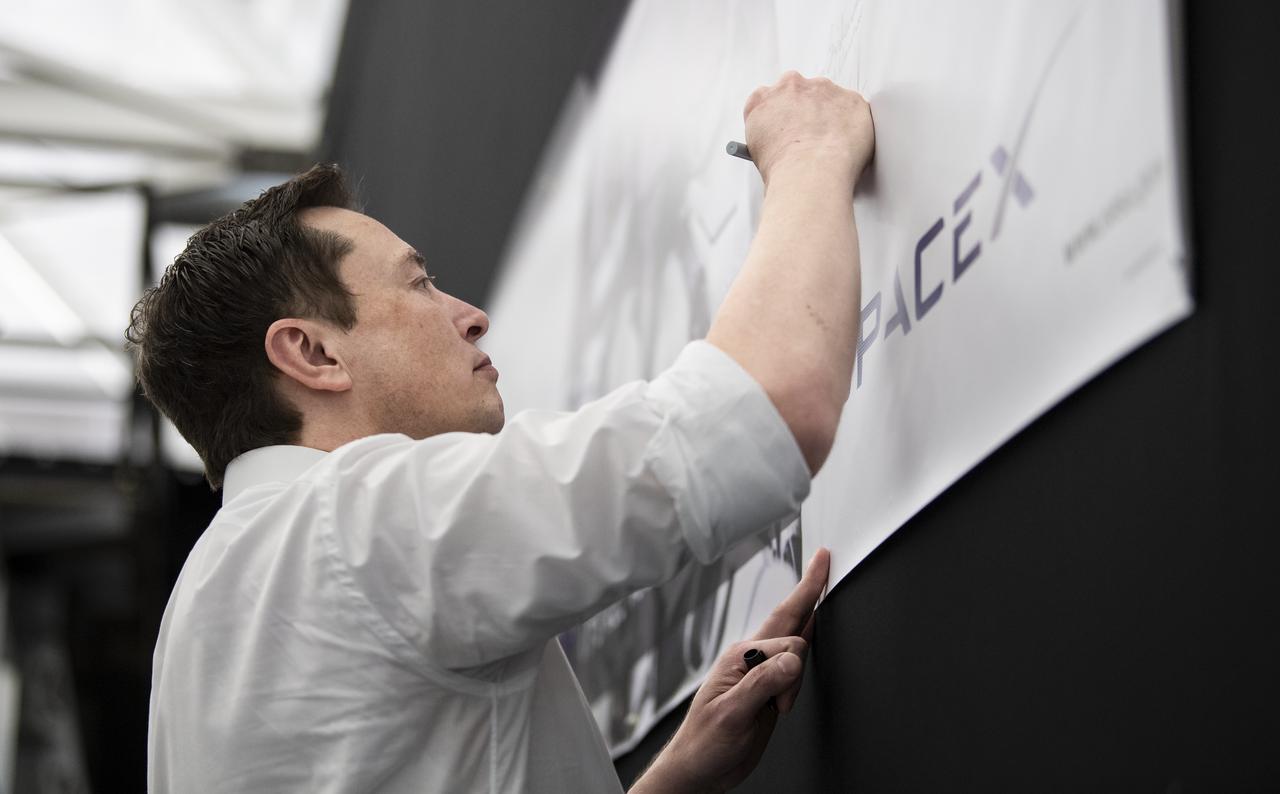
SpaceX Chief Engineer Elon Musk signs a banner after discussing progress on the Commercial Crew Program with NASA Administrator Jim Bridenstine at the SpaceX Headquarters, Thursday, Oct. 10, 2019 in Hawthorne, CA. Photo credit: (NASA/Aubrey Gemignani)
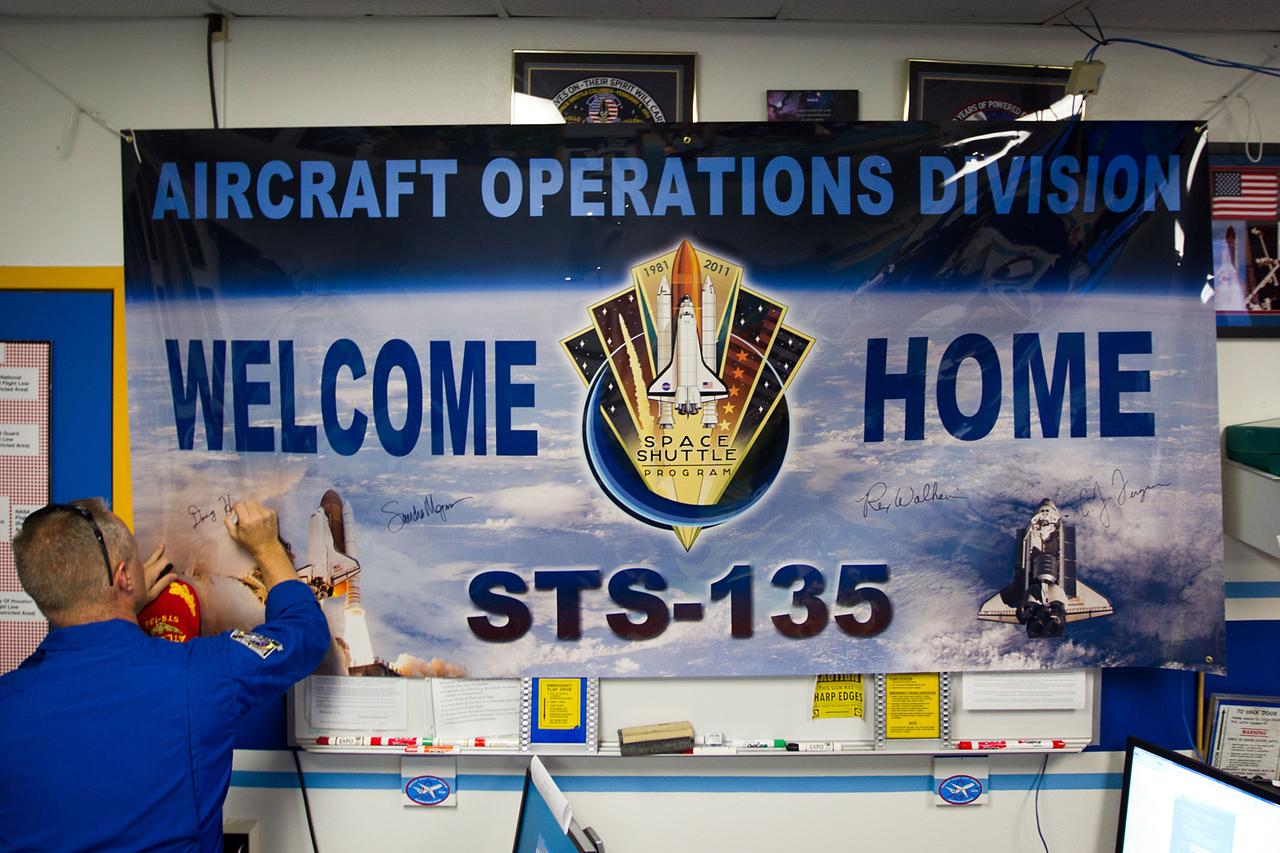
STS-135 pilot Doug Hurley signs a welcome home banner before a welcome home ceremony for the crew of the space shuttle Atlantis, the final mission of the NASA shuttle program, at Ellington Field in Houston on Friday, July 22, 2011. ( NASA Photo / Houston Chronicle, Smiley N. Pool )
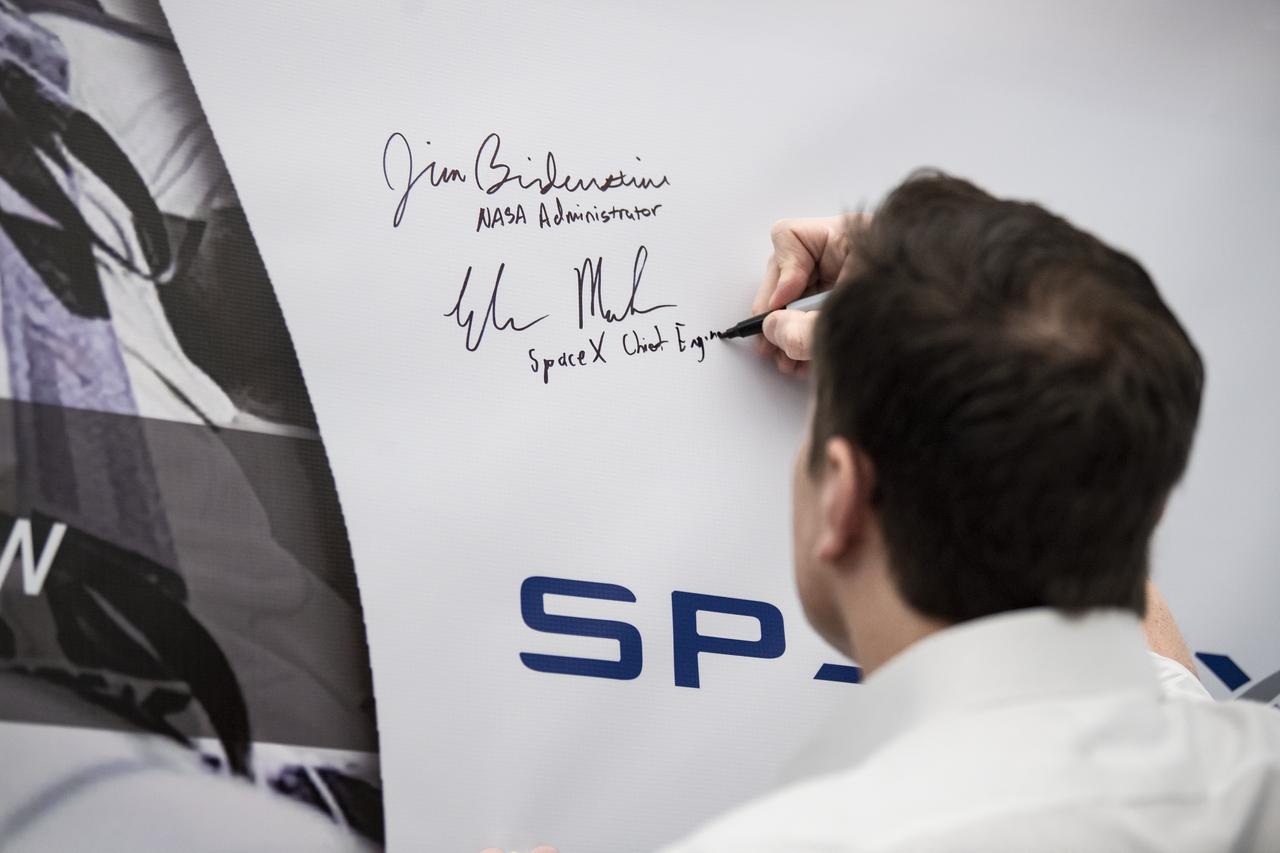
SpaceX Chief Engineer Elon Musk signs a banner after discussing progress on the Commercial Crew Program with NASA Administrator Jim Bridenstine at the SpaceX Headquarters, Thursday, Oct. 10, 2019 in Hawthorne, CA. Photo credit: (NASA/Aubrey Gemignani)
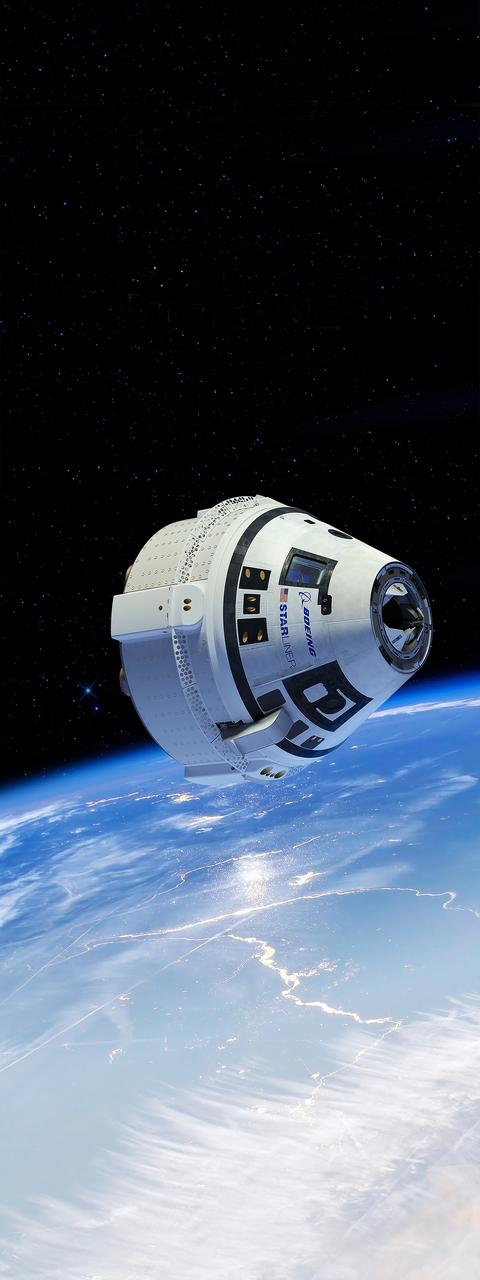
In this illustration, a Boeing CST-100 Starliner spacecraft is shown in low-Earth orbit. NASA is partnering with Boeing and SpaceX to build a new generation of human-rated spacecraft capable of taking astronauts to the International Space Station and expanding research opportunities in orbit. Boeing's upcoming Orbital Flight Test is part of NASA’s Commercial Crew Transportation Capability contract with the goal of returning human spaceflight launch capabilities to the United States.
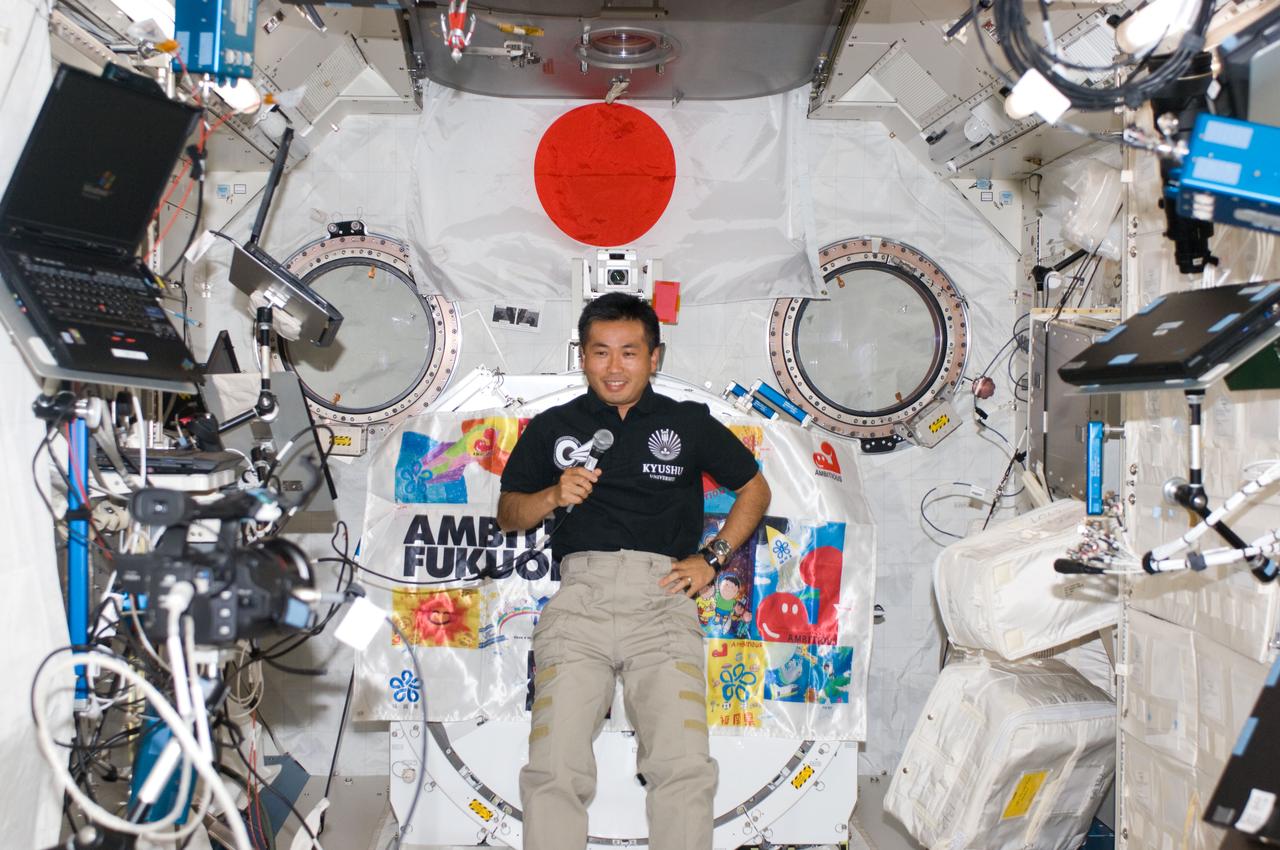
ISS018-E-043487 (25 March 2009) --- Japan Aerospace Exploration Agency (JAXA) astronaut Koichi Wakata, Expedition 18 flight engineer, uses a communication system during a press conference in the Kibo laboratory of the International Space Station.
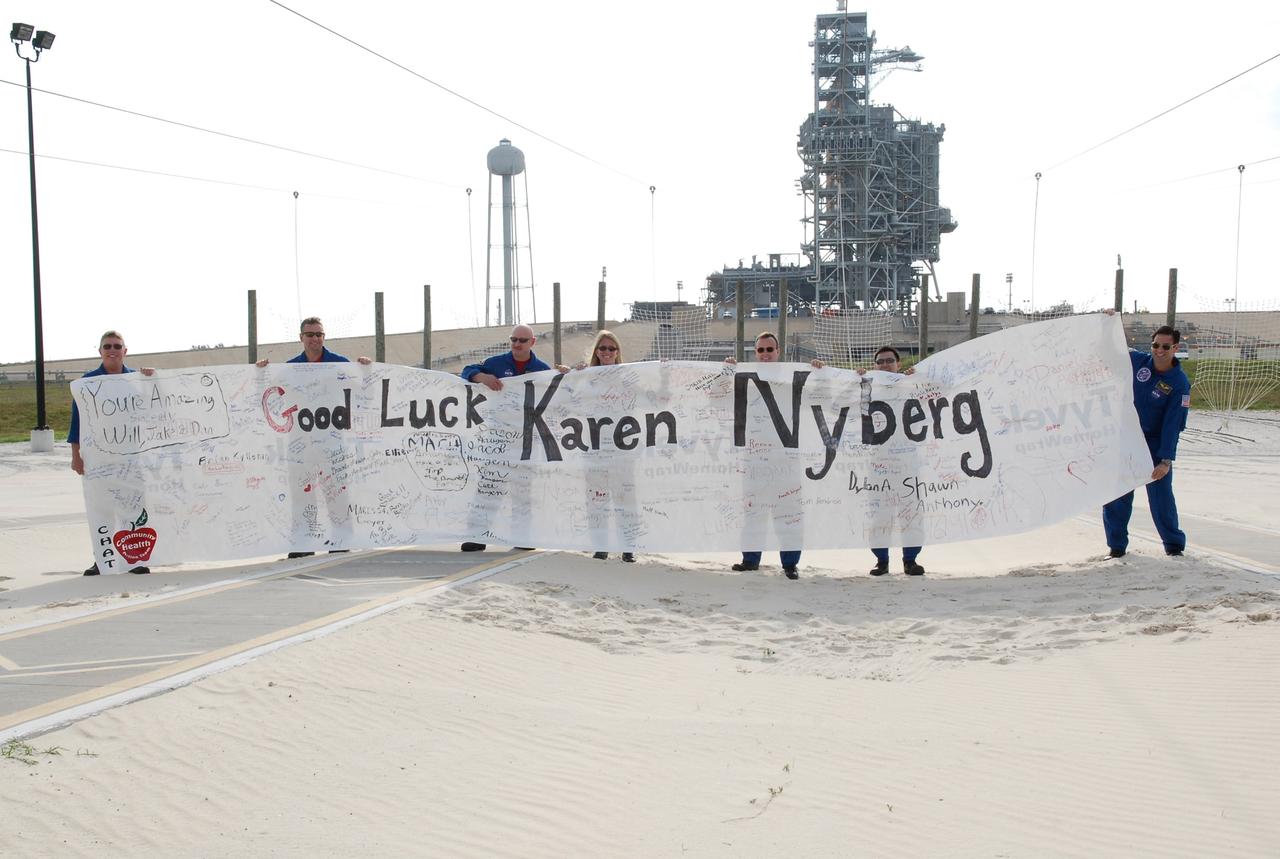
CAPE CANAVERAL, Fla. -- The STS-124 crew holds a good-luck banner presented to Mission Specialist Karen Nyberg that was created and signed by students at Henning Public School in the town of Henning, Minn. Holding the banner are (from left) Mission Specialist Mike Fossum, Pilot Ken Ham, Commander Mark Kelly, Nyberg, Mission Specialists Ron Garan, Akihiko Hoshide and Greg Chamitoff. Hoshide represents the Japan Aerospace Exploration Agency. In the background is the 300-gallon water tower (left) and the fixed service structure. The crew is at Kennedy for a dress launch rehearsal called the terminal countdown demonstration test. TCDT provides astronauts and ground crews with an opportunity to participate in various simulated countdown activities, including equipment familiarization and emergency training. On the STS-124 mission, the crew will deliver and install the Japanese Experiment Module – Pressurized Module and Japanese Remote Manipulator System. Discovery's launch is targeted for May 31. Photo credit: NASA/Kim Shiflett
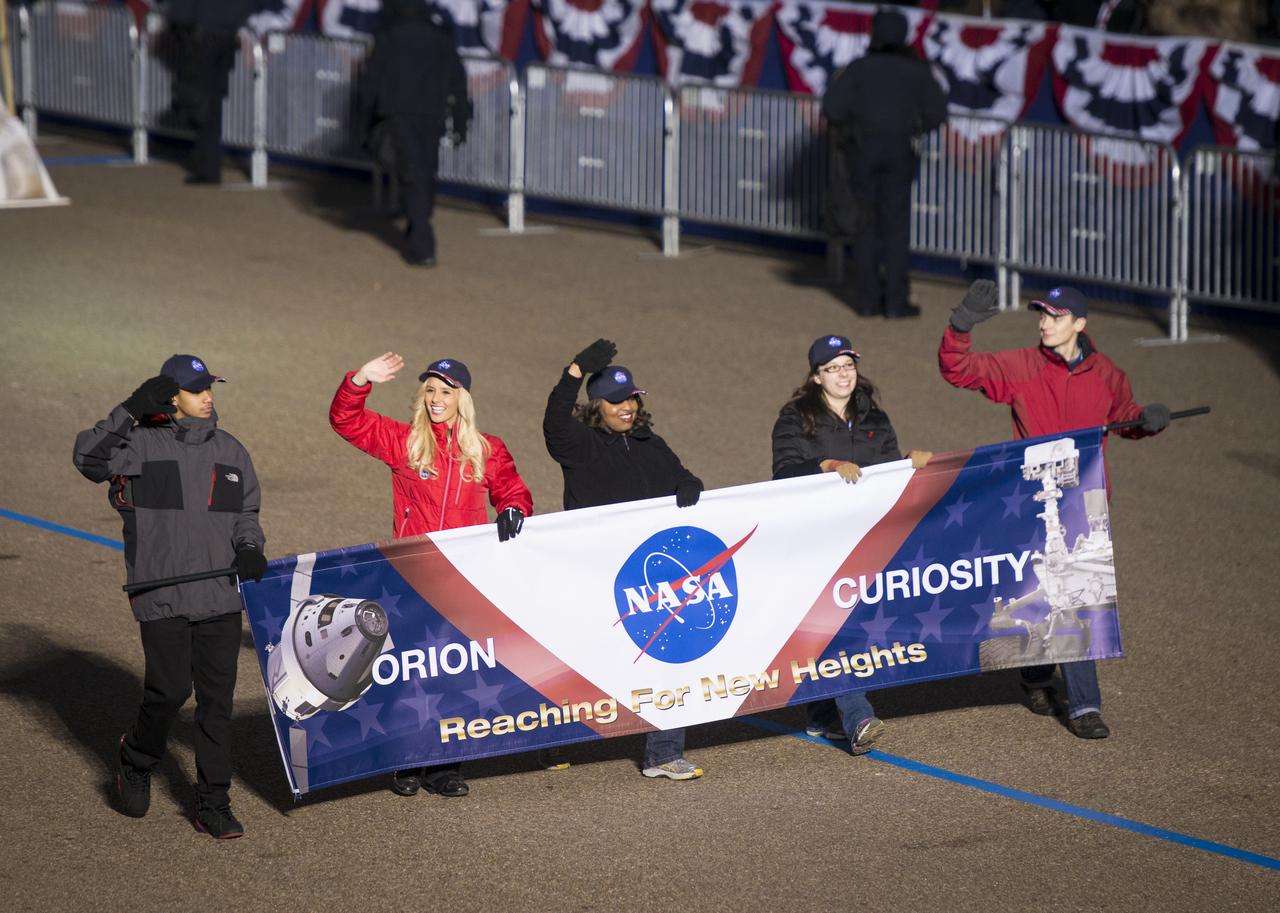
NASA employees, led by flag-bearer Marquell D. Proctor from Bishop Macnamara High School, march along Pennsylvania Avenue during the inaugural parade honoring President Barack Obama, Monday, Jan. 21. 2013, in Washington. Obama was sworn-in as the nation's 44th President earlier in the day. Photo Credit: (NASA/Bill Ingalls)

A NASA Mars Rover Landing banner is seen on the Morgan Stanley video board as NASA's Perseverance rover begins its descent towards the surface of Mars, Thursday, Feb. 18, 2021 in New York City. A key objective for Perseverance’s mission on Mars is astrobiology, including the search for signs of ancient microbial life. The rover will characterize the planet’s geology and past climate, pave the way for human exploration of the Red Planet, and be the first mission to collect and cache Martian rock and regolith. Photo Credit: (NASA/Emma Howells)
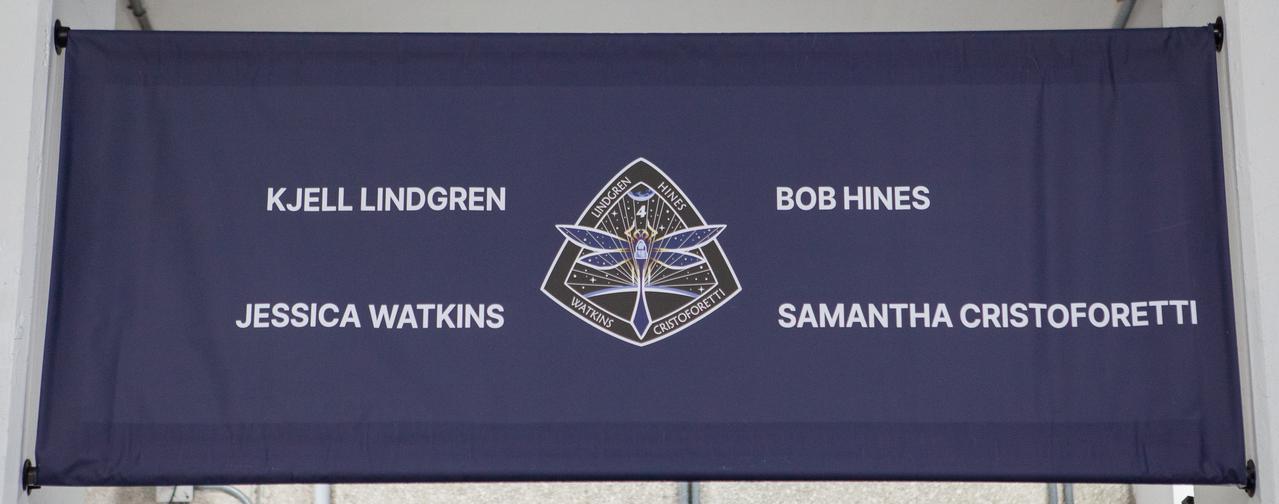
A banner hangs outside the Neil A. Armstrong Operations and Checkout Building at NASA’s Kennedy Space Center in Florida on April 27, 2022. Crew-4 astronauts Kjell Lindgren, Bob Hines, Jessica Watkins, and Samantha Cristoforetti will launch to the International Space Station aboard SpaceX’s Crew Dragon, powered by the company’s Falcon 9 rocket, as part of NASA’s Commercial Crew Program. Liftoff is scheduled for today at 3:52 a.m. EDT from Launch Complex 39A at Kennedy.
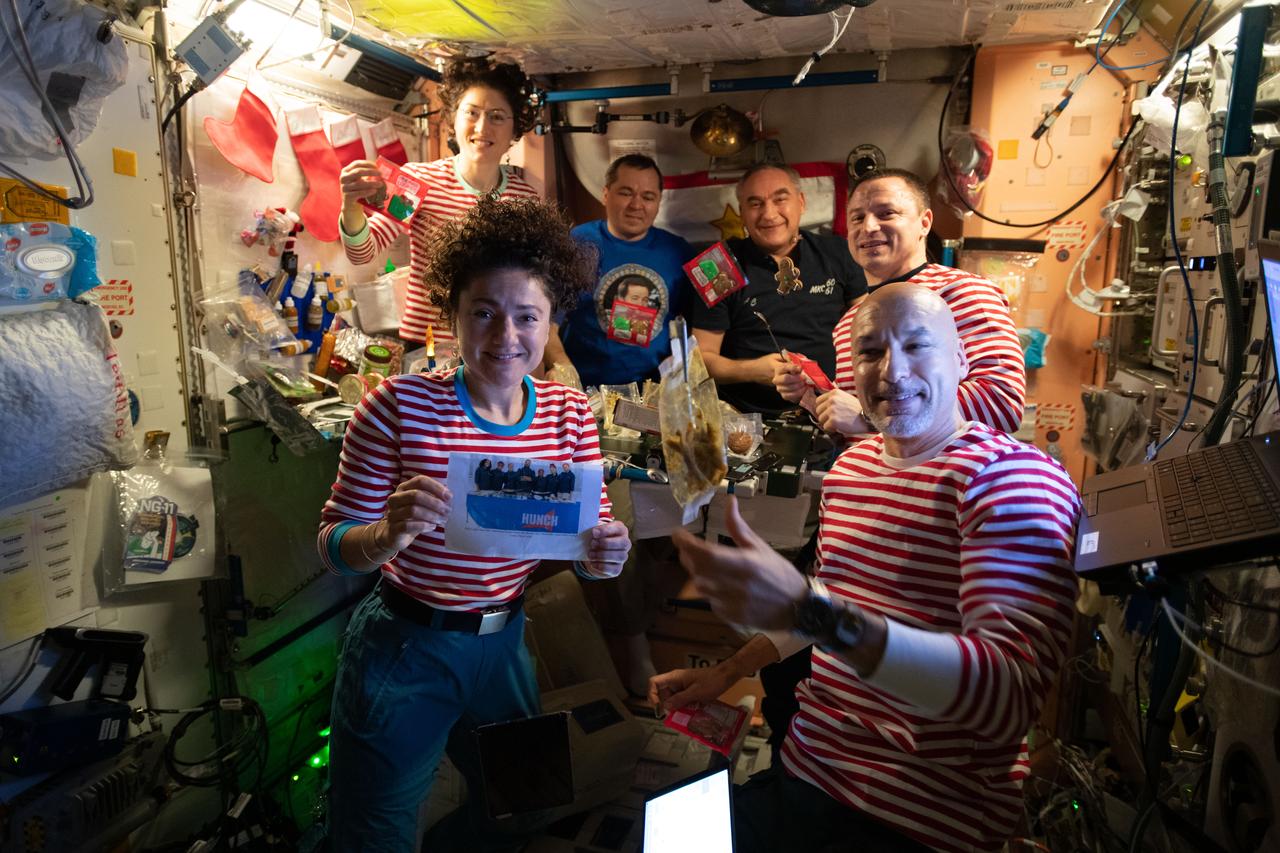
iss061e096558 (Dec. 25, 2019) --- The Expedition 64 crew celebrates Christmas day with a brunch inside the International Space Station's Unity module decorated with stockings, flashlight "candles" and a Christmas tree banner. Clockwise from bottom left are, NASA Flight Engineers Jessica Meir and Christina Koch, Roscosmos Flight Engineers Oleg Skripochka and Alexander Skvortsov, NASA Flight Engineer Drew Morgan, and Commander Luca Parmitano of the European Space Agency (ESA).
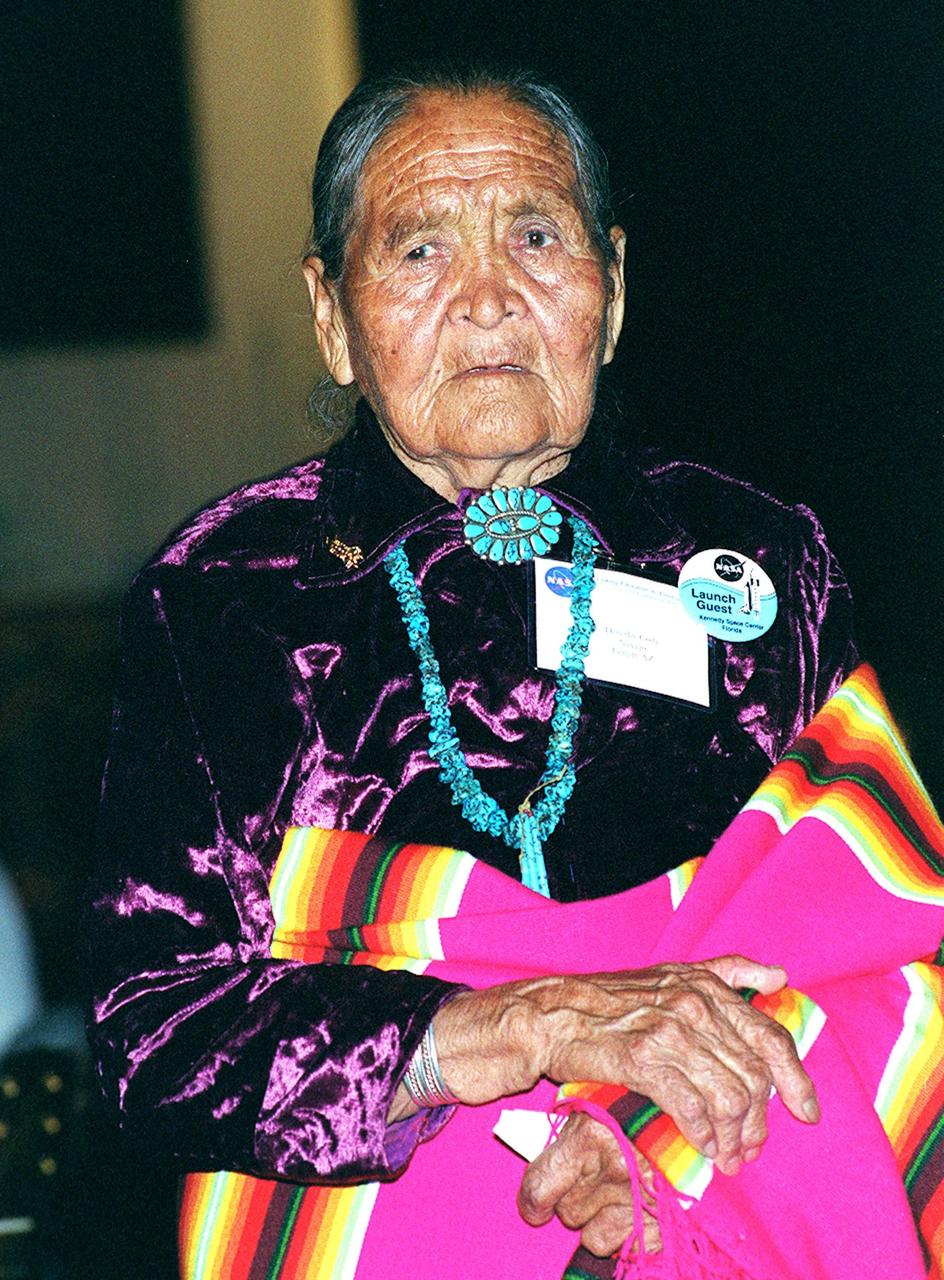
KENNEDY SPACE CENTER, FLA. - An elder of her Navaho tribe, Dorothy Cody shares the stage with her granddaughter Radmilla Cody (not shown), the 2001 Miss Navaho Nation, who is singing the "Star Spangled Banner" in her native language during a pre-launch Native American ceremony. The ceremony was part of several days' activities commemorating John B. Herrington as the first tribally enrolled Native American astronaut to fly on a Shuttle mission. Herrington is a Mission Specialist on STS-113.
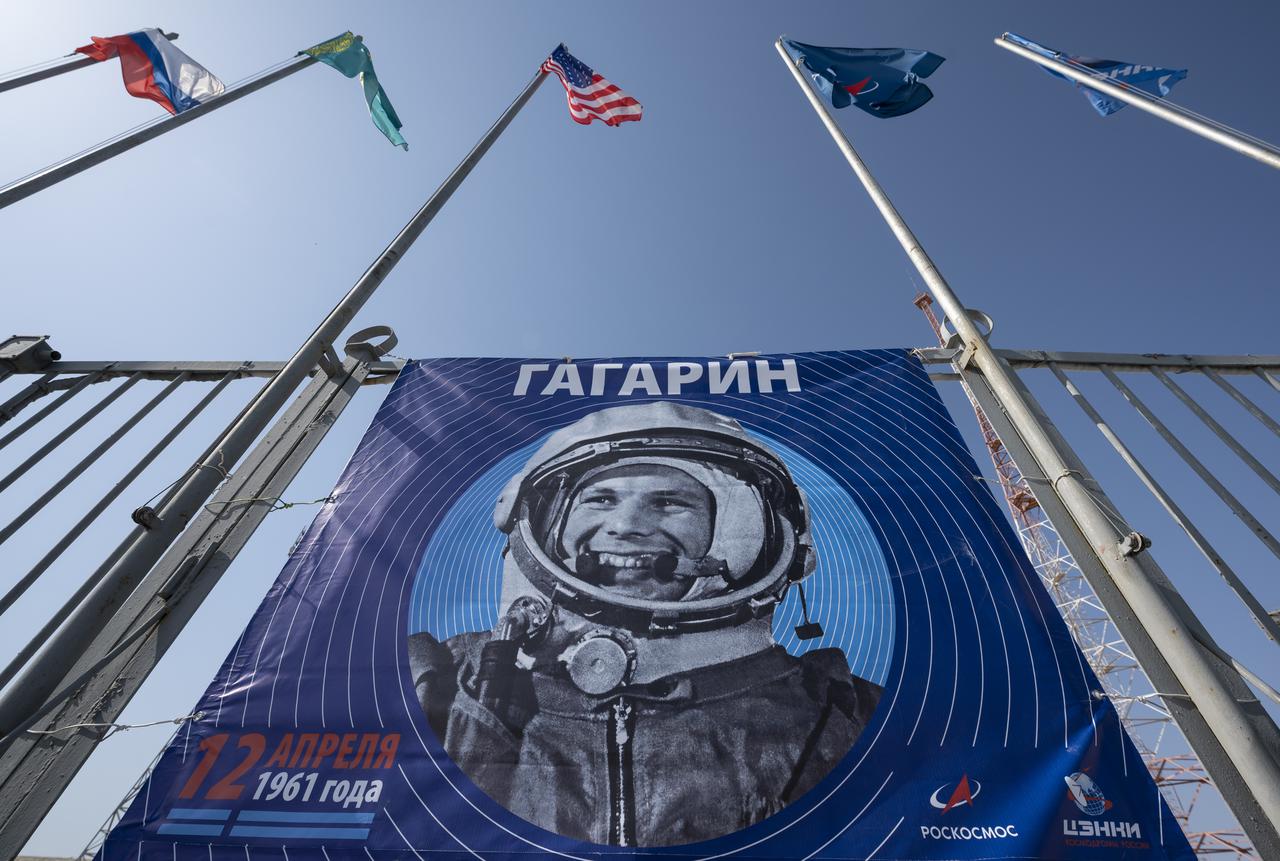
A banner celebrating the 60th anniversary of the launch of Yuri Gagarin is seen at the site 31 launch pad prior to boarding Expedition 65 NASA astronaut Mark Vande Hei, Russian cosmonauts Oleg Novitskiy and Pyotr Dubrov, Friday, April 9, 2021 at the Baikonur Cosmodrome in Kazakhstan. Launch of the Soyuz rocket sent the trio on a mission to the International Space Station. Photo Credit: (NASA/Bill Ingalls)

A NASA Mars Rover Landing banner is seen on the One Times Square video board as NASA's Perseverance rover continues its descent towards the surface of Mars, Thursday, Feb. 18, 2021 in New York City. A key objective for Perseverance’s mission on Mars is astrobiology, including the search for signs of ancient microbial life. The rover will characterize the planet’s geology and past climate, pave the way for human exploration of the Red Planet, and be the first mission to collect and cache Martian rock and regolith. Photo Credit: (NASA/Emma Howells)
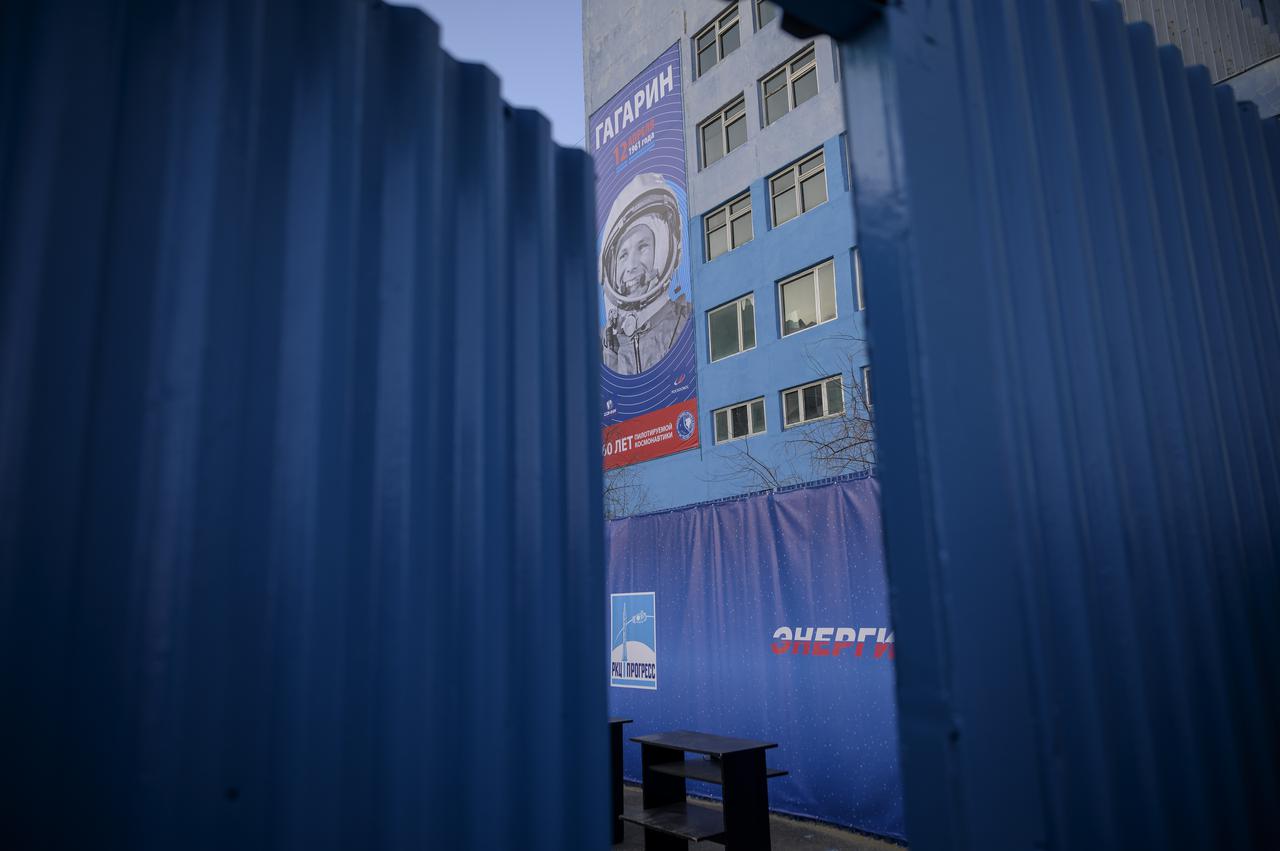
A banner celebrating the 60th anniversary of the launch of Yuri Gagarin is seen just past the security entrance to building 254 of the Baikonur Cosmodrome, Friday, April 9, 2021 in Baikonur, Kazakhstan. Launch of the Soyuz rocket sent Expedition 65 NASA astronaut Mark Vande Hei, Russian cosmonauts Oleg Novitskiy and Pyotr Dubrov on a mission to the International Space Station. Photo Credit: (NASA/Bill Ingalls)
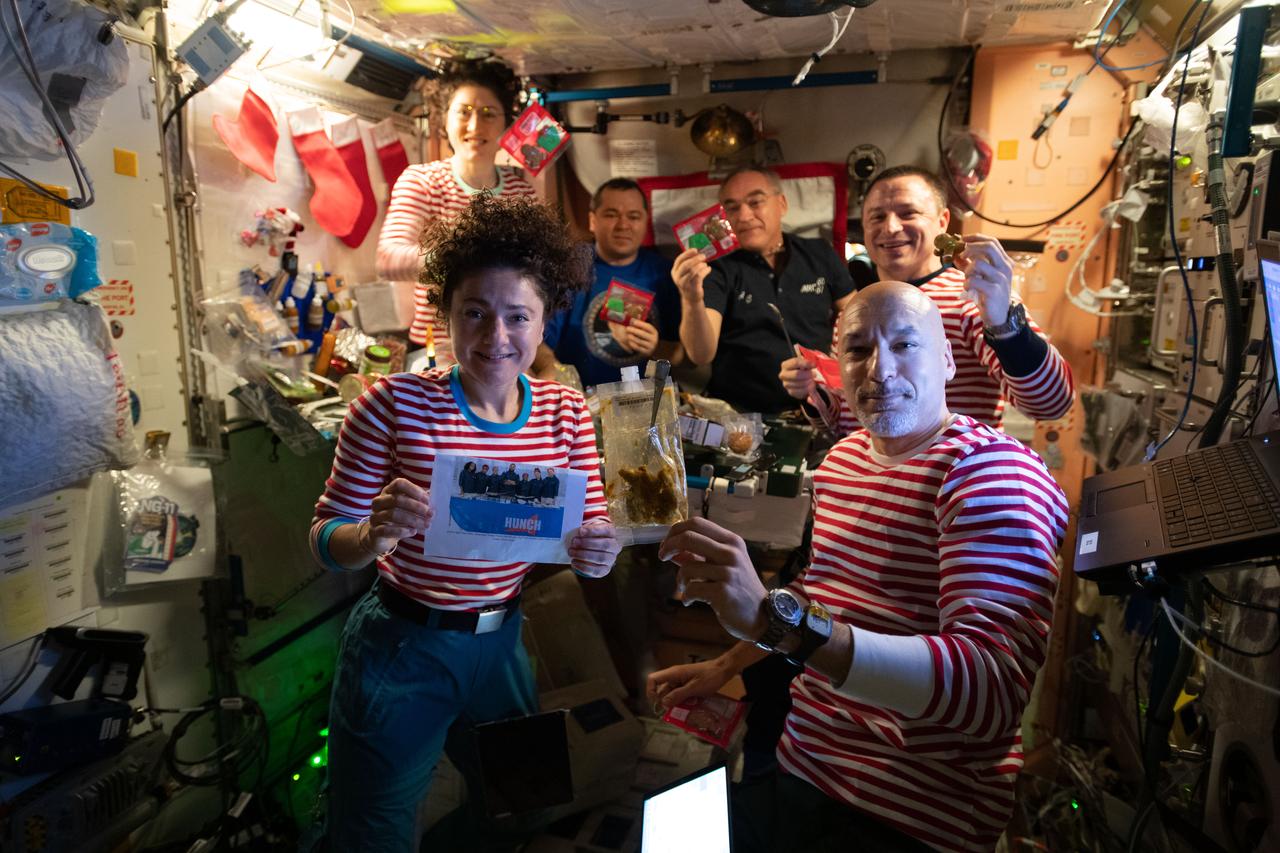
iss061e096558 (Dec. 25, 2019) --- The Expedition 61 crew celebrates Christmas day with a brunch inside the International Space Station's Unity module decorated with stockings, flashlight "candles" and a Christmas tree banner. Clockwise from bottom left are, NASA Flight Engineers Jessica Meir and Christina Koch, Roscosmos Flight Engineers Oleg Skripochka and Alexander Skvortsov, NASA Flight Engineer Drew Morgan, and Commander Luca Parmitano of the European Space Agency (ESA).
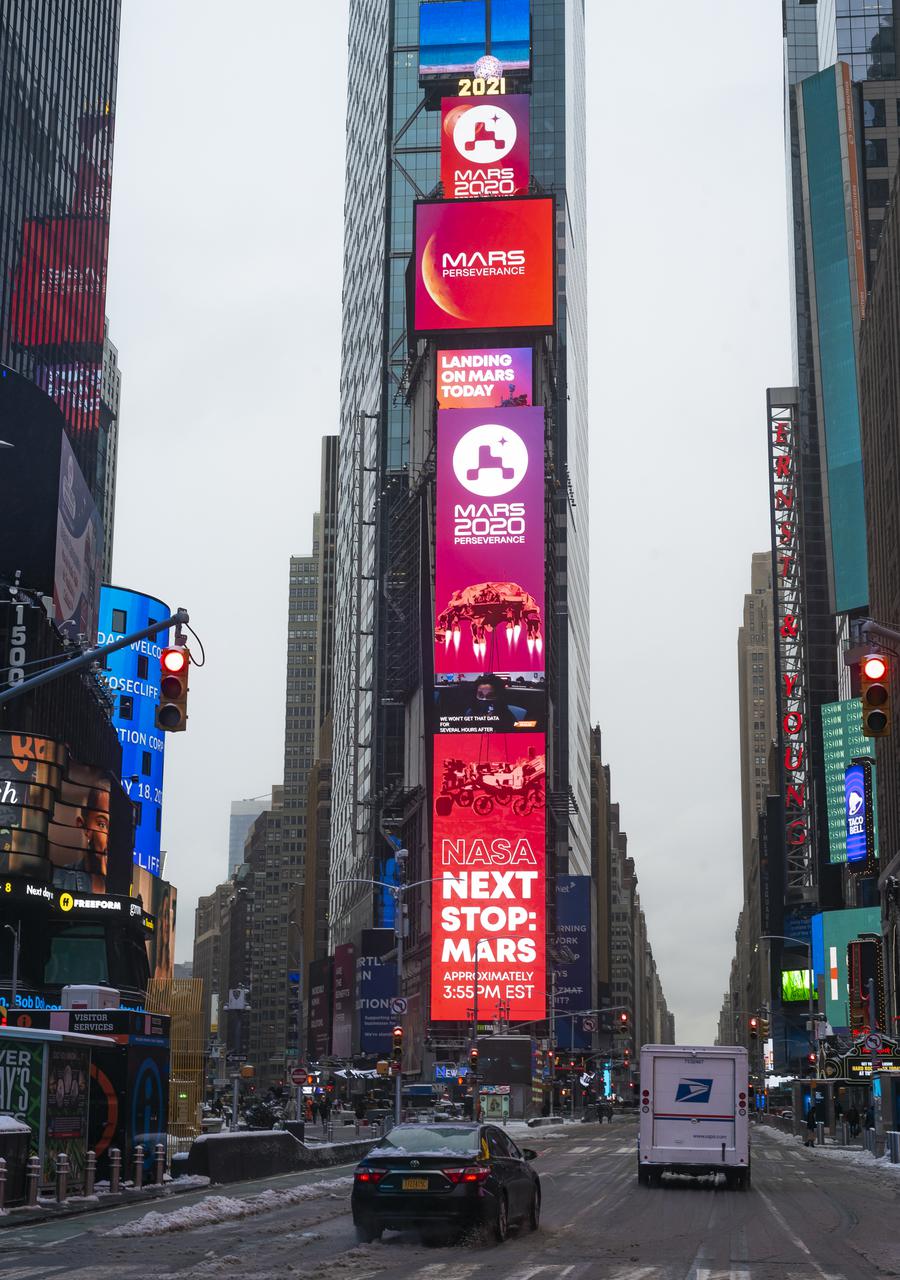
A NASA Mars Rover Landing banner is seen on the One Times Square video board as NASA's Perseverance rover begins its descent towards the surface of Mars, Thursday, Feb. 18, 2021 in New York City. A key objective for Perseverance’s mission on Mars is astrobiology, including the search for signs of ancient microbial life. The rover will characterize the planet’s geology and past climate, pave the way for human exploration of the Red Planet, and be the first mission to collect and cache Martian rock and regolith. Photo Credit: (NASA/Emma Howells)
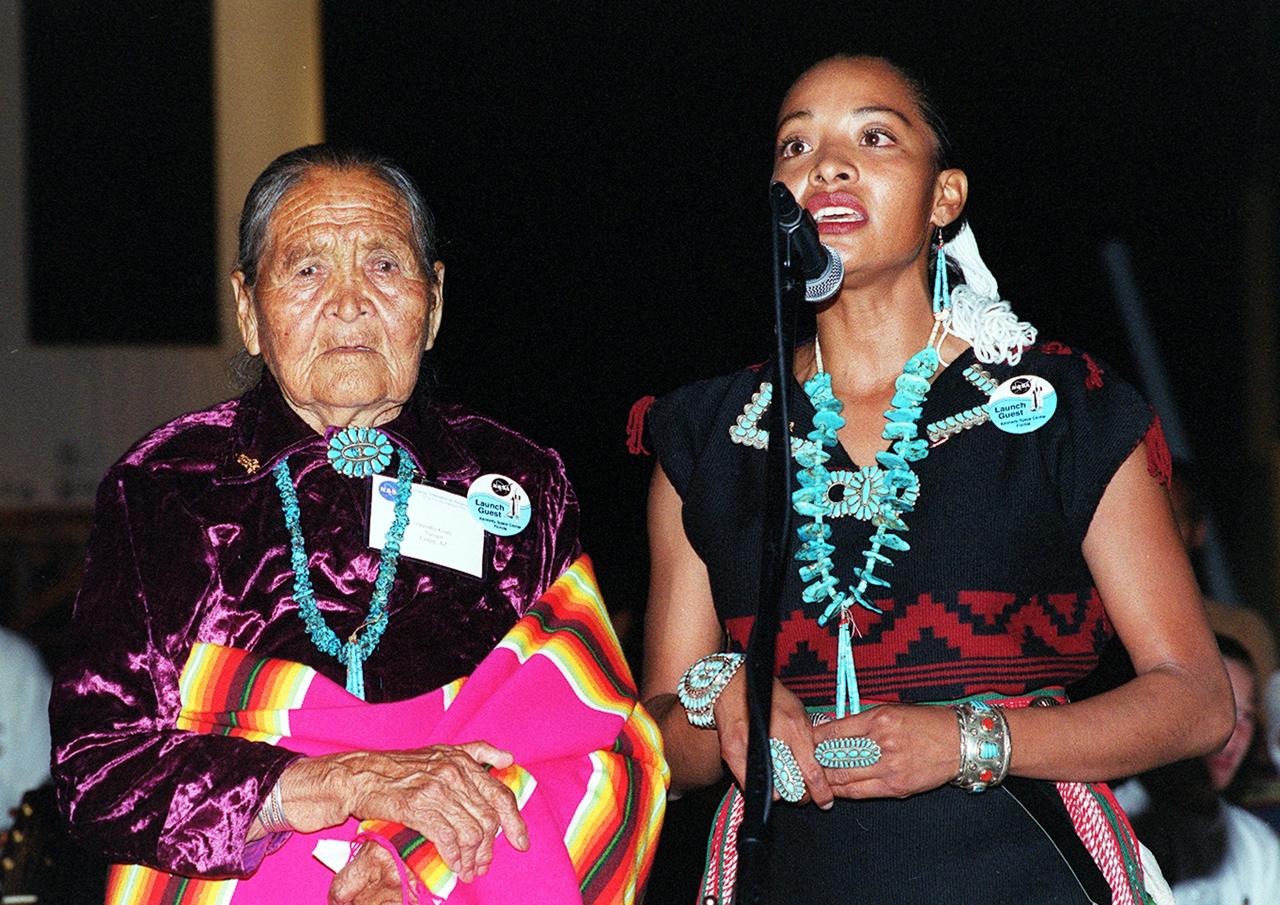
KENNEDY SPACE CENTER, FLA. -- During a pre-launch Native American ceremony, Radmilla Cody (right) , the 2001 Miss Navaho Nation, sings the "Star Spangled Banner" in her native language. With her is her grandmother. The ceremony was part of several days' activities commemorating John B. Herrington as the first tribally enrolled Native American astronaut to fly on a Shuttle mission. Herrington is a Mission Specialist on STS-113.
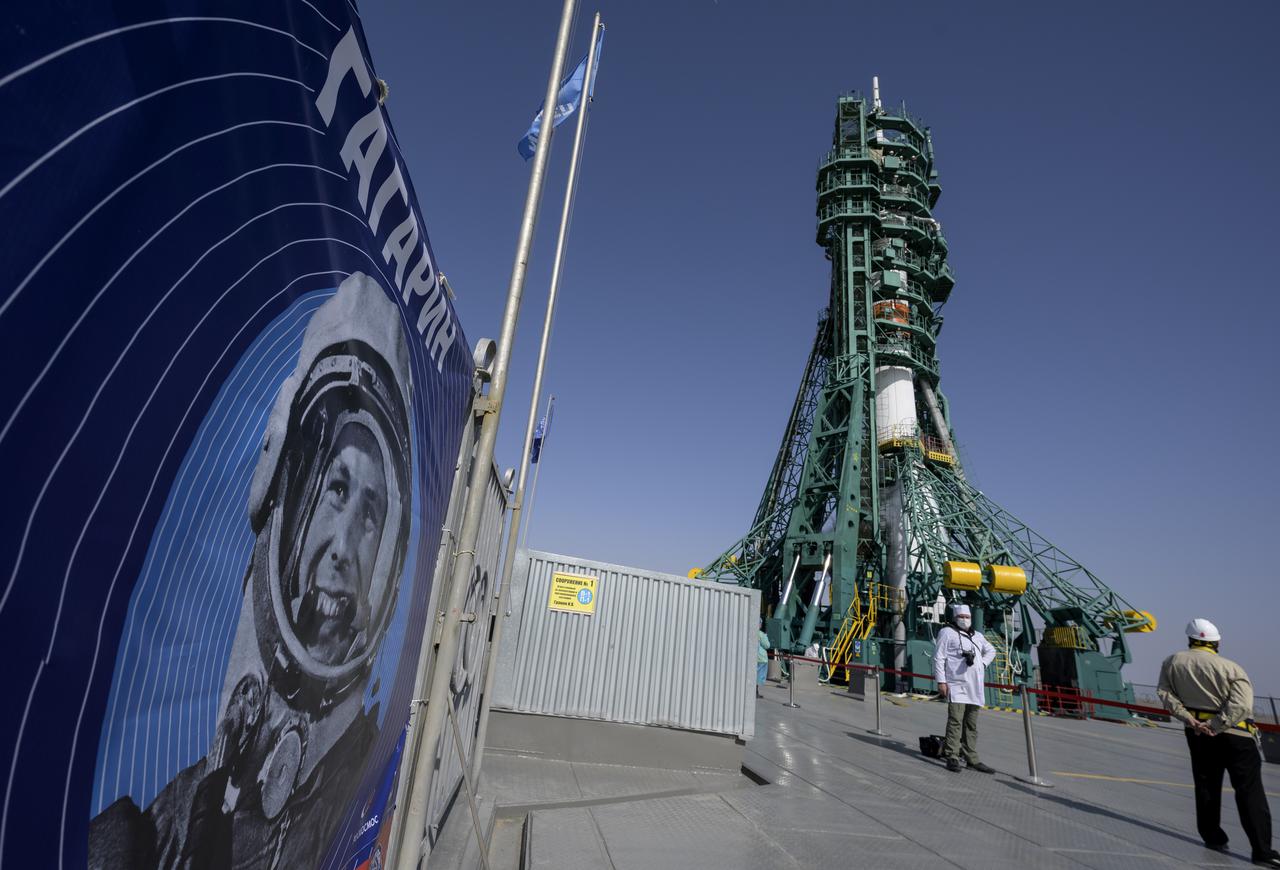
A banner celebrating the 60th anniversary of the launch of Yuri Gagarin is seen at the site 31 launch pad prior to boarding Expedition 65 NASA astronaut Mark Vande Hei, Russian cosmonauts Oleg Novitskiy and Pyotr Dubrov, Friday, April 9, 2021 at the Baikonur Cosmodrome in Kazakhstan. Launch of the Soyuz rocket sent the trio on a mission to the International Space Station. Photo Credit: (NASA/Bill Ingalls)
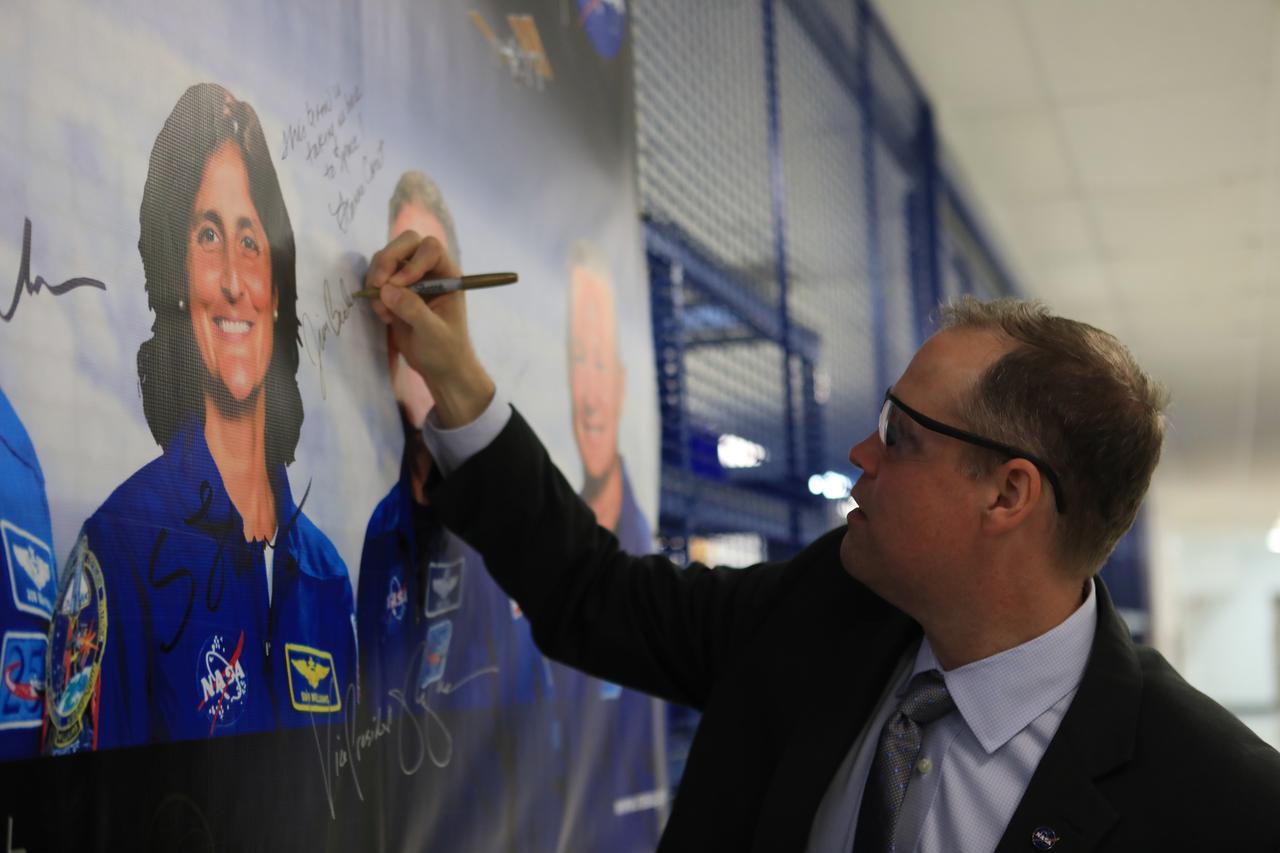
During a tour of Boeing's Commercial Crew and Cargo Processing Facility (C3PF), NASA Administrator Jim Bridenstine signs a banner with photos of astronauts chosen for the first Commercial Crew Program flights. The C3PF is the production and processing home of Boeing’s CST-100 Starliner spacecraft. Bridenstine made his first official visit to NASA's Kennedy Space Center on Aug. 6 and 7, 2018.
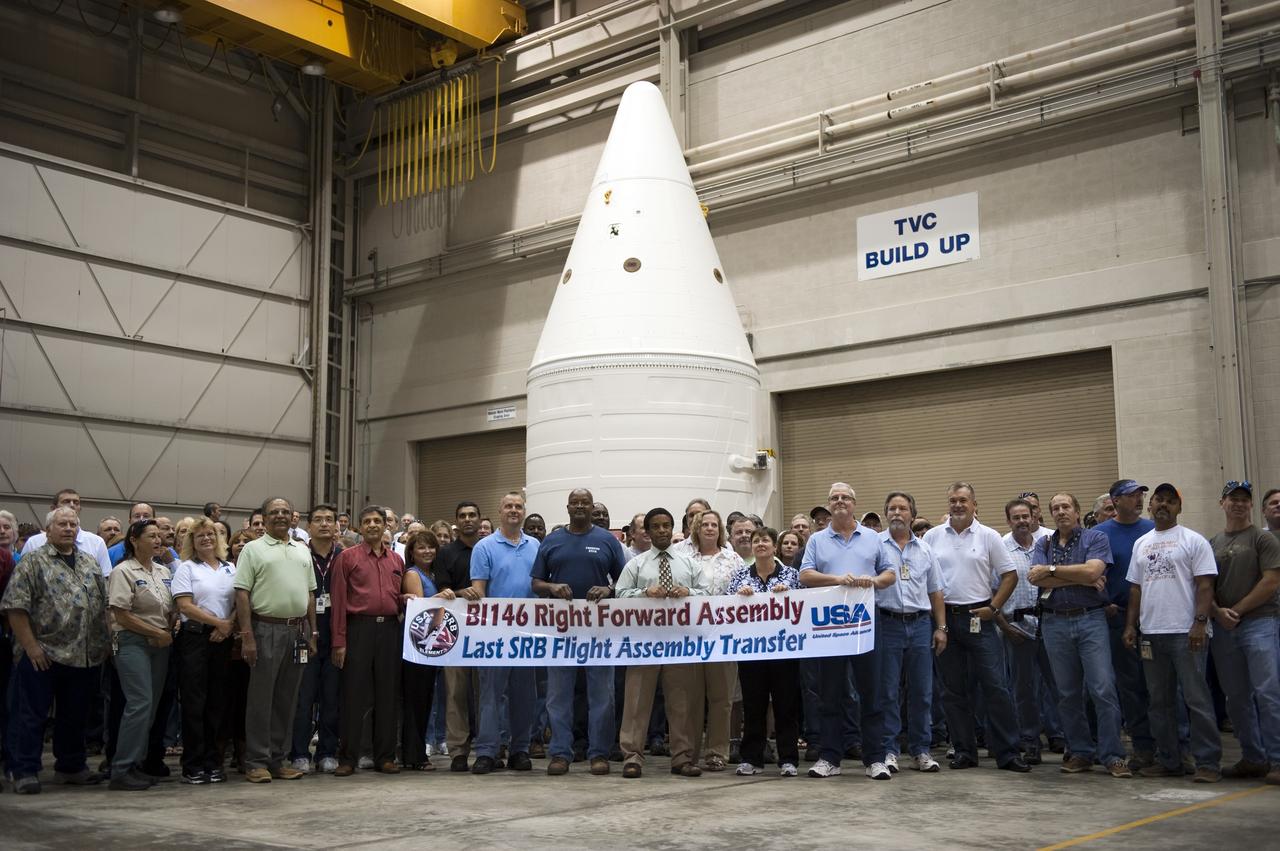
CAPE CANAVERAL, Fla. -- At NASA's Kennedy Space Center in Florida, United Space Alliance employees gather and hold up a banner at a ceremony being held to commemorate the move from Kennedy's Assembly Refurbishment Facility (ARF) to the Vehicle Assembly Building (VAB) of the Space Shuttle Program's final solid rocket booster structural assembly -- the right-hand forward. The move was postponed because of inclement weather. Photo credit: NASA/Kim Shiflett
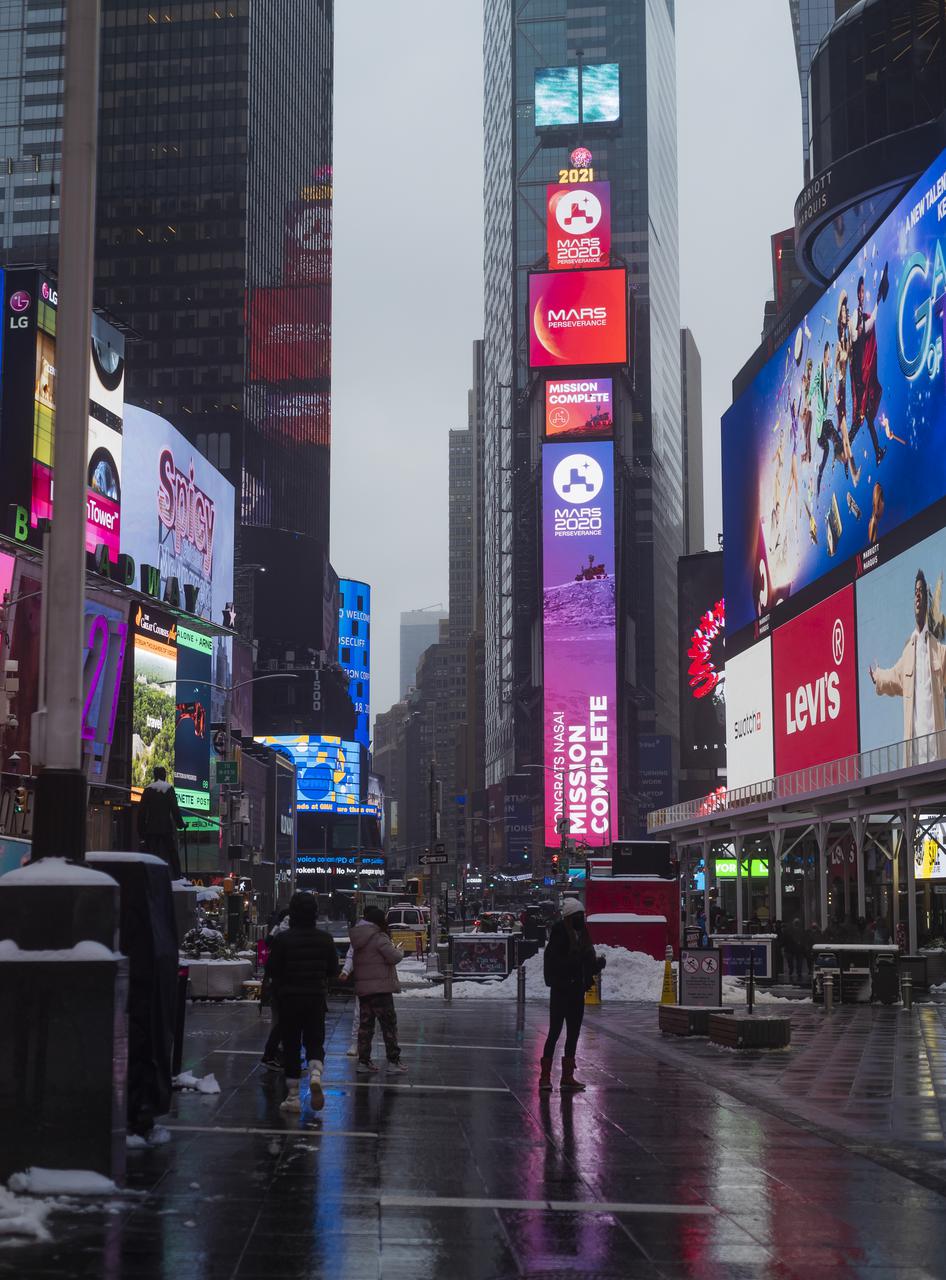
A NASA Mars Rover Landing banner is seen confirming the mission is complete on the One Times Square video board after NASA's Perseverance rover landed on the surface of Mars, Thursday, Feb. 18, 2021 in New York City. A key objective for Perseverance’s mission on Mars is astrobiology, including the search for signs of ancient microbial life. The rover will characterize the planet’s geology and past climate, pave the way for human exploration of the Red Planet, and be the first mission to collect and cache Martian rock and regolith. Photo Credit: (NASA/Emma Howells)
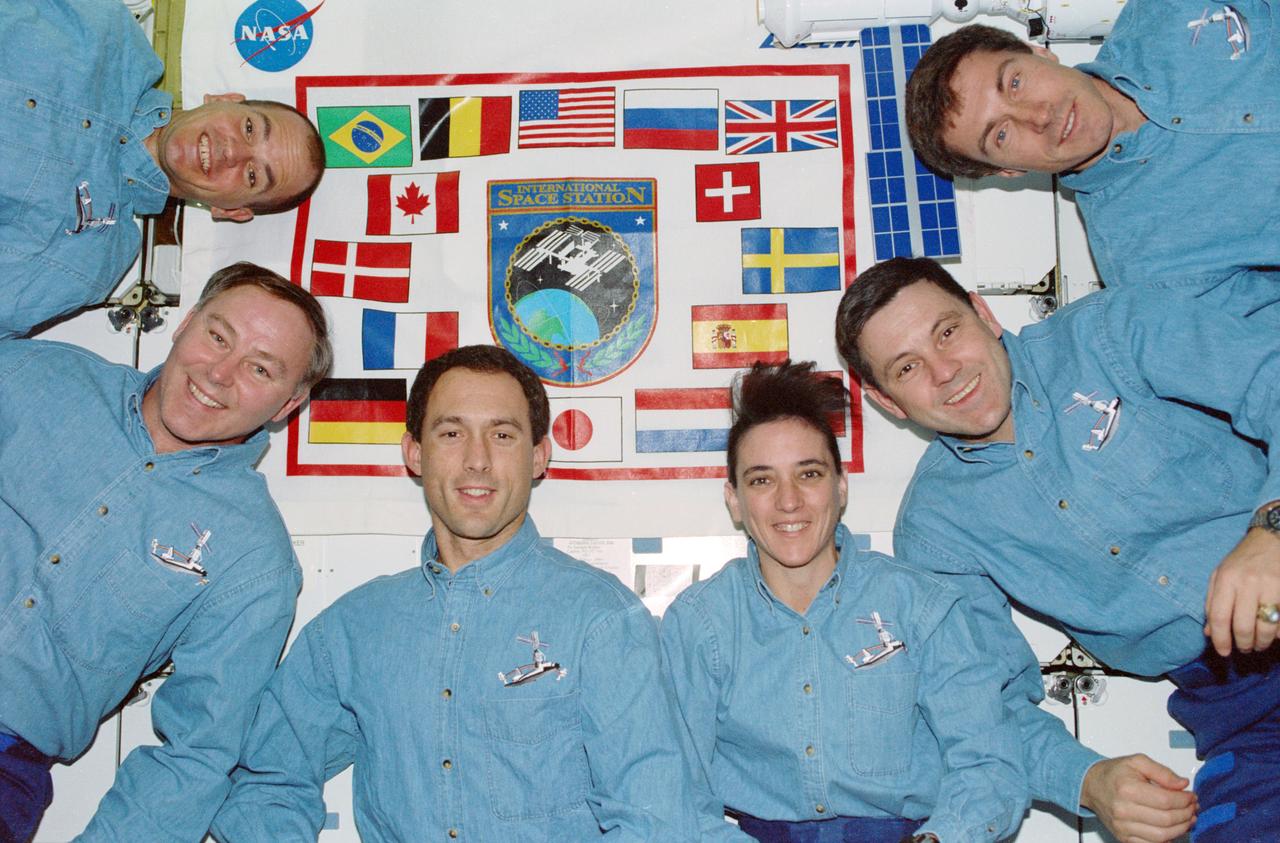
STS088-350-010 (4-15 Dec. 1998) --- STS-88 in-flight crew portrait taken on the Endeavour's middeck with a banner in the background which depicts the flags of all the international partners. From left to right are: Frederick W. "Rick" Sturckow, pilot; Jerry L. Ross, James H. Newman and Nancy J. Currie, all mission specialists; Robert D. Cabana, mission commander; and Sergei K. Krikalev, mission specialist, representing the Russian Aviaiton and Space Agency (Rosaviakosmos).
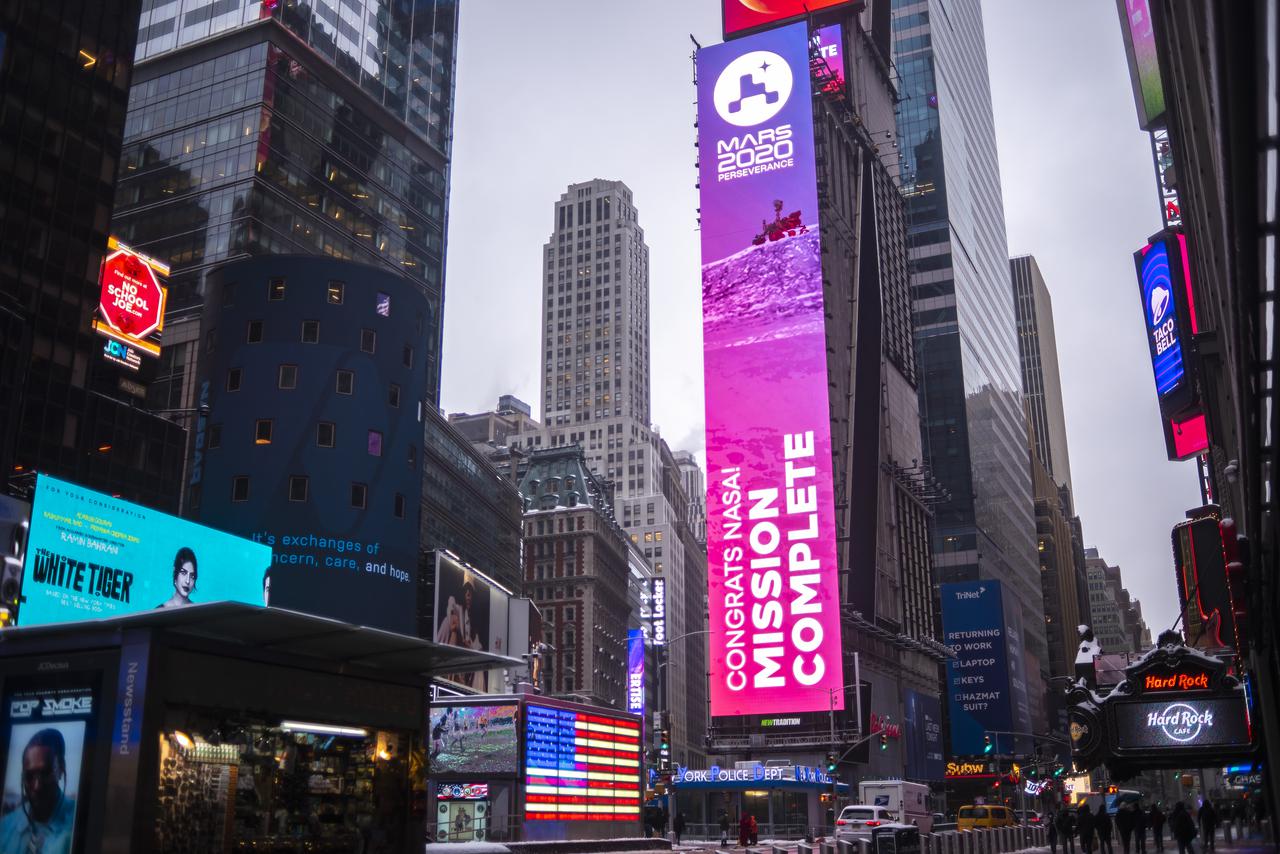
A NASA Mars Rover Landing banner is seen confirming the mission is complete on the One Times Square video board after NASA's Perseverance rover landed on the surface of Mars, Thursday, Feb. 18, 2021 in New York City. A key objective for Perseverance’s mission on Mars is astrobiology, including the search for signs of ancient microbial life. The rover will characterize the planet’s geology and past climate, pave the way for human exploration of the Red Planet, and be the first mission to collect and cache Martian rock and regolith. Photo Credit: (NASA/Emma Howells)
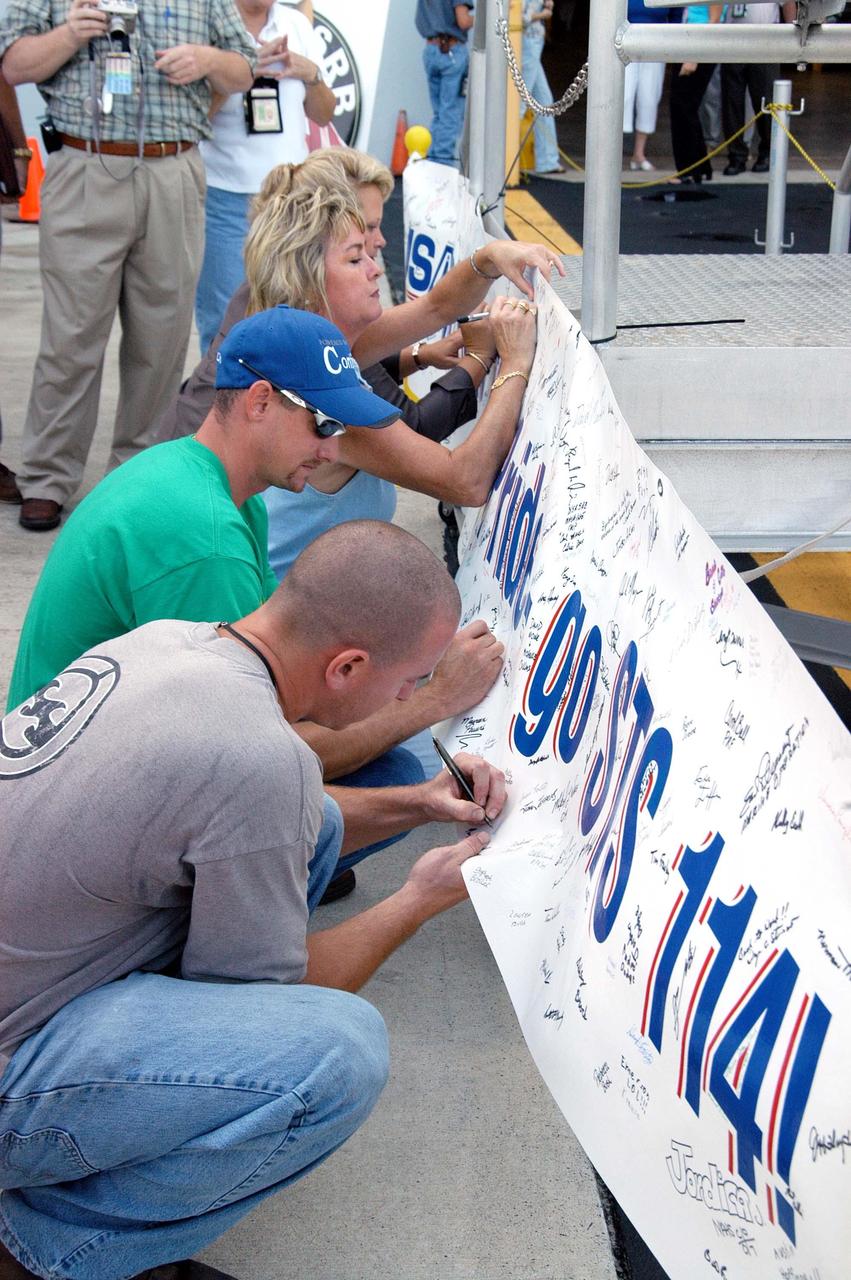
KENNEDY SPACE CENTER, FLA. - Employees in the Assembly and Refurbishment Facility sign a banner recognizing their efforts in preparing the first (left) solid rocket booster aft skirt for mission STS-114 on schedule. The segment will be transferred to the Rotation Processing and Surge Facility (RPSF) for stacking. At the RPSF an aft motor segment and an external tank attach ring will be installed. The stack will then be moved to the Vehicle Assembly Building for further build-up. This is the first transfer of a large piece of hardware from SRB to Ground Operations. It is a significant milestone in the march to Return to Flight.
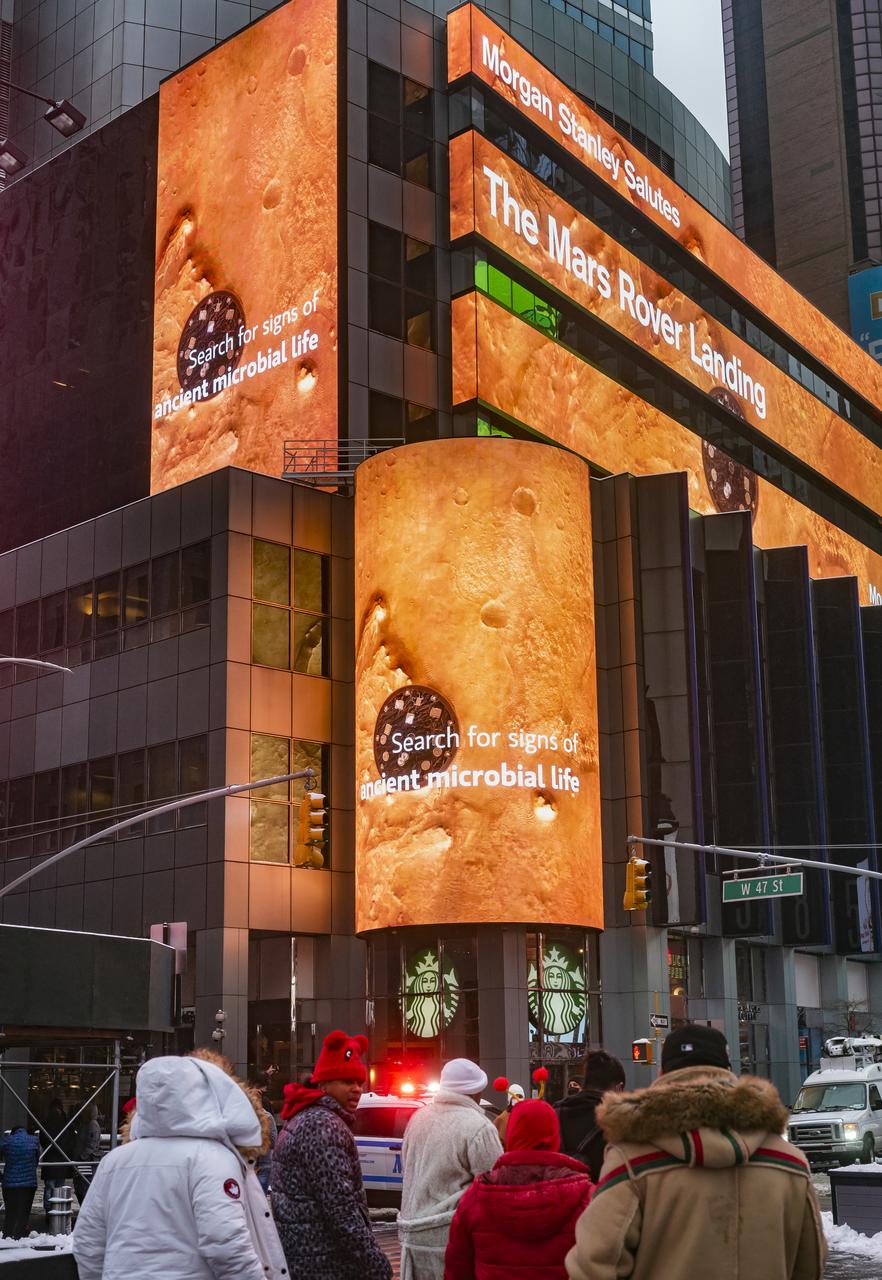
A NASA Mars Rover Landing banner is seen on the Morgan Stanley video board as NASA's Perseverance rover completes its descent towards the surface of Mars, Thursday, Feb. 18, 2021 in New York City. A key objective for Perseverance’s mission on Mars is astrobiology, including the search for signs of ancient microbial life. The rover will characterize the planet’s geology and past climate, pave the way for human exploration of the Red Planet, and be the first mission to collect and cache Martian rock and regolith. Photo Credit: (NASA/Emma Howells)
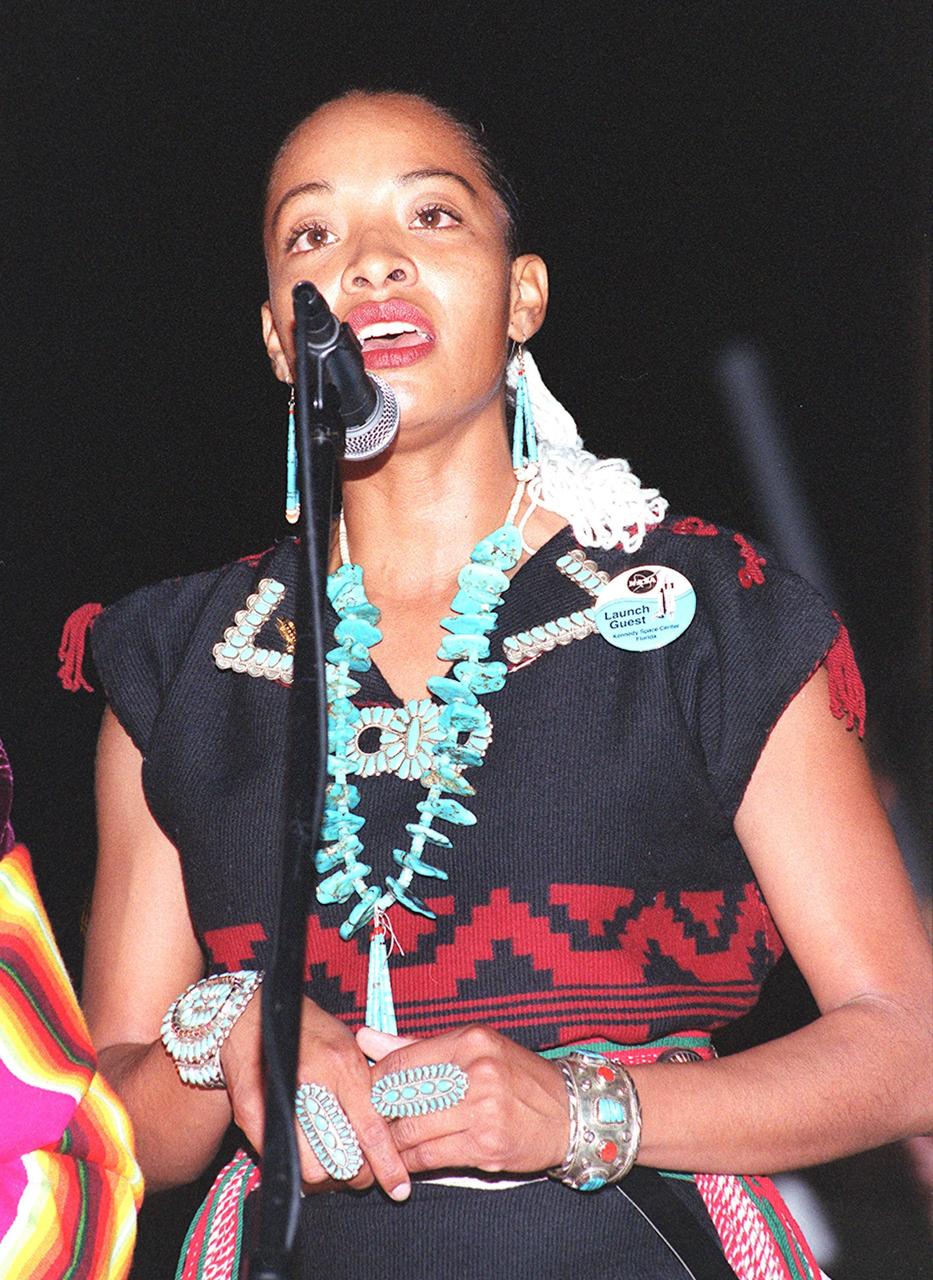
KENNEDY SPACE CENTER, FLA. -- During a pre-launch Native American ceremony, Radmilla Cody, the 2001 Miss Navaho Nation, sings the "Star Spangled Banner" in her native language. The ceremony was part of several days' activities commemorating John B. Herrington as the first tribally enrolled Native American astronaut to fly on a Shuttle mission. Herrington is a Mission Specialist on STS-113.