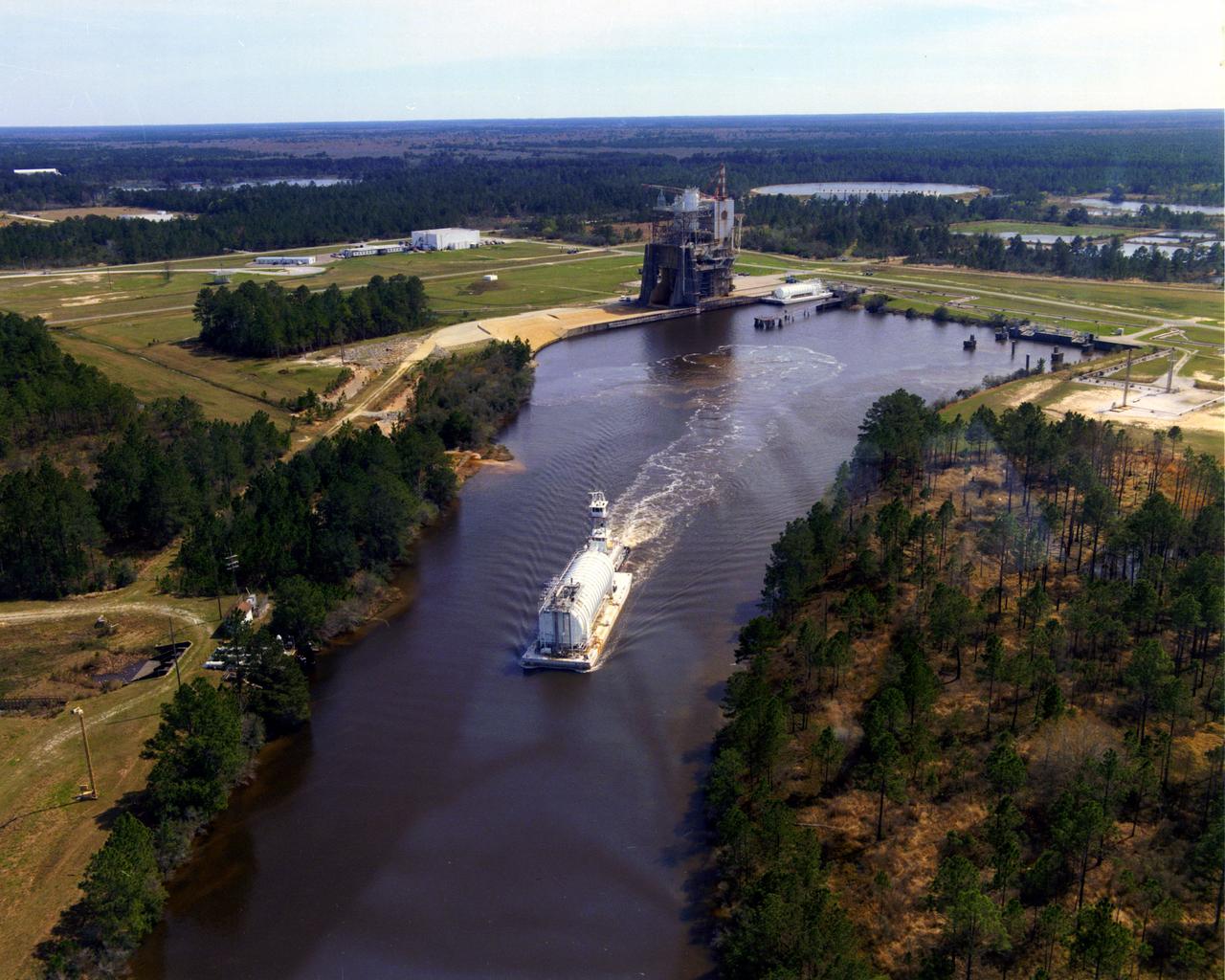
In this aerial view, a barge can be seen towing a container away from a test stand at the John C. Stennis Space Center.
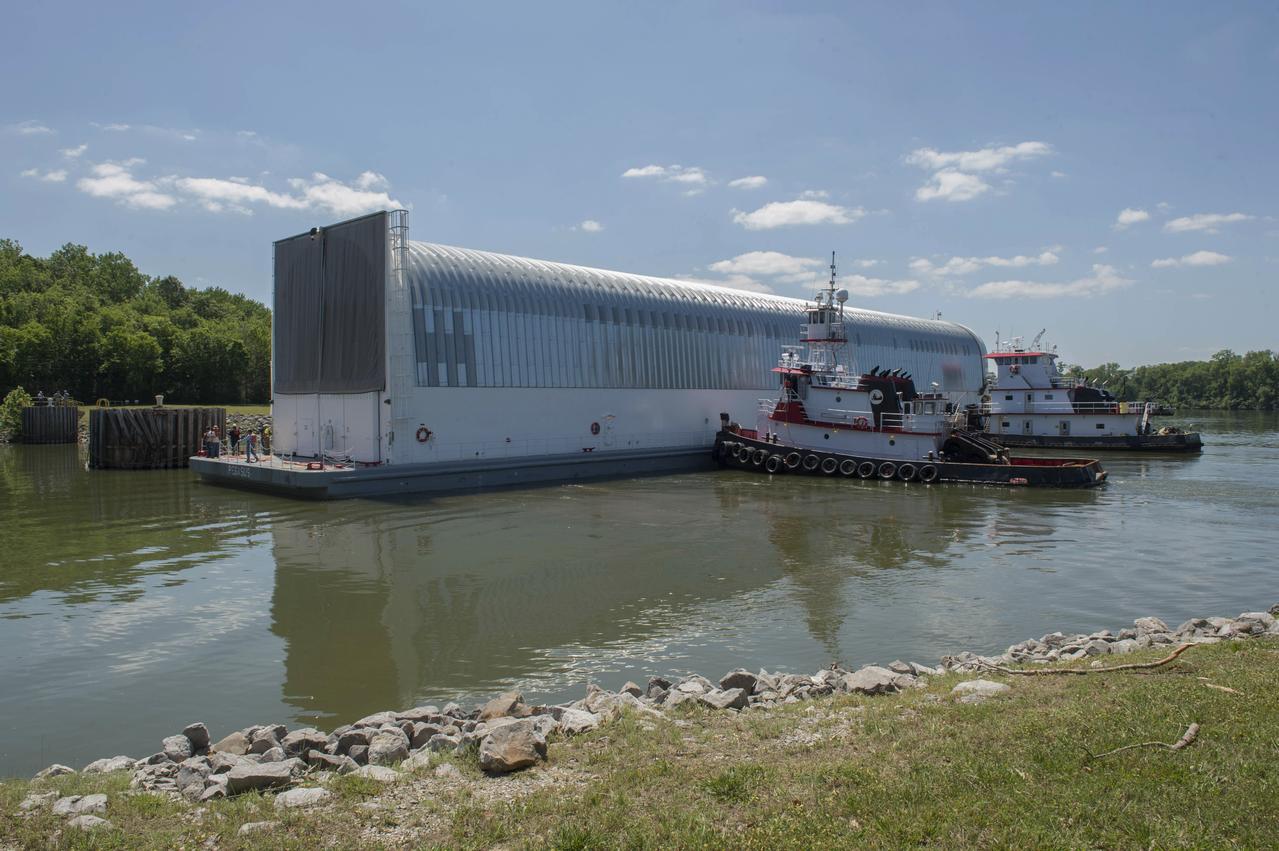
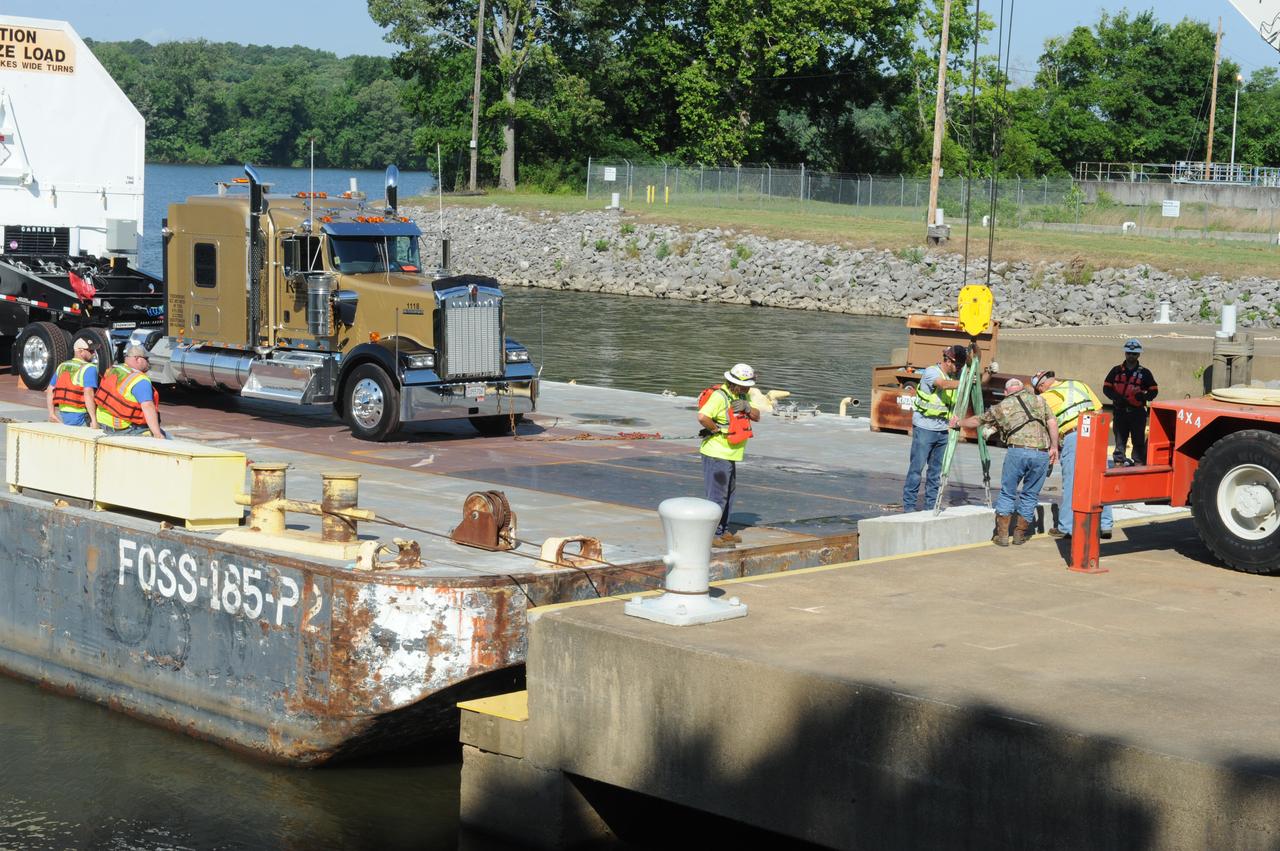
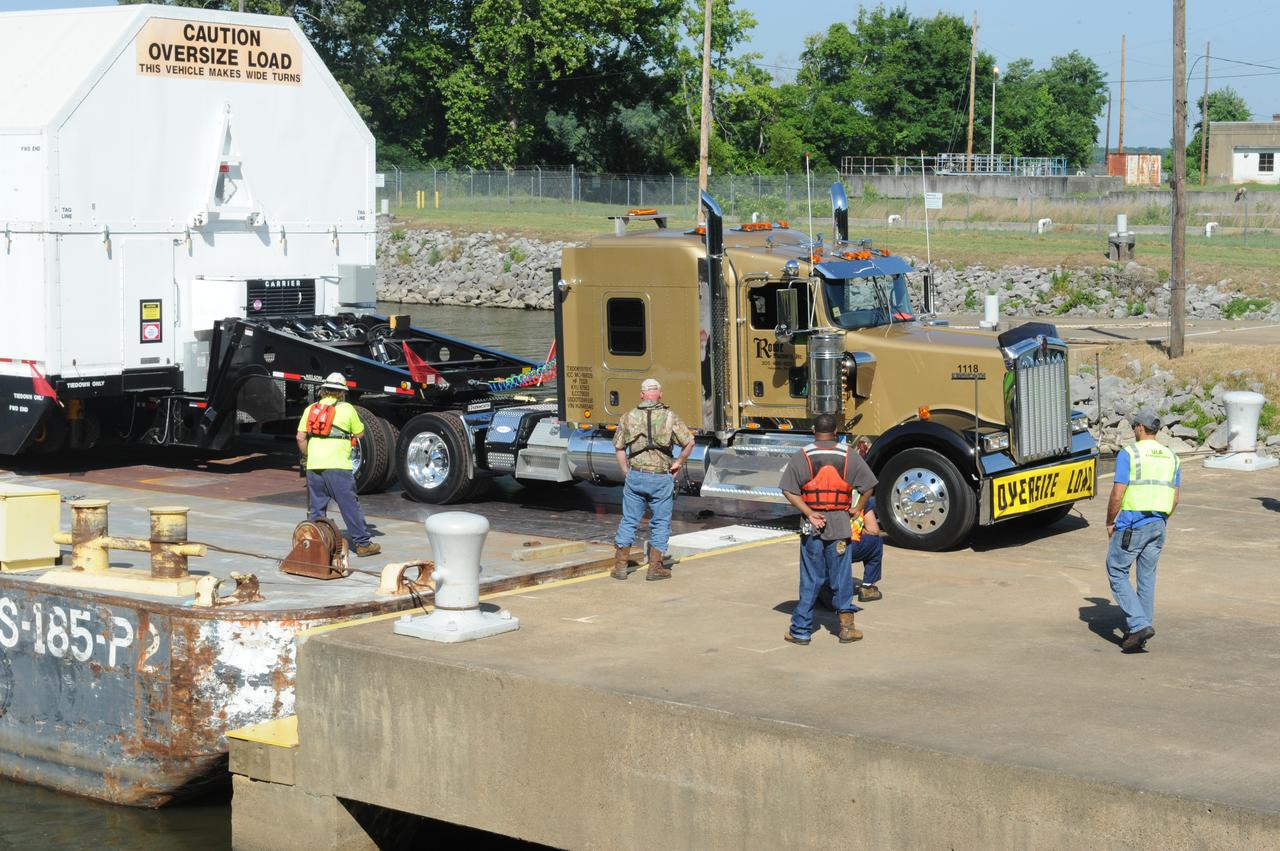
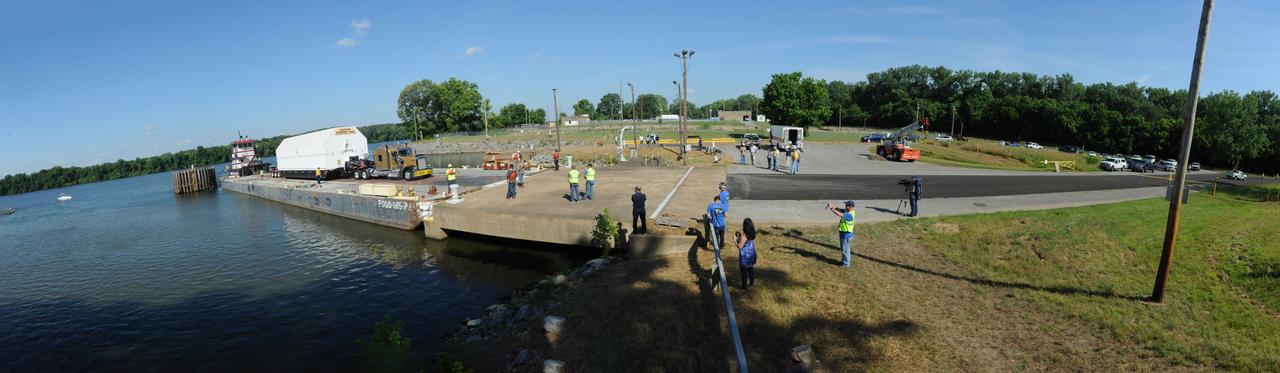
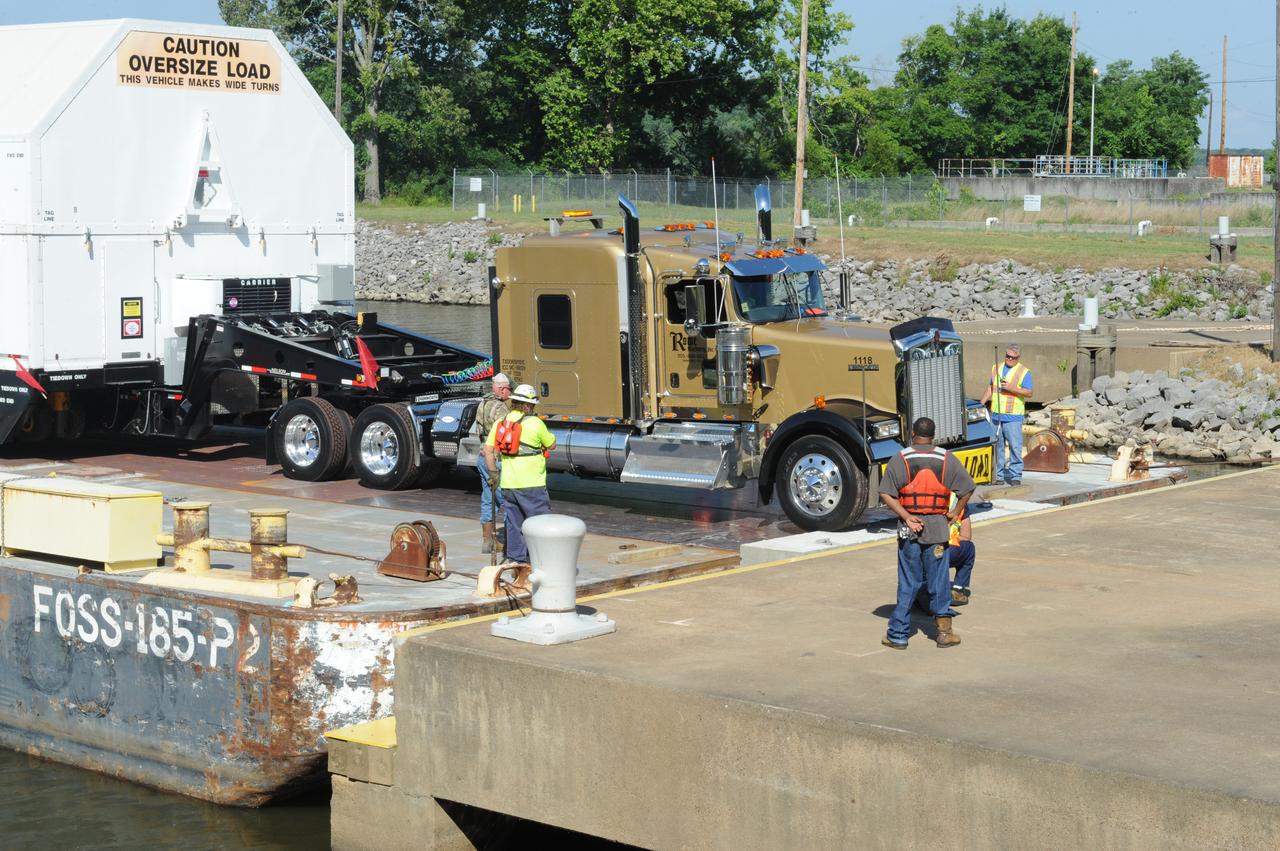
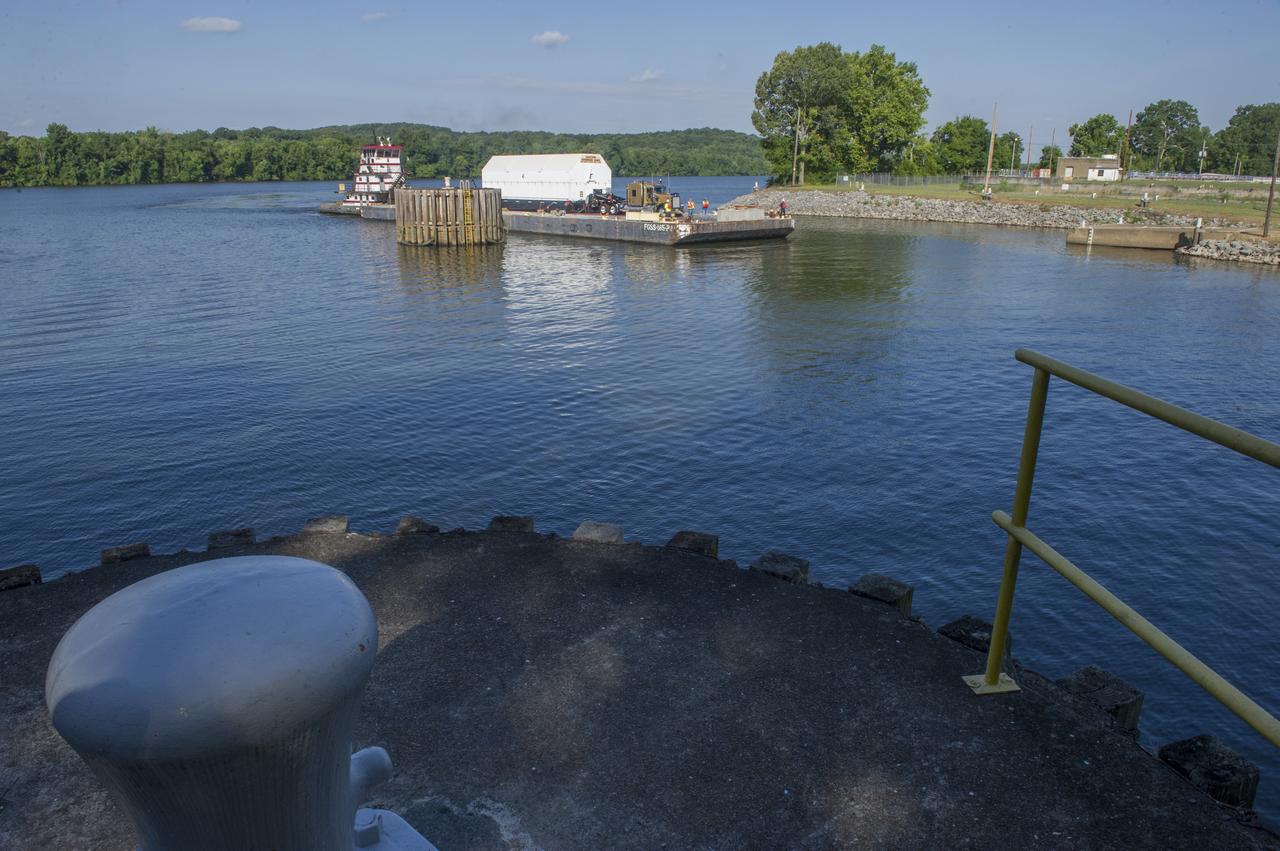
NASA’s barge, Pegasus, approaches the barge dock on Redstone Arsenal, home to the Marshall Space Flight Center. Pegasus is transporting the RS-25 engine core stage test article from the Michoud Assembly Facility to Marshall for structural testing.
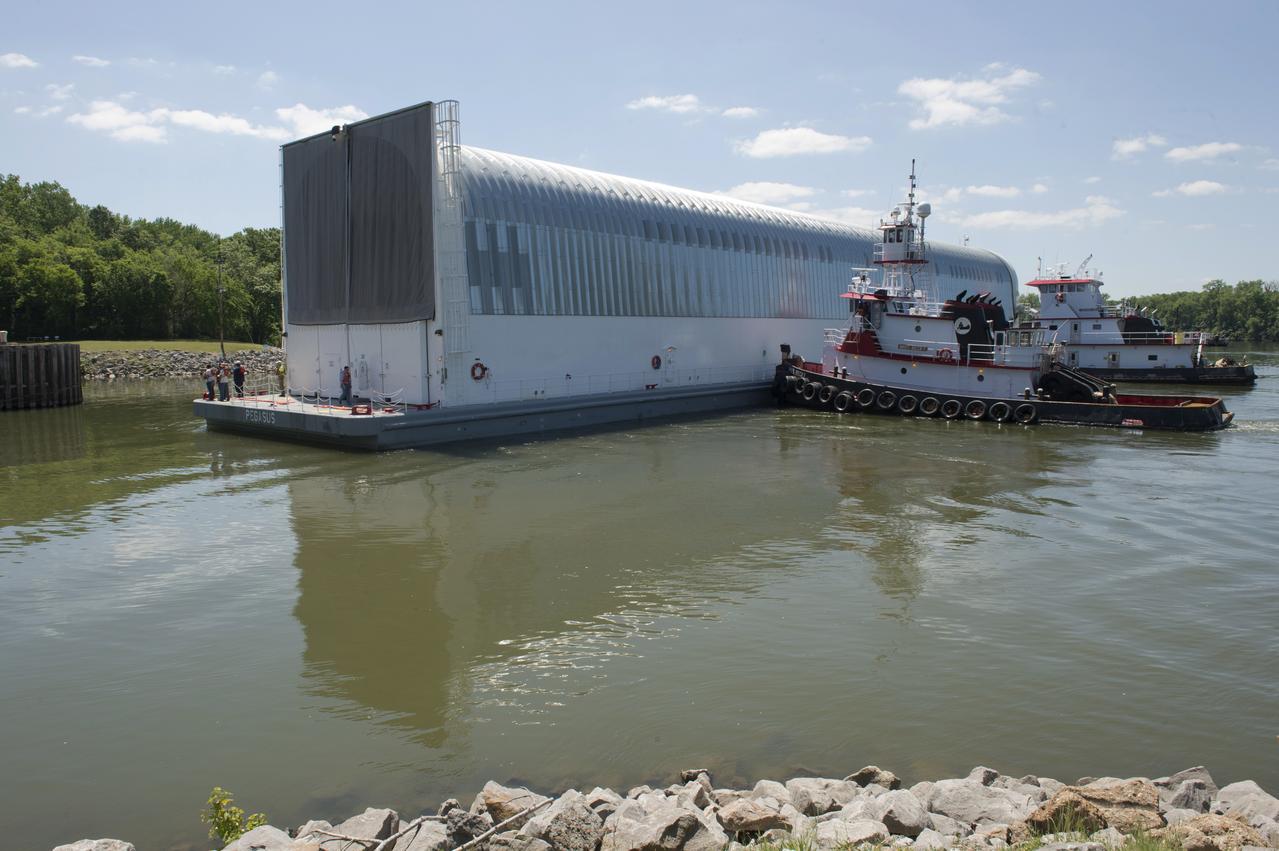
NASA’s barge, Pegasus, approaches the barge dock on Redstone Arsenal, home to the Marshall Space Flight Center. Pegasus is transporting the RS-25 engine core stage test article from the Michoud Assembly Facility to Marshall for structural testing.
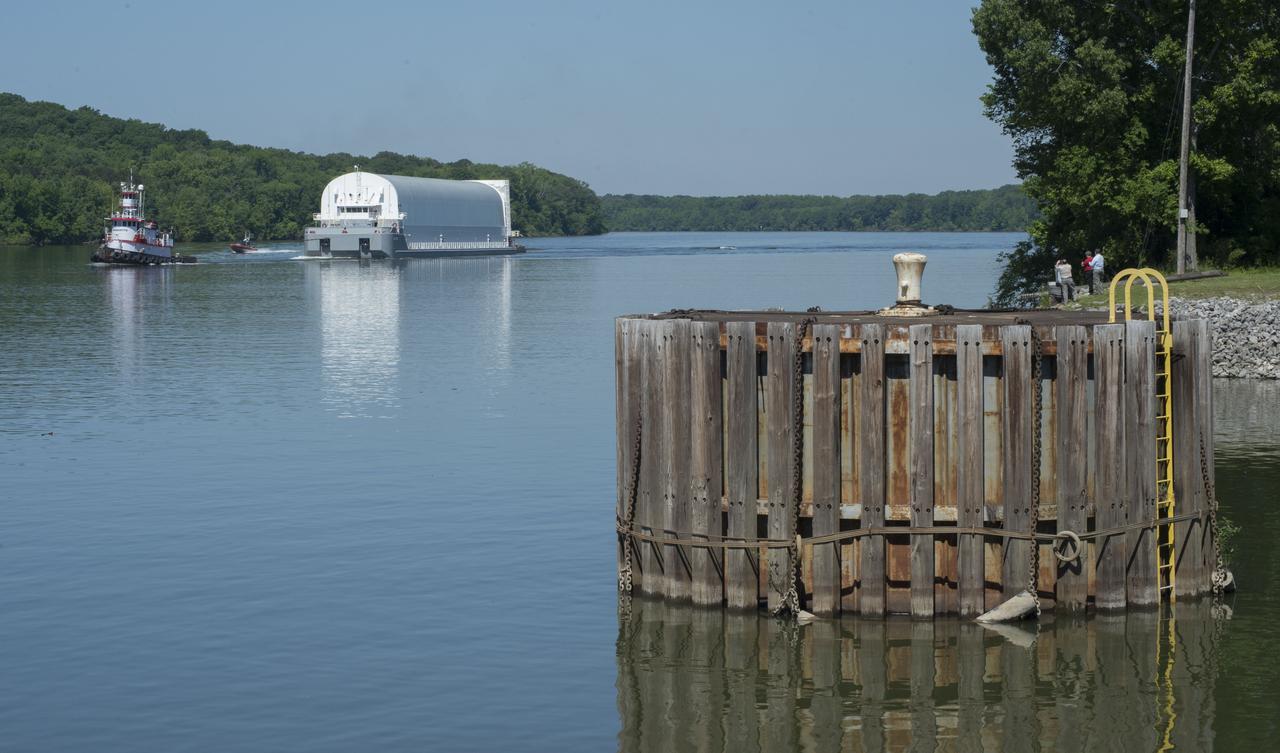
NASA’s barge, Pegasus, approaches the barge dock on Redstone Arsenal, home to the Marshall Space Flight Center. Pegasus is transporting the RS-25 engine core stage test article from the Michoud Assembly Facility to Marshall for structural testing.
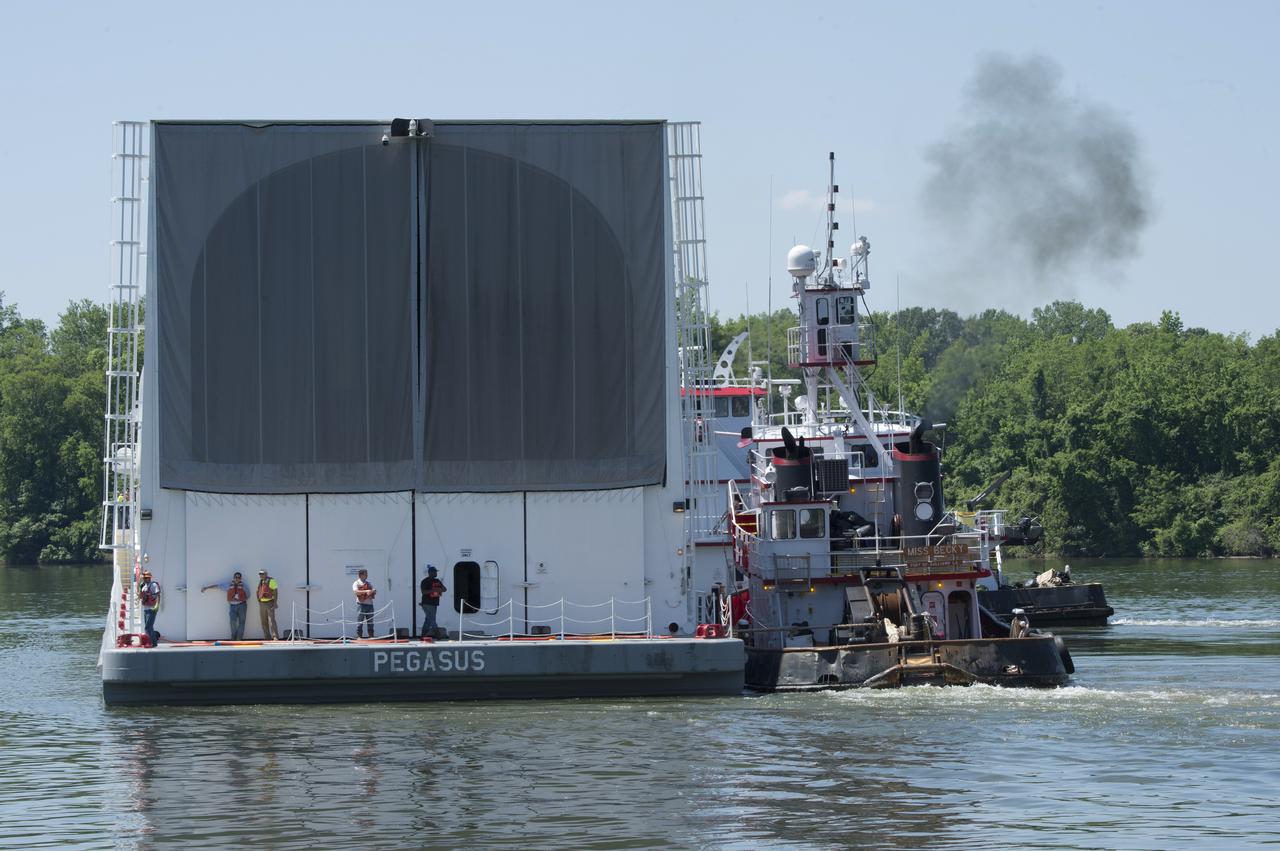
NASA’s barge, Pegasus, approaches the barge dock on Redstone Arsenal, home to the Marshall Space Flight Center. Pegasus is transporting the RS-25 engine core stage test article from the Michoud Assembly Facility to Marshall for structural testing.
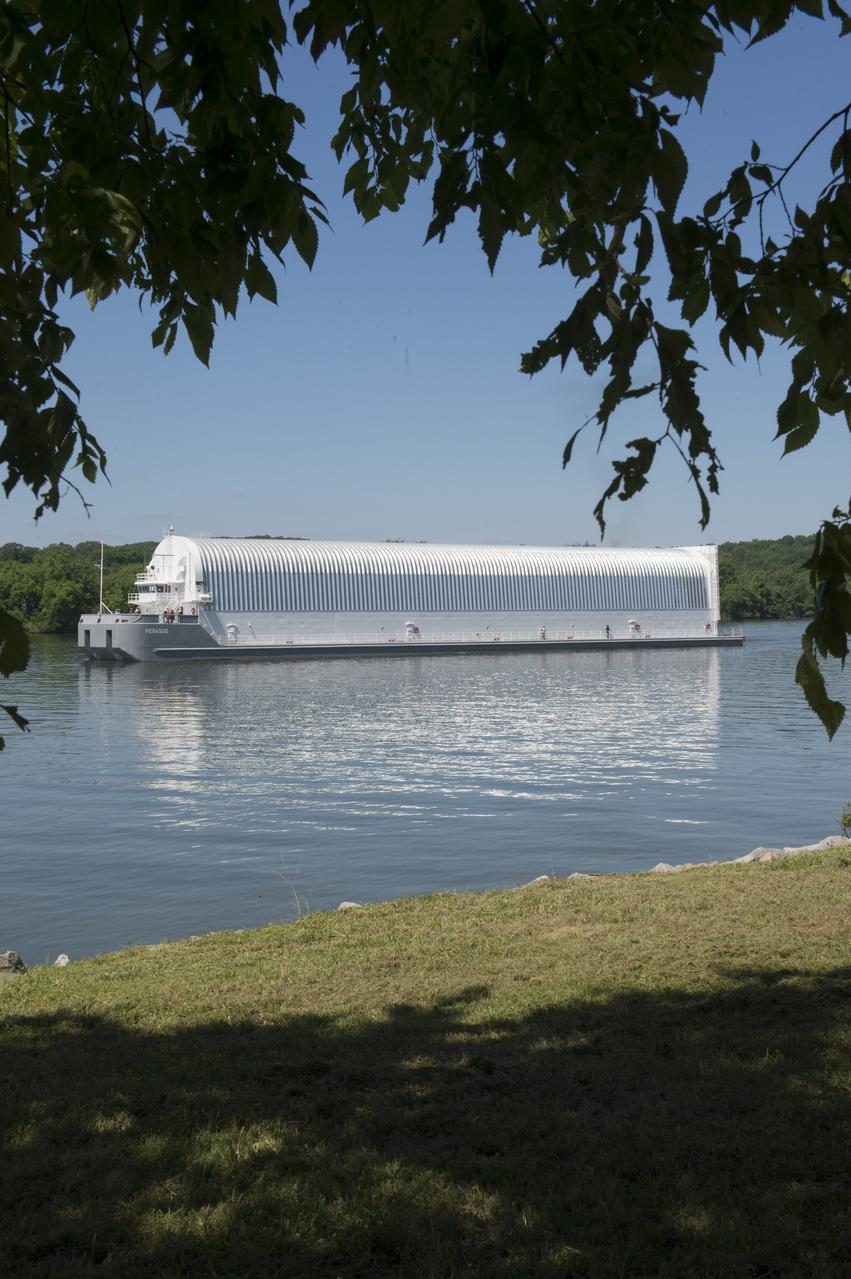
NASA’s barge, Pegasus, approaches the barge dock on Redstone Arsenal, home to the Marshall Space Flight Center. Pegasus is transporting the RS-25 engine core stage test article from the Michoud Assembly Facility to Marshall for structural testing.
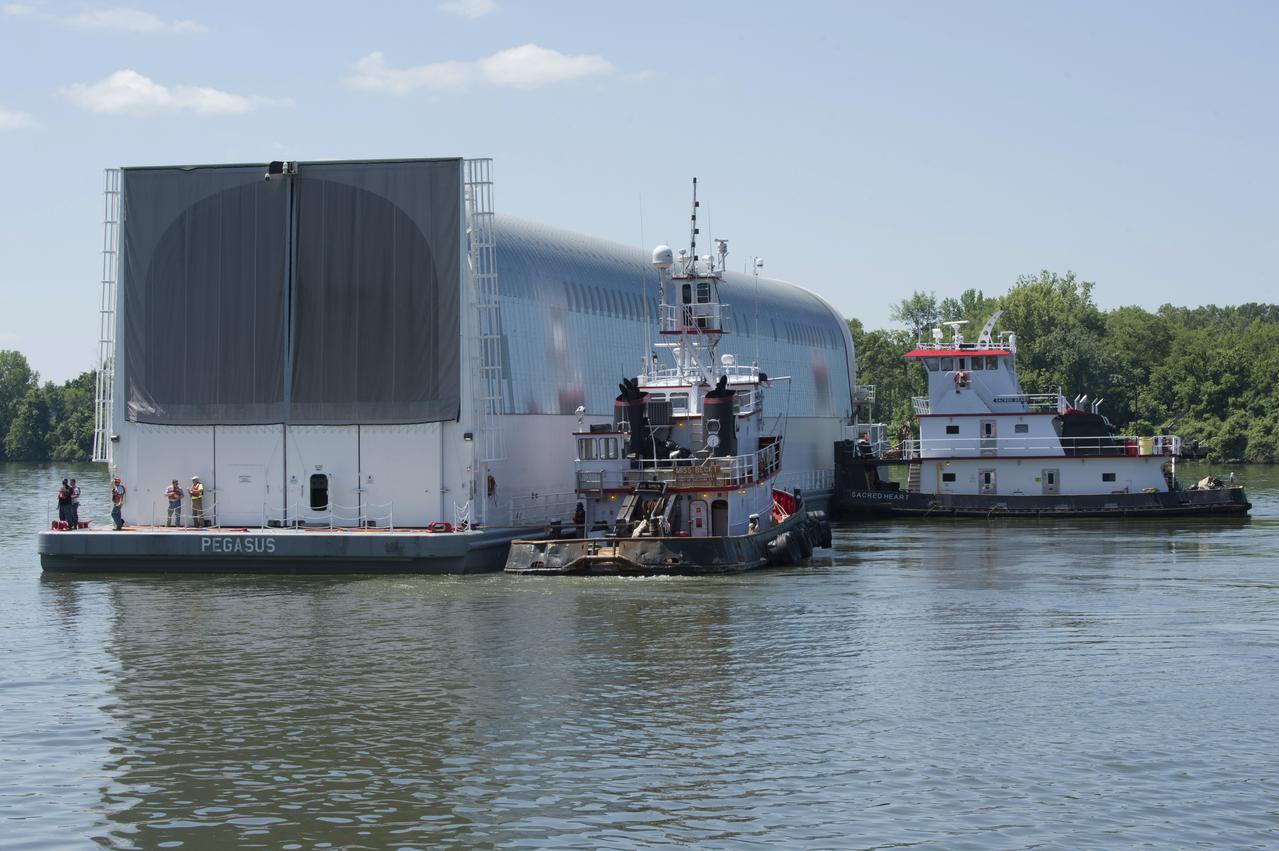
NASA’s barge, Pegasus, approaches the barge dock on Redstone Arsenal, home to the Marshall Space Flight Center. Pegasus is transporting the RS-25 engine core stage test article from the Michoud Assembly Facility to Marshall for structural testing.
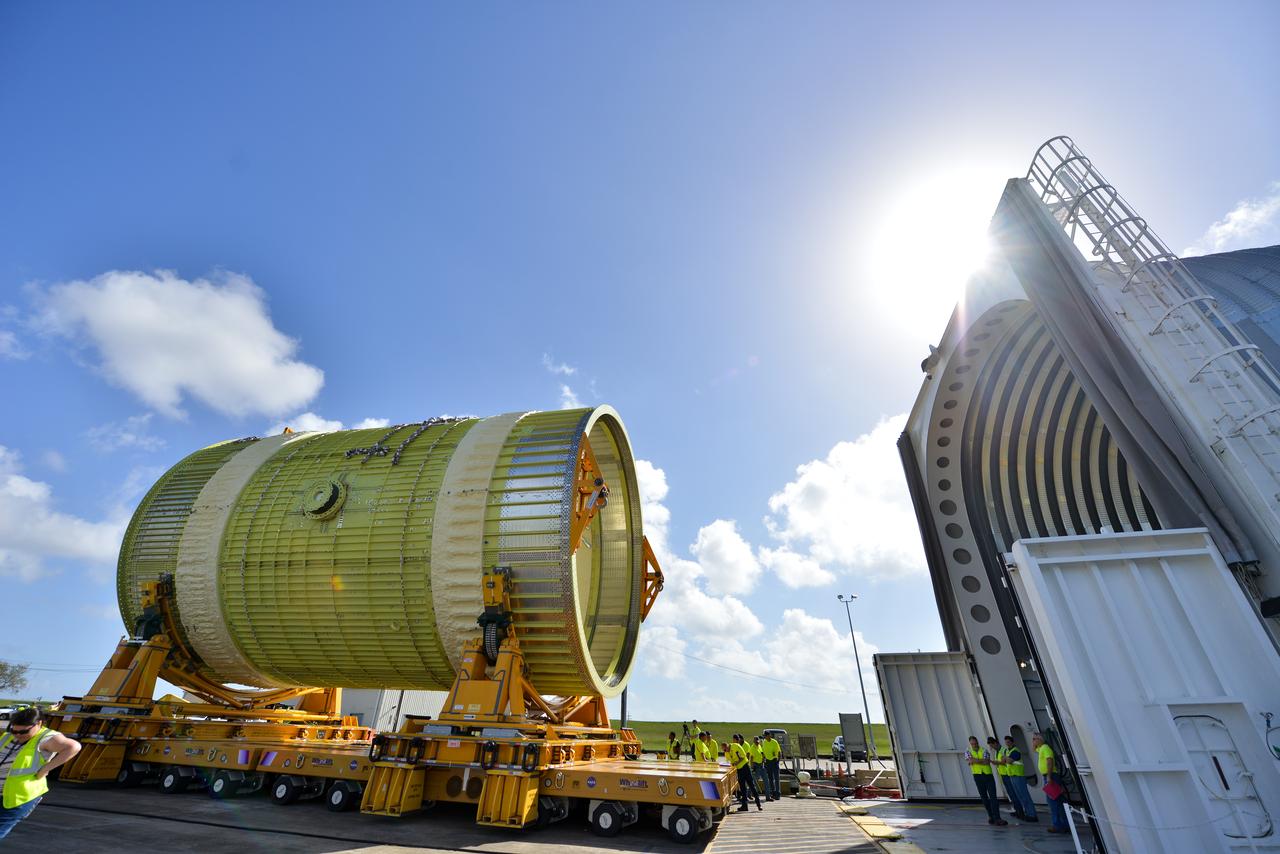
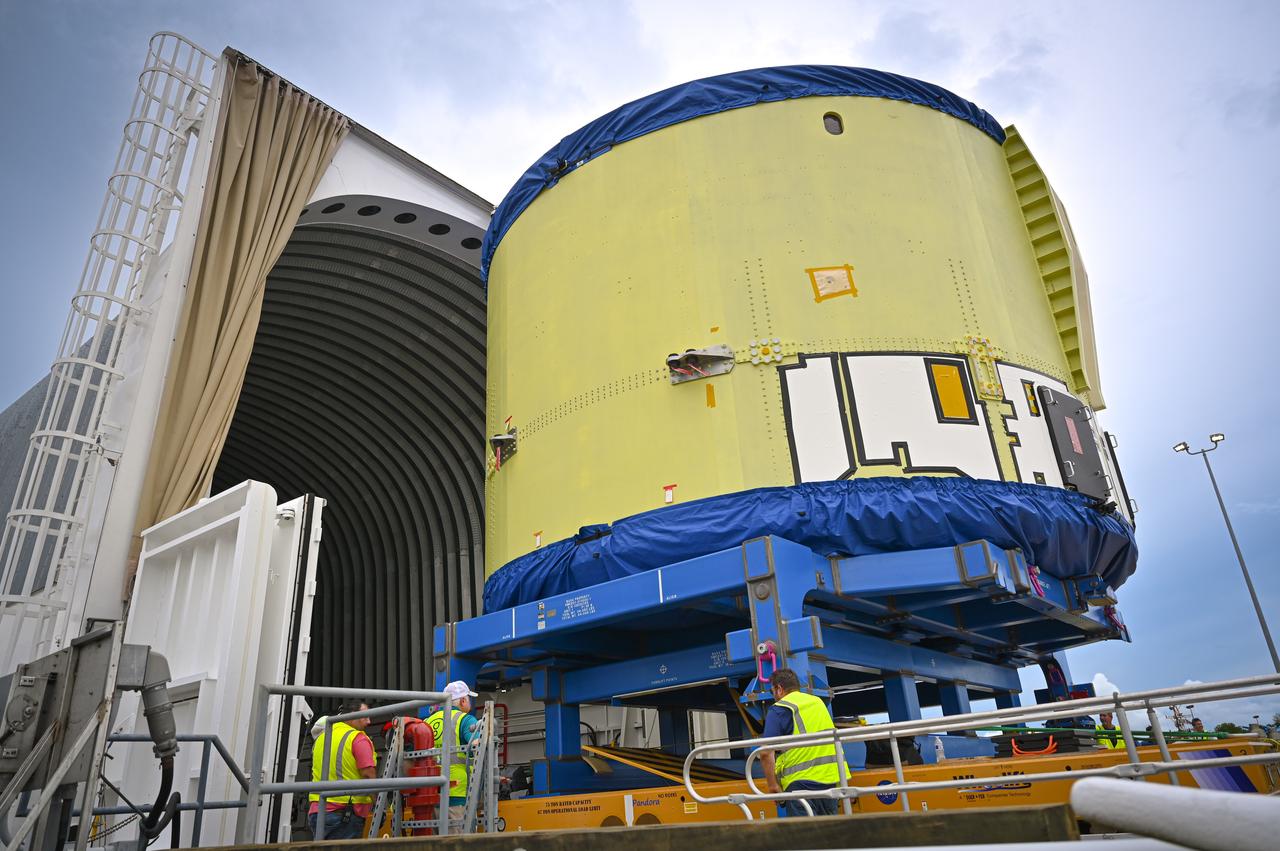
Intertank STA on Pegasus Barge
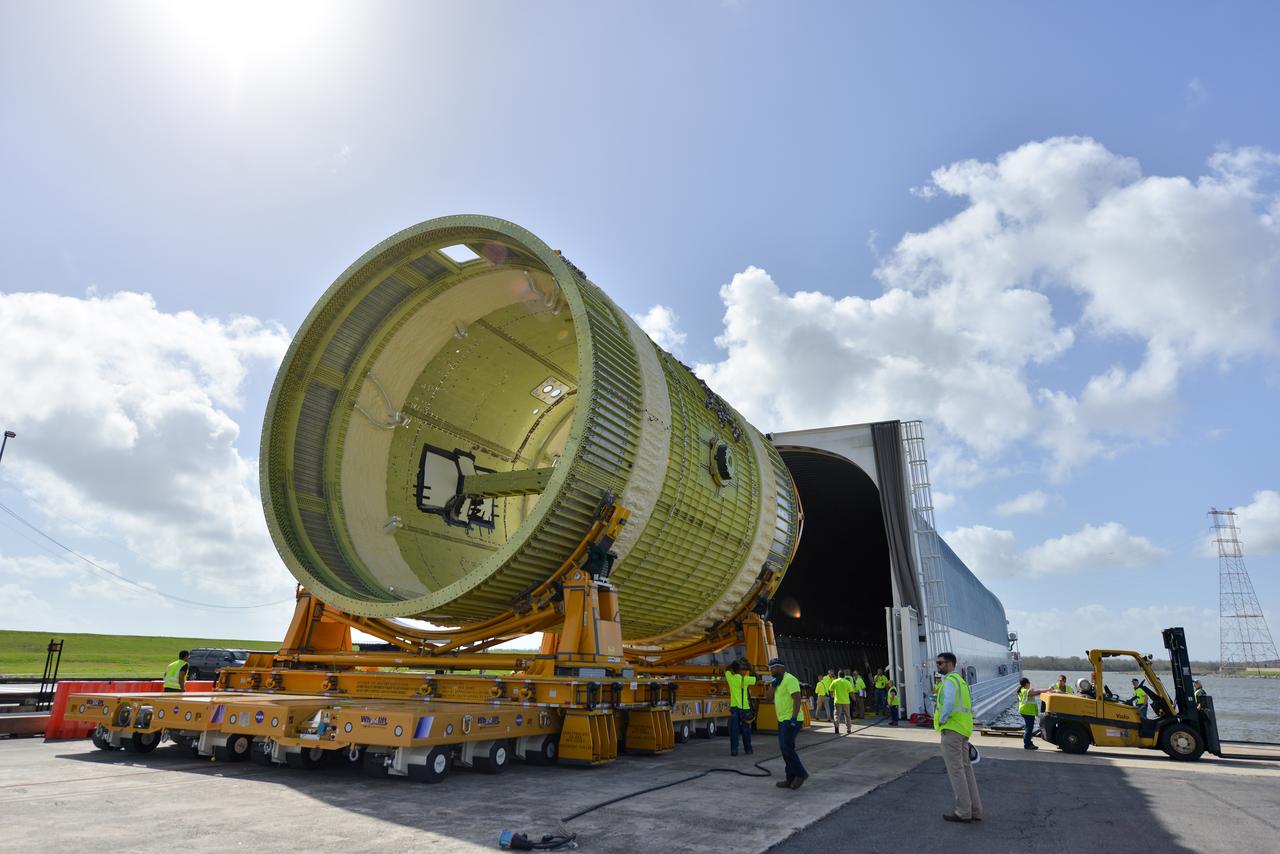
Intertank STA on Pegasus Barge
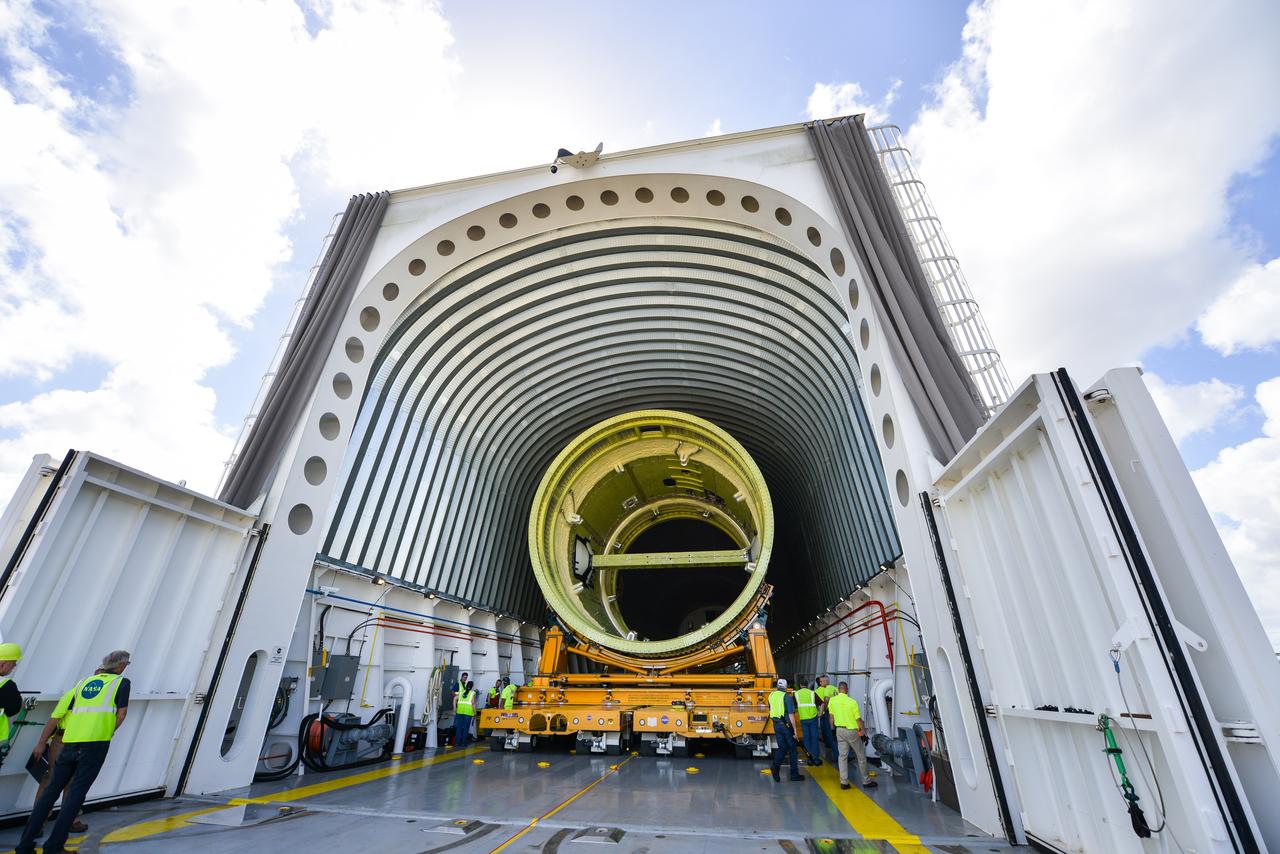
Intertank STA on board the Pegasus Barge.
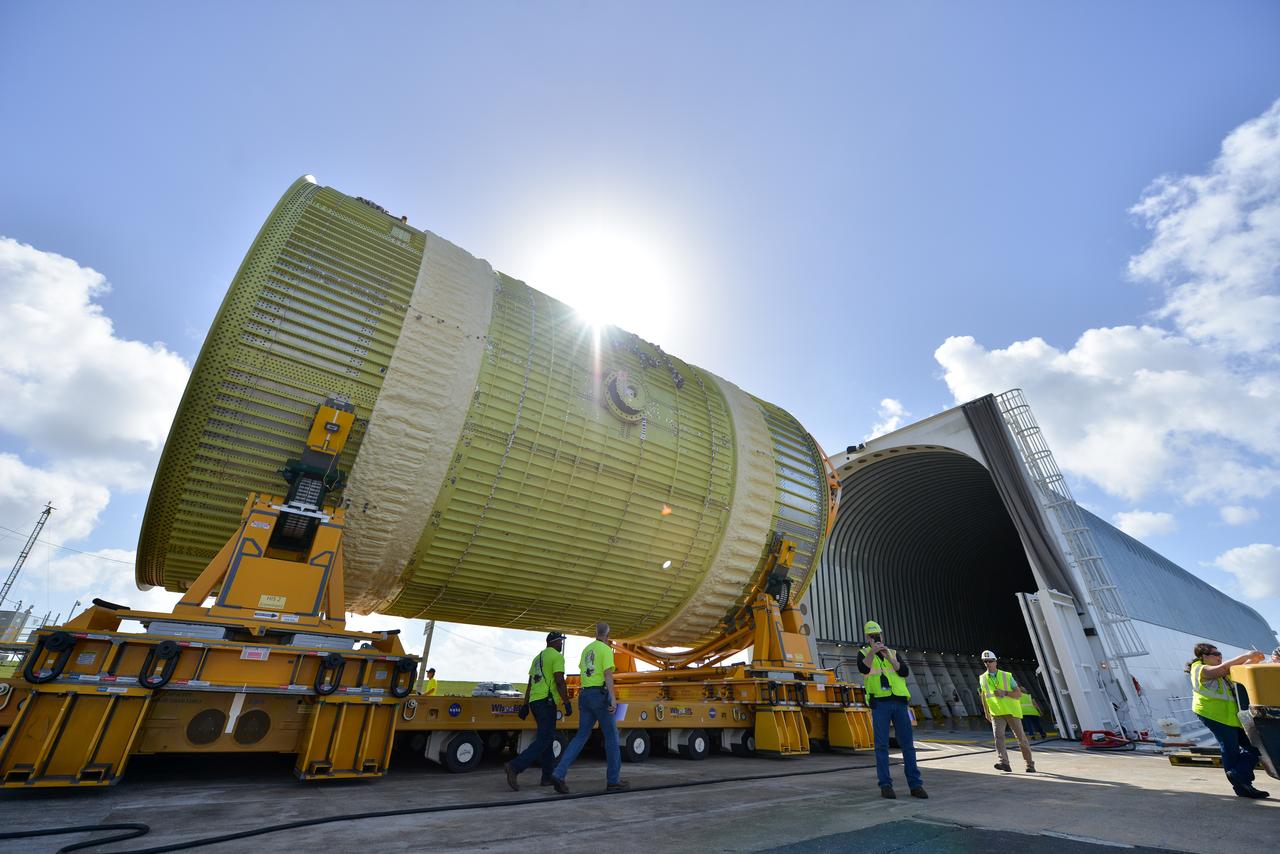
Intertank STA is prepped prior to being loaded on the NASA Barge, Pegasus.
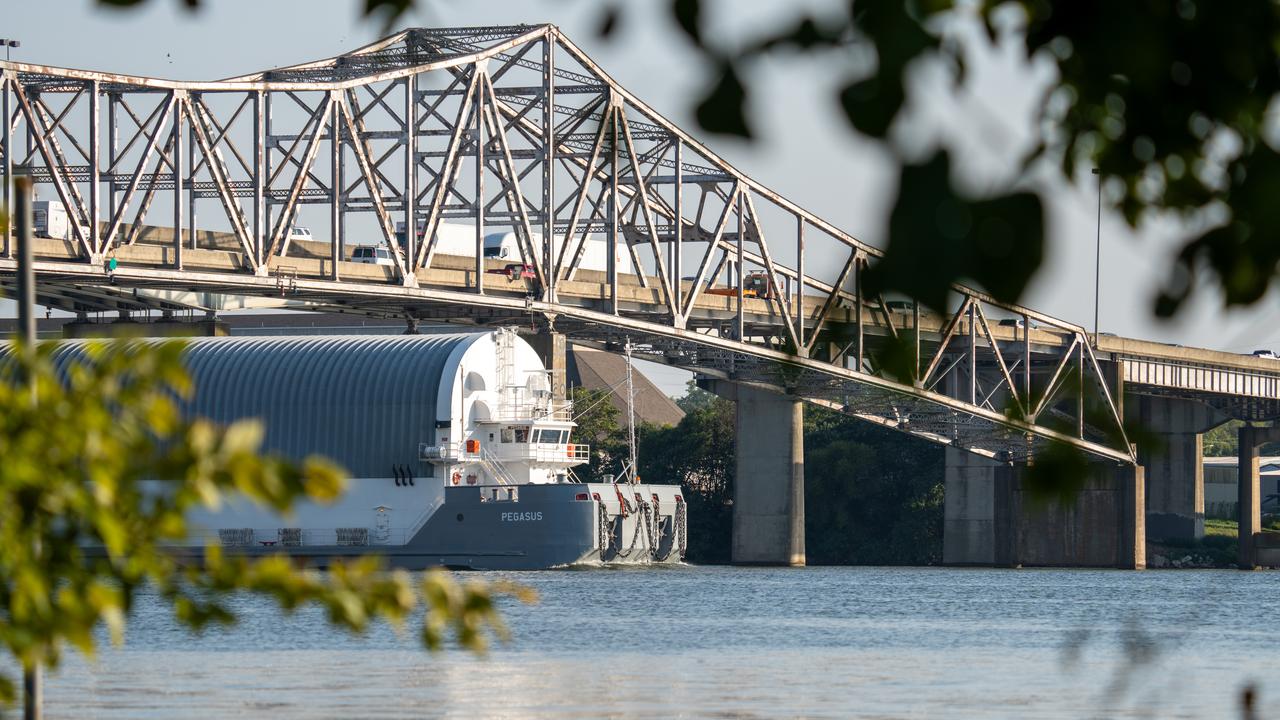
NASA’s Pegasus barge, ferrying the launch vehicle stage adapter for NASA’s SLS (Space Launch System) rocket, departed the agency’s Marshall Space Flight Center in Huntsville, Alabama, Aug. 21, passing through nearby Decatur. The cone-shaped adapter is part of the SLS rocket that will power Artemis II mission, the first crewed flight of the agency’s Artemis campaign. The barge will stop briefly at NASA’s Michoud Assembly Facility in New Orleans to pick up additional hardware elements for Artemis III and Artemis IV before heading to the agency’s Kennedy Space Center in Florida, where the adapter will be readied for stacking and launch preparations.
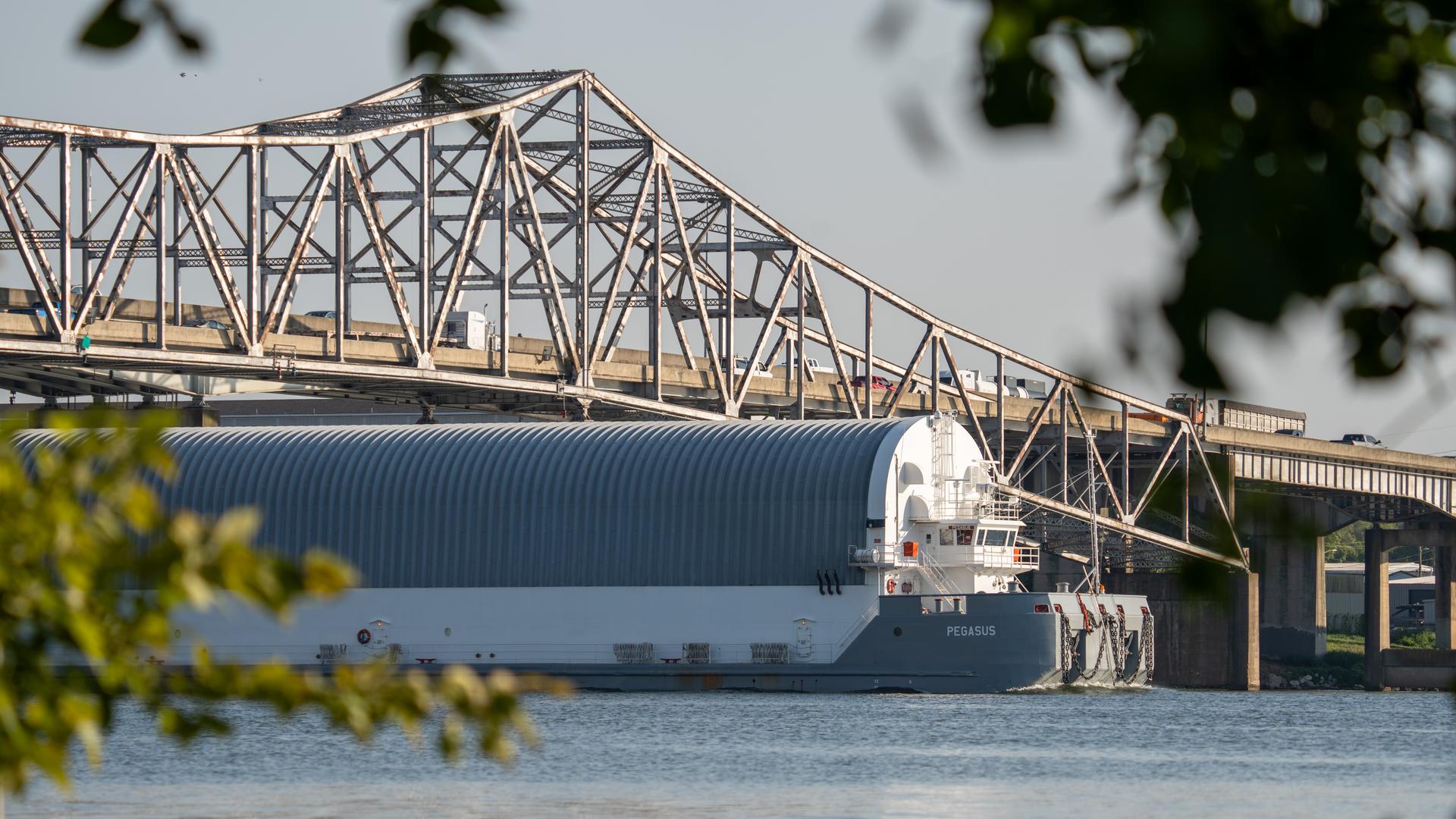
NASA’s Pegasus barge, ferrying the launch vehicle stage adapter for NASA’s SLS (Space Launch System) rocket, departed the agency’s Marshall Space Flight Center in Huntsville, Alabama, Aug. 21, passing through nearby Decatur. The cone-shaped adapter is part of the SLS rocket that will power Artemis II mission, the first crewed flight of the agency’s Artemis campaign. The barge will stop briefly at NASA’s Michoud Assembly Facility in New Orleans to pick up additional hardware elements for Artemis III and Artemis IV before heading to the agency’s Kennedy Space Center in Florida, where the adapter will be readied for stacking and launch preparations.
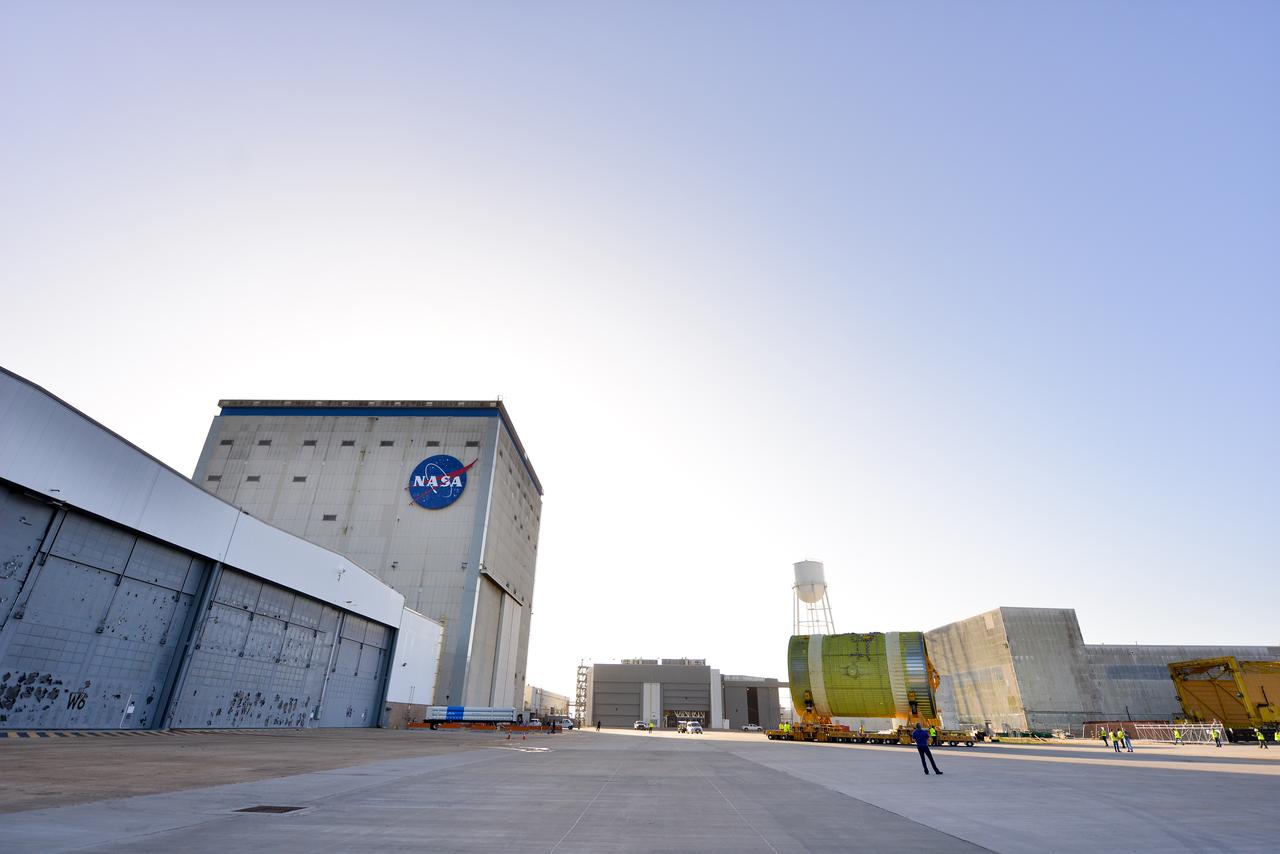
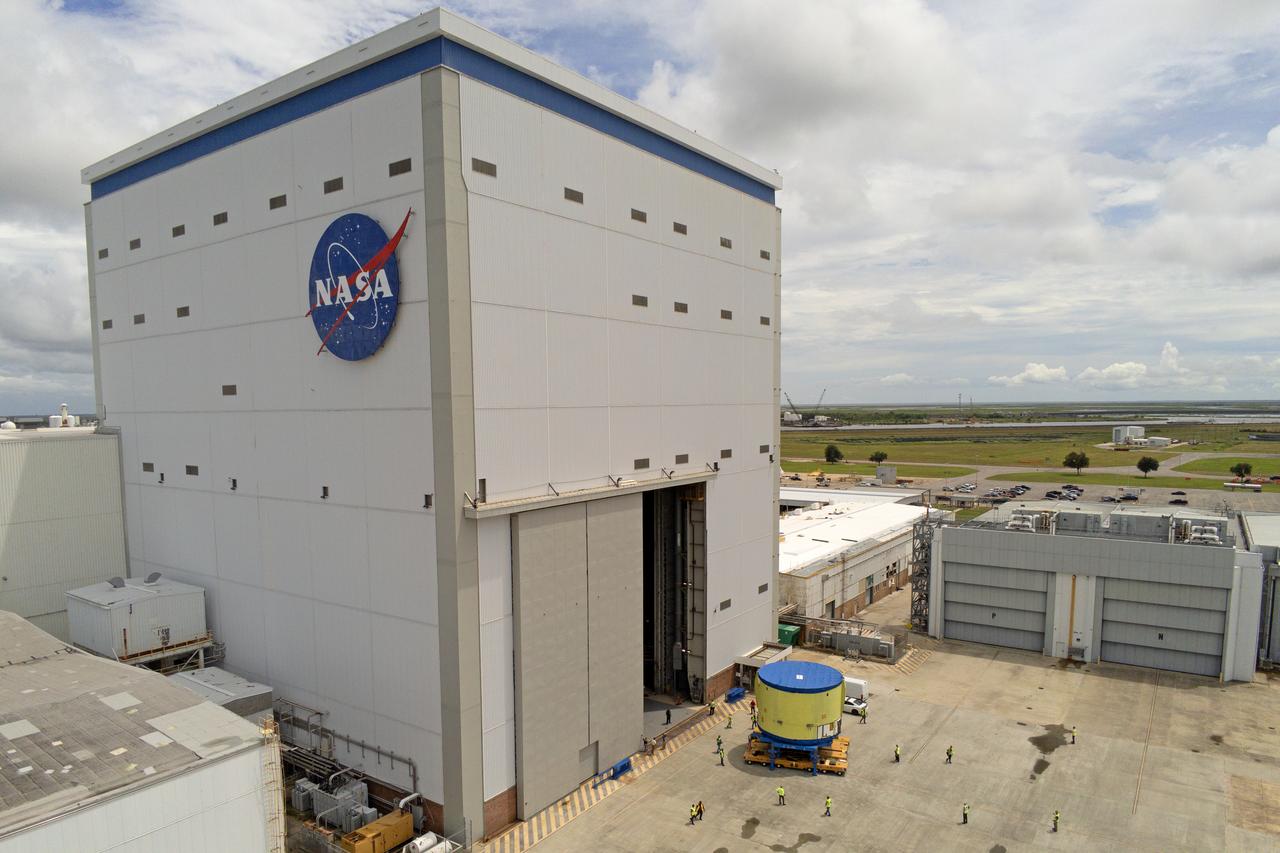
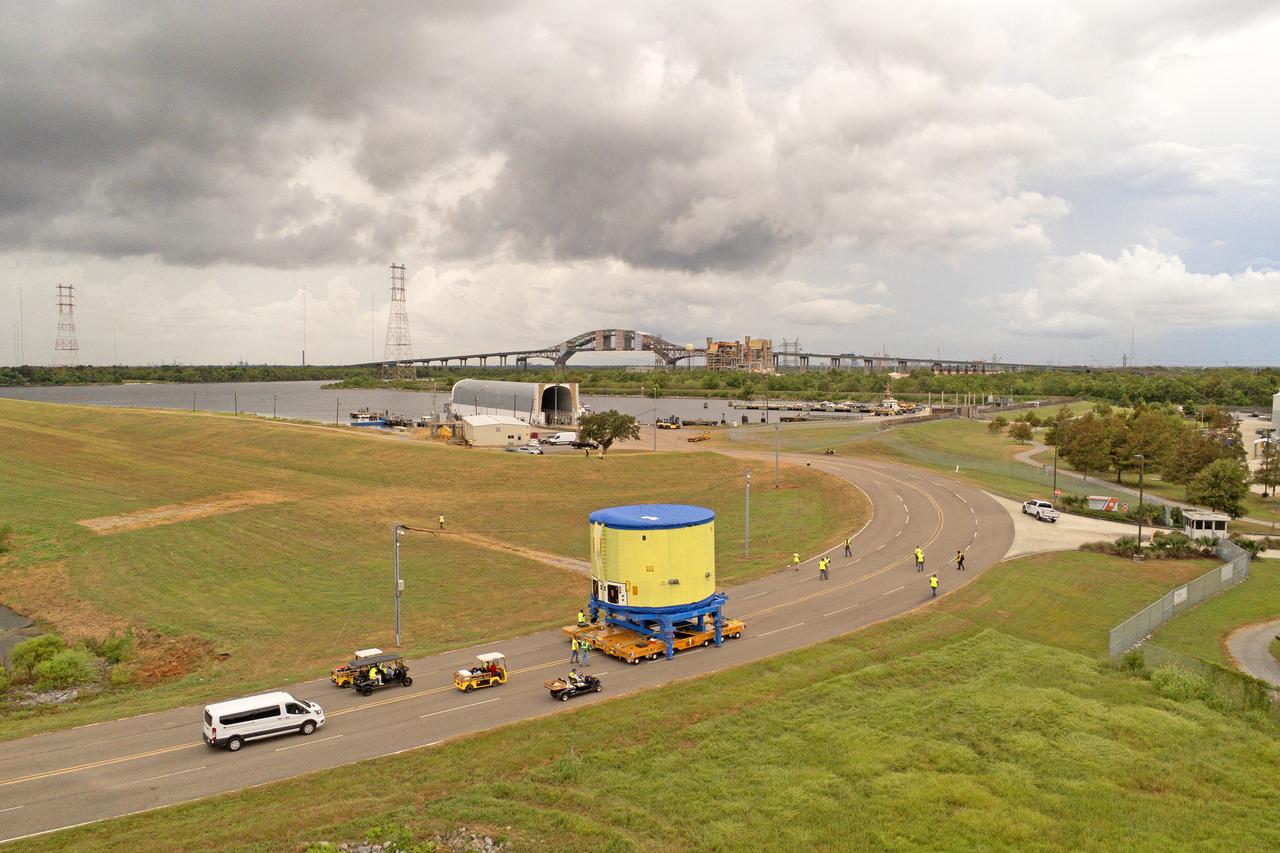
Intertank STA on way to Pegasus Barge
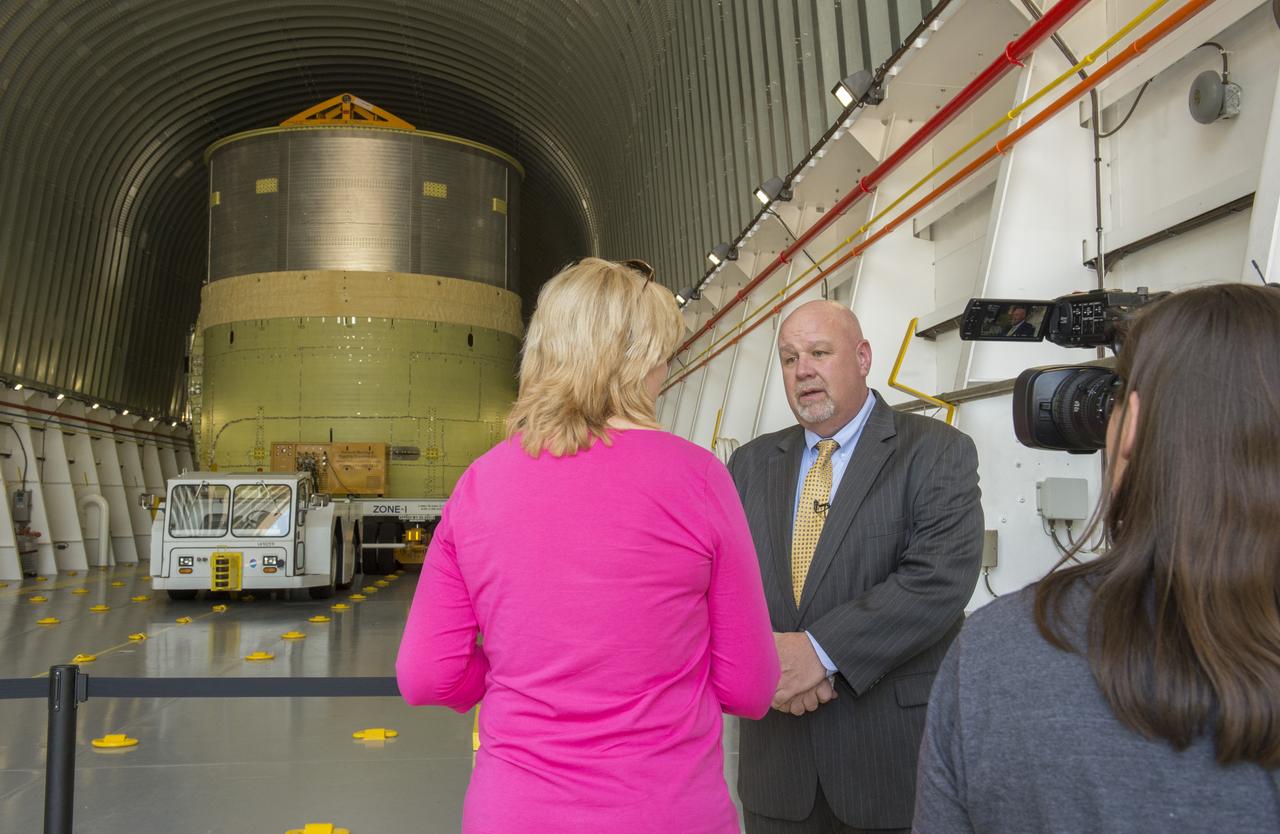
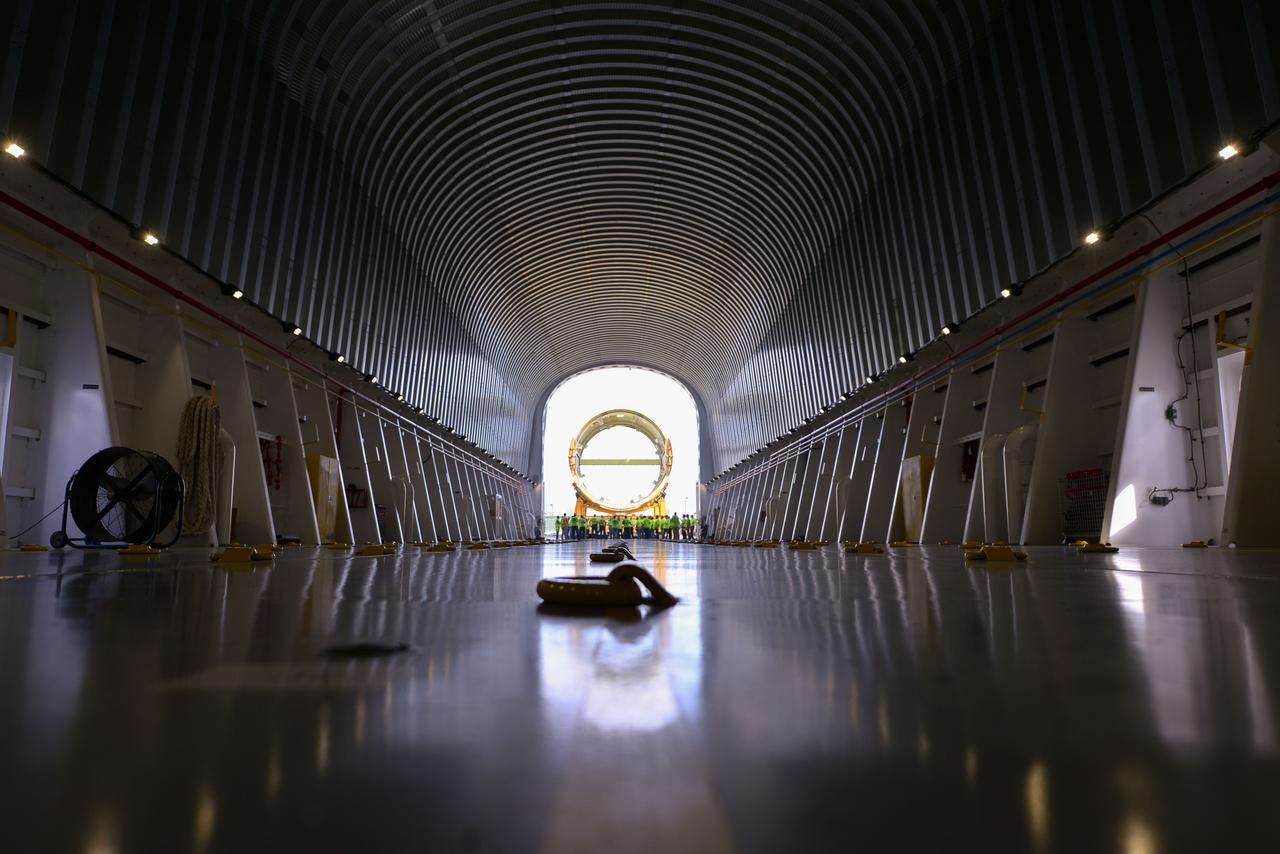
The interior of the NASA transportation barge with the RS-25 engine core stage test article. SLS manager John Honeycutt is interviewed by the local media.
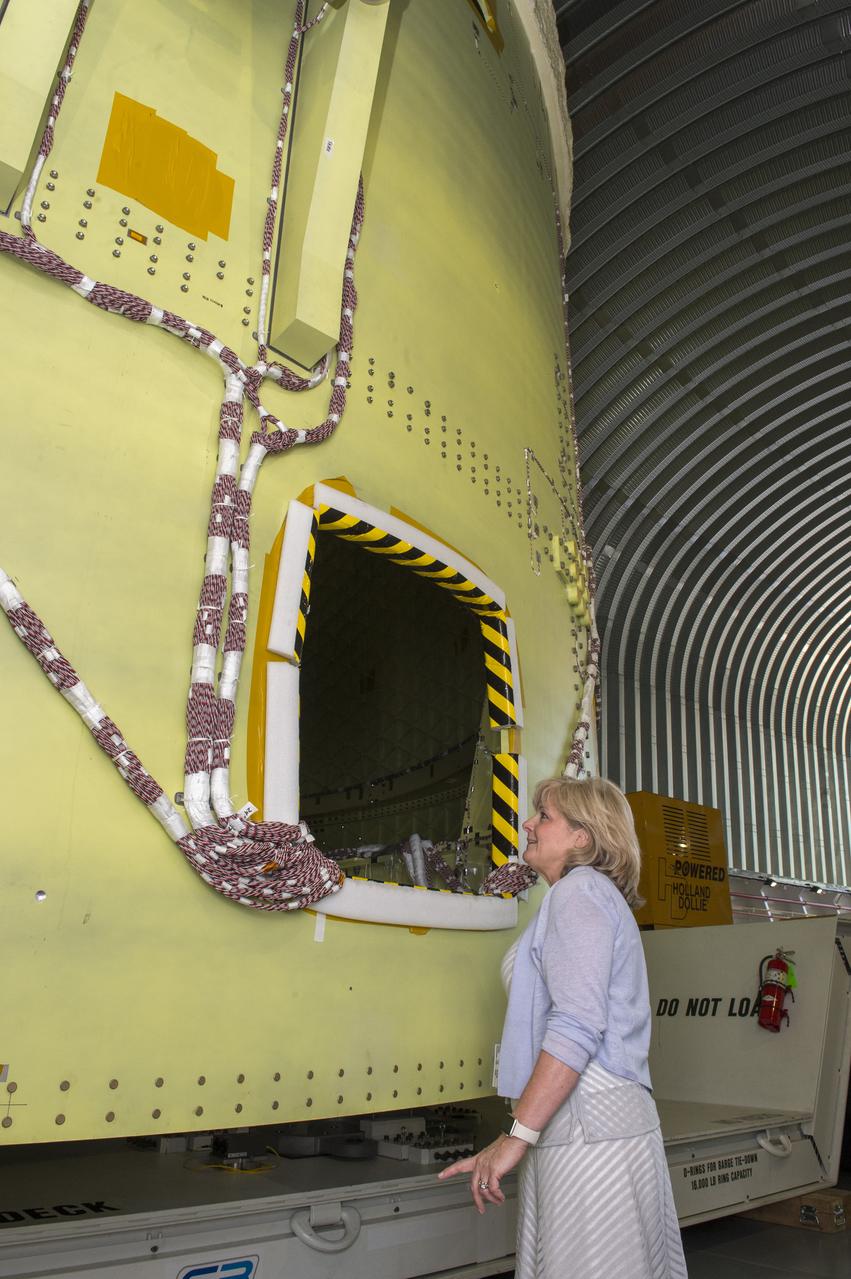
MSFC Deputy Director Jody Singer closely examines the RS-25 engine core stage test article aboard the NASA barge Pegasus.
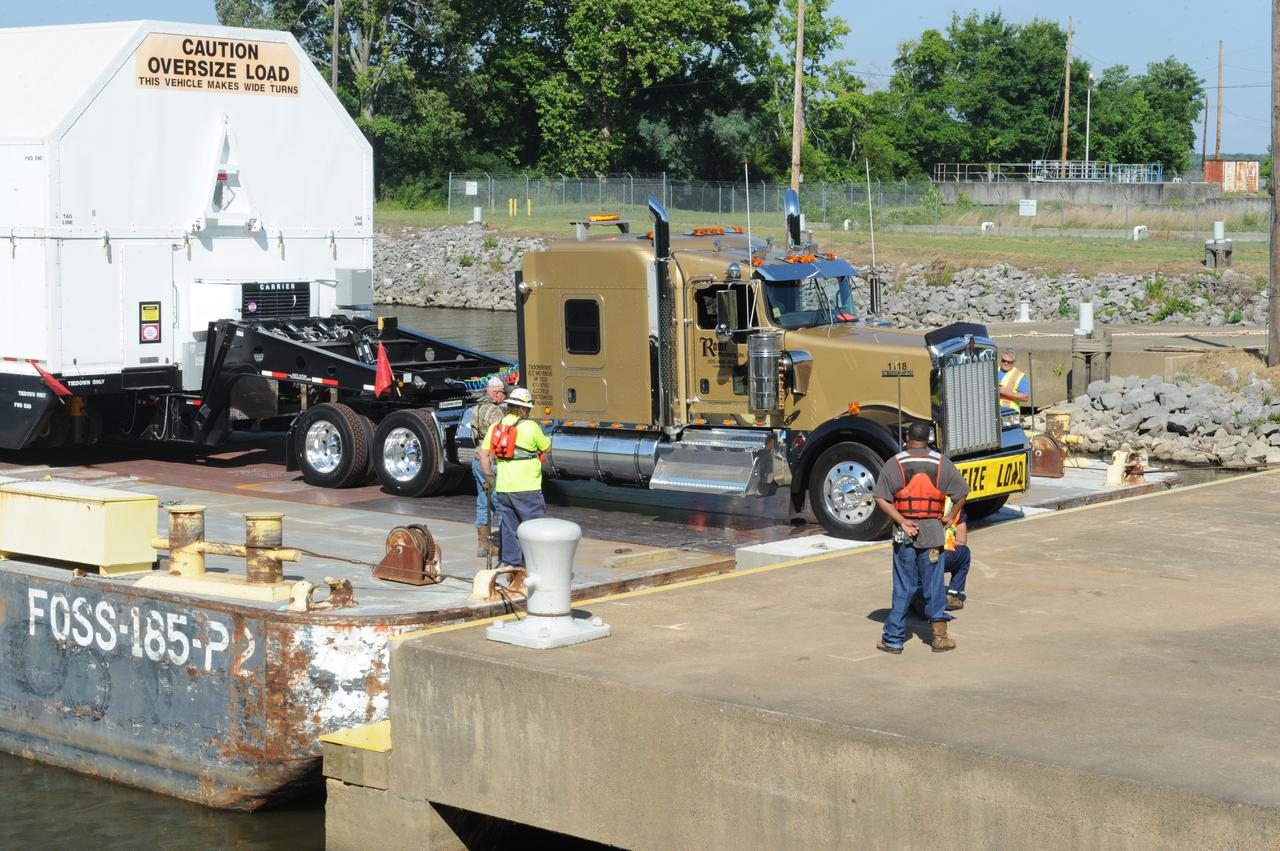
SLS INTERIM CRYOGENIC PROPULSION STAGE TEST ARTICLE ARRIVES AT WEST DOCK ON SHIELDS ROAD AND IS OFF LOADED FROM BARGE
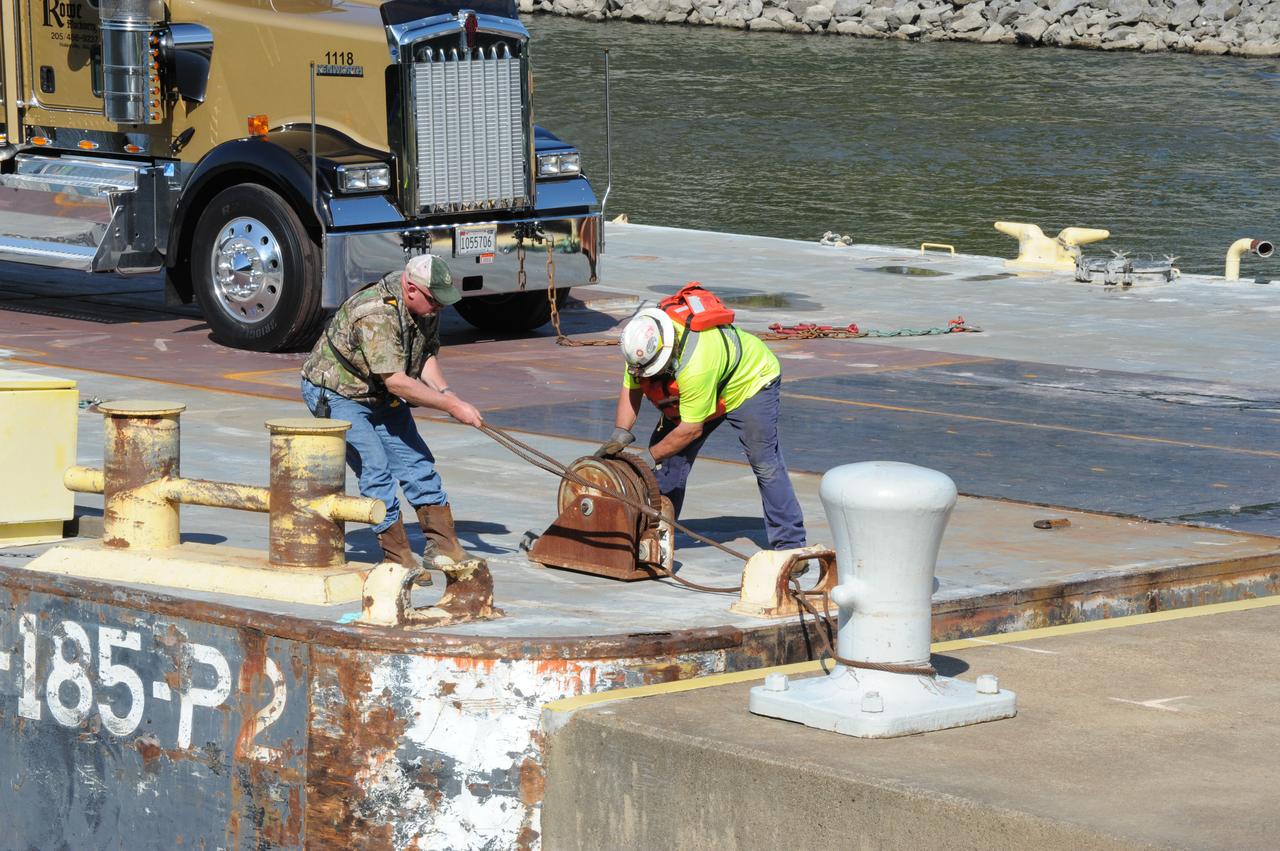
SLS INTERIM CRYOGENIC PROPULSION STAGE TEST ARTICLE ARRIVES AT WEST DOCK ON SHIELDS ROAD AND IS OFF LOADED FROM BARGE
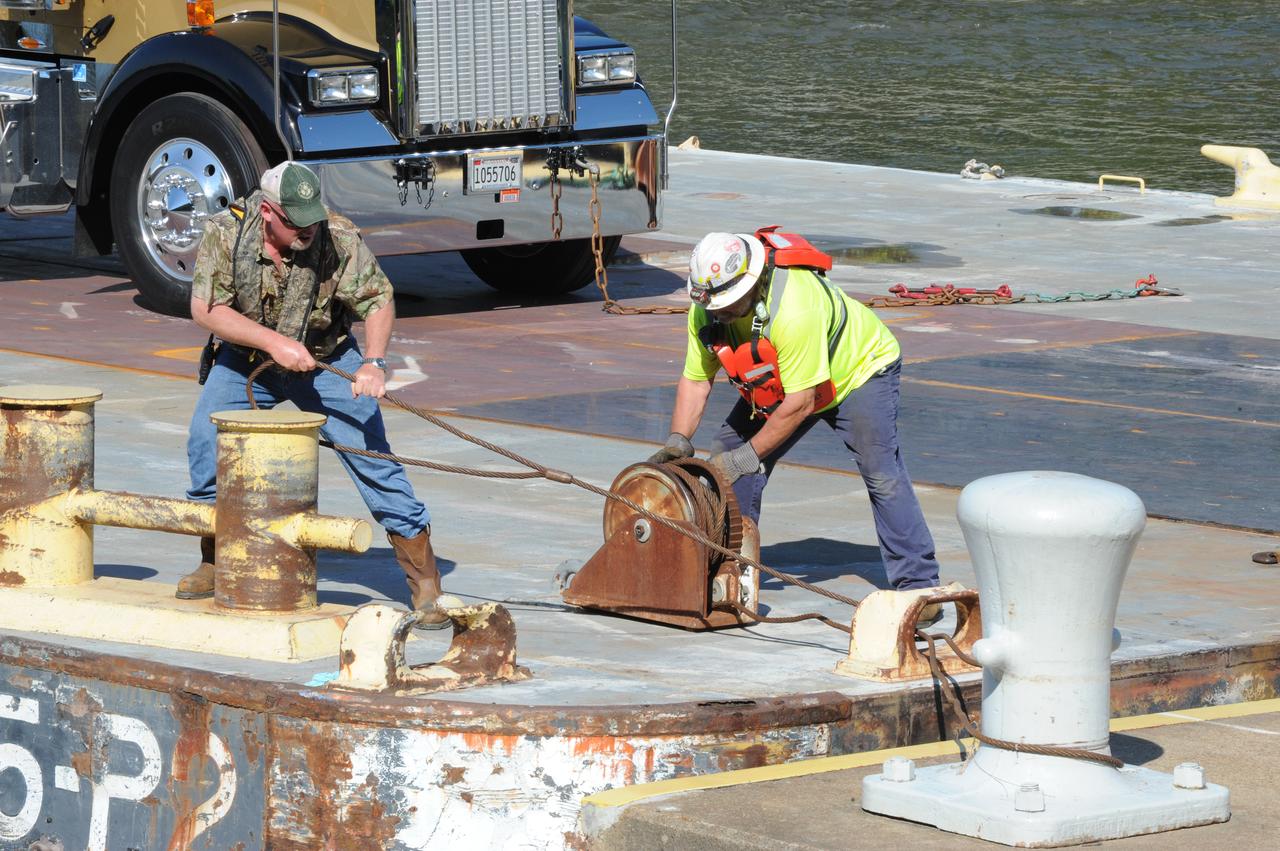
SLS INTERIM CRYOGENIC PROPULSION STAGE TEST ARTICLE ARRIVES AT WEST DOCK ON SHIELDS ROAD AND IS OFF LOADED FROM BARGE
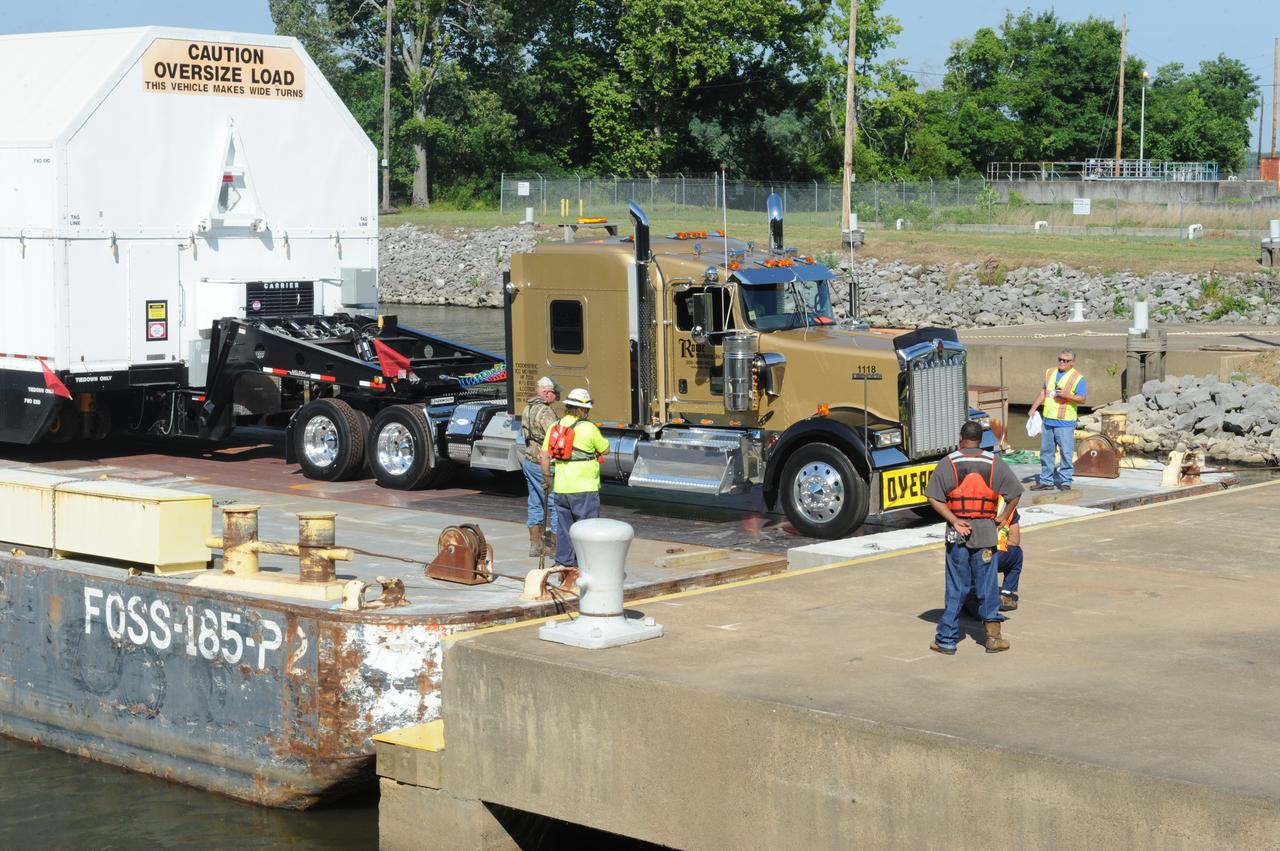
SLS INTERIM CRYOGENIC PROPULSION STAGE TEST ARTICLE ARRIVES AT WEST DOCK ON SHIELDS ROAD AND IS OFF LOADED FROM BARGE
SLS INTERIM CRYOGENIC PROPULSION STAGE TEST ARTICLE ARRIVES AT WEST DOCK ON SHIELDS ROAD AND IS OFF LOADED FROM BARGE
SLS INTERIM CRYOGENIC PROPULSION STAGE TEST ARTICLE ARRIVES AT WEST DOCK ON SHIELDS ROAD AND IS OFF LOADED FROM BARGE
SLS INTERIM CRYOGENIC PROPULSION STAGE TEST ARTICLE ARRIVES AT WEST DOCK ON SHIELDS ROAD AND IS OFF LOADED FROM BARGE
SLS INTERIM CRYOGENIC PROPULSION STAGE TEST ARTICLE ARRIVES AT WEST DOCK ON SHIELDS ROAD AND IS OFF LOADED FROM BARGE
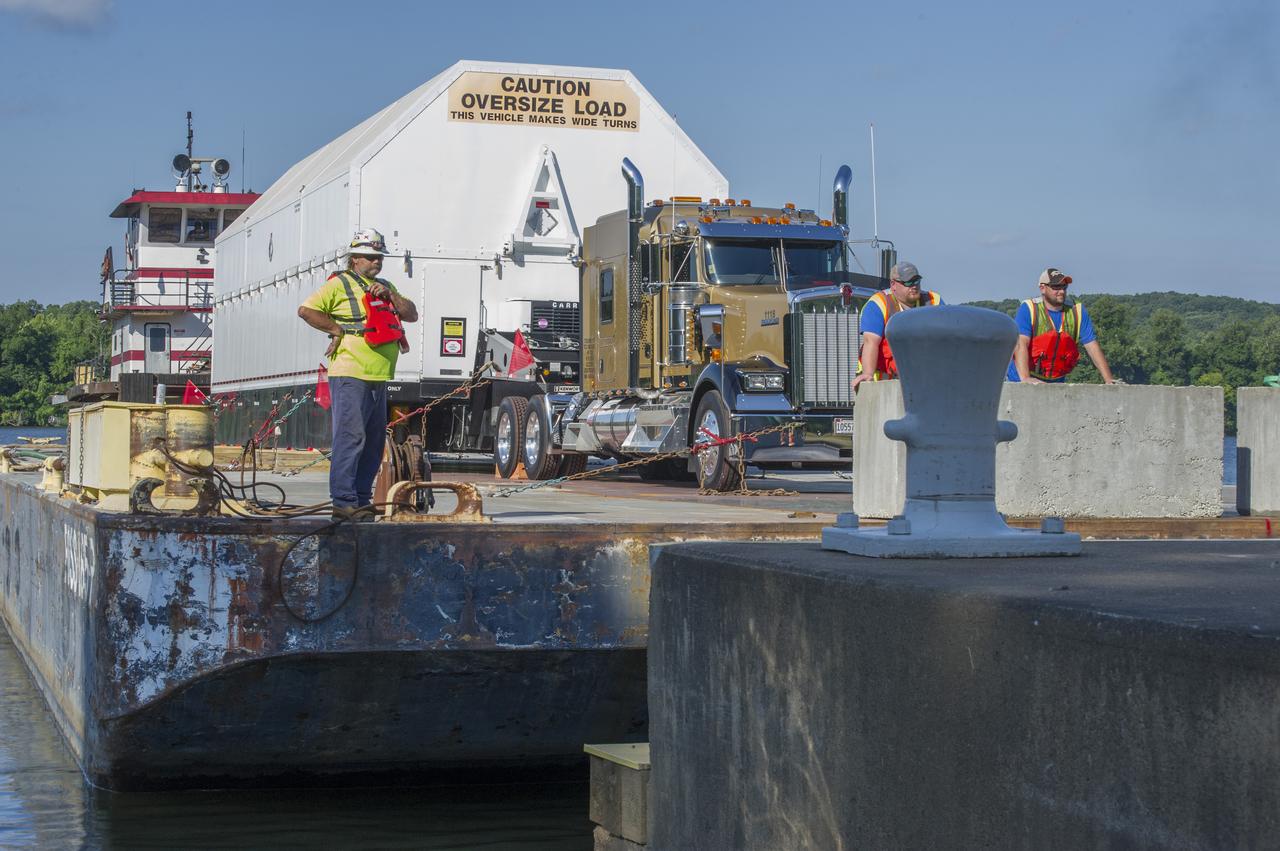
SLS INTERIM CRYOGENIC PROPULSION STAGE TEST ARTICLE ARRIVES AT WEST DOCK ON SHIELDS ROAD AND IS OFF LOADED FROM BARGE
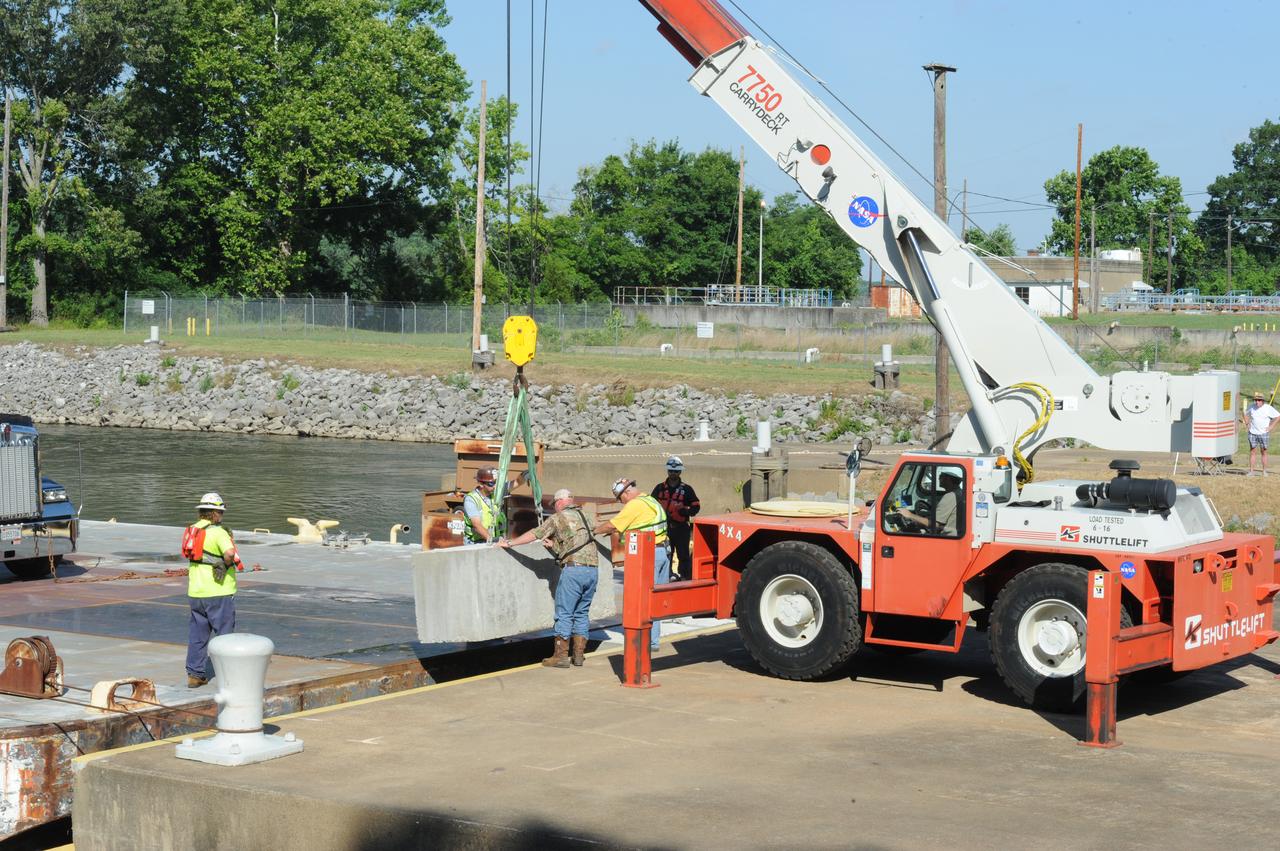
SLS INTERIM CRYOGENIC PROPULSION STAGE TEST ARTICLE ARRIVES AT WEST DOCK ON SHIELDS ROAD AND IS OFF LOADED FROM BARGE
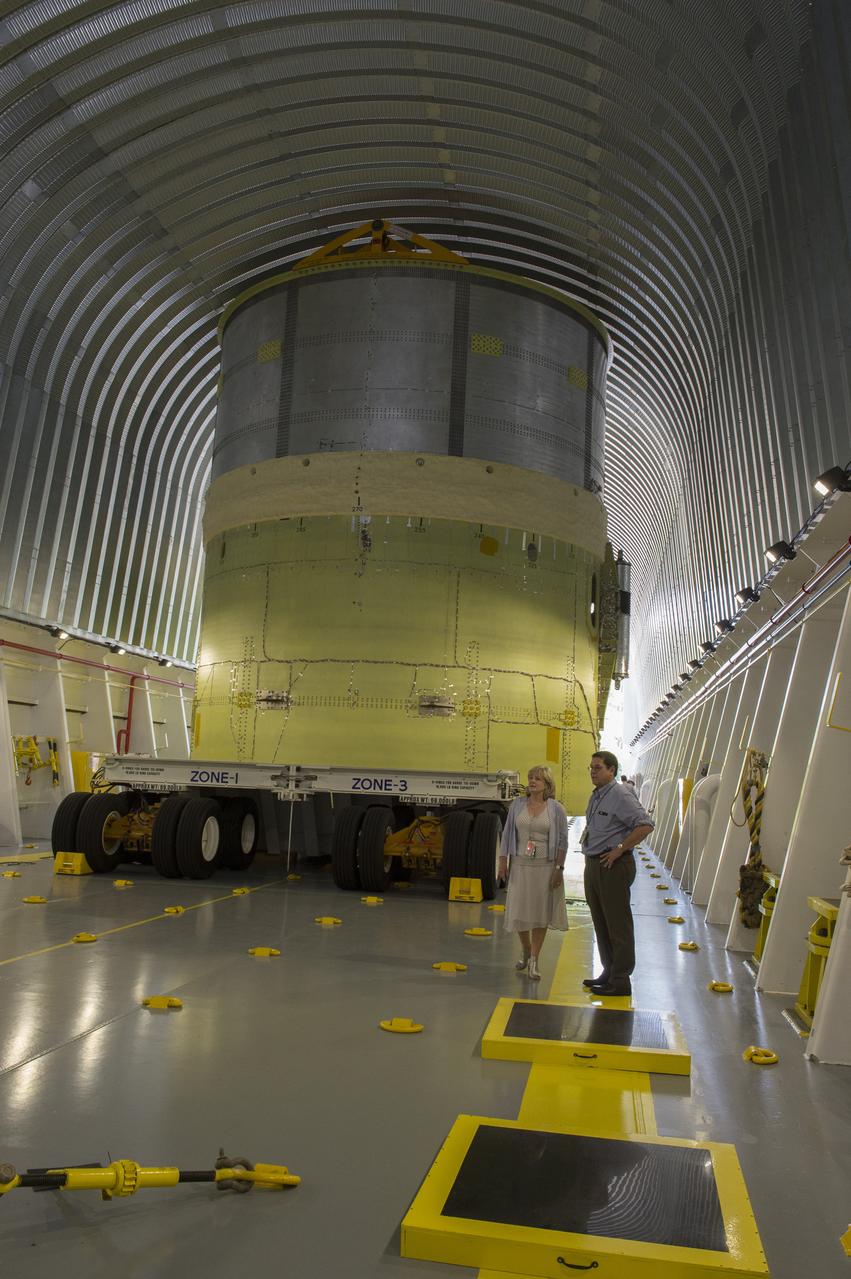
MSFC Deputy Director Jody Singer and Center Operations Manager Roy Malone examine the interior of the transportation barge Pegasus with the RS-25 engine core stage test article in the background.
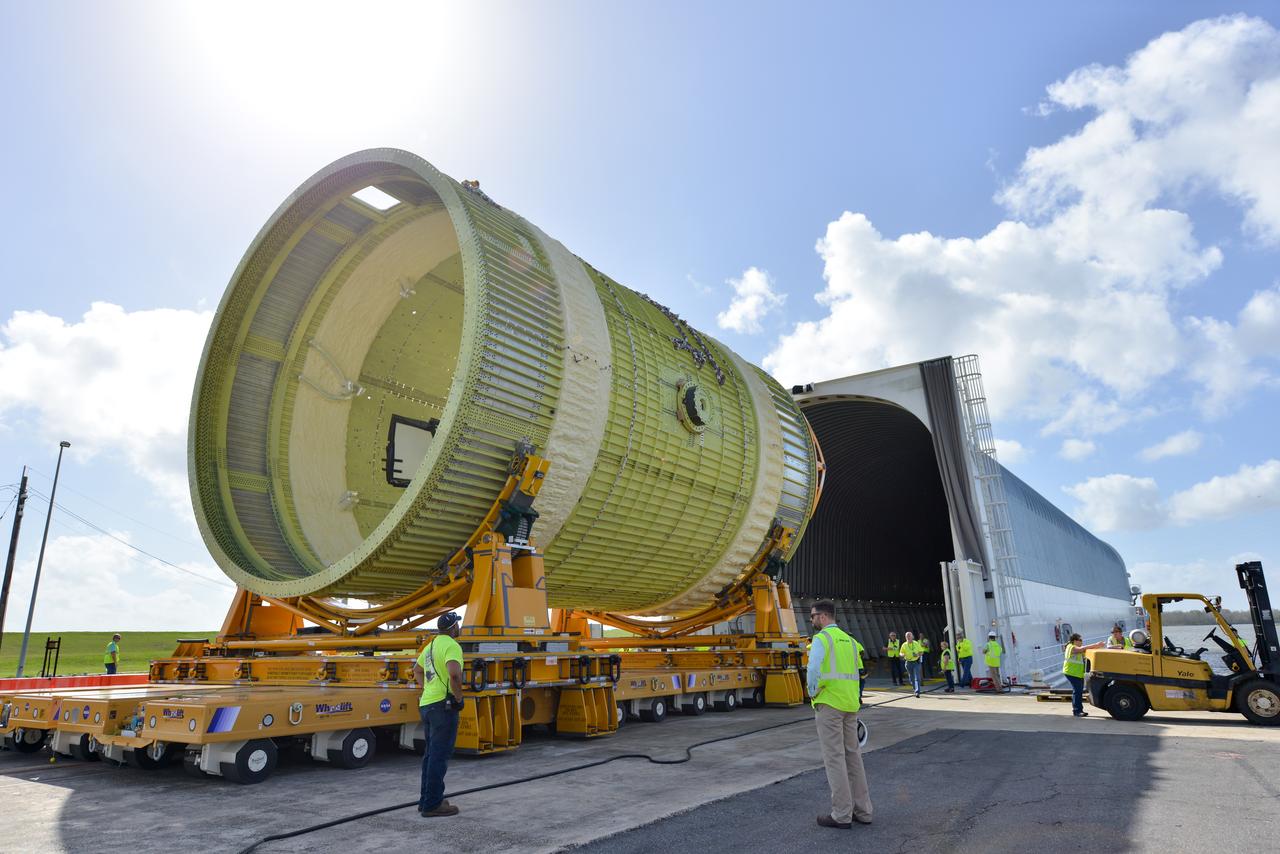
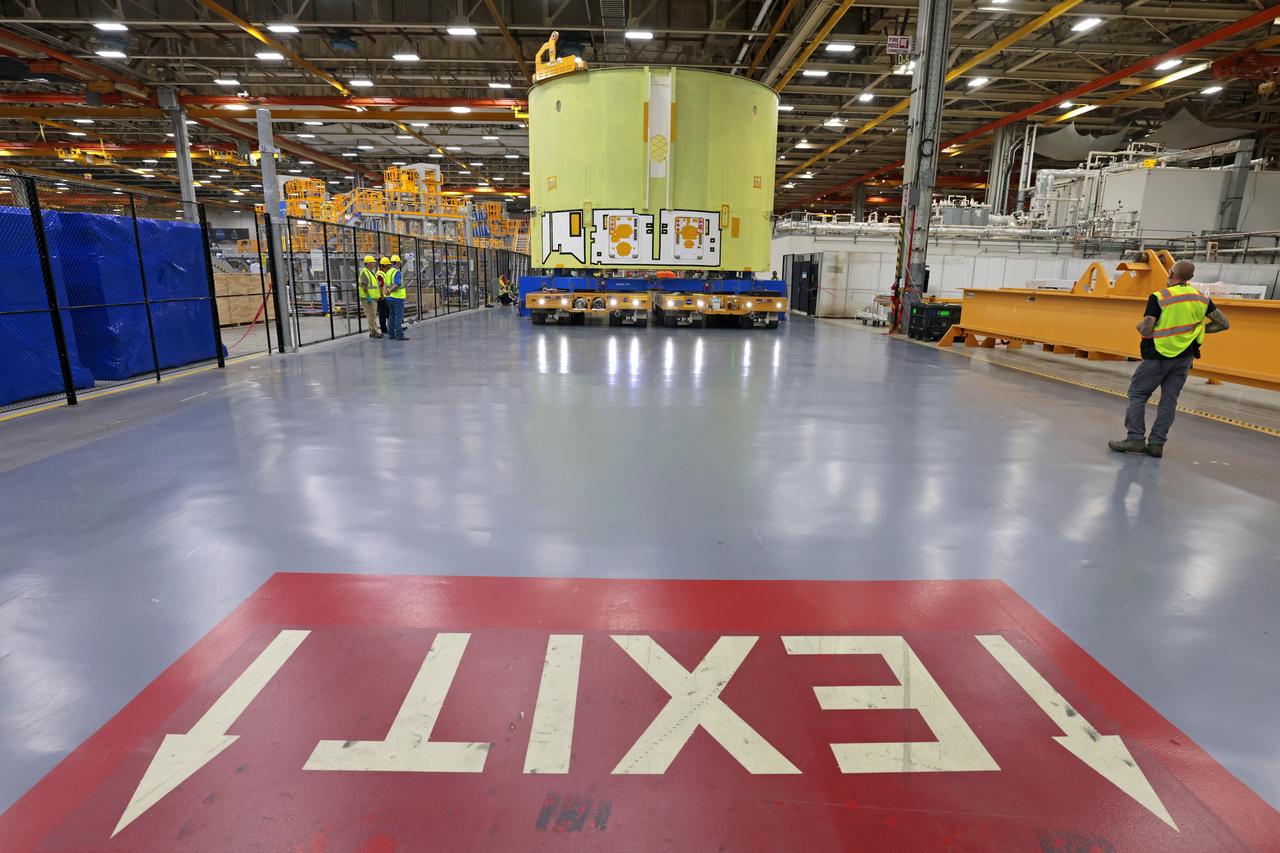
Intertank STA awaits loading onto the Pegasus Barge
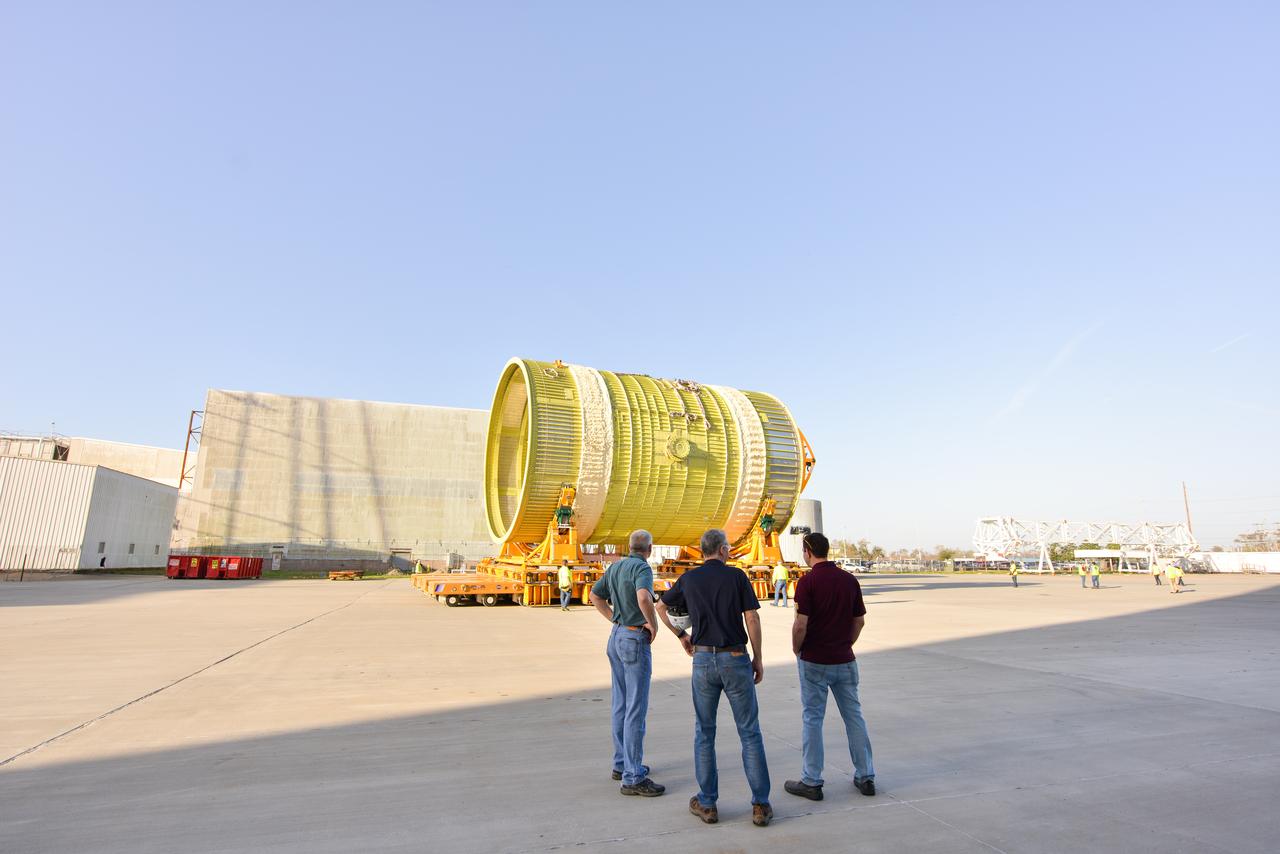
Intertank STA en route to Pegasus Barge
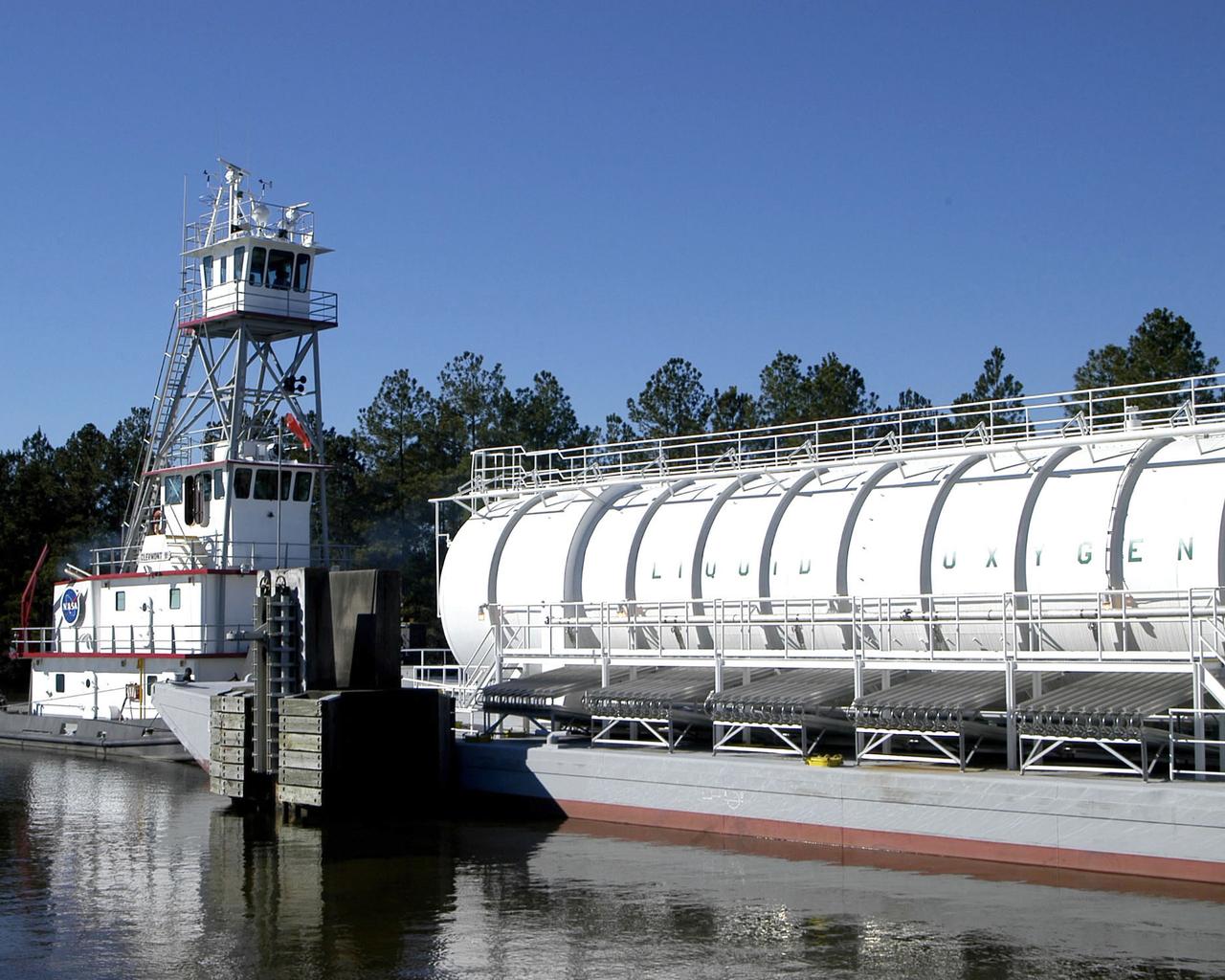
The crew of the NASA tugboat Clermont II navigates a barge of super-cool liquid oxygen through the 7 -mile canal system at SSC prior to a Space Shuttle Main Engine test.
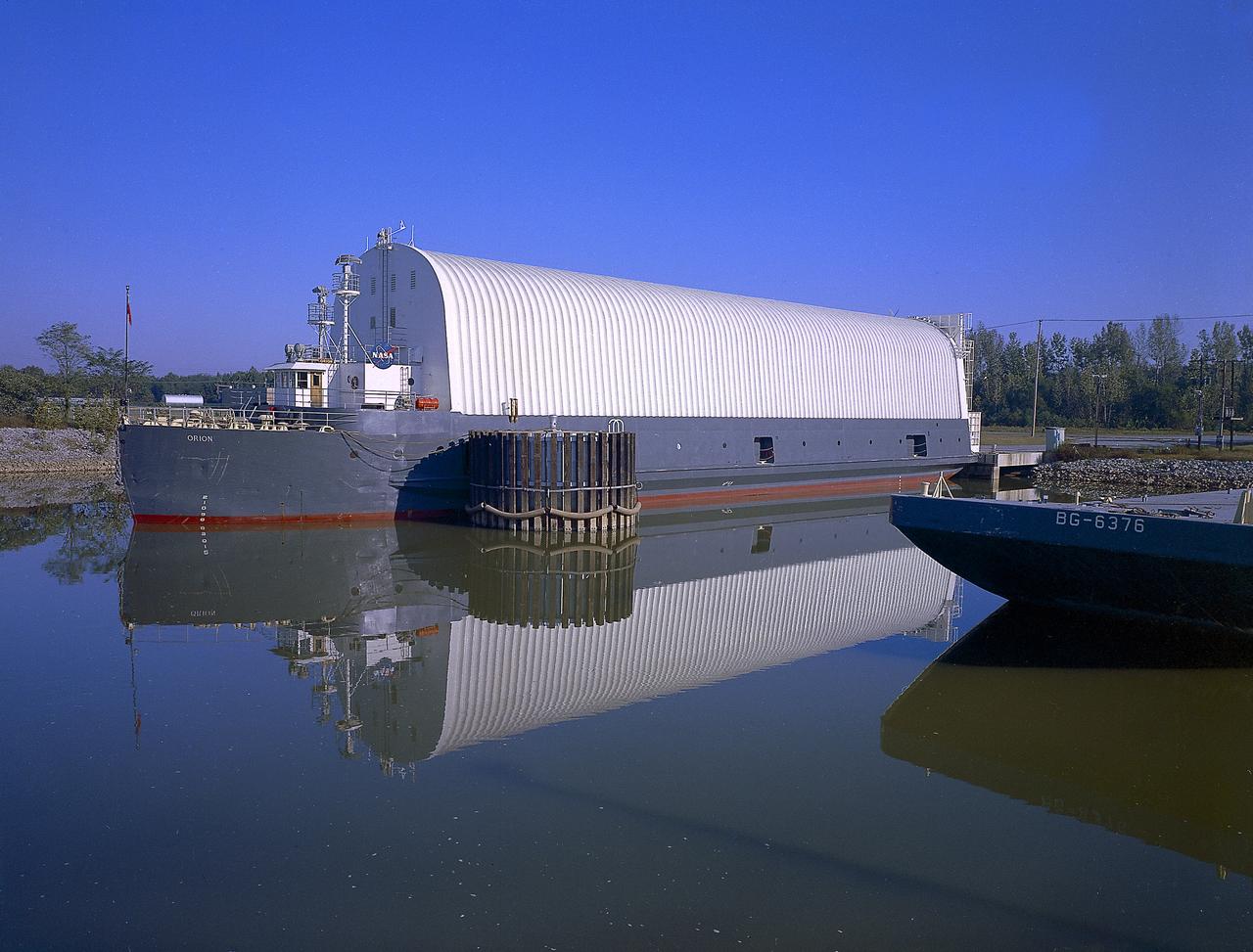
NASA used barges for transporting full-sized stages for the Saturn I, Saturn IB, and Saturn V vehicles between the Marshall Space Flight Center (MSFC), the manufacturing plant at the Michoud Assembly Facility (MAF), the Mississippi Test Facility for testing, and the Kennedy Space Center. The barges traveled from the MSFC dock to the MAF, a total of 1,086.7 miles up the Tennessee River and down the Mississippi River. The barges also transported the assembled stages of the Saturn vehicle from the MAF to the Kennedy Space Center, a total of 932.4 miles along the Gulf of Mexico and up along the Atlantic Ocean, for the final assembly and the launch. This photograph shows the barge Orion at the MSFC dock.
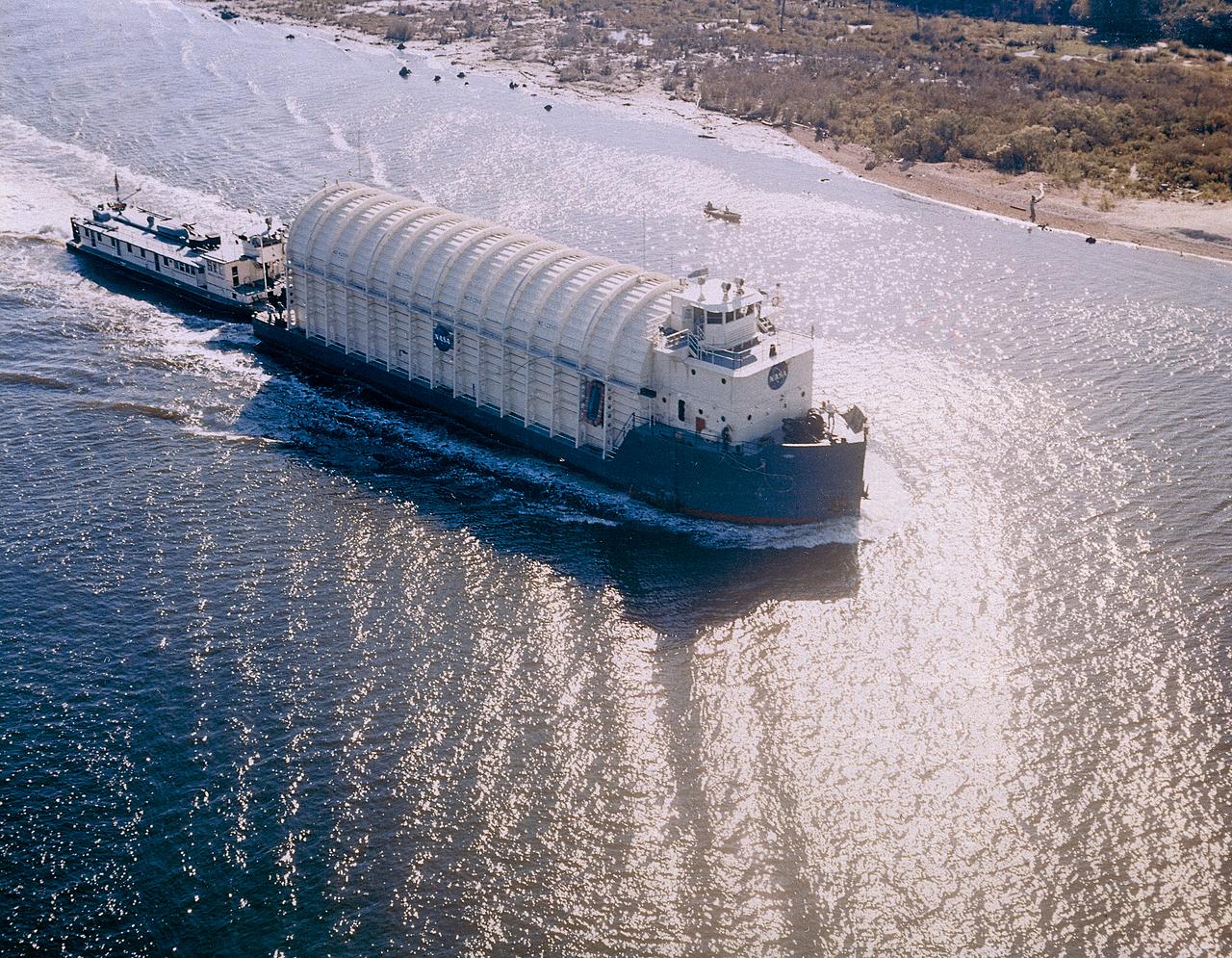
NASA used barges for transporting full-sized stages for the Saturn I, Saturn IB, and Saturn V vehicles between the Marshall Space Flight Center (MSFC), the manufacturing plant at the Michoud Assembly Facility (MAF), the Mississippi Test Facility for testing, and the Kennedy Space Center. The barges traveled from the MSFC dock to the MAF, a total of 1,086.7 miles up the Tennessee River and down the Mississippi River. The barges also transported the assembled stages of the Saturn vehicle from the MAF to the Kennedy Space Center, a total of 932.4 miles along the Gulf of Mexico and up along the Atlantic Ocean, for the final assembly and the launch. Pictured is the barge Palaemon carrying Saturn IV S-IB flight stage enroute to MSFC.
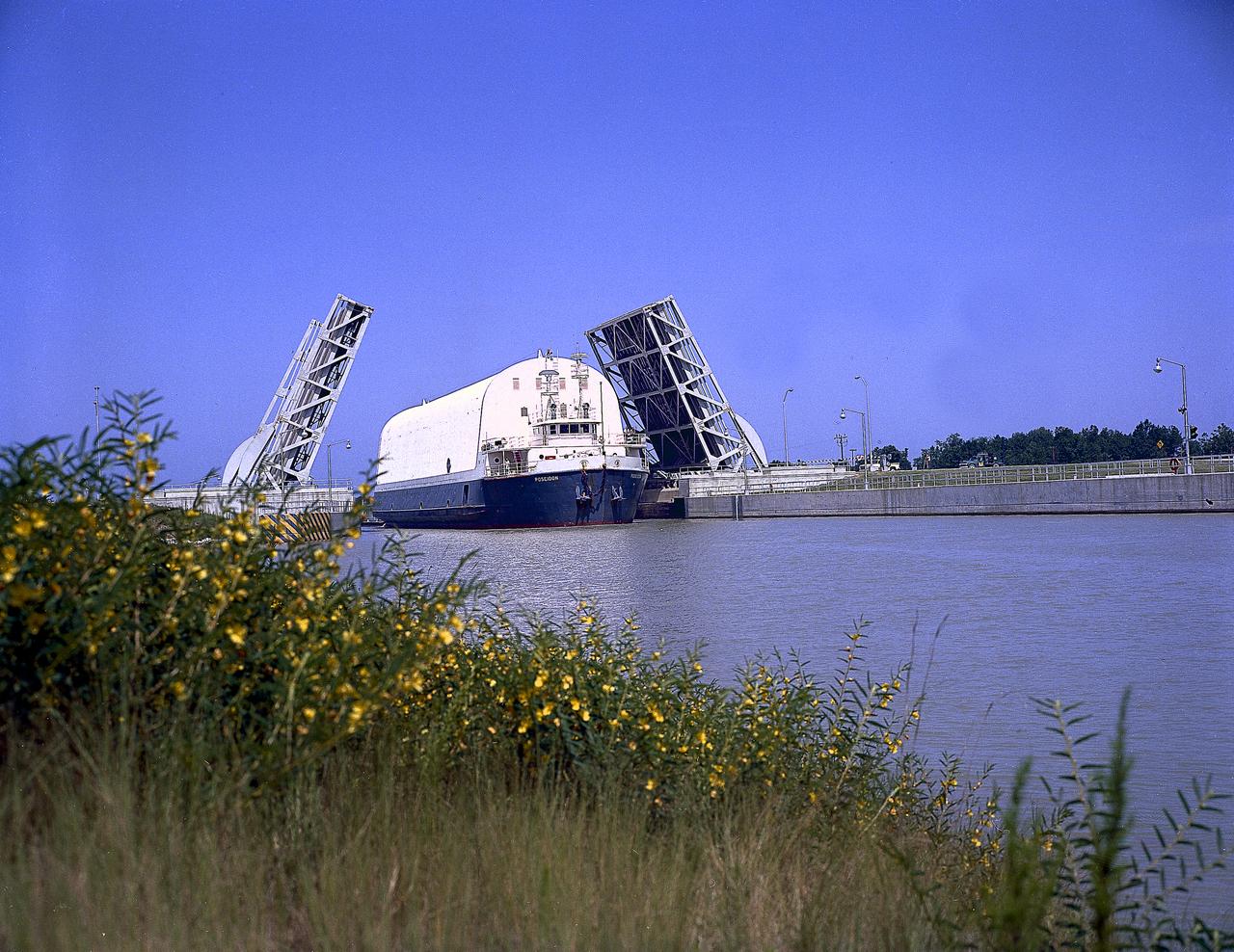
NASA used barges for transporting full-sized stages for the Saturn I, Saturn IB, and Saturn V vehicles between the Marshall Space Flight Center (MSFC), the manufacturing plant at the Michoud Assembly Facility (MAF), the Mississippi Test Facility for testing, and the Kennedy Space Center. The barges traveled from the MSFC dock to the MAF, a total of 1,086.7 miles up the Tennessee River and down the Mississippi River. The barges also transported the assembled stages of the Saturn vehicle from the MAF to the Kennedy Space Center, a total of 932.4 miles along the Gulf of Mexico and up along the Atlantic Ocean, for the final assembly and the launch. This photograph shows the barge Poseidon loaded with the Saturn V S-II (second) stage passing through a bascule bridge.
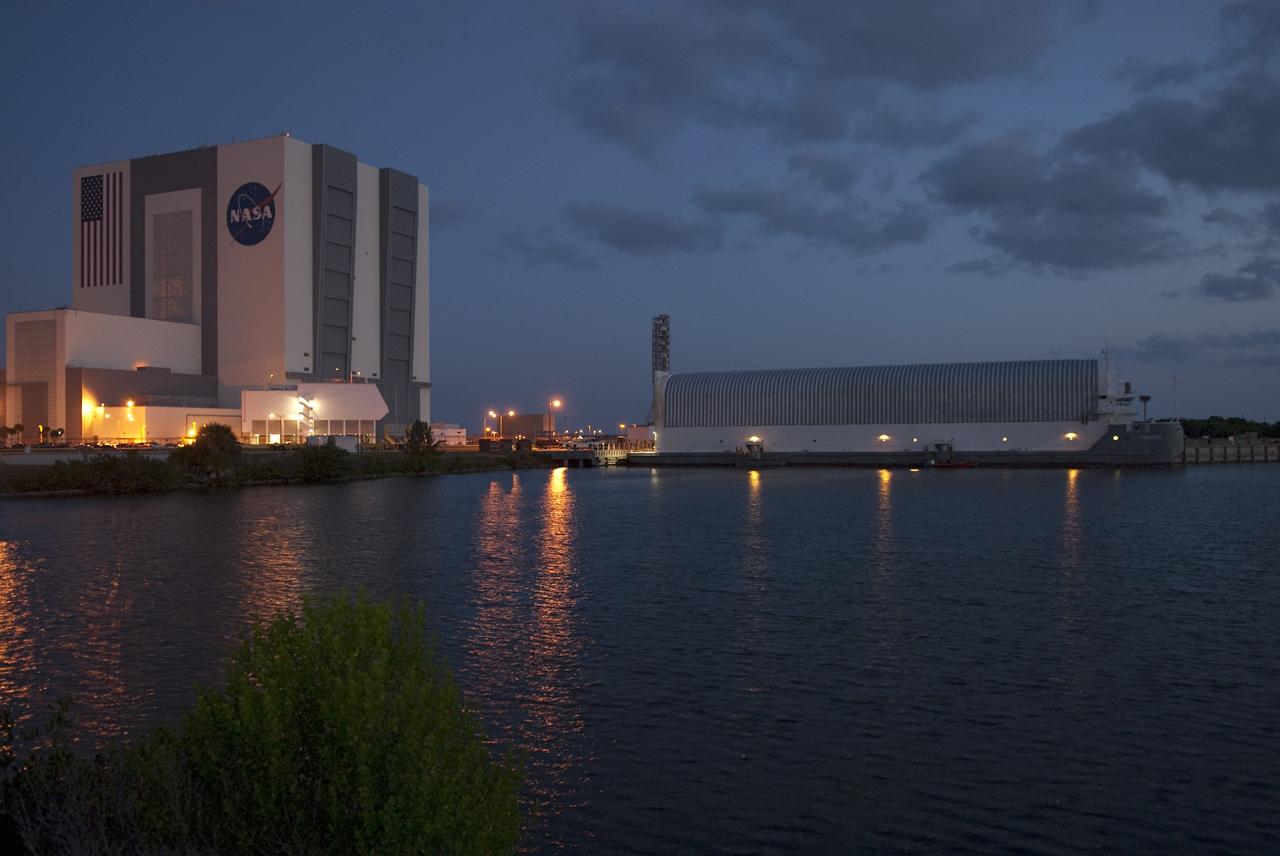
CAPE CANAVERAL, Fla. -- Viewed from across the Turn Basin in the Launch Complex 39 area at NASA's Kennedy Space Center in Florida, the Pegasus Barge is bathed in lights. The barge is being prepared to be towed from the dock to a more secure mooring area. The barge is 266 ft long and 50 ft wide and has been used by the Space Shuttle Program to transport external fuel tanks over 900 miles of inland and open ocean waterways from the Michoud Assembly Facility in Louisiana to Kennedy. Photo credit: NASA/Jim Grossmann
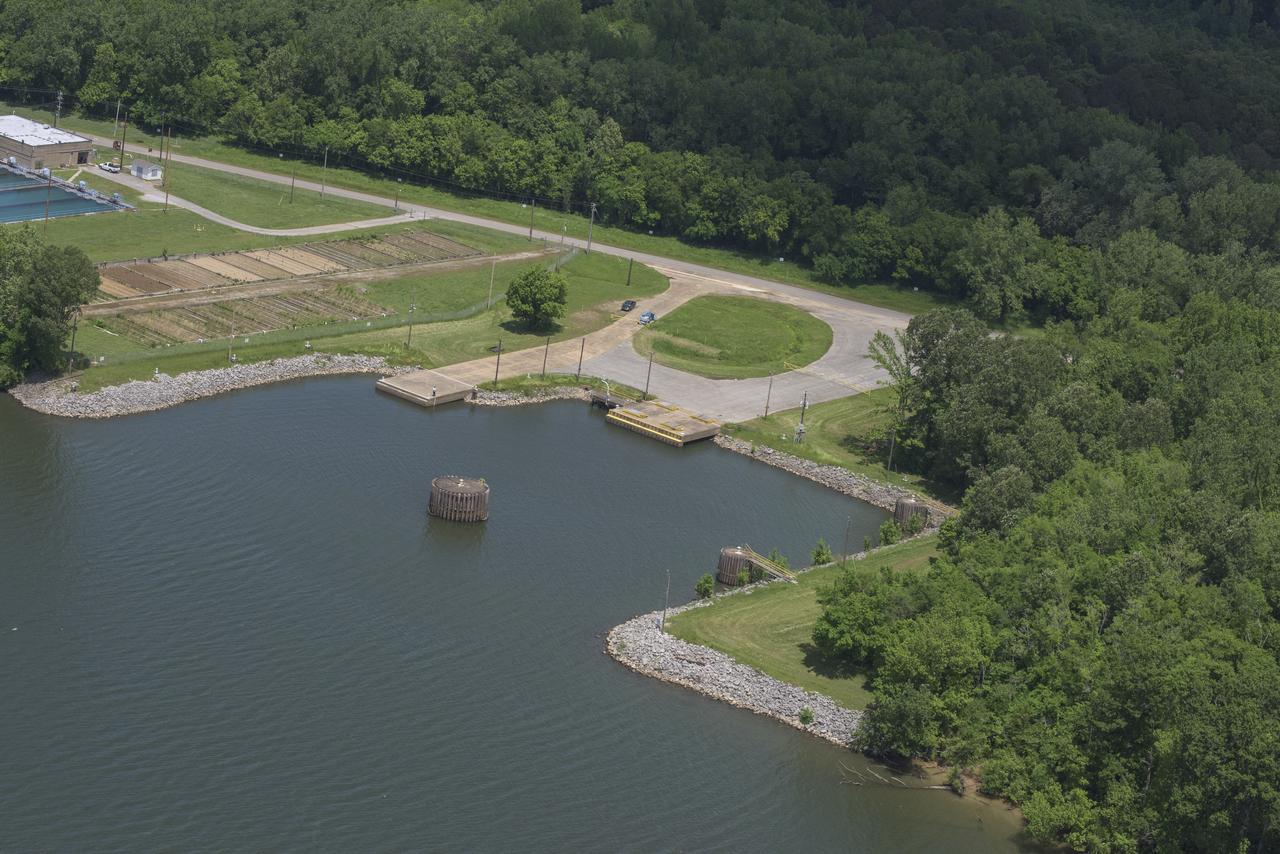
AERIAL PHOTOGRAPHS OF MSFC-BARGE DOCK
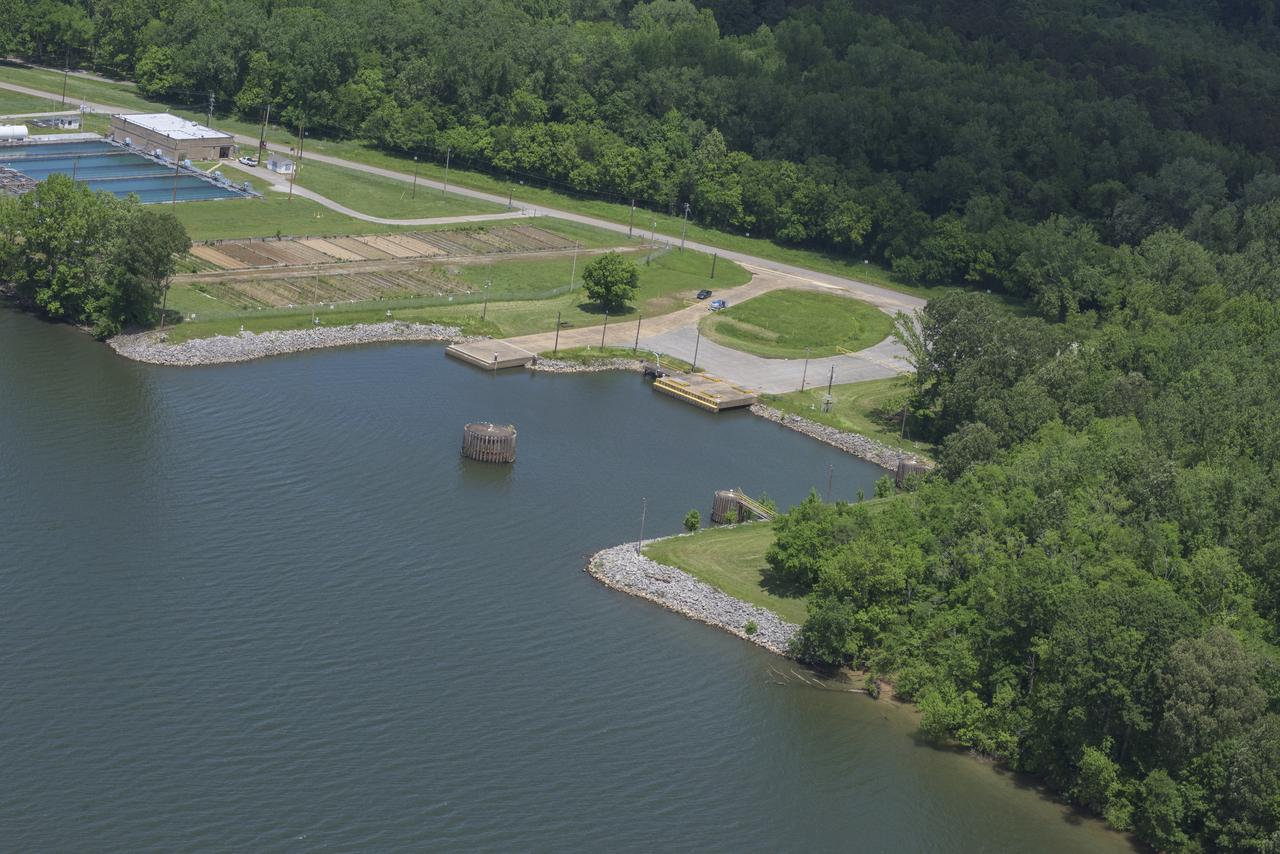
AERIAL PHOTOGRAPHS OF MSFC-BARGE DOCK
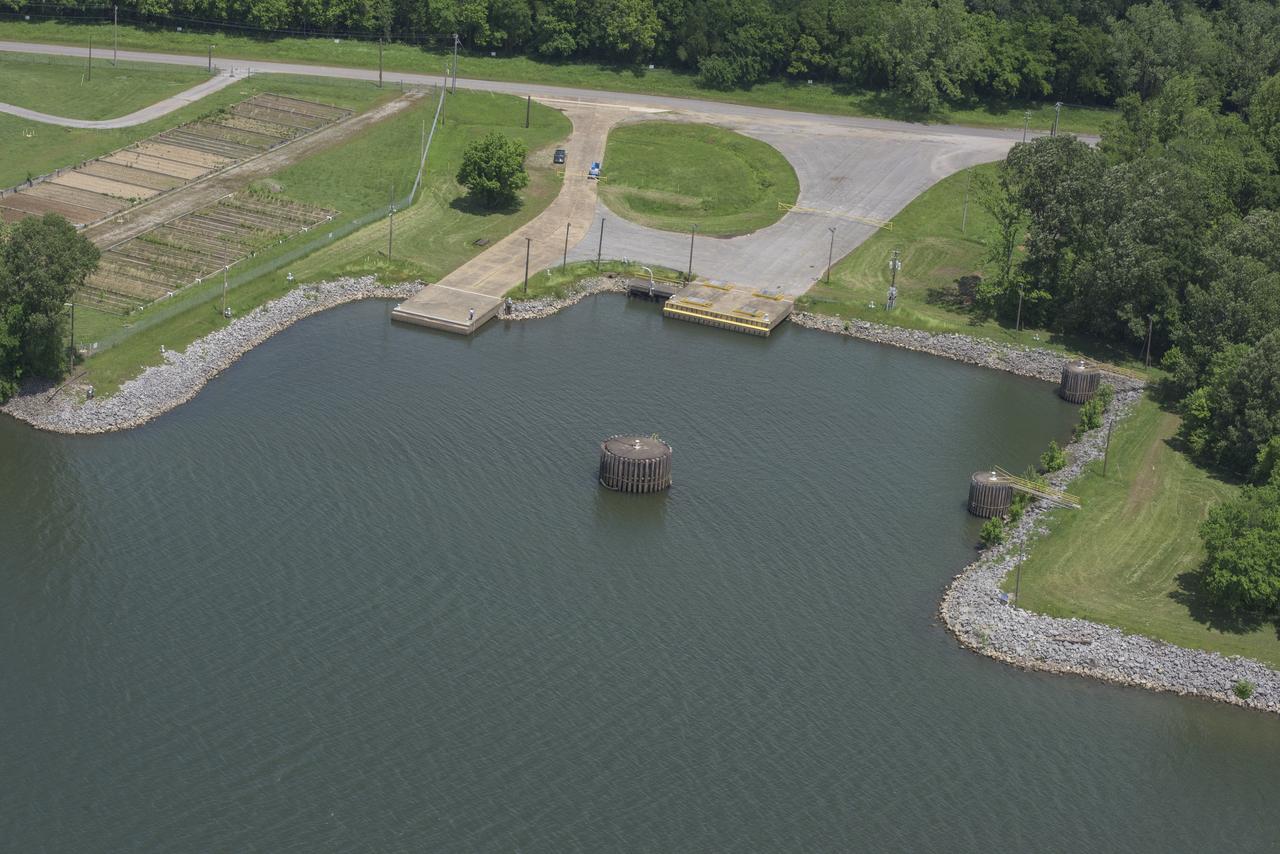
AERIAL PHOTOGRAPHS OF MSFC-BARGE DOCK
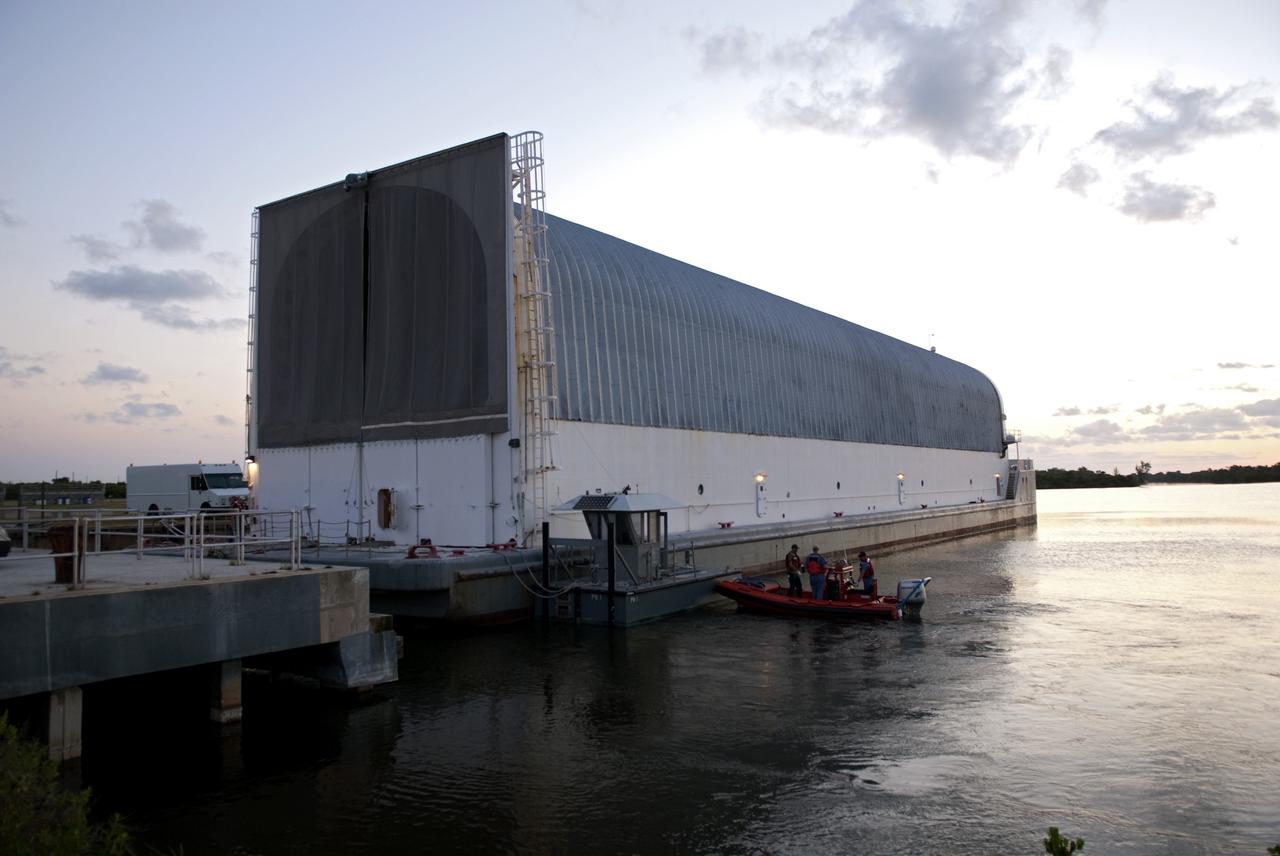
CAPE CANAVERAL, Fla. -- Workers in a skiff prepare the Pegasus Barge floating in the Launch Complex 39 area Turn Basin at NASA's Kennedy Space Center in Florida, for its move from the dock to a more secure mooring area. The barge is 266 ft long and 50 ft wide and has been used by the Space Shuttle Program to transport external fuel tanks over 900 miles of inland and open ocean waterways from the Michoud Assembly Facility in Louisiana to Kennedy. Photo credit: NASA/Jim Grossmann
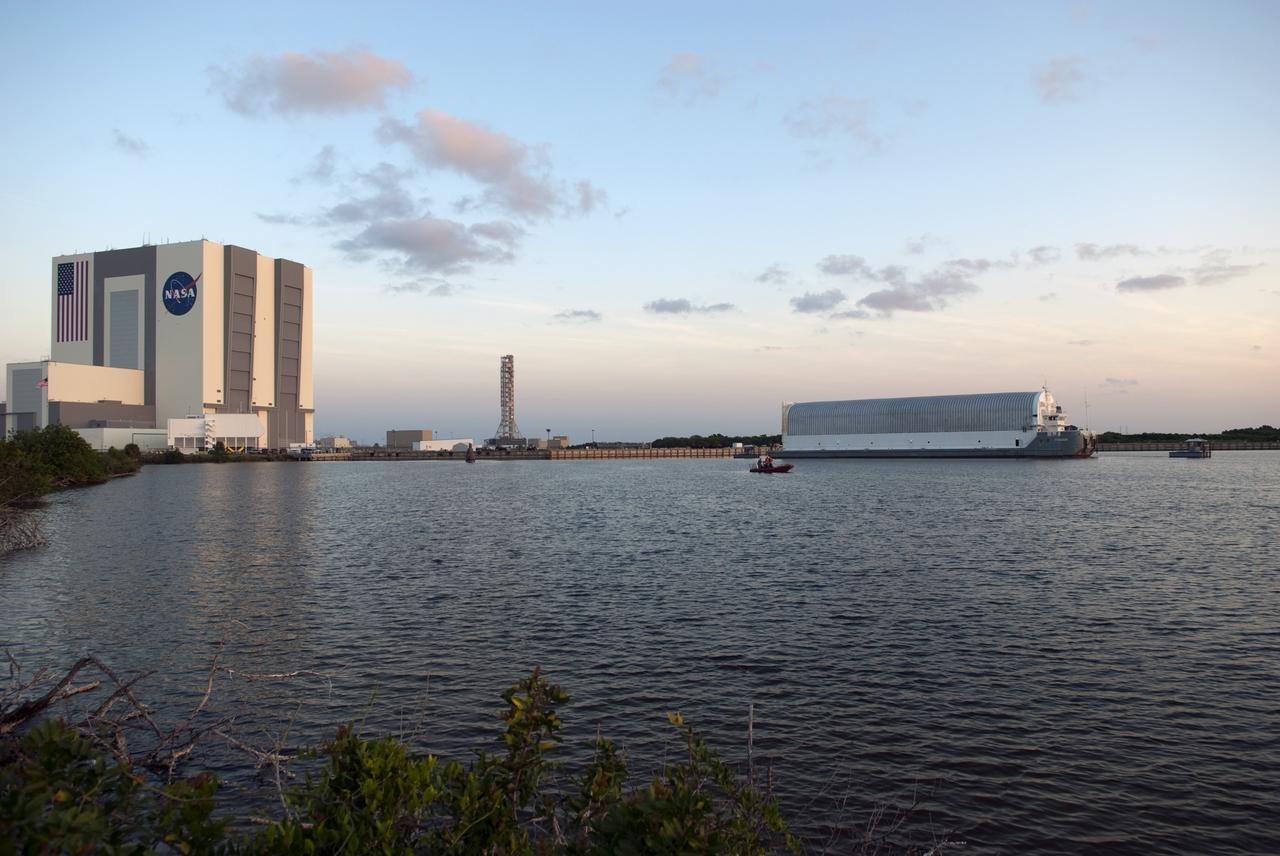
CAPE CANAVERAL, Fla. -- As the sun rises over the Vehicle Assembly Building at NASA's Kennedy Space Center in Florida, tugboats tow the Pegasus Barge from the dock in the Turn Basin to a more secure mooring area. The barge is 266 ft long and 50 ft wide and has been used by the Space Shuttle Program to transport external fuel tanks over 900 miles of inland and open ocean waterways from the Michoud Assembly Facility in Louisiana to Kennedy. Photo credit: NASA/Jim Grossmann
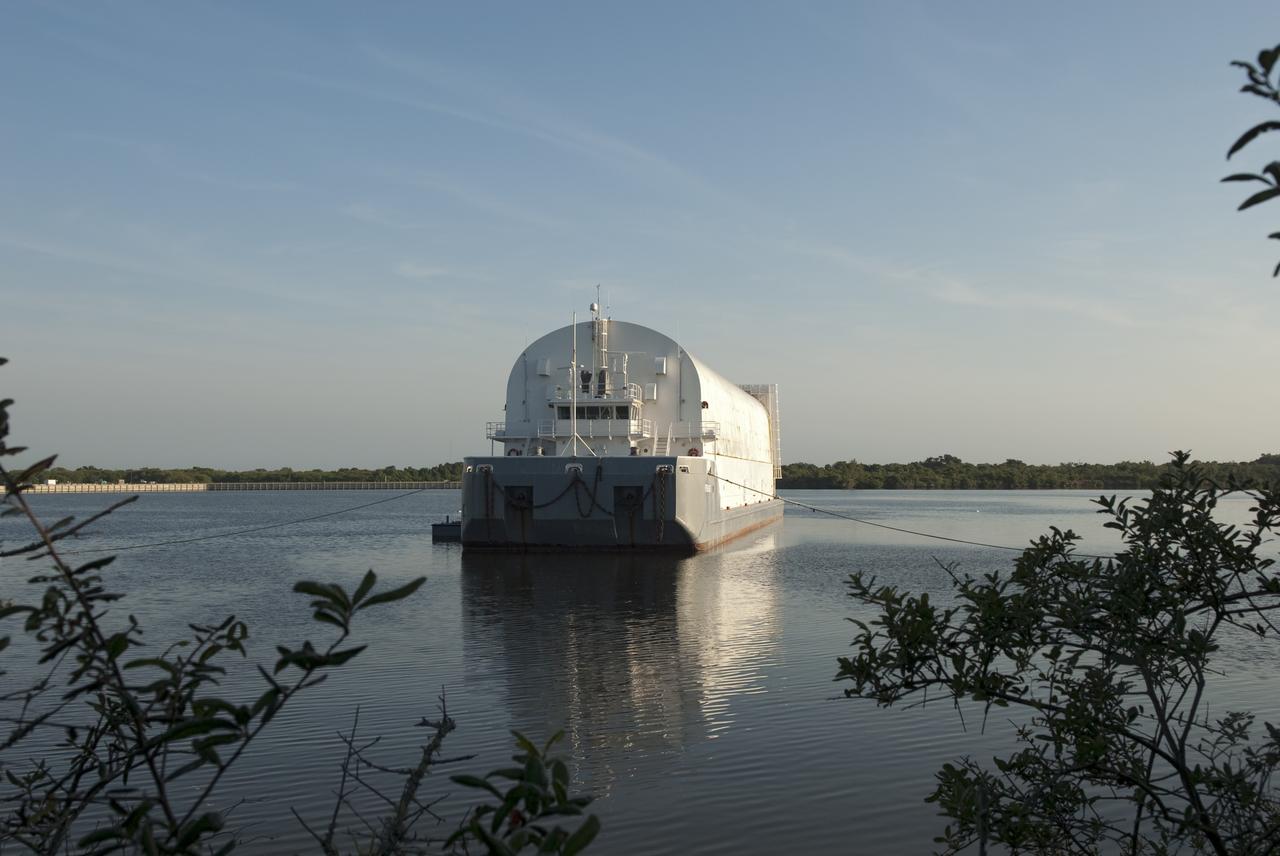
CAPE CANAVERAL, Fla. -- Tugboats in the Turn Basin in the Launch Complex 39 area at NASA's Kennedy Space Center in Florida have towed the Pegasus Barge from the dock to a more secure mooring area. The barge is 266 ft long and 50 ft wide and has been used by the Space Shuttle Program to transport external fuel tanks over 900 miles of inland and open ocean waterways from the Michoud Assembly Facility in Louisiana to Kennedy. Photo credit: NASA/Jim Grossmann
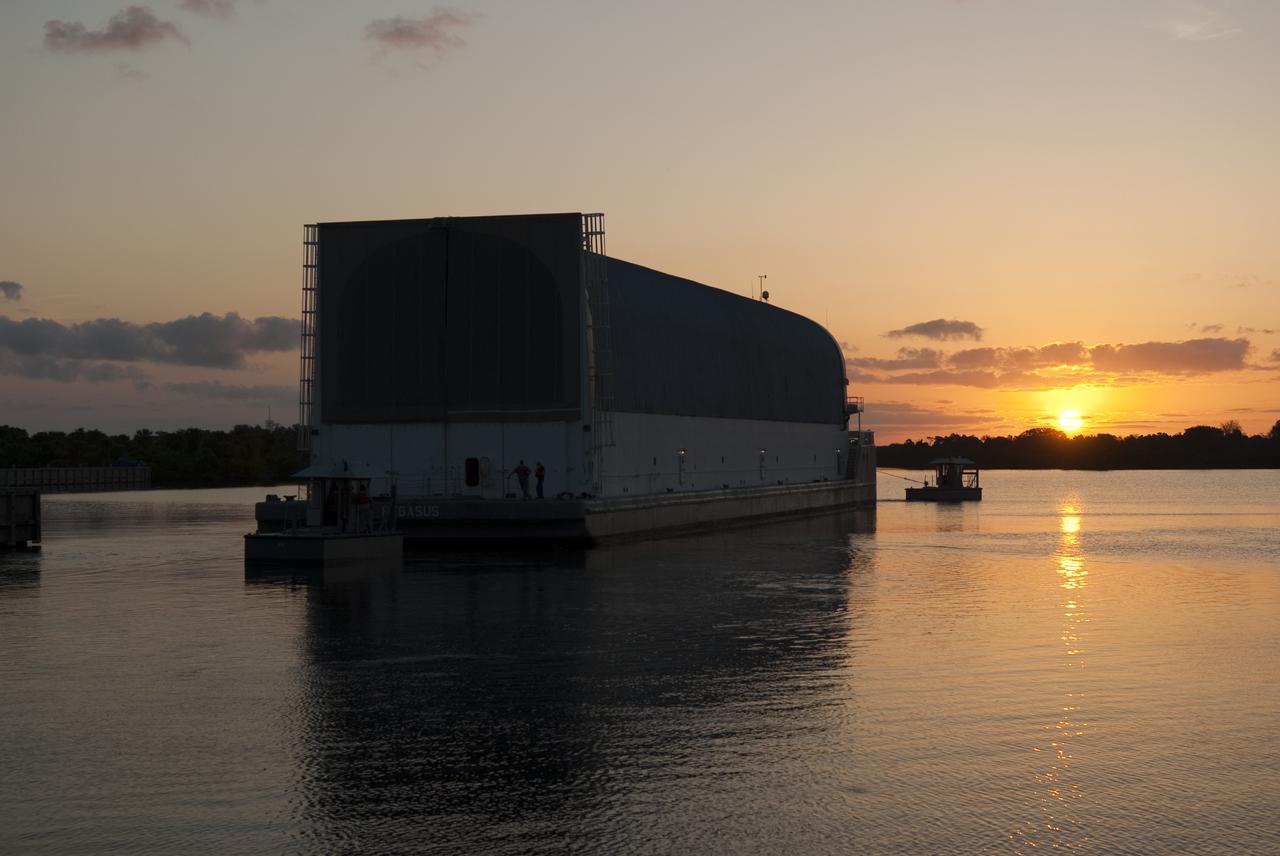
CAPE CANAVERAL, Fla. -- The morning sun rises over the Pegasus Barge floating in the Launch Complex 39 area Turn Basin at NASA's Kennedy Space Center in Florida, as it is being towed from the dock to a more secure mooring area. The barge is 266 ft long and 50 ft wide and has been used by the Space Shuttle Program to transport external fuel tanks over 900 miles of inland and open ocean waterways from the Michoud Assembly Facility in Louisiana to Kennedy. Photo credit: Jim Grossmann

CAPE CANAVERAL, Fla. -- With the Vehicle Assembly Building in the background the Pegasus Barge is moored in a secure area of the Turn Basin in the Launch Complex 39 area at NASA's Kennedy Space Center in Florida. The barge is 266 ft long and 50 ft wide and has been used by the Space Shuttle Program to transport external fuel tanks over 900 miles of inland and open ocean waterways from the Michoud Assembly Facility in Louisiana to Kennedy. Photo credit: NASA/Jim Grossmann

CAPE CANAVERAL, Fla. -- At sunrise, tugboats in the Turn Basin in the Launch Complex 39 area at NASA's Kennedy Space Center in Florida are towing the Pegasus Barge from the dock to a more secure mooring area. The barge is 266 ft long and 50 ft wide and has been used by the Space Shuttle Program to transport external fuel tanks over 900 miles of inland and open ocean waterways from the Michoud Assembly Facility in Louisiana to Kennedy. Photo credit: NASA/Jim Grossmann
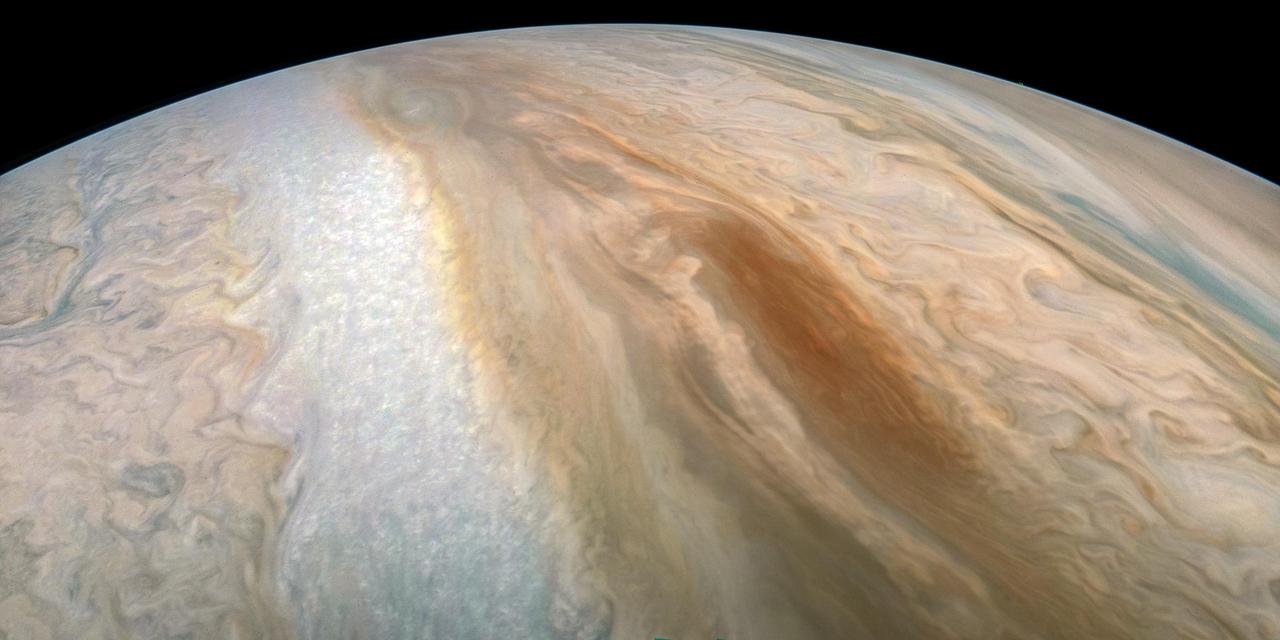
A long, brown oval known as a "brown barge" in Jupiter's South Equatorial Belt is captured in this color-enhanced image from NASA's Juno spacecraft. Brown barges are cyclonic regions that usually lie within Jupiter's dark North Equatorial Belt, although they are sometimes found in the similarly dark South Equatorial Belt as well. They can often be difficult to detect visually because their color blends in with the dark surroundings. At other times, as with this image, the dark belt material recedes, creating a lighter-colored background against which the brown barge is more conspicuous. Brown barges usually dissipate after the entire cloud belt undergoes an upheaval and reorganizes itself. Juno is giving us the first glimpses of the detailed structure within such a barge. This image was taken at 6:26 p.m. PDT on Sept. 6, 2018 (9:26 p.m. EDT) as the spacecraft performed its 15th close flyby of Jupiter. At the time, Juno was 7,425 miles (11,950 kilometers) from the planet's cloud tops, above a southern latitude of approximately 22 degrees. Citizen scientist Kevin M. Gill created this image using data from the spacecraft's JunoCam imager. The image has been rotated 90 degrees to the right from the original image. https://photojournal.jpl.nasa.gov/catalog/PIA22688 . - Enhanced image by Kevin M. Gill (CC-BY) based on images provided courtesy of NASA/JPL-Caltech/SwRI/MSSS
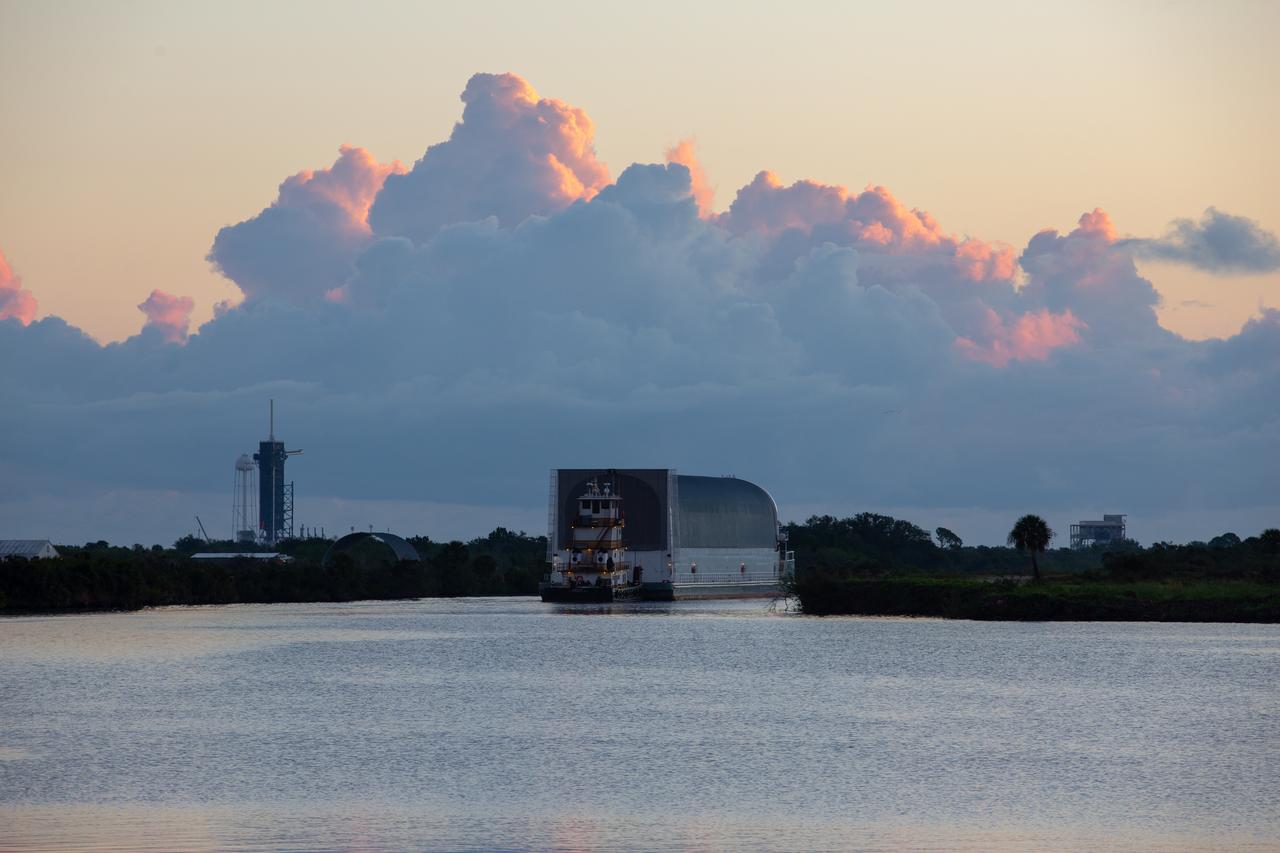
NASA’s Pegasus barge, with the 212-foot-long Space Launch System (SLS) rocket core stage pathfinder secured inside, departs the Launch Complex 39 turn basin wharf at NASA’s Kennedy Space Center in Florida on Oct. 31, 2019. The core stage pathfinder is a full-scale mock-up of the rocket's core stage. It was used by the Exploration Ground Systems Program and their contractor, Jacobs, to practice offloading, moving and stacking maneuvers inside the Vehicle Assembly Building, using important ground support equipment to train employees and certify all the equipment works properly. The pathfinder was at Kennedy for about a month. The barge with the pathfinder will make the trek back to NASA's Michoud Assembly Facility in Louisiana.
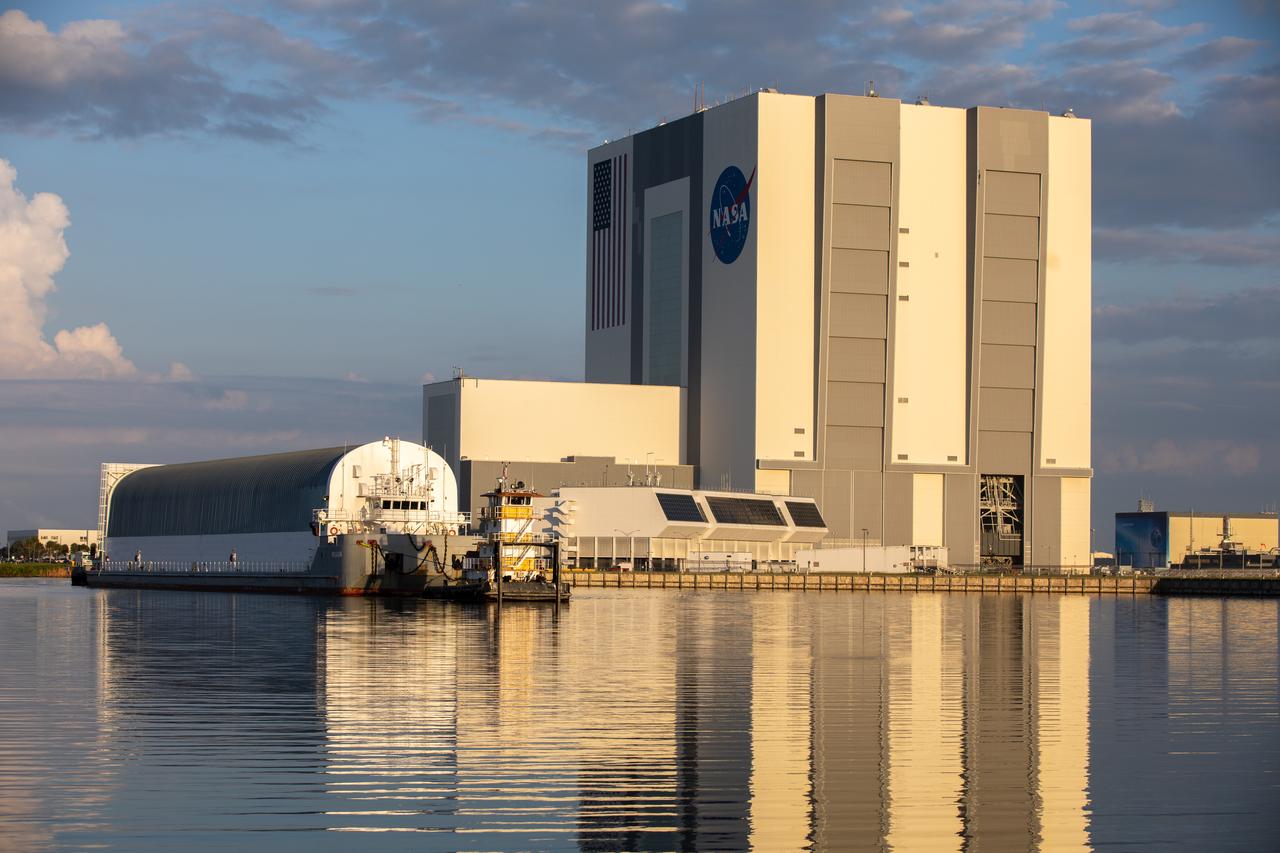
NASA’s Pegasus barge departs from the agency’s Kennedy Space Center in Florida on Aug. 4, 2020, for its trip to NASA’s Michoud Assembly Facility in Louisiana. The Pegasus barge arrived at Kennedy on July 29, delivering the launch vehicle stage adapter (LVSA) for the agency’s Space Launch System (SLS) rocket – the most powerful rocket NASA has ever built, providing the muscle necessary to get to the Moon and eventually to Mars. In the background is the Vehicle Assembly Building, where the LVSA – hardware that will connect the core stage of the rocket to the upper stage – is now undergoing processing. The next time the Pegasus barge returns to Kennedy, it will be carrying the SLS core stage – the final piece of the rocket that needs to be delivered ahead of the Artemis I launch.
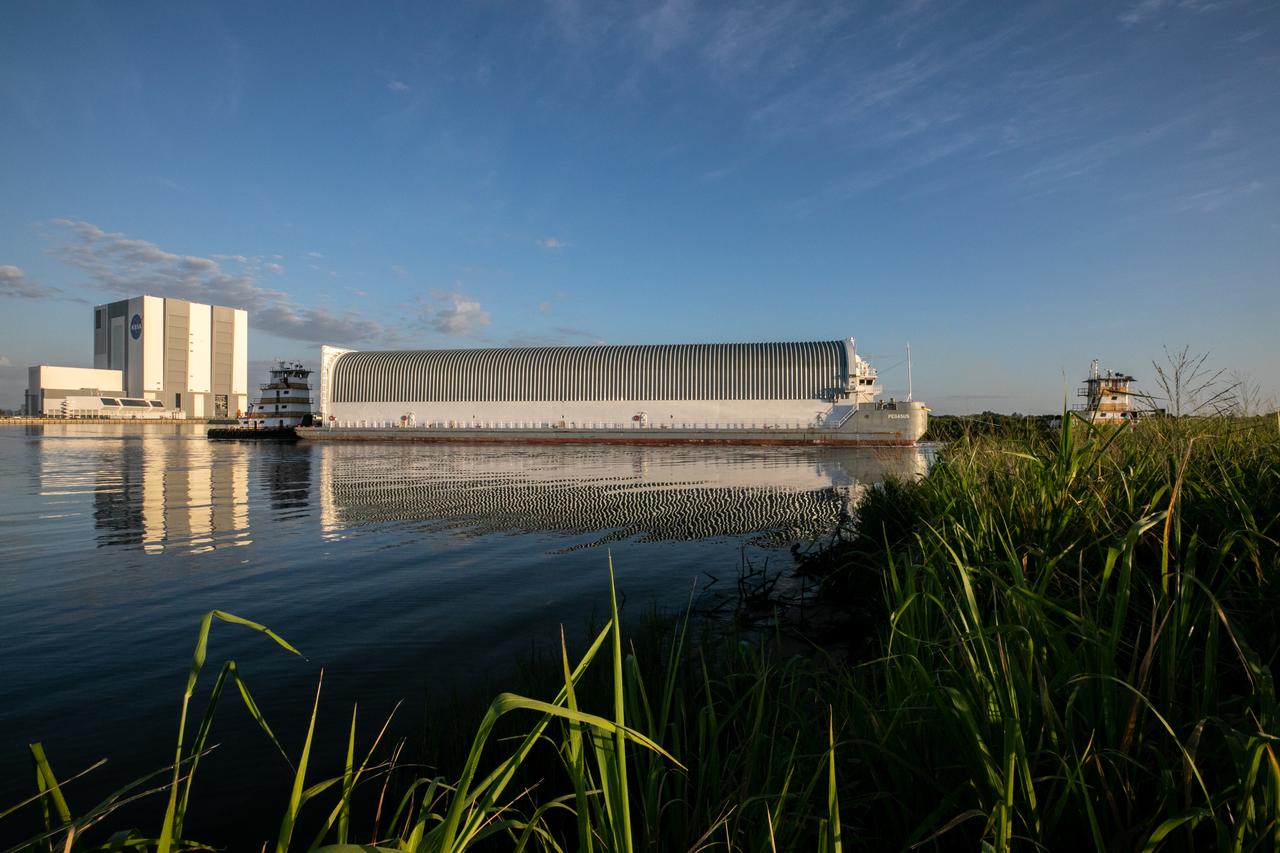
NASA’s Pegasus barge departs from the agency’s Kennedy Space Center in Florida on Aug. 4, 2020, for its trip to NASA’s Michoud Assembly Facility in Louisiana. The Pegasus barge arrived at Kennedy on July 29, delivering the launch vehicle stage adapter (LVSA) for the agency’s Space Launch System (SLS) rocket – the most powerful rocket NASA has ever built, providing the muscle necessary to get to the Moon and eventually to Mars. In the background is the Vehicle Assembly Building, where the LVSA – hardware that will connect the core stage of the rocket to the upper stage – is now undergoing processing. The next time the Pegasus barge returns to Kennedy, it will be carrying the SLS core stage – the final piece of the rocket that needs to be delivered ahead of the Artemis I launch.
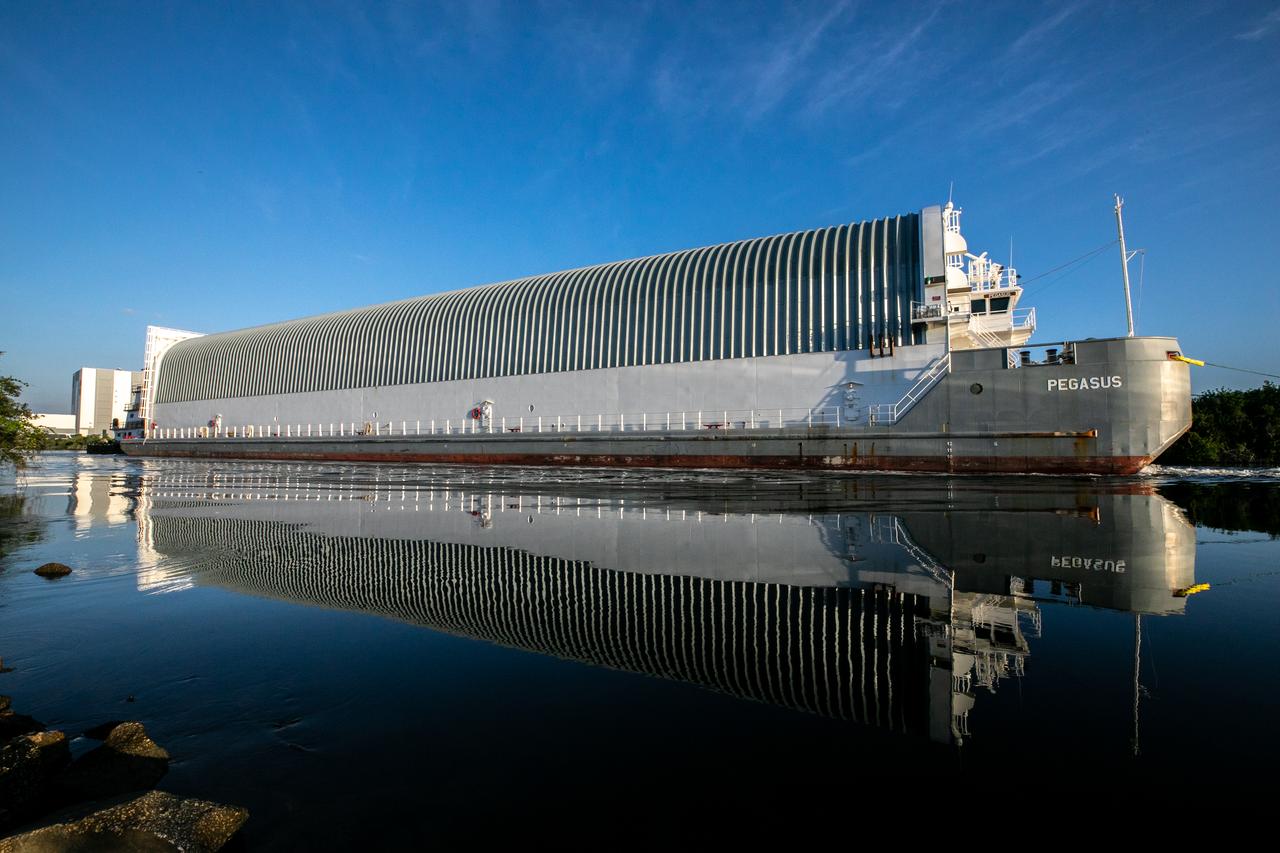
NASA’s Pegasus barge departs from the agency’s Kennedy Space Center in Florida on Aug. 4, 2020, for its trip to NASA’s Michoud Assembly Facility in Louisiana. The Pegasus barge arrived at Kennedy on July 29, delivering the launch vehicle stage adapter (LVSA) for the agency’s Space Launch System (SLS) rocket – the most powerful rocket NASA has ever built, providing the muscle necessary to get to the Moon and eventually to Mars. In the background is the Vehicle Assembly Building, where the LVSA – hardware that will connect the core stage of the rocket to the upper stage – is now undergoing processing. The next time the Pegasus barge returns to Kennedy, it will be carrying the SLS core stage – the final piece of the rocket that needs to be delivered ahead of the Artemis I launch.
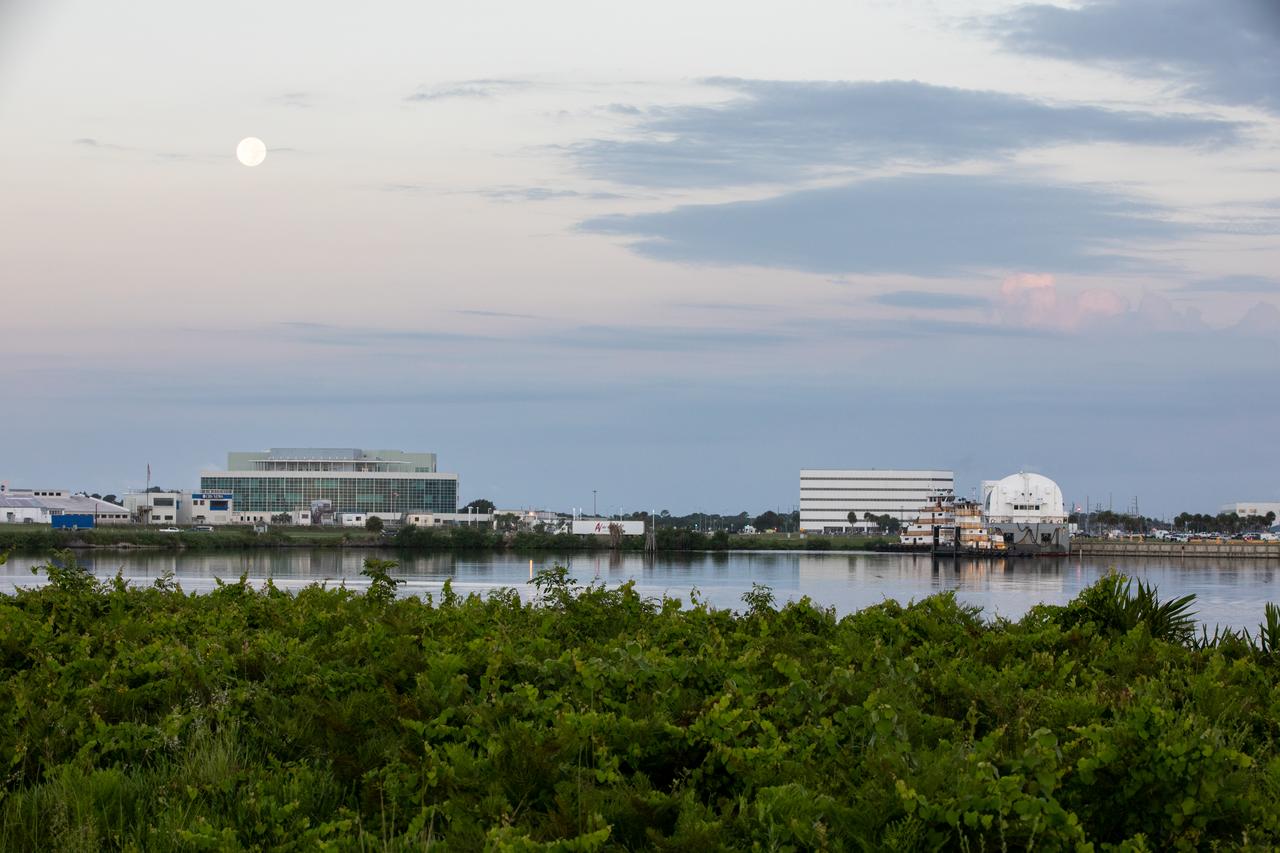
NASA’s Pegasus barge, seen off toward the right, prepares to depart from the agency’s Kennedy Space Center in Florida on Aug. 4, 2020, for its trip to NASA’s Michoud Assembly Facility in Louisiana. The Pegasus barge arrived at Kennedy on July 29, delivering the launch vehicle stage adapter (LVSA) for the agency’s Space Launch System (SLS) rocket – the most powerful rocket NASA has ever built, providing the muscle necessary to get to the Moon and eventually to Mars. The LVSA – now undergoing processing inside the Vehicle Assembly Building – will connect the core stage of the rocket to the upper stage. The next time the Pegasus barge returns to Kennedy, it will be carrying the SLS core stage – the final piece of the rocket that needs to be delivered ahead of the Artemis I launch.
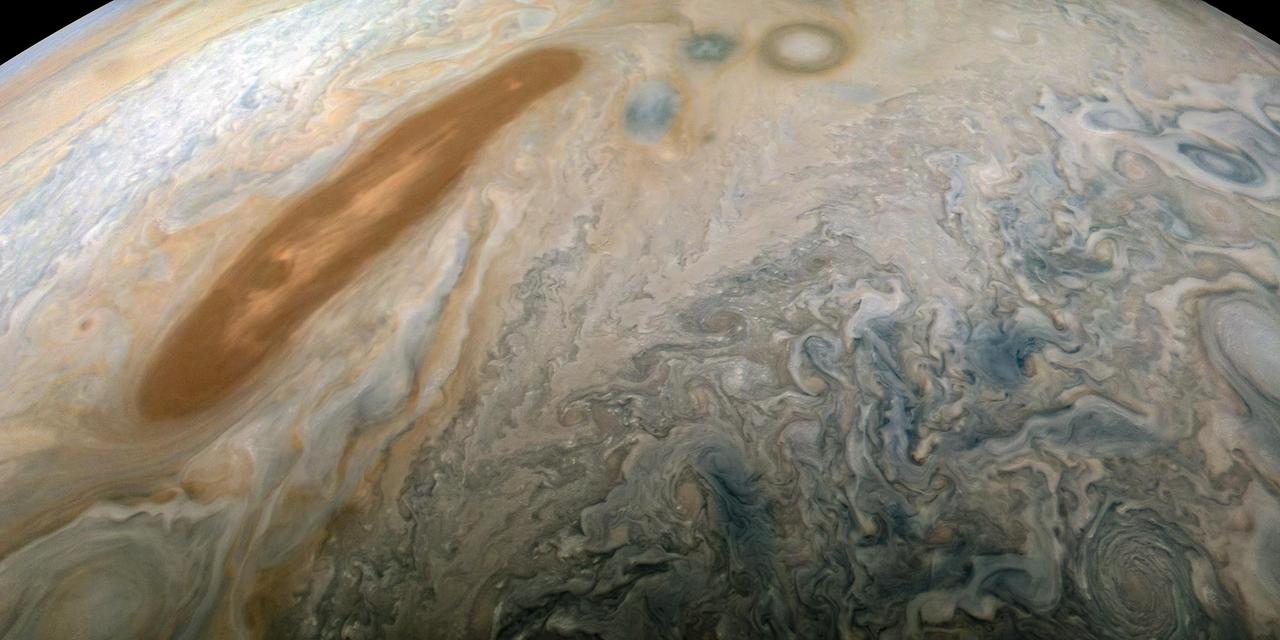
A long, brown oval known as a "brown barge" in Jupiter's North North Equatorial Belt is captured in this color-enhanced image from NASA's Juno spacecraft. This image was taken at 6:01 p.m. PDT (9:01 p.m. EDT) on Sept. 6, 2018, as the spacecraft performed its 15th close flyby of Jupiter. Citizen scientist Kevin M. Gill created this image using data from the spacecraft's JunoCam imager. https://photojournal.jpl.nasa.gov/catalog/PIA22939. - Enhanced image by Kevin M. Gill (CC-BY) based on images provided courtesy of NASA/JPL-Caltech/SwRI/MSSS
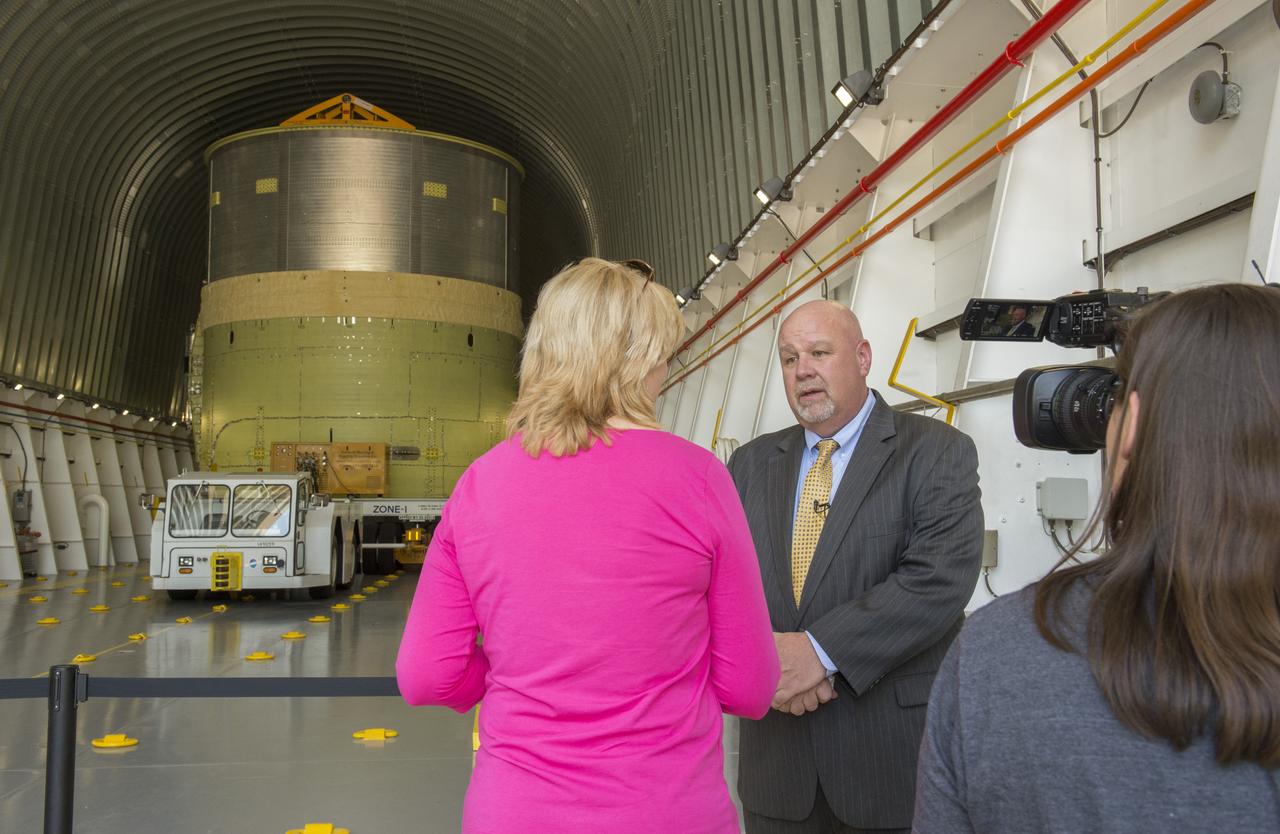
John Honeycutt talks with reporters on NASA Barge Pegasus

John Honeycutt talks with reporters on NASA Barge Pegasus
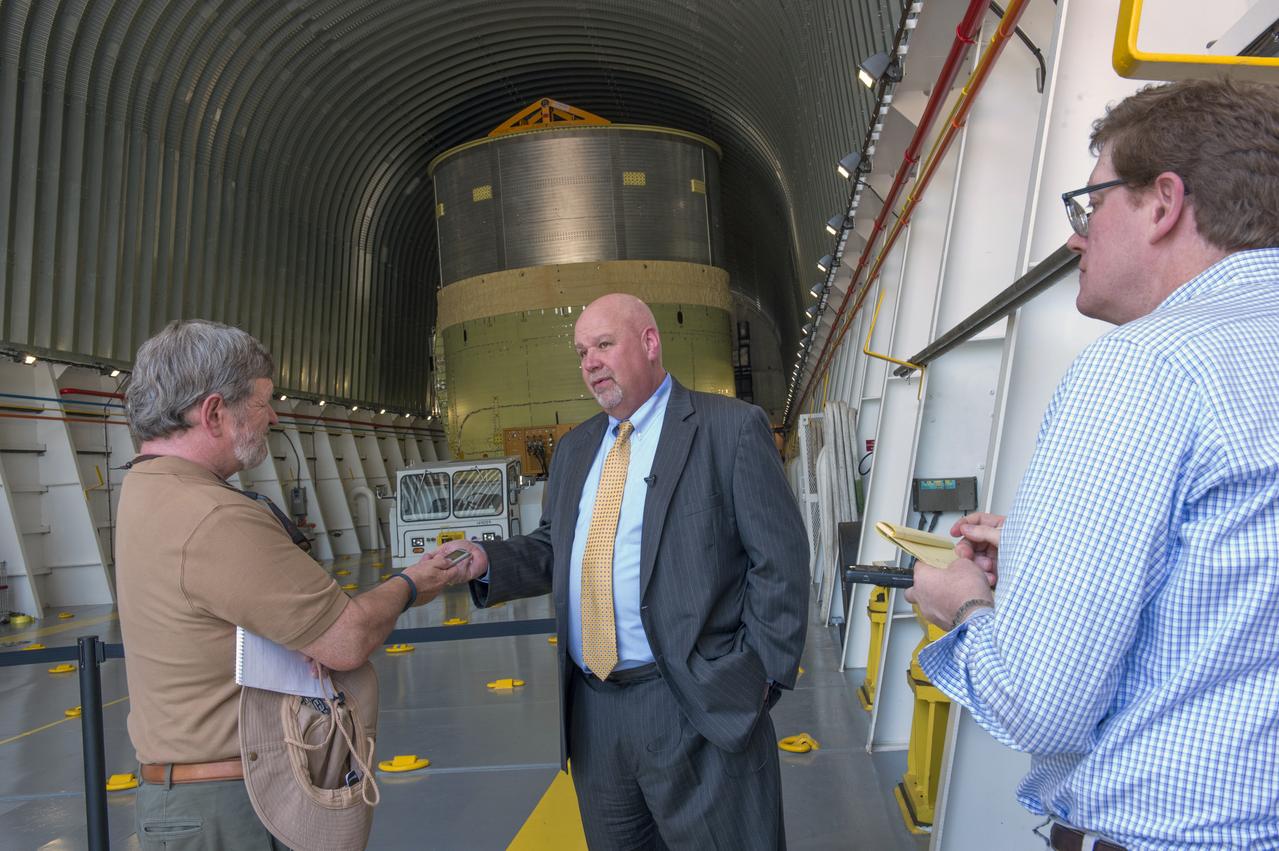
John Honeycutt talks with reporters on NASA Barge Pegasus
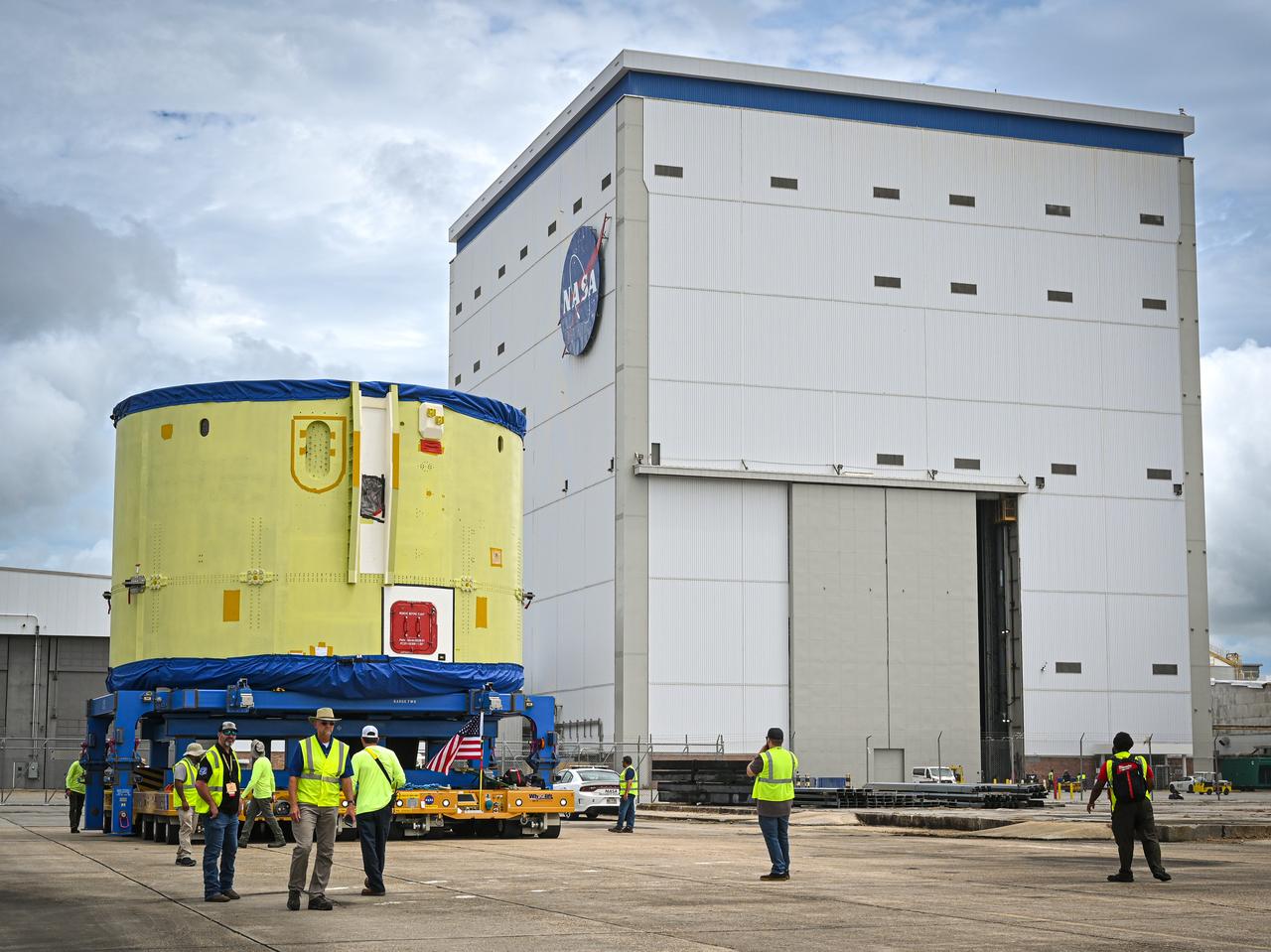
These photos show teams at NASA’s Michoud Assembly Facility in New Orleans preparing, moving, and loading the engine section of a future SLS (Space Launch System) rocket to NASA’s Pegasus barge Aug. 28. The hardware will form the bottom-most section of the SLS core stage that will power NASA’s Artemis IV mission, which will be the first mission to the Gateway space station in lunar orbit under the Artemis campaign. The barge will transport the spaceflight hardware to NASA’s Kennedy Space Center in Florida via the agency’s Pegasus barge. Once in Florida, the engine section will undergo final outfitting inside Kennedy’s Space Station Processing Facility.
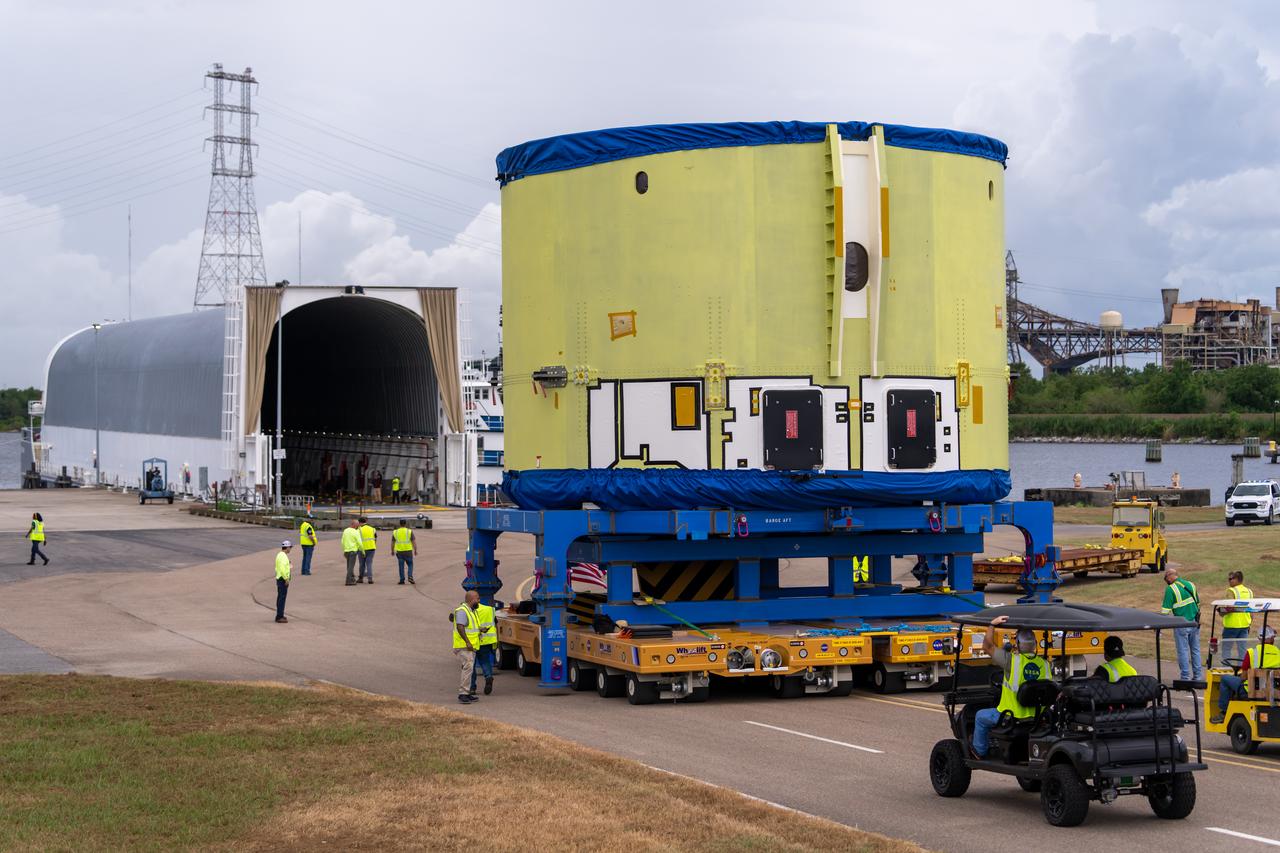
These photos and videos show teams at NASA’s Michoud Assembly Facility in New Orleans preparing, moving, and loading the engine section of a future SLS (Space Launch System) rocket to NASA’s Pegasus barge Aug. 28. The hardware will form the bottom-most section of the SLS core stage that will power NASA’s Artemis IV mission, which will be the first mission to the Gateway space station in lunar orbit under the Artemis campaign. The barge will transport the spaceflight hardware to NASA’s Kennedy Space Center in Florida via the agency’s Pegasus barge. Once in Florida, the engine section will undergo final outfitting inside Kennedy’s Space Station Processing Facility.
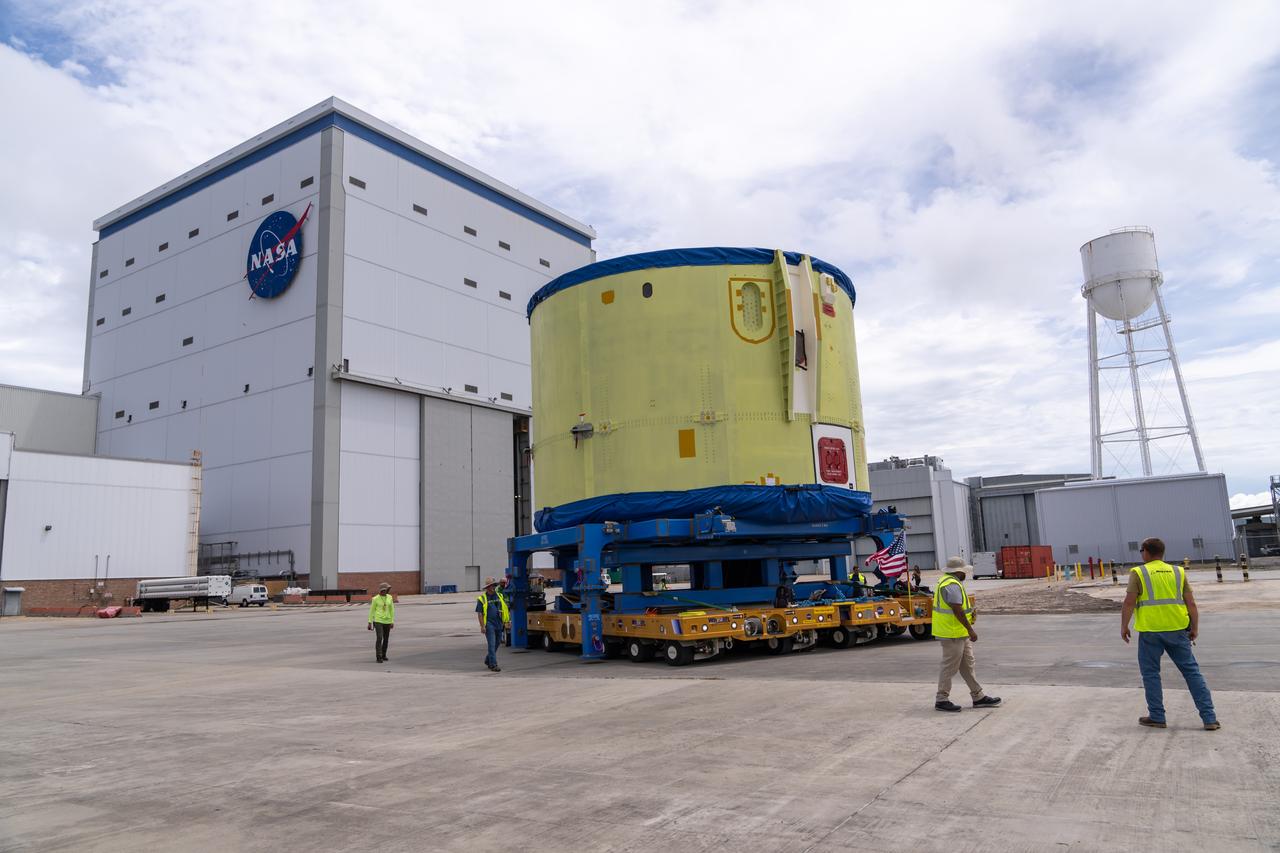
These photos and videos show teams at NASA’s Michoud Assembly Facility in New Orleans preparing, moving, and loading the engine section of a future SLS (Space Launch System) rocket to NASA’s Pegasus barge Aug. 28. The hardware will form the bottom-most section of the SLS core stage that will power NASA’s Artemis IV mission, which will be the first mission to the Gateway space station in lunar orbit under the Artemis campaign. The barge will transport the spaceflight hardware to NASA’s Kennedy Space Center in Florida via the agency’s Pegasus barge. Once in Florida, the engine section will undergo final outfitting inside Kennedy’s Space Station Processing Facility.
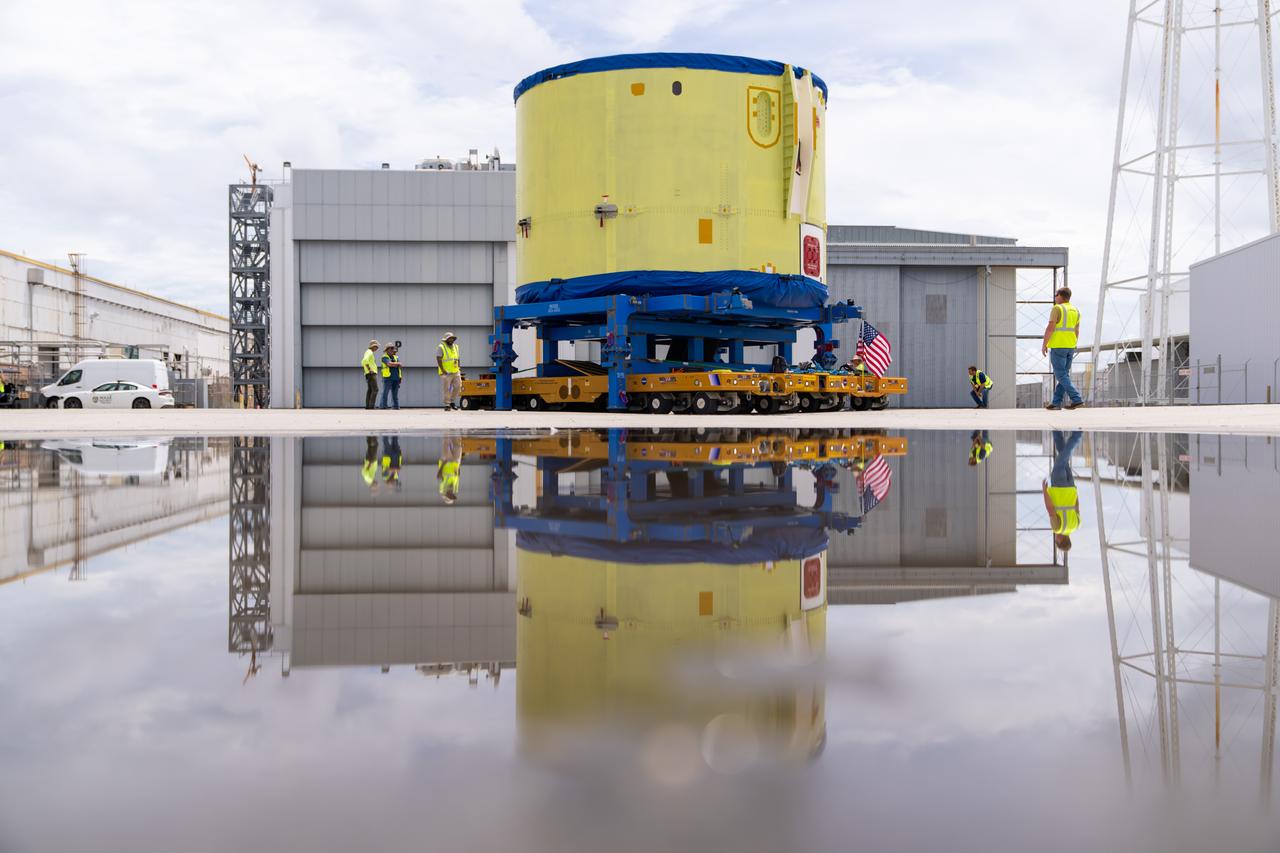
These photos and videos show teams at NASA’s Michoud Assembly Facility in New Orleans preparing, moving, and loading the engine section of a future SLS (Space Launch System) rocket to NASA’s Pegasus barge Aug. 28. The hardware will form the bottom-most section of the SLS core stage that will power NASA’s Artemis IV mission, which will be the first mission to the Gateway space station in lunar orbit under the Artemis campaign. The barge will transport the spaceflight hardware to NASA’s Kennedy Space Center in Florida via the agency’s Pegasus barge. Once in Florida, the engine section will undergo final outfitting inside Kennedy’s Space Station Processing Facility.
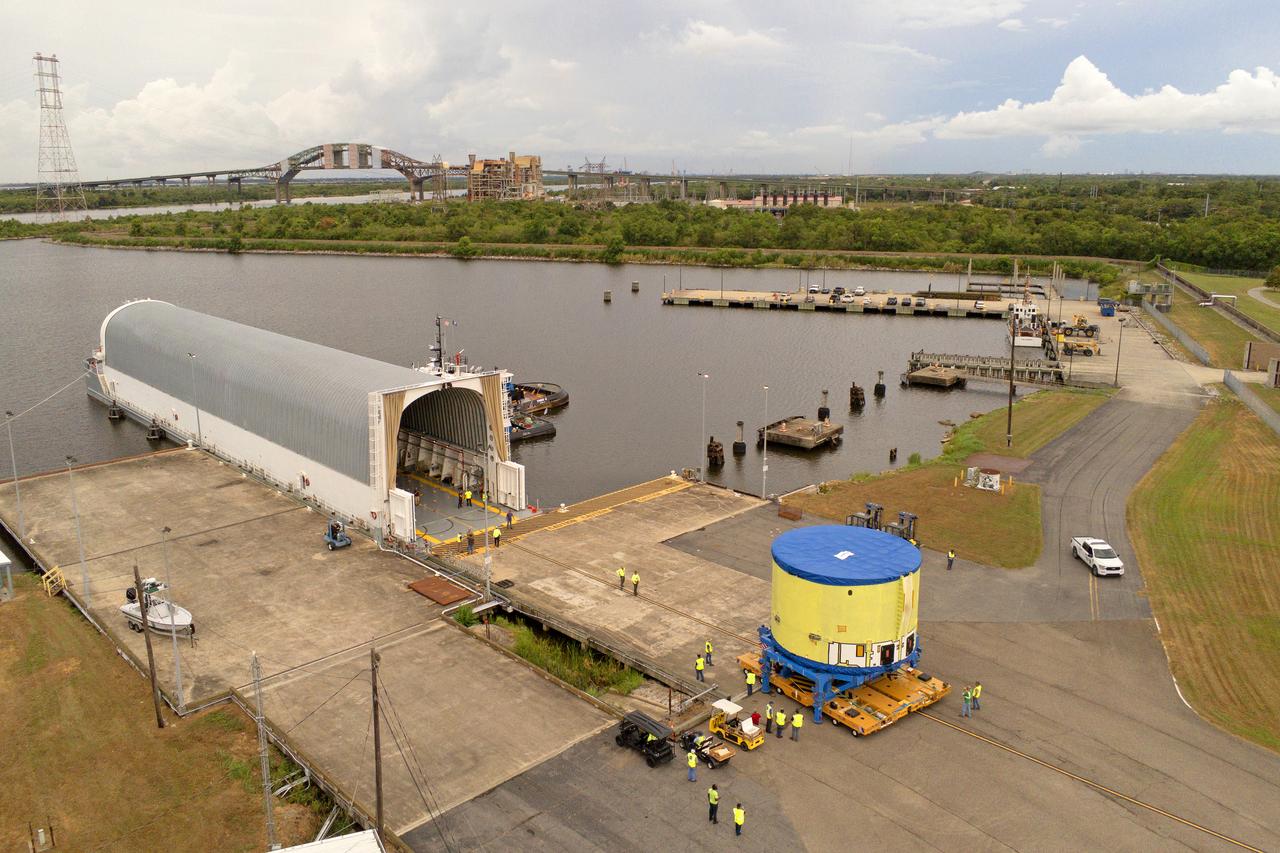
These photos and videos show teams at NASA’s Michoud Assembly Facility in New Orleans preparing, moving, and loading the engine section of a future SLS (Space Launch System) rocket to NASA’s Pegasus barge Aug. 28. The hardware will form the bottom-most section of the SLS core stage that will power NASA’s Artemis IV mission, which will be the first mission to the Gateway space station in lunar orbit under the Artemis campaign. The barge will transport the spaceflight hardware to NASA’s Kennedy Space Center in Florida via the agency’s Pegasus barge. Once in Florida, the engine section will undergo final outfitting inside Kennedy’s Space Station Processing Facility.
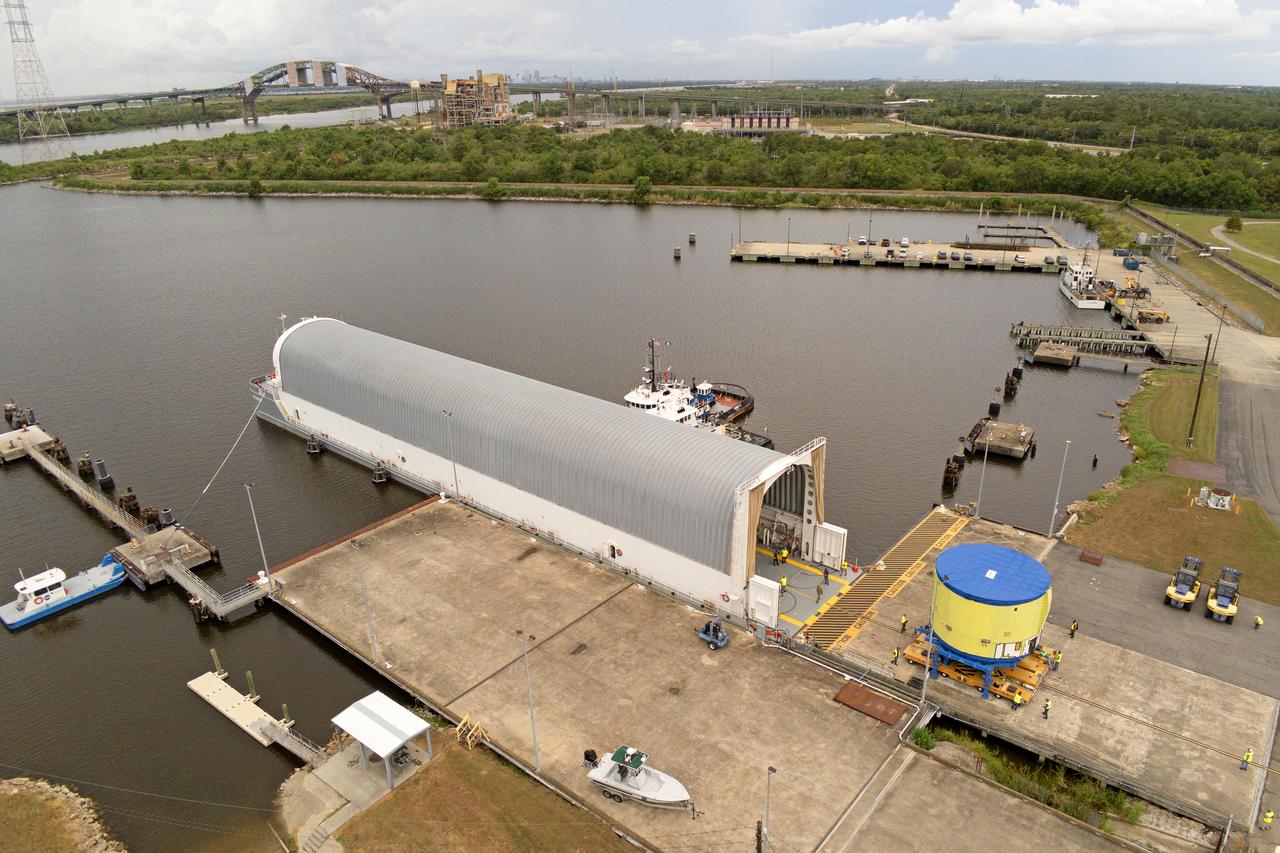
These photos and videos show teams at NASA’s Michoud Assembly Facility in New Orleans preparing, moving, and loading the engine section of a future SLS (Space Launch System) rocket to NASA’s Pegasus barge Aug. 28. The hardware will form the bottom-most section of the SLS core stage that will power NASA’s Artemis IV mission, which will be the first mission to the Gateway space station in lunar orbit under the Artemis campaign. The barge will transport the spaceflight hardware to NASA’s Kennedy Space Center in Florida via the agency’s Pegasus barge. Once in Florida, the engine section will undergo final outfitting inside Kennedy’s Space Station Processing Facility.
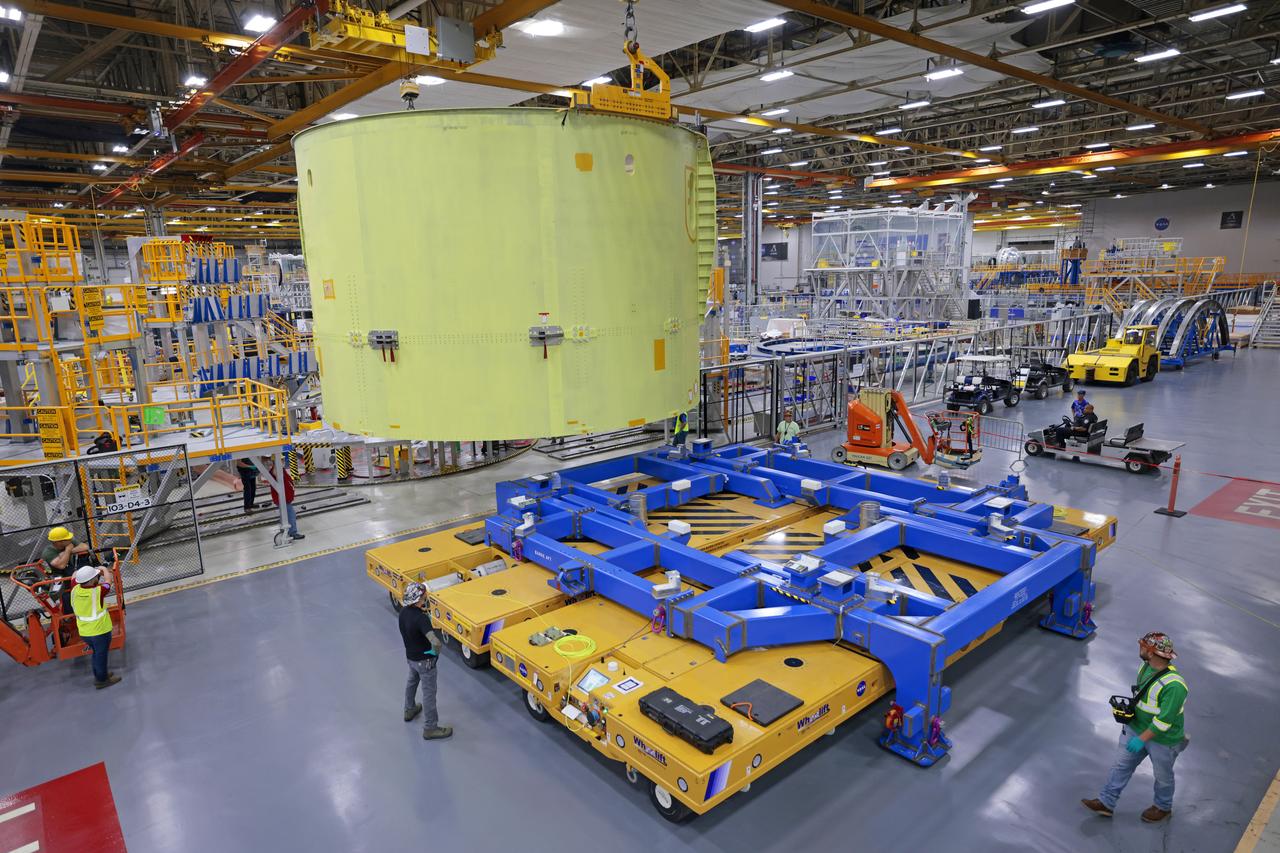
These photos show teams at NASA’s Michoud Assembly Facility in New Orleans preparing, moving, and loading the engine section of a future SLS (Space Launch System) rocket to NASA’s Pegasus barge Aug. 28. The hardware will form the bottom-most section of the SLS core stage that will power NASA’s Artemis IV mission, which will be the first mission to the Gateway space station in lunar orbit under the Artemis campaign. The barge will transport the spaceflight hardware to NASA’s Kennedy Space Center in Florida via the agency’s Pegasus barge. Once in Florida, the engine section will undergo final outfitting inside Kennedy’s Space Station Processing Facility. Image credit: NASA/Michael DeMocker
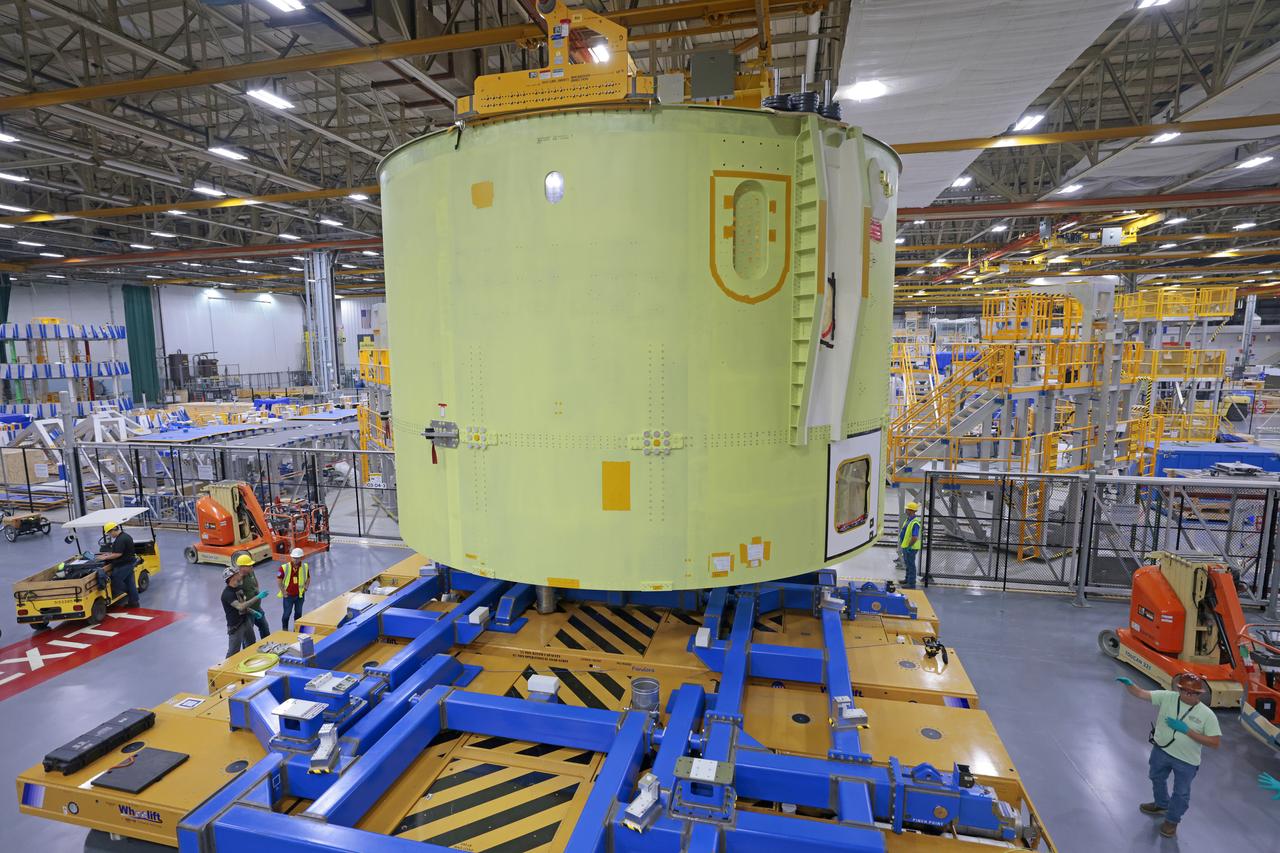
These photos show teams at NASA’s Michoud Assembly Facility in New Orleans preparing, moving, and loading the engine section of a future SLS (Space Launch System) rocket to NASA’s Pegasus barge Aug. 28. The hardware will form the bottom-most section of the SLS core stage that will power NASA’s Artemis IV mission, which will be the first mission to the Gateway space station in lunar orbit under the Artemis campaign. The barge will transport the spaceflight hardware to NASA’s Kennedy Space Center in Florida via the agency’s Pegasus barge. Once in Florida, the engine section will undergo final outfitting inside Kennedy’s Space Station Processing Facility. Image credit: NASA/Michael DeMocker
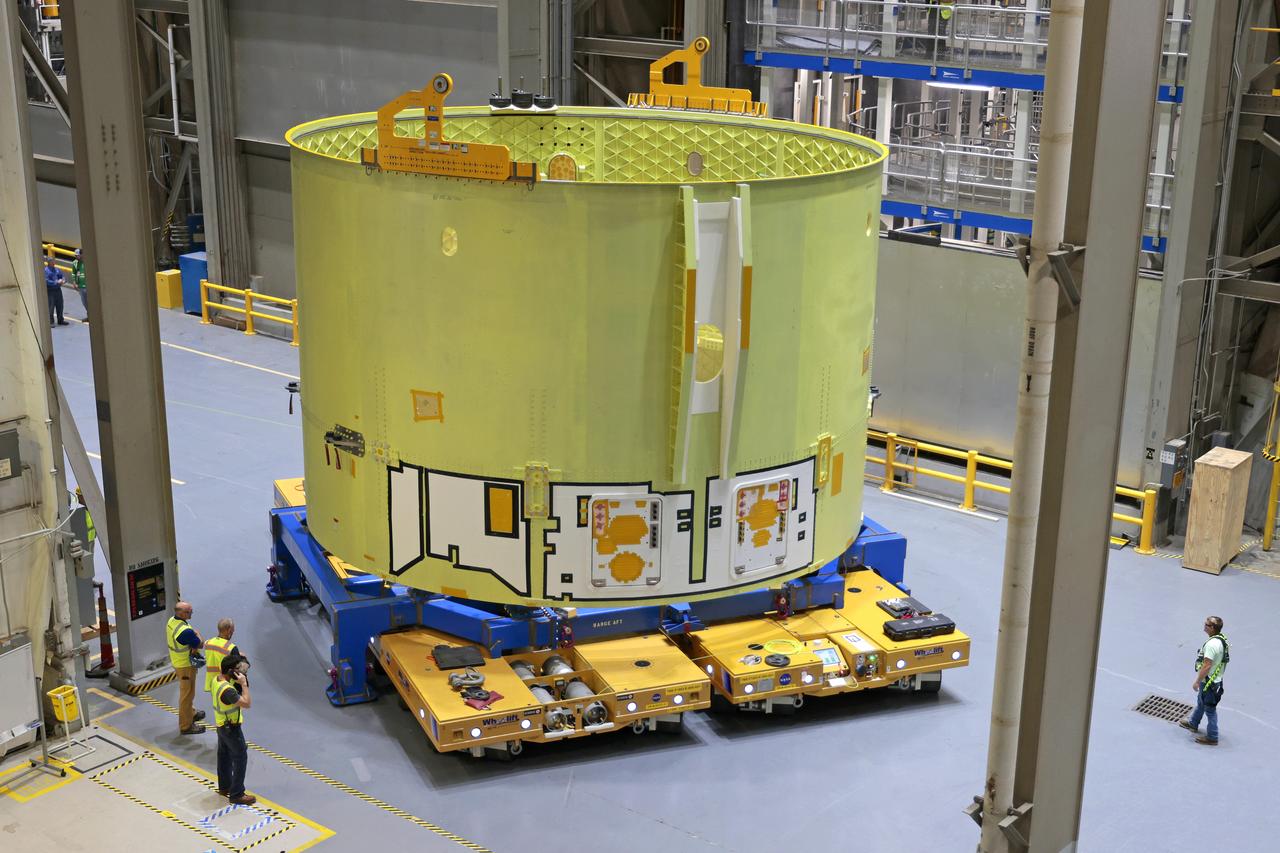
These photos show teams at NASA’s Michoud Assembly Facility in New Orleans preparing, moving, and loading the engine section of a future SLS (Space Launch System) rocket to NASA’s Pegasus barge Aug. 28. The hardware will form the bottom-most section of the SLS core stage that will power NASA’s Artemis IV mission, which will be the first mission to the Gateway space station in lunar orbit under the Artemis campaign. The barge will transport the spaceflight hardware to NASA’s Kennedy Space Center in Florida via the agency’s Pegasus barge. Once in Florida, the engine section will undergo final outfitting inside Kennedy’s Space Station Processing Facility. Image credit: NASA/Michael DeMocker
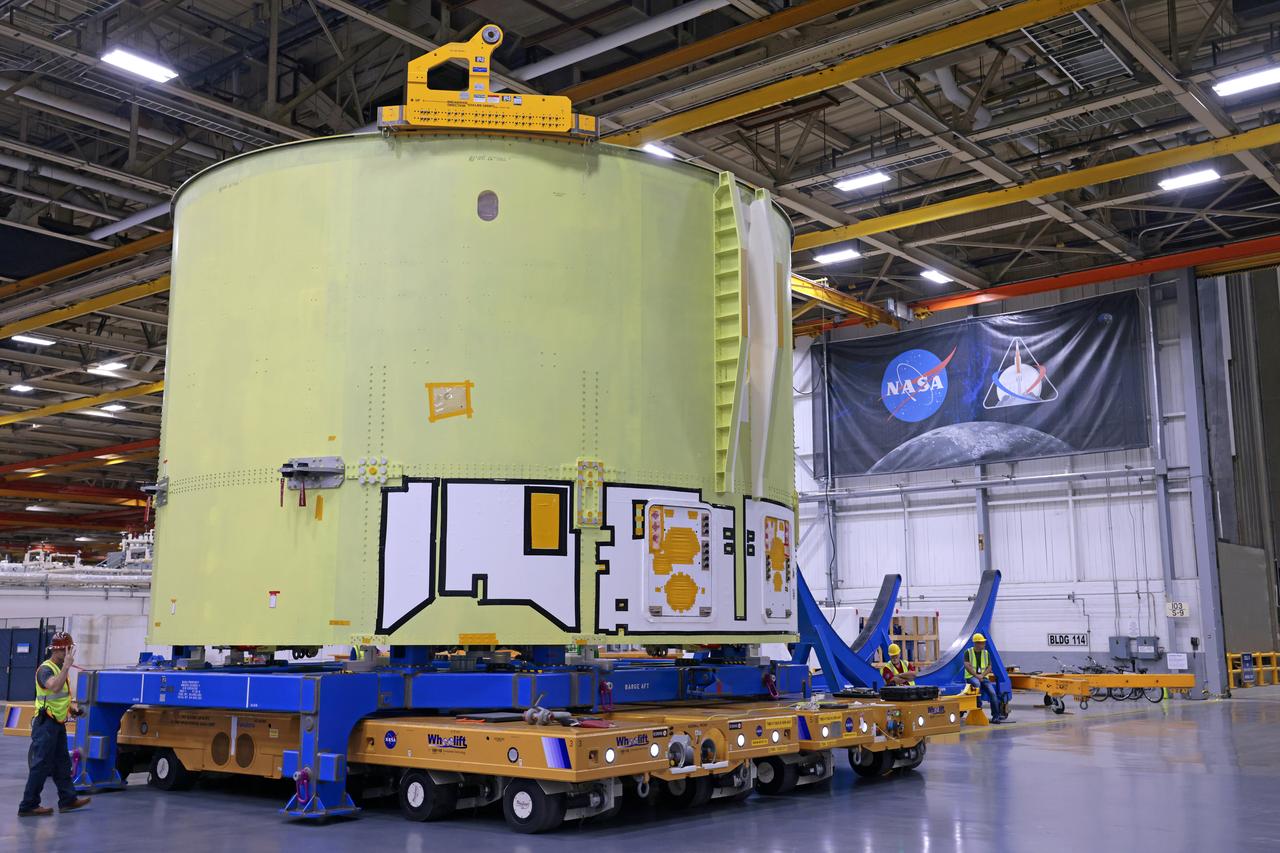
These photos show teams at NASA’s Michoud Assembly Facility in New Orleans preparing, moving, and loading the engine section of a future SLS (Space Launch System) rocket to NASA’s Pegasus barge Aug. 28. The hardware will form the bottom-most section of the SLS core stage that will power NASA’s Artemis IV mission, which will be the first mission to the Gateway space station in lunar orbit under the Artemis campaign. The barge will transport the spaceflight hardware to NASA’s Kennedy Space Center in Florida via the agency’s Pegasus barge. Once in Florida, the engine section will undergo final outfitting inside Kennedy’s Space Station Processing Facility. Image credit: NASA/Michael DeMocker
These photos and videos show teams at NASA’s Michoud Assembly Facility in New Orleans preparing, moving, and loading the engine section of a future SLS (Space Launch System) rocket to NASA’s Pegasus barge Aug. 28. The hardware will form the bottom-most section of the SLS core stage that will power NASA’s Artemis IV mission, which will be the first mission to the Gateway space station in lunar orbit under the Artemis campaign. The barge will transport the spaceflight hardware to NASA’s Kennedy Space Center in Florida via the agency’s Pegasus barge. Once in Florida, the engine section will undergo final outfitting inside Kennedy’s Space Station Processing Facility.
These photos show teams at NASA’s Michoud Assembly Facility in New Orleans preparing, moving, and loading the engine section of a future SLS (Space Launch System) rocket to NASA’s Pegasus barge Aug. 28. The hardware will form the bottom-most section of the SLS core stage that will power NASA’s Artemis IV mission, which will be the first mission to the Gateway space station in lunar orbit under the Artemis campaign. The barge will transport the spaceflight hardware to NASA’s Kennedy Space Center in Florida via the agency’s Pegasus barge. Once in Florida, the engine section will undergo final outfitting inside Kennedy’s Space Station Processing Facility. Image credit: NASA/Michael DeMocker
These photos and videos show teams at NASA’s Michoud Assembly Facility in New Orleans preparing, moving, and loading the engine section of a future SLS (Space Launch System) rocket to NASA’s Pegasus barge Aug. 28. The hardware will form the bottom-most section of the SLS core stage that will power NASA’s Artemis IV mission, which will be the first mission to the Gateway space station in lunar orbit under the Artemis campaign. The barge will transport the spaceflight hardware to NASA’s Kennedy Space Center in Florida via the agency’s Pegasus barge. Once in Florida, the engine section will undergo final outfitting inside Kennedy’s Space Station Processing Facility.
These photos and videos show teams at NASA’s Michoud Assembly Facility in New Orleans preparing, moving, and loading the engine section of a future SLS (Space Launch System) rocket to NASA’s Pegasus barge Aug. 28. The hardware will form the bottom-most section of the SLS core stage that will power NASA’s Artemis IV mission, which will be the first mission to the Gateway space station in lunar orbit under the Artemis campaign. The barge will transport the spaceflight hardware to NASA’s Kennedy Space Center in Florida via the agency’s Pegasus barge. Once in Florida, the engine section will undergo final outfitting inside Kennedy’s Space Station Processing Facility.
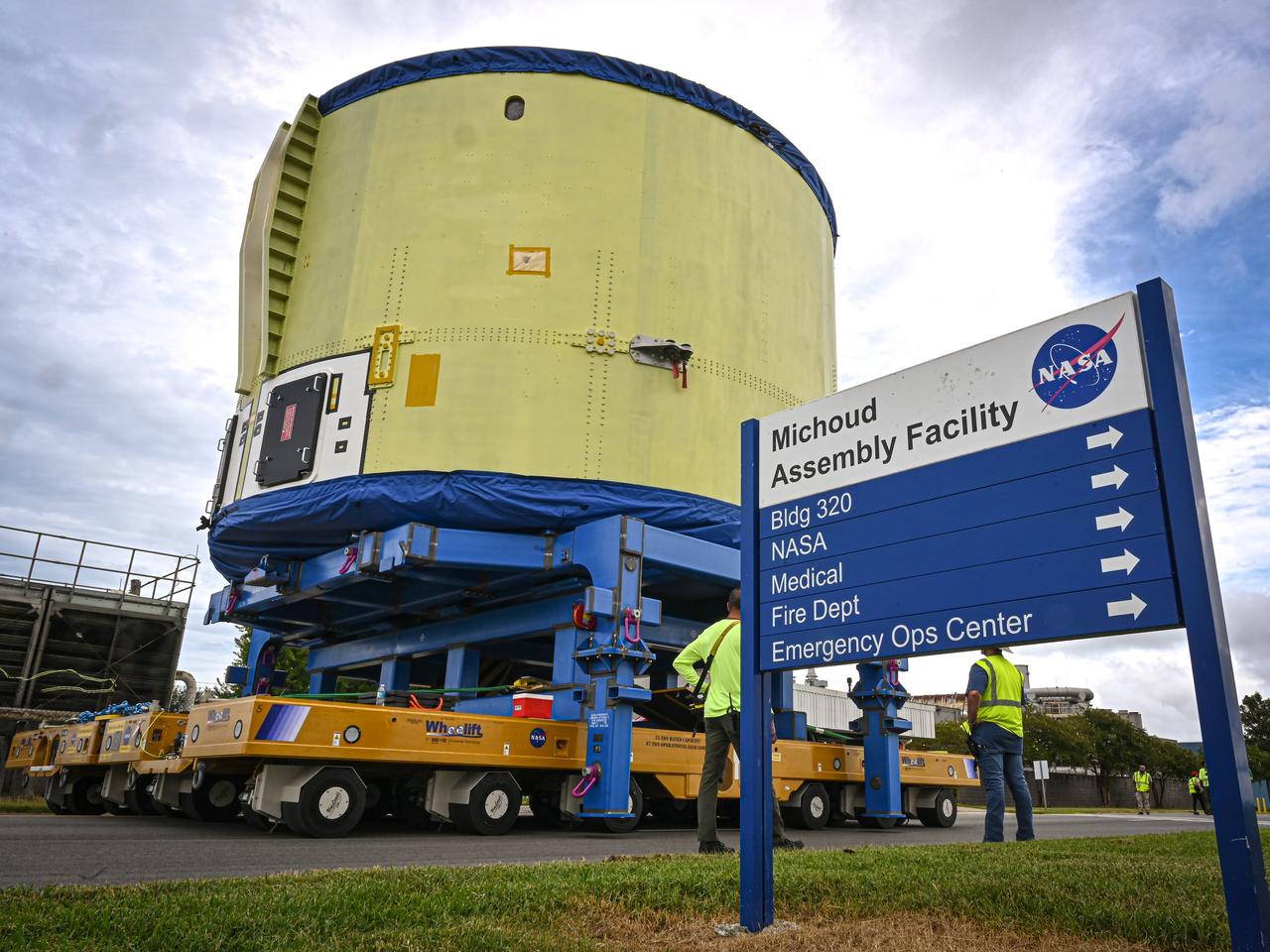
These photos and videos show teams at NASA’s Michoud Assembly Facility in New Orleans preparing, moving, and loading the engine section of a future SLS (Space Launch System) rocket to NASA’s Pegasus barge Aug. 28. The hardware will form the bottom-most section of the SLS core stage that will power NASA’s Artemis IV mission, which will be the first mission to the Gateway space station in lunar orbit under the Artemis campaign. The barge will transport the spaceflight hardware to NASA’s Kennedy Space Center in Florida via the agency’s Pegasus barge. Once in Florida, the engine section will undergo final outfitting inside Kennedy’s Space Station Processing Facility.
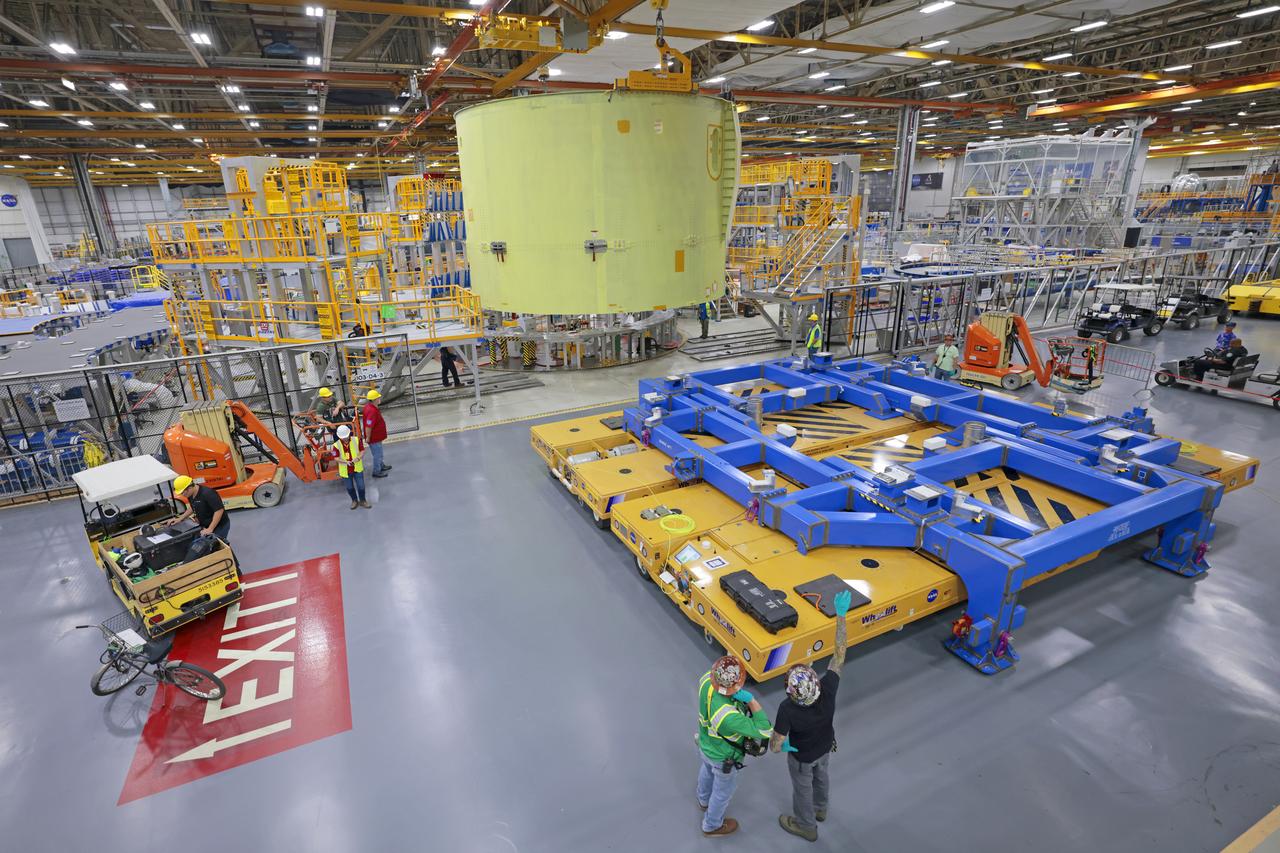
These photos show teams at NASA’s Michoud Assembly Facility in New Orleans preparing, moving, and loading the engine section of a future SLS (Space Launch System) rocket to NASA’s Pegasus barge Aug. 28. The hardware will form the bottom-most section of the SLS core stage that will power NASA’s Artemis IV mission, which will be the first mission to the Gateway space station in lunar orbit under the Artemis campaign. The barge will transport the spaceflight hardware to NASA’s Kennedy Space Center in Florida via the agency’s Pegasus barge. Once in Florida, the engine section will undergo final outfitting inside Kennedy’s Space Station Processing Facility. Image credit: NASA/Michael DeMocker
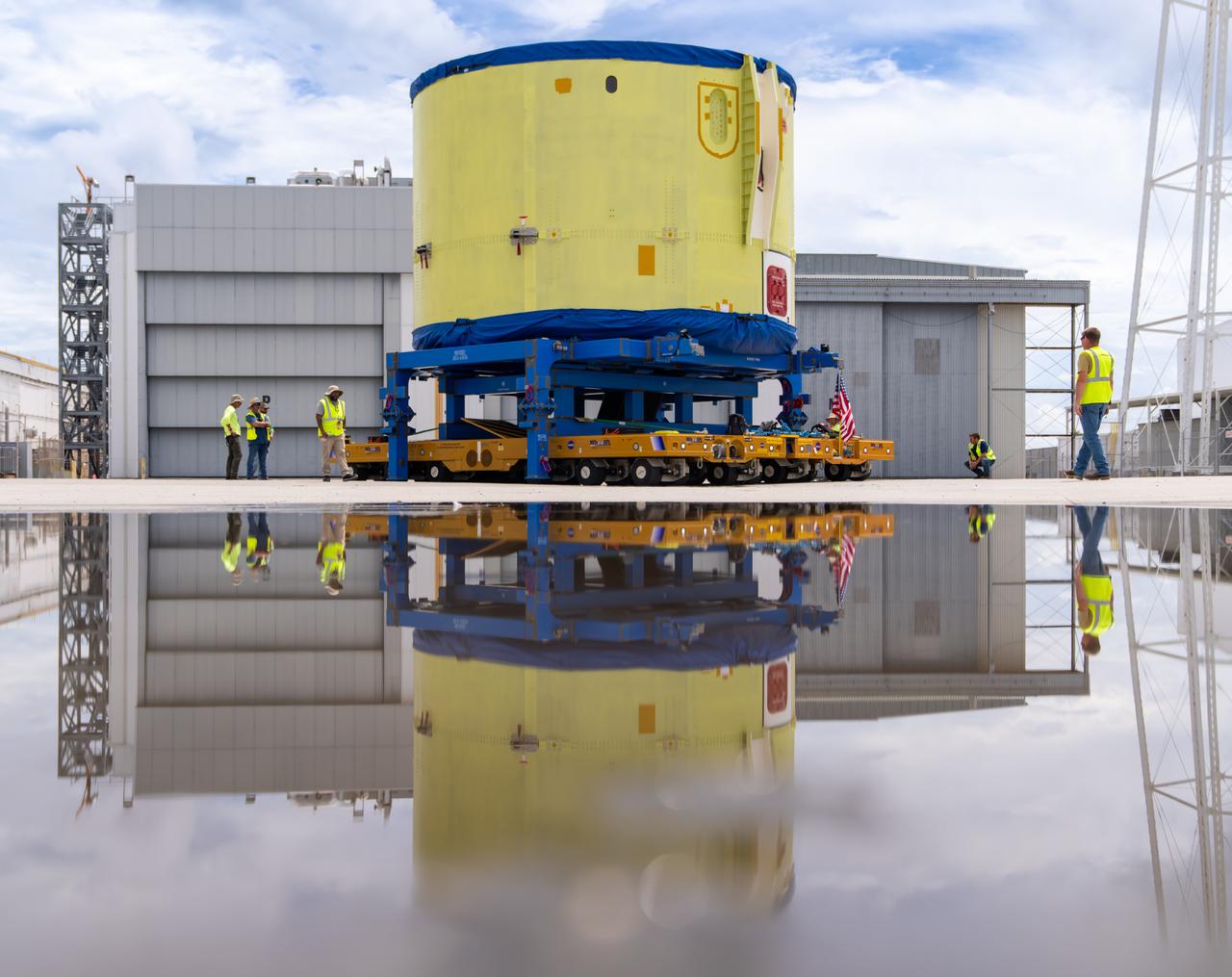
These photos and videos show teams at NASA’s Michoud Assembly Facility in New Orleans preparing, moving, and loading the engine section of a future SLS (Space Launch System) rocket to NASA’s Pegasus barge Aug. 28. The hardware will form the bottom-most section of the SLS core stage that will power NASA’s Artemis IV mission, which will be the first mission to the Gateway space station in lunar orbit under the Artemis campaign. The barge will transport the spaceflight hardware to NASA’s Kennedy Space Center in Florida via the agency’s Pegasus barge. Once in Florida, the engine section will undergo final outfitting inside Kennedy’s Space Station Processing Facility.
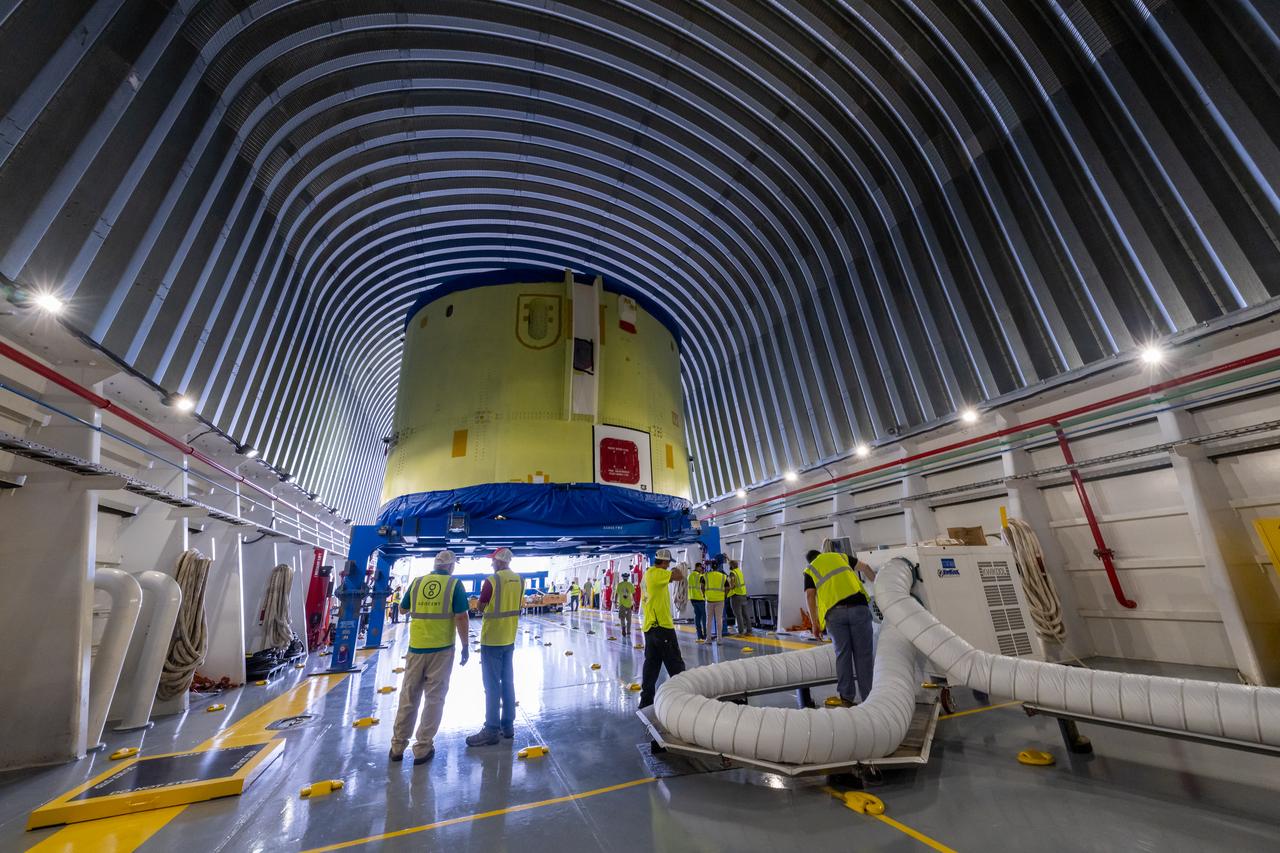
These photos and videos show teams at NASA’s Michoud Assembly Facility in New Orleans preparing, moving, and loading the engine section of a future SLS (Space Launch System) rocket to NASA’s Pegasus barge Aug. 28. The hardware will form the bottom-most section of the SLS core stage that will power NASA’s Artemis IV mission, which will be the first mission to the Gateway space station in lunar orbit under the Artemis campaign. The barge will transport the spaceflight hardware to NASA’s Kennedy Space Center in Florida via the agency’s Pegasus barge. Once in Florida, the engine section will undergo final outfitting inside Kennedy’s Space Station Processing Facility.
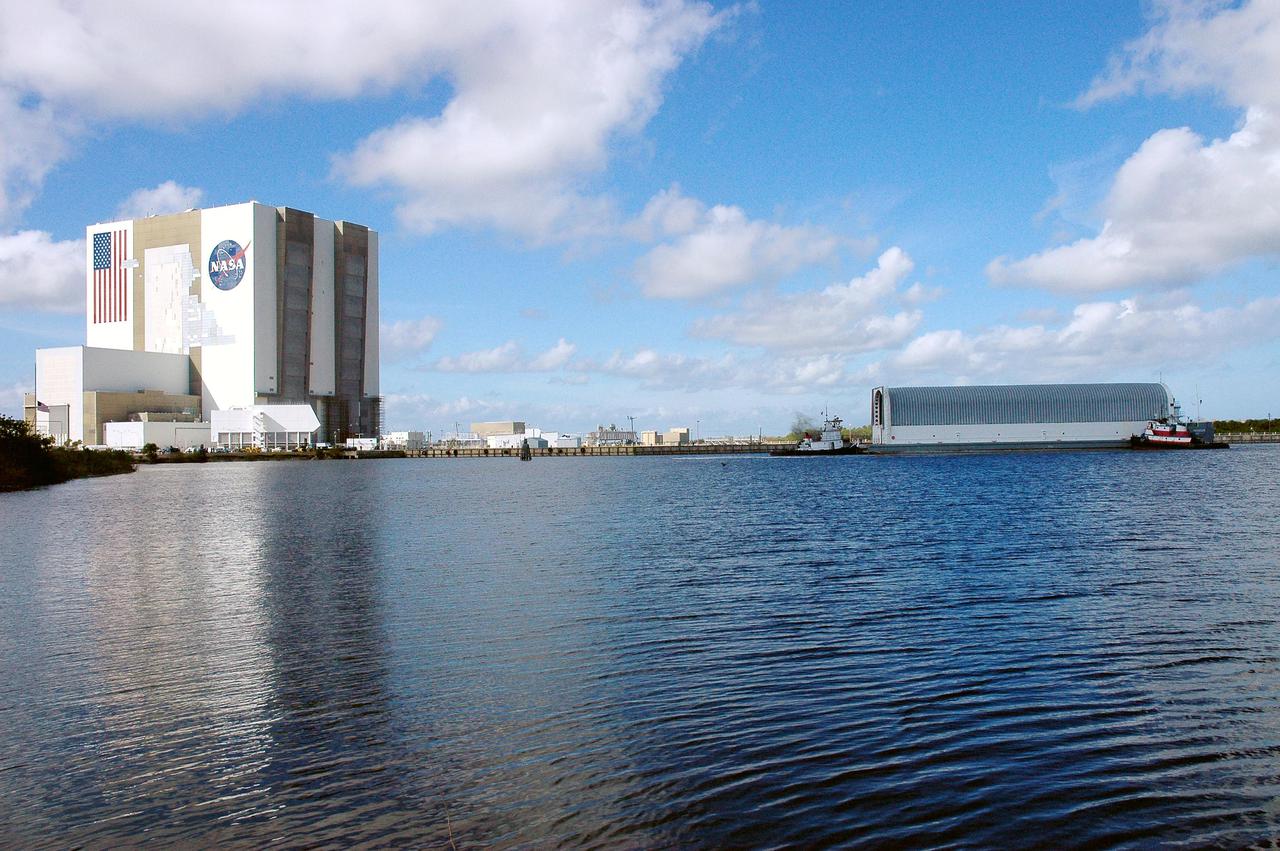
KENNEDY SPACE CENTER, FLA. - The barge carrying the newly redesigned External Tank, designated for use on Return to Flight mission STS-114, is towed toward the Launch Complex 39 Area Turn Basin at Kennedy. At left is the Vehicle Assembly Building. The barge arrived after an approximately 900-mile journey at sea from the Michoud Assembly Facility in New Orleans. It left the facility Dec. 31 on the Pegasus, NASA’s specially designed barge, towed by Solid Rocket Booster retrieval ship Liberty Star. At Port Canaveral, the barge was then hooked up to the tugs for the last part of the journey. Next, the External Tank will be off-loaded from the barge and transported to the Vehicle Assembly Building for its final checkout and mating to the twin Solid Rocket Boosters and orbiter Discovery. NASA and Lockheed Martin Corp. spent nearly two years modifying the 15-story, bronze-colored tank to make it safer for liftoff. Among dozens of changes is a redesigned forward bipod fitting -- a design that meets the recommendation of the Columbia Accident Investigation Board to reduce the risk to the Space Shuttle from falling debris during ascent. STS-114 is targeted for a launch opportunity beginning in May. The seven-member Discovery crew will fly to the International Space Station primarily to test and evaluate new procedures for flight safety, including Space Shuttle inspection and repair techniques.
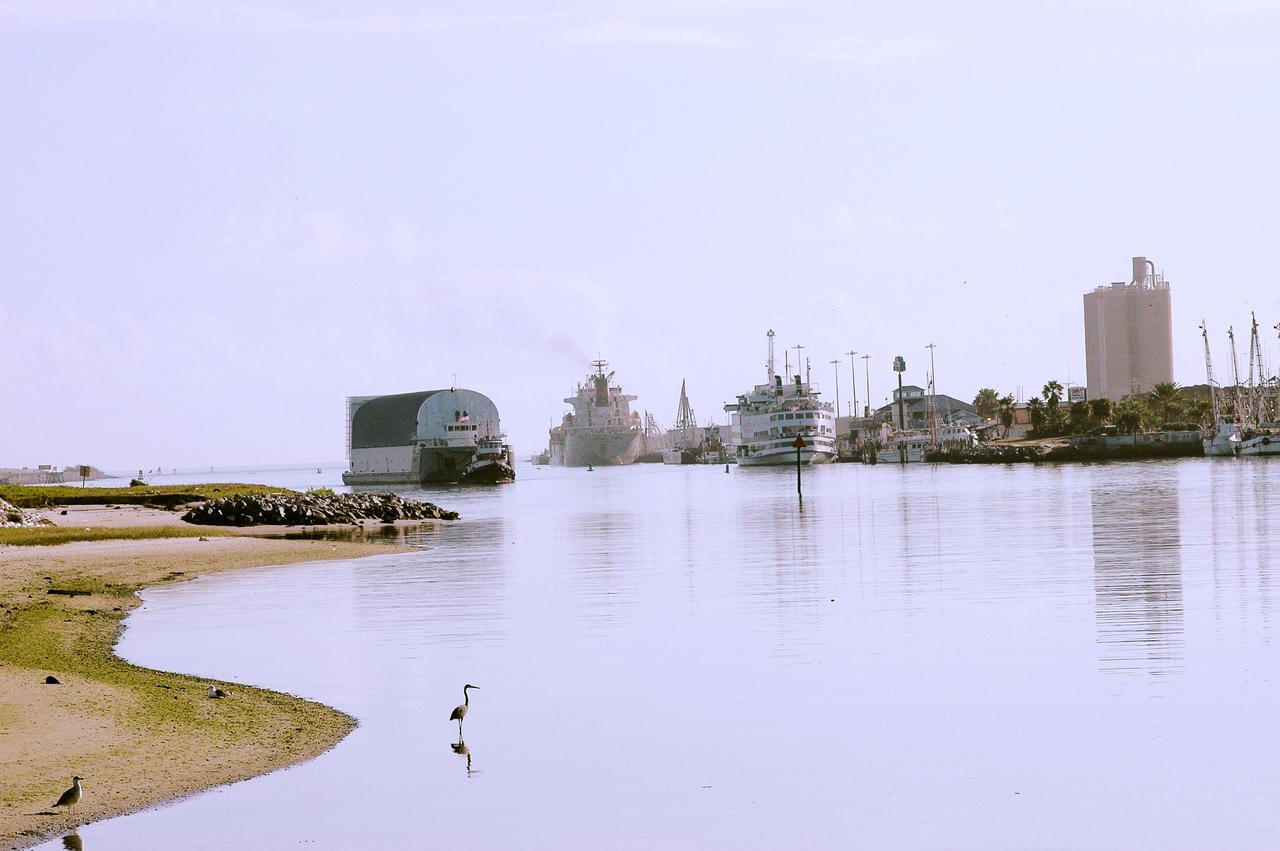
KENNEDY SPACE CENTER, FLA. - The barge carrying the newly redesigned External Tank, designated for use on Return to Flight mission STS-114, passes cruise ships as it enters Port Canaveral, Fla. The barge arrived after an approximately 900-mile journey at sea from the Michoud Assembly Facility in New Orleans. It left the facility Dec. 31 on the Pegasus, NASA’s specially designed barge, towed by Solid Rocket Booster retrieval ship Liberty Star. At Port Canaveral, the barge was then hooked up to the tugs for the last part of the journey to the Launch Complex 39 Area Turn Basin at Kennedy. Next, the External Tank will be off-loaded from the barge and transported to the Vehicle Assembly Building for its final checkout and mating to the twin Solid Rocket Boosters and orbiter Discovery. NASA and Lockheed Martin Corp. spent nearly two years modifying the 15-story, bronze-colored tank to make it safer for liftoff. Among dozens of changes is a redesigned forward bipod fitting -- a design that meets the recommendation of the Columbia Accident Investigation Board to reduce the risk to the Space Shuttle from falling debris during ascent. STS-114 is targeted for a launch opportunity beginning in May. The seven-member Discovery crew will fly to the International Space Station primarily to test and evaluate new procedures for flight safety, including Space Shuttle inspection and repair techniques.
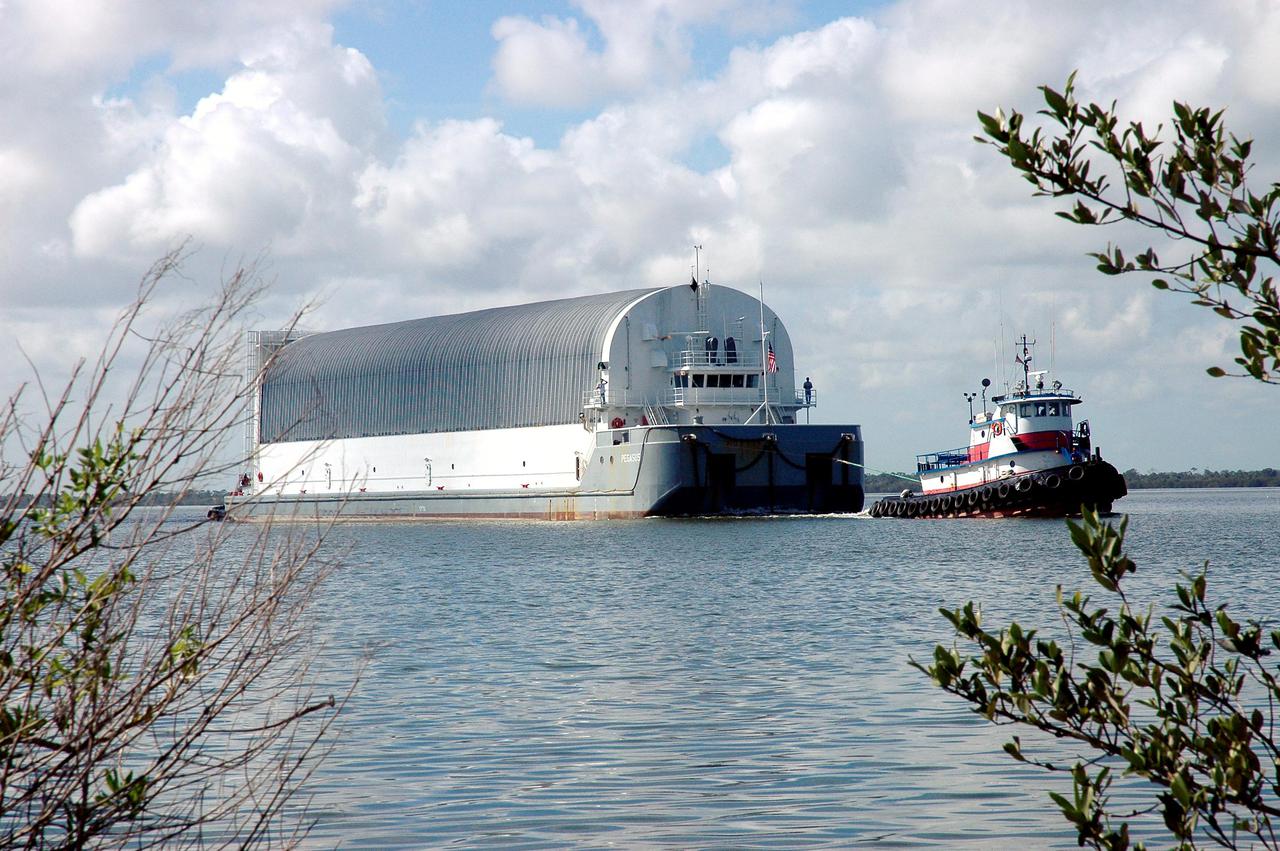
KENNEDY SPACE CENTER, FLA. - A tugboat tows the barge carrying the newly redesigned External Tank, designated for use on Return to Flight mission STS-114, to the dock at the Launch Complex 39 Area Turn Basin at Kennedy. The barge arrived after an approximately 900-mile journey at sea from the Michoud Assembly Facility in New Orleans. It left the facility Dec. 31 on the Pegasus, NASA’s specially designed barge, towed by Solid Rocket Booster retrieval ship Liberty Star. At Port Canaveral, the barge was then hooked up to the tugs for the last part of the journey to the Launch Complex 39 Area Turn Basin at Kennedy. Next, the External Tank will be off-loaded from the barge and transported to the Vehicle Assembly Building for its final checkout and mating to the twin Solid Rocket Boosters and orbiter Discovery. NASA and Lockheed Martin Corp. spent nearly two years modifying the 15-story, bronze-colored tank to make it safer for liftoff. Among dozens of changes is a redesigned forward bipod fitting -- a design that meets the recommendation of the Columbia Accident Investigation Board to reduce the risk to the Space Shuttle from falling debris during ascent. STS-114 is targeted for a launch opportunity beginning in May. The seven-member Discovery crew will fly to the International Space Station primarily to test and evaluate new procedures for flight safety, including Space Shuttle inspection and repair techniques.
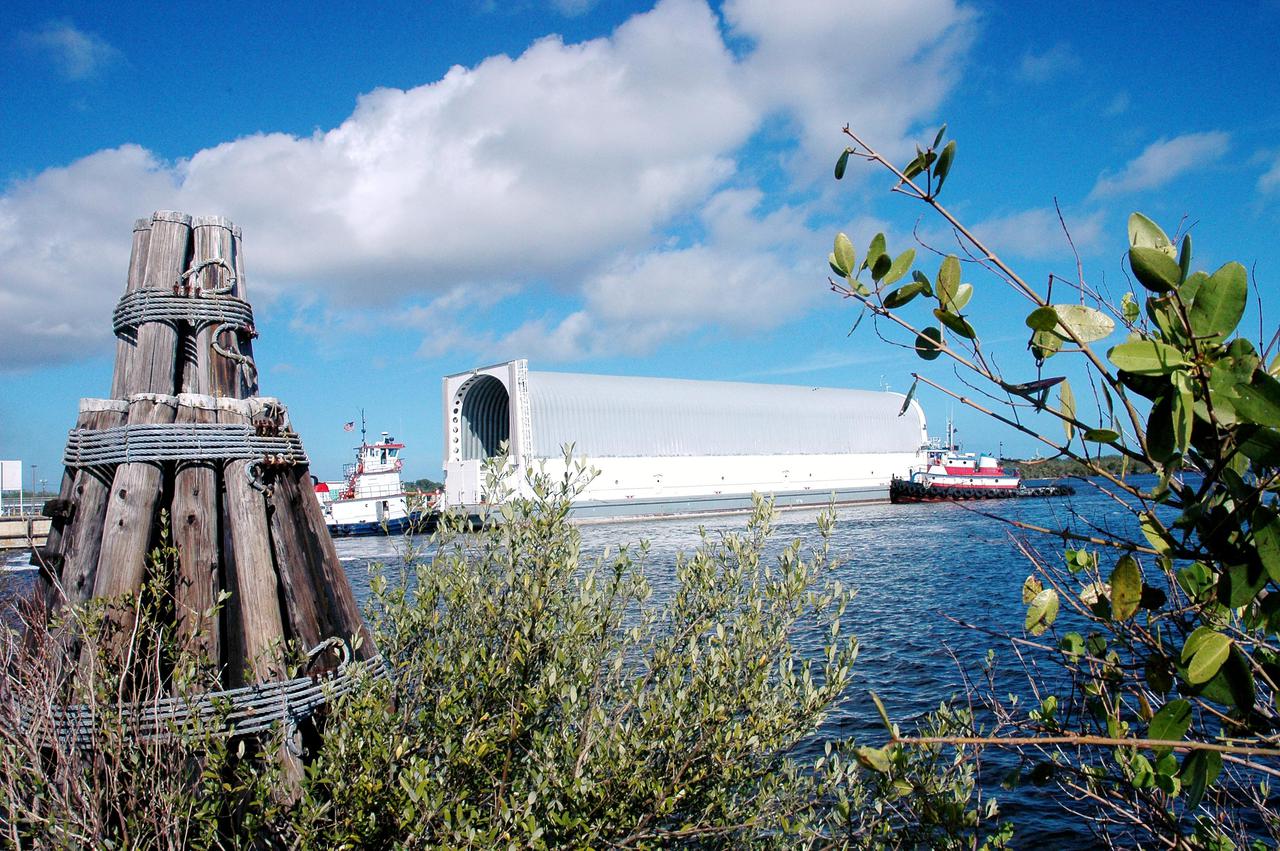
KENNEDY SPACE CENTER, FLA. - - Tugboats maneuver the barge carrying the newly redesigned External Tank, designated for use on Return to Flight mission STS-114, toward the dock at the Launch Complex 39 Area Turn Basin at Kennedy. The barge arrived after an approximately 900-mile journey at sea from the Michoud Assembly Facility in New Orleans. It left the facility Dec. 31 on the Pegasus, NASA’s specially designed barge, towed by Solid Rocket Booster retrieval ship Liberty Star. At Port Canaveral, the barge was then hooked up to the tugs for the last part of the journey. Next, the External Tank will be off-loaded from the barge and transported to the Vehicle Assembly Building for its final checkout and mating to the twin Solid Rocket Boosters and orbiter Discovery. NASA and Lockheed Martin Corp. spent nearly two years modifying the 15-story, bronze-colored tank to make it safer for liftoff. Among dozens of changes is a redesigned forward bipod fitting -- a design that meets the recommendation of the Columbia Accident Investigation Board to reduce the risk to the Space Shuttle from falling debris during ascent. STS-114 is targeted for a launch opportunity beginning in May. The seven-member Discovery crew will fly to the International Space Station primarily to test and evaluate new procedures for flight safety, including Space Shuttle inspection and repair techniques.
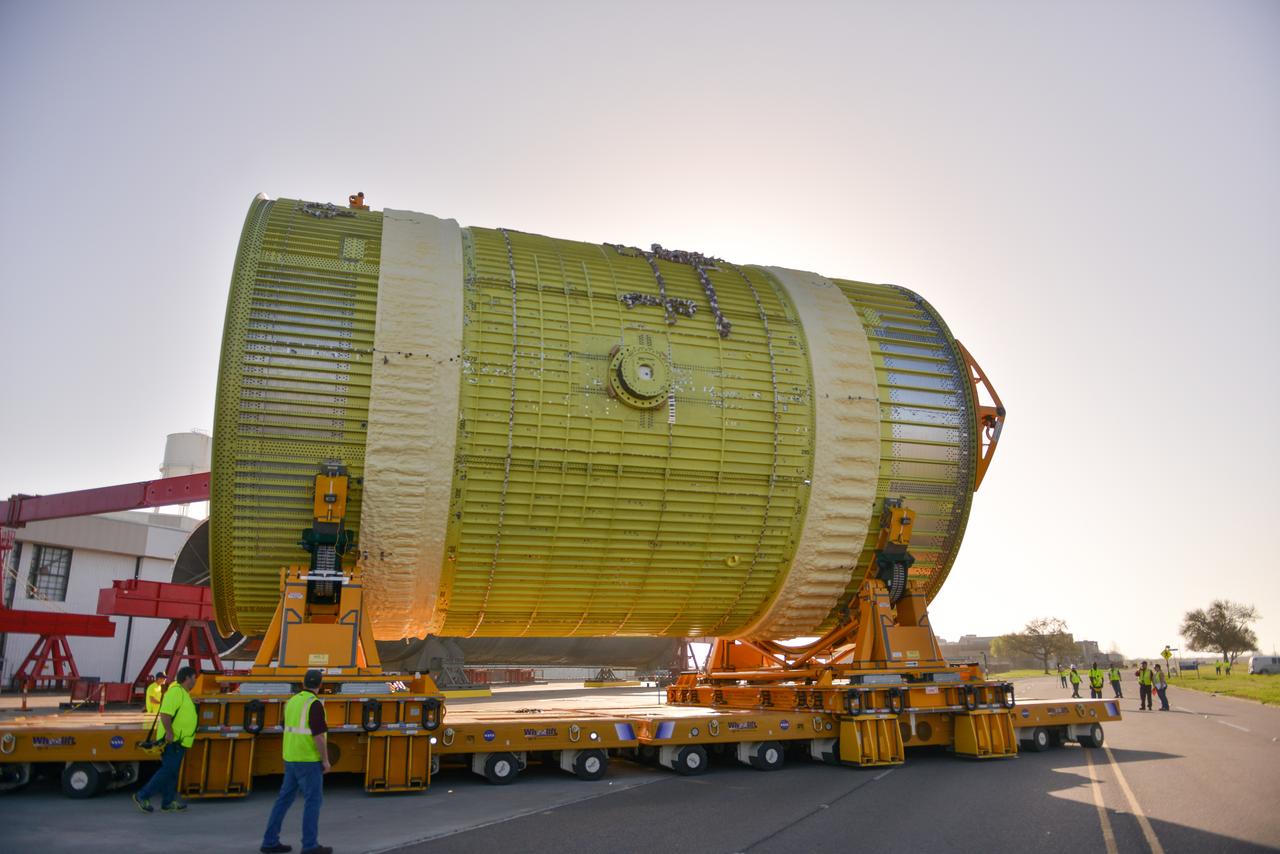
Intertank STA heading to the Pegasus Barge
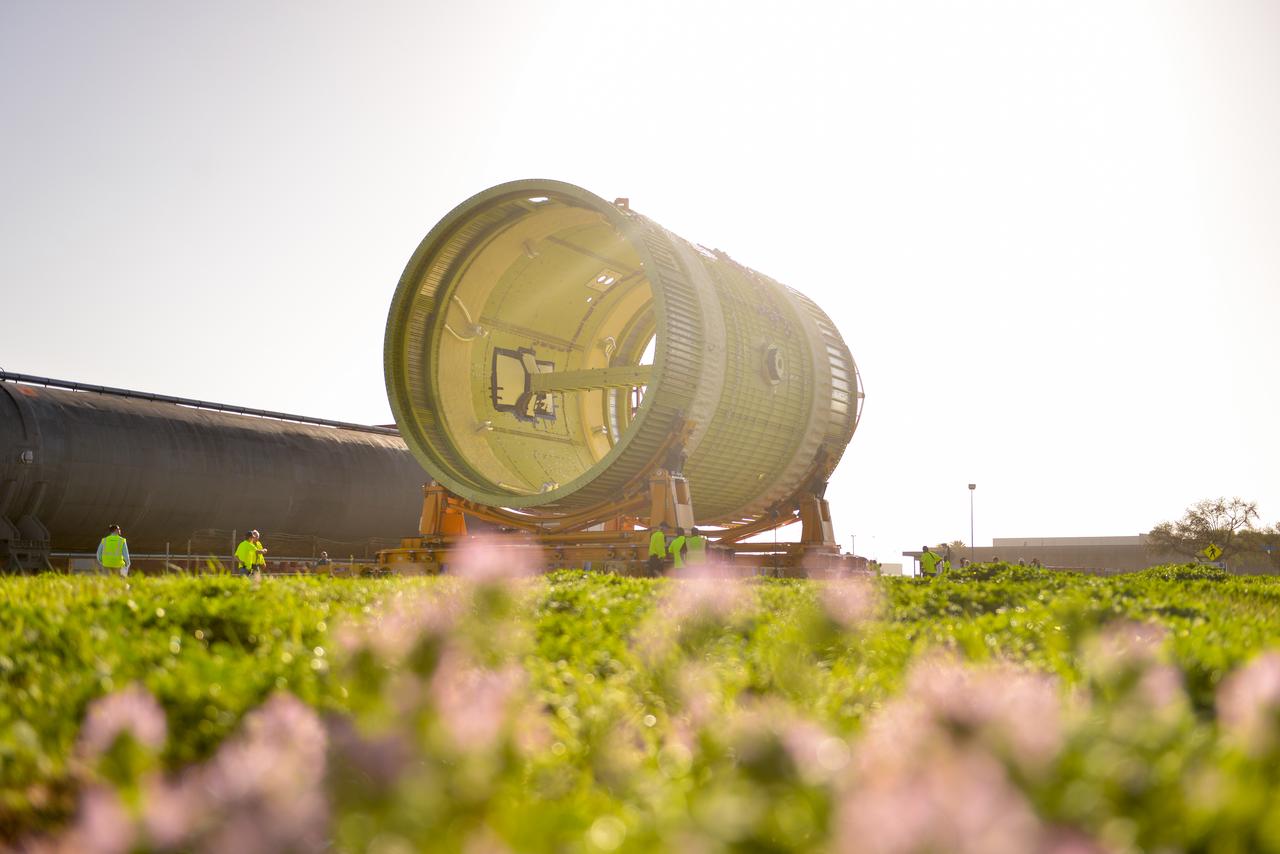
Intertank STA on way to the Pegasus Barge.
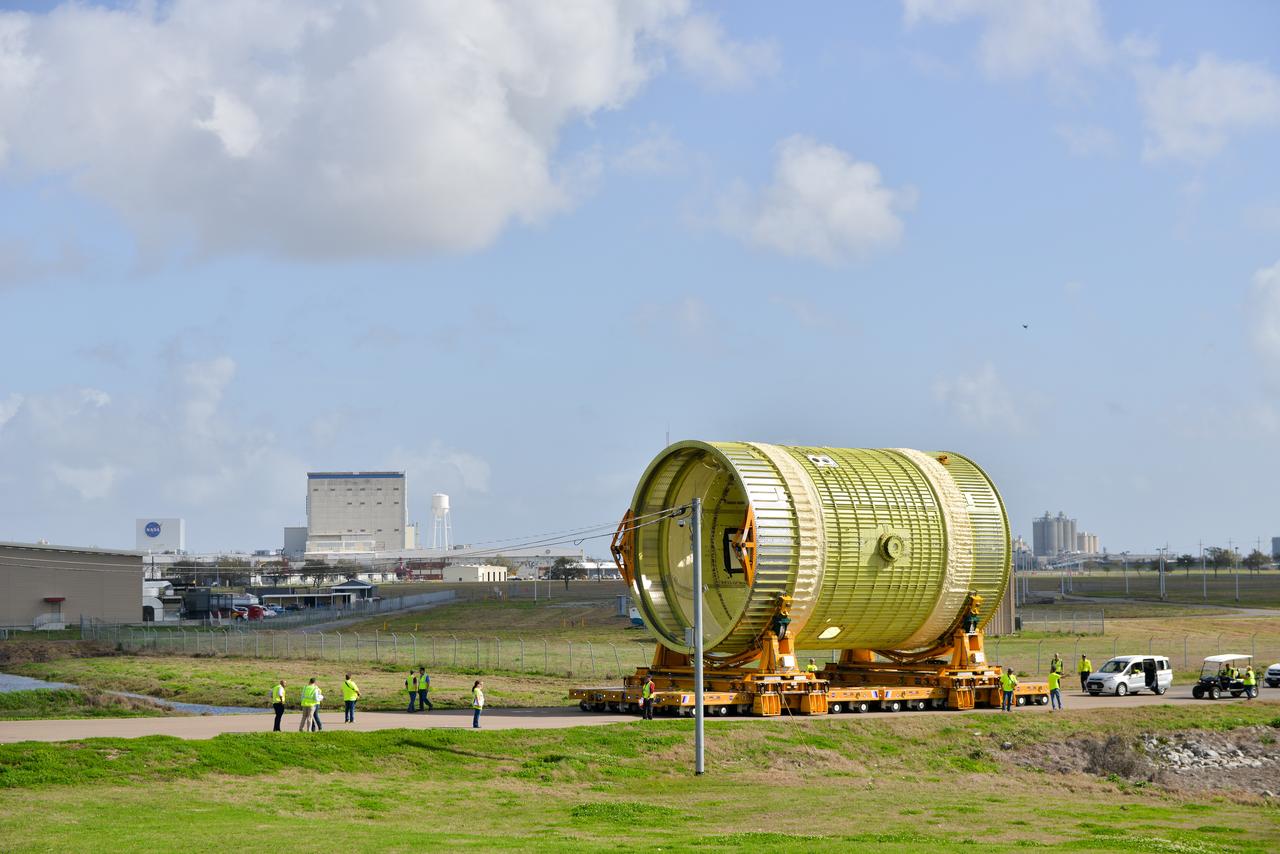
Intertank STA en route to the Barge, Pegasus.
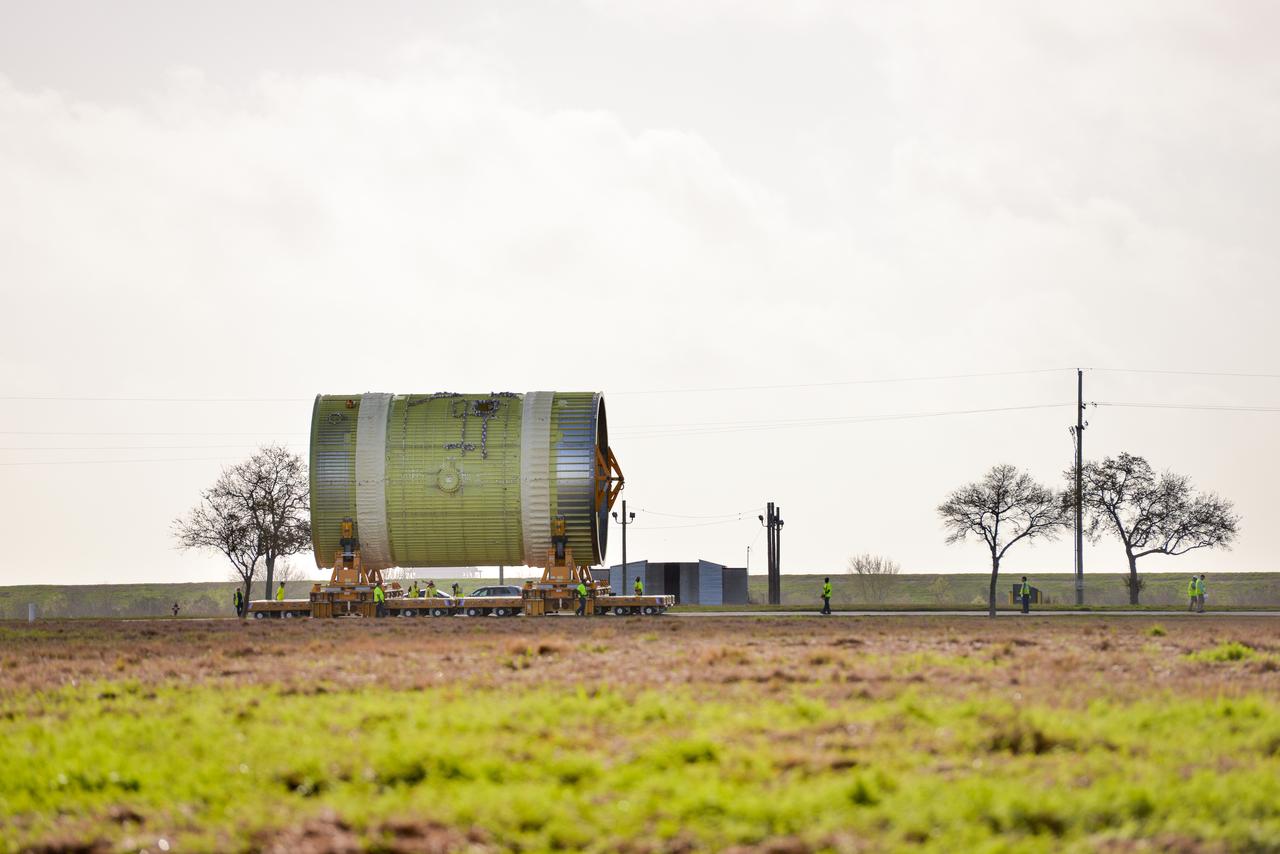
Intertank STA en route to the NASA Barge, Pegasus.
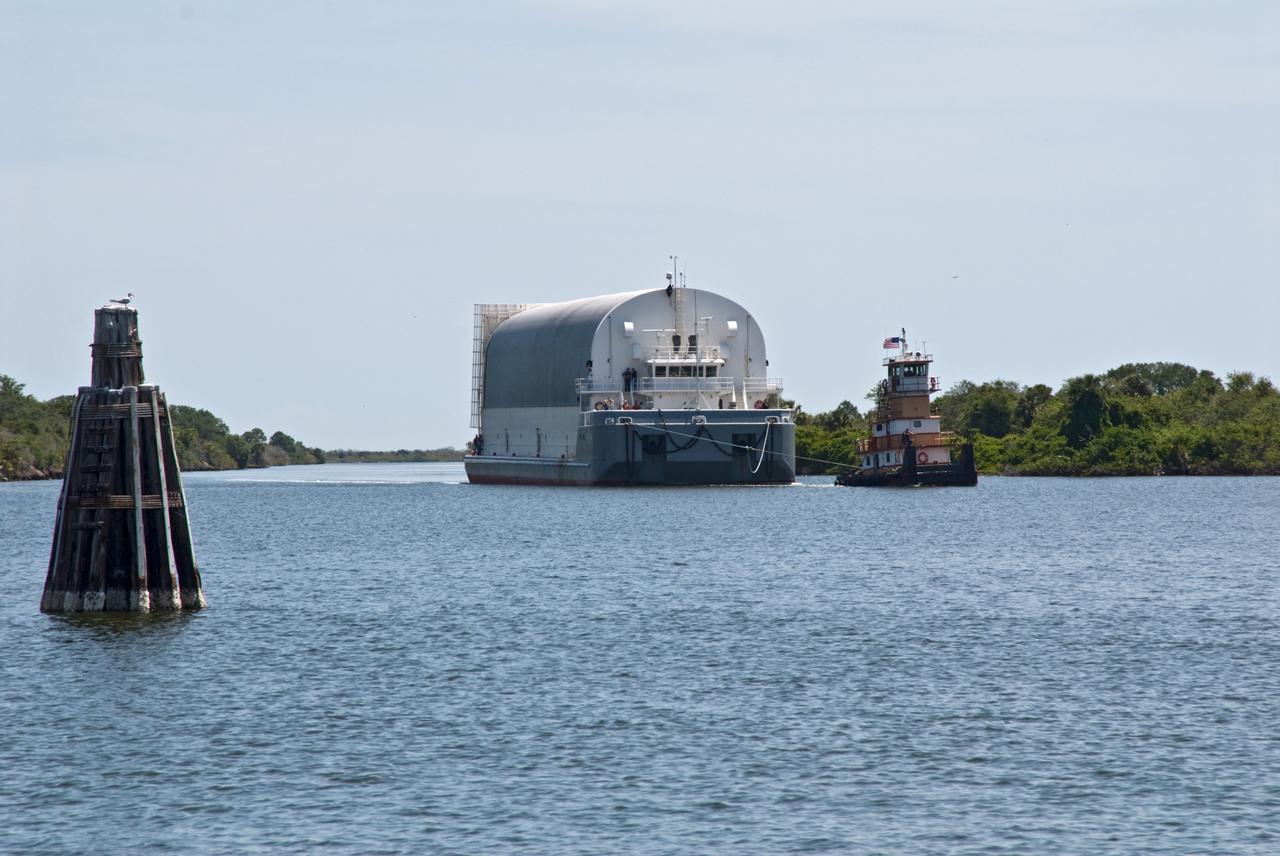
CAPE CANAVERAL, Fla. – The Pegasus barge, towed by a tugboat, enters the turn basin in the Launch Complex 39 Area at NASA's Kennedy Space Center in Florida. The barge holds the external fuel tank, ET- 132, designated for space shuttle Discovery on the STS-128 mission. The tank will be offloaded and transported to a high bay in the Vehicle Assembly Building for checkout. On the STS-128 mission, Discovery will carry science and storage racks to the International Space Station. Launch of Discovery is targeted for Aug. 6. Photo credit: NASA/Troy Cryder
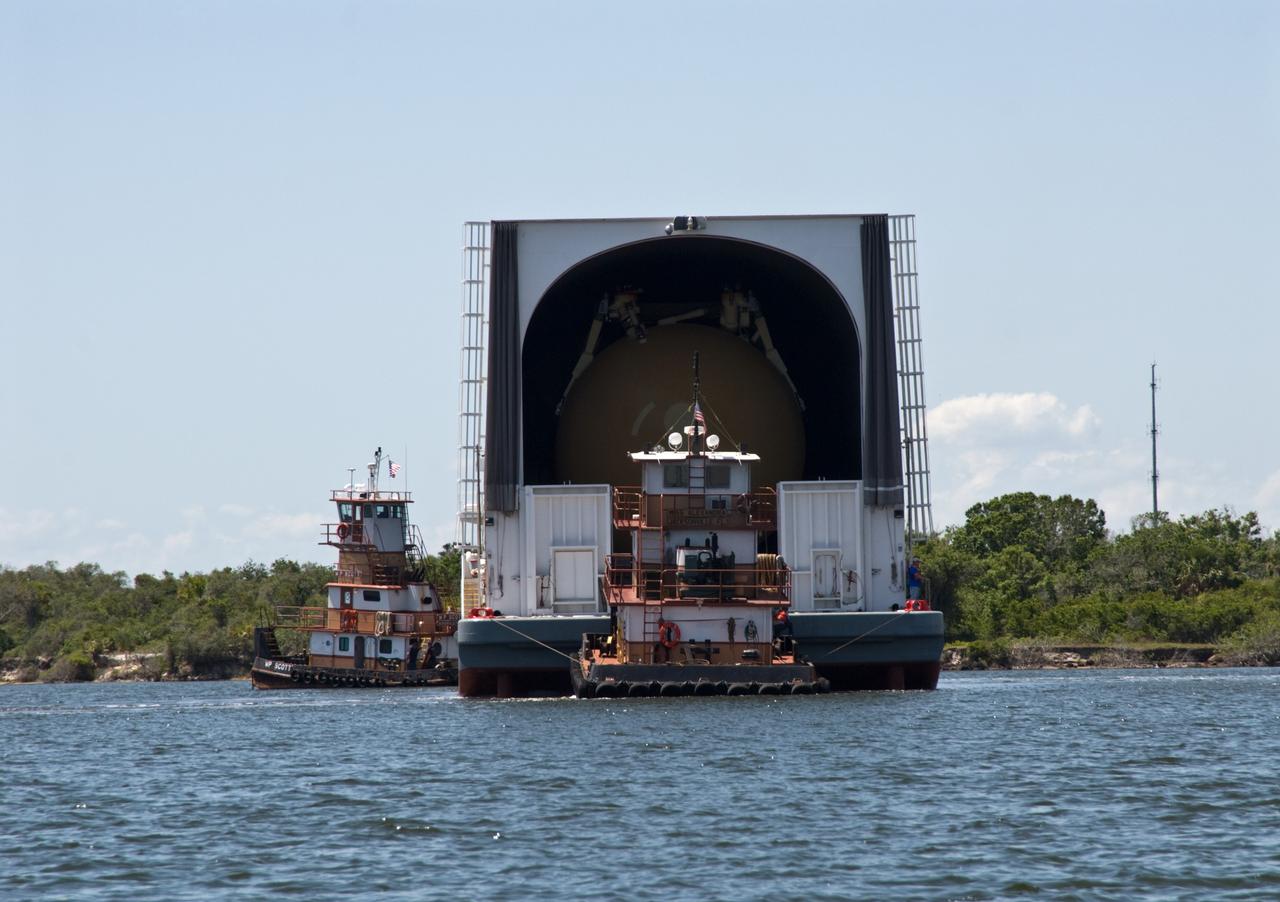
CAPE CANAVERAL, Fla. – Tugboats maneuver the Pegasus barge toward the dock in the turn basin in the Launch Complex 39 Area at NASA's Kennedy Space Center in Florida. The barge holds the external fuel tank, ET- 132, designated for space shuttle Discovery on the STS-128 mission. The tank will be offloaded and transported to a high bay in the Vehicle Assembly Building for checkout. On the STS-128 mission, Discovery will carry science and storage racks to the International Space Station. Launch of Discovery is targeted for Aug. 6. Photo credit: NASA/Troy Cryder
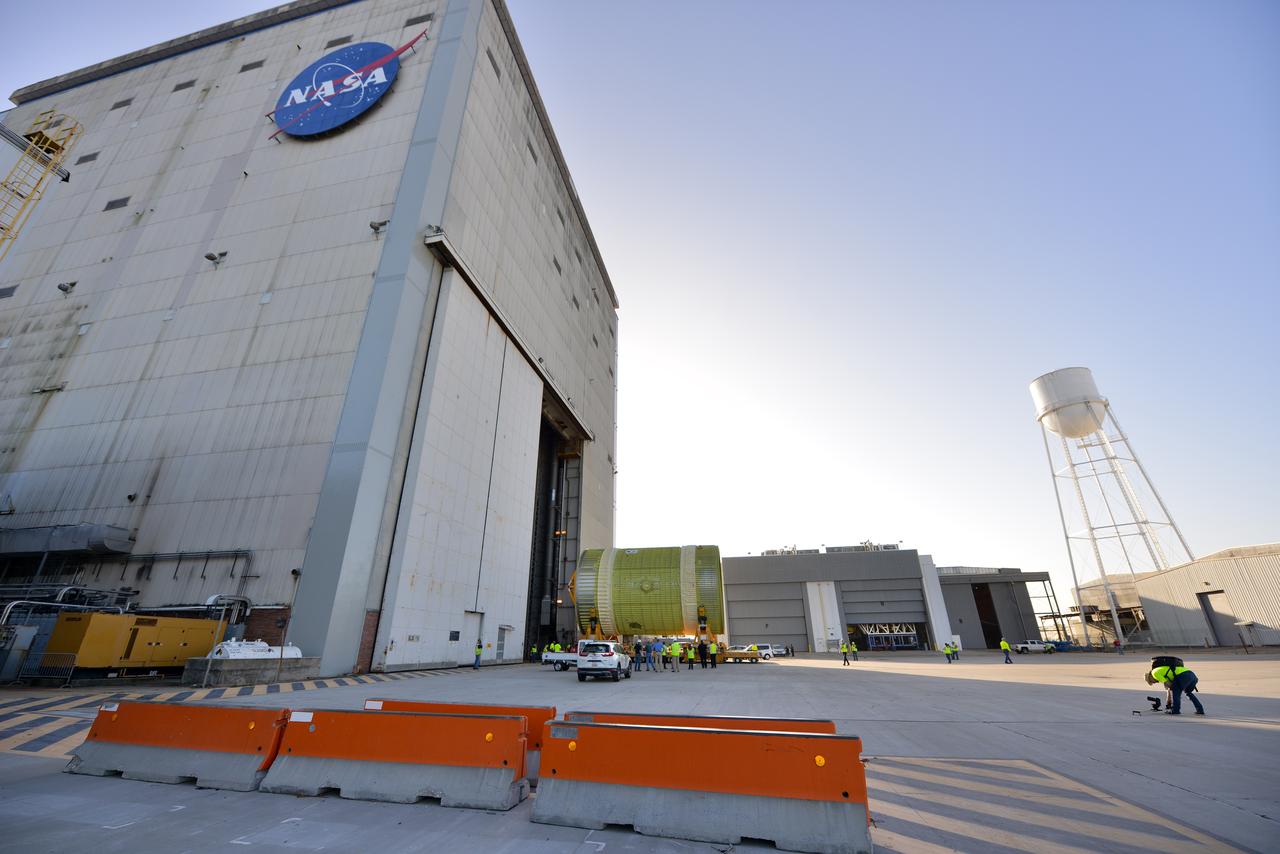
Intertank STA leaves it's holding area to begin the journey to the barge.
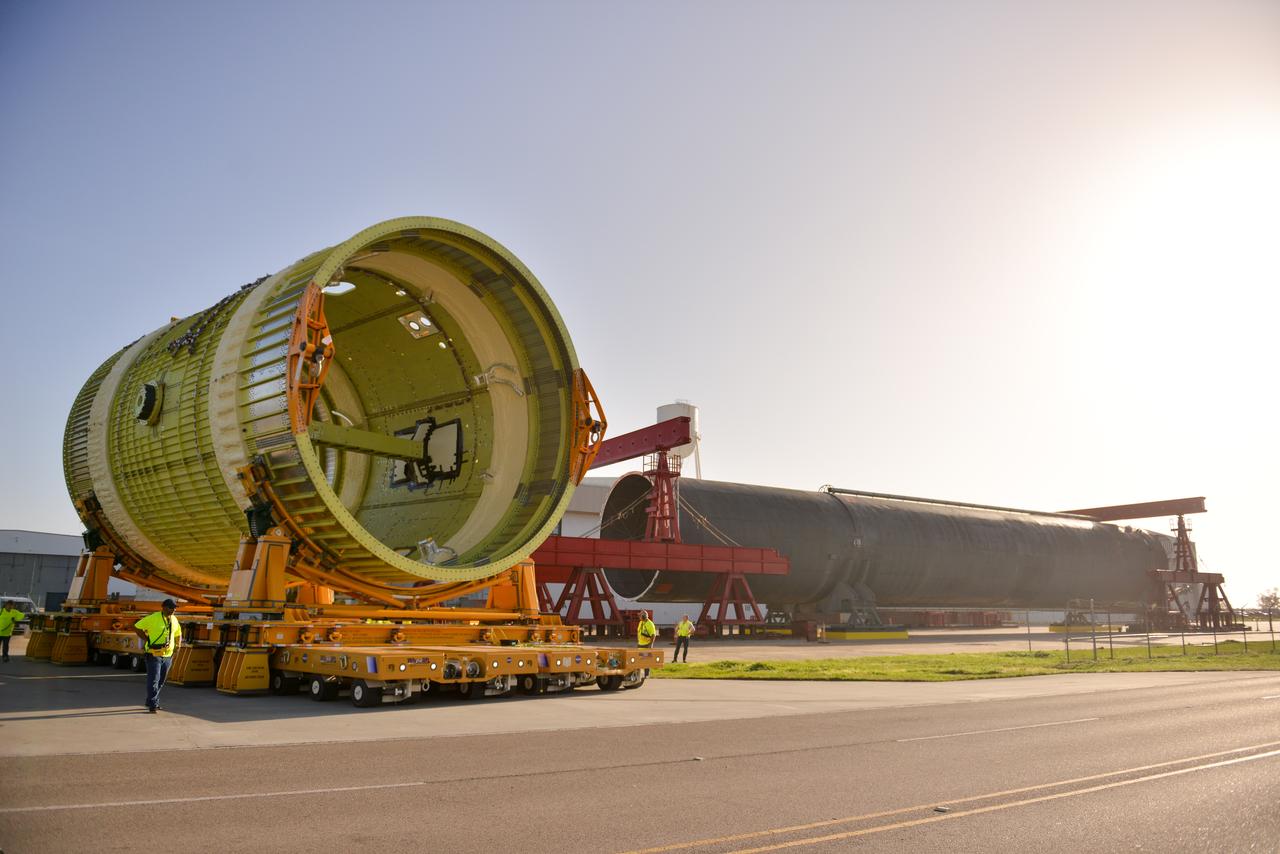
Intertank STA passes the Core Stage Pathfinder on it's way to the Pegasus Barge.
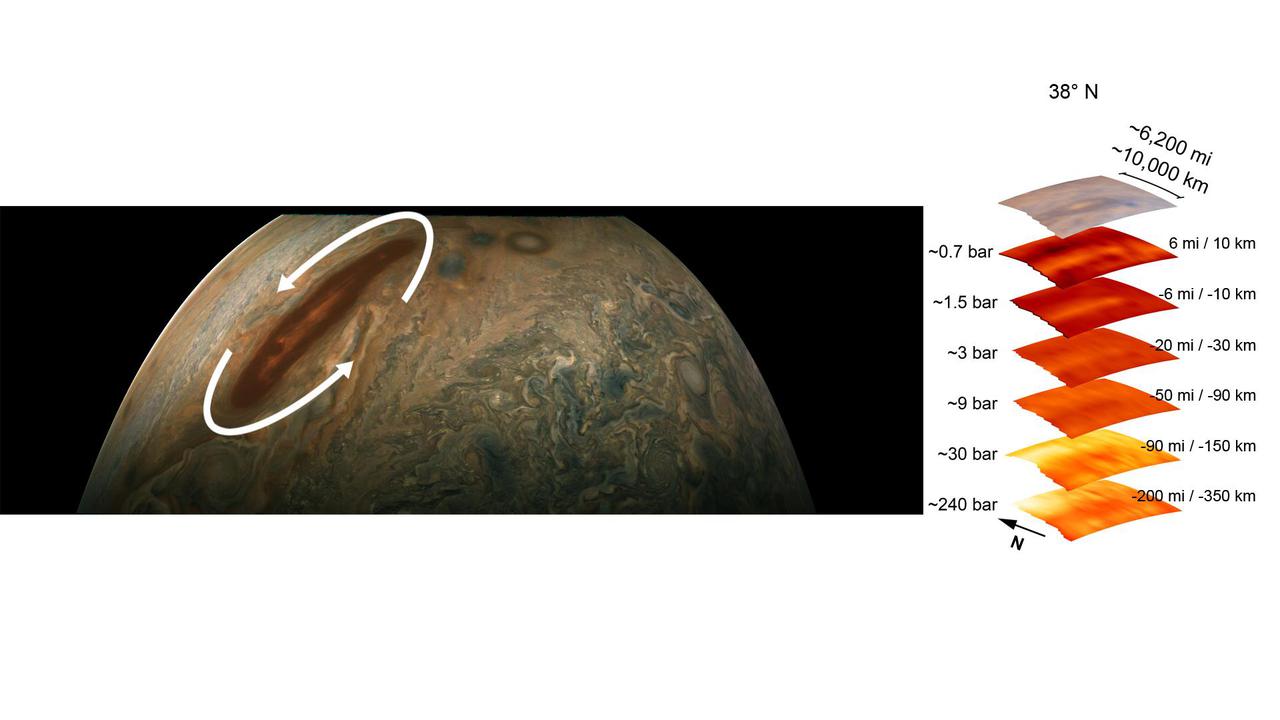
The color-enhanced image on the left is from the JunoCam imager aboard NASA's Juno spacecraft and has been annotated to depict the anticyclonic (counterclockwise) rotation of one of Jupiter's intriguing atmospheric phenomena – a long, brown oval cyclonic region known as a "brown barge." The graphic on the right highlights the large-scale structure of the brown barge as seen by the spacecraft's microwave radiometer (MWR) instrument. Data for the image and the microwave radiometer results were collected during a low flyby of Jupiter. Brown barges usually lie within Jupiter's dark North Equatorial Belt, although they are sometimes found in the similarly dark South Equatorial Belt as well. They can often be difficult to detect visually because their color blends in with the dark surroundings. Brown barges usually dissipate after the entire cloud belt undergoes an upheaval and reorganizes itself. Juno is providing the first glimpses of the detailed structure within such a barge. The radiometer data was acquired from the six channels of MWR. Each MWR channel peers progressively deeper below the visible cloud tops. In fact, the MWR instrument enables Juno to see deeper into Jupiter than any previous spacecraft or Earth-based observations. Unlike Earth, which as a solid surface, Jupiter is a gas giant with no discernable solid surface. So the planetary science community has defined the "base" of Jupiter's atmosphere as the location where its pressure is equivalent to 1 bar. The bar is a metric unit of pressure that, at 14.5 pounds per square inch, is slightly less than the average atmospheric pressure on Earth at sea level. The numbers to the left of each layer of MWR data indicates the pressure that is present at the location in the atmosphere where the MWR reading occurred. The distance measurements to the right of each layer of MWR data provides the distance – either above or below the 1 bar level – at which the corresponding MWR measurement was taken. For context, the top layer in the figure is a visible-light image depicting Jupiter's different levels of clouds, with an average altitude about 6 miles above the 1 bar pressure region. https://photojournal.jpl.nasa.gov/catalog/PIA24974
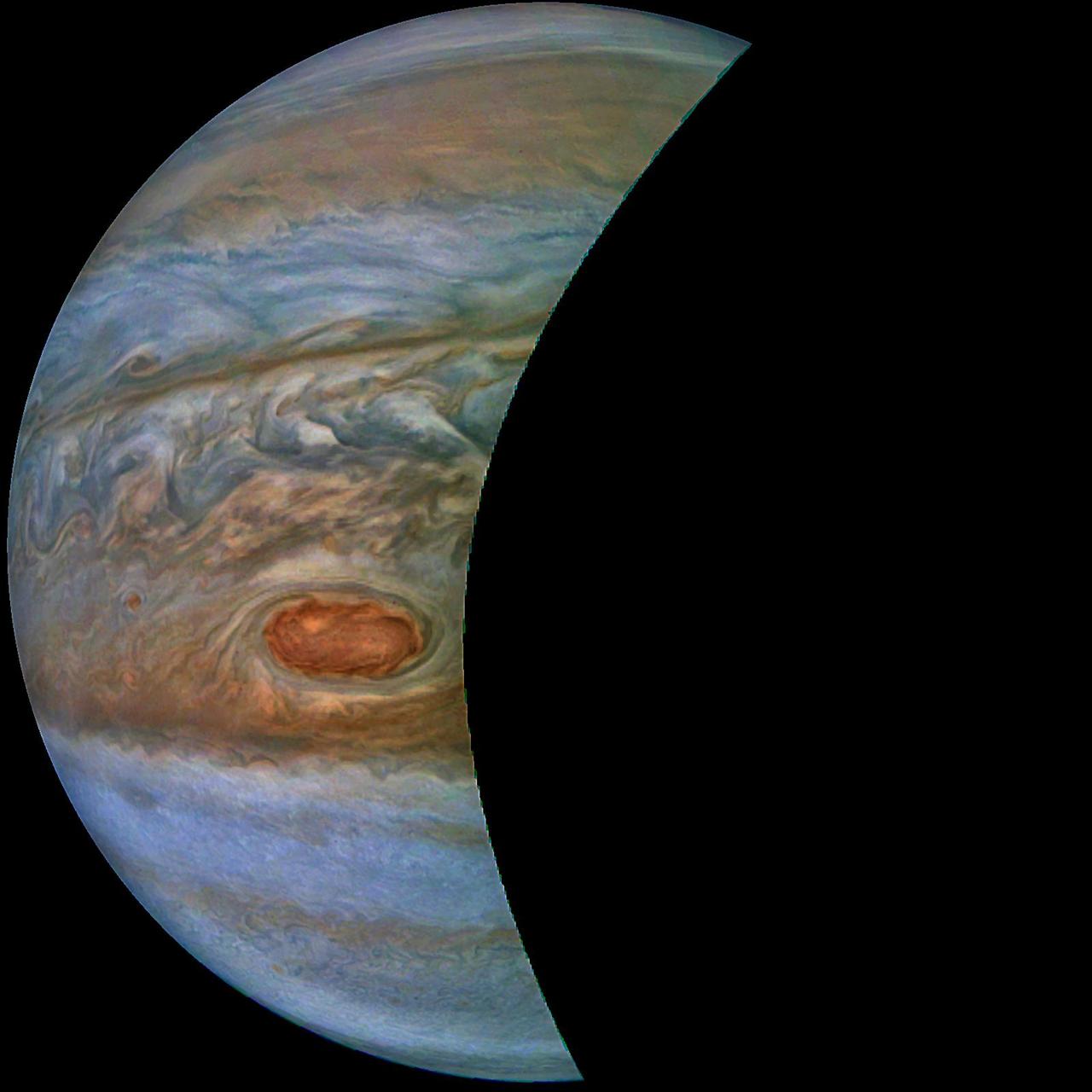
A "brown barge" in Jupiter's South Equatorial Belt is captured in this color-enhanced image from NASA's Juno spacecraft. This color-enhanced image was taken at 10:28 p.m. PDT on July 15, 2018 (1:28 a.m. EDT on July 16), as the spacecraft performed its 14th close flyby of Jupiter. Citizen scientist Joaquin Camarena created this image using data from the spacecraft's JunoCam imager. https://photojournal.jpl.nasa.gov/catalog/PIA22940. Enhanced image by Joaquin Camarena based on images provided courtesy of NASA/JPL-Caltech/SwRI/MSSS
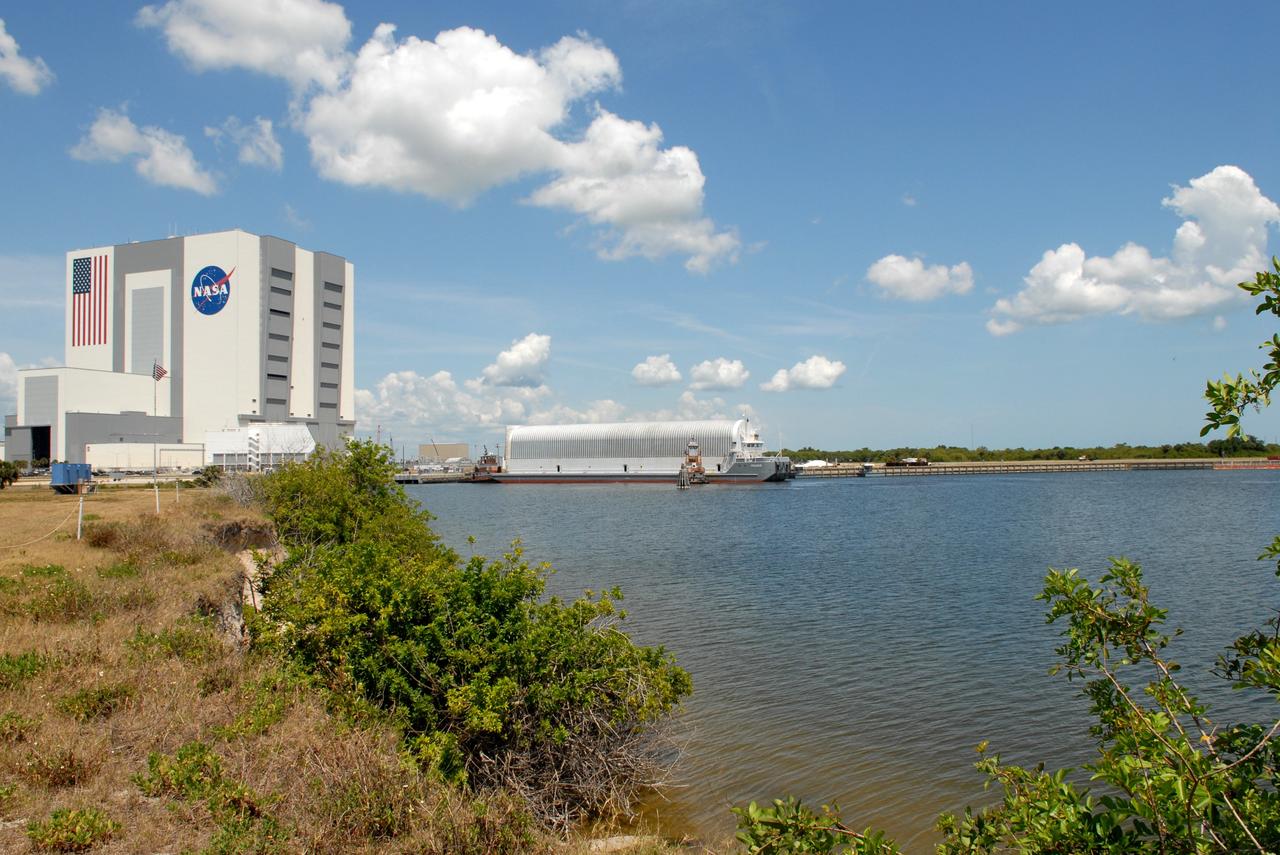
CAPE CANAVERAL, Fla. – Viewed from across the turn basin in the Launch Complex 39 Area at NASA's Kennedy Space Center in Florida, the Pegasus barge is maneuvered up to the dock. In the background at left is the Vehicle Assembly Building. The barge holds the external fuel tank, ET- 132, designated for space shuttle Discovery on the STS-128 mission. The tank will be offloaded and transported to a high bay in the VAB for checkout. On the STS-128 mission, Discovery will carry science and storage racks to the International Space Station. Launch of Discovery is targeted for Aug. 6. Photo credit: NASA/Troy Cryder
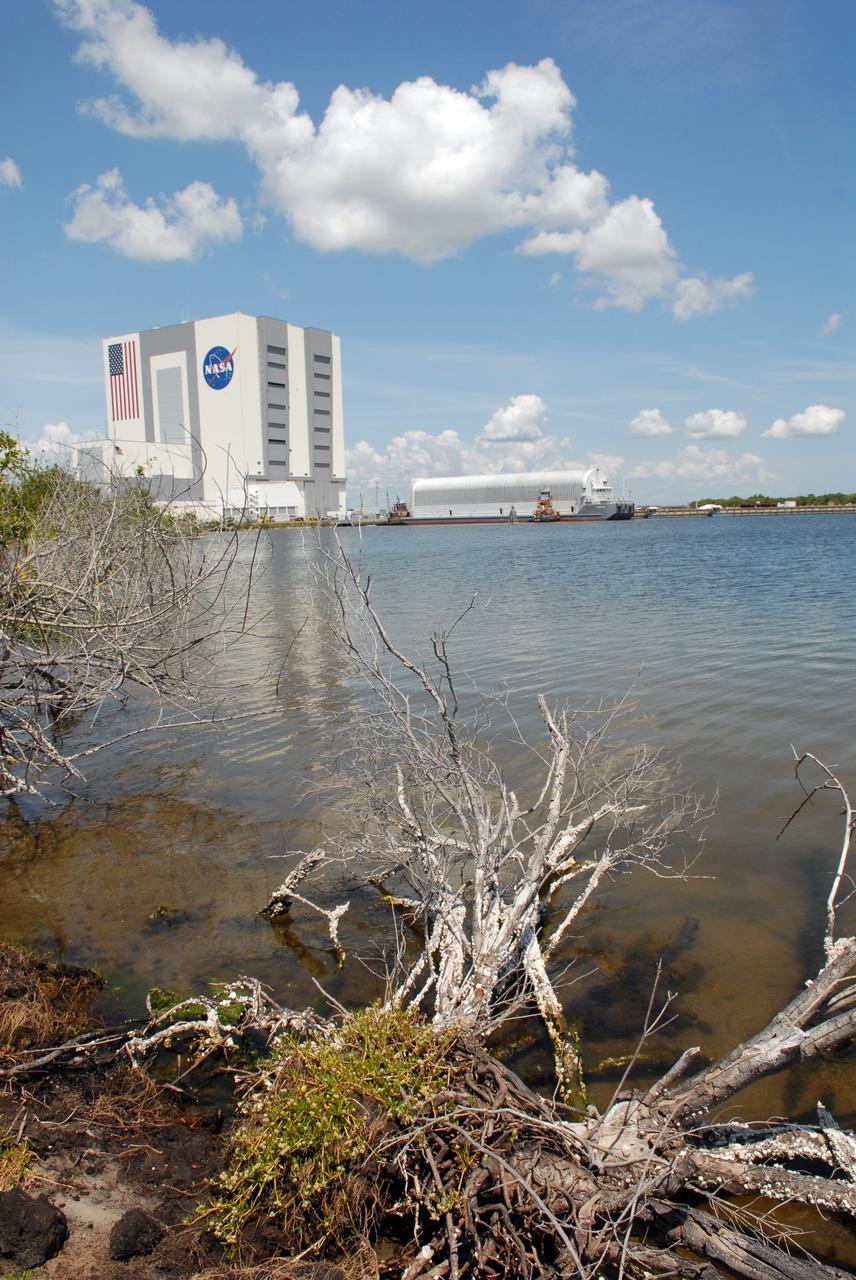
CAPE CANAVERAL, Fla. – Viewed from across the turn basin in the Launch Complex 39 Area at NASA's Kennedy Space Center in Florida, the Pegasus barge is maneuvered up to the dock. In the background at left is the Vehicle Assembly Building. The barge holds the external fuel tank, ET- 132, designated for space shuttle Discovery on the STS-128 mission. The tank will be offloaded and transported to a high bay in the VAB for checkout. On the STS-128 mission, Discovery will carry science and storage racks to the International Space Station. Launch of Discovery is targeted for Aug. 6. Photo credit: NASA/Troy Cryder
SLS INTERIM CRYOGENIC PROPULSION STAGE TEST ARTICLE ARRIVES AT WEST DOCK ON SHIELDS ROAD AND IS OFF LOADED FROM BARGEUAH ENGINEERING STUDENT ROBERT HILLAN TALKS TO SPACE STATION CREW MEMBERS ABOUT HIS WINNING 3-D PRINTED TOOL DESIGNED FOR USE ON ISS, AND IS INTERVIEWED BY LOCAL MEDIA
The S3 Move Crew holds a team tag up prior to loading the Intertank STA on the Pegasus Barge.
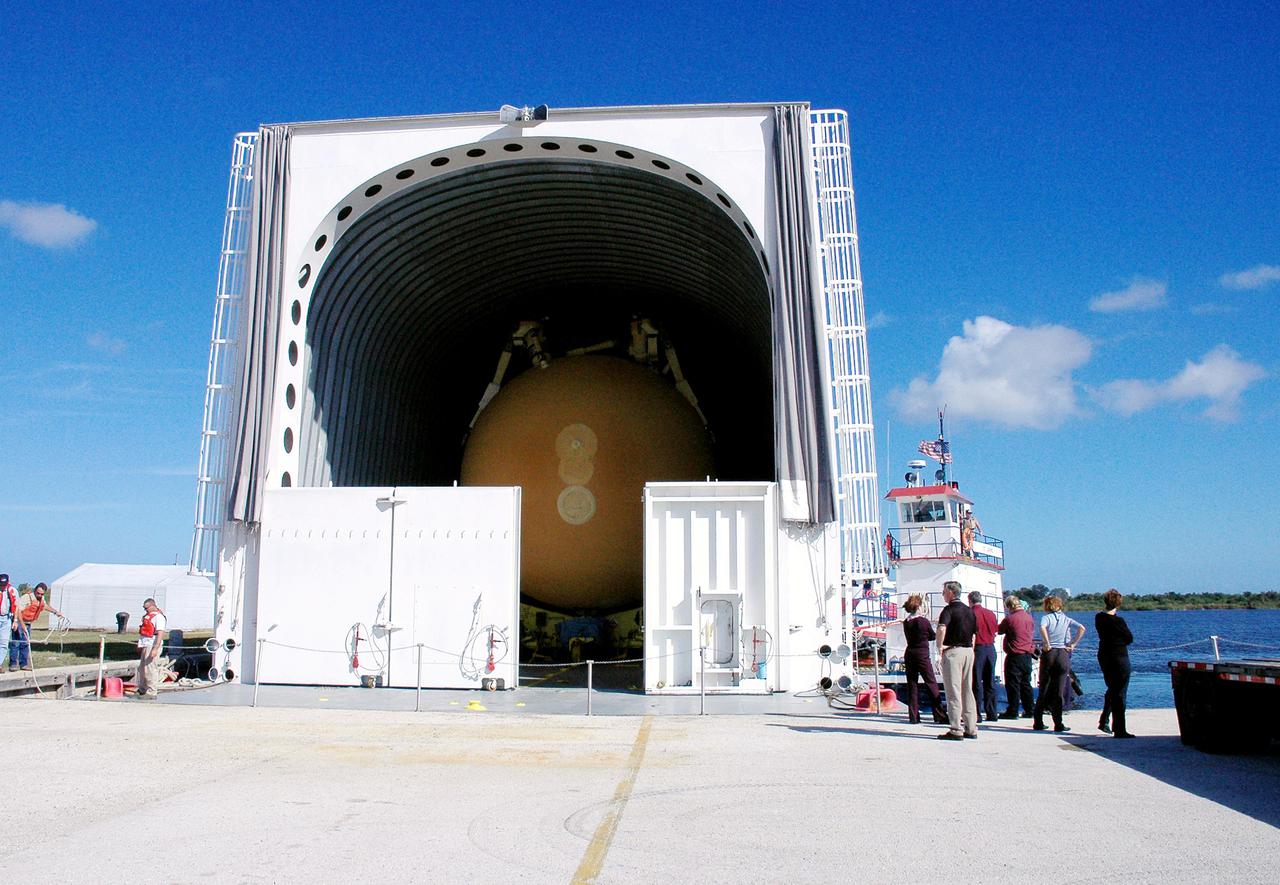
KENNEDY SPACE CENTER, FLA. - The barge carrying the newly redesigned External Tank (ET), designated for use on Return to Flight mission STS-114, is finally docked at the Launch Complex 39 Area Turn Basin. The ET can be seen inside the barge. The External Tank arrived safely early this morning at Port Canaveral, Fla., after an approximately 900-mile journey at sea. It departed from the Michoud Assembly Facility in New Orleans Dec. 31 and was transported on the Pegasus, NASA’s specially designed barge, pulled by Solid Rocket Booster retrieval ship Liberty Star. At the port, the barge was then hooked up to the tugs for the last part of the journey. Next, the External Tank will be off-loaded from the barge and transported to the Vehicle Assembly Building for its final checkout and mating to the twin Solid Rocket Boosters and orbiter Discovery. NASA and Lockheed Martin Corp. spent nearly two years modifying the 15-story, bronze-colored tank to make it safer for liftoff. Among dozens of changes is a redesigned forward bipod fitting -- a design that meets the recommendation of the Columbia Accident Investigation Board to reduce the risk to the Space Shuttle from falling debris during ascent. STS-114 is targeted for a launch opportunity beginning in May. The seven-member Discovery crew will fly to the International Space Station primarily to test and evaluate new procedures for flight safety, including Space Shuttle inspection and repair techniques.
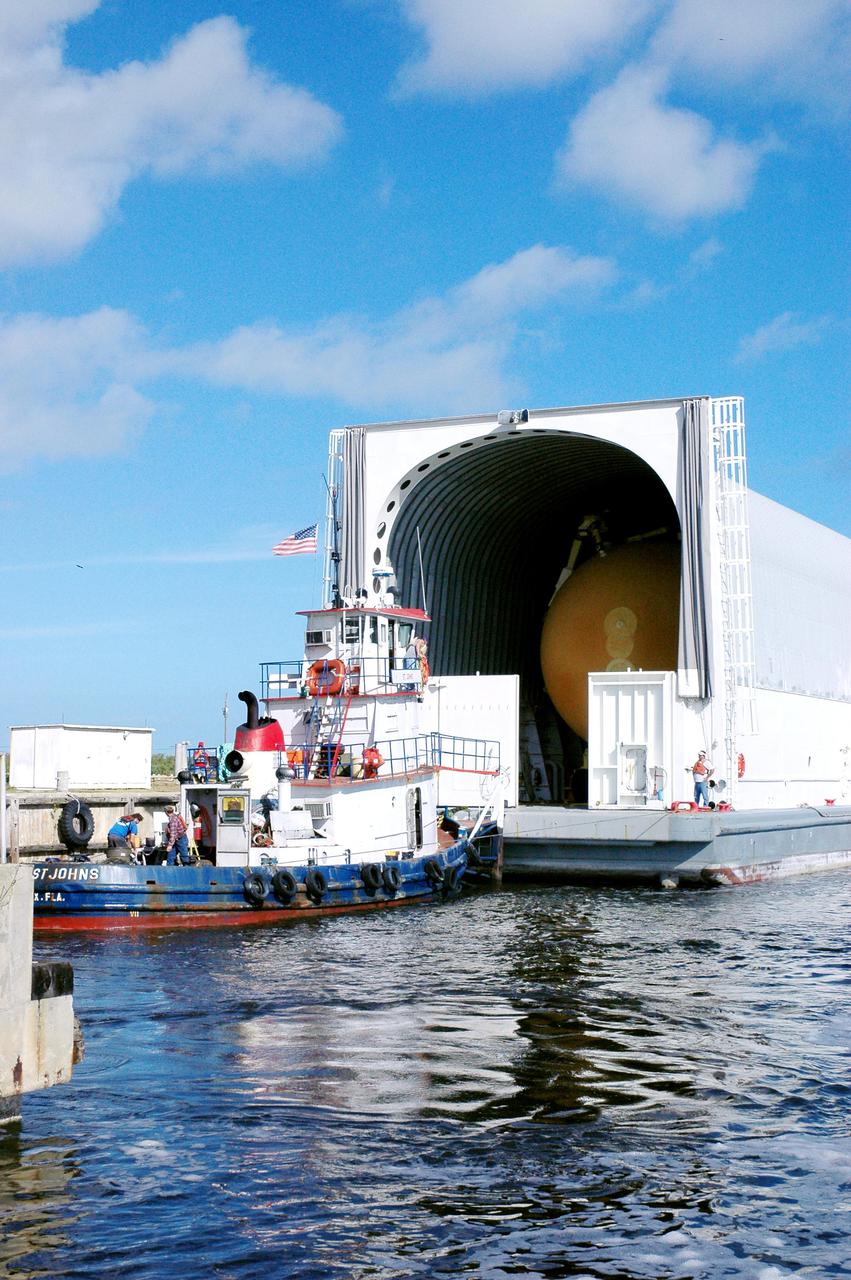
KENNEDY SPACE CENTER, FLA. - Tugboats maneuver the barge carrying the newly redesigned External Tank (ET), designated for use on Return to Flight mission STS-114, closer to the dock at the Launch Complex 39 Area Turn Basin. The ET can be seen inside the barge. The External Tank arrived safely early this morning at Port Canaveral, Fla., after an approximately 900-mile journey at sea. It departed from the Michoud Assembly Facility in New Orleans Dec. 31 and was transported on the Pegasus, NASA’s specially designed barge, pulled by Solid Rocket Booster retrieval ship Liberty Star. At the port, the barge was then hooked up to the tugs for the last part of the journey to the Turn Basin. Next, the External Tank will be off-loaded from the barge and transported to the Vehicle Assembly Building for its final checkout and mating to the twin Solid Rocket Boosters and orbiter Discovery. NASA and Lockheed Martin Corp. spent nearly two years modifying the 15-story, bronze-colored tank to make it safer for liftoff. Among dozens of changes is a redesigned forward bipod fitting -- a design that meets the recommendation of the Columbia Accident Investigation Board to reduce the risk to the Space Shuttle from falling debris during ascent. STS-114 is targeted for a launch opportunity beginning in May. The seven-member Discovery crew will fly to the International Space Station primarily to test and evaluate new procedures for flight safety, including Space Shuttle inspection and repair techniques.
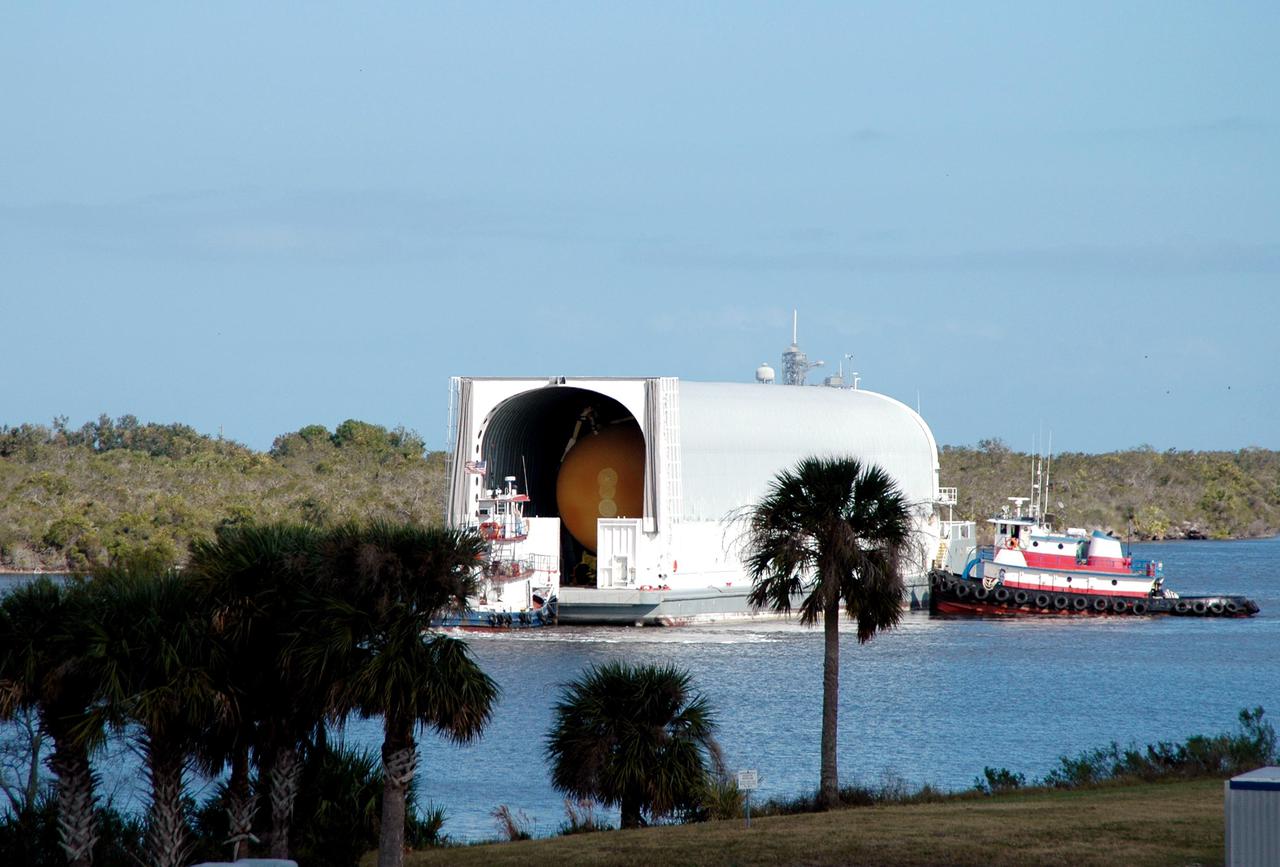
KENNEDY SPACE CENTER, FLA. - A tugboat maneuvers the barge carrying the newly redesigned External Tank (ET), designated for use on Return to Flight mission STS-114, toward the dock at the Launch Complex 39 Area Turn Basin. The ET can be seen inside the barge. The External Tank arrived safely early this morning at Port Canaveral, Fla., after an approximately 900-mile journey at sea. It departed from the Michoud Assembly Facility in New Orleans Dec. 31 and was transported on the Pegasus, NASA’s specially designed barge, pulled by Solid Rocket Booster retrieval ship Liberty Star. At the port, the barge was then hooked up to the tugs for the last part of the journey to the Turn Basin. Next, the External Tank will be off-loaded from the barge and transported to the Vehicle Assembly Building for its final checkout and mating to the twin Solid Rocket Boosters and orbiter Discovery. NASA and Lockheed Martin Corp. spent nearly two years modifying the 15-story, bronze-colored tank to make it safer for liftoff. Among dozens of changes is a redesigned forward bipod fitting -- a design that meets the recommendation of the Columbia Accident Investigation Board to reduce the risk to the Space Shuttle from falling debris during ascent. STS-114 is targeted for a launch opportunity beginning in May. The seven-member Discovery crew will fly to the International Space Station primarily to test and evaluate new procedures for flight safety, including Space Shuttle inspection and repair techniques.
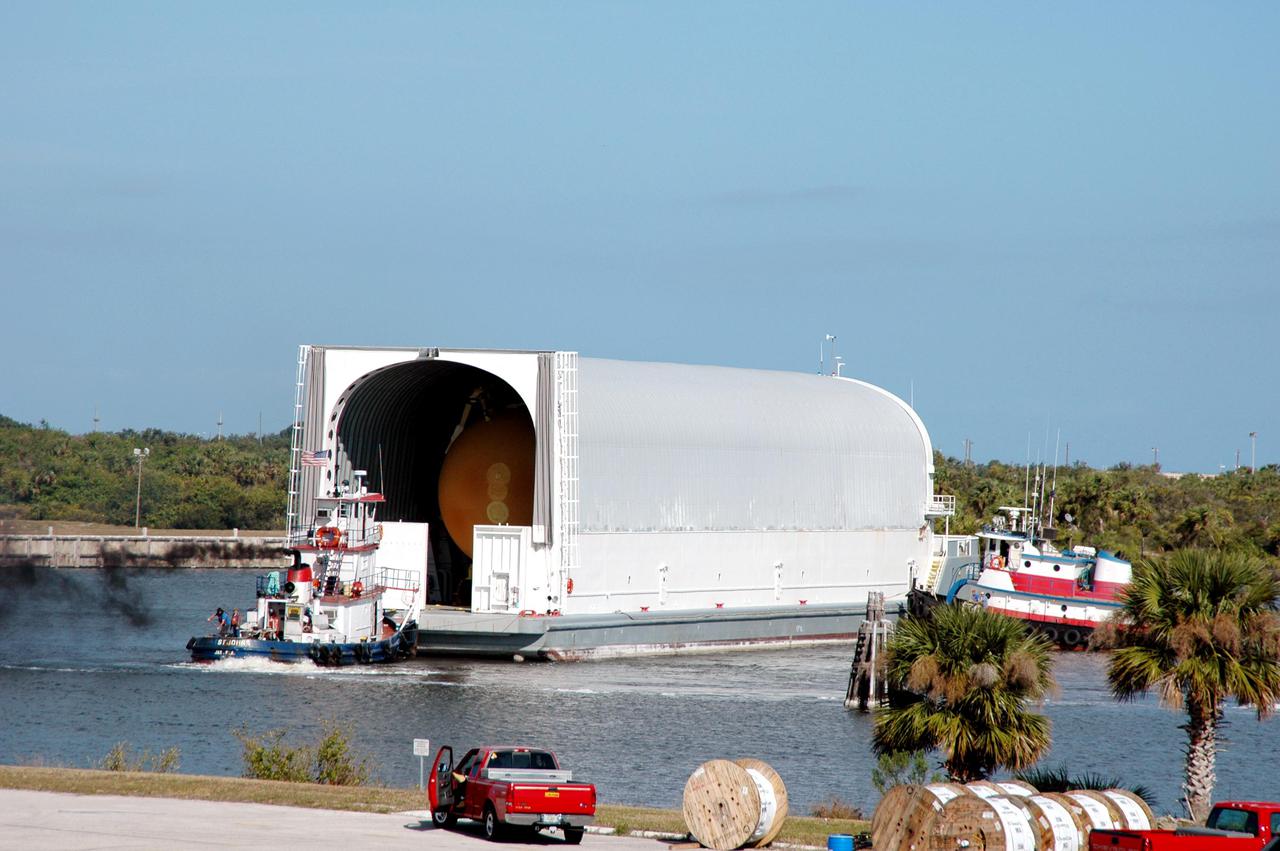
KENNEDY SPACE CENTER, FLA. - Tugboats maneuver the barge carrying the newly redesigned External Tank (ET), designated for use on Return to Flight mission STS-114, closer to the dock at the Launch Complex 39 Area Turn Basin. The ET can be seen inside the barge. The External Tank arrived safely early this morning at Port Canaveral, Fla., after an approximately 900-mile journey at sea. It departed from the Michoud Assembly Facility in New Orleans Dec. 31 and was transported on the Pegasus, NASA’s specially designed barge, pulled by Solid Rocket Booster retrieval ship Liberty Star. At the port, the barge was then hooked up to the tugs for the last part of the journey to the Turn Basin. Next, the External Tank will be off-loaded from the barge and transported to the Vehicle Assembly Building for its final checkout and mating to the twin Solid Rocket Boosters and orbiter Discovery. NASA and Lockheed Martin Corp. spent nearly two years modifying the 15-story, bronze-colored tank to make it safer for liftoff. Among dozens of changes is a redesigned forward bipod fitting -- a design that meets the recommendation of the Columbia Accident Investigation Board to reduce the risk to the Space Shuttle from falling debris during ascent. STS-114 is targeted for a launch opportunity beginning in May. The seven-member Discovery crew will fly to the International Space Station primarily to test and evaluate new procedures for flight safety, including Space Shuttle inspection and repair techniques.
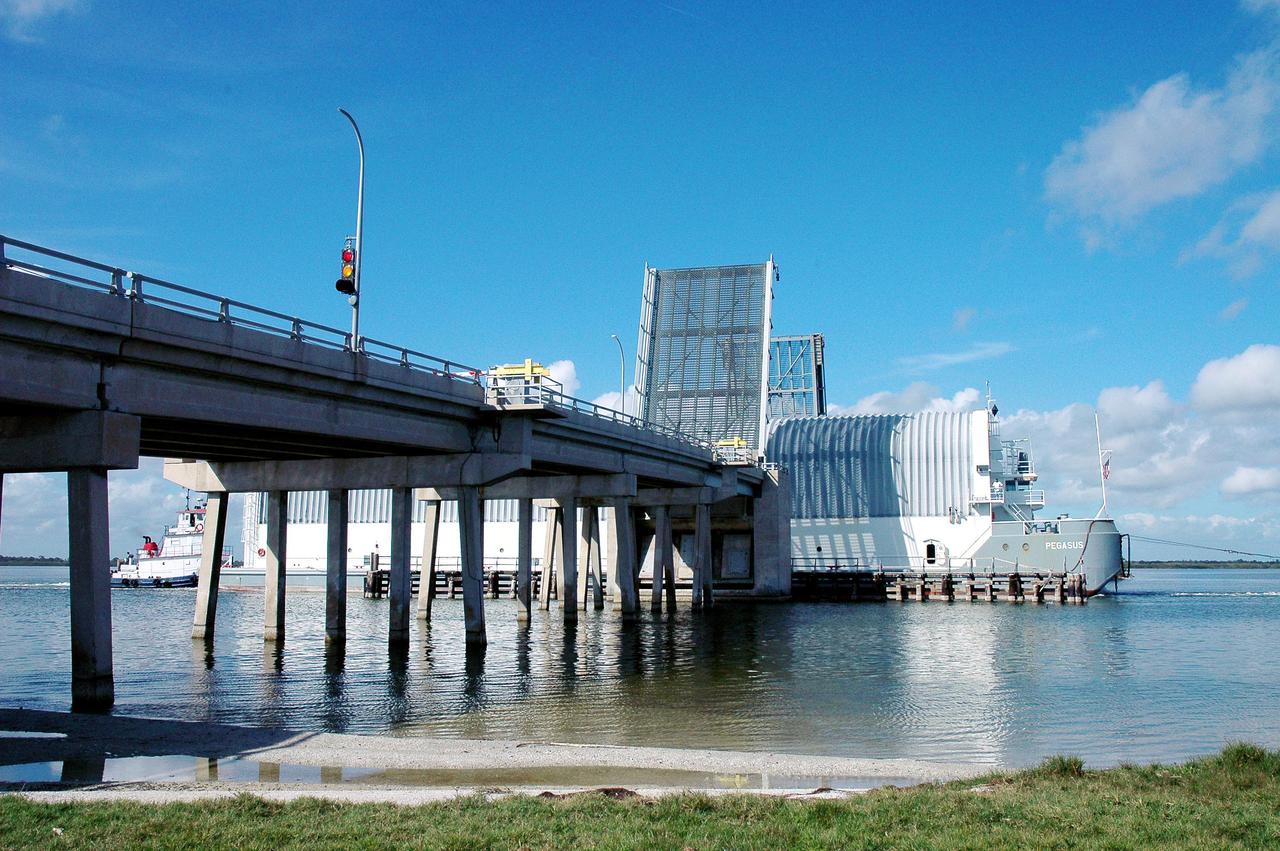
KENNEDY SPACE CENTER, FLA. - The tugboat towing the barge carrying the newly redesigned External Tank, designated for use on Return to Flight mission STS-114, passes through a drawbridge on its voyage to the Launch Complex 39 Area Turn Basin at Kennedy. The barge arrived after an approximately 900-mile journey at sea from the Michoud Assembly Facility in New Orleans. It left the facility Dec. 31 on the Pegasus, NASA’s specially designed barge, towed by Solid Rocket Booster retrieval ship Liberty Star. At Port Canaveral, the barge was then hooked up to the tugs for the last part of the journey to the Launch Complex 39 Area Turn Basin at Kennedy. Next, the External Tank will be off-loaded from the barge and transported to the Vehicle Assembly Building for its final checkout and mating to the twin Solid Rocket Boosters and orbiter Discovery. NASA and Lockheed Martin Corp. spent nearly two years modifying the 15-story, bronze-colored tank to make it safer for liftoff. Among dozens of changes is a redesigned forward bipod fitting -- a design that meets the recommendation of the Columbia Accident Investigation Board to reduce the risk to the Space Shuttle from falling debris during ascent. STS-114 is targeted for a launch opportunity beginning in May. The seven-member Discovery crew will fly to the International Space Station primarily to test and evaluate new procedures for flight safety, including Space Shuttle inspection and repair techniques.
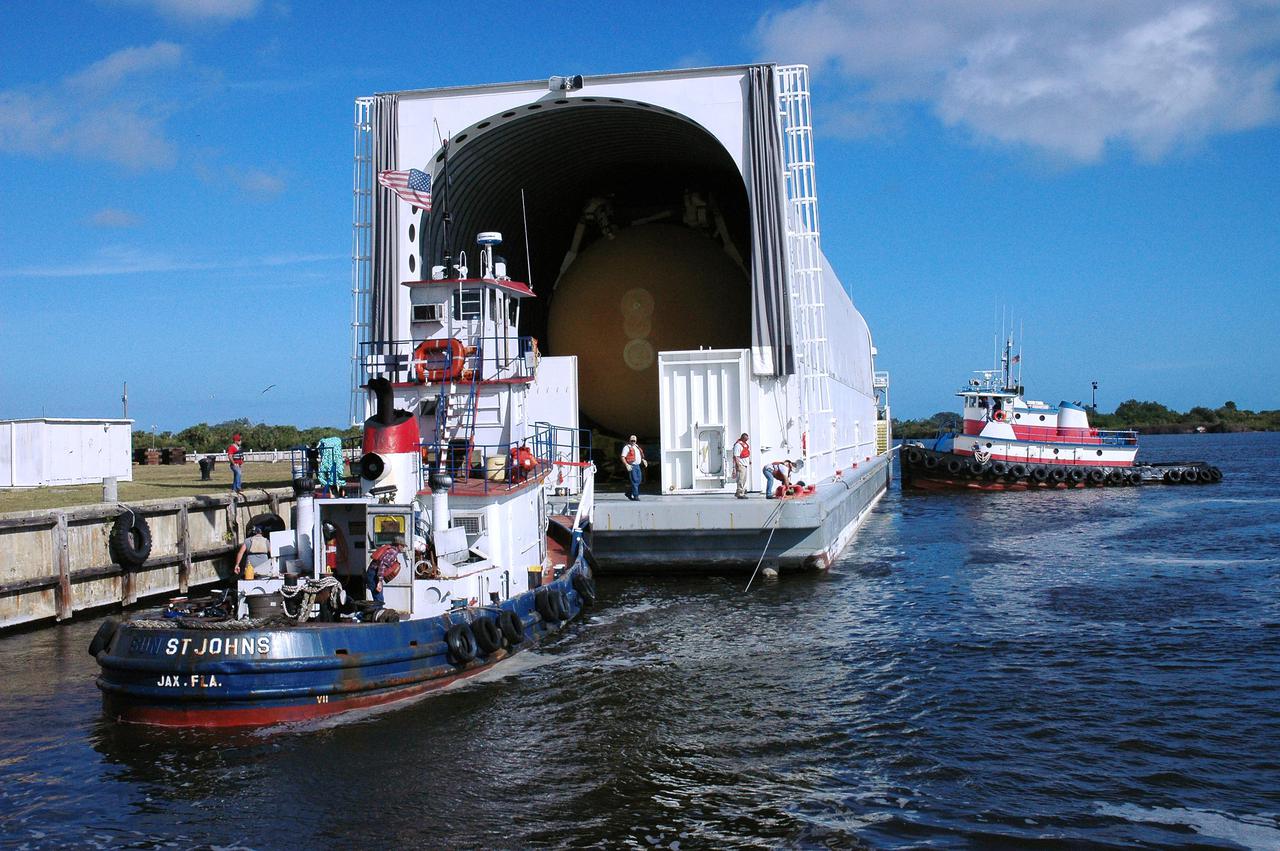
KENNEDY SPACE CENTER, FLA. - Tugboats maneuver the barge carrying the newly redesigned External Tank (ET), designated for use on Return to Flight mission STS-114, closer to the dock at the Launch Complex 39 Area Turn Basin. The ET can be seen inside the barge. The External Tank arrived safely early this morning at Port Canaveral, Fla., after an approximately 900-mile journey at sea. It departed from the Michoud Assembly Facility in New Orleans Dec. 31 and was transported on the Pegasus, NASA’s specially designed barge, pulled by Solid Rocket Booster retrieval ship Liberty Star. At the port, the barge was then hooked up to the tugs for the last part of the journey. Next, the External Tank will be off-loaded from the barge and transported to the Vehicle Assembly Building for its final checkout and mating to the twin Solid Rocket Boosters and orbiter Discovery. NASA and Lockheed Martin Corp. spent nearly two years modifying the 15-story, bronze-colored tank to make it safer for liftoff. Among dozens of changes is a redesigned forward bipod fitting -- a design that meets the recommendation of the Columbia Accident Investigation Board to reduce the risk to the Space Shuttle from falling debris during ascent. STS-114 is targeted for a launch opportunity beginning in May. The seven-member Discovery crew will fly to the International Space Station primarily to test and evaluate new procedures for flight safety, including Space Shuttle inspection and repair techniques.
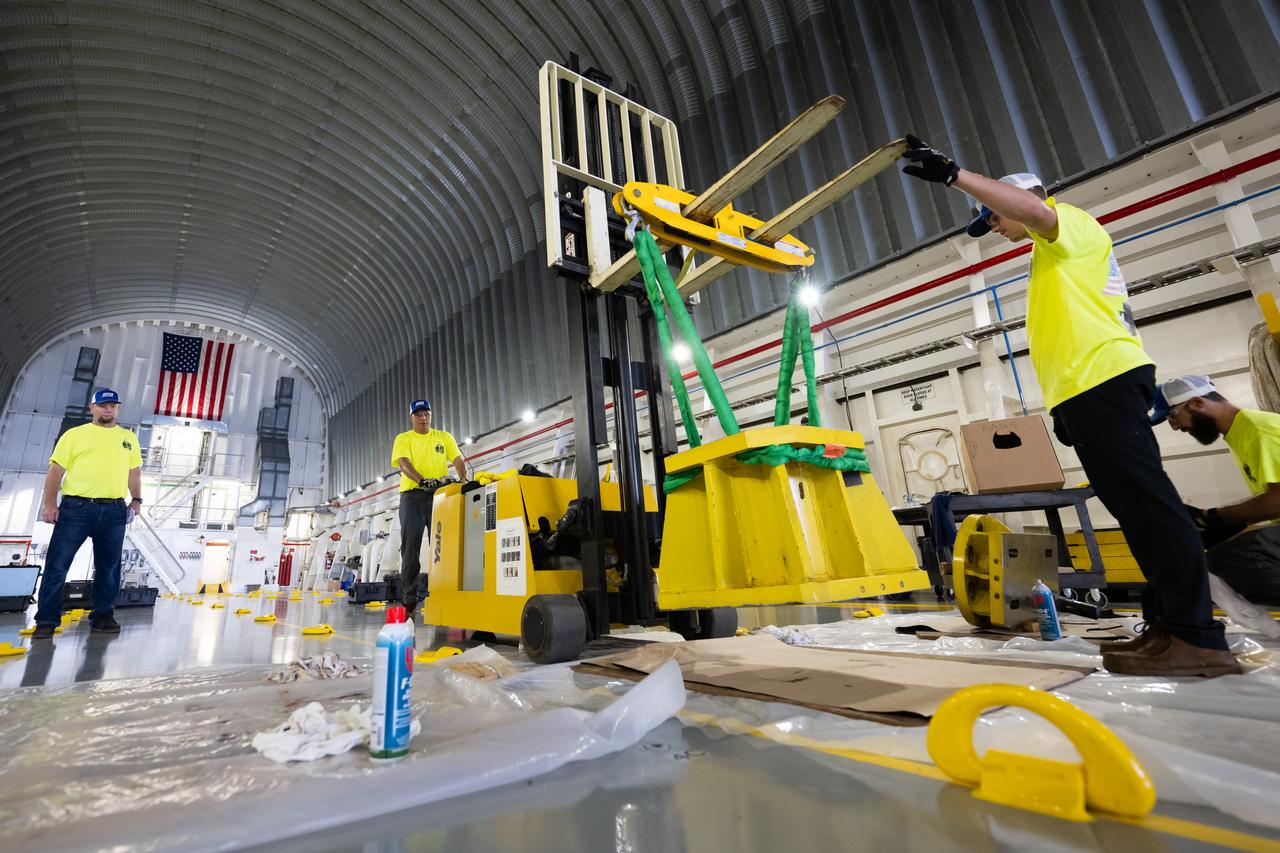
These photos show how team members installed pedestals aboard NASA’s Pegasus barge to hold and secure the massive core stage of NASA’s SLS (Space Launch System) rocket, indicating the barge and its crew are nearly ready for the barge’s first delivery to support the Artemis II test flight around the Moon. The barge will ferry the fully assembled core stage on a 900-mile journey from the agency’s Michoud Assembly Facility in New Orleans to its Kennedy Space Center in Florida. The Pegasus crew began installing the pedestals July 10. Pegasus is maintained at NASA Michoud. The SLS core stage is fully manufactured at Michoud. NASA is working to land the first woman, first person of color, and its first international partner astronaut on the Moon under Artemis. SLS is part of NASA’s backbone for deep space exploration, along with the Orion spacecraft, supporting ground systems, advanced spacesuits and rovers, the Gateway in orbit around the Moon, and commercial human landing systems. SLS is the only rocket that can send Orion, astronauts, and supplies to the Moon in a single launch.
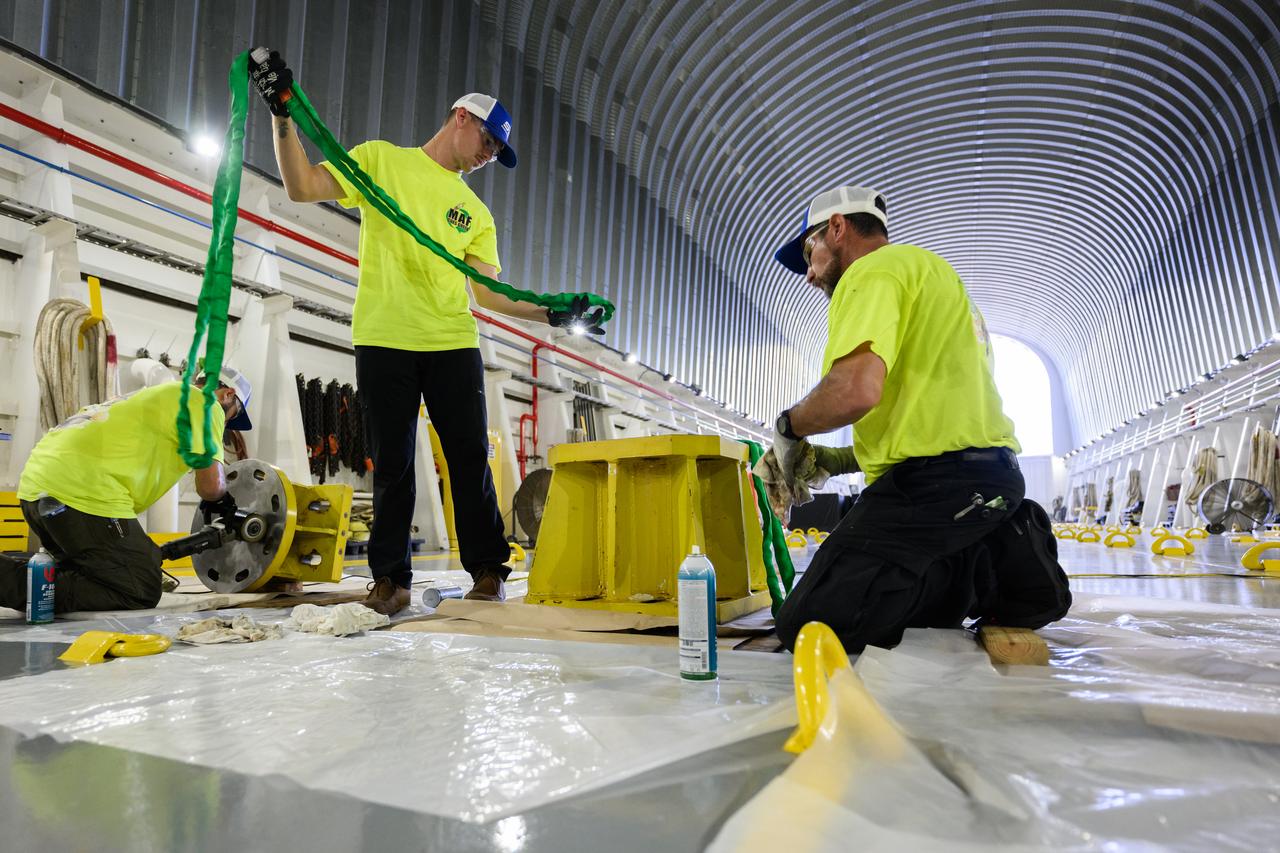
These photos show how team members installed pedestals aboard NASA’s Pegasus barge to hold and secure the massive core stage of NASA’s SLS (Space Launch System) rocket, indicating the barge and its crew are nearly ready for the barge’s first delivery to support the Artemis II test flight around the Moon. The barge will ferry the fully assembled core stage on a 900-mile journey from the agency’s Michoud Assembly Facility in New Orleans to its Kennedy Space Center in Florida. The Pegasus crew began installing the pedestals July 10. Pegasus is maintained at NASA Michoud. The SLS core stage is fully manufactured at Michoud. NASA is working to land the first woman, first person of color, and its first international partner astronaut on the Moon under Artemis. SLS is part of NASA’s backbone for deep space exploration, along with the Orion spacecraft, supporting ground systems, advanced spacesuits and rovers, the Gateway in orbit around the Moon, and commercial human landing systems. SLS is the only rocket that can send Orion, astronauts, and supplies to the Moon in a single launch.
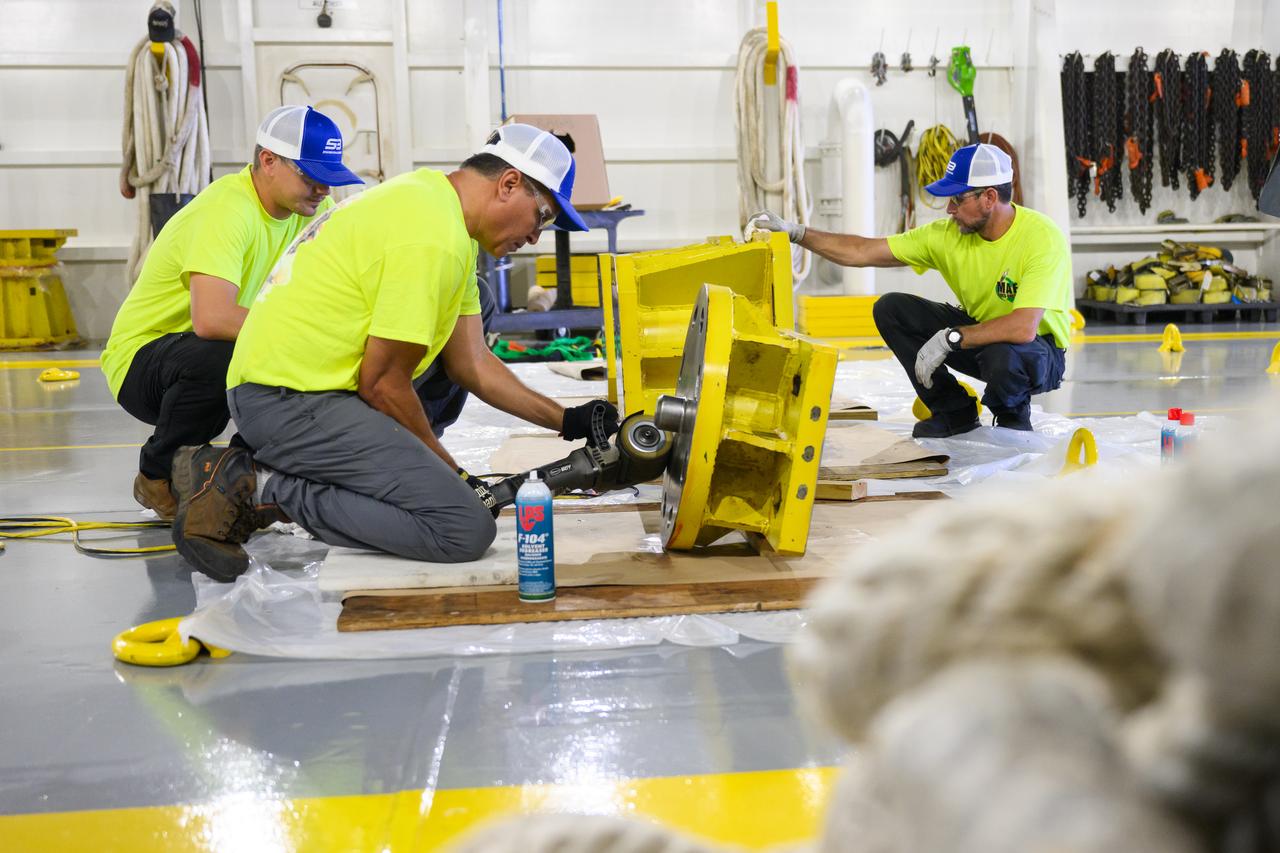
These photos show how team members installed pedestals aboard NASA’s Pegasus barge to hold and secure the massive core stage of NASA’s SLS (Space Launch System) rocket, indicating the barge and its crew are nearly ready for the barge’s first delivery to support the Artemis II test flight around the Moon. The barge will ferry the fully assembled core stage on a 900-mile journey from the agency’s Michoud Assembly Facility in New Orleans to its Kennedy Space Center in Florida. The Pegasus crew began installing the pedestals July 10. Pegasus is maintained at NASA Michoud. The SLS core stage is fully manufactured at Michoud. NASA is working to land the first woman, first person of color, and its first international partner astronaut on the Moon under Artemis. SLS is part of NASA’s backbone for deep space exploration, along with the Orion spacecraft, supporting ground systems, advanced spacesuits and rovers, the Gateway in orbit around the Moon, and commercial human landing systems. SLS is the only rocket that can send Orion, astronauts, and supplies to the Moon in a single launch.
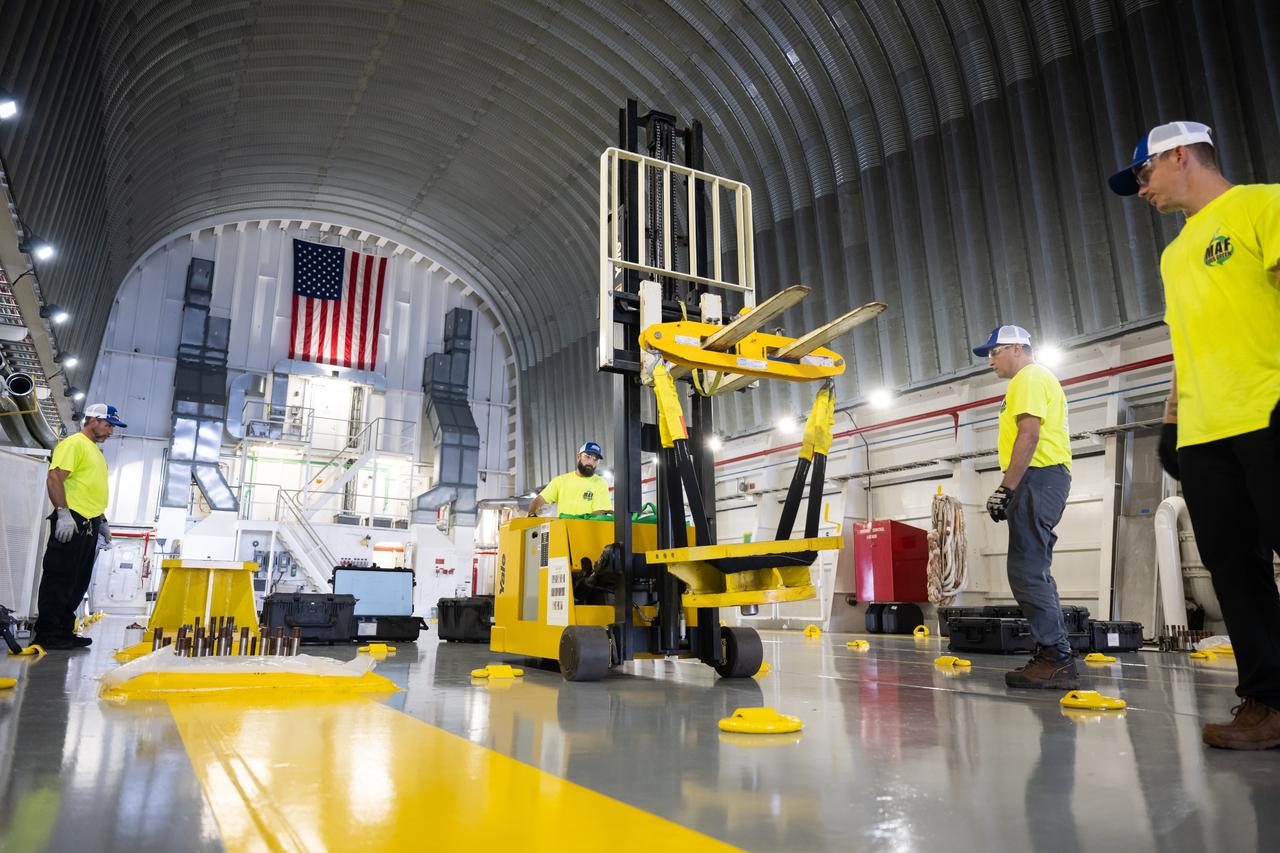
These photos show how team members installed pedestals aboard NASA’s Pegasus barge to hold and secure the massive core stage of NASA’s SLS (Space Launch System) rocket, indicating the barge and its crew are nearly ready for the barge’s first delivery to support the Artemis II test flight around the Moon. The barge will ferry the fully assembled core stage on a 900-mile journey from the agency’s Michoud Assembly Facility in New Orleans to its Kennedy Space Center in Florida. The Pegasus crew began installing the pedestals July 10. Pegasus is maintained at NASA Michoud. The SLS core stage is fully manufactured at Michoud. NASA is working to land the first woman, first person of color, and its first international partner astronaut on the Moon under Artemis. SLS is part of NASA’s backbone for deep space exploration, along with the Orion spacecraft, supporting ground systems, advanced spacesuits and rovers, the Gateway in orbit around the Moon, and commercial human landing systems. SLS is the only rocket that can send Orion, astronauts, and supplies to the Moon in a single launch.
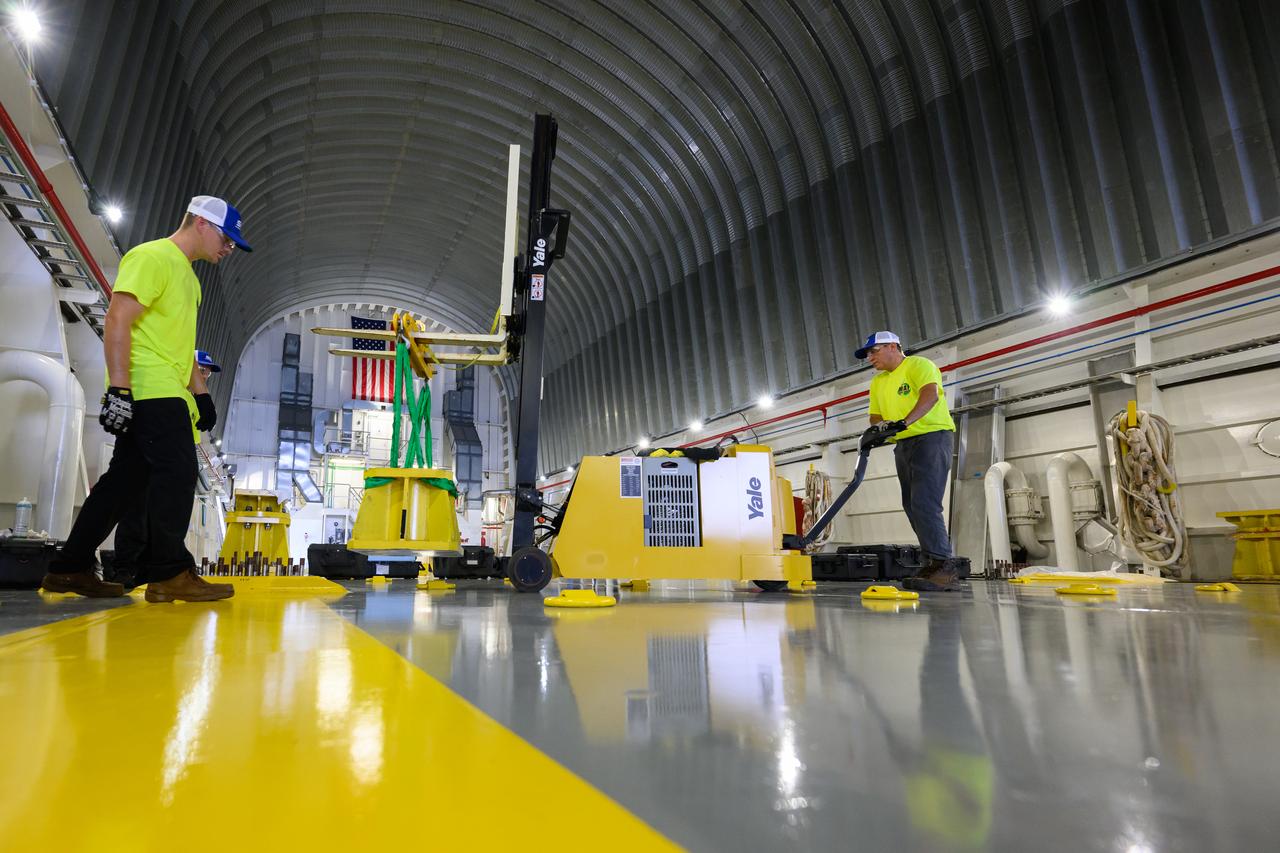
These photos show how team members installed pedestals aboard NASA’s Pegasus barge to hold and secure the massive core stage of NASA’s SLS (Space Launch System) rocket, indicating the barge and its crew are nearly ready for the barge’s first delivery to support the Artemis II test flight around the Moon. The barge will ferry the fully assembled core stage on a 900-mile journey from the agency’s Michoud Assembly Facility in New Orleans to its Kennedy Space Center in Florida. The Pegasus crew began installing the pedestals July 10. Pegasus is maintained at NASA Michoud. The SLS core stage is fully manufactured at Michoud. NASA is working to land the first woman, first person of color, and its first international partner astronaut on the Moon under Artemis. SLS is part of NASA’s backbone for deep space exploration, along with the Orion spacecraft, supporting ground systems, advanced spacesuits and rovers, the Gateway in orbit around the Moon, and commercial human landing systems. SLS is the only rocket that can send Orion, astronauts, and supplies to the Moon in a single launch.