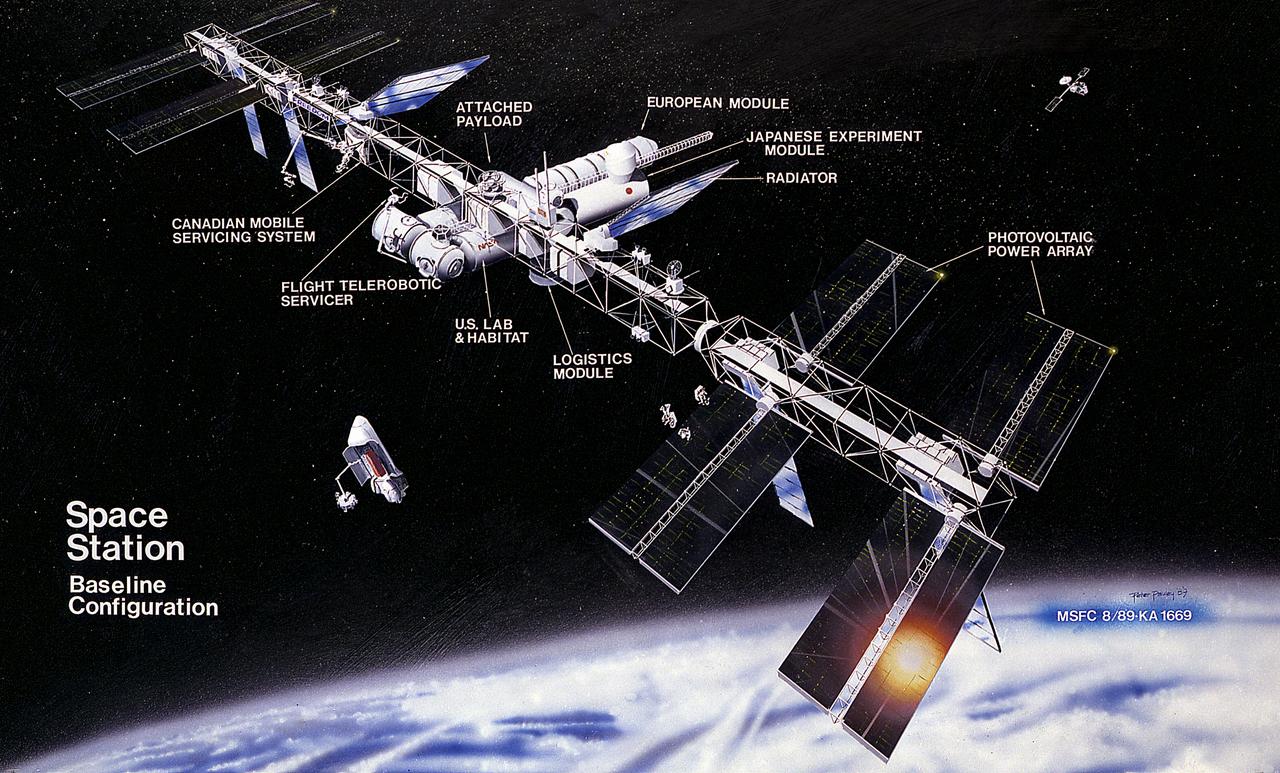
In response to President Reagan's directive to NASA to develop a permanent marned Space Station within a decade, part of the State of the Union message to Congress on January 25, 1984, NASA and the Administration adopted a phased approach to Station development. This approach provided an initial capability at reduced costs, to be followed by an enhanced Space Station capability in the future. This illustration depicts the baseline configuration, which features a 110-meter-long horizontal boom with four pressurized modules attached in the middle. Located at each end are four photovoltaic arrays generating a total of 75-kW of power. Two attachment points for external payloads are provided along this boom. The four pressurized modules include the following: A laboratory and habitation module provided by the United States; two additional laboratories, one each provided by the European Space Agency (ESA) and Japan; and an ESA-provided Man-Tended Free Flyer, a pressurized module capable of operations both attached to and separate from the Space Station core. Canada was expected to provide the first increment of a Mobile Serving System.
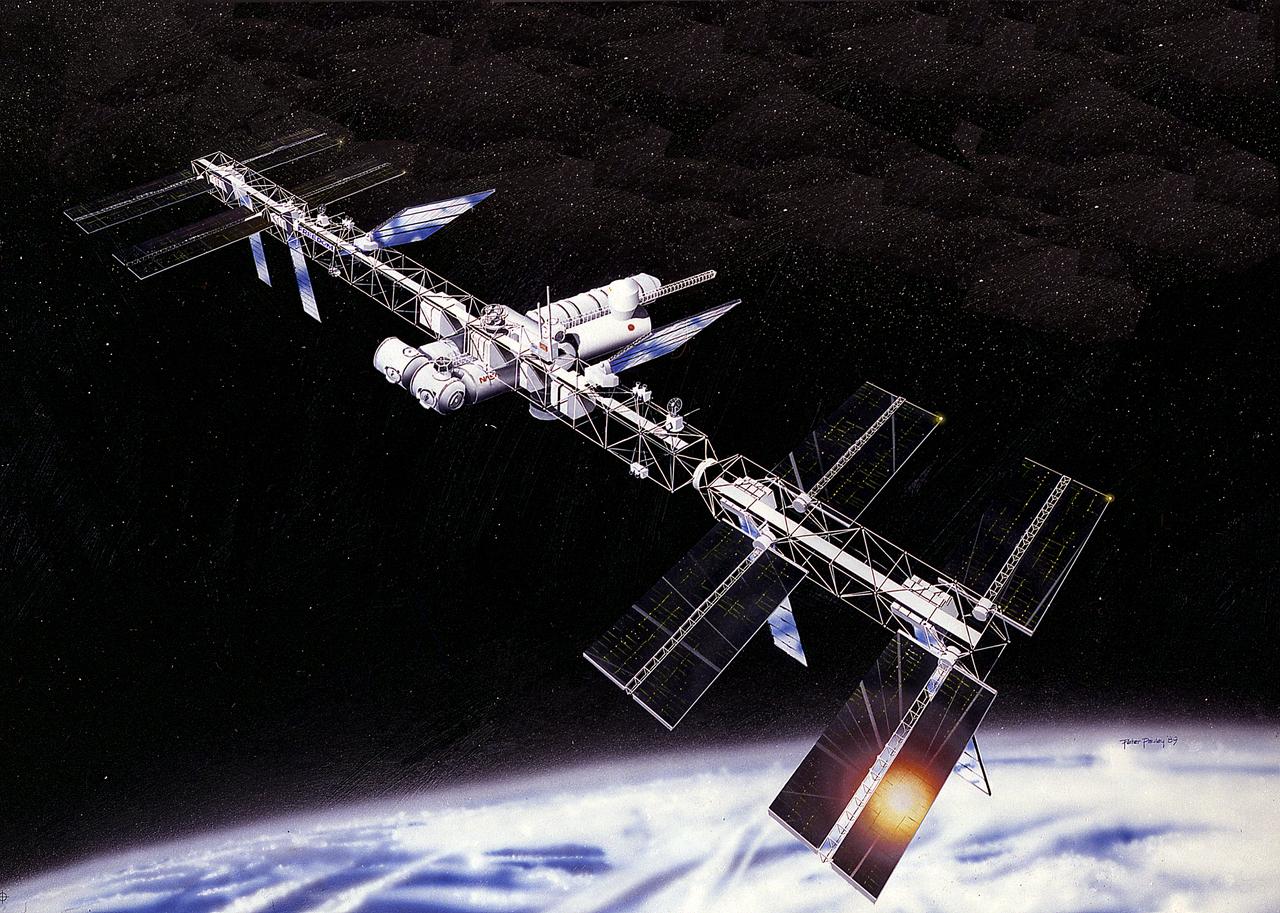
In response to President Reagan's directive to NASA to develop a permanent marned Space Station within a decade, part of the State of the Union message to Congress on January 25, 1984, NASA and the Administration adopted a phased approach to Station development. This approach provided an initial capability at reduced costs, to be followed by an enhanced Space Station capability in the future. This illustration depicts the baseline configuration, which features a 110-meter-long horizontal boom with four pressurized modules attached in the middle. Located at each end are four photovoltaic arrays generating a total of 75-kW of power. Two attachment points for external payloads are provided along this boom. The four pressurized modules include the following: A laboratory and habitation module provided by the United States; two additional laboratories, one each provided by the European Space Agency (ESA) and Japan; and an ESA-provided Man-Tended Free Flyer, a pressurized module capable of operations both attached to and separate from the Space Station core. Canada was expected to provide the first increment of a Mobile Serving System.
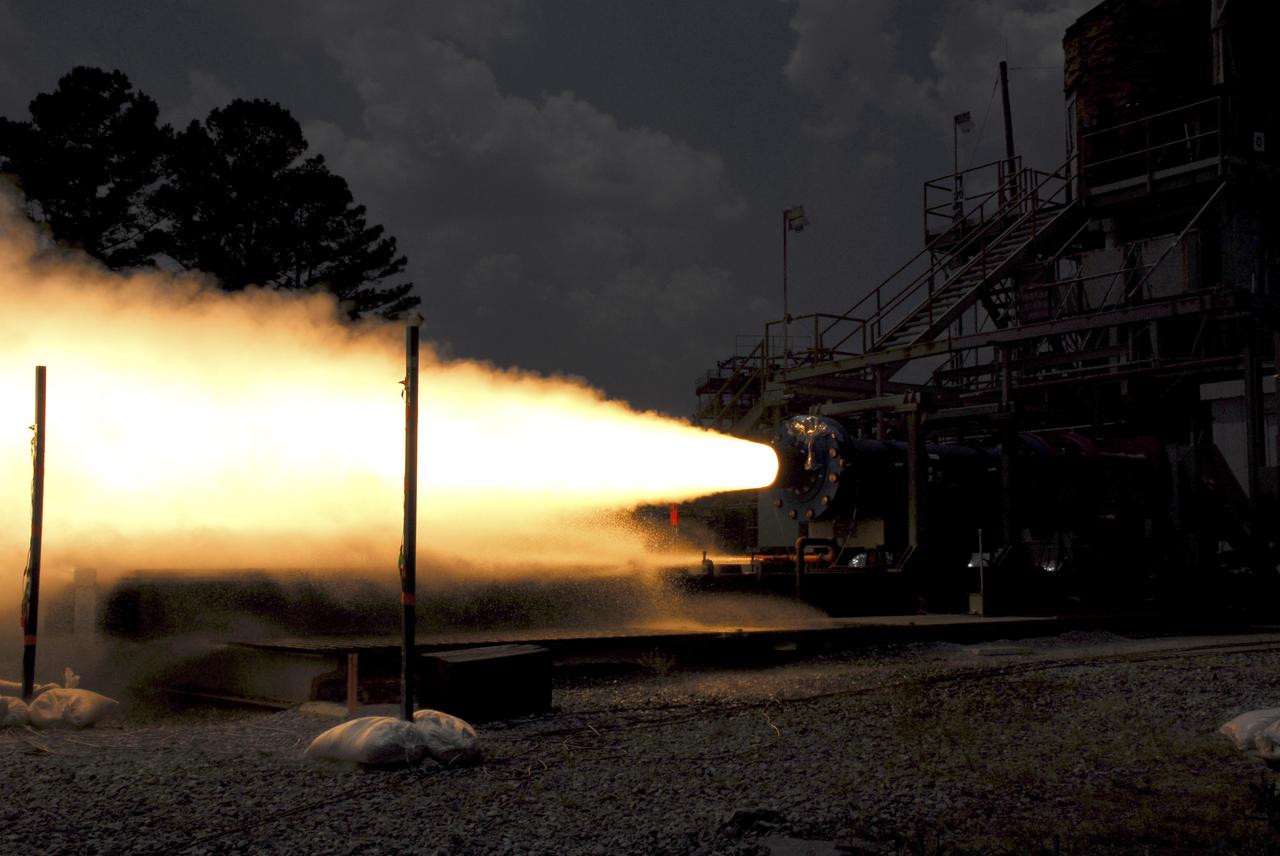
HOT FIRE P9038-SRTMV-N1 24". THE FIRST SUBSCALE MOTOR FOR THE ARES PROGRAM. THE PRIMARY OBJECTIVE FOR THE TEST IS TO ESTABLISH A BASELINE SUBSCALE CONFIGURATION FOR THE ARES 1ST STAGE NOZZLE.
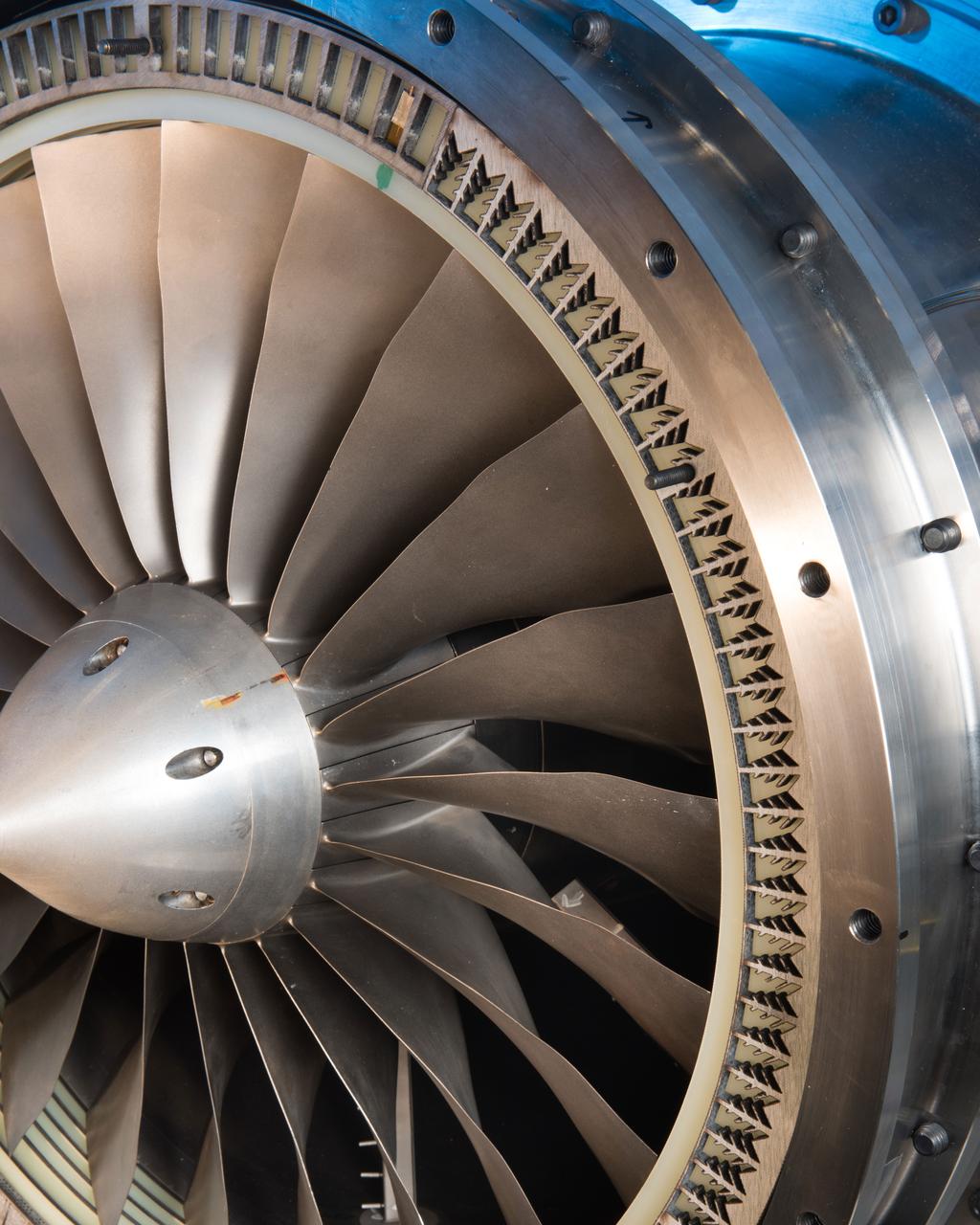
Acoustic Casing Treatment Testing Completed in the W-8 Single Stage Axial Compressor Facility at NASA Glenn. Four different over-the-rotor acoustic casing treatment concepts were tested along with two baseline configurations. Testing included steady-aerodynamic measurements of fan performance, hotfilm turbulence measurements, and inlet acoustic measurements with an in-duct array.
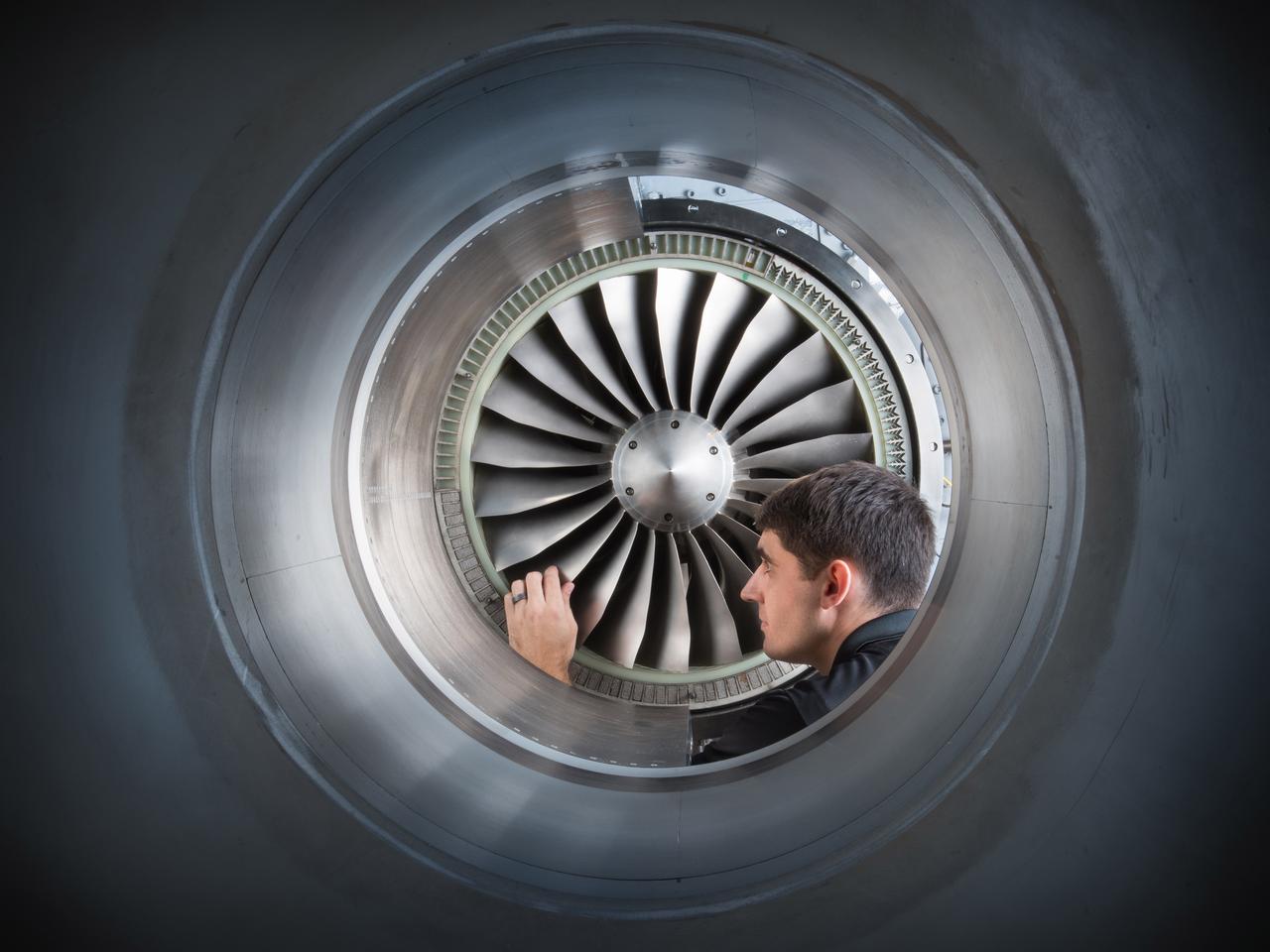
Acoustic Casing Treatment Testing Completed in the W-8 Single Stage Axial Compressor Facility at NASA Glenn. Four different over-the-rotor acoustic casing treatment concepts were tested along with two baseline configurations. Testing included steady-aerodynamic measurements of fan performance, hotfilm turbulence measurements, and inlet acoustic measurements with an in-duct array.
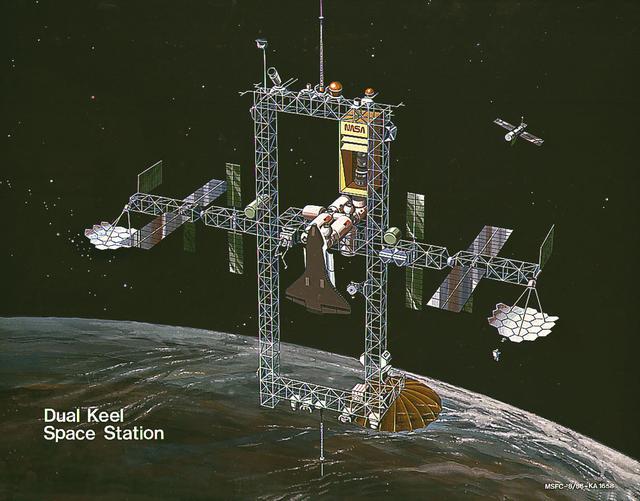
In response to President Reagan's directive to NASA to develop a permanent marned Space Station within a decade, part of the State of the Union message to Congress on January 25, 1984, NASA and the Administration adopted a phased approach to Station development. This approach provided an initial capability at reduced costs, to be followed by an enhanced Space Station capability in the future. This illustration depicts a configuration with enhanced capabilities. It builds on the horizontal boom and module pattern of the revised baseline. This configuration would feature dual keels, two vertical spines 105-meters long joined by upper and lower booms. The structure carrying the modules would become a transverse boom of a basically rectangular structure. The two new booms, 45-meters in length, would provide extensive accommodations for attached payloads, and would offer a wide field of view. Power would be increased significantly, with the addition if a 50-kW solar dynamic power system.
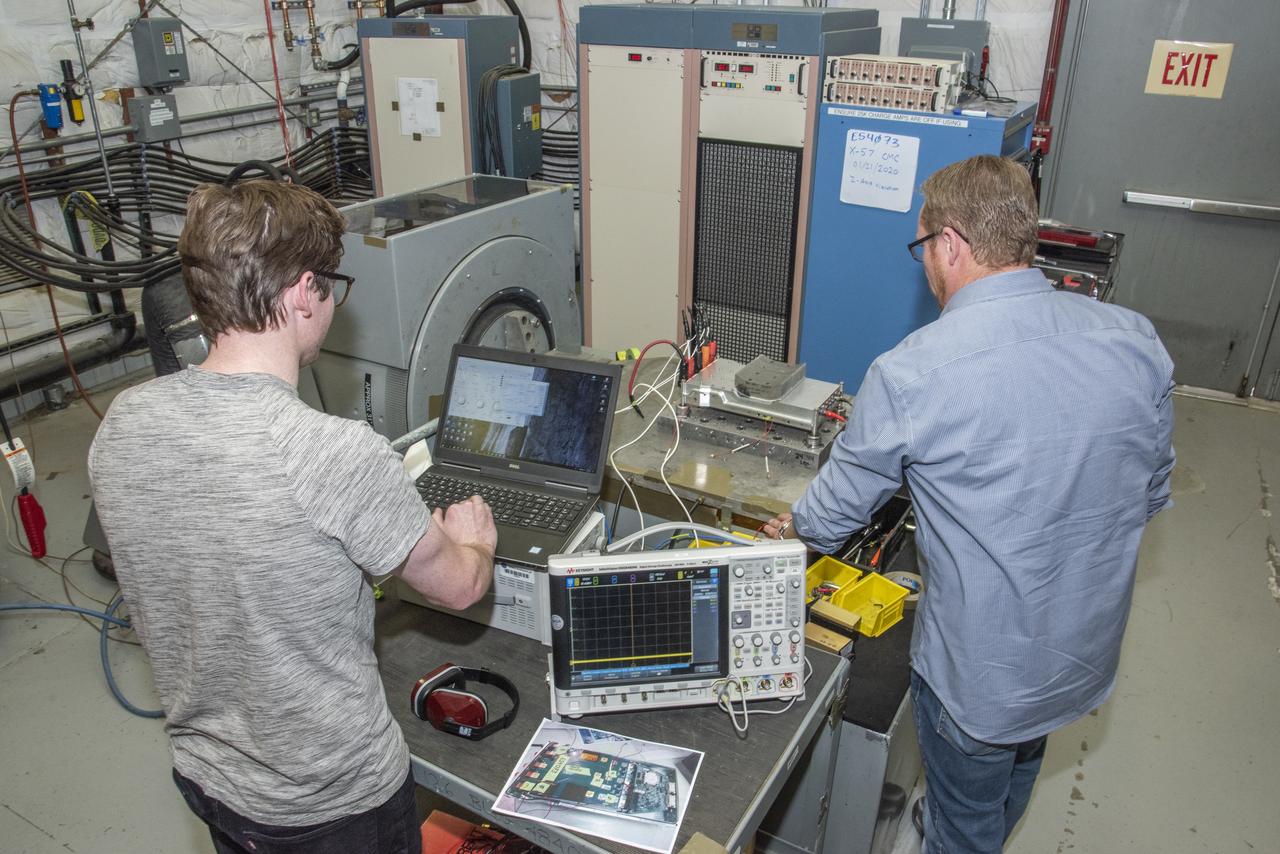
Engineers from NASA's Armstrong Flight Research Center and Empirical Systems Aerospace prepare a cruise motor controller, planned to be used on NASA's all-electric X-57 Maxwell, for vibration testing at Armstrong's environmental lab. Testing the cruise motor controller at various vibration levels, based on baseline flight testing in the project's first phase, helps ensure that the hardware will withstand similar vibration in flight conditions. X-57, NASA's first all-electric experimental aircraft, or X-plane, will fly in its first all-electric configuration in 2020.
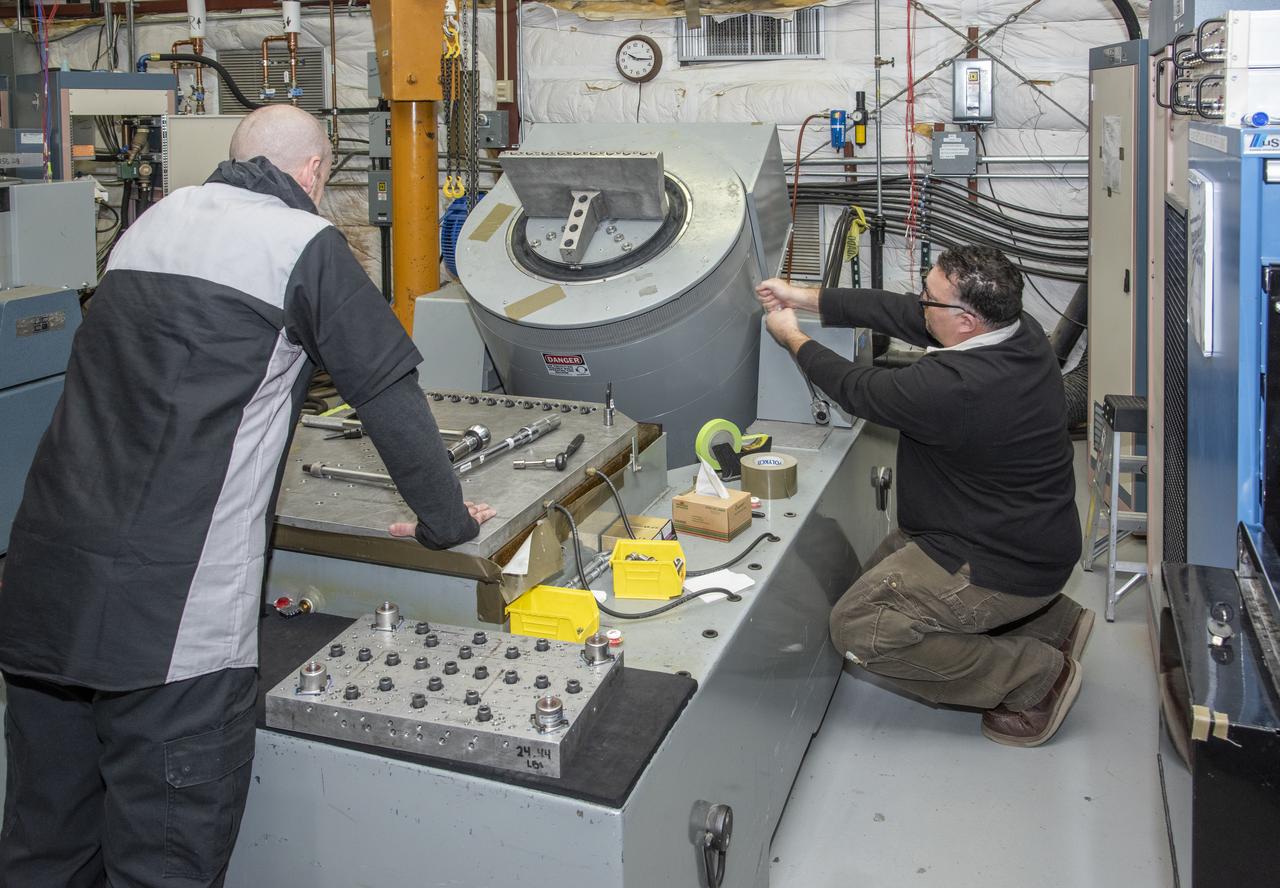
Engineers from NASA's Armstrong Flight Research Center and Empirical Systems Aerospace prepare a cruise motor controller, planned to be used on NASA's all-electric X-57 Maxwell, for vibration testing at Armstrong's environmental lab. Testing the cruise motor controller at various vibration levels, based on baseline flight testing in the project's first phase, helps ensure that the hardware will withstand similar vibration in flight conditions. X-57, NASA's first all-electric experimental aircraft, or X-plane, will fly in its first all-electric configuration in 2020.
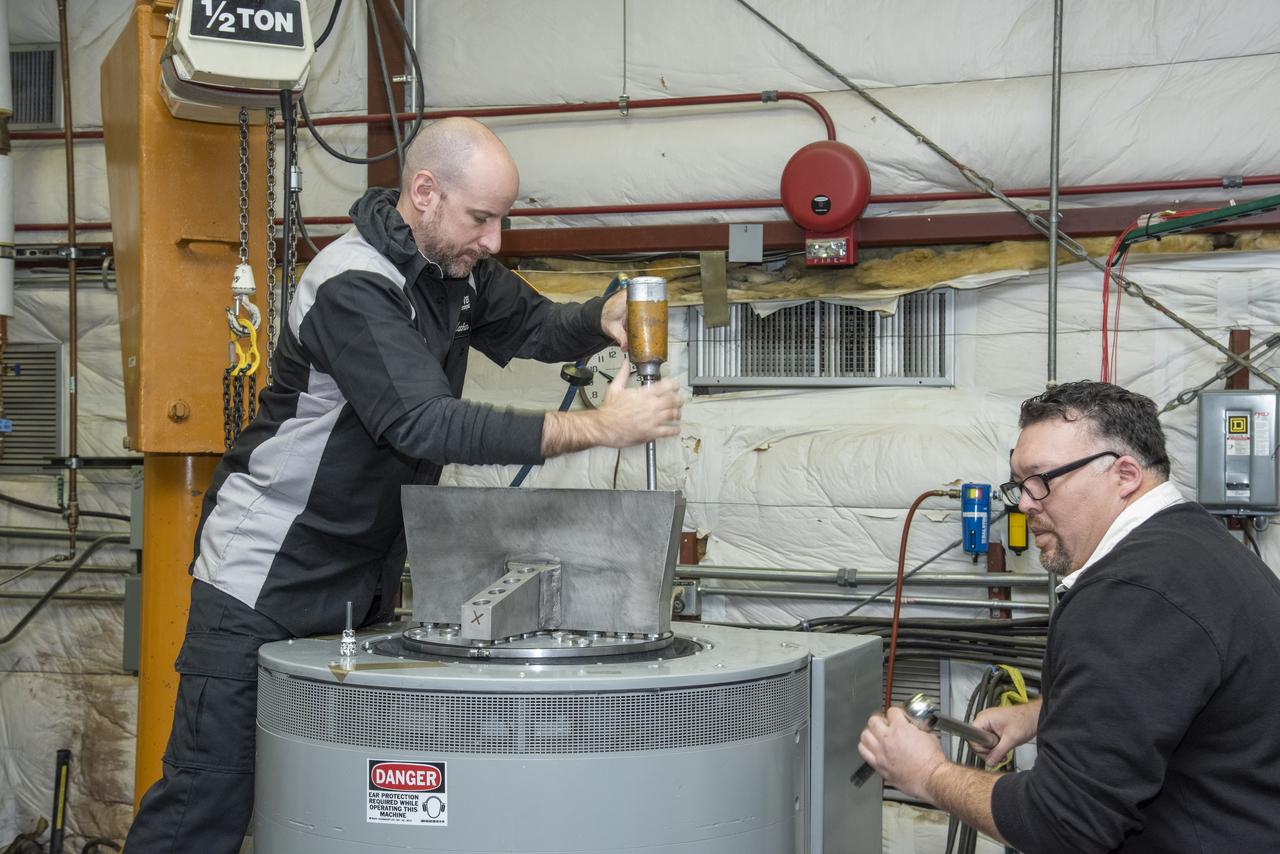
Engineers from NASA's Armstrong Flight Research Center and Empirical Systems Aerospace prepare a cruise motor controller, planned to be used on NASA's all-electric X-57 Maxwell, for vibration testing at Armstrong's environmental lab. Testing the cruise motor controller at various vibration levels, based on baseline flight testing in the project's first phase, helps ensure that the hardware will withstand similar vibration in flight conditions. X-57, NASA's first all-electric experimental aircraft, or X-plane, will fly in its first all-electric configuration in 2020.
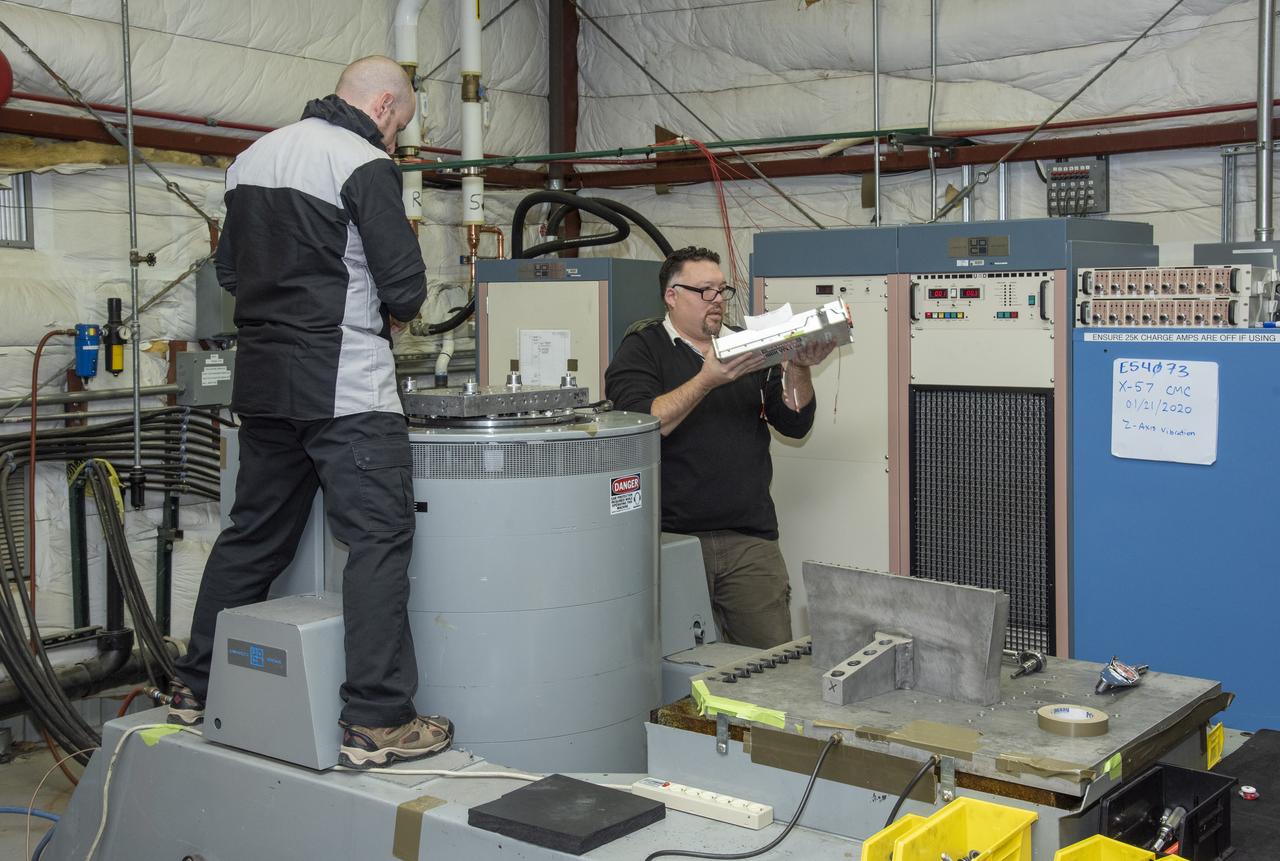
Engineers from NASA’s Armstrong Flight Research Center and Empirical Systems Aerospace prepare a cruise motor controller, planned to be used on NASA’s all-electric X-57 Maxwell, for vibration testing at Armstrong’s environmental lab. Testing the cruise motor controller at various vibration levels, based on baseline flight testing in the project’s first phase, helps ensure that the hardware will withstand similar vibration in flight conditions. X-57, NASA’s first all-electric experimental aircraft, or X-plane, will fly in its first all-electric configuration in 2020.
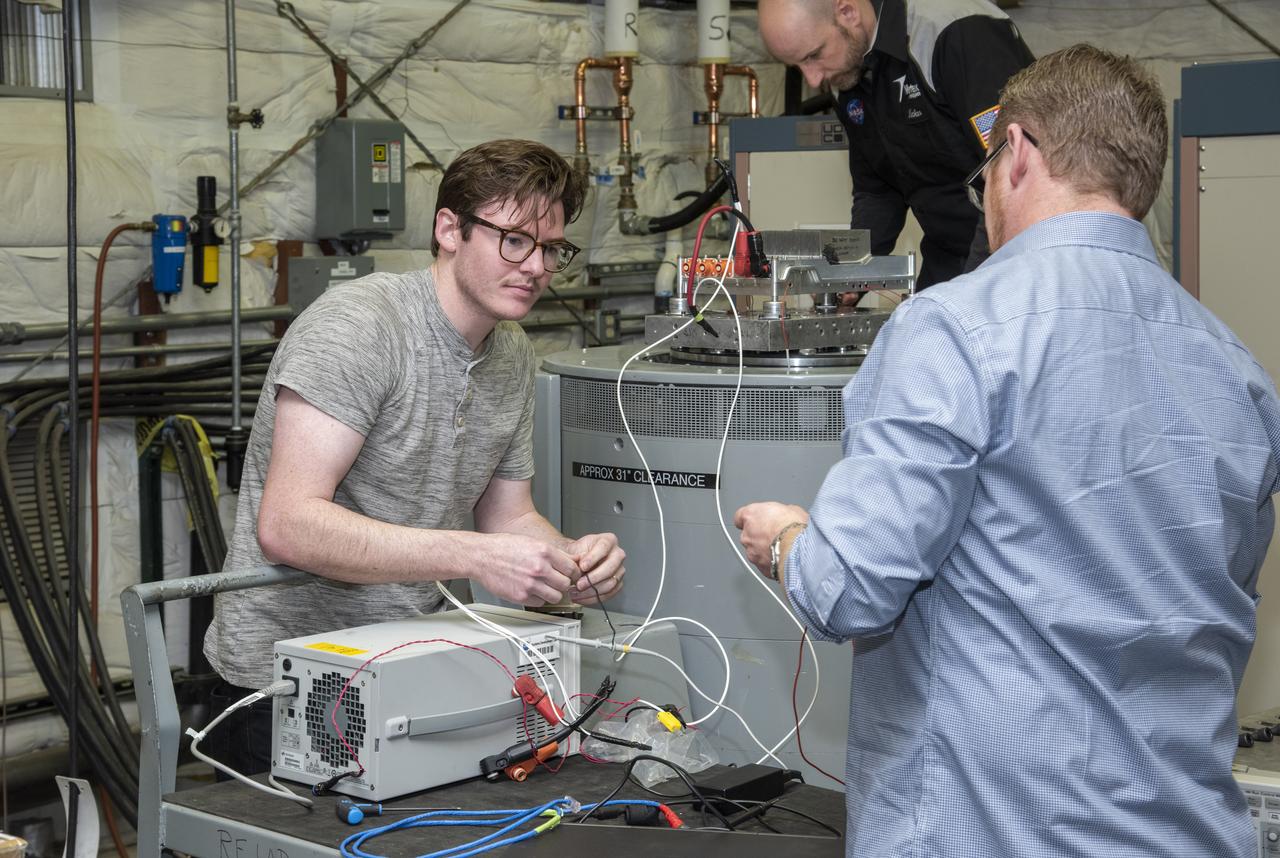
Engineers from NASA's Armstrong Flight Research Center and Empirical Systems Aerospace prepare a cruise motor controller, planned to be used on NASA's all-electric X-57 Maxwell, for vibration testing at Armstrong's environmental lab. Testing the cruise motor controller at various vibration levels, based on baseline flight testing in the project's first phase, helps ensure that the hardware will withstand similar vibration in flight conditions. X-57, NASA's first all-electric experimental aircraft, or X-plane, will fly in its first all-electric configuration in 2020.
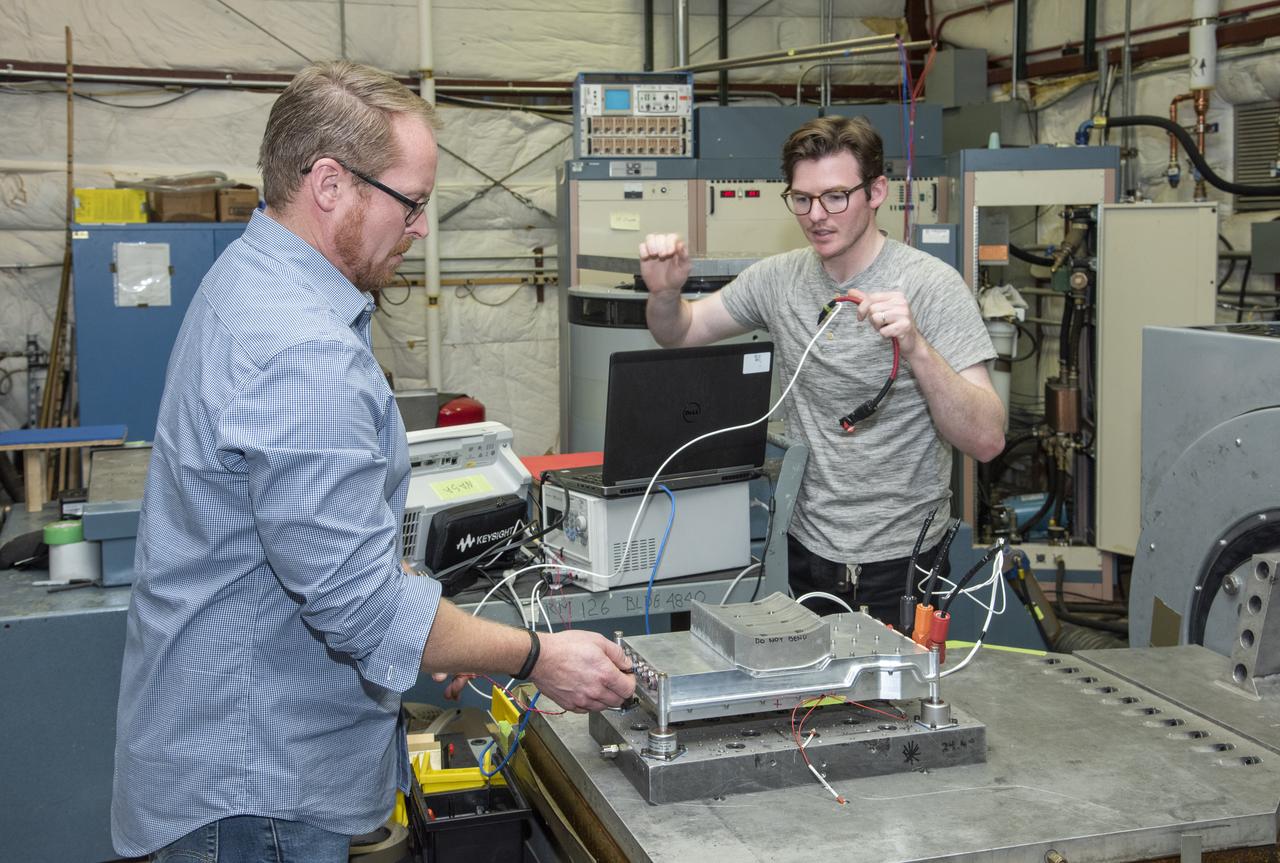
Engineers from NASA's Armstrong Flight Research Center and Empirical Systems Aerospace prepare a cruise motor controller, planned to be used on NASA's all-electric X-57 Maxwell, for vibration testing at Armstrong's environmental lab. Testing the cruise motor controller at various vibration levels, based on baseline flight testing in the project's first phase, helps ensure that the hardware will withstand similar vibration in flight conditions. X-57, NASA's first all-electric experimental aircraft, or X-plane, will fly in its first all-electric configuration in 2020.
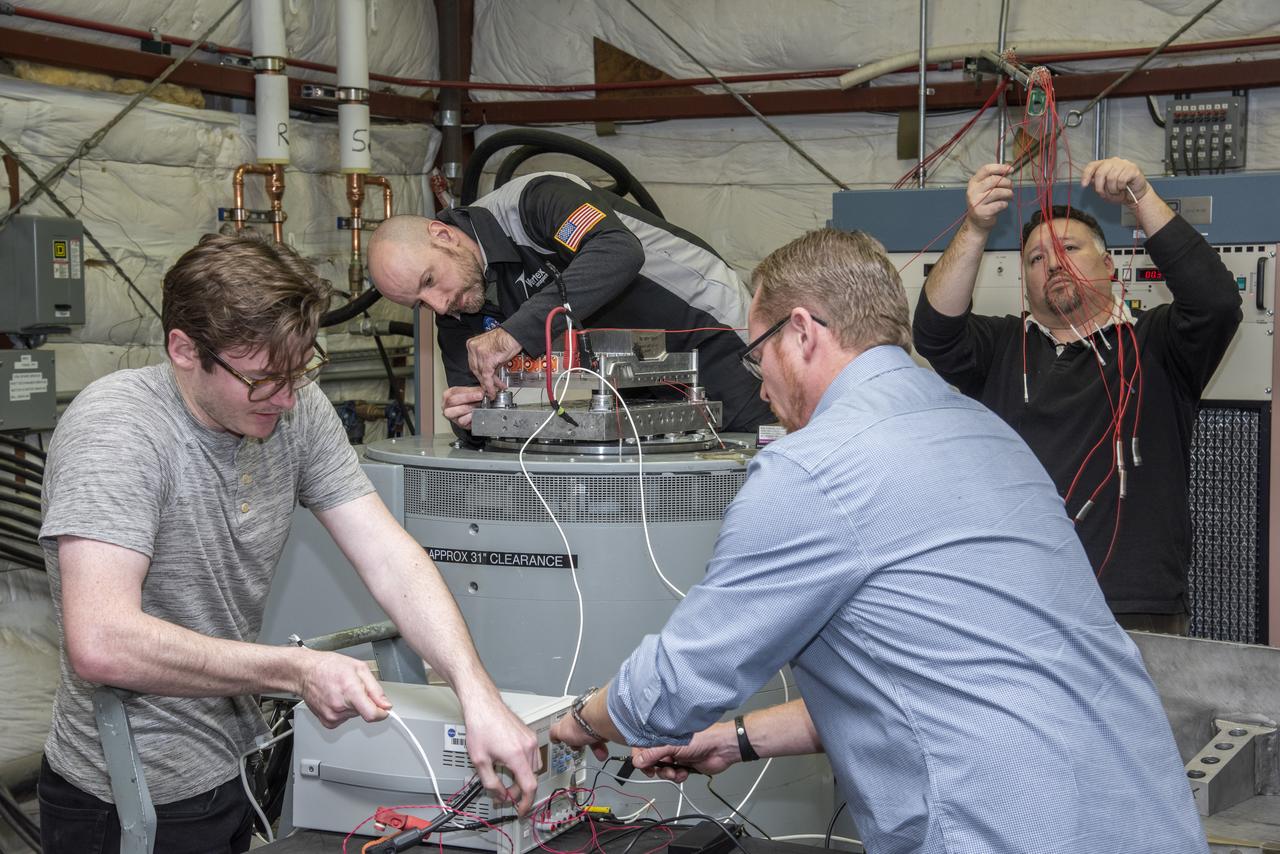
Engineers from NASA's Armstrong Flight Research Center and Empirical Systems Aerospace prepare a cruise motor controller, planned to be used on NASA's all-electric X-57 Maxwell, for vibration testing at Armstrong's environmental lab. Testing the cruise motor controller at various vibration levels, based on baseline flight testing in the project's first phase, helps ensure that the hardware will withstand similar vibration in flight conditions. X-57, NASA's first all-electric experimental aircraft, or X-plane, will fly in its first all-electric configuration in 2020.
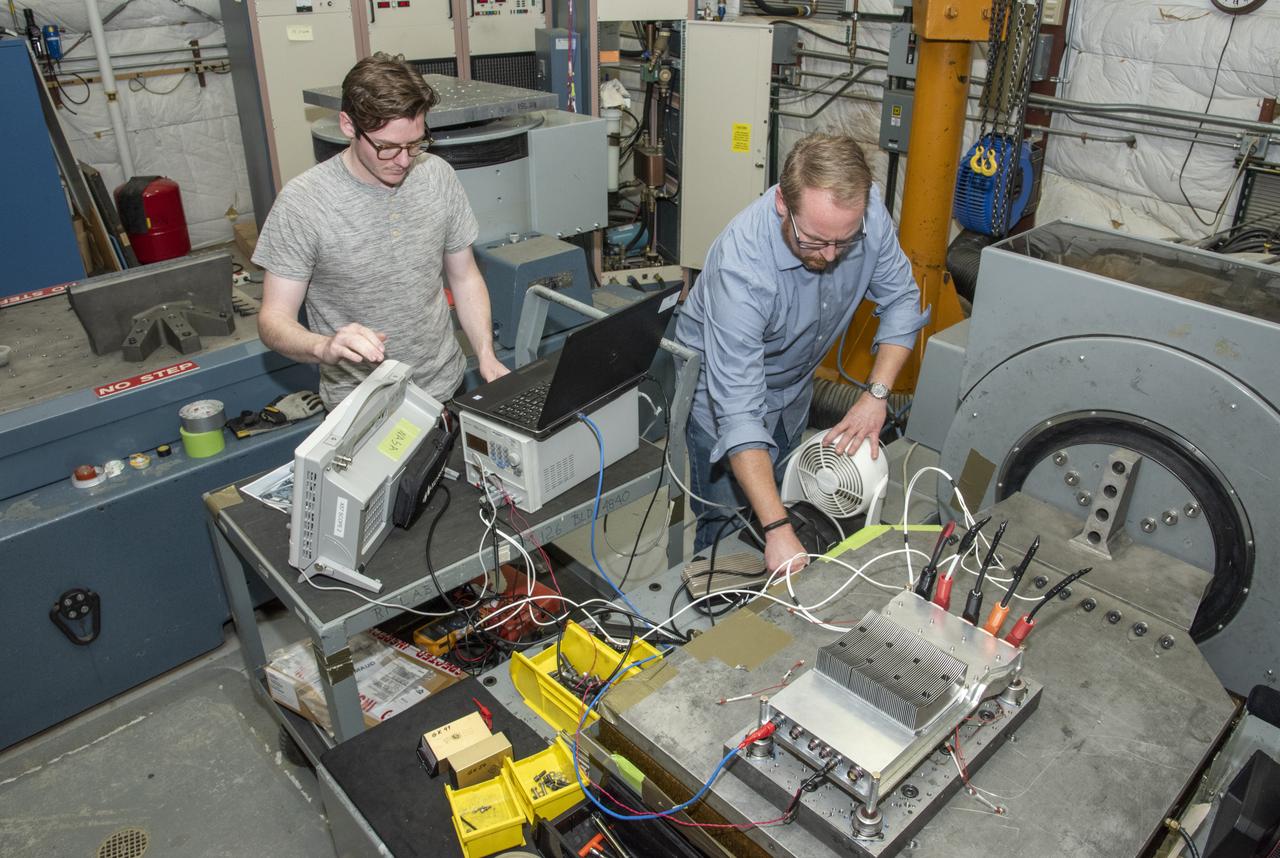
Engineers from NASA’s Armstrong Flight Research Center and Empirical Systems Aerospace prepare a cruise motor controller, planned to be used on NASA’s all-electric X-57 Maxwell, for vibration testing at Armstrong’s environmental lab. Testing the cruise motor controller at various vibration levels, based on baseline flight testing in the project’s first phase, helps ensure that the hardware will withstand similar vibration in flight conditions. X-57, NASA’s first all-electric experimental aircraft, or X-plane, will fly in its first all-electric configuration in 2020.
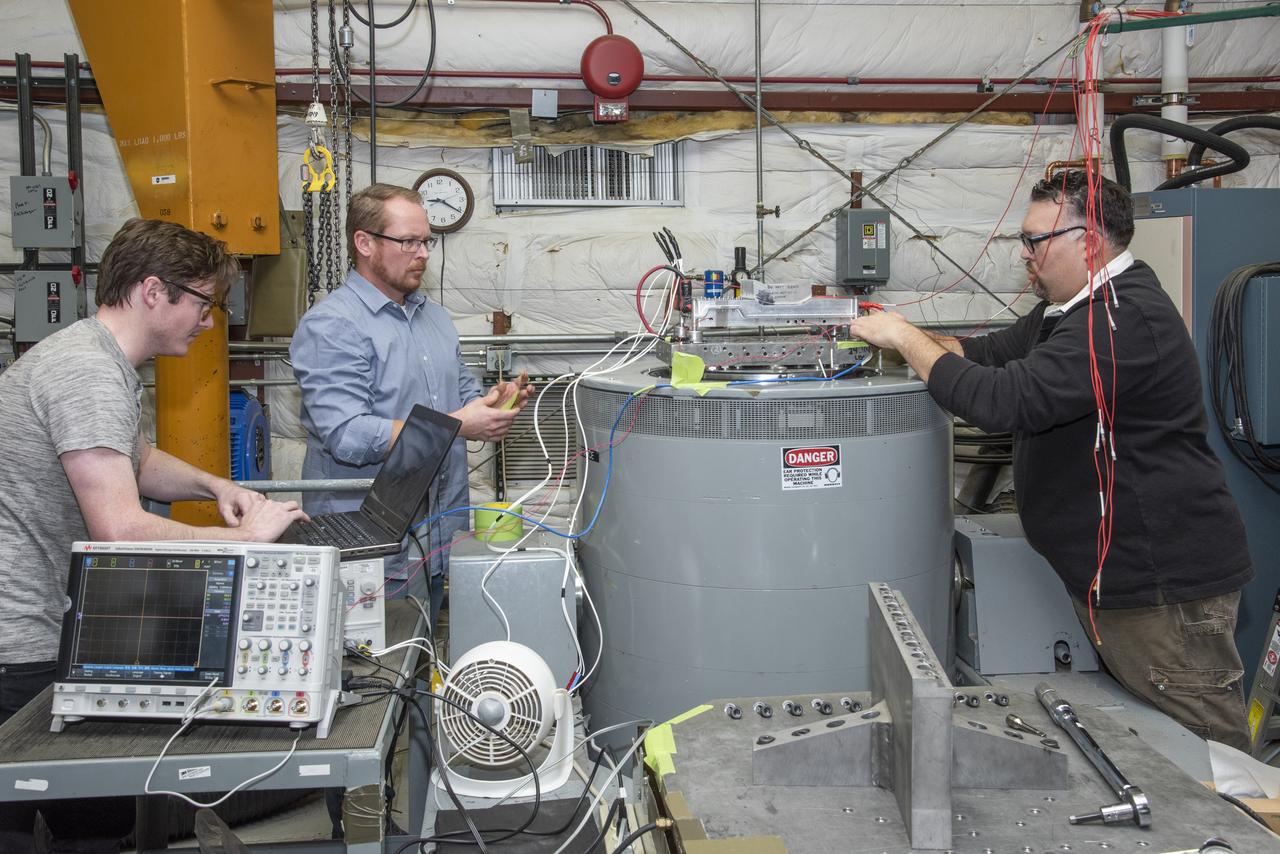
Engineers from NASA's Armstrong Flight Research Center and Empirical Systems Aerospace prepare a cruise motor controller, planned to be used on NASA's all-electric X-57 Maxwell, for vibration testing at Armstrong's environmental lab. Testing the cruise motor controller at various vibration levels, based on baseline flight testing in the project's first phase, helps ensure that the hardware will withstand similar vibration in flight conditions. X-57, NASA's first all-electric experimental aircraft, or X-plane, will fly in its first all-electric configuration in 2020.
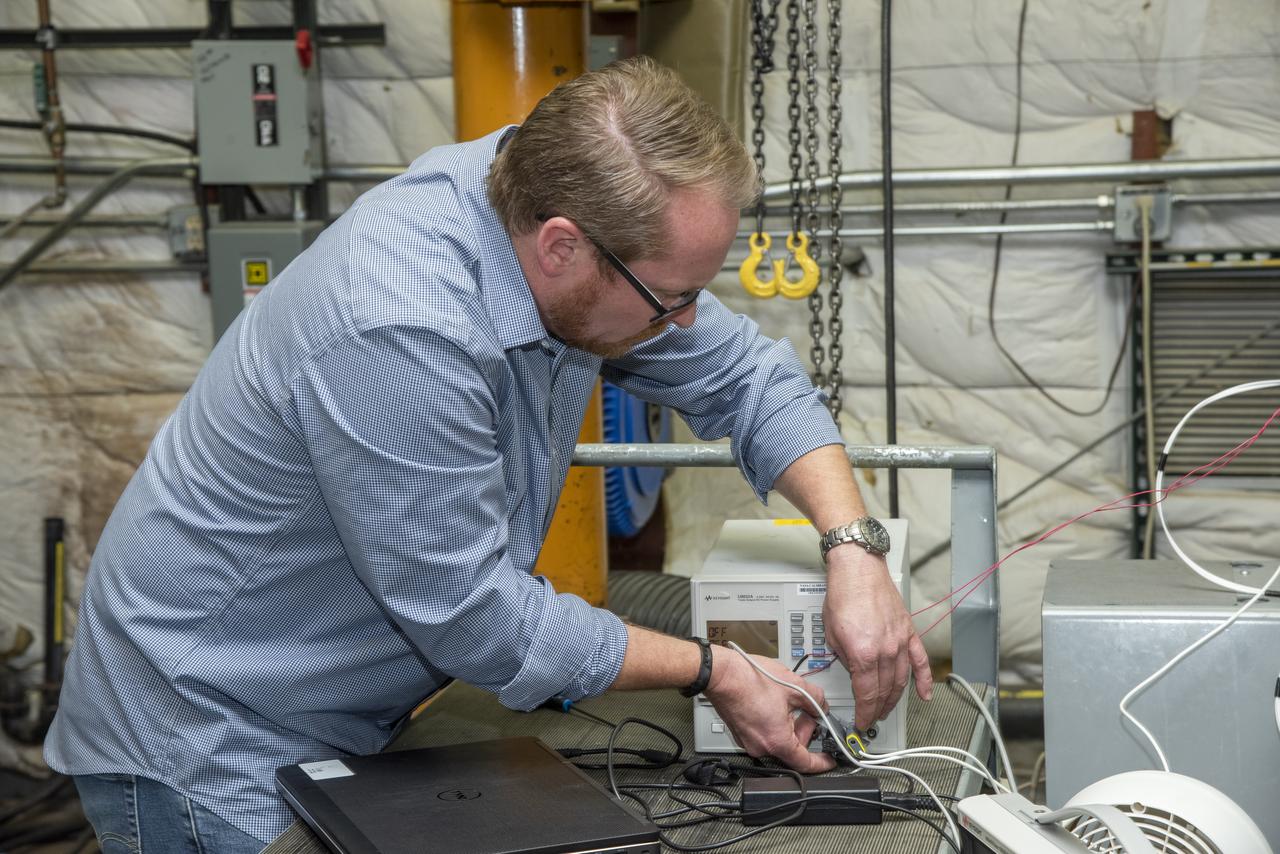
Engineers from NASA's Armstrong Flight Research Center and Empirical Systems Aerospace prepare a cruise motor controller, planned to be used on NASA's all-electric X-57 Maxwell, for vibration testing at Armstrong's environmental lab. Testing the cruise motor controller at various vibration levels, based on baseline flight testing in the project's first phase, helps ensure that the hardware will withstand similar vibration in flight conditions. X-57, NASA's first all-electric experimental aircraft, or X-plane, will fly in its first all-electric configuration in 2020.
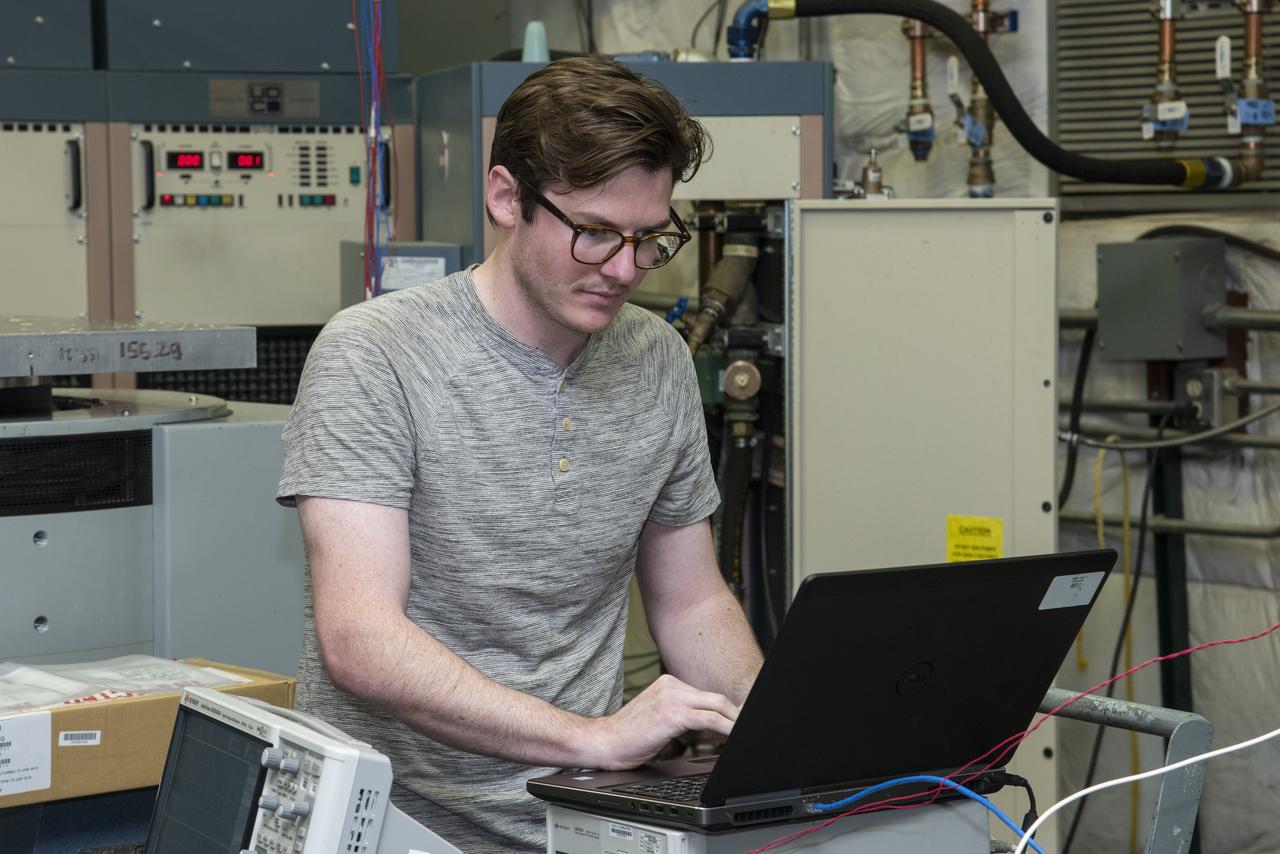
Engineers from NASA’s Armstrong Flight Research Center and Empirical Systems Aerospace prepare a cruise motor controller, planned to be used on NASA’s all-electric X-57 Maxwell, for vibration testing at Armstrong’s environmental lab. Testing the cruise motor controller at various vibration levels, based on baseline flight testing in the project’s first phase, helps ensure that the hardware will withstand similar vibration in flight conditions. X-57, NASA’s first all-electric experimental aircraft, or X-plane, will fly in its first all-electric configuration in 2020.
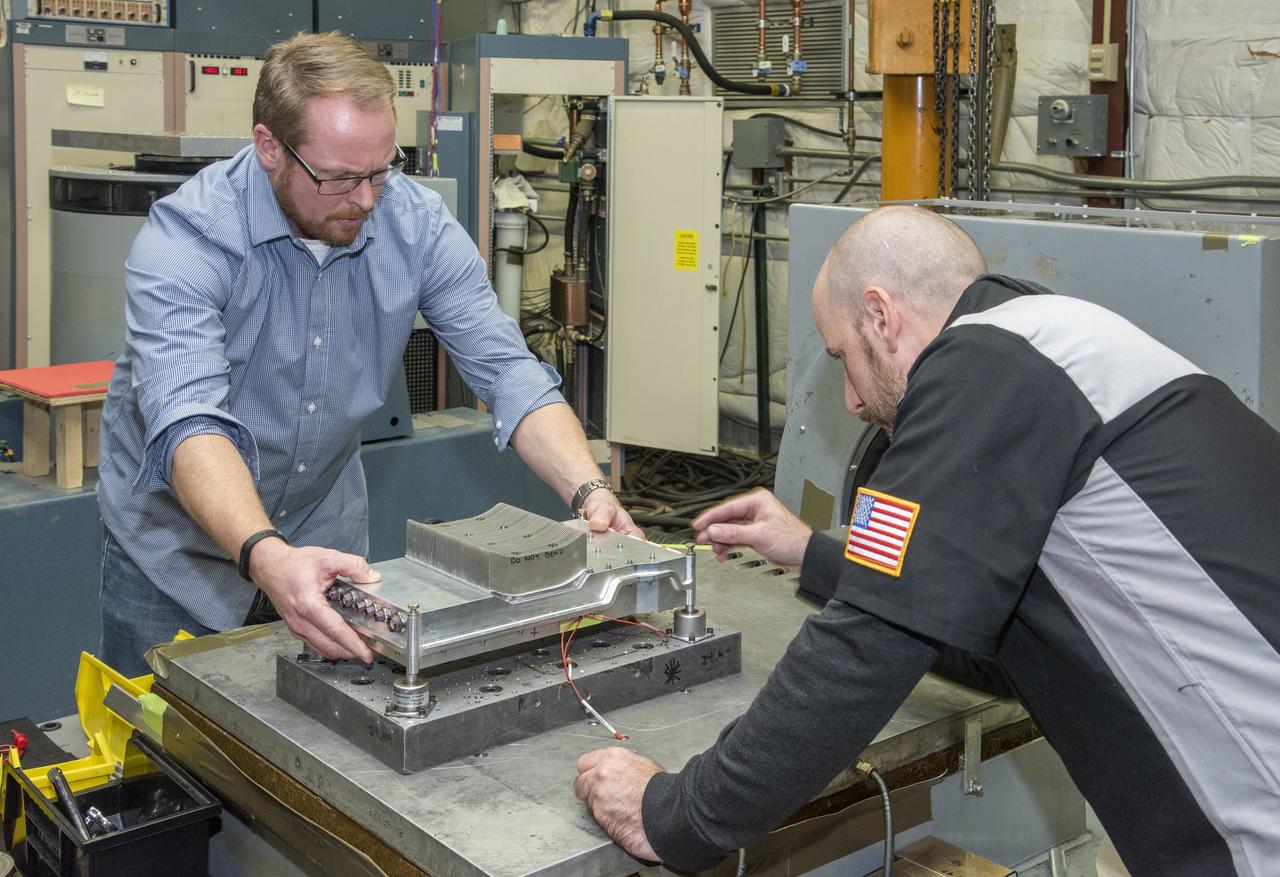
Engineers from NASA's Armstrong Flight Research Center and Empirical Systems Aerospace prepare a cruise motor controller, planned to be used on NASA's all-electric X-57 Maxwell, for vibration testing at Armstrong's environmental lab. Testing the cruise motor controller at various vibration levels, based on baseline flight testing in the project's first phase, helps ensure that the hardware will withstand similar vibration in flight conditions. X-57, NASA's first all-electric experimental aircraft, or X-plane, will fly in its first all-electric configuration in 2020.
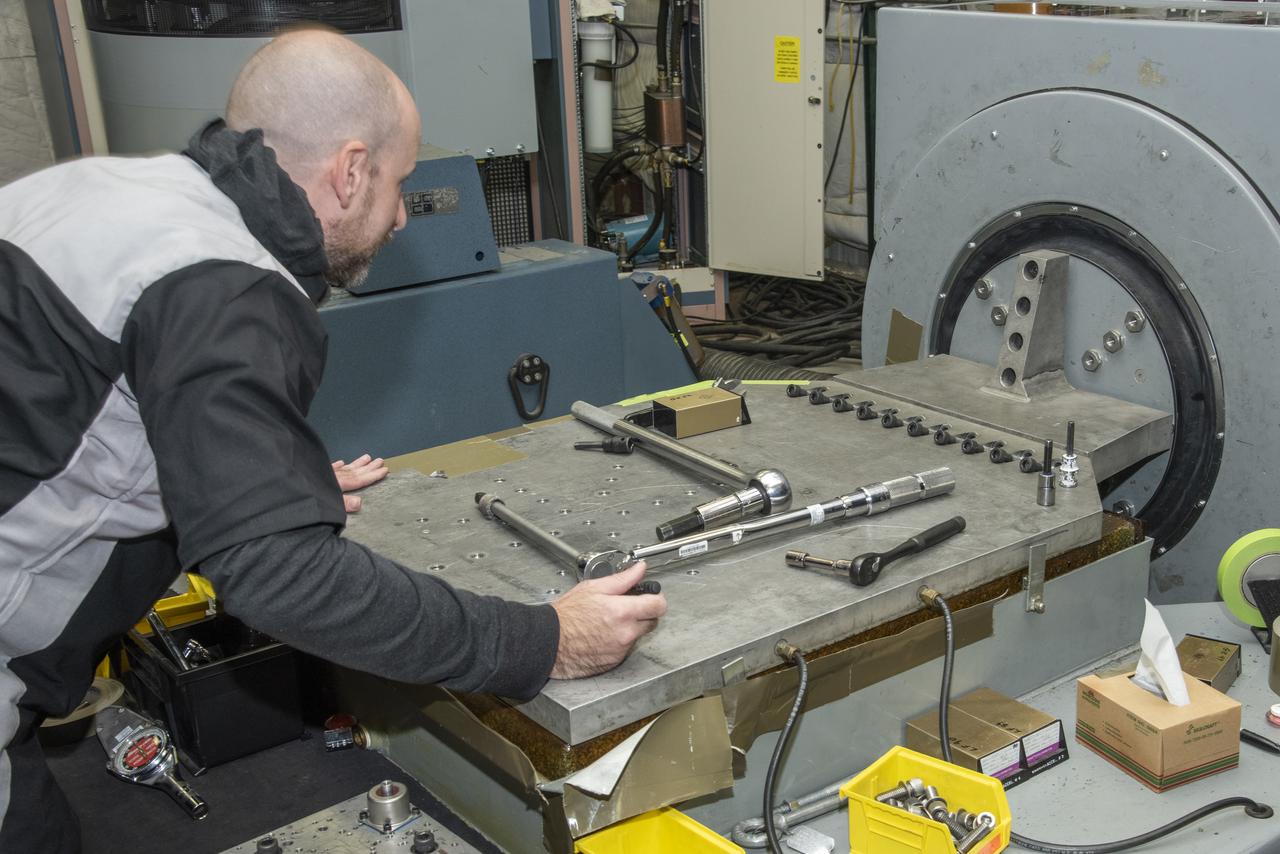
Engineers from NASA's Armstrong Flight Research Center and Empirical Systems Aerospace prepare a cruise motor controller, planned to be used on NASA's all-electric X-57 Maxwell, for vibration testing at Armstrong's environmental lab. Testing the cruise motor controller at various vibration levels, based on baseline flight testing in the project's first phase, helps ensure that the hardware will withstand similar vibration in flight conditions. X-57, NASA's first all-electric experimental aircraft, or X-plane, will fly in its first all-electric configuration in 2020.
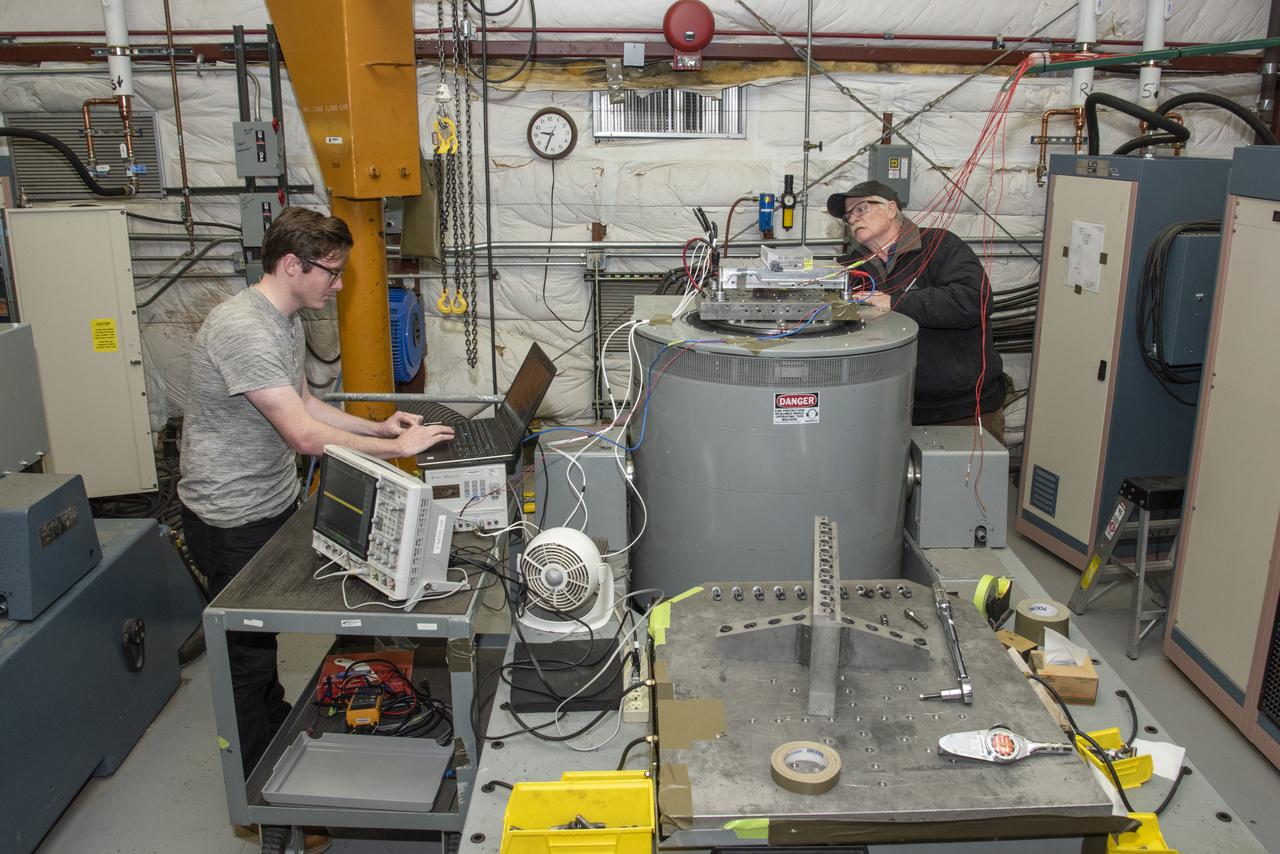
Engineers from NASA's Armstrong Flight Research Center and Empirical Systems Aerospace prepare a cruise motor controller, planned to be used on NASA's all-electric X-57 Maxwell, for vibration testing at Armstrong's environmental lab. Testing the cruise motor controller at various vibration levels, based on baseline flight testing in the project's first phase, helps ensure that the hardware will withstand similar vibration in flight conditions. X-57, NASA's first all-electric experimental aircraft, or X-plane, will fly in its first all-electric configuration in 2020.
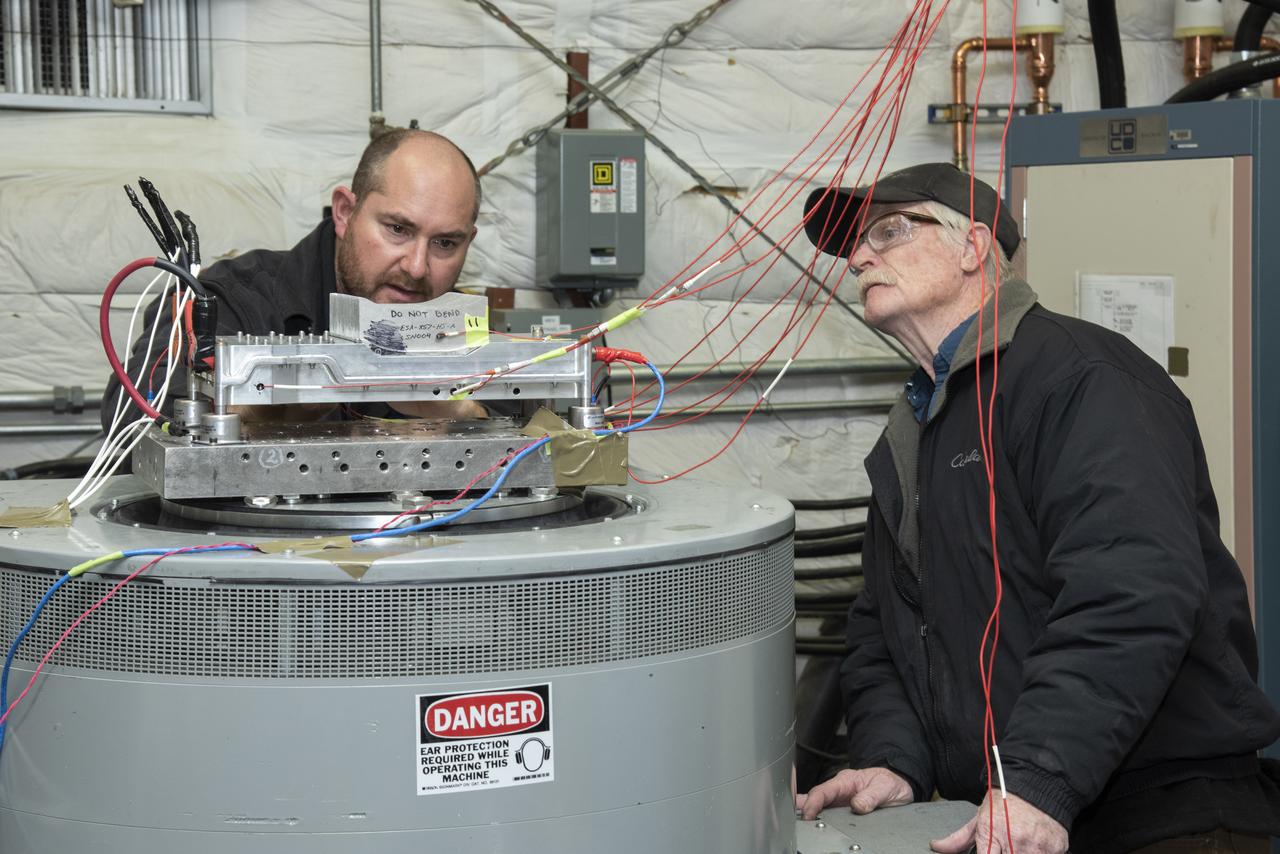
Engineers from NASA's Armstrong Flight Research Center and Empirical Systems Aerospace prepare a cruise motor controller, planned to be used on NASA's all-electric X-57 Maxwell, for vibration testing at Armstrong's environmental lab. Testing the cruise motor controller at various vibration levels, based on baseline flight testing in the project's first phase, helps ensure that the hardware will withstand similar vibration in flight conditions. X-57, NASAs first all-electric experimental aircraft, or X-plane, will fly in its first all-electric configuration in 2020.
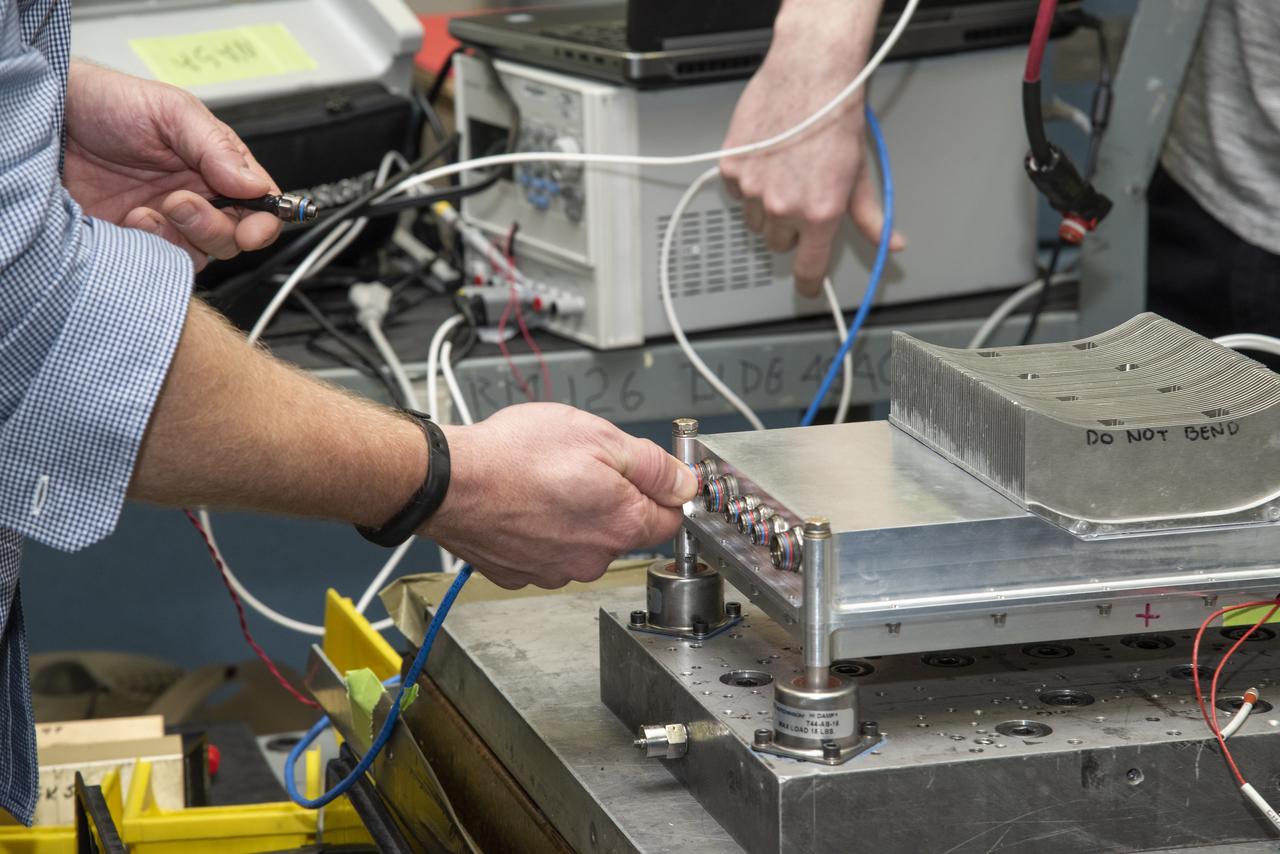
Engineers from NASA's Armstrong Flight Research Center and Empirical Systems Aerospace prepare a cruise motor controller, planned to be used on NASA's all-electric X-57 Maxwell, for vibration testing at Armstrong's environmental lab. Testing the cruise motor controller at various vibration levels, based on baseline flight testing in the project's first phase, helps ensure that the hardware will withstand similar vibration in flight conditions. X-57, NASA's first all-electric experimental aircraft, or X-plane, will fly in its first all-electric configuration in 2020.
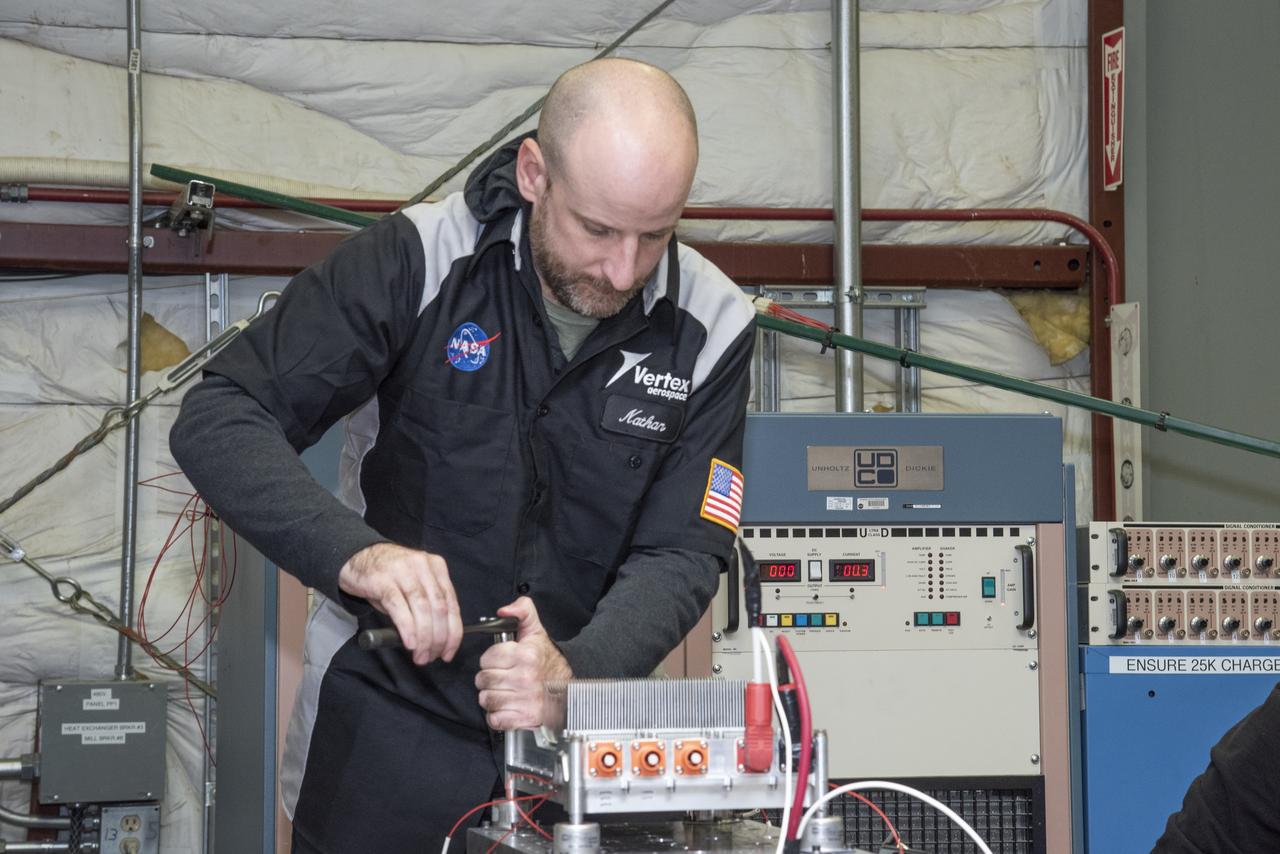
Engineers from NASA's Armstrong Flight Research Center and Empirical Systems Aerospace prepare a cruise motor controller, planned to be used on NASA's all-electric X-57 Maxwell, for vibration testing at Armstrong's environmental lab. Testing the cruise motor controller at various vibration levels, based on baseline flight testing in the project's first phase, helps ensure that the hardware will withstand similar vibration in flight conditions. X-57, NASA's first all-electric experimental aircraft, or X-plane, will fly in its first all-electric configuration in 2020.
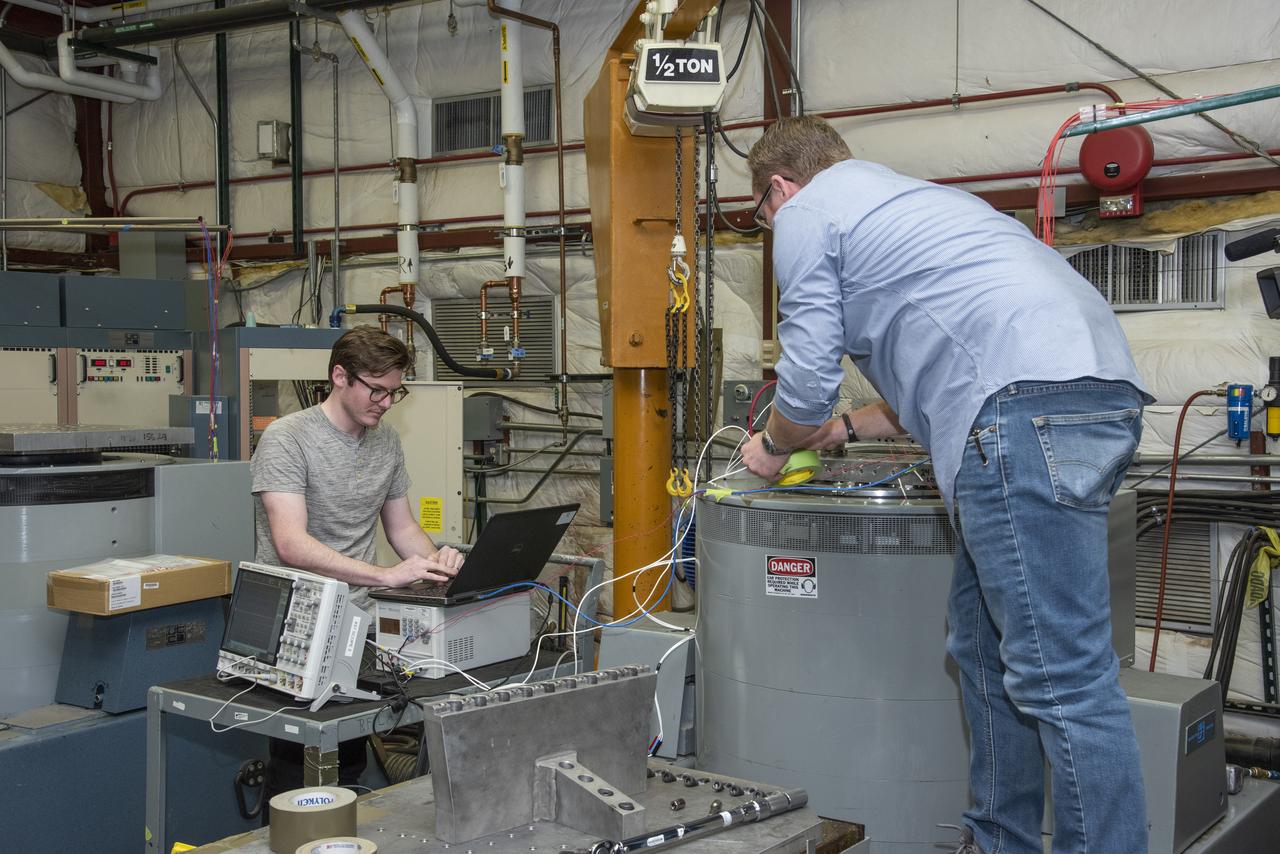
Engineers from NASA's Armstrong Flight Research Center and Empirical Systems Aerospace prepare a cruise motor controller, planned to be used on NASA's all-electric X-57 Maxwell, for vibration testing at Armstrong's environmental lab. Testing the cruise motor controller at various vibration levels, based on baseline flight testing in the project's first phase, helps ensure that the hardware will withstand similar vibration in flight conditions. X-57, NASA's first all-electric experimental aircraft, or X-plane, will fly in its first all-electric configuration in 2020.
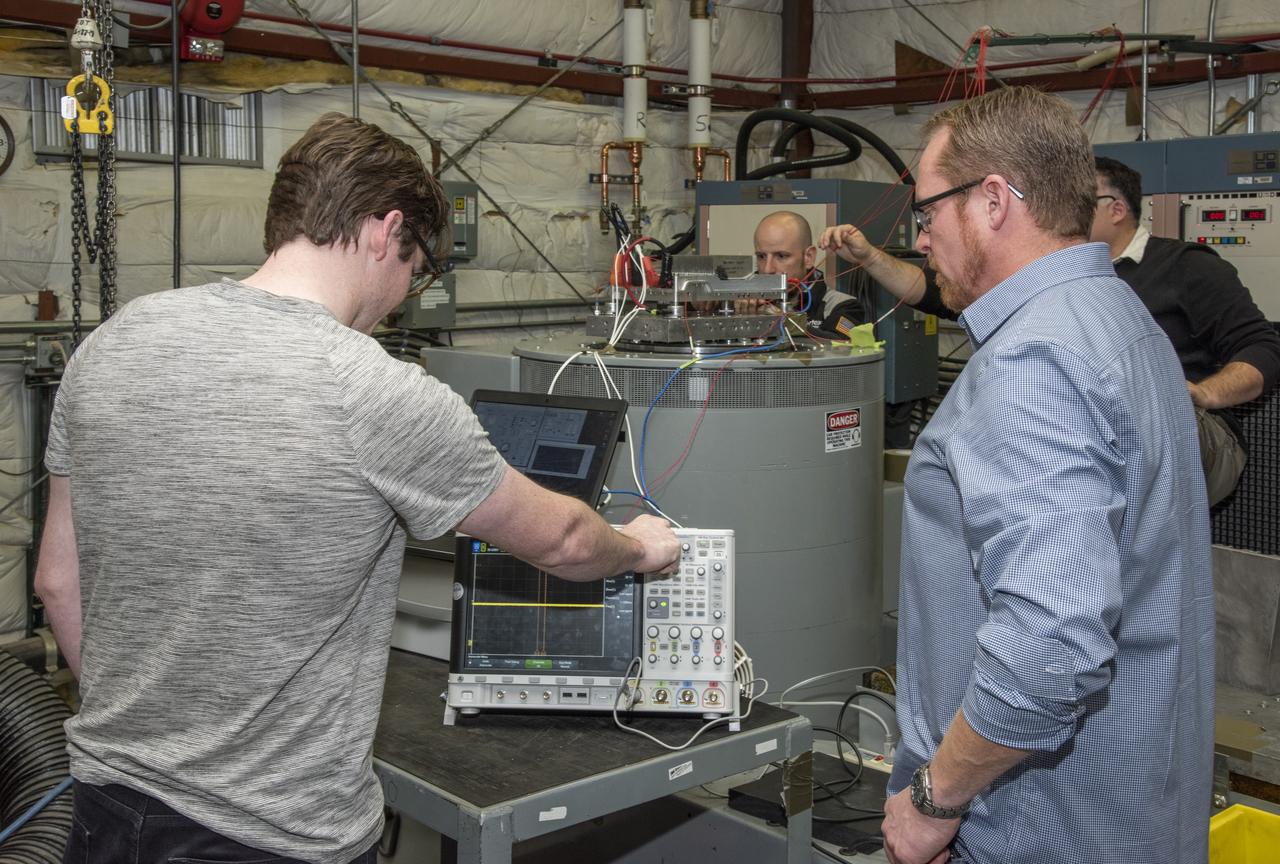
Engineers from NASA's Armstrong Flight Research Center and Empirical Systems Aerospace prepare a cruise motor controller, planned to be used on NASA's all-electric X-57 Maxwell, for vibration testing at Armstrong's environmental lab. Testing the cruise motor controller at various vibration levels, based on baseline flight testing in the project's first phase, helps ensure that the hardware will withstand similar vibration in flight conditions. X-57, NASA's first all-electric experimental aircraft, or X-plane, will fly in its first all-electric configuration in 2020.
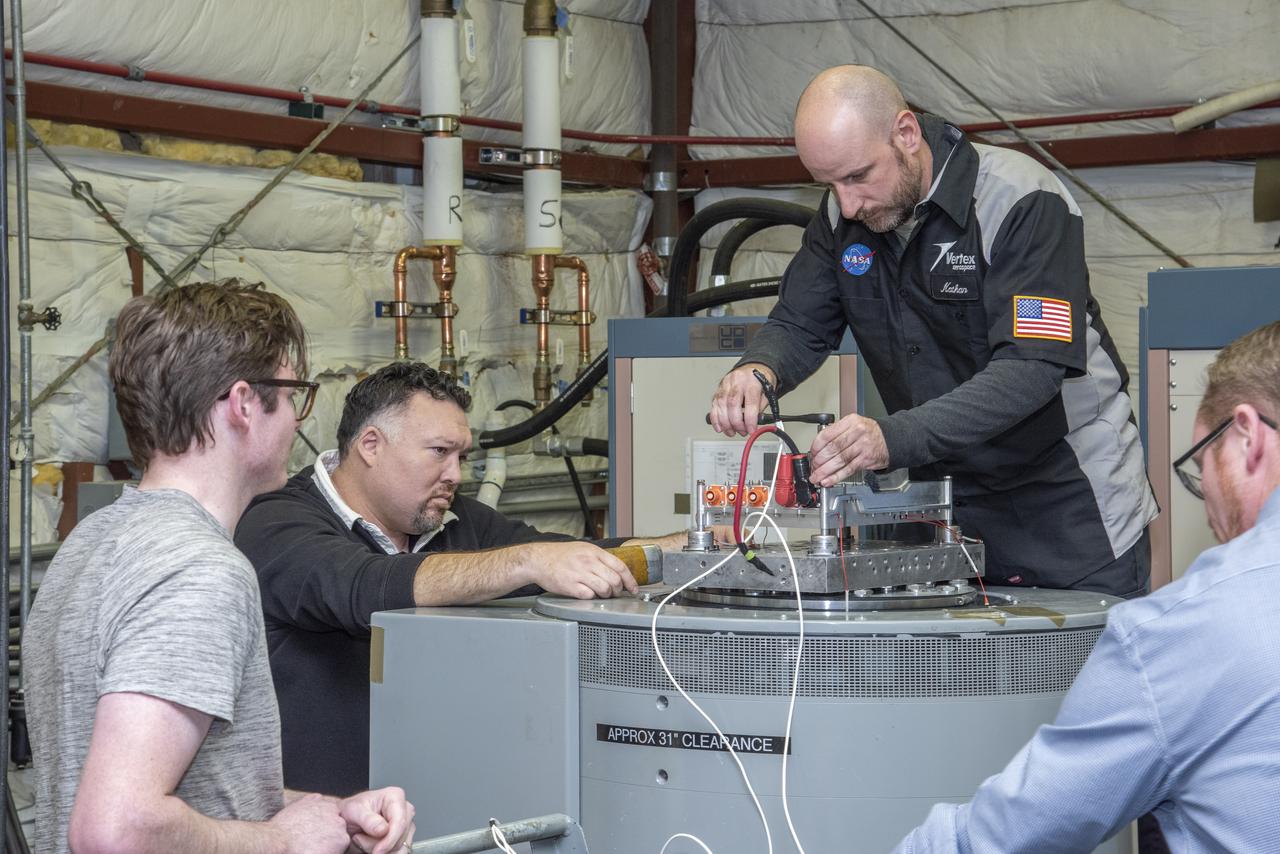
Engineers from NASA's Armstrong Flight Research Center and Empirical Systems Aerospace prepare a cruise motor controller, planned to be used on NASA's all-electric X-57 Maxwell, for vibration testing at Armstrong's environmental lab. Testing the cruise motor controller at various vibration levels, based on baseline flight testing in the project's first phase, helps ensure that the hardware will withstand similar vibration in flight conditions. X-57, NASA's first all-electric experimental aircraft, or X-plane, will fly in its first all-electric configuration in 2020.
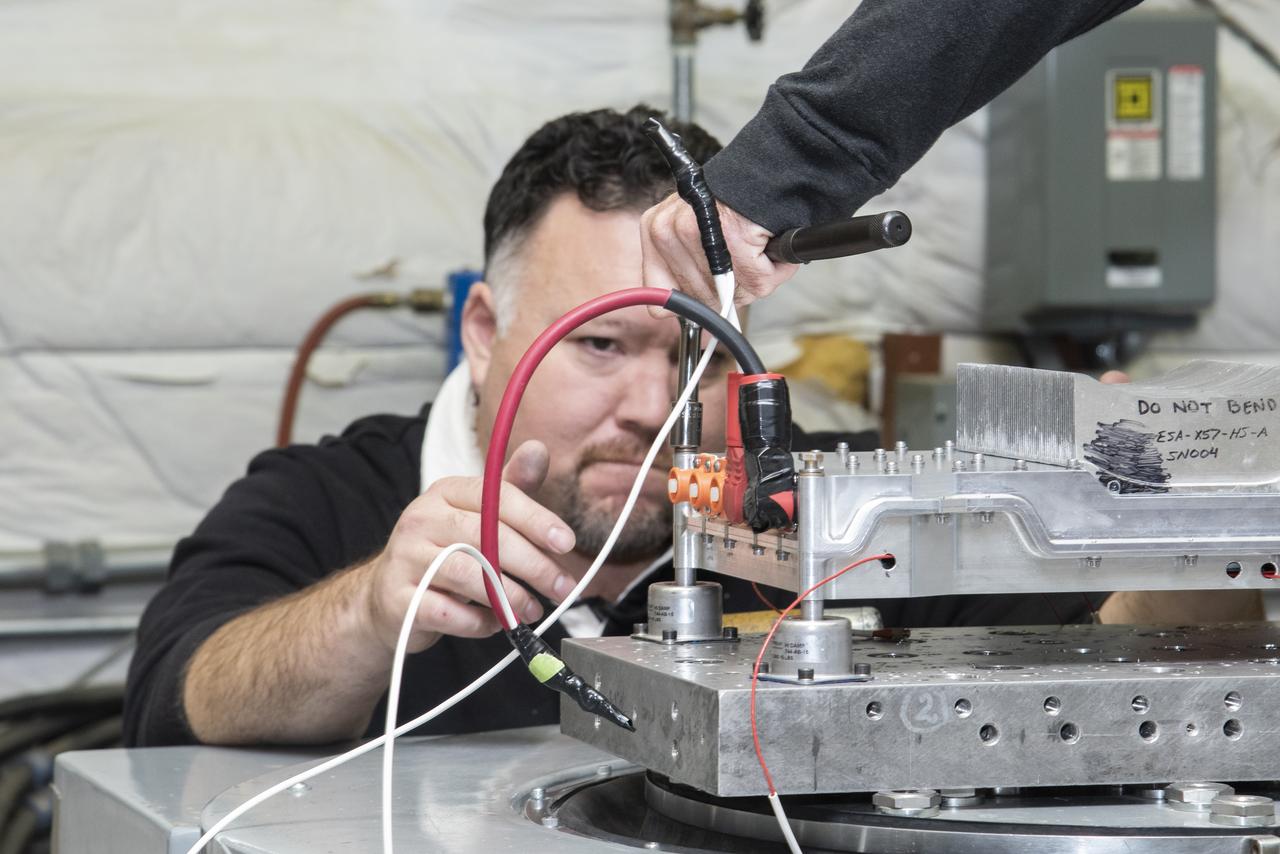
Engineers from NASA’s Armstrong Flight Research Center and Empirical Systems Aerospace prepare a cruise motor controller, planned to be used on NASA’s all-electric X-57 Maxwell, for vibration testing at Armstrong’s environmental lab. Testing the cruise motor controller at various vibration levels, based on baseline flight testing in the project’s first phase, helps ensure that the hardware will withstand similar vibration in flight conditions. X-57, NASA’s first all-electric experimental aircraft, or X-plane, will fly in its first all-electric configuration in 2020.
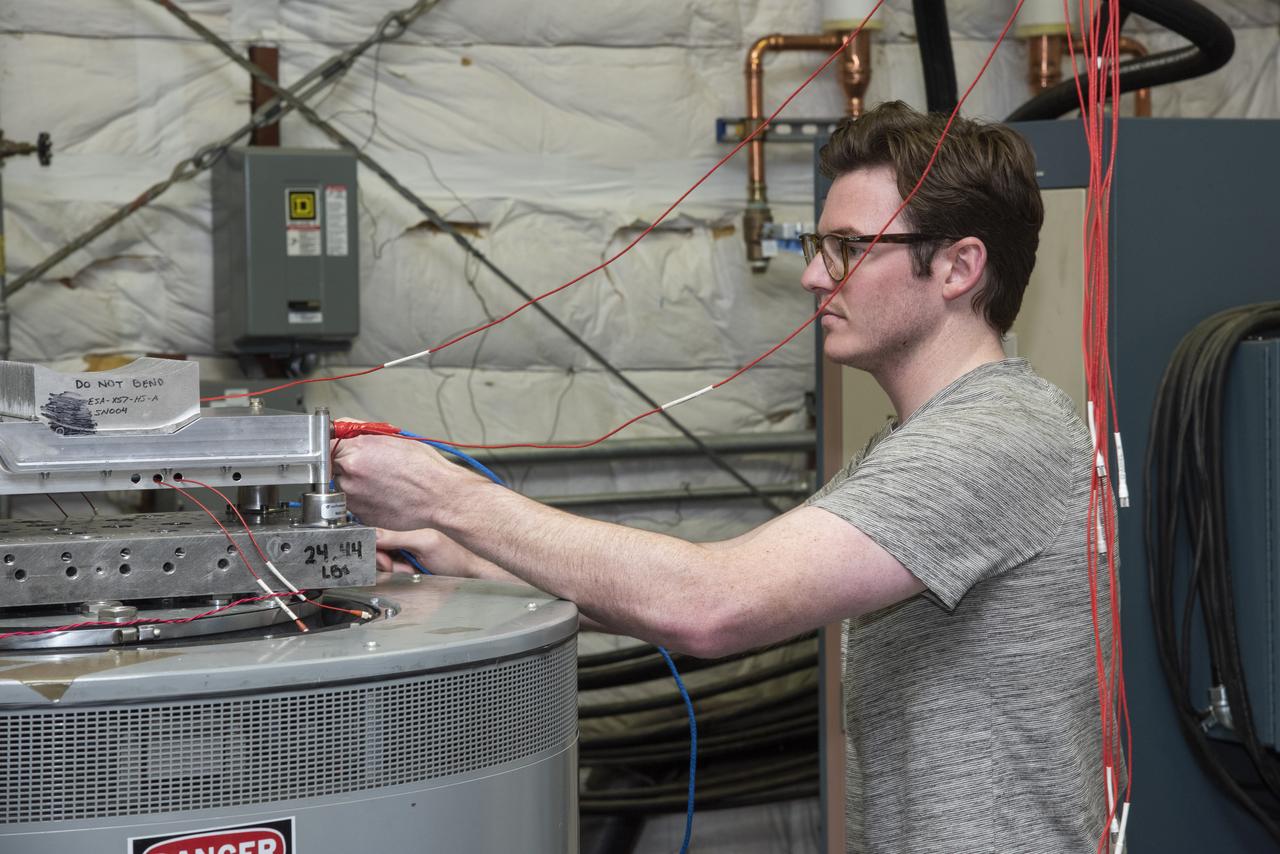
Engineers from NASA's Armstrong Flight Research Center and Empirical Systems Aerospace prepare a cruise motor controller, planned to be used on NASA's all-electric X-57 Maxwell, for vibration testing at Armstrong's environmental lab. Testing the cruise motor controller at various vibration levels, based on baseline flight testing in the project's first phase, helps ensure that the hardware will withstand similar vibration in flight conditions. X-57, NASA's first all-electric experimental aircraft, or X-plane, will fly in its first all-electric configuration in 2020.
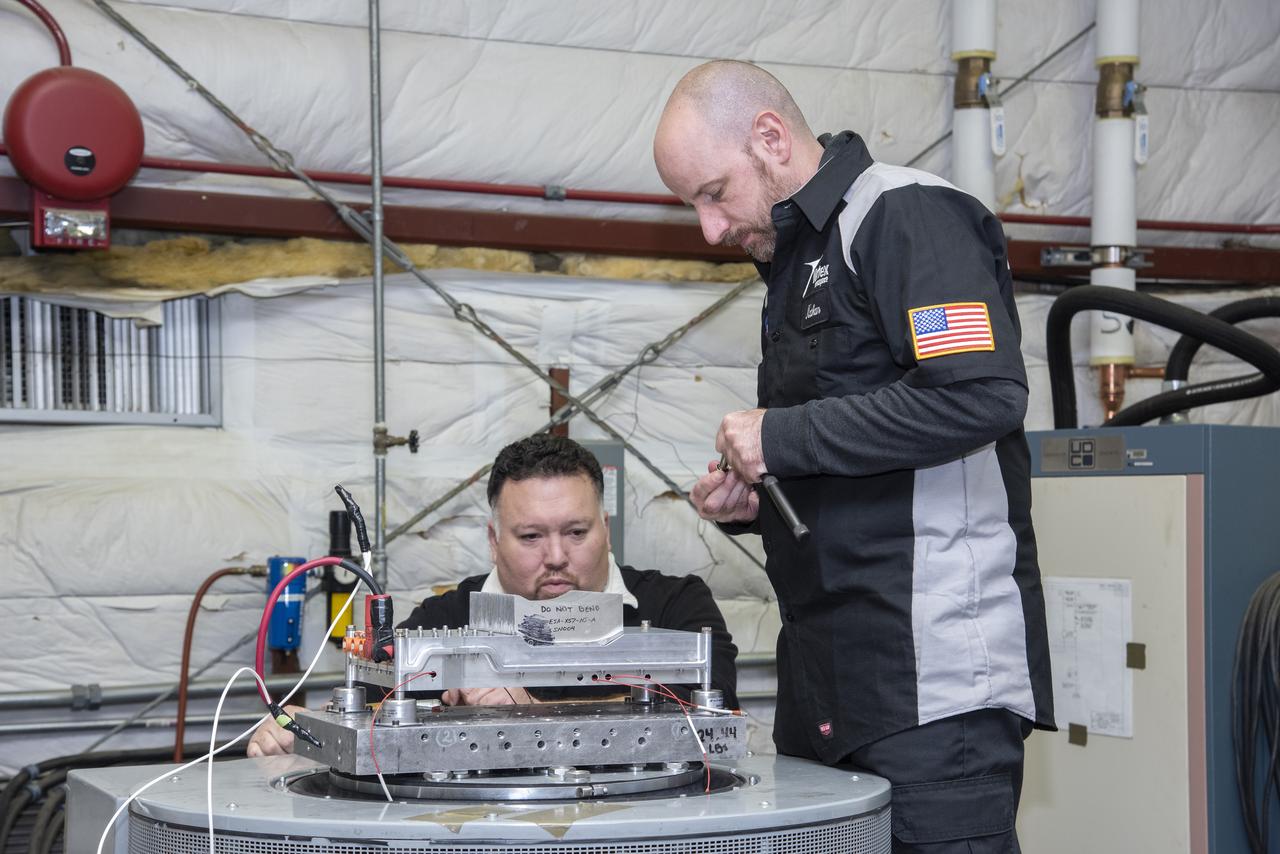
Engineers from NASA's Armstrong Flight Research Center and Empirical Systems Aerospace prepare a cruise motor controller, planned to be used on NASA's all-electric X-57 Maxwell, for vibration testing at Armstrong's environmental lab. Testing the cruise motor controller at various vibration levels, based on baseline flight testing in the project's first phase, helps ensure that the hardware will withstand similar vibration in flight conditions. X-57, NASA's first all-electric experimental aircraft, or X-plane, will fly in its first all-electric configuration in 2020.
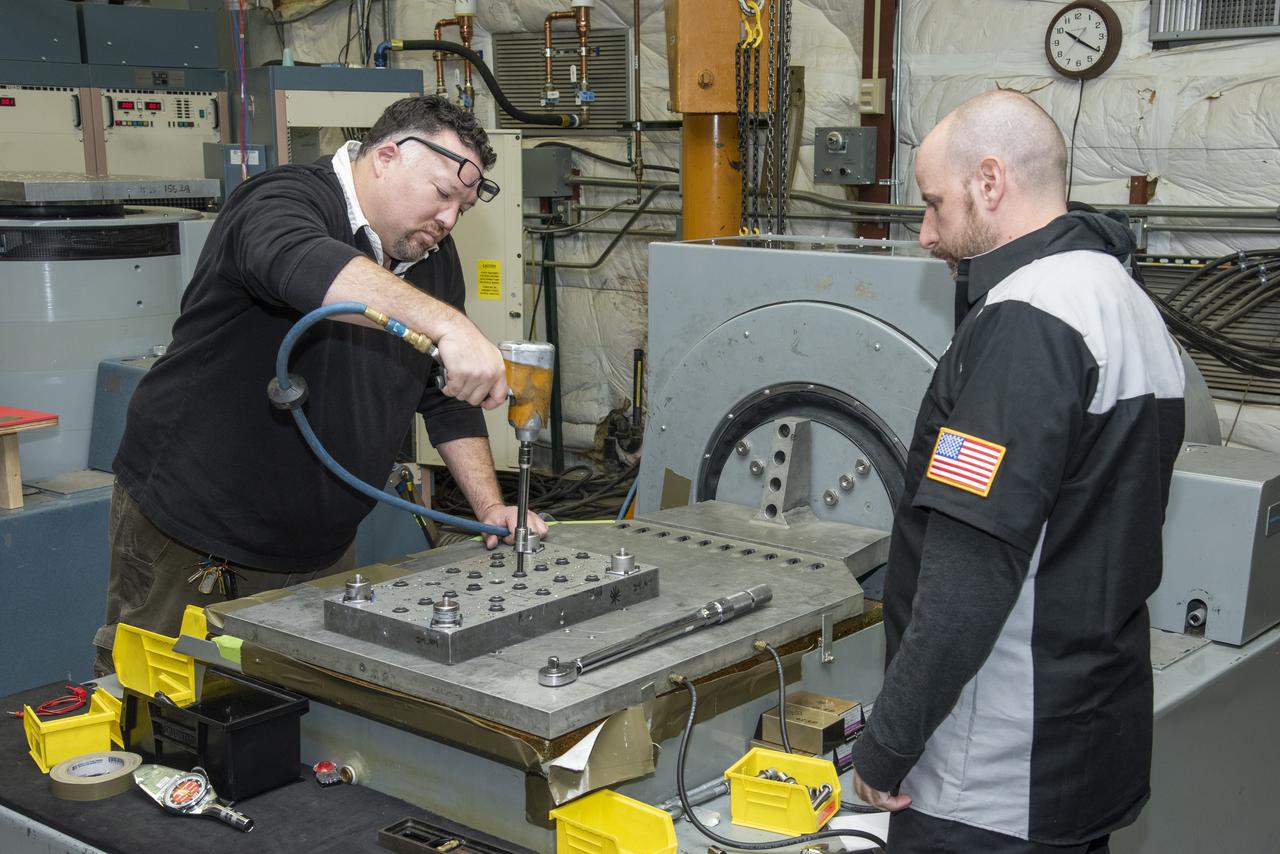
Engineers from NASA's Armstrong Flight Research Center and Empirical Systems Aerospace prepare a cruise motor controller, planned to be used on NASA's all-electric X-57 Maxwell, for vibration testing at Armstrong's environmental lab. Testing the cruise motor controller at various vibration levels, based on baseline flight testing in the project's first phase, helps ensure that the hardware will withstand similar vibration in flight conditions. X-57, NASA's first all-electric experimental aircraft, or X-plane, will fly in its first all-electric configuration in 2020.
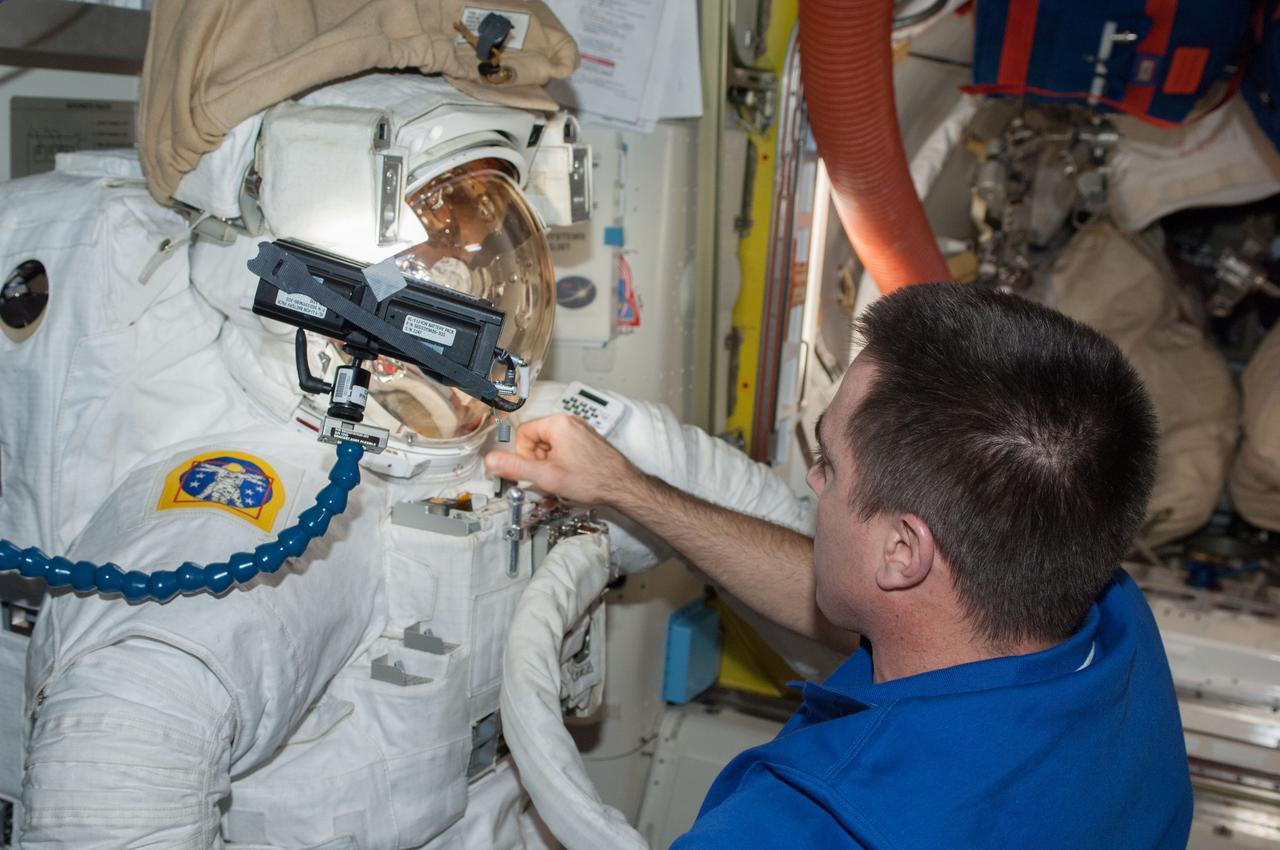
ISS036-E-037231 (27 Aug. 2013) --- NASA astronaut Chris Cassidy, Expedition 36 flight engineer, works with an Extravehicular Mobility Unit (EMU) spacesuit in the Quest airlock of the International Space Station. Cassidy is performing a checkout of the spacesuit worn by European Space Agency astronaut Luca Parmitano during a July 16 spacewalk that was cut short when its helmet began to fill with water. After assembling and powering up the empty suit as if it were about to go out on another spacewalk, Cassidy and Parmitano (out of frame) observed water once again leaking into the helmet. With the issue reproduced, NASA now has a baseline configuration for the crew to begin swapping out parts for additional tests to pinpoint the problem. There are also opportunities to either launch replacement parts on upcoming cargo flights or return parts to Earth for further study once more is known about the cause of the issue.
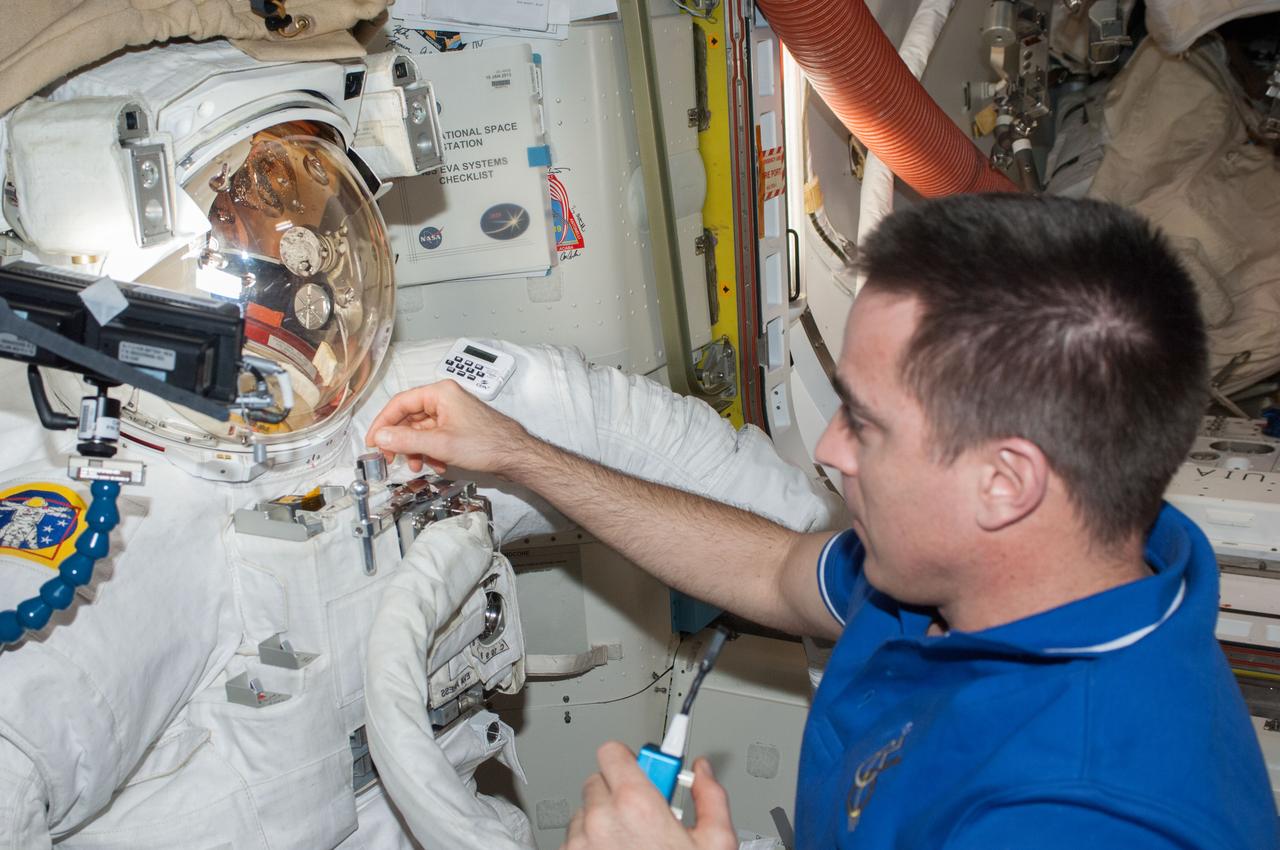
ISS036-E-037230 (27 Aug. 2013) --- NASA astronaut Chris Cassidy, Expedition 36 flight engineer, works with an Extravehicular Mobility Unit (EMU) spacesuit in the Quest airlock of the International Space Station. Cassidy is performing a checkout of the spacesuit worn by European Space Agency astronaut Luca Parmitano during a July 16 spacewalk that was cut short when its helmet began to fill with water. After assembling and powering up the empty suit as if it were about to go out on another spacewalk, Cassidy and Parmitano (out of frame) observed water once again leaking into the helmet. With the issue reproduced, NASA now has a baseline configuration for the crew to begin swapping out parts for additional tests to pinpoint the problem. There are also opportunities to either launch replacement parts on upcoming cargo flights or return parts to Earth for further study once more is known about the cause of the issue.
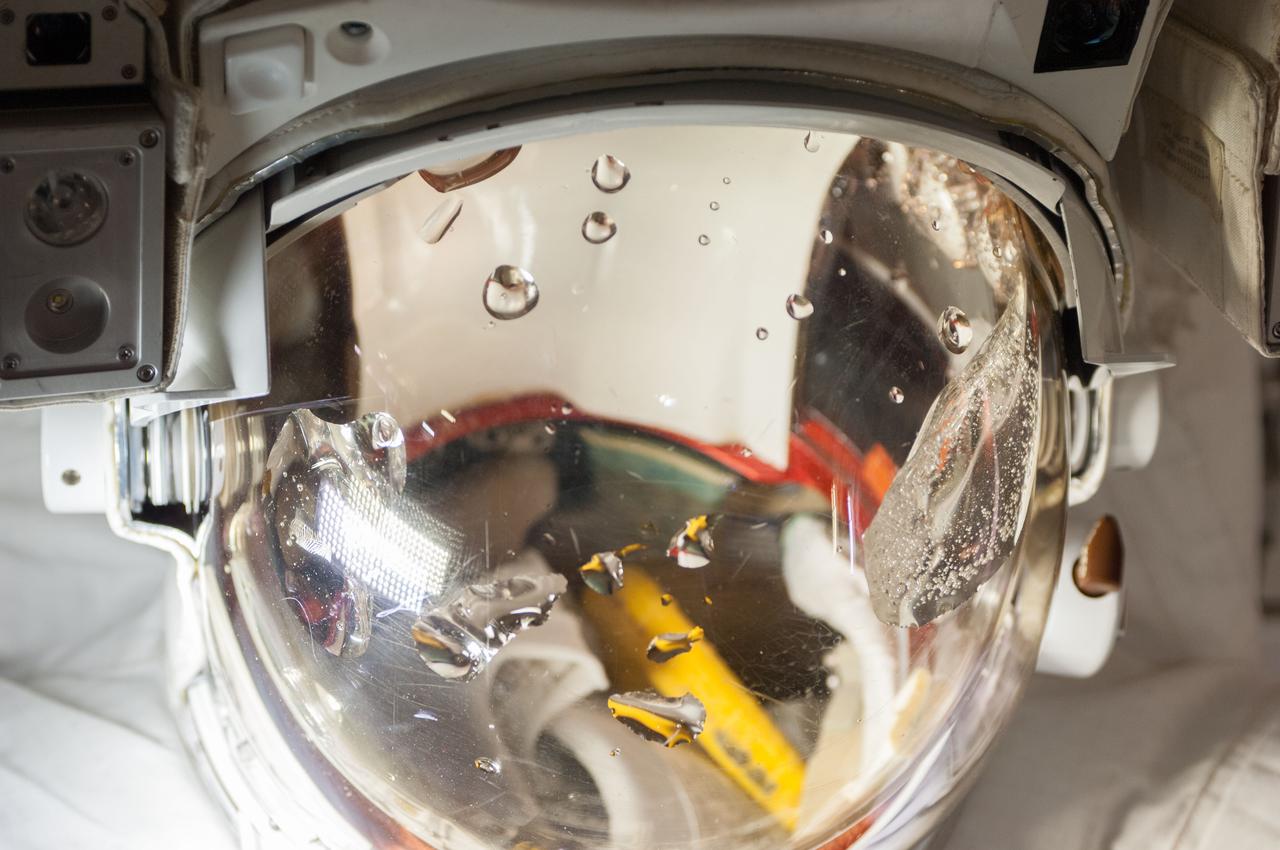
ISS036-E-037249 (27 Aug. 2013) --- The Extravehicular Mobility Unit (EMU) spacesuit helmet ? worn by European Space Agency astronaut Luca Parmitano during a July 16 spacewalk that was cut short when the helmet began to fill with water ? is captured in a close-up image in the Quest airlock of the International Space Station. After assembling and powering up the empty suit as if it were about to go out on another spacewalk, Parmitano and NASA astronaut Chris Cassidy (both out of frame), both Expedition 36 flight engineers, observed water once again leaking into the helmet. With the issue reproduced, NASA now has a baseline configuration for the crew to begin swapping out parts for additional tests to pinpoint the problem. There are also opportunities to either launch replacement parts on upcoming cargo flights or return parts to Earth for further study once more is known about the cause of the issue.
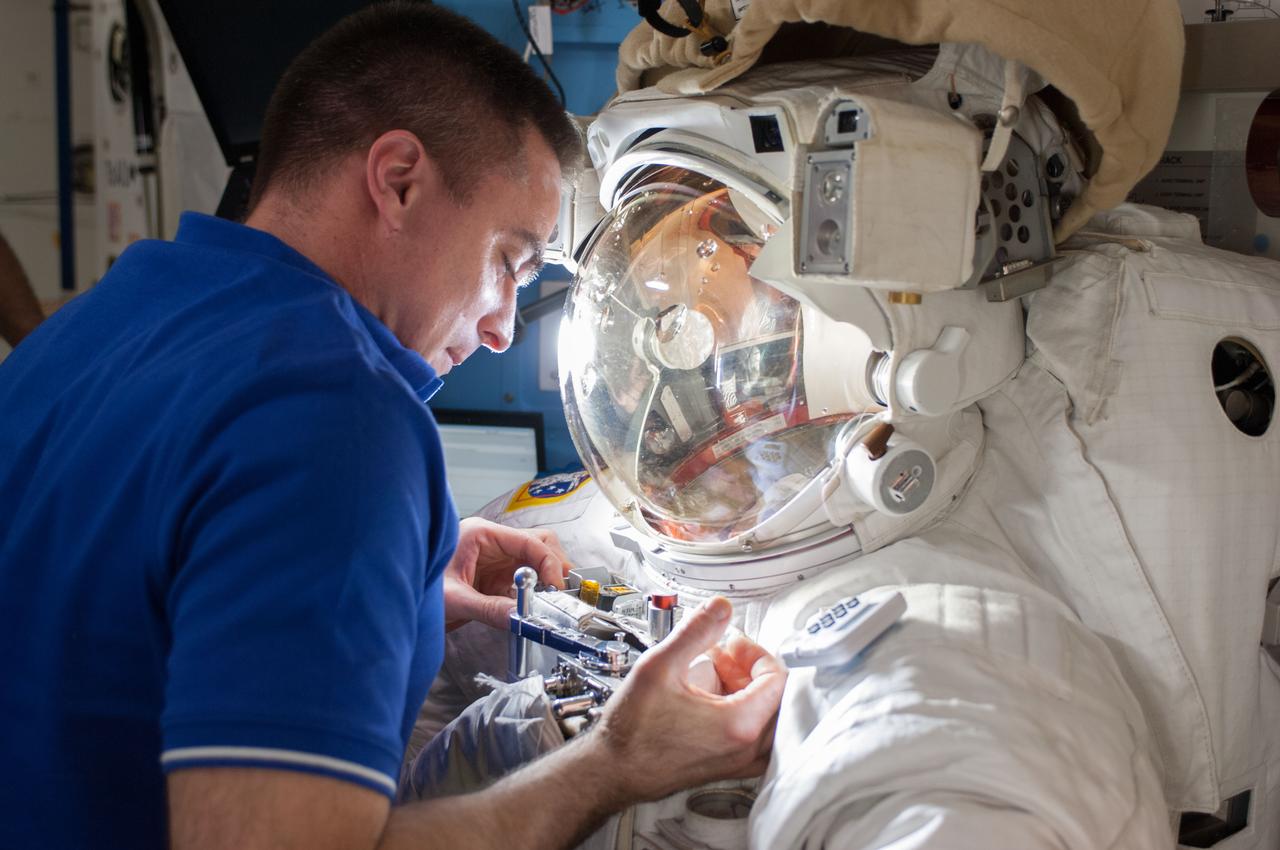
ISS036-E-037243 (27 Aug. 2013) --- NASA astronaut Chris Cassidy, Expedition 36 flight engineer, works with an Extravehicular Mobility Unit (EMU) spacesuit in the Quest airlock of the International Space Station. Cassidy is performing a checkout of the spacesuit worn by European Space Agency astronaut Luca Parmitano during a July 16 spacewalk that was cut short when its helmet began to fill with water. After assembling and powering up the empty suit as if it were about to go out on another spacewalk, Cassidy and Parmitano (out of frame) observed water once again leaking into the helmet. With the issue reproduced, NASA now has a baseline configuration for the crew to begin swapping out parts for additional tests to pinpoint the problem. There are also opportunities to either launch replacement parts on upcoming cargo flights or return parts to Earth for further study once more is known about the cause of the issue.
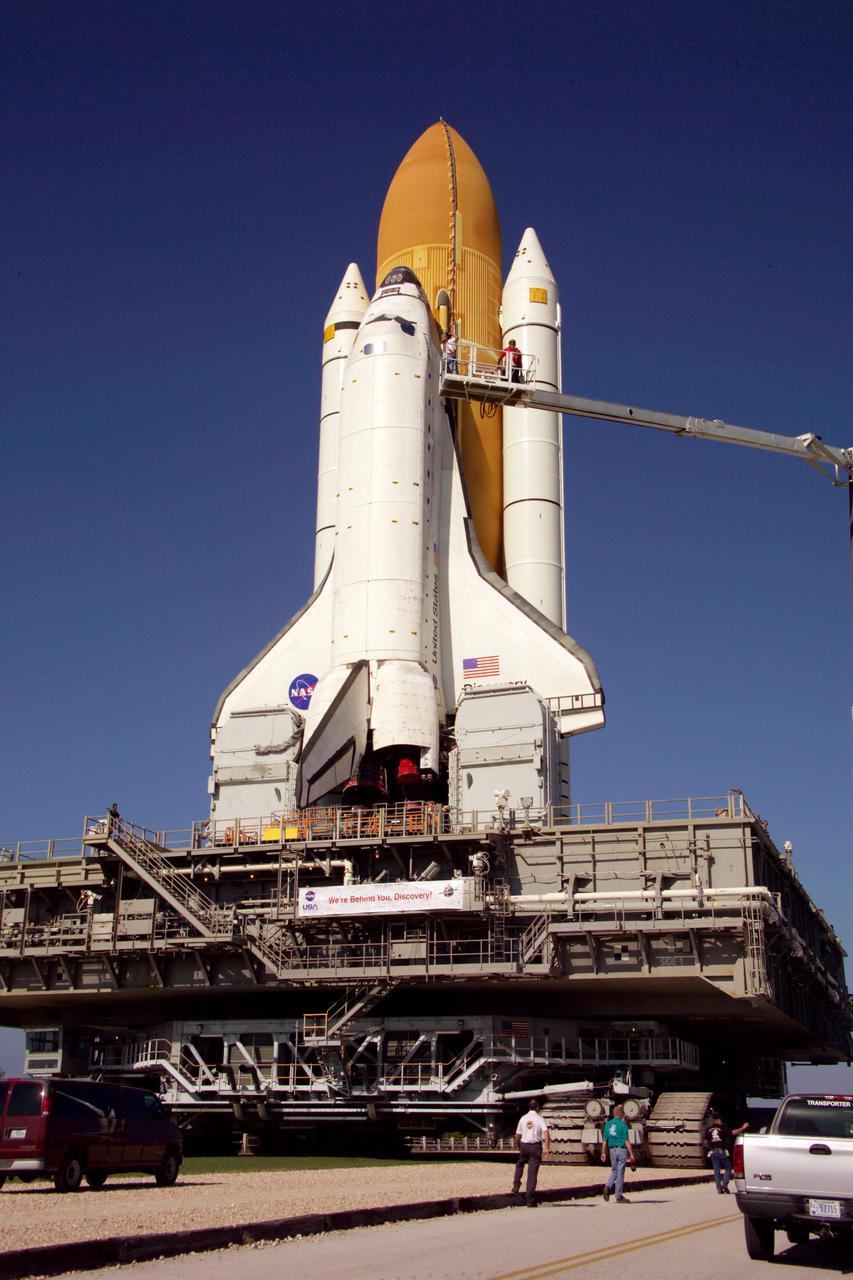
KENNEDY SPACE CENTER, FLA. - Technicians photograph the exterior of Space Shuttle Discovery on its journey to Launch Pad 39B to support the Baseline Configuration Imaging (BCI) project. BCI will be collected on each orbiter prior to every mission, beginning with STS-114. The photos will be compiled into a database available for comparison, if the need arises, to photos taken on orbit from the Shuttle's Orbital Boom Sensor System (OBSS). The 50-foot-long OBSS attaches to the Remote Manipulator System, or Shuttle robotic arm, and is one of the new safety measures for Return to Flight, equipping the orbiter with cameras and laser systems to inspect the Shuttle’s Thermal Protection System while in space. Discovery was hard down on the pad at 1:16 a.m. EDT April 7. Launch of Discovery on its Return to Flight mission, STS-114, is targeted for May 15 with a launch window that extends to June 3. During its 12-day mission, Discovery’s seven-member crew will test new hardware and techniques to improve Shuttle safety, as well as deliver supplies to the International Space Station.
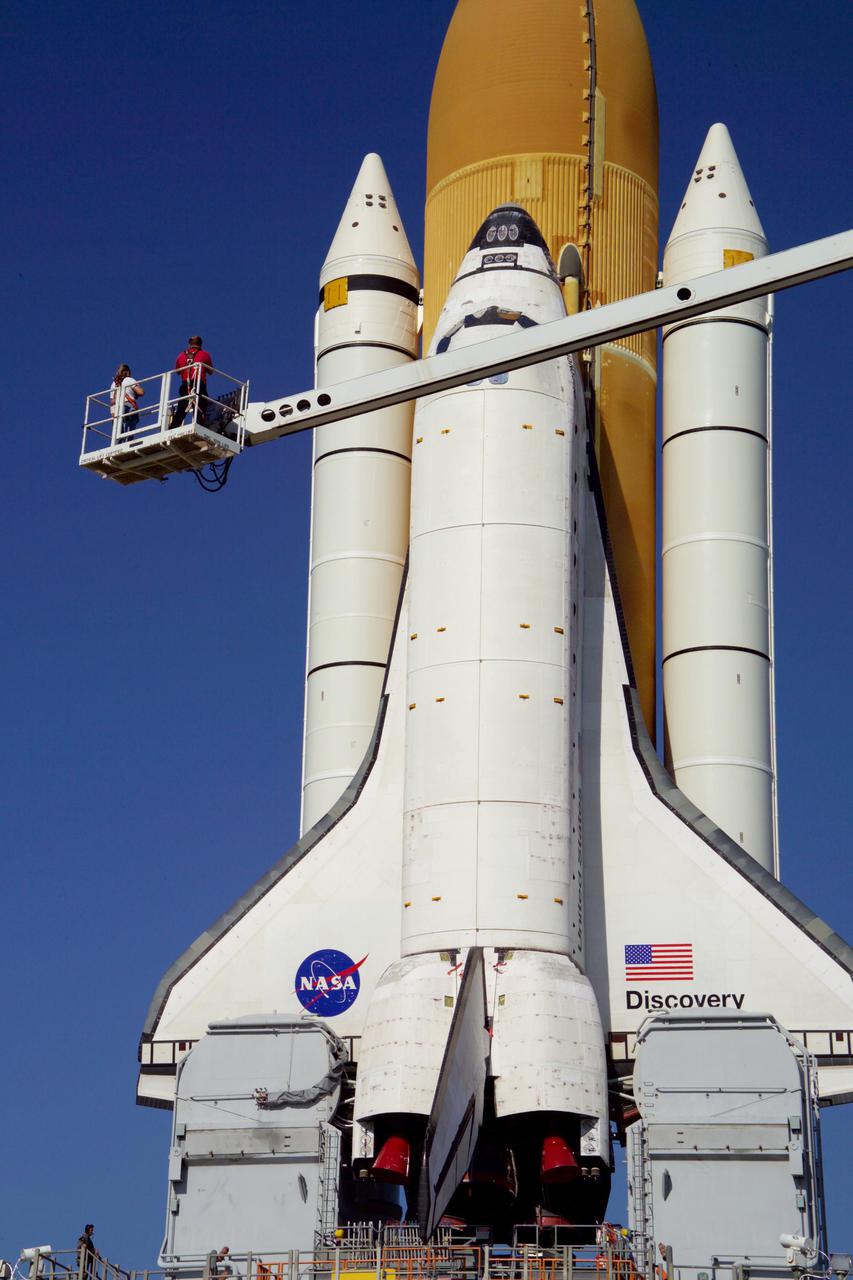
KENNEDY SPACE CENTER, FLA. - Technicians photograph the exterior of Space Shuttle Discovery on its journey to Launch Pad 39B to support the Baseline Configuration Imaging (BCI) project. BCI will be collected on each orbiter prior to every mission, beginning with STS-114. The photos will be compiled into a database available for comparison, if the need arises, to photos taken on orbit from the Shuttle's Orbital Boom Sensor System (OBSS). The 50-foot-long OBSS attaches to the Remote Manipulator System, or Shuttle robotic arm, and is one of the new safety measures for Return to Flight, equipping the orbiter with cameras and laser systems to inspect the Shuttle’s Thermal Protection System while in space. Discovery was hard down on the pad at 1:16 a.m. EDT April 7. Launch of Discovery on its Return to Flight mission, STS-114, is targeted for May 15 with a launch window that extends to June 3. During its 12-day mission, Discovery’s seven-member crew will test new hardware and techniques to improve Shuttle safety, as well as deliver supplies to the International Space Station.
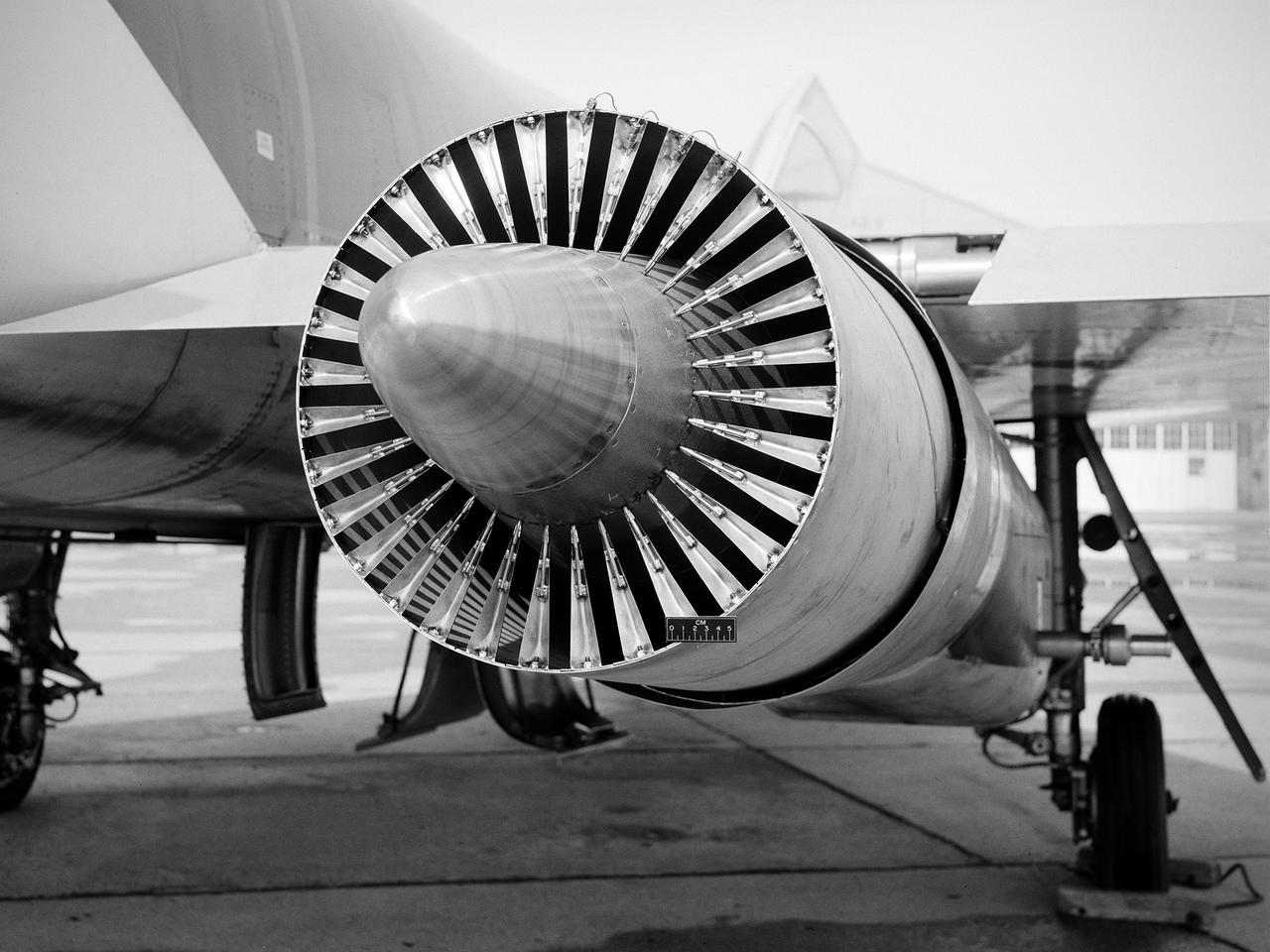
National Aeronautics and Space Administration (NASA) Convair F-106B Delta Dart with a 32-spoke nozzle installed on its General Electric J85 test engine. Lewis acquired a Delta Dart fighter in 1966 to study the components for propulsion systems that could be applied to supersonic transport aircraft at transonic speeds. The F-106B was modified with two General Electric J85-13 engines under its wings to study these components. The original test plan was expanded to include the study of boattail drag, noise reduction, and inlets. From February to July 1971 the modified F-106B was used to study different ejector nozzles. Researchers conducted both acoustic and aerodynamic tests on the ground and in flight. Several models were created to test different suppression methods. NASA Lewis’ conical nozzle was used as the baseline configuration. Flightline and sideline microphones were set up on the ground. The F-106B would idle its own engine and buzz the recording station from an altitude of 300 feet at Mach 0.4 with the test engines firing. Researchers found that the suppression of the perceived noise level was usually lower during flight than the researchers had statistically predicted. The 64 and 32-spoke nozzles performed well in actual flight, but the others nozzles tended to negatively affect the engine’s performance. Different speeds or angles- -of-attack sometimes changed the noise levels. In the end, no general conclusions could be applied to all the nozzles.

Title: W-8 Fan Acoustic Casing Treatment Test on the Source Diagnostic Test Rotor Alone Hardware Program: Advanced Air Vehicles Program (AAVP) Project: Advanced Air Transport Technology (AATT) Sub-project: Aircraft Noise Reduction (ANR) Weekly Highlight: · Acoustic Casing Treatment Testing Completed in the W-8 Single Stage Axial Compressor Facility: Testing of Acoustic Casing Treatments on the Source Diagnostic Test (SDT) rotor alone hardware which had begun in early January was completed on Thursday, February 16th. Four different over-the-rotor acoustic casing treatment concepts were tested along with two baseline configurations. Testing included steady-aerodynamic measurements of fan performance, hotfilm turbulence measurements, and inlet acoustic measurements with an in-duct array. These measurements will be used to assess the aerodynamic and acoustic impact of fan acoustic casing treatments on a high bypass ratio fan at TRL 3. This test was the last of 3 planned tests of potential over-the-rotor acoustic casing treatments. The first treatment test was completed in the Normal Incidence Tube (NIT) at Langley Research Center (LaRC) in Fall 2015 and the second was completed on the Advanced Noise Control Fan (ANCF) in the Aero-Acoustic Propulsion Laboratory (AAPL) in Winter 2016. This work is supported by the Aircraft Noise Reduction (ANR) subproject of the Advanced Air Transport Technology (AATT) Project. (POC: LTV/ Rick Bozak 3-5160)