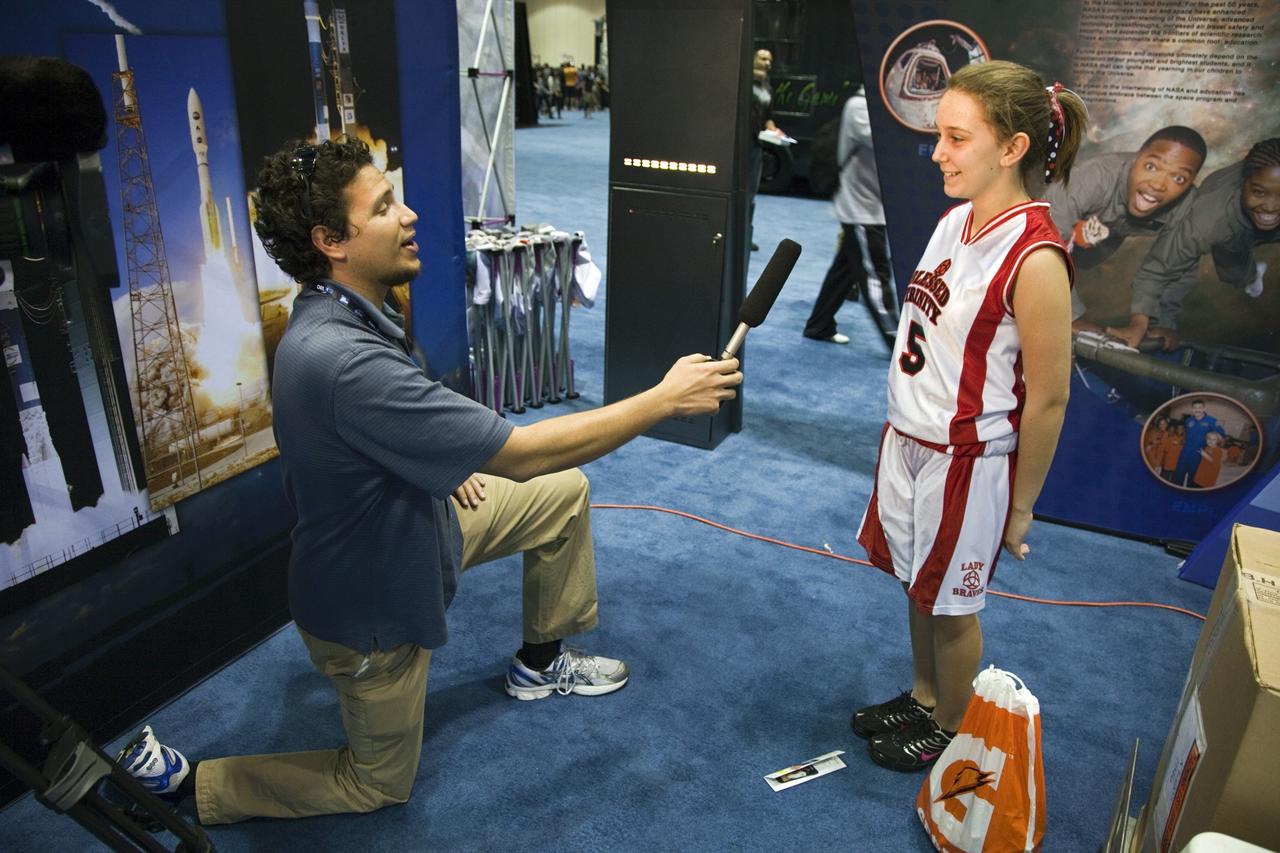
ORLANDO, Fla. -- A representative from NASA's Kennedy Space Center in Florida speaks with a young visitor attending the NBA All-Star Jam Session at the Orange County Convention Center in Orlando, Fla. The NASA exhibit offers hands-on educational activities highlighting some of the contributions the space agency has made to sports, transportation and everyday life. One of the events leading up to the NBA All-Star game being held in Orlando on Feb. 26, the NBA All-Star Jam Session is a basketball experience intended for all ages, allowing fans to compete against their friends in skills challenges and collect autographs from players and legends. Photo credit: NASA/Frankie Martin
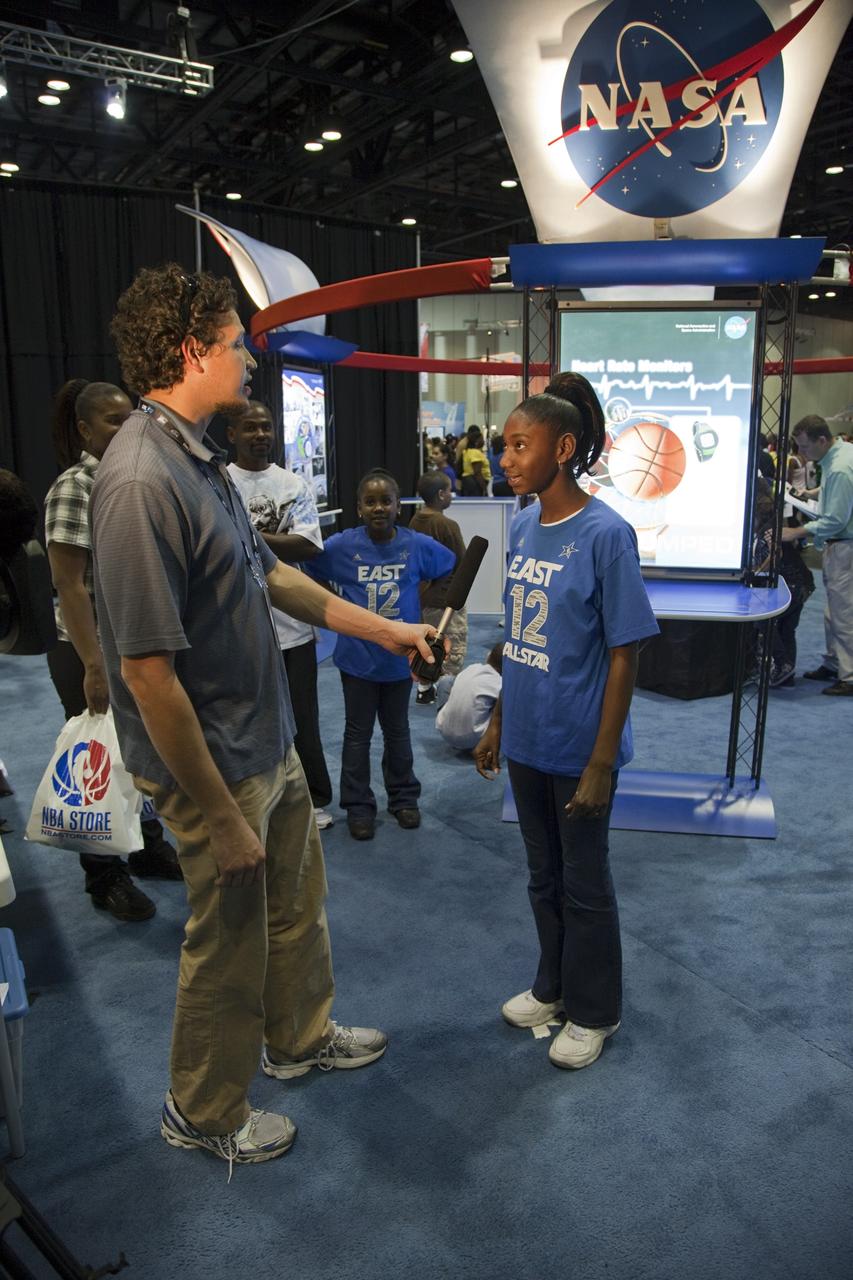
ORLANDO, Fla. -- A representative from NASA's Kennedy Space Center in Florida speaks with a young visitor attending the NBA All-Star Jam Session at the Orange County Convention Center in Orlando, Fla. The NASA exhibit offers hands-on educational activities highlighting some of the contributions the space agency has made to sports, transportation and everyday life. One of the events leading up to the NBA All-Star game being held in Orlando on Feb. 26, the NBA All-Star Jam Session is a basketball experience intended for all ages, allowing fans to compete against their friends in skills challenges and collect autographs from players and legends. Photo credit: NASA/Frankie Martin
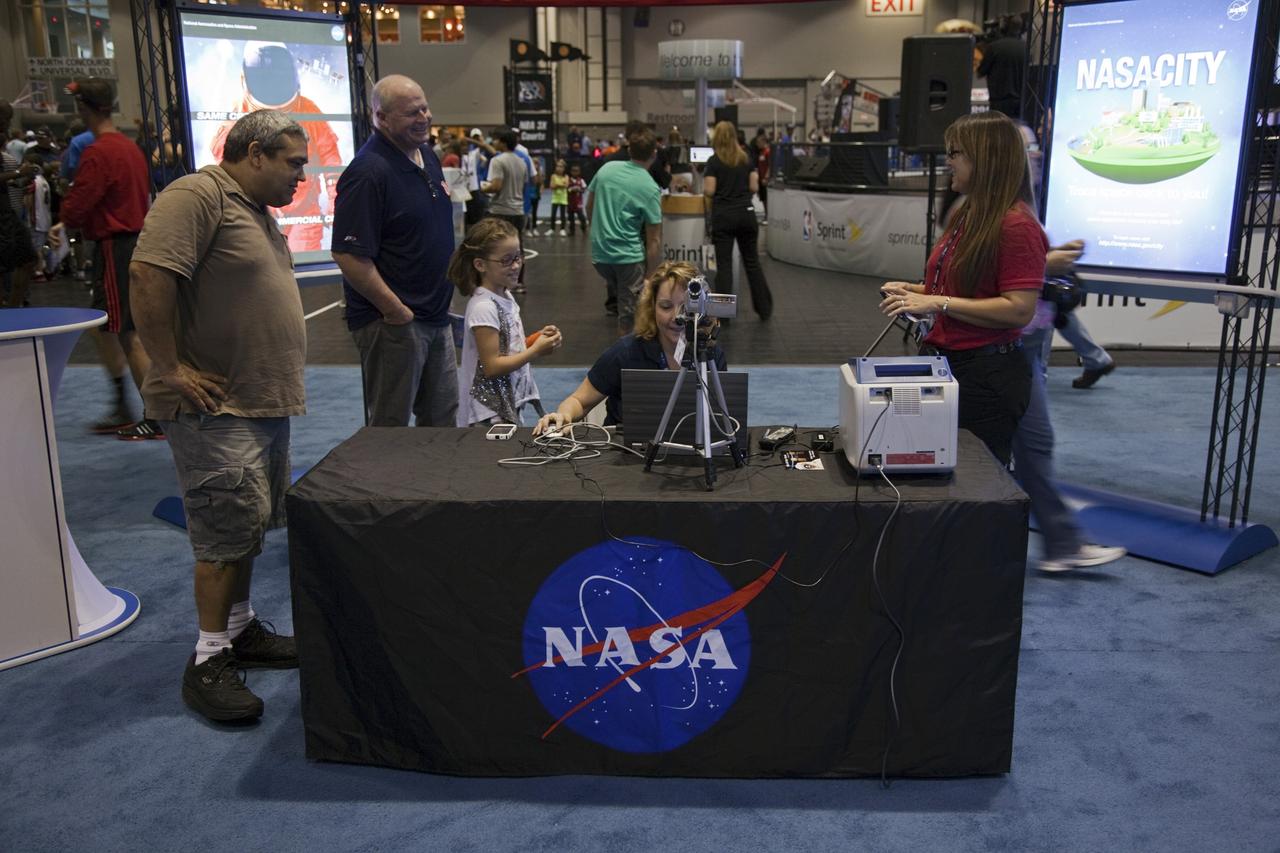
ORLANDO, Fla. -- Inside the Orange County Convention Center in Orlando, Fla., representatives from NASA's Kennedy Space Center in Florida speak to attendees visiting the NBA All-Star Jam Session. The NASA exhibit offers hands-on educational activities highlighting some of the contributions the space agency has made to sports, transportation and everyday life. One of the events leading up to the NBA All-Star game being held in Orlando on Feb. 26, the NBA All-Star Jam Session is a basketball experience intended for all ages, allowing fans to compete against their friends in skills challenges and collect autographs from players and legends. Photo credit: NASA/Frankie Martin
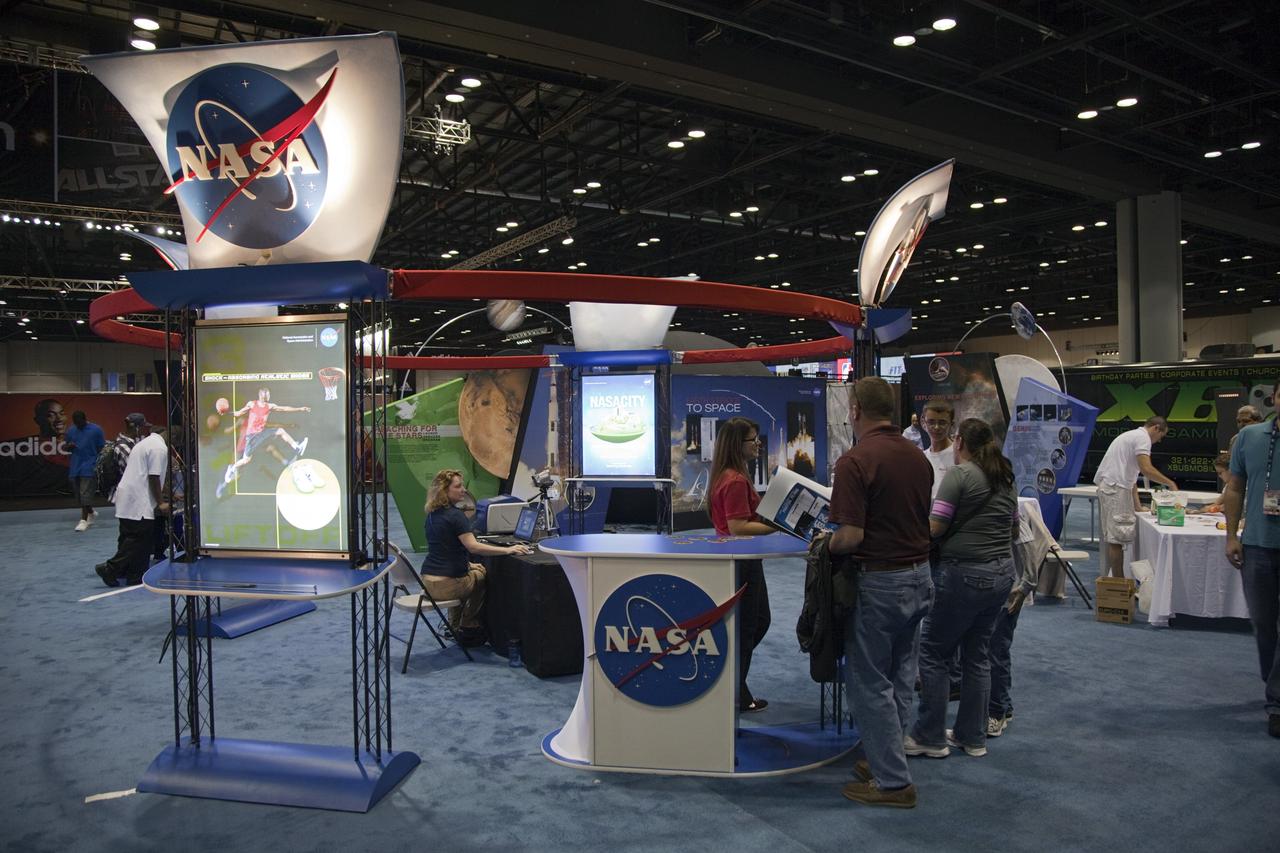
ORLANDO, Fla. -- Inside the Orange County Convention Center in Orlando, Fla., representatives from NASA's Kennedy Space Center in Florida speak to attendees visiting the NBA All-Star Jam Session. The NASA exhibit offers hands-on educational activities highlighting some of the contributions the space agency has made to sports, transportation and everyday life. One of the events leading up to the NBA All-Star game being held in Orlando on Feb. 26, the NBA All-Star Jam Session is a basketball experience intended for all ages, allowing fans to compete against their friends in skills challenges and collect autographs from players and legends. Photo credit: NASA/Frankie Martin
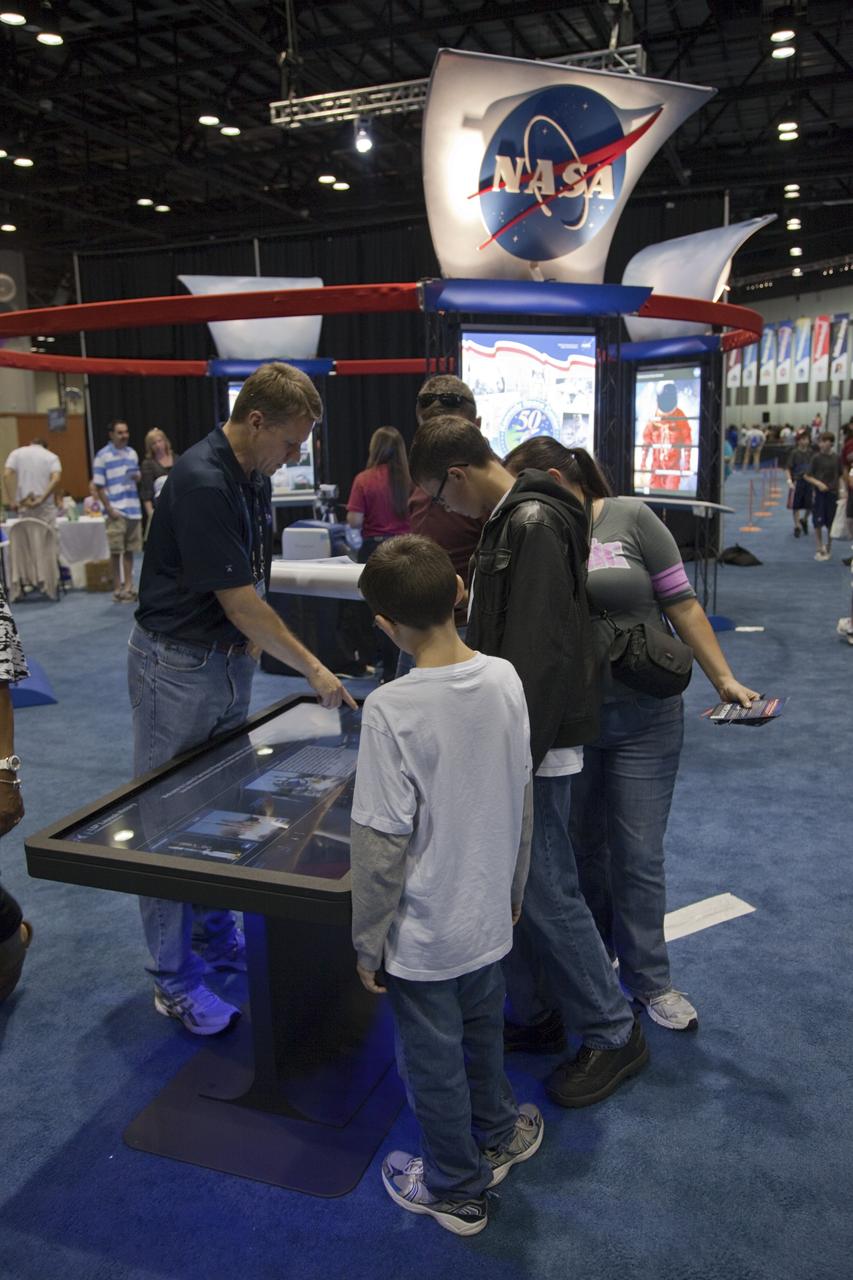
ORLANDO, Fla. -- Visitors to the NBA All-Star Jam Session at the Orange County Convention Center in Orlando, Fla., use a large touch-screen to learn more about NASA's activities and missions. Representatives from Kennedy Space Center in Florida helped attendees participate in hands-on educational activities to learn more about how science plays into sports. One of the events leading up to the NBA All-Star game being held in Orlando on Feb. 26, the NBA All-Star Jam Session is a basketball experience intended for all ages, allowing fans to compete against their friends in skills challenges and collect autographs from players and legends. Photo credit: NASA/Frankie Martin
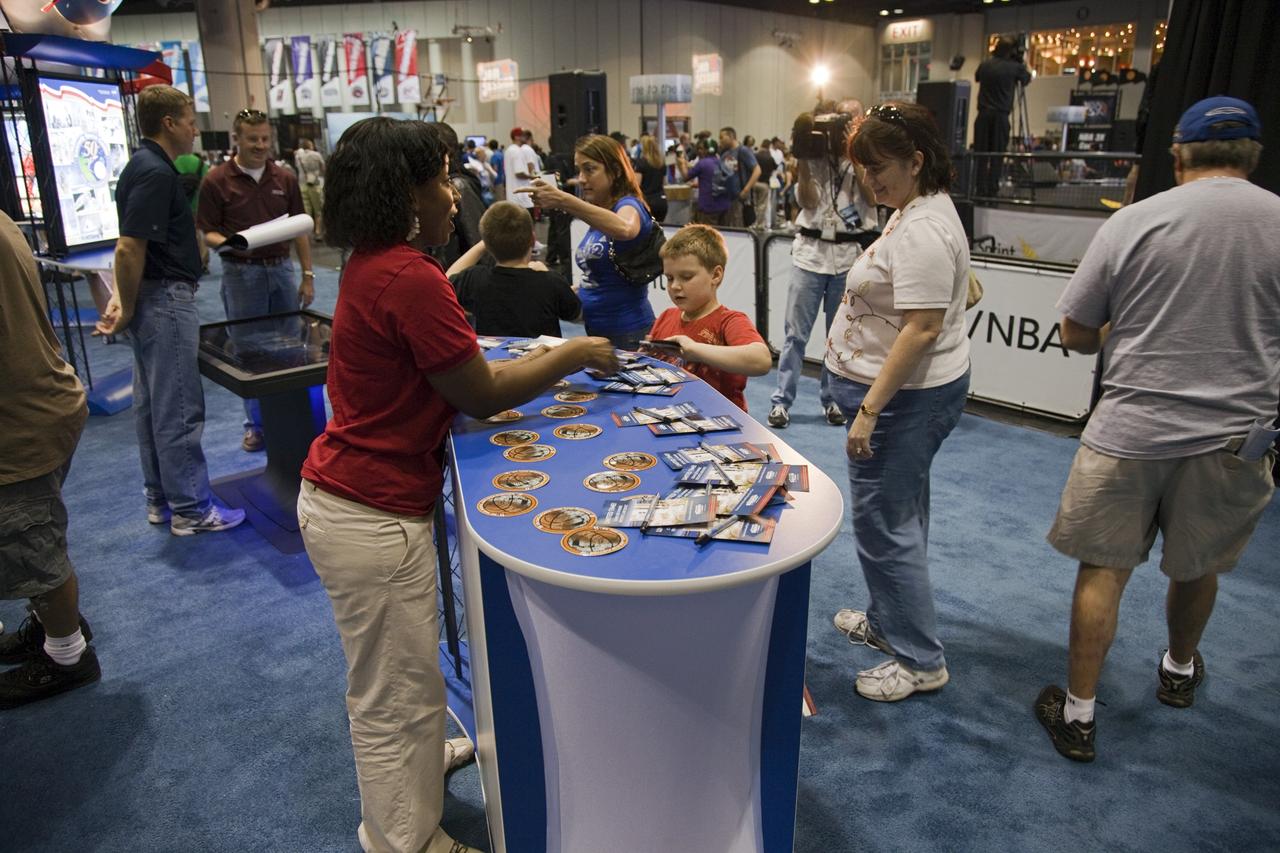
ORLANDO, Fla. -- Representatives from NASA's Kennedy Space Center in Florida talk to visitors attending the NBA All-Star Jam Session at the Orange County Convention Center in Orlando, Fla. The NASA exhibit offers hands-on educational activities highlighting some of the contributions the space agency has made to sports, transportation and everyday life. One of the events leading up to the NBA All-Star game being held in Orlando on Feb. 26, the NBA All-Star Jam Session is a basketball experience intended for all ages, allowing fans to compete against their friends in skills challenges and collect autographs from players and legends. Photo credit: NASA/Frankie Martin
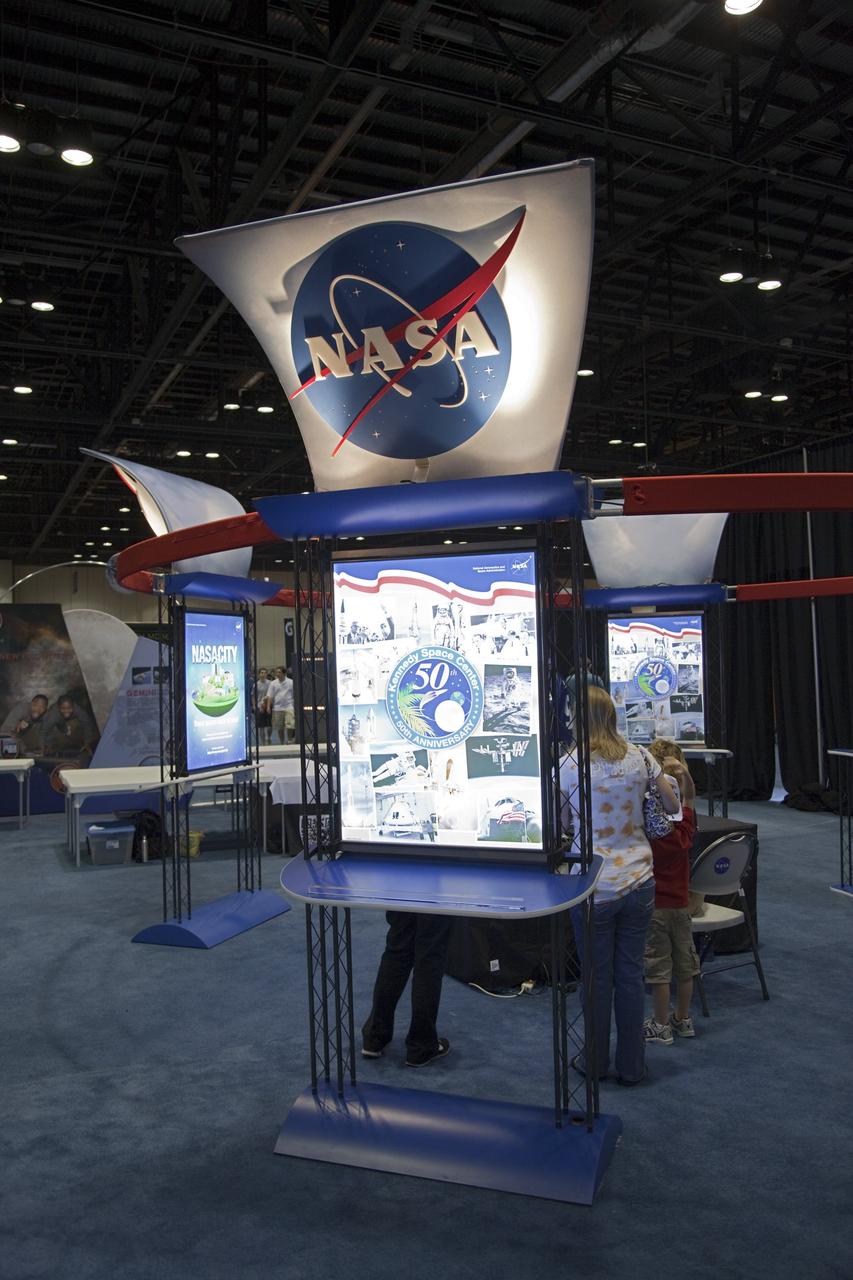
ORLANDO, Fla. -- At NASA's exhibit inside the Orange County Convention Center in Orlando, Fla., visitors to the NBA All-Star Jam Session participate in hands-on educational activities to learn more about how science plays into sports. One of the events leading up to the NBA All-Star game being held in Orlando on Feb. 26, the NBA All-Star Jam Session is a basketball experience intended for all ages, allowing fans to compete against their friends in skills challenges and collect autographs from players and legends. Photo credit: NASA/Frankie Martin

ISS003-E-7261 (October 2001) --- Cosmonaut Vladimir N. Dezhurov, Expedition Three flight engineer, takes a break from his duties, as he plays with a miniature basketball and net in the Unity node on the International Space Station (ISS). Dezhurov represents Rosaviakosmos. This image was taken with a digital still camera.
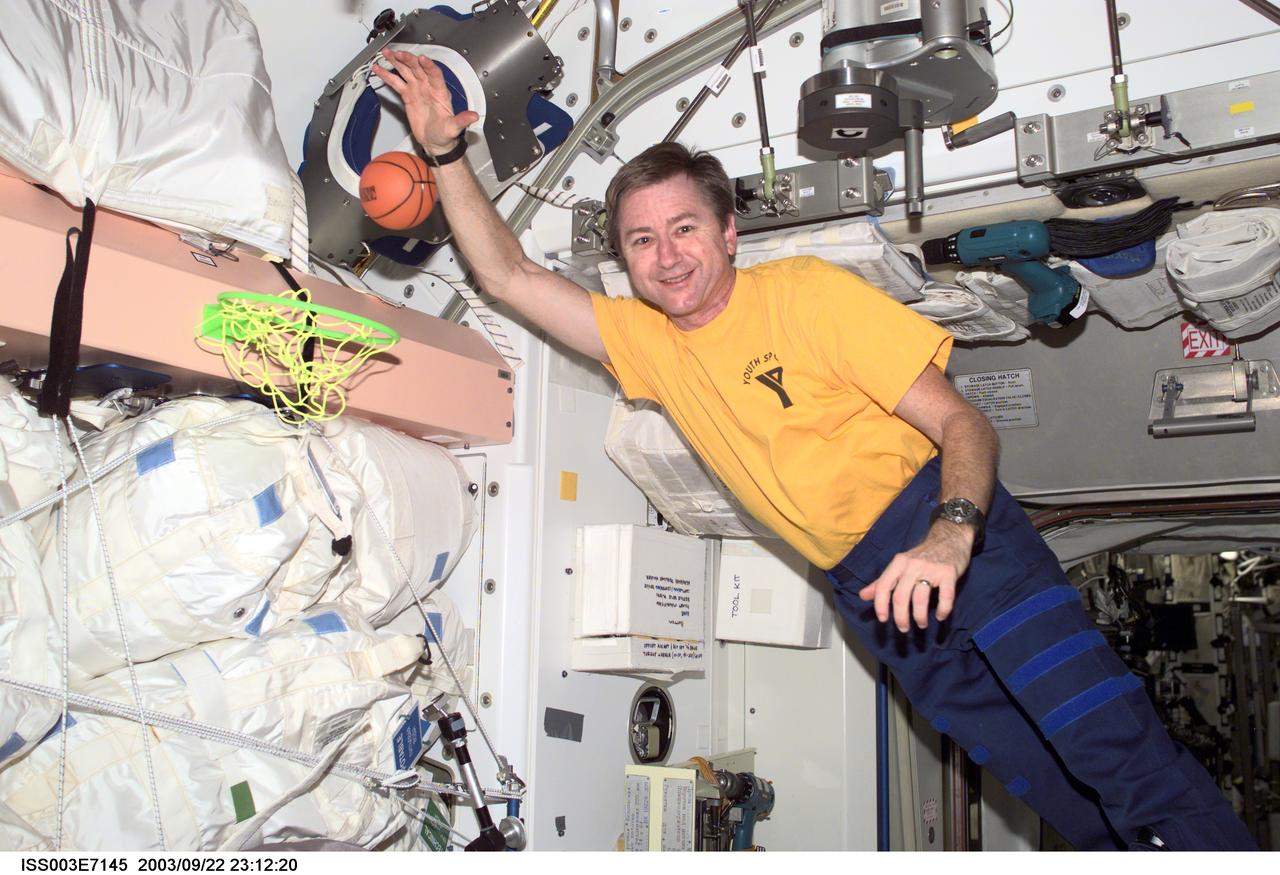
ISS003-E-7145 (OCTOBER 2001) --- Astronaut Frank L. Culbertson, Jr., Expedition Three mission commander, takes a break from his duties, as he plays with a miniature basketball and net in the Unity node on the International Space Station (ISS). This image was taken with a digital still camera.
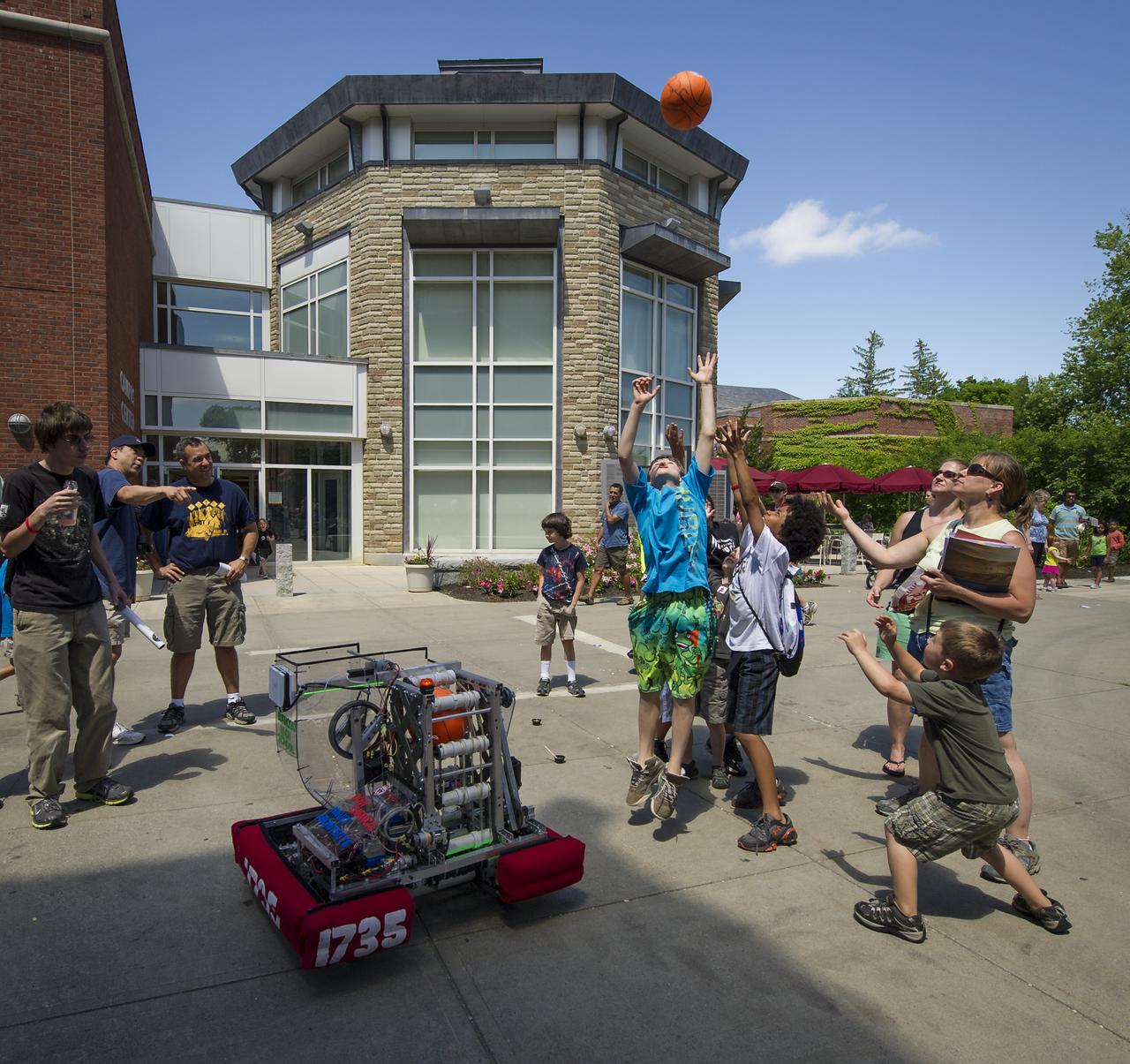
Children visiting the Worcester Polytechnic Institute (WPI) "TouchTomorrow" education and outreach event try to catch basketballs being thrown by a robot from FIRST Robotics at Burncoat High School (Mass.) on Saturday, June 16, 2012 at WPI in Worcester, Mass. The TouchTomorrow event was held in tandem with the NASA-WPI Sample Return Robot Centennial Challenge. The NASA-WPI challenge tasked robotic teams to build autonomous robots that can identify, collect and return samples. NASA needs autonomous robotic capability for future planetary exploration. Photo Credit: (NASA/Bill Ingalls)
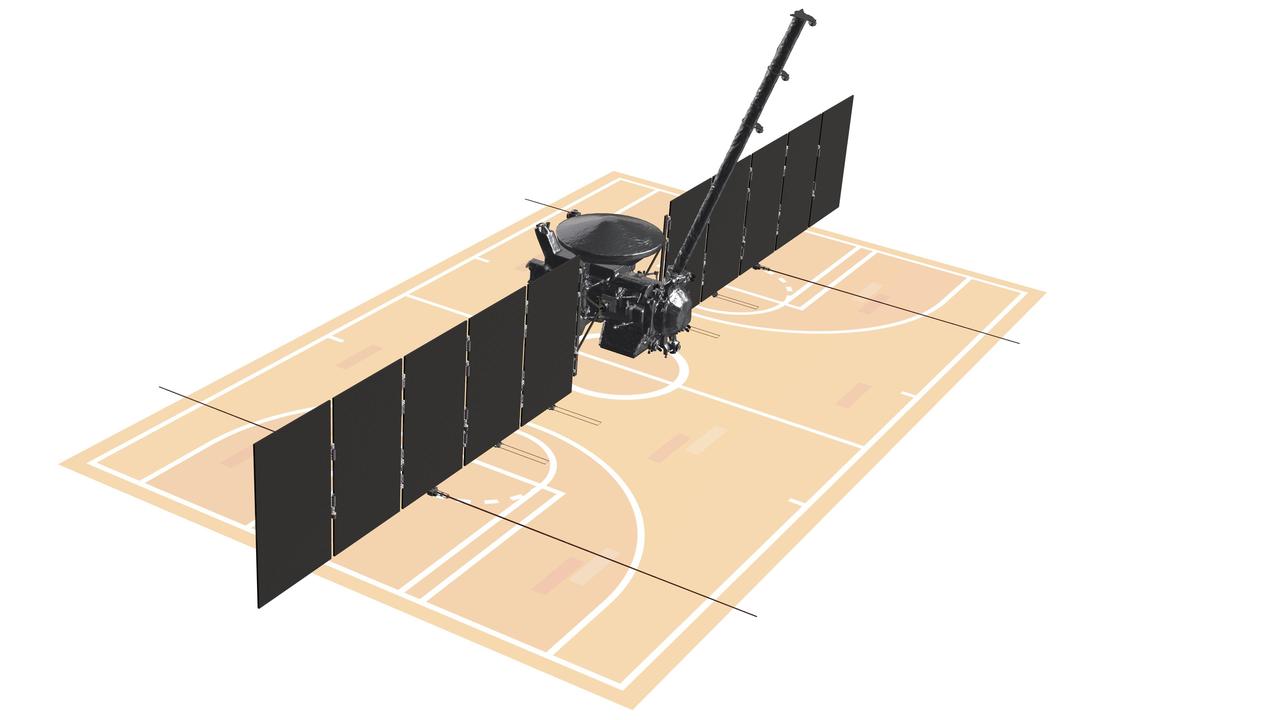
With its solar arrays and antennas fully extended, the Europa Clipper spacecraft stretches out larger than a basketball court: approximately 100 feet (30.5 meters) long and 58 feet (17.6 meters) wide. Depicted in this artist's concept against an illustration of a basketball court, Europa Clipper is the largest spacecraft NASA has ever built for a planetary mission. Europa Clipper is bound for the Jupiter system, where it will study the gas giant's icy moon Europa. Europa Clipper's three main science objectives are to determine the thickness of the moon's icy shell and its interactions with the ocean below, to investigate its composition, and to characterize its geology. The mission's detailed exploration of Europa will help scientists better understand the astrobiological potential for habitable worlds beyond our planet. https://photojournal.jpl.nasa.gov/catalog/PIA26433
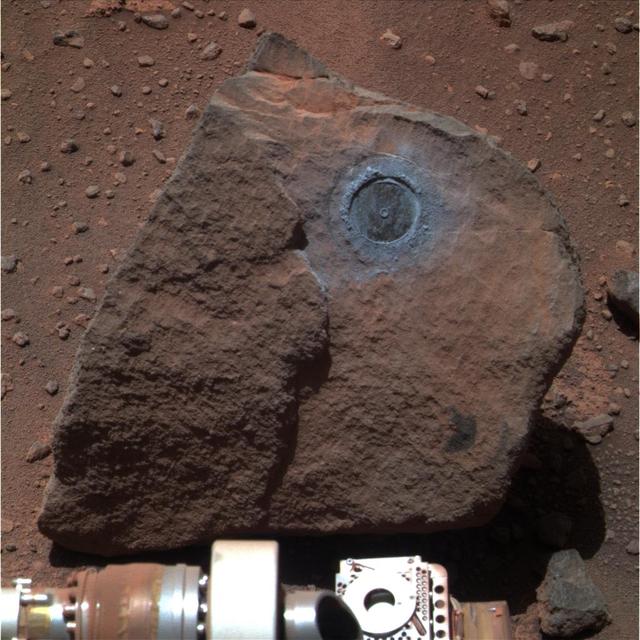
Perched on a rippled Martian plain, a dark rock not much bigger than a basketball was the target of interest for NASA Opportunity during the past two months; Opportunity rock abrasion tool brushed dust out of the circular area.
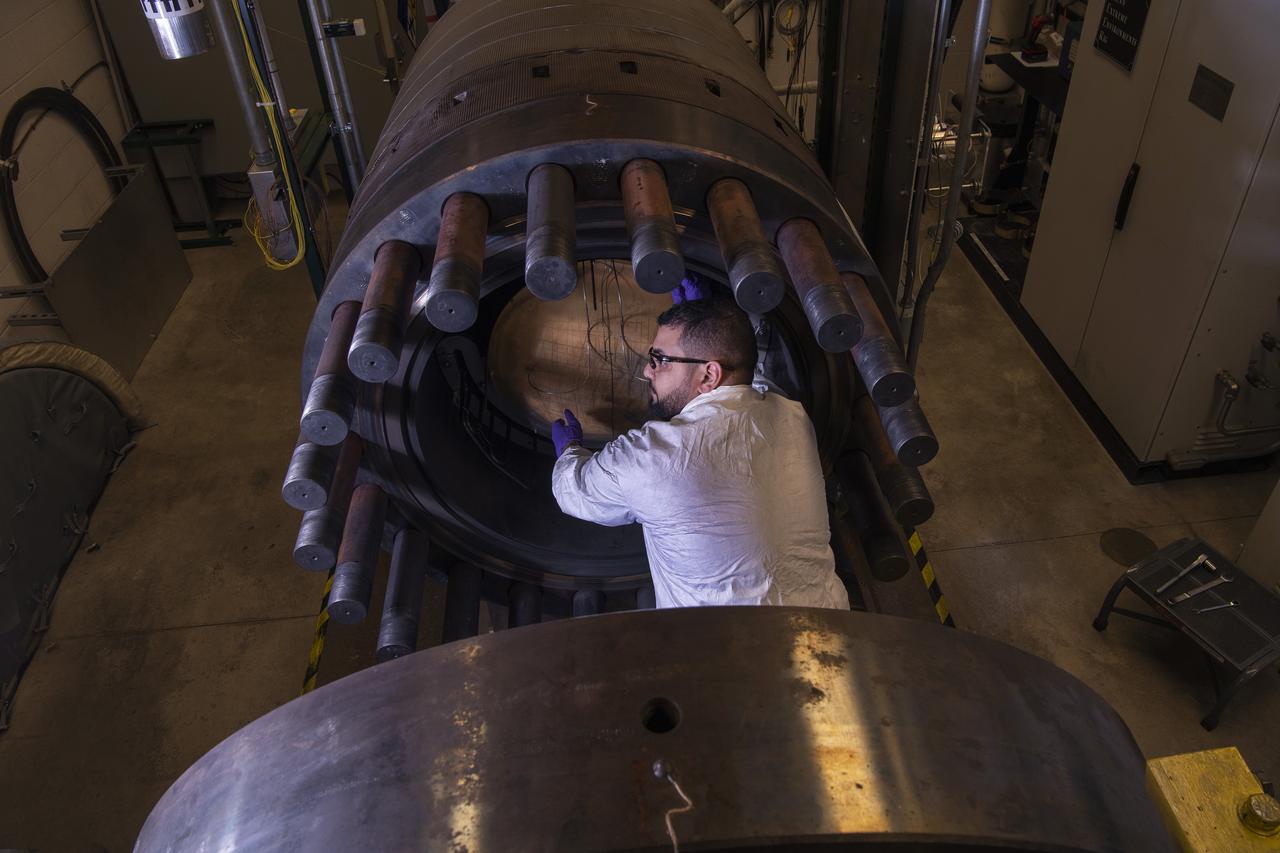
Juno is a solar-powered NASA spacecraft that spans the width of a basketball court and makes long, looping orbits around giant planet Jupiter
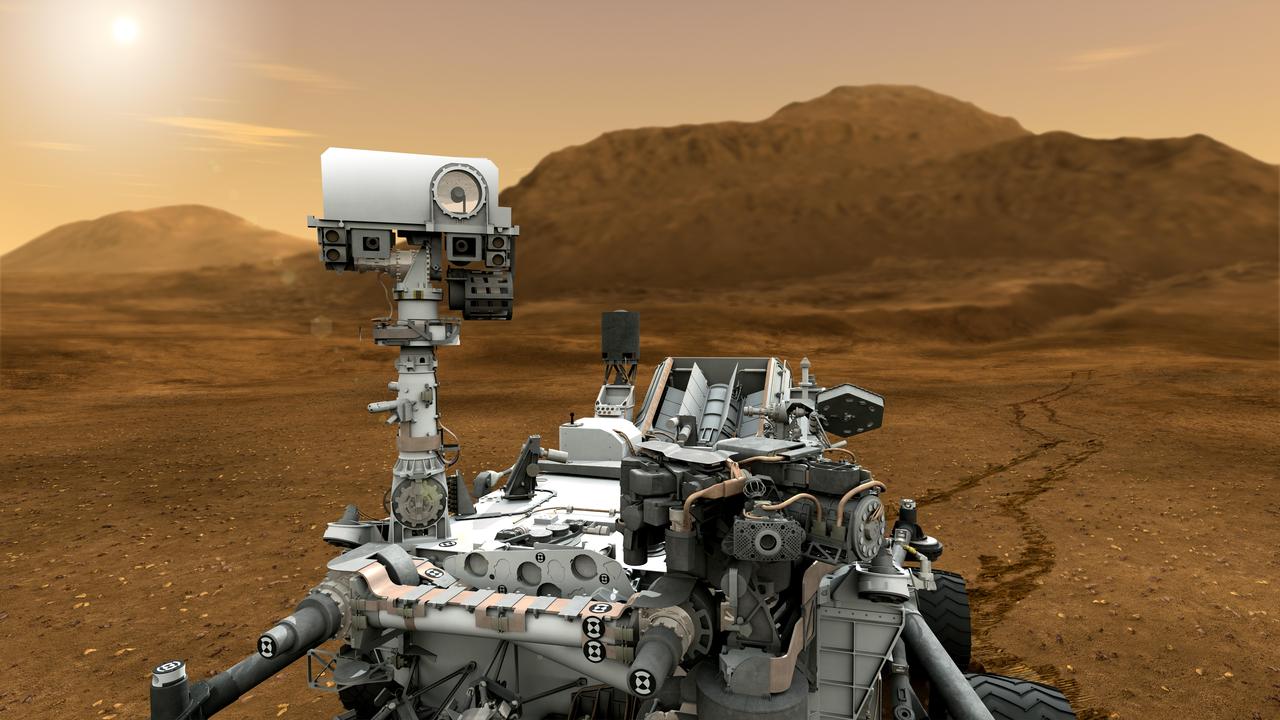
This artist concept features NASA Mars Science Laboratory Curiosity rover. The mast, or rover head, rises to about 2.1 meters 6.9 feet above ground level, about as tall as a basketball player.
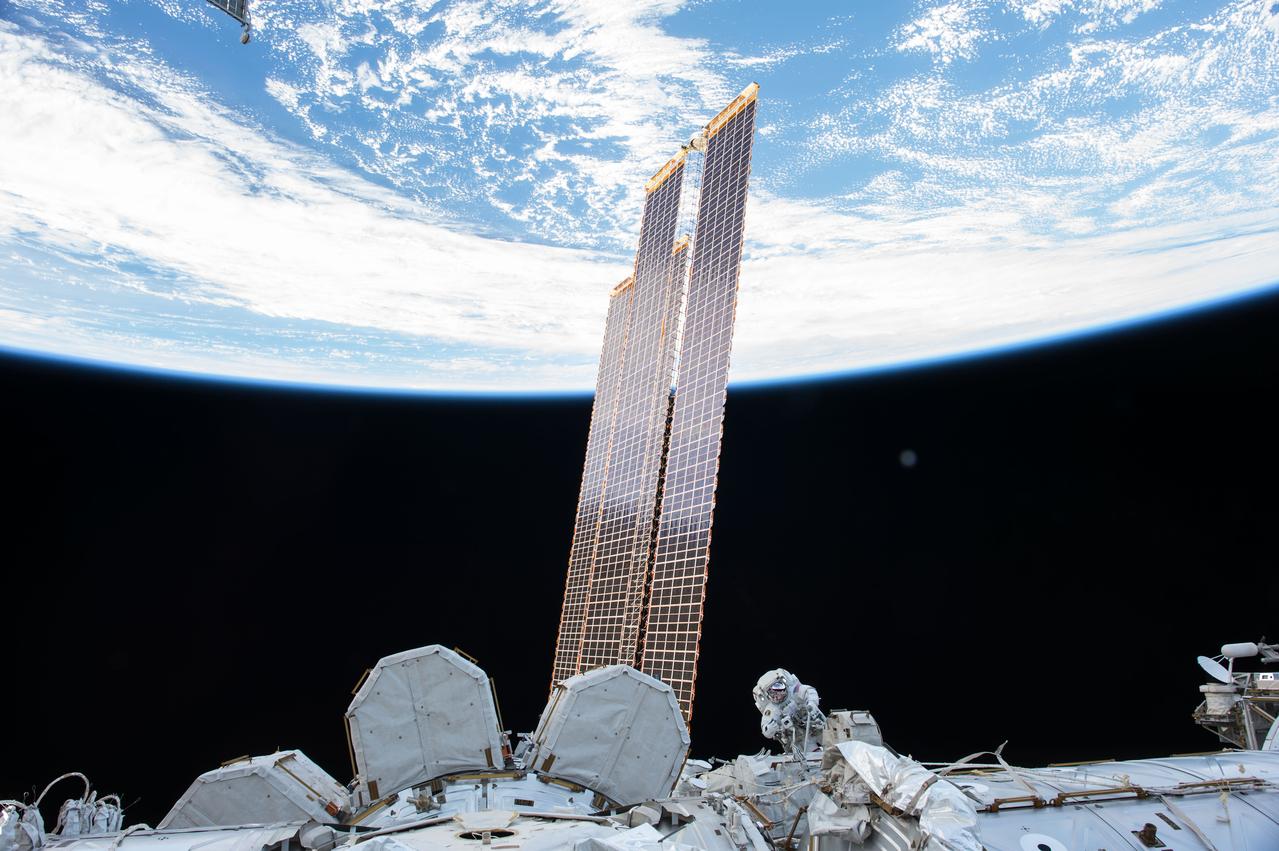
iss053e079613 (Oct. 5, 2017) --- NASA astronaut Randy Bresnik (bottom center) is dwarfed by a set of basketball court-sized solar arrays and the Earth in the background during a spacewalk on Oct. 5, 2017.
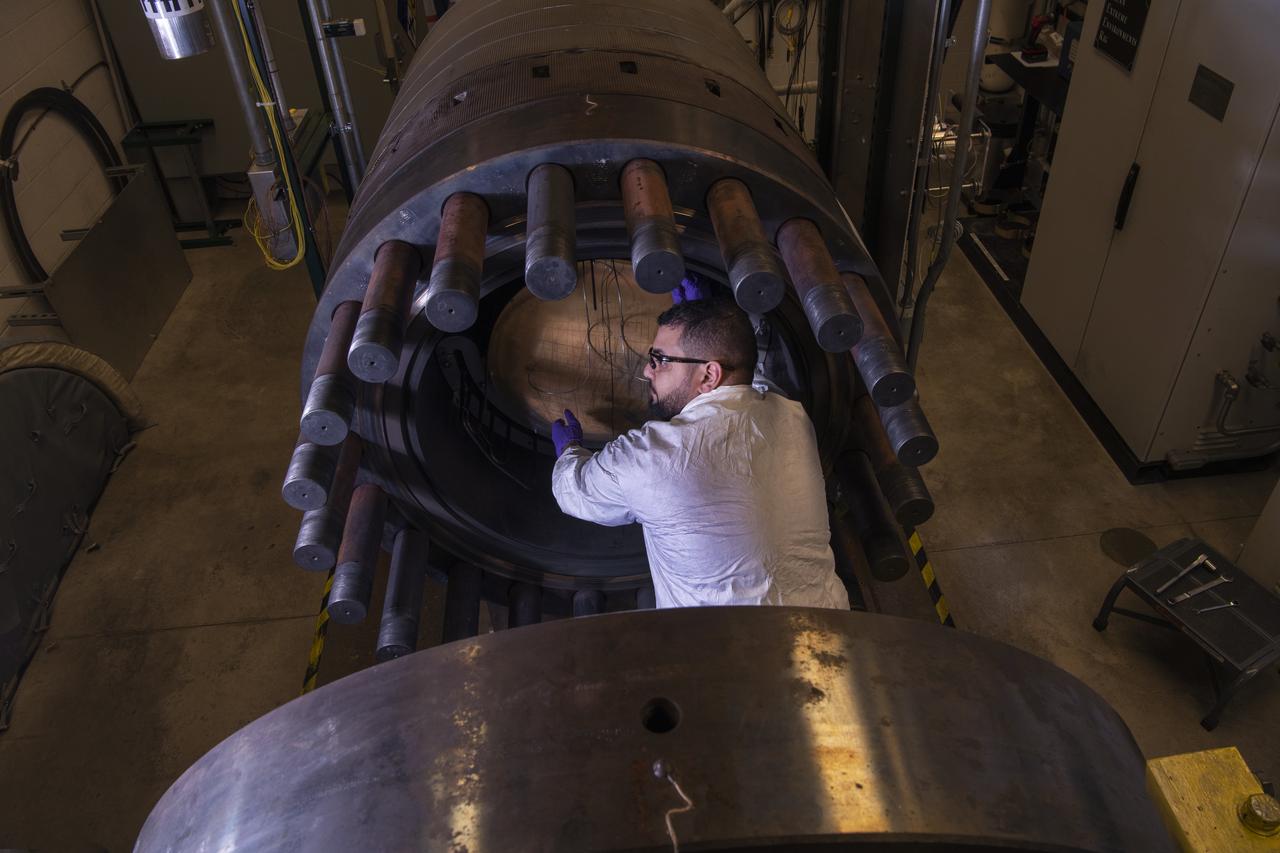
Juno testing in Glenn Extreme Environments Rig, GEER Laboratory. Juno is a solar-powered NASA spacecraft that spans the width of a basketball court and makes long, looping orbits around giant planet Jupiter
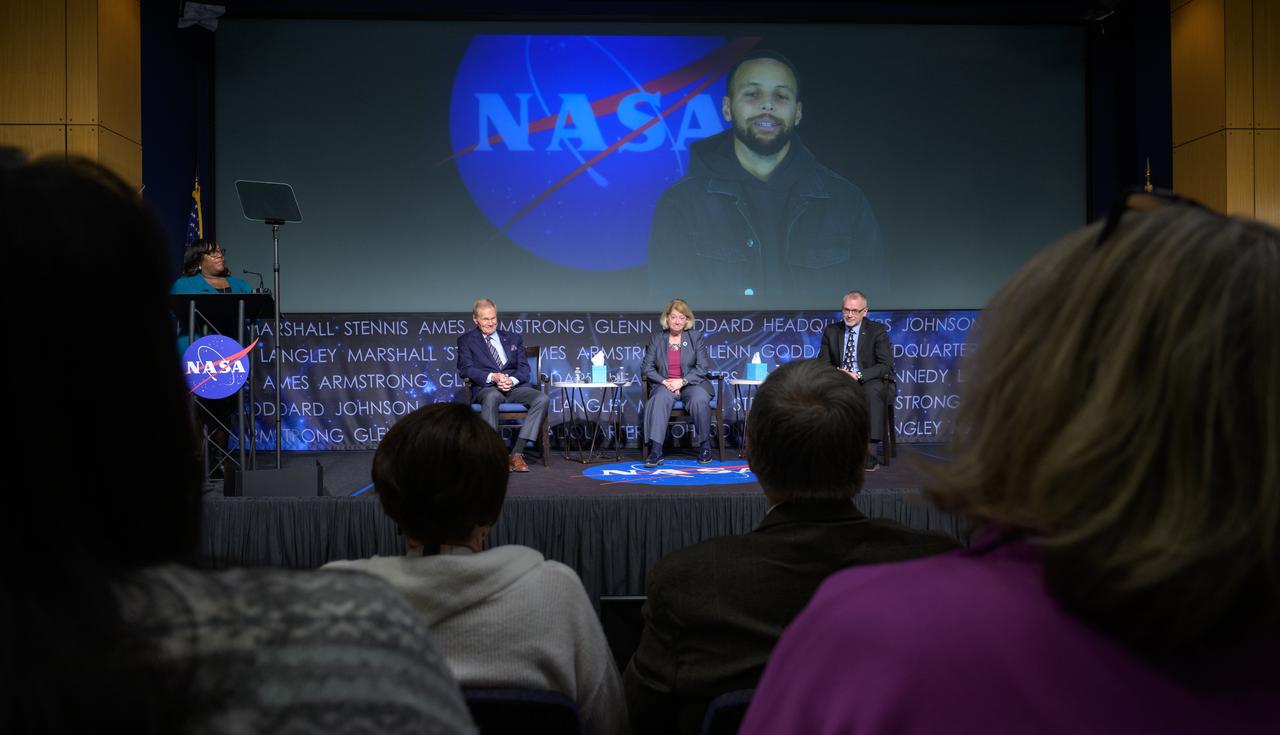
American professional basketball player Stephen Curry gives pre-recorded remarks during a NASA agencywide all hands, Friday, Dec. 6, 2024, at the NASA Headquarters Mary W. Jackson Building in Washington. Photo Credit: (NASA/Bill Ingalls)
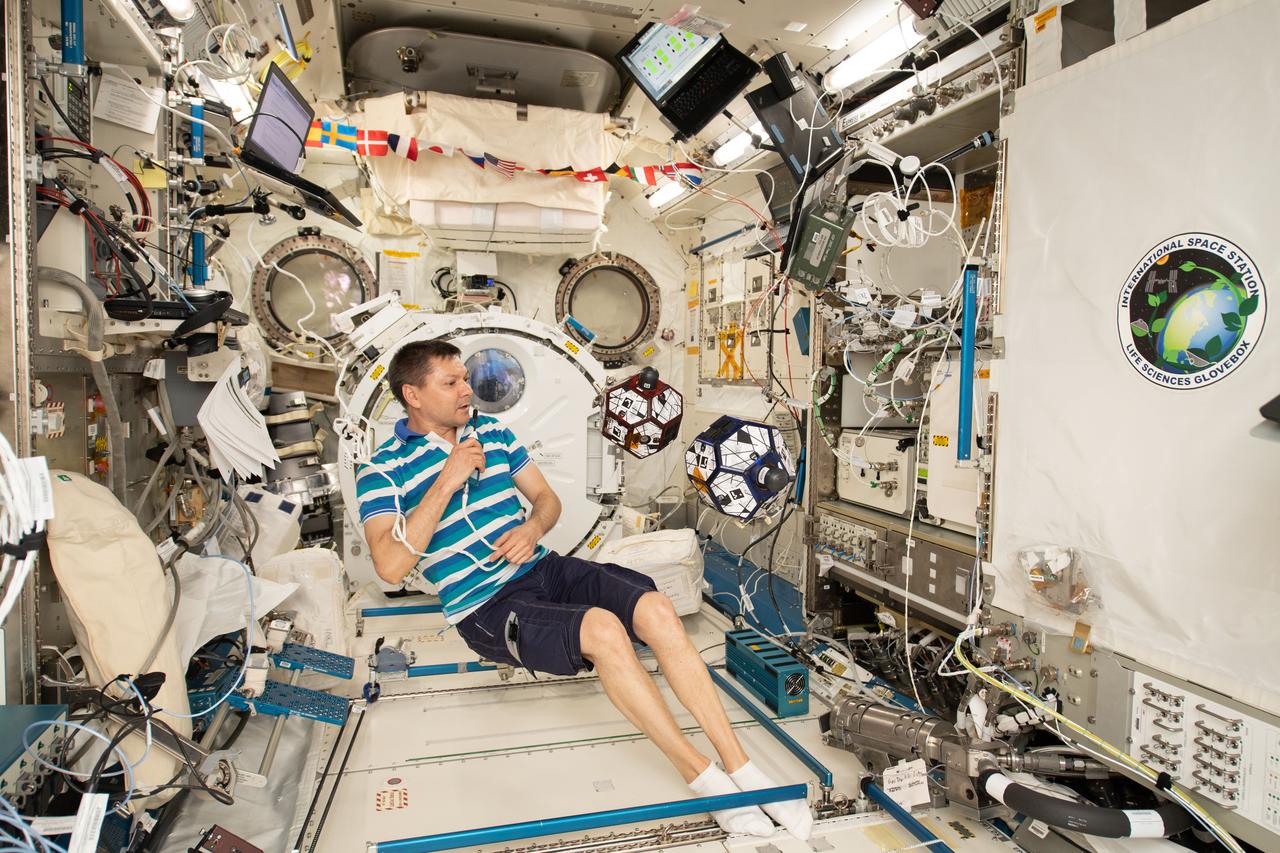
iss058e003128 (Jan. 14, 2019) --- Commander Oleg Kononenko works inside the Japanese Kibo lab module monitoring a pair of tiny internal free-flying satellites known as SPHERES (Synchronized Position Hold, Engage, Reorient, Experimental Satellites). High school students compete to design the best algorithms that control the basketball-sized satellites to mimic spacecraft maneuvers and formation flying.
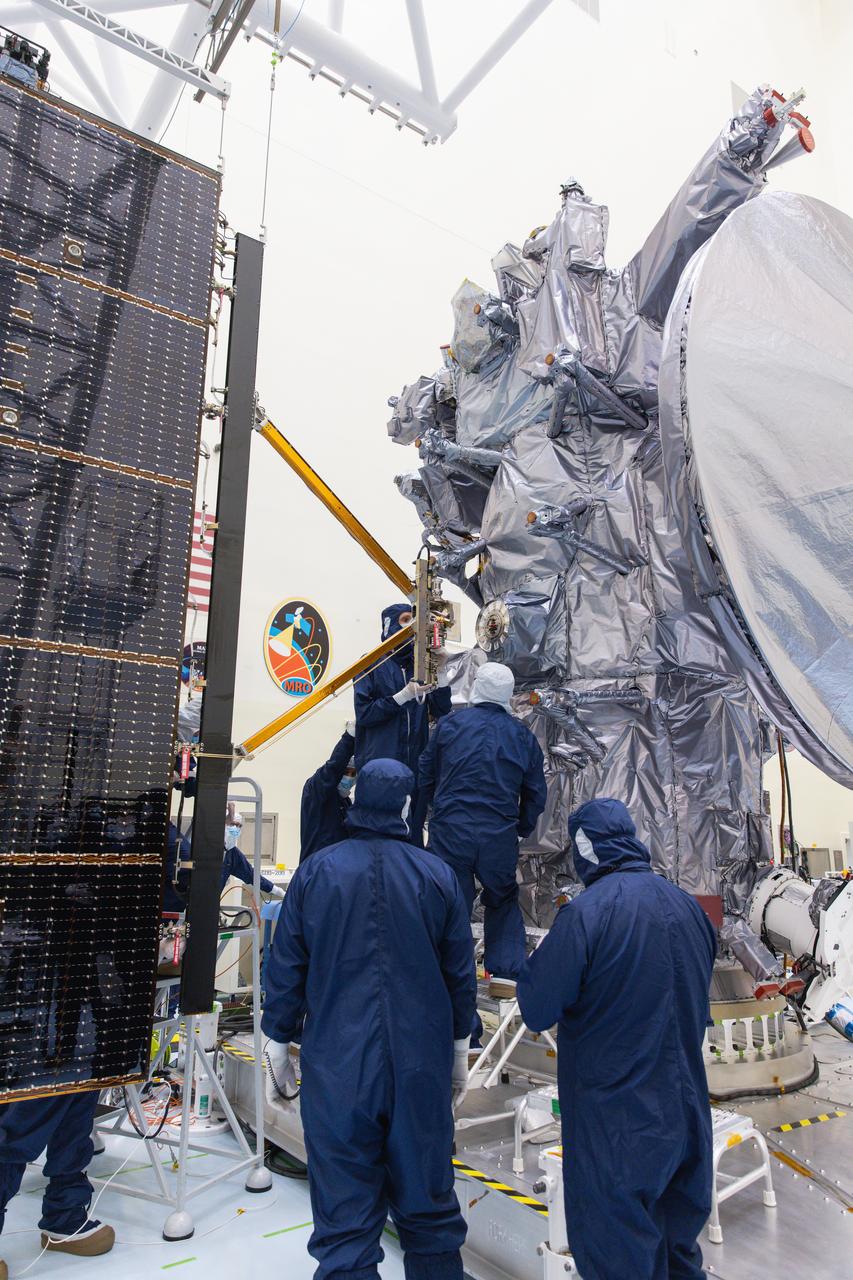
Technicians attach the five-panel solar arrays to NASA’s Europa Clipper spacecraft inside the Payload Hazardous Servicing Facility at the agency’s Kennedy Space Center in Florida on Friday, Aug. 2, 2024. The huge arrays – spanning more than 100 feet when fully deployed, or about the length of a basketball court – will collect sunlight to power the spacecraft as it explores Jupiter’s icy moon, Europa, conducting science investigations to determine its potential to support life.
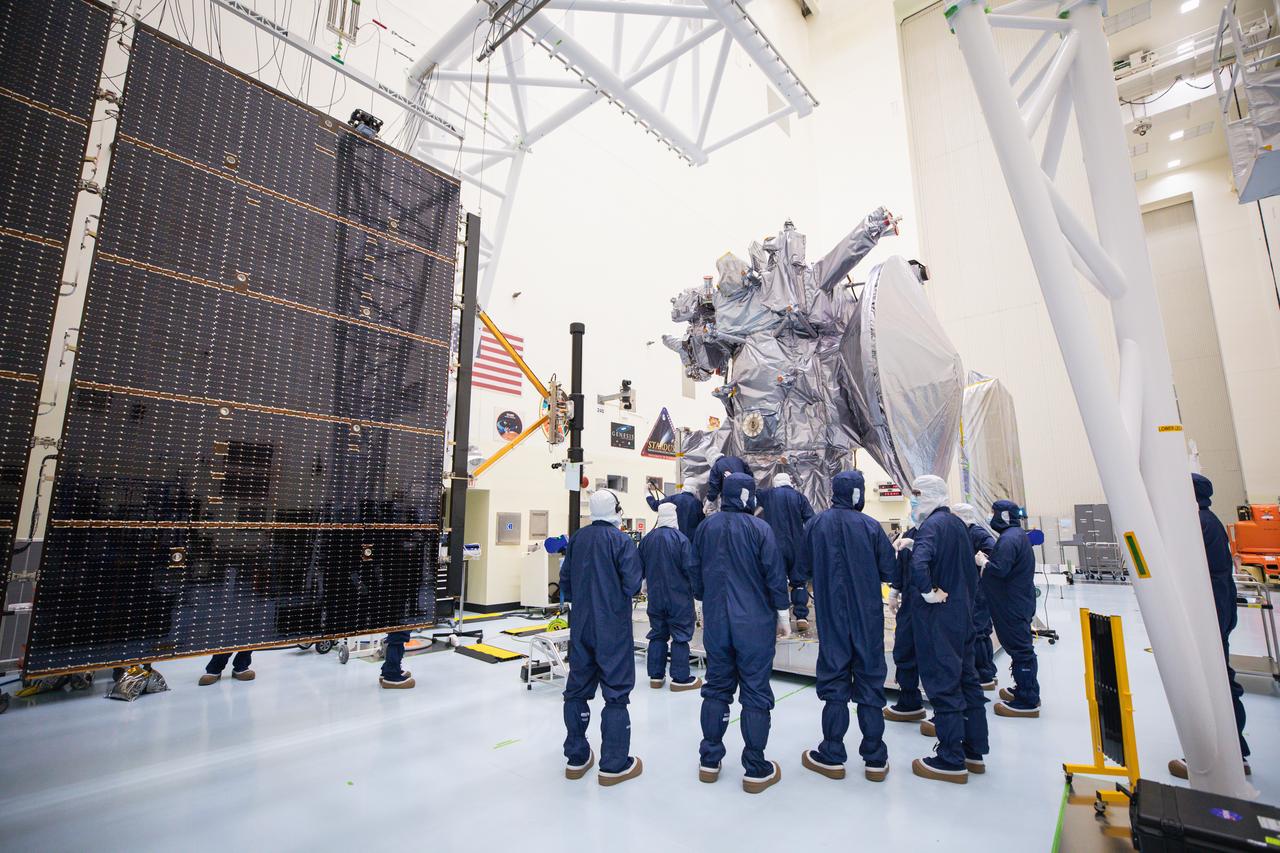
Technicians attach the five-panel solar arrays to NASA’s Europa Clipper spacecraft inside the Payload Hazardous Servicing Facility at the agency’s Kennedy Space Center in Florida on Friday, Aug. 2, 2024. The huge arrays – spanning more than 100 feet when fully deployed, or about the length of a basketball court – will collect sunlight to power the spacecraft as it explores Jupiter’s icy moon, Europa, conducting science investigations to determine its potential to support life.
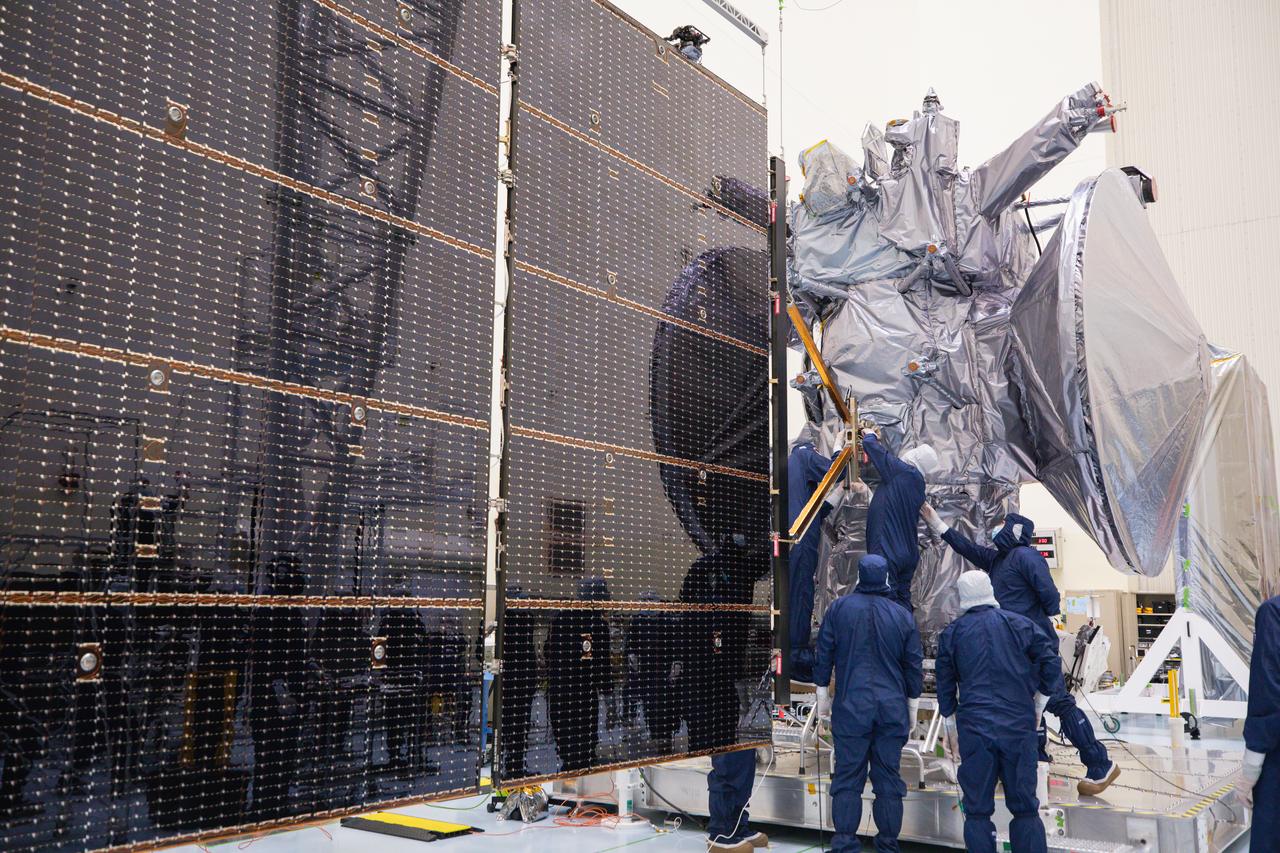
Technicians attach the five-panel solar arrays to NASA’s Europa Clipper spacecraft inside the Payload Hazardous Servicing Facility at the agency’s Kennedy Space Center in Florida on Friday, Aug. 2, 2024. The huge arrays – spanning more than 100 feet when fully deployed, or about the length of a basketball court – will collect sunlight to power the spacecraft as it explores Jupiter’s icy moon, Europa, conducting science investigations to determine its potential to support life.
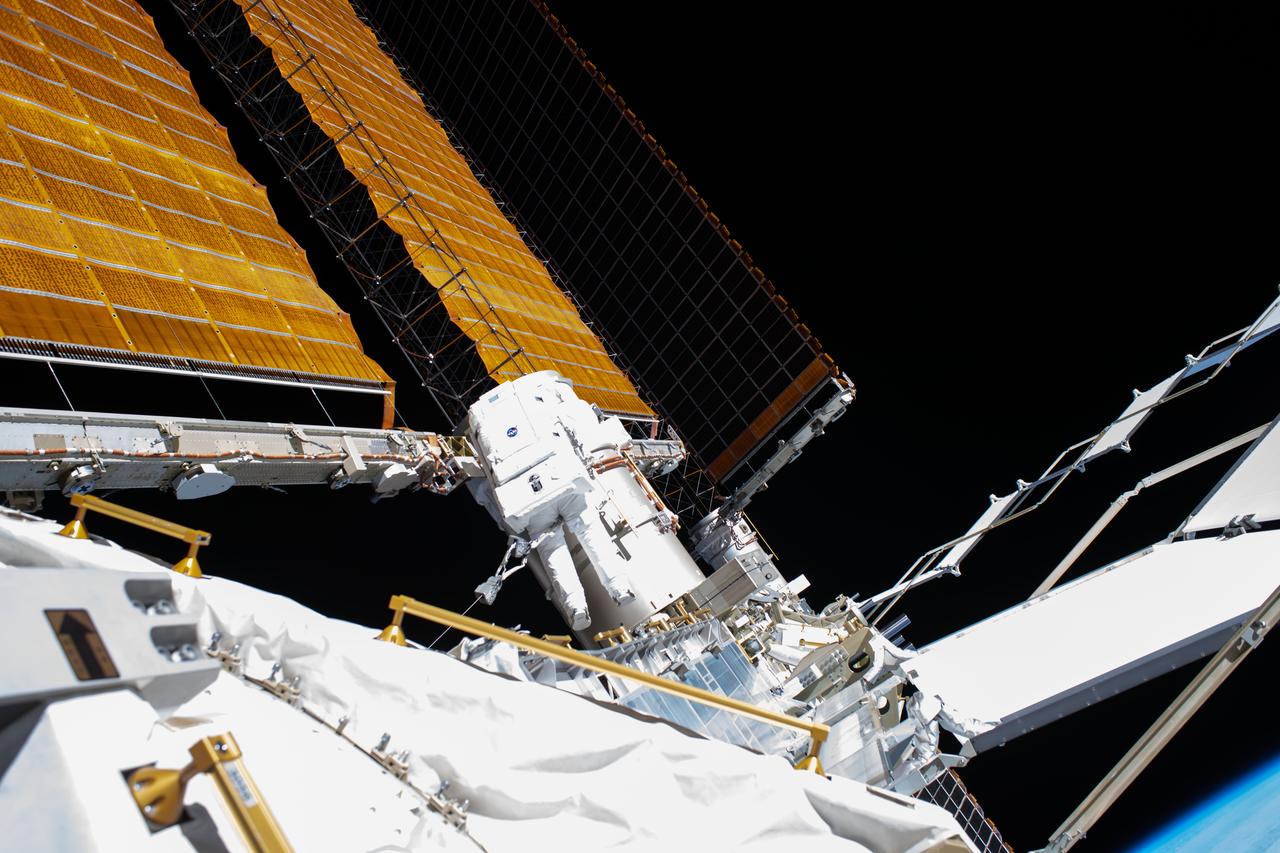
iss063e034124 (July 1, 2020) --- NASA astronaut and Expedition 63 Flight Engineer Bob Behnken (center) works during a six-hour and one-minute spacewalk to swap an aging nickel-hydrogen battery for a new lithium-ion battery on the International Space Station's Starboard-6 truss structure. Protruding diagonally towards the upper left are the station's main solar arrays which are the length of basketball court.
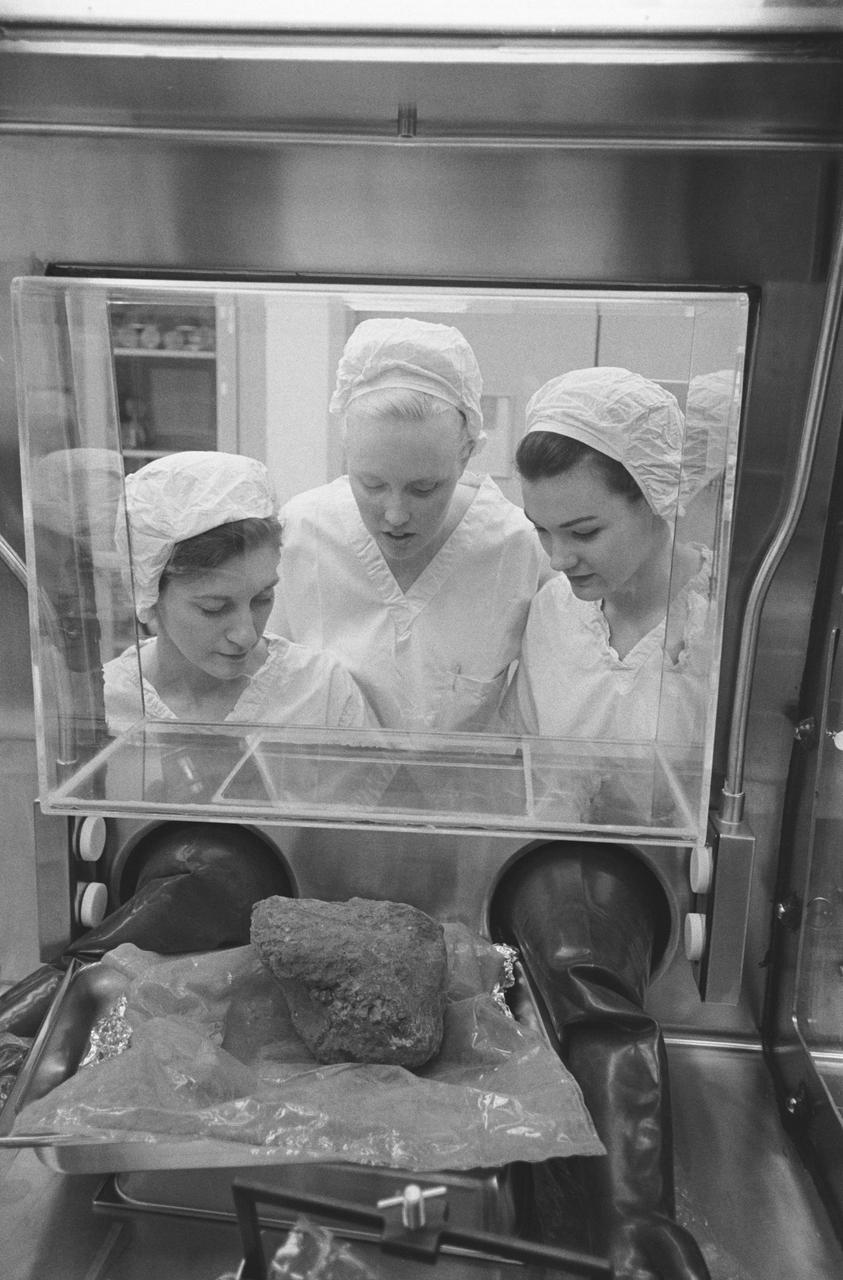
S71-21244 (24 Feb. 1971) --- Three Brown and Root/Northrop technicians in the Nonsterile Nitrogen Laboratory in the Lunar Receiving Laboratory (LRL) peer through glass at the much-discussed basketball size rock which Apollo 14 crewmen brought back from the Fra Mauro area of the moon. They are, left to right, Linda Tyler, Nancy L. Trent and Sandra Richards.
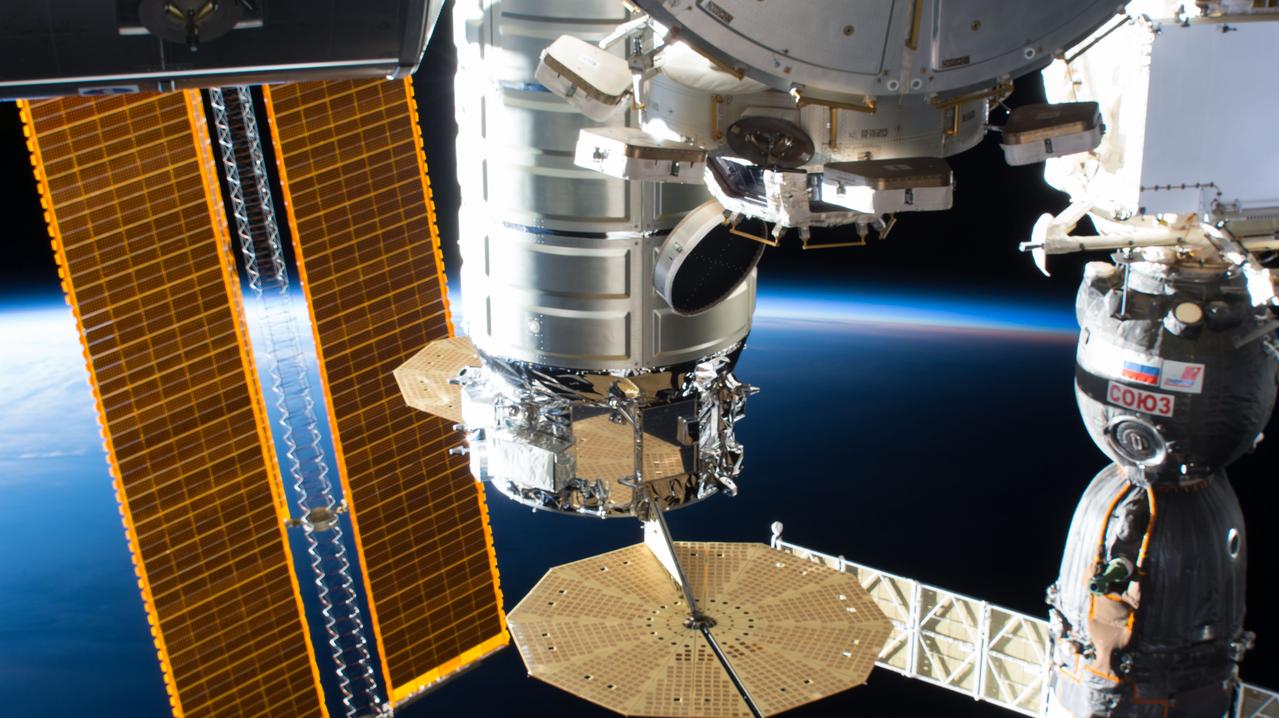
iss056e094392 (July 10, 2018) --- The Northrop Grumman (formerly Orbital ATK) Cygnus resupply ship and its UltraFlex solar arrays figure prominently in this photograph of several International Space Station components with Earth in the background. At left are a set of basketball court-sized solar arrays. In the foreground is the Cupola and a portion of the Tranquility module. At right is the Soyuz MS-09 spacecraft docked to the Rassvet module.
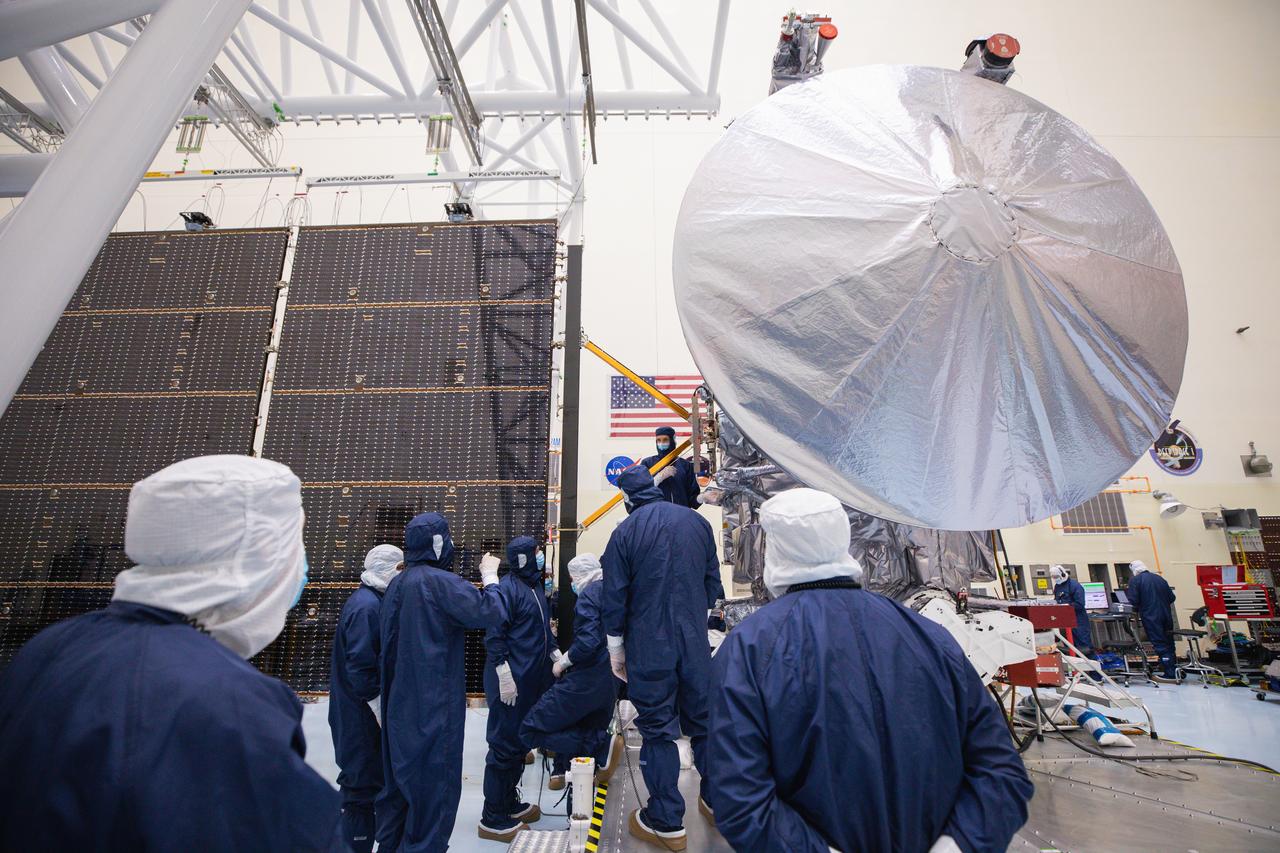
Technicians attach the five-panel solar arrays to NASA’s Europa Clipper spacecraft inside the Payload Hazardous Servicing Facility at the agency’s Kennedy Space Center in Florida on Friday, Aug. 2, 2024. The huge arrays – spanning more than 100 feet when fully deployed, or about the length of a basketball court – will collect sunlight to power the spacecraft as it explores Jupiter’s icy moon, Europa, conducting science investigations to determine its potential to support life.
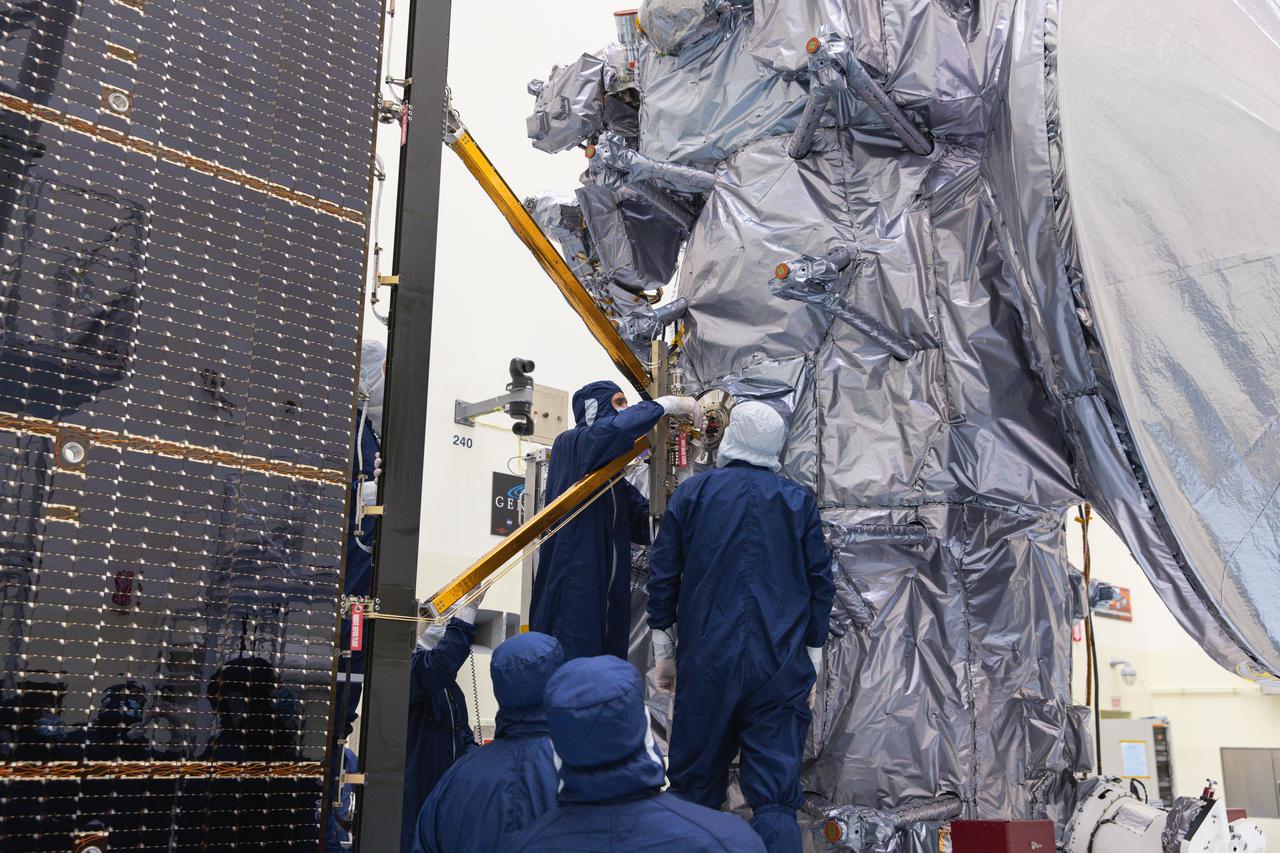
Technicians attach the five-panel solar arrays to NASA’s Europa Clipper spacecraft inside the Payload Hazardous Servicing Facility at the agency’s Kennedy Space Center in Florida on Friday, Aug. 2, 2024. The huge arrays – spanning more than 100 feet when fully deployed, or about the length of a basketball court – will collect sunlight to power the spacecraft as it explores Jupiter’s icy moon, Europa, conducting science investigations to determine its potential to support life.
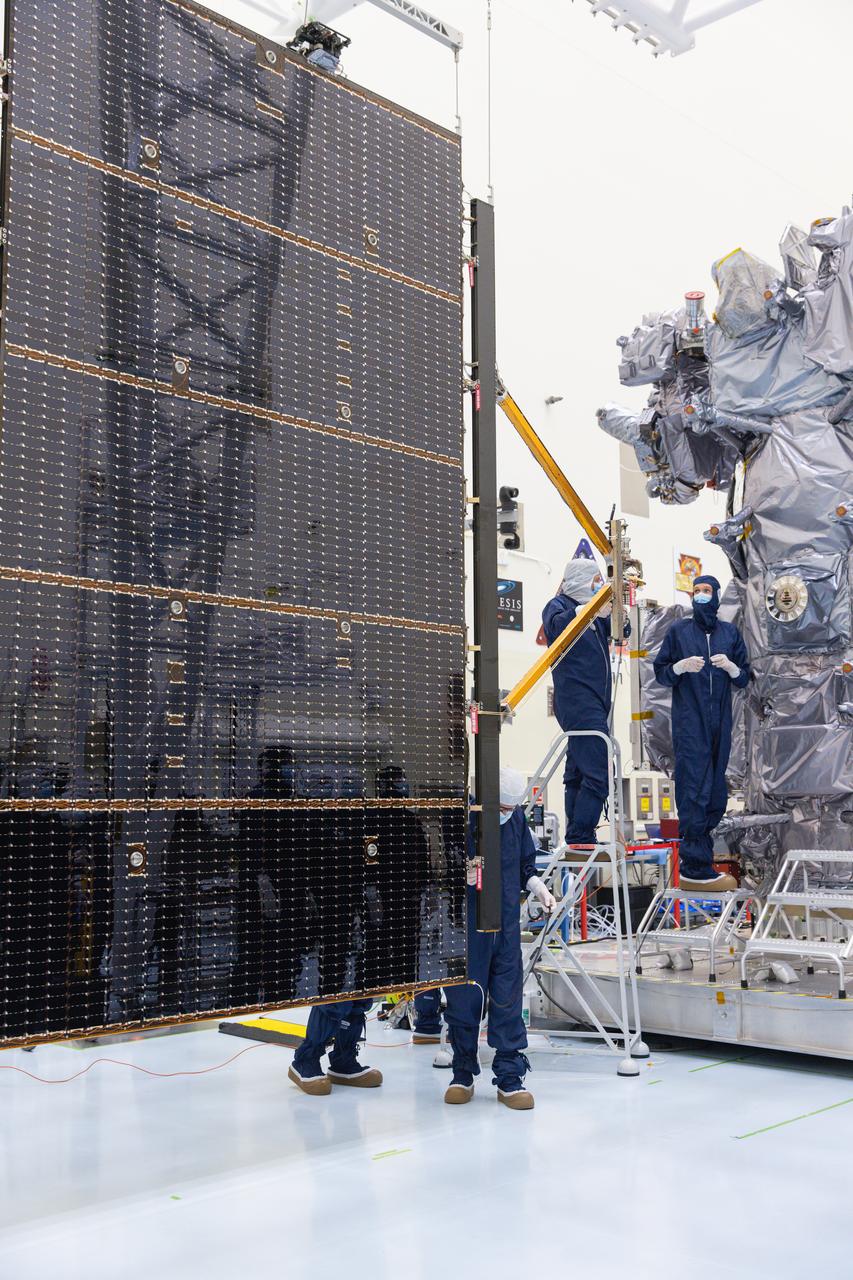
Technicians attach the five-panel solar arrays to NASA’s Europa Clipper spacecraft inside the Payload Hazardous Servicing Facility at the agency’s Kennedy Space Center in Florida on Friday, Aug. 2, 2024. The huge arrays – spanning more than 100 feet when fully deployed, or about the length of a basketball court – will collect sunlight to power the spacecraft as it explores Jupiter’s icy moon, Europa, conducting science investigations to determine its potential to support life.
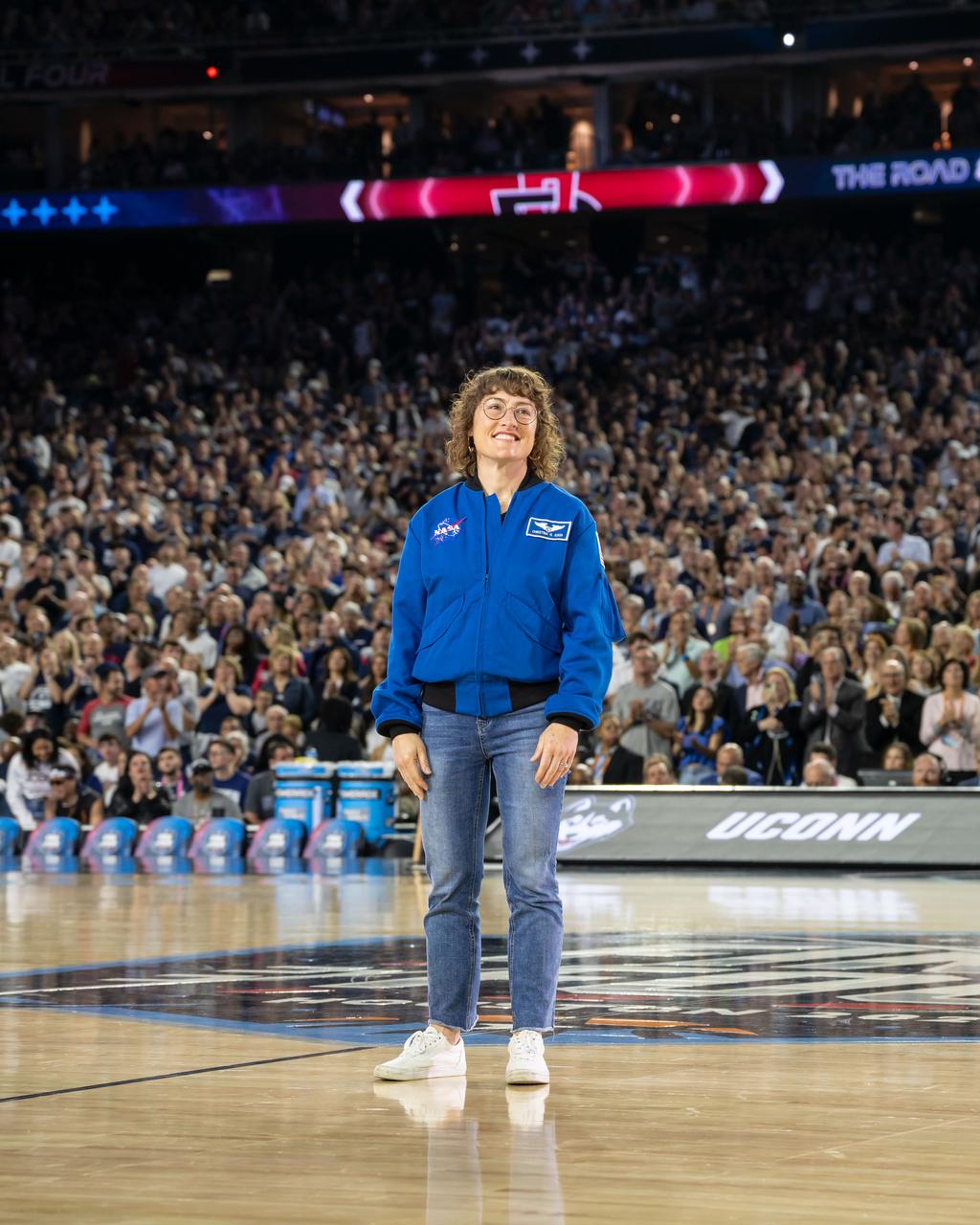
jsc2023e018315 (April 3, 2023) – NASA astronaut Artemis II Mission Specialist Christina Koch is introduced on the basketball court while attending the NCAA Men’s Final Four national championship game at NRG Stadium in Houston. The crew is comprised of Commander Reid Wiseman, Pilot Victor Glover, and Mission Specialists Christina Koch and Jeremy Hansen. The four astronauts will venture around the Moon on Artemis II, the first crewed mission on NASA’s path to establishing a long-term presence at the Moon for science and exploration through Artemis.
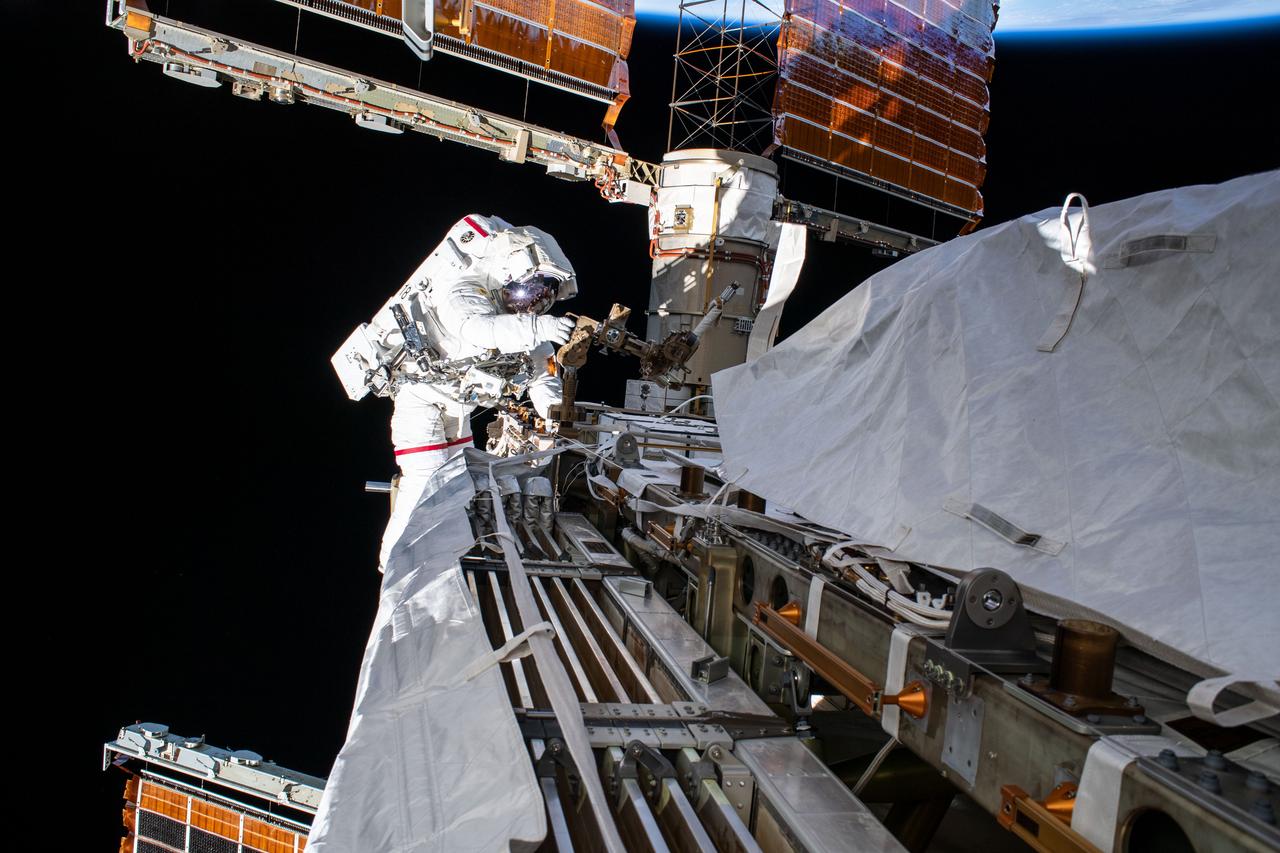
iss061e005535 (Oct. 11, 2019) --- NASA astronaut Andrew Morgan works while tethered on the Port 6 truss segment of the International Space Station to replace older hydrogen-nickel batteries with newer, more powerful lithium-ion batteries. The batteries store and distribute power collected from the station's basketball court-sized solar arrays directly behind Morgan.
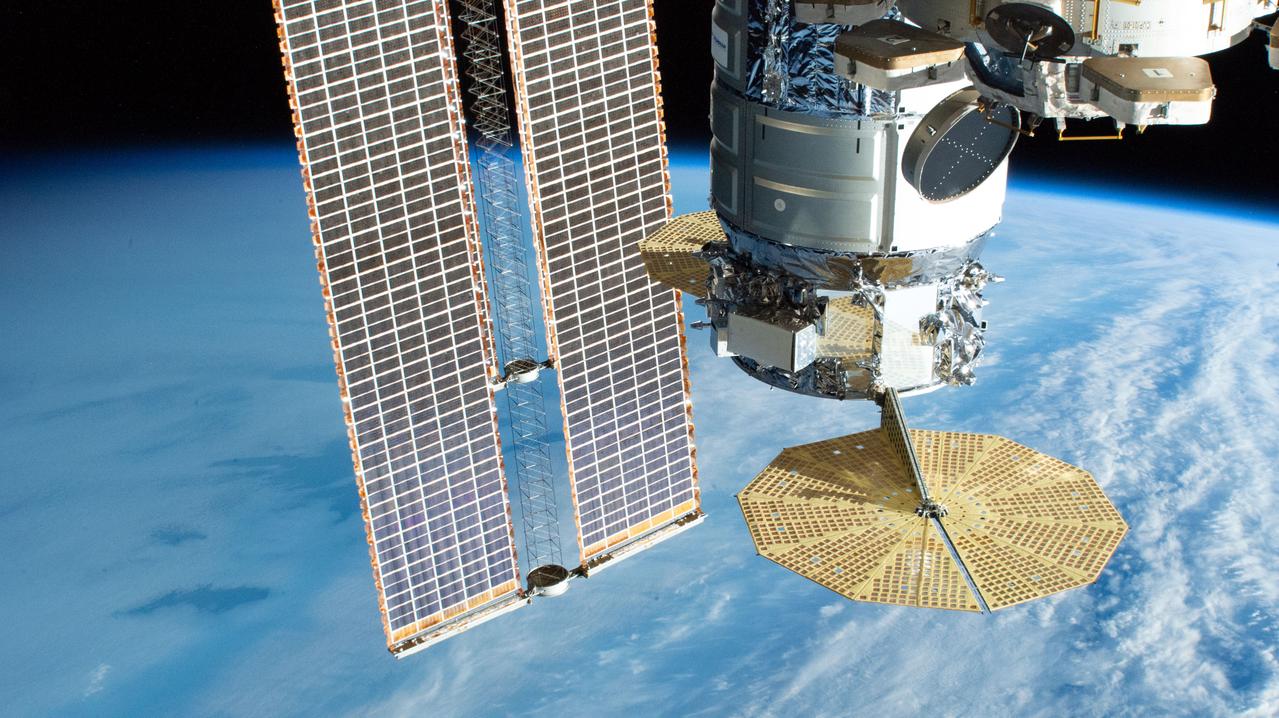
iss061e036670 (Nov. 19, 2019) --- Northrop Grumman's Cygnus space freighter with its prominent cymbal-shaped solar arrays is pictured as the International Space Station orbited 265 miles above the South Atlantic Ocean near the tip of South Africa. In the top right foreground, is the seven-windowed cupola with its window shutters open. Behind Cygnus, is the one of the station's basketball court-sized solar arrays.
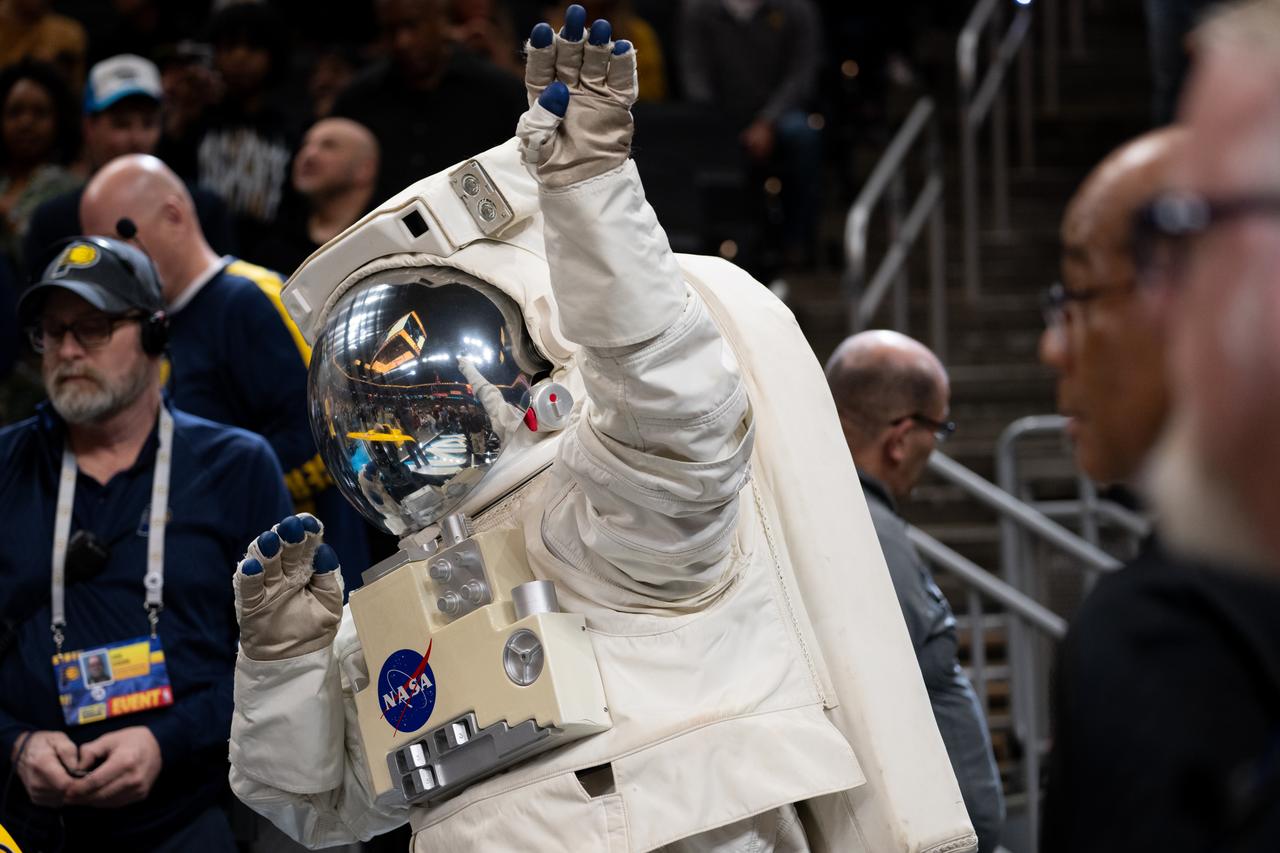
before the start of a basketball game between the Indiana Pacers and the Miami Heat, Sunday, April 7, 2024, at Gainbridge Fieldhouse in Indianapolis, Ind. On Monday, April 8, a total solar eclipse will sweep across a narrow portion of the North American continent from Mexico’s Pacific coast to the Atlantic coast of Newfoundland, Canada, while a partial solar eclipse will be visible across the entire North American continent along with parts of Central America and Europe. Photo Credit: (NASA/Joel Kowsky)
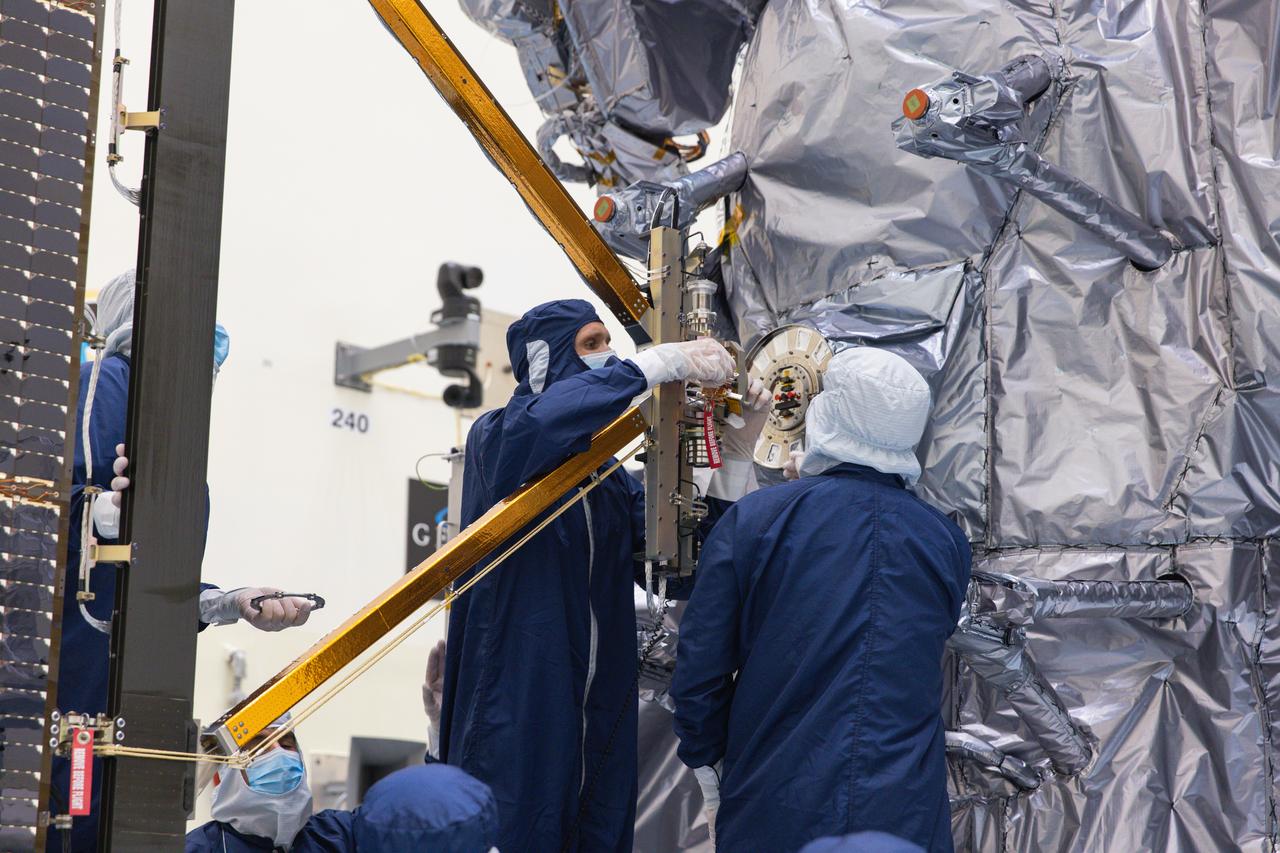
Technicians attach the five-panel solar arrays to NASA’s Europa Clipper spacecraft inside the Payload Hazardous Servicing Facility at the agency’s Kennedy Space Center in Florida on Friday, Aug. 2, 2024. The huge arrays – spanning more than 100 feet when fully deployed, or about the length of a basketball court – will collect sunlight to power the spacecraft as it explores Jupiter’s icy moon, Europa, conducting science investigations to determine its potential to support life.
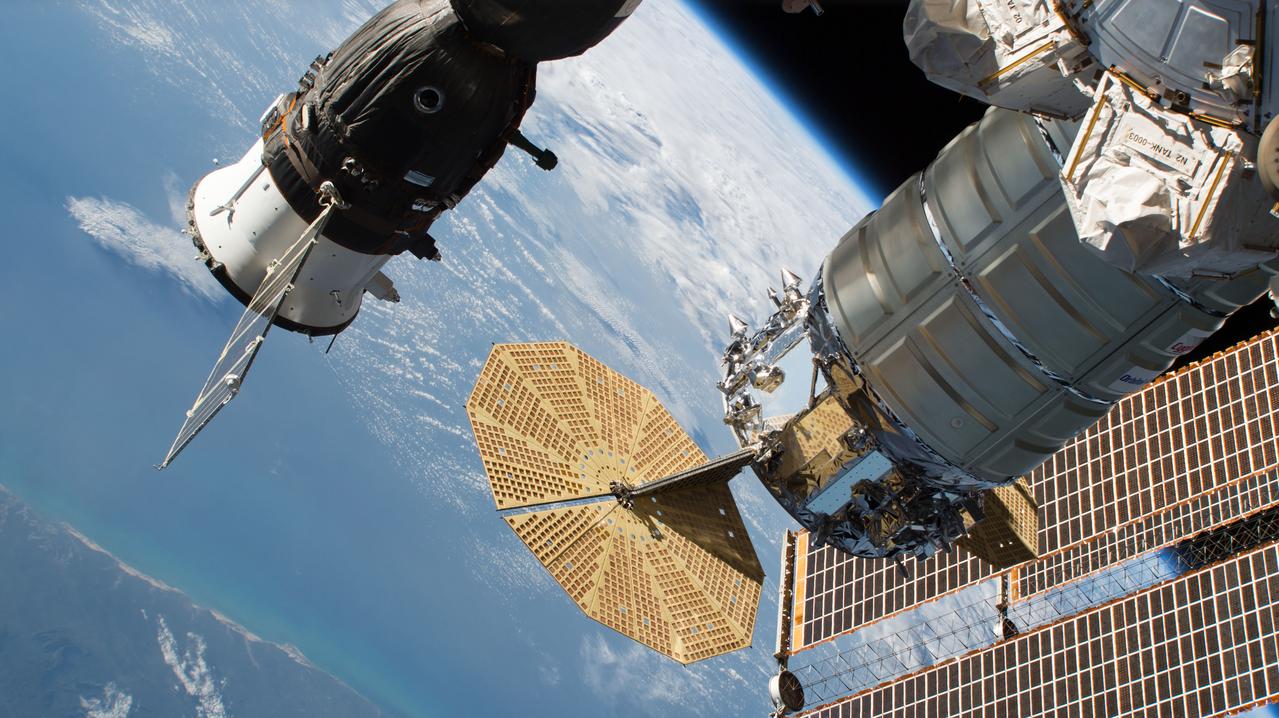
iss056e032835 (June 24, 2018) --- The Russian Soyuz MS-09 crew craft and the Northrop Grumman (formerly Orbital ATK) Cygnus space freighter are seen attached to the International Space Station with the orbital complex's basketball court-sized solar arrays in the lower right background. The eastern coast of Brazil is pictured in the lower left corner of the frame.
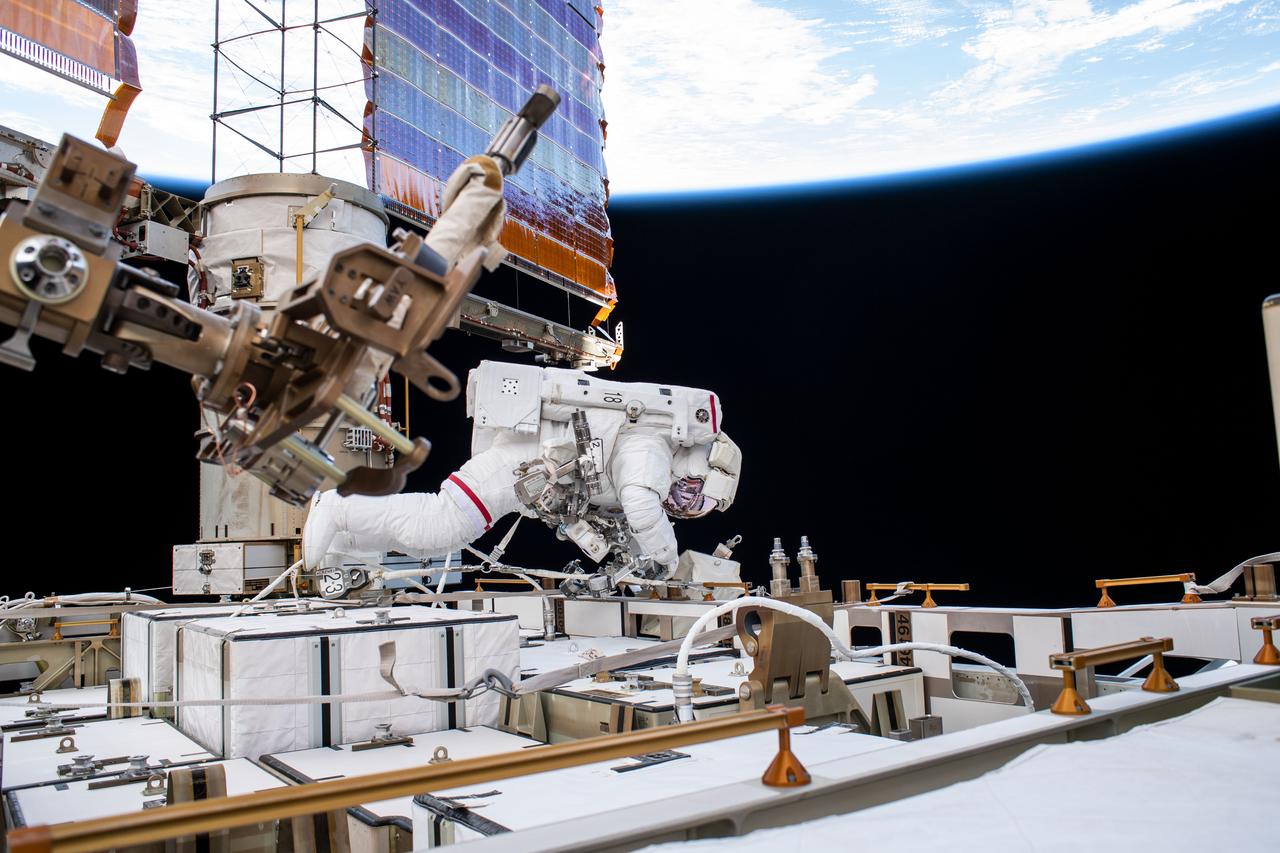
iss061e005542 (Oct. 11, 2019) --- NASA astronaut Andrew Morgan works while tethered on the Port 6 truss segment of the International Space Station to replace older hydrogen-nickel batteries with newer, more powerful lithium-ion batteries. The batteries store and distribute power collected from the station's basketball court-sized solar arrays, one of which is directly behind Morgan.
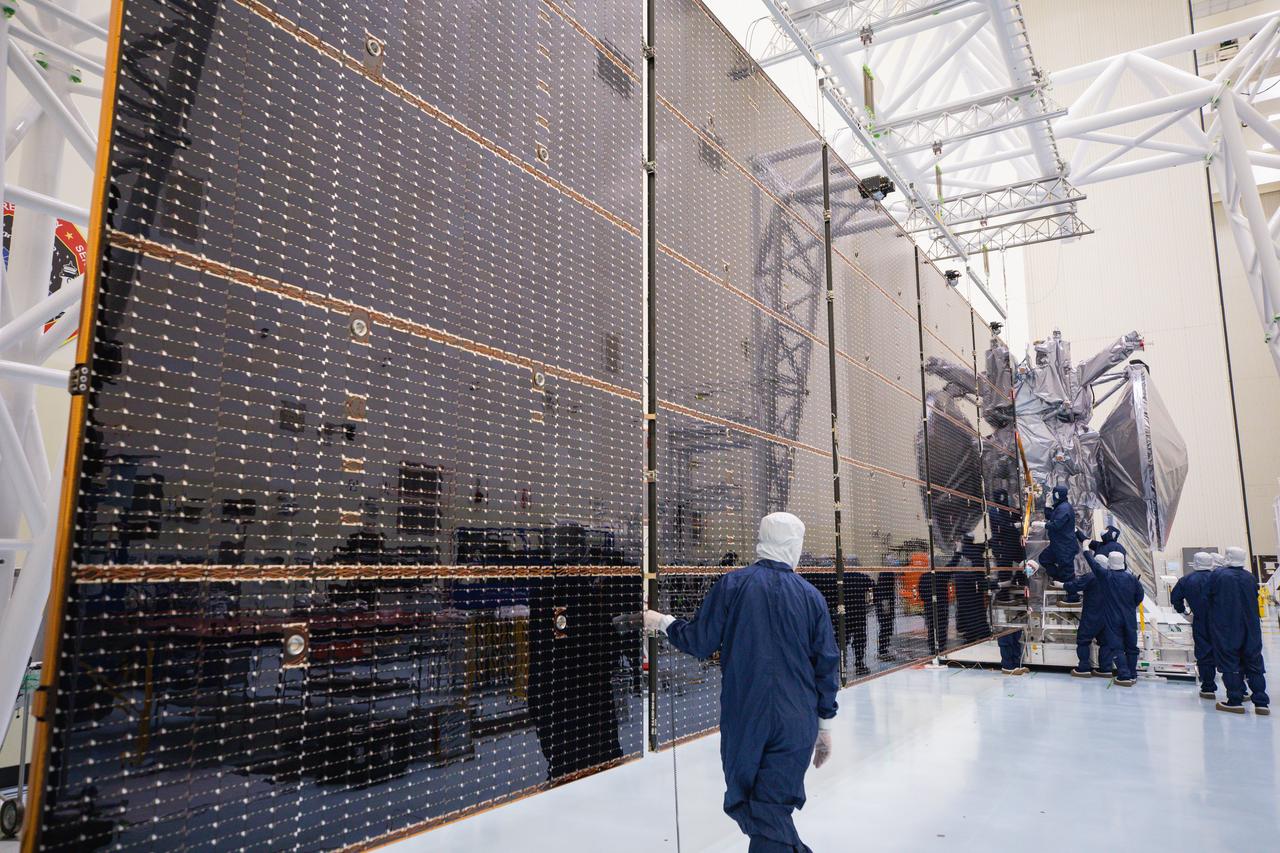
Technicians attach the five-panel solar arrays to NASA’s Europa Clipper spacecraft inside the Payload Hazardous Servicing Facility at the agency’s Kennedy Space Center in Florida on Friday, Aug. 2, 2024. The huge arrays – spanning more than 100 feet when fully deployed, or about the length of a basketball court – will collect sunlight to power the spacecraft as it explores Jupiter’s icy moon, Europa, conducting science investigations to determine its potential to support life.

Technicians attach the five-panel solar arrays to NASA’s Europa Clipper spacecraft inside the Payload Hazardous Servicing Facility at the agency’s Kennedy Space Center in Florida on Friday, Aug. 2, 2024. The huge arrays – spanning more than 100 feet when fully deployed, or about the length of a basketball court – will collect sunlight to power the spacecraft as it explores Jupiter’s icy moon, Europa, conducting science investigations to determine its potential to support life.
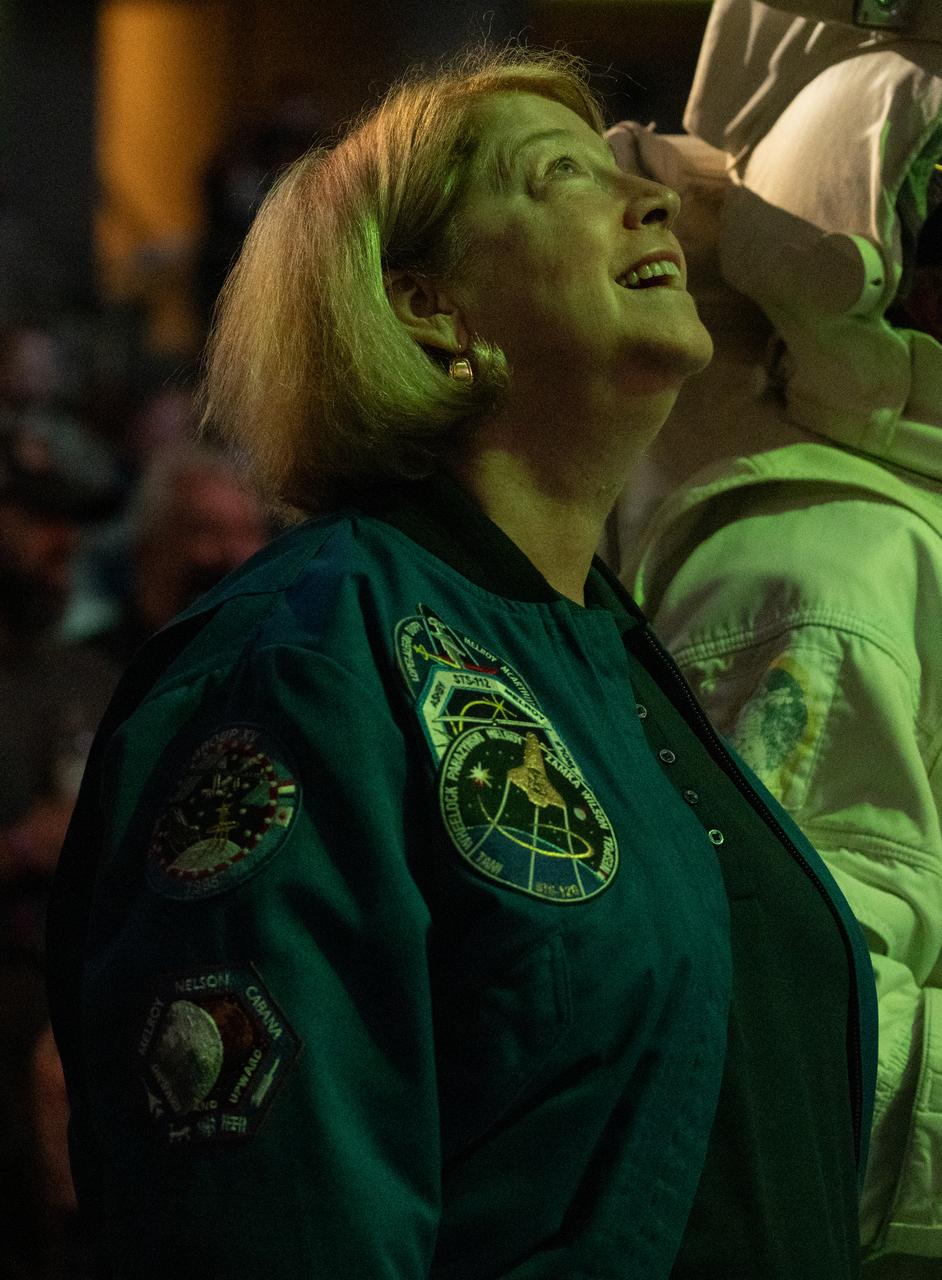
NASA Deputy Administrator Pam Melroy is seen before the start of a basketball game between the Indiana Pacers and the Miami Heat, Sunday, April 7, 2024, at Gainbridge Fieldhouse in Indianapolis, Ind. On Monday, April 8, a total solar eclipse will sweep across a narrow portion of the North American continent from Mexico’s Pacific coast to the Atlantic coast of Newfoundland, Canada, while a partial solar eclipse will be visible across the entire North American continent along with parts of Central America and Europe. Photo Credit: (NASA/Joel Kowsky)
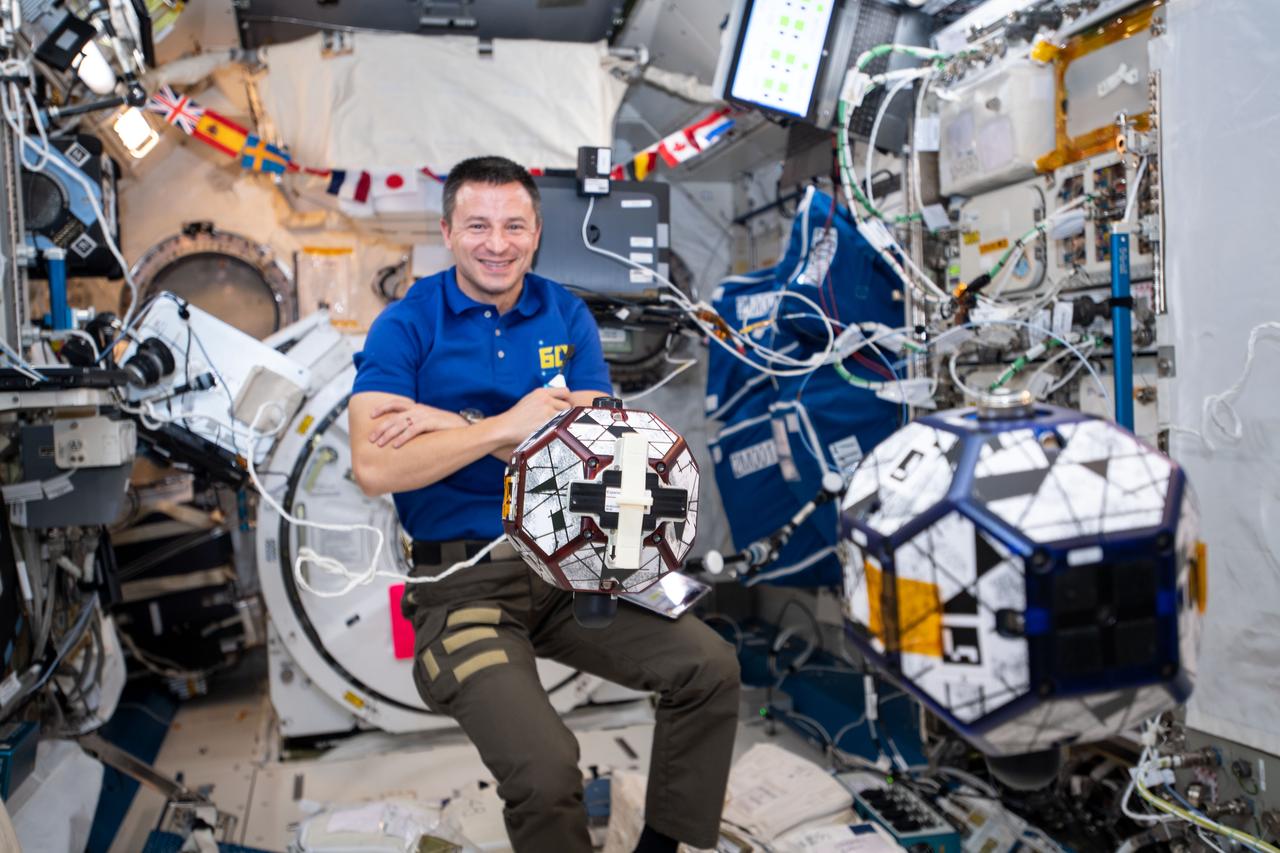
iss060e033147 (Aug. 9, 2019) --- Expedition 60 Flight Engineer Andrew Morgan of NASA monitors a pair of tiny, free-floating satellites known as SPHERES, or Synchronized Position Hold, Engage, Reorient, Experimental Satellites. Middle and high school students compete to design algorithms that autonomously control the basketball-sized SPHERES satellites aboard the station. The student-written software tests rendezvous and docking maneuvers that simulate scenarios such as retrieving an inoperable satellite.
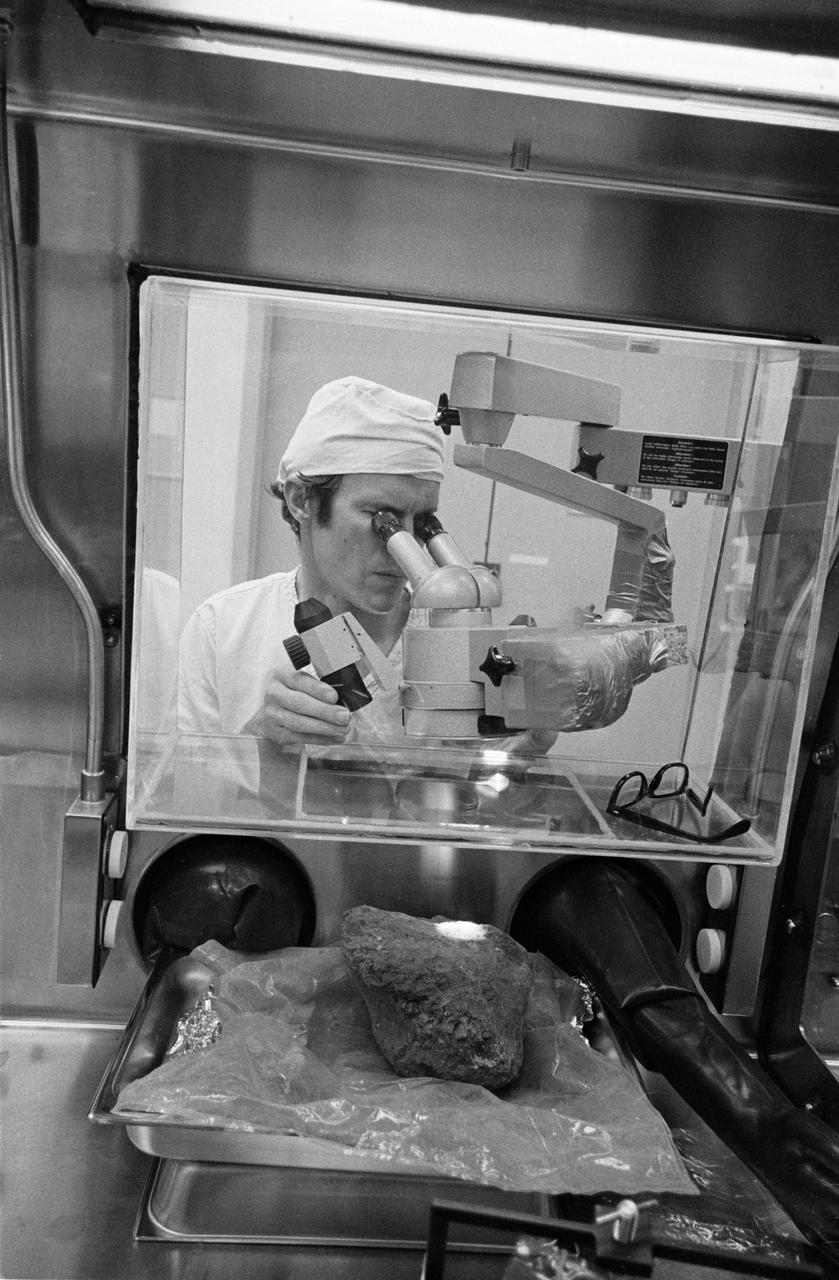
S71-21245 (24 Feb. 1971) --- Dr. Daniel H. Anderson, an aerospace technologist and test director in the Nonsterile Nitrogen Processing Laboratory in the Lunar Receiving Laboratory (LRL) at the Manned Spacecraft Center (MSC) looks at much-discussed Apollo 14 basketball-size rock through a microscope. The two moon-exploring crew men of Apollo 14 brought back 90-odd pounds of lunar sample material from their two periods of extravehicular activity (EVA) on the lunar surface in the Fra Mauro area.
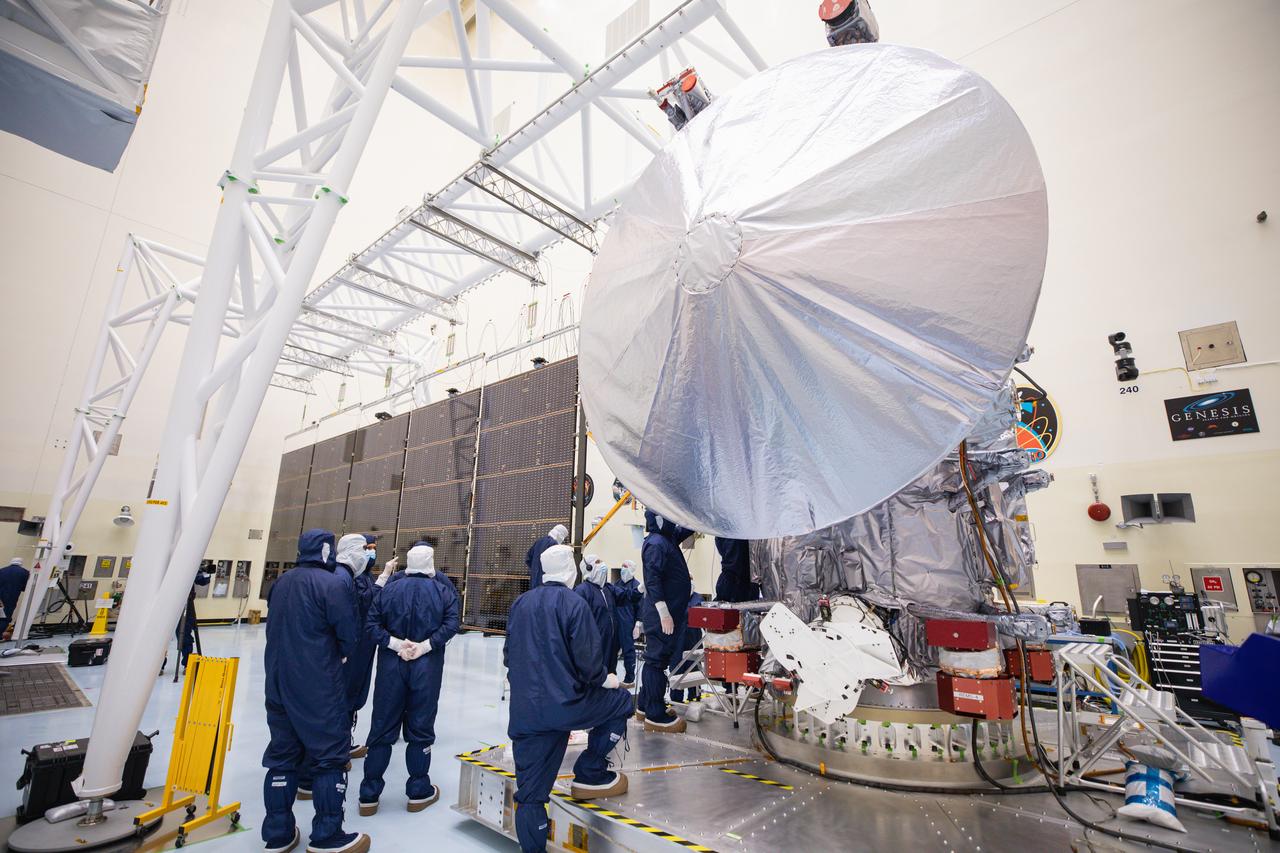
Technicians attach the five-panel solar arrays to NASA’s Europa Clipper spacecraft inside the Payload Hazardous Servicing Facility at the agency’s Kennedy Space Center in Florida on Friday, Aug. 2, 2024. The huge arrays – spanning more than 100 feet when fully deployed, or about the length of a basketball court – will collect sunlight to power the spacecraft as it explores Jupiter’s icy moon, Europa, conducting science investigations to determine its potential to support life.
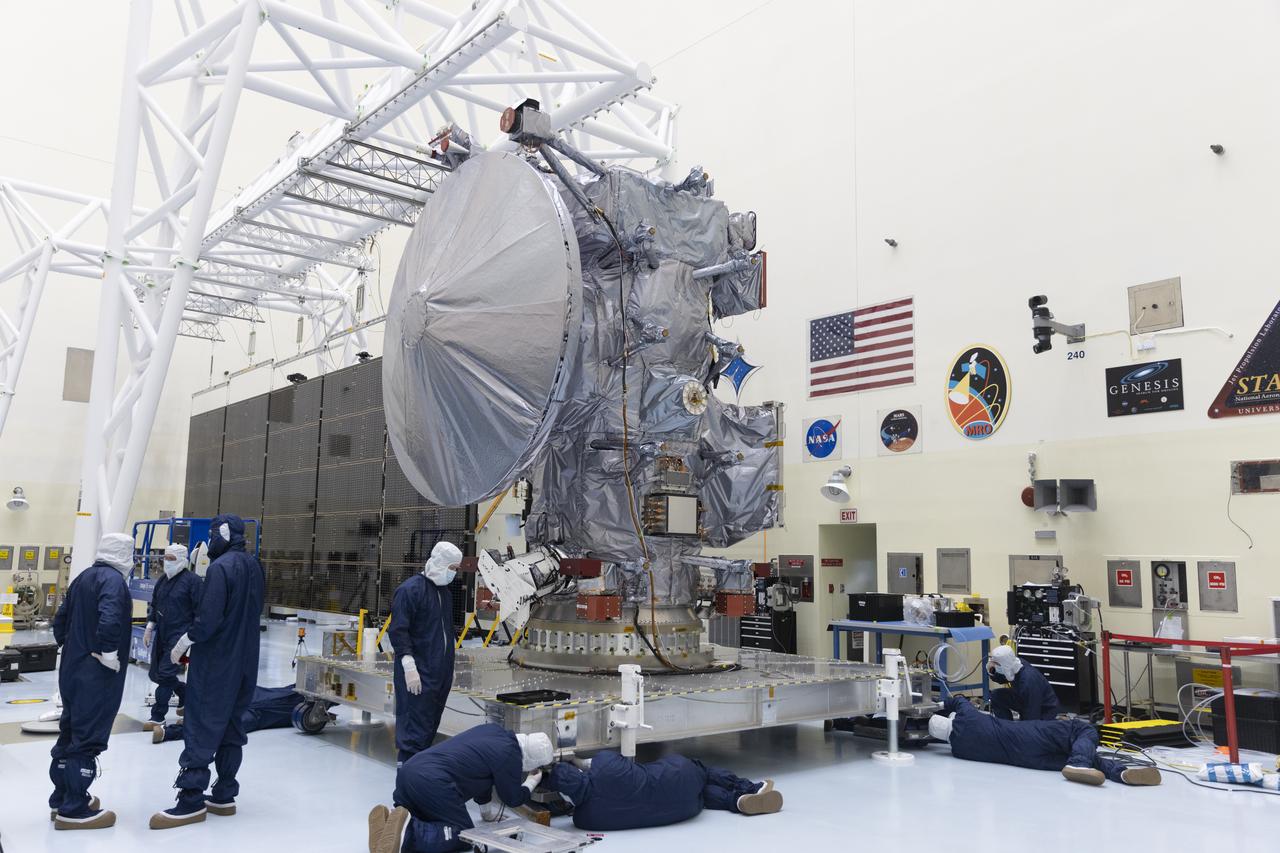
Technicians move NASA’s Europa Clipper spacecraft inside the Payload Hazardous Servicing Facility to accommodate installation of its five-panel solar array at the agency’s Kennedy Space Center in Florida on Thursday, Aug. 1, 2024. After moving the spacecraft, the team had to precisely align the spacecraft in preparation for the installation. The huge arrays – spanning more than 100 feet when fully deployed, or about the length of a basketball court – will collect sunlight to power the spacecraft as it flies multiple times around Jupiter’s icy moon, Europa, conducting science investigations to determine its potential to support life.
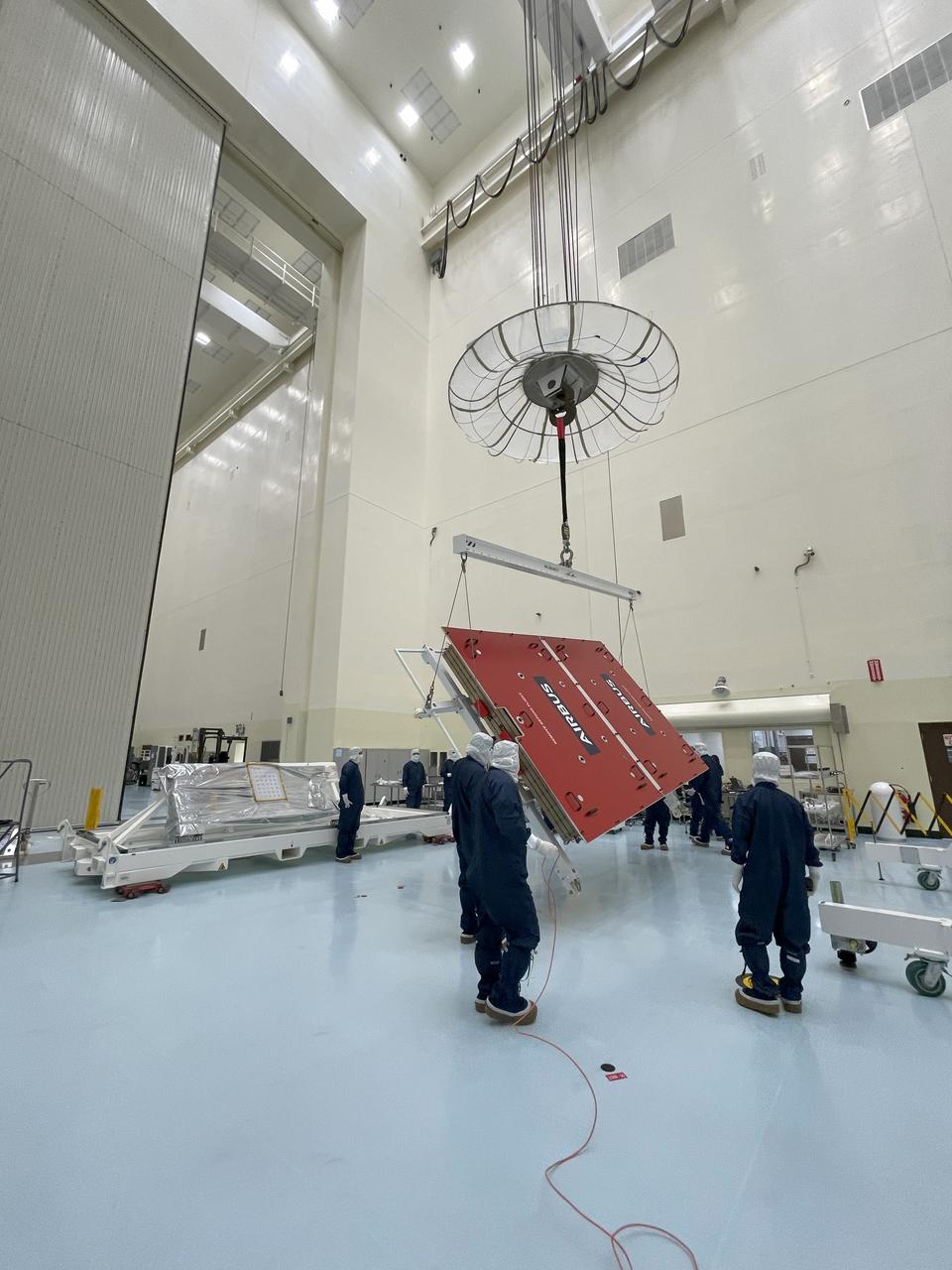
Technicians hoist a five-panel solar array protected by a lid for NASA’s Europa Clipper spacecraft at the Payload Hazardous Servicing Facility at the agency’s Kennedy Space Center in Florida on Tuesday, Feb. 27, 2024. The arrays are each 46.5 feet long (14.2 meters). With both solar arrays deployed, Europa Clipper will span more than 100 feet long, about the length of a basketball court. The solar arrays power the spacecraft so it can study Jupiter’s icy moon, Europa, which is more than five times as far from the Sun as the Earth. Launch on a SpaceX Falcon Heavy rocket is no earlier than October 2024.
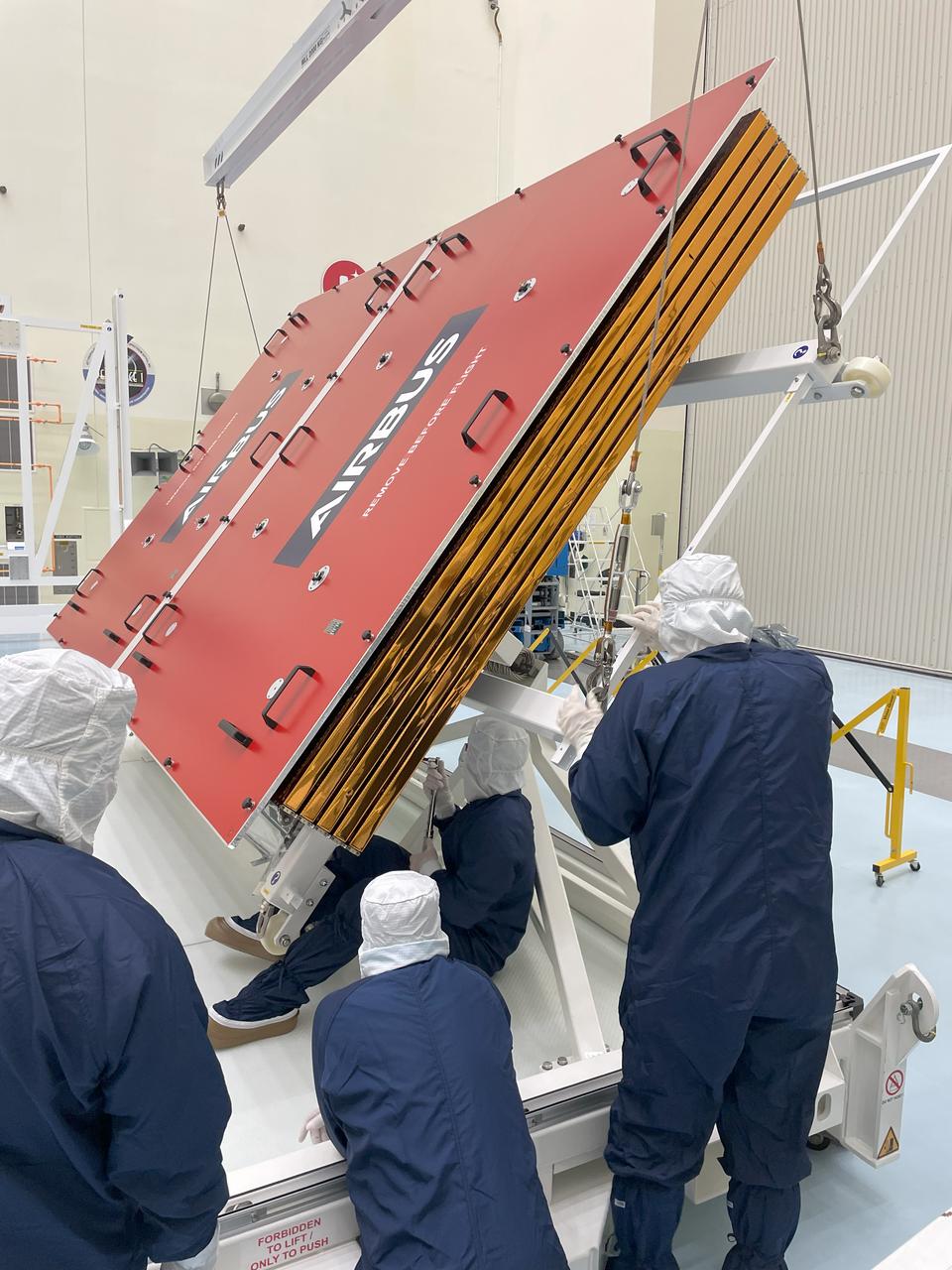
Technicians hoist a five-panel solar array protected by a lid for NASA’s Europa Clipper spacecraft at the Payload Hazardous Servicing Facility at the agency’s Kennedy Space Center in Florida on Tuesday, Feb. 27, 2024. The arrays are each 46.5 feet long (14.2 meters). With both solar arrays deployed, Europa Clipper will span more than 100 feet long, about the length of a basketball court. The solar arrays power the spacecraft so it can study Jupiter’s icy moon, Europa, which is more than five times as far from the Sun as the Earth. Launch on a SpaceX Falcon Heavy rocket is no earlier than October 2024.
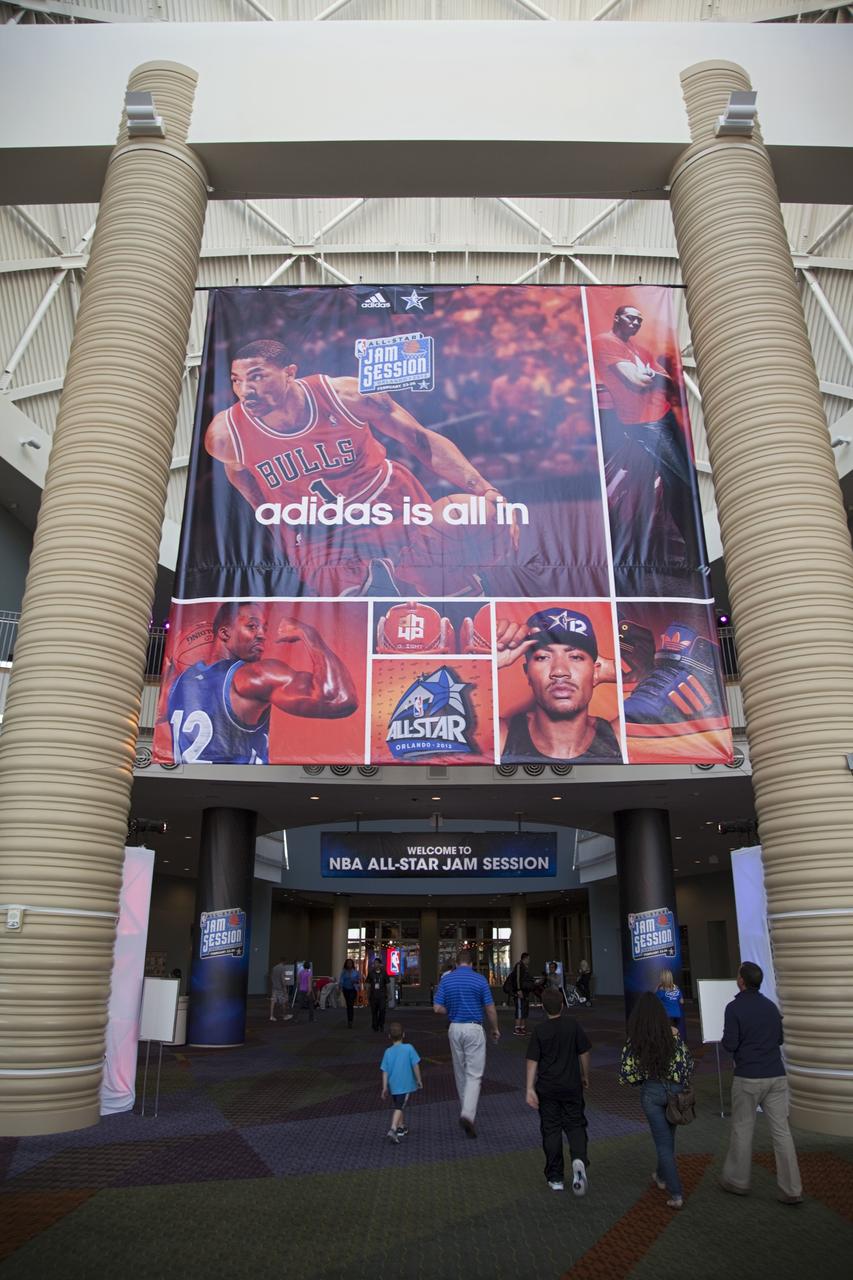
ORLANDO, Fla. -- Visitors enter the Orange County Convention Center in Orlando, Fla., for the NBA All-Star Jam Session. Representatives from NASA's Kennedy Space Center in Florida were available to highlight some of the contributions the space agency has made to sports, transportation and everyday life. One of the events leading up to the NBA All-Star game being held in Orlando on Feb. 26, the NBA All-Star Jam Session is a basketball experience intended for all ages, allowing fans to compete against their friends in skills challenges and collect autographs from players and legends. Photo credit: NASA/Frankie Martin
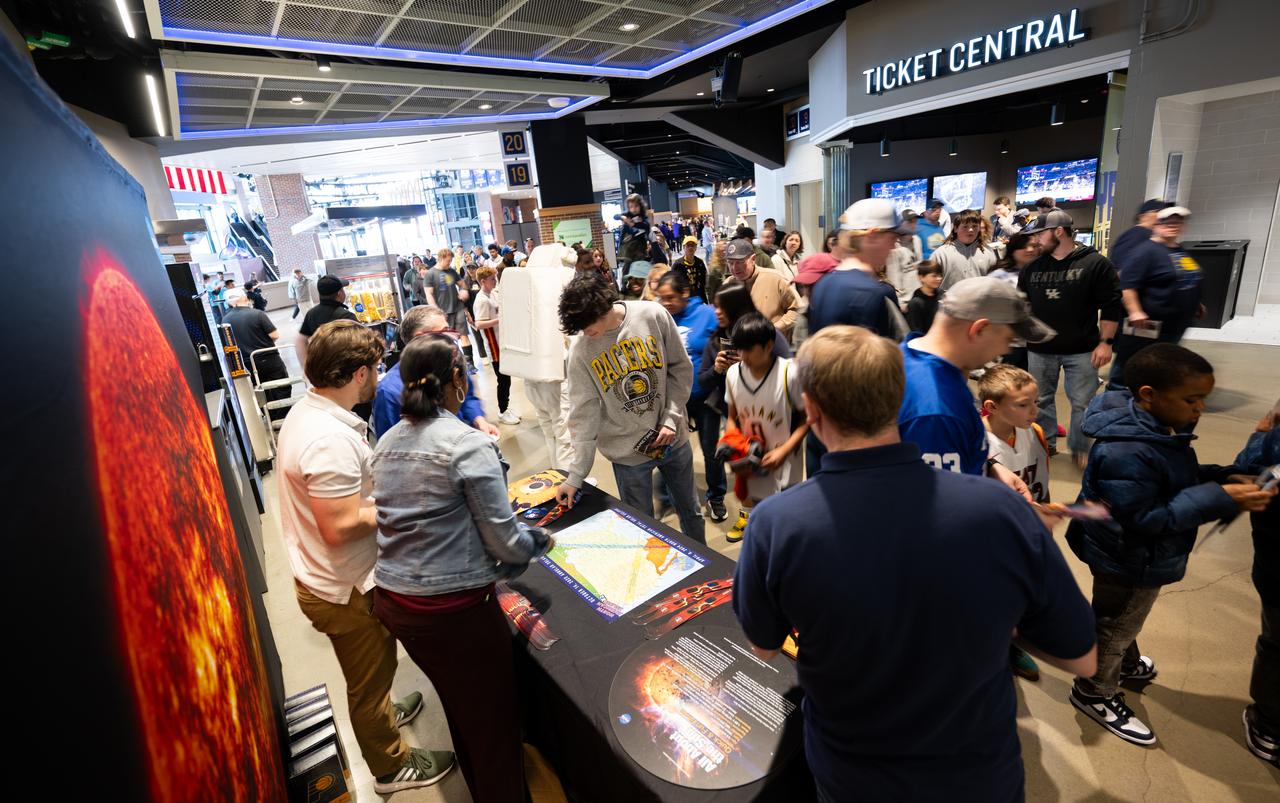
NASA staff pass out solar glasses and eclipse information before the start of a basketball game between the Indiana Pacers and the Miami Heat, Sunday, April 7, 2024, at Gainbridge Fieldhouse in Indianapolis, Ind. On Monday, April 8, a total solar eclipse will sweep across a narrow portion of the North American continent from Mexico’s Pacific coast to the Atlantic coast of Newfoundland, Canada, while a partial solar eclipse will be visible across the entire North American continent along with parts of Central America and Europe. Photo Credit: (NASA/Joel Kowsky)
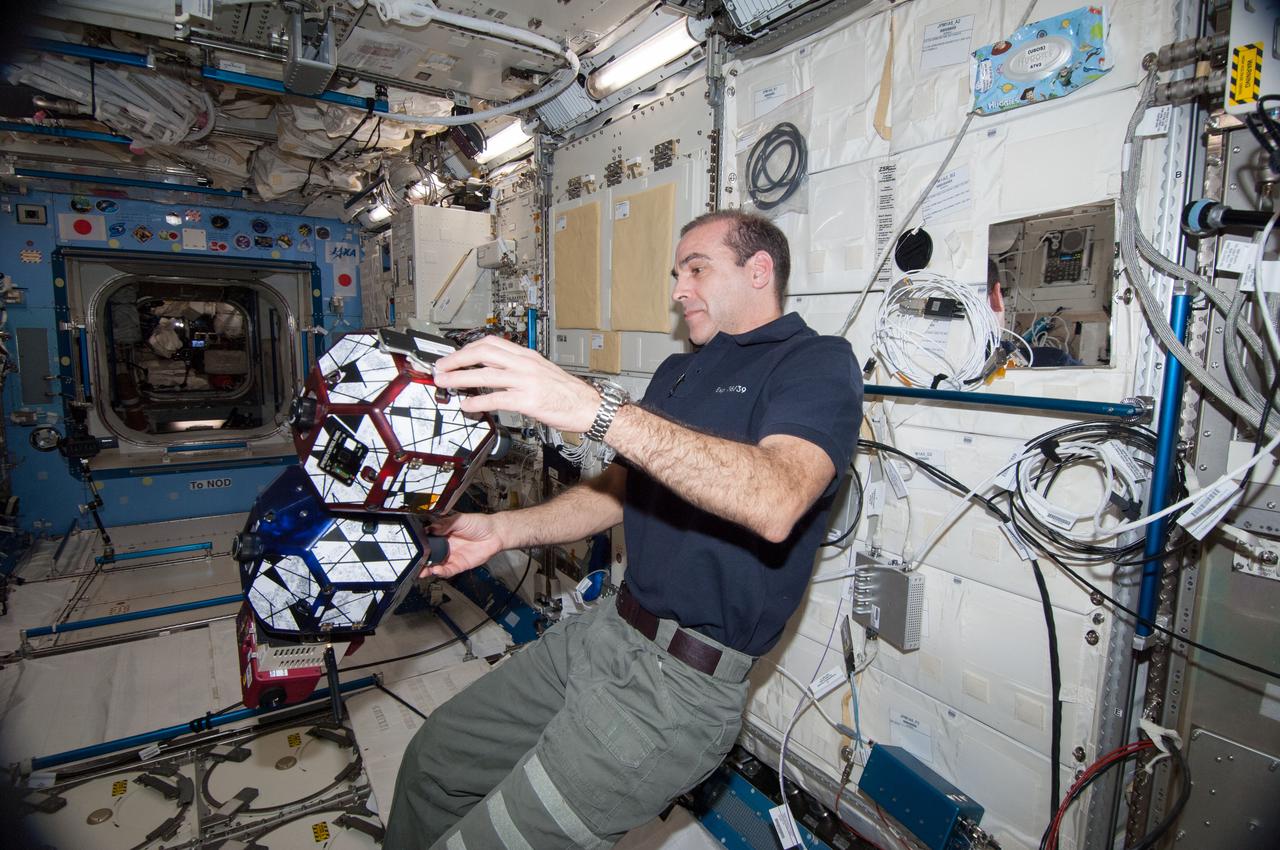
ISS038-E-035432 (23 Jan. 2014) --- NASA astronaut Rick Mastracchio, Expedition 38 flight engineer, works with a pair of basketball-sized, free-flying satellites known Synchronized Position Hold, Engage, Reorient, Experimental Satellites, or SPHERES, in the Kibo laboratory of the International Space Station. For this experiment session, the crew members equipped one of the two SPHERES with a pair of stereoscopic goggles dubbed the Visual Estimation and Relative Tracking for Inspection of Generic Objects, or VERTIGO. As the second SPHERES tumbled and spun, the VERTIGO-equipped robot attempted to map it and perform relative navigation around it.
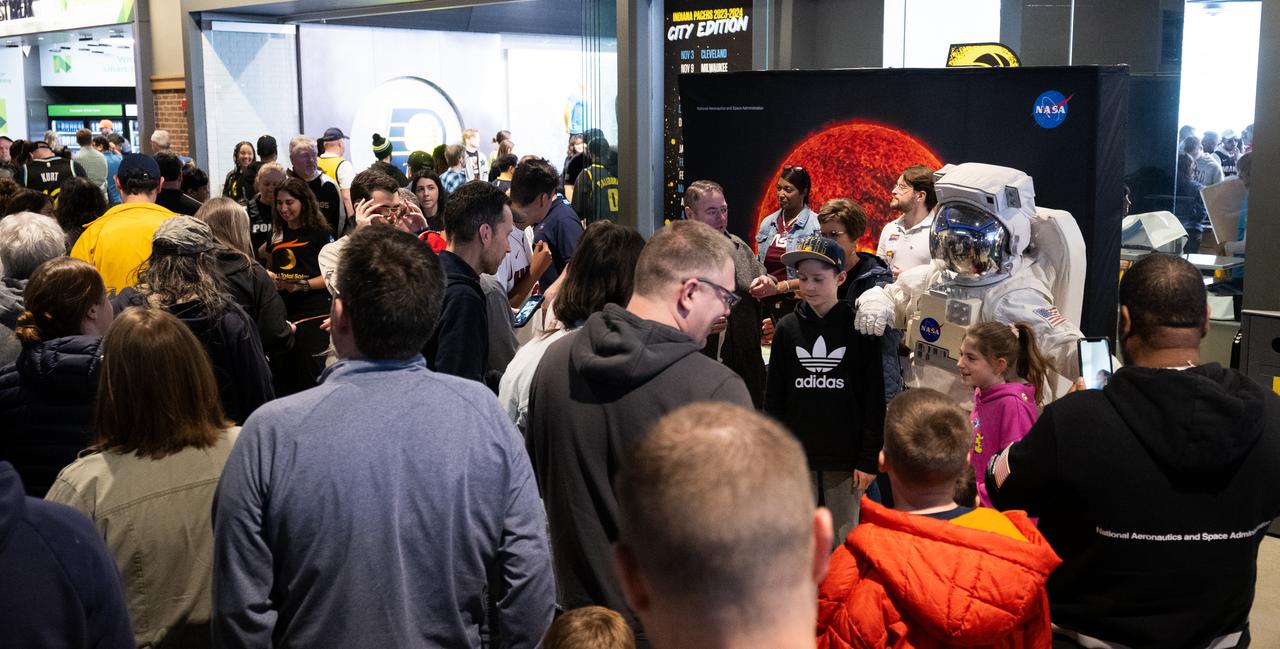
NASA employees pass out solar glasses and eclipse information as fans stop to take pictures with Spacey Casey before the start of a basketball game between the Indiana Pacers and the Miami Heat, Sunday, April 7, 2024, at Gainbridge Fieldhouse in Indianapolis, Ind. On Monday, April 8, a total solar eclipse will sweep across a narrow portion of the North American continent from Mexico’s Pacific coast to the Atlantic coast of Newfoundland, Canada, while a partial solar eclipse will be visible across the entire North American continent along with parts of Central America and Europe. Photo Credit: (NASA/Joel Kowsky)
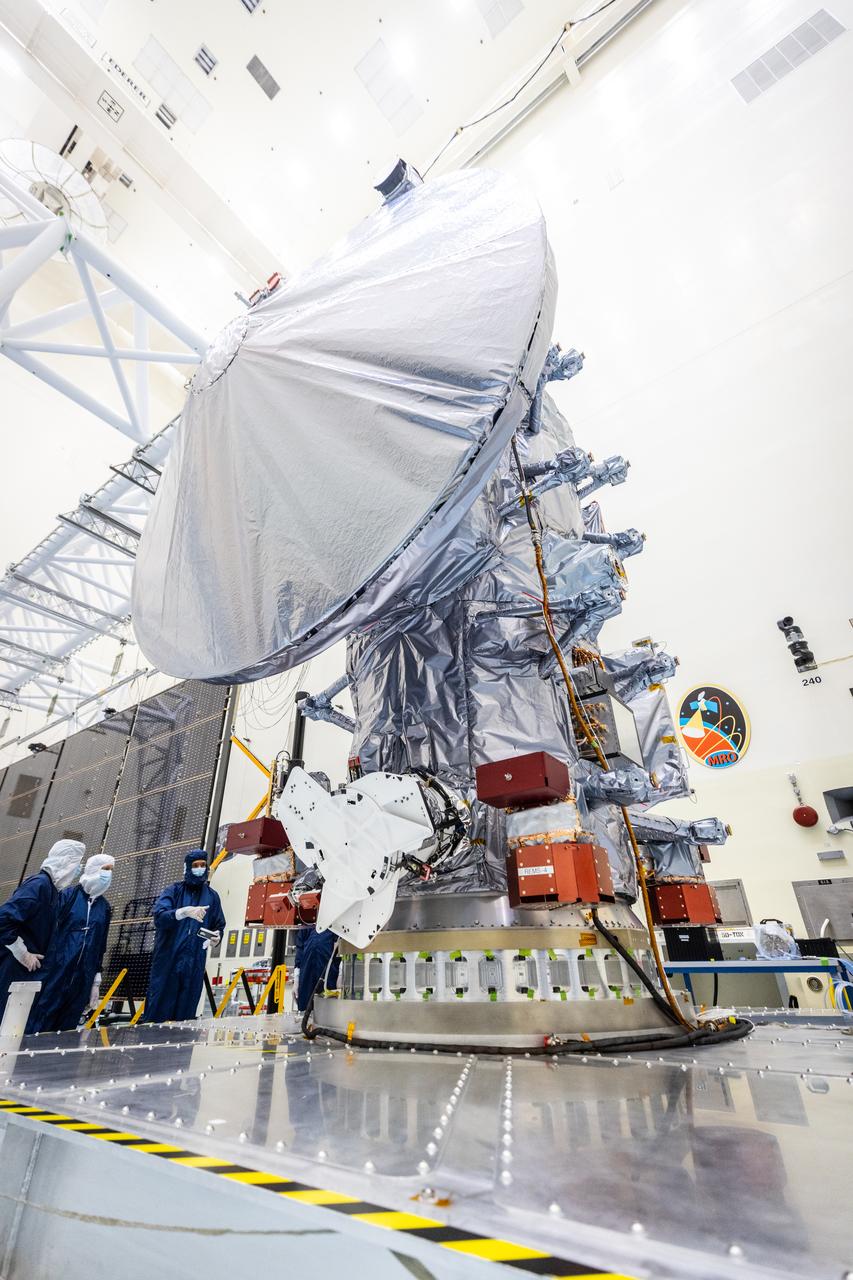
Technicians move NASA’s Europa Clipper spacecraft inside the Payload Hazardous Servicing Facility to accommodate installation of its five-panel solar array at the agency’s Kennedy Space Center in Florida on Thursday, Aug. 1, 2024. After moving the spacecraft, the team had to precisely align the spacecraft in preparation for the installation. The huge arrays – spanning more than 100 feet when fully deployed, or about the length of a basketball court – will collect sunlight to power the spacecraft as it flies multiple times around Jupiter’s icy moon, Europa, conducting science investigations to determine its potential to support life.
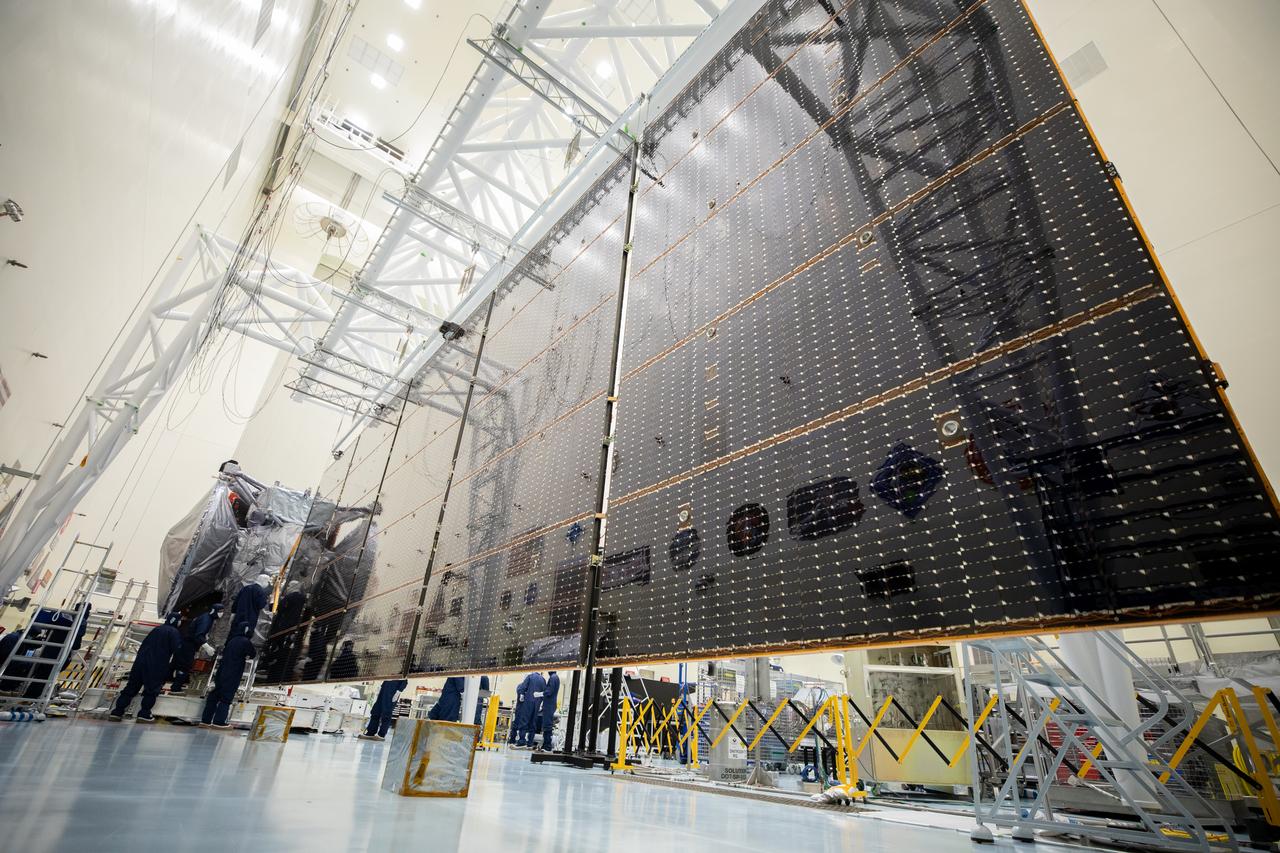
Technicians align, install, and then extend the second set of solar arrays, measuring 46.5 feet (14.2 meters) long and about 13.5 feet (4.1 meters) high, for NASA’s Europa Clipper spacecraft inside the agency’s Payload Hazardous Servicing Facility at Kennedy Space Center in Florida on Thursday, Aug. 15, 2024. The huge arrays – spanning more than 100 feet when fully deployed, or about the length of a basketball court – will collect sunlight to power the spacecraft as it flies multiple times around Jupiter’s icy moon, Europa, conducting science investigations to determine its potential to support life.
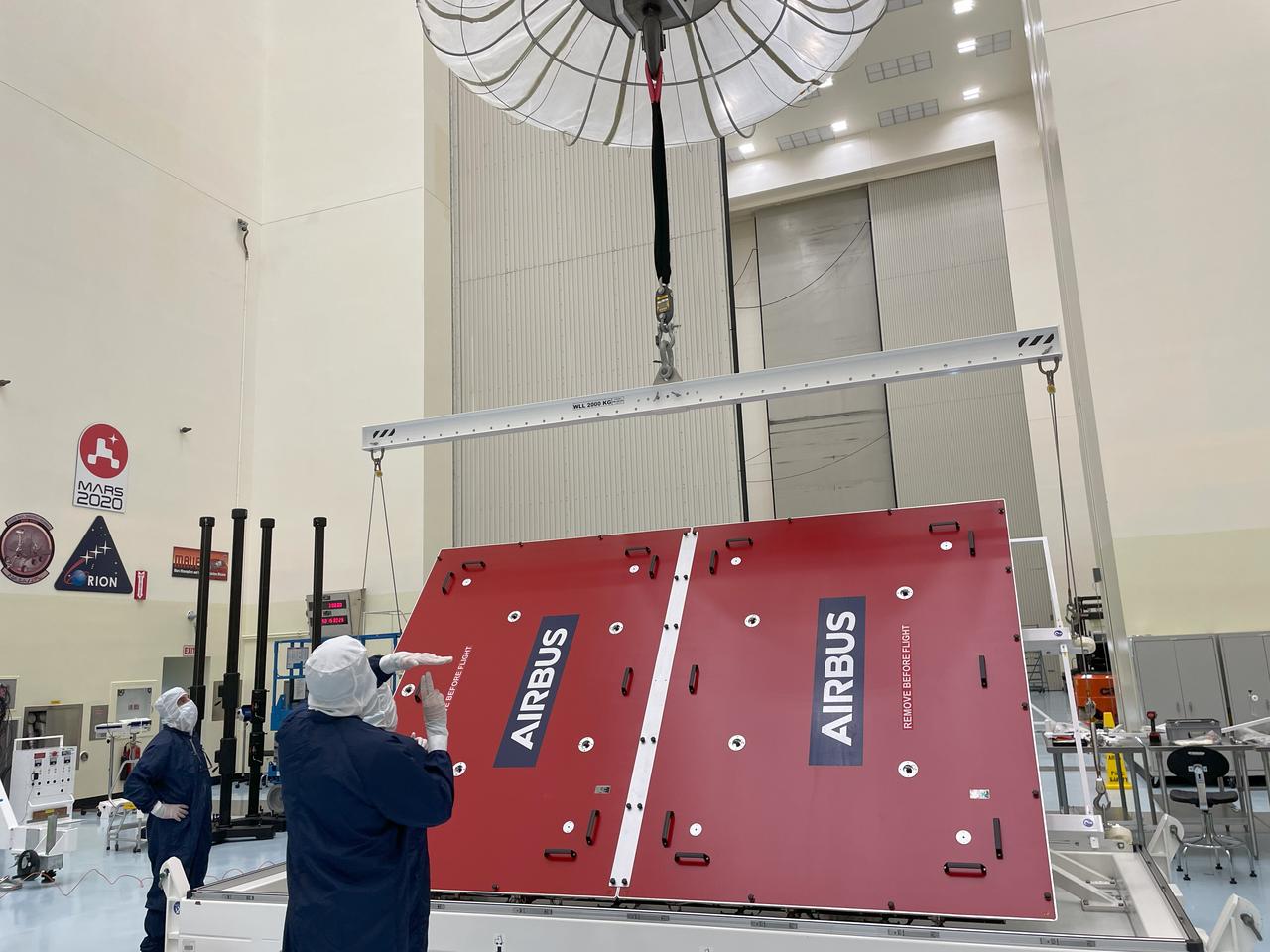
Technicians hoist a five-panel solar array protected by a lid for NASA’s Europa Clipper spacecraft at the Payload Hazardous Servicing Facility at the agency’s Kennedy Space Center in Florida on Tuesday, Feb. 27, 2024. The arrays are each 46.5 feet long (14.2 meters). With both solar arrays deployed, Europa Clipper will span more than 100 feet long, about the length of a basketball court. The solar arrays power the spacecraft so it can study Jupiter’s icy moon, Europa, which is more than five times as far from the Sun as the Earth. Launch on a SpaceX Falcon Heavy rocket is no earlier than October 2024.
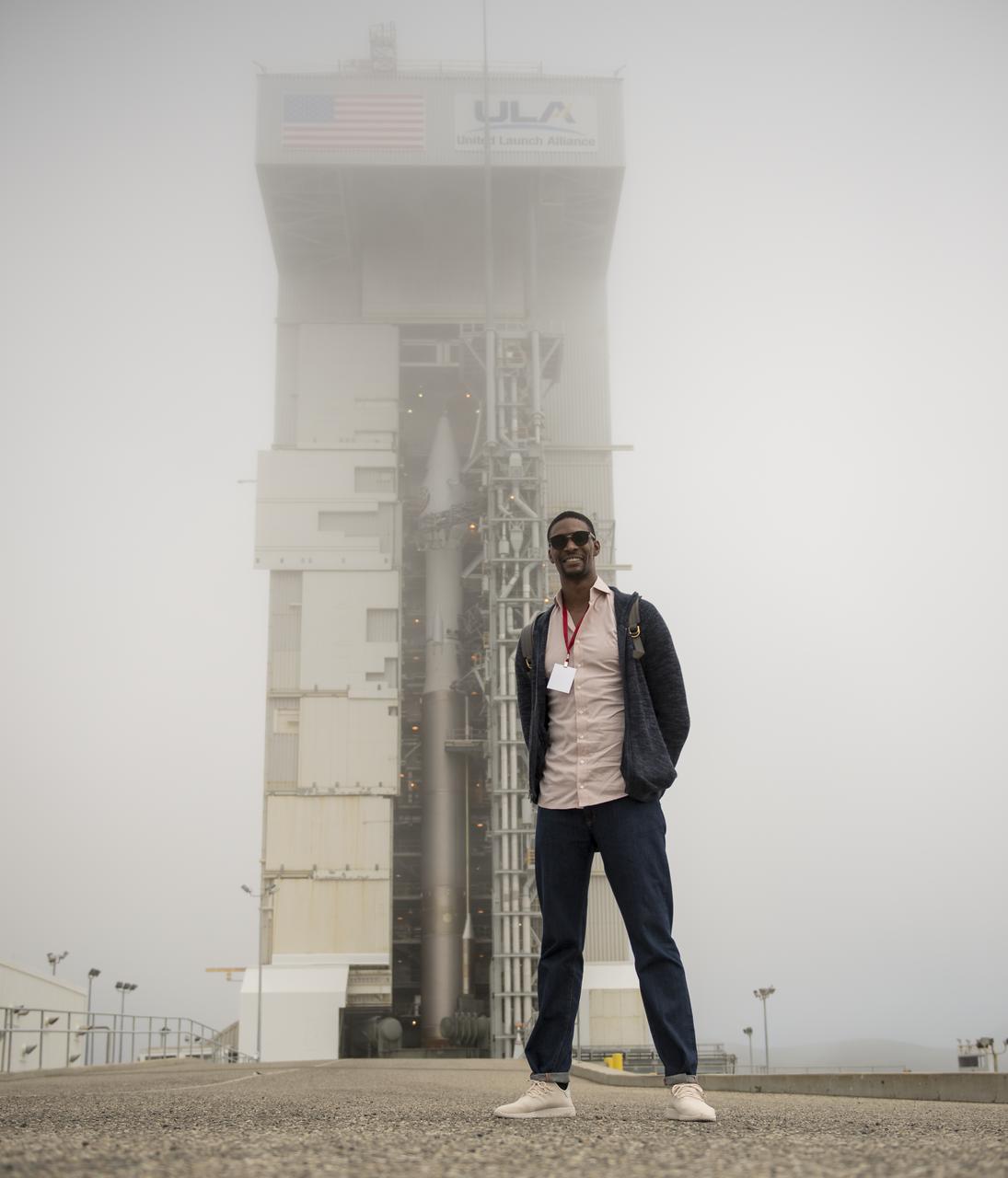
American professional basketball player Chris Bosh poses for a photograph in front of the United Launch Alliance (ULA) Atlas-V rocket with NASA's InSight spacecraft onboard, Friday, May 4, 2018, at Vandenberg Air Force Base in California. Bosh joined other social media guests on a behind the scenes tour ahead of the planned launch. InSight, short for Interior Exploration using Seismic Investigations, Geodesy and Heat Transport, is a Mars lander designed to study the "inner space" of Mars: its crust, mantle, and core. Photo Credit: (NASA/Bill Ingalls)
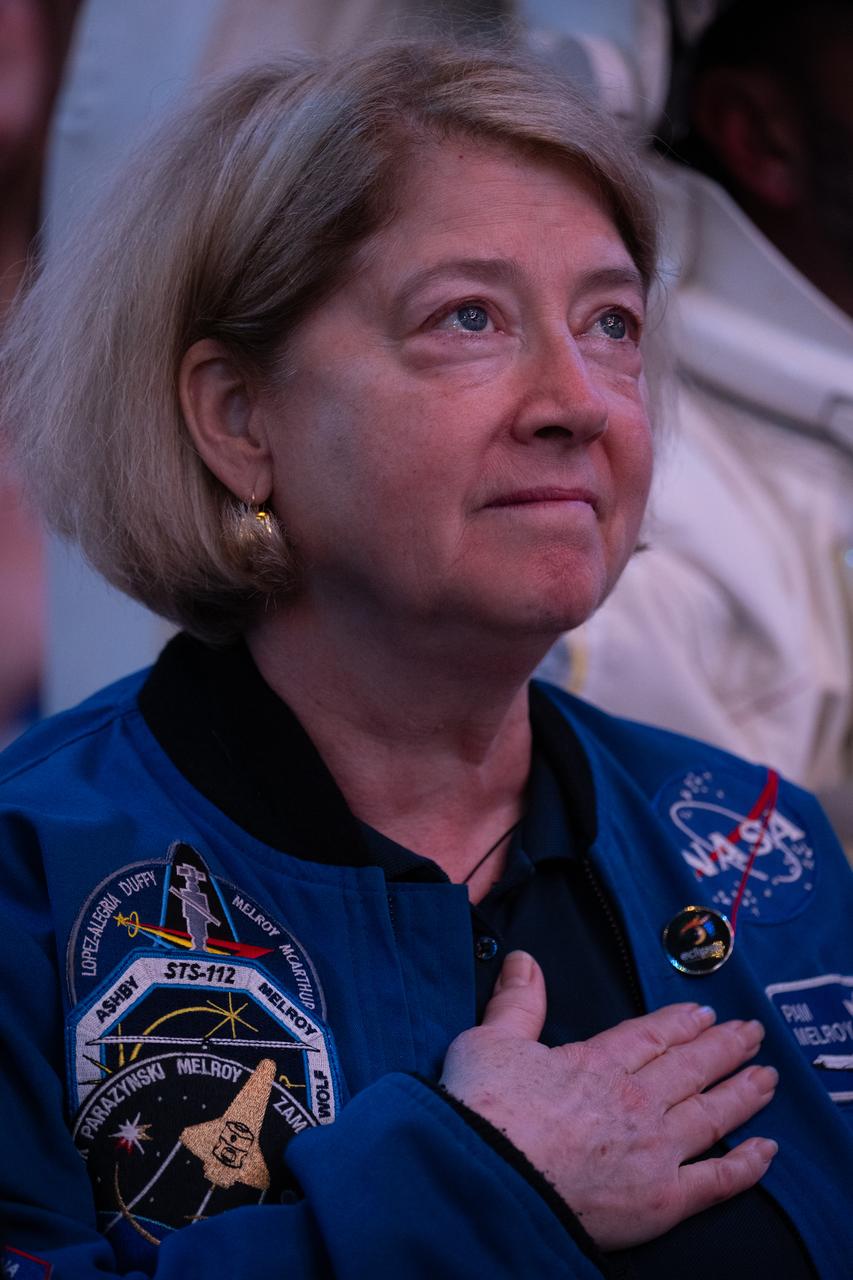
NASA Deputy Administrator Pam Melroy is seen as the National Anthem is sung before the start of a basketball game between the Indiana Pacers and the Miami Heat, Sunday, April 7, 2024, at Gainbridge Fieldhouse in Indianapolis, Ind. On Monday, April 8, a total solar eclipse will sweep across a narrow portion of the North American continent from Mexico’s Pacific coast to the Atlantic coast of Newfoundland, Canada, while a partial solar eclipse will be visible across the entire North American continent along with parts of Central America and Europe. Photo Credit: (NASA/Joel Kowsky)

Technicians align, install, and then extend the second set of solar arrays, measuring 46.5 feet (14.2 meters) long and about 13.5 feet (4.1 meters) high, for NASA’s Europa Clipper spacecraft inside the agency’s Payload Hazardous Servicing Facility at Kennedy Space Center in Florida on Thursday, Aug. 15, 2024. The huge arrays – spanning more than 100 feet when fully deployed, or about the length of a basketball court – will collect sunlight to power the spacecraft as it flies multiple times around Jupiter’s icy moon, Europa, conducting science investigations to determine its potential to support life.
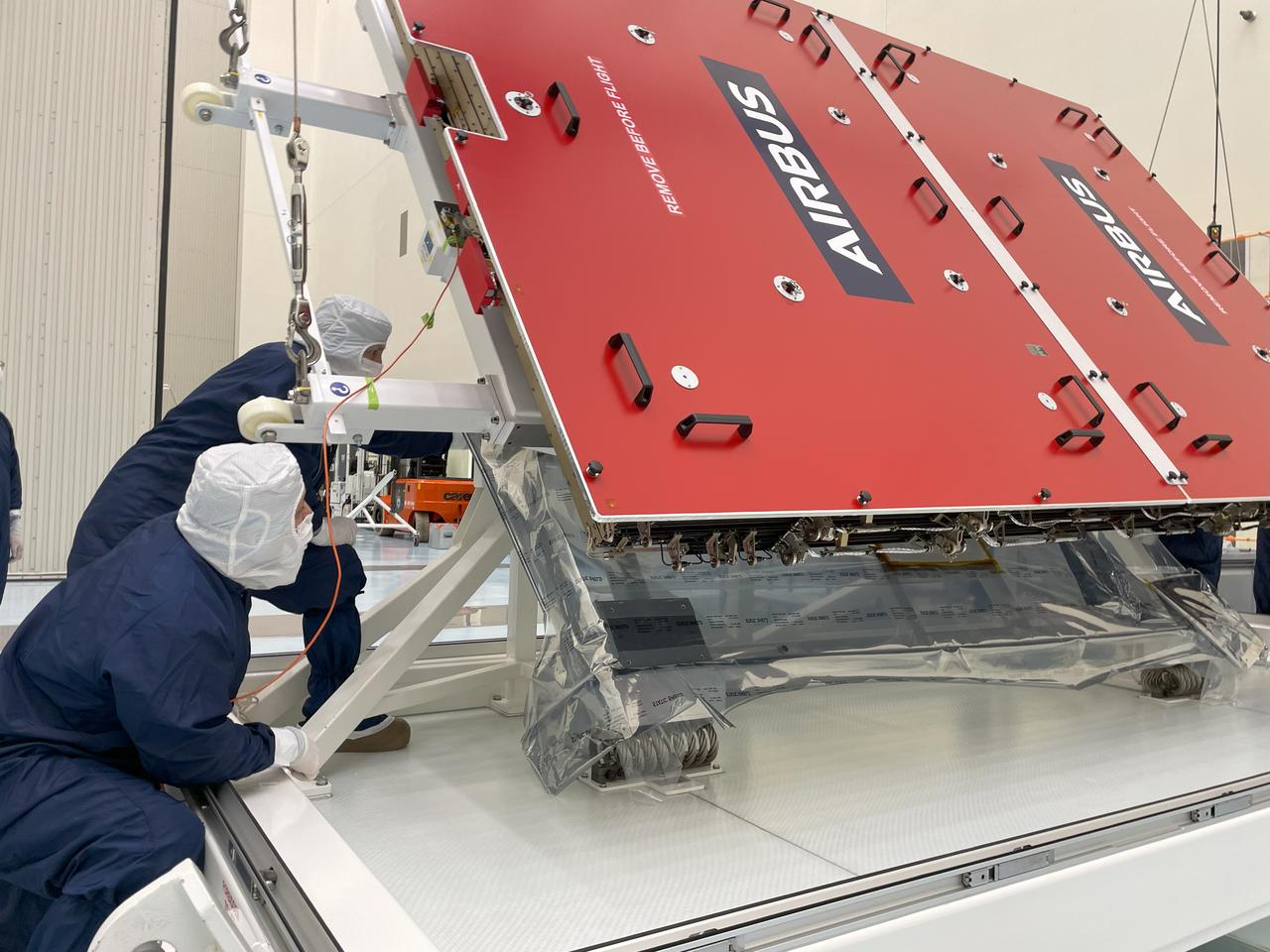
Technicians hoist a five-panel solar array protected by a lid for NASA’s Europa Clipper spacecraft at the Payload Hazardous Servicing Facility at the agency’s Kennedy Space Center in Florida on Tuesday, Feb. 27, 2024. The arrays are each 46.5 feet long (14.2 meters). With both solar arrays deployed, Europa Clipper will span more than 100 feet long, about the length of a basketball court. The solar arrays power the spacecraft so it can study Jupiter’s icy moon, Europa, which is more than five times as far from the Sun as the Earth. Launch on a SpaceX Falcon Heavy rocket is no earlier than October 2024.
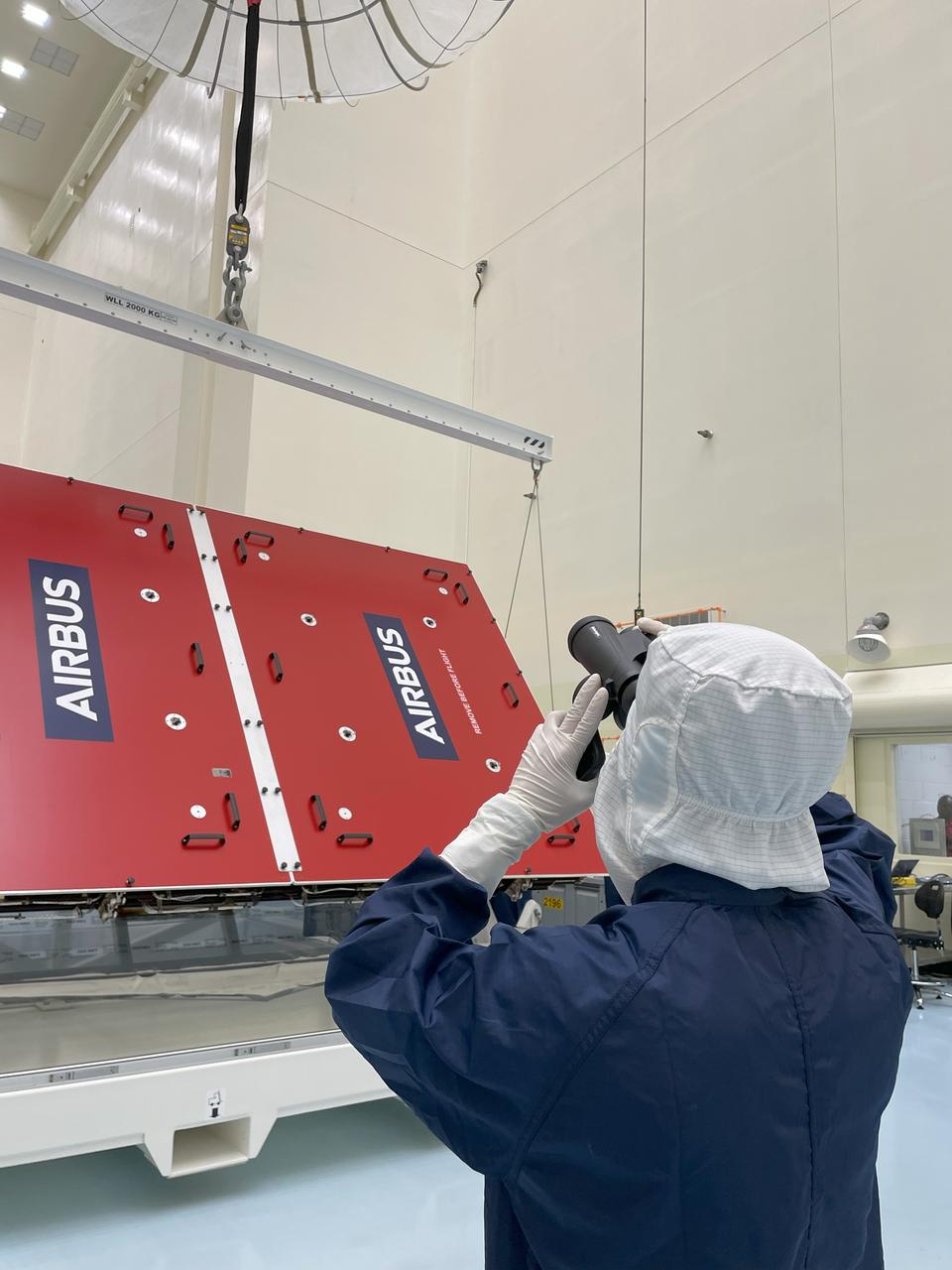
Technicians hoist a five-panel solar array protected by a lid for NASA’s Europa Clipper spacecraft at the Payload Hazardous Servicing Facility at the agency’s Kennedy Space Center in Florida on Tuesday, Feb. 27, 2024. The arrays are each 46.5 feet long (14.2 meters). With both solar arrays deployed, Europa Clipper will span more than 100 feet long, about the length of a basketball court. The solar arrays power the spacecraft so it can study Jupiter’s icy moon, Europa, which is more than five times as far from the Sun as the Earth. Launch on a SpaceX Falcon Heavy rocket is no earlier than October 2024.
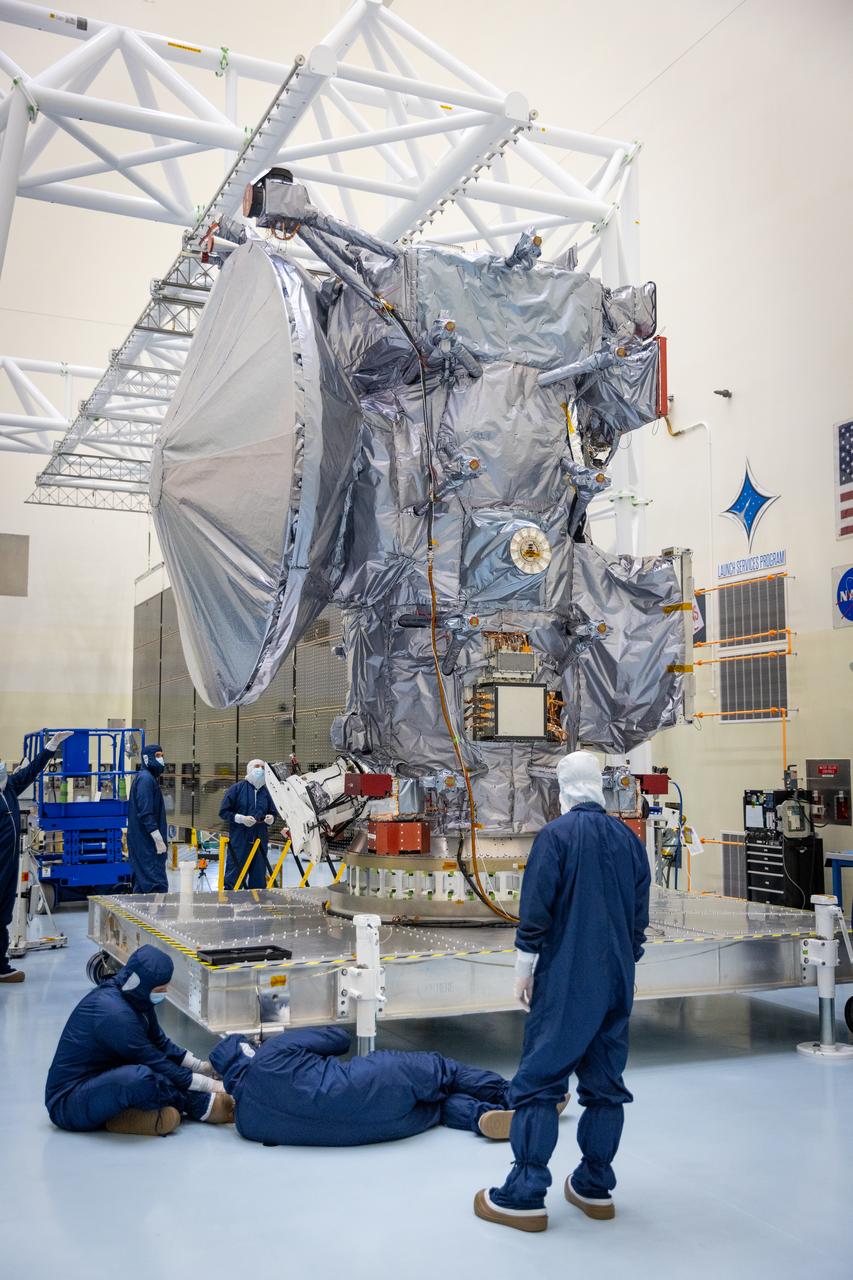
Technicians move NASA’s Europa Clipper spacecraft inside the Payload Hazardous Servicing Facility to accommodate installation of its five-panel solar array at the agency’s Kennedy Space Center in Florida on Thursday, Aug. 1, 2024. After moving the spacecraft, the team had to precisely align the spacecraft in preparation for the installation. The huge arrays – spanning more than 100 feet when fully deployed, or about the length of a basketball court – will collect sunlight to power the spacecraft as it flies multiple times around Jupiter’s icy moon, Europa, conducting science investigations to determine its potential to support life.
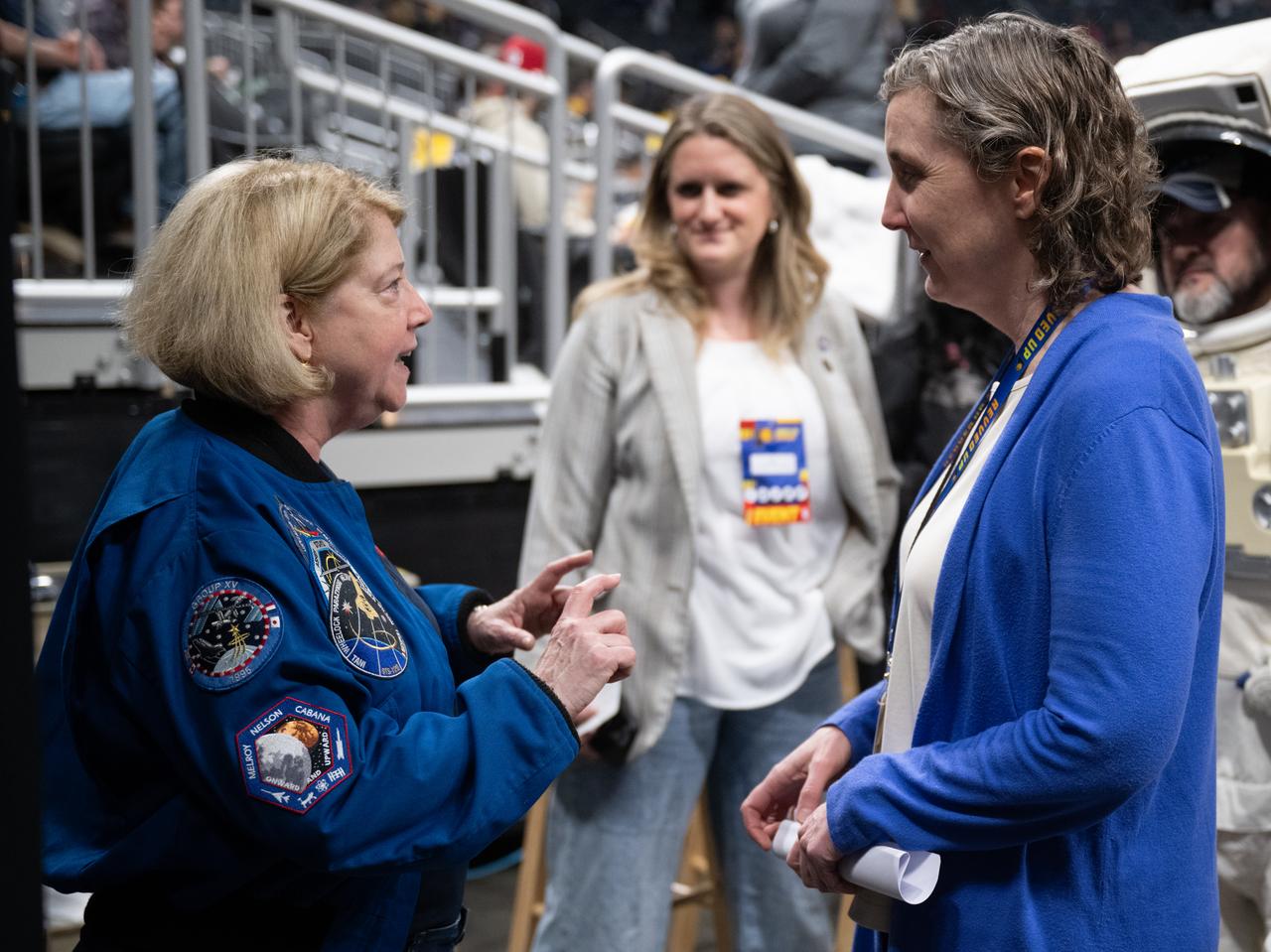
NASA Deputy Administrator Pam Melroy, left, speaks with Mel Raines, president and chief operating officer of Pacers Sports & Entertainment, before the start of a basketball game between the Indiana Pacers and the Miami Heat, Sunday, April 7, 2024, at Gainbridge Fieldhouse in Indianapolis, Ind. On Monday, April 8, a total solar eclipse will sweep across a narrow portion of the North American continent from Mexico’s Pacific coast to the Atlantic coast of Newfoundland, Canada, while a partial solar eclipse will be visible across the entire North American continent along with parts of Central America and Europe. Photo Credit: (NASA/Joel Kowsky)
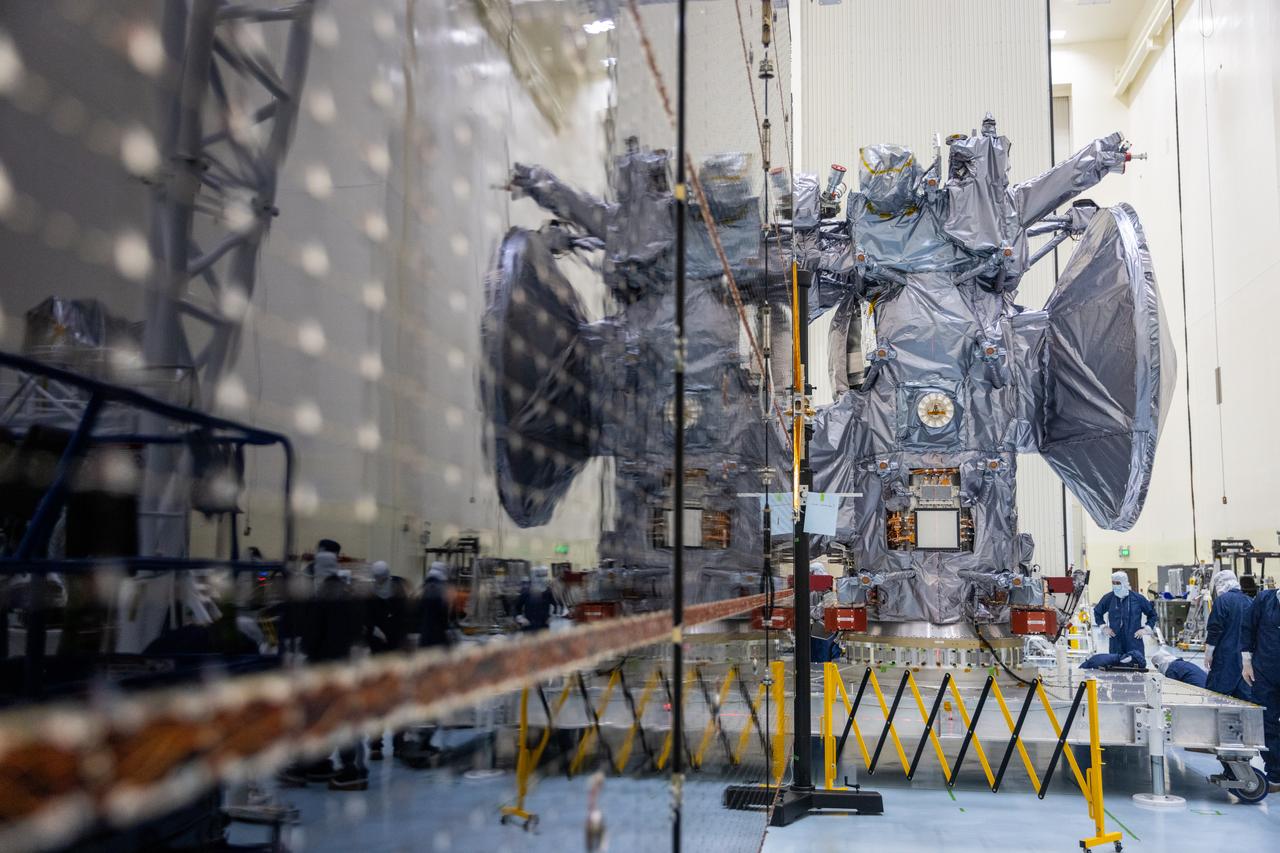
Technicians move NASA’s Europa Clipper spacecraft inside the Payload Hazardous Servicing Facility to accommodate installation of its five-panel solar array at the agency’s Kennedy Space Center in Florida on Thursday, Aug. 1, 2024. After moving the spacecraft, the team had to precisely align the spacecraft in preparation for the installation. The huge arrays – spanning more than 100 feet when fully deployed, or about the length of a basketball court – will collect sunlight to power the spacecraft as it flies multiple times around Jupiter’s icy moon, Europa, conducting science investigations to determine its potential to support life.
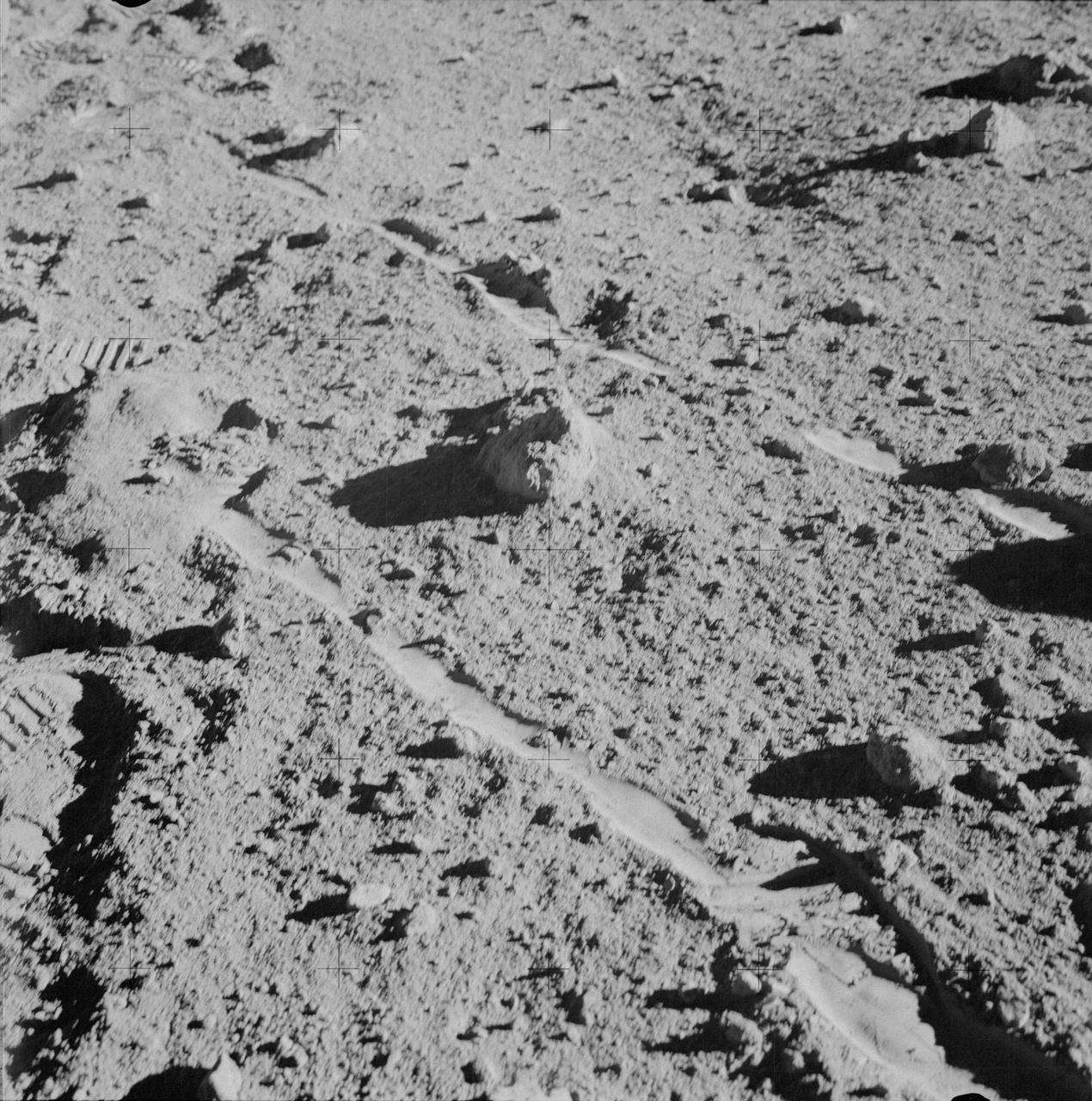
AS14-64-9129 (6 Feb. 1971) --- The two moon-exploring crew men of the Apollo 14 lunar landing mission, photographed and collected the large rock pictured just above the exact center of this picture. (Hold picture with the NASA photographic number at lower right hand corner.) The rock, casting a shadow off to the left, is lunar sample number 14321, referred to as a basketball-sized rock by newsmen and nicknamed "Big Bertha" by principal investigators. It lies between the wheel tracks made by the modular equipment transporter (MET) or rickshaw-type portable workbench. A few prints of the lunar overshoes of the crew members are at the left. This photo was made near the boulder field near the rim of Cone Crater.
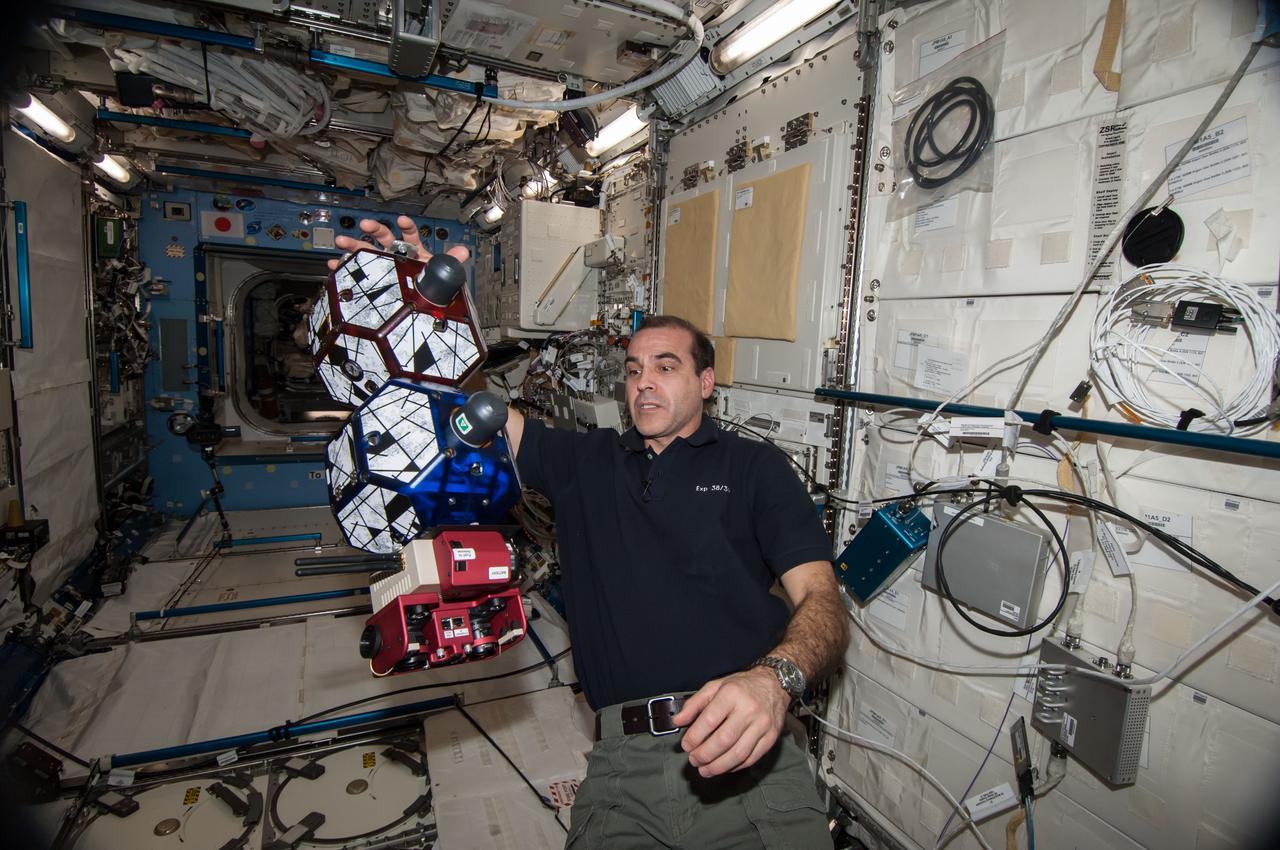
ISS038-E-035434 (23 Jan. 2014) --- NASA astronaut Rick Mastracchio, Expedition 38 flight engineer, works with a pair of basketball-sized, free-flying satellites known Synchronized Position Hold, Engage, Reorient, Experimental Satellites, or SPHERES, in the Kibo laboratory of the International Space Station. For this experiment session, the crew members equipped one of the two SPHERES with a pair of stereoscopic goggles dubbed the Visual Estimation and Relative Tracking for Inspection of Generic Objects, or VERTIGO. As the second SPHERES tumbled and spun, the VERTIGO-equipped robot attempted to map it and perform relative navigation around it.
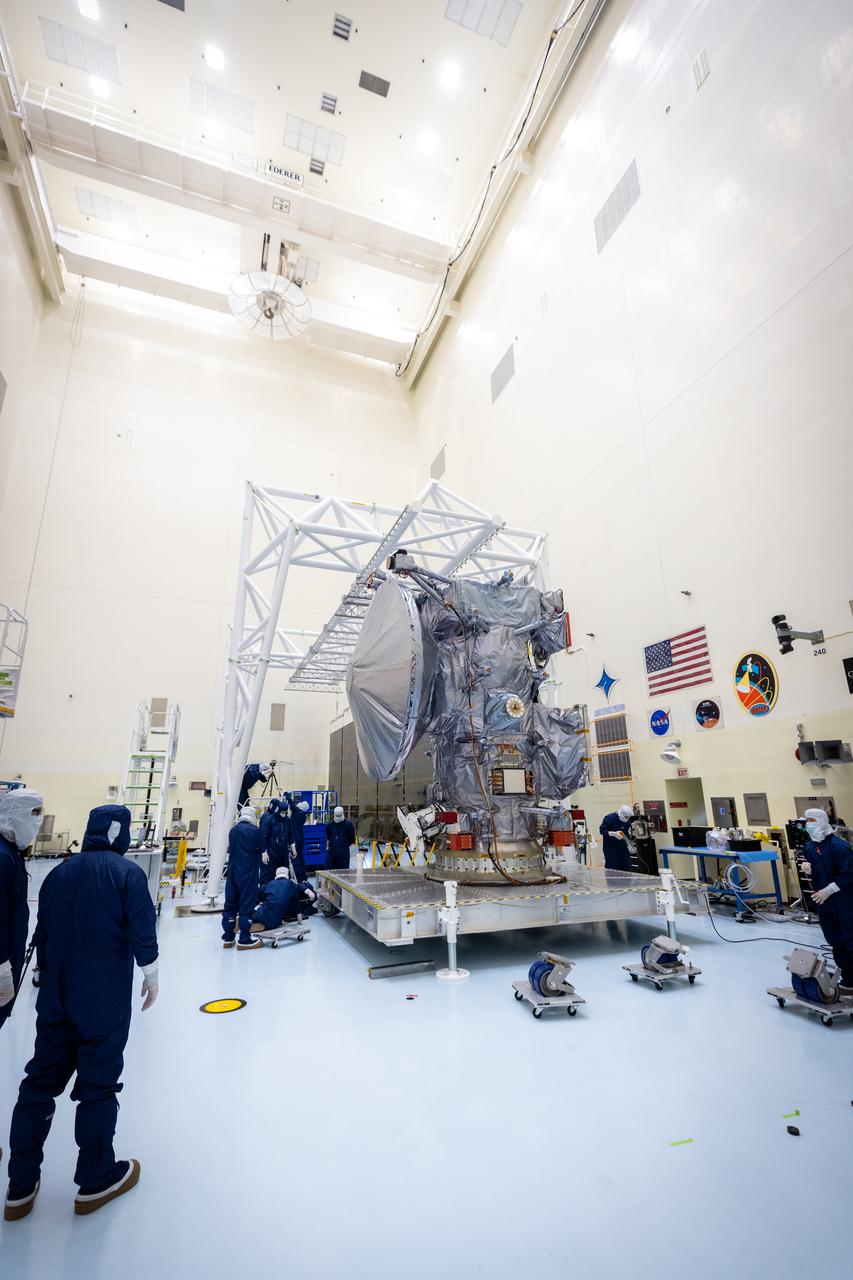
Technicians move NASA’s Europa Clipper spacecraft inside the Payload Hazardous Servicing Facility to accommodate installation of its five-panel solar array at the agency’s Kennedy Space Center in Florida on Thursday, Aug. 1, 2024. After moving the spacecraft, the team had to precisely align the spacecraft in preparation for the installation. The huge arrays – spanning more than 100 feet when fully deployed, or about the length of a basketball court – will collect sunlight to power the spacecraft as it flies multiple times around Jupiter’s icy moon, Europa, conducting science investigations to determine its potential to support life.
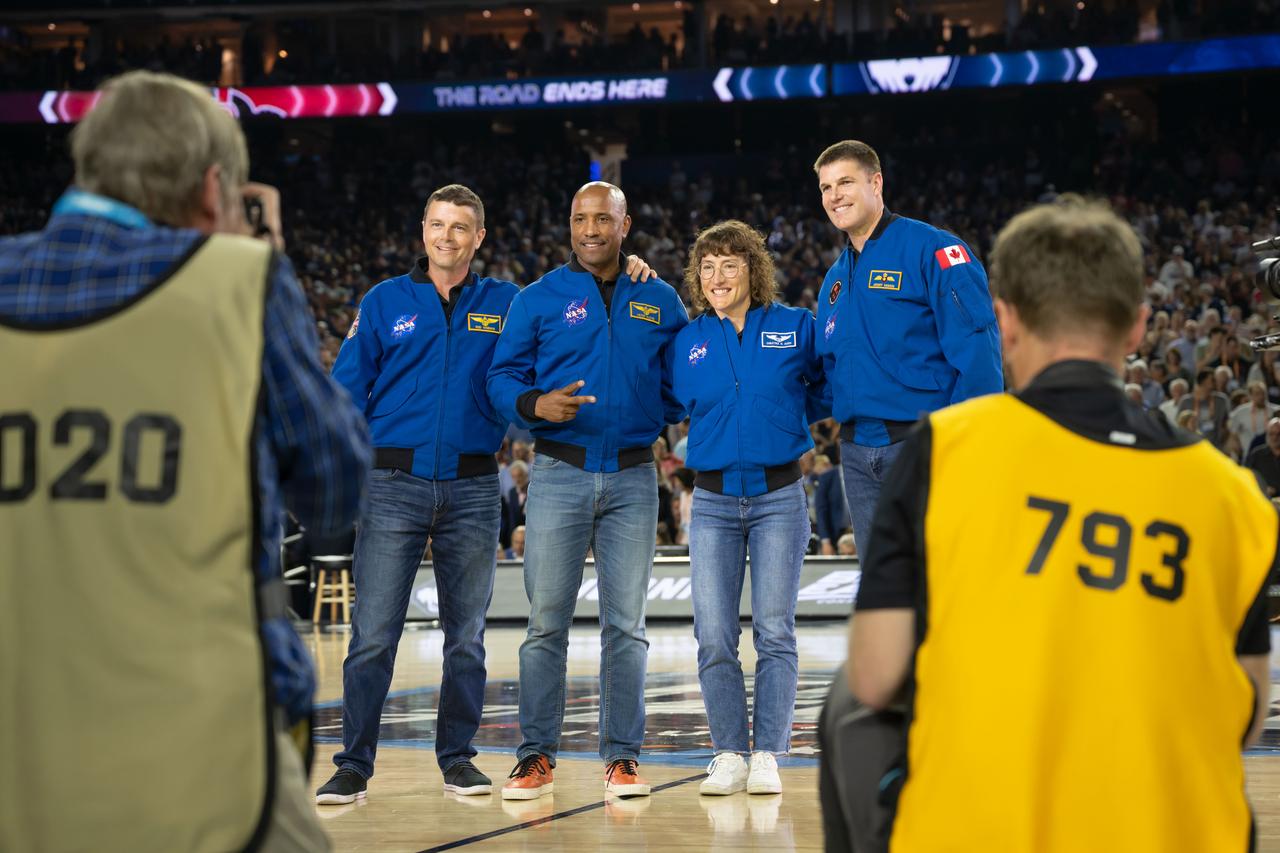
jsc2023e018318 (April 3, 2023) – The Artemis II crew is introduced on the basketball court while attending the NCAA Men’s Final Four national championship game at NRG Stadium in Houston. The crew is comprised of Commander Reid Wiseman, Pilot Victor Glover, and Mission Specialists Christina Koch and Jeremy Hansen. The four astronauts will venture around the Moon on Artemis II, the first crewed mission on NASA’s path to establishing a long-term presence at the Moon for science and exploration through Artemis. From left: NASA astronauts Artemis II Commander Reid Wiseman, Pilot Victor Glover, Mission Specialist Christina Koch, and CSA (Canadian Space Agency) astronaut Mission Specialist Jeremy Hansen.
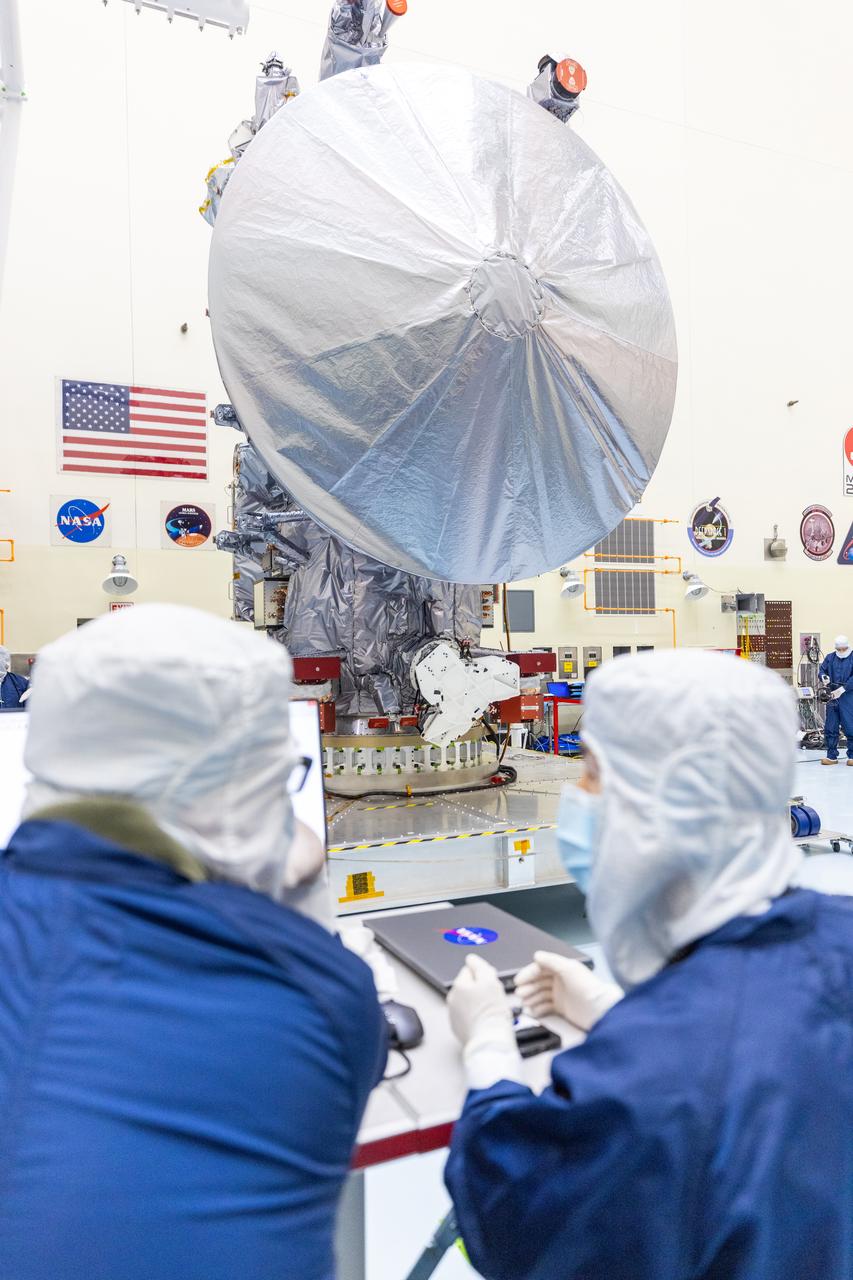
Technicians move NASA’s Europa Clipper spacecraft inside the Payload Hazardous Servicing Facility to accommodate installation of its five-panel solar array at the agency’s Kennedy Space Center in Florida on Thursday, Aug. 1, 2024. After moving the spacecraft, the team had to precisely align the spacecraft in preparation for the installation. The huge arrays – spanning more than 100 feet when fully deployed, or about the length of a basketball court – will collect sunlight to power the spacecraft as it flies multiple times around Jupiter’s icy moon, Europa, conducting science investigations to determine its potential to support life.
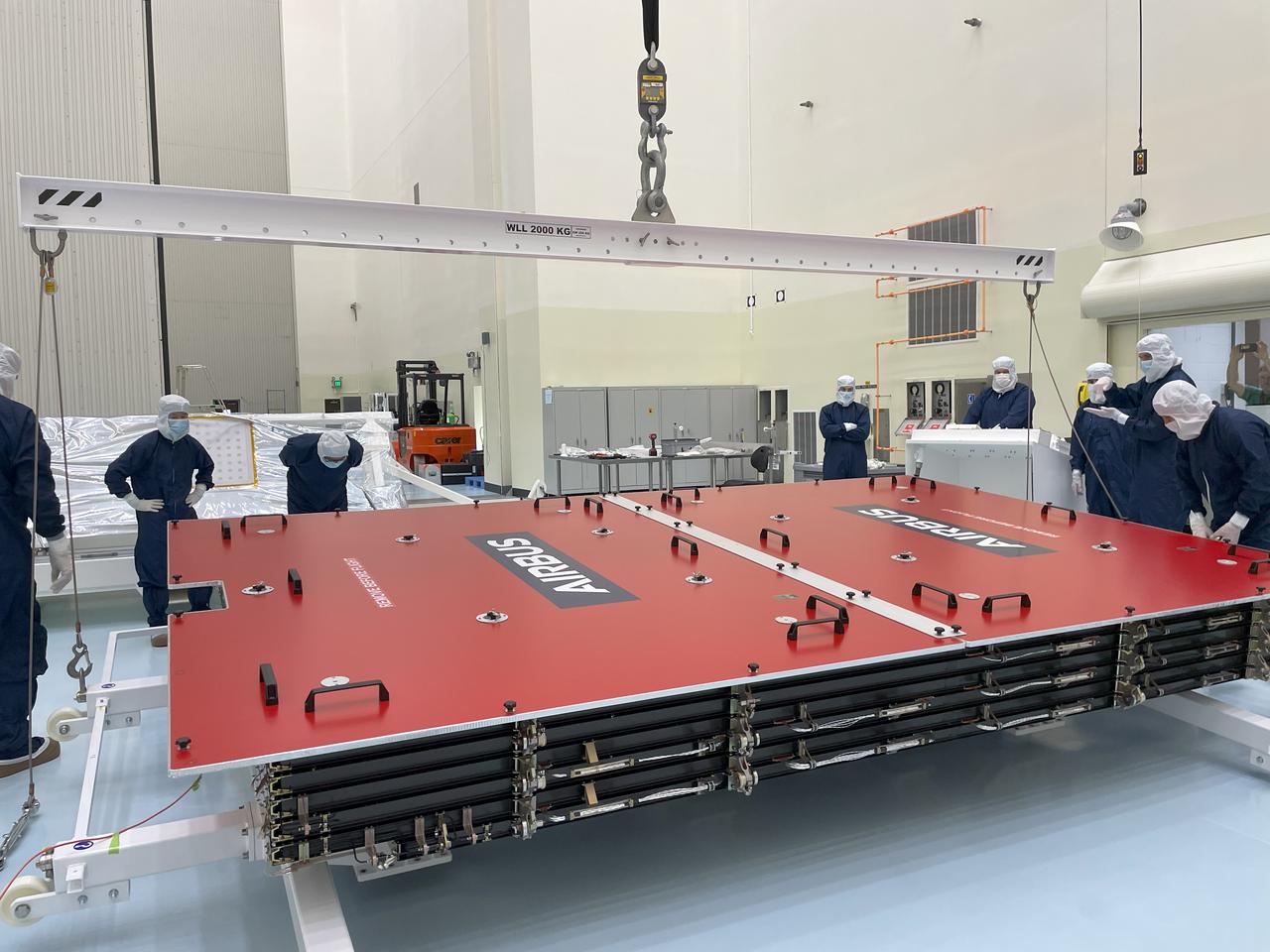
Technicians hoist a five-panel solar array protected by a lid for NASA’s Europa Clipper spacecraft at the Payload Hazardous Servicing Facility at the agency’s Kennedy Space Center in Florida on Tuesday, Feb. 27, 2024. The arrays are each 46.5 feet long (14.2 meters). With both solar arrays deployed, Europa Clipper will span more than 100 feet long, about the length of a basketball court. The solar arrays power the spacecraft so it can study Jupiter’s icy moon, Europa, which is more than five times as far from the Sun as the Earth. Launch on a SpaceX Falcon Heavy rocket is no earlier than October 2024.
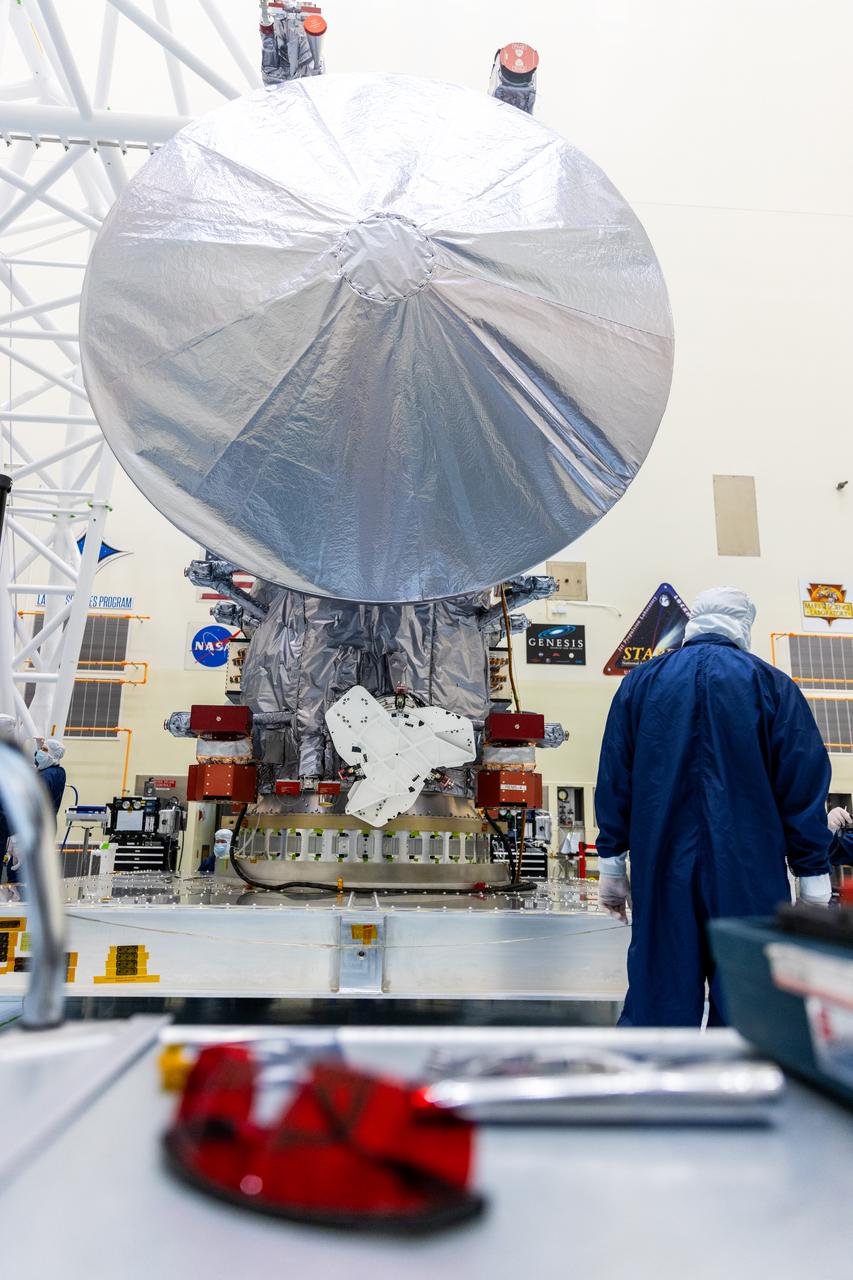
Technicians move NASA’s Europa Clipper spacecraft inside the Payload Hazardous Servicing Facility to accommodate installation of its five-panel solar array at the agency’s Kennedy Space Center in Florida on Thursday, Aug. 1, 2024. After moving the spacecraft, the team had to precisely align the spacecraft in preparation for the installation. The huge arrays – spanning more than 100 feet when fully deployed, or about the length of a basketball court – will collect sunlight to power the spacecraft as it flies multiple times around Jupiter’s icy moon, Europa, conducting science investigations to determine its potential to support life.
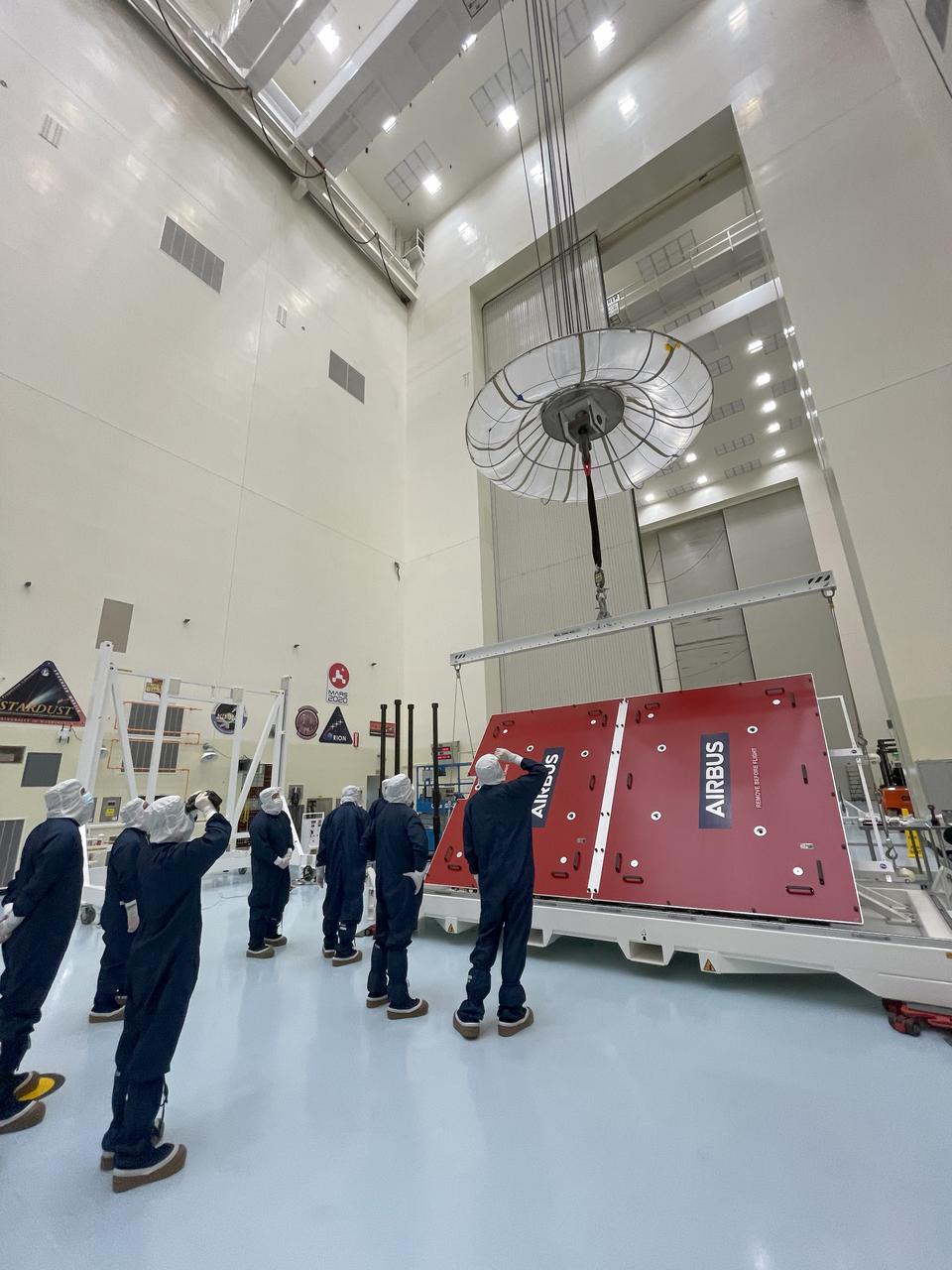
Technicians hoist a five-panel solar array protected by a lid for NASA’s Europa Clipper spacecraft at the Payload Hazardous Servicing Facility at the agency’s Kennedy Space Center in Florida on Tuesday, Feb. 27, 2024. The arrays are each 46.5 feet long (14.2 meters). With both solar arrays deployed, Europa Clipper will span more than 100 feet long, about the length of a basketball court. The solar arrays power the spacecraft so it can study Jupiter’s icy moon, Europa, which is more than five times as far from the Sun as the Earth. Launch on a SpaceX Falcon Heavy rocket is no earlier than October 2024.
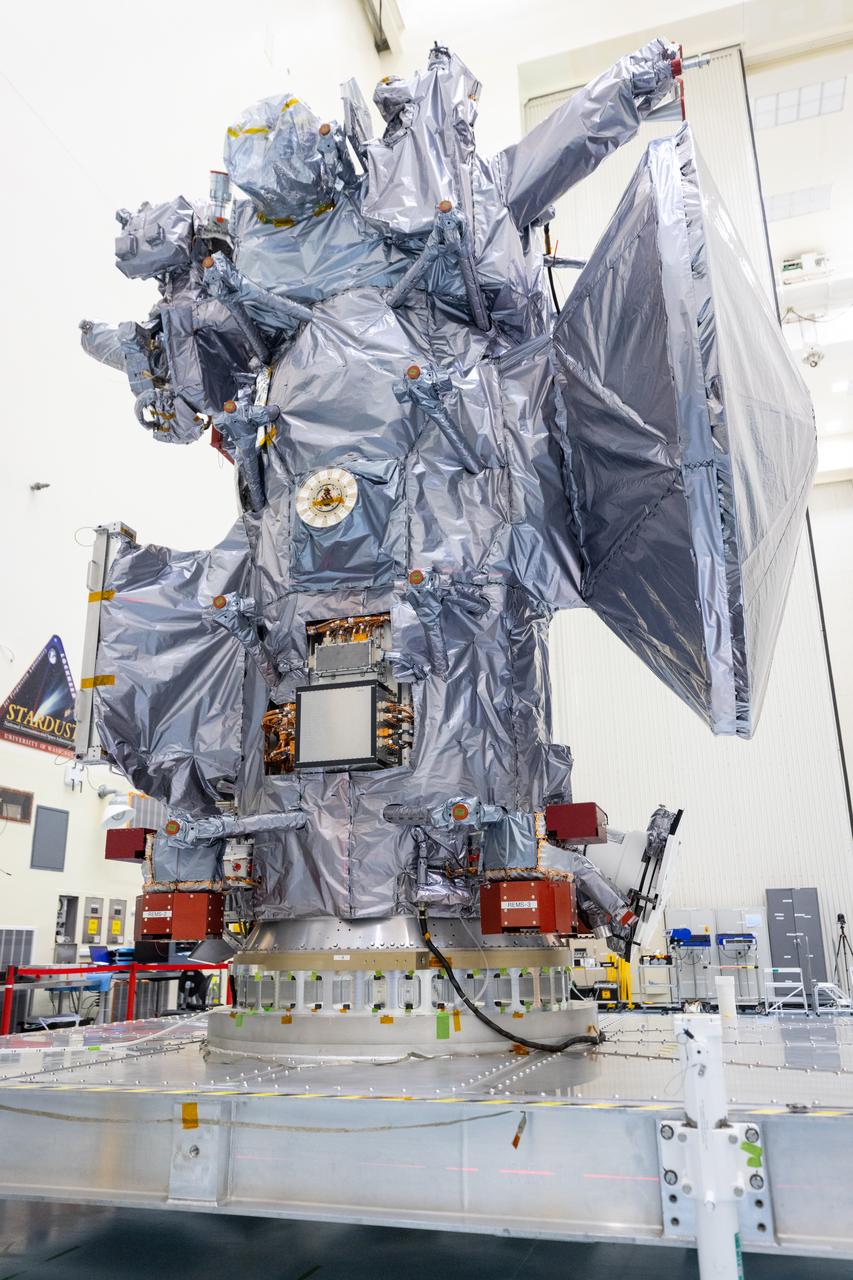
Technicians move NASA’s Europa Clipper spacecraft inside the Payload Hazardous Servicing Facility to accommodate installation of its five-panel solar array at the agency’s Kennedy Space Center in Florida on Thursday, Aug. 1, 2024. After moving the spacecraft, the team had to precisely align the spacecraft in preparation for the installation. The huge arrays – spanning more than 100 feet when fully deployed, or about the length of a basketball court – will collect sunlight to power the spacecraft as it flies multiple times around Jupiter’s icy moon, Europa, conducting science investigations to determine its potential to support life.
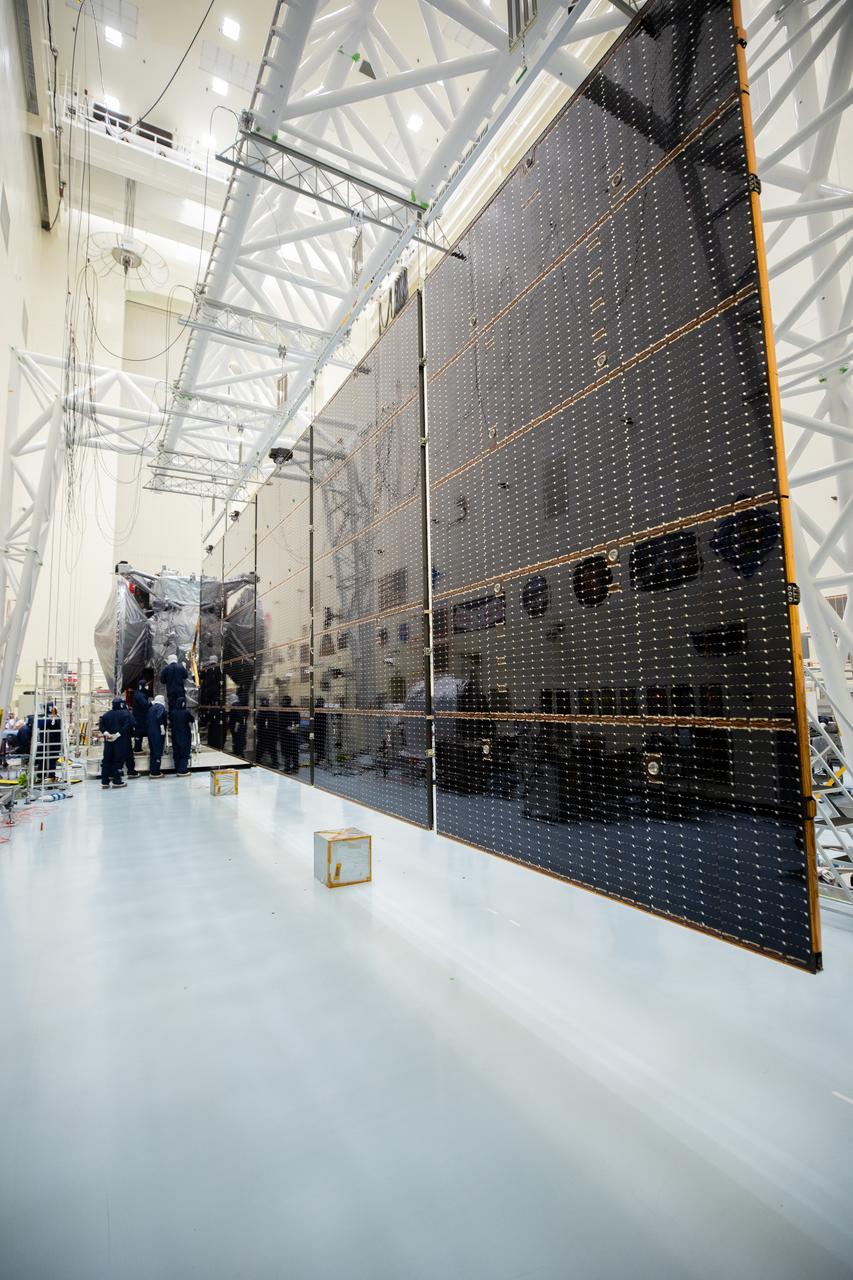
Technicians align, install, and then extend the second set of solar arrays, measuring 46.5 feet (14.2 meters) long and about 13.5 feet (4.1 meters) high, for NASA’s Europa Clipper spacecraft inside the agency’s Payload Hazardous Servicing Facility at Kennedy Space Center in Florida on Thursday, Aug. 15, 2024. The huge arrays – spanning more than 100 feet when fully deployed, or about the length of a basketball court – will collect sunlight to power the spacecraft as it flies multiple times around Jupiter’s icy moon, Europa, conducting science investigations to determine its potential to support life.
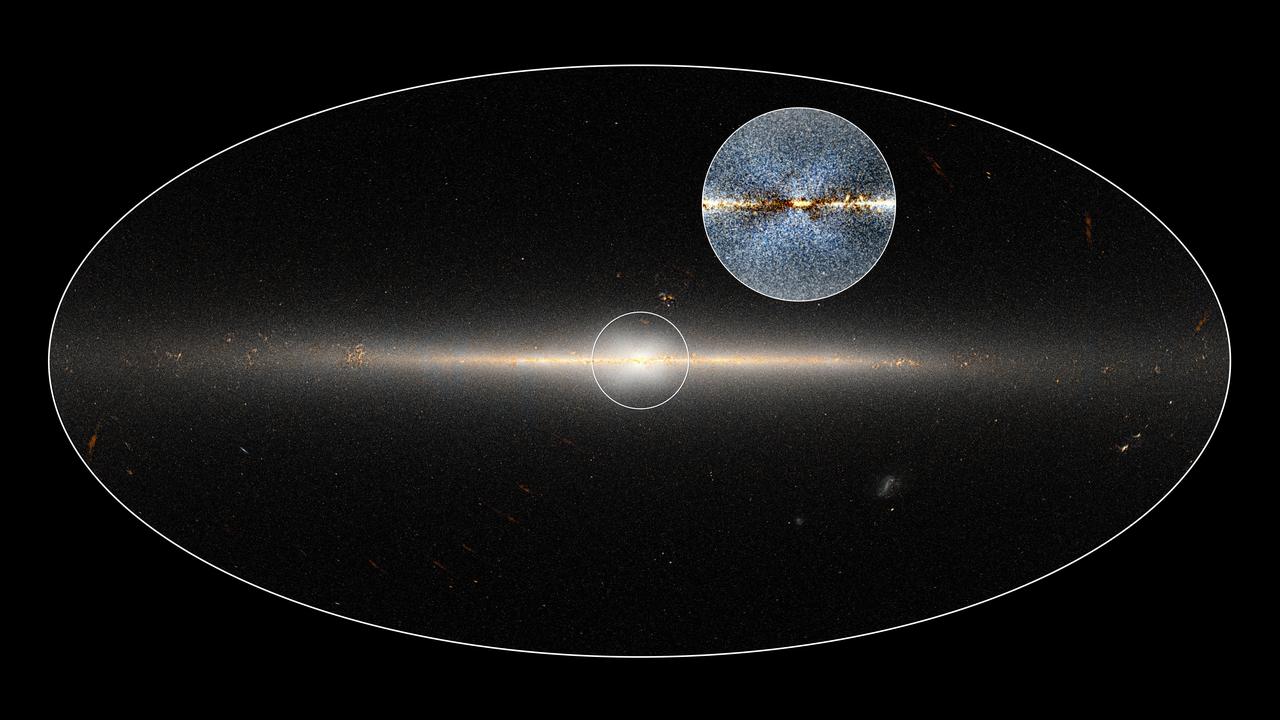
In 2010, NASA's Wide-field Infrared Survey Explorer (WISE) mission observed the entire sky twice. Astronomers used these data to point out the X-shaped structure in the bulge of the Milky Way, contained in the small circle at center, as well as the inset image. The circled central portion covers roughly the area of sky that would be blocked by a basketball when held out at arm's length. Dustin Lang, an astronomer at the Dunlap Institute of the University of Toronto, used these data to make this map, which shows the full 360-degree panorama of the sky as seen by WISE. Lang collaborated with Melissa Ness, postdoctoral researcher at the Max Planck Institute for Astronomy in Germany, http://photojournal.jpl.nasa.gov/catalog/PIA20699
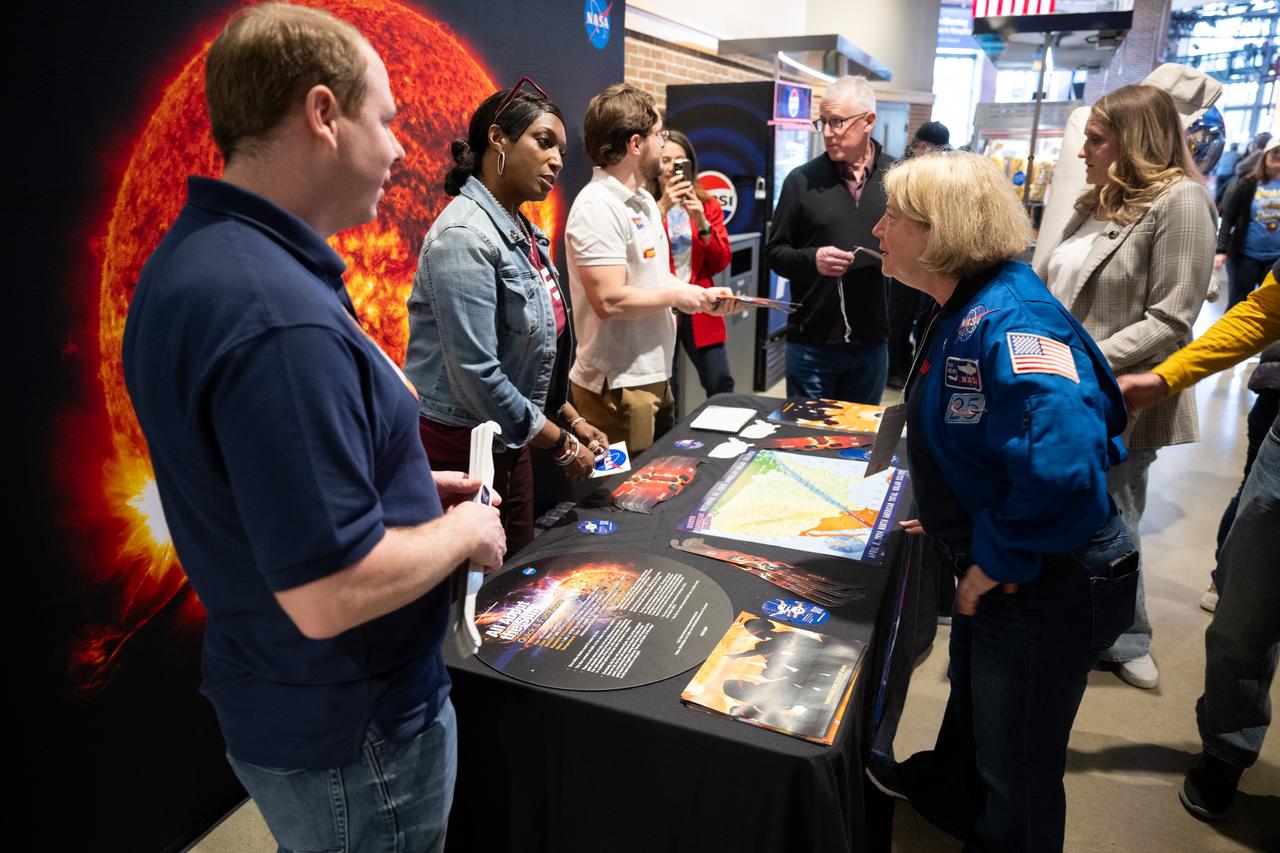
NASA Deputy Administrator Pam Melroy, right, visits with NASA employees passing before the start of a basketball game between the Indiana Pacers and the Miami Heat, Sunday, April 7, 2024, at Gainbridge Fieldhouse in Indianapolis, Ind. On Monday, April 8, a total solar eclipse will sweep across a narrow portion of the North American continent from Mexico’s Pacific coast to the Atlantic coast of Newfoundland, Canada, while a partial solar eclipse will be visible across the entire North American continent along with parts of Central America and Europe. Photo Credit: (NASA/Joel Kowsky)
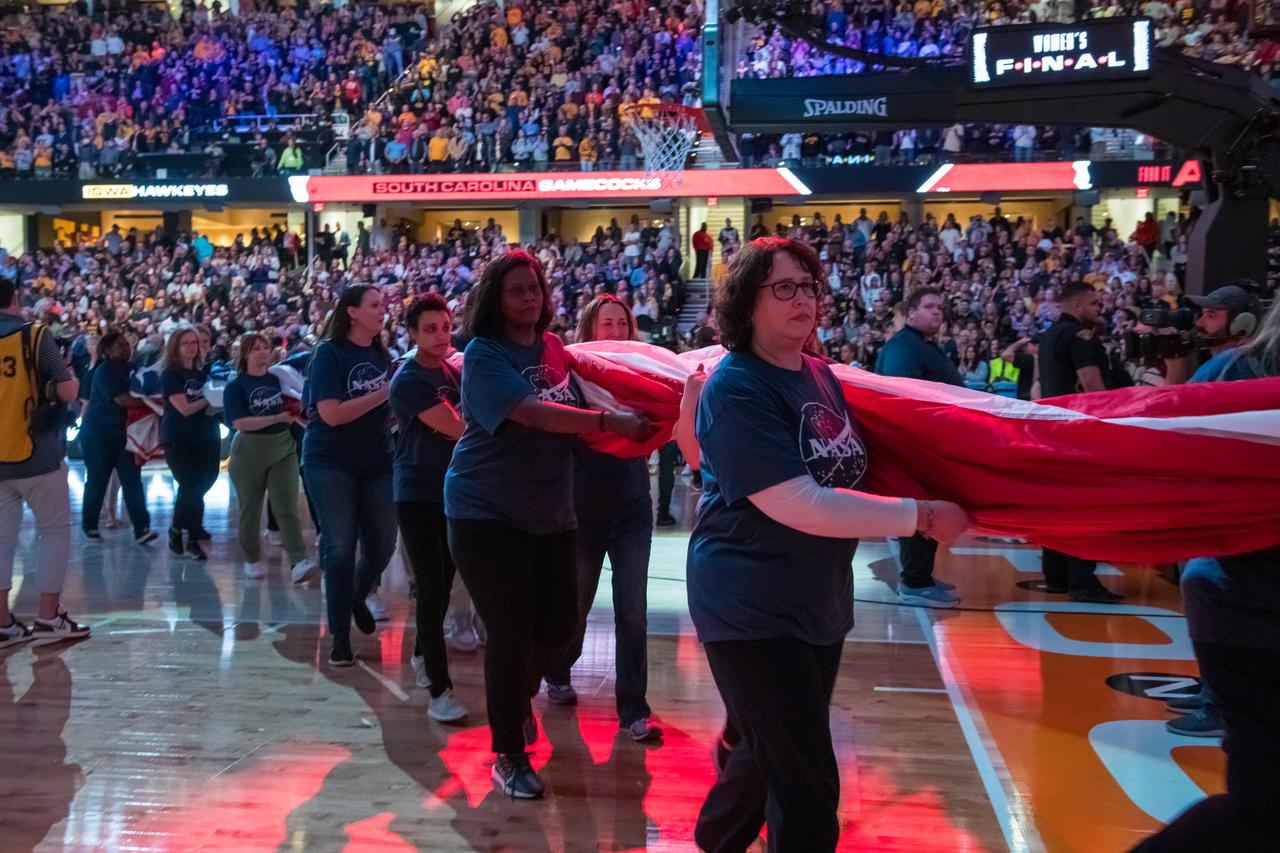
NASA women leaders present the flag at the NCAA championship game on Sunday, April 7th at Rocket Mortgage Fieldhouse in Cleveland, OH. Photo Credit: (NASA/Jef Janis)
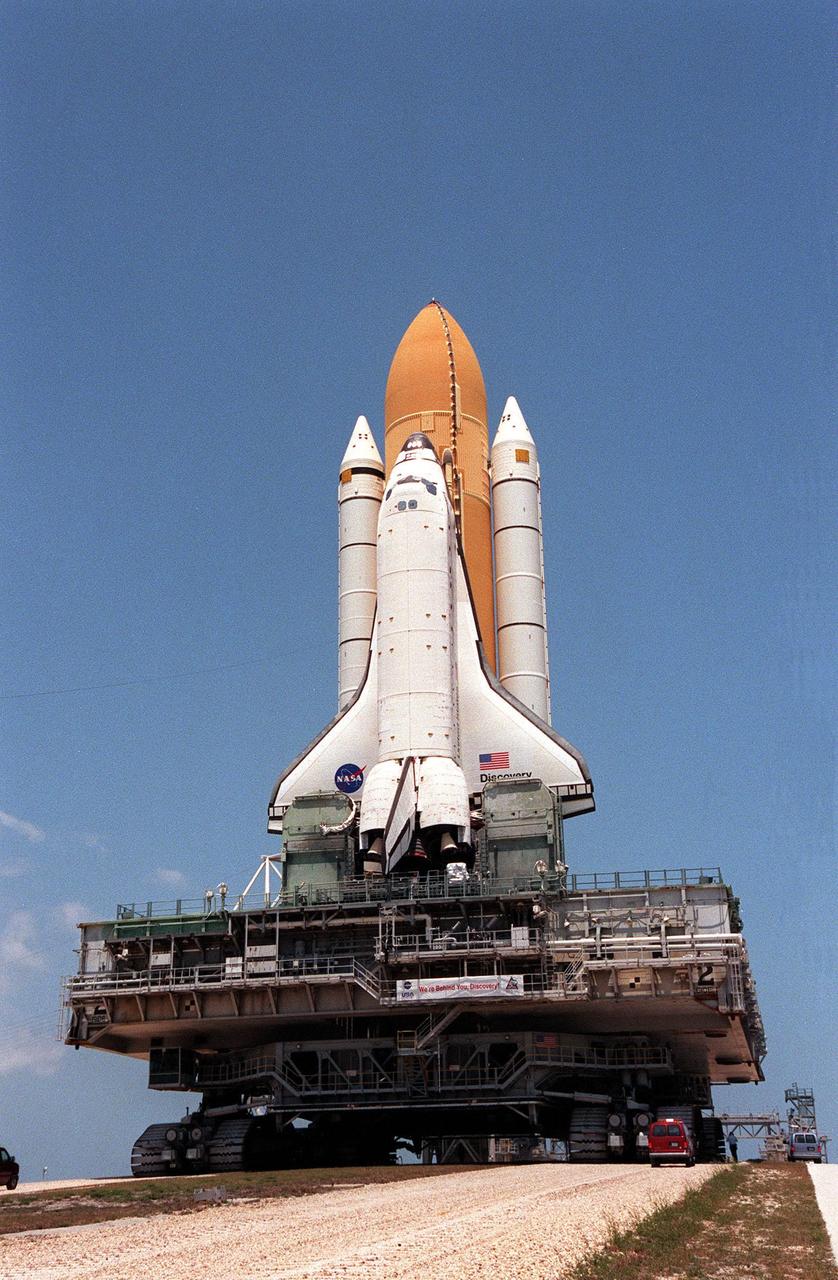
KENNEDY SPACE CENTER, Fla. -- The Space Shuttle Discovery, atop the mobile launcher platform and crawler-transporter, begins the climb up the ramp to Launch Pad 39B. Traveling at 1 mph, the crawler-transporter takes about five hours to cover the journey from the Vehicle Assembly Building to the launch pad. Special levelers on the crawler-transporter keep the Space Shuttle vertical within plus or minus 10 minutes of arc about the dimensions of a basketball. Liftoff of Discovery on mission STS-96 is targeted for May 20 at 9:32 a.m. EDT. STS-96 is a logistics and resupply mission for the International Space Station, carrying such payloads as a Russian crane, the Strela; a U.S.-built crane; the Spacehab Oceaneering Space System Box (SHOSS), a logistics items carrier; and STARSHINE, a student-led experiment
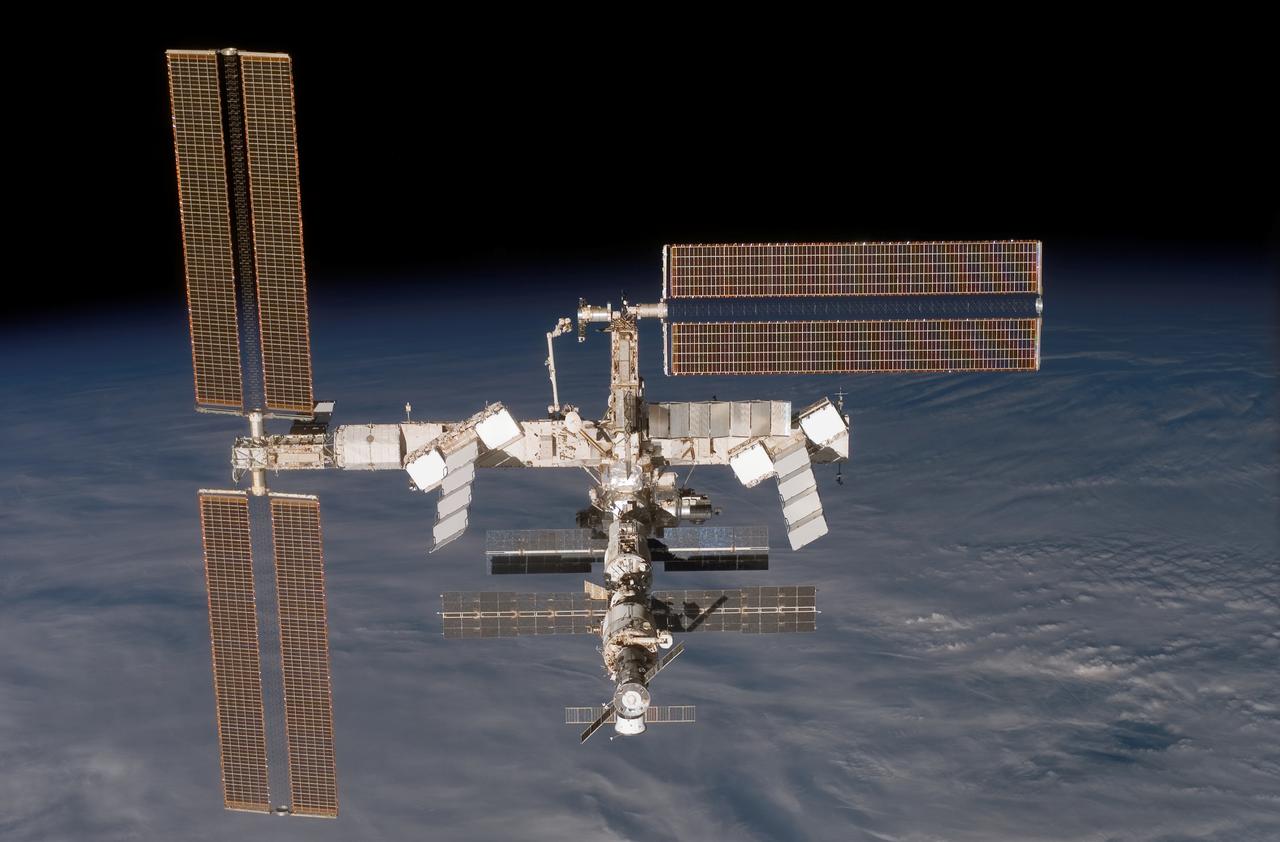
Photographed from the Space Shuttle Discovery upon its separation from the orbital outpost, the International Space Station (ISS) is shown sporting its new additions. A fly-around gave the crew a look at their handiwork, a new P5 spacer truss segment and a fully retracted P6 solar array wing. Earlier, the STS-116 and Expedition 14 crews concluded eight days of cooperative work onboard the shuttle and station where they accomplished the installation of the newest piece of the station and completely rewired the power grid over the course of four space walks. The station is currently the size of a typical three-bedroom house, with a surface area large enough to cover four basketball courts. The image reflects the latest configuration of the ISS as of December 19, 2006.
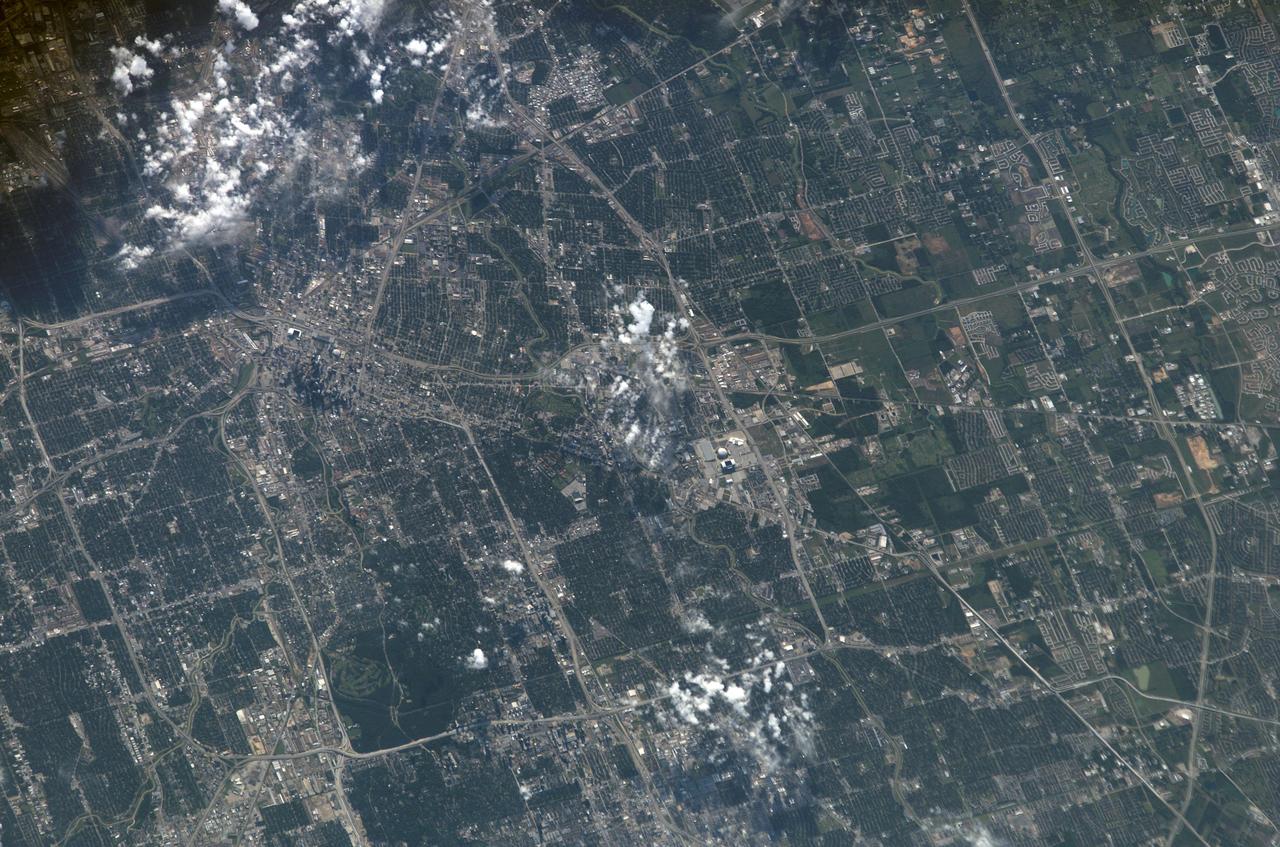
S115-E-06158 (15 Sept. 2006) --- This image of Houston's "downtown" and "uptown" districts and most of the area inside the I-610 Loop was photographed by one of the STS-115 crewmembers aboard the Space Shuttle Atlantis. Harris County Domed Stadium and the nearby facility for the National Football League's American Conference Houston representatives are just below the scattered cloud patch at frame center. What has become known as "uptown" Houston is in the lower left corner. The central business district or downtown is in the upper left quadrant, easily identified by the skyscrapers and the facilities for Houston's Major League Baseball and National Basketball Association affiliates. The Medical Center district is near the cloud patch just north of the older domed stadium. NASA is too far south to appear in the picture, though the southern leg of Beltway 8, about six miles north of the Johnson Space Center, appears at right edge; and Bush Intercontinental Airport is too far north.
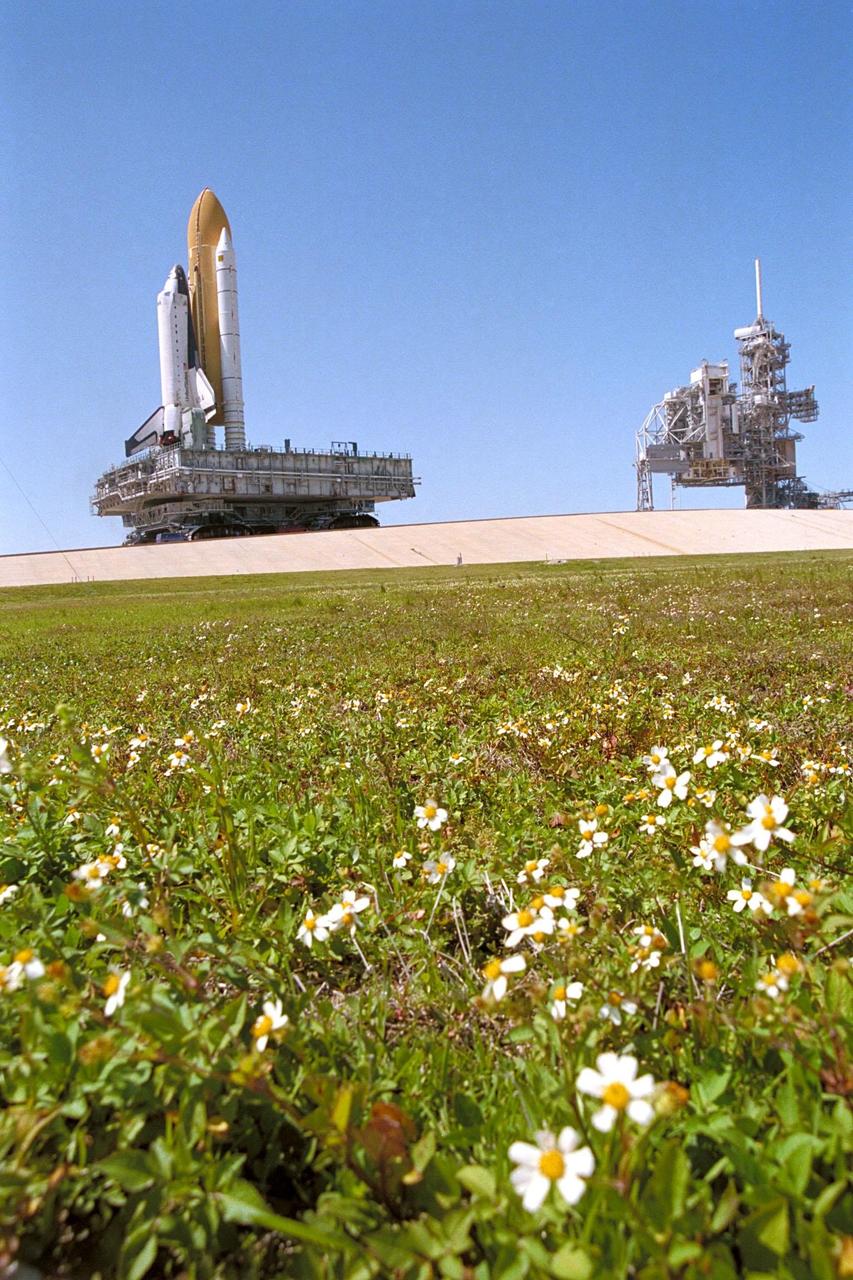
KENNEDY SPACE CENTER, FLA. -- The Space Shuttle Columbia continues up the ramp to Launch Pad 39B in its morning rollout prior to STS-90. Leveling systems within the crawler-transporter underneath the Shuttle keep the platform level while negotiating the five percent ramp leading up to the pad surface. The top of the orbiter is kept vertical within plus or minus 10 minutes of arc, about the diameter of a basketball during the journey. The Neurolab experiments are the primary payload on this nearly 17-day space flight. Investigations during the Neurolab mission will focus on the effects of microgravity on the nervous system. The crew of STS-90, slated for launch April 16 at 2:19 p.m. EDT, includes Commander Richard Searfoss, Pilot Scott Altman, Mission Specialists Richard Linnehan, Dafydd (Dave) Williams, M.D., and Kathryn (Kay) Hire, and Payload Specialists Jay Buckey, M.D., and James Pawelczyk, Ph.D
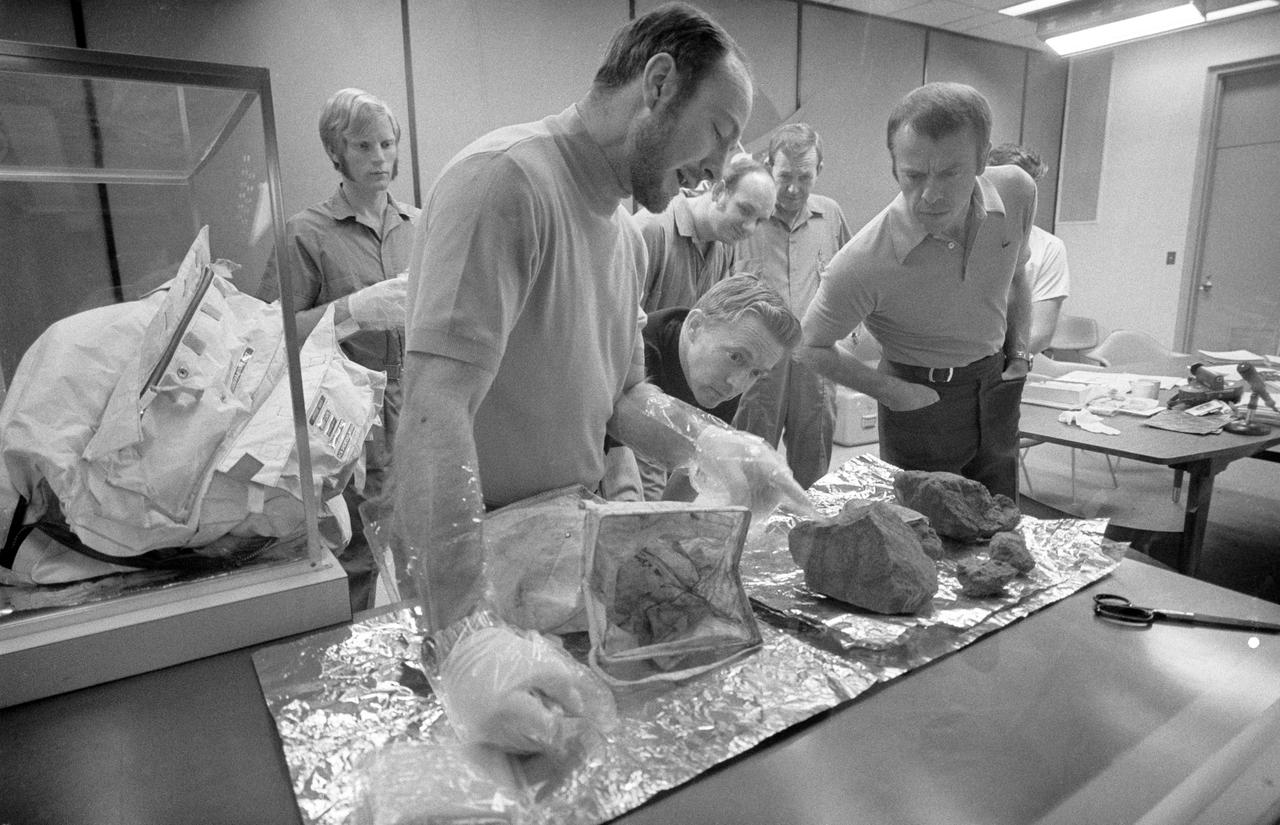
S71-20373 (19 Feb. 1971) --- The Apollo 14 crew men show off some of the largest of the lunar rocks which they brought back from the moon during a through-the-glass meeting with news men in the Crew Reception Area of the Lunar Receiving Laboratory (LRL) at the Manned Spacecraft Center (MSC). Astronaut Alan B. Shepard Jr. (right), mission commander, leans over to view a large basketball-size rock which astronaut Edgar D. Mitchell, lunar module pilot, points out. Astronaut Stuart A. Roosa, command module pilot, who circled the moon in the Command and Service Modules (CSM) while his two fellow crewmembers explored the moon, looks on (near the center of the photograph). Four of the 14 men quarantined with the Apollo 14 crew look on in the background.

The two moon-exploring crewmen of the Apollo 14 lunar landing mission show off some of the largest of the lunar rocks they collected on their mission, during a through-the-glass meeting with newsmen in the Crew Reception Area of the Lunar Receiving Laboratory (LRL) at the Manned Spacecraft Center (MSC). Astronaut Edgar D. Mitchell (left), lunar module pilot, holds up a tote bag in which some of the lunar samples were stowed, while astronaut Alan B. Shepard Jr., commander, looks on. The largest sample brought back on the mission, a basketball-size rock (nicknamed "Big Bertha"), is said to be the largest lunar rock collected in three lunar landing missions for the National Aeronautics and Space Administration (NASA).
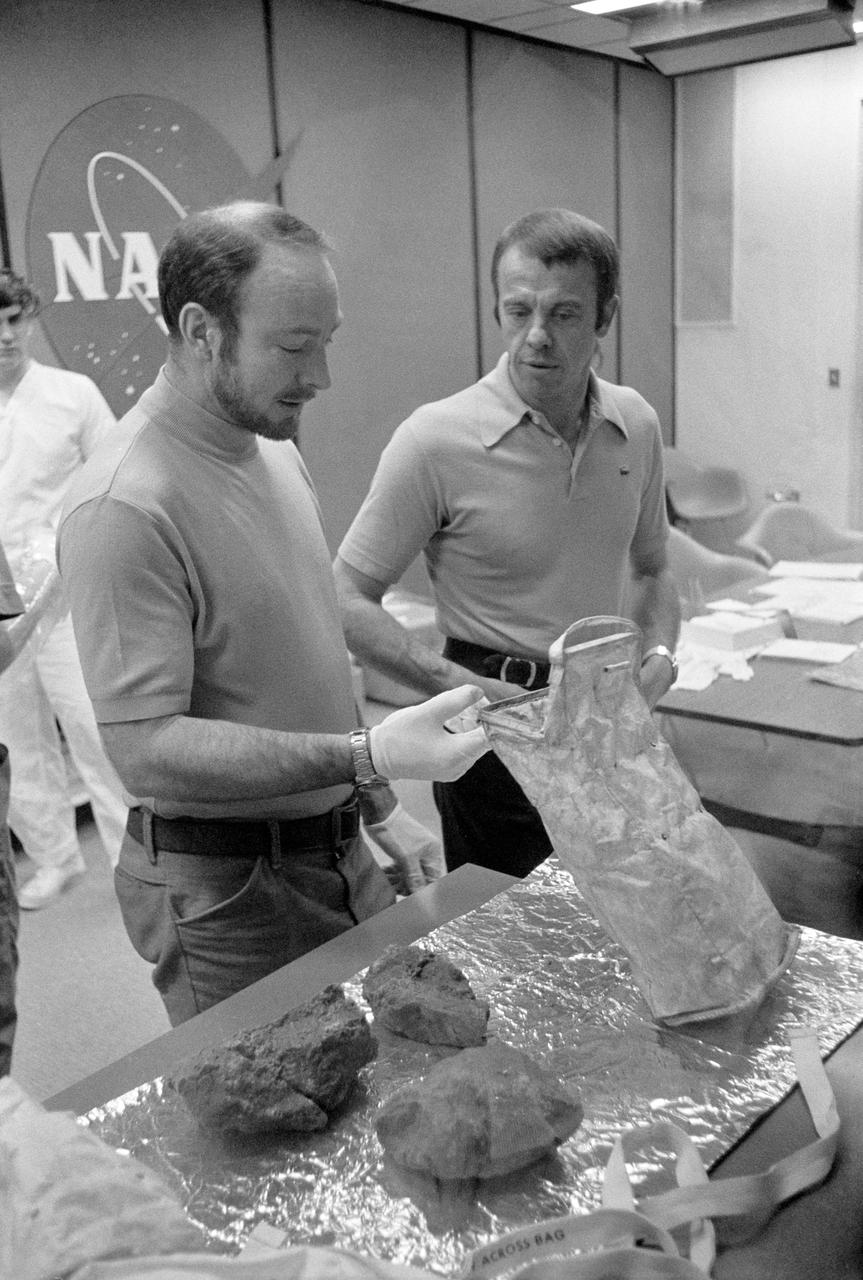
S71-20375 (19 Feb. 1971) --- The two moon-exploring crewmen of the Apollo 14 lunar landing mission show off some of the largest of the lunar rocks they collected on their mission, during a through-the-glass meeting with newsmen in the Crew Reception Area of the Lunar Receiving Laboratory (LRL) at the Manned Spacecraft Center (MSC). Astronaut Edgar D. Mitchell (left), lunar module pilot, holds up a tote bag in which some of the lunar samples were stowed, while astronaut Alan B. Shepard Jr., commander, looks on. The largest sample brought back on the mission, a basketball-size rock (nicknamed "Big Bertha"), is said to be the largest lunar rock collected in three lunar landing missions for the National Aeronautics and Space Administration (NASA).
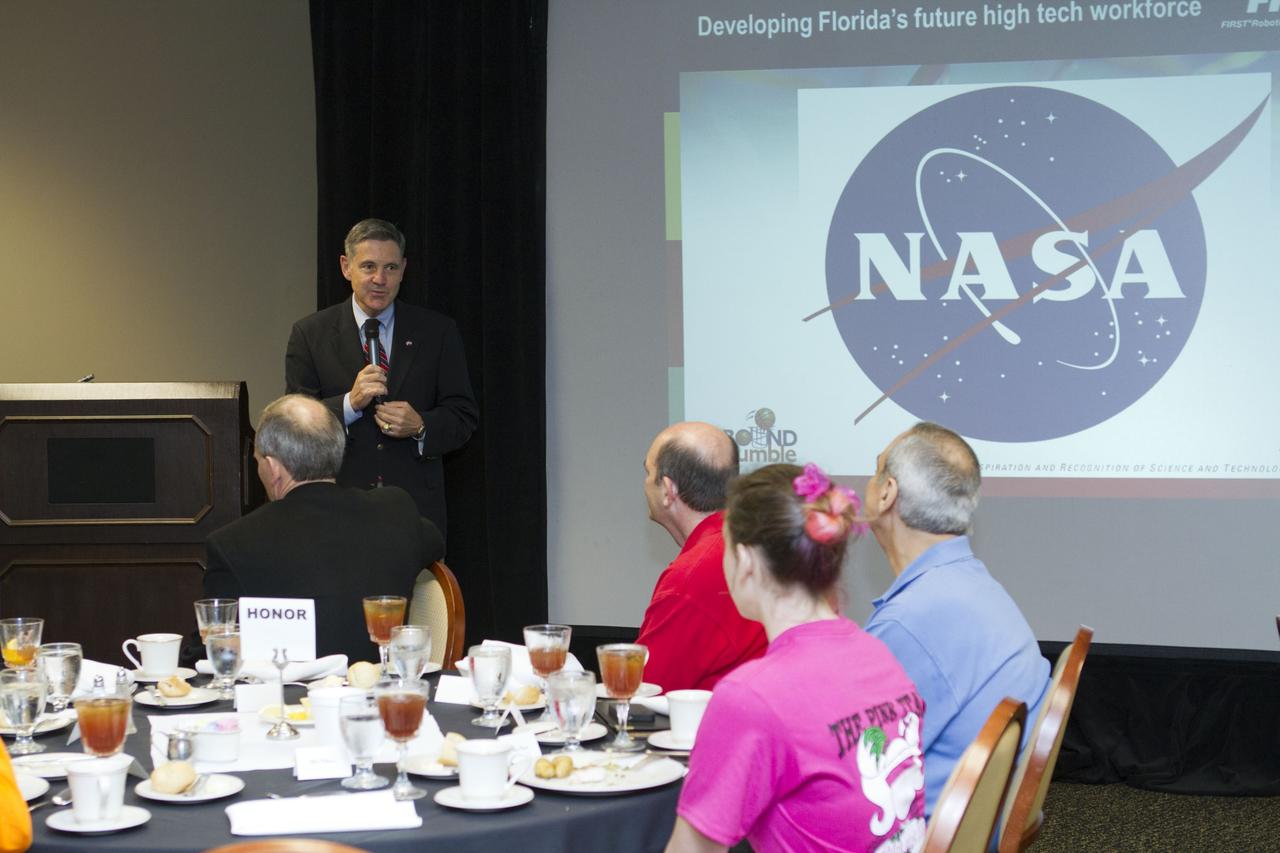
ORLANDO, Fla. -- NASA Kennedy Space Center Director Bob Cabana talks to teams that are participating in the regional FIRST robotics competition at the University of Central Florida in Orlando, Fla. More than 60 high school teams took part in the competition called "For Inspiration and Recognition of Science and Technology," or FIRST, in hopes of advancing to the national robotics championship. This year, the competition resembled a basketball game and was dubbed "Rebound Rumble." The game measured the effectiveness of each robot, the power of collaboration and the determination of the teams. FIRST, founded in 1989, is a non-profit organization that designs accessible, innovative programs to build self-confidence, knowledge and life skills while motivating young people to pursue academic opportunities. The robotics competition challenges teams of high school students and their mentors to solve a common problem in a six-week timeframe using a standard kit of parts and a common set of rules. NASA is the largest sponsor of the international program. Kennedy Space Center is a sponsor of the regional event. For more information on Kennedy's education events and initiatives, go to http://www.nasa.gov/offices/education/centers/kennedy/home/index.html. Photo credit: NASA/Kim Shiflett
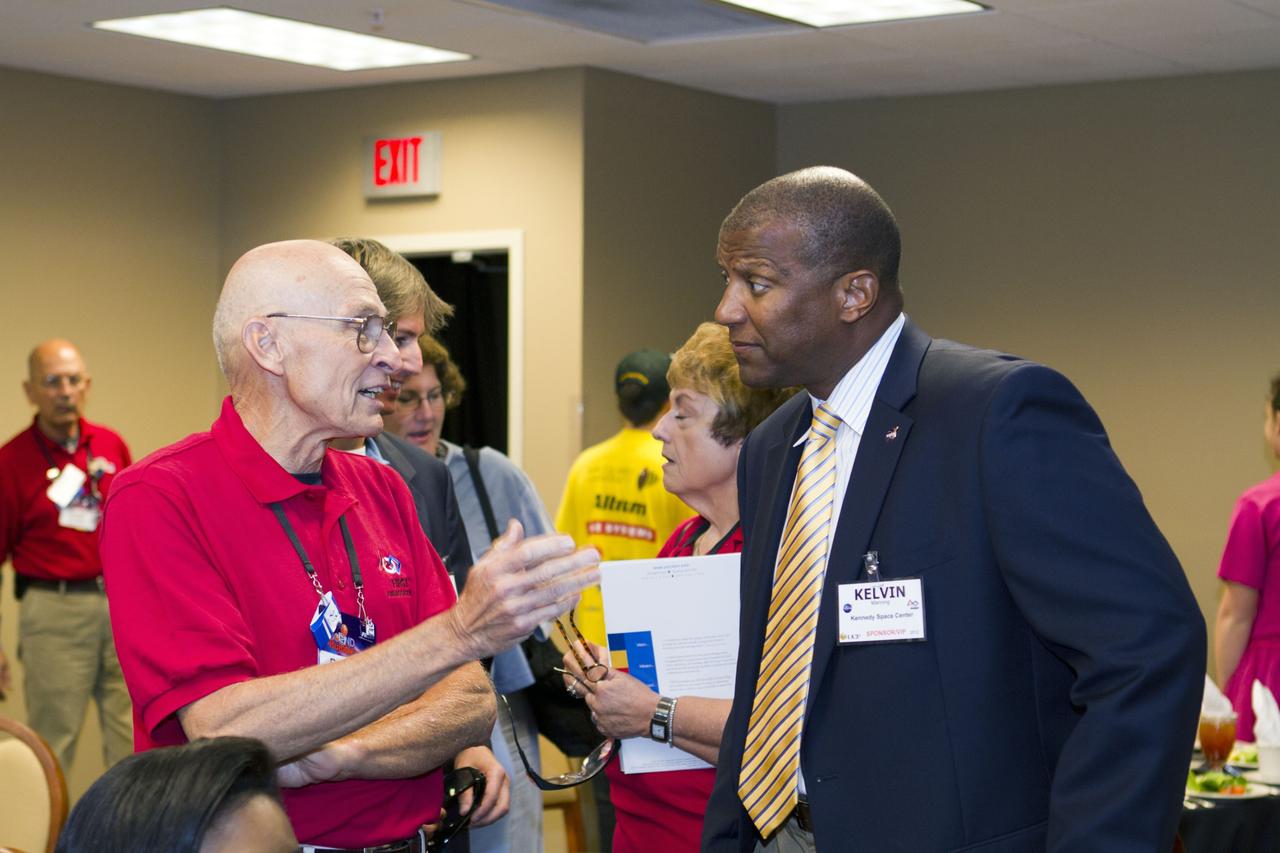
ORLANDO, Fla. -- Former space shuttle launch director, Bob Sieck, left, and NASA Kennedy Space Center Associate Director Kelvin Manning, right, talk amongst high school teams that are competing in the regional FIRST robotics competition at the University of Central Florida in Orlando, Fla. More than 60 teams took part in the competition called "For Inspiration and Recognition of Science and Technology," or FIRST, in hopes of advancing to the national robotics championship. This year, the competition resembled a basketball game and was dubbed "Rebound Rumble." The game measured the effectiveness of each robot, the power of collaboration and the determination of the teams. FIRST, founded in 1989, is a non-profit organization that designs accessible, innovative programs to build self-confidence, knowledge and life skills while motivating young people to pursue academic opportunities. The robotics competition challenges teams of high school students and their mentors to solve a common problem in a six-week timeframe using a standard kit of parts and a common set of rules. NASA is the largest sponsor of the international program. Kennedy Space Center is a sponsor of the regional event. For more information on Kennedy's education events and initiatives, go to http://www.nasa.gov/offices/education/centers/kennedy/home/index.html. Photo credit: NASA/Kim Shiflett
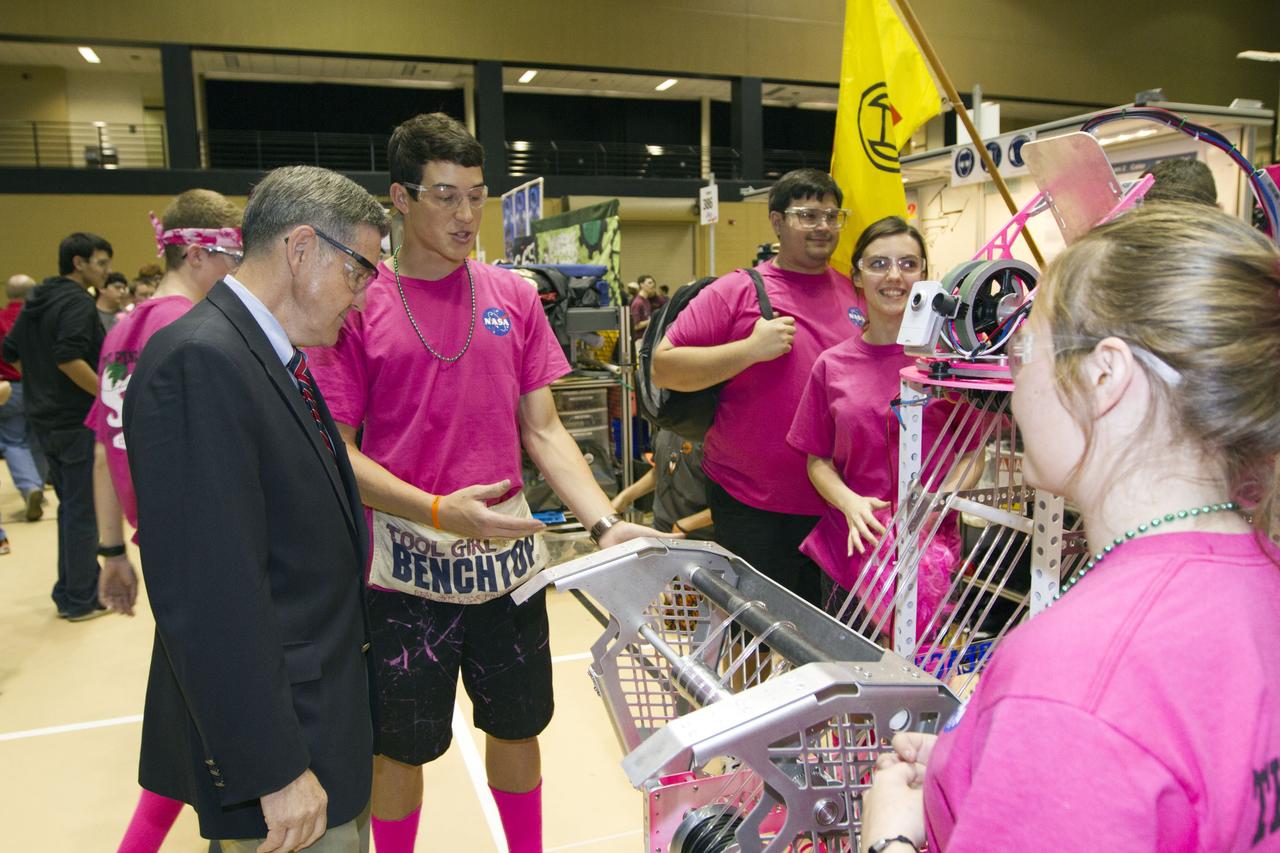
ORLANDO, Fla. -- NASA Kennedy Space Center Director Bob Cabana talks with members of Team 233, "The Pink Team," which is participating in the regional FIRST robotics competition at the University of Central Florida in Orlando, Fla. The team is made up of students from Rockledge, Cocoa Beach and Viera high schools along the Space Coast of Florida. Kennedy is a sponsor of the team. More than 60 high school teams took part in the competition called "For Inspiration and Recognition of Science and Technology," or FIRST, in hopes of advancing to the national robotics championship. This year, the competition resembled a basketball game and was dubbed "Rebound Rumble." The game measured the effectiveness of each robot, the power of collaboration and the determination of the teams. FIRST, founded in 1989, is a non-profit organization that designs accessible, innovative programs to build self-confidence, knowledge and life skills while motivating young people to pursue academic opportunities. The robotics competition challenges teams of high school students and their mentors to solve a common problem in a six-week timeframe using a standard kit of parts and a common set of rules. NASA is the largest sponsor of the international program. Kennedy Space Center is a sponsor of the regional event. For more information on Kennedy's education events and initiatives, go to http://www.nasa.gov/offices/education/centers/kennedy/home/index.html. Photo credit: NASA/Kim Shiflett
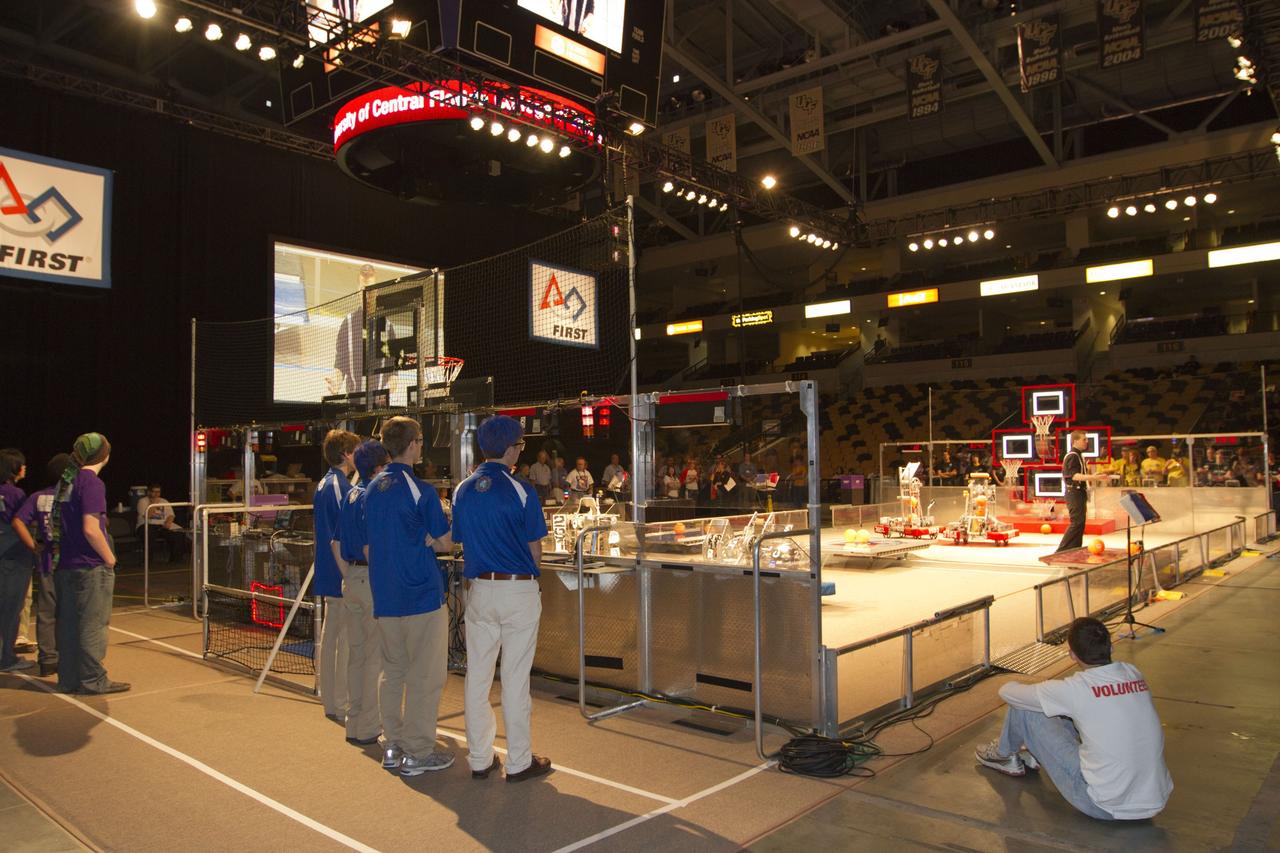
ORLANDO, Fla. -- High school teams compete in the regional FIRST robotics competition at the University of Central Florida in Orlando, Fla. More than 60 teams took part in the competition called "For Inspiration and Recognition of Science and Technology," or FIRST, in hopes of advancing to the national robotics championship. This year, the competition resembled a basketball game and was dubbed "Rebound Rumble." The game measured the effectiveness of each robot, the power of collaboration and the determination of the teams. FIRST, founded in 1989, is a non-profit organization that designs accessible, innovative programs to build self-confidence, knowledge and life skills while motivating young people to pursue academic opportunities. The robotics competition challenges teams of high school students and their mentors to solve a common problem in a six-week timeframe using a standard kit of parts and a common set of rules. NASA is the largest sponsor of the international program. Kennedy Space Center is a sponsor of the regional event. For more information on Kennedy's education events and initiatives, go to http://www.nasa.gov/offices/education/centers/kennedy/home/index.html. Photo credit: NASA/Kim Shiflett
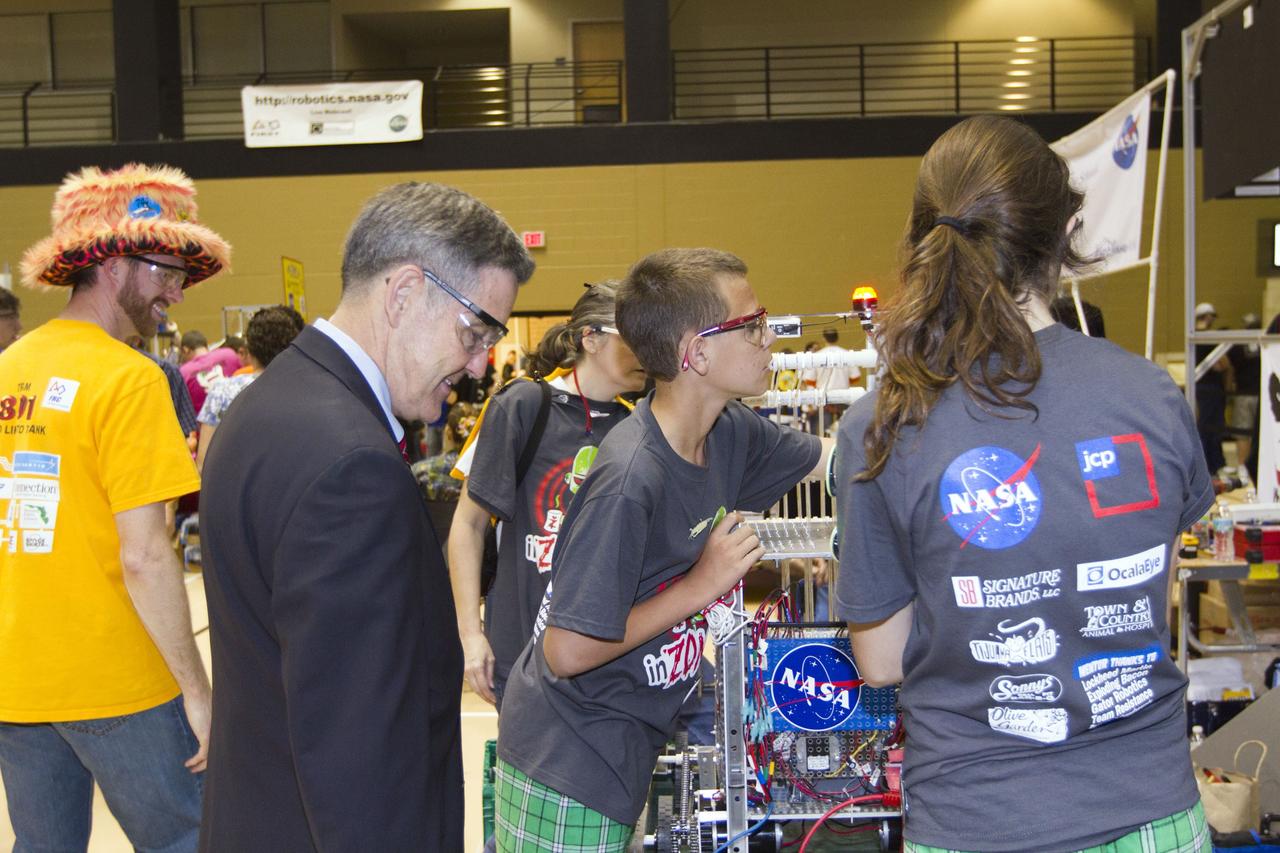
ORLANDO, Fla. -- NASA Kennedy Space Center Director Bob Cabana talks with members of Team 4064, which is participating in the regional FIRST robotics competition at the University of Central Florida in Orlando, Fla. The team is made up of students from Vanguard High School in Ocala, Fla. More than 60 high school teams from throughout the country took part in the competition called "For Inspiration and Recognition of Science and Technology," or FIRST, in hopes of advancing to the national robotics championship. This year the competition resembled a basketball game and was dubbed "Rebound Rumble." The game measured the effectiveness of each robot, the power of collaboration and the determination of the teams. FIRST, founded in 1989, is a non-profit organization that designs accessible, innovative programs to build self-confidence, knowledge and life skills while motivating young people to pursue academic opportunities. The robotics competition challenges teams of high school students and their mentors to solve a common problem in a six-week timeframe using a standard kit of parts and a common set of rules. NASA is the largest sponsor of the international program. Kennedy Space Center is a sponsor of the regional event. For more information on Kennedy's education events and initiatives, go to http://www.nasa.gov/offices/education/centers/kennedy/home/index.html. Photo credit: NASA/Kim Shiflett

ORLANDO, Fla. -- High school teams compete in the regional FIRST robotics competition at the University of Central Florida in Orlando, Fla. More than 60 teams took part in the competition called "For Inspiration and Recognition of Science and Technology," or FIRST, in hopes of advancing to the national robotics championship. This year, the competition resembled a basketball game and was dubbed "Rebound Rumble." The game measured the effectiveness of each robot, the power of collaboration and the determination of the teams. FIRST, founded in 1989, is a non-profit organization that designs accessible, innovative programs to build self-confidence, knowledge and life skills while motivating young people to pursue academic opportunities. The robotics competition challenges teams of high school students and their mentors to solve a common problem in a six-week timeframe using a standard kit of parts and a common set of rules. NASA is the largest sponsor of the international program. Kennedy Space Center is a sponsor of the regional event. For more information on Kennedy's education events and initiatives, go to http://www.nasa.gov/offices/education/centers/kennedy/home/index.html. Photo credit: NASA/Kim Shiflett
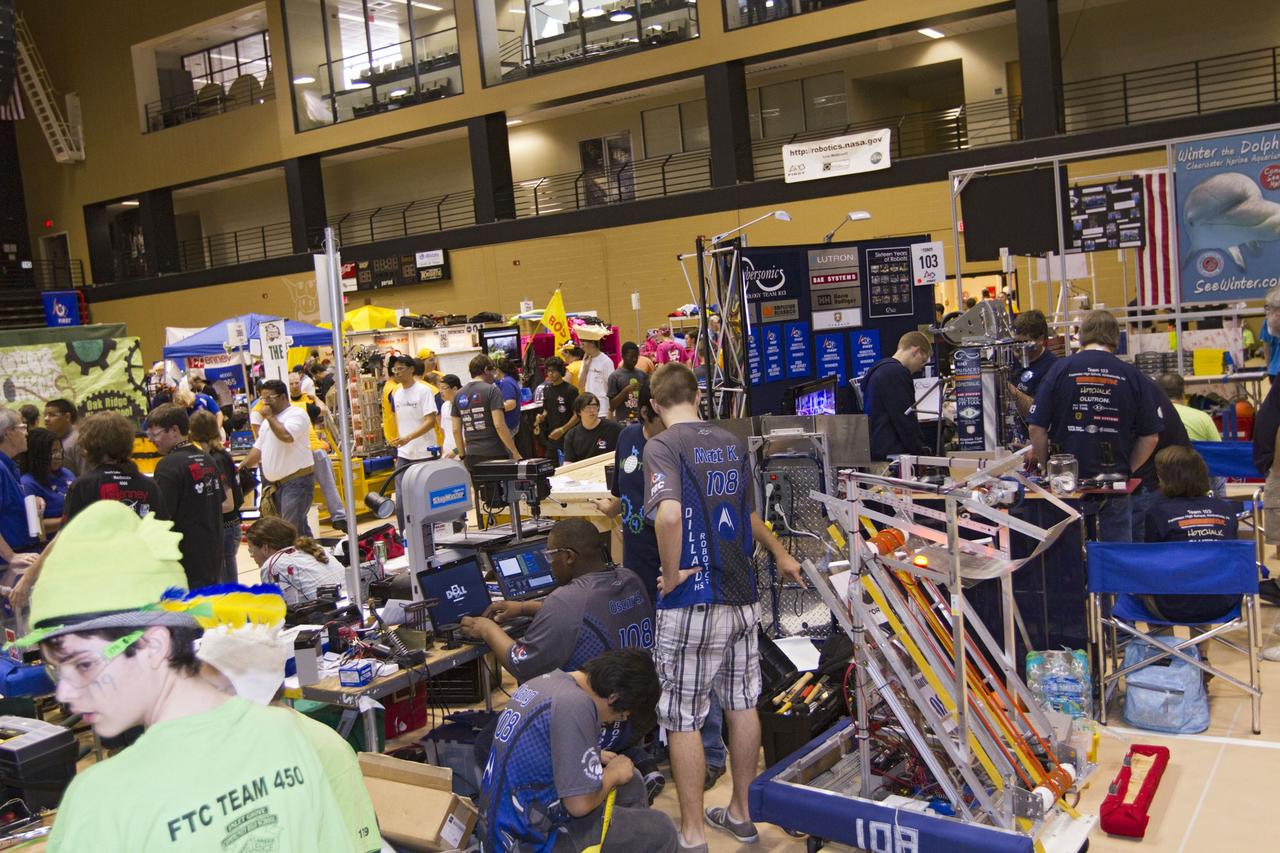
ORLANDO, Fla. -- High school teams tinker with their robots during the regional FIRST robotics competition at the University of Central Florida in Orlando, Fla. More than 60 teams took part in the competition called "For Inspiration and Recognition of Science and Technology," or FIRST, in hopes of advancing to the national robotics championship. This year ,the competition resembled a basketball game and was dubbed "Rebound Rumble." The game measured the effectiveness of each robot, the power of collaboration and the determination of the teams. FIRST, founded in 1989, is a non-profit organization that designs accessible, innovative programs to build self-confidence, knowledge and life skills while motivating young people to pursue academic opportunities. The robotics competition challenges teams of high school students and their mentors to solve a common problem in a six-week timeframe using a standard kit of parts and a common set of rules. NASA is the largest sponsor of the international program. Kennedy Space Center is a sponsor of the regional event. For more information on Kennedy's education events and initiatives, go to http://www.nasa.gov/offices/education/centers/kennedy/home/index.html. Photo credit: NASA/Kim Shiflett
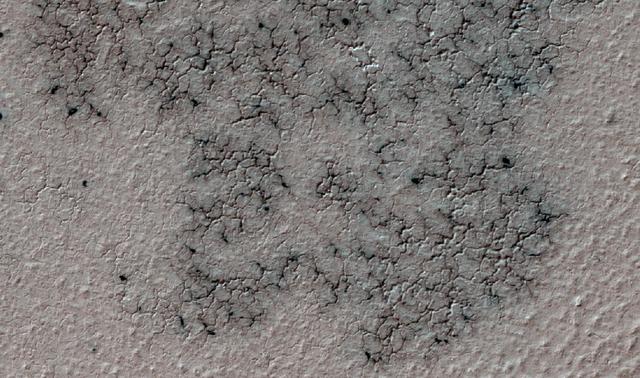
This image shows spidery channels eroded into Martian ground. It is an example from high-resolution observation of more than 20 places that were chosen in 2016 on the basis of about 10,000 volunteers' examination of lower-resolution images of larger areas near Mars' south pole. These sharper looks use the High Resolution Imaging Science Experiment (HiRISE) camera on NASA's Mars Reconnaissance Orbiter. The volunteers, through the Planet Four: Terrains website, categorize surface features in images from the same orbiter's Context Camera (CTX). This image is a portion of HiRISE observation ESP_047487_1005, taken on Sept. 12, 2016, of a site at 79.4 degrees south latitude, 18.8 degrees east longitude. The ground area shown is about half a mile (0.8 kilometer) wide. This terrain type, called spiders or "araneiform" (from the Latin word for spiders), appears in some areas of far-southern Mars that are covered by sheets of frozen carbon dioxide ("dry ice") during the winter. When the slab ice thaws from the underneath side in the spring, carbon dioxide gas trapped beneath the ice builds pressure until it rushes toward a fissure or vent where it bursts out. The venting gas carries dust and sand that it picks up as it carves these channels. At this location, the spiders are surrounded by ground called "basketball terrain" because of its texture. http://photojournal.jpl.nasa.gov/catalog/PIA21126
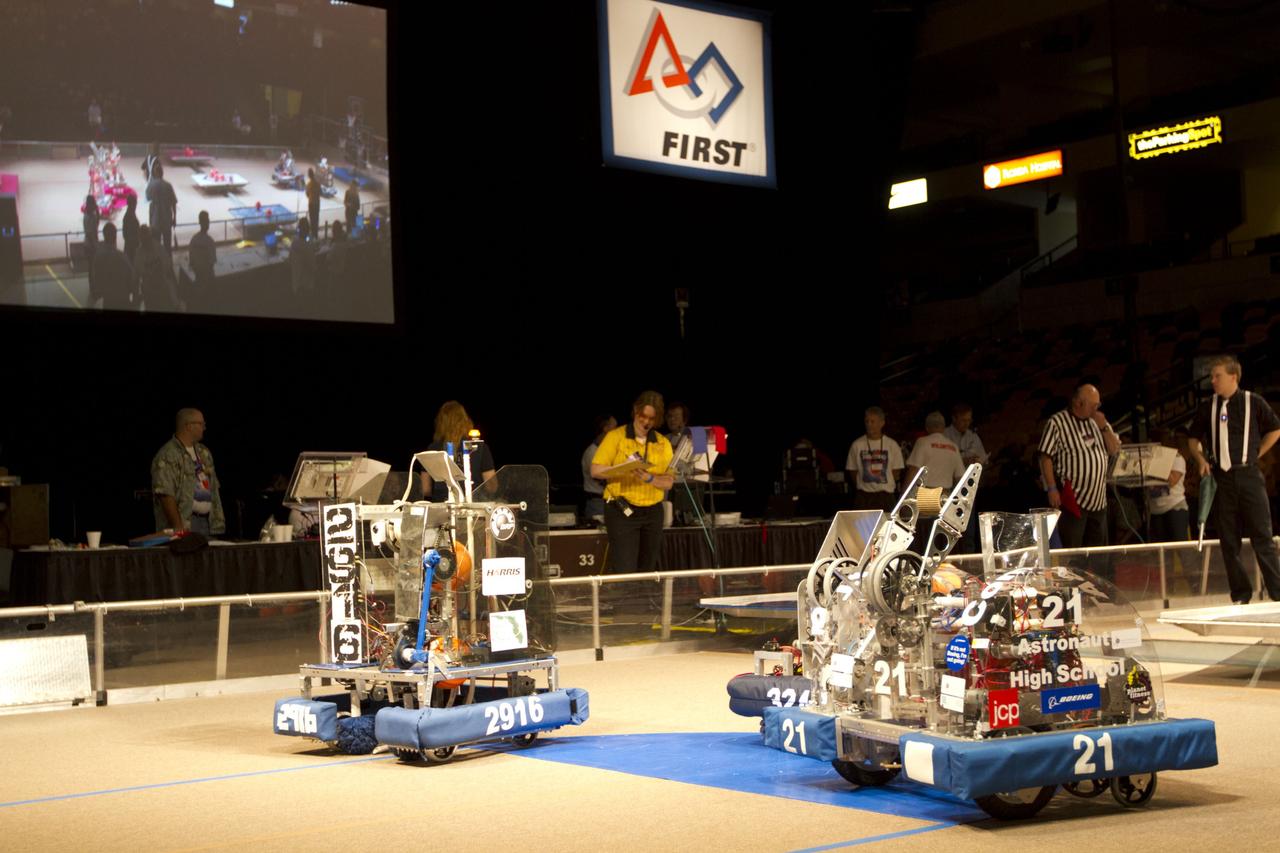
ORLANDO, Fla. -- High school teams compete in the regional FIRST robotics competition at the University of Central Florida in Orlando, Fla. More than 60 teams took part in the competition called "For Inspiration and Recognition of Science and Technology," or FIRST, in hopes of advancing to the national robotics championship. This year, the competition resembled a basketball game and was dubbed "Rebound Rumble." The game measured the effectiveness of each robot, the power of collaboration and the determination of the teams. FIRST, founded in 1989, is a non-profit organization that designs accessible, innovative programs to build self-confidence, knowledge and life skills while motivating young people to pursue academic opportunities. The robotics competition challenges teams of high school students and their mentors to solve a common problem in a six-week timeframe using a standard kit of parts and a common set of rules. NASA is the largest sponsor of the international program. Kennedy Space Center is a sponsor of the regional event. For more information on Kennedy's education events and initiatives, go to http://www.nasa.gov/offices/education/centers/kennedy/home/index.html. Photo credit: NASA/Kim Shiflett
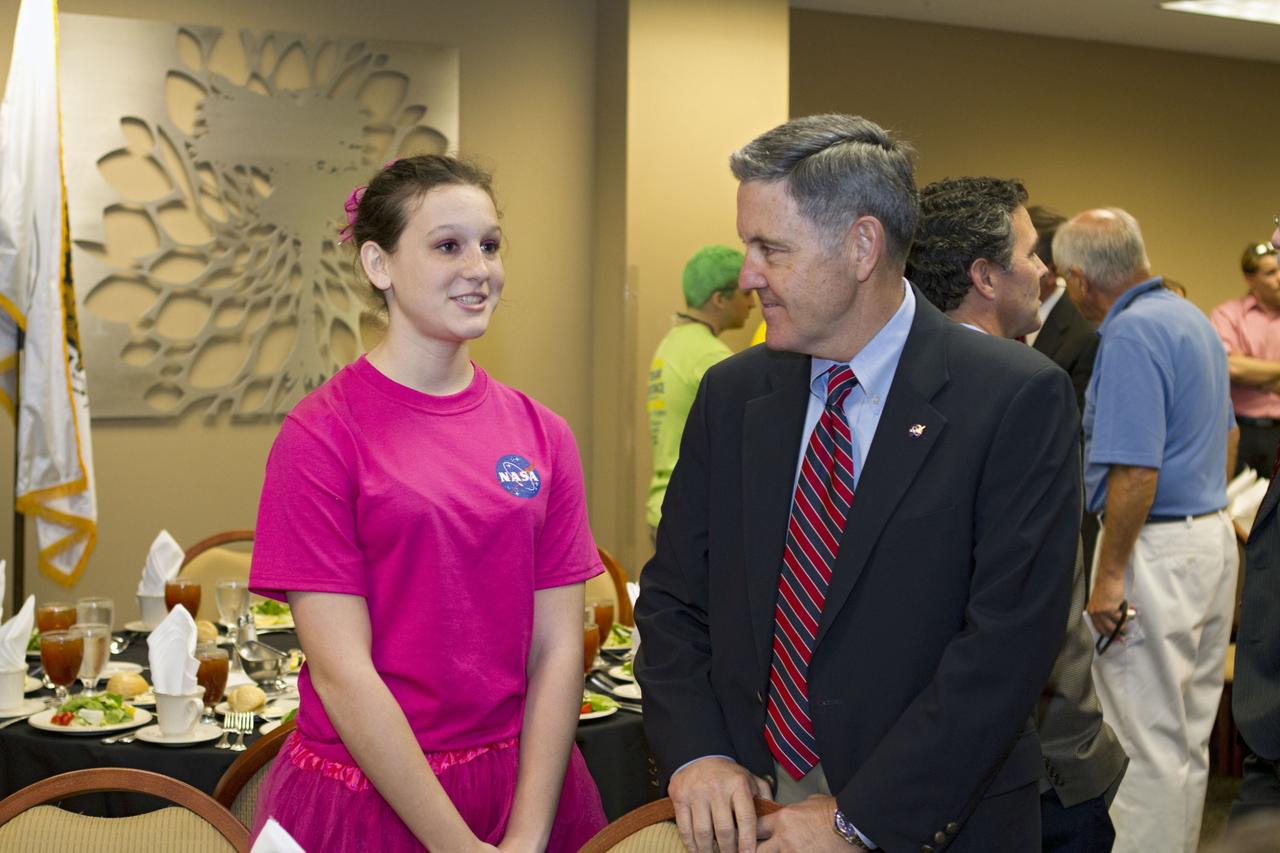
ORLANDO, Fla. -- NASA Kennedy Space Center Director Bob Cabana talks with a member of Team 233, "The Pink Team," which is participating in the regional FIRST robotics competition at the University of Central Florida in Orlando, Fla. The team is made up of students from Rockledge, Cocoa Beach and Viera high schools along the Space Coast of Florida. Kennedy is a sponsor of the team. More than 60 teams took part in the competition called "For Inspiration and Recognition of Science and Technology," or FIRST, in hopes of advancing to the national robotics championship. This year, the competition resembled a basketball game and was dubbed "Rebound Rumble." The game measured the effectiveness of each robot, the power of collaboration and the determination of the teams. FIRST, founded in 1989, is a non-profit organization that designs accessible, innovative programs to build self-confidence, knowledge and life skills while motivating young people to pursue academic opportunities. The robotics competition challenges teams of high school students and their mentors to solve a common problem in a six-week timeframe using a standard kit of parts and a common set of rules. NASA is the largest sponsor of the international program. Kennedy Space Center is a sponsor of the regional event. For more information on Kennedy's education events and initiatives, go to http://www.nasa.gov/offices/education/centers/kennedy/home/index.html. Photo credit: NASA/Kim Shiflett
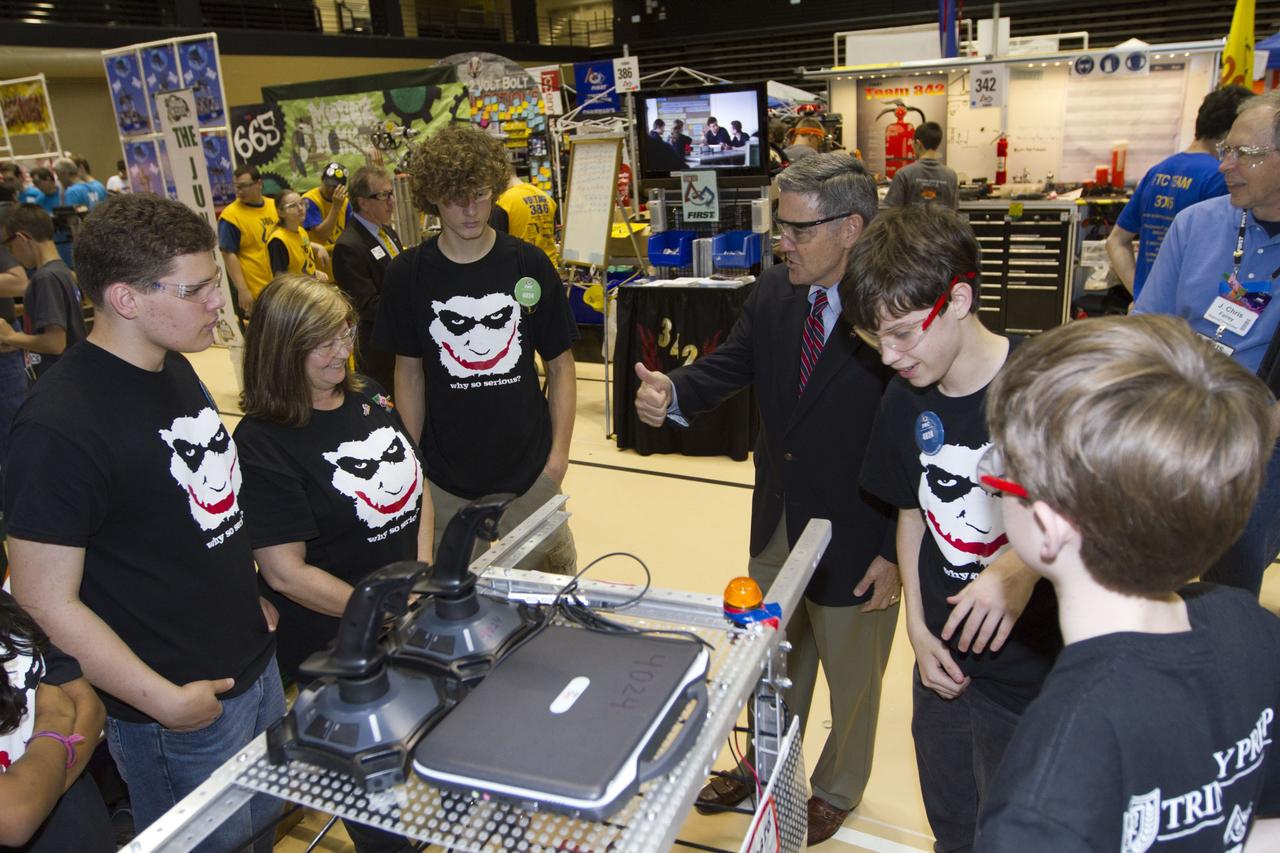
ORLANDO, Fla. -- NASA Kennedy Space Center Director Bob Cabana talks with members of Team 4024, which is participating in the regional FIRST robotics competition at the University of Central Florida in Orlando, Fla. The team is made up of students from Trinity Preparatory School in Winter Park, Fla. More than 60 high school teams took part in the competition called "For Inspiration and Recognition of Science and Technology," or FIRST, in hopes of advancing to the national robotics championship. This year, the competition resembled a basketball game and was dubbed "Rebound Rumble." The game measured the effectiveness of each robot, the power of collaboration and the determination of the teams. FIRST, founded in 1989, is a non-profit organization that designs accessible, innovative programs to build self-confidence, knowledge and life skills while motivating young people to pursue academic opportunities. The robotics competition challenges teams of high school students and their mentors to solve a common problem in a six-week timeframe using a standard kit of parts and a common set of rules. NASA is the largest sponsor of the international program. Kennedy Space Center is a sponsor of the regional event. For more information on Kennedy's education events and initiatives, go to http://www.nasa.gov/offices/education/centers/kennedy/home/index.html. Photo credit: NASA/Kim Shiflett
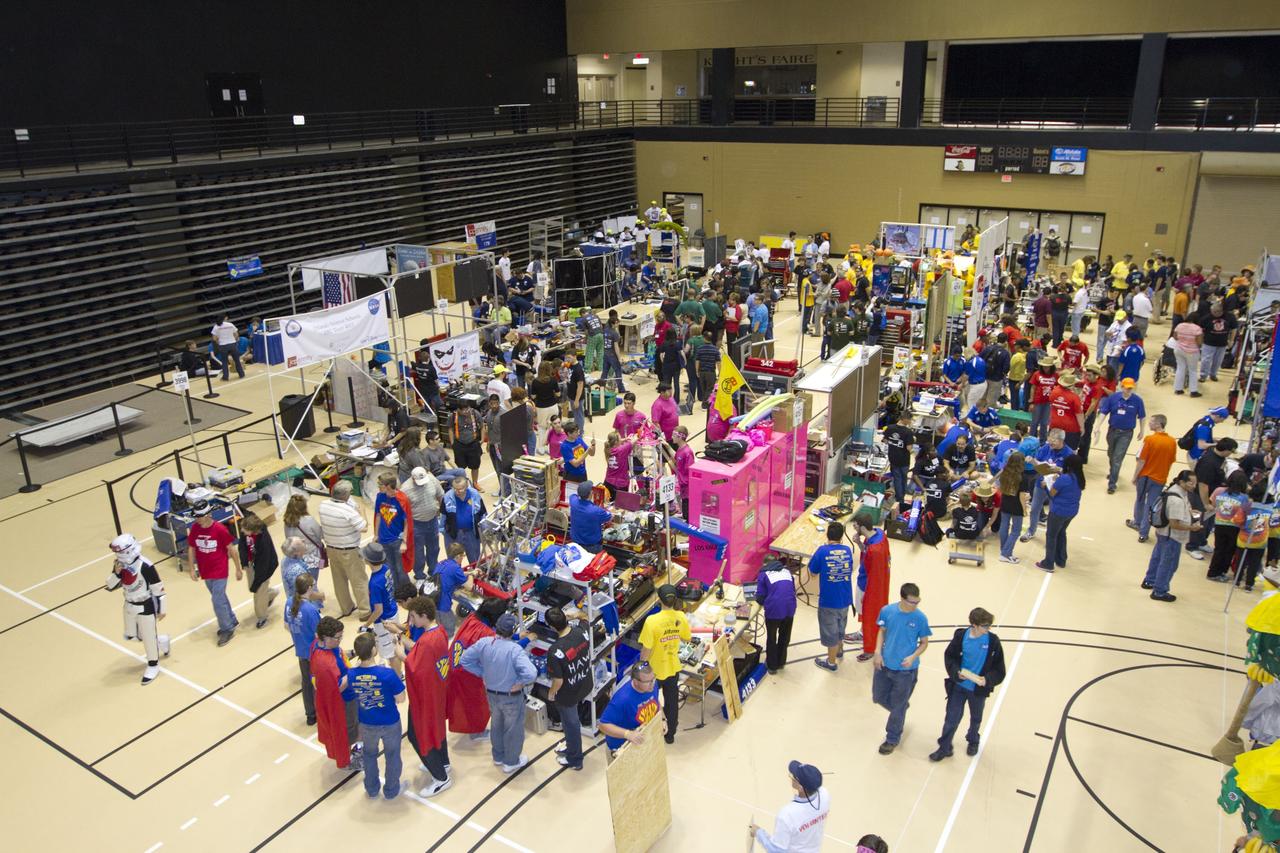
ORLANDO, Fla. -- High school teams tinker with their robots during the regional FIRST robotics competition at the University of Central Florida in Orlando, Fla. More than 60 teams took part in the competition called "For Inspiration and Recognition of Science and Technology," or FIRST, in hopes of advancing to the national robotics championship. This year, the competition resembled a basketball game and was dubbed "Rebound Rumble." The game measured the effectiveness of each robot, the power of collaboration and the determination of the teams. FIRST, founded in 1989, is a non-profit organization that designs accessible, innovative programs to build self-confidence, knowledge and life skills while motivating young people to pursue academic opportunities. The robotics competition challenges teams of high school students and their mentors to solve a common problem in a six-week timeframe using a standard kit of parts and a common set of rules. NASA is the largest sponsor of the international program. Kennedy Space Center is a sponsor of the regional event. For more information on Kennedy's education events and initiatives, go to http://www.nasa.gov/offices/education/centers/kennedy/home/index.html. Photo credit: NASA/Kim Shiflett
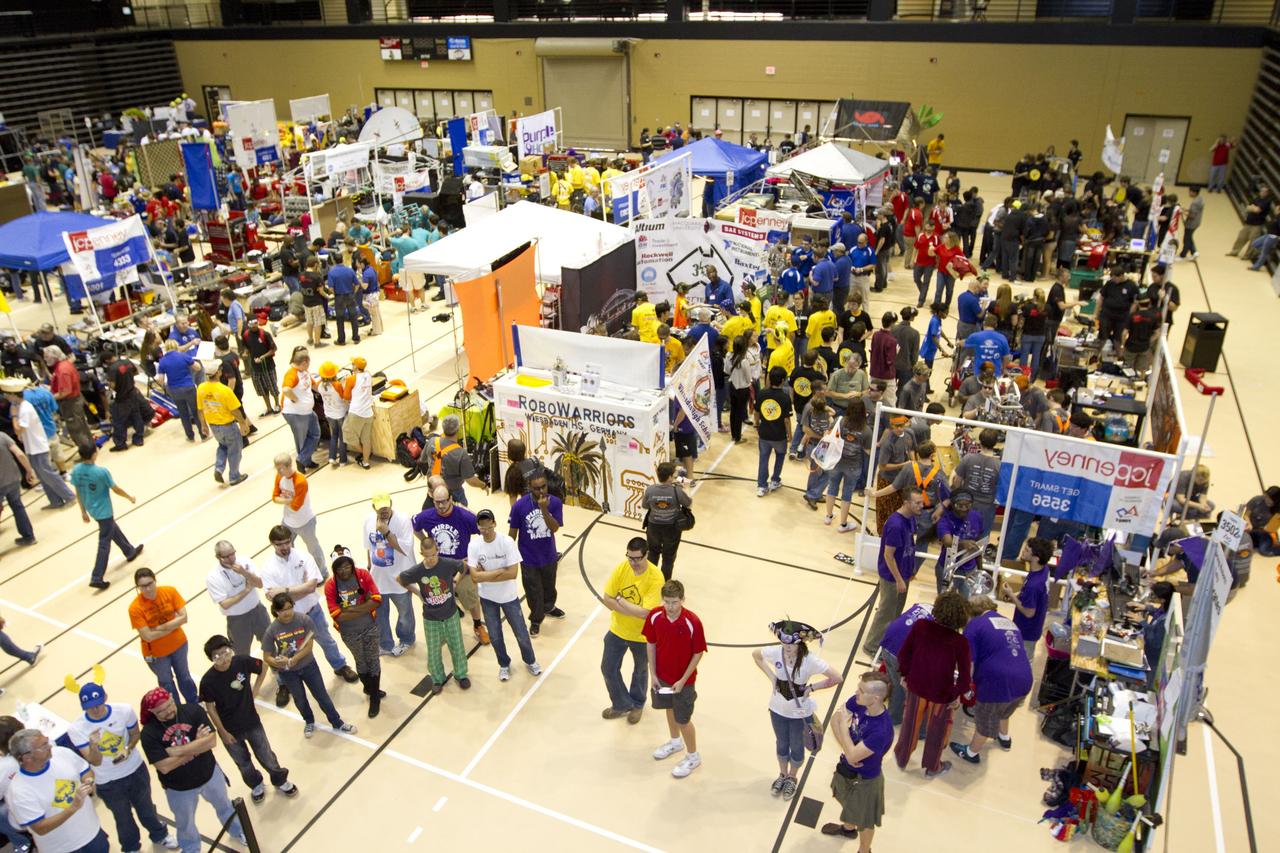
ORLANDO, Fla. -- High school teams tinker with their robots during the regional FIRST robotics competition at the University of Central Florida in Orlando, Fla. More than 50 teams took part in the competition called "For Inspiration and Recognition of Science and Technology," or FIRST, in hopes of advancing to the national robotics championship. This year, the competition resembled a basketball game and was dubbed "Rebound Rumble." The game measured the effectiveness of each robot, the power of collaboration and the determination of the teams. FIRST, founded in 1989, is a non-profit organization that designs accessible, innovative programs to build self-confidence, knowledge and life skills while motivating young people to pursue academic opportunities. The robotics competition challenges teams of high school students and their mentors to solve a common problem in a six-week timeframe using a standard kit of parts and a common set of rules. NASA is the largest sponsor of the international program. Kennedy Space Center is a sponsor of the regional event. For more information on Kennedy's education events and initiatives, go to http://www.nasa.gov/offices/education/centers/kennedy/home/index.html. Photo credit: NASA/Kim Shiflett
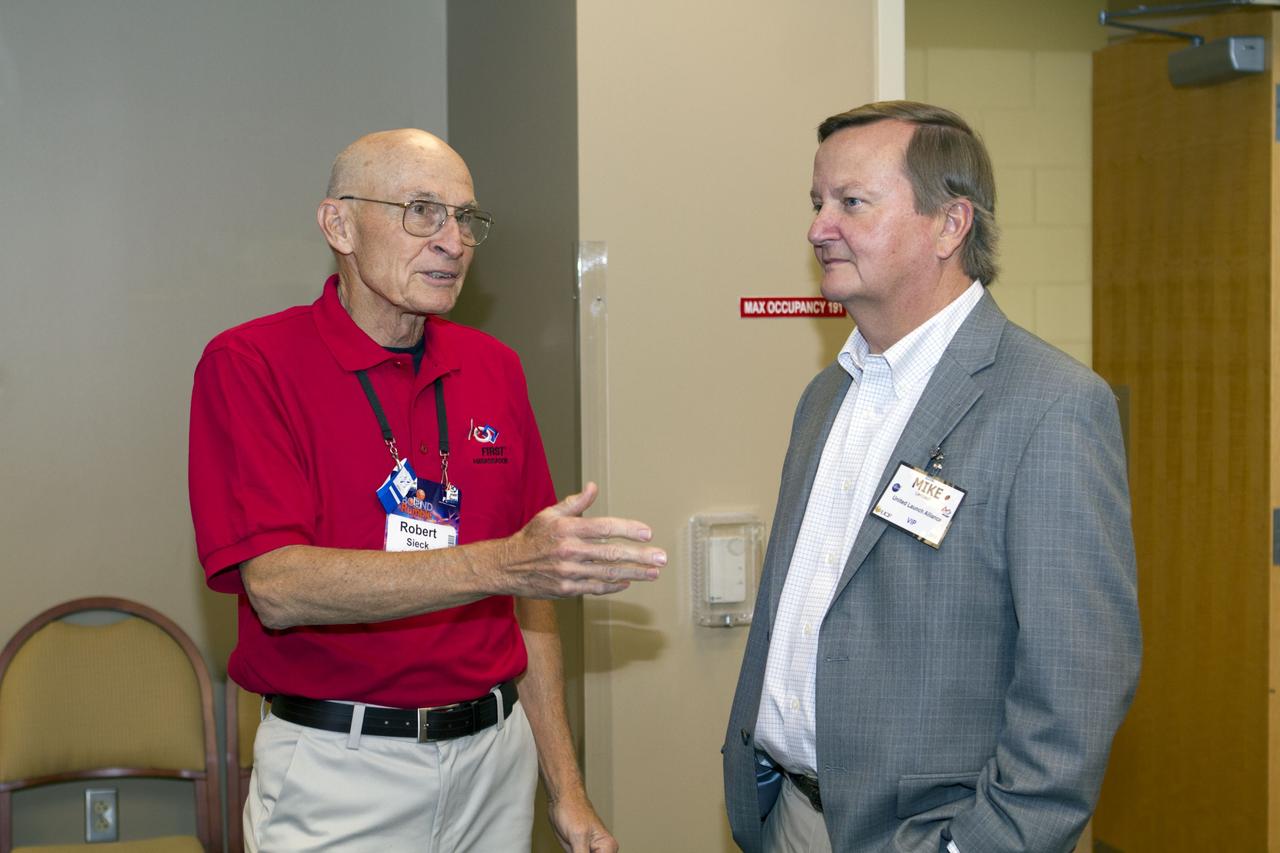
ORLANDO, Fla. -- Former space shuttle launch directors, Bob Sieck, left, and Mike Leinbach, right, talk with high school teams that are competing in the regional FIRST robotics competition at the University of Central Florida in Orlando, Fla. More than 60 teams took part in the competition called "For Inspiration and Recognition of Science and Technology," or FIRST, in hopes of advancing to the national robotics championship. This year, the competition resembled a basketball game and was dubbed "Rebound Rumble." The game measured the effectiveness of each robot, the power of collaboration and the determination of the teams. FIRST, founded in 1989, is a non-profit organization that designs accessible, innovative programs to build self-confidence, knowledge and life skills while motivating young people to pursue academic opportunities. The robotics competition challenges teams of high school students and their mentors to solve a common problem in a six-week timeframe using a standard kit of parts and a common set of rules. NASA is the largest sponsor of the international program. Kennedy Space Center is a sponsor of the regional event. For more information on Kennedy's education events and initiatives, go to http://www.nasa.gov/offices/education/centers/kennedy/home/index.html. Photo credit: NASA/Kim Shiflett
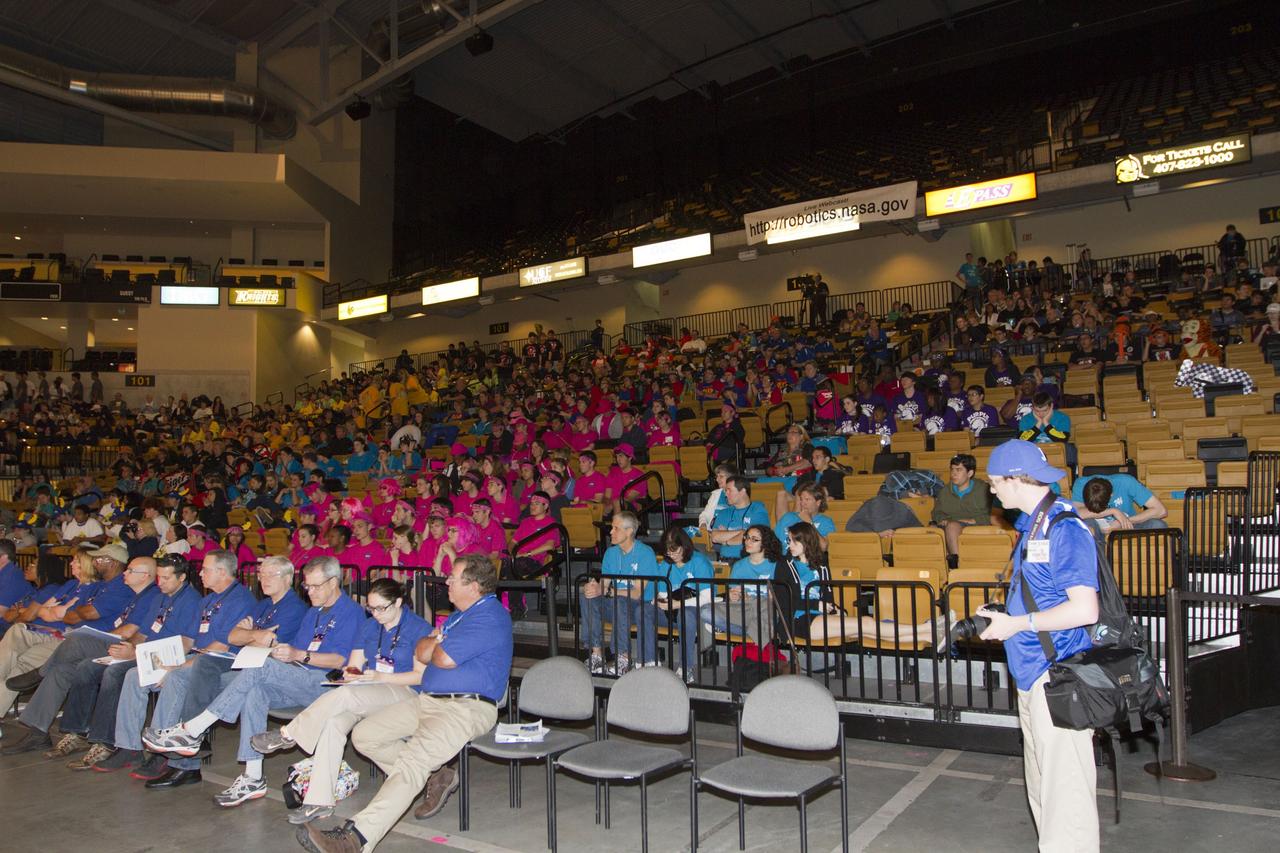
ORLANDO, Fla. -- High school teams compete in the regional FIRST robotics competition at the University of Central Florida in Orlando, Fla. More than 60 teams took part in the competition called "For Inspiration and Recognition of Science and Technology," or FIRST, in hopes of advancing to the national robotics championship. This year, the competition resembled a basketball game and was dubbed "Rebound Rumble." The game measured the effectiveness of each robot, the power of collaboration and the determination of the teams. On the left is Team 3502, called "The Octo Pie-Rates," which is comprised of students from School for Arts and Innovative Learning SAIL High School in Tallahassee. On the right is Team 3164, called "Tiger Robotics," which is comprised of students from Jesuit and The Academy of the Holy Names high schools in Tampa, Fla. FIRST, founded in 1989, is a non-profit organization that designs accessible, innovative programs to build self-confidence, knowledge and life skills while motivating young people to pursue academic opportunities. The robotics competition challenges teams of high school students and their mentors to solve a common problem in a six-week timeframe using a standard kit of parts and a common set of rules. NASA is the largest sponsor of the international program. Kennedy Space Center is a sponsor of the regional event. For more information on Kennedy's education events and initiatives, go to http://www.nasa.gov/offices/education/centers/kennedy/home/index.html. Photo credit: NASA/Kim Shiflett
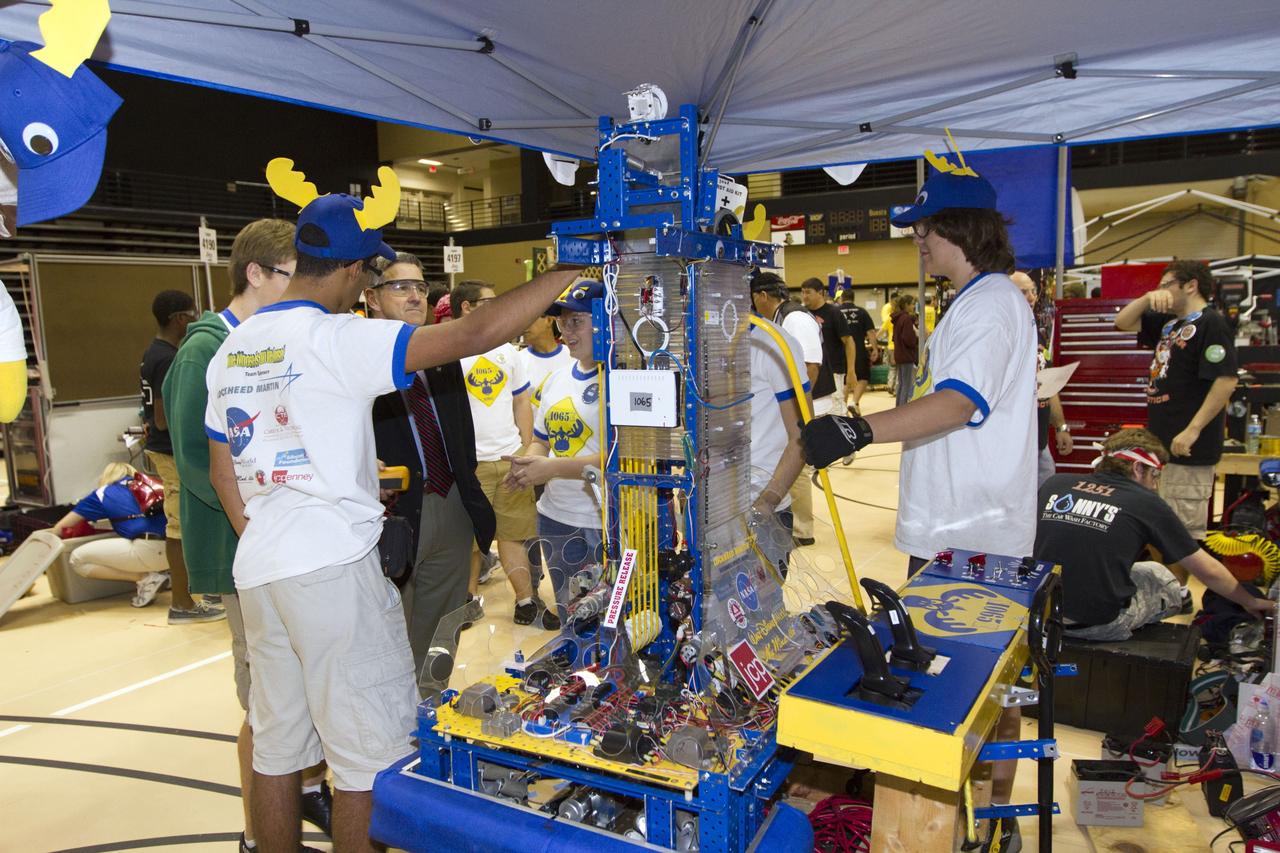
ORLANDO, Fla. -- NASA Kennedy Space Center Director Bob Cabana talks with members of Team 1056 "The Moose," which is participating in the regional FIRST robotics competition at the University of Central Florida in Orlando, Fla. The team is from Kissimmee, Fla., and consists of students from Osceola High School. More than 60 high school teams from took part in the competition called "For Inspiration and Recognition of Science and Technology," or FIRST, in hopes of advancing to the national robotics championship. This year, the competition resembled a basketball game and was dubbed "Rebound Rumble." The game measured the effectiveness of each robot, the power of collaboration and the determination of the teams. FIRST, founded in 1989, is a non-profit organization that designs accessible, innovative programs to build self-confidence, knowledge and life skills while motivating young people to pursue academic opportunities. The robotics competition challenges teams of high school students and their mentors to solve a common problem in a six-week timeframe using a standard kit of parts and a common set of rules. NASA is the largest sponsor of the international program. Kennedy Space Center is a sponsor of the regional event. For more information on Kennedy's education events and initiatives, go to http://www.nasa.gov/offices/education/centers/kennedy/home/index.html. Photo credit: NASA/Kim Shiflett
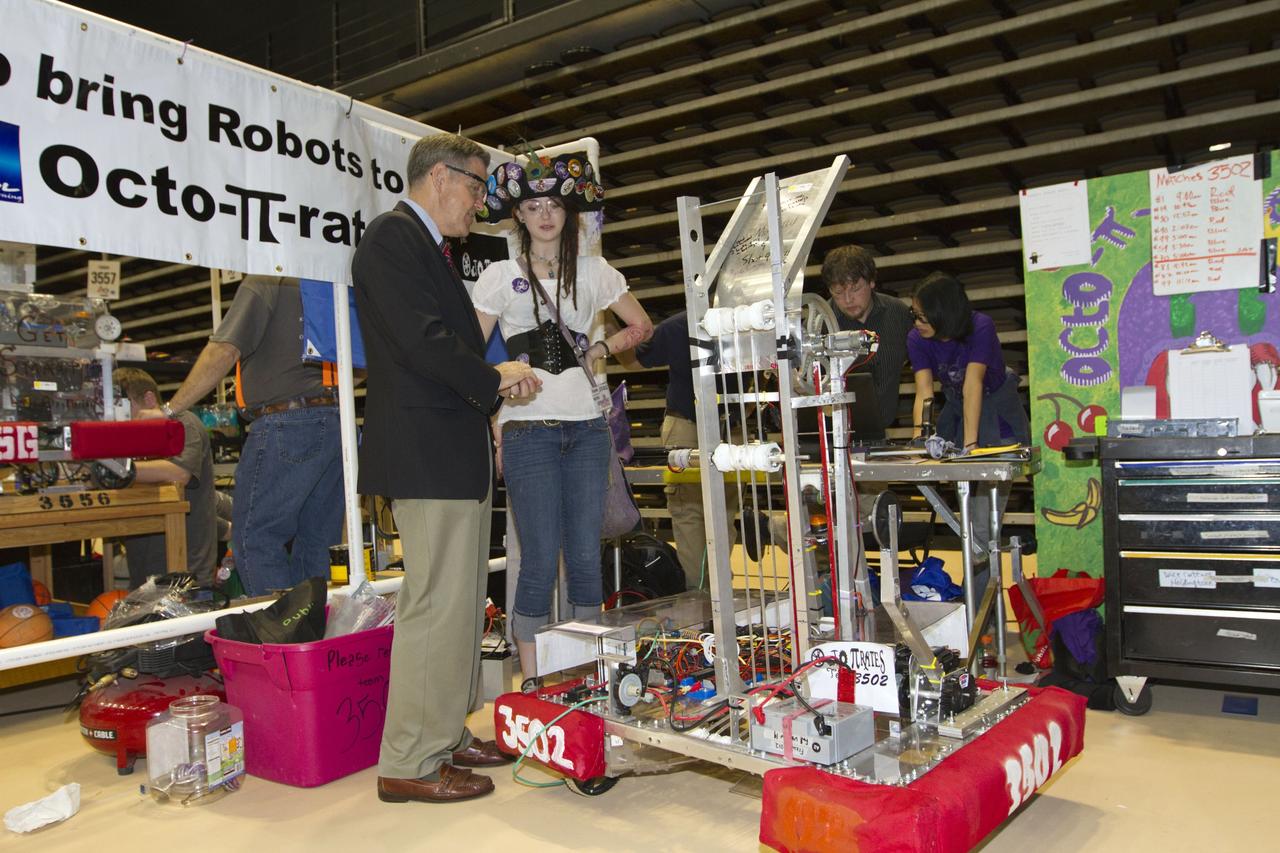
ORLANDO, Fla. -- NASA Kennedy Space Center Director Bob Cabana talks with a member of Team 3502, called "The Octo Pie-Rates," which is participating in the regional FIRST robotics competition at the University of Central Florida in Orlando, Fla. The team is made up of students from the School for Arts and Innovative Learning SAIL High School in Tallahassee. More than 60 high school teams took part in the competition called "For Inspiration and Recognition of Science and Technology," or FIRST, in hopes of advancing to the national robotics championship. This year, the competition resembled a basketball game and was dubbed "Rebound Rumble." The game measured the effectiveness of each robot, the power of collaboration and the determination of the teams. FIRST, founded in 1989, is a non-profit organization that designs accessible, innovative programs to build self-confidence, knowledge and life skills while motivating young people to pursue academic opportunities. The robotics competition challenges teams of high school students and their mentors to solve a common problem in a six-week timeframe using a standard kit of parts and a common set of rules. NASA is the largest sponsor of the international program. Kennedy Space Center is a sponsor of the regional event. For more information on Kennedy's education events and initiatives, go to http://www.nasa.gov/offices/education/centers/kennedy/home/index.html. Photo credit: NASA/Kim Shiflett
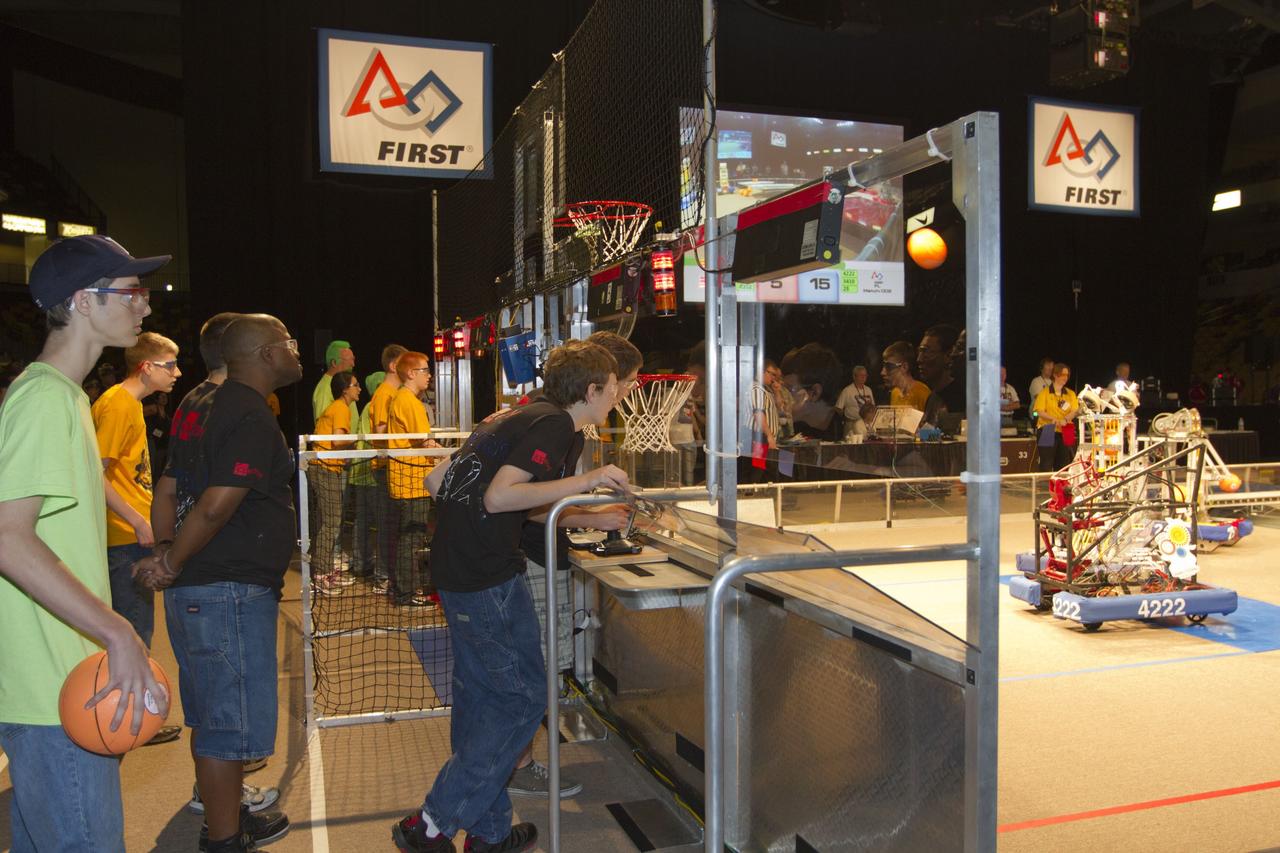
ORLANDO, Fla. -- High school teams compete in the regional FIRST robotics competition at the University of Central Florida in Orlando, Fla. More than 60 teams took part in the competition called "For Inspiration and Recognition of Science and Technology," or FIRST, in hopes of advancing to the national robotics championship. This year, the competition resembled a basketball game and was dubbed "Rebound Rumble." The game measured the effectiveness of each robot, the power of collaboration and the determination of the teams. FIRST, founded in 1989, is a non-profit organization that designs accessible, innovative programs to build self-confidence, knowledge and life skills while motivating young people to pursue academic opportunities. The robotics competition challenges teams of high school students and their mentors to solve a common problem in a six-week timeframe using a standard kit of parts and a common set of rules. NASA is the largest sponsor of the international program. Kennedy Space Center is a sponsor of the regional event. For more information on Kennedy's education events and initiatives, go to http://www.nasa.gov/offices/education/centers/kennedy/home/index.html. Photo credit: NASA/Kim Shiflett
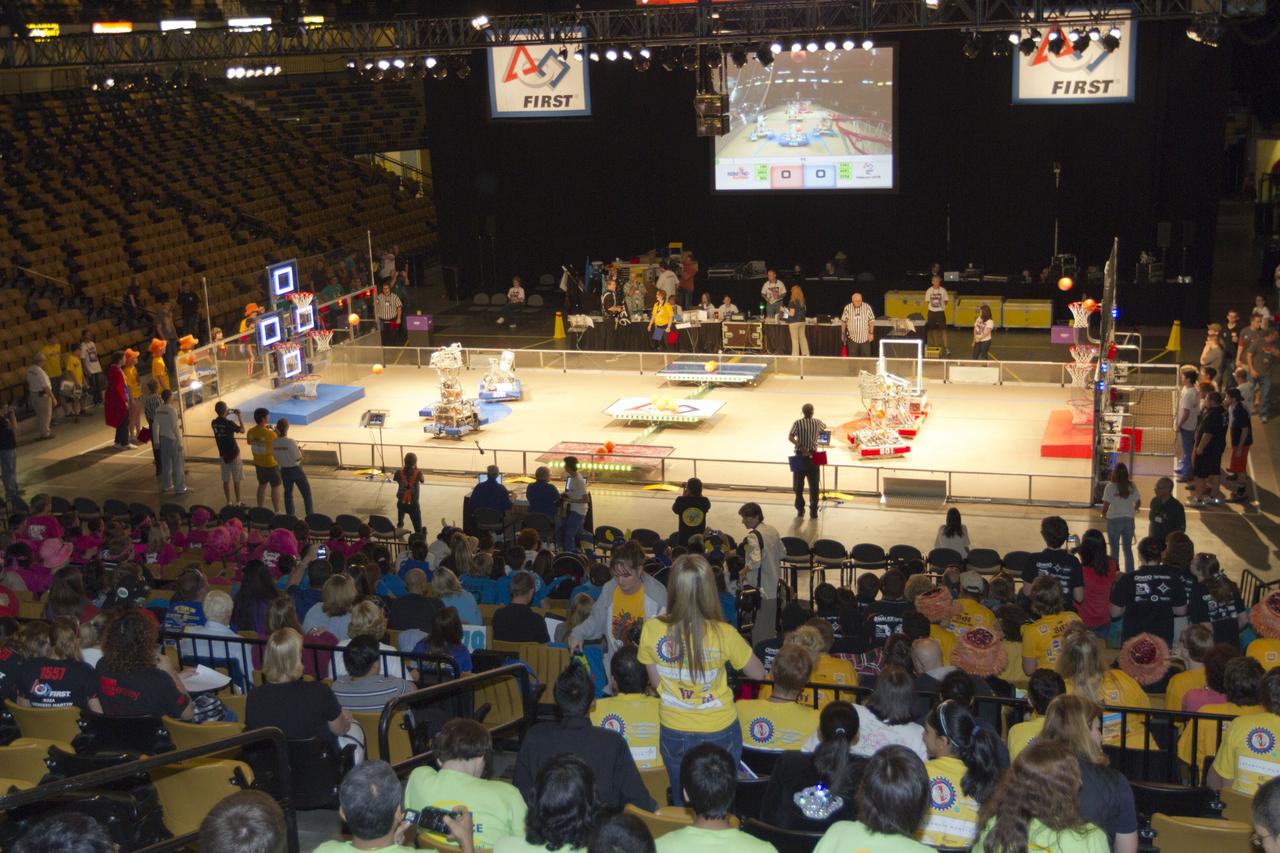
ORLANDO, Fla. -- High school teams compete in the regional FIRST robotics competition at the University of Central Florida in Orlando, Fla. More than 60 teams took part in the competition called "For Inspiration and Recognition of Science and Technology," or FIRST, in hopes of advancing to the national robotics championship. This year, the competition resembled a basketball game and was dubbed "Rebound Rumble." The game measured the effectiveness of each robot, the power of collaboration and the determination of the teams. FIRST, founded in 1989, is a non-profit organization that designs accessible, innovative programs to build self-confidence, knowledge and life skills while motivating young people to pursue academic opportunities. The robotics competition challenges teams of high school students and their mentors to solve a common problem in a six-week timeframe using a standard kit of parts and a common set of rules. NASA is the largest sponsor of the international program. Kennedy Space Center is a sponsor of the regional event. For more information on Kennedy's education events and initiatives, go to http://www.nasa.gov/offices/education/centers/kennedy/home/index.html. Photo credit: NASA/Kim Shiflett
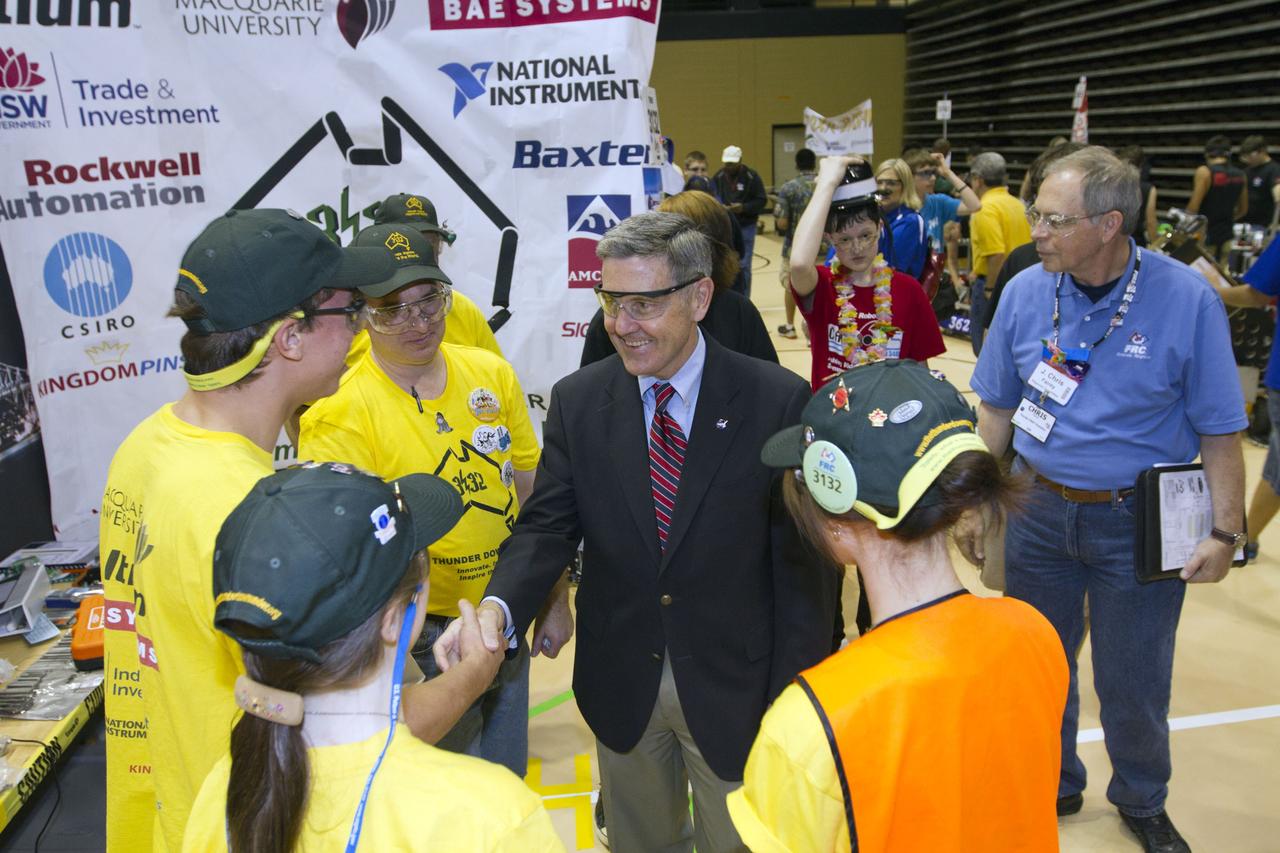
ORLANDO, Fla. -- NASA Kennedy Space Center Director Bob Cabana talks with members of Team 3132, called "Thunder Down Under," which is participating in the regional FIRST robotics competition at the University of Central Florida in Orlando, Fla. The team is made up of students from Sydney, Australia. More than 60 high school teams took part in the competition called "For Inspiration and Recognition of Science and Technology," or FIRST, in hopes of advancing to the national robotics championship. This year, the competition resembled a basketball game and was dubbed "Rebound Rumble." The game measured the effectiveness of each robot, the power of collaboration and the determination of the teams. FIRST, founded in 1989, is a non-profit organization that designs accessible, innovative programs to build self-confidence, knowledge and life skills while motivating young people to pursue academic opportunities. The robotics competition challenges teams of high school students and their mentors to solve a common problem in a six-week timeframe using a standard kit of parts and a common set of rules. NASA is the largest sponsor of the international program. Kennedy Space Center is a sponsor of the regional event. For more information on Kennedy's education events and initiatives, go to http://www.nasa.gov/offices/education/centers/kennedy/home/index.html. Photo credit: NASA/Kim Shiflett
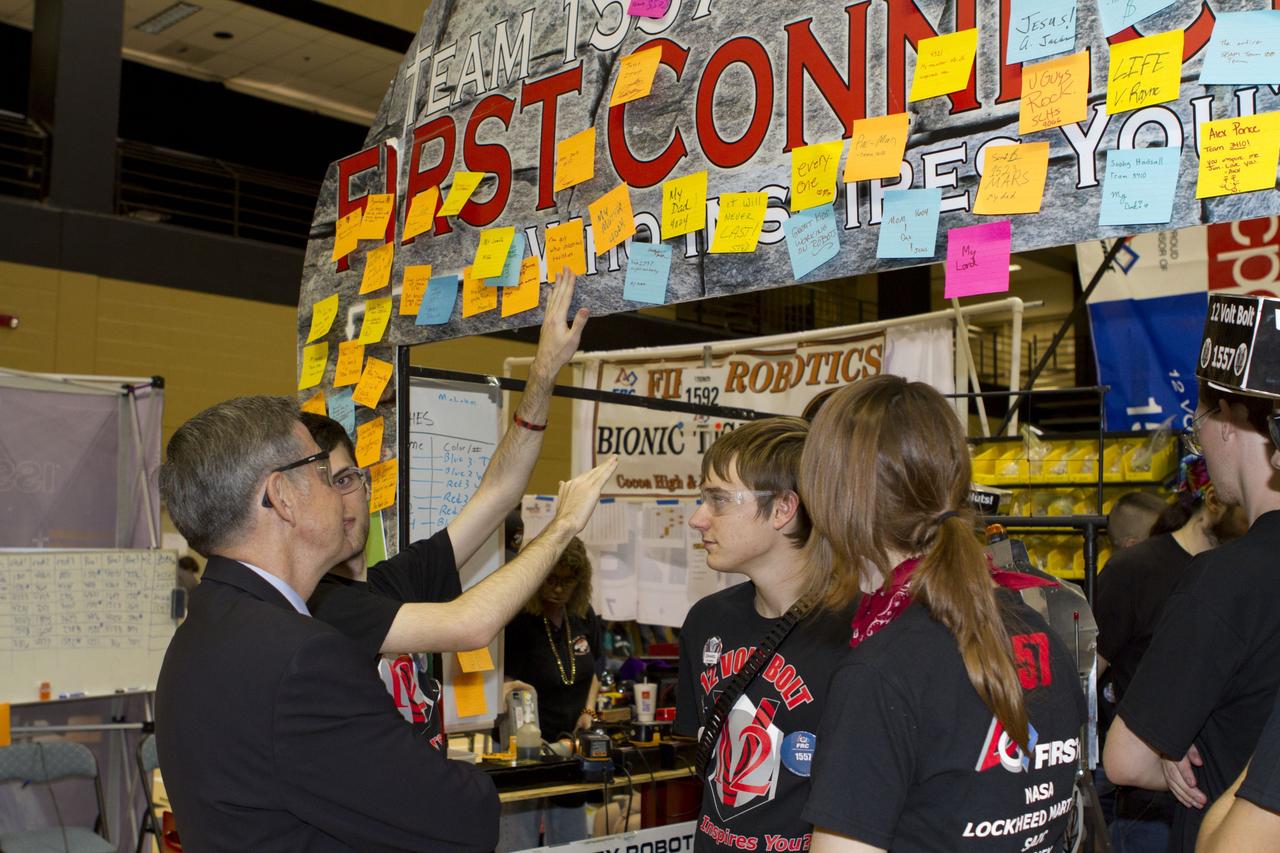
ORLANDO, Fla. -- NASA Kennedy Space Center Director Bob Cabana talks with members of the "12 Volt Bolt Team," which is participating in the regional FIRST robotics competition at the University of Central Florida in Orlando, Fla. The team is from Eustis, Fla., and consists of students from many Lake County schools, including Mt. Dora High, Eustis High, Tavares High, Mt. Dora Bible and homeschooled students. More than 60 high school teams took part in the competition called "For Inspiration and Recognition of Science and Technology," or FIRST, in hopes of advancing to the national robotics championship. This year, the competition resembled a basketball game and was dubbed "Rebound Rumble." The game measured the effectiveness of each robot, the power of collaboration and the determination of the teams. FIRST, founded in 1989, is a non-profit organization that designs accessible, innovative programs to build self-confidence, knowledge and life skills while motivating young people to pursue academic opportunities. The robotics competition challenges teams of high school students and their mentors to solve a common problem in a six-week timeframe using a standard kit of parts and a common set of rules. NASA is the largest sponsor of the international program. Kennedy Space Center is a sponsor of the regional event. For more information on Kennedy's education events and initiatives, go to http://www.nasa.gov/offices/education/centers/kennedy/home/index.html. Photo credit: NASA/Kim Shiflett
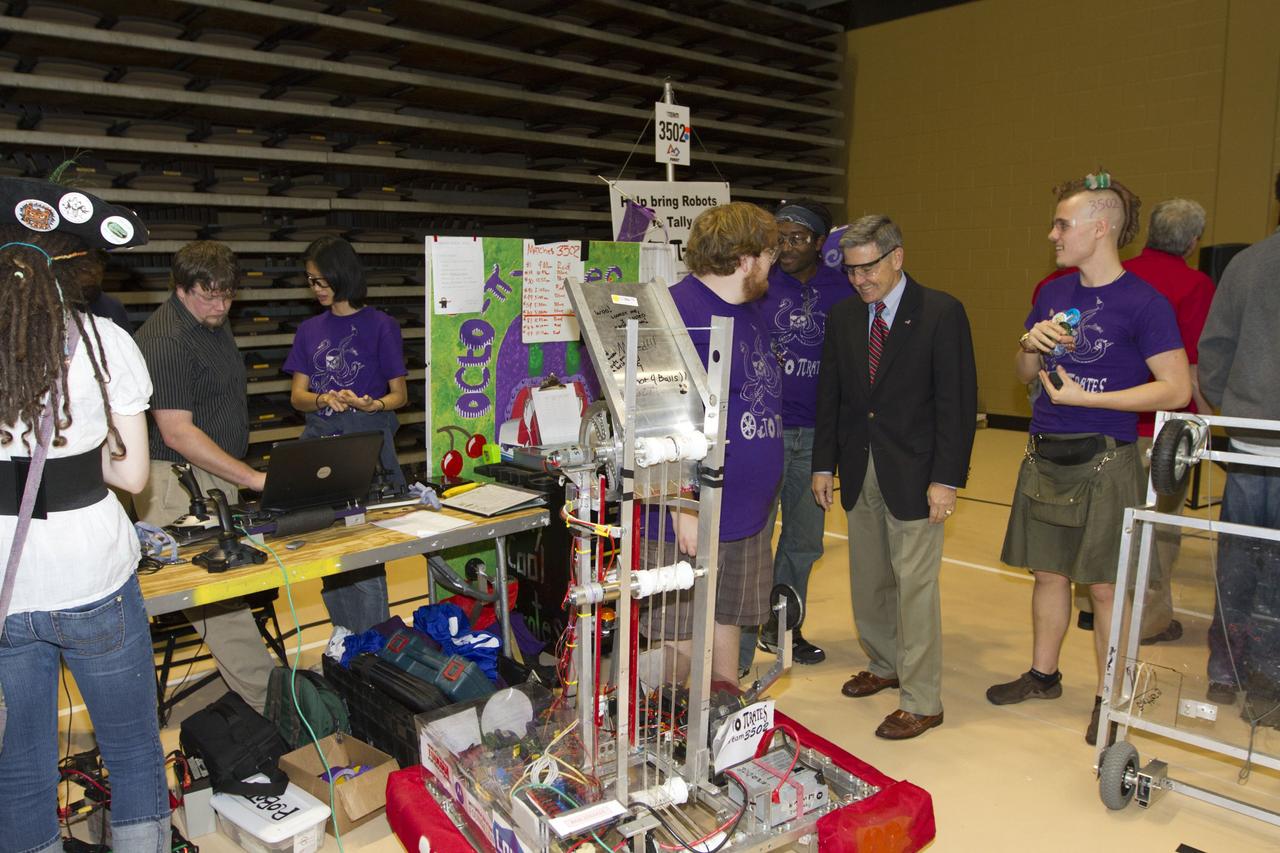
ORLANDO, Fla. -- NASA Kennedy Space Center Director Bob Cabana talks with members of Team 3502, called "The Octo Pie-Rates," which is participating in the regional FIRST robotics competition at the University of Central Florida in Orlando, Fla. The team is made up of students from the School for Arts and Innovative Learning SAIL High School in Tallahassee. More than 60 high school teams took part in the competition called "For Inspiration and Recognition of Science and Technology," or FIRST, in hopes of advancing to the national robotics championship. This year, the competition resembled a basketball game and was dubbed "Rebound Rumble." The game measured the effectiveness of each robot, the power of collaboration and the determination of the teams. FIRST, founded in 1989, is a non-profit organization that designs accessible, innovative programs to build self-confidence, knowledge and life skills while motivating young people to pursue academic opportunities. The robotics competition challenges teams of high school students and their mentors to solve a common problem in a six-week timeframe using a standard kit of parts and a common set of rules. NASA is the largest sponsor of the international program. Kennedy Space Center is a sponsor of the regional event. For more information on Kennedy's education events and initiatives, go to http://www.nasa.gov/offices/education/centers/kennedy/home/index.html. Photo credit: NASA/Kim Shiflett