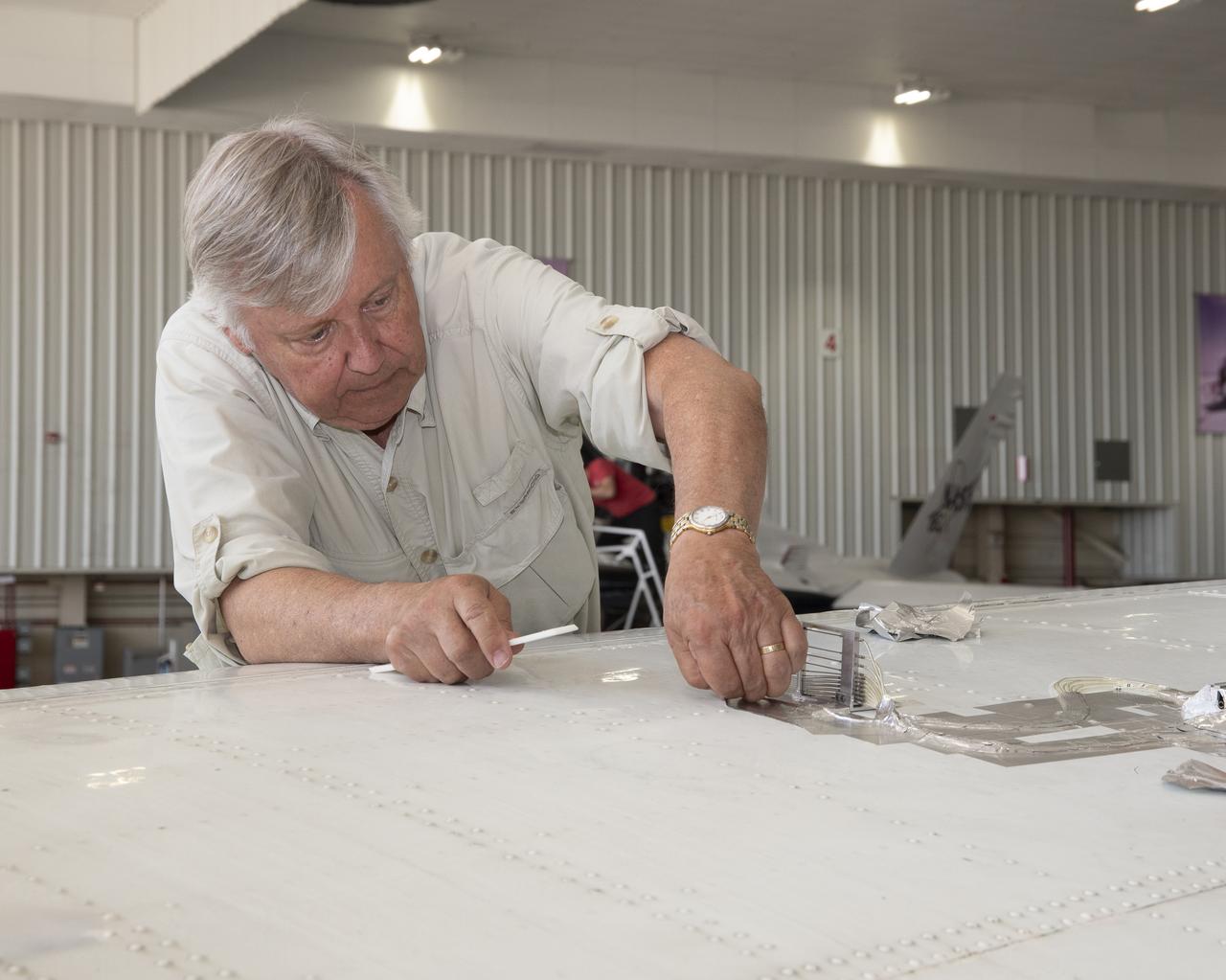
Cal Poly San Luis Obispo Professor Russ Westphal works on the Boundary Layer Data System (BLDS) attached to the wing of a Beechcraft Beech 200 Super King Air aircraft. The BLDS was attached to the aircraft with removable adhesives for a flight test at NASA’s Armstrong Flight Research Center.
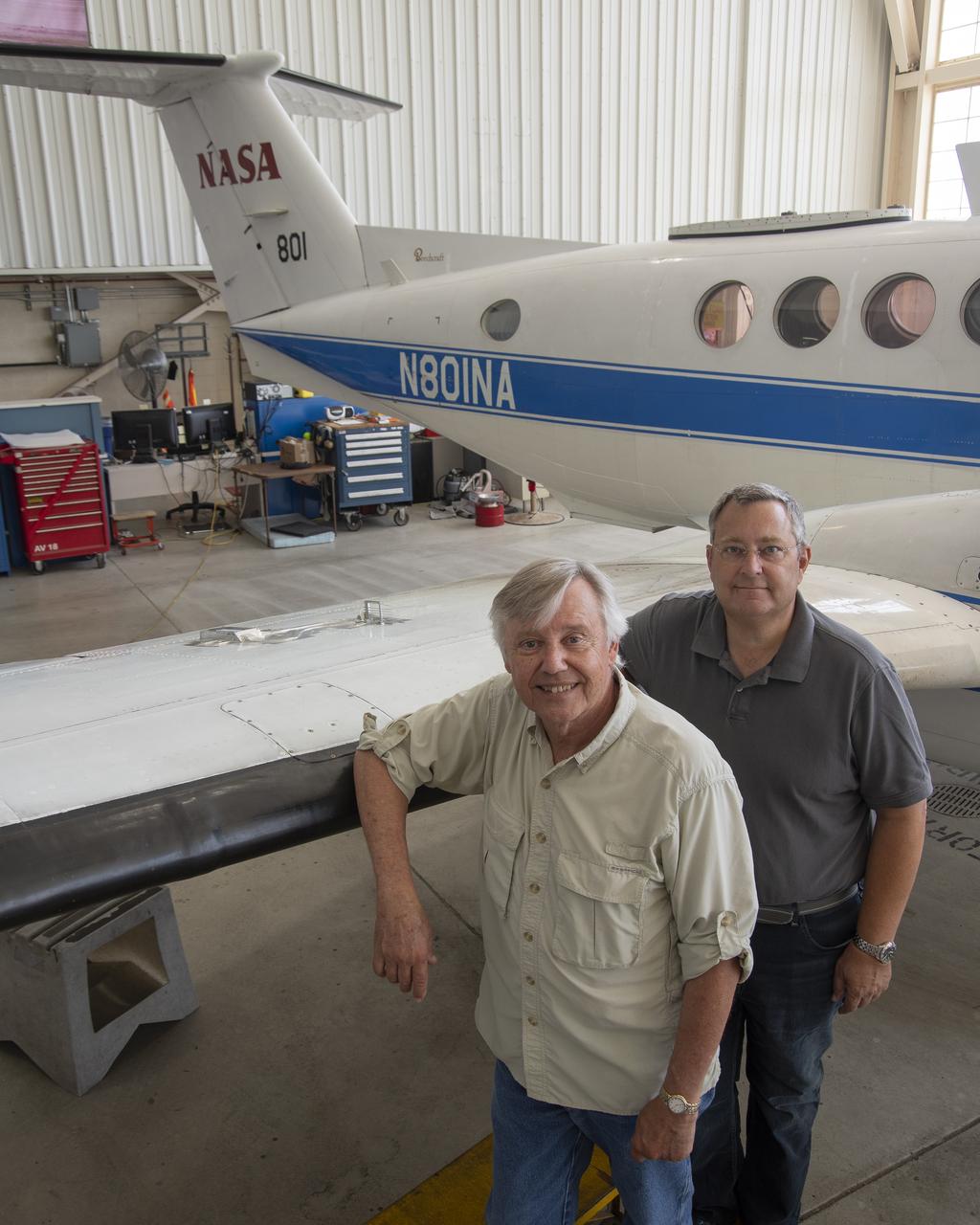
Cal Poly San Luis Obispo professors Russ Westphal, left, and Aaron Drake posed next to NASA Armstrong Flight Research Center’s Beechcraft Beech 200 Super King Air aircraft. On the King Air’s wing is the Boundary Layer Data System (BLDS), a sensor developed by Cal Poly and Northrop Grumman. BLDS was flown at NASA Armstrong as a step towards creating a process allowing universities, small businesses and other interested parties to quickly test flight technologies.
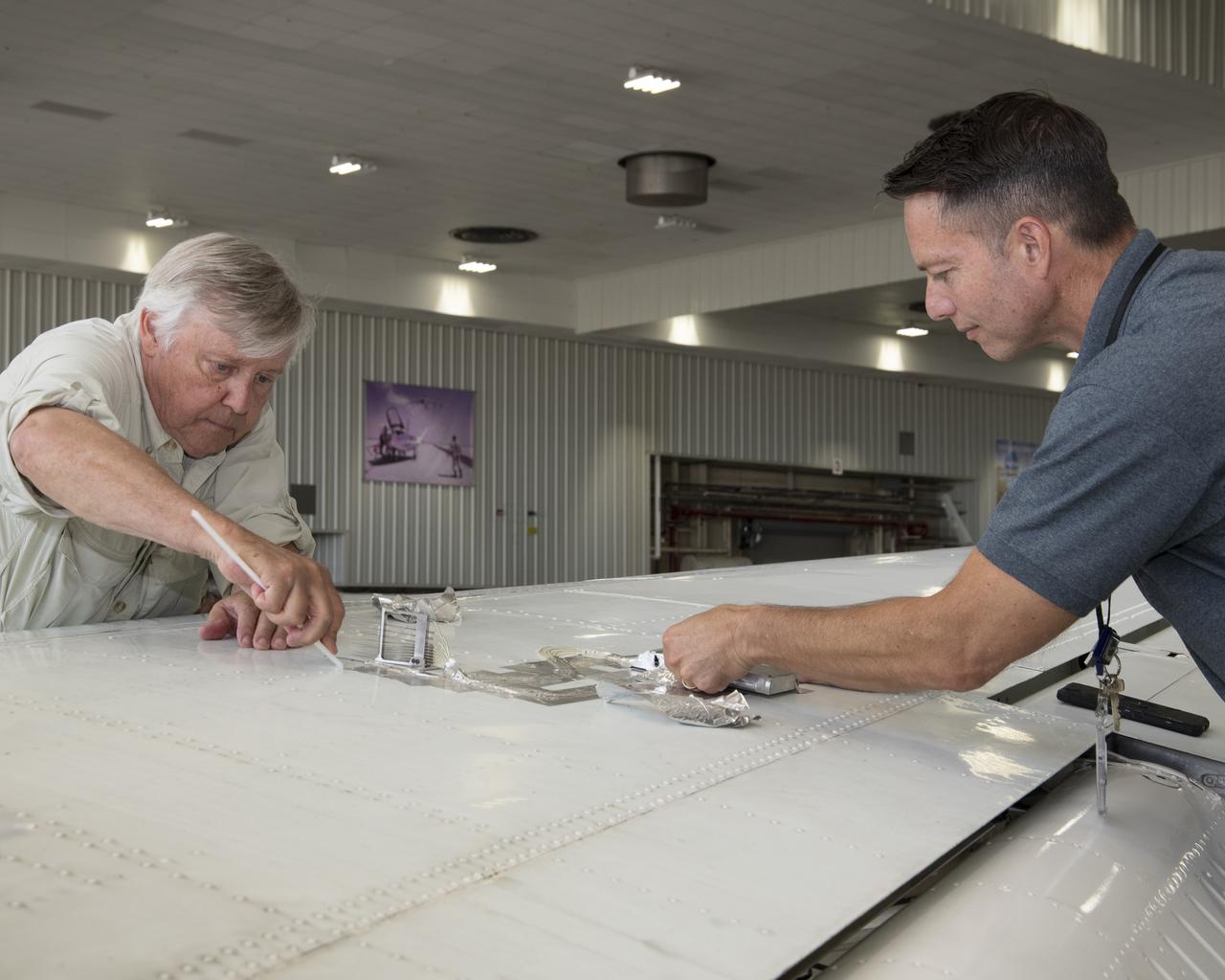
Cal Poly San Luis Obispo Professor Russ Westphal, left, and NASA Armstrong’s Technology Transfer Officer Benjamin Tomlinson remove the Boundary Layer Data System (BLDS) sensor attached to the wing of a Beechcraft Beech 200 Super King Air. The BLDS was flight tested at NASA’s Armstrong Flight Research Center to showcase rapid and flexible flight-testing capabilities.
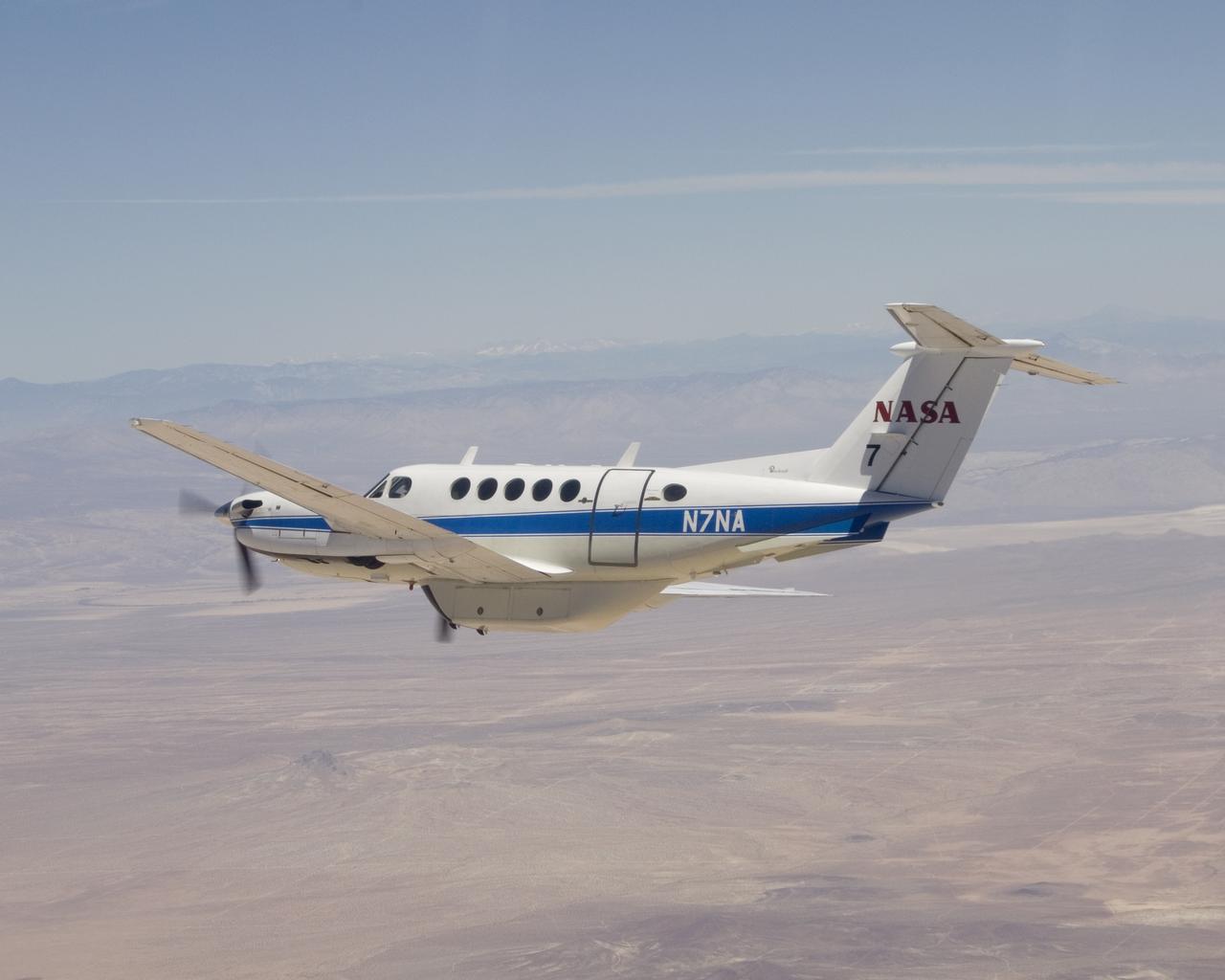
NASA's Dryden Flight Research Center operates this Beechcraft B-200 King Air N7NA for both pilot proficiency and mission management.
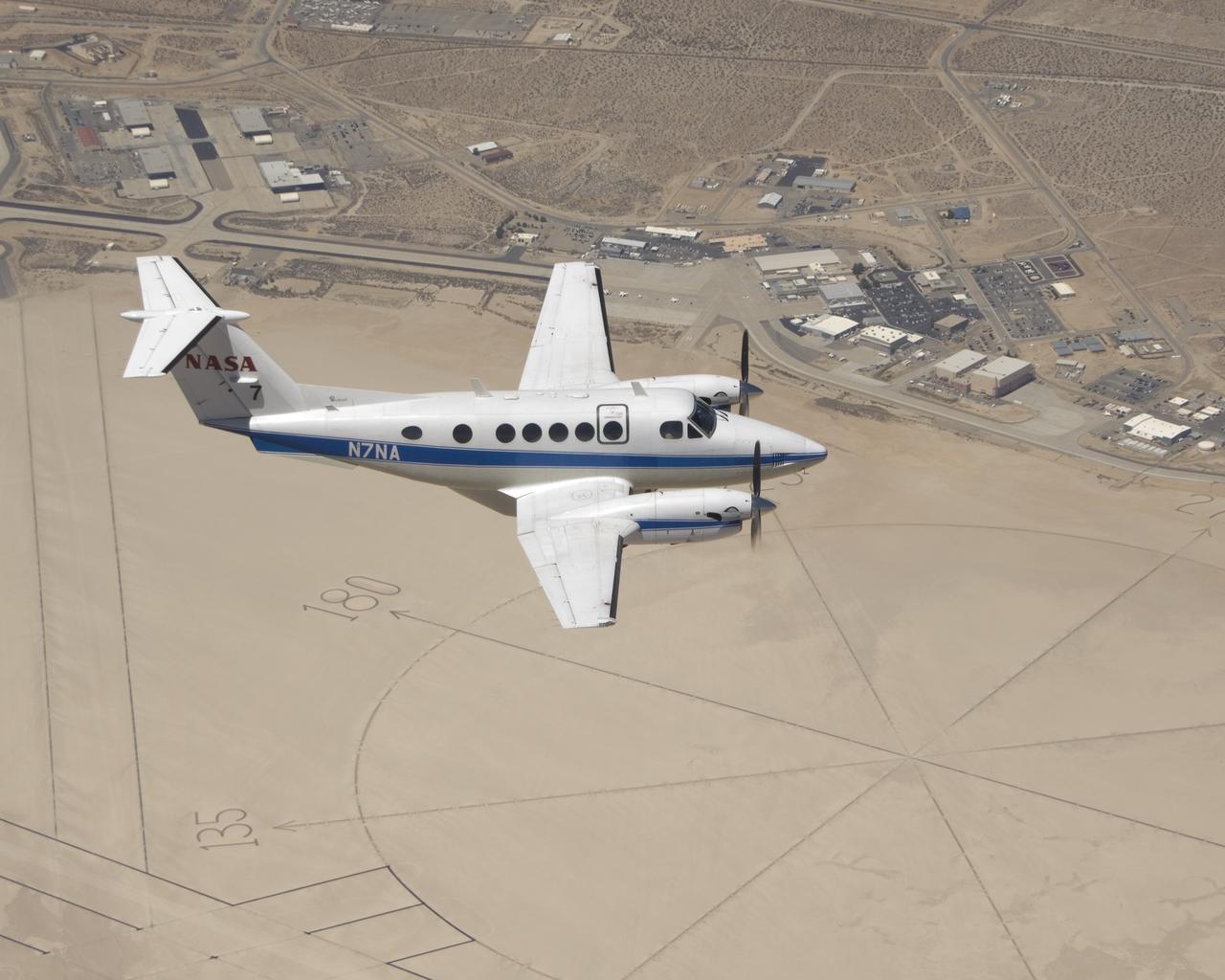
NASA's Beechcraft King Air N7NA mission support aircraft soars over the compass rose on Rogers Dry Lake adjacent to NASA's Dryden Flight Research Center.
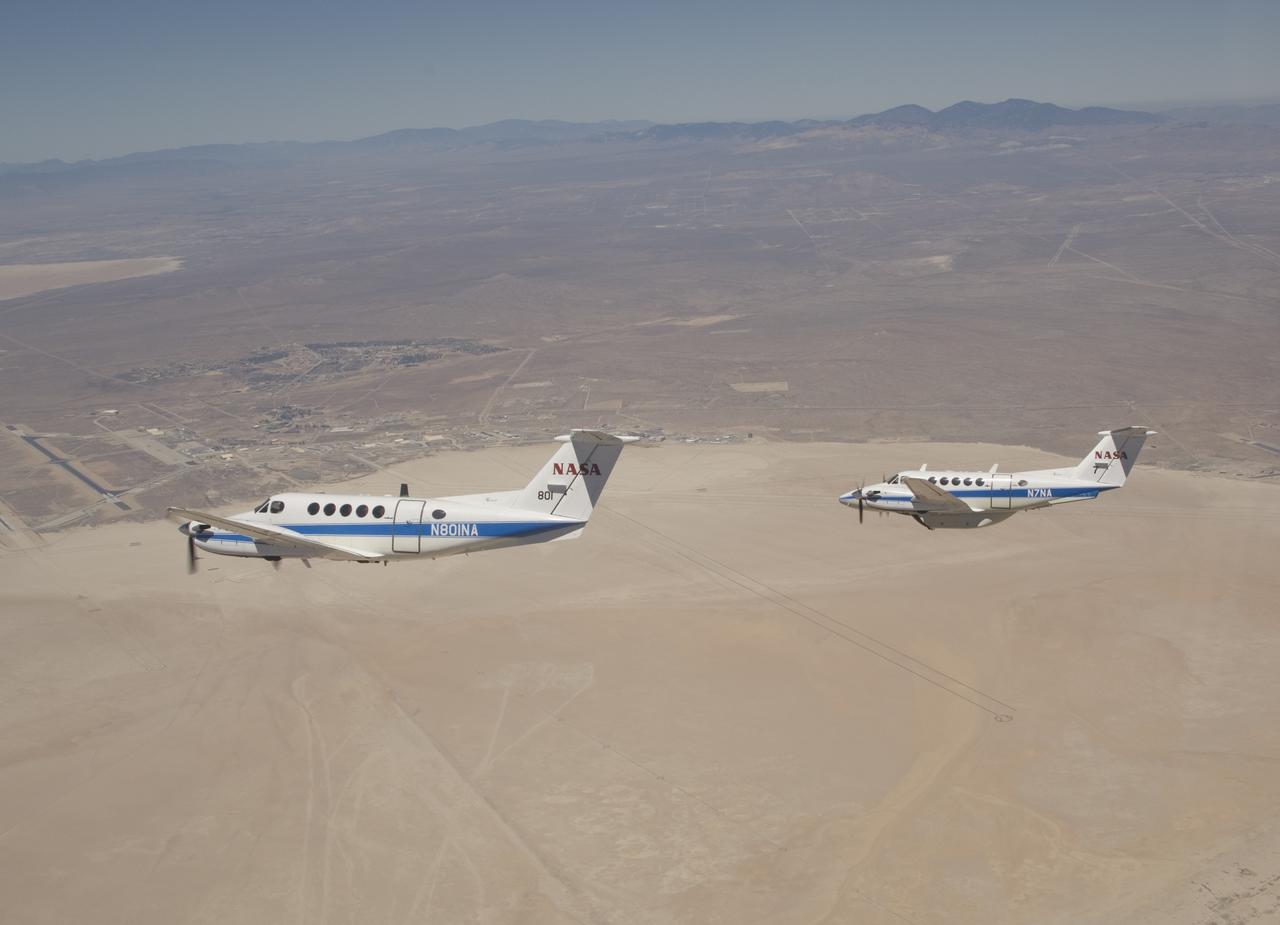
Two Beechcraft King Air mission support aircraft operated by NASA's Dryden Flight Research Center fly in formation over Rogers Dry Lake at Edwards Air Force Base.
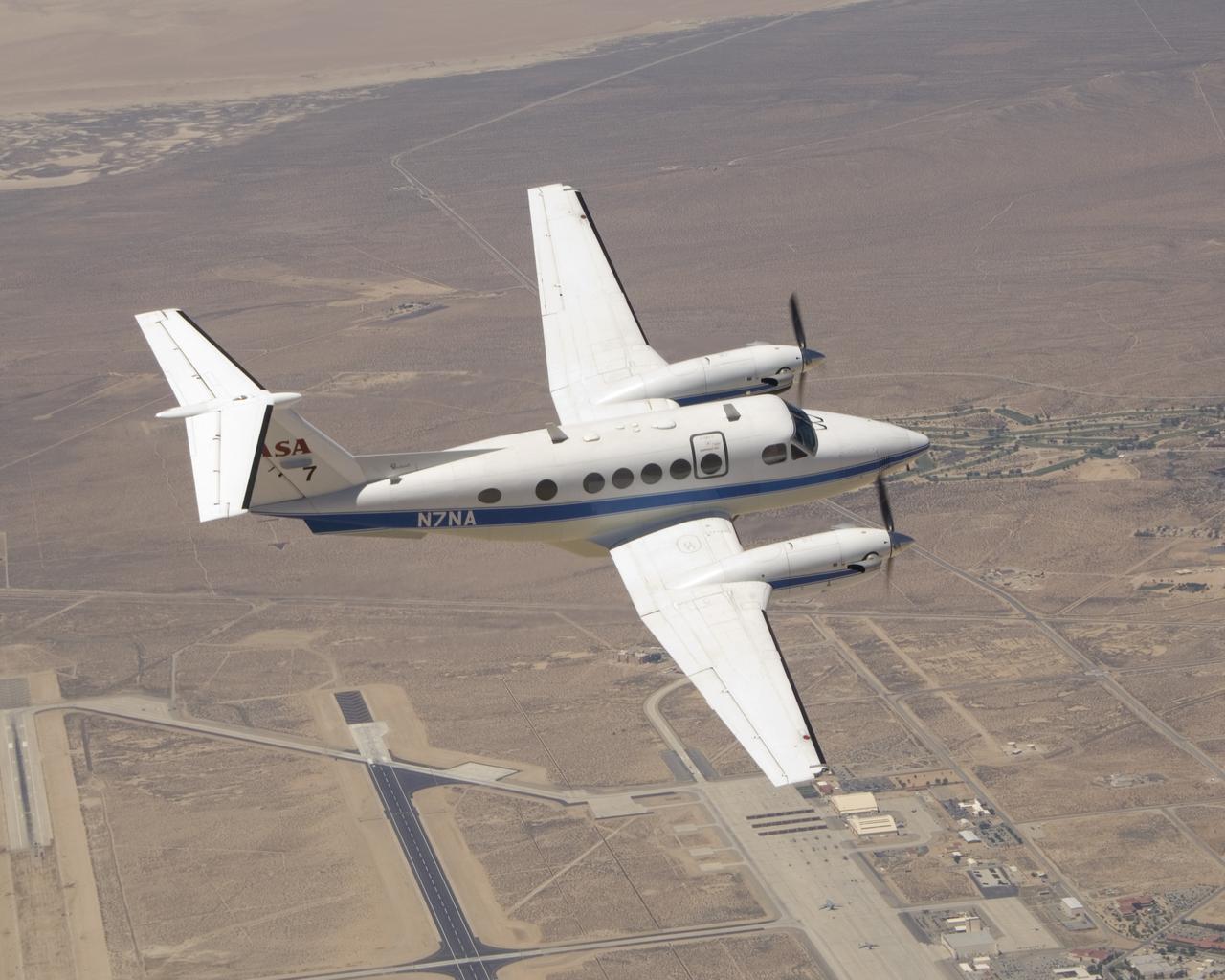
One of NASA Dryden Flight Research Center's two Beechcraft King Air mission support aircraft shows off its lines over Edwards Air Force Base, Calif.