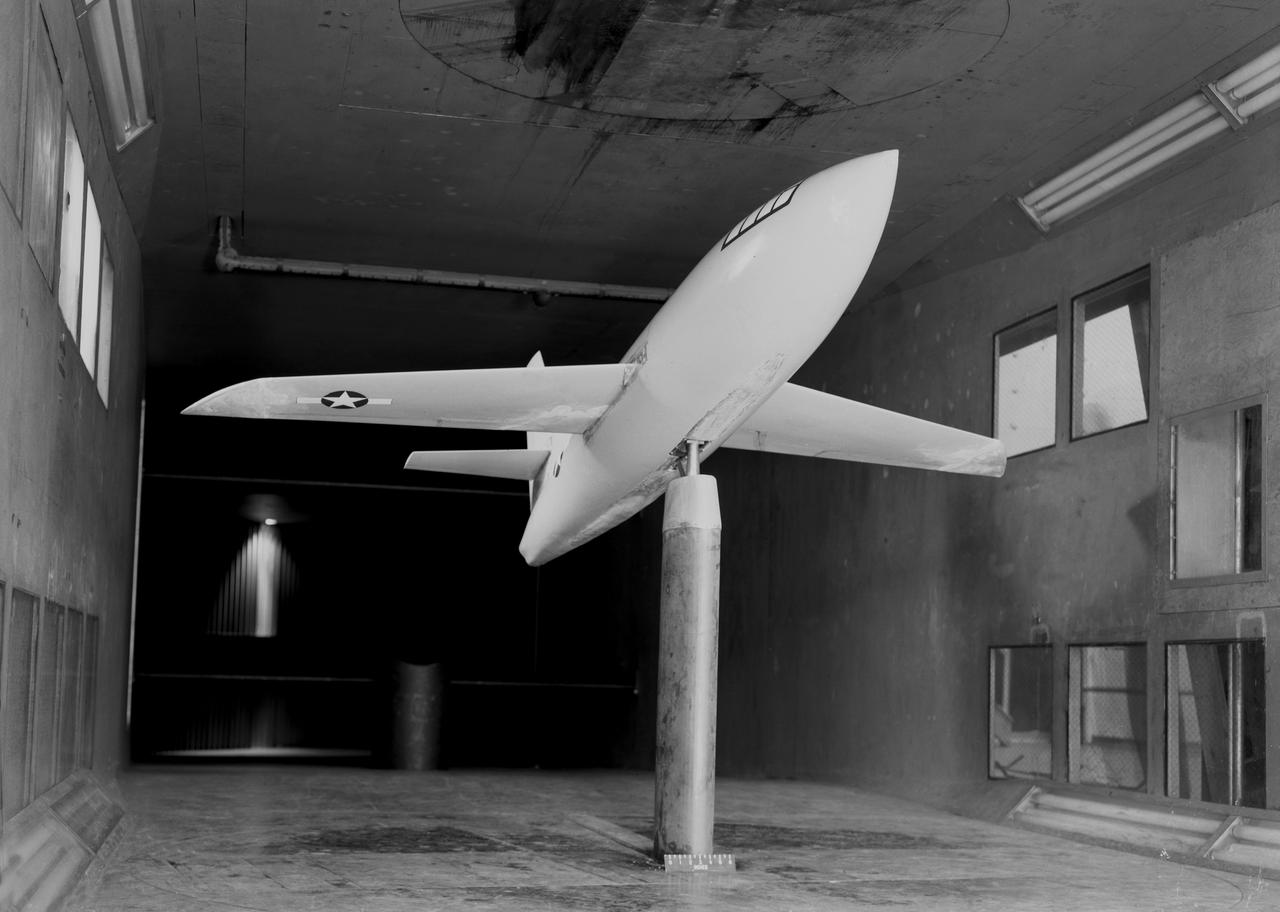
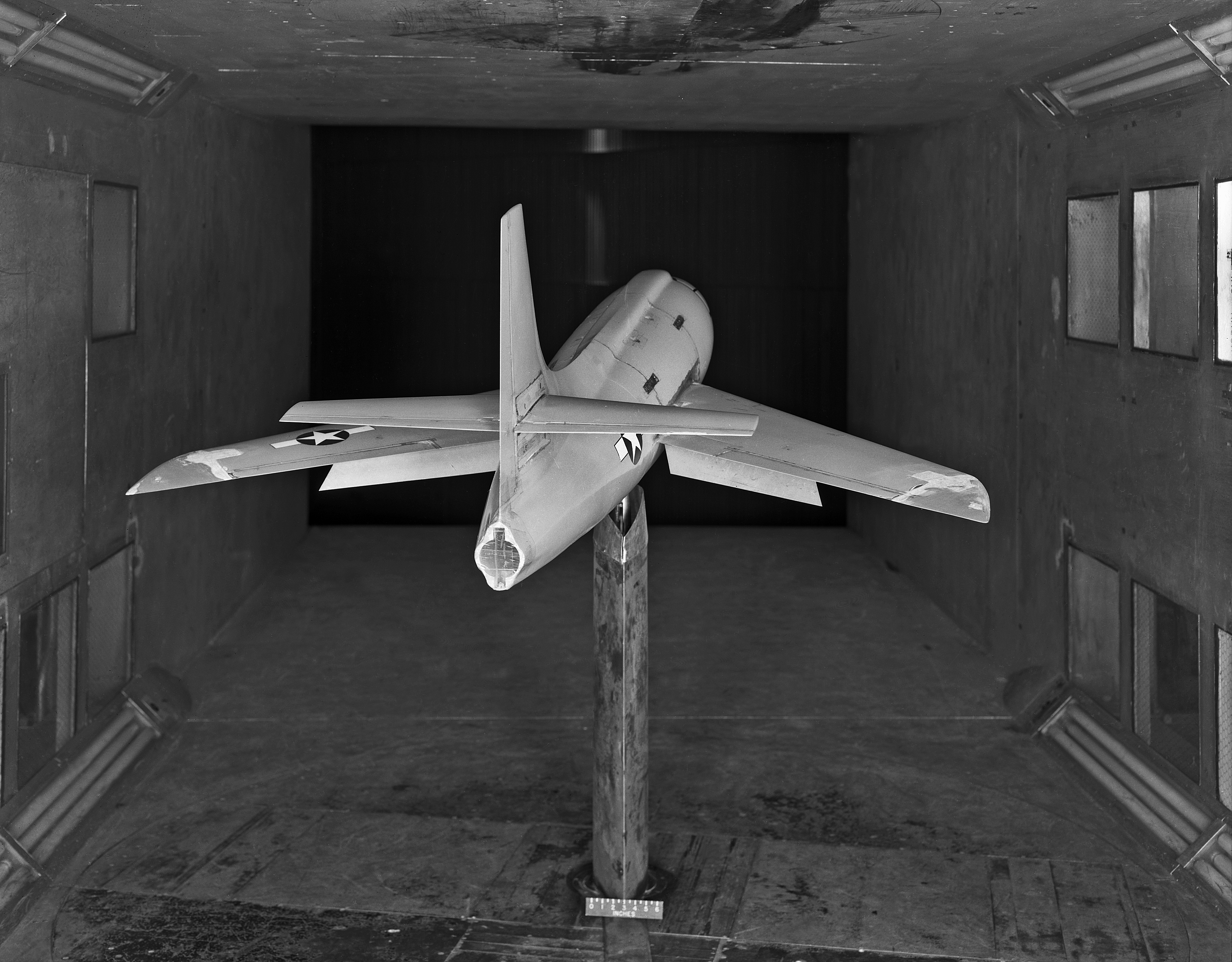
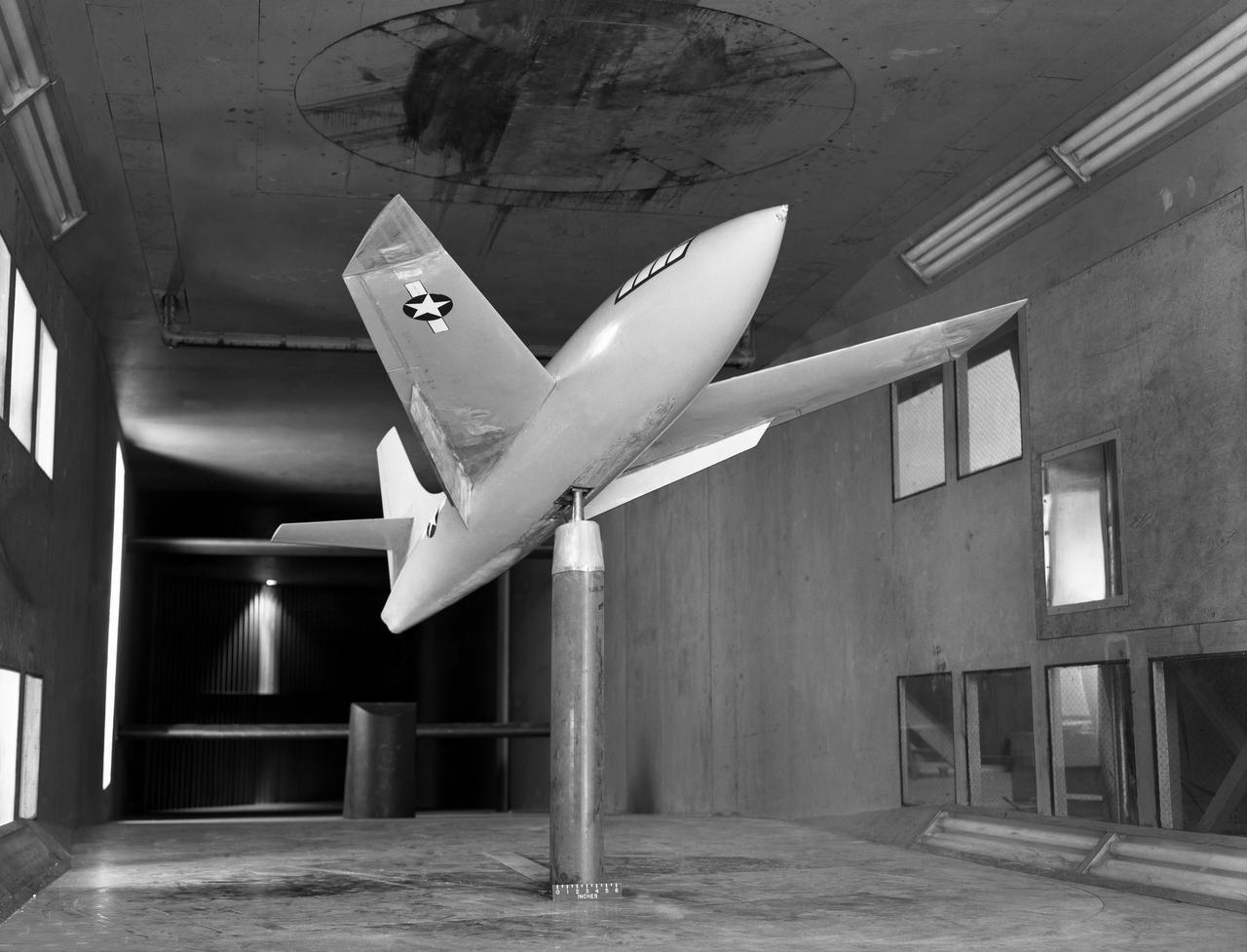
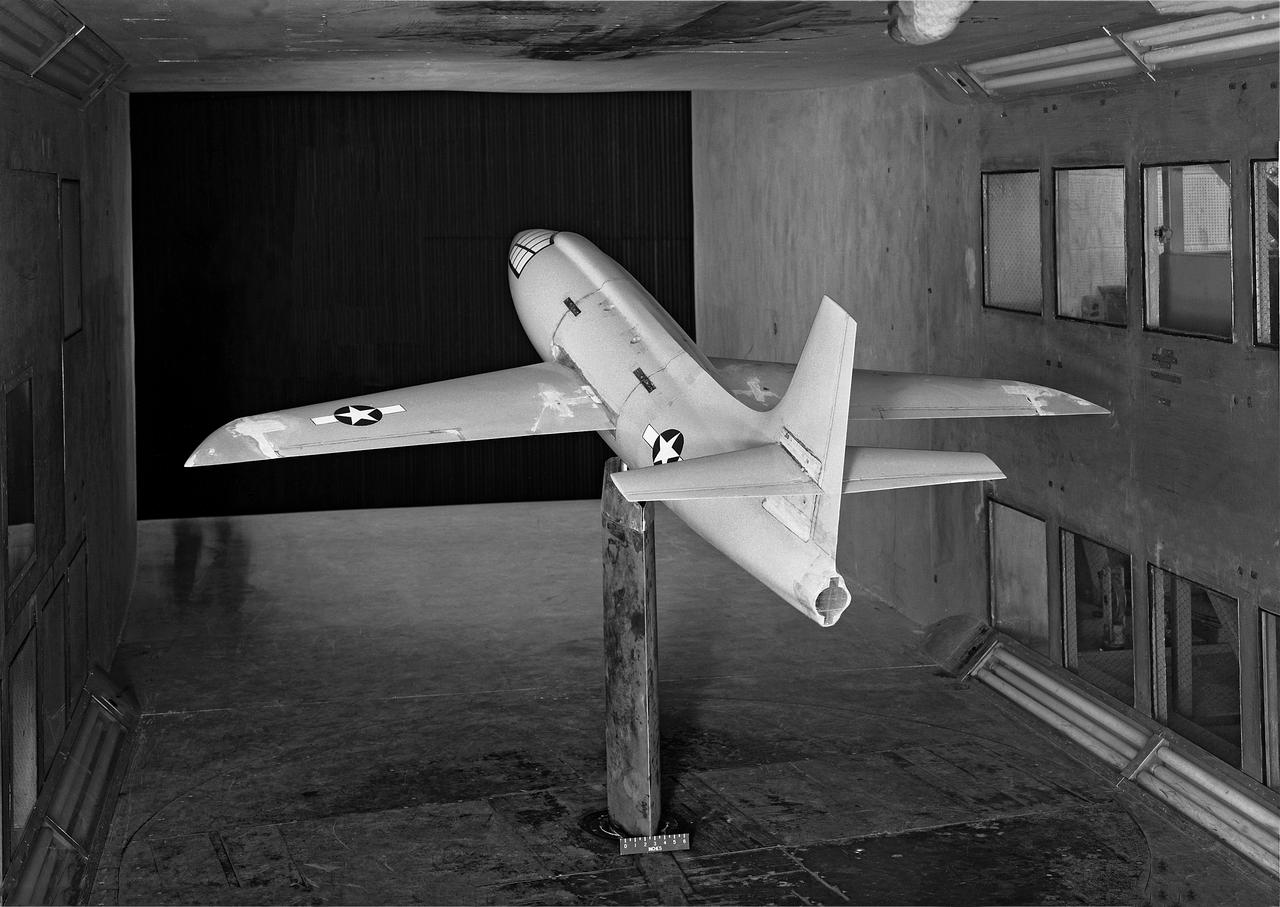
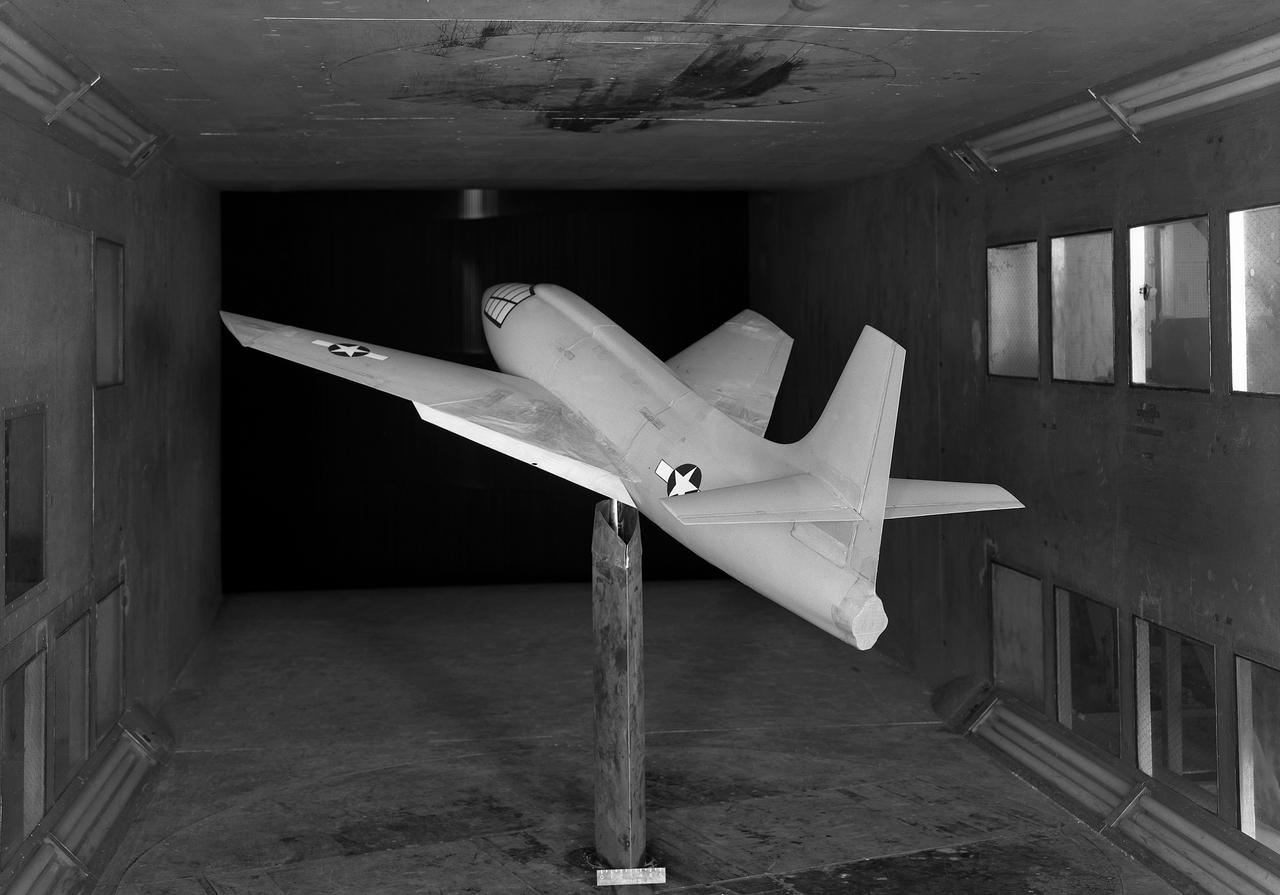
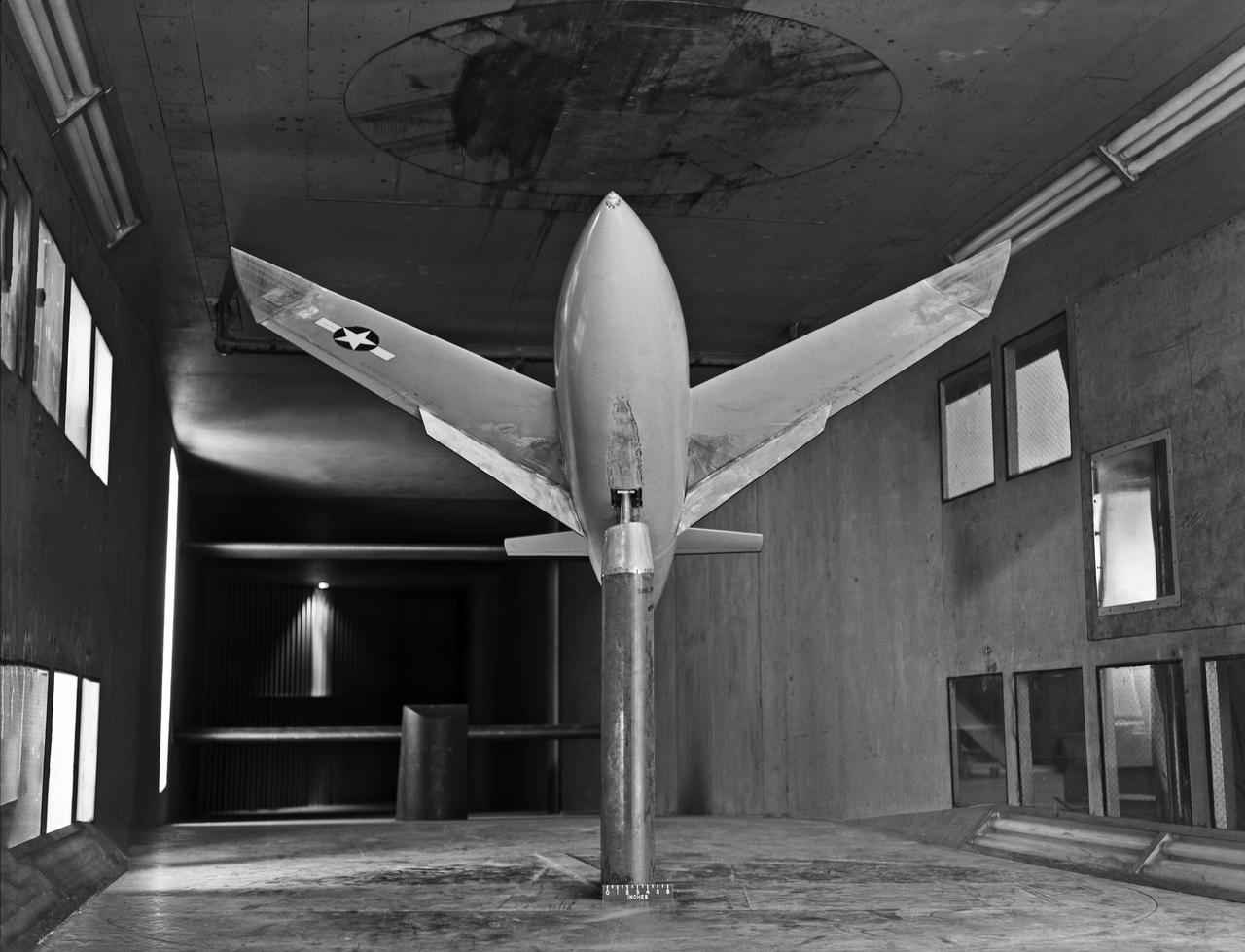
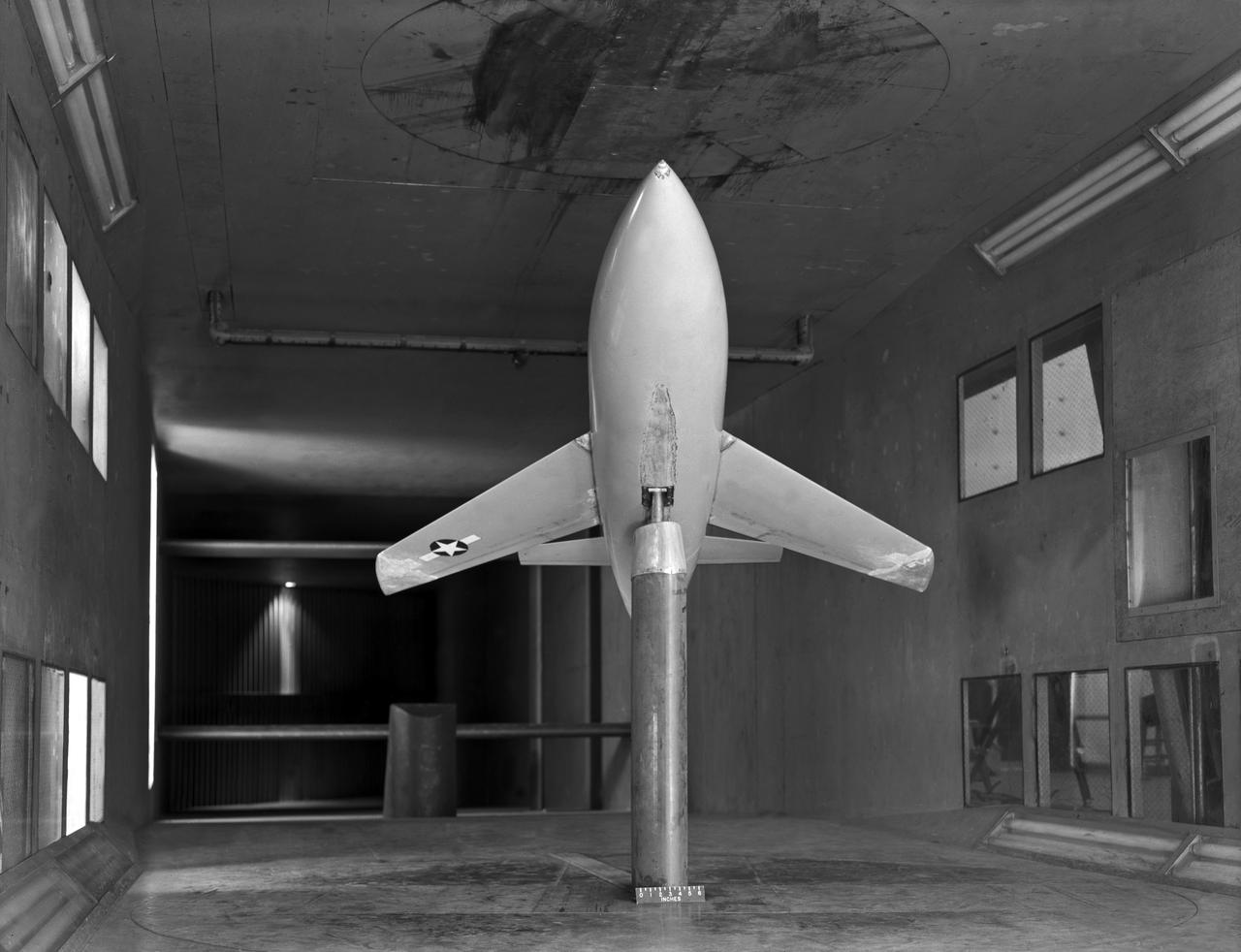
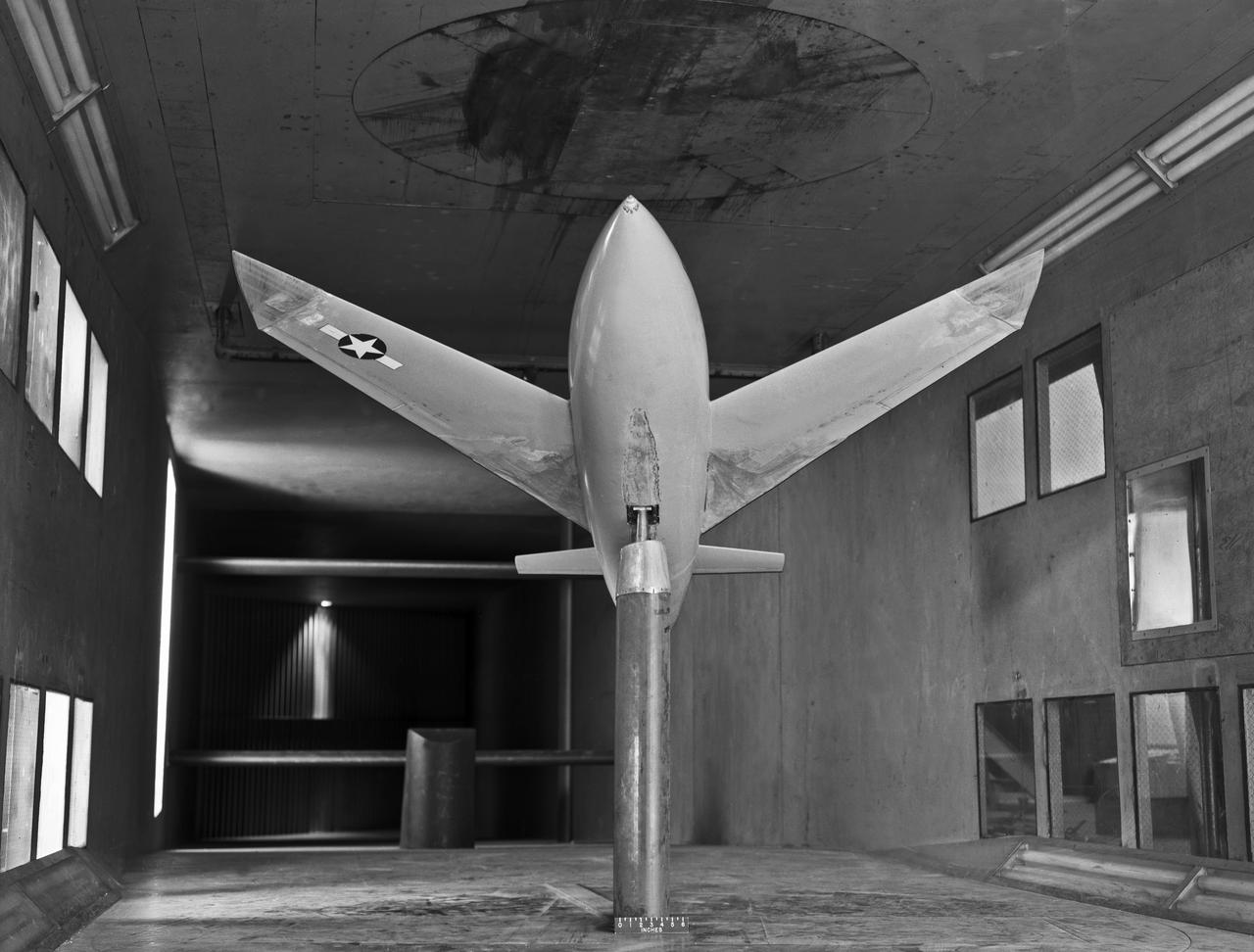
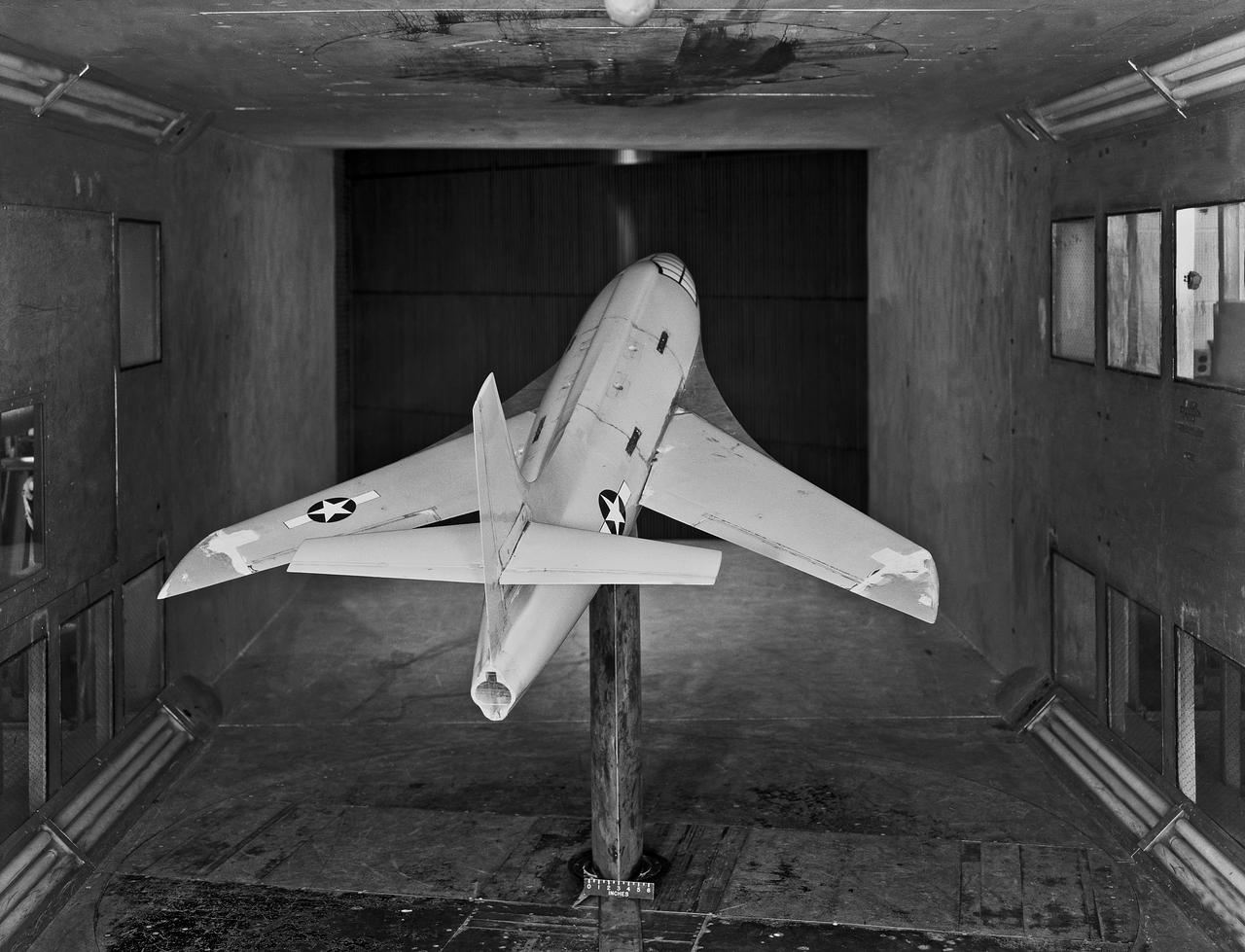
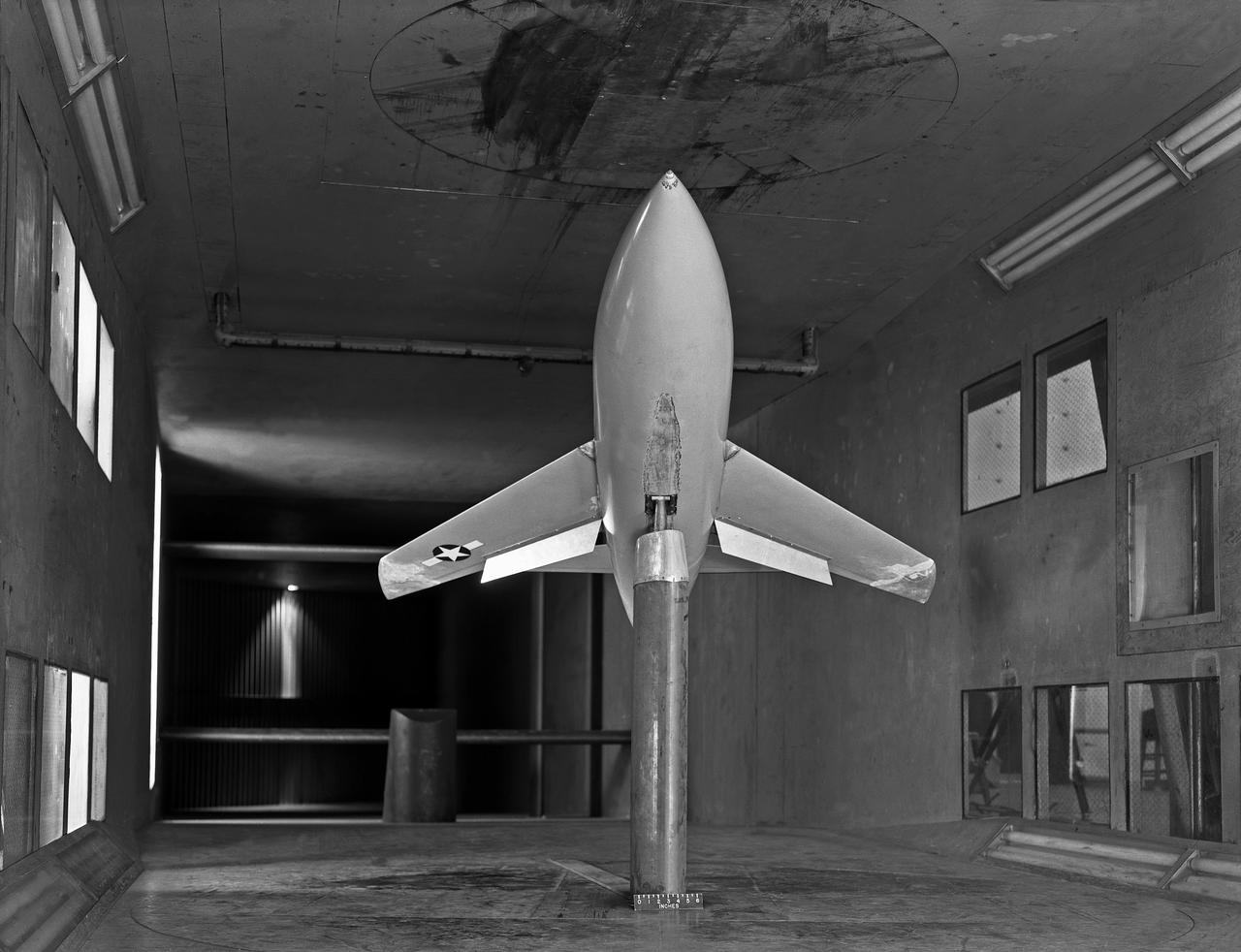
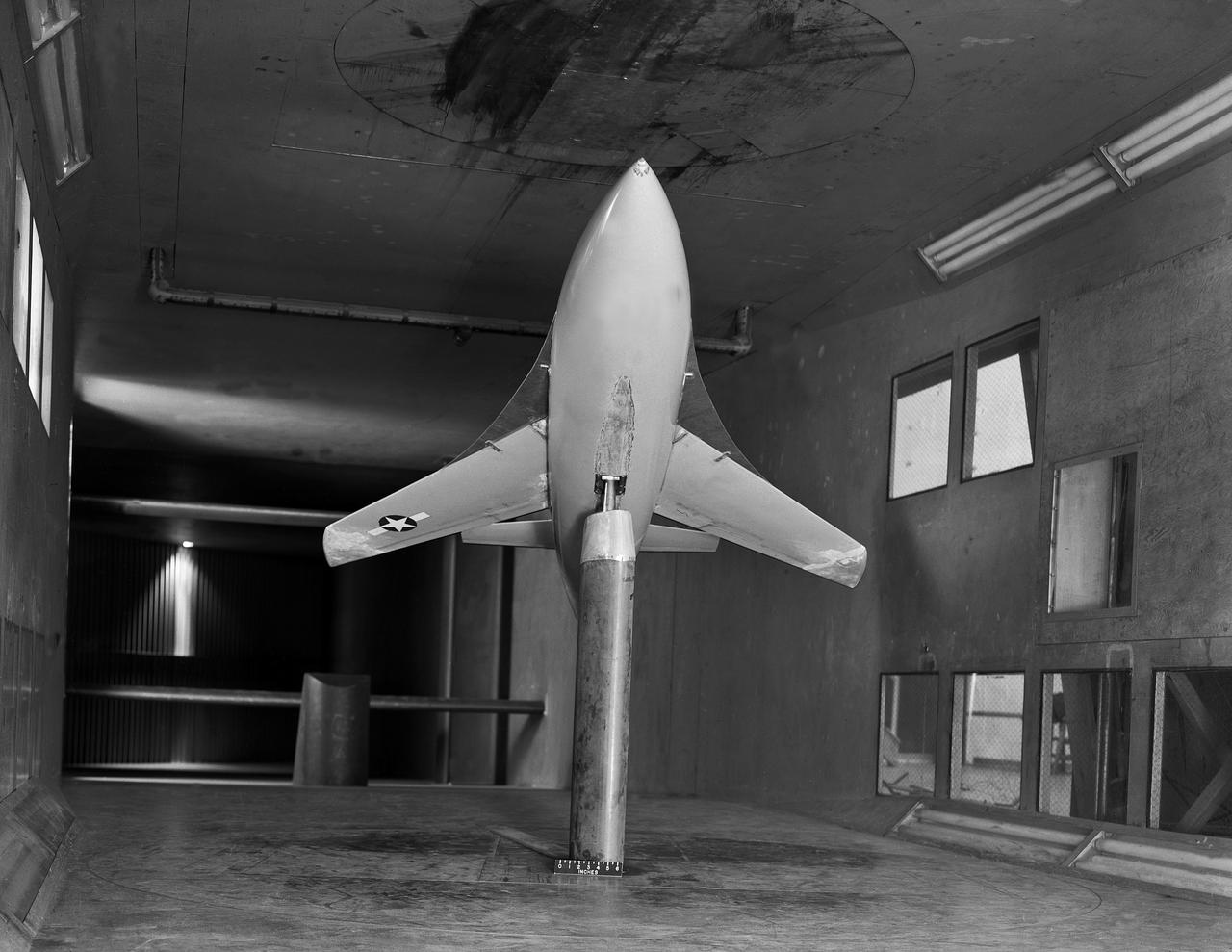
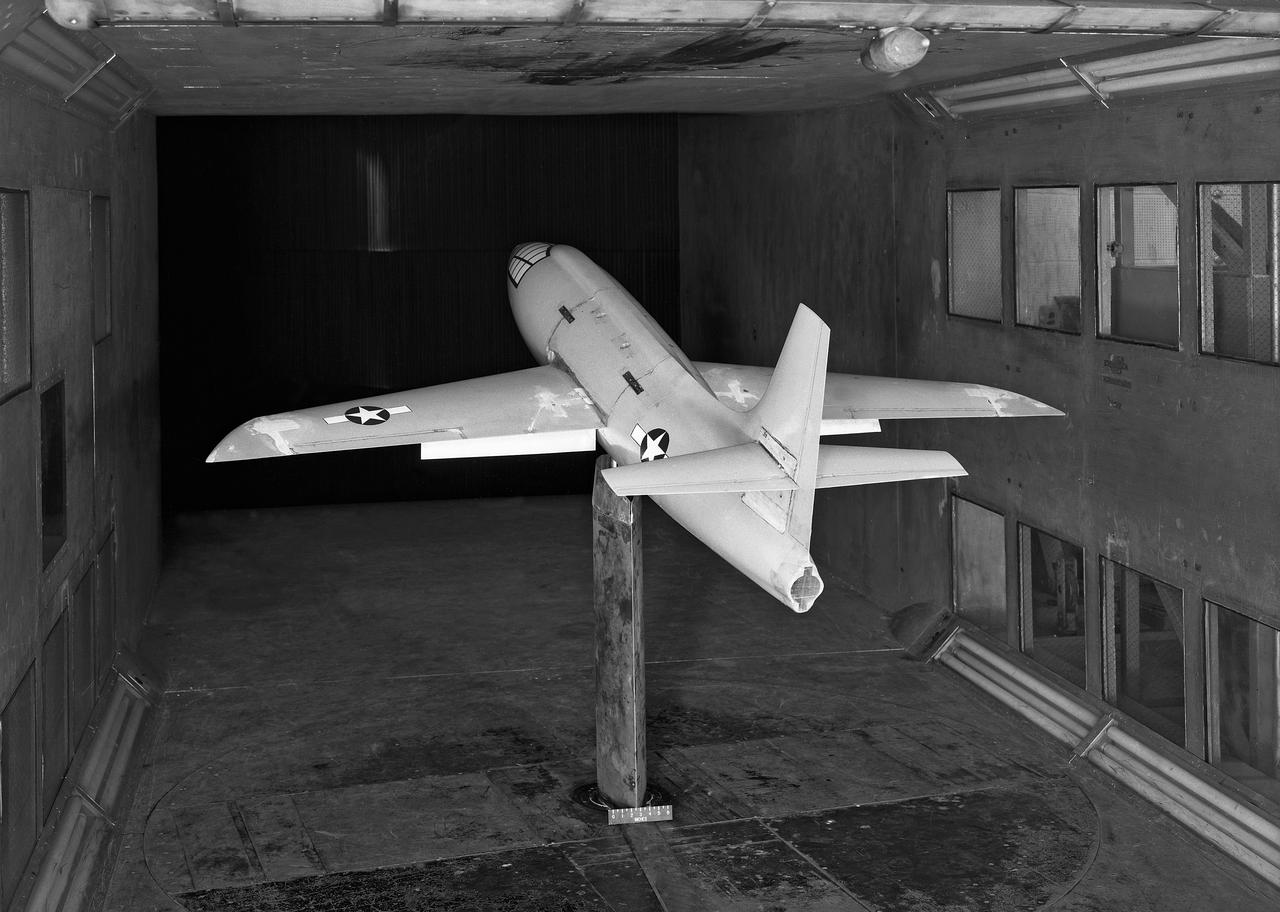
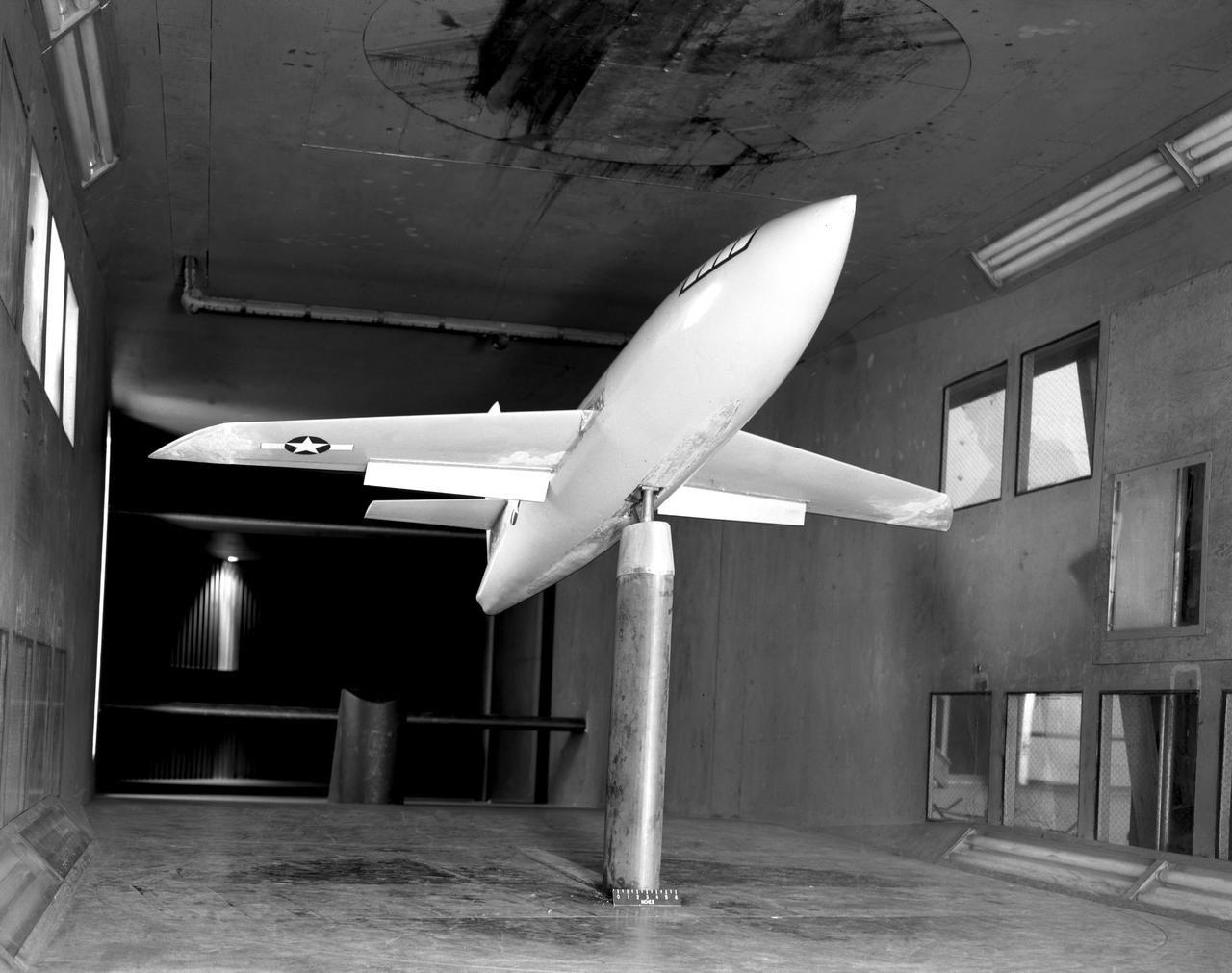
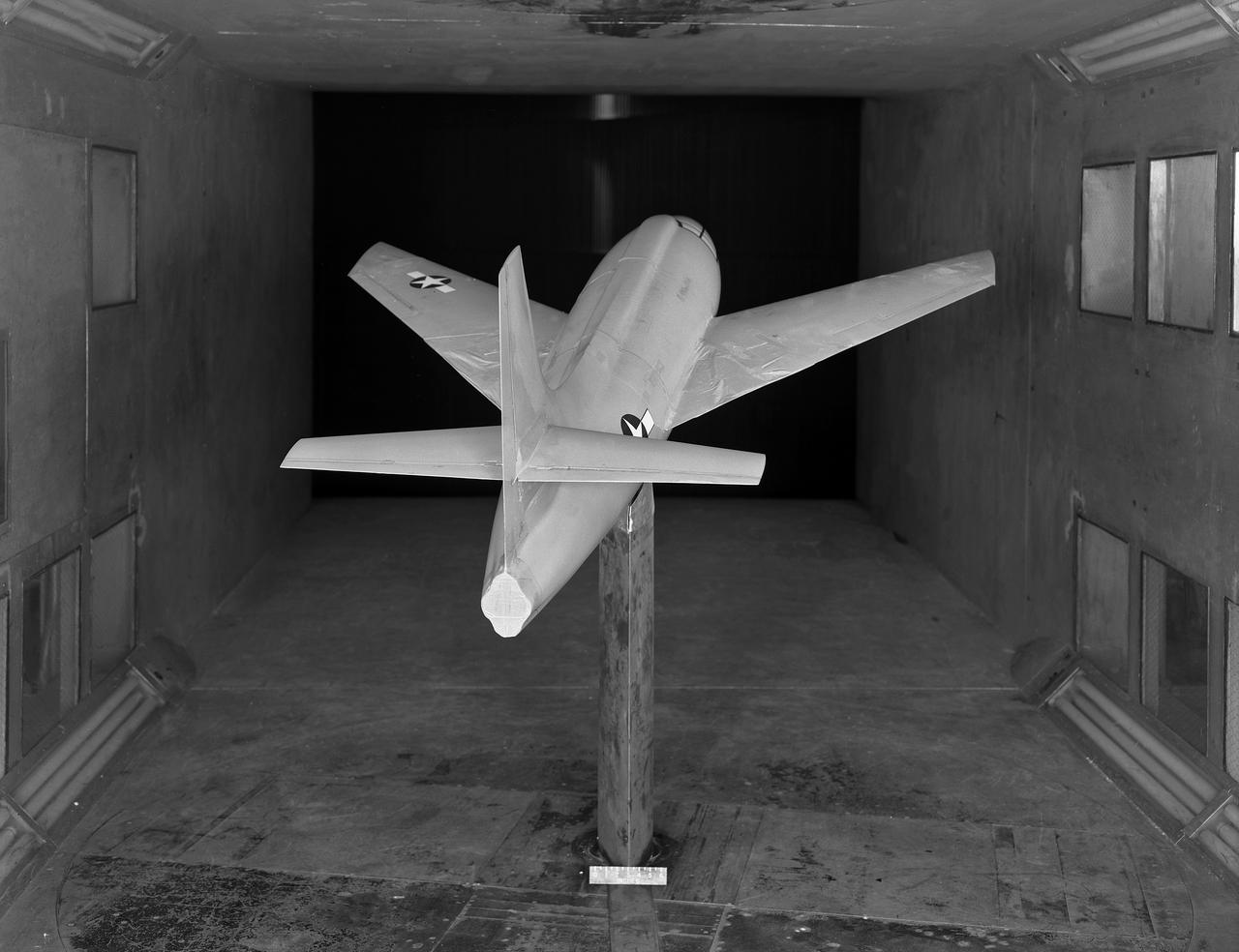
Modified Bell X-1 model pioneered variable-sweep studies in 1947.  Photograph published in Sixty Years of Aeronautical Research 1917-1977 By David A. Anderton. A NASA publication, page 52.
Bell X-1 Research Model on Single Support Strut in 7 x 10 Foot Wind Tunnel
Modified Bell X-1 model pioneered variable-sweep studies in 1947.  Photograph published in Sixty Years of Aeronautical Research 1917-1977 By David A. Anderton. A NASA publication, page 52.
Bell X-1 Research Model on Single Support Strut in 7 x 10 Foot Wind Tunnel
Modified Bell X-1 model pioneered variable-sweep studies in 1947.  Photograph published in Sixty Years of Aeronautical Research 1917-1977 By David A. Anderton. A NASA publication, page 52.
Bell X-1 Research Model on Single Support Strut in 7 x 10 Foot Wind Tunnel
Modified Bell X-1 model pioneered variable-sweep studies in 1947.  Photograph published in Sixty Years of Aeronautical Research 1917-1977 By David A. Anderton. A NASA publication, page 52.
Bell X-1 Research Model on Single Support Strut in 7 x 10 Foot Wind Tunnel
Modified Bell X-1 model pioneered variable-sweep studies in 1947.  Photograph published in Sixty Years of Aeronautical Research 1917-1977 By David A. Anderton. A NASA publication, page 52.
Bell X-1 Research Model on Single Support Strut in 7 x 10 Foot Wind Tunnel
Modified Bell X-1 model pioneered variable-sweep studies in 1947.  Photograph published in Sixty Years of Aeronautical Research 1917-1977 By David A. Anderton. A NASA publication, page 52.
Bell X-1 Research Model on Single Support Strut in 7 x 10 Foot Wind Tunnel
Modified Bell X-1 model pioneered variable-sweep studies in 1947.  Photograph published in Sixty Years of Aeronautical Research 1917-1977 By David A. Anderton. A NASA publication, page 52.
Bell X-1 Research Model on Single Support Strut in 7 x 10 Foot Wind Tunnel
Modified Bell X-1 model pioneered variable-sweep studies in 1947.  Photograph published in Sixty Years of Aeronautical Research 1917-1977 By David A. Anderton. A NASA publication, page 52.
Bell X-1 Research Model on Single Support Strut in 7 x 10 Foot Wind Tunnel
Modified Bell X-1 model pioneered variable-sweep studies in 1947.  Photograph published in Sixty Years of Aeronautical Research 1917-1977 By David A. Anderton. A NASA publication, page 52.
Bell X-1 Research Model on Single Support Strut in 7 x 10 Foot Wind Tunnel
Modified Bell X-1 model pioneered variable-sweep studies in 1947.  Photograph published in Sixty Years of Aeronautical Research 1917-1977 By David A. Anderton. A NASA publication, page 52.
Bell X-1 Research Model on Single Support Strut in 7 x 10 Foot Wind Tunnel
Modified Bell X-1 model pioneered variable-sweep studies in 1947.  Photograph published in Sixty Years of Aeronautical Research 1917-1977 By David A. Anderton. A NASA publication, page 52.
Bell X-1 Research Model on Single Support Strut in 7 x 10 Foot Wind Tunnel
Modified Bell X-1 model pioneered variable-sweep studies in 1947.  Photograph published in Sixty Years of Aeronautical Research 1917-1977 By David A. Anderton. A NASA publication, page 52.
Bell X-1 Research Model on Single Support Strut in 7 x 10 Foot Wind Tunnel
Modified Bell X-1 model pioneered variable-sweep studies in 1947.  Photograph published in Sixty Years of Aeronautical Research 1917-1977 By David A. Anderton. A NASA publication, page 52.
Bell X-1 Research Model on Single Support Strut in 7 x 10 Foot Wind Tunnel
Modified Bell X-1 model pioneered variable-sweep studies in 1947.  Photograph published in Sixty Years of Aeronautical Research 1917-1977 By David A. Anderton. A NASA publication, page 52.Modified Bell X-1 model pioneered variable-sweep studies in 1947.  Photograph published in Sixty Years of Aeronautical Research 1917-1977 By David A. Anderton. A NASA publication, page 52.
Bell X-1 Research Model on Single Support Strut in 7 x 10 Foot Wind Tunnel
The Bell Aircraft Corporation X-1-2 aircraft on the ramp at NACA High Speed Flight Research Station located on the South Base of Muroc Army Air Field in 1947. The X-1-2 flew until October 23, 1951, completing 74 glide and powered flights with nine different pilots. The aircraft has white paint and the NACA tail band. The black Xs are reference markings for tracking purposes. They were widely used on NACA aircraft in the early 1950s.
Right side view of Bell X-1 #6063
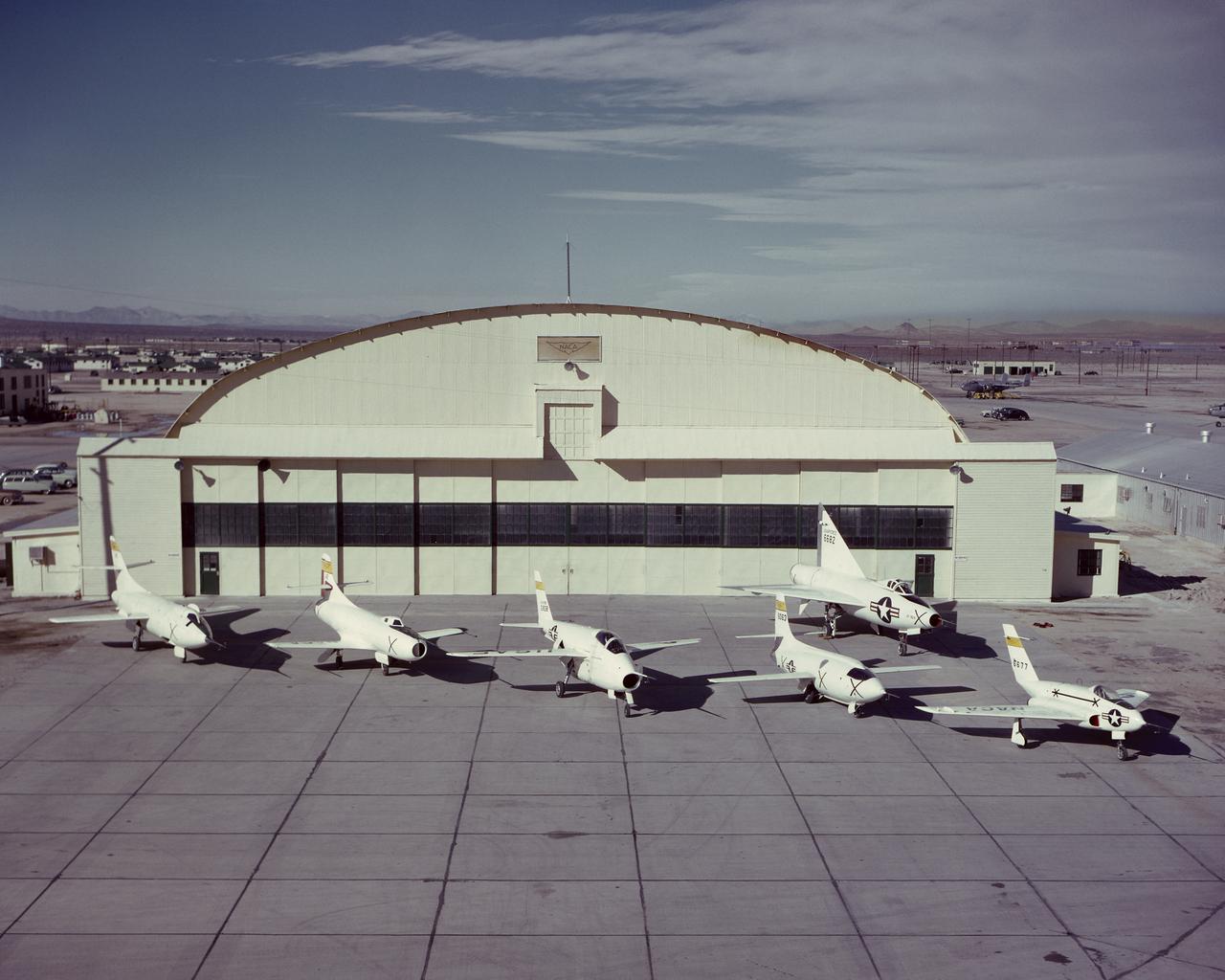
NACA X-Planes on South Base ramp. Northrop X-4, Bell X-1, Bell X-5, Douglas D-558-1, Douglas D-558-2. Back row Convair XF-92A. March 30, 1952
ET61-0145
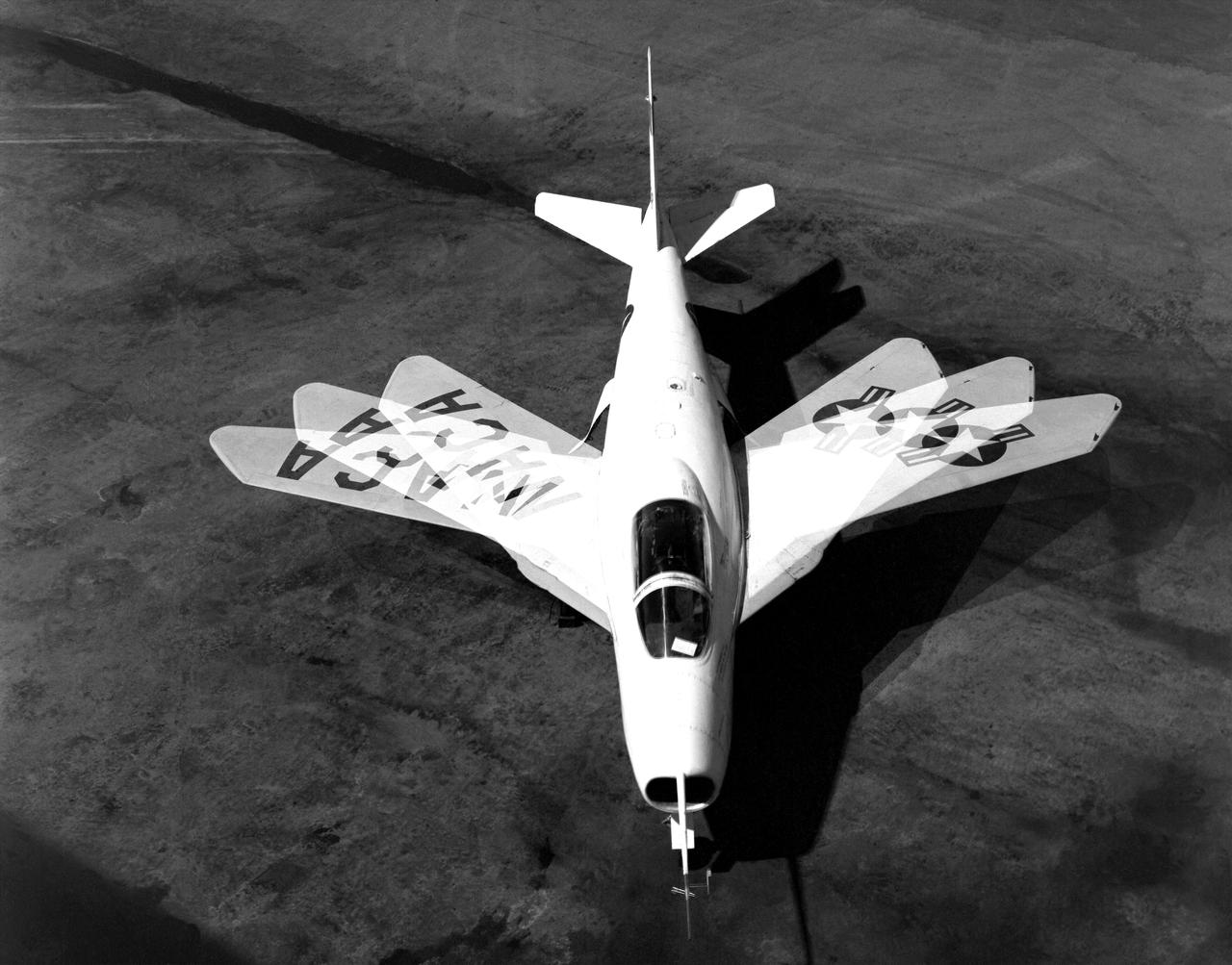
The Bell X-5 swings its wings in this multiple exposure photograph. Variable-sweep wing technology later appeared on the F-111, F-14 and B-1.
Bell X-5 Wings Sweep
NASA Ames Graphics MAJOR NATIONAL FULL-SCALE AERODYNAMICS COMPLEX (NFAC) ROTORCRAFT TESTS SINCE 1977 COMPOSITE.   Sikosky S-76 Rotor AC77-0045, Bell 222 fuselage AC77-1388-1, Bell XV-15 Aircraft AC78-0579-3, Kaman CCR Rotor AC78-0731-1, Lokcheed X-Wing Rorotr AC79-0367-4, Boeing VERTOL BMR Rotor AC80-0120-2, Sikordky ABC Helicopter AC80-0467-17, MBB BO-105 Rotor AC83-0309-157
ARC-1987-AC87-0192
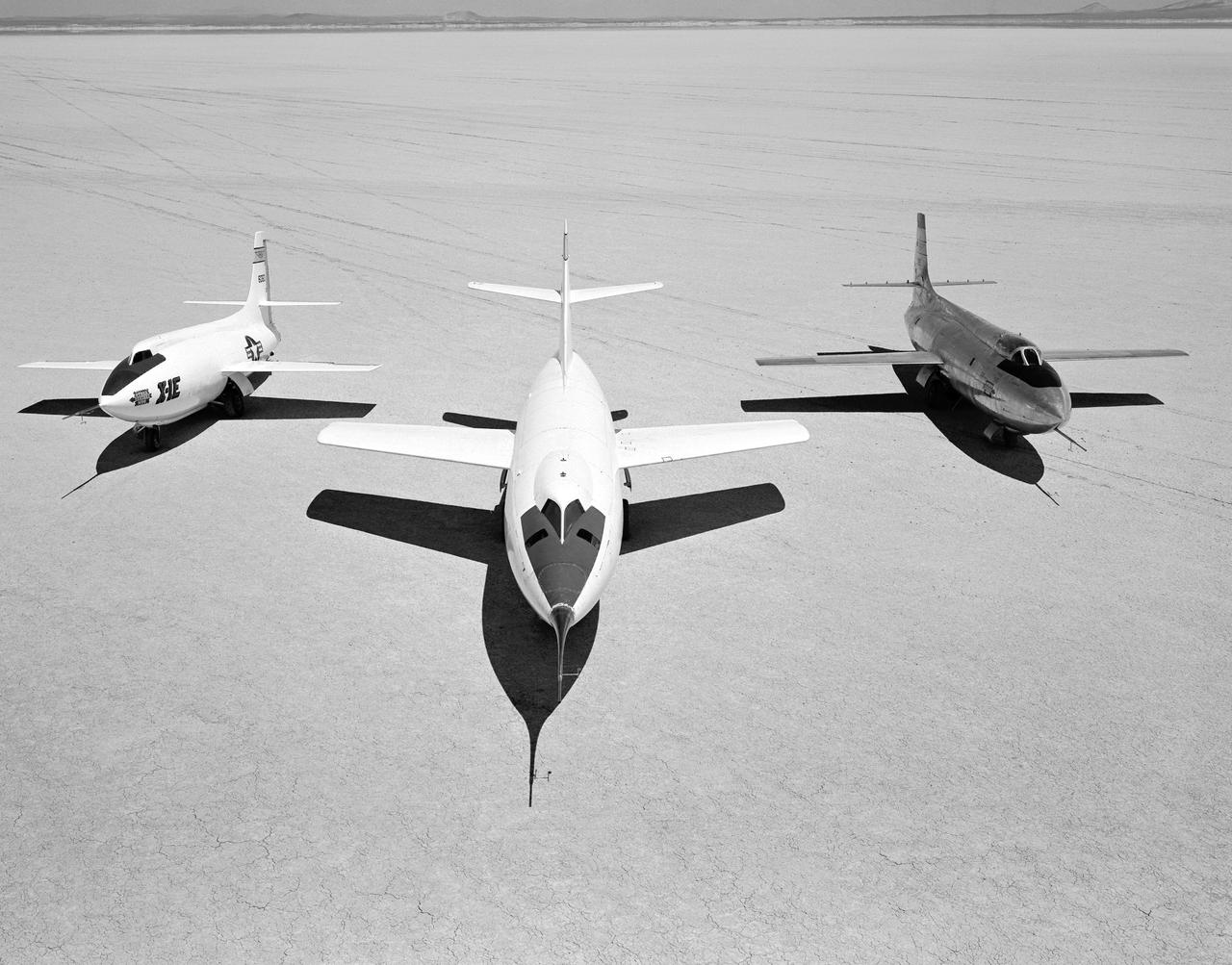
Early NACA research aircraft on the lakebed at the High Speed Research Station in 1955: Left to right: X-1E, D-558-II, X-1B
E-1914
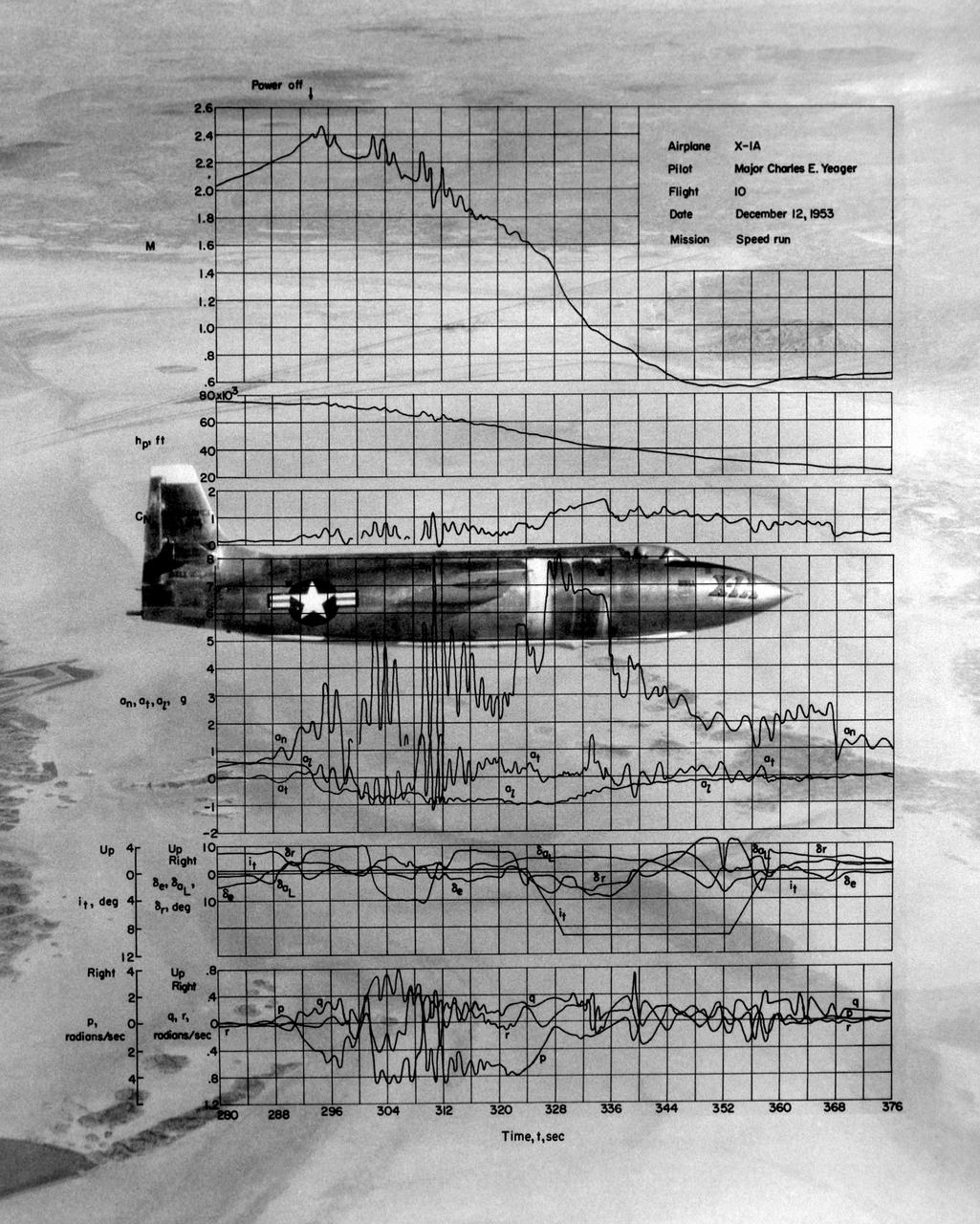
This photo of the X-1A includes graphs of the flight data from Maj. Charles E. Yeager's Mach 2.44 flight on December 12, 1953. (This was only a few days short of the 50th anniversary of the Wright brothers' first powered flight.) After reaching Mach 2.44, then the highest speed ever reached by a piloted aircraft, the X-1A tumbled completely out of control. The motions were so violent that Yeager cracked the plastic canopy with his helmet. He finally recovered from a inverted spin and landed on Rogers Dry Lakebed. Among the data shown are Mach number and altitude (the two top graphs). The speed and altitude changes due to the tumble are visible as jagged lines. The third graph from the bottom shows the G-forces on the airplane. During the tumble, these twice reached 8 Gs or 8 times the normal pull of gravity at sea level. (At these G forces, a 200-pound human would, in effect, weigh 1,600 pounds if a scale were placed under him in the direction of the force vector.) Producing these graphs was a slow, difficult process. The raw data from on-board instrumentation recorded on oscillograph film. Human computers then reduced the data and recorded it on data sheets, correcting for such factors as temperature and instrument errors. They used adding machines or slide rules for their calculations, pocket calculators being 20 years in the future.
X-1A in flight with flight data superimposed
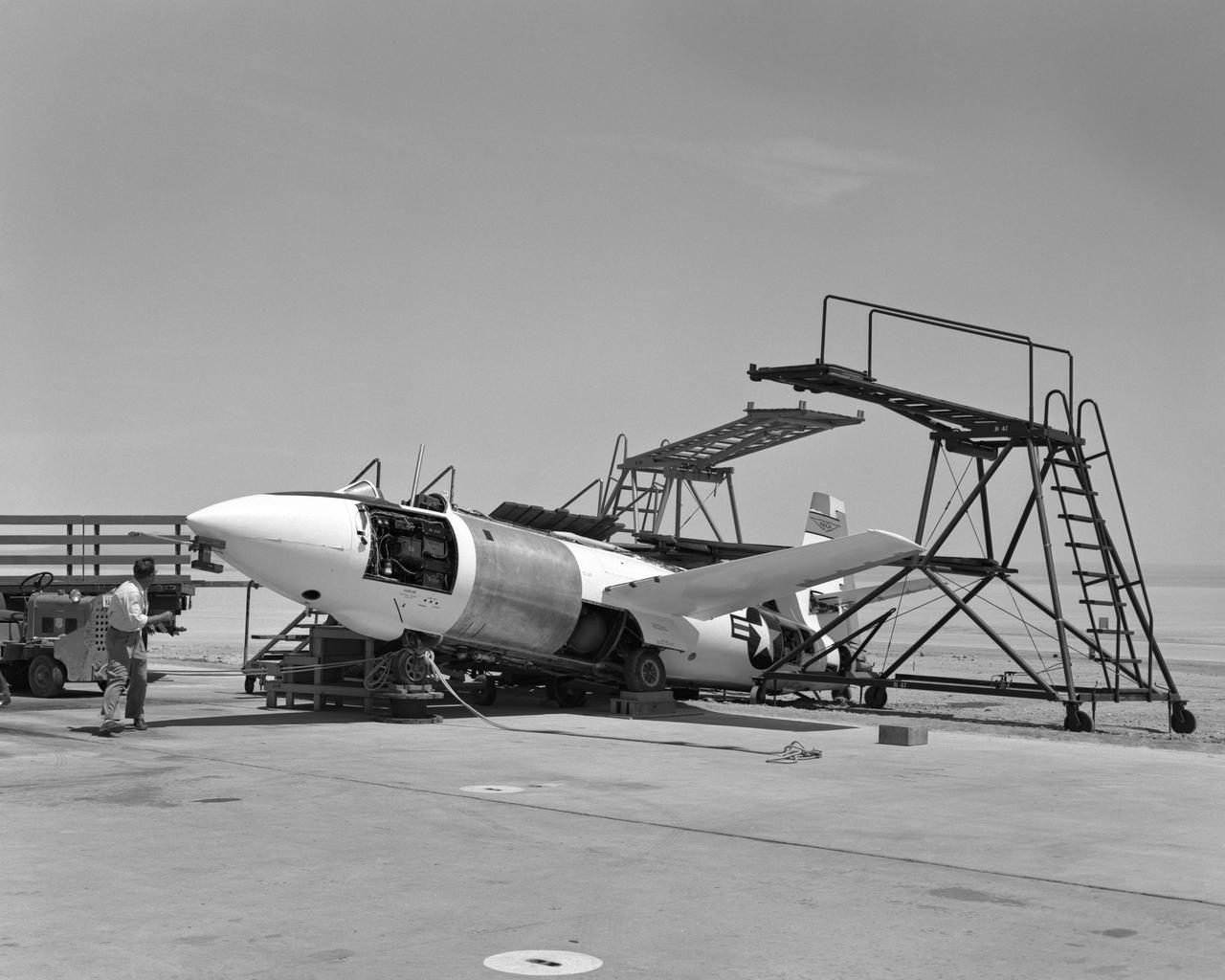
Bell X-1A ejection seat test setup