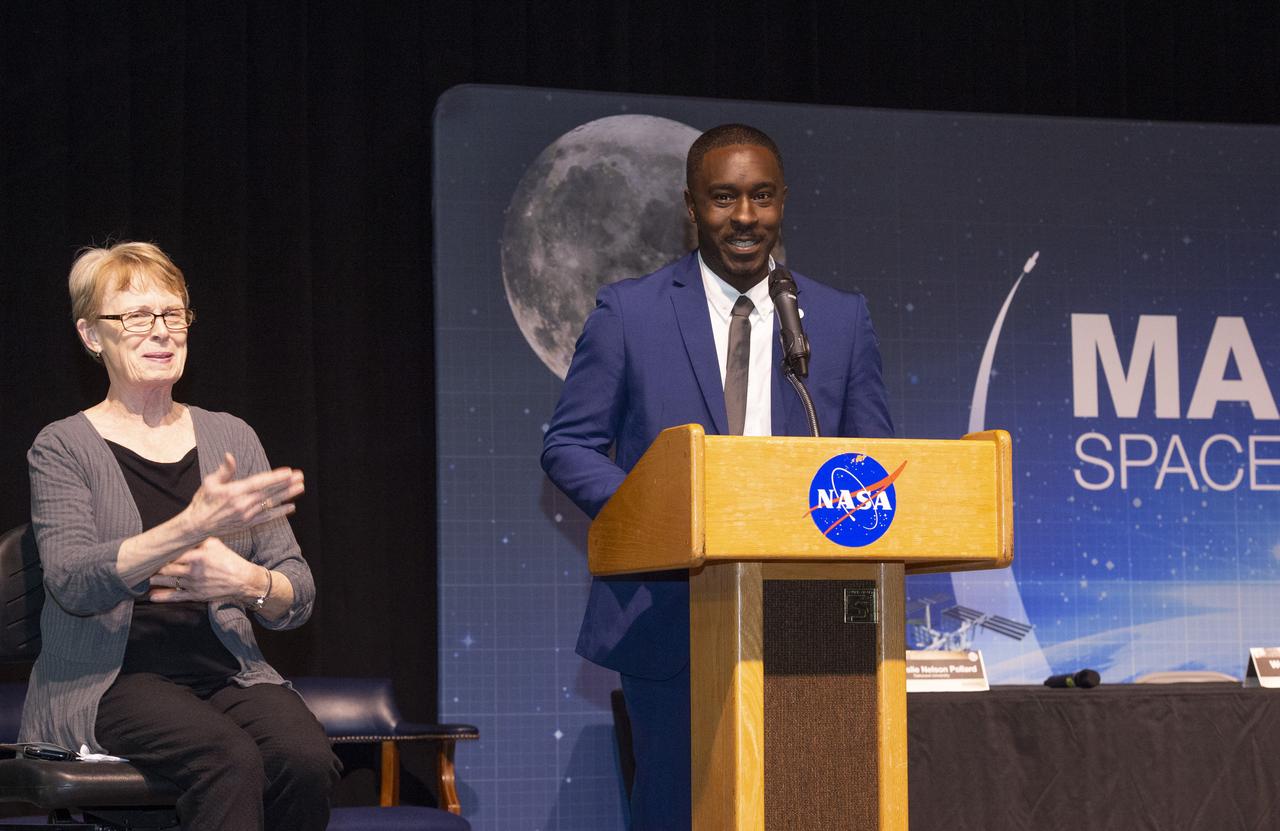
Marshall Space Flight Center's Black History Month program Master of Ceremonies Nicholas Benjamin.
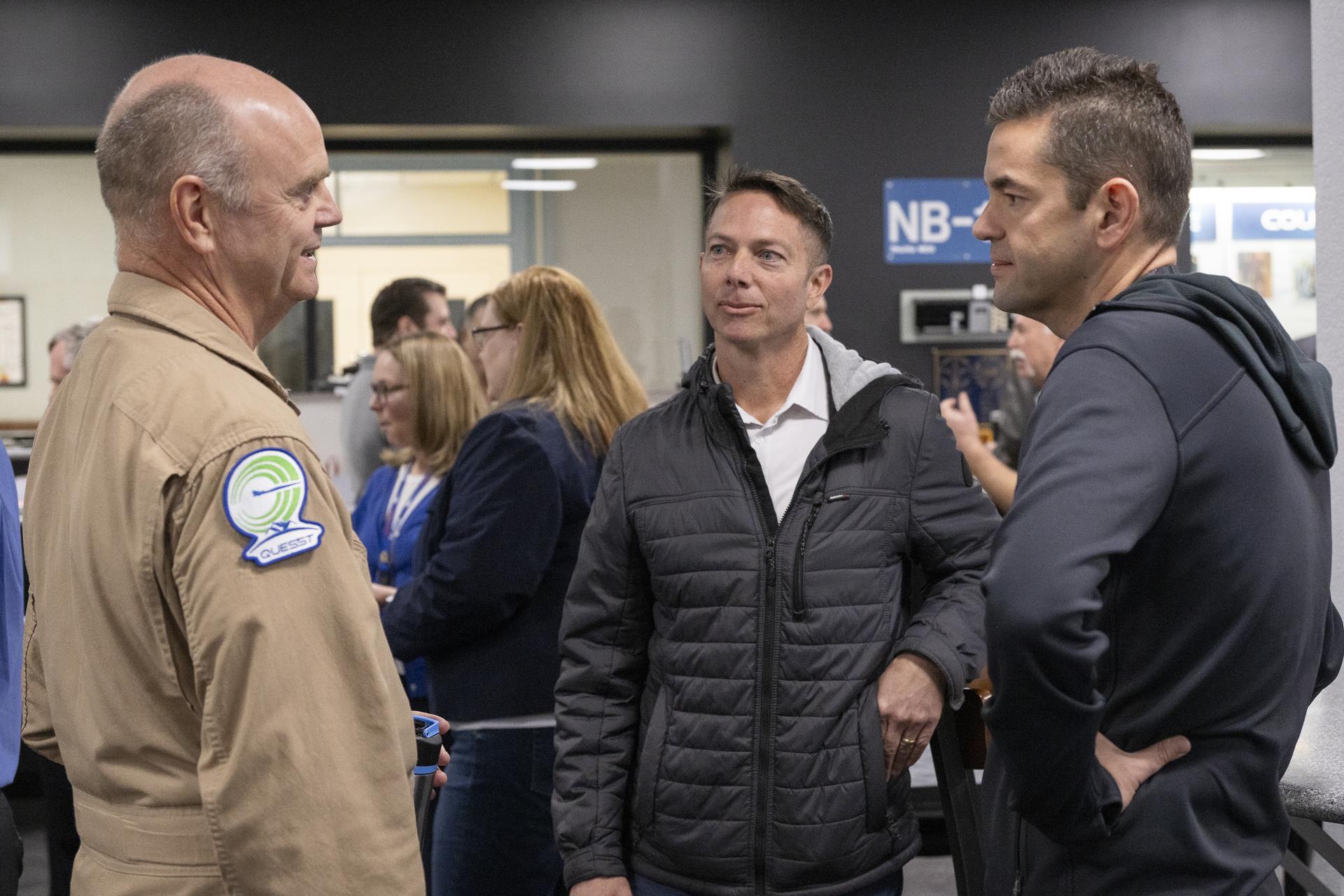
NASA Administrator Jared Isaacman speaks with Armstrong X-59 pilot Nils Larson and Technology Transfer Officer Benjamin Tomlinson.
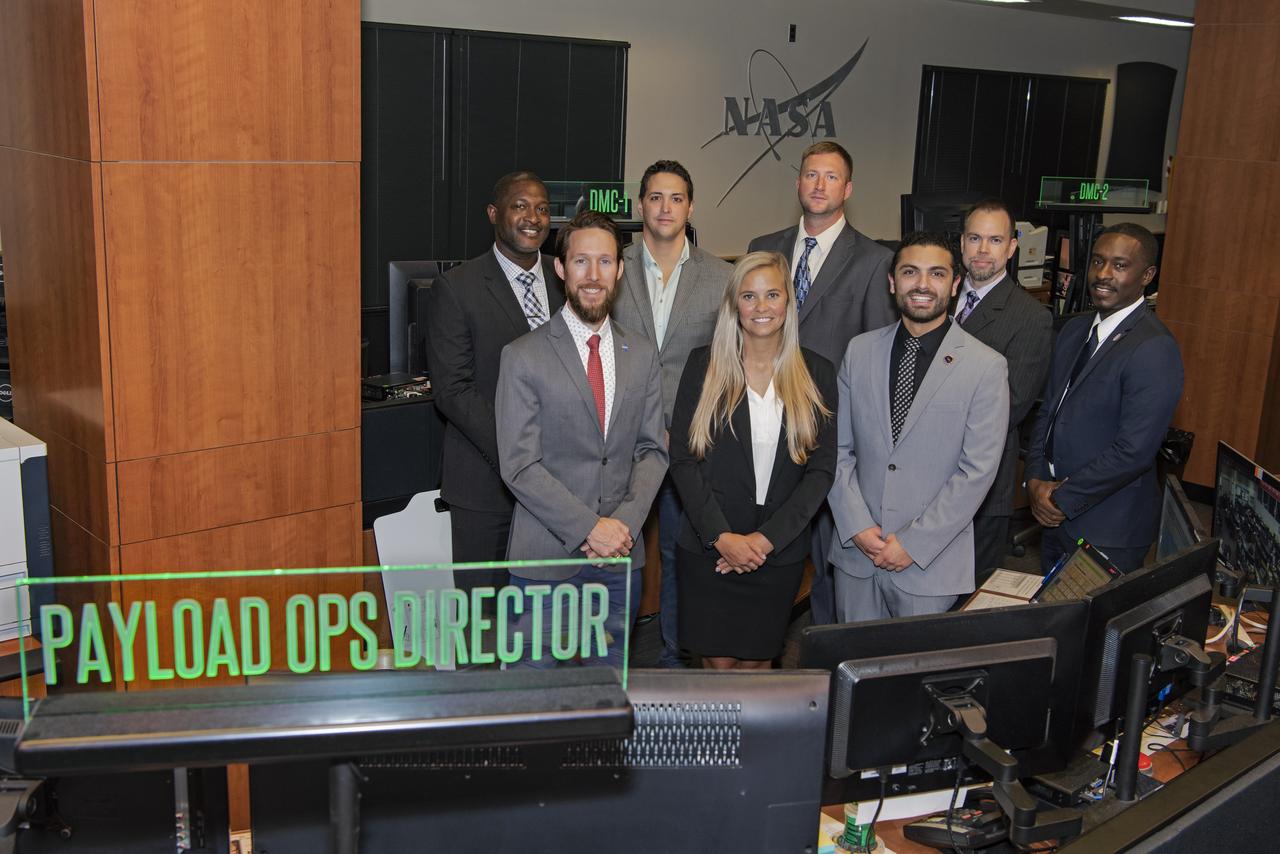
Official group photo of the new class of PODs (Payload Operations Directors) for 2019, taken in building 4663 Payload Operations Center. (L to R) Stacey Steele, Dr. Ian Howley, Michael Vigo, Jennifer McMillian, Luke Bingaman, Carlos Barreto, Luke Mays, David Nicholas Benjamin
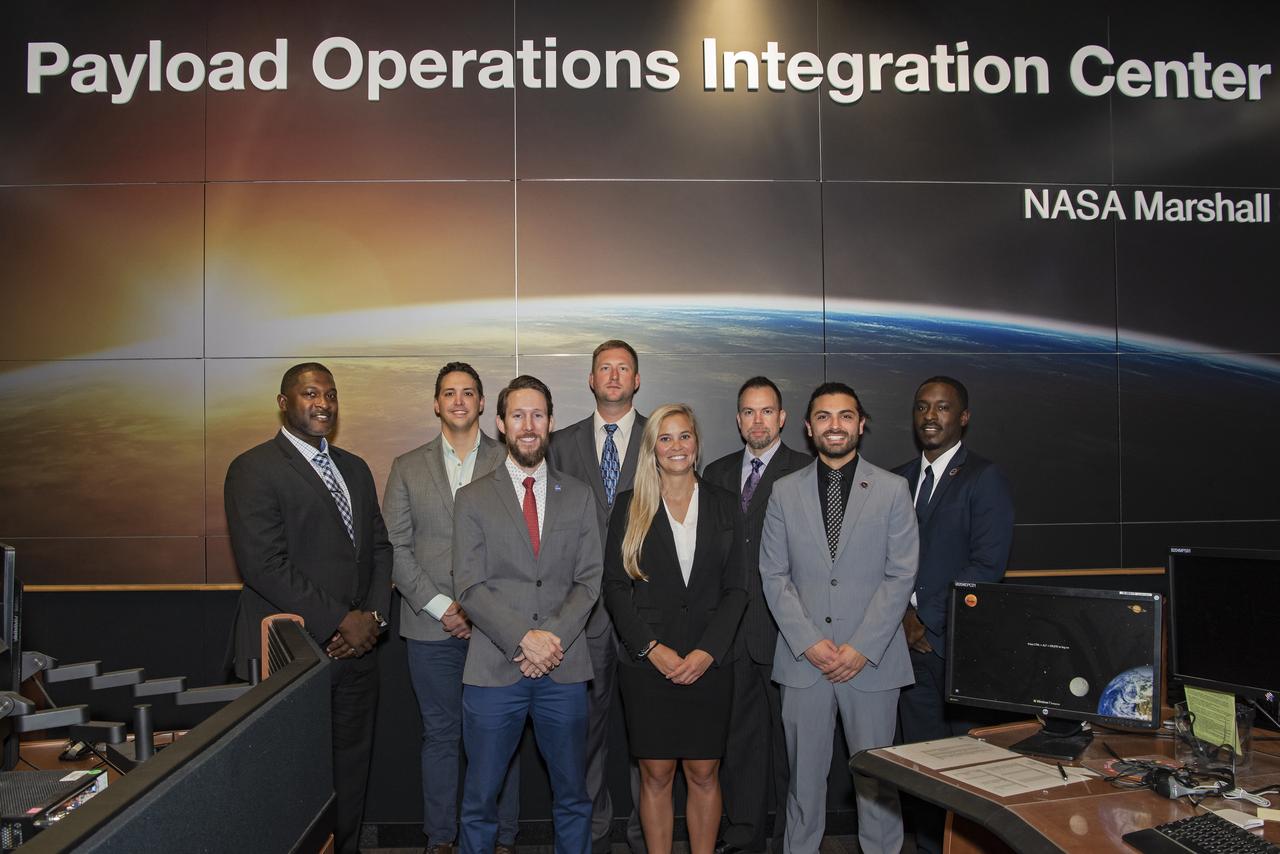
Official group photo of the new class of PODs (Payload Operations Directors) for 2019, taken in building 4663 Payload Operations Center. (L to R) Stacey Steele, Michael Vigo, Dr. Ian Howley, Luke Bingaman, Jennifer McMillian, Luke Mays, Carlos Barreto, David Nicholas Benjamin
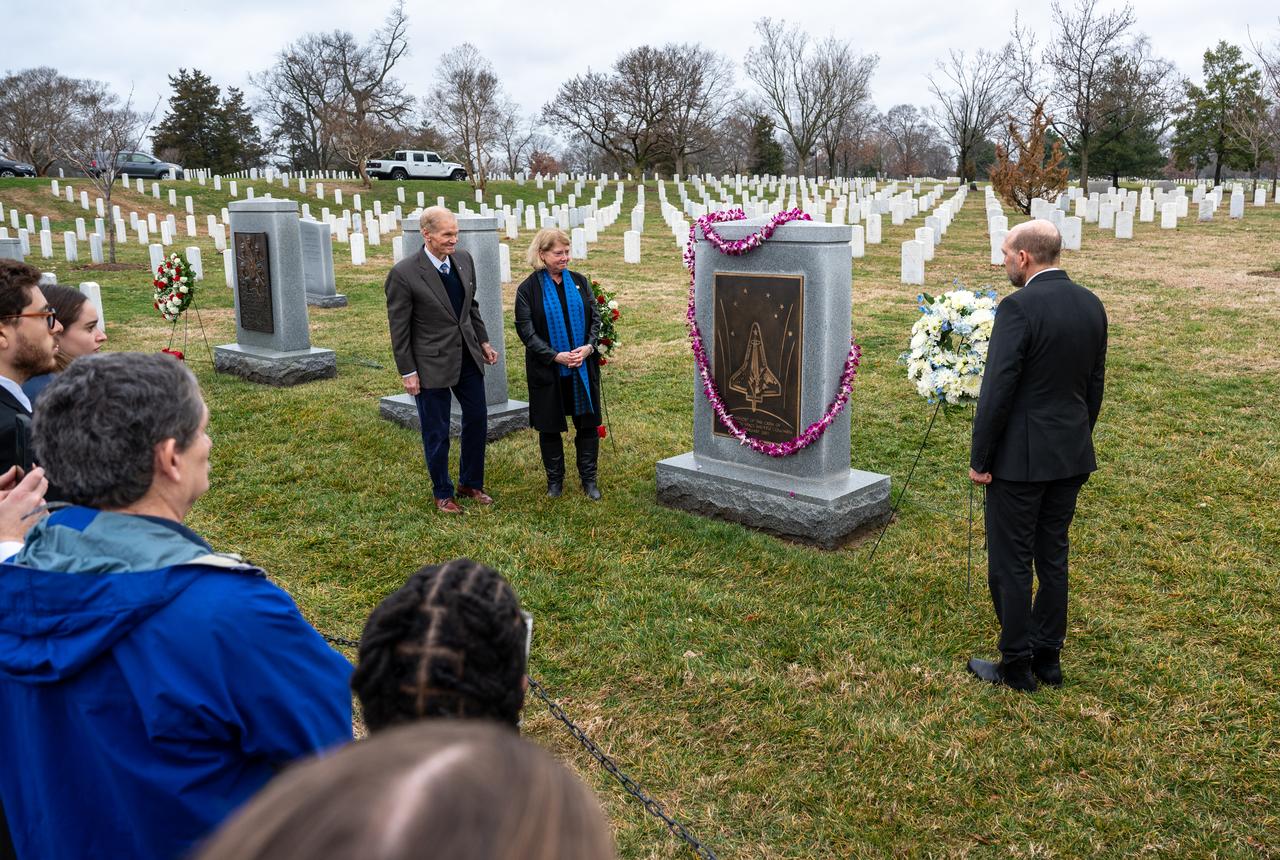
From left to right, NASA Administrator Bill Nelson, NASA Deputy Administrator Pam Melroy, and Deputy Chief of Mission for the Embassy of Israel Eliav Benjamin, place wreaths at the Space Shuttle Columbia Memorial during a ceremony that was part of NASA's Day of Remembrance, Thursday, Jan. 25, 2024, at Arlington National Cemetery in Arlington, Va. The wreaths were laid in memory of those men and women who lost their lives in the quest for space exploration. Photo Credit: (NASA/Keegan Barber)
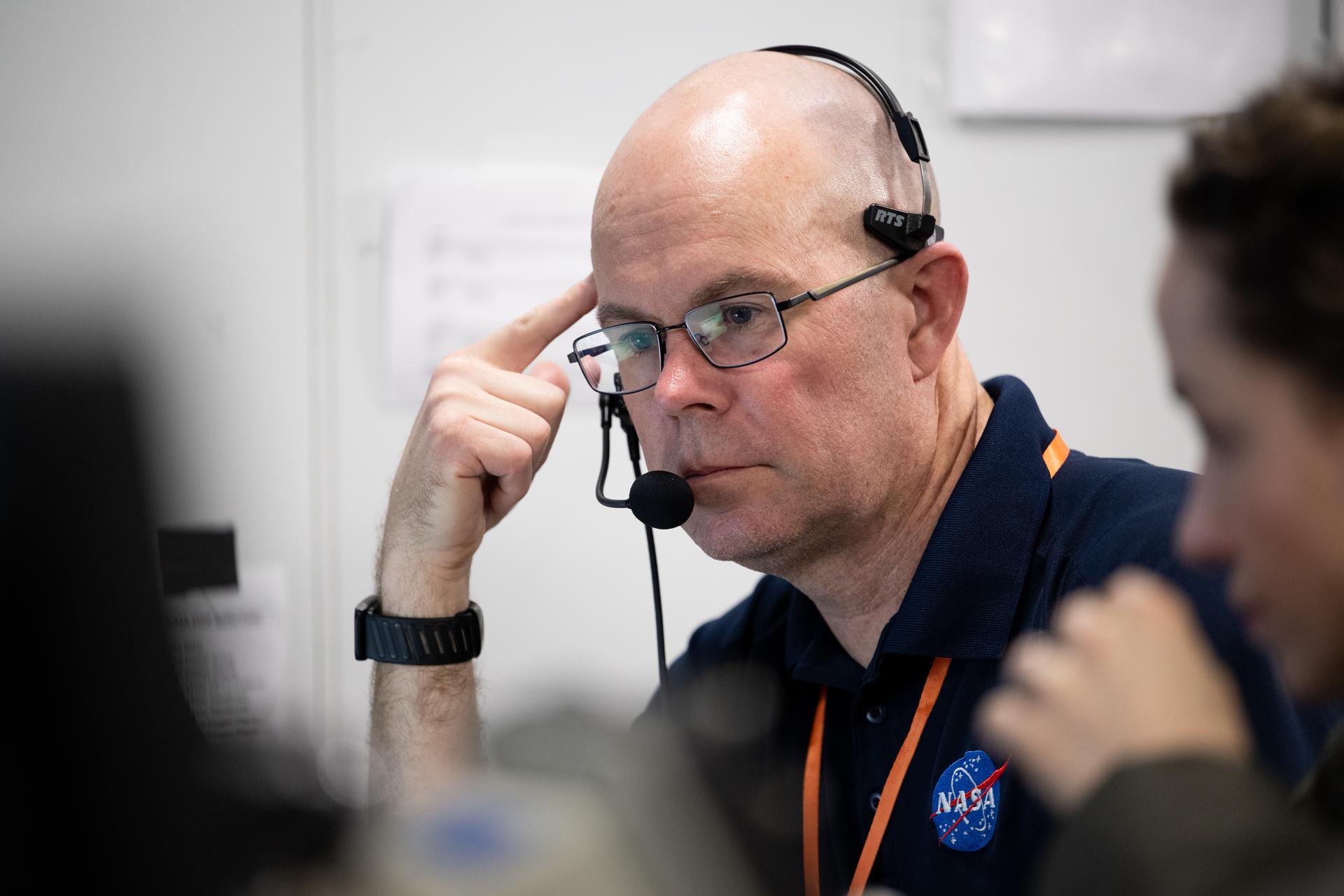
Dr. Benjamin Johansen, NASA flight surgeon, is seen alongside other NASA and U.S. military recovery team members as they work inside the Landing Force Operations Center onboard USS John P. Murtha monitoring the recovery of NASA’s Orion spacecraft with Artemis II crewmembers NASA astronauts Reid Wiseman, commander; Victor Glover, pilot; Christina Koch, mission specialist; and CSA (Canadian Space Agency) astronaut Jeremy Hansen, mission specialist aboard in the Pacific Ocean off the coast of California, Friday, April 10, 2026. NASA’s Artemis II mission took Wiseman, Glover, Koch, and Hansen on a 10-day journey around the Moon and back to Earth. Following a splashdown at 5:07 p.m. PDT (8:07 p.m. EDT), NASA and U.S. military teams worked to bring the crewmembers and Orion spacecraft aboard USS John P. Murtha. Photo Credit: (NASA/Joel Kowsky)
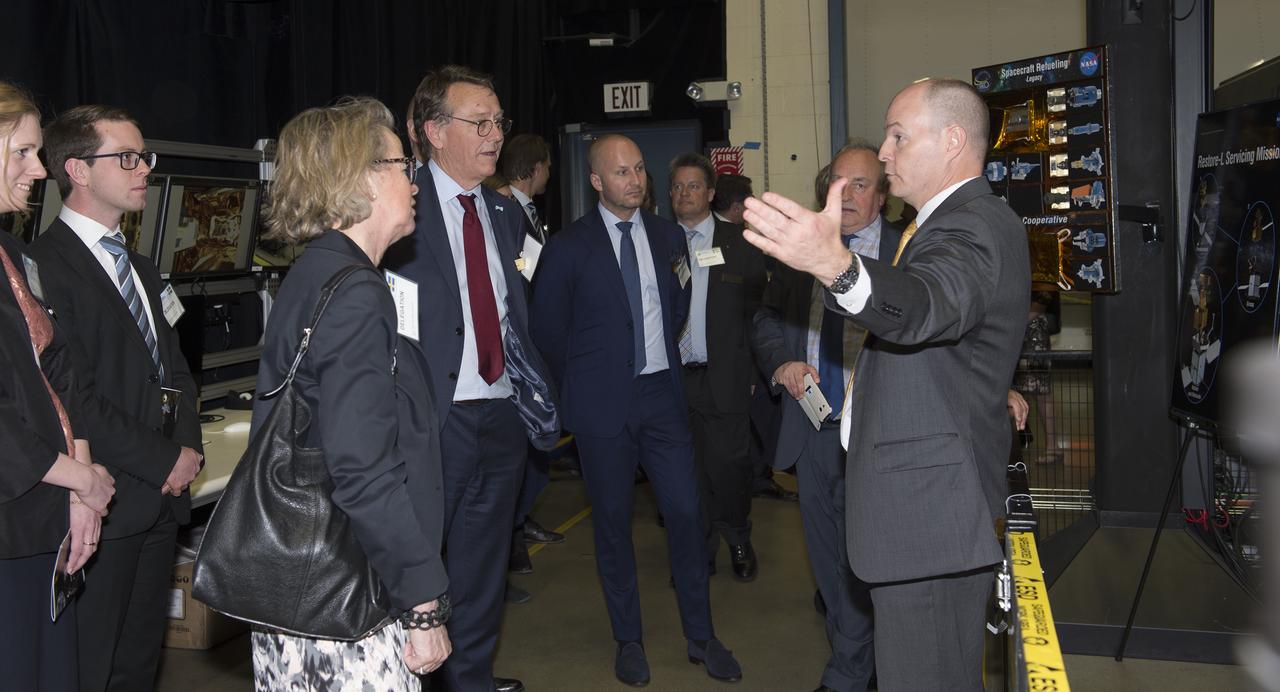
Swedish Delegation visited Goddard on May 3, 2017. Benjamin Reed gives overview of Robotics Operations Center in Building 29.
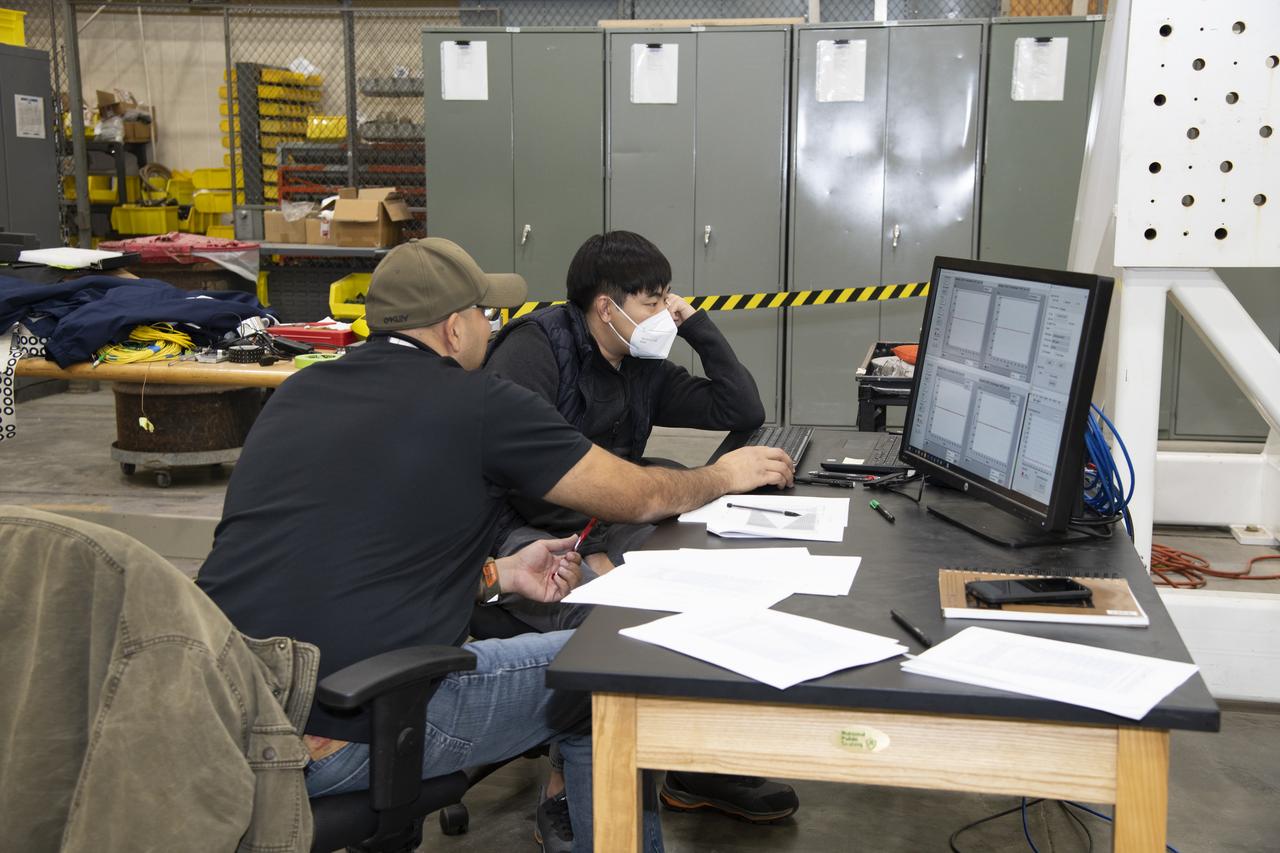
Frank Pena and Benjamin Park watch as data streams in from tests on a 6-foot model of the Transonic Truss-Braced Wing at NASA’s Armstrong Flight Research Center, in Edwards, California.
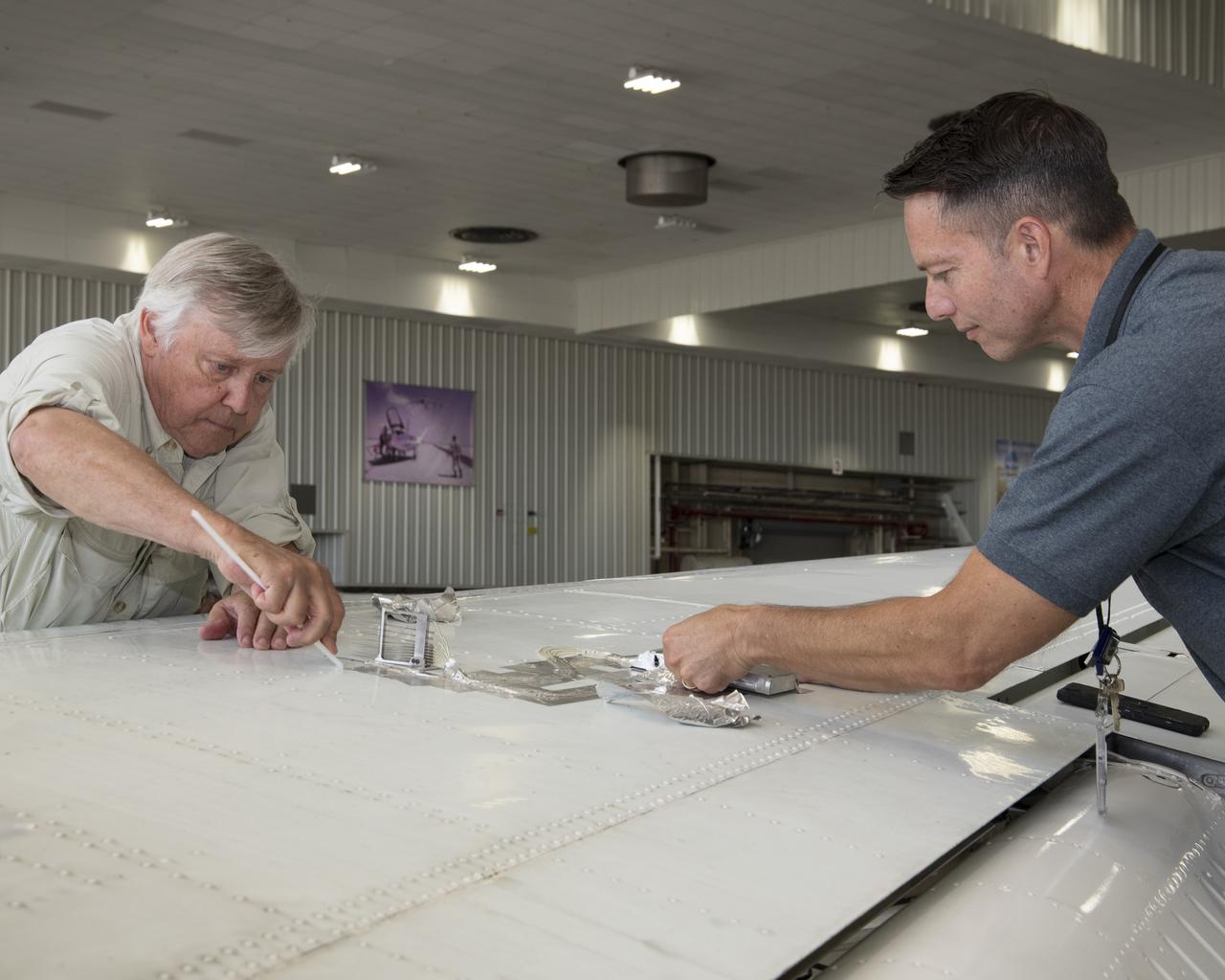
Cal Poly San Luis Obispo Professor Russ Westphal, left, and NASA Armstrong’s Technology Transfer Officer Benjamin Tomlinson remove the Boundary Layer Data System (BLDS) sensor attached to the wing of a Beechcraft Beech 200 Super King Air. The BLDS was flight tested at NASA’s Armstrong Flight Research Center to showcase rapid and flexible flight-testing capabilities.
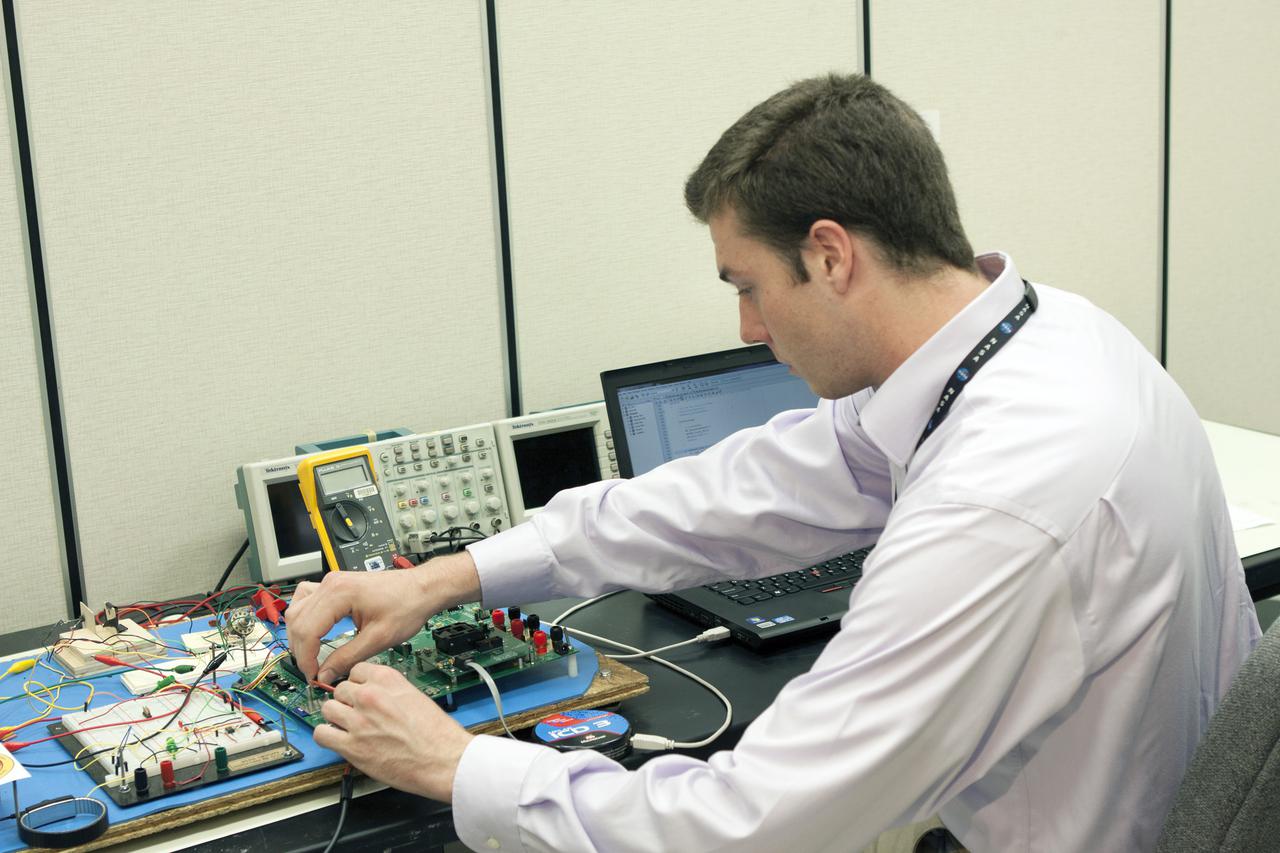
CAPE CANAVERAL, Fla. – Benjamin Plotner, an engineering intern, tests elements of a prototype of the StangSat at Kennedy Space Center before final assembly. The satellite is a small cube measuring 10 inches on all sides and will be launched on a rocket that will carry it on a suborbital mission in Mojave, Calif. Photo credit: NASA_Jim Grossmann
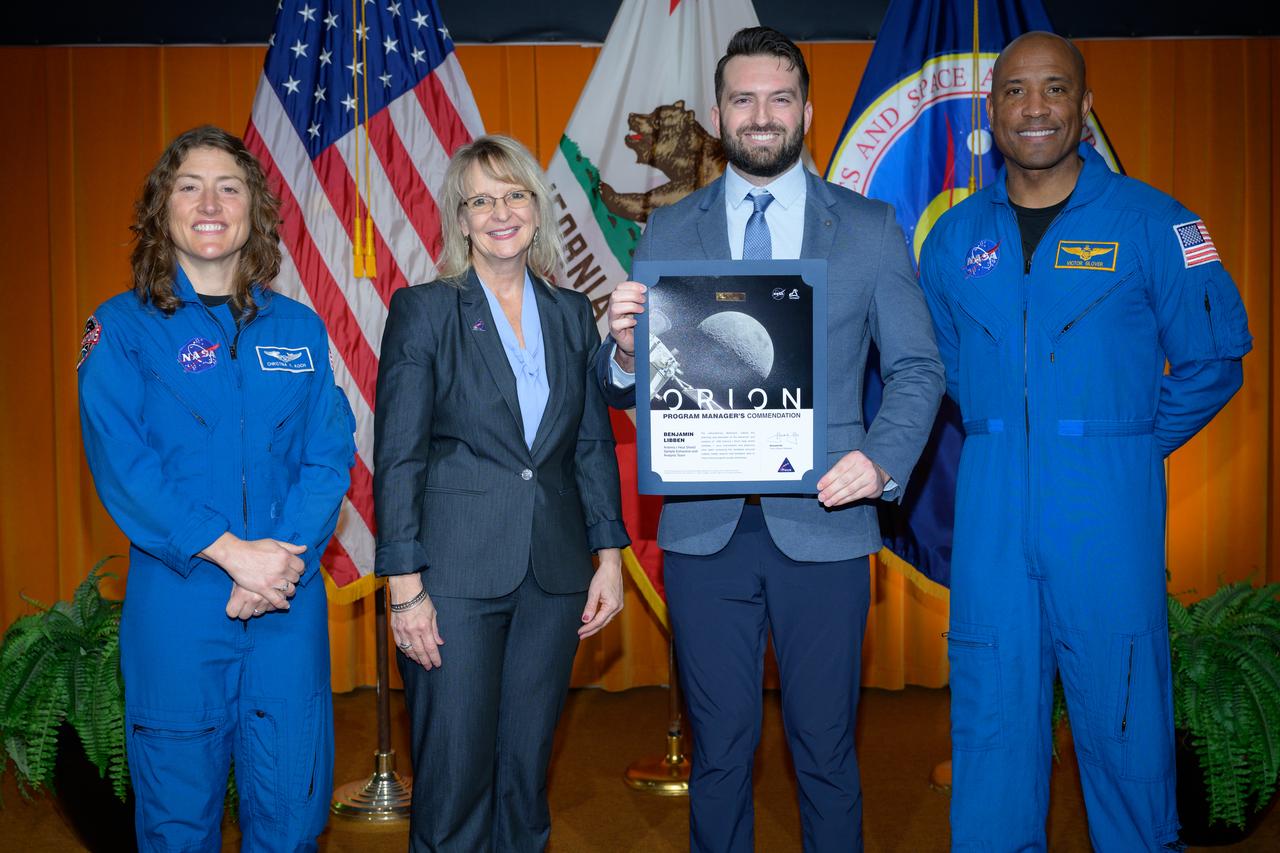
Artemis Orion program manager’s commendation team award presented to the Artemis I Heat Shield Sample Extraction and Analysis team accepted by Benjamin Libben, center, by Orion Deputy Program Manager Debbie Korth, left, NASA astronauts Victor J. Glover, right, and Christina Koch, left, in the N201 auditorium.
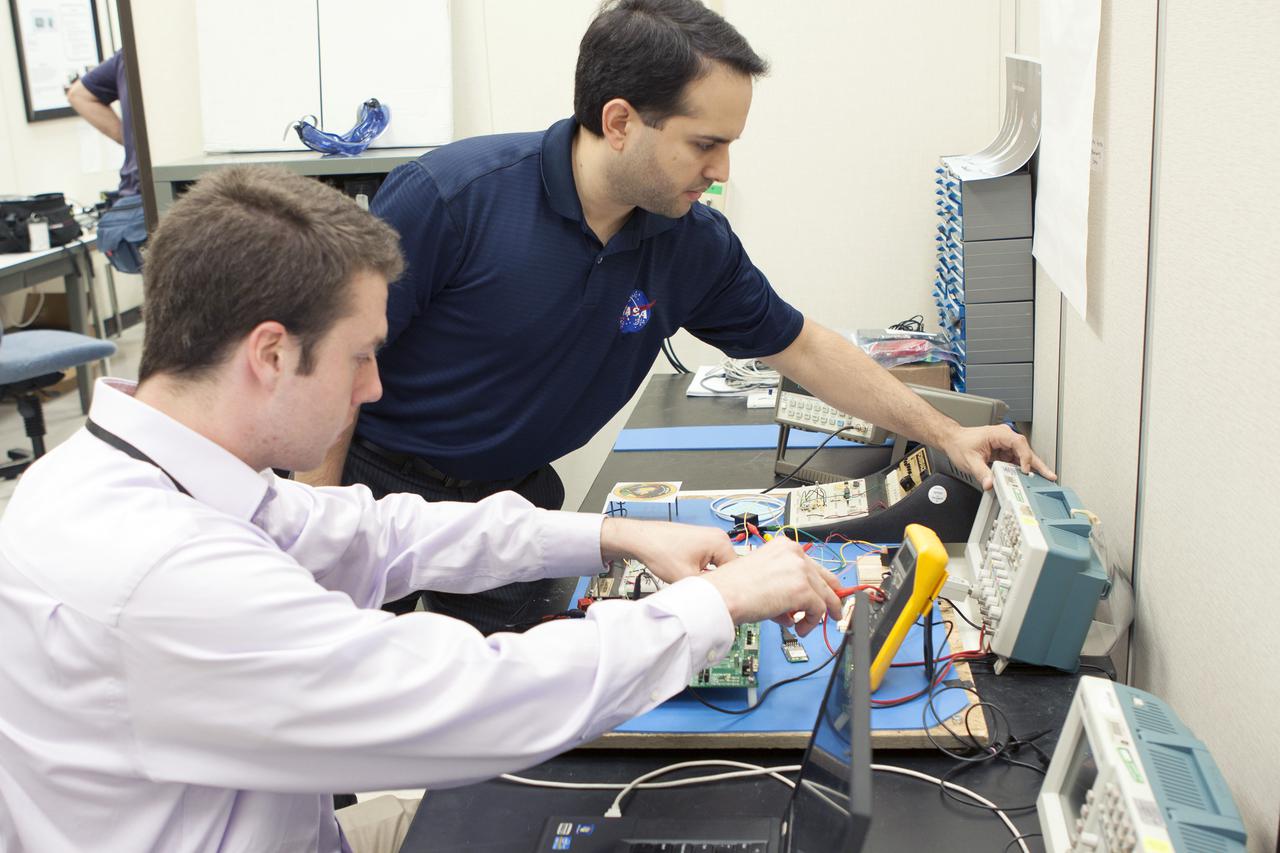
CAPE CANAVERAL, Fla. – Benjamin Plotner, an engineering intern, and Kelvin Ruiz test elements of a prototype of the StangSat at Kennedy Space Center before final assembly. The satellite is a small cube measuring 10 inches on all sides and will be launched on a rocket that will carry it on a suborbital mission in Mojave, Calif. Photo credit: NASA_Jim Grossmann
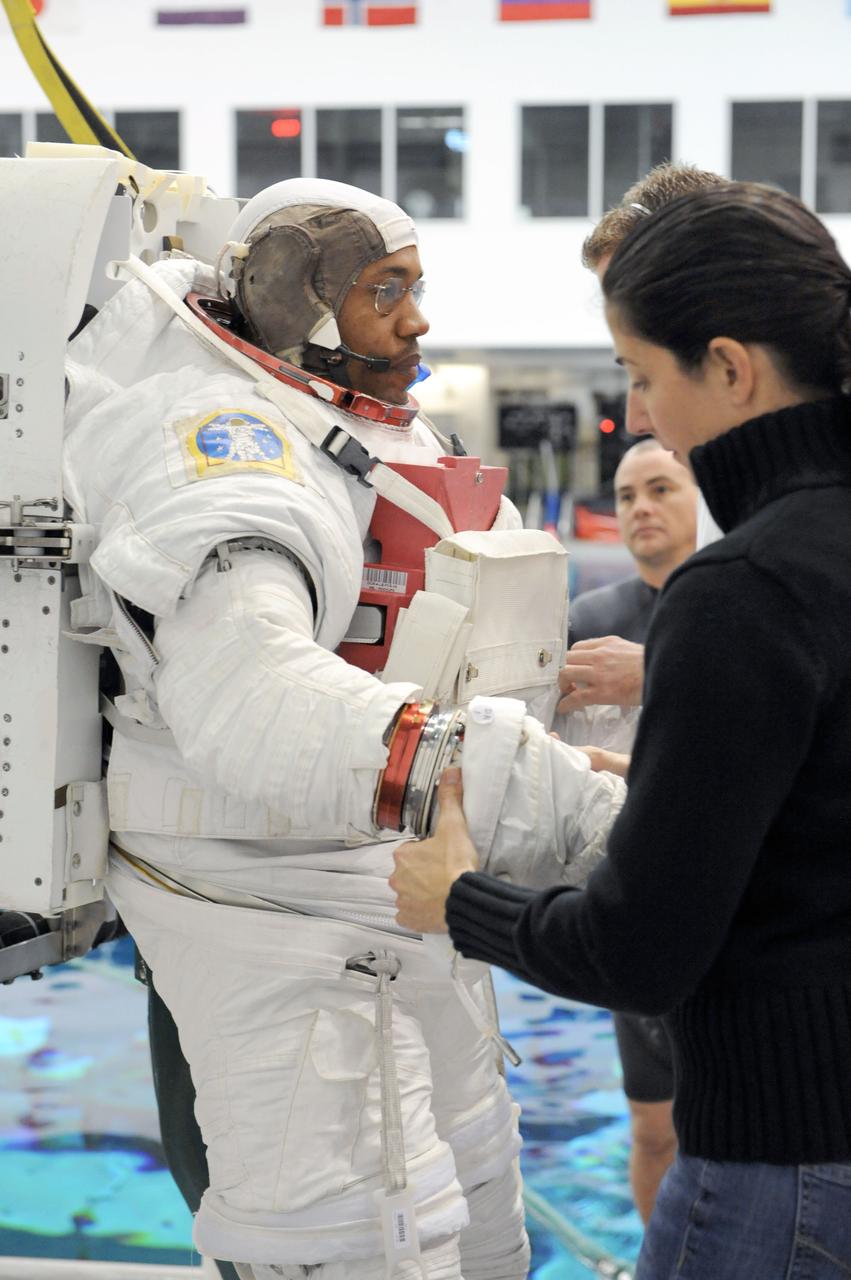
PHOTO DATE: 28 January 2011, LOCATION: NBL - Pool Topside, SUBJECT: STS-133 Crew members Steve Bowen and Benjamin Drew during EVA 2 training with Mike Barratt and Nicole Stott assisting. PHOTOGRAPHER: Mark Sowa
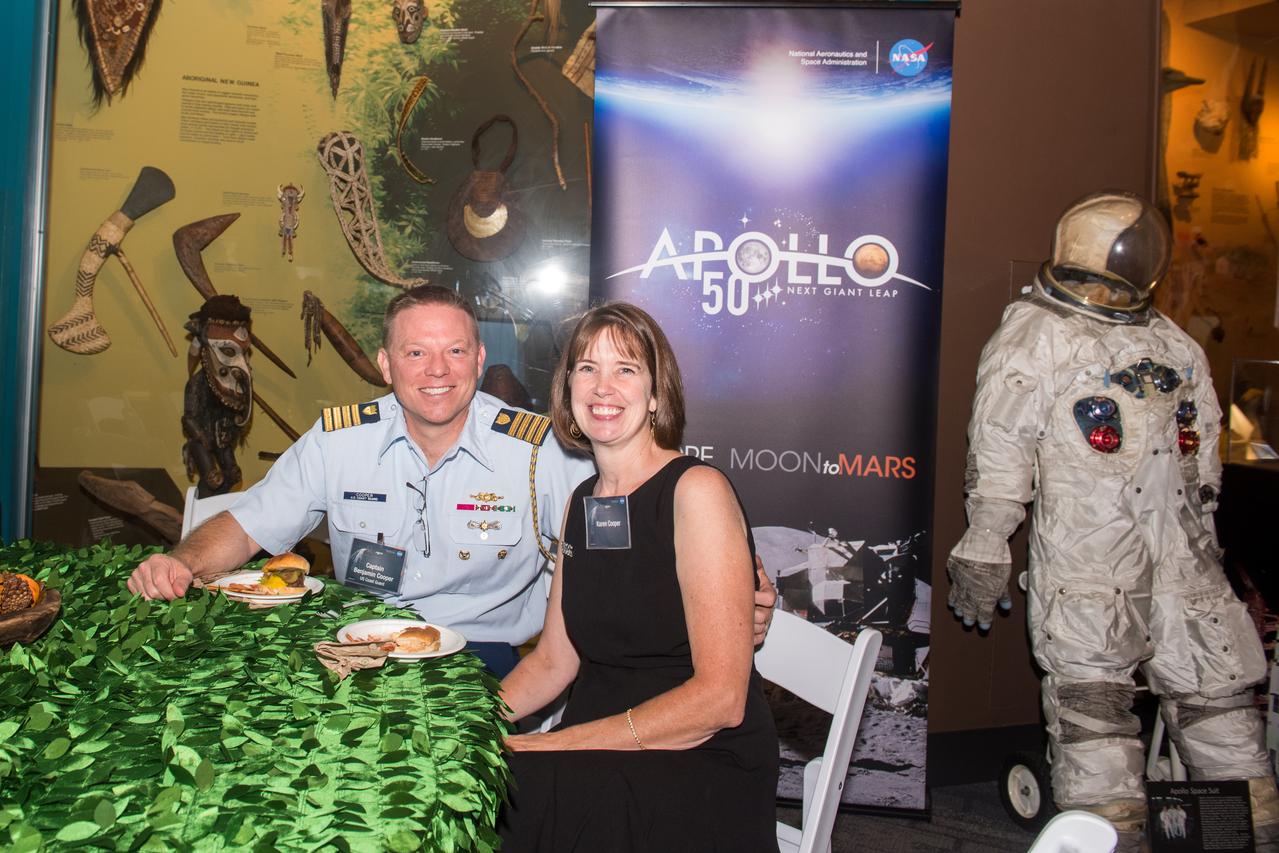
Evening With The Stars - 2019
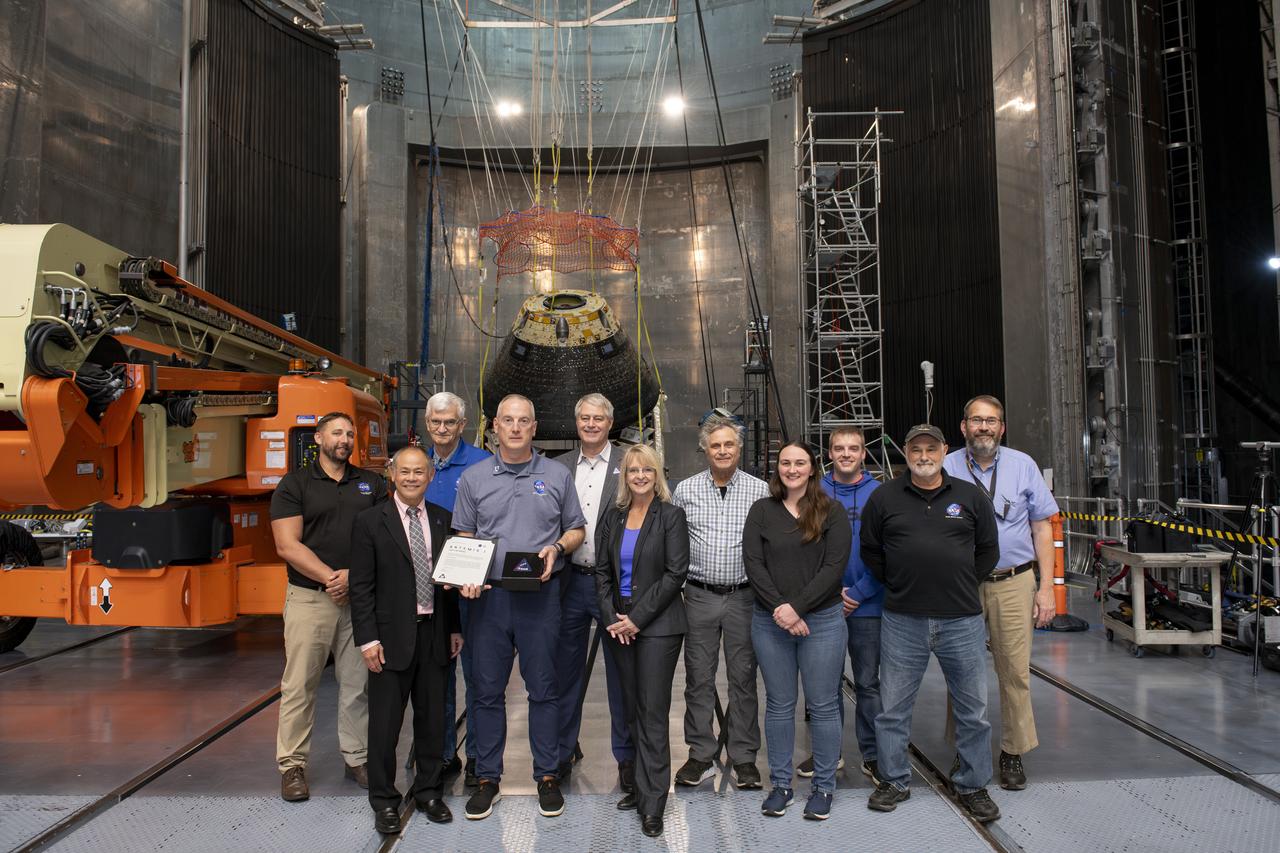
Employees supporting Artemis were invited to attend an appreciation event, “The Road to the Moon,” at Armstrong Test Facility in Sandusky, Ohio. Lockheed Martin presented an article flown on Artemis I to Robert Overy. Pictured from left to right: John Zang, Pho Nguyen, General David Stringer, Robert Overy, Paul Anderson, Debbie Korth, Aaron Horz, Emma Gaerke, Benjamin, Michael Henry and Mark Cmar. On Thursday, Nov. 21, please join NASA employees and support service contractors for Artemis Friends and Family Day. Employees had the opportunity to hear from center leadership and see the Orion module that flew around the Moon and back during 2022’s Artemis I mission. Experts have subjected the spacecraft to extreme conditions in Armstrong’s test facilities. This significant testing is slated to wrap up in December, and we want to give you a chance to see the capsule before the conclusion of the test campaign. Photo Credit: (NASA/Sara Lowthian-Hanna)
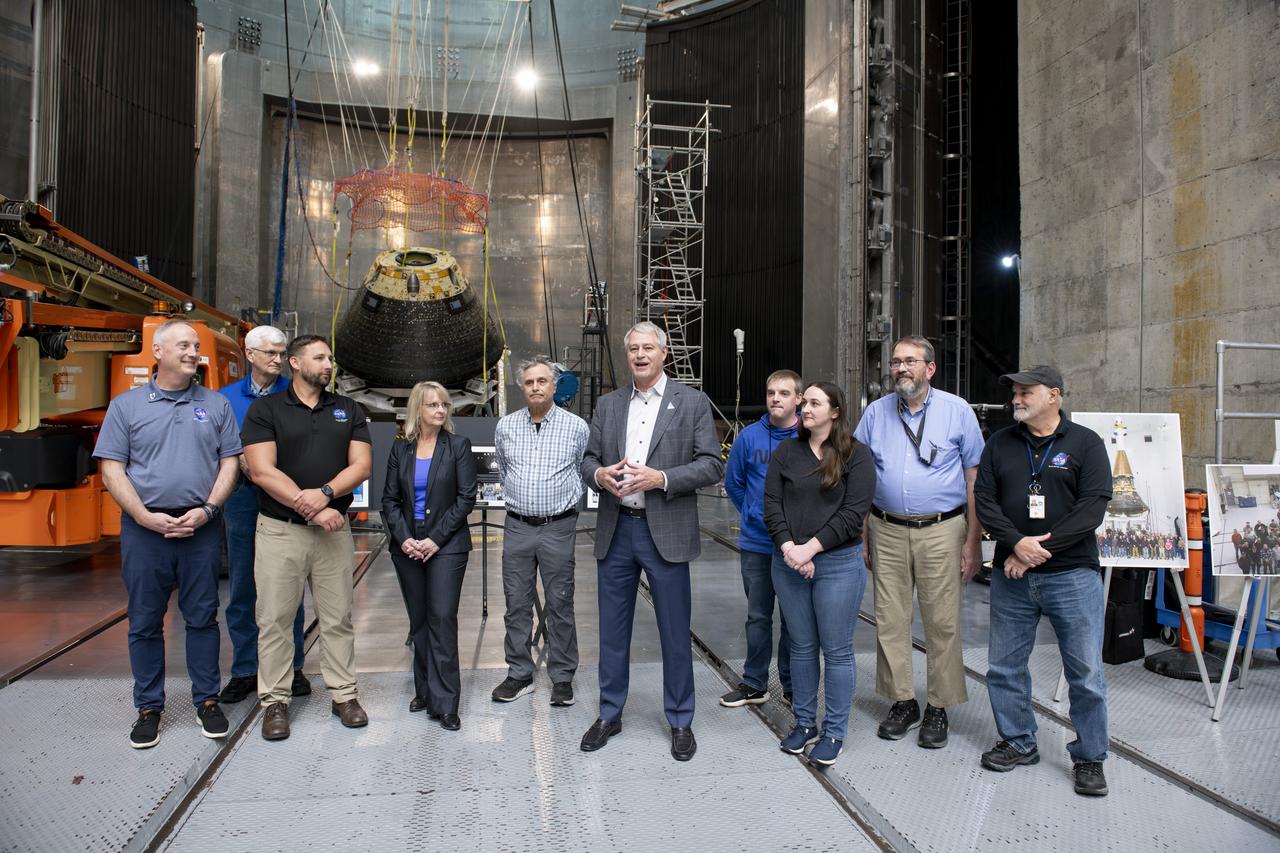
Employees supporting Artemis were invited to attend an appreciation event, “The Road to the Moon,” at Armstrong Test Facility in Sandusky, Ohio. Lockheed Martin presented an article flown on Artemis I to Robert Overy. Pictured from left to right: Robert Overy, General David Stringer, John Zang, Debbie Korth, Aaron Horz, Paul Anderson, Benjamin, Emma Gaerke, Mark Cmar and Michael Henry. On Thursday, Nov. 21, please join NASA employees and support service contractors for Artemis Friends and Family Day. Employees had the opportunity to hear from center leadership and see the Orion module that flew around the Moon and back during 2022’s Artemis I mission. Experts have subjected the spacecraft to extreme conditions in Armstrong’s test facilities. This significant testing is slated to wrap up in December, and we want to give you a chance to see the capsule before the conclusion of the test campaign. Photo Credit: (NASA/Sara Lowthian-Hanna)
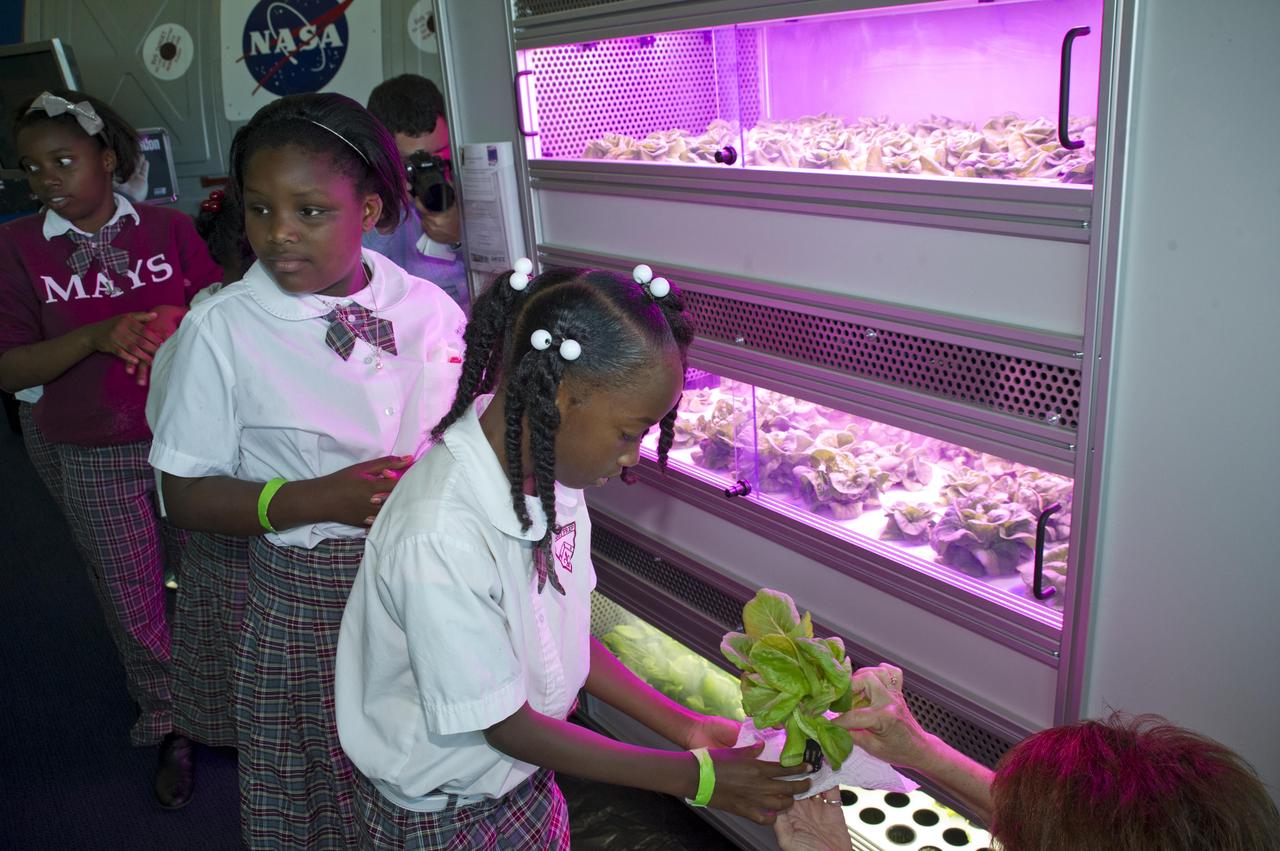
Students from Benjamin E. Mays Preparatory School in New Orleans enjoyed a hands-on experience at the INFINITY at NASA Stennis Space Center facility May 7, 2012. The Louisiana students assisted in the first harvest of lettuce from the Controlled Environment Agriculture unit, which uses an aeroponic process that involves no soil and advance LED lighting techniques.

Shania Etheridge from Benjamin E. Mays Preparatory School in New Orleans shows off the head of lettuce she harvested at the INFINITY at NASA Stennis Space Center facility May 7, 2012. The Louisiana students assisted in the first harvest of lettuce from the Controlled Environment Agriculture unit, which uses an aeroponic process that involves no soil and advance LED lighting techniques.
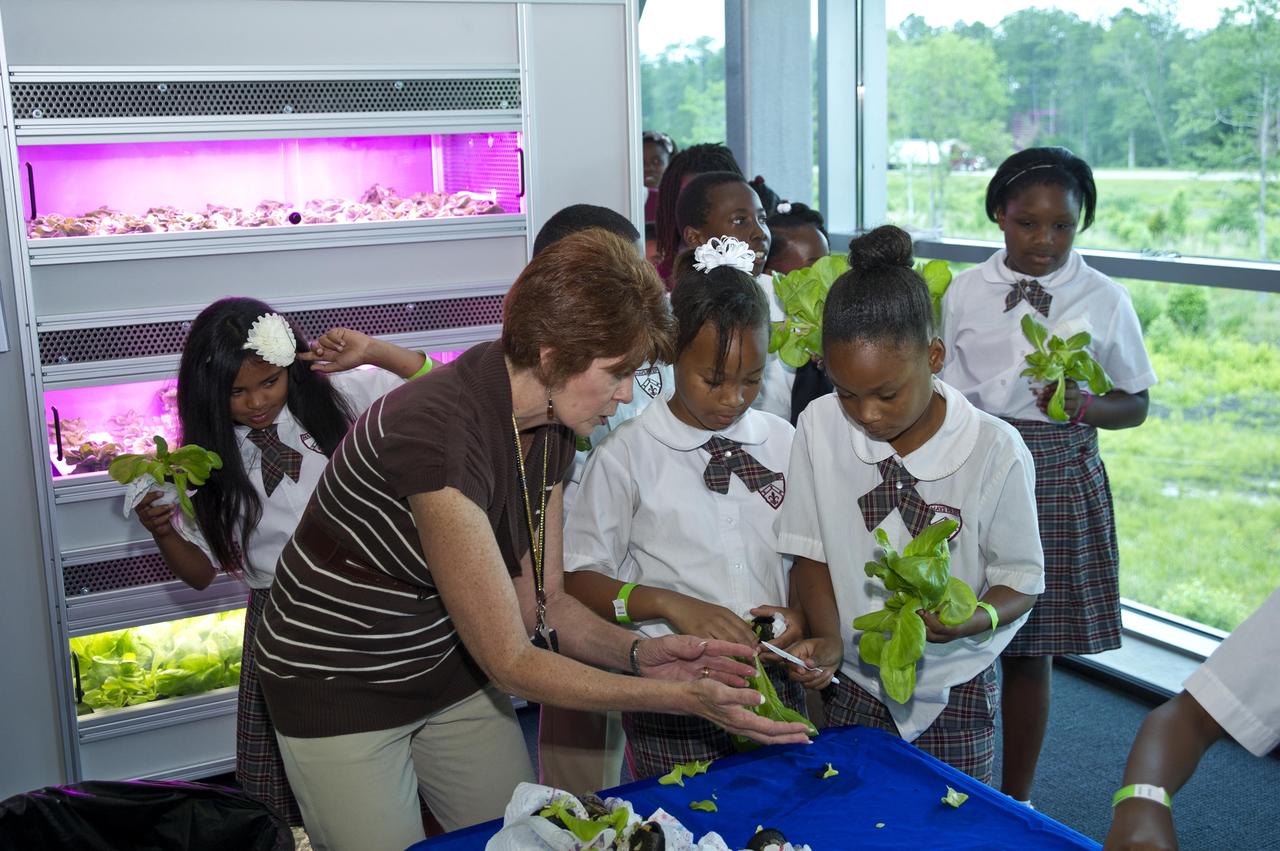
Janice Hueschen of Innovative Imaging & Research Corp. at Stennis Space Center helps students from Benjamin E. Mays Preparatory School in New Orleans harvest lettuce at the INFINITY at NASA Stennis Space Center facility May 7, 2012. The Louisiana students assisted in the first harvest of lettuce from the Controlled Environment Agriculture unit, which uses an aeroponic process that involves no soil and advance LED lighting techniques.
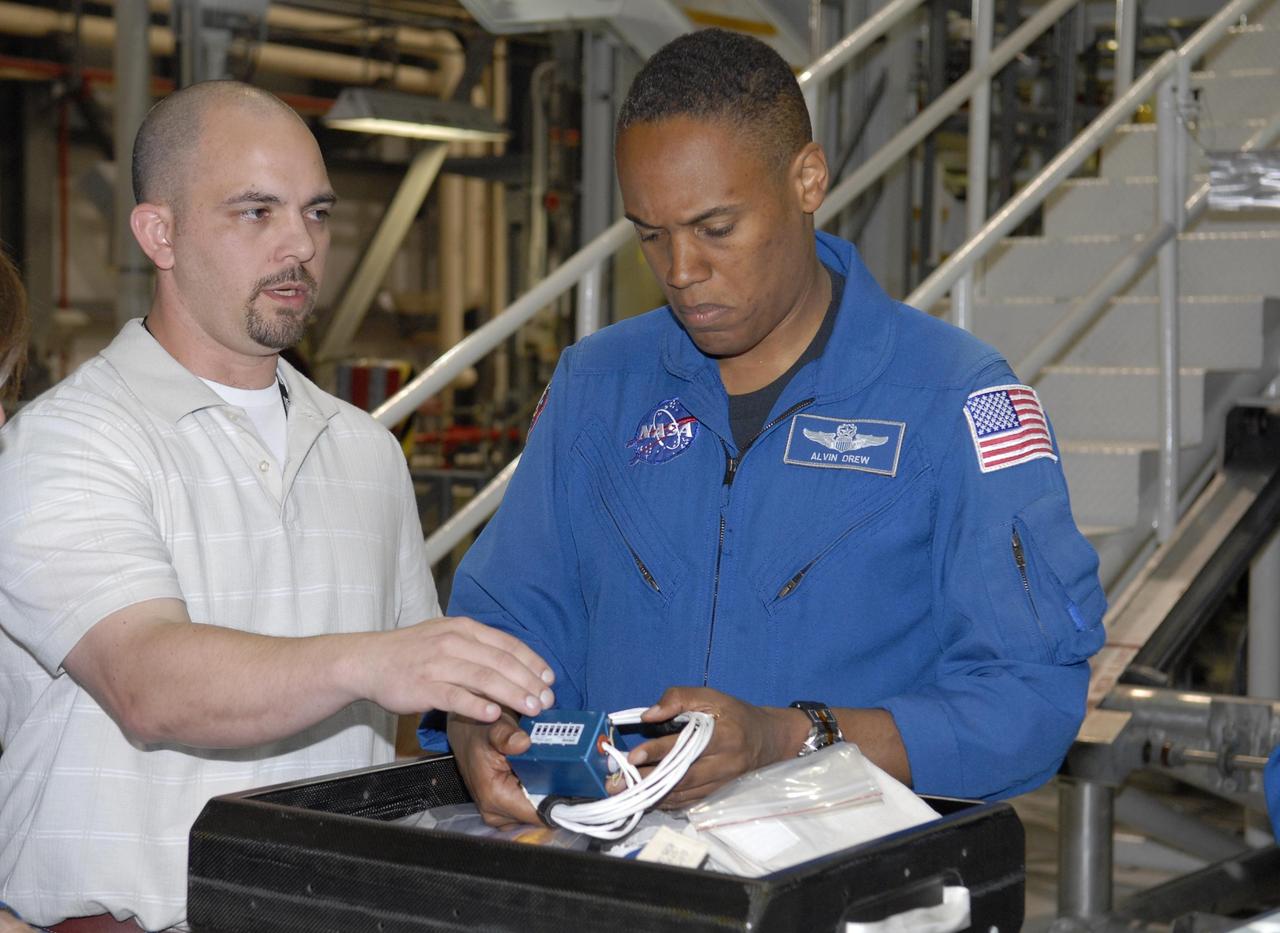
KENNEDY SPACE CENTER, FLA. -- During crew equipment interface test activities in Orbiter Processing Facility bay 3 at KSC, STS-118 Mission Specialist Benjamin Drew gets a close look at equipment that will be used on the flight. The STS-118 mission will be delivering the third starboard truss segment, the ITS S5, to the International Space Station, as well as the SPACEHAB single cargo module filled with supplies and equipment. Launch aboard Space Shuttle Endeavour is targeted for Aug. 9. Photo credit: NASA/Kim Shiflett
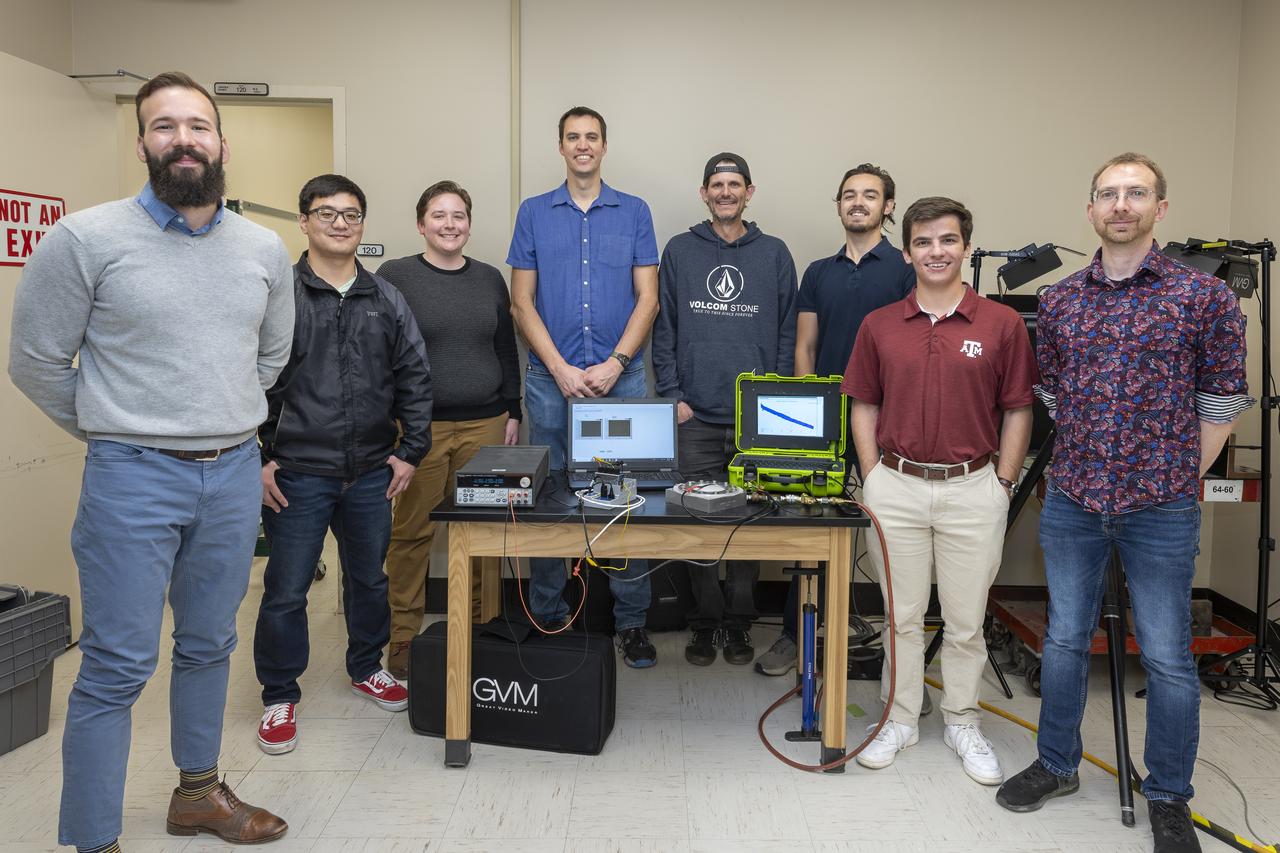
Erick Rossi De La Fuente, from left, John Rudy, L. J. Hantsche, Adam Curry, Jeff Howell, Coby Asselin, Benjamin Mayeux, and Paul Bean pose with a test fixture, material, sensor, and data acquisition systems at NASA’s Armstrong Flight Research Center in Edwards, California. The sensor tests seek to quantify the limits of the material to improve computer models and make more reliable supersonic parachutes.
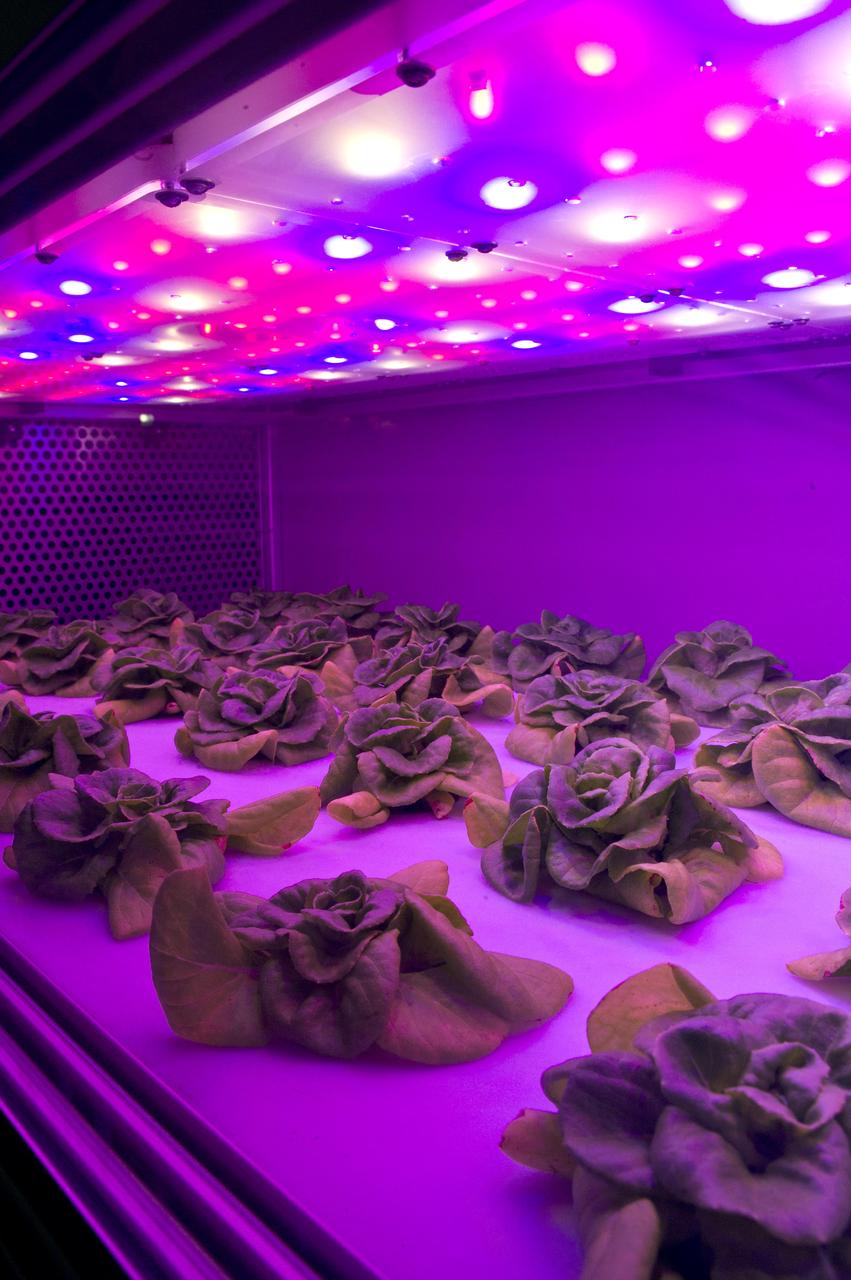
The Controlled Environment Agriculture unit at the INFINITY at NASA Stennis Space Center visitor center and museum grows butterhead lettuce using an aeroponic process that involves no soil and advance LED lighting techniques. Students from Benjamin E. Mays Preparatory School in New Orleans helped to harvest the first crop of lettuce during a visit to the facility May 7, 2012.

Lauren Lombard from Benjamin E. Mays Preparatory School in New Orleans enjoys lettuce she helped to harvest at the INFINITY at NASA Stennis Space Center facility May 7, 2012. The Louisiana students assisted in the first harvest of lettuce from the Controlled Environment Agriculture unit, which uses an aeroponic process that involves no soil and advance LED lighting techniques
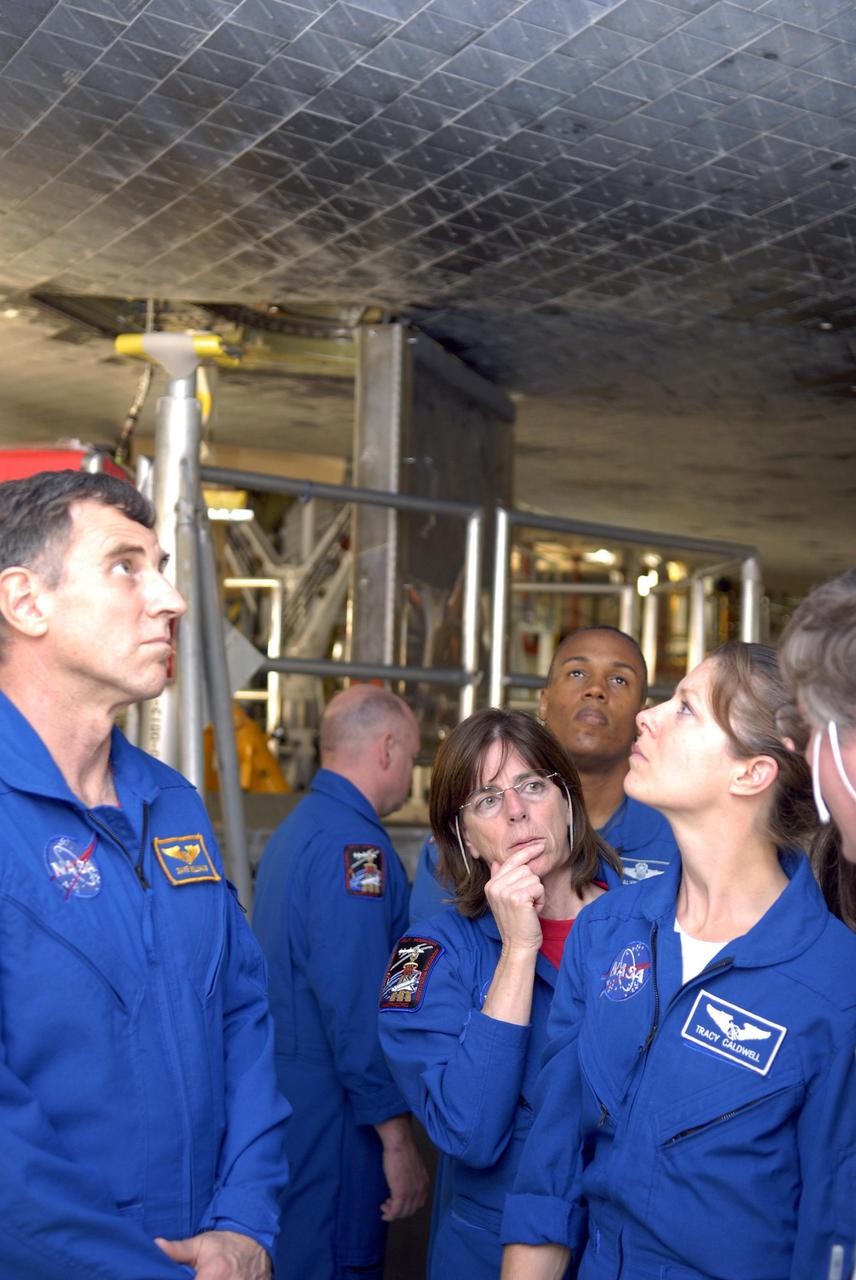
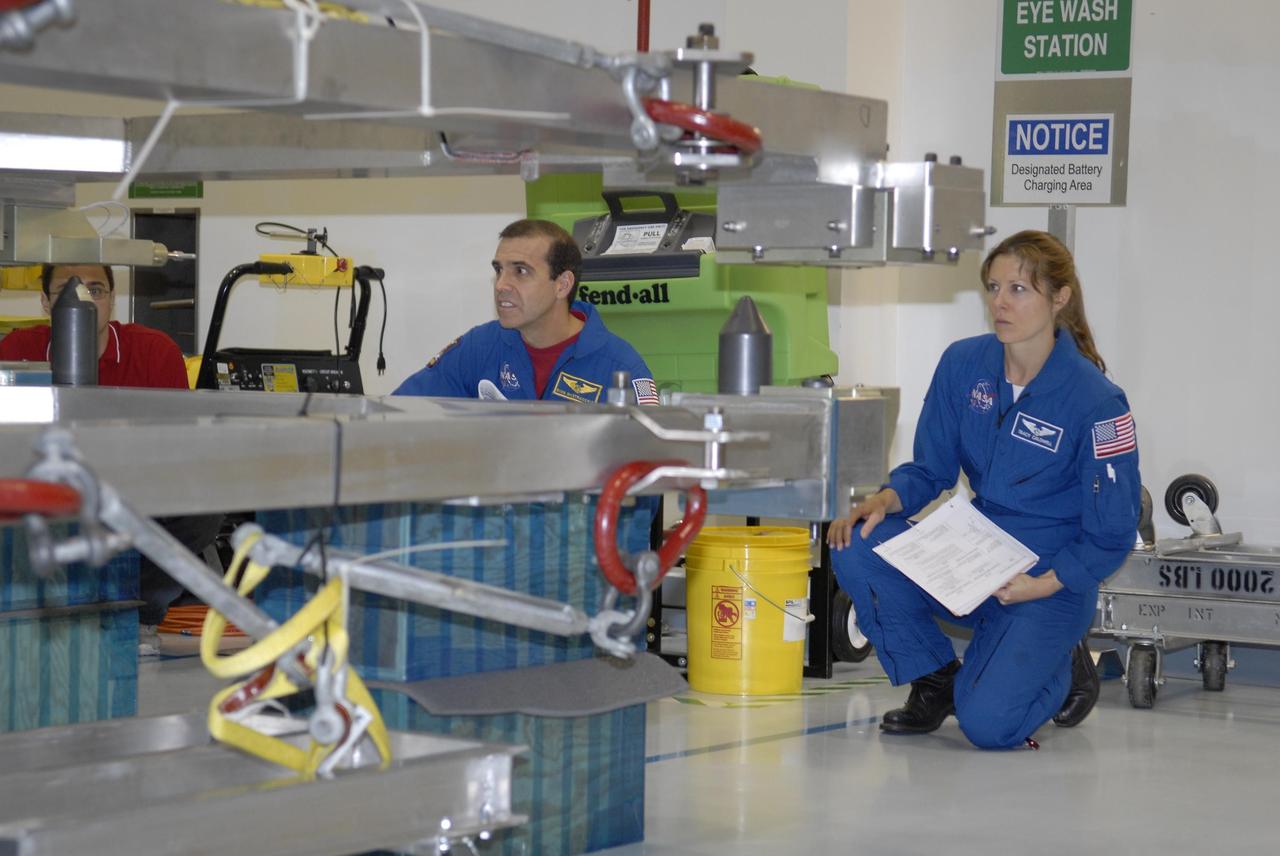
KENNEDY SPACE CENTER, FLA. -- During crew equipment interface test activities, members of the STS-118 crew look over the orbiter Endeavour in Orbiter Processing Facility bay 2. From left are Mission Specialist Dr. Dafydd Williams, Commander Scott Kelly, and Mission Specialists Barbara Morgan, Benjamin Drew and Tracy Caldwell. The STS-118 mission will be delivering the third starboard truss segment, the ITS S5, to the International Space Station, as well as the SPACEHAB single cargo module filled with supplies and equipment. Launch aboard Space Shuttle Endeavour is targeted for Aug. 9. Photo credit: NASA/Kim Shiflett

KENNEDY SPACE CENTER, FLA. -- In the Orbiter Processing Facility bay 2, Endeavour's payload bay doors are ready to be closed. The payload will be installed on the launch pad after rollout. The orbiter is designated for mission STS-118, targeted for launch on Aug. 9. The mission will continue space station construction by delivering a third starboard truss segment, S5, as well as carrying the External Stowage Platform 3. The crew comprises seven astronauts: Commander Scott Kelly, Pilot Charles Hobaugh and Mission Specialists Dr. Dafydd (Dave) Williams, Barbara Morgan, Richard Mastracchio, Tracy Caldwell and Benjamin Drew. Williams represents the Canadian Space Agency. Photo credit: NASA/Cory Huston
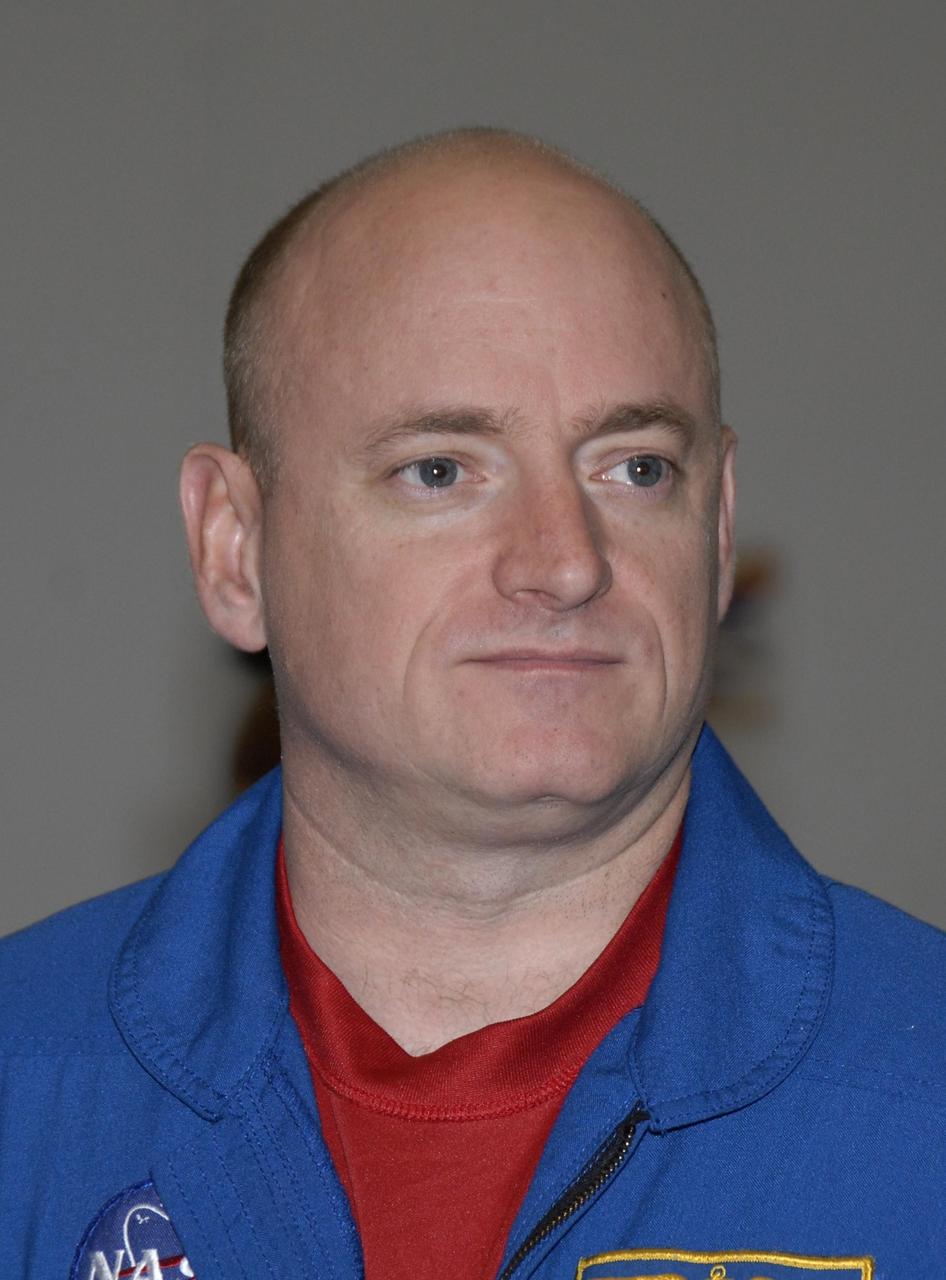
KENNEDY SPACE CENTER, FLA. -- STS-118 Commander Scott Kelly, seen here in the Space Station Processing Facility, is at KSC to take part in crew equipment interface test activities. The crew comprises Kelly, Pilot Charles Hobaugh, and Mission Specialists Dr. Dafydd Williams, Barbara Morgan, Richard Mastracchio, Tracy Caldwell and Benjamin Drew. Williams is with the Canadian Space Agency. The STS-118 mission will be delivering the third starboard truss segment, the ITS S5, to the International Space Station, and a SPACEHAB Single Cargo module with supplies and equipment. Launch aboard Space Shuttle Endeavour is targeted for August. Photo credit: NASA/Kim Shiflett
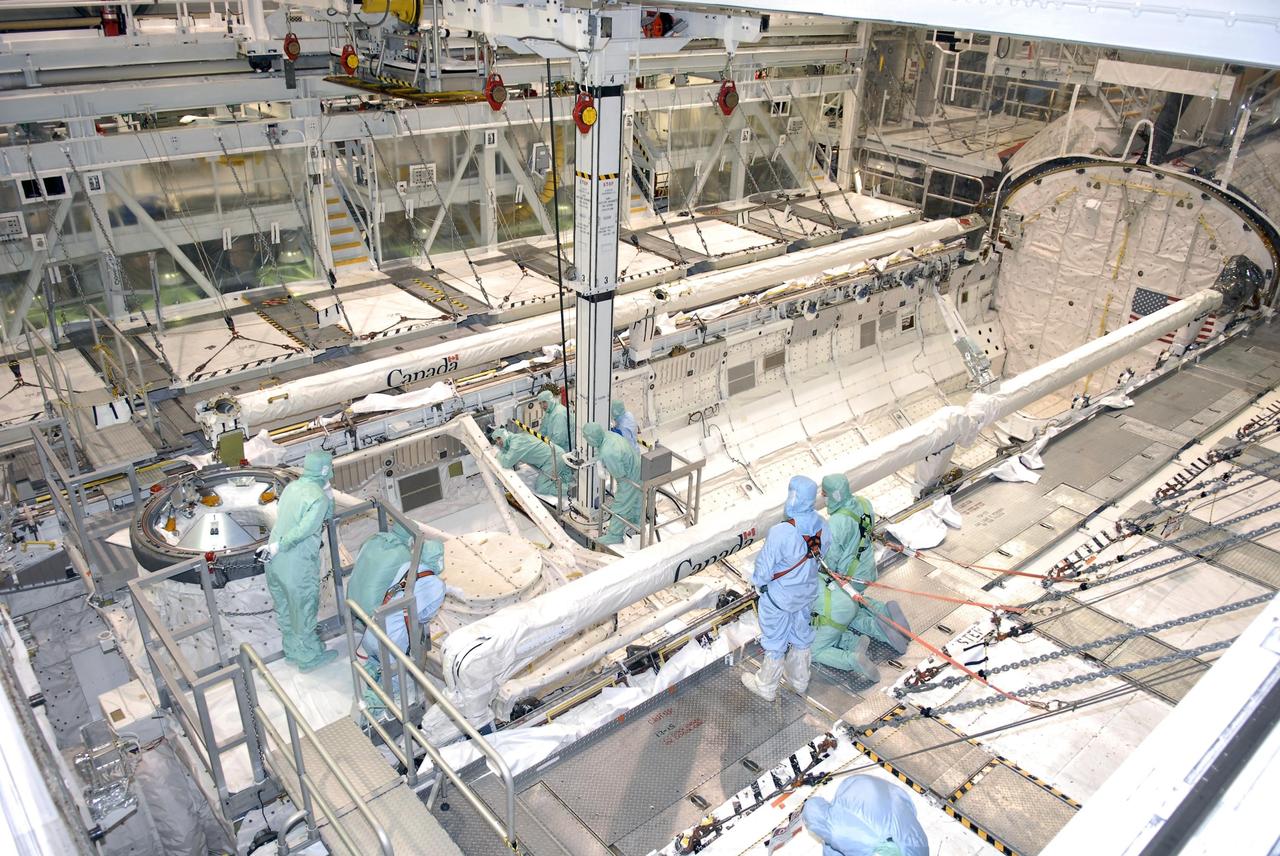
KENNEDY SPACE CENTER, FLA. -- During crew equipment interface test activities at KSC, STS-118 crew members get a close look at equipment inside Endeavour's payload bay. The crew comprises Commander Scott Kelly, Pilot Charles Hobaugh, and Mission Specialists Dr. Dafydd Williams, Barbara Morgan, Richard Mastracchio, Tracy Caldwell and Benjamin Drew. The STS-118 mission will be delivering the third starboard truss segment, the ITS S5, to the International Space Station, as well as the SPACEHAB single cargo module filled with supplies and equipment. Launch aboard Space Shuttle Endeavour is targeted for Aug. 9. Photo credit: NASA/Kim Shiflett
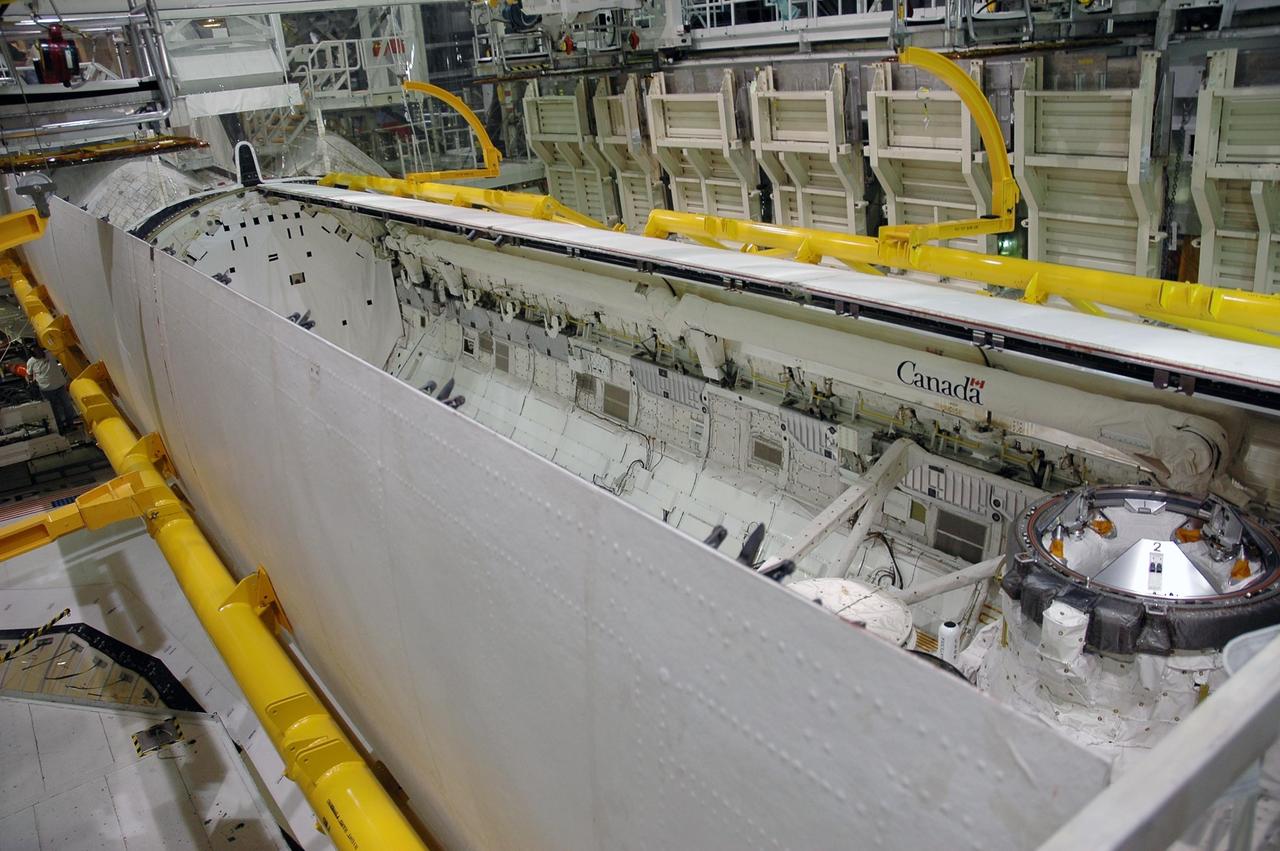
KENNEDY SPACE CENTER, FLA. -- In the Orbiter Processing Facility bay 2, Endeavour's payload bay doors are being closed. The payload will be installed on the launch pad after rollout. The orbiter is designated for mission STS-118, targeted for launch on Aug. 9. The mission will continue space station construction by delivering a third starboard truss segment, S5, as well as carrying the External Stowage Platform 3. The crew comprises seven astronauts: Commander Scott Kelly, Pilot Charles Hobaugh and Mission Specialists Dr. Dafydd (Dave) Williams, Barbara Morgan, Richard Mastracchio, Tracy Caldwell and Benjamin Drew. Williams represents the Canadian Space Agency. Photo credit: NASA/Cory Huston
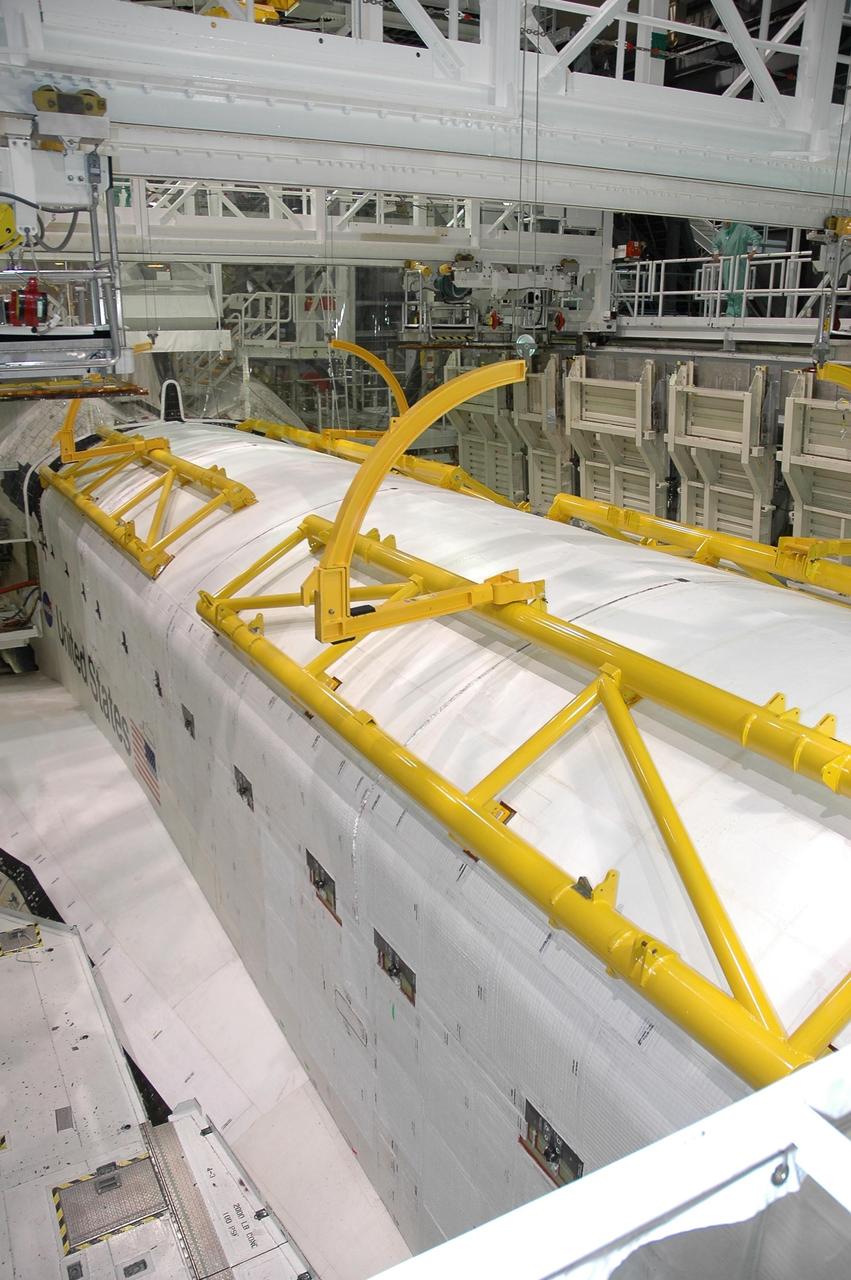
KENNEDY SPACE CENTER, FLA. -- In the Orbiter Processing Facility bay 2, Endeavour's payload bay doors are closed. The payload will be installed on the launch pad after rollout. The orbiter is designated for mission STS-118, targeted for launch on Aug. 9. The mission will continue space station construction by delivering a third starboard truss segment, S5, as well as carrying the External Stowage Platform 3. The crew comprises seven astronauts: Commander Scott Kelly, Pilot Charles Hobaugh and Mission Specialists Dr. Dafydd (Dave) Williams, Barbara Morgan, Richard Mastracchio, Tracy Caldwell and Benjamin Drew. Williams represents the Canadian Space Agency. Photo credit: NASA/Cory Huston
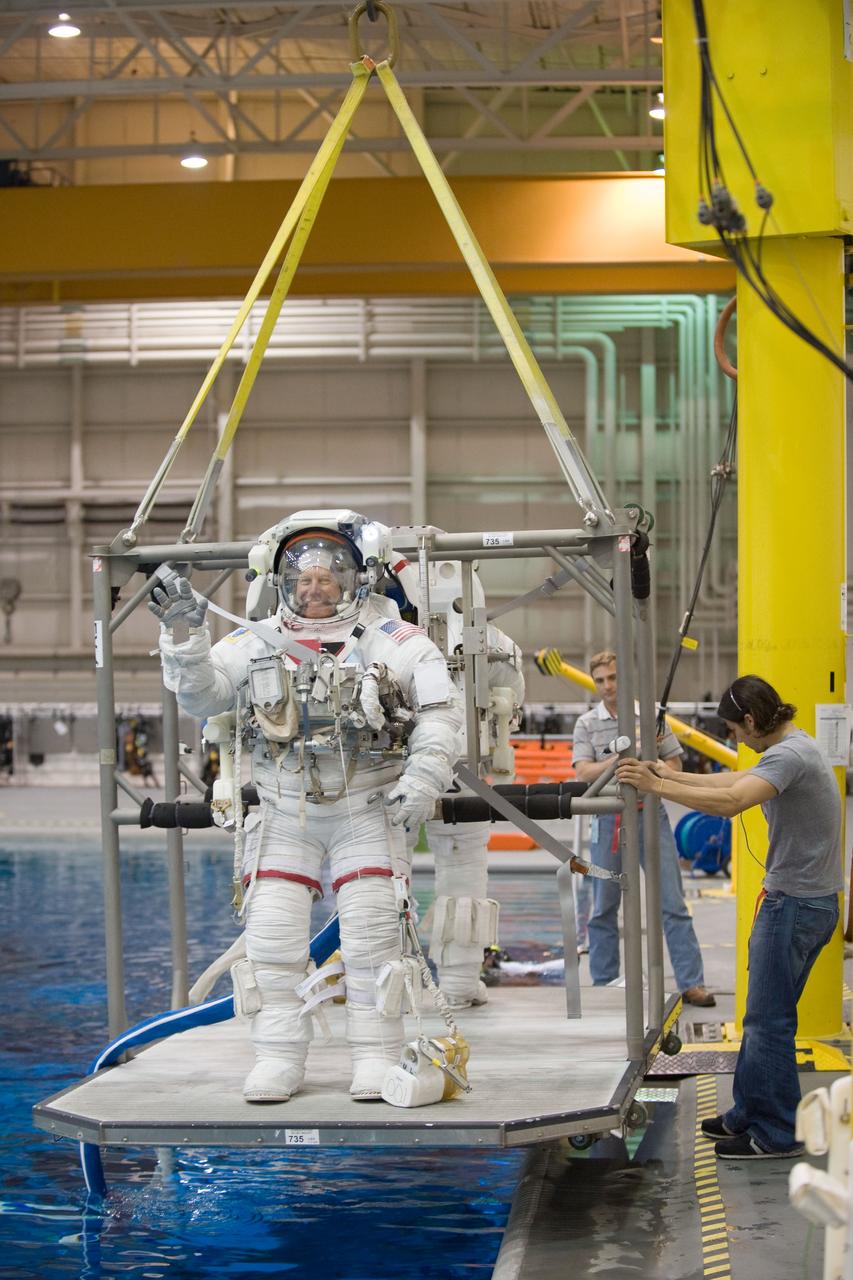
JSC2010-E-046459 (31 March 2010) --- NASA astronauts Tim Kopra and Alvin Drew (partially obscured), both STS-133 mission specialists, attired in training versions of their Extravehicular Mobility Unit (EMU) spacesuits, are about to be submerged in the waters of the Neutral Buoyancy Laboratory (NBL) near NASA's Johnson Space Center. Divers (out of frame) are in the water to assist the crew members in their rehearsal, intended to help prepare them for work on the exterior of the International Space Station.
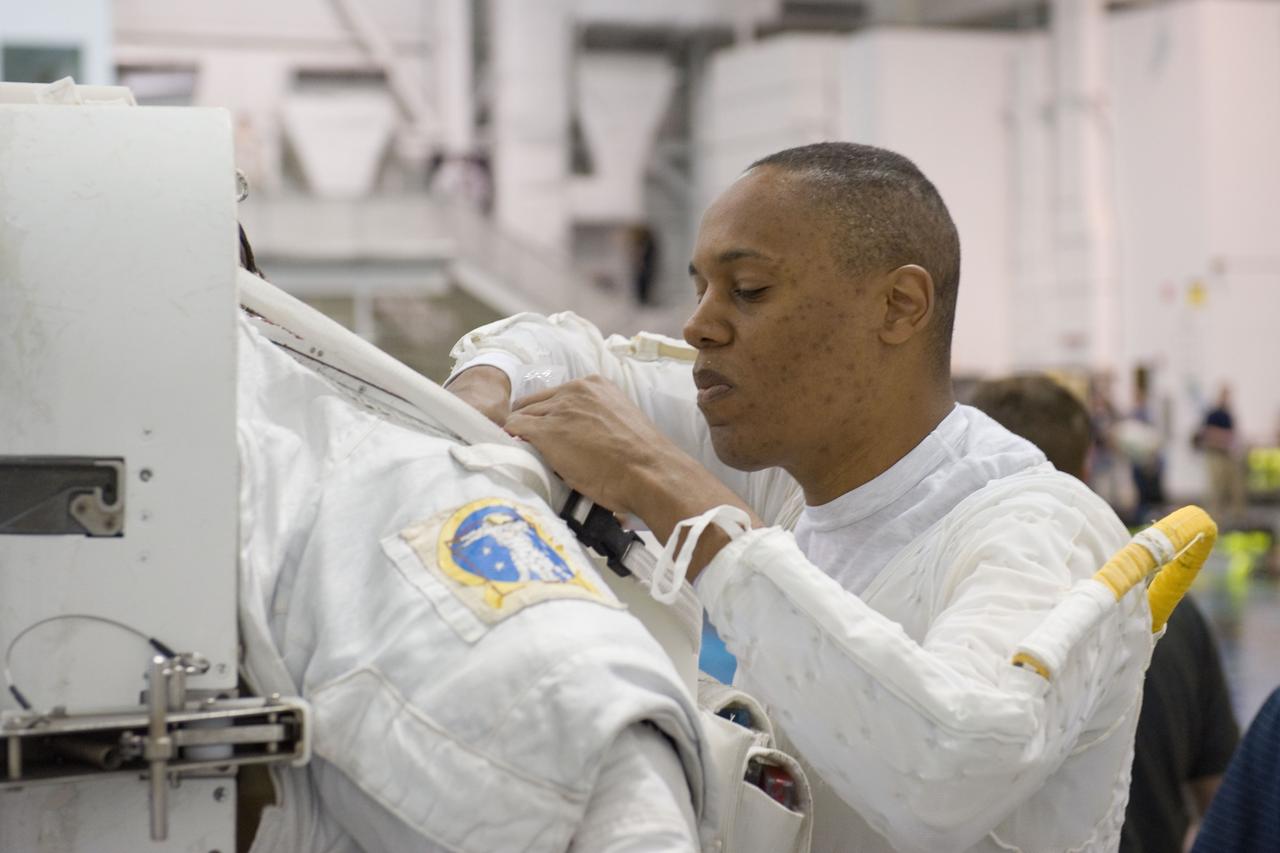
JSC2010-E-046445 (31 March 2010) --- NASA astronaut Alvin Drew, STS-133 mission specialist, works with a training version of his Extravehicular Mobility Unit (EMU) spacesuit in preparation for a spacewalk training session in the waters of the Neutral Buoyancy Laboratory (NBL) near NASA's Johnson Space Center.
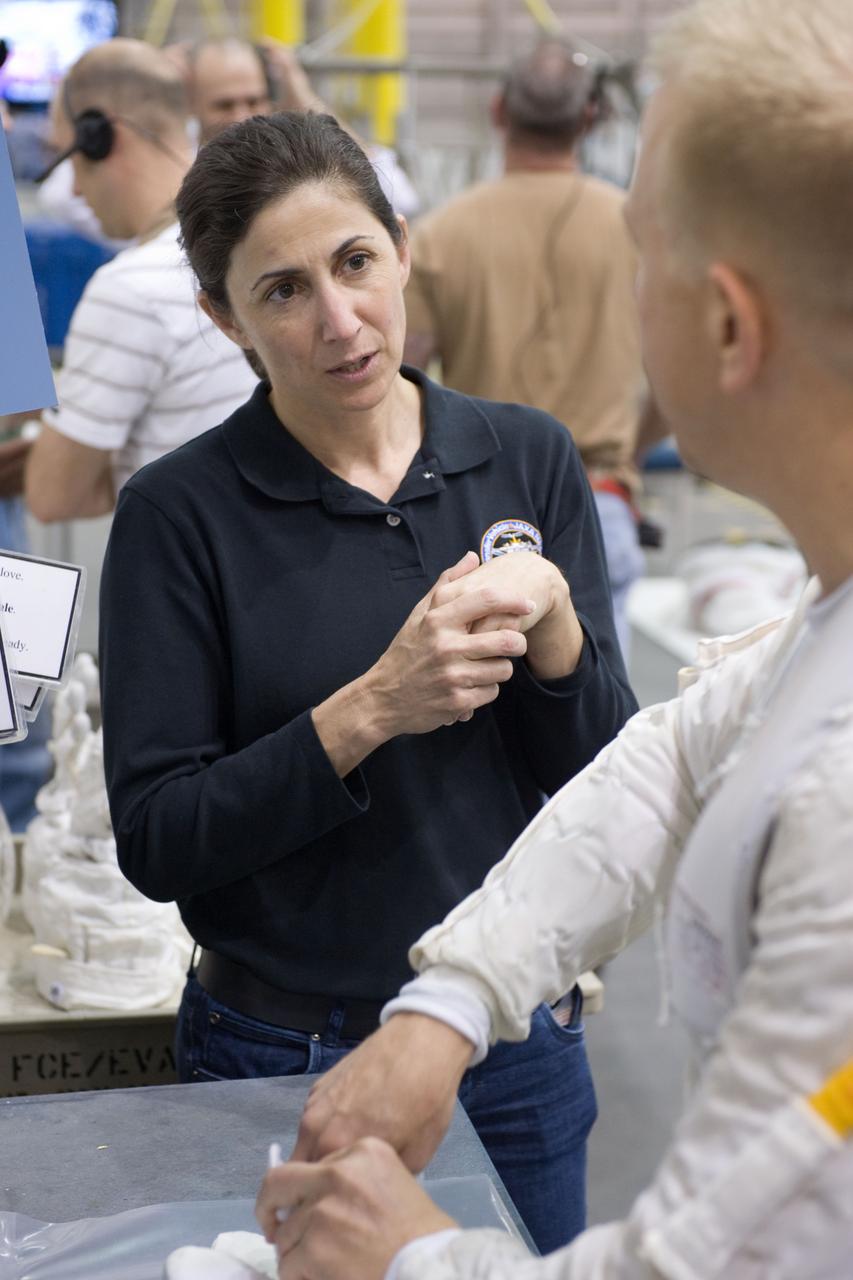
JSC2010-E-046444 (31 March 2010) --- NASA astronauts Nicole Stott and Tim Kopra, both STS-133 mission specialists, are pictured during a training session in the Neutral Buoyancy Laboratory (NBL) near NASA's Johnson Space Center.
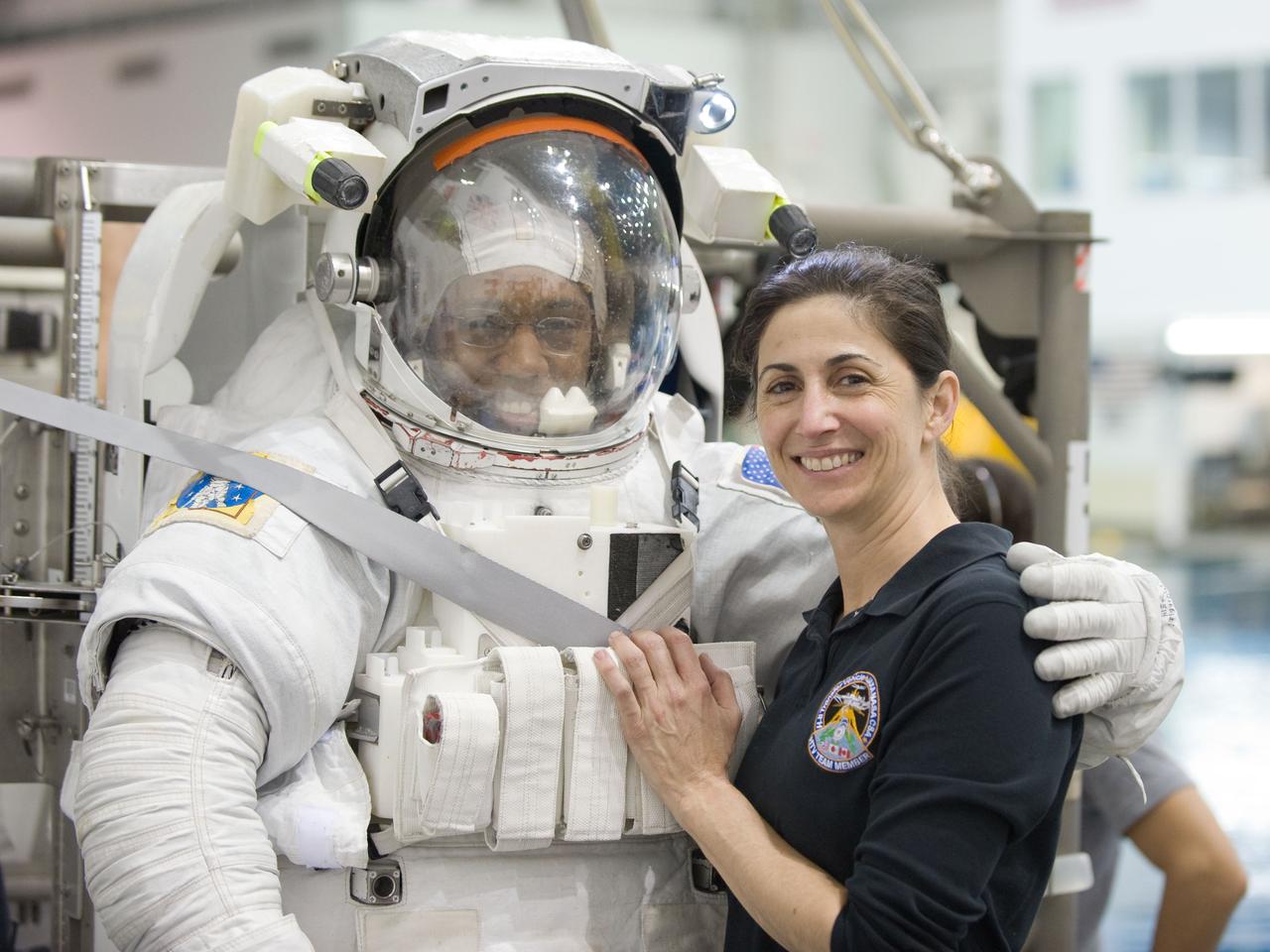
JSC2010-E-046457 (31 March 2010) --- NASA astronauts Alvin Drew, attired in a training version of his Extravehicular Mobility Unit (EMU) spacesuit, and Nicole Stott, both STS-133 mission specialists, take a moment for a photo prior to the start of Drew?s spacewalk training session in the waters of the Neutral Buoyancy Laboratory (NBL) near NASA's Johnson Space Center.
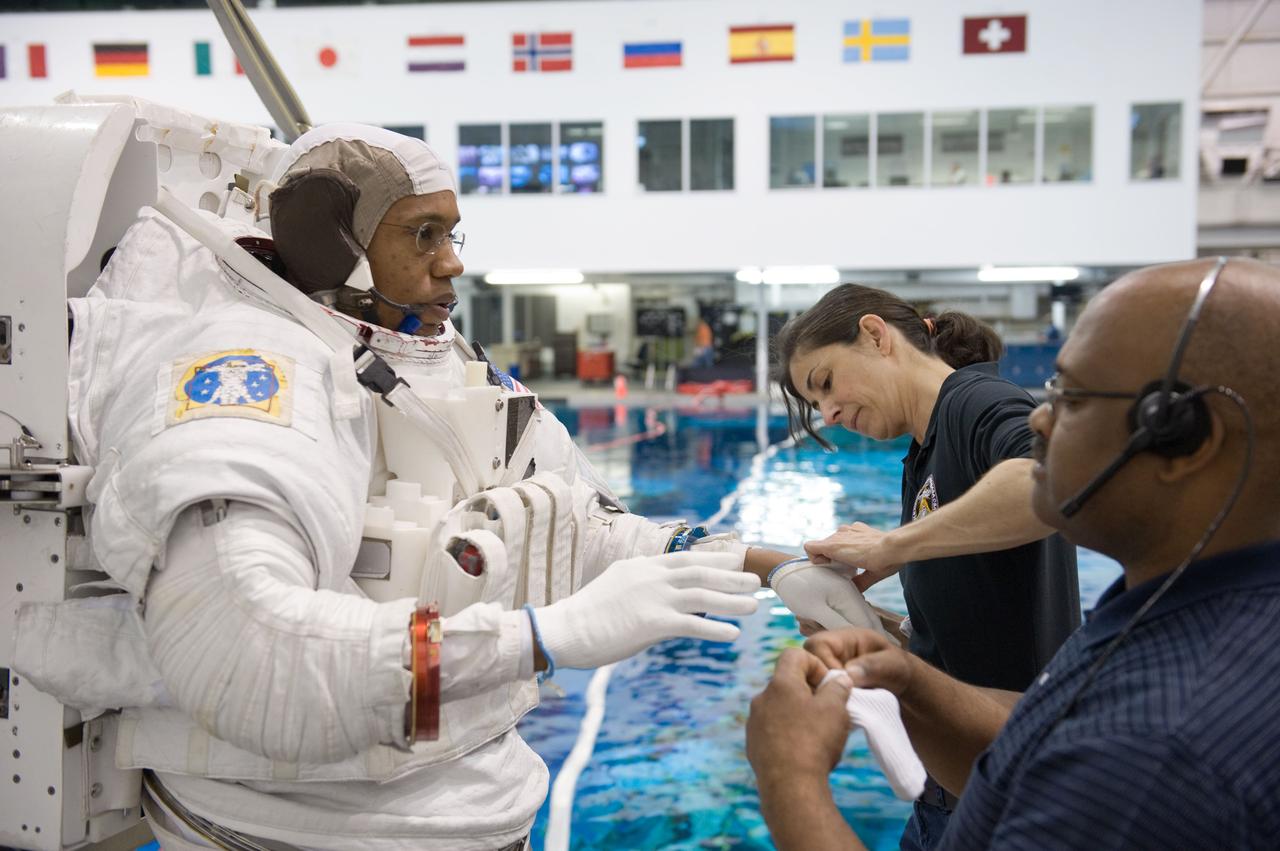
JSC2010-E-046452 (31 March 2010) --- NASA astronaut Alvin Drew, STS-133 mission specialist, dons a training version of his Extravehicular Mobility Unit (EMU) spacesuit in preparation for a spacewalk training session in the waters of the Neutral Buoyancy Laboratory (NBL) near NASA's Johnson Space Center. NASA astronaut Nicole Stott, mission specialist, assisted Drew.
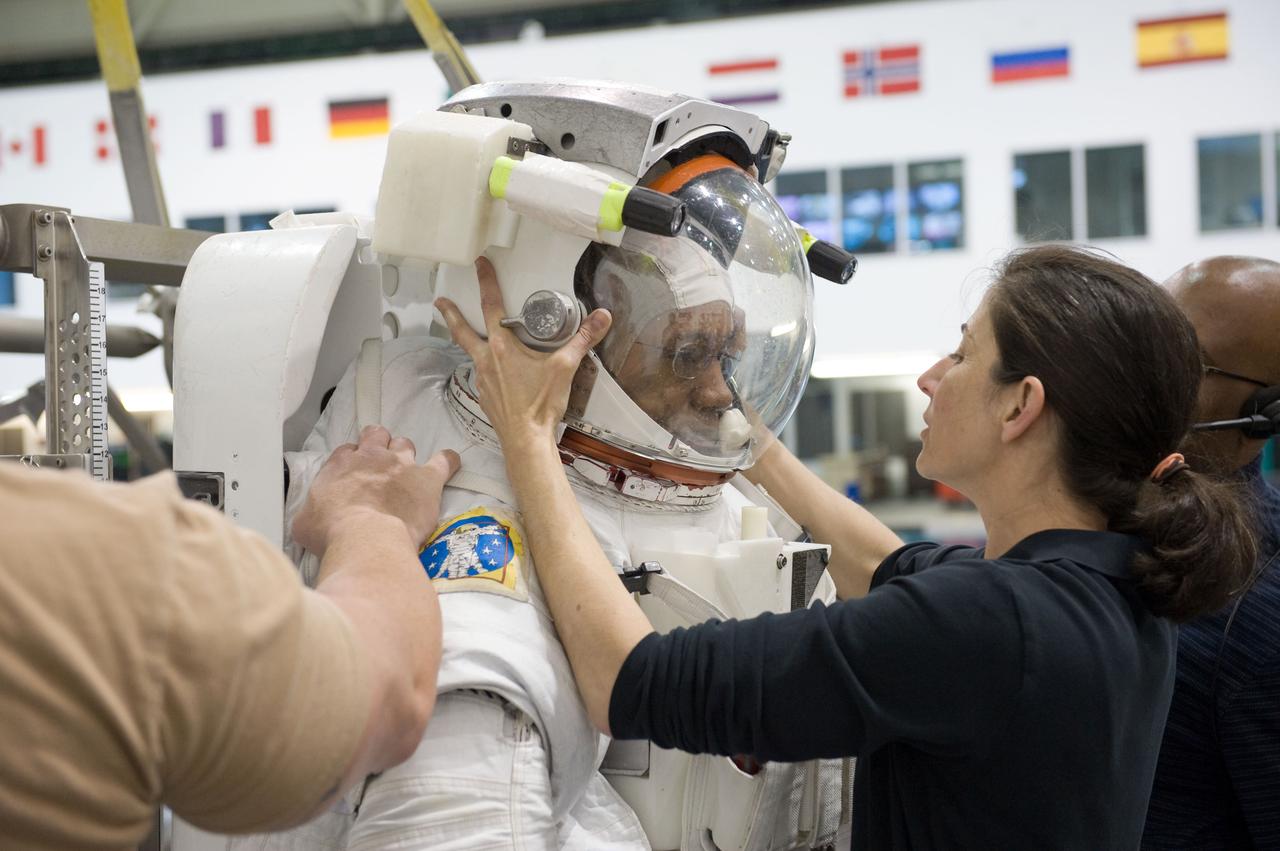
JSC2010-E-046454 (31 March 2010) --- NASA astronaut Alvin Drew, STS-133 mission specialist, dons a training version of his Extravehicular Mobility Unit (EMU) spacesuit in preparation for a spacewalk training session in the waters of the Neutral Buoyancy Laboratory (NBL) near NASA's Johnson Space Center. NASA astronaut Nicole Stott, mission specialist, assisted Drew.
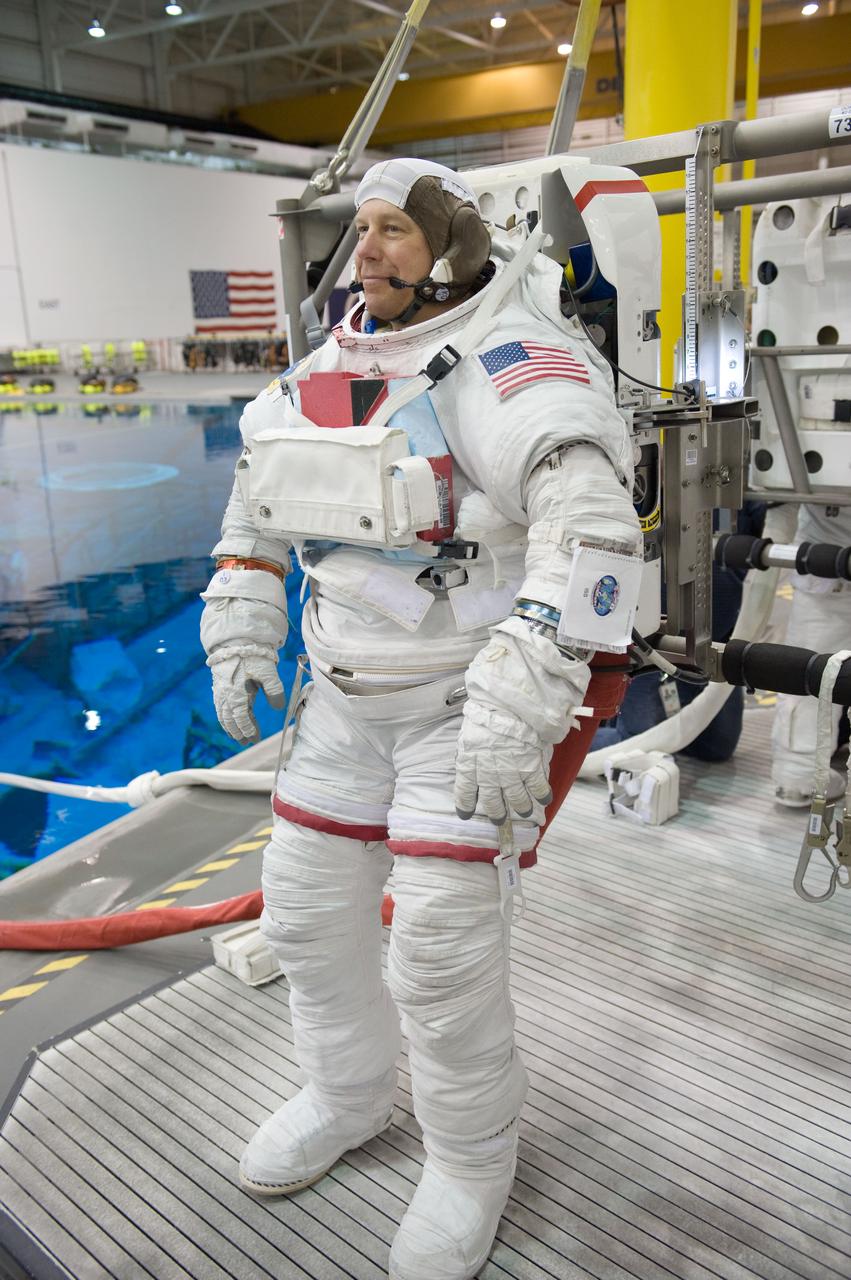
JSC2010-E-046449 (31 March 2010) --- NASA astronaut Tim Kopra, STS-133 mission specialist, attired in a training version of his Extravehicular Mobility Unit (EMU) spacesuit, awaits the start of a spacewalk training session in the waters of the Neutral Buoyancy Laboratory (NBL) near NASA's Johnson Space Center.

Civil Air Patrol cadets (L to R) Benjamin Errington, Caden Thomas, and Isabelle Cooper of the Alvin Callander Composite Squadron record weather data and track the impact of Solar Eclipses on VHF Radio Operations as they participate in the CAP Solar Eclipse Mission, a continent-wide project collecting solar eclipse data in partnership with NASA. The cadets spent over six hours taking measurements at their base of operations at Lakefront Airport in New Orleans on Monday, April 8, 2024. New Orleans is home to NASA’s Michoud Assembly Facility. A total solar eclipse tracked along a narrow strip of the North American continent from Mexico’s Pacific coast to the Atlantic coast of Newfoundland, Canada. A partial solar eclipse was visible across the entire North American continent as well as parts of Europe and Central America. Image credit: NASA/Michael DeMocker

Civil Air Patrol cadets (L to R) Benjamin Errington, Caden Thomas, and Isabelle Cooper of the Alvin Callander Composite Squadron record weather data and track the impact of Solar Eclipses on VHF Radio Operations as they participate in the CAP Solar Eclipse Mission, a continent-wide project collecting solar eclipse data in partnership with NASA. The cadets spent over six hours taking measurements at their base of operations at Lakefront Airport in New Orleans on Monday, April 8, 2024. New Orleans is home to NASA’s Michoud Assembly Facility. A total solar eclipse tracked along a narrow strip of the North American continent from Mexico’s Pacific coast to the Atlantic coast of Newfoundland, Canada. A partial solar eclipse was visible across the entire North American continent as well as parts of Europe and Central America. Image credit: NASA/Michael DeMocker
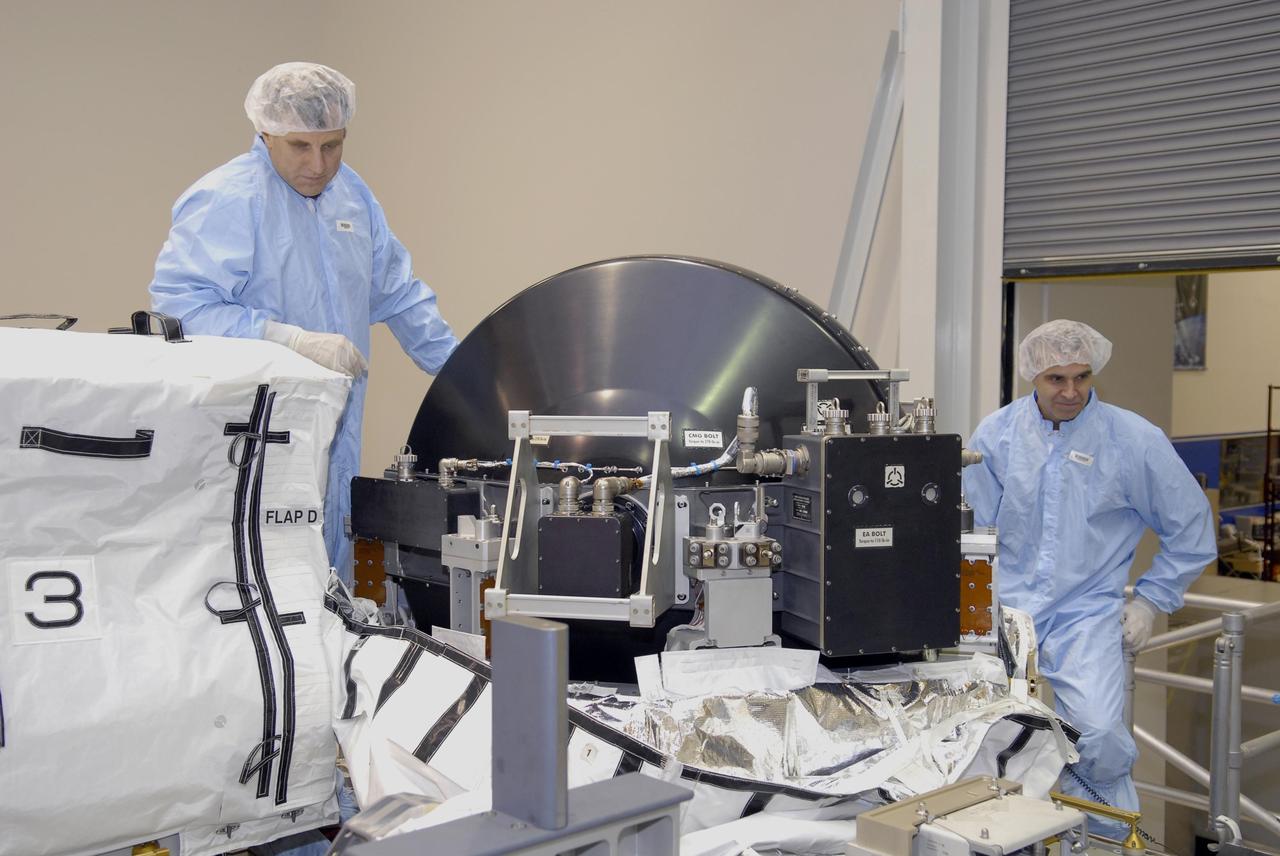
KENNEDY SPACE CENTER, FLA. -- The STS-118 crew members look over parts of the mission payload, the control moment gyroscope, at SPACEHAB during crew equipment interface test activities. Seen here are Mission Specialists Dr. Dafydd Williams (left) and Richard Mastracchio. The crew comprises Commander Scott Kelly, Pilot Charles Hobaugh, and Mission Specialists Williams, Barbara Morgan, Richard Mastracchio, Tracy Caldwell and Benjamin Drew. Williams is with the Canadian Space Agency. The STS-118 mission will be delivering the third starboard truss segment, the ITS S5, to the International Space Station, and a SPACEHAB Single Cargo module with supplies and equipment. Launch aboard Space Shuttle Endeavour is targeted for August. Photo credit: NASA/Kim Shiflett
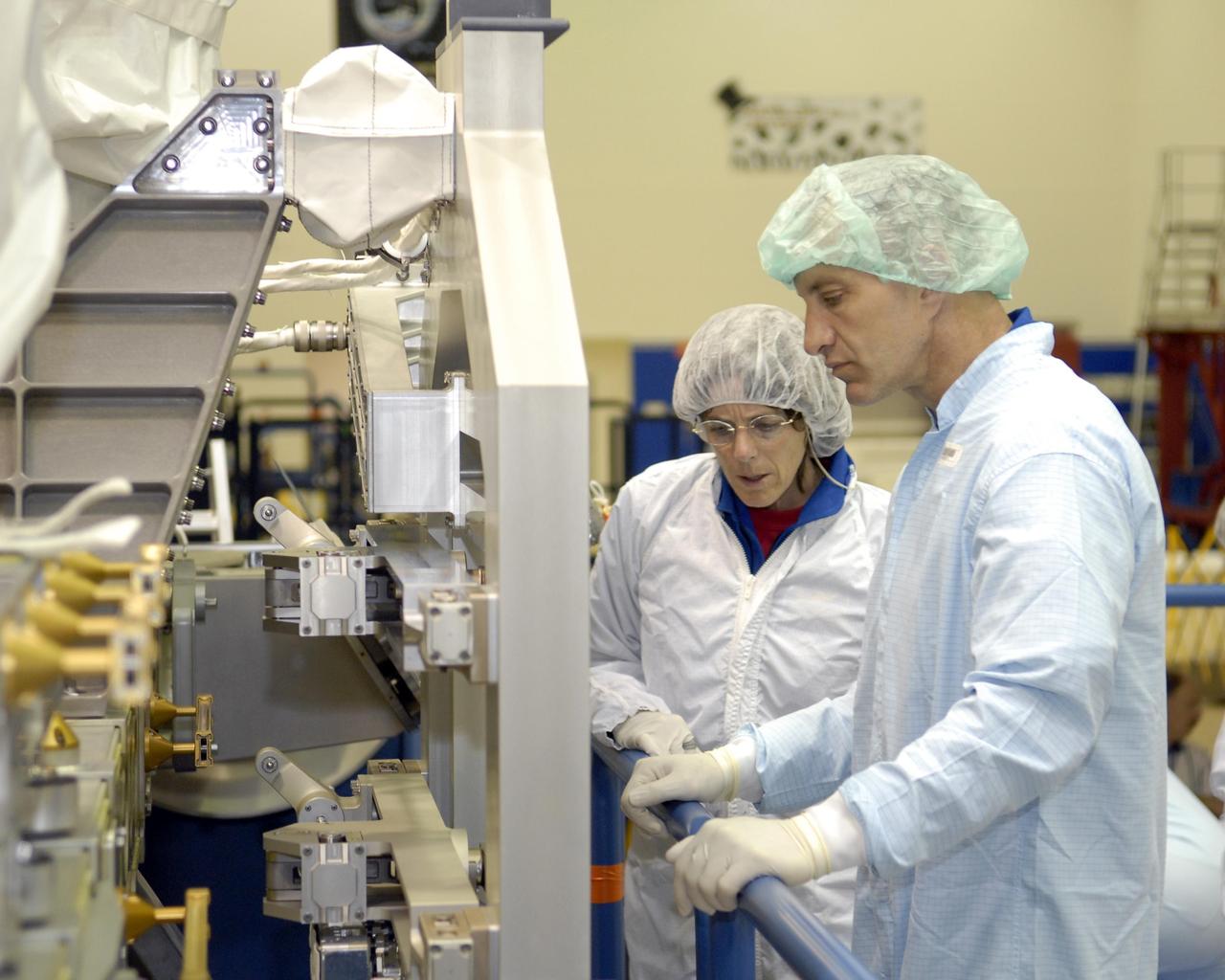
KENNEDY SPACE CENTER, FLA. -- The STS-118 crew members look over parts of the mission payload, the S5 integrated truss, in the Space Station Processing Facility during crew equipment interface test activities. Seen here are Mission Specialists Tracy Caldwell, Dr. Dafydd Williams and Richard Mastracchio. The crew comprises Commander Scott Kelly, Pilot Charles Hobaugh, and Mission Specialists Williams, Barbara Morgan, Mastracchio, Caldwell and Benjamin Drew. Williams is with the Canadian Space Agency. The STS-118 mission will be delivering the third starboard truss segment, the ITS S5, to the International Space Station, and a SPACEHAB Single Cargo module with supplies and equipment. Launch aboard Space Shuttle Endeavour is targeted for August. Photo credit: NASA/Kim Shiflett
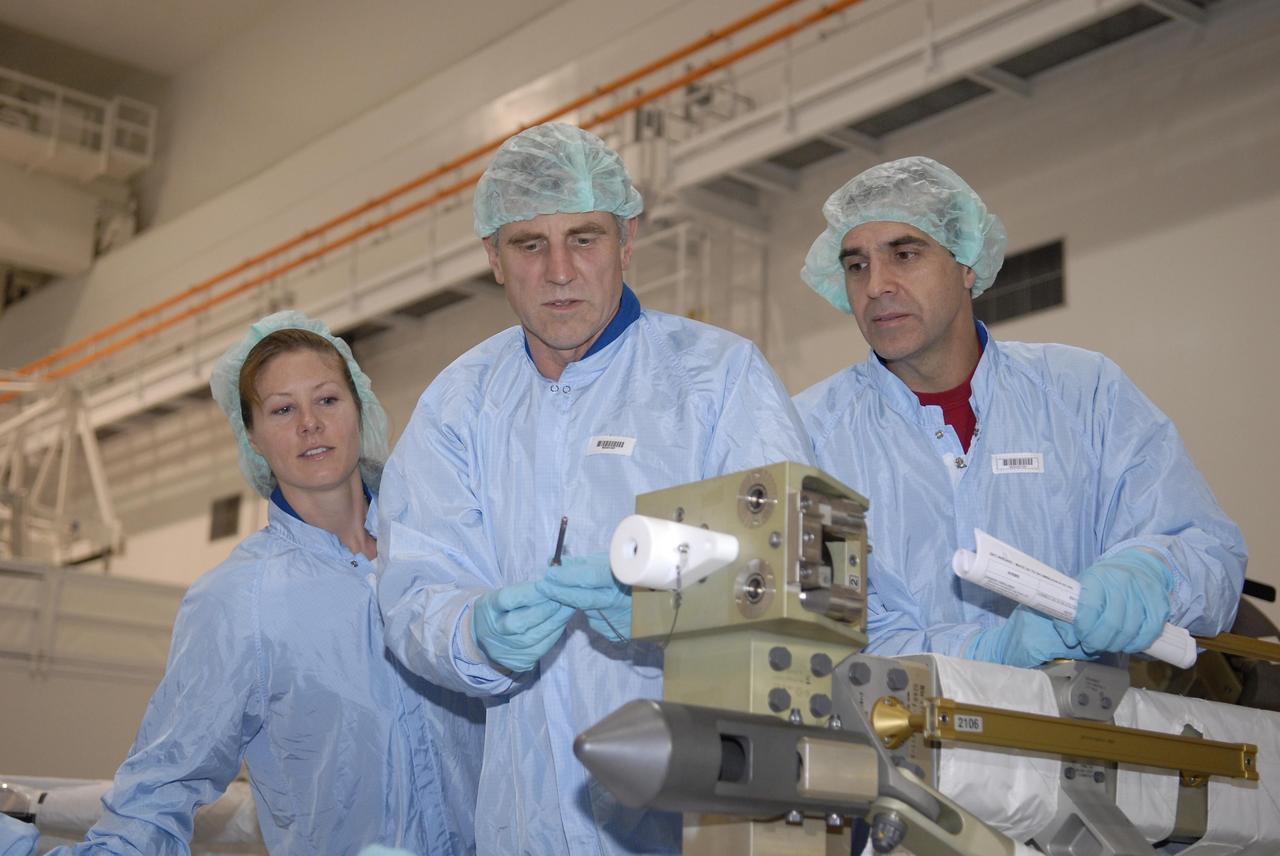
KENNEDY SPACE CENTER, FLA. -- The STS-118 crew members look over parts of the mission payload, the control moment gyroscope, at SPACEHAB during crew equipment interface test activities. Seen here are Mission Specialist Barbara Morgan and Pilot Charles Hobaugh. The crew comprises Commander Scott Kelly, Hobaugh, and Mission Specialists Dr. Dafydd Williams, Morgan, Richard Mastracchio, Tracy Caldwell and Benjamin Drew. Williams is with the Canadian Space Agency. The STS-118 mission will be delivering the third starboard truss segment, the ITS S5, to the International Space Station, and a SPACEHAB Single Cargo module with supplies and equipment. Launch aboard Space Shuttle Endeavour is targeted for August. Photo credit: NASA/Kim Shiflett
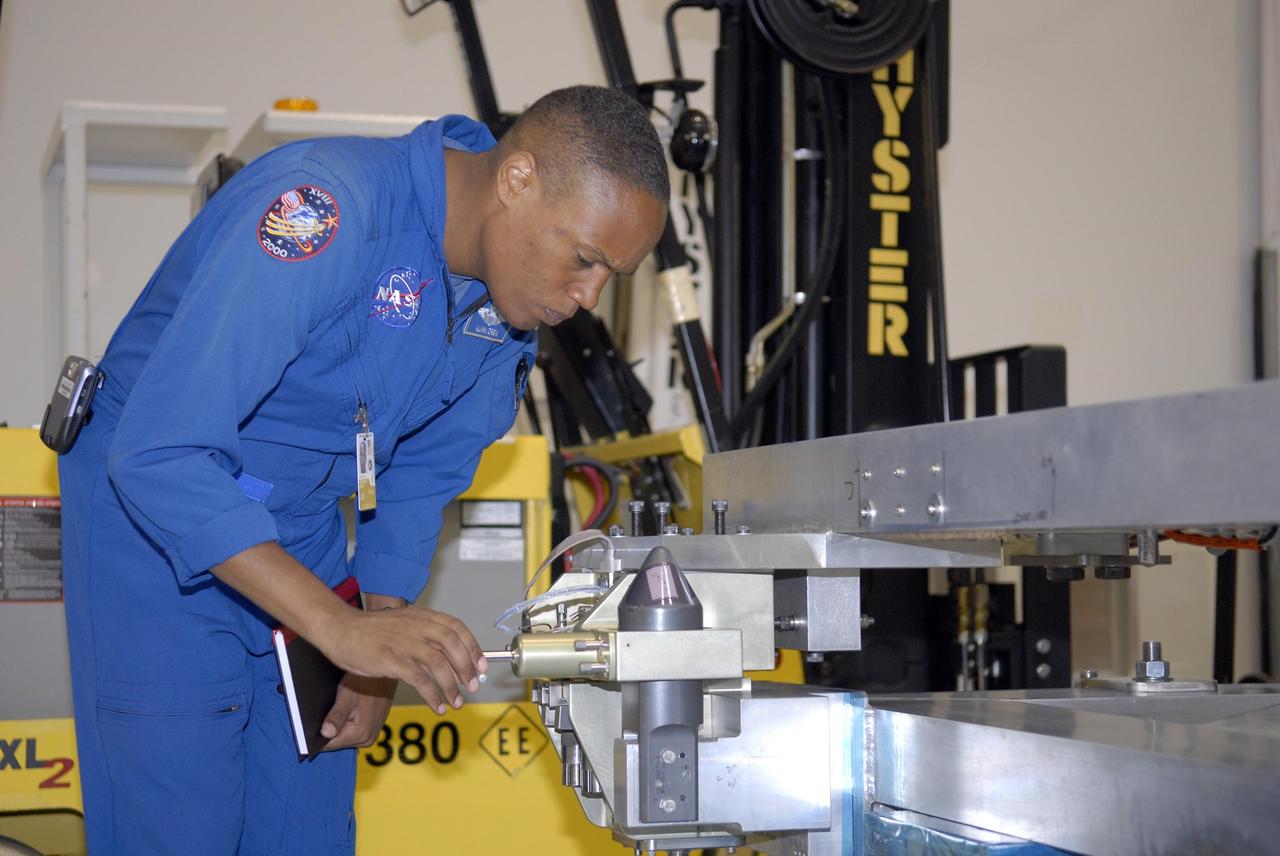
KENNEDY SPACE CENTER, FLA. -- The STS-118 crew members look over parts of the mission payload, the S5 integrated truss, in the Space Station Processing Facility during crew equipment interface test activities. Seen here is Mission Specialist Benjamin Drew, who will be making his first space shuttle flight. The crew comprises Commander Scott Kelly, Pilot Charles Hobaugh, and Mission Specialists Dr. Dafydd Williams, Barbara Morgan, Richard Mastracchio, Tracy Caldwell and Drew. Williams is with the Canadian Space Agency. The STS-118 mission will be delivering the third starboard truss segment, the ITS S5, to the International Space Station, and a SPACEHAB Single Cargo module with supplies and equipment. Launch aboard Space Shuttle Endeavour is targeted for August. Photo credit: NASA/Kim Shiflett
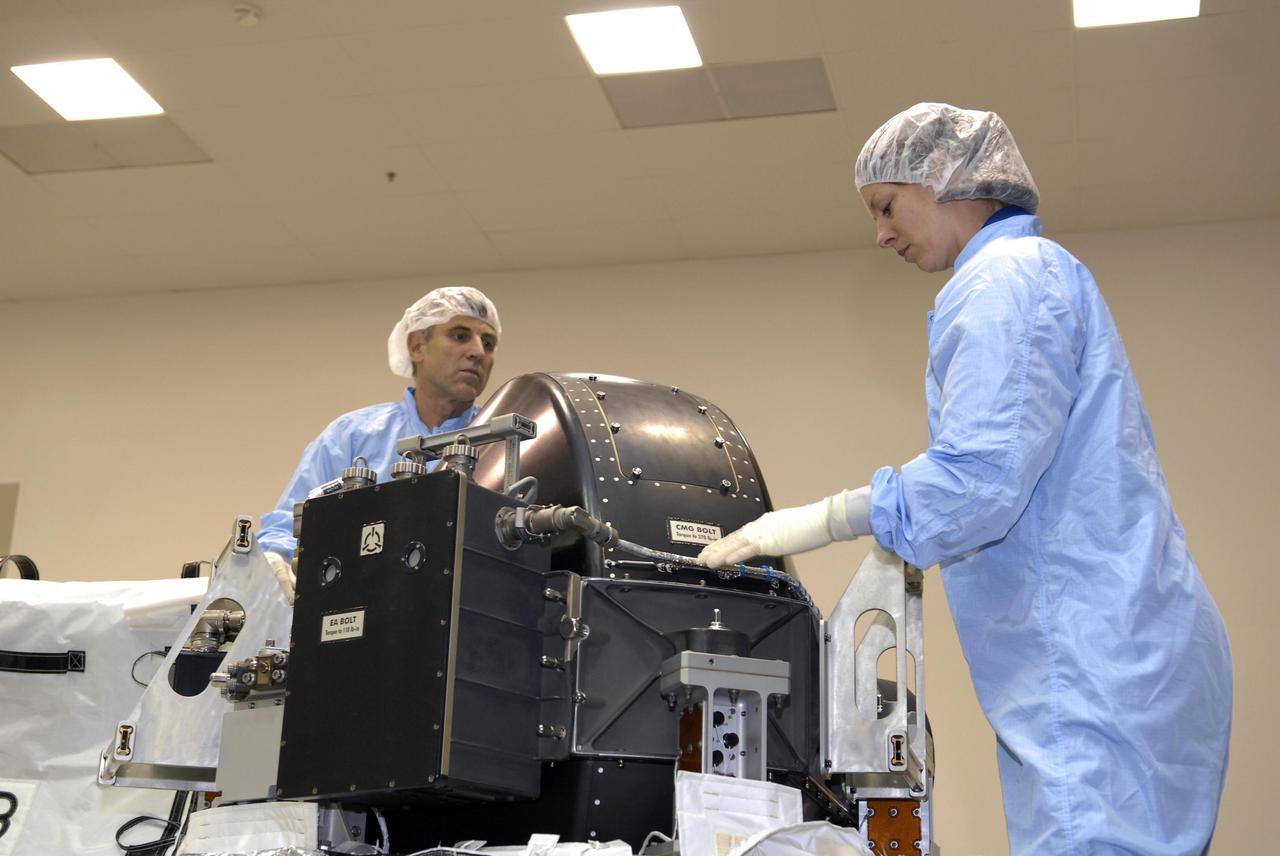
KENNEDY SPACE CENTER, FLA. -- The STS-118 crew members look over parts of the mission payload, the control moment gyroscope, at SPACEHAB during crew equipment interface test activities. Seen here are Mission Specialists Dr. Dafydd Williams and Tracy Caldwell. The crew comprises Commander Scott Kelly, Pilot Charles Hobaugh, and Mission Specialists Williams, Barbara Morgan, Richard Mastracchio, Caldwell and Benjamin Drew. Williams is with the Canadian Space Agency. The STS-118 mission will be delivering the third starboard truss segment, the ITS S5, to the International Space Station, and a SPACEHAB Single Cargo module with supplies and equipment. Launch aboard Space Shuttle Endeavour is targeted for August. Photo credit: NASA/Kim Shiflett
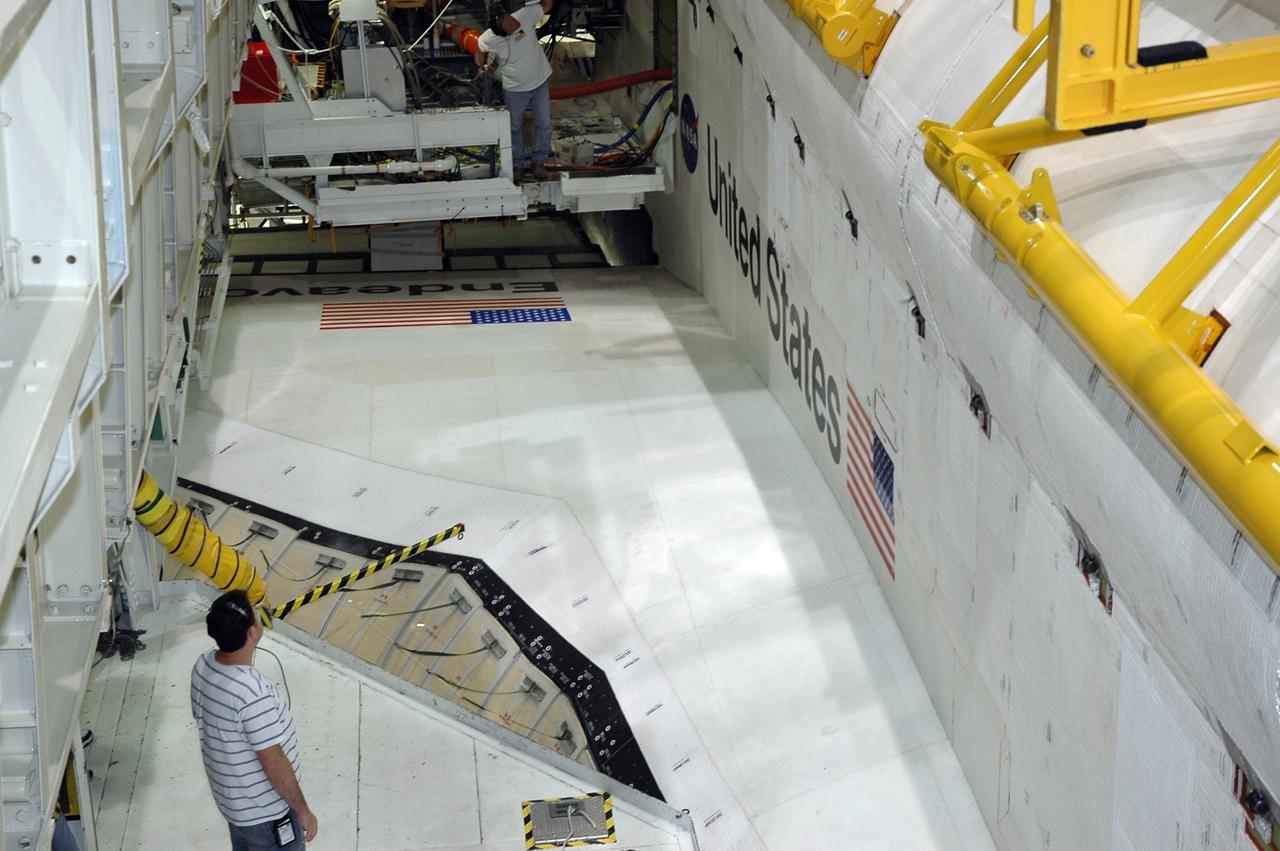
KENNEDY SPACE CENTER, FLA. -- In the Orbiter Processing Facility bay 2, workers are on the wing of Endeavour, checking the progress as the payload bay doors close. The payload will be installed on the launch pad after rollout. The orbiter is designated for mission STS-118, targeted for launch on Aug. 9. The mission will continue space station construction by delivering a third starboard truss segment, S5, as well as carrying the External Stowage Platform 3. The crew comprises seven astronauts: Commander Scott Kelly, Pilot Charles Hobaugh and Mission Specialists Dr. Dafydd (Dave) Williams, Barbara Morgan, Richard Mastracchio, Tracy Caldwell and Benjamin Drew. Williams represents the Canadian Space Agency. Photo credit: NASA/Cory Huston
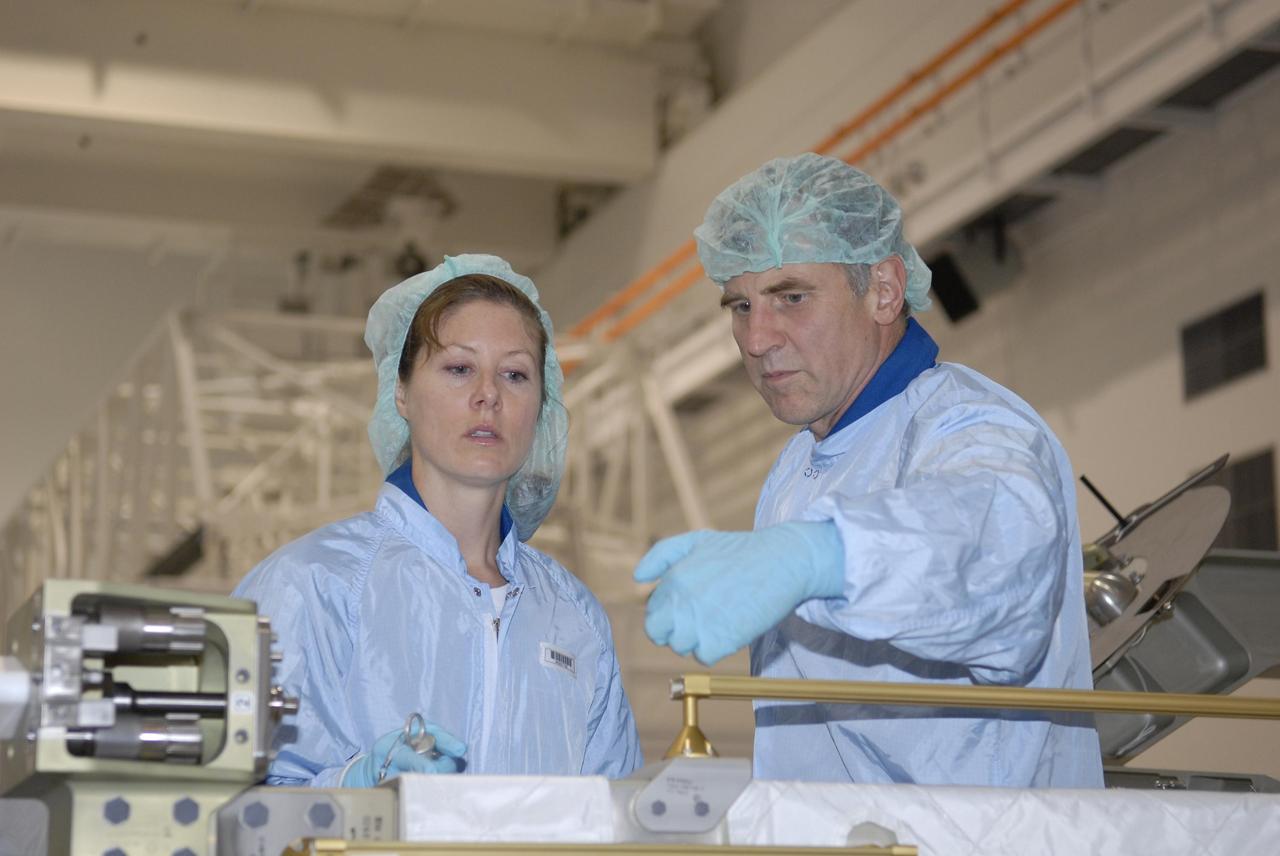
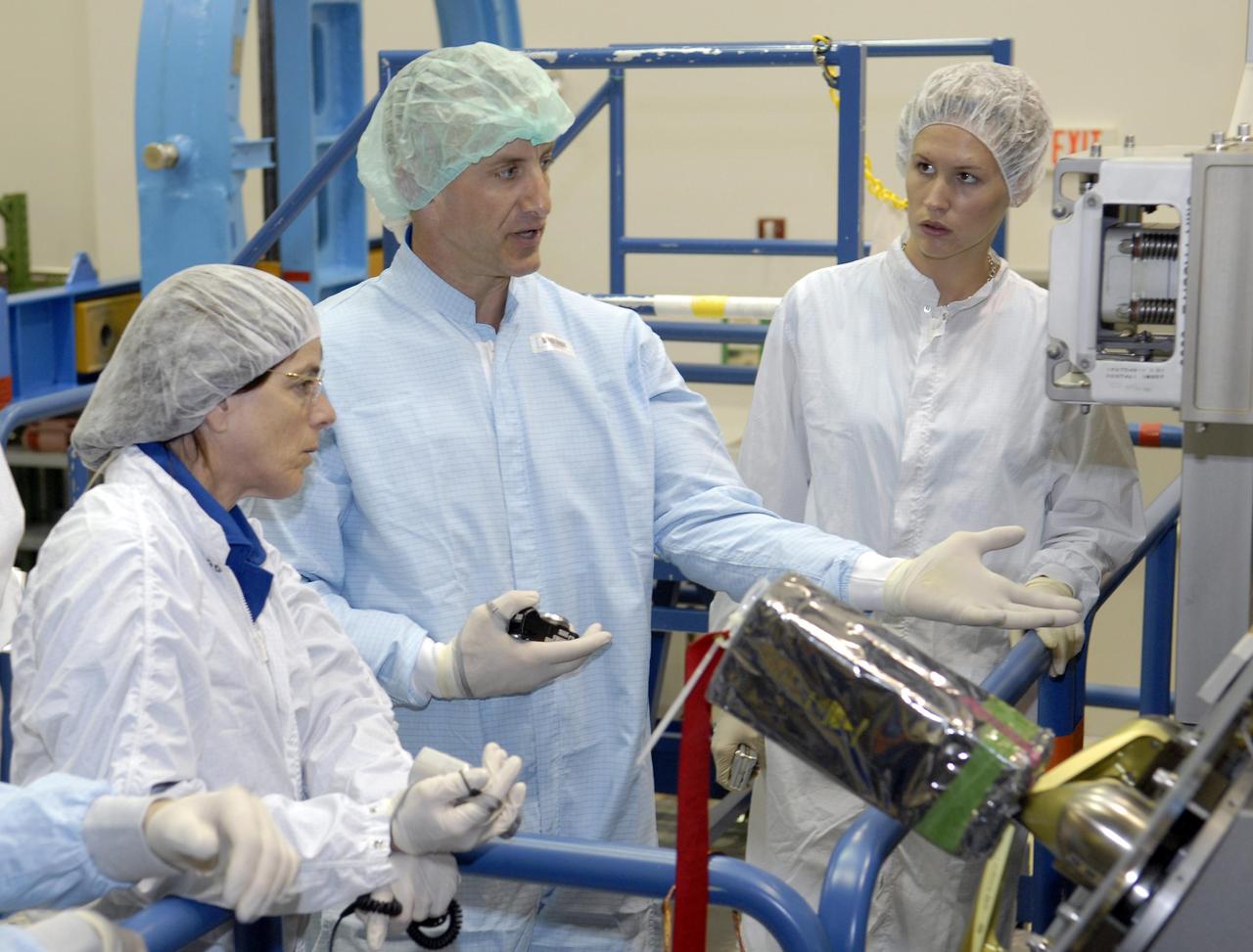
KENNEDY SPACE CENTER, FLA. -- The STS-118 crew members look over parts of the mission payload, the S5 integrated truss, in the Space Station Processing Facility during crew equipment interface test activities. Seen here are Mission Specialists Tracy Caldwell and Dr. Dafydd Williams. The crew comprises Commander Scott Kelly, Pilot Charles Hobaugh, and Mission Specialists Williams, Barbara Morgan, Richard Mastracchio, Caldwell and Benjamin Drew. Williams is with the Canadian Space Agency. The STS-118 mission will be delivering the third starboard truss segment, the ITS S5, to the International Space Station, and a SPACEHAB Single Cargo module with supplies and equipment. Launch aboard Space Shuttle Endeavour is targeted for August. Photo credit: NASA/Kim Shiflett
KENNEDY SPACE CENTER, FLA. -- The STS-118 crew members look over parts of the mission payload, the S5 integrated truss, in the Space Station Processing Facility during crew equipment interface test activities. Seen here are Mission Specialists Richard Mastracchio (left) and Tracy Caldwell. The crew comprises Commander Scott Kelly, Pilot Charles Hobaugh, and Mission Specialists Dr. Dafydd Williams, Barbara Morgan, Mastracchio, Caldwell and Benjamin Drew. Williams is with the Canadian Space Agency. The STS-118 mission will be delivering the third starboard truss segment, the ITS S5, to the International Space Station, and a SPACEHAB Single Cargo module with supplies and equipment. Launch aboard Space Shuttle Endeavour is targeted for August. Photo credit: NASA/Kim Shiflett
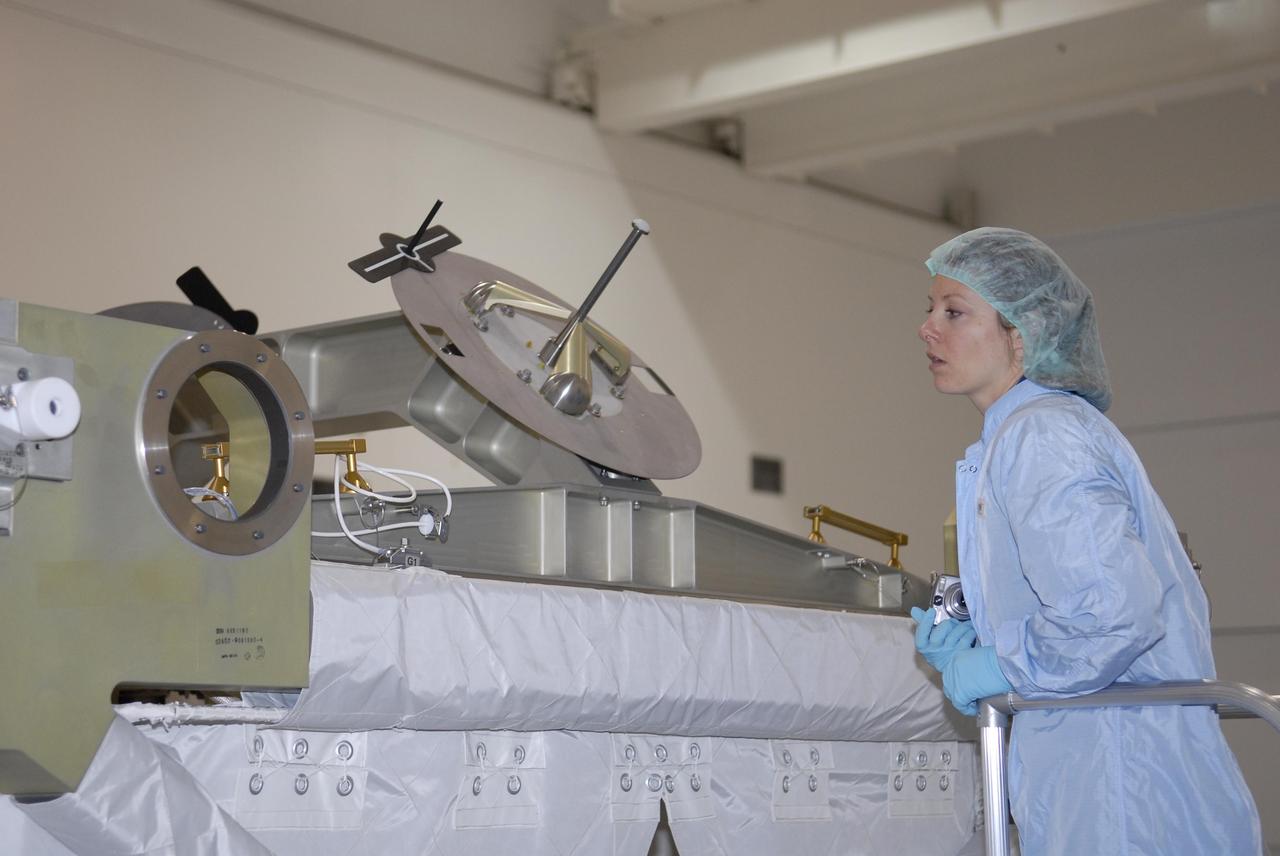
KENNEDY SPACE CENTER, FLA. -- The STS-118 crew members look over parts of the mission payload, the S5 integrated truss, in the Space Station Processing Facility during crew equipment interface test activities. Seen here is Mission Specialist Tracy Caldwell, who will be making her first space shuttle flight. The crew comprises Commander Scott Kelly, Pilot Charles Hobaugh, and Mission Specialists Dr. Dafydd Williams, Barbara Morgan, Richard Mastracchio, Caldwell and Benjamin Drew. Williams is with the Canadian Space Agency. The STS-118 mission will be delivering the third starboard truss segment, the ITS S5, to the International Space Station, and a SPACEHAB Single Cargo module with supplies and equipment. Launch aboard Space Shuttle Endeavour is targeted for August. Photo credit: NASA/Kim Shiflett
KENNEDY SPACE CENTER, FLA. --The STS-118 crew members look over parts of the mission payload, the S5 integrated truss, in the Space Station Processing Facility during crew equipment interface test activities. Seen here are Mission Specialists Dr. Dafydd Williams and Tracy Caldwell. The crew comprises Commander Scott Kelly, Pilot Charles Hobaugh, and Mission Specialists Williams, Barbara Morgan, Richard Mastracchio, Caldwell and Benjamin Drew. Williams is with the Canadian Space Agency. The STS-118 mission will be delivering the third starboard truss segment, the ITS S5, to the International Space Station, and a SPACEHAB Single Cargo module with supplies and equipment. Launch aboard Space Shuttle Endeavour is targeted for August. Photo credit: NASA/Kim Shiflett
KENNEDY SPACE CENTER, FLA. -- The STS-118 crew members look over parts of the mission payload, the control moment gyroscope, at SPACEHAB during crew equipment interface test activities. Seen here are Mission Specialist Barbara Morgan (left) and Pilot Charles Hobaugh (center). The crew comprises Commander Scott Kelly, Hobaugh, and Mission Specialists Dr. Dafydd Williams, Morgan, Richard Mastracchio, Tracy Caldwell and Benjamin Drew. Williams is with the Canadian Space Agency. The STS-118 mission will be delivering the third starboard truss segment, the ITS S5, to the International Space Station, and a SPACEHAB Single Cargo module with supplies and equipment. Launch aboard Space Shuttle Endeavour is targeted for August. Photo credit: NASA/Kim Shiflett
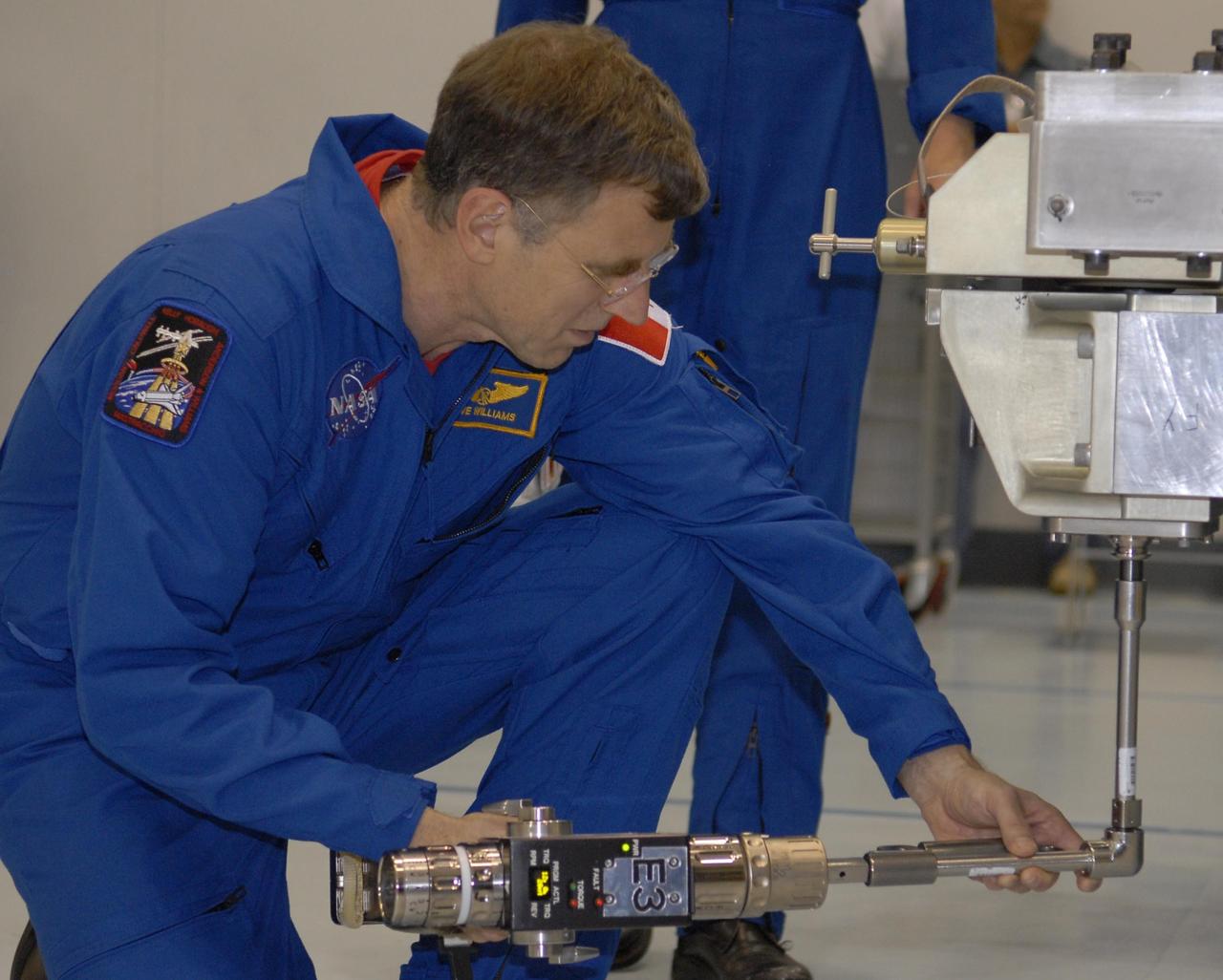
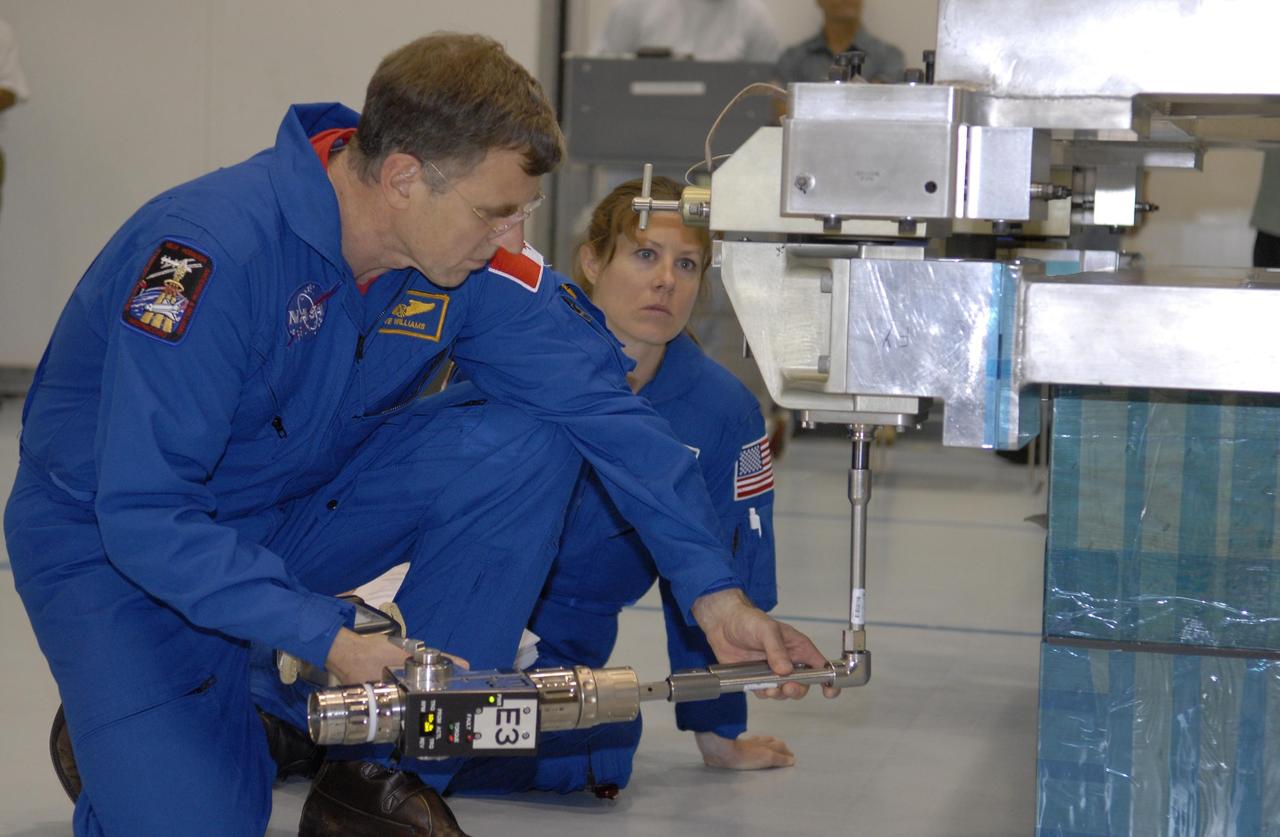
KENNEDY SPACE CENTER, FLA. --The STS-118 crew members look over parts of the mission payload, the S5 integrated truss, in the Space Station Processing Facility during crew equipment interface test activities. Seen here is Mission Specialist Dr. Dafydd Williams, getting hands-on experience. The crew comprises Commander Scott Kelly, Pilot Charles Hobaugh, and Mission Specialists Williams, Barbara Morgan, Richard Mastracchio, Tracy Caldwell and Benjamin Drew. Williams is with the Canadian Space Agency. The STS-118 mission will be delivering the third starboard truss segment, the ITS S5, to the International Space Station, and a SPACEHAB Single Cargo module with supplies and equipment. Launch aboard Space Shuttle Endeavour is targeted for August. Photo credit: NASA/Kim Shiflett
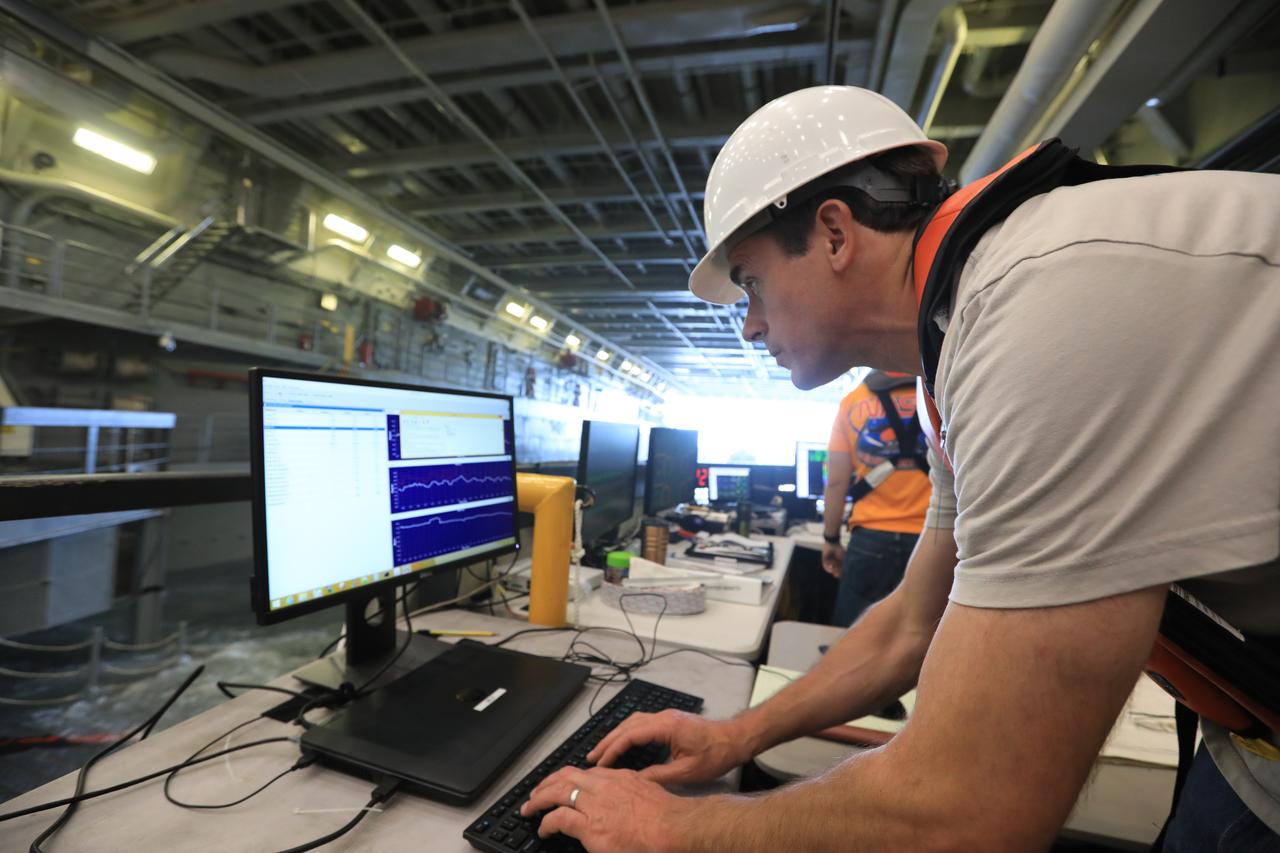
Benjamin Connell, a principal scientist with Applied Physical Sciences, monitors wave movement inside the well deck of a U.S. Navy ship during Underway Recovery Test-7 (URT-7) on Oct. 30, 2018. The Exploration Ground Systems (EGS) recovery team and the U.S. Navy will use a test version of the Orion crew module, several rigid hull inflatable boats and support equipment to verify and validate processes, procedures, hardware and personnel during recovery of Orion in open waters. The testing is one in a series of tests to verify and validate procedures and hardware that will be used to recover the Orion spacecraft after it splashes down in the Pacific Ocean following deep space exploration missions. Orion will have emergency abort capability, sustain the crew during space travel and provide safe re-entry from deep space return velocities.
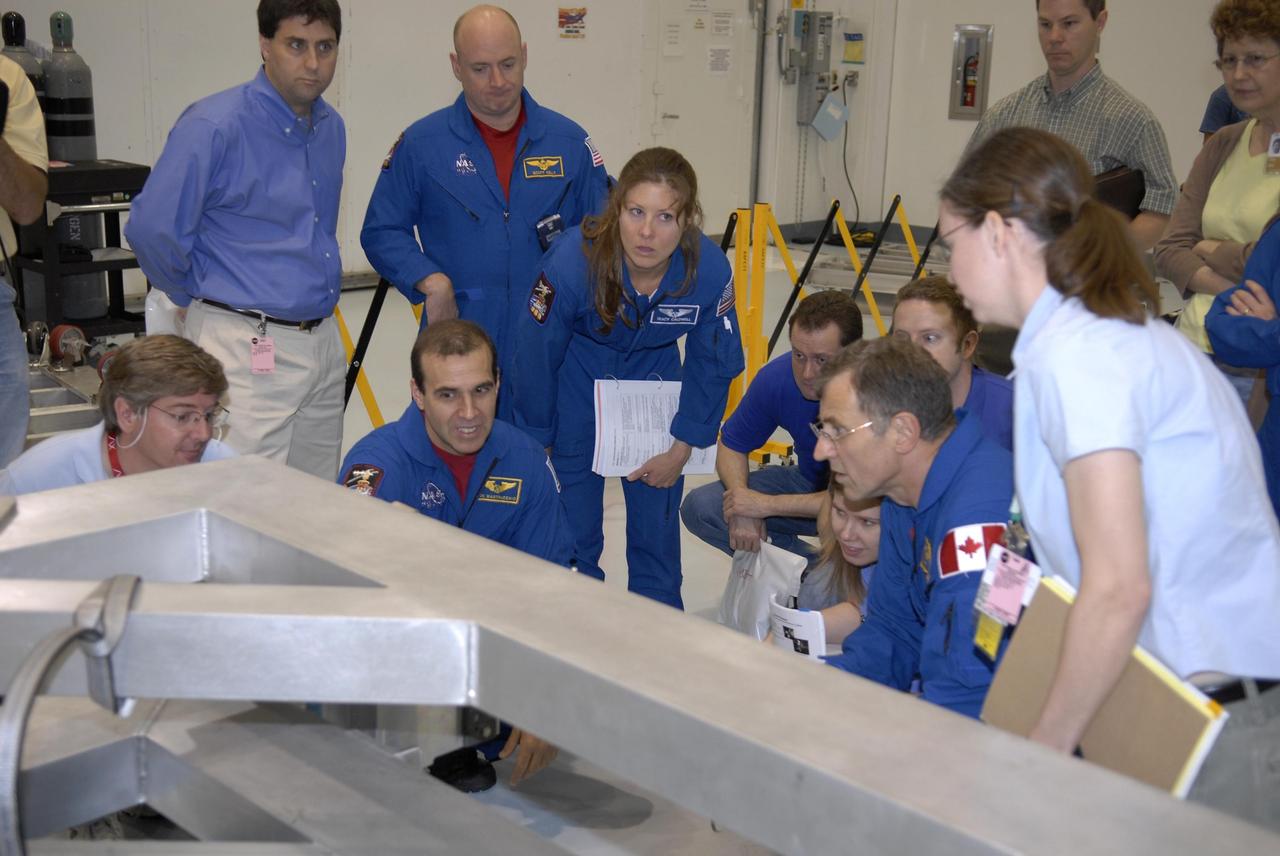
KENNEDY SPACE CENTER, FLA. --The STS-118 crew members look over parts of the mission payload, the S5 integrated truss, in the Space Station Processing Facility during crew equipment interface test activities. Seen here are (standing) Commander Scott Kelly and Mission Specialist Tracy Caldwell, and (foreground) Mission Specialists Richard Mastracchio and Dr. Dafydd Williams. Other crew members are Pilot Charles Hobaugh and Mission Specialists Barbara Morgan and Benjamin Drew. Williams is with the Canadian Space Agency. The STS-118 mission will be delivering the third starboard truss segment, the ITS S5, to the International Space Station, and a SPACEHAB Single Cargo module with supplies and equipment. Launch aboard Space Shuttle Endeavour is targeted for August. Photo credit: NASA/Kim Shiflett

KENNEDY SPACE CENTER, FLA. -- The STS-118 crew members look over parts of the mission payload, the S5 integrated truss, in the Space Station Processing Facility during crew equipment interface test activities. Seen here is Mission Specialist Richard Mastracchio. The crew comprises Commander Scott Kelly, Pilot Charles Hobaugh, and Mission Specialists Dr. Dafydd Williams, Barbara Morgan, Mastracchio, Tracy Caldwell and Benjamin Drew. Williams is with the Canadian Space Agency. The STS-118 mission will be delivering the third starboard truss segment, the ITS S5, to the International Space Station, and a SPACEHAB Single Cargo module with supplies and equipment. Launch aboard Space Shuttle Endeavour is targeted for August. Photo credit: NASA/Kim Shiflett
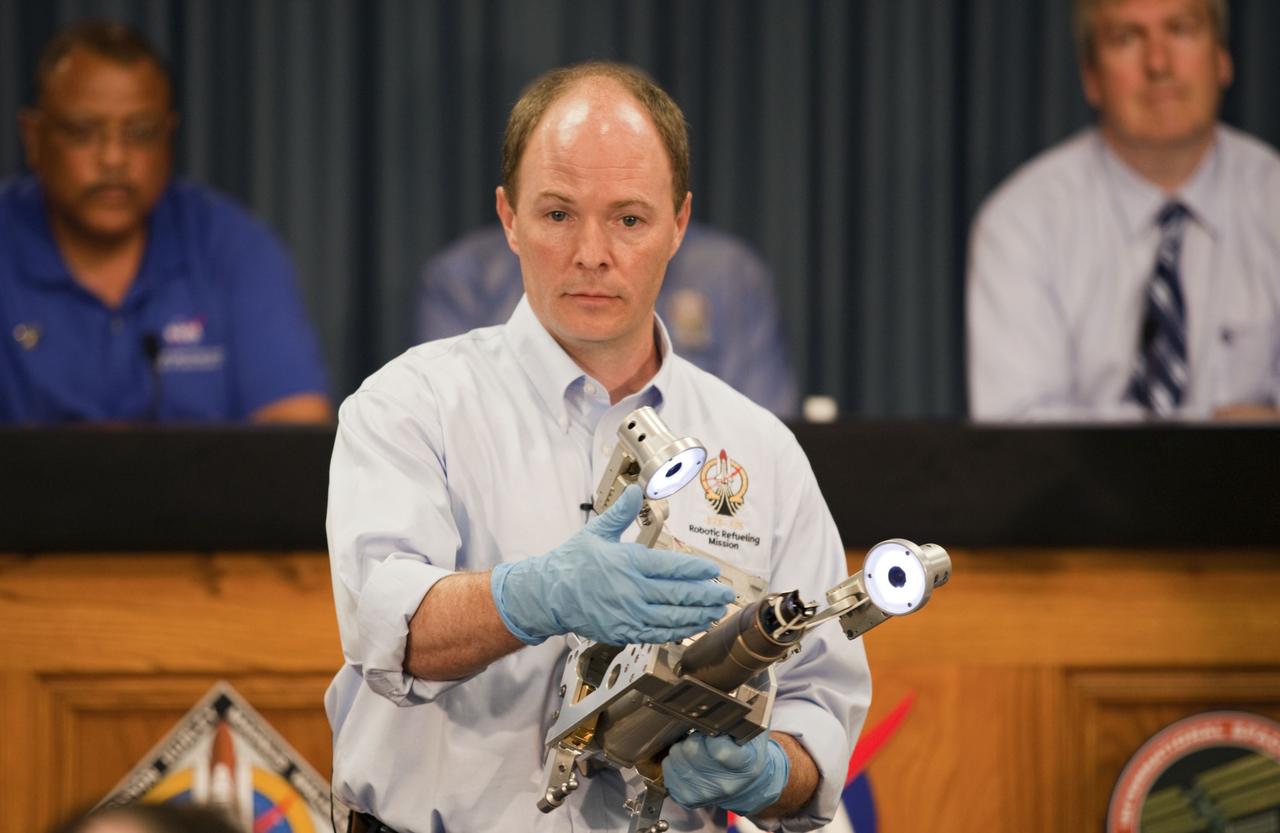
CAPE CANAVERAL, Fla. -- The Press Site auditorium at NASA's Kennedy Space Center in Florida hosted a Robotic Refueling Mission (RRM) module demonstration. Seen here is Benjamin Reed, deputy project manager with NASA's Satellite Servicing Capabilities Office, giving media an overview of the RRM. Space shuttle Atlantis will fly the RRM on its STS-135 mission to the International Space Station. Once in place, the RRM will use the station's two-armed robotic system, known as Dextre, to investigate the potential for robotically refueling existing satellites in orbit. Atlantis and its crew of four are scheduled to lift off at 11:26 a.m. EDT on July 8 to deliver the Raffaello multi-purpose logistics module packed with supplies and spare parts to the station. Atlantis also will fly the RRM and return a failed ammonia pump module to help NASA better understand the failure mechanism and improve pump designs for future systems. STS-135 will be the 33rd flight of Atlantis, the 37th shuttle mission to the space station, and the 135th and final mission of NASA's Space Shuttle Program. For more information visit, www.nasa.gov/mission_pages/shuttle/shuttlemissions/sts135/index.html. Photo credit: NASA/Frankie Martin
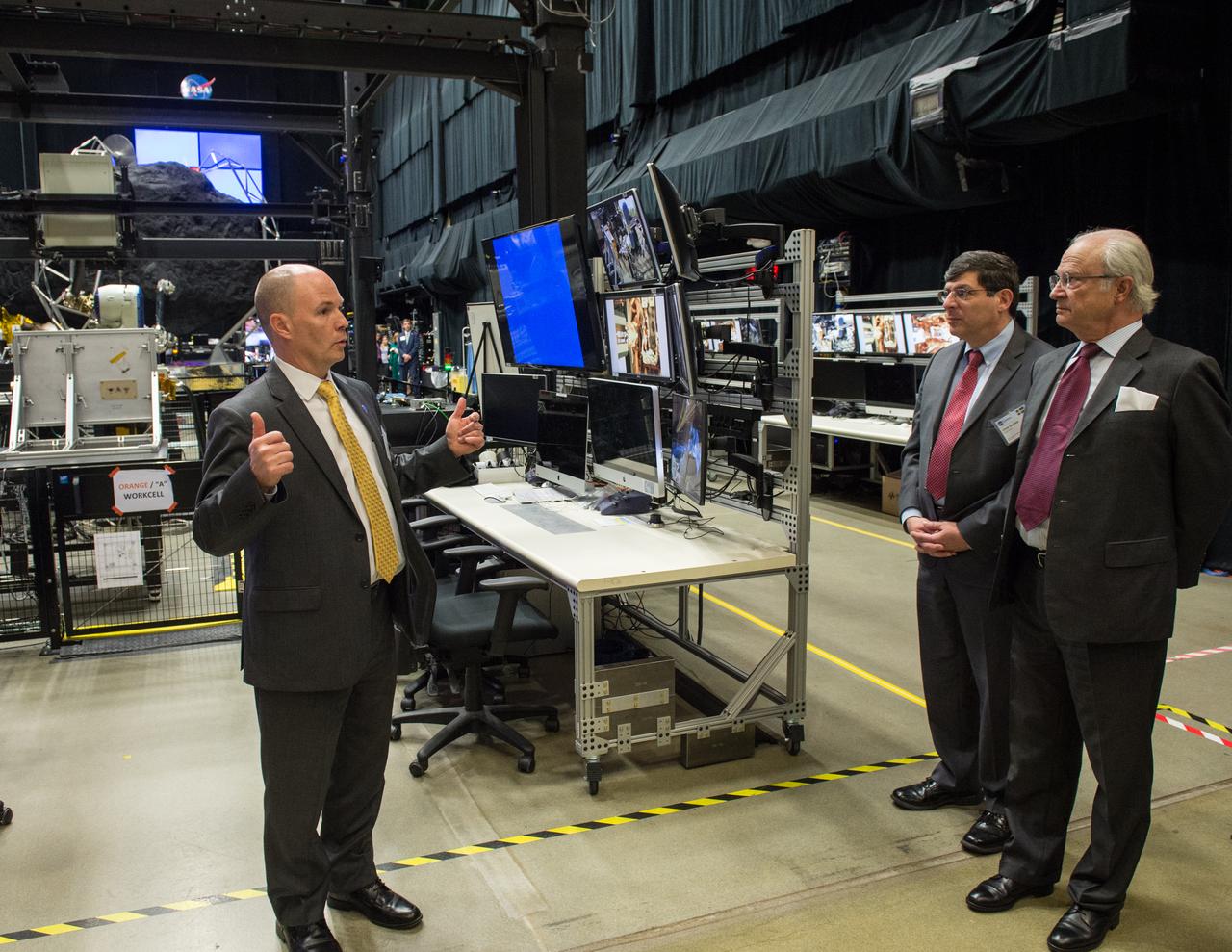
Swedish Delegation Visits GSFC – May 3, 2017 - Members of the Royal Swedish Academy of Engineering Sciences listen to Benjamin Reed, Deputy Division Director of the SatelliteServicing Projects Division about activities happening in Goddard’s Robotic Operations Center in Building 29. Credit: NASA/Goddard/Bill Hrybyk Read more: <a href="https://go.nasa.gov/2p1rP0h" rel="nofollow">go.nasa.gov/2p1rP0h</a> <b><a href="http://www.nasa.gov/audience/formedia/features/MP_Photo_Guidelines.html" rel="nofollow">NASA image use policy.</a></b> <b><a href="http://www.nasa.gov/centers/goddard/home/index.html" rel="nofollow">NASA Goddard Space Flight Center</a></b> enables NASA’s mission through four scientific endeavors: Earth Science, Heliophysics, Solar System Exploration, and Astrophysics. Goddard plays a leading role in NASA’s accomplishments by contributing compelling scientific knowledge to advance the Agency’s mission. <b>Follow us on <a href="http://twitter.com/NASAGoddardPix" rel="nofollow">Twitter</a></b> <b>Like us on <a href="http://www.facebook.com/pages/Greenbelt-MD/NASA-Goddard/395013845897?ref=tsd" rel="nofollow">Facebook</a></b> <b>Find us on <a href="http://instagrid.me/nasagoddard/?vm=grid" rel="nofollow">Instagram</a></b>
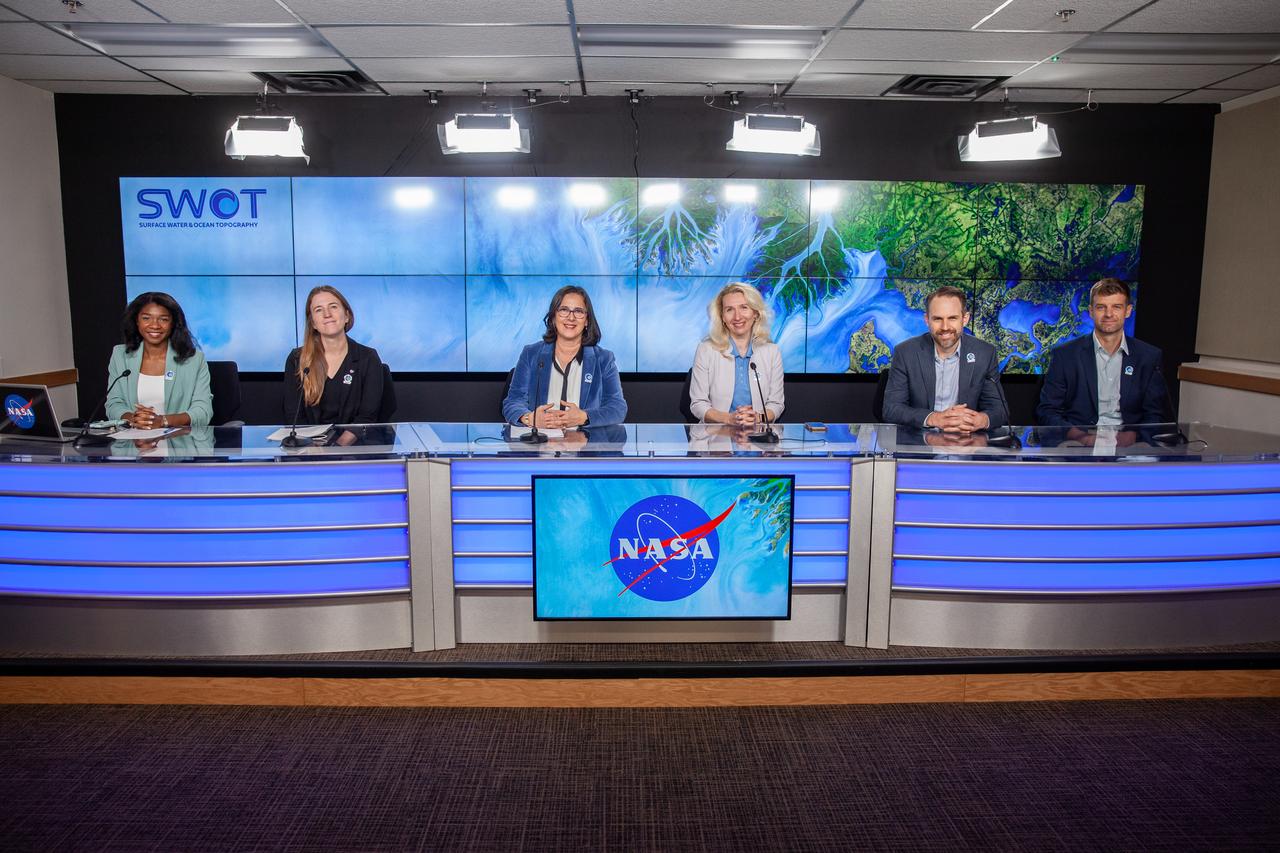
NASA and the French space agency Centre National d’Études Spatiales (CNES) hold a science briefing on the Surface Water and Ocean Topography (SWOT) mission on Dec. 13, 2022, at Vandenberg Space Force Base in California. Participating from left are Katherine Calvin, chief scientist and senior climate advisor, NASA; Selma Cherchali, Earth observation program head, CNES; Nadya Vinogradova Shiffer, SWOT program scientist, NASA; Tamlin Pavelsky, SWOT hydrology science lead, University of North Carolina; Benjamin Hamlington, research scientist, Sea Level and Ice Group, Jet Propulsion Laboratory. SWOT is scheduled to launch on a SpaceX Falcon 9 rocket from Space Launch Complex-4 East at Vandenberg on Dec. 15, 2022, at 3:46 a.m. PST. SWOT will be NASA’s first global survey of nearly all water on Earth’s surface. Scientists plan to use its observations to better understand the global water cycle, furnish insight into the ocean’s role in how climate change unfolds, and provide a global inventory of water resources. The SWOT mission is a collaborative effort between NASA and CNES with contributions from the Canadian Space Agency and the UK Space Agency. NASA’s Launch Services Program, based at the agency’s Kennedy Space Center in Florida, is managing the launch service.
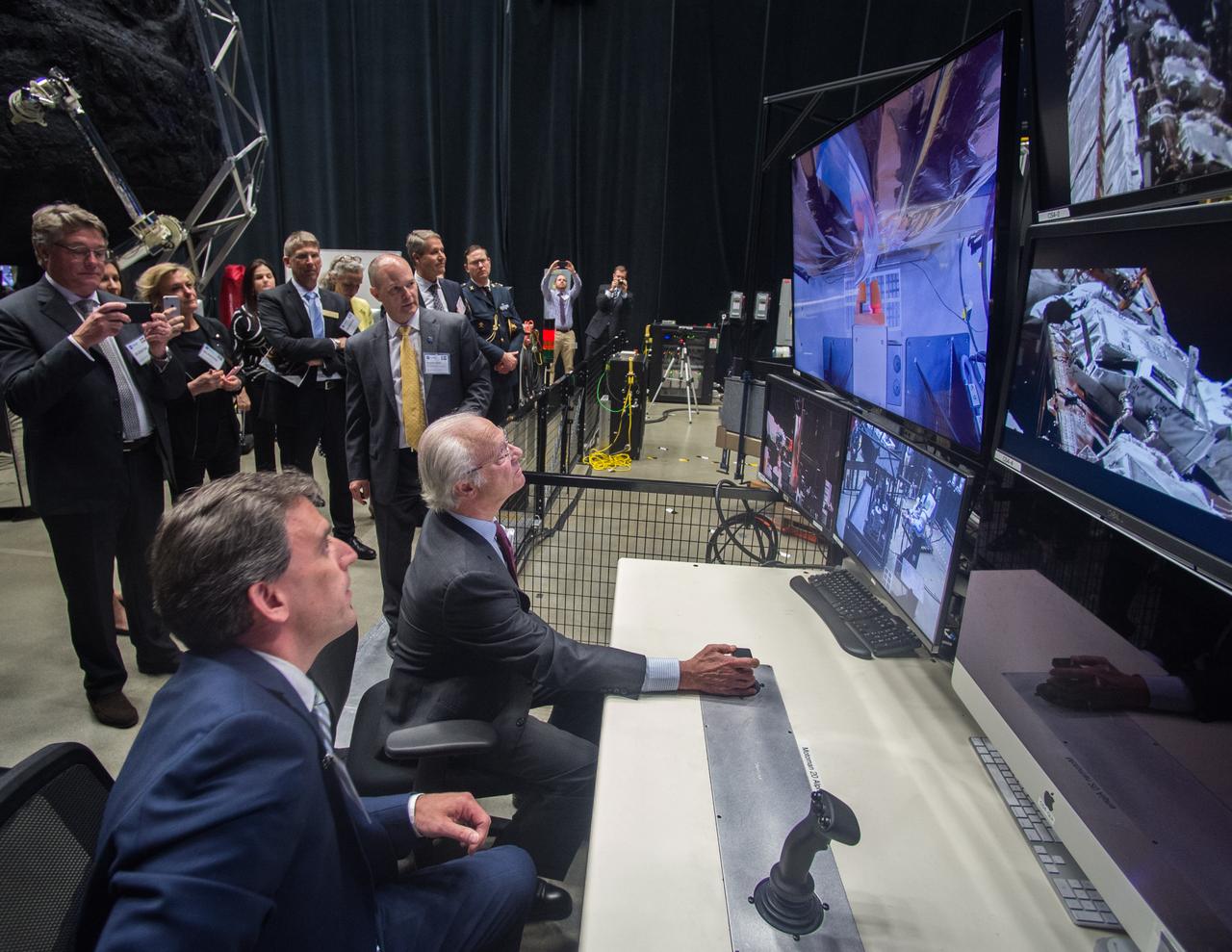
Swedish Delegation Visits GSFC – May 3, 2017 - Members of the Royal Swedish Academy of Engineering Sciences listen to Benjamin Reed, Deputy Division Director of the SatelliteServicing Projects Division about activities happening in Goddard’s Robotic Operations Center in Building 29. Credit: NASA/Goddard/Bill Hrybyk Read more: <a href="https://go.nasa.gov/2p1rP0h" rel="nofollow">go.nasa.gov/2p1rP0h</a> <b><a href="http://www.nasa.gov/audience/formedia/features/MP_Photo_Guidelines.html" rel="nofollow">NASA image use policy.</a></b> <b><a href="http://www.nasa.gov/centers/goddard/home/index.html" rel="nofollow">NASA Goddard Space Flight Center</a></b> enables NASA’s mission through four scientific endeavors: Earth Science, Heliophysics, Solar System Exploration, and Astrophysics. Goddard plays a leading role in NASA’s accomplishments by contributing compelling scientific knowledge to advance the Agency’s mission. <b>Follow us on <a href="http://twitter.com/NASAGoddardPix" rel="nofollow">Twitter</a></b> <b>Like us on <a href="http://www.facebook.com/pages/Greenbelt-MD/NASA-Goddard/395013845897?ref=tsd" rel="nofollow">Facebook</a></b> <b>Find us on <a href="http://instagrid.me/nasagoddard/?vm=grid" rel="nofollow">Instagram</a></b>
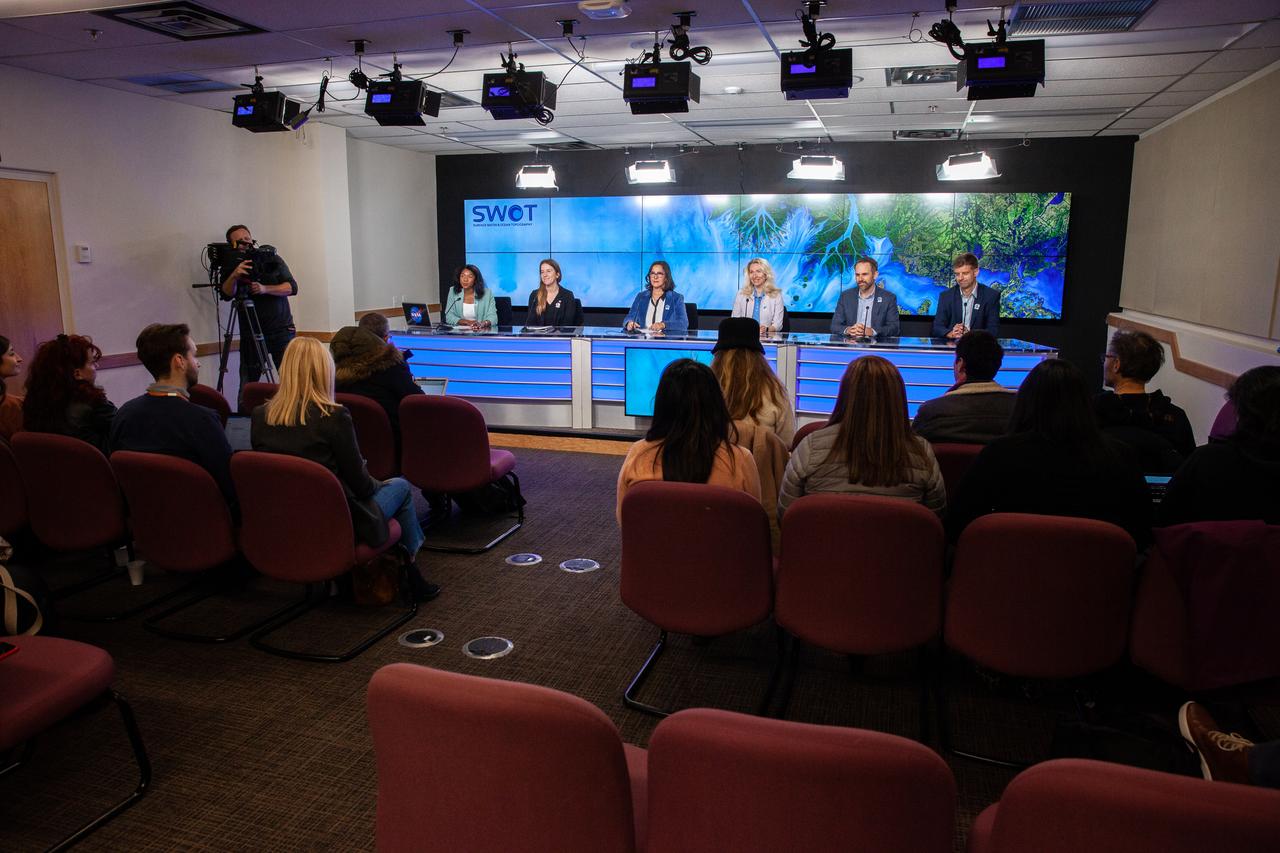
NASA and the French space agency Centre National d’Études Spatiales (CNES) hold a science briefing on the Surface Water and Ocean Topography (SWOT) mission on Dec. 13, 2022, at Vandenberg Space Force Base in California. Participating from left are Katherine Calvin, chief scientist and senior climate advisor, NASA; Selma Cherchali, Earth observation program head, CNES; Nadya Vinogradova Shiffer, SWOT program scientist, NASA; Tamlin Pavelsky, SWOT hydrology science lead, University of North Carolina; Benjamin Hamlington, research scientist, Sea Level and Ice Group, Jet Propulsion Laboratory. SWOT is scheduled to launch on a SpaceX Falcon 9 rocket from Space Launch Complex-4 East at Vandenberg on Dec. 15, 2022, at 3:46 a.m. PST. SWOT will be NASA’s first global survey of nearly all water on Earth’s surface. Scientists plan to use its observations to better understand the global water cycle, furnish insight into the ocean’s role in how climate change unfolds, and provide a global inventory of water resources. The SWOT mission is a collaborative effort between NASA and CNES with contributions from the Canadian Space Agency and the UK Space Agency. NASA’s Launch Services Program, based at the agency’s Kennedy Space Center in Florida, is managing the launch service.

Cape Canaveral, Fla. - At the Payload Hazardous Servicing Facility at NASA's Kennedy Space Center in Florida, NASA Deputy Administrator Lori Garver, left, is shown NASA's Mars Science Laboratory (MSL) rover known as Curiosity. Benjamin Thoma, the MSL Assembly, Test and Launch Operations mechanical lead, is talking to Garver about the spacecraft and mission. In the background is the spacecraft's descent stage. A United Launch Alliance Atlas V-541 configuration will be used to loft MSL into space. Curiosity’s 10 science instruments are designed to search for evidence on whether Mars has had environments favorable to microbial life, including chemical ingredients for life. The unique rover will use a laser to look inside rocks and release its gasses so that the rover’s spectrometer can analyze and send the data back to Earth. MSL is scheduled to launch from Cape Canaveral Air Force Station in Florida Nov. 25 with a window extending to Dec. 18 and arrival at Mars Aug. 2012. For more information, visit http://www.nasa.gov/msl. Photo credit: NASA/Jim Grossmann
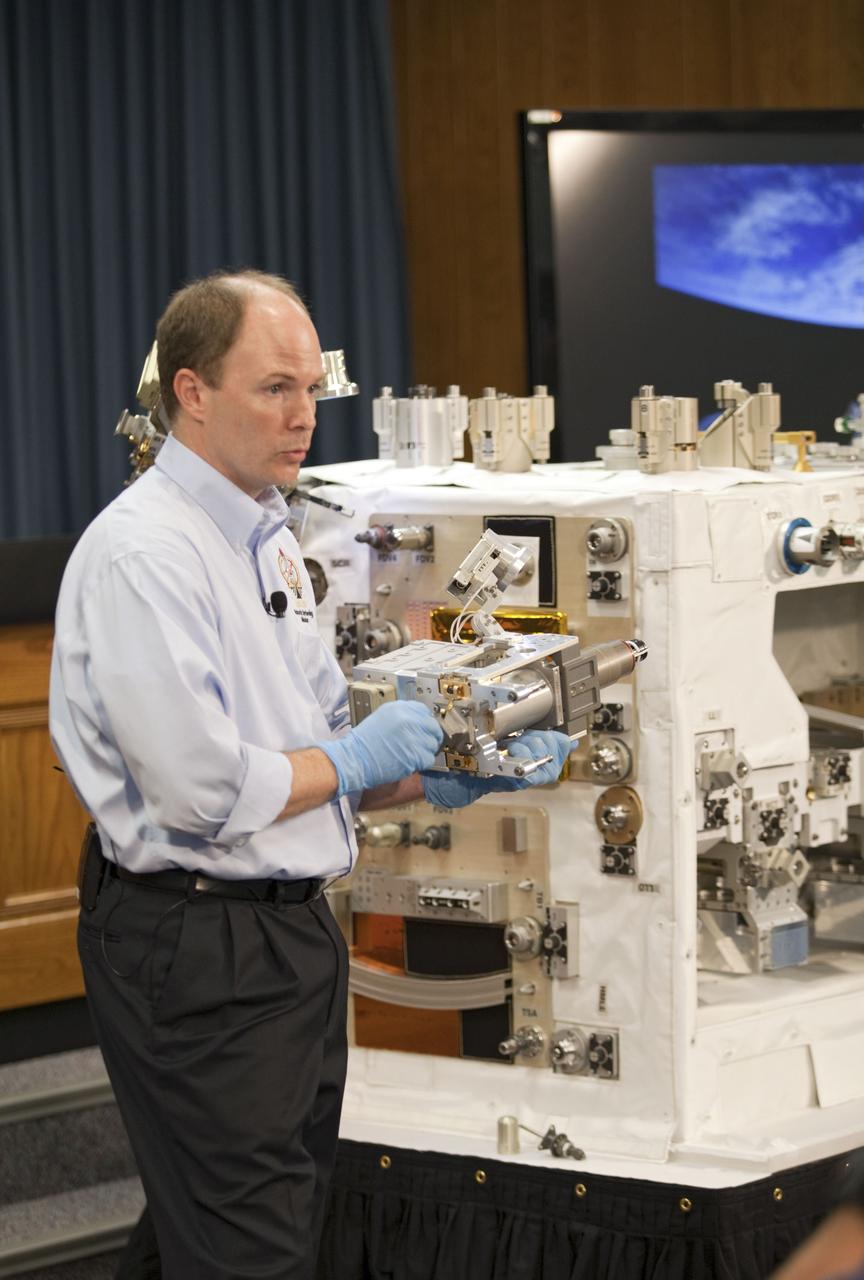
CAPE CANAVERAL, Fla. -- The Press Site auditorium at NASA's Kennedy Space Center in Florida hosted a Robotic Refueling Mission (RRM) module demonstration. Seen here is Benjamin Reed, deputy project manager with NASA's Satellite Servicing Capabilities Office, giving media an overview of the RRM. Space shuttle Atlantis will fly the RRM on its STS-135 mission to the International Space Station. Once in place, the RRM will use the station's two-armed robotic system, known as Dextre, to investigate the potential for robotically refueling existing satellites in orbit. Atlantis and its crew of four are scheduled to lift off at 11:26 a.m. EDT on July 8 to deliver the Raffaello multi-purpose logistics module packed with supplies and spare parts to the station. Atlantis also will fly the RRM and return a failed ammonia pump module to help NASA better understand the failure mechanism and improve pump designs for future systems. STS-135 will be the 33rd flight of Atlantis, the 37th shuttle mission to the space station, and the 135th and final mission of NASA's Space Shuttle Program. For more information visit, www.nasa.gov/mission_pages/shuttle/shuttlemissions/sts135/index.html. Photo credit: NASA/Frankie Martin
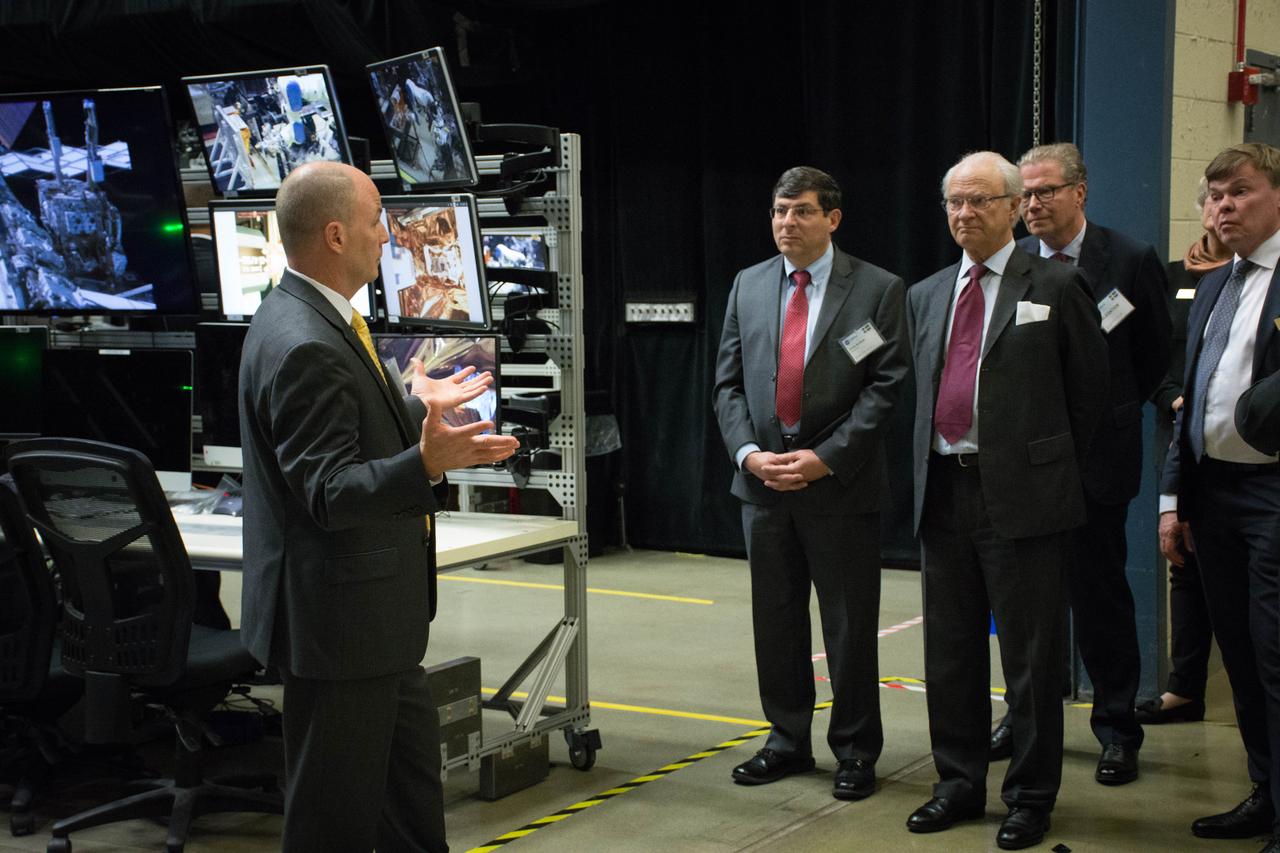
Swedish Delegation Visits GSFC – May 3, 2017 - Members of the Royal Swedish Academy of Engineering Sciences listen to Benjamin Reed, Deputy Division Director of the SatelliteServicing Projects Division about activities happening in Goddard’s Robotic Operations Center in Building 29. Photo Credit: NASA/Goddard/Rebecca Roth Read more: <a href="https://go.nasa.gov/2p1rP0h" rel="nofollow">go.nasa.gov/2p1rP0h</a> <b><a href="http://www.nasa.gov/audience/formedia/features/MP_Photo_Guidelines.html" rel="nofollow">NASA image use policy.</a></b> <b><a href="http://www.nasa.gov/centers/goddard/home/index.html" rel="nofollow">NASA Goddard Space Flight Center</a></b> enables NASA’s mission through four scientific endeavors: Earth Science, Heliophysics, Solar System Exploration, and Astrophysics. Goddard plays a leading role in NASA’s accomplishments by contributing compelling scientific knowledge to advance the Agency’s mission. <b>Follow us on <a href="http://twitter.com/NASAGoddardPix" rel="nofollow">Twitter</a></b> <b>Like us on <a href="http://www.facebook.com/pages/Greenbelt-MD/NASA-Goddard/395013845897?ref=tsd" rel="nofollow">Facebook</a></b> <b>Find us on <a href="http://instagrid.me/nasagoddard/?vm=grid" rel="nofollow">Instagram</a></b>
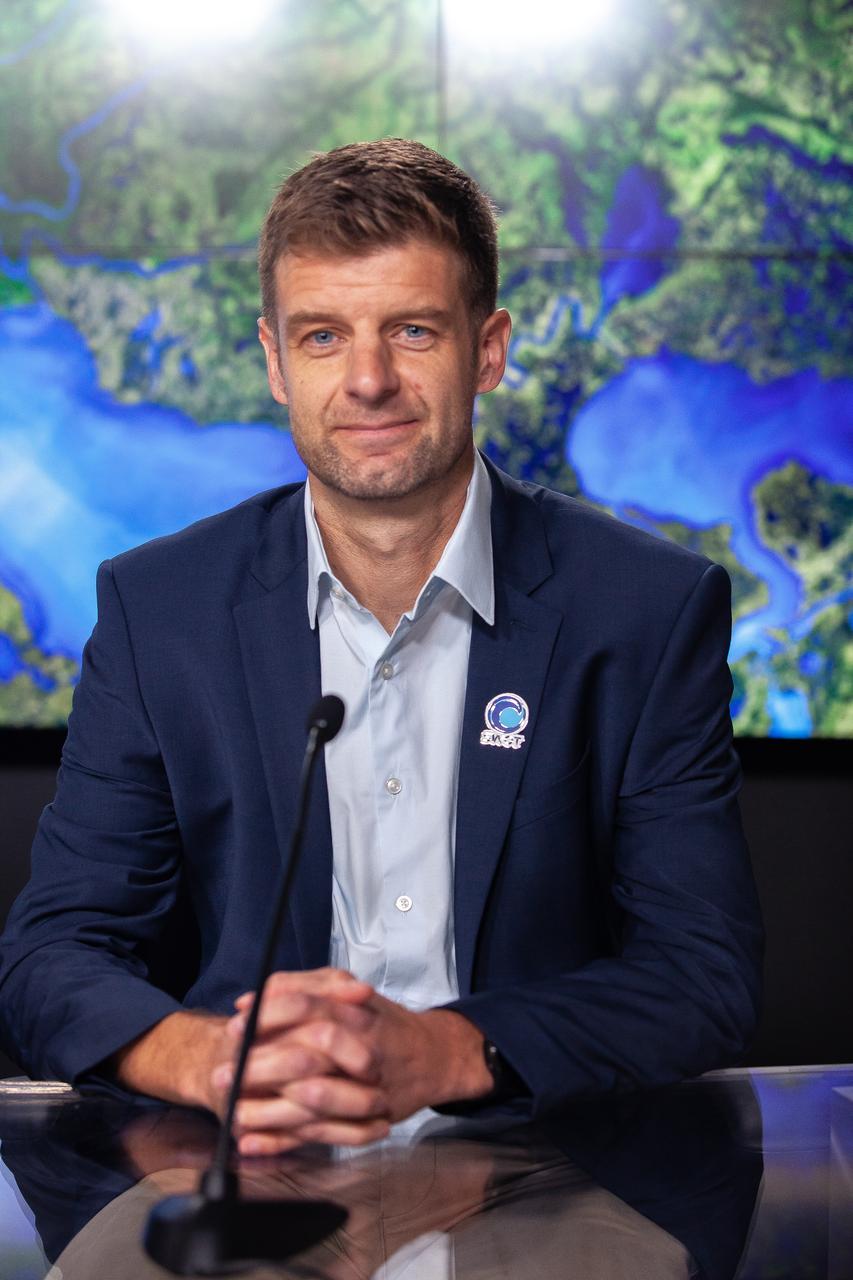
Benjamin Hamlington, research scientist, Sea Level and Ice Group, Jet Propulsion Laboratory, participates in a science briefing held by NASA and the French space agency Centre National d’Études Spatiales (CNES) for the Surface Water and Ocean Topography (SWOT) mission on Dec. 13, 2022, at Vandenberg Space Force Base in California. SWOT is scheduled to launch on a SpaceX Falcon 9 rocket from Space Launch Complex-4 East at Vandenberg on Dec. 15, 2022, at 3:46 a.m. PST. SWOT will be NASA’s first global survey of nearly all water on Earth’s surface. Scientists plan to use its observations to better understand the global water cycle, furnish insight into the ocean’s role in how climate change unfolds, and provide a global inventory of water resources. The SWOT mission is a collaborative effort between NASA and CNES with contributions from the Canadian Space Agency and the UK Space Agency. NASA’s Launch Services Program, based at the agency’s Kennedy Space Center in Florida, is managing the launch service.

CAPE CANAVERAL, Fla. -- In the Space Station Processing Facility conference room at NASA's Kennedy Space Center in Florida, Benjamin Reed from NASA's Goddard Space Flight Center in Maryland describes a component of the payload being prepared for shuttle Atlantis' flight to the International Space Station. Commander Chris Ferguson, Pilot Doug Hurley and Mission Specialists Sandra Magnus and Rex Walheim are targeted to lift off on July 8, taking with them the Raffaello multi-purpose logistics module packed with supplies, logistics and spare parts. The STS-135 mission also will fly a system to investigate the potential for robotically refueling existing spacecraft and return a failed ammonia pump module to help NASA better understand the failure mechanism and improve pump designs for future systems. STS-135 will be the 33rd flight of Atlantis, the 37th shuttle mission to the space station, and the 135th and final mission of NASA's Space Shuttle Program. For more information visit, www.nasa.gov/mission_pages/shuttle/shuttlemissions/sts135/index.html. Photo credit: NASA/Jack Pfaller
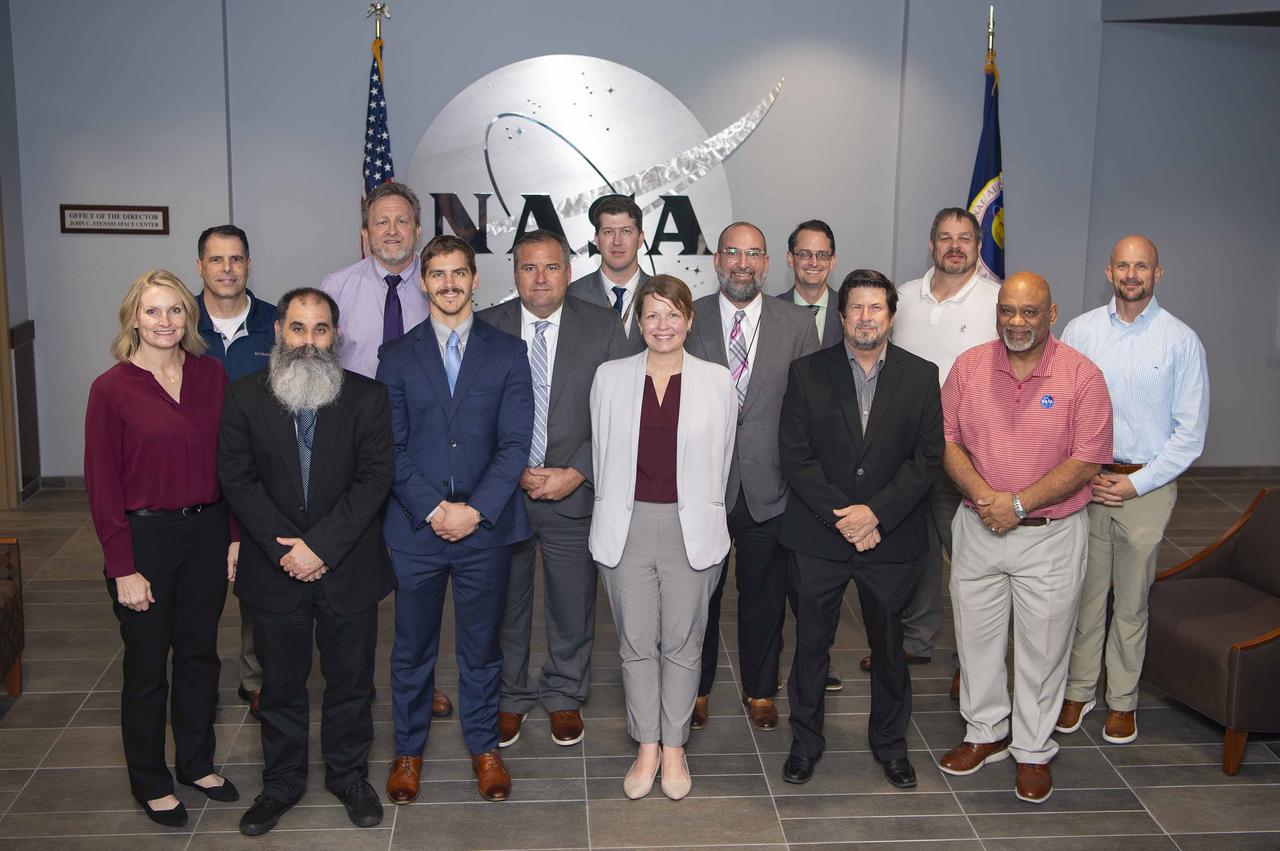
U.S. Navy officials visited with NASA Stennis leaders Nov. 13 for a meet-and-greet opportunity, also receiving an overview briefing about the work and operations of south Mississippi site. Participants in the gathering included (left to right): Anita Harrell, executive director of the NASA Shared Services Center; Joe Schuyler, director of the NASA Stennis Engineering and Test Directorate; Herschel Mims, a management support specialist with the Naval Oceanography Operations Command; Rodney McKellip, NASA Stennis associate director; Francis Prikasky, an electronics engineer and information technology administrator with the Naval Oceanographic Office; Robert Gavagnie, a contract specialist with the Naval Oceanographic Office; James “Brett” English, information systems security manager with the Naval Meteorology and Oceanography Command; Dr. Brooke Jones, head of the Ocean Forecasting Division for the Fleet Numerical Meteorology and Oceanography Center; Maxwell Williamson, a physical scientists with the Naval Oceanographic Office; Dr. Benjamin Phrampus, a research geophysicist with the Naval Research Laboratory; Gary Benton, director of the NASA Stennis Safety and Mission Assurance Directorate; Thom Rich, associate director of the NASA Stennis Center Operations Directorate; Ken Newton, director of service delivery for the NASA Shared Services Center; and Eli Ouder, director of the NASA Stennis/NASA Shared Services Center Office of Procurement.
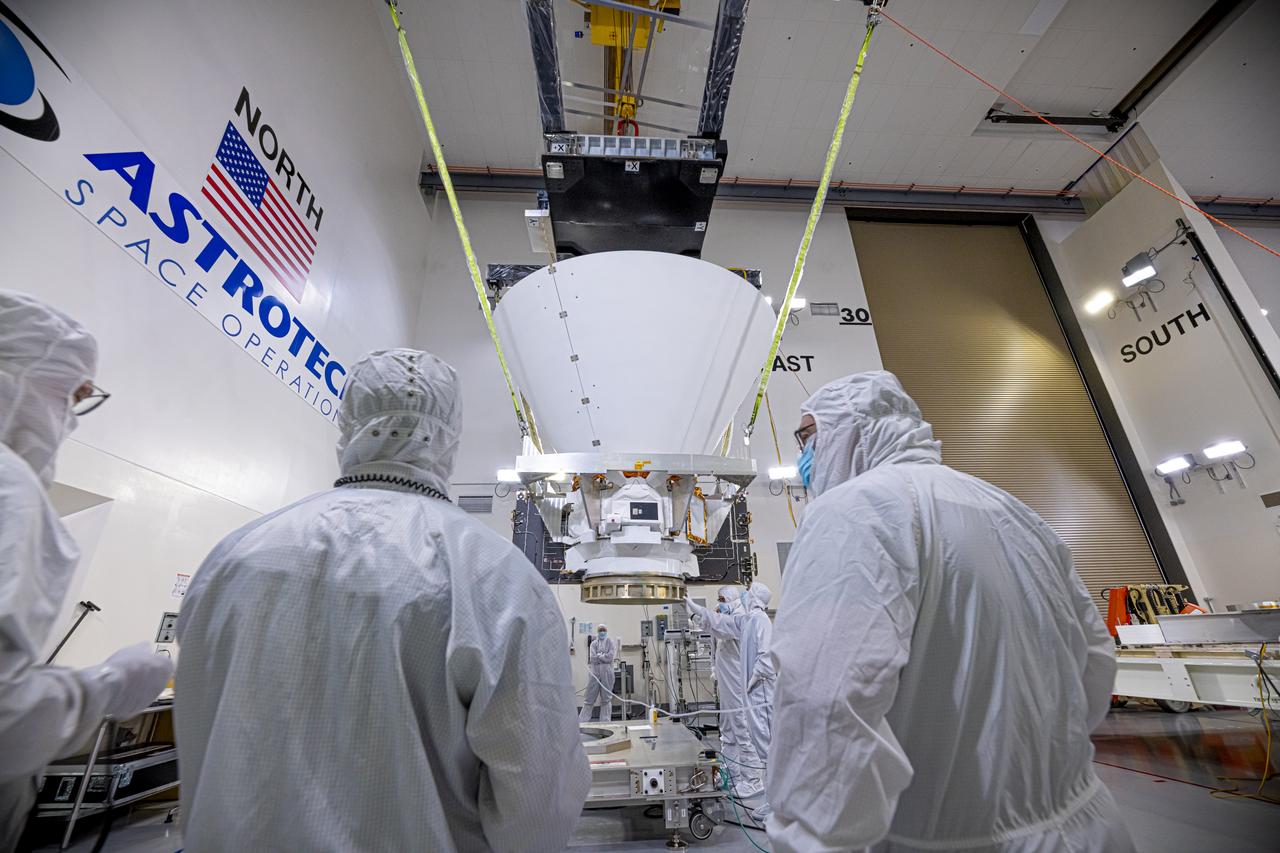
Employees with BAE Systems conduct spacecraft processing of NASA’s SPHEREx (Spectro-Photometer for the History of the Universe, Epoch of Reionization and Ices Explorer) observatory inside the Astrotech Space Operations Facility at Vandenberg Space Force Base in California on Thursday, Jan. 16, 2025. BAE Systems (formerly Ball Aerospace) built the telescope and the spacecraft bus. SPHEREx will use its telescope to provide an all-sky spectral survey, creating a 3D map of the entire sky to help scientists investigate the origins of our universe. Riding along with SPHEREx, NASA’s PUNCH (Polarimeter to Unify the Corona and Heliosphere) mission will study origins of the Sun’s outflow of material, or the solar wind. Liftoff aboard a SpaceX Falcon 9 rocket is targeted for 10:09 p.m. EST (7:09 p.m. PST), Thursday, Feb. 27, 2025, from Space Launch Complex 4 East.
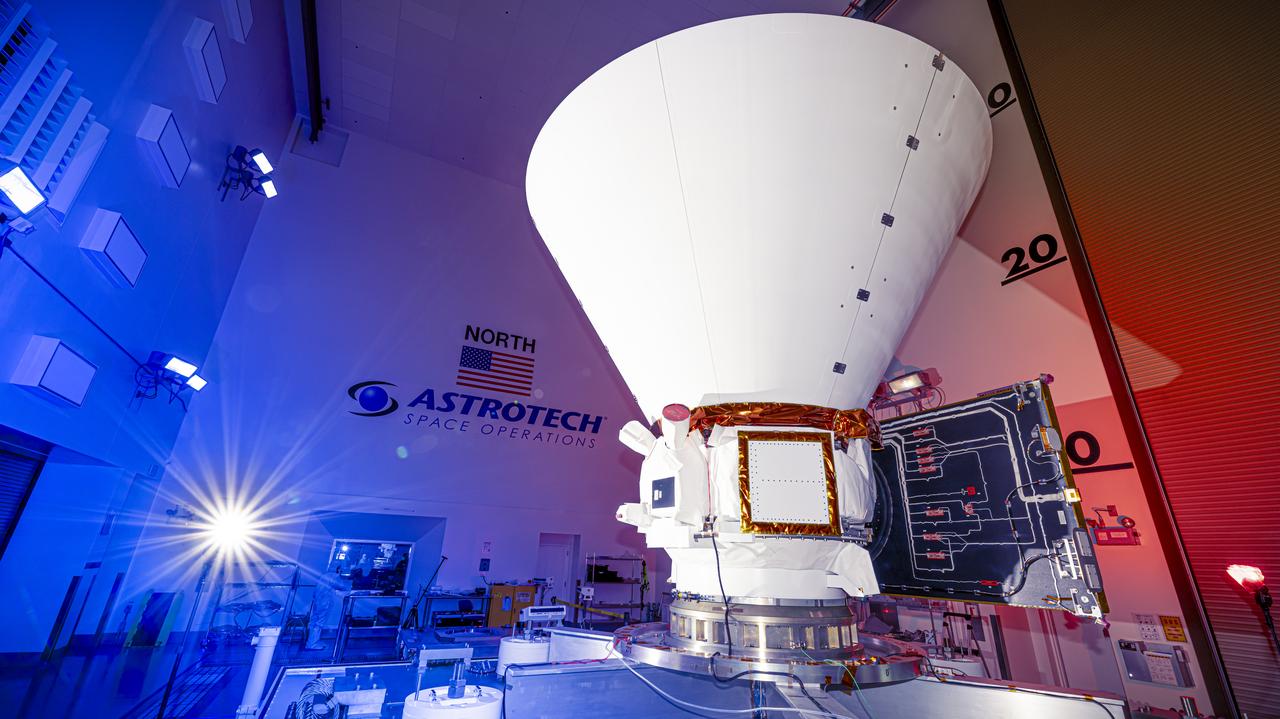
NASA’s SPHEREx (Spectro-Photometer for the History of the Universe, Epoch of Reionization and Ices Explorer), a space telescope, is situated on a work stand ahead of prelaunch operations at the Astrotech Processing Facility at Vandenberg Space Force Base in California on Thursday, Jan. 16, 2025. SPHEREx will enter a polar orbit around Earth and create a 3D map of the entire sky, gathering information about millions of galaxies for scientists to study what happened after the big bang, the history of galaxy evolution, and the origins of water in planetary systems in our galaxy. SPHEREx will launch aboard a SpaceX Falcon 9 rocket in late February 2025.

Employees with BAE Systems pose for a photo following the arrival of NASA’s SPHEREx (Spectro-Photometer for the History of the Universe, Epoch of Reionization and Ices Explorer) observatory inside the Astrotech Space Operations Facility at Vandenberg Space Force Base in California on Tuesday, Jan. 14, 2025. BAE Systems (formerly Ball Aerospace) built the telescope and the spacecraft bus. SPHEREx will use its telescope to provide an all-sky spectral survey, creating a 3D map of the entire sky to help scientists investigate the origins of our universe. Riding along with SPHEREx, NASA’s PUNCH (Polarimeter to Unify the Corona and Heliosphere) mission will study origins of the Sun’s outflow of material, or the solar wind. Liftoff aboard a SpaceX Falcon 9 rocket is targeted for 10:09 p.m. EST (7:09 p.m. PST), Thursday, Feb. 27, 2025, from Space Launch Complex 4 East.
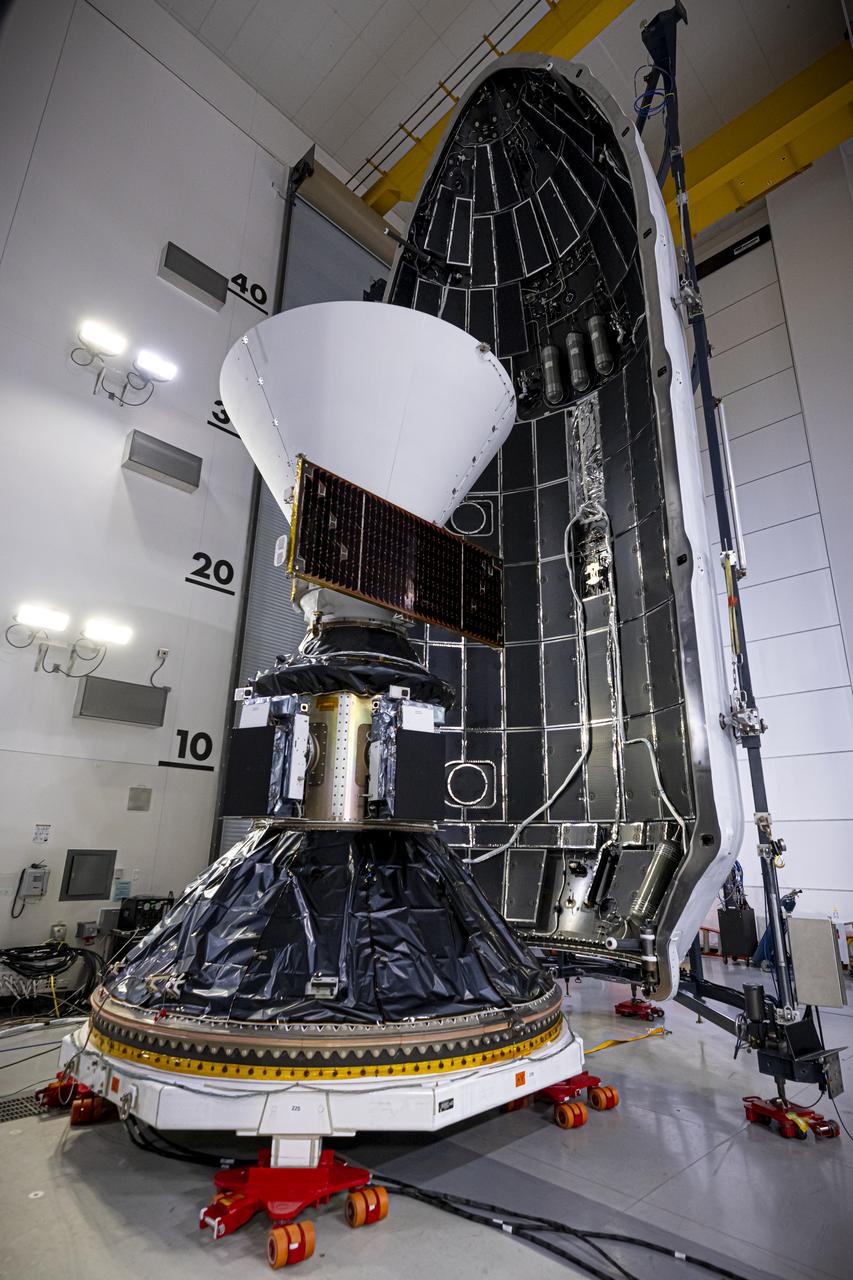
Technicians and engineers encapsulate NASA’s SPHEREx (Spectro-Photometer for the History of the Universe, Epoch of Reionization and Ices Explorer) observatory and PUNCH (Polarimeter to Unify the Corona and Heliosphere) satellites within a protective payload fairing inside the Astrotech Space Operations facility at Vandenberg Space Force Base in California, on Thursday, Feb. 27, 2025. SPHEREx will use its telescope to provide an all-sky spectral survey, creating a 3D map of the entire sky to help scientists investigate the origins of our universe. PUNCH will study origins of the Sun’s outflow of material, or the solar wind, capturing continuous 3D images of the Sun’s corona and the solar wind’s journey into the solar system. Liftoff aboard a SpaceX Falcon 9 rocket is targeted for NET 10:09 EST (7:09 p.m. PST), Tuesday, March 4, 2025, at Space Launch Complex 4 East from Vandenberg Space Force Base in California.
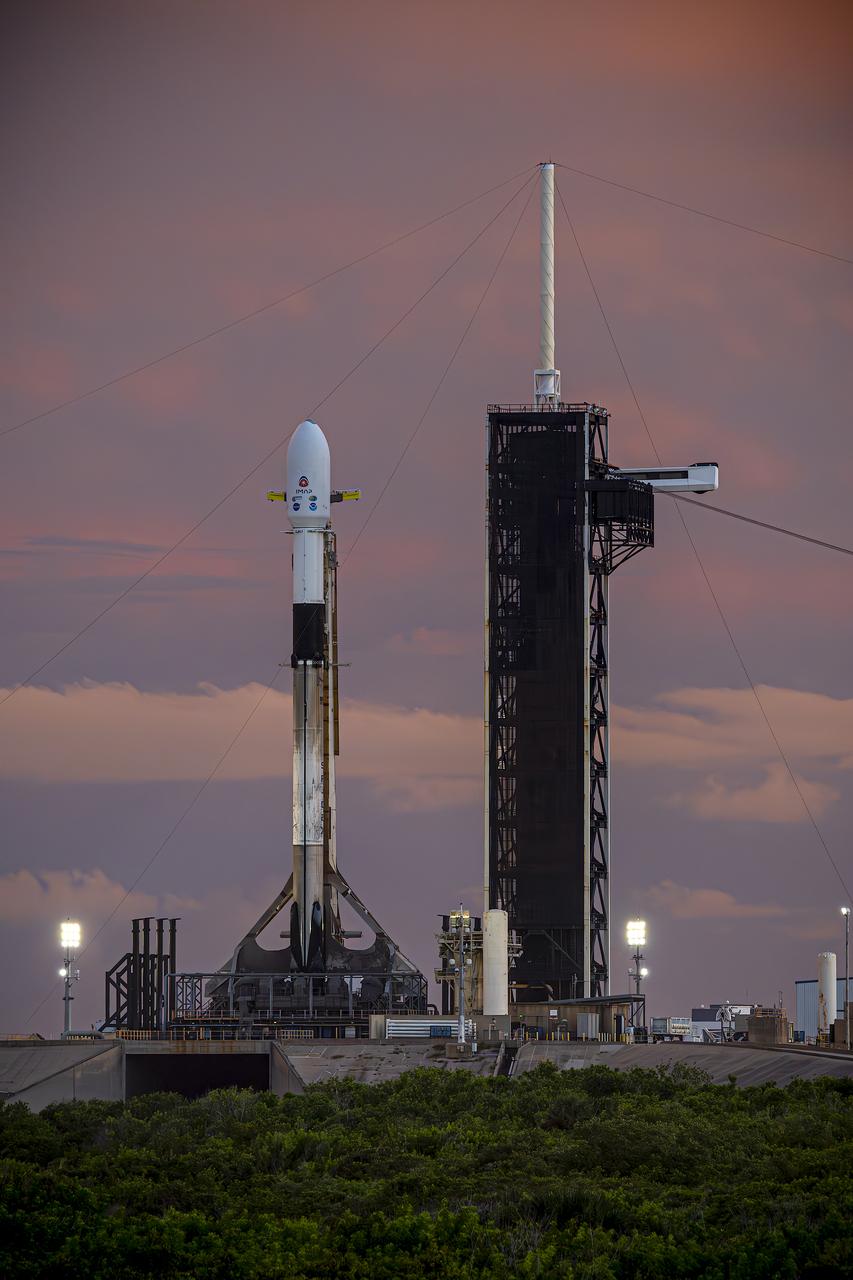
A SpaceX Falcon 9 rocket with NASA’s IMAP (Interstellar Mapping and Acceleration Probe), the agency’s Carruthers Geocorona Observatory, and National Oceanic and Atmospheric Administration’s (NOAA) Space Weather Follow On–Lagrange 1 (SWFO-L1) spacecraft atop stands vertical at Launch Complex 39A as the sun sets on Monday, Sept. 22, 2025, at the agency’s Kennedy Space Center in Florida. The missions will each focus on different effects of the solar wind — the continuous stream of particles emitted by the Sun — and space weather — the changing conditions in space driven by the Sun — from their origins at the Sun to their farthest reaches billions of miles away at the edge of our solar system.
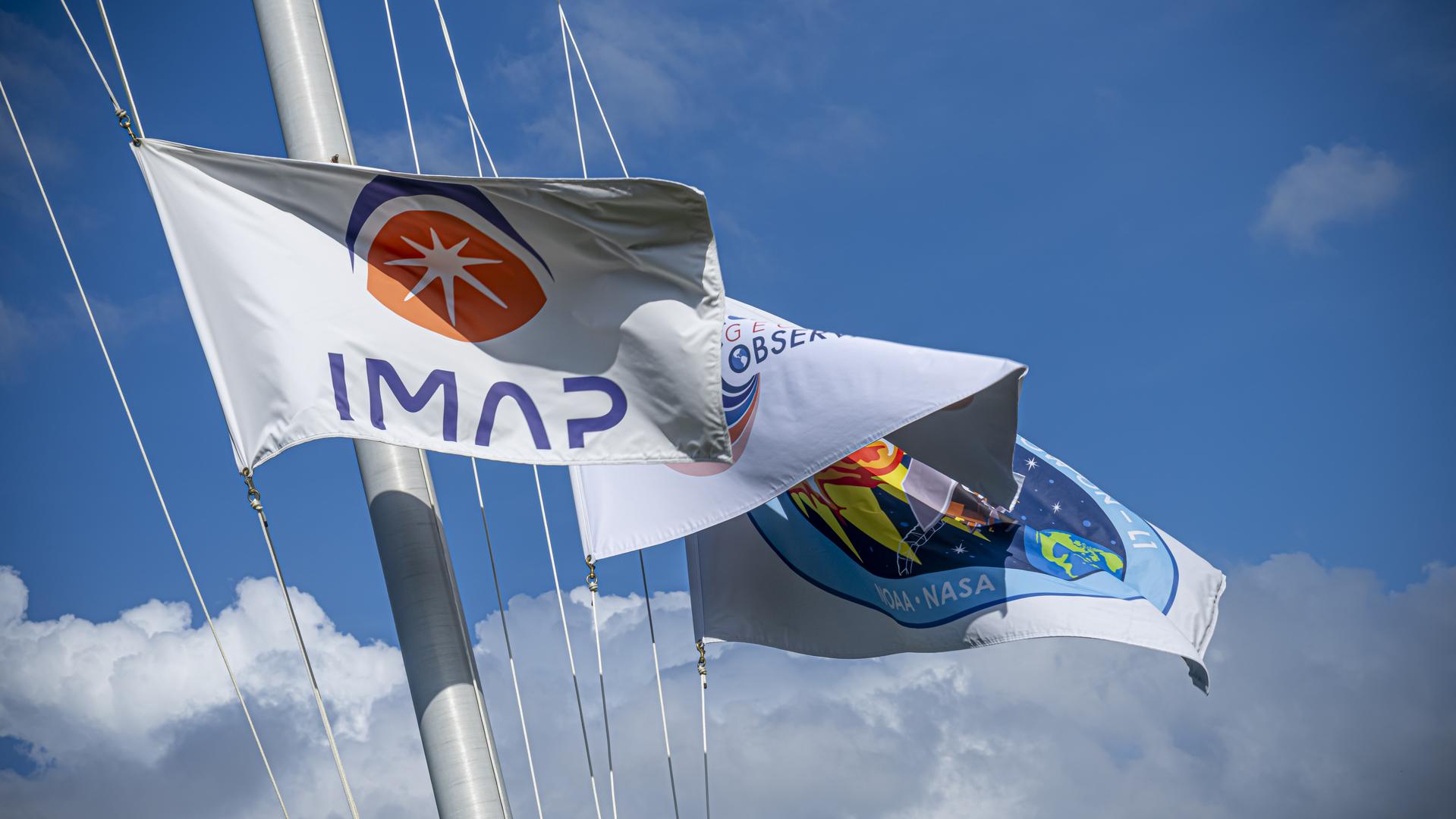
Flags for NASA’s IMAP (Interstellar Mapping and Acceleration Probe) mission and its two rideshares, NASA’s exosphere-studying Carruthers Geocorona Observatory and National Oceanic and Atmospheric Administration’s (NOAA) Space Weather Follow On–Lagrange 1 (SWFO-L1) spacecraft fly outside Astrotech Space Operations Facility near NASA’s Kennedy Space Center in Florida. Launch of the three missions on a SpaceX Falcon 9 rocket is targeted for no earlier than Tuesday, Sept. 23, 2025, from Launch Complex 39A at NASA Kennedy.
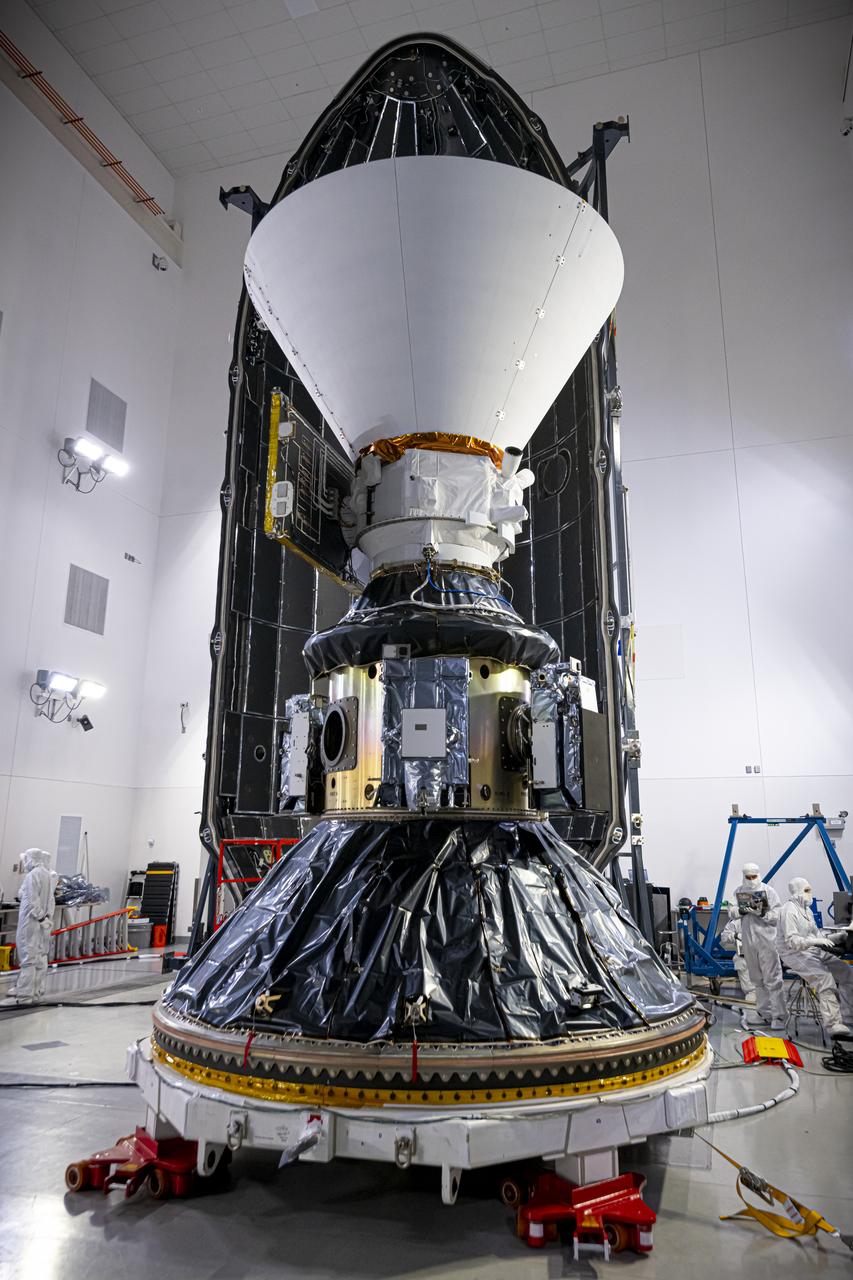
Technicians and engineers encapsulate NASA’s SPHEREx (Spectro-Photometer for the History of the Universe, Epoch of Reionization and Ices Explorer) observatory and PUNCH (Polarimeter to Unify the Corona and Heliosphere) satellites within a protective payload fairing inside the Astrotech Space Operations facility at Vandenberg Space Force Base in California, on Thursday, Feb. 27, 2025. SPHEREx will use its telescope to provide an all-sky spectral survey, creating a 3D map of the entire sky to help scientists investigate the origins of our universe. PUNCH will study origins of the Sun’s outflow of material, or the solar wind, capturing continuous 3D images of the Sun’s corona and the solar wind’s journey into the solar system. Liftoff aboard a SpaceX Falcon 9 rocket is targeted for NET 10:09 EST (7:09 p.m. PST), Tuesday, March 4, 2025, at Space Launch Complex 4 East from Vandenberg Space Force Base in California.
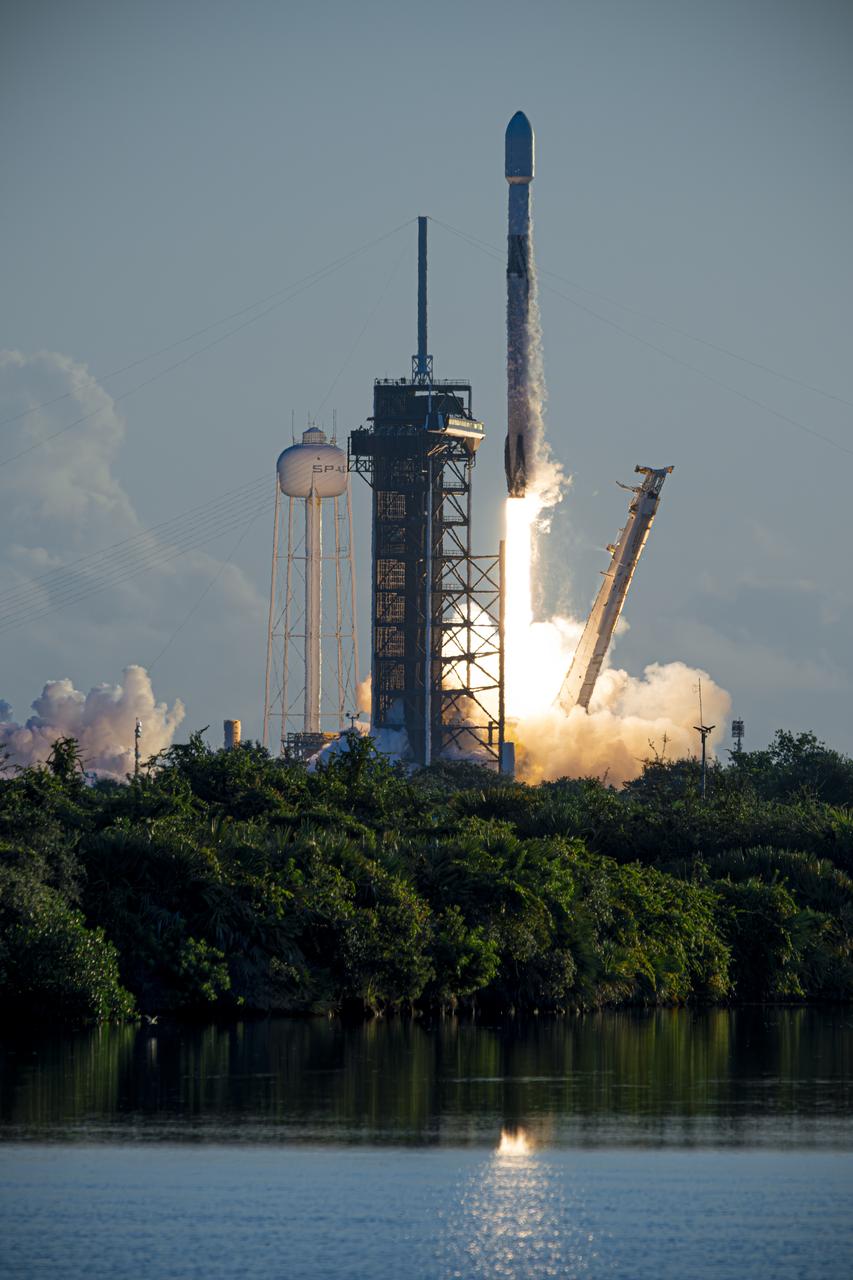
A SpaceX Falcon 9 rocket carrying NASA’s IMAP (Interstellar Mapping and Acceleration Probe), the agency’s Carruthers Geocorona Observatory, and National Oceanic and Atmospheric Administration’s (NOAA) Space Weather Follow On–Lagrange 1 (SWFO-L1) spacecraft lifts off from Launch Complex 39A at NASA’s Kennedy Space Center in Florida at 7:30 a.m. EDT Wednesday, Sept. 24, 2025. The missions will each focus on different effects of the solar wind — the continuous stream of particles emitted by the Sun — and space weather — the changing conditions in space driven by the Sun — from their origins at the Sun to their farthest reaches billions of miles away at the edge of our solar system.
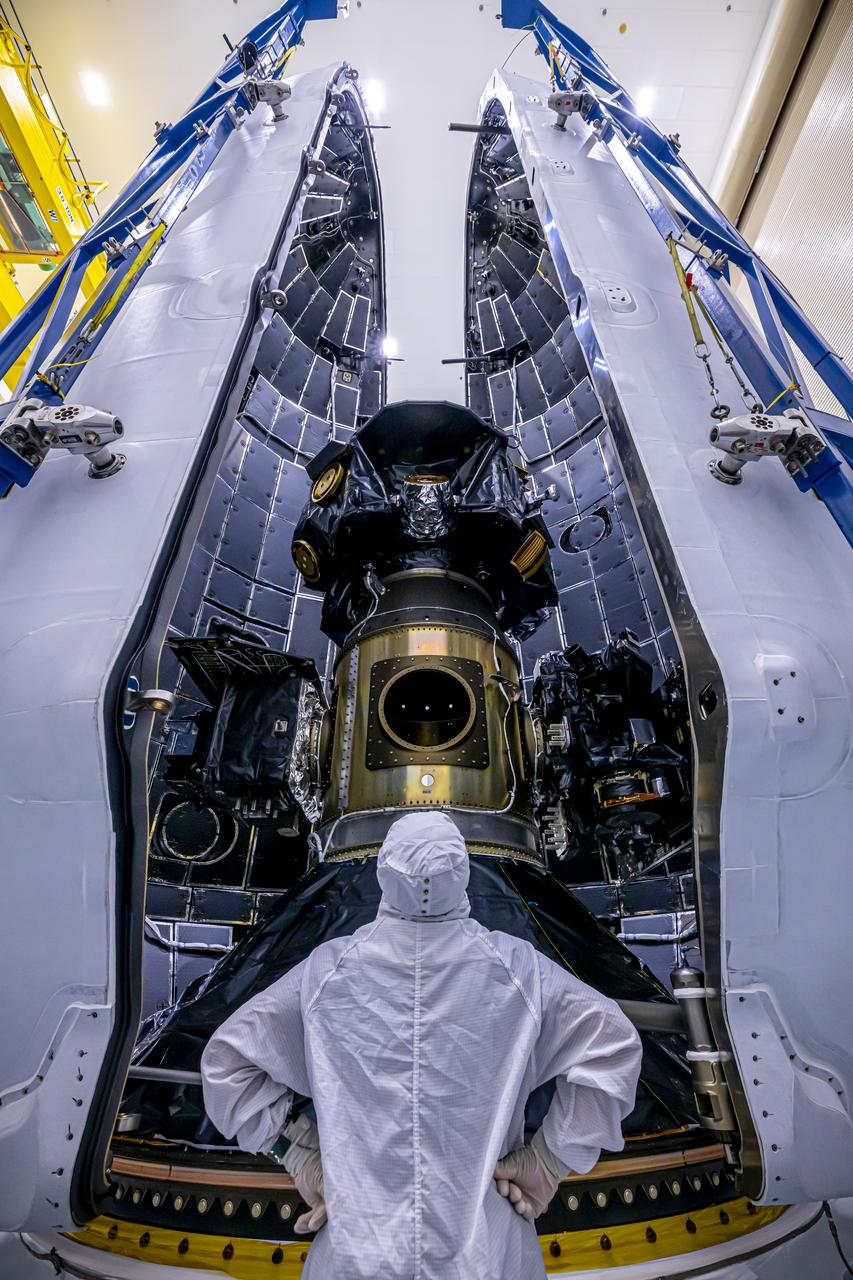
Technicians at Astrotech Space Operations Facility near NASA’s Kennedy Space Center in Florida encapsulate NASA’s IMAP (Interstellar Mapping and Acceleration Probe), along with the agency’s Carruthers Geocorona Observatory and National Oceanic and Atmospheric Administration’s (NOAA) Space Weather Follow On–Lagrange 1 (SWFO-L1) spacecraft on Tuesday, Sept. 16, 2025, inside a SpaceX Falcon 9 payload fairing. The missions will each focus on different effects of the solar wind — the continuous stream of particles emitted by the Sun — and space weather — the changing conditions in space driven by the Sun — from their origins at the Sun to their farthest reaches billions of miles away at the edge of our solar system.
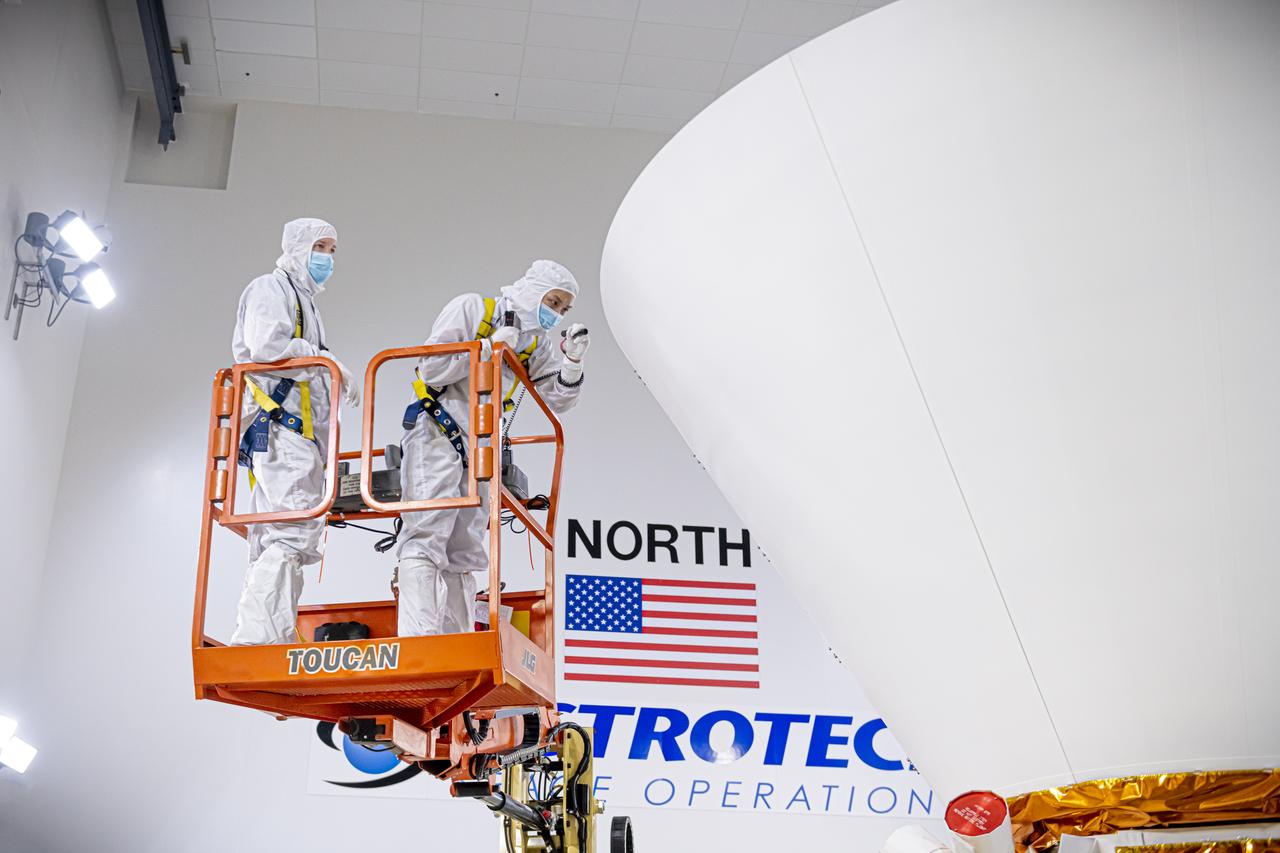
Employees with BAE Systems conduct spacecraft processing of NASA’s SPHEREx (Spectro-Photometer for the History of the Universe, Epoch of Reionization and Ices Explorer) observatory inside the Astrotech Space Operations Facility at Vandenberg Space Force Base in California on Thursday, Jan. 16, 2025. BAE Systems (formerly Ball Aerospace) built the telescope and the spacecraft bus. SPHEREx will use its telescope to provide an all-sky spectral survey, creating a 3D map of the entire sky to help scientists investigate the origins of our universe. Riding along with SPHEREx, NASA’s PUNCH (Polarimeter to Unify the Corona and Heliosphere) mission will study origins of the Sun’s outflow of material, or the solar wind. Liftoff aboard a SpaceX Falcon 9 rocket is targeted for 10:09 p.m. EST (7:09 p.m. PST), Thursday, Feb. 27, 2025, from Space Launch Complex 4 East.
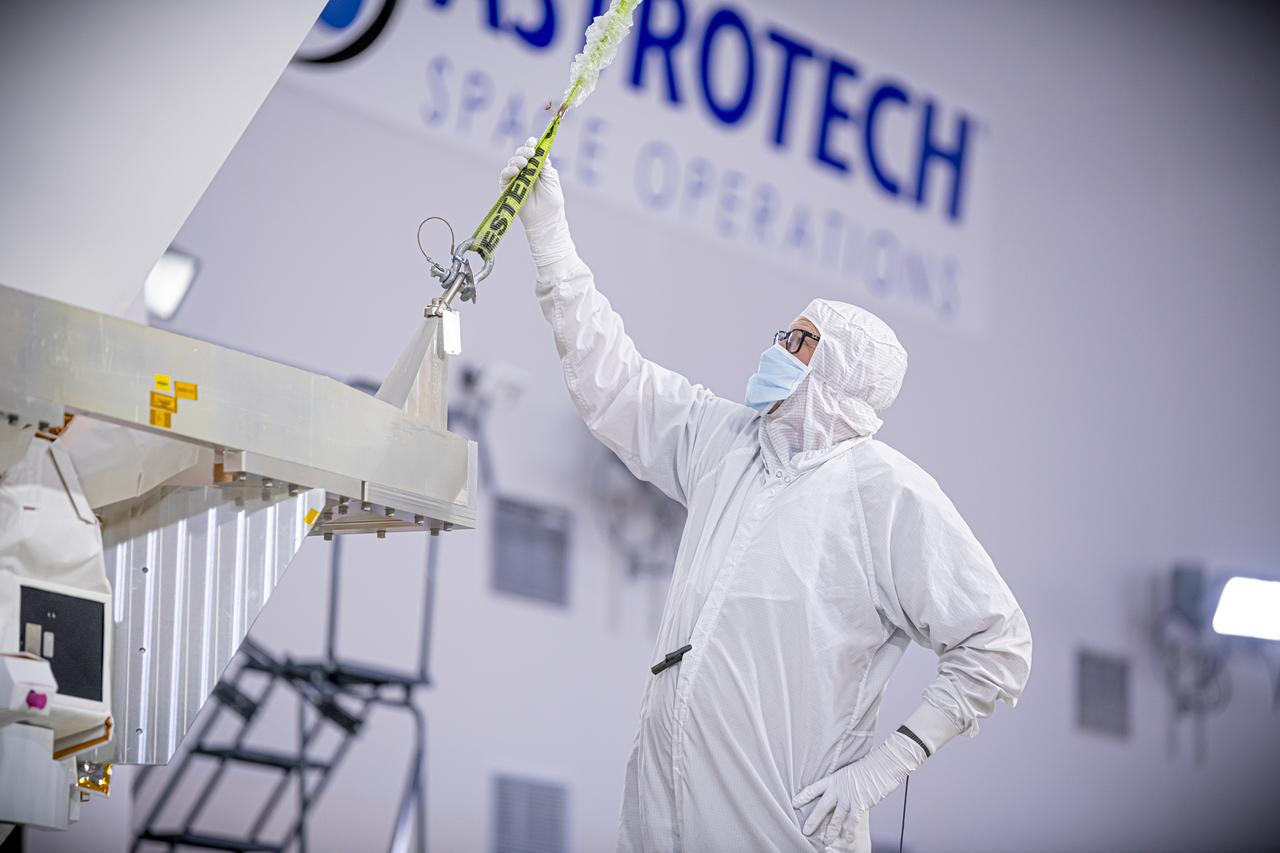
Employees with BAE Systems conduct spacecraft processing of NASA’s SPHEREx (Spectro-Photometer for the History of the Universe, Epoch of Reionization and Ices Explorer) observatory inside the Astrotech Space Operations Facility at Vandenberg Space Force Base in California on Thursday, Jan. 16, 2025. BAE Systems (formerly Ball Aerospace) built the telescope and the spacecraft bus. SPHEREx will use its telescope to provide an all-sky spectral survey, creating a 3D map of the entire sky to help scientists investigate the origins of our universe. Riding along with SPHEREx, NASA’s PUNCH (Polarimeter to Unify the Corona and Heliosphere) mission will study origins of the Sun’s outflow of material, or the solar wind. Liftoff aboard a SpaceX Falcon 9 rocket is targeted for 10:09 p.m. EST (7:09 p.m. PST), Thursday, Feb. 27, 2025, from Space Launch Complex 4 East.
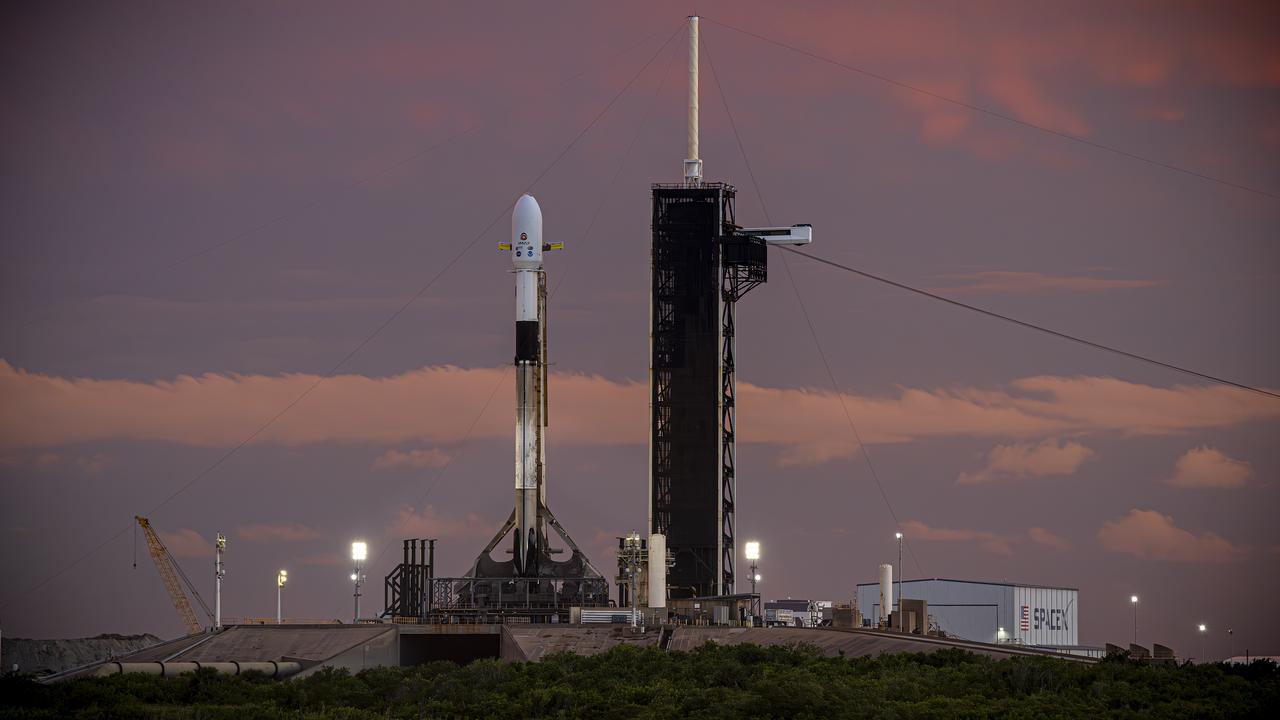
A SpaceX Falcon 9 rocket with NASA’s IMAP (Interstellar Mapping and Acceleration Probe), the agency’s Carruthers Geocorona Observatory, and National Oceanic and Atmospheric Administration’s (NOAA) Space Weather Follow On–Lagrange 1 (SWFO-L1) spacecraft atop stands vertical at Launch Complex 39A as the sun sets on Monday, Sept. 22, 2025, at the agency’s Kennedy Space Center in Florida. The missions will each focus on different effects of the solar wind — the continuous stream of particles emitted by the Sun — and space weather — the changing conditions in space driven by the Sun — from their origins at the Sun to their farthest reaches billions of miles away at the edge of our solar system.
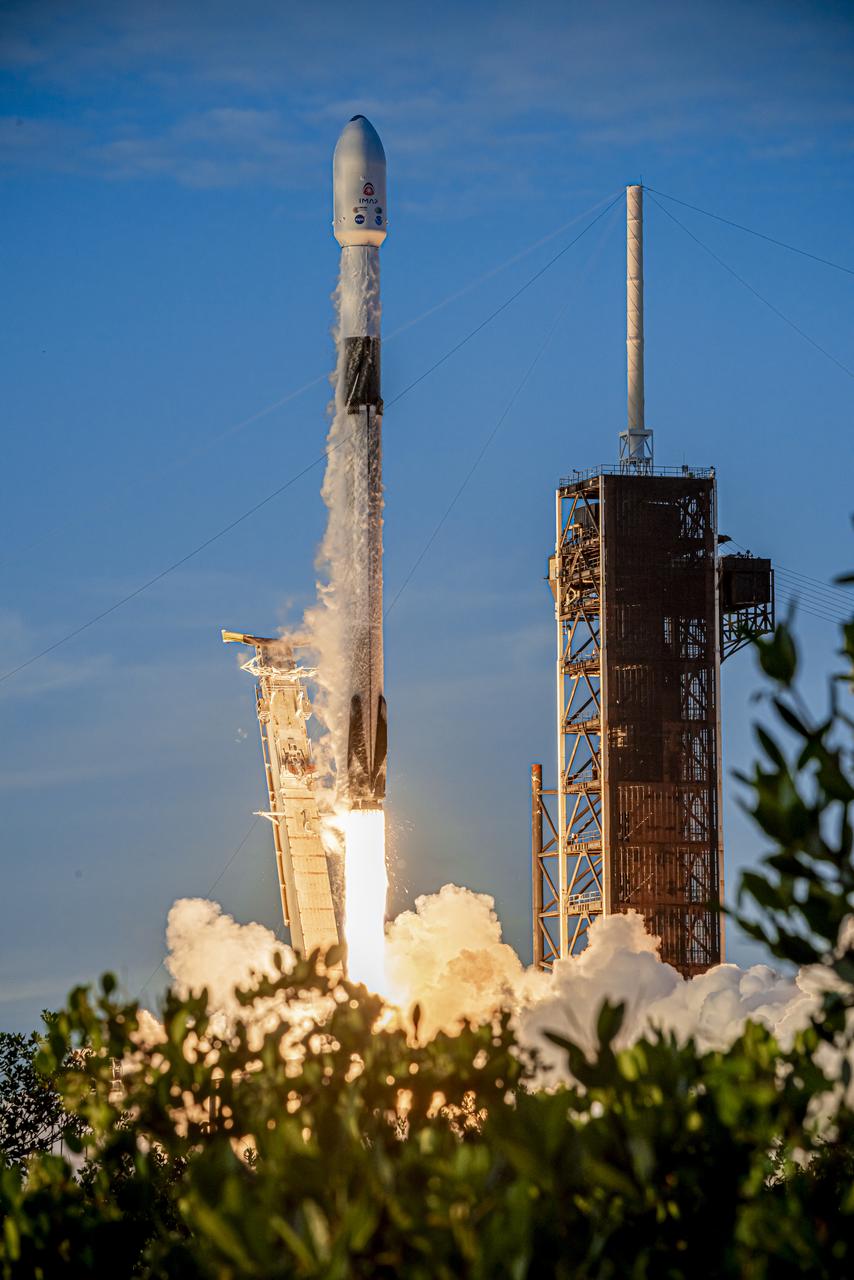
A SpaceX Falcon 9 rocket carrying NASA’s IMAP (Interstellar Mapping and Acceleration Probe), the agency’s Carruthers Geocorona Observatory, and National Oceanic and Atmospheric Administration’s (NOAA) Space Weather Follow On–Lagrange 1 (SWFO-L1) spacecraft lifts off from Launch Complex 39A at NASA’s Kennedy Space Center in Florida at 7:30 a.m. EDT Wednesday, Sept. 24, 2025. The missions will each focus on different effects of the solar wind — the continuous stream of particles emitted by the Sun — and space weather — the changing conditions in space driven by the Sun — from their origins at the Sun to their farthest reaches billions of miles away at the edge of our solar system.
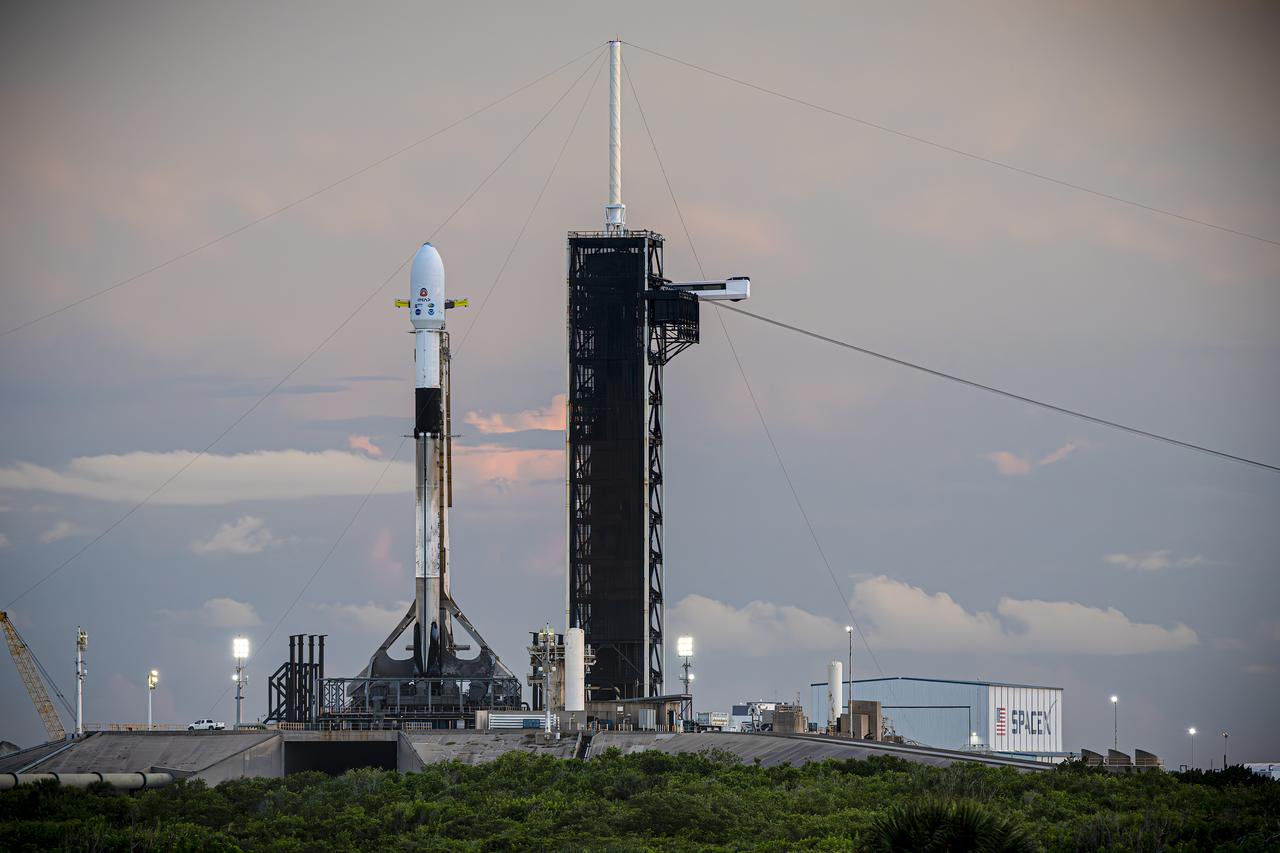
A SpaceX Falcon 9 rocket with NASA’s IMAP (Interstellar Mapping and Acceleration Probe), the agency’s Carruthers Geocorona Observatory, and National Oceanic and Atmospheric Administration’s (NOAA) Space Weather Follow On–Lagrange 1 (SWFO-L1) spacecraft atop stands vertical at Launch Complex 39A as the sun sets on Monday, Sept. 22, 2025, at the agency’s Kennedy Space Center in Florida. The missions will each focus on different effects of the solar wind — the continuous stream of particles emitted by the Sun — and space weather — the changing conditions in space driven by the Sun — from their origins at the Sun to their farthest reaches billions of miles away at the edge of our solar system.
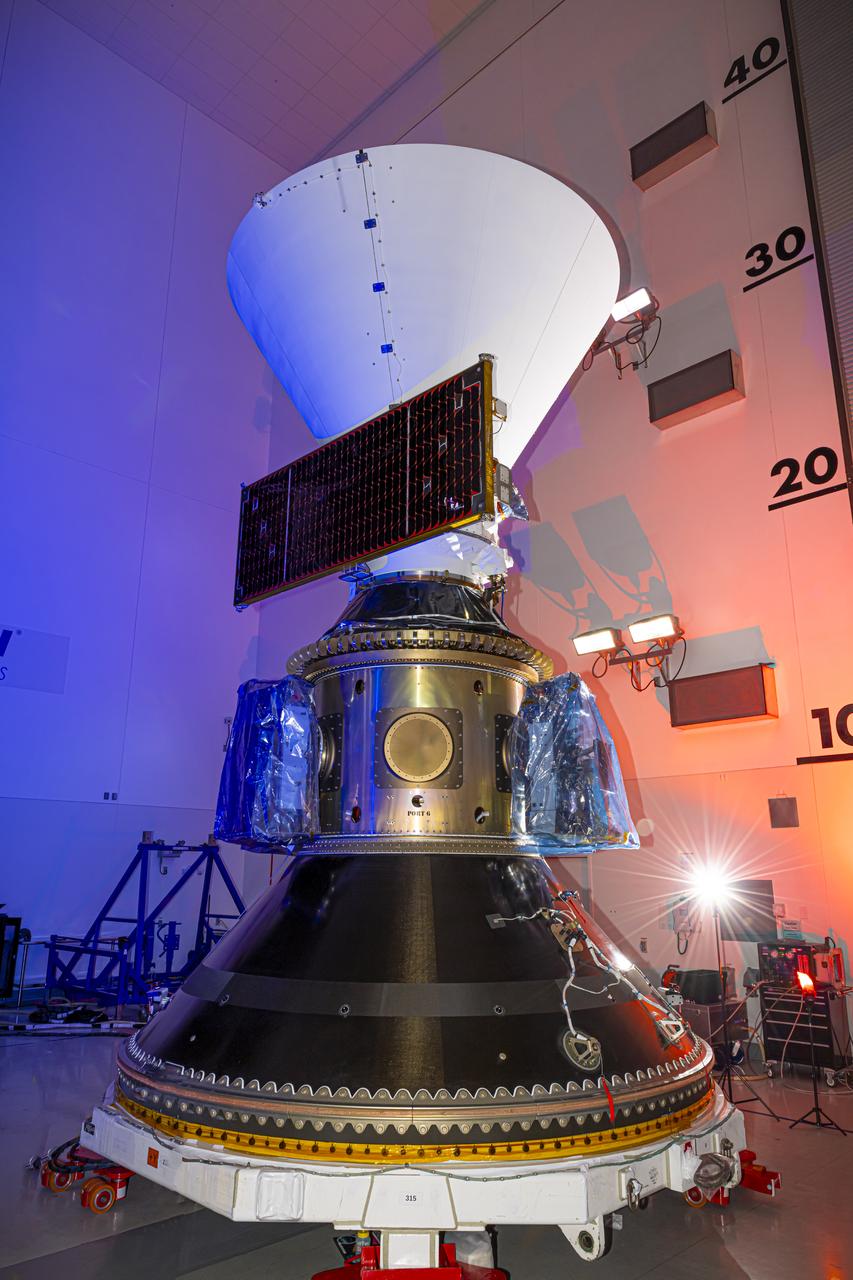
Technicians and engineers encapsulate NASA’s SPHEREx (Spectro-Photometer for the History of the Universe, Epoch of Reionization and Ices Explorer) observatory and PUNCH (Polarimeter to Unify the Corona and Heliosphere) satellites within a protective payload fairing inside the Astrotech Space Operations facility at Vandenberg Space Force Base in California, on Saturday, March 1, 2025. SPHEREx will use its telescope to provide an all-sky spectral survey, creating a 3D map of the entire sky to help scientists investigate the origins of our universe. PUNCH will study origins of the Sun’s outflow of material, or the solar wind, capturing continuous 3D images of the Sun’s corona and the solar wind’s journey into the solar system. Liftoff aboard a SpaceX Falcon 9 rocket is targeted for NET 10:09 EST (7:09 p.m. PST), Tuesday, March 4, 2025, at Space Launch Complex 4 East from Vandenberg Space Force Base in California.
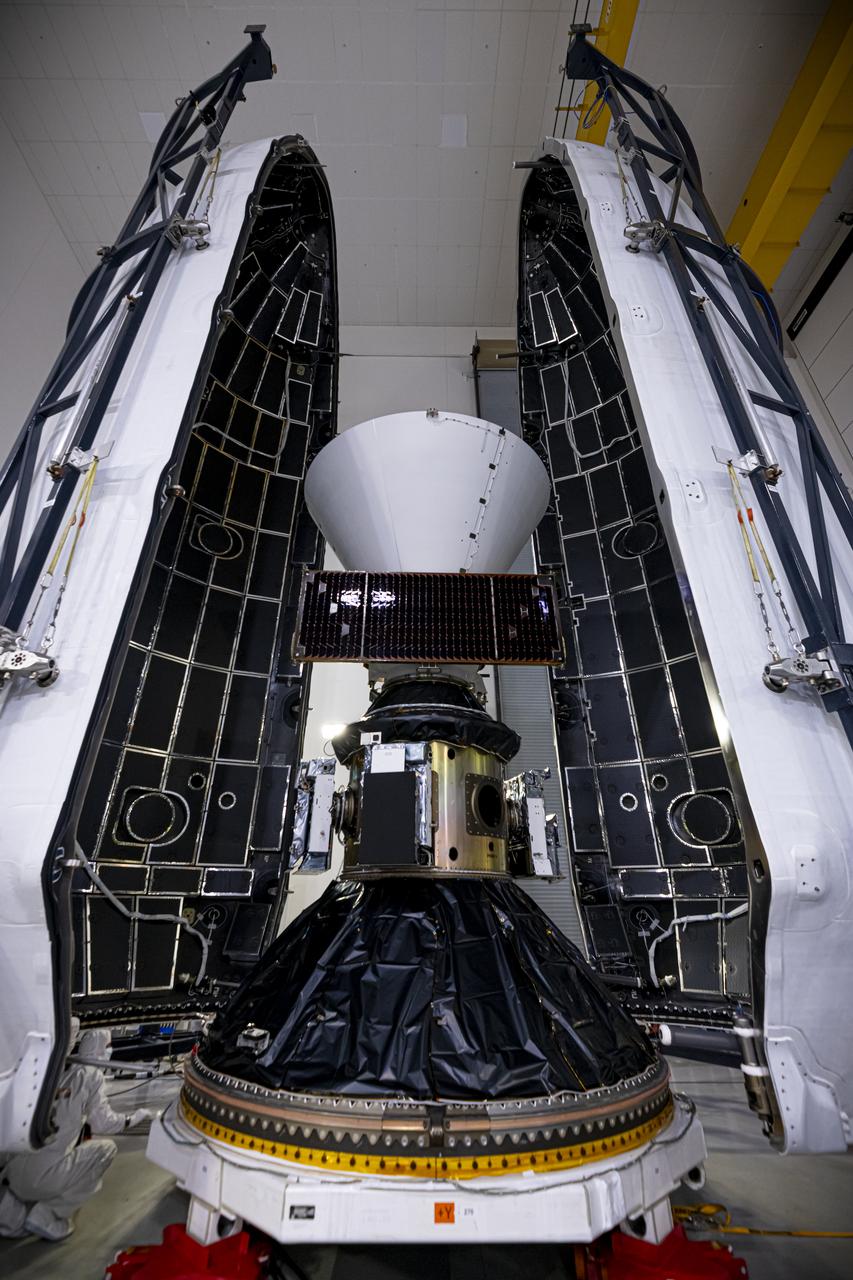
Technicians and engineers encapsulate NASA’s SPHEREx (Spectro-Photometer for the History of the Universe, Epoch of Reionization and Ices Explorer) observatory and PUNCH (Polarimeter to Unify the Corona and Heliosphere) satellites within a protective payload fairing inside the Astrotech Space Operations facility at Vandenberg Space Force Base in California, on Thursday, Feb. 27, 2025. SPHEREx will use its telescope to provide an all-sky spectral survey, creating a 3D map of the entire sky to help scientists investigate the origins of our universe. PUNCH will study origins of the Sun’s outflow of material, or the solar wind, capturing continuous 3D images of the Sun’s corona and the solar wind’s journey into the solar system. Liftoff aboard a SpaceX Falcon 9 rocket is targeted for NET 10:09 EST (7:09 p.m. PST), Tuesday, March 4, 2025, at Space Launch Complex 4 East from Vandenberg Space Force Base in California.
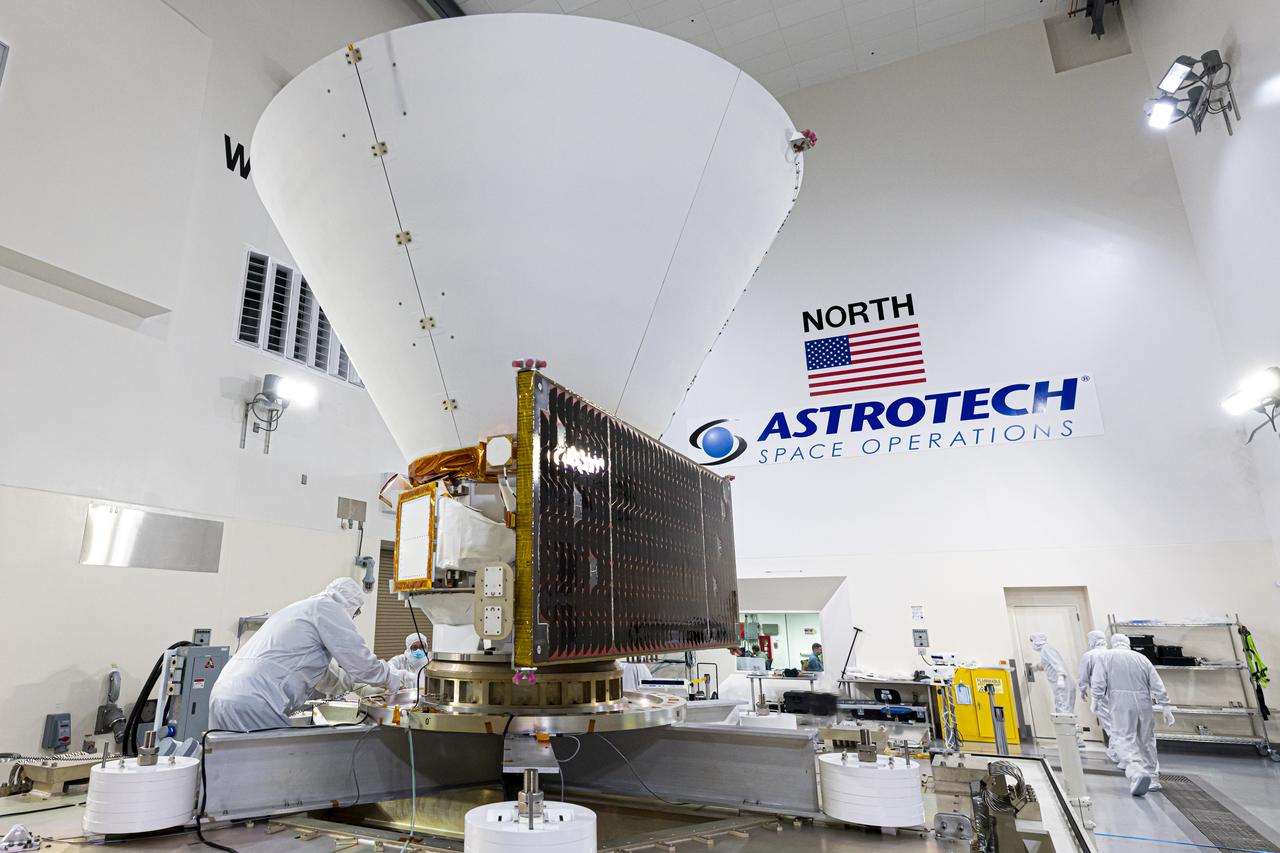
NASA’s SPHEREx (Spectro-Photometer for the History of the Universe, Epoch of Reionization and Ices Explorer), a space telescope, is situated on a work stand ahead of prelaunch operations at the Astrotech Processing Facility at Vandenberg Space Force Base in California on Thursday, Jan. 16, 2025. SPHEREx will enter a polar orbit around Earth and create a 3D map of the entire sky, gathering information about millions of galaxies for scientists to study what happened after the big bang, the history of galaxy evolution, and the origins of water in planetary systems in our galaxy. SPHEREx will launch aboard a SpaceX Falcon 9 rocket in late February 2025.
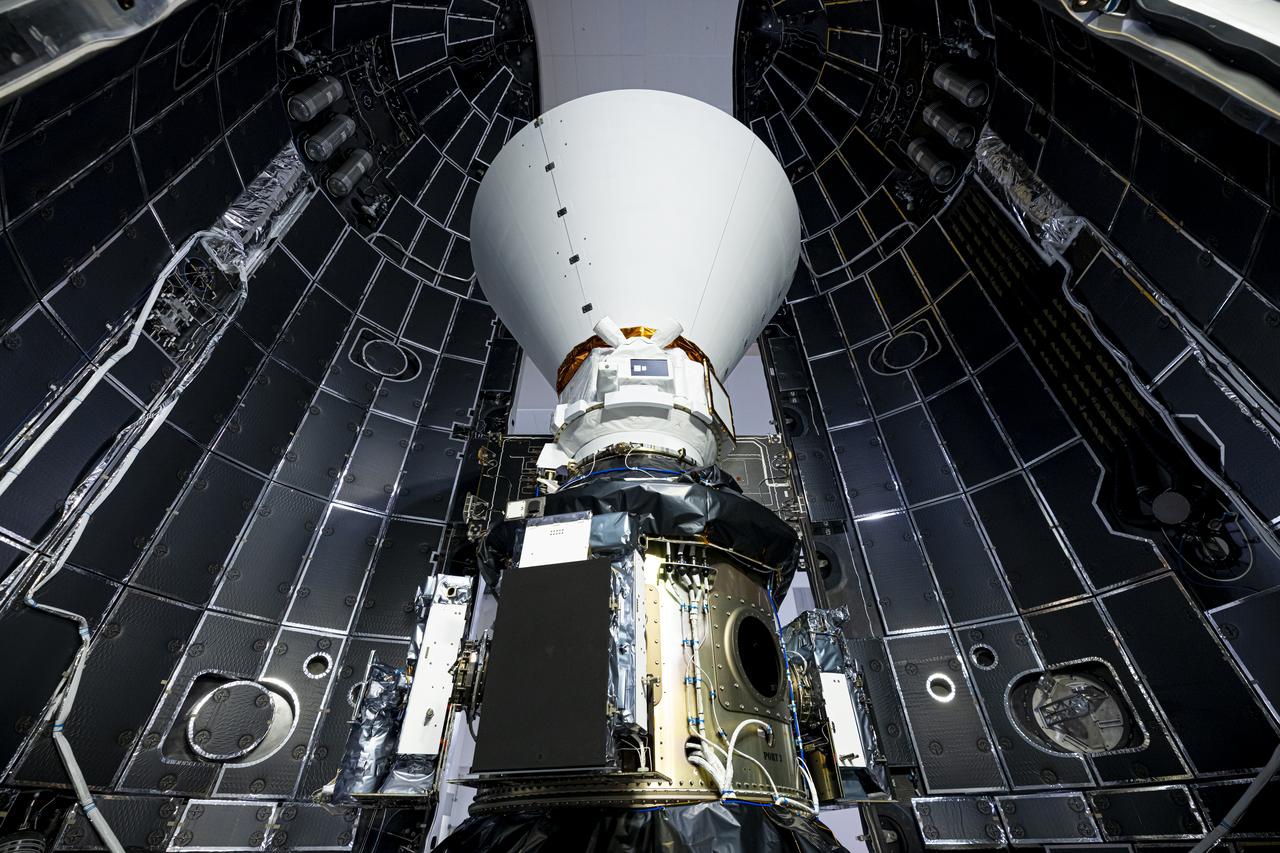
Technicians and engineers encapsulate NASA’s SPHEREx (Spectro-Photometer for the History of the Universe, Epoch of Reionization and Ices Explorer) observatory and PUNCH (Polarimeter to Unify the Corona and Heliosphere) satellites within a protective payload fairing inside the Astrotech Space Operations facility at Vandenberg Space Force Base in California, on Thursday, Feb. 27, 2025. SPHEREx will use its telescope to provide an all-sky spectral survey, creating a 3D map of the entire sky to help scientists investigate the origins of our universe. PUNCH will study origins of the Sun’s outflow of material, or the solar wind, capturing continuous 3D images of the Sun’s corona and the solar wind’s journey into the solar system. Liftoff aboard a SpaceX Falcon 9 rocket is targeted for NET 10:09 EST (7:09 p.m. PST), Tuesday, March 4, 2025, at Space Launch Complex 4 East from Vandenberg Space Force Base in California.
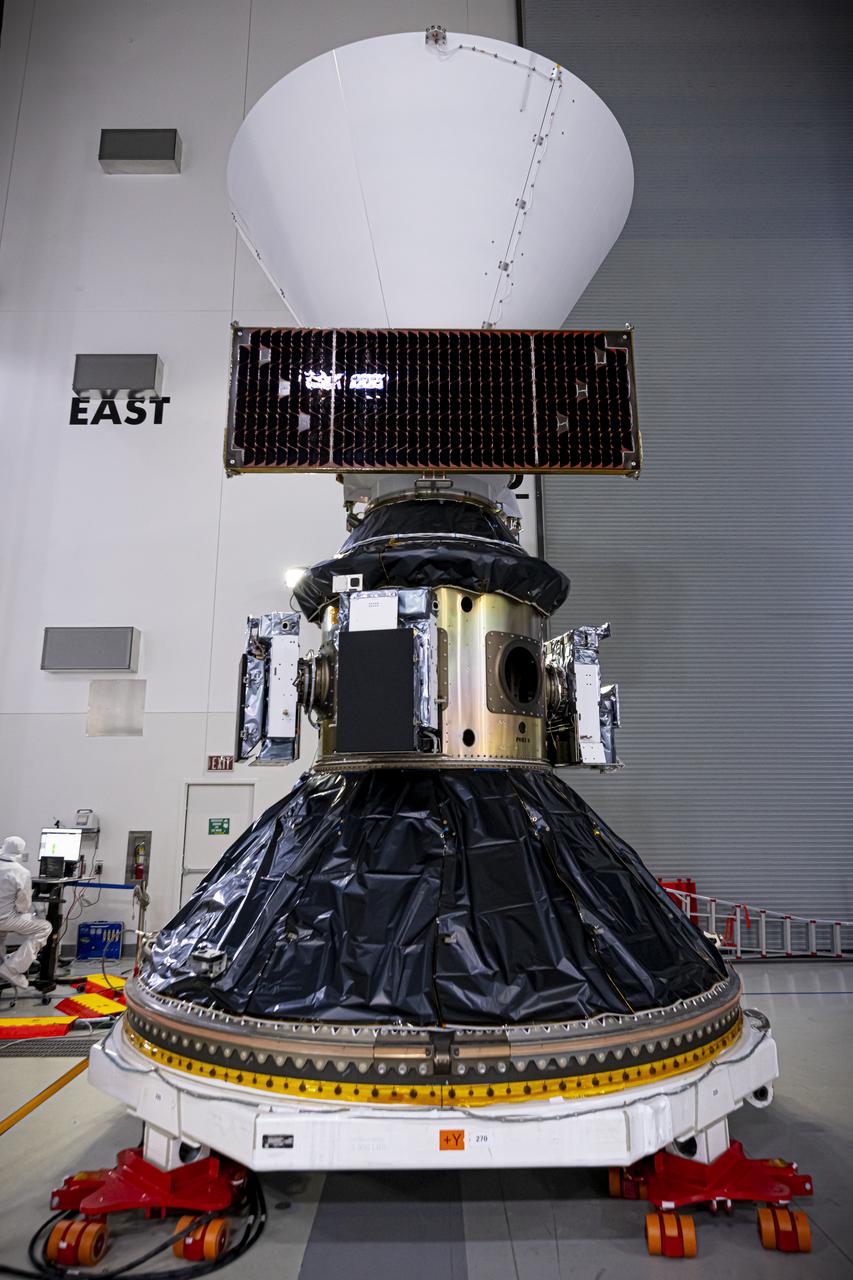
Technicians and engineers encapsulate NASA’s SPHEREx (Spectro-Photometer for the History of the Universe, Epoch of Reionization and Ices Explorer) observatory and PUNCH (Polarimeter to Unify the Corona and Heliosphere) satellites within a protective payload fairing inside the Astrotech Space Operations facility at Vandenberg Space Force Base in California, on Thursday, Feb. 27, 2025. SPHEREx will use its telescope to provide an all-sky spectral survey, creating a 3D map of the entire sky to help scientists investigate the origins of our universe. PUNCH will study origins of the Sun’s outflow of material, or the solar wind, capturing continuous 3D images of the Sun’s corona and the solar wind’s journey into the solar system. Liftoff aboard a SpaceX Falcon 9 rocket is targeted for NET 10:09 EST (7:09 p.m. PST), Tuesday, March 4, 2025, at Space Launch Complex 4 East from Vandenberg Space Force Base in California.
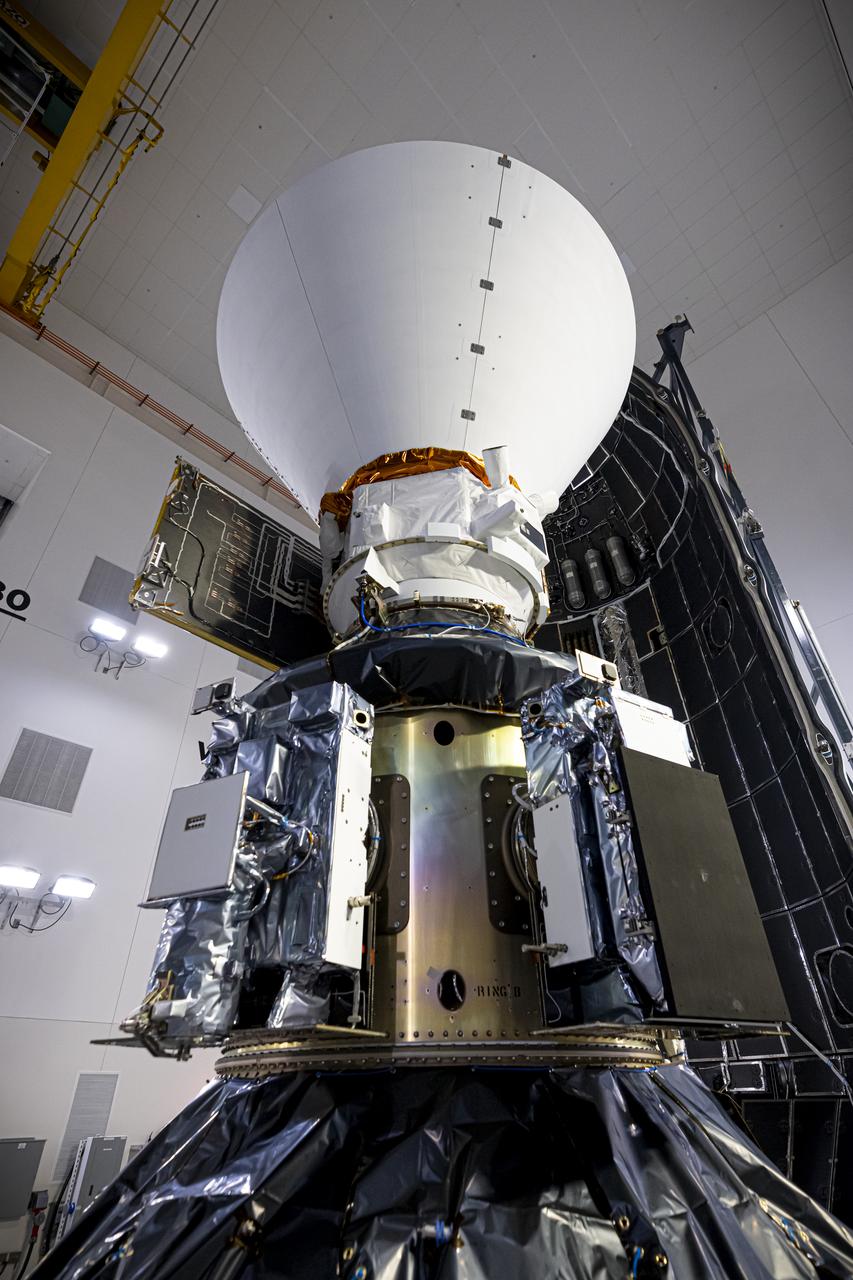
Technicians and engineers encapsulate NASA’s SPHEREx (Spectro-Photometer for the History of the Universe, Epoch of Reionization and Ices Explorer) observatory and PUNCH (Polarimeter to Unify the Corona and Heliosphere) satellites within a protective payload fairing inside the Astrotech Space Operations facility at Vandenberg Space Force Base in California, on Thursday, Feb. 27, 2025. SPHEREx will use its telescope to provide an all-sky spectral survey, creating a 3D map of the entire sky to help scientists investigate the origins of our universe. PUNCH will study origins of the Sun’s outflow of material, or the solar wind, capturing continuous 3D images of the Sun’s corona and the solar wind’s journey into the solar system. Liftoff aboard a SpaceX Falcon 9 rocket is targeted for NET 10:09 EST (7:09 p.m. PST), Tuesday, March 4, 2025, at Space Launch Complex 4 East from Vandenberg Space Force Base in California.
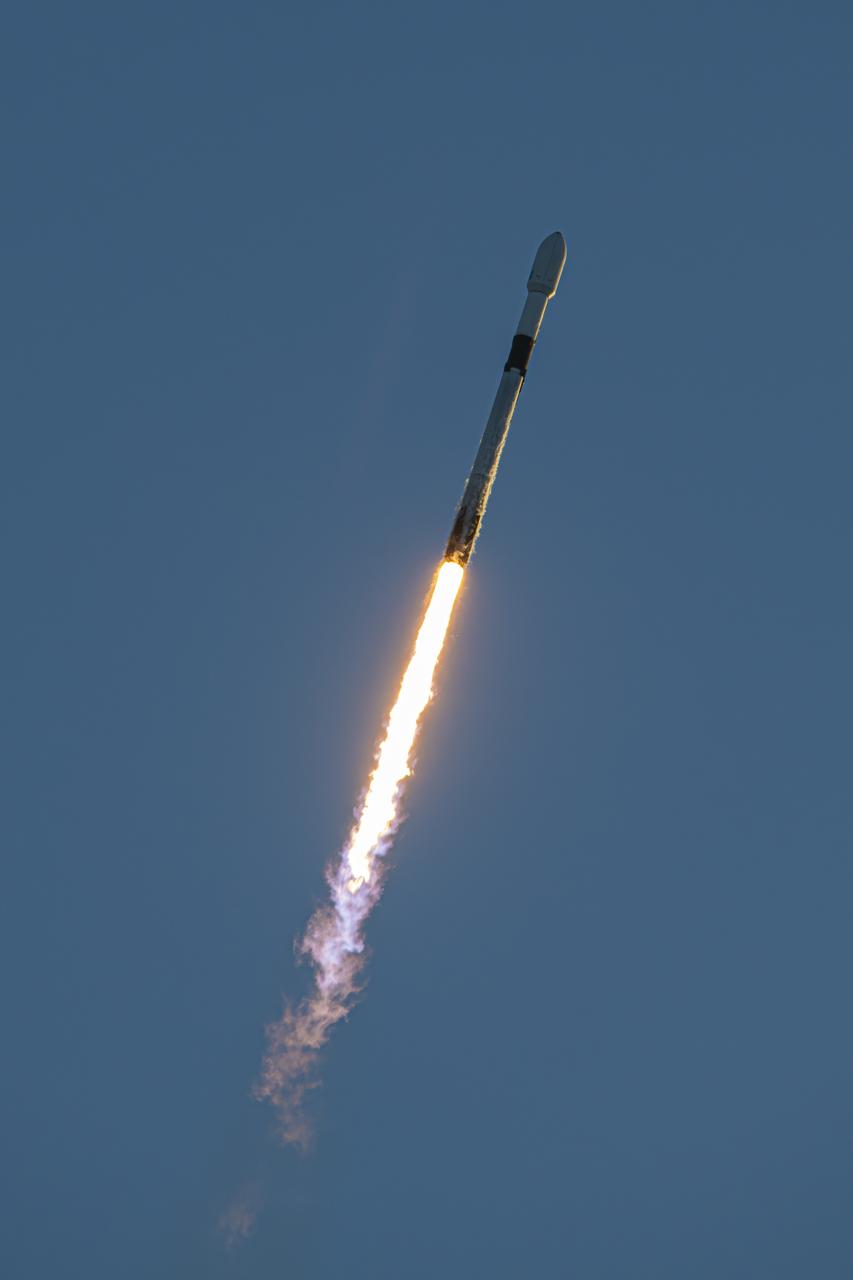
A SpaceX Falcon 9 rocket carrying NASA’s IMAP (Interstellar Mapping and Acceleration Probe), the agency’s Carruthers Geocorona Observatory, and National Oceanic and Atmospheric Administration’s (NOAA) Space Weather Follow On–Lagrange 1 (SWFO-L1) spacecraft lifts off from Launch Complex 39A at NASA’s Kennedy Space Center in Florida at 7:30 a.m. EDT Wednesday, Sept. 24, 2025. The missions will each focus on different effects of the solar wind — the continuous stream of particles emitted by the Sun — and space weather — the changing conditions in space driven by the Sun — from their origins at the Sun to their farthest reaches billions of miles away at the edge of our solar system.
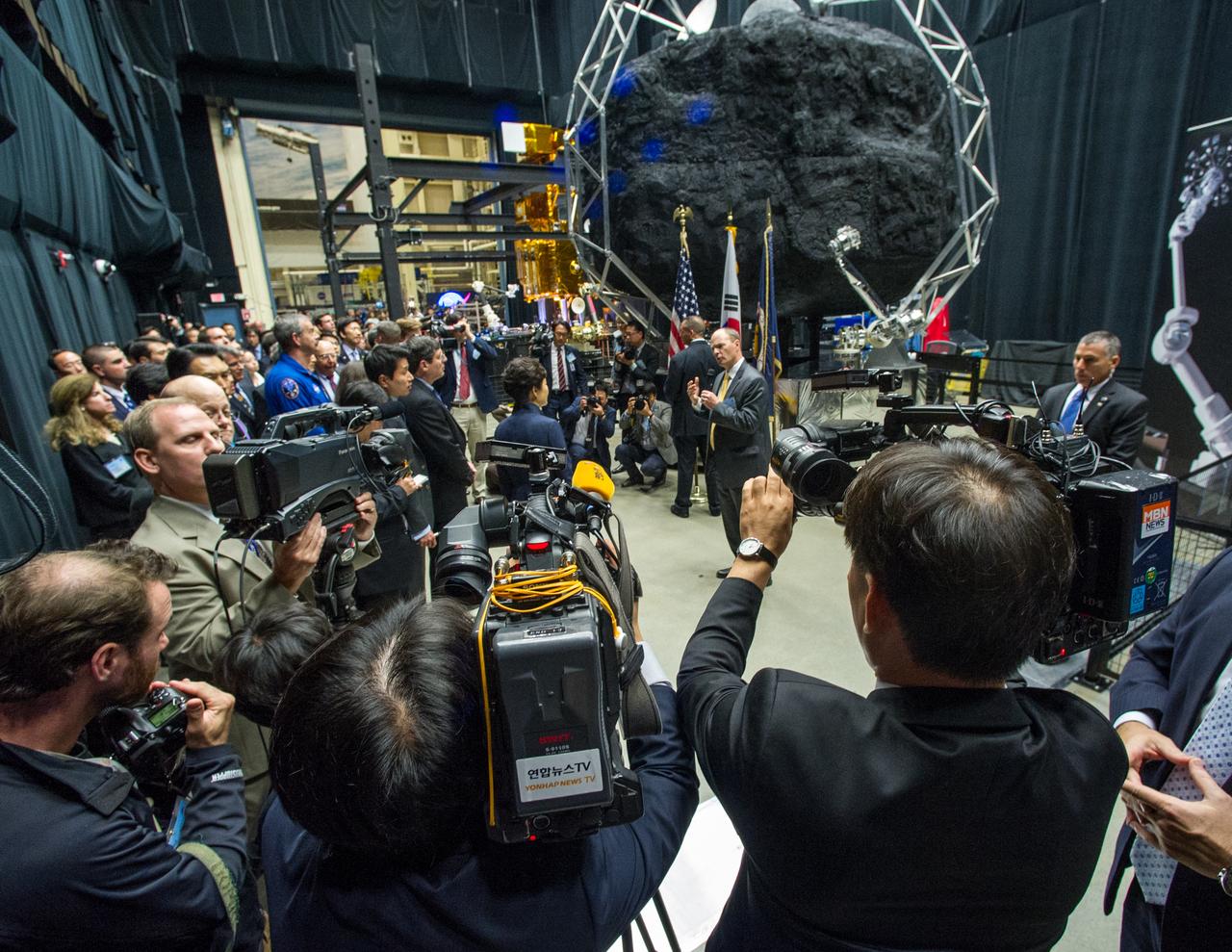
President Park Geun-hye of South Korea and Center Director Christopher Scolese are greeted by Frank Cepollina, Associate Director of the Satellite Servicing Capabilities Office, and Benjamin Reed, Deputy Project Manager of the Satellite Servicing Capabilities Office. As part of her visit to the United States, President Park Geun-hye of South Korea visited NASA’s Goddard Space Flight Center in Greenbelt, Md. On Oct. 14, 2015. The visit offered an opportunity to celebrate past collaborative efforts between the American and South Korean space programs along with presentations on current projects and programs underway at Goddard. Credit: NASA/Goddard/Bill Hrybyk <b><a href="http://www.nasa.gov/audience/formedia/features/MP_Photo_Guidelines.html" rel="nofollow">NASA image use policy.</a></b> <b><a href="http://www.nasa.gov/centers/goddard/home/index.html" rel="nofollow">NASA Goddard Space Flight Center</a></b> enables NASA’s mission through four scientific endeavors: Earth Science, Heliophysics, Solar System Exploration, and Astrophysics. Goddard plays a leading role in NASA’s accomplishments by contributing compelling scientific knowledge to advance the Agency’s mission. <b>Follow us on <a href="http://twitter.com/NASAGoddardPix" rel="nofollow">Twitter</a></b> <b>Like us on <a href="http://www.facebook.com/pages/Greenbelt-MD/NASA-Goddard/395013845897?ref=tsd" rel="nofollow">Facebook</a></b> <b>Find us on <a href="http://instagrid.me/nasagoddard/?vm=grid" rel="nofollow">Instagram</a></b>
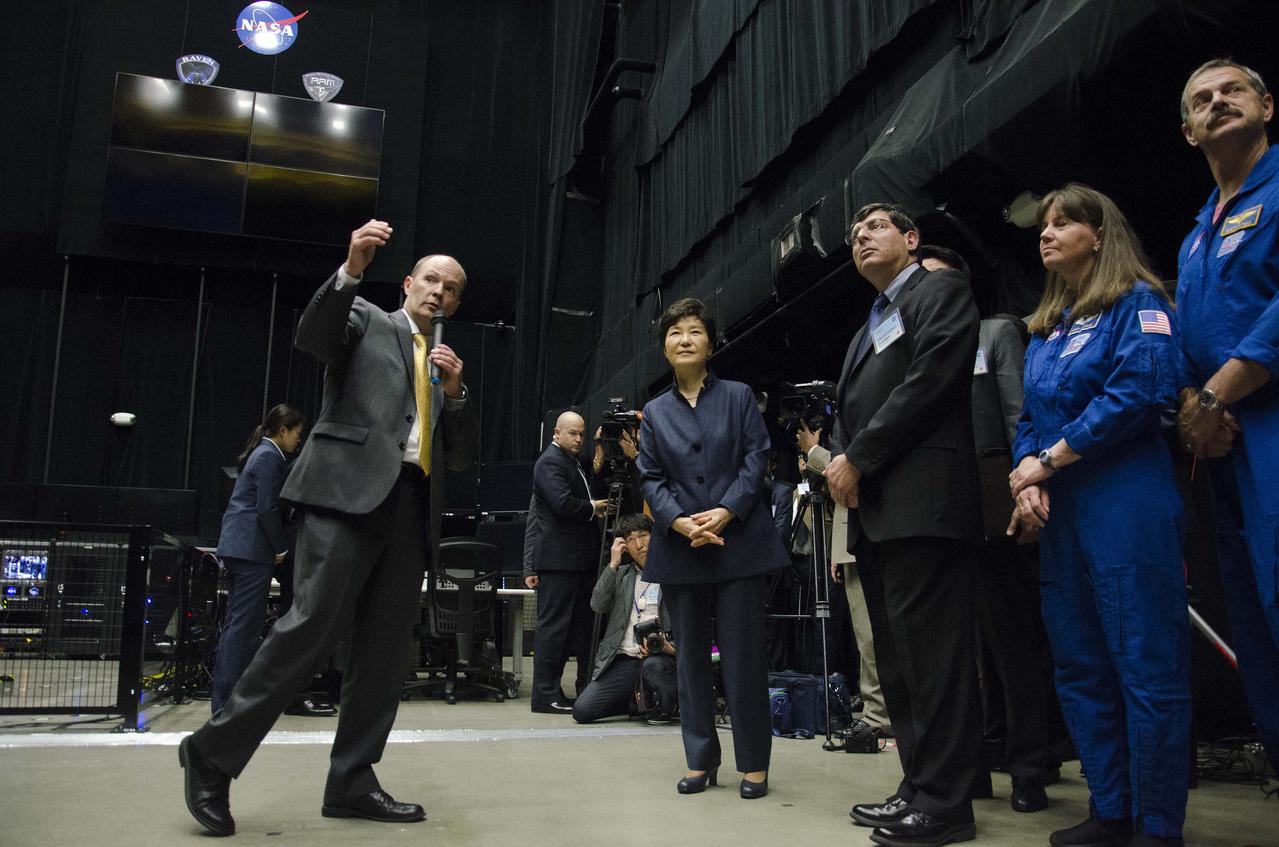
Caption: Benjamin Reed gives brief overview of NASA Goddard’s Satellite Servicing Capabilities Office to President Park Geun-hye of South Korea and (left to right) Goddard Center Director Christopher Scolese, NASA Astronauts Cady Coleman and Scott Altman. As part of her visit to the United States, President Park Geun-hye of South Korea visited NASA’s Goddard Space Flight Center in Greenbelt, Md. On Oct. 14, 2015. The visit offered an opportunity to celebrate past collaborative efforts between the American and South Korean space programs along with presentations on current projects and programs underway at Goddard. Credit: NASA/Goddard/Rebecca Roth <b><a href="http://www.nasa.gov/audience/formedia/features/MP_Photo_Guidelines.html" rel="nofollow">NASA image use policy.</a></b> <b><a href="http://www.nasa.gov/centers/goddard/home/index.html" rel="nofollow">NASA Goddard Space Flight Center</a></b> enables NASA’s mission through four scientific endeavors: Earth Science, Heliophysics, Solar System Exploration, and Astrophysics. Goddard plays a leading role in NASA’s accomplishments by contributing compelling scientific knowledge to advance the Agency’s mission. <b>Follow us on <a href="http://twitter.com/NASAGoddardPix" rel="nofollow">Twitter</a></b> <b>Like us on <a href="http://www.facebook.com/pages/Greenbelt-MD/NASA-Goddard/395013845897?ref=tsd" rel="nofollow">Facebook</a></b> <b>Find us on <a href="http://instagrid.me/nasagoddard/?vm=grid" rel="nofollow">Instagram</a></b>
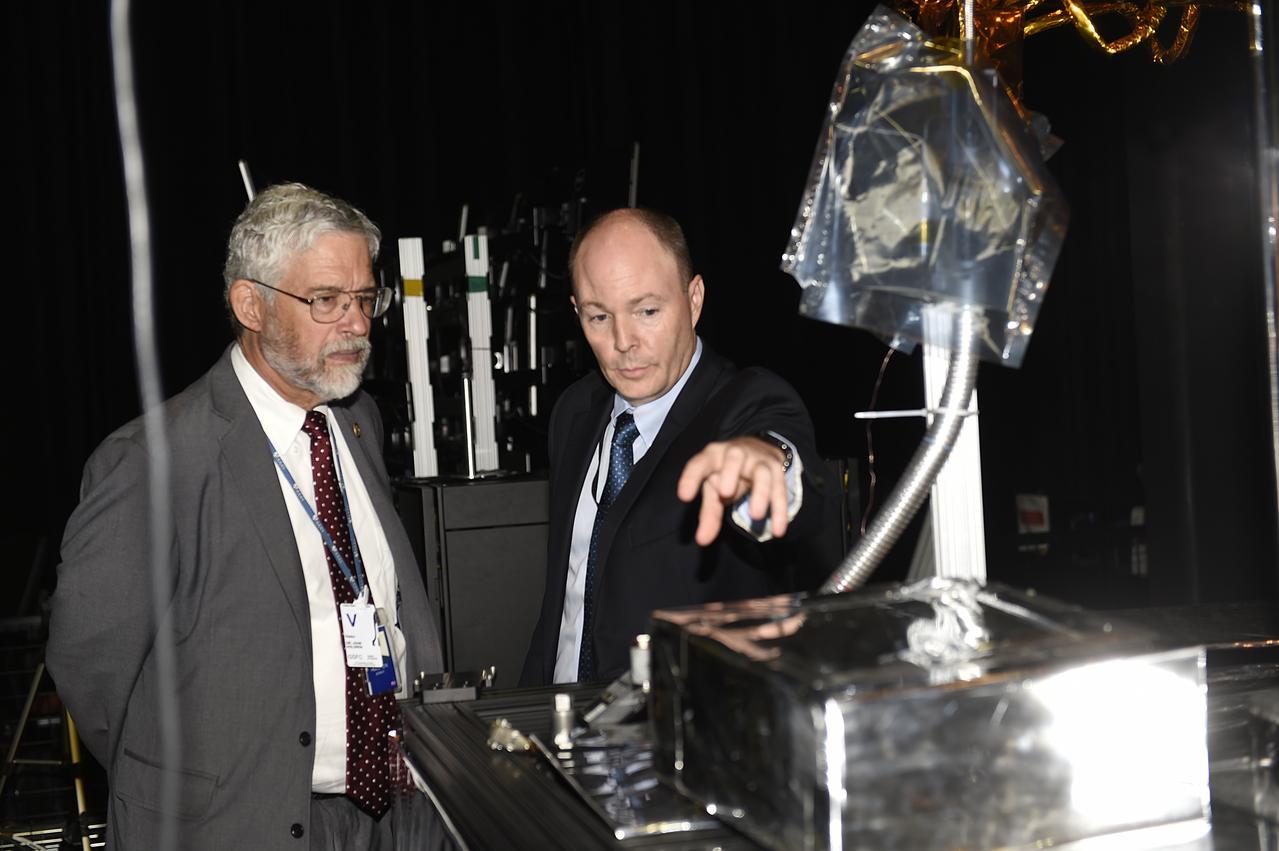
Benjamin Reed, deputy program manager of NASA’s Satellite Servicing Capabilities Office, shows Dr. Holdren the technologies that NASA is developing for the Restore-L satellite servicing mission. NASA will launch the Restore-L servicer in 2020 to refuel a live satellite and demonstrate that a suite of satellite-servicing technologies are operational. More info: Asteroid Redirect Mission Update – On Sept. 14, 2016, NASA provided an update on the Asteroid Redirect Mission (ARM) and how it contributes to the agency’s journey to Mars and protection of Earth. The presentation took place in the Robotic Operations Center at NASA’s Goddard Space Flight Center in Greenbelt, Maryland. Assistant to the President for Science and Technology Dr. John P. Holdren, NASA Administrator Charles Bolden and NASA’s ARM Program Director, Dr. Michele Gates discussed the latest update regarding the mission. They explained the mission’s scientific and technological benefits and how ARM will demonstrate technology for defending Earth from potentially hazardous asteroids. The briefing aired live on NASA TV and the agency’s website. For more information about ARM go to <a href="https://www.nasa.gov/arm" rel="nofollow">www.nasa.gov/arm</a>. Credit: NASA/Goddard/Debbie Mccallum <b><a href="http://www.nasa.gov/audience/formedia/features/MP_Photo_Guidelines.html" rel="nofollow">NASA image use policy.</a></b> <b><a href="http://www.nasa.gov/centers/goddard/home/index.html" rel="nofollow">NASA Goddard Space Flight Center</a></b> enables NASA’s mission through four scientific endeavors: Earth Science, Heliophysics, Solar System Exploration, and Astrophysics. Goddard plays a leading role in NASA’s accomplishments by contributing compelling scientific knowledge to advance the Agency’s mission. <b>Follow us on <a href="http://twitter.com/NASAGoddardPix" rel="nofollow">Twitter</a></b> <b>Like us on <a href="http://www.facebook.com/pages/Greenbelt-MD/NASA-Goddard/395013845897?ref=tsd" rel="nofollow">Facebook</a></b> <b>Find us on <a href="http://instagrid.me/nasagoddard/?vm=grid" rel="nofollow">Instagram</a></b>
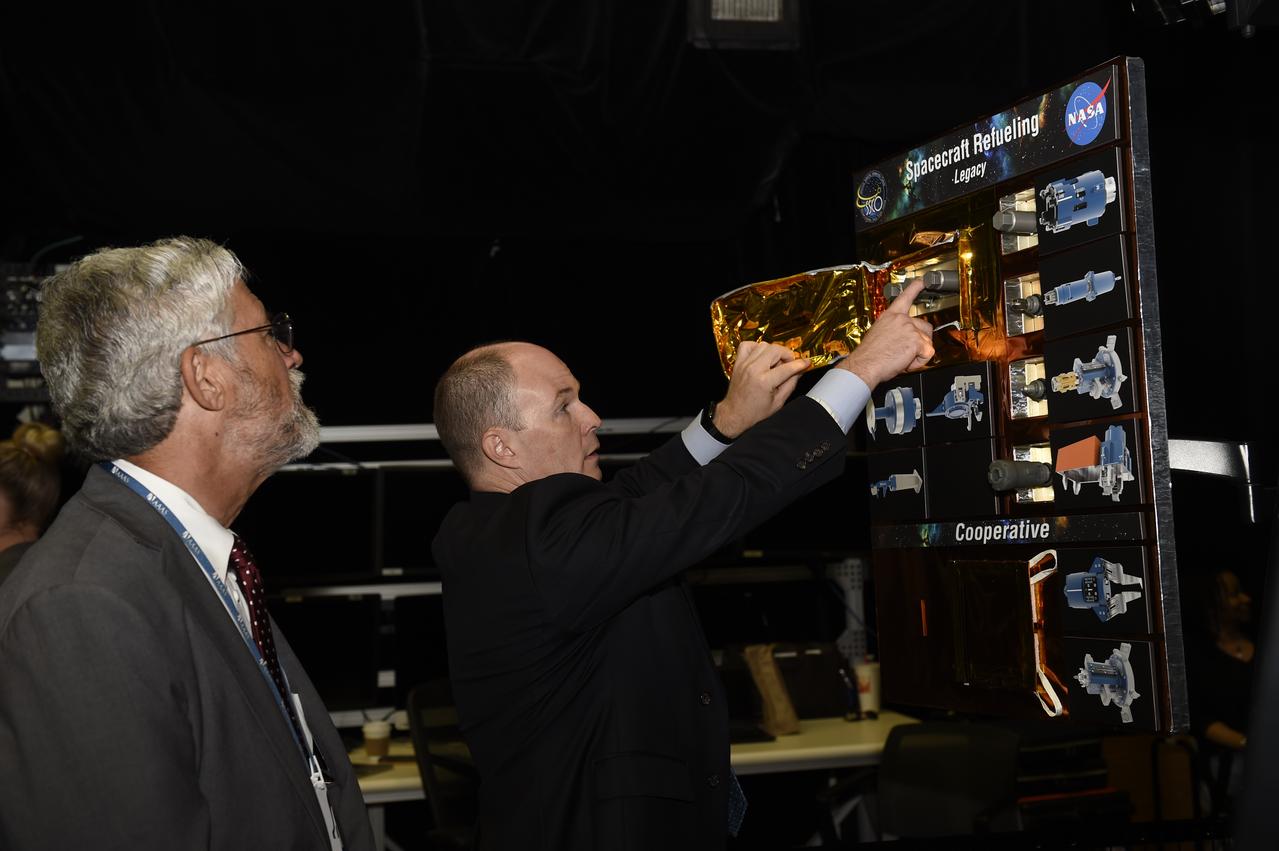
Benjamin Reed (right), deputy program manager of NASA’s Satellite Servicing Capabilities Office, shows Dr. Holdren the technologies that NASA is developing for the Restore-L satellite servicing mission. NASA will launch the Restore-L servicer in 2020 to refuel a live satellite and demonstrate that a suite of satellite-servicing technologies are operational. More info: Asteroid Redirect Mission Update – On Sept. 14, 2016, NASA provided an update on the Asteroid Redirect Mission (ARM) and how it contributes to the agency’s journey to Mars and protection of Earth. The presentation took place in the Robotic Operations Center at NASA’s Goddard Space Flight Center in Greenbelt, Maryland. Assistant to the President for Science and Technology Dr. John P. Holdren, NASA Administrator Charles Bolden and NASA’s ARM Program Director, Dr. Michele Gates discussed the latest update regarding the mission. They explained the mission’s scientific and technological benefits and how ARM will demonstrate technology for defending Earth from potentially hazardous asteroids. The briefing aired live on NASA TV and the agency’s website. For more information about ARM go to <a href="https://www.nasa.gov/arm" rel="nofollow">www.nasa.gov/arm</a>. Credit: NASA/Goddard/Debbie Mccallum <b><a href="http://www.nasa.gov/audience/formedia/features/MP_Photo_Guidelines.html" rel="nofollow">NASA image use policy.</a></b> <b><a href="http://www.nasa.gov/centers/goddard/home/index.html" rel="nofollow">NASA Goddard Space Flight Center</a></b> enables NASA’s mission through four scientific endeavors: Earth Science, Heliophysics, Solar System Exploration, and Astrophysics. Goddard plays a leading role in NASA’s accomplishments by contributing compelling scientific knowledge to advance the Agency’s mission. <b>Follow us on <a href="http://twitter.com/NASAGoddardPix" rel="nofollow">Twitter</a></b> <b>Like us on <a href="http://www.facebook.com/pages/Greenbelt-MD/NASA-Goddard/395013845897?ref=tsd" rel="nofollow">Facebook</a></b> <b>Find us on <a href="http://instagrid.me/nasagoddard/?vm=grid" rel="nofollow">Instagram</a></b>
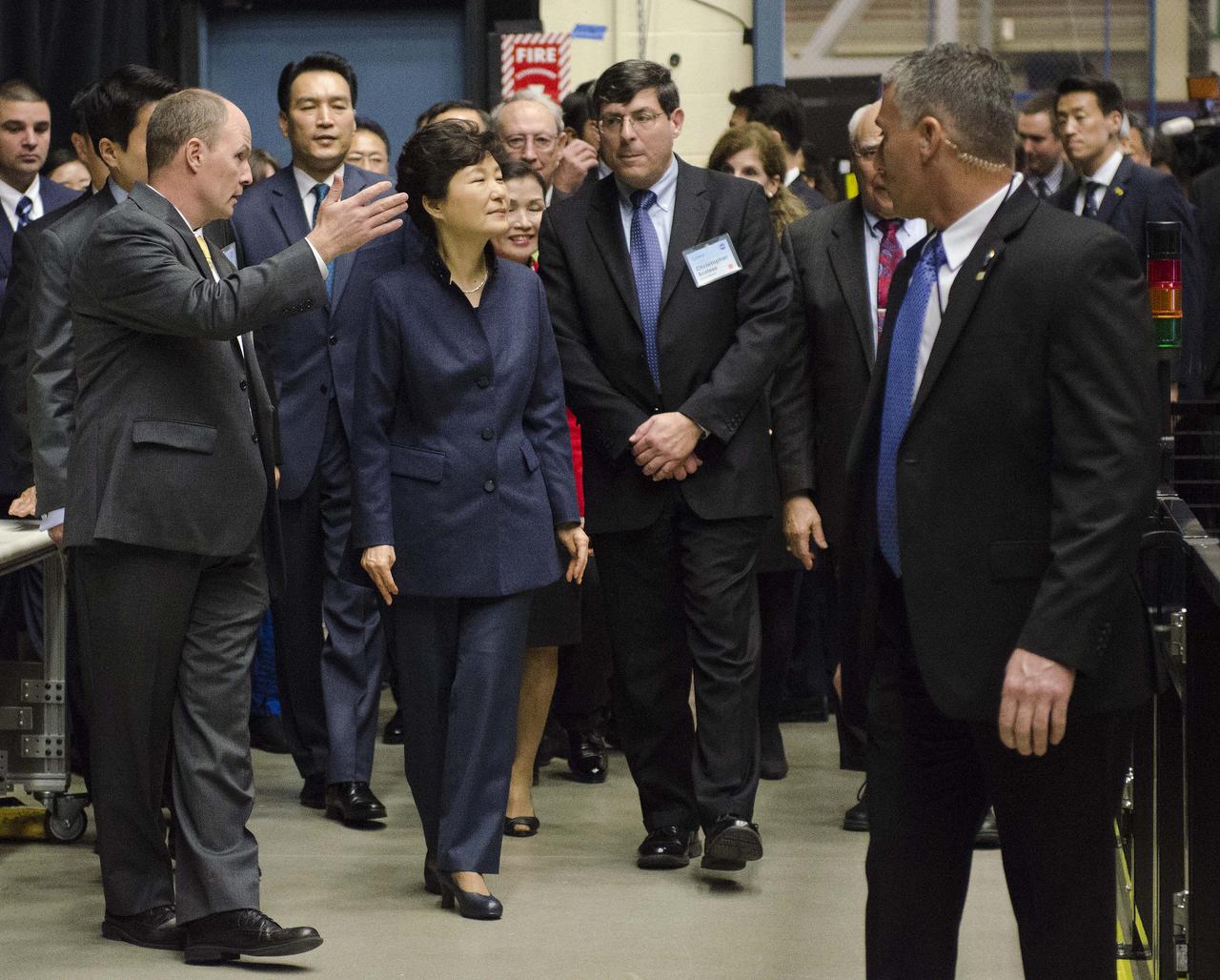
Caption: President Park Geun-hye of South Korea and Center Director Christopher Scolese are greeted by Frank Cepollina, Associate Director of the Satellite Servicing Capabilities Office, and Benjamin Reed, Deputy Project Manager of the Satellite Servicing Capabilities Office. GODDARD VISIT BY SOUTH KOREAN PRESIDENT – 14-OCT-2015 As part of her visit to the United States, President Park Geun-hye of South Korea visited NASA’s Goddard Space Flight Center in Greenbelt, Md. On Oct. 14, 2015. The visit offered an opportunity to celebrate past collaborative efforts between the American and South Korean space programs along with presentations on current projects and programs underway at Goddard. Credit: NASA/Goddard/Rebecca Roth <b><a href="http://www.nasa.gov/audience/formedia/features/MP_Photo_Guidelines.html" rel="nofollow">NASA image use policy.</a></b> <b><a href="http://www.nasa.gov/centers/goddard/home/index.html" rel="nofollow">NASA Goddard Space Flight Center</a></b> enables NASA’s mission through four scientific endeavors: Earth Science, Heliophysics, Solar System Exploration, and Astrophysics. Goddard plays a leading role in NASA’s accomplishments by contributing compelling scientific knowledge to advance the Agency’s mission. <b>Follow us on <a href="http://twitter.com/NASAGoddardPix" rel="nofollow">Twitter</a></b> <b>Like us on <a href="http://www.facebook.com/pages/Greenbelt-MD/NASA-Goddard/395013845897?ref=tsd" rel="nofollow">Facebook</a></b> <b>Find us on <a href="http://instagrid.me/nasagoddard/?vm=grid" rel="nofollow">Instagram</a></b>
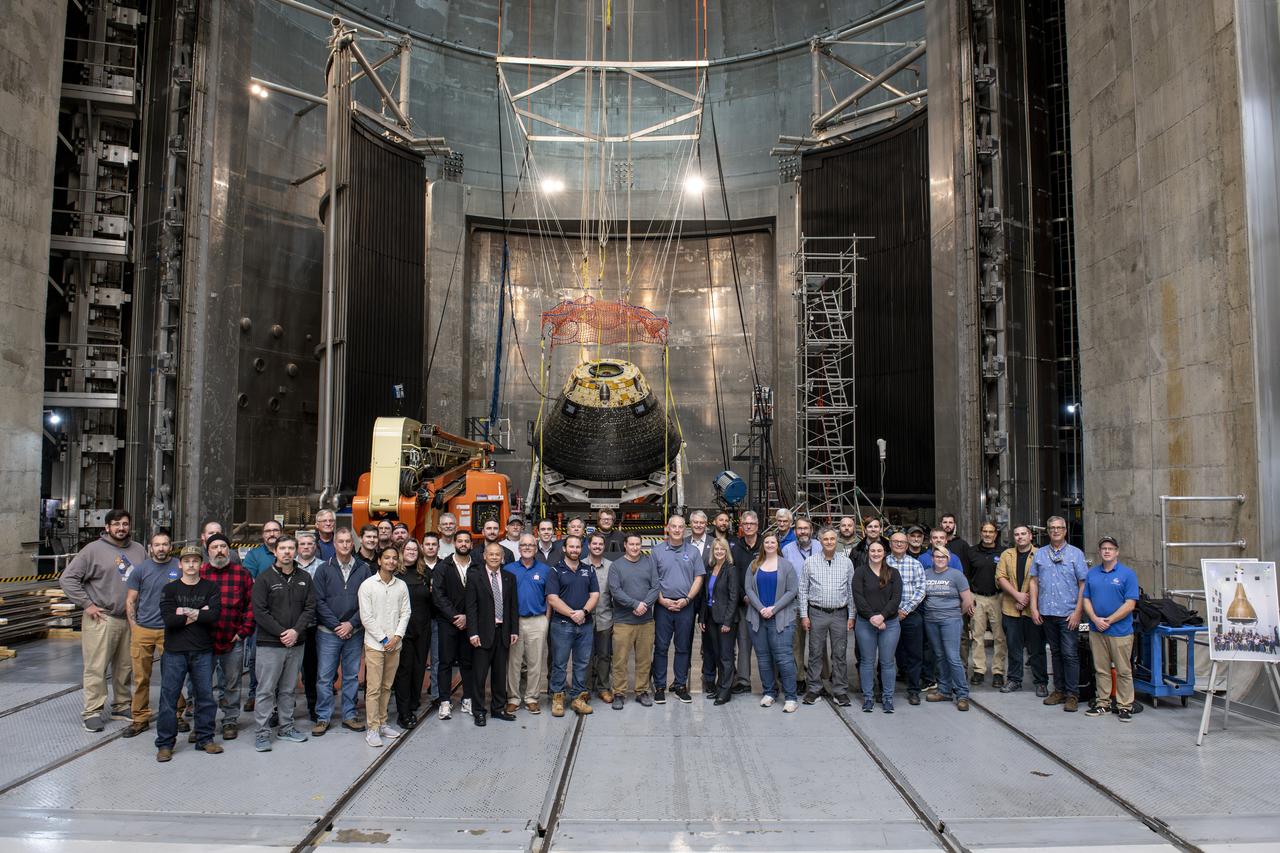
Employees supporting Artemis were invited to attend an appreciation event, “The Road to the Moon,” at Armstrong Test Facility in Sandusky, Ohio. On Thursday, Nov. 21, please join NASA employees and support service contractors for Artemis Friends and Family Day. Employees had the opportunity to hear from center leadership and see the Orion module that flew around the Moon and back during 2022’s Artemis I mission. Lockheed Martin presented an article flown on Artemis I to Robert Overy. Experts have subjected the spacecraft to extreme conditions in Armstrong’s test facilities. This significant testing is slated to wrap up in December, and we want to give you a chance to see the capsule before the conclusion of the test campaign.
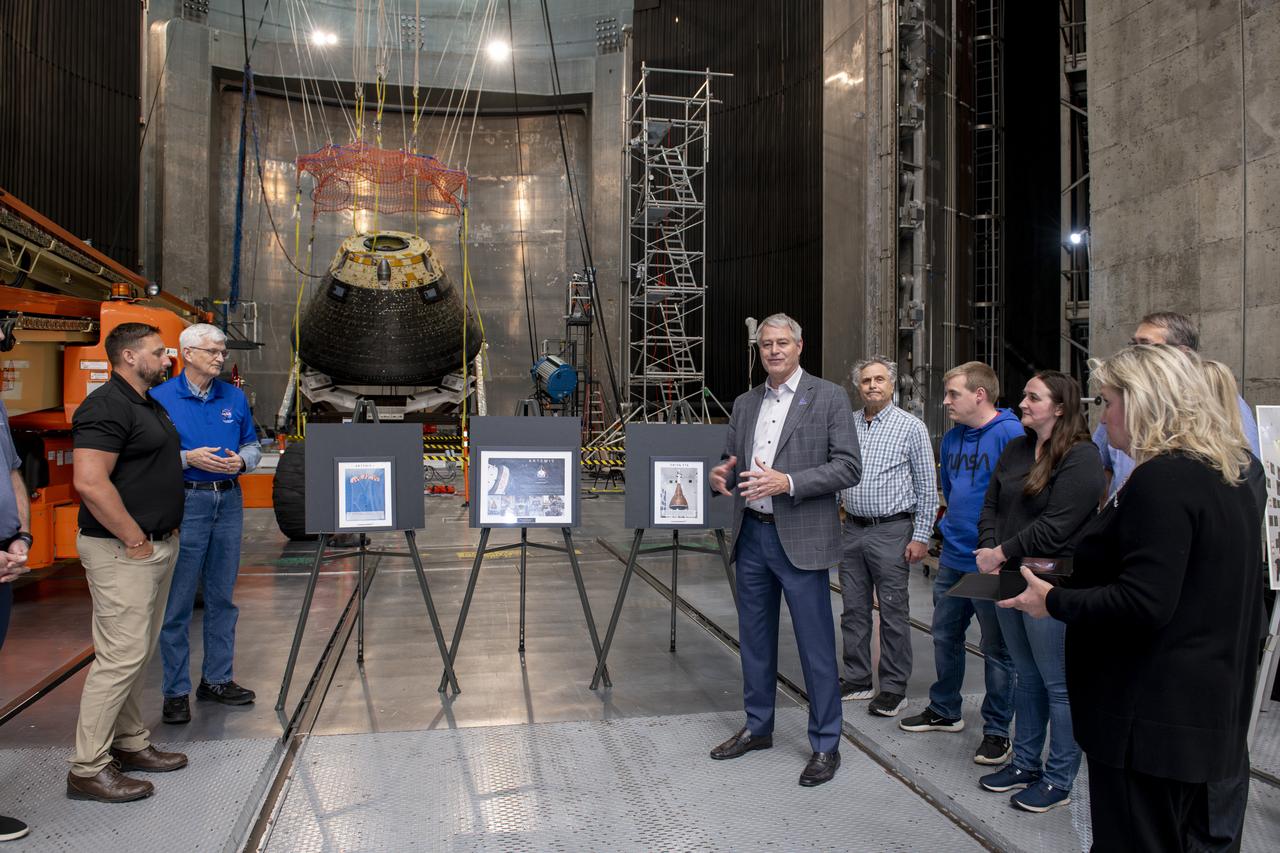
Employees supporting Artemis were invited to attend an appreciation event, “The Road to the Moon,” at Armstrong Test Facility in Sandusky, Ohio. On Thursday, Nov. 21, please join NASA employees and support service contractors for Artemis Friends and Family Day. Employees had the opportunity to hear from center leadership and see the Orion module that flew around the Moon and back during 2022’s Artemis I mission. Lockheed Martin presented an article flown on Artemis I to Robert Overy. Experts have subjected the spacecraft to extreme conditions in Armstrong’s test facilities. This significant testing is slated to wrap up in December, and we want to give you a chance to see the capsule before the conclusion of the test campaign. Photo Credit: (NASA/Sara Lowthian-Hanna)

Sen. Barbara Mikulski participated in a ribbon cutting at NASA’s Goddard Space Flight Center on January 6th, 2016, to officially open the new Robotic Operations Center (ROC) developed by the Satellite Servicing Capabilities Office (SSCO). Within the ROC's black walls, NASA is testing technologies and operational procedures for science and exploration missions, including the Restore-L satellite servicing mission and also the Asteroid Redirect Mission. In this image, Sen. Mikulski receives an overview of NASA’s satellite servicing efforts from Benjamin Reed, deputy program manager of SSCO. During her tour of the ROC, Sen. Mikulski saw first-hand an early version of the NASA Servicing Arm, a 2-meter-class robot with the dexterity to grasp and refuel a satellite on orbit. She also heard a description of Raven, a payload launching to the International Space Station that will demonstrate real-time, relative space navigation technology. The robotic technologies that NASA is developing within the ROC also support the Journey to Mars. Learn more about NASA’s satellite servicing technologies at <a href="http://ssco.gsfc.nasa.gov/" rel="nofollow">ssco.gsfc.nasa.gov/</a>. Image credit: NASA/Desiree Stover Read more: <a href="http://www.nasa.gov/feature/goddard/2016/maryland-sen-barbara-mikulski-visits-nasa-goddard" rel="nofollow">www.nasa.gov/feature/goddard/2016/maryland-sen-barbara-mi...</a> <b><a href="http://www.nasa.gov/audience/formedia/features/MP_Photo_Guidelines.html" rel="nofollow">NASA image use policy.</a></b> <b><a href="http://www.nasa.gov/centers/goddard/home/index.html" rel="nofollow">NASA Goddard Space Flight Center</a></b> enables NASA’s mission through four scientific endeavors: Earth Science, Heliophysics, Solar System Exploration, and Astrophysics. Goddard plays a leading role in NASA’s accomplishments by contributing compelling scientific knowledge to advance the Agency’s mission. <b>Follow us on <a href="http://twitter.com/NASAGoddardPix" rel="nofollow">Twitter</a></b> <b>Like us on <a href="http://www.facebook.com/pages/Greenbelt-MD/NASA-Goddard/395013845897?ref=tsd" rel="nofollow">Facebook</a></b> <b>Find us on <a href="http://instagrid.me/nasagoddard/?vm=grid" rel="nofollow">Instagram</a></b>