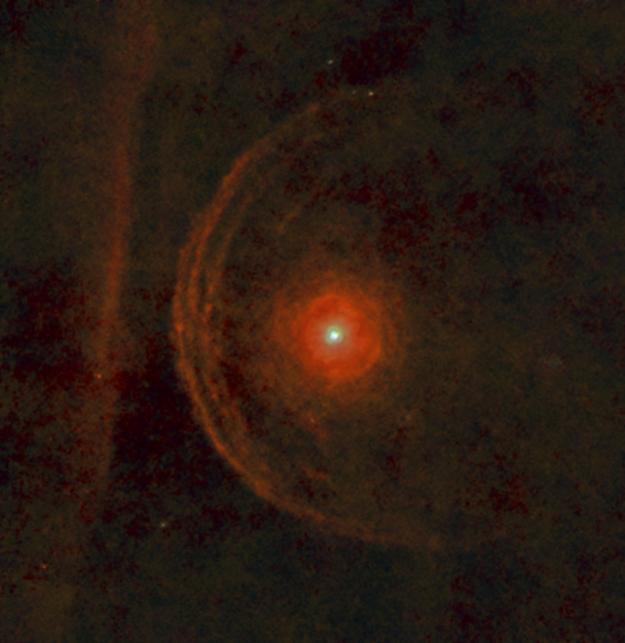
The red supergiant star Betelgeuse center is surrounded by a clumpy envelope of material in its immediate vicinity in this view from the Herschel Space Observatory.
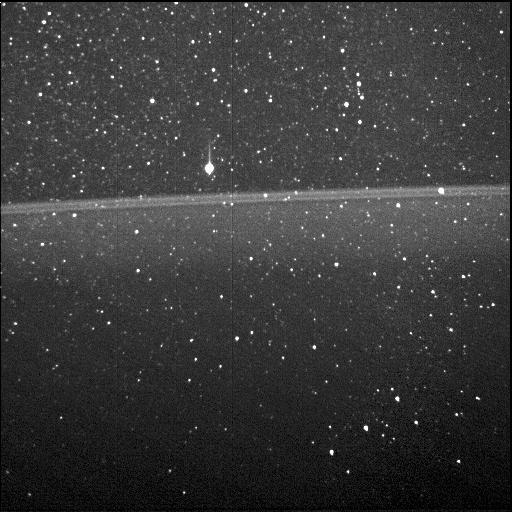
As NASA's Juno spacecraft flew through the narrow gap between Jupiter's radiation belts and the planet during its first science flyby, Perijove 1, on August 27, 2016, the Stellar Reference Unit (SRU-1) star camera collected the first image of Jupiter's ring taken from the inside looking out. The bright bands in the center of the image are the main ring of Jupiter's ring system. While taking the ring image, the SRU was viewing the constellation Orion. The bright star above the main ring is Betelgeuse, and Orion's belt can be seen in the lower right. Juno's Radiation Monitoring Investigation actively retrieves and analyzes the noise signatures from penetrating radiation in the images of the spacecraft's star cameras and science instruments at Jupiter. https://photojournal.jpl.nasa.gov/catalog/PIA21644
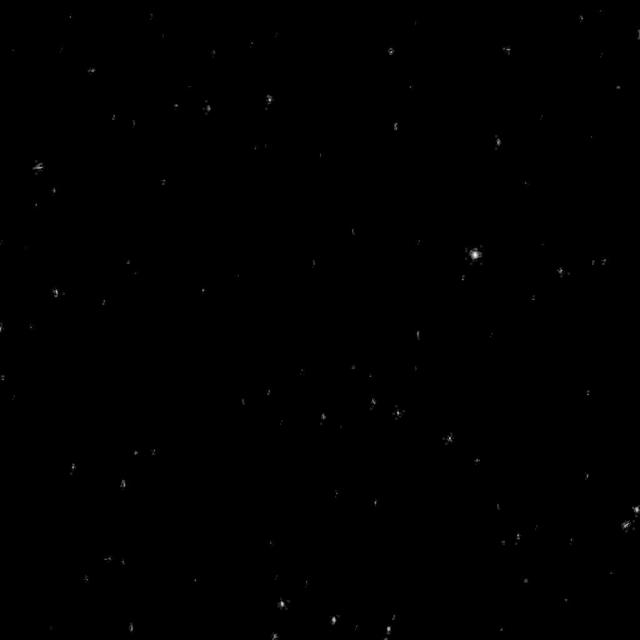
Stars in the upper portion of the constellation Orion the Hunter, including the bright shoulder star Betelgeuse and Orion three-star belt, appear in this image taken from the surface of Mars by the panoramic camera on NASA rover Spirit. Spirit imaged stars on March 11, 2004, after it awoke during the martian night for a communication session with NASA's Mars Global Surveyor orbiter. This image is an eight-second exposure. Longer exposures were also taken. The images tested the capabilities of the rover for night-sky observations. Scientists will use the results to aid planning for possible future astronomical observations from Mars. http://photojournal.jpl.nasa.gov/catalog/PIA05546