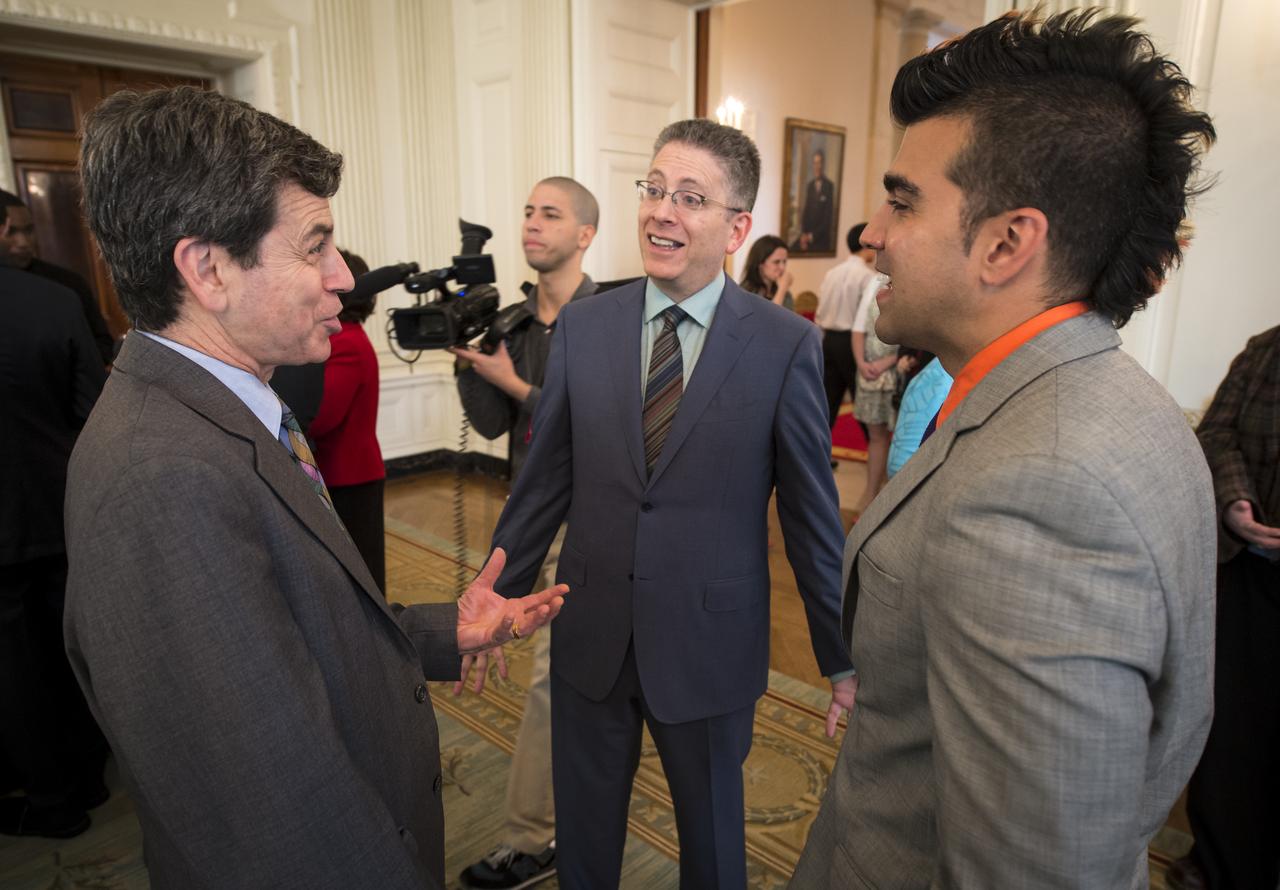
Director of Strategic Communications and Senior Science and Technology Policy Analyst, Office of Science and Technology Policy, Executive Office of the President, Rick Weiss, left, “Big Bang Theory” co-creator Bill Prady, center, and NASA Mars Curiosity Landing mission controller, Bobak "Mohawk Guy" Ferdowsi talk during the White House Science Fair held at the White House, April 22, 2013. The science fair celebrated student winners of a broad range of science, technology, engineering and math (STEM) competitions from across the country. Photo Credit: (NASA/Bill Ingalls)
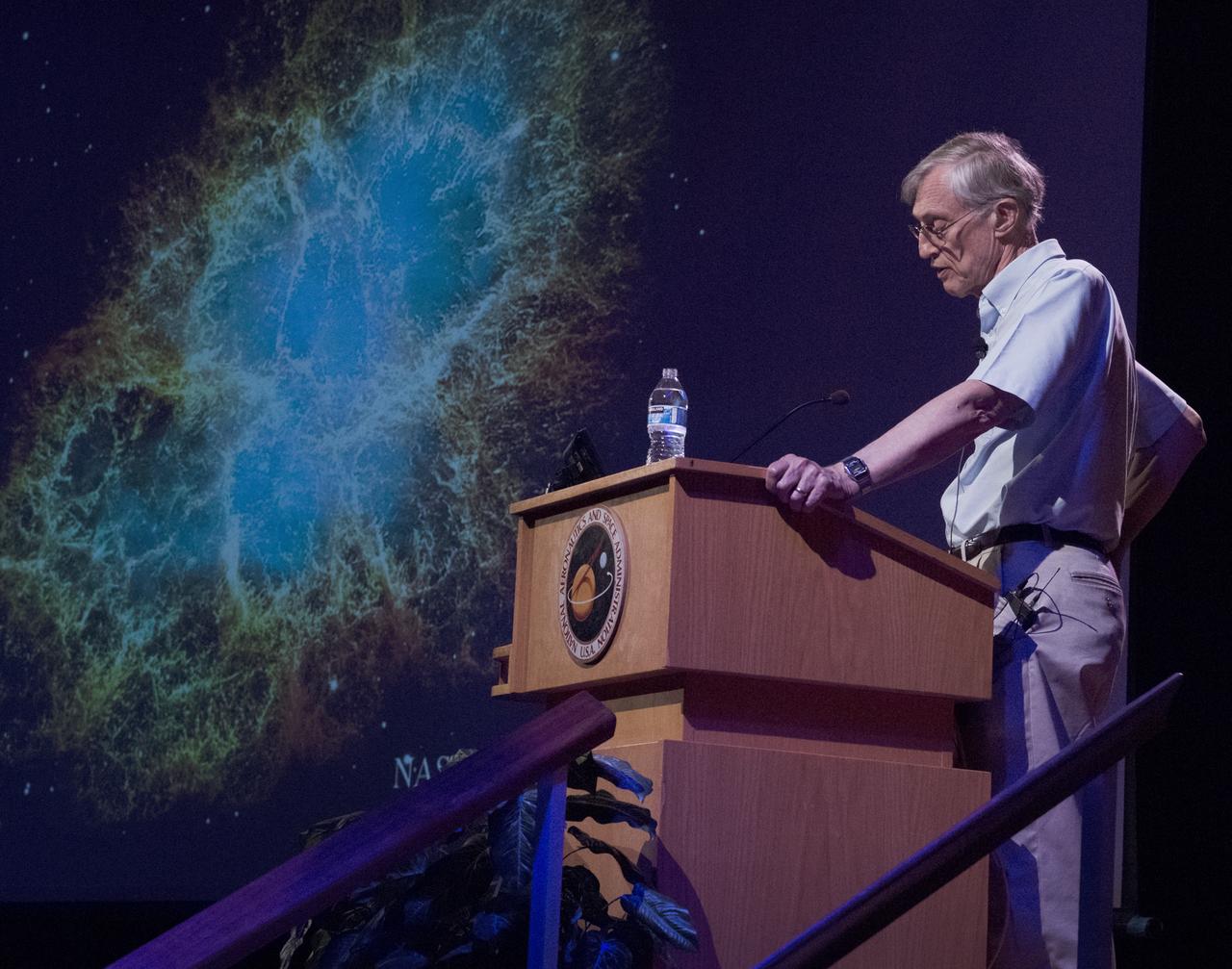
Dr. Mather speaks with interns on July 22, 2019 about the universe, COBE, HST and JWST projects He is the Nobel Prize Winner for Big Bang theory

STS-132 astronaut Piers Sellers, left, and Dr. John Mather are seen with a replica of Mather's Nobel Prize, Tuesday, July 27, 2010, at the Smithsonian National Air and Space Museum in Washington. Sellers returned the replica that is in the museum's collection and was flown aboard STS-132 Atlantis. The prize was won by Mather and University of California, Berkeley researcher George Smoot in 2006 for their work using the Cosmic Background Explorer Satellite to understand the big-bang theory of the universe. Photo Credit: (NASA/Paul E. Alers)
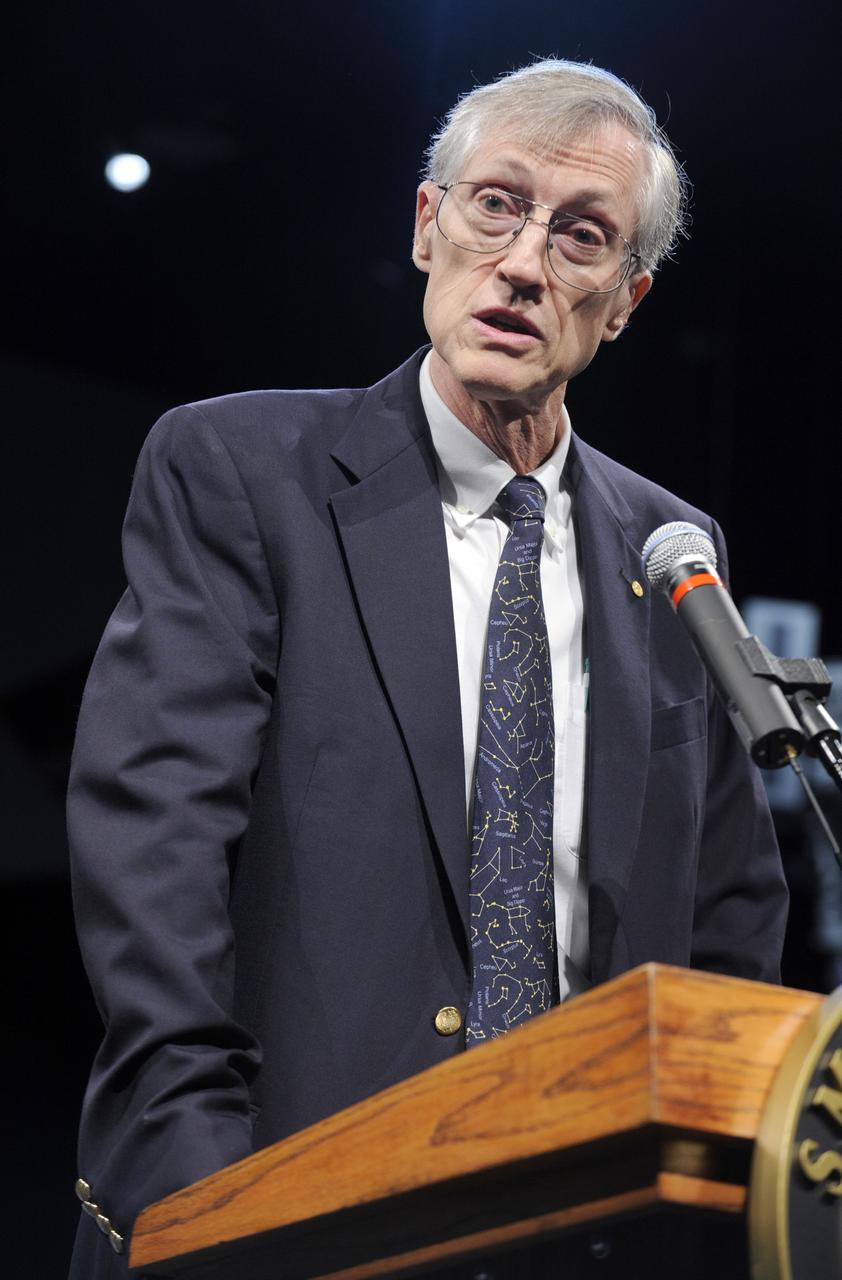
NASA Astrophycist Dr. John Mather speaks, Tuesday, July 27, 2010, at the Smithsonian National Air and Space Museum in Washington. Mather was speaking as part of a ceremony with STS-132 astronaut Piers Sellers who returned a replica of the Nobel Prize that is in the museum's collection and was flown aboard STS-132 Atlantis. The prize was won by Mather and University of California, Berkeley researcher George Smoot in 2006 for their work using the Cosmic Background Explorer Satellite to understand the big-bang theory of the universe.Photo Credit: (NASA/Paul E. Alers)
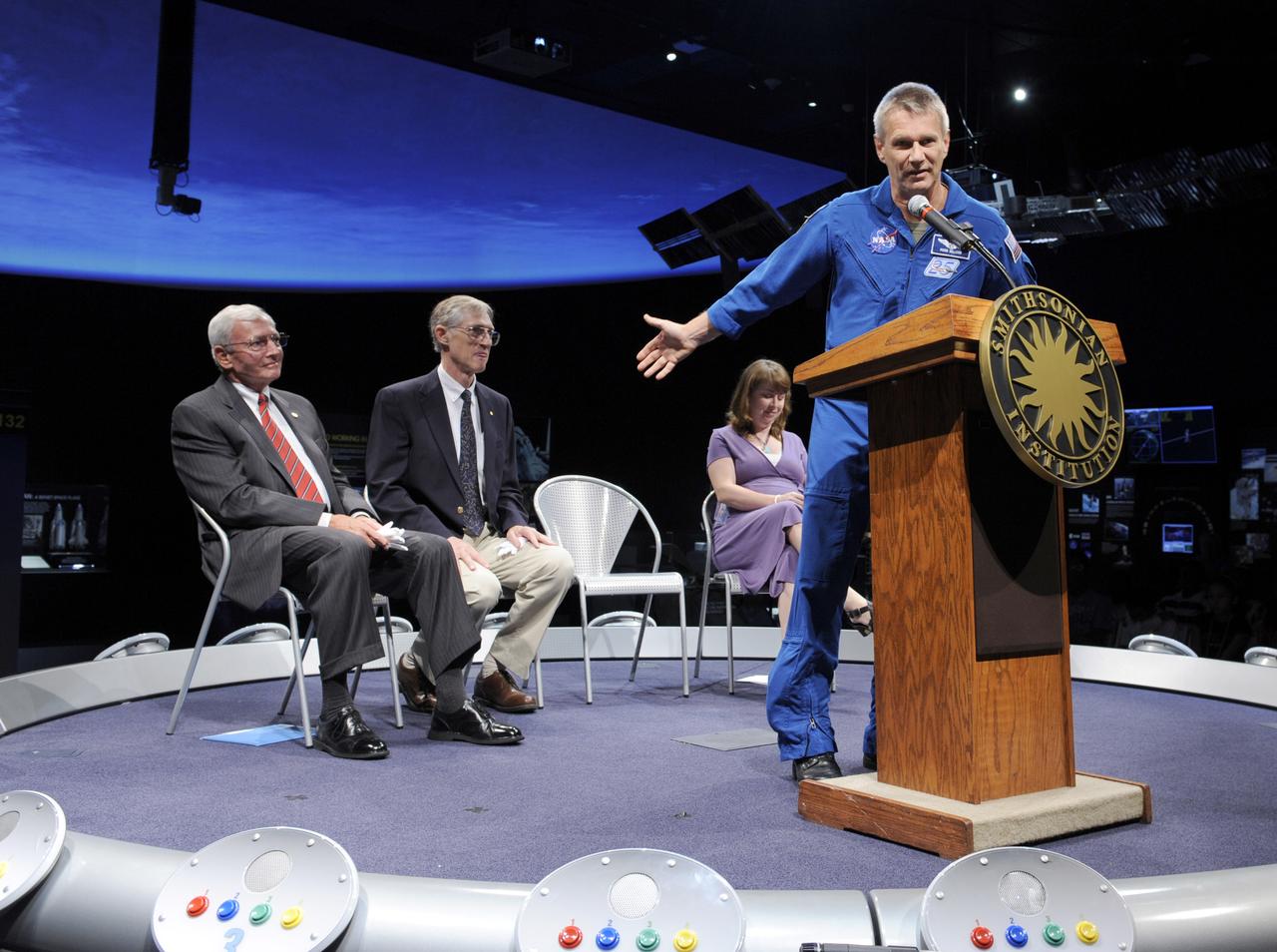
STS-132 astronaut Piers Sellers, at podium, acknowleges museum director Ret. Gen. John R. "Jack" Dailey, seated left, and NASA astrophycisist Dr. John Mather, center, during a presentation, Tuesday, July 27, 2010, at the Smithsonian National Air and Space Museum in Washington. Sellers returned a replica of the Nobel Prize that is in the museum's collection and was flown aboard STS-132 Atlantis. The prize was won by Mather and University of California, Berkeley researcher George Smoot in 2006 for their work using the Cosmic Background Explorer Satellite to understand the big-bang theory of the universe.Photo Credit: (NASA/Paul E. Alers)
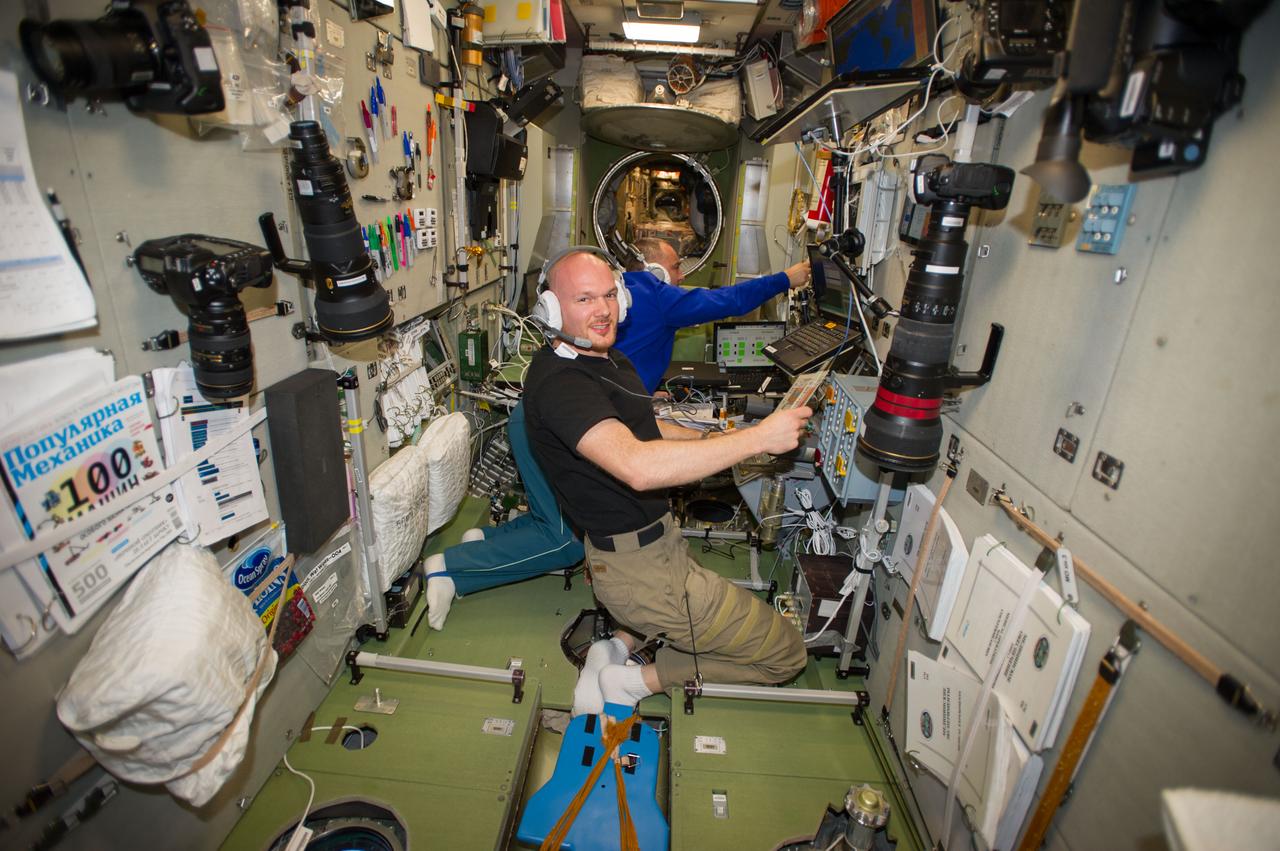
ISS040-E-089627 (7 Aug. 2014) --- In the International Space Station?s Zvezda Service Module, European Space Agency astronaut Alexander Gerst (foreground) and Russian cosmonaut Alexander Skvortsov, both Expedition 40 flight engineers, participate in a training session in preparation for the rendezvous and docking of ESA?s fifth and final Automated Transfer Vehicle (ATV-5). Nicknamed the ?Georges Lemaitre? in honor of the Belgian physicist and astronomer who first proposed the Big Bang theory, ATV-5 will deliver more than seven tons of scientific experiments, food and other supplies when it docks to the aft end of Zvezda on Aug. 12.
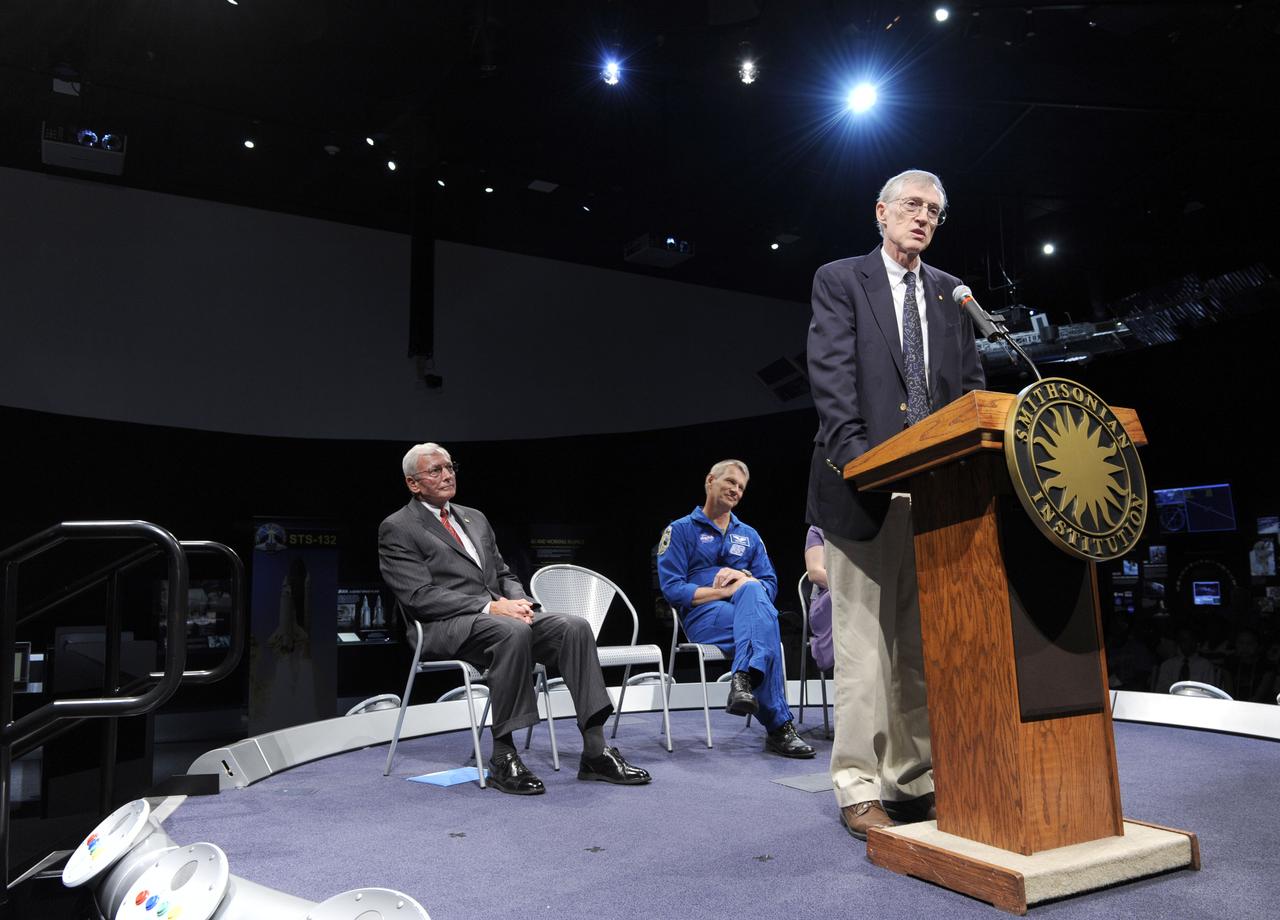
NASA Astrophycist Dr. John Mather, at podium, speaks Tuesday, July 27, 2010, at the Smithsonian National Air and Space Museum in Washington as museum director Gen. John R. "Jack" Dailey, U.S. Marine Corps ret. and STS-132 astronaut Piers Sellers look on. Sellers returned a replica of the Nobel Prize that is in the museum's collection and was flown aboard STS-132 Atlantis. The prize was won by Mather and University of California, Berkeley researcher George Smoot in 2006 for their work using the Cosmic Background Explorer Satellite to understand the big-bang theory of the universe.Photo Credit: (NASA/Paul E. Alers)
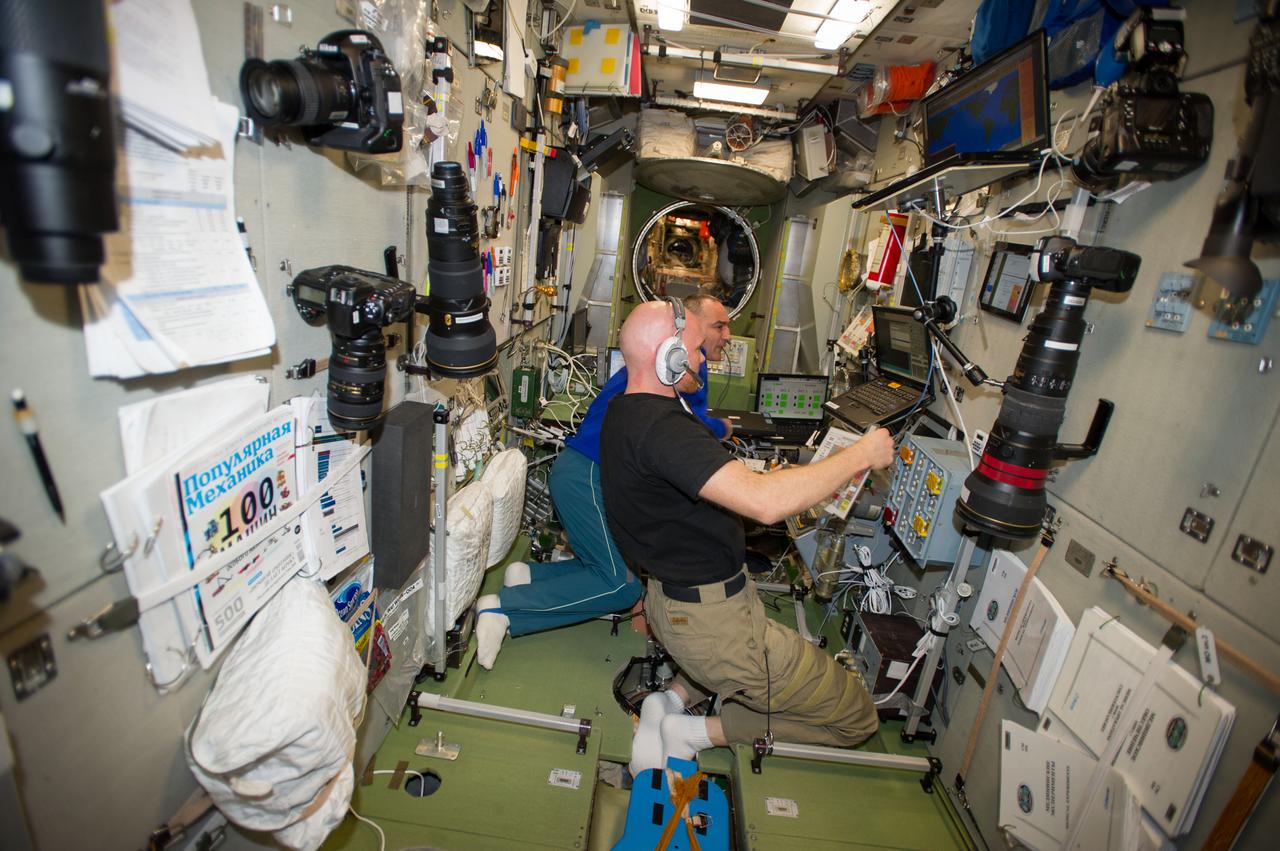
ISS040-E-089629 (7 Aug. 2014) --- In the International Space Station?s Zvezda Service Module, European Space Agency astronaut Alexander Gerst (foreground) and Russian cosmonaut Alexander Skvortsov, both Expedition 40 flight engineers, participate in a training session in preparation for the rendezvous and docking of ESA?s fifth and final Automated Transfer Vehicle (ATV-5). Nicknamed the ?Georges Lemaitre? in honor of the Belgian physicist and astronomer who first proposed the Big Bang theory, ATV-5 will deliver more than seven tons of scientific experiments, food and other supplies when it docks to the aft end of Zvezda on Aug. 12.
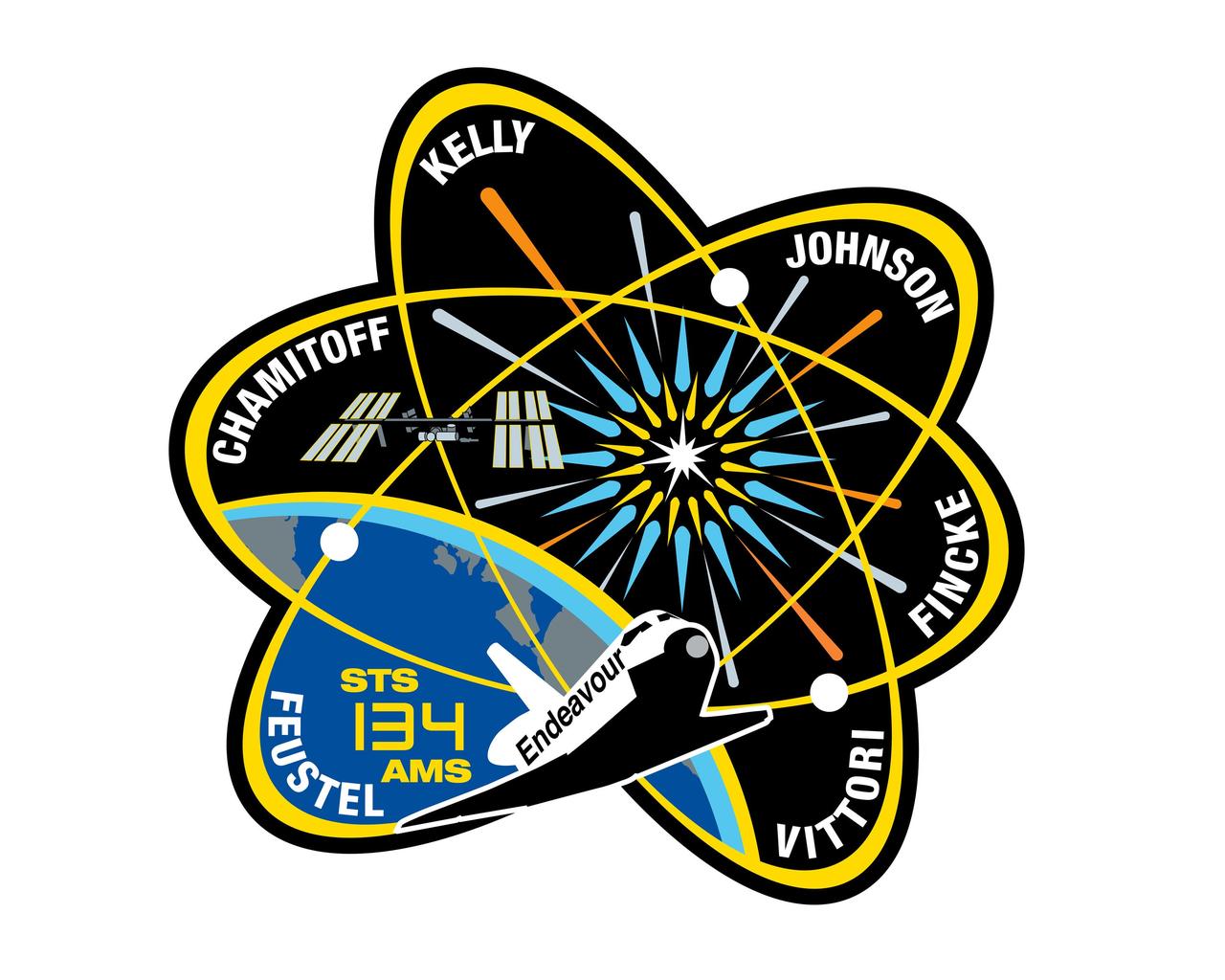
STS134-S-001 (March 2010) --- The design of the STS-134 crew patch highlights research on the International Space Station (ISS) focusing on the fundamental physics of the universe. On this mission, the crew of space shuttle Endeavour will install the Alpha Magnetic Spectrometer-2 (AMS) experiment -- a cosmic particle detector that utilizes the first-ever superconducting magnet to be flown in space. By studying sub-atomic particles in the background cosmic radiation, and searching for anti-matter and dark-matter, it will help scientists better understand the evolution and properties of our universe. The shape of the patch is inspired by the international atomic symbol, and represents the atom with orbiting electrons around the nucleus. The burst near the center refers to the big-bang theory and the origin of the universe. The shuttle Endeavour and ISS fly together into the sunrise over the limb of Earth, representing the dawn of a new age, understanding the nature of the universe. The NASA insignia design for shuttle flights is reserved for use by the astronauts and for other official use as the NASA administrator may authorize. Public availability has been approved only in the form of illustrations by the various news media. When and if there is any change in this policy, which we do not anticipate, it will be publicly announced.
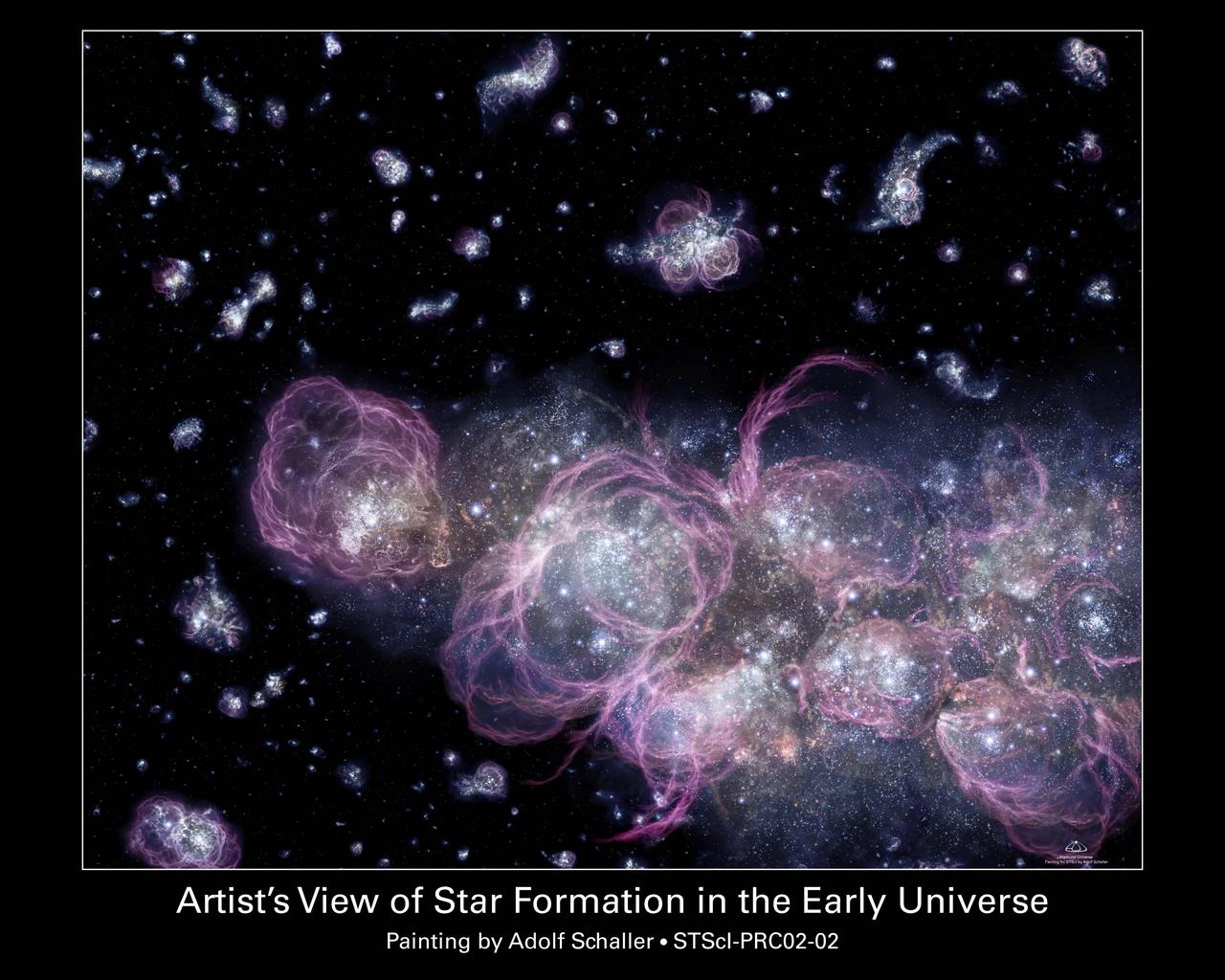
This is an artist's impression of how the very early universe (less than one billion years old) might have looked when it went through a voracious onset of star formation, converting primordial hydrogen into myriad stars at an unprecedented rate. The deepest views of the cosmos from the Hubble Space Telescope (HST) yield clues that the very first stars may have burst into the universe as brilliantly and spectacularly as a firework finale. Except in this case, the finale came first, long before Earth, the Sun ,and the Milky Way Galaxy formed. Studies of HST's deepest views of the heavens lead to the preliminary conclusion that the universe made a significant portion of its stars in a torrential firestorm of star birth, which abruptly lit up the pitch-dark heavens just a few hundred million years after the "big bang," the tremendous explosion that created the cosmos. Within the starburst galaxies, bright knots of hot blue stars come and go like bursting fireworks shells. Regions of new starbirth glow intensely red under torrent of ultraviolet radiation. The most massive stars self-detonate as supernovas, which explode across the sky like a string of firecrackers. A foreground starburst galaxy at lower right is sculpted with hot bubbles from supernova explosions and torrential stellar winds. Unlike today there is very little dust in these galaxies, because the heavier elements have not yet been cooked up through nucleosynthesis in stars. Recent analysis of HST deep sky images supports the theory that the first stars in the universe appeared in an abrupt eruption of star formation, rather than at a gradual pace. Science Credit: NASA and K. Lanzetta (SUNY). Artwork Credit: Adolf Schaller for STScI.

Caption: A NASA Super Pressure Balloon with the COSI payload is ready for launch from McMurdo, Antarctica. Credit: NASA More info: NASA’s globetrotting Balloon Program Office is wrapping up its 2014-2015 Antarctic campaign while prepping for an around-the-world flight launching out of Wanaka, New Zealand, in March. After 16 days, 12 hours, and 56 minutes of flight, operators successfully conducted a planned flight termination of the Suborbital Polarimeter for Inflation Dust and the Epoch of Reionization (SPIDER) mission Saturday, Jan. 18, the final mission of the campaign. Other flights in the 2014-2015 Antarctic campaign included the Antarctic Impulsive Transient Antenna (ANITA-III) mission as well as the Compton Spectrometer and Imager (COSI) payload flown on the developmental Super Pressure Balloon (SPB). ANITA-III successfully wrapped up Jan. 9 after 22 days, 9 hours, and 14 minutes of flight. Flight controllers terminated the COSI flight 43 hours into the mission after detecting a small gas leak in the balloon. Crews are now working to recover all three instruments from different locations across the continent. The 6,480-pound SPIDER payload is stationary at a position about 290 miles from the United Kingdom’s Sky Blu Logistics Facility in Antarctica. The 4,601 pound ANITA-III payload, located about 100 miles from Australia’s Davis Station, and the 2,866 pound COSI payload, located about 340 miles from the United States McMurdo Station both had numerous key components recovered in the past few days. Beginning in late January, the Balloon Program Office will deploy a team to Wanaka, New Zealand, to begin preparations for an SPB flight, scheduled to launch in March. The Program Office seeks to fly the SPB more than 100 days, which would shatter the current flight duration record of 55 days, 1 hour, and 34 minutes for a large scientific balloon. “We’re looking forward to the New Zealand campaign and hopefully a history-making flight with the Super Pressure Balloon,” said Debbie Fairbrother, NASA’s Balloon Program Office Chief. Most scientific balloons see altitude variances based on temperature changes in the atmosphere at night and during the day. The SPB is capable of missions on the order of 100 days or more at constant float altitudes due to the pressurization of the balloon. “Stable, long-duration flights at near-space altitudes above more than 99 percent of the atmosphere are highly desirable in the science community, and we’re ready to deliver,” said Fairbrother. In addition to the SPB flight in March, the Balloon Program Office has 10 more balloon missions planned through September 2015 to include scheduled test flights of the Low-Density Supersonic Decelerator, which is testing new technologies for landing larger, heavier payloads on Mars. NASA’s Wallops Flight Facility manages the agency’s Scientific Balloon Program with 10 to 15 flights each year from launch sites worldwide. The balloons are massive in volume; the average-sized balloon could hold the volume of nearly 200 blimps. Previous work on balloons have contributed to confirming the Big Bang Theory. For more information on NASA’s Scientific Balloon Program, see: <a href="http://sites.wff.nasa.gov/code820/index.html" rel="nofollow">sites.wff.nasa.gov/code820/index.html</a> <b><a href="http://www.nasa.gov/audience/formedia/features/MP_Photo_Guidelines.html" rel="nofollow">NASA image use policy.</a></b> <b><a href="http://www.nasa.gov/centers/goddard/home/index.html" rel="nofollow">NASA Goddard Space Flight Center</a></b> enables NASA’s mission through four scientific endeavors: Earth Science, Heliophysics, Solar System Exploration, and Astrophysics. Goddard plays a leading role in NASA’s accomplishments by contributing compelling scientific knowledge to advance the Agency’s mission. <b>Follow us on <a href="http://twitter.com/NASAGoddardPix" rel="nofollow">Twitter</a></b> <b>Like us on <a href="http://www.facebook.com/pages/Greenbelt-MD/NASA-Goddard/395013845897?ref=tsd" rel="nofollow">Facebook</a></b> <b>Find us on <a href="http://instagram.com/nasagoddard?vm=grid" rel="nofollow">Instagram</a></b>