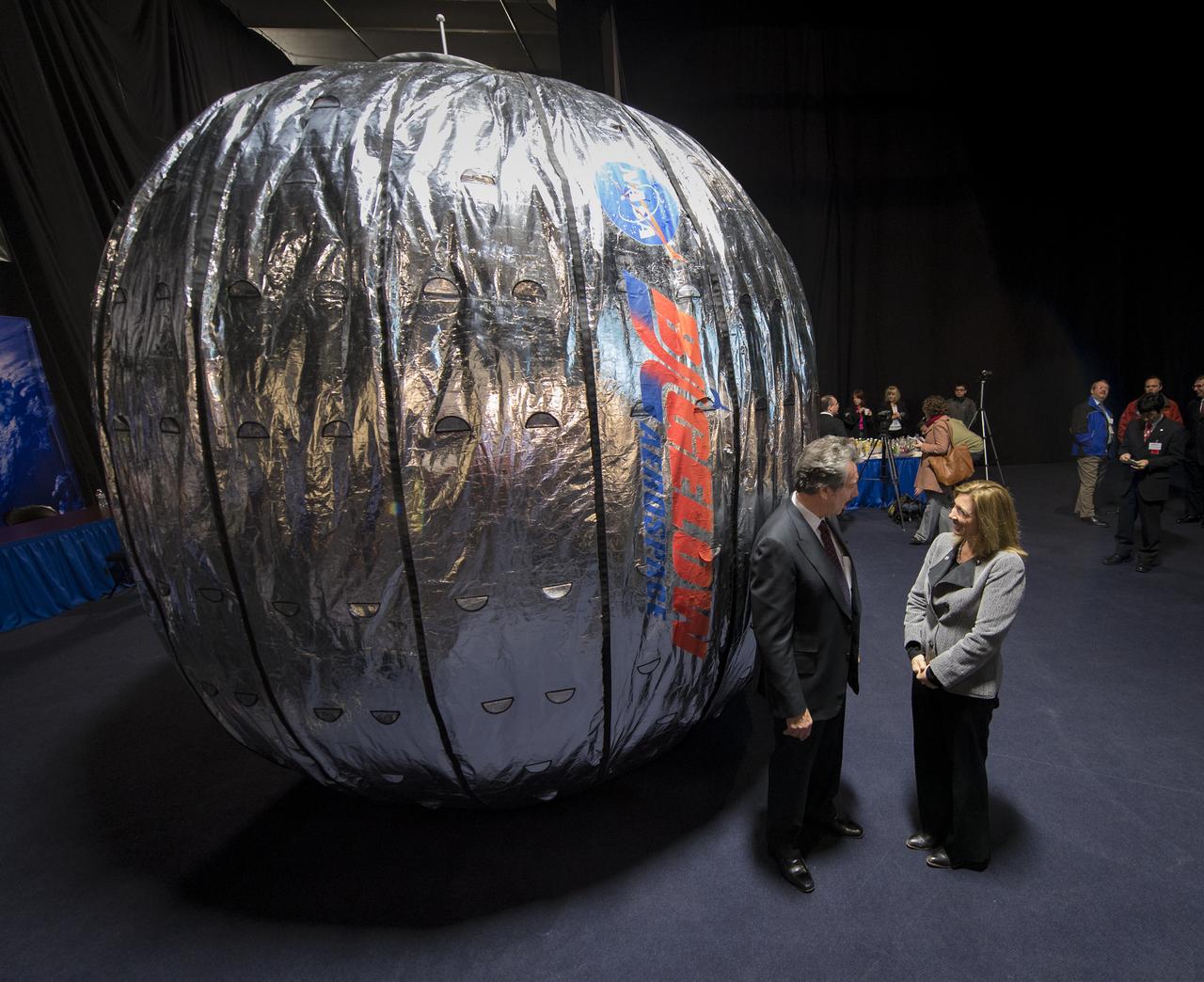
NASA Deputy Administrator Lori Garver and President and founder of Bigelow Aerospace Robert T. Bigelow talk while standing next to the Bigelow Expandable Activity Module (BEAM) during a media briefing where it is was announced that the BEAM expandable space habitat technology will be tested on the International Space Station, Wednesday, Jan. 16, 2013 in Las Vegas. BEAM is scheduled to arrive at the space station in 2015 for a two-year technology demonstration. Photo Credit: (NASA/Bill Ingalls)
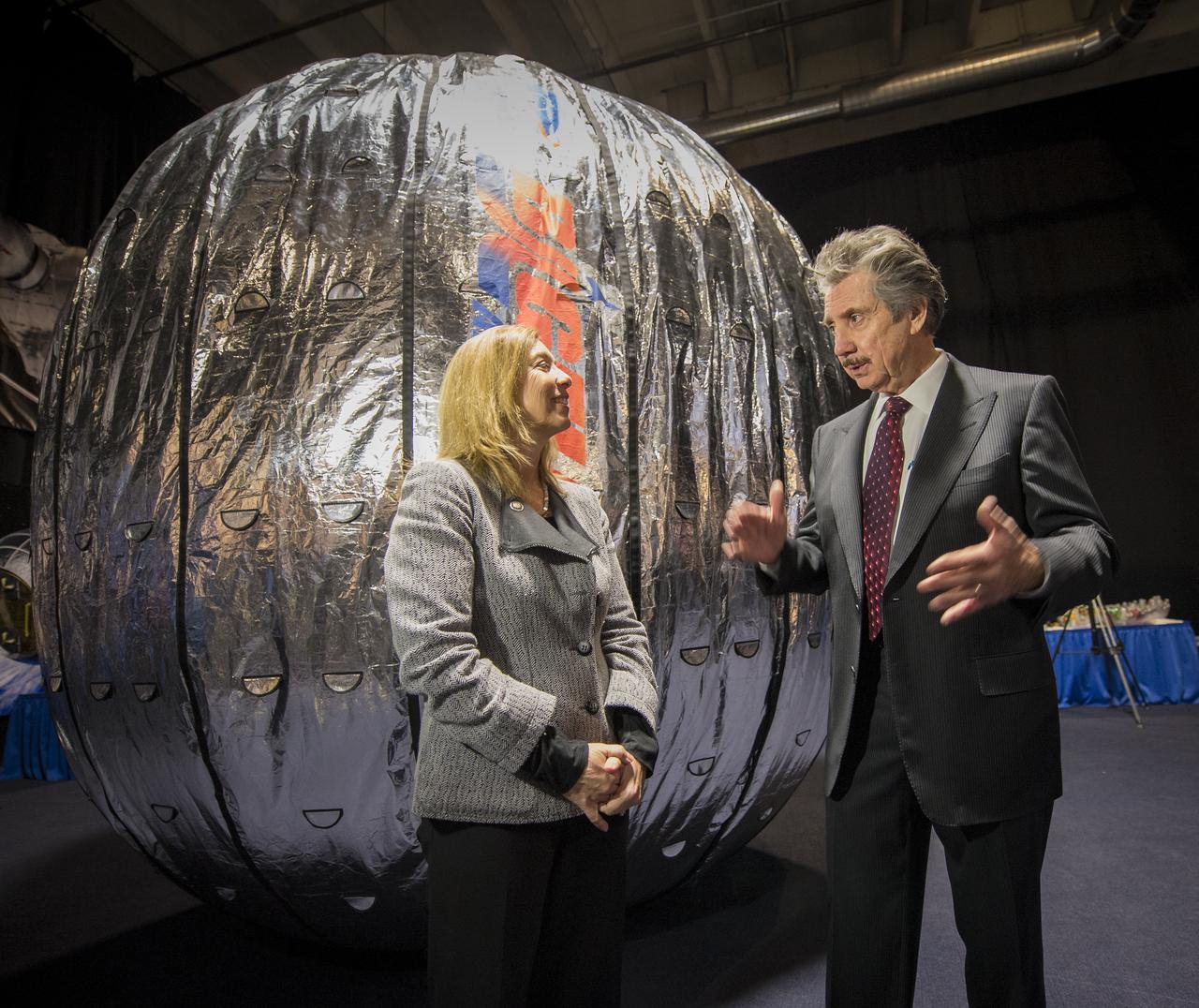
NASA Deputy Administrator Lori Garver and President and founder of Bigelow Aerospace Robert T. Bigelow talk while standing next to the Bigelow Expandable Activity Module (BEAM) during a media briefing where is was announced that the BEAM expandable space habitat technology will be tested on the International Space Station, Wednesday, Jan. 16, 2013 in Las Vegas. BEAM is scheduled to arrive at the space station in 2015 for a two-year technology demonstration. Photo Credit: (NASA/Bill Ingalls)
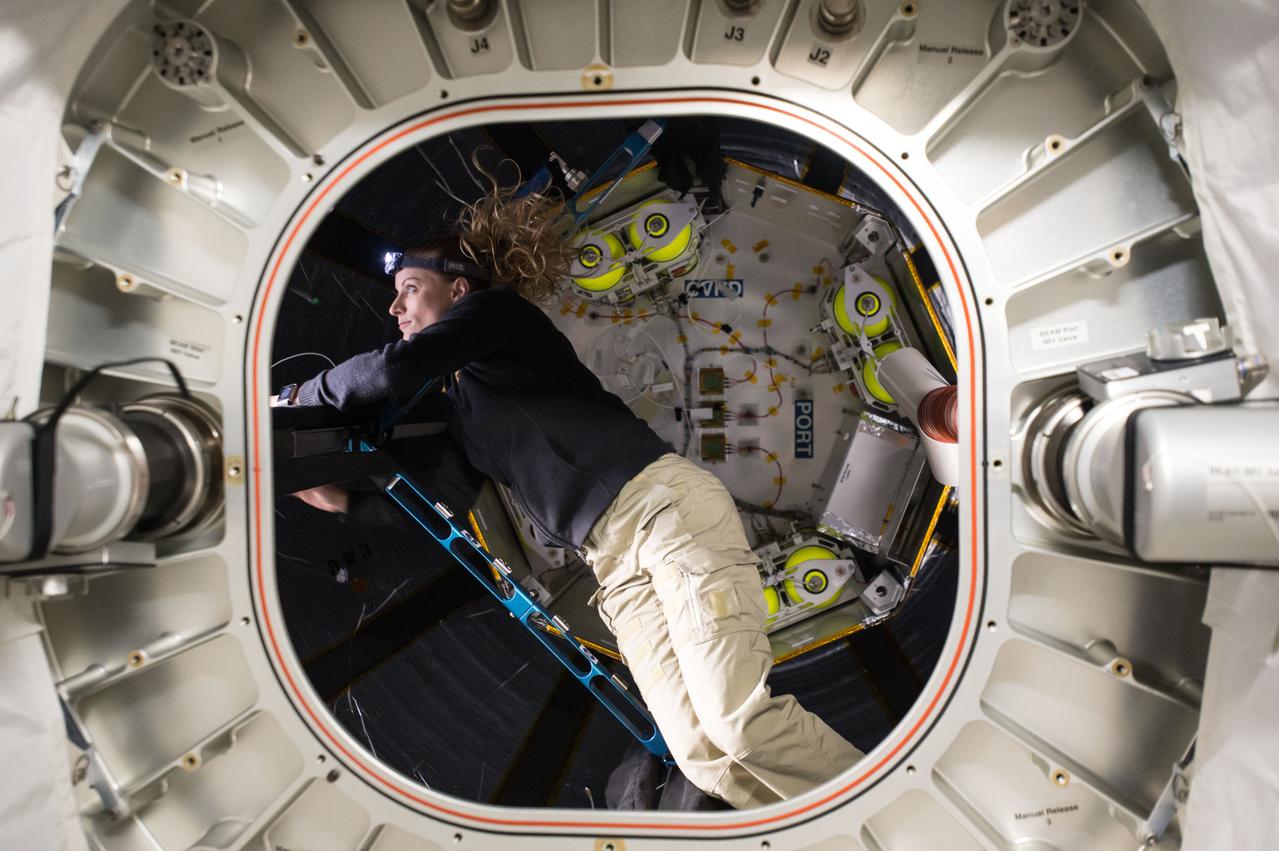
iss048e069952 (9/6/2016) --- NASA astronaut Kate Rubins is photographed inside the Bigelow Expandable Activity Module (BEAM) during BEAM ingress operations (OPS). The Bigelow Expandable Activity Module (BEAM) is an experimental expandable capsule that docks with the International Space Station (ISS). After docking, BEAM inflates to roughly 13 feet long and 10.5 feet in diameter to provide a habitable volume where a crew member can enter.

iss047e134134 (5/26/2018) --- NASA astronaut Jeff Williams and European Space Agency (ESA) astronaut Tim Peake during Bigelow Expandable Activity Module (BEAM) deployment. The Bigelow Expandable Activity Module (BEAM) is an experimental expandable capsule that docks with the International Space Station (ISS). After docking, BEAM inflates to roughly 13 feet long and 10.5 feet in diameter to provide a habitable volume where a crew member can enter.
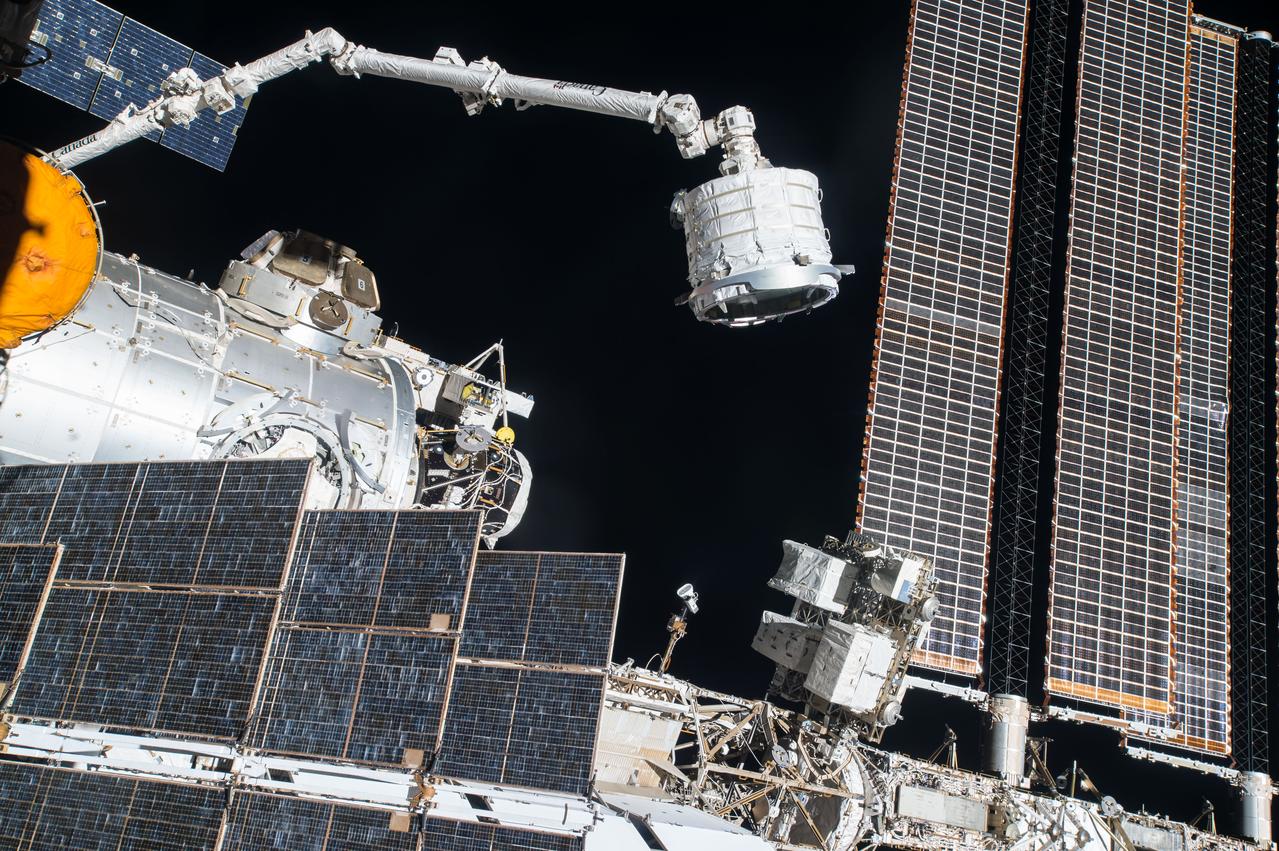
iss047e061107 (4/16/2016) --- View of Bigelow Expandable Activity Module (BEAM) attached to Canadarm2 Robotic Arm. The Bigelow Expandable Activity Module (BEAM) is an experimental expandable capsule that docks with the International Space Station (ISS). After docking, BEAM inflates to roughly 13 feet long and 10.5 feet in diameter to provide a habitable volume where a crew member can enter.
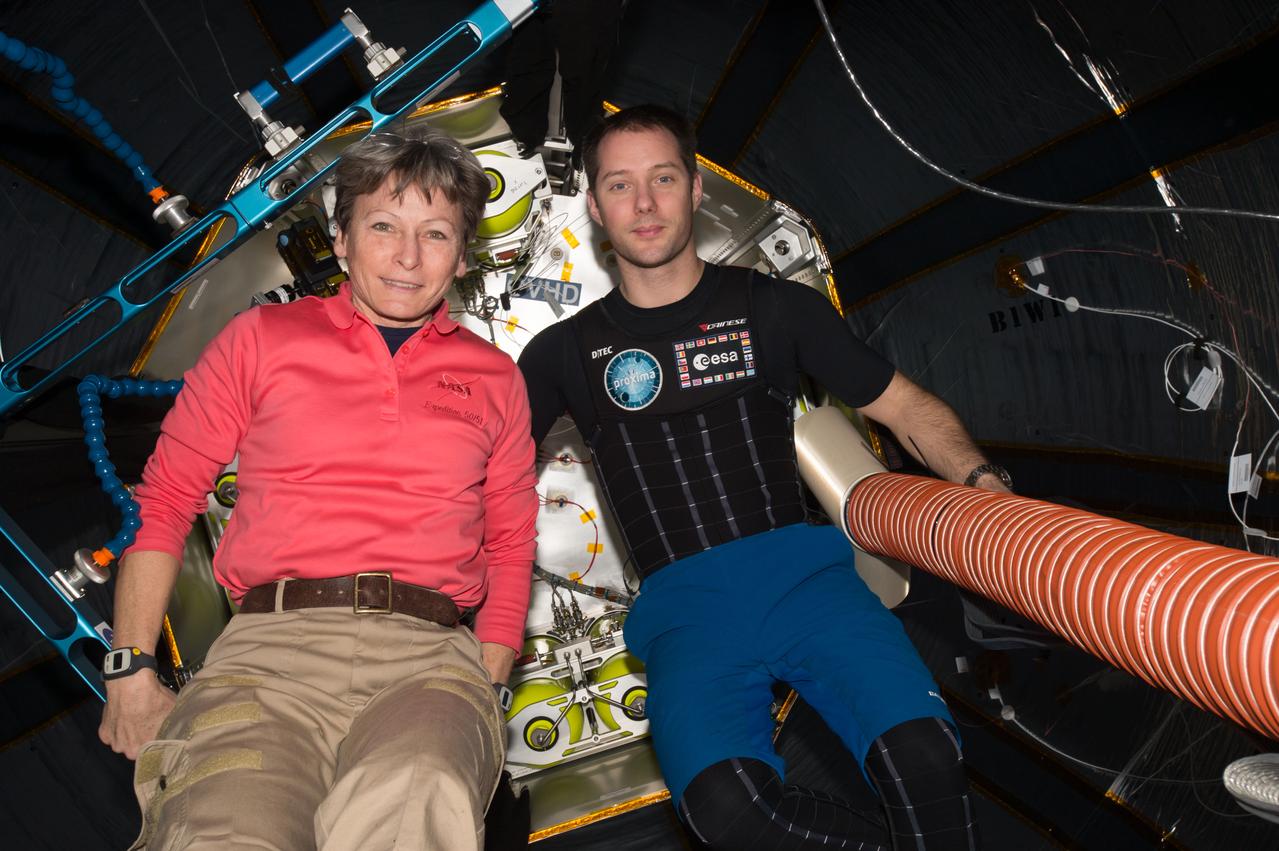
iss050e037908 (2/2/2017) --- NASA astronaut Peggy Whitson and European Space Agency (ESA) Thomas Pesquet in the Bigelow Expandable Aerospace Module (BEAM). The Bigelow Expandable Activity Module (BEAM) is an experimental expandable capsule that docks with the International Space Station (ISS). After docking, BEAM inflates to roughly 13 feet long and 10.5 feet in diameter to provide a habitable volume where a crew member can enter.
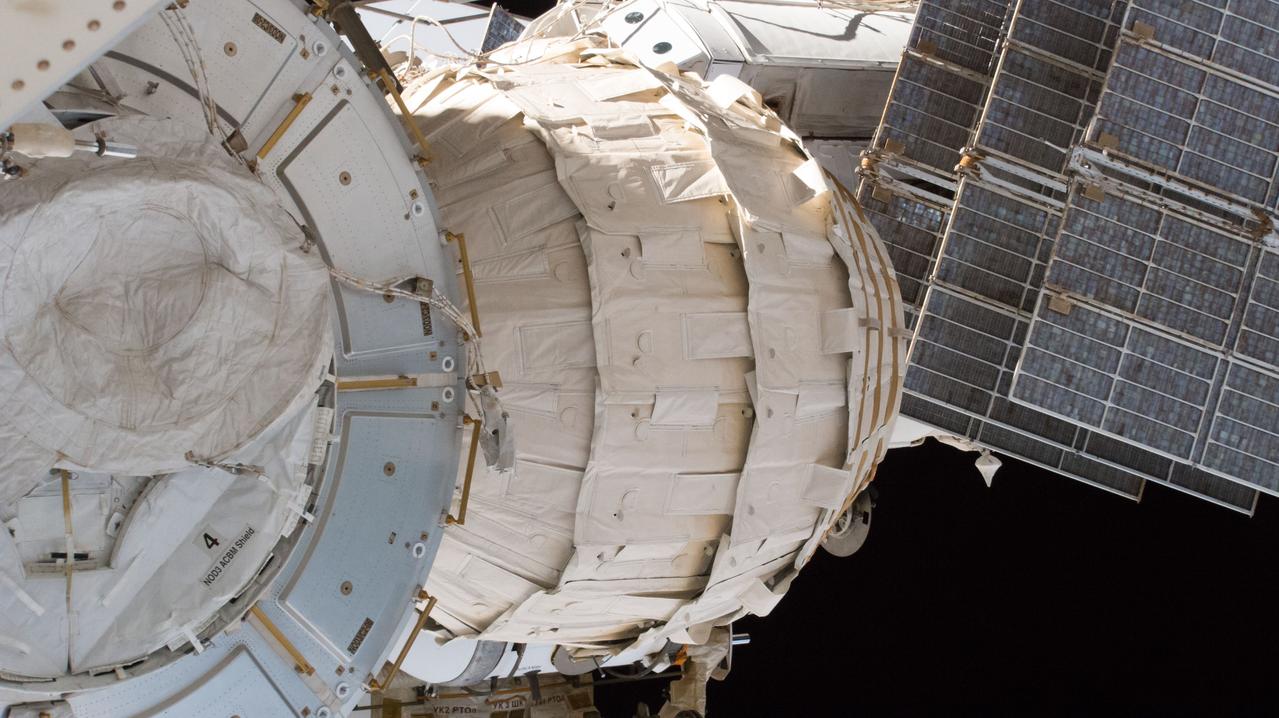
iss051e010468 (April 16, 2017) --- BEAM, the Bigelow Expandable Activity Module, was pictured installed to the Tranquility module with an external high definition camera.
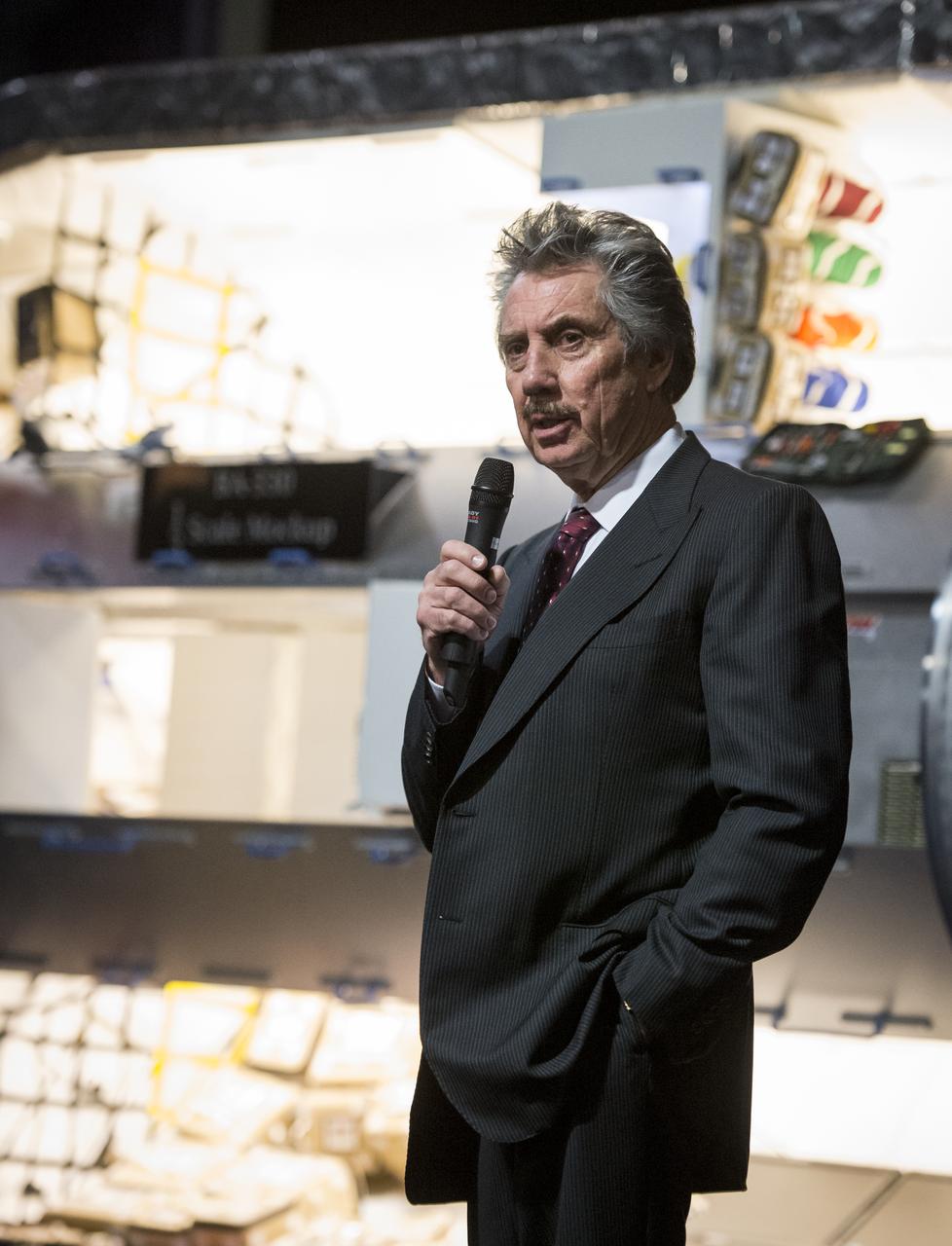
President and founder of Bigelow Aerospace Robert T. Bigelow, talks during a media briefing where he and NASA Deputy Administrator Lori Garver discussed their $17.8 million contract to provide a Bigelow Expandable Activity Module (BEAM) to the International Space Station to test expandable space habitat technology, Wednesday, Jan. 16, 2013 at Bigelow Aerospace in Las Vegas. BEAM is scheduled to arrive at the space station in 2015 for a two-year technology demonstration. Photo Credit: (NASA/Bill Ingalls)

NASA Deputy Administrator Lori Garver talks during a media briefing where she and President and founder of Bigelow Aerospace Robert T. Bigelow, discussed their $17.8 million contract to provide a Bigelow Expandable Activity Module (BEAM) to the International Space Station to test expandable space habitat technology, Wednesday, Jan. 16, 2013 at Bigelow Aerospace in Las Vegas. BEAM is scheduled to arrive at the space station in 2015 for a two-year technology demonstration. Photo Credit: (NASA/Bill Ingalls)
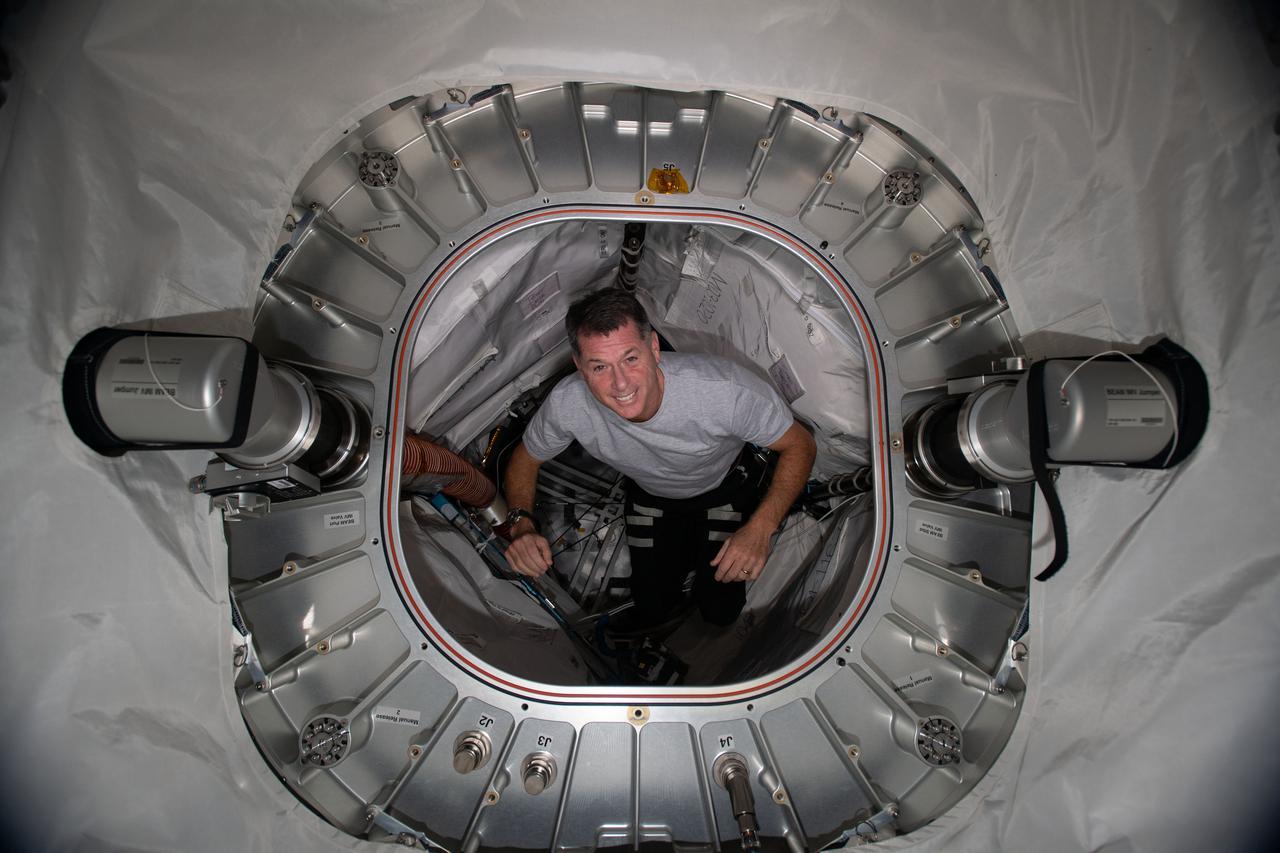
iss065e045899 (May 17, 2021) --- NASA astronaut and Expedition 65 Flight Engineer Shane Kimbrough is pictured inside BEAM, the Bigelow Expandable Activity Module.
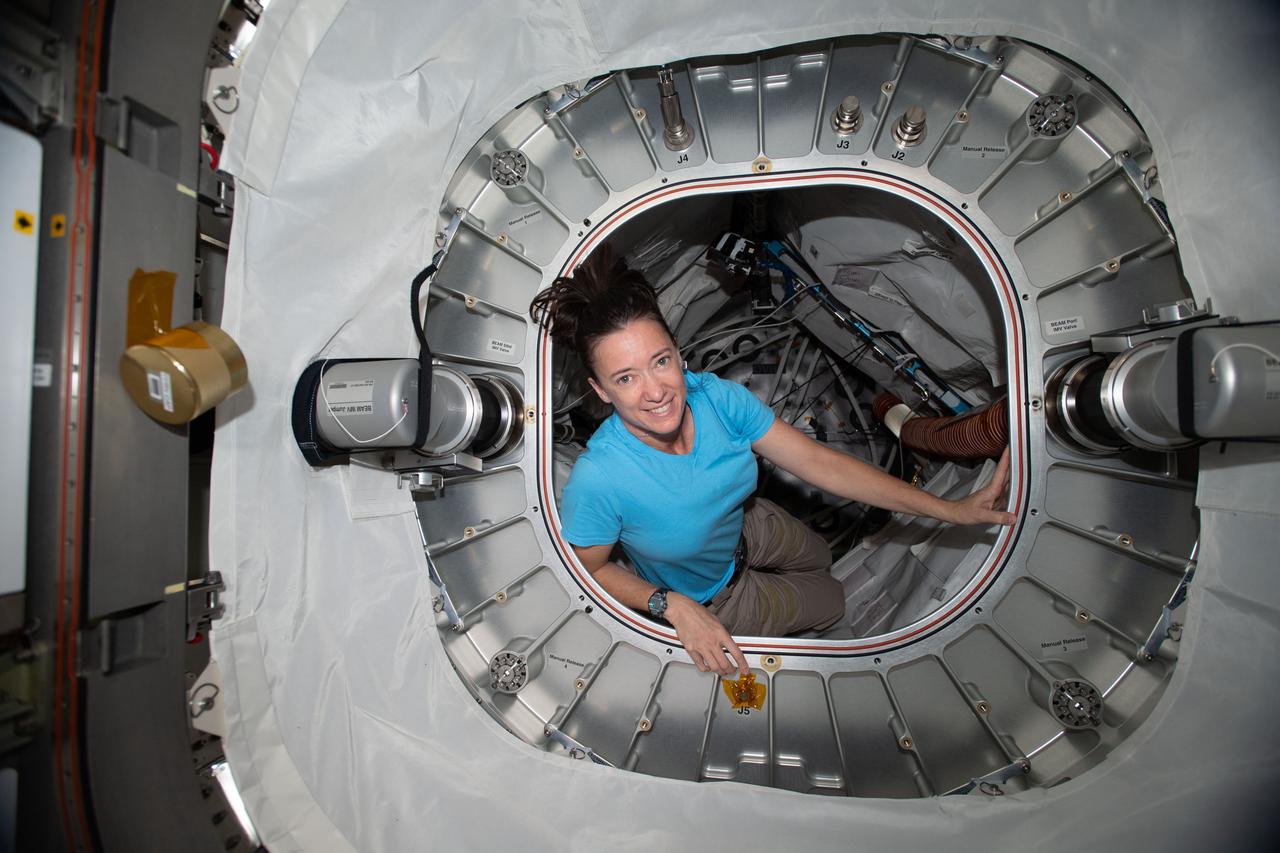
iss065e045904 (May 17, 2021) --- NASA astronaut and Expedition 65 Flight Engineer Megan McArthur is pictured inside BEAM, the Bigelow Expandable Activity Module.
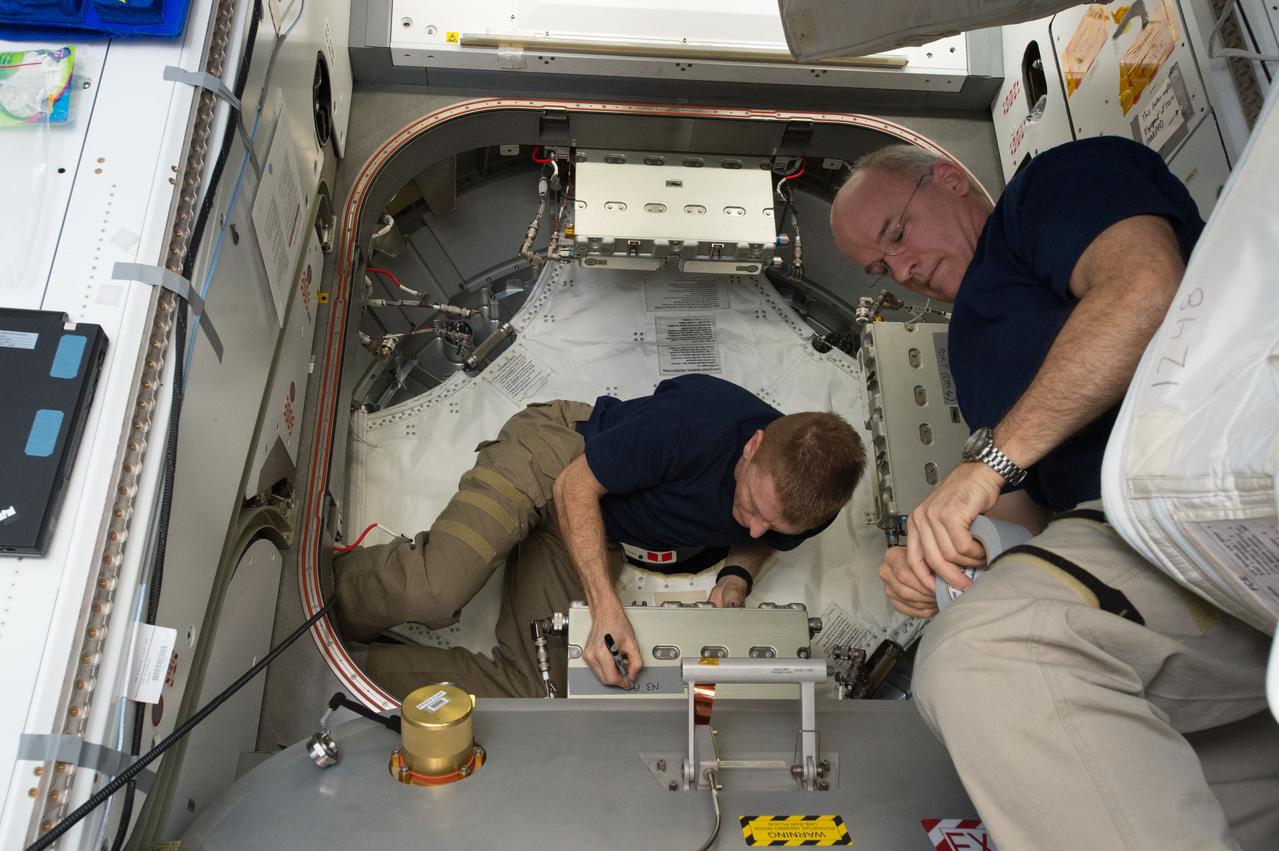
ISS047e133469 (05/25/2016) --- ESA (European Space Agency) astronaut Tim Peak (left) and NASA Astronaut Jeff Williams (right) prepare the Bigelow Expandable Activity Module (BEAM) for expansion. The pair were outfitting the area known as the vestibule, which is the space between the hatch on BEAM and hatch on Tranquility. NASA Astronaut Jeff Williams and the NASA and Bigelow Aerospace teams working at Mission Control Center at NASA’s Johnson Space Center spent more than seven hours on operations to fill the BEAM with air to cause it to expand.
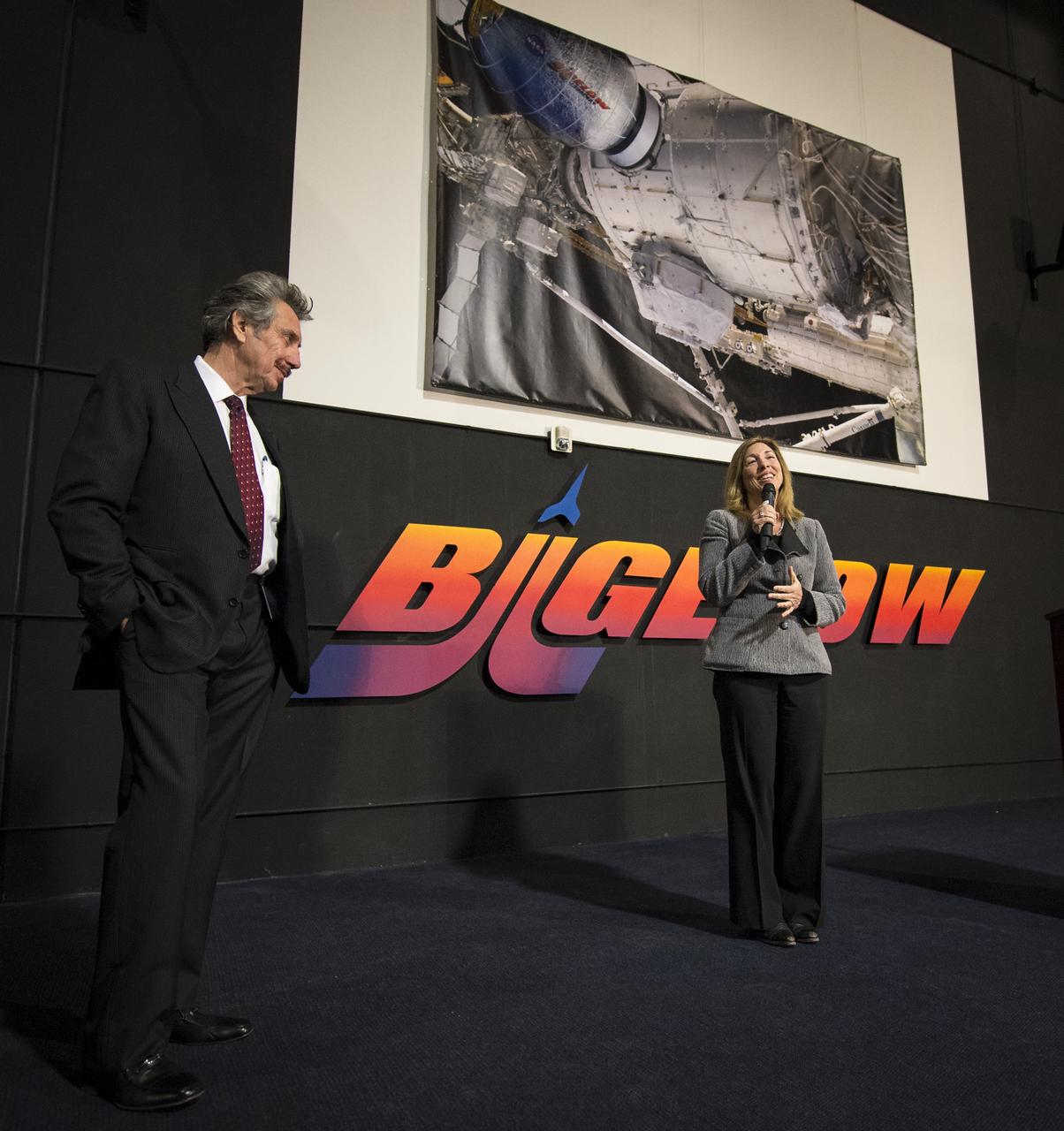
NASA Deputy Administrator Lori Garver and President and founder of Bigelow Aerospace Robert T. Bigelow, announce a planned addition to the International Space Station that will use the orbiting laboratory to test expandable space habitat technology during a press conference held at Bigelow Aerospace on Wednesday, Jan. 16, 2013 in Las Vegas. The $17.8 million contract with Bigelow Aerospace will provide a Bigelow Expandable Activity Module (BEAM), which is scheduled to arrive at the space station in 2015 for a two-year technology demonstration. Photo Credit: (NASA/Bill Ingalls)
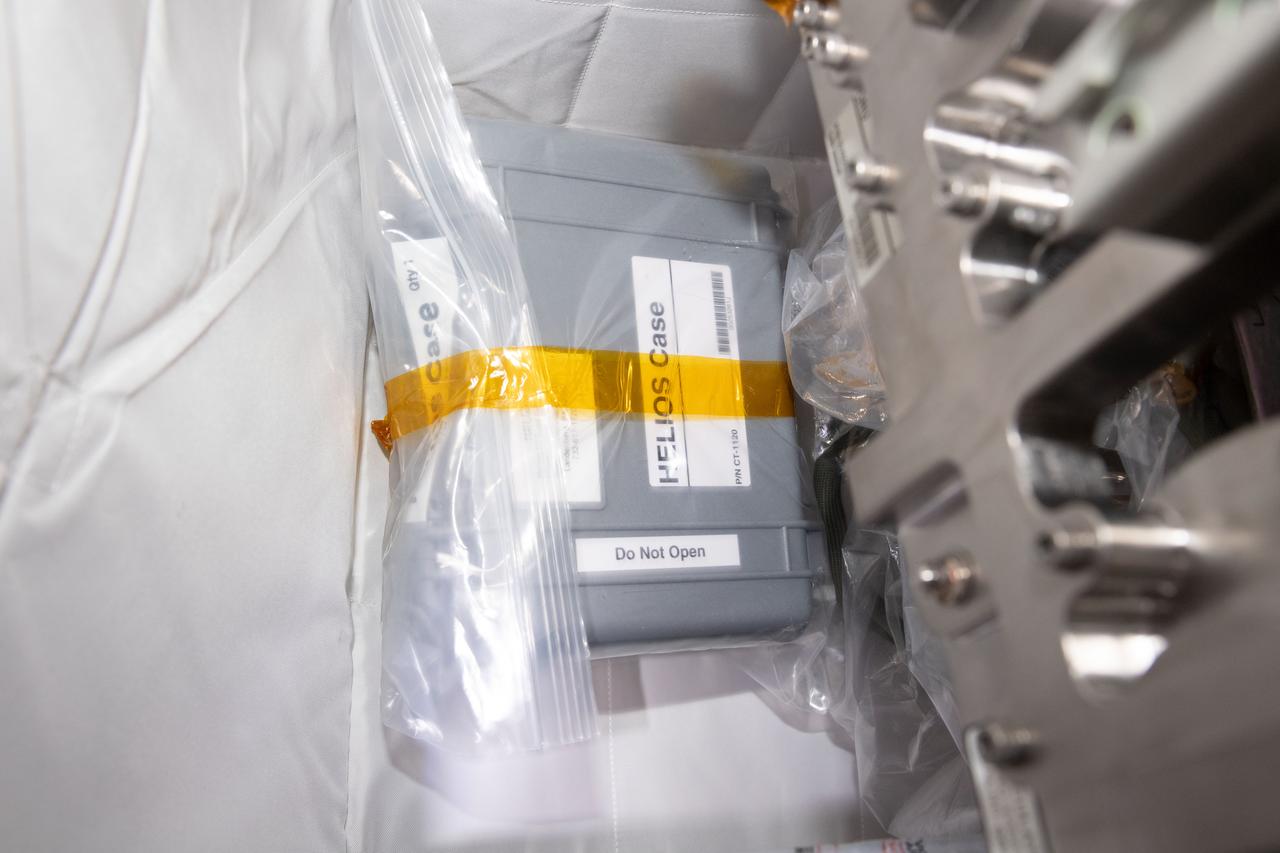
iss059e092346 (6/6/2019) --- A view of the Hardened Extremely Long-life Information in Optical Storage (HELIOS) case aboard the International Space Station (ISS). Hardened Extremely Long-life Information in Optical Storage (HELIOS) tests whether a data storage medium is resistant to space radiation.
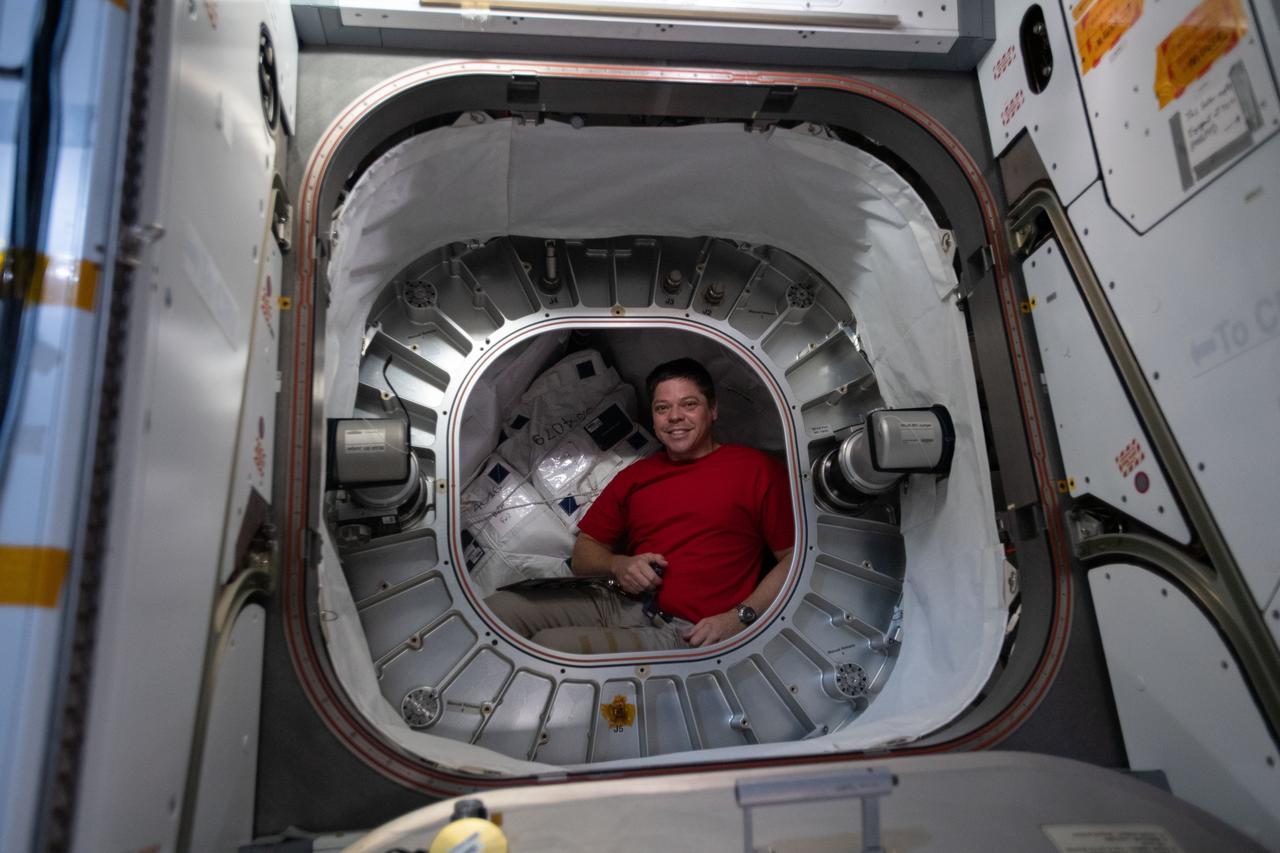
iss063e041081 (July 7, 2020) --- NASA astronaut and Expedition 63 Flight Engineer Bob Behnken is pictured inside the Bigelow Expandable Activity Module (BEAM) during cargo activities. BEAM has been attached to the International Space Station's Tranquility module since April 2016.
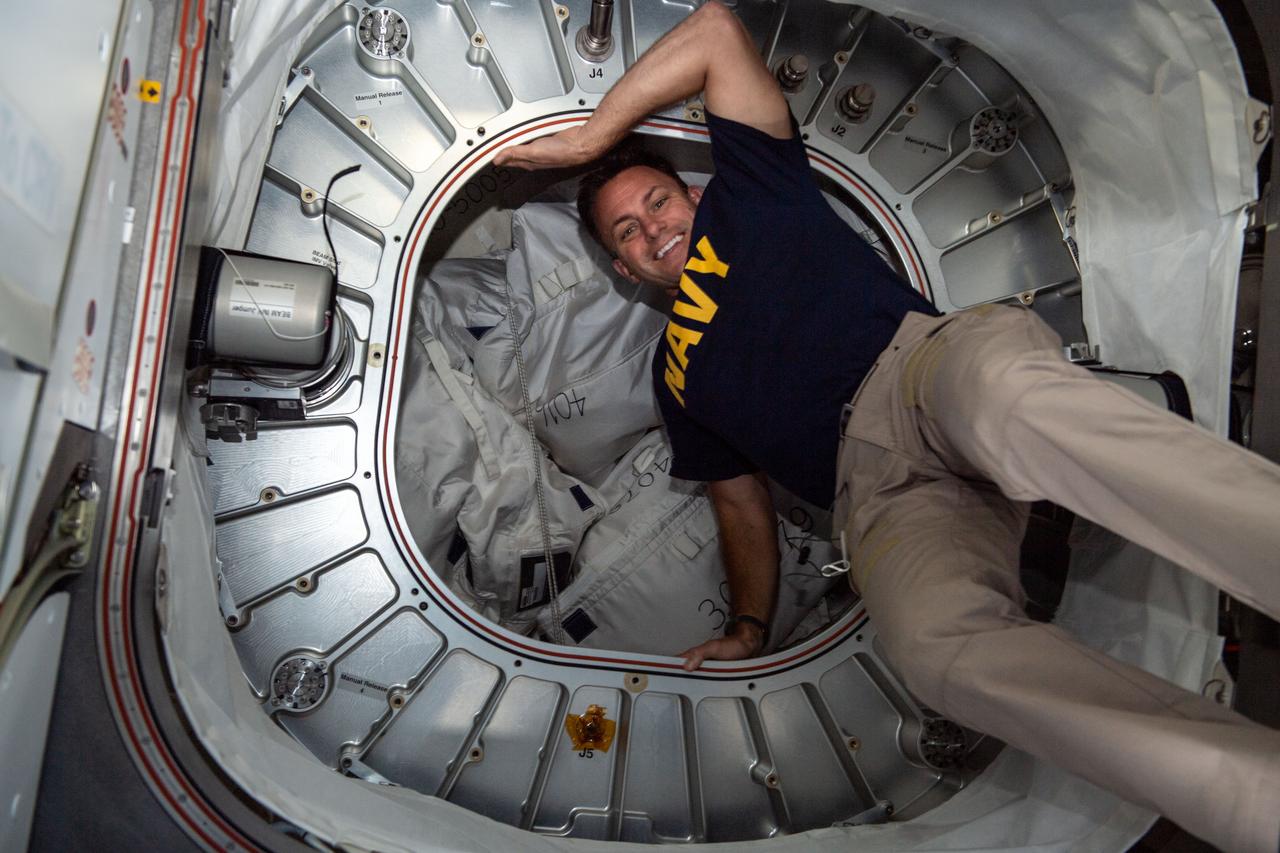
iss068e017325 (Oct. 17, 2022) --- NASA astronaut and Expedition 68 Flight Engineer Josh Cassada poses in front of BEAM, the Bigelow Expandable Activity Module, during cargo activities aboard the International Space Station.
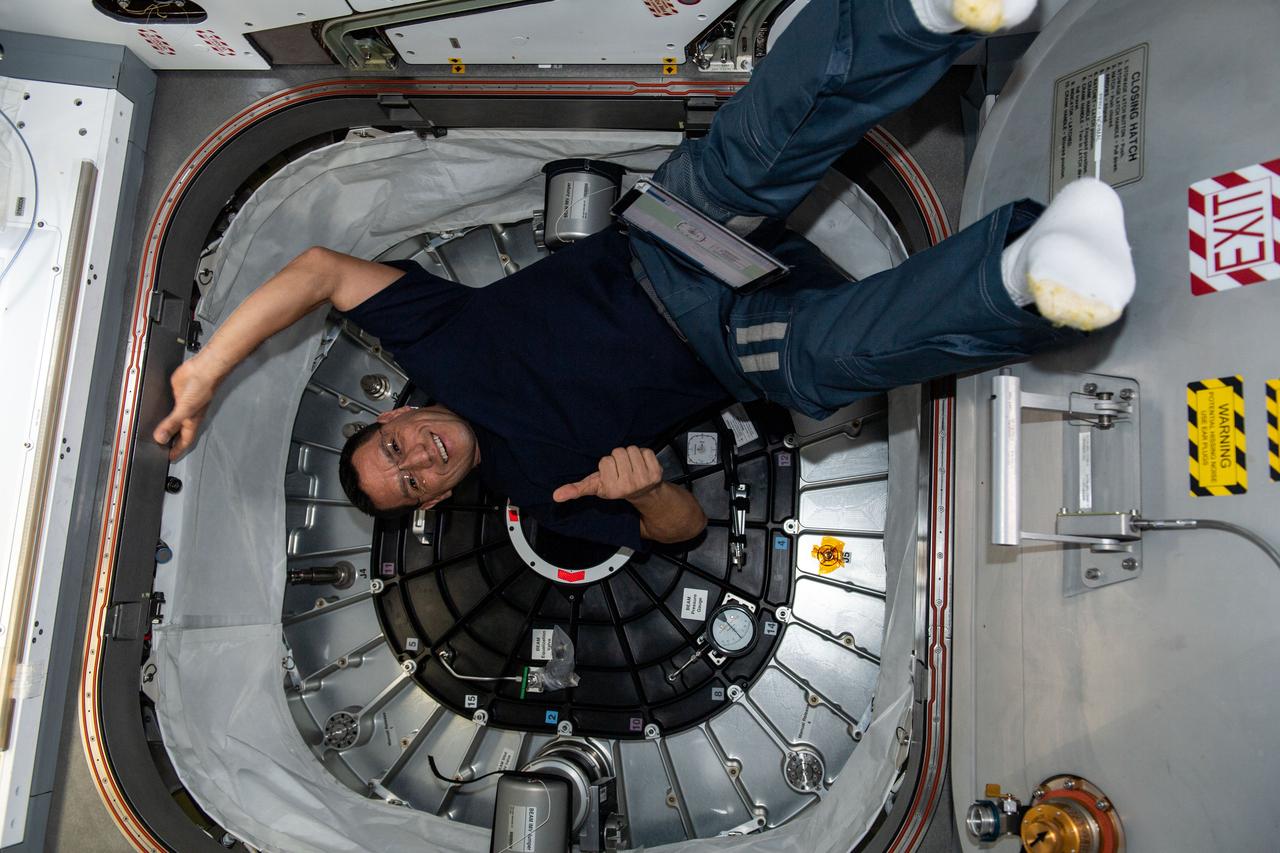
iss068e017315 (Oct. 17, 2022) --- NASA astronaut and Expedition 68 Flight Engineer Frank Rubio poses in front of BEAM, the Bigelow Expandable Activity Module, during cargo activities aboard the International Space Station.
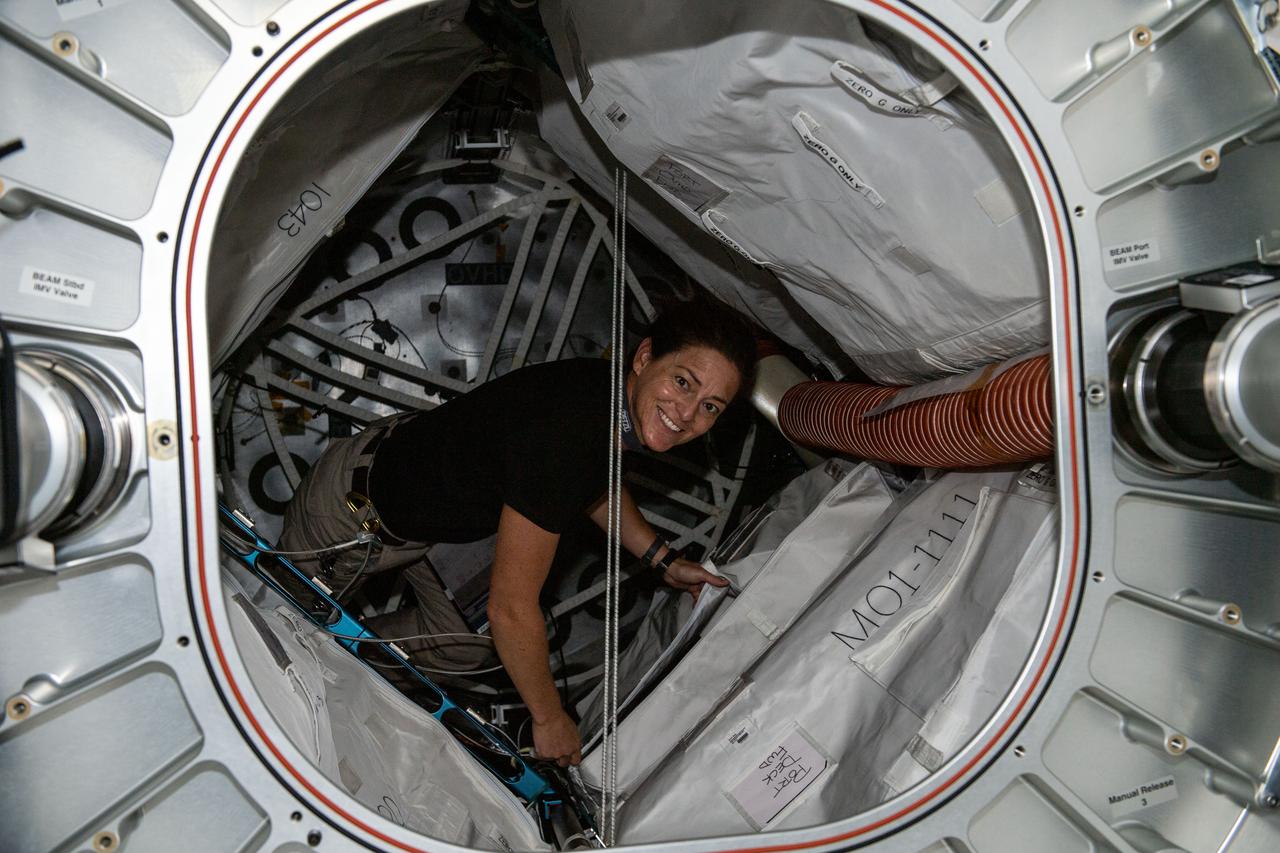
iss068e017323 (Oct. 17, 2022) --- NASA astronaut and Expedition 68 Flight Engineer Nicole Mann poses inside BEAM, the Bigelow Expandable Activity Module, during cargo activities aboard the International Space Station.
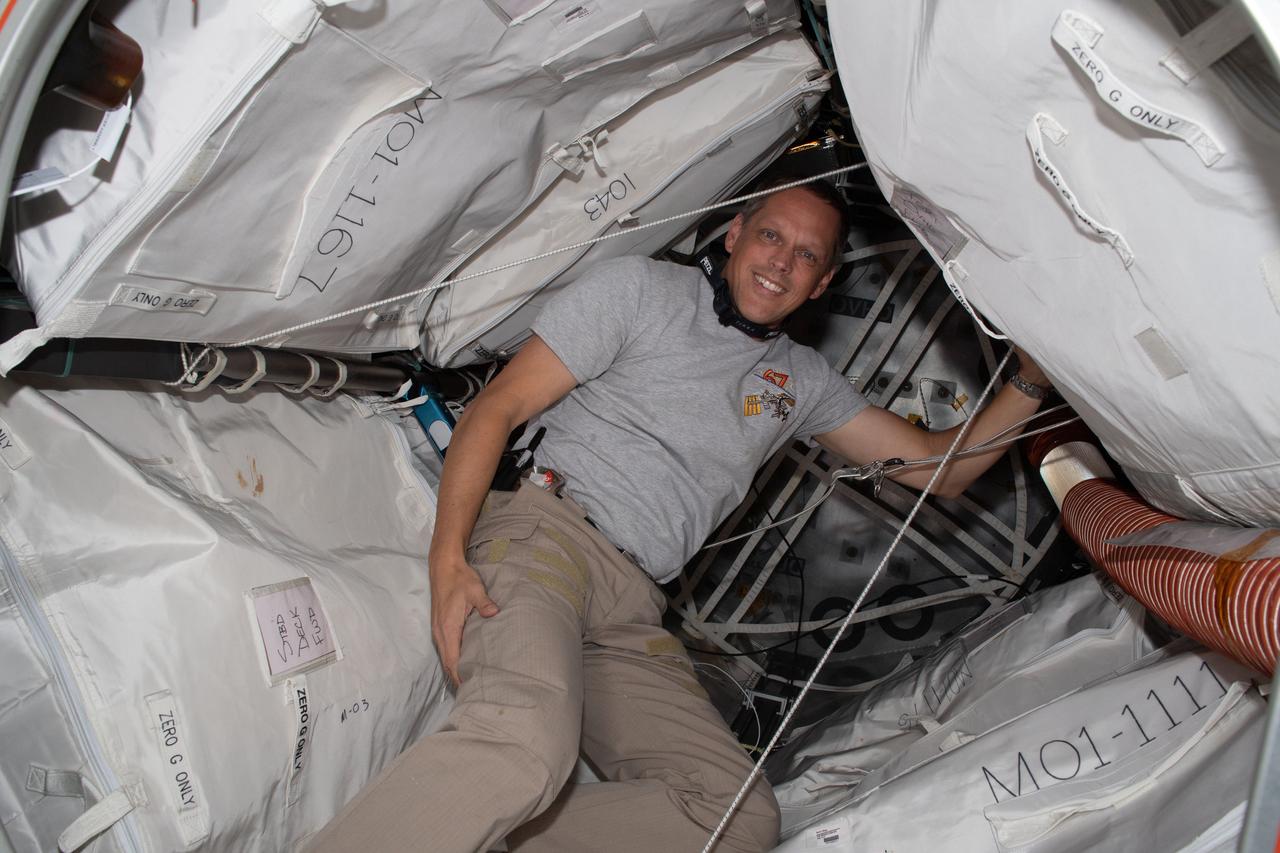
iss067e123265 (June 10, 2022) --- Expedition 67 Flight Engineer and NASA astronaut Bob Hines poses inside the Bigelow Expandable Activity Module (BEAM) packed with cargo and attached to the International Space Station's Tranquility module.
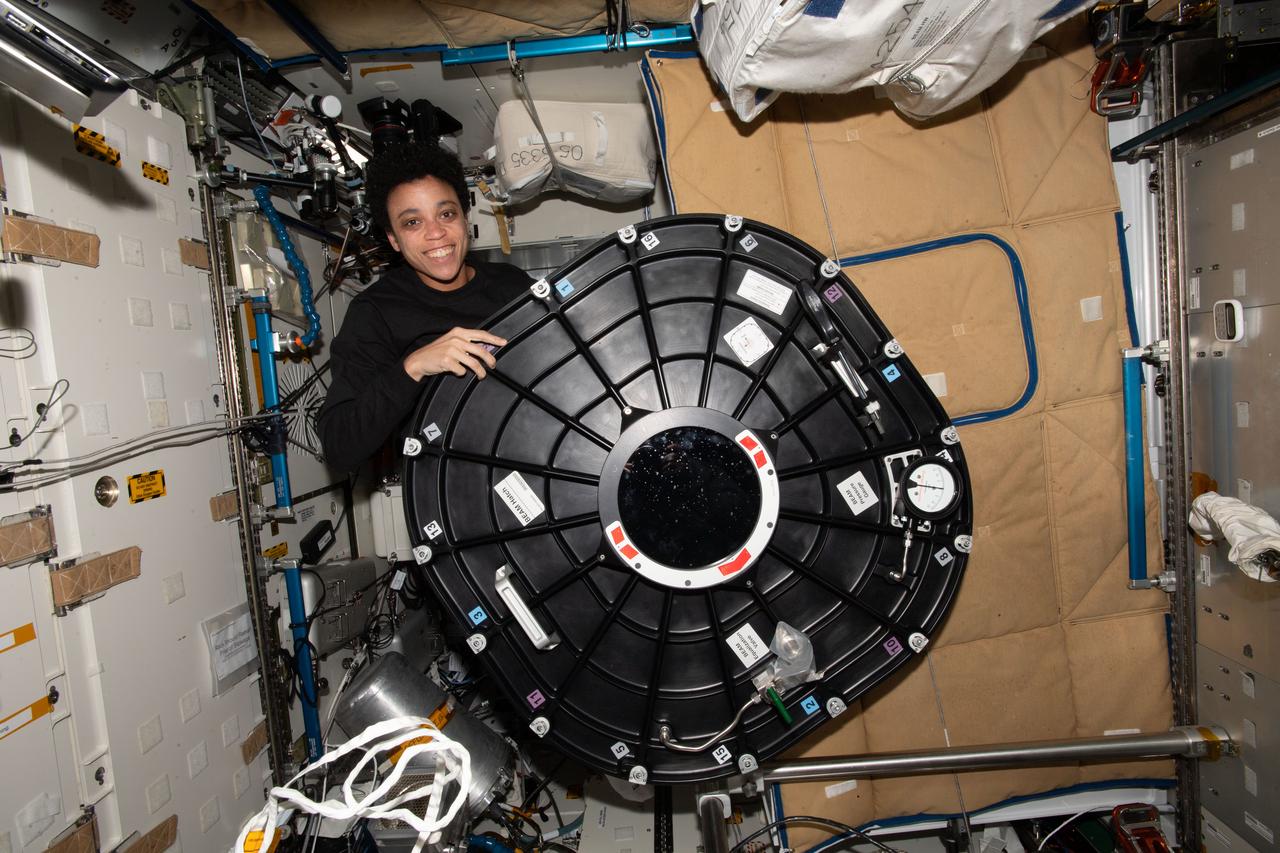
iss067e124513 (June 10, 2022) --- Expedition 67 Flight Engineer and NASA astronaut Jessica Watkins poses with the hatch cover belonging to the Bigelow Expandable Activity Module (BEAM) attached to the International Space tation's Tranquility module.
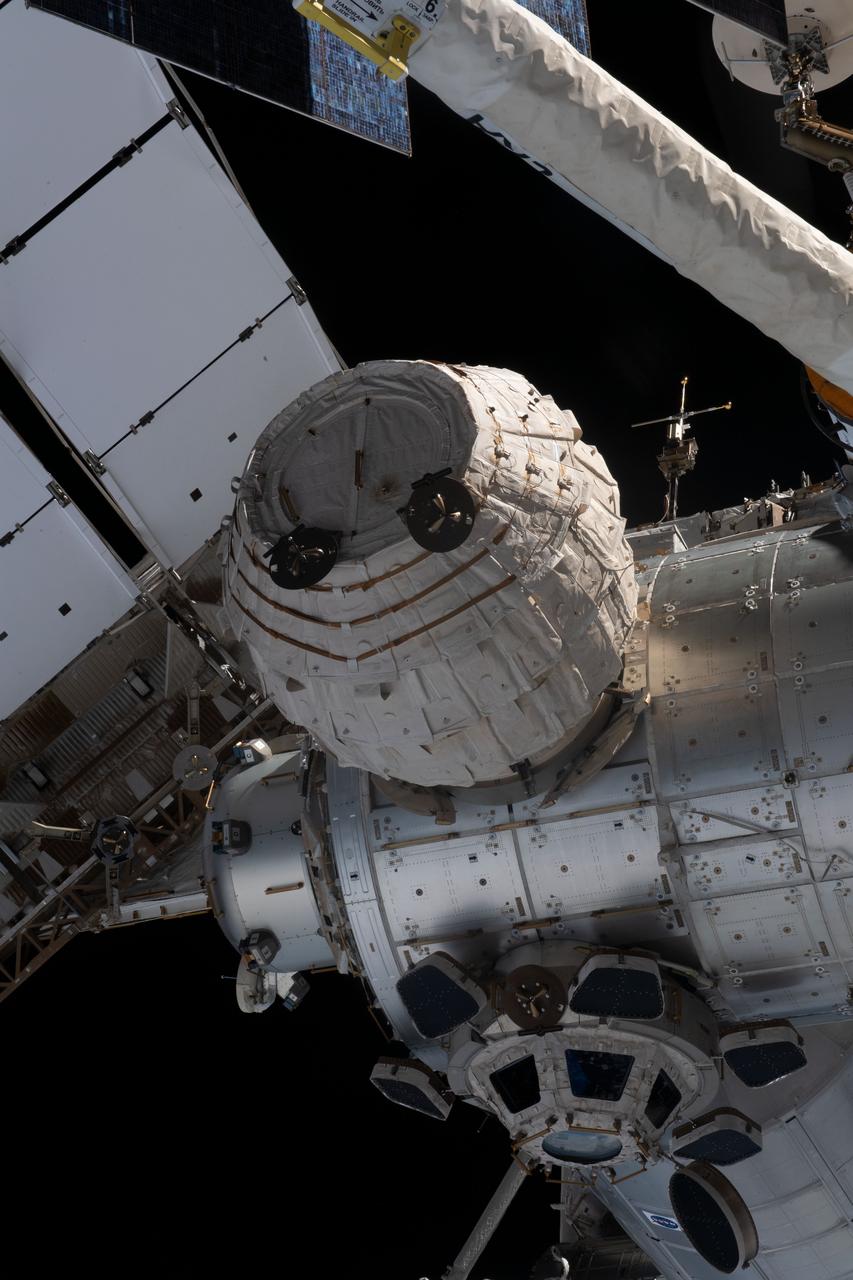
iss068e055469 (Feb. 19, 2023) --- BEAM (center foreground), the Bigelow Expandable Activity Module, including the seven-window cupola (bottom), with its covers open, are pictured attached to the International Space Station's Tranquility module.
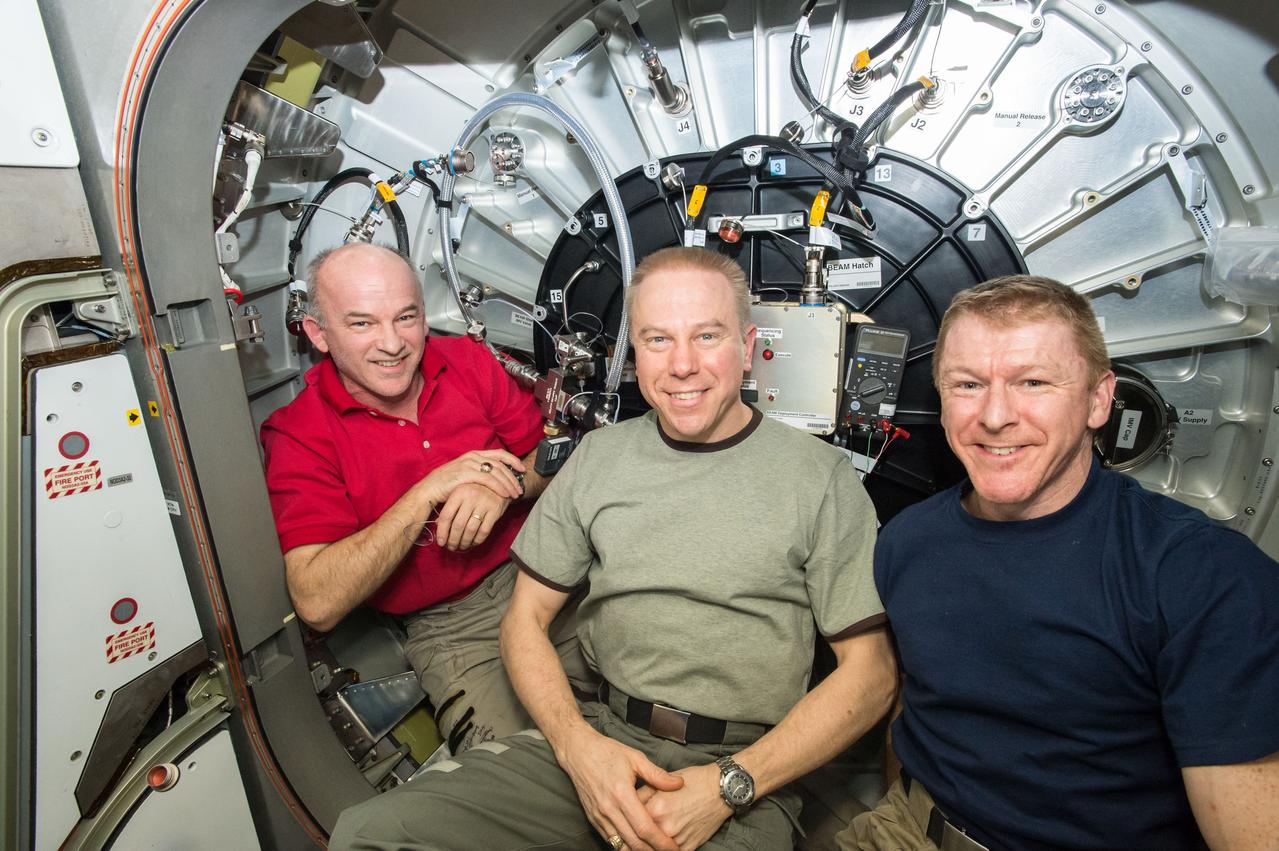
ISS047e135573 (05/28/2016) --- Expedition 47 astronauts Jeff Williams (left) and Timothy Kopra (middle) of NASA, along with ESA (European Space Agency) astronaut Timothy Peake (right) pose in front of the entrance to the Bigelow Expandable Activity Module (BEAM) after successful expansion. NASA Astronaut Jeff Williams and the NASA and Bigelow Aerospace teams working at Mission Control Center at NASA’s Johnson Space Center spent more than seven hours on operations to fill the BEAM with air to cause it to expand.
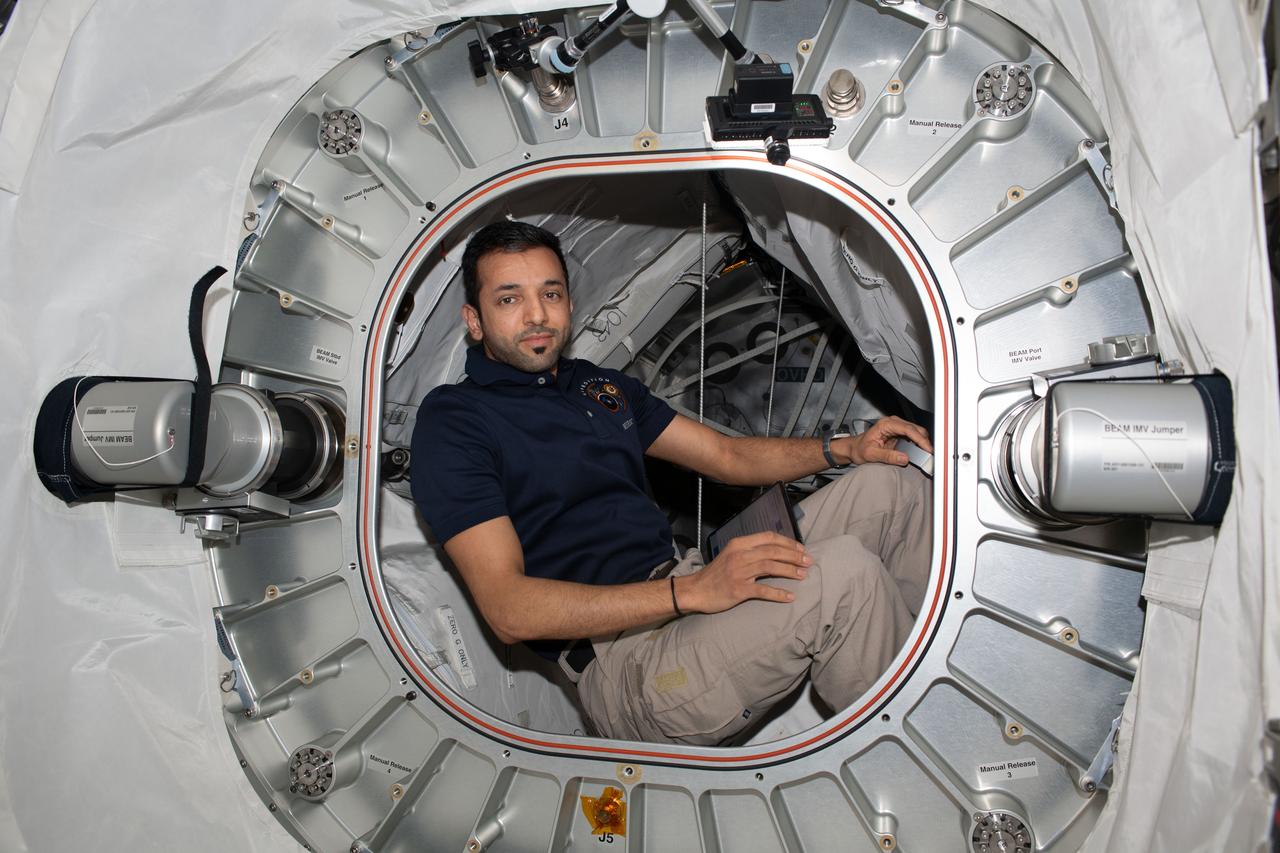
iss069e029193 (July 5, 2023) --- UAE (United Arab Emirates) astronaut and Expedition 69 Flight Engineer Sultan Alneyadi poses for a portrait inside the Bigelow Expandable Activity Module, or BEAM.
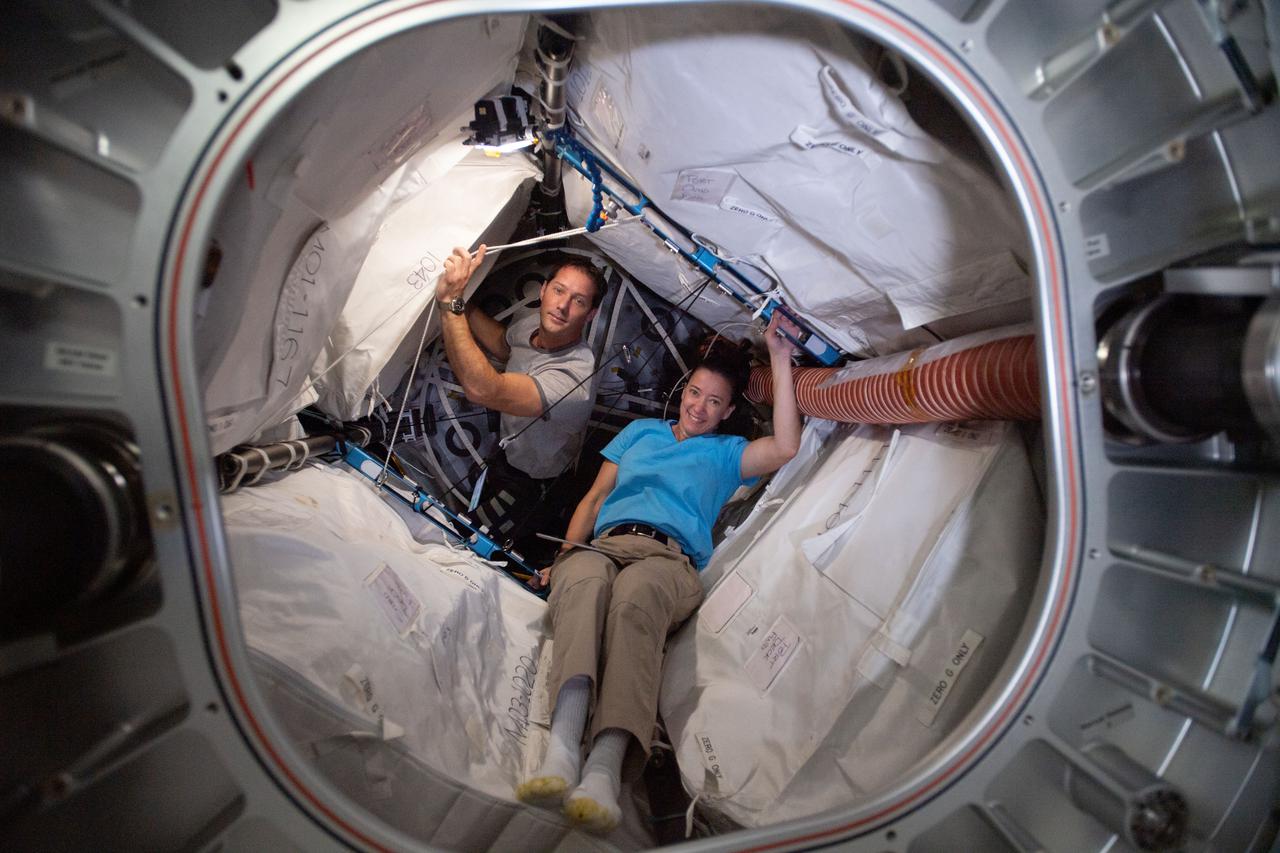
iss065e045911 (May 17, 2021) --- Expedition 65 Flight Engineers Thomas Pesquet from ESA and Megan McArthur from NASA are pictured inside BEAM, the Bigelow Expandable Activity Module,
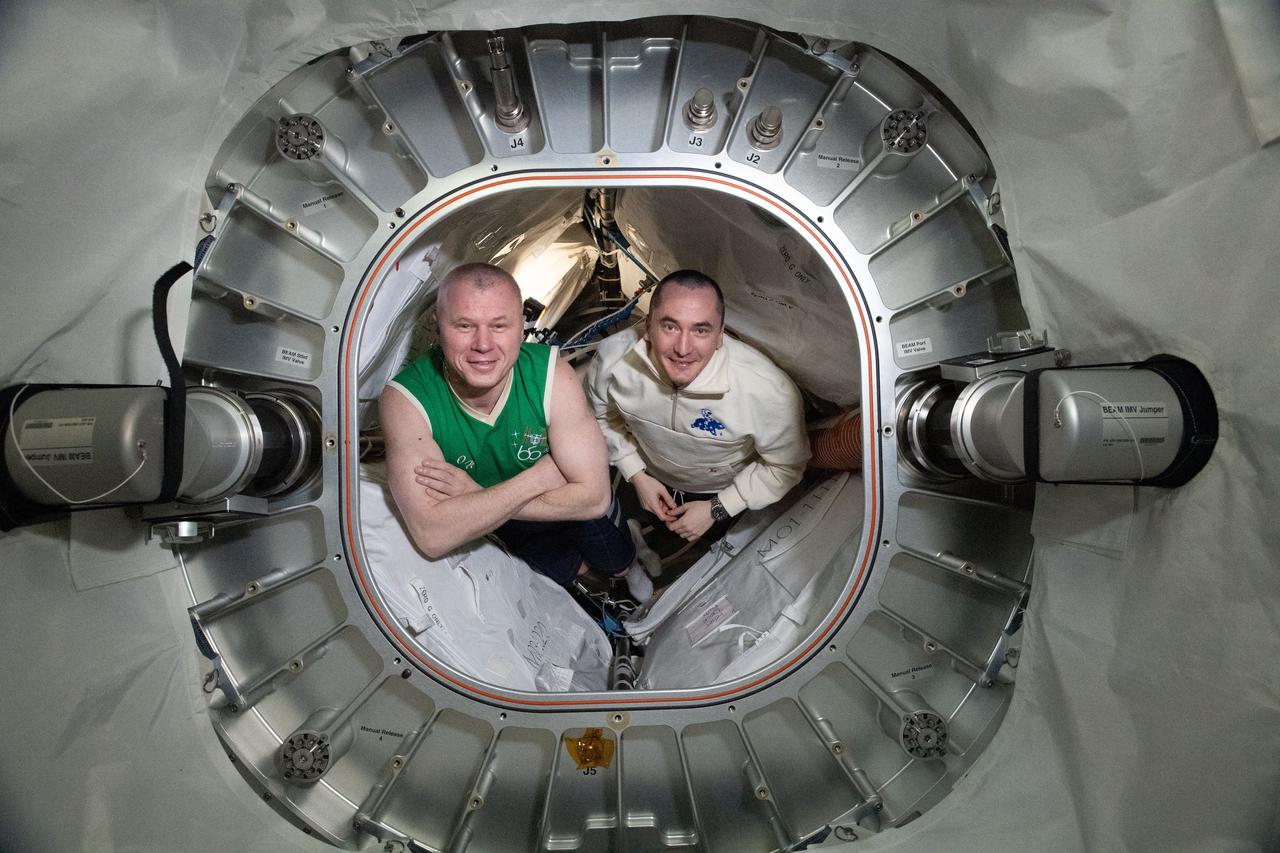
iss065e045917 (May 17, 2021) --- Roscosmos cosmonauts and Expedition 65 Flight Engineers (from left) Oleg Novitskiy and Pyotr Dubrov are pictured inside BEAM, the Bigelow Expandable Activity Module.
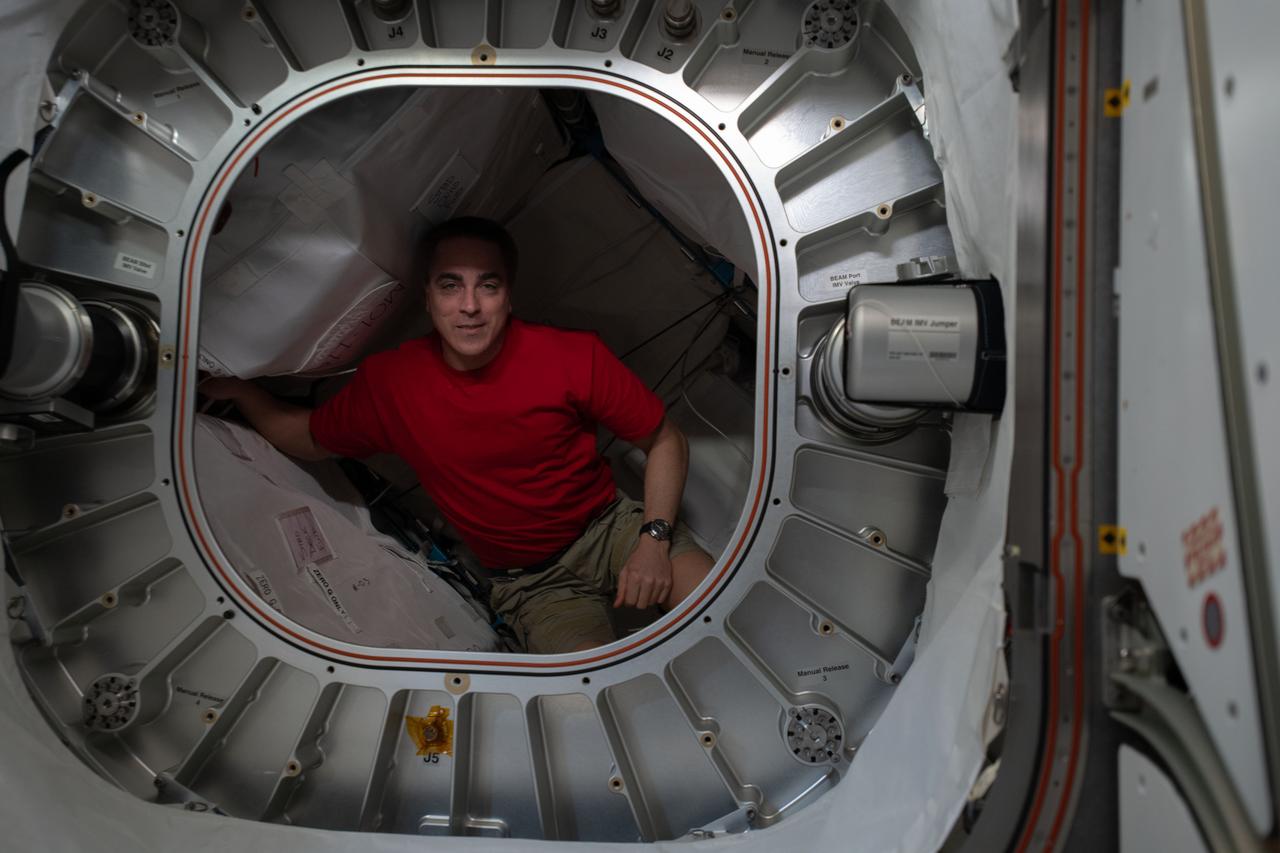
iss063e028479 (July 1, 2020) --- NASA astronaut and Expedition 63 Commander Chris Cassidy is pictured inside the Bigelow Expandable Activity Module (BEAM) during operations to retrieve charcoal filters.
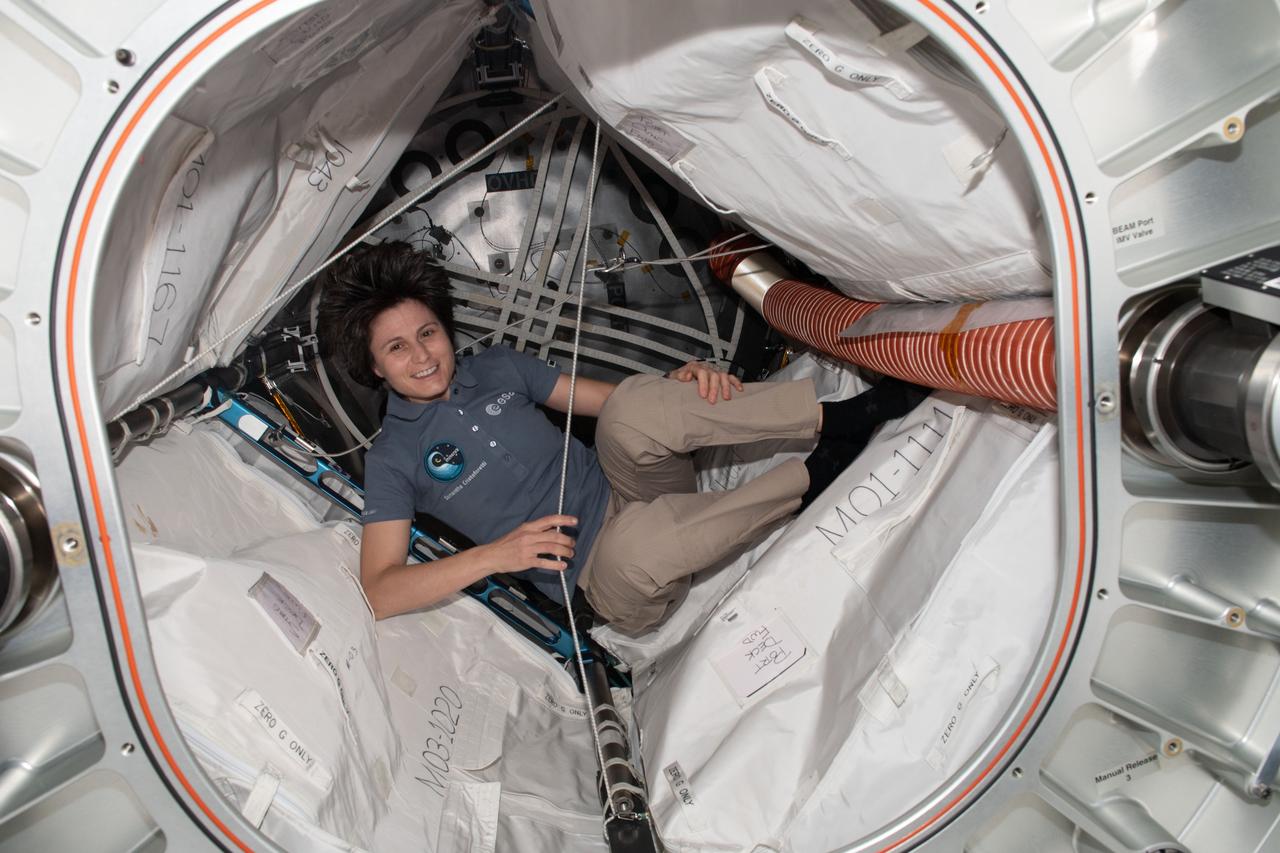
iss067e123266 (June 10, 2022) --- Expedition 67 Flight Engineer and ESA (European Space Agency) astronaut Samantha Cristoforetti is pictured inside the Bigelow Expandable Activity Module (BEAM) swapping batteries inside its sensor systems.
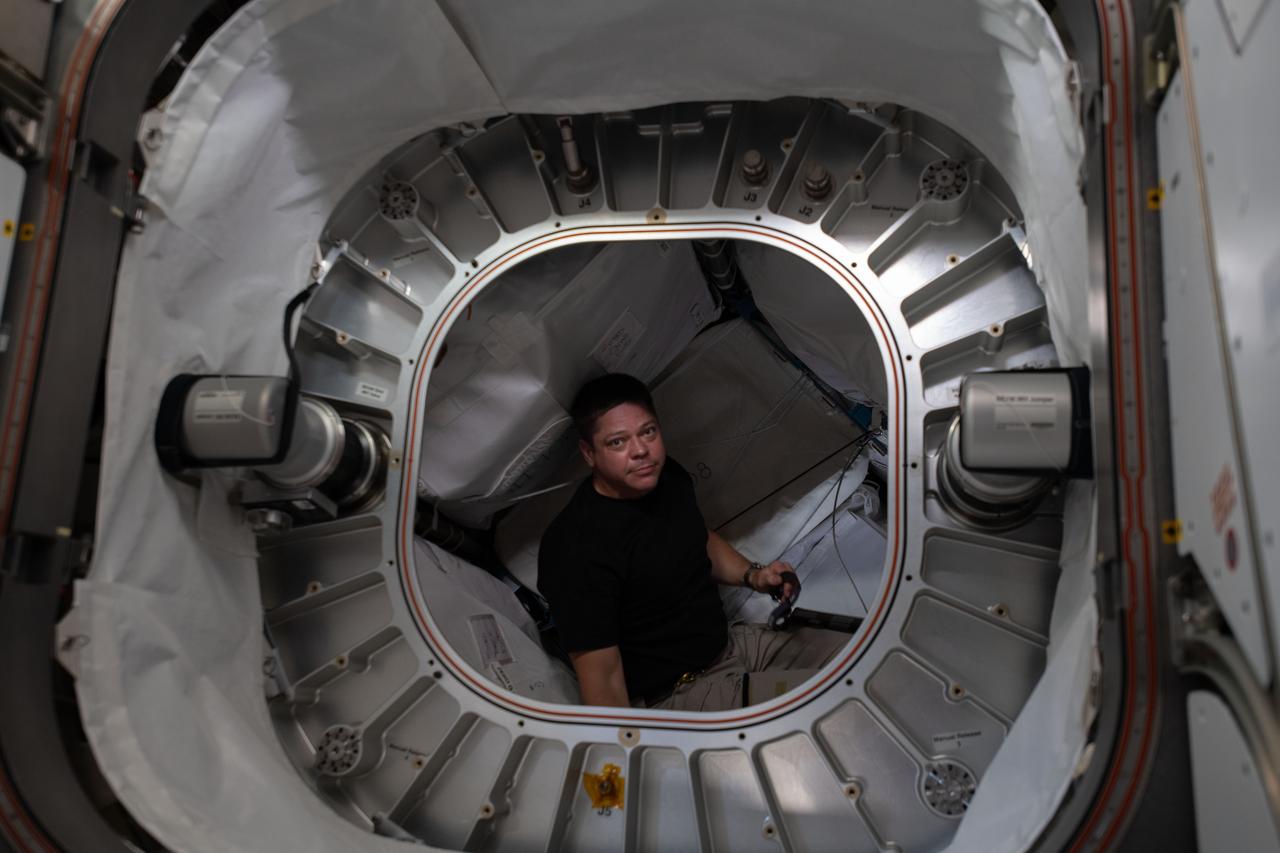
iss063e028476 (July 1, 2020) --- NASA astronaut and Expedition 63 Flight Engineer Bob Behnken is pictured inside the Bigelow Expandable Activity Module (BEAM) during operations to retrieve charcoal filters.
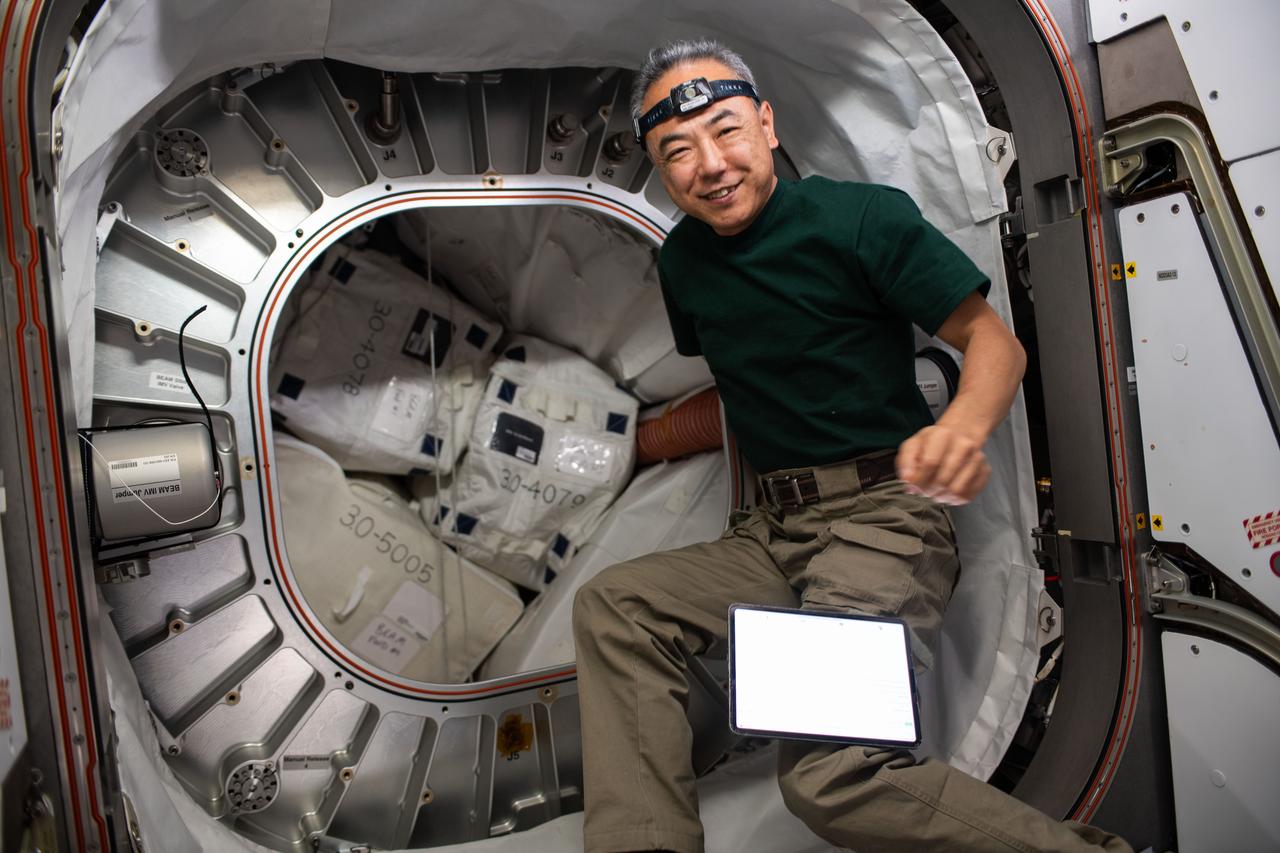
iss070e00324 (Sept. 28, 2023) --- JAXA (Japan Aerospace Exploration Agency) astronaut and Expedition 70 Flight Engineer Satoshi Furukawa packs hardware inside the Bigelow Expandable Activity Module, or BEAM, aboard the International Space Station.
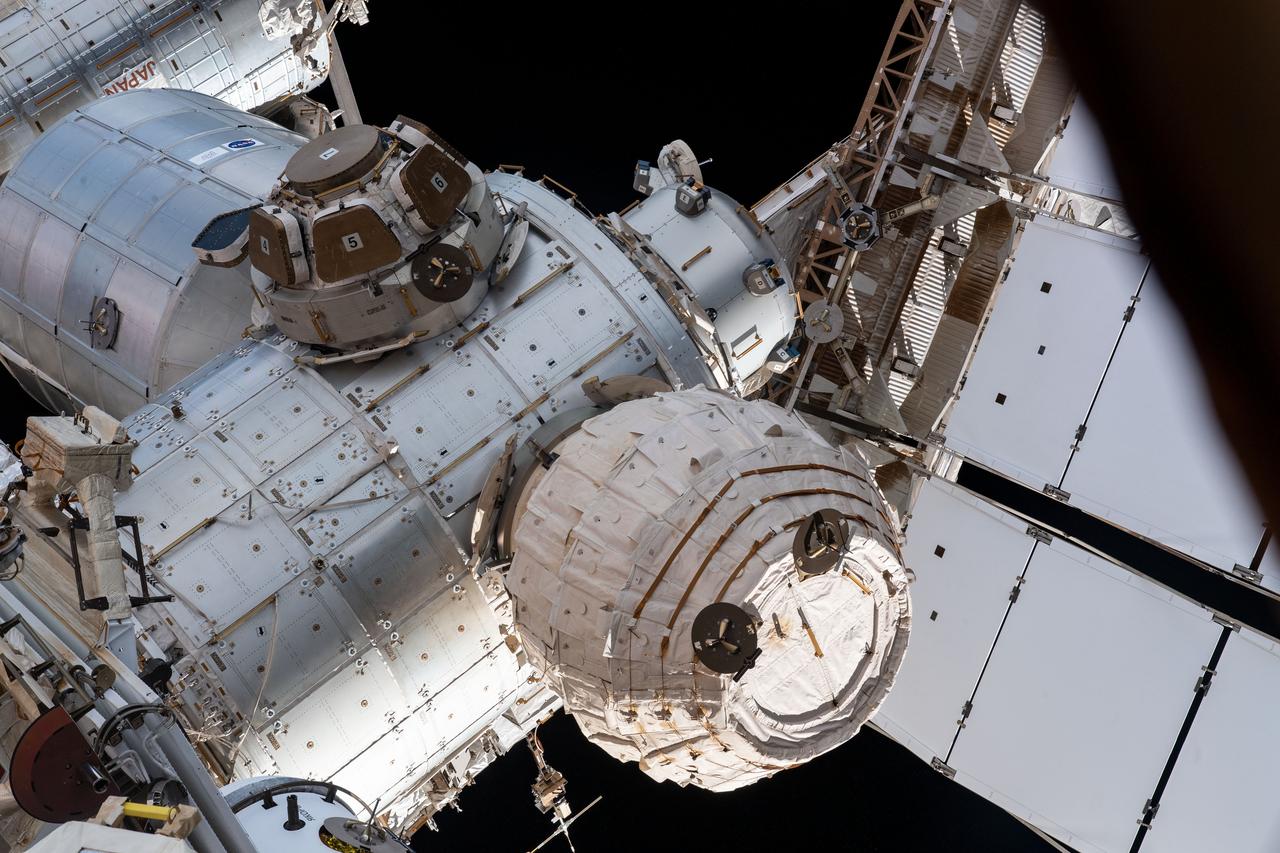
iss067e214089 (Aug. 2, 2022) --- This view from a window on the International Space Station's Russian segment shows the Bigelow Expandable Activity Module (BEAM), the cupola with its seven windows shuttered, and the NanoRacks Bishop airlock. Behind the cupola is the Leonardo permanment multipurpose module. All four components are attached to the Tranquility module.

iss061e011783 (Oct. 18, 2019) --- Portions of the International Space Station are pictured as the orbiting complex was flying into an orbital sunset. From front to back, are the Tranquility module, the Bigelow Expandable Activity Module (BEAM), the Progress 73 resupply ship and (at bottom) the Rassvet mini-research module.
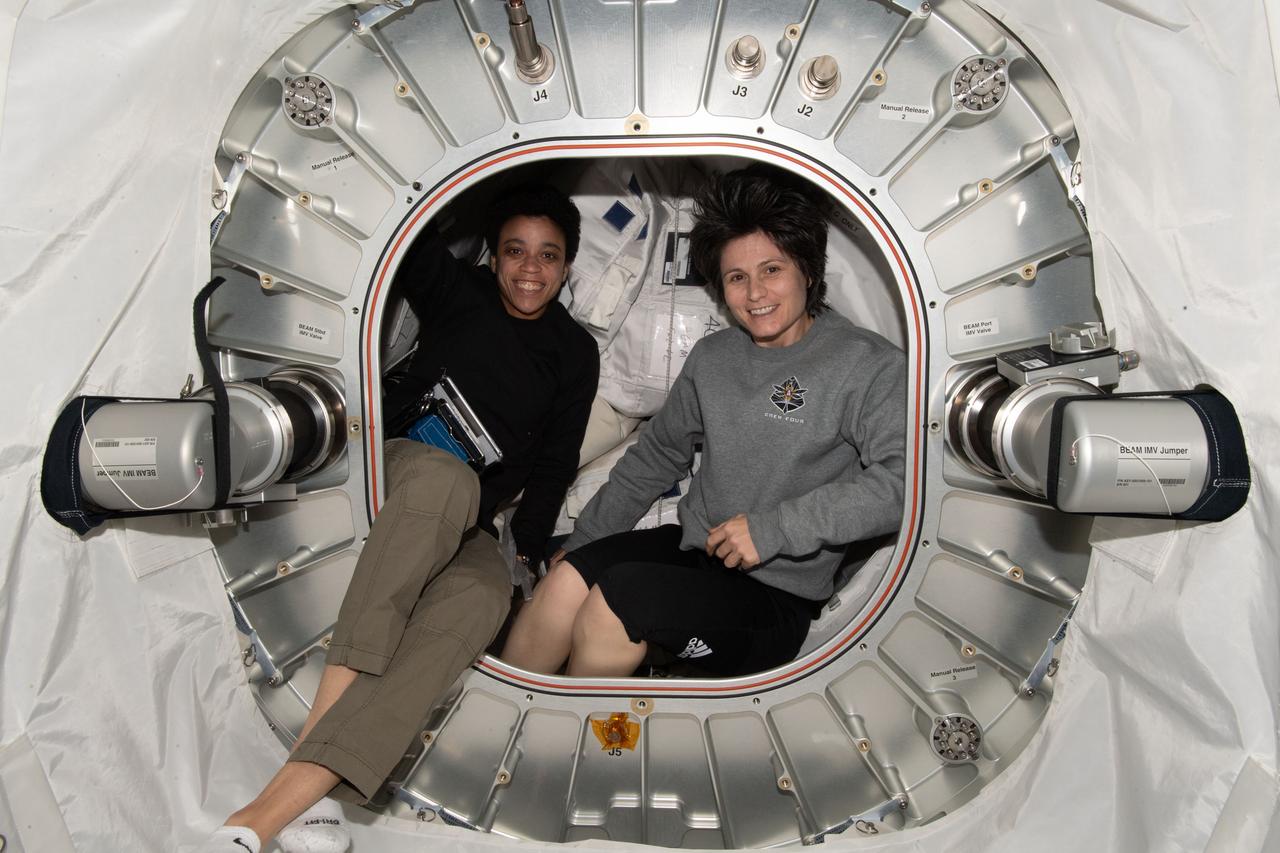
iss067e124526 (June 10, 2022) --- Expedition 67 Flight Engineers (from left) Jessica Watkins of NASA and Samantha Cristoforetti of ESA (European Space Agency) are pictured inside the Bigelow Expandable Activity Module (BEAM) during cargo stowage activities.
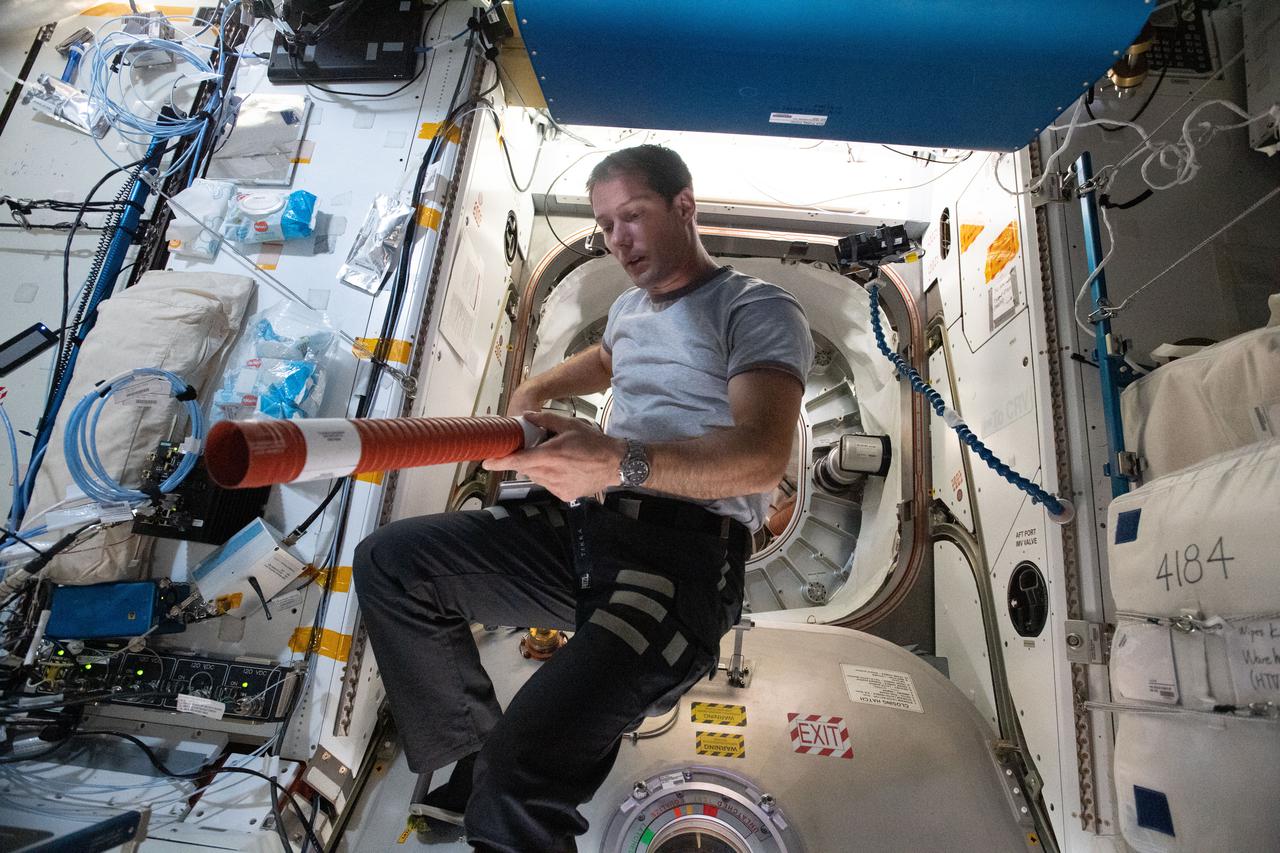
iss065e045918 (May 17, 2021) --- Expedition 65 Flight Engineer Thomas Pesquet of ESA (European Space Agency) is pictured inside the International Space Station's Tranquility module during maintenance work in front of the entrance to BEAM, the Bigelow Expandable Activity Module.
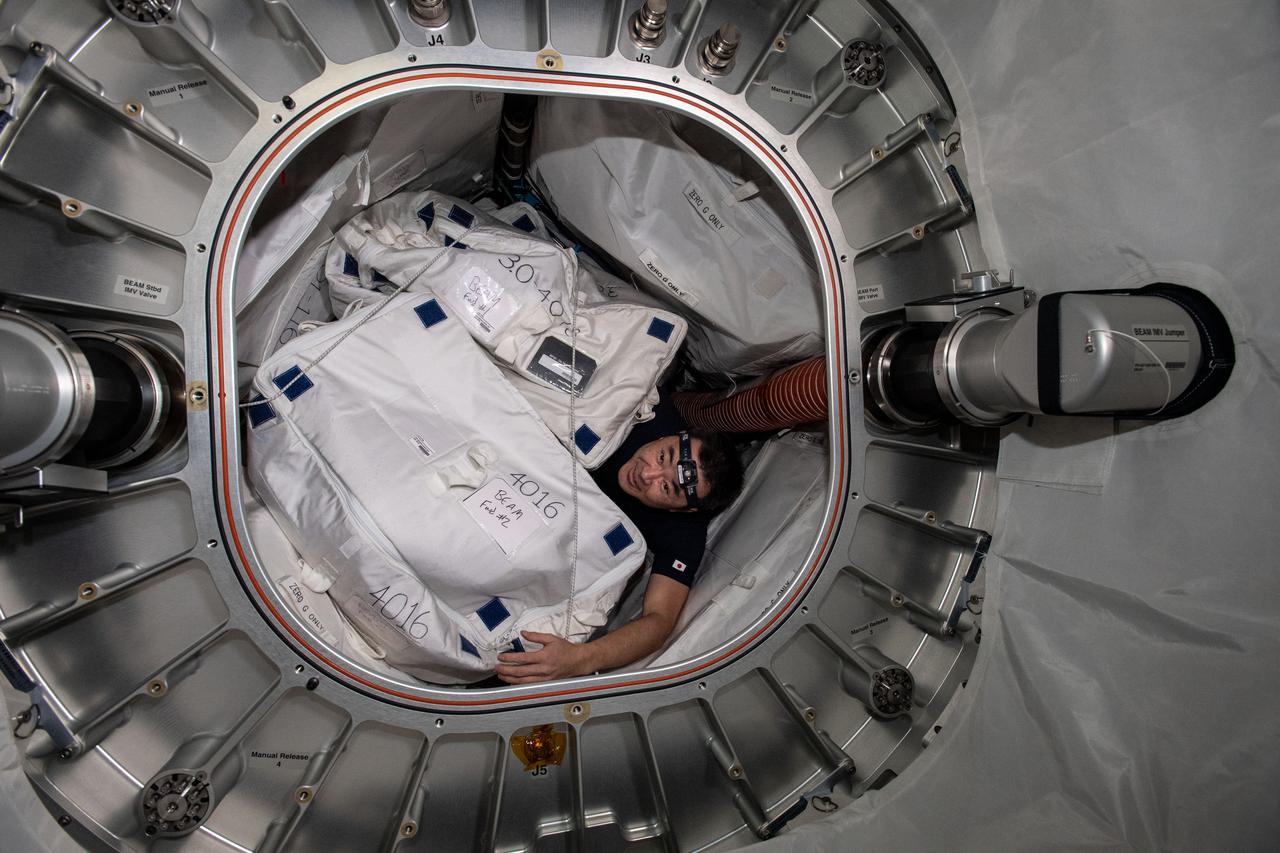
iss065e385759 (Sept. 17, 2021) --- Expedition 65 Commander Akihiko Hoshide of the Japan Aerospace Exploration Agency (JAXA) gathers hardware from inside BEAM, the Bigelow Expandable Activity Module, for transferring into the SpaceX Cargo Dragon and return to Earth.
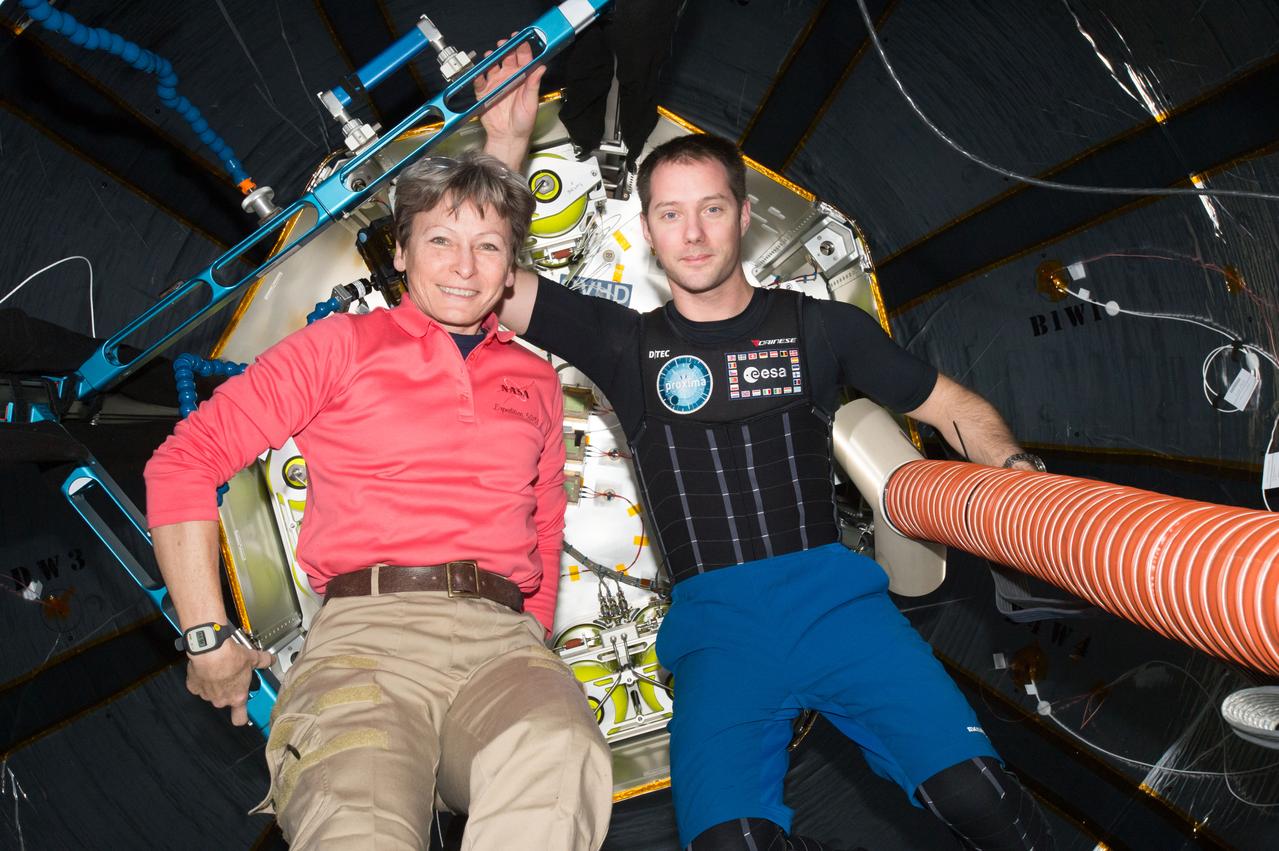
iss050e037906 (02/02/2017) --- NASA astronaut Peggy Whitson (left) and ESA (European Space Agency) astronaut Thomas Pesquet are photographed inside the Bigelow Expandable Activity Module, or BEAM. BEAM is an experimental expandable module attached to the station. Expandable habitats could greatly decrease the amount of transport volume for future space missions. These “expandables” weigh less and take up less room than traditional rigid metal habitats on a rocket while allowing additional space for living and working. They also provide protection from solar and cosmic radiation, space debris, and other contaminants. Crews traveling to the moon, Mars, asteroids, or other destinations could potentially use them as habitable structures.
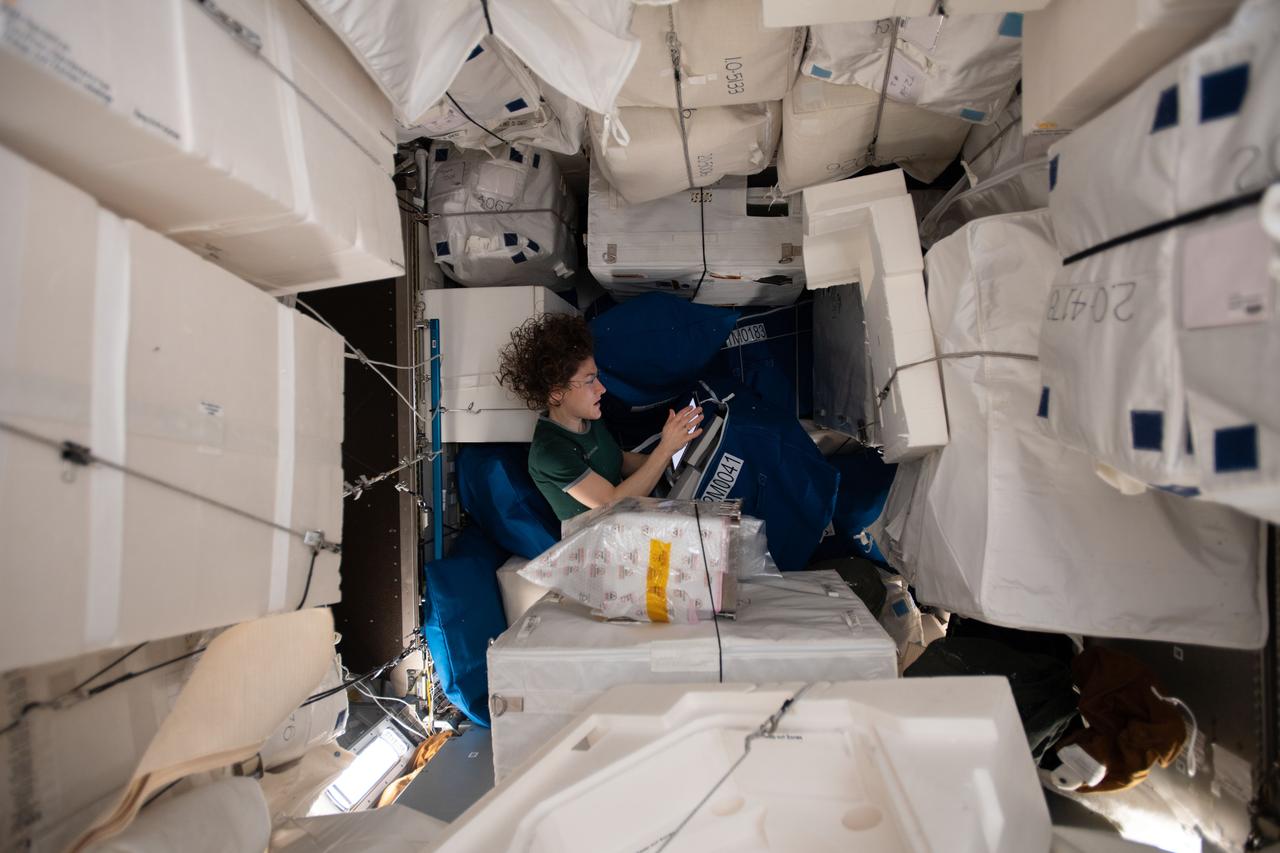
iss059e025106 (April 18, 2019) --- NASA astronaut Christina Koch relocates and organizes International Space Station hardware inside the Leonardo Permanent Multipurpose Module (PMM) from ESA (European Space Agency). The PMM is attached to the forward-facing facing portion of the Tranquility module. Directly opposite of the PMM on Tranquility is the Bigelow Expandable Activity Module (BEAM).

iss065e004417 (April 25, 2021) --- The International Space Station's newest component is the NanoRacks Bishop Airlock (center left) attached to the end of the Tranquility module. Bishop will enable more commercial research, satellite deployments, and cargo operations outside in the vacuum of space. Located on the other side of Bishop on Tranquility is BEAM, or the Bigelow Expandable Activity Module, which is a cargo stowage module outfitted with sensors continuously monitoring its environment.
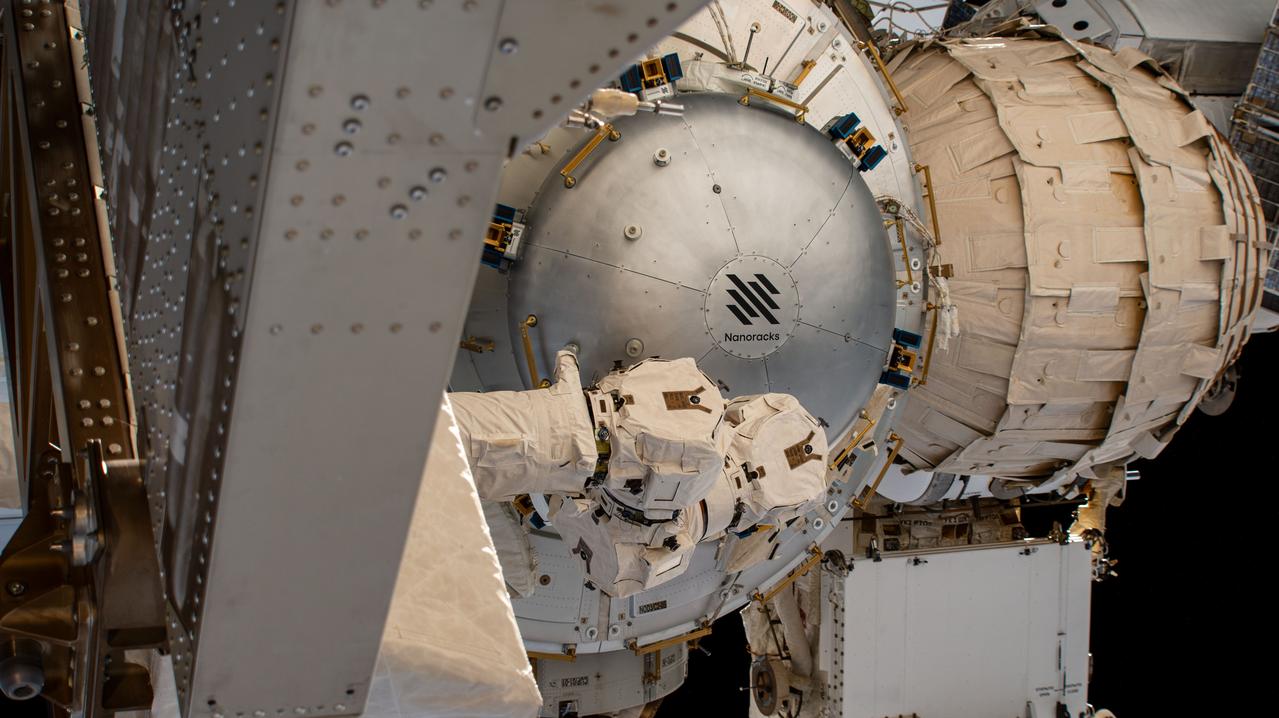
iss064e013203 (Dec. 20, 2020) --- The NanoRacks Bishop airlock is pictured after its was installed to the port side of the Tranquility module and still attached to the Canadarm2 robotic arm. Adjacent to Bishop on the aft side of Tranquility is BEAM, the Bigelow Expandable Activity Module. Bishop increases the station’s capacity for private and public research and also enables the release of larger satellites and the transfer of cargo inside and outside the station.
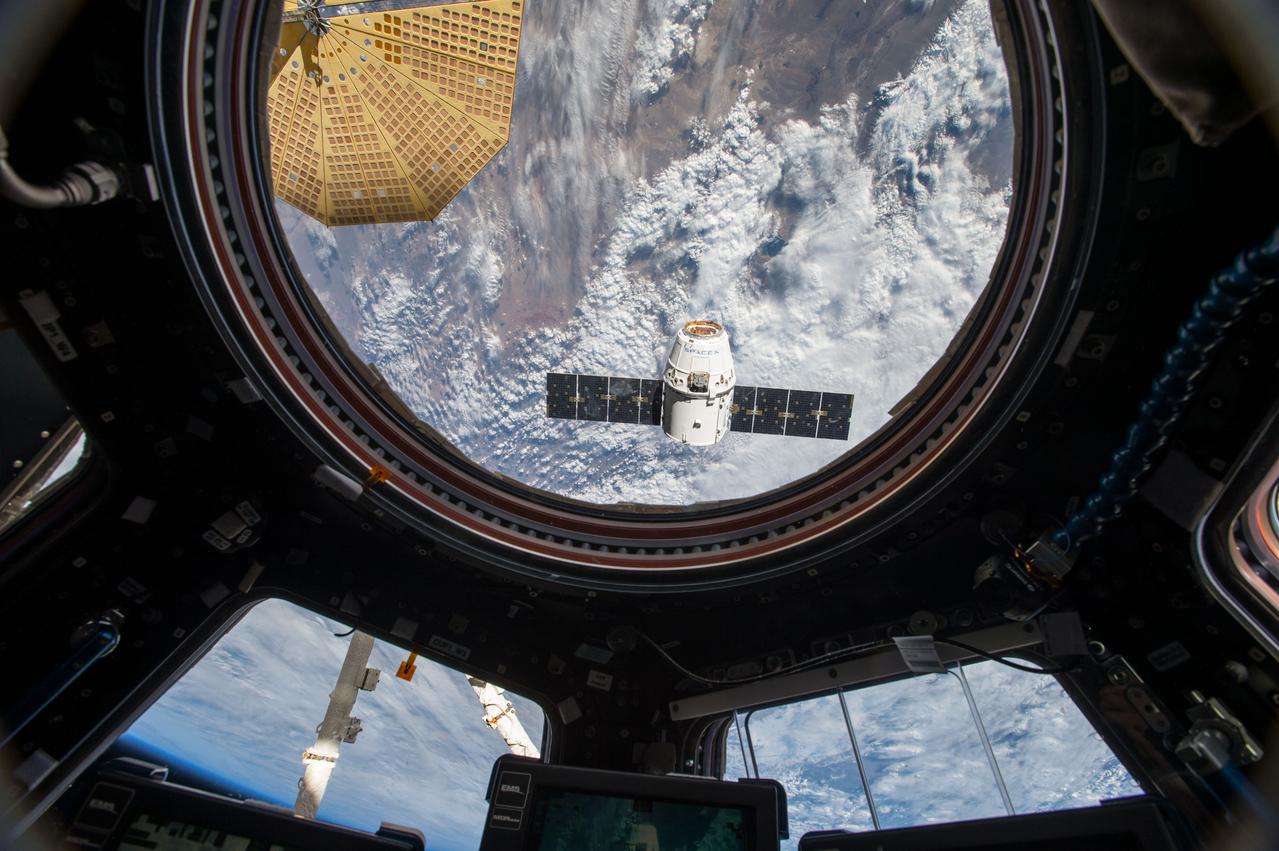
ISS047e050792 (04/10/2016) --- The SpaceX Dragon cargo craft approaches to be grappled by the International Space Station Expedition 47 crew. This view is from the Cupola where the primary controls of the Canadarm 2 are located. Crewmembers use the robotic arm to grapple the spaceship before berthing it to the Earth-facing port on the Harmony module. The spacecraft delivered about 7,000 pounds of science and research investigations, including the Bigelow Expandable Activity Module, known as BEAM.
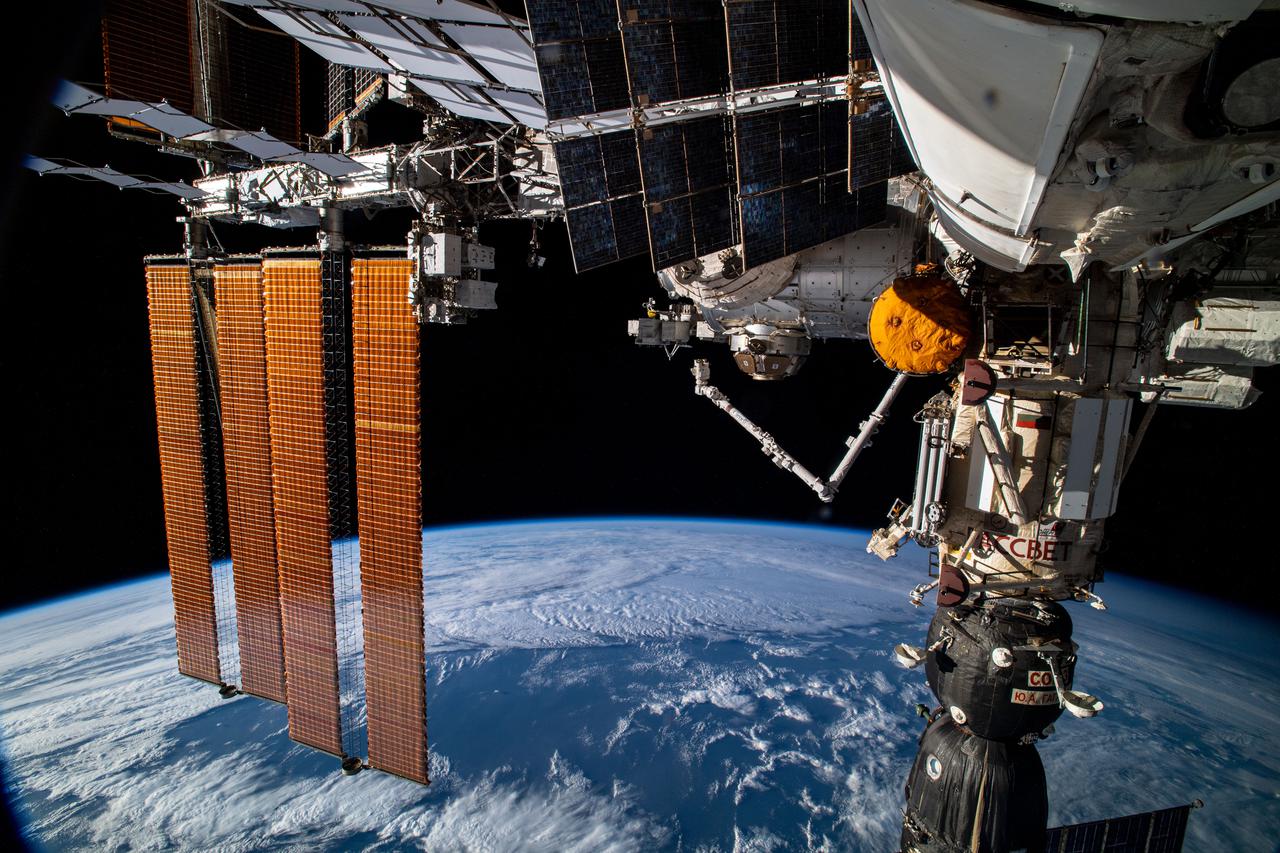
iss065e162364 (July 8, 2021) --- Looking from back to front, the International Space Station's Russian segment is pictured leading to the U.S. segment while orbiting 273 miles above the south Atlantic Ocean. At top right, is the Zarya module with the Rassvet module and the docked Soyuz MS-18 crew ship. The Canadarm2 robotic arm is seen next to the Tranquility module to which the cupola and BEAM, the Bigelow Expandable Activity Module, are attached. Two pairs of the station's main solar arrays are also seen descending from the orbiting lab's port side truss structure.
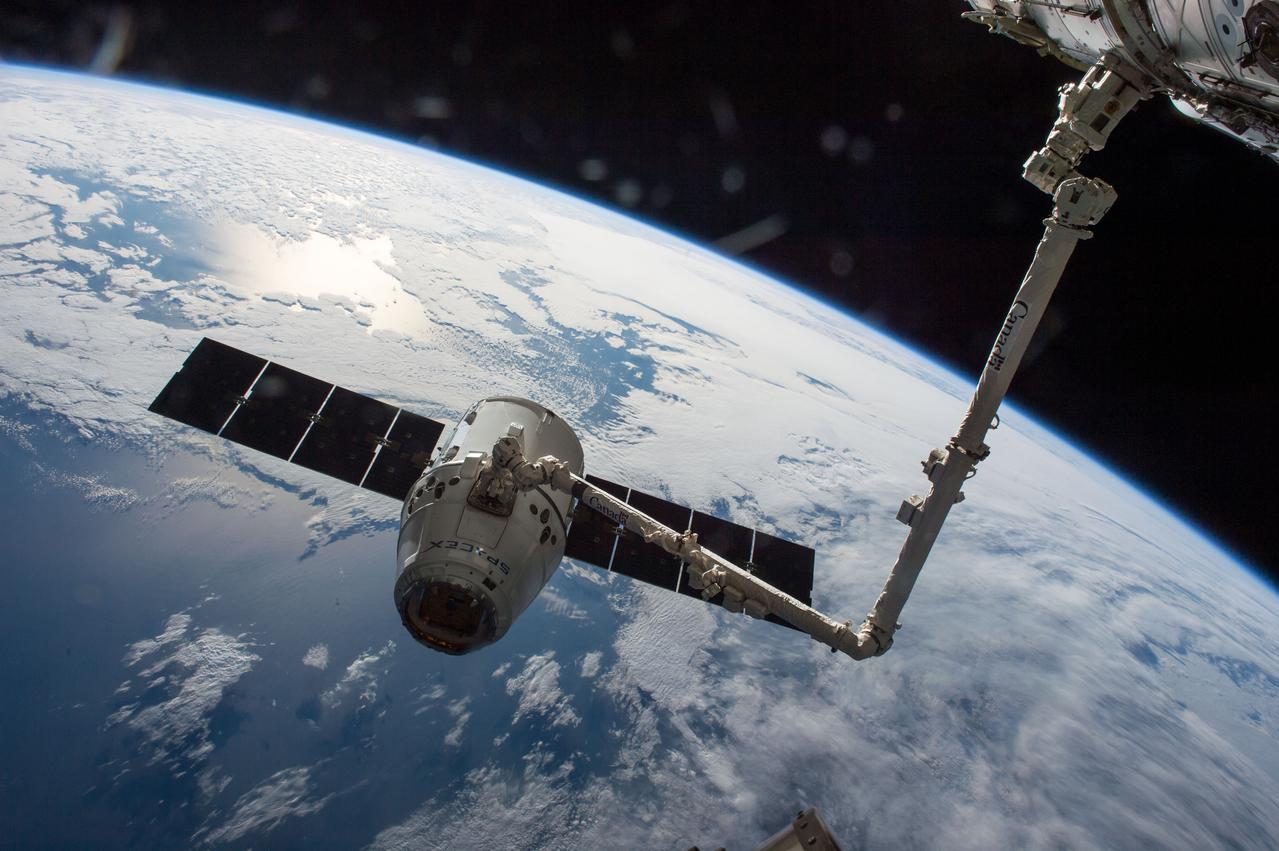
iss047e050978 (4/10/2016) --- The SpaceX Dragon cargo spaceship is grappled by the International Space Station’s Canadarm2. The spacecraft is delivering about 7,000 pounds of science and research investigations, including the Bigelow Expandable Activity Module, known as BEAM. Dragon’s arrival marked the first time two commercial cargo vehicles have been docked simultaneously at the space station. Orbital ATK’s Cygnus spacecraft arrived to the station just over two weeks ago. With the arrival of Dragon, the space station ties the record for most vehicles on station at one time – six.
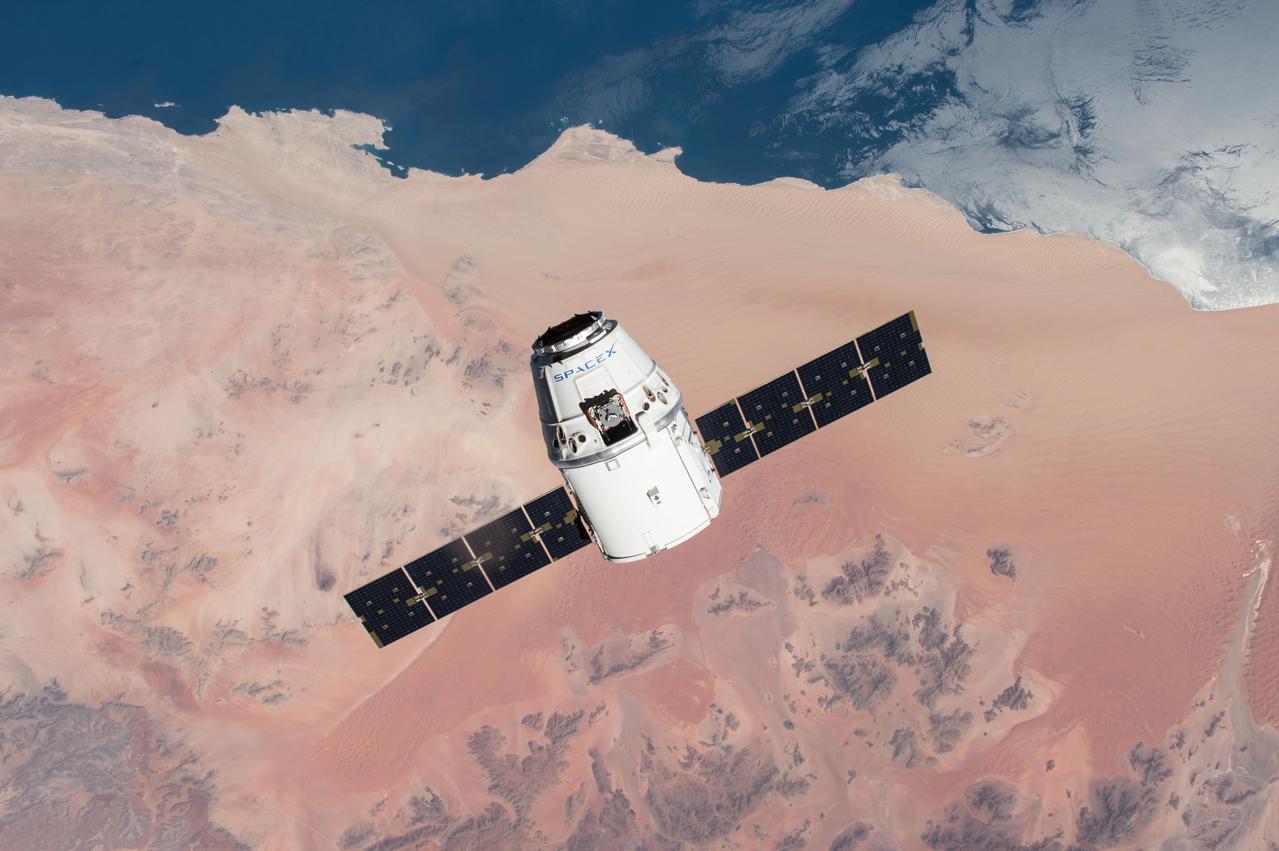
ISS047e052707 (04/10/2016) --- The SpaceX Dragon cargo spaceship begins the final approach to the International Space Station. The spacecraft is delivering about 7,000 pounds of science and research investigations, including the Bigelow Expandable Activity Module, known as BEAM. Dragon’s arrival marked the first time two commercial cargo vehicles have been docked simultaneously at the space station. Orbital ATK’s Cygnus spacecraft arrived to the station just over two weeks ago. With the arrival of Dragon, the space station ties the record for most vehicles on station at one time – six.
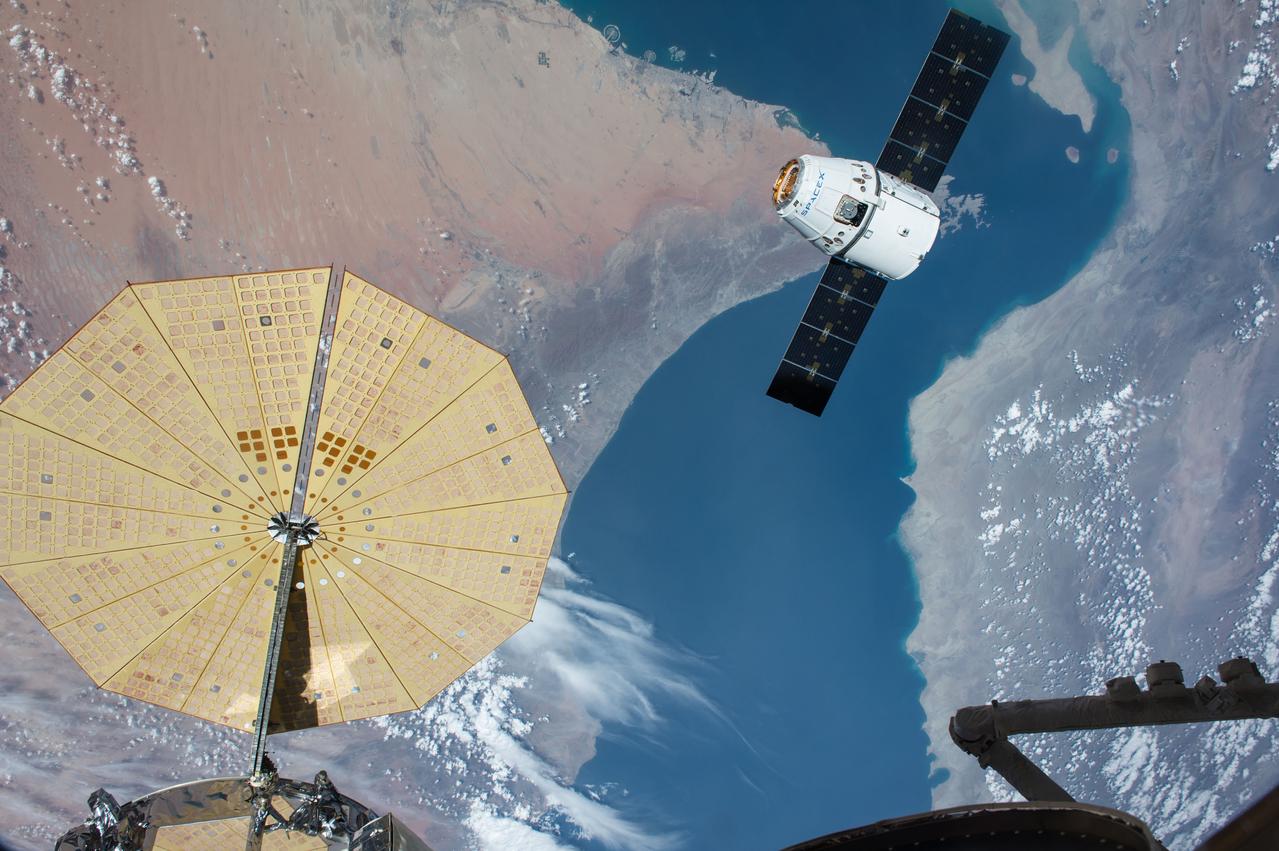
iss047e050943 (4/10/2016) --- The SpaceX Dragon cargo spaceship begins the final approach to the International Space Station. On the left, the solar arrays of Orbital ATK’s Cygnus cargo craft can be seen. Dragon’s arrival marked the first time two commercial cargo vehicles have been docked simultaneously at the space station. Orbital ATK’s Cygnus spacecraft arrived to the station just over two weeks ago. With the arrival of Dragon, the space station ties the record for most vehicles on station at one time – six. The spacecraft is delivering about 7,000 pounds of science and research investigations, including the Bigelow Expandable Activity Module, known as BEAM.