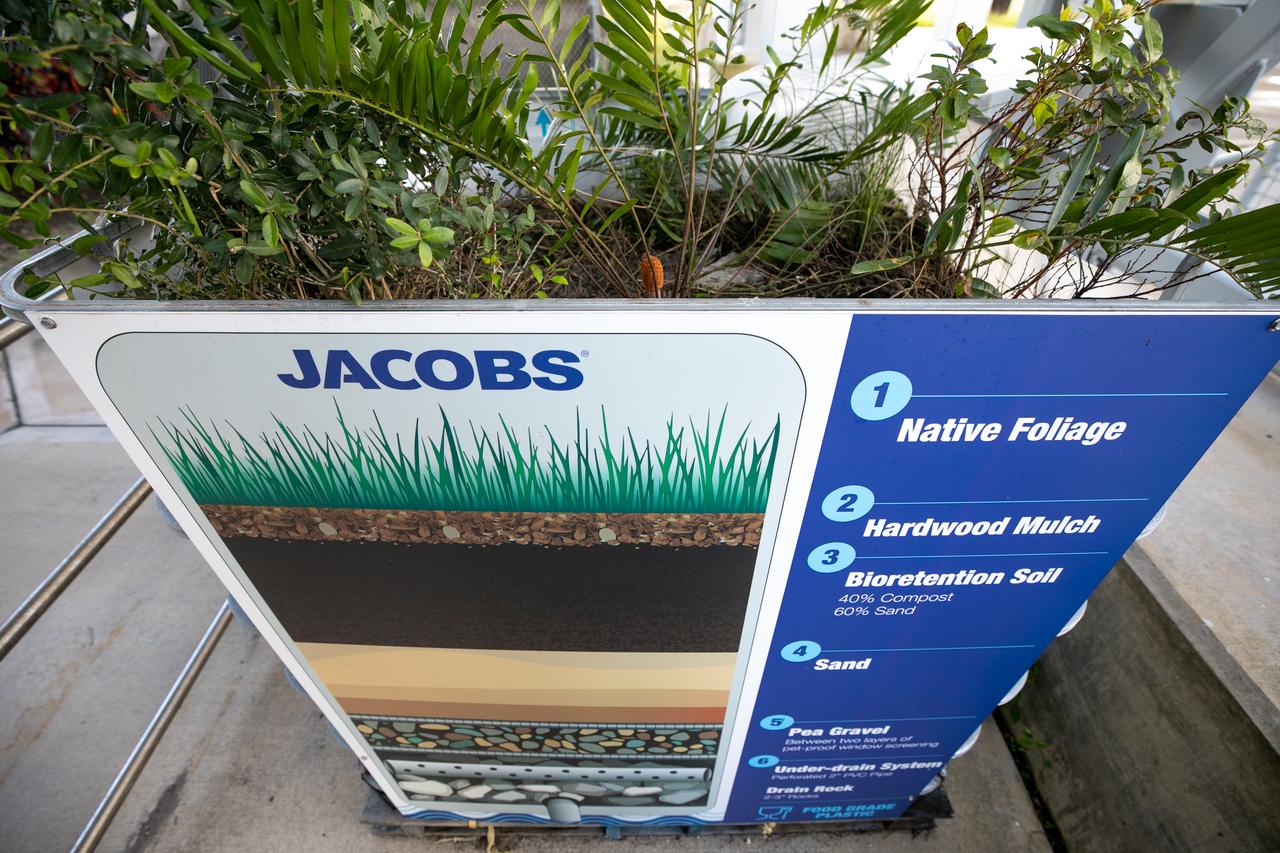
NASA Kennedy Space Center’s unrivaled dedication to the environment is highlighted through a variety of environmental programs and projects. Through a partnership with Jacobs Technology, Inc., teams have constructed a bio-filter – made of layered rock, soil, and native plants – as an eco-friendly way to filter zinc out of rainwater runoff. Photographed on Sept. 29, 2020, at the Florida spaceport’s Launch Complex 39 observation tower, the bio-filter catches water that runs off of this location’s galvanized roof, which contains a coating of zinc to help protect the metal from rust or corrosion. The plants in the bio-filter bind to the zinc so that when the water comes out of the bottom, it’s clean and safe to go into the Indian River Lagoon – its waterline located about 20 to 30 feet away.
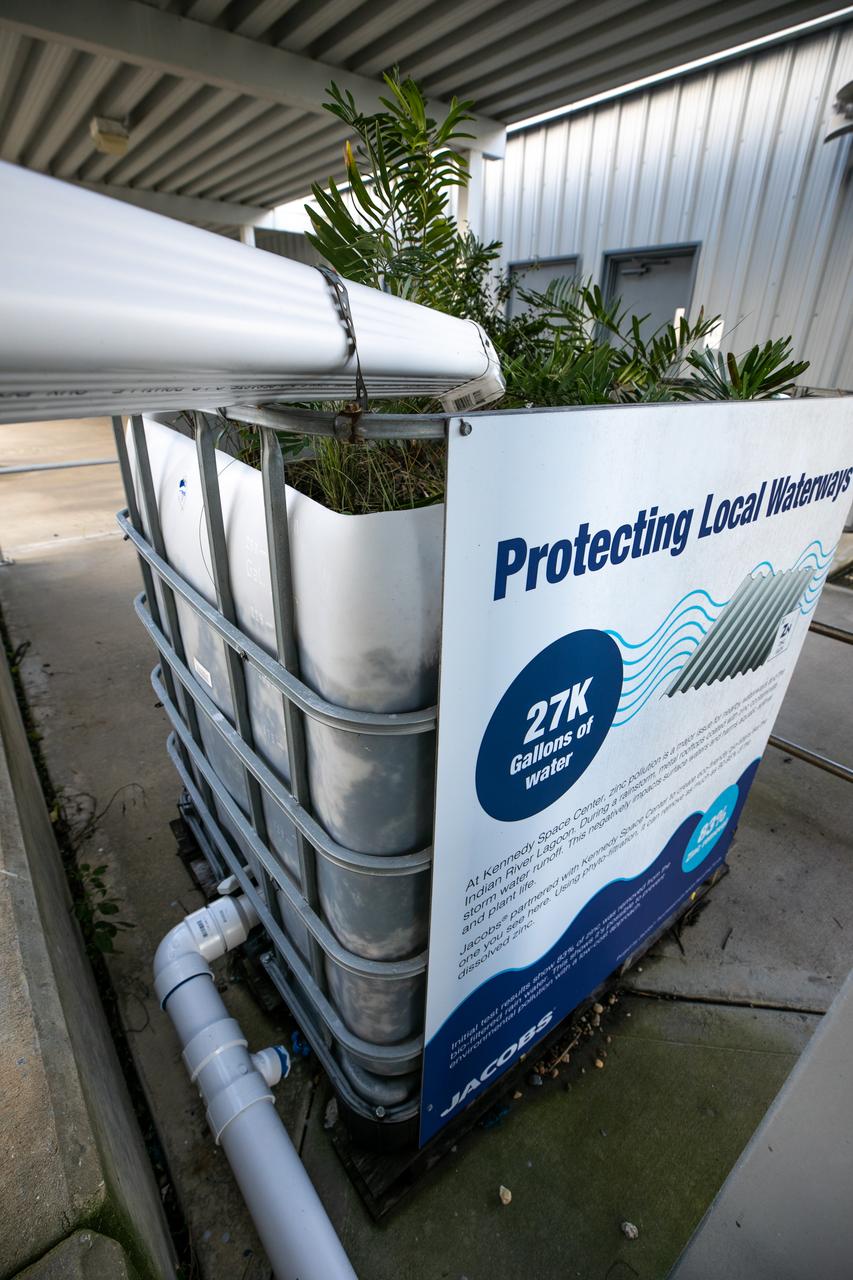
NASA Kennedy Space Center’s unrivaled dedication to the environment is highlighted through a variety of environmental programs and projects. Through a partnership with Jacobs Technology, Inc., teams have constructed a bio-filter – made of layered rock, soil, and native plants – as an eco-friendly way to filter zinc out of rainwater runoff. Photographed on Sept. 29, 2020, at the Florida spaceport’s Launch Complex 39 observation tower, the bio-filter catches water that runs off of this location’s galvanized roof, which contains a coating of zinc to help protect the metal from rust or corrosion. The plants in the bio-filter bind to the zinc so that when the water comes out of the bottom, it’s clean and safe to go into the Indian River Lagoon – its waterline located about 20 to 30 feet away.
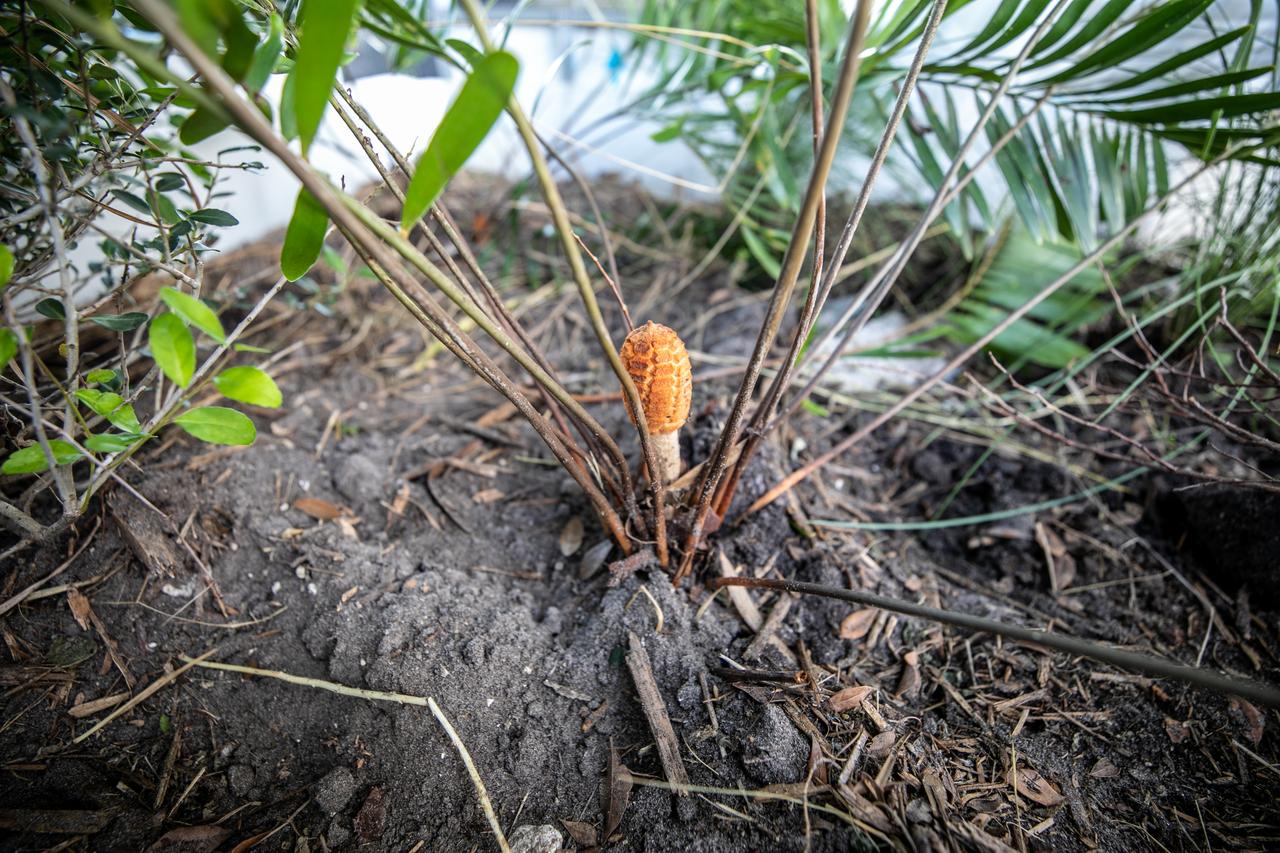
NASA Kennedy Space Center’s unrivaled dedication to the environment is highlighted through a variety of environmental programs and projects. An up-close view of the plants that make up a bio-filter constructed by teams with Kennedy and Jacobs Technology, Inc. is shown on Sept. 29, 2020. The bio-filter – made of layered rock, soil, and native plants – is used to catch and filter zinc out of rainwater that runs off of the roof at the Florida spaceport’s Launch Complex 39 observation tower. Many facilities at Kennedy have galvanized roofs, which contain a coating of zinc to help protect the metal from rust or corrosion but can have serious effects on fish and other aquatic life if it runs into the Indian River Lagoon. The plants in the bio-filter bind to the zinc so that when the water comes out of the bottom, it’s clean and safe to go into the lagoon – its waterline located about 20 to 30 feet away.
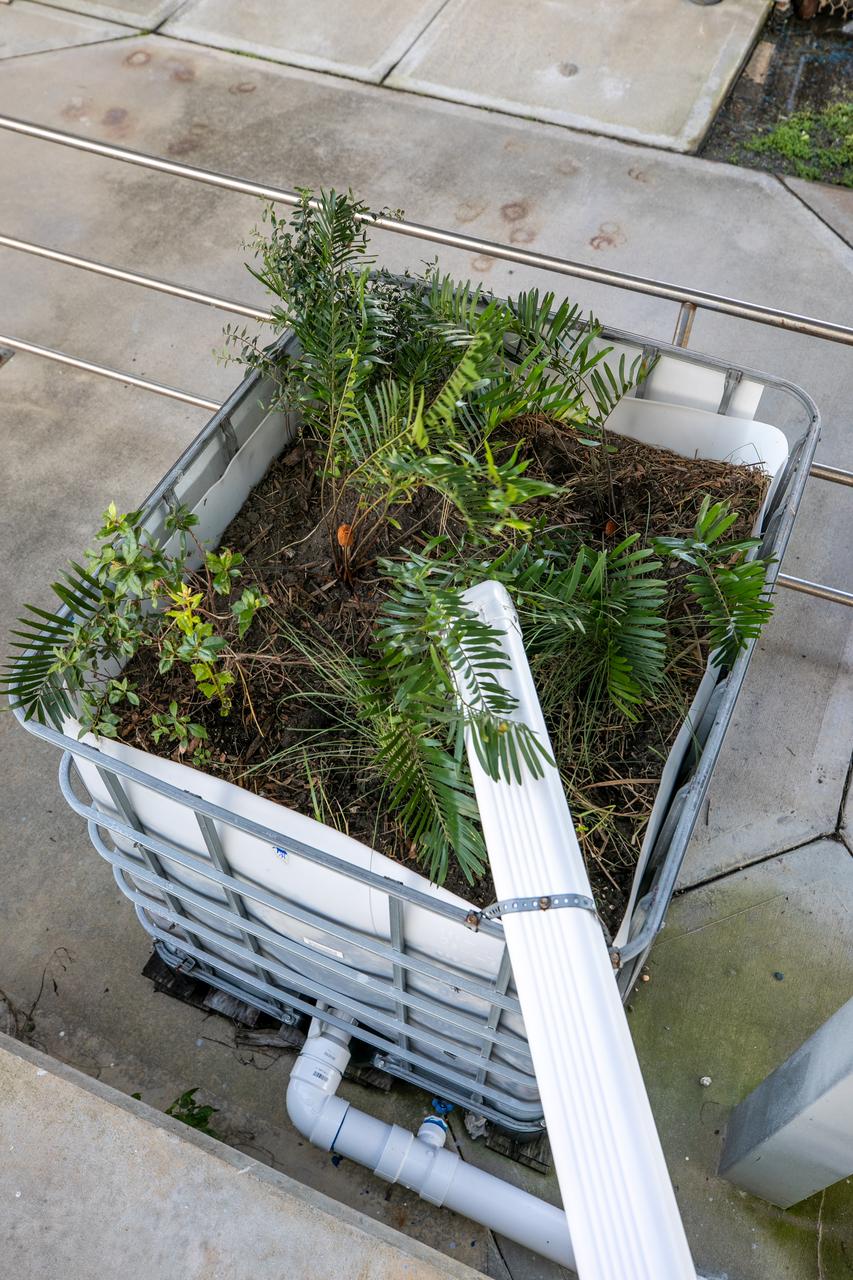
NASA Kennedy Space Center’s unrivaled dedication to the environment is highlighted through a variety of environmental programs and projects. Through a partnership with Jacobs Technology, Inc., teams have constructed a bio-filter – made of layered rock, soil, and native plants – as an eco-friendly way to filter zinc out of rainwater runoff. Photographed on Sept. 29, 2020, at the Florida spaceport’s Launch Complex 39 observation tower, the bio-filter catches water that runs off of this location’s galvanized roof, which contains a coating of zinc to help protect the metal from rust or corrosion. The plants in the bio-filter bind to the zinc so that when the water comes out of the bottom, it’s clean and safe to go into the Indian River Lagoon – its waterline located about 20 to 30 feet away.
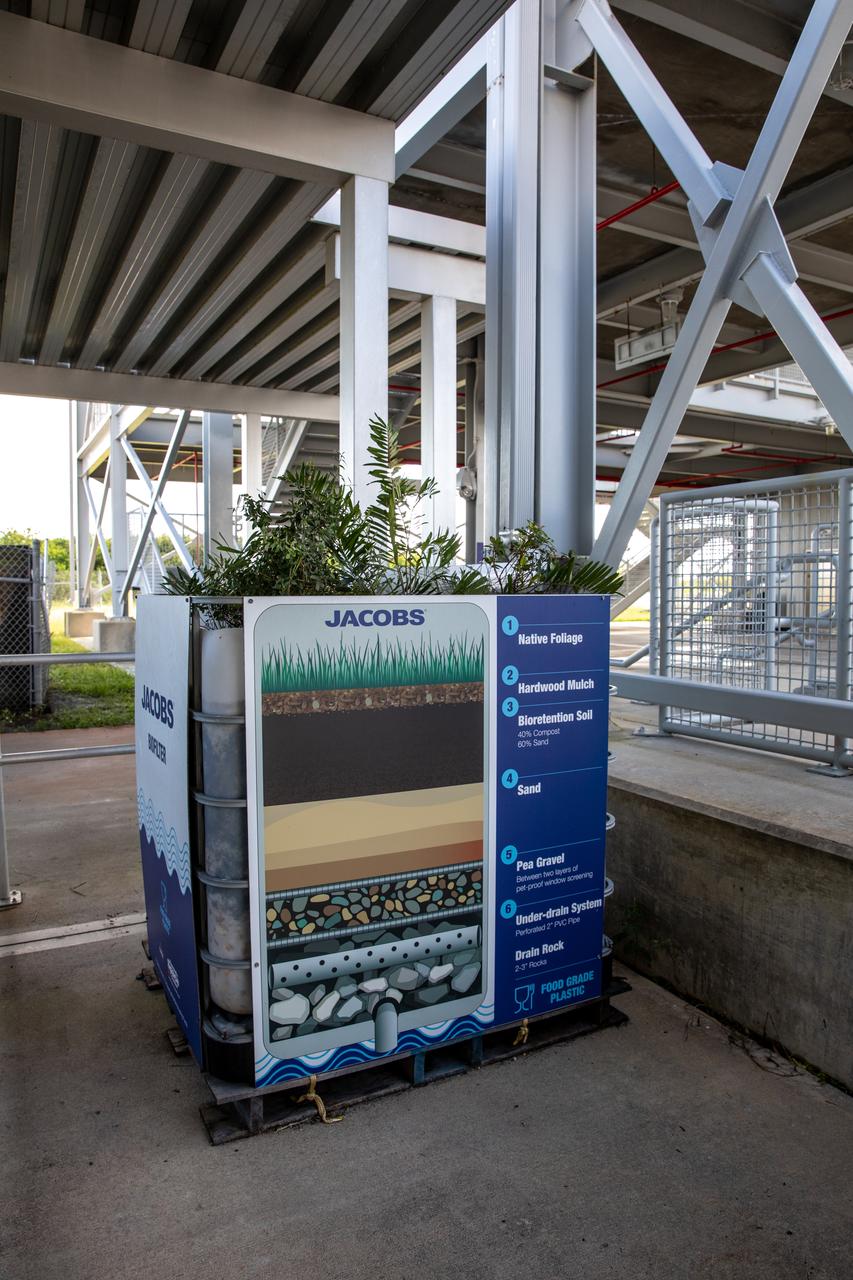
NASA Kennedy Space Center’s unrivaled dedication to the environment is highlighted through a variety of environmental programs and projects. Through a partnership with Jacobs Technology, Inc., teams have constructed a bio-filter – made of layered rock, soil, and native plants – as an eco-friendly way to filter zinc out of rainwater runoff. Photographed on Sept. 29, 2020, at the Florida spaceport’s Launch Complex 39 observation tower, the bio-filter catches water that runs off of this location’s galvanized roof, which contains a coating of zinc to help protect the metal from rust or corrosion. The plants in the bio-filter bind to the zinc so that when the water comes out of the bottom, it’s clean and safe to go into the Indian River Lagoon – its waterline located about 20 to 30 feet away.

NASA Kennedy Space Center’s unrivaled dedication to the environment is highlighted through a variety of environmental programs and projects. Through a partnership with Jacobs Technology, Inc., teams have constructed a bio-filter – made of layered rock, soil, and native plants – as an eco-friendly way to filter zinc out of rainwater runoff. Photographed on Sept. 29, 2020, at the Florida spaceport’s Launch Complex 39 observation tower, the bio-filter catches water that runs off of this location’s galvanized roof, which contains a coating of zinc to help protect the metal from rust or corrosion. The plants in the bio-filter bind to the zinc so that when the water comes out of the bottom, it’s clean and safe to go into the Indian River Lagoon – its waterline located about 20 to 30 feet away.
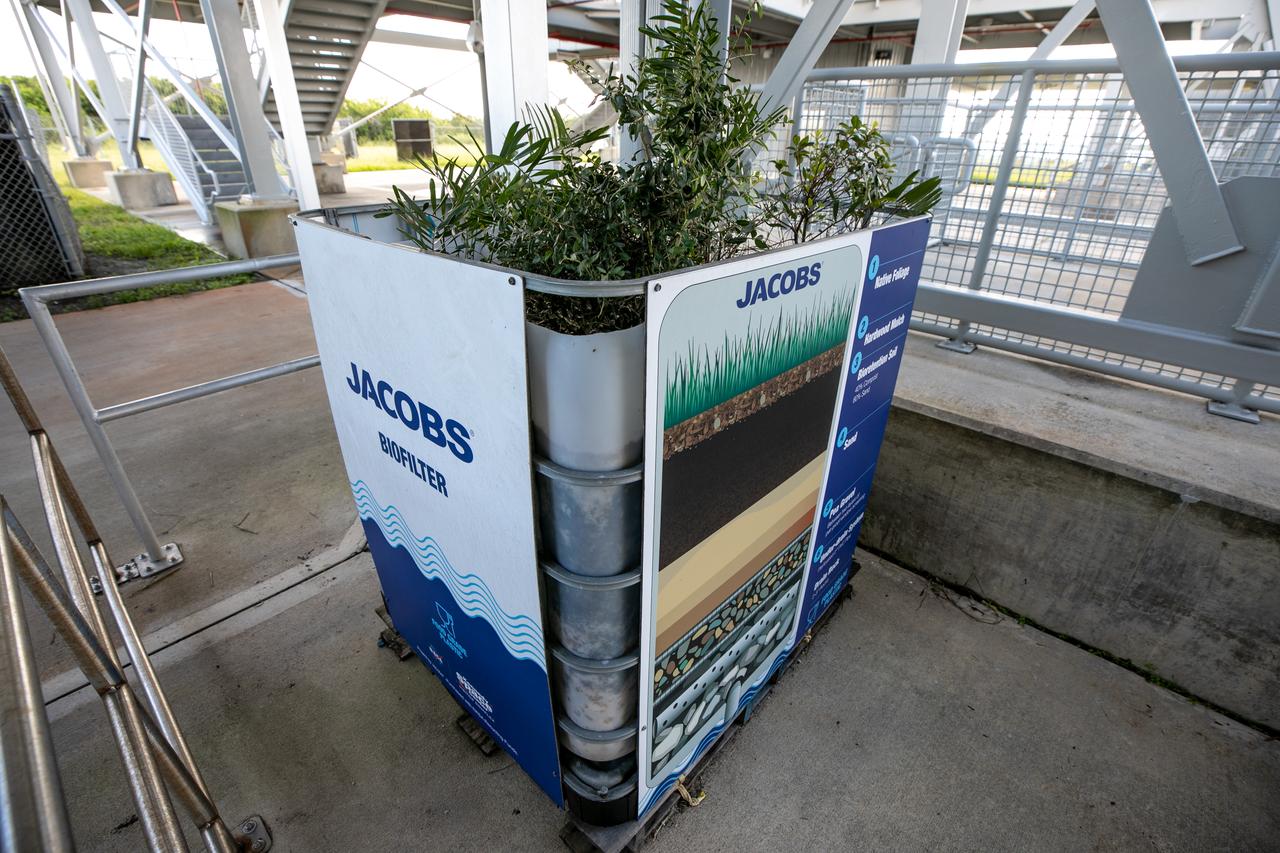
NASA Kennedy Space Center’s unrivaled dedication to the environment is highlighted through a variety of environmental programs and projects. Through a partnership with Jacobs Technology, Inc., teams have constructed a bio-filter – made of layered rock, soil, and native plants – as an eco-friendly way to filter zinc out of rainwater runoff. Photographed on Sept. 29, 2020, at the Florida spaceport’s Launch Complex 39 observation tower, the bio-filter catches water that runs off of this location’s galvanized roof, which contains a coating of zinc to help protect the metal from rust or corrosion. The plants in the bio-filter bind to the zinc so that when the water comes out of the bottom, it’s clean and safe to go into the Indian River Lagoon – its waterline located about 20 to 30 feet away.
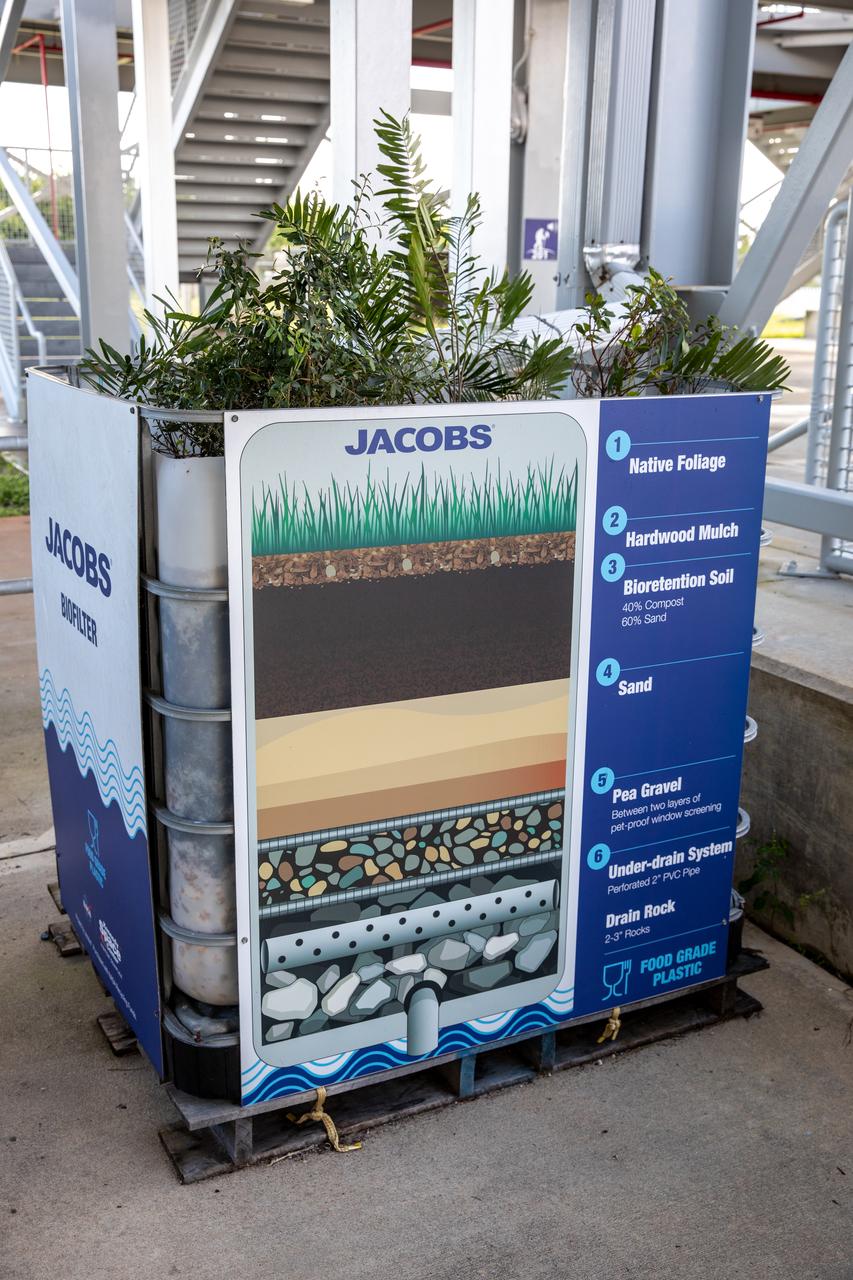
NASA Kennedy Space Center’s unrivaled dedication to the environment is highlighted through a variety of environmental programs and projects. Through a partnership with Jacobs Technology, Inc., teams have constructed a bio-filter – made of layered rock, soil, and native plants – as an eco-friendly way to filter zinc out of rainwater runoff. Photographed on Sept. 29, 2020, at the Florida spaceport’s Launch Complex 39 observation tower, the bio-filter catches water that runs off of this location’s galvanized roof, which contains a coating of zinc to help protect the metal from rust or corrosion. The plants in the bio-filter bind to the zinc so that when the water comes out of the bottom, it’s clean and safe to go into the Indian River Lagoon – its waterline located about 20 to 30 feet away.
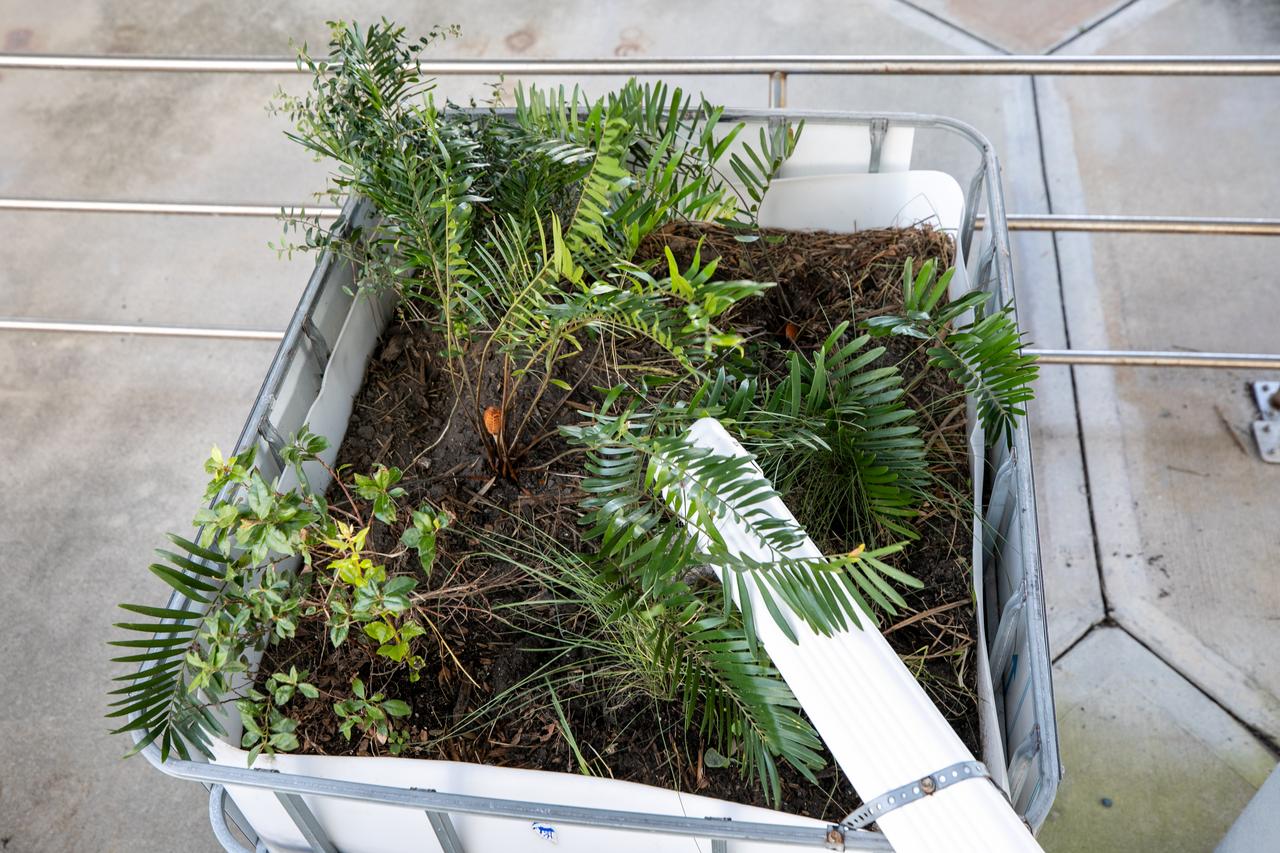
NASA Kennedy Space Center’s unrivaled dedication to the environment is highlighted through a variety of environmental programs and projects. Through a partnership with Jacobs Technology, Inc., teams have constructed a bio-filter – made of layered rock, soil, and native plants – as an eco-friendly way to filter zinc out of rainwater runoff. Photographed on Sept. 29, 2020, at the Florida spaceport’s Launch Complex 39 observation tower, the bio-filter catches water that runs off of this location’s galvanized roof, which contains a coating of zinc to help protect the metal from rust or corrosion. The plants in the bio-filter bind to the zinc so that when the water comes out of the bottom, it’s clean and safe to go into the Indian River Lagoon – its waterline located about 20 to 30 feet away.
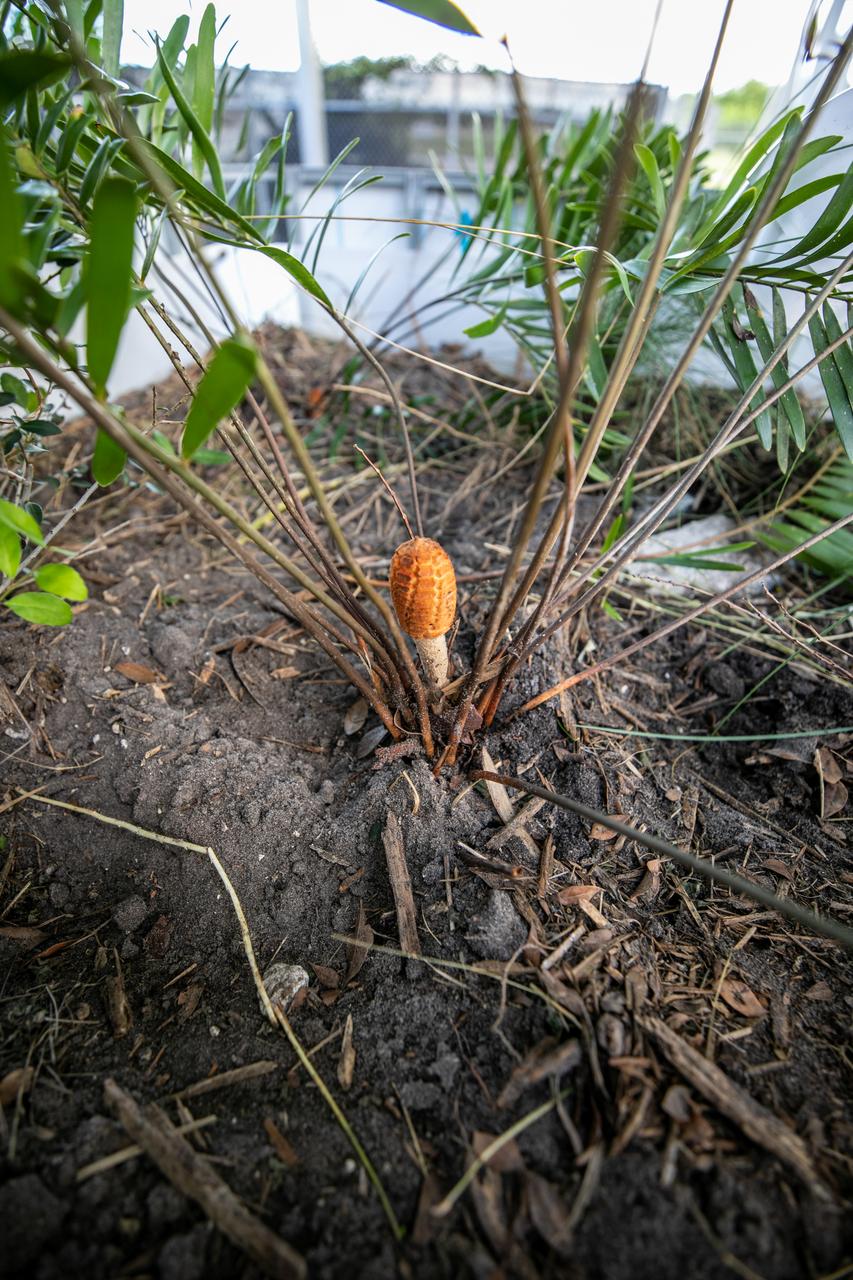
NASA Kennedy Space Center’s unrivaled dedication to the environment is highlighted through a variety of environmental programs and projects. An up-close view of the plants that make up a bio-filter constructed by teams with Kennedy and Jacobs Technology, Inc. is shown on Sept. 29, 2020. The bio-filter – made of layered rock, soil, and native plants – is used to catch and filter zinc out of rainwater that runs off of the roof at the Florida spaceport’s Launch Complex 39 observation tower. Many facilities at Kennedy have galvanized roofs, which contain a coating of zinc to help protect the metal from rust or corrosion but can have serious effects on fish and other aquatic life if it runs into the Indian River Lagoon. The plants in the bio-filter bind to the zinc so that when the water comes out of the bottom, it’s clean and safe to go into the lagoon – its waterline located about 20 to 30 feet away.