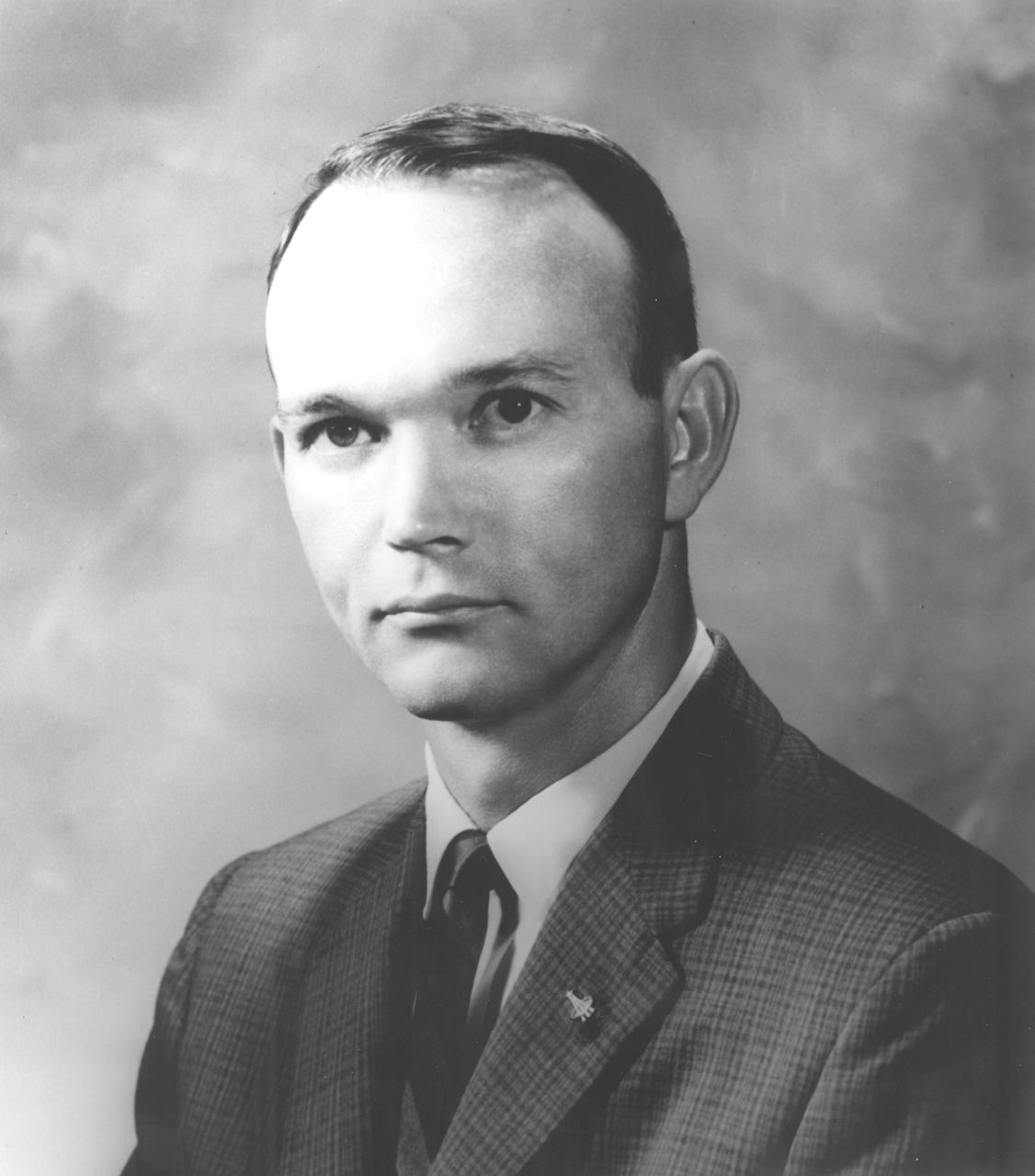
This is the official NASA portrait of astronaut Michael Collins. Collins chose an Air Force career following graduation from West Point. He served as an experimental flight test officer at the Air Force Flight Test Center, Edwards Air Force Base, California, and, in that capacity, tested performance and stability and control characteristics of Air Force aircraft, primarily jet fighters. Having logged approximately 5,000 hours flying time, Collins was one of the third group of astronauts named by NASA in October 1963. Collins completed two space flights, logging 266 hours in space, of which, 1 hour and 27 minutes was spent in Extra Vehicular Activity (EVA). On July 18, 1966, he served as backup pilot for the Gemini VII mission which included a successful rendezvous and docking with a separately launched Agena target vehicle and, using the power of the Agena, maneuvered the Gemini spacecraft into another orbit for a rendezvous with a second, passive Agena. His skillful performance in completing two periods of EVA included the recovery of a micrometeorite detection experiment from the passive Agena. July 16-24, 1969, Collins served as command module (CM) pilot on Apollo 11, the historic first lunar landing mission. He remained aboard the CM, Columbia, on station in lunar orbit and performed the final re-docking maneuvers following a successful lunar orbit rendezvous with the Lunar Module (LM), Eagle. Collins left NASA in January 1970.
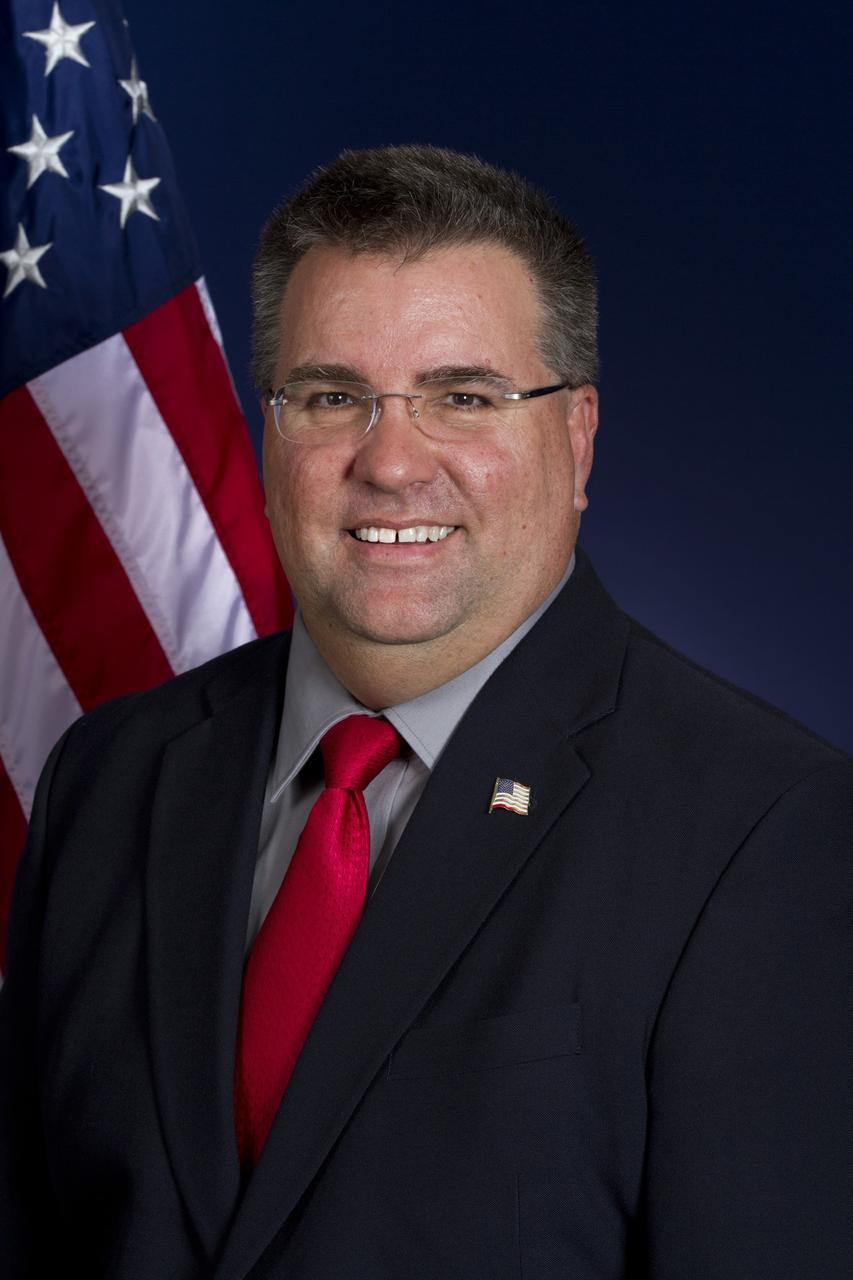
CAPE CANAVERAL, Fla. -- Commercial Crew Program manager Ed Mango. For more information, go to http://www.nasa.gov/centers/kennedy/about/biographies/mango.html. Photo credit: NASA/Kim Shiflett

CAPE CANAVERAL, Fla. -- Official portrait of Tracy Anania, director of Human Resources at NASA's Kennedy Space Center in Florida. To learn more about Anania, go to www.nasa.gov/centers/kennedy/about/biographies/anania.html. Photo credit: NASA/Kevin O'Connell
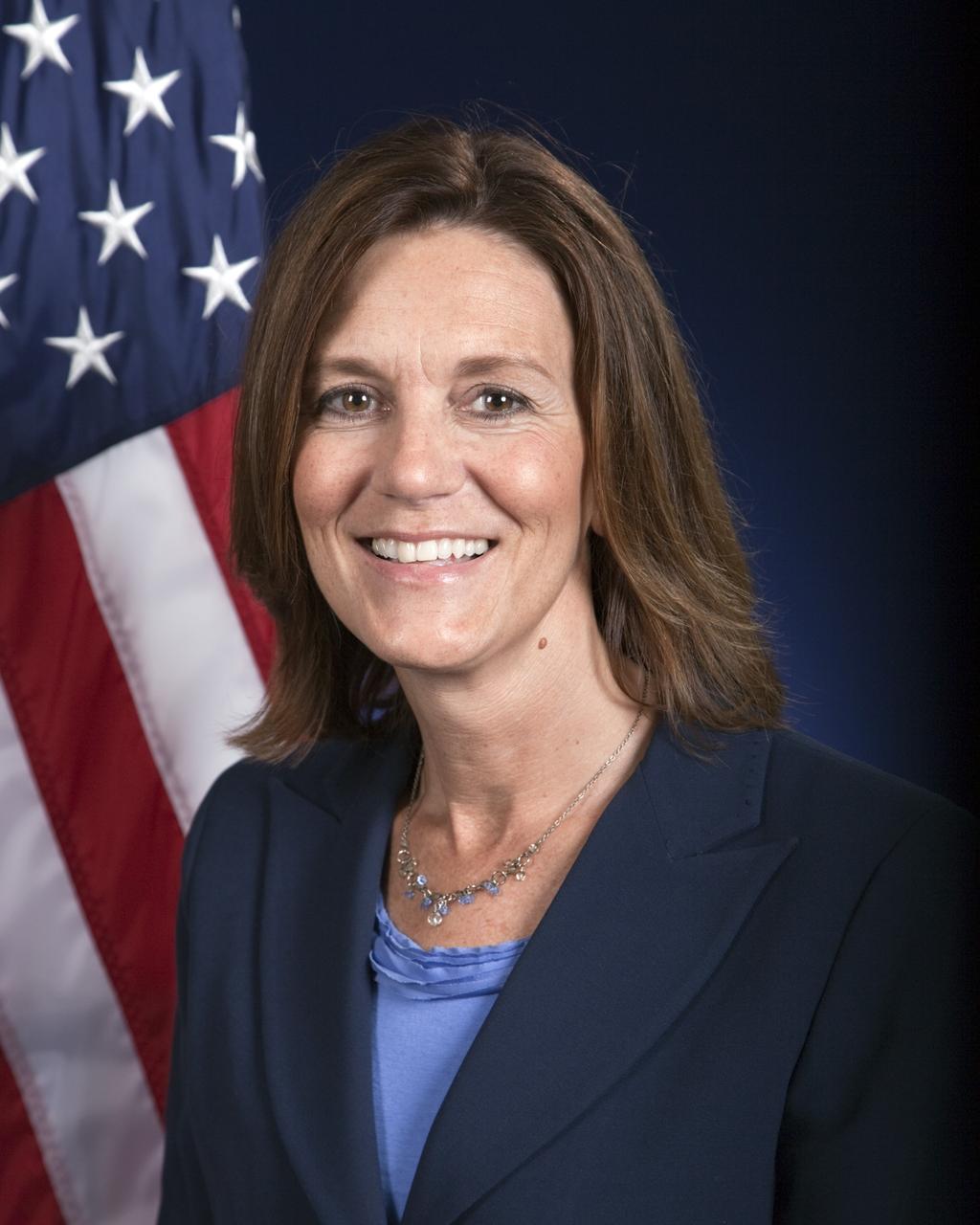
CAPE CANAVERAL, Fla. -- Official portrait of Lisa Colloredo, associate manager of NASA's Commercial Crew Program at the agency's Kennedy Space Center in Florida. To learn more about Colloredo, go to http://www.nasa.gov/centers/kennedy/about/biographies/colloredo-l.html. Photo credit: NASA
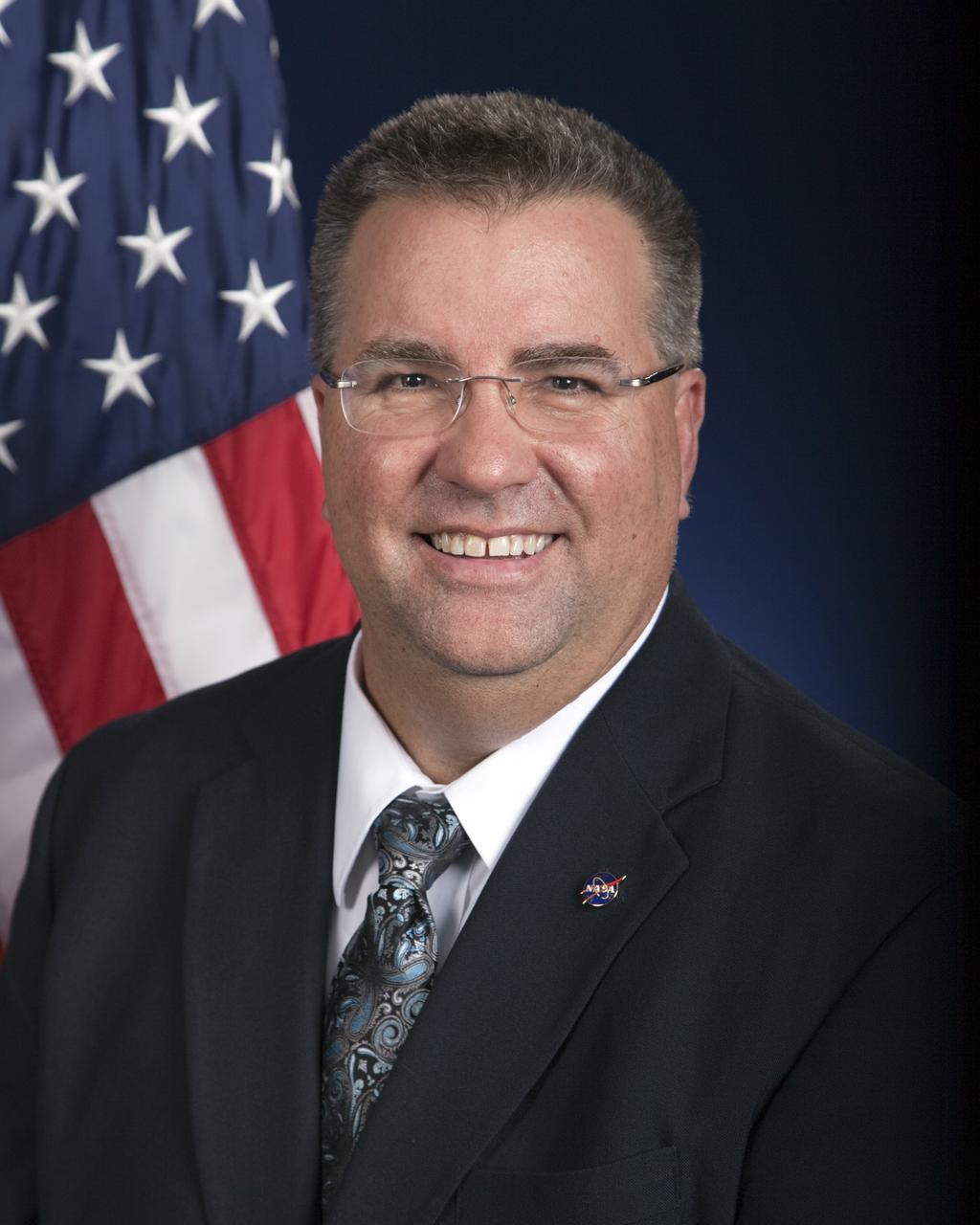
CAPE CANAVERAL, Fla. -- Official portrait of Ed Mango, manager of NASA's Commercial Crew Program at the agency's Kennedy Space Center in Florida. To learn more about Mango, go to http://www.nasa.gov/centers/kennedy/about/biographies/mango.html. Photo credit: NASA
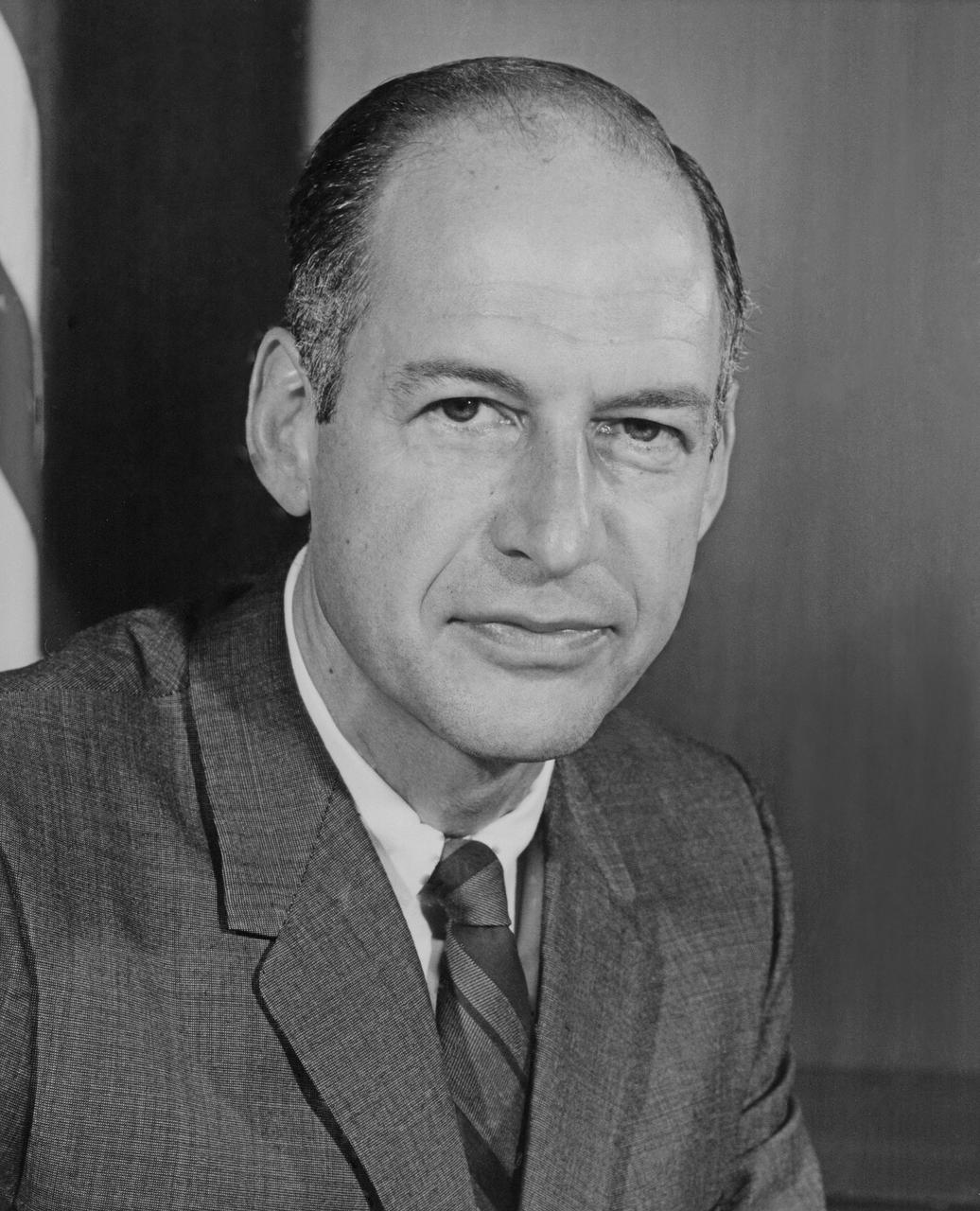
Portrait of George M. Low, he transferred to NASA headquarters in Washington, D.C., where he served as Chief of Manned Space Flight. In this capacity, he was closely involved in the planning of Projects Mercury, Gemini, and Apollo. NASA Biographies site.
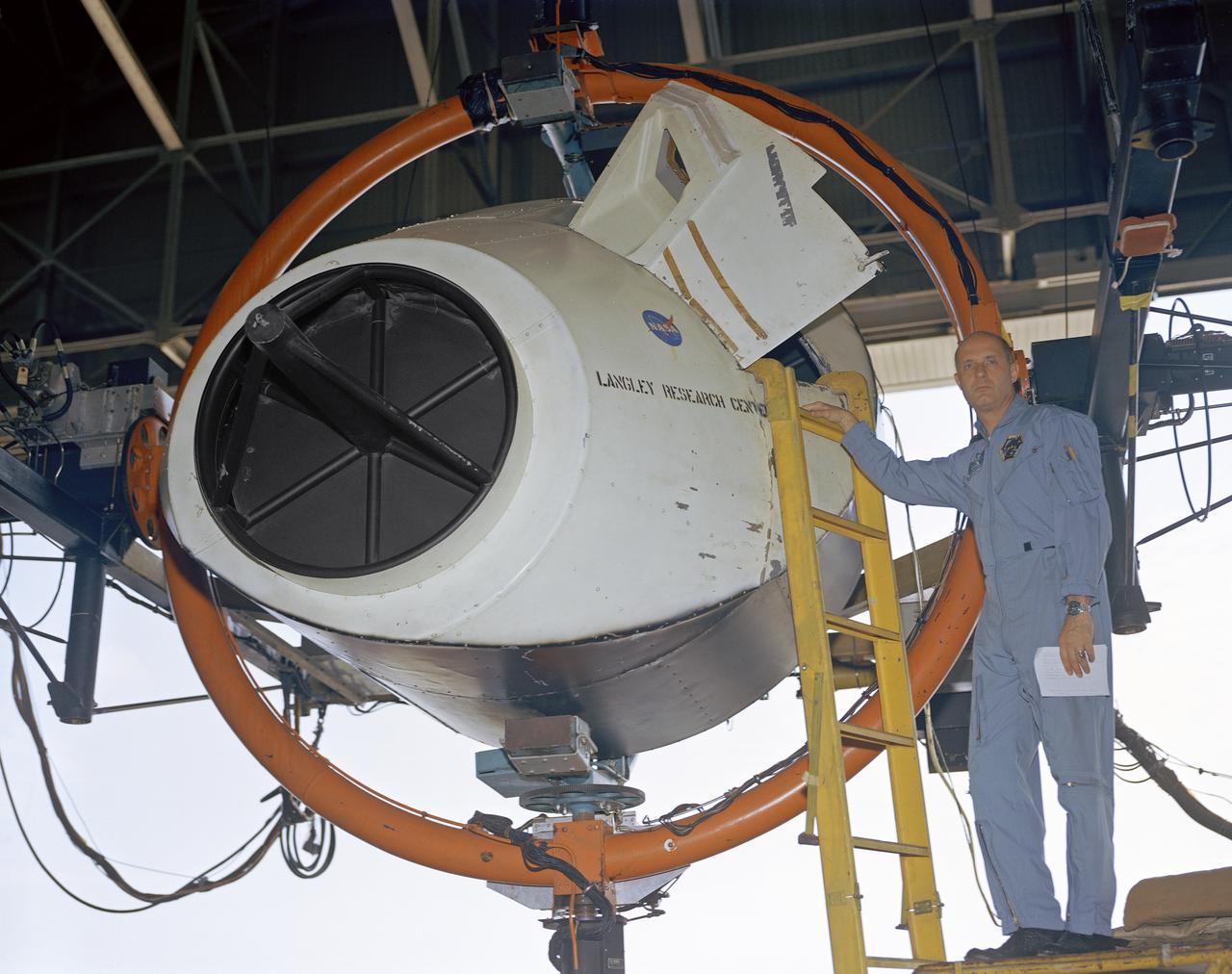
Stafford standing next to training simulator Note: 1968-L-08723 same image in black and white. General Stafford was commander of Apollo 10 in May 1969, first flight of the lunar module to the moon, he descended to nine miles above the moon performing the entire lunar landing mission except the actual landing. He performed the first rendezvous around the Moon, and designated the first lunar landing site. NASA.gov/https://www.nasa.gov/astronauts/biographies/former
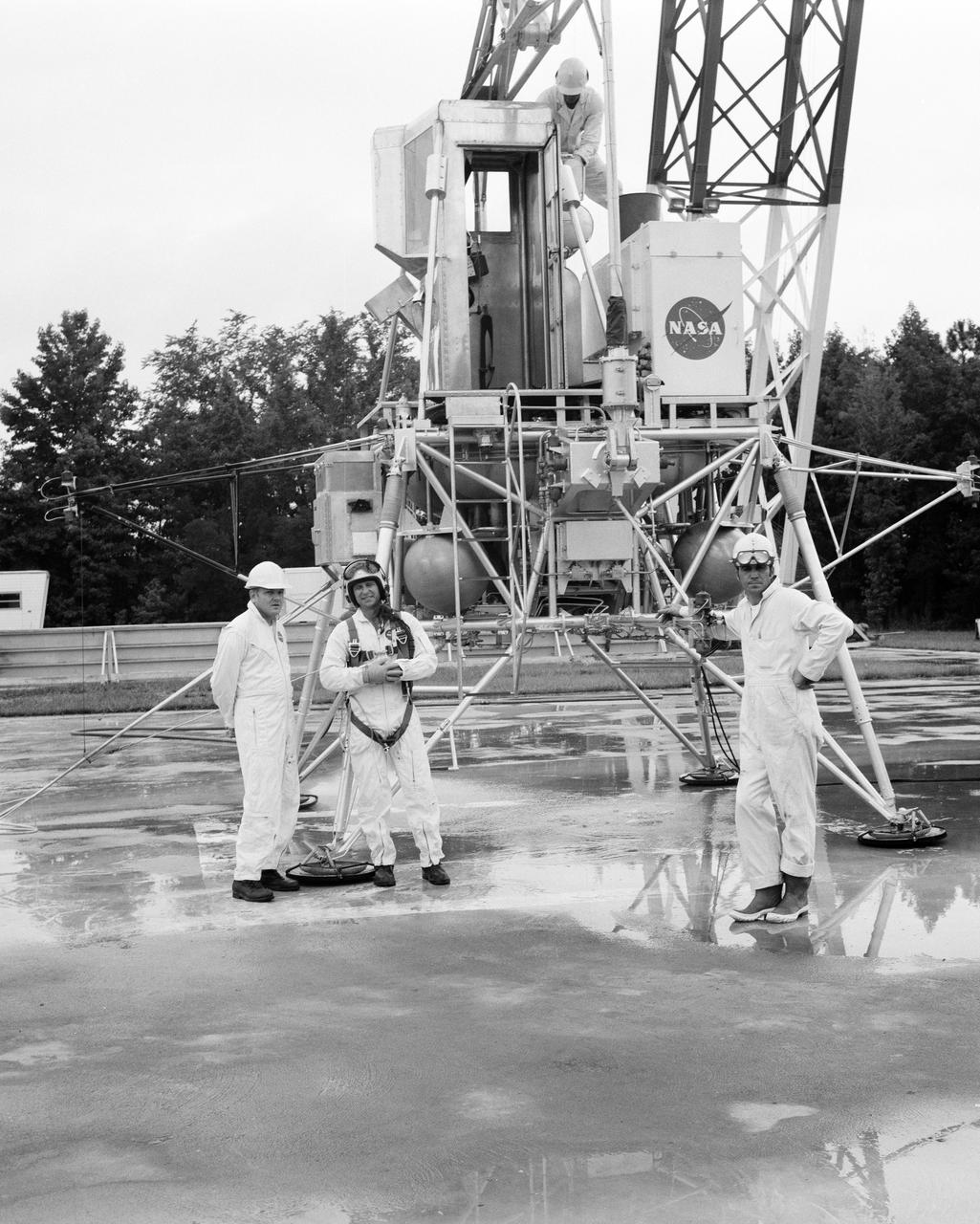
Astronauts Conrad and Bean at Lunar Landing Research Facility. Alan Bean was one of the third group of astronauts named by NASA in October 1963. He served as backup astronaut for the Gemini 10 and Apollo 9 missions. In September of 1962, Mr. Conrad was selected as an astronaut by NASA. His first flight was Gemini V, which established the space endurance record and placed the United States in the lead for man-hours in space. As commander of Gemini XI, Mr. Conrad helped to set a world's altitude record. He then served as commander of Apollo XII, the second lunar landing. On Mr. Conrad's final mission, he served as commander of Skylab II, the first United States Space Station. https://www.nasa.gov/astronauts/biographies/former for more information.
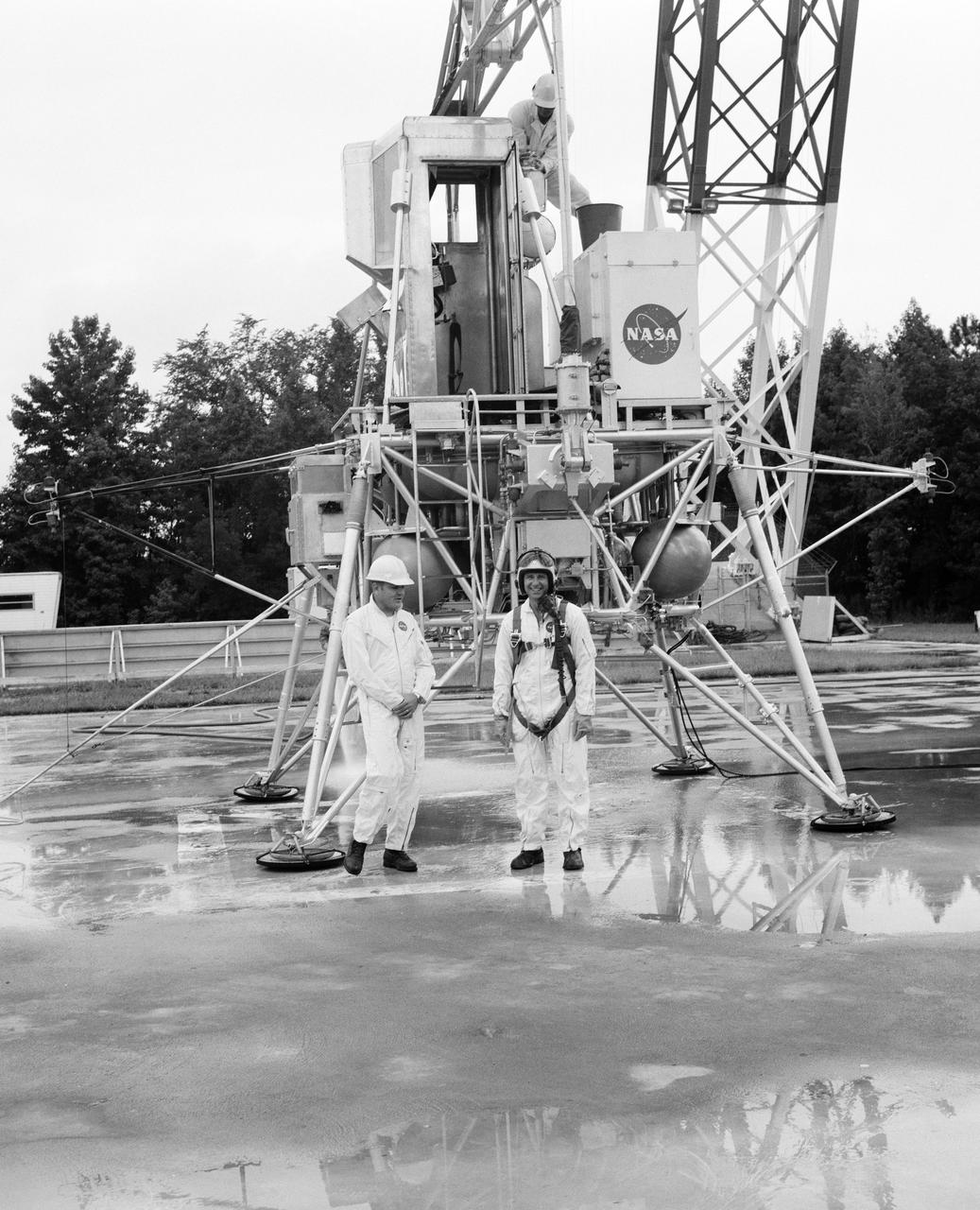
Astronauts Conrad and Bean at Lunar Landing Research Facility. Alan Bean was one of the third group of astronauts named by NASA in October 1963. He served as backup astronaut for the Gemini 10 and Apollo 9 missions. In September of 1962, Mr. Conrad was selected as an astronaut by NASA. His first flight was Gemini V, which established the space endurance record and placed the United States in the lead for man-hours in space. As commander of Gemini XI, Mr. Conrad helped to set a world's altitude record. He then served as commander of Apollo XII, the second lunar landing. On Mr. Conrad's final mission, he served as commander of Skylab II, the first United States Space Station. https://www.nasa.gov/astronauts/biographies/former for more information.
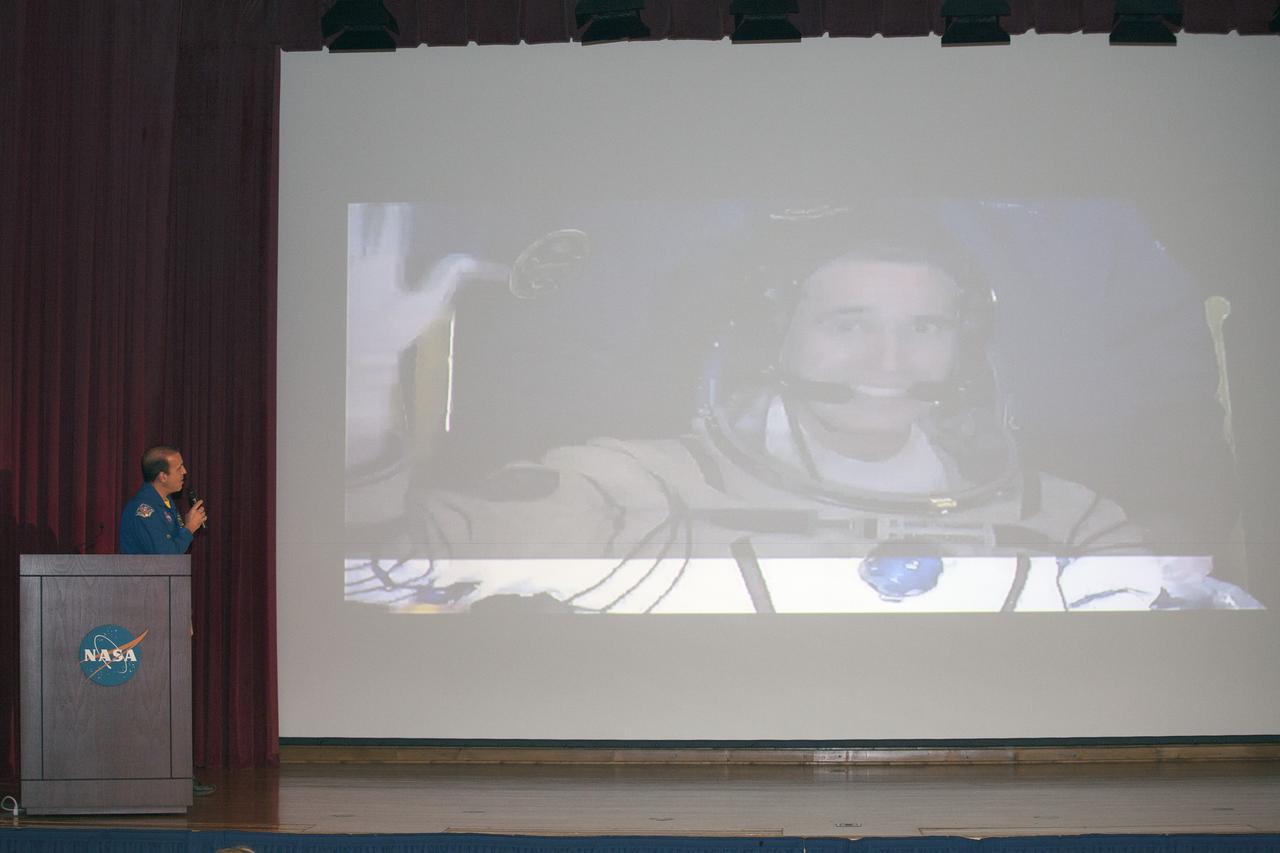
CAPE CANAVERAL, Fla. – NASA astronaut Rick Mastracchio discusses the highlights of the Expedition 38 mission to the International Space Station with the audience at a post-flight presentation. The Space Flight Awareness Program hosted Mastracchio's presentation for employees in the KSC Training Auditorium at NASA's Kennedy Space Center in Florida. An Expedition 38/39 crew member, Mastracchio launched to the station from the Baikonur Cosmodrome in Kazakhstan on Nov. 6, 2013, and returned to Earth on May 13, 2014, after 188 days in space. Following Mastracchio's remarks, employees were given the opportunity to ask questions and to meet him in person. To read Mastracchio's biography, visit http://www.jsc.nasa.gov/Bios/htmlbios/mastracc.html. For more information on Expedition 38, visit http://www.nasa.gov/mission_pages/station/expeditions/expedition38. Photo credit: NASA/Daniel Casper
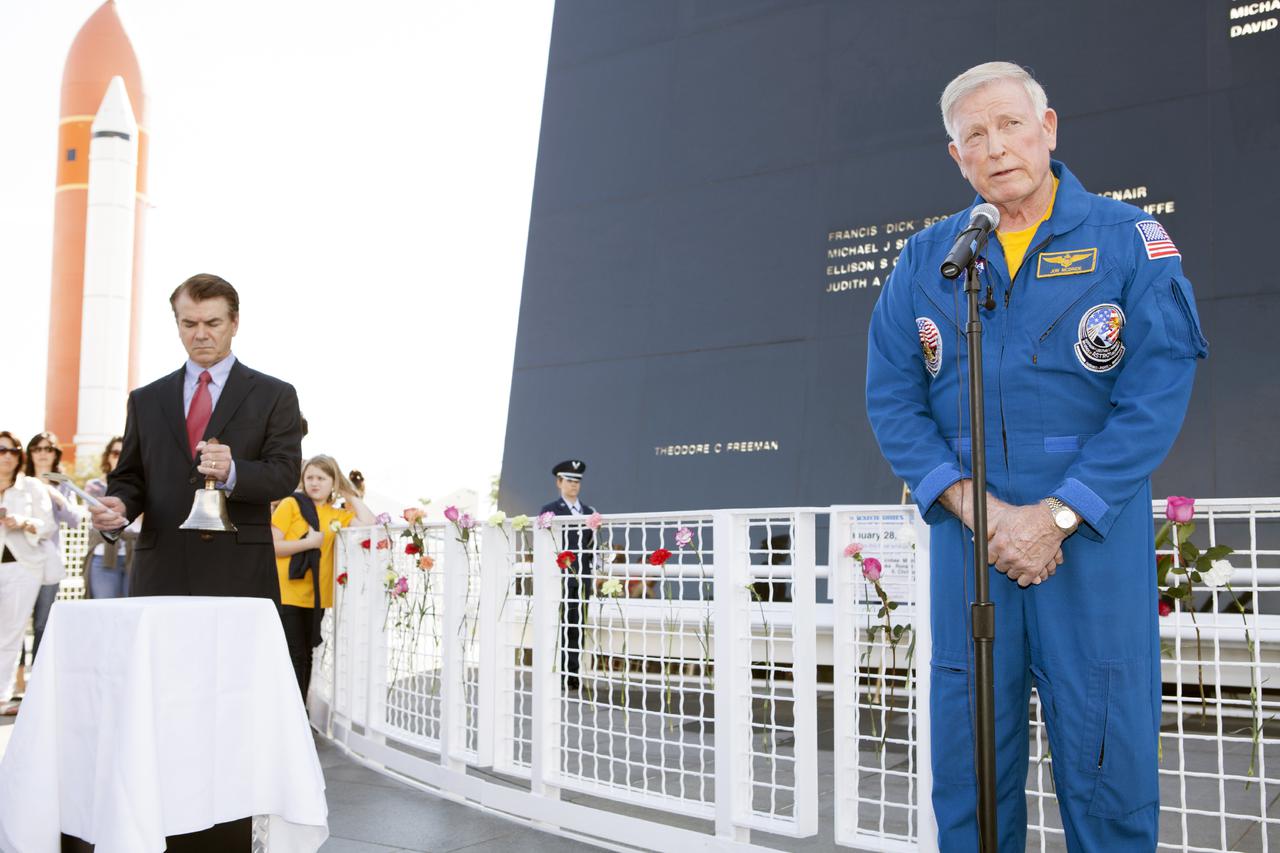
CAPE CANAVERAL, Fla. – Flowers are placed at the Astronauts Memorial Foundation's Space Mirror Memorial at NASA's Kennedy Space Center Visitor Complex on the 28th anniversary of the space shuttle Challenger accident. The day of the accident in 1986 dawned bitterly cold. Temperatures hovered just a few degrees above freezing as Challenger and its seven astronauts lifted off on the STS-51L mission. The flight ended just 73 seconds later when an O-ring in the right solid rocket booster failed, causing a fireball that led to the loss of the vehicle and crew: Commander Francis Scobee, Pilot Michael Smith, Mission Specialists Judith Resnik, Ellison Onizuka and Ronald McNair, and Payload Specialists Gregory Jarvis and Sharon Christa McAuliffe, a teacher. To learn more about the Space Shuttle Program, visit http:__www.nasa.gov_mission_pages_shuttle_main_index.html. To read the astronauts' NASA biographies, visit http:__www.jsc.nasa.gov_Bios_astrobio_former.html. For information about the AMF, visit http:__www.astronautsmemorial.org_home.html. Photo credit: NASA_Dimitri Gerondidakis
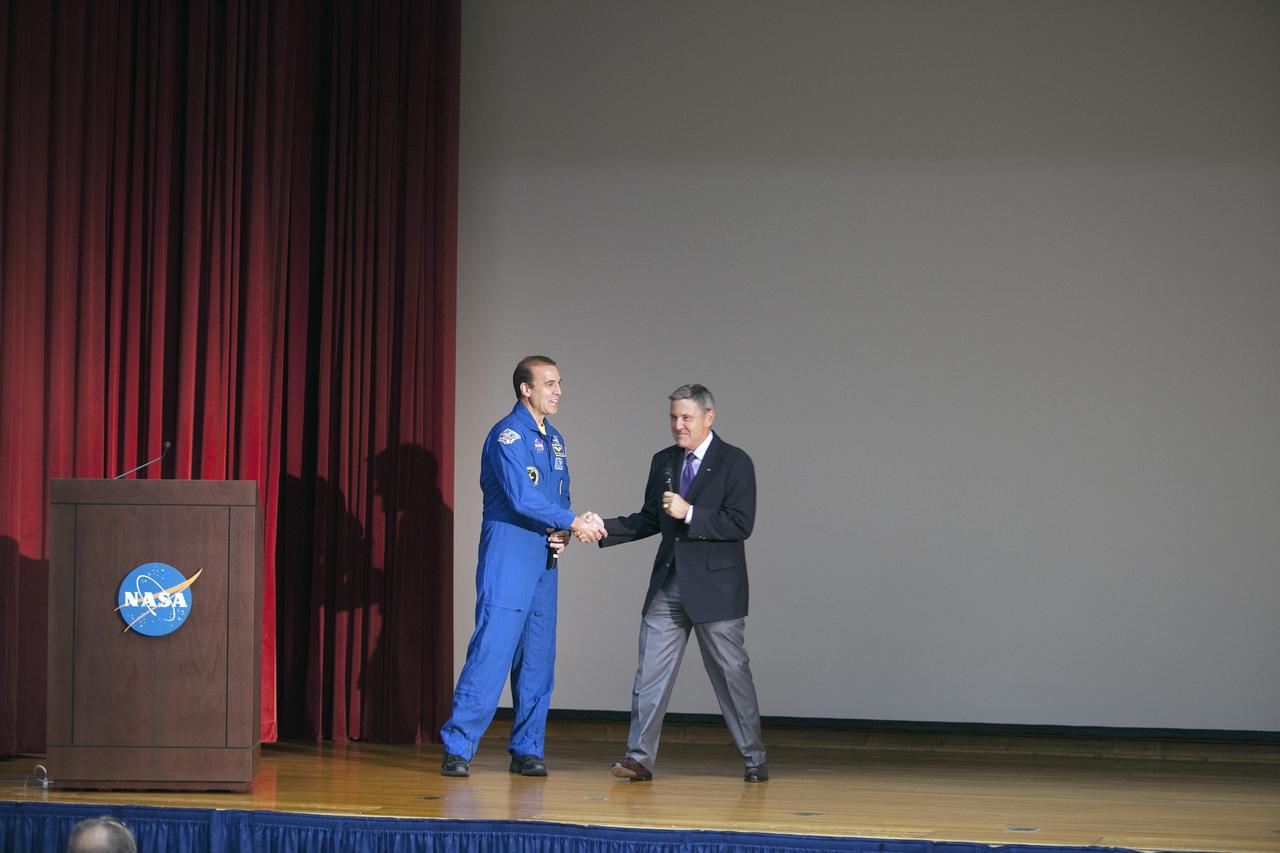
CAPE CANAVERAL, Fla. – NASA Kennedy Space Center Director and former astronaut Bob Cabana, right, welcomes astronaut Rick Mastracchio to the center for a post-flight presentation on the Expedition 38 mission to the International Space Station. The Space Flight Awareness Program hosted Mastracchio's presentation for employees in the KSC Training Auditorium. An Expedition 38/39 crew member, Mastracchio launched to the station from the Baikonur Cosmodrome in Kazakhstan on Nov. 6, 2013, and returned to Earth on May 13, 2014, after 188 days in space. Following Mastracchio's remarks, employees were given the opportunity to ask questions and to meet him in person. To read Mastracchio's biography, visit http://www.jsc.nasa.gov/Bios/htmlbios/mastracc.html. For more information on Expedition 38, visit http://www.nasa.gov/mission_pages/station/expeditions/expedition38. Photo credit: NASA/Daniel Casper
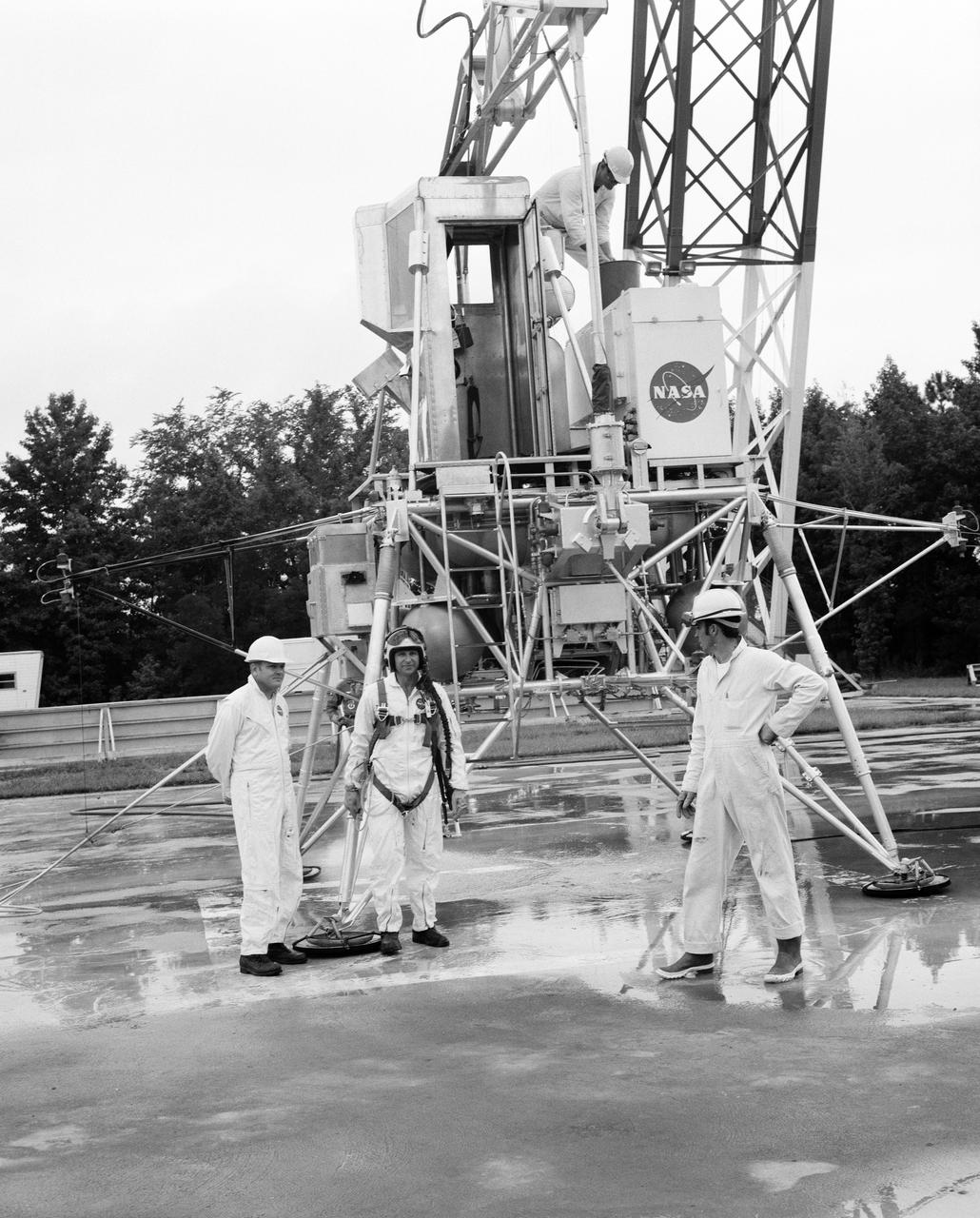
Astronauts Conrad and Bean at Lunar Landing Research Facility. Alan Bean was one of the third group of astronauts named by NASA in October 1963. He served as backup astronaut for the Gemini 10 and Apollo 9 missions. In September of 1962, Mr. Conrad was selected as an astronaut by NASA. His first flight was Gemini V, which established the space endurance record and placed the United States in the lead for man-hours in space. As commander of Gemini XI, Mr. Conrad helped to set a world's altitude record. He then served as commander of Apollo XII, the second lunar landing. On Mr. Conrad's final mission, he served as commander of Skylab II, the first United States Space Station. https://www.nasa.gov/astronauts/biographies/former for more information.
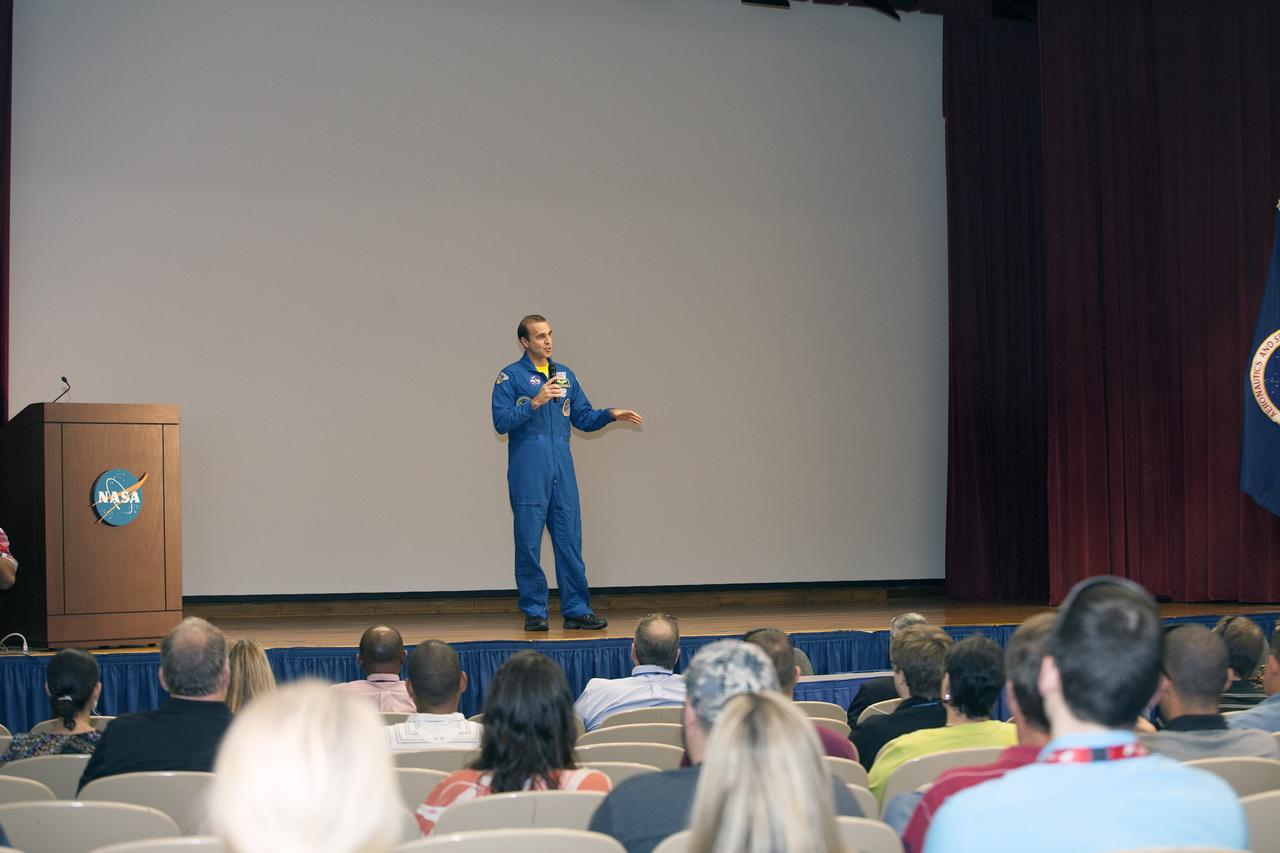
CAPE CANAVERAL, Fla. – NASA astronaut Rick Mastracchio makes his opening remarks to the audience at a post-flight presentation on the Expedition 38 mission to the International Space Station. The Space Flight Awareness Program hosted Mastracchio's presentation for employees in the KSC Training Auditorium at NASA's Kennedy Space Center in Florida. An Expedition 38/39 crew member, Mastracchio launched to the station from the Baikonur Cosmodrome in Kazakhstan on Nov. 6, 2013, and returned to Earth on May 13, 2014, after 188 days in space. Following Mastracchio's remarks, employees were given the opportunity to ask questions and to meet him in person. To read Mastracchio's biography, visit http://www.jsc.nasa.gov/Bios/htmlbios/mastracc.html. For more information on Expedition 38, visit http://www.nasa.gov/mission_pages/station/expeditions/expedition38. Photo credit: NASA/Daniel Casper
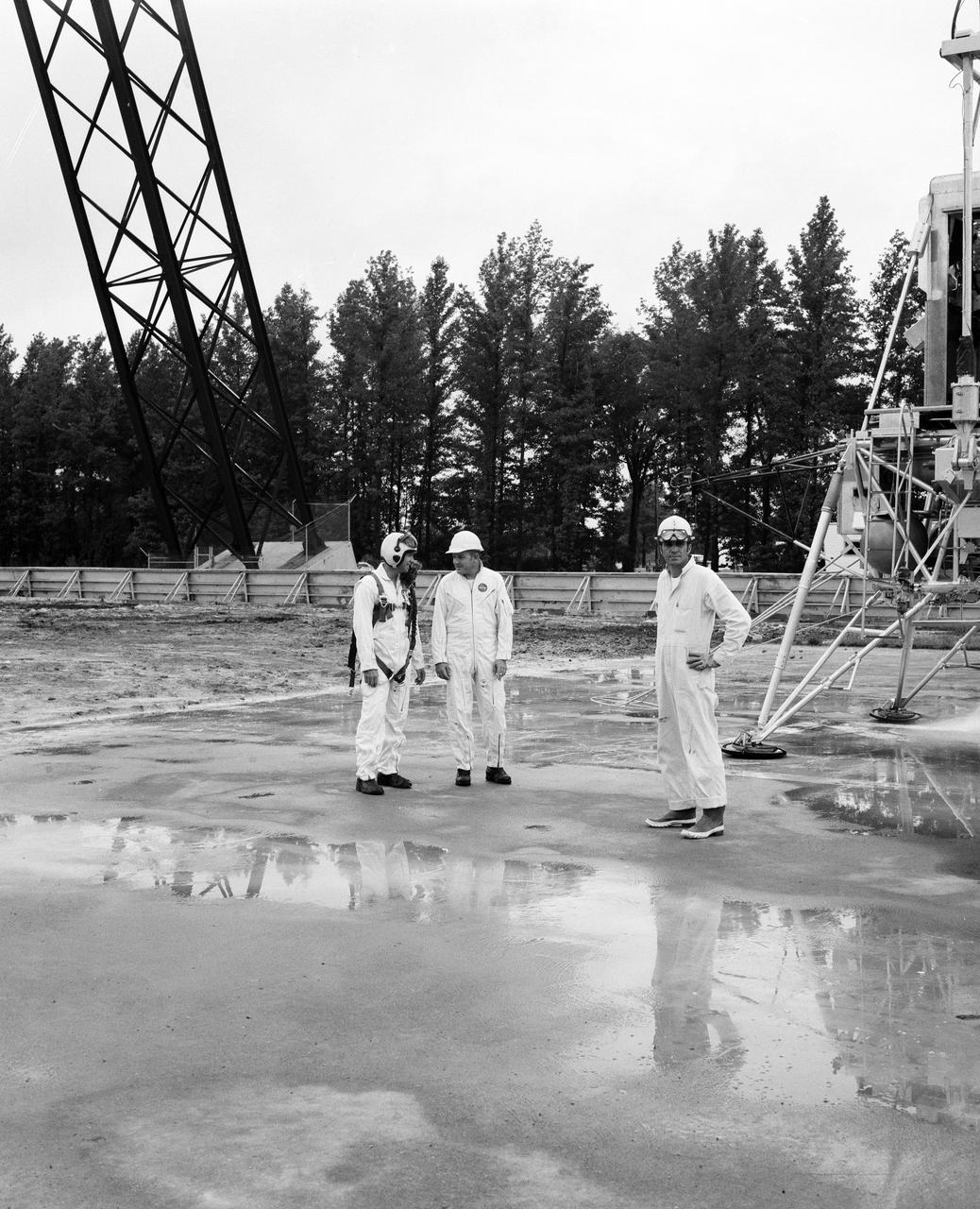
Astronauts Conrad and Bean at Lunar Landing Research Facility. Alan Bean was one of the third group of astronauts named by NASA in October 1963. He served as backup astronaut for the Gemini 10 and Apollo 9 missions. In September of 1962, Mr. Conrad was selected as an astronaut by NASA. His first flight was Gemini V, which established the space endurance record and placed the United States in the lead for man-hours in space. As commander of Gemini XI, Mr. Conrad helped to set a world's altitude record. He then served as commander of Apollo XII, the second lunar landing. On Mr. Conrad's final mission, he served as commander of Skylab II, the first United States Space Station. https://www.nasa.gov/astronauts/biographies/former for more information.
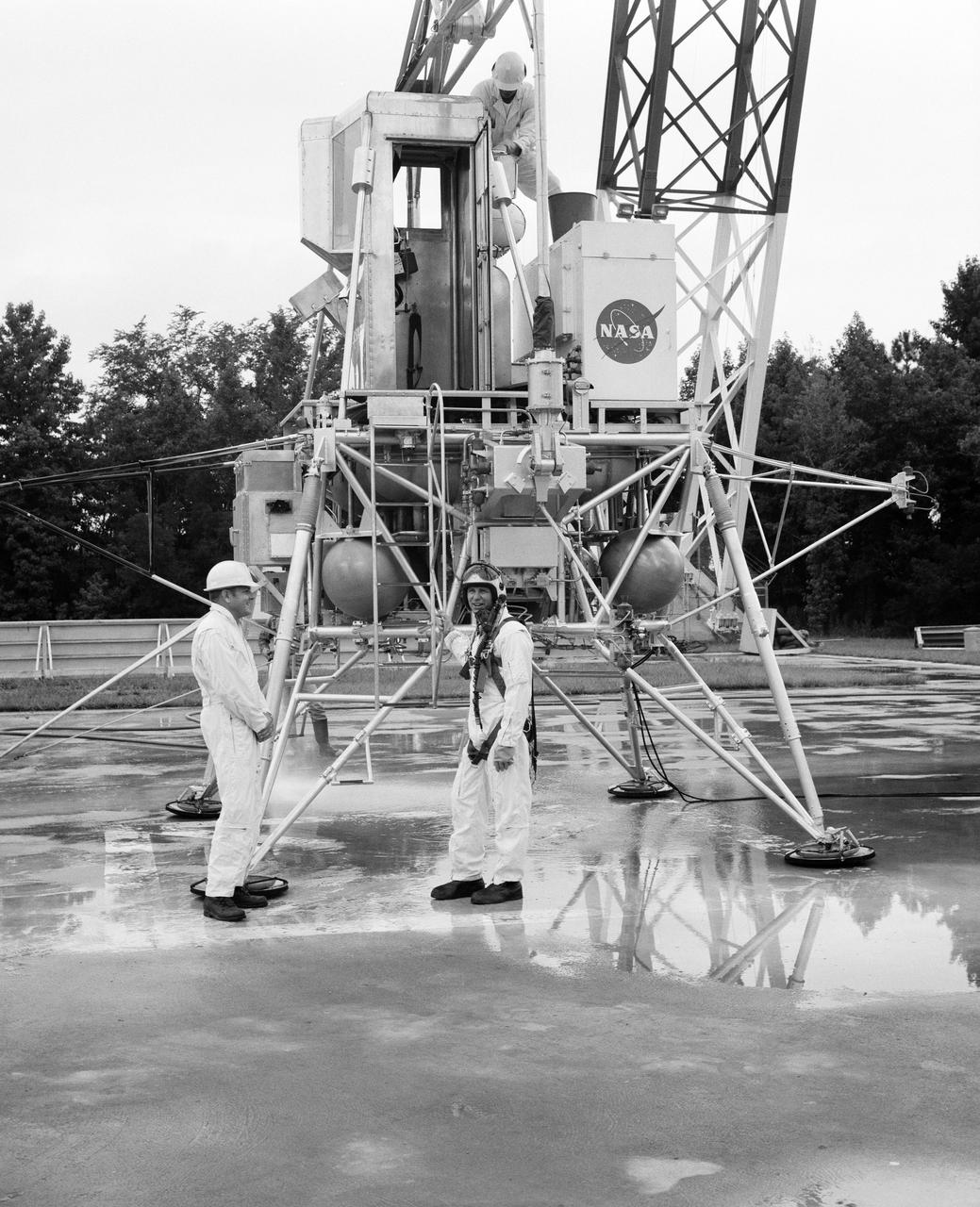
Astronauts Conrad and Bean at Lunar Landing Research Facility. Alan Bean was one of the third group of astronauts named by NASA in October 1963. He served as backup astronaut for the Gemini 10 and Apollo 9 missions. In September of 1962, Mr. Conrad was selected as an astronaut by NASA. His first flight was Gemini V, which established the space endurance record and placed the United States in the lead for man-hours in space. As commander of Gemini XI, Mr. Conrad helped to set a world's altitude record. He then served as commander of Apollo XII, the second lunar landing. On Mr. Conrad's final mission, he served as commander of Skylab II, the first United States Space Station. https://www.nasa.gov/astronauts/biographies/former for more information.
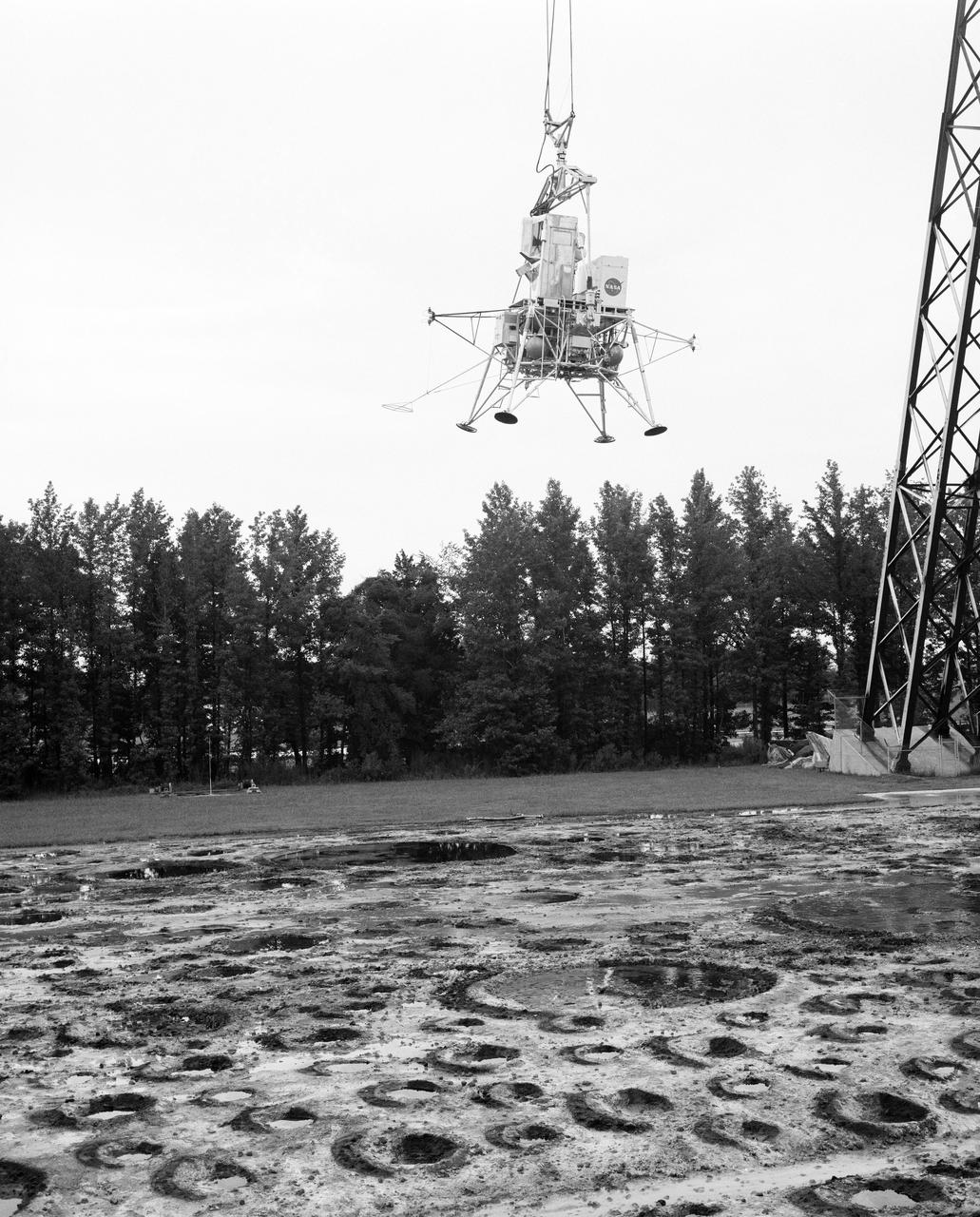
Astronauts Conrad and Bean at Lunar Landing Research Facility. Alan Bean was one of the third group of astronauts named by NASA in October 1963. He served as backup astronaut for the Gemini 10 and Apollo 9 missions. In September of 1962, Mr. Conrad was selected as an astronaut by NASA. His first flight was Gemini V, which established the space endurance record and placed the United States in the lead for man-hours in space. As commander of Gemini XI, Mr. Conrad helped to set a world's altitude record. He then served as commander of Apollo XII, the second lunar landing. On Mr. Conrad's final mission, he served as commander of Skylab II, the first United States Space Station. https://www.nasa.gov/astronauts/biographies/former for more information.
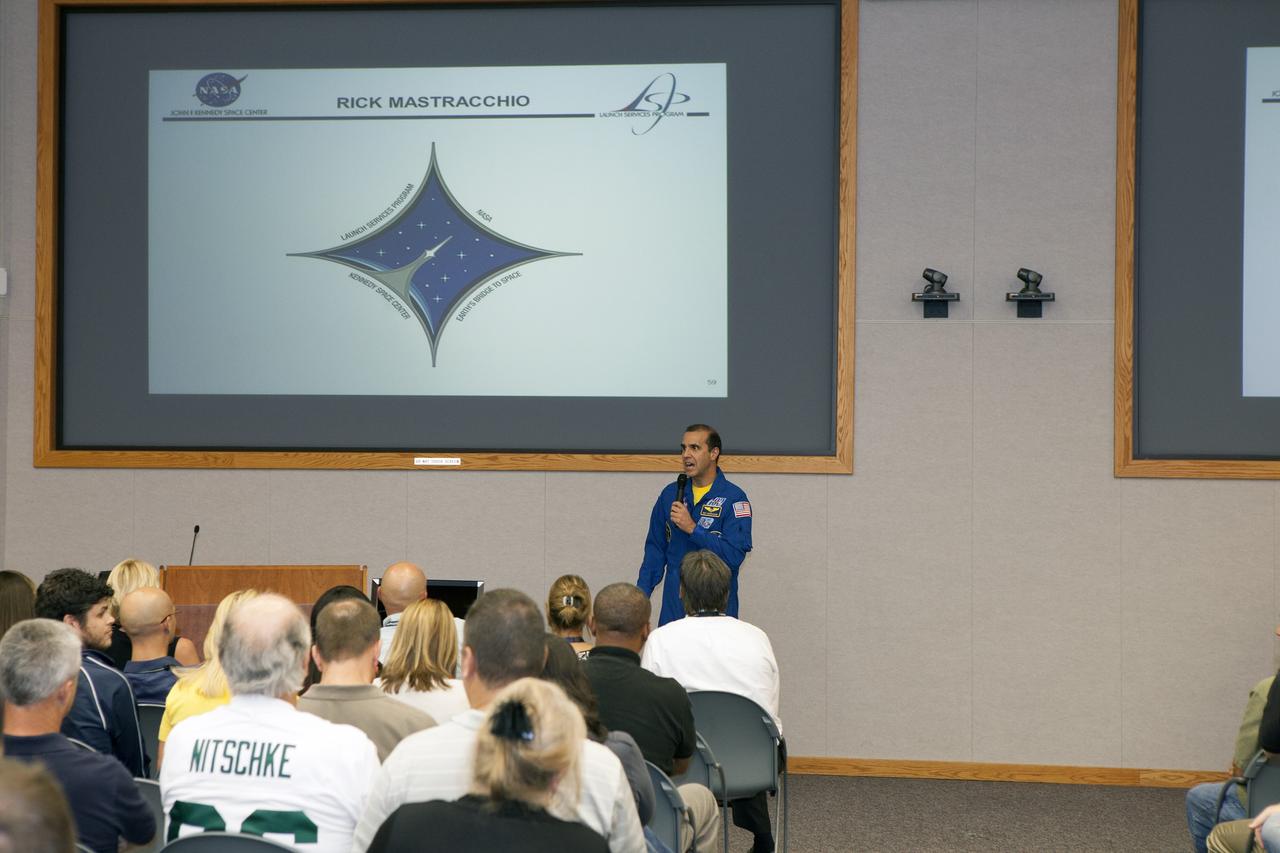
CAPE CANAVERAL, Fla. – NASA astronaut Rick Mastracchio takes questions on the execution of the Slosh experiment from employees attending the Launch Services Program's All Hands meeting in the Neil Armstrong Operations and Checkout Building Mission Briefing Room at NASA's Kennedy Space Center in Florida. An Expedition 38/39 crew member, Mastracchio launched to the station from the Baikonur Cosmodrome in Kazakhstan on Nov. 6, 2013, and returned to Earth on May 13, 2014, after 188 days in space. To read Mastracchio's biography, visit http://www.jsc.nasa.gov/Bios/htmlbios/mastracc.html. For more information on the Slosh experiment, visit http://www.nasa.gov/content/slosh-experiment-designed-to-improve-rocket-safety-efficiency/. Photo credit: NASA/Daniel Casper
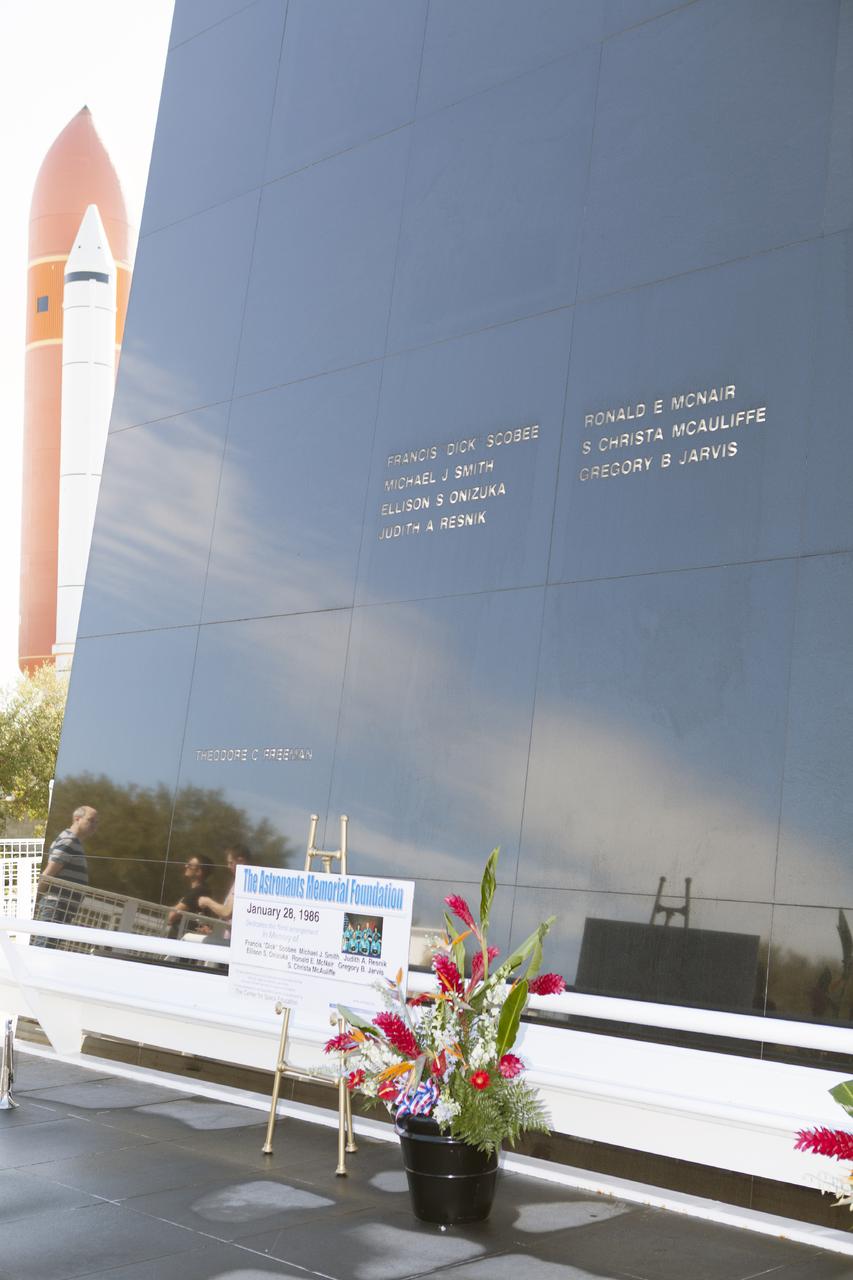
CAPE CANAVERAL, Fla. – Flowers are placed at the Astronauts Memorial Foundation's Space Mirror Memorial at NASA's Kennedy Space Center Visitor Complex on the 28th anniversary of the space shuttle Challenger accident. The day of the accident in 1986 dawned bitterly cold. Temperatures hovered just a few degrees above freezing as Challenger and its seven astronauts lifted off on the STS-51L mission. The flight ended just 73 seconds later when an O-ring in the right solid rocket booster failed, causing a fireball that led to the loss of the vehicle and crew: Commander Francis Scobee, Pilot Michael Smith, Mission Specialists Judith Resnik, Ellison Onizuka and Ronald McNair, and Payload Specialists Gregory Jarvis and Sharon Christa McAuliffe, a teacher. To learn more about the Space Shuttle Program, visit http:__www.nasa.gov_mission_pages_shuttle_main_index.html. To read the astronauts' NASA biographies, visit http:__www.jsc.nasa.gov_Bios_astrobio_former.html. For information about the AMF, visit http:__www.astronautsmemorial.org_home.html. Photo credit: NASA_Dimitri Gerondidakis
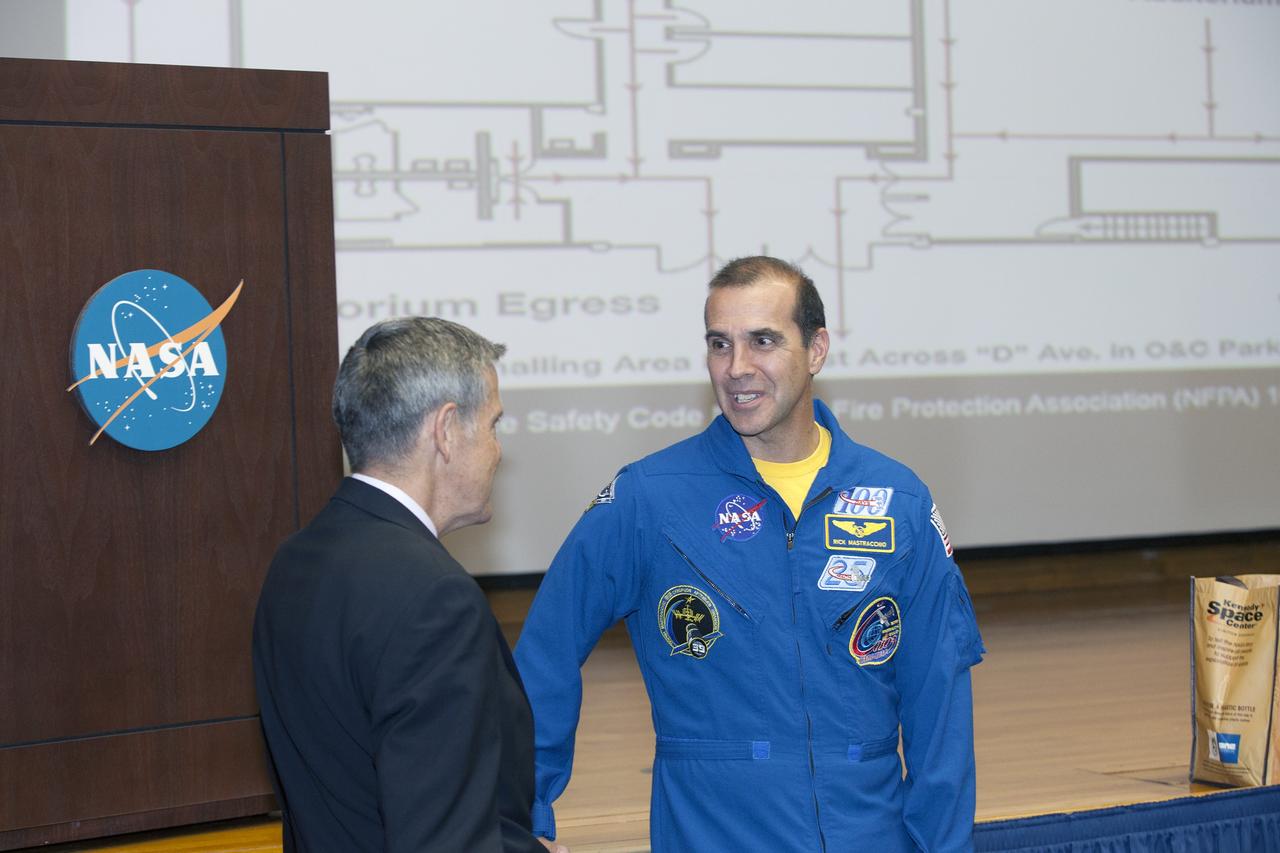
CAPE CANAVERAL, Fla. – NASA Kennedy Space Center Director and former astronaut Bob Cabana, left, greets astronaut Rick Mastracchio before the start of a post-flight presentation on the Expedition 38 mission to the International Space Station. The Space Flight Awareness Program hosted Mastracchio's presentation for employees in the KSC Training Auditorium. An Expedition 38/39 crew member, Mastracchio launched to the station from the Baikonur Cosmodrome in Kazakhstan on Nov. 6, 2013, and returned to Earth on May 13, 2014, after 188 days in space. Following Mastracchio's remarks, employees were given the opportunity to ask questions and to meet him in person. To read Mastracchio's biography, visit http://www.jsc.nasa.gov/Bios/htmlbios/mastracc.html. For more information on Expedition 38, visit http://www.nasa.gov/mission_pages/station/expeditions/expedition38. Photo credit: NASA/Daniel Casper
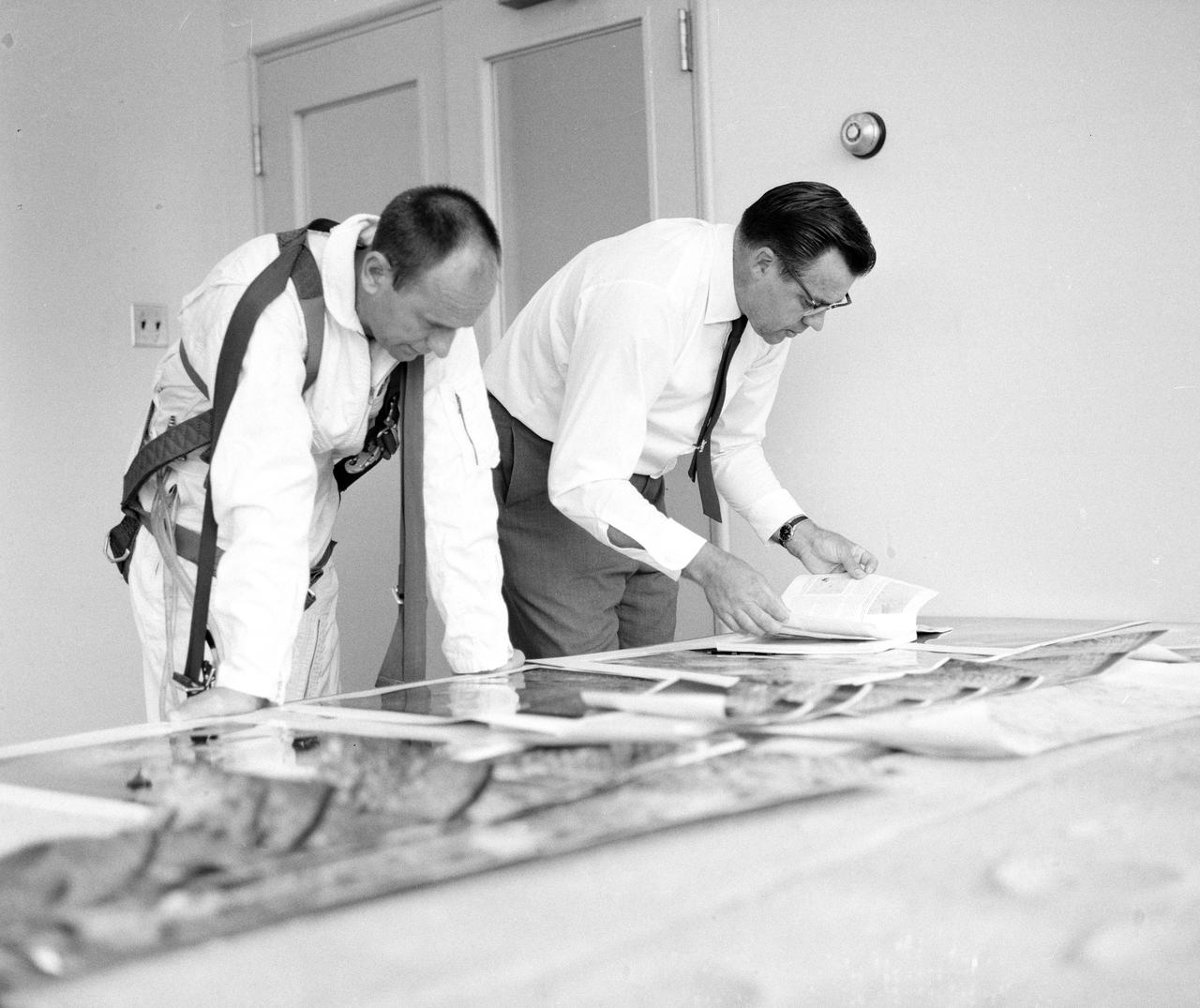
Astronauts Conrad and Bean at Lunar Landing Research Facility. Alan Bean was one of the third group of astronauts named by NASA in October 1963. He served as backup astronaut for the Gemini 10 and Apollo 9 missions. In September of 1962, Mr. Conrad was selected as an astronaut by NASA. His first flight was Gemini V, which established the space endurance record and placed the United States in the lead for man-hours in space. As commander of Gemini XI, Mr. Conrad helped to set a world's altitude record. He then served as commander of Apollo XII, the second lunar landing. On Mr. Conrad's final mission, he served as commander of Skylab II, the first United States Space Station. https://www.nasa.gov/astronauts/biographies/former for more information.
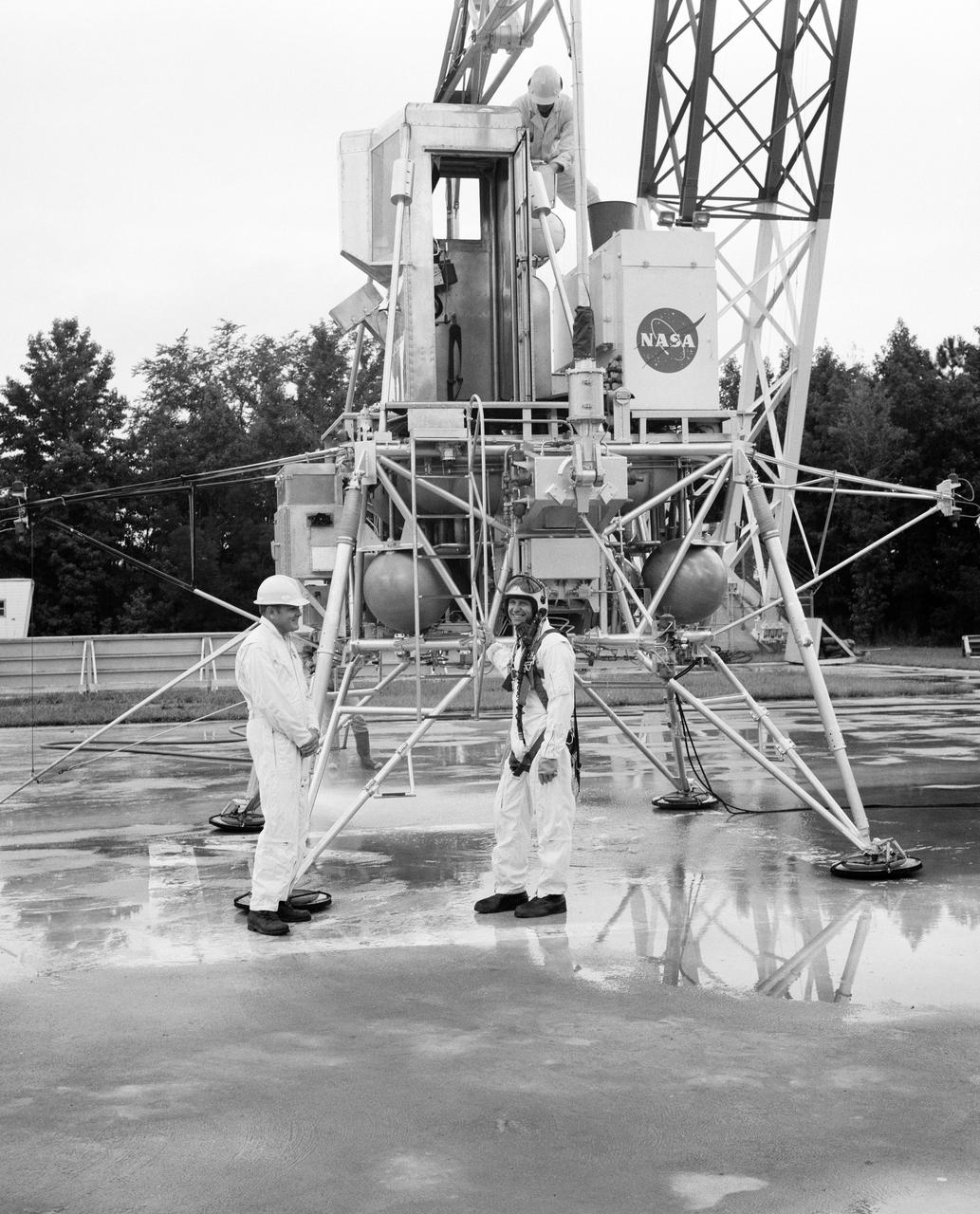
Astronauts Conrad and Bean at Lunar Landing Research Facility. Alan Bean was one of the third group of astronauts named by NASA in October 1963. He served as backup astronaut for the Gemini 10 and Apollo 9 missions. In September of 1962, Mr. Conrad was selected as an astronaut by NASA. His first flight was Gemini V, which established the space endurance record and placed the United States in the lead for man-hours in space. As commander of Gemini XI, Mr. Conrad helped to set a world's altitude record. He then served as commander of Apollo XII, the second lunar landing. On Mr. Conrad's final mission, he served as commander of Skylab II, the first United States Space Station. https://www.nasa.gov/astronauts/biographies/former for more information.
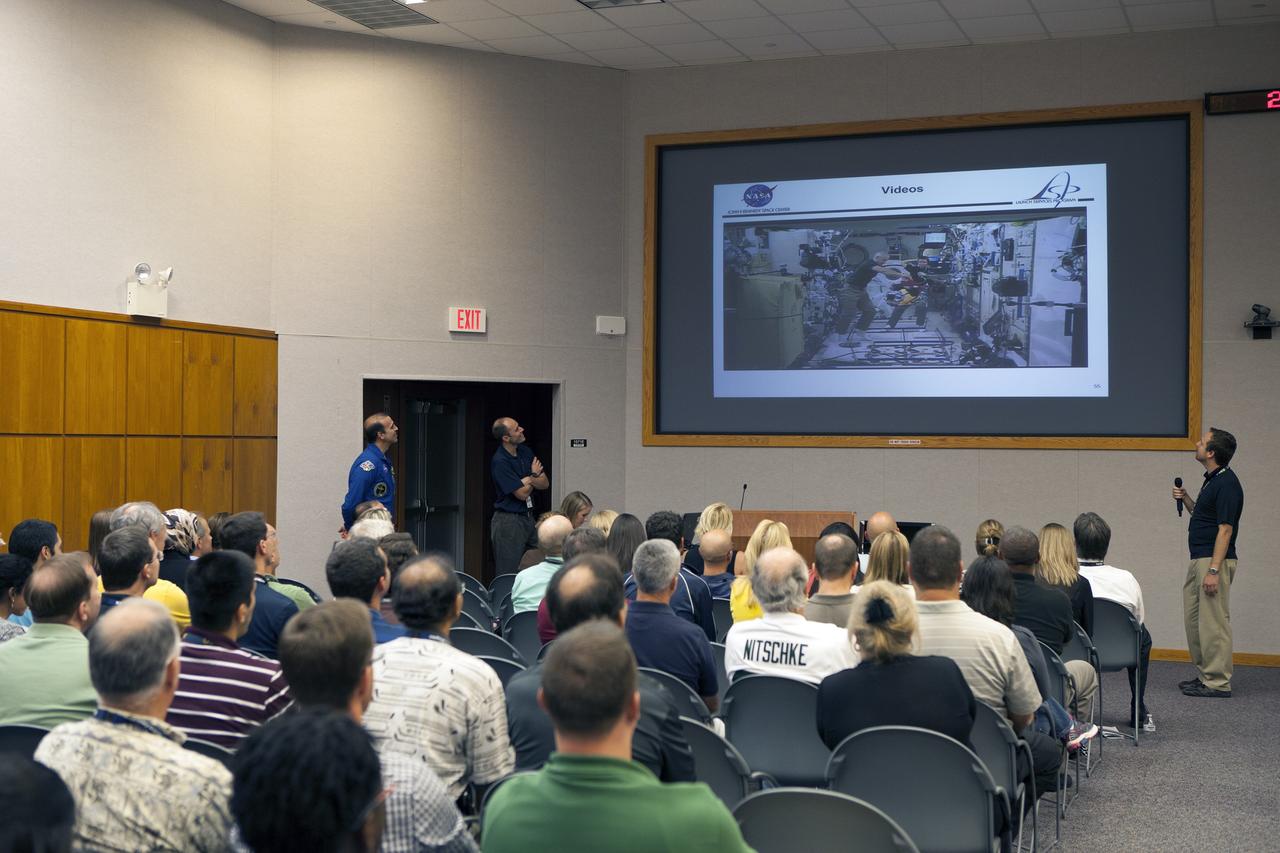
CAPE CANAVERAL, Fla. – NASA astronaut Rick Mastracchio, standing at left, illustrates the fine points of conducting the Slosh experiment on the International Space Station for employees attending the Launch Services Program's All Hands meeting in the Neil Armstrong Operations and Checkout Building Mission Briefing Room at NASA's Kennedy Space Center in Florida. An Expedition 38/39 crew member, Mastracchio launched to the station from the Baikonur Cosmodrome in Kazakhstan on Nov. 6, 2013, and returned to Earth on May 13, 2014, after 188 days in space. To read Mastracchio's biography, visit http://www.jsc.nasa.gov/Bios/htmlbios/mastracc.html. For more information on the Slosh experiment, visit http://www.nasa.gov/content/slosh-experiment-designed-to-improve-rocket-safety-efficiency/. Photo credit: NASA/Daniel Casper
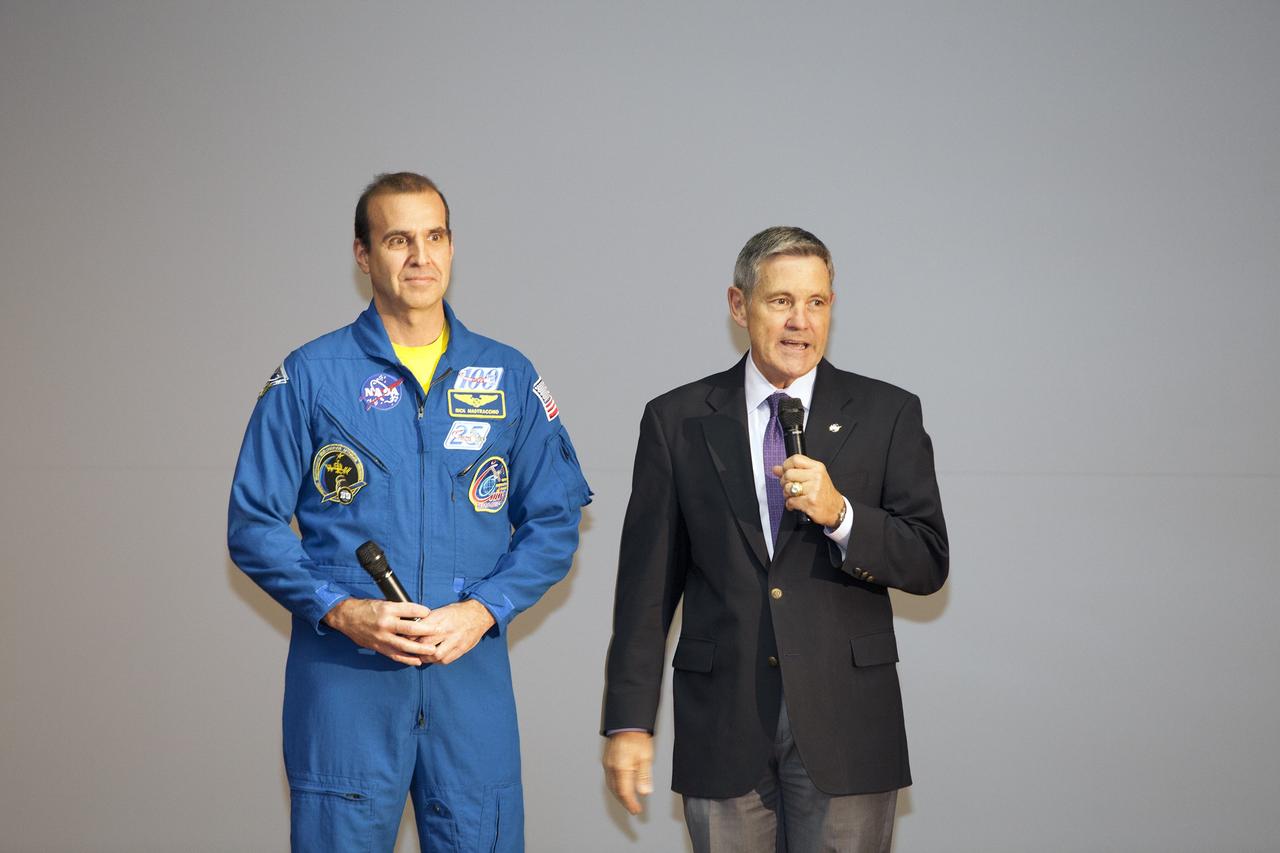
CAPE CANAVERAL, Fla. – NASA Kennedy Space Center Director and former astronaut Bob Cabana, right, introduces astronaut Rick Mastracchio to the audience at a post-flight presentation on the Expedition 38 mission to the International Space Station. The Space Flight Awareness Program hosted Mastracchio's presentation for employees in the KSC Training Auditorium. An Expedition 38/39 crew member, Mastracchio launched to the station from the Baikonur Cosmodrome in Kazakhstan on Nov. 6, 2013, and returned to Earth on May 13, 2014, after 188 days in space. Following Mastracchio's remarks, employees were given the opportunity to ask questions and to meet him in person. To read Mastracchio's biography, visit http://www.jsc.nasa.gov/Bios/htmlbios/mastracc.html. For more information on Expedition 38, visit http://www.nasa.gov/mission_pages/station/expeditions/expedition38. Photo credit: NASA/Daniel Casper
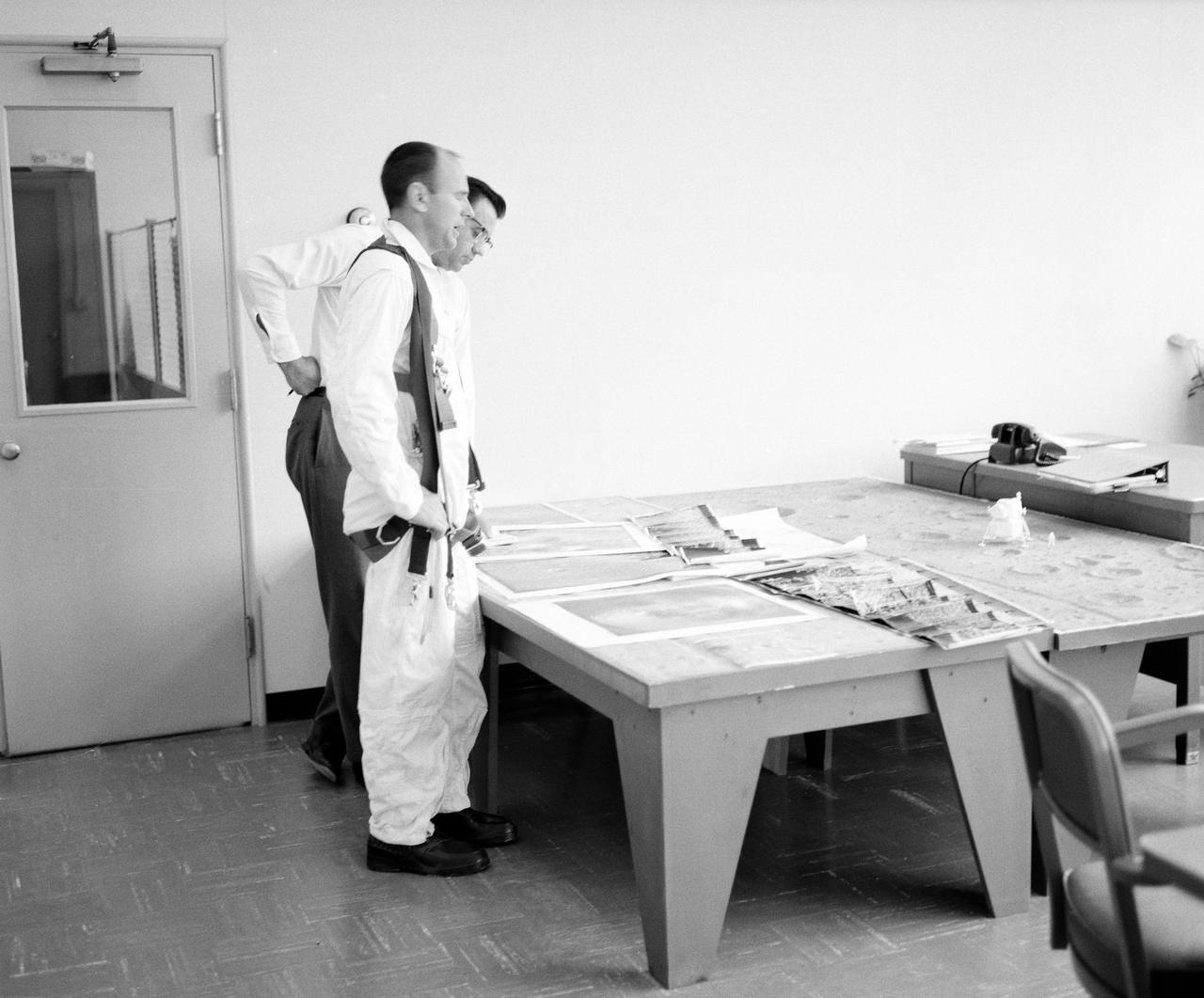
Astronauts Conrad and Bean at Lunar Landing Research Facility. Alan Bean was one of the third group of astronauts named by NASA in October 1963. He served as backup astronaut for the Gemini 10 and Apollo 9 missions. In September of 1962, Mr. Conrad was selected as an astronaut by NASA. His first flight was Gemini V, which established the space endurance record and placed the United States in the lead for man-hours in space. As commander of Gemini XI, Mr. Conrad helped to set a world's altitude record. He then served as commander of Apollo XII, the second lunar landing. On Mr. Conrad's final mission, he served as commander of Skylab II, the first United States Space Station. https://www.nasa.gov/astronauts/biographies/former for more information.
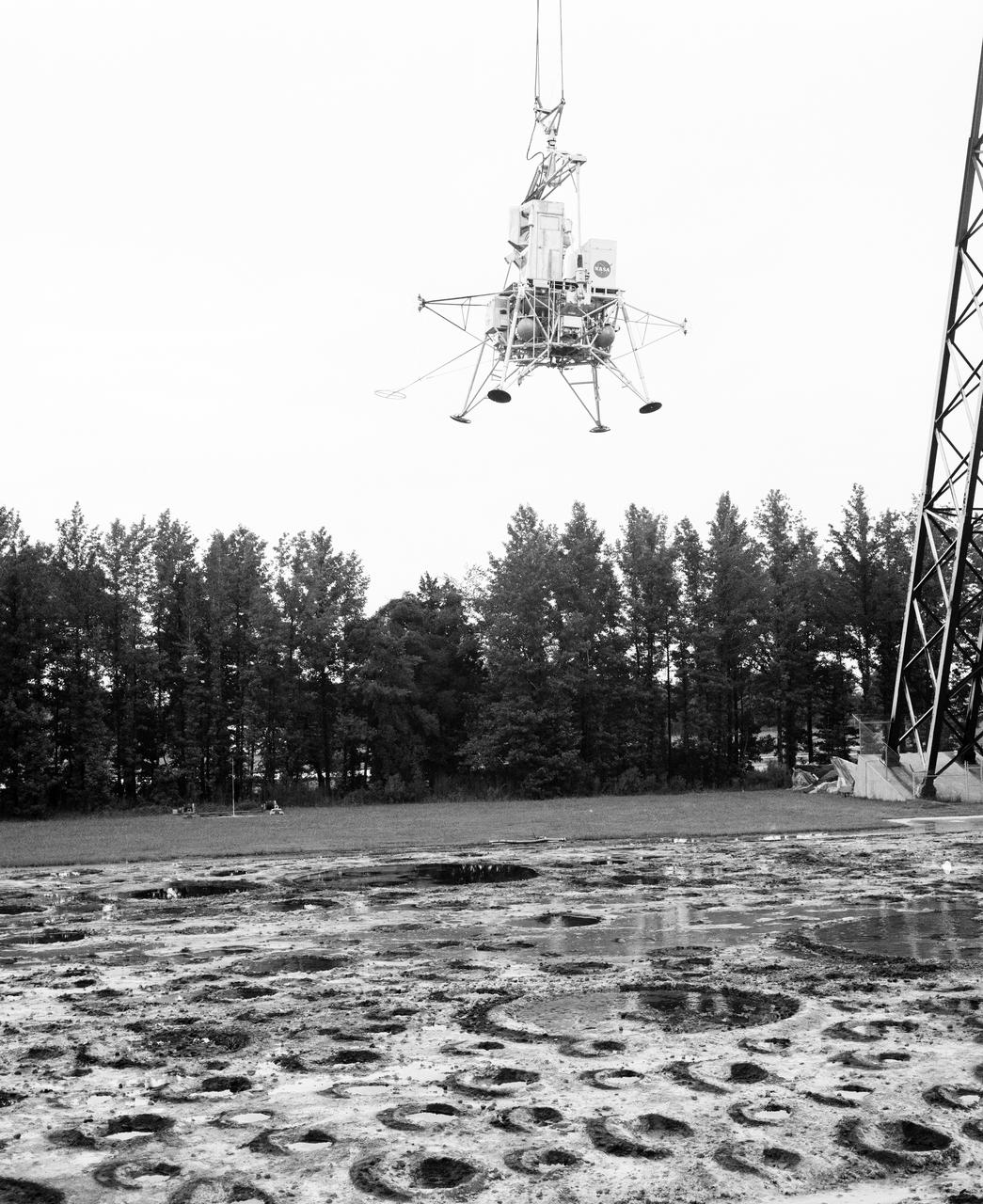
Astronauts Conrad and Bean at Lunar Landing Research Facility. Alan Bean was one of the third group of astronauts named by NASA in October 1963. He served as backup astronaut for the Gemini 10 and Apollo 9 missions. In September of 1962, Mr. Conrad was selected as an astronaut by NASA. His first flight was Gemini V, which established the space endurance record and placed the United States in the lead for man-hours in space. As commander of Gemini XI, Mr. Conrad helped to set a world's altitude record. He then served as commander of Apollo XII, the second lunar landing. On Mr. Conrad's final mission, he served as commander of Skylab II, the first United States Space Station. https://www.nasa.gov/astronauts/biographies/former for more information.
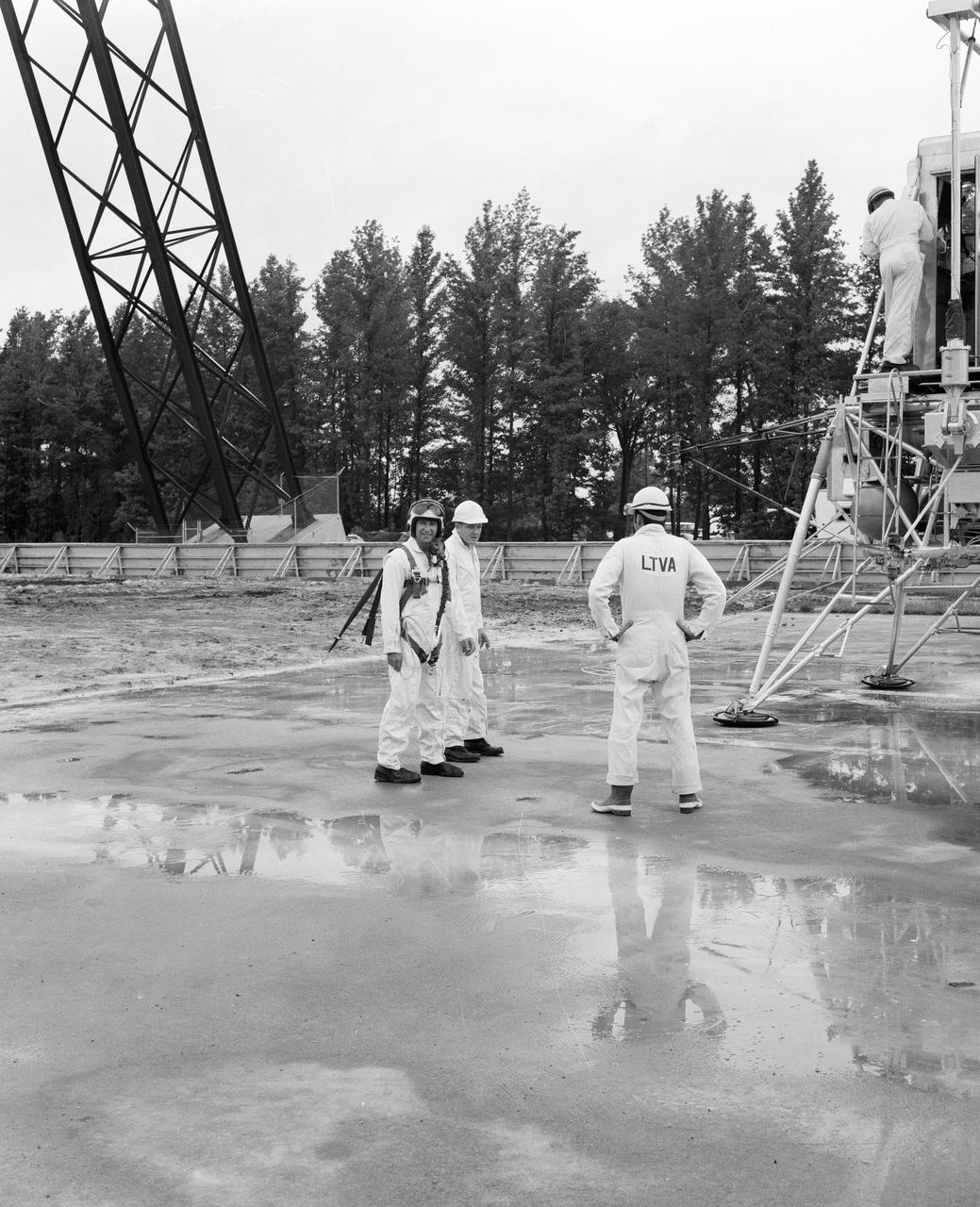
Astronauts Conrad and Bean at Lunar Landing Research Facility. Alan Bean was one of the third group of astronauts named by NASA in October 1963. He served as backup astronaut for the Gemini 10 and Apollo 9 missions. In September of 1962, Mr. Conrad was selected as an astronaut by NASA. His first flight was Gemini V, which established the space endurance record and placed the United States in the lead for man-hours in space. As commander of Gemini XI, Mr. Conrad helped to set a world's altitude record. He then served as commander of Apollo XII, the second lunar landing. On Mr. Conrad's final mission, he served as commander of Skylab II, the first United States Space Station. https://www.nasa.gov/astronauts/biographies/former for more information.
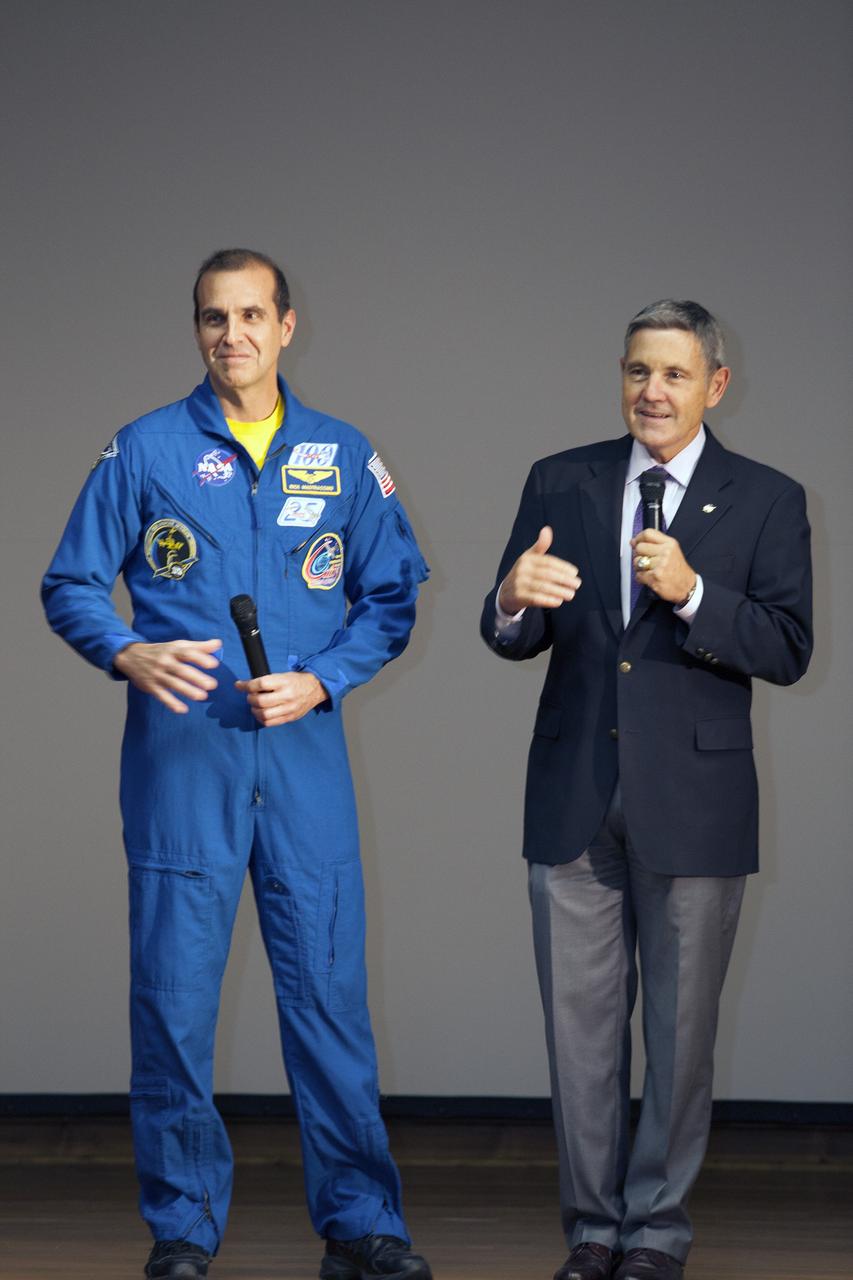
CAPE CANAVERAL, Fla. – NASA Kennedy Space Center Director and former astronaut Bob Cabana, right, introduces astronaut Rick Mastracchio to the audience at a post-flight presentation on the Expedition 38 mission to the International Space Station. The Space Flight Awareness Program hosted Mastracchio's presentation for employees in the KSC Training Auditorium. An Expedition 38/39 crew member, Mastracchio launched to the station from the Baikonur Cosmodrome in Kazakhstan on Nov. 6, 2013, and returned to Earth on May 13, 2014, after 188 days in space. Following Mastracchio's remarks, employees were given the opportunity to ask questions and to meet him in person. To read Mastracchio's biography, visit http://www.jsc.nasa.gov/Bios/htmlbios/mastracc.html. For more information on Expedition 38, visit http://www.nasa.gov/mission_pages/station/expeditions/expedition38. Photo credit: NASA/Daniel Casper
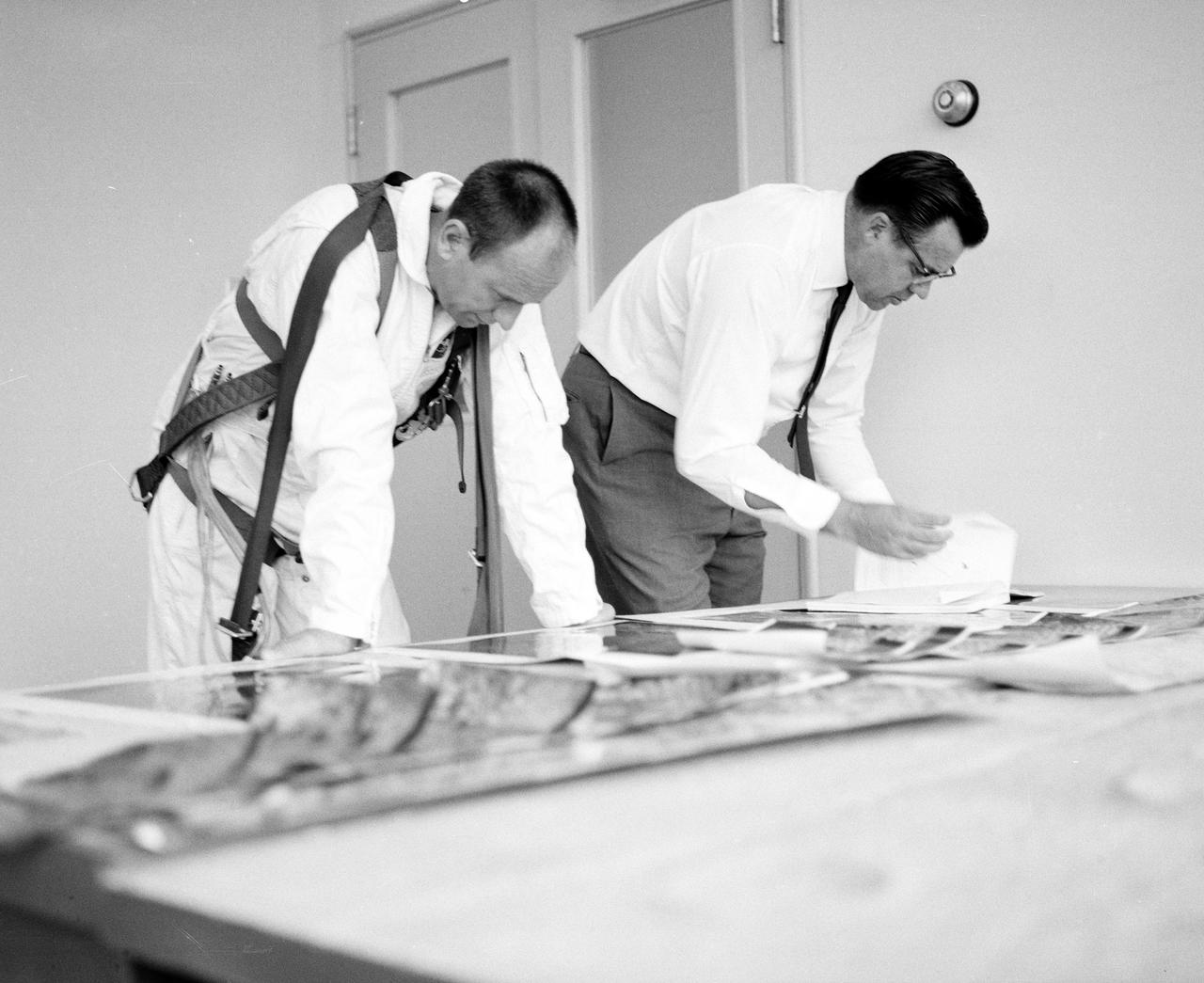
Astronauts Conrad and Bean at Lunar Landing Research Facility. Alan Bean was one of the third group of astronauts named by NASA in October 1963. He served as backup astronaut for the Gemini 10 and Apollo 9 missions. In September of 1962, Mr. Conrad was selected as an astronaut by NASA. His first flight was Gemini V, which established the space endurance record and placed the United States in the lead for man-hours in space. As commander of Gemini XI, Mr. Conrad helped to set a world's altitude record. He then served as commander of Apollo XII, the second lunar landing. On Mr. Conrad's final mission, he served as commander of Skylab II, the first United States Space Station. https://www.nasa.gov/astronauts/biographies/former for more information.
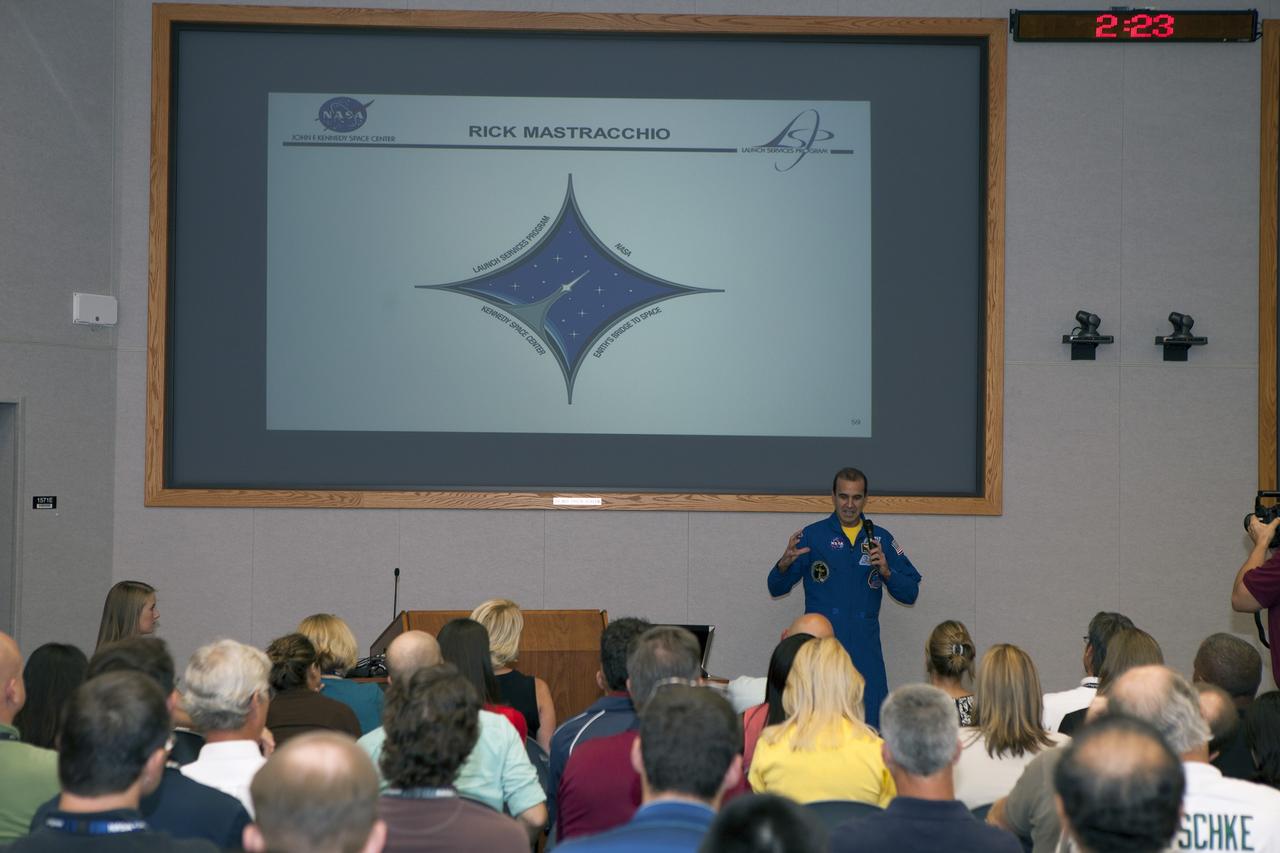
CAPE CANAVERAL, Fla. – NASA astronaut Rick Mastracchio recounts his experiences conducting the Slosh experiment on the International Space Station to employees attending the Launch Services Program's All Hands meeting in the Neil Armstrong Operations and Checkout Building Mission Briefing Room at NASA's Kennedy Space Center in Florida. An Expedition 38/39 crew member, Mastracchio launched to the station from the Baikonur Cosmodrome in Kazakhstan on Nov. 6, 2013, and returned to Earth on May 13, 2014, after 188 days in space. To read Mastracchio's biography, visit http://www.jsc.nasa.gov/Bios/htmlbios/mastracc.html. For more information on the Slosh experiment, visit http://www.nasa.gov/content/slosh-experiment-designed-to-improve-rocket-safety-efficiency/. Photo credit: NASA/Daniel Casper
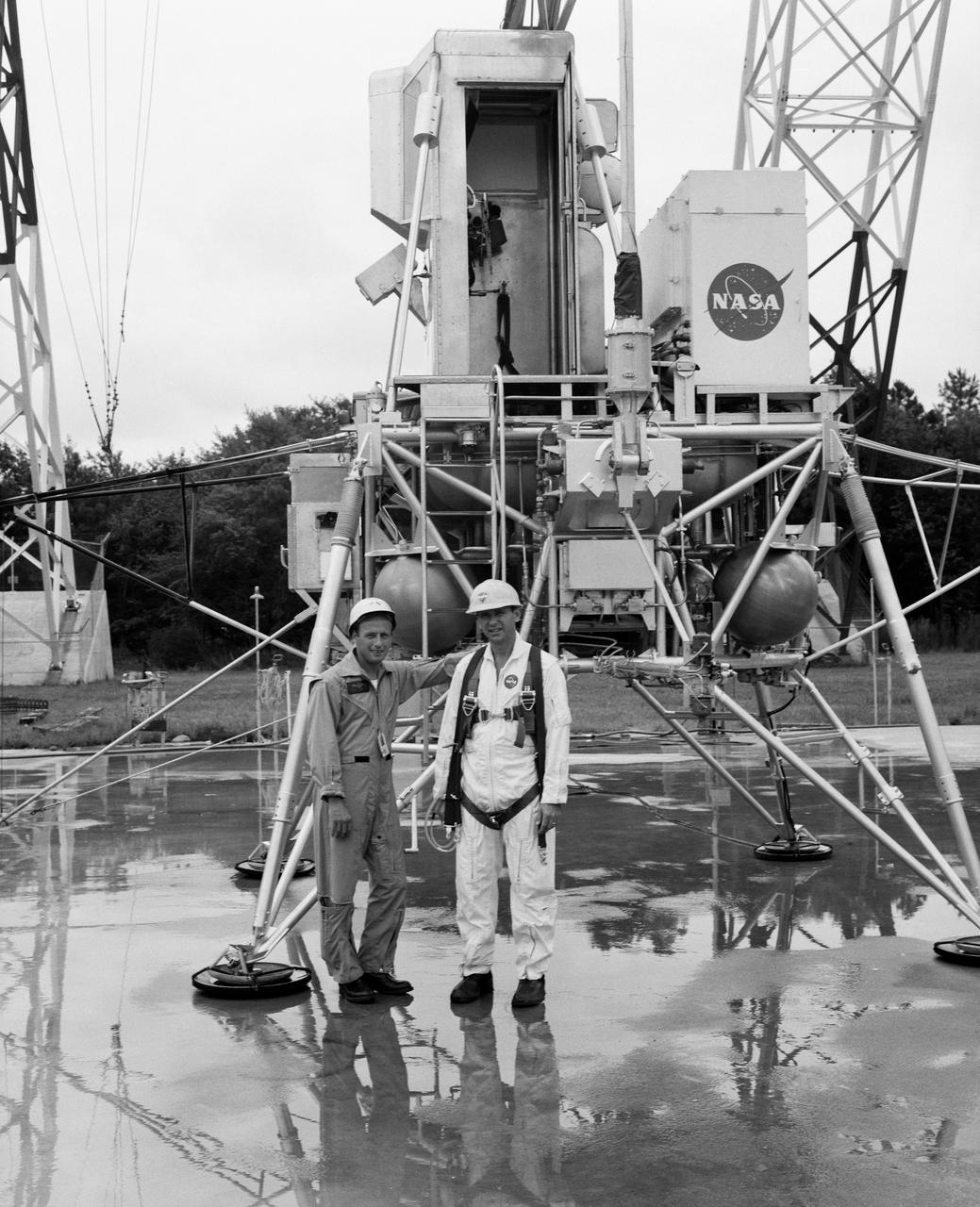
Astronauts Conrad and Bean at Lunar Landing Research Facility. Alan Bean was one of the third group of astronauts named by NASA in October 1963. He served as backup astronaut for the Gemini 10 and Apollo 9 missions. In September of 1962, Mr. Conrad was selected as an astronaut by NASA. His first flight was Gemini V, which established the space endurance record and placed the United States in the lead for man-hours in space. As commander of Gemini XI, Mr. Conrad helped to set a world's altitude record. He then served as commander of Apollo XII, the second lunar landing. On Mr. Conrad's final mission, he served as commander of Skylab II, the first United States Space Station. https://www.nasa.gov/astronauts/biographies/former for more information.
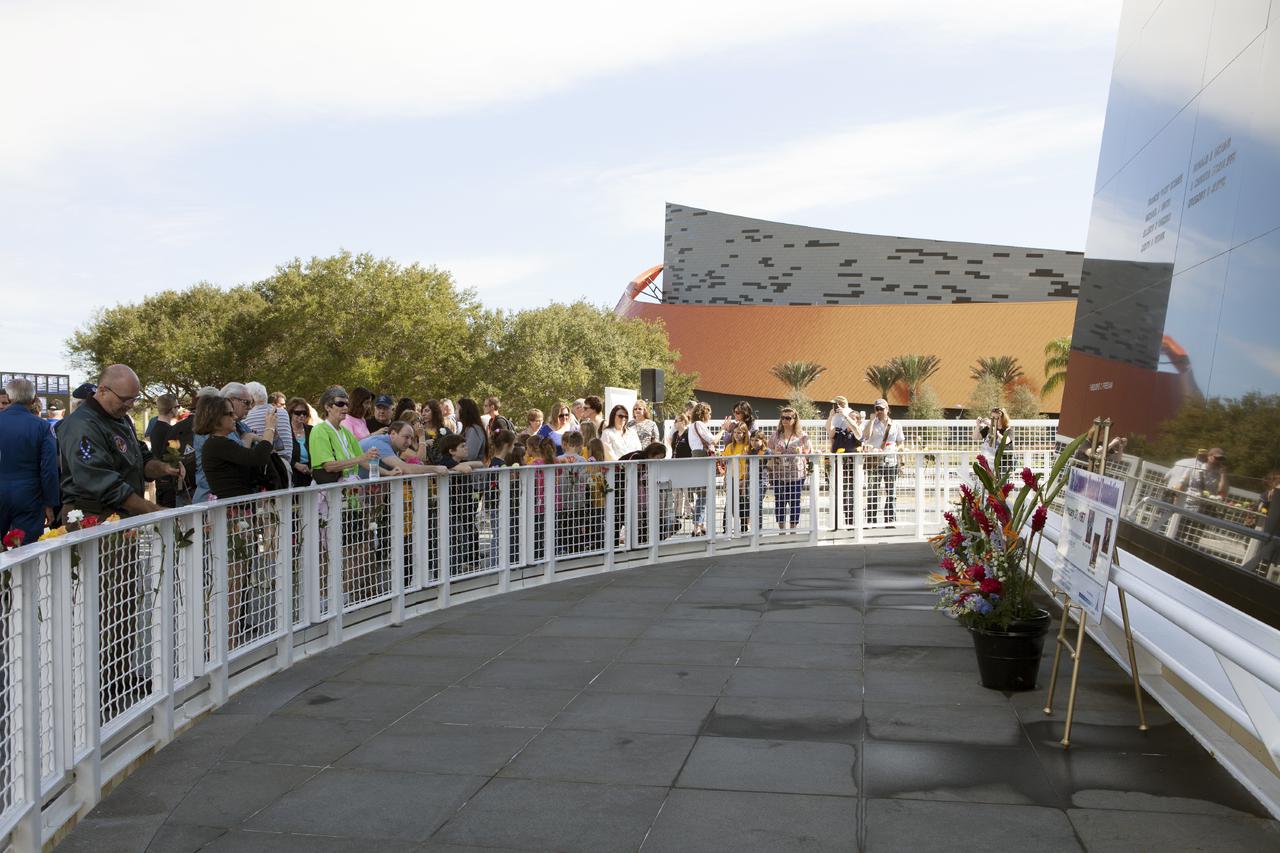
CAPE CANAVERAL, Fla. – Media representatives, NASA Kennedy Space Center employees and guests of the Kennedy Space Center Visitor Complex participate in a ceremony at the Astronauts Memorial Foundation's Space Mirror Memorial at the visitor complex on the 28th anniversary of the space shuttle Challenger accident. The day of the accident in 1986 dawned bitterly cold. Temperatures hovered just a few degrees above freezing as Challenger and its seven astronauts lifted off on the STS-51L mission. The flight ended just 73 seconds later when an O-ring in the right solid rocket booster failed, causing a fireball that led to the loss of the vehicle and crew: Commander Francis Scobee, Pilot Michael Smith, Mission Specialists Judith Resnik, Ellison Onizuka and Ronald McNair, and Payload Specialists Gregory Jarvis and Sharon Christa McAuliffe, a teacher. To learn more about the Space Shuttle Program, visit http:__www.nasa.gov_mission_pages_shuttle_main_index.html. To read the astronauts' NASA biographies, visit http:__www.jsc.nasa.gov_Bios_astrobio_former.html. For information about the AMF, visit http:__www.astronautsmemorial.org_home.html. Photo credit: NASA_Dimitri Gerondidakis
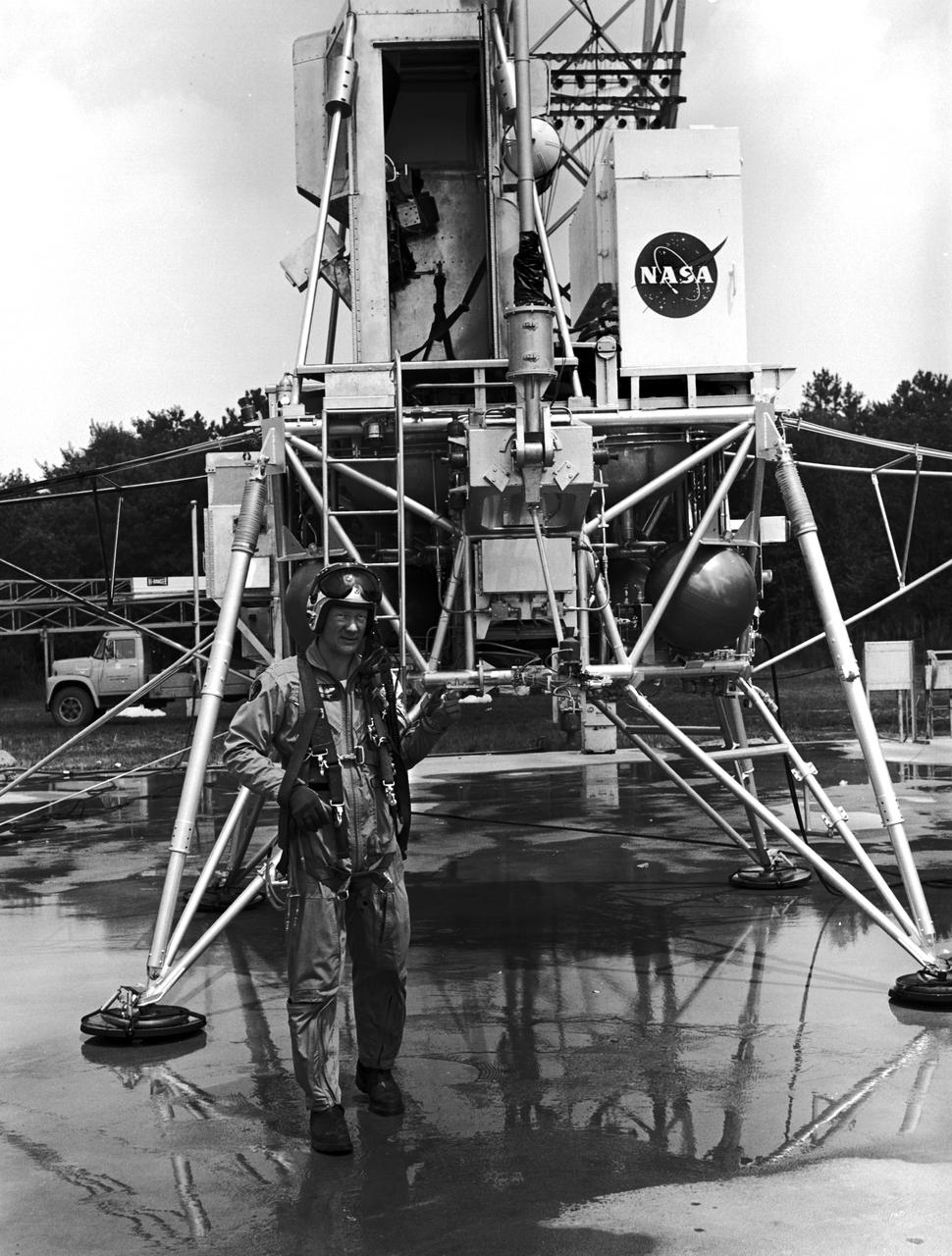
Astronaut Edwin Buzz Aldrin Lunar Module Pilot at the (LLRF) Lunar Landing Research Facility. Aldrin was one of the third group of astronauts named by NASA in October 1963. On November 11, 1966, he and command pilot James Lovell were launched into space in the Gemini 12 spacecraft on a 4-day flight, which brought the Gemini program to a successful close. Aldrin established a new record for extravehicular activity (EVA), spending 5-1/2 hours outside the spacecraft. He served as lunar module pilot for Apollo 11, July 16-24, 1969, the first manned lunar landing mission. Aldrin followed Neil Armstrong onto the lunar surface on July 20, 1969, completing a 2-hour and 15 minute lunar EVA. In July 1971, Aldrin resigned from NASA. Aldrin has logged 289 hours and 53 minutes in space, of which, 7 hours and 52 minutes were spent in EVA. https://www.nasa.gov/astronauts/biographies/former
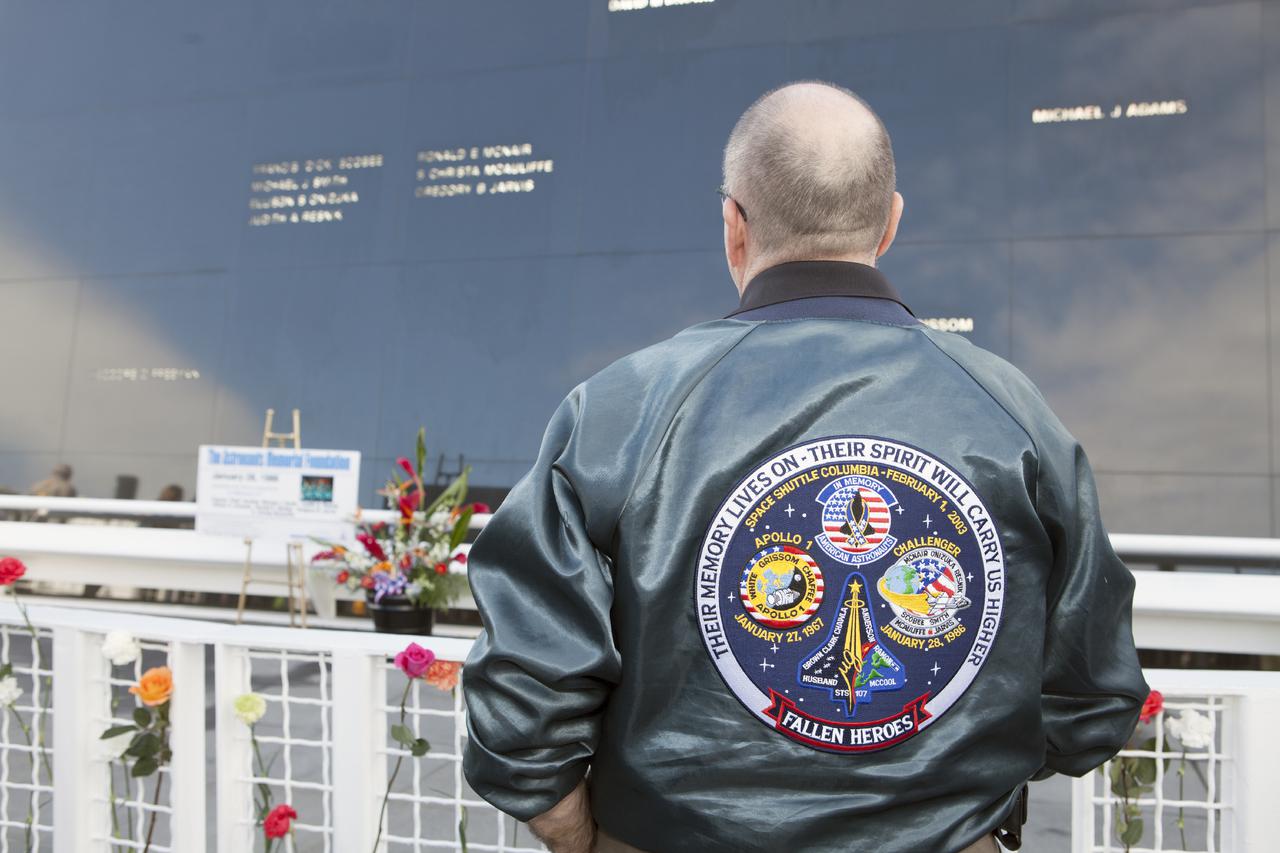
CAPE CANAVERAL, Fla. – The emblem on the jacket of a guest at NASA's Kennedy Space Center Visitor Complex commemorates NASA's 'fallen heroes' whose names are etched on the Astronauts Memorial Foundation's Space Mirror Memorial, following a ceremony on the 28th anniversary of the space shuttle Challenger accident. The day of the accident in 1986 dawned bitterly cold. Temperatures hovered just a few degrees above freezing as Challenger and its seven astronauts lifted off on the STS-51L mission. The flight ended just 73 seconds later when an O-ring in the right solid rocket booster failed, causing a fireball that led to the loss of the vehicle and crew: Commander Francis Scobee, Pilot Michael Smith, Mission Specialists Judith Resnik, Ellison Onizuka and Ronald McNair, and Payload Specialists Gregory Jarvis and Sharon Christa McAuliffe, a teacher. To learn more about the Space Shuttle Program, visit http:__www.nasa.gov_mission_pages_shuttle_main_index.html. To read the astronauts' NASA biographies, visit http:__www.jsc.nasa.gov_Bios_astrobio_former.html. For information about the AMF, visit http:__www.astronautsmemorial.org_home.html. Photo credit: NASA_Dimitri Gerondidakis
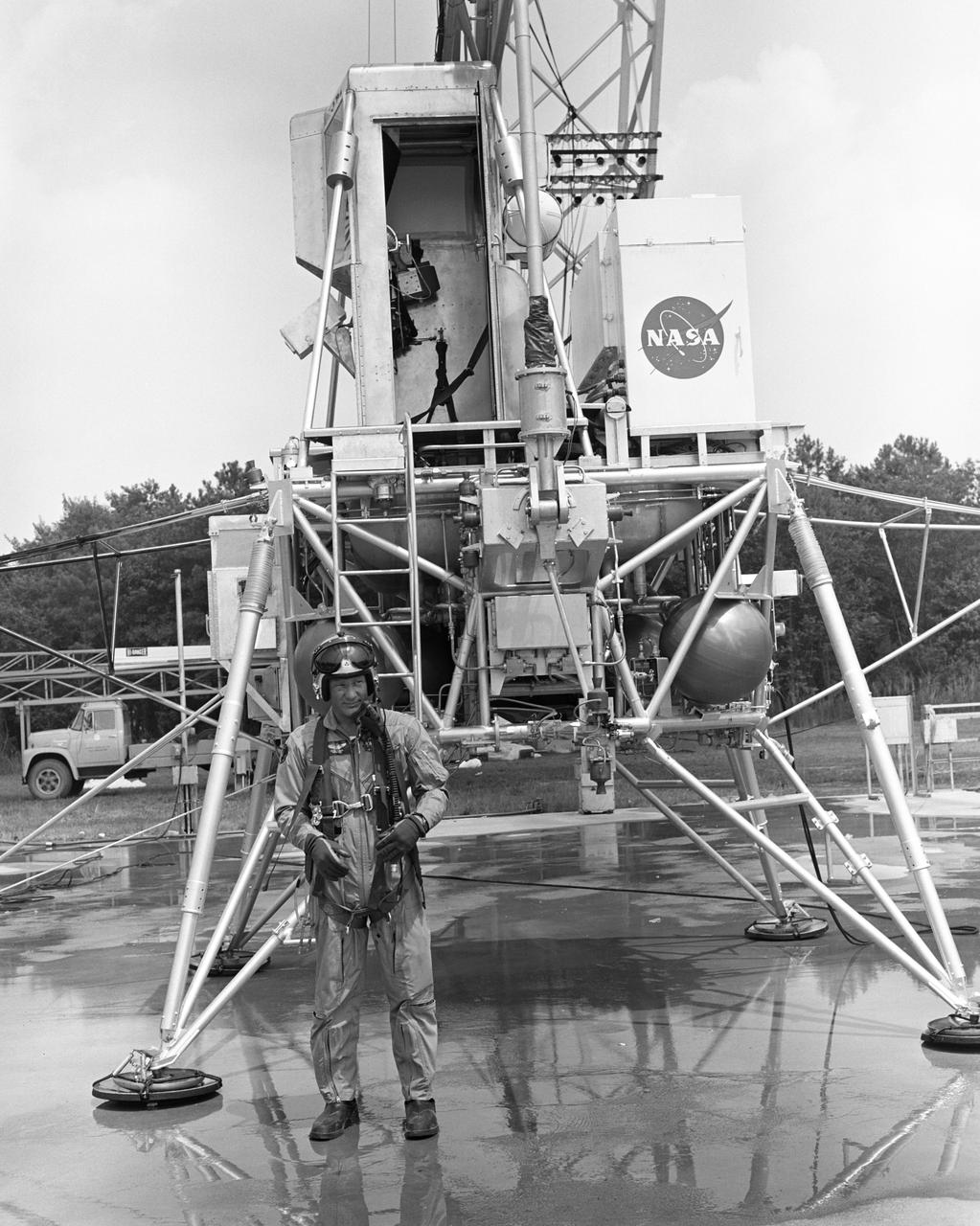
Astronaut Edwin Buzz Aldrin Lunar Module Pilot at the (LLRF) Lunar Landing Research Facility. Aldrin was one of the third group of astronauts named by NASA in October 1963. On November 11, 1966, he and command pilot James Lovell were launched into space in the Gemini 12 spacecraft on a 4-day flight, which brought the Gemini program to a successful close. Aldrin established a new record for extravehicular activity (EVA), spending 5-1/2 hours outside the spacecraft. He served as lunar module pilot for Apollo 11, July 16-24, 1969, the first manned lunar landing mission. Aldrin followed Neil Armstrong onto the lunar surface on July 20, 1969, completing a 2-hour and 15 minute lunar EVA. In July 1971, Aldrin resigned from NASA. Aldrin has logged 289 hours and 53 minutes in space, of which, 7 hours and 52 minutes were spent in EVA. https://www.nasa.gov/astronauts/biographies/former