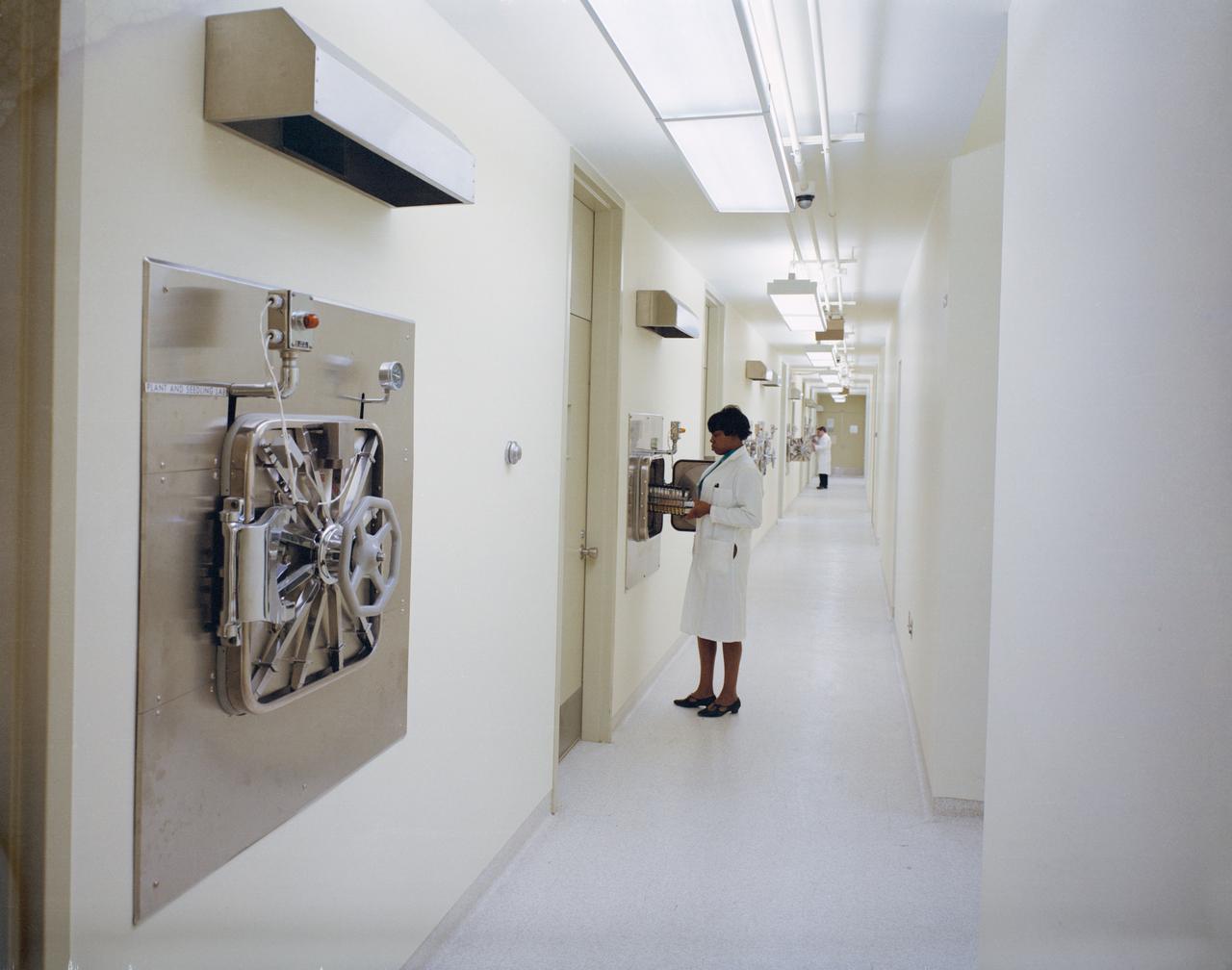
Biological Test Laboratory, Sample Operations Area, Lunar Receiving Laboratory, bldg 37, Manned Spacecraft Center, Houston, Texas.
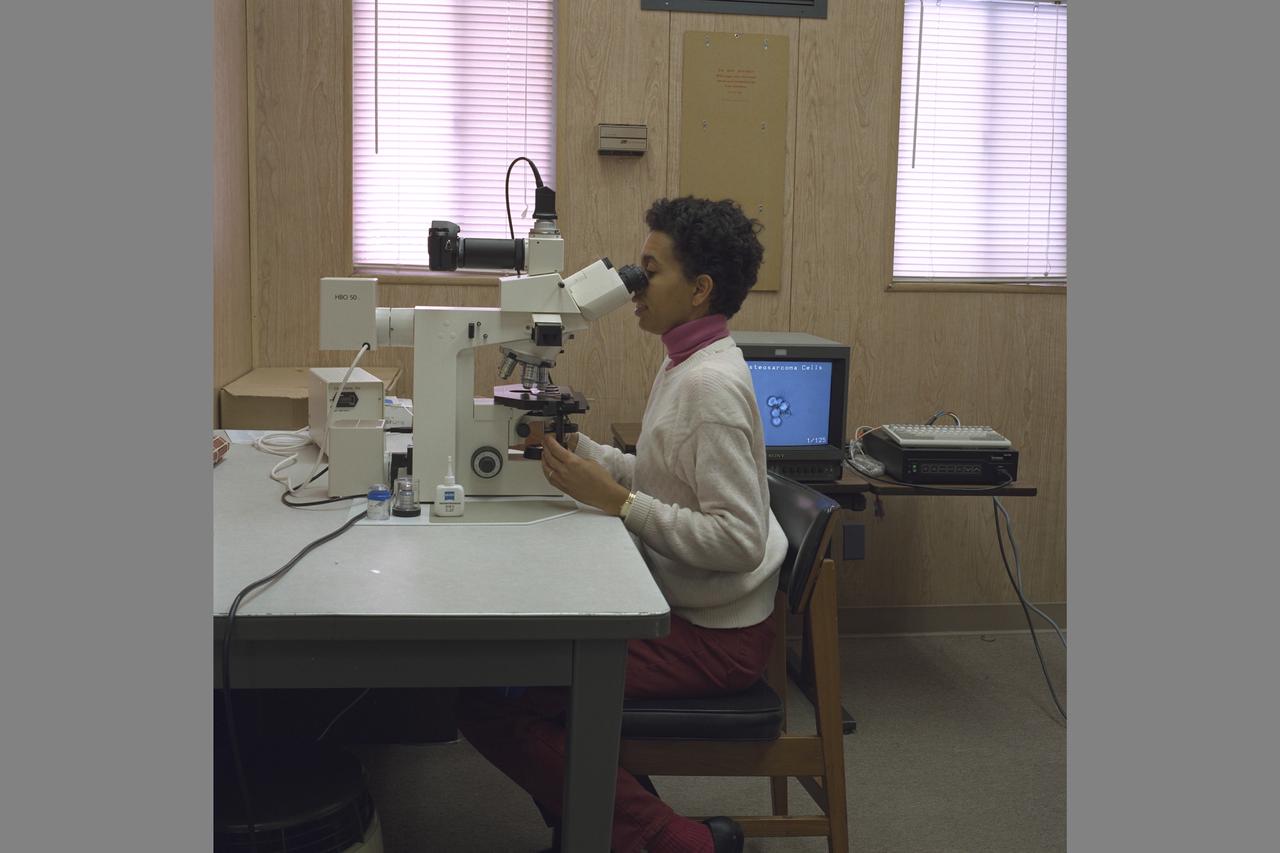
ZEISS COMPOUND MICROSCOPE WITH MONITOR & MELISSA KIRVEN-BROOKS. Space Station Biological Research Project. (SSBRP)
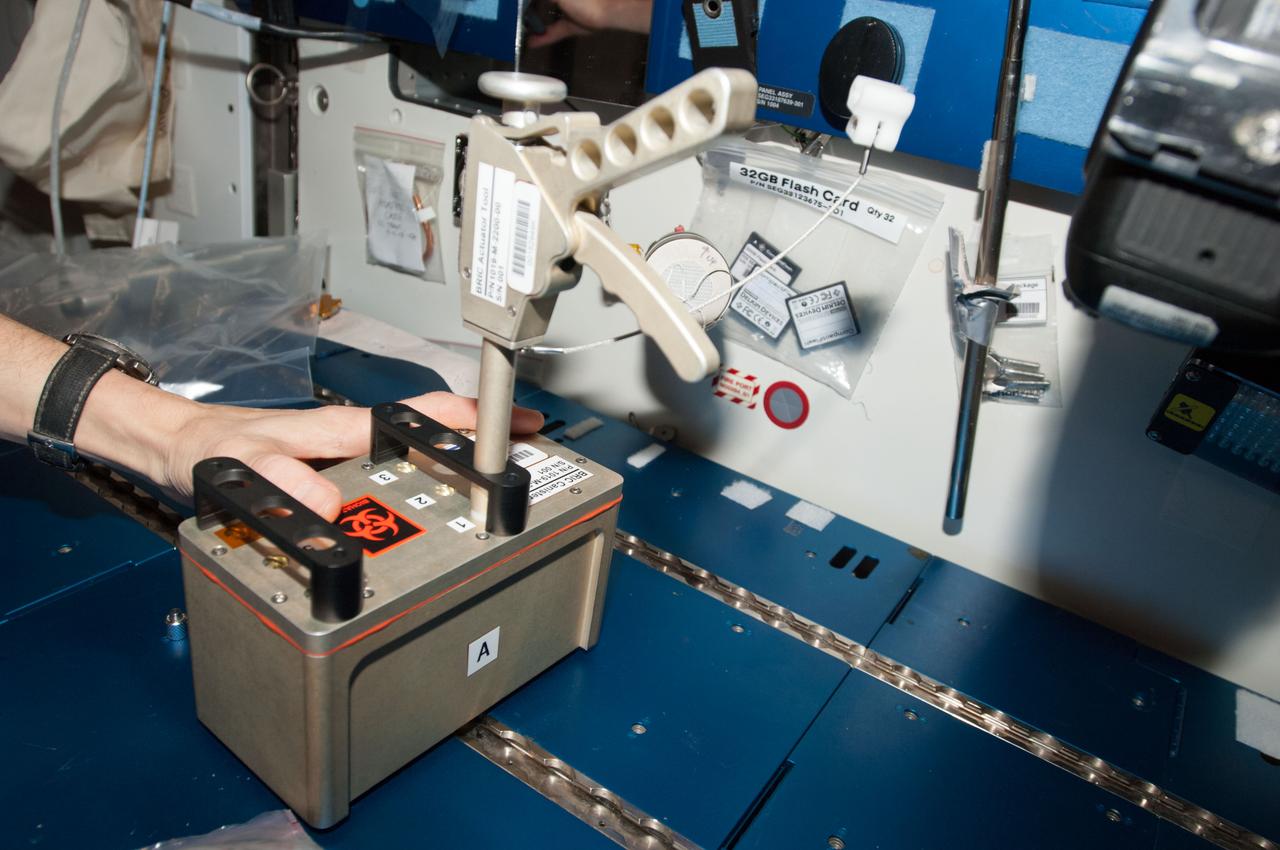
iss034e065939 (3/11/2013) --- A view of the Biological Research In Canisters-17 - A and B actuation (BRIC-17). BRIC supports a variety of plant growth investigations which focus on the growth and development of cell cultures in microgravity. Specimens are preserved with a chemical fixative and returned to the ground for post-flight evaluation.
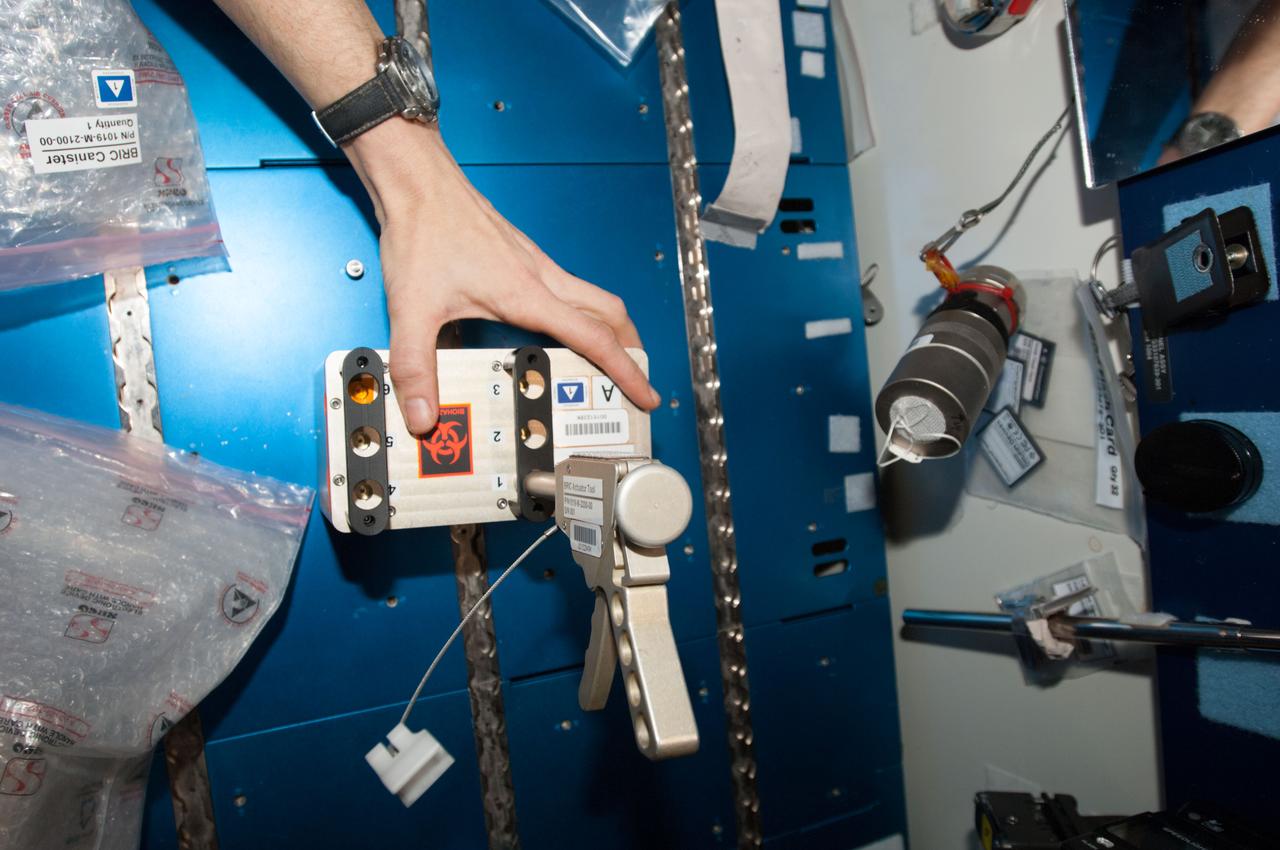
iss034e065937 (3/11/2013) --- A view of the Biological Research In Canisters-17 - A and B actuation (BRIC-17). BRIC supports a variety of plant growth investigations which focus on the growth and development of cell cultures in microgravity. Specimens are preserved with a chemical fixative and returned to the ground for post-flight evaluation.
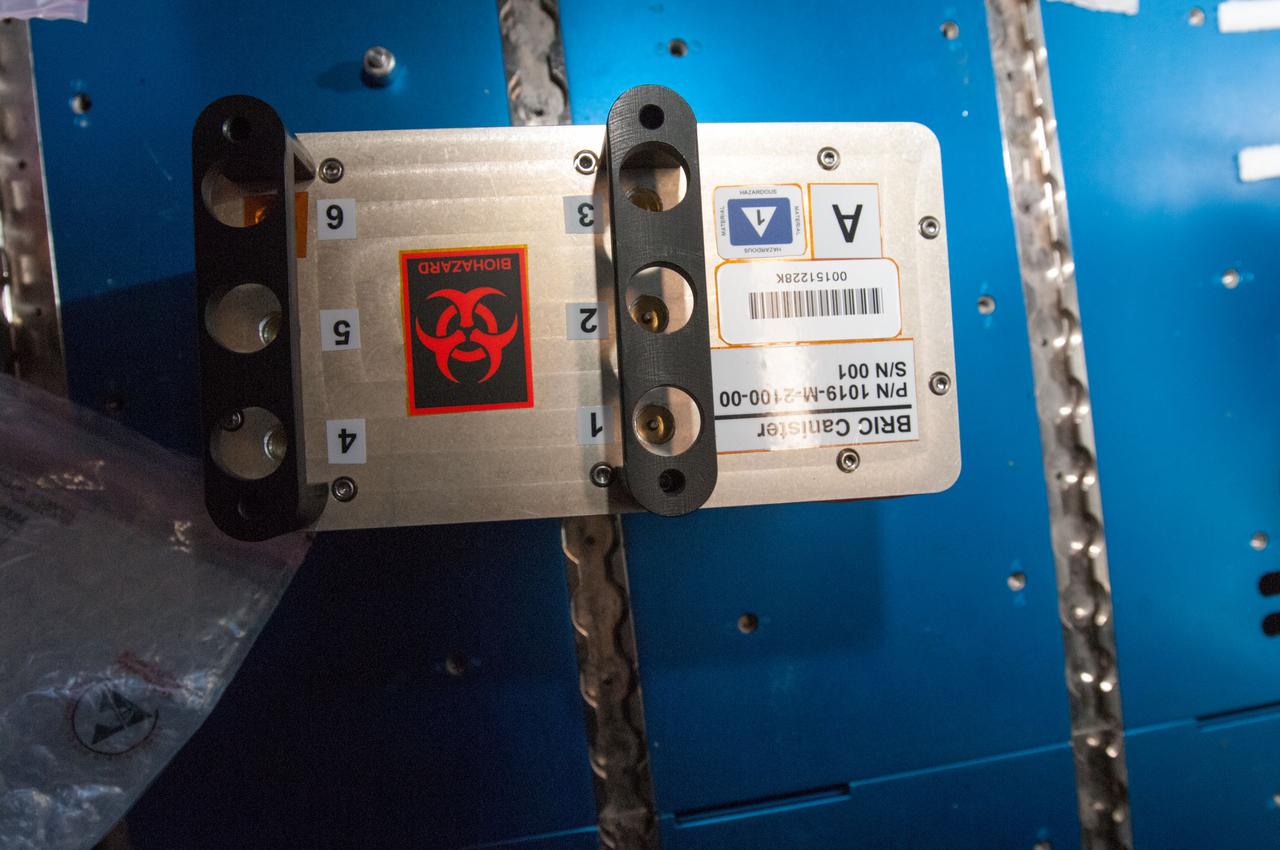
iss034e065948 (3/11/2013) --- A view of the Biological Research In Canisters-17 - A and B actuation (BRIC-17). BRIC supports a variety of plant growth investigations which focus on the growth and development of cell cultures in microgravity. Specimens are preserved with a chemical fixative and returned to the ground for post-flight evaluation.
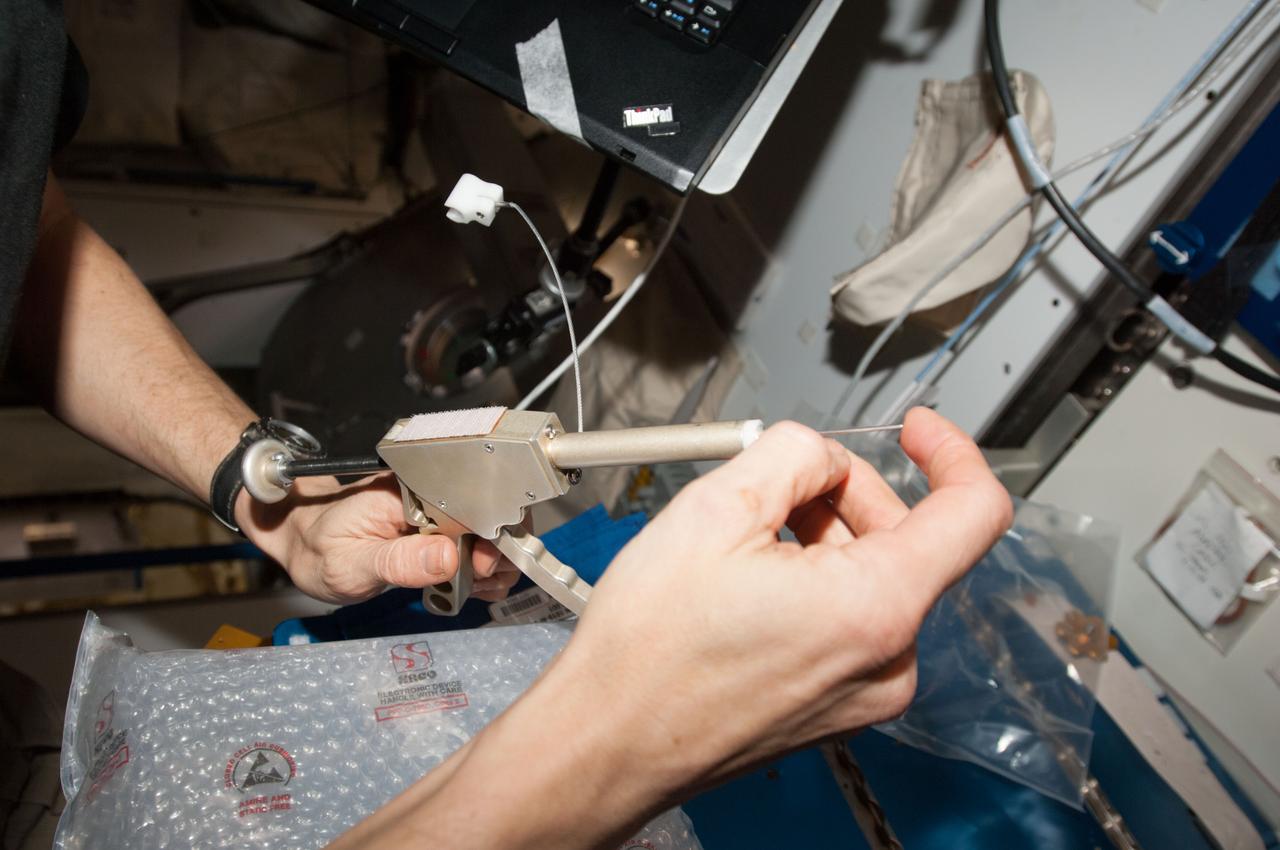
iss034e065943 (3/11/2013) --- A view of the Biological Research In Canisters-17 - A and B actuation (BRIC-17). BRIC supports a variety of plant growth investigations which focus on the growth and development of cell cultures in microgravity. Specimens are preserved with a chemical fixative and returned to the ground for post-flight evaluation.

STS085-333-013 (12 August 1997) --- Astronaut Curtis L. Brown, Jr., mission commander, performs Biological Research in Canisters (BRIC) operations on the mid-deck of the Space Shuttle Discovery on flight day six.
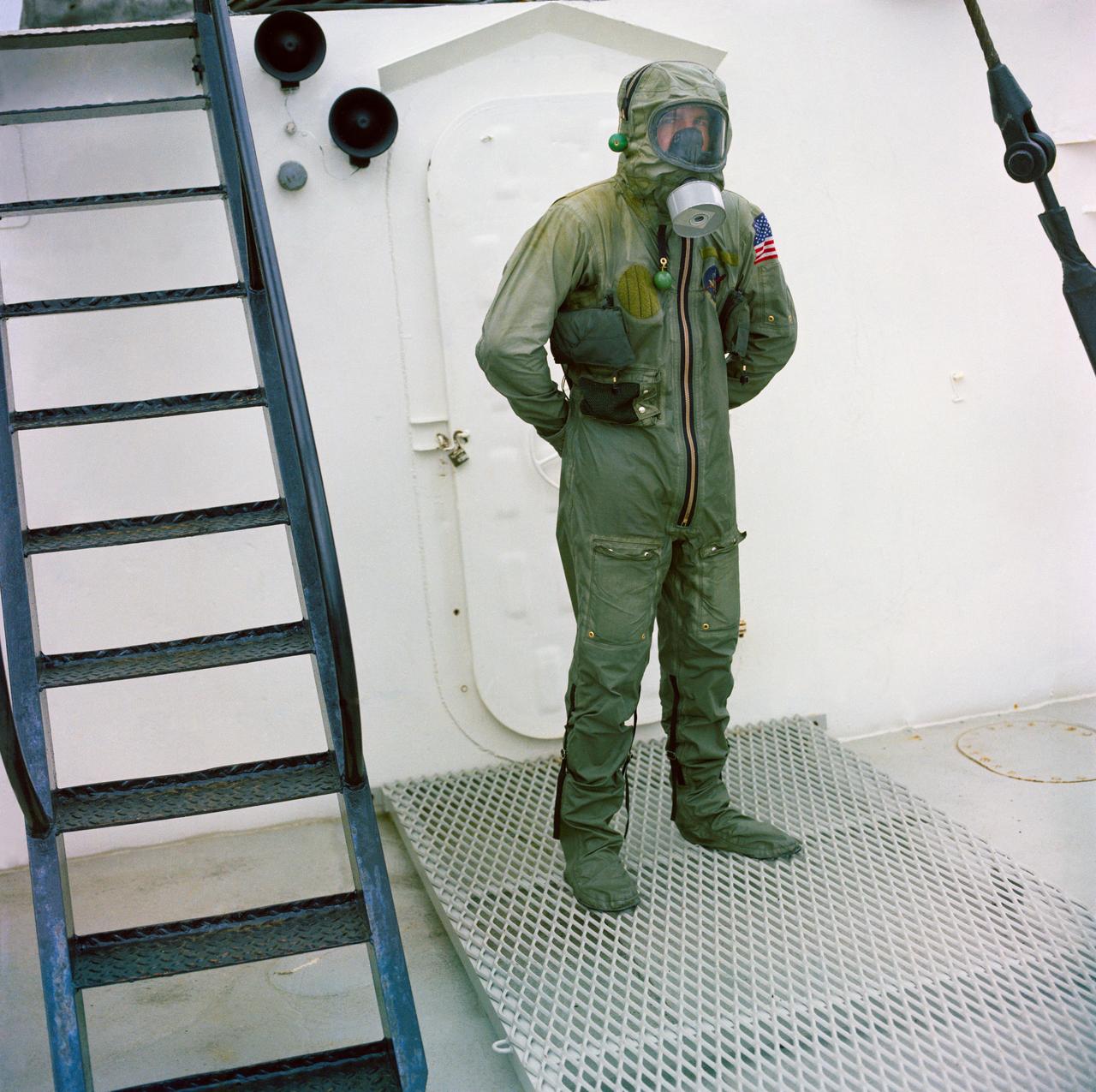
View of subject wearing Biological Isolation Garment (BIG) during a qualification test.
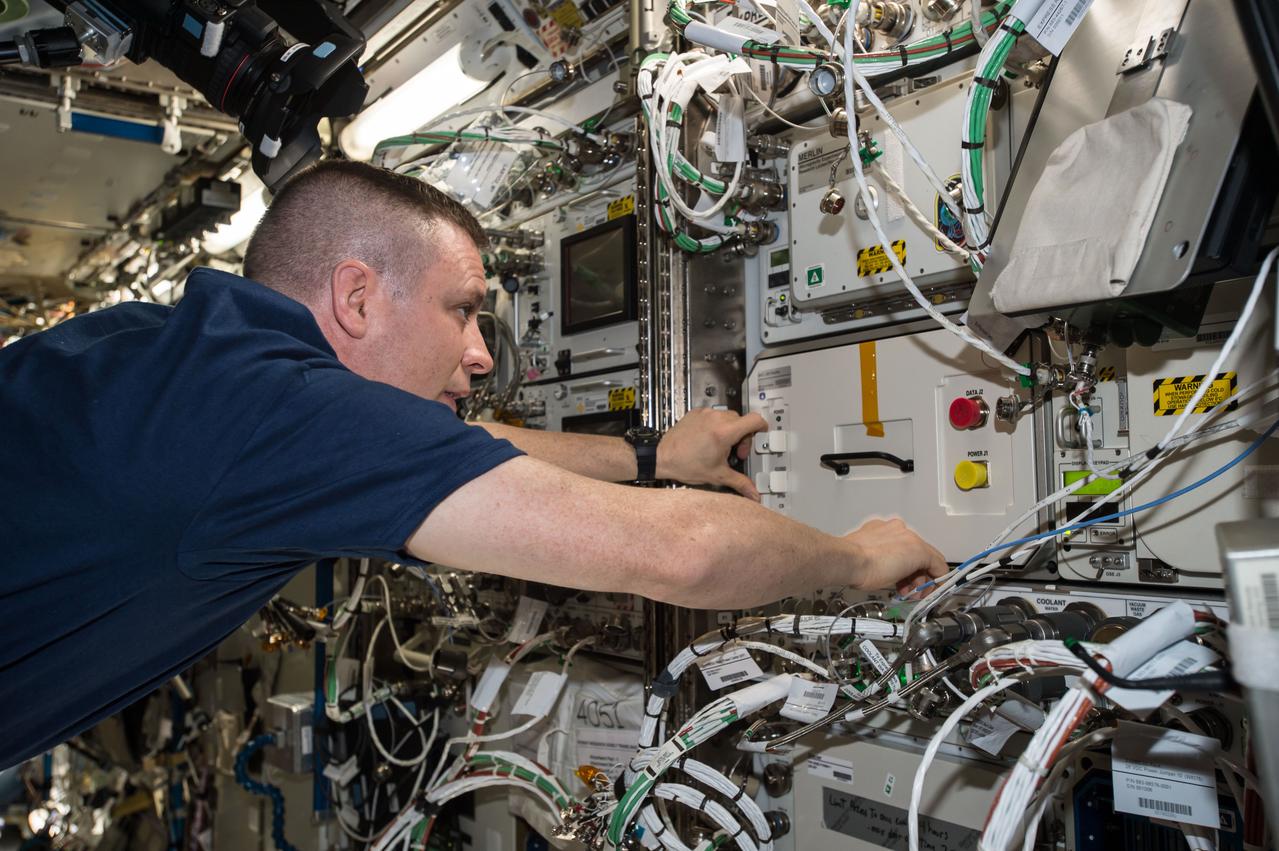
iss052e073850 (Aug. 25, 2017) --- NASA astronaut Jack Fischer installs hardware Biological Research In Canisters - Light Emitting Diode (BRIC-LED) for future experiments investigating seedling, microbial, or fungal growth.
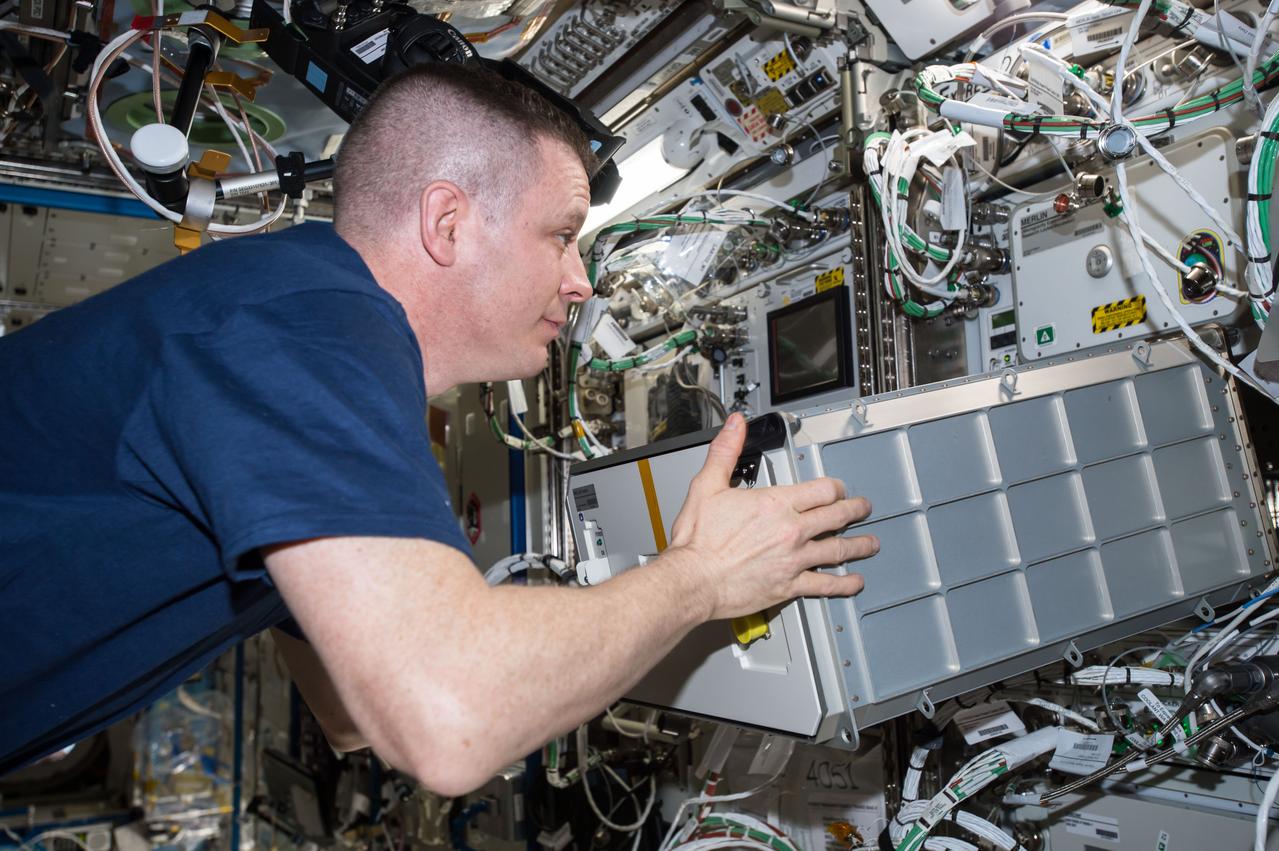
iss052e073846 (Aug. 25, 2017) --- NASA astronaut Jack Fischer installling the Biological Research In Canisters (BRIC) Light Emitting Diode (LED) for future BRIC-LED experiments.
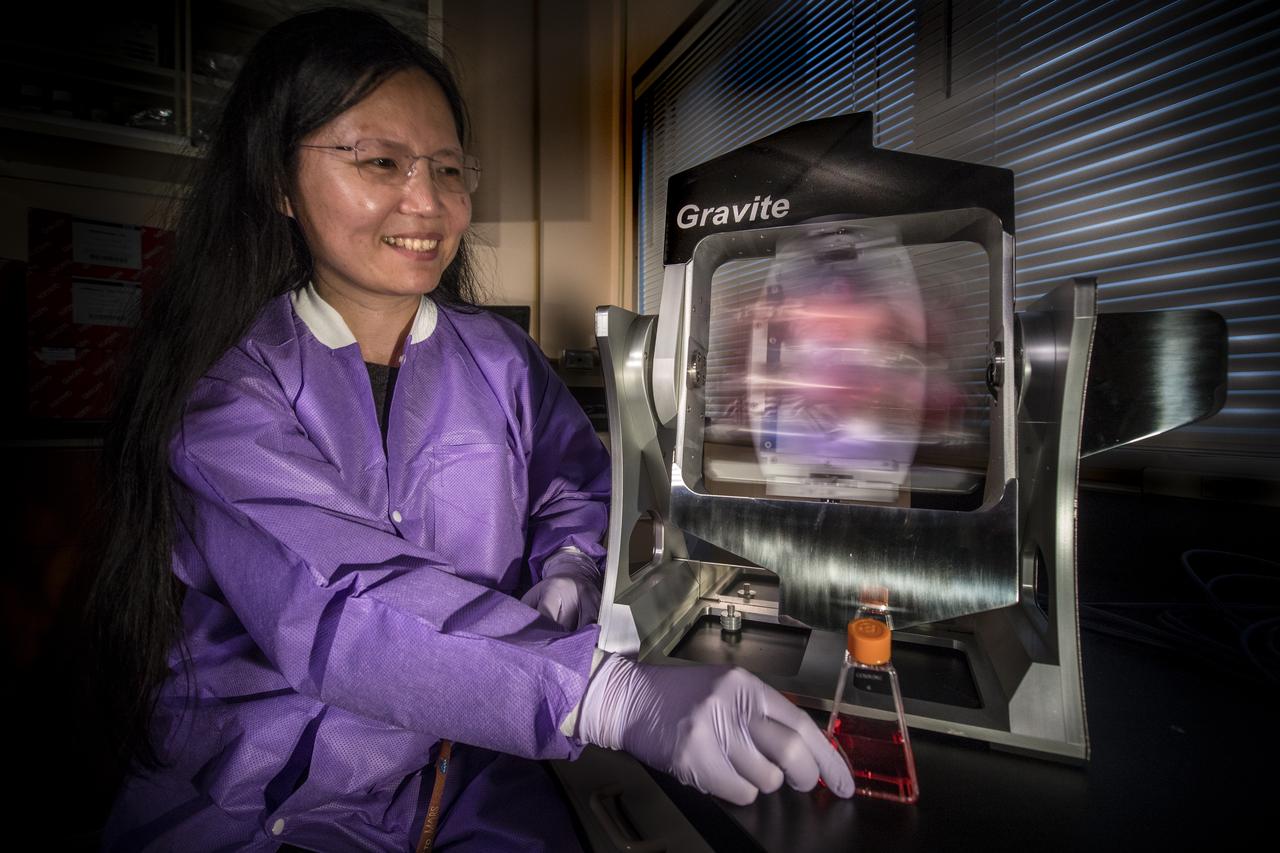
Dr. Ye Zhang, project scientist for the ISS Research Office at NASA’s Kennedy Space Center in Florida, demonstrates how biological samples are tested in a microgravity simulation device in the Microgravity Simulation Support Facility on Dec. 20, 2018.
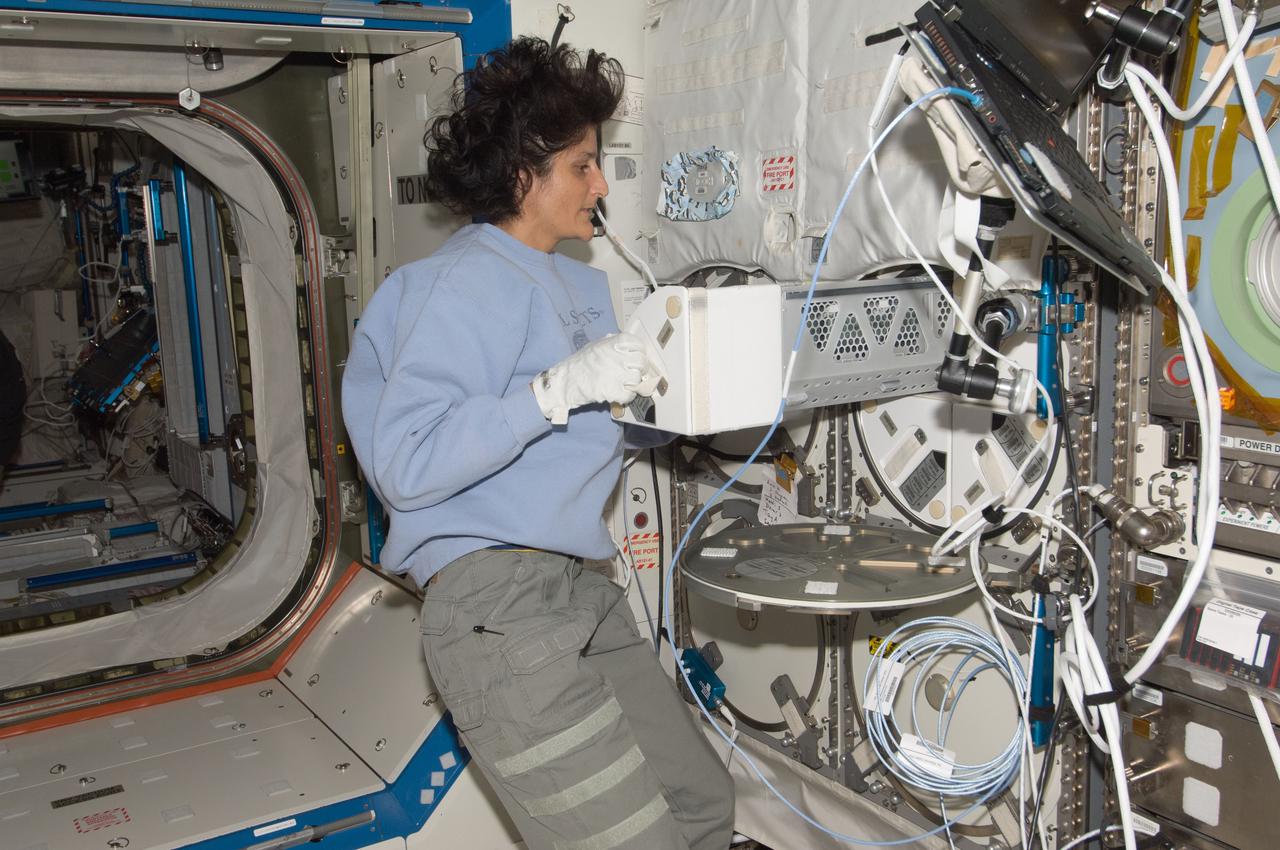
ISS032-E-011639 (2 Aug. 2012) --- NASA astronaut Sunita Williams, Expedition 32 flight engineer, prepares to insert biological samples in the Minus Eighty Laboratory Freezer for ISS-2 (MELFI-2) in the Destiny laboratory of the International Space Station.
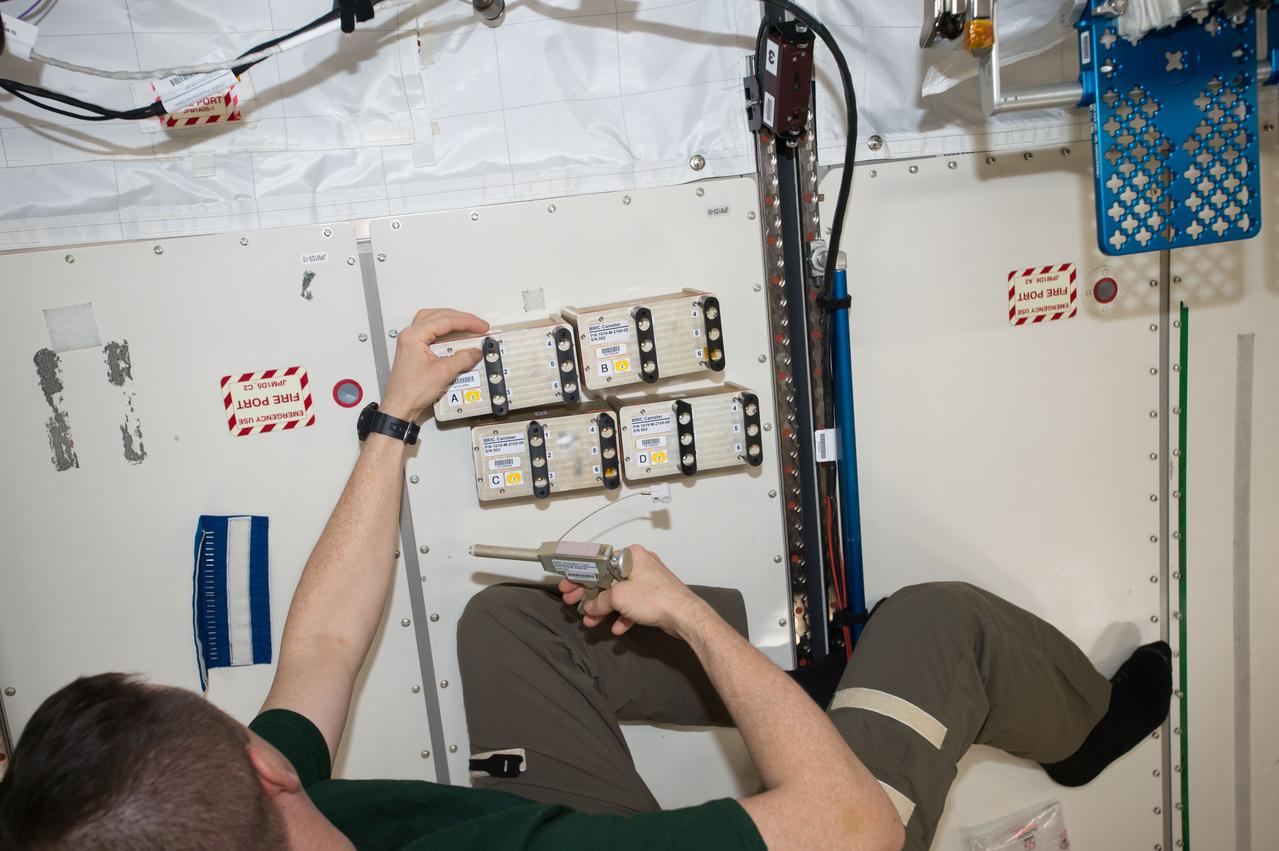
iss052e079049 (Aug. 31, 2017) --- NASA astronaut Jack Fischer with four cansiters of the Biological Research in Canisters-22 (BRIC-22) experiment in the Japanese Experiment Module (JEM) Pressurized Module (JPM). BRIC-22 studies the stress response in plants by comparing 8 different variants of thale cress (Arabidopsis thaliana) in the microgravity environment.
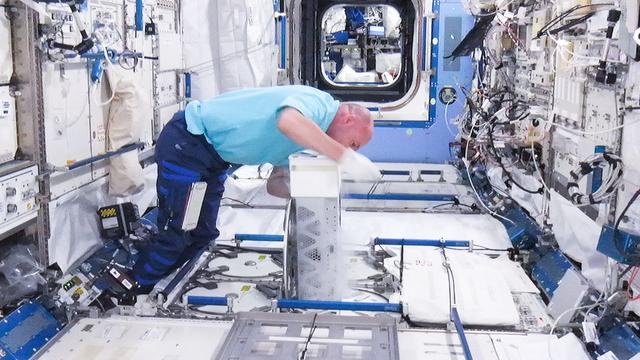
ISS030-E-116879 (9 Feb. 2012) --- European Space Agency astronaut Andre Kuipers, Expedition 30 flight engineer, prepares to insert biological samples in the Minus Eighty Laboratory Freezer for ISS (MELFI-1) in the Kibo laboratory of the International Space Station.
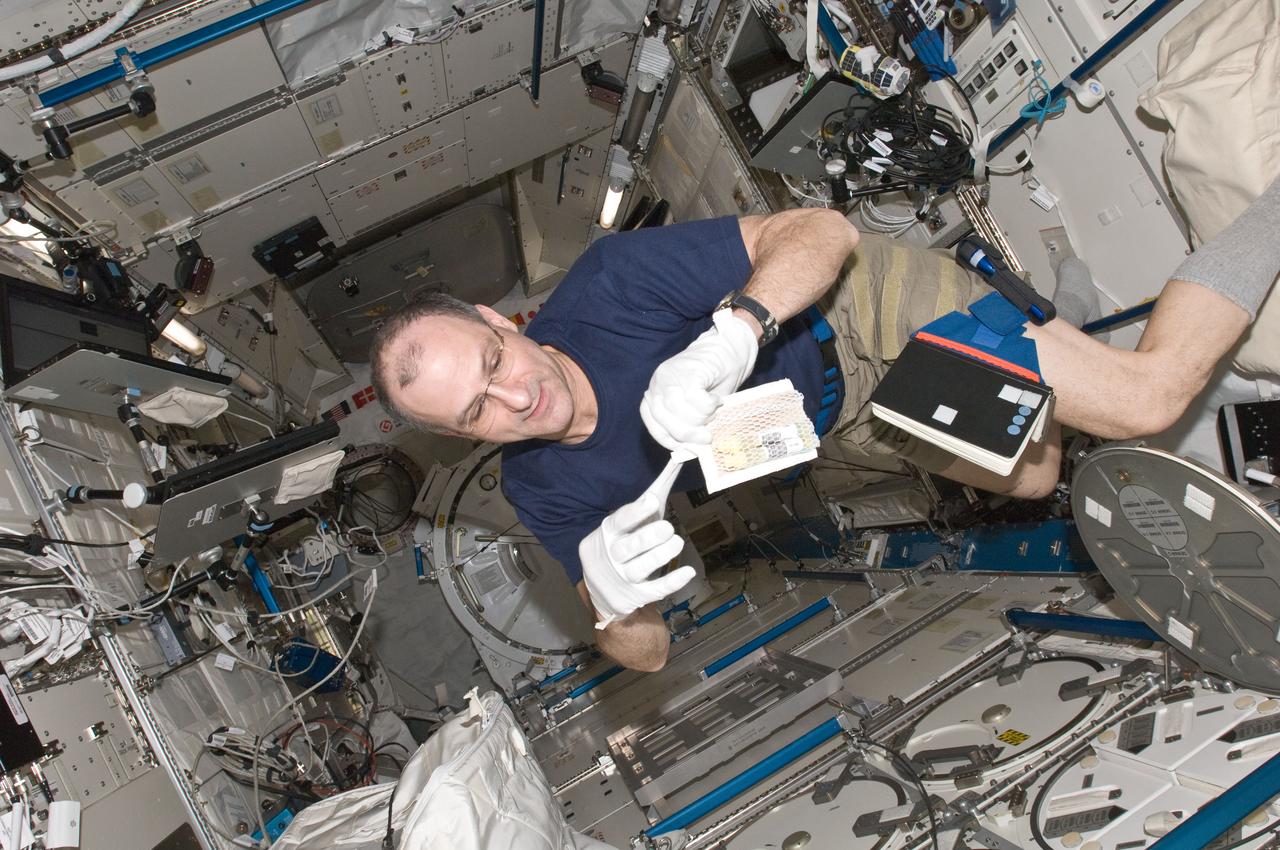
ISS030-E-050864 (26 Jan. 2012) --- NASA astronaut Don Pettit, Expedition 30 flight engineer, prepares to insert biological samples in the Minus Eighty Laboratory Freezer for ISS (MELFI-1) in the Kibo laboratory of the International Space Station.
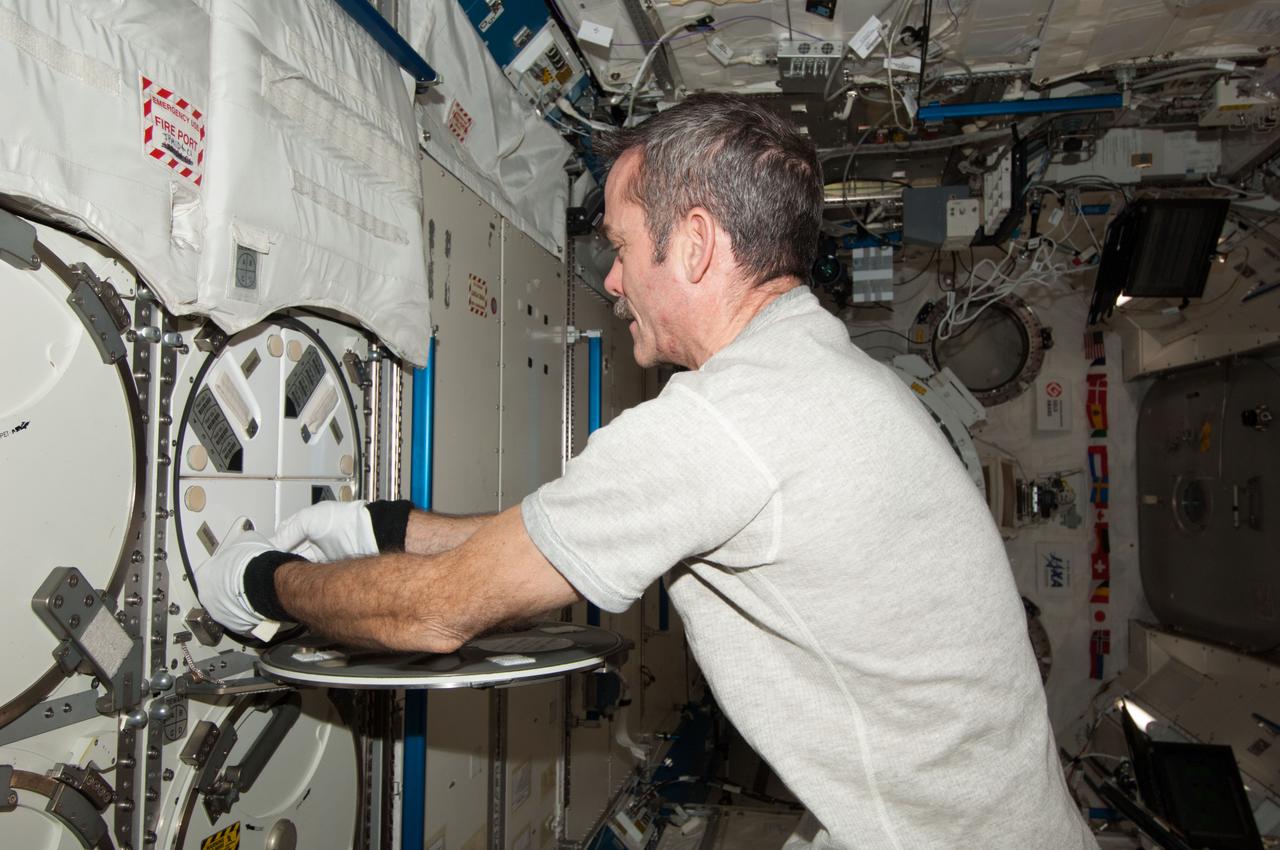
ISS034-E-023771 (7 Jan. 2013) --- Canadian Space Agency astronaut Chris Hadfield, Expedition 34 flight engineer, prepares to insert biological samples in the Minus Eighty Laboratory Freezer for ISS (MELFI-1) in the Kibo laboratory of the International Space Station.
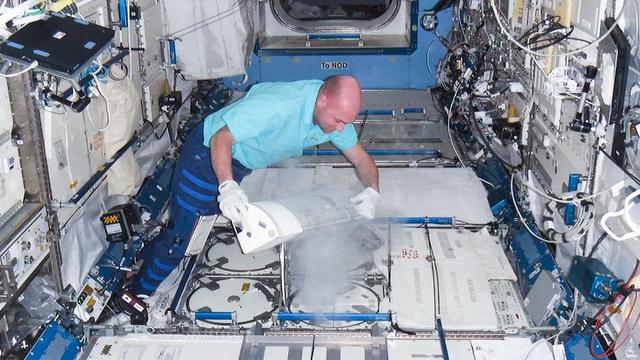
ISS030-E-116886 (9 Feb. 2012) --- European Space Agency astronaut Andre Kuipers, Expedition 30 flight engineer, prepares to insert biological samples in the Minus Eighty Laboratory Freezer for ISS (MELFI-1) in the Kibo laboratory of the International Space Station.
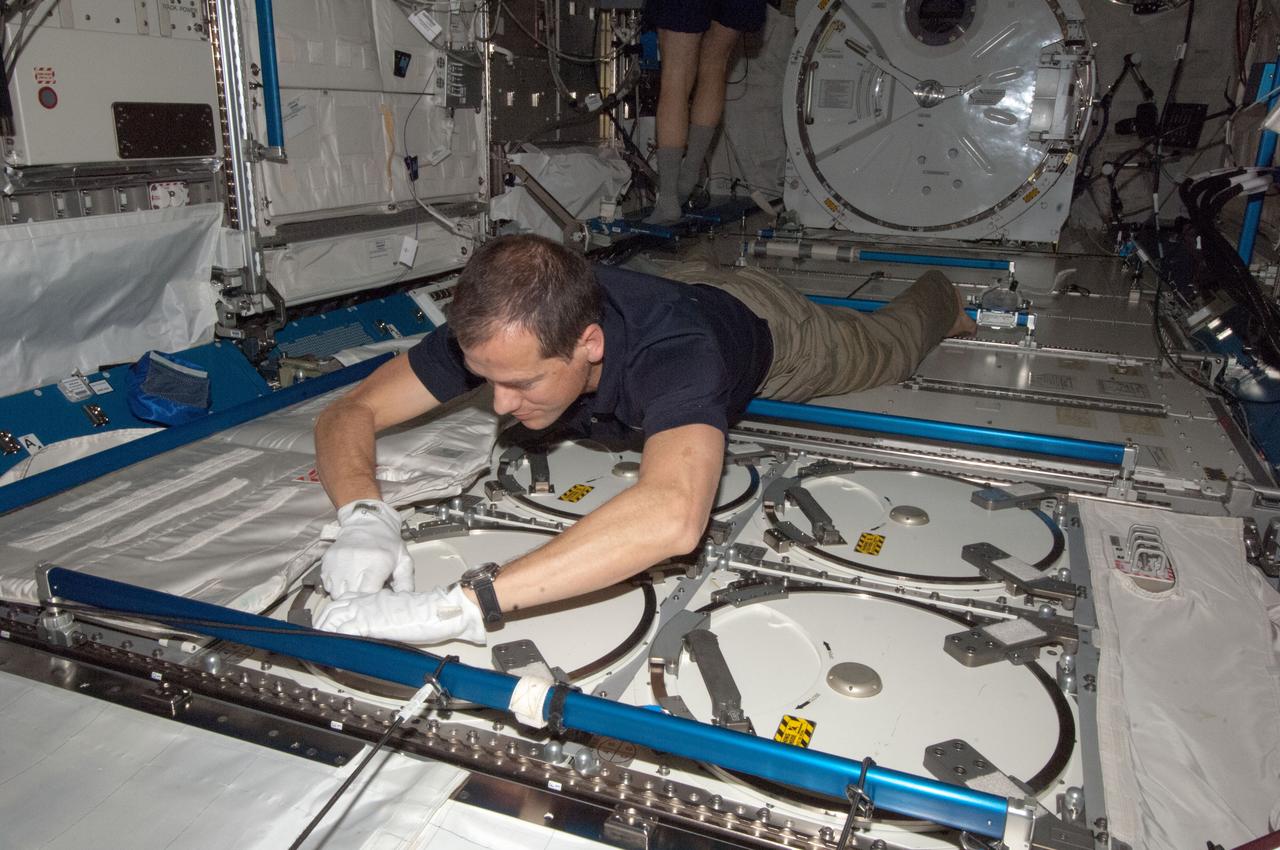
ISS034-E-026607 (7 Jan. 2013) --- NASA astronaut Tom Marshburn, Expedition 34 flight engineer, prepares to insert biological samples in the Minus Eighty Laboratory Freezer for ISS (MELFI-1) in the Kibo laboratory of the International Space Station.
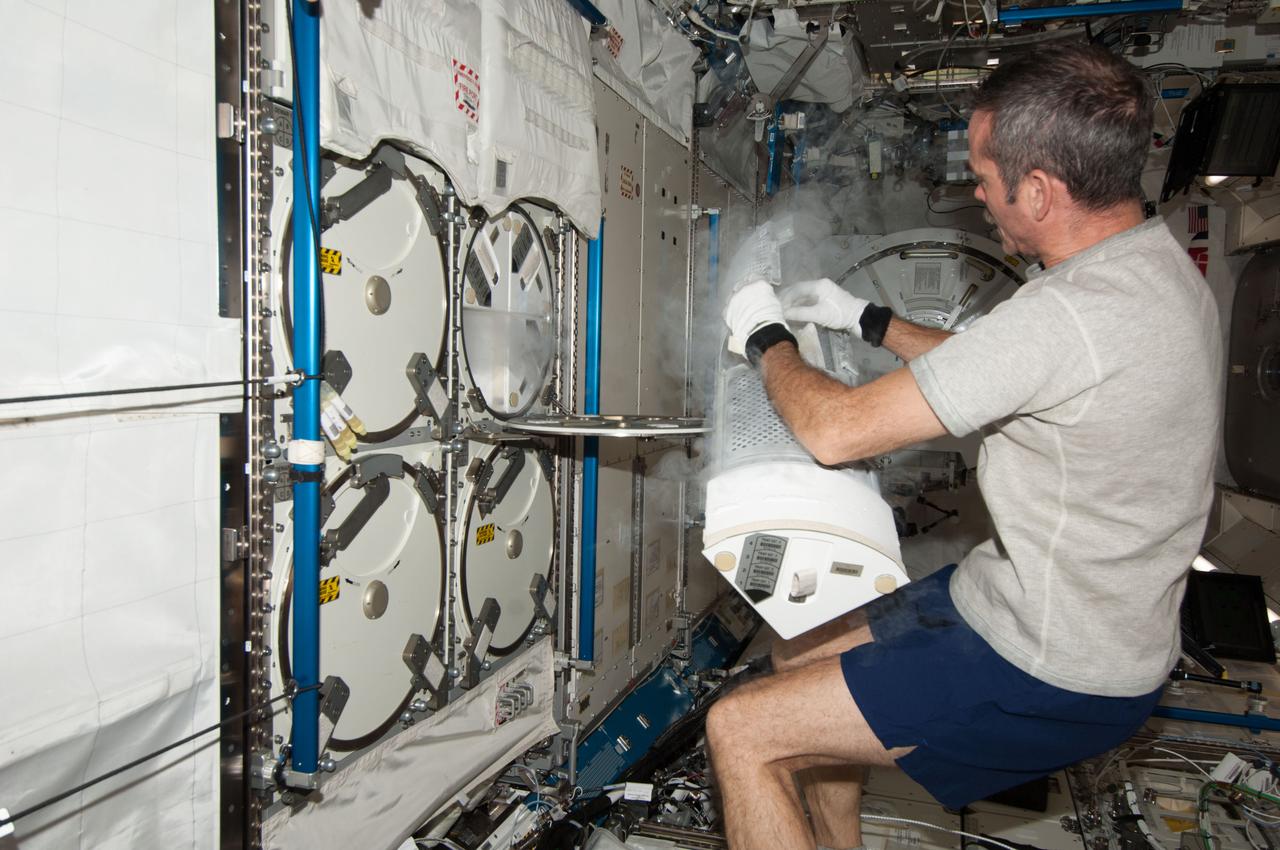
View of Canadian Space Agency (CSA) Chris Hadfield,Expedition 34 Flight Engineer (FE),preparing to insert biological samples in the Minus Eighty Laboratory Freezer for International Space Station (ISS) - (MELFI-1),in the Japanese Experiment Module (JEM) Pressurized Module (JPM). Photo was taken during Expedition 34.
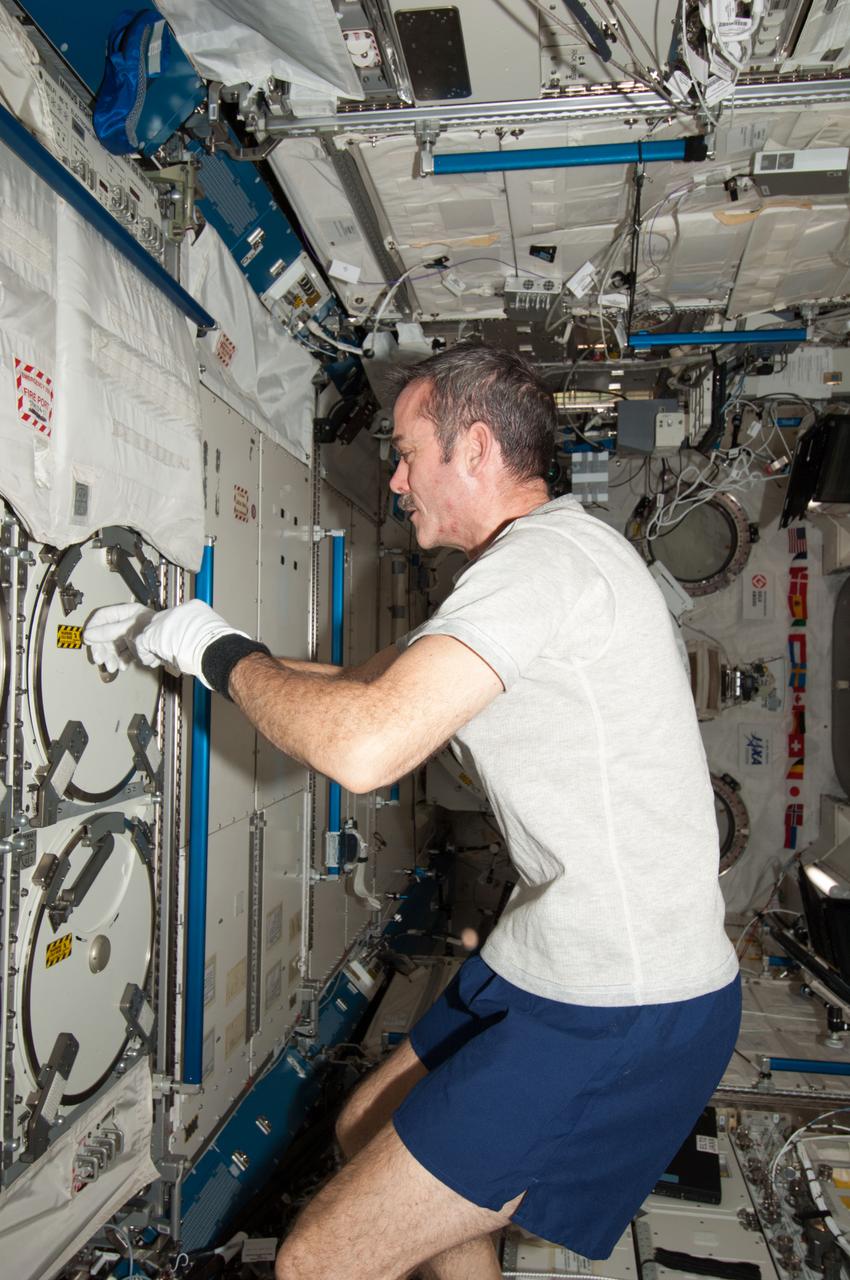
ISS034-E-023768 (7 Jan. 2013) --- Canadian Space Agency astronaut Chris Hadfield, Expedition 34 flight engineer, prepares to insert biological samples in the Minus Eighty Laboratory Freezer for ISS (MELFI-1) in the Kibo laboratory of the International Space Station.
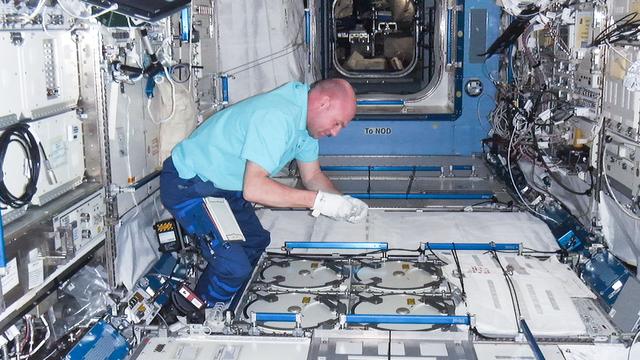
ISS030-E-116878 (9 Feb. 2012) --- European Space Agency astronaut Andre Kuipers, Expedition 30 flight engineer, prepares to insert biological samples in the Minus Eighty Laboratory Freezer for ISS (MELFI-1) in the Kibo laboratory of the International Space Station.
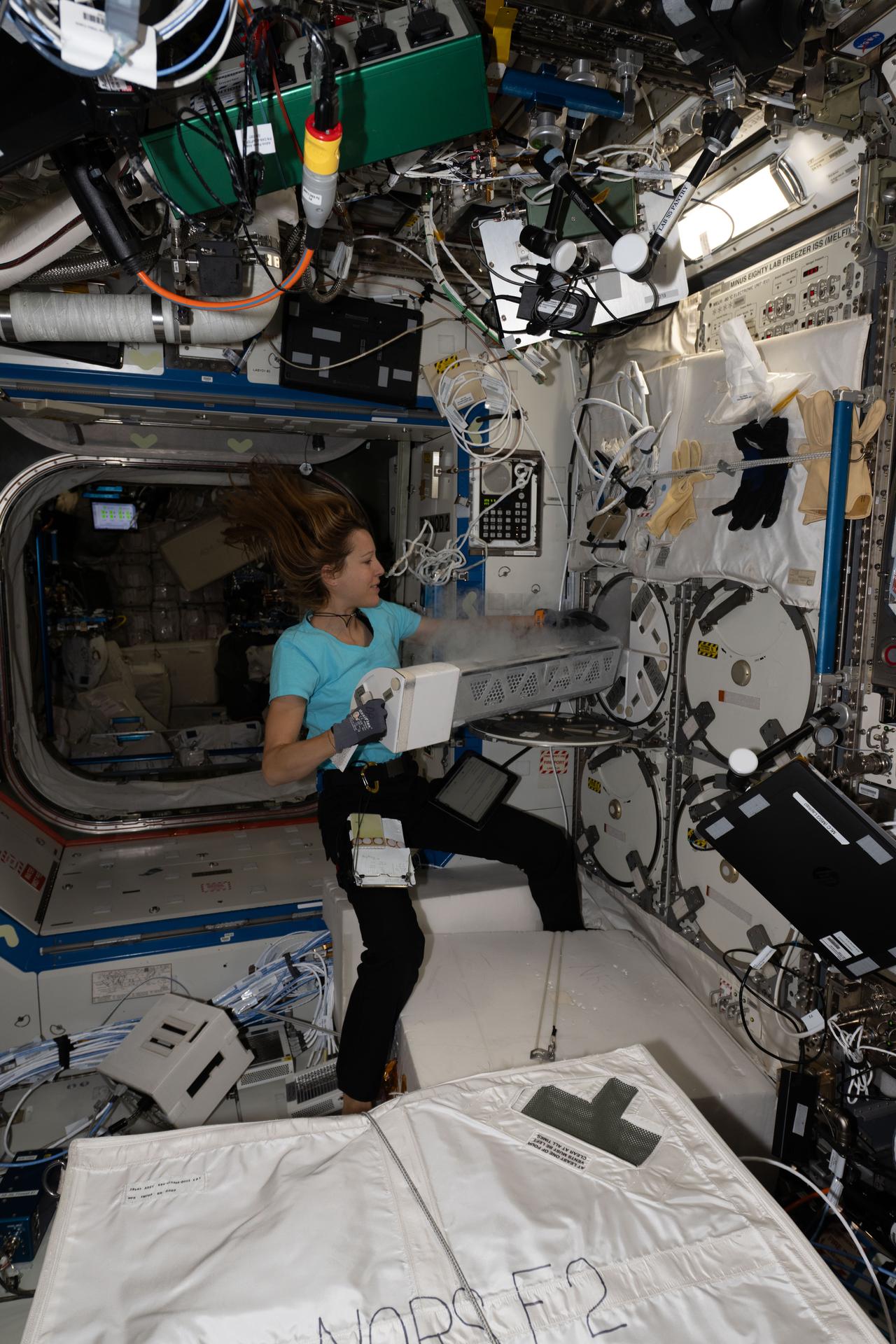
iss074e0414445 (March 26, 2026) --- ESA (European Space Agency) astronaut and Expedition 74 flight engineer Sophie Adenot inserts biological research samples into a science freezer inside the International Space Station’s Destiny laboratory module. The freezer, formally known as the Minus Eighty-degree Laboratory Freezer for ISS (MELFI), maintains experiment samples at ultra‑cold temperatures, significantly enhancing microgravity research capabilities and preserving biological specimens for analysis back on Earth. Credit: ESA/Sophie Adenot
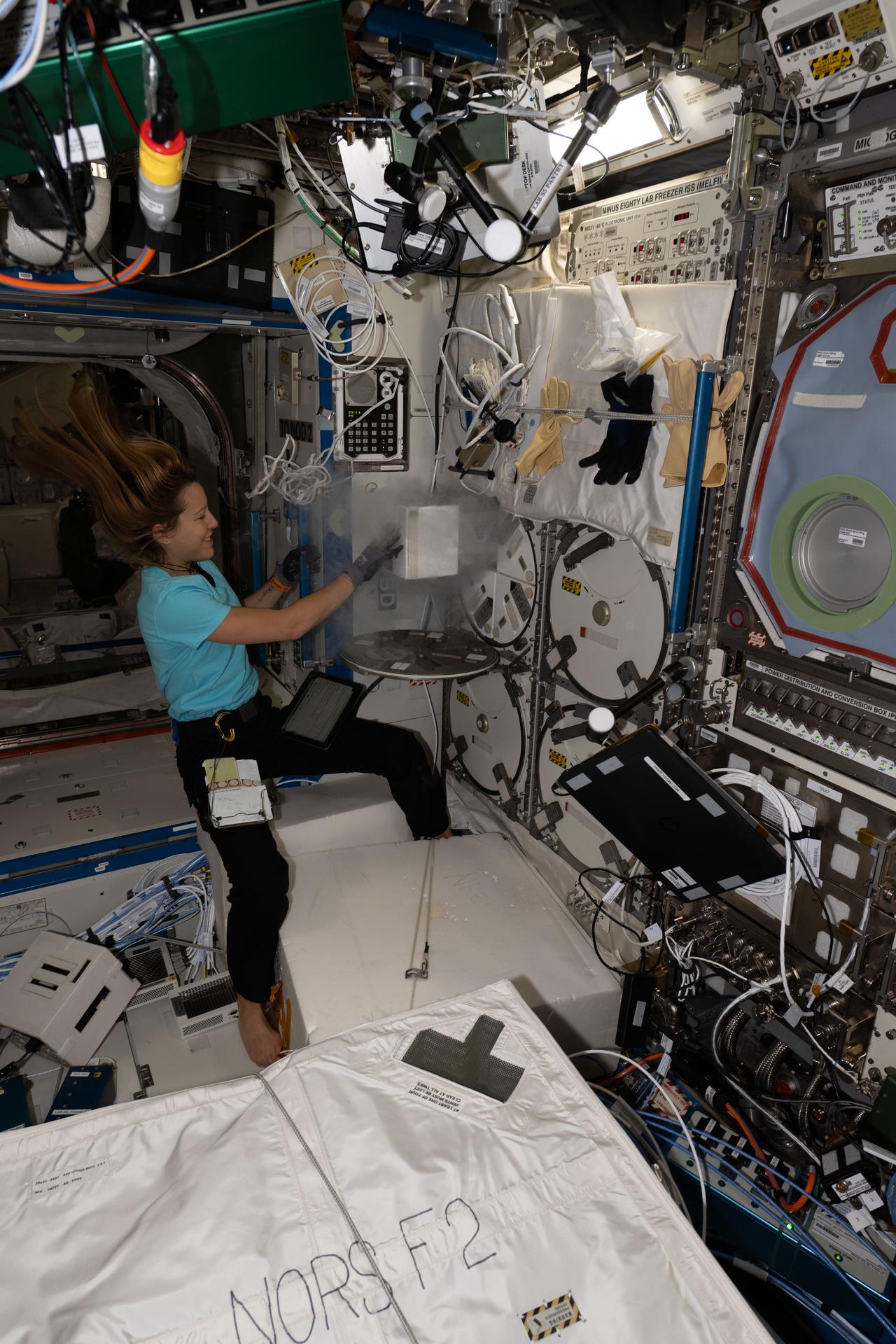
iss074e0414454 (March 26, 2026) --- ESA (European Space Agency) astronaut and Expedition 74 flight engineer Sophie Adenot inserts biological research samples into a science freezer inside the International Space Station’s Destiny laboratory module. The freezer, formally known as the Minus Eighty-degree Laboratory Freezer for ISS (MELFI), maintains experiment samples at ultra‑cold temperatures, significantly enhancing microgravity research capabilities and preserving biological specimens for analysis back on Earth. Credit: ESA/Sophie Adenot
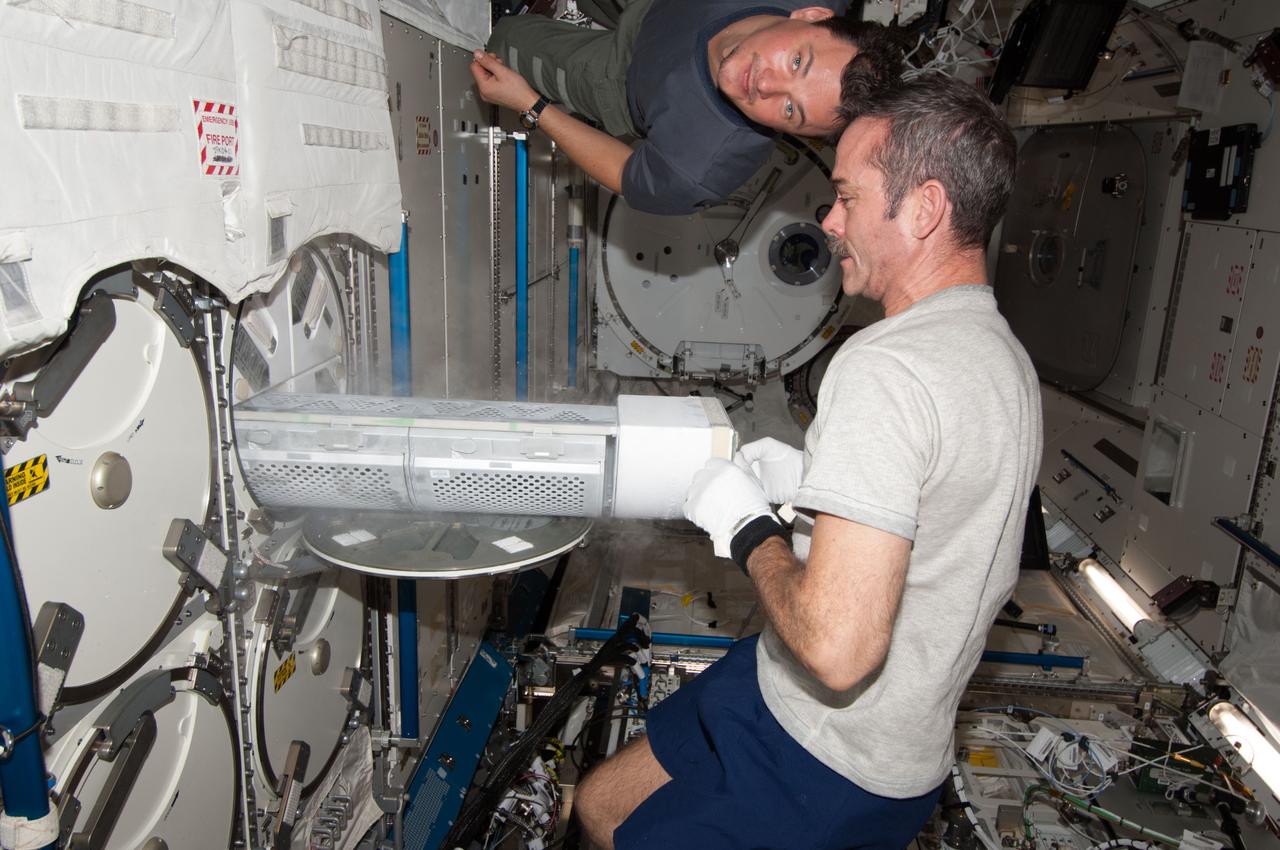
ISS034-E-023786 (7 Jan. 2013) --- Canadian Space Agency astronaut Chris Hadfield, Expedition 34 flight engineer, prepares to insert biological samples in the Minus Eighty Laboratory Freezer for ISS (MELFI-1) in the Kibo laboratory of the International Space Station. Russian cosmonaut Roman Romanenko, flight engineer, is visible near Hadfield.
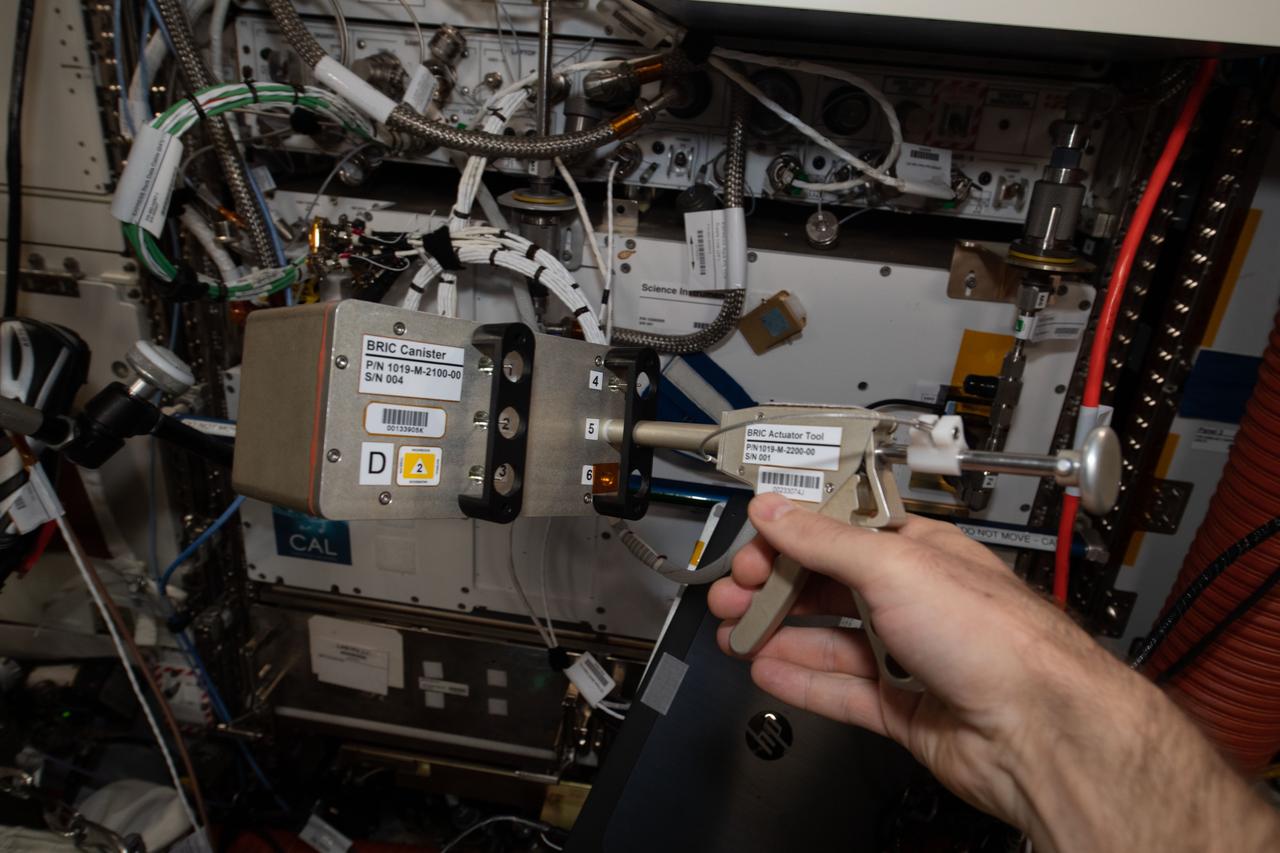
iss065e094066 (6/9/2021) --- A close-up view of the a BRIC-24 Canister and actuator tool. Biological Research In Canisters-24 (BRIC-24) tests how space affects organelle contacts and vacuole fusion in plants, systems that may be important for plant gravity sensing and response. Vacuoles are organelles in plant cells that have important functions.
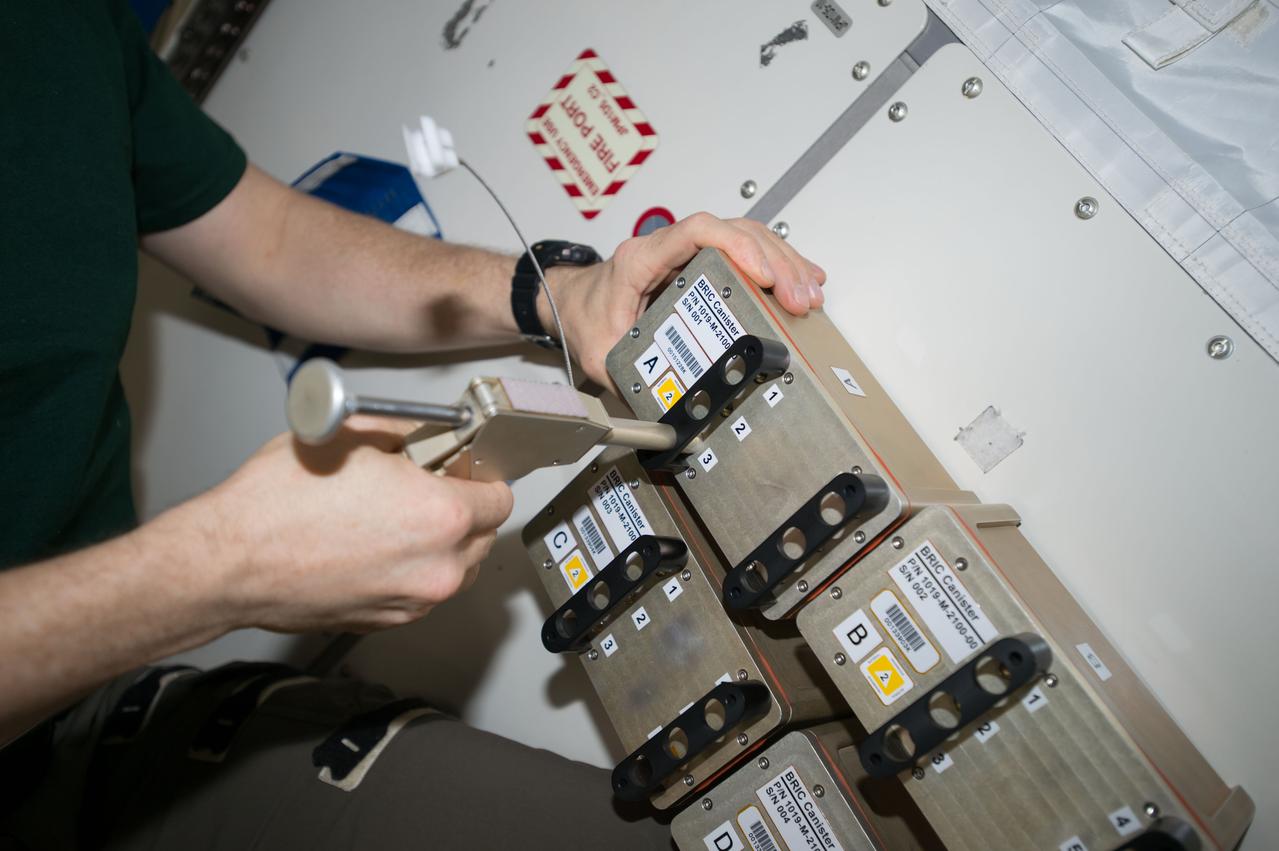
iss052e079058 (Aug. 31, 2017) --- NASA astronaut Jack Fischer actuating four cansiters of the Biological Research in Canisters-22 (BRIC-22) experiment in the Japanese Experiment Module (JEM) Pressurized Module (JPM). BRIC-22 studies the stress response in plants by comparing 8 different variants of thale cress (Arabidopsis thaliana) in the microgravity environment.
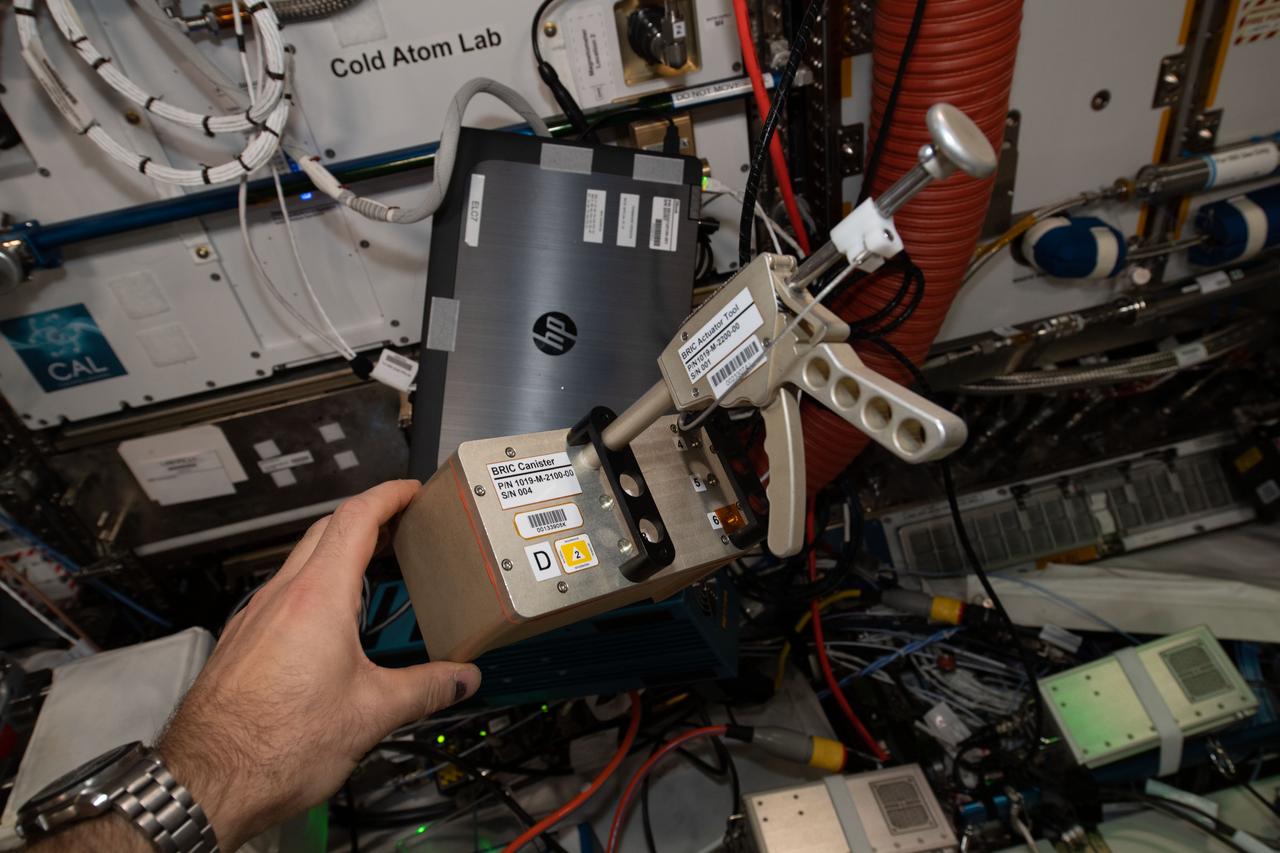
iss065e094062 (6/9/2021) --- A close-up view of the a BRIC-24 Canister and actuator tool. Biological Research In Canisters-24 (BRIC-24) tests how space affects organelle contacts and vacuole fusion in plants, systems that may be important for plant gravity sensing and response. Vacuoles are organelles in plant cells that have important functions.
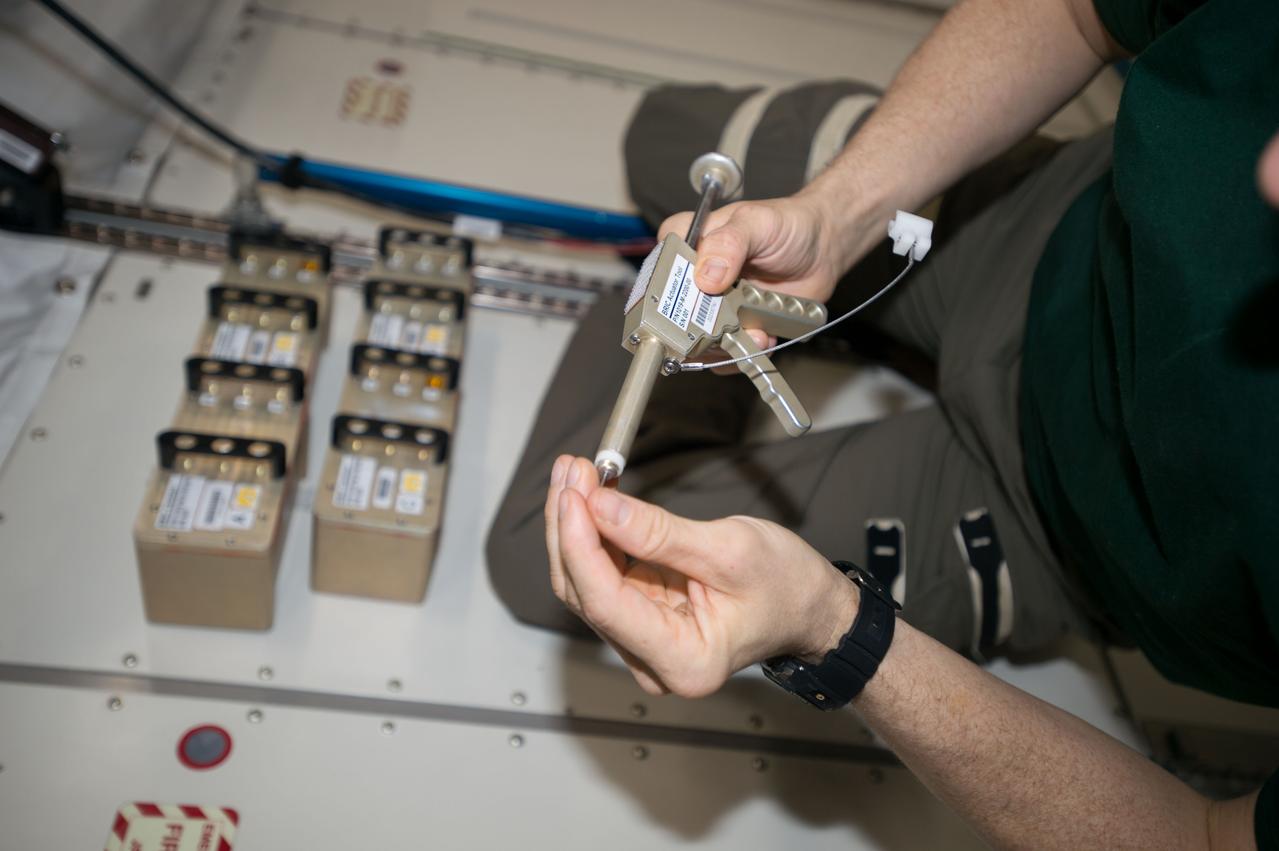
iss052e079043 (Aug. 31, 2017) --- NASA astronaut Jack Fischer actuating four cansiters of the Biological Research in Canisters-22 (BRIC-22) experiment in the Japanese Experiment Module (JEM) Pressurized Module (JPM). BRIC-22 studies the stress response in plants by comparing 8 different variants of thale cress (Arabidopsis thaliana) in the microgravity environment.
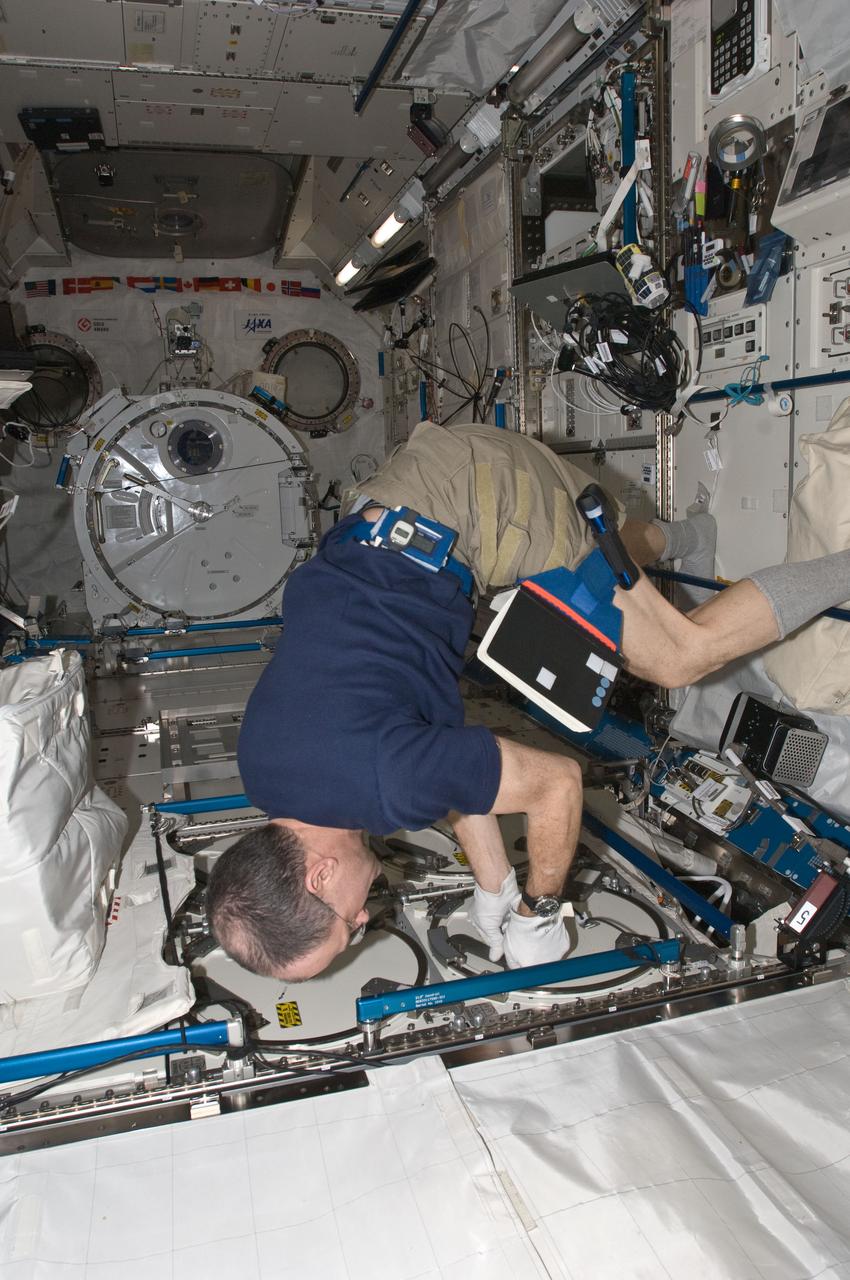
ISS030-E-050848 (26 Jan. 2012) --- NASA astronaut Don Pettit, Expedition 30 flight engineer, prepares to insert biological samples in the Minus Eighty Laboratory Freezer for ISS (MELFI-1) in the Kibo laboratory of the International Space Station.
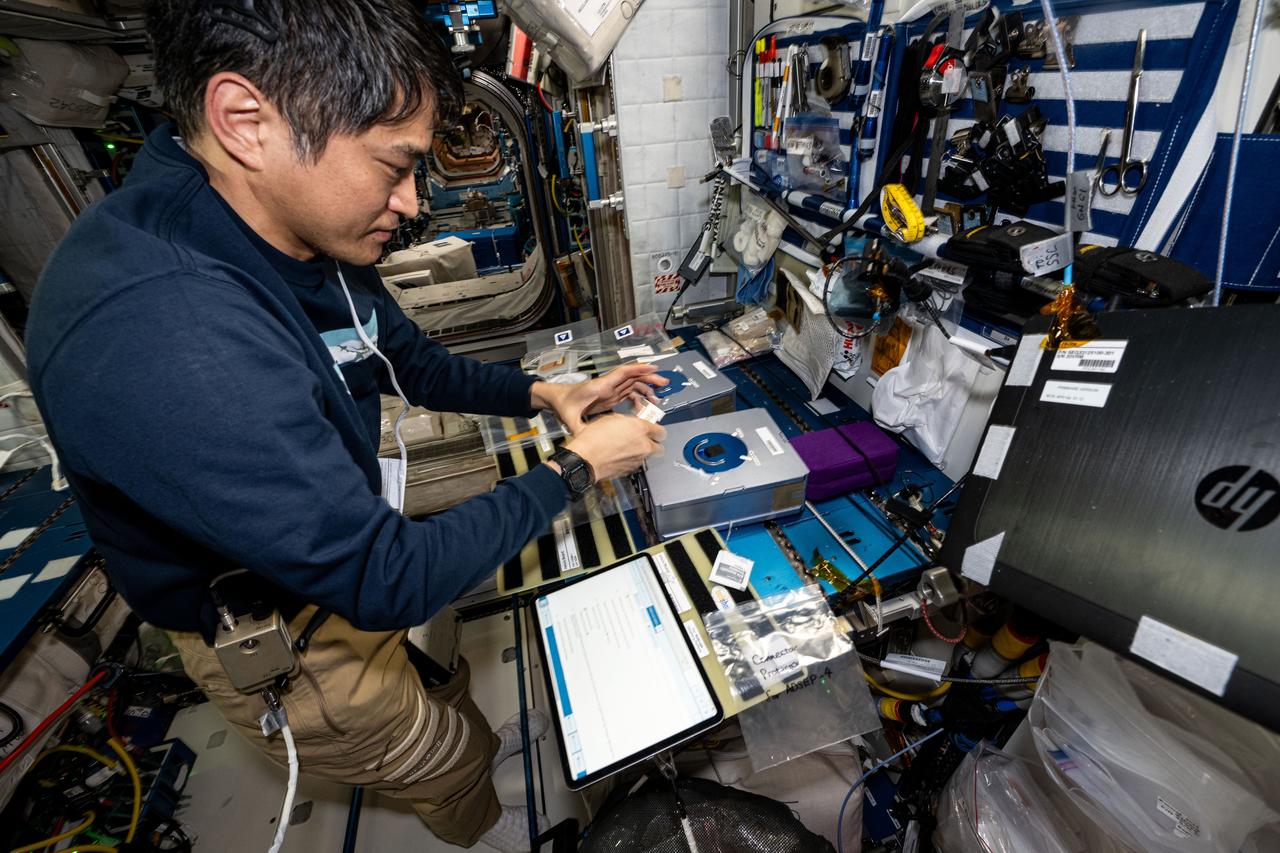
iss073e0002477_alt (April 28, 2025) --- JAXA (Japan Aerospace Exploration Agency) astronaut and Expedition 73 Commander Takuya Onishi processes cassettes containing biological fluid samples for installation inside the Advanced Space Experiment Processor-4, a research facility that can be shipped back and forth from Earth to space, for a biotechnology study.
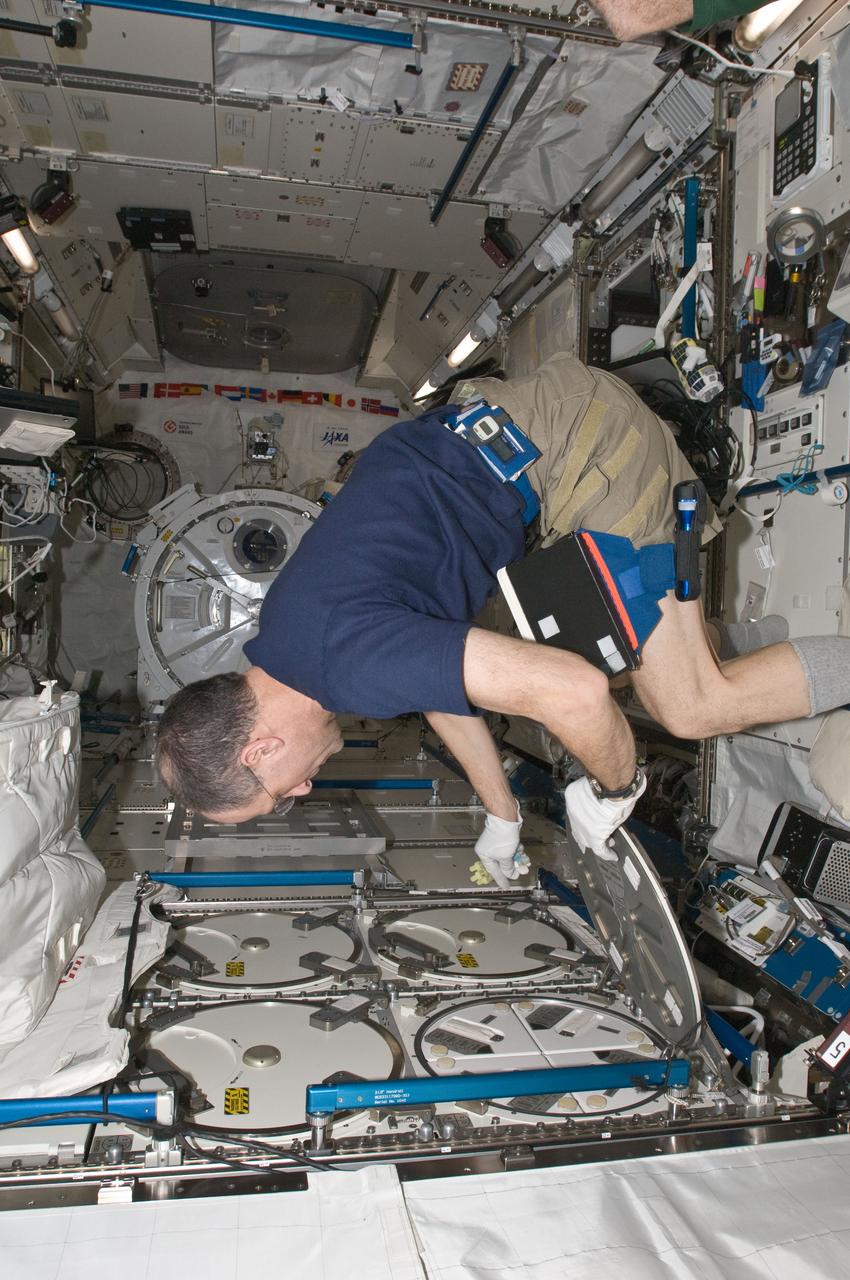
ISS030-E-050849 (26 Jan. 2012) --- NASA astronaut Don Pettit, Expedition 30 flight engineer, prepares to insert biological samples in the Minus Eighty Laboratory Freezer for ISS (MELFI-1) in the Kibo laboratory of the International Space Station.
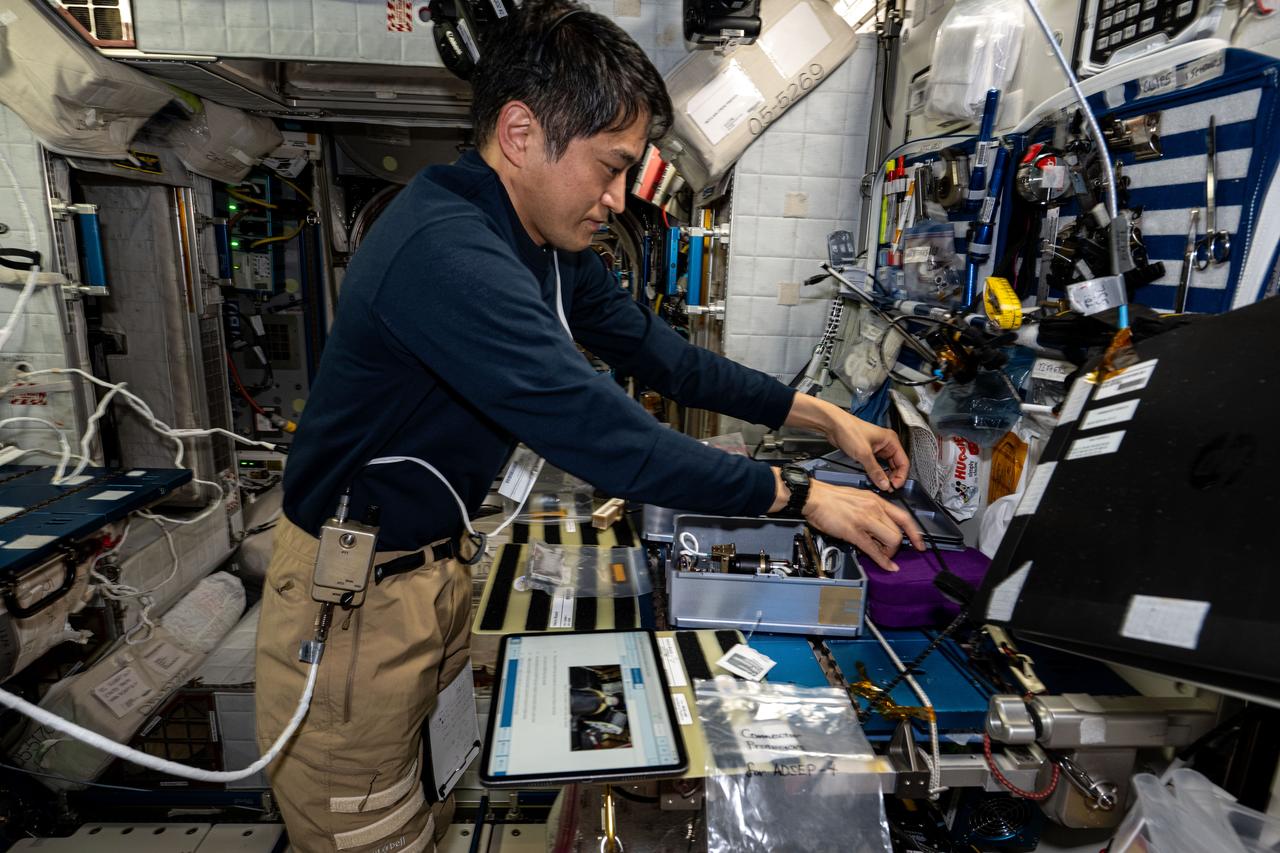
iss073e0002467 (April 28, 2025) --- JAXA (Japan Aerospace Exploration Agency) astronaut and Expedition 73 Commander Takuya Onishi processes cassettes containing biological fluid samples for installation inside the Advanced Space Experiment Processor-4, a research facility that can be shipped back and forth from Earth to space, for a biotechnology study.
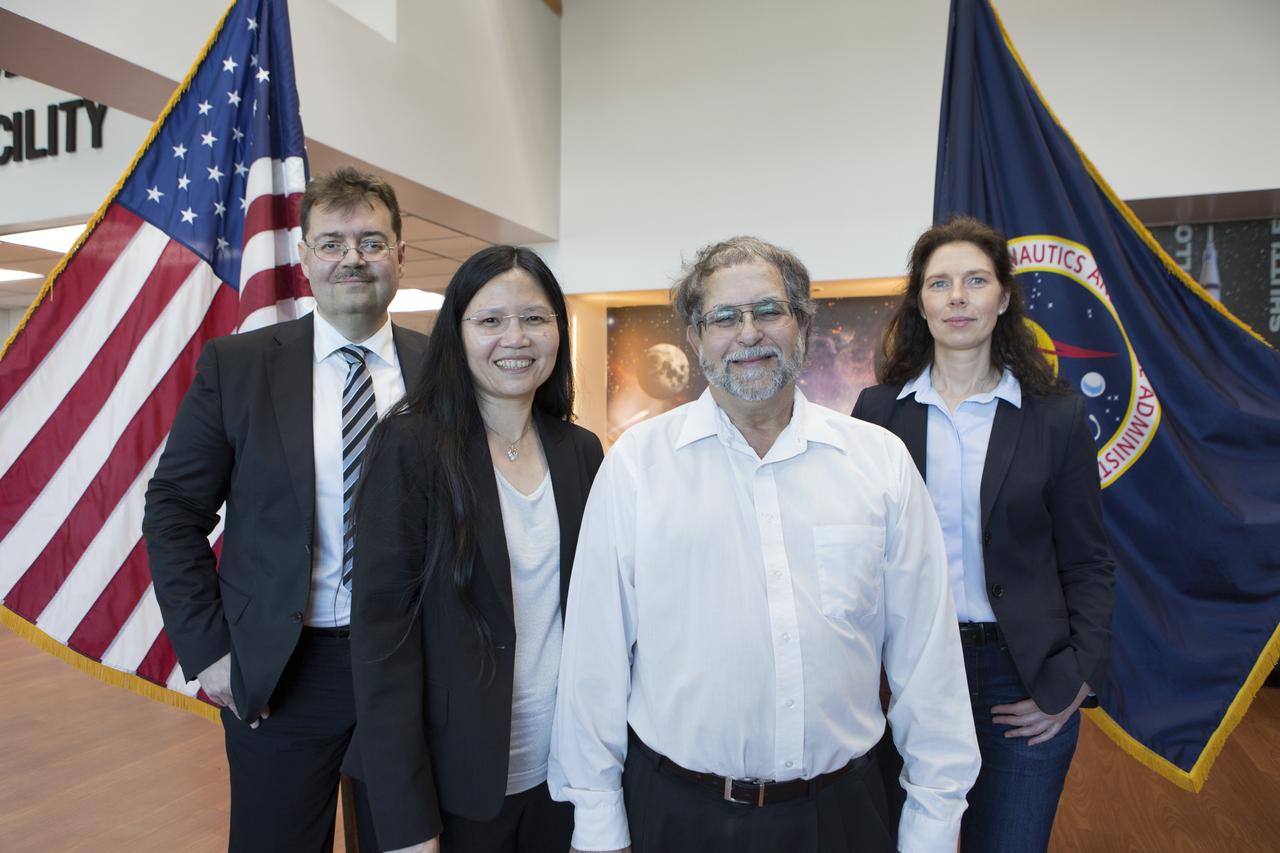
From left to right: Dr. Oliver Ullrich from the University of Zurich, Dr. Ye Zhang and Dr. Howard Levine of NASA's Kennedy Space Center, and Dr. Cora Thiel of the University of Zurich stood in the Space Station Processing Facility on Dec. 18, 2018. NASA recently signed a Space Act Agreement with the university, which is located in Switzerland, to collaborate on biological research. The team is studying gene expression in altered gravity.
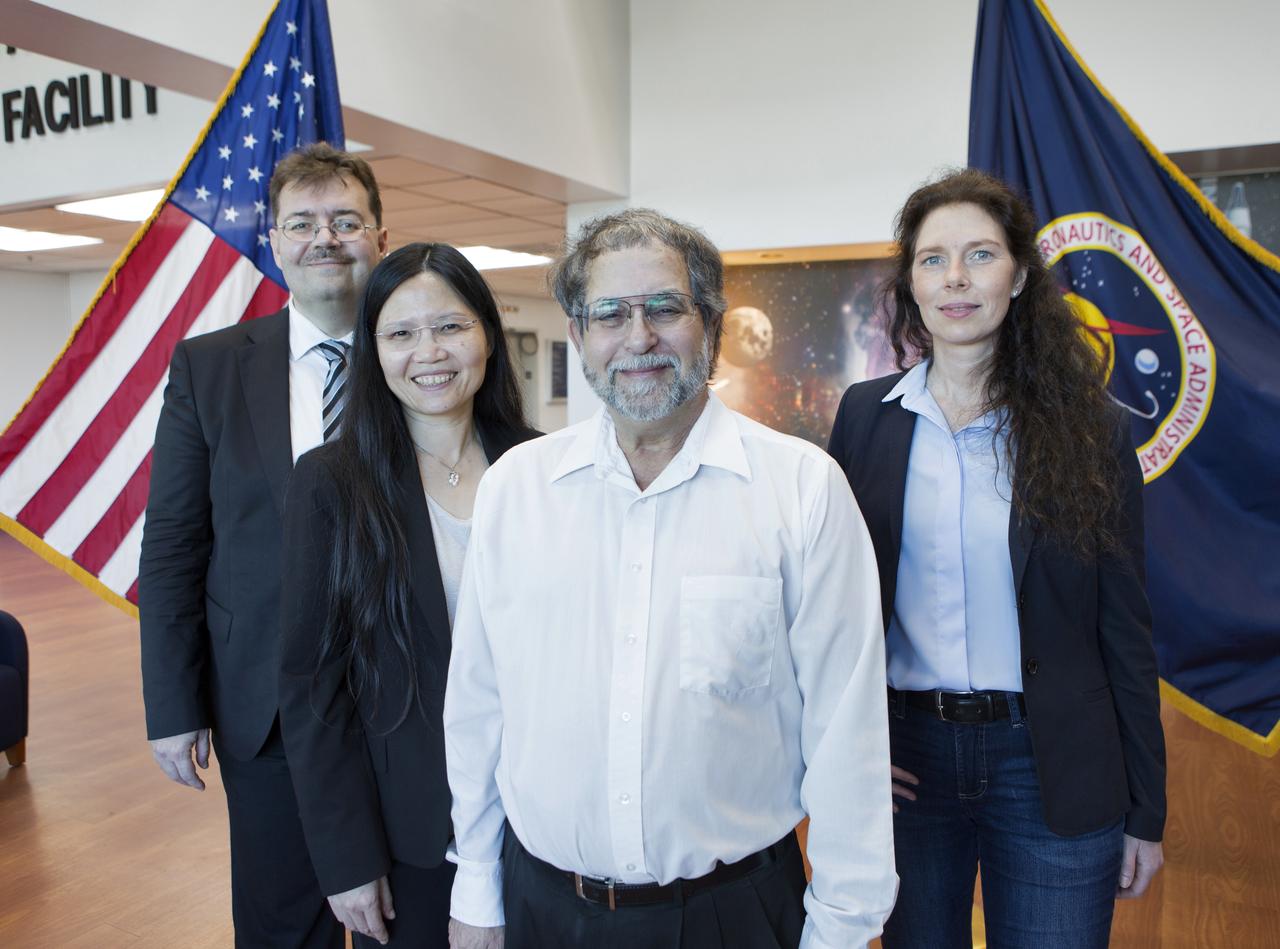
From left to right: Dr. Oliver Ullrich from the University of Zurich, Dr. Ye Zhang and Dr. Howard Levine of NASA's Kennedy Space Center, and Dr. Cora Thiel of the University of Zurich stood in the Space Station Processing Facility on Dec. 18, 2018. NASA recently signed a Space Act Agreement with the university, which is located in Switzerland, to collaborate on biological research. The team is studying gene expression in altered gravity.
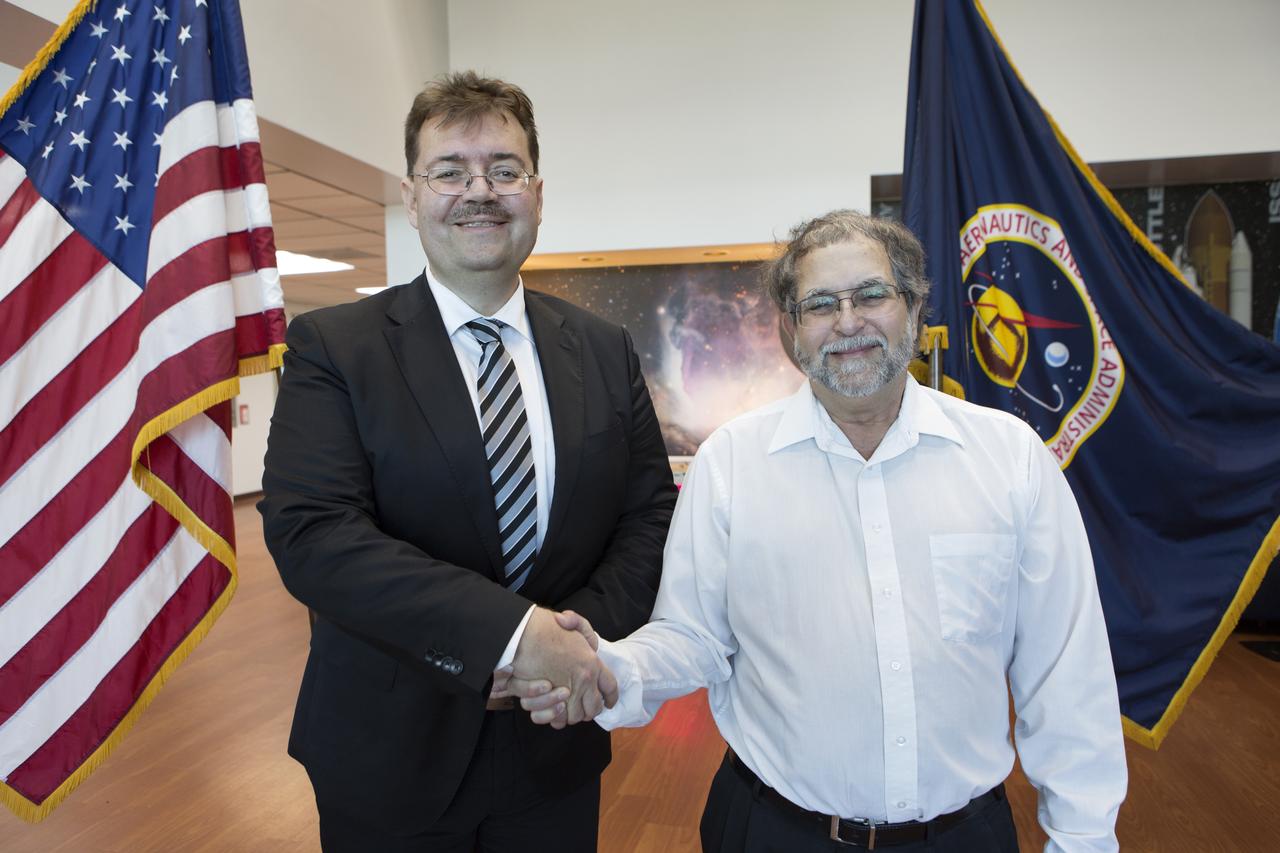
Dr. Oliver Ullrich (left) from the University of Zurich and Dr. Howard Levine of NASA's Kennedy Space Center stood in the Space Station Processing Facility on Dec. 18, 2018. NASA recently signed a Space Act Agreement with the university, which is located in Switzerland, to collaborate on biological research. The team is studying gene expression in altered gravity.
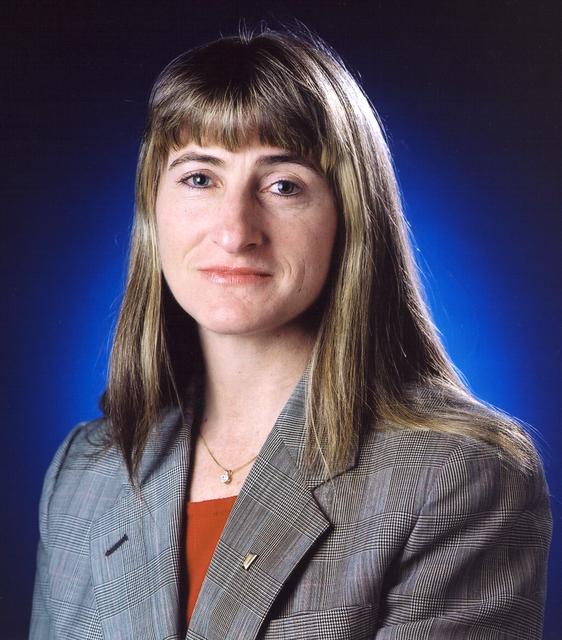
Mary Kicza, NASA Associate Administrator for Biological and Physical Research.
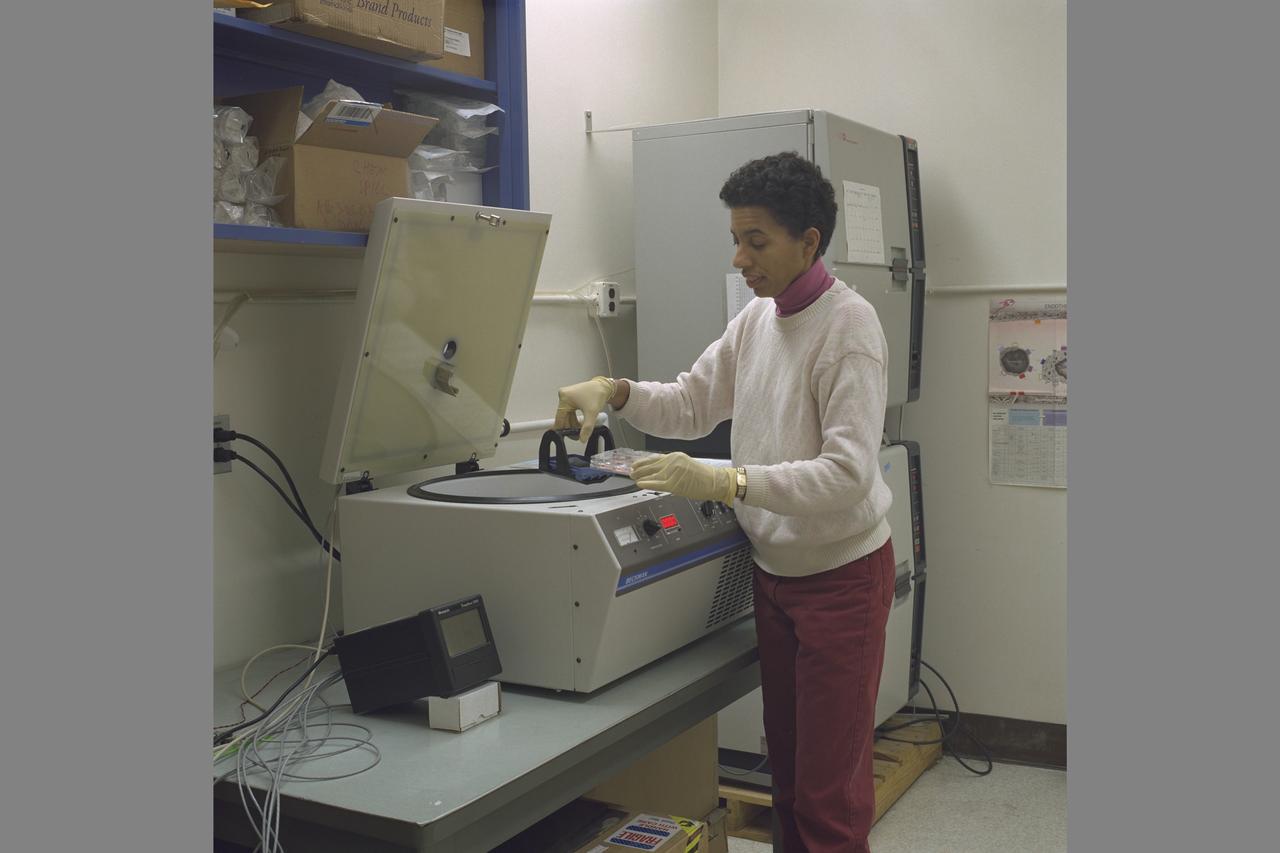
SAC AND INCUBATOR WITH MELISSA KIRVEN-BROOKS. Space Station Biological Research Project
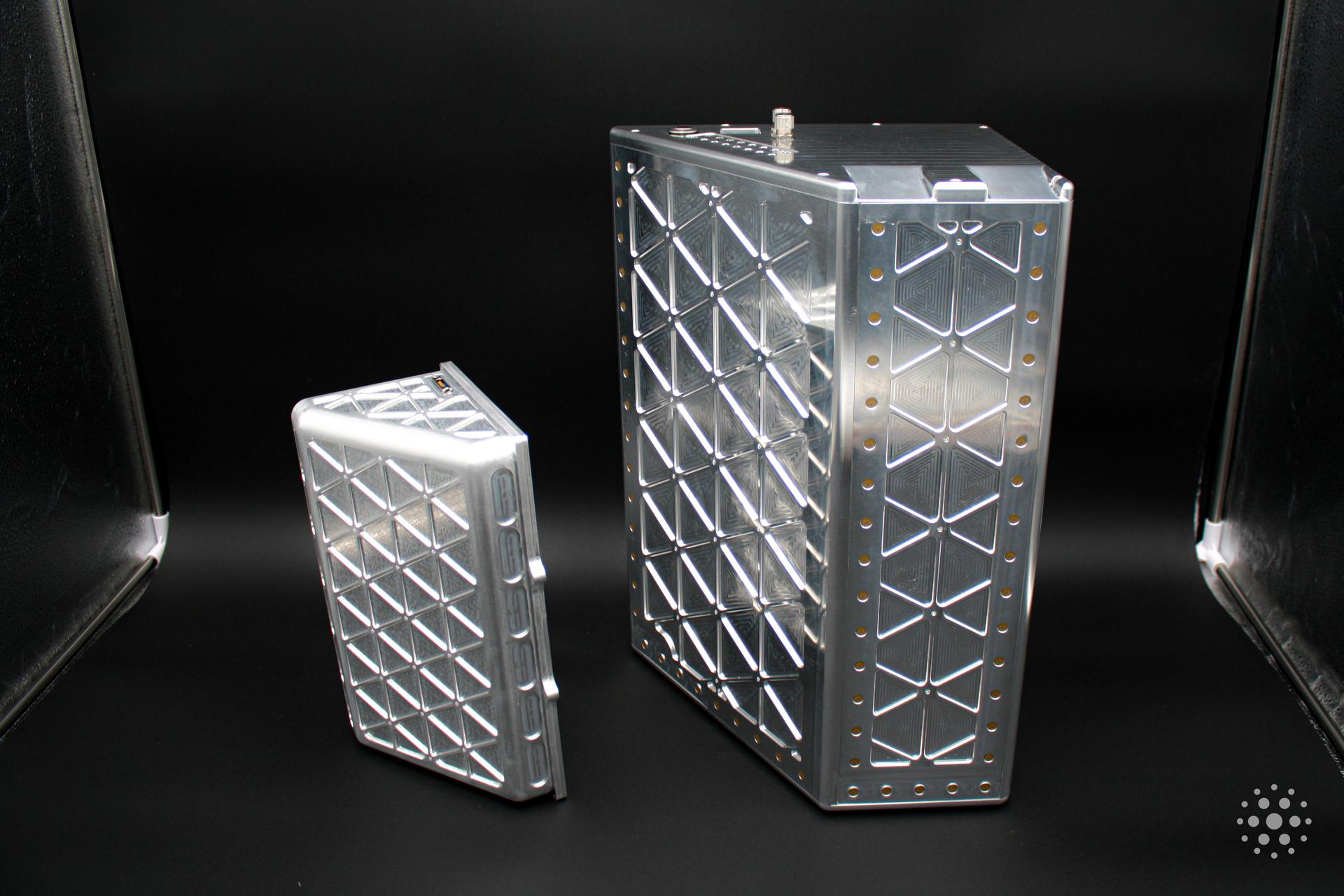
This is the hardware that will contain the AVATAR chips during the Artemis II flight. The AVATAR (A Virtual Astronaut Tissue Analog Response) investigation will use organ-on-a-chip devices, or organ chips, to study a effects of increased radiation and microgravity on human health. Artemis II AVATAR is a small experiment flying aboard Artemis II that could lead to big impacts in healthcare, both for astronauts in space and citizens on Earth. For more information on AVATAR: go.nasa.gov/4m5dGH9
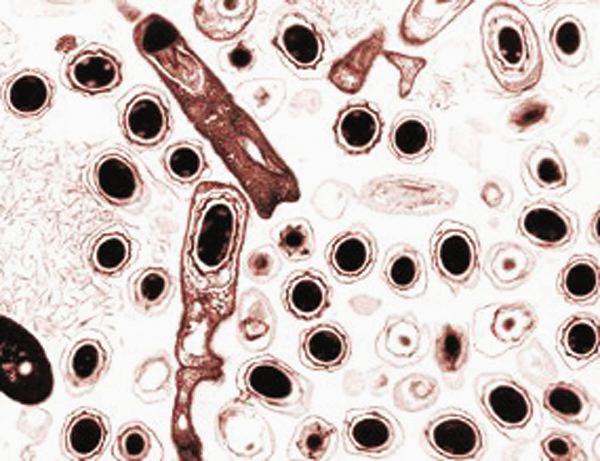
Anthrax spores are inactive forms of Bacillus anthracis. They can survive for decades inside a spore's tough protective coating; they become active when inhaled by humans. A result of NASA- and industry-sponsored research to develop small greenhouses for space research is the unique AiroCide TiO2 system that kills anthrax spores and other pathogens.
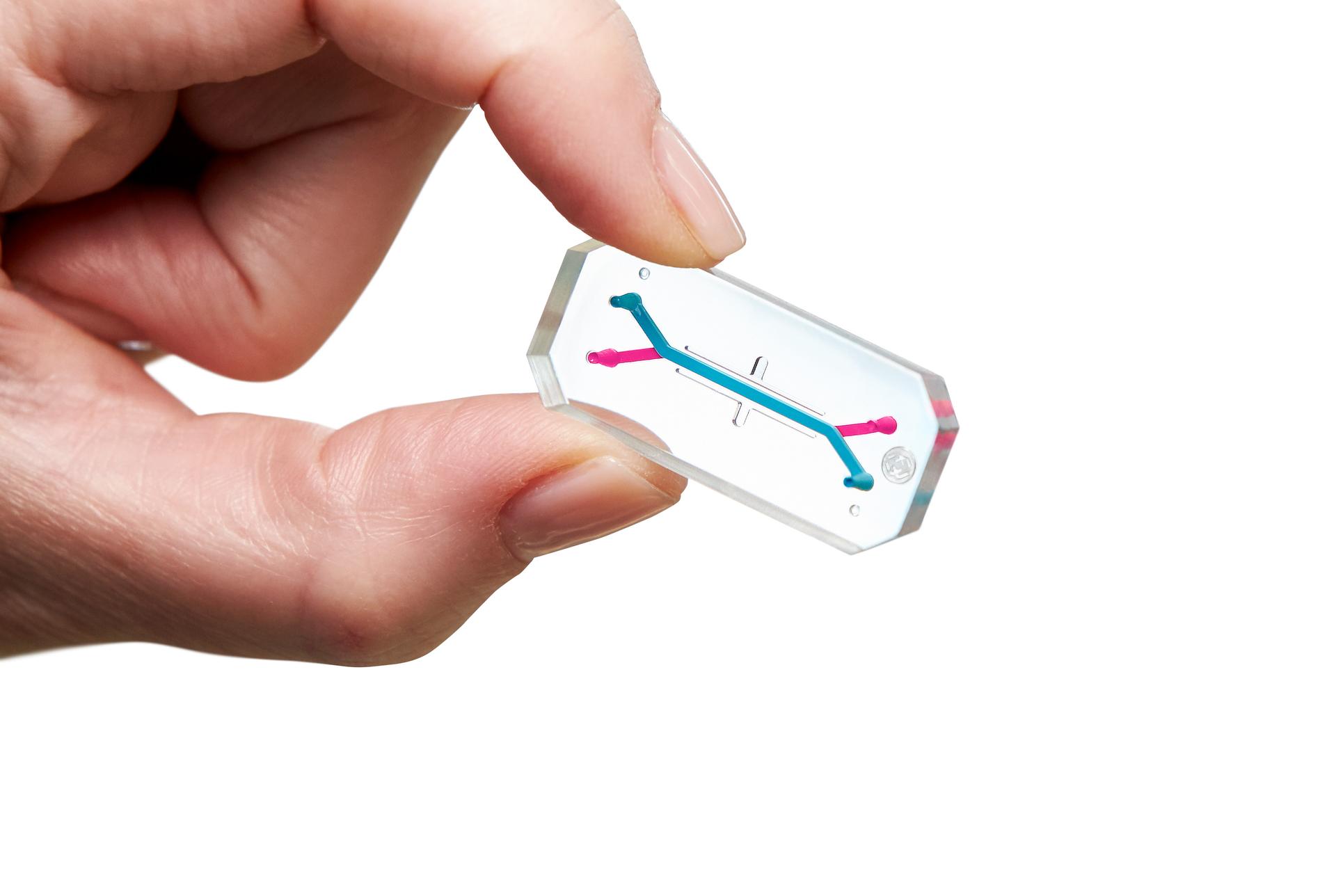
The AVATAR (A Virtual Astronaut Tissue Analog Response) investigation will use organ-on-a-chip devices, or organ chips, to study a effects of increased radiation and microgravity on human health. Artemis II AVATAR is a small experiment flying aboard Artemis II that could lead to big impacts in healthcare, both for astronauts in space and citizens on Earth. For more information on AVATAR: go.nasa.gov/4m5dGH9
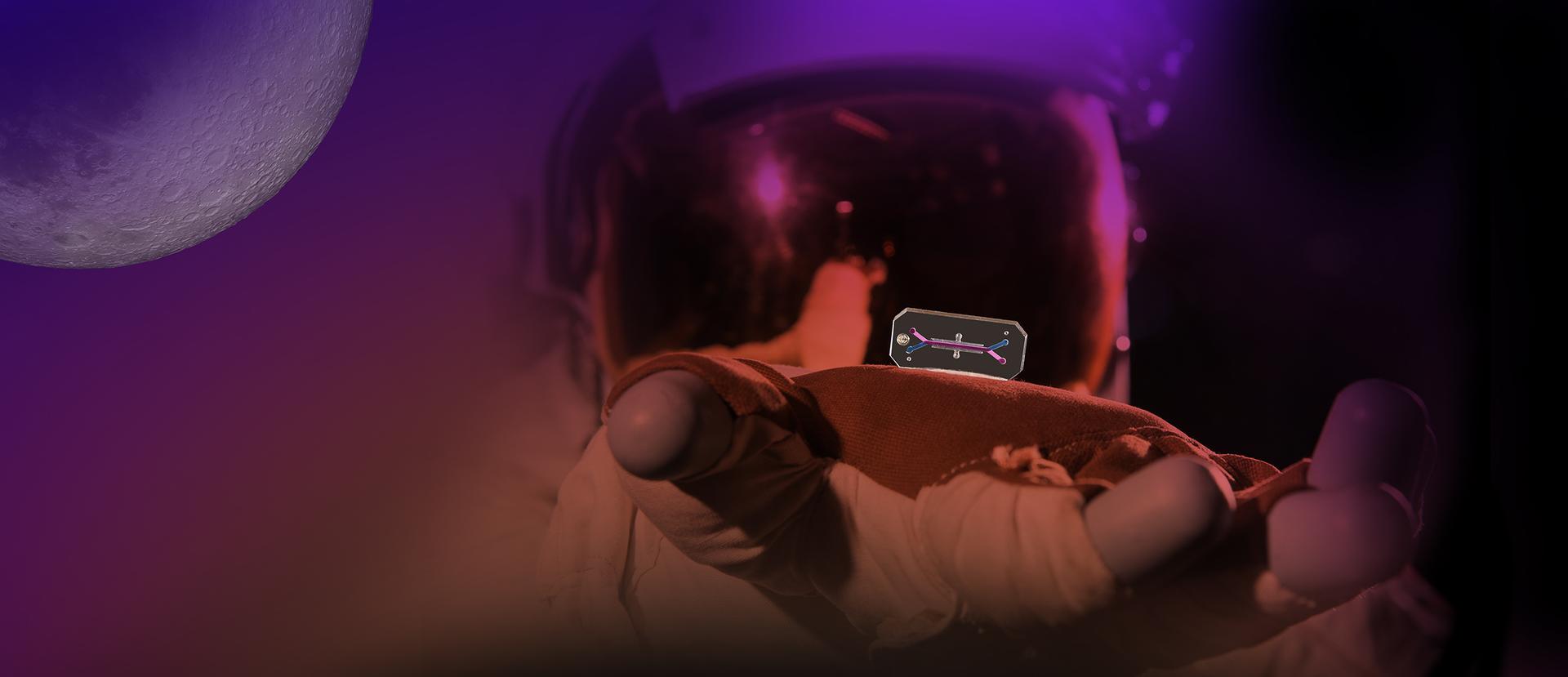
The AVATAR (A Virtual Astronaut Tissue Analog Response) investigation will use organ-on-a-chip devices, or organ chips, to study a effects of increased radiation and microgravity on human health. Artemis II AVATAR is a small experiment flying aboard Artemis II that could lead to big impacts in healthcare, both for astronauts in space and citizens on Earth. For more information on AVATAR: go.nasa.gov/4m5dGH9
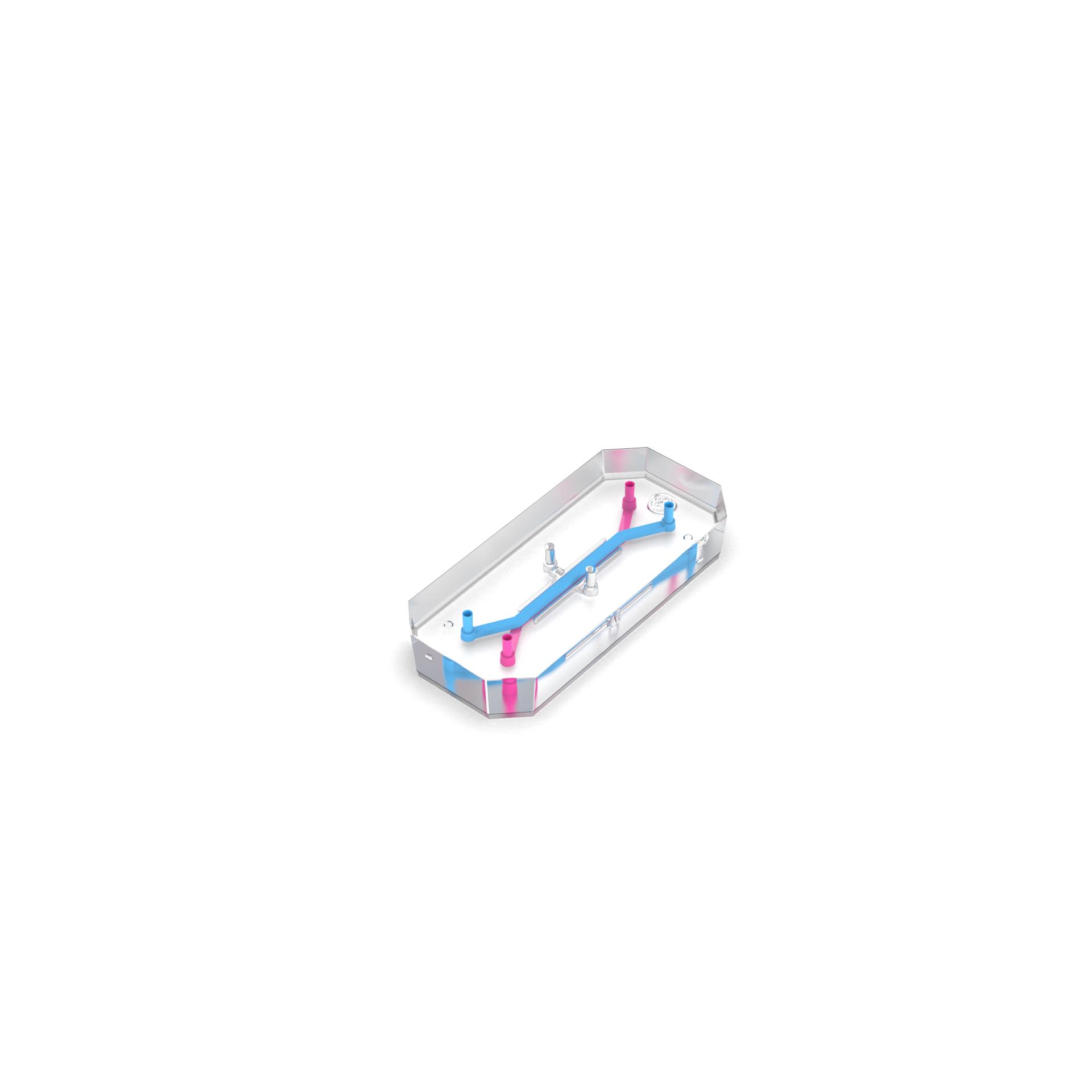
Organ chips are roughly the size of a USB drive and could be used to predict how an individual might respond to a variety of stressors, such as radiation or medical treatments, including pharmaceuticals. Made with human cells, the chips mimic how tissues, such as the brain, heart, liver, or dozens of other organs, work. NASA research will focus on validating and leveraging these models to assess the impacts of deep space stressors on astronauts’ health.
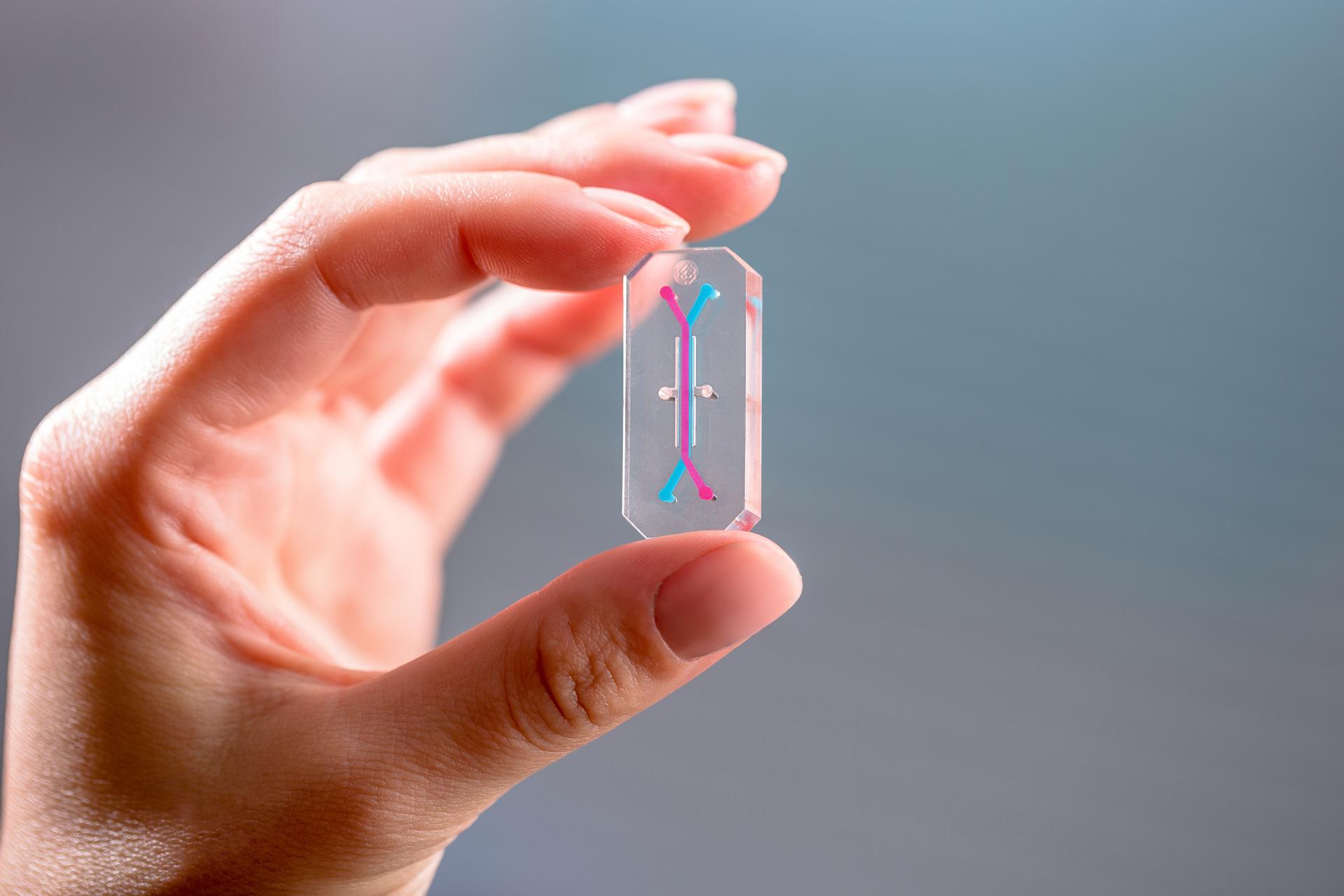
The AVATAR (A Virtual Astronaut Tissue Analog Response) investigation will use organ-on-a-chip devices, or organ chips, to study a effects of increased radiation and microgravity on human health. Artemis II AVATAR is a small experiment flying aboard Artemis II that could lead to big impacts in healthcare, both for astronauts in space and citizens on Earth. For more information on AVATAR: go.nasa.gov/4m5dGH9
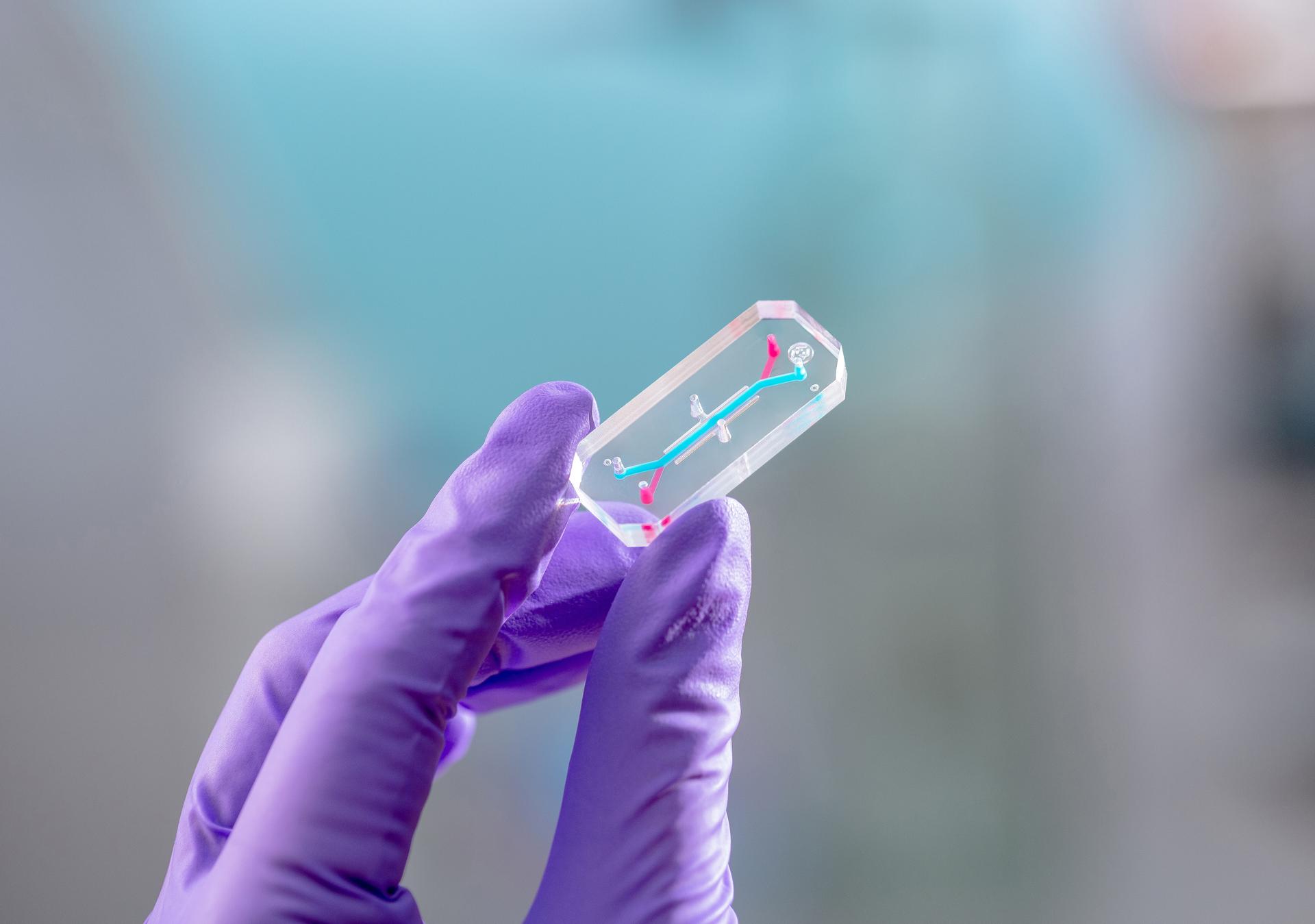
The AVATAR (A Virtual Astronaut Tissue Analog Response) investigation will use organ-on-a-chip devices, or organ chips, to study a effects of increased radiation and microgravity on human health. Artemis II AVATAR is a small experiment flying aboard Artemis II that could lead to big impacts in healthcare, both for astronauts in space and citizens on Earth. For more information on AVATAR: go.nasa.gov/4m5dGH9
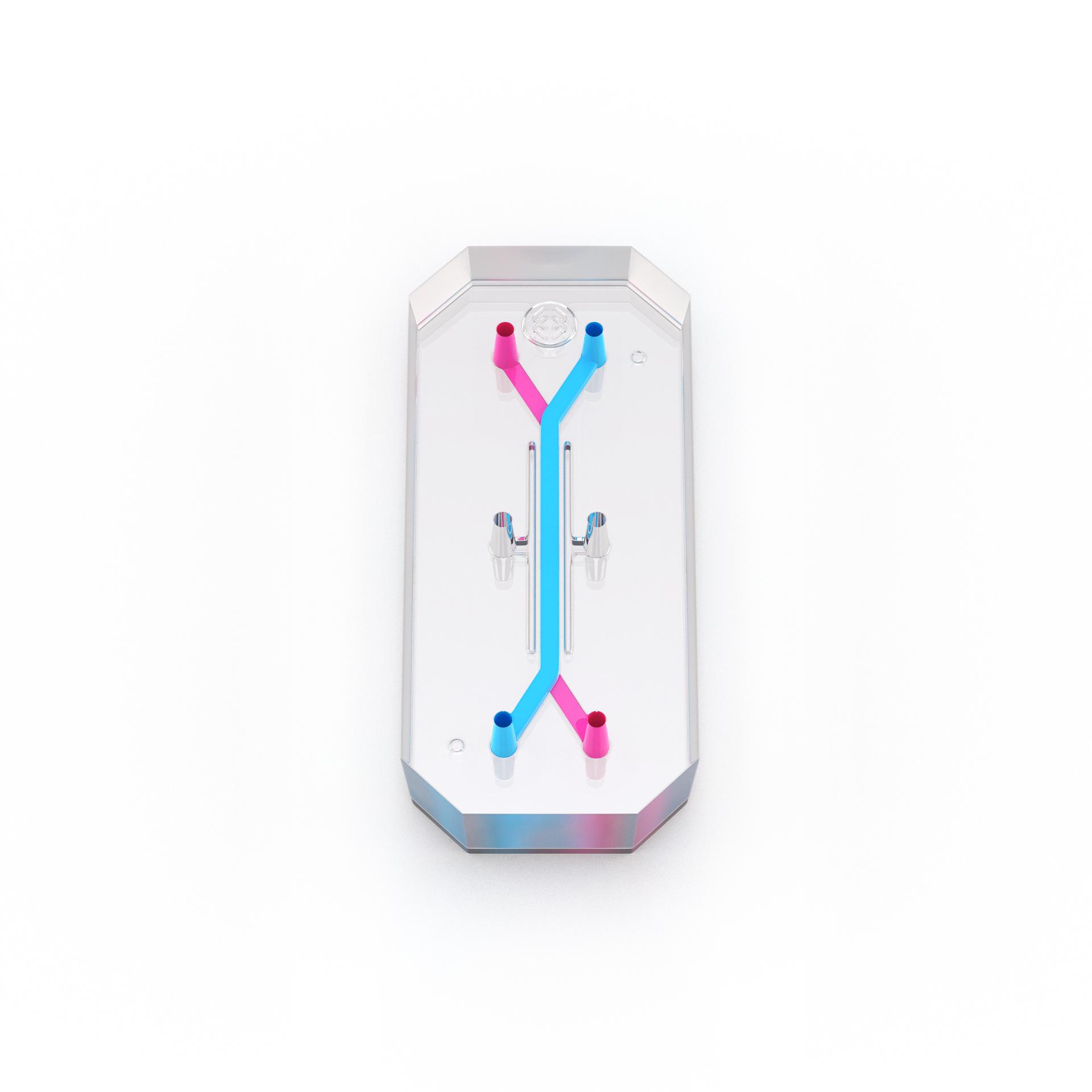
The AVATAR (A Virtual Astronaut Tissue Analog Response) investigation will use organ-on-a-chip devices, or organ chips, to study a effects of increased radiation and microgravity on human health. Artemis II AVATAR is a small experiment flying aboard Artemis II that could lead to big impacts in healthcare, both for astronauts in space and citizens on Earth. For more information on AVATAR: go.nasa.gov/4m5dGH9
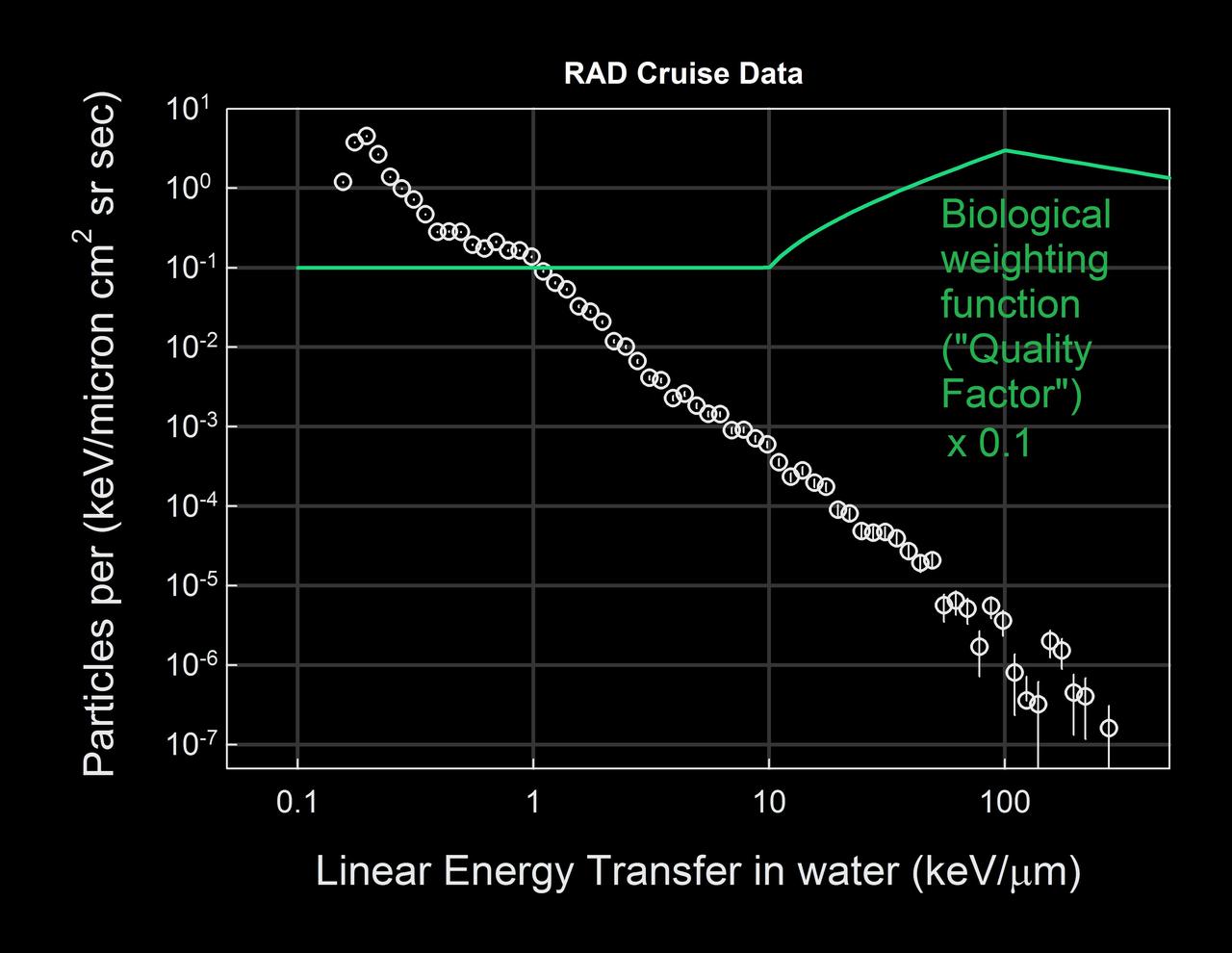
This graph based on data from the RAD instrument onboard NASA Mars Science Laboratory spacecraft shows the flux of energetic particles vertical axis as a function of the estimated energy deposited in water horizontal axis.
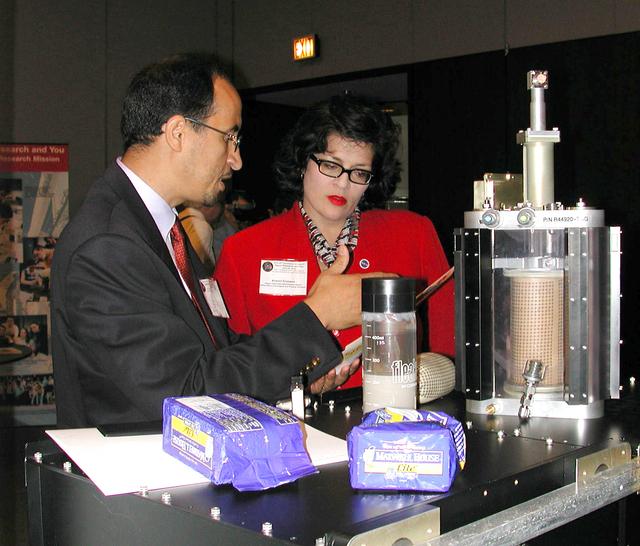
Khalid Alshibli of Louisiana State University, project scientist for the Mechanics of Granular Materials (MGM-III) experiment, explains the MGM experiment to Kristen Erickson, acting deputy associate administrator in NASA's Office of Biological and Physical Research. A training model of the test cell is at right. The activity was part of the Space Research and You education event held by NASA's Office of Biological and Physical Research on June 25, 2002, in Arlington, VA, to highlight the research that will be conducted on STS-107.
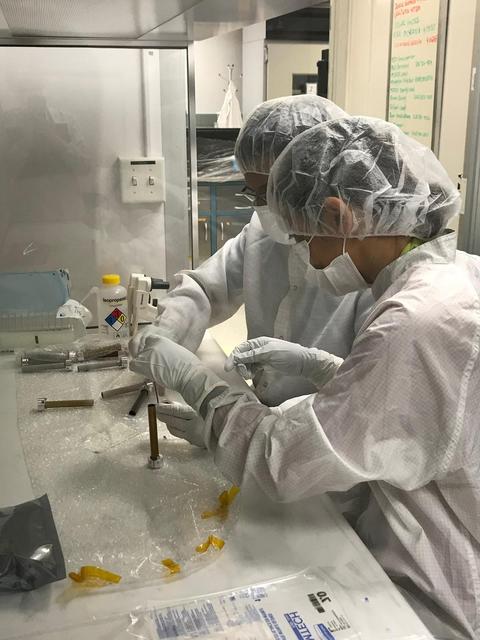
Planetary protection engineers at NASA's Jet Propulsion Laboratory in Southern California swab engineering models of the tubes that will store Martian rock and sediment samples as part of NASA’s Mars 2020 Perseverance mission. Team members wanted to understand the transport of biological particles when the rover is taking rock cores. These measurements helped the rover team design hardware and sampling methods that meet stringent biological contamination control requirements. https://photojournal.jpl.nasa.gov/catalog/PIA23718
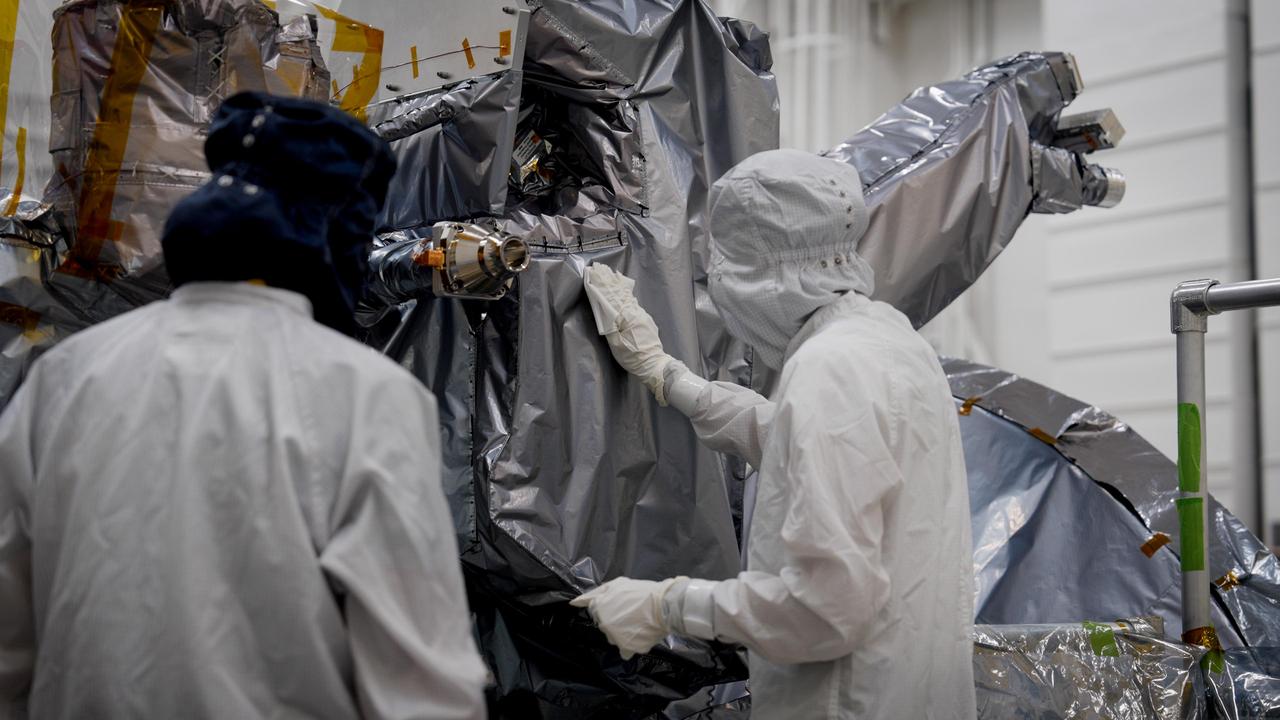
A planetary protection engineer in full-body protective gear carefully collects samples from NASA's Europa Clipper spacecraft to verify its biological cleanliness in a clean room at NASA's Jet Propulsion Laboratory on March 20, 2024. Maintaining and verifying the cleanliness of the spacecraft helps minimize the chance that microbes brought from Earth could compromise future scientific investigations at its destination, Jupiter's moon Europa. This work, referred to as planetary protection, is conducted in keeping with the international 1967 Outer Space Treaty to explore space in a responsible manner that avoids the harmful contamination of celestial bodies. This photo was taken while Europa Clipper was being built in JPL's Spacecraft Assembly Facility. Europa Clipper's three main science objectives are to determine the thickness of the moon's icy shell and its interactions with the ocean below, to investigate its composition, and to characterize its geology. The mission's detailed exploration of Europa will help scientists better understand the astrobiological potential for habitable worlds beyond our planet. https://photojournal.jpl.nasa.gov/catalog/PIA26440
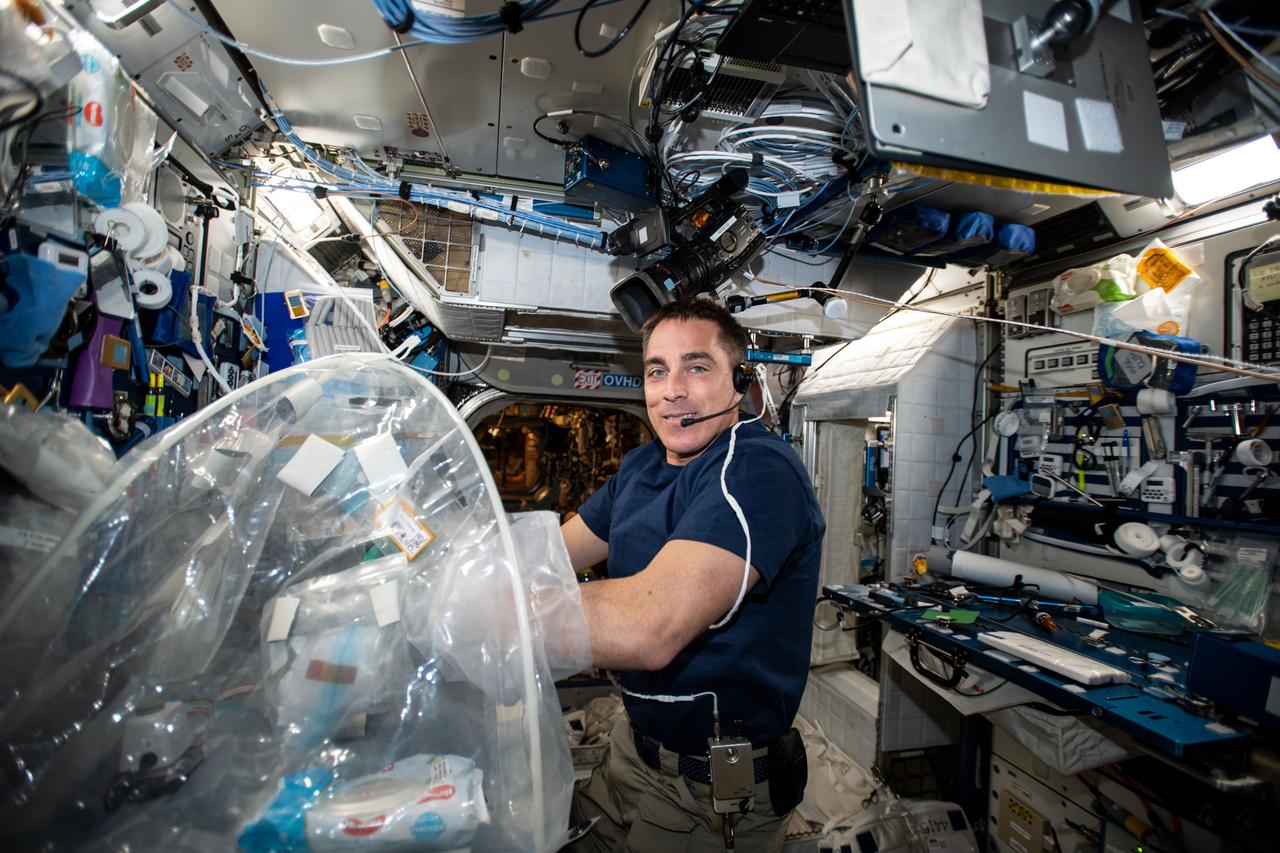
iss062e151901 (April 7, 2020) --- NASA astronaut Chris Cassidy services biological samples in a glovebag for the Food Physiology experiment to characterize the key effects of an enhanced spaceflight diet on immune function, the gut microbiome, and nutritional status indicators.
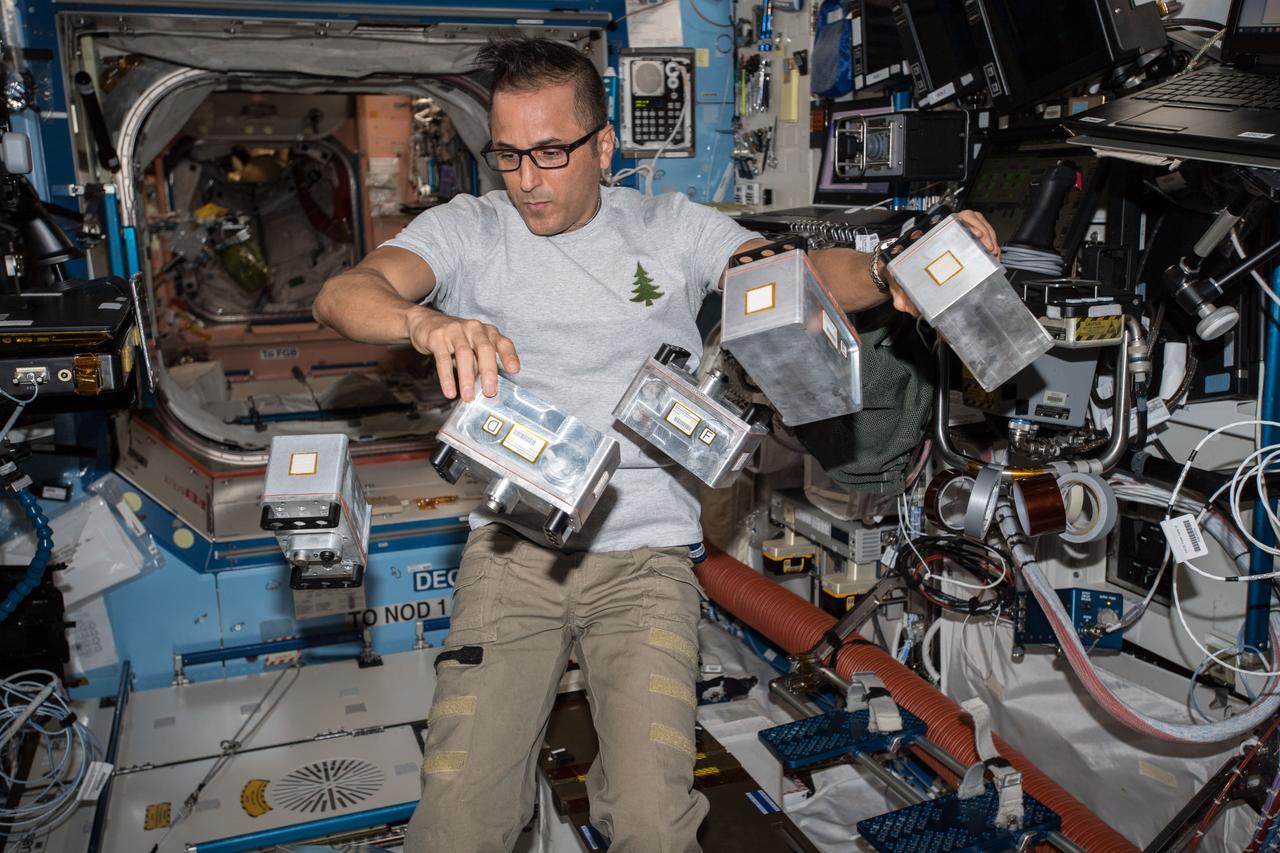
iss054e001485 (Dec. 19, 2017) --- NASA astronaut Joe Acaba with Biological Research in Canisters - Light Emitting Diode (BRIC-LED) canisters prior to installation in the Destiny Laboratory to provide capabilities for seedling, microbial, or fungal growth investigations.
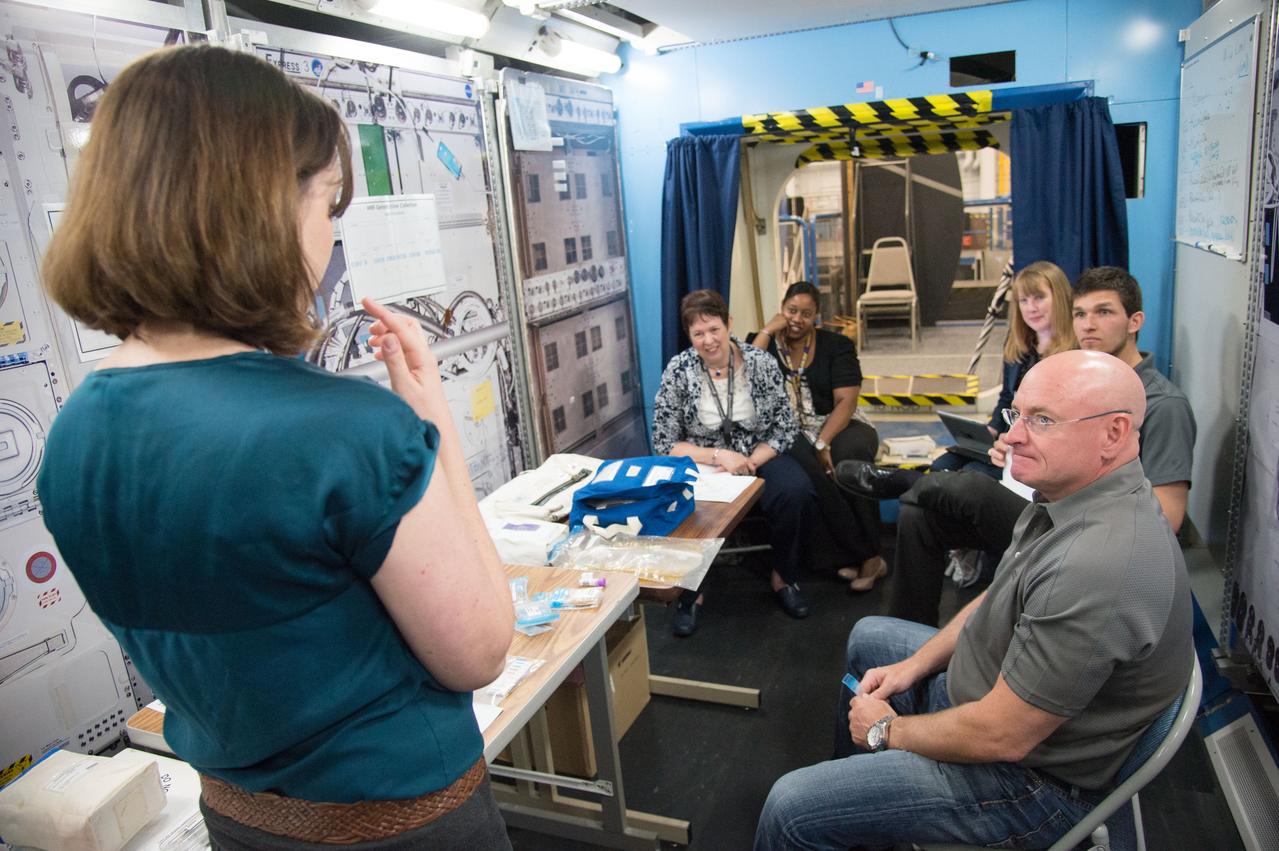
DATE: 6-9-14 LOCATION: Bldg. 9, PDL (Life Sciences) SUBJECT: Instructors and crewmember Scott Kelly during Biological Sampling training session. PHOTOGRAPHER: Lauren Harnett
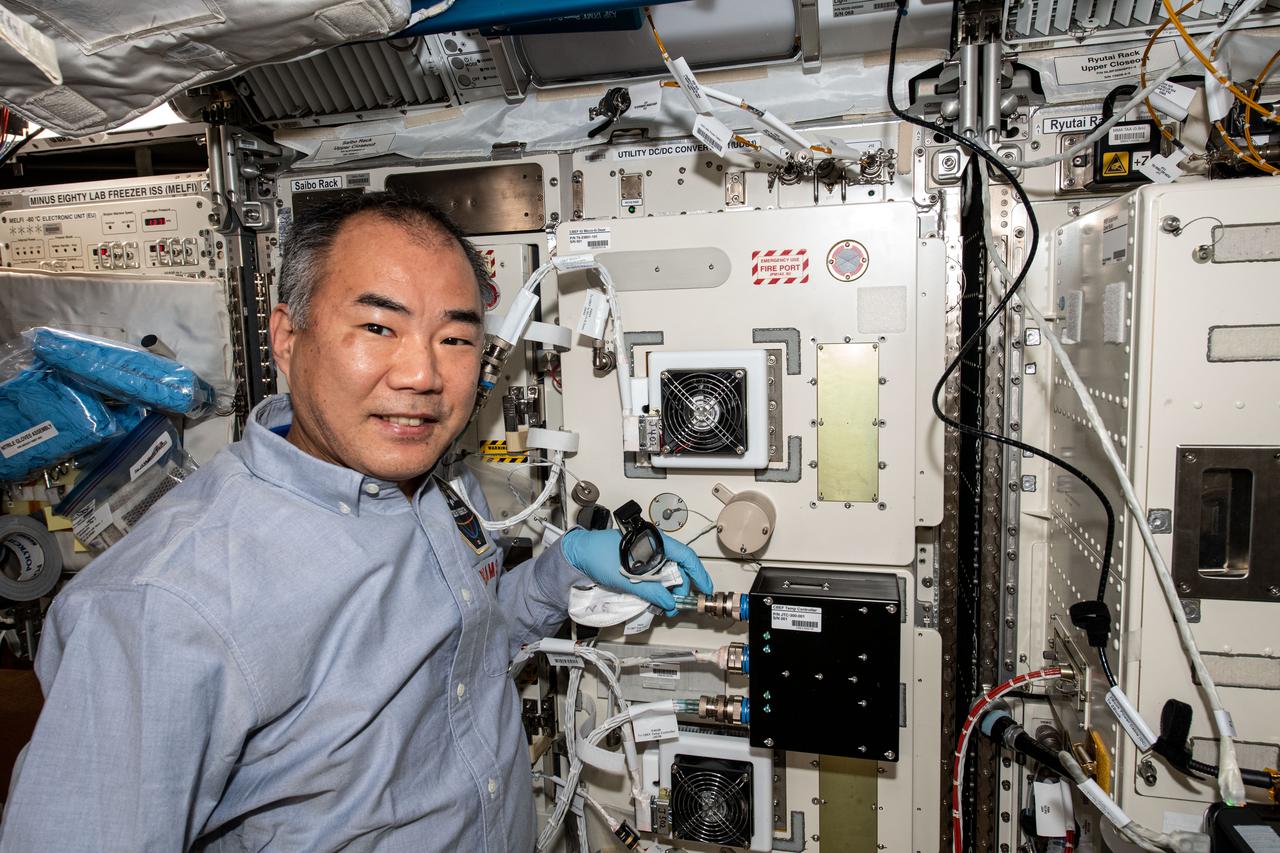
iss064e020149 (Jan. 5, 2021) --- JAXA (Japan Aerospace Exploration Agency) astronaut Soichi Noguchi works inside the Kibo laboratory module servicing a science freezer that stores and preserves biological samples for later analysis.
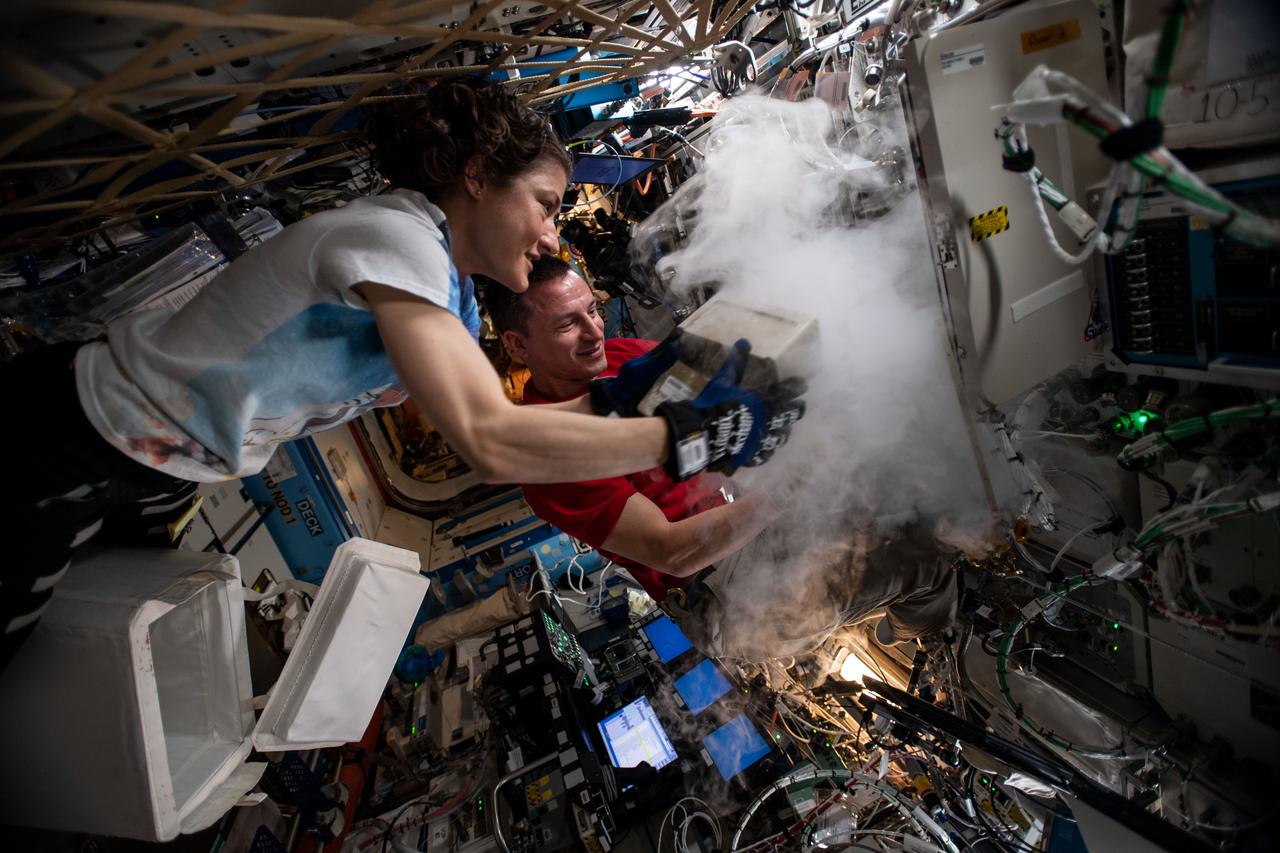
iss060e073348 (Sept. 18, 2019) --- NASA astronauts Christina Koch and Andrew Morgan stow biological research samples into a science freezer located inside the U.S. Destiny laboratory module.
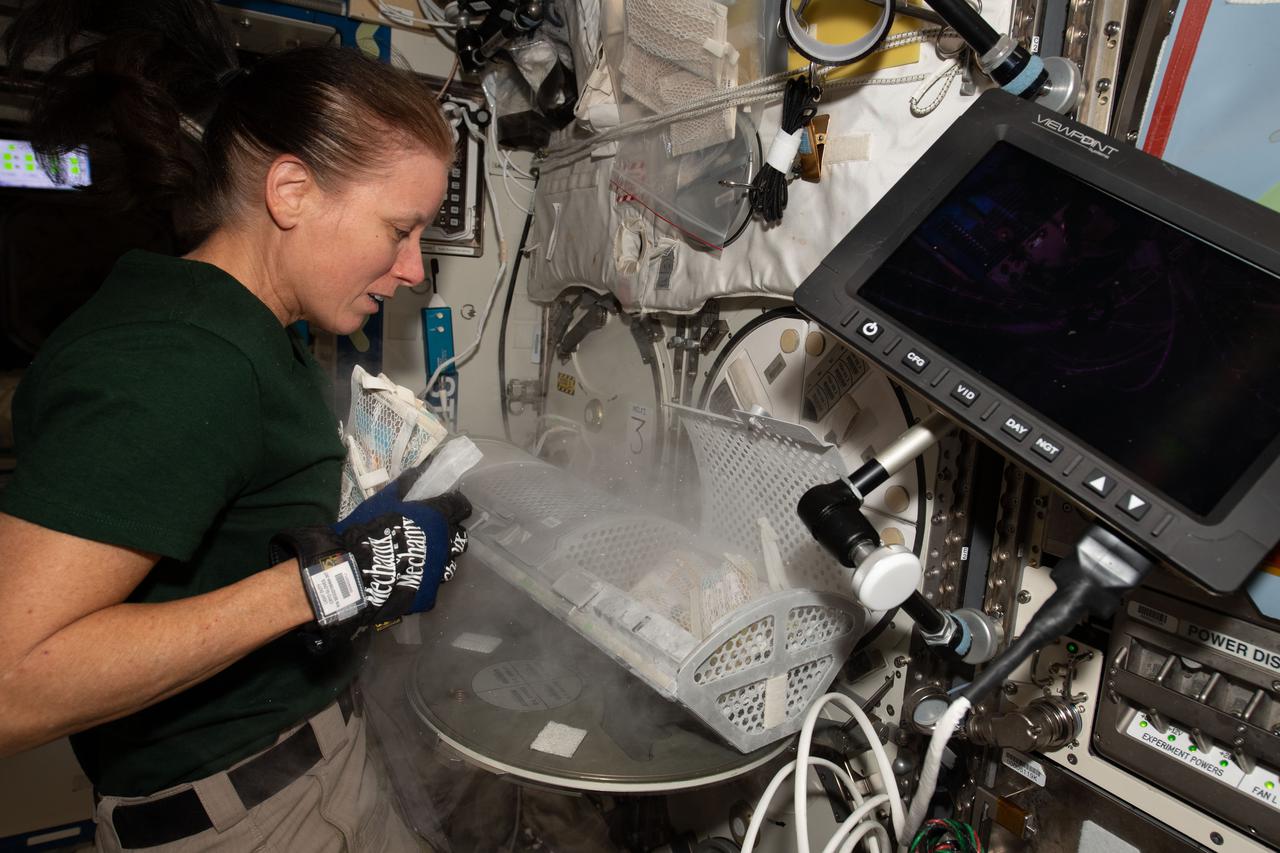
iss064e024596 (Jan. 21, 2021) --- NASA astronaut and Expedition 64 Flight Engineer Shannon Walker inspects a science freezer that preserves biological samples for later analysis on Earth and on the International Space Station.
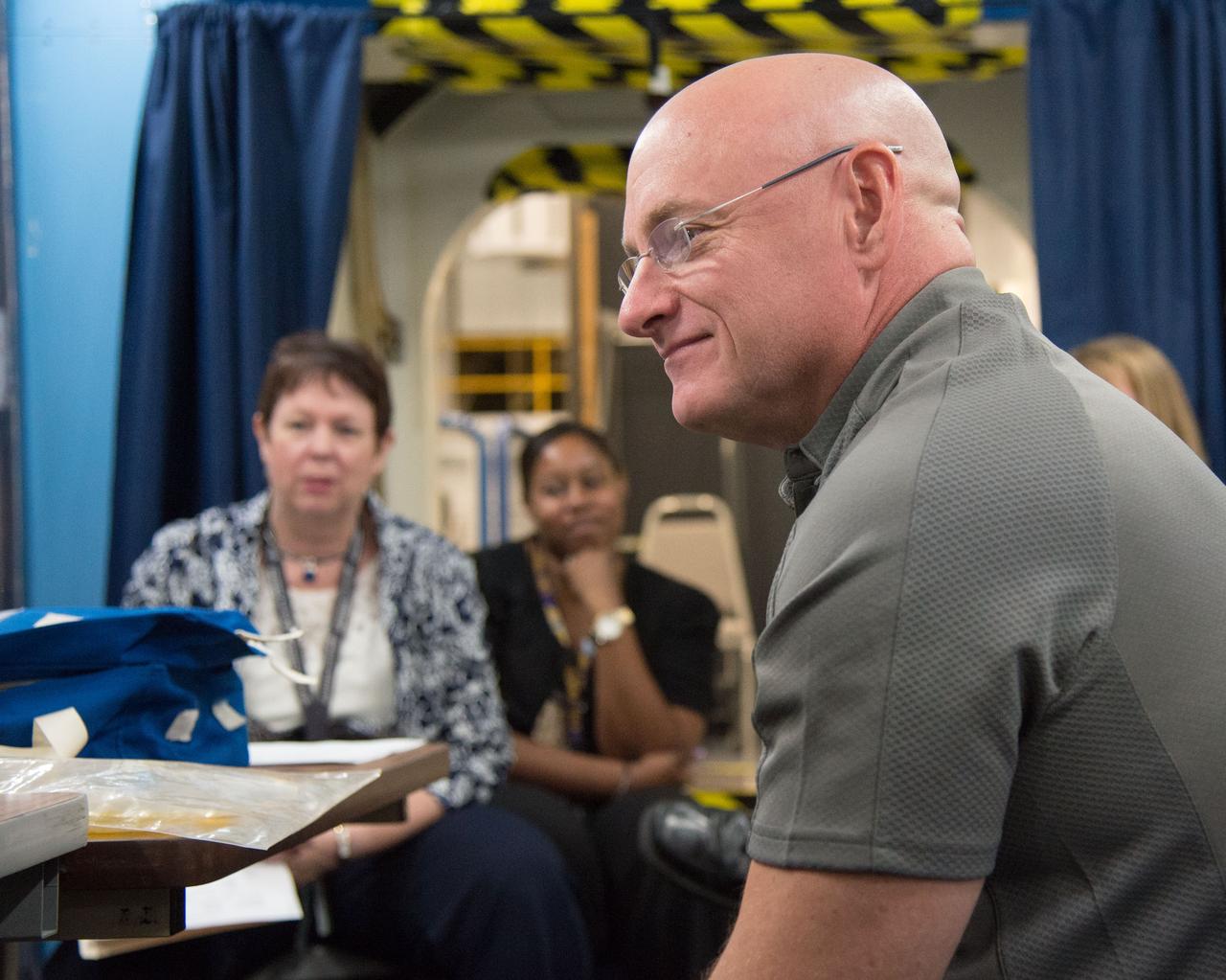
DATE: 6-9-14 LOCATION: Bldg. 9, PDL (Life Sciences) SUBJECT: Instructors and crewmember Scott Kelly during Biological Sampling training session. PHOTOGRAPHER: Lauren Harnett
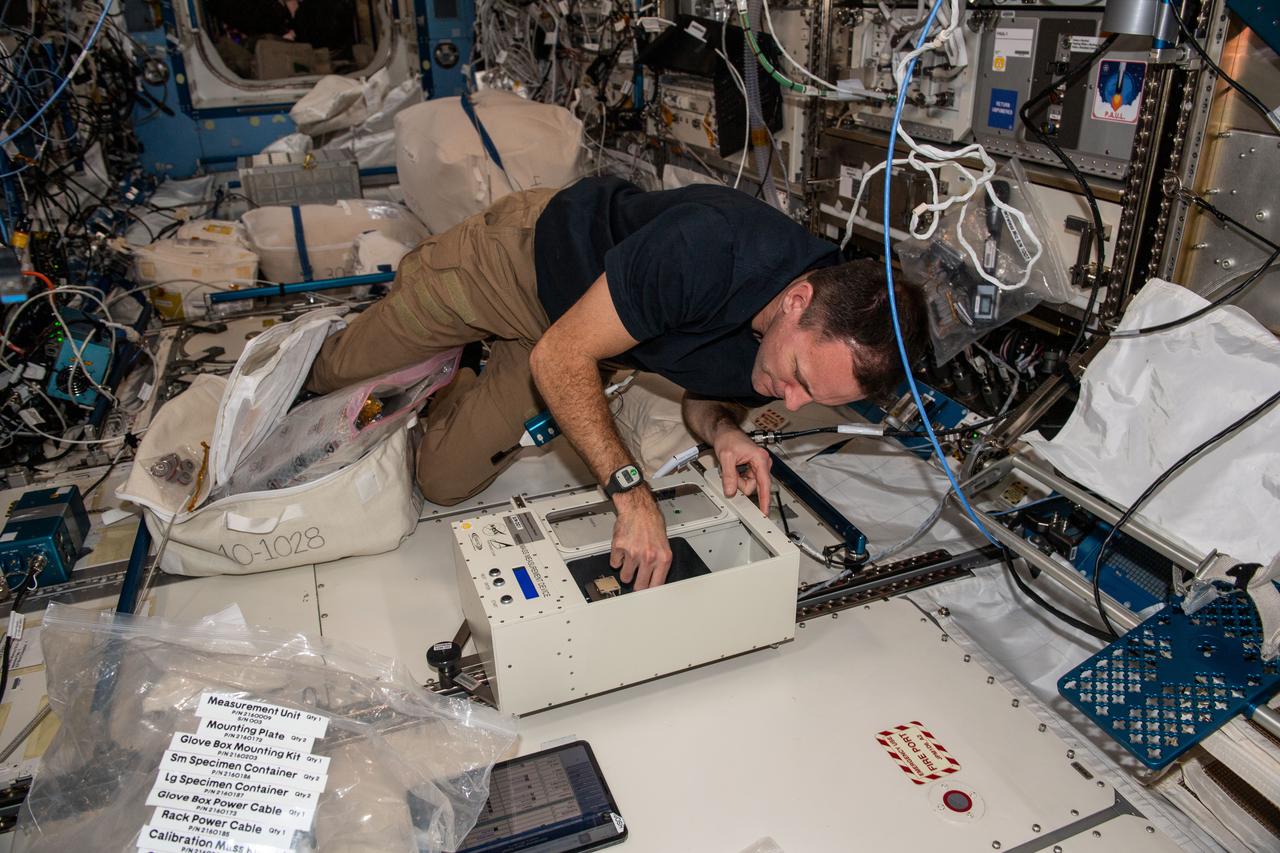
iss068e038127 (Jan. 5, 2023) --- NASA astronaut and Expedition 68 Flight Engineer Josh Cassada checks out and calibrates the mass measurement device that calculates the mass of biological research samples aboard the International Space Station.
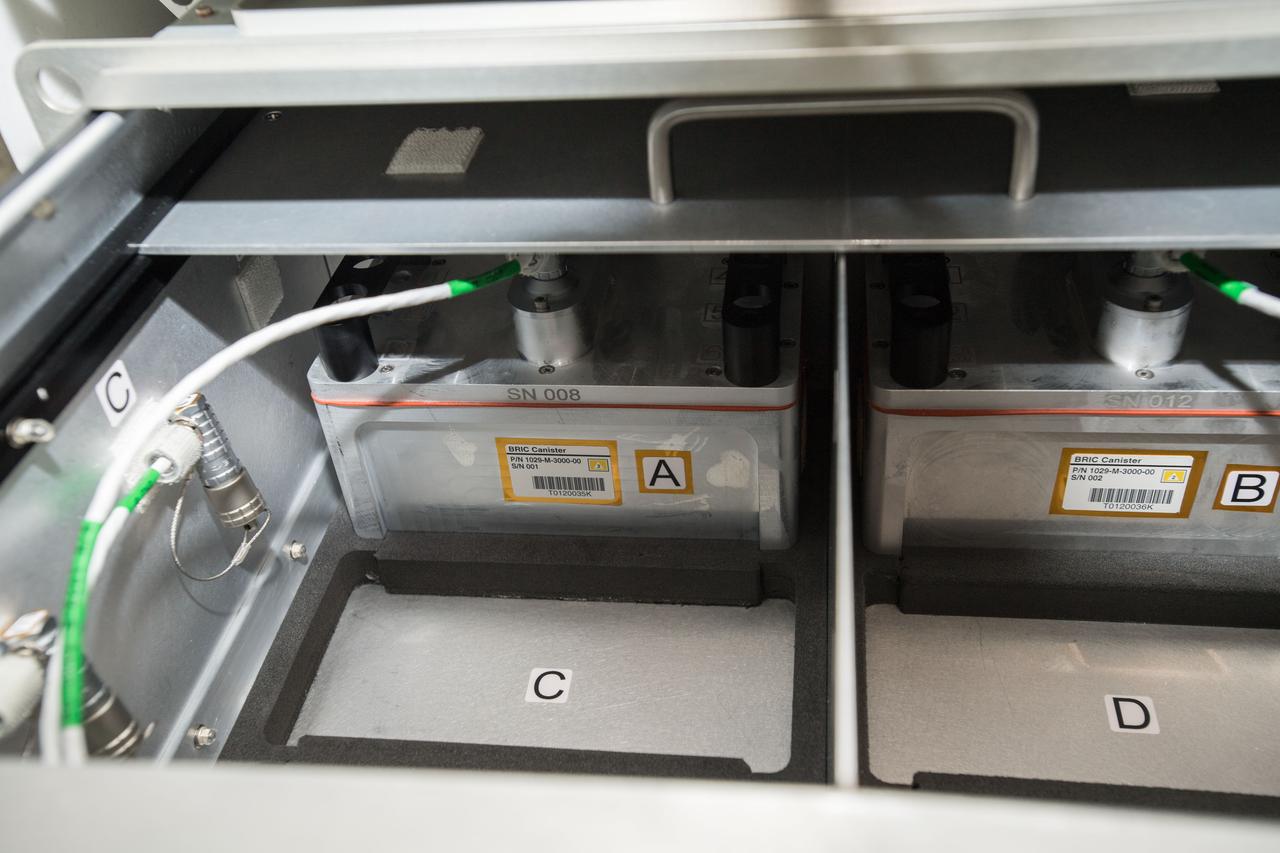
iss054e001490 (Dec. 19, 2017) --- Biological Research in Canisters - Light Emitting Diode (BRIC-LED) locker installed in the Destiny Laboratory to provide capabilities for seedling, microbial, or fungal growth investigations.
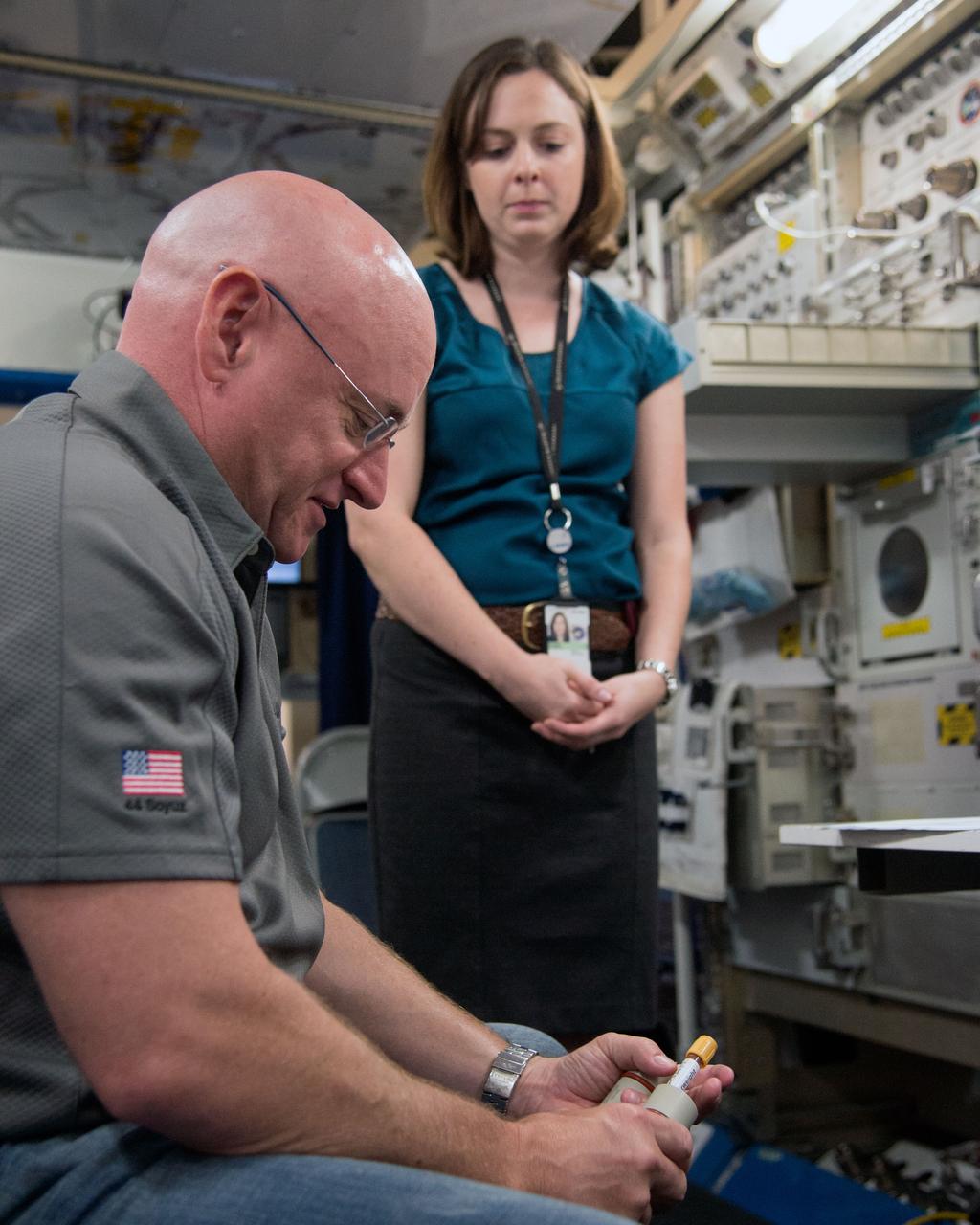
DATE: 6-9-14 LOCATION: Bldg. 9, PDL (Life Sciences) SUBJECT: Instructors and crewmember Scott Kelly during Biological Sampling training session. PHOTOGRAPHER: Lauren Harnett

iss060e043926 (Aug. 23, 2019) --- Expedition 60 Flight Engineer Christina Koch of NASA conducts science operations for the BioFabrication Facility experiment researching the effectiveness of using 3D biological printers to produce usable human organs in microgravity.
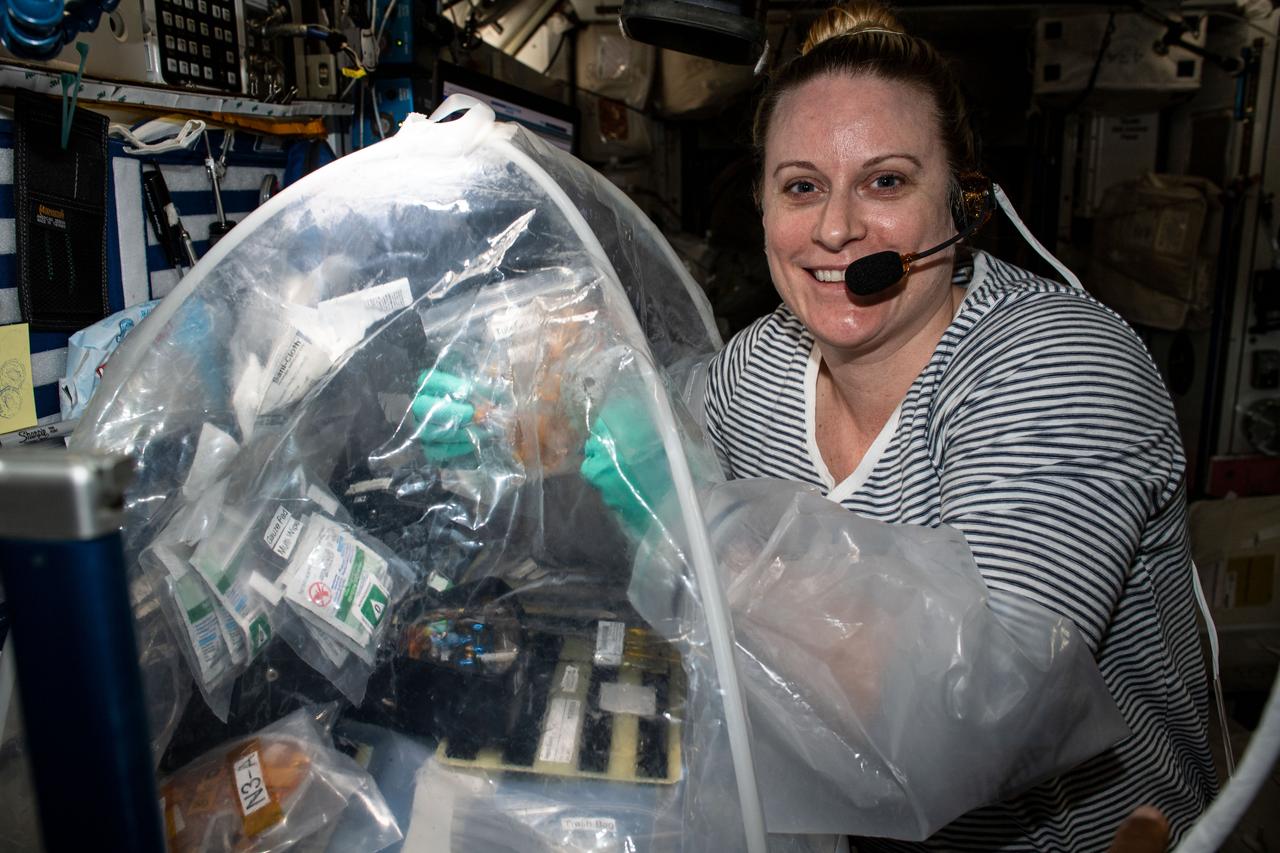
iss064e016824 (Dec. 30, 2020) --- NASA astronaut Kate Rubins is pictured conducting science operations inside the portable glovebox to contain the accidental spillage of materials and prevent exposing the International Space Station's environment to biological samples.
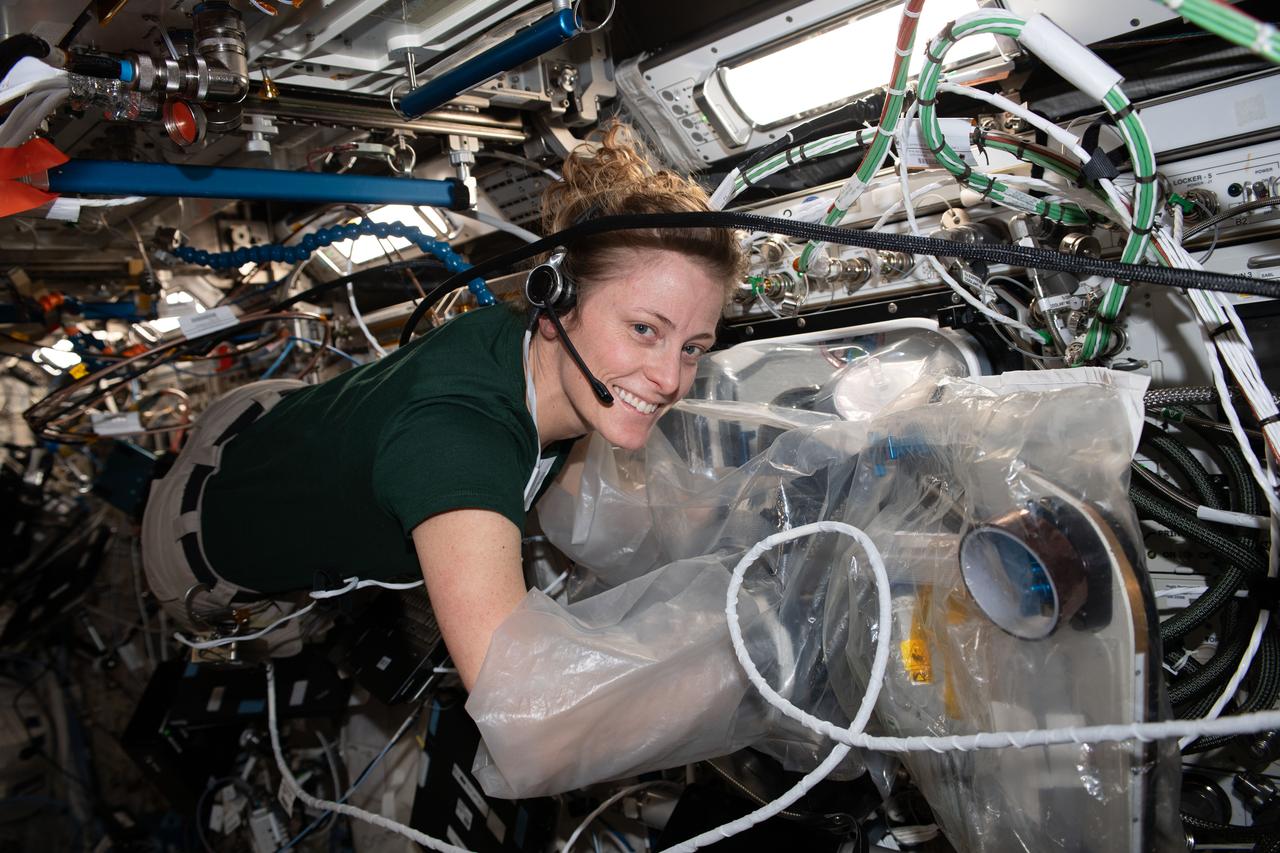
iss070e023971 (Nov. 13, 2023) --- NASA astronaut and Expedition 70 Flight Engineer Loral O'Hara uses a portable glovebag to replace components on a biological printer, the BioFabrication Facility (BFF), that is testing the printing of organ-like tissues in microgravity.
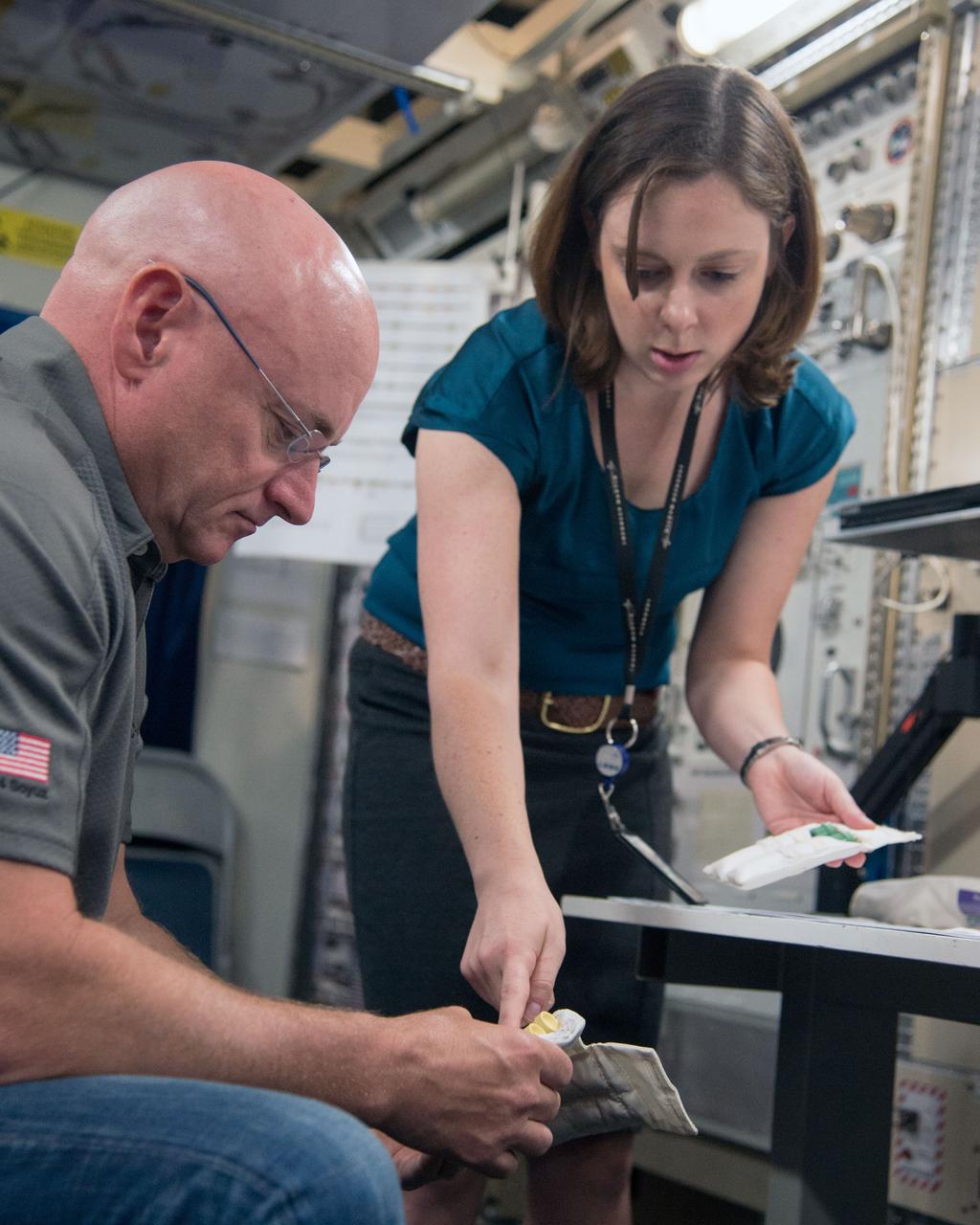
DATE: 6-9-14 LOCATION: Bldg. 9, PDL (Life Sciences) SUBJECT: Instructors and crewmember Scott Kelly during Biological Sampling training session. PHOTOGRAPHER: Lauren Harnett
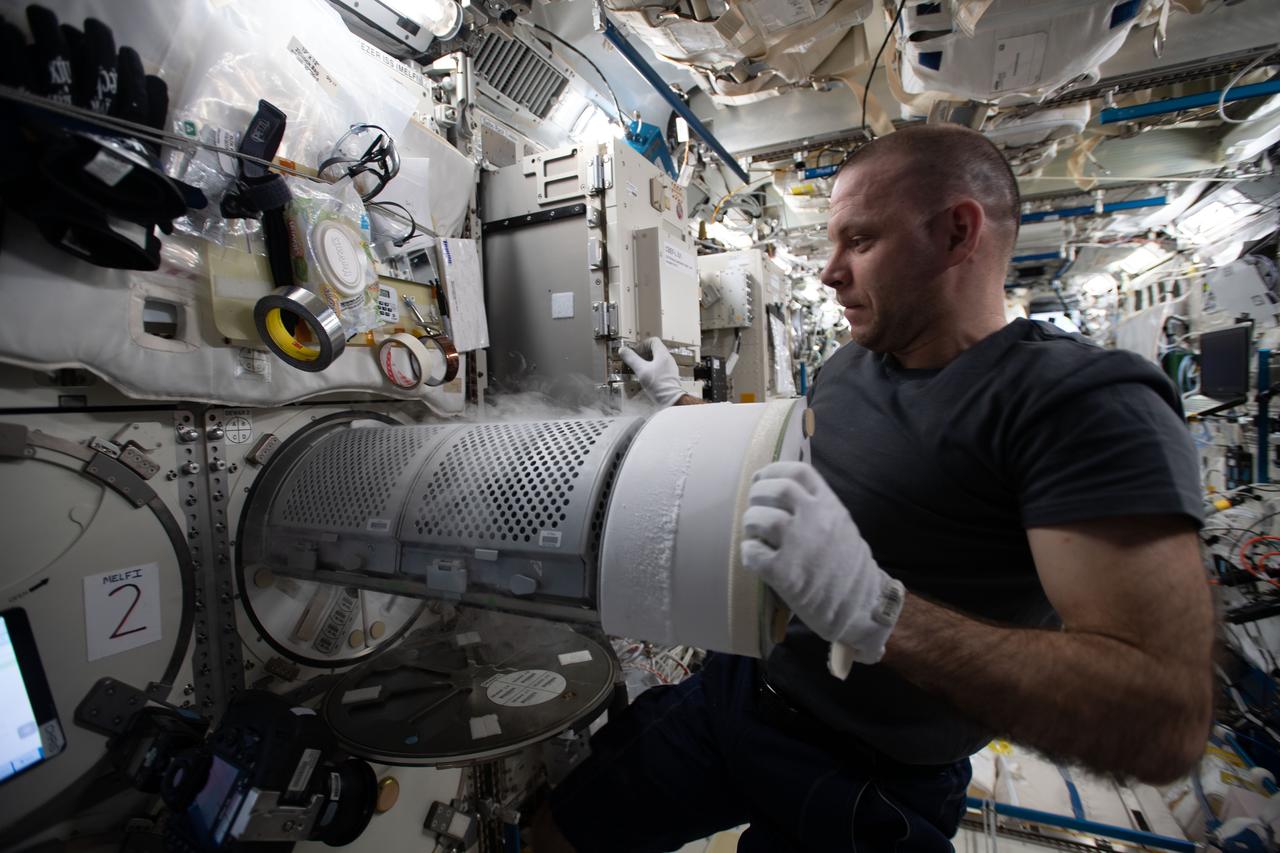
iss063e104373 (Oct. 7, 2020) --- Roscosmos cosmonaut and Expedition 63 Flight Engineer Ivan Vagner transfers biological samples into a science freezer for stowage and later analysis aboard the International Space Station.
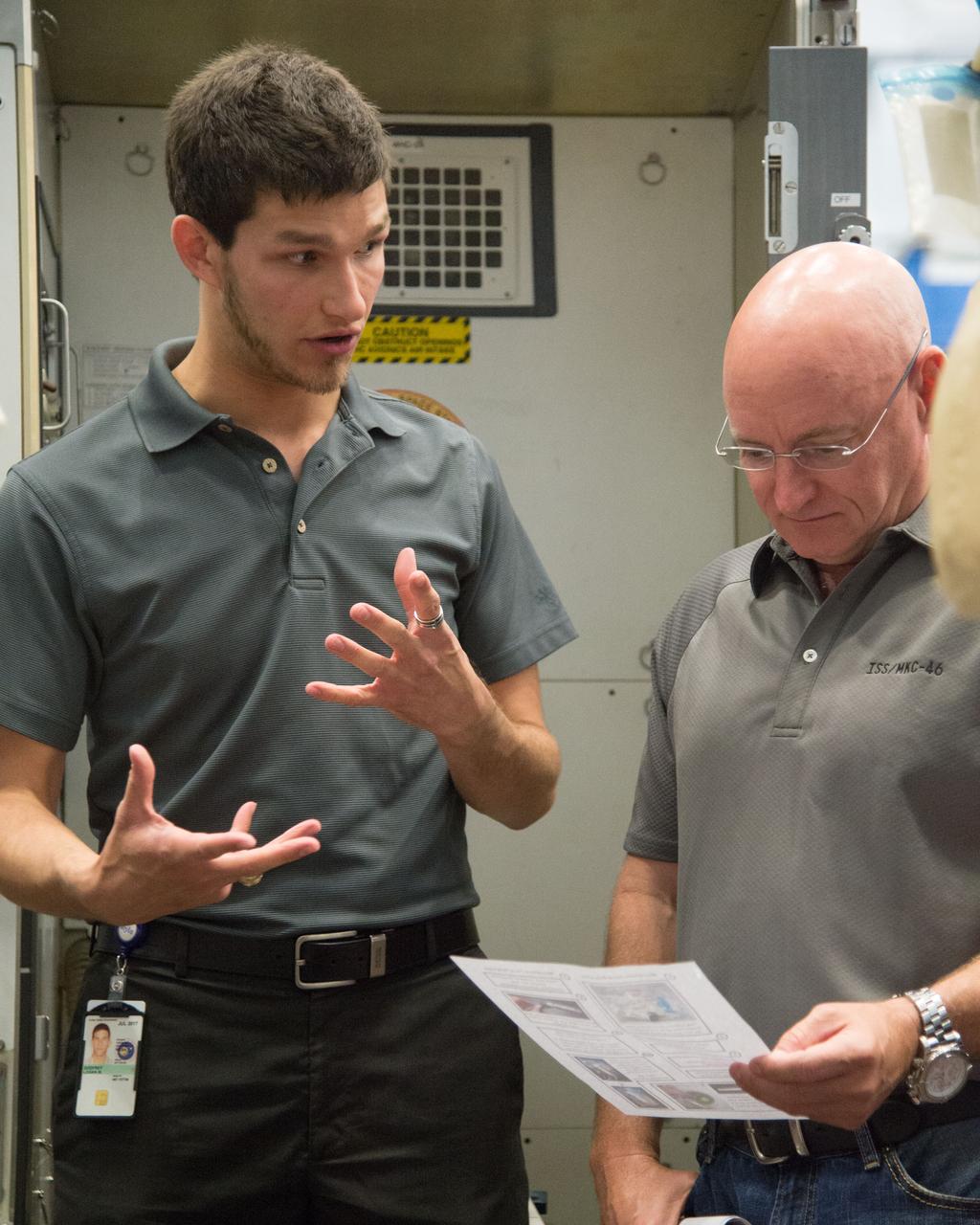
DATE: 6-9-14 LOCATION: Bldg. 9, PDL (Life Sciences) SUBJECT: Instructors and crewmember Scott Kelly during Biological Sampling training session. PHOTOGRAPHER: Lauren Harnett
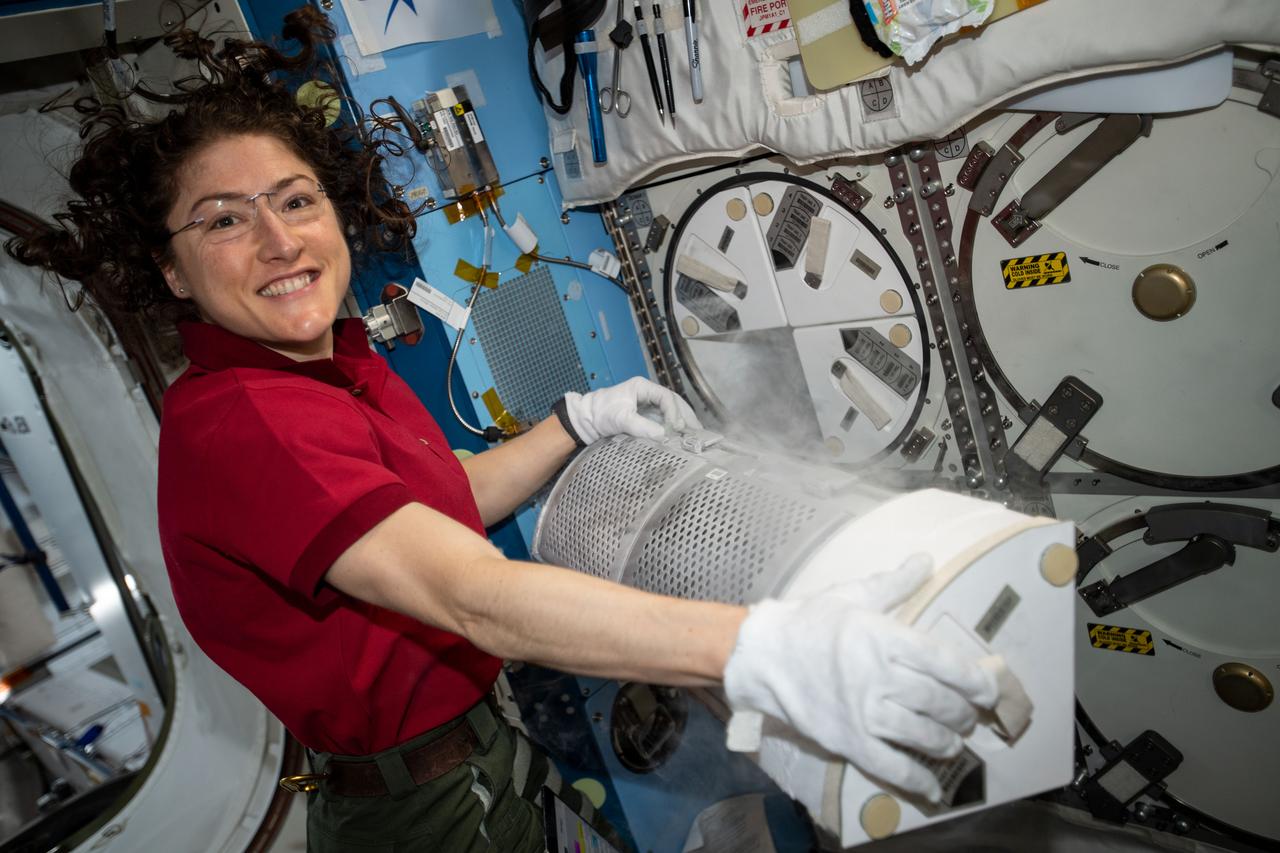
iss060e035160 (Aug. 12, 2019) --- Expedition 60 Flight Engineer Christina Koch of NASA conducts science operations inside Japan's Kibo laboratory module with a science freezer that preserves biological research samples for later analysis.
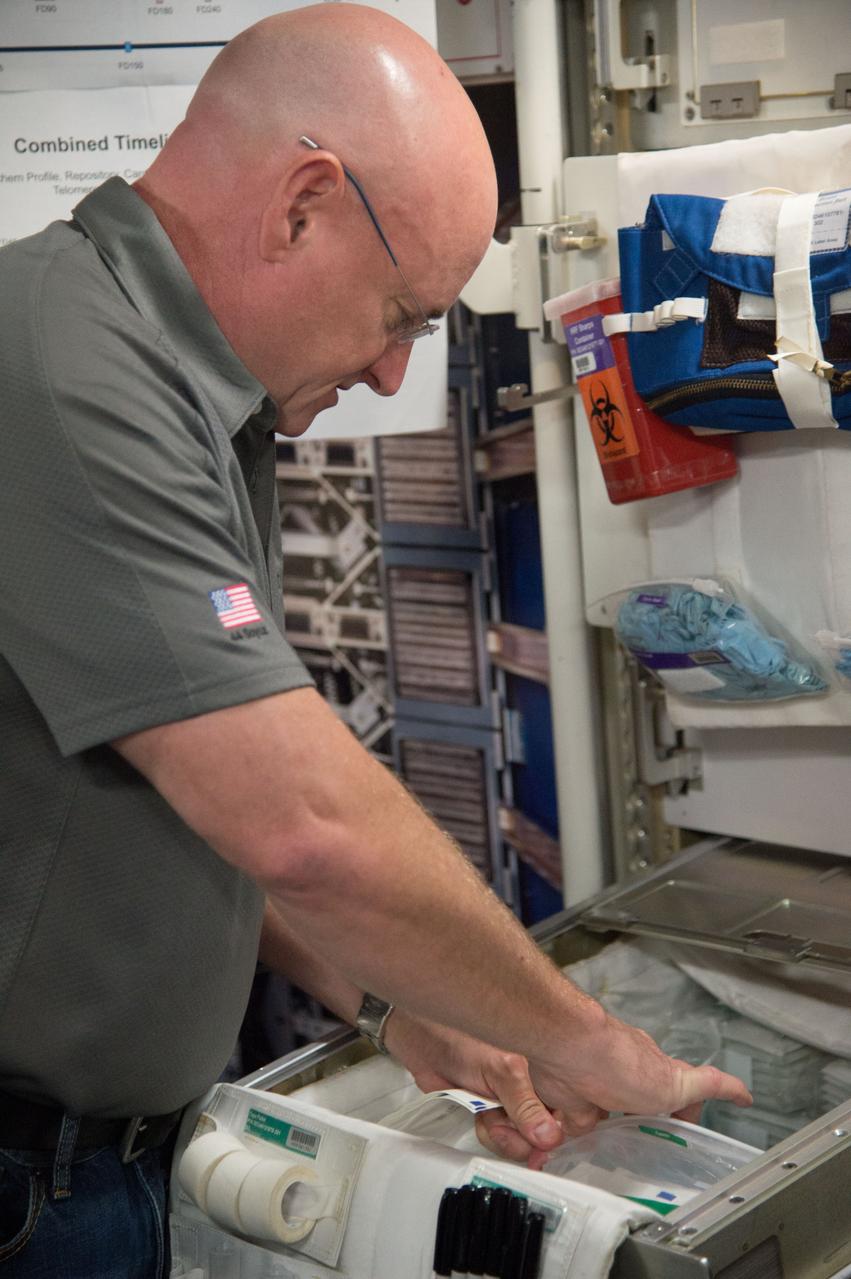
DATE: 6-9-14 LOCATION: Bldg. 9, PDL (Life Sciences) SUBJECT: Instructors and crewmember Scott Kelly during Biological Sampling training session. PHOTOGRAPHER: Lauren Harnett
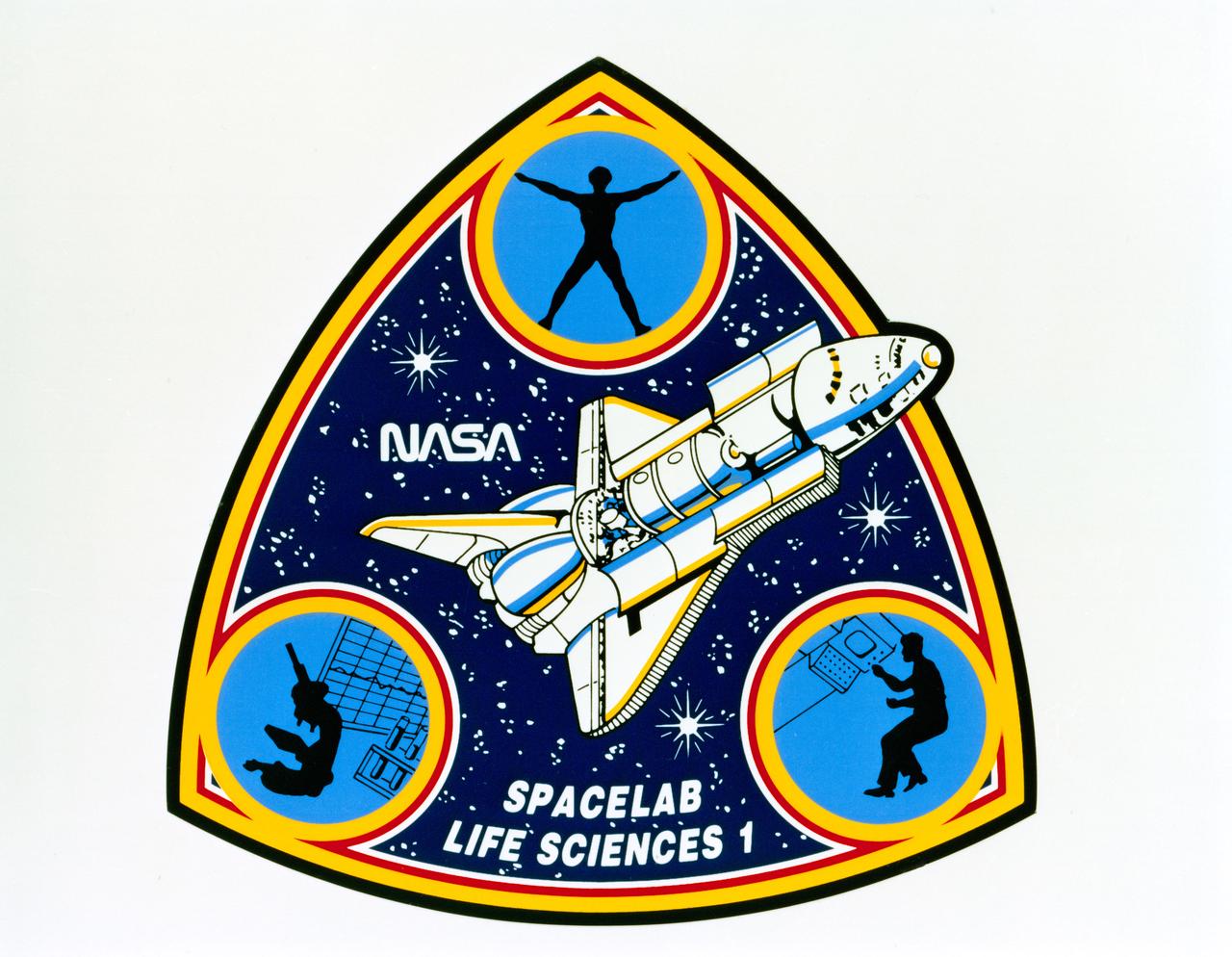
S86-27614 (Feb 1986) --- The Space Shuttle Columbia is at the center of the Spacelab Life Sciences 1 patch. The various elements of the logo serve to deliver the message of the dedication of this mission to medical and biological studies, a first for manned spaceflight. A crew of five NASA astronauts and two payload specialists will be split into shifts to maximize the exposure to space environment for variegated and thorough biological and medical experiments during the scheduled ten-day mission. The crew will maintain a constant communications link with scientists on Earth, considered by the flight crew to be an integral part of the overall mission, as well.
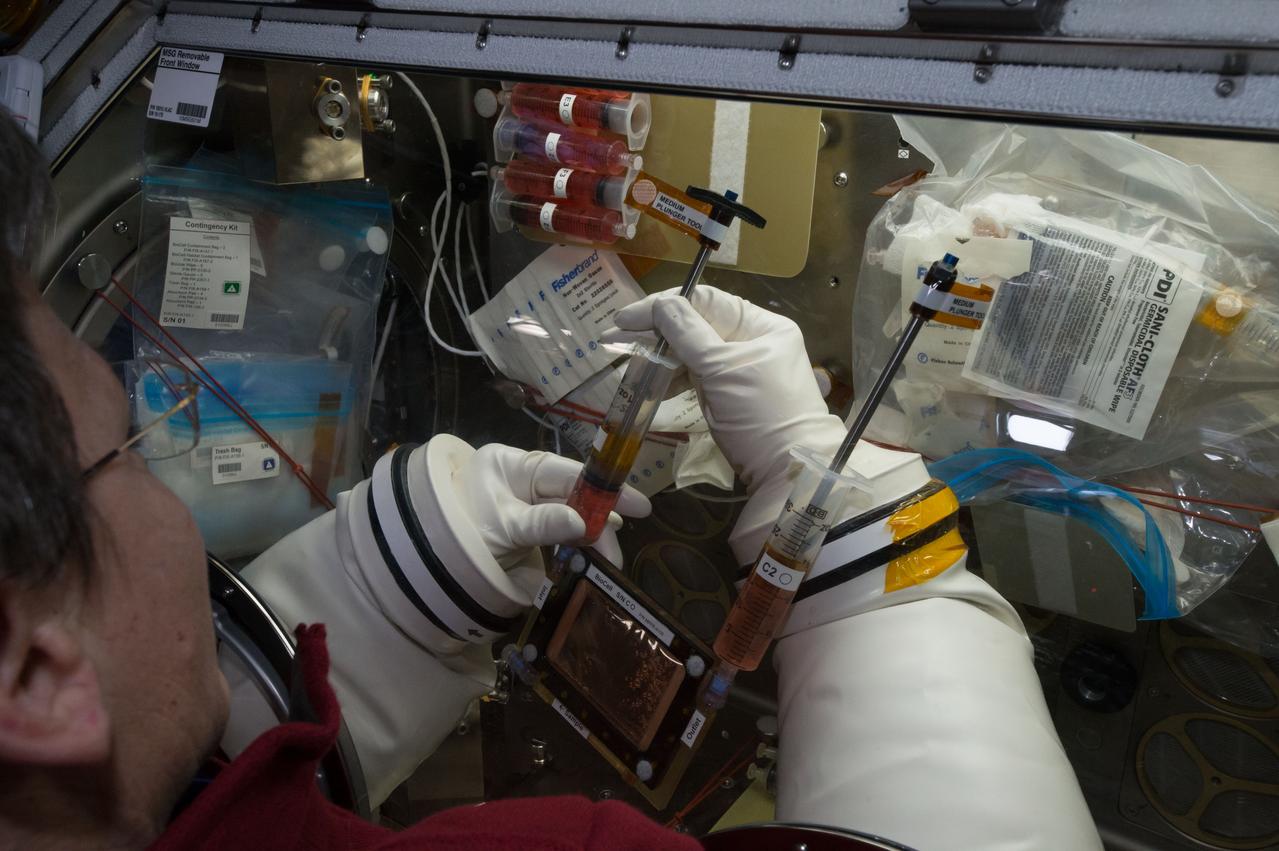
iss051e036140 (5/3/2017) --- A view inside the Microgravity Sciences Glovebox (MSG) where Commander Peggy Whitson works to change the media in a BioCell for the OsteoOmics experiment. Image was taken in the Destiny U.S. Laboratory. Gravitational Regulation of Osteoblast Genomics and Metabolism (OsteoOmics) aims to validate if magnetic levitation is a reasonable simulation of orbital free fall by measuring biological endpoints, such as signaling pathways and gene expression in osteoblast and osteoclast cells. Cells are exposed to a microgravity environment and ground based cells are exposed to magnetic levitation. If the validation is successful, then ground-based magnetic levitation will be an important ground-based tool to investigate the effect of gravitational force on biological systems.
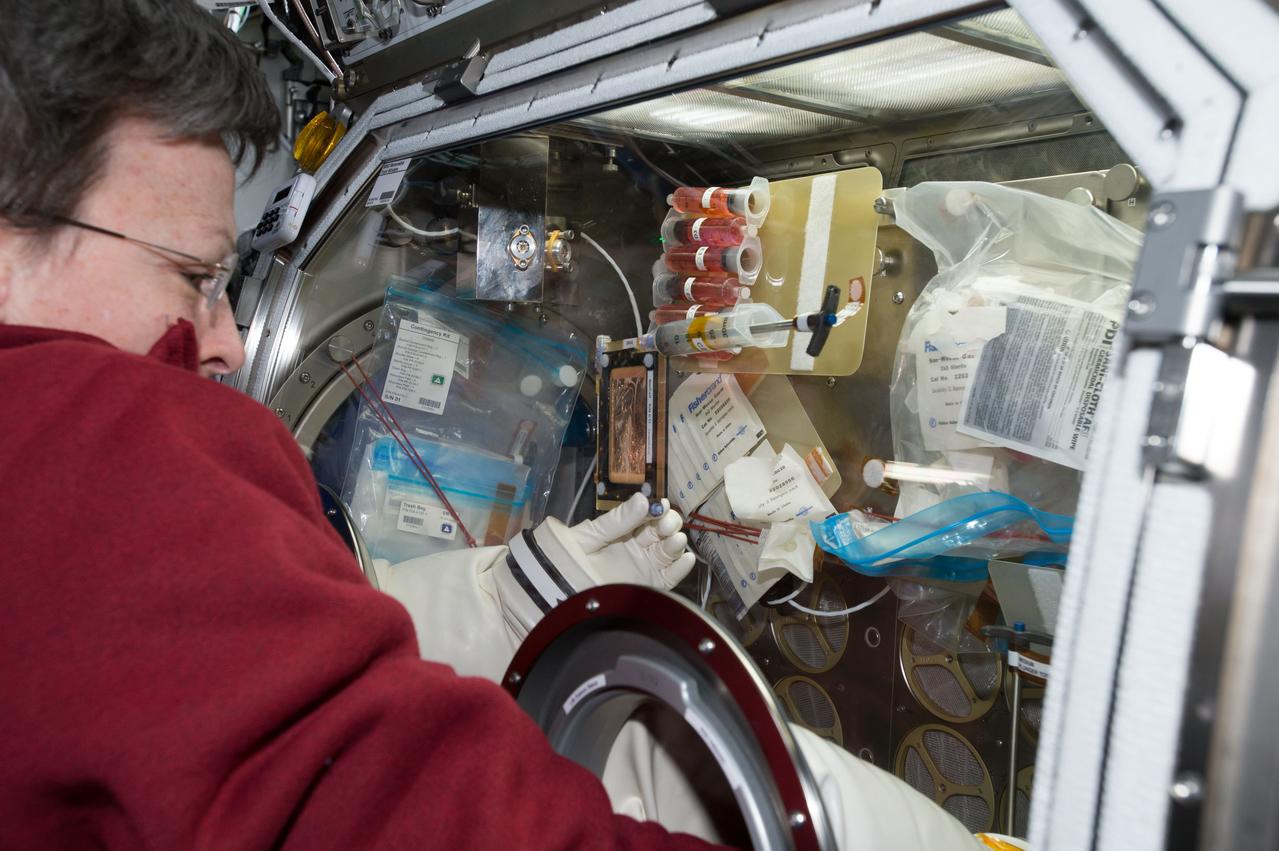
iss051e036121 (5/3/2017) --- An over-the-shoulder look at Commander Peggy Whitson working inside the Microgravity Sciences Glovebox (MSG) to change the media in the BioCell for the OsteoOmics experiment. Image was taken in the Destiny U.S. Laboratory. Gravitational Regulation of Osteoblast Genomics and Metabolism (OsteoOmics) aims to validate if magnetic levitation is a reasonable simulation of orbital free fall by measuring biological endpoints, such as signaling pathways and gene expression in osteoblast and osteoclast cells. Cells are exposed to a microgravity environment and ground based cells are exposed to magnetic levitation. If the validation is successful, then ground-based magnetic levitation will be an important ground-based tool to investigate the effect of gravitational force on biological systems.
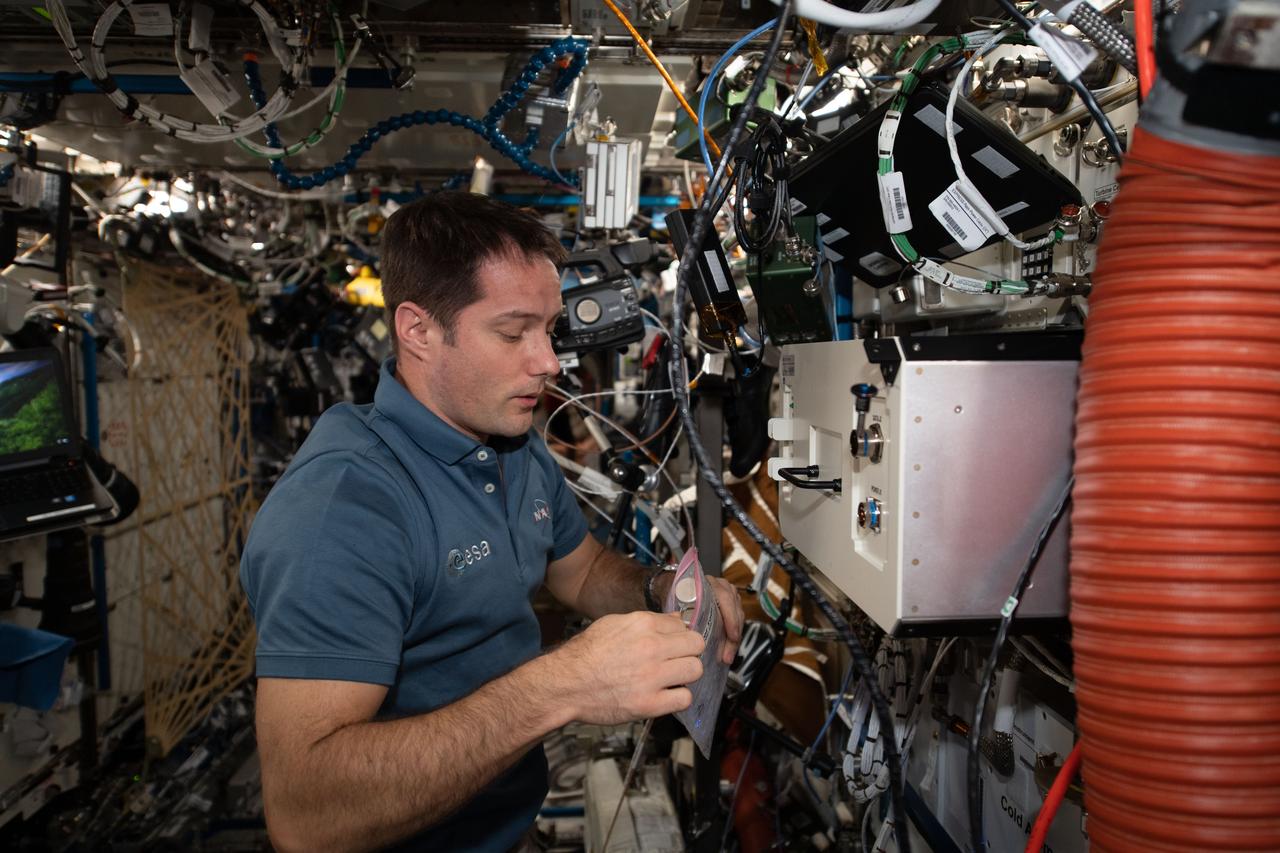
iss065e094086 (6/9/2021) --- European Space Agency (ESA) astronaut Thomas Pesquet is photographed aboard the International Space Station (ISS) during transfers of BRIC-24 Canisters to BRIC-LED Facility to stow.
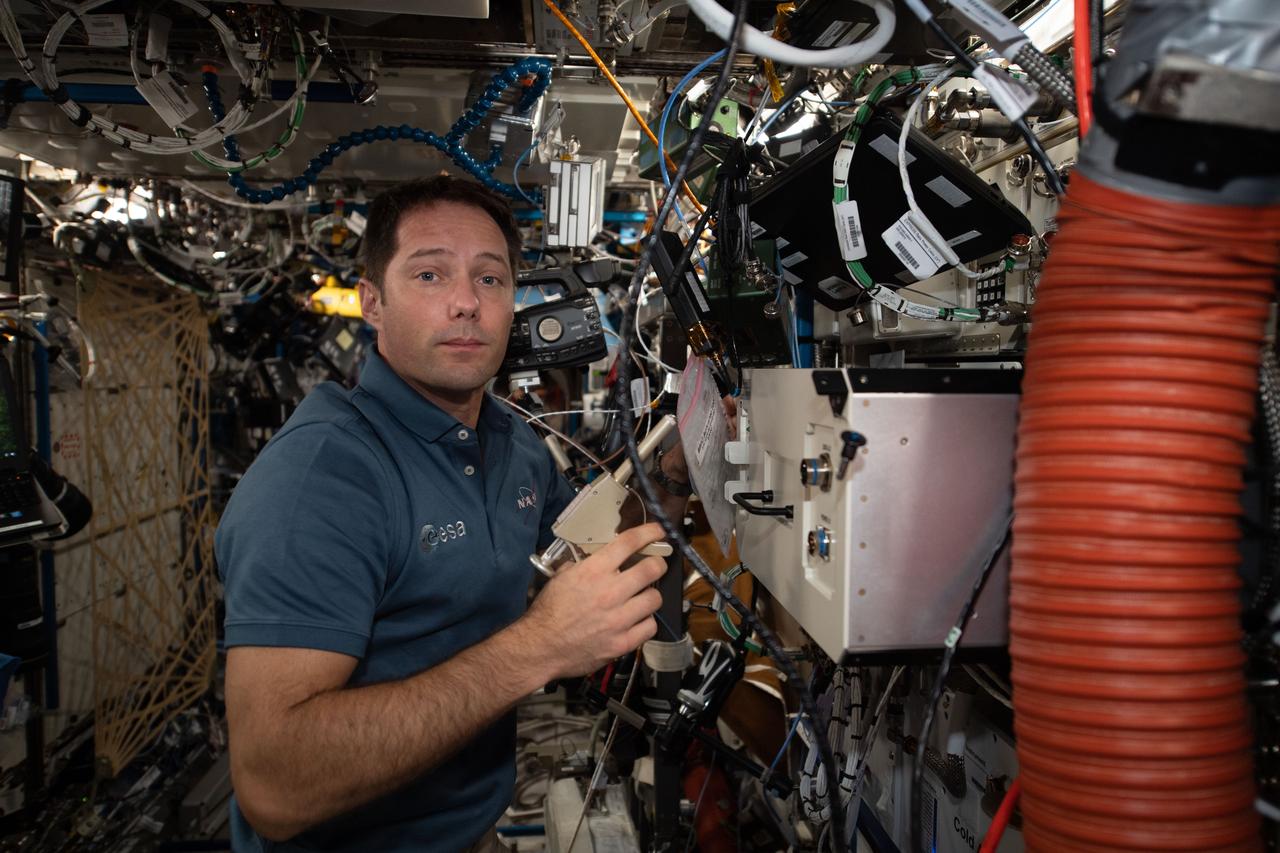
iss065e094087 (6/9/2021) --- European Space Agency (ESA) astronaut Thomas Pesquet is photographed aboard the International Space Station (ISS) during transfers of BRIC-24 Canisters to BRIC-LED Facility to stow.
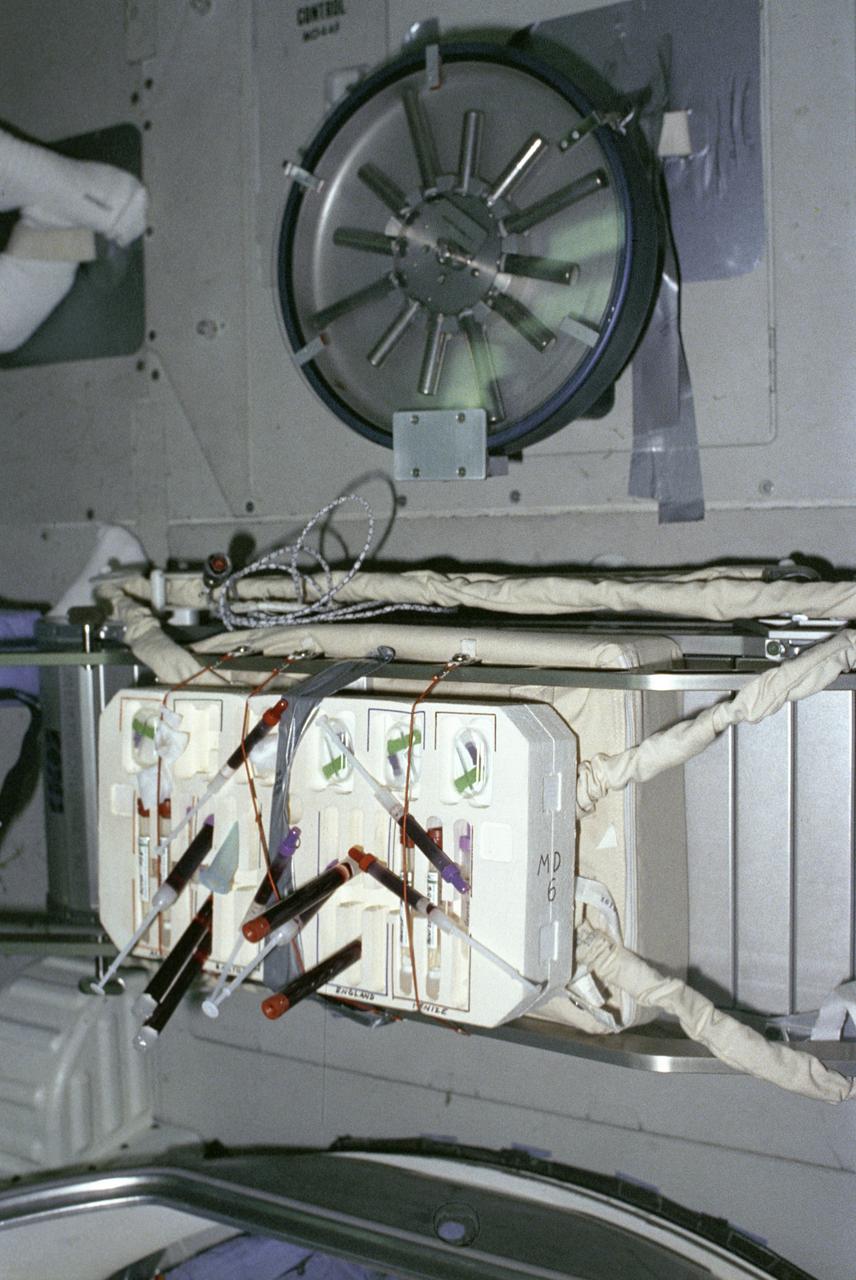
While instruments on the pallets in the payload bay observed the universe, biological experiments were performed in the middeck of the Shuttle Orbiter Challenger. Studying life processes in a microgravity environment can shed new light on the functioning of biological systems on Earth. These investigations can also help us understand how living organisms react to prolonged weightlessness. One such experiment was the vitamin D metabolites and bone demineralization experiment. This investigation measured the vitamin d metabolite levels of crew members to gain information on the cause of bone demineralization and mineral imbalance that occur during prolonged spaceflight as well as on Earth. Research into the biochemical nature of vitamin D has shown that the D-metabolites play a major role in regulating the body's calcium and phosphorus levels. One major function of the most biologically active vitamin D metabolite is to regulate the amount of calcium absorbed from the diet and taken out of bones. This investigation had two phases. The first was the developmental phase, which included extensive testing before flight, and the second, or final phase, involved the postflight analysis of the crew's blood samples. This photograph shows a blood draw test kit and centrifuge used for the experiment aboard the Spacelab-2. Marshall Space Flight Center had management responsibilities of all Spacelab missions.
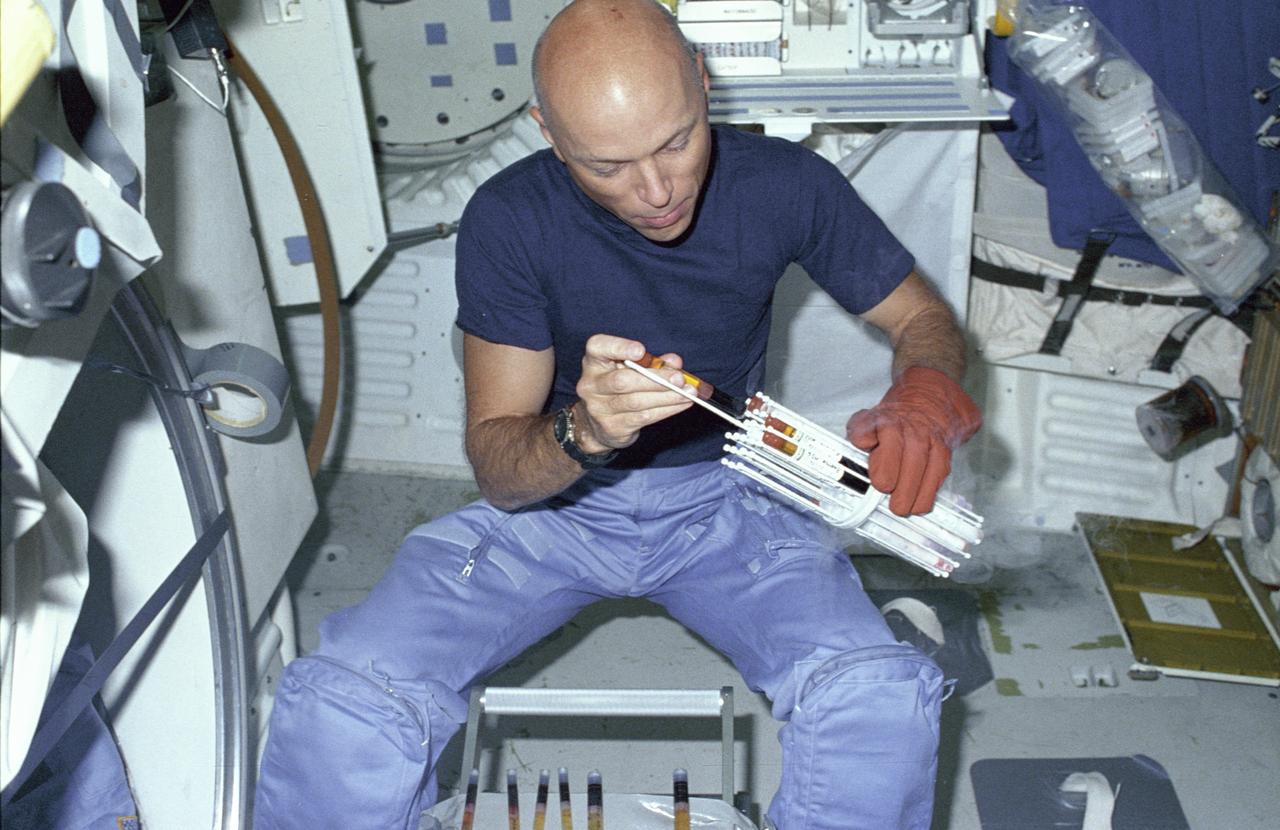
While instruments on the pallets in the payload bay observed the universe, biological experiments were performed in the middeck of the Shuttle Orbiter Challenger. Studying life processes in a microgravity environment can shed new light on the functioning of biological systems on Earth. These investigations can also help us understand how living organisms react to prolonged weightlessness. One such experiment was the vitamin D metabolites and bone demineralization experiment. This investigation measured the vitamin D metabolite levels of crew members to gain information on the cause of bone demineralization and mineral imbalance that occur during prolonged spaceflight as well as on Earth. Research into the biochemical nature of vitamin D has shown that the D-metabolites play a major role in regulating the body's calcium and phosphorus levels. One major function of the most biologically active vitamin D metabolite is to regulate the amount of calcium absorbed from the diet and taken out of bones. This investigation had two phases. The first was the developmental phase, which included extensive testing before flight, and the second, or final phase, involved the postflight analysis of the crew's blood samples. This photograph shows astronaut Story Musgrave in the middeck of the Shuttle Orbiter Challenger, attending to the blood samples he collected from crew members for the experiment.
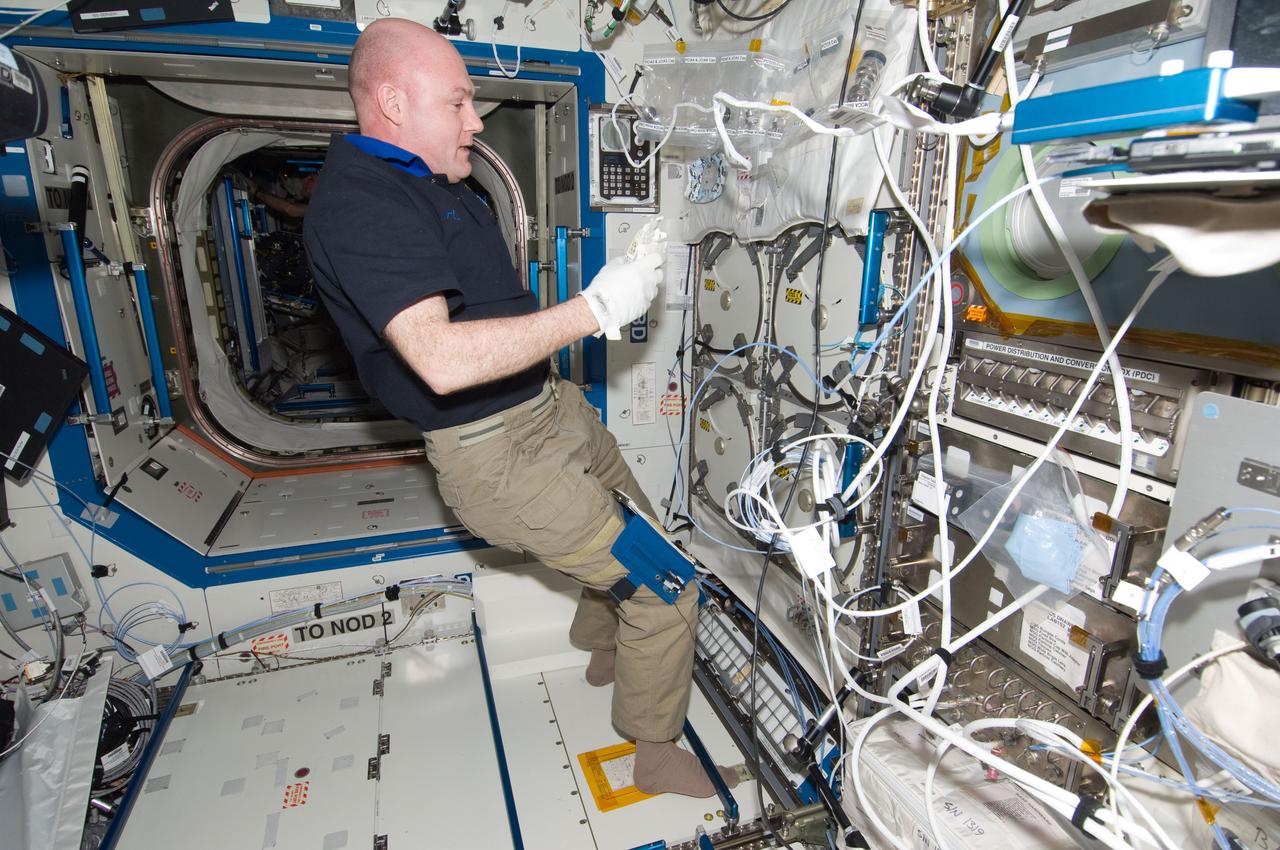
ISS031-E-143832 (25 June 2012) --- European Space Agency astronaut Andre Kuipers, Expedition 31 flight engineer, prepares to insert biological samples in the Minus Eighty Laboratory Freezer for ISS-2 (MELFI-2) in the Destiny laboratory of the International Space Station.
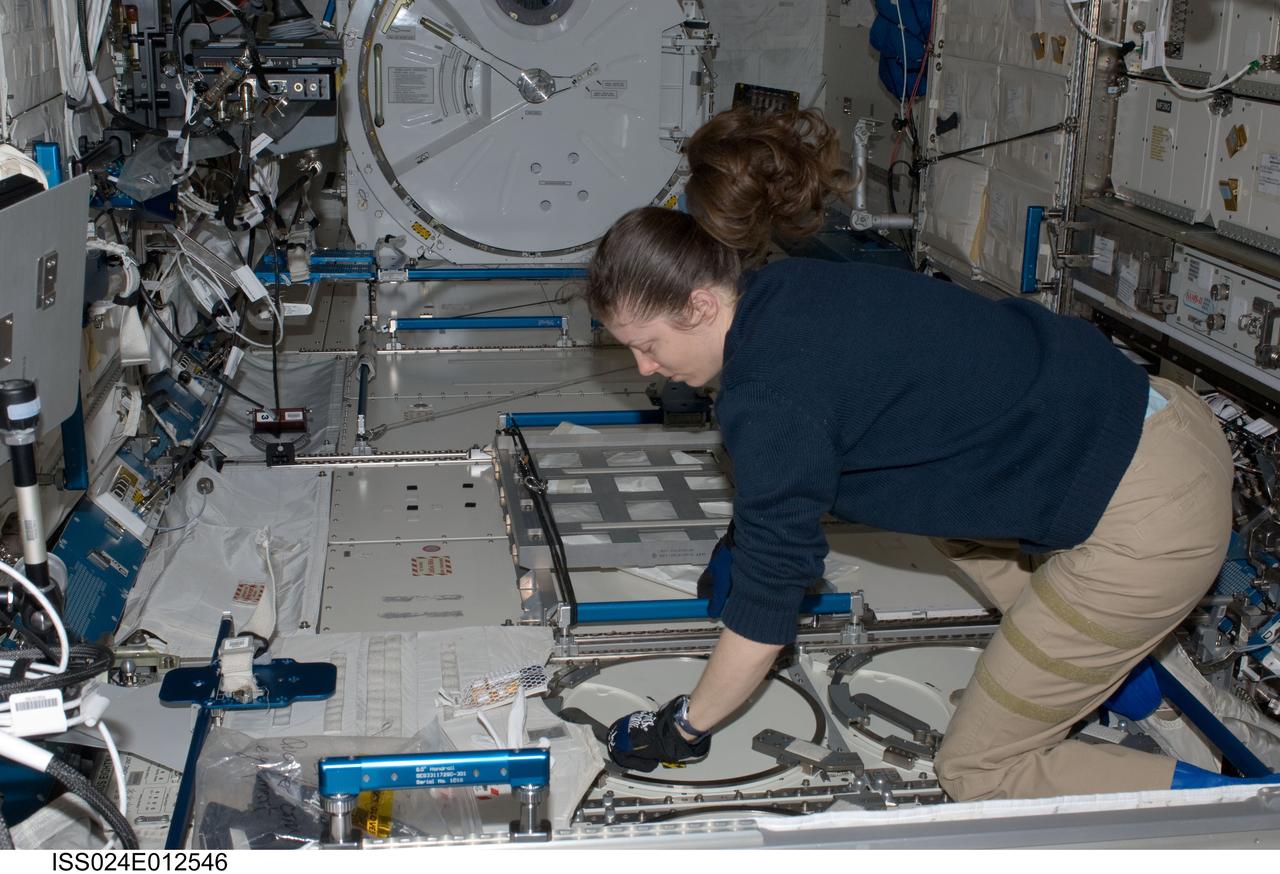
ISS024-E-012546 (26 Aug. 2010) --- NASA astronaut Tracy Caldwell Dyson, Expedition 24 flight engineer, prepares to insert biological samples in a dewar tray in the Minus Eighty Laboratory Freezer for ISS (MELFI-1) in the Kibo laboratory of the International Space Station.
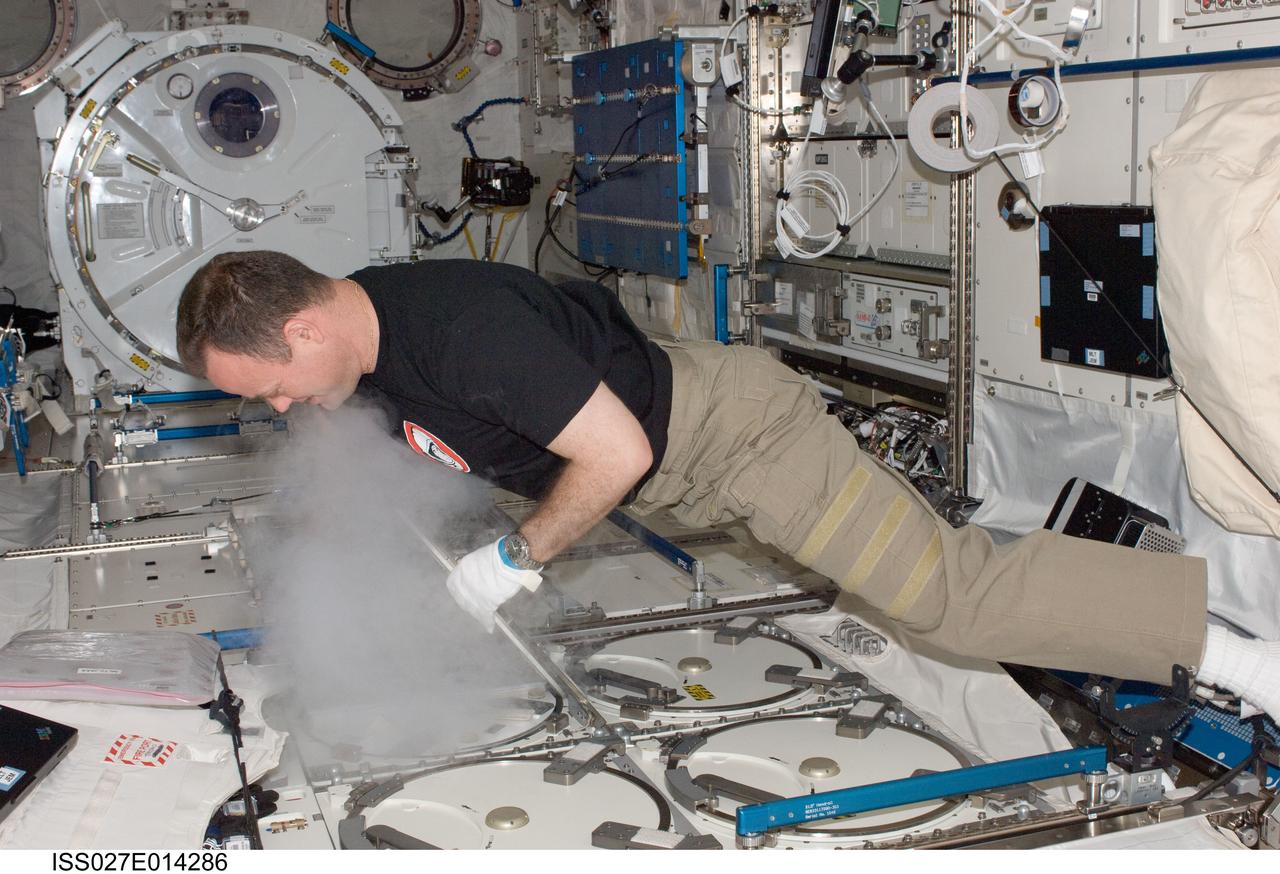
ISS027-E-014286 (14 April 2011) --- NASA astronaut Ron Garan, Expedition 27 flight engineer, replaces a dewar tray containing biological samples in the Minus Eighty Laboratory Freezer for ISS (MELFI-1) in the Kibo laboratory of the International Space Station.
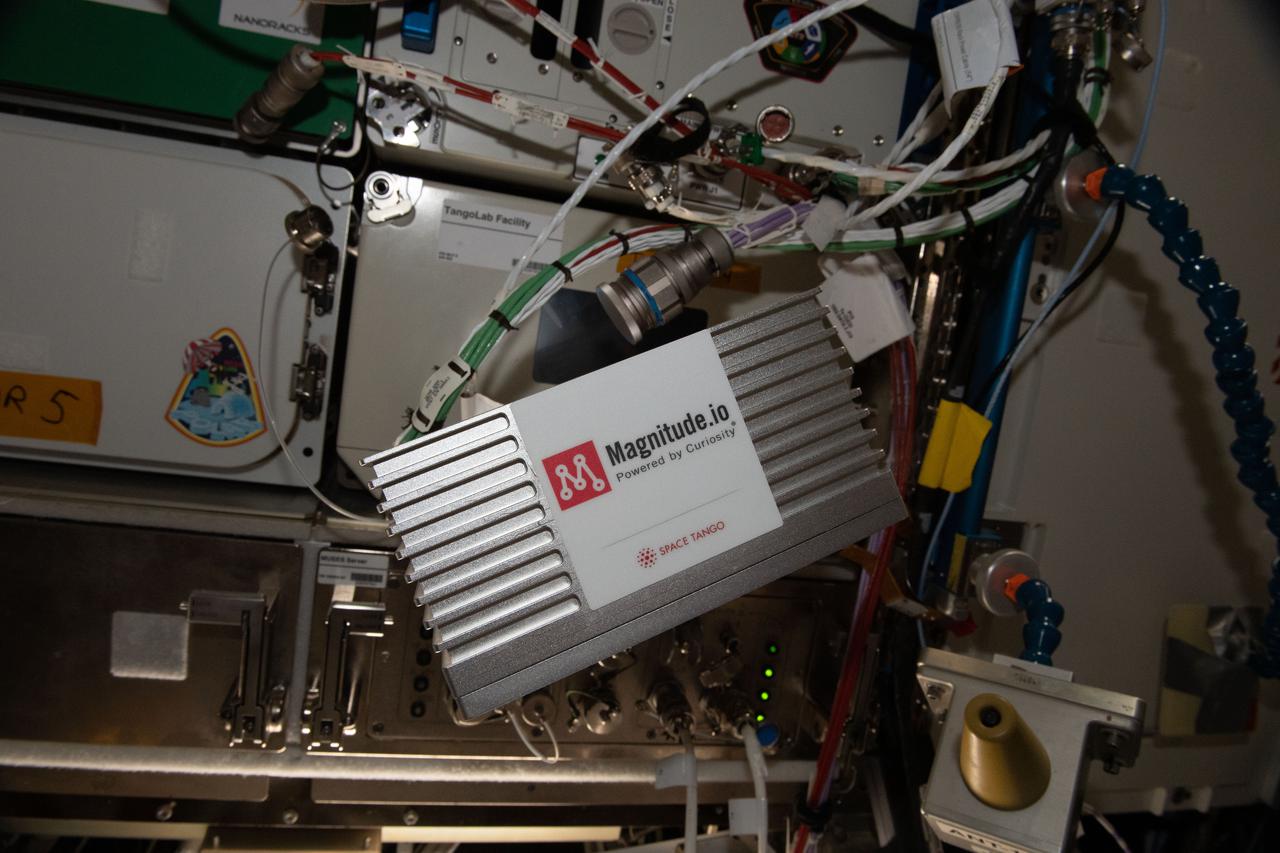
iss065e423763 (9/27/2021) --- A view of the Symbiotic Leguminous Nitrogen Fixation CubeLab onboard the International Space Station (ISS). Nitrogen Fixation of Leguminous Species in MicroG (Symbiotic Leguminous Nitrogen Fixation) explores microgravity’s effects on the growth and development of Vigna unguiculata, a legume capable of biological nitrogen fixation.
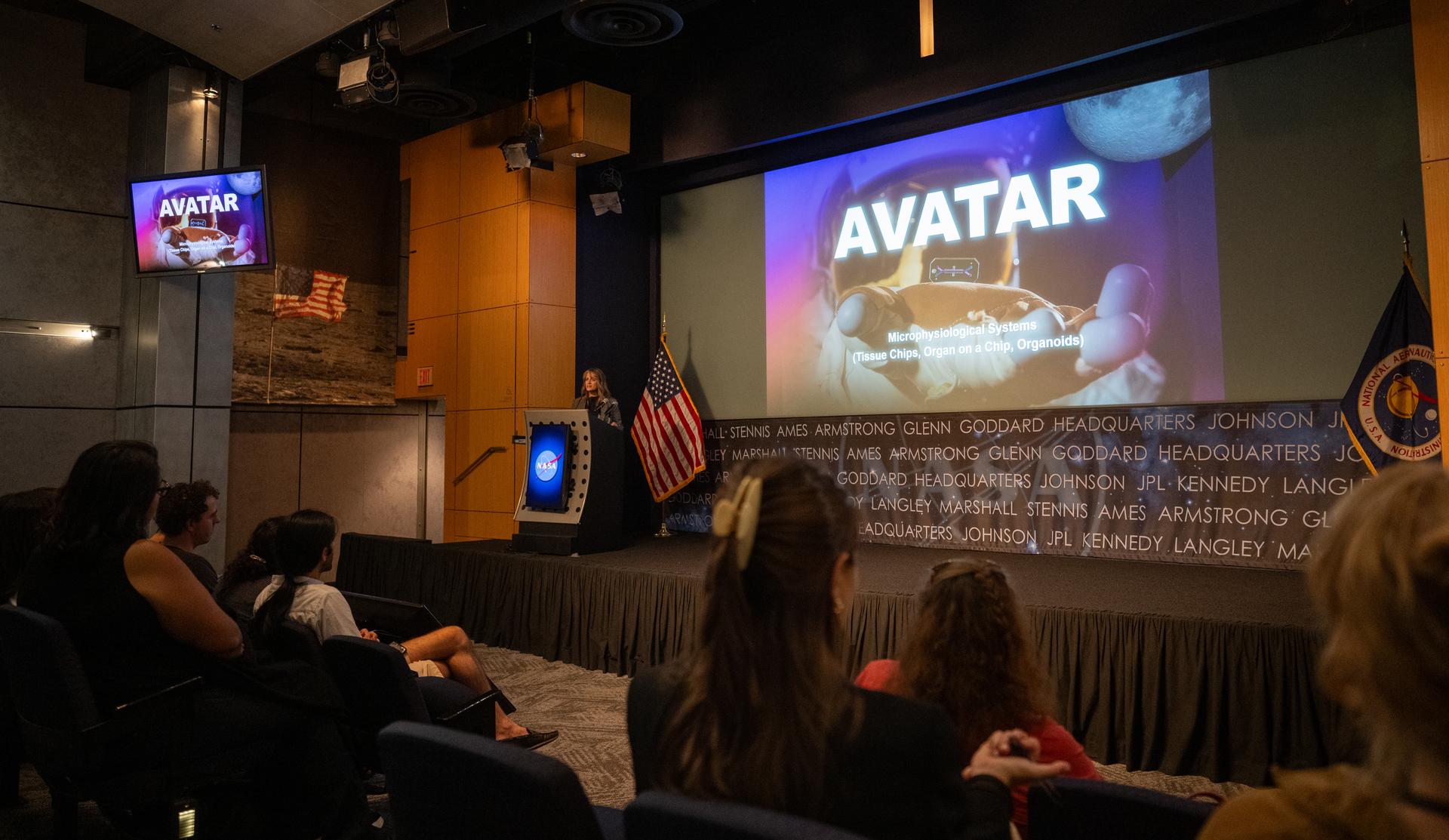
Dr. Lisa Carnell, director of NASA’s Biological and Physical Sciences Division, is seen during a Frontiers Forum talk titled “Revolutionizing Medicine – In Space,” Wednesday, Sept. 16, 2026, at the Mary W. Jackson NASA Headquarters building in Washington. Photo Credit: (NASA/Joel Kowsky)
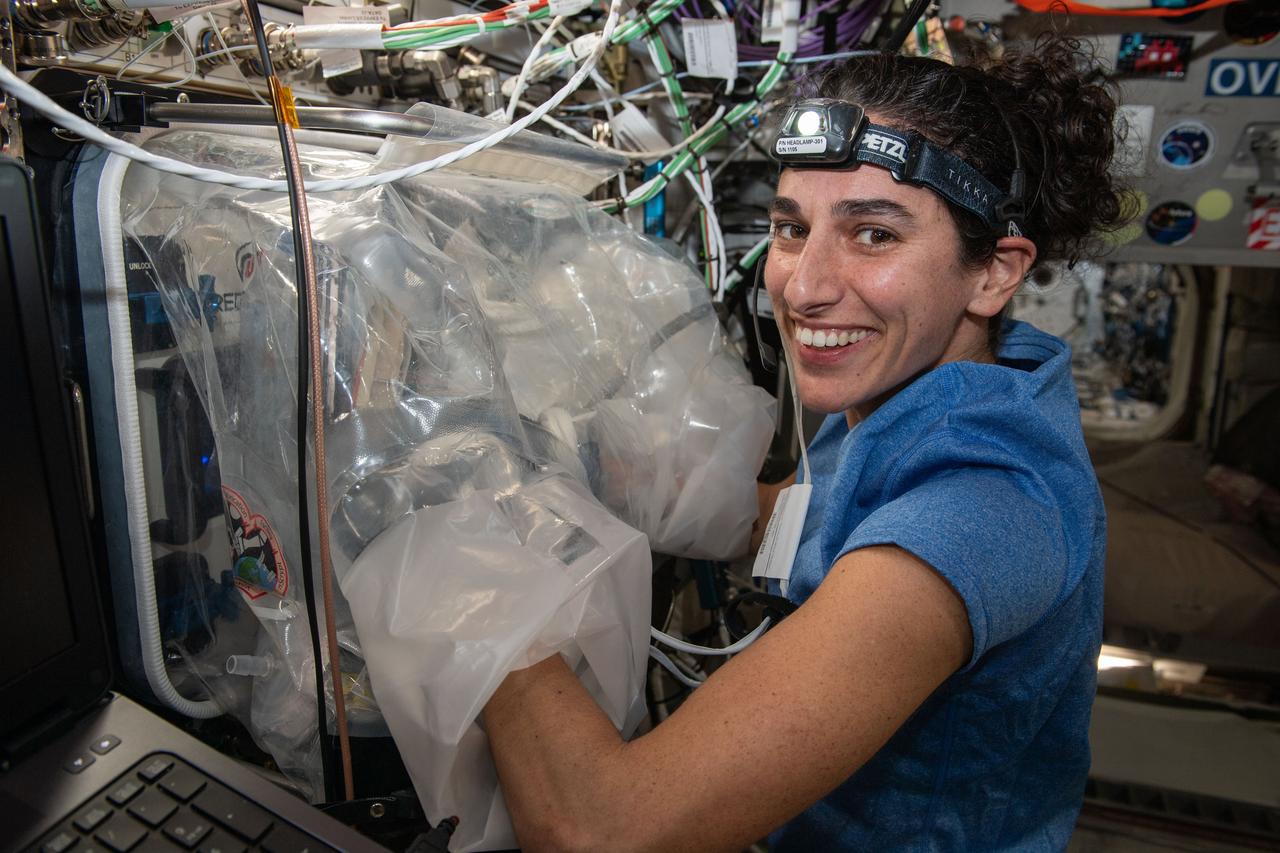
iss070e030135 (Nov. 24, 2023) --- NASA astronaut and Expedition 70 Flight Engineer Jasmin Moghbeli uses a portable glovebag to swap components inside the BioFabrication Facility (BFF) located in the International Space Station's Columbus laboratory module. The BFF is a biological printer that is testing the printing of organ-like tissues in microgravity.
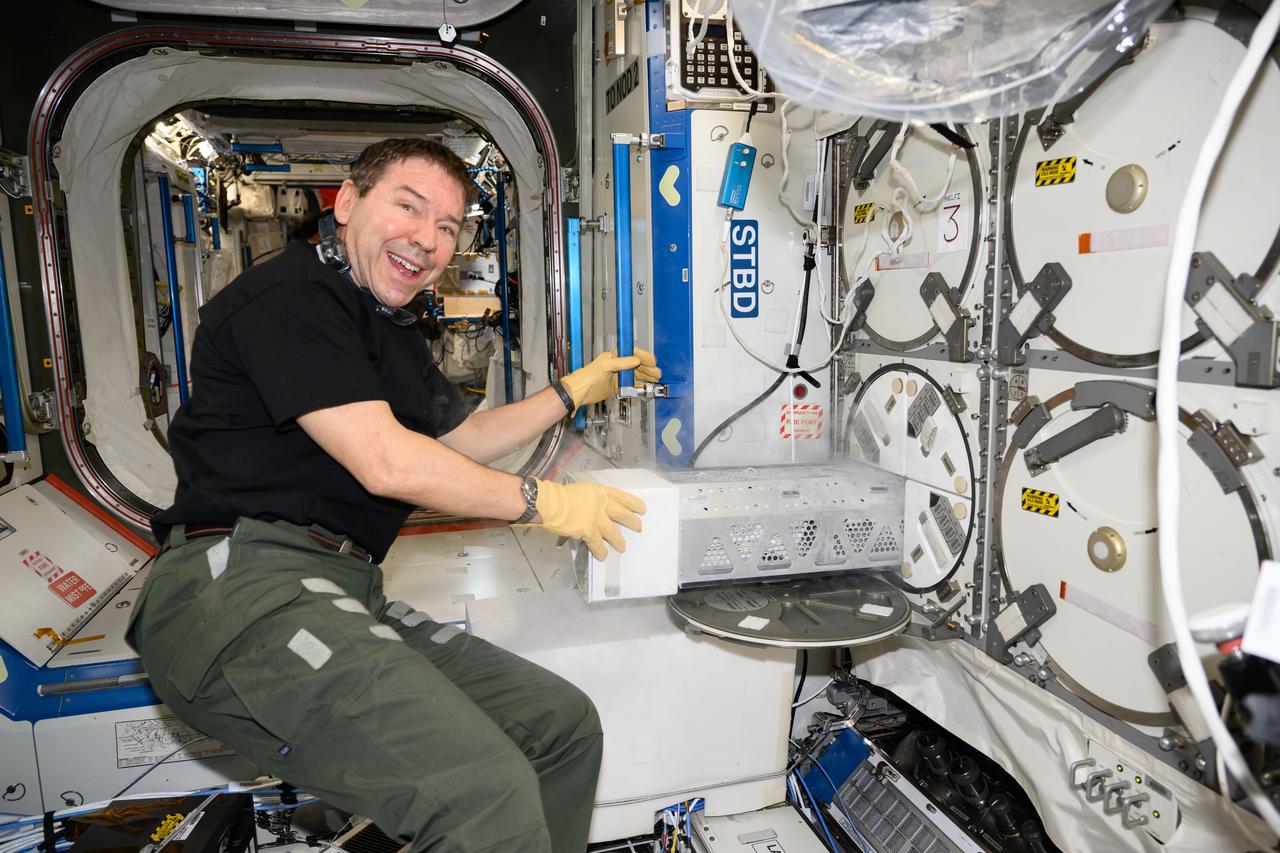
iss072e035693 (Oct. 11, 2024) --- NASA astronaut and Expedition 72 Flight Engineer Mike Barratt stows research samples in a science freezer, also known as the Minus Eighty-Degree Laboratory Freezer for ISS (MELFI). MELFI can preserve biological samples such as blood, microbes, plants, and more for retrieval and later analysis.
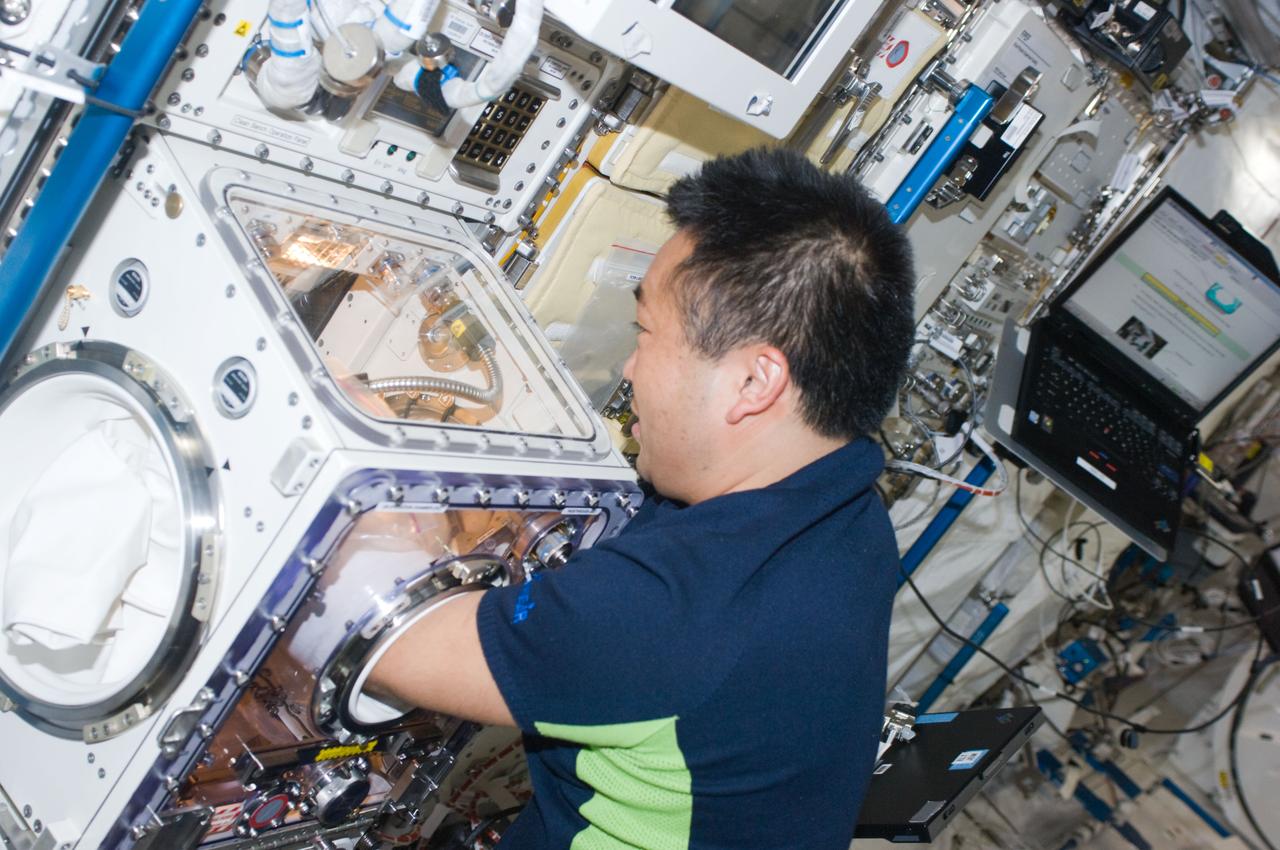
ISS018-E-044268 (28 March 2009) --- Japan Aerospace Exploration Agency (JAXA) astronaut Koichi Wakata, Expedition 18/19 flight engineer, works on an experiment at the Saibo biological experiment rack in the Kibo laboratory of the International Space Station.
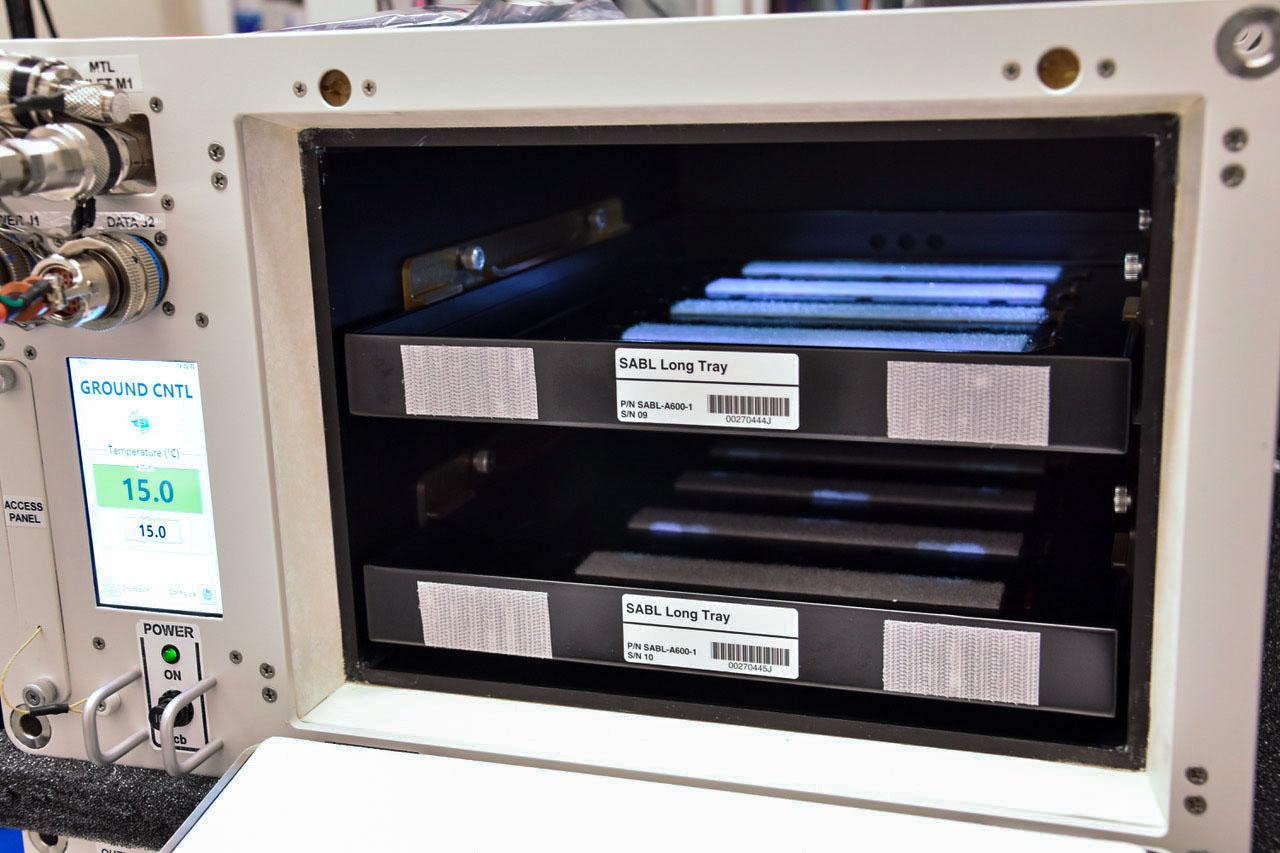
jsc2021e037286 (5/21/2021) --- A preflight view of the SALI incubator. The Space Automated Lab Incubator (SALI) supports a wide variety of investigations in the life, physical, and material sciences, focusing on research on biological systems and processes. SALI accommodates multiple sample packs or habitats and also serves as back-up cold stowage.
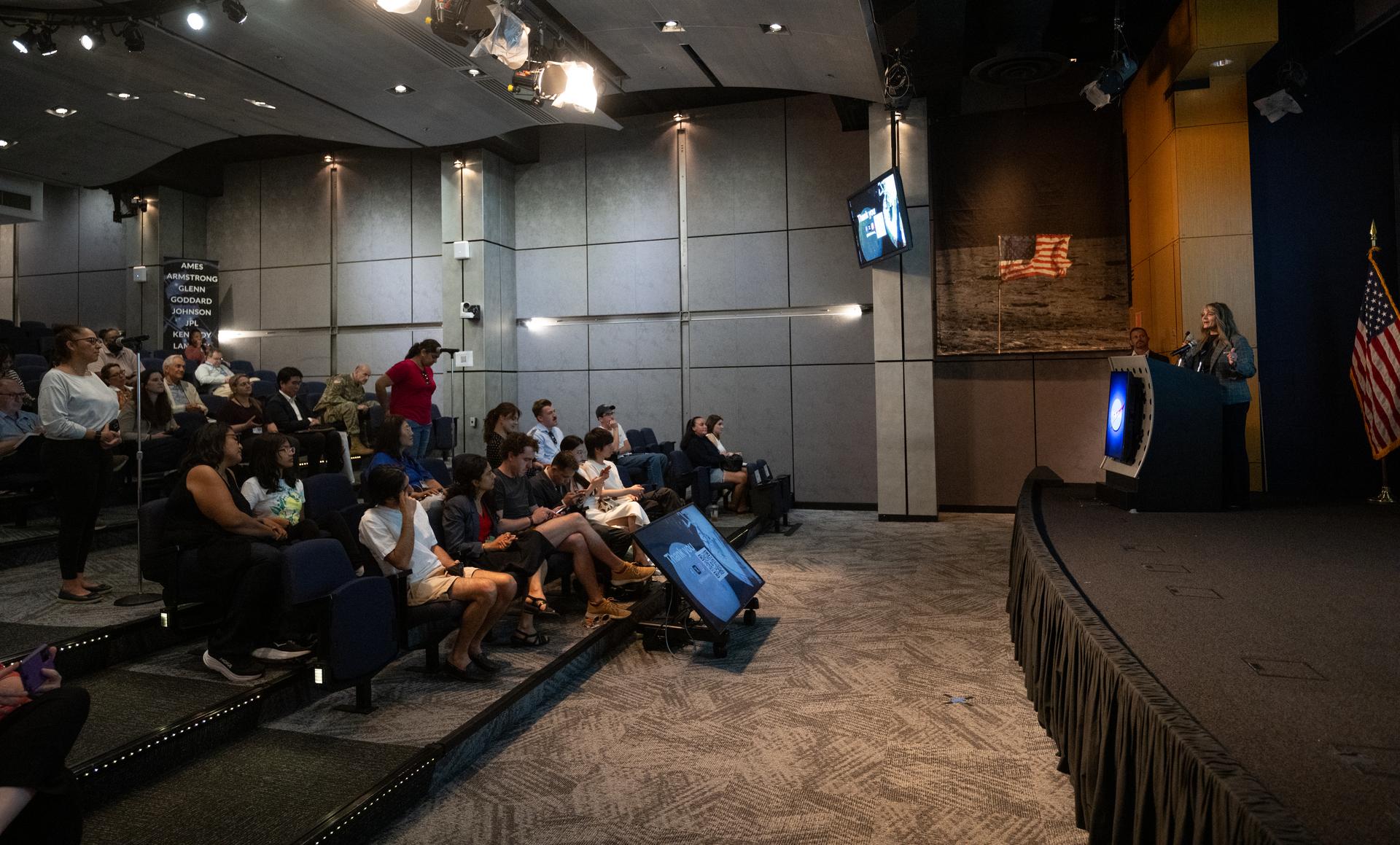
Dr. Lisa Carnell, director of NASA’s Biological and Physical Sciences Division, answers a question from the audience during a Frontiers Forum talk titled “Revolutionizing Medicine – In Space,” Wednesday, Sept. 16, 2026, at the Mary W. Jackson NASA Headquarters building in Washington. Photo Credit: (NASA/Joel Kowsky)
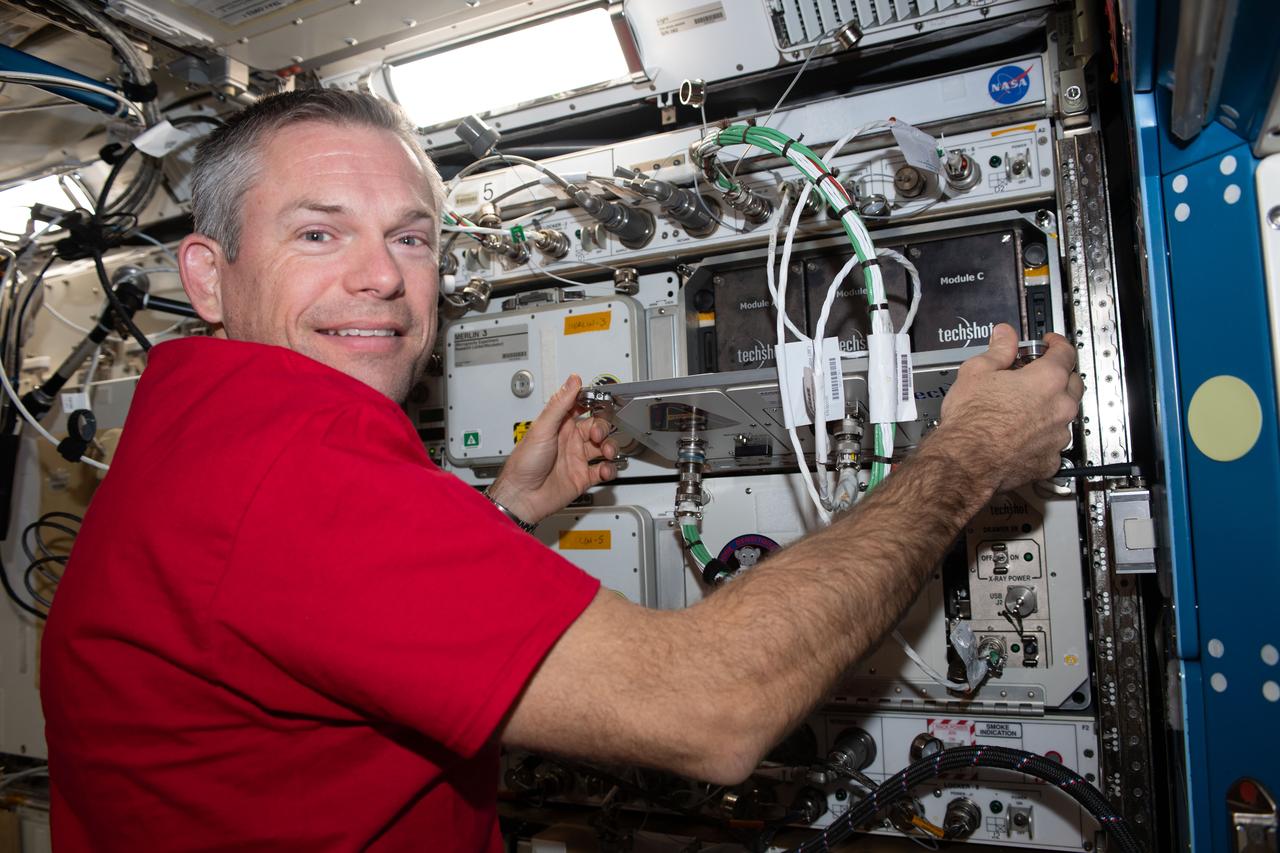
iss070e022606 (Nov. 12, 2023) --- ESA (European Space Agency) astronaut and Expedition 70 Commander Andreas Mogensen replaces computer hardware inside the Advanced Space Experiment Processor-2 (ADSEP-2) that can house and process samples for a variety of biological and physical science experiments.
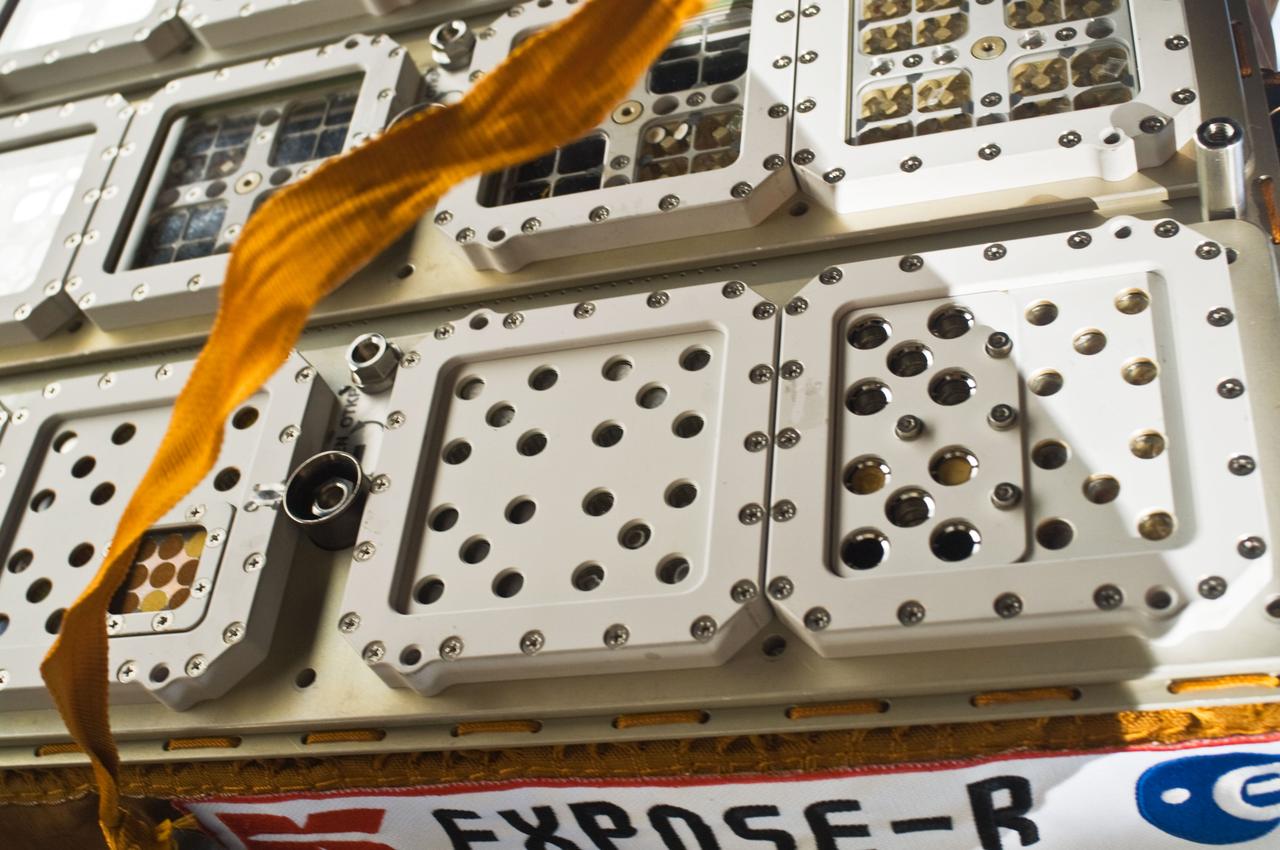
ISS018-E-039227 (10 March 2009) --- One of two Expedition 18 spacewalkers on March 10 provided this close-up image of the Expose-R experiment, reinstalled a short while earlier on the outside of the Russian segment of the International Space Station. The European experiment is equipped with three trays which contain a variety of biological samples.
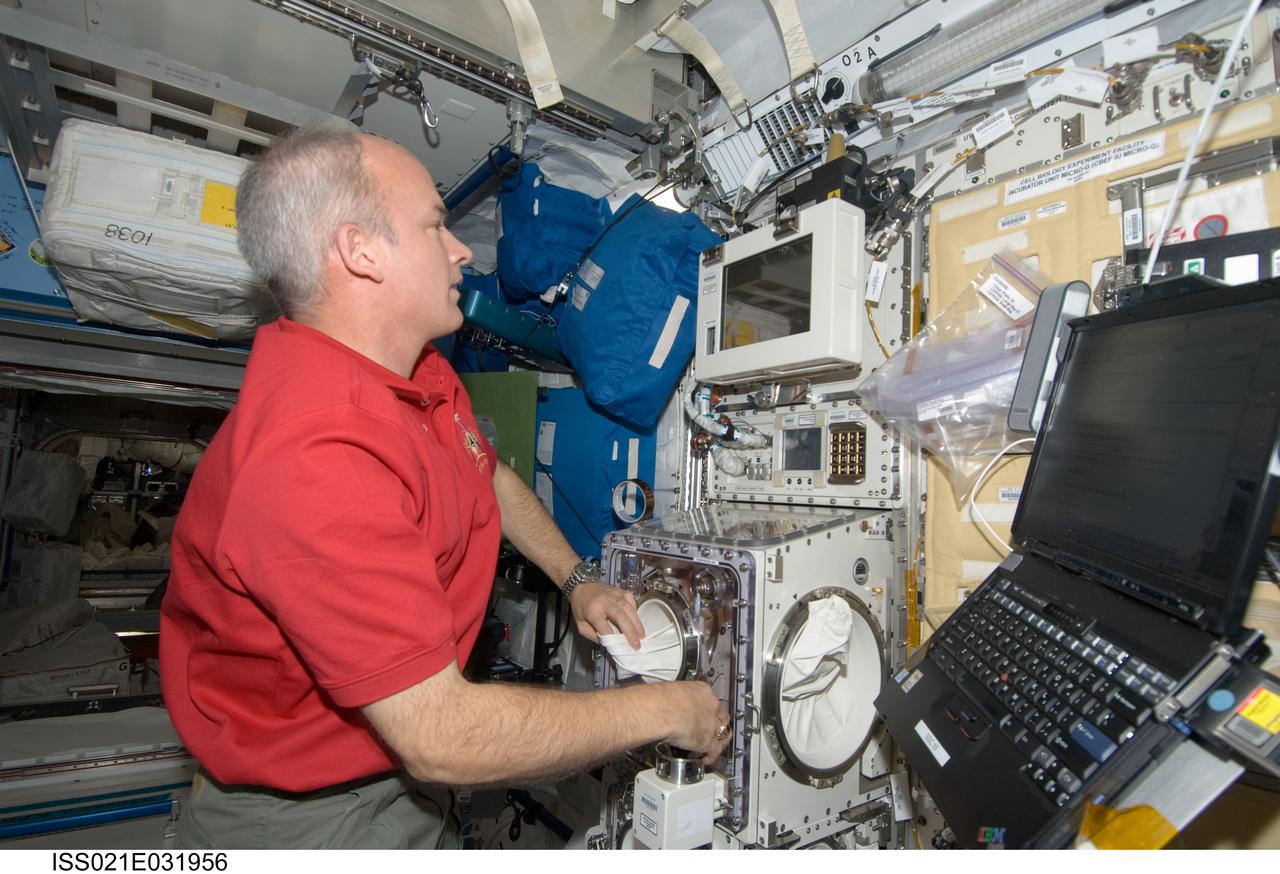
ISS021-E-031956 (23 Nov. 2009) --- Astronaut Jeffrey Williams, Expedition 21 flight engineer, works on an experiment at the Saibo biological experiment rack in the Kibo laboratory of the International Space Station while space shuttle Atlantis (STS-129) remains docked with the station.
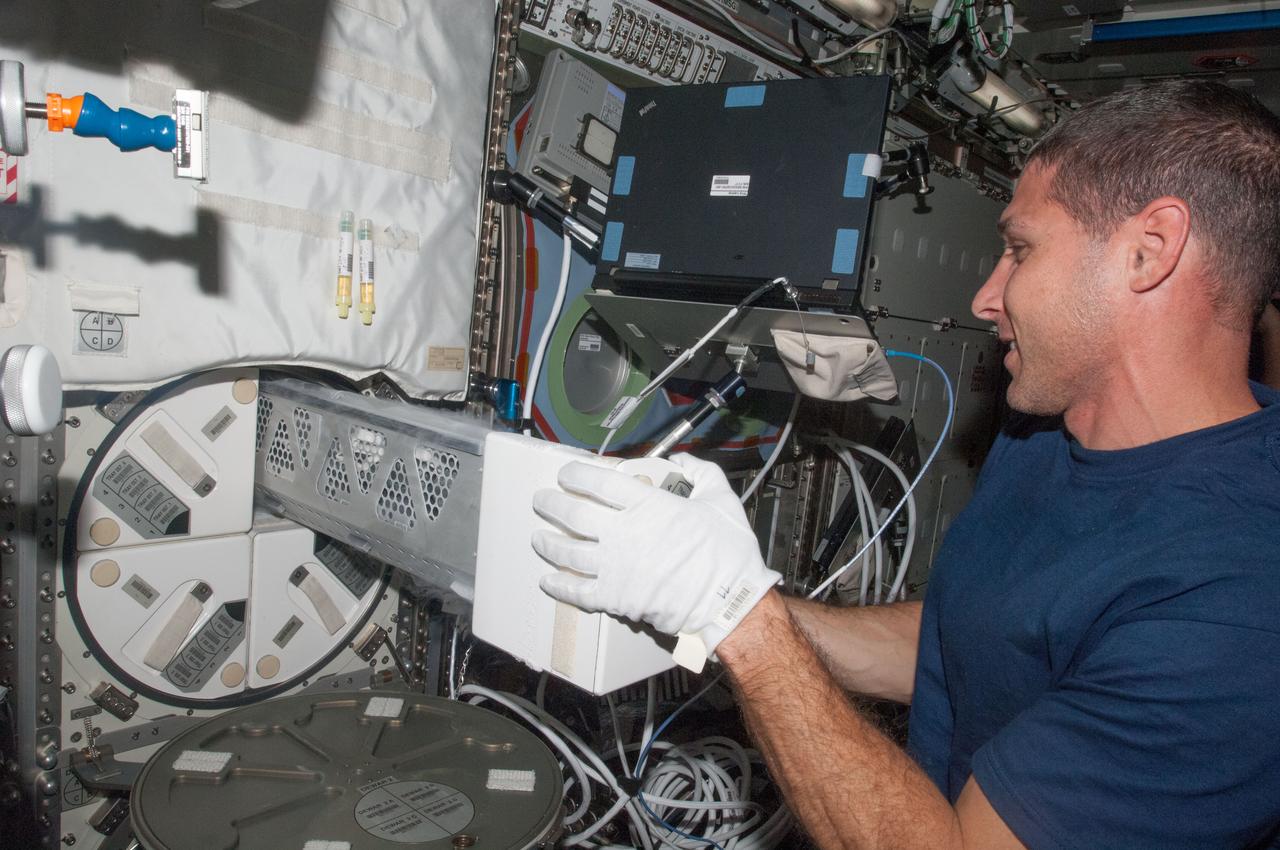
ISS037-E-010711 (5 Oct. 2013) --- In the International Space Station’s Destiny laboratory, NASA astronaut Michael Hopkins, Expedition 37 flight engineer, removes a dewar tray from the Minus Eighty Laboratory Freezer for ISS (MELFI) in order to insert biological samples into the trays.

iss055e043245 (April 30, 2018) --- NASA astronaut Ricky Arnold transfers frozen biological samples from science freezers aboard the International Space Station to science freezers inside the SpaceX Dragon resupply ship. The research samples were returned to Earth aboard Dragon for retrieval by SpaceX engineers and analysis by NASA scientists.
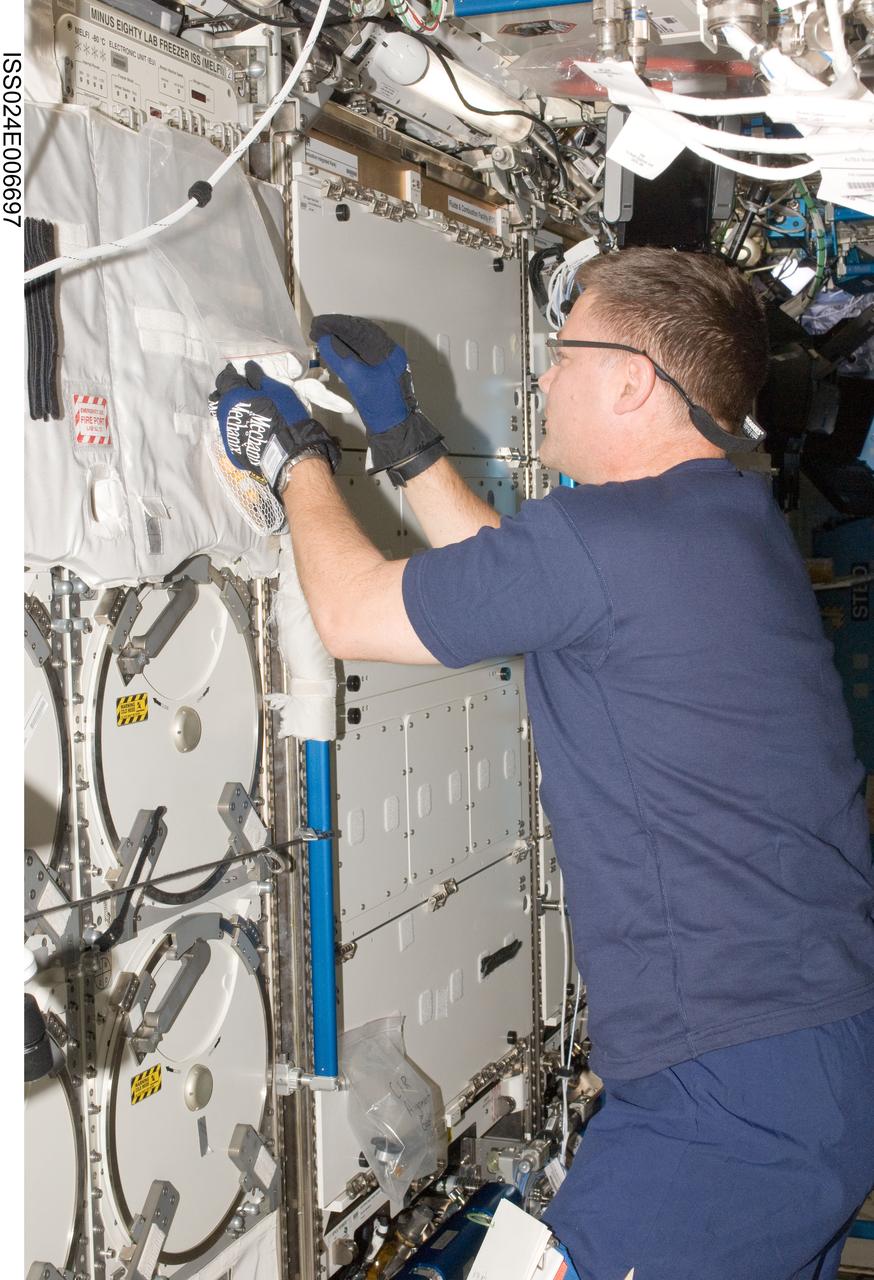
ISS024-E-006697 (28 June 2010) --- NASA astronaut Doug Wheelock, Expedition 24 flight engineer, prepares to insert biological samples into trays in the Minus Eighty Laboratory Freezer for ISS-2 (MELFI-2) in the Destiny laboratory of the International Space Station.
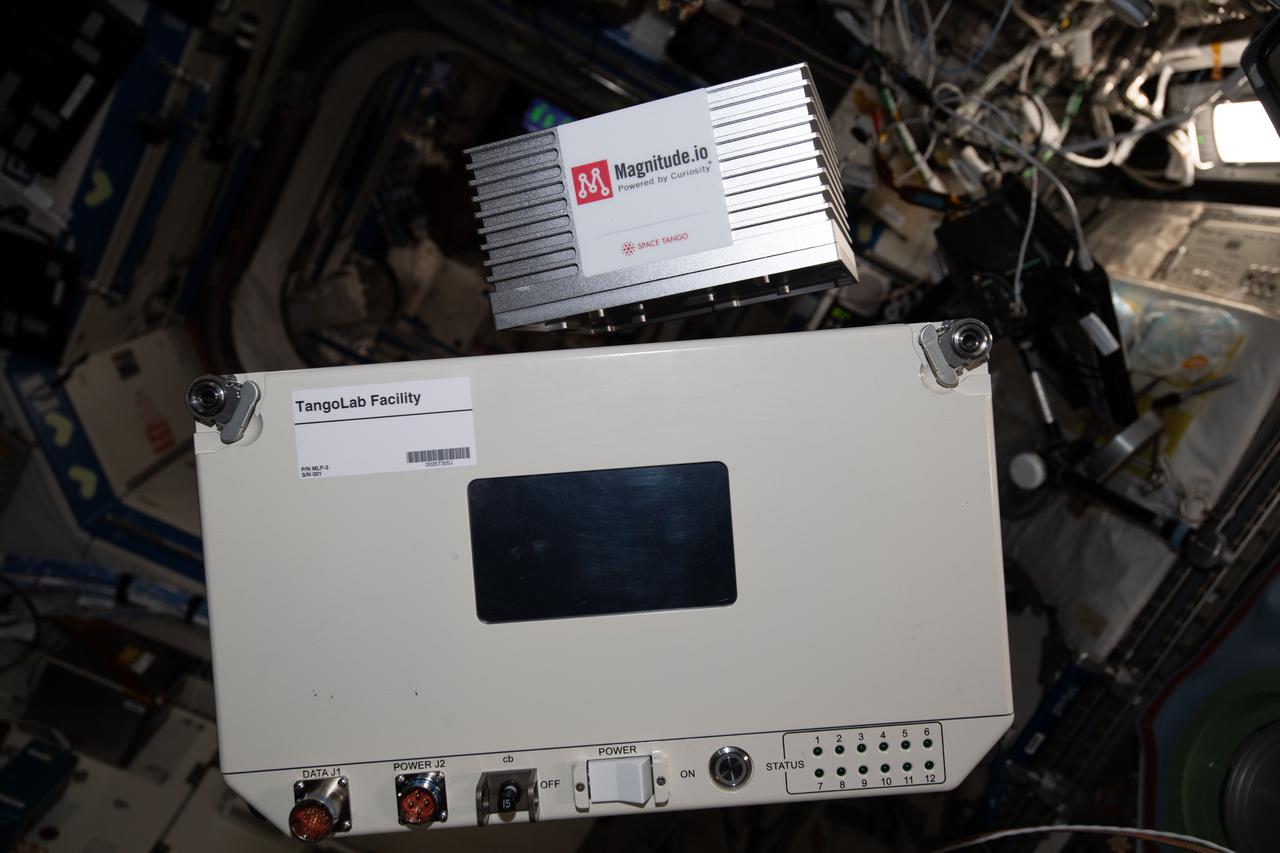
iss065e004334 (4/25/2021) --- A view of the TangoLab Facility with the Space Tango CubeLab for the Nitrogen Fixation of Leguminous Species in MicroG (Symbiotic Leguminous Nitrogen Fixation) investigation. Symbiotic Leguminous Nitrogen Fixation explores the effects of microgravity on the growth and development of legumes, plants capable of biological nitrogen fixation with symbiotic bacteria.
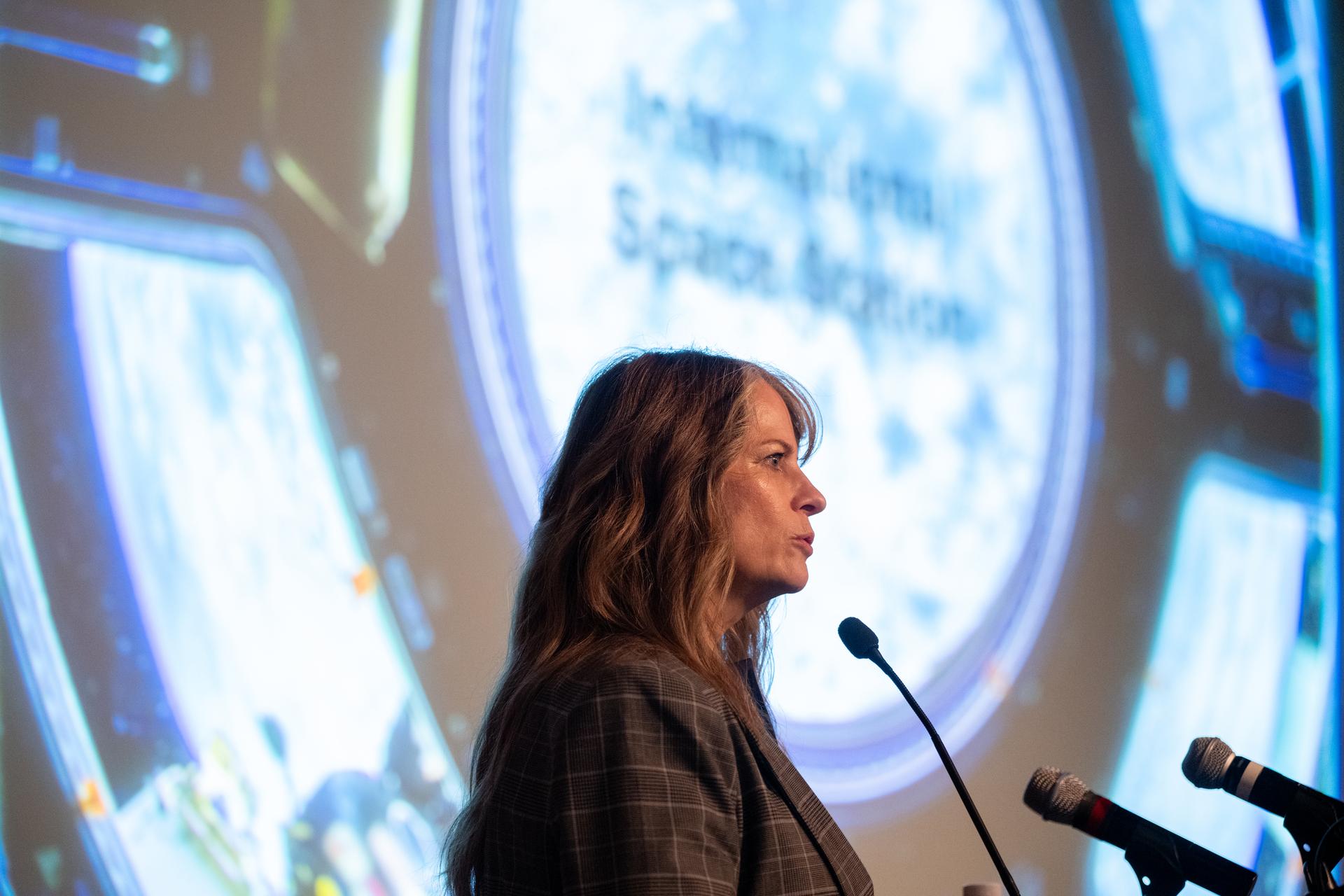
Dr. Lisa Carnell, director of NASA’s Biological and Physical Sciences Division, is seen during a Frontiers Forum talk titled “Revolutionizing Medicine – In Space,” Wednesday, Sept. 16, 2026, at the Mary W. Jackson NASA Headquarters building in Washington. Photo Credit: (NASA/Joel Kowsky)
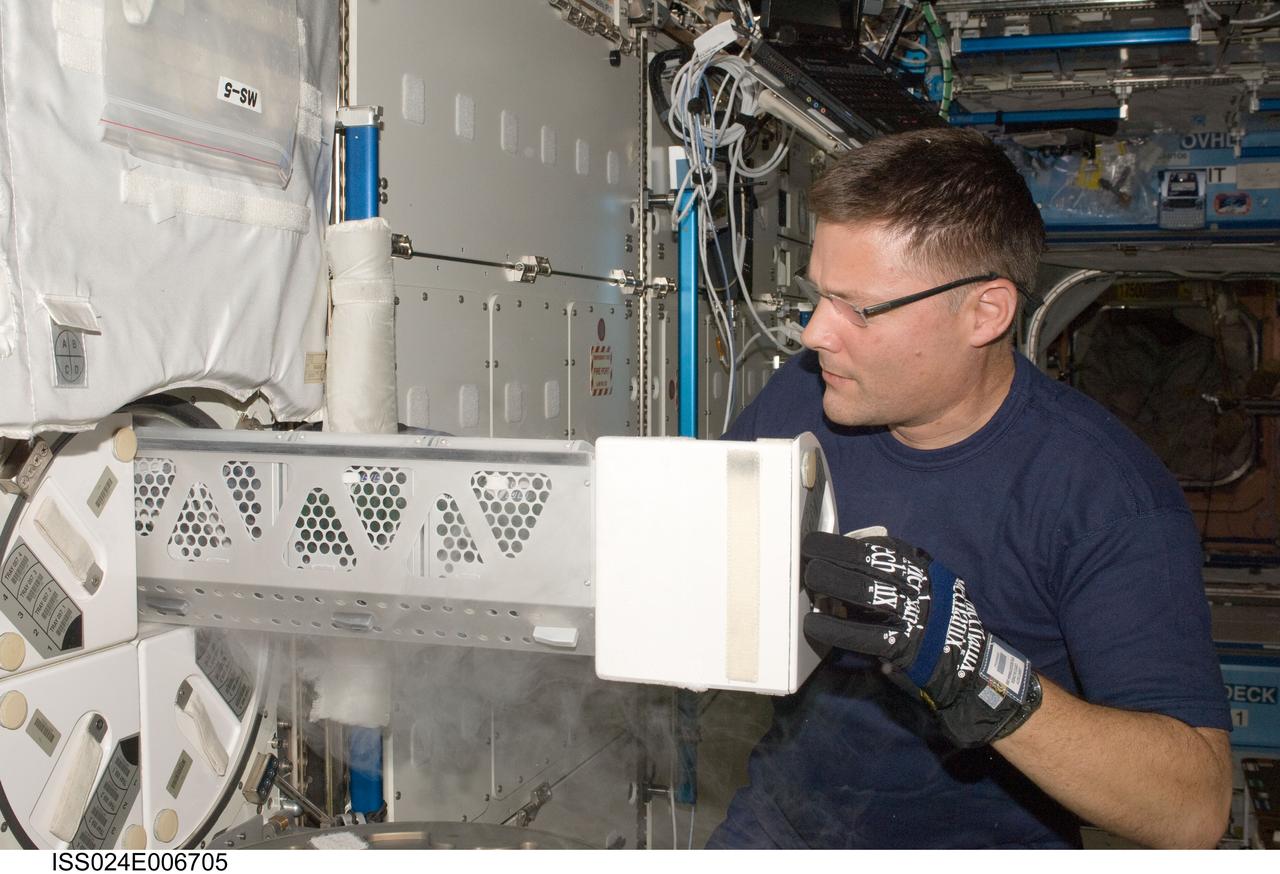
ISS024-E-006705 (28 June 2010) --- After inserting biological samples, NASA astronaut Doug Wheelock, Expedition 24 flight engineer, replaces a dewar tray in the Minus Eighty Laboratory Freezer for ISS-2 (MELFI-2) in the Destiny laboratory of the International Space Station.
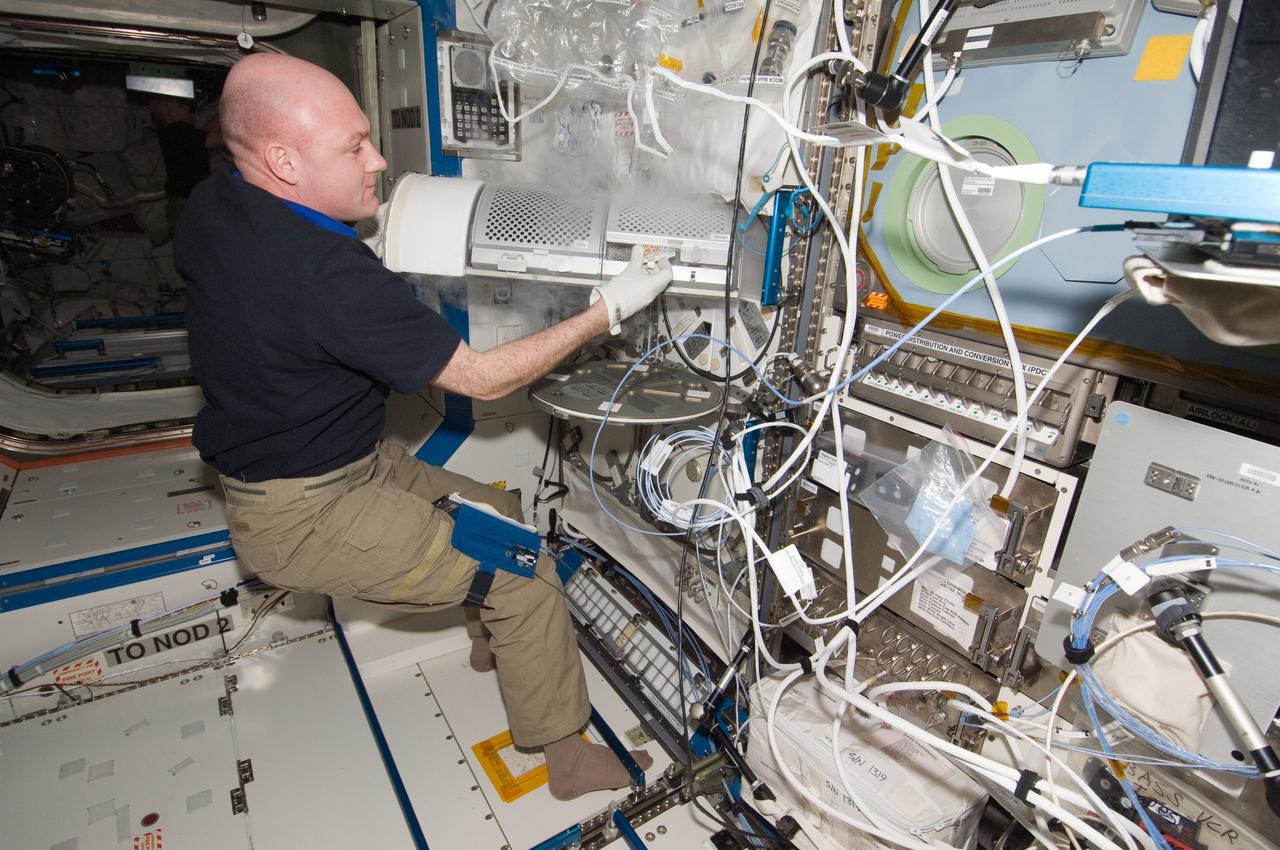
ISS031-E-143839 (25 June 2012) --- European Space Agency astronaut Andre Kuipers, Expedition 31 flight engineer, prepares to insert biological samples in the Minus Eighty Laboratory Freezer for ISS-2 (MELFI-2) in the Destiny laboratory of the International Space Station.
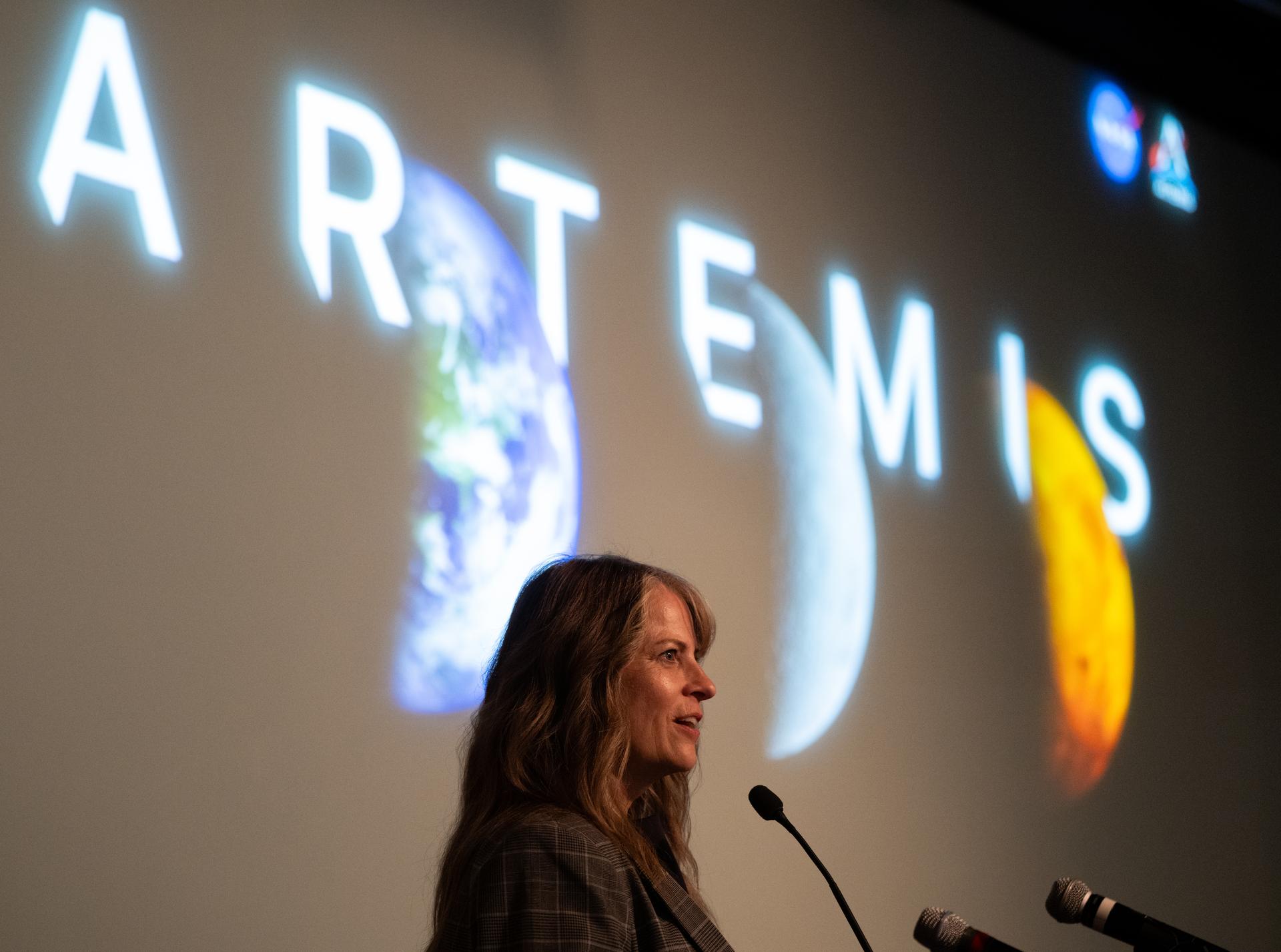
Dr. Lisa Carnell, director of NASA’s Biological and Physical Sciences Division, is seen during a Frontiers Forum talk titled “Revolutionizing Medicine – In Space,” Wednesday, Sept. 16, 2026, at the Mary W. Jackson NASA Headquarters building in Washington. Photo Credit: (NASA/Joel Kowsky)
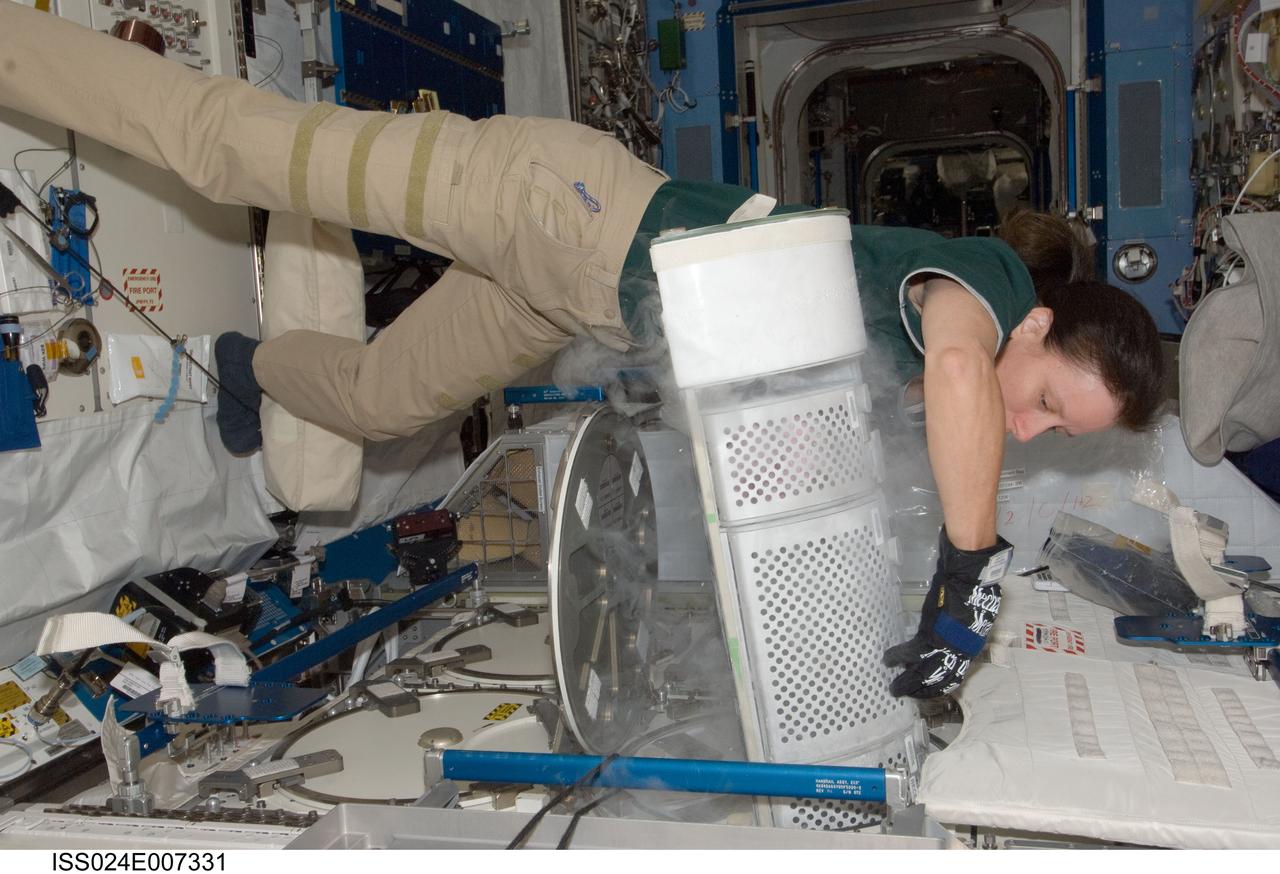
ISS024-E-007331 (2 July 2010) --- After inserting biological samples, NASA astronaut Shannon Walker, Expedition 24 flight engineer, replaces a dewar tray in the Minus Eighty Laboratory Freezer for ISS (MELFI-1) in the Kibo laboratory of the International Space Station.
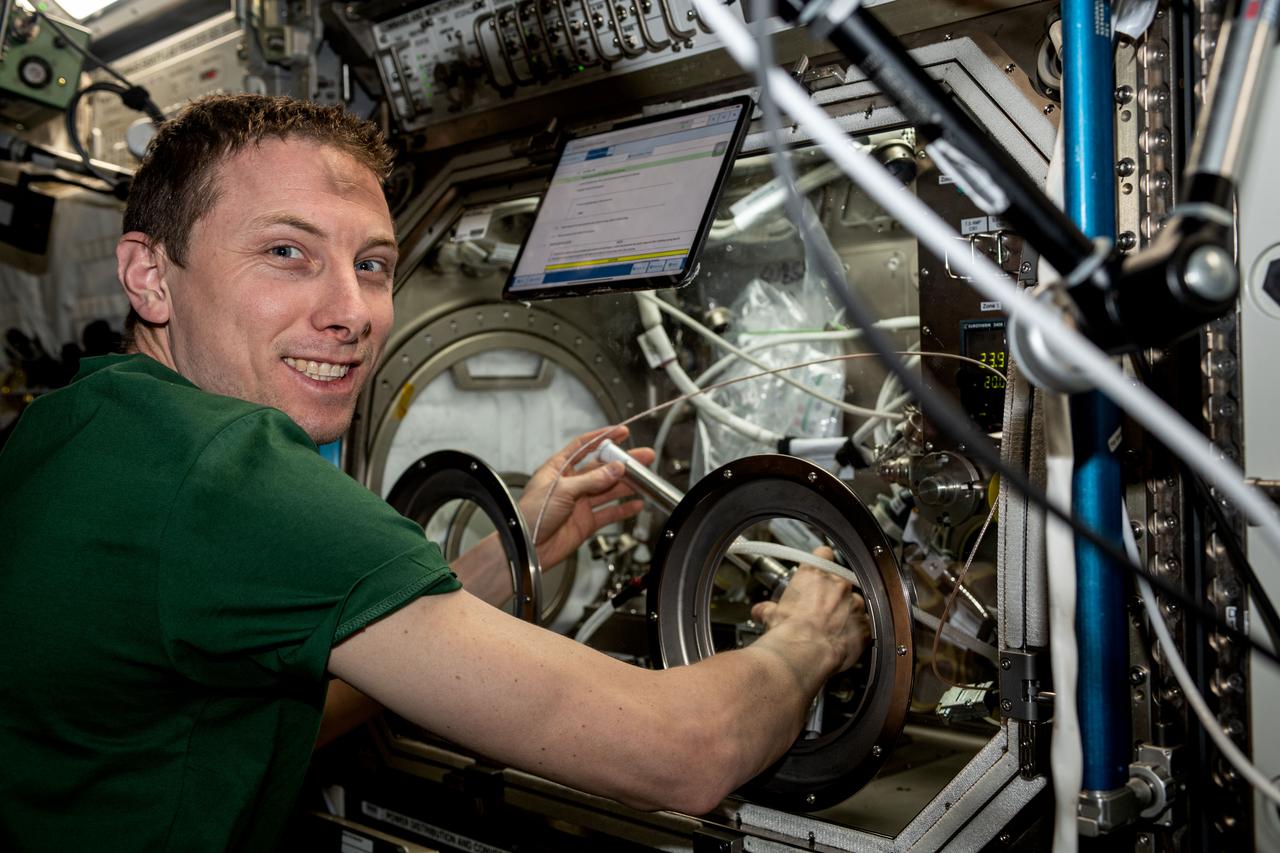
iss069e060322 (August 15, 2023) -- NASA astronaut Woody Hoburg swaps samples for a space manufacturing study inside the Microgravity Science Glovebox (MSG) in the International Space Station's U.S. Destiny Laboratory Module. MSG allows crews to investigate physical science and biological research in a safe, contained environment in microgravity.
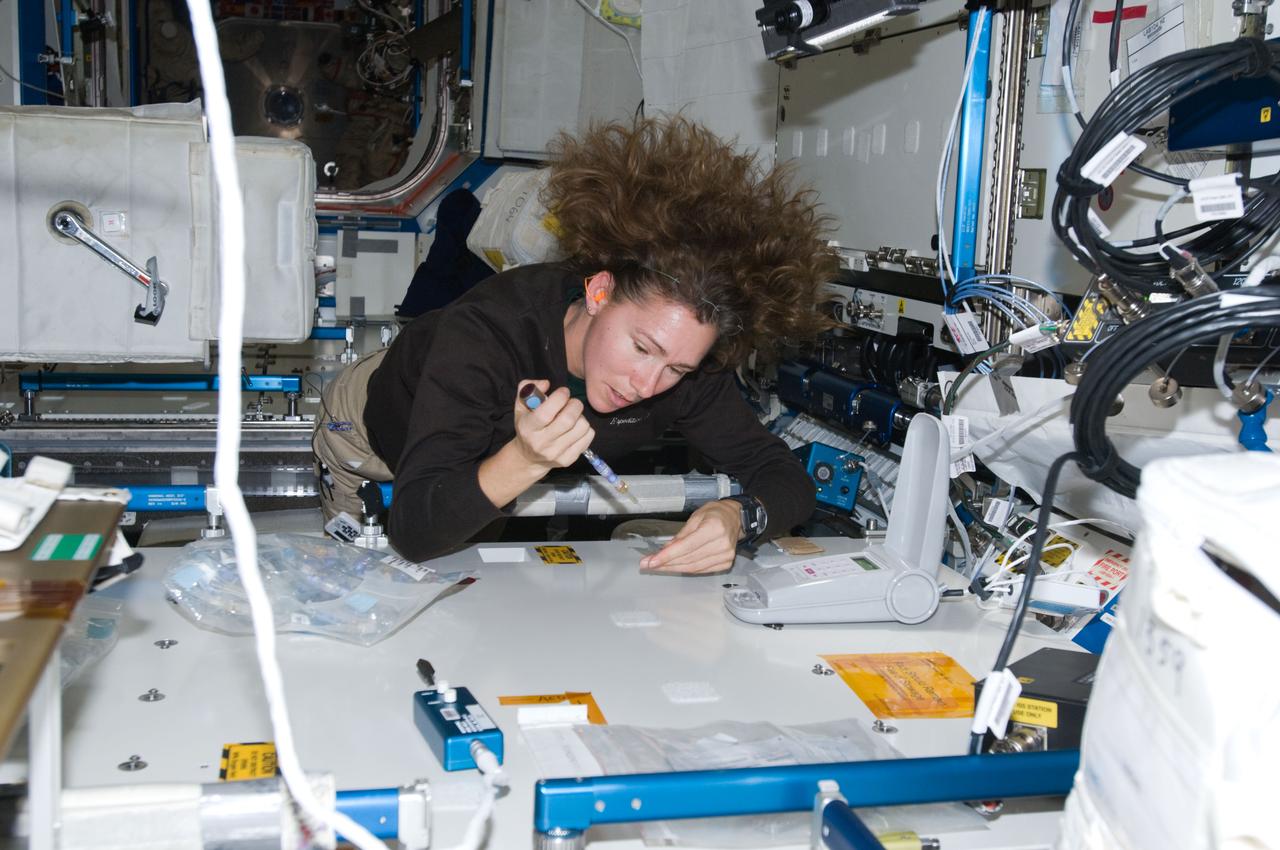
ISS018-E-018995 (10 Jan. 2009) --- Astronaut Sandra Magnus, Expedition 18 flight engineer, works with the Lab-on-a-Chip Application Development-Portable Test System (LOCAD-PTS) experiment in the Destiny laboratory of the International Space Station. LOCAD-PTS is a handheld device for rapid detection of biological and chemical substances onboard the station.
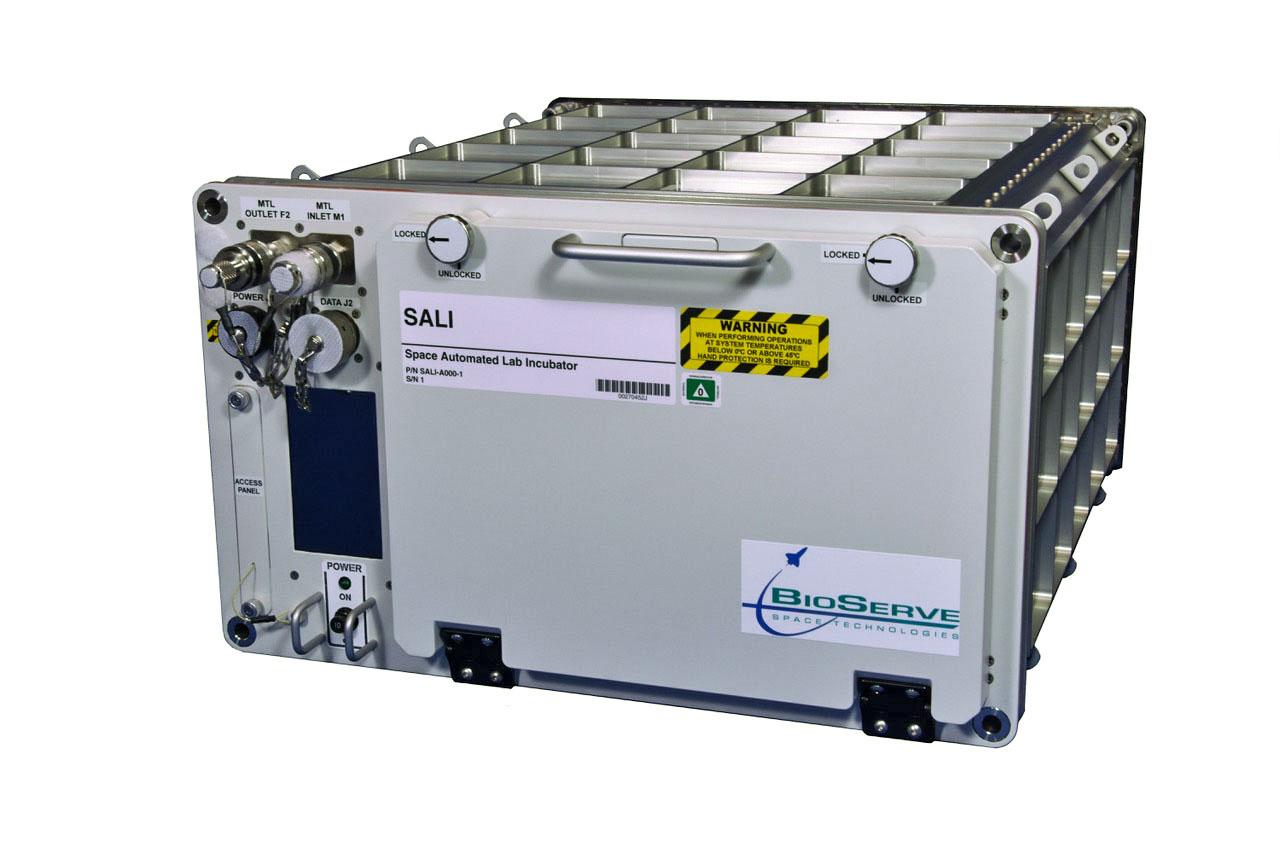
jsc2021e037287 (5/21/2021) --- A preflight view of the SALI incubator. The Space Automated Lab Incubator (SALI) supports a wide variety of investigations in the life, physical, and material sciences, focusing on research on biological systems and processes. SALI accommodates multiple sample packs or habitats and also serves as back-up cold stowage.e.
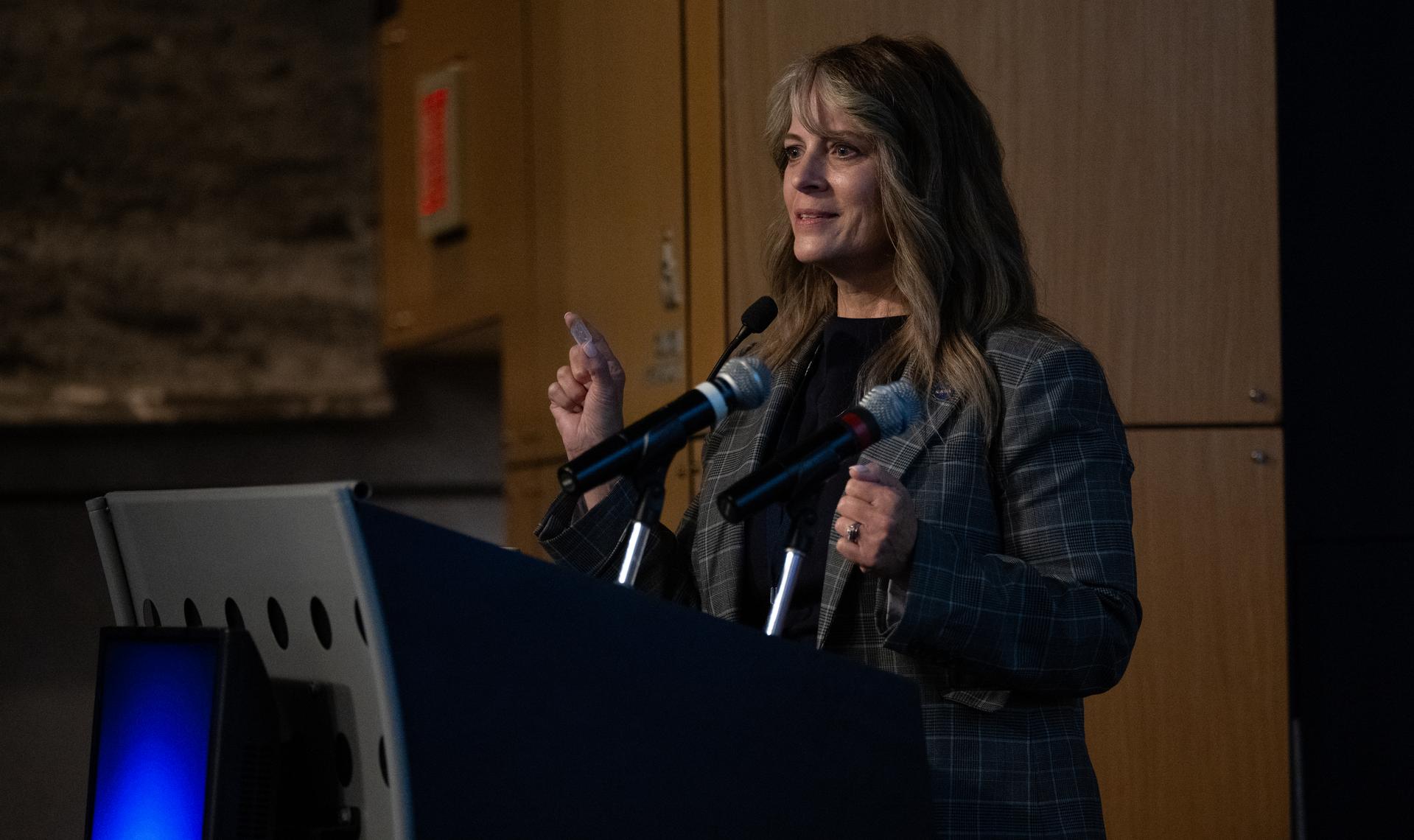
Dr. Lisa Carnell, director of NASA’s Biological and Physical Sciences Division, holds an organ chip during a Frontiers Forum talk titled “Revolutionizing Medicine – In Space,” as she discusses the AVATAR investigation, Wednesday, Sept. 16, 2026, at the Mary W. Jackson NASA Headquarters building in Washington. Photo Credit: (NASA/Joel Kowsky)